| Holiday Ratings | |
| Recommended days | 10 |
| Budget | £ |
| Difficulty | Easy |
Istanbul is a fabulous city with so much to see and two busy days only allows you to whet your appetite in this vast Imperial metropolis. I wanted to meet up with my number 1 daughter as I hadn’t seen her since Christmas and she lives in Berlin so we arranged to liaise in Istanbul as she’d never been there. Due to her work commitments we only had two full days there, arriving Saturday evening and leaving before dawn on Tuesday morning.

Istanbul/Constantinople/Byzantium
Quick history lesson – originally a small Greek fishing port called Byzantion the city was chosen by Constantine in 330AD as the new capital of the Roman Empire. It was renamed Constantinople and for the next thousand years ruled an Empire that was considered by its citizens to be a continuation of the Roman Empire but is generally called the Byzantine empire. The city was captured by crusaders (fellow Christians) in 1204 and although recaptured about 60 years later it never recovered from this blow and the subsequent looting and destruction. The once mighty Christian bastion against Islam fell to the Ottoman Turks in 1453 and, renamed Istanbul, it was the seat of their empire for another 500 years until the empire collapsed and Ataturk moved the Turkish capital to Ankara in 1922.
Our Accomodation
As I hate having to walk miles to the attractions that are the purpose of visiting a new city, we stayed in the heart of Sultanahmet, the historical area of Istanbul. We chose a small boutique hotel called Divalis Hotel and it was so well hidden our taxi drove past it three times! It was a fabulous base as Hagia Sofia was less than five minutes walk and there were plenty of restaurants within about a minute, all competing for our custom!
Our flights both landed around 7PM and by the time we met up after passport control it was almost 8. We’d booked a transfer to the hotel but I’d forgotten how bad the traffic is in the city and Sultanahmet, being the old city, had narrow roads and lots of jams. It was 9 before we arrived at the hotel and we just dumped our stuff in the room before going out for a walk.
Arriving on a Saturday was busy and being Ramadam meant it was even more chaotic than normal! We had a quick walk around, enjoying the atmosphere before having a distinctly average dinner and then off to sleep.
The Blue Mosque
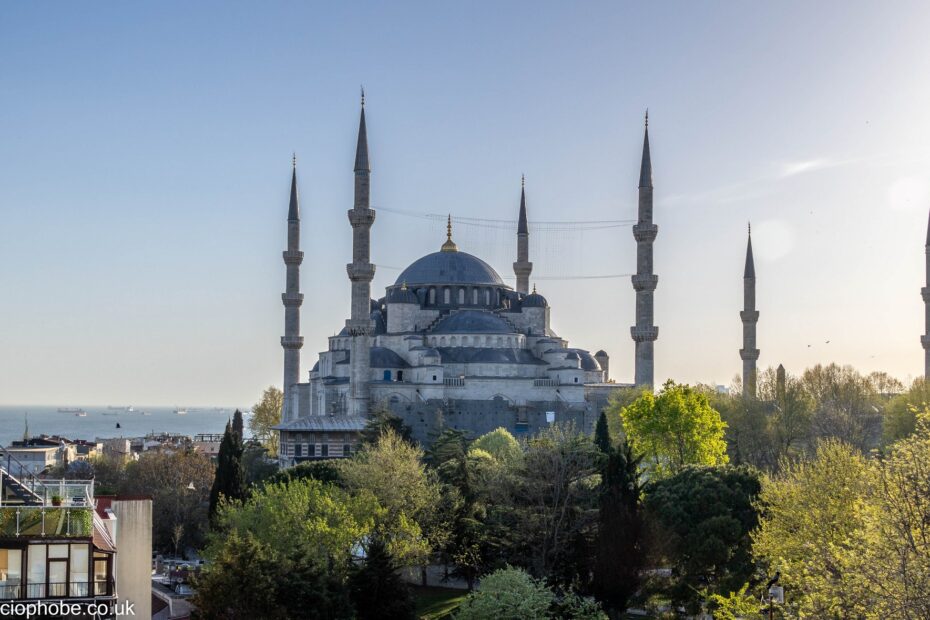
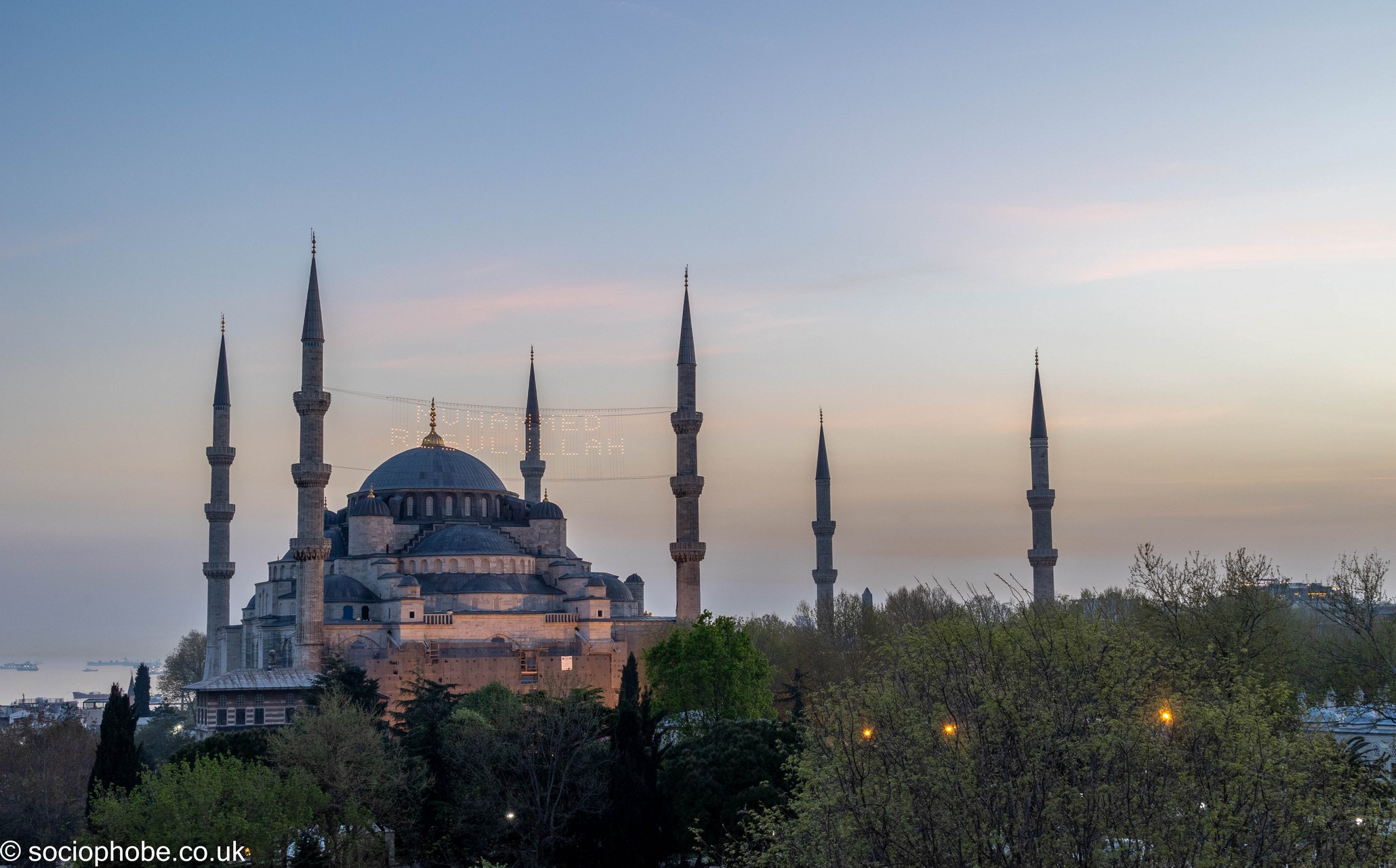
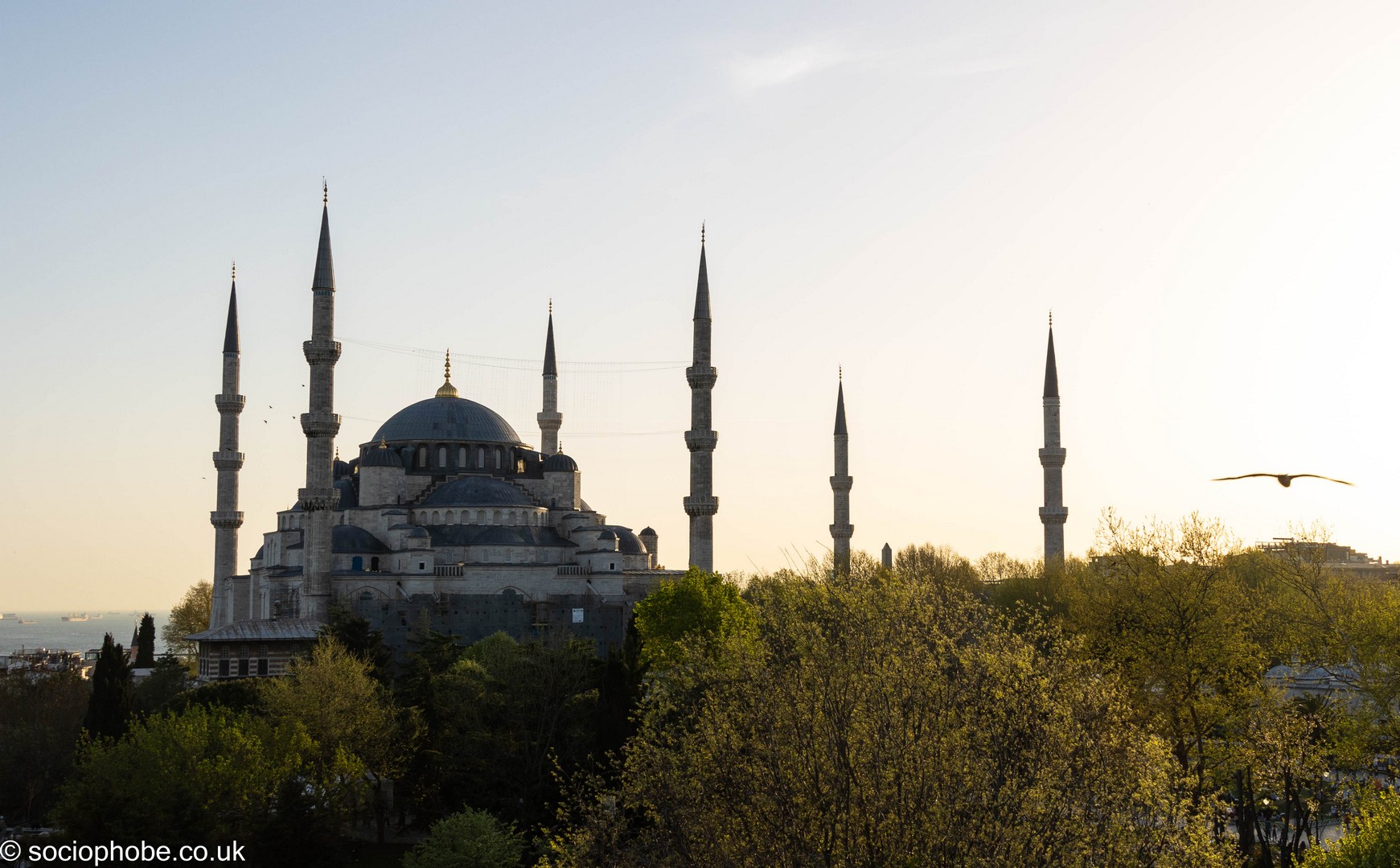
After breakfast we left the hotel and walked the short distance to the Blue Mosque. Although it was only just after 9 the area was already quite busy but there was no queue so we walked in, removing our shoes and then continuing to the interior of the mosque.
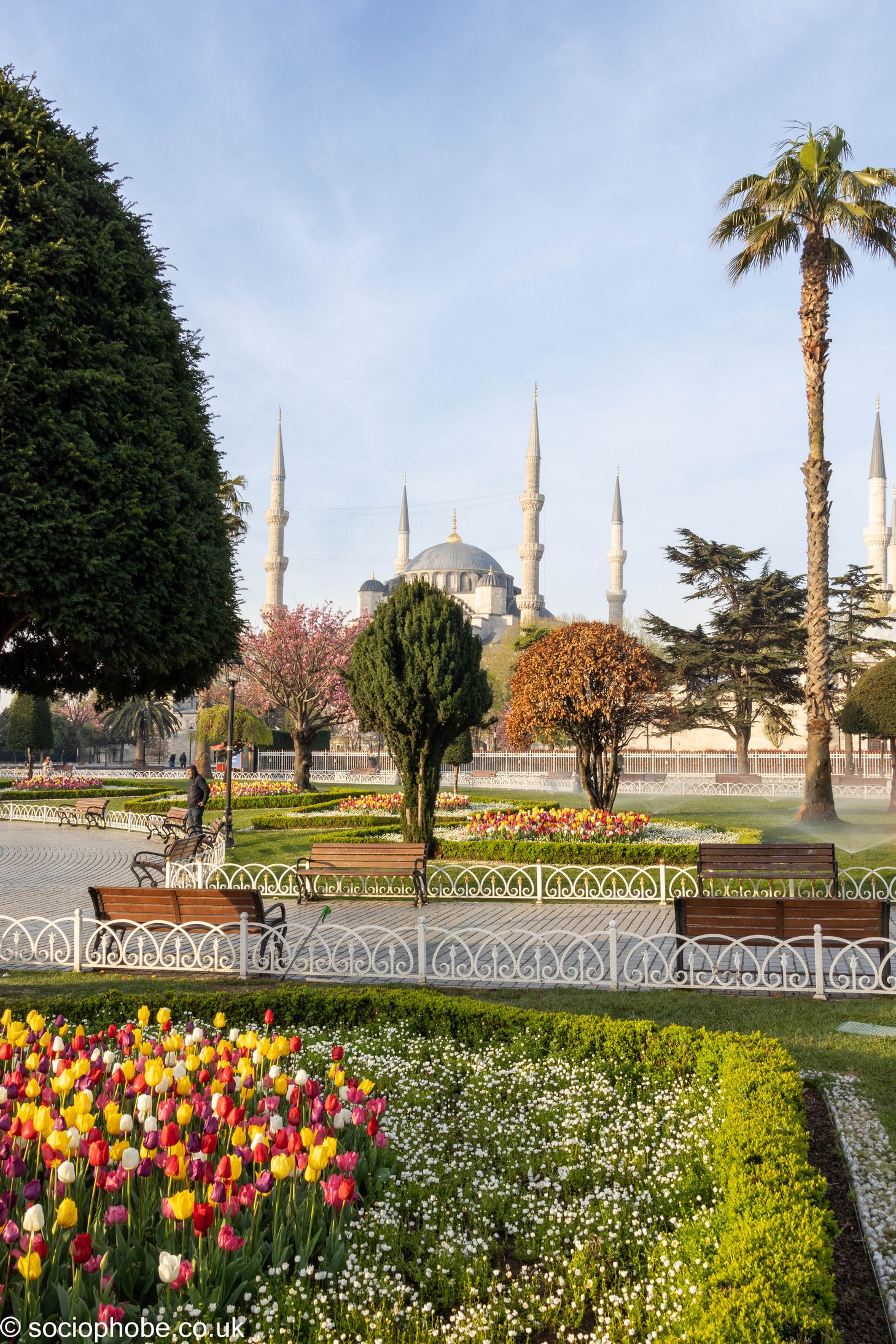
The mosque is a seventeenth century building, famed for the interior tile work that gives it the name. Sadly, it was undergoing restoration on this visit so the entire inside was a mass of scaffolding and hessian panelling and almost none of the tiles were visible. The remedial work on the dome was complete but the scaffolding was still there, obscuring any view. We left after a few minutes, replaced our shoes and walked the short distance past the magnificent tulip displays to Hagia Sofia.
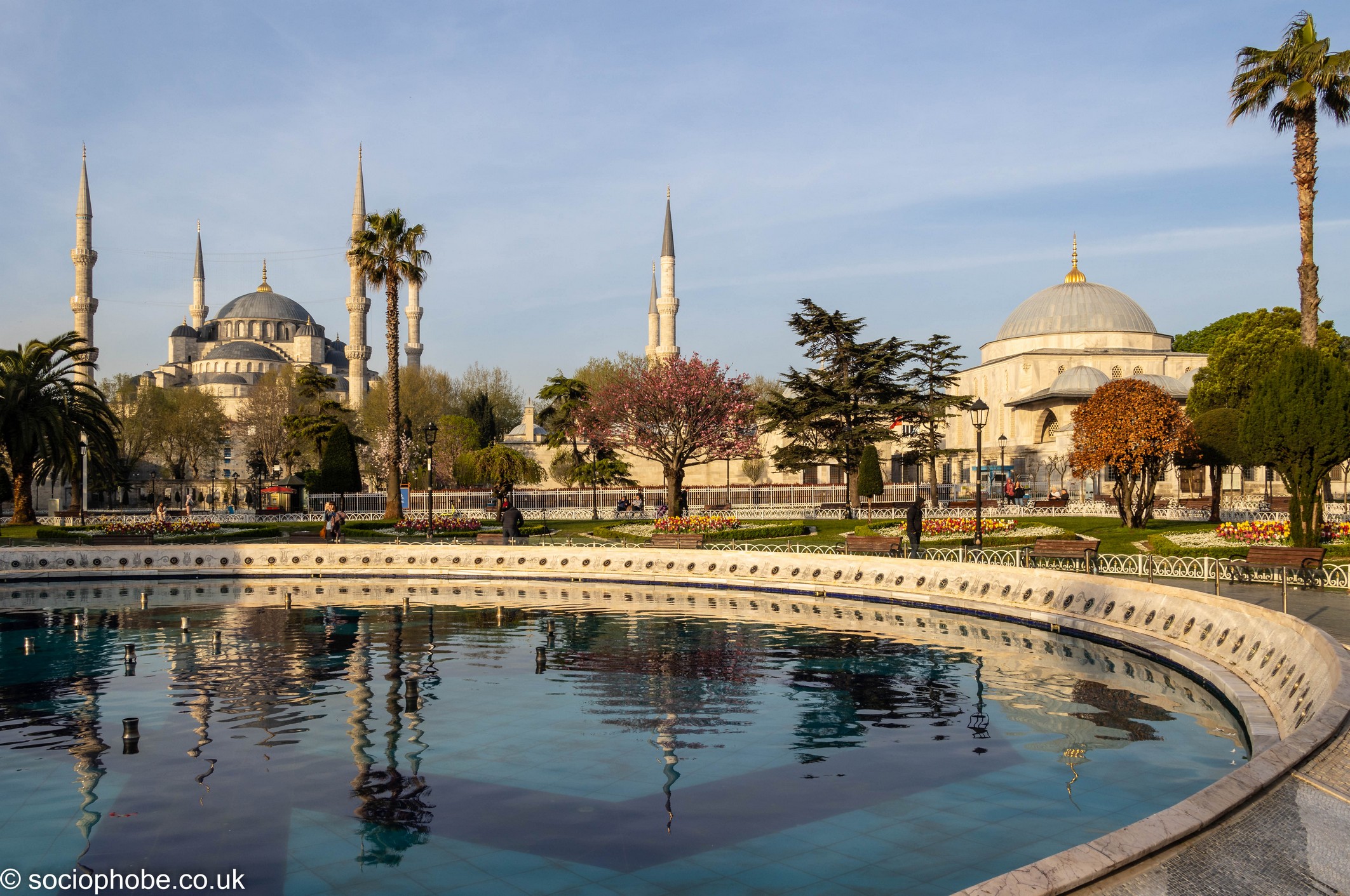
Hagia Sofia Complex
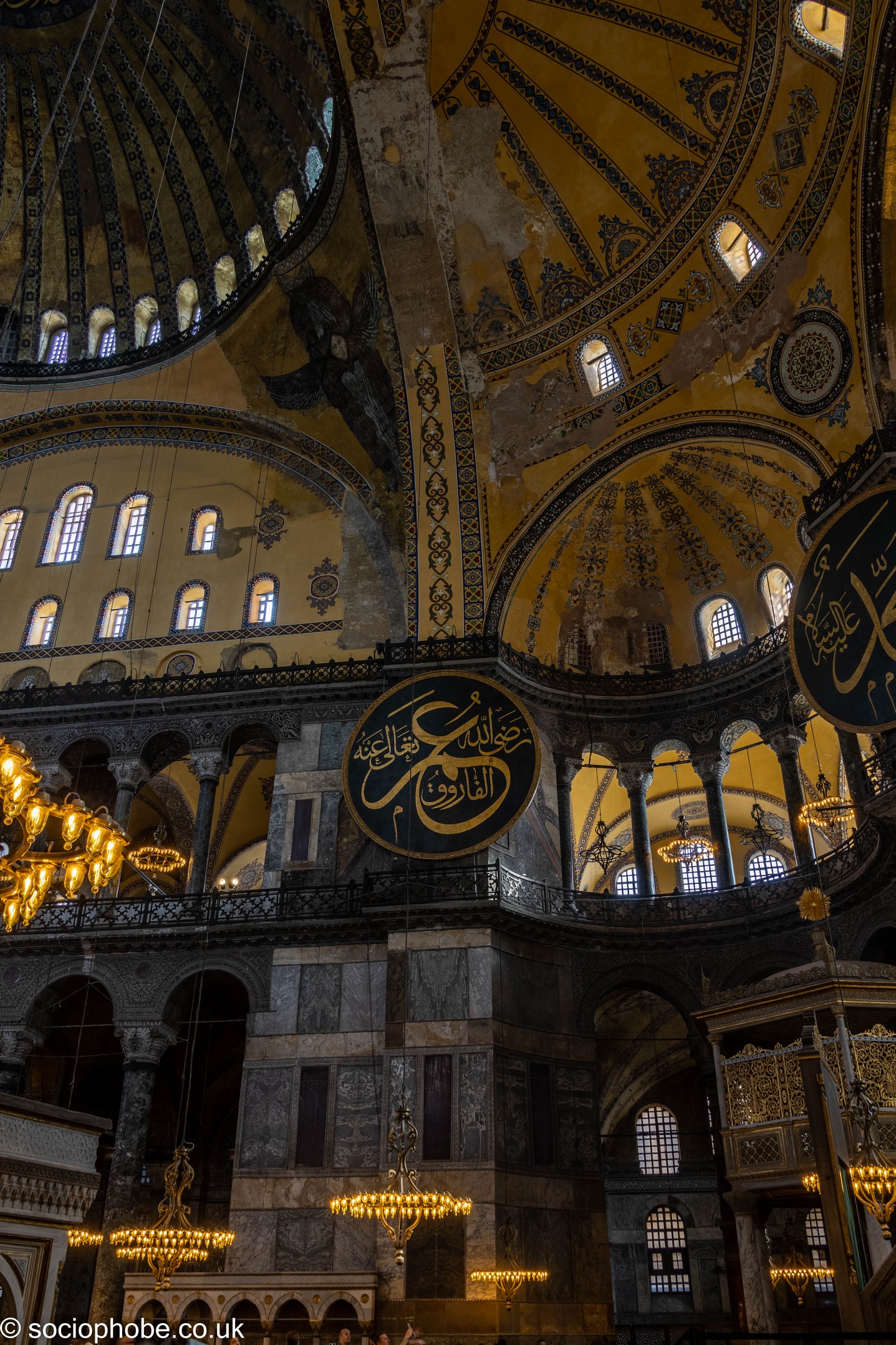
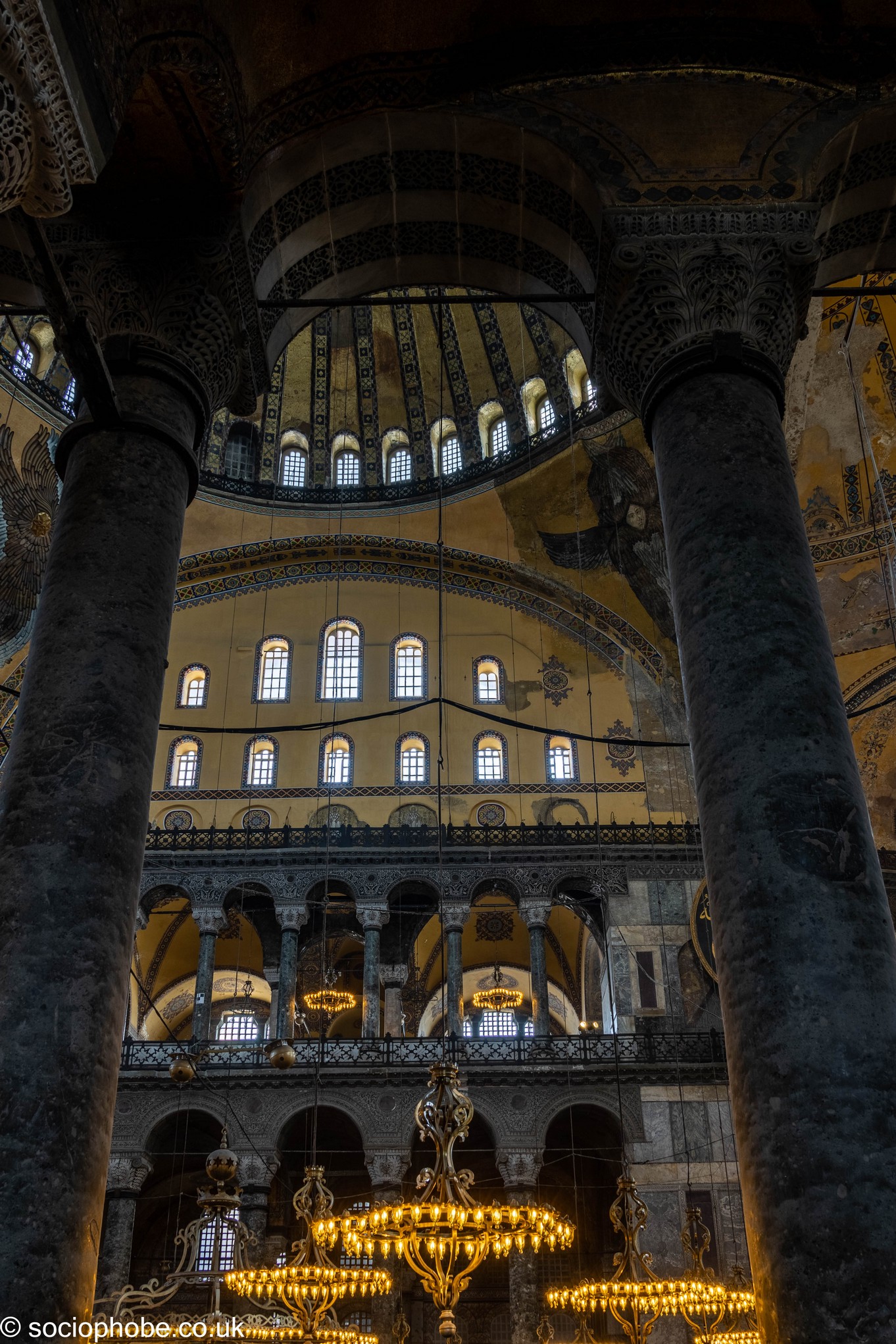
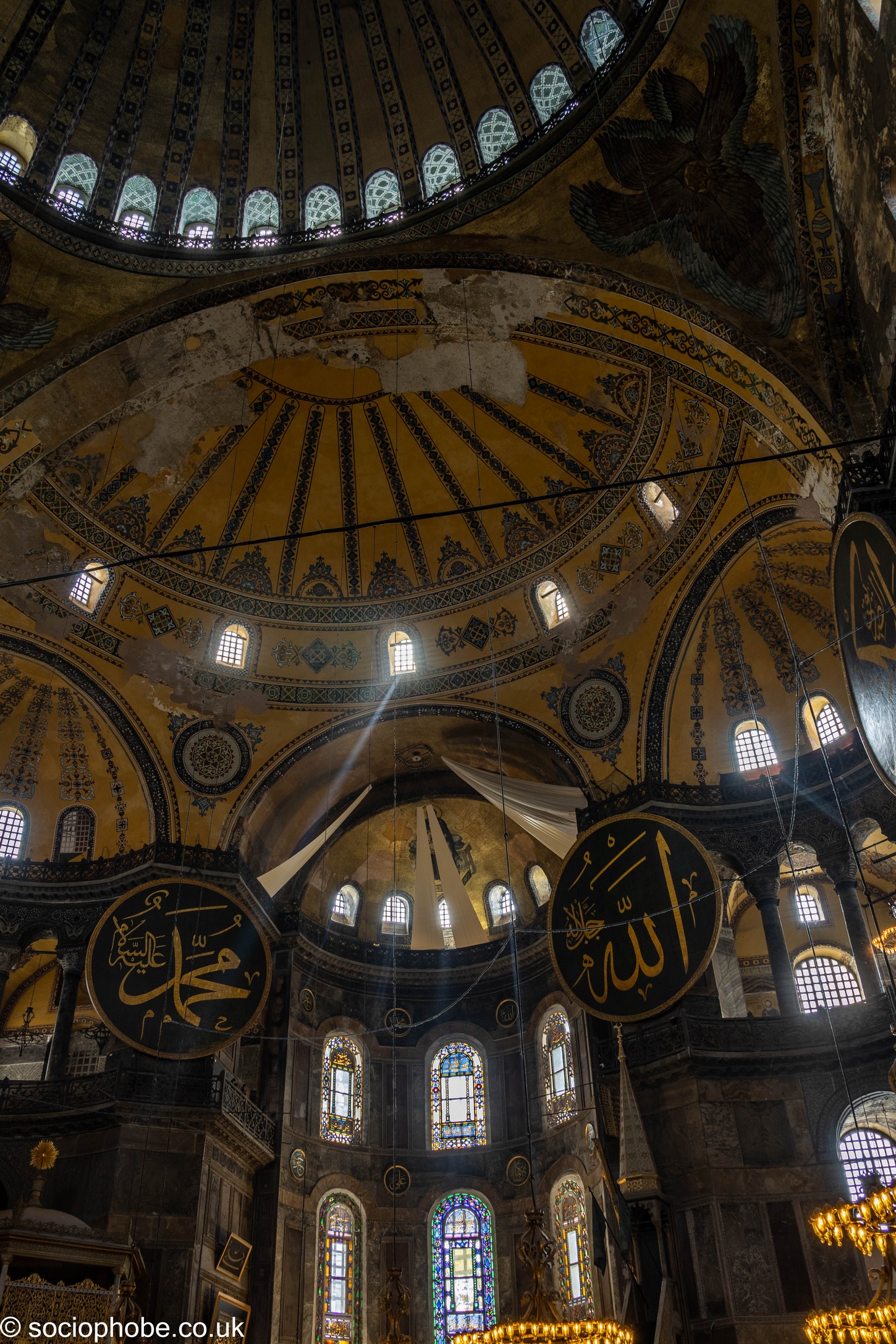
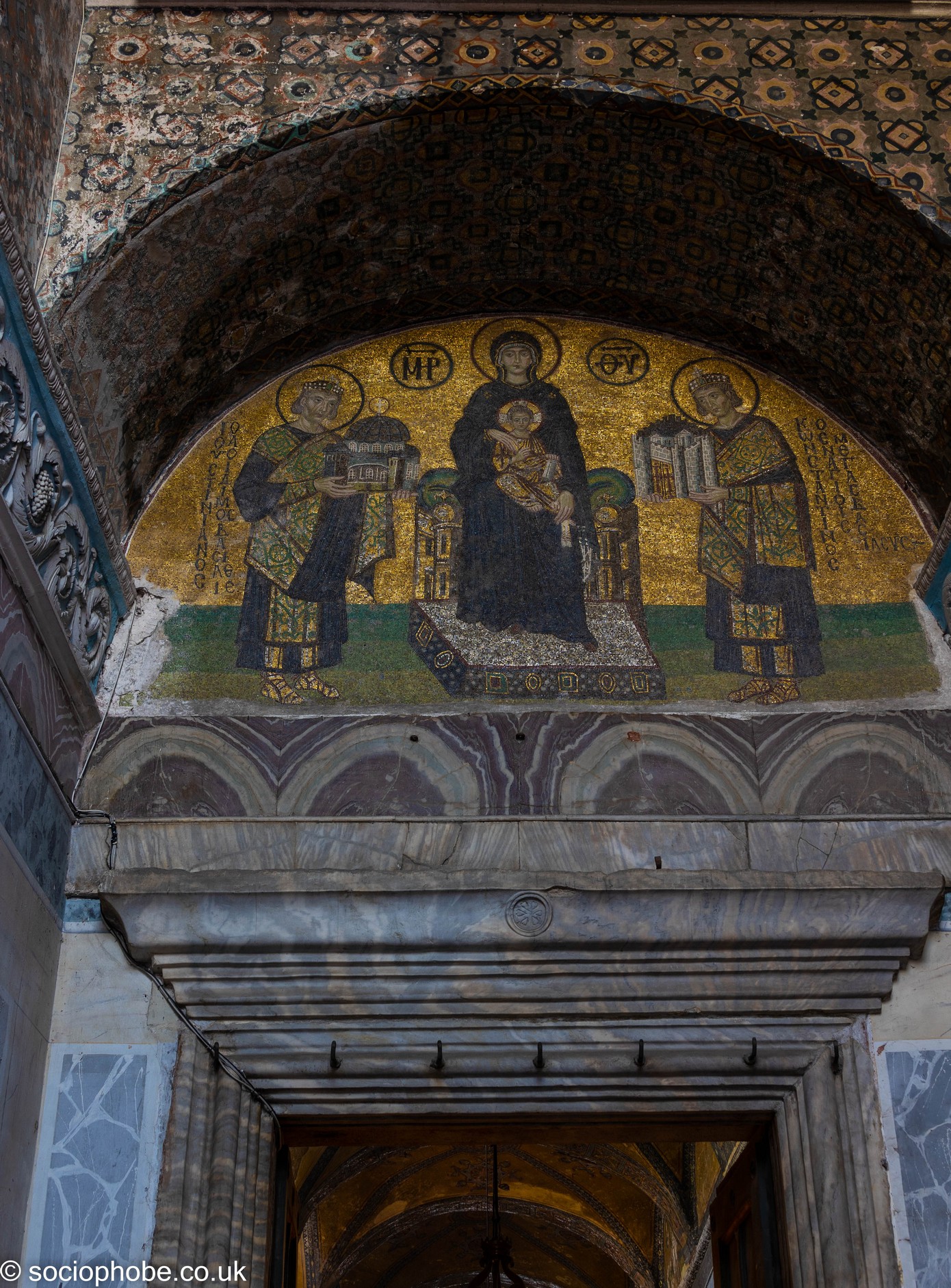
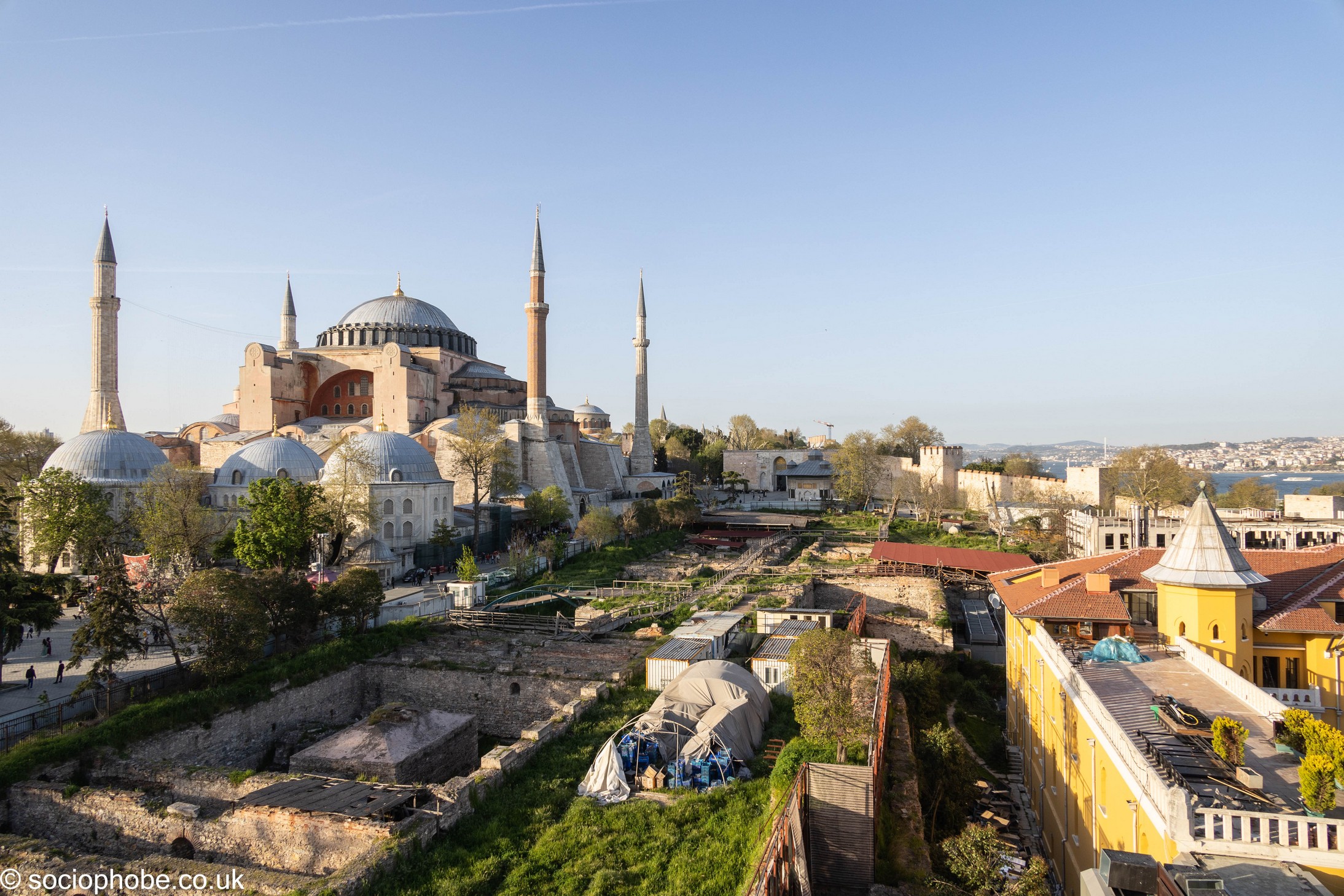
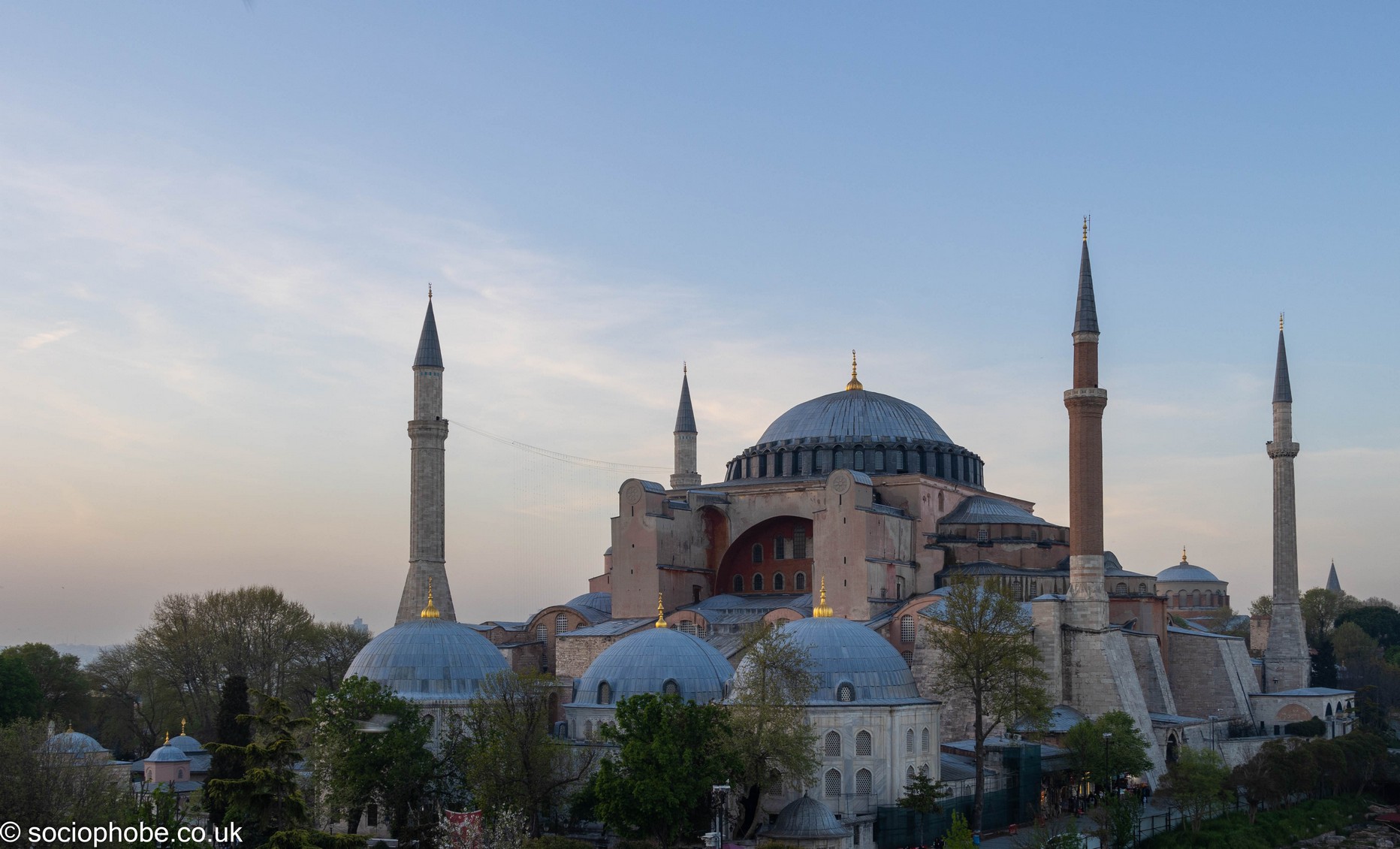
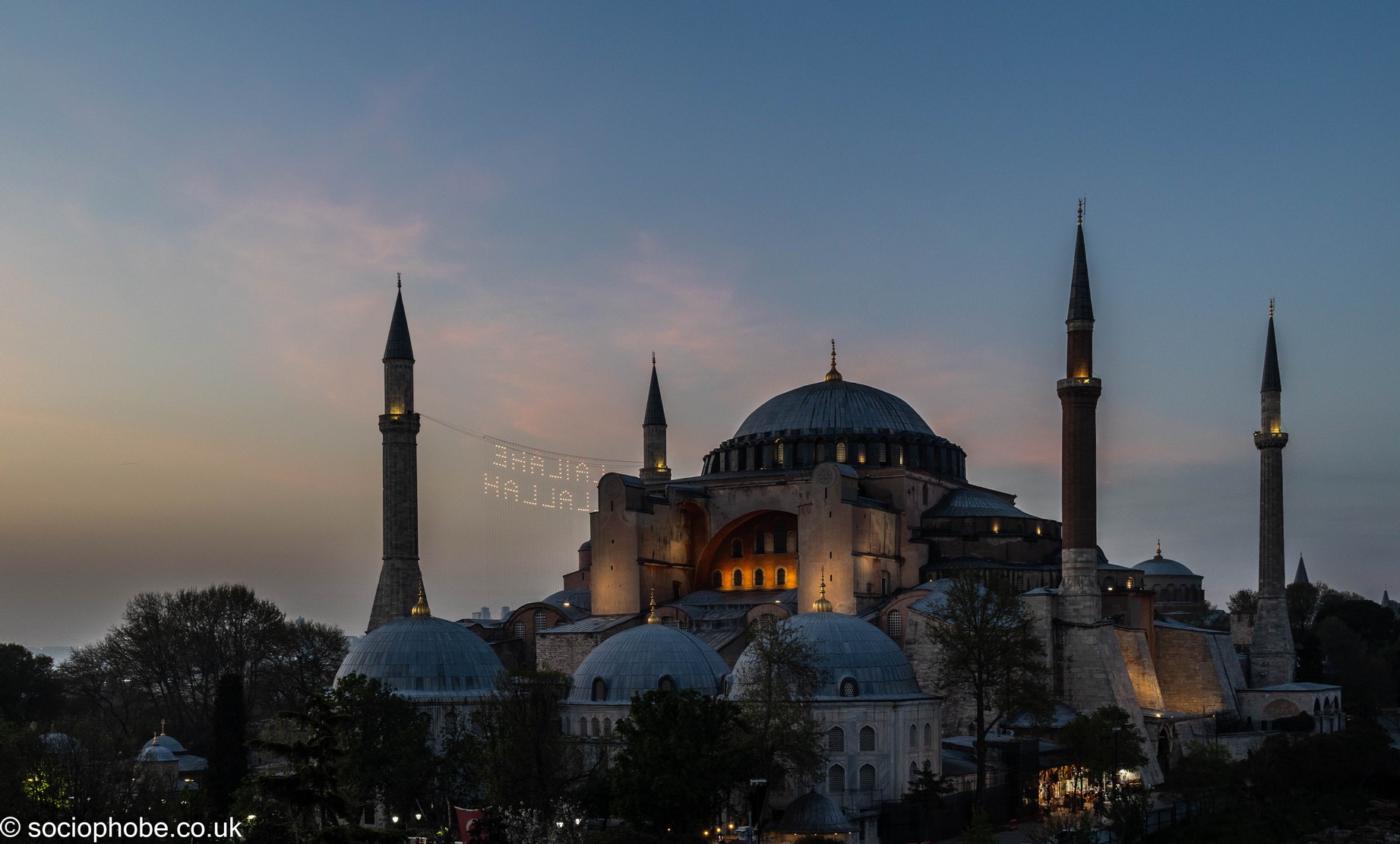
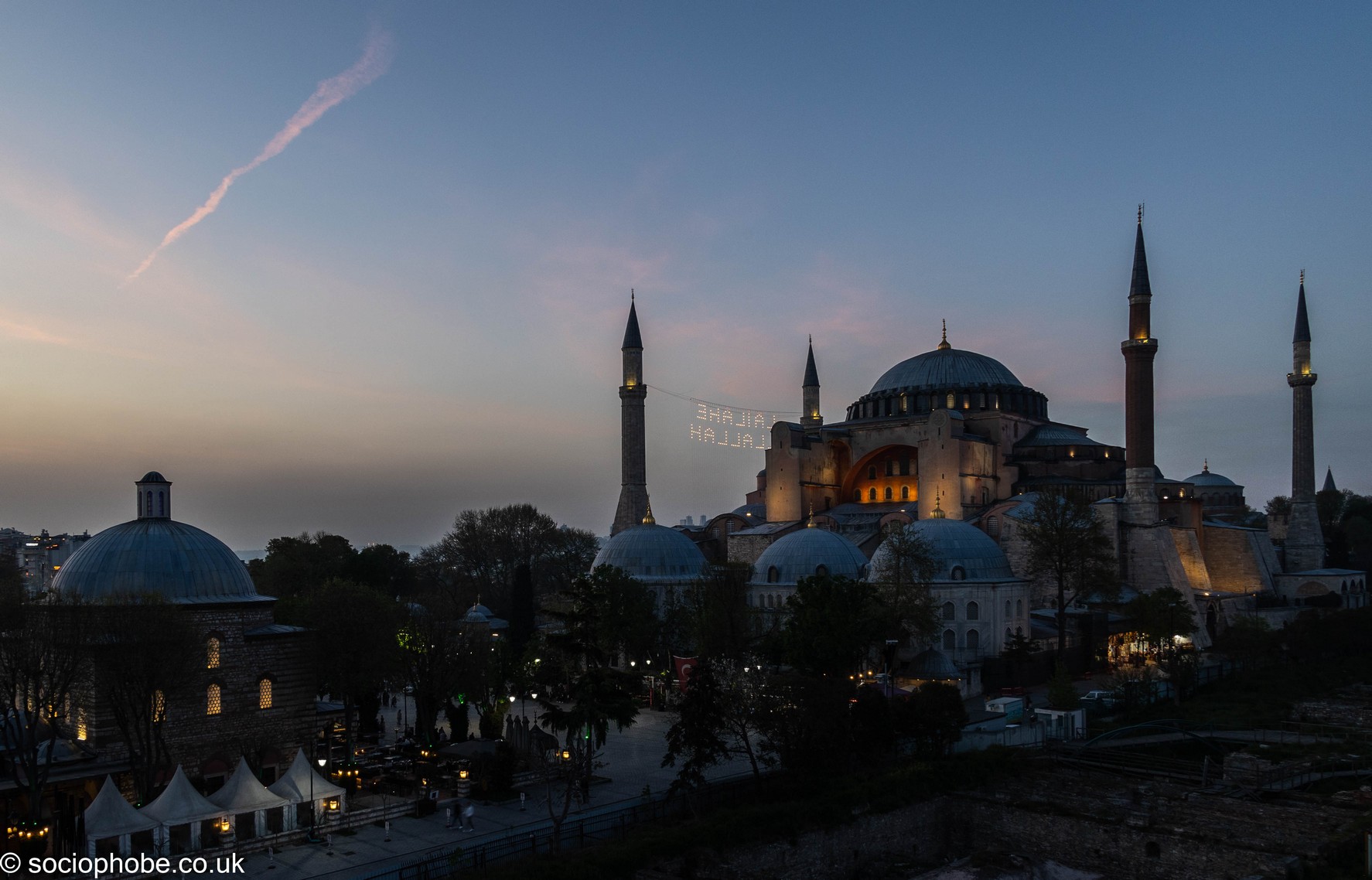
This is a magnificent 7th century Christian cathedral that was the focus of Greek Orthodox ceremonies for a thousand years. After 1453 it became a mosque until Ataturk reclassified it as a museum in the 1930’s. Sadly, Erdogan has now converted it back to a mosque (there are so many new mosques in the city I can’t see it as something that was needed, just an ego boost for him and a political win for the intellectually stunted). We’d visited a couple of times before and it is one of my favourite places in the world. Until today – the conversion to a mosque means the floor is now covered in a thick green carpet, covering the tiles and graves and entry to the upper galleries has been removed. Very disappointing indeed.
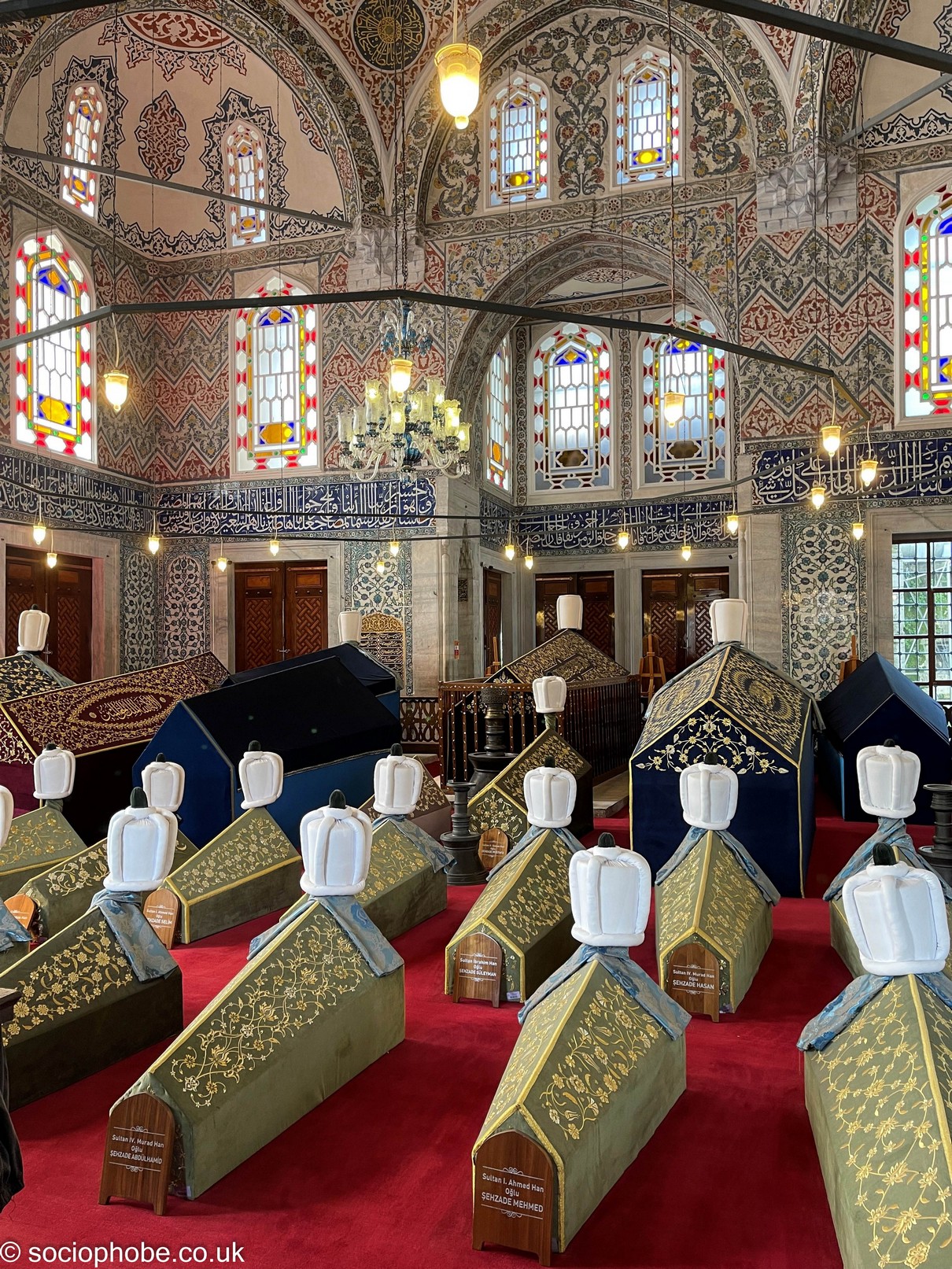
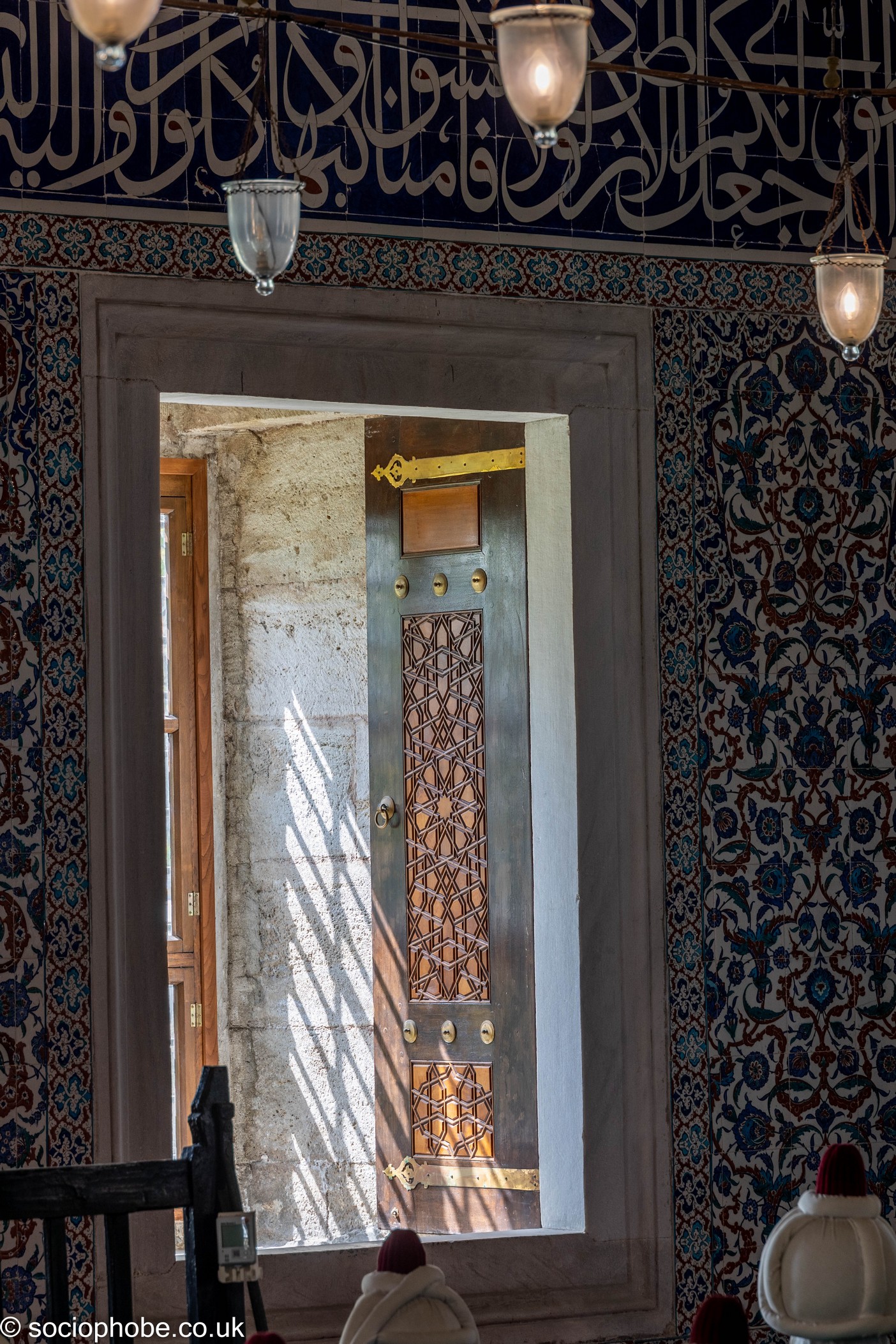
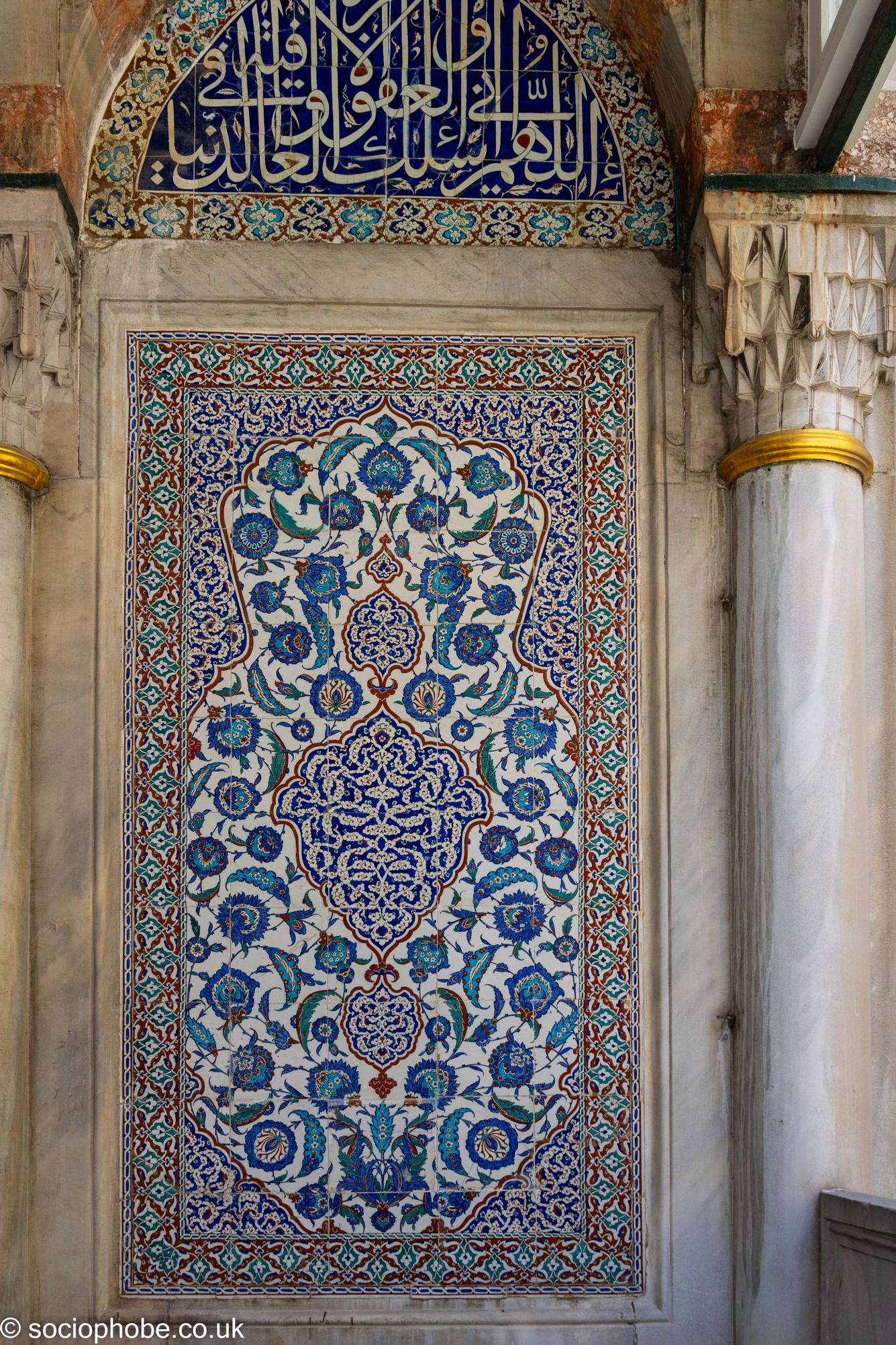
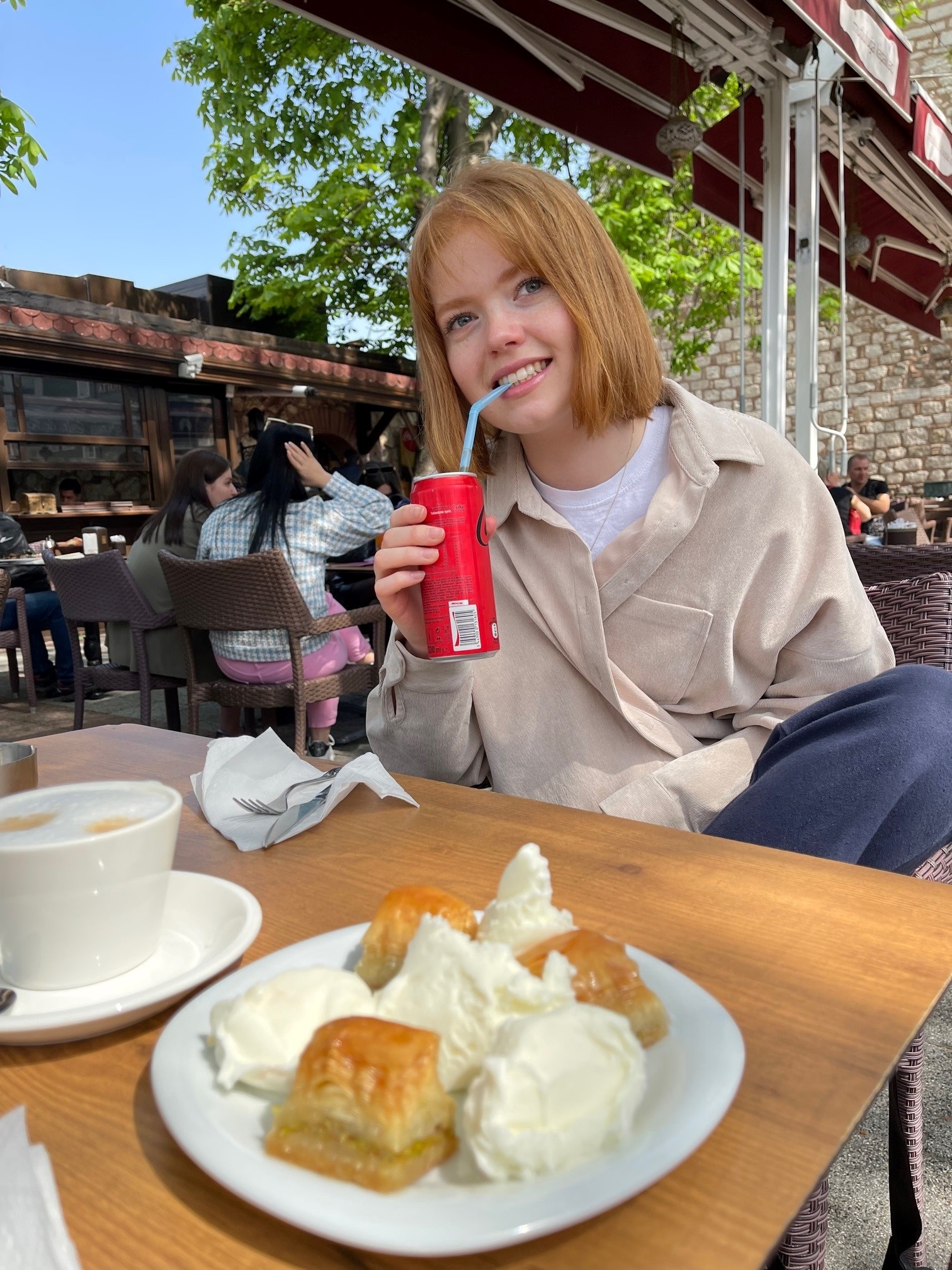
After a brief look around we left and continued into the complex to look at the tombs of the Ottoman Sultans. As expected, these were beautifully ornate but I must admit they blurred into one and I can’t remember anything particularly distinguishing about any of them. We left after less than an hour and stopped at the Dervis Cafe nearby. It was a bit of a tourist trap but the views were good and they served baklava and ice cream so you can forgive a lot for that!
The Palace Mosaic Museum
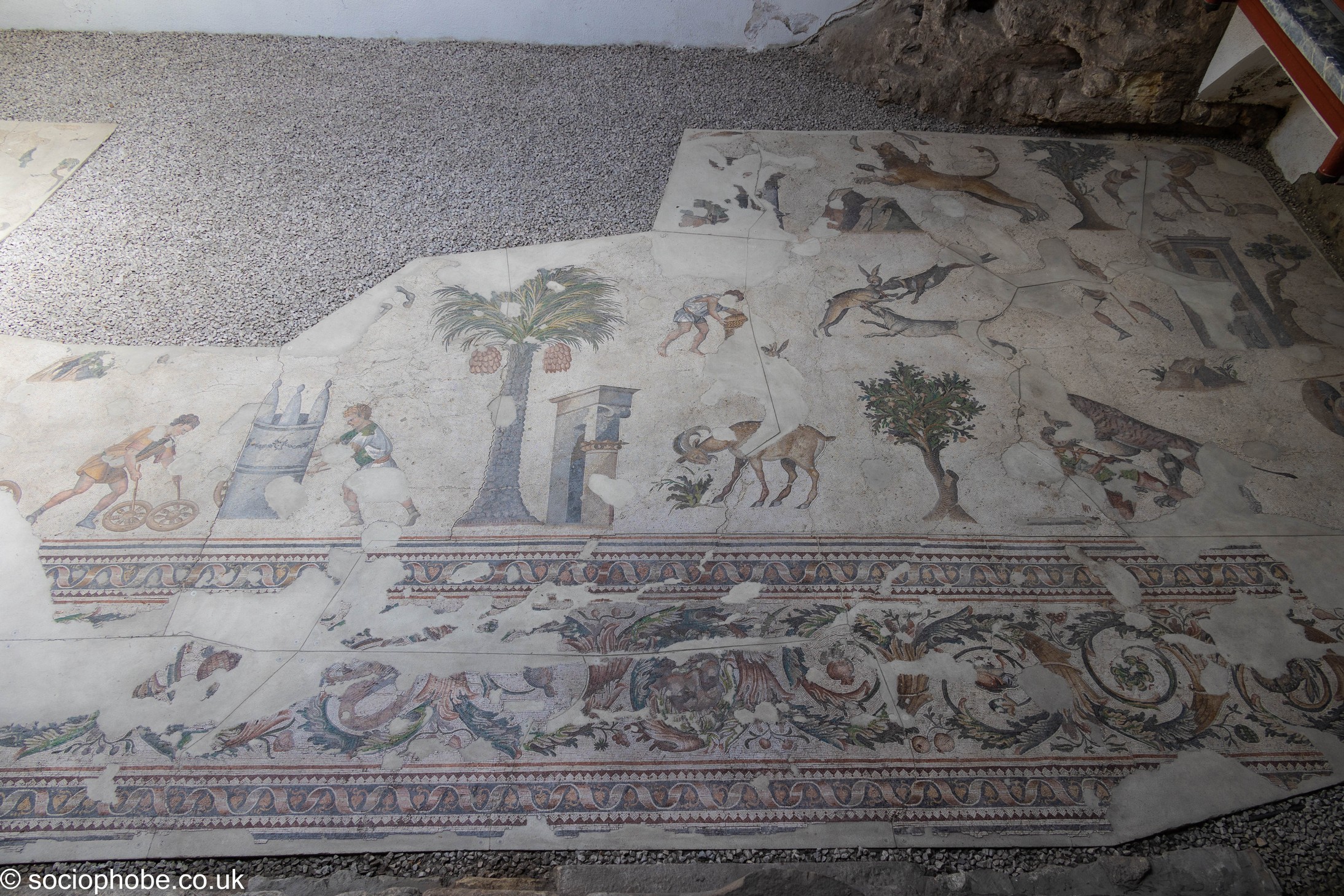
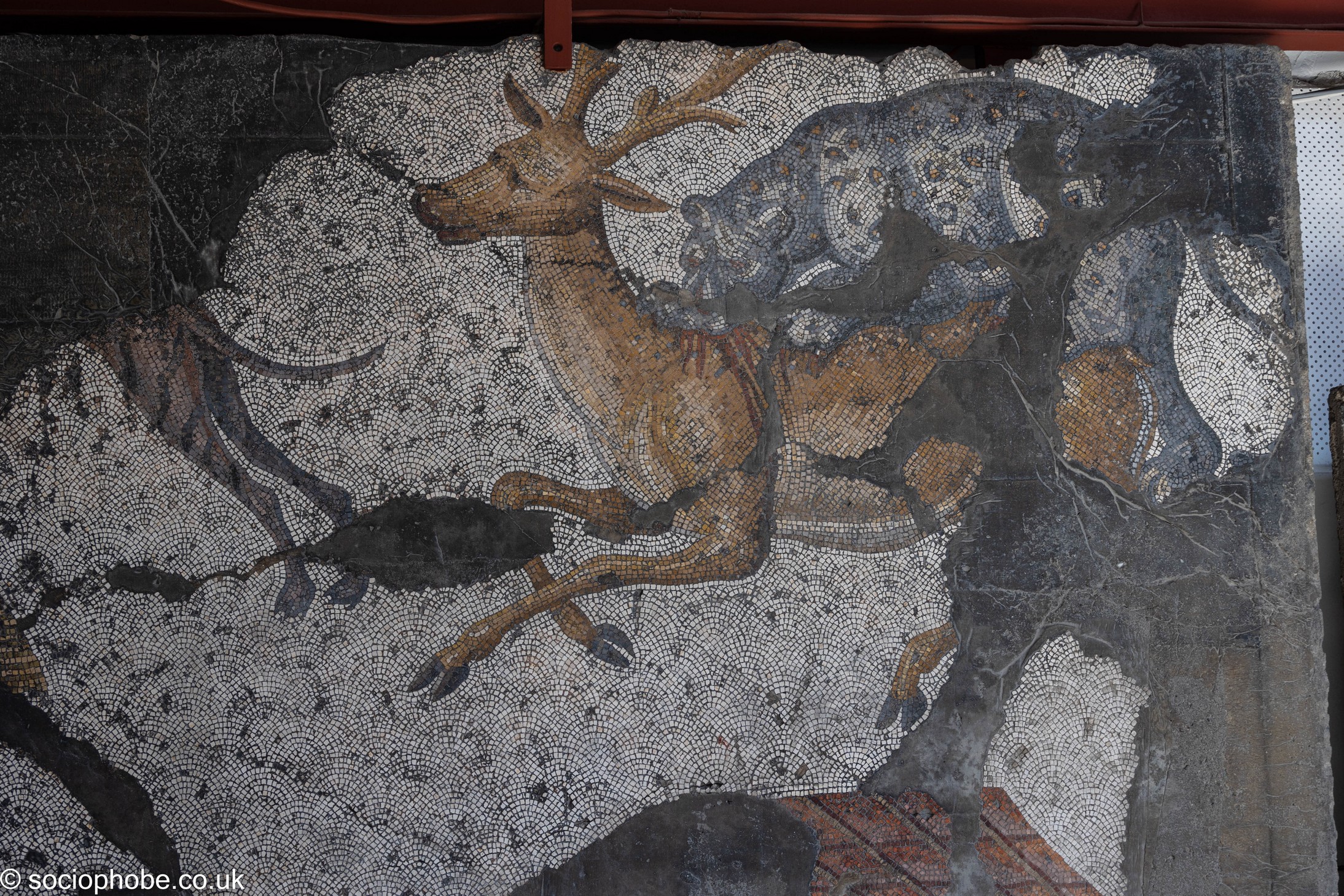
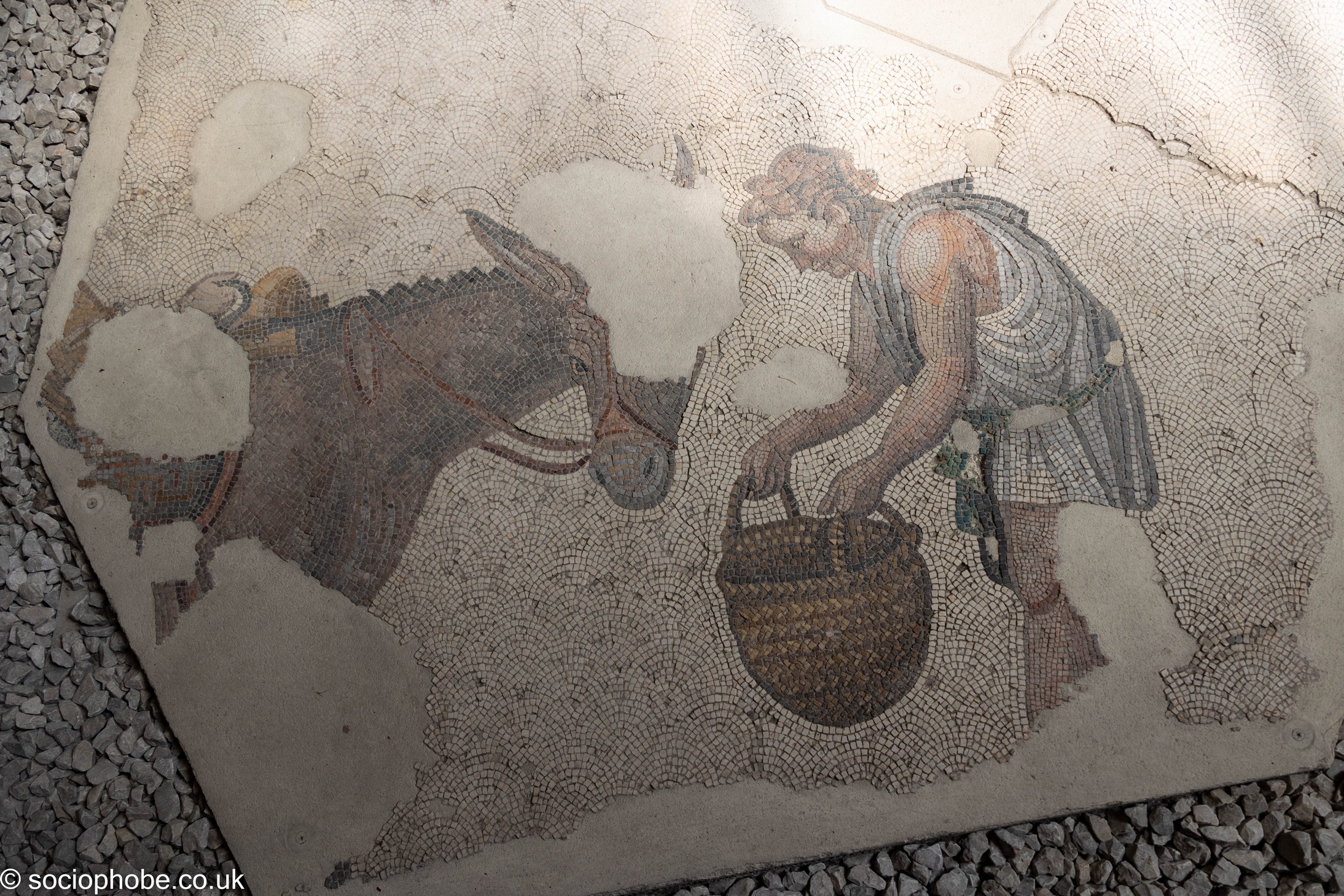
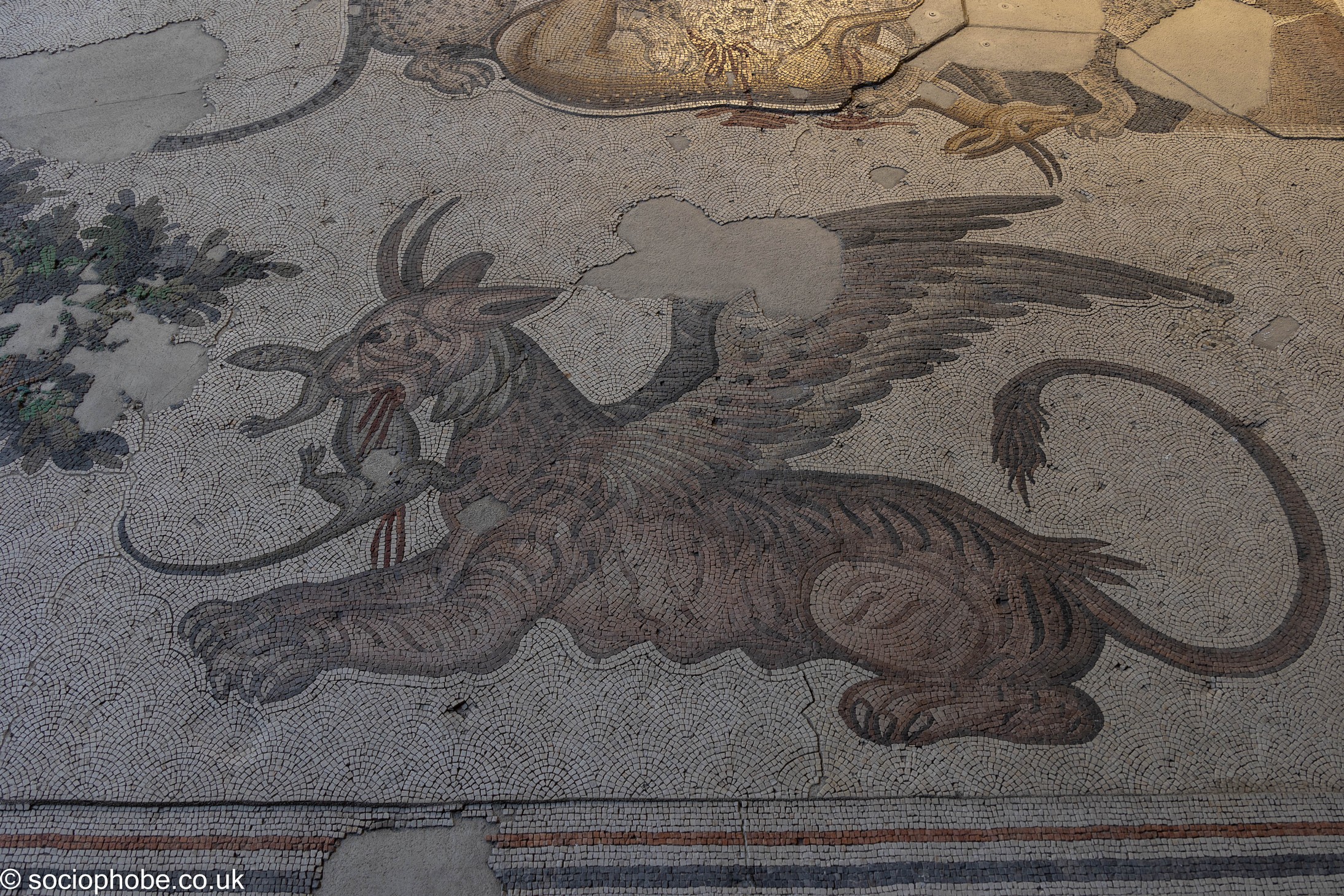
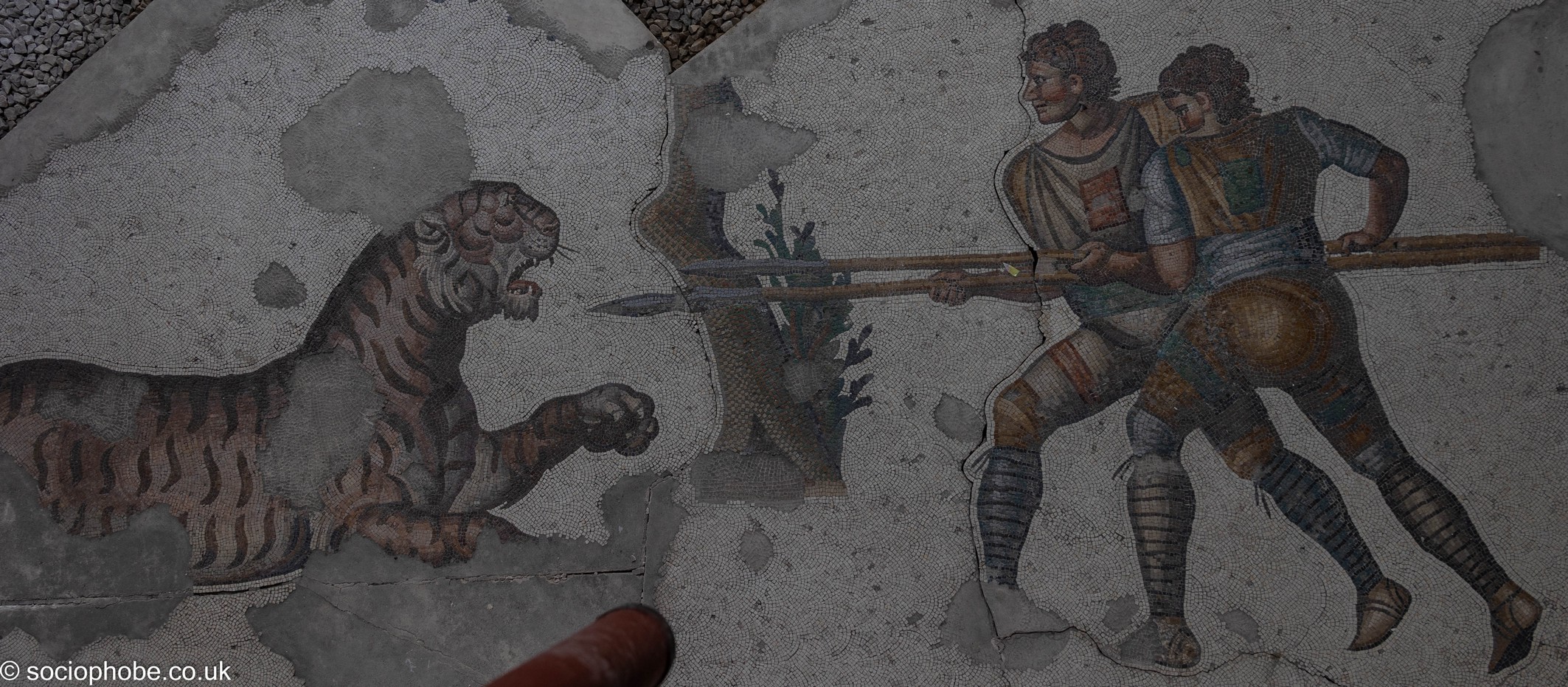
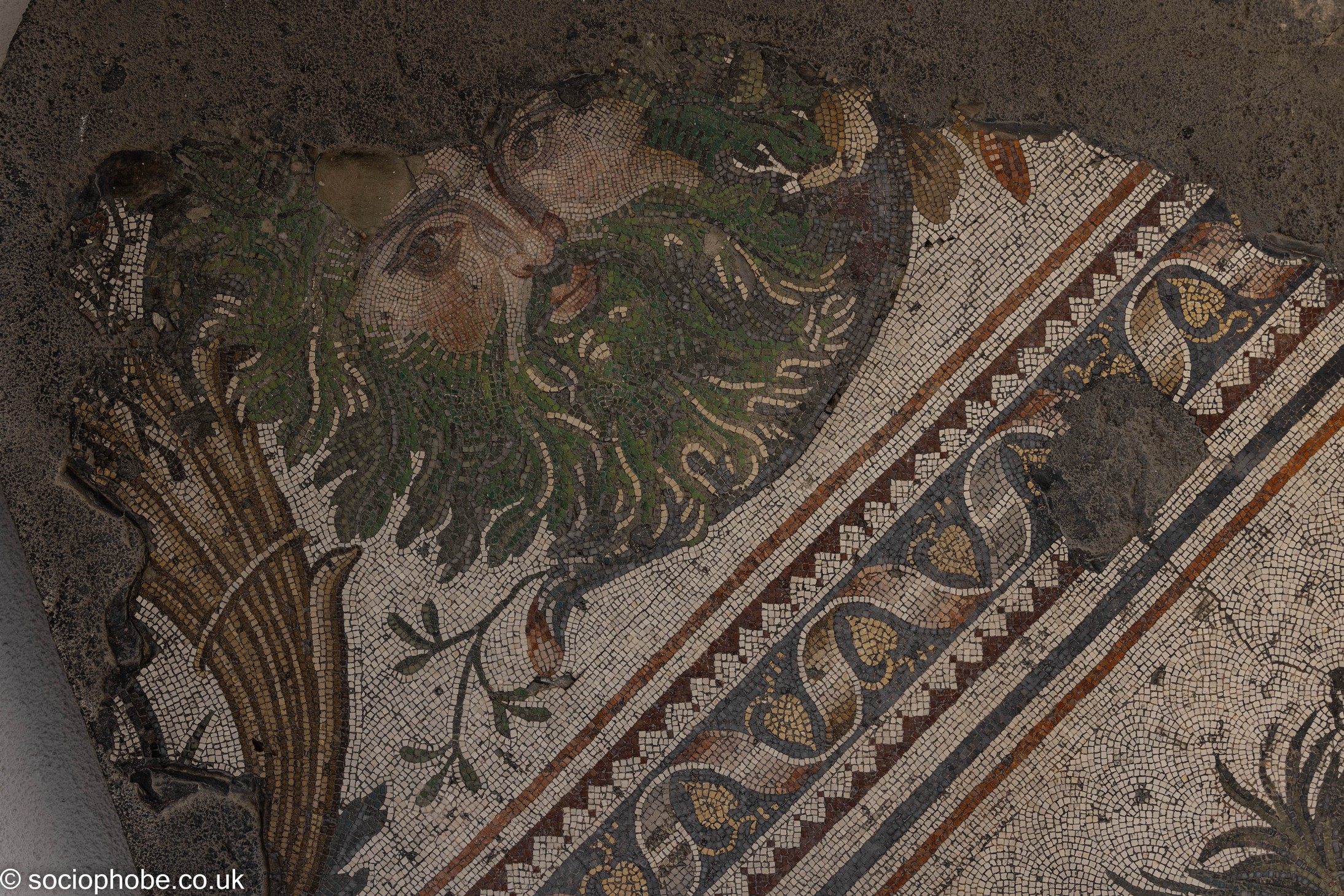
One attraction I hadn’t been to before was the Great Palace Mosaics Museum, containing excavated mosaics from the 5th century Byzantine Palace. There was a huge amount of information about how the mosaics were originally made, then rediscovered and restored but I was conscious that it wasn’t really Natalya’s thing so I skim read a lot. The mosaics were beautiful though, vibrant colours and lovely designs even 1500 years later and again, only a few minutes walk away.
Bayazit Square
Natalya’s passion is cafes and in the interests of balance, our next stop was a proper cafe that she’d researched. Called Coffee Gutta it was quite a trek away, about 30 minutes north west but it was meant to be a lovely speciality place, so off we trotted.
It was quite warm by now and I was glad we’d popped into the hotel after the mosaics museum for me to change into shorts. We meandered through the streets but didn’t really stop to look at anything as the deal was we’d do that on the way back.
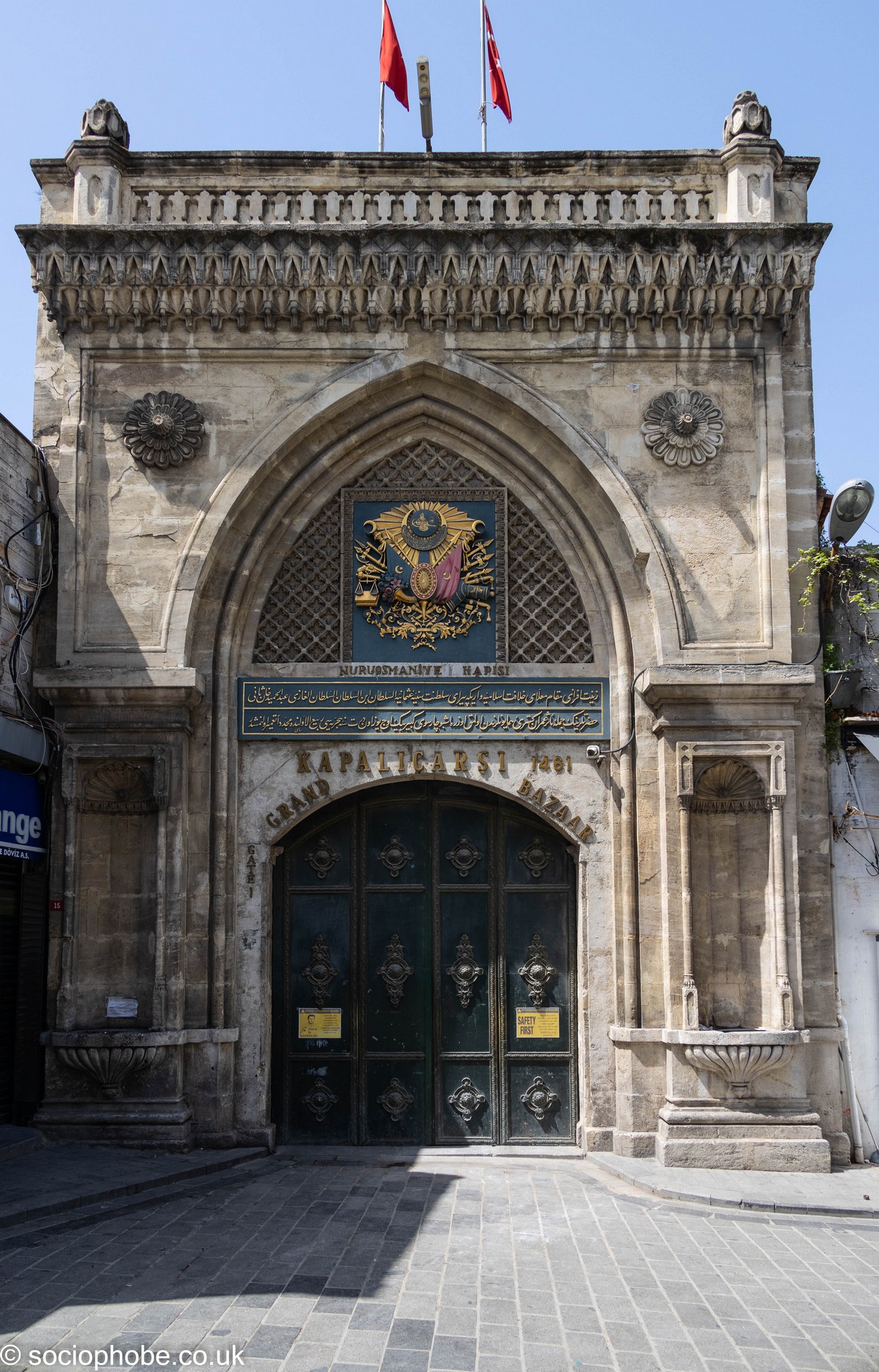
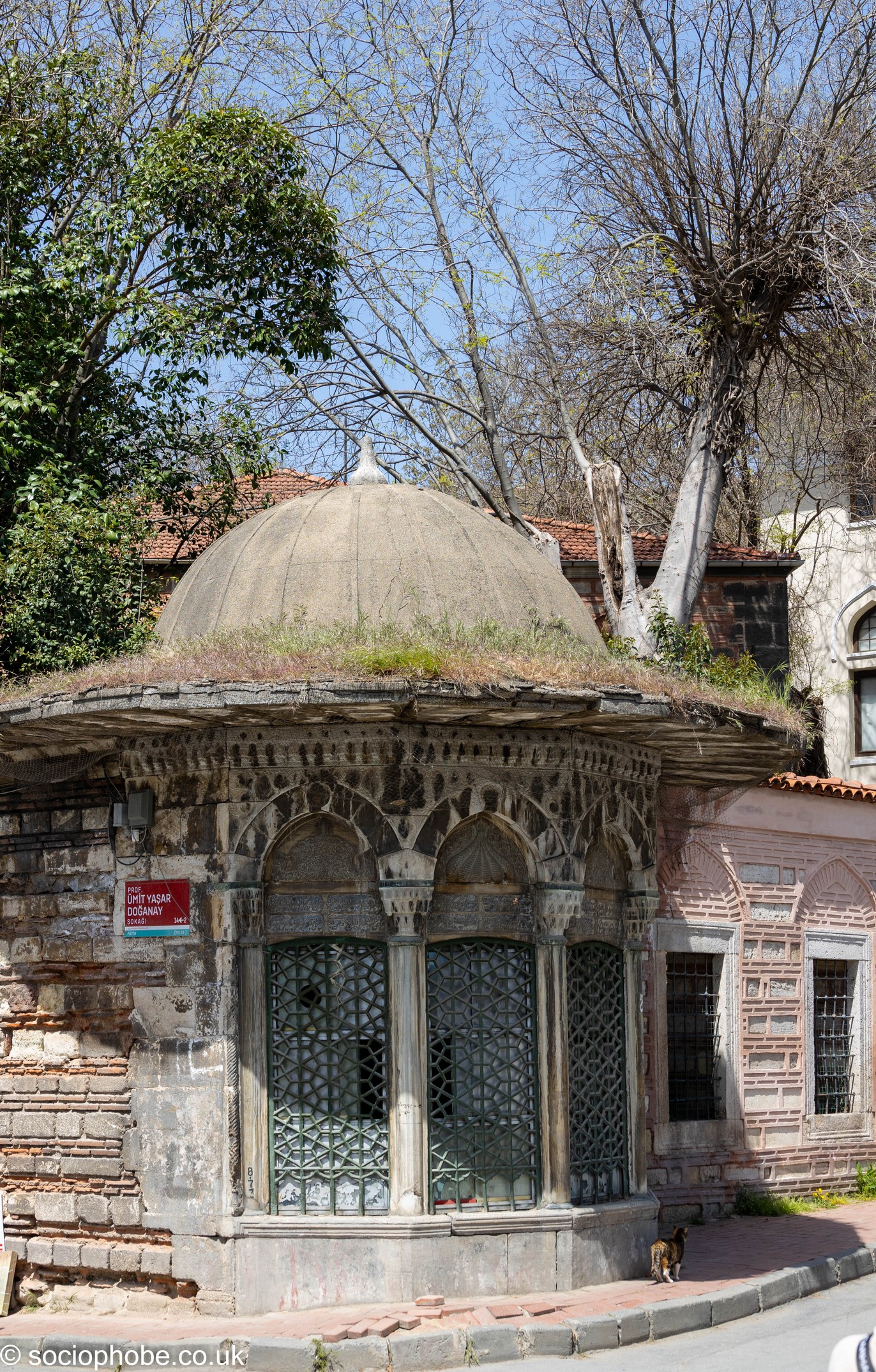
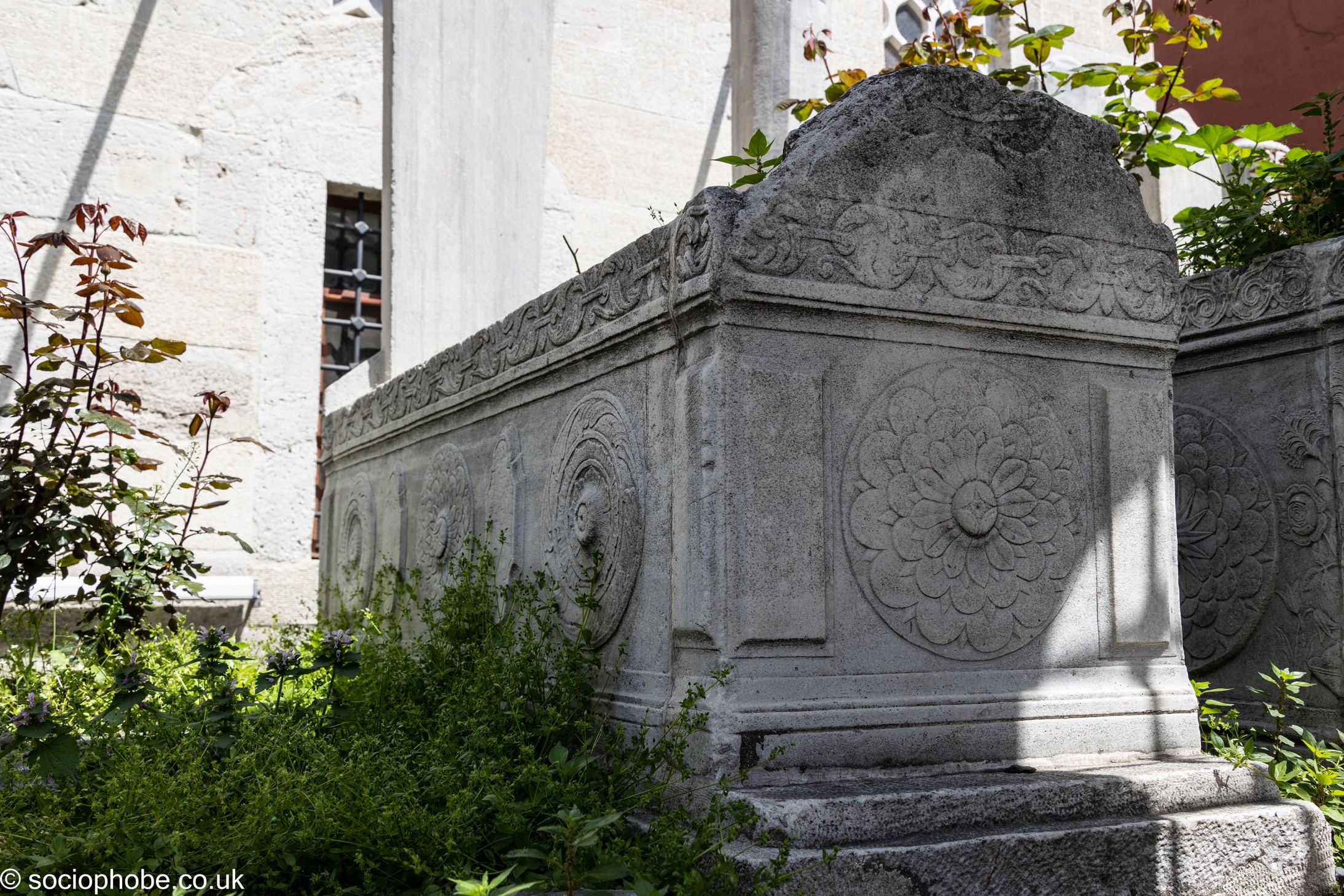
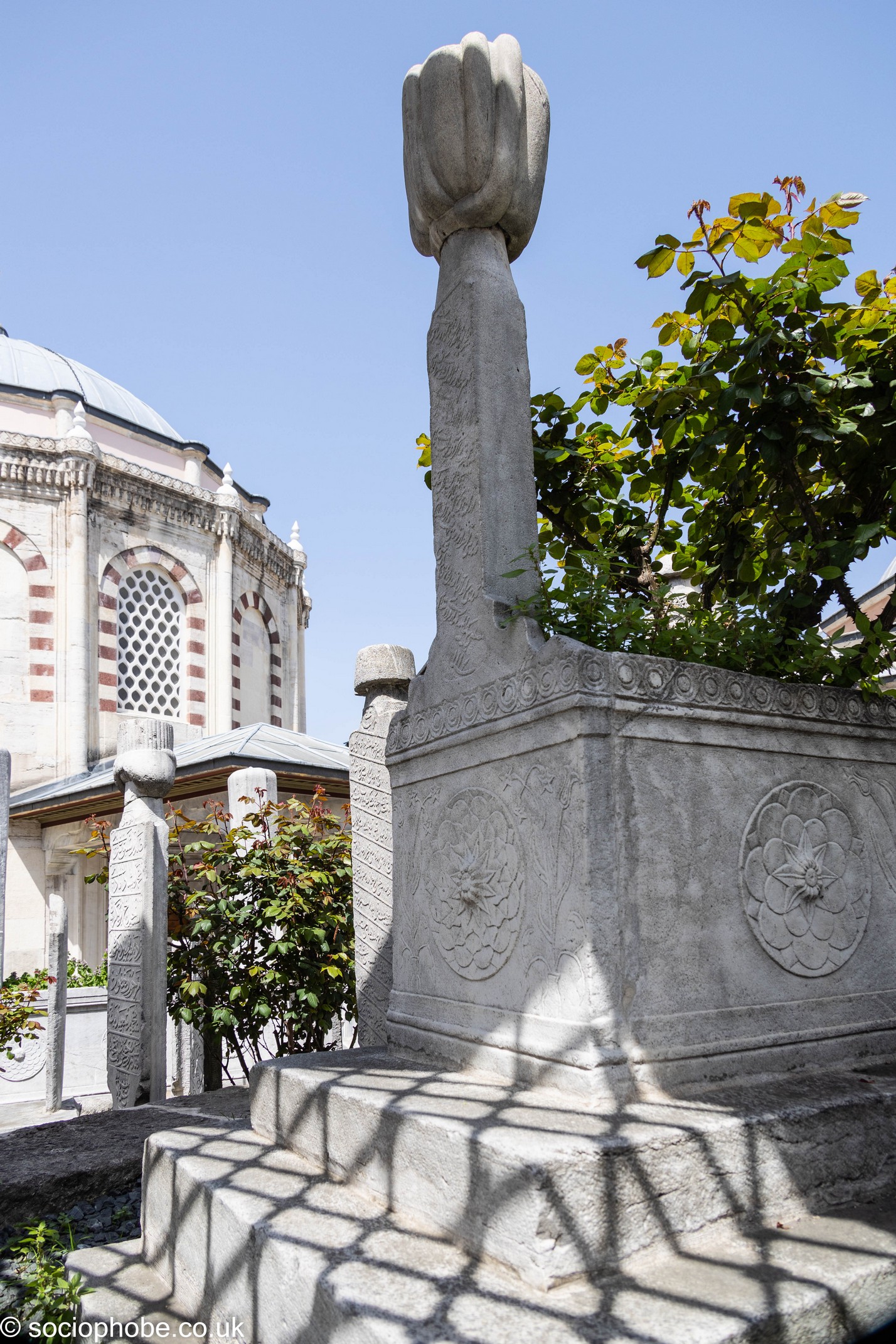
The Grand Bazaar was completed closed, I’m not sure if it was for restoration or because it was a Sunday but every route we tried to take through the bazaar was blocked. We saw some interesting (to me) Turkish graves and some very run down old buildings and then eventually arrived at the cafe.
There was a large menu and my coffee was fine (but what do I know!) although Natalya wasn’t impressed with either the staff knowledge or the coffee she had so that was a bit of a let down. We walked back through Beyazit Square which, for variety, had another huge mosque that was being worked on. We also saw the 18th century fire lookout tower of the same name.
Theodosius’s Cistern/Serefiye Sarnici
Another of my favourite places in Istanbul is the Basilica Cistern, built in the reign of Justinian in the 6th century it is a fabulously ornate water storage room although now it is just a tourist attraction. It is also closed and not due to reopen until September so that was bloody wonderful. After some research I found another cistern that was open to visitors that was near Bayazit Square.
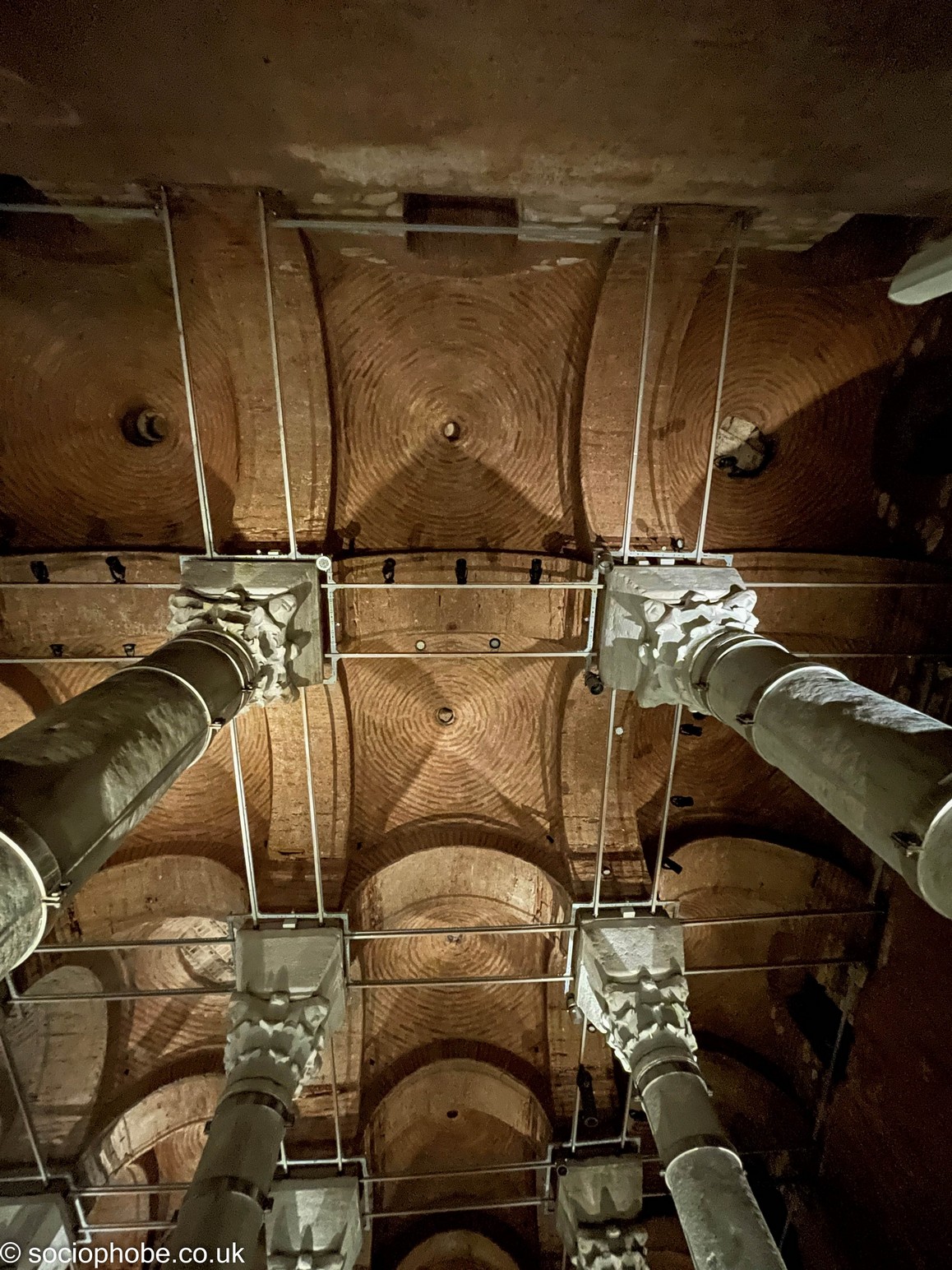
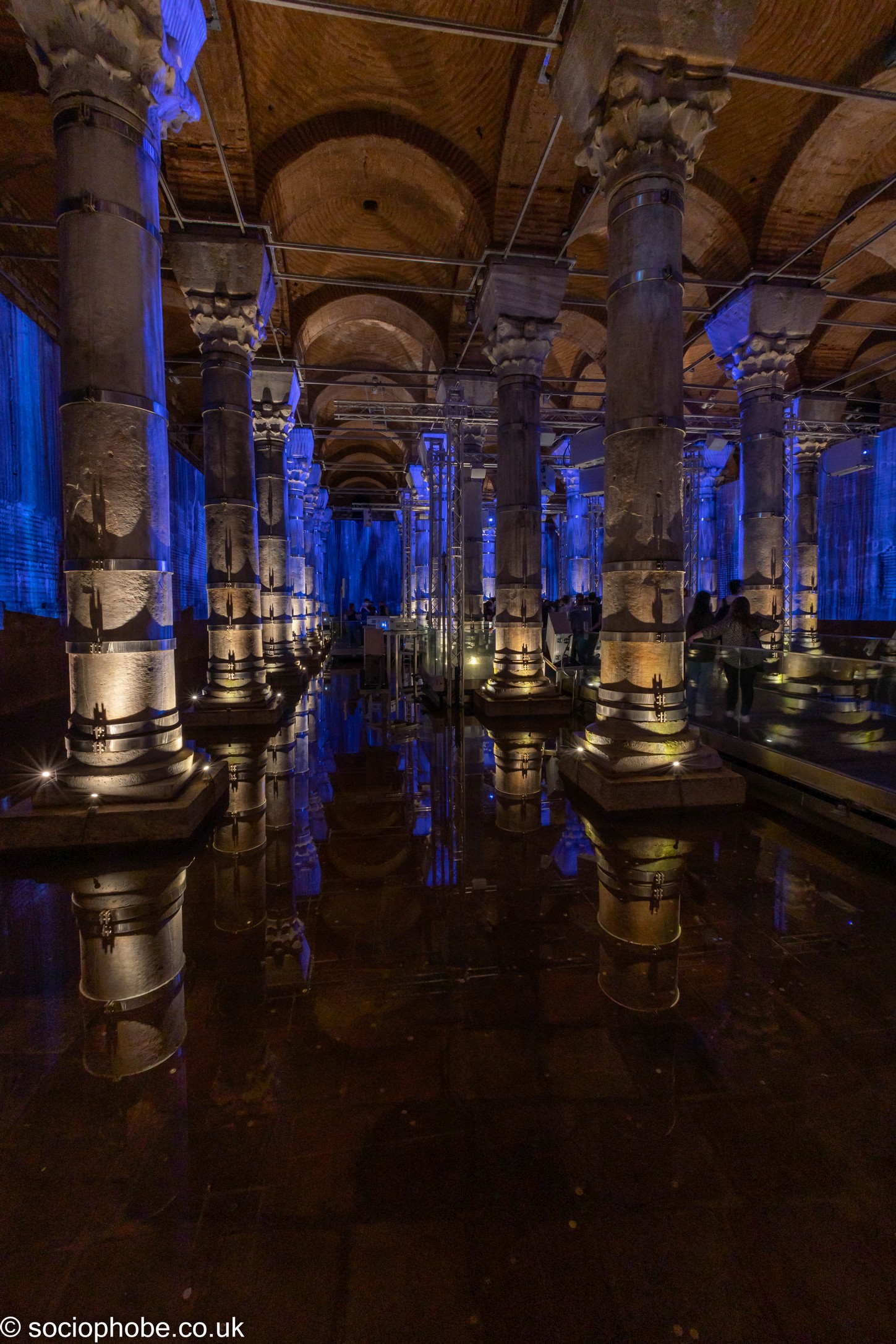
The Cistern of Theodosius was built in the 5th century and is smaller than the Basilica Cistern but it well restored and has a light show too. Entry was about £8 and I have to say I was impressed. The light show, despite my initial trepidation, was very well done and we spent a lot longer inside than I expected. Sadly I messed up most of the photos so what I have doesn’t really do the place justice.
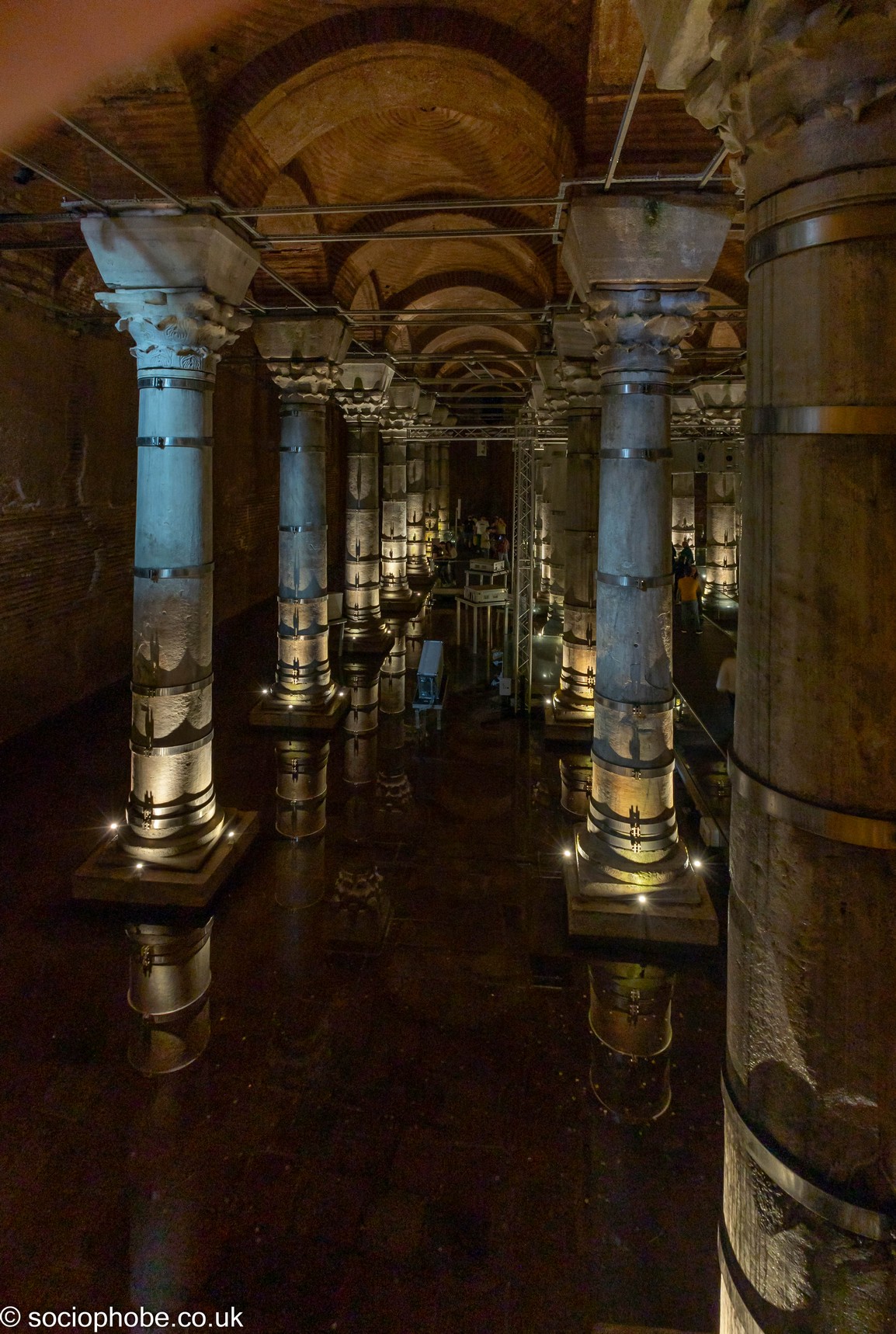
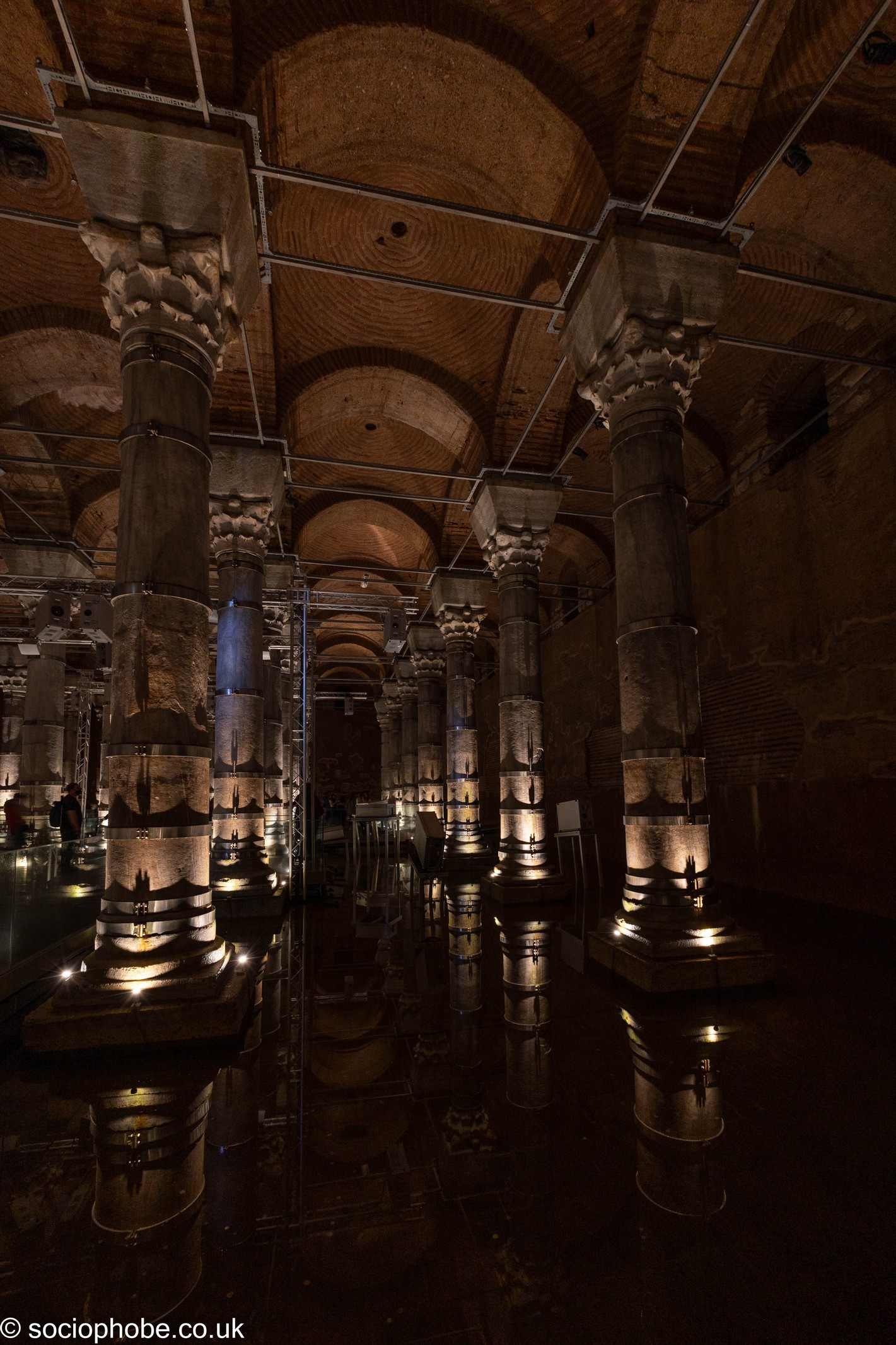
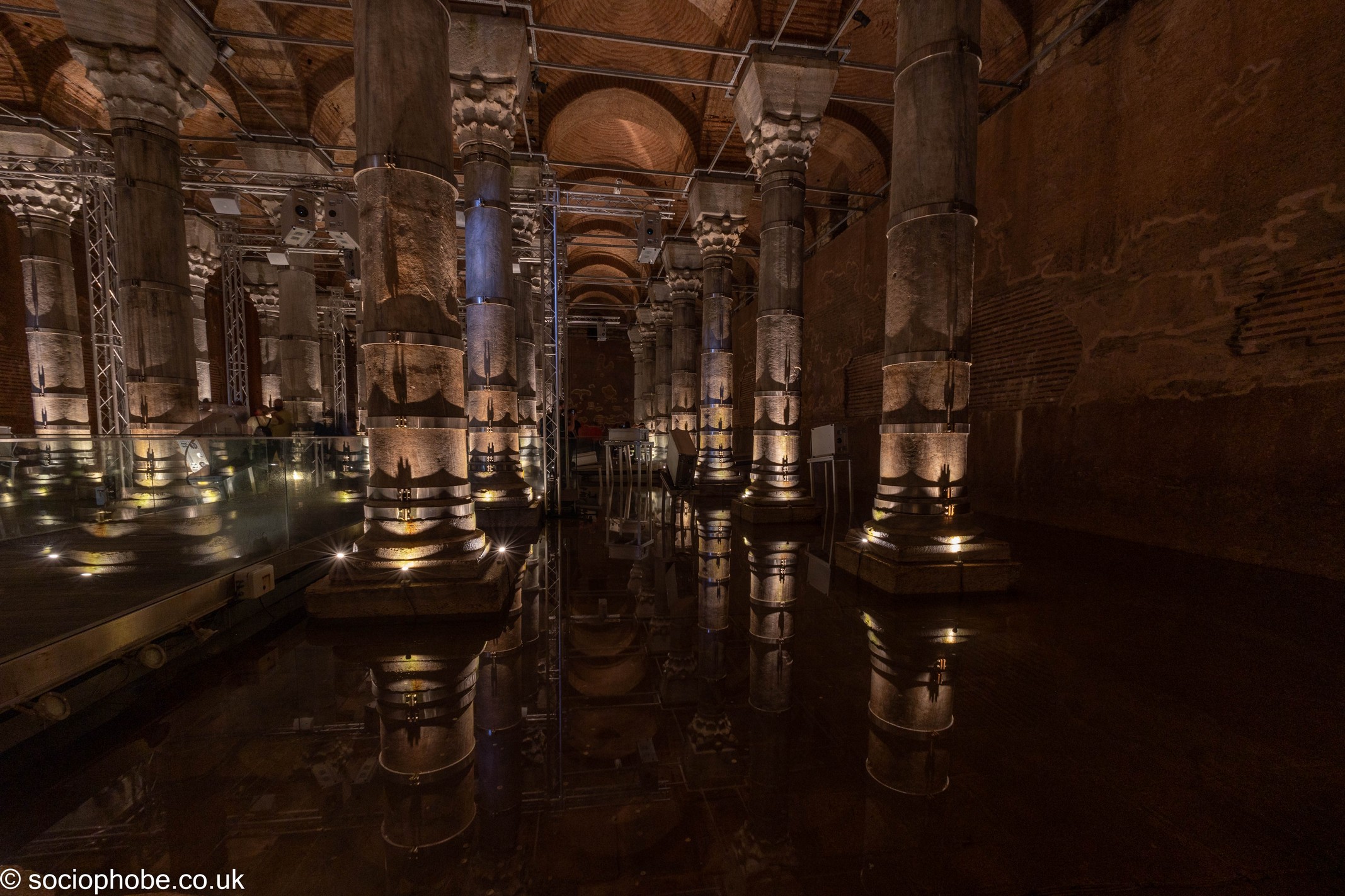
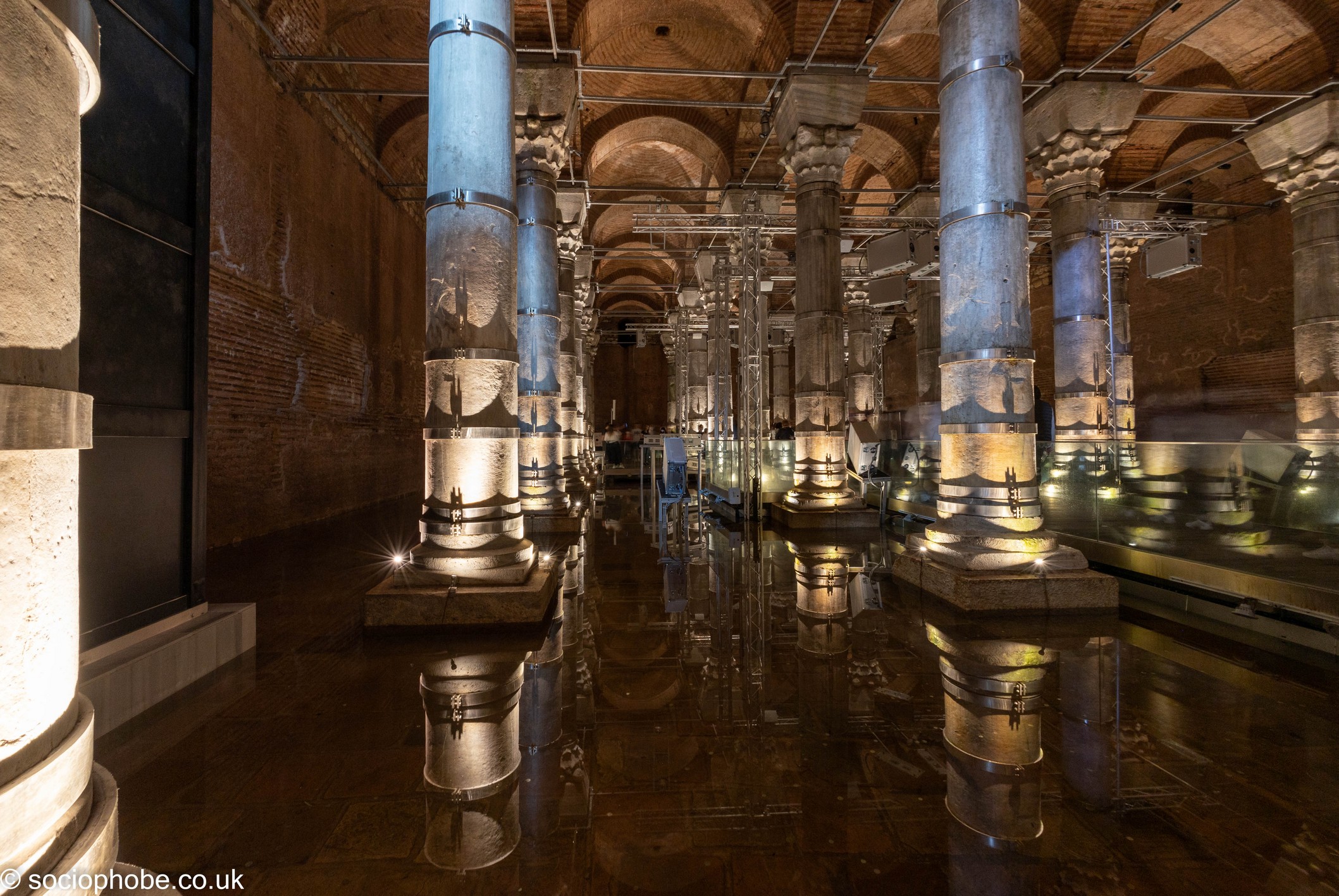
The Hippodrome area
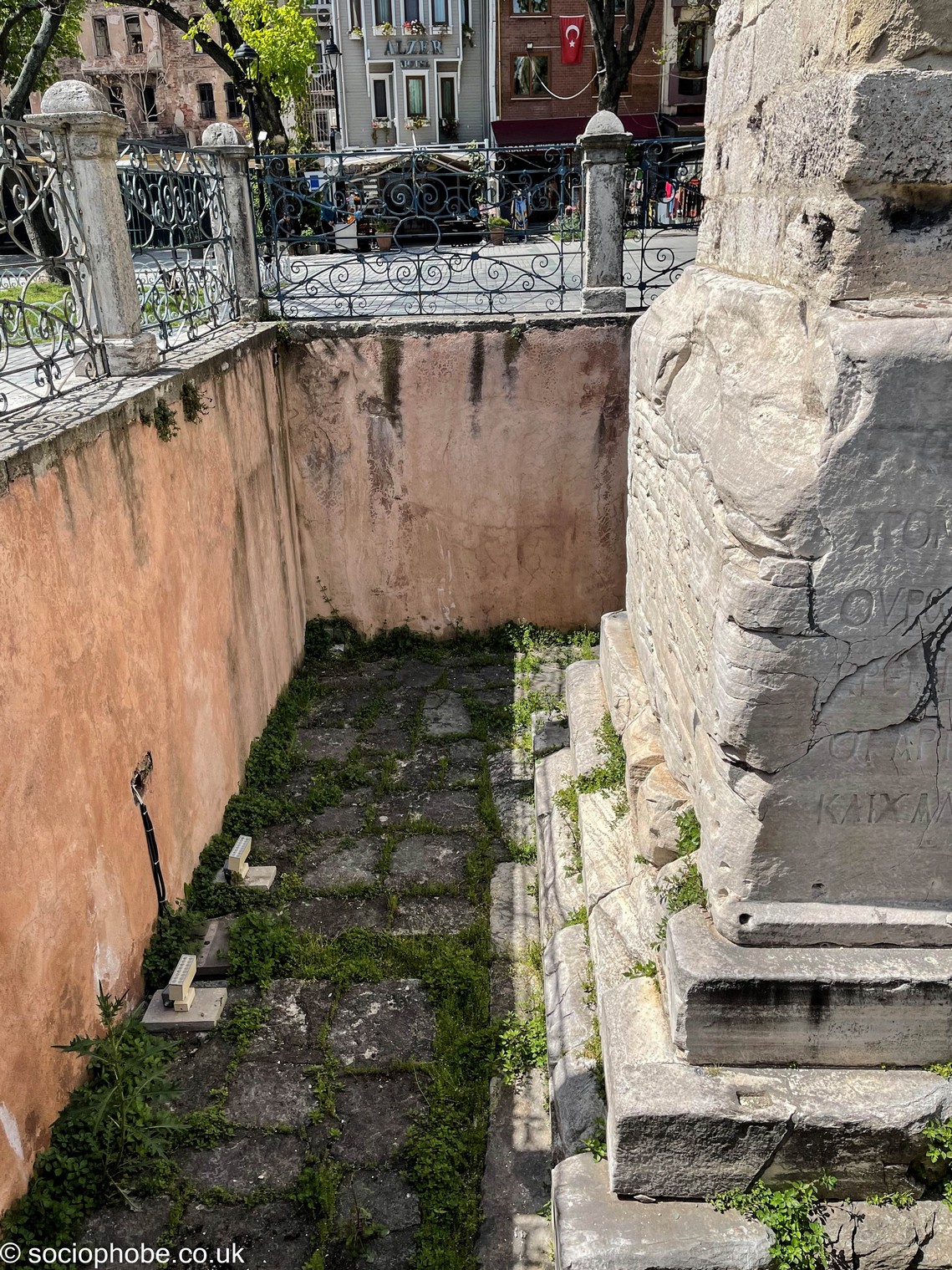
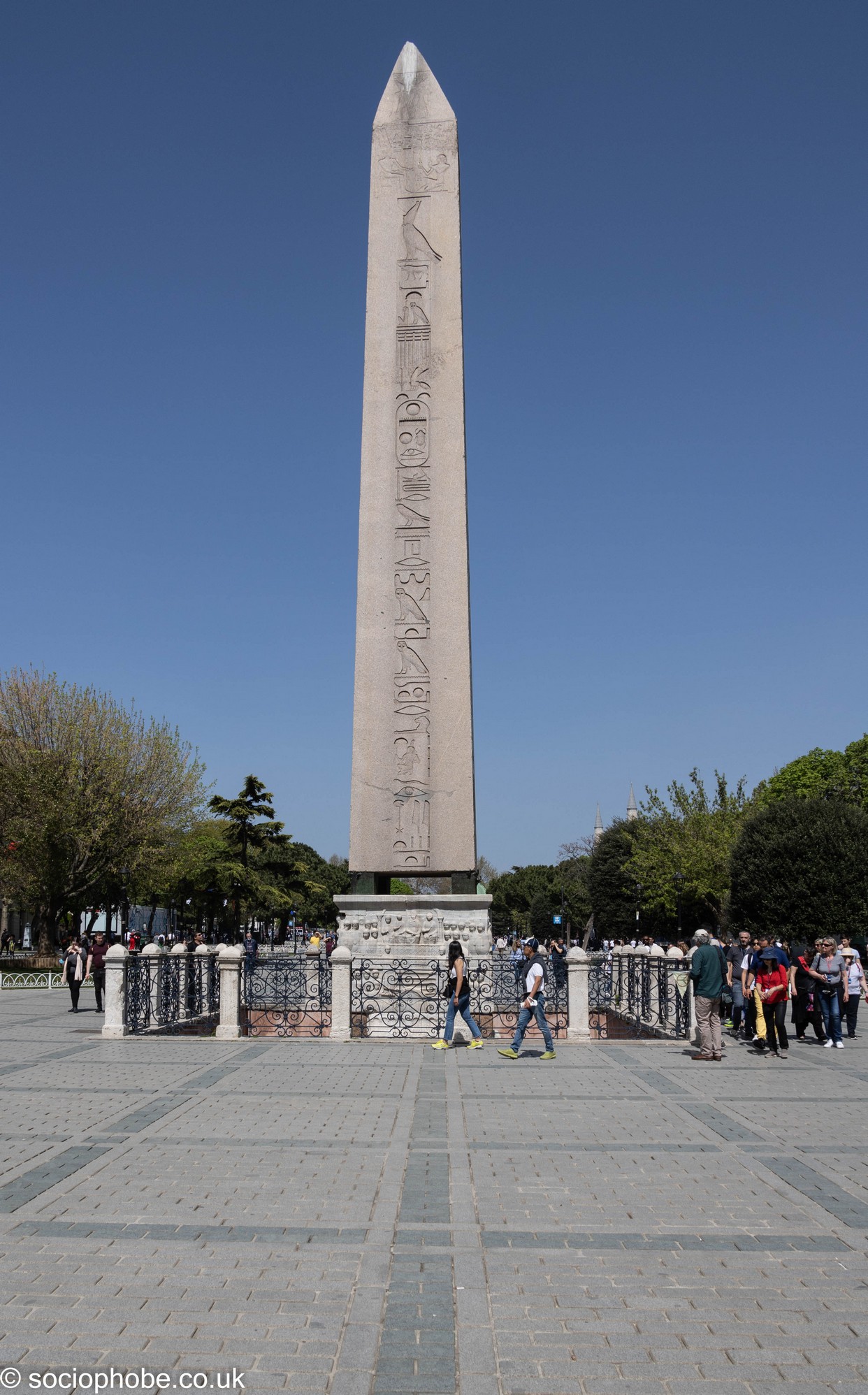
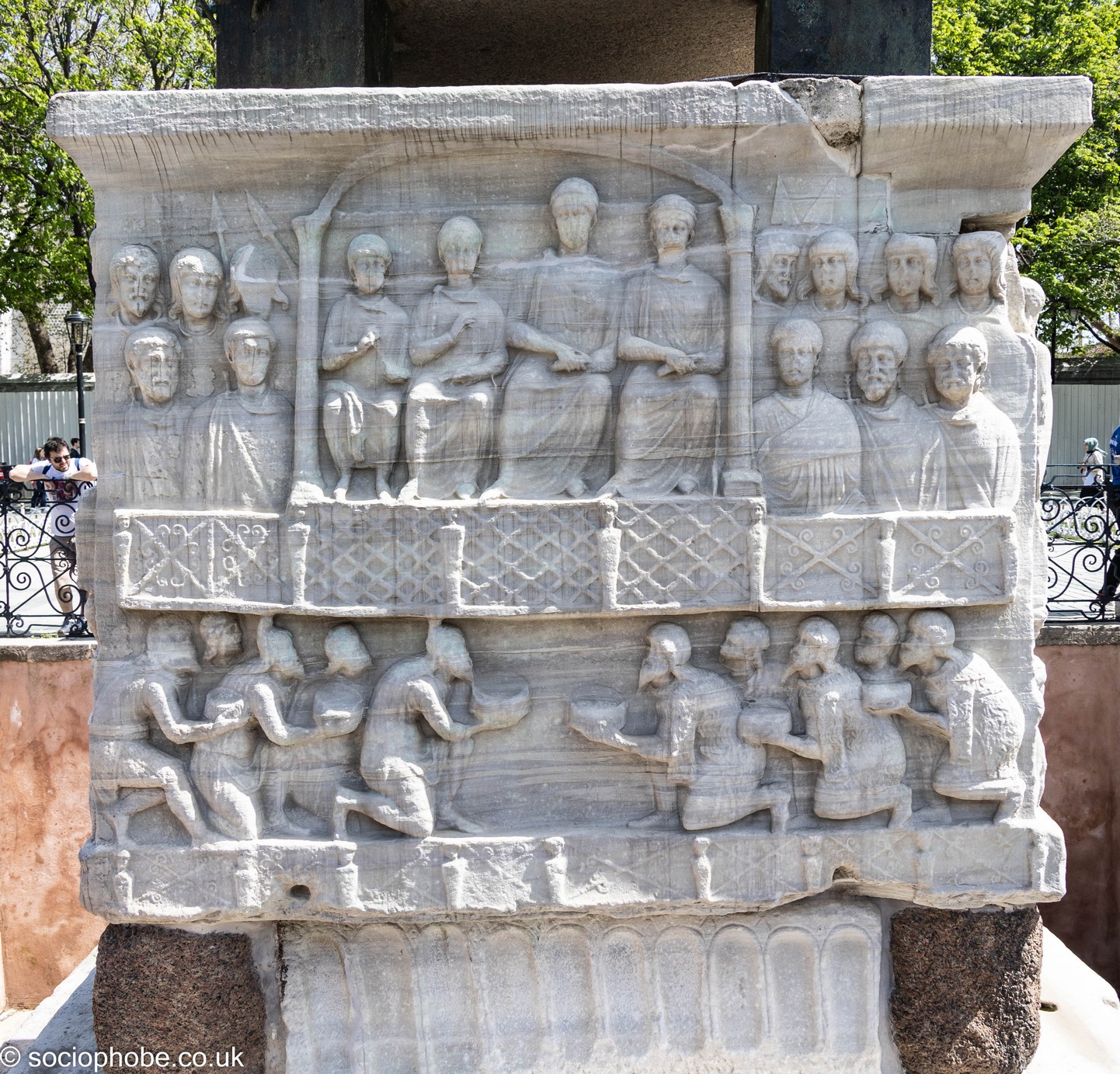
We left the cistern and walked the short distance to the Hippodrome area. As the name implies, this was originally used for horse and chariot racing and has various imperial columns along the centre line. It was amazing to see how far above the original street level we are when looking at one of the excavated obelisks.
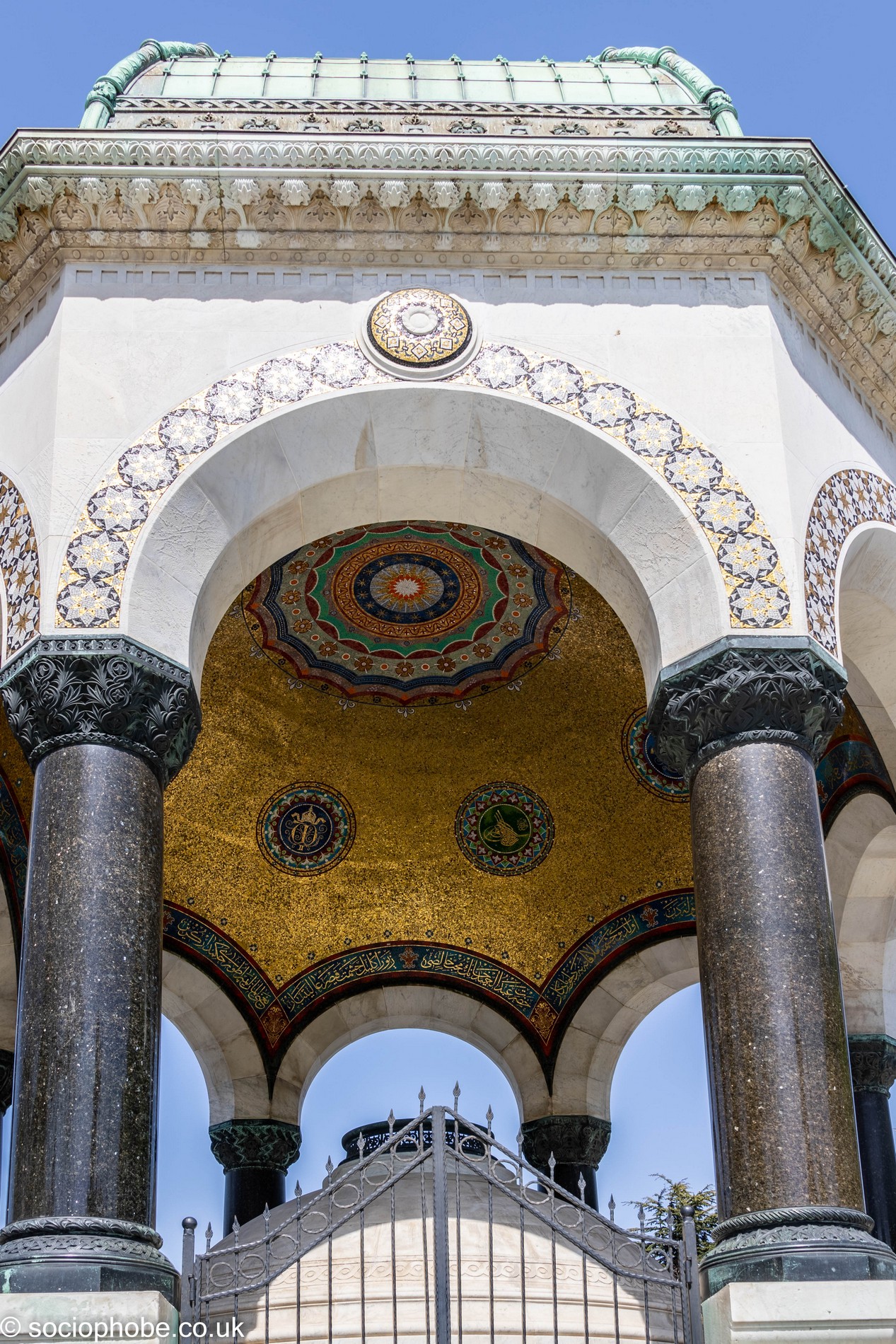
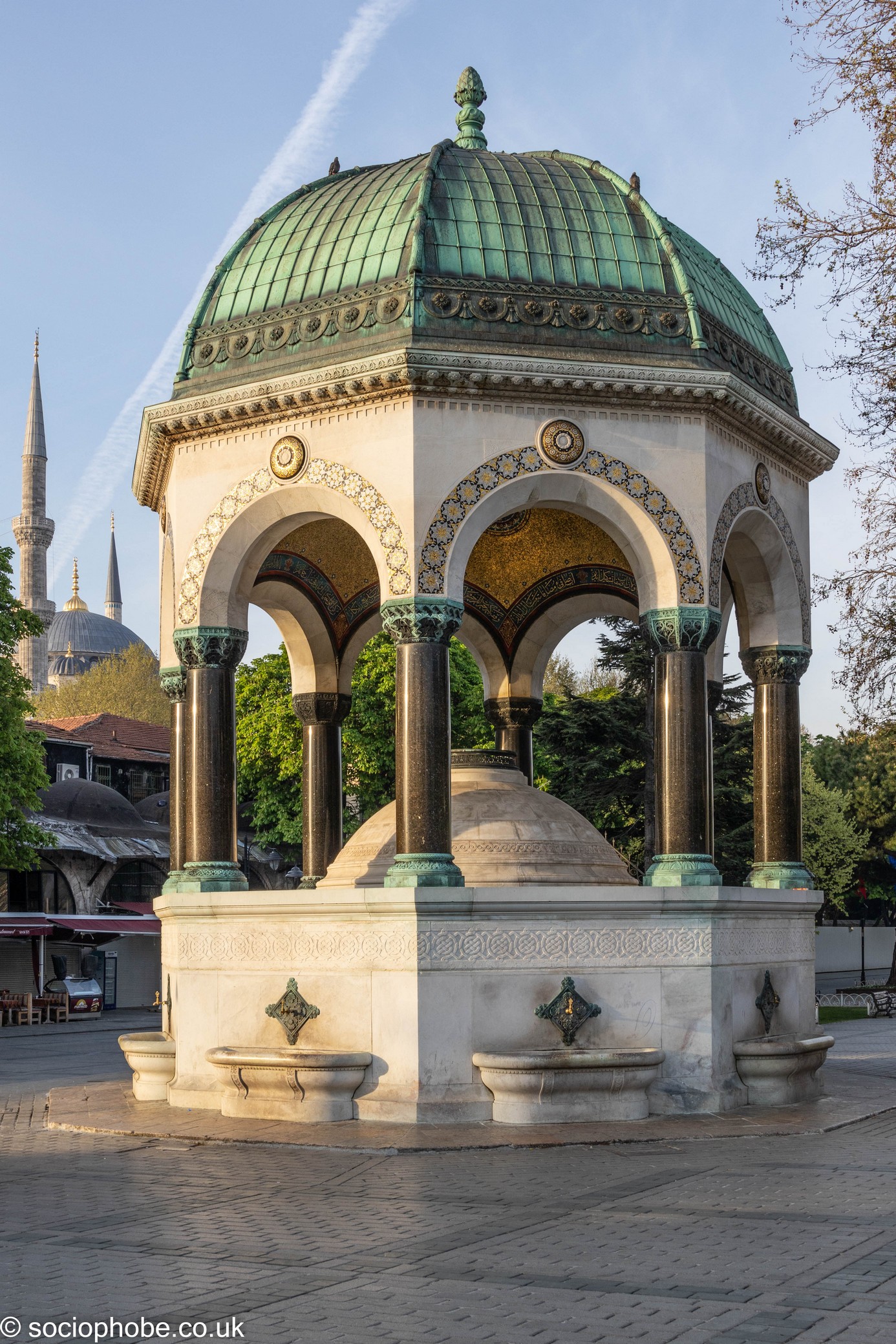
At the far end of the Hippodrome was the German Fountain, built around 1900 to commemorate the Kaiser’s visit. Although not old it did fit in well with the surroundings and was certainly photogenic.
The Topkapi Palace and Harems
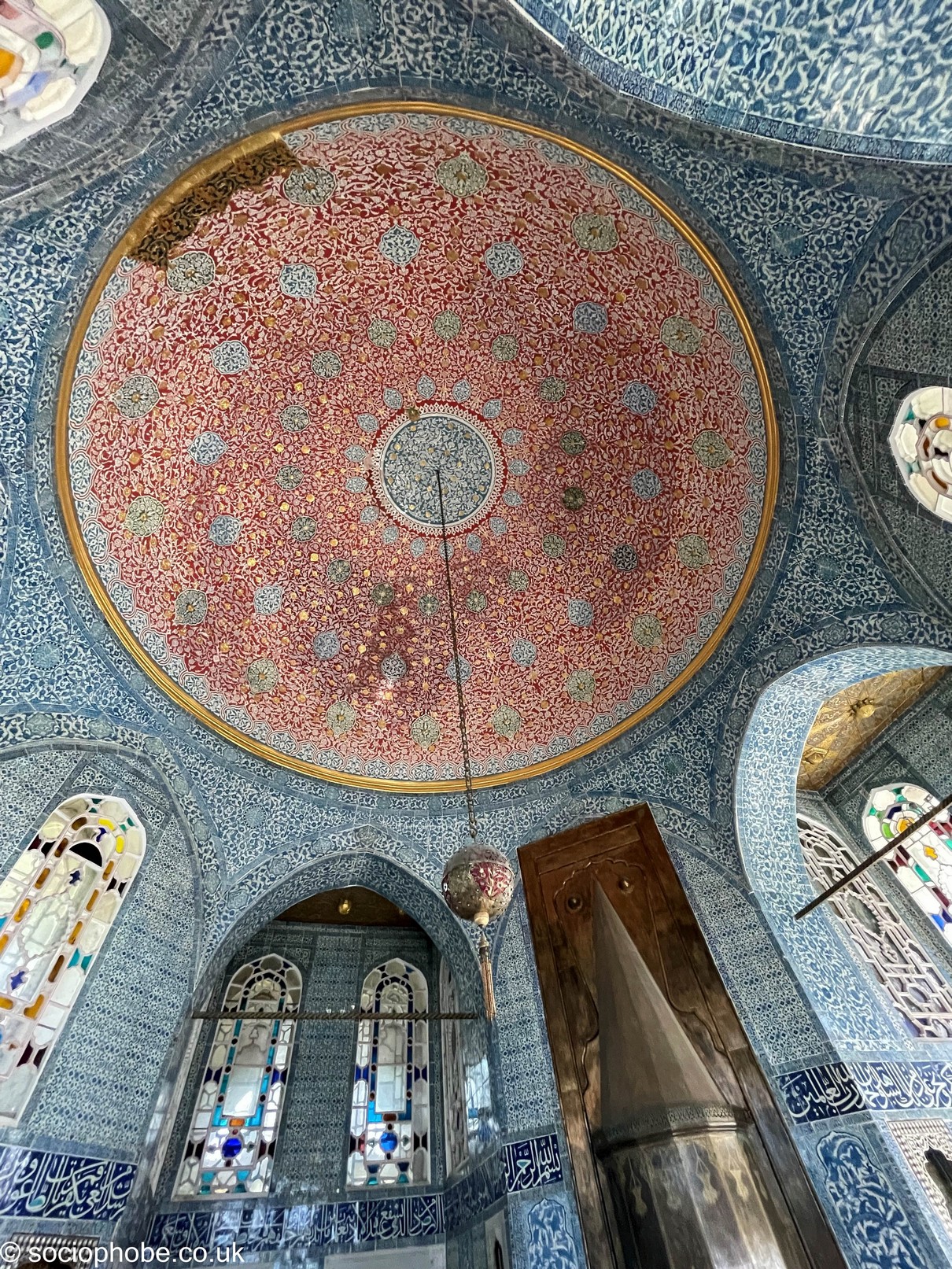
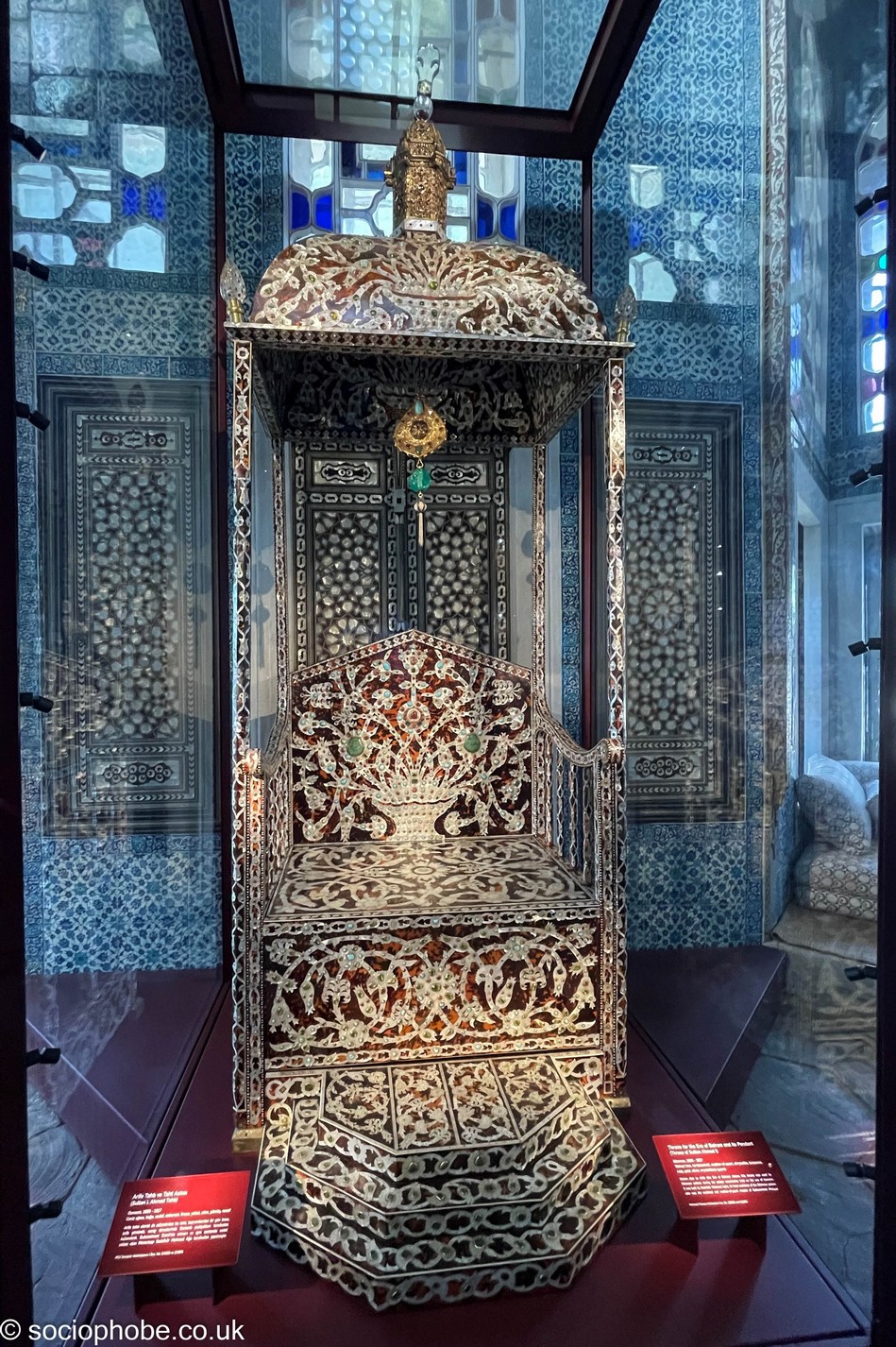
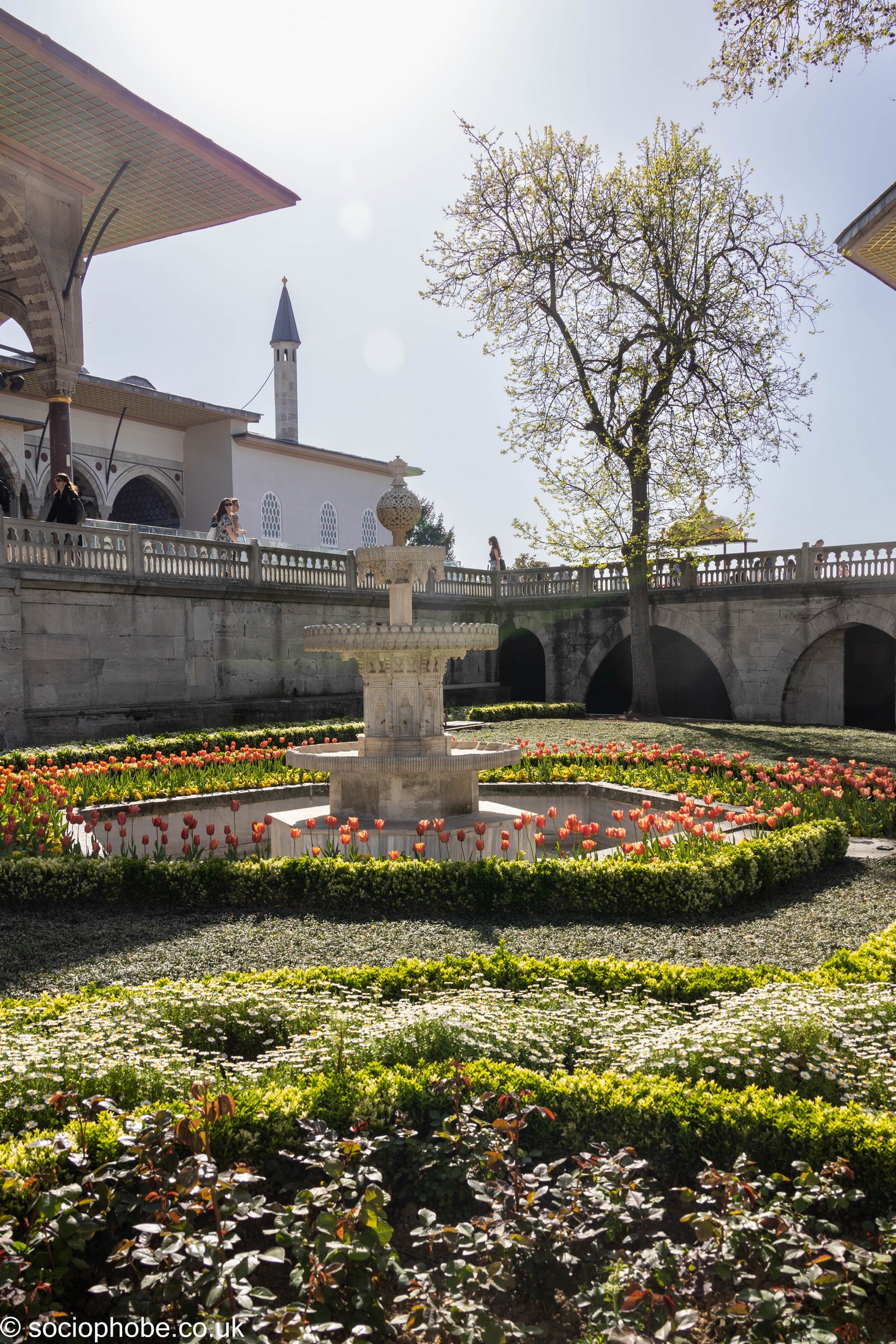
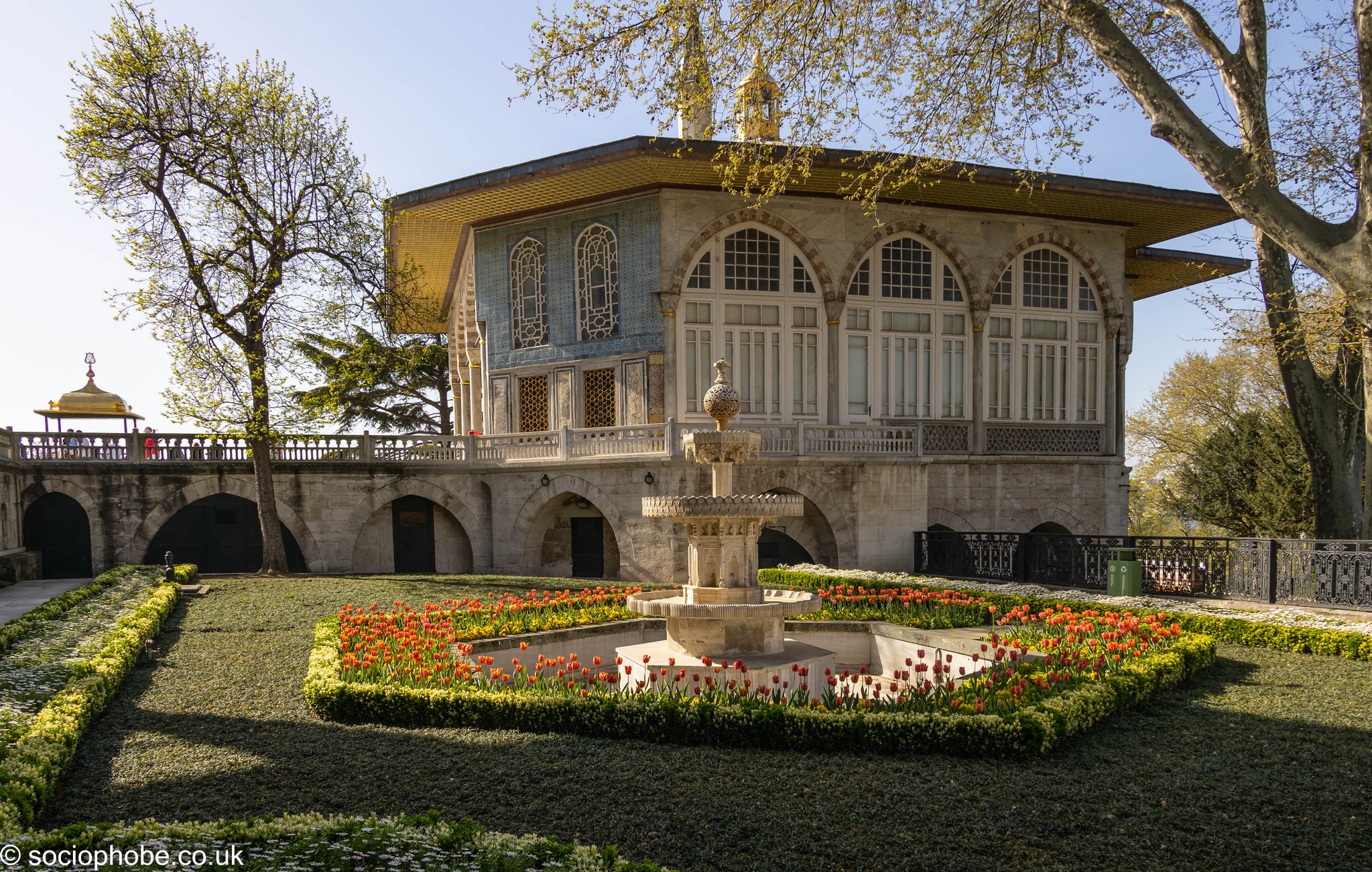
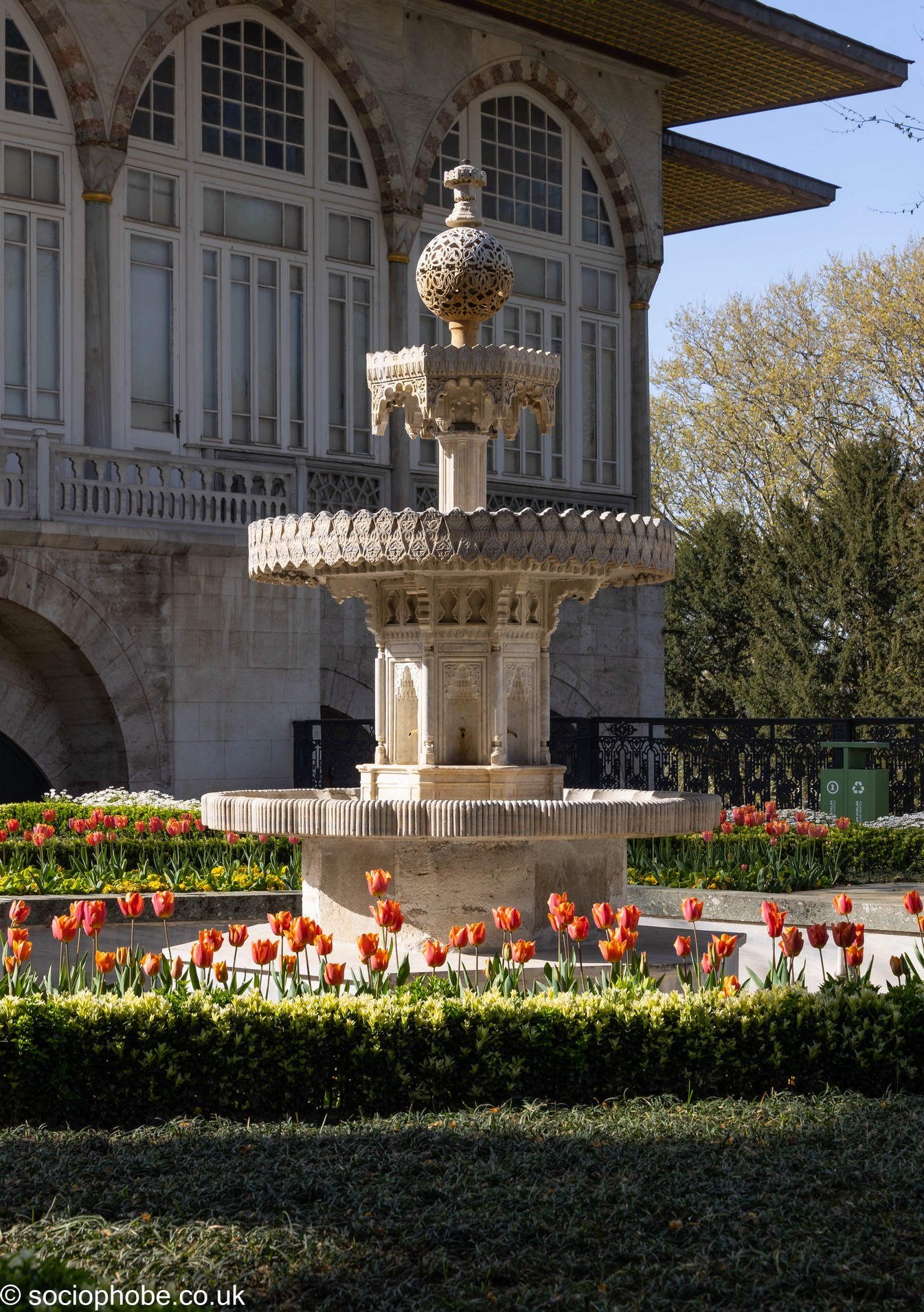
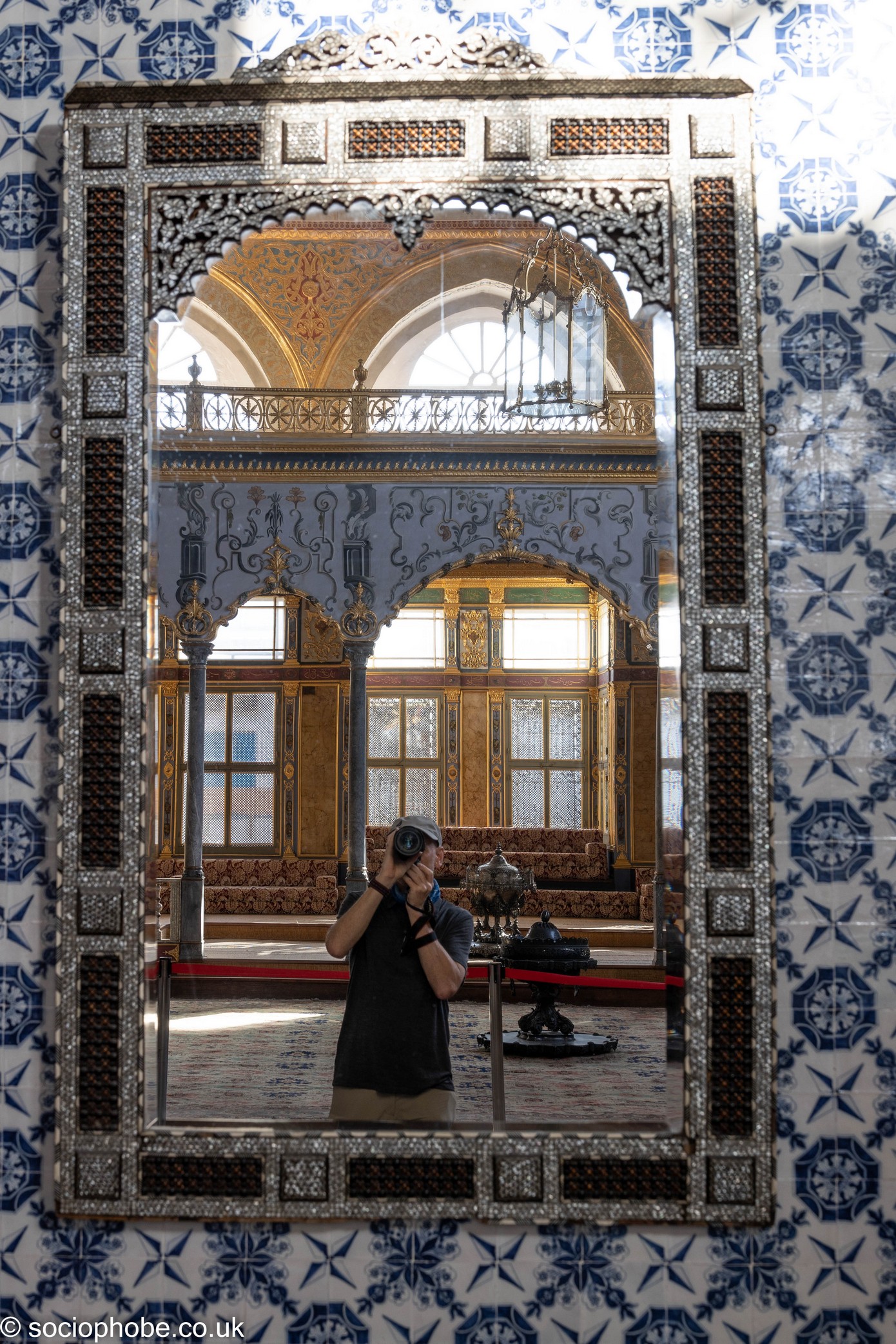
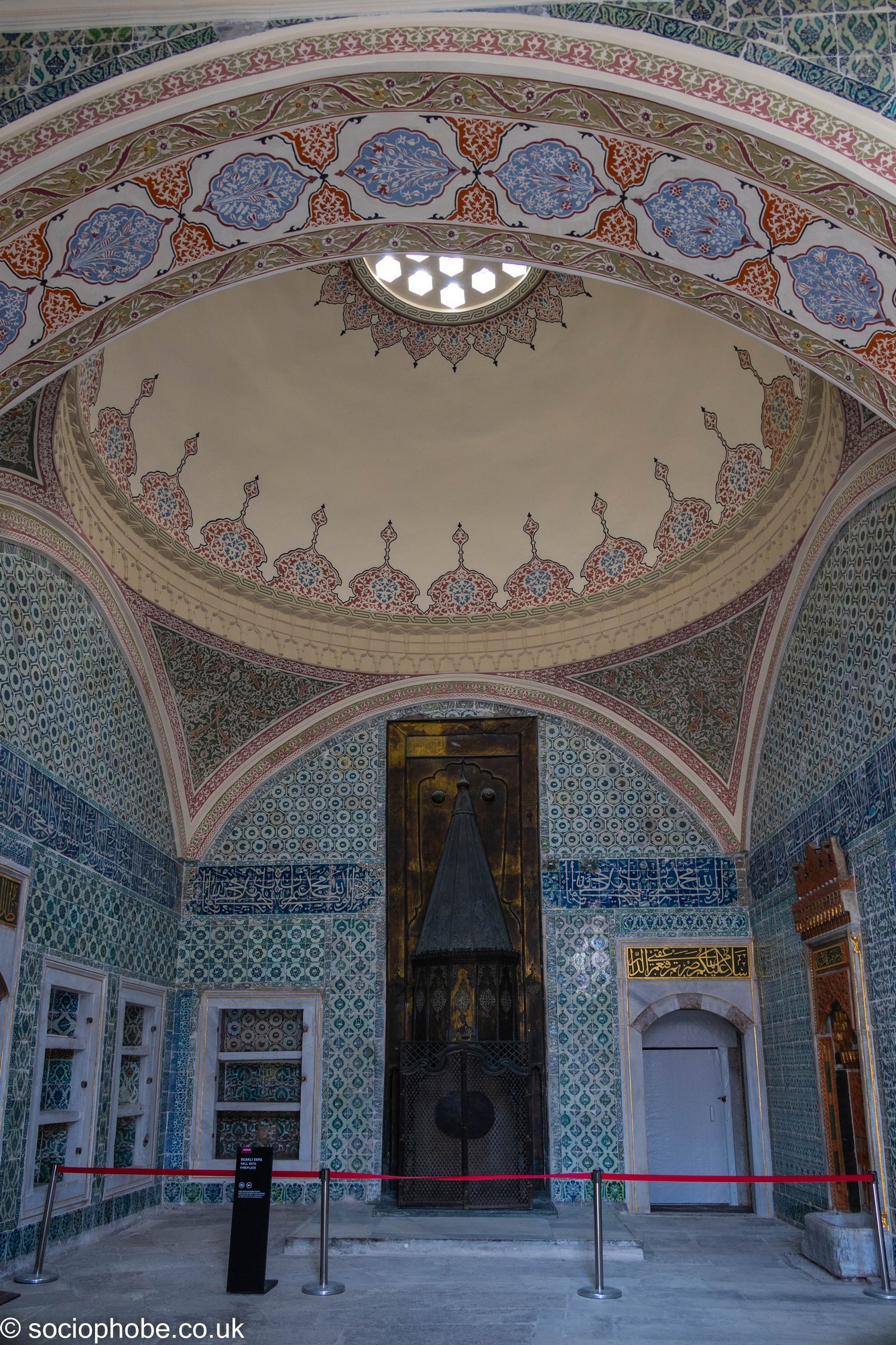
The Topkapi Palace was the most expensive attraction we visited during this break, costing about £20 each including the Harem areas. We could have spent a lot longer there than we did but Natalya wasn’t interested in any of the collection rooms, such as clothing, armour, ceramics etc so we did miss a lot out. There were screens obscuring a lot of the viewpoints for some reason which was a shame but there was still lots to see and plenty of information boards to tell you what you were looking at.

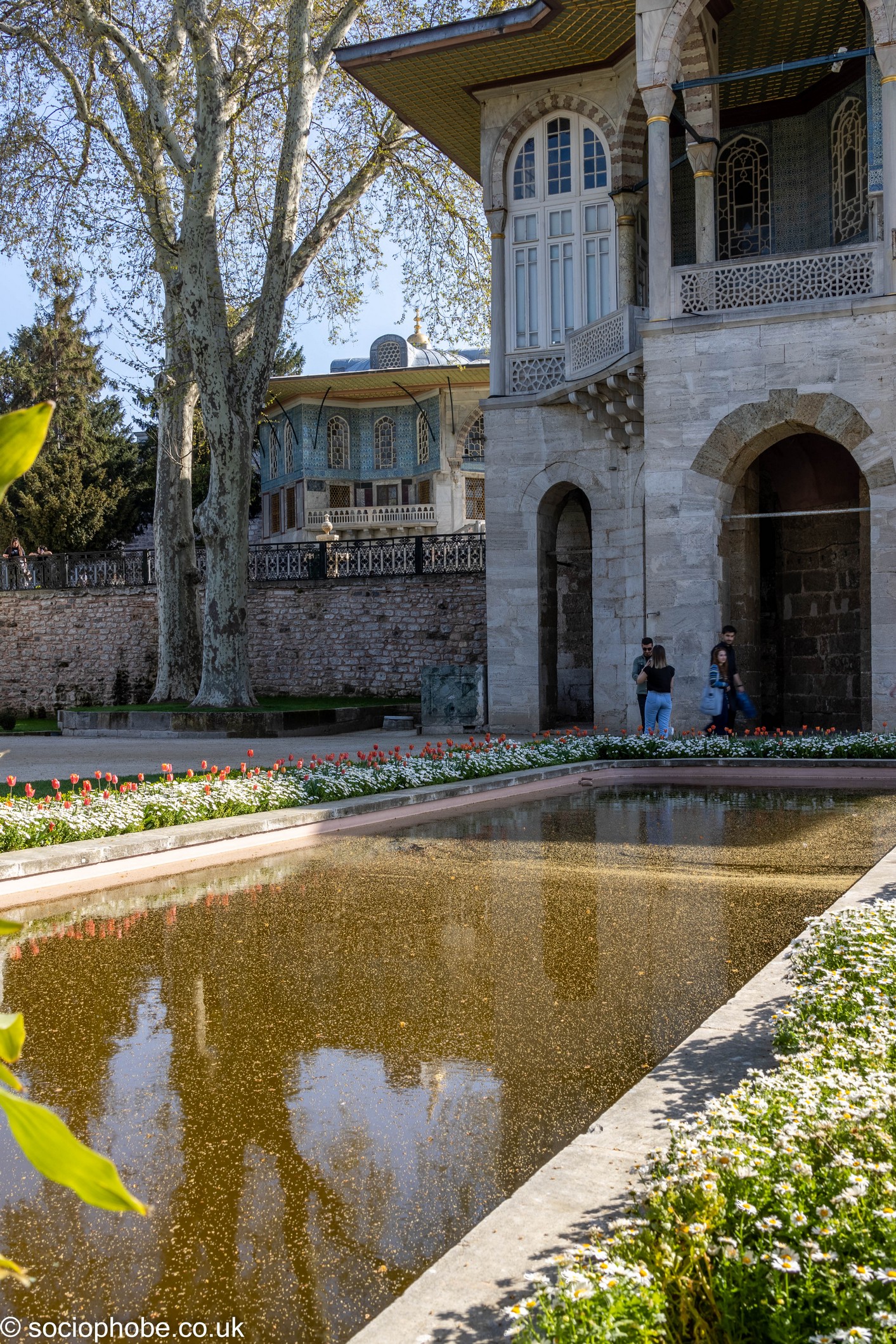
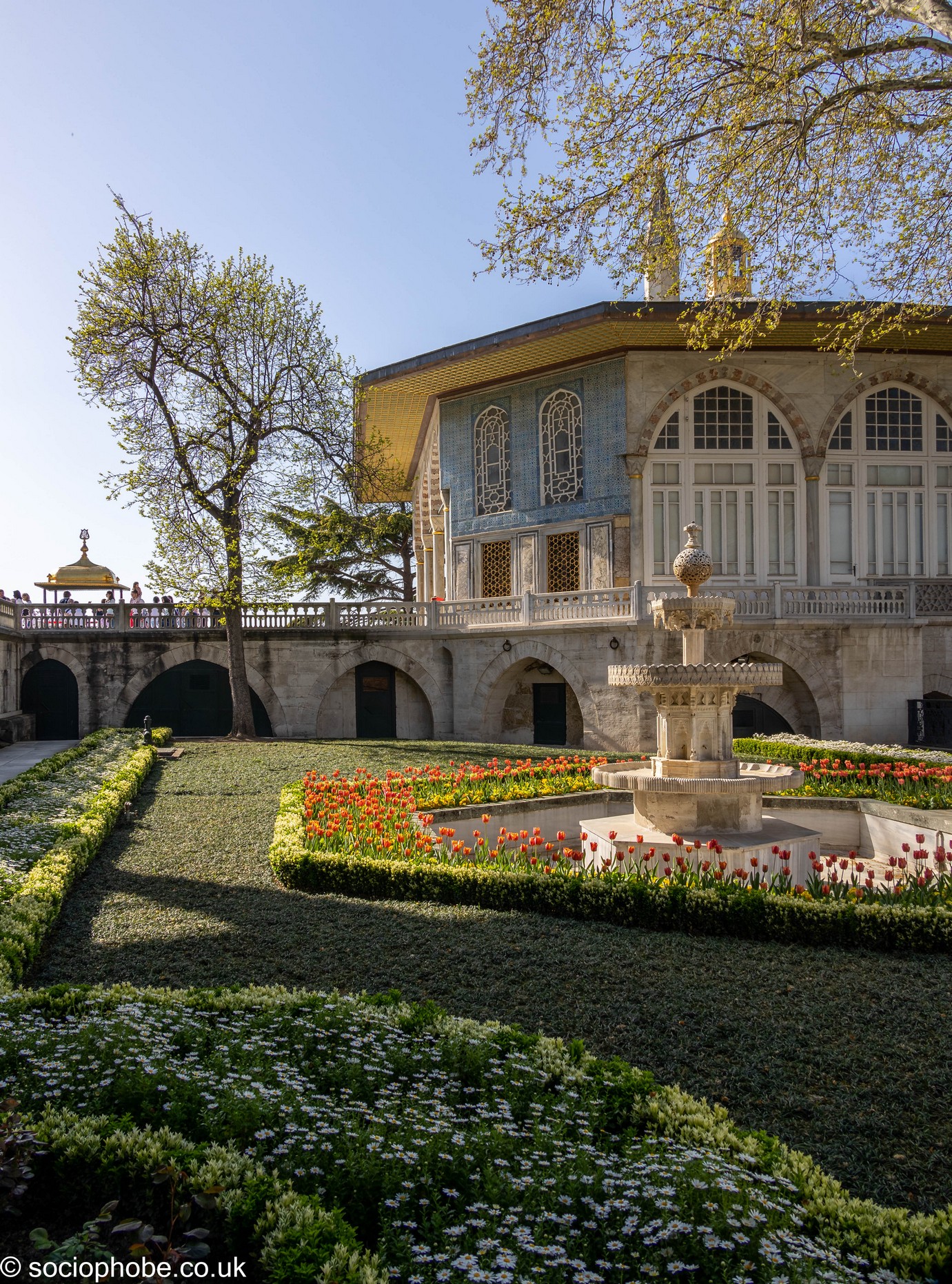
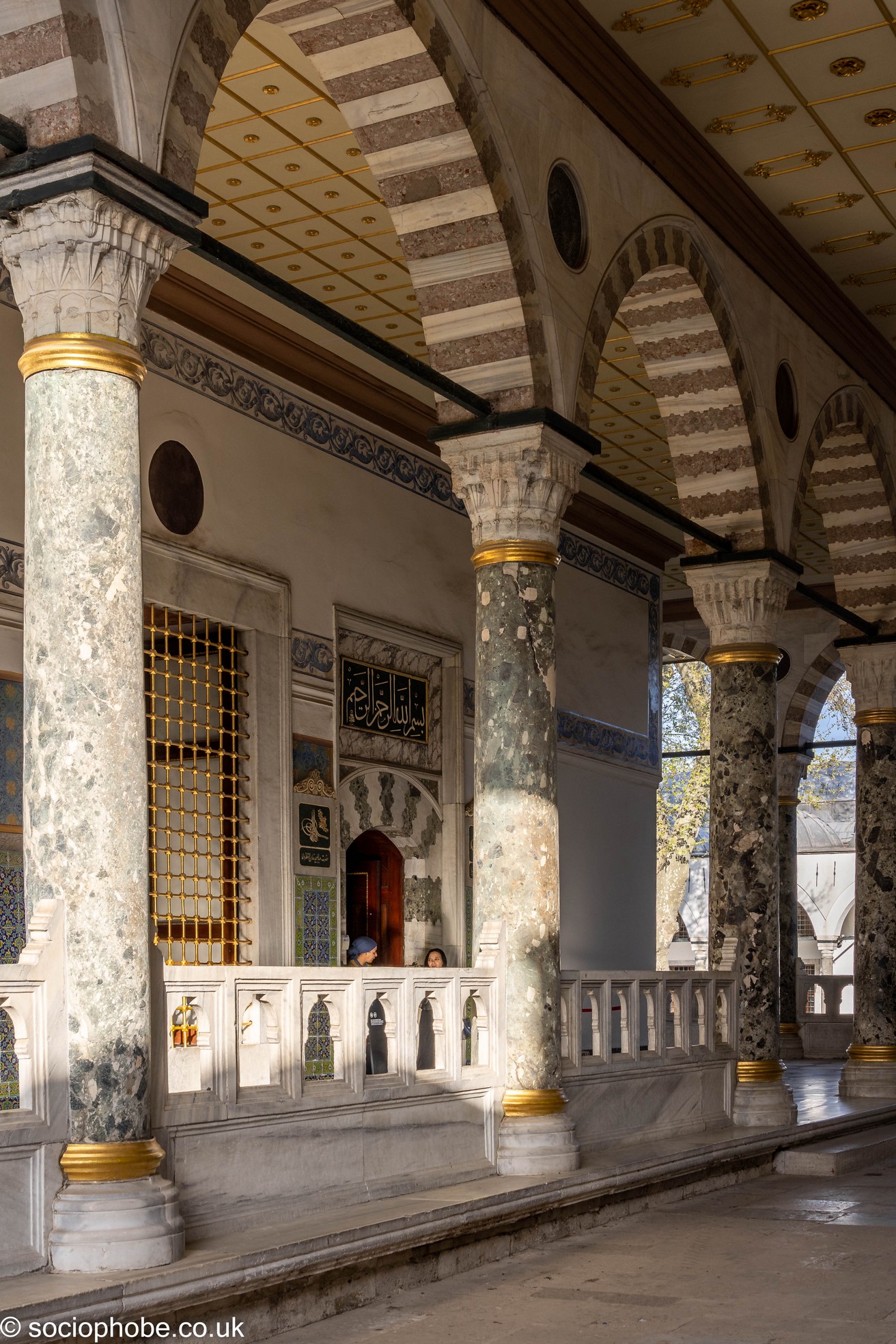
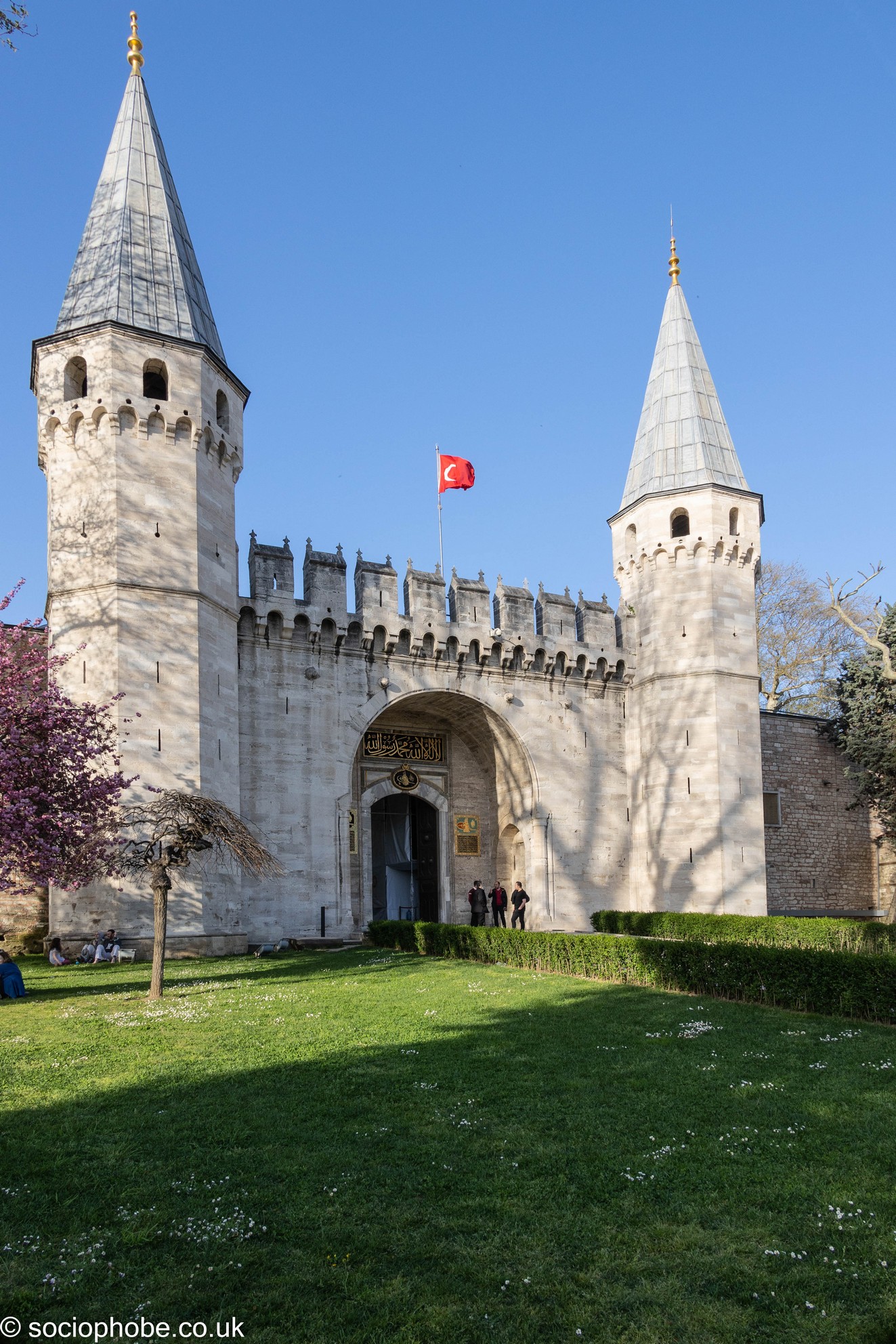
Topkapi Palace Harem
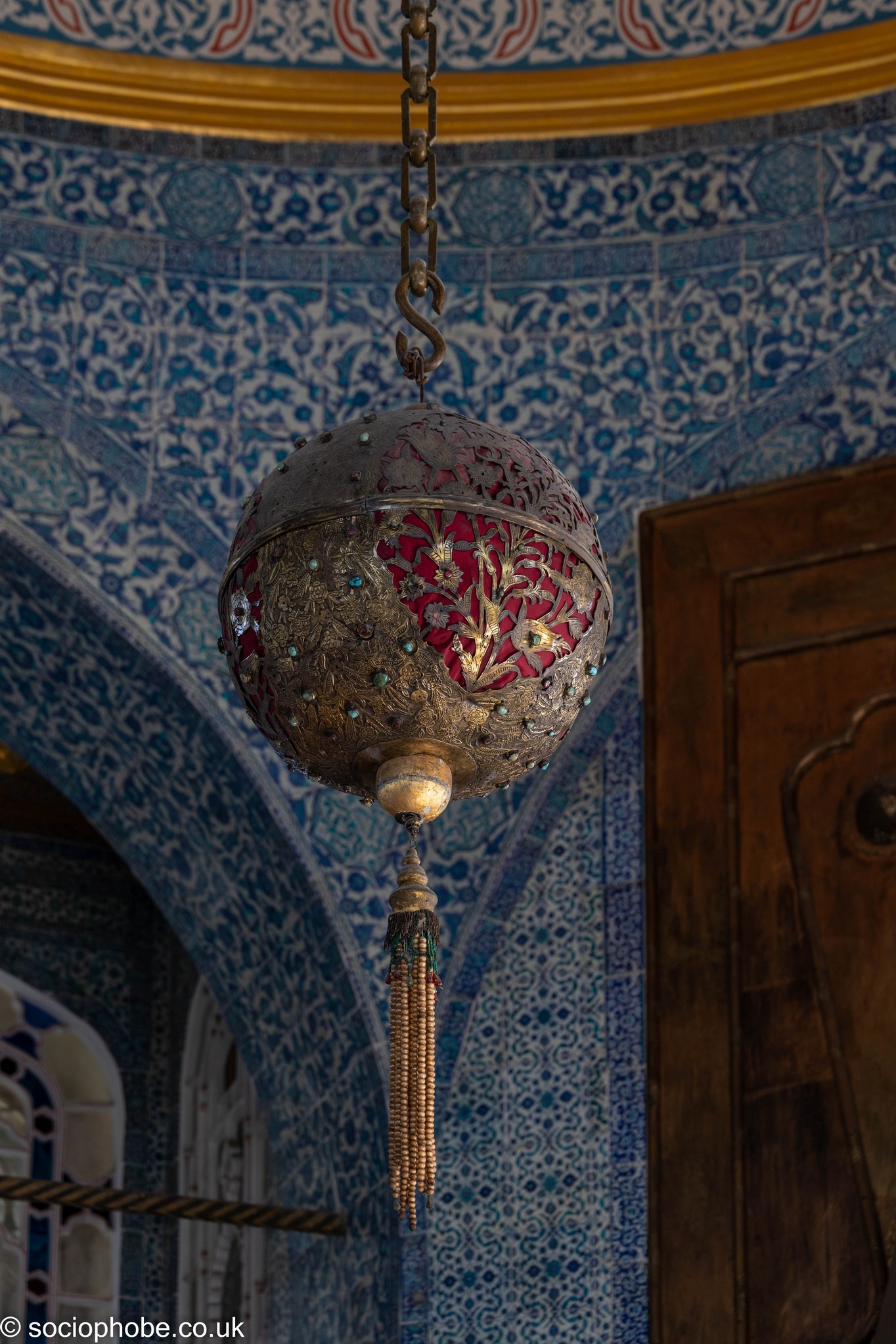
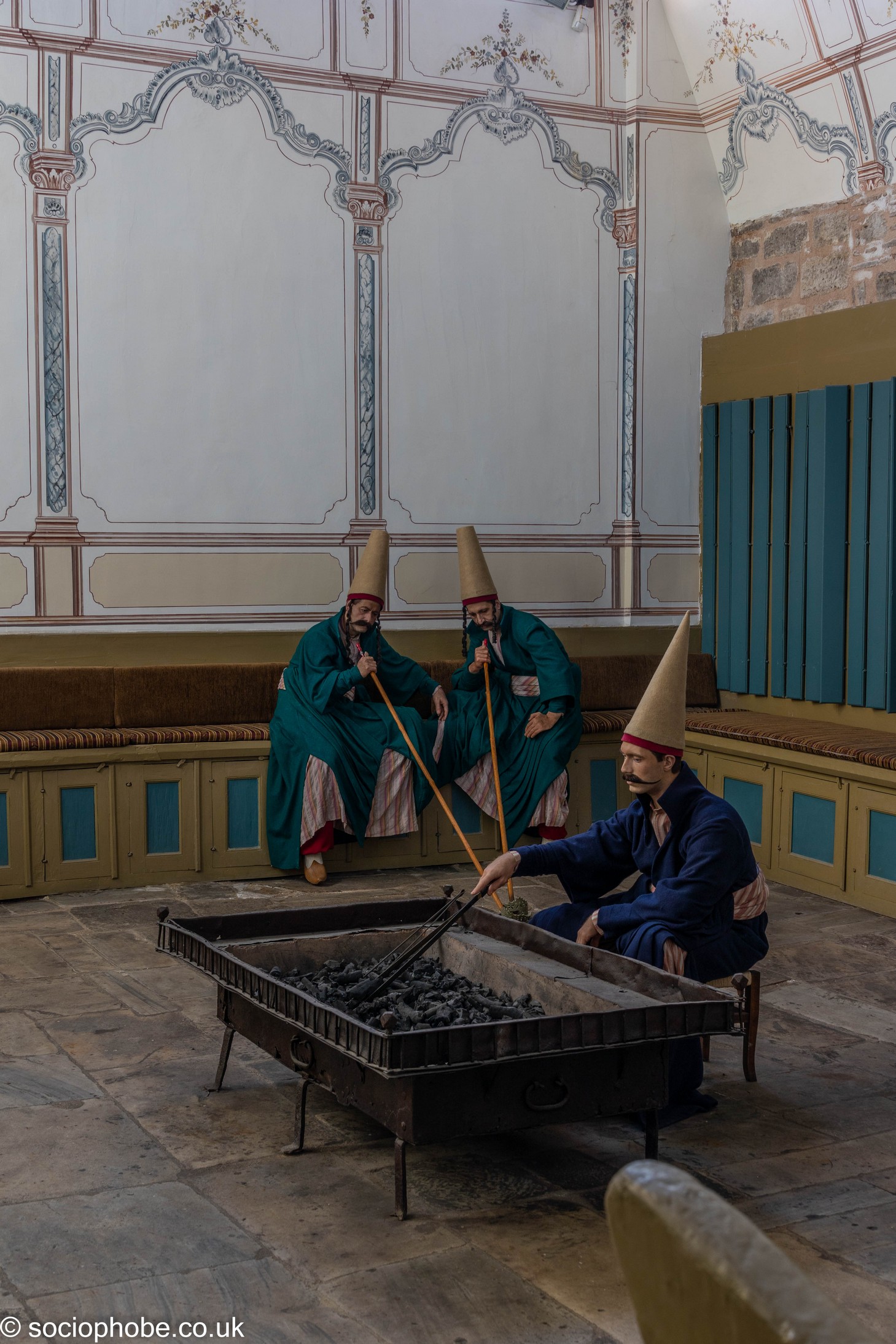
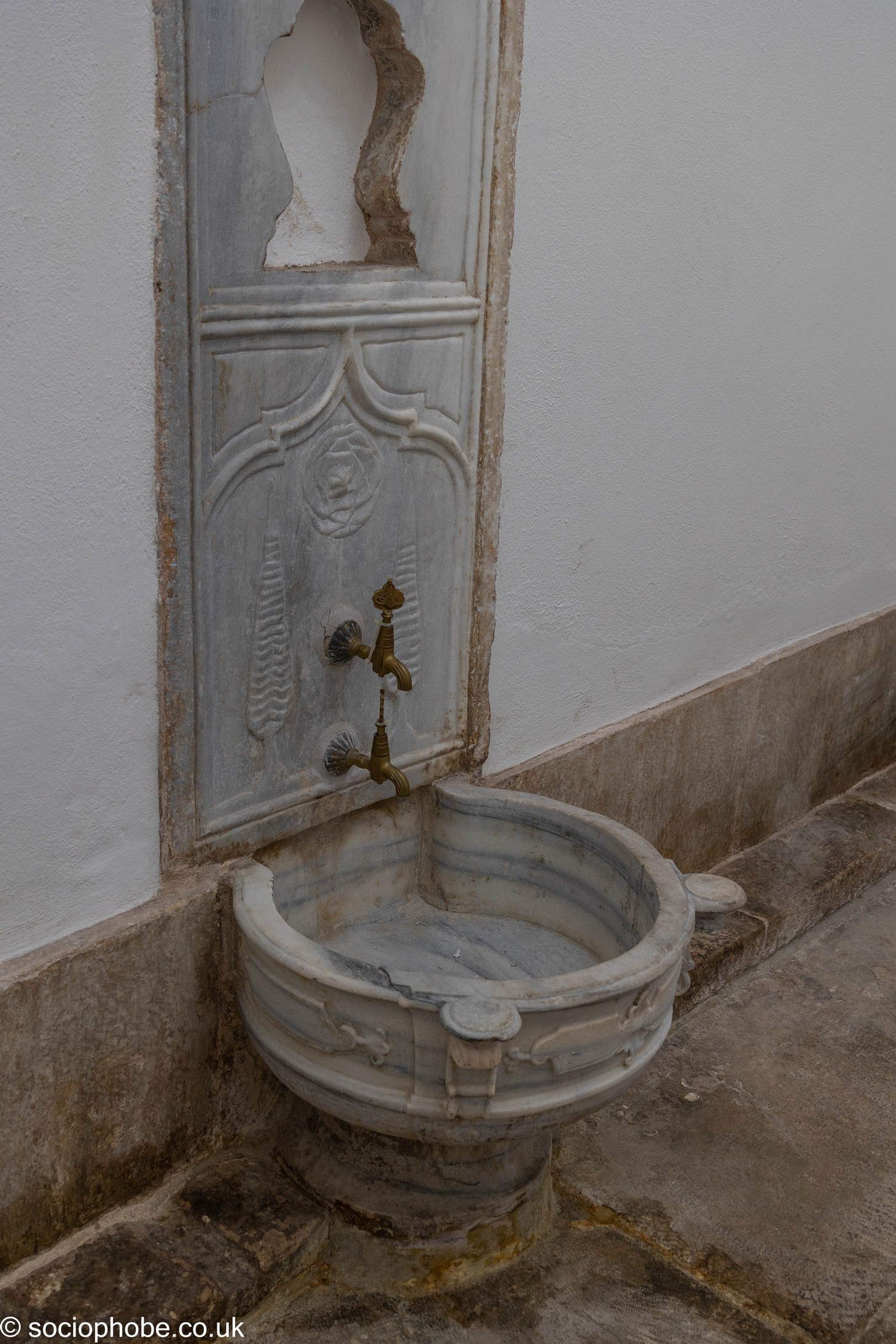
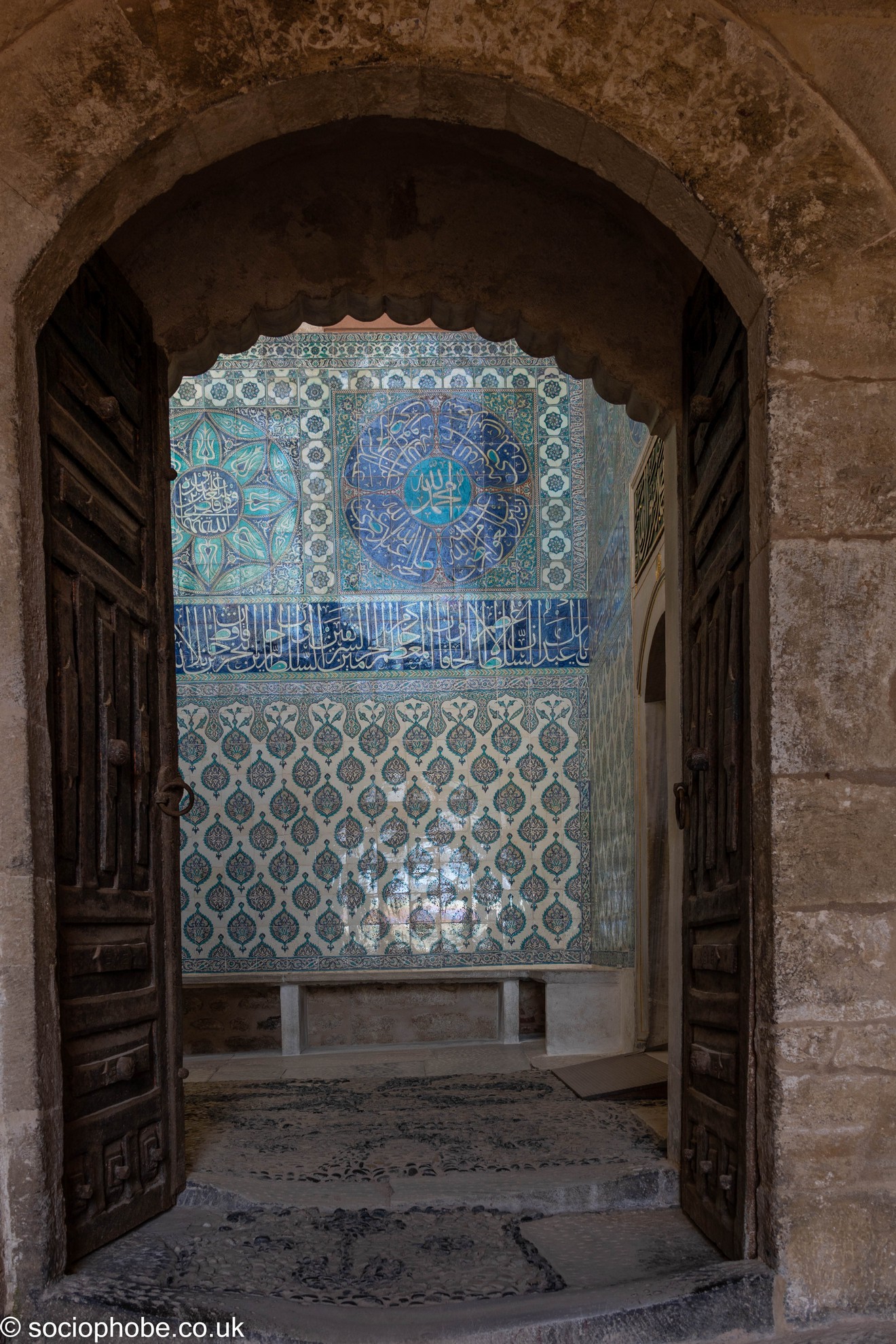
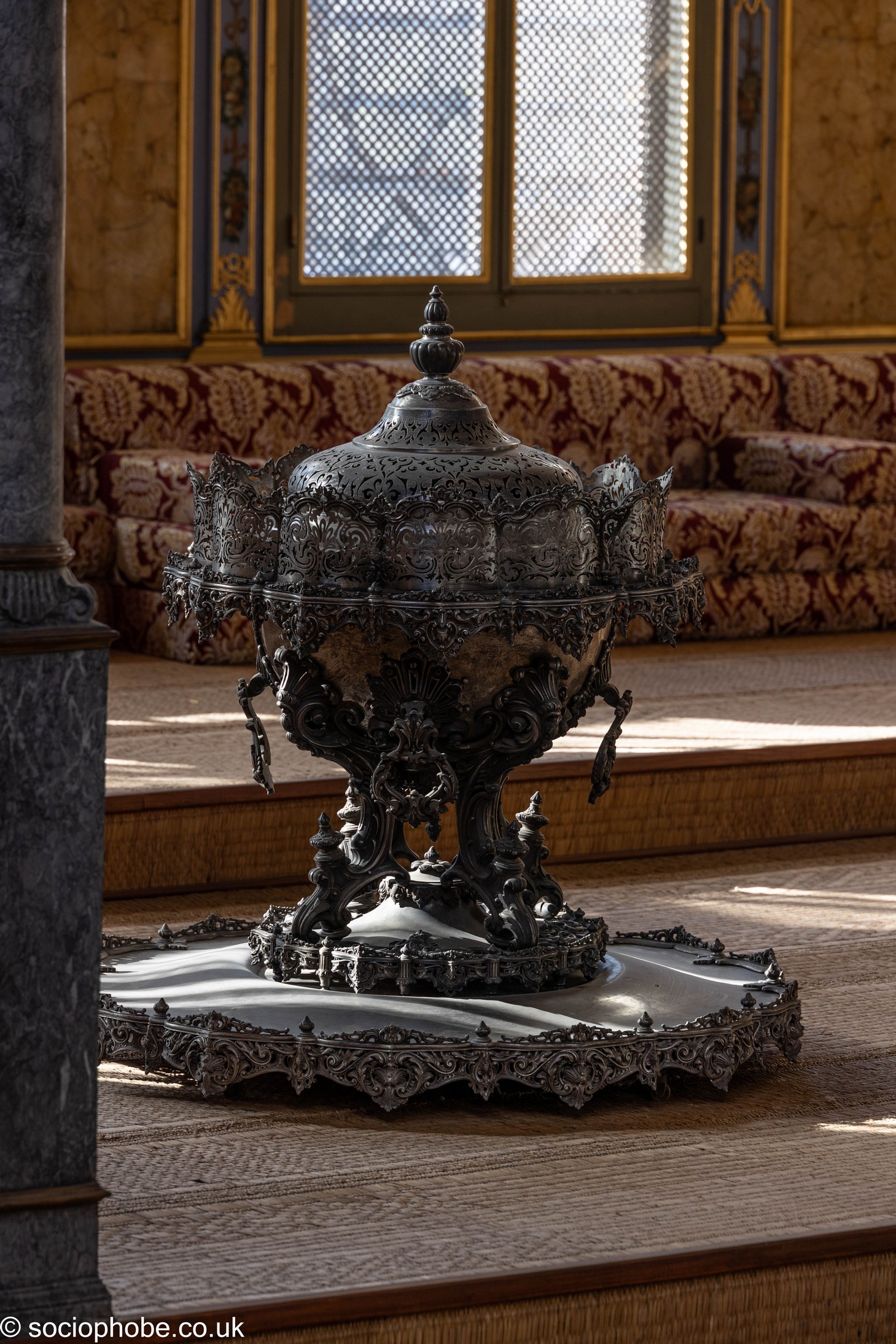
The harem is an add on to the main ticket and allows you to see the rooms used for the Sultans harem. These rooms are a bit quieter than the main areas and show a different side of the palace, which the boards in each area really bring to life.
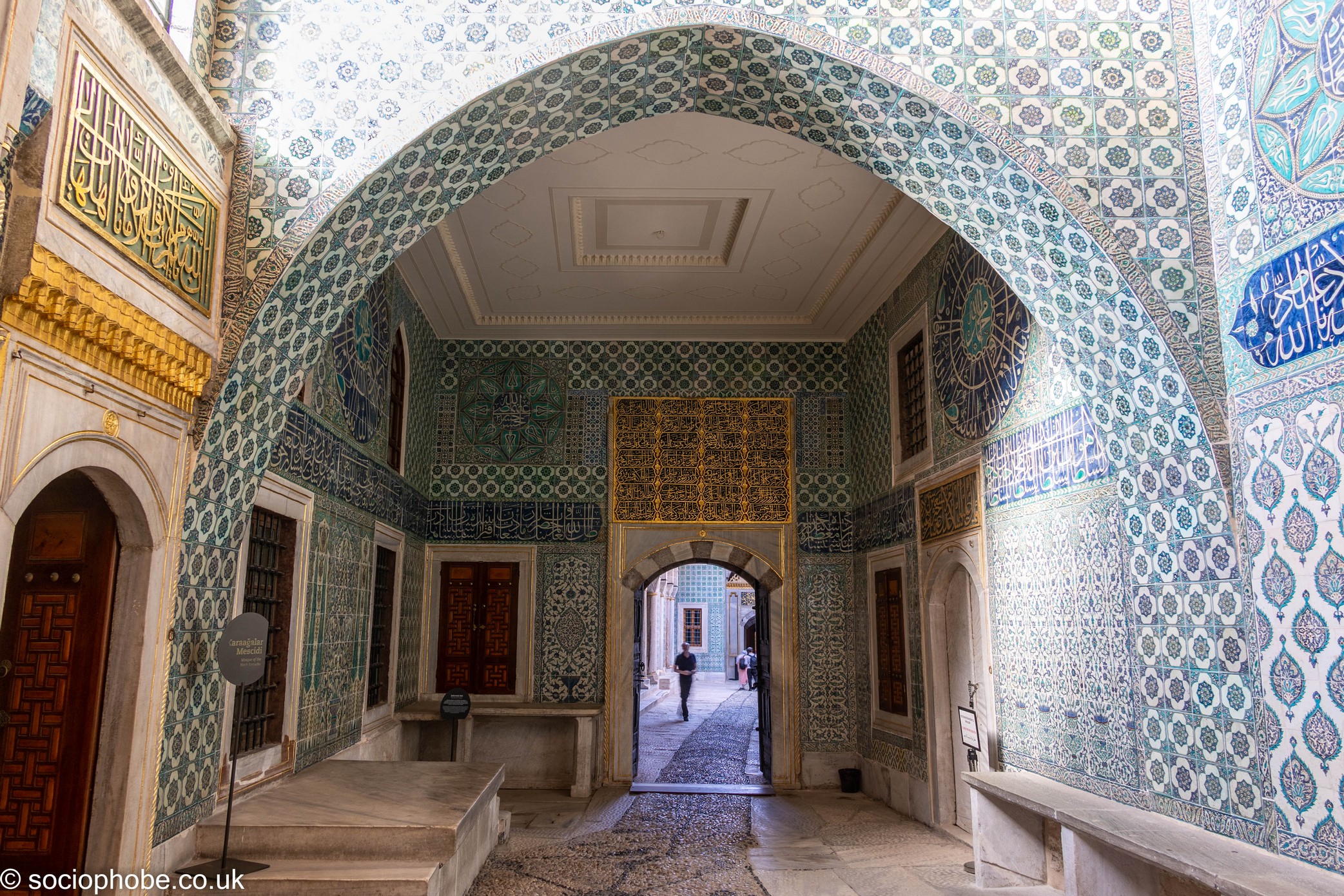
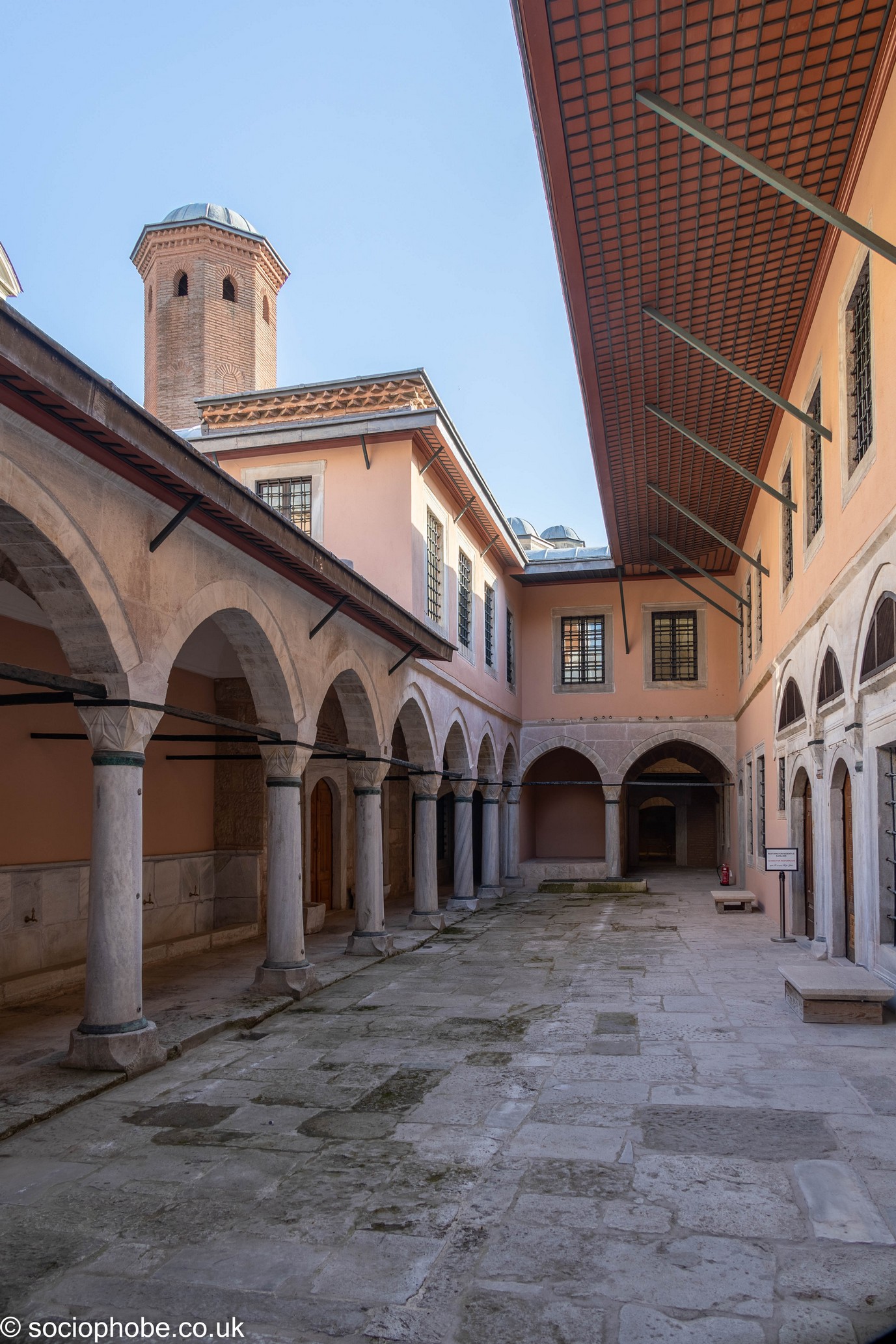
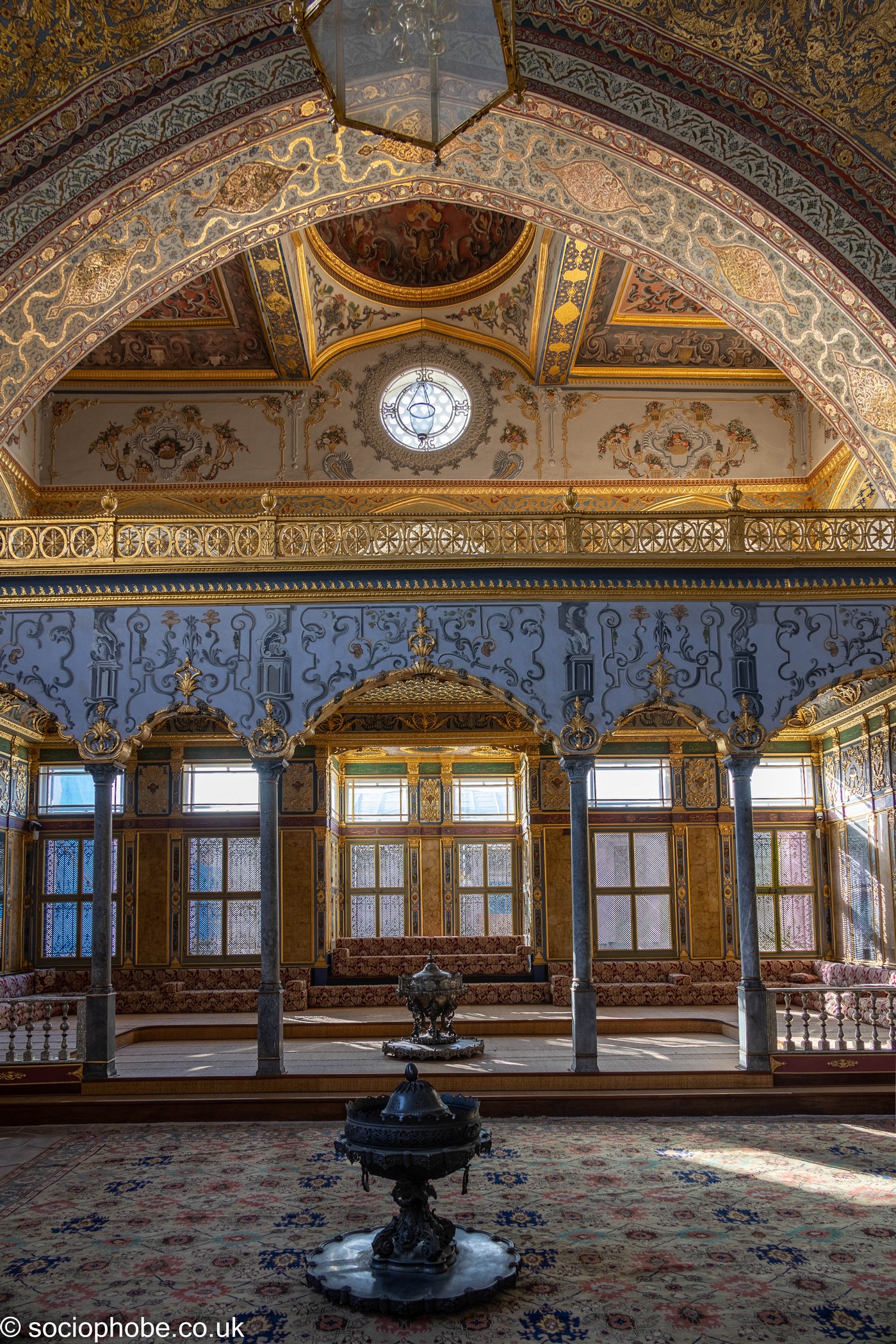
Evening Meal
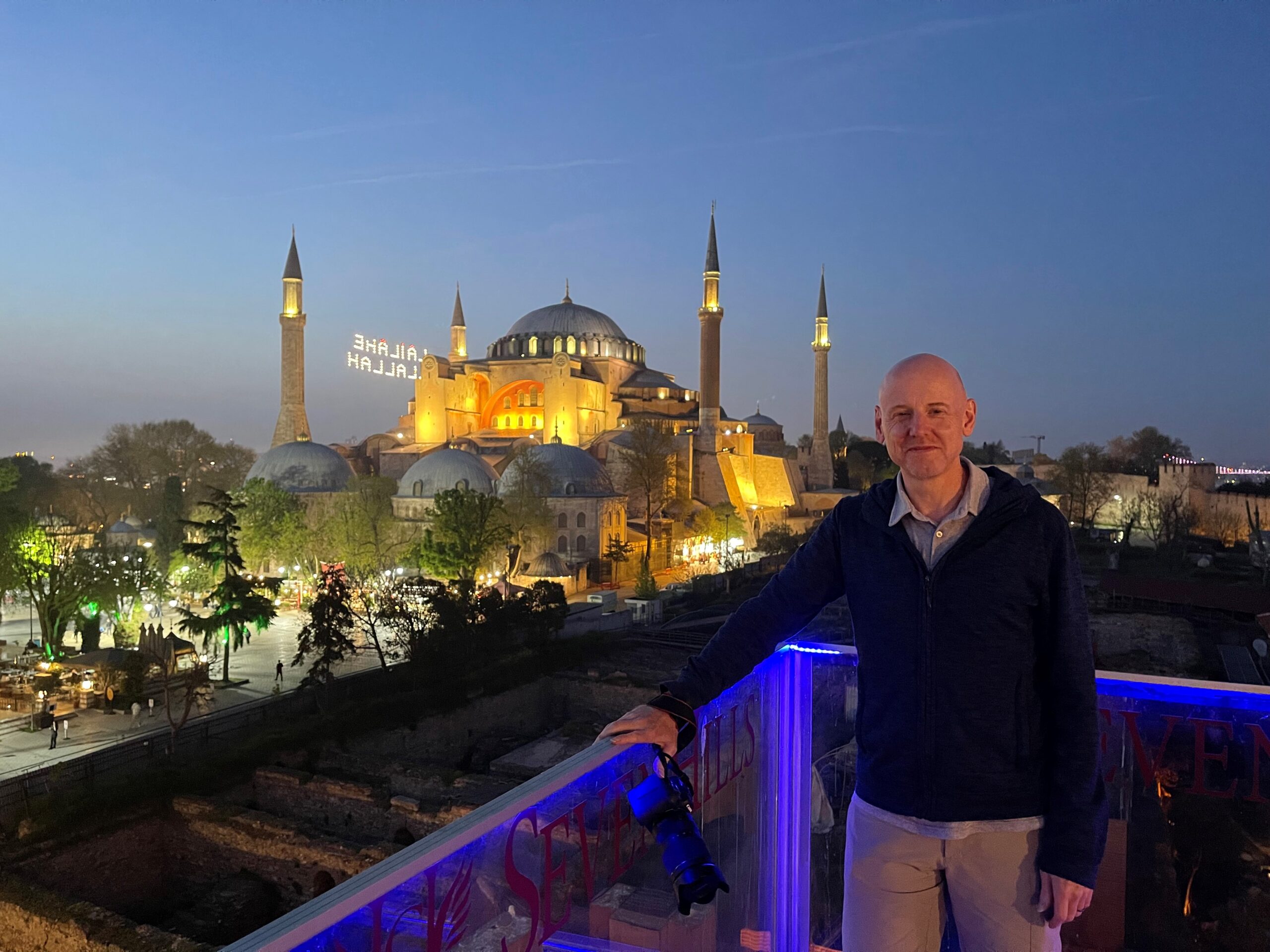
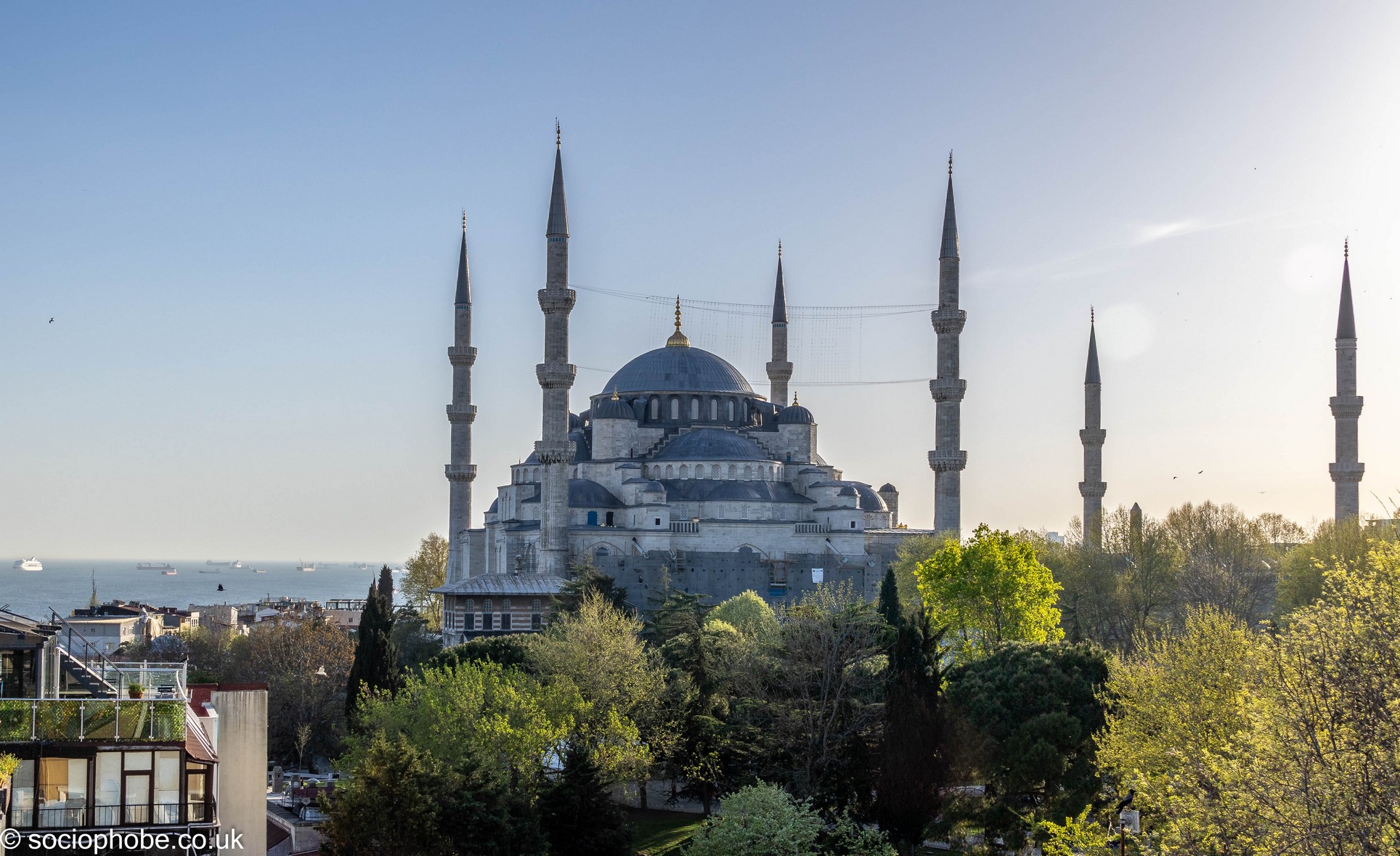
We were pretty tired by now as it had been a non stop day so we chose a local restaurant, primarily for the views. Seven Hills restaurant was a marvel of marketing. The menu choices looked excellent, prices were relatively high but still less than a good UK pub meal. Service was utterly dismissive – very efficient but no engagement, just focused on a high turnover of clients. The food was at best average too but what you got was probably the best view of Hagia Sofia and the Blue Mosque that you could get without a helicopter.
We walked back via a small arcade and Natalya got chatted up by about half of the shop owners with various dates proposed, quite amazing how predatory the Turkish guys are! Back at the hotel we had a most welcome shower and then blessed sleep!
Early morning photos
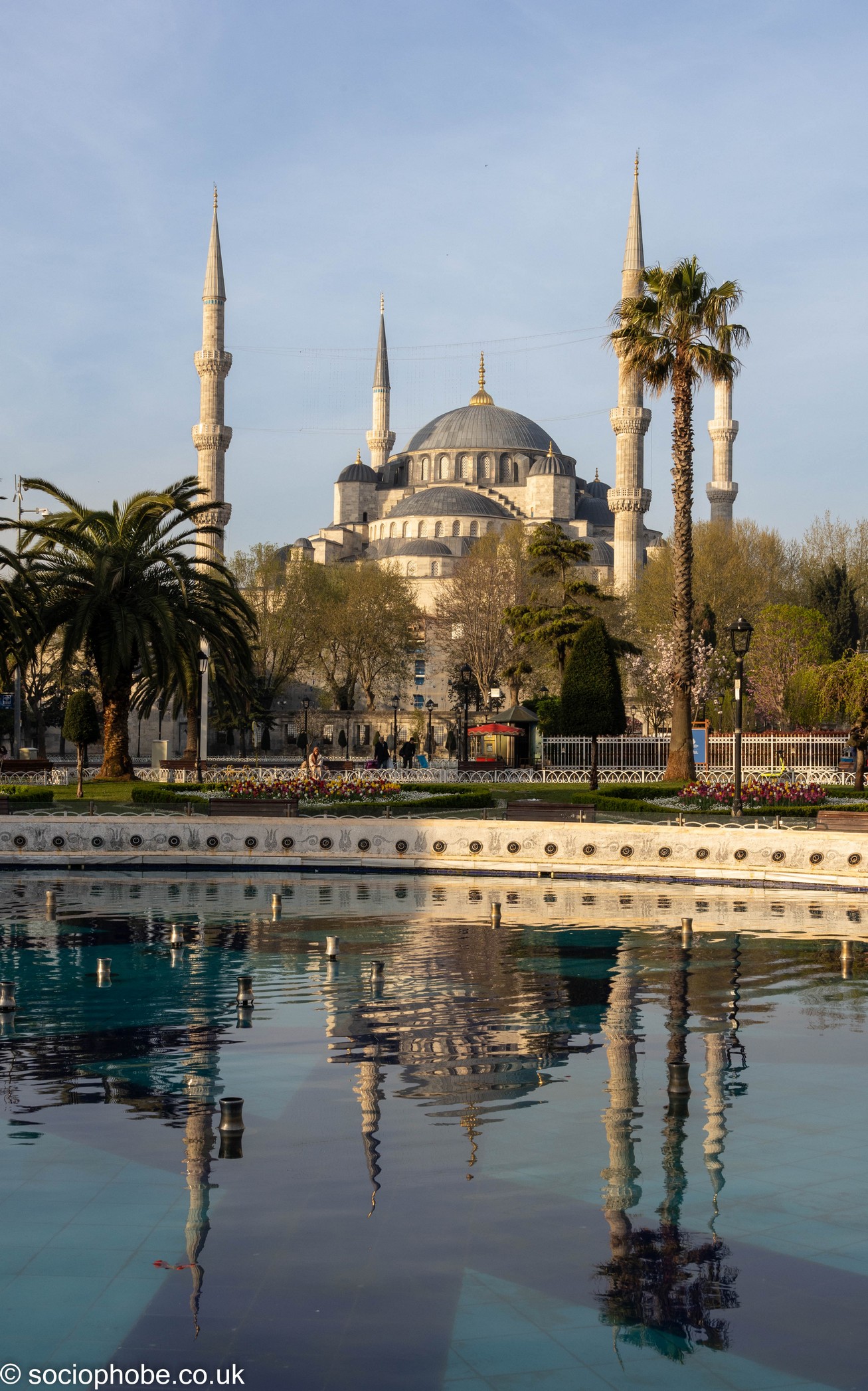
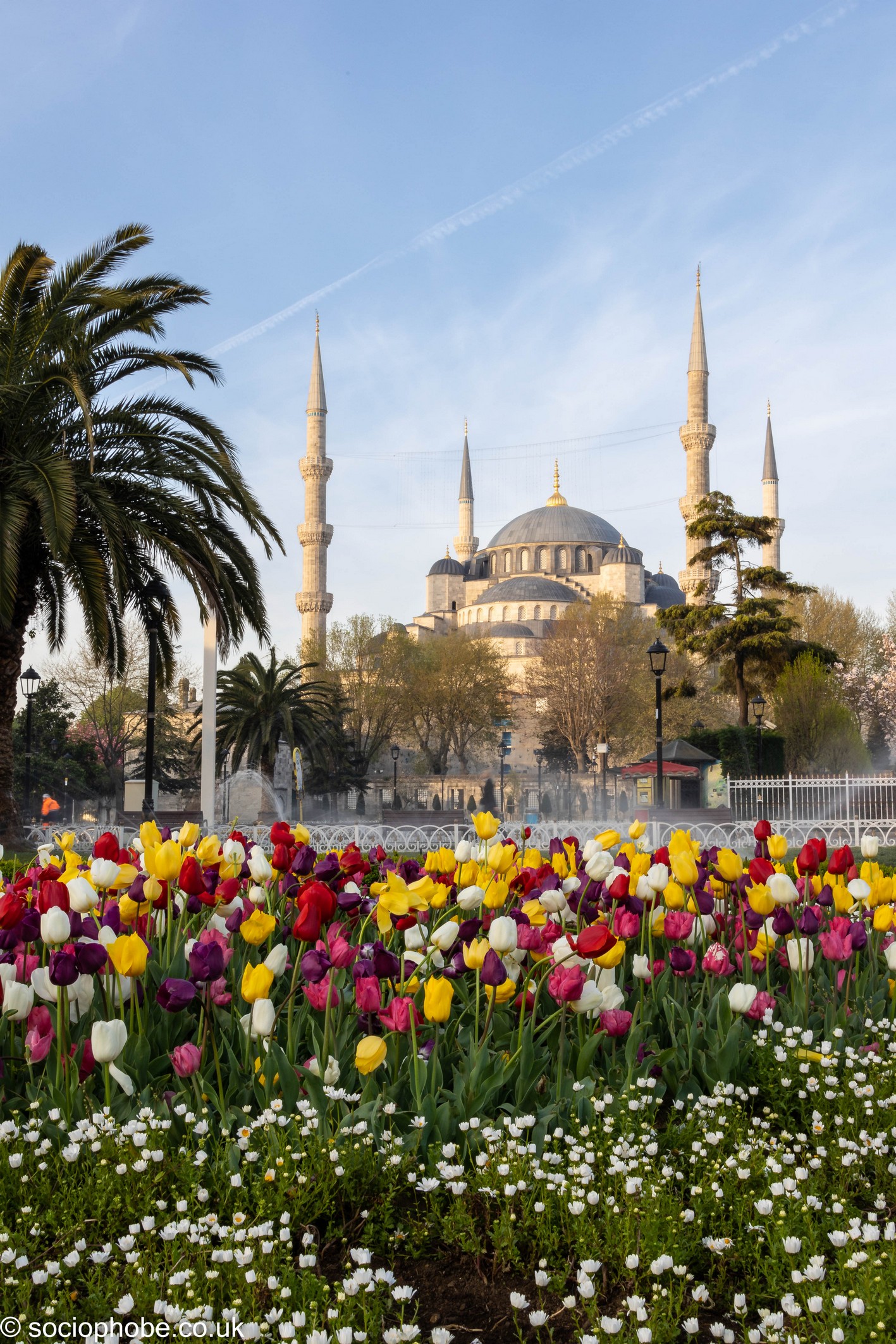
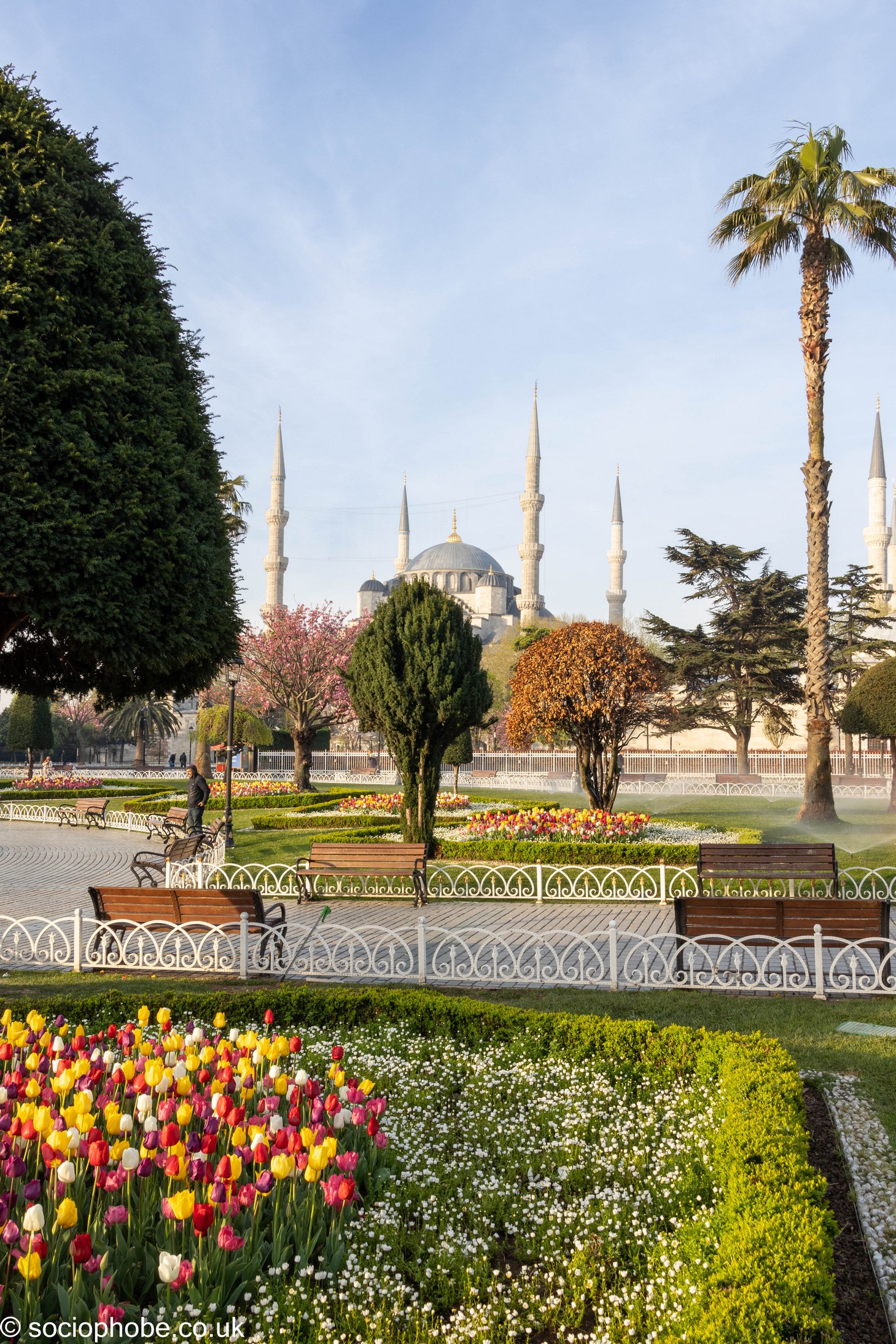
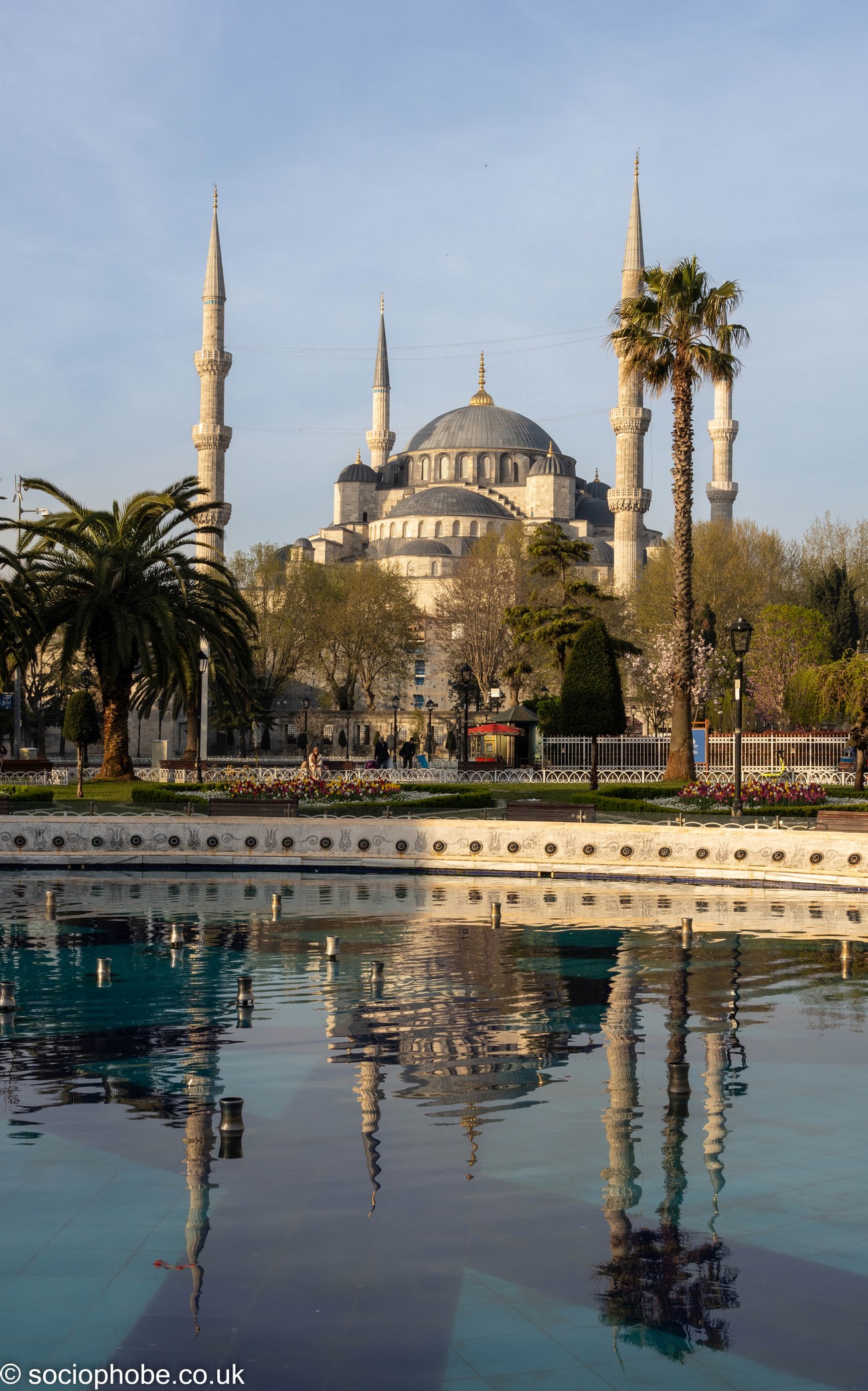
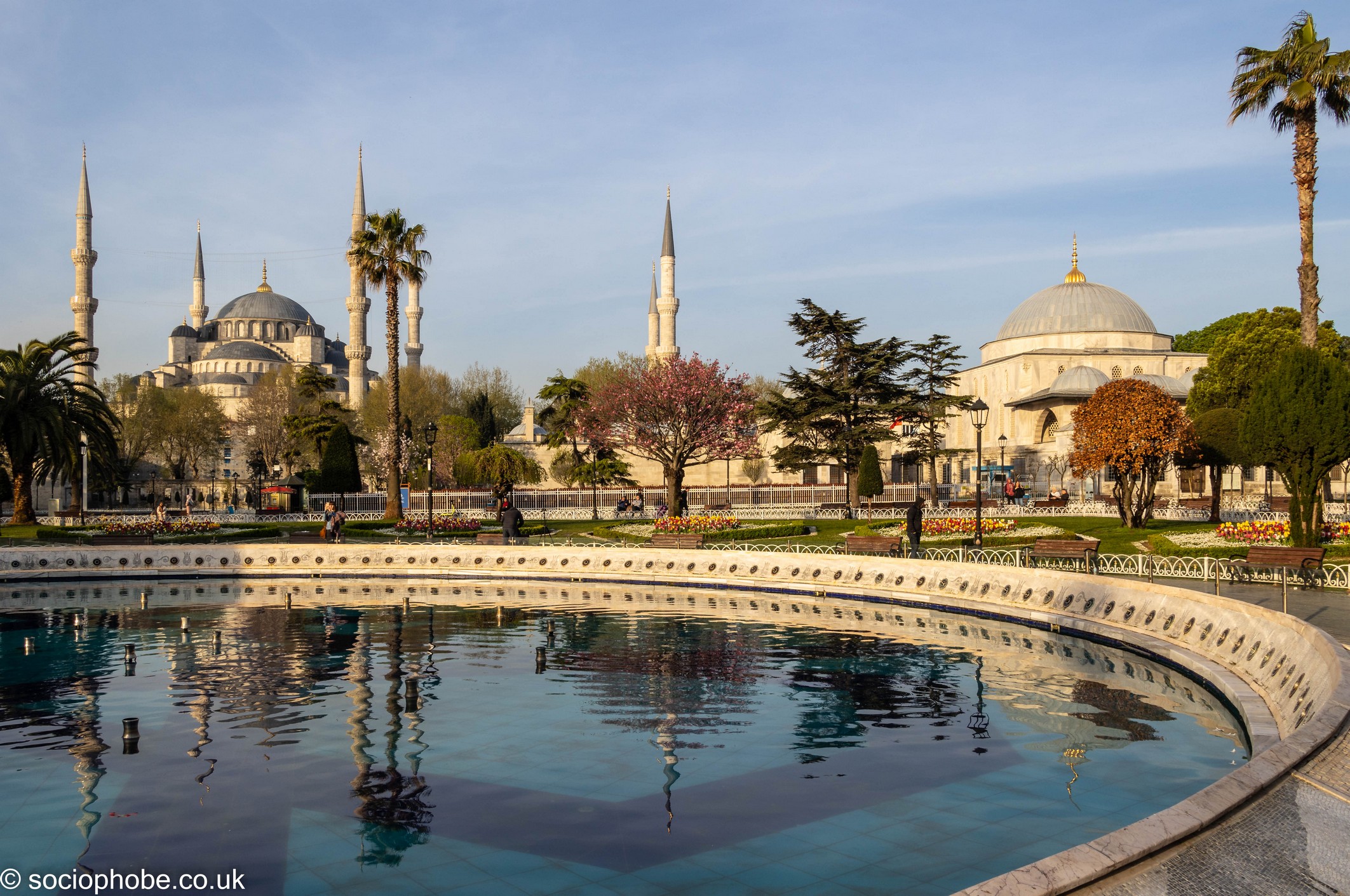
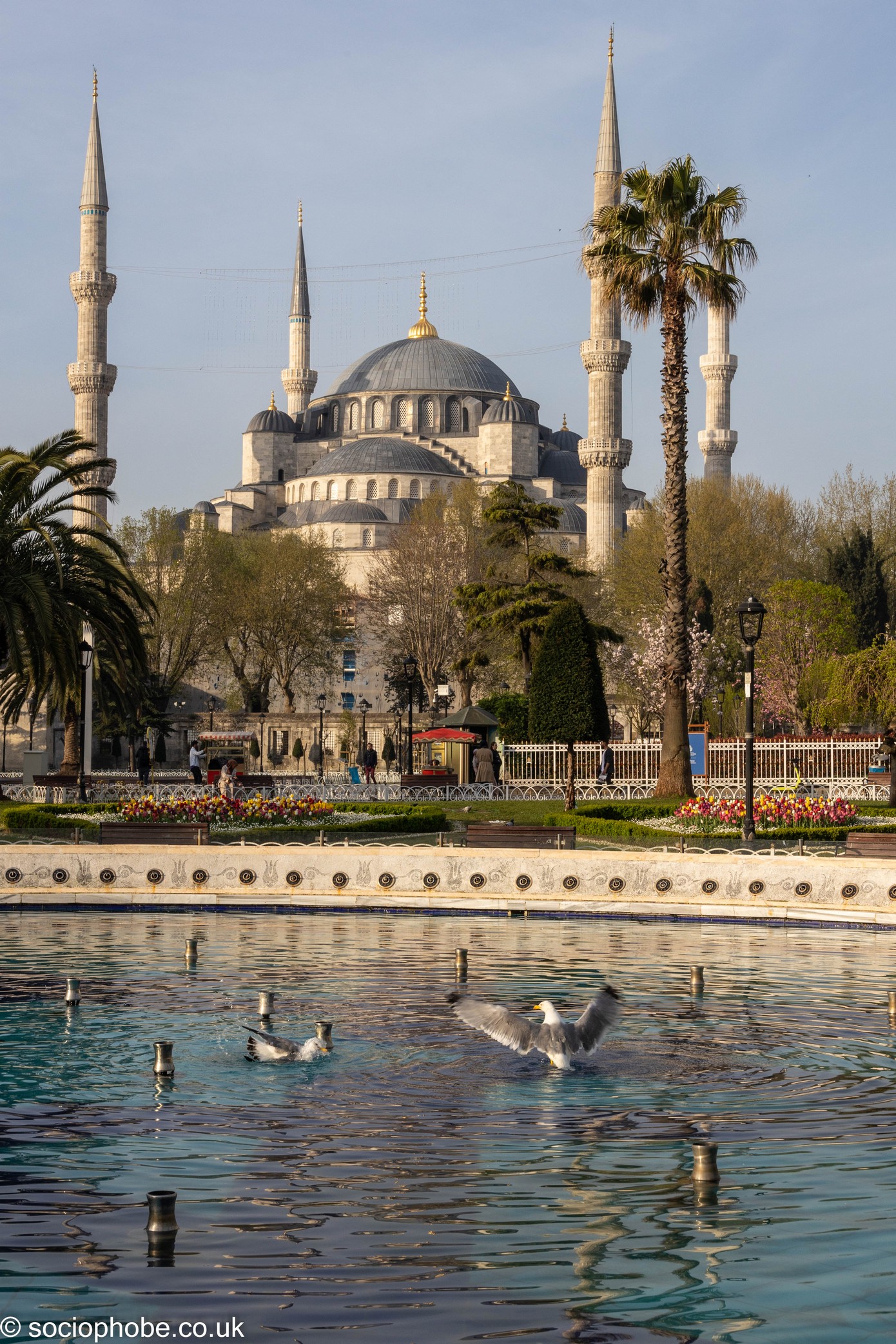
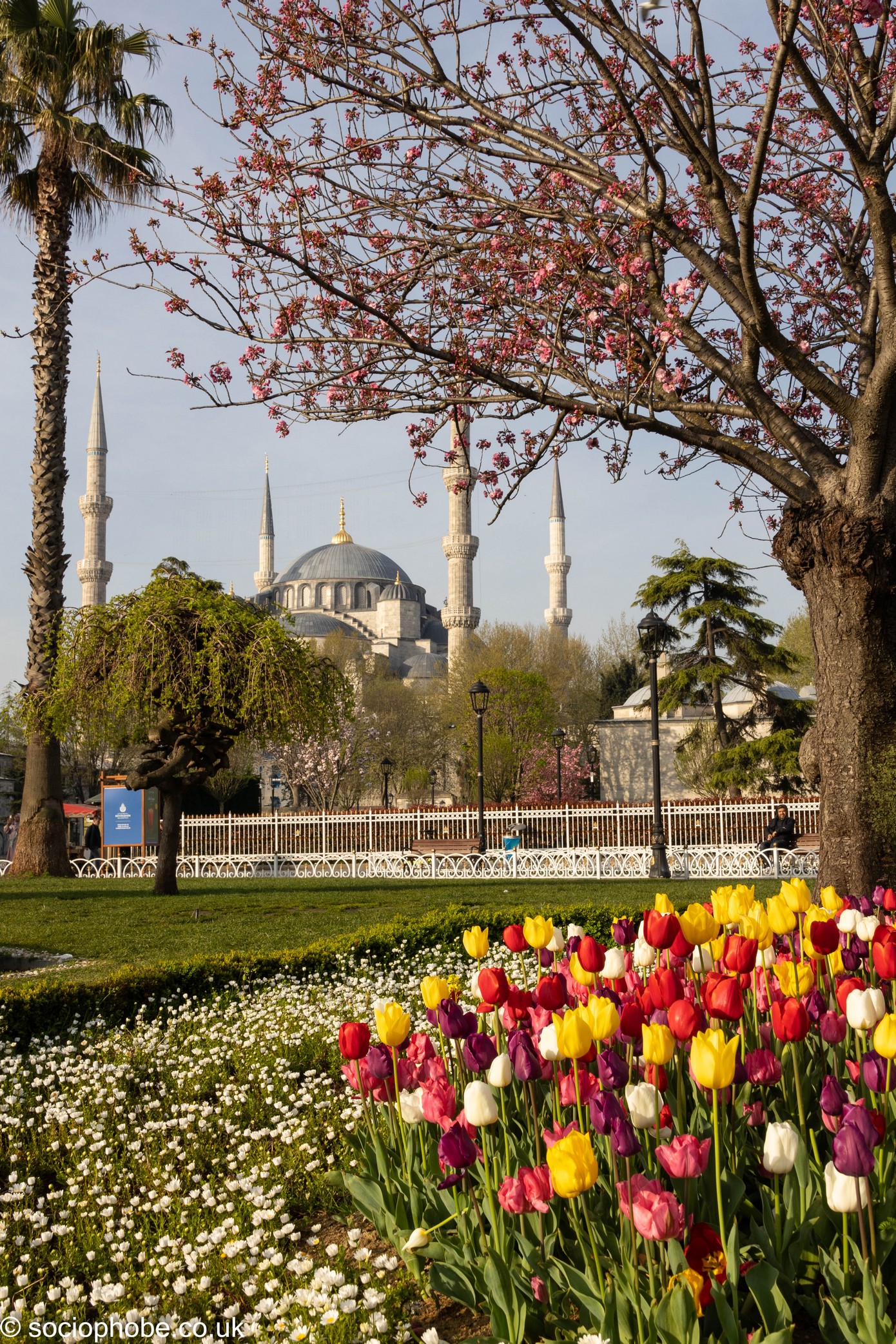
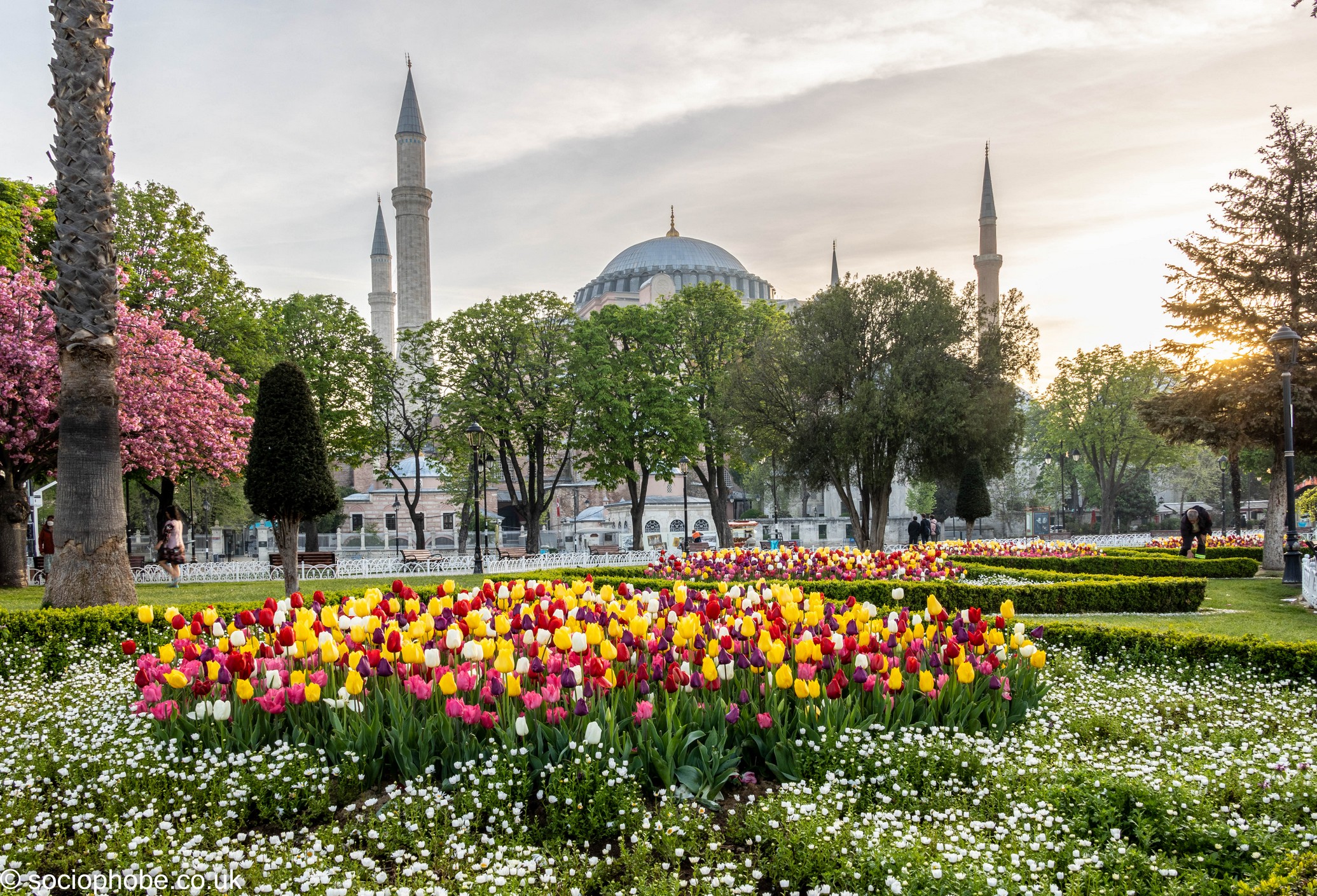
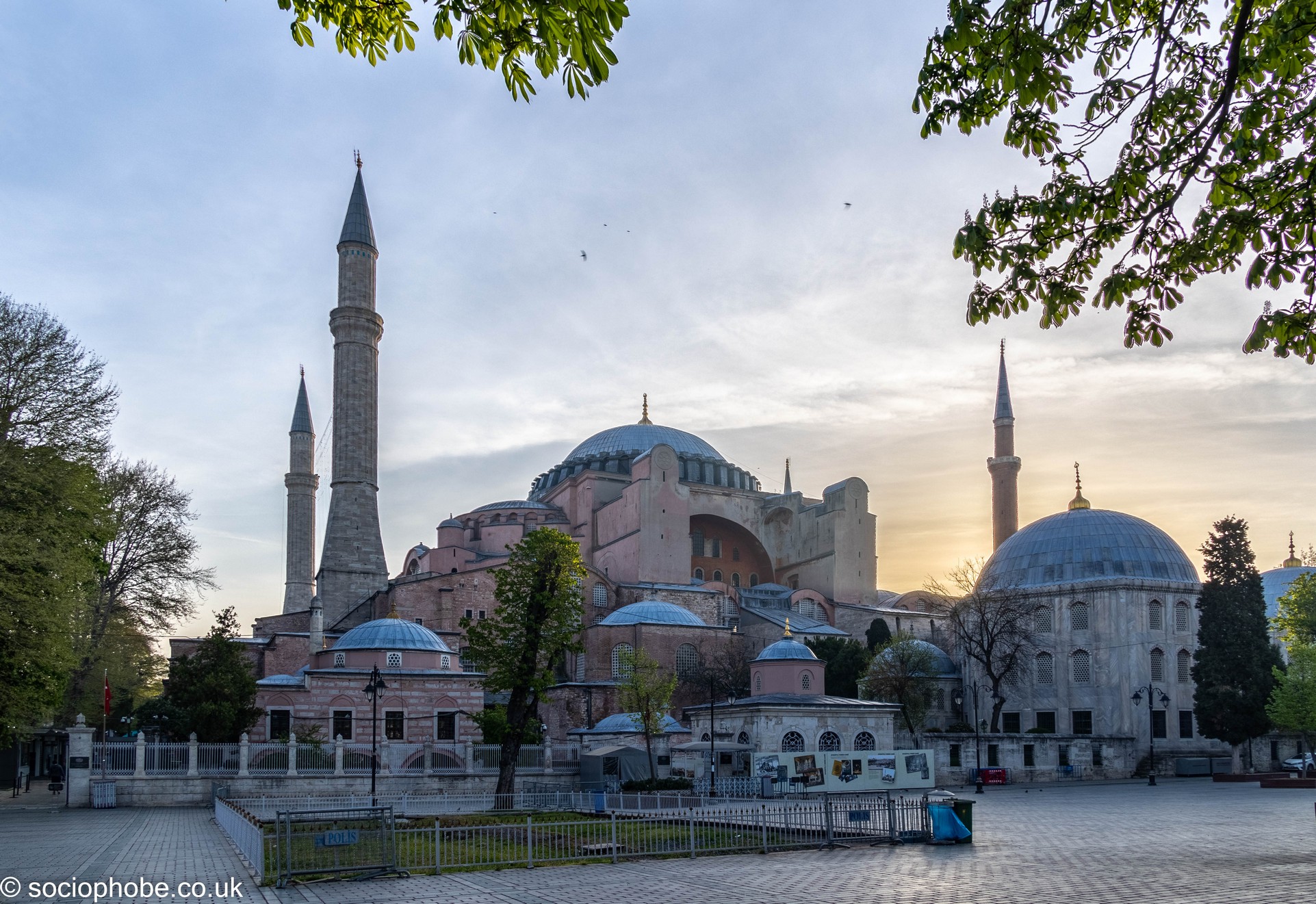
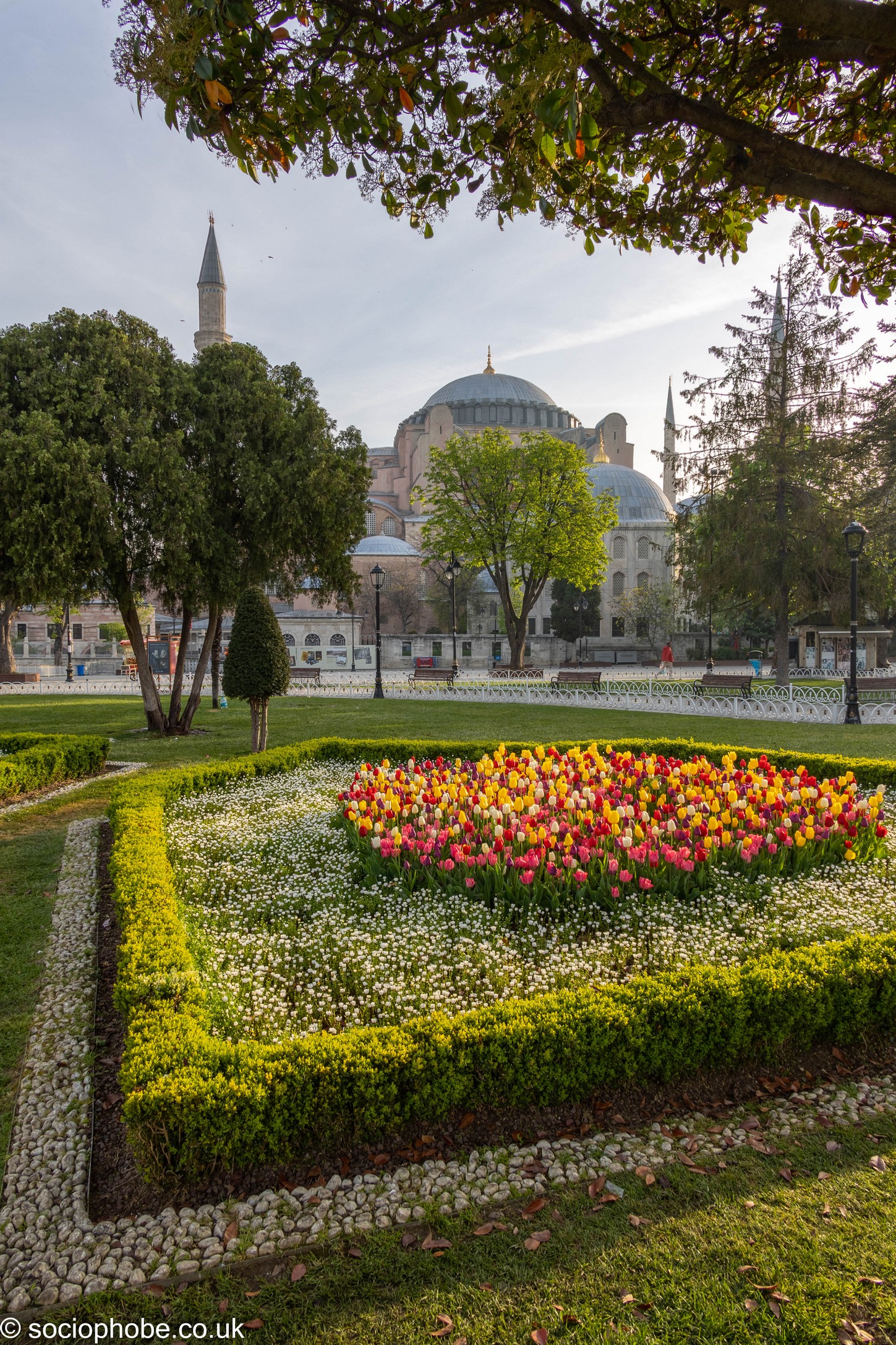
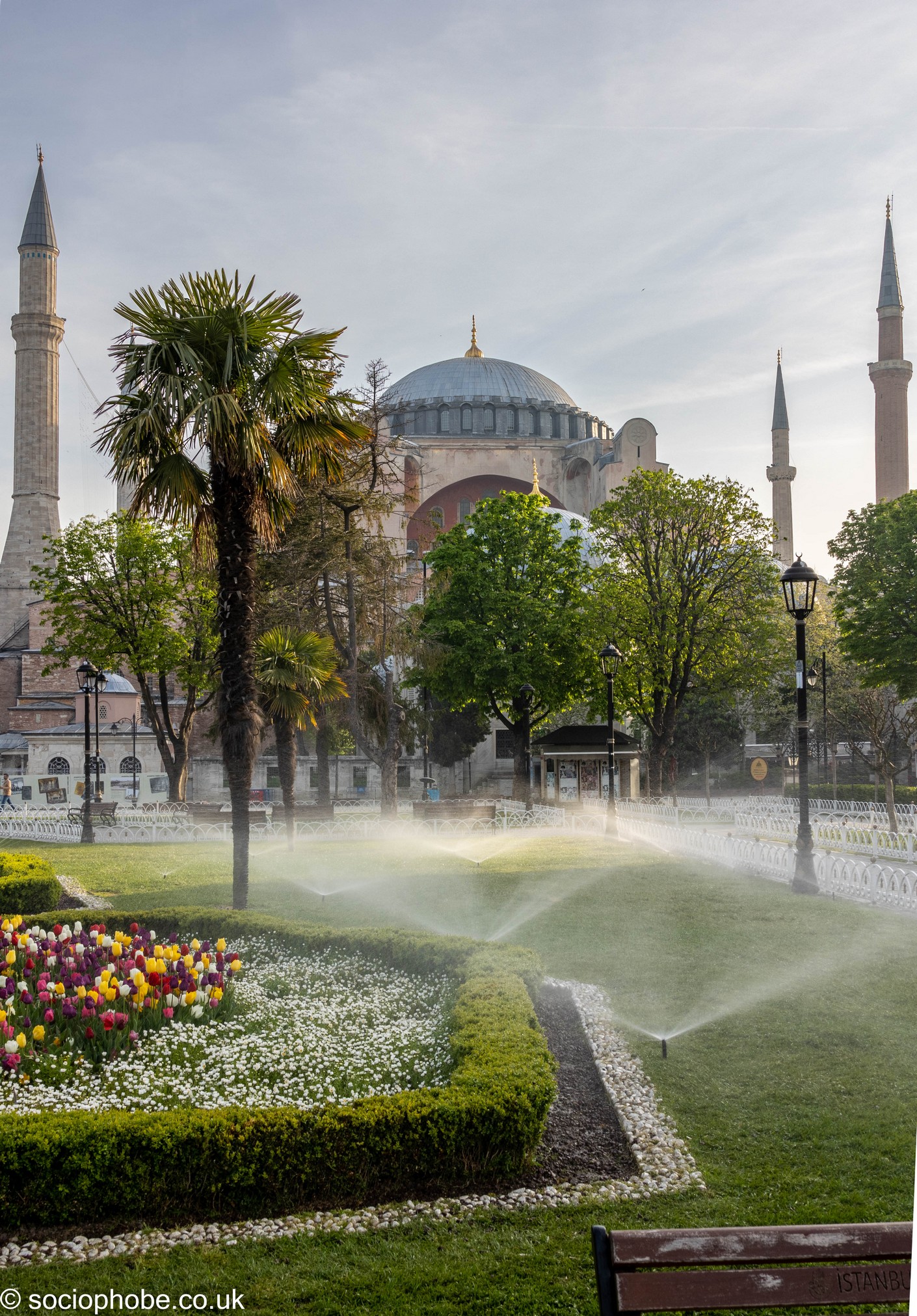
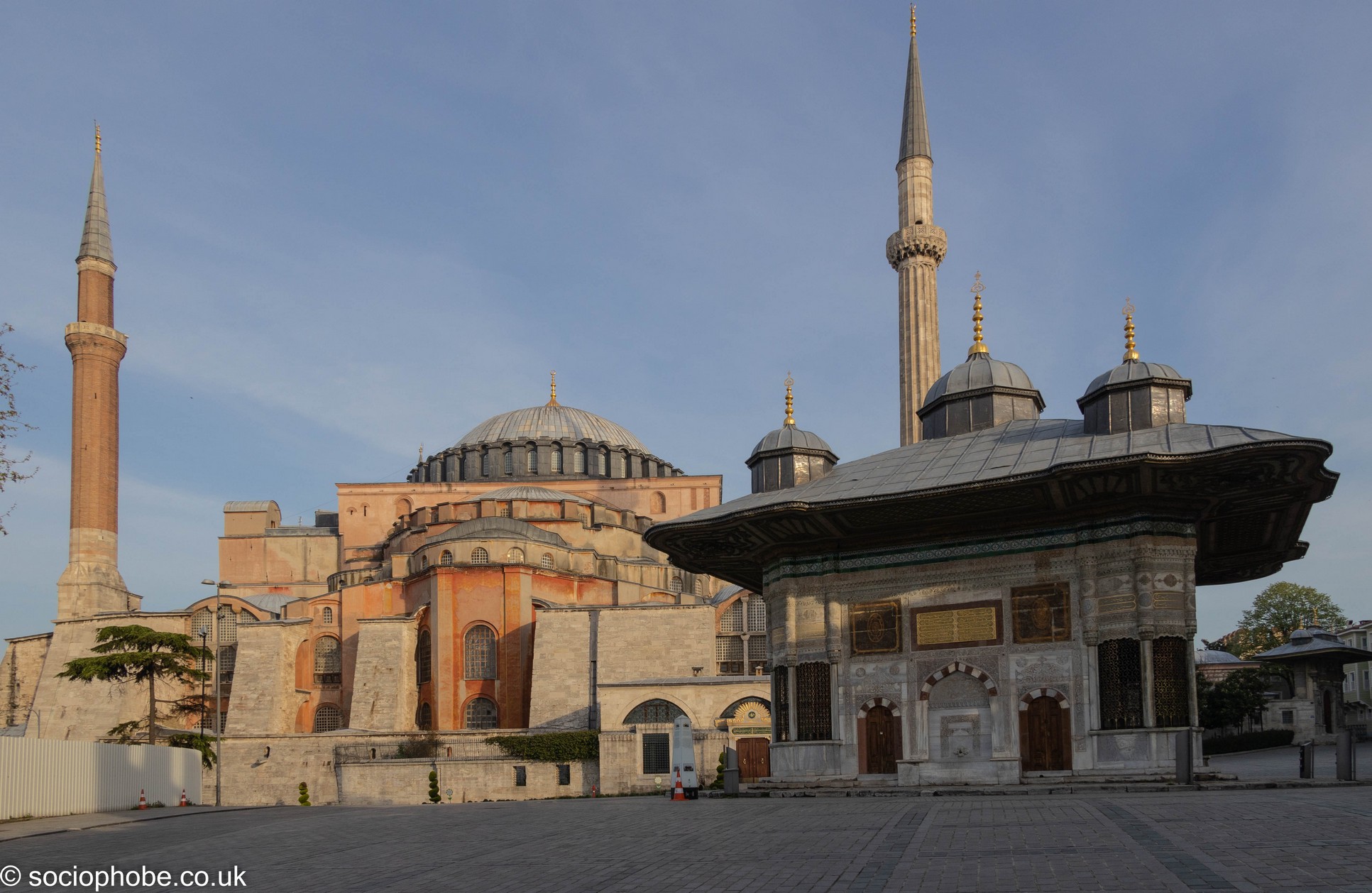
I was determined to get some photos of the Hagia Sofia and Blue Mosque without hordes of people in so the next morning I was up at 6 and left the hotel, carefully not disturbing the guy asleep in reception. It was a beautifully clear morning and there were a few other people around, mostly for the same reasons as me. The tulip displays were gorgeous and the water mist caught the sunlight too, really quite fantastic.
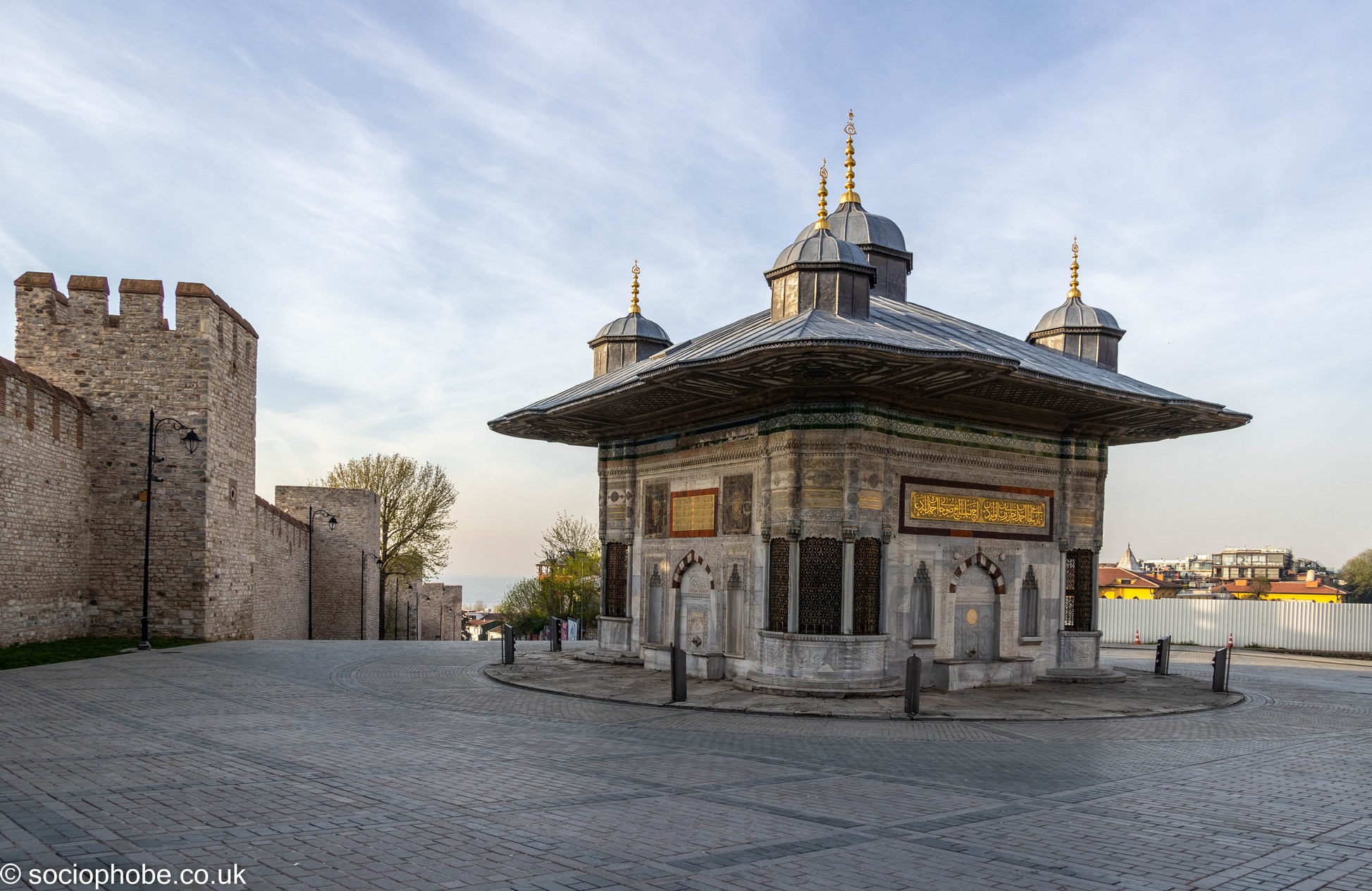
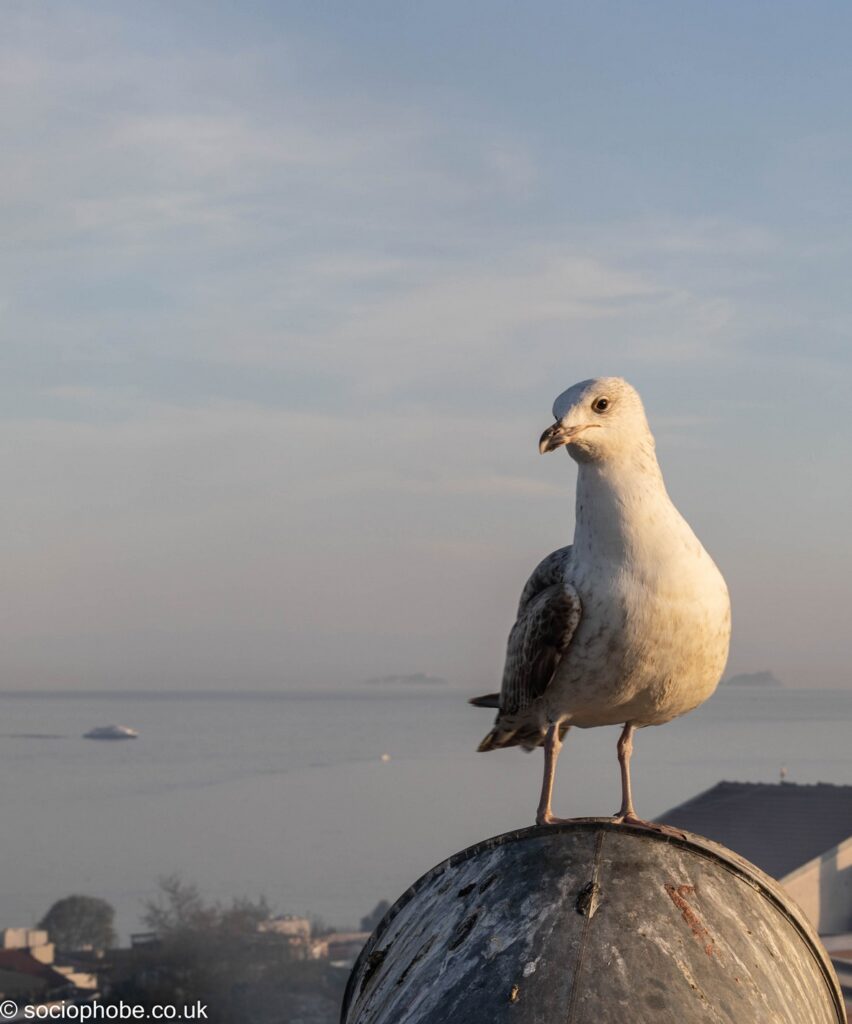
I alternated between the two buildings as the light changed with the sunrise and then did a circuit of Hagia Sofia to the Topaki Palace gates and the fountain of Sultan Ahmed III. There were lots of stray dogs lazing in the sun and seagulls taking an early morning bath. Nat was up when I returned so we had a nice breakfast before our long walk to Galata.
Galata
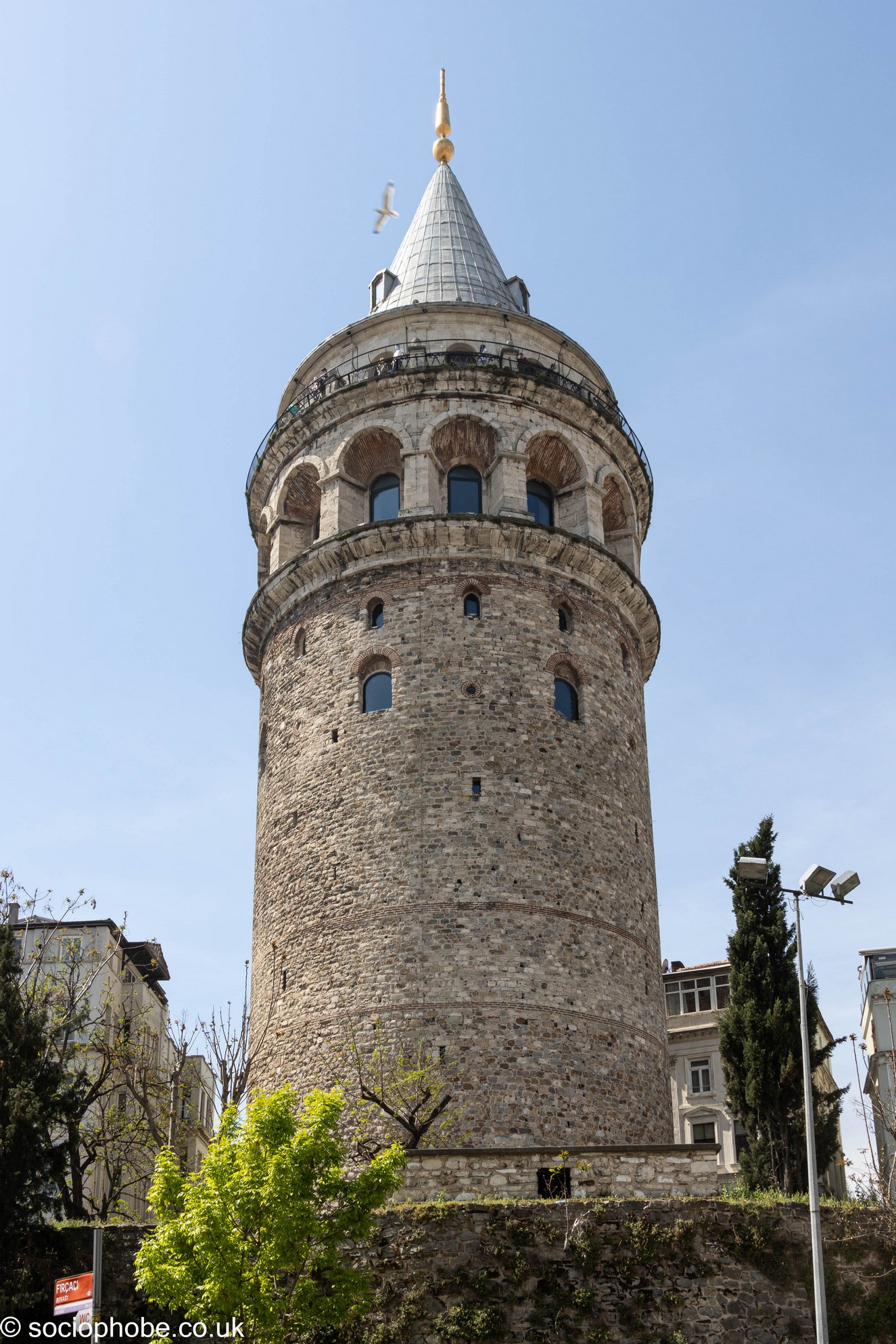
The district of Galata sits on the northern shore of the Golden Horn and was a major trading port for the Italian cities in medieval times. Natalya wanted to go there as there was a cafe she wanted to see and I wanted to visit the tower. Galata Tower is a Genoese construction that replaced a 5th century Byzantine building and was extended upwards after fire damage in the 19th century.
We walked past Hagia Sofia and then down the side of Gulhane Park, that skirts the edge of the Topaki Palace grounds. We stopped for a coffee but again, Nat wasn’t impressed so we followed the streets until we reached the shore. The Bosphorus here is crammed with ferries and boats and as we didn’t have Zeynep with us we opted to walk across the bridge instead.
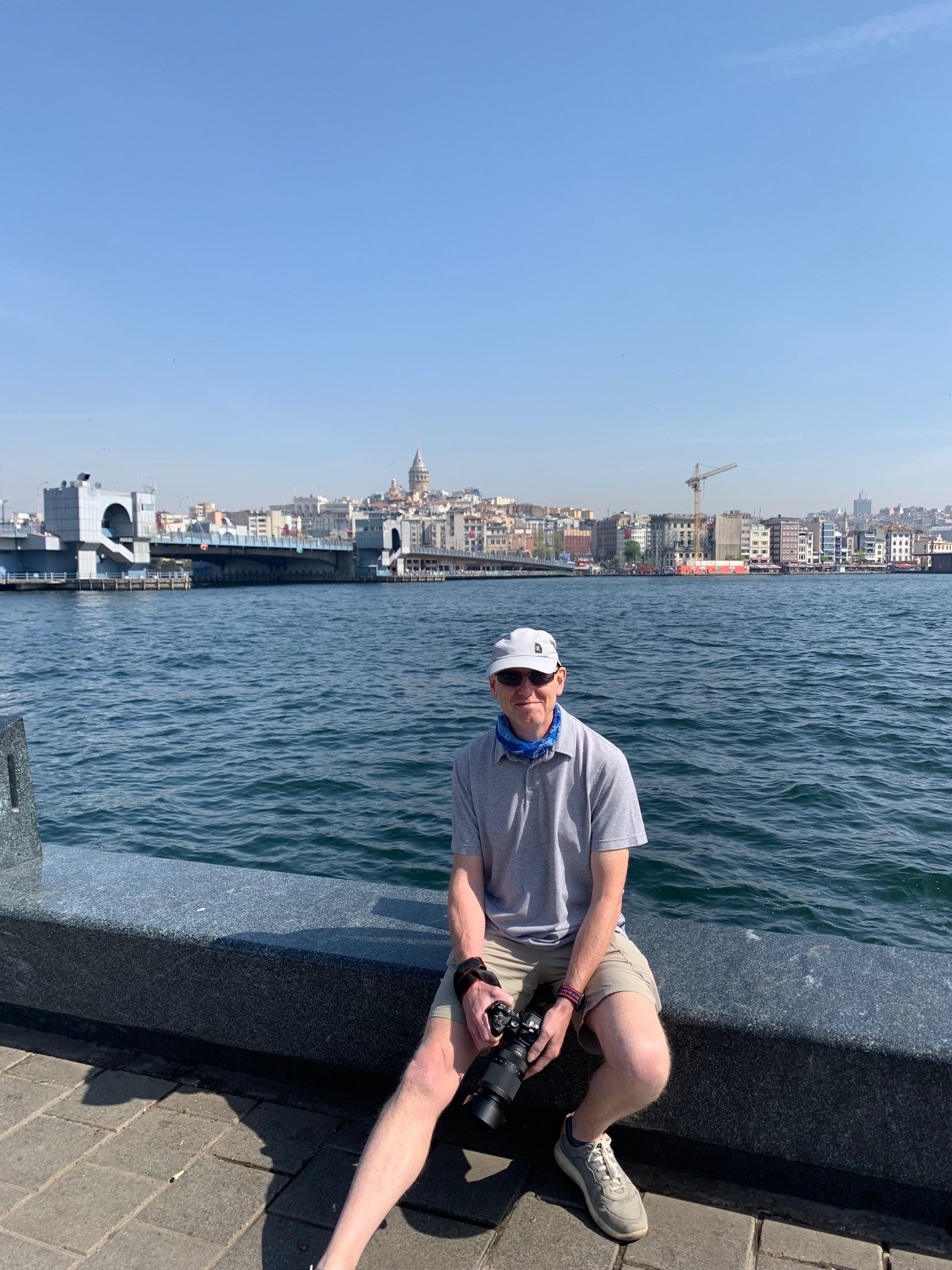
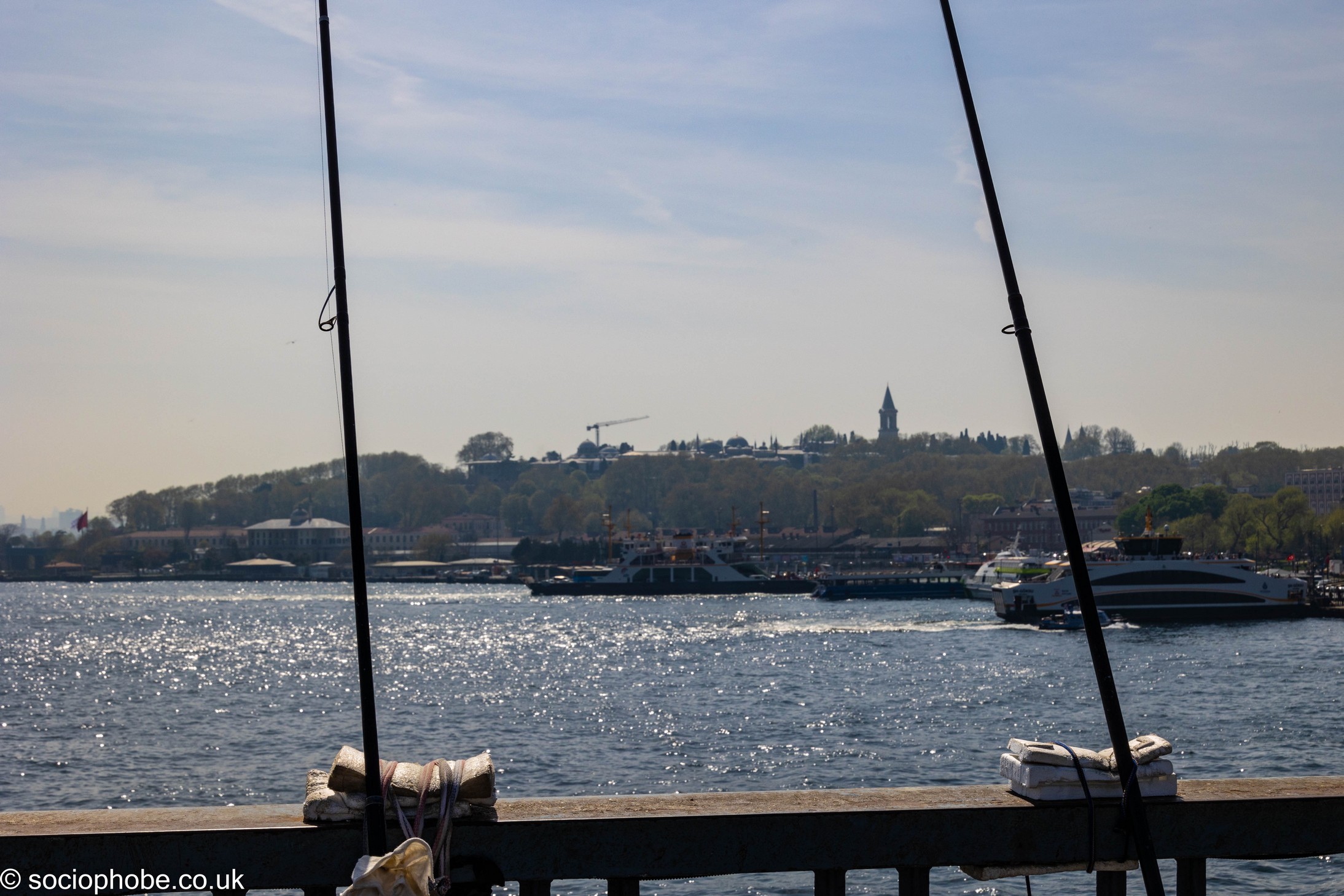
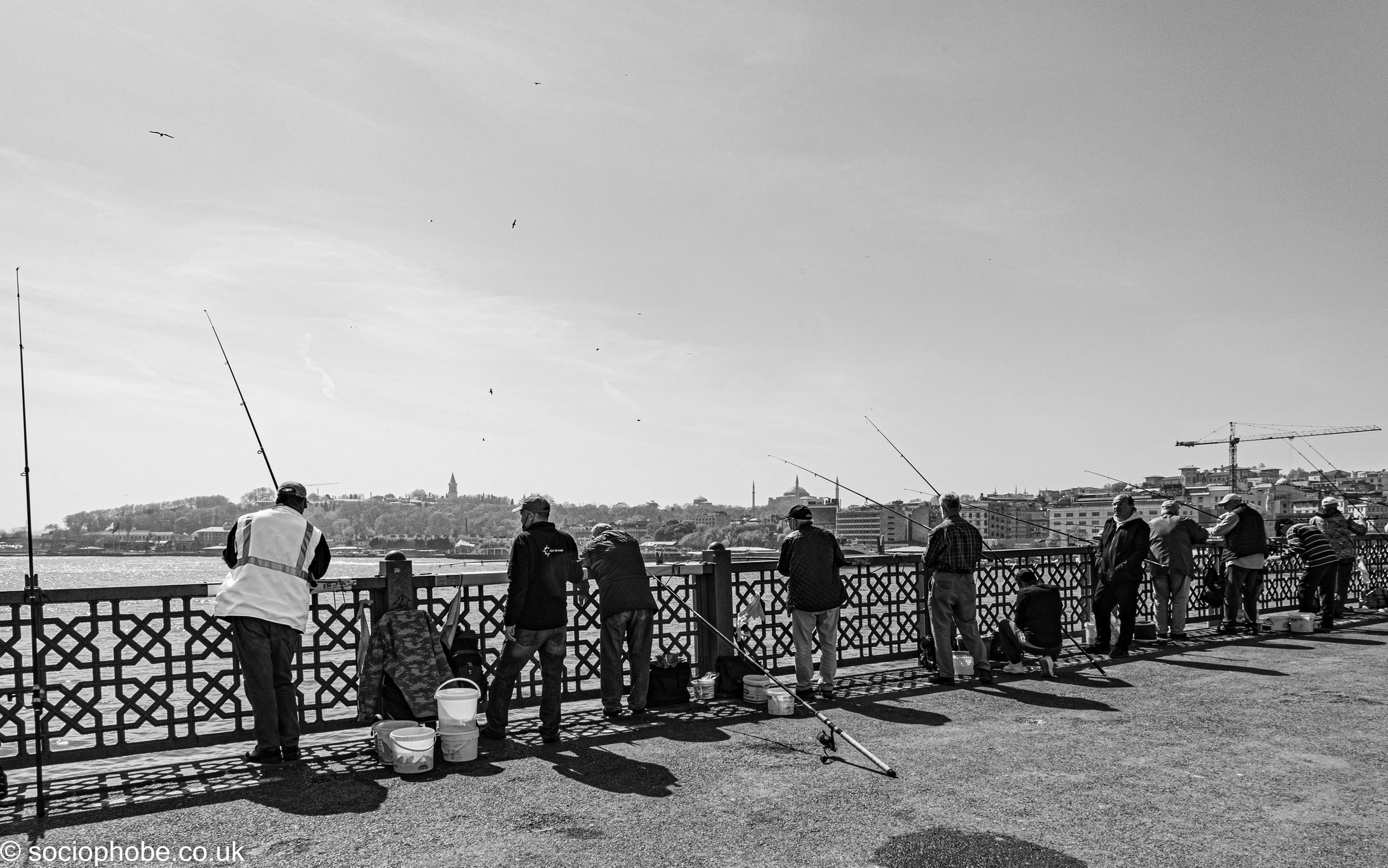
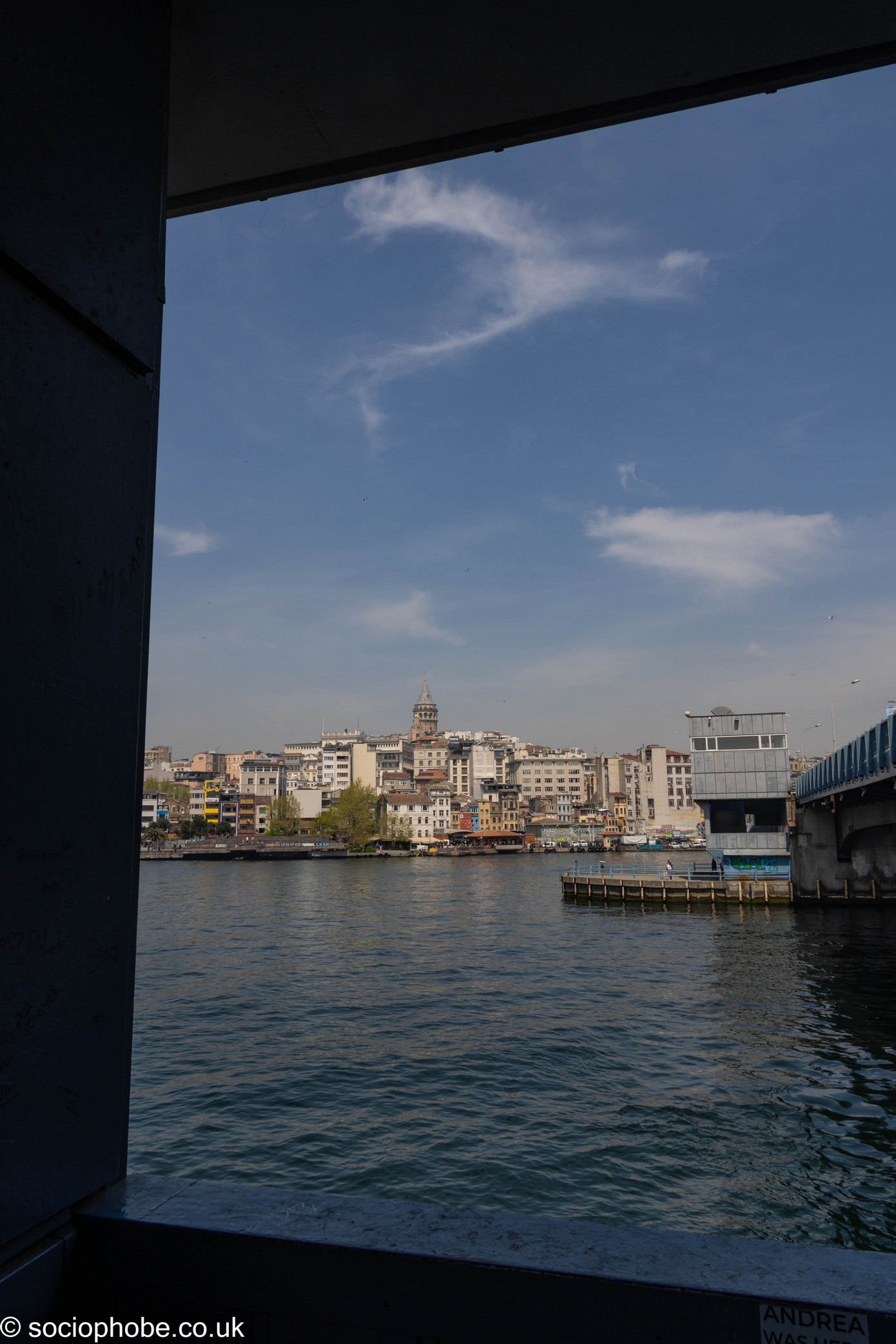
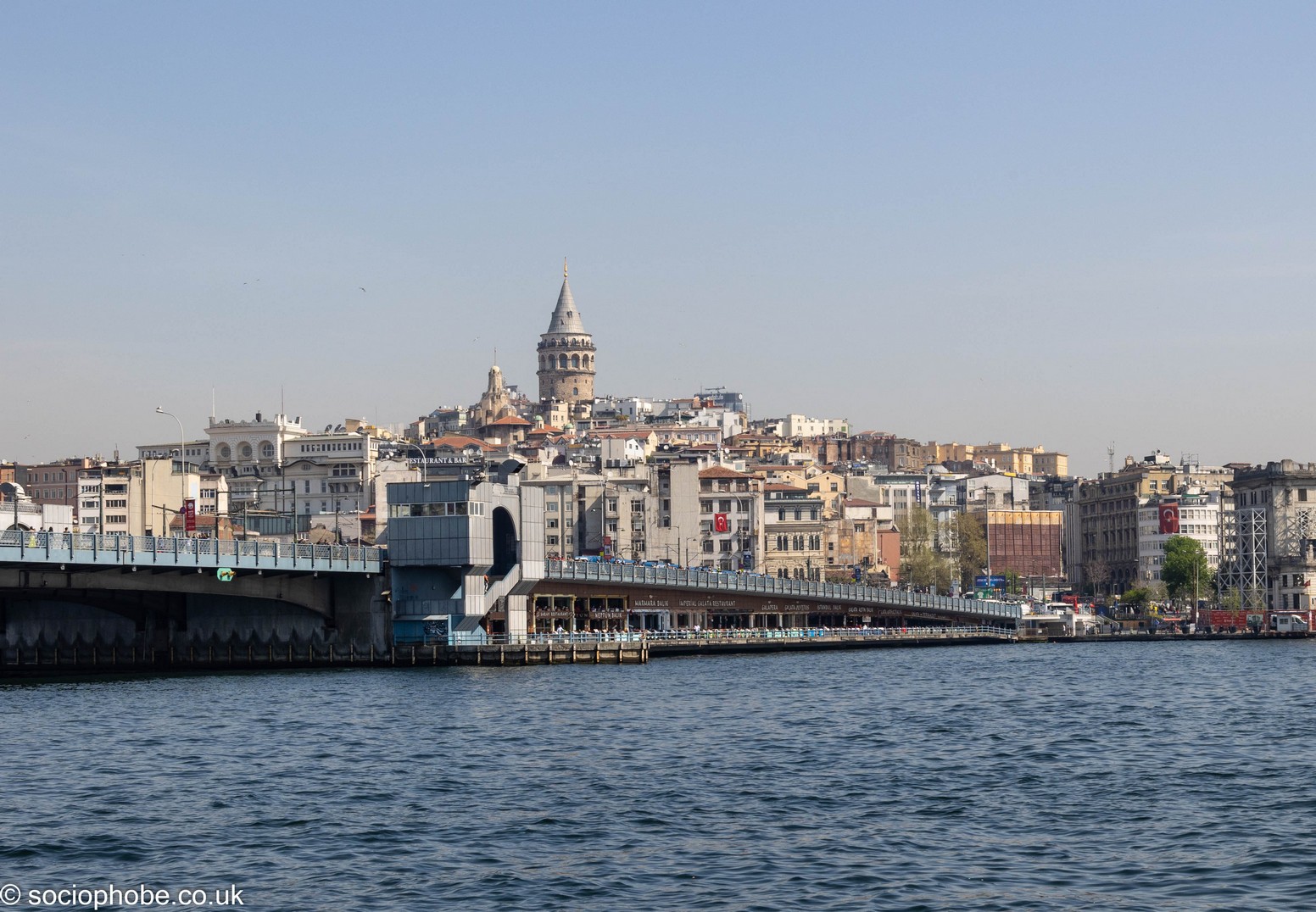
This was a nice experience as the lower level of the bridge is lined with restaurants and the upper level mostly fishermen, as well as the traffic. It was a hazy day but the skyline was still impressive on both shores. Nat loved the bridge architecture so we were both taking photos but facing in opposite directions.
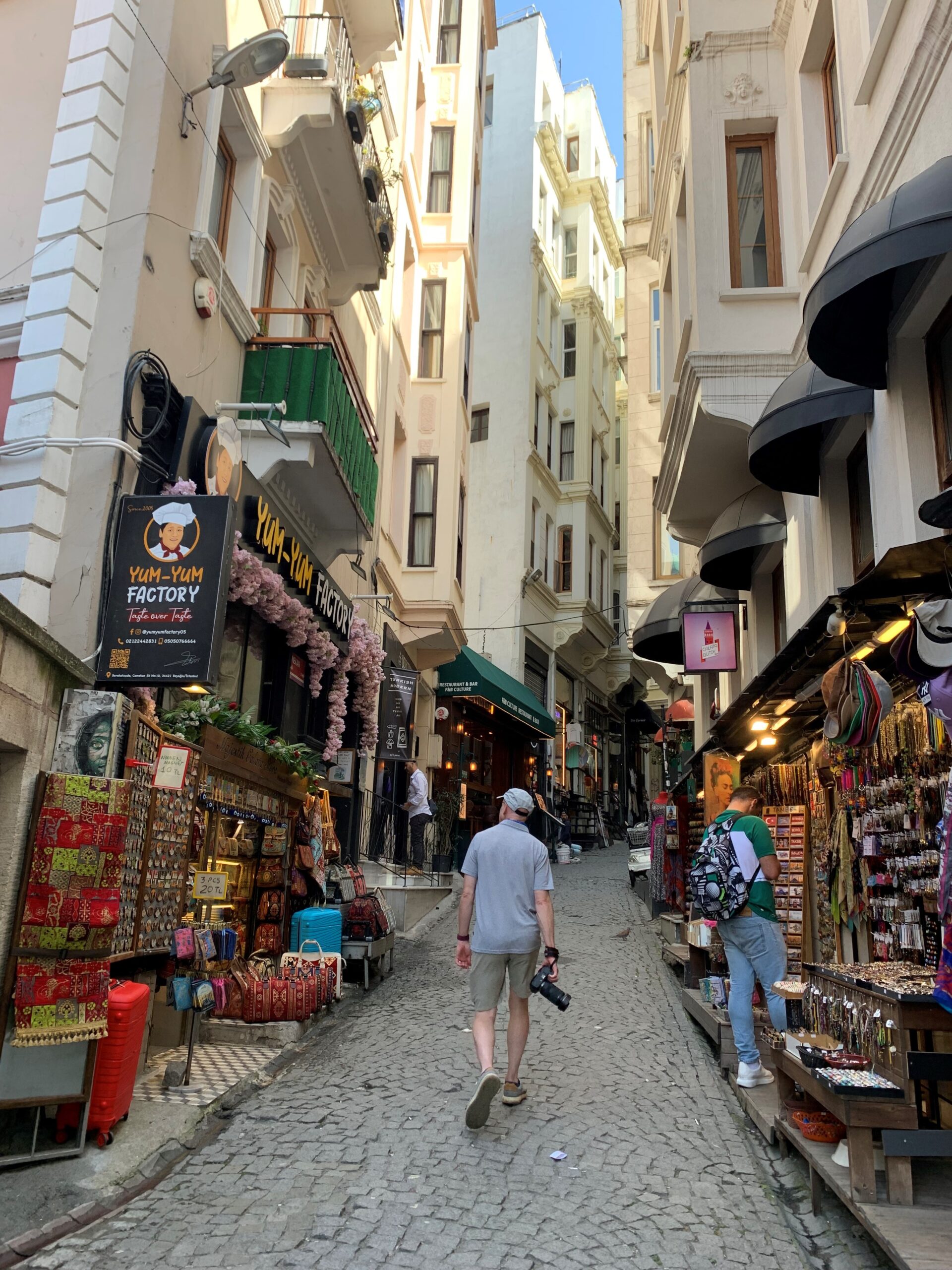
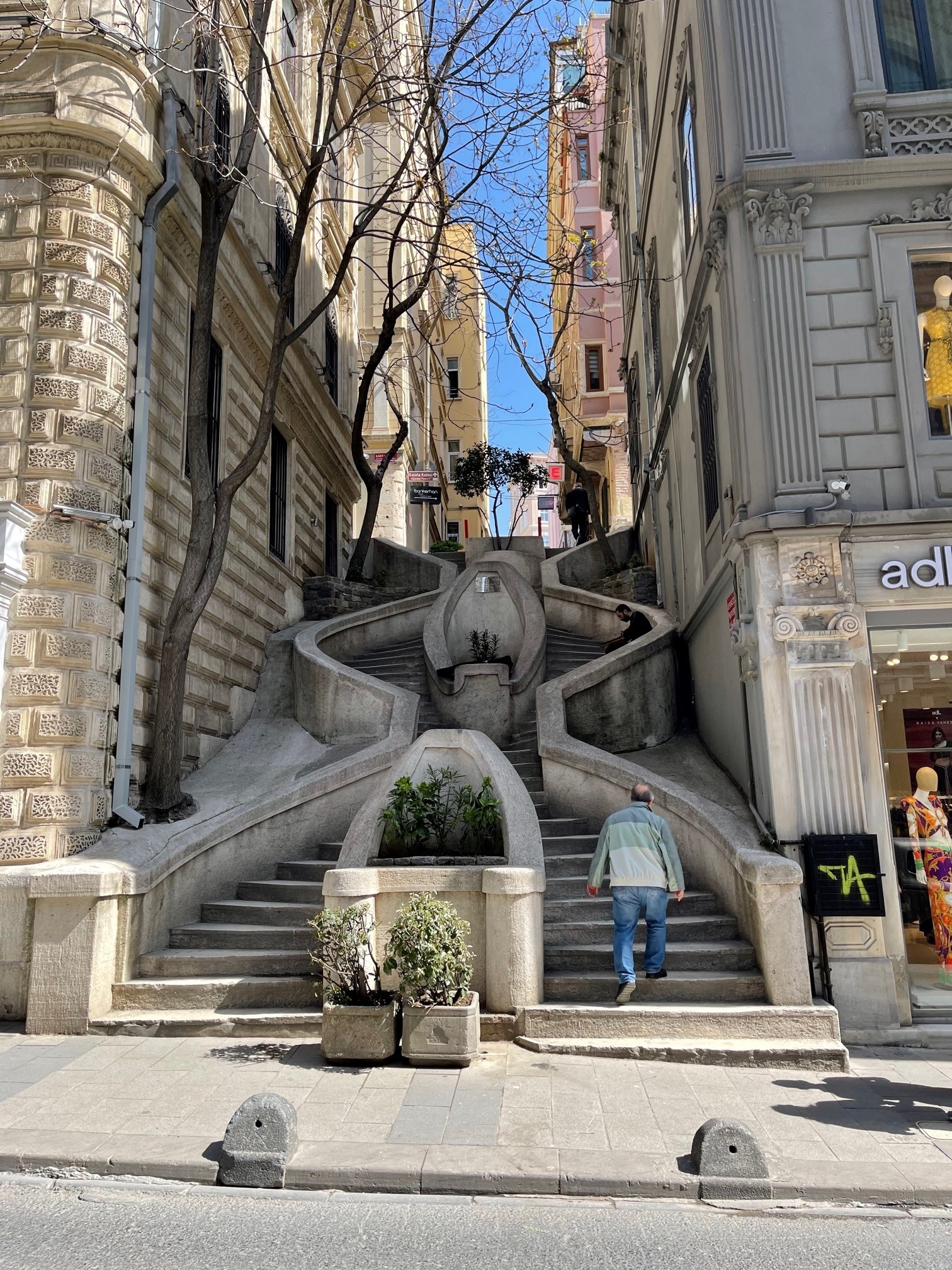
Unlike the open spaces of Sultanhamet, the streets of Galata are narrow, dark and crowded with shops and cafes. Natalya loved the buzz of the area and we should have spent longer exploring as there are some remains of the city wall and an old synagogue as well as the Whirling Dervish Museum, but she wasn’t keen.
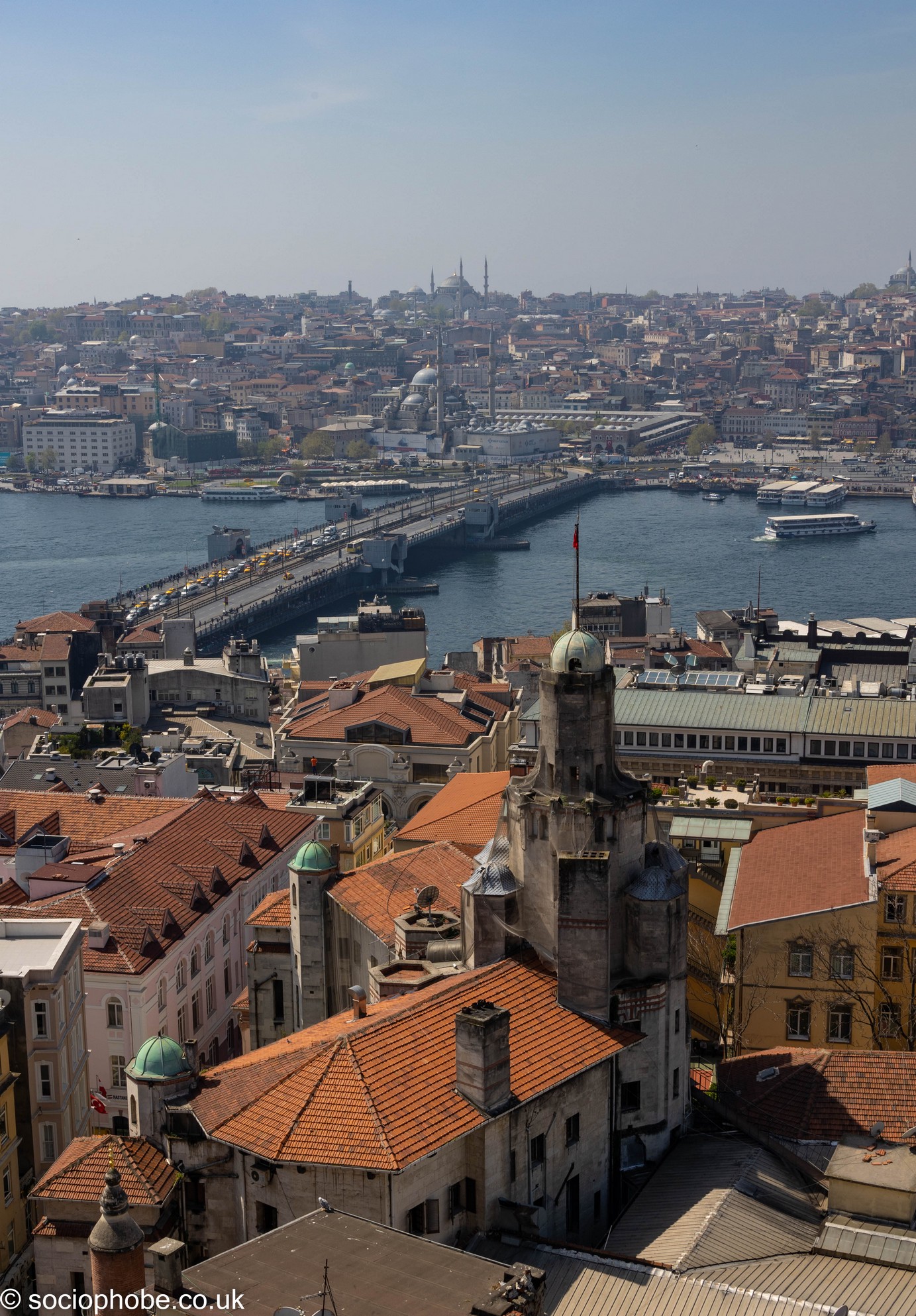
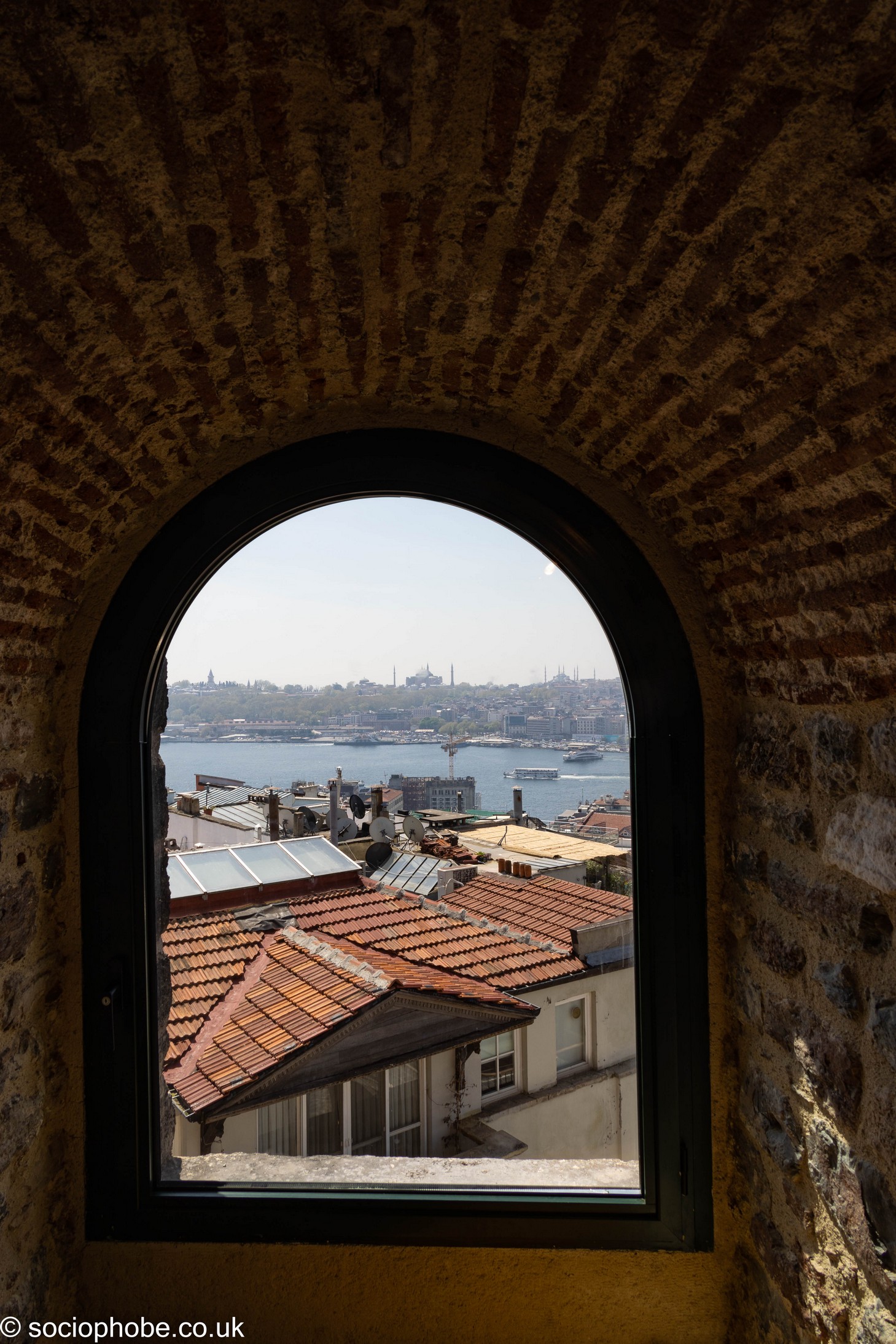
The tower itself is obviously at the top of the hill and we paid the £6 entrance and took the lift to the top – Deb would have been so pleased! At the top it was, frankly, terrifying! The views were as impressive as you’d expect but it had a very narrow walkway, a waist height barrier and people walking round both clockwise and anticlockwise. One of those place that is better viewed from elsewhere I think!
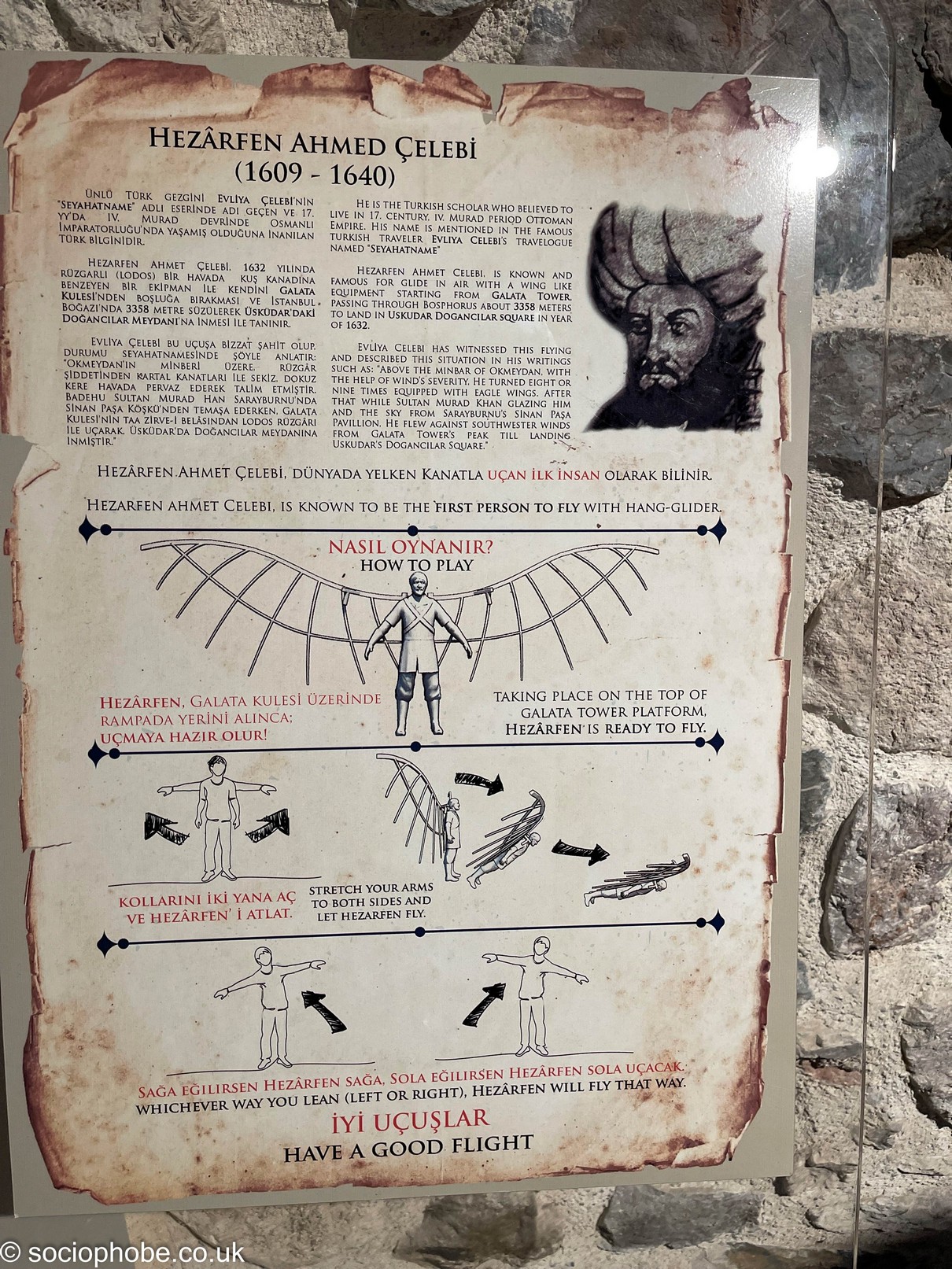
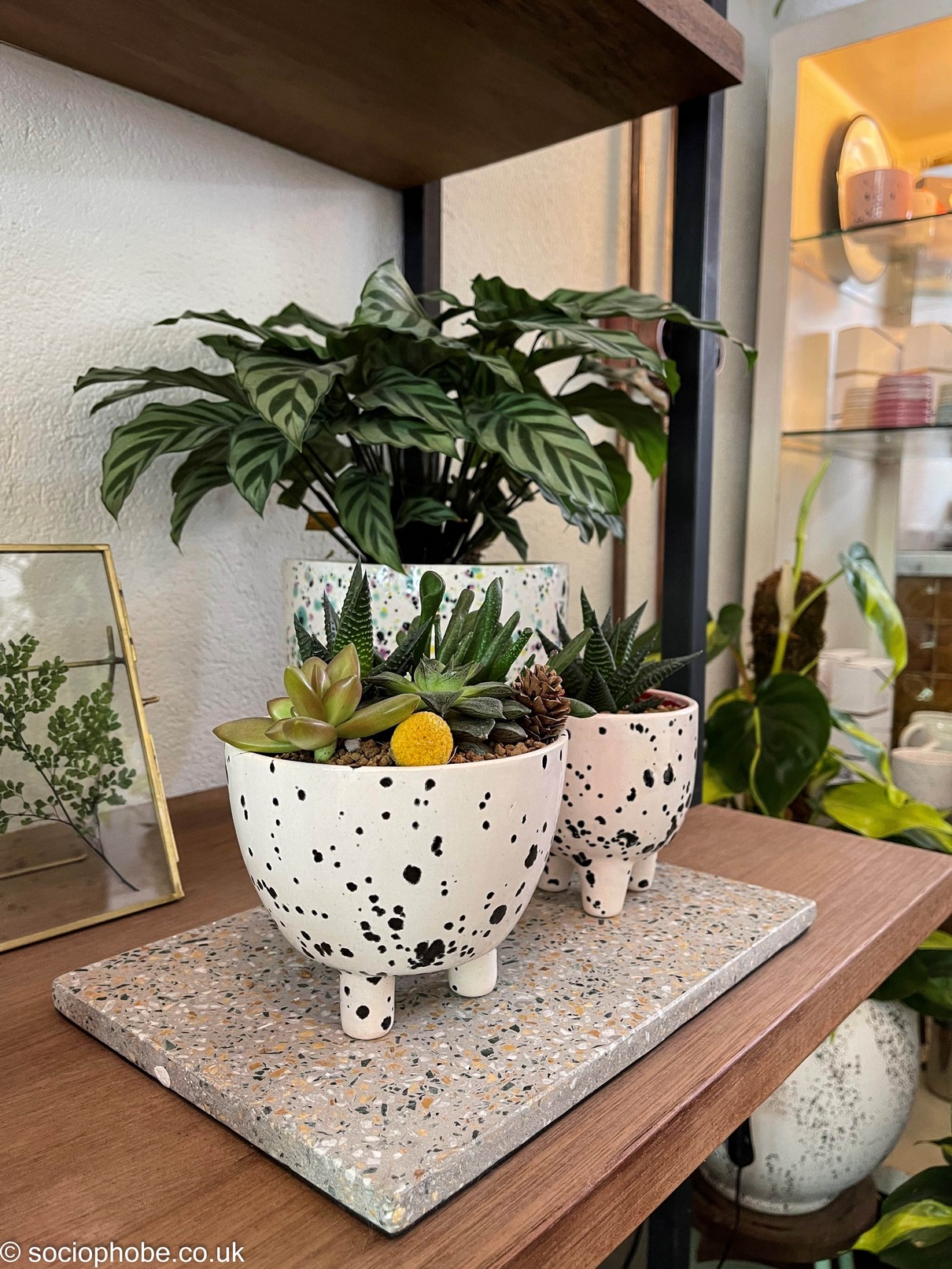
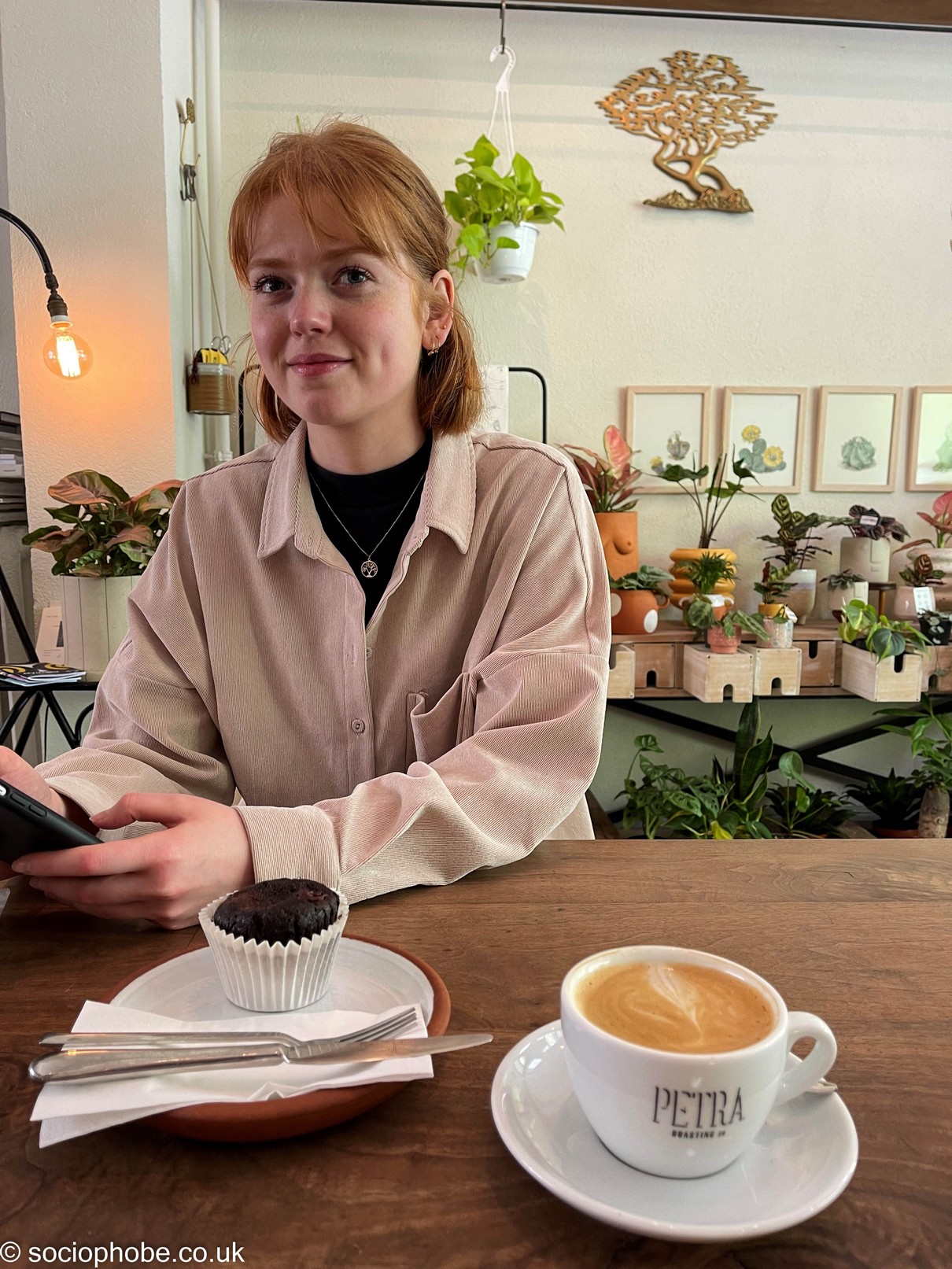
The stairs down from the tower were low ceiling and spiral but each floor had an interesting exhibition including some interactive ones so it was actually a rather good little museum. No cafe there though. We continued walking through the streets and eventually found Natalya’s cafe, Muz Plants and Coffee. It was a female run, vegan friendly cafe and pottery store and I have to say it was superb. The cherry and chocolate muffin I had was delicious, even Nat liked the coffee and the plant displays were wonderful. A lovely little oasis amongst the chaos.
Next stop was a Bosphorus Cruise so we continued meandering through the streets in the general direction of the cruise terminal. When we arrived the guy was from Norwich (almost every guy we spoke to either lived or had lived in England) but the card machine was broken so we had to pay cash – a mix of sterling, lire and euros which cleared us both out. We sat in the shade and waited for ten minutes until the boat arrived.
Bosphorus Cruise
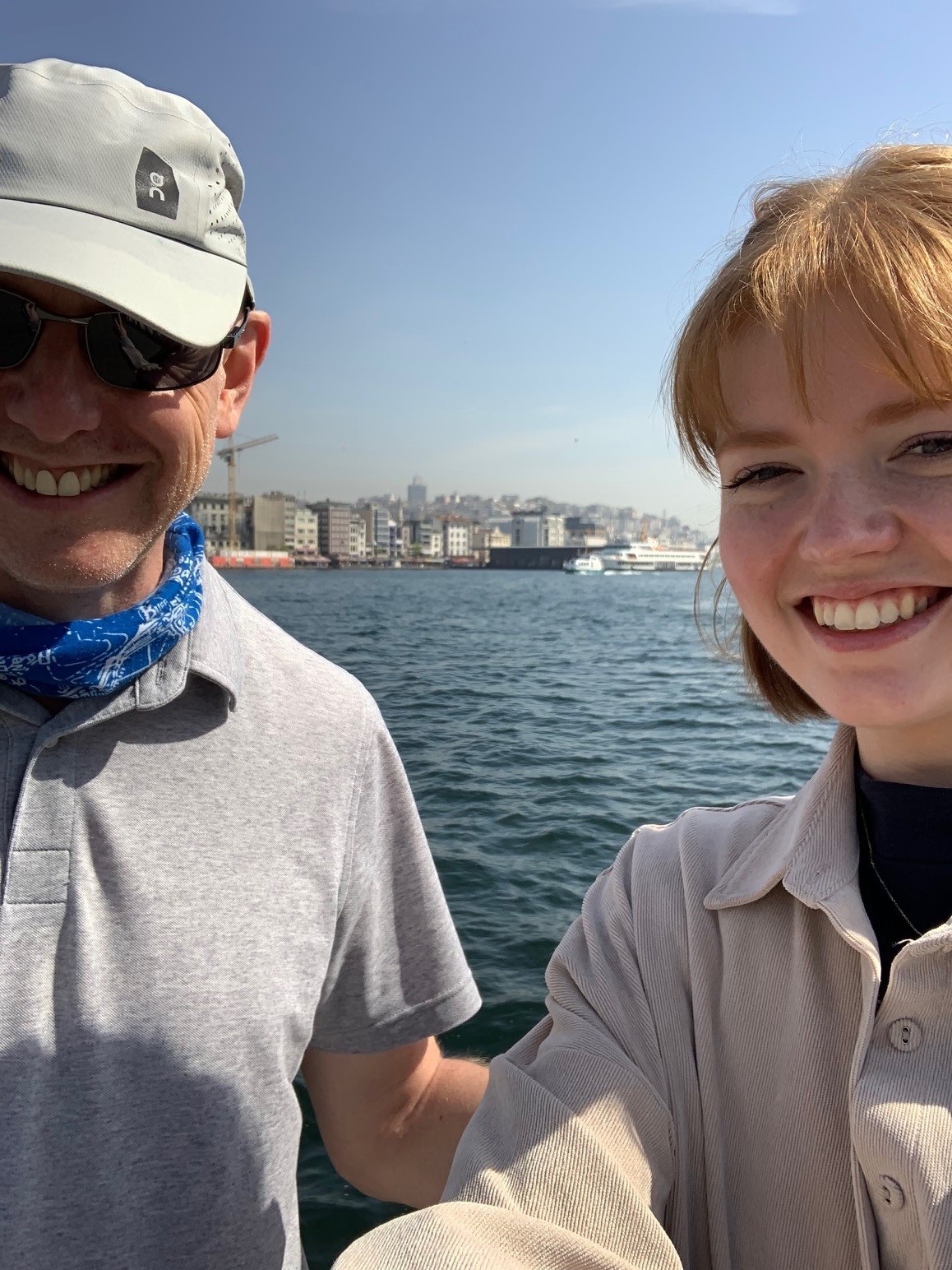
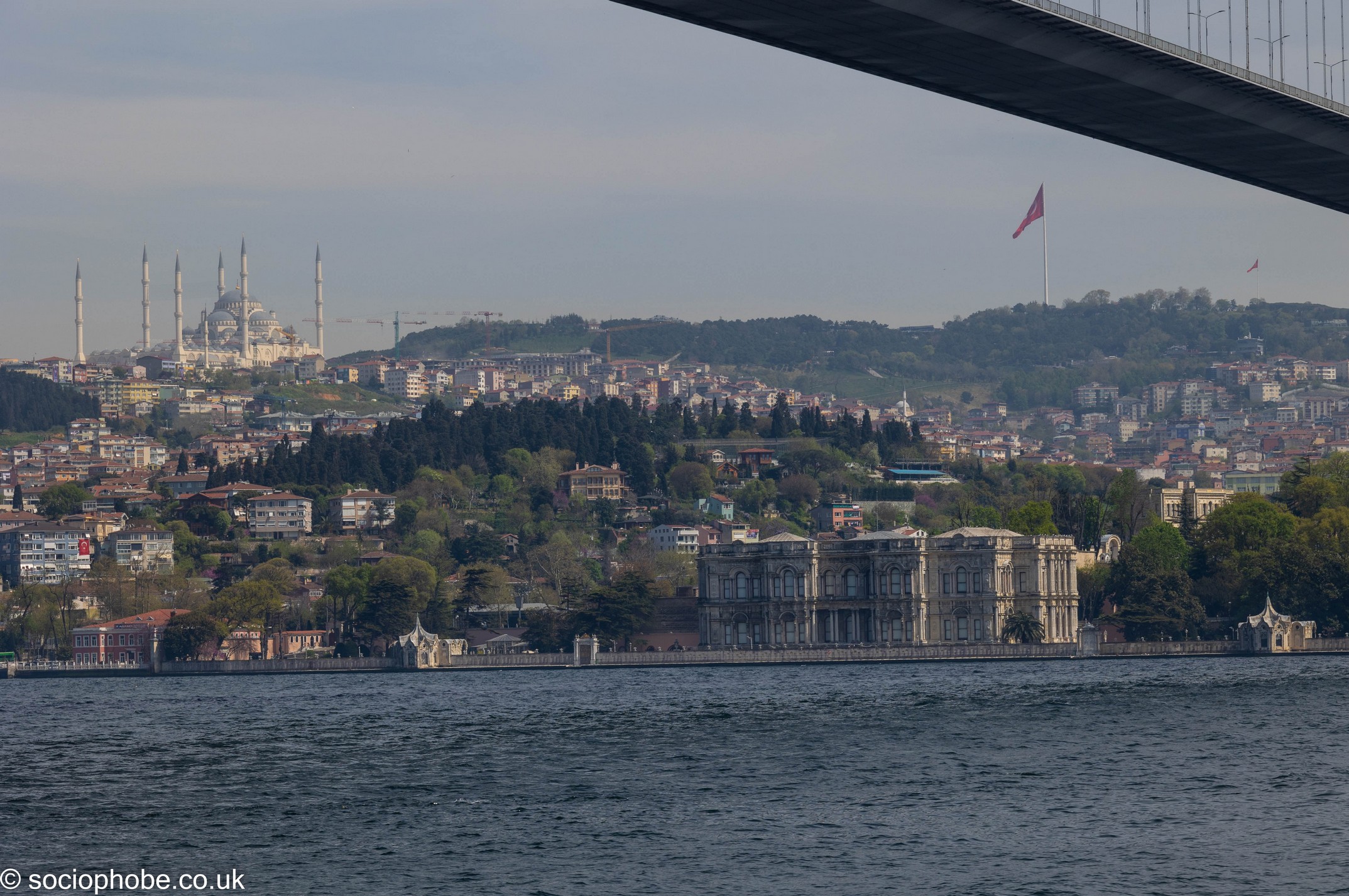
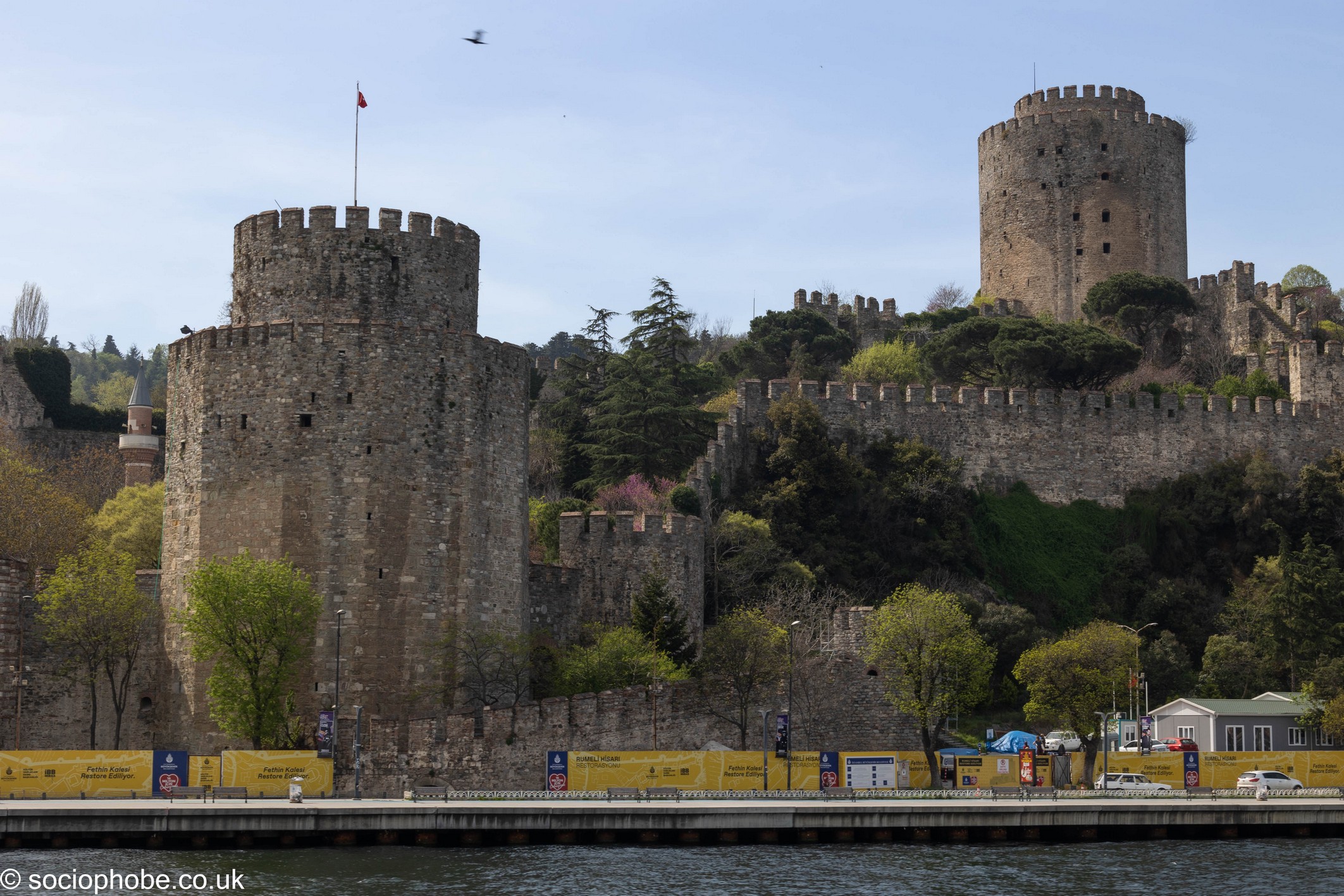
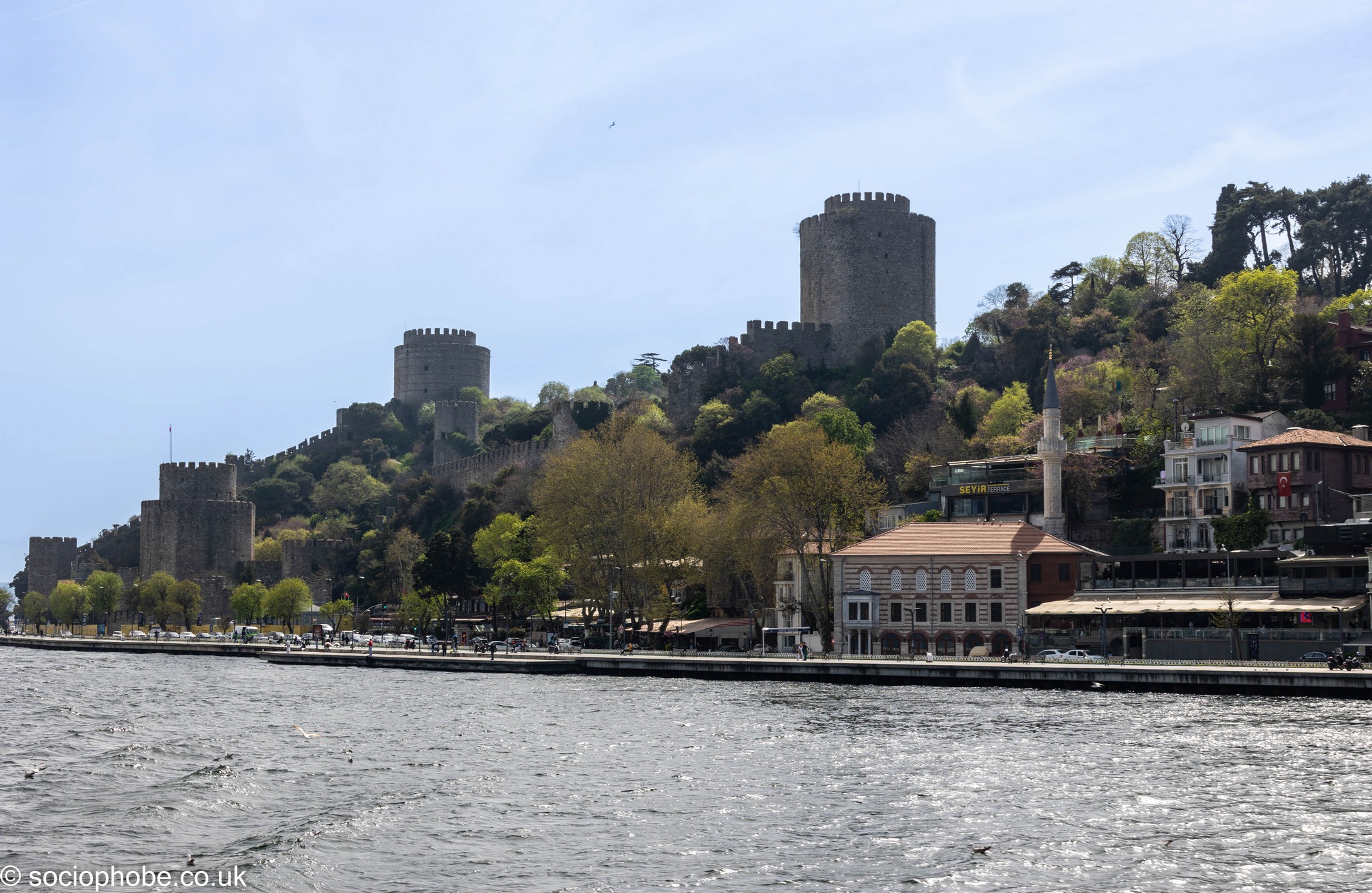
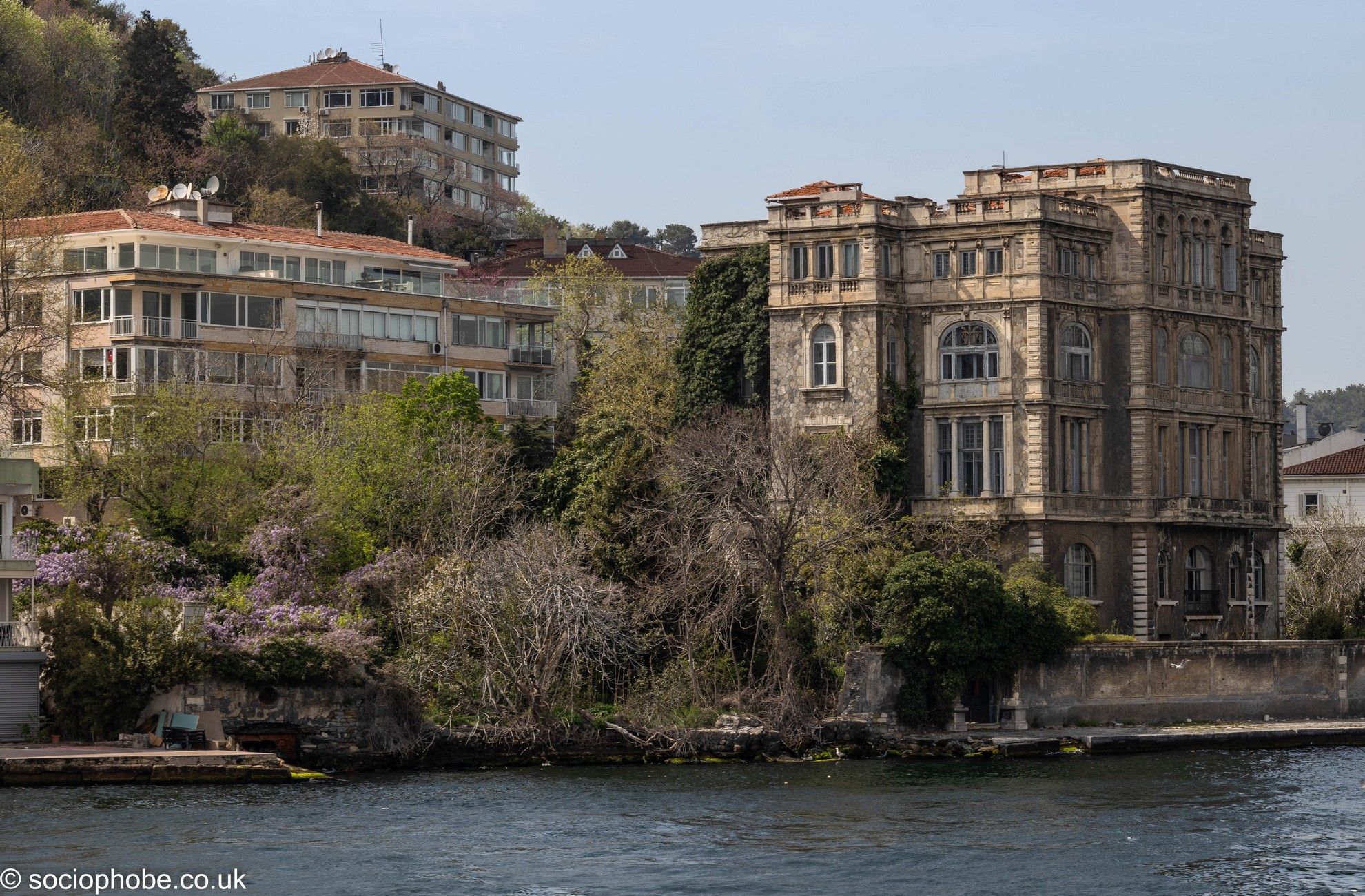
The cruise is a great way to get an idea of the sheer size of the city now as well as identifying some important buildings and areas. It’s also far more relaxed than traipsing through the busy streets! The one we did took about 80 minutes and cost €20 each. If you’re going to do it make sure you have a light jacket as it’s quite breezy and dimwit here was freezing!
The commentary did point out an area where “Jews, Christians, Muslims and Armenians live in harmony” which probably came as news to the million or so that were killed in the Armenian Genocide last century! Other than that slight inaccuracy the commentary was good although we didn’t pay enough attention and got off at the wrong stop. This meant a 20 minute walk to the tram station, past more riot police and water cannon vans.
Evening Meal
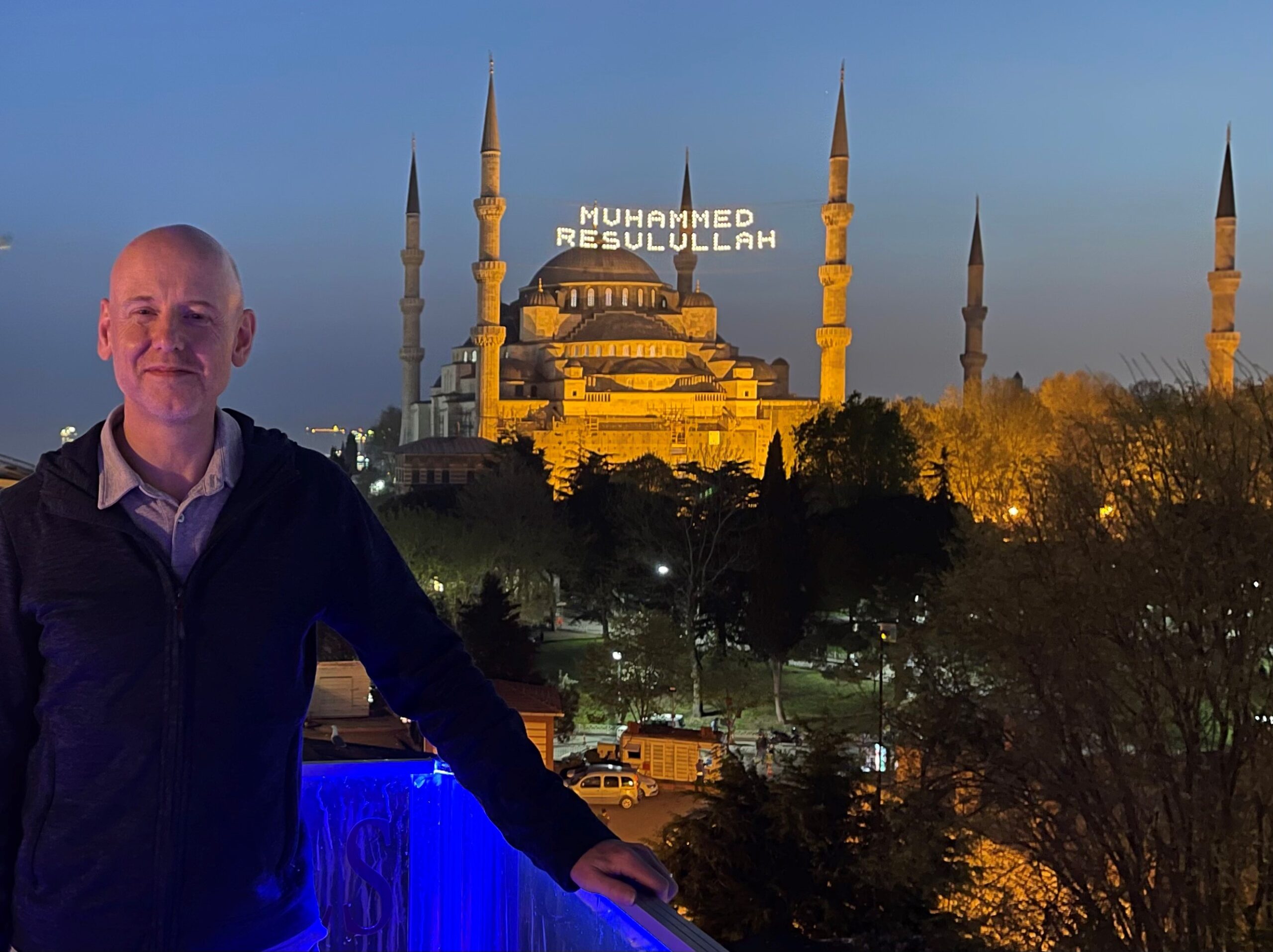
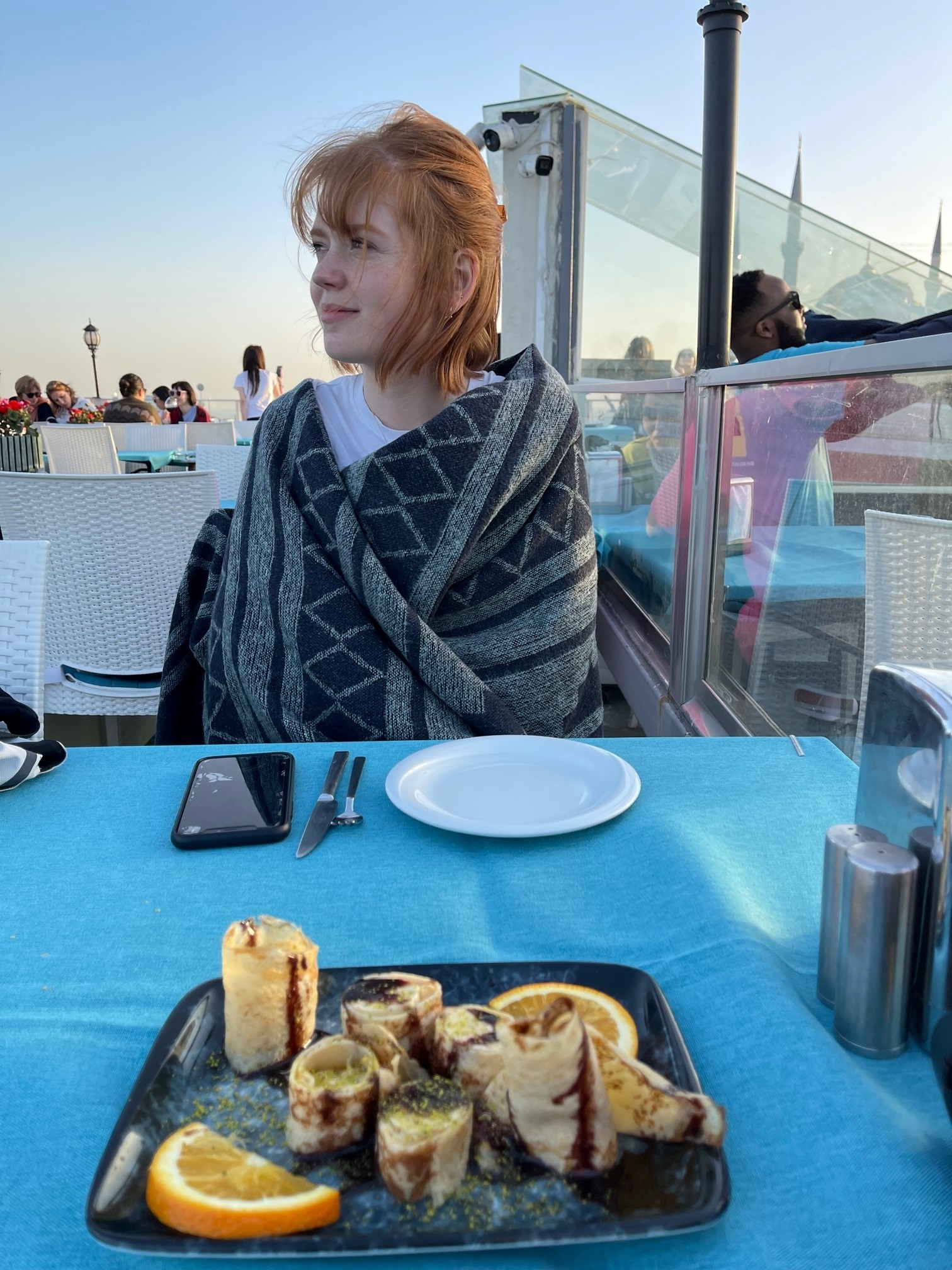
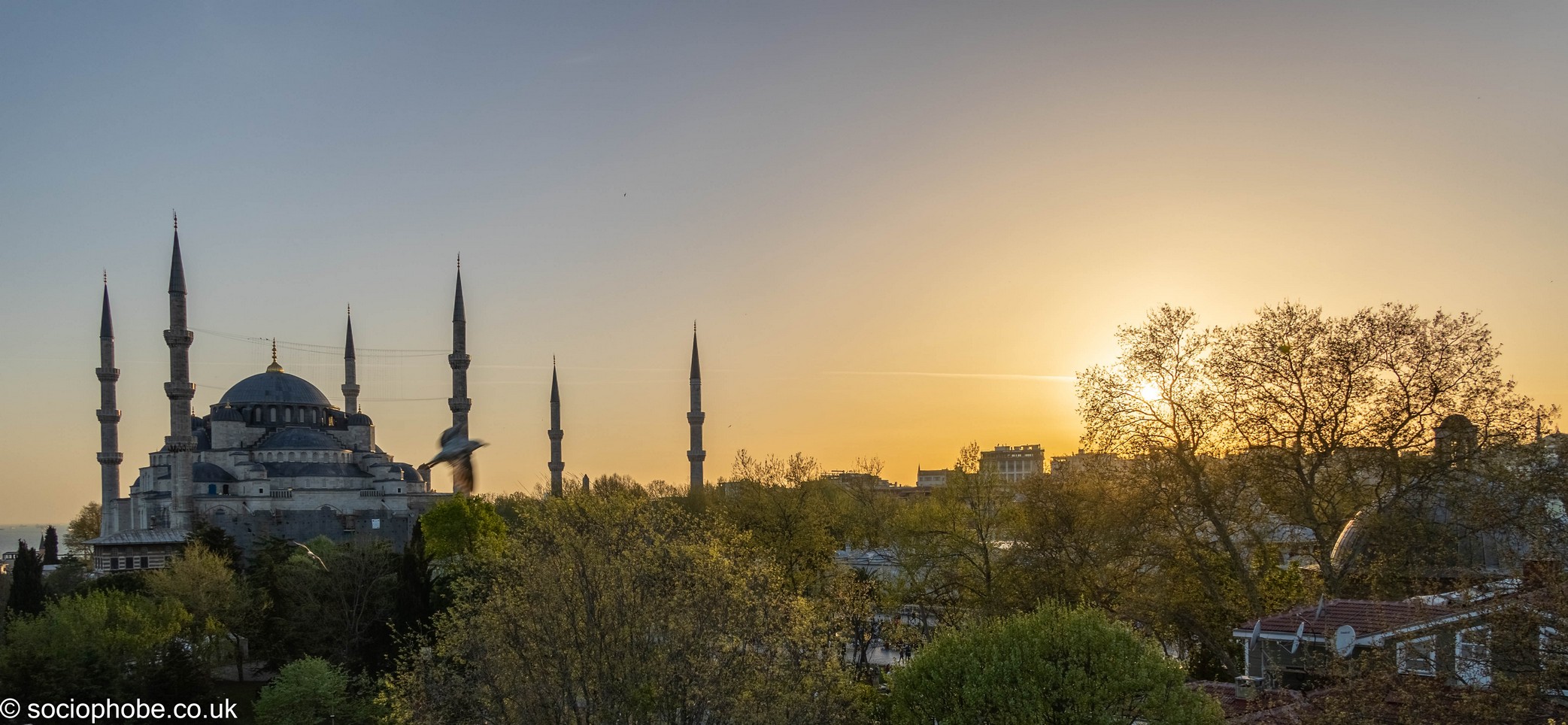
For our evening meal we returned to the same place. Not for the disinterested service or casually produced food, although Natalya was actually able to get some vegan options which was pretty rare, but for the views. We actually watched the sunset and alternated between eating and taking photos and then getting collared by other people to take photos of them.
After dinner we walked back towards the hotel, stopping to buy some more bits and then looking at a ruined Byzantine building. I can’t find the name of it but there was a restaurant next door so we had coffee and cake and the guy showed us the rooms behind and inside and also a well in the property. Quite amazing all the layers of history in the area.
Overview and Observations
So that was it for Istanbul, a crazy busy two days but we saw so much and had a great time together. We noticed a huge difference in service attitudes – the cafes and smaller restaurants had engaging and interested staff, larger restaurants and state run museums had a far less interested attitude. Other than the vegan cafe we didn’t really have much interaction with the females but the males were, as a generalisation, laddish. It’s a huge city so I guess competition for everything is fierce and there is no state safety net. We had no problems with anyone though and most people were friendly and chatty and had good English.
The religious slant being pushed by Erdogan is rather a shame but it didn’t seem reflected in the people that we met in the small parts of the city we visited. There is a huge amount of history in the city and a vibrant mix of cultures, architecture and food and although you can see the highlights in two days that’s really more of a starter visit to prepare for next time.