| Holiday Ratings | |
| Recommended days | 7 |
| Budget | ££ |
| Difficulty | Moderate |
This was what is best in a road trip – 5000 years of history, the varied scenery of Israel, amazing food and incredible cultural diversity.
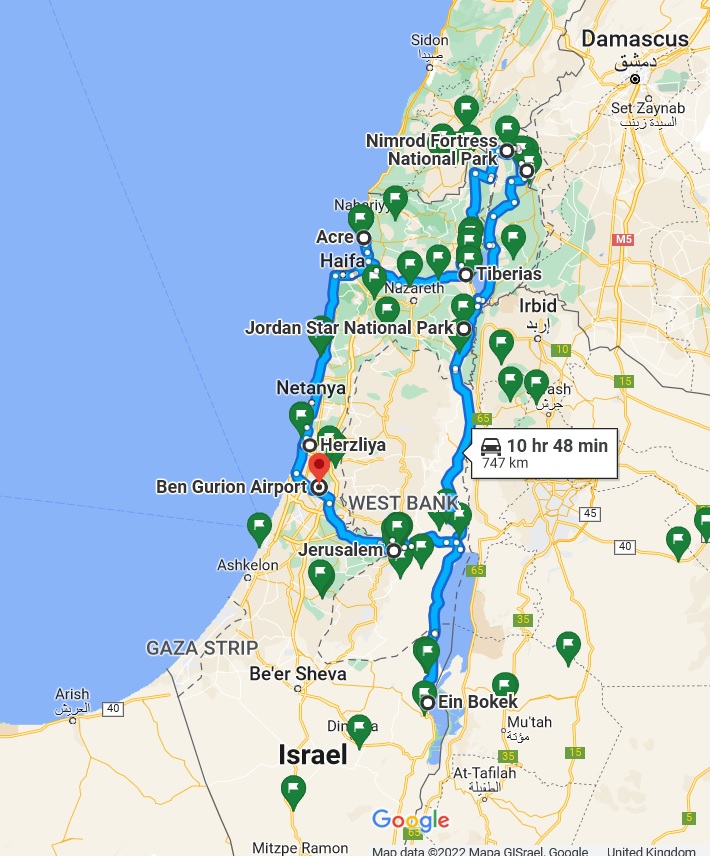
Israel is somewhere I have wanted to visit for a long time but the ongoing instability has always put me off. Our planned holiday to Russia was cancelled due to the Ukraine war so I took the plunge and booked Israel. The country has a huge amount of history to see, has been a melting pot of cultures for thousands of years and has scenery ranging from the mountains of Golan to the Dead Sea.
Thursday December 1st – arrival and Herzliya
Things didn’t start well as our flight was delayed but I had upgraded our seats so when we finally boarded we had lots of space. I finally got to see Bullet Train and it was a nice flight. Our introduction to the attitude of Orthodox Jews was them constantly ignoring cabin crew, standing as soon as the plane landed and generally being holier than thou, which was rather ironic.
Transit through the airport was easy. The Israeli entrance visa was just on a slip of paper so they didn’t stamp the passport to avoid issues travelling to Arab countries. We collected our hire car after much tooing and froing which meant it was sunset by the time we drove out. I missed a turn so we had to drive through TelAviv in rush hour traffic.
Our first night of our Israel road trip was at the Hotel Okeanis Beach in Herzliya, just north of Tel Aviv. For some reason the checkin was a real pain, took over an hour as the hotel didn’t know anything about it, didn’t speak very good English. We spoke to the booking guy a few times by phone as his English was good, eventually found it was in the new building behind main hotel with a separate check in. Very boring and a map with the booking would have saved all the hassle.
The apartment was fantastic and we could easily have stayed there a week – there was a huge lounge and a kitchen/diner with views over the beach and marina. There was also a bedroom with ensuite, smaller bedroom and another bathroom. Shame we didn’t get in til 7PM and were leaving before 10AM! We dumped our stuff and headed out to eat, after I had gorged on the complimentary cookies of course!
It was a 2 minute walk to the marina which was like resorts all over – a large promenade, loads of cafes/restaurants with outdoor seating and a lovely atmosphere. The area was noticeably clean too and other than cigarette butts I didn’t seen any litter or tagging.
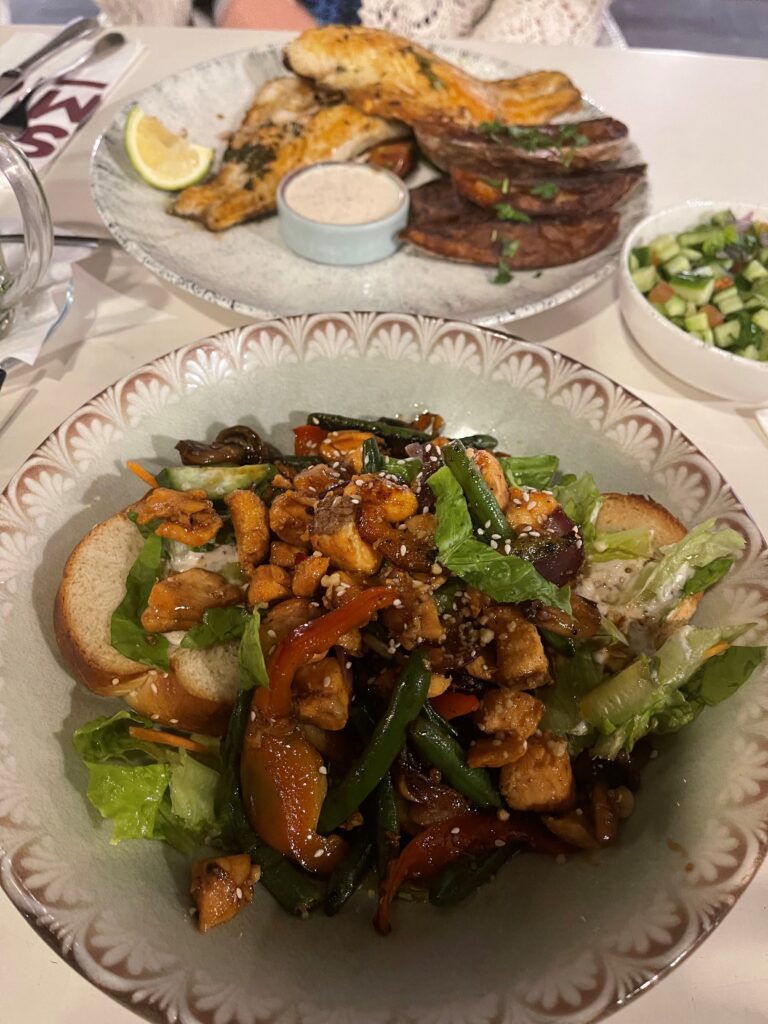
We ate at the cunningly named Cafe Cafe – the food was actually really good and huge portions of fish! Initially we struggled but then they sent out two fifteen year old boys and their English was brilliant so we were ok. It was a healthy dinner, sat overlooking the marina and watching the cats weaving between tables, scrounging tidbits.
It was a bit chillier by the time we walked back to the apartment but we were suitably stuffed and sat and had a coffee, listening to the waves break on the beach.
Friday 2nd December – Herzliya to Caesarea and Acre
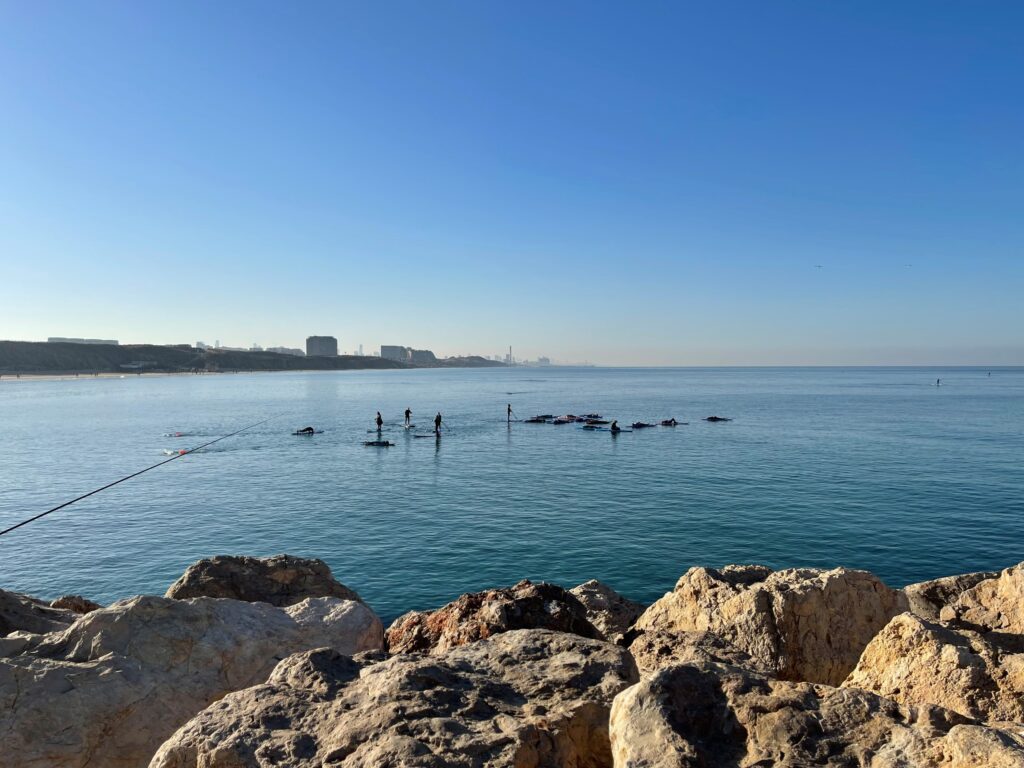
I had a restless night and eventually got up at 6.45, just in time to miss the sunrise. The area was surprisingly noisy with people getting boats ready to leave and generally out and about – a nation of early risers! It was deliciously warm too, shorts before 7AM! I went for a walk along the prom and it was fantastic, loads of people walking, jogging, fishing, people swimming and on paddle boards, definitely the type of place to retire too. Other than the threat of bombing and invasion from all sides.
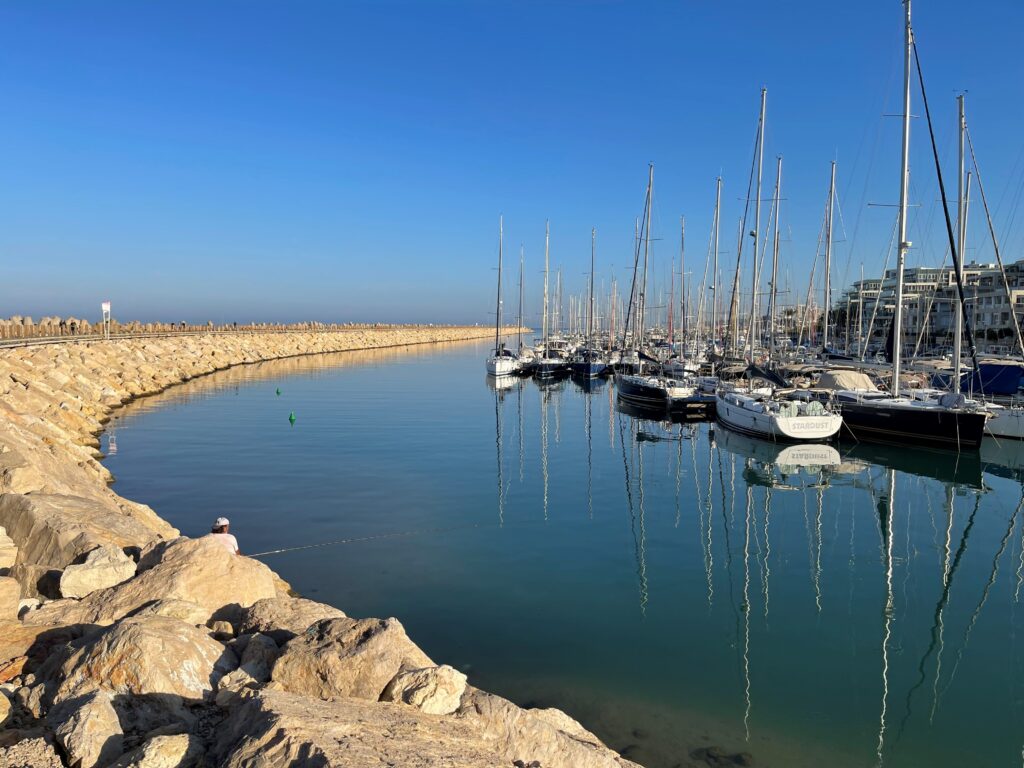
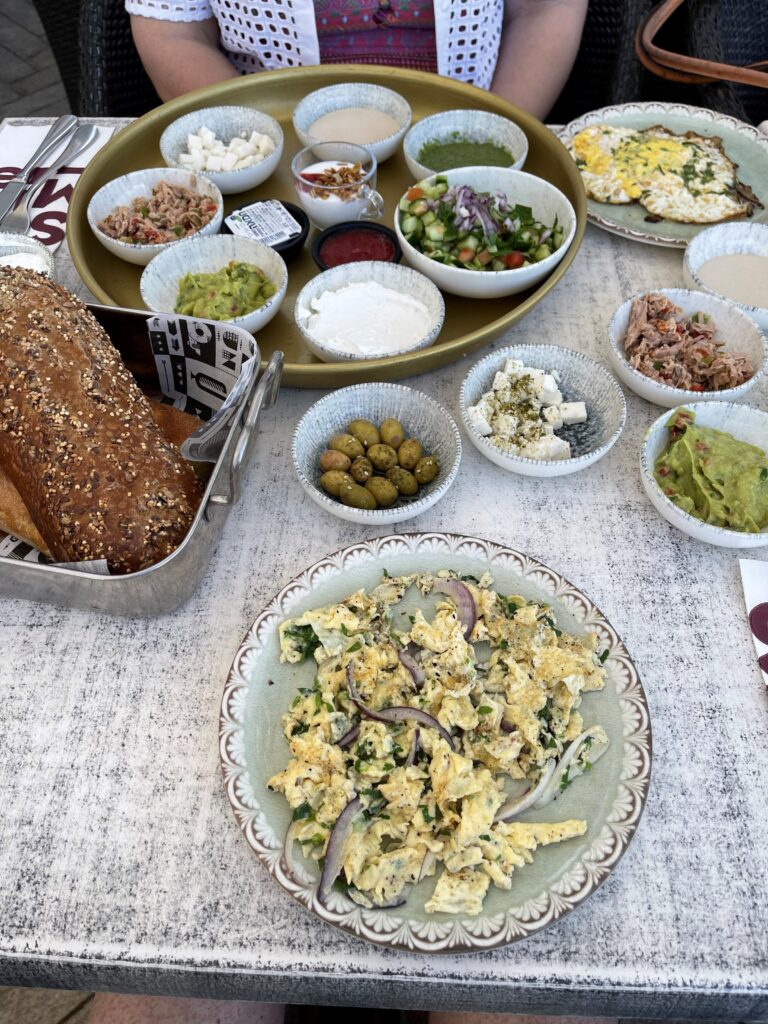
Once Deb was sorted eventually we walked along the prom for breakfast. This was a fantastic experience and how we should eat in the UK if we had time to prepare the multitude of ingredients. It was almost a shame that I had a day of sightseeing planned so we couldn’t sit and relax.
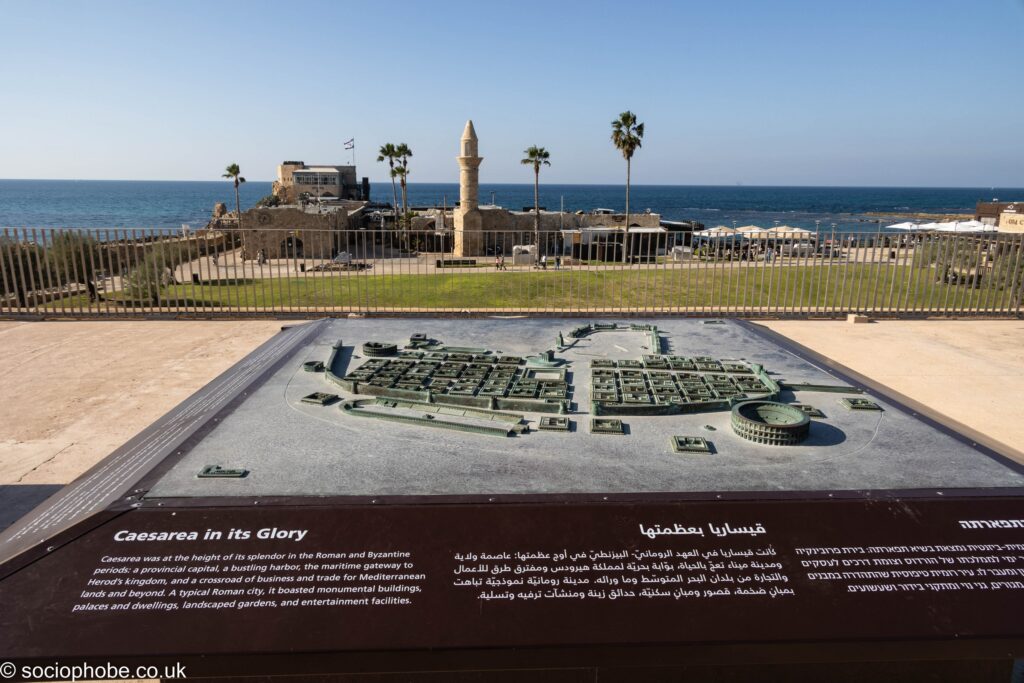
We drove to Caesarea, our sightseeing destination for the day. This is a city that was created by King Herod and then became a major Roman port and administration centre. The Byzantines further developed it until the Arabs destroyed it in the 7th century. The crusaders then rebuilt it and it again became a major port for 200 years until the Mamelukes destroyed it for the last time in the 12th century. It then lay as a ruin, covered by sand dunes until Baron Rothschild excavated it in the 19th century.
As an aside, driving in Israel is a lot more difficult than expected. So many road signs are only in Hebrew – I know, just because it’s their language – and I was expecting more in English. Also the drivers are so bad they would even give BMW’s a bad name in the UK – overtaking anywhere, beeping the horn constantly, double parking is the norm even in disabled bays so it isn’t a relaxing experience.
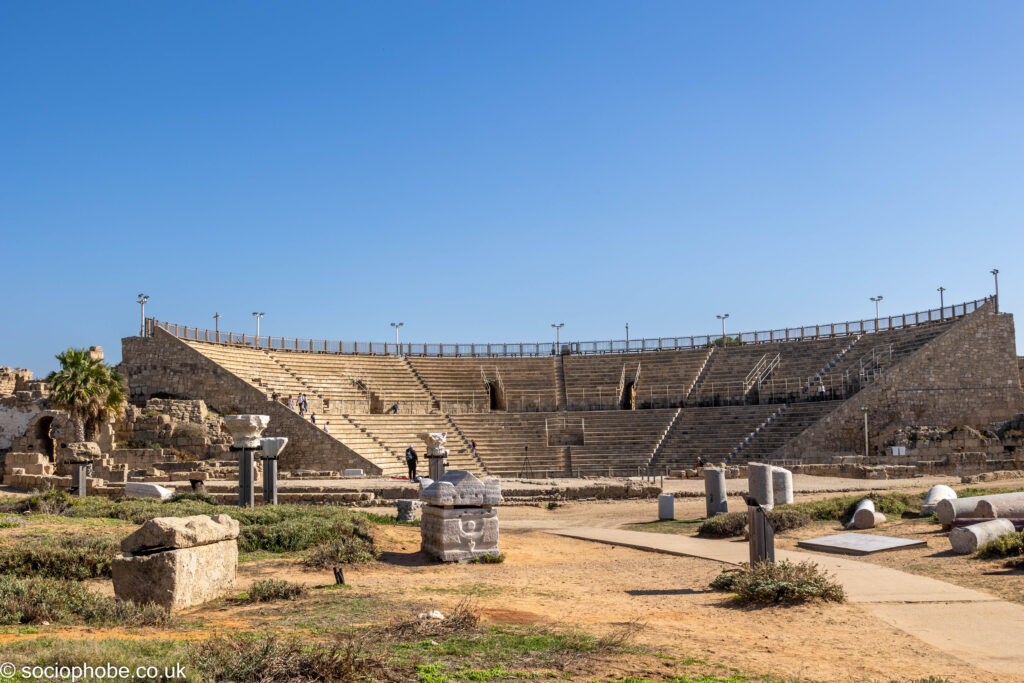
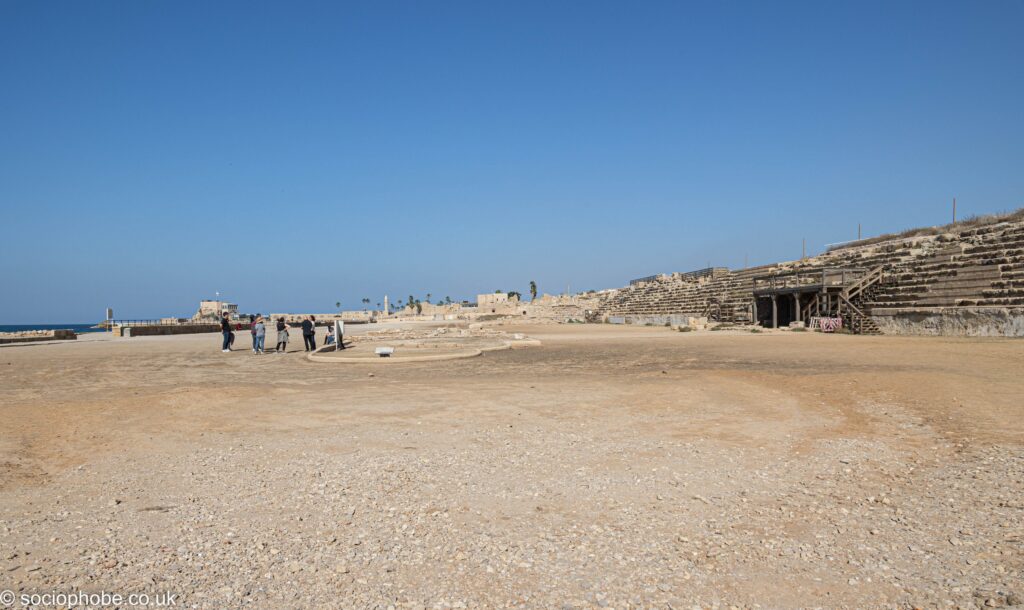
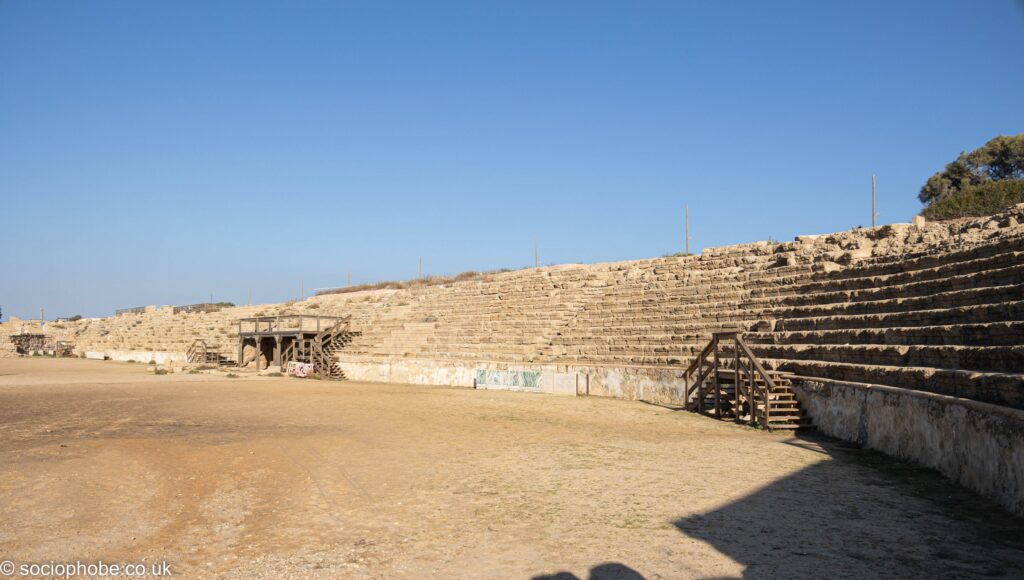
We parked the car and then entered the archeological park. Our first sight was the restored theatre which was certainly impressive, although obviously restored. It is still used for performances now which is certainly not something you’d see in the UK. We crossed into the next part which contained the Herodian Palace and Hippodrome and various administrative buildings.
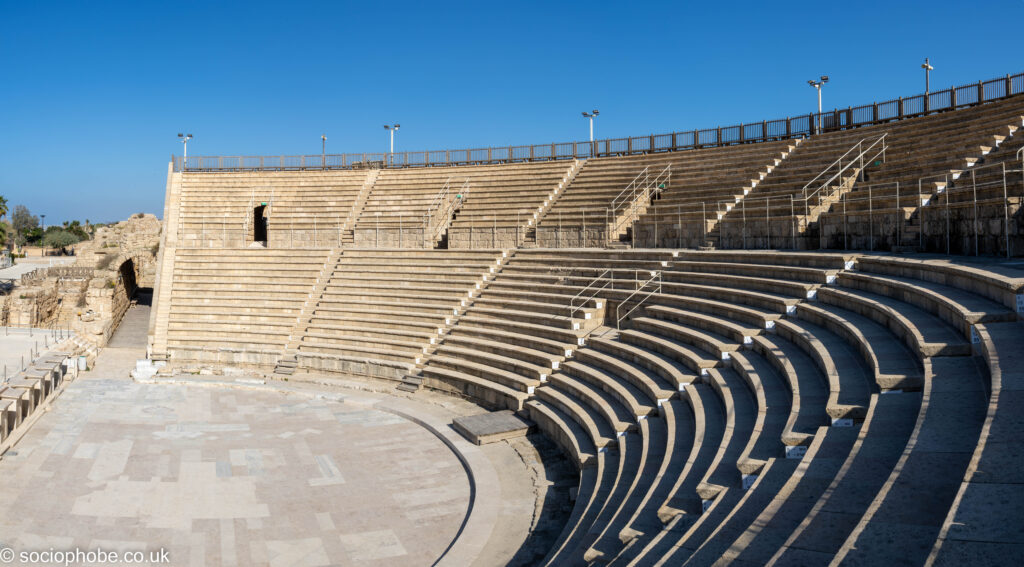
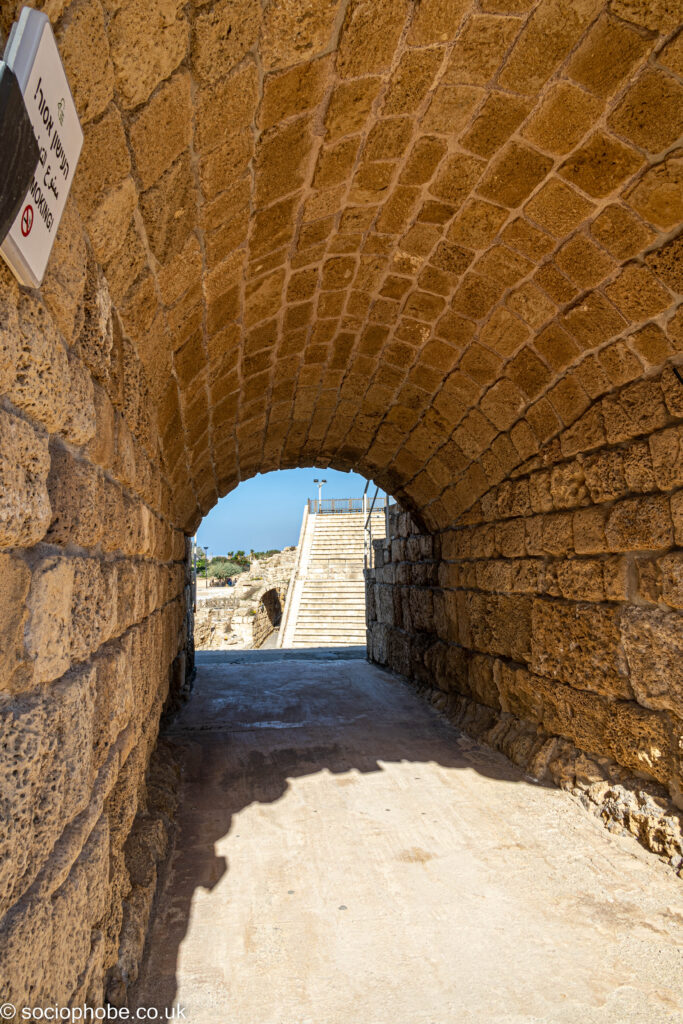
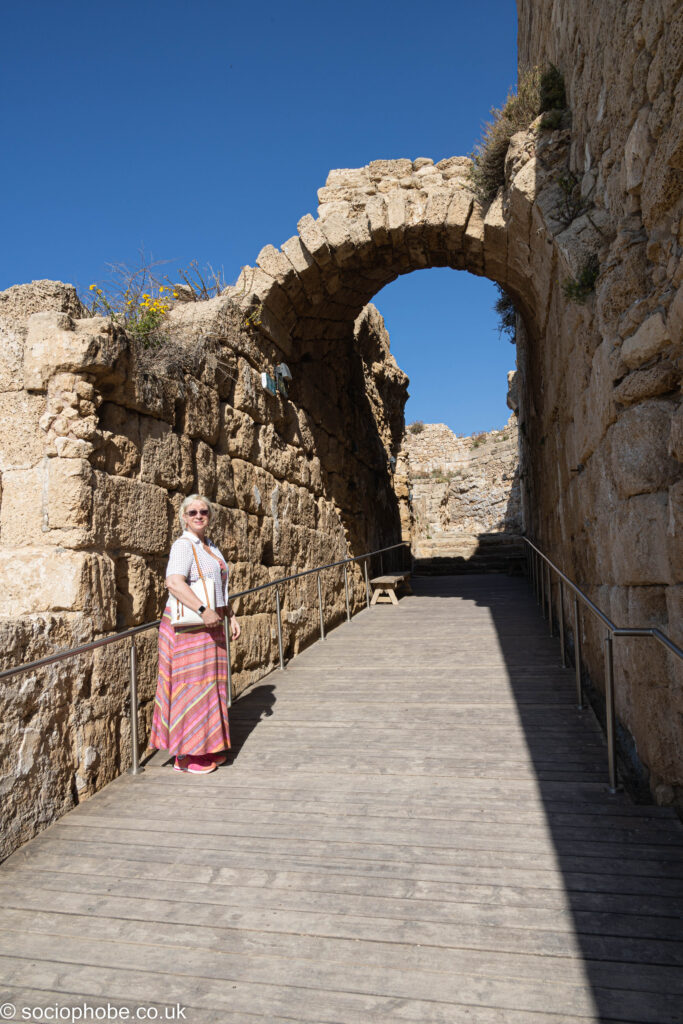
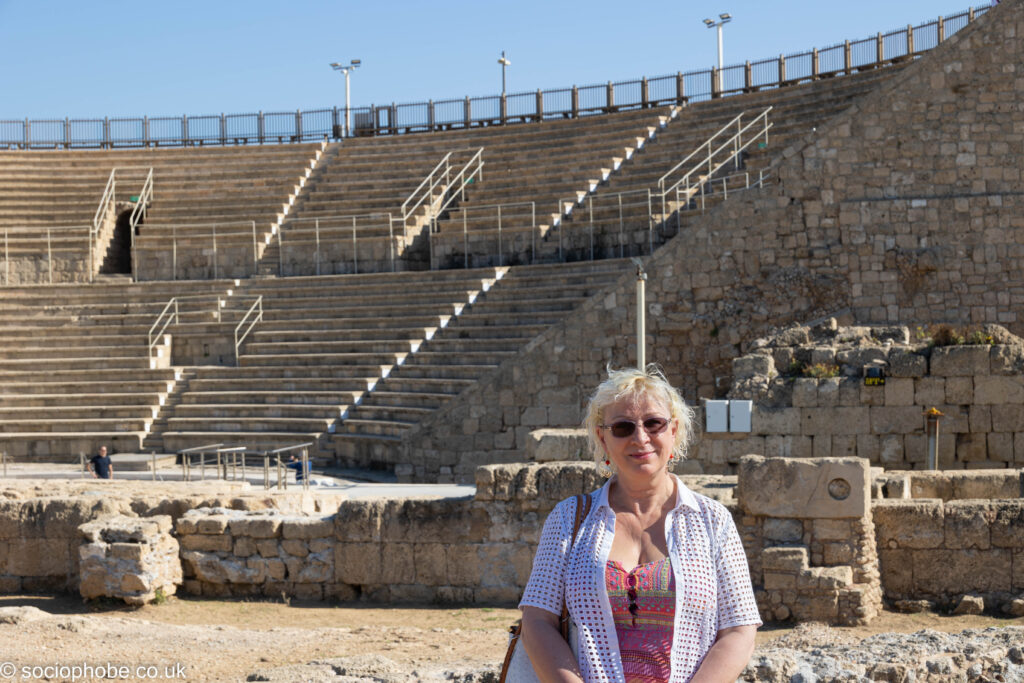
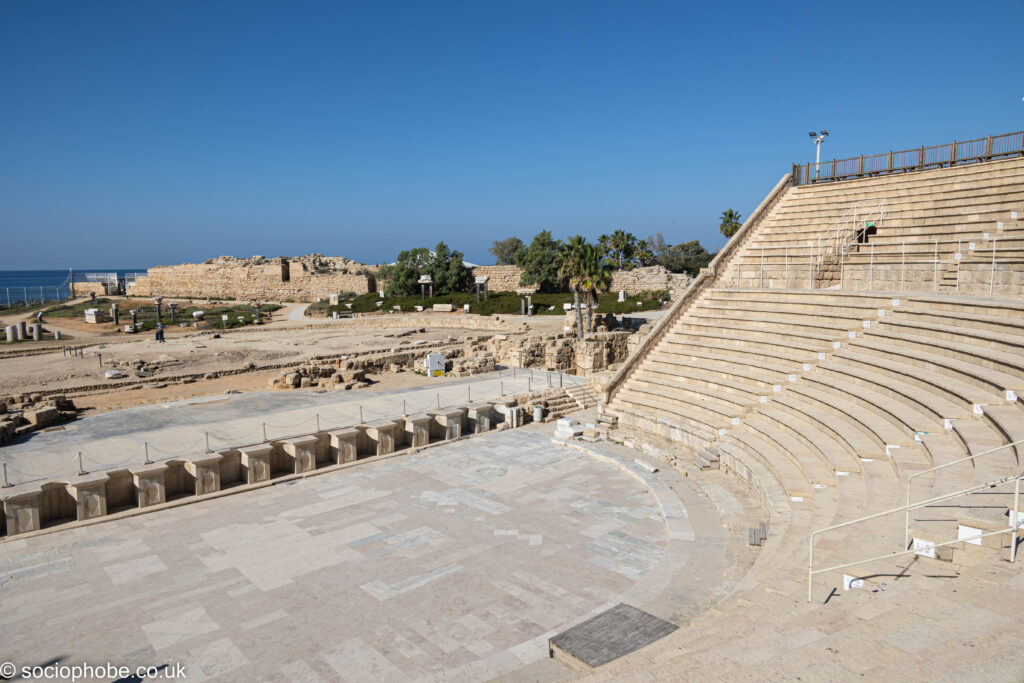
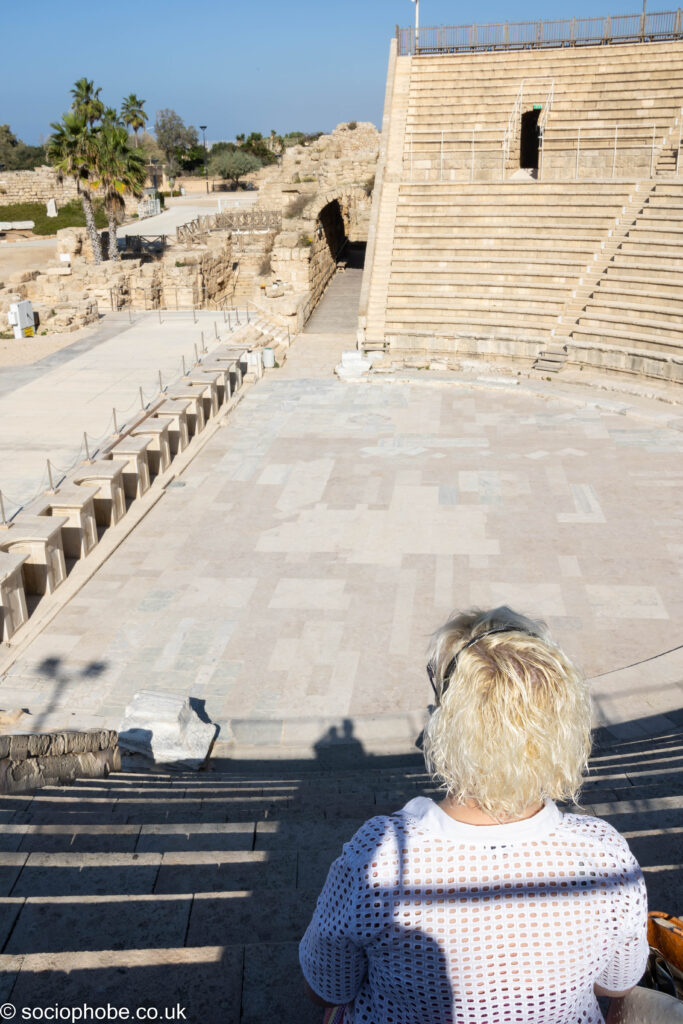
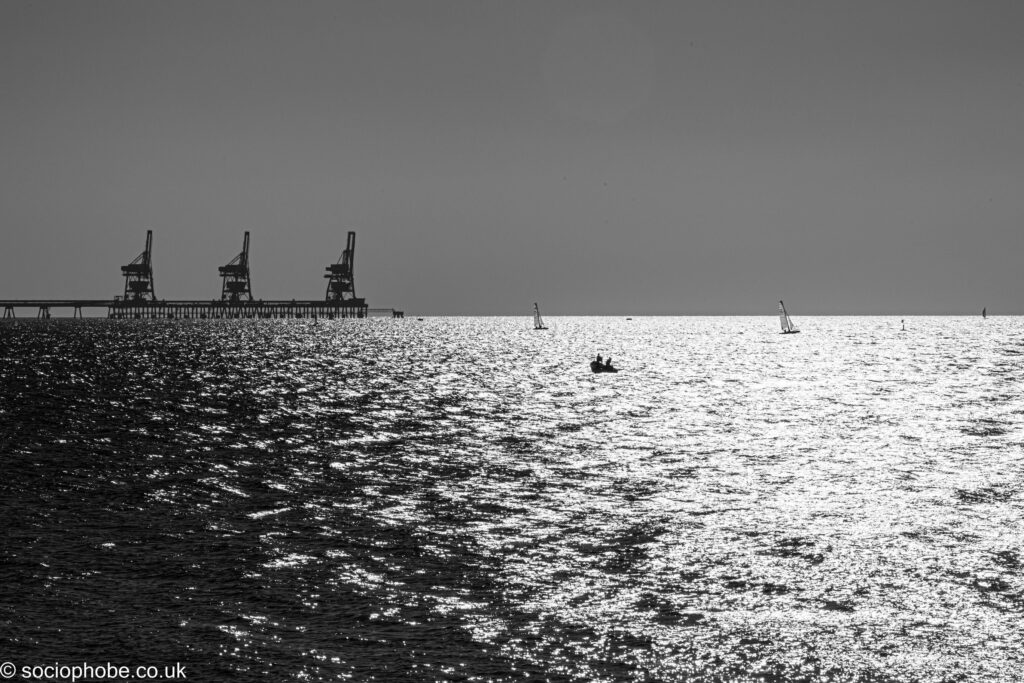
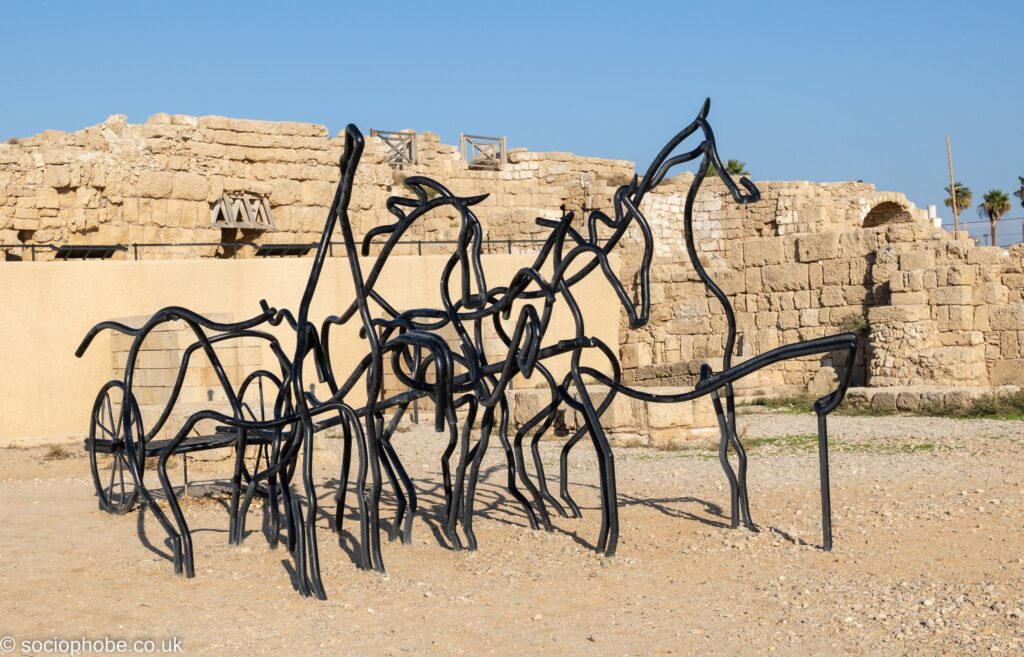
The palace was now largely underwater but in a testament to his power/wealth/vanity Herod had built it into the sea and with the largest man made harbour in the world at the time. The mosaics that were left were impressive – if somewhat faded – and the hippodrome must have been a sight in his day although it was now reduced to one edge and a few levels of seating.
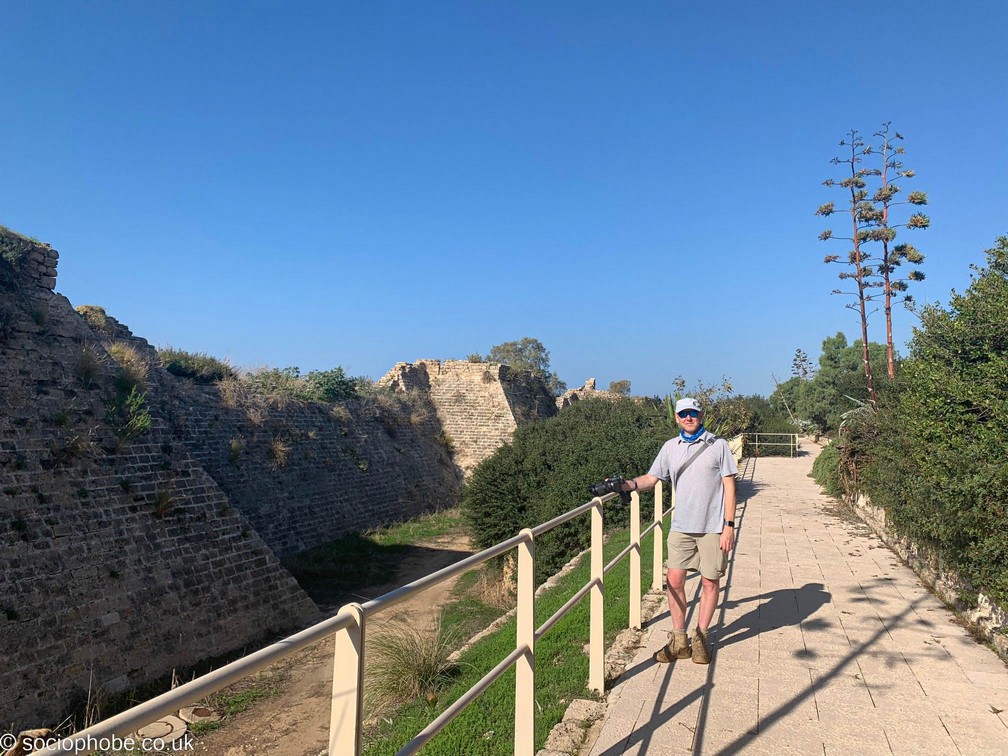
We crossed through the Crusader gateway and into the medieval city. This incorporated several Roman buildings – such as the Temple of Augustus that was remodelled to become the cathedral and is now a museum – as well as parts of the harbour. The city walls were massively reinforced by Louis IX before his failed crusade and we walked part of the wall circuit before going back into the medieval city through the main gateway.
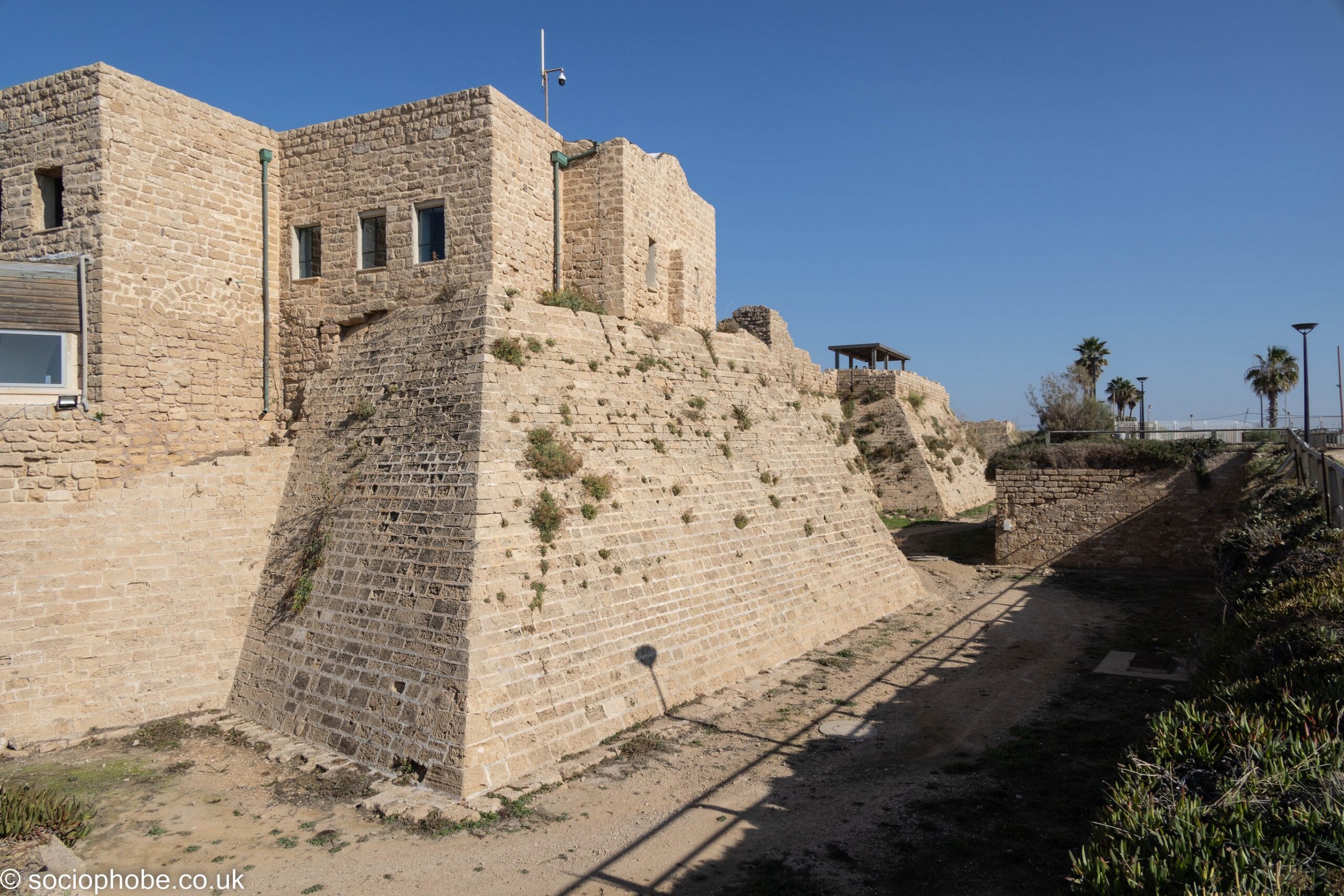
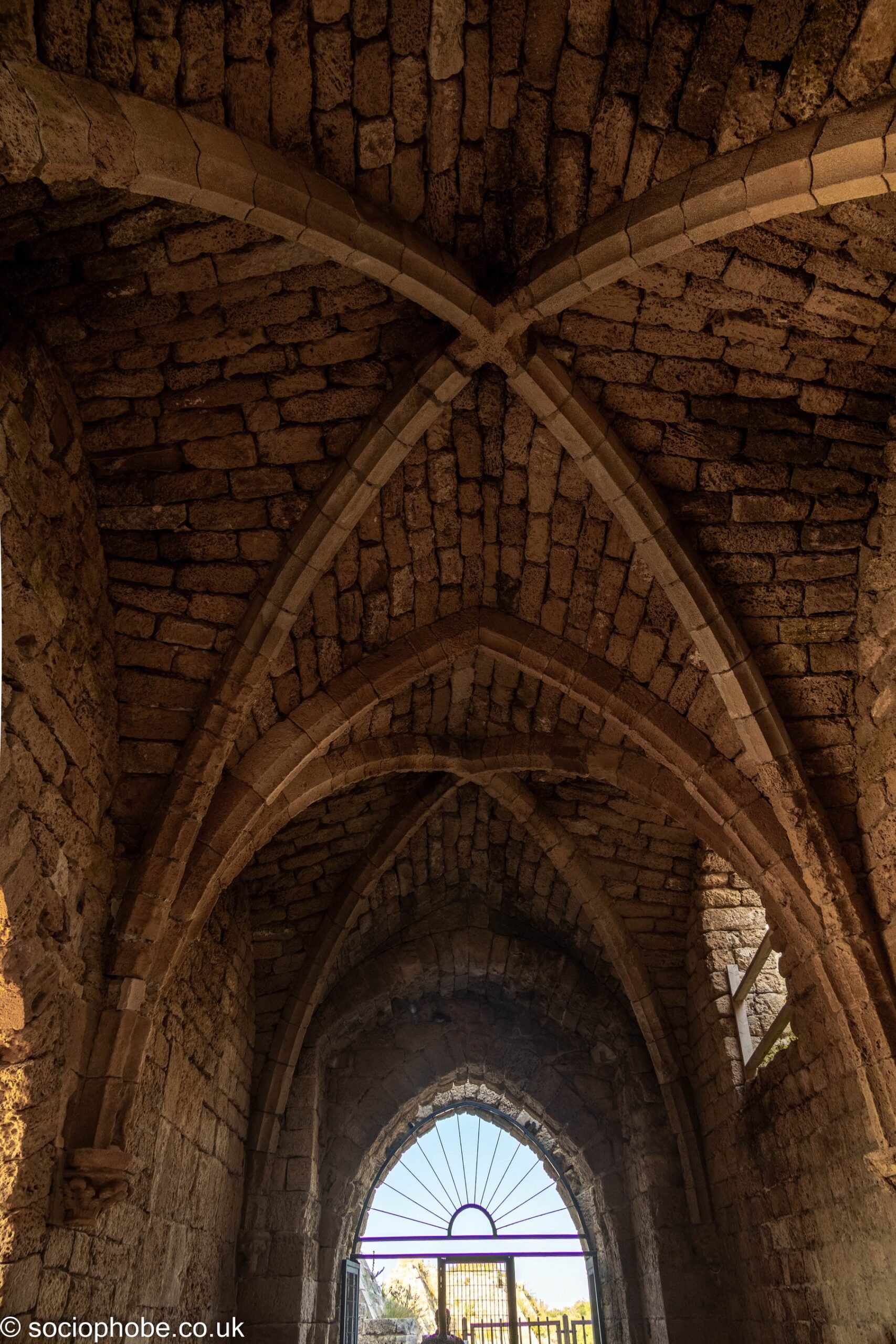
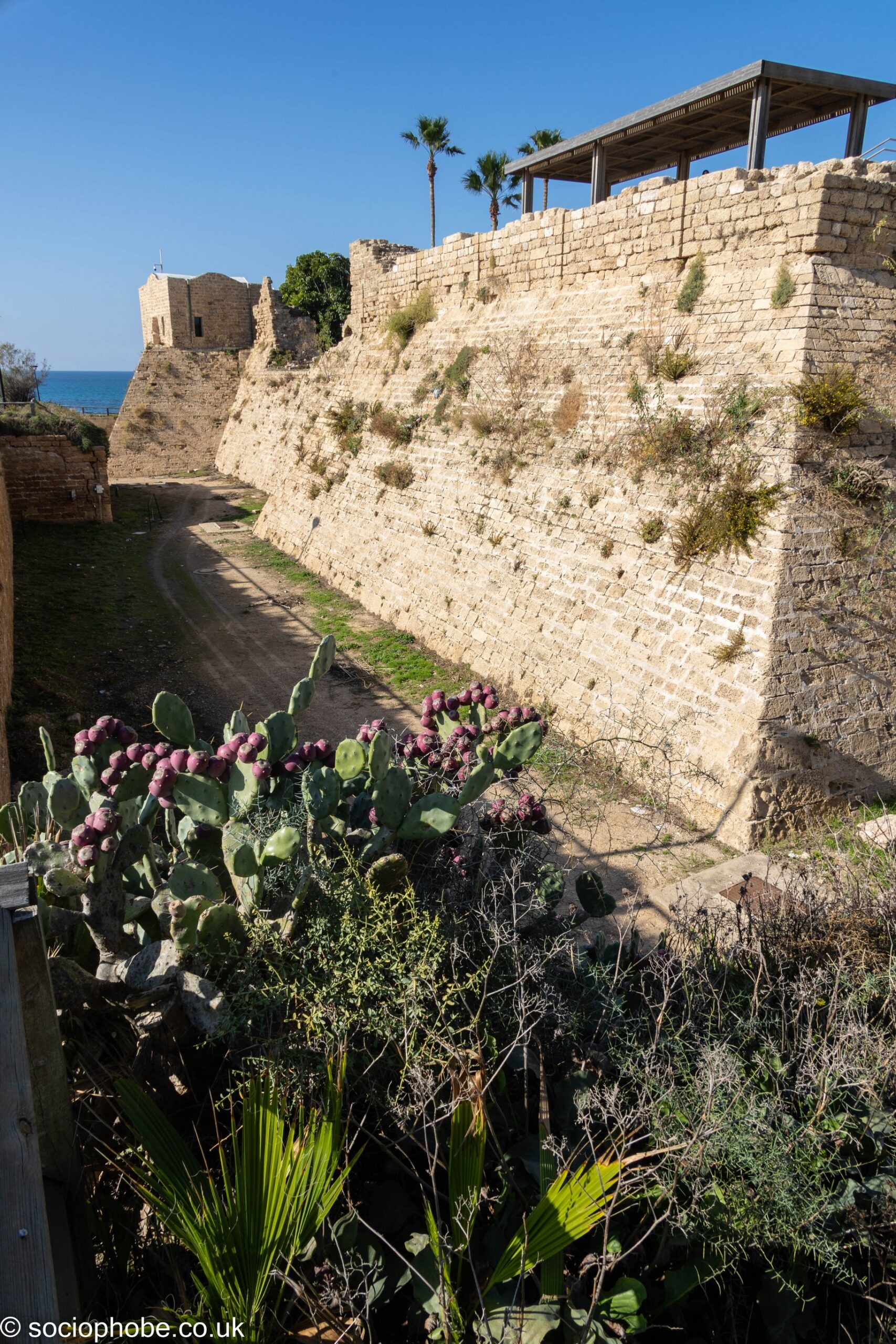
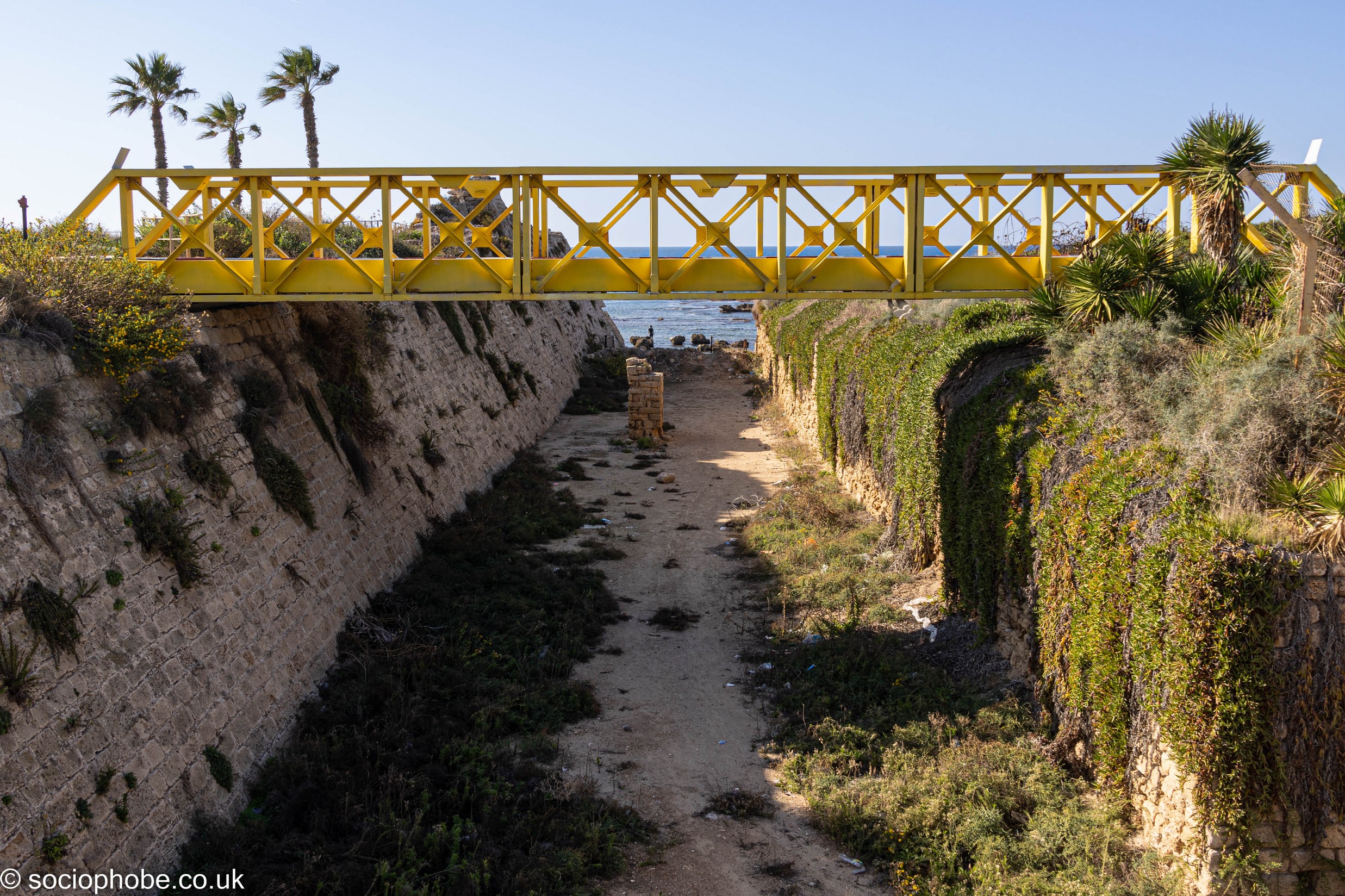
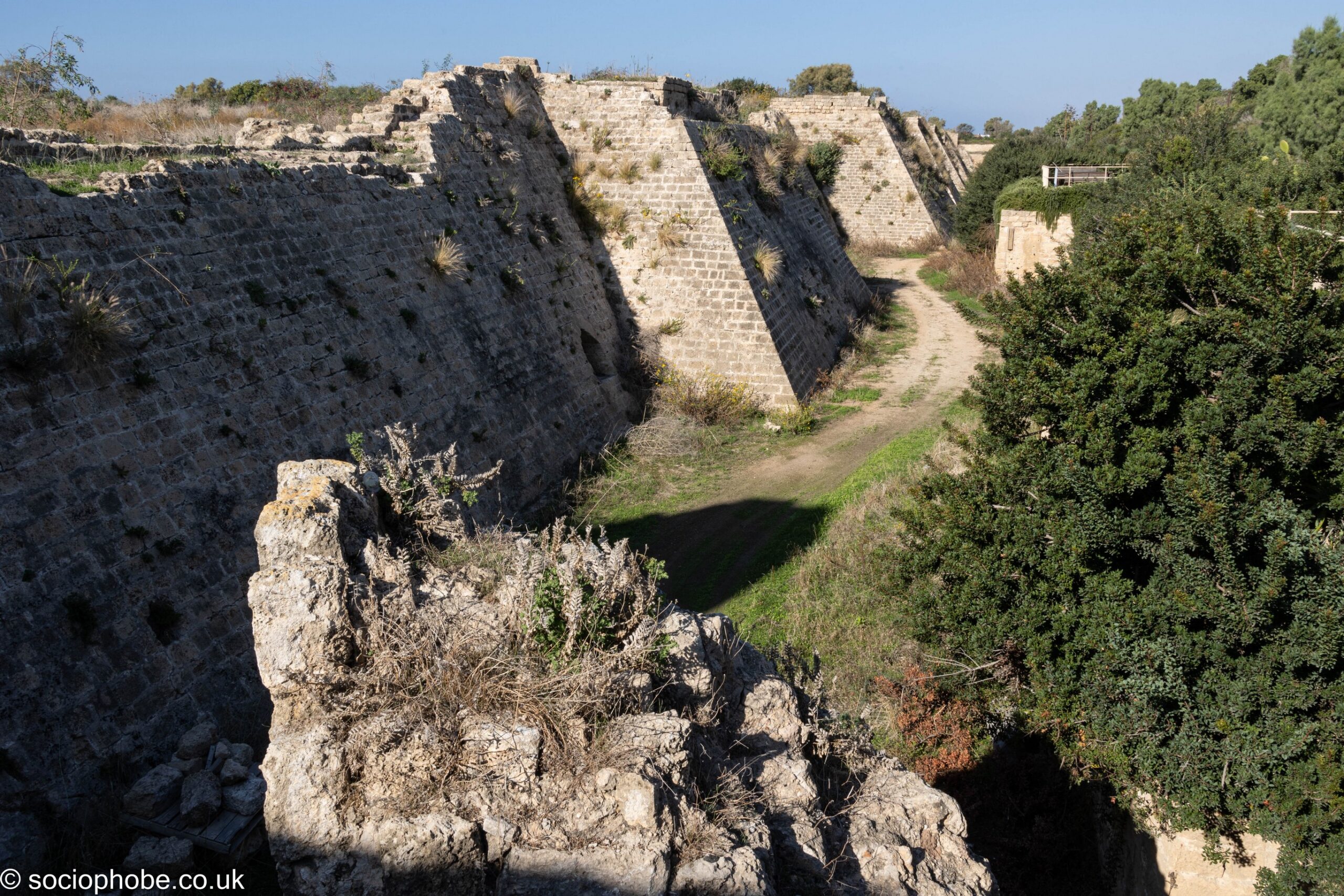
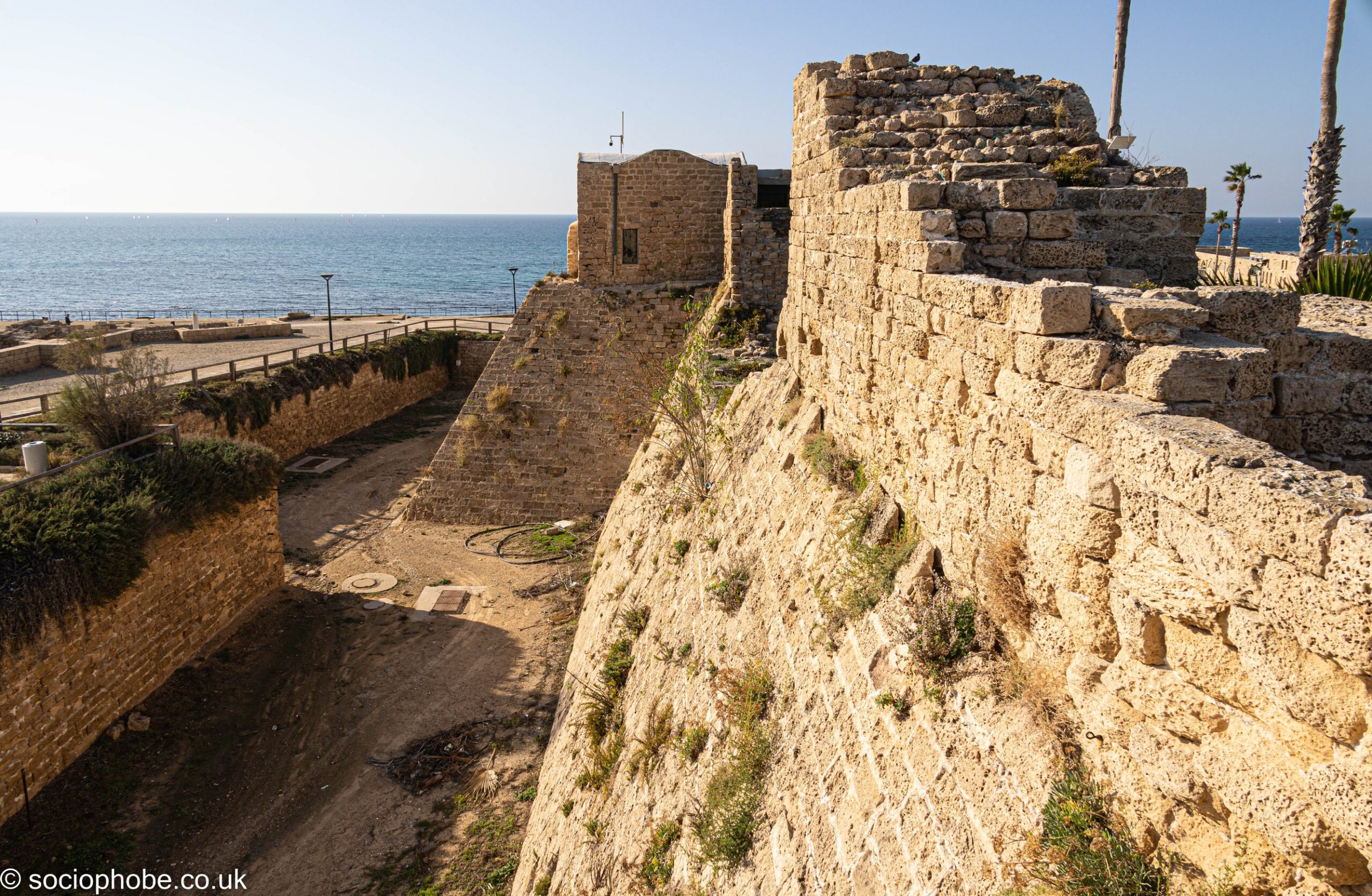
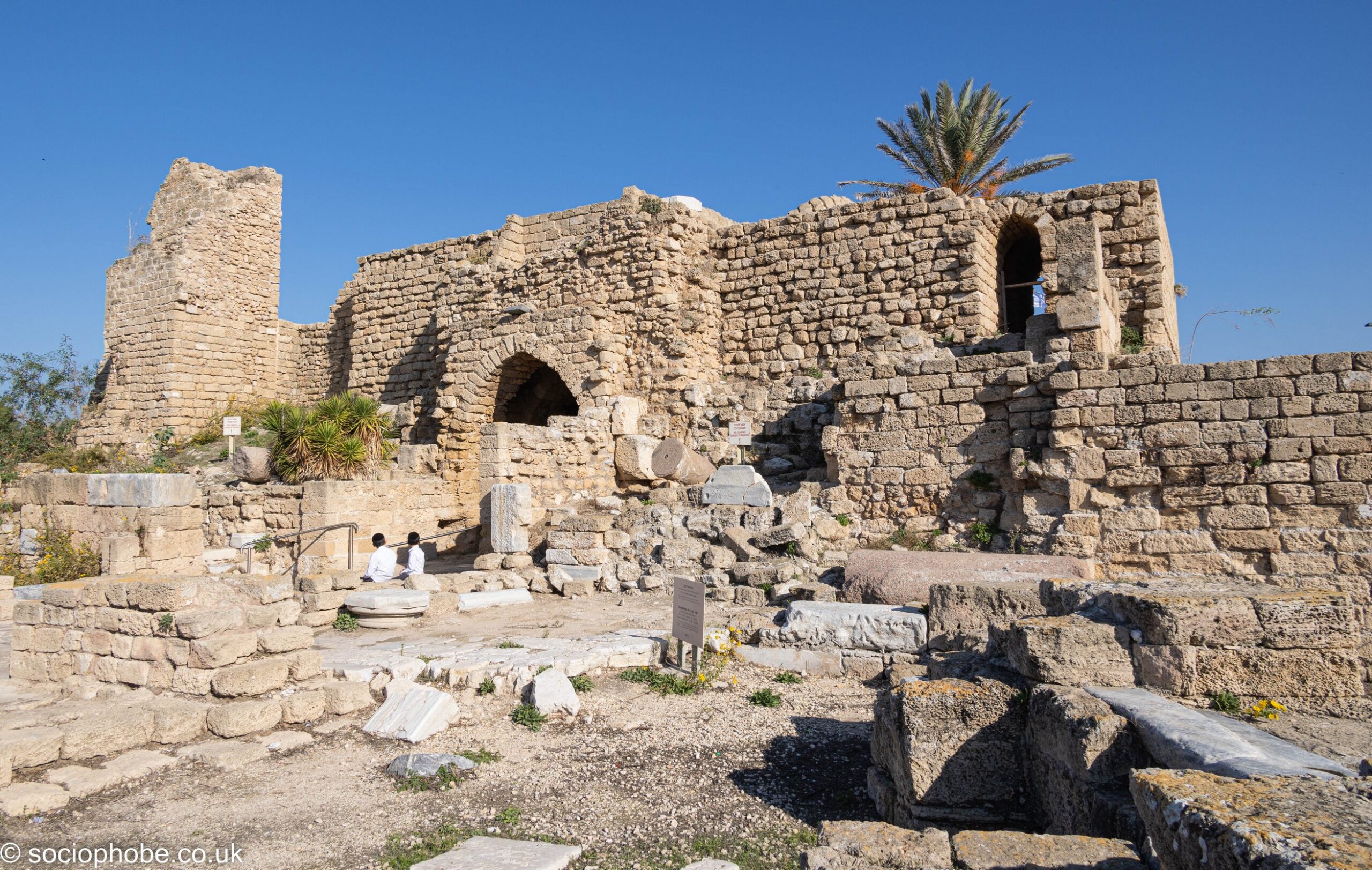
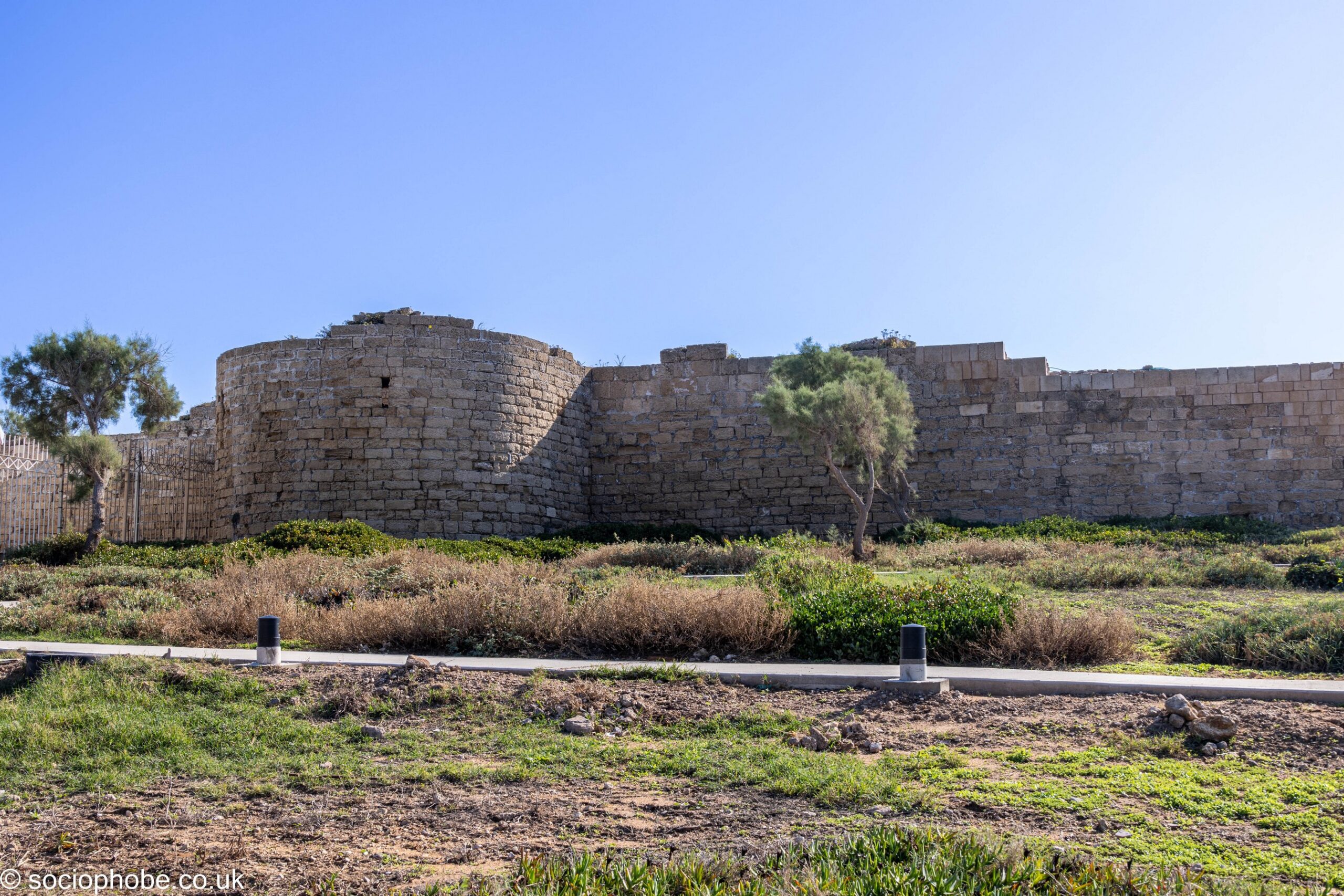
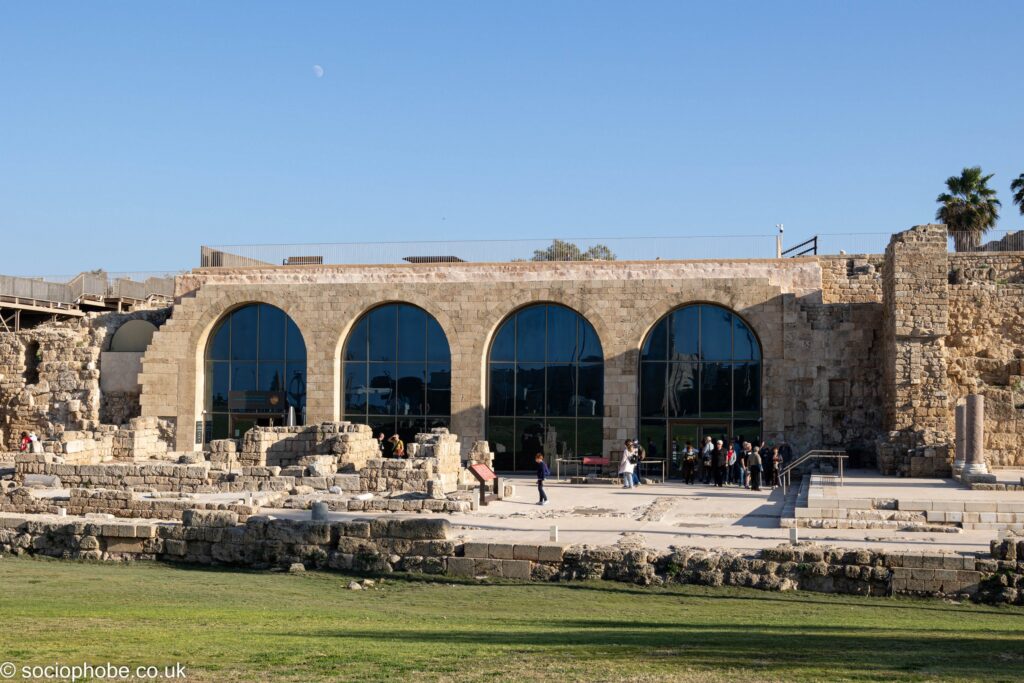
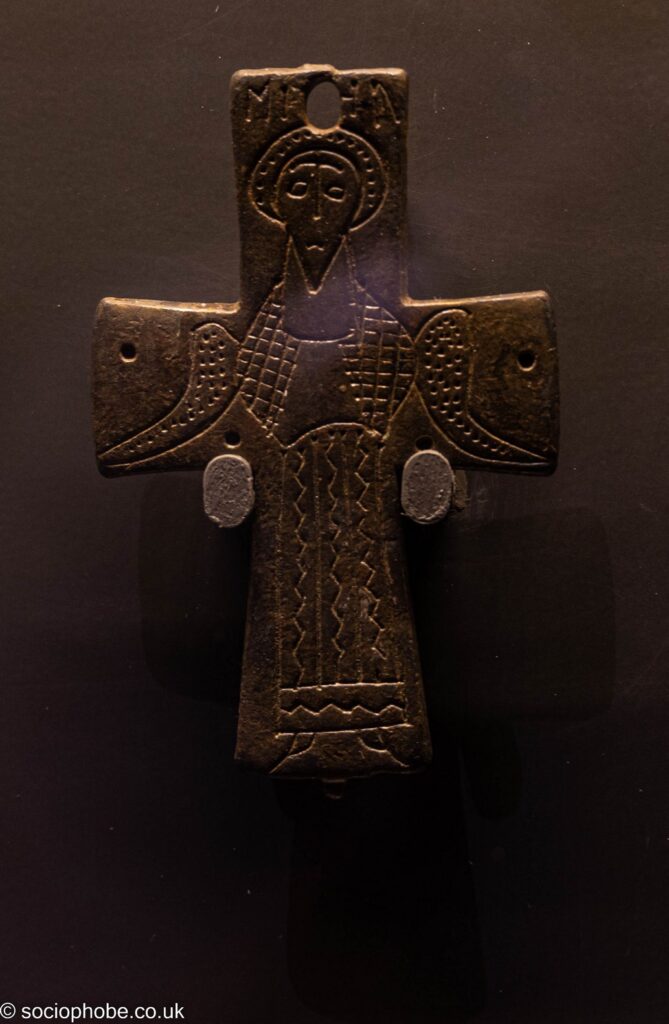
The Museum building was the original Roman temple that became a basilica (Byzantines),mosque (Arabs), cathedral (Crusaders)and a ruin (Mamelukes). Only one complete vault and parts of others remained but these have now been restored and converted and it makes for a lovely structure. We watched a film showing the building of Herod’s city and then looked at the exhibits and it was all very well done. Free too!
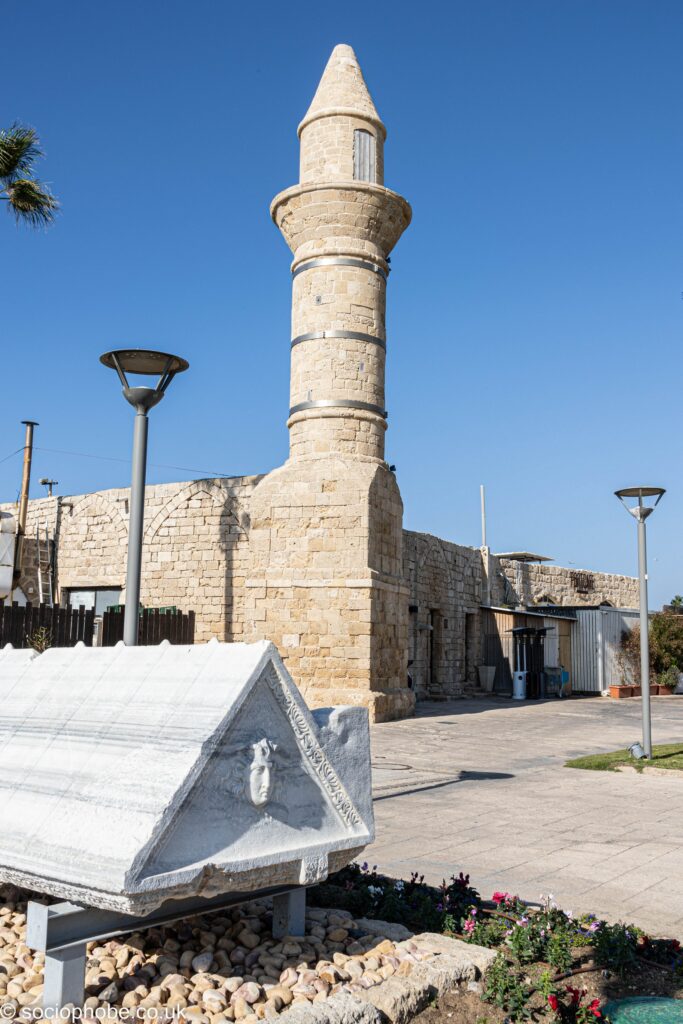
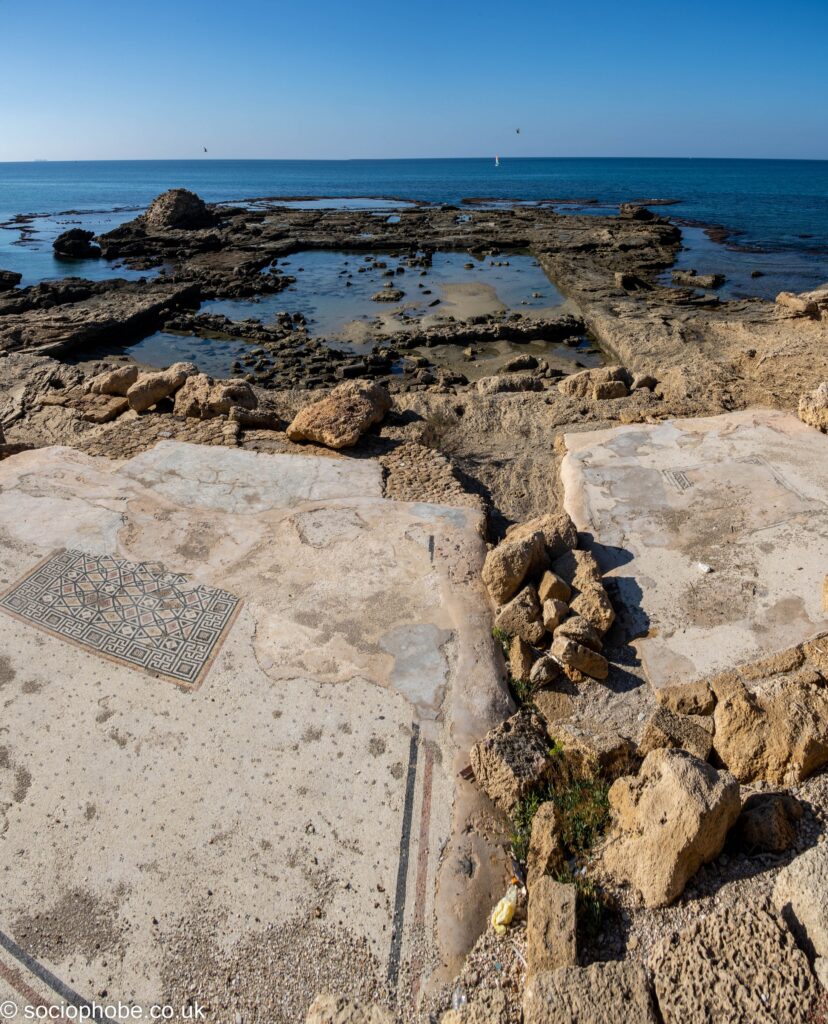
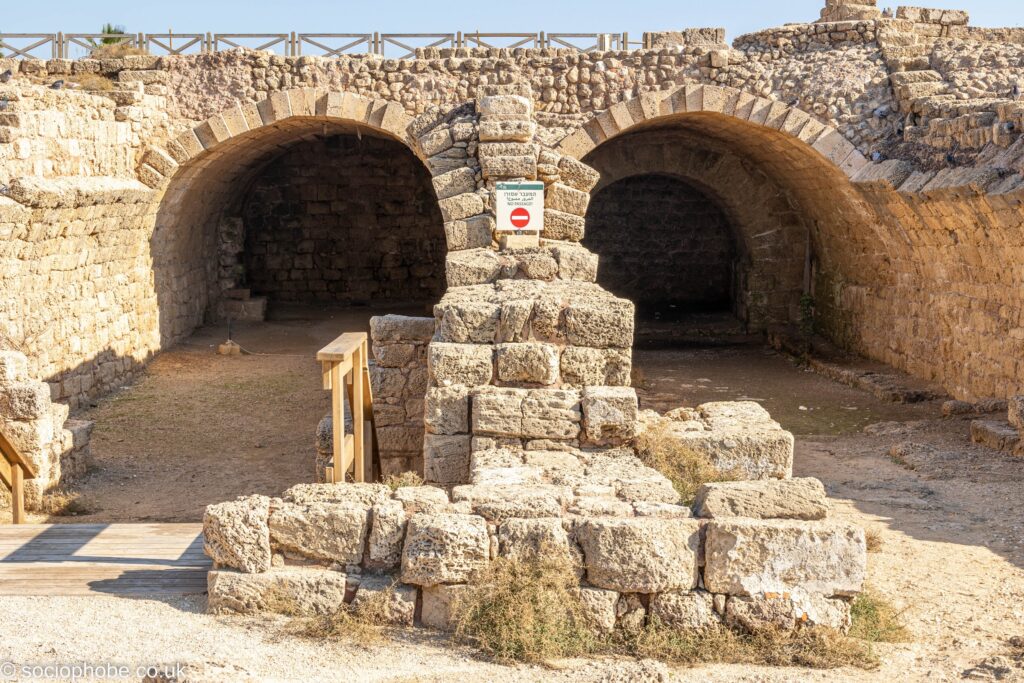
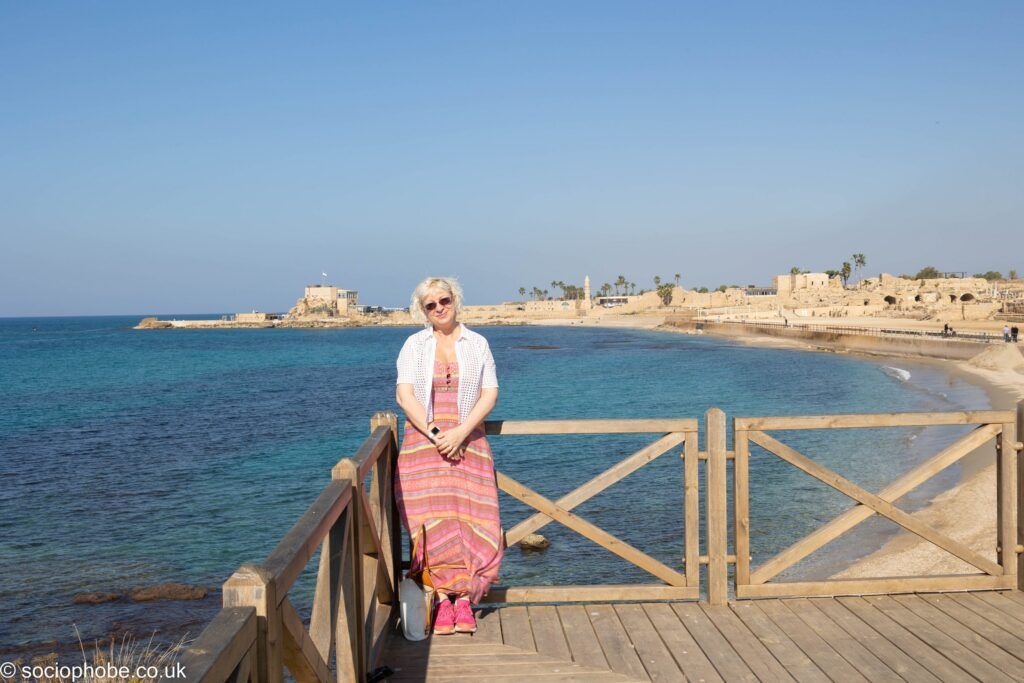
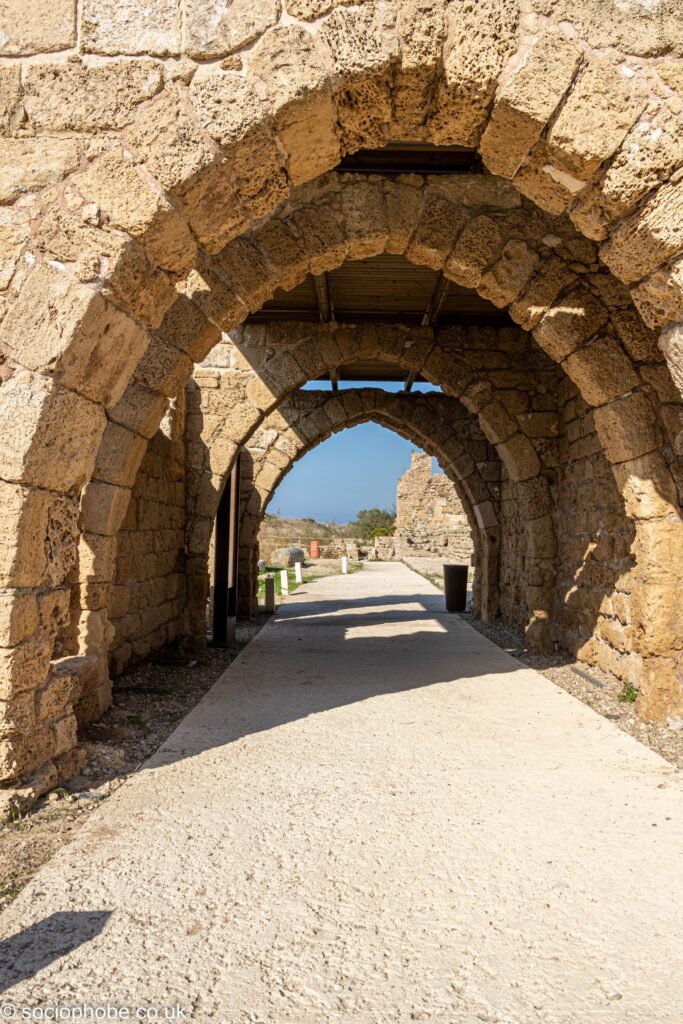
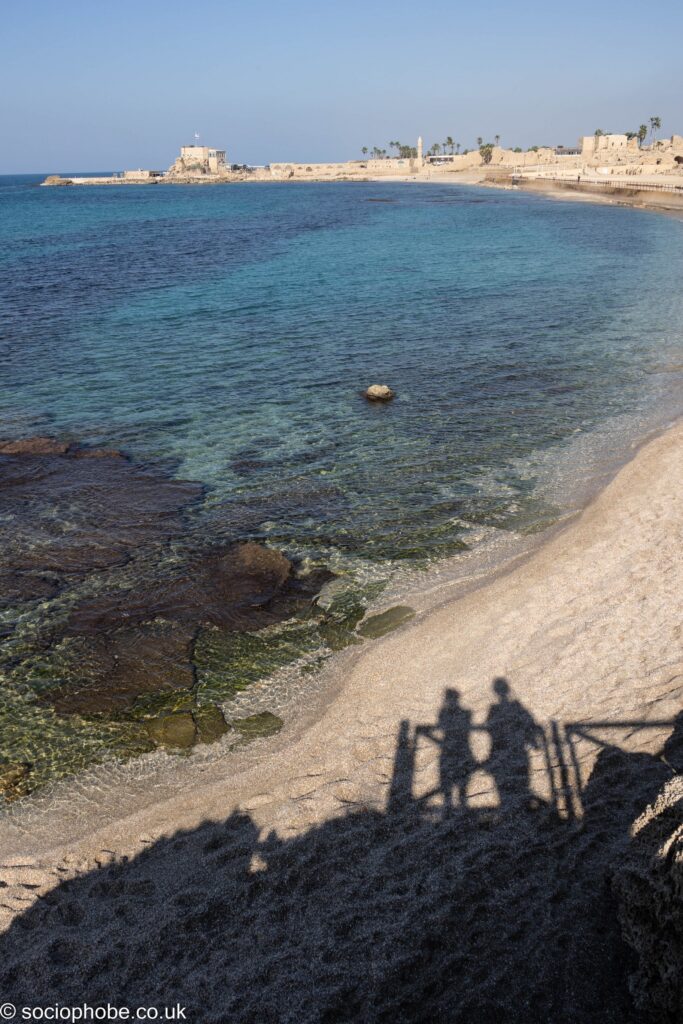
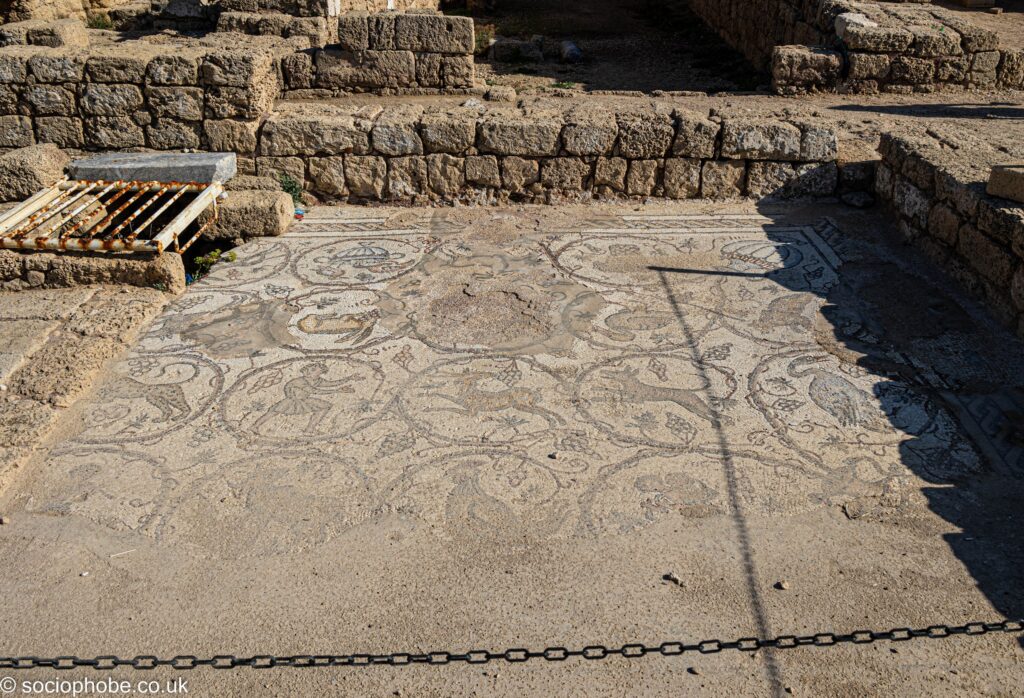
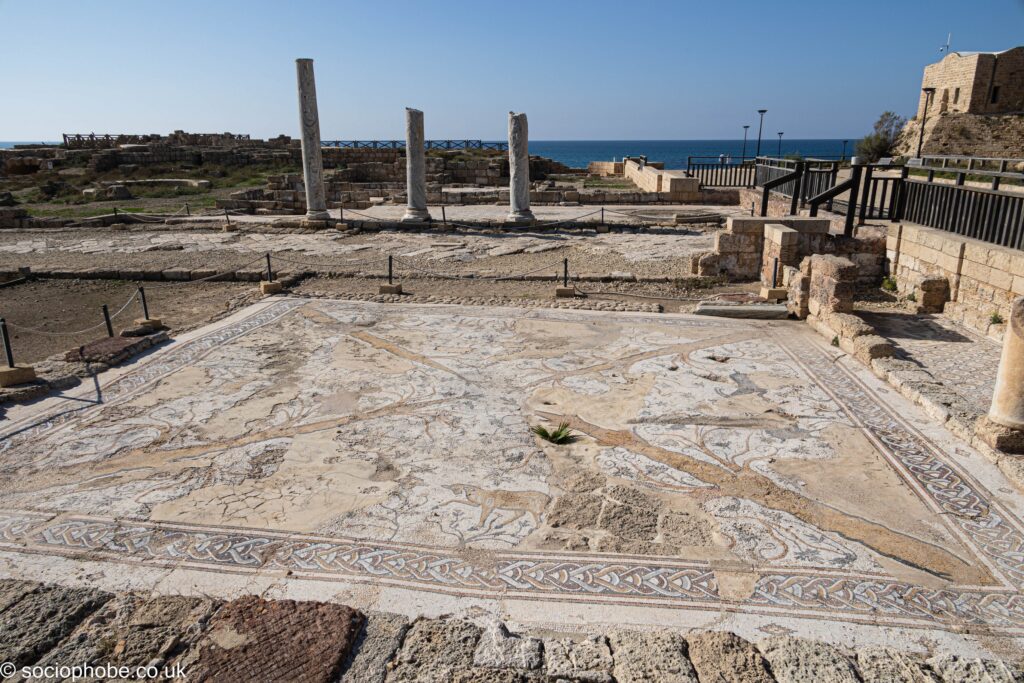
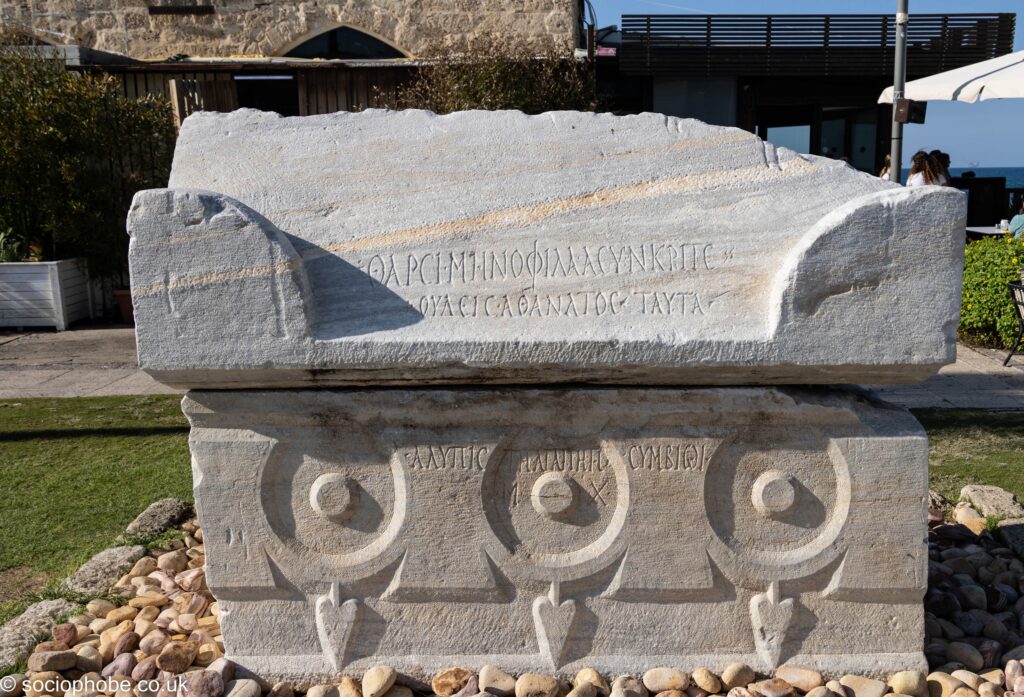
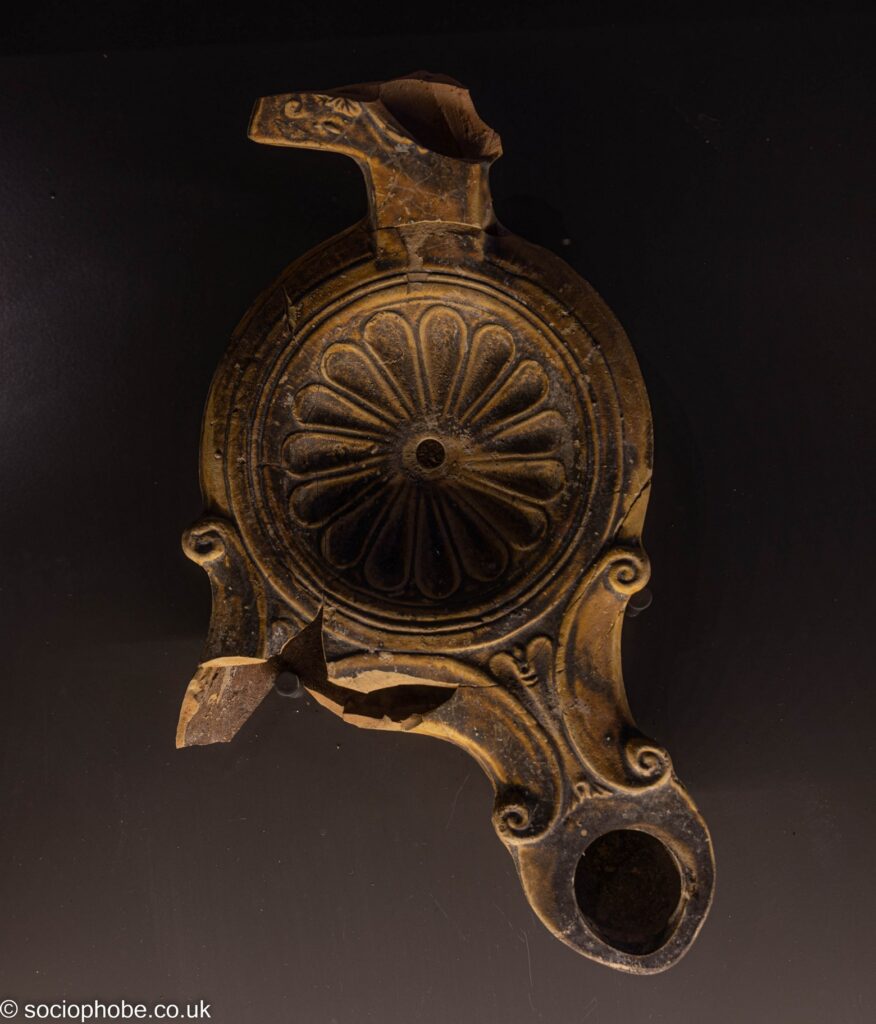
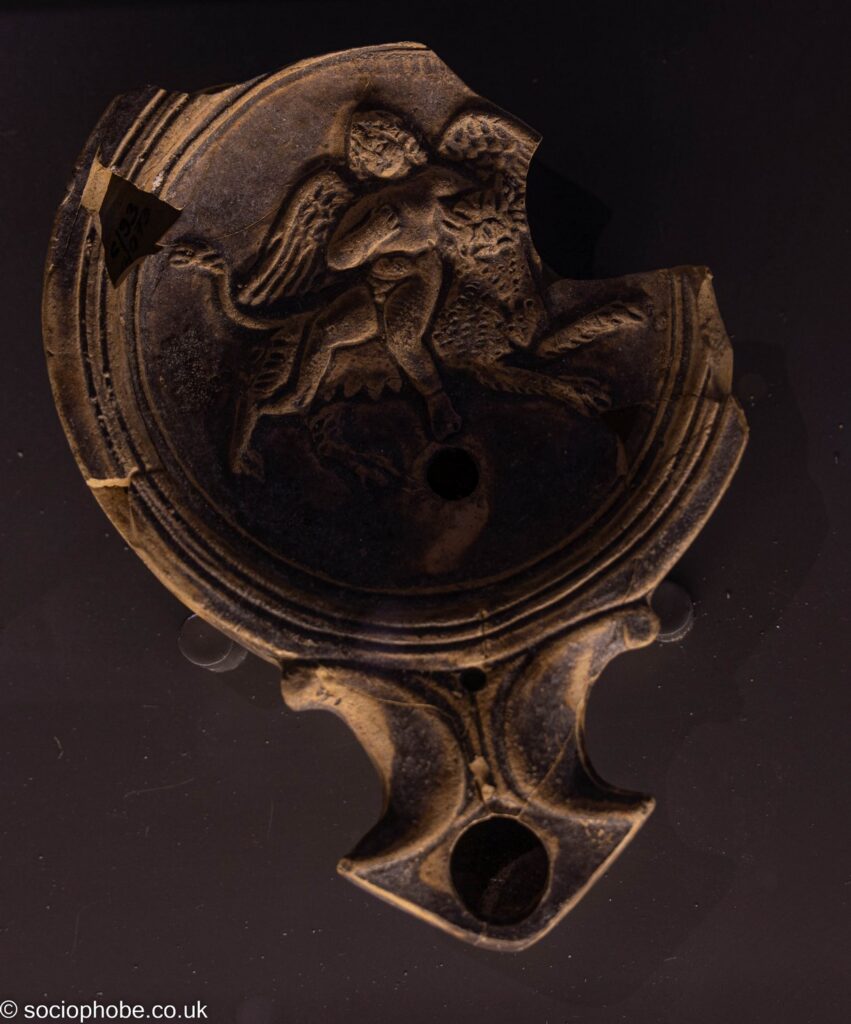
By now we could do with a cuppa but as it was the Sabbath the cafe was closing so we retraced our route but took in different sections of the ruins and had a coffee in the little shop by the car park. The drive to Acre, our stop for the night, wasn’t too bad as I just sat in the slow lane at the speed limit.
Once in Acre we had the usual delight of trying to find our apartment as having proper directions and a photo are obviously too much to ask. We spent about an hour looking around the street it was in and even spoke to people. We eventually met someone who thought we were someone else but at least showed us the building. We then had to work out which of the doors it was – again a frigging sign wouldn’t go amiss – and eventually spoke to an American lady who was also a guest and she showed us where the owner lived. Drama! The apartment was lovely though, very quiet and just next to the sea walls and the Templar tunnel and I think it was part of an old monastery.
We dumped our stuff and as we hadn’t had lunch, walked outside to Uri Buri, a very highly rated restaurant that was nearby. Bloody hell! A main was £40 on its own so we became vegan for the night and spent £40 in total with just drinking water. So much for wealthy Europeans in the Middle East! I am still traumatised now. The food was lovely but it was certainly a lesson learned.
After that I was getting a bit chilly as I still had shorts on so we went back to the apartment for the job of sorting the days photos. This took a couple of hours but we did have a bottle of wine too!
Saturday 3rd December – Acre to Bet She’arim and on to Tiberias
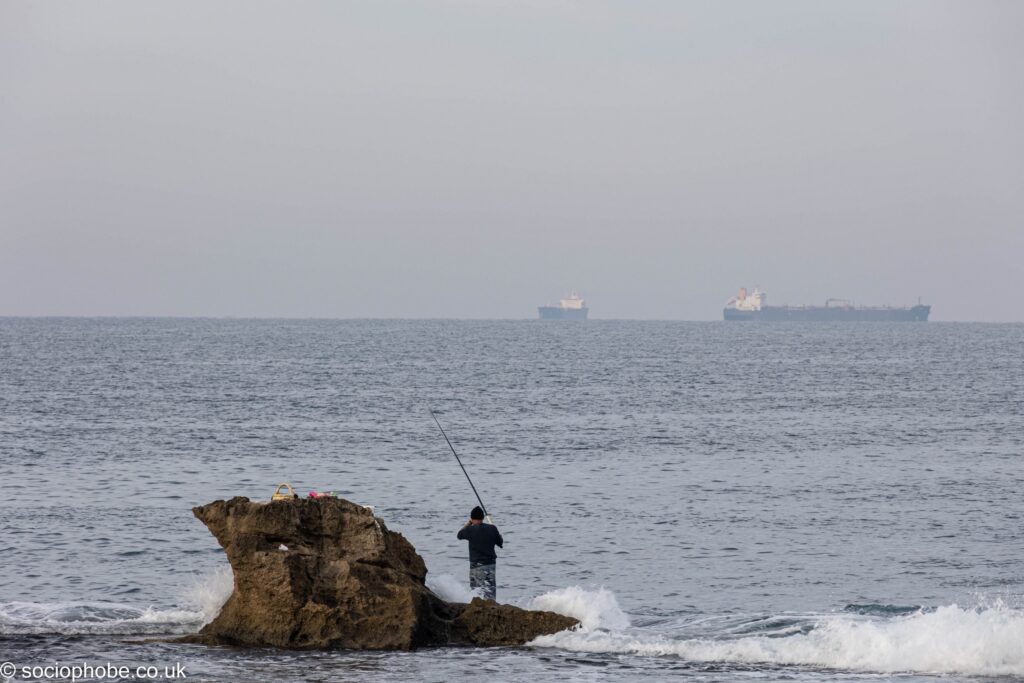
I slept in til gone 7 but I managed to get a half hour walk through the old city and along the sea walls before going back to the apartment to collect Deb. The old city doesn’t seem to have changed much in 800 years with the interior buildings and street layout being mostly Crusader and Mameluke, patched (or not) to keep them going until now. There were lots of run down areas and rubbish and some amazing buildings that had just been left to decay. The sea walls (18th century Ottoman I think) were impressive and there were loads of fisherman using the ruined crusader fortifications as a base to stand on in the shallow waters.
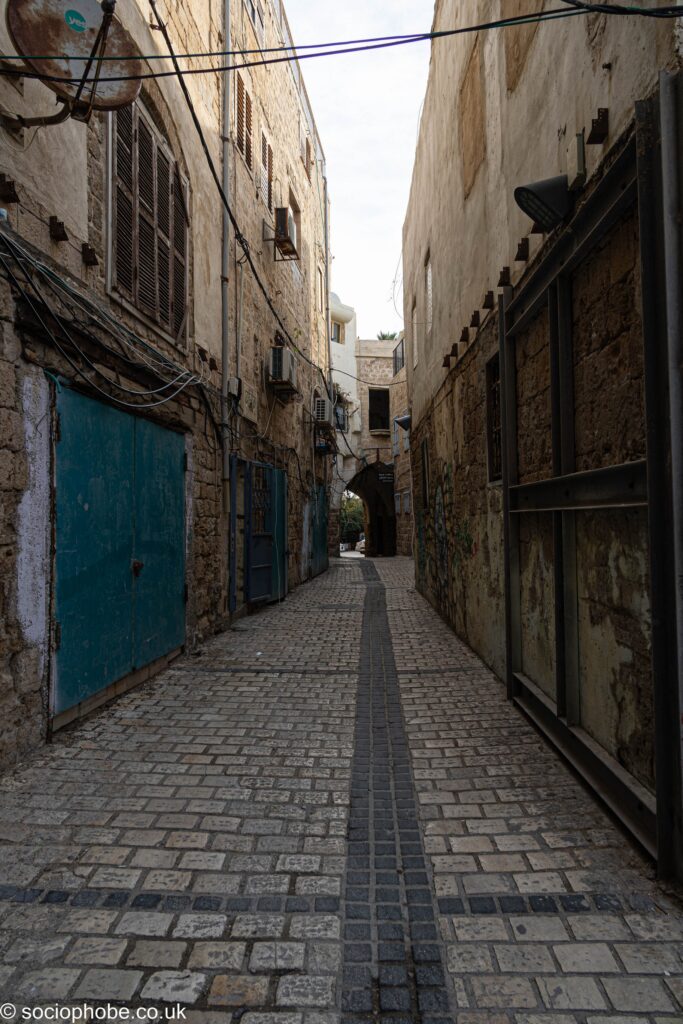
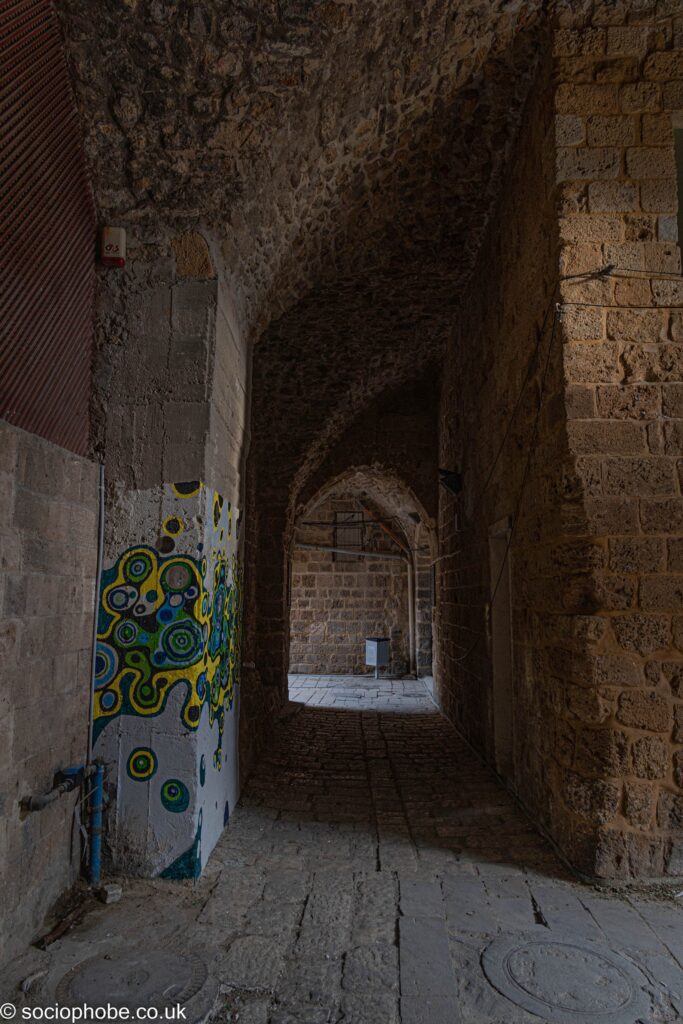
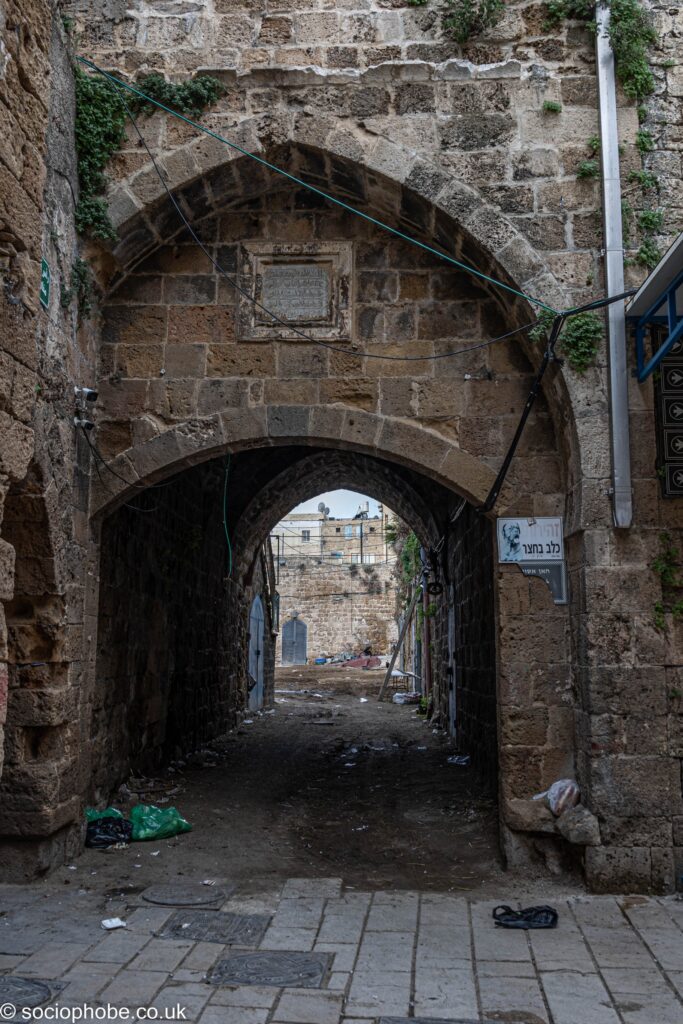
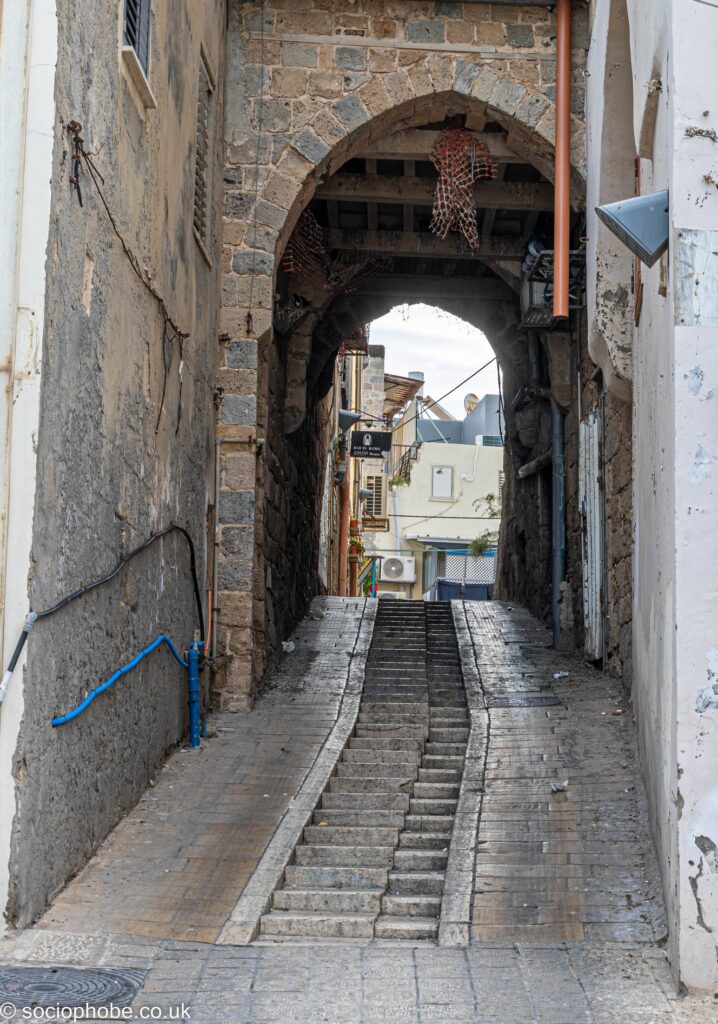
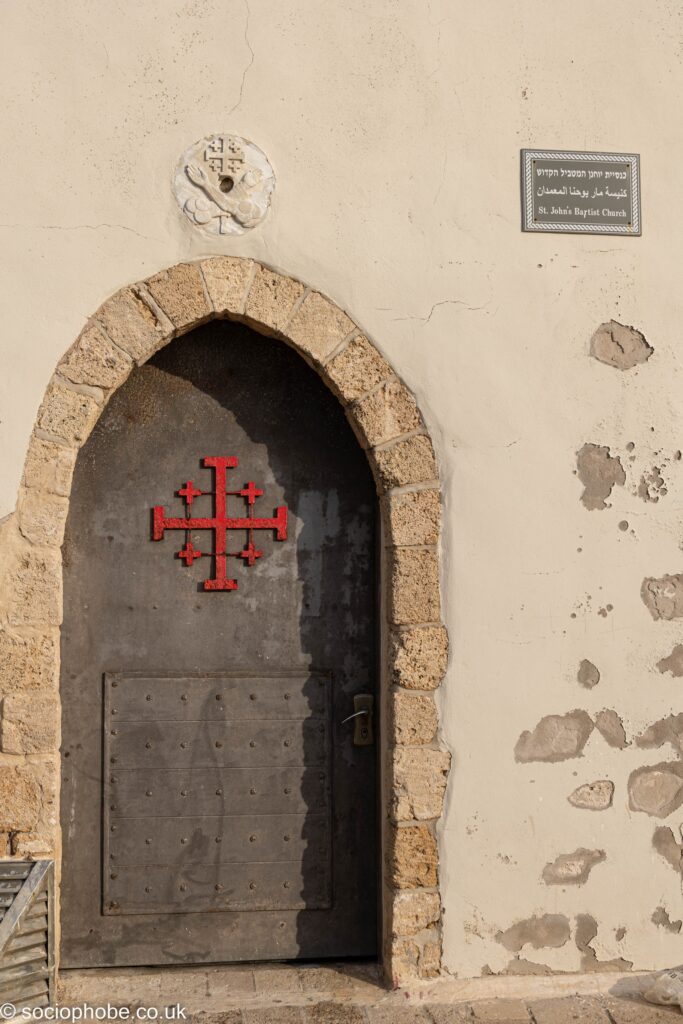
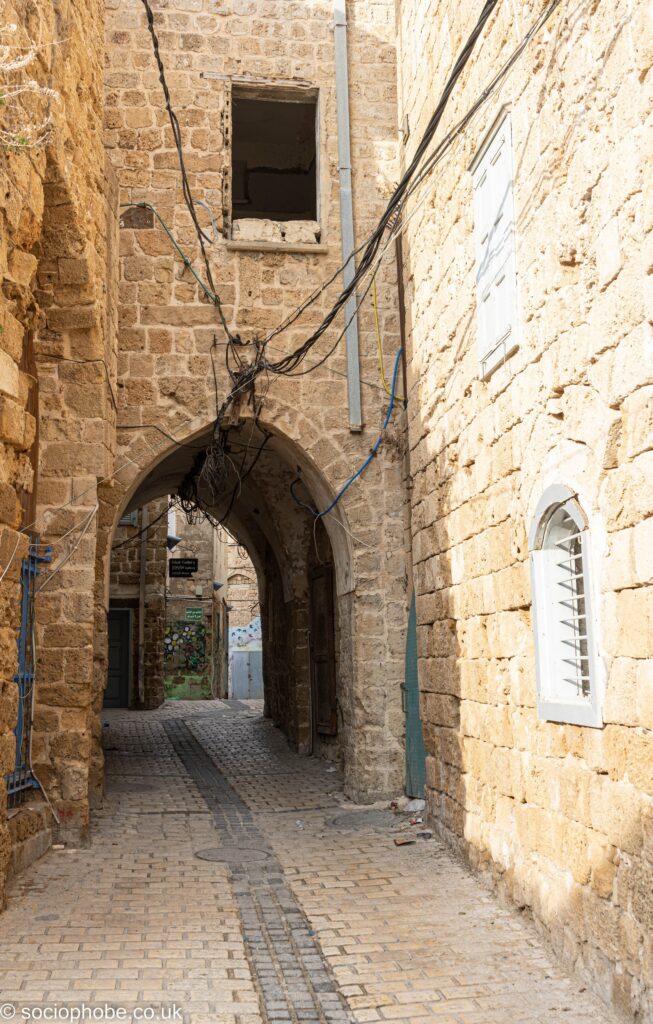
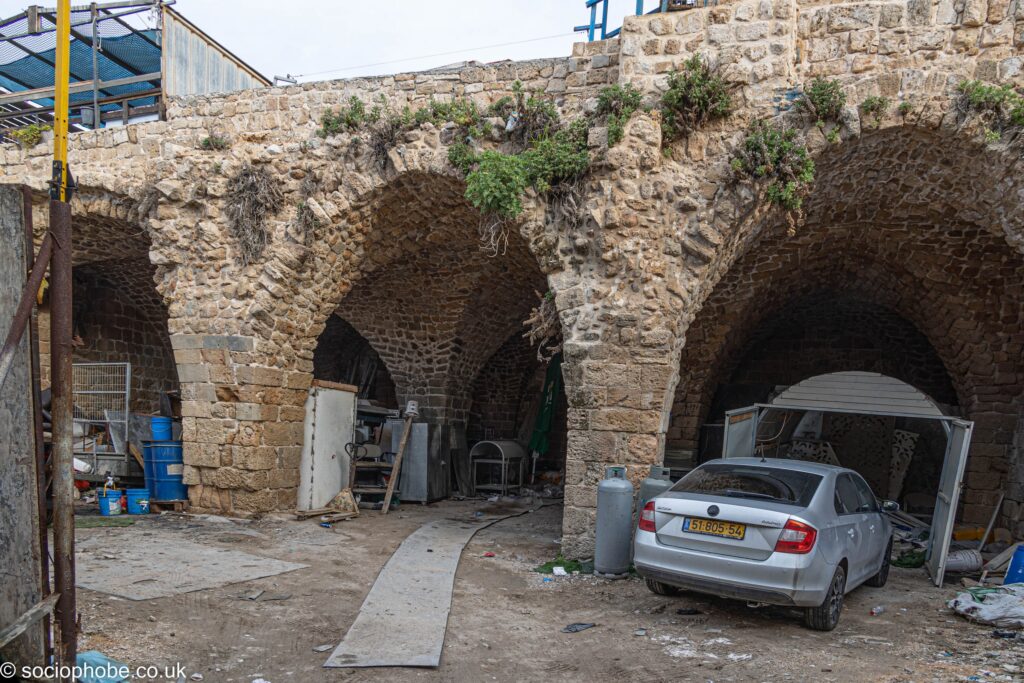
We walked north along the sea walls but the breakfast place that we intended to go to didn’t open until later than advertised so we gave up on that and went straight to the Hospitaller Citadel.
To give some context on Acre and the Crusades:
In 1096 the Pope preached a Crusade to free the Holy Places of the Middle East from the Muslims. Various western lords (but no royalty) took the idea up and in 1099 recaptured Jerusalem. Various other cities fell before and after and they set up a Latin kingdom (to distinguish them from the Greek or Byzantine church).
Initially all was good as the Muslims were disunited and the combination of penance for sins, land opportunities, loot and doing God’s work meant there were plenty of new recruits. After a time though the Crusaders fell to bickering and in-fighting, land and loot became rarer as conquests dried up and most importantly the Muslims were united under Salah al Din. He wiped the Christian armies out at Hattin (remember Kingdom of Heaven?), captured the king and then captured Jerusalem. Other cities fell until the crusaders were reduced to a few coastal towns.
The Third Crusade was then launched with the kings of both England and France participating. They recaptured Acre and defeated Salah al Din but didn’t take Jerusalem before they also argued like spoiled children and both went home. For the next 100 years the kingdom was based in Acre and it became a wealthy and powerful city. Crusader fortunes waxed and waned depending on the pettiness of the nobles and the unity of the Muslims but eventually the Mamelukes of Egypt made it their mission to remove the crusaders and conquered towns and castles one by one, destroying them and generally killing or enslaving the populace. Acre fell in 1291, a hundred years after Richard I captured it on the Third Crusade and the Crusades to the Middle East ended.
Two religious orders were set up around the time of the First Crusade – the Templars and the Hospitallers. If you haven’t heard of them then hang your head in shame and read some actual history. The Templars were a military order, fighting to protect pilgrim routes. The Hospitallers fought as well but also ran hospitals (hence the cunning name) to care for the sick. After the fall of Acre the military orders were at a loss to justify their existence so Philip of France used this as an excuse to seize the vast wealth of the Templars and claimed they were badger shaggers or some equally fanciful drivel to make up for his own short sighted greed. The Hospitallers carried on, setting up their main base on Rhodes til that fell to the Turks in 1522 and then Malta which defeated the Turks in the Great Siege of 1565 and were eventually dissolved by another Frenchman, Napoleon. In Britain the order was dissolved in the Reformation but then was reformed in the 19th century as St John’s Ambulance. So there’s a potted history of some of the most important events of medieval history that were probably never taught at school.
So, the Citadel of Acre was the head of the Hospitaller Order in the Kingdom of Jerusalem (fanciful title as the Muslims now owned it) from 1191 til 1291. It was a massive and well fortified building, holding their treasury as well as armoury, barracks etc but it didn’t do them any good and the city fell. The citadel was largely destroyed before the vaults and underground structures were filled with soil and an eighteenth century Ottoman palace was built on top. The vaults were then excavated in the twentieth century and are now available for visits. So we did. What a lot of waffle to get to that stage!
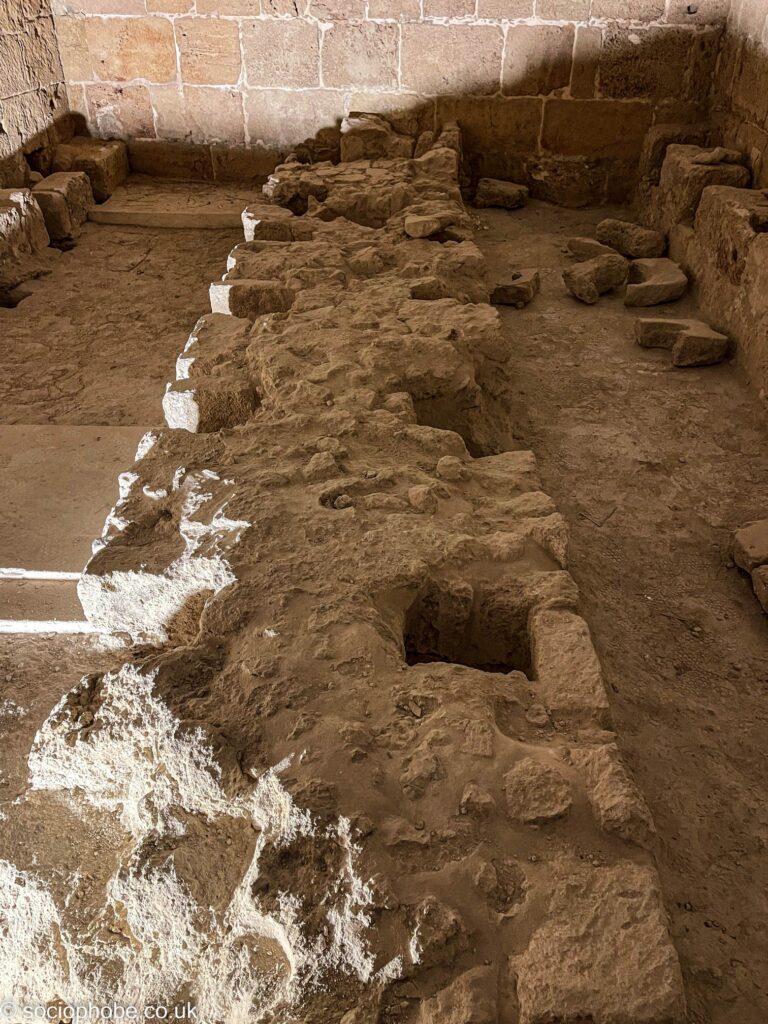
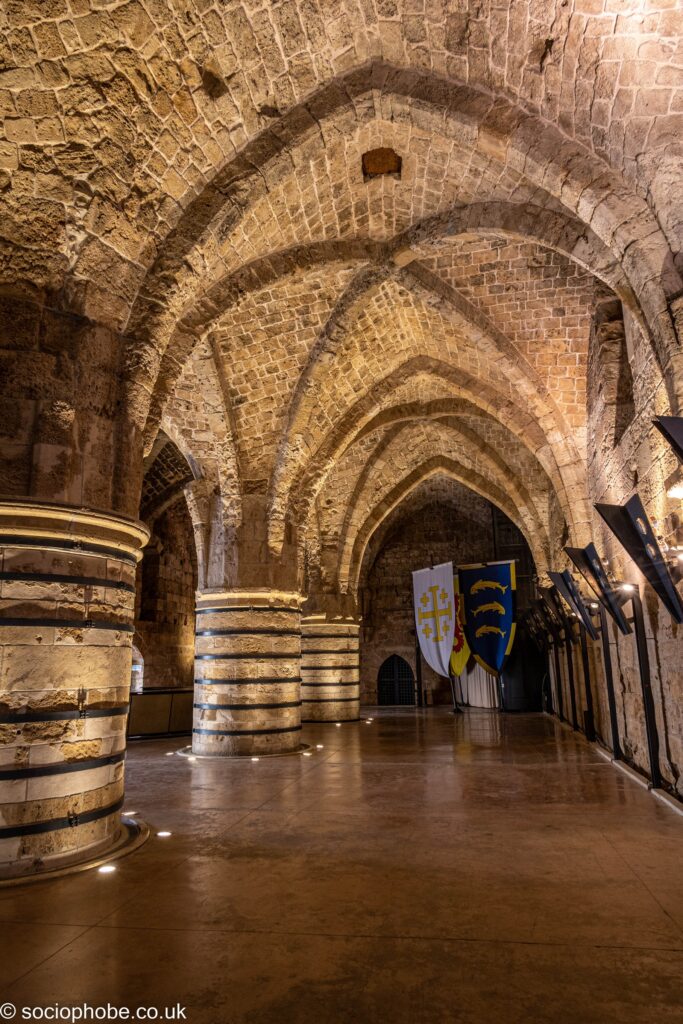
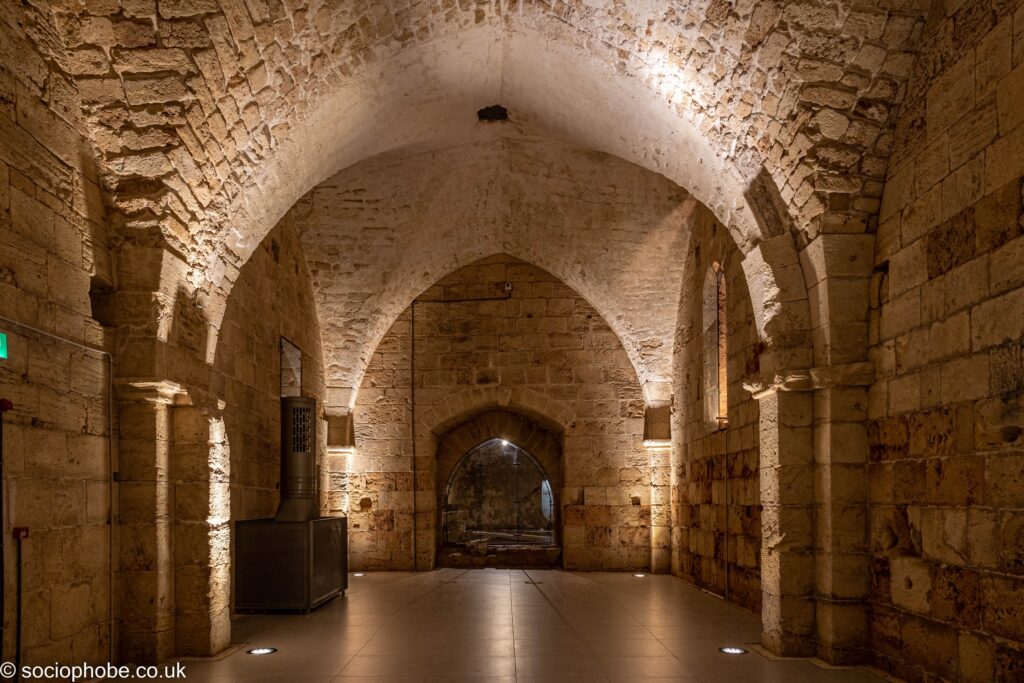
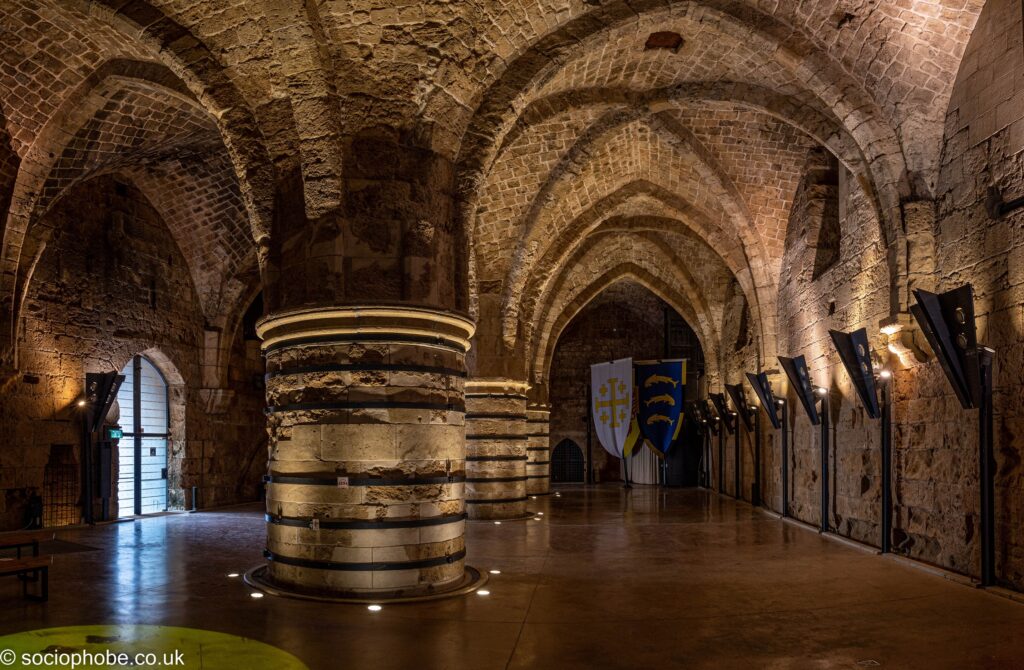
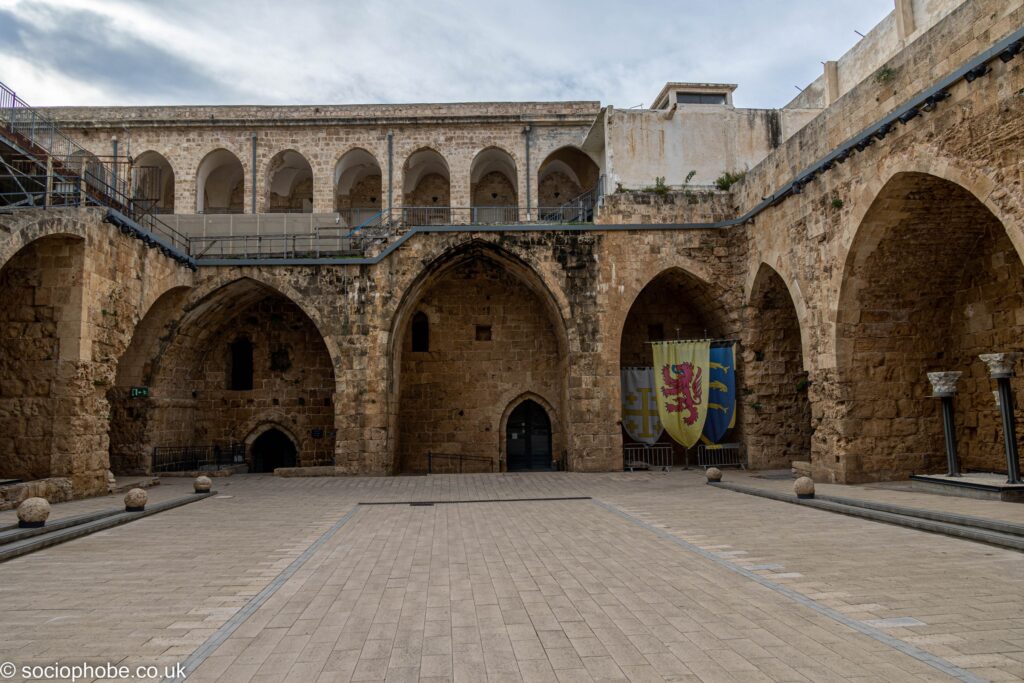
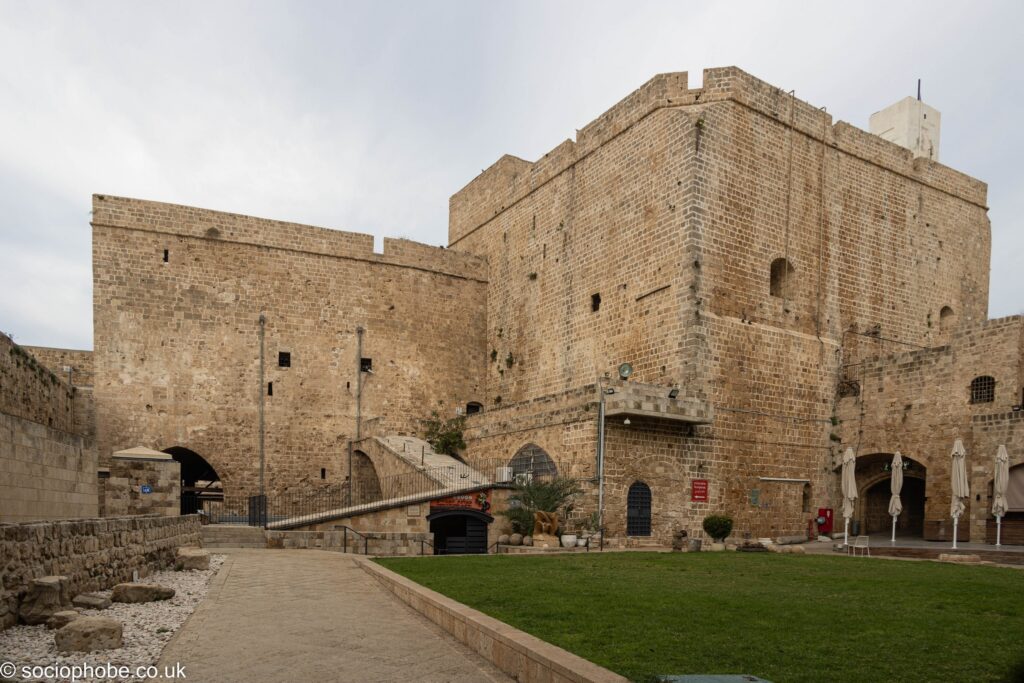
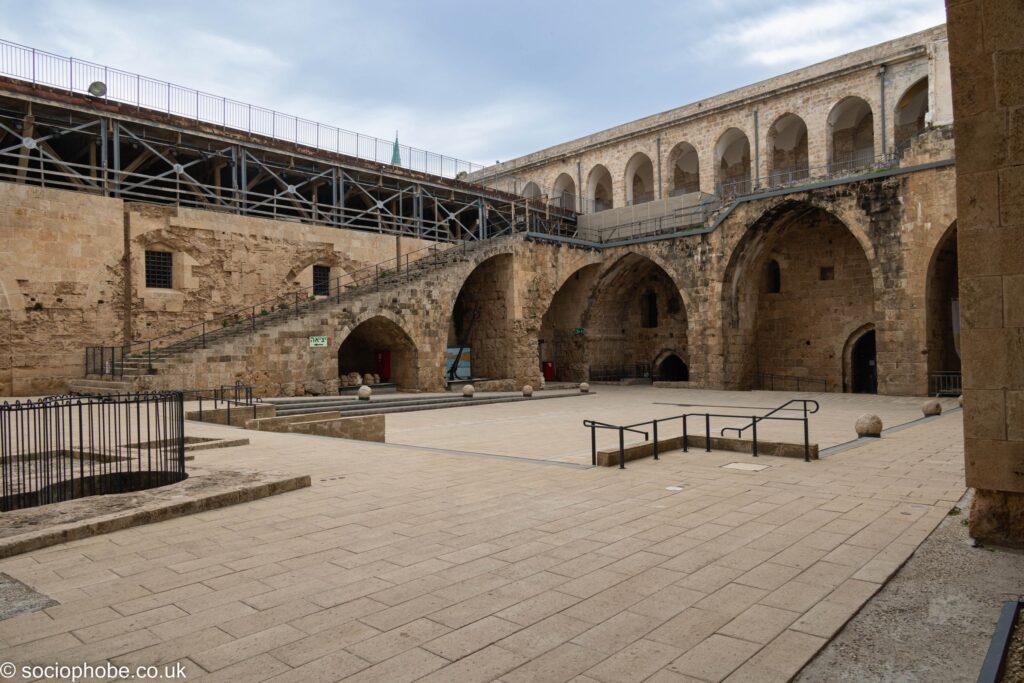
The vaults were incredibly impressive and very well laid out for visitors. As we arrived at 9 we were able to look at a lot of it with no one else around but by the time we left at 10 there were about 12 coach loads of tourists snaking through the rooms. After all that exertion we stopped for breakfast which was another fabulous affair before following the promenade walk along the city walls via the land gate and back towards our apartment.
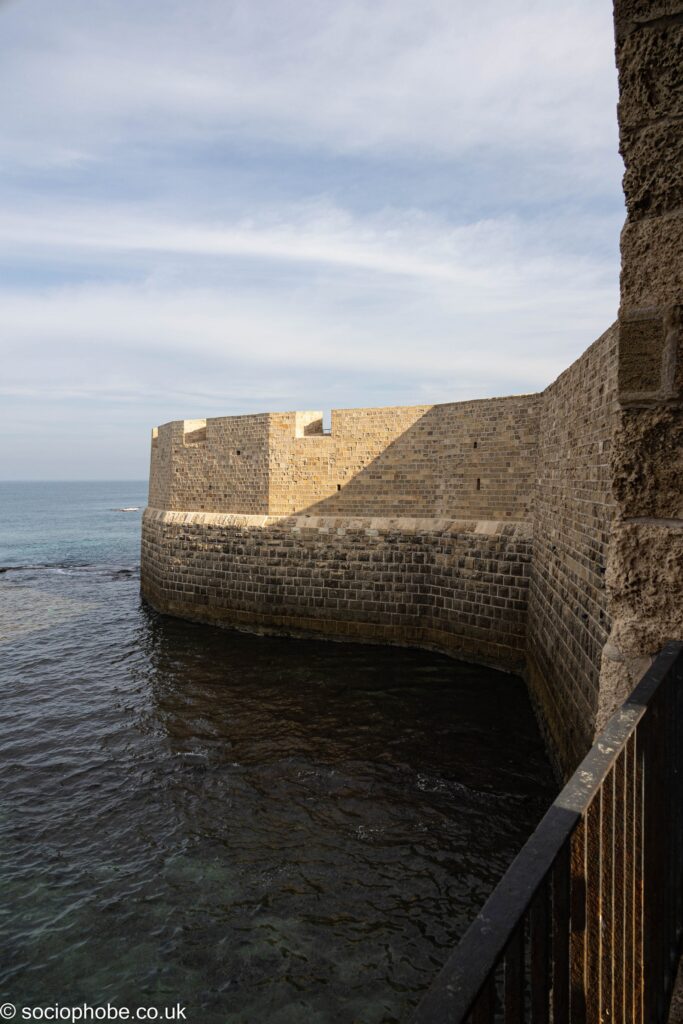
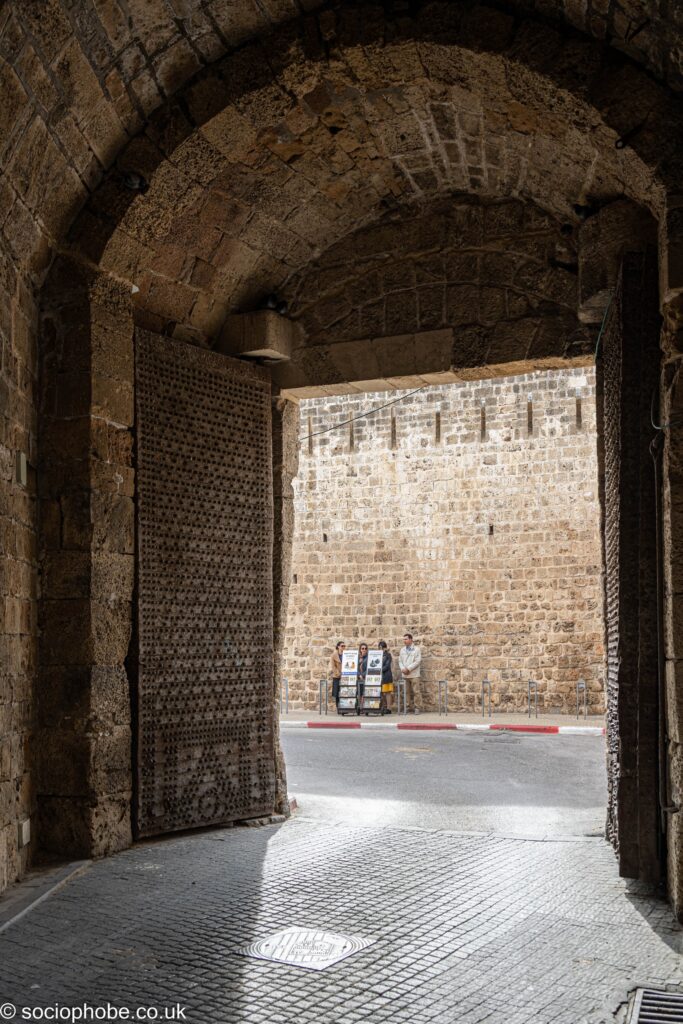
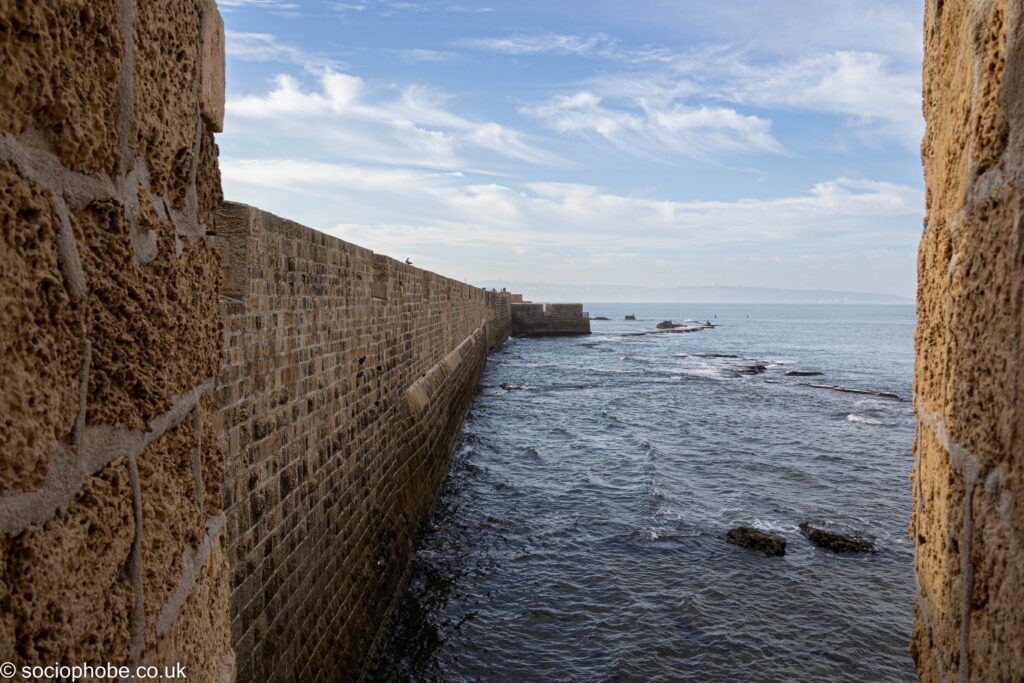
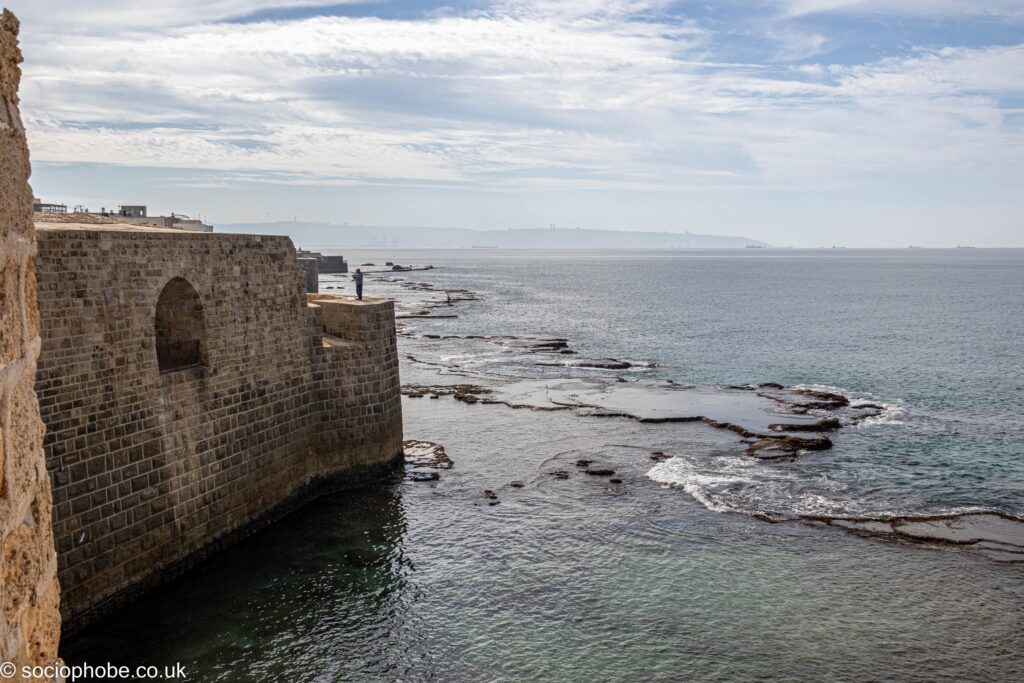
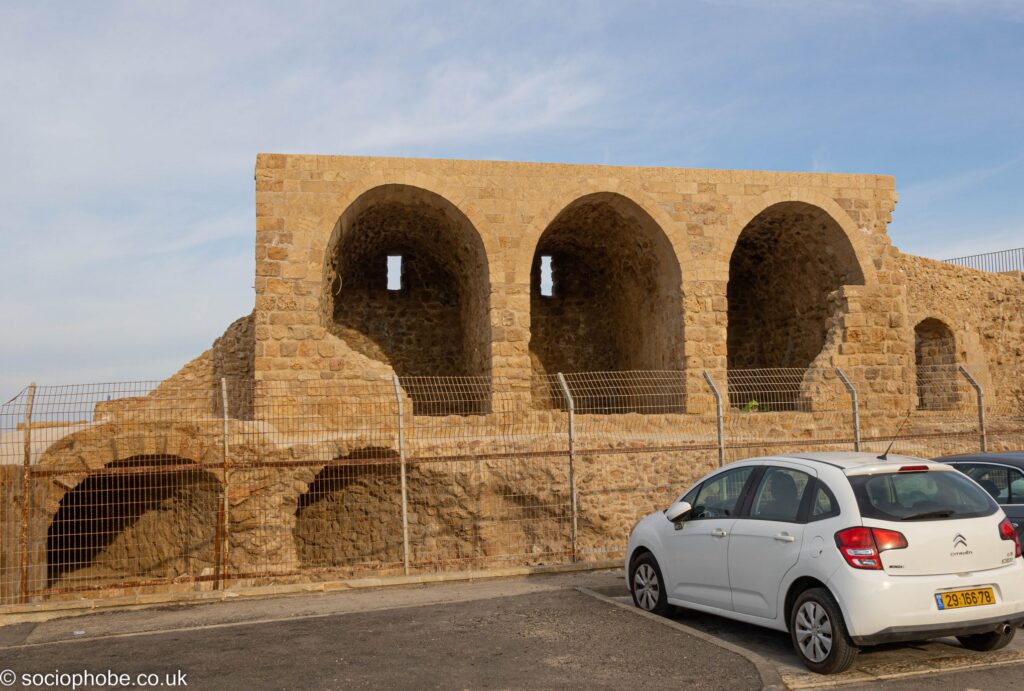
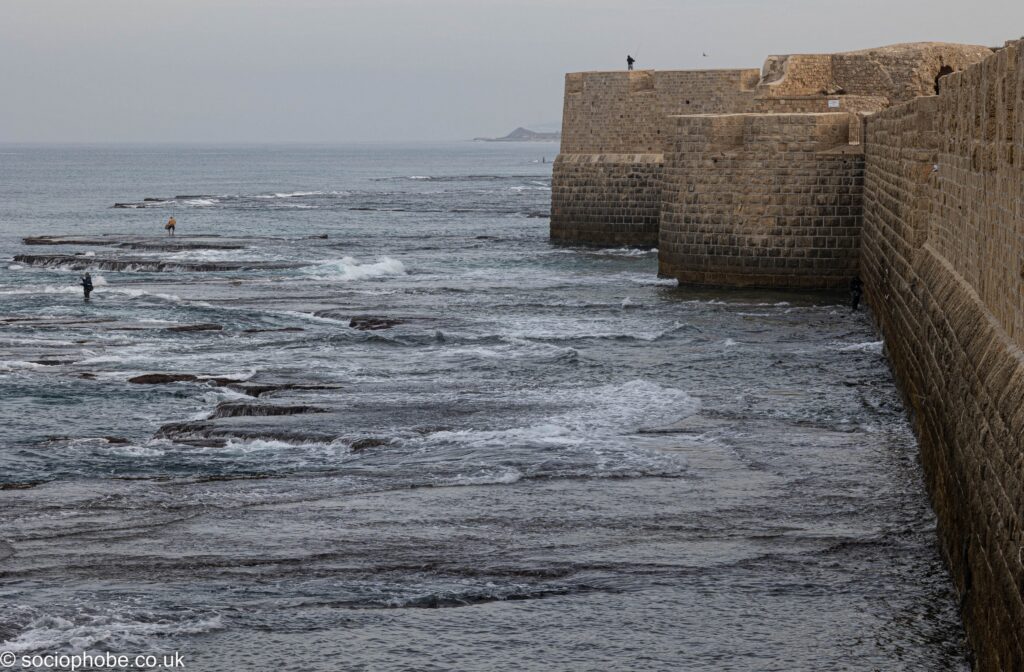
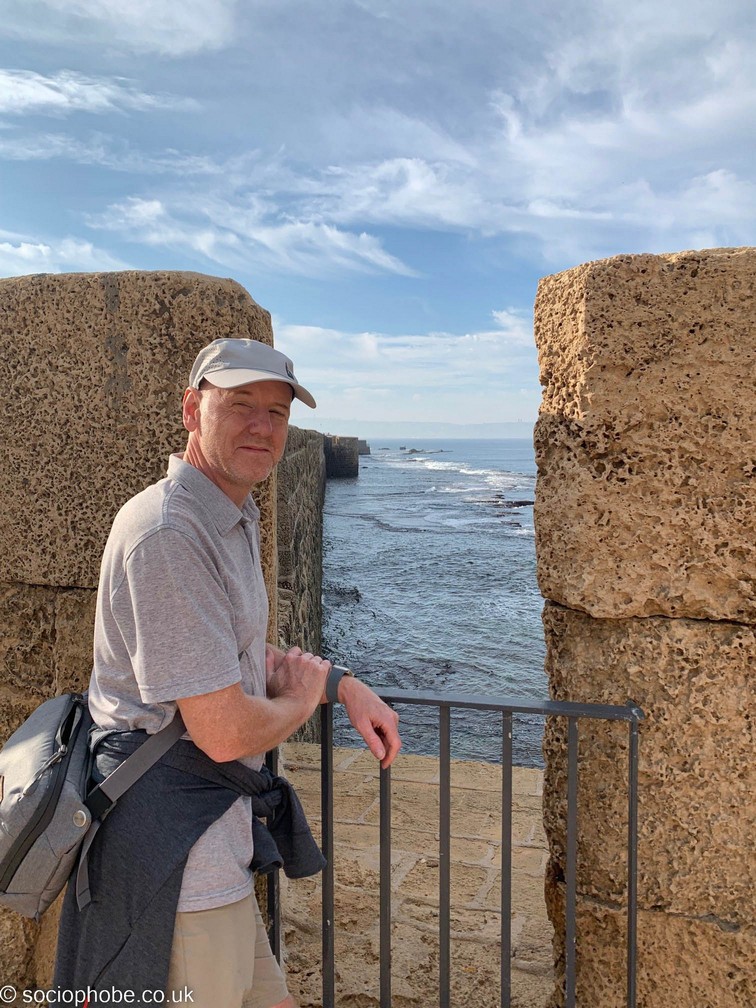
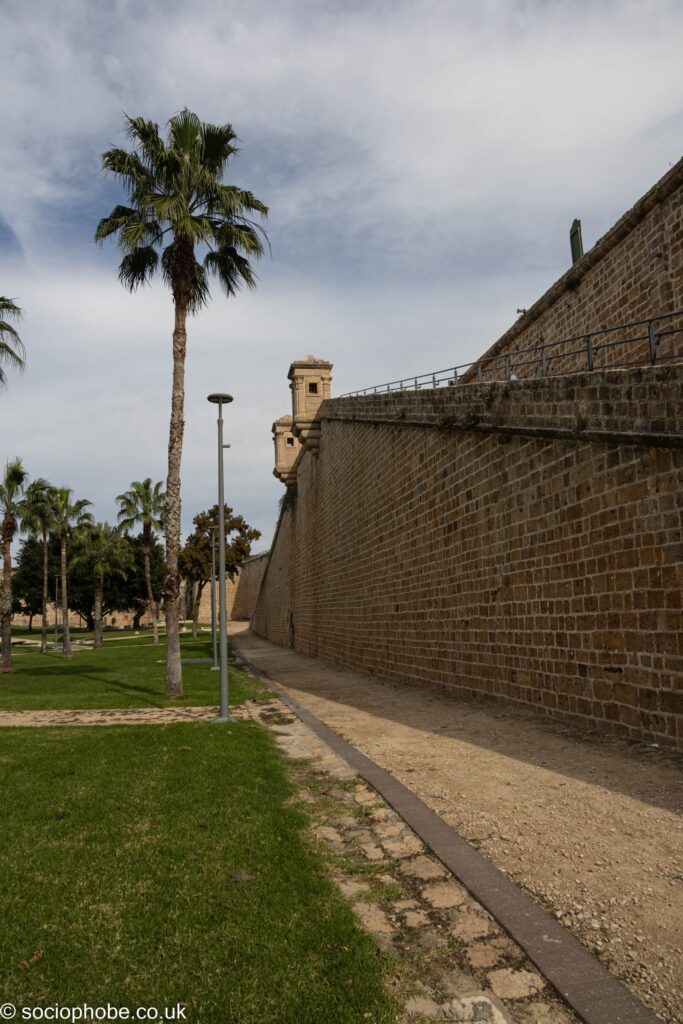
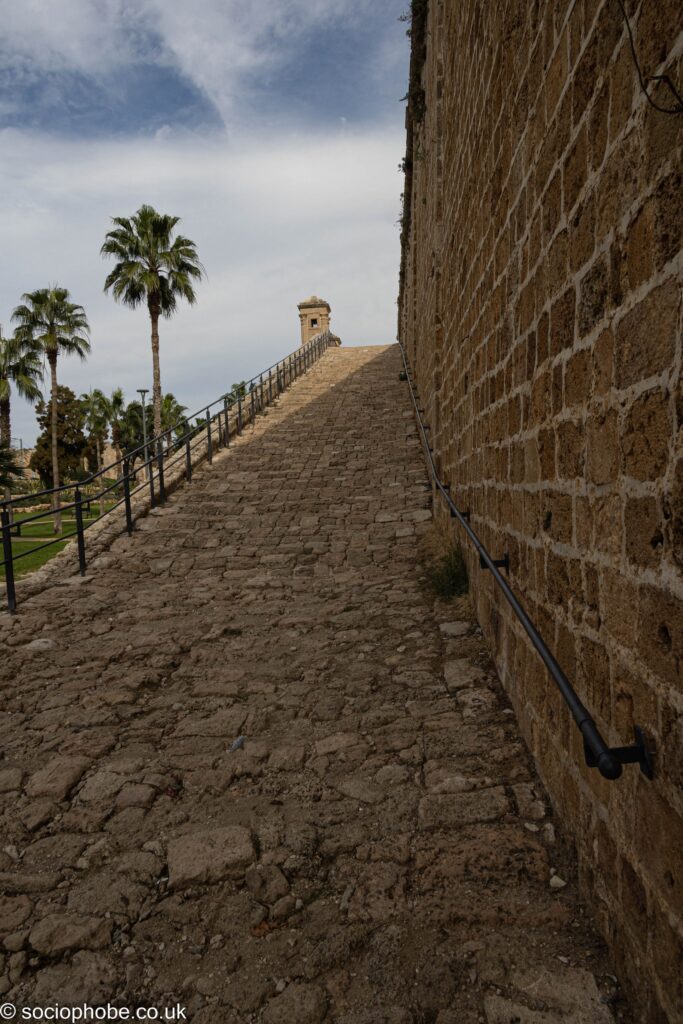
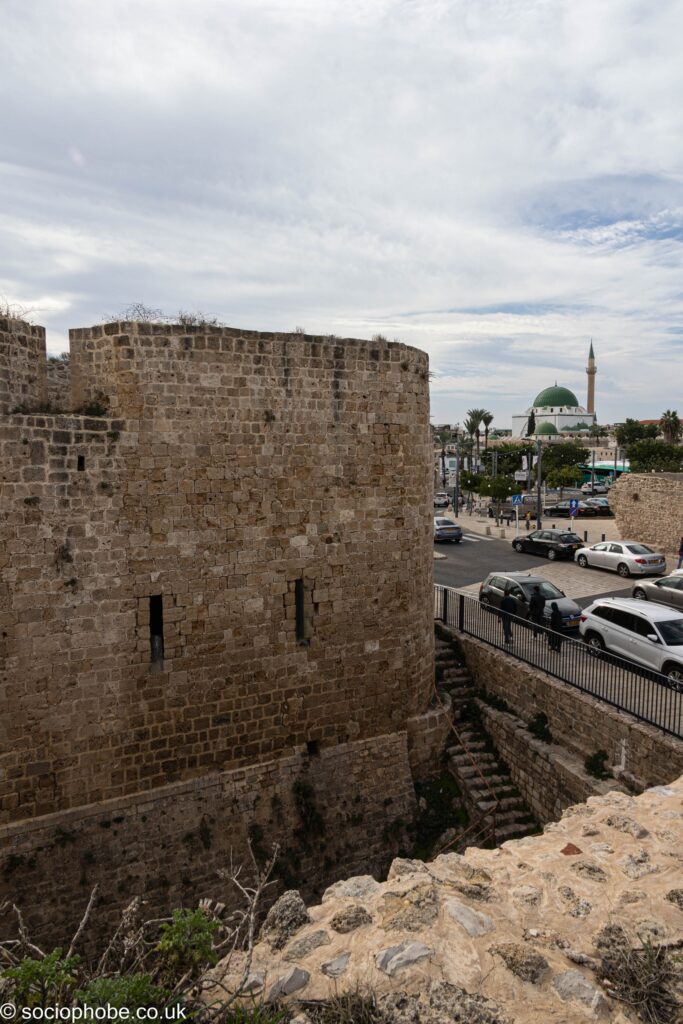
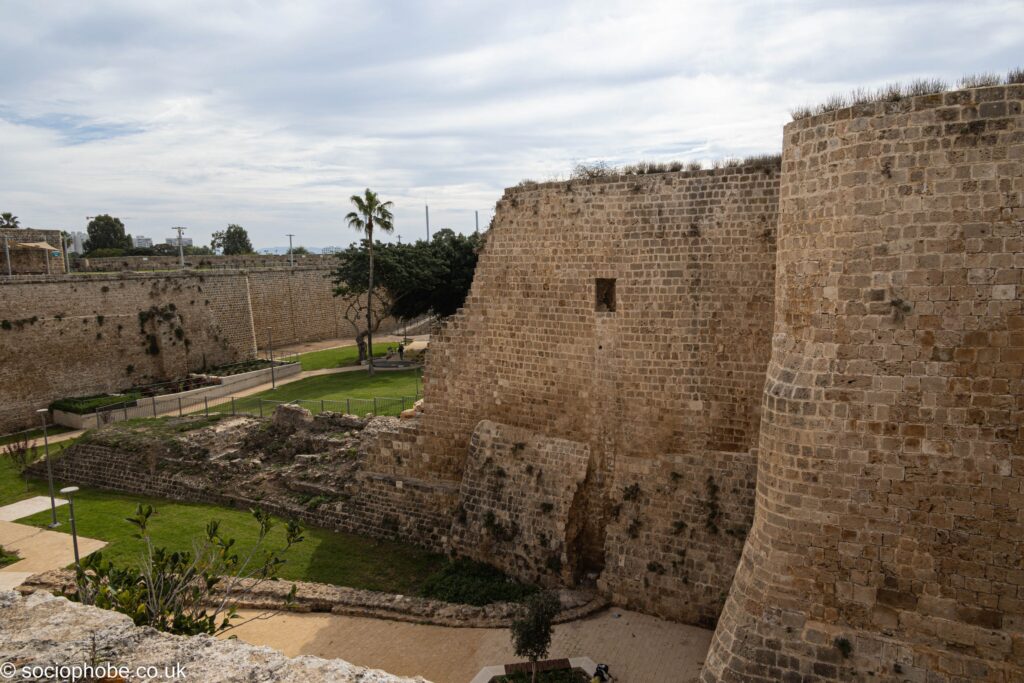
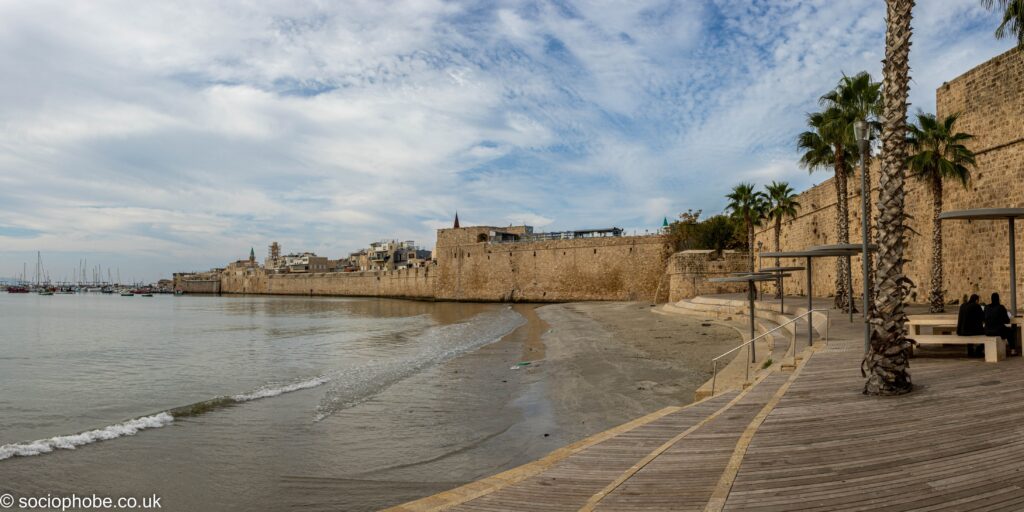
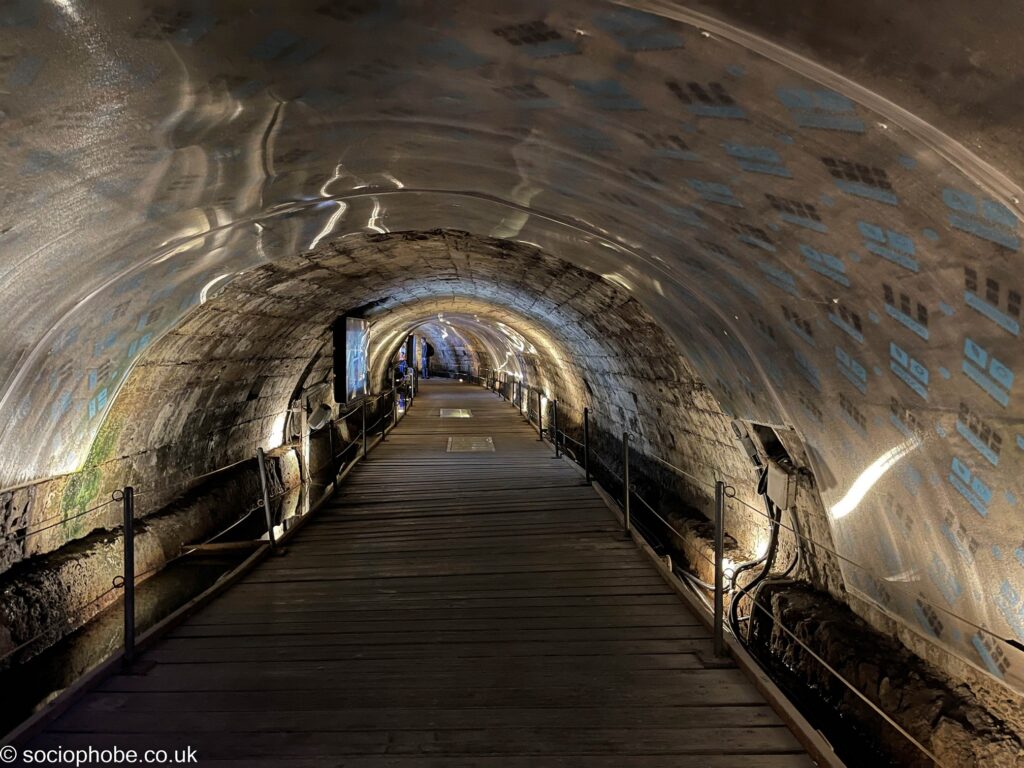
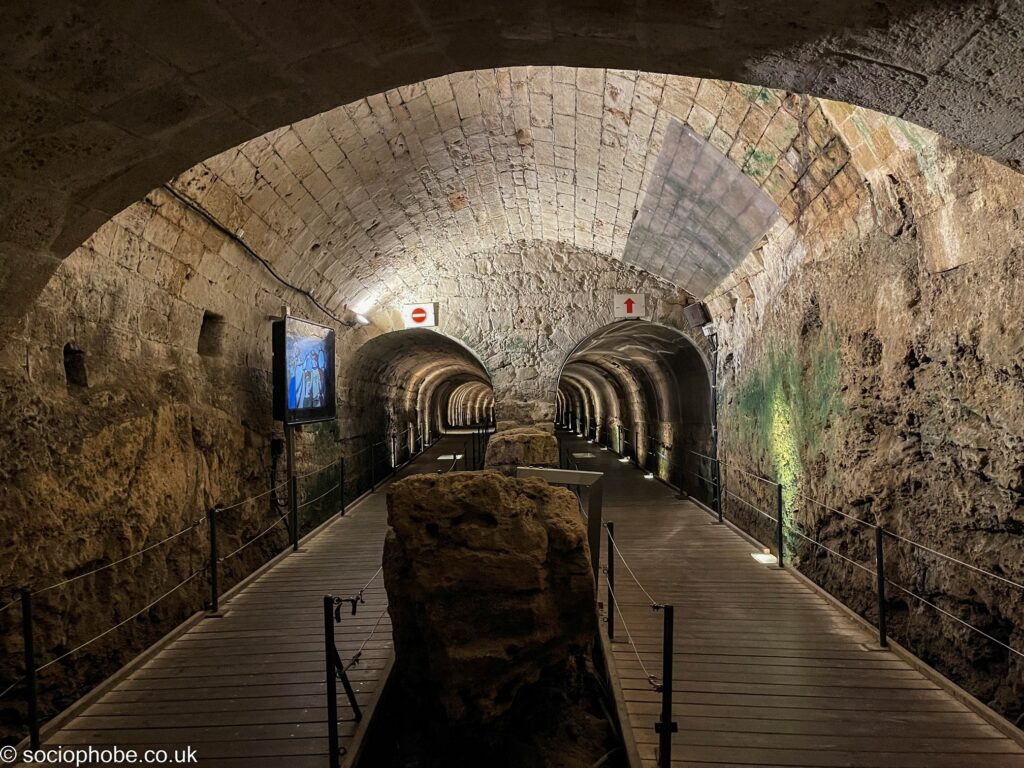
As we had some time to kill we visited the Templar Tunnels – a set of tunnels that linked the port with the heart of the city that had recently been excavated and opened to tourists. Basically it was about 10 minutes walk each way to get back to where we started but was interesting to see and another testament to the wealth and skill of the Military Orders. We packed up to leave and still had plenty of time to kill before check in at 3 in Tiberias.
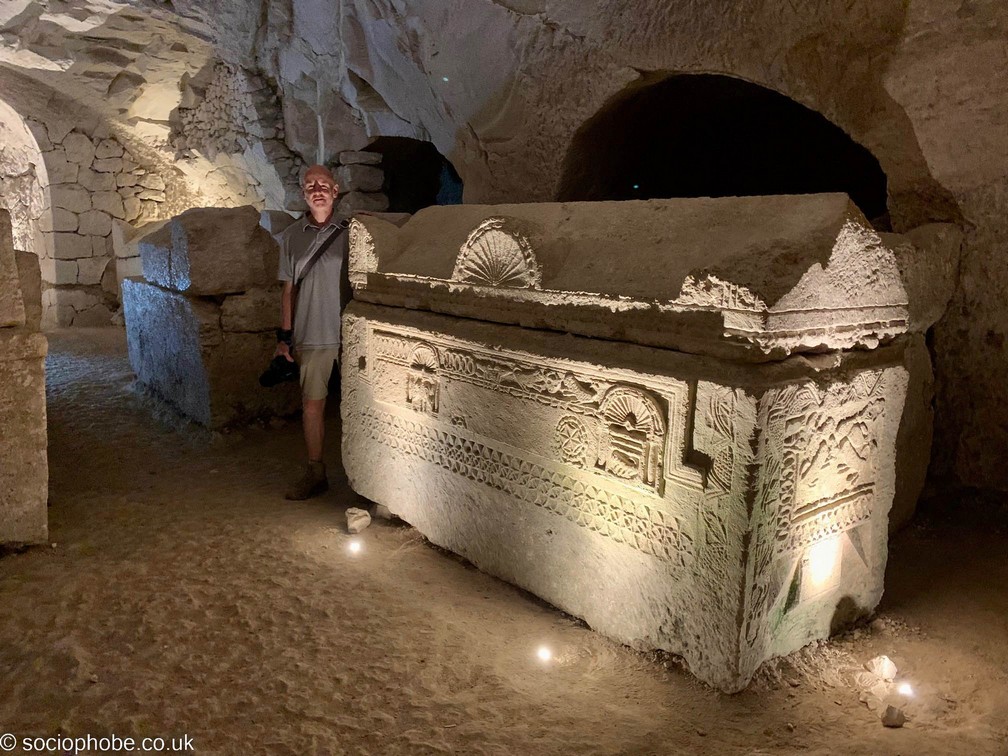
I decided we’d visit Bet She’arim, a Jewish necropolis on our route, expecting to spend maybe 30 minutes there. It was actually a huge complex of tombs, some ornate and large, others just niches in the wall. We spent around an hour exploring about half the park – it was something the Israeli’s made a lot of as they are very sensitive, desperate even, to prove their claim to the land. There were lots of families at the site and it was amazingly busy, especially as it lacked a proper cafe!
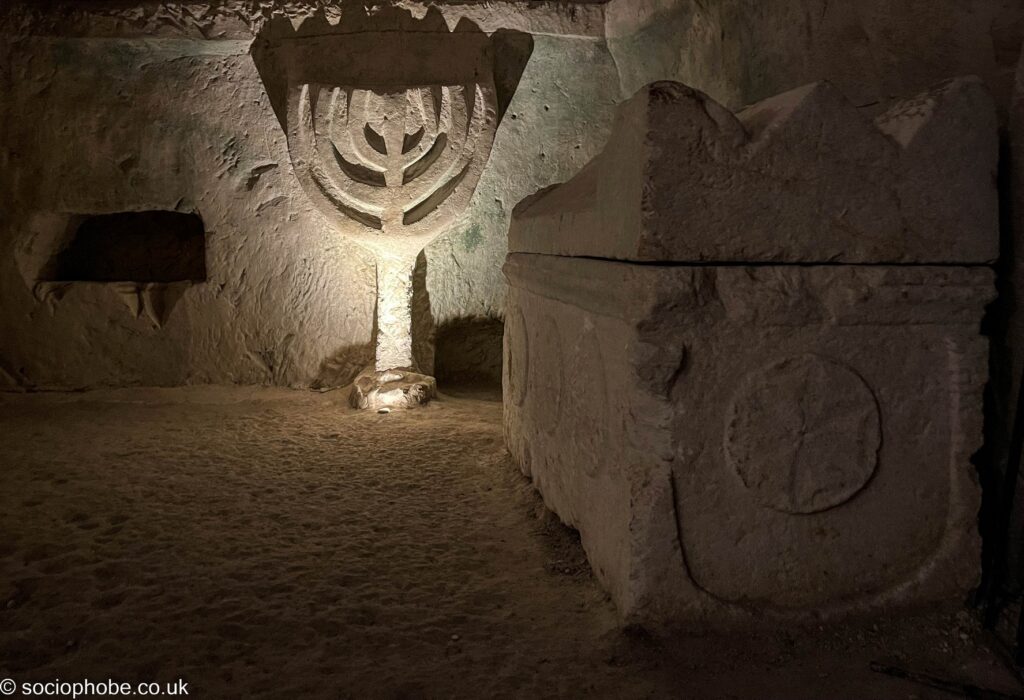
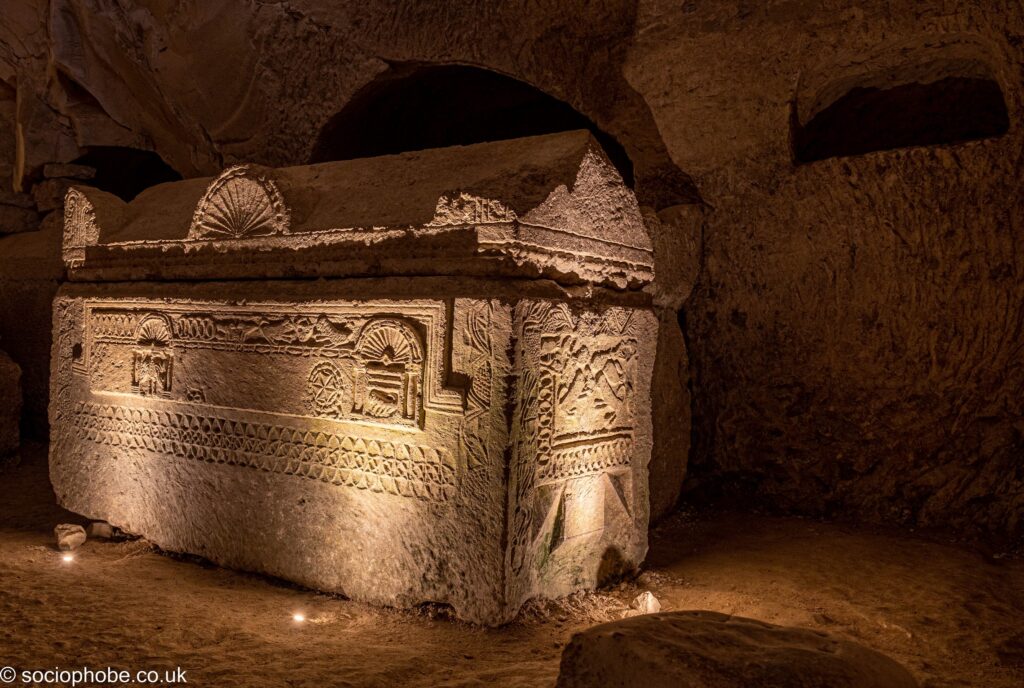
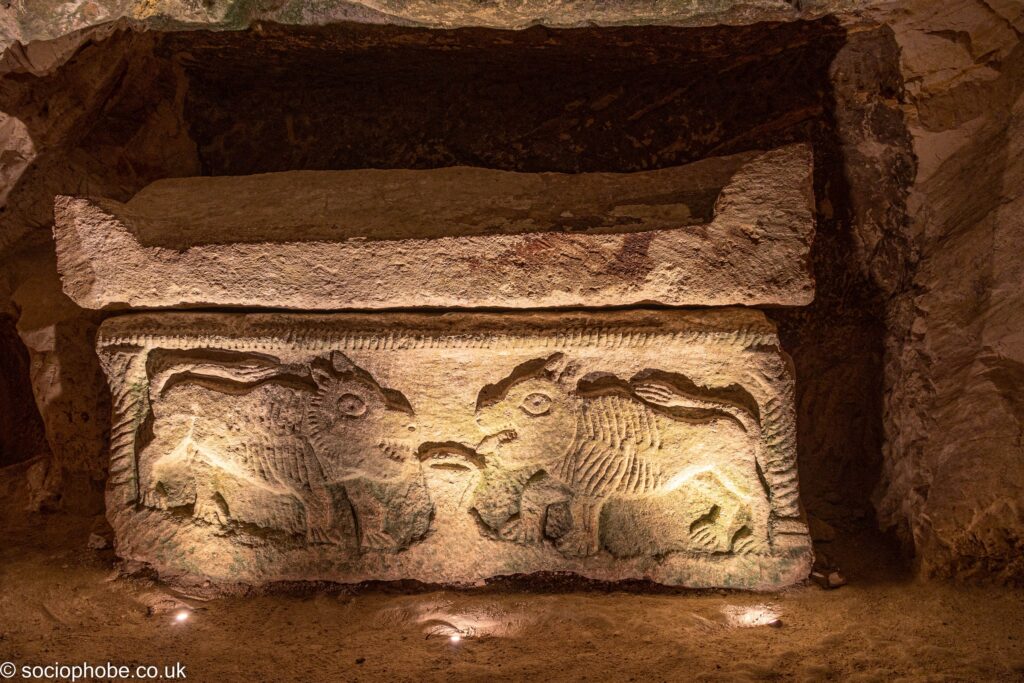
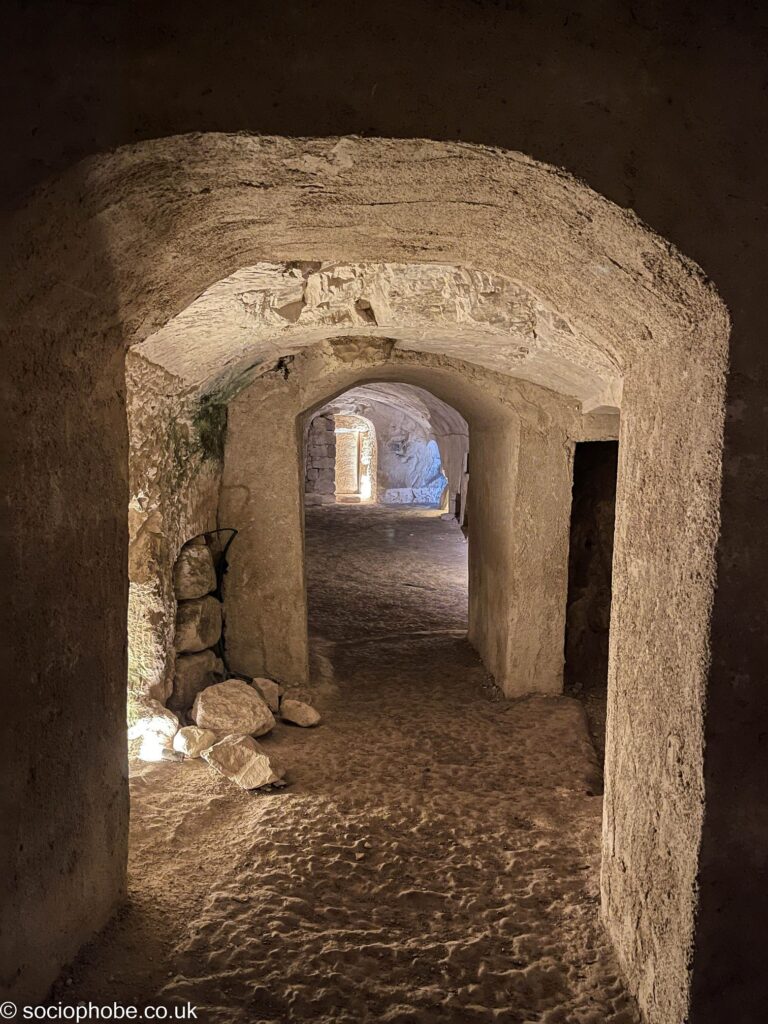
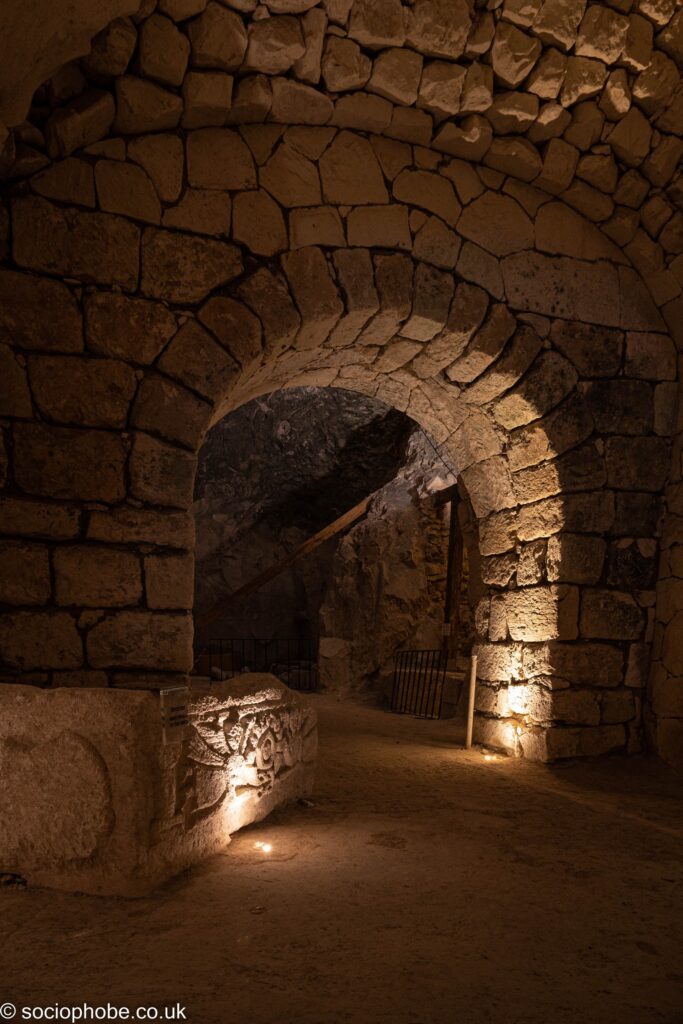
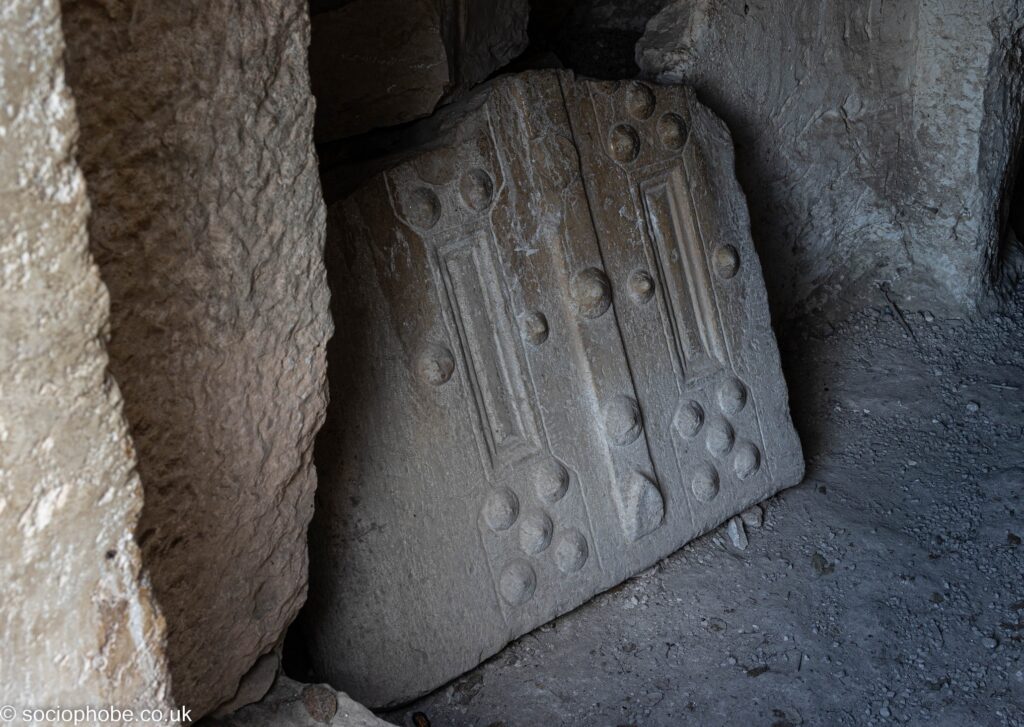
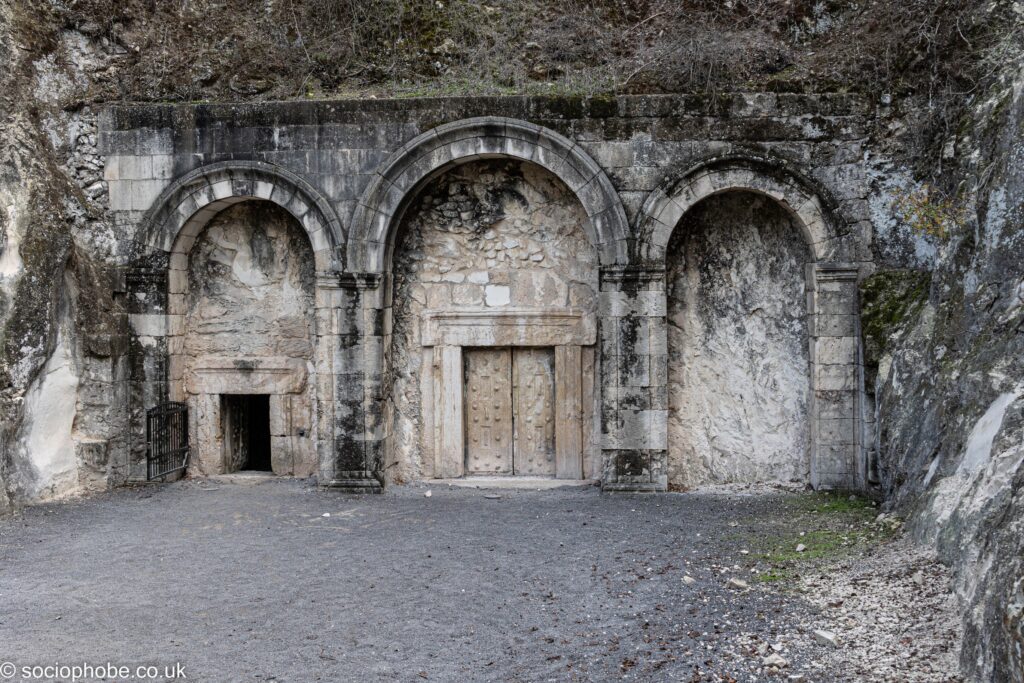
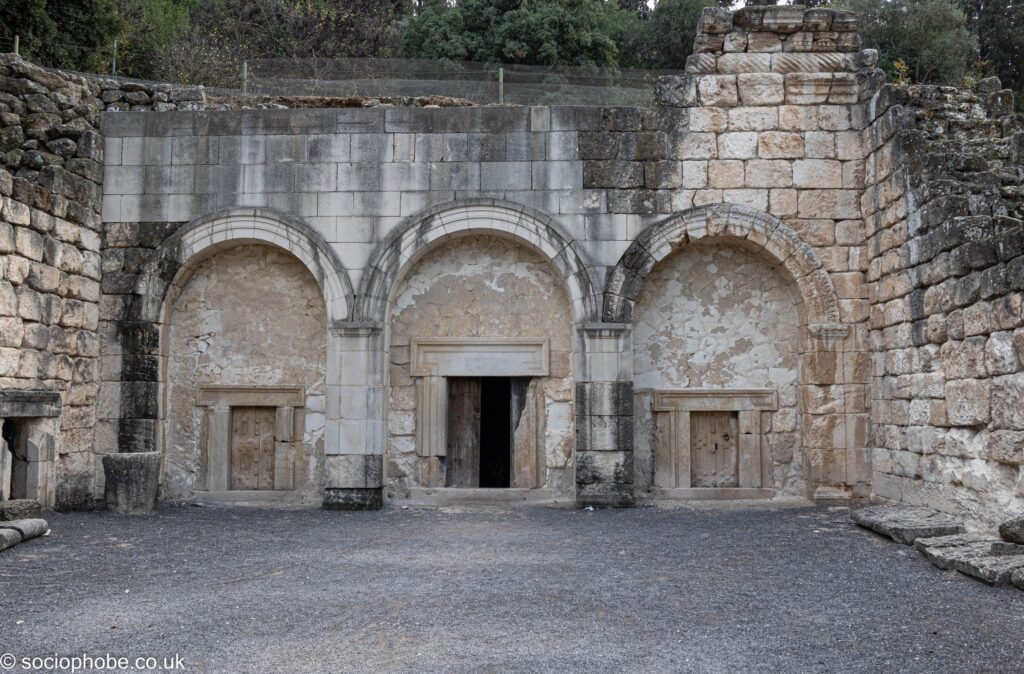
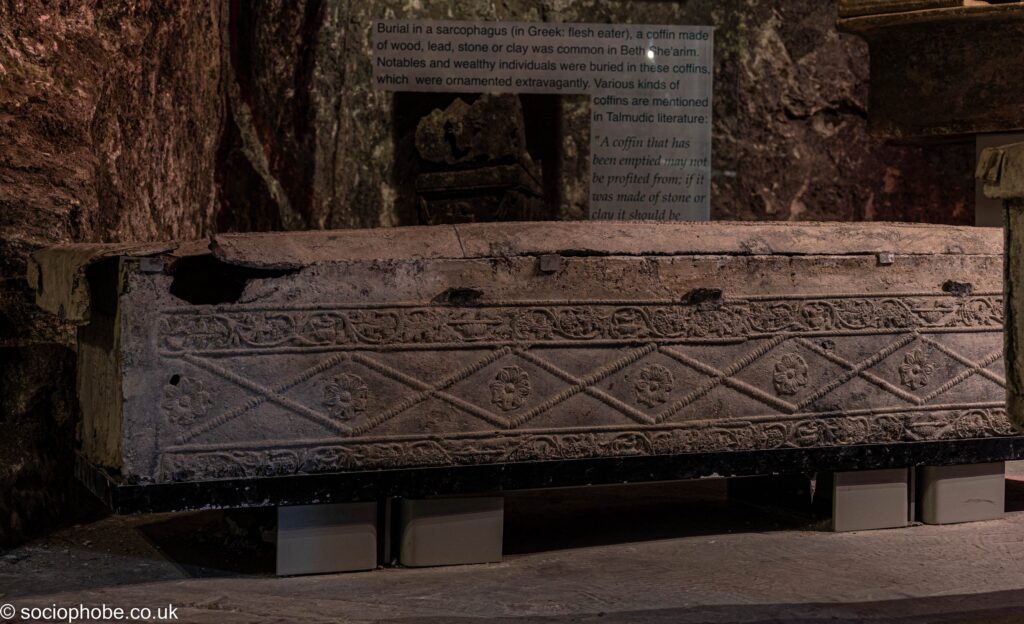
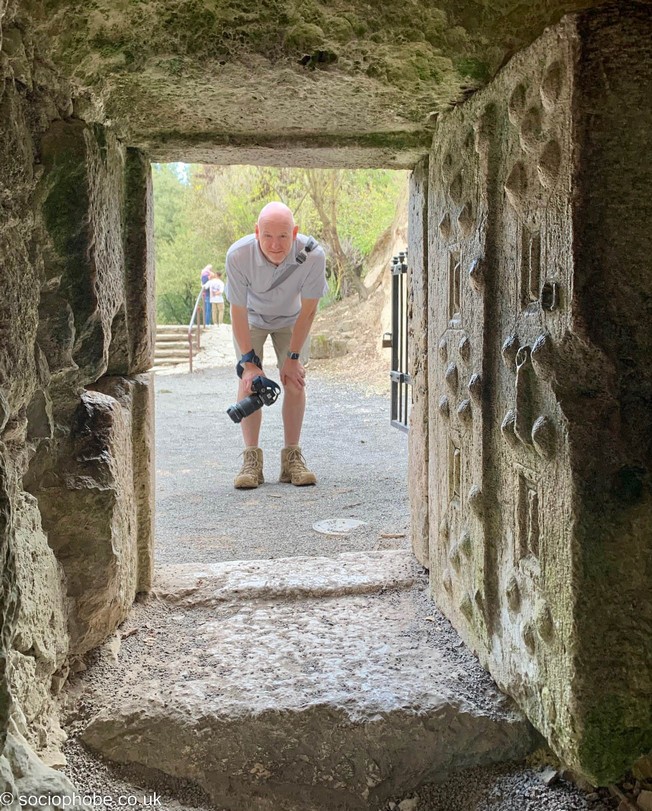
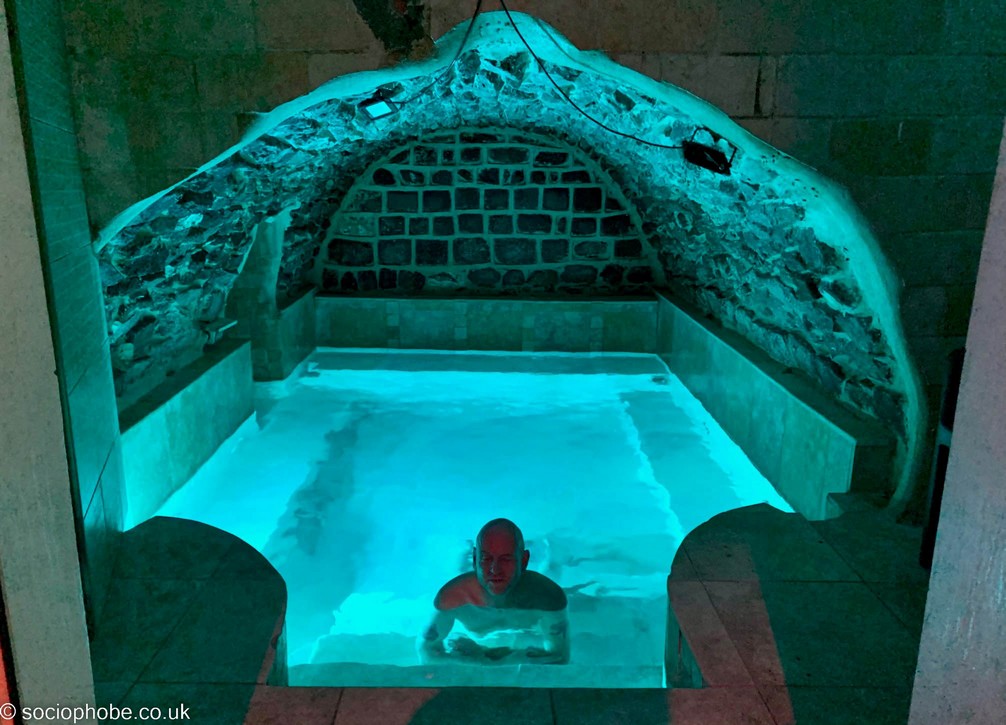
I had intended to visit the Golani Military Museum next but luckily for Deb it was closed so we carried on to Tiberias. Our apartment in the town was a few minutes from the Sea of Gallilee and was a cave house with its own hamman, fabulous. We dumped our stuff and walked down to the shore while it was still daytime. We watched the light on the water and the far bank change colours as the sun set behind us and then wandered along, choosing a restaurant to eat.
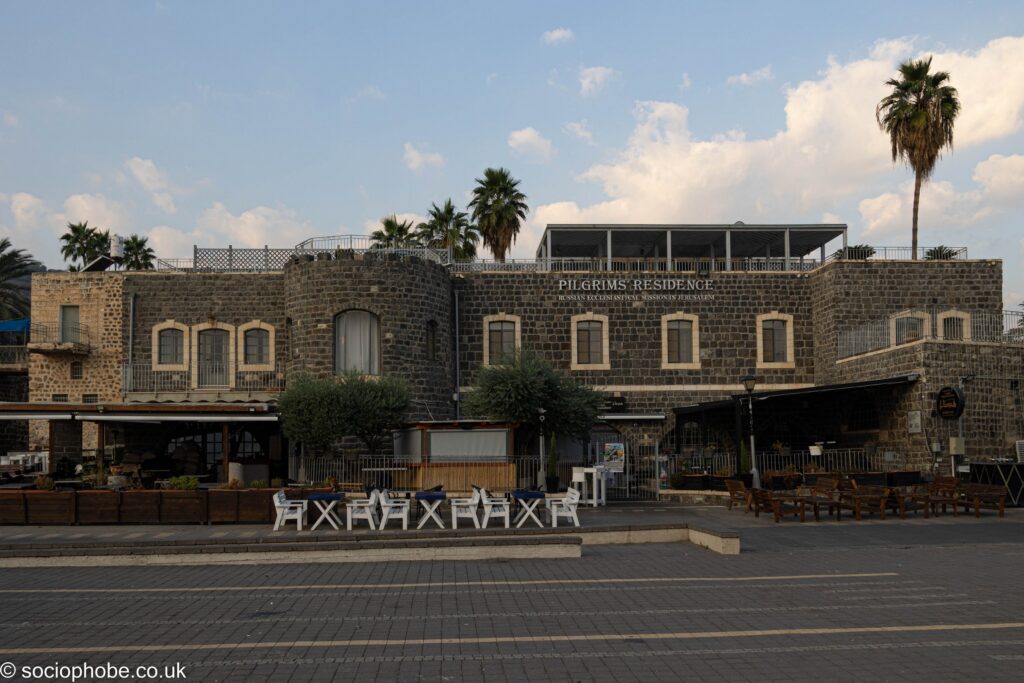
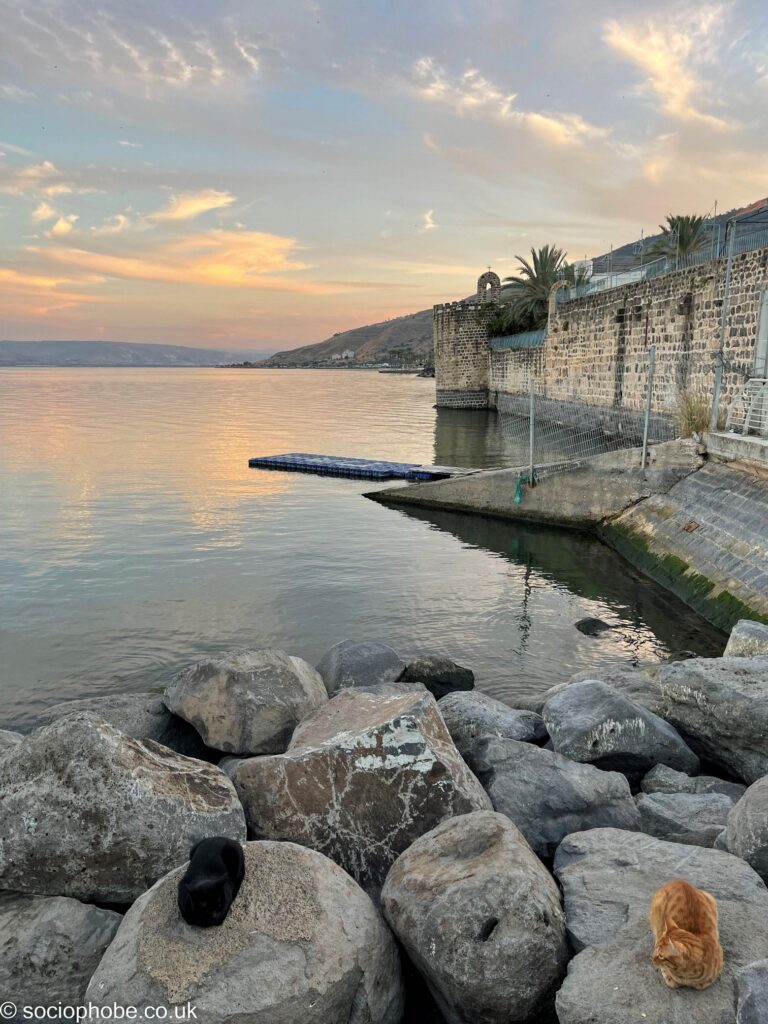
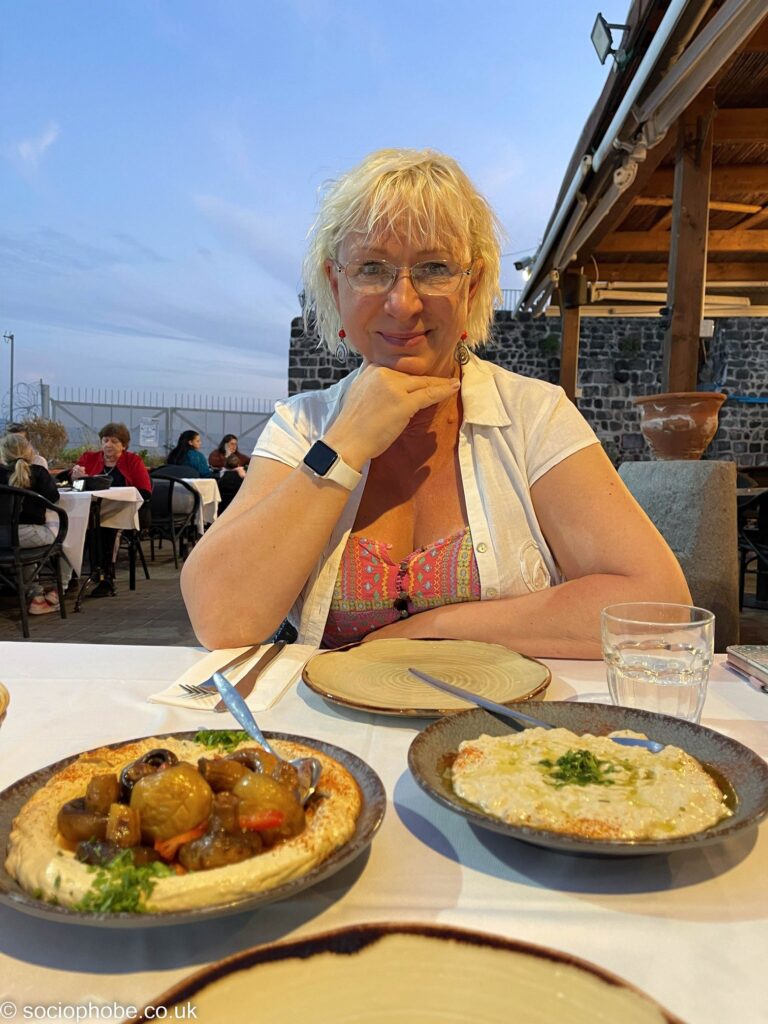
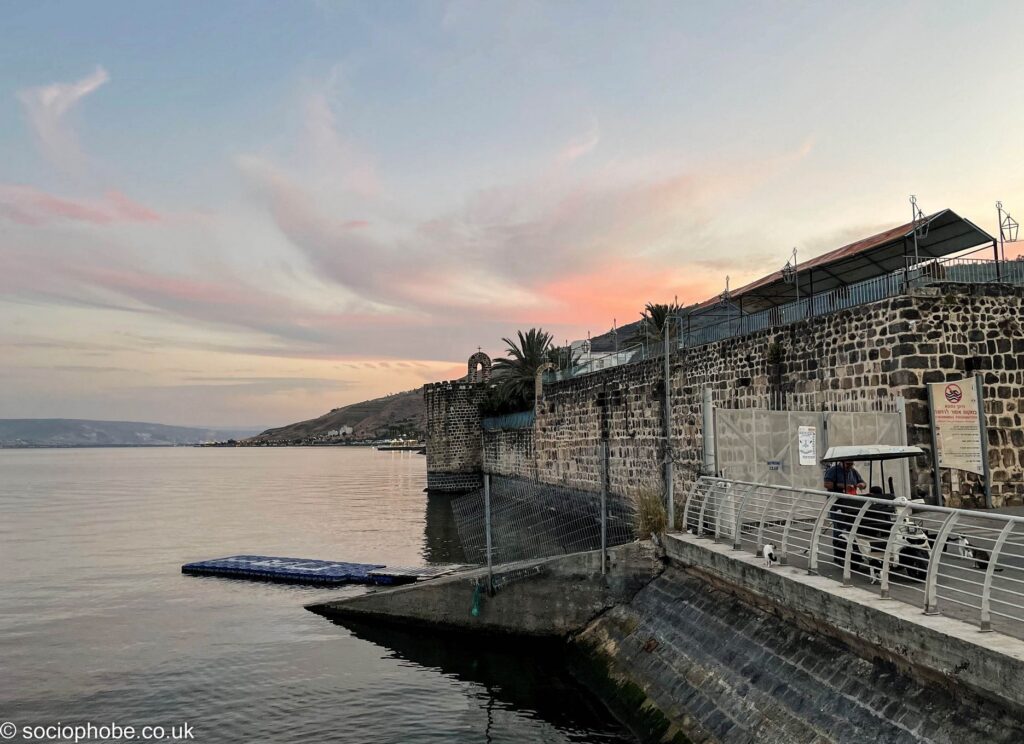
We settled on the Hermitage and sat outside, looking across the water whilst wondering why we had ordered so much food and slowly forcing ourselves to carry on eating. The walk back was somewhat slower than expected and in no way compensated for the vast calorie intake we’d just indulged in. I was so full I declined dessert or gelato!
Back at the apartment the days photos and notes took well over 2 hours so a dip in the hamman was well deserved.
Sunday 4th December – Tiberias to Nimrod Fortress to Valley of the Tears memorials
Today was the day we were driving to the Golan Heights so we were up and ready to leave by 8. At Deb’s insistence, our first visit was to the largest medieval castle left in Israel. This was the Nimrod Fortress, actually built in the 13th century as a response to the crusades but never really tested as by then the crusaders had fallen to petty infighting and were steadily being mopped up by the Muslims.
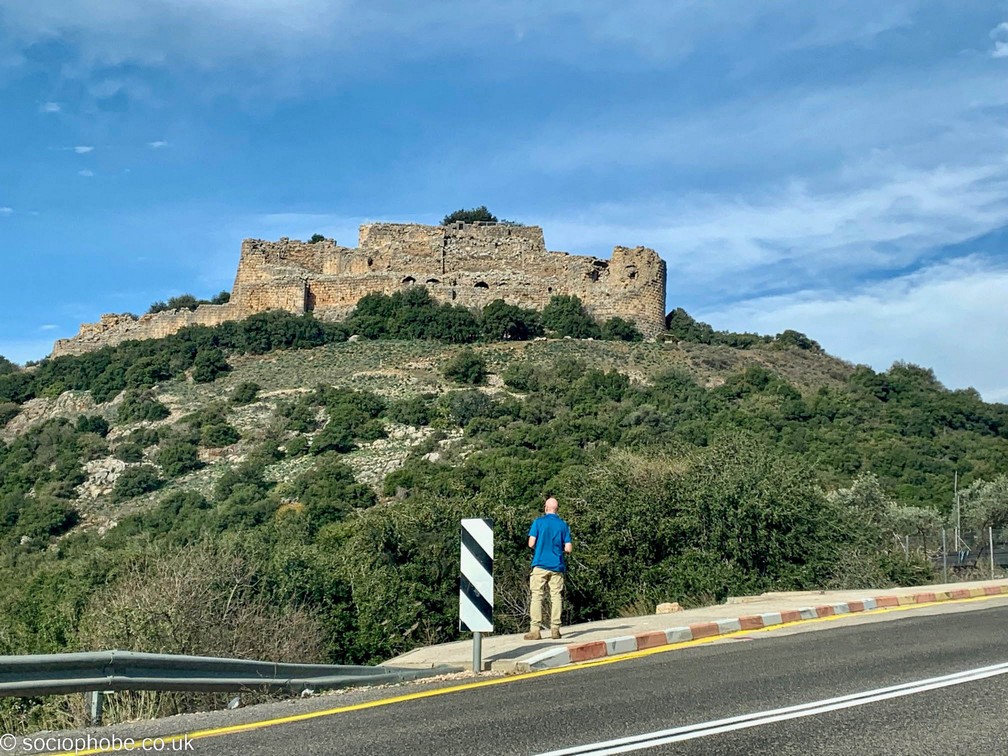
The 90 minute drive was interesting as we got into the hills, very windy roads with the usual moronic drivers overtaking on blind bends etc but now combined with potholes and crumbling road edges. The fortress was at about 1000m so it was noticeably colder than Tiberias when I stopped to take some pictures of it on our approach, Deb even had to wear my coat until we got out of the breeze!
When we got to the castle it was just us and one other car so we pretty much had the place to ourselves the whole visit. It was incredibly well laid out for visitors with a clearly marked route and lots of information boards. The weather was superb with beautiful blue sky and we soon warmed up with the walking and climbing! The fortress is still being excavated but we were able to see a lot including inner vaulted chambers that hadn’t collapsed, lots of inscriptions, a very dodgy looking reservoir and fabulous views.
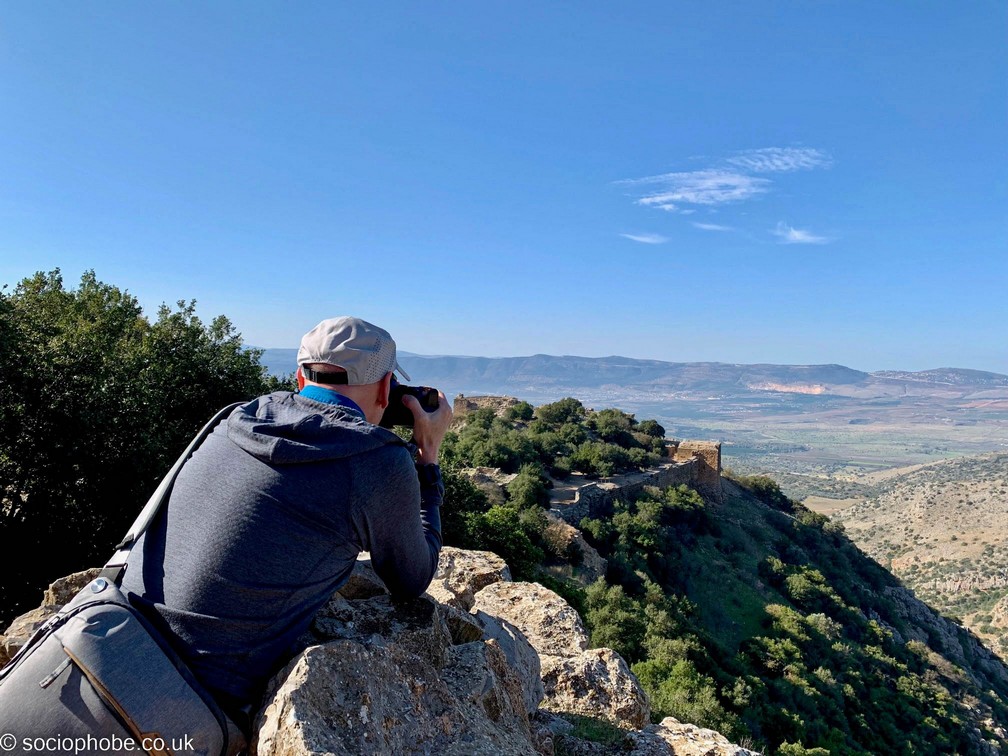
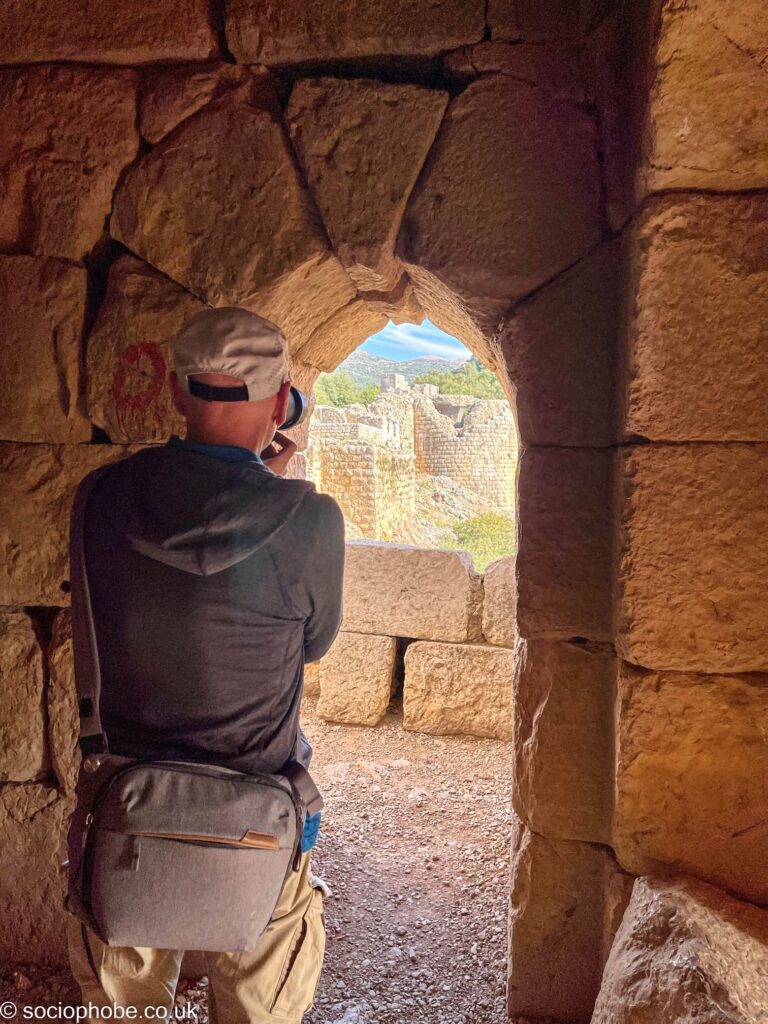
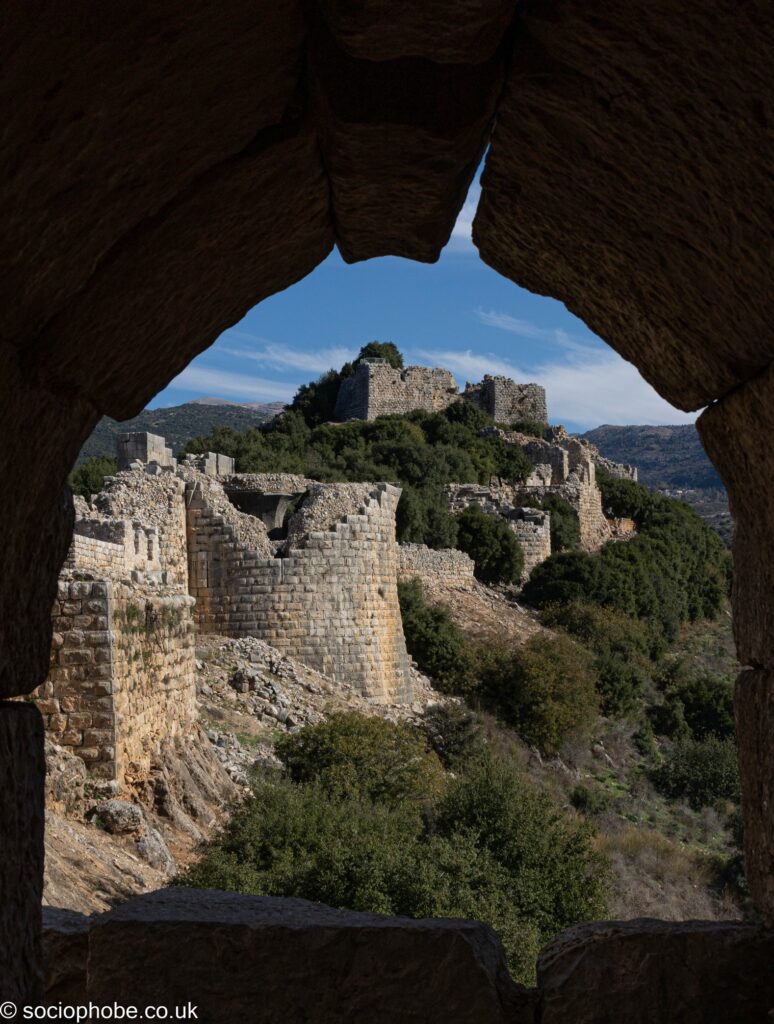
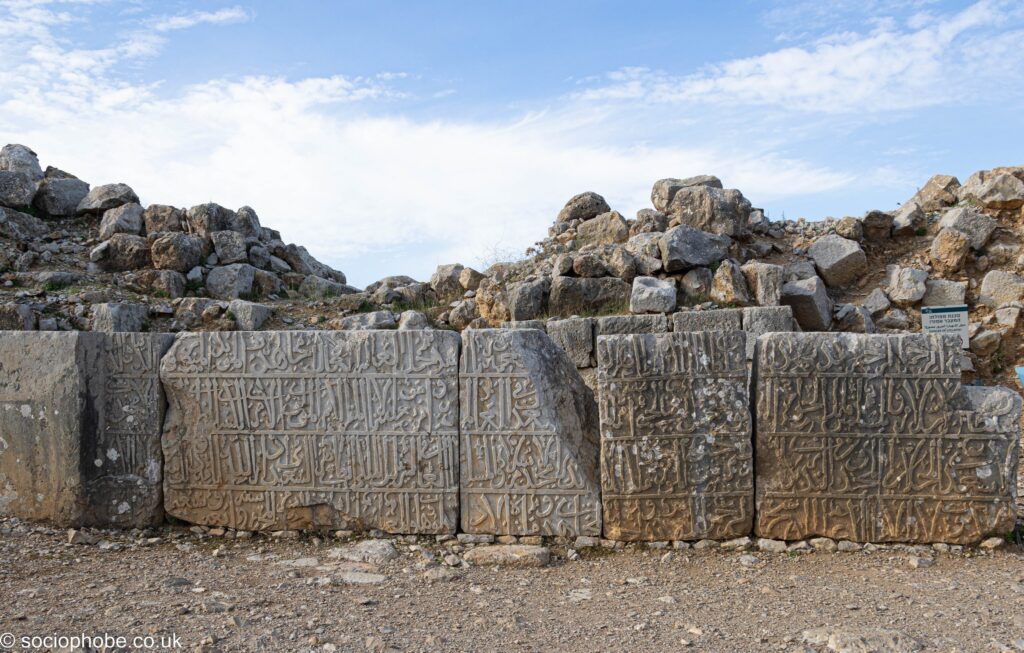
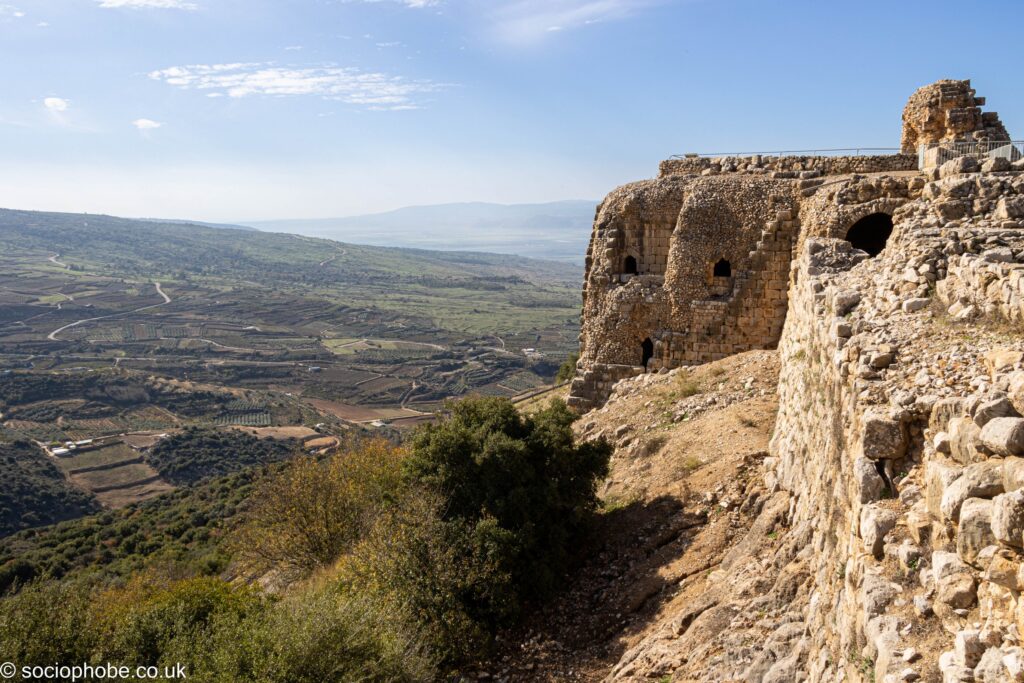
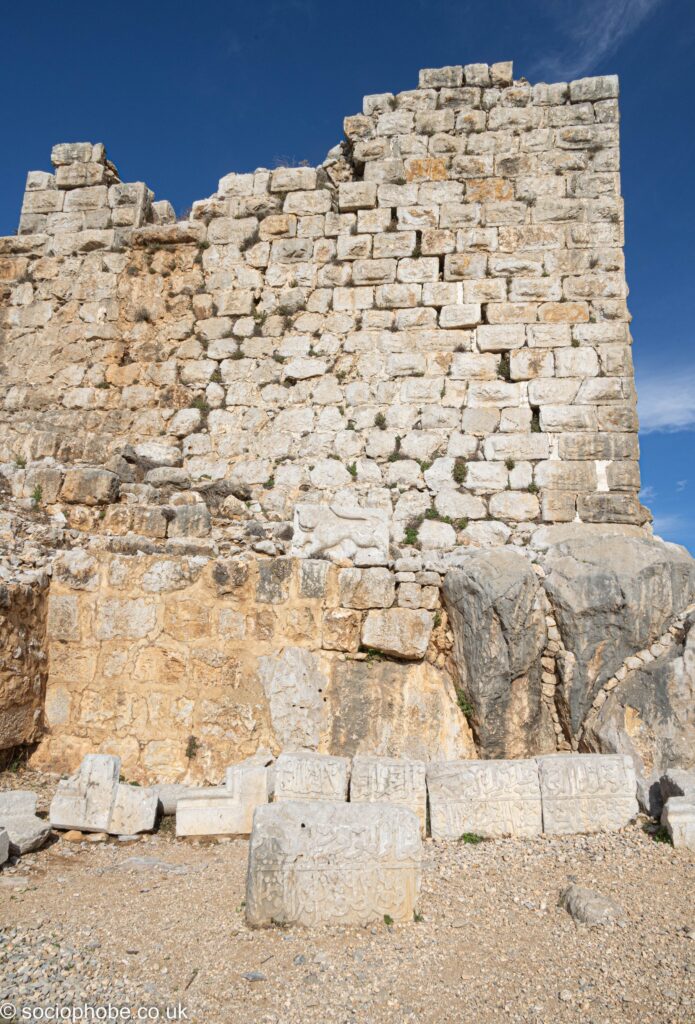
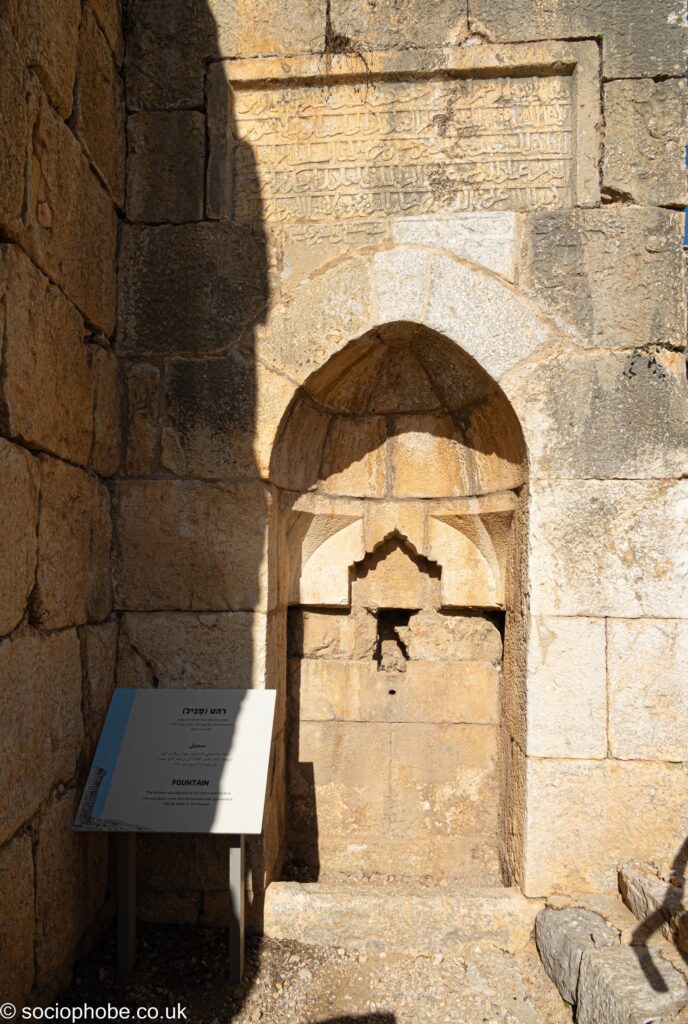
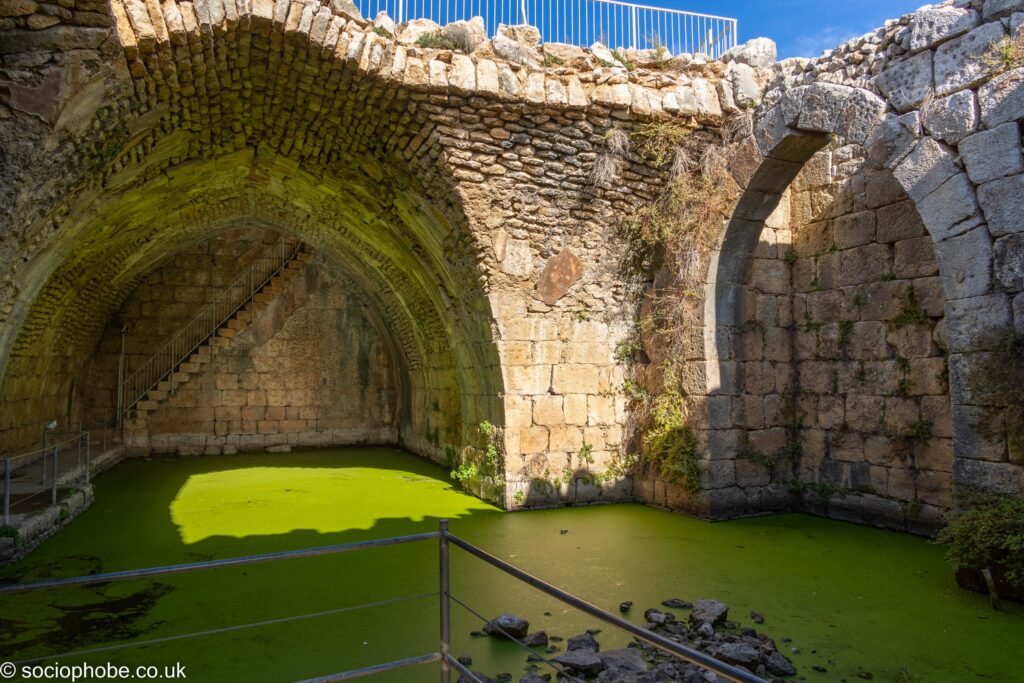
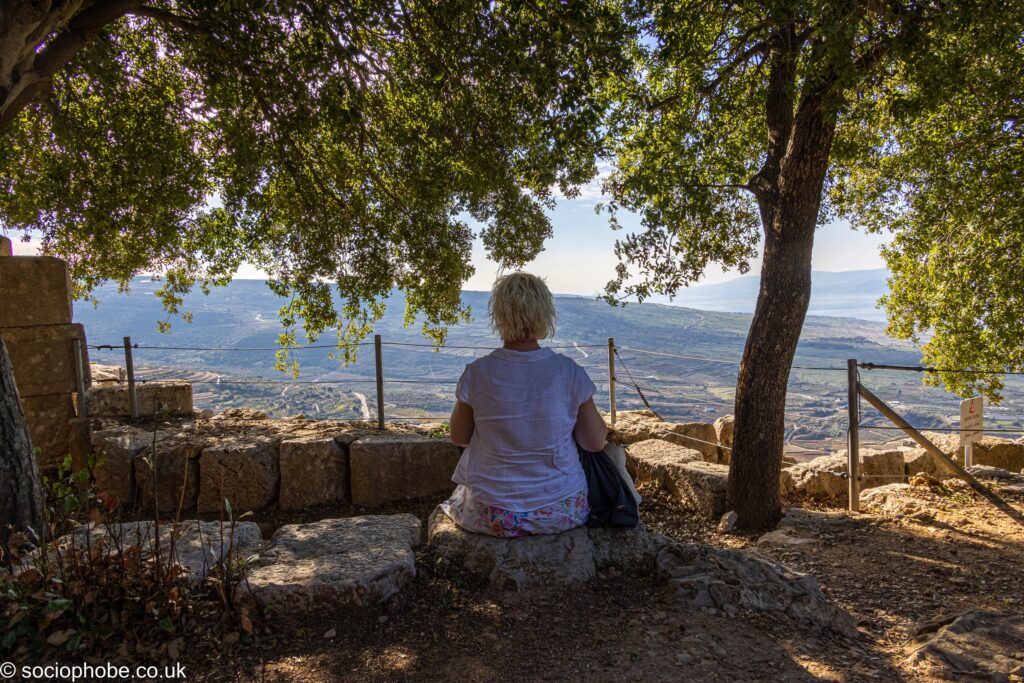
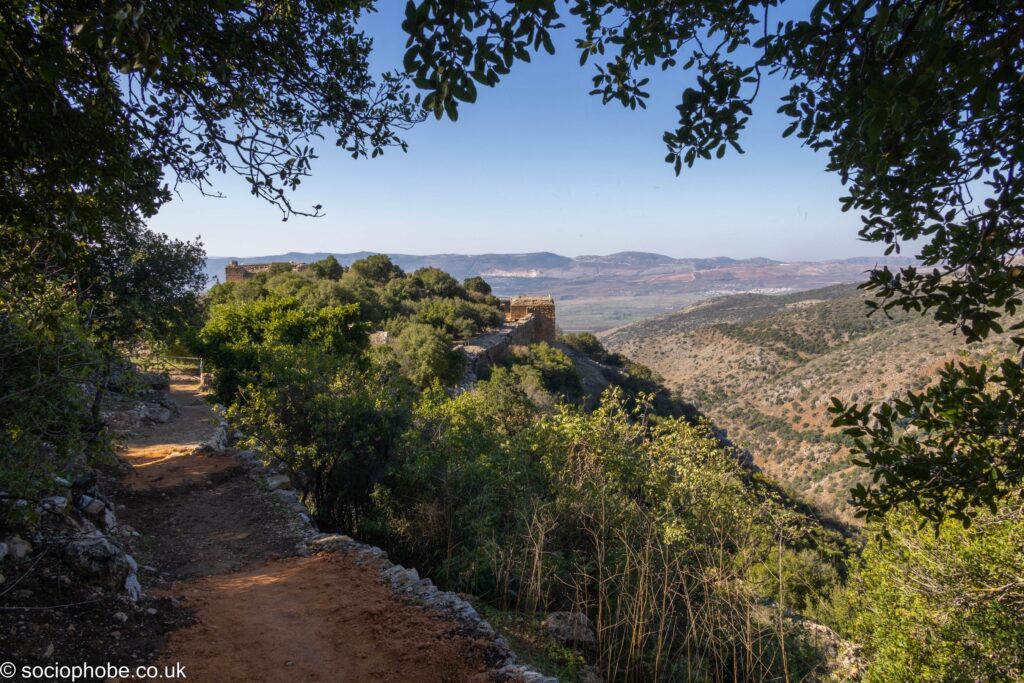
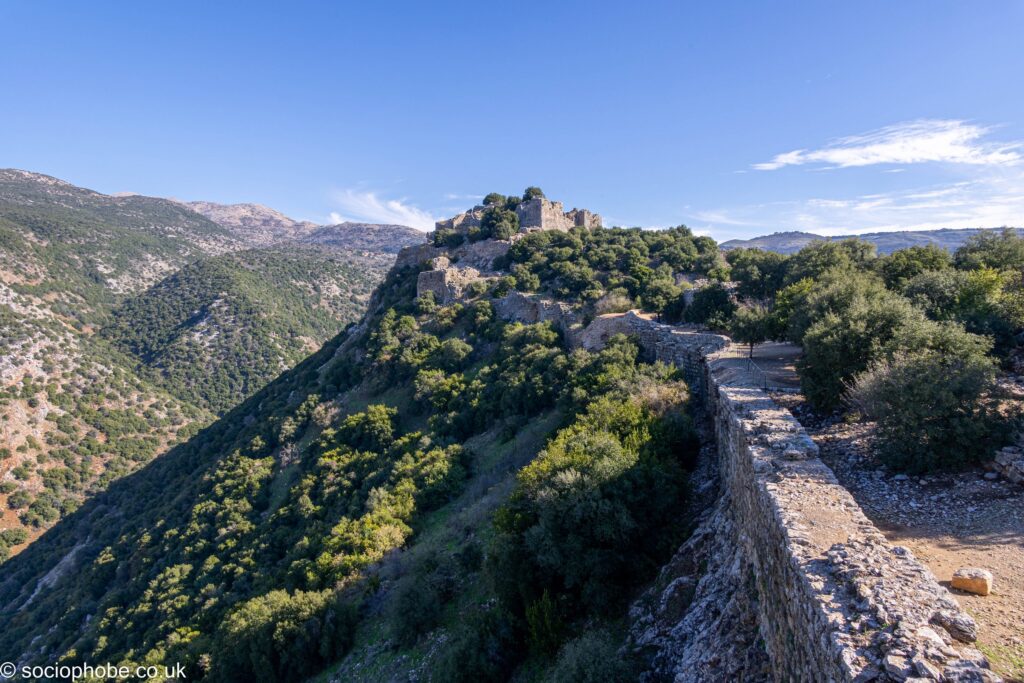
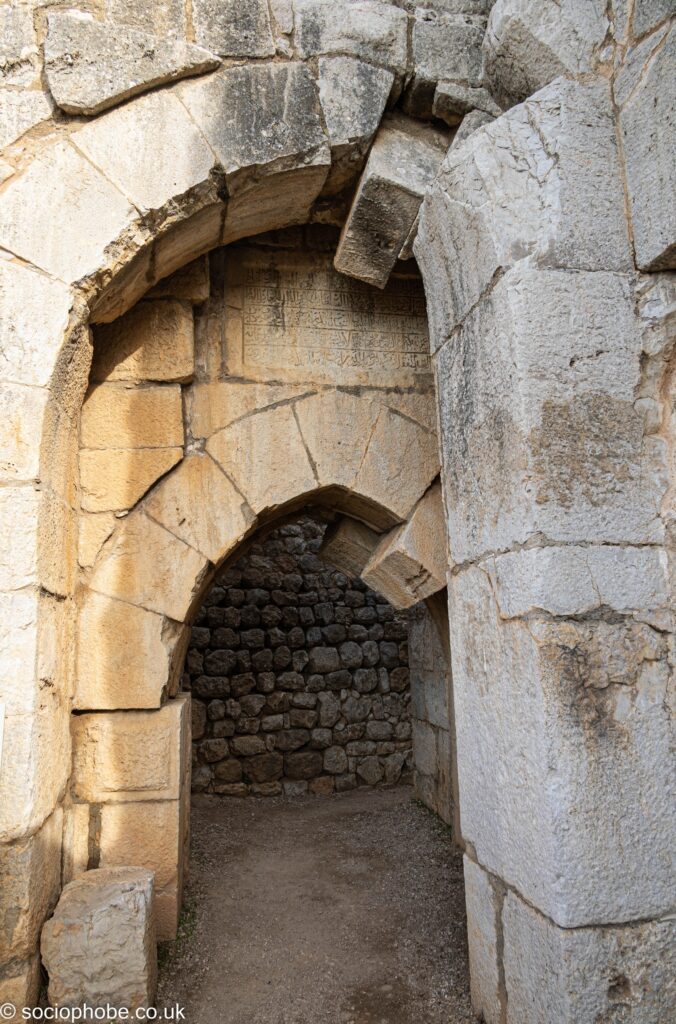
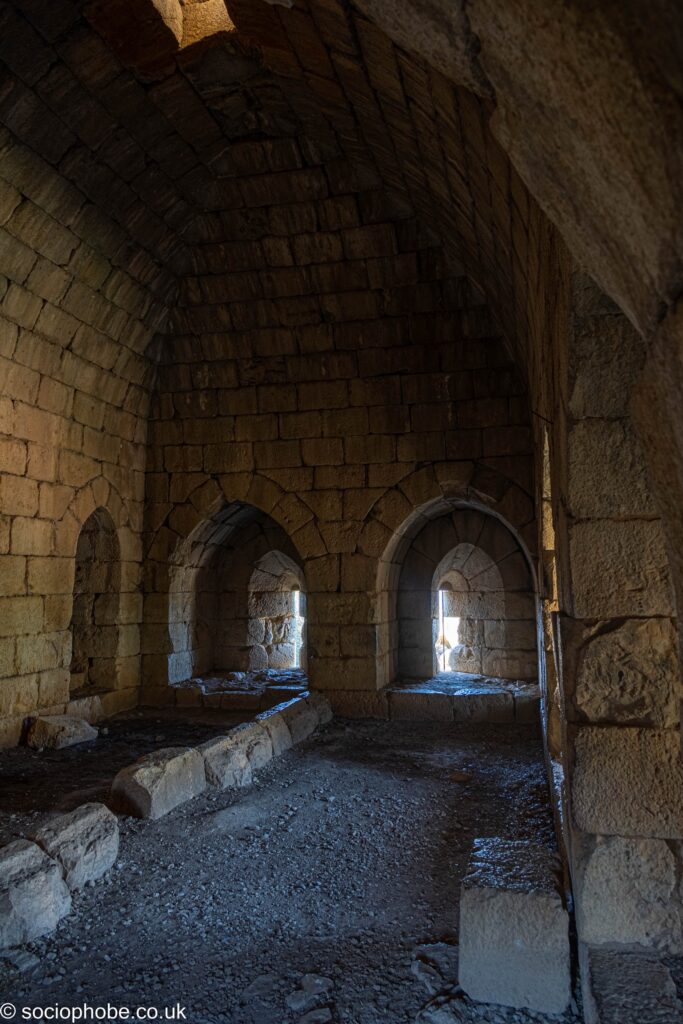
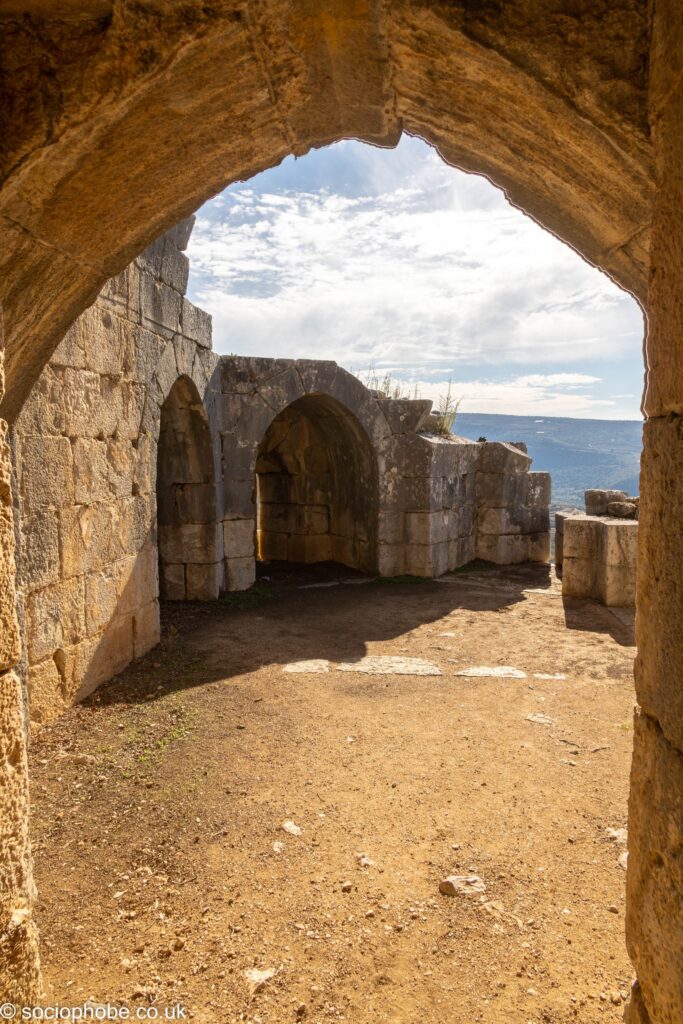
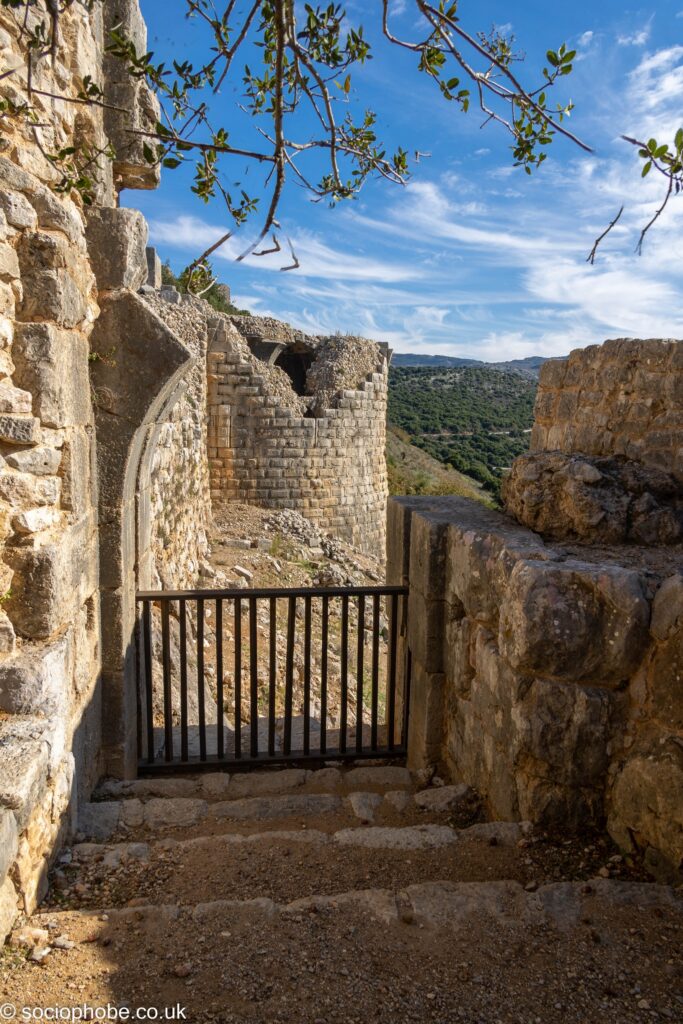
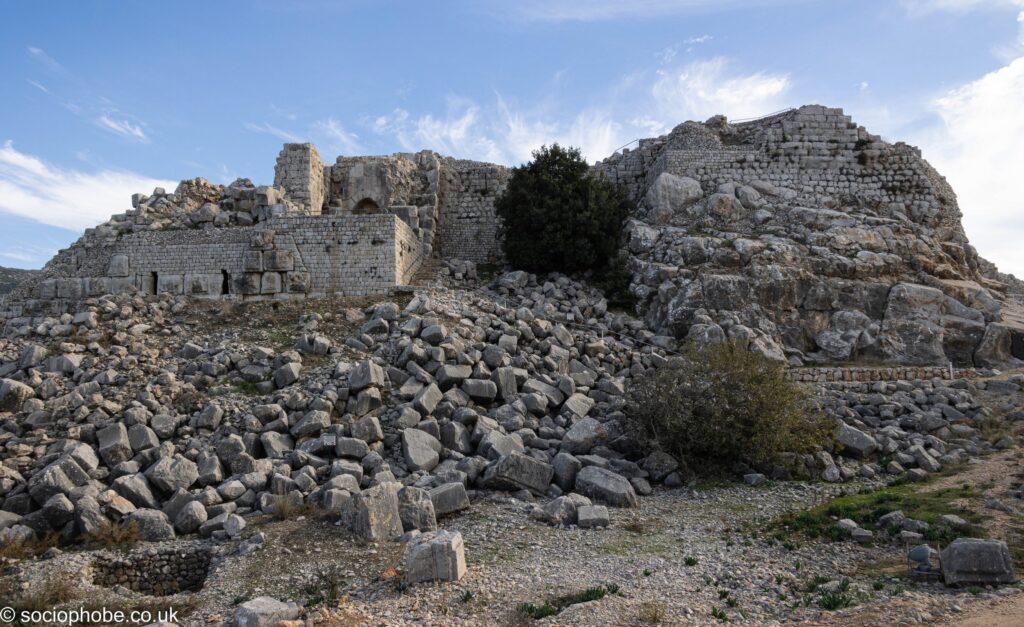
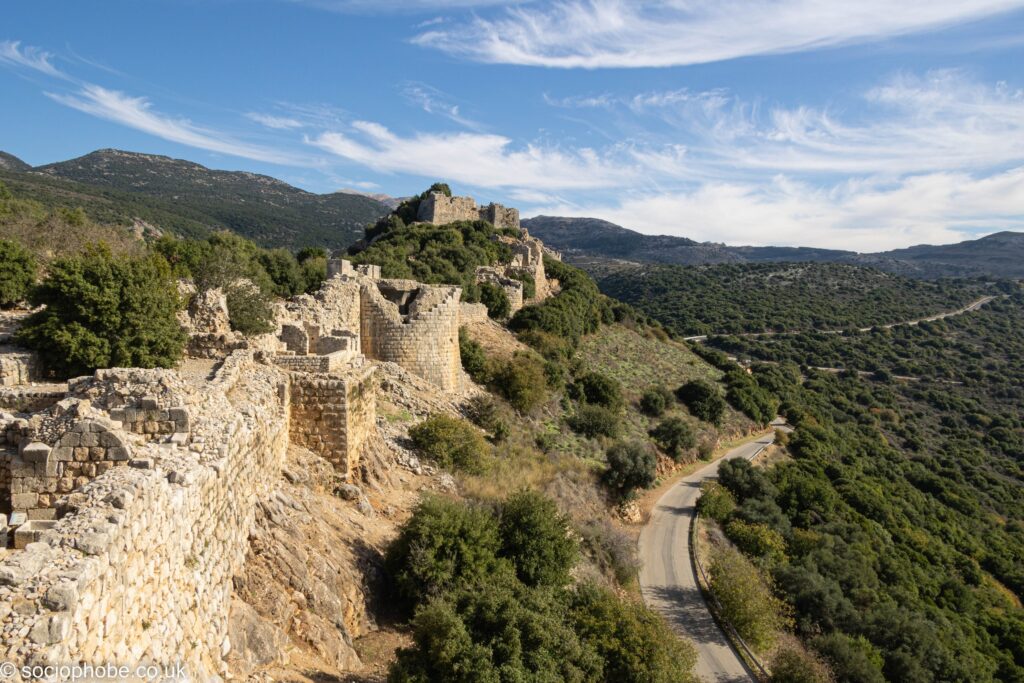
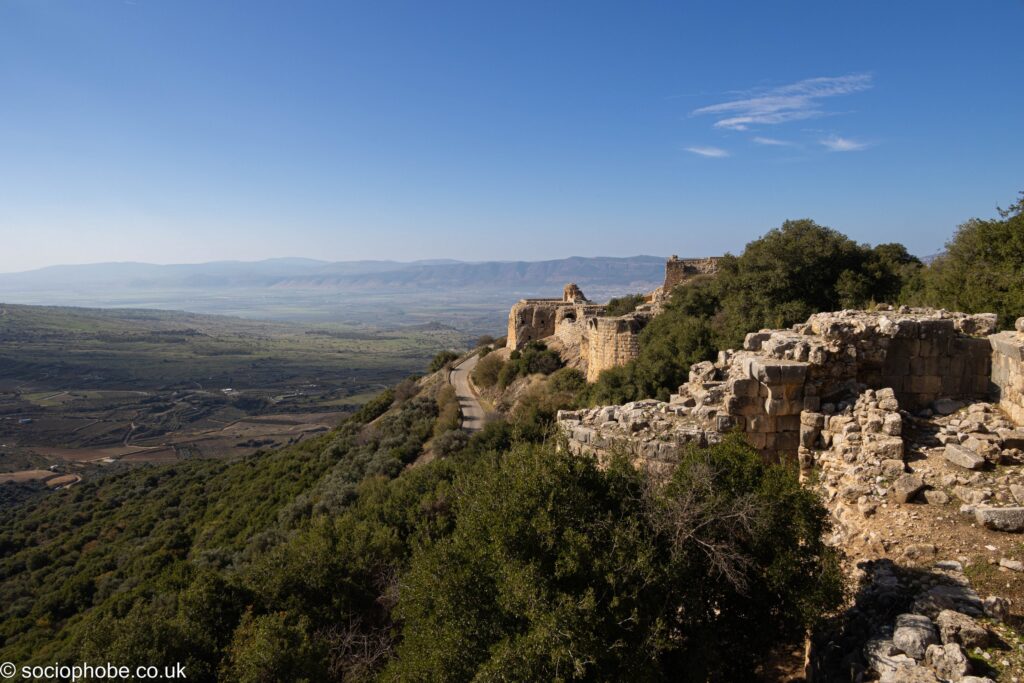
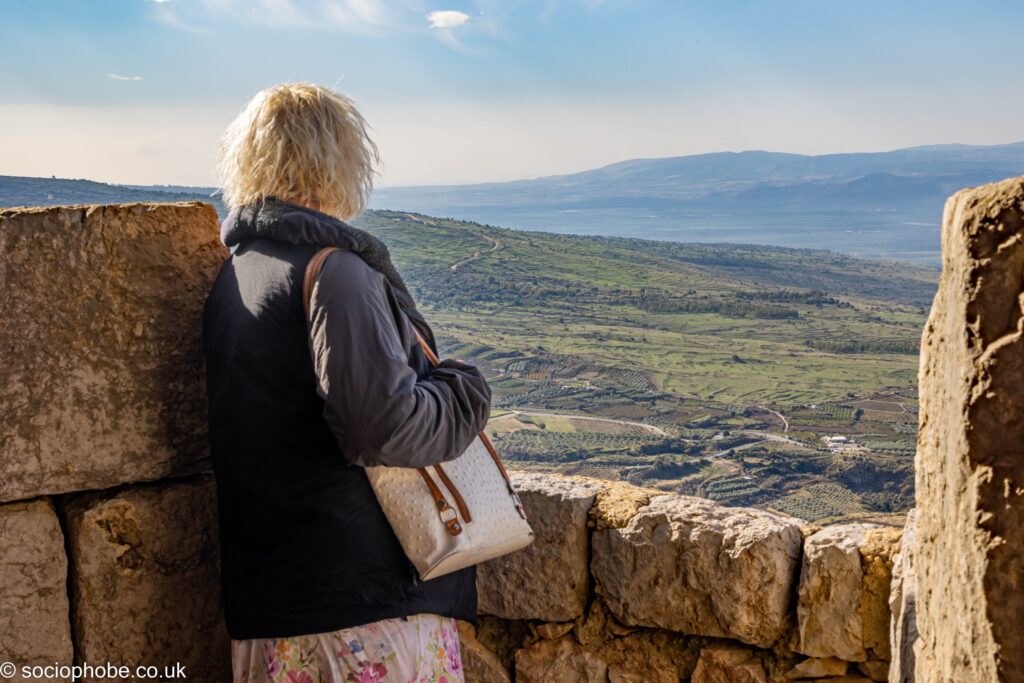
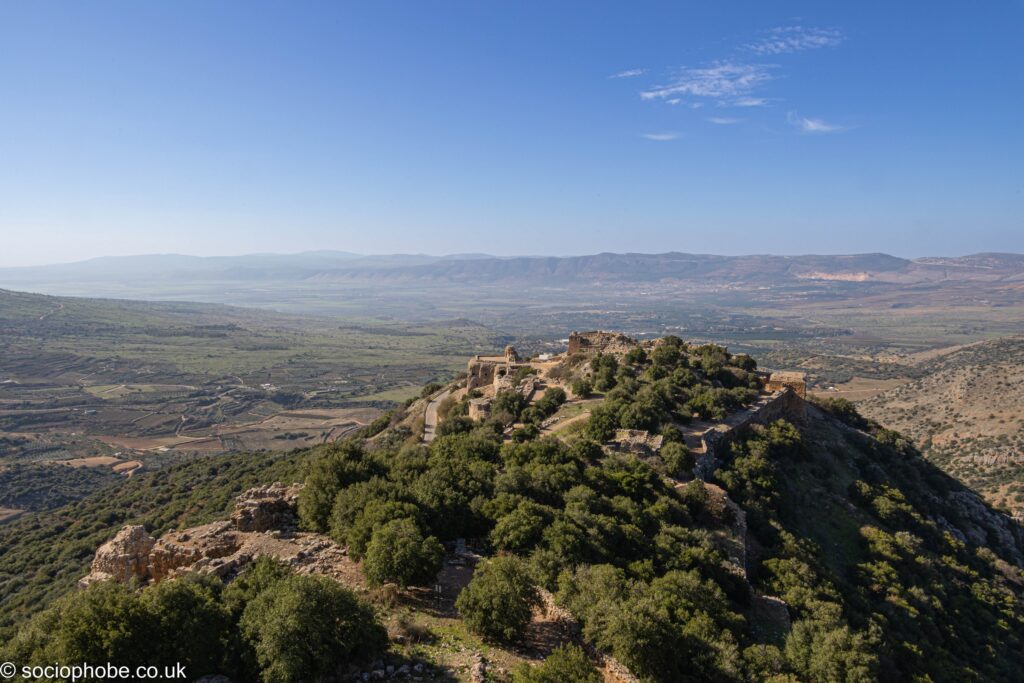
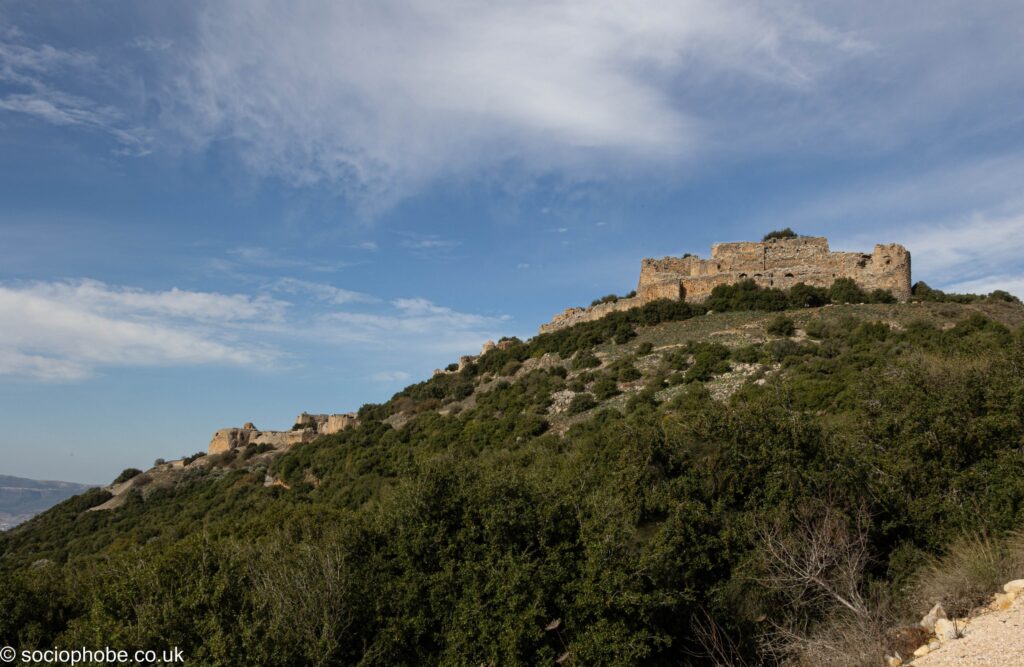
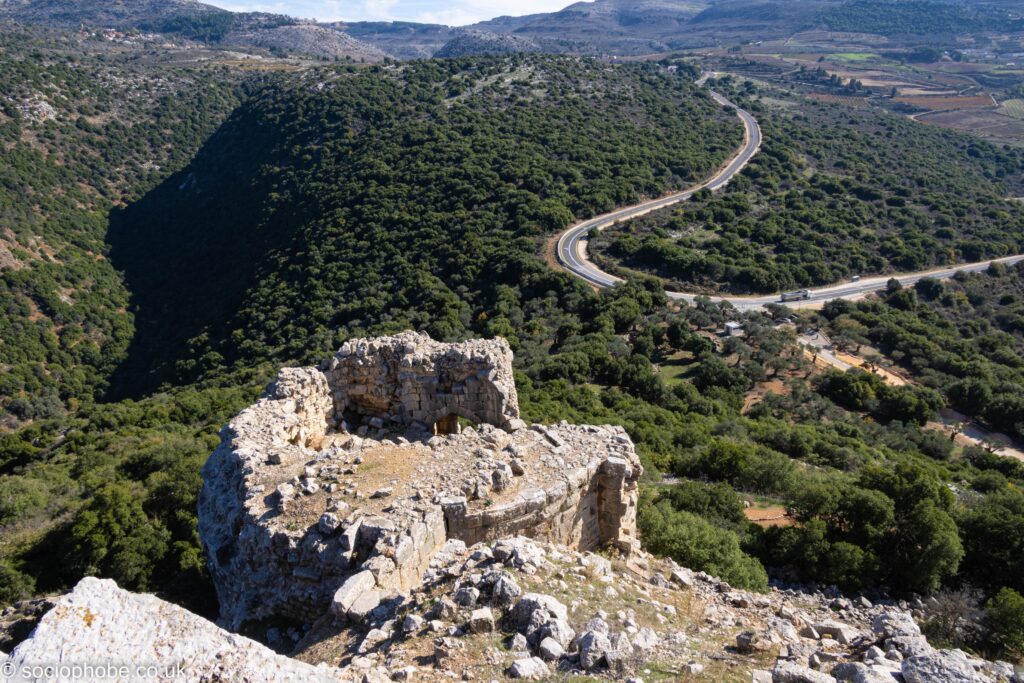
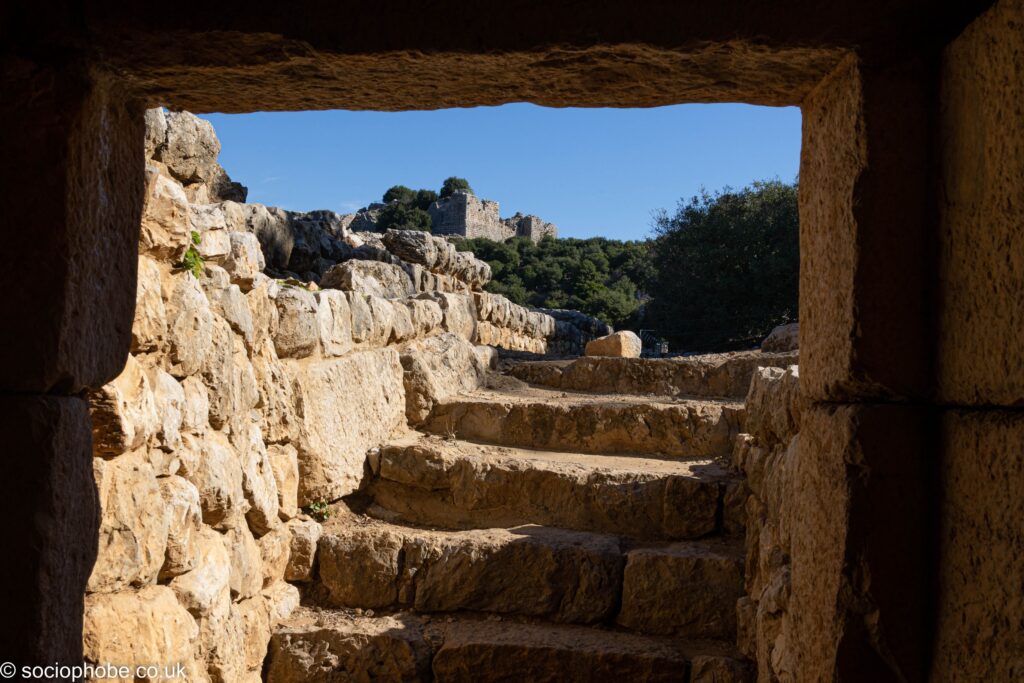
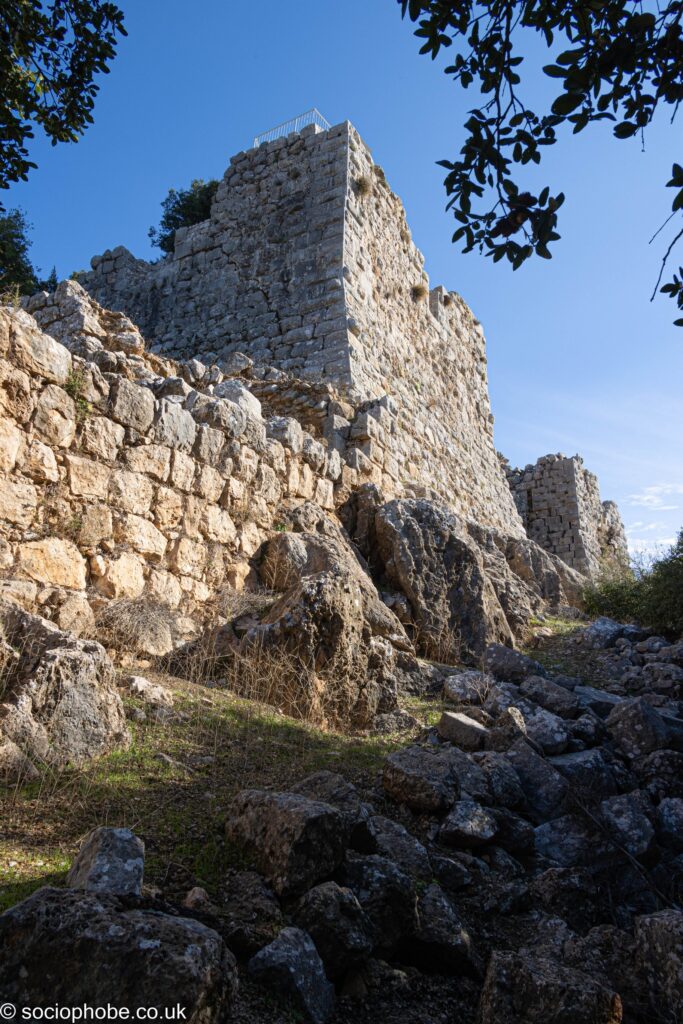
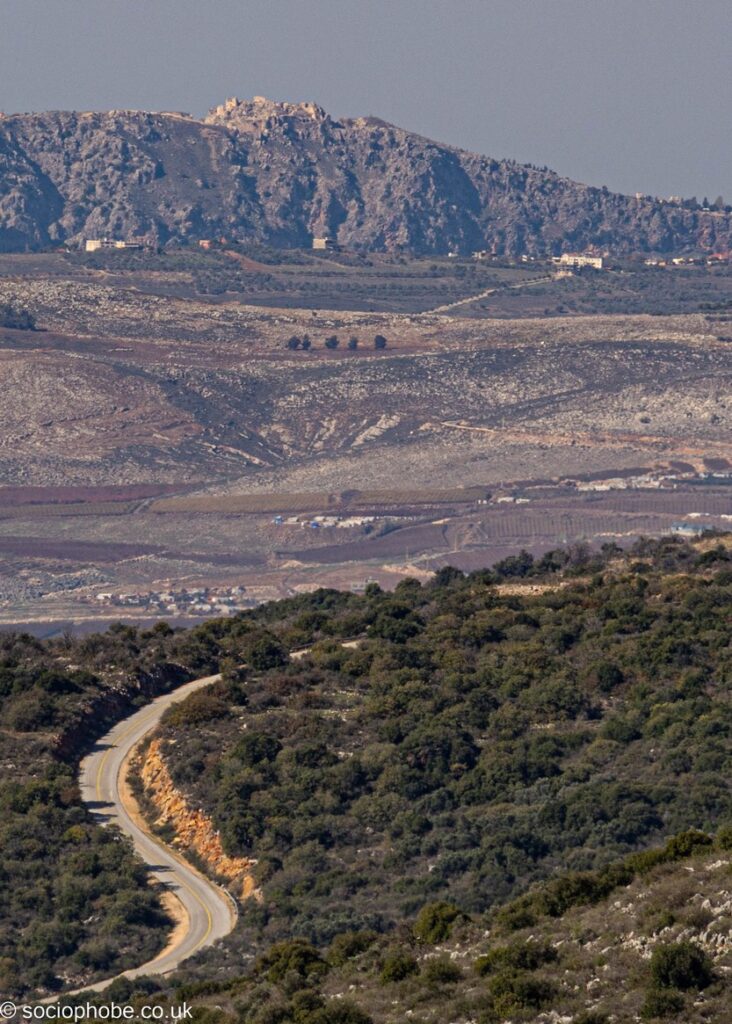
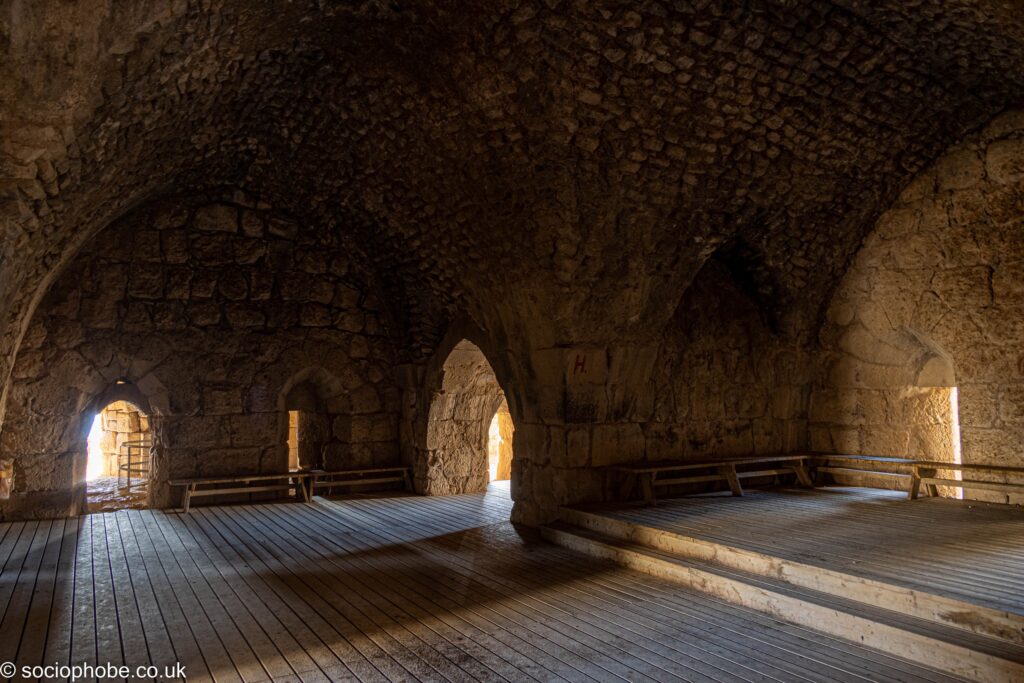
To the NW across the valley was the crusader fortress of Beaufort and you could see how the Nimrod Fortress dominated Mount Hermon and the Hula valley as well as the Tyre – Damascus road. We followed the route along the less well defended (due to the terrain) northern side, saw the prison tower and then returned to the car park.
As there was no cafe on site (!) we were both pretty hungry by now so we drove towards the top of the Golan Heights and had a fabulous brunch in Mas’ada before continuing to another of Deb’s choices, the Valley of Tears Visitor Centre.
The visitor centre took us a while to find, or rather the sat nav took us straight there but there were no English signs to identify it. The building is part of a kibbutz and had some information on the board but was mainly there to show a 30 minute video on the history of the battle. The guide (Ehritz?) was fabulous and very helpful.
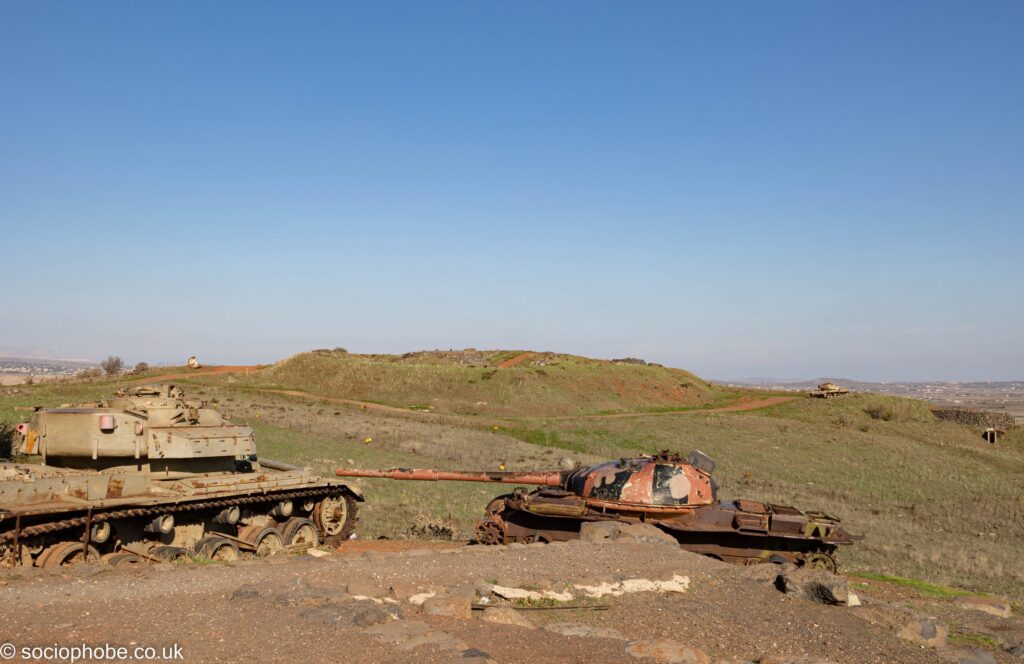
The Valley of the Tears is the name given to a 4 day battle of the 1973 Yom Kippur War where Syrian tanks and APC’s attacked through the valley to get to the Israeli towns beyond. The Israeli’s were massively outnumbered and it was a close run thing but the Syrians eventually retreated, leaving around 500 destroyed vehicles for the cost of about 70 Israeli tanks and crews.
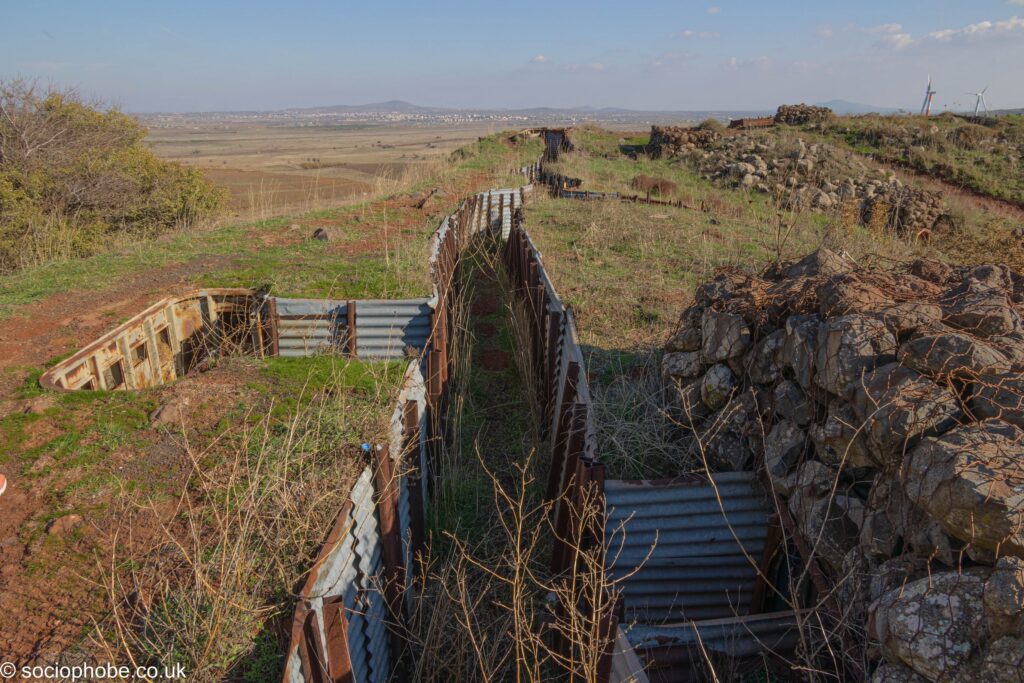
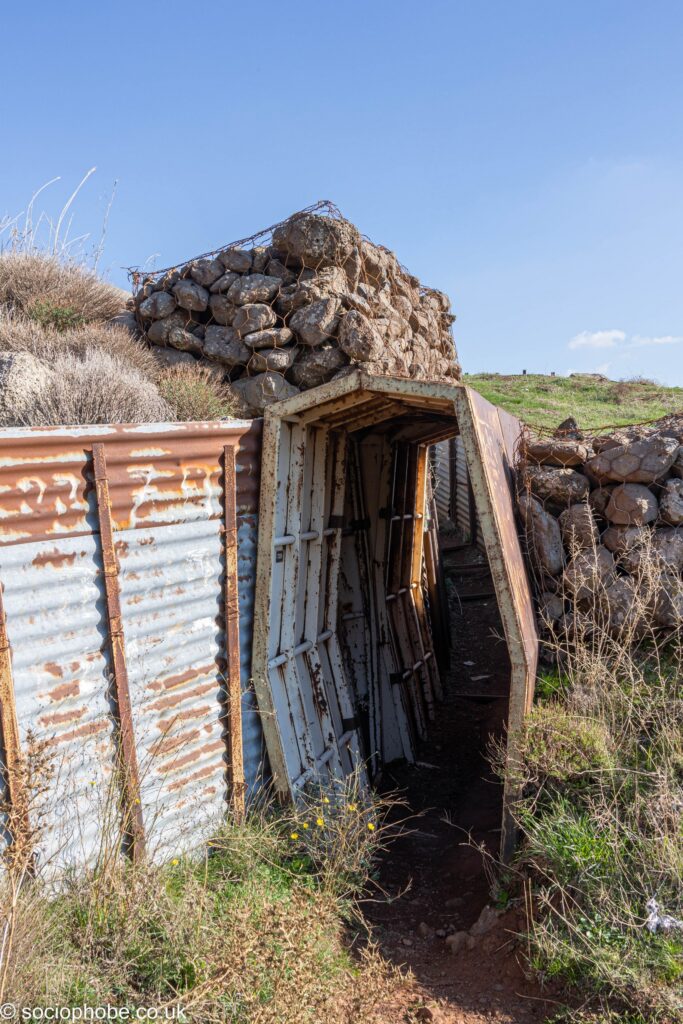
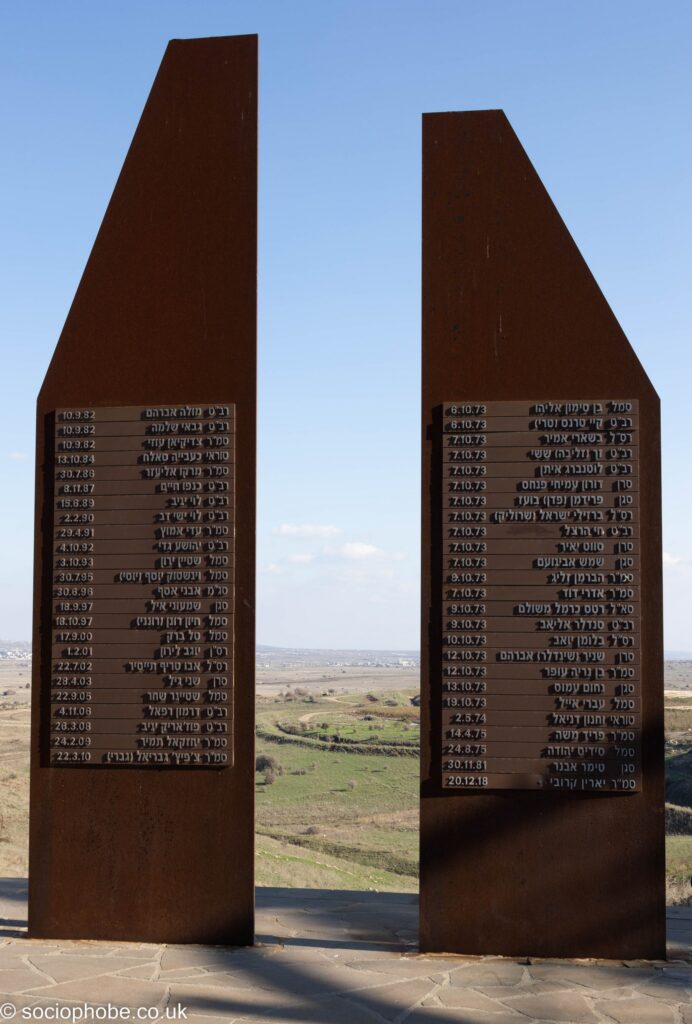
After watching the film we drove the short distance to the battle site and the memorial to the 77th Battalion Memorial. We were able to see the Israeli trenches and some destroyed tanks from the battle as well as the spectacular views that the defensive position commanded. We also very sensibly avoided the minefields that still dotted the site. Driving back we saw lots of prepared berms in case of another attack and a mock village for urban warfare training.
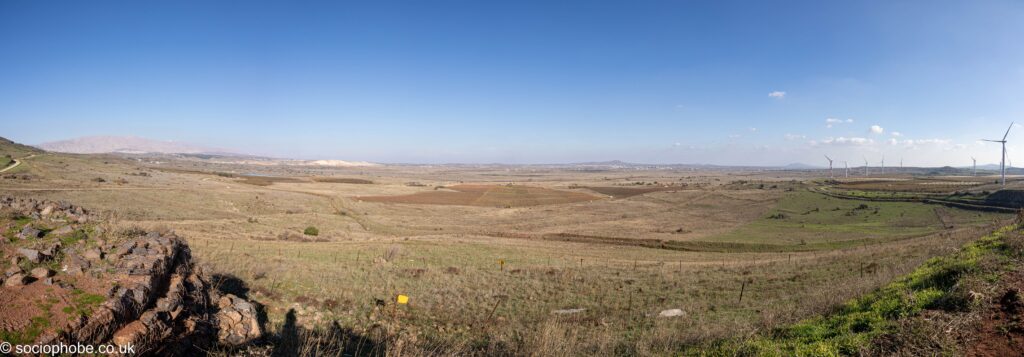
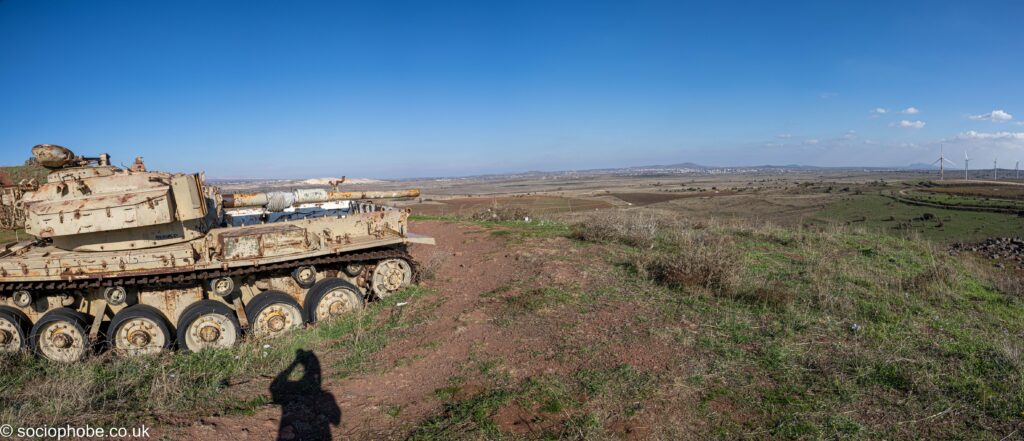
We drove past the intensive agriculture of the area – dates, cherries, apples and also cattle. Our plan was to visit the Roman amphitheatre in Tiberias but sadly it was closed until tomorrow. Tiberias hasn’t scored very highly really – the ‘crusader’ castle was actually built 400 years after they left and is more of a folly, the Sea Mosque is closed and abandoned as it is the wrong heritage to promote, the Roman amphitheatre was closed so really all it had going for it was lovely views across the Sea of Gallilee.
Back in our apartment the days notes and photos took a couple of hours and by then I was hungry again. We found a restaurant about 10 minutes walk up the hill and had a veritable feast, so much so we wish we’d just ordered one portion between us as we ended up leaving loads.
Monday 5th December – Tiberias to Dead Sea via Belvoir Castle and Bet She’an ruined city
Day 5 of the road trip through Israel involved leaving the hilly north and driving to the Dead Sea, a drop of around 1500m. I woke before 7 so went for a walk down to the Sea of Gallilee shore whilst Deb slept. There were a few people around but mostly cats – Israel seems to be infested with them! I walked past the sea mosque and to the Greek Orthodox monastery then continued on to the southern city wall which is very ruined and looks to be a bit of a dumping ground.
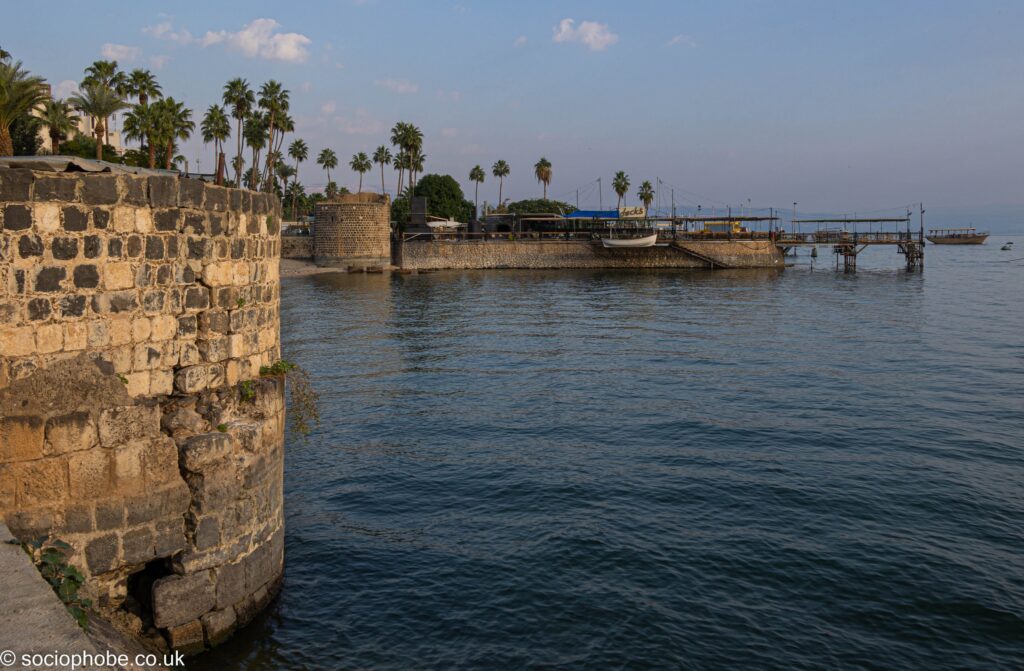
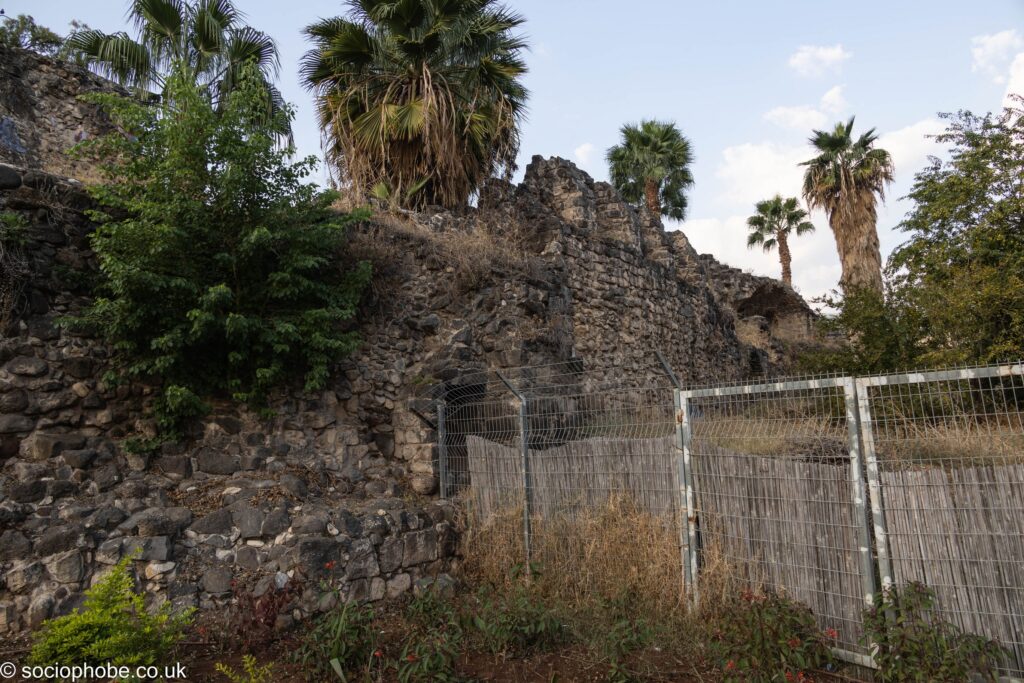
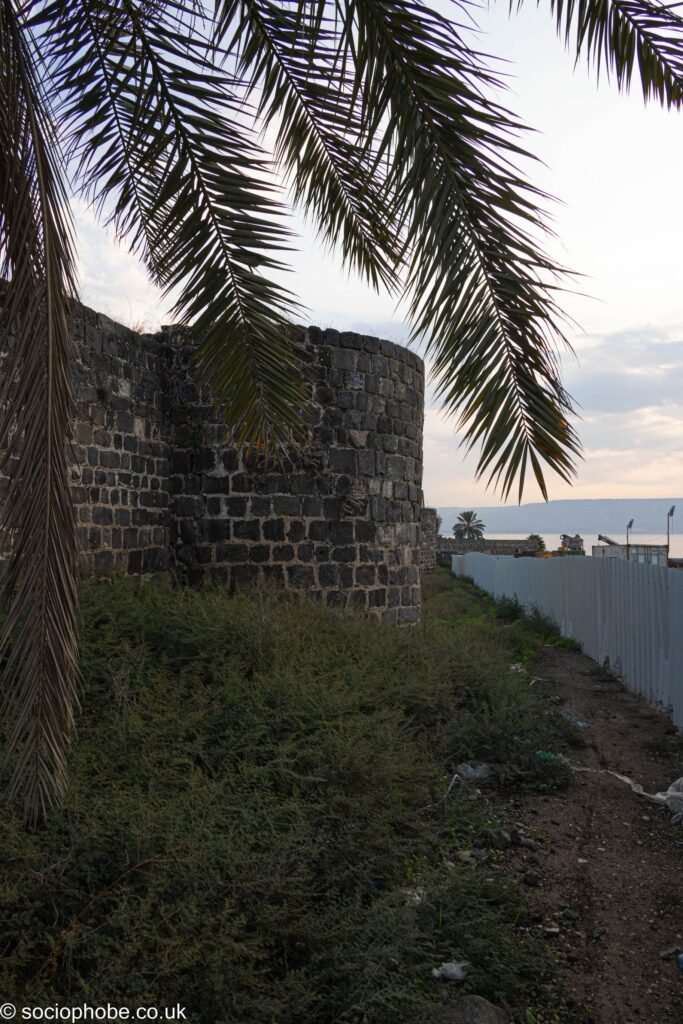
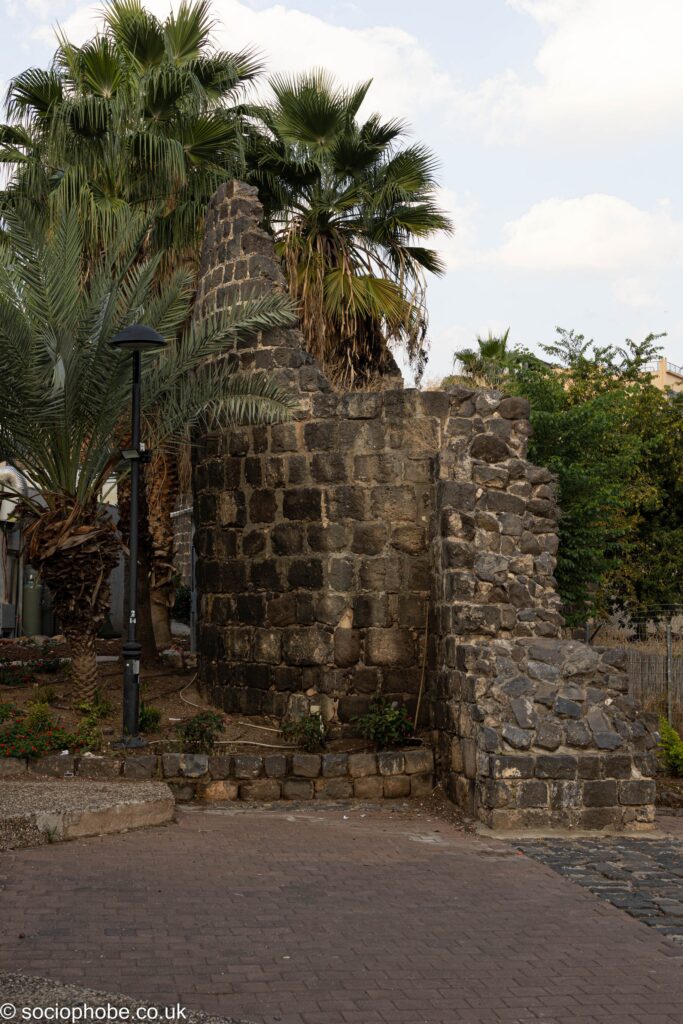
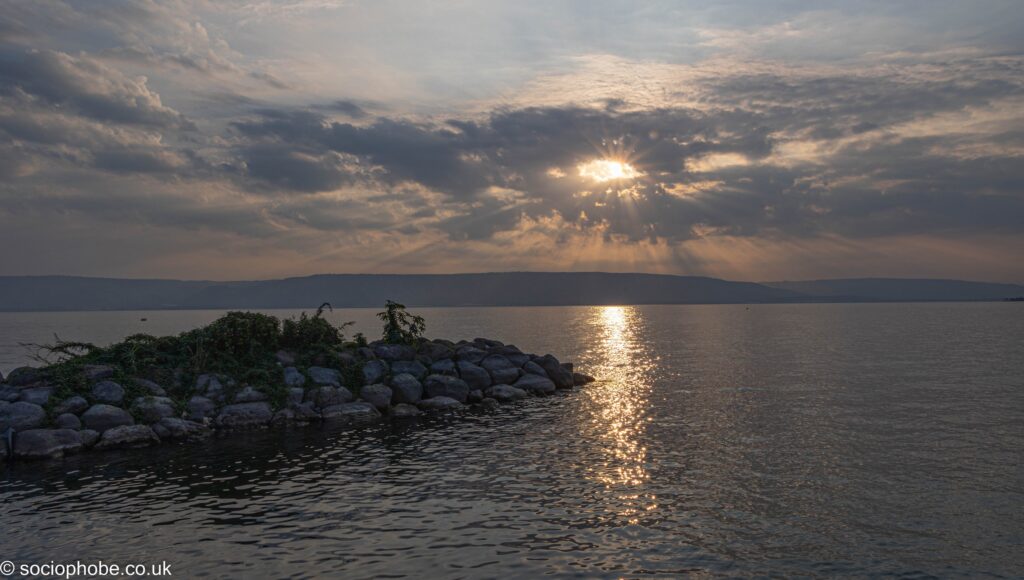
The whole city seems very run down I’m not actually sure of the appeal of staying here! Reading the history of the city it has been periodically destroyed by earthquakes, sacked by various armies or raided by Bedouin tribesmen throughout its recorded history so I guess it’s amazing there is much old stuff left at all!
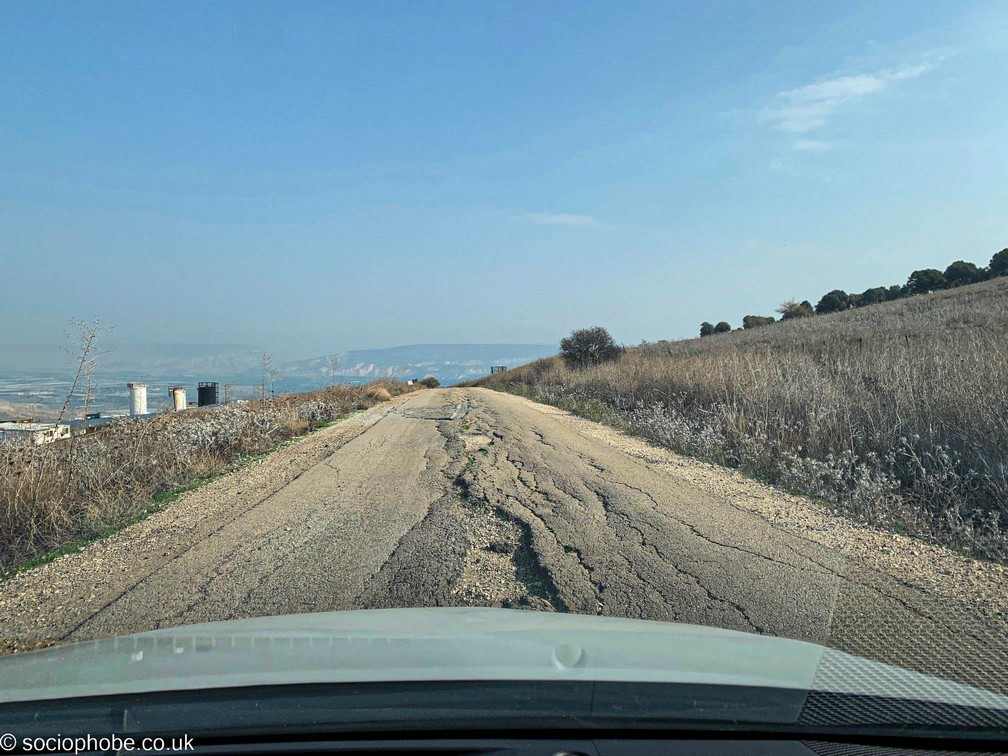
When I got back to the apartment Deb was pretty much ready to go so we headed off through Tiberias and after about 30 minutes saw the sign for our first stop, The Jordan Star National Park. This sounds lovely and it was – the Crusader castle of Belvoir – how cunning is that?! When we turned off the main road we didn’t even see the castle on the hills above and it was a 6km drive over a steadily worsening road to reach the summit with the castle.
We parked in the huge car park along with 4 cars belonging to the staff – we were the only visitors! The guy in the ticket office was really helpful and we started our walk to the castle. Although a lot smaller than the Islamic Nimrod Fortress we saw yesterday, Belvoir was far sturdier with solid walls, a massive rock cut moat and concentric layers of walls. Science at its best.
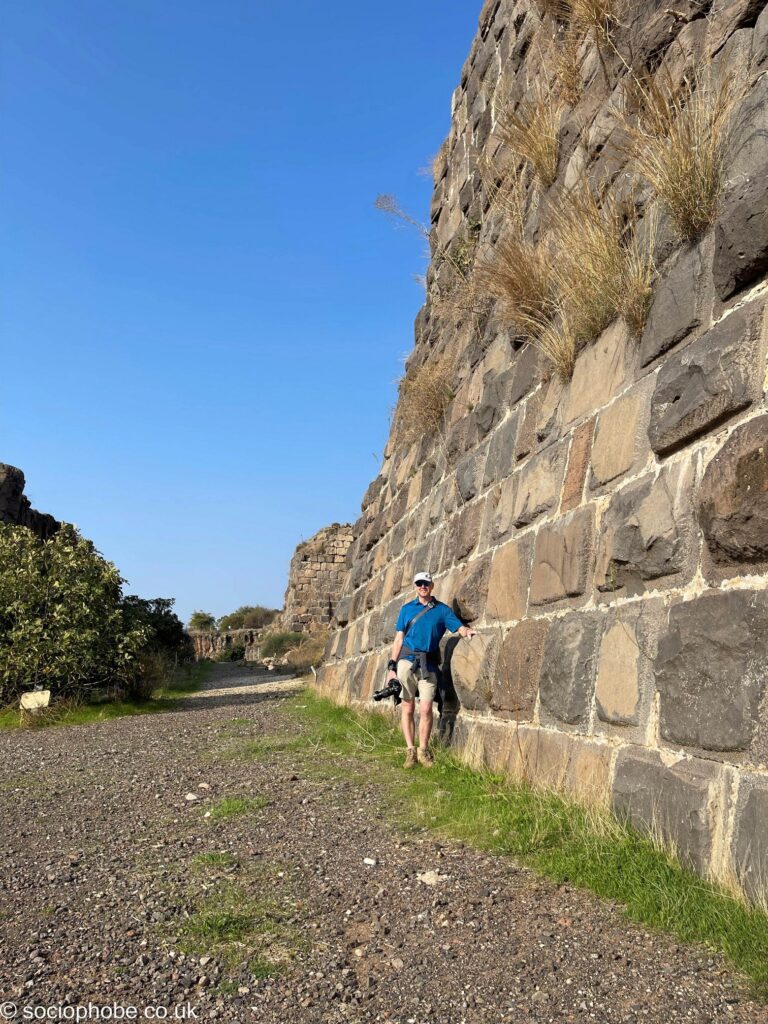
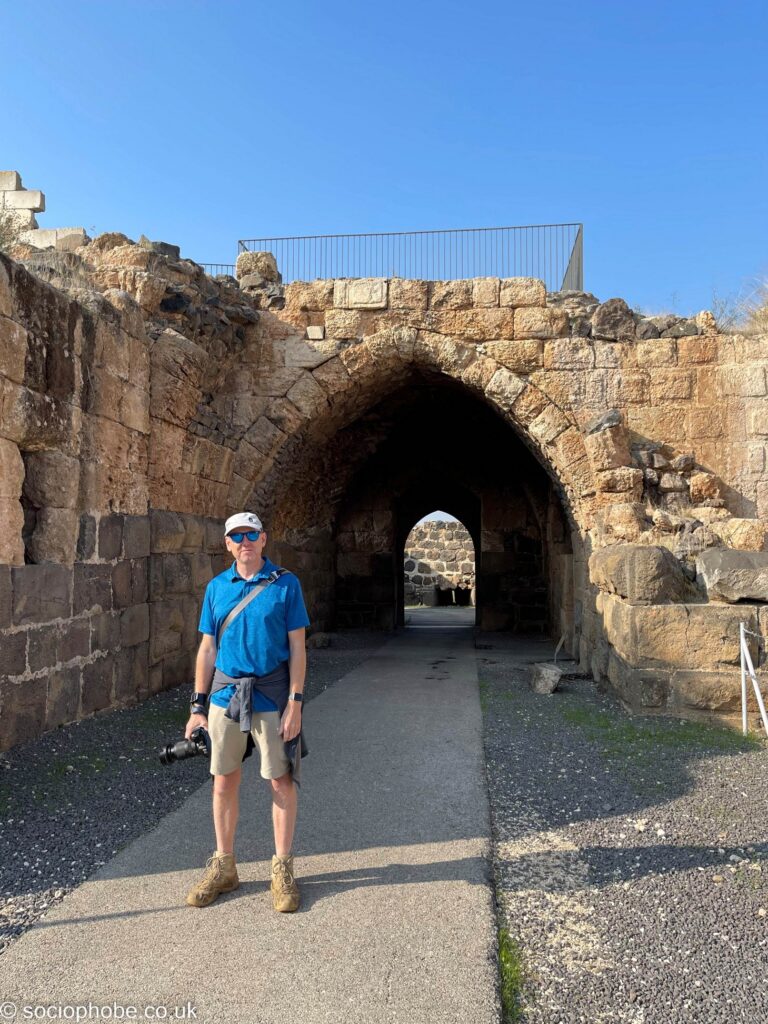
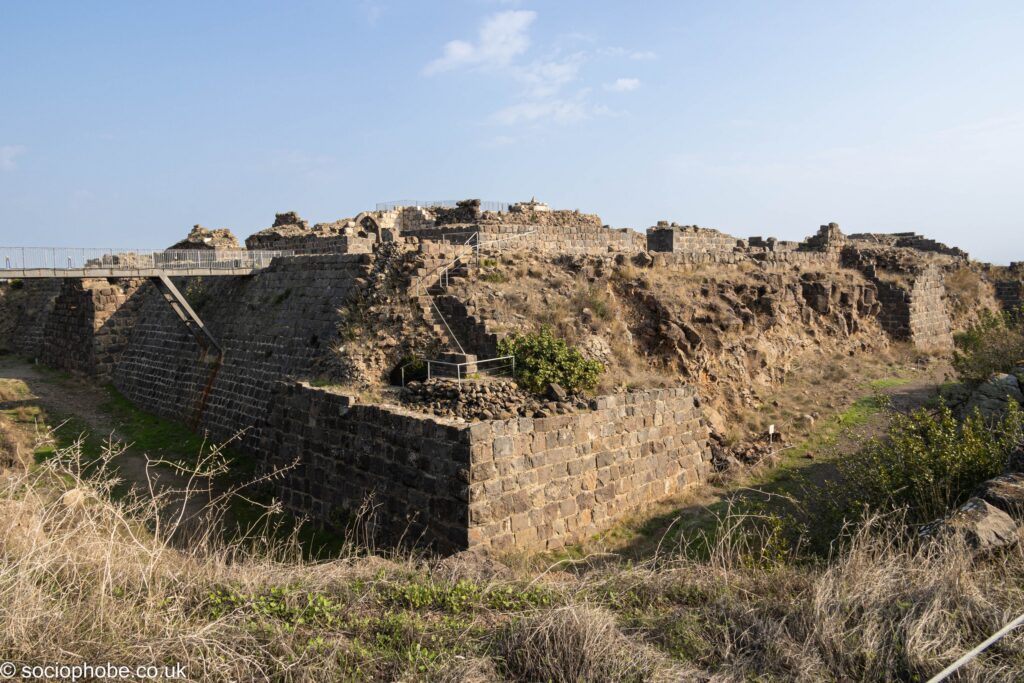
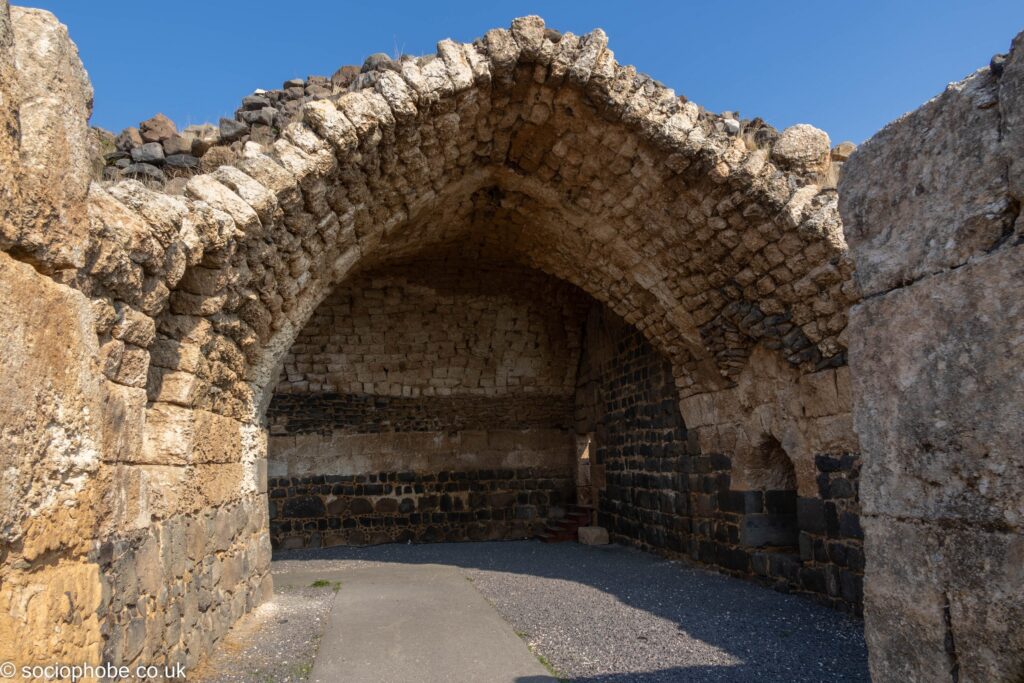
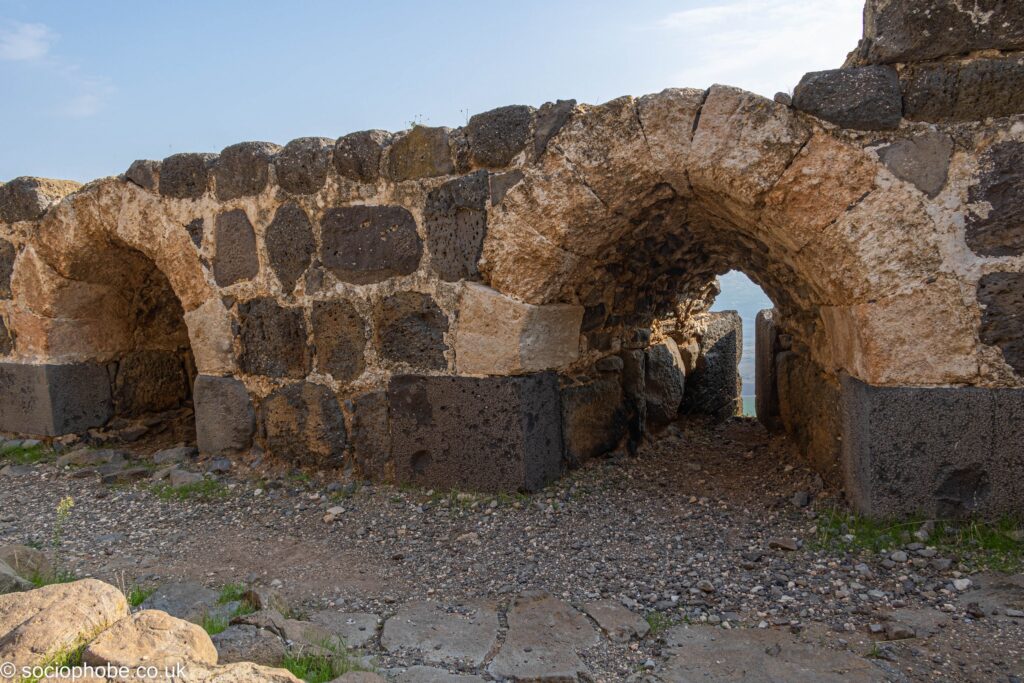
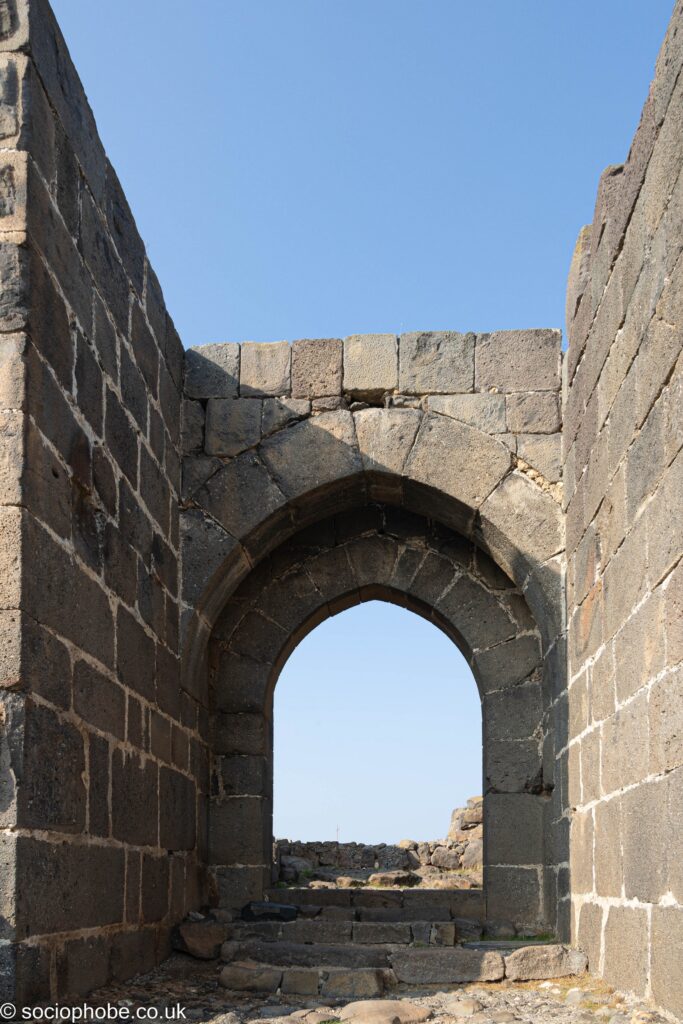
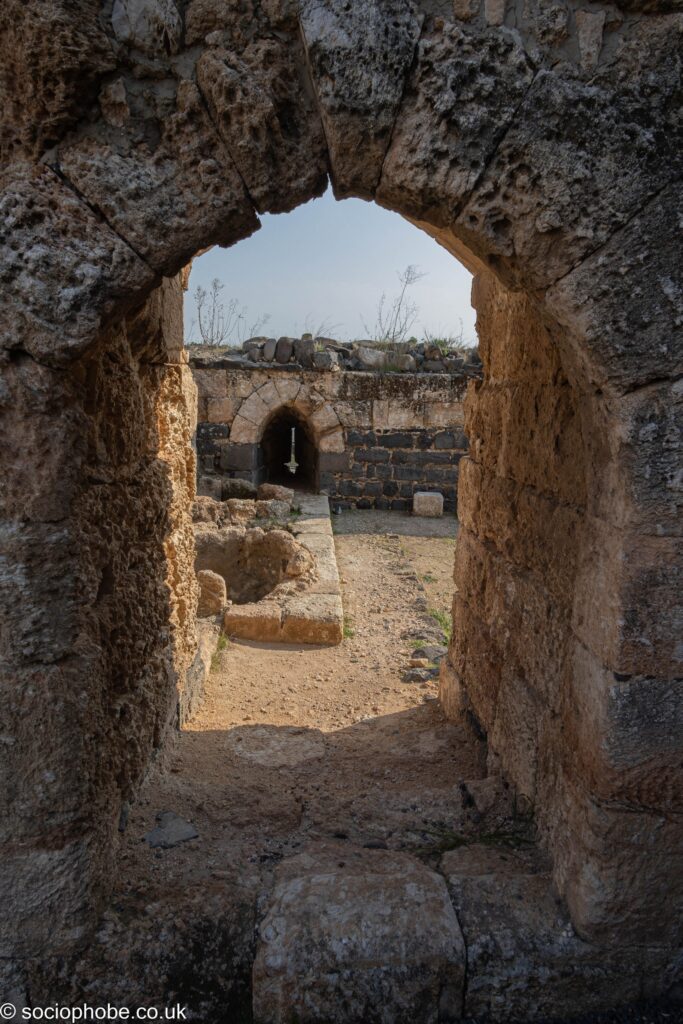
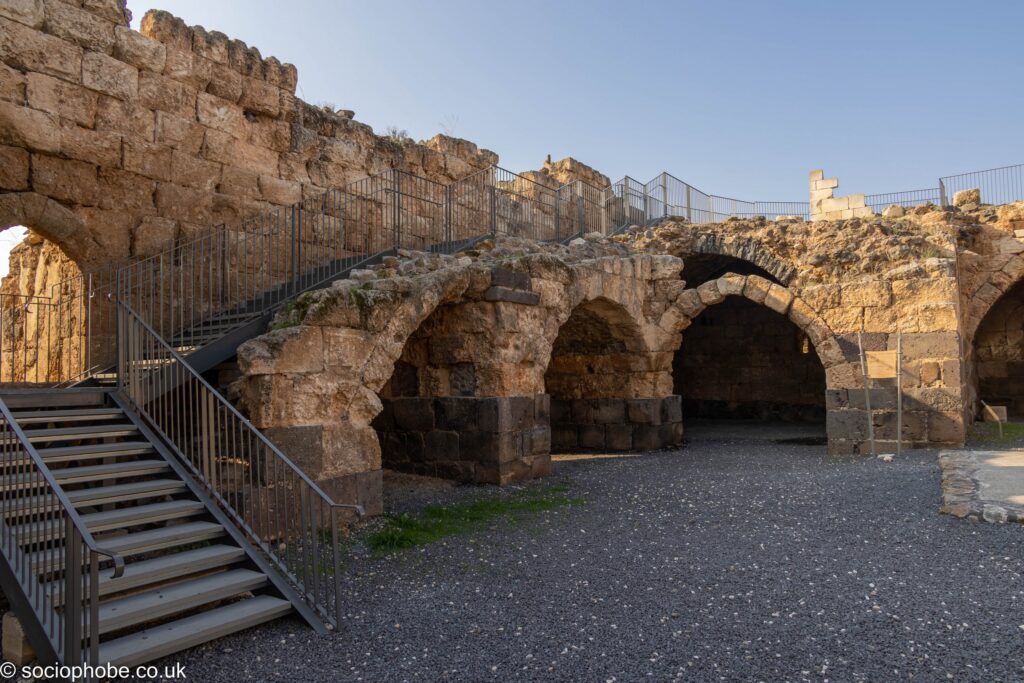
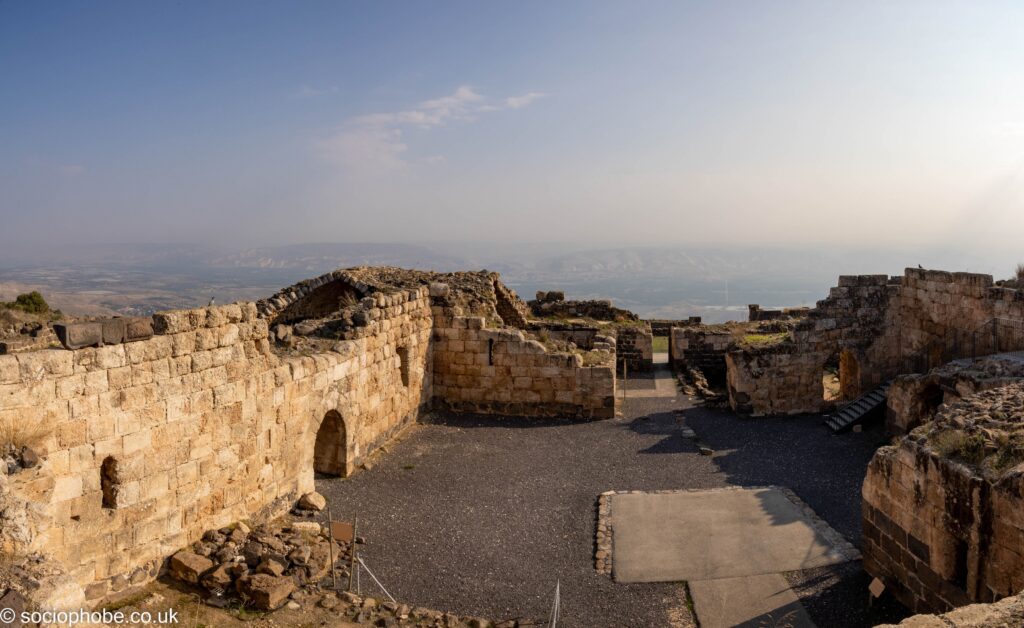
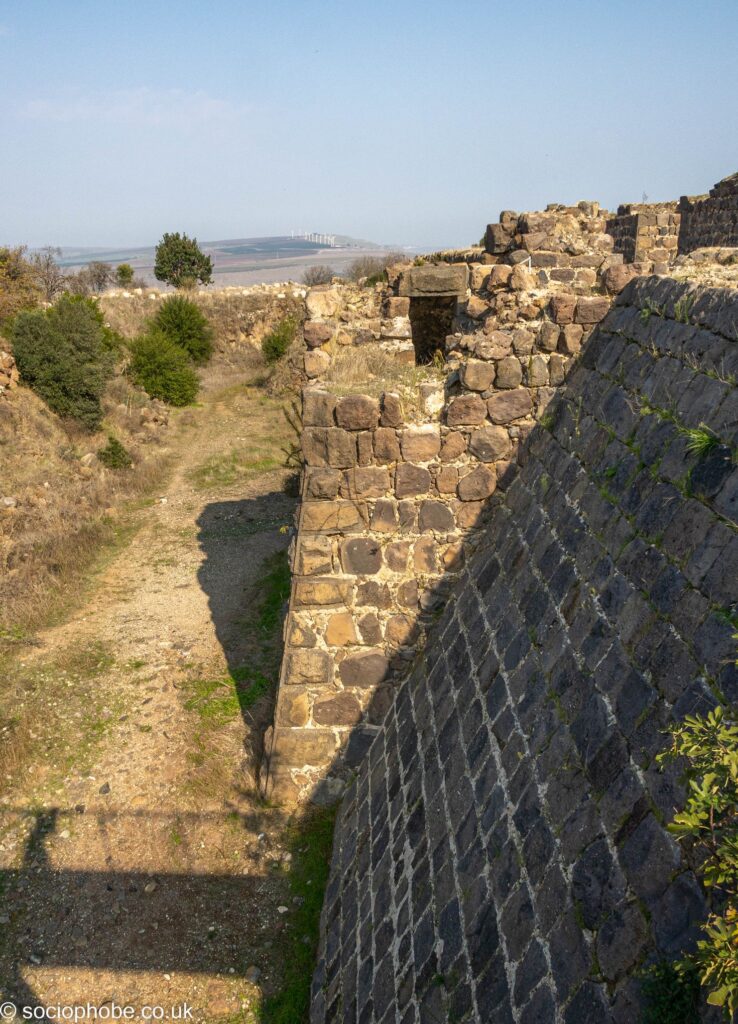
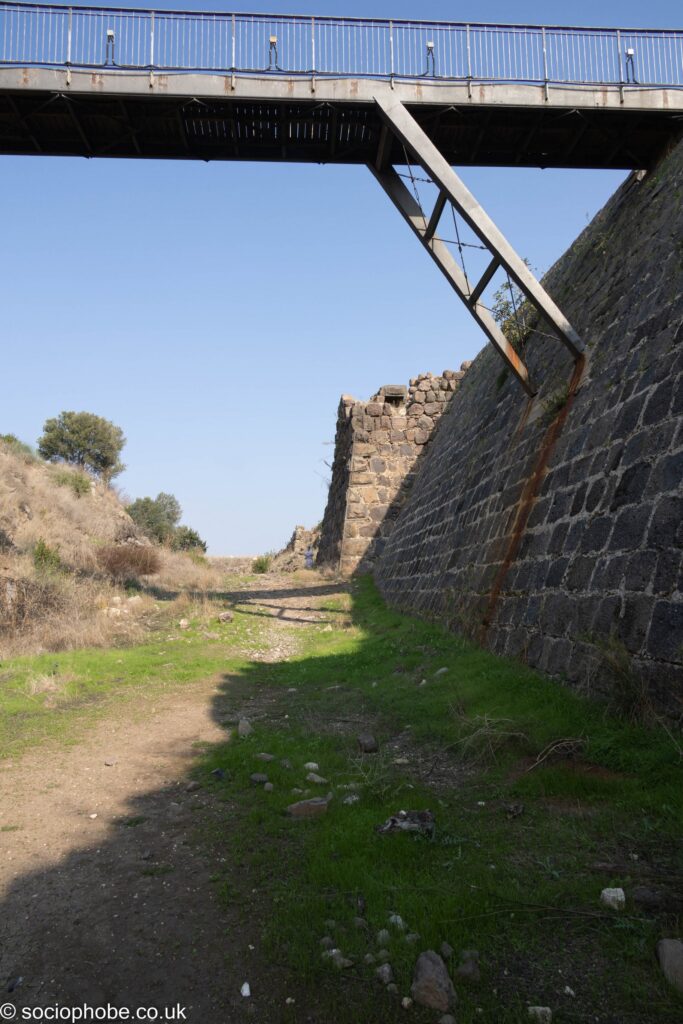
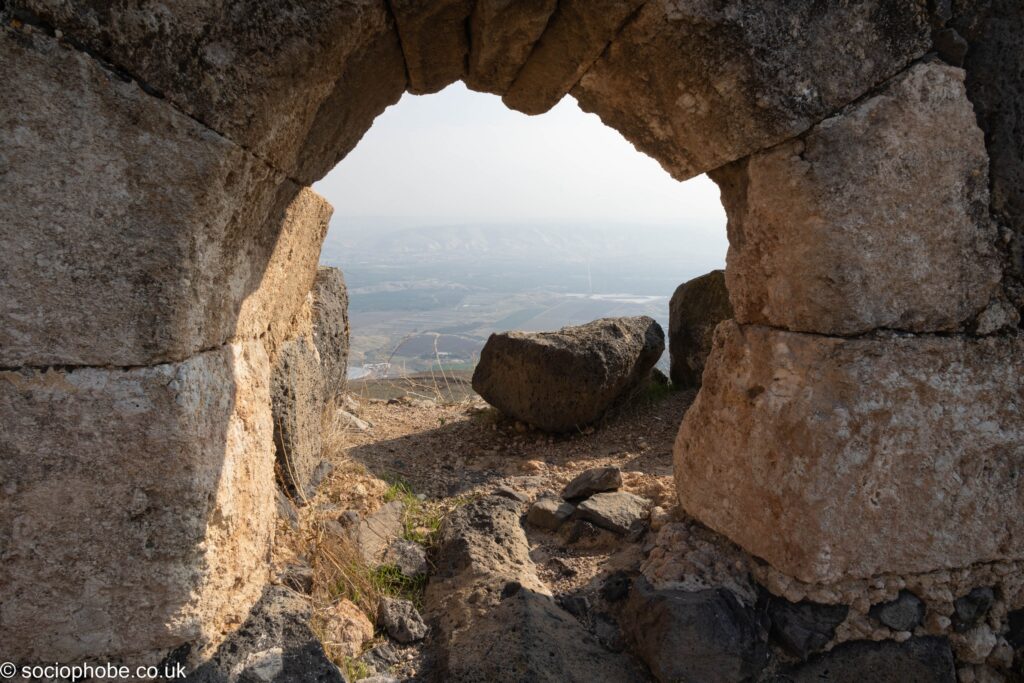
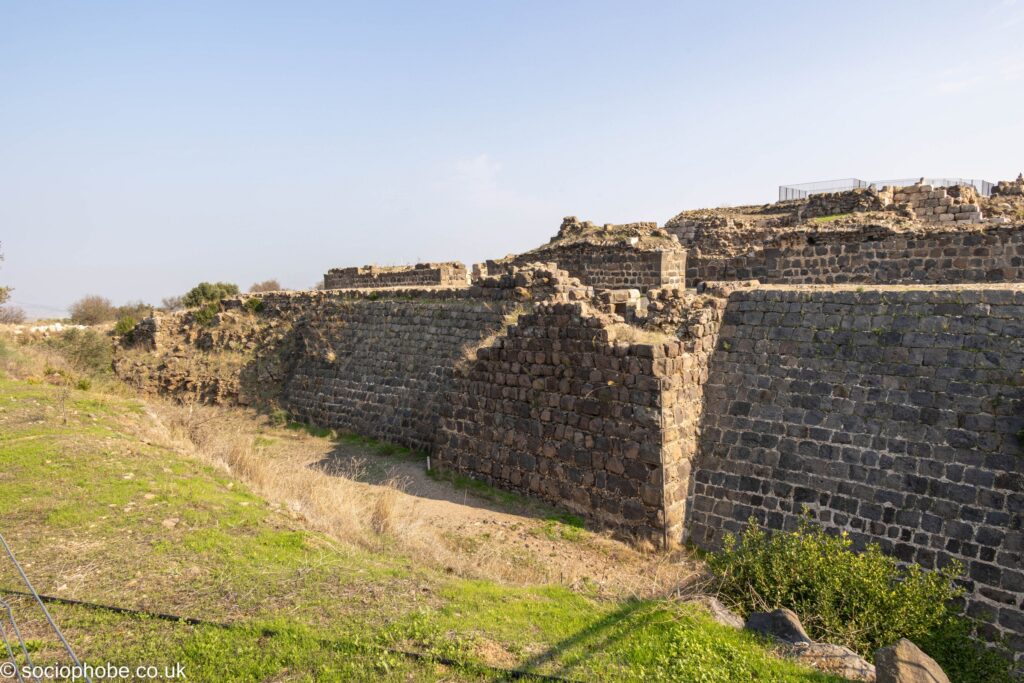
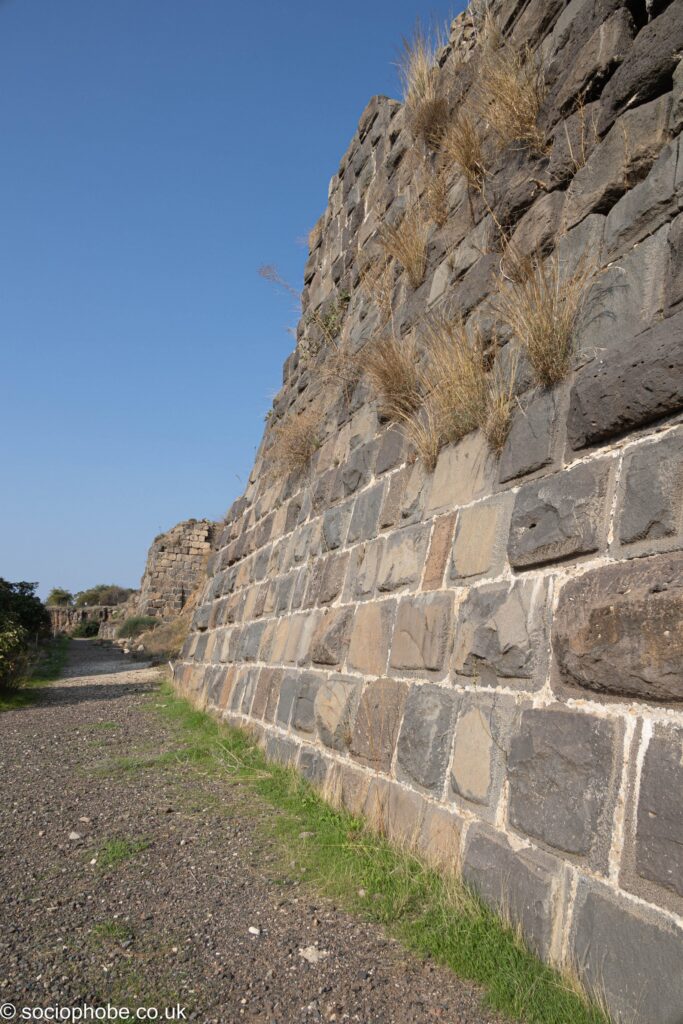
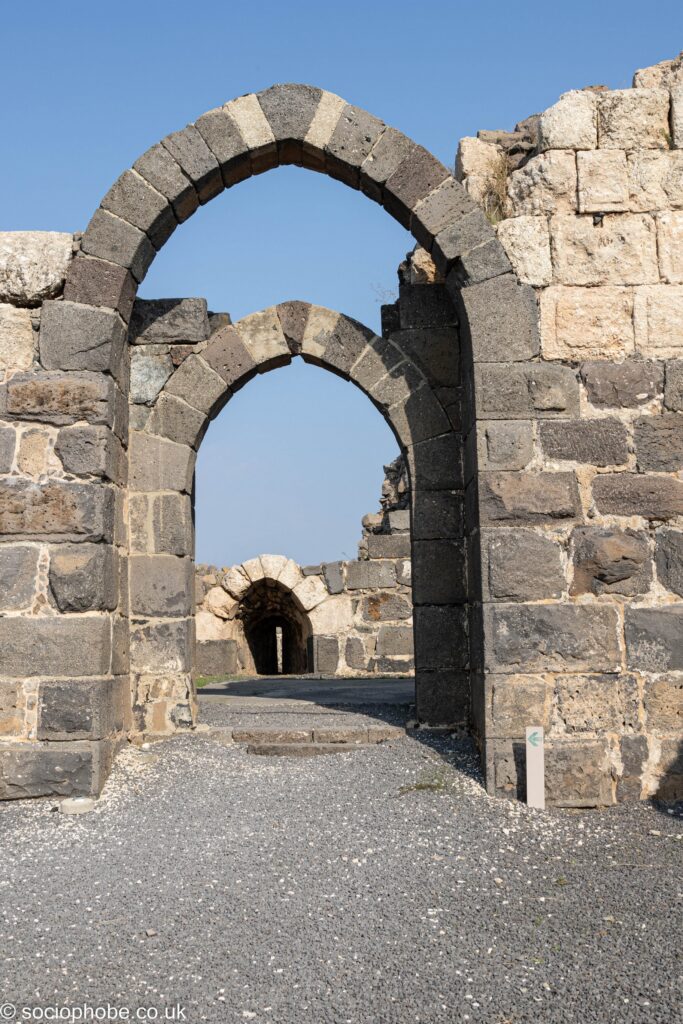
This castle was also a solid military structure, no expense was wasted on any decoration and the black rock made it look even more squat and dense. Although in a pretty much impregnable position I’d have thought its isolation was also a weakness – if they spotted an Arab raiding party in the valley below it would have been long gone by the time they got there.
The castle had a lot of modern touches as it was owned by the Hospitallers – there were facilities for bathing and washing as well as proper latrines which didn’t usually feature in European castle (or even house!) design in this period.
There were lots of information boards showing what the castle looked like before being dismantled after the garrison surrendered following an eighteen month siege. The route ended with us going down steps into the moat to come out via a sally port – another brilliant bit of design that was almost invisible even though we knew where it was. We walked along the moat then up the other side and across the modern bridge. Attached to the fortress is a rare plant nursery which would have been great to visit in spring but only had crocus in flower now.
We left the castle and made our way carefully down the hill, past two huge new reservoirs being built and joined the main road. Next stop was another 45 minutes away at Bet She’an, a large Jewish/Hellenistic/Roman/Byzantine town that was abandoned after being destroyed by an earthquake in the 8th century.
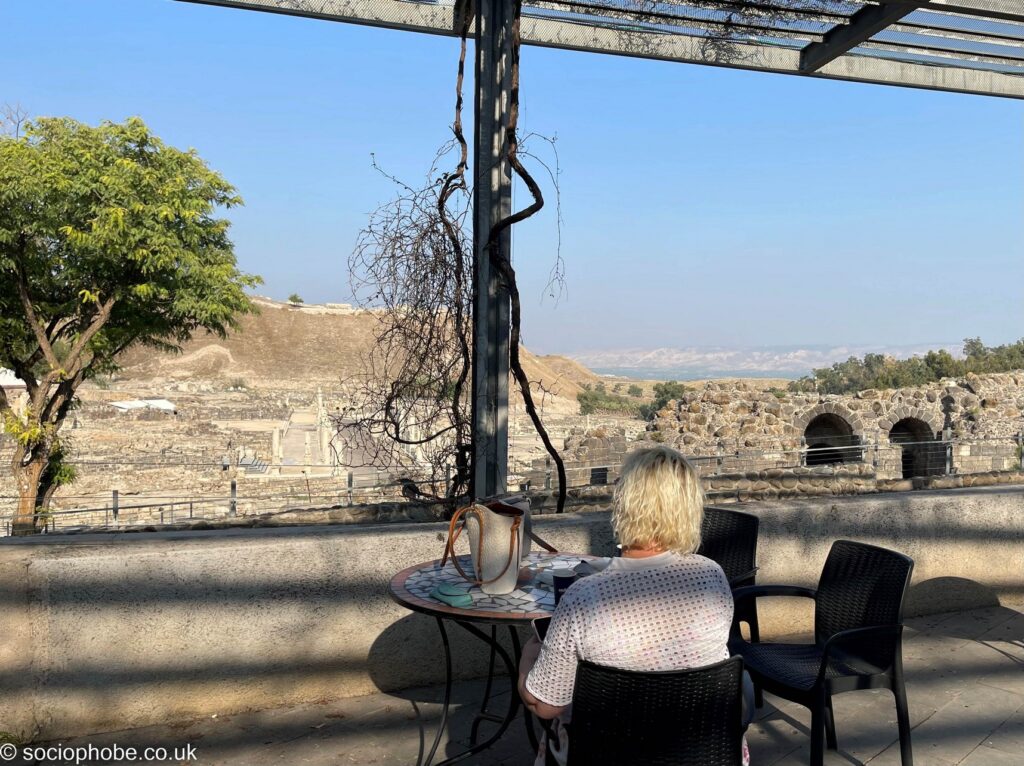
We parked there – it was a lot busier than Belvoir – and headed inside. By now we were quite hungry so made the mistake of going straight to the cafe/gift shop at the same time as 2 coach loads of American tourists. After about 20 minutes we paid for our healthy breakfast of Magnum and almonds and sat outside, looking over the excavated city.
Most of the remains in the lower city were of the Roman/Byzantine period and were of very high quality, this was no provincial backwater (although I have never heard of it before). First stop was the theatre, of which only the lower tier of seats remain so there would have been two more layers of seats above what is there now. There were also lots of ornately carved collonades although these had not been restored to their correct places yet.
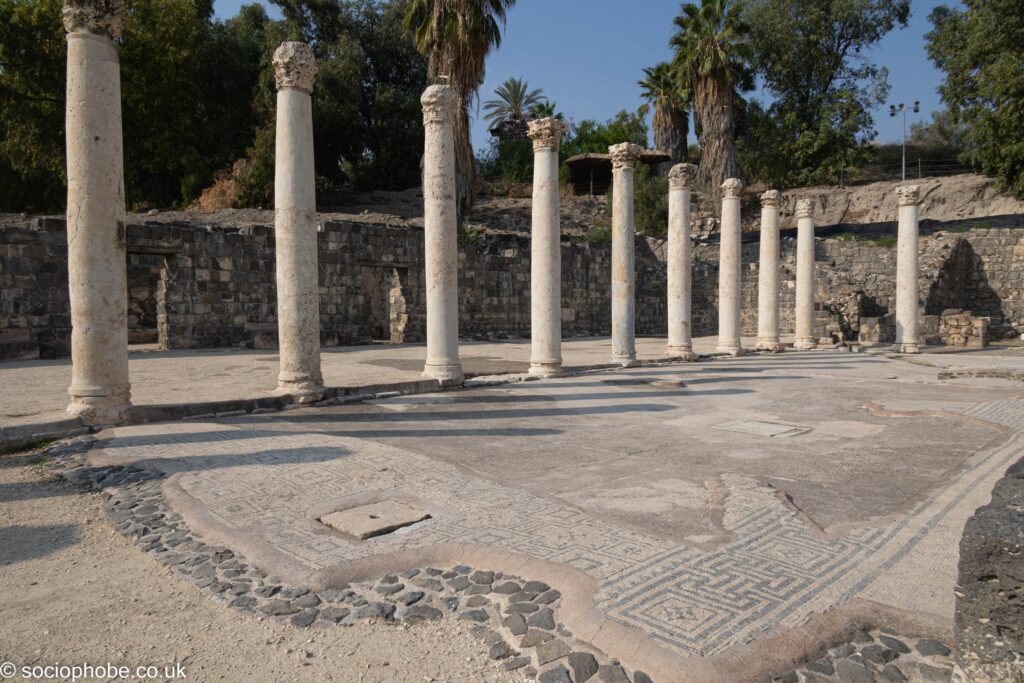
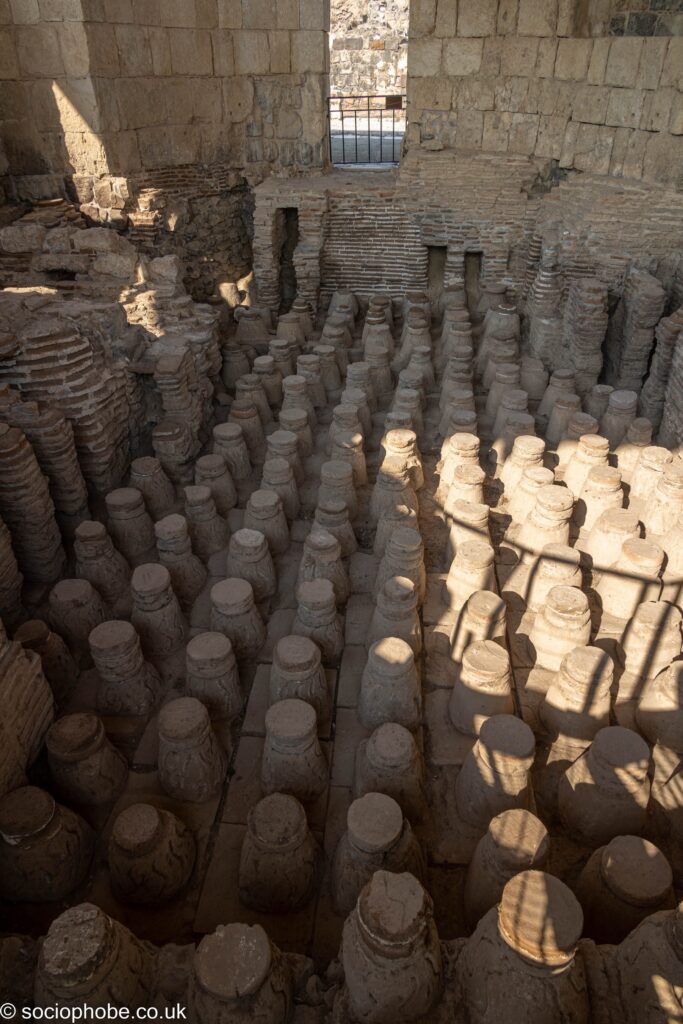
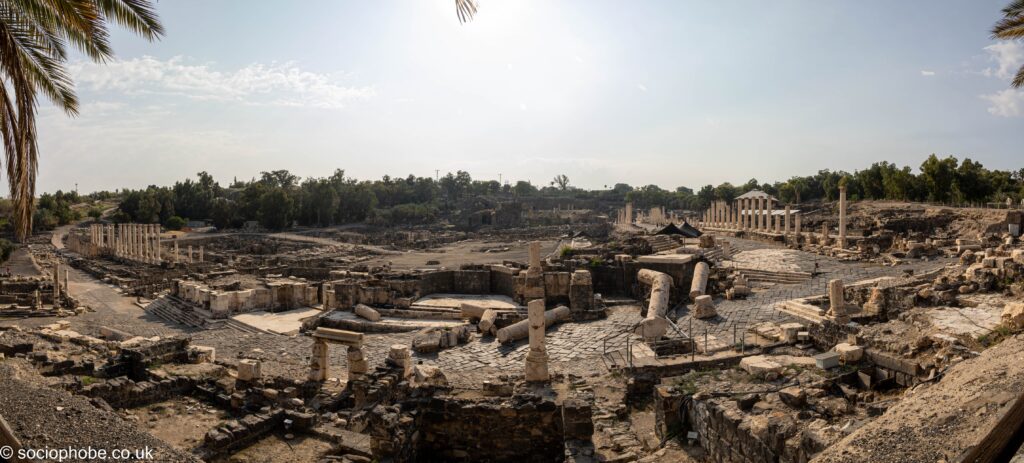
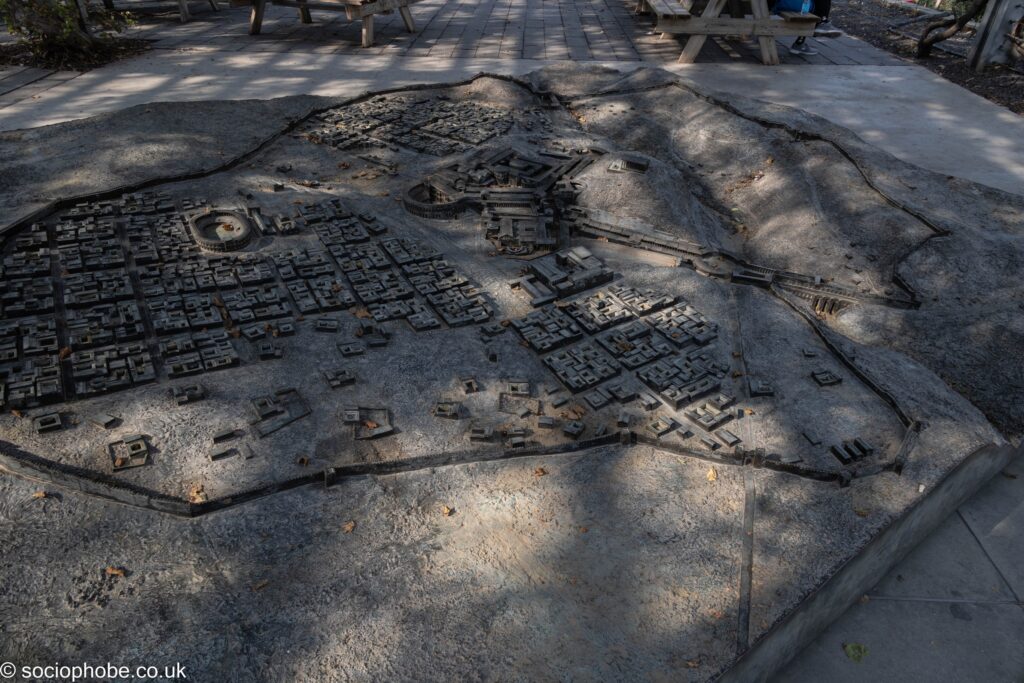
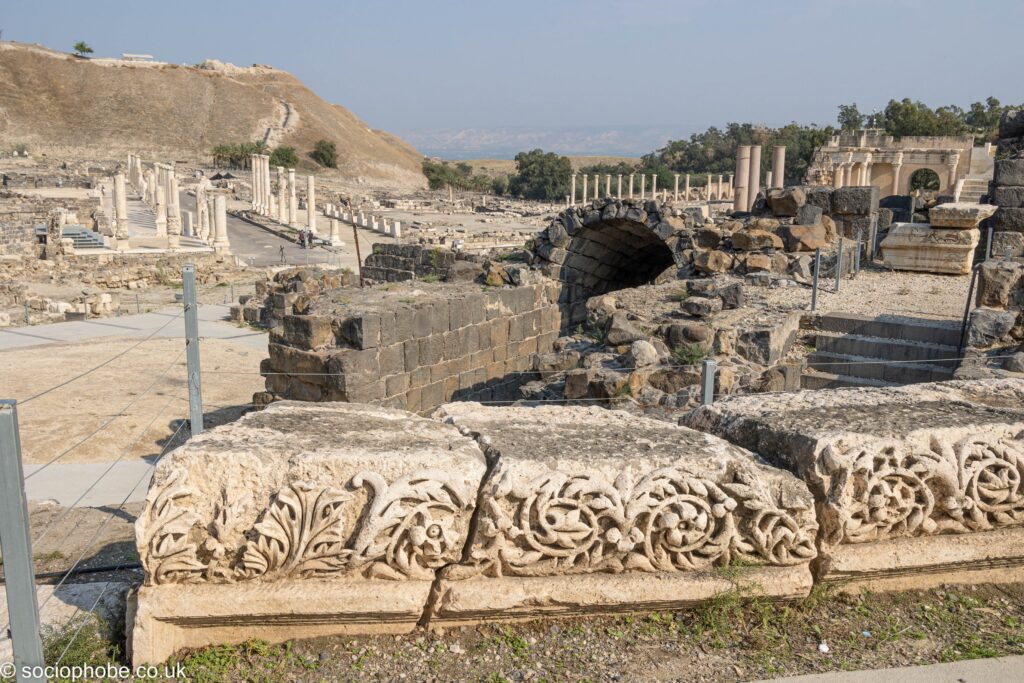
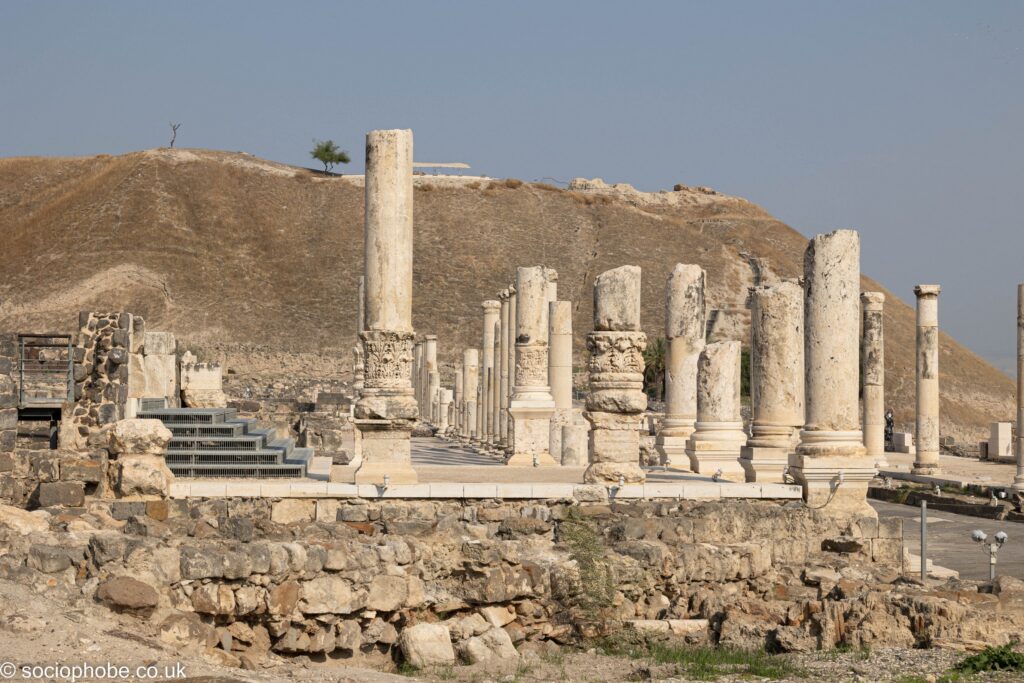
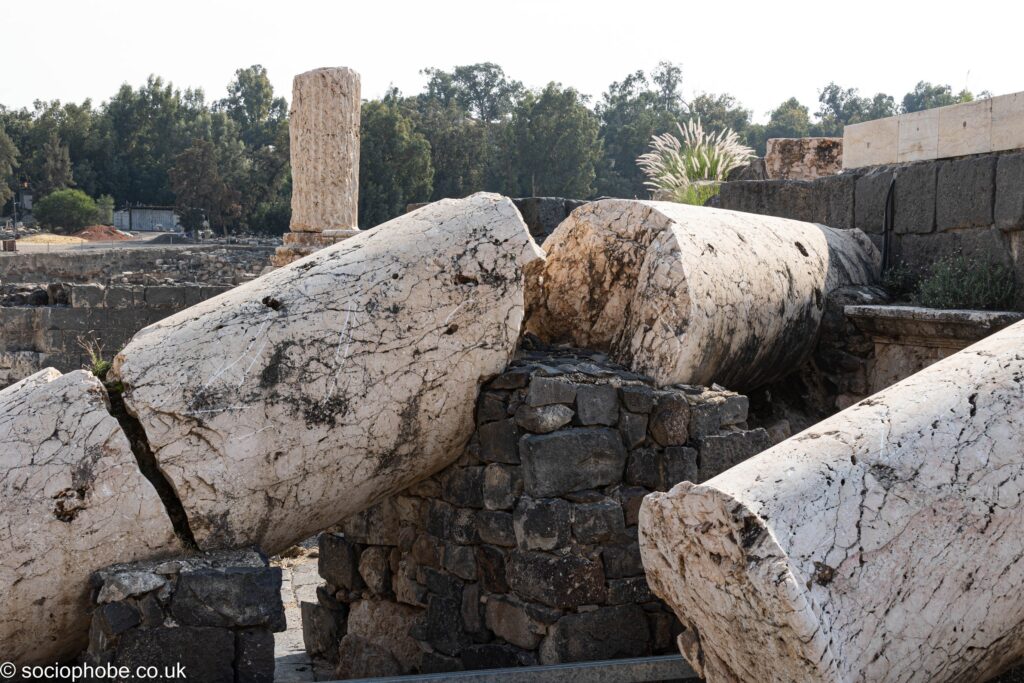
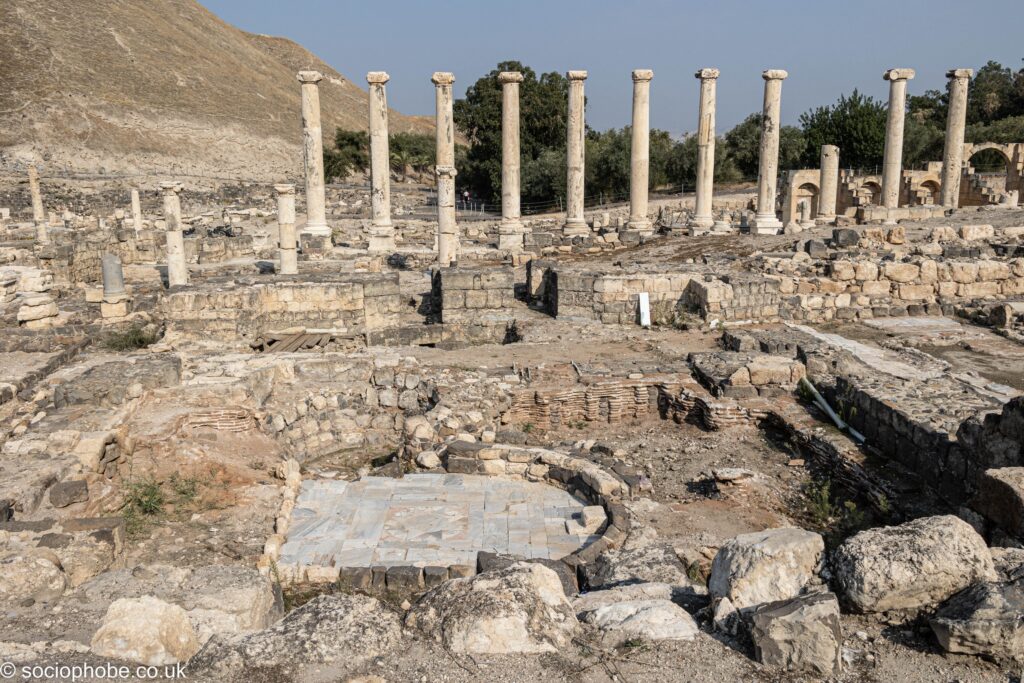
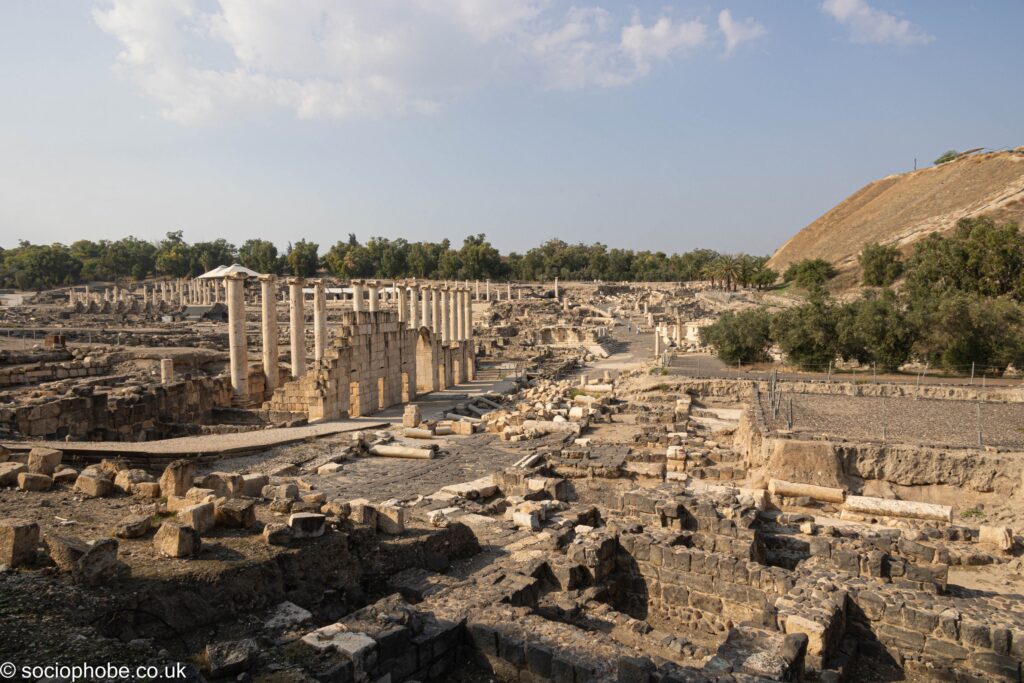
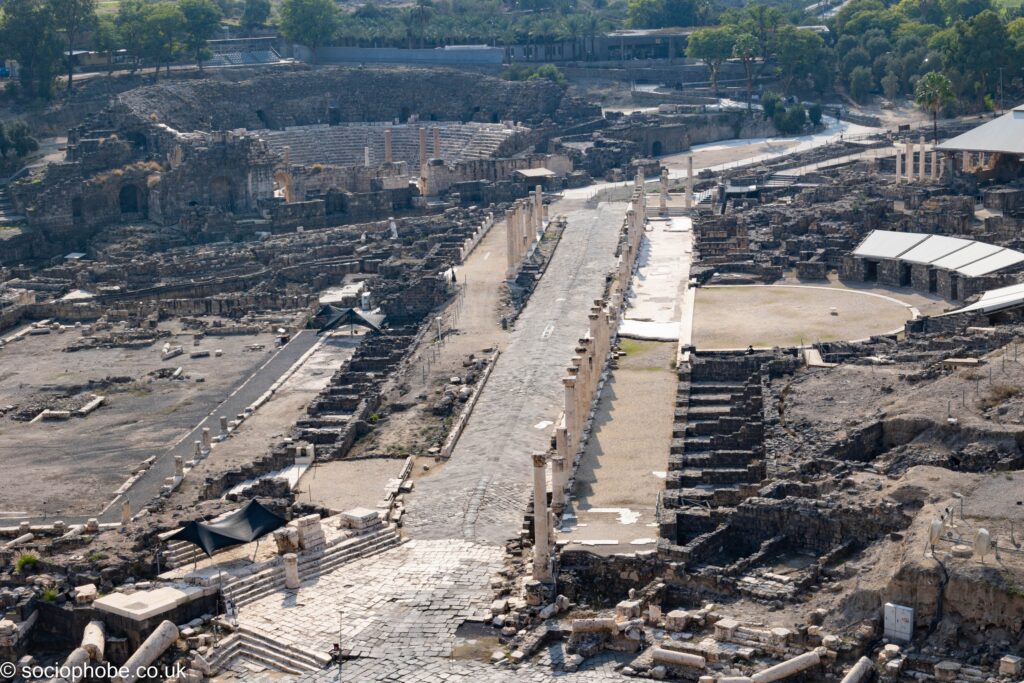
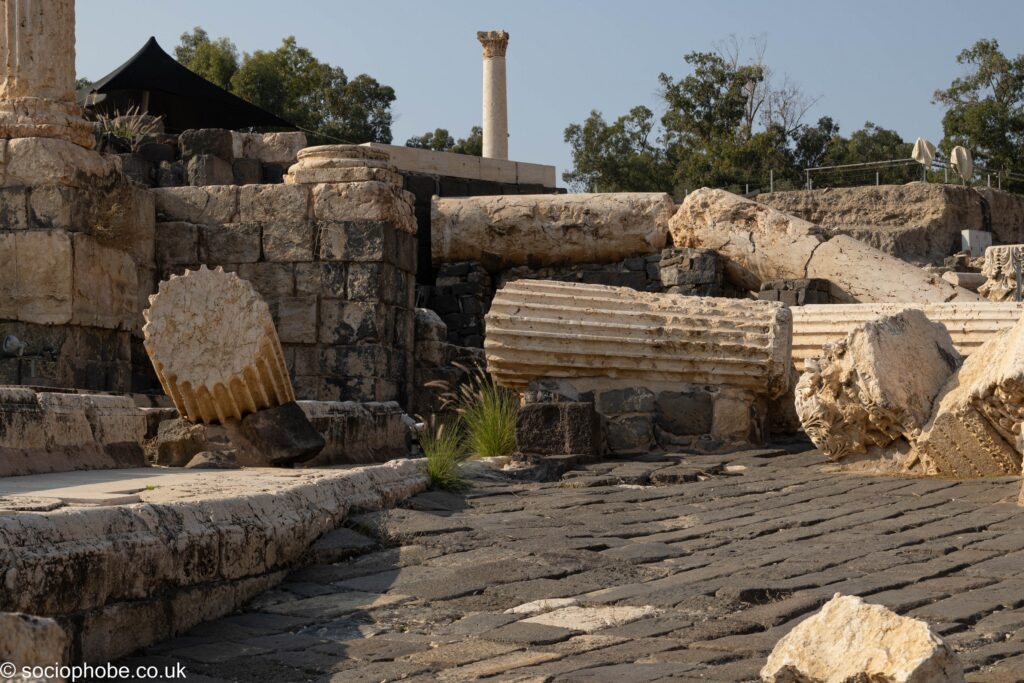
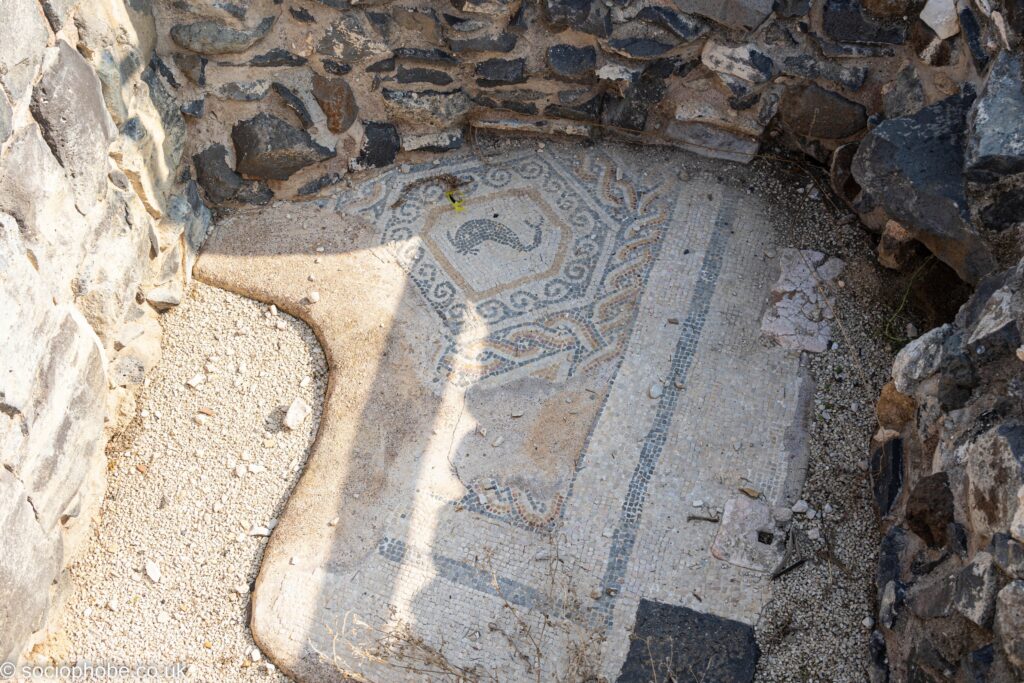
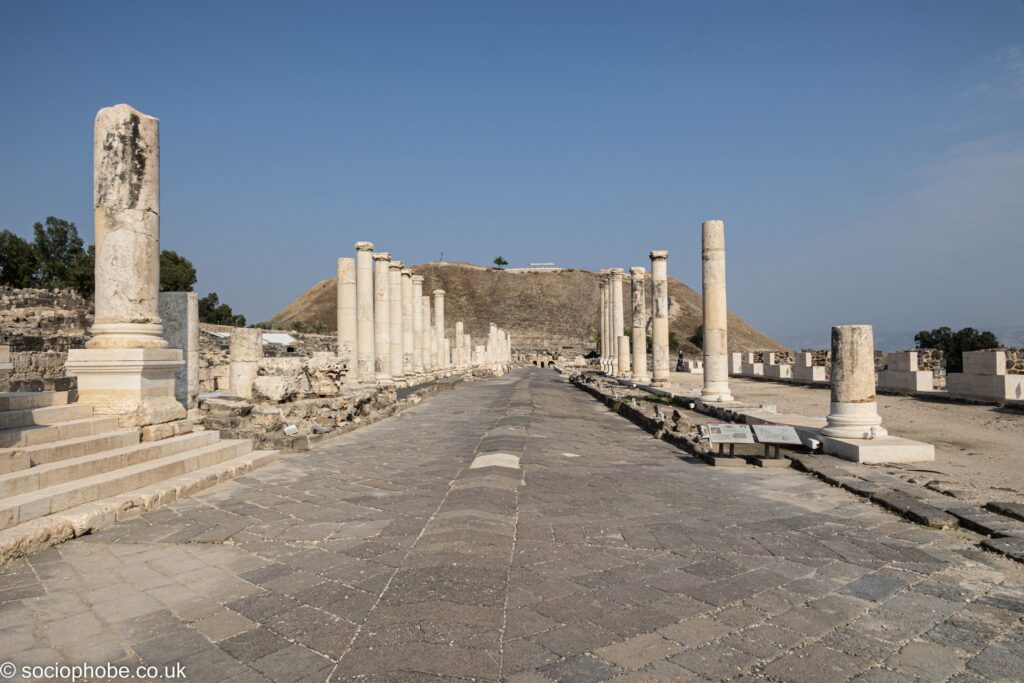
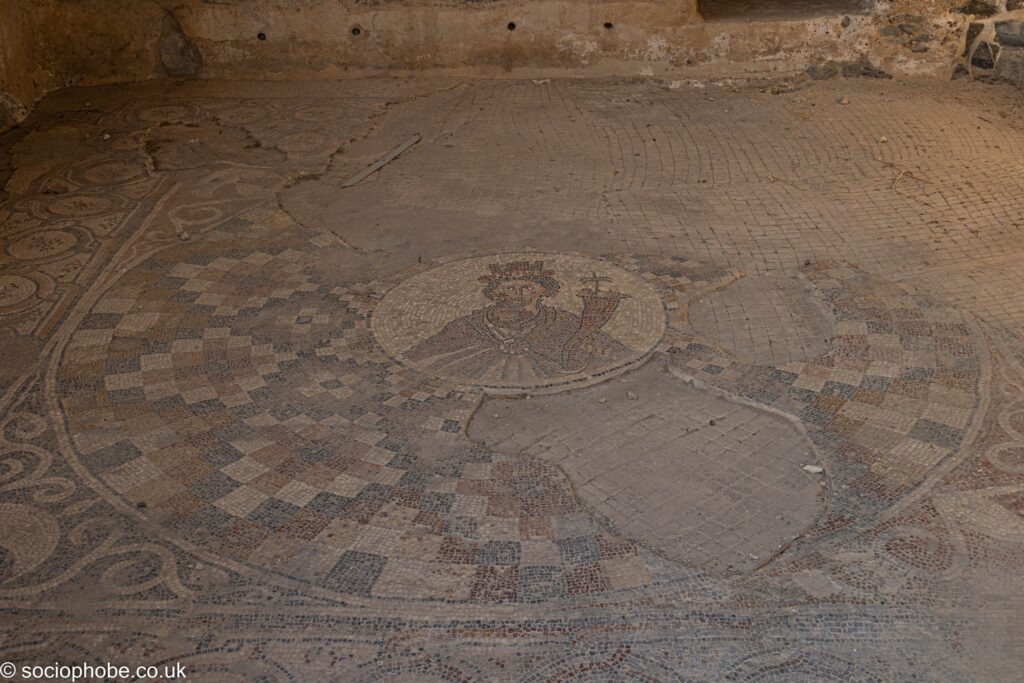
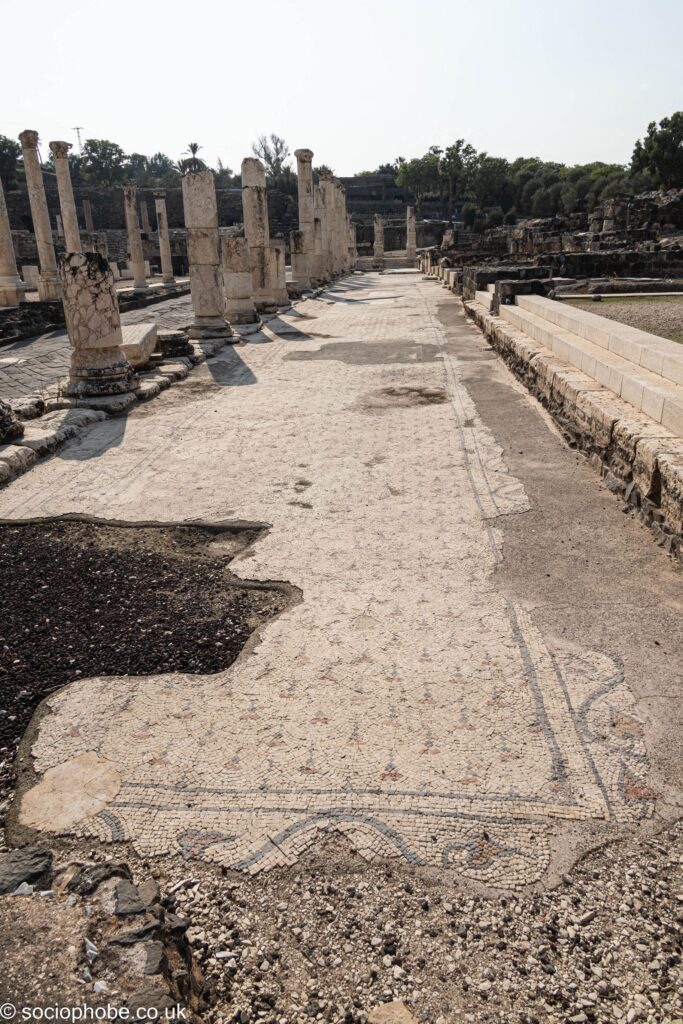
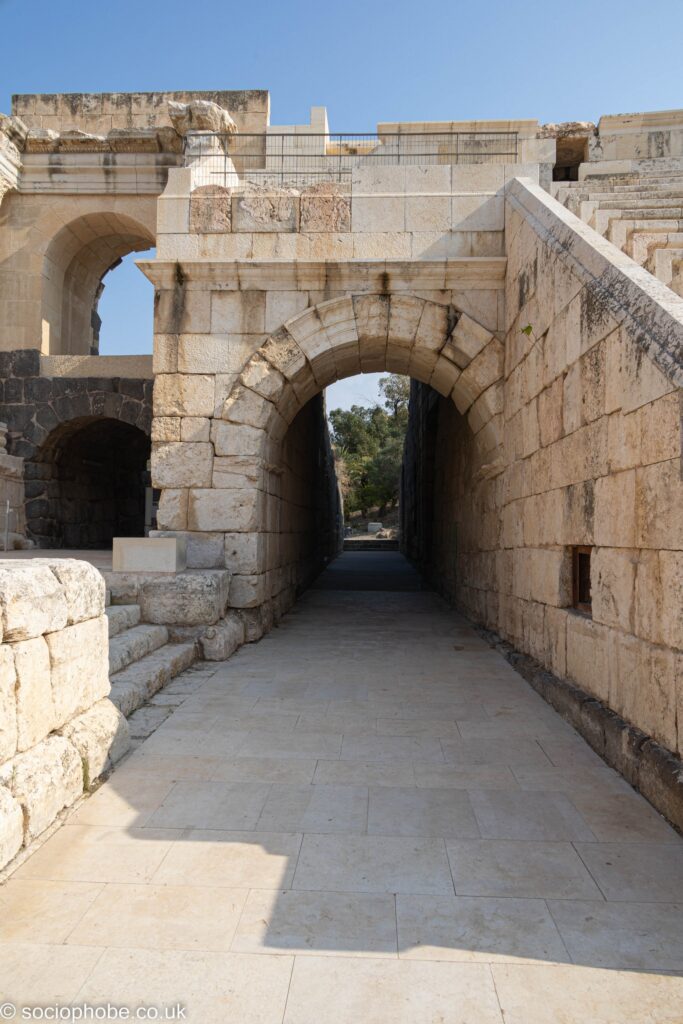
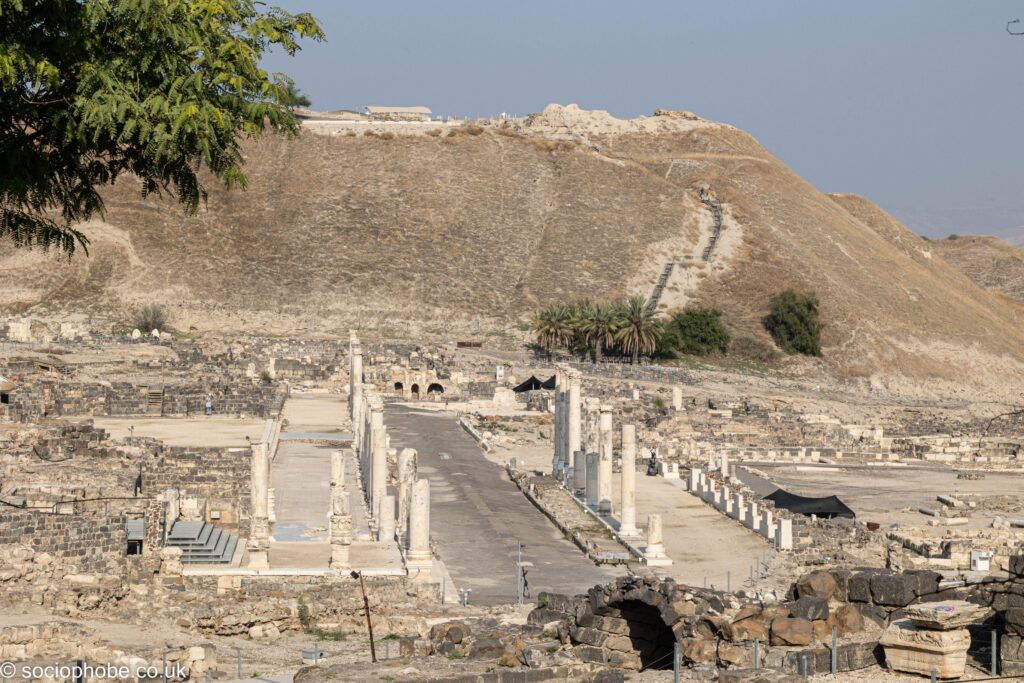
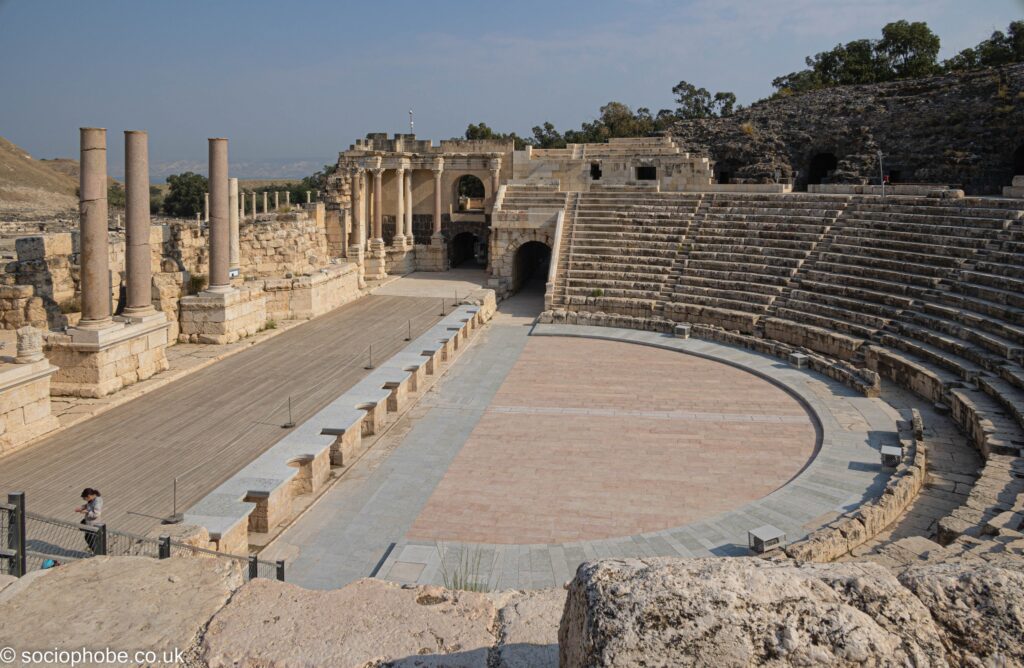
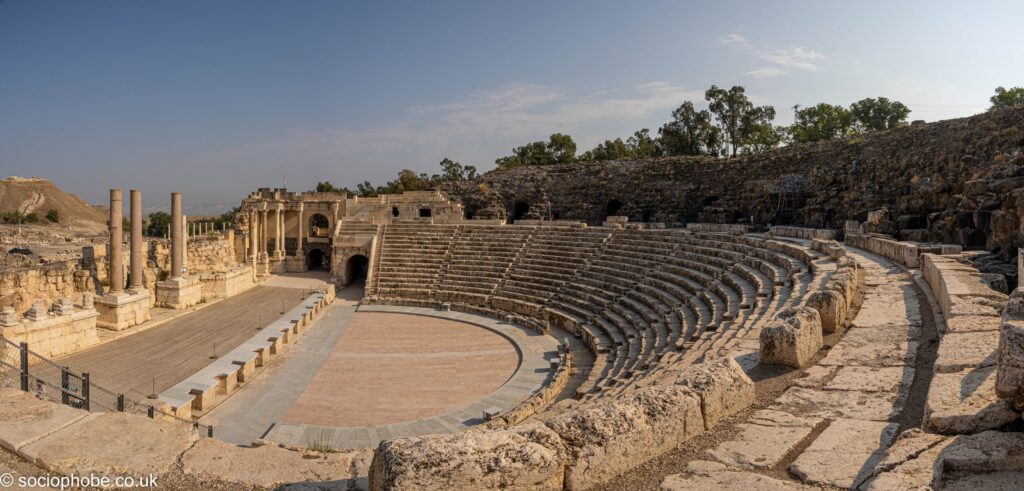
After the theatre we crossed the main street to the baths complex. This had mosaic floors for a lot of the areas and the baths themselves had extensive hypocaust heating systems. From here our route led us down Palladius Street, between rows of columns and then into a commercial area with more mosaic flooring. We ambled through the rest of the city, a lot of which is still in the process of being excavated.
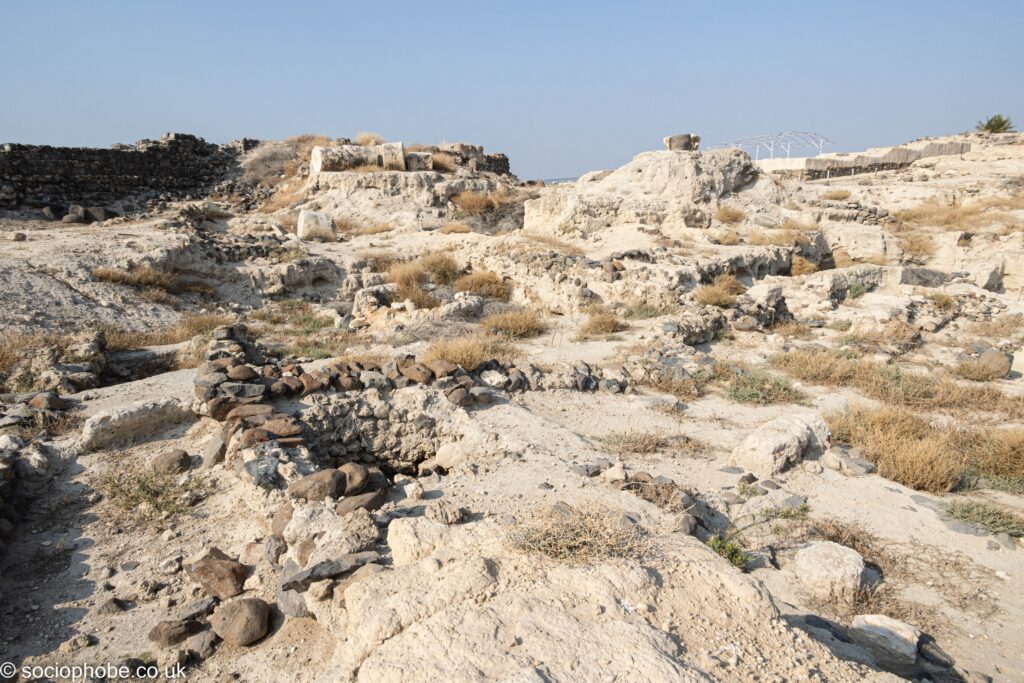
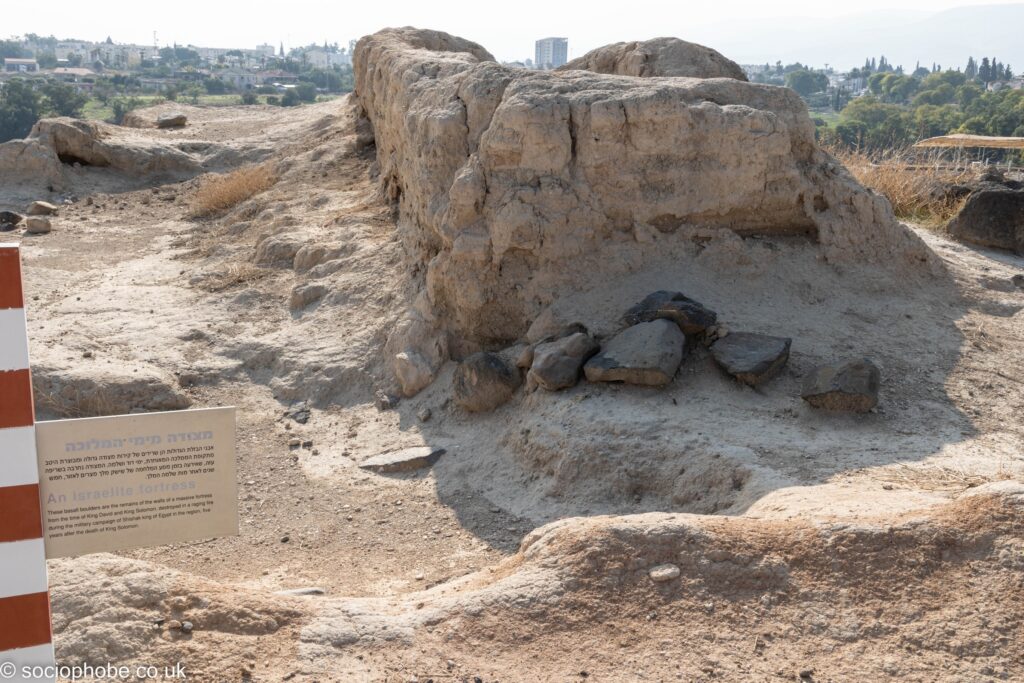
Deb then sat in the shade of some palms while muggins climbed the steps to the Tel – mound – of the original city. This was inhabited as far back as 4000 BC apparently and was an Egyptian administrative centre around 1600BC. There are allegedly remains of a fort constructed by King David but whether that is a case of starting with the answer you want and providing evidence to match or not I couldn’t say. The Tel certainly gave good views over the newer city but there was very little to see there if you weren’t an archeologist. So Deb had the right idea.
I climbed back down the steps and we walked through the city again, past more tumbled columns, to the gift shop. We had a coffee while looking over the city for the final time and then returned to the car. We now had over two hours driving to our next destination.
The drive to the Dead Sea was an experience in that as soon as we crossed from Israel proper into the West Bank (I am really not sure of the administrative distinctions and level of autonomy of the area) it was as though someone had emptied a bin lorry every 50m. I really don’t think I have ever seen so much rubbish strewn along the roadside.
We drove past run down towns and shepherds on donkeys guiding flocks of sheep and the terrain slowly became less green and more barren. The road was good though and we kept up a decent speed, especially as traffic tailed off noticeably after the border crossing to Jordan. Eventually we crossed back into Israel proper and obviously looked respectable as we were waved straight through the checkpoint.
We were then driving along the shore of the Dead Sea, with huge cliffs on one side and the silver shimmer of the sea on the other. We passed Qumran (of Dead Sea Scrolls fame) and carried on driving south. I stopped once to take a picture of a herd (?) of goats but otherwise it was just a slog of a drive, especially with coaches trying to park in the boot despite me going way over the speed limit!
We finally reached our destination for the night, the Oasis Spa Hotel in Ein Bokek. We checked in, dumped our stuff in the room and, after a quick face wash to wake up, headed outside to walk along the shore of the Dead Sea. We were 400m below sea level, the weather was 24 degrees at 4PM in December and we were in a fantastic resort – lovely.
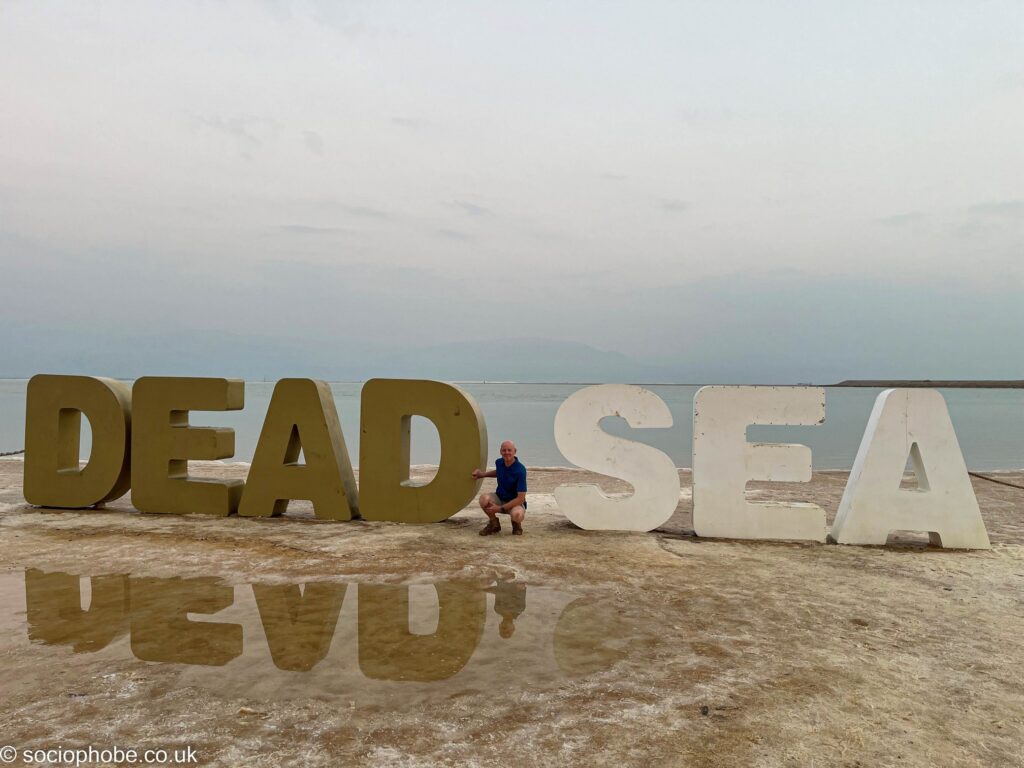
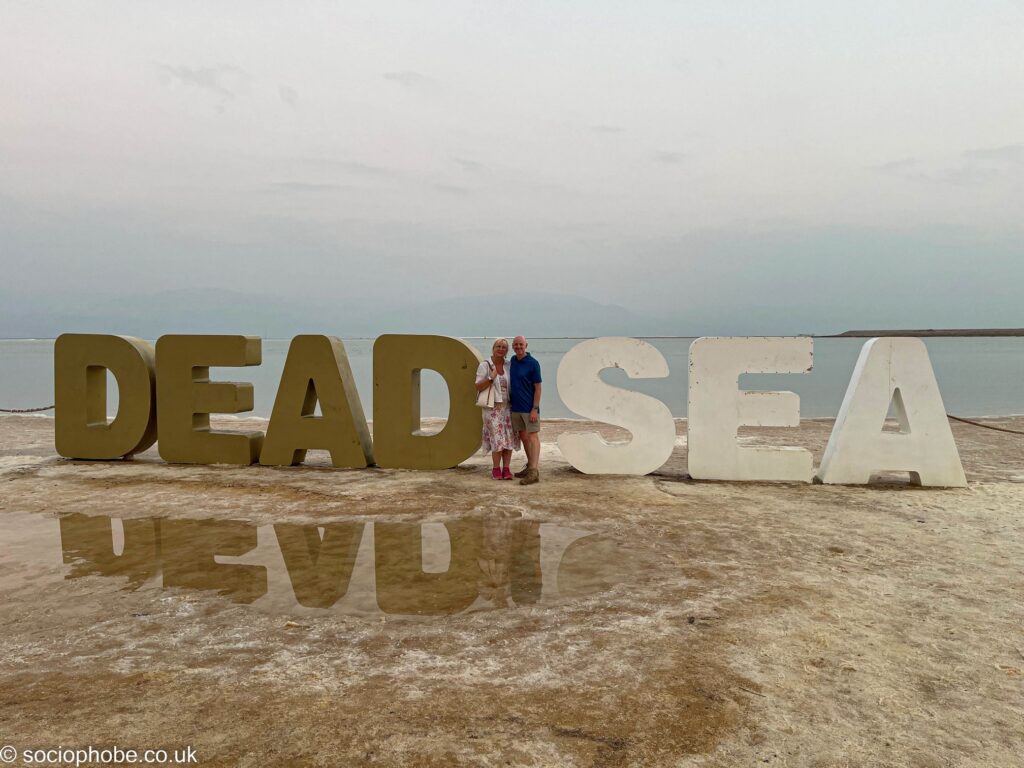
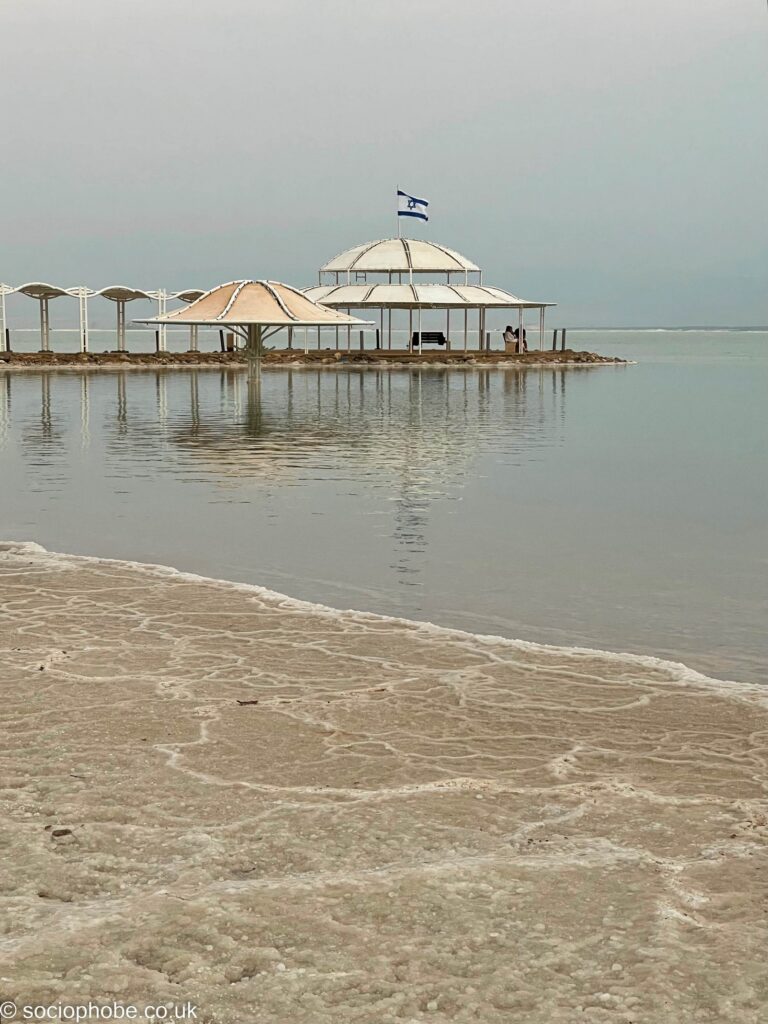
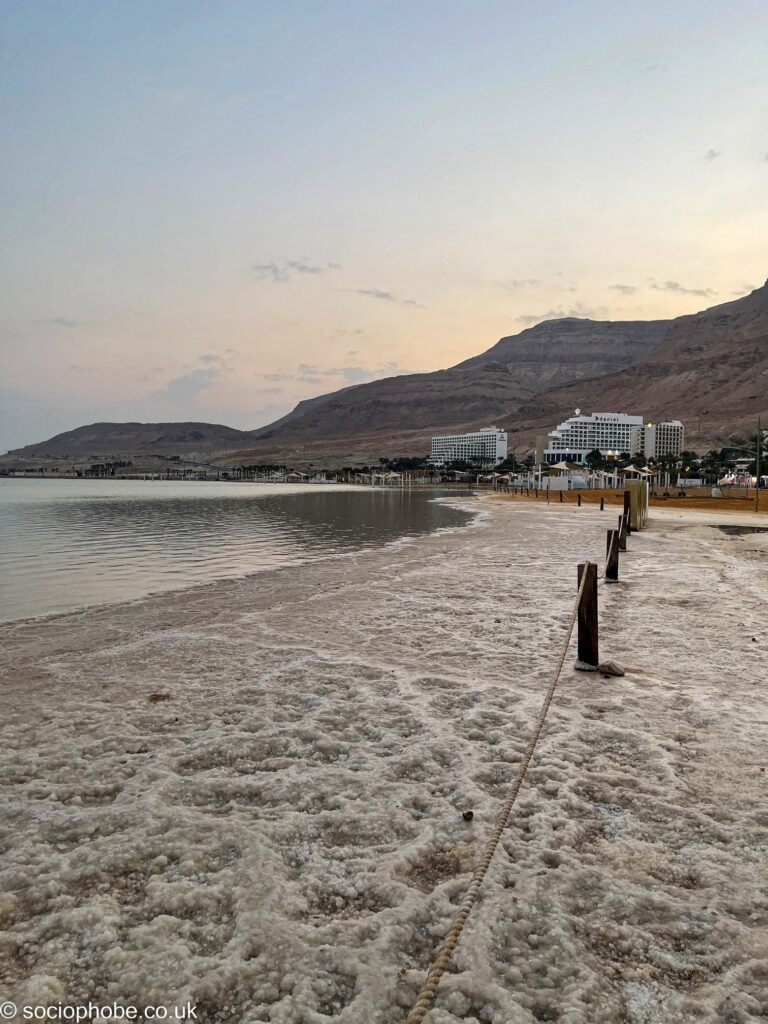
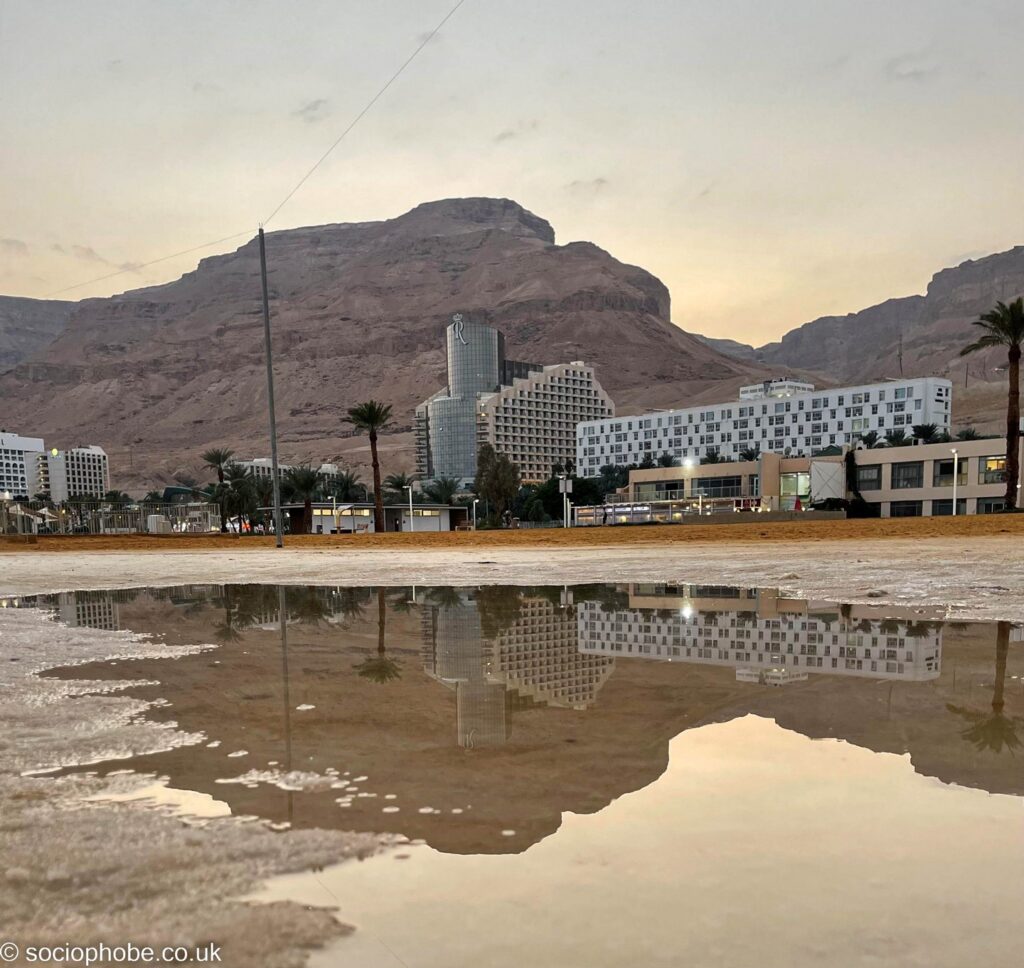
We took the obligatory photos along the shore and then had a very welcome dinner although, again, we ate too much as we haven’t adjusted to Israeli portion sizes! We walked back along the beach after sunset and back into the hotel for a much needed shower before the drudgery of sorting photos and notes while my brain can retain a little of what I’ve done during the day.
After that it was a case of getting stuff ready for our sunset climb of Masada tomorrow! Also, researching the route to Jerusalem as the direct route along Highway 60 looks decidedly dodgy with kidnappings, rammings, stonings etc so I have had to plot quite a convoluted route to stay in Israeli territory.
Tuesday 7th December – Dead Sea – Masada – Jerusalem
One of the highlights of our Israel Road Trip, for me at least, was the sunrise climb to Masada. I woke at 3 for a wee then it seemed like 30 seconds later Deb was telling me it was 4.45 and the alarm had gone off! It certainly took me a while to get in gear. We left the hotel and drove to Masada and started the path around 5.50, a bit later than intended. Luckily there was enough light that we didn’t need a torch and enough other people around anyway. It was also a lot warmer than I expected, 20 degrees when we started the climb!
A bit of background information: Masada was built by Herod the Great as both a winter residence and a bolt hole. He built massive cisterns and storehouses so he could live in accustomed luxury at this remote desert site and also have a fortified base if he was driven out of Jerusalem. I’m not sure of the sites use after his death (4BC?) but at the time of the Jewish Revolt against Rome in 67AD some Jewish rebels (a mix of fanatics and refugees) took the complex and fortified it. After the Romans retook Jerusalem in a bit of a bloodbath they mopped up all other resistance and then marched on Masada.
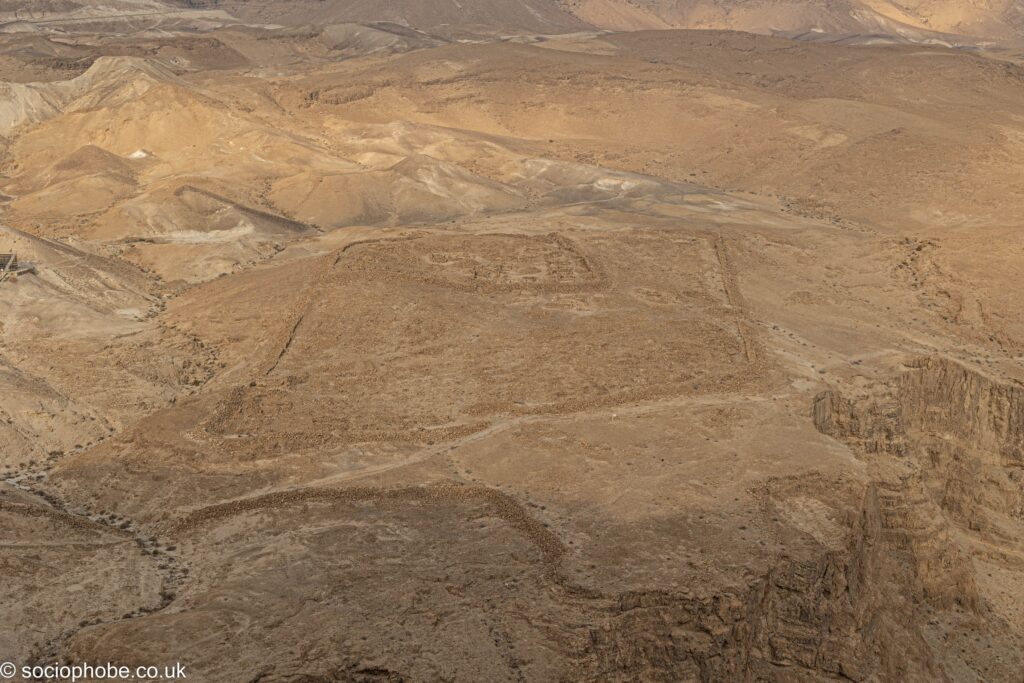
The Romans, with their usual methodical efficiency, built a wall around the site and then built camps for the legionaries around the base of the hill. There were 8000 Romans and maybe a tenth of that number of defenders, although these included women, children and the elderly. The Romans spent 3 years (!) building a ramp to reach the top of the walls and then built a huge siege tower with a battering ram to smash through the wall after they had dragged it to the top. Like Theoden at Helms Deep the Jews thought “What can man do against such reckless hate?” and unlike Theoden, they had no hope of a Gandalf rescuing them.
The solution was mass suicide so when the Romans broke into the fort the next day all they found were dead bodies along with 2 women and 5 children who had hidden in the cisterns and told the Romans what had happened. The site was then abandoned until Byzantine monks occupied it in the 5th century but they in turn abandoned it after the Islamic conquests. The story of Masada is kinda like the Jewish version of the Dunkirk, resistance against hopeless odds and glory in defeat.
The climb was hard work, it was lucky it was a snake path so you couldn’t see the total climb in one go as that may have been disheartening. Every time I got to the top of one bit I’d look up and see another couple of sections. We gradually ground away at the trek, pausing occasionally for a photo stop and breather.
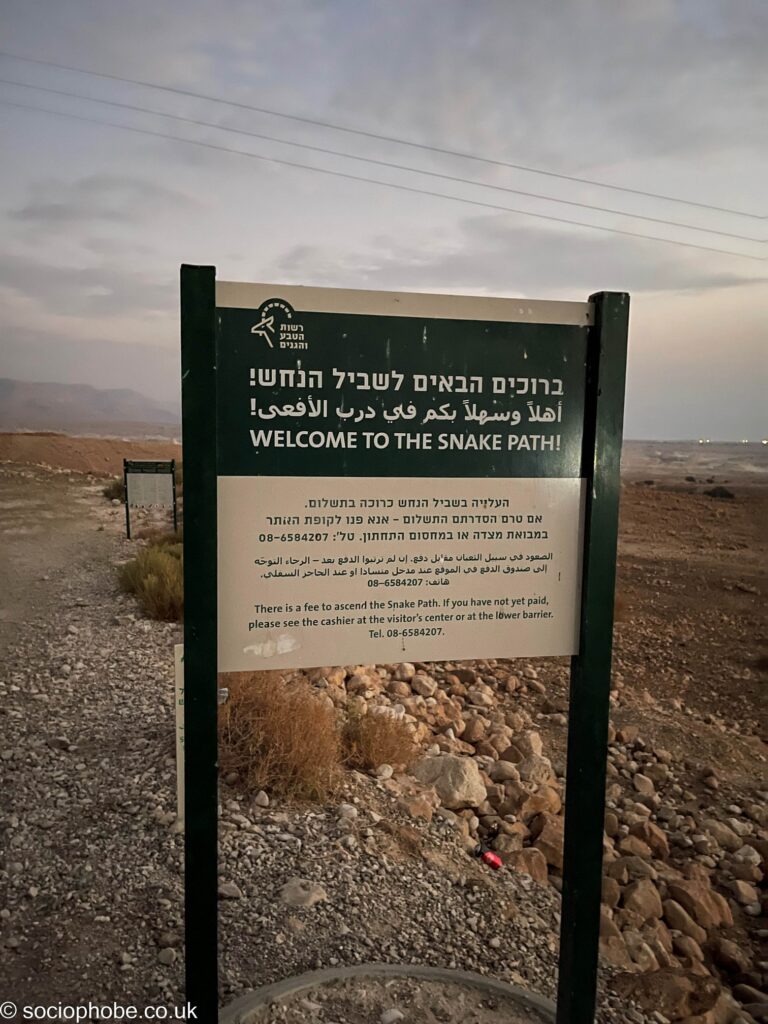
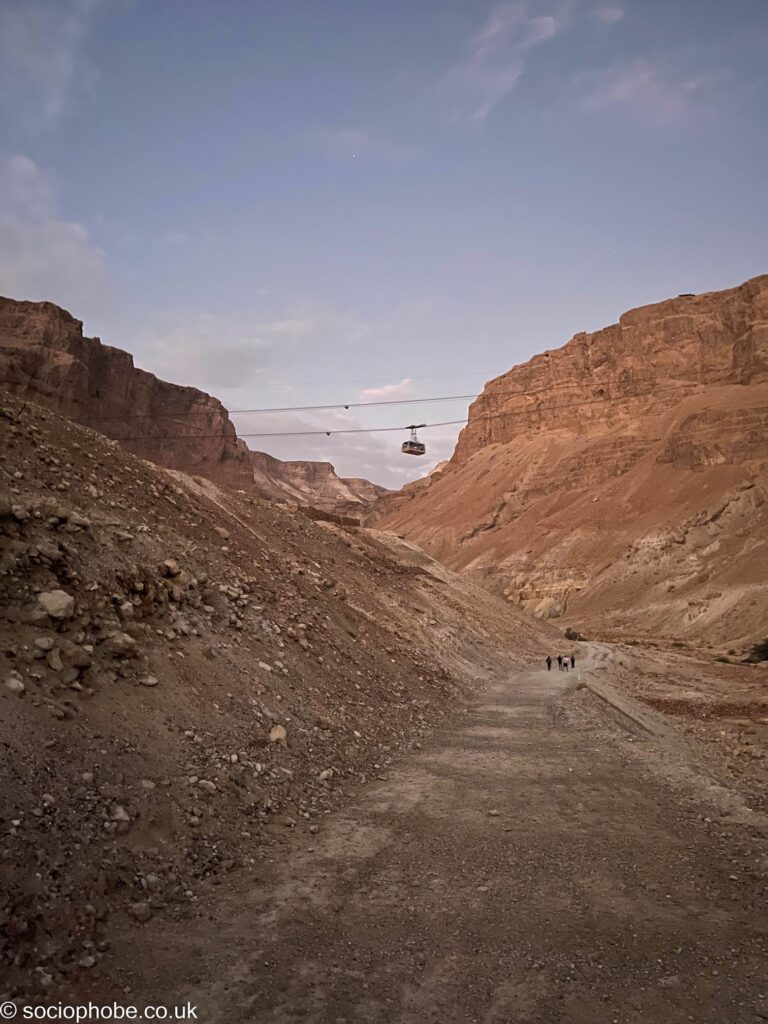
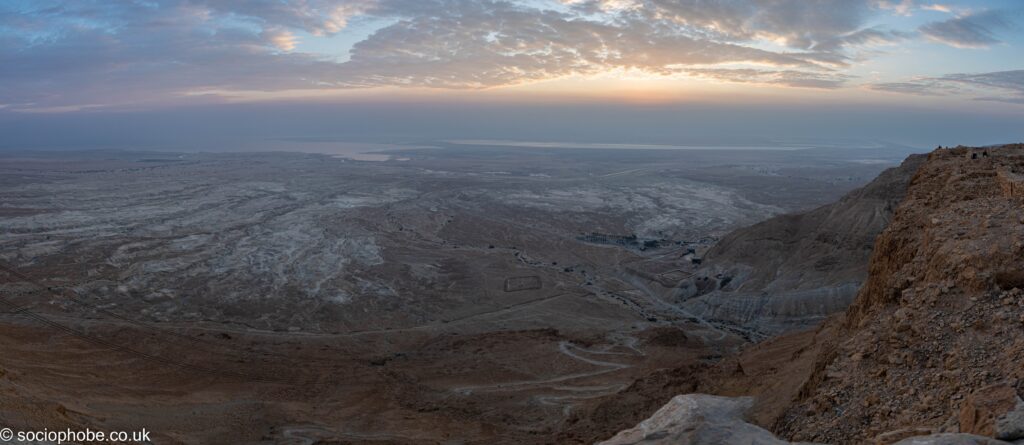
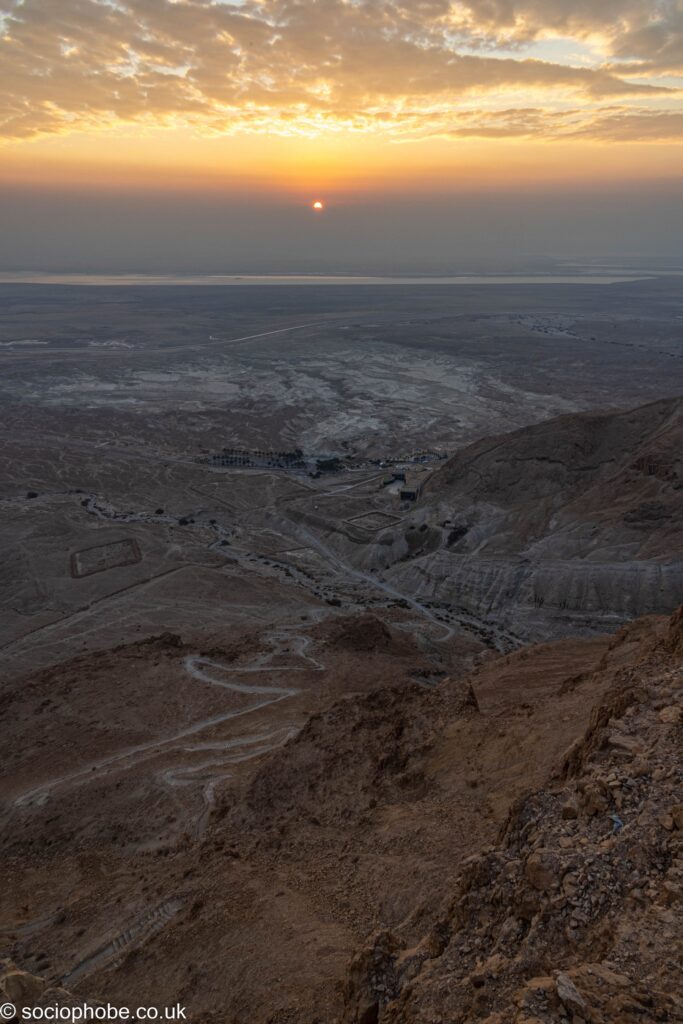
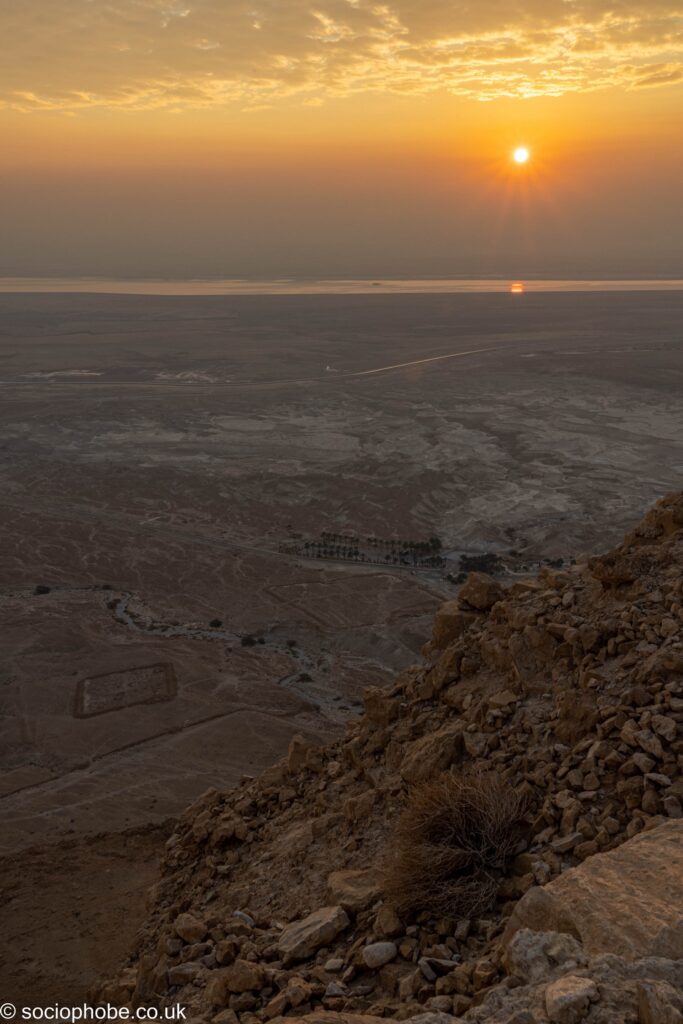
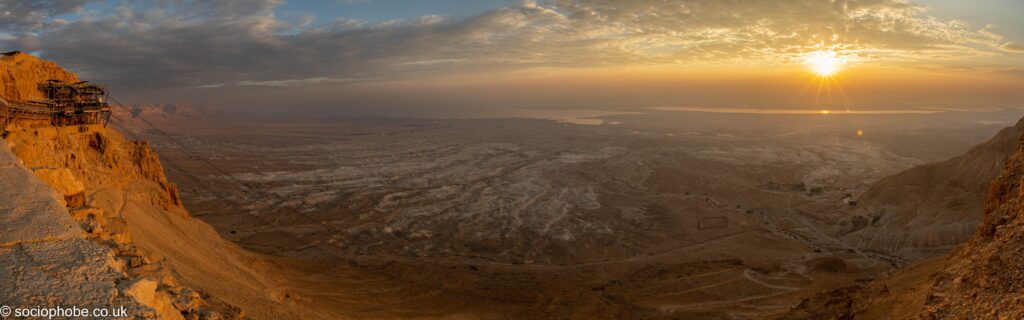
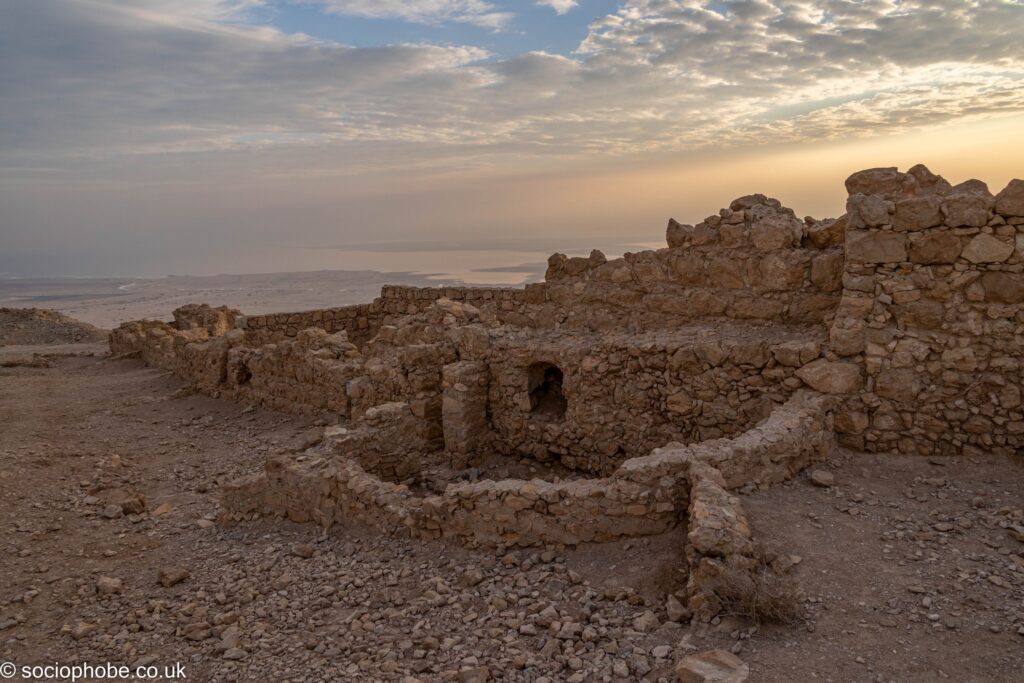
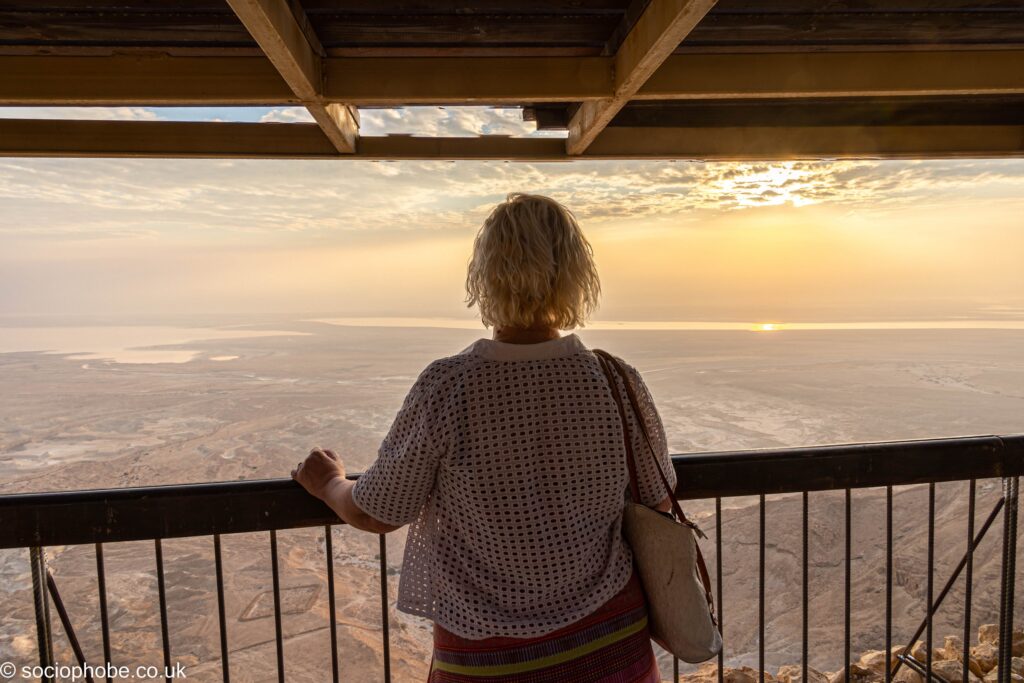
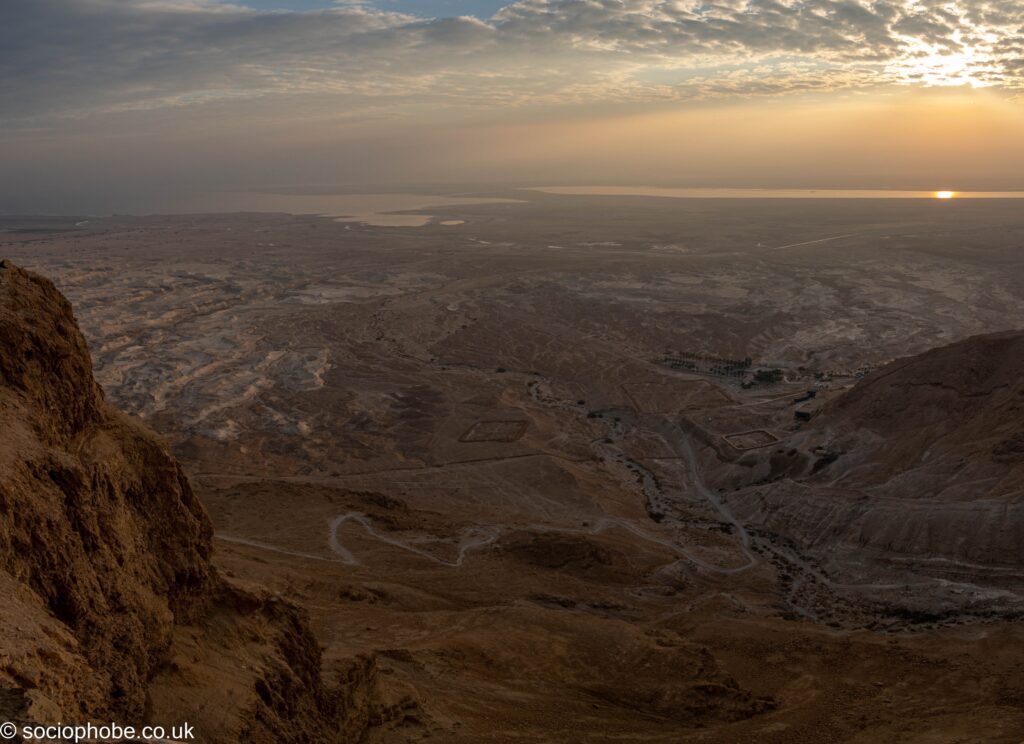
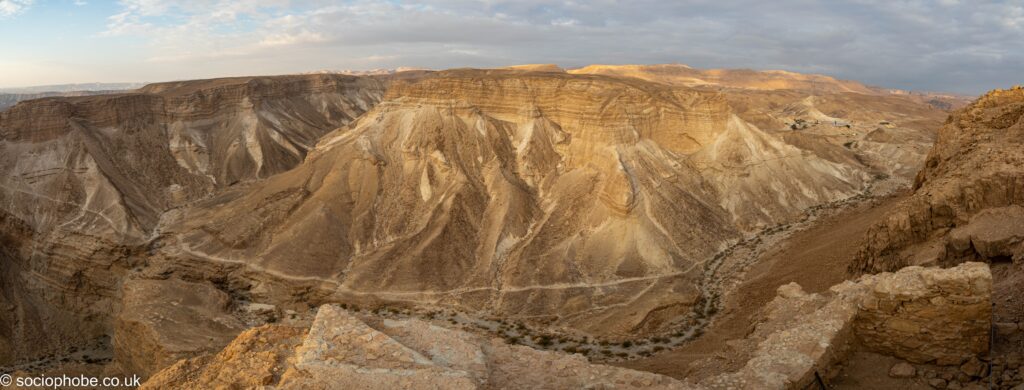
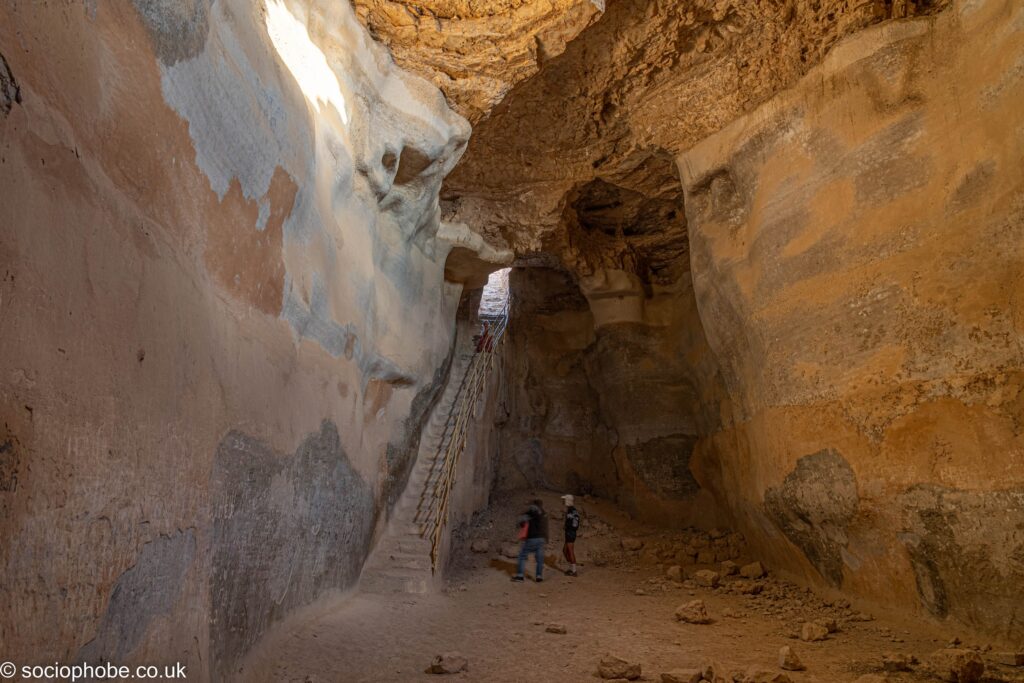
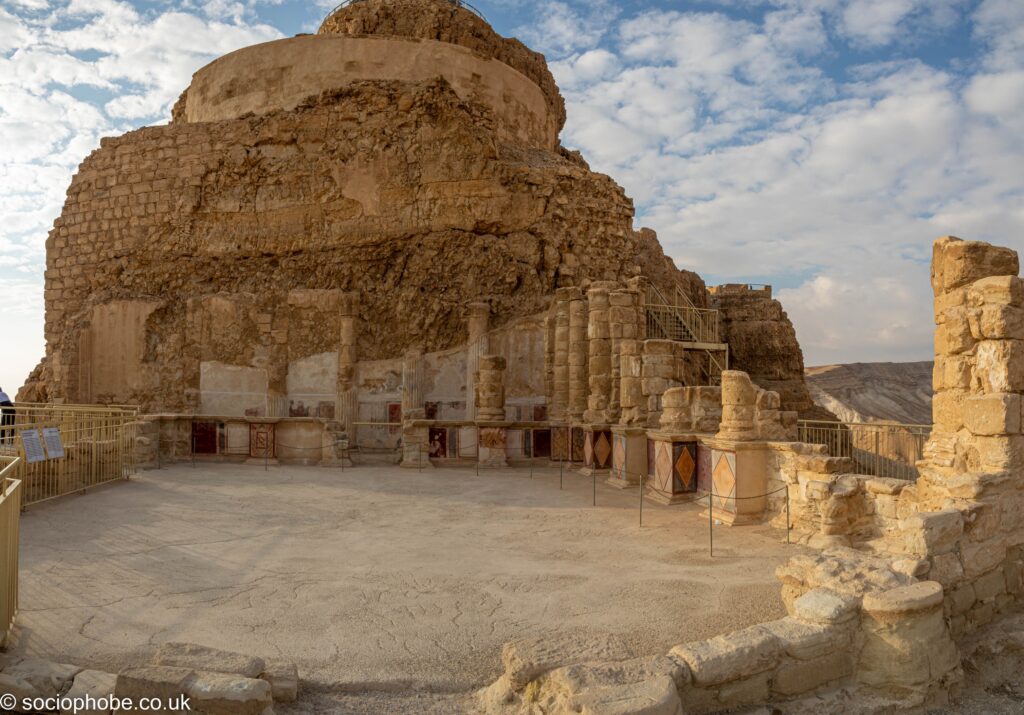
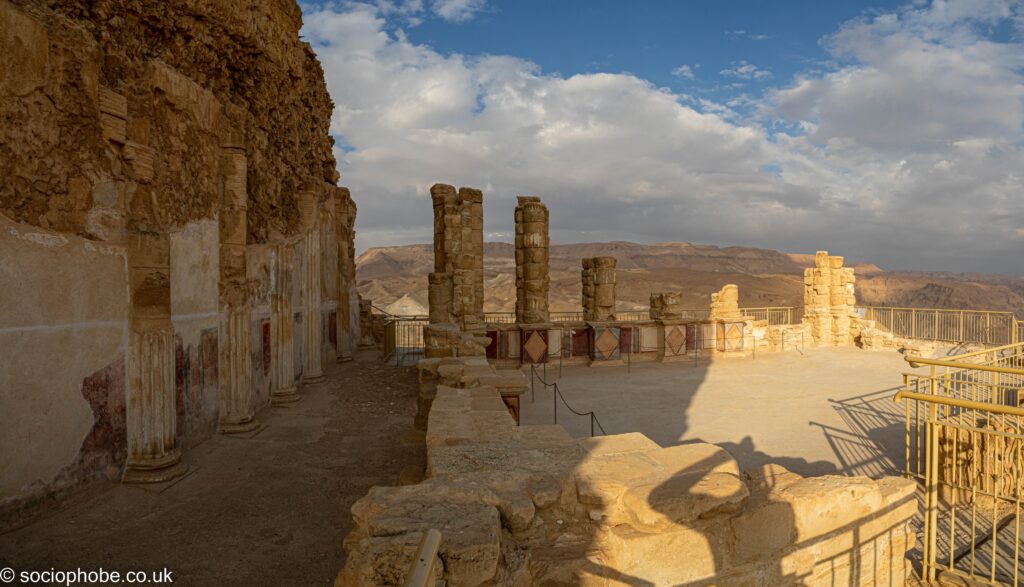
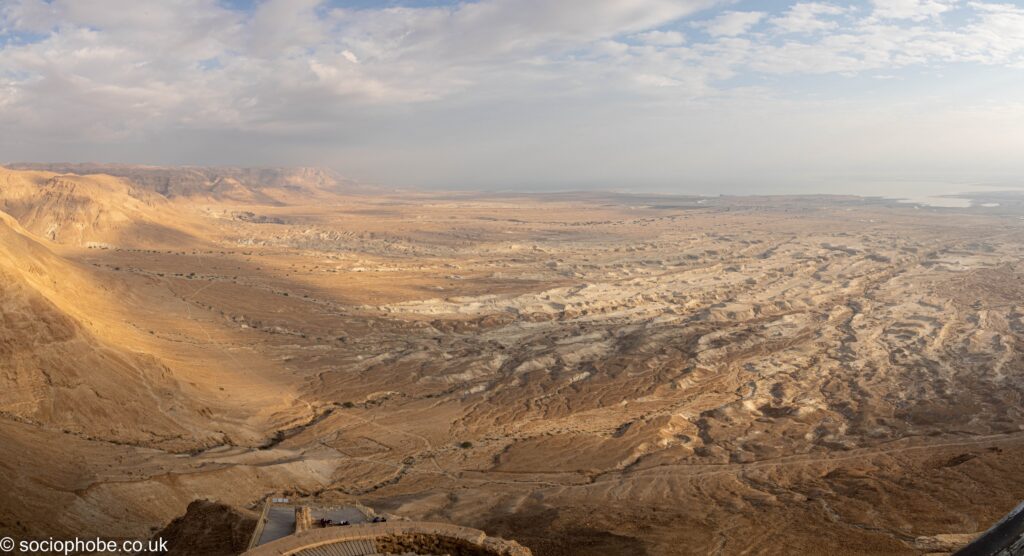
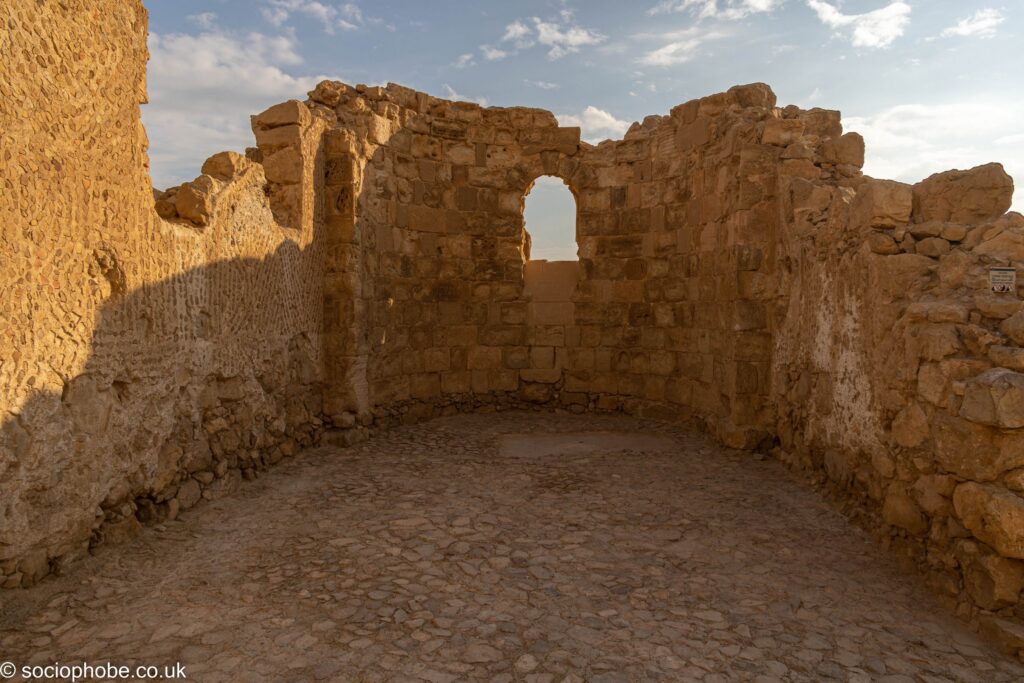
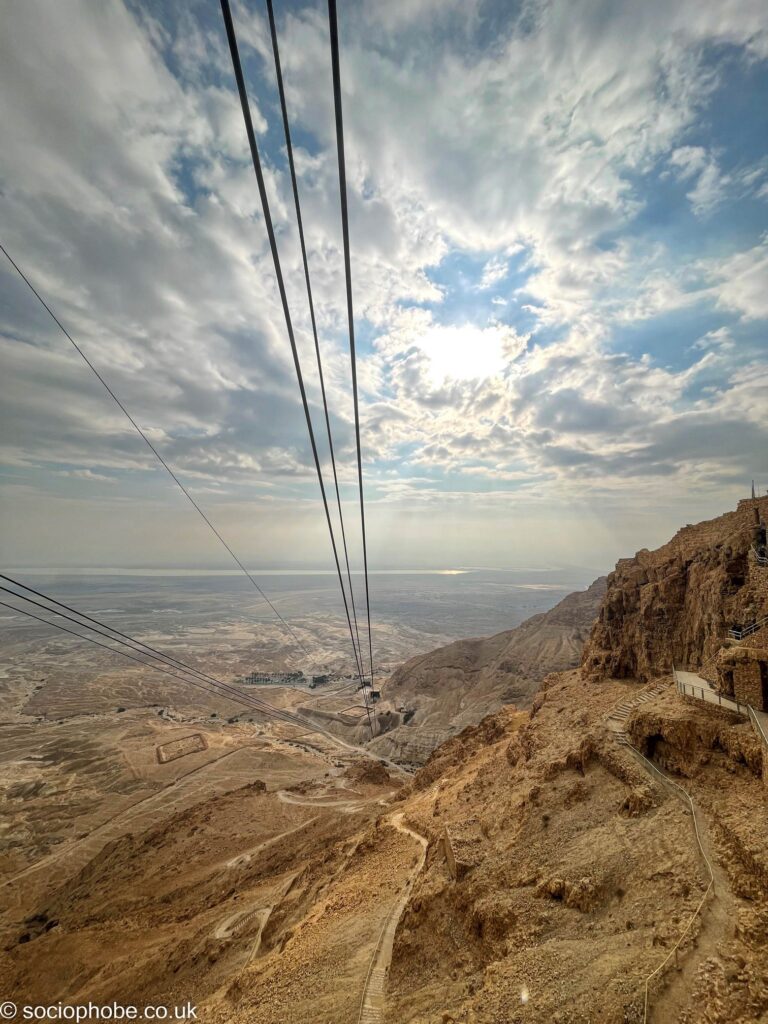
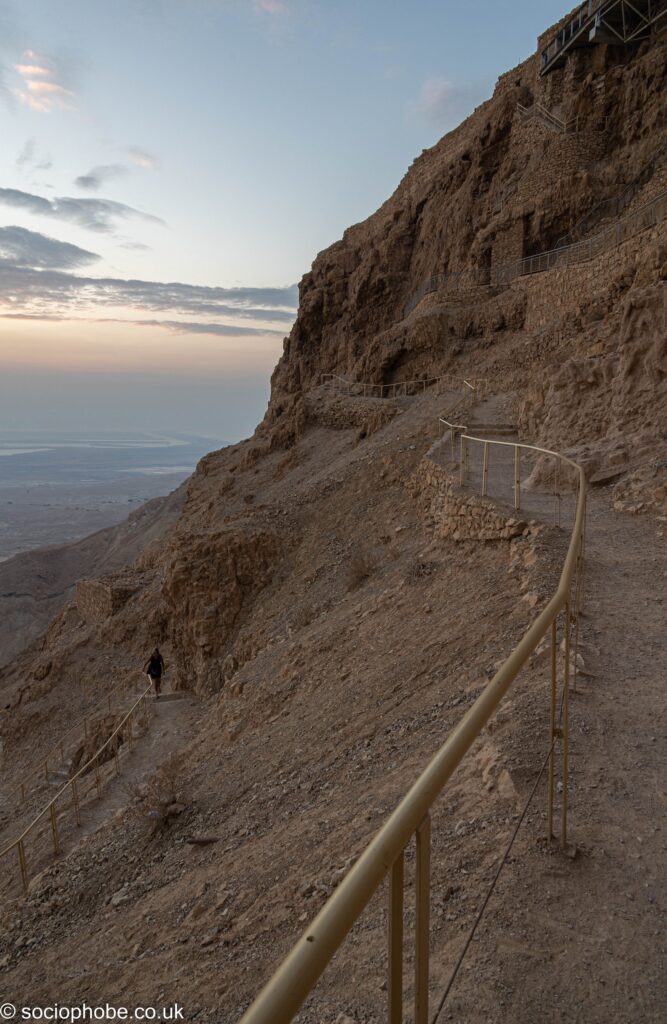
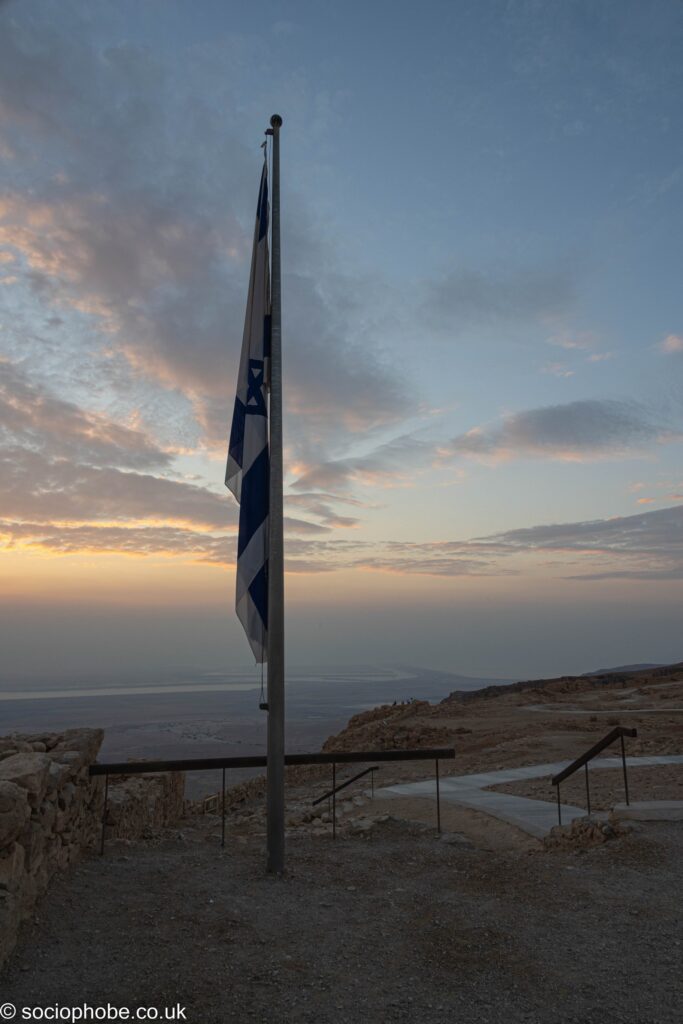
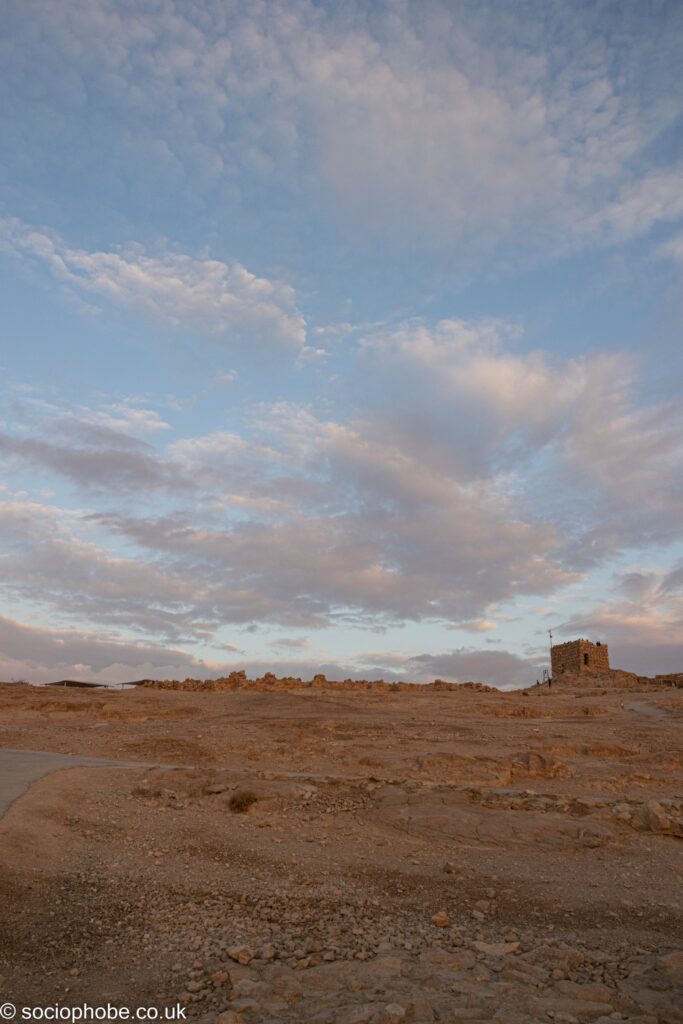

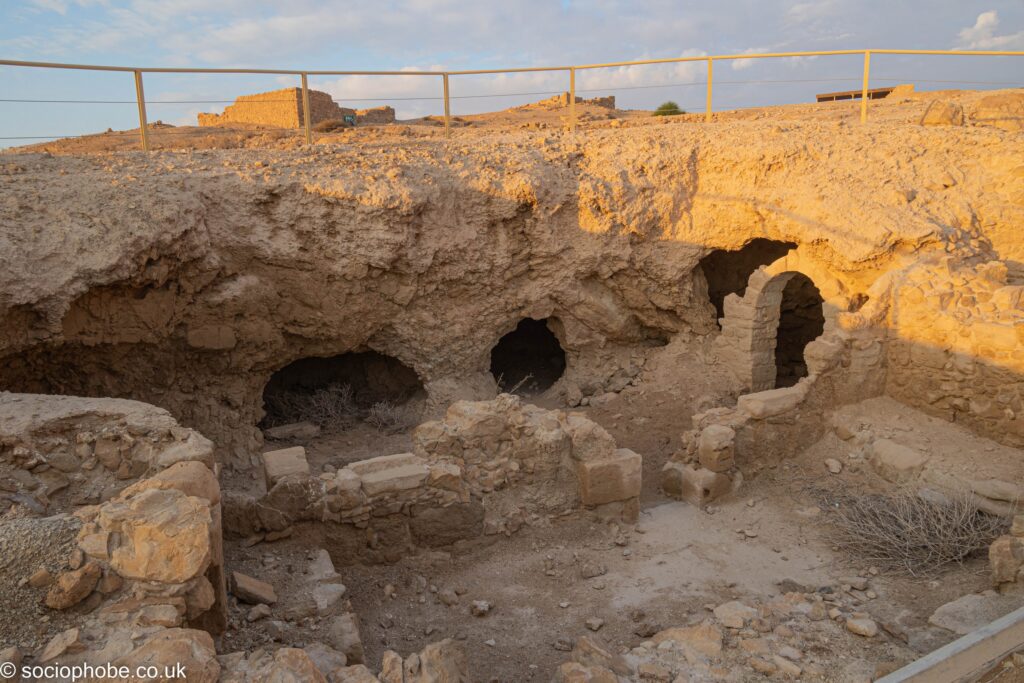
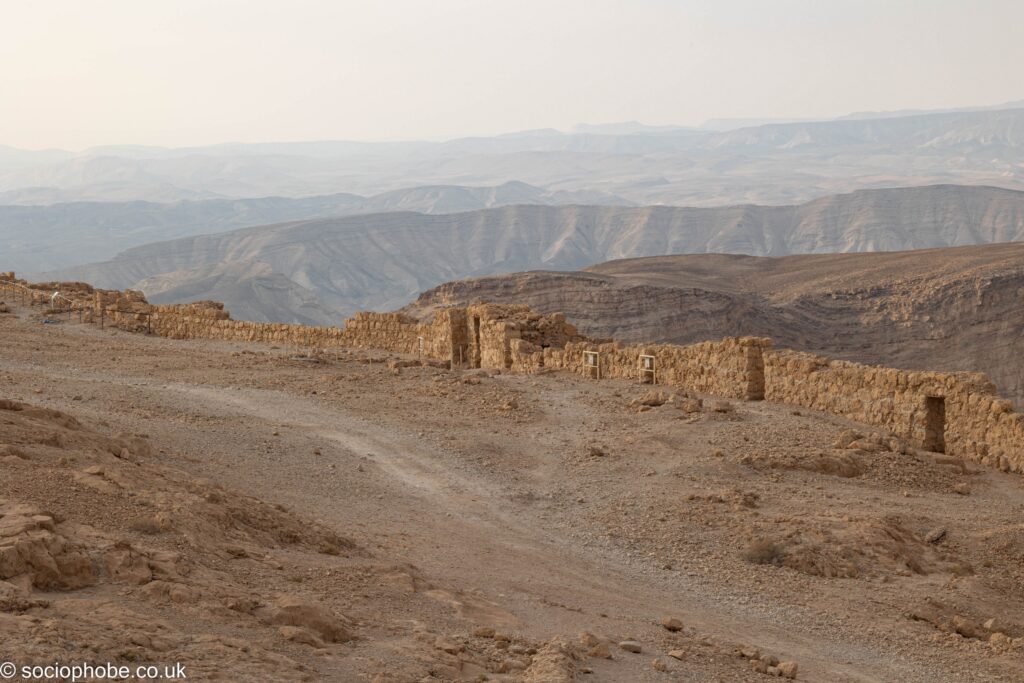
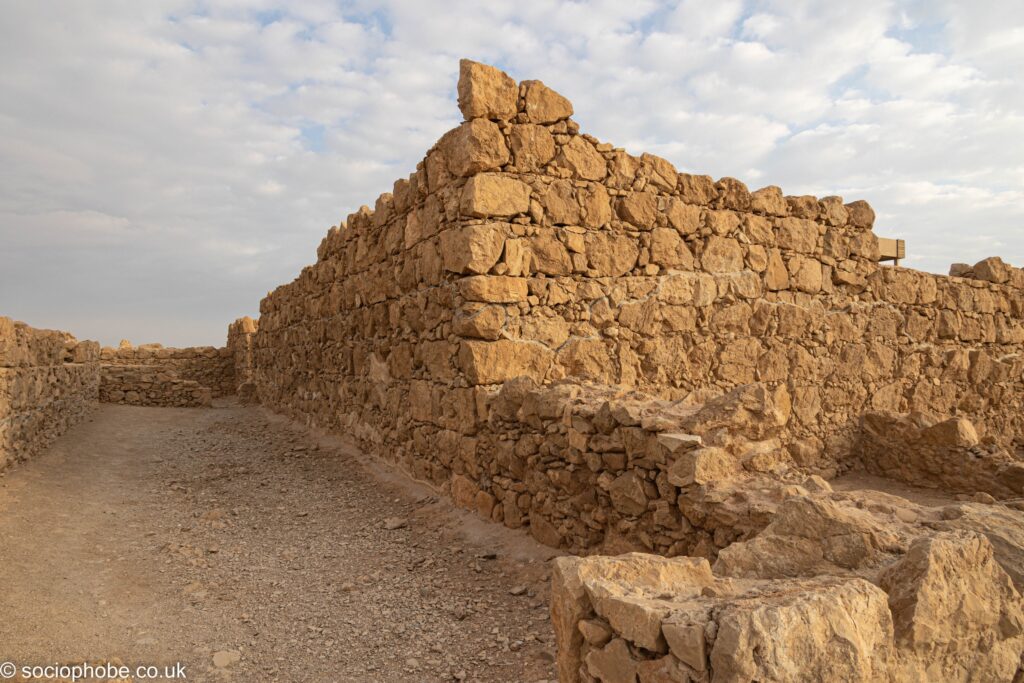
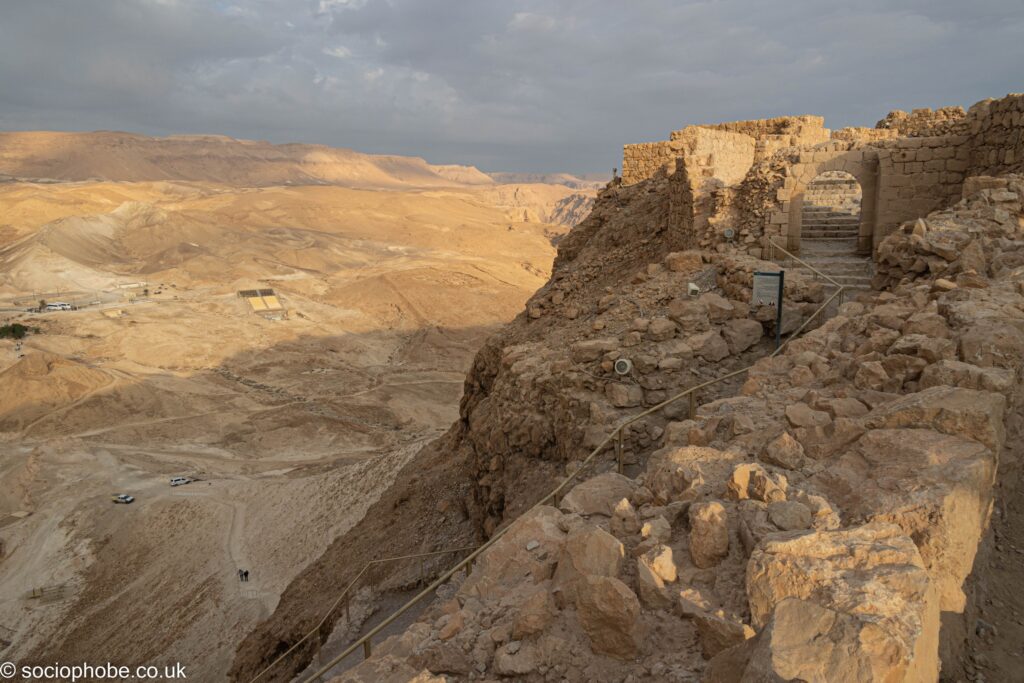
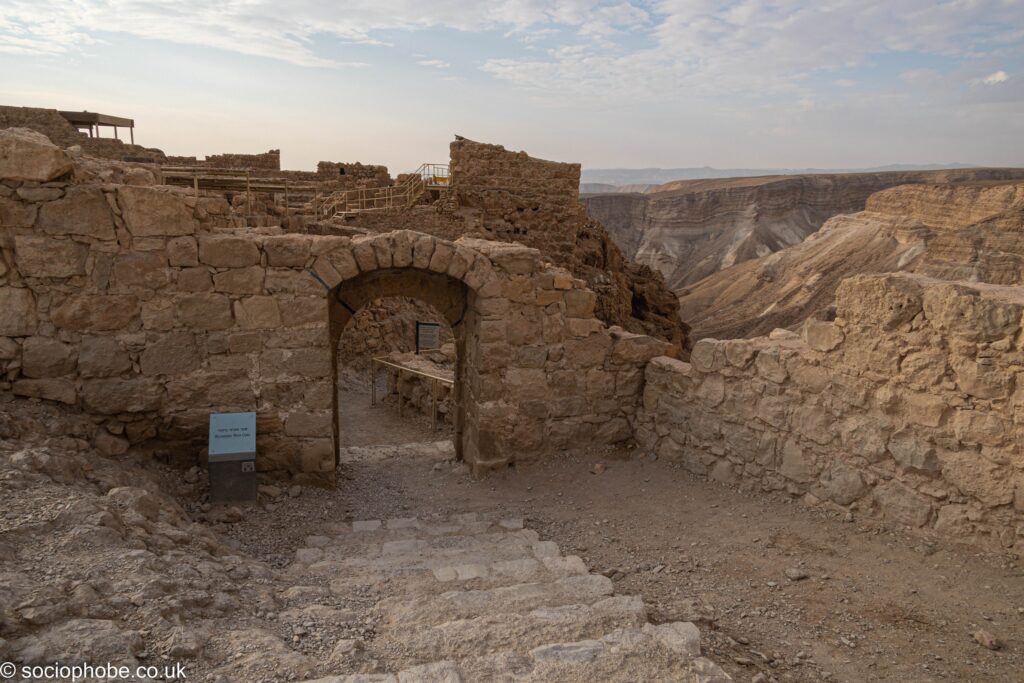
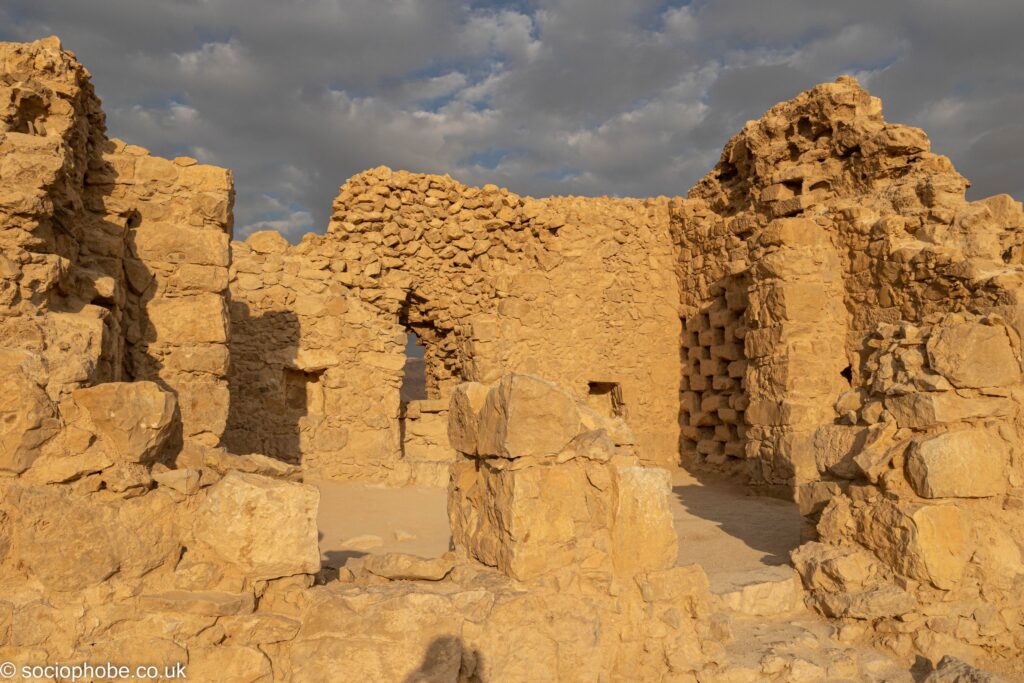
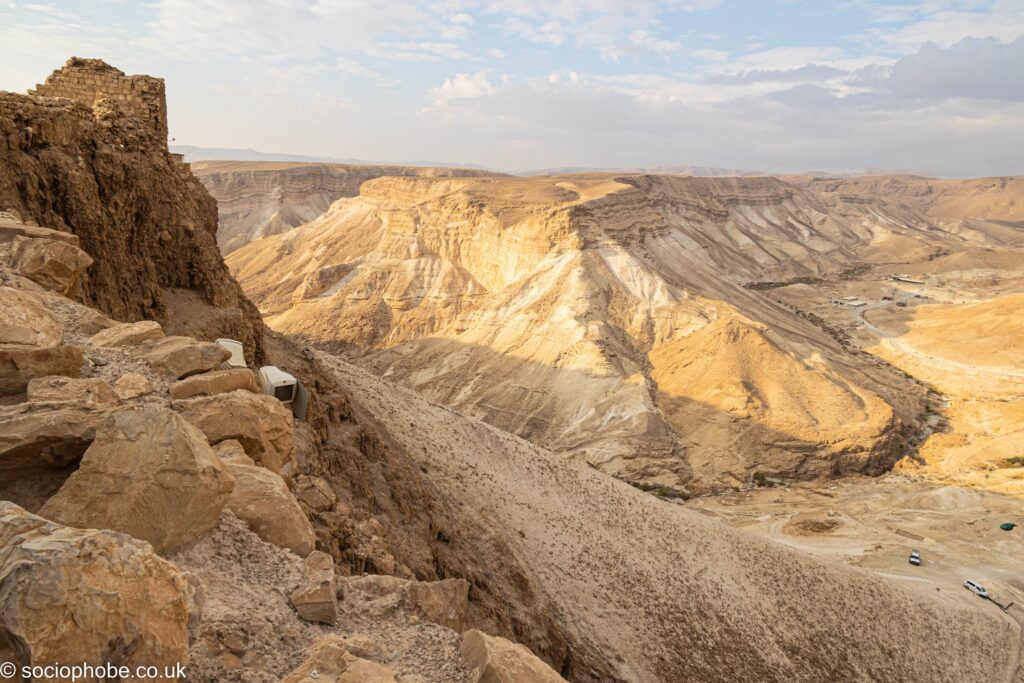
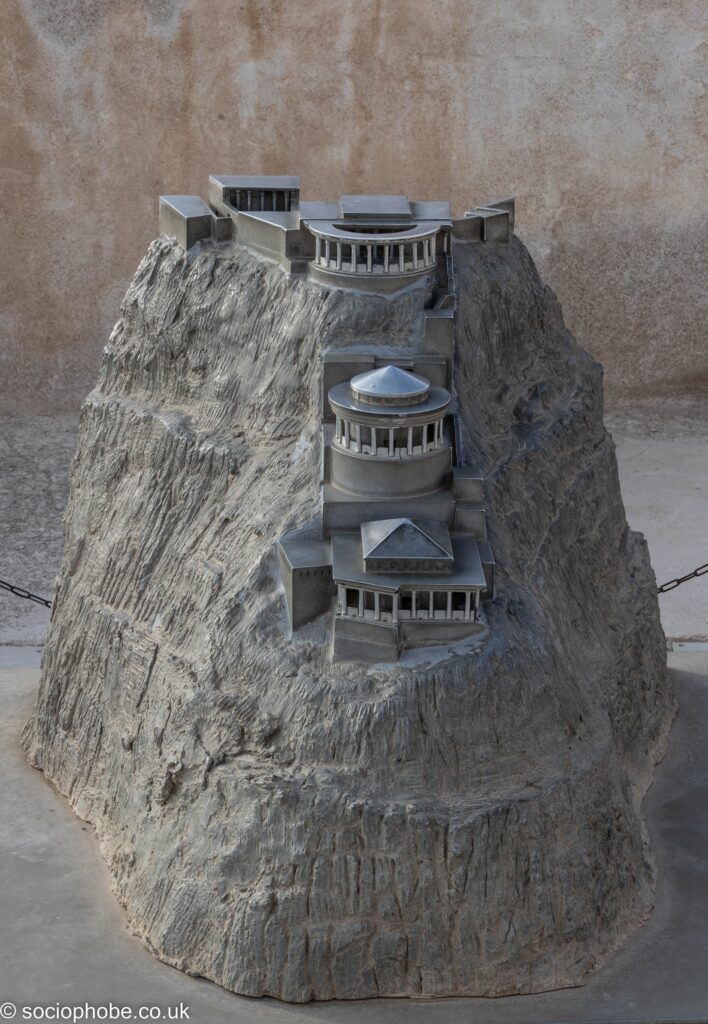
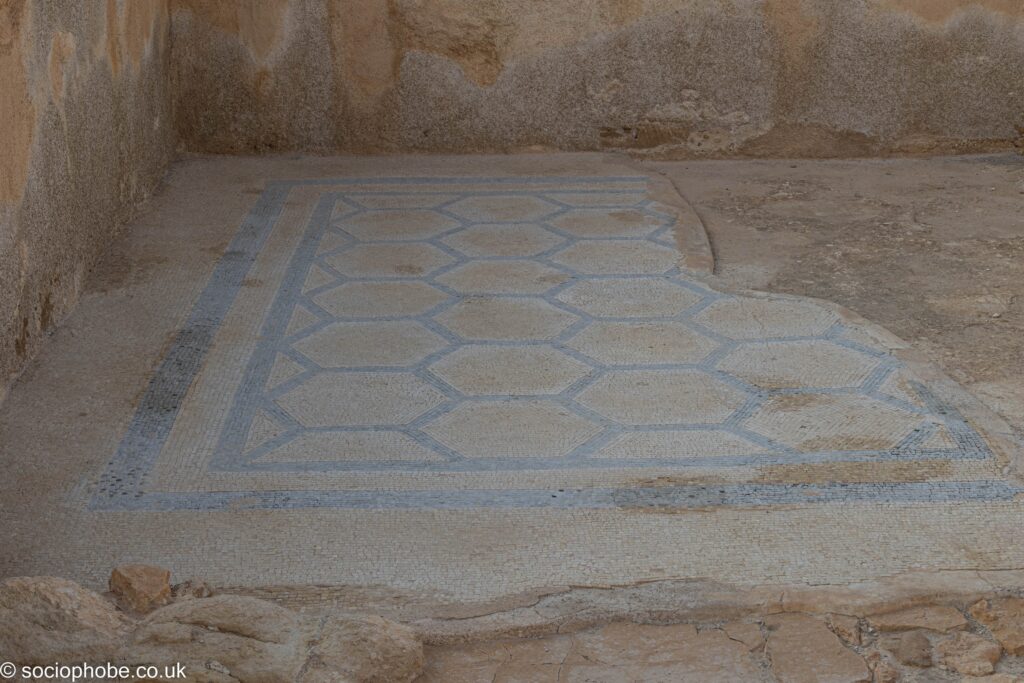
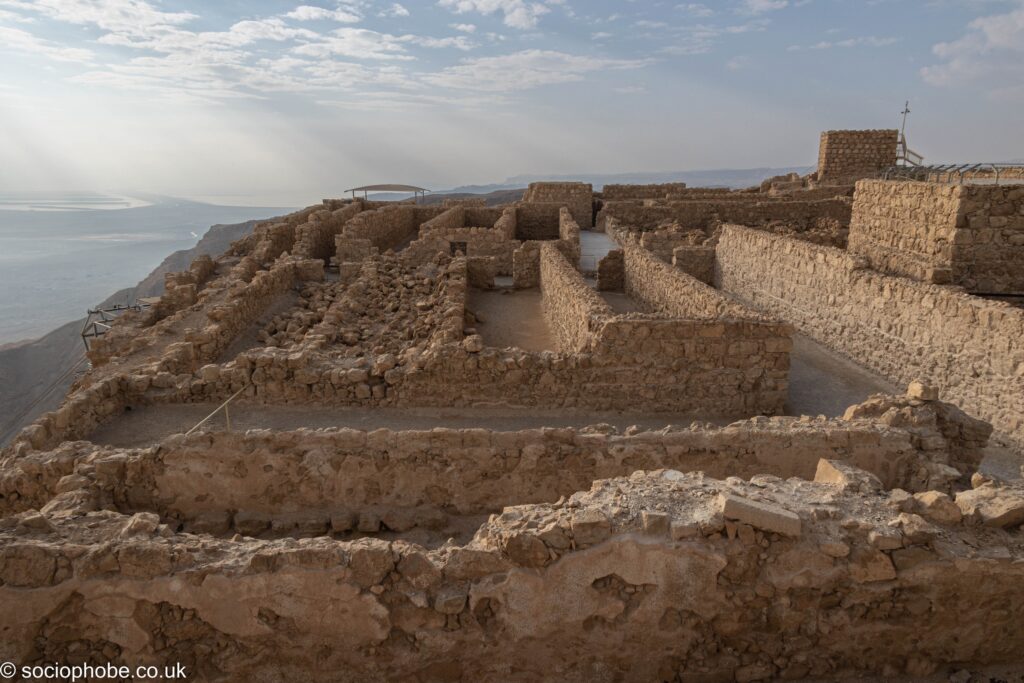
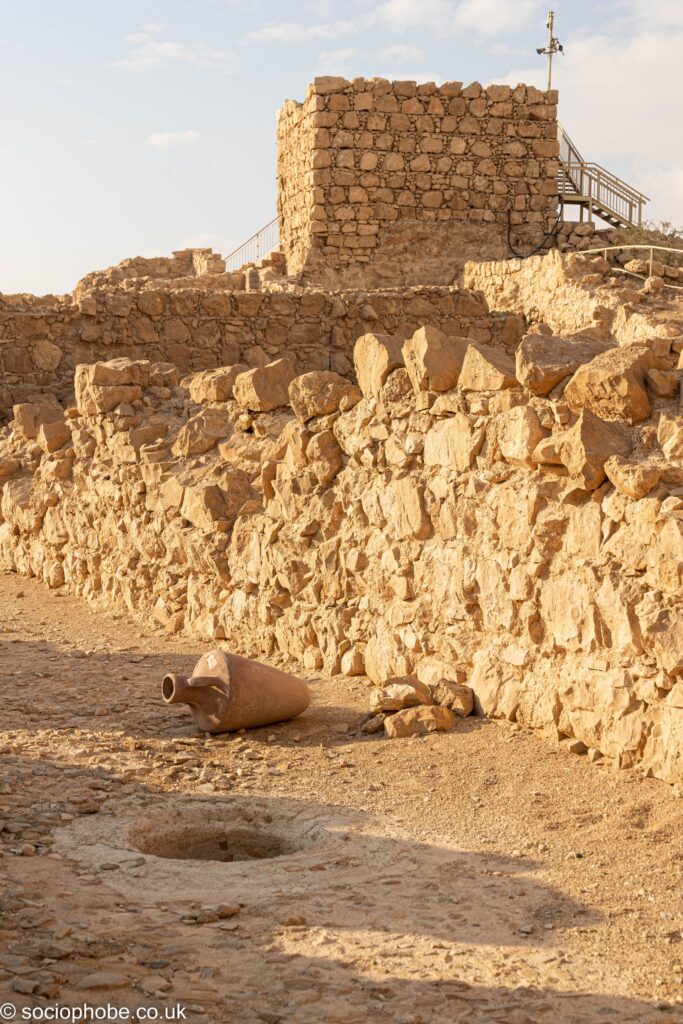
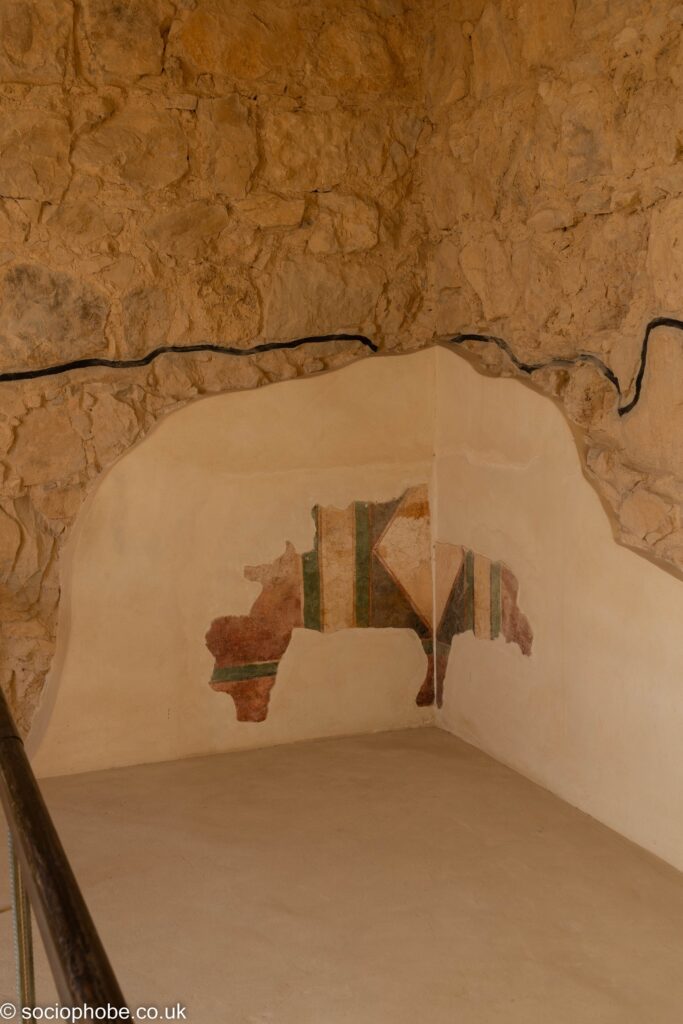
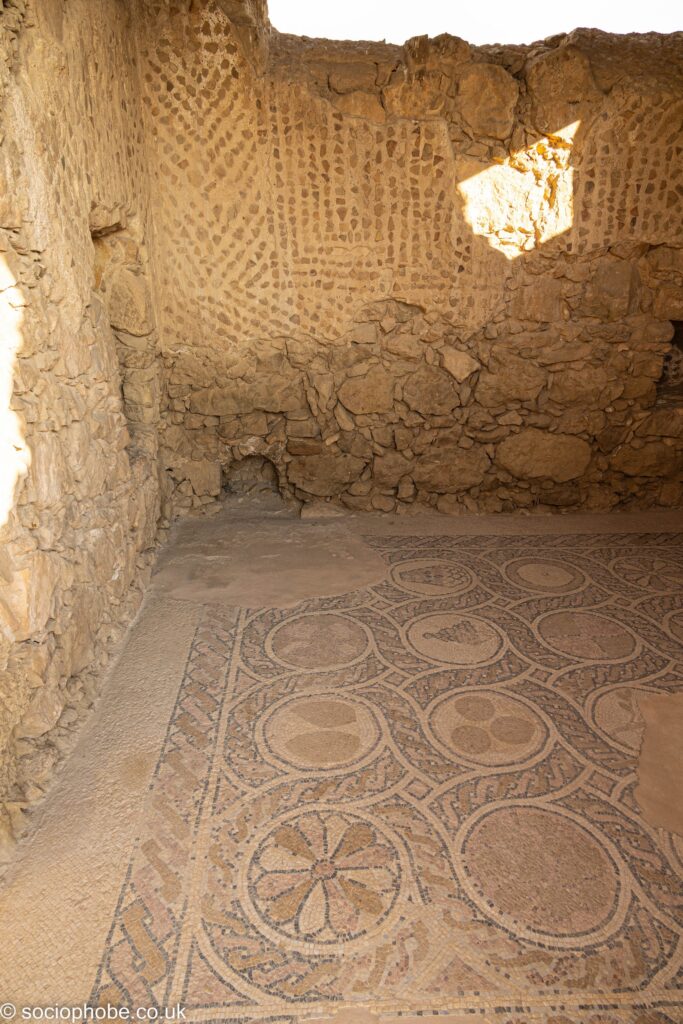
I got to the top after 45 minutes with a very sweaty head! the sun had probably risen but a bank of cloud blocked it from view for about 10 minutes longer so I ambled around the entrance structures and viewpoints while waiting for Deb. She arrived a little later and was not going to win happy bunny of the year award but at least the climb was done and achieved.
Most of the site is just desert and low walls with viewpoints over more desert and hills as well as various Roman siege camps. It wasn’t until we got to the western edge that we really saw anything. The Roman siege ramp was an incredible feat of engineering and that was also where Herod’s palace buildings started. Of these, by far the most impressive was the Northern Palace.
The northern palace was built on 3 levels with pools and terraces to take advantage of the surreal views over the desert of Moab. It seemed the most complete of all the buildings onsite and there were some collonaded areas but Deb waited at the top so didn’t see any of it as she didn’t fancy the thought of climbing back up 100 plus more steps! I joined her at the top and she carried on navigating us round the attractions, seeing the Byzantine church with its mosaics, the decorated guard commander’s rooms, the largest cistern and some of the huge number of store rooms built at the site.
We then caught the cable down at just after 9AM, what an incredible start to the day – both sweaty, achey and tired but also elated about the climb and views. Before we leaving we had a quick walk around the museum – we were the only ones there and it contained various finds from the site plus details of the siege and fall of the fortress. It gave a more human perspective on what we’d just seen and expanded on the details we had read on the information boards.
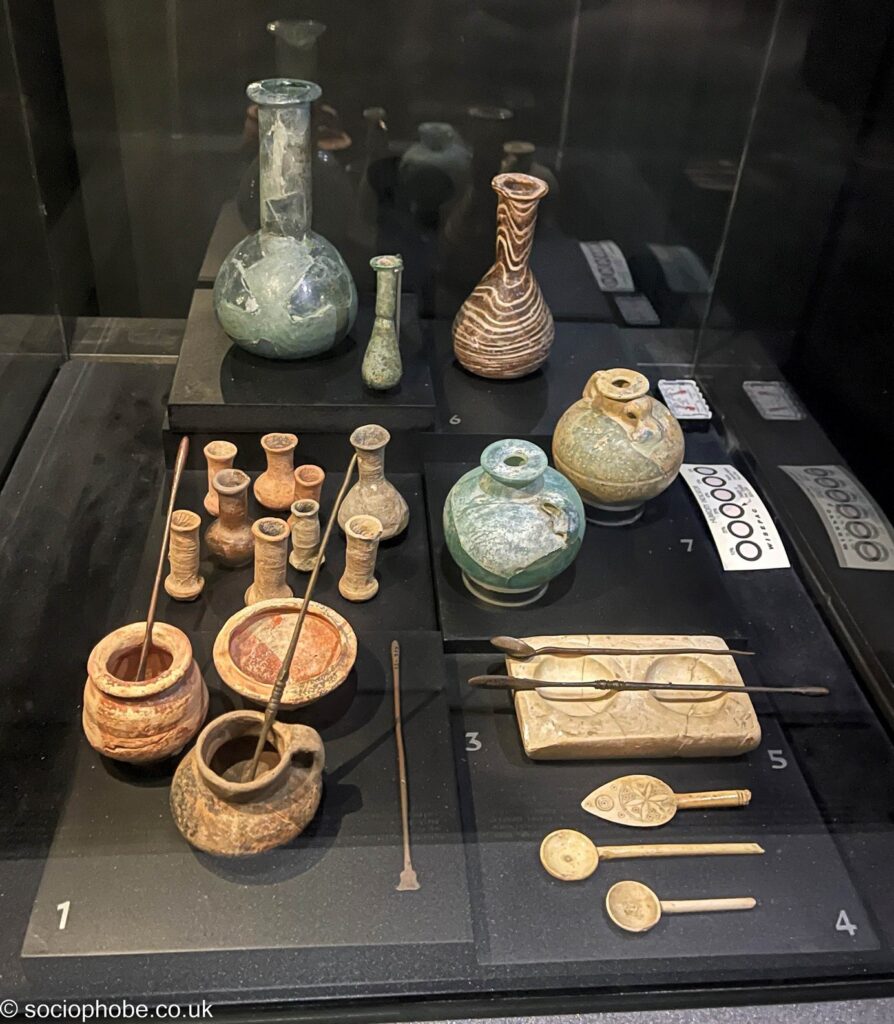
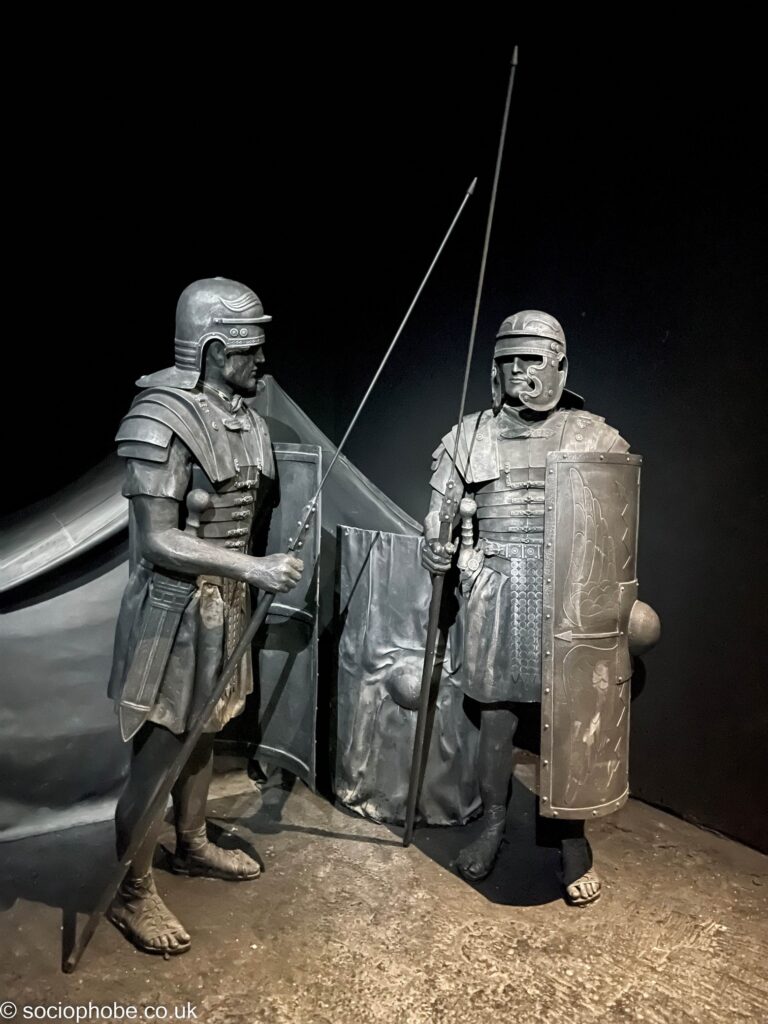
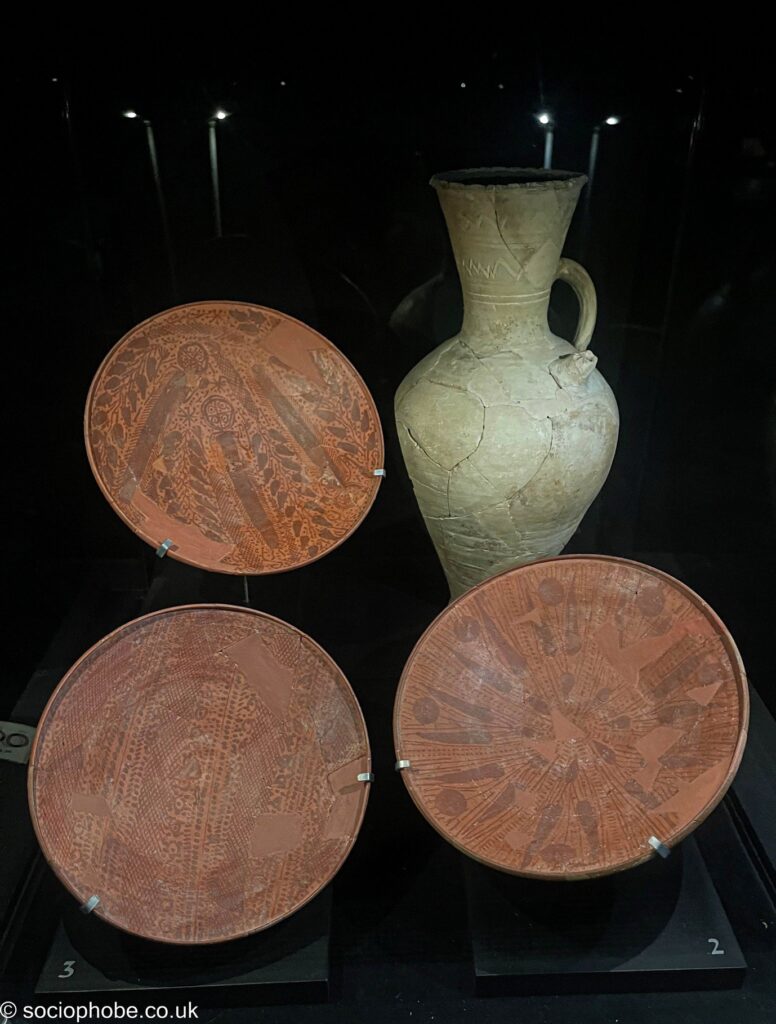
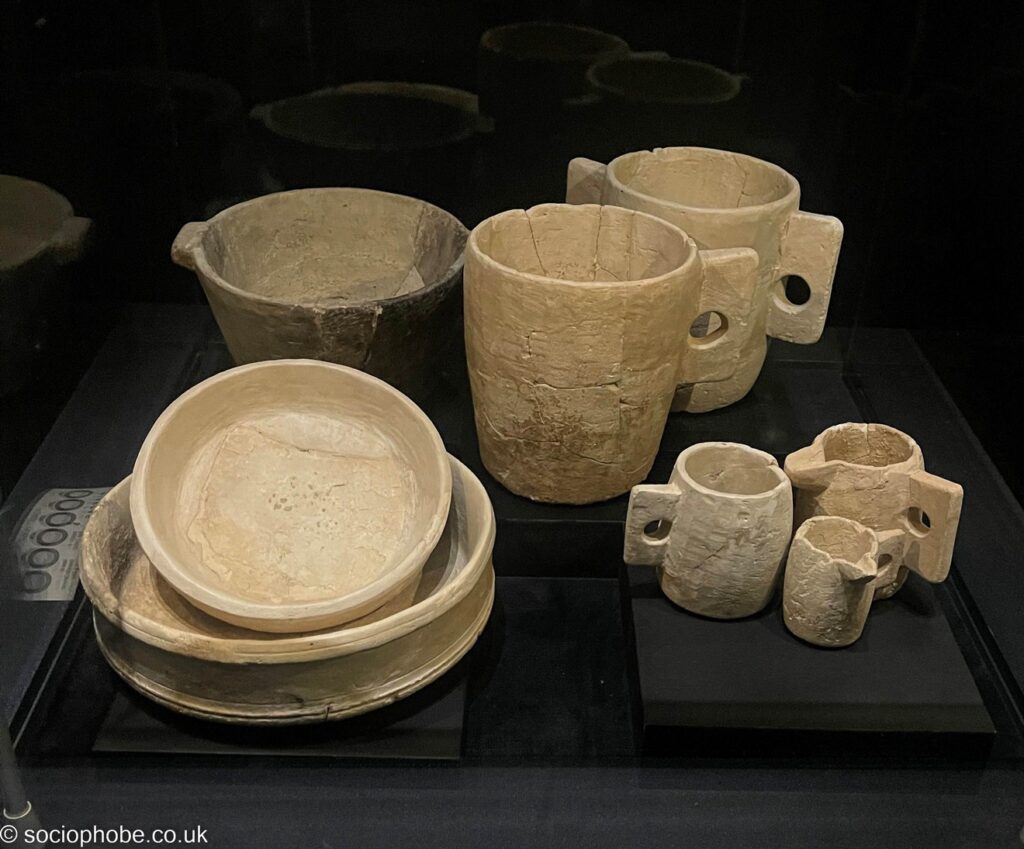
It was a quick drive back to the hotel and we dumped our stuff in the room, had a wash and then went for breakfast. This was a veritable feast with a huge selection of fresh food so we both stuffed our faces, despite my watch claiming I’d only burned 380 calories! We then returned to our rooms and realised we should have checked out by now so no time for a shower, packed our bags and went.
It was a couple of hours drive to Jerusalem, mostly through desert but as we climbed the hills east of the city we actually had a rain shower! It was a slow drive through the city itself but the sat nav worked well and we arrived at Patrick’s safely. It was good to see him and his new partner on their home turf and we were actually there about 7 hours drinking, chatting, drinking, eating and drinking – I was certainly the worse for wear when the taxi dropped us at the Jaffa Gate and we had to navigate the old city in the dark. Google is your friend though and we found the hotel successfully. Our room was very small after the previous ones we’d had but we dumped our stuff and pretty much fell in to bed!
Wednesday 7th December – Jerusalem
We both had a bad nights sleep – the combination of alcohol and noise of other guests arriving/leaving but shouting down the corridor or slamming doors woke us several times. When the alarm went off at 6.30 we were not in a good way! We managed to avoid throwing up, I had a definitely needed shower and then we gingerly made our way down for breakfast.
We didn’t have big appetites that morning but we managed to eat something before leaving to visit the Holy Sepulchre. It took a while to find (my fault!) but eventually we went inside and it was a bit of a let down. It wasn’t like any of the major churches we’ve visited before, it seemed like some small rooms and then a big dome over another church that is meant to be built over the site of Jesus tomb. I found it very strange that people were so emotive but that’s religion in a nutshell, not something rational. There were people kissing stones, carrying replica crosses etc so it obviously meant a lot more to them. We probably should have had a guide in hindsight.
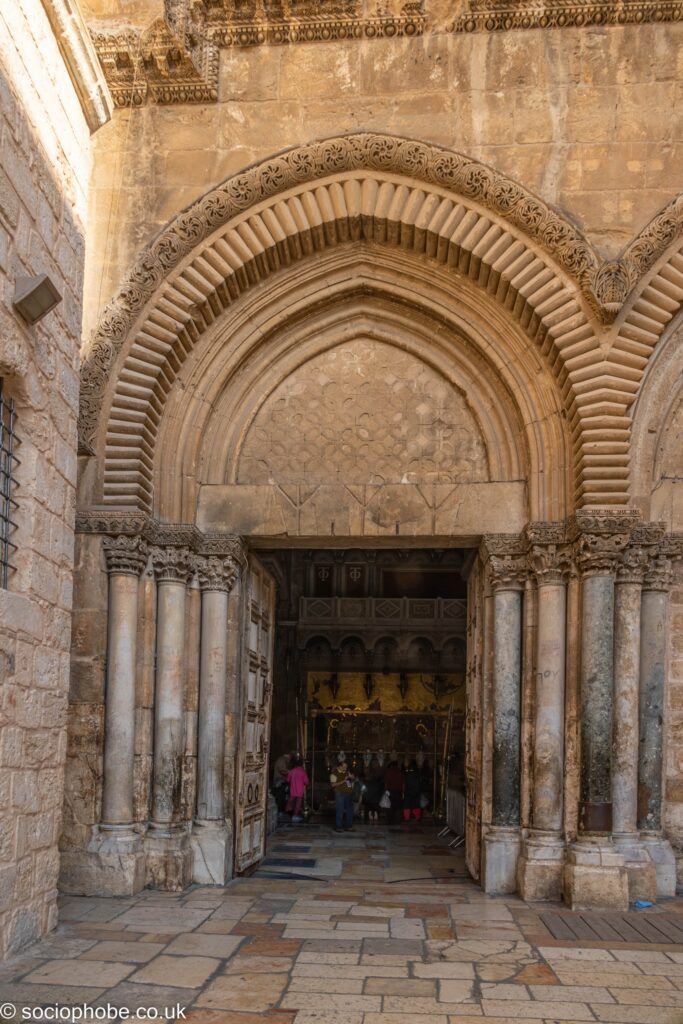
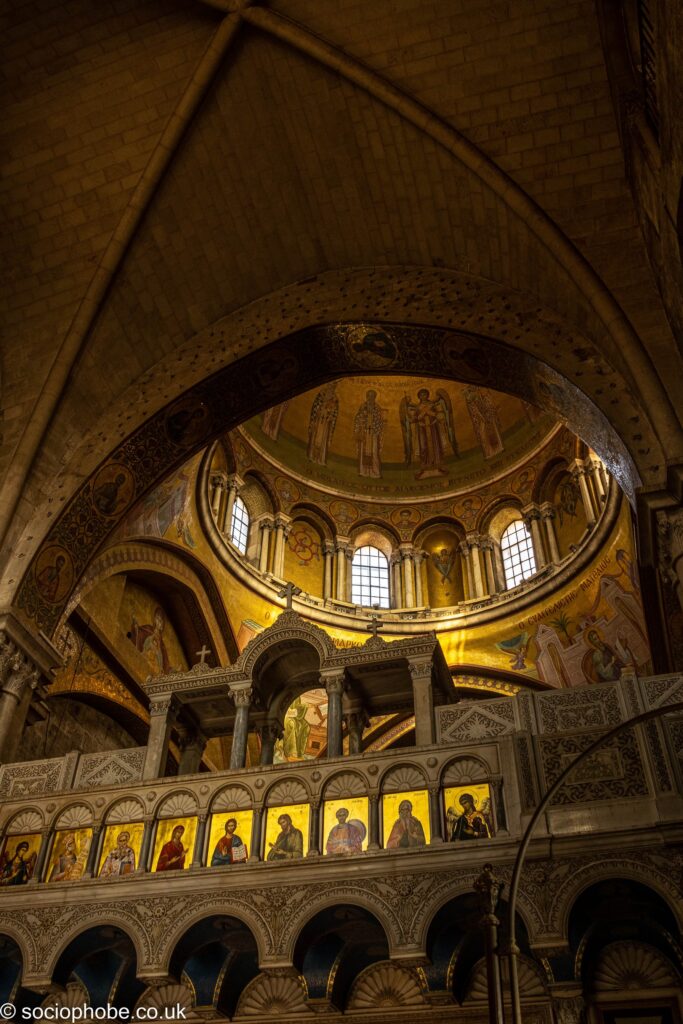
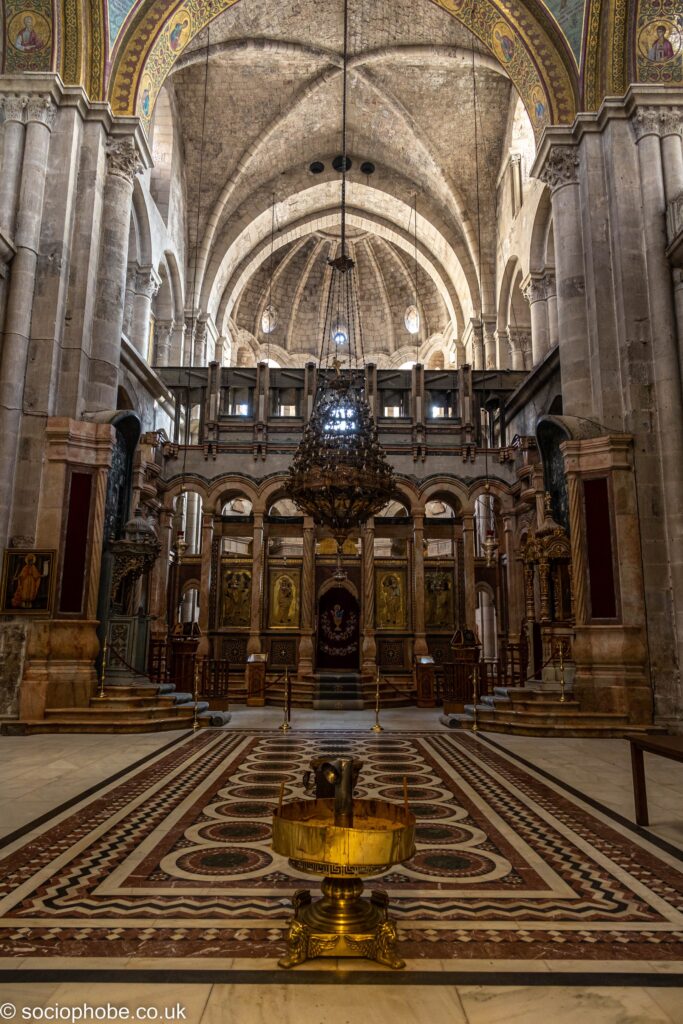
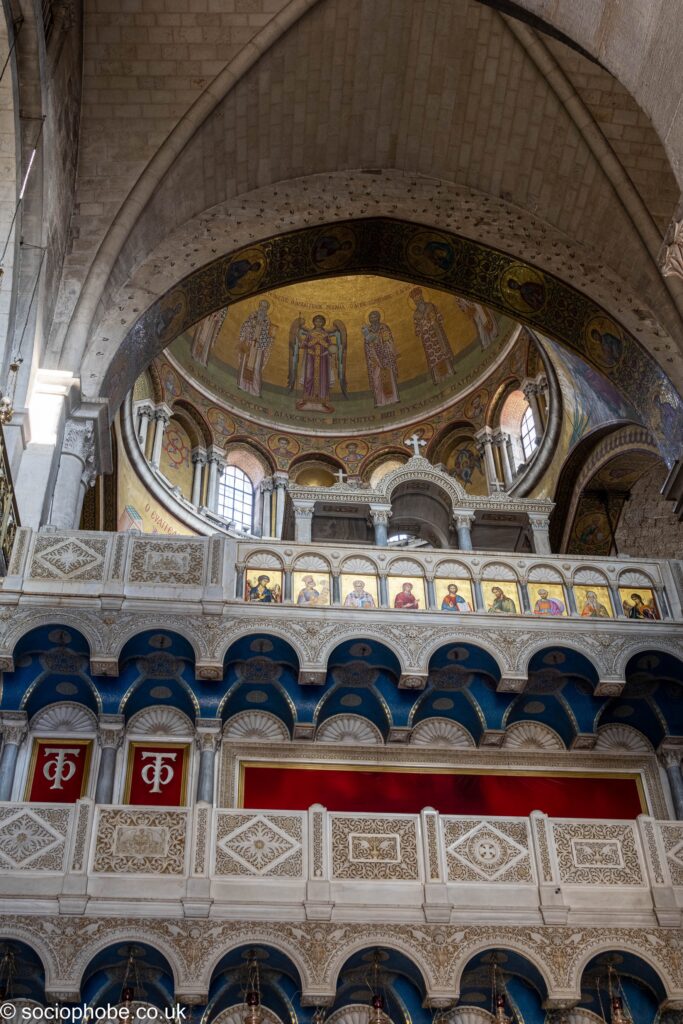
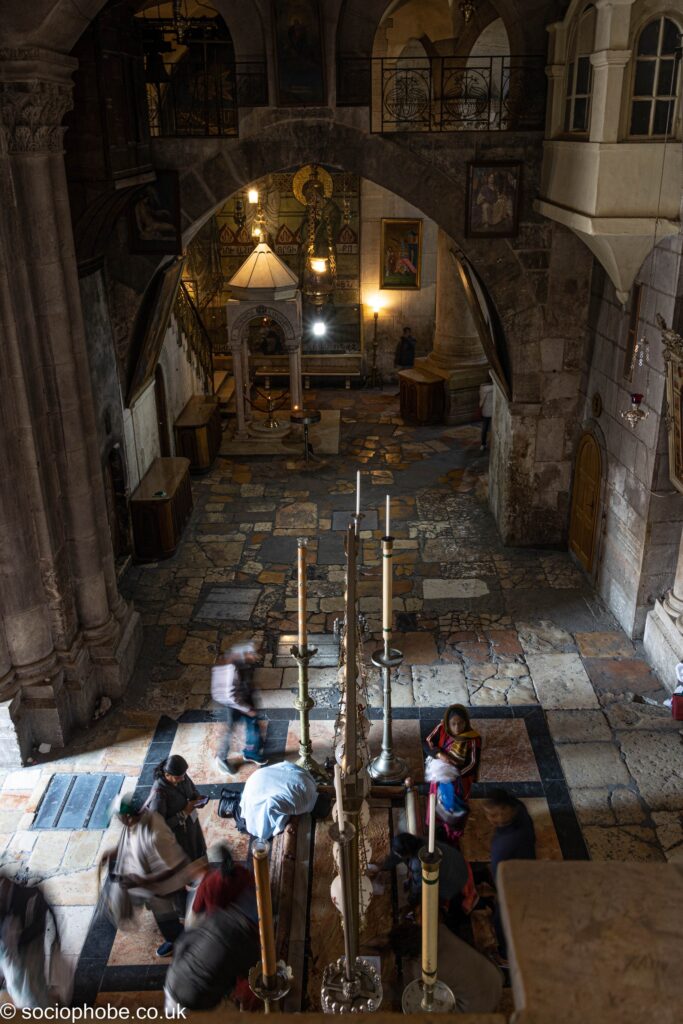
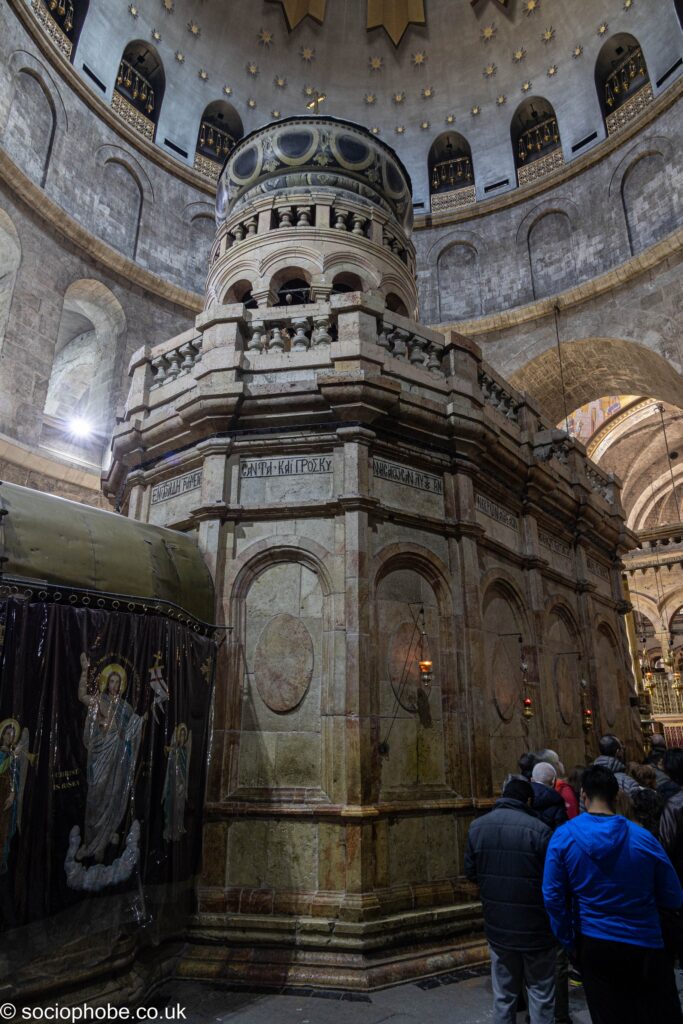
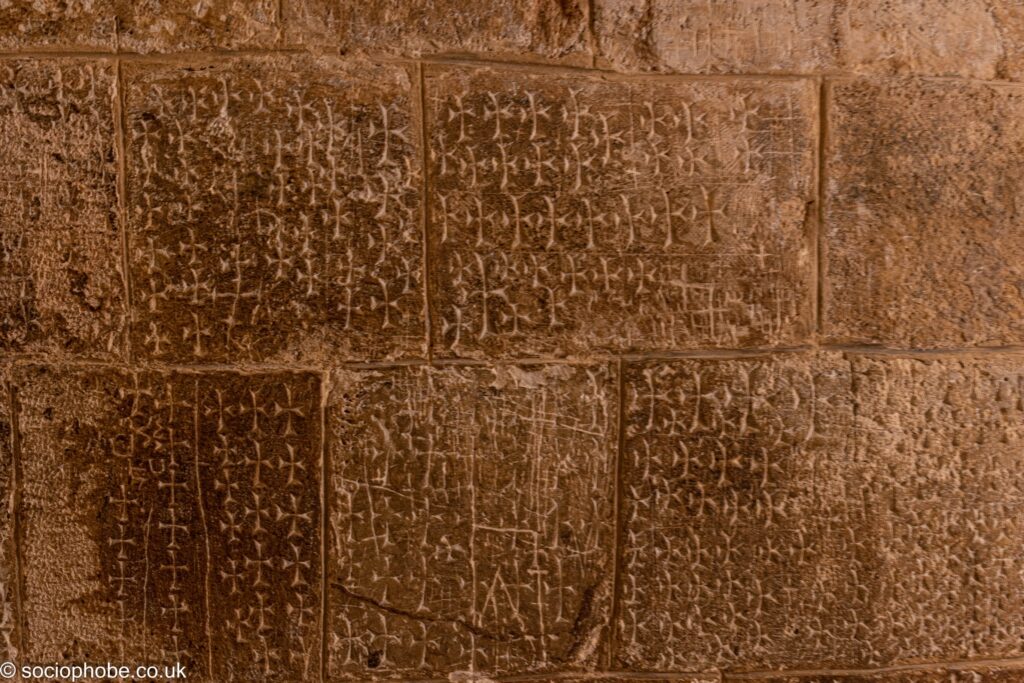
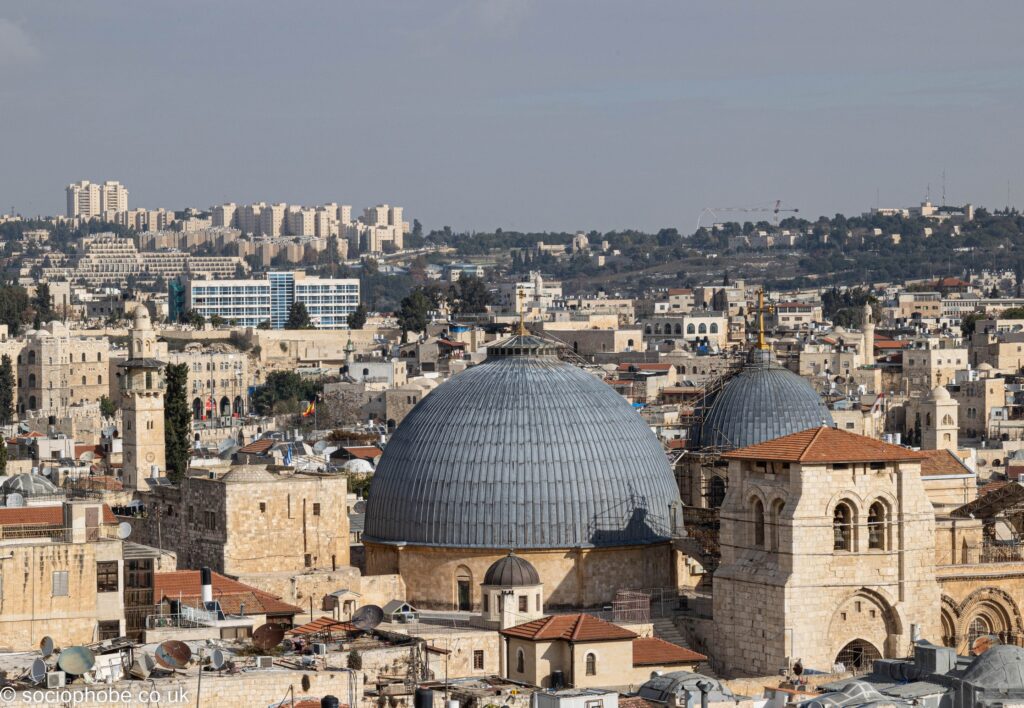
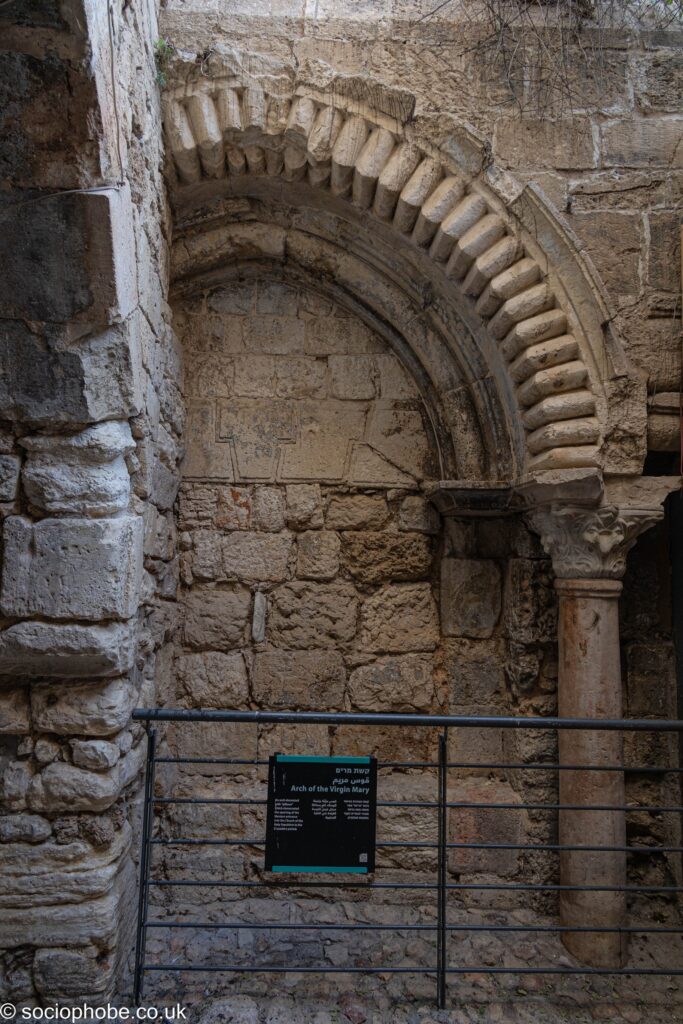
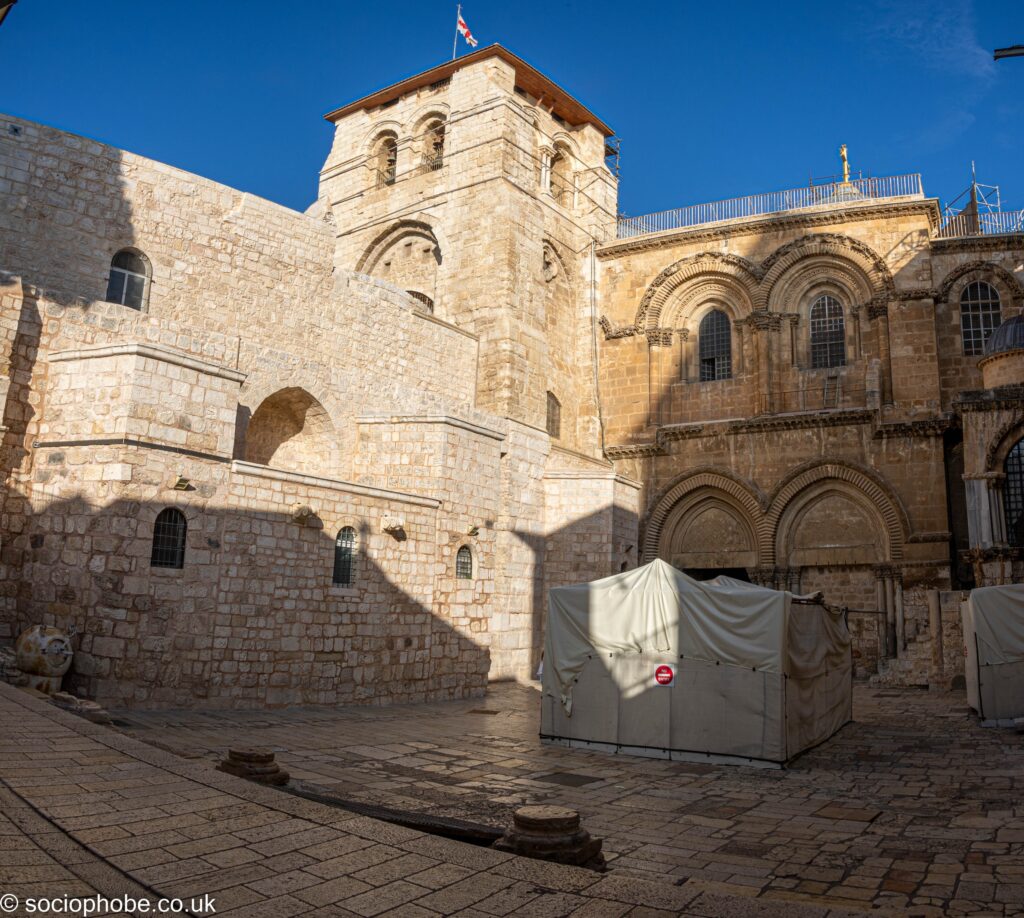
The church has existed in various forms since the 4th century and covers the presumed site of both the crucifixion and the tomb of Jesus. It was built by Constantine and then damaged by fire and earthquakes, being repaired each time before the Egyptian caliph al-Hakim destroyed the church and other Christian sites – this was one of the actions that led to the Crusades. Once al-Hakim had died the Byzantines made a deal with his son and rebuilt the church, although on a much smaller scale.
The crusaders then expanded on this Byzantine foundation and that’s pretty much what is left now, managed by a rotating mix of churches so no one denomination has control. Various parts have been damaged again and repaired and the tombs of the Crusader Kings of Jerusalem were destroyed in the nineteenth century, apparently looted whilst repairing the church after a fire.
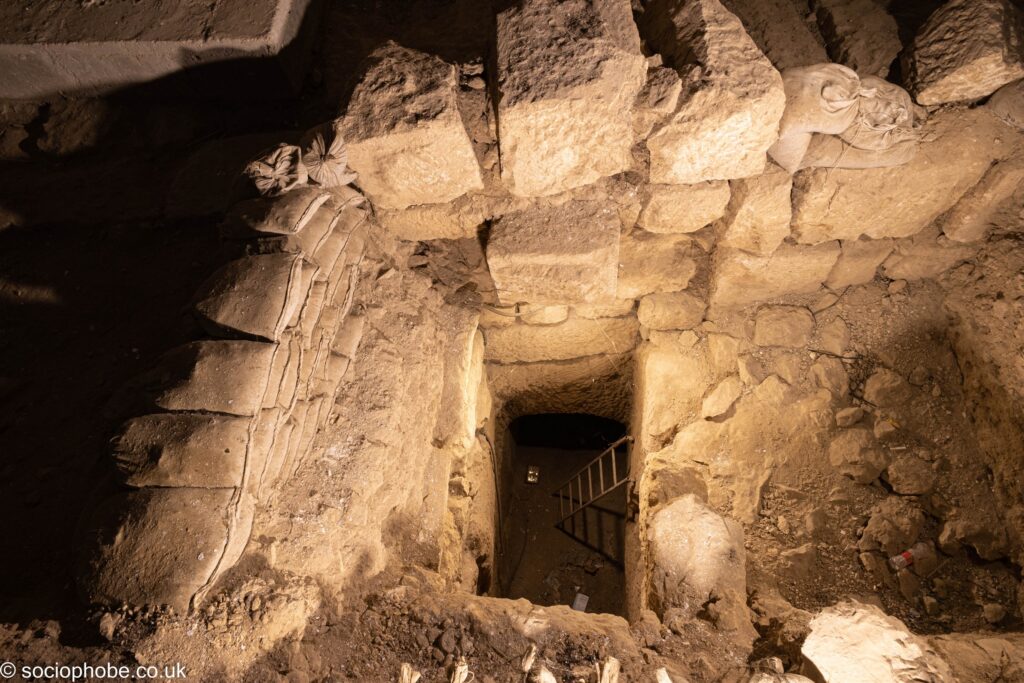
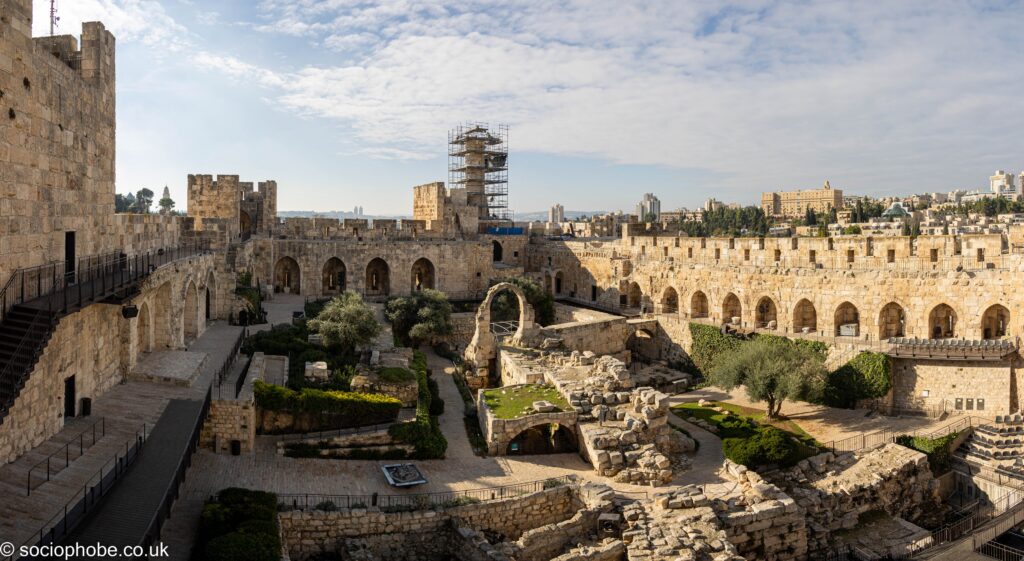
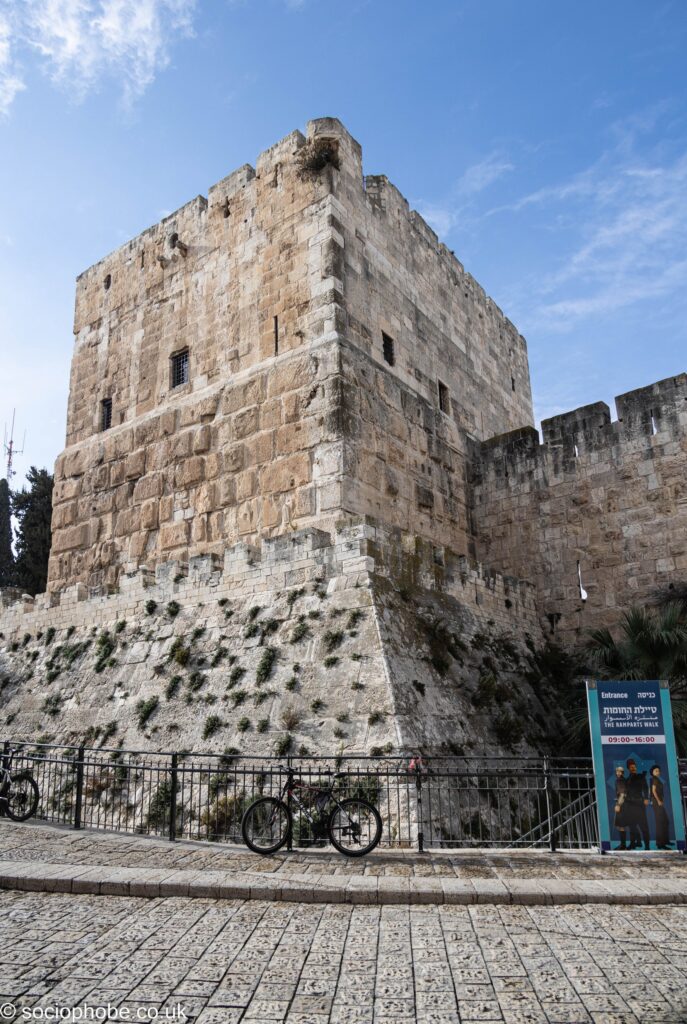
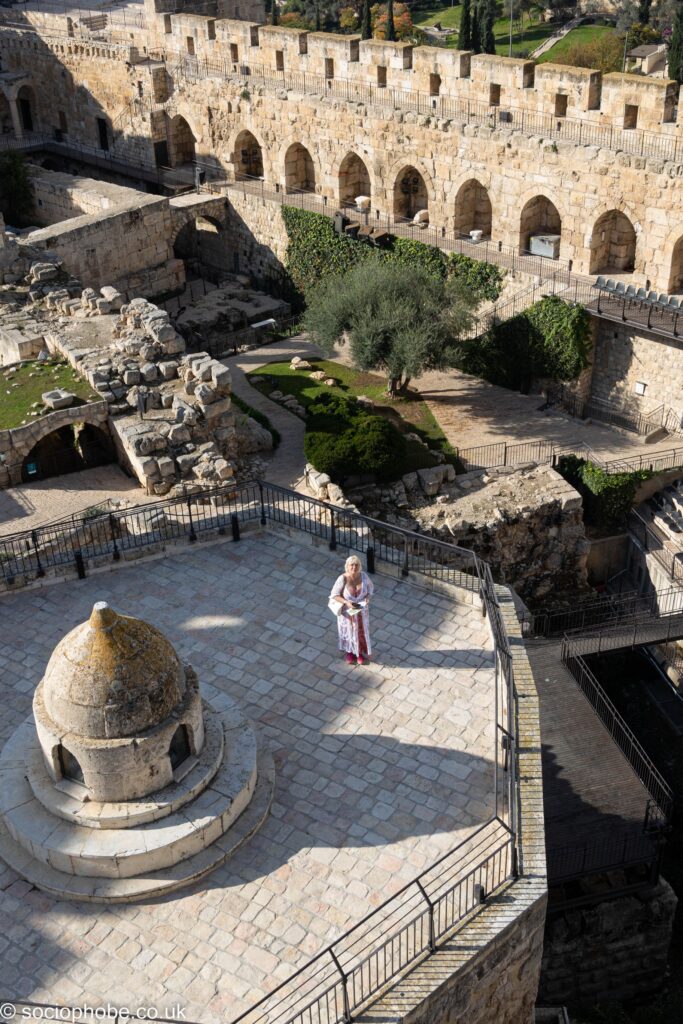
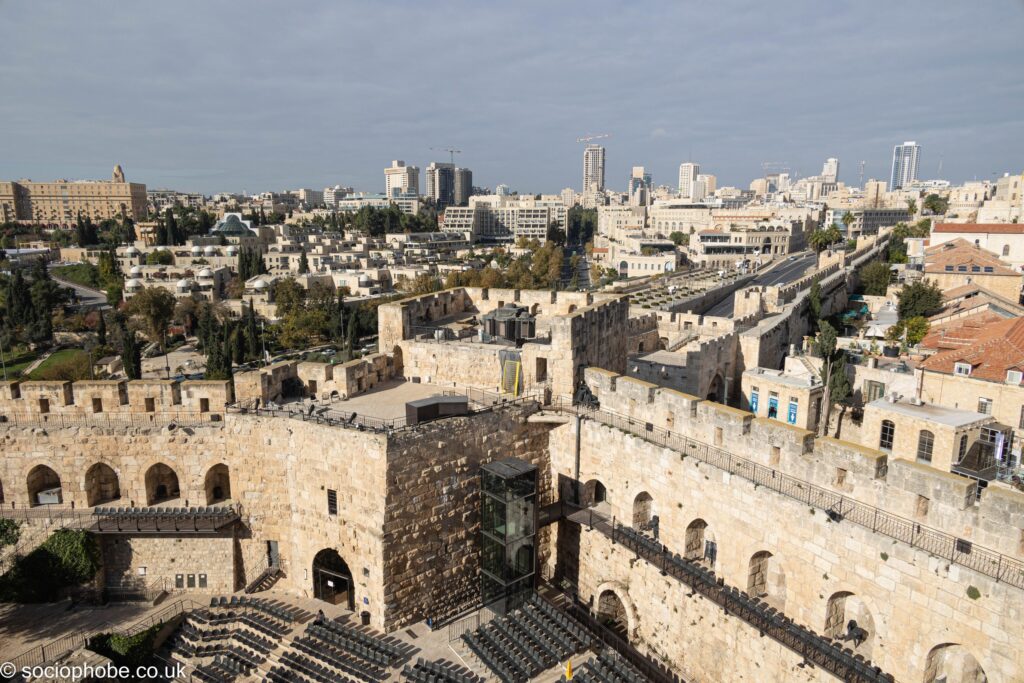
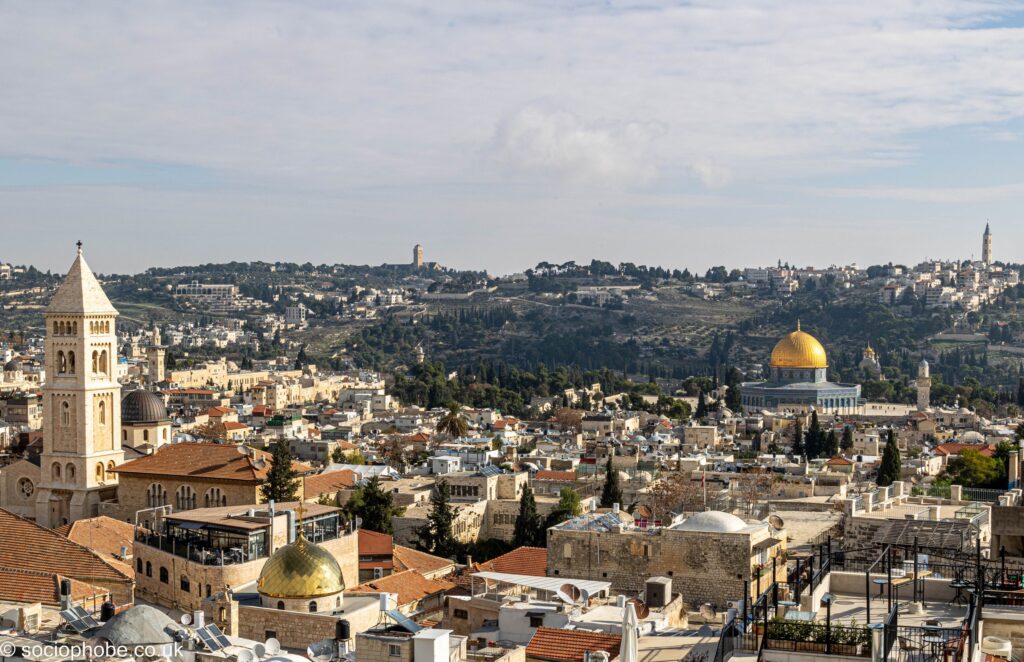
From the Holy Sepulchre we wandered through a maze of streets and eventually came out at the Jaffa Gate. We (I) decided to visit the Tower of David Museum which encompassed the citadel of Jerusalem and buildings from 3000 years of the city’s history. It has been well restored and gave a good insight into this war ravaged area. There were great views but for me the best thing was the models of the city at different stages in its history and the way the population centres have shifted. It also showed the massive growth of the city in the last 50 years.
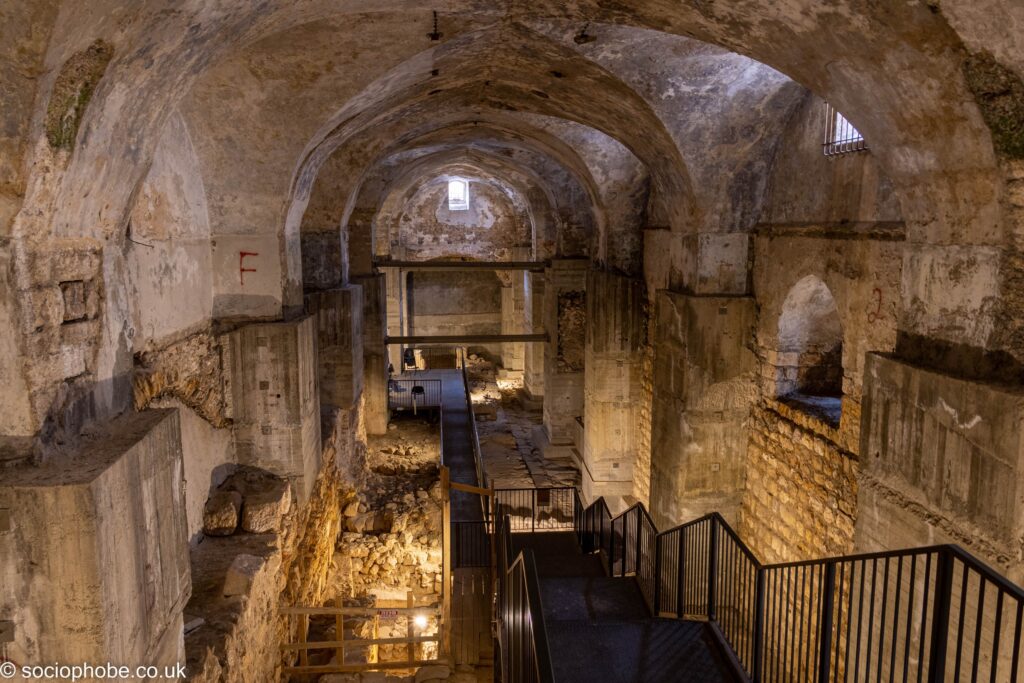
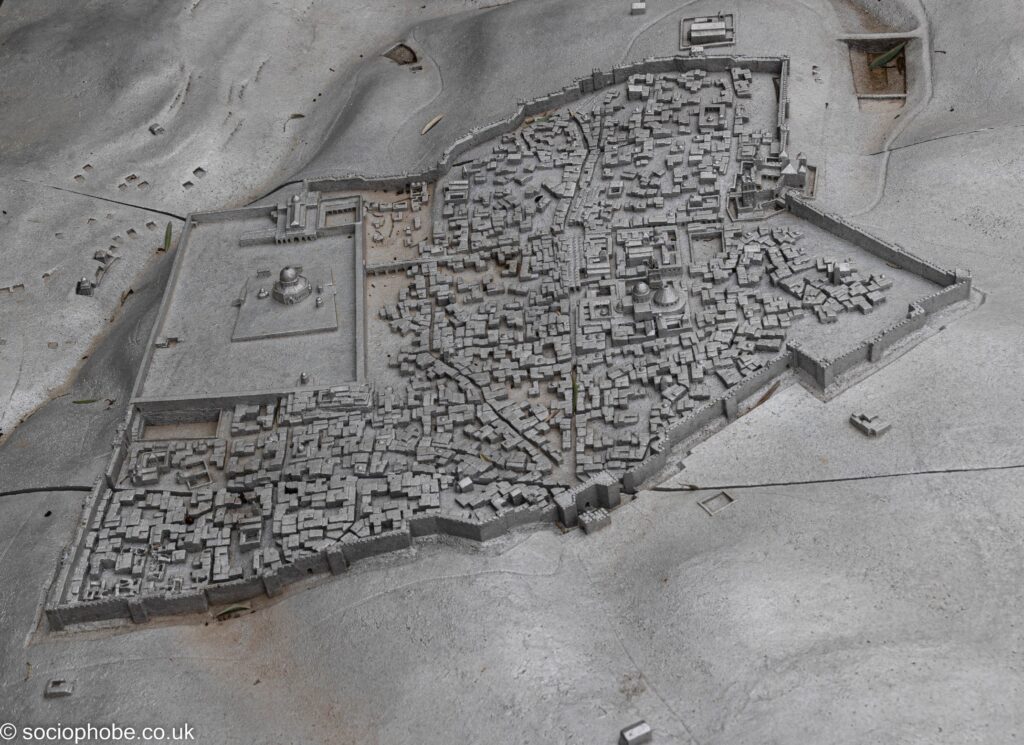
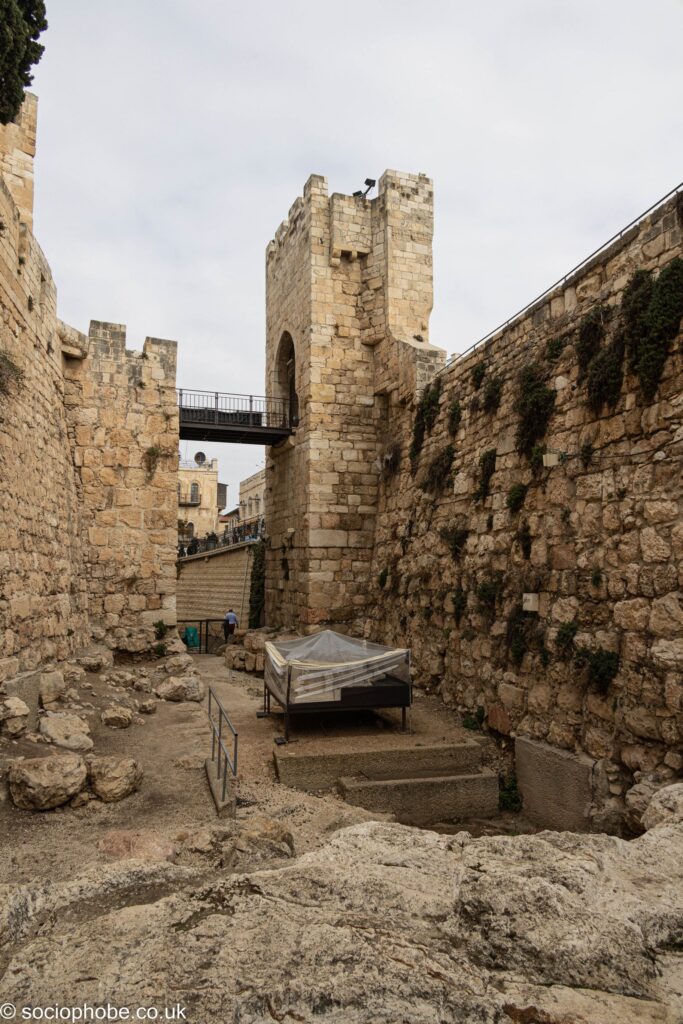
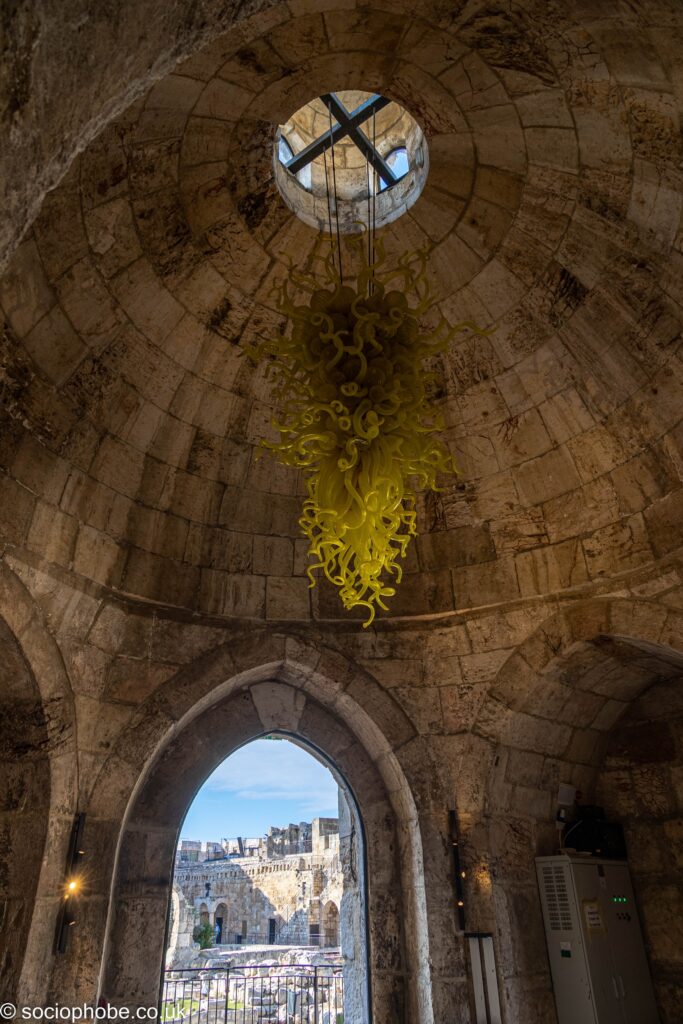
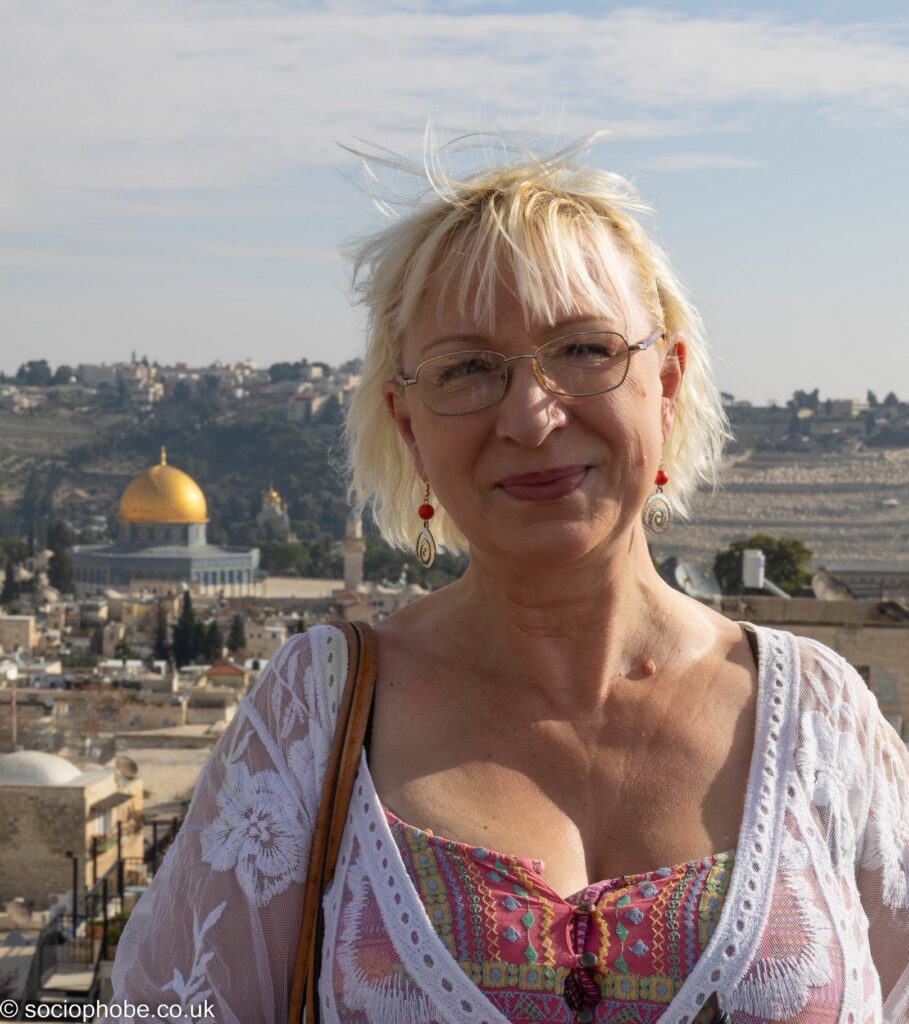
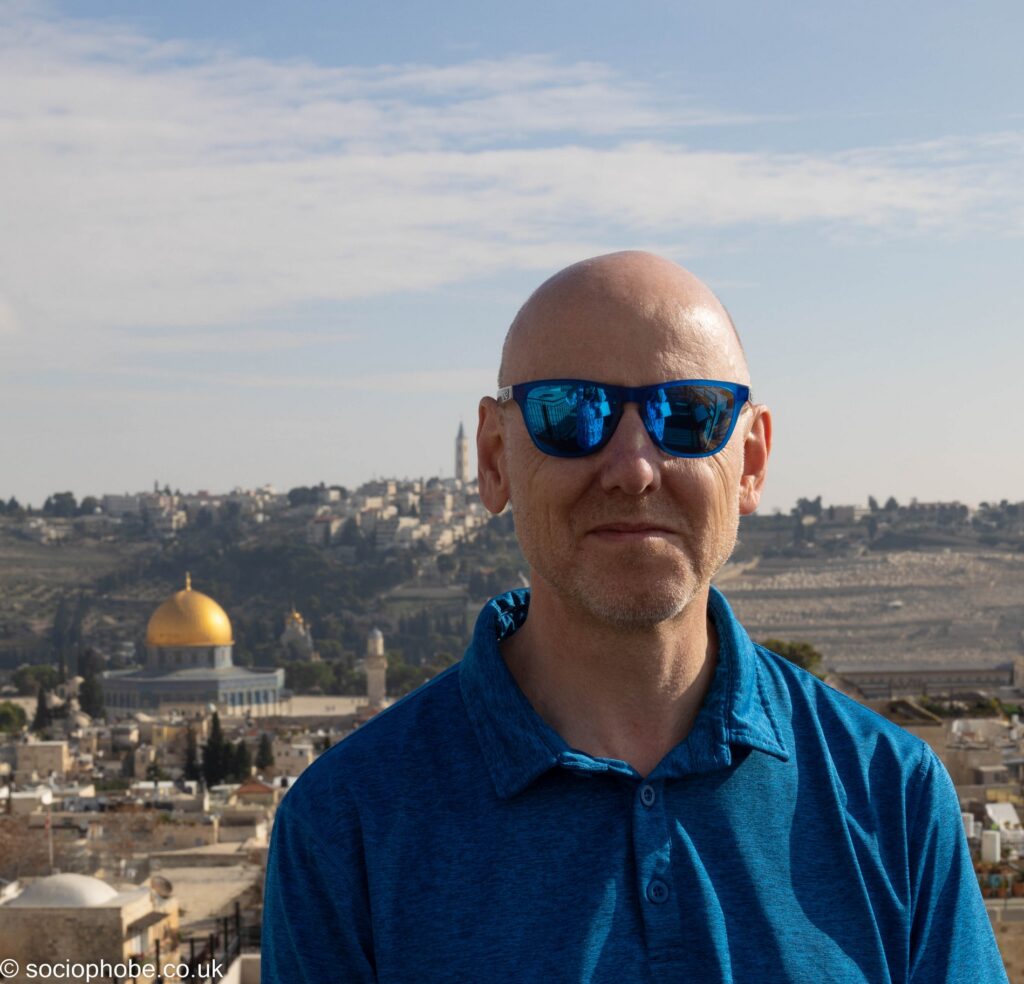
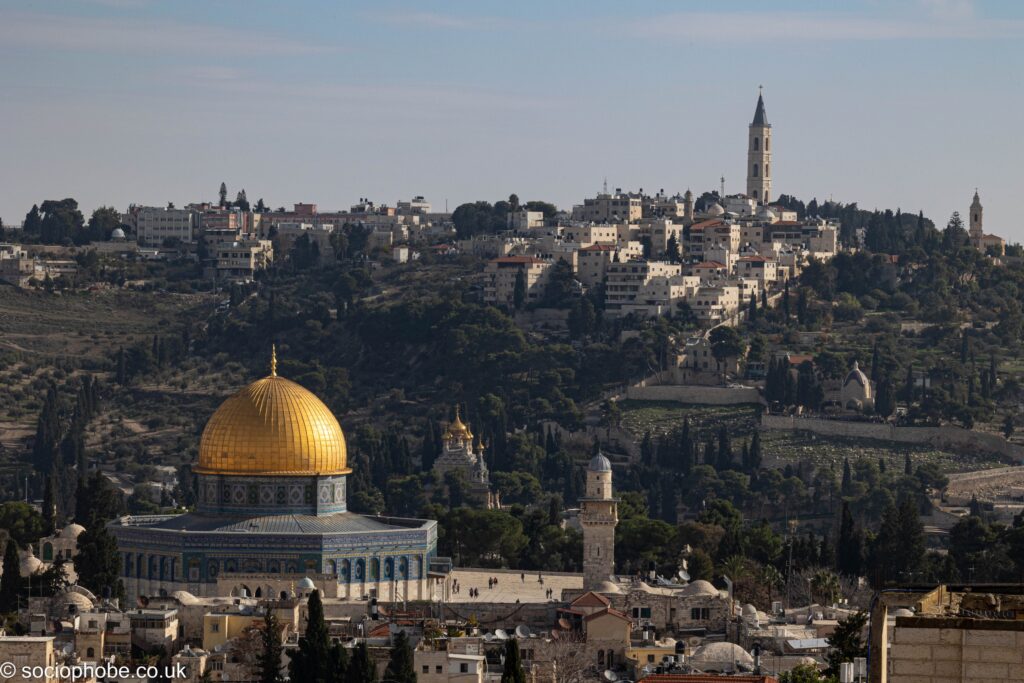
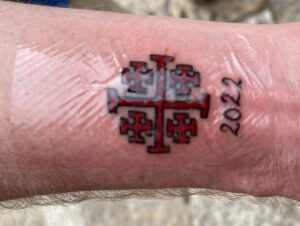
We walked back to the hotel to freshen up and dump our bags before heading out again for me to have my tattoo that I’d booked months ago. It was at Razzouk Tattoo and the family are famous (good PR guys!) for having been tattooing pilgrims to the city since the 1300’s. It is now a very modern and hygenic operation and my tattoo was done quickly and not as painfully as I expected. A long term souvenir.
We then had lunch, foolishly, at a place by the Jaffa Gate which didn’t advertise prices and it worked out at £50 for 2 large wraps and 2 coffees. Very amateur of us. We then walked back to the hotel by yet another route, I think through the Jewish area, and Deb had a nap while I caught up on the notes although I still had the damned photos to sort. We were both been badly bitten on our legs too, I guess from Masada.
We were meeting Patrick for dinner so I’d chosen a route to the Jaffa Gate taxi stop that incorporated a few more places I wanted to see so we walked down the Via Dolorosa and out through the Lion’s Gate then followed the line of the city wall past Herod’s Gate, Zedekiah’s Cave, Damascus Gate, New Gate and finally, to Deb’s relief, the Jaffa Gate.
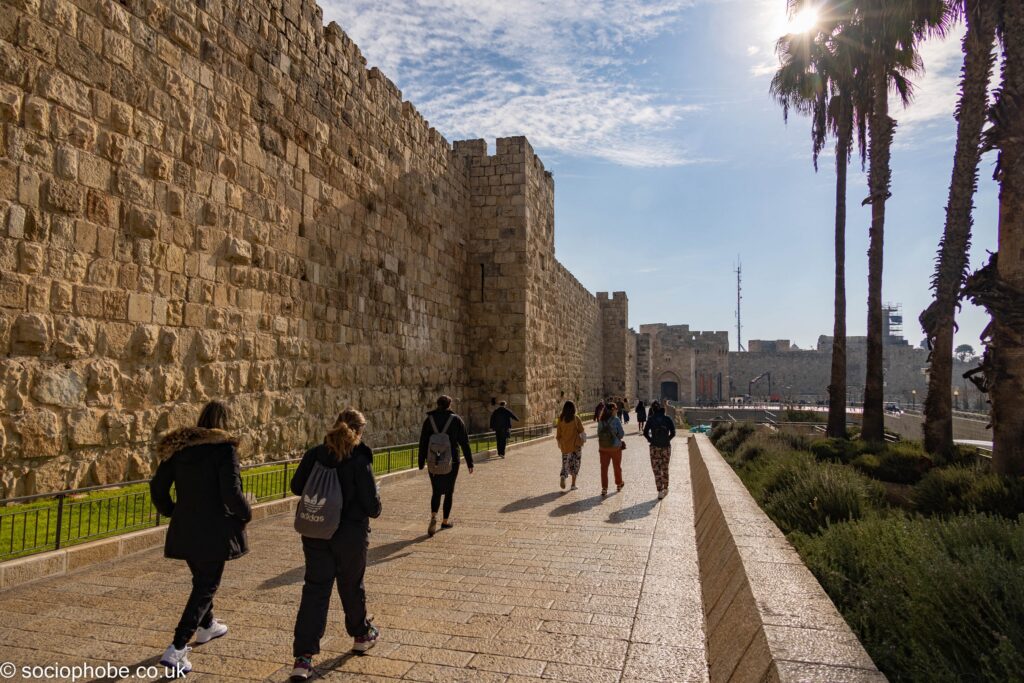
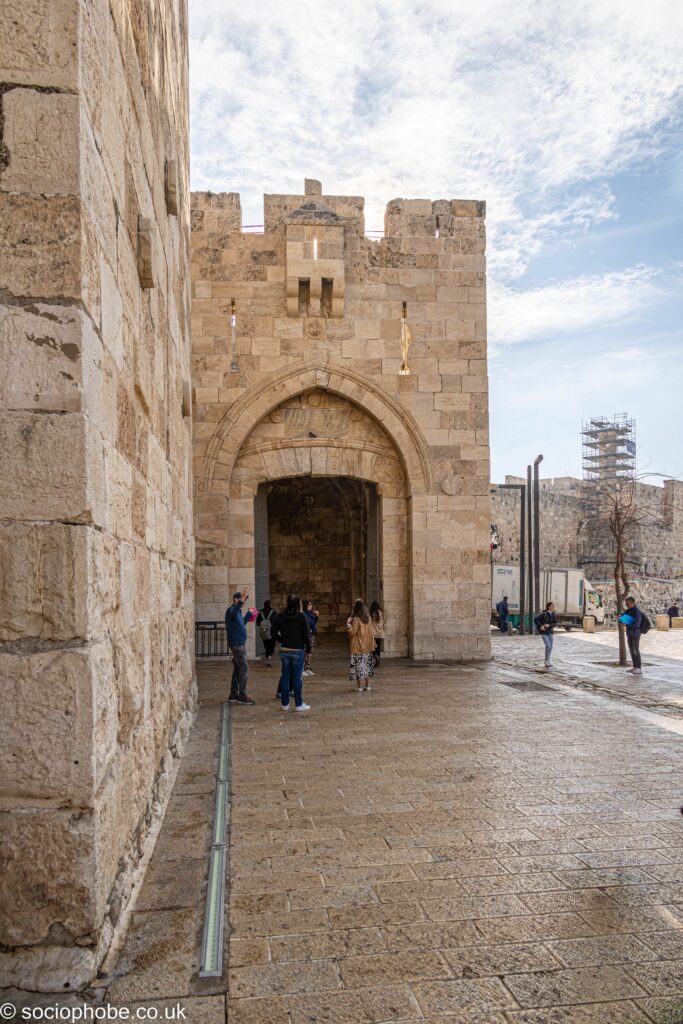
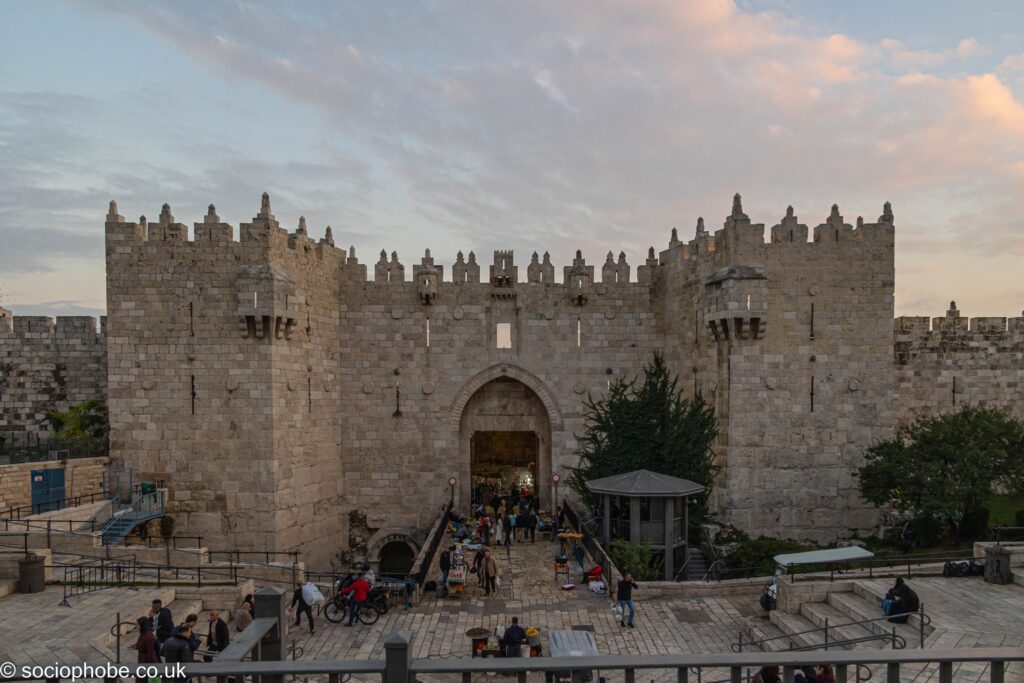
We took a taxi to Patrick’s and had an excellent meal (thanks Jackie!) but were far more restrained on the wine this time! We then had our last evening walk through the Old City of this break and got back to the hotel to start packing for our flight home.
Thursday 8th December – Jerusalem and then home to freezing England
We were woken at 4 ish by other guests again, selfish gits. We both got up before 6.30 and got ready for the walk to the Temple Mount – we wanted to get there early as access for non Muslims has limited opening hours. We were getting more used to navigating the old city now so we actually got to the Western (Wailing) Wall with no mistakes.
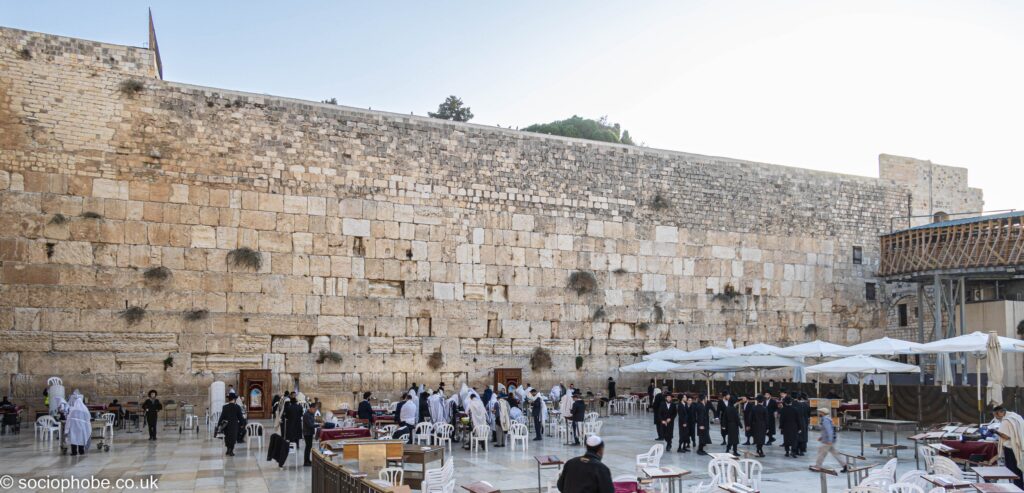
The Western Wall is all that is left from the second temple period, the temple built after King Solomon’s original was destroyed by the Babylonians in the 6th century BC, after Herod’s monumental enhancements to the temple were destroyed by the Romans as a consequence of the Jewish Revolt of 67AD. It is divided into two sides as men and woman can’t pray together and when we were there it wasn’t crowded, one group of men dancing and lots of others scattered about praying or inserting prayers into the wall.
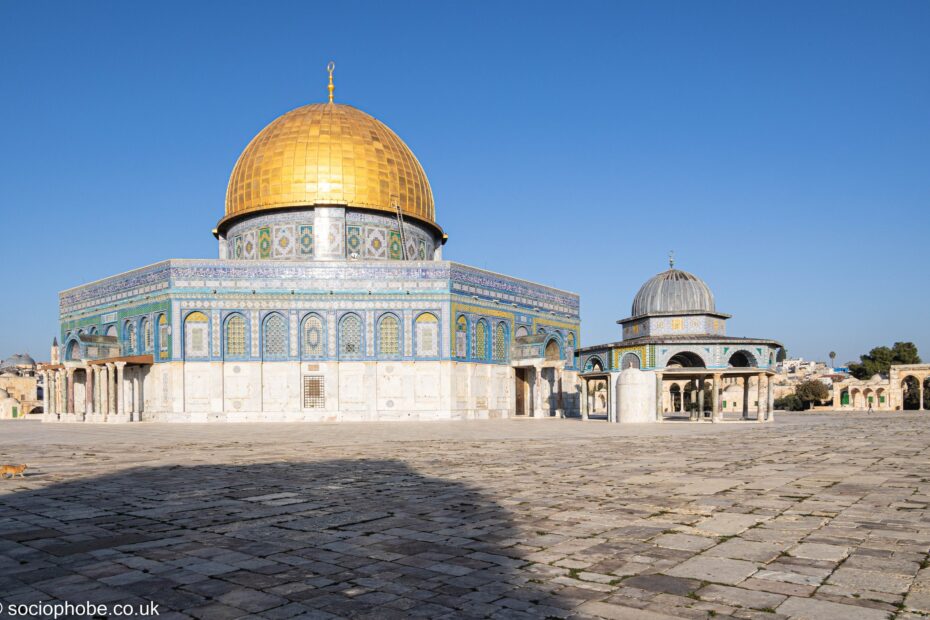
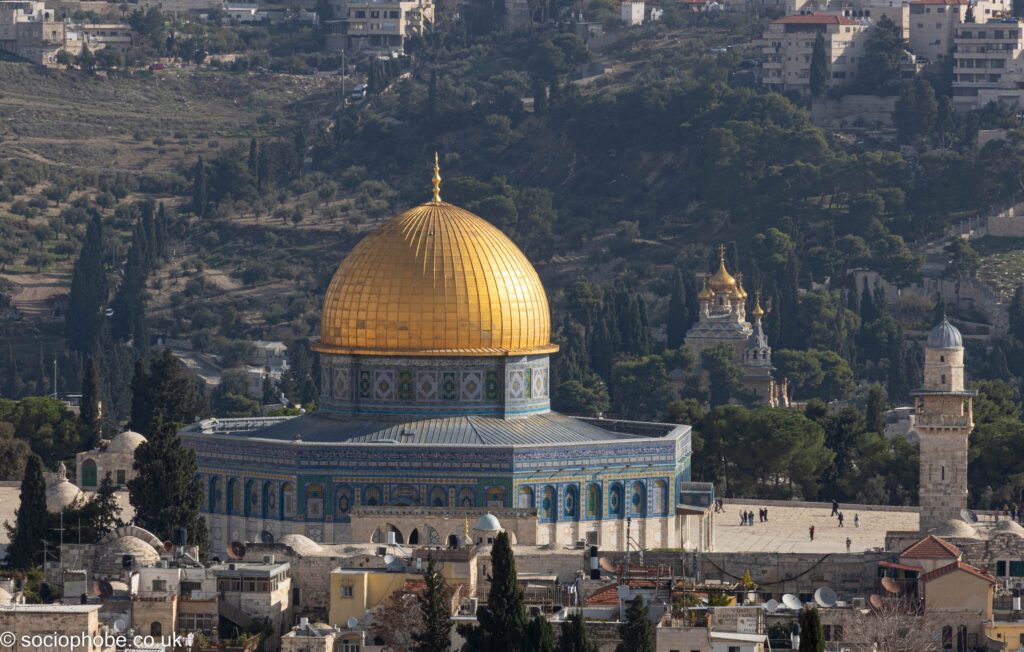
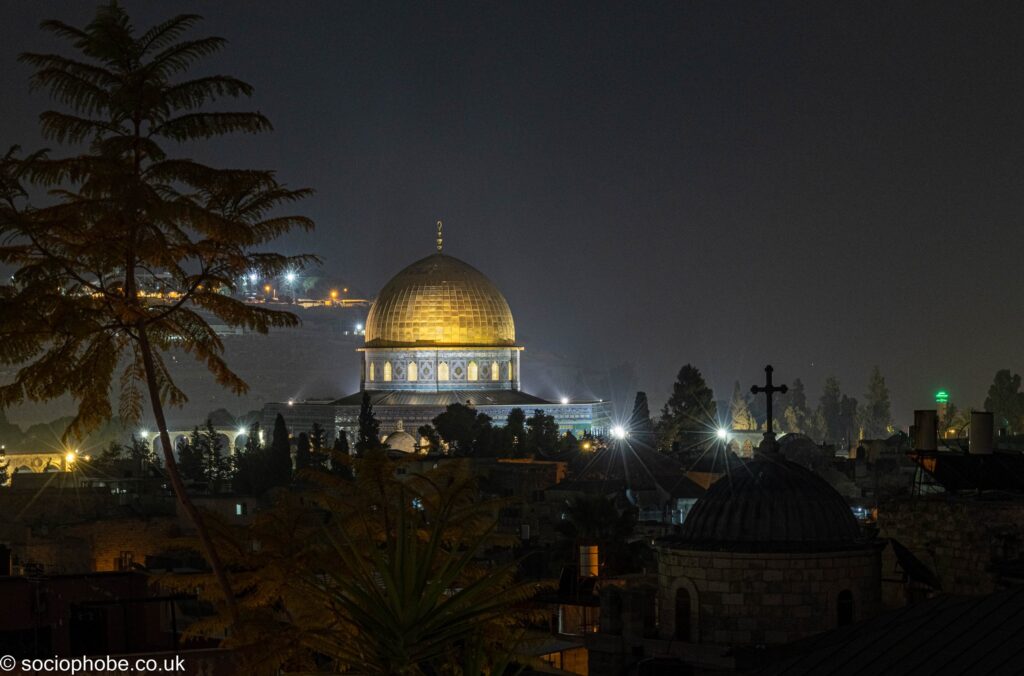
From there it was a couple of minutes walk to the Temple Mount site. This is the area that the temple complex occupied under Herod and then destroyed so the buildings there now are all Islamic, built at various times after the 7th century conquest. The most iconic building and probably the best recognised symbol of the city itself, is the Dome of the Rock.
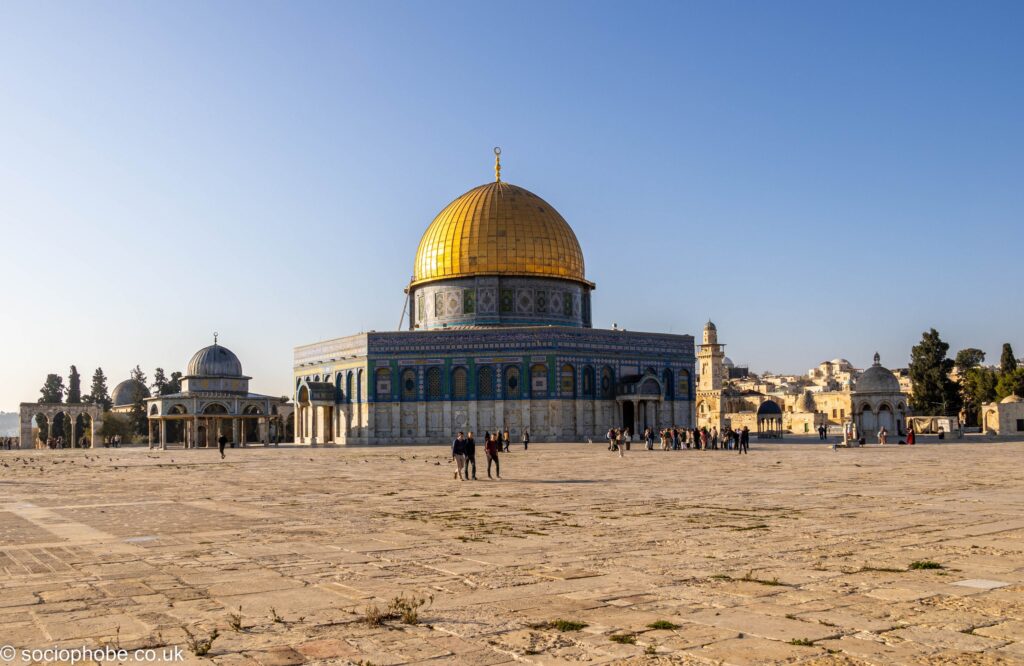
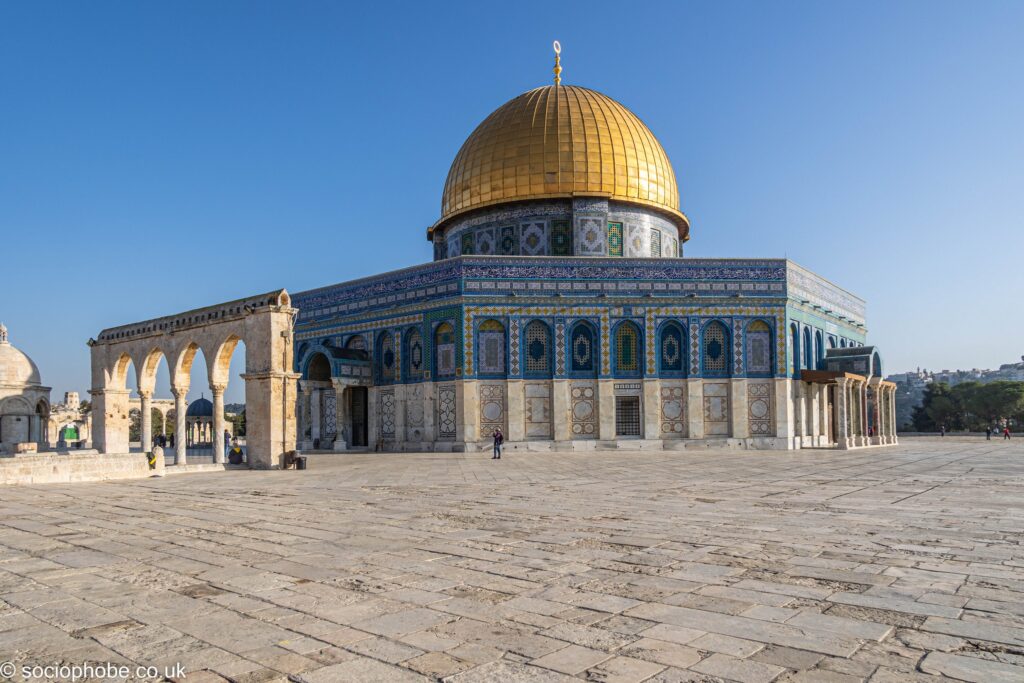
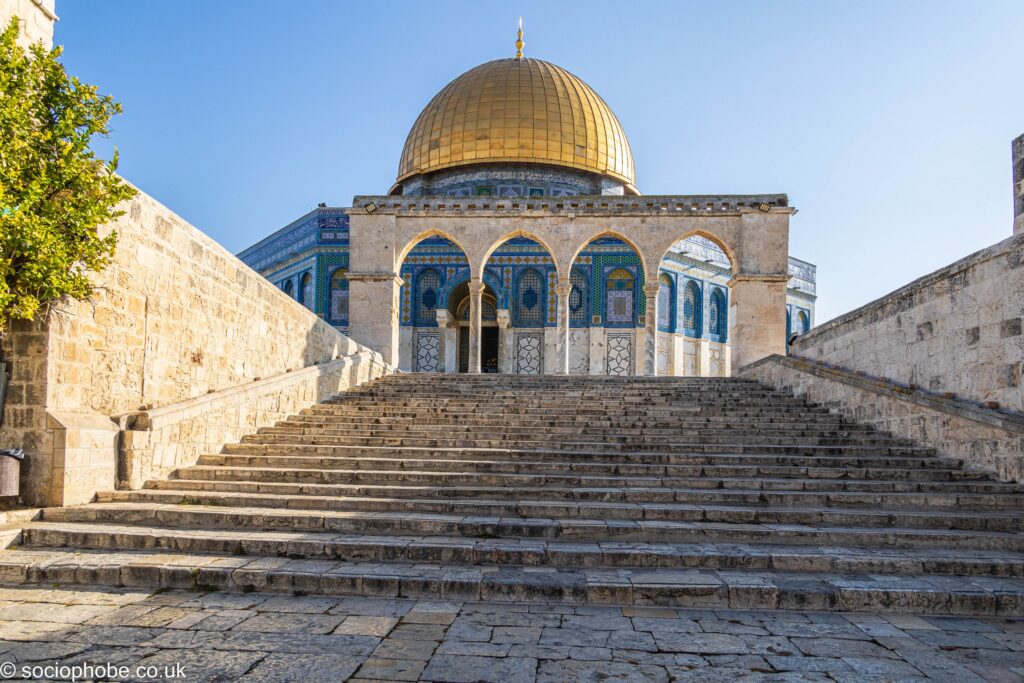
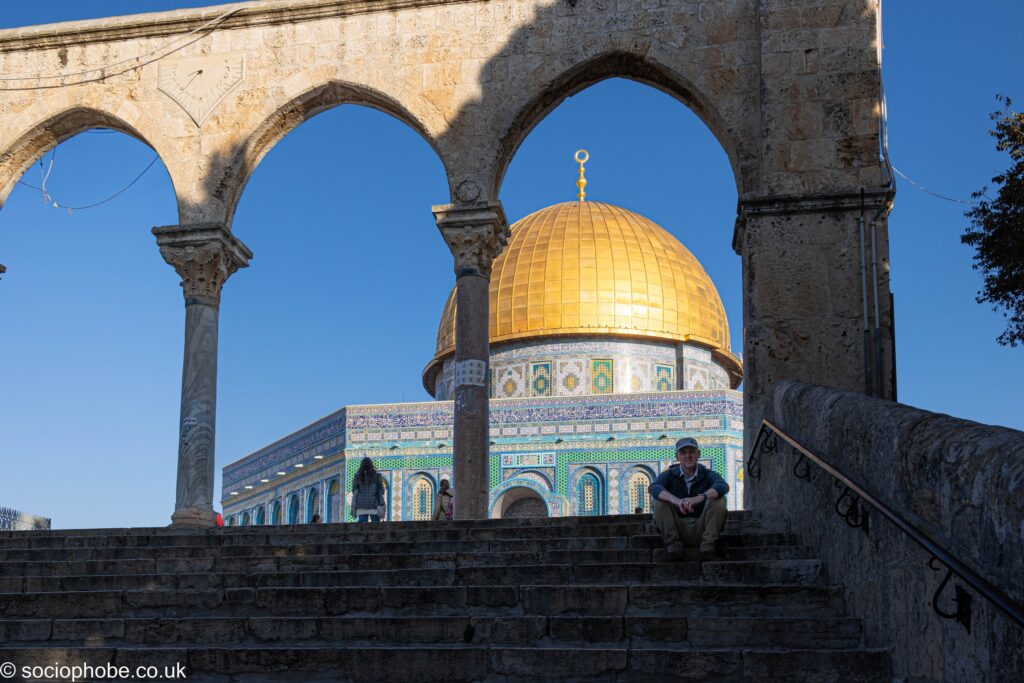
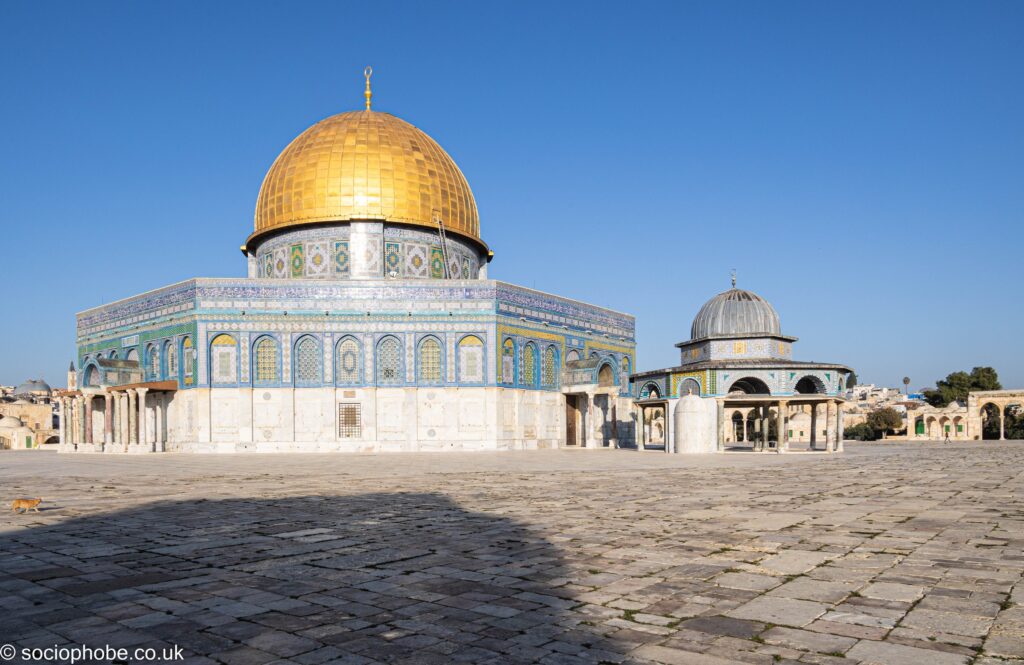
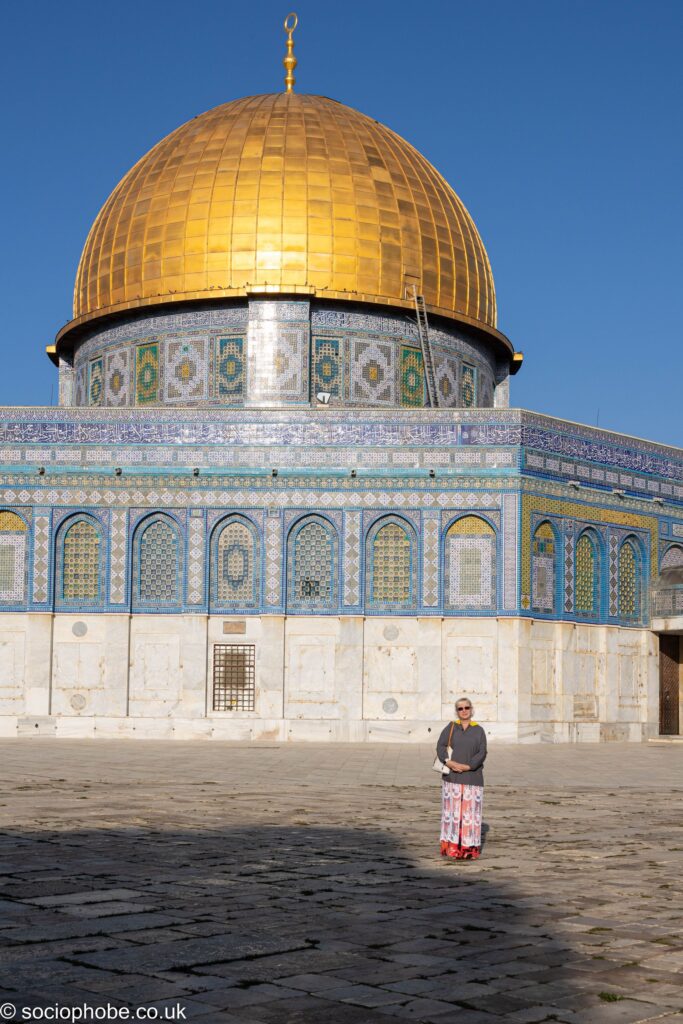
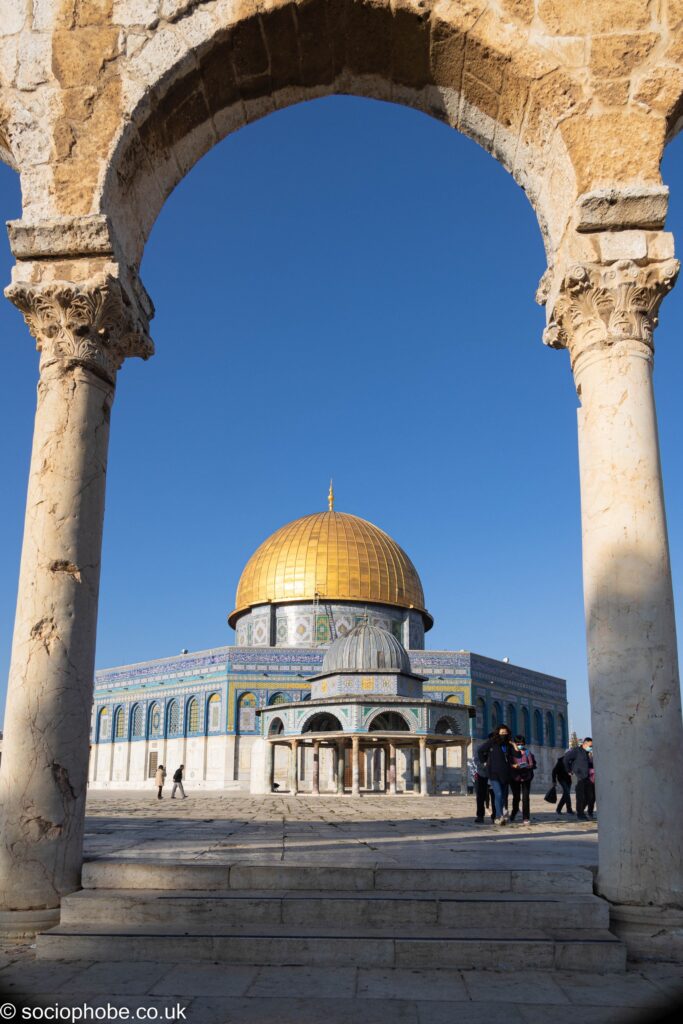
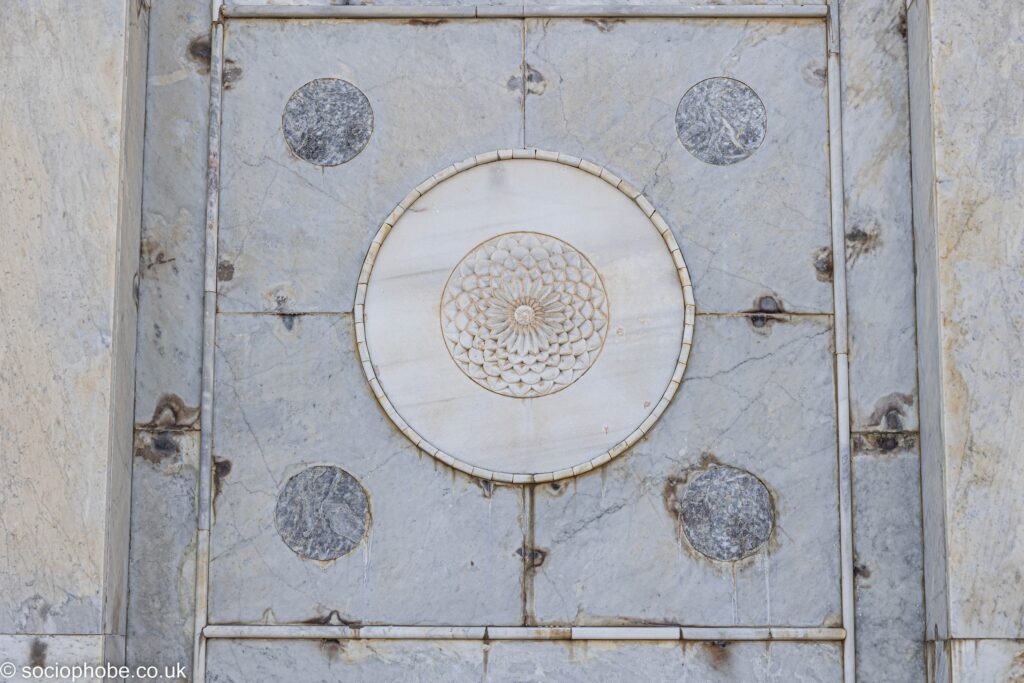
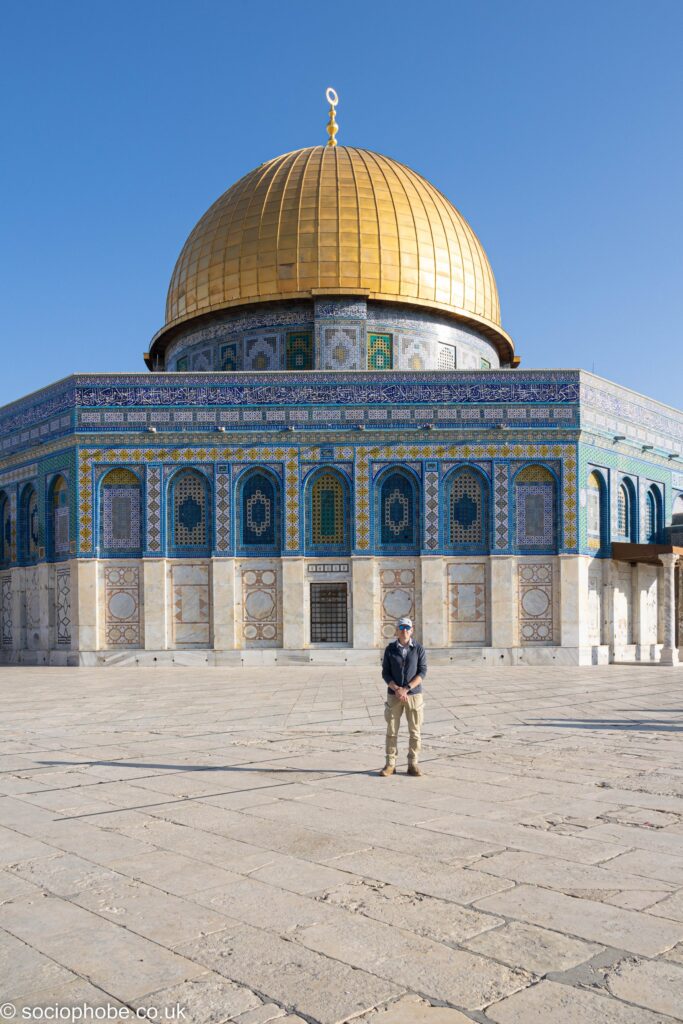
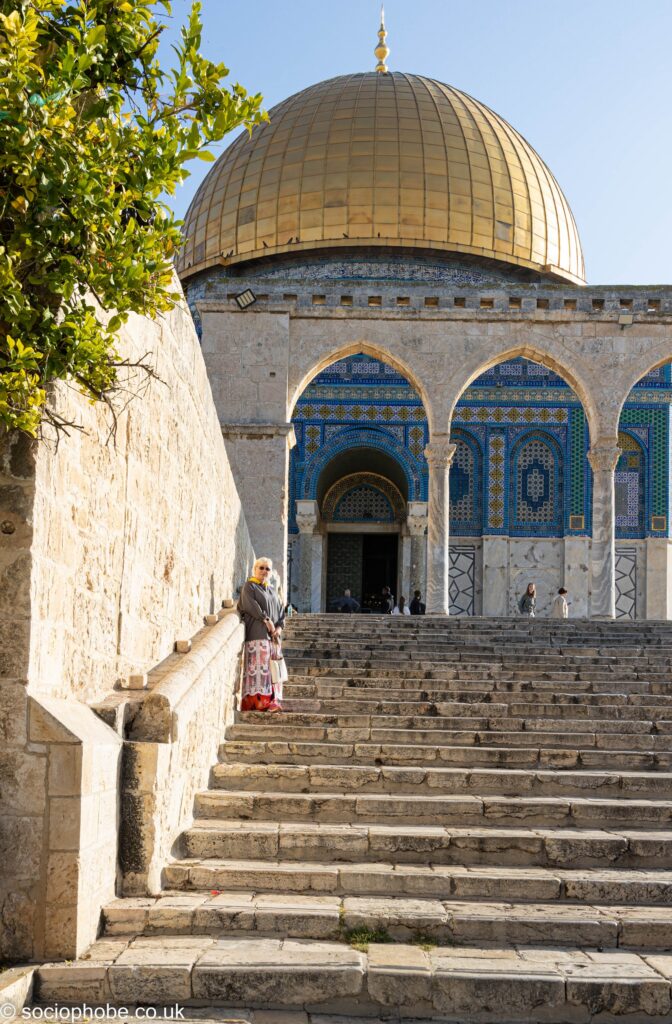
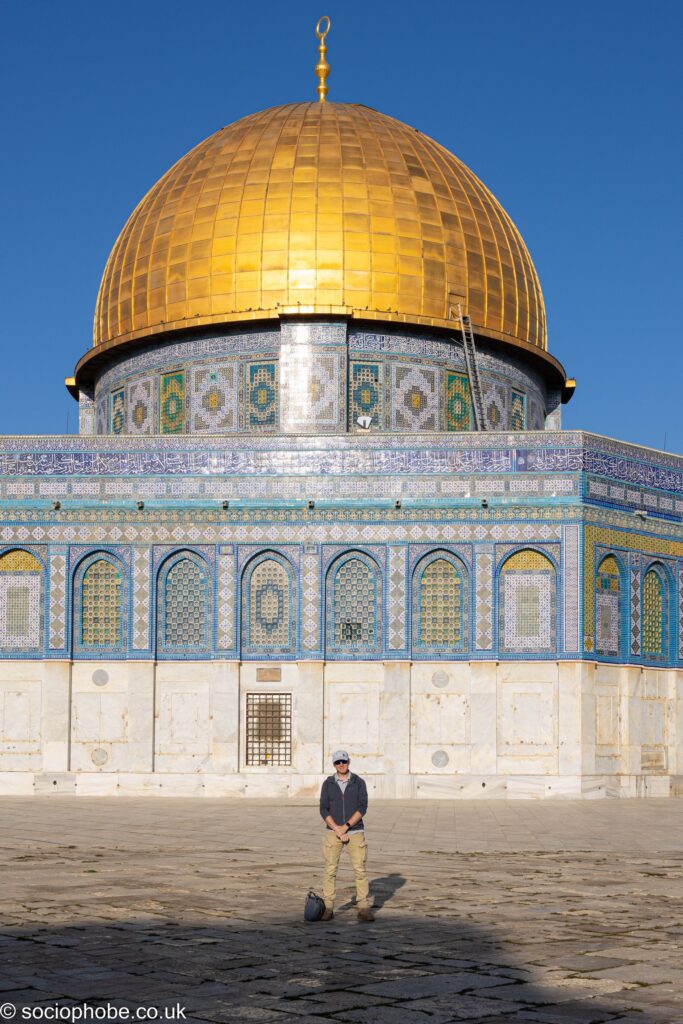
The Dome of the Rock is an octagonal building with the famous dome on top. Originally a more humble structure it was blinged up by Suleiman the Magnificent in the 16th century with more multicoloured tiles on the interior and the iconic gold roof. The building was designed and built largely by Christian captives as at that time the Muslims were a very minor percentage of the population.
The original decoration was modelled on that of the local Byzantine churches with marble and mosaic designs and – unlike the churches – quranic inscriptions. The building is over 1400 years old so has suffered from earthquakes and general wear and as such the dome has been replaced and the exterior remodelled but it is still the oldest recorded Islamic building in the world.
Religiously it is apparently built on the site of God’s creation of the world and Adam and also where Abraham was going to sacrifice his son and where Muhammad undertook his night journey to heaven. So rather a contentious site for all 3 of the Abrahamic religions and as such very tightly controlled.
There were security searches going in but we were lucky that the site was quiet as it was still before 8AM and we were able to wander round at will. Deb was in a foul mood due to lack of sleep so she sat in the shade while I looked around. I took some pictures for an Italian couple but as the woman had her hand on her partner’s shoulder a guard came running over and insisted the picture was deleted so I did some more “modest” ones when he’d left. Generally security, although tight, was reasonable and by the time we left the site was busy with organised tours.
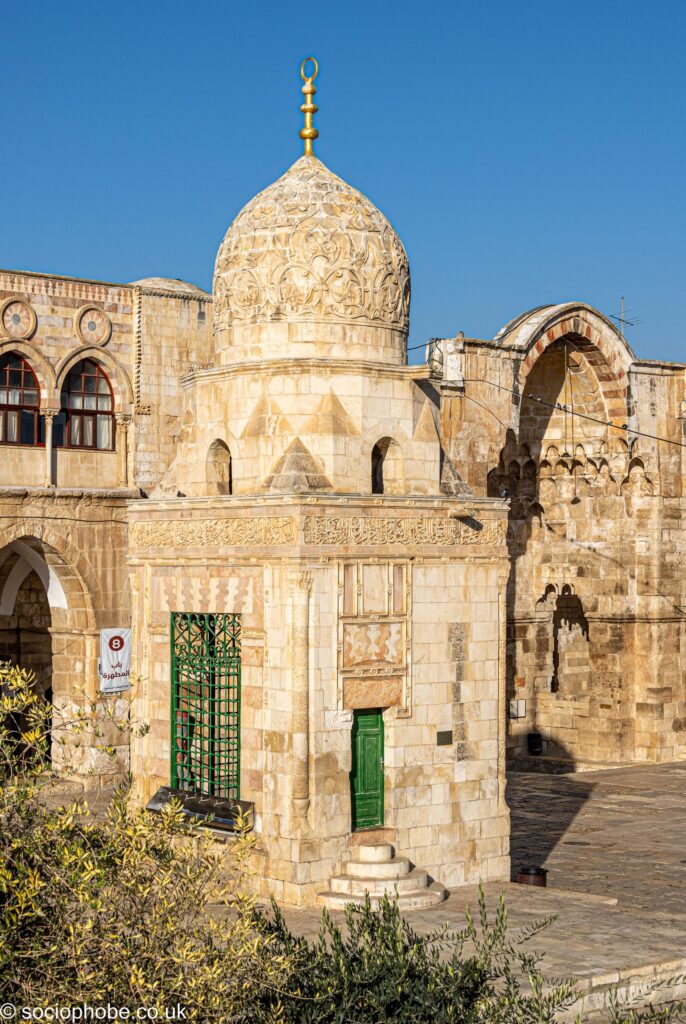
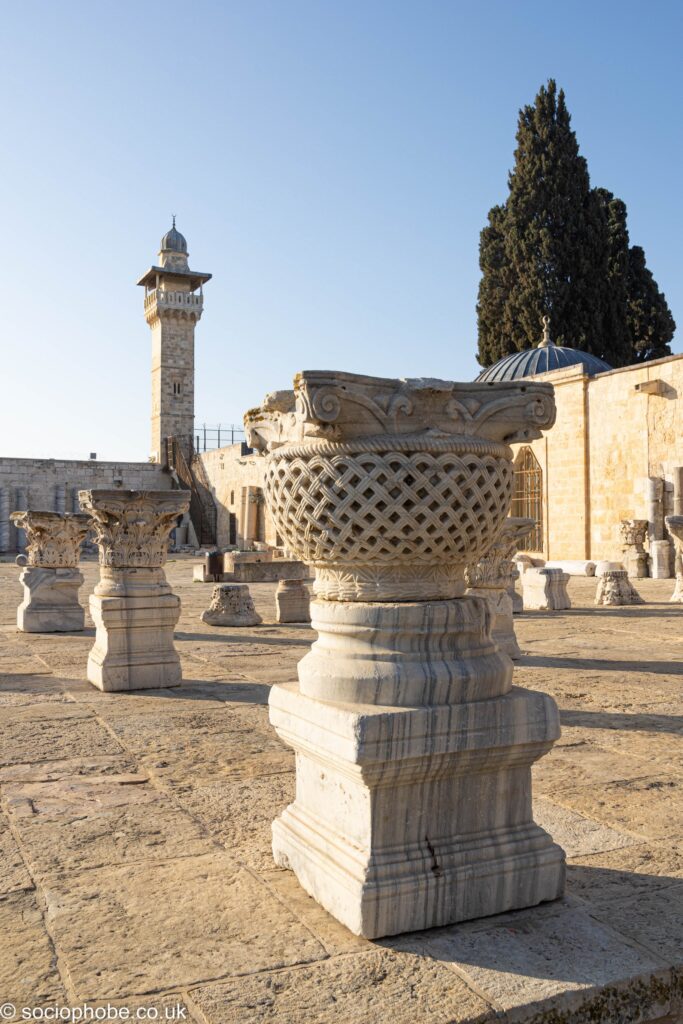
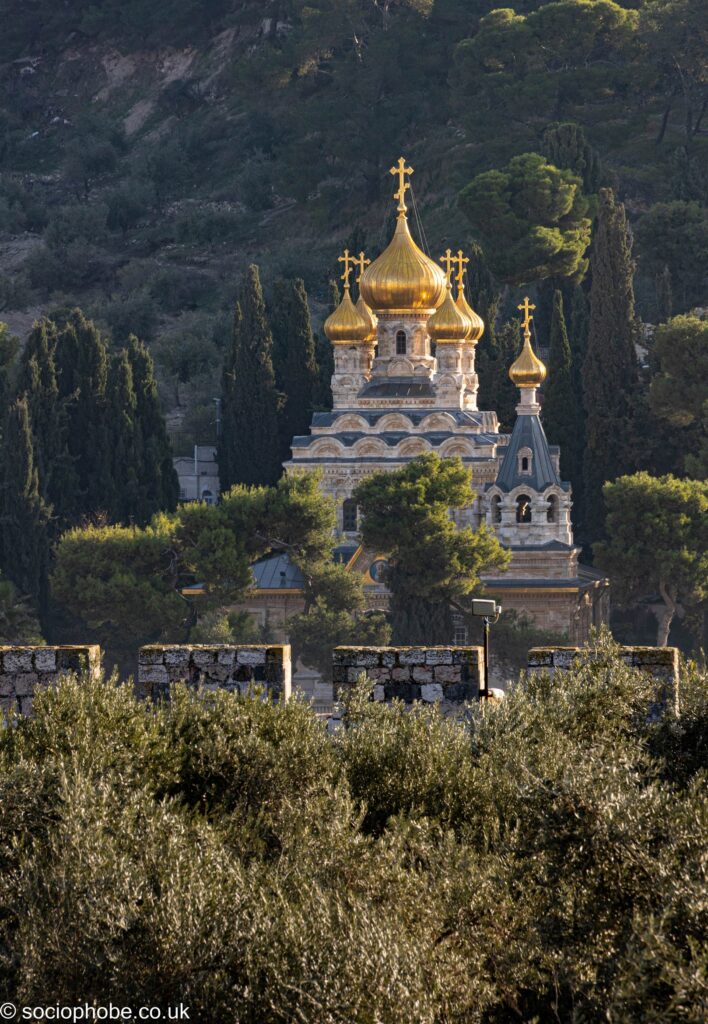
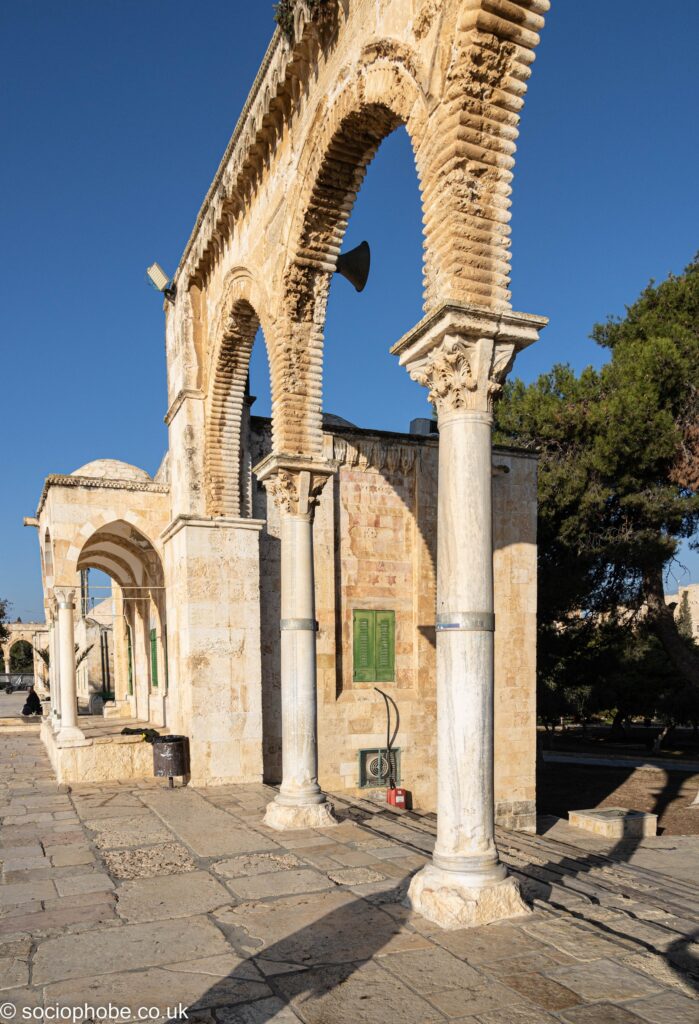
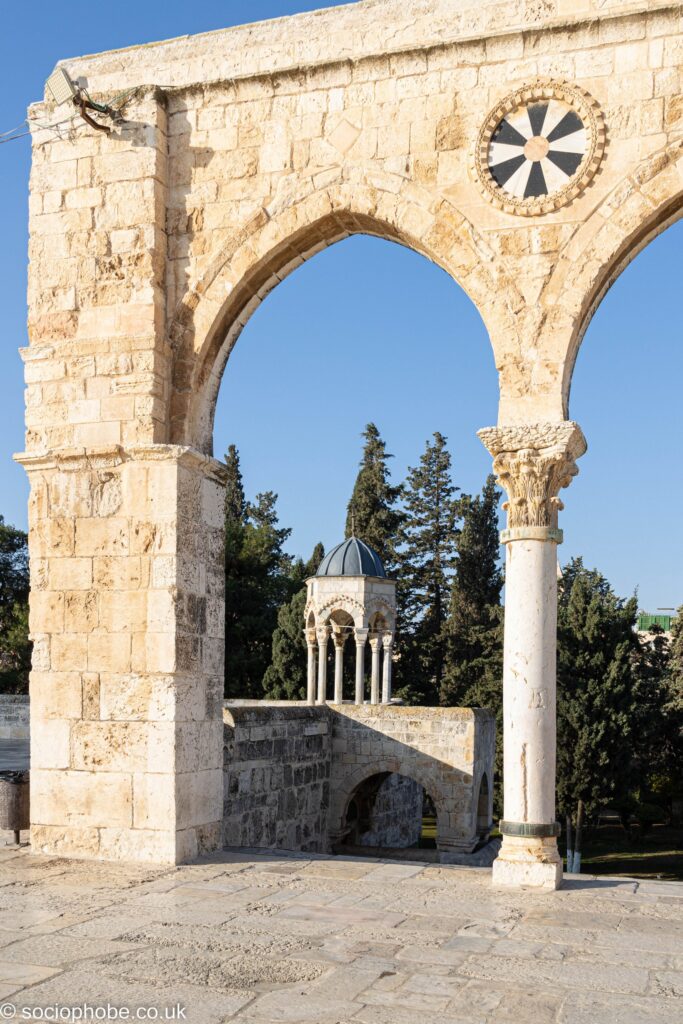
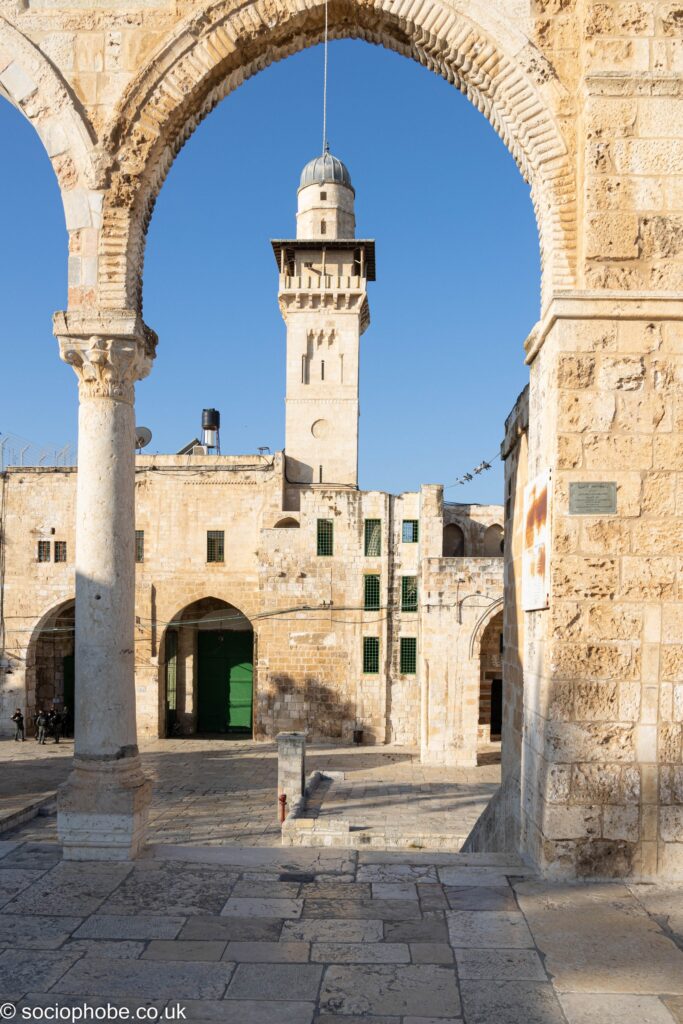
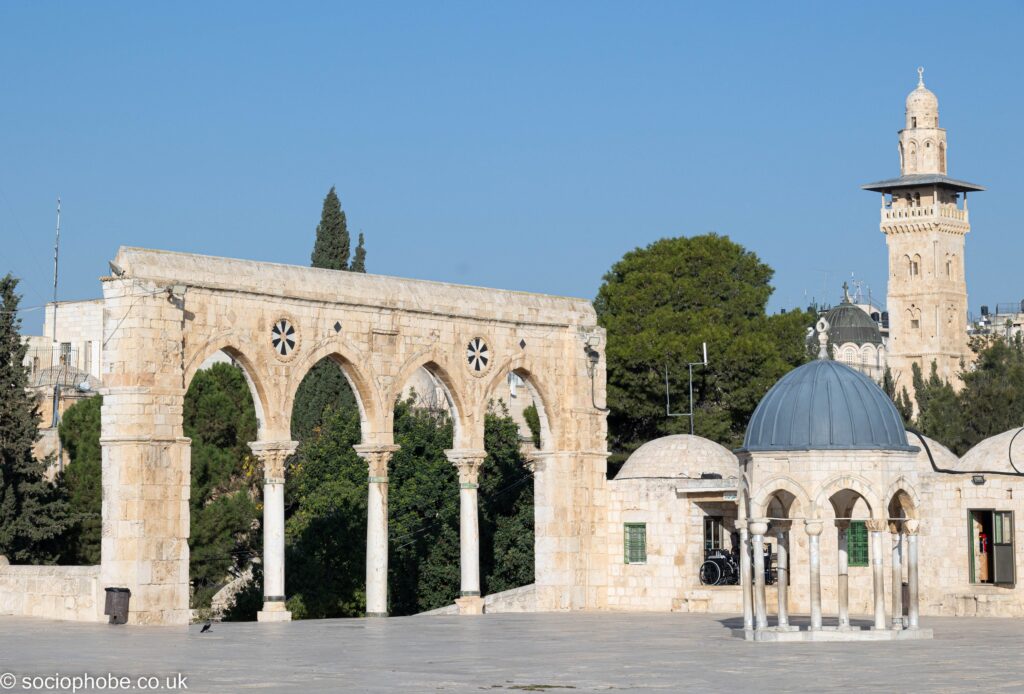
There were several other interesting buildings on the site including fountains and colonnades form the Fatamid and Ottoman periods. We then left and walked back through the city to the hotel to collect our bags, retrace our route to the Jaffa Gate and get a taxi to Patrick’s to collect our hire car. As it was an ungodly 10.30AM we didn’t disturb him and drove straight to the airport.
In hindsight we should have visited somewhere on the way but Deb was a bit wiped out and we got to the airport 5 hours before the flight, which was then delayed by nearly 2 hours. The hire car handover was painless and security – once we’d worked out the procedure – was easy too. There was one guy getting a real grilling as we were filtering past but that isn’t a bad thing as he had fat calves and wore crocs and was therefore obviously guilty of something.
It was a boring wait, a boring eventual flight and then more delays on landing. It was minus 4 degrees when we left the airport which was a bit of a shock but we got home ok, saw two very excited dogs and went to bed.
This visit to Israel was one of the most amazing road trips I’ve been on. Although the distances weren’t great – maybe 600 miles – we saw the Crusader cities of the Mediterranean coast, various biblical sites, the Golan battlefields, Crusader and Islamic castles, the Dead Sea, Masada fortress and the assorted cities of the Old City of Jerusalem. We saw the remains of 5000 years of human history and conflict in this volatile region and learned a lot more about the history and culture of the place. The downside was it was extraordinarily expensive as far as hotels and food went but the experience was good and the pain of the cost will fade.
This is fascinating to read, Marcus, and the history information is really helpful-it puts a lot of it in perspective and saves looking up things on Wikipedia. Photos are amazing and the whole trip is a real adventure. Although it may have been expensive-it looks well worth it. The architecture is so beautiful and especially The dome of the Rock-I love the design and different colours and patterns used. Well done both of you for walking up the Snake Path-that was a real feat and I imagine coming down by cable car was fun too-showing you different views. Loved it-thanks 🙂