In June 2026 we took a 10 day road trip from Alicante to Toledo and back, exploring some medieval castles and towns of central Spain. The trip was through some spectacularly pretty and also empty countryside and probably covered about 1000km, making for easy driving days.

| Holiday Ratings | |
| Recommended days | 10 |
| Budget | £ |
| Difficulty | Easy |
Highlights of our Toledo Road Trip



Arriving in Spain
Our road trip this year was to explore part of the Castille La Mancha region and then visit Toledo before coming back by a more southerly route. As well as castles and ancient sites we were hoping to fit in some walks, depending on the June weather. As Mum doesn’t get to visit much outside her local area in Spain we arranged to meet her at home, stay there the first night and then depart in the morning.
We arrived in Spain after a delayed flight and collected our hire car, a lot larger than expected and a make I had never heard of, an Ebro S400. The controls took a while to get used to and it had the frustrating modern trend of being almost all touch screen but there were some control buttons. We drove the hour or so to Pinoso along typically quiet Spanish roads and got to Mum’s for a late lunch. We then caught up on the gossip and saw the ongoing improvements they were making to the house and garden before having a relatively early night.
Chinchilla Castle
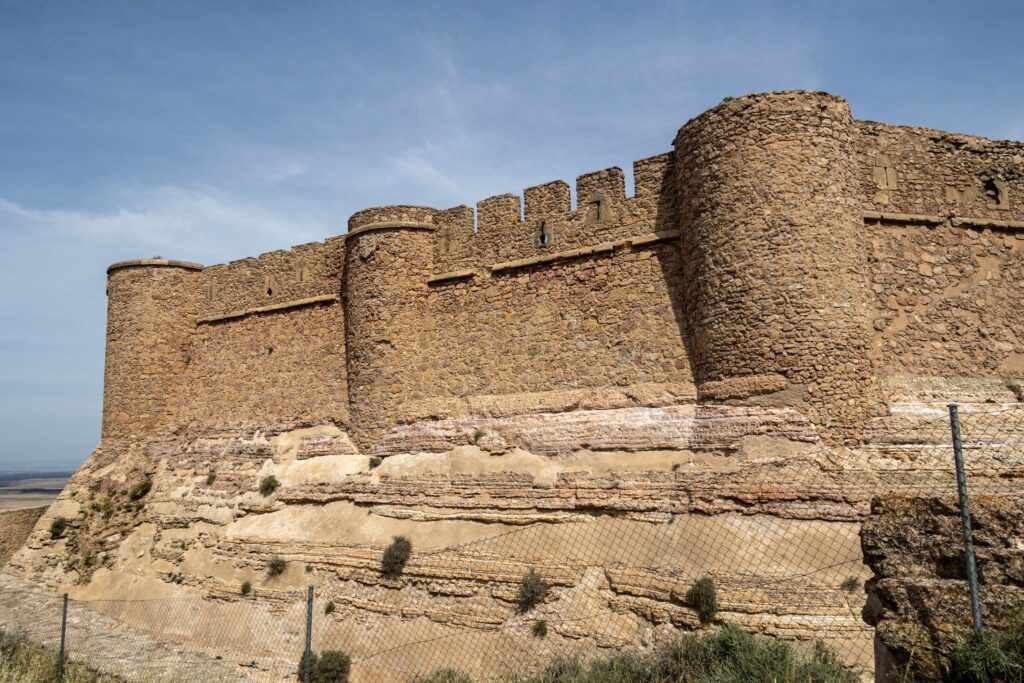
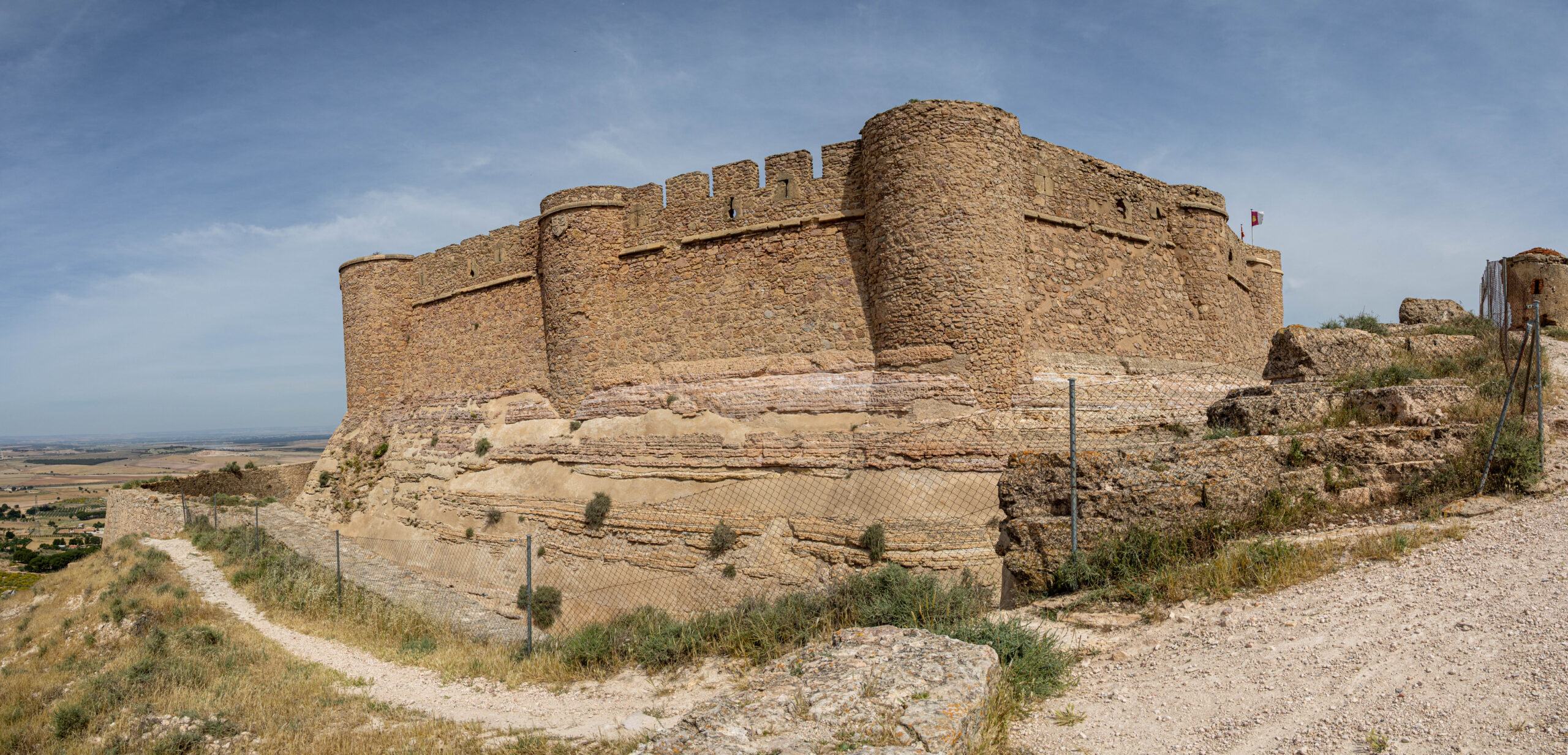
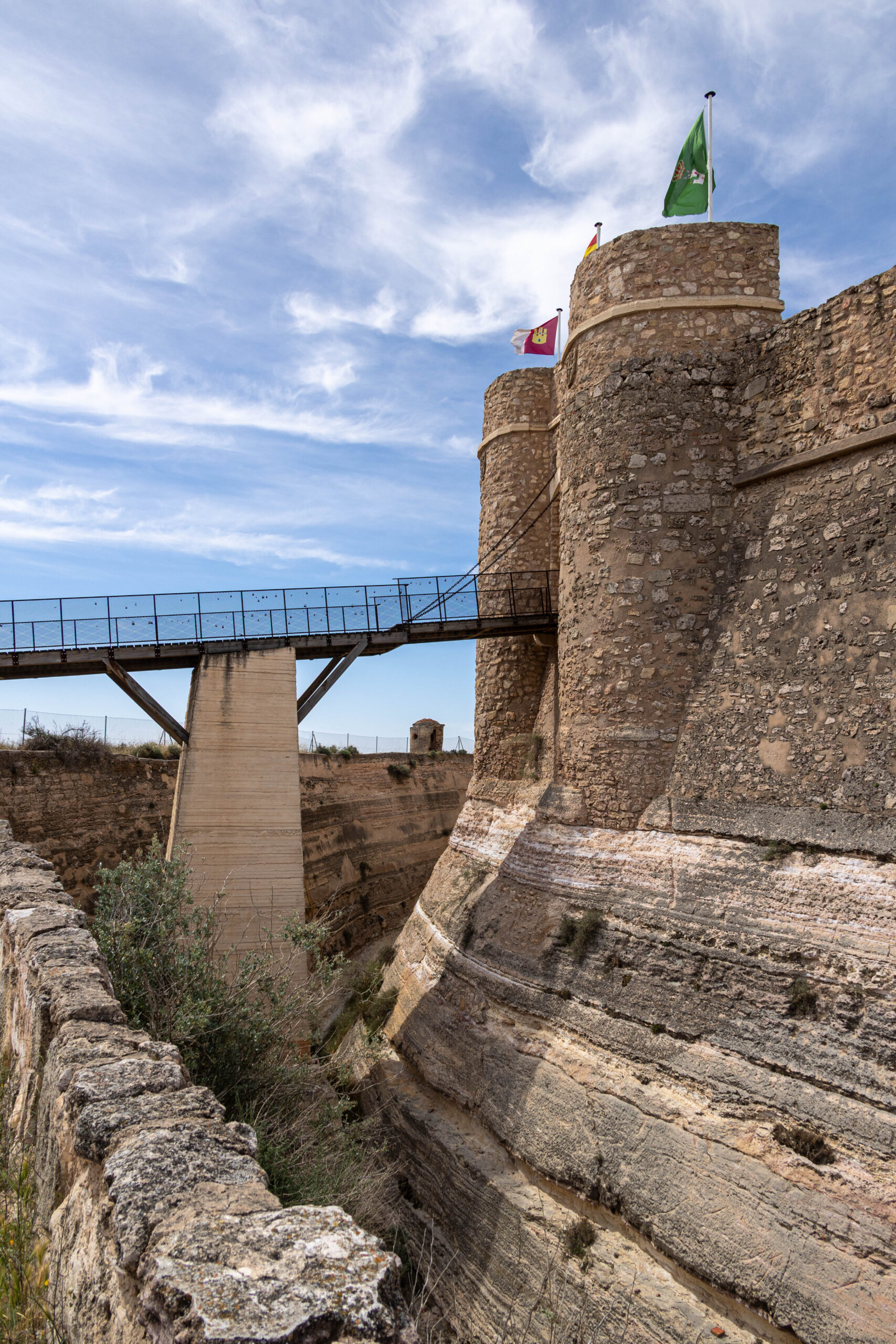
I was actually shattered and slept in until gone 7 but we had a healthy breakfast together before leaving around 9 for our first stop to Chinchilla Castle. The castle, in its current form, is a fifteenth century creation built on an earlier Arab fortification. Chinchilla was badly damaged by the French in 1812 and then the council cleared the interior completely in 1900 to build a prison, which was demolished in 1973. Restoration work started in 2010 but I think it was limited to putting up the signs saying restoration work was starting.
Currently you can only visit the exterior of the castle unless you visit as part of a guided city tour. These are arranged by the tourist office but we didn’t realise until it was too late to book. Hence, the photos are just of the very impressive exterior moat, walls and towers. We di actually manage to book the tour and revisited the castle on our last day of the road trip.

Alarcon Castle and Towers
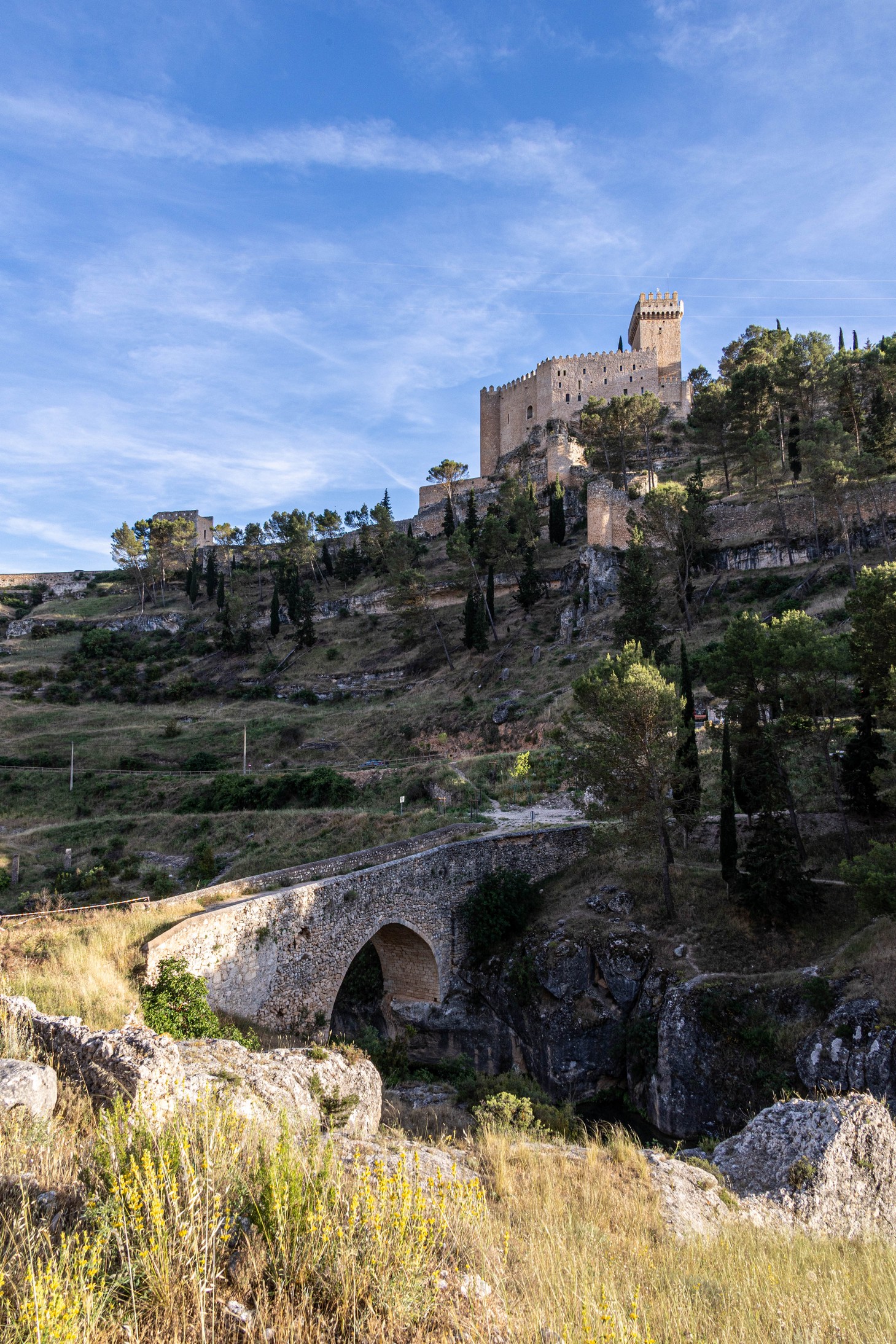
There were obviously no cafes nearby so we returned to the car after briefly looking at the cave houses and drove towards our next stop, Alarcon, hoping to see something on the way. Alarcon was quite an amazing sight, the castle on a rocky spur in a horseshoe of the Rio Jucar with huge watch towers on the surrounding hills. We were staying in the castle overnight at the Parador Alarcon, an 8th century Arab fortress recaptured by the Spanish in the 12th century. The castle slowly deteriorated as the Muslim threat declined and was in danger of collapse by the 19th century. It was forcibly purchased in 1963 and converted to a parador by 1966.
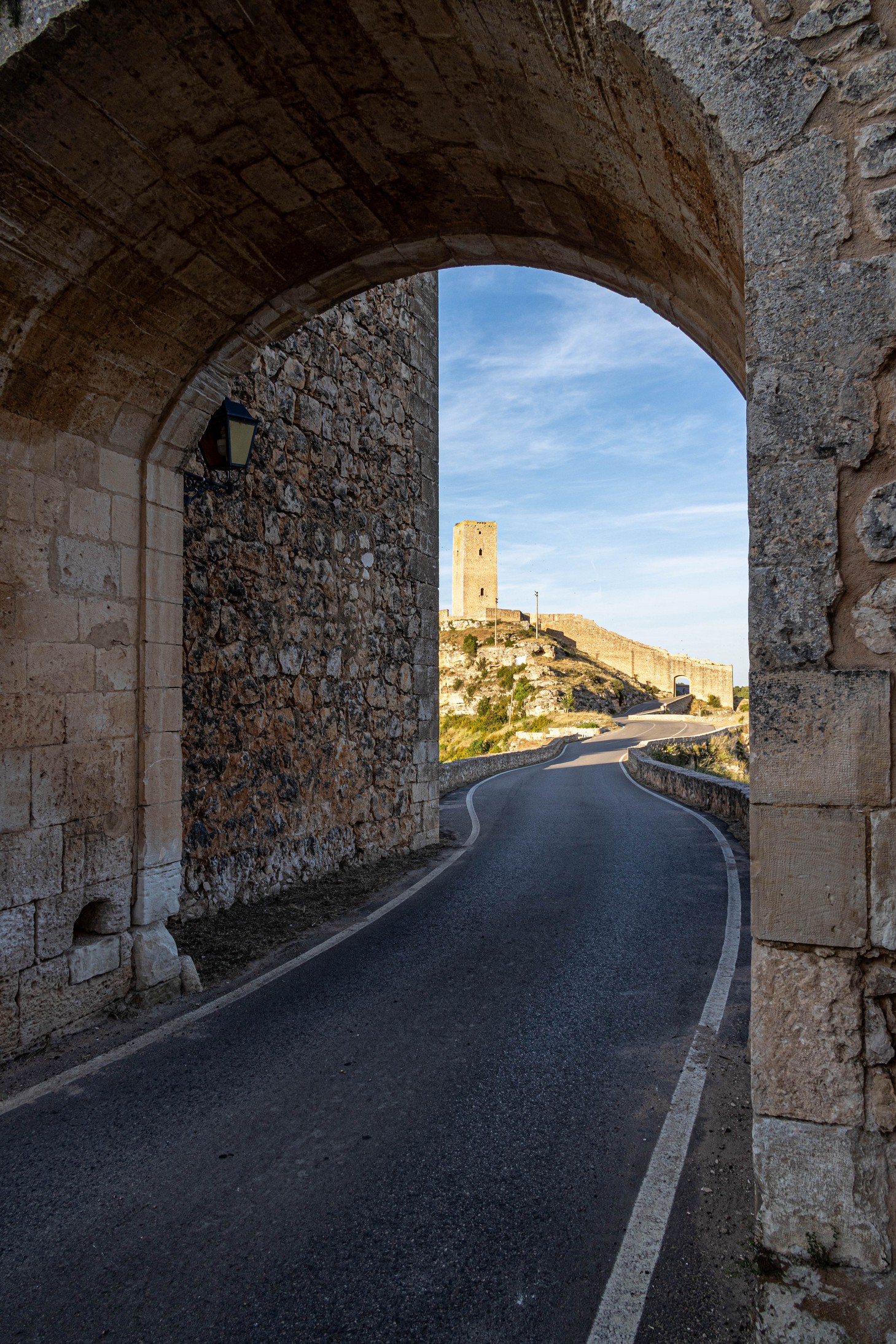
We stopped at the Torre de Armas, a huge watchtower on a hill overlooking the castle, to take in the views of the town and surroundings. We couldn’t access the tower but it was an impressive building, surrounded by walls leading down to the outer gate to the town. We returned to the car and drove through three sets of gates before driving through the town and parking at the Parador.
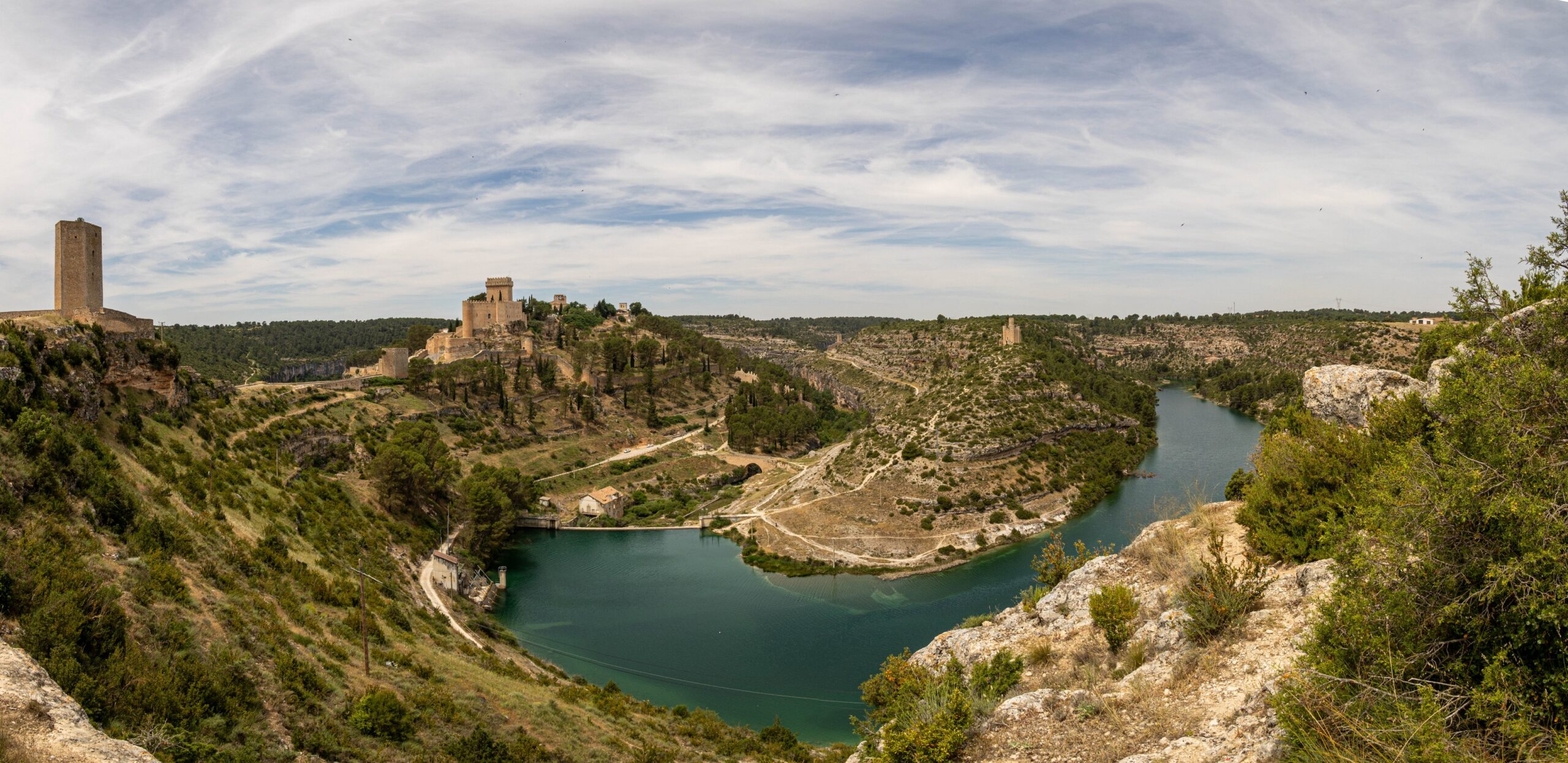
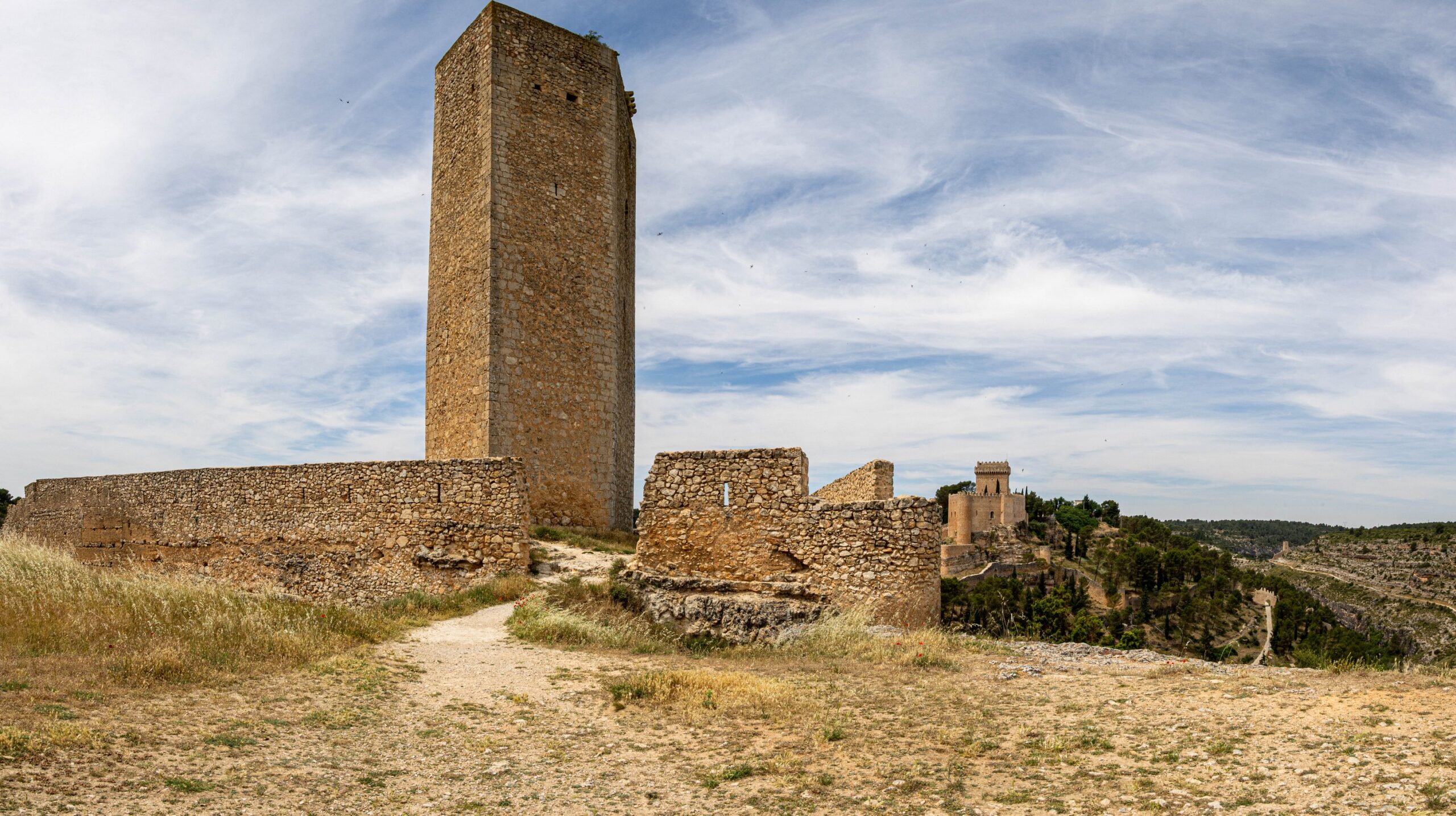
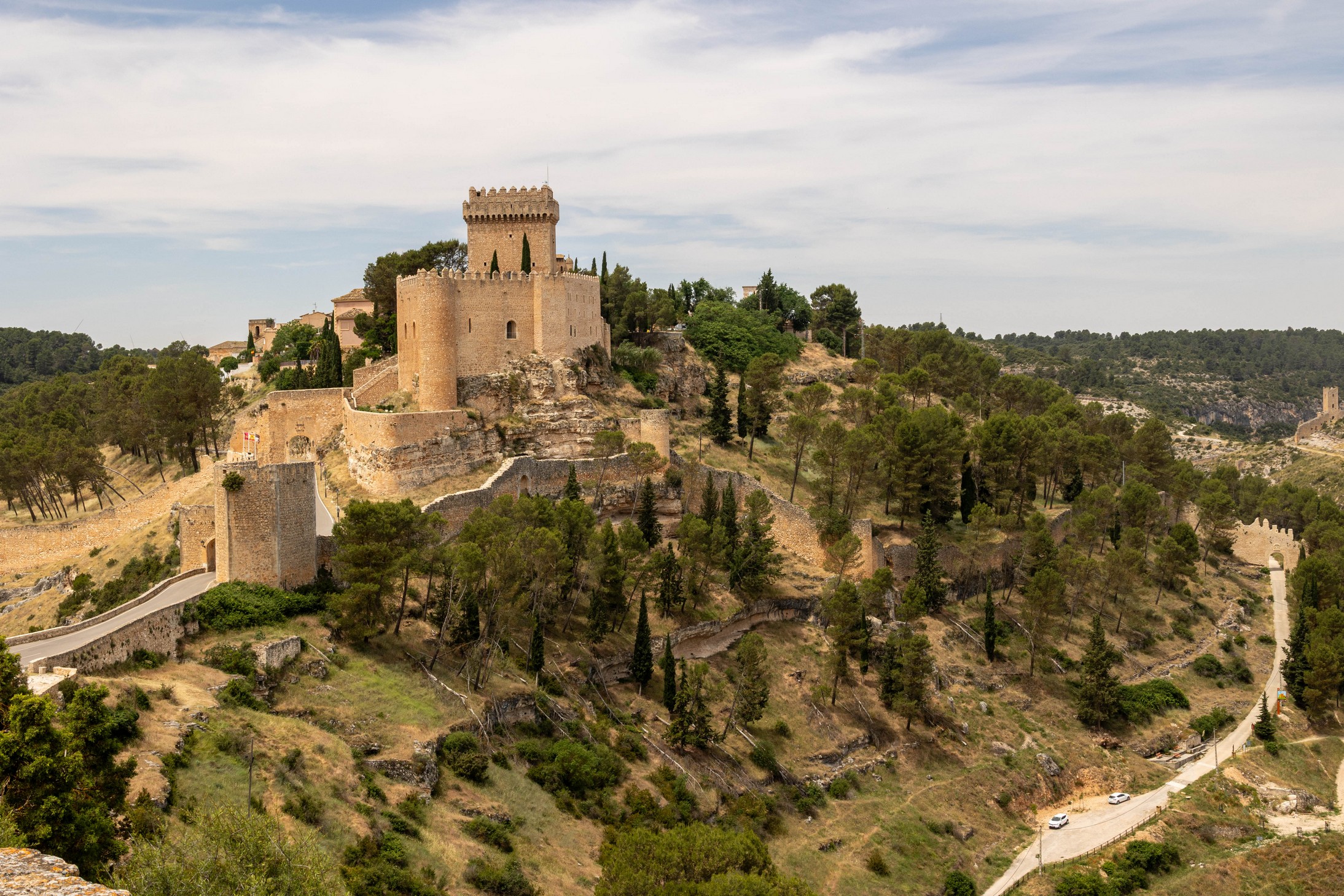
We had a coffee before meeting for lunch at Meson Don Julian, the only restaurant we could see open in the town! Food there was distinctly Spanish (there’s a shock!) and Mum was able to practise her Spanish language skills as we sat under the gazebo. The food arrived quickly and we ate that and then shared two desserts.
Alarcon Parador
We checked in early and Mum kindly gave us the room she had booked, a large room with two windows overlooking the river and one of the other towers. The Parador was well signposted and there was a large car park in front of the building. Check in was quick and pleasant and we had two rooms overlooking the Torre de los Alarconcillos.

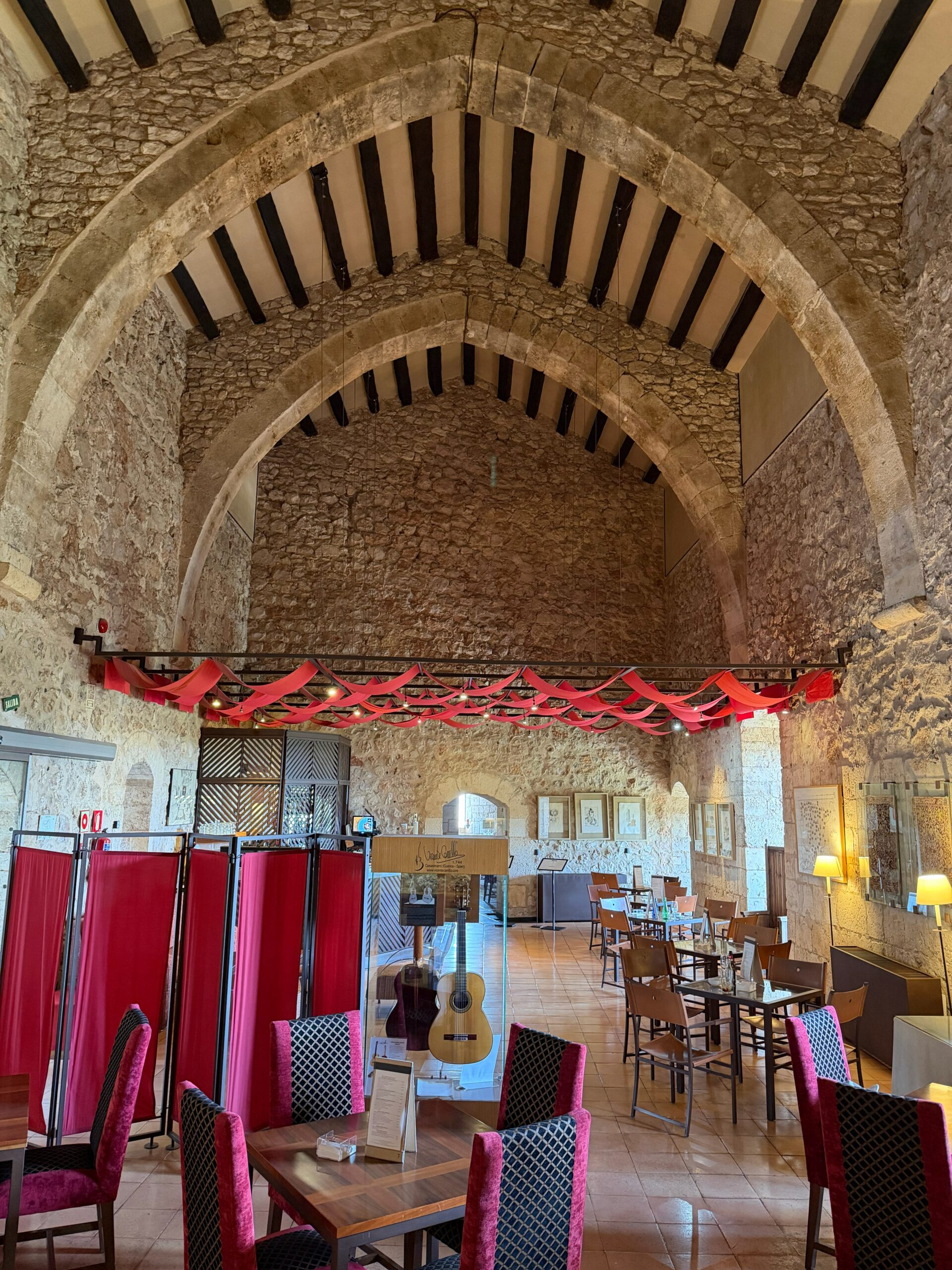
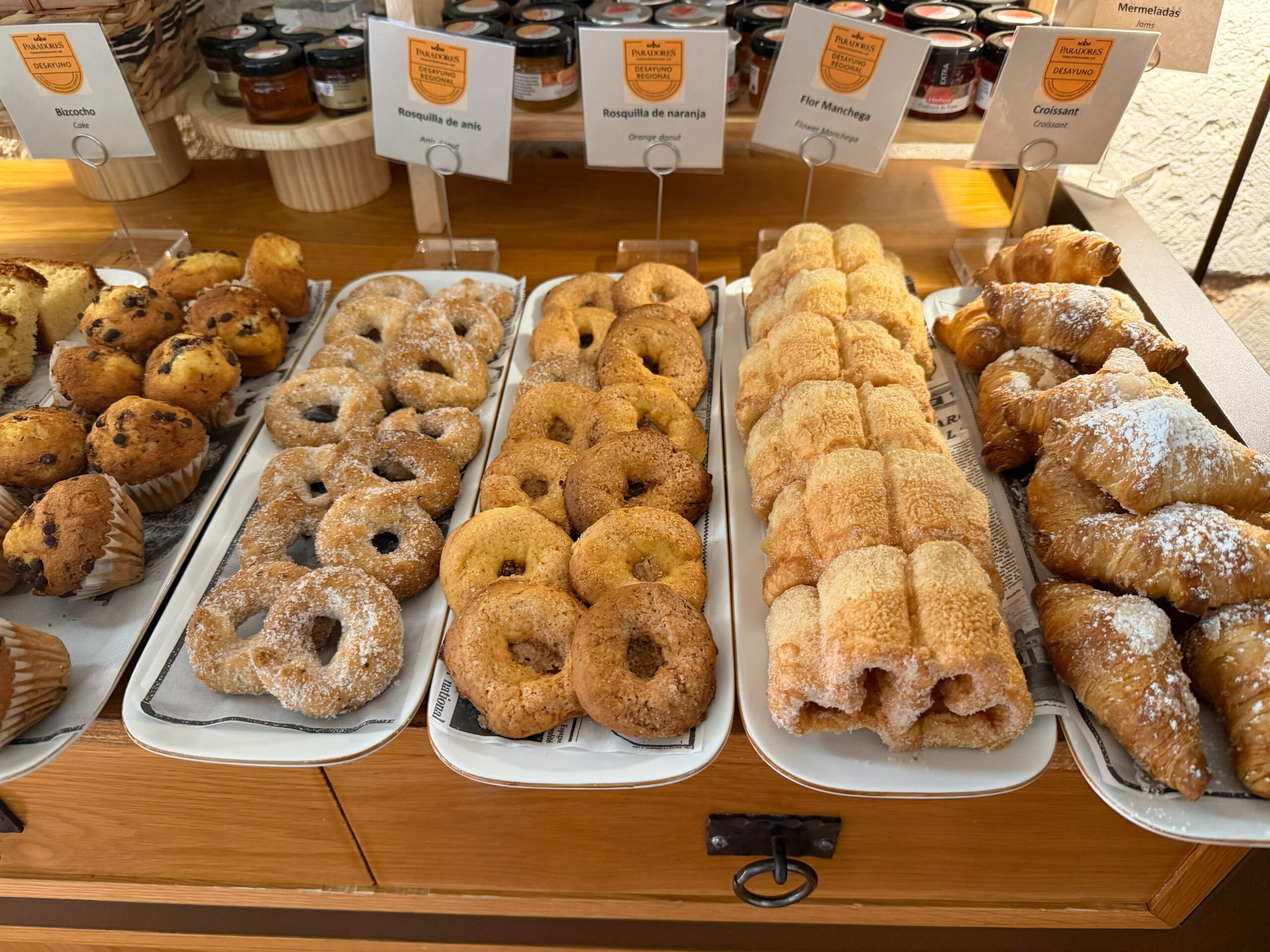
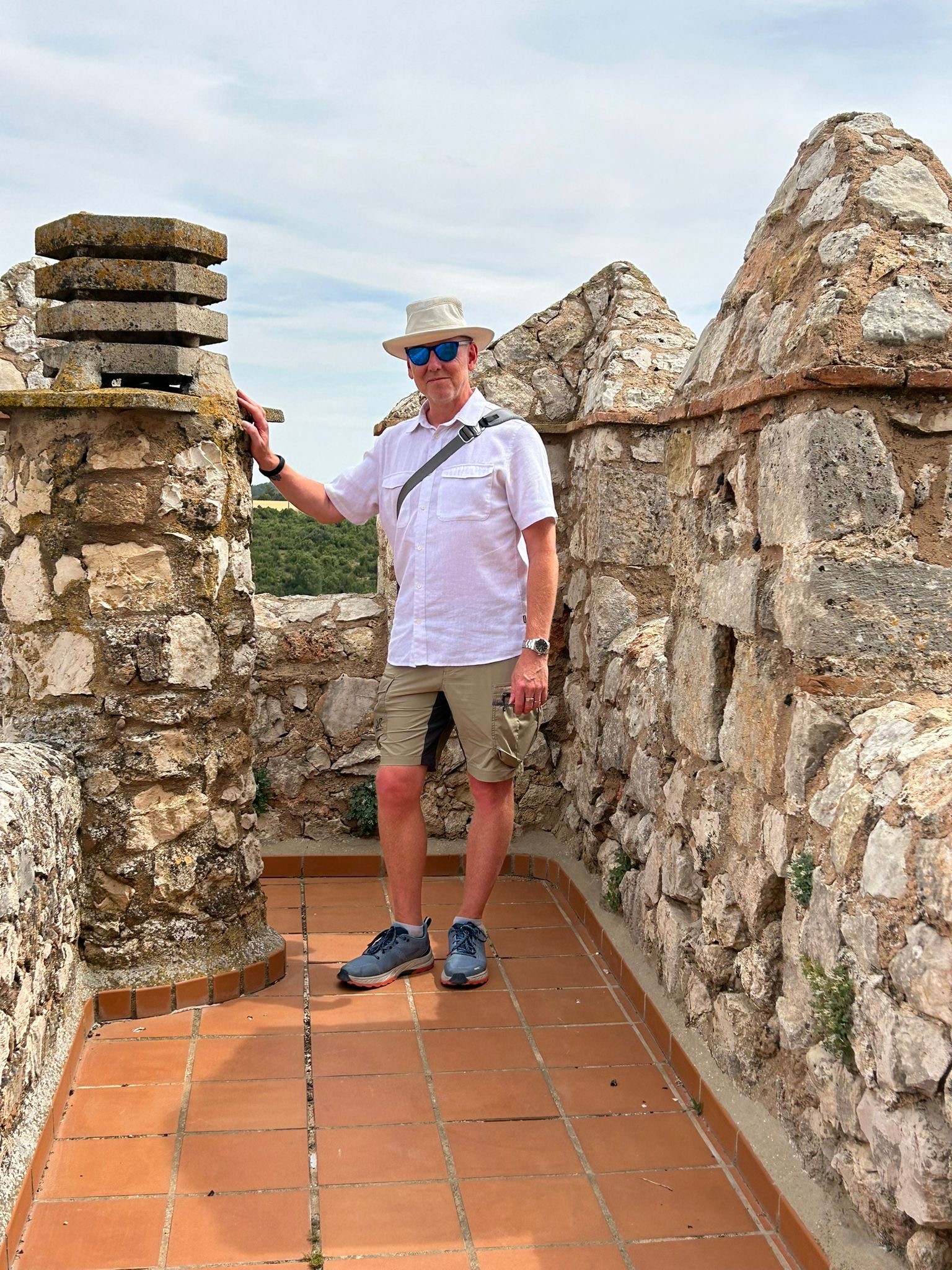
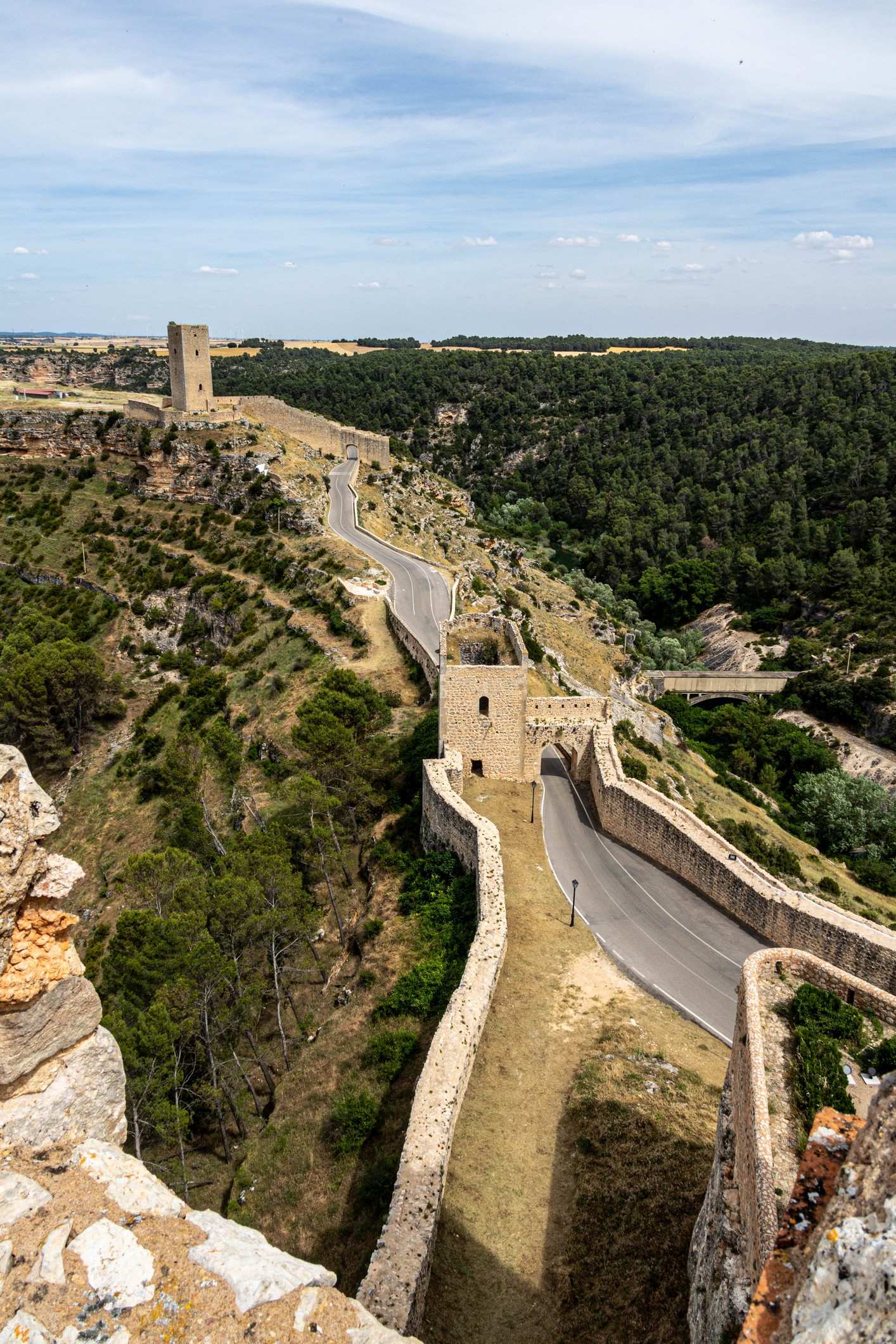
The rooms were a great size and wifi worked well. The downsides were eating in Alarcon – even at 9PM the only restaurant we saw open was the Parador itself although that didn’t start serving food until 8:30PM. The town was pretty with some beautiful walks along the gorge and we are already planning a longer stay, using the parador as a base to do some hiking. Breakfast was wonderful, a mix of buffet and cook to order. Overall the staff were great, the room was wonderful and the setting and views from the keep roof just awesome. A fantastic stay.
Rio Jucar Walk
After lunch Deb went back to the Parador and Mum and I wandered through the town, which didn’t take long as everything was closed even though it was only 4PM. We couldn’t see an easy way to get to the other towers so we returned to the Parador and climbed to the roof of the keep for views. I managed to hit my head on the low roof as we were climbing the stairs so that was a delight. The views were as impressive as you’d expect and the area was riddled with medieval walls and towers.
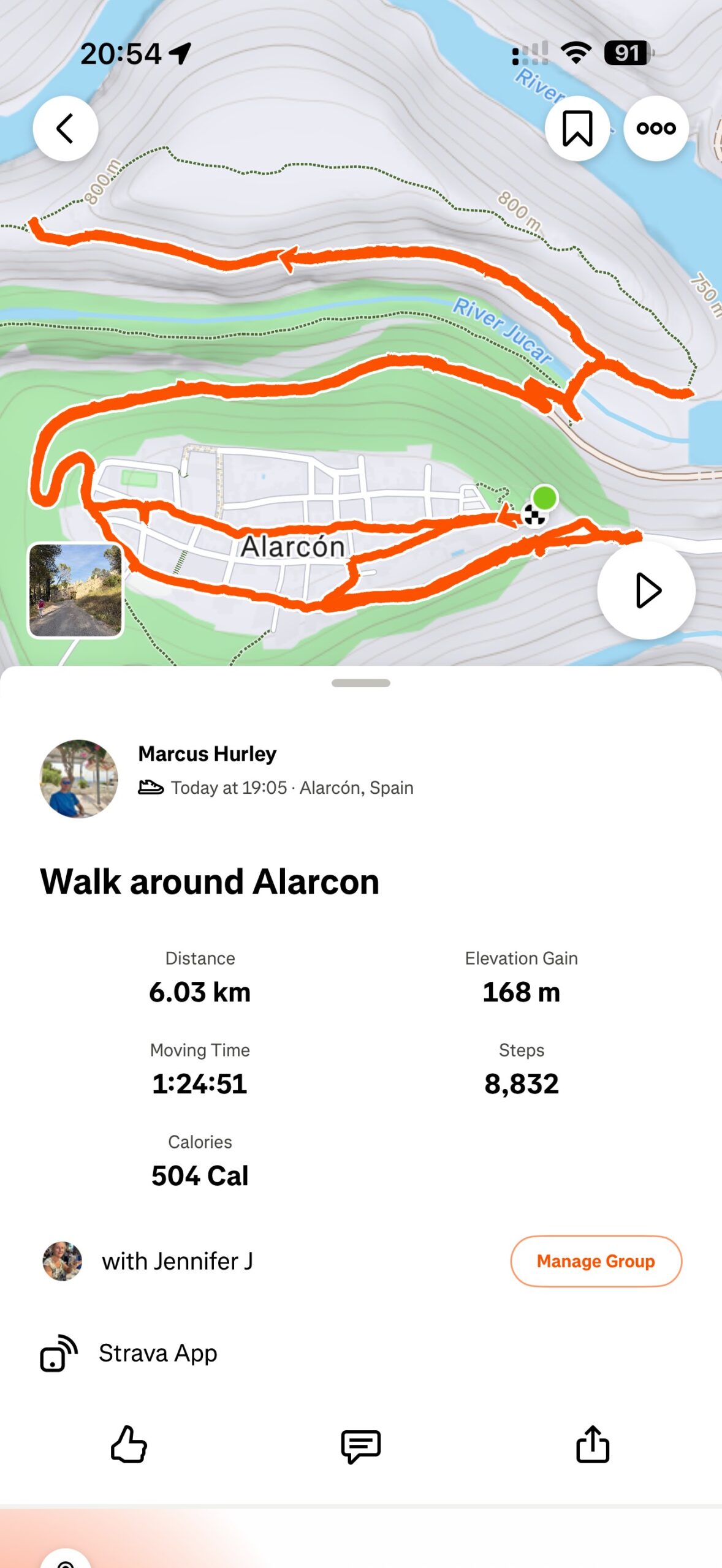
We went back to our rooms and I had a shower then planned further activities including a nice walk along the river. After an abortive attempt at dinner (no cafes open in town and even bar snacks unavailable in the Parador) Mum and I left to do the river walk around 7PM.
It was a beautiful walk through pine forests down to the river then across the medieval bridge and along a track below the Torre de los Alarconcillos to the Torre de Cañavate. Each of the towers were well restored although inaccessible and the path was well marked but we were surprised how warm it still was at 8PM. We walked for about 90 minutes in all, returning through the town and under the 2 gateways and then back to the Parador.
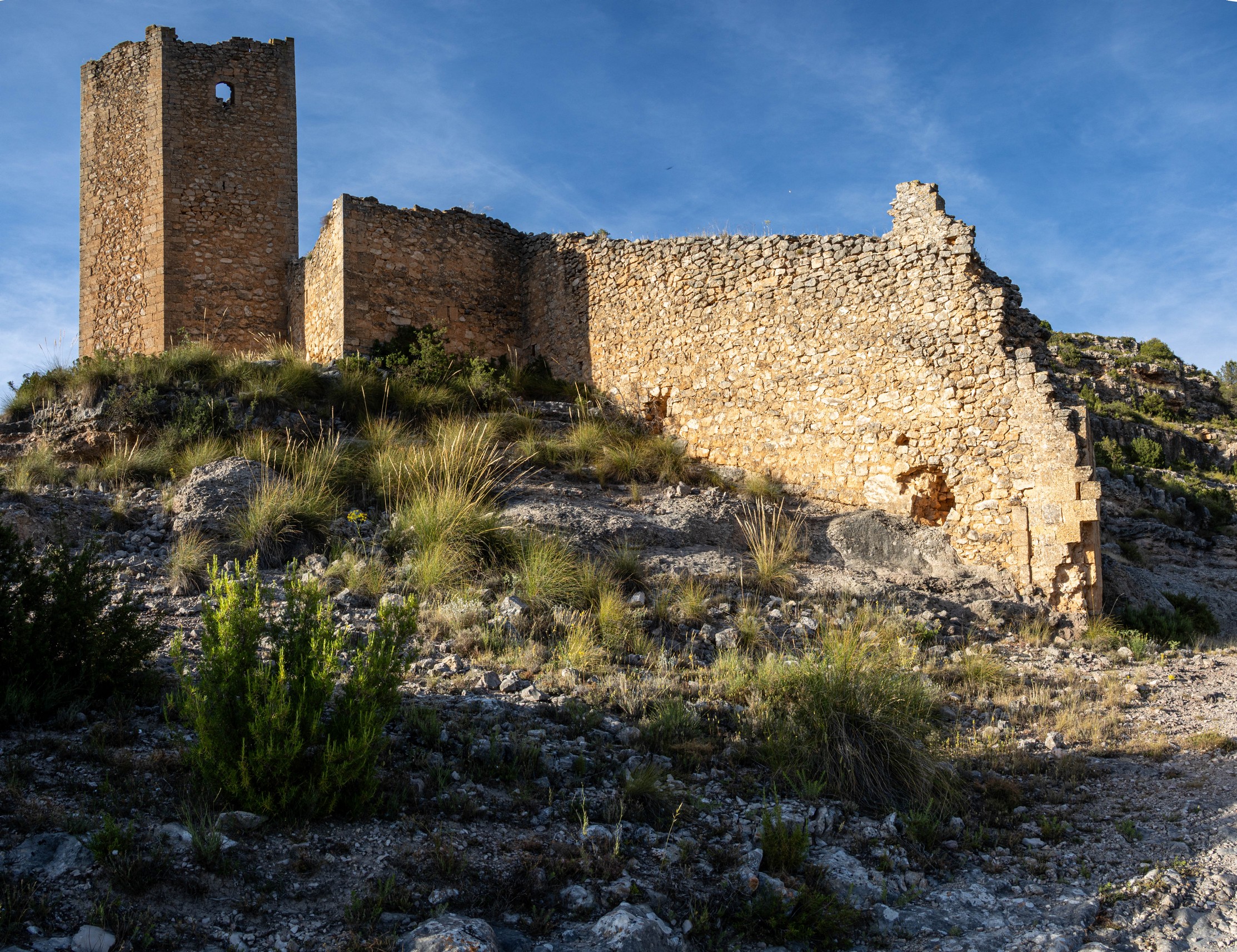
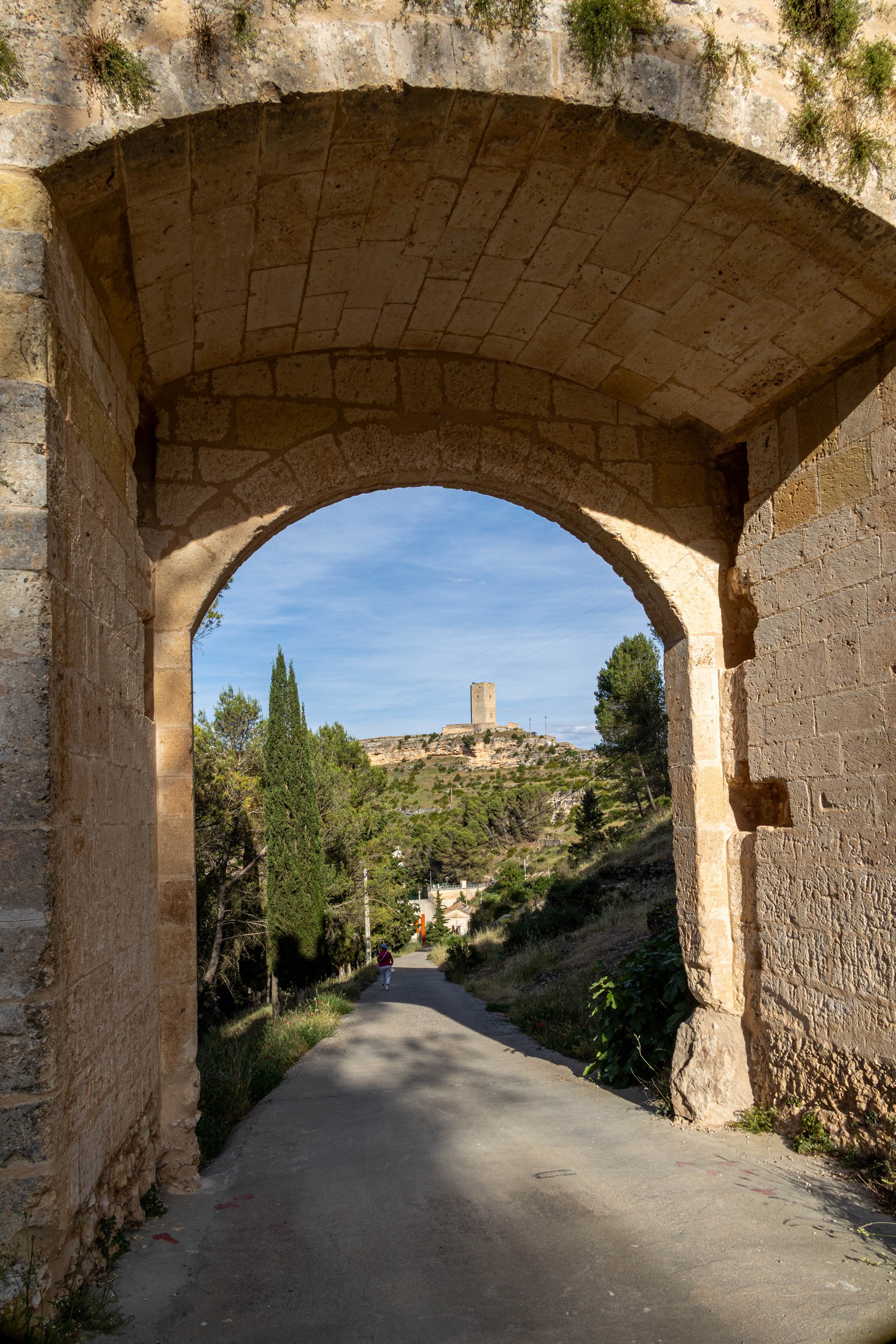
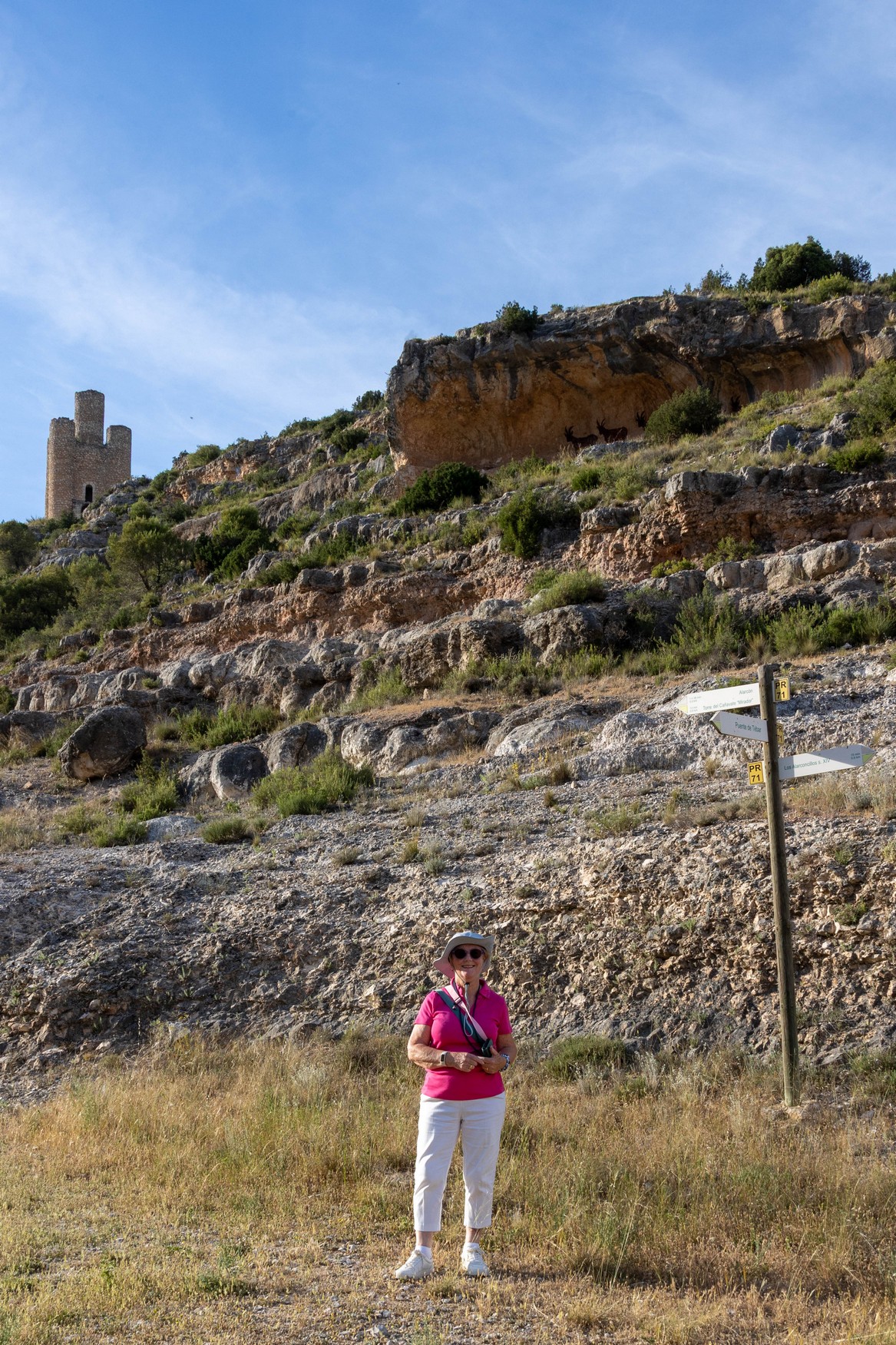
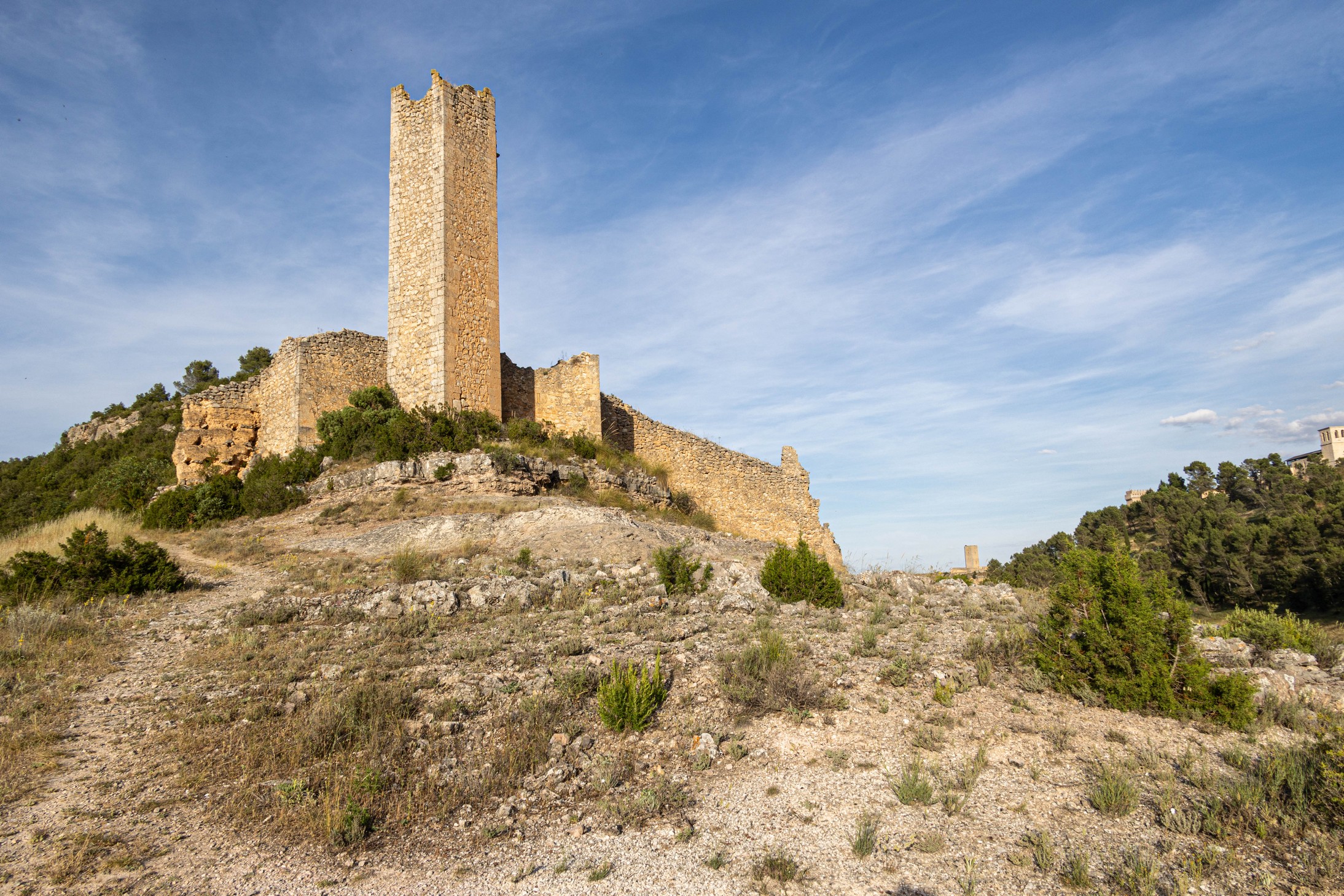
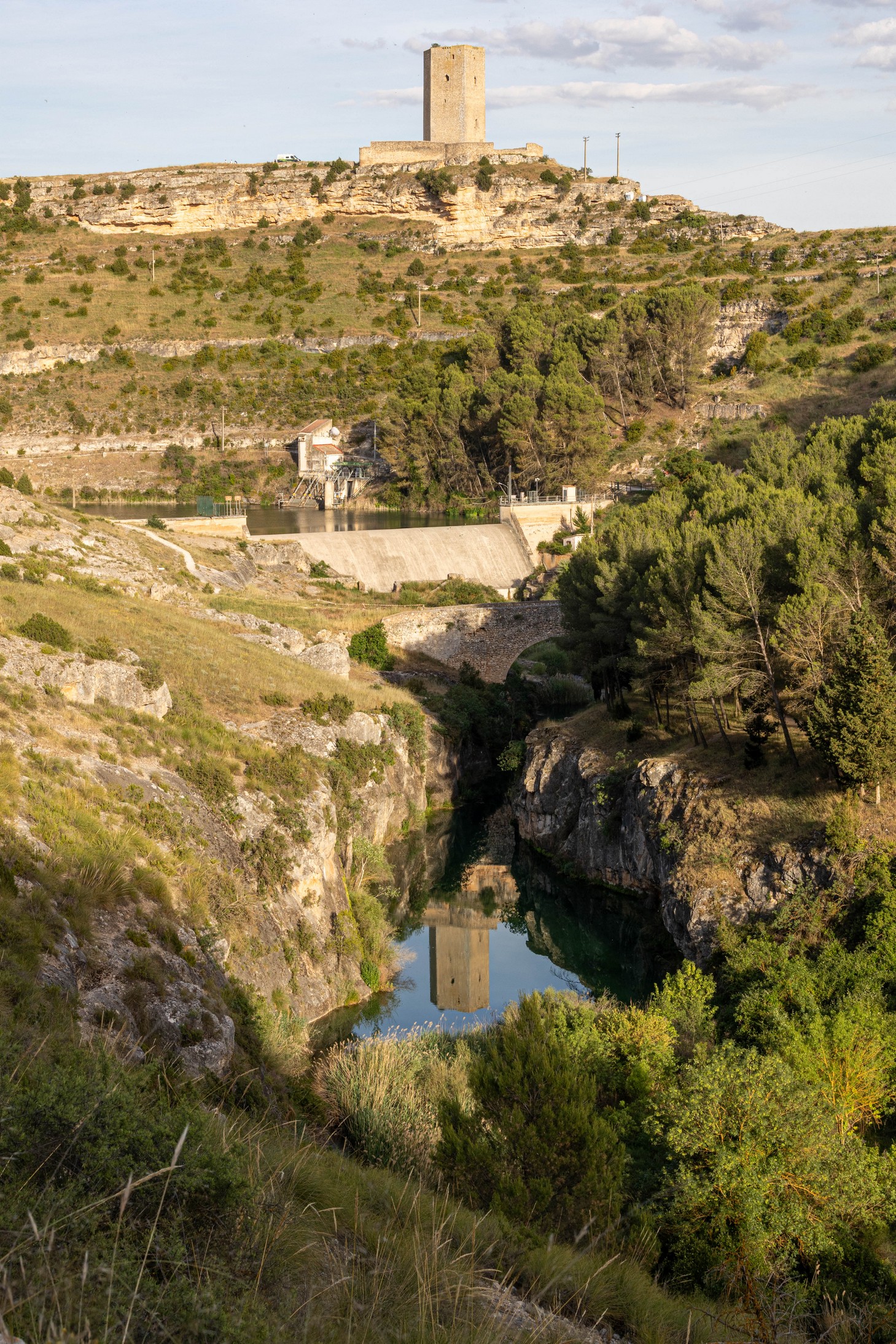
There were still no restaurants open so we met Deb in the bar at the Parador and shared the three desserts on the menu between us. After a yak we returned to our rooms and enjoyed the cooling breeze through our open windows while I wrote up notes and started to sort the photos.
I woke ridiculously early and watched the sunrise over the Torre de los Alarconcillos opposite the castle before we all had a wonderful Parador breakfast including manchega pastries again. The food was excellent with individual pots of most dishes as well as made to order options. We then packed and drove the 90 minutes to Belmonte Castle.
Belmonte Castle
The drive was through wonderful countryside, almost like Wiltshire with rolling hills of ripening golden barley scattered with the blood red of poppies, certainly one of my favourite flowers. It differed from Wiltshire in the almost total lack of traffic and the excellent quality of the roads.
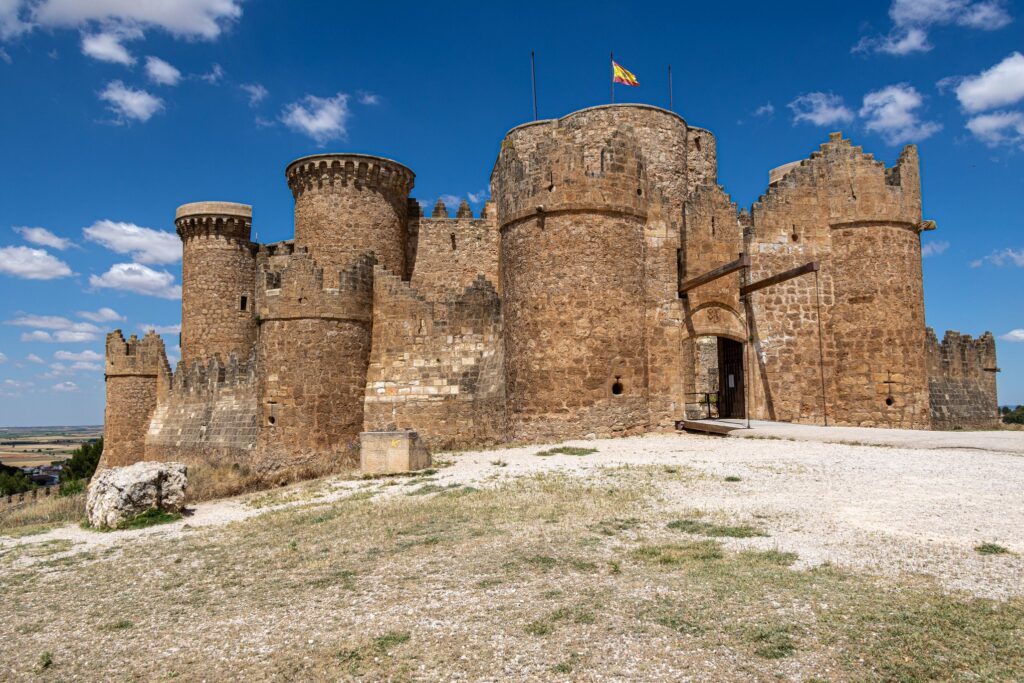
Belmonte Castle, like Chinchilla and Alarcon, was owned by the Marquis de Villena and was another spectacularly restored 15th century castle. It is world famous for hosting annual medieval fighting tournaments that are certainly not the choreographed spectacles we are used to seeing. The castle has also been used as the setting for many famous films including El Cid.

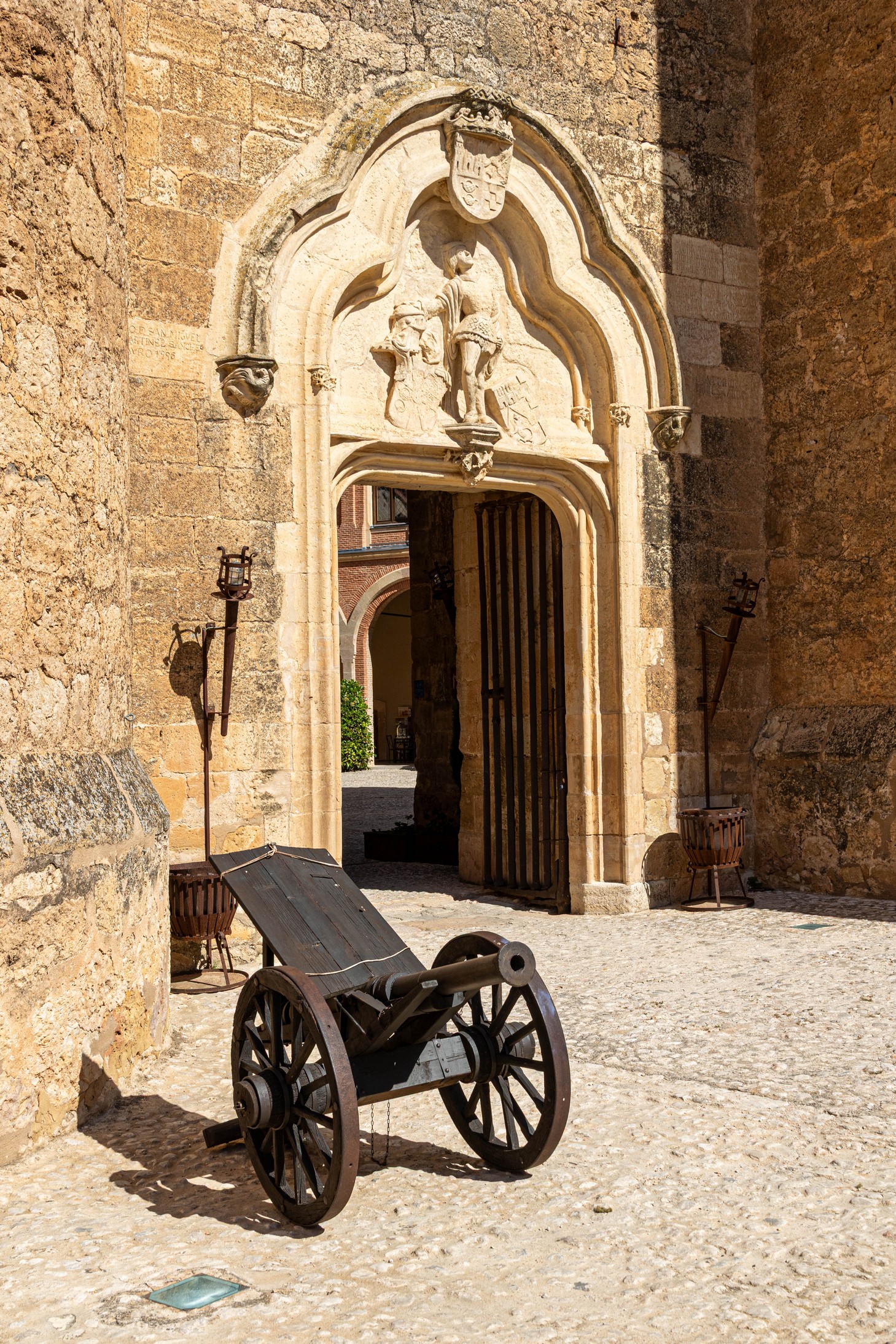
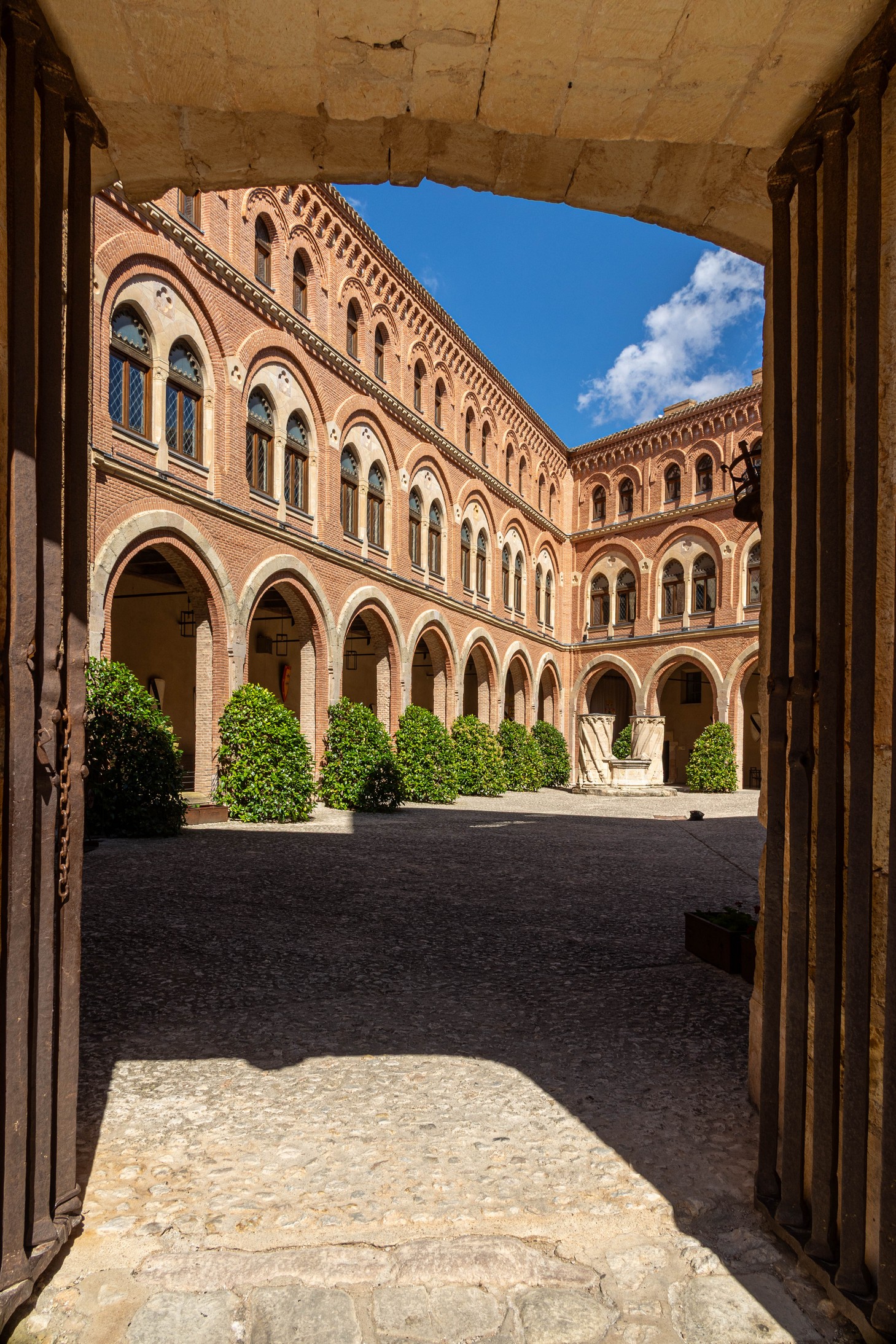

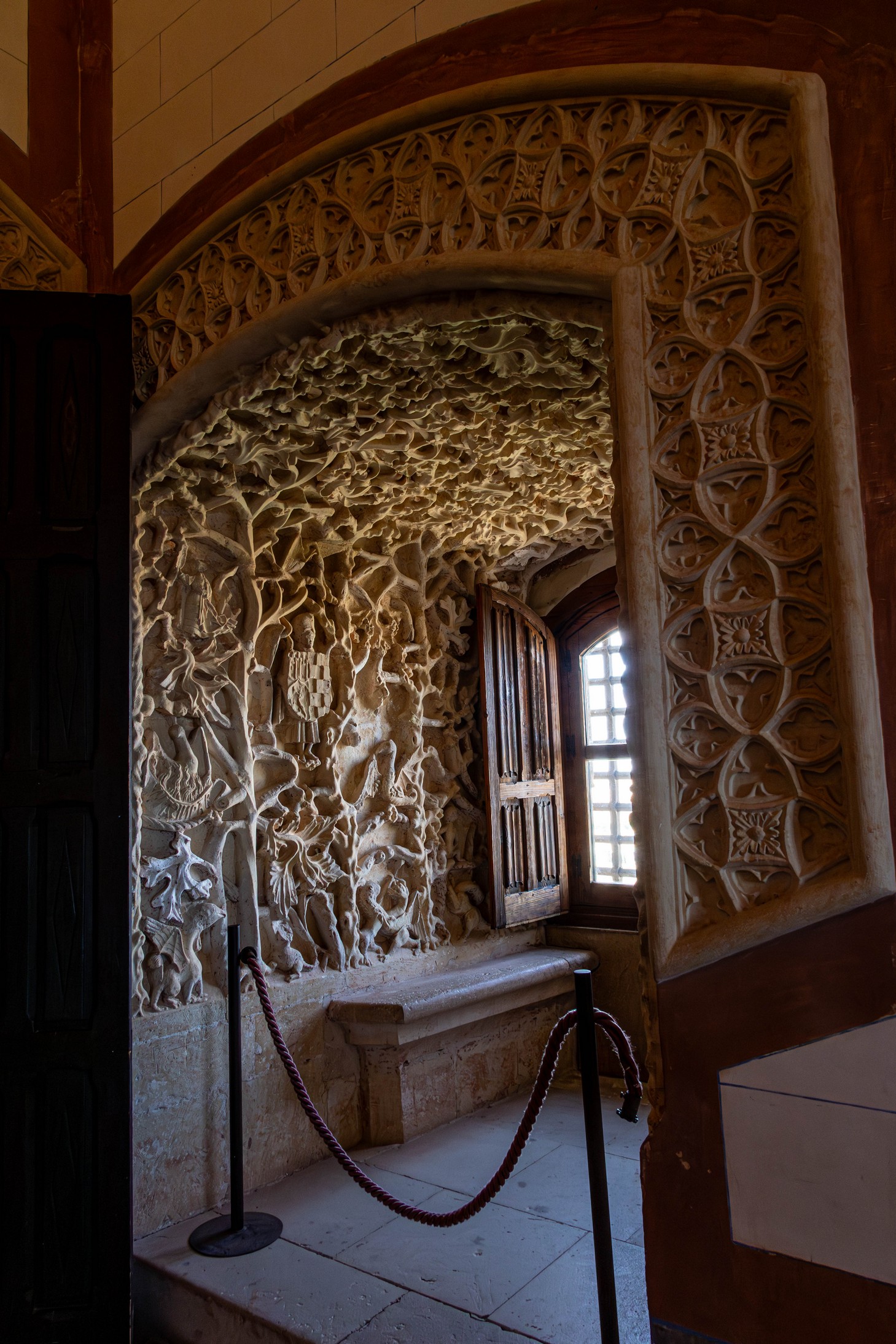
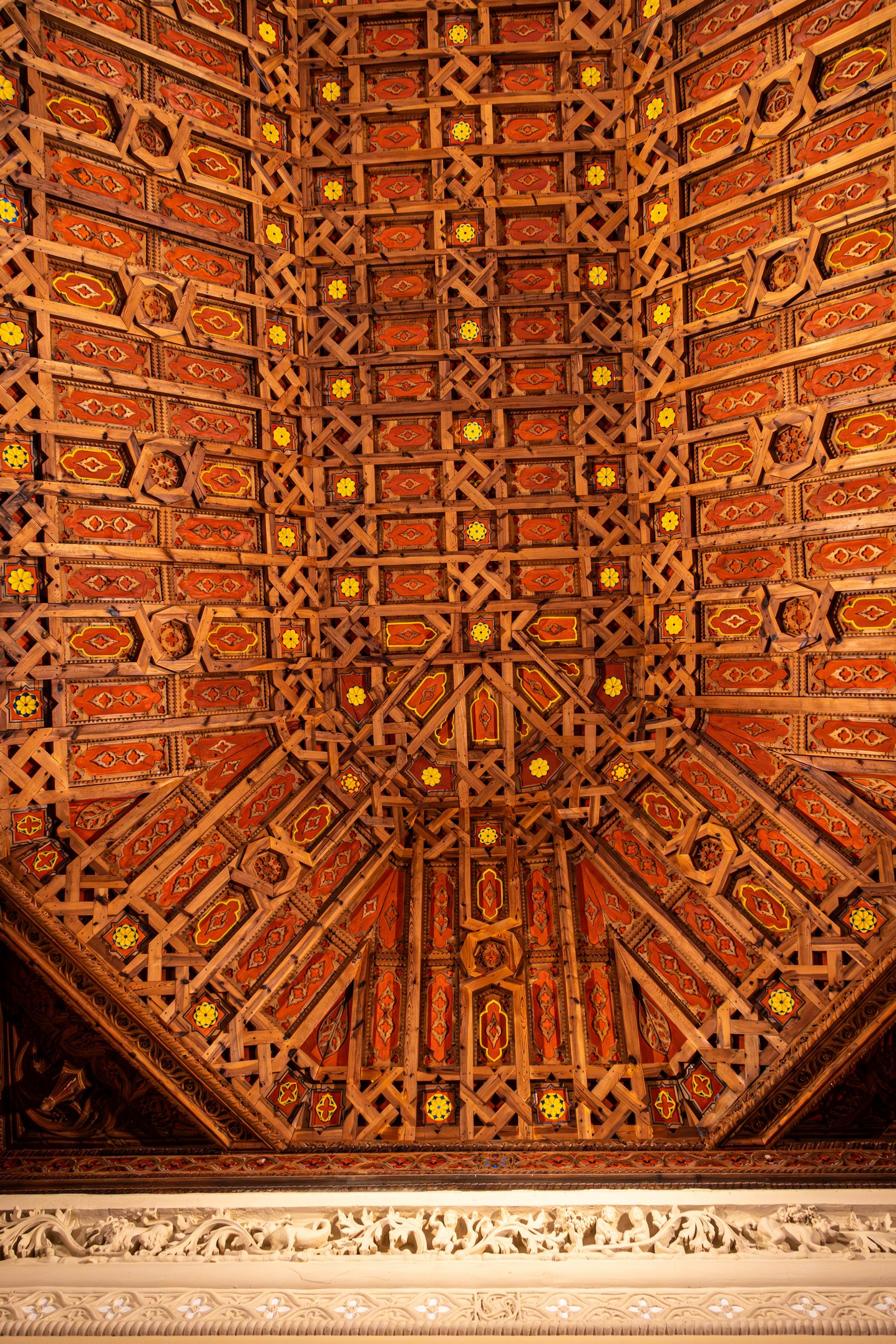


Entry to the castle, including the Trebuchet Park was 30 Euros and we spent a couple of hours there, especially as they actually had an onsite café! The route was well laid out and the audio guide was free, downloadable by QR code. The rooms on the top floor were those used by Empress Eugenie, the wife of Napoleon III who restored the castle. Other rooms were decorated in the high medieval style and there was an AV presentation on the history of the castle but it was in Spanish and the audio quality wasn’t good enough for Apple Translate to be any use.
The battlements for the entire circuit of the walls was accessible for walking so we did that to get an idea of the setting and the concentric nature of the castle. There was a small armoury inside with full sets of armour and weapons too which was interesting to see and the ceilings and stone carvings – fireplaces, window and door surrounds – were quite spectacular.
After the café we walked around the trebuchet park, in the outer bailey of the castle. This had about 40 reconstructions of siege engines divided into Western, Moorish, Chinese and Renaissance sections. Some of these – such as the incendiary pigeons and kite – were quite weird but others showed development and influence of varying ideas. It certainly improved my understanding of some of these weapons.
Cuenca
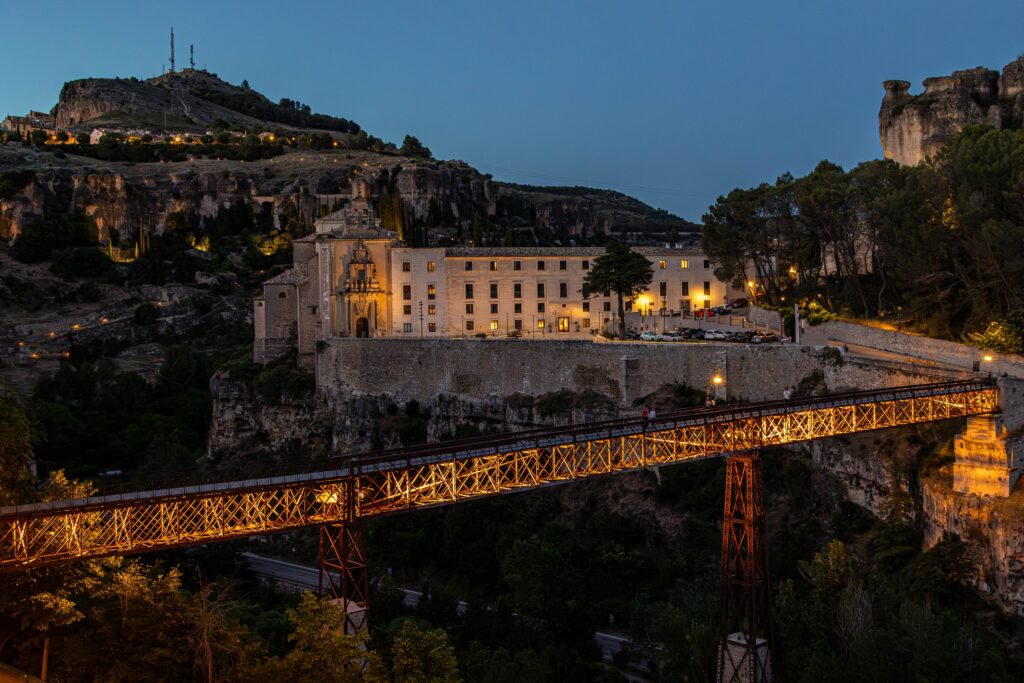
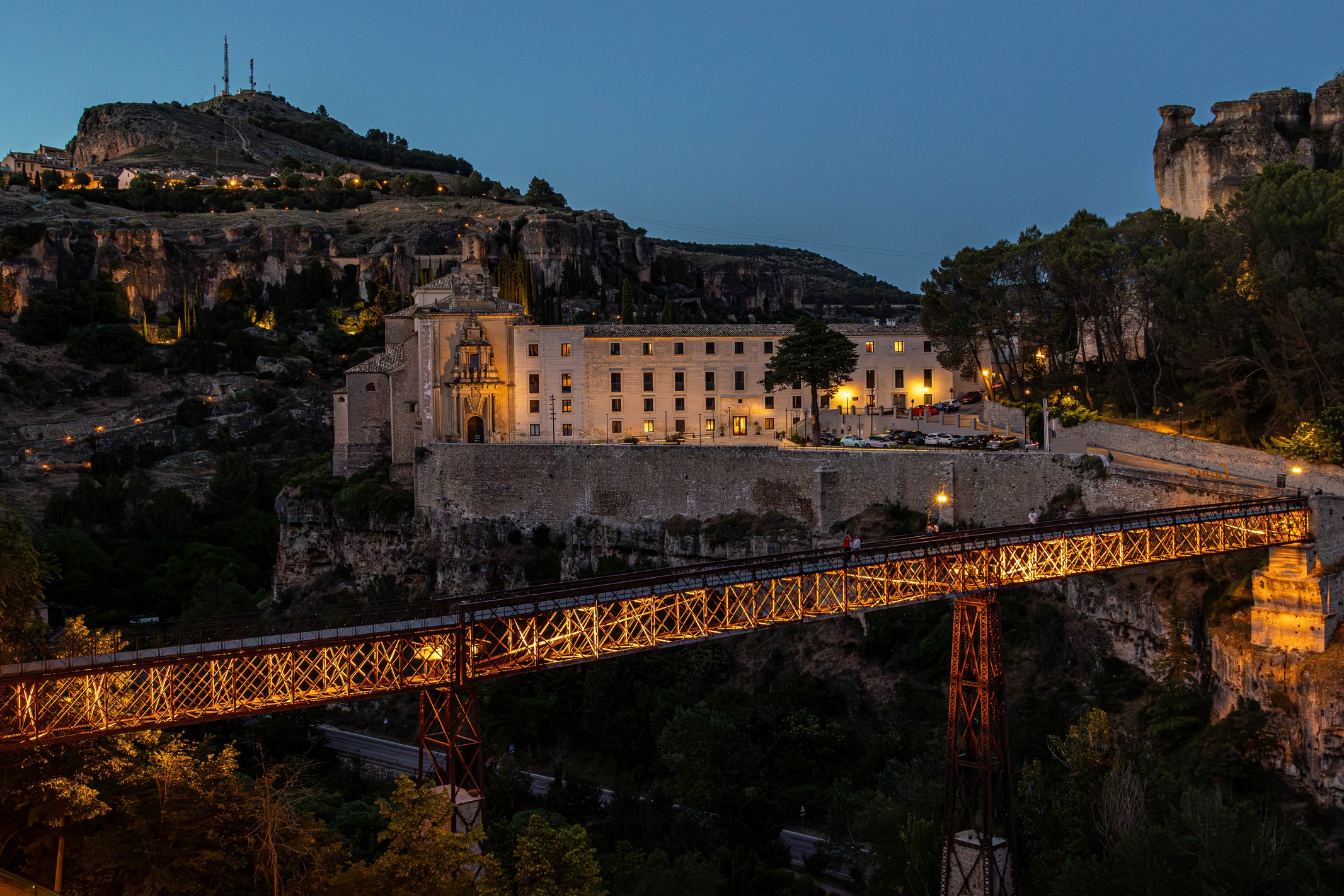
We returned to the car and then drove back through the beautiful and empty countryside to the Unesco heritage city of Cuenca, our next stay and about 100km away. Once we reached the city it was the first real traffic we’d seen all holiday and we drove through the busy streets and then up to the Parador of Cuenca, a converted monastery separated from the medieval city by a 100m long iron bridge over the gorge. This was a shock to me, and I mean a real shock as I absolutely hate heights. We parked outside and checked in then went to our rooms, large and spacious and the building itself was fabulous with original wooden ceilings, stonework and frescoes.
Our room overlooked the gorge which was quite a spectacular site. Once we’d unpacked we met Mum and walked out to the bridge. They crossed ok but I absolutely hated it, the wooden slats on top of the iron framework were uneven and the thought of 100 year old iron supporting my weight was terrifying, utterly illogical but my brain is not that rational! I eventually made it across and later looked at my Oura ring – the stress stats crossing the bridge was the highest recording all day. We found out on our guided tour that the bridge was built on the columns of the original stone bridge that was demolished in 1903.
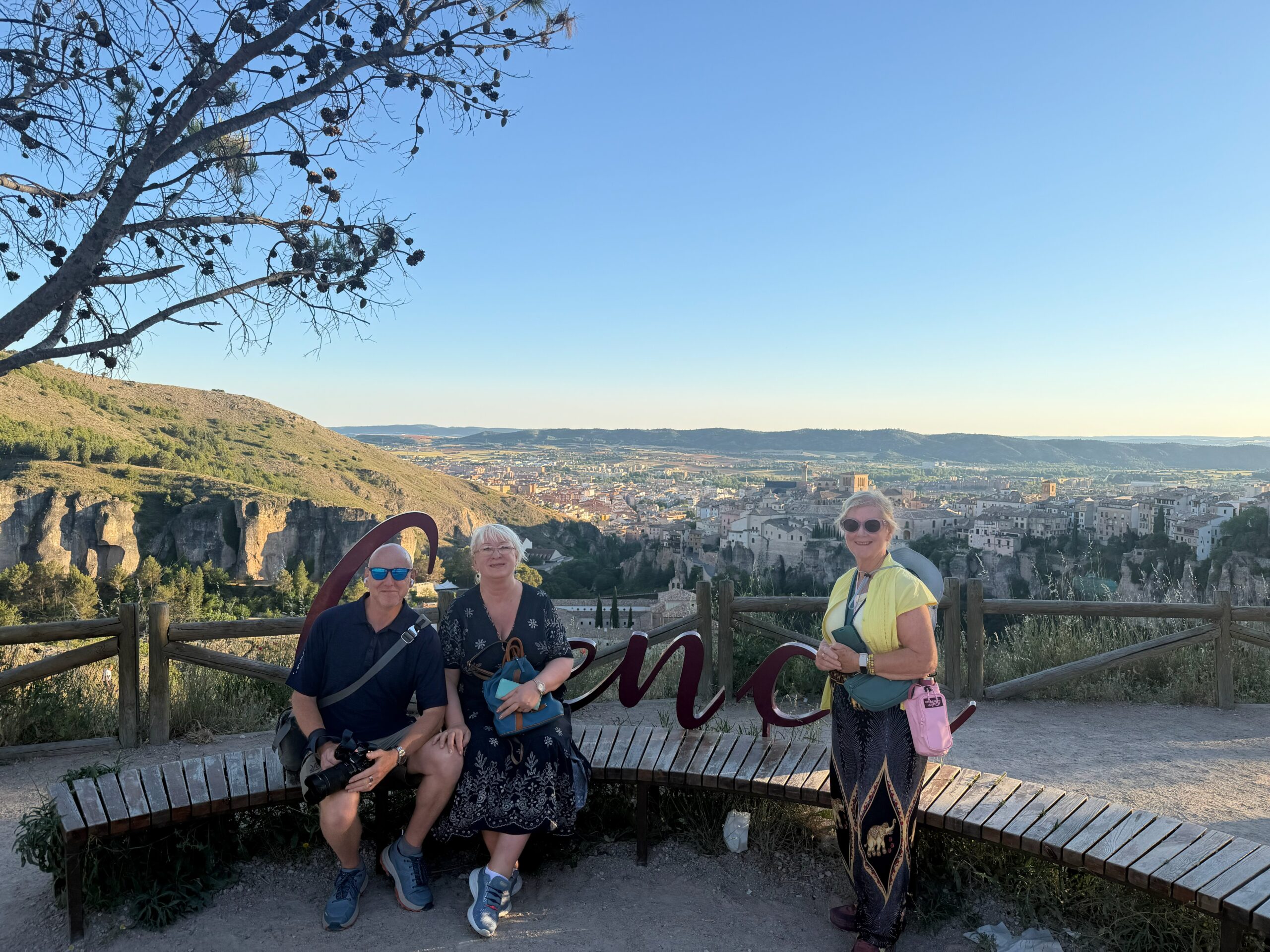
We saw one of the hanging houses of the city and then carried on through the streets, past the beautiful cathedral and up the hill towards the castle. We passed the Jesuit headquarters (until they were expelled from Spain) and crossed under the castle gateway, the only remaining part of the medieval castle. Next we saw the offices of the Inquisition and a mirador looking over the gorge and back to the old city before we reached the meeting point of our tour.
Cuenca Parador
The Parador at Cuenca is a converted monastery separated from the medieval city by a 100m long iron bridge over the gorge. This was a shock to me, and I mean a real shock as I absolutely hate heights. We parked outside the Parador (25 euros a night) and checked in then went to our rooms, large and spacious. The building itself was fabulous with original wooden ceilings, stonework and frescoes.

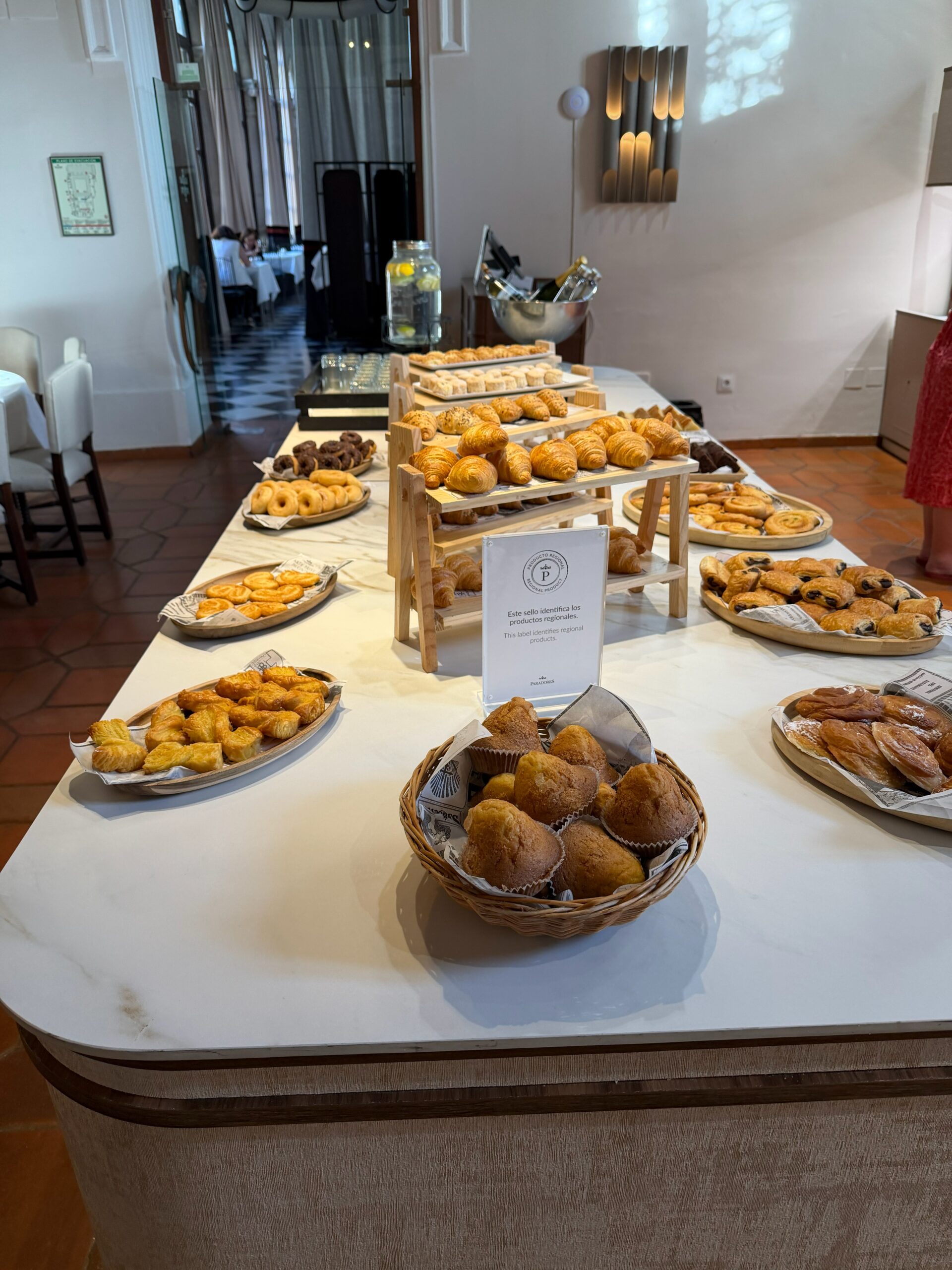
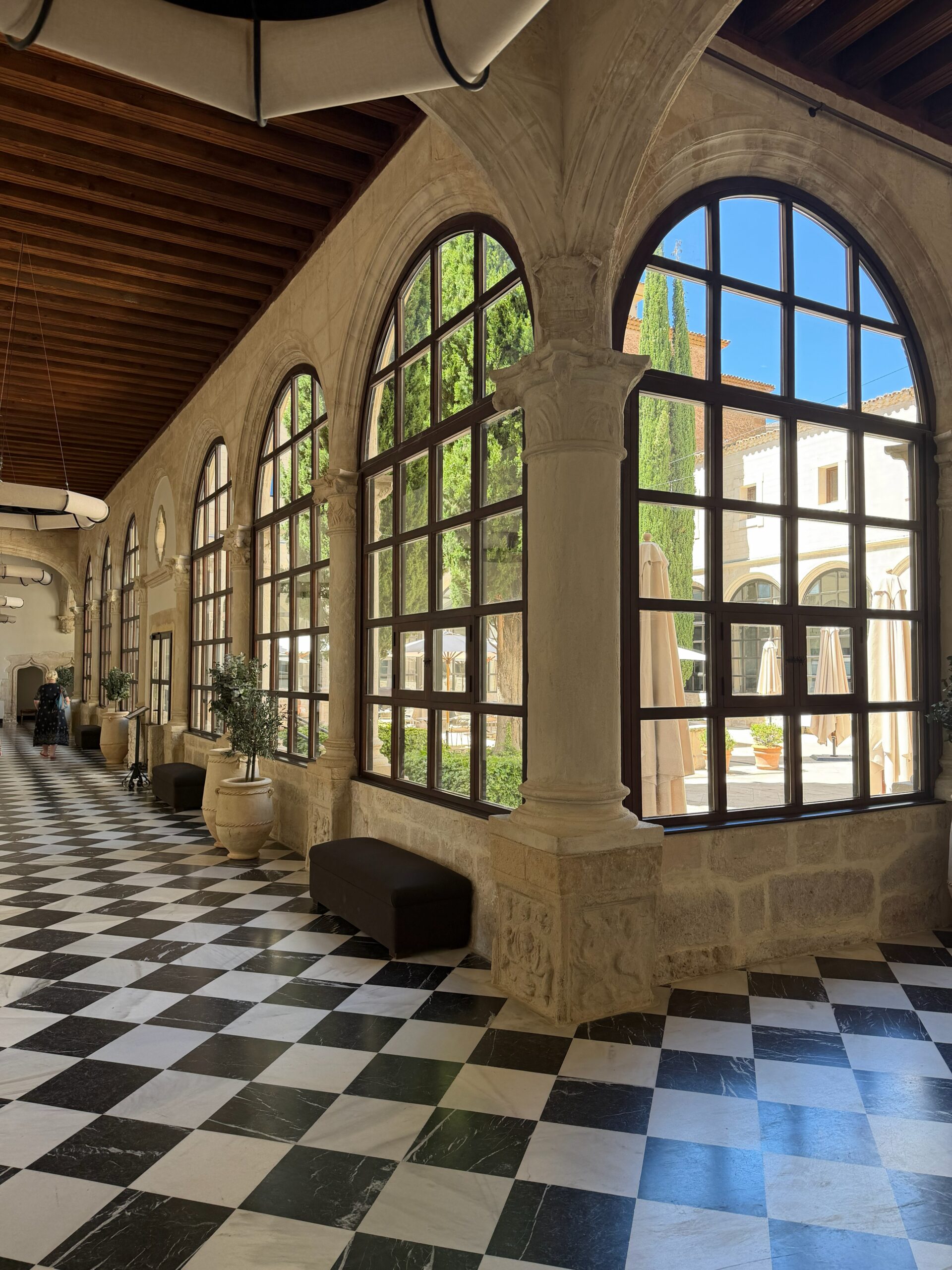
Our room overlooked the gorge which was quite a spectacular site. Breakfast at the Parador was fabulous, I say ‘breakfast’ as a throw away word but this was a veritable feast and we were there for over an hour before another walk outside to view the town from this side of the ravine. I did feel vindicated when I read the information board that said the bridge, built in 1903, was only intended as a temporary measure before something more permanent was made. So this ‘temporary’ bridge has been in use for 123 years and is probably about to suffer imminent collapse!
Check in at the Parador was very pleasant although in the evening we rang reception twice to request a taxi with no answer. There is actually a pool there too although it is across the road with no sign to say it is there or belongs to the Parador. Although the building and breakfast were superb, I think when I return to the city I will stay the other side of the gorge to avoid the bridge.
Cuenca Evening Tour
We’d booked a night time tour of the city which was only available in Spanish unfortunately. It was the first proper test of my Apple Airpods translate function so it could be interesting and they actually performed well, as long as I was stood close to the guide and looking at him. There were some inaccuracies and glitches but overall it I could get the context of everything Pedro said and I think for 1 on 1 conversations it would be excellent.
The tour started with one of the Miradors overlooking the city and bridge and Pedro gave us an overview of the history of the city, from its Islamic foundations to the nineteenth century. The city was captured by the Christians in 1177 and then underwent various battles due to civil war and succession wars until the King ordered the destruction of the castle at the tip of the ridge. The city walls enclosing the city became a problem for the growing population so people started to dig their houses into the rock or expand them upwards or even build them over the roads, converting the streets into enclosed passageways. A lot of the houses have now been demolished or collapsed but the ones that are left are being preserved.
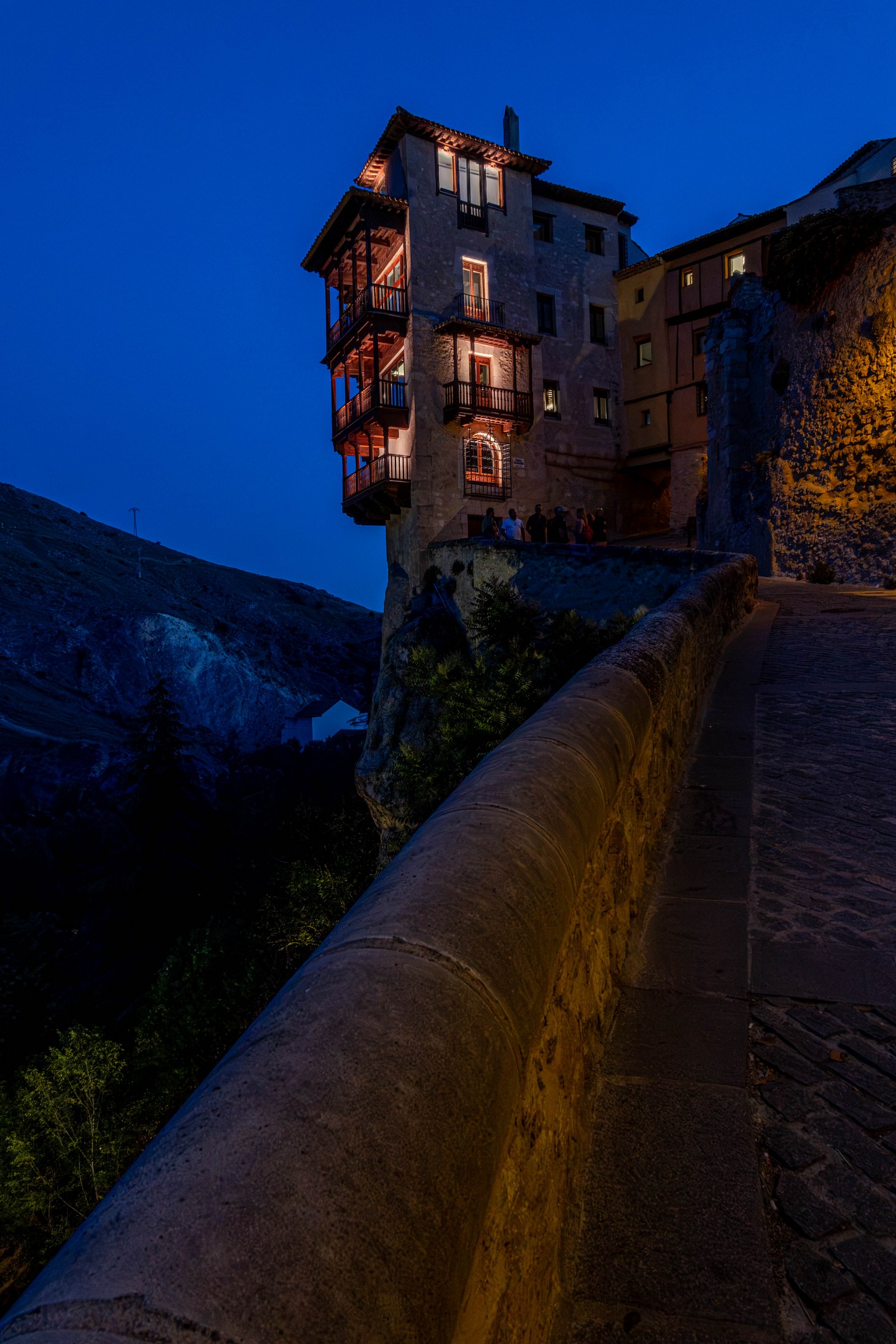
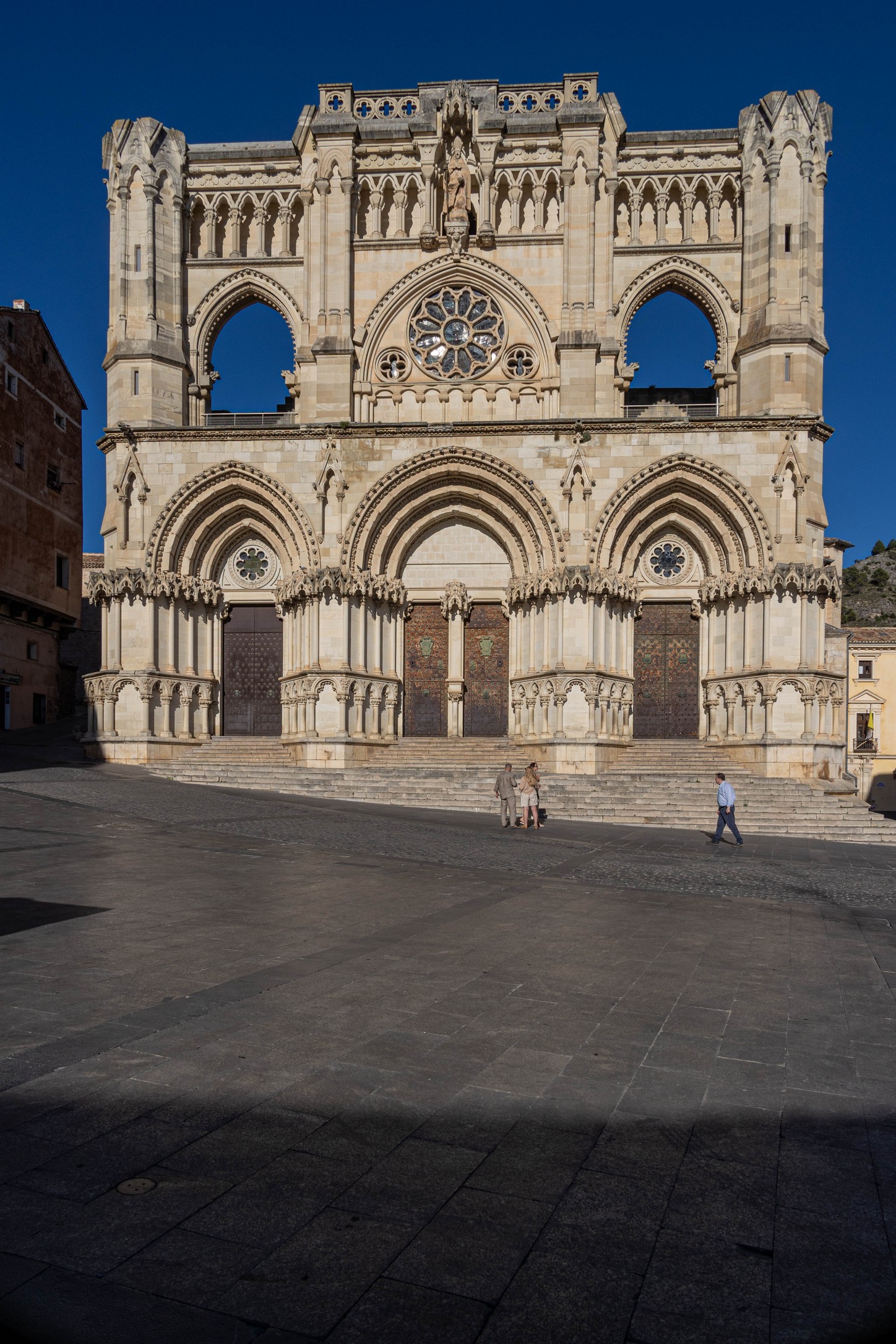
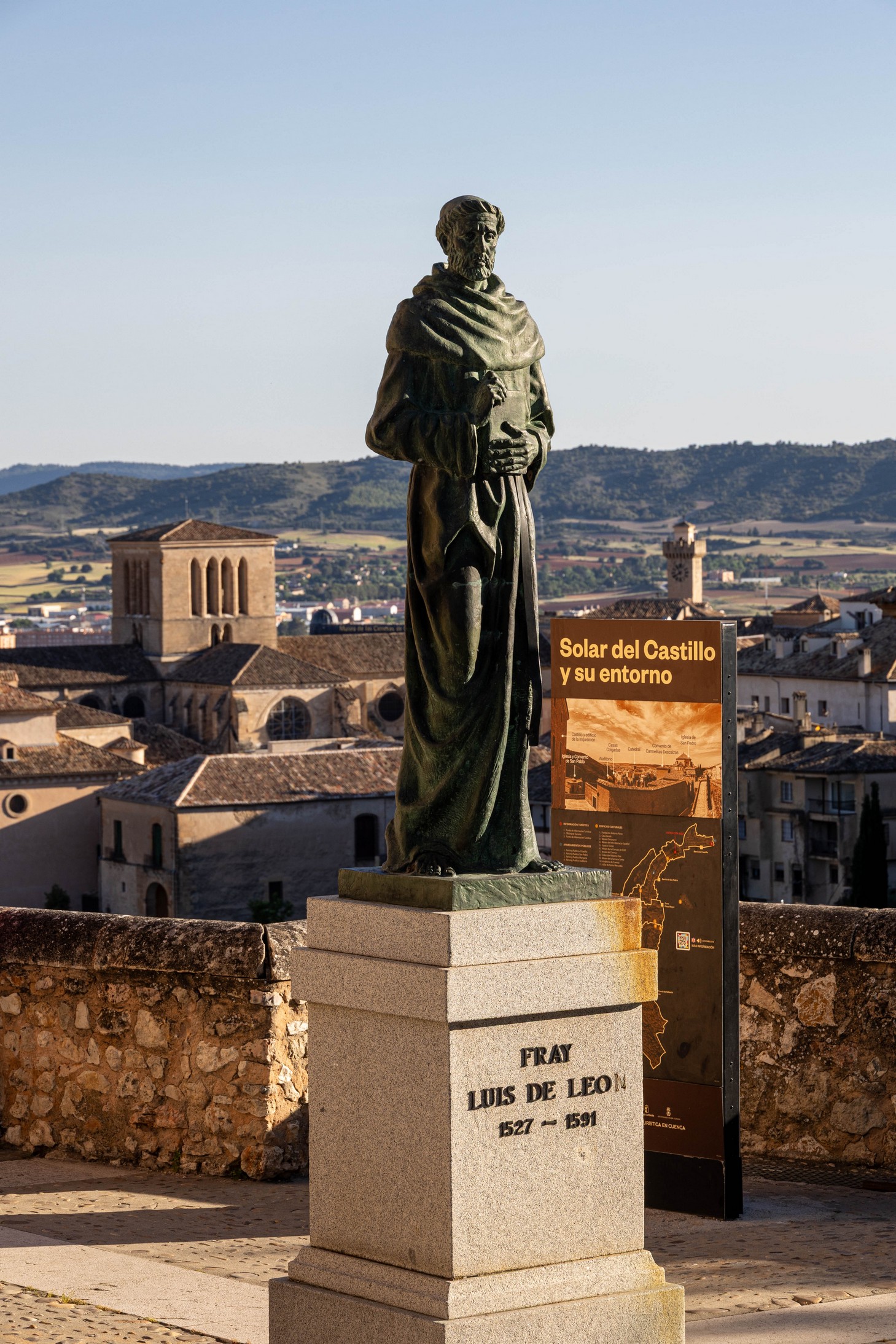

We continued down through the streets that we’d walked up (it’s a very narrow ridgeline so only 3 streets wide), past St Pedro’s Church (the third incarnation on the same site) and eventually reached the site of the ruined bell tower that collapsed in 1910, apparently due to the demolition work on the old bridge. I couldn’t work out the entire history of the cathedral but it was the first true Gothic cathedral in Spain then was remodelled as a baroque façade and then this in turn was replaced with the current neo gothic façade in the 1930s maybe but never finished due to lack of money. It is the only cathedral in Spain with abstract stained glass, other than Sagrida Familia which probably still isn’t finished.
The stars of the city are the hanging houses and we viewed them from a mirador but they were unlit and it was gone 10PM by then so it was difficult to see much. We finished the tour at the bridge of doom and saw the hanging house just above the bridge, which was actually illuminated. An interesting tour and entertaining guide.
Toledo Parador
The next morning we had a most welcome shower before breakfast. I say ‘breakfast’ as a throw away word but this was a veritable feast and we were there for over an hour before another walk outside to view the town from this side of the ravine. I did feel vindicated when I read the information board that said the bridge, built in 1903, was only intended as a temporary measure before something more permanent was made.
From the Parador at Cuenca we drove the 2 hours or so, almost entirely on empty dual carriageways and past wonderful green agricultural land, to the destination of our Toledo road trip and our next base, the Parador at Toledo. This parador is on a hill overlooking the city so we are a captive audience for food but we have great views and easy parking. Check in was wonderfully helpful – Ada was fabulous and should be sent to Cuenca to train some of the front desk staff there how to actually engage with customers. Our room was another huge space, overlooking the pool and terrace. We took a bit of time to chill and I caught up on work, notes, photos etc before we sat outside for a while, enjoying the sun.
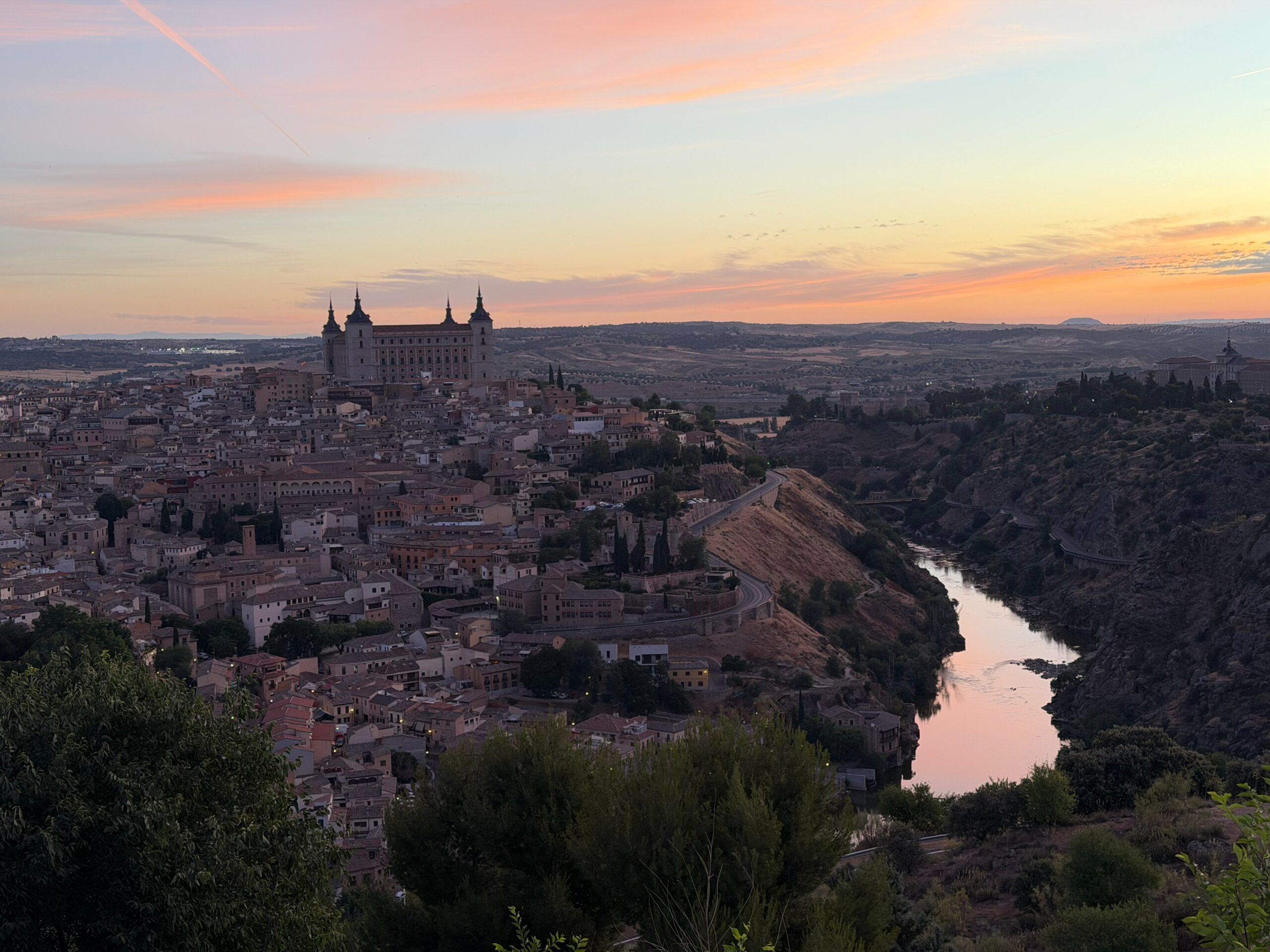
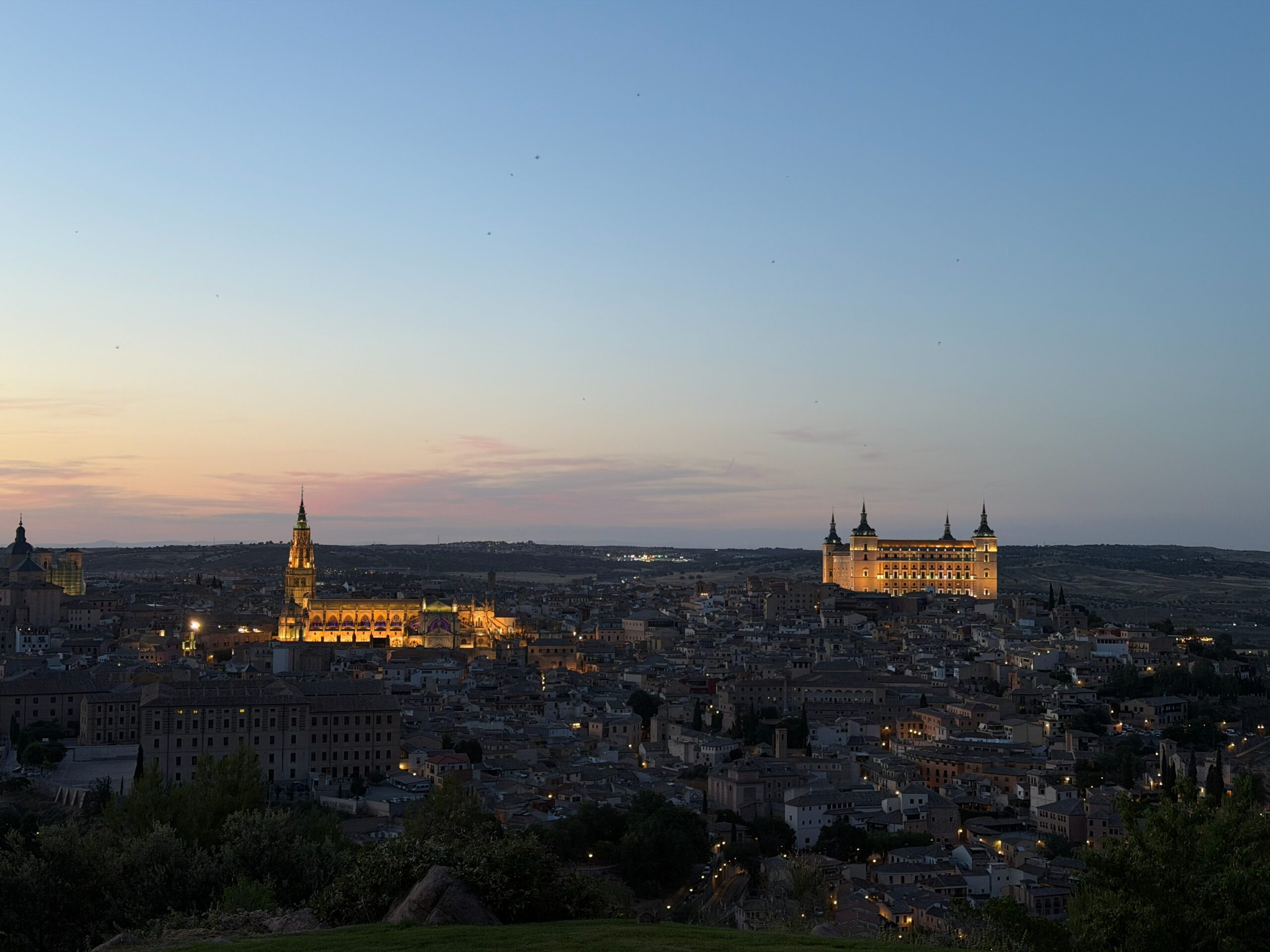

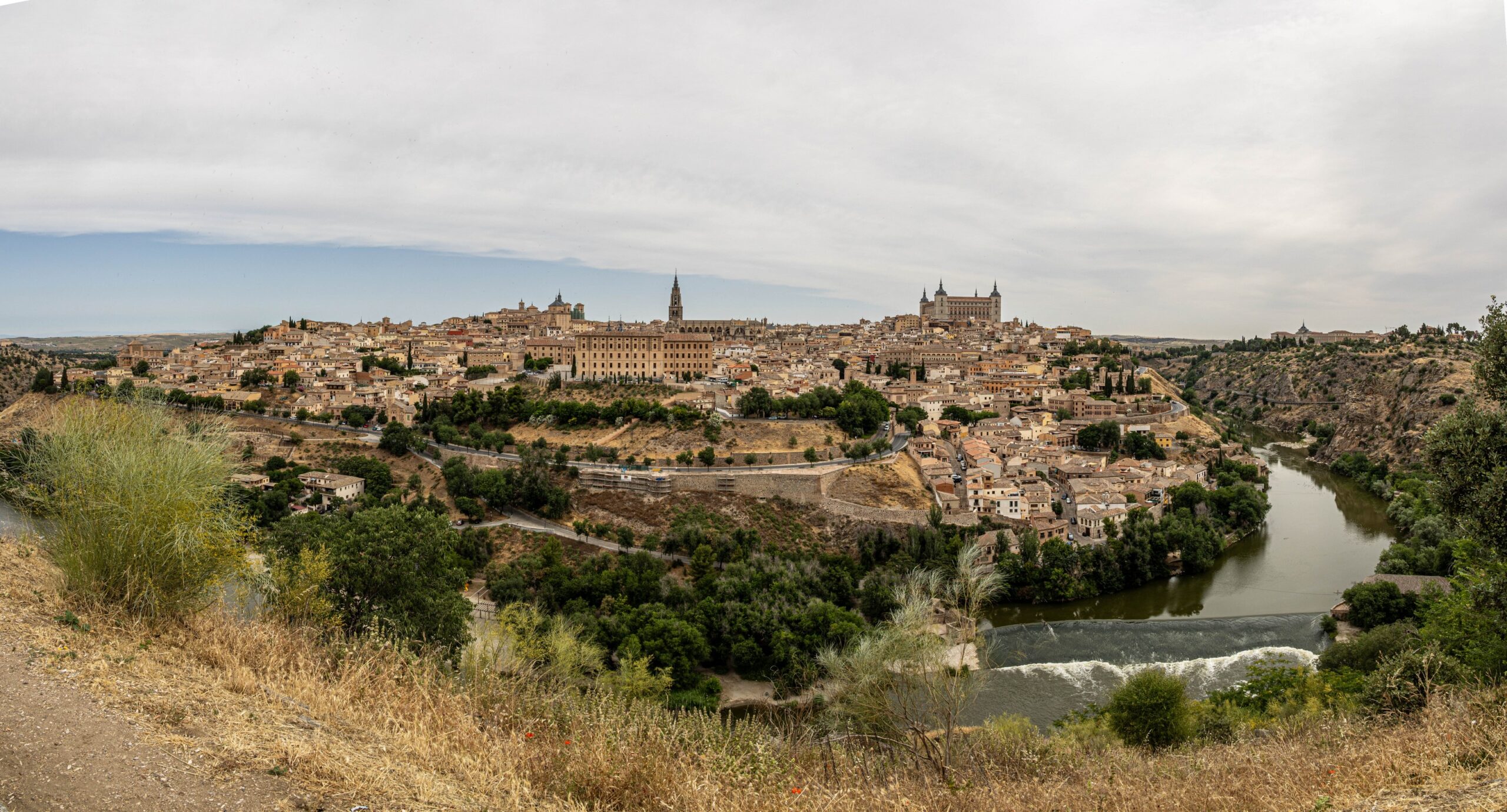
We met up at the café in the Parador for a light dinner, consisting of beef tenderloin and chips, which was a lot fattier than I expected so I ended up leaving a lot of it. We did make up for that by having four desserts though. After our light (!) dinner we went onto the main terrace to look at the view over the city, a magnificent medieval time capsule, mostly enclosed by the river Tagus. It was a late night by the time we went to bed.
Toledo
I slept until 6:30 and then got up to watch the sunrise. The hotel was totally deserted and even when I went back to the room at about 7:15 I hadn’t seen anyone. I did watch lots of rabbits playing on the damp grass though. After another spectacular breakfast we took a taxi to the cathedral in the city. I am so glad I didn’t drive as the streets were a maze of one way, resident only and exceptionally narrow or sometimes all three.
Toledo Cathedral
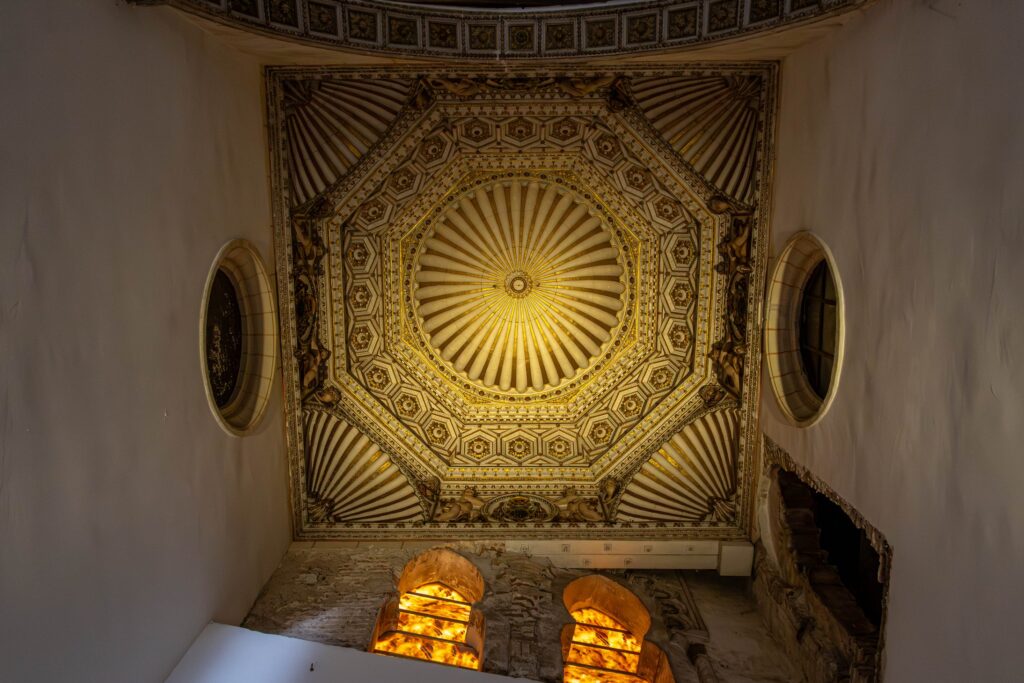
The cathedral started construction in 1226 and was completed by 1493 although it was remodelled when one of the two towers collapsed and was replaced with a much smaller renaissance style dome. Corpus Christi had been celebrated the day before so the streets were still decked with flowers and flags and looked quite spectacular.
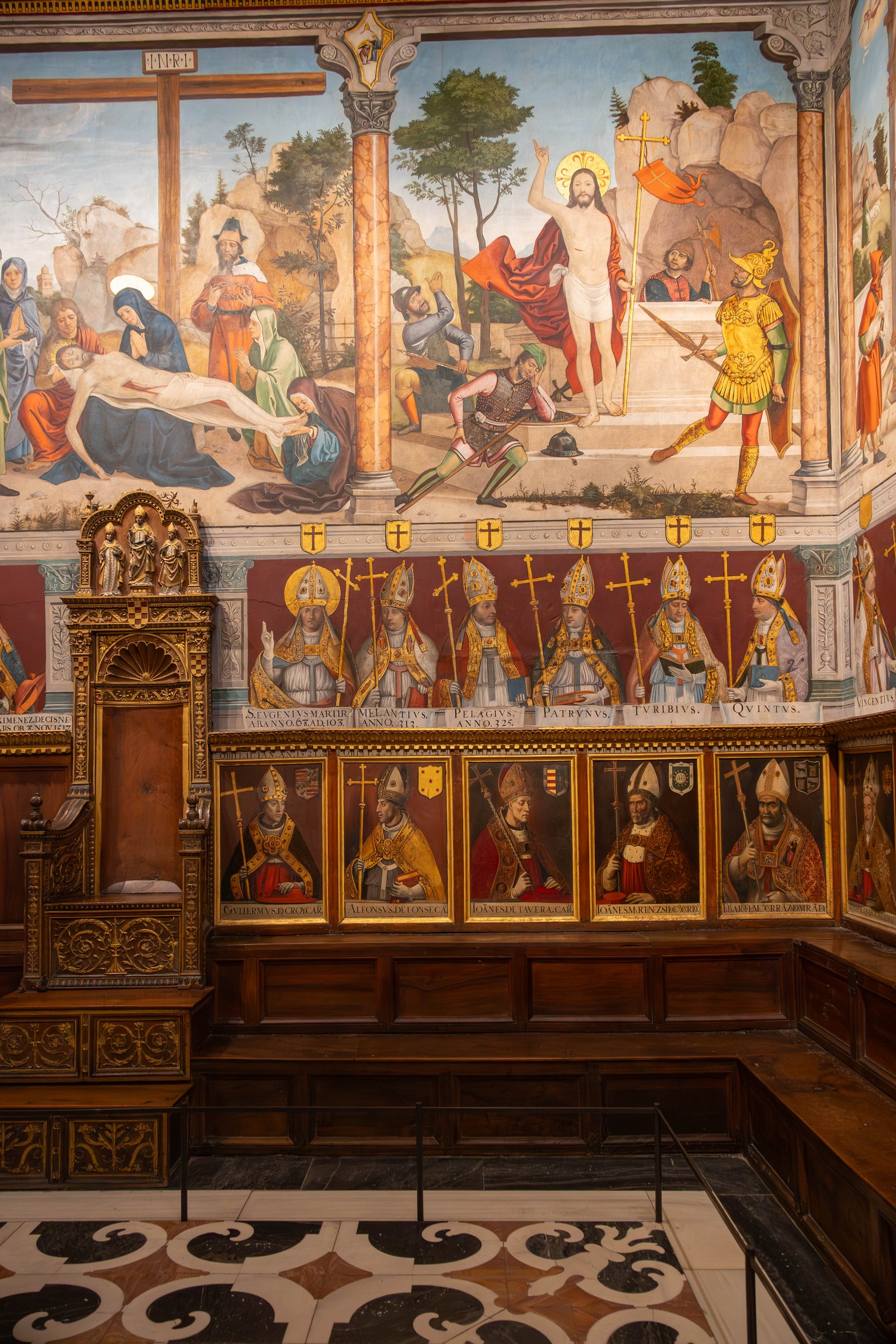
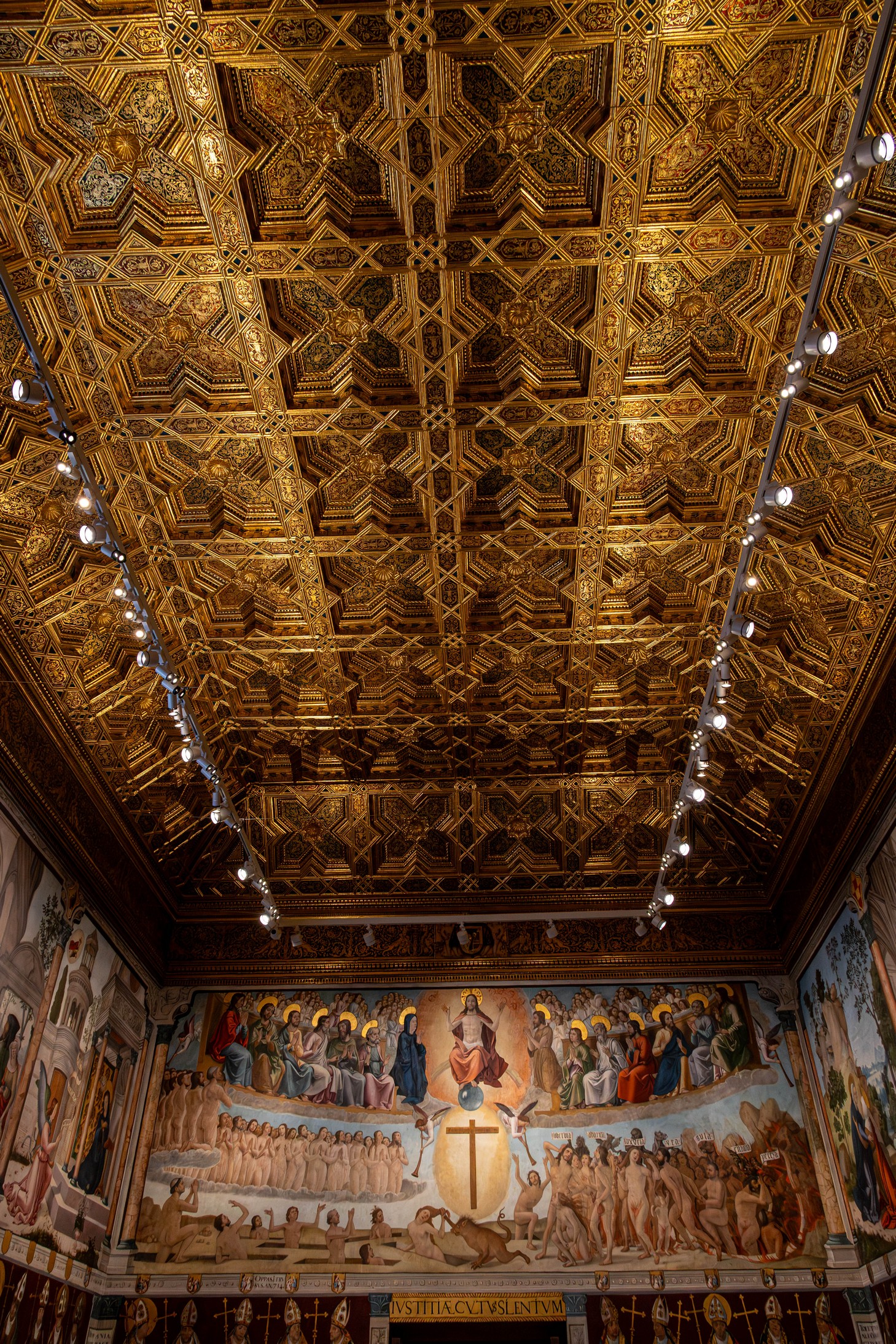
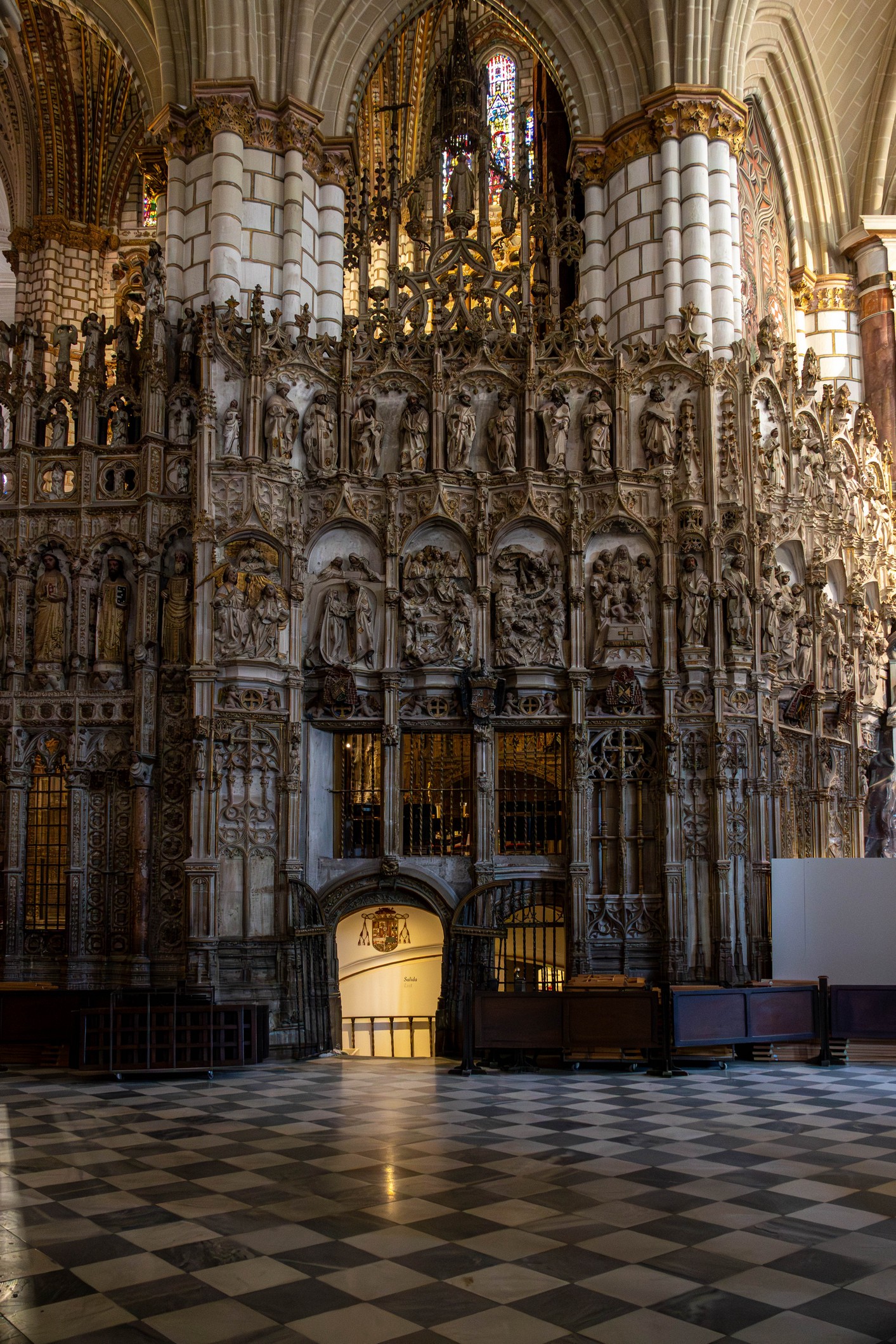


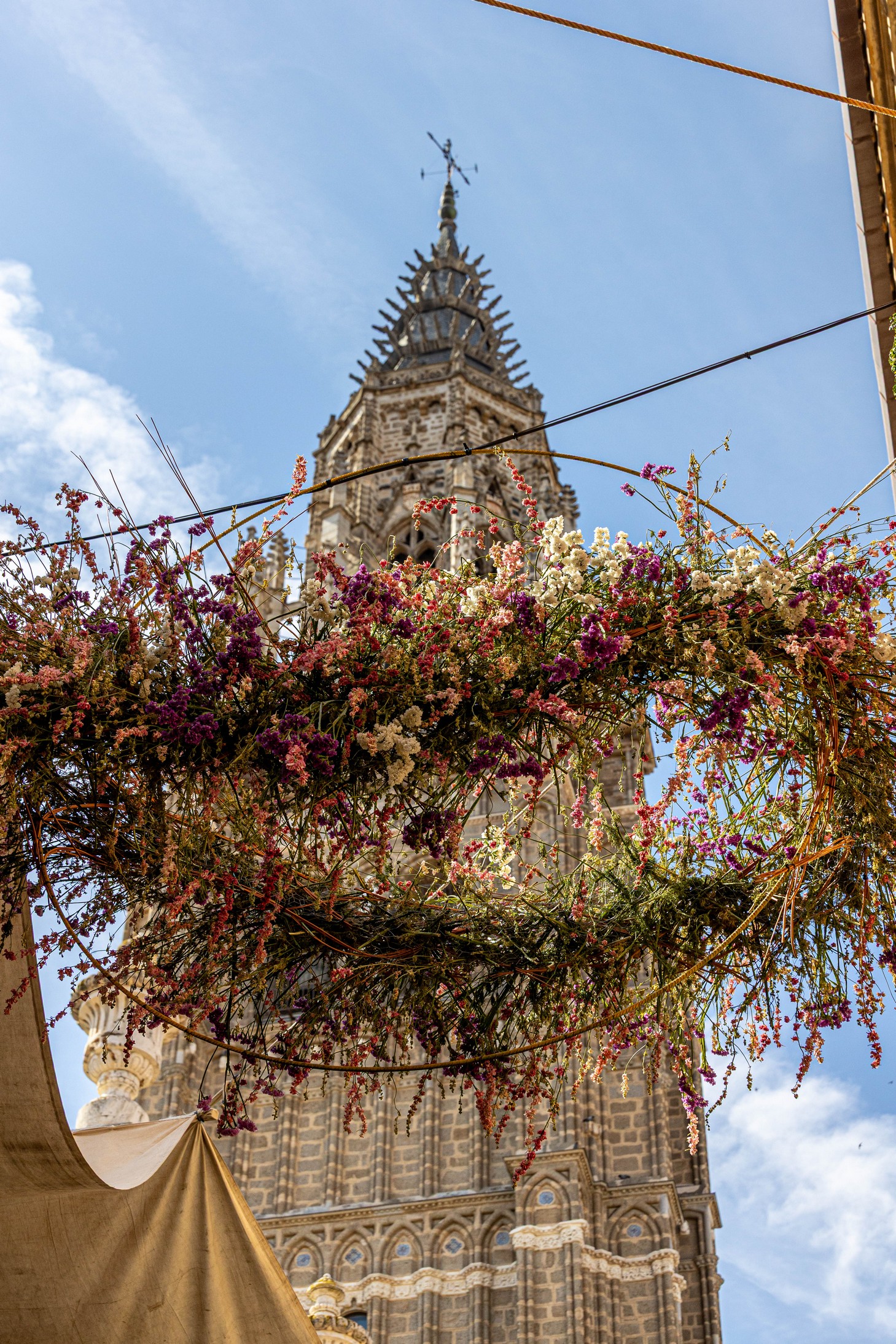

We bought tickets in the shop opposite the cathedral (10 euro each maybe) and then went inside. As expected for the capital of the Hapsburg Empire the cathedral was quite magnificent and it was celebrating it’s 800th anniversary so the cloisters couldn’t be visited unless you went into the exhibition, a separate ticket and only in Spanish. I visited the crypt and the sacristy as well as the cathedral itself but the tower is now closed to the public. We learned on the tour that the tower has the largest bell in Europe, 17 tons, and has only been rung once. When this happened the noise apparently broke every window in Toledo and was even heard in Madrid, 70km away.
Toledo Highlights Tour
It was now close to 11:30 so we met Carmen, our guide for a tour of Toledo. She gave us a brief history of the city – Roman foundations, Visigothic from 5th – 7th century, Moorish from 7th – 12th century when it was recaptured by the Christians in 1085 and became their capital until this was moved to Madrid in 1561 leading to a massive population decline but saving the medieval heritage of the city from redevelopment.
We wandered around the streets, thankful they were narrow and therefore shaded from the sun! We saw some traces of Visigothic and Arabic remains in the city and then visited the part of the Roman baths they have been able to excavate. This was a section of hypercaust, a part of the aqueduct pipeline and a small cistern but the rest of the baths remain buried under neighbouring houses. From the baths we walked into the Jewish area, a large element of the city for over a thousand years until being expelled in 1492. The area was marked with tiles embedded in the cobblestones and with wall plaques. We walked around the streets learning about various things such as the hidden streets where residents would block either end of the streets to stop homeless people sleeping there in the medieval period.

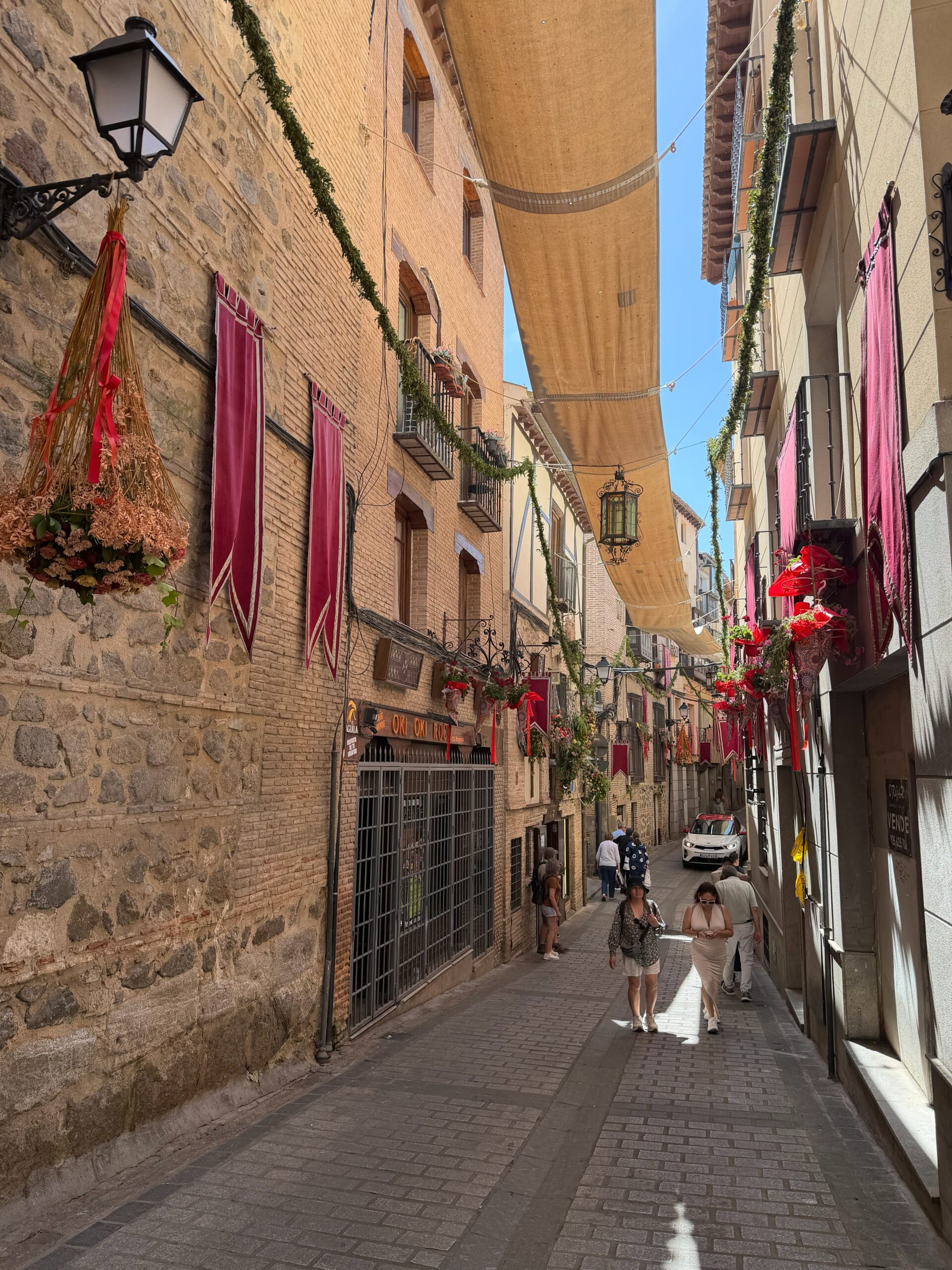
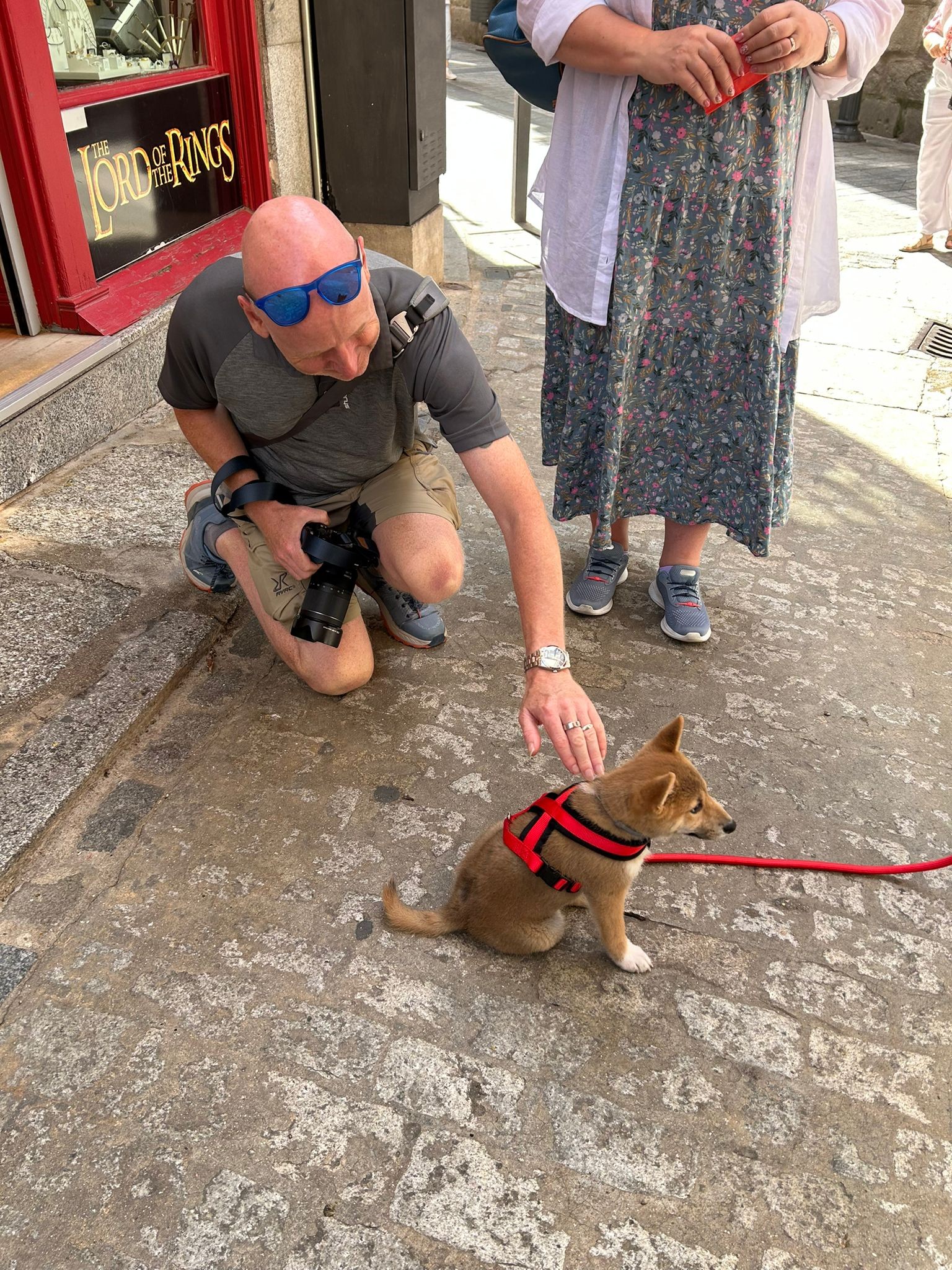

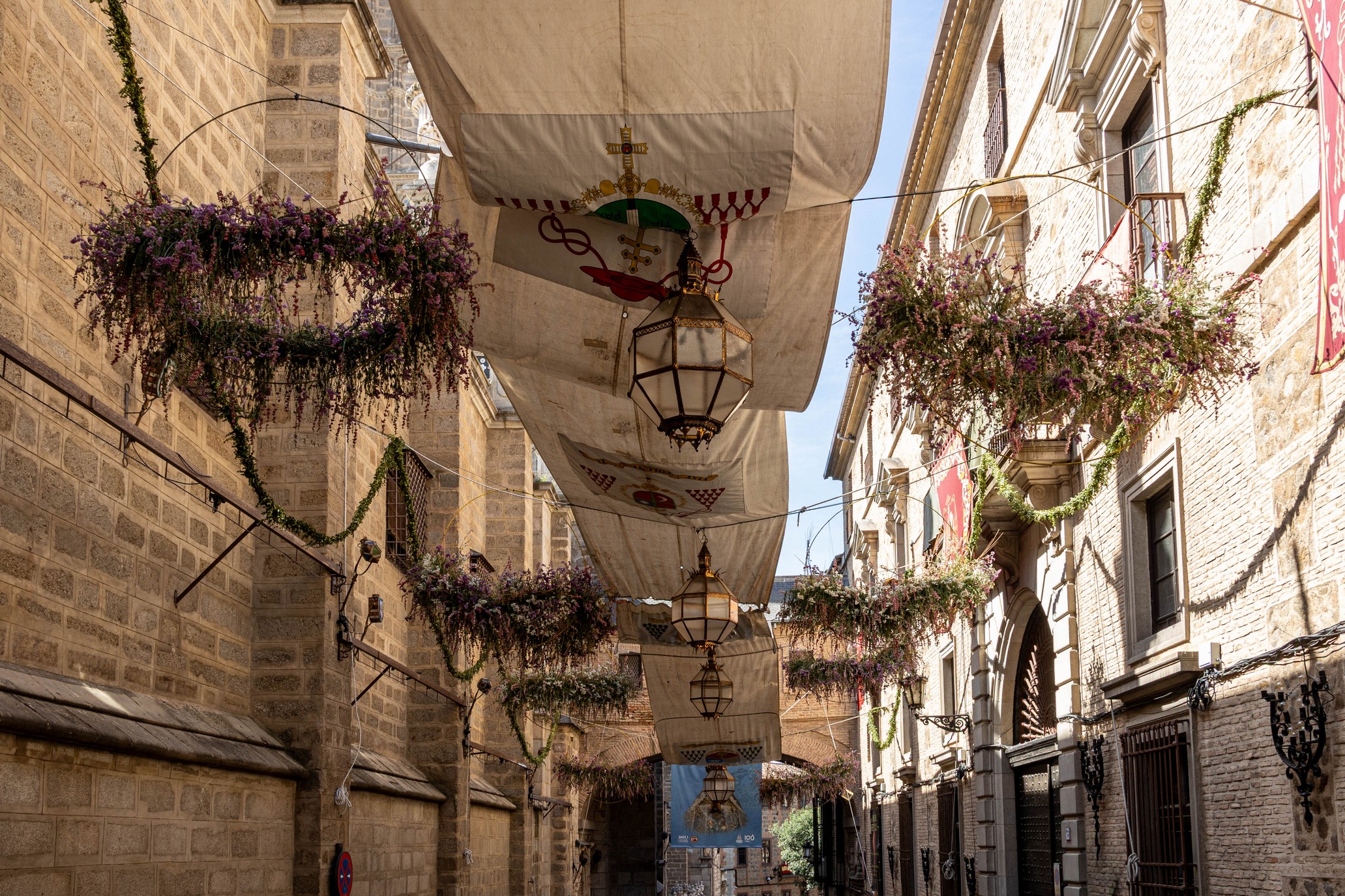
The tour finished back near the cathedral around 1PM, we’d covered a large area of the city and had information on various places to visit and eat. Carmen was an engaging and informative guide with an excellent grasp of English. We said goodbye to her and stopped for a light lunch before heading off to visit some of the places on our Toledo Tourist Wristband, a bargain at 14 euros for entry to 7 of the city’s attractions.
Iglesia del Salvador
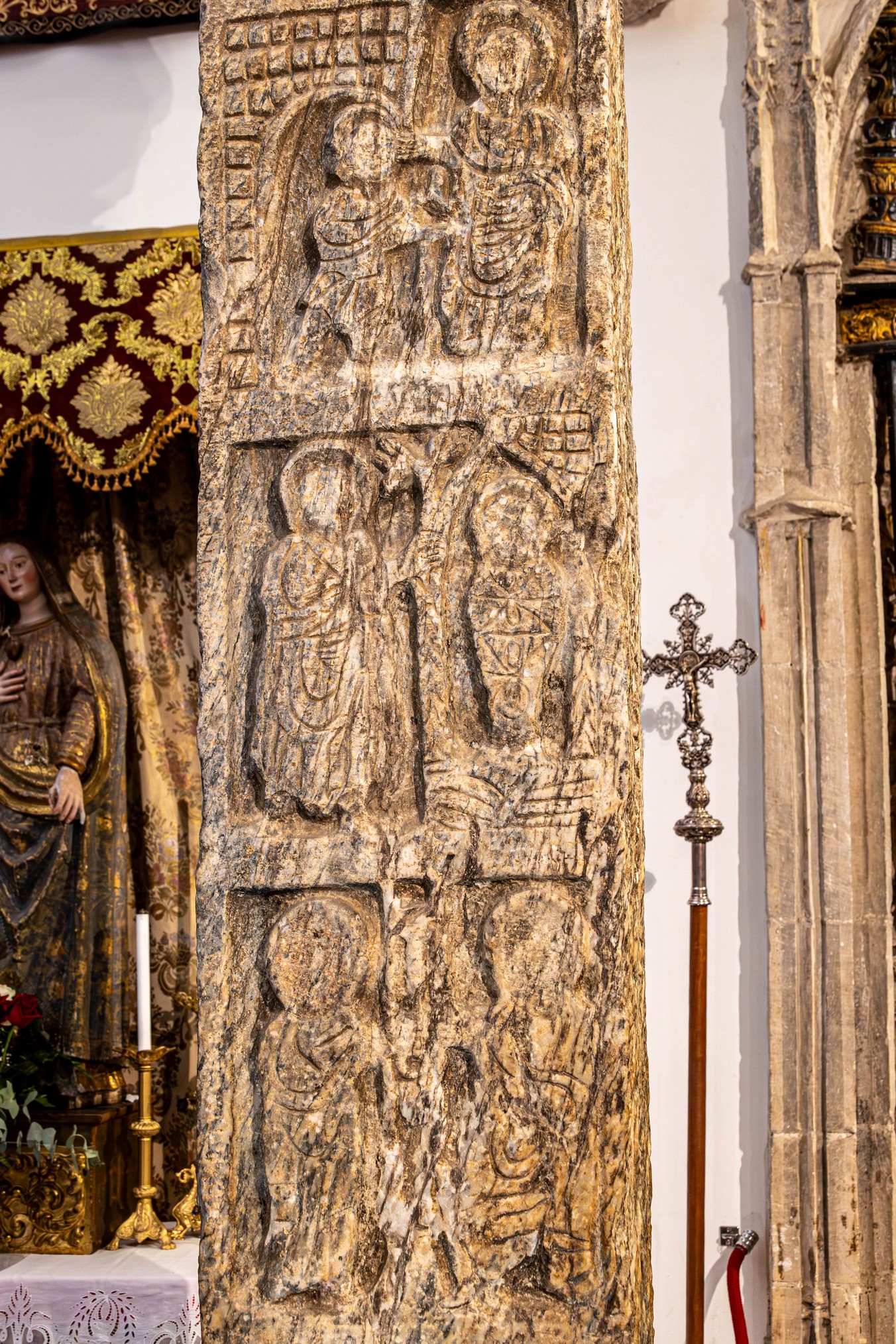
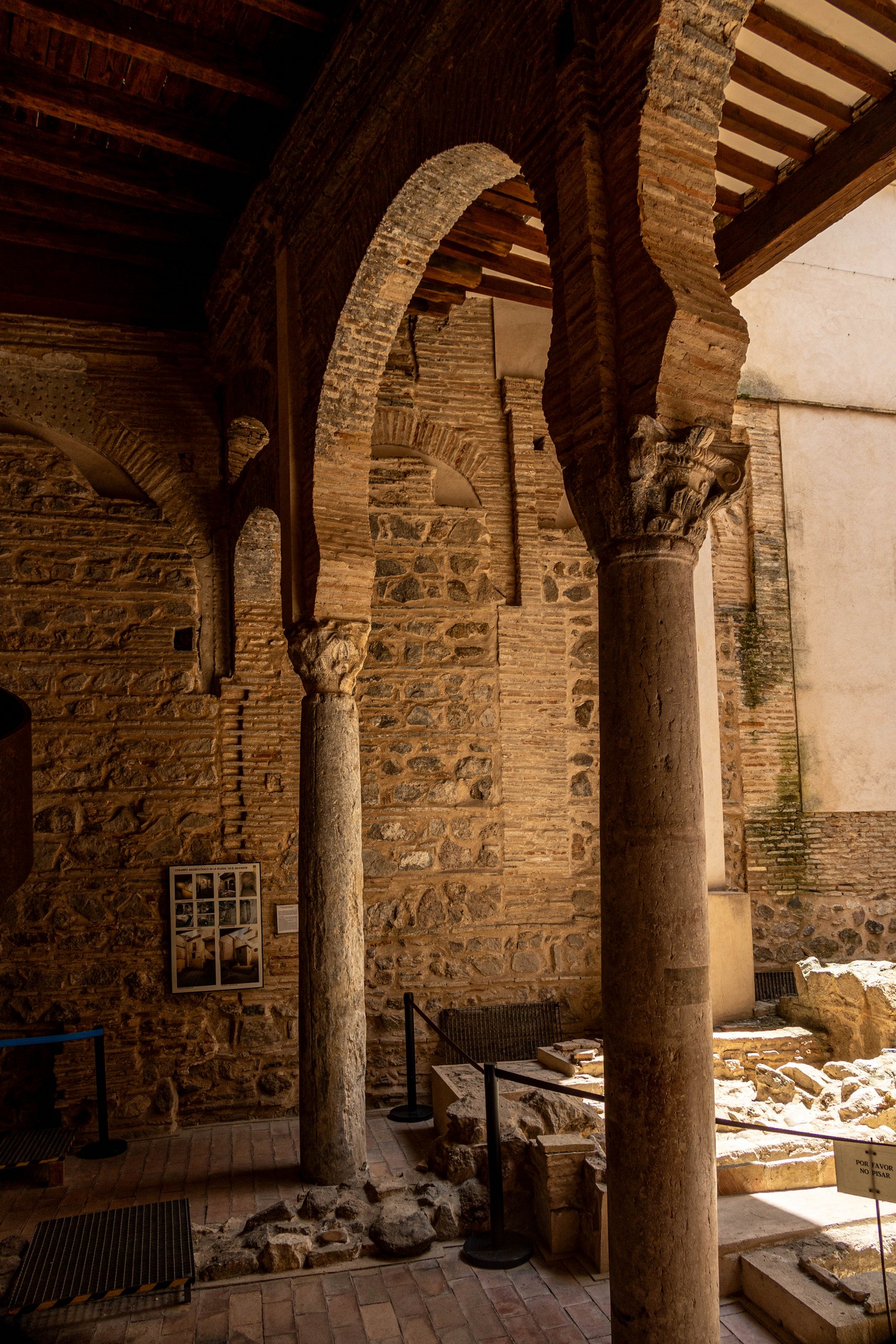
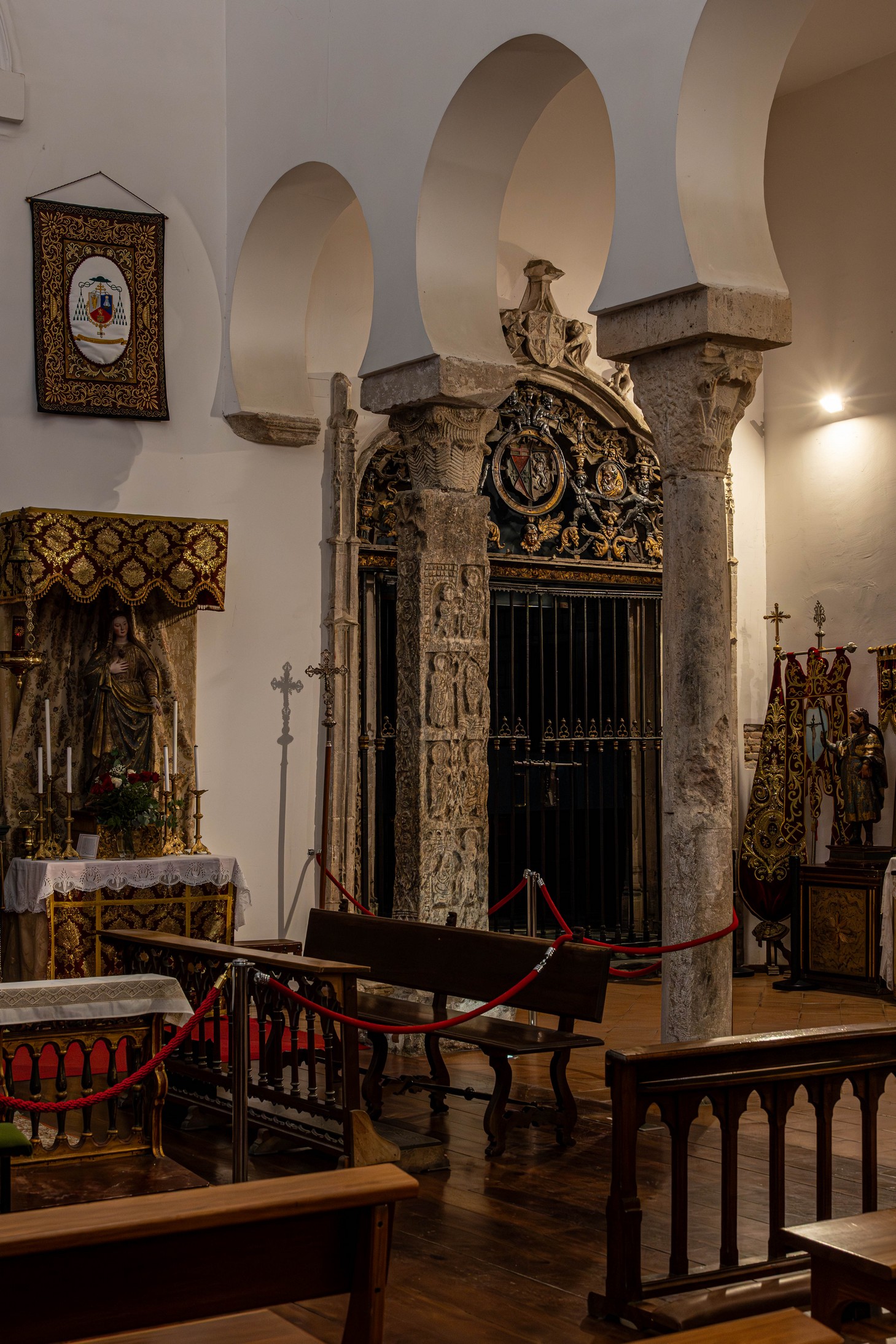
The first place we visited (we only managed 4 in the end) was Iglesia del Salvador, a 9th century mosque built using Visigothic and Roman materials. The Visigothic column was battered by 1500 years of history but was good to see and we climbed up the bell tower to look at the views too. There was also some Roman excavations and more Visigothic arches to see and restoration work is ongoing.
Sinagoga del Transito
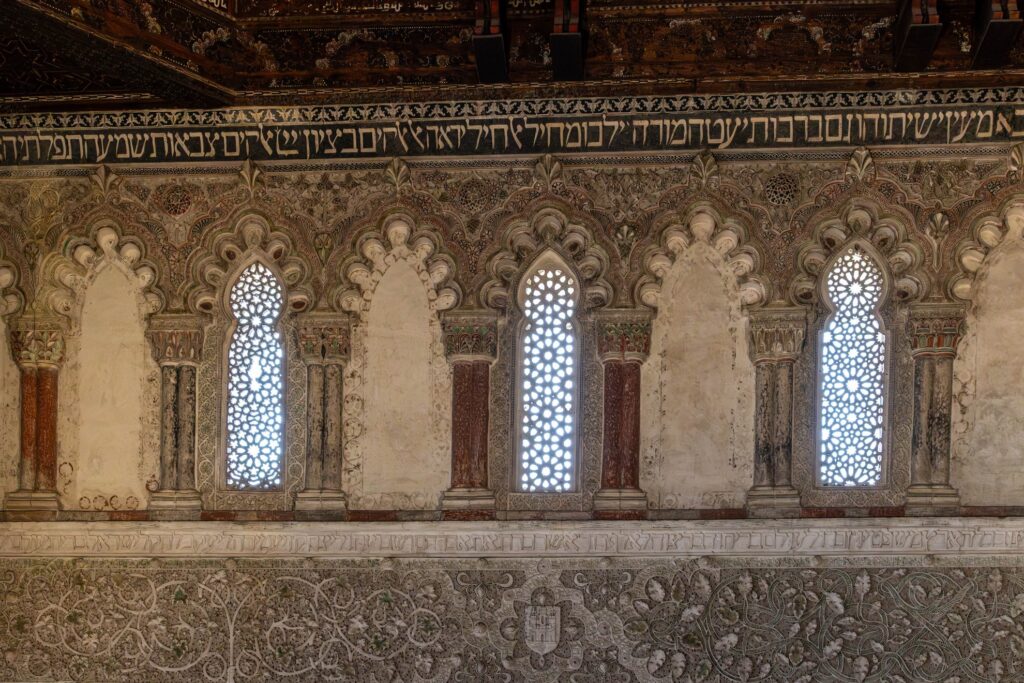
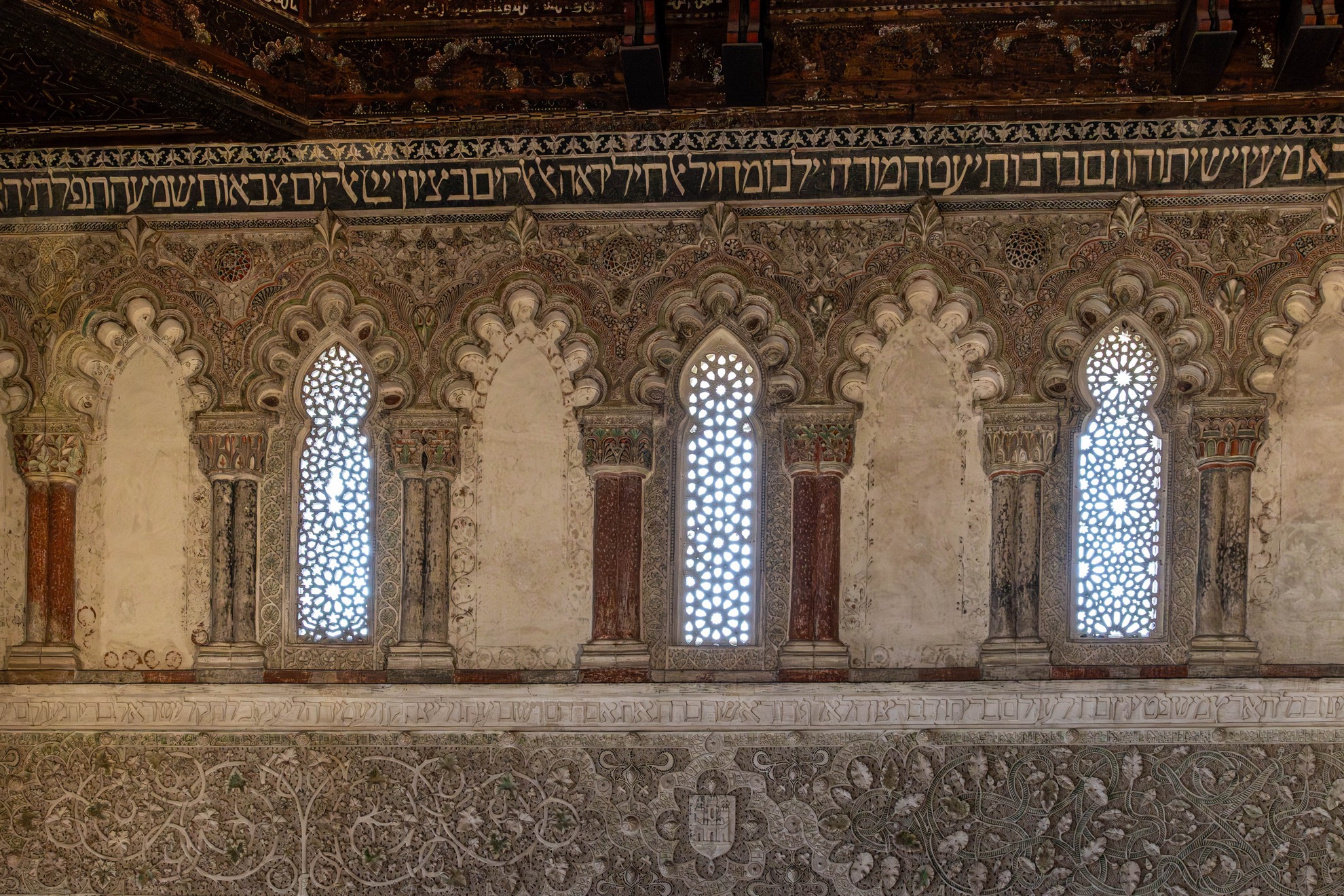
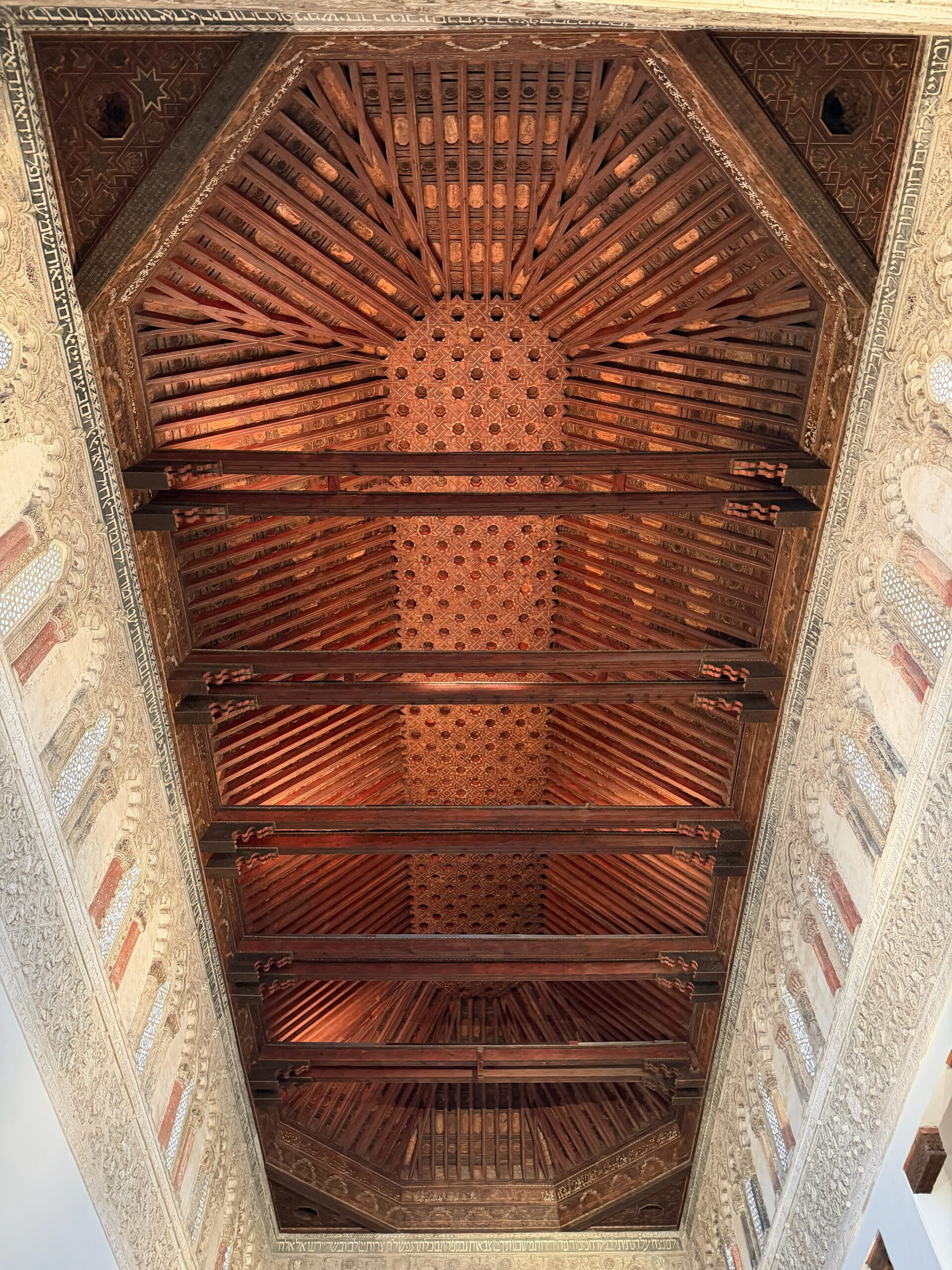
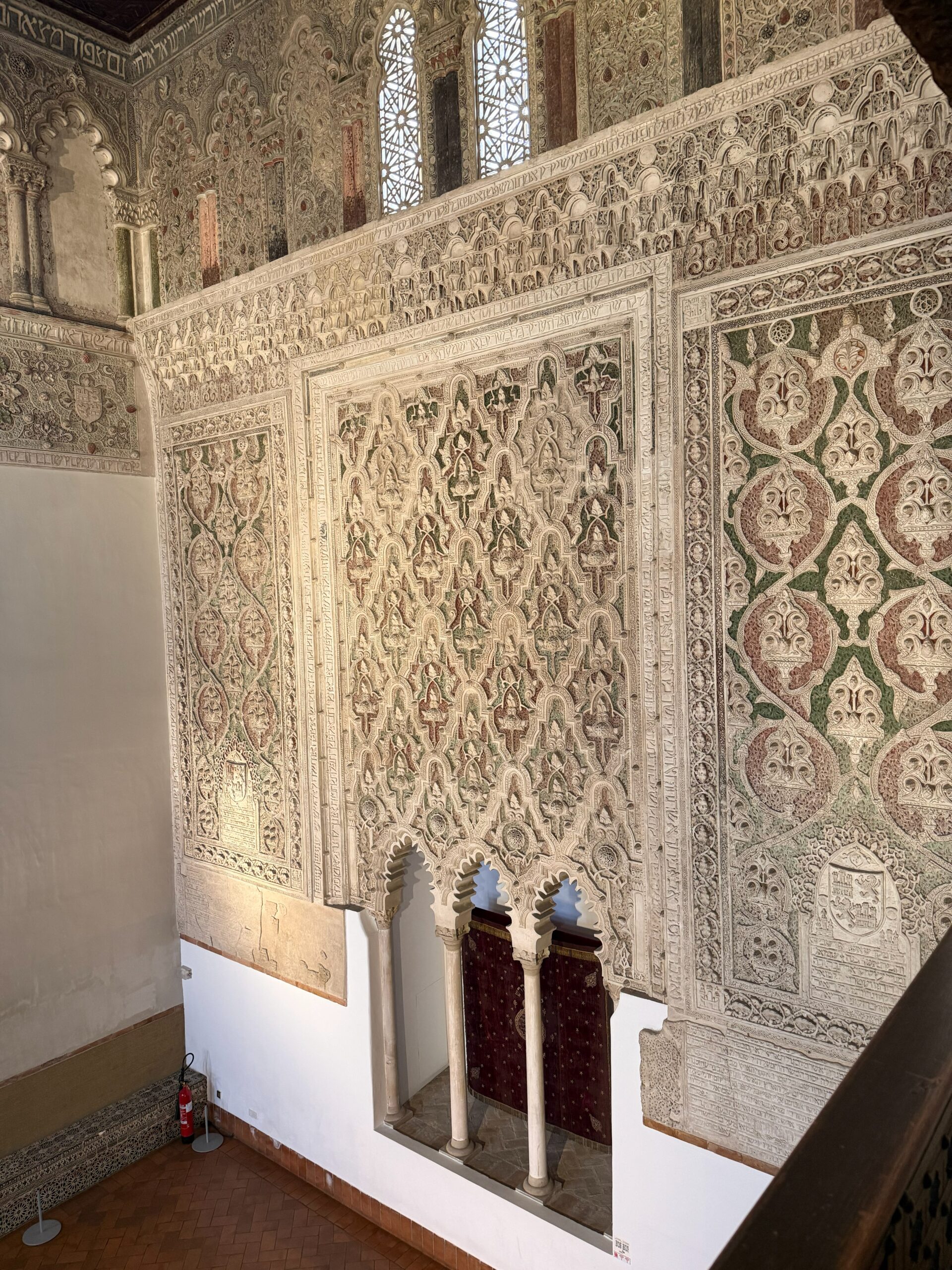
From the church we walked the short distance down the hill to the Sinagoga del Transito, not on our list but it housed the Sephardic Jews Museum so I wanted to see it. Entry was free on the day we visited so after the security checks we entered the main room and it was just breathtaking.
The museum was like a mini Alhambra with beautiful stone fretwork and Hebrew calligraphy. The museum was upstairs and it explained the history of the Jewish religion (occupying Israel for around 3000 years in various states of subjugation), Jewish holidays and customs and the history of the Jews in Spain. In the medieval period the Jews occupied important roles as doctors, philosophers, merchants, bankers and scientists as well as administrators and held important positions under both Muslim and Christian rulers until 1492.
In 1492 the Catholic Monarchs ordered the expulsion or conversion of all Jews and Moslems in their territories and then formed the Inquisition, ostensibly to ensure those ‘conversions’ were genuine. Most of the Jews expelled from Spain fled to Morocco or the Ottoman Empire.

Santa Maria La Blanca
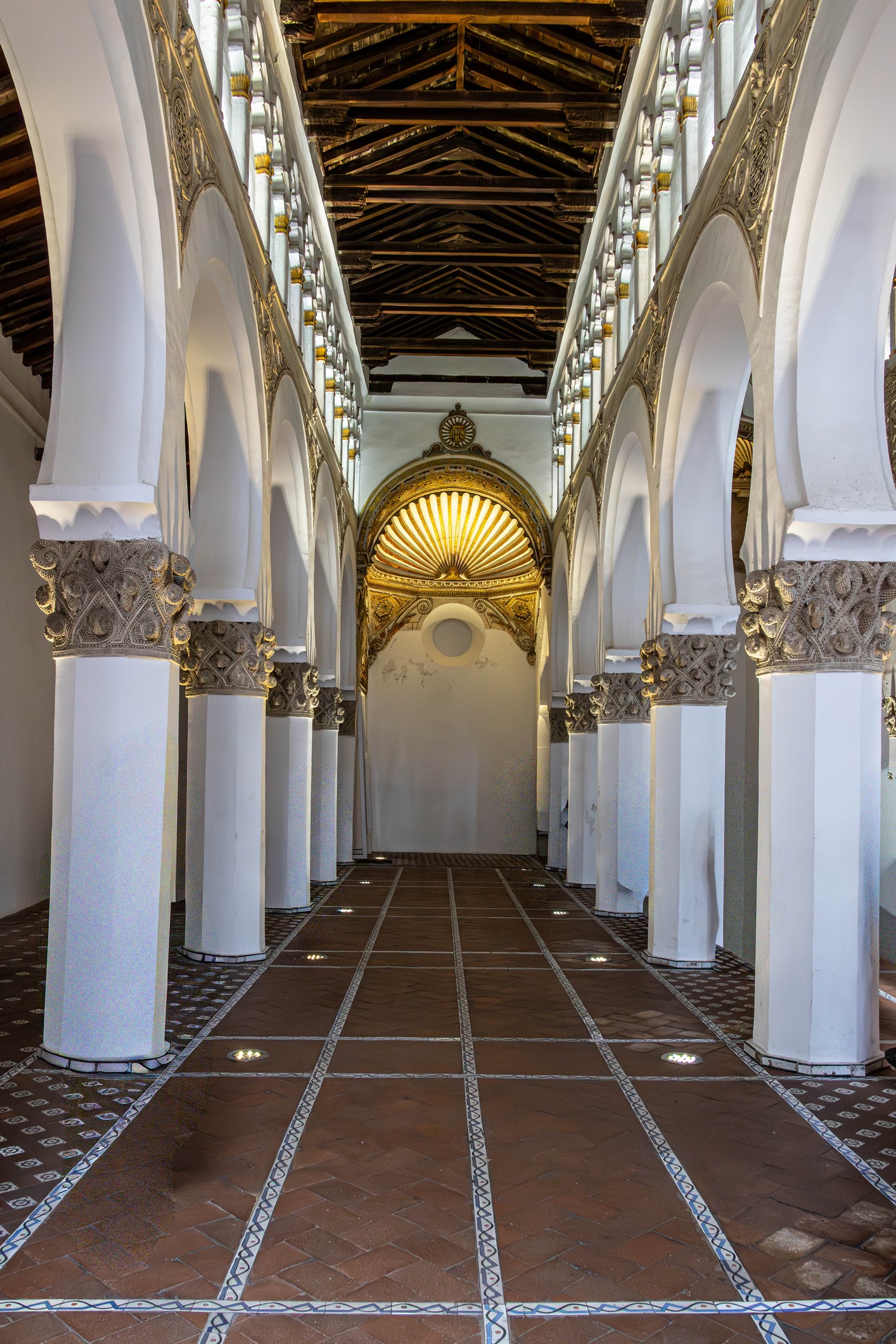
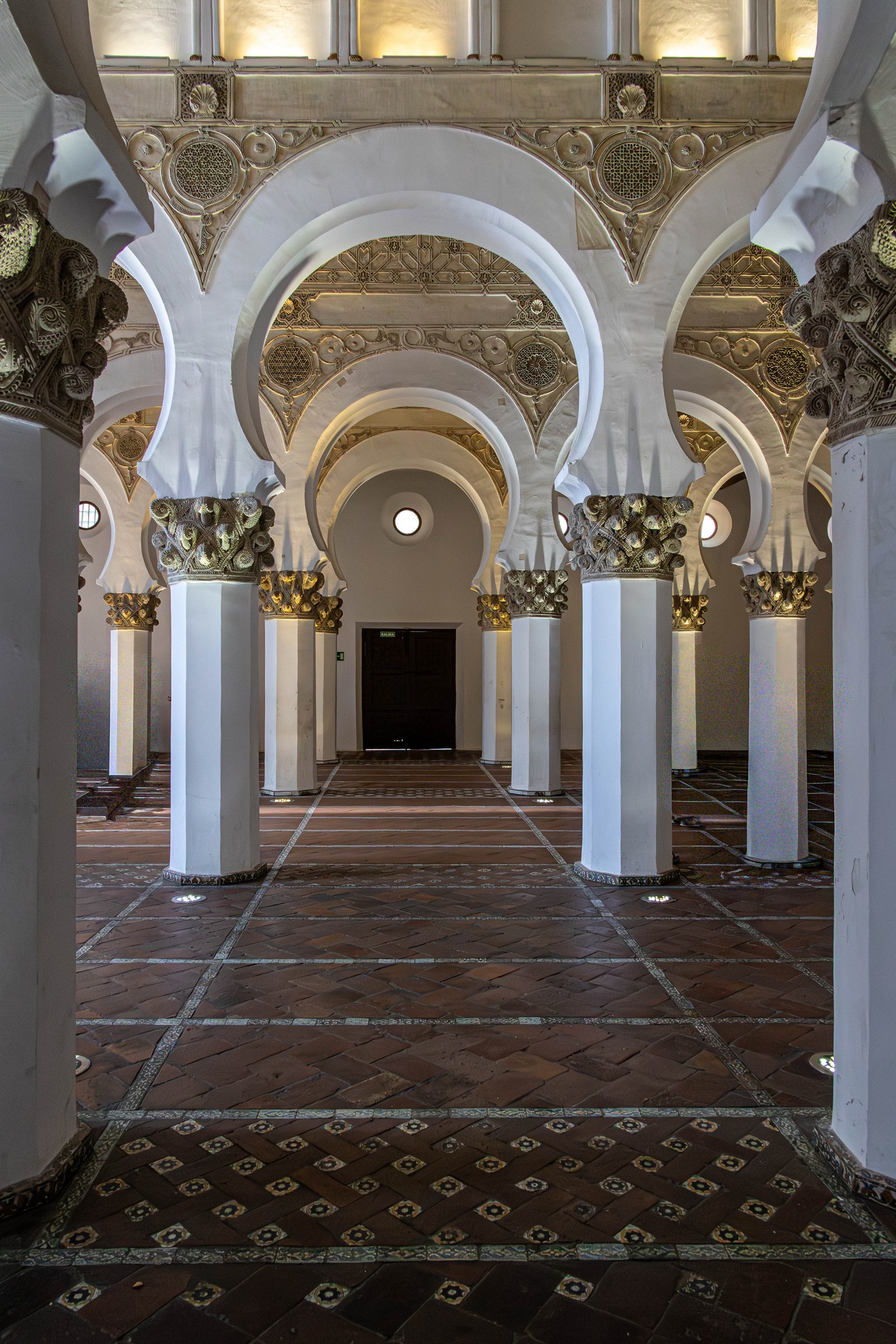
After that influx of learning we crossed the road and sat and had an ice cream as we were out of the maze of shadowy streets now so the sun was more noticeable. Our next stop was the main synagogue of Toledo, Santa Maria La Blanca (actually the name of the church it was converted into after the Jews had been expelled). This was another stunning building, again in the Mudejar style and like a mini Cordoba mosque with rows of Visigothic horseshoe columns giving the room simple, symmetric beauty. We didn’t spend a huge amount of time but it was well worth a visit despite the security checks again due to the rise of antisemitism in Europe, again. We did spend a while in the shop though!
Monastery of San Juan de los Reyes
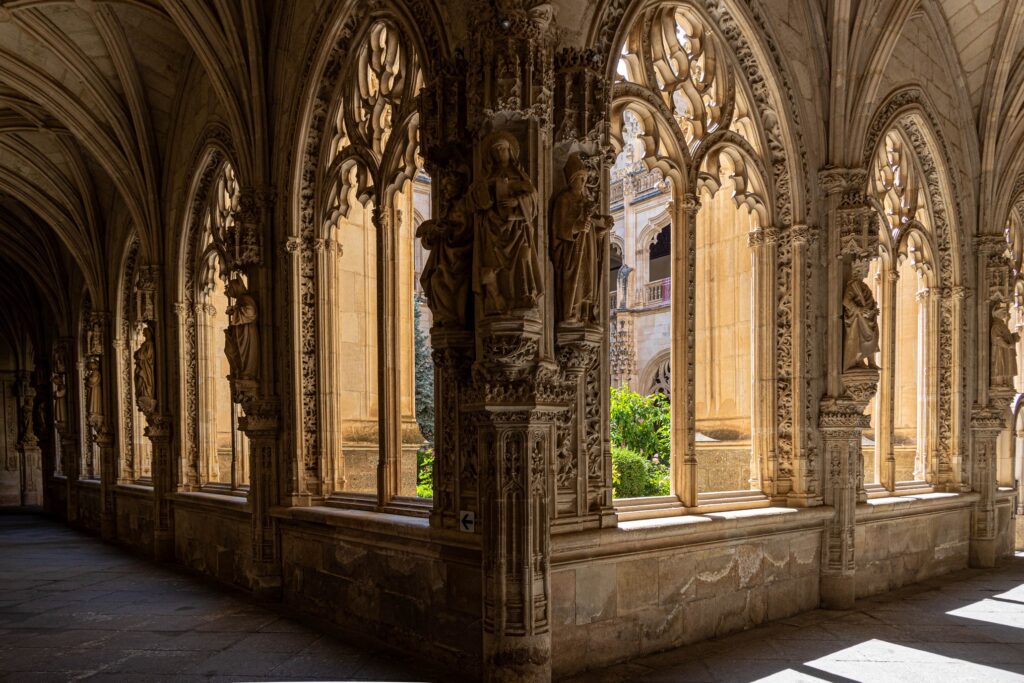
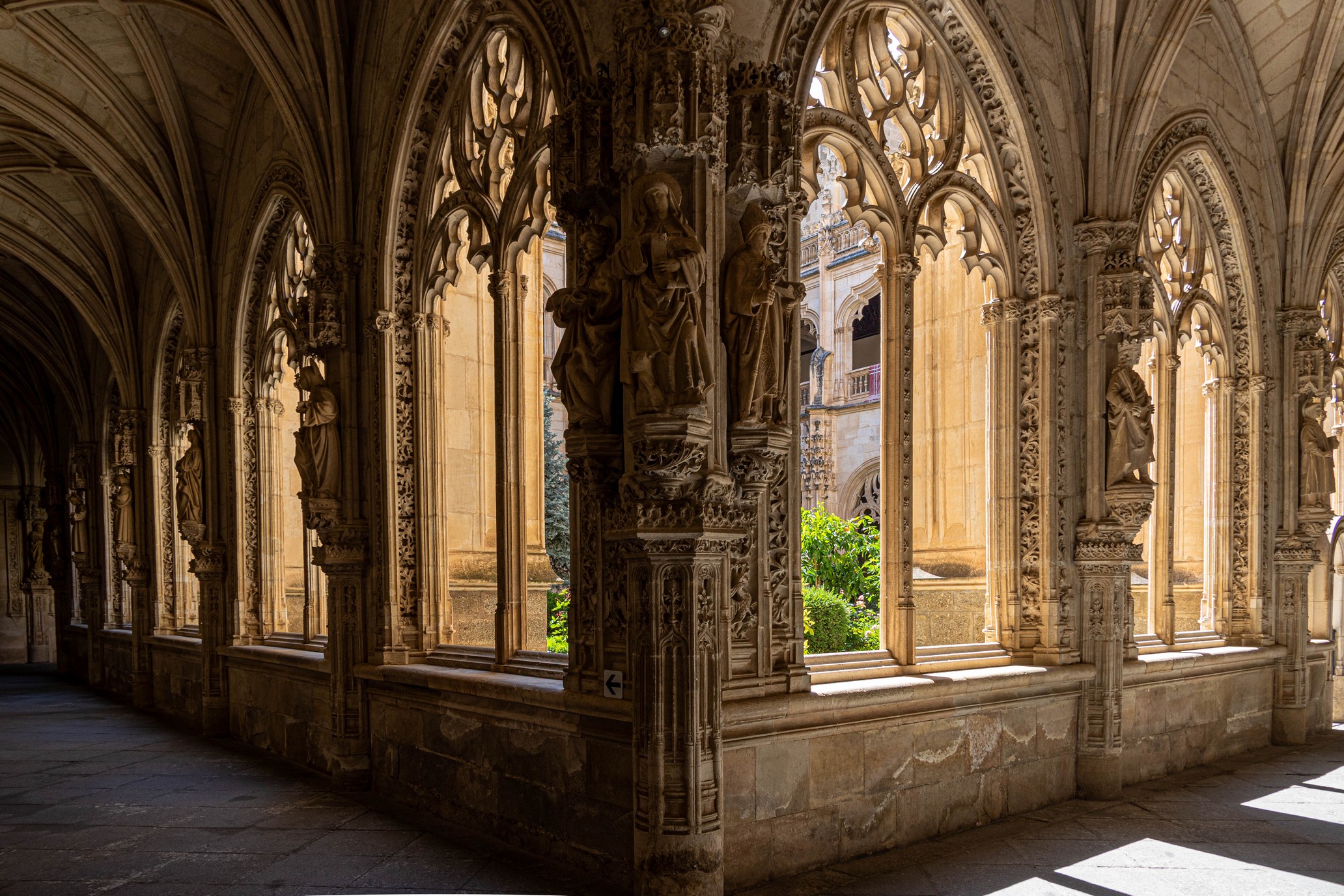
The final stop on today’s Toledo Tourist Wristband tour was the Monastery of San Juan de los Reyes, built to celebrate the Catholic Monarchs political victory at the Battle of Toro against the Portugese and rebel Castillian nobles. The monastery visit consisted of two levels of cloisters and a hall with murals.
The cloisters were beautiful, gothic structures on the ground floor and the upper floor has wonderful wooden ceilings. They both surround a pretty garden and were a lovely end to the day.
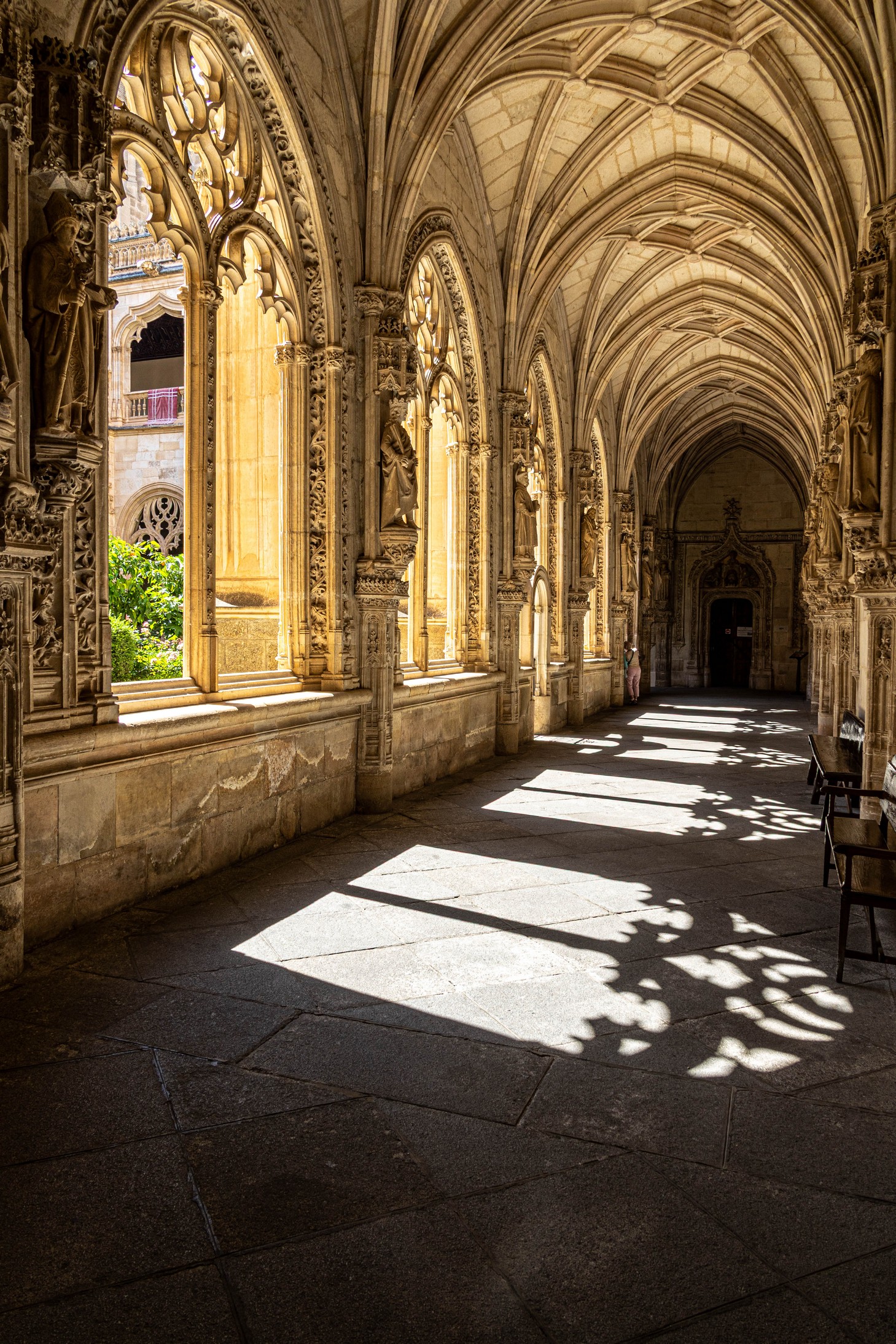
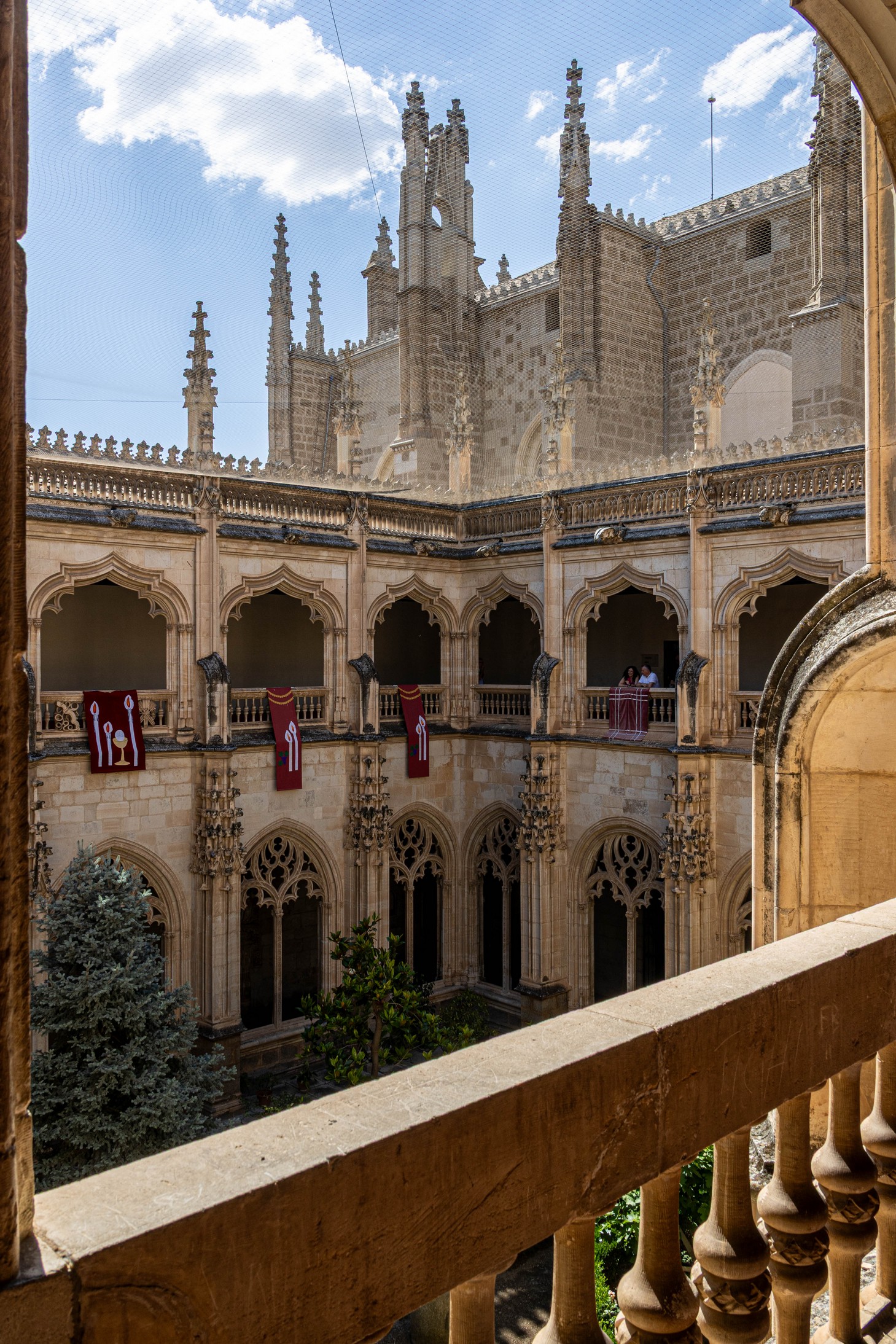
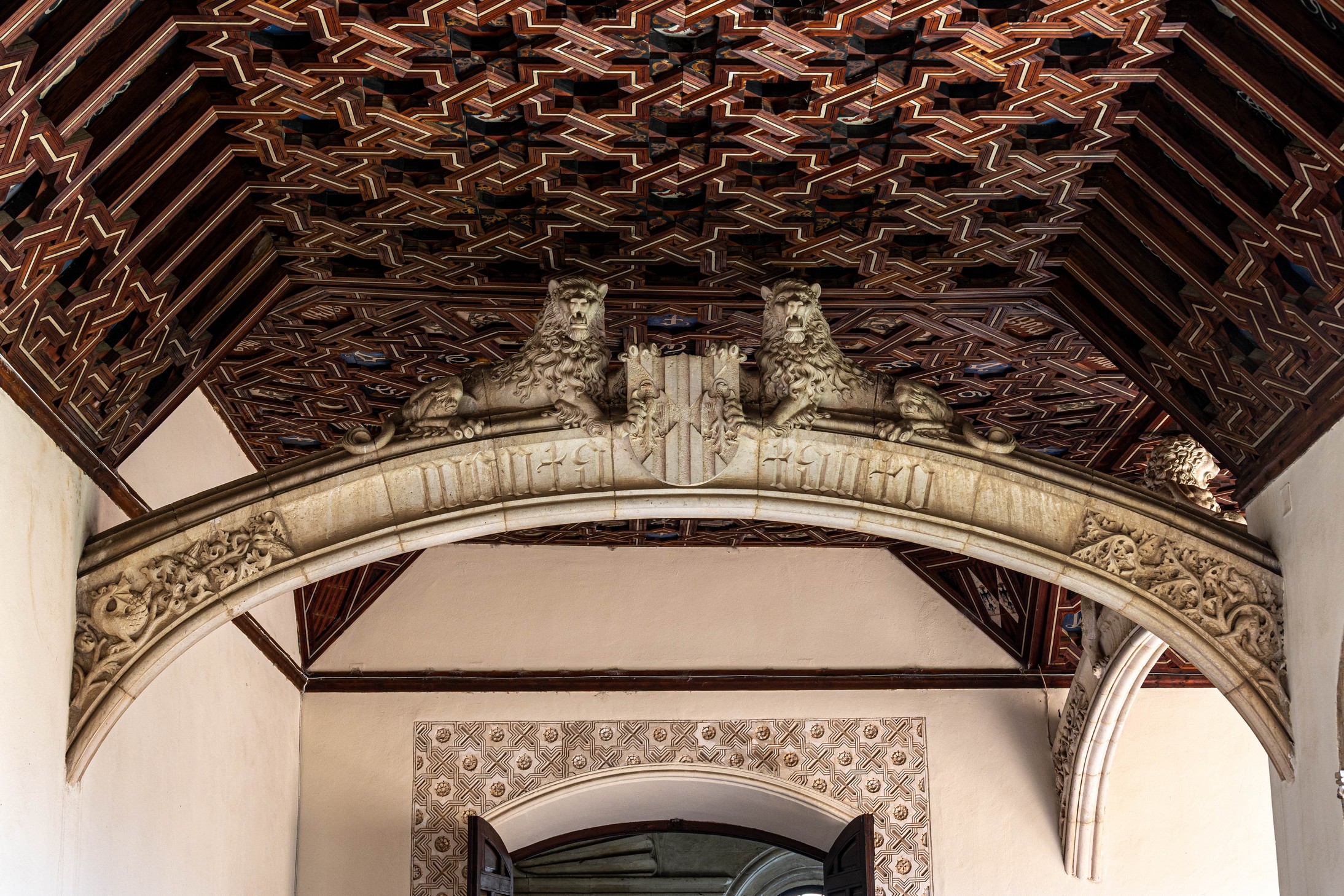
We used Bolt to get our taxi back to the Parador, a fabulous app which I always enjoy using. I started to do the notes from the day’s activities then decided a shower was probably more sensible. Deb had a nap and we met Mum for a late dinner snack (just desserts actually) at 8PM. Another long day but some amazing sights and lots of walking round this fascinating city. There is certainly plenty to see and do and I’d like to return in winter when the weather is cool enough to do a circuit of the walls without combusting.
Tourist Train
After another waistline expanding breakfast the next morning we took a Bolt to the city centre and then walked the short distance to the tourist train, a bargain at 10 euros each. It did take a while to find where the pickup was as the website didn’t offer much help other than a general location but luckily we saw the train finishing a route and followed it!
The weather was cooler than the day before and we had to wait 30 minutes for the train to leave but we chose that option as it did a complete circuit of the town and included a short stop at a mirador for panoramic views. I hadn’t taken into account the cobbled streets in the city so I doubt any of the photos will be useable but the commentary gave us a good overview of the city’s history and key buildings as well as some interesting legends. The circuit also helped give an appreciation of the site the city was built on, surrounded by the river on 3 sides.

Alcazar
The end point for the tour was where it started it, next to the Alcazar car park and a few minutes walk from the Alcazar entrance. The Alcazar was originally a Roman then Visigothic palace, situated on the highest hill in the city. The Arabs converted it to a fortress (hence Al Qasar – the fortress) and it was expanded by various Christian kings after the reconquest. It suffered numerous fires and restorations until the siege in the Spanish Civil War almost entirely destroyed the building. It was reconstructed in the Franco era and now holds the Castille La Mancha library and the National Army Museum. It was the latter that we intended to visit.
Entry to the Alcazar was 5 euros and we spent 4 hours there, including lunch, and I think we’d seen about half of it. Outside there was a T26 tank and a variety of artillery pieces set in a beautiful garden terrace. There was a fascinating temporary display of the Spanish in the Americas. Some of it was certainly cherry picking as far as only mentioning military successes but there was a lot I wasn’t aware of such as the Spanish capture of Florida from the British in the American War of Independence and the Spanish paying the French and American armies wages at Yorktown. It was also interesting to read about the Spanish exploration and colonisation of what are now California, New Mexico, Arizona, Texas, Nevada, Utah, Colorado and Louisiana.

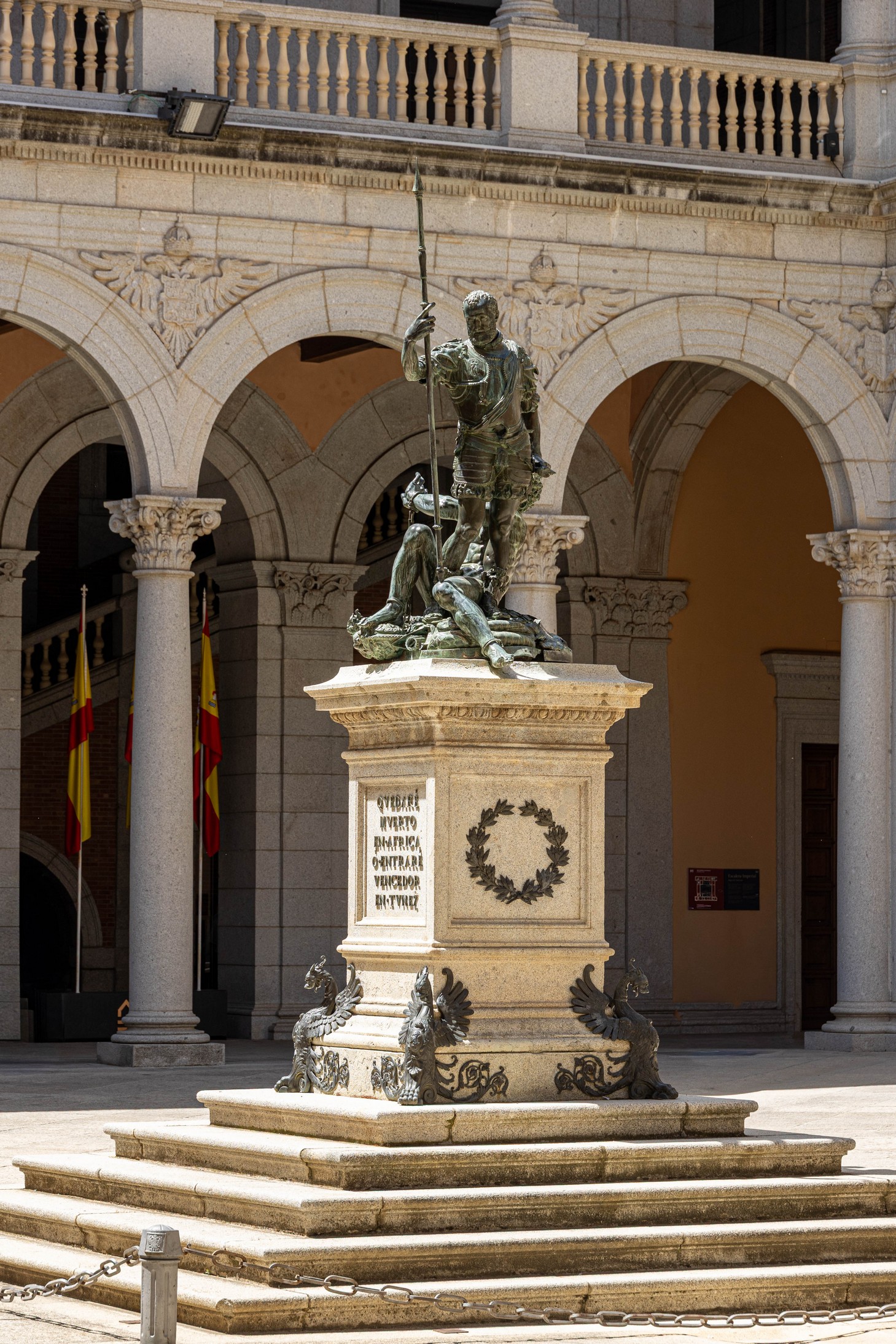
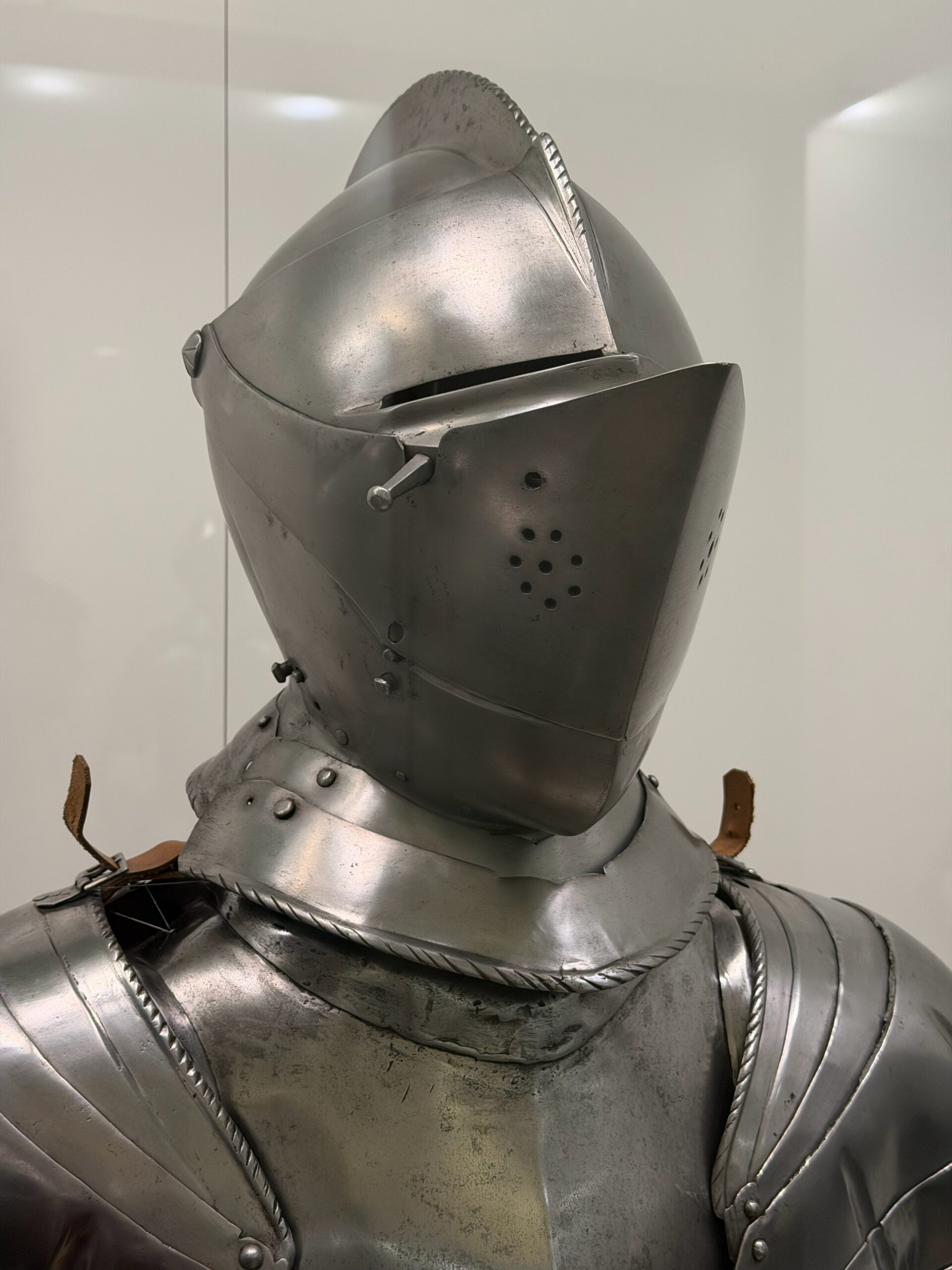


The permanent exhibition started with the first Spanish national armies of around the 16th century. There were some amazing suits of armour for both men and horses. The exhibition continued with the development of combined arms units (pike and musket) and then the organisation of the army and how it influenced the organisation of the state itself. There were sections on military engineering, artillery, arms industries (Toledo steel is famous worldwide) and a history of Spanish military campaigns up until the 1880s including the three Carlist civil wars. I think we could easily go back and spend another few hours on seeing the bits we missed but we were certainly suffering information overload by the time we left.
Christo de la Luz
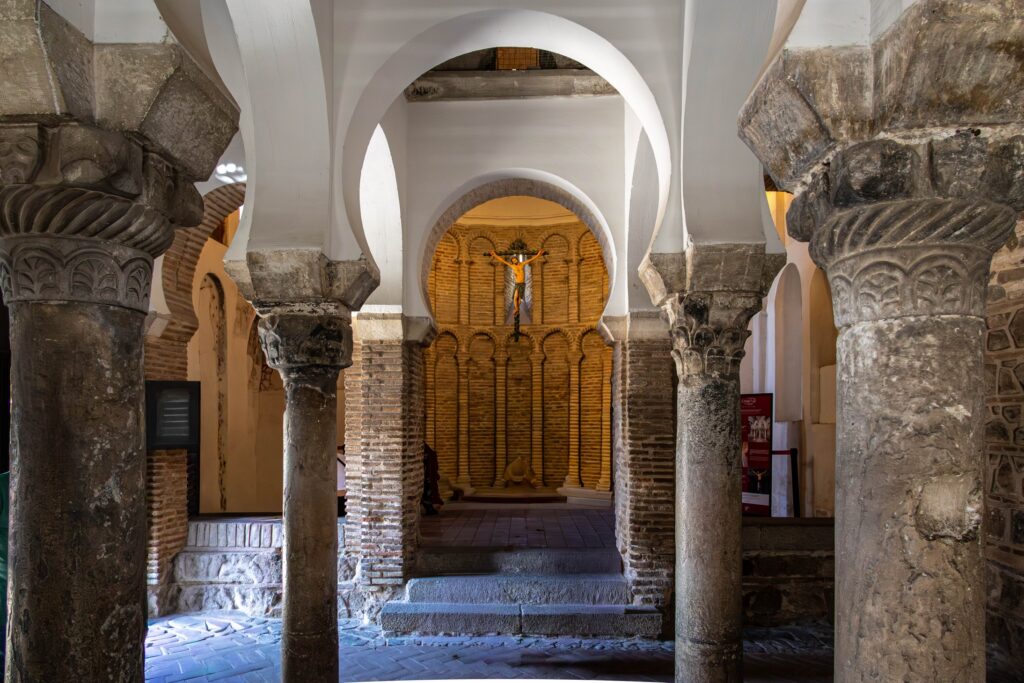
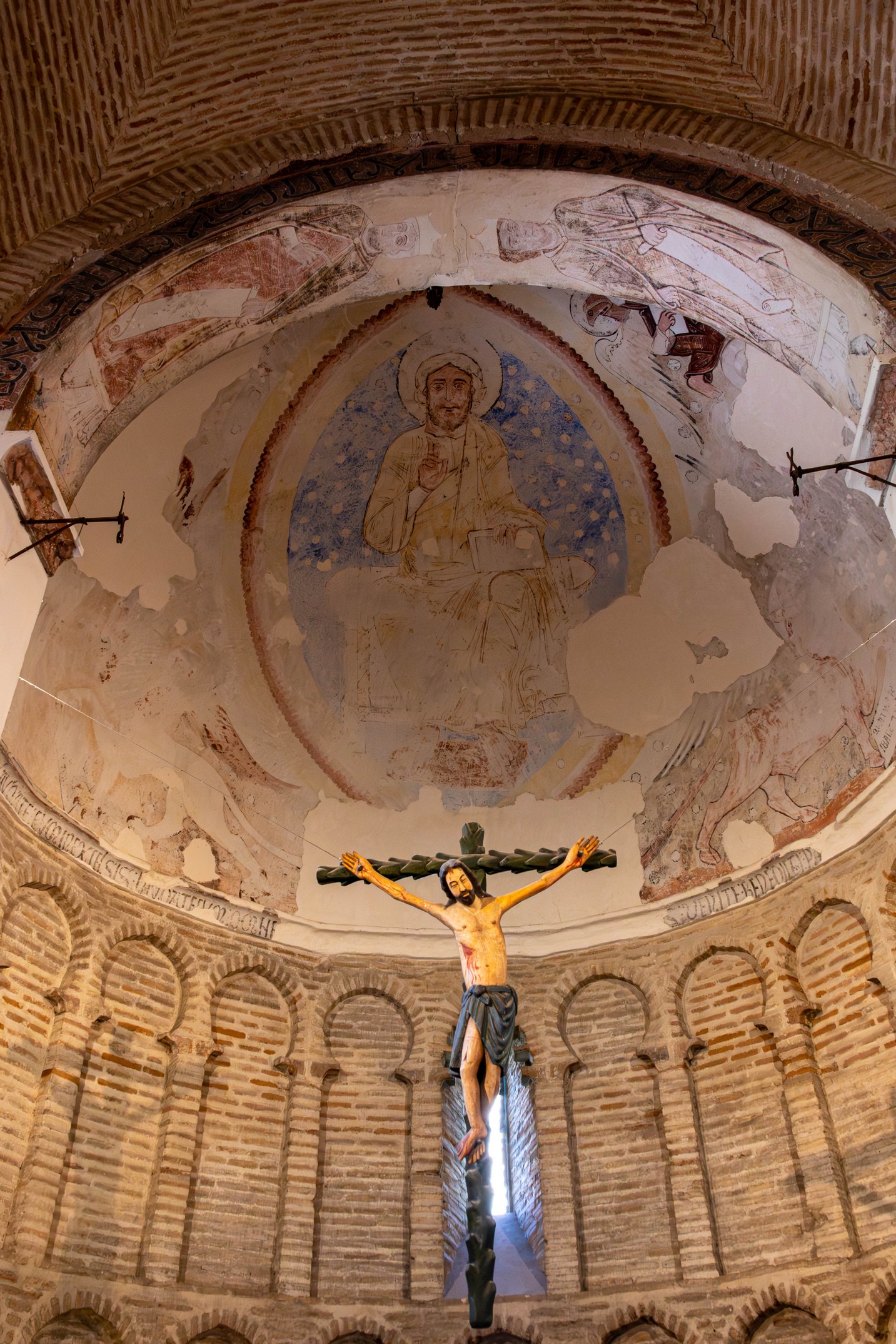
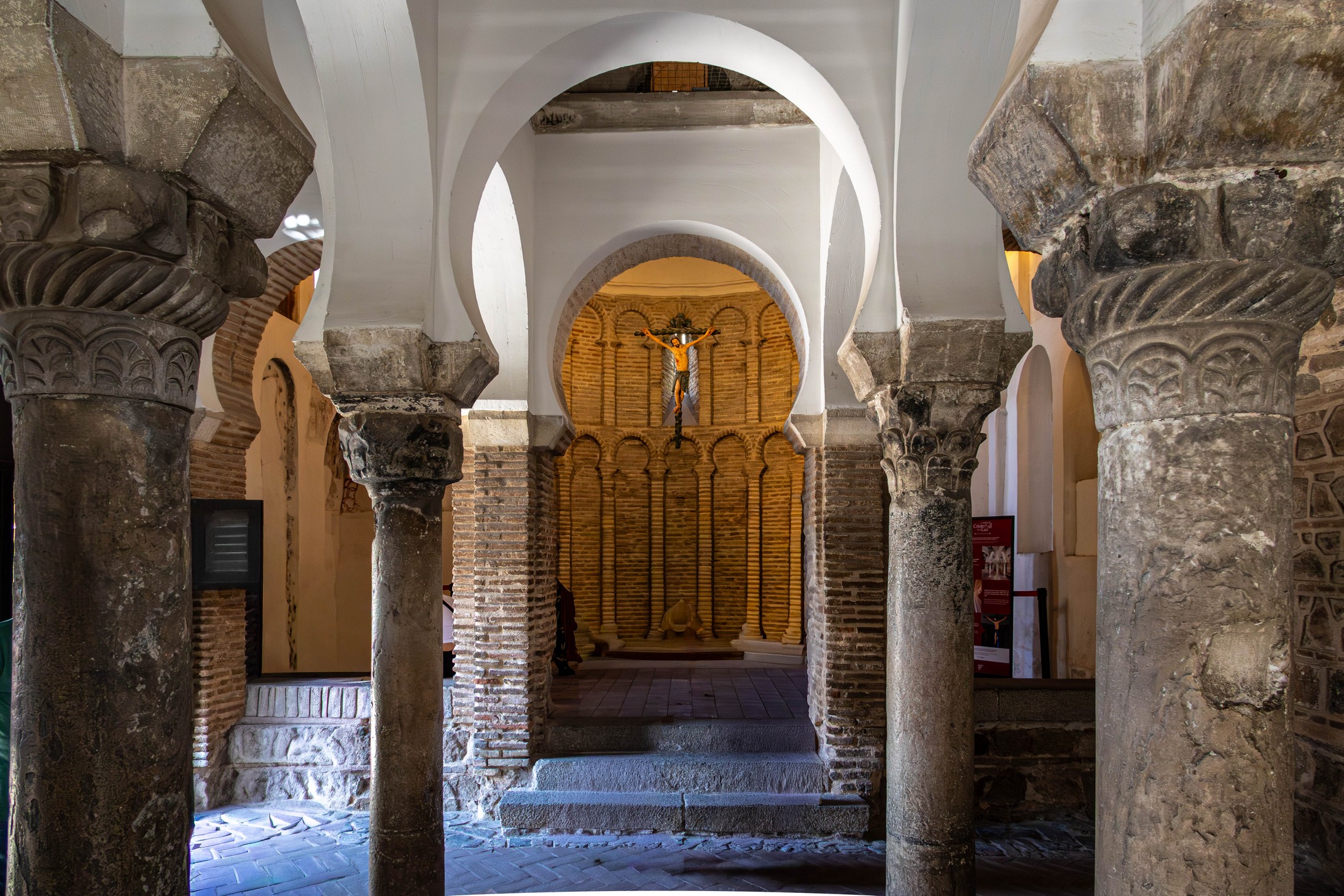
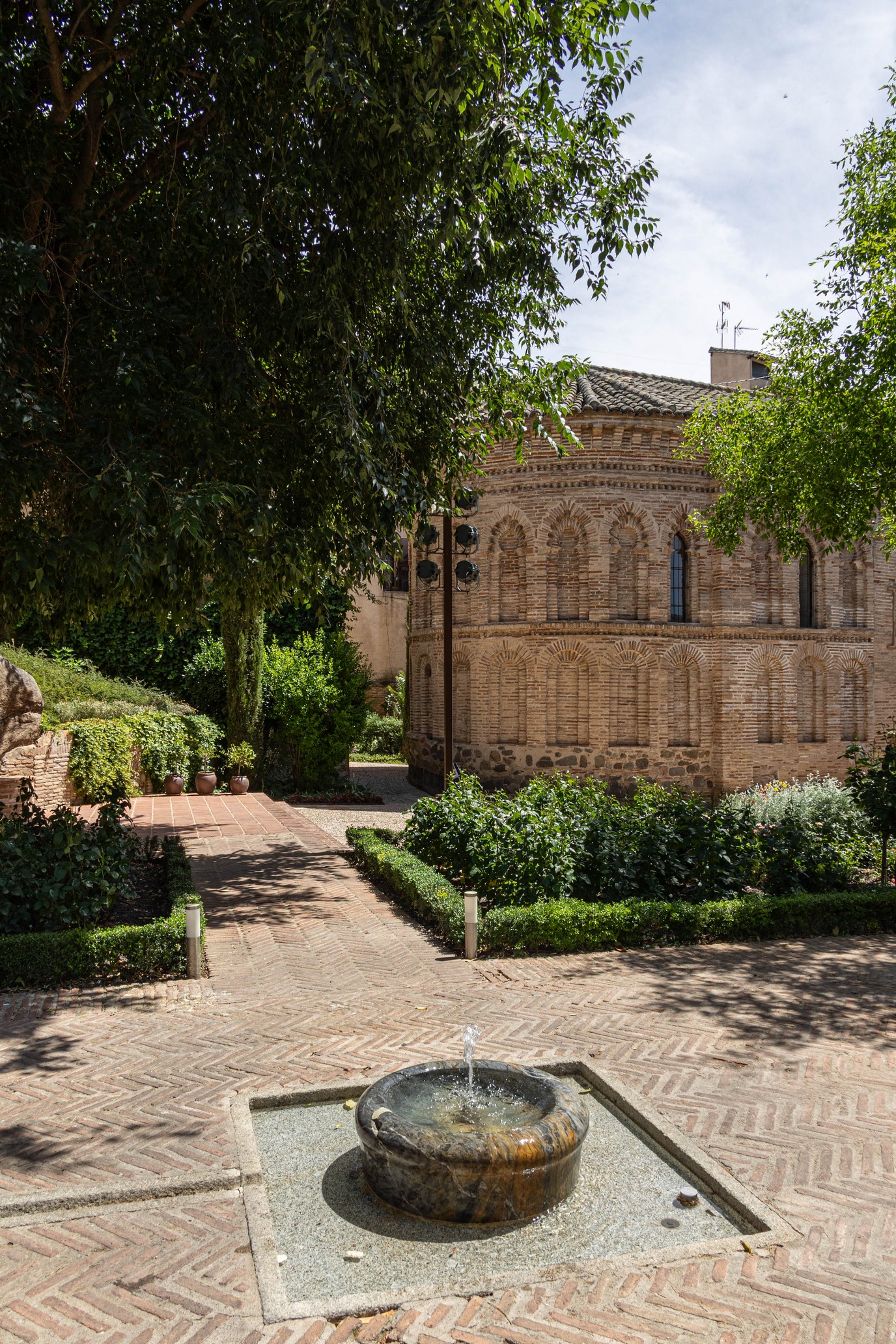
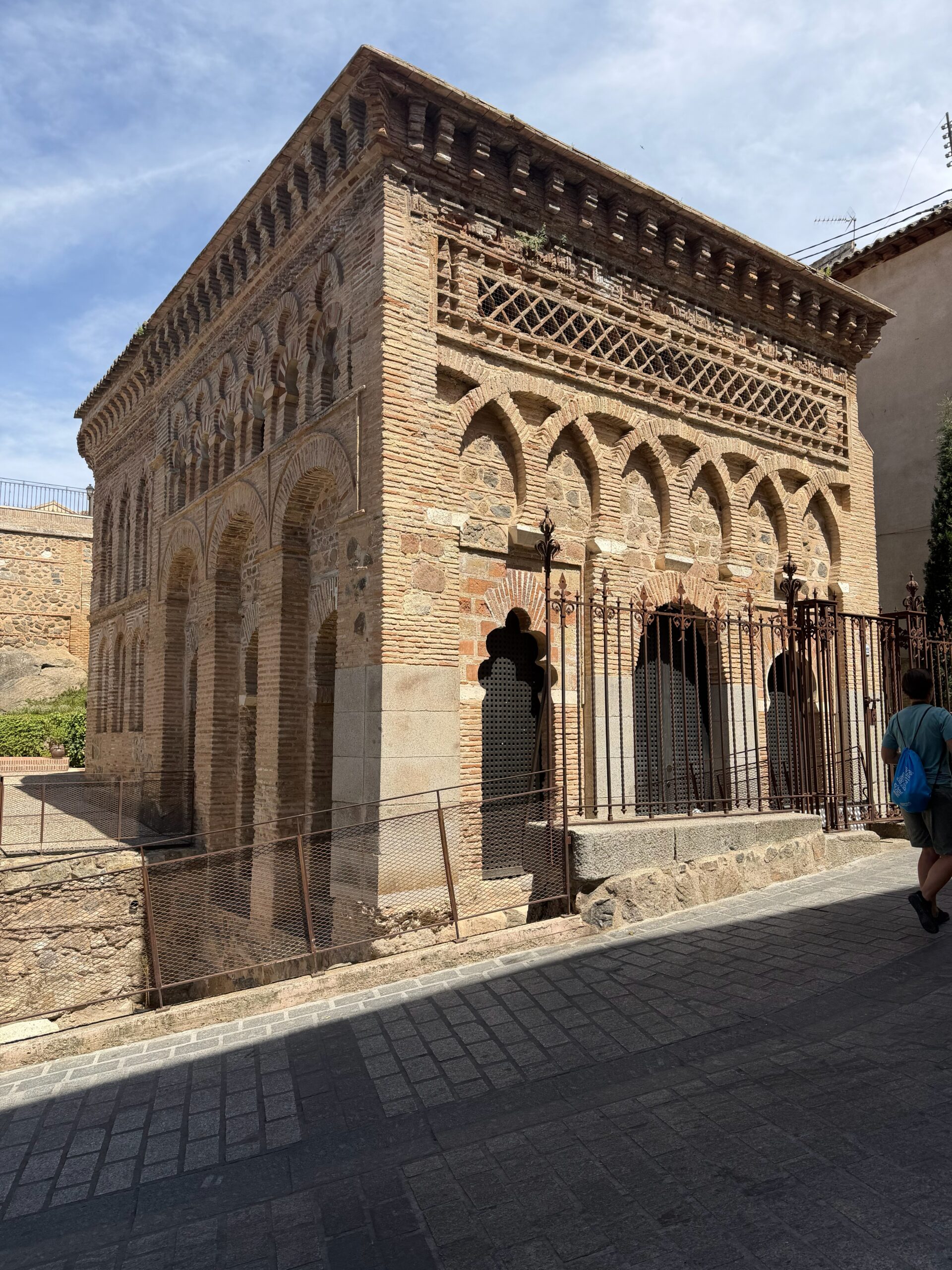
We were intending to visit Iglesia de los Jesuitas, mostly for the views form the bell tower, but frankly it was too hot and we were just exhausted from absorbing, temporarily, so much information. We walked the short distance to the converted mosque of Christo de la Luz, a small but beautiful building with the usual Visigothic horseshoe arches inside and an added Christian apse with a Christ the Pantocrator fresco.
This fresco confused me at first as the halo and hair had all faded and looked more like a turban which made me think it was a blasphemous image of Muhammed! The gardens at the church were very pretty, with rose bushes and a small fountain and there were also views over the Gate of the Sun and the main entry to the city in medieval times, the Gate of Bisagra.
Bisagra Gate
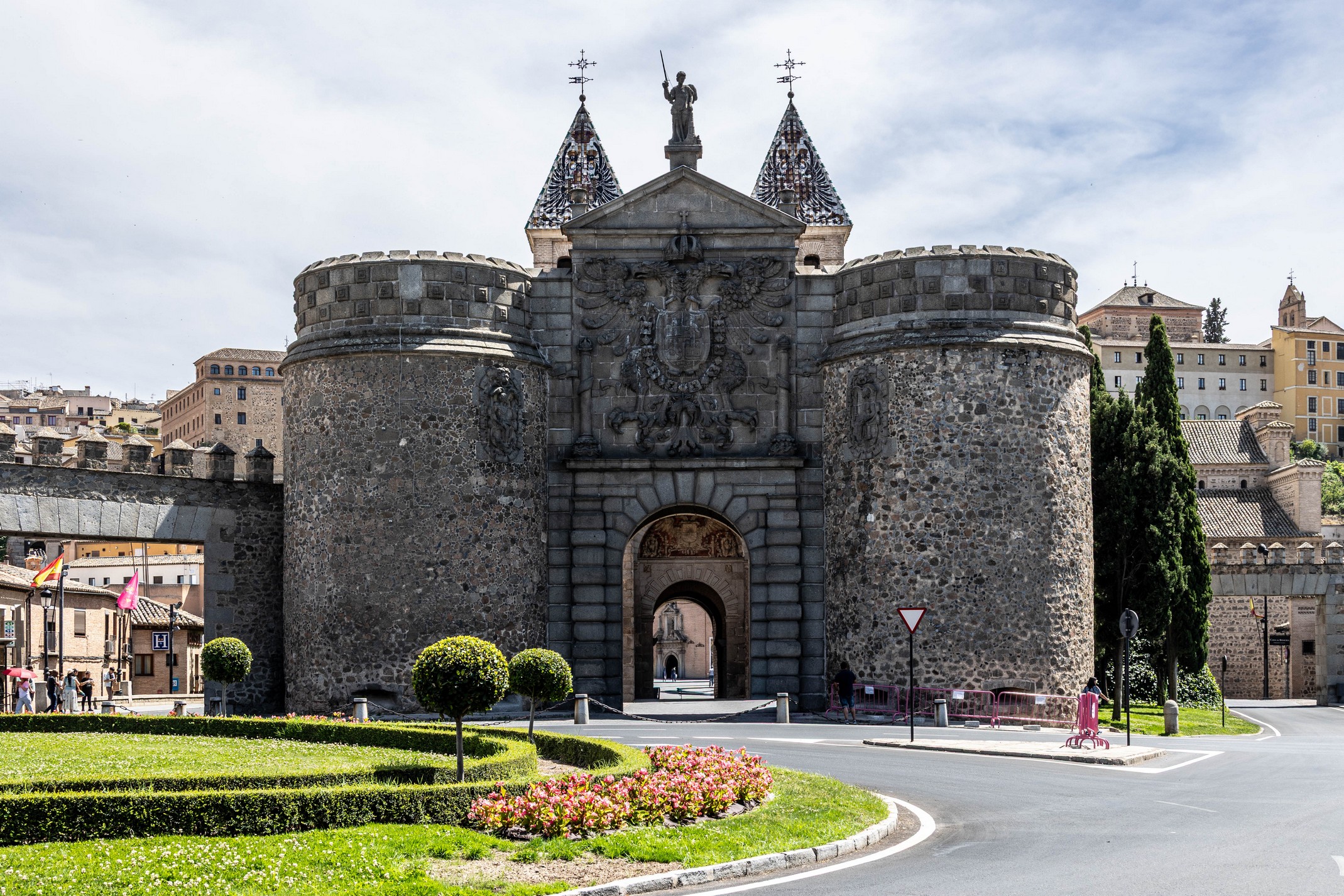
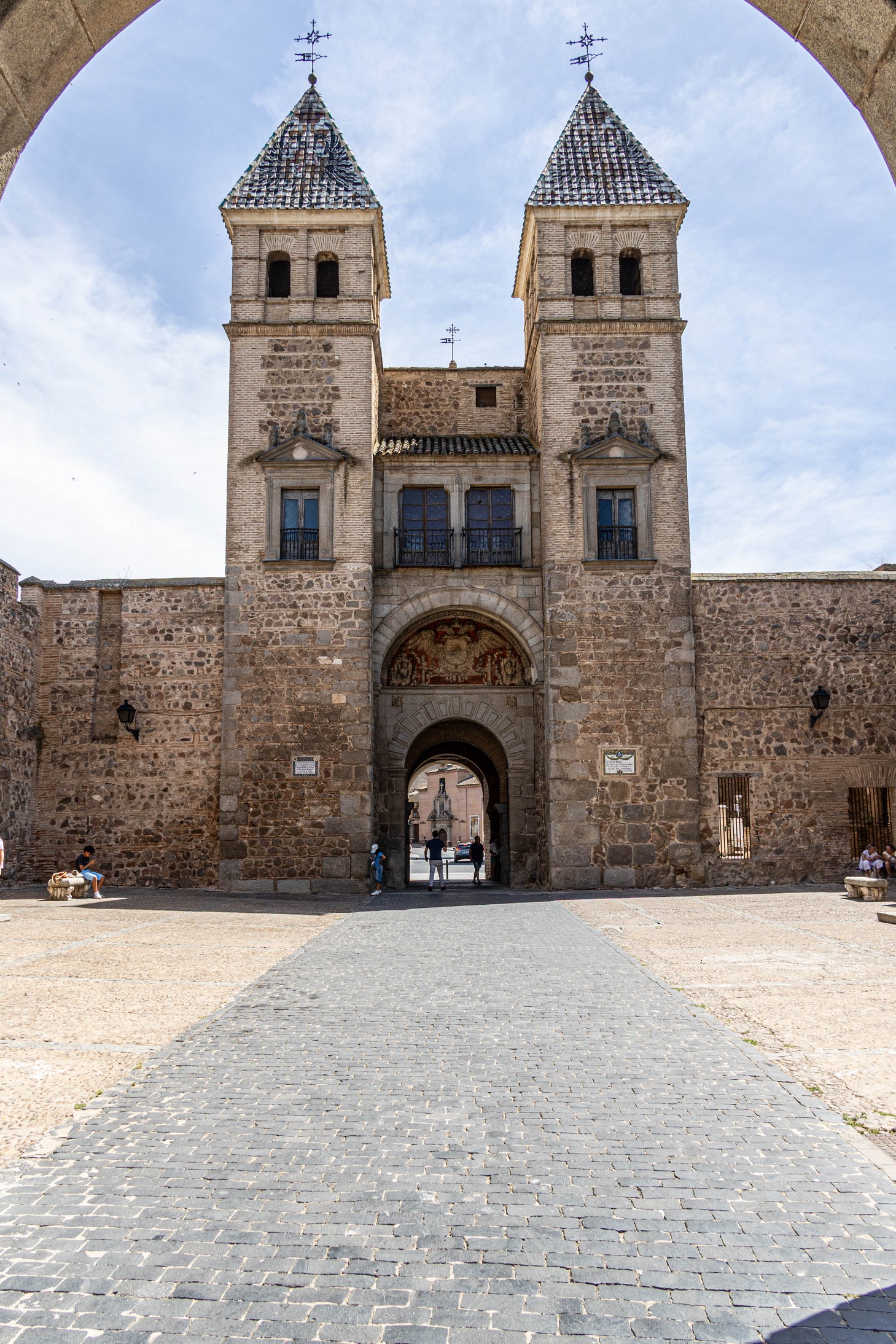
After leaving the church we walked down to the Bisagra Gate (later discovering there are lifts near it to take you up the steep hill into the old city!) and I did a circuit of it to get some photos. The gate is a remodelled 10th century structure, greatly expanded by Charles V in the 16th century to match the status of Toledo as an Imperial city.
From here we ordered another Bolt and were soon back at the Parador for a welcome rest. We had an idle afternoon, sorting notes and photos before a very late dinner, consisting of dessert again! We watched the sun set over the city and then the Alcazar and Cathedral illuminated before returning to our rooms.
Puente de San Martin
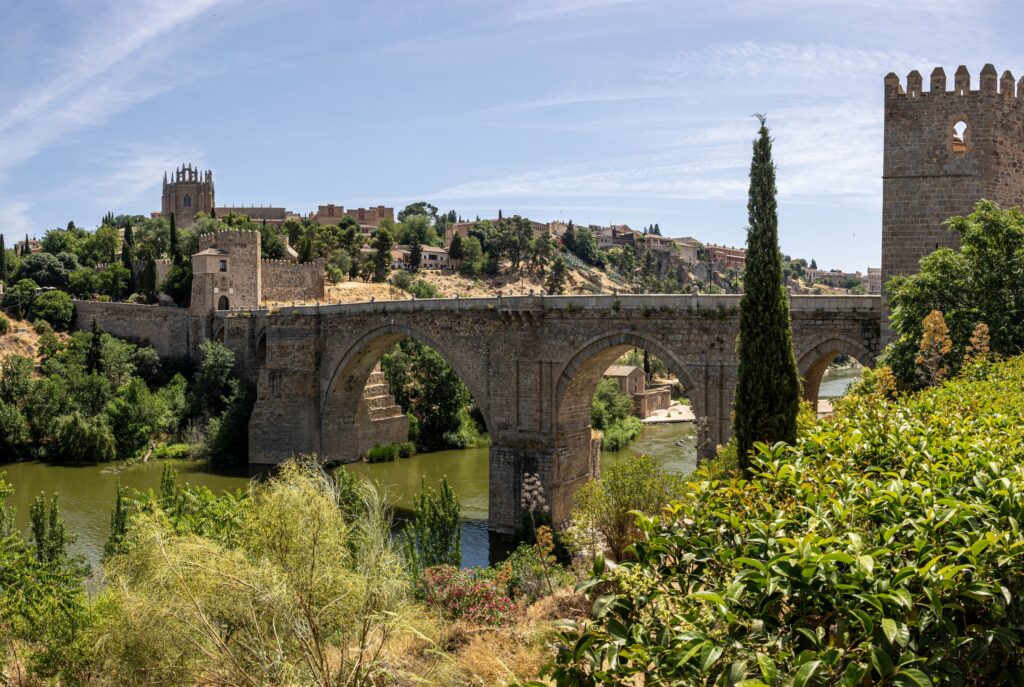
I woke at 6 and went into the gardens to watch the sunrise, actually seeing a hot air balloon over the city. After a late breakfast and relaxing morning we packed up ready for our next stop, Manazares. As we were at breakfast I was looking through the planned stops for the day and every single one was actually closed so that was rather frustrating! I decided to stop just outside Toledo to view Puente de San Martin, one of the wonderful medieval bridges and city gates of the city.

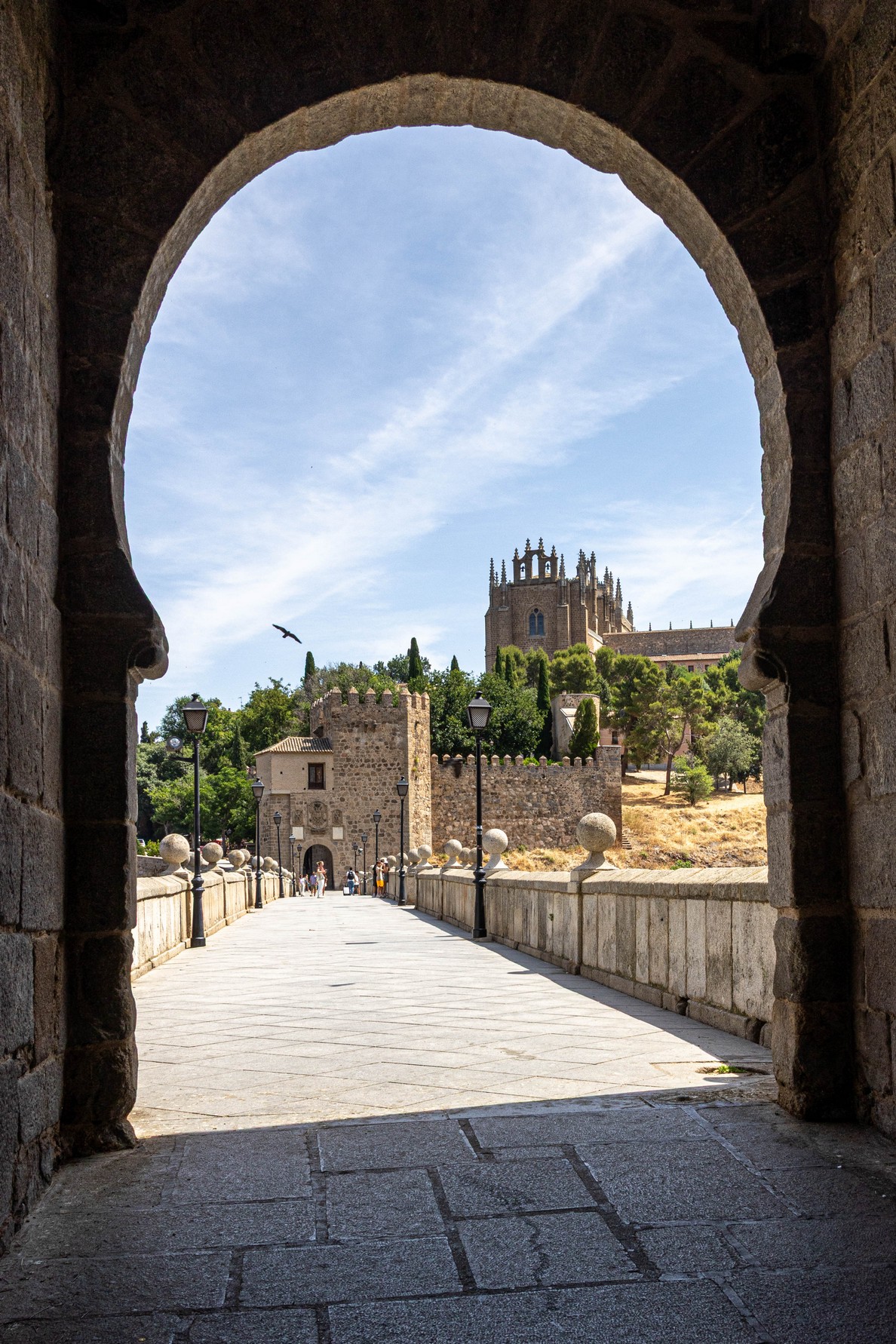
I parked the car and walked down towards the bridge and then saw a police tow truck removing a vehicle parked in a space in the same row that my car was parked in. I cut my sightseeing a little short but still had time to appreciate the architectural beauty of the bridge and towers before returning to the car.
Manzanares Parador
The drive to Manzanares was utterly boring, almost all dual carriageway but just across a relatively flat agricultural landscape with almost no buildings or people in sight.
We eventually pulled off at Manzanares and into our Parador, a pretty building with a large garden and pool, not that we’d take much advantage of that. The rooms were a good size with nice balconies and garden views and after a coffee in the café we returned to our rooms to get up to date with the notes and photos. Dinner didn’t start til 8:30 and there was nothing within walking distance so it was a late night.
The food was lovely though, well presented and nicely cooked. I had the burger and it was so large it was quite exhausting to eat but, sadly, it didn’t stop us ordering three desserts to share between us. Service was pleasant too but the late meal meant we didn’t get to bed until midnight.
Consuegra Castle and windmills
We had a very nice breakfast – tuna empanada this time for me as well as the buffet – before leaving at 9AM. We were frustrated that the things I had planned to do were either fully booked or not open – totally my fault for not planning ahead – so we had to hunt around to see what was available in the area.
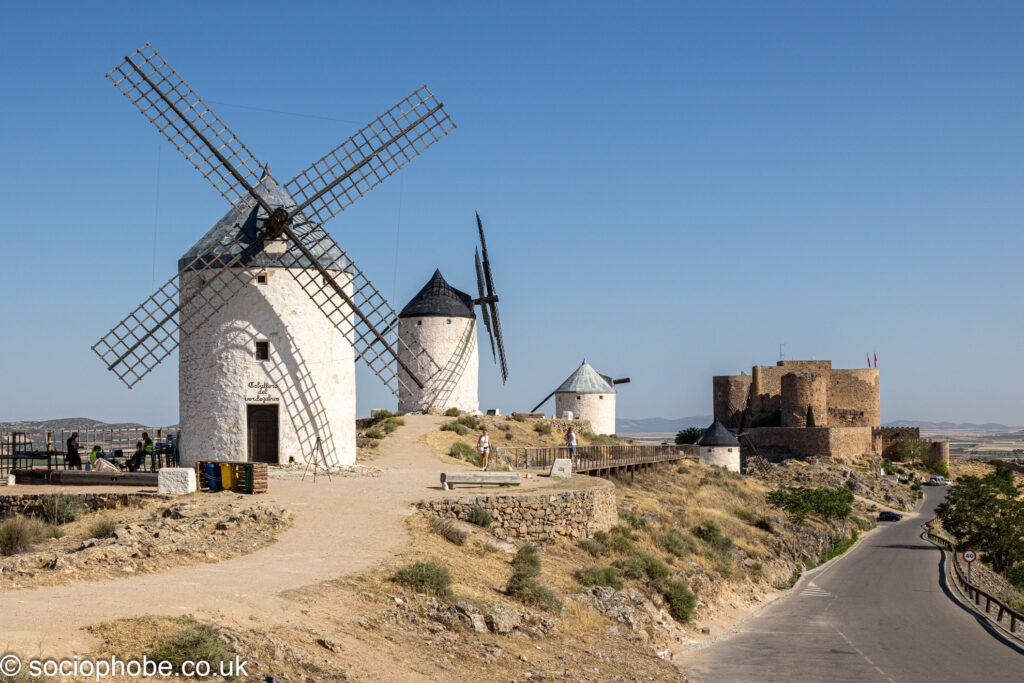
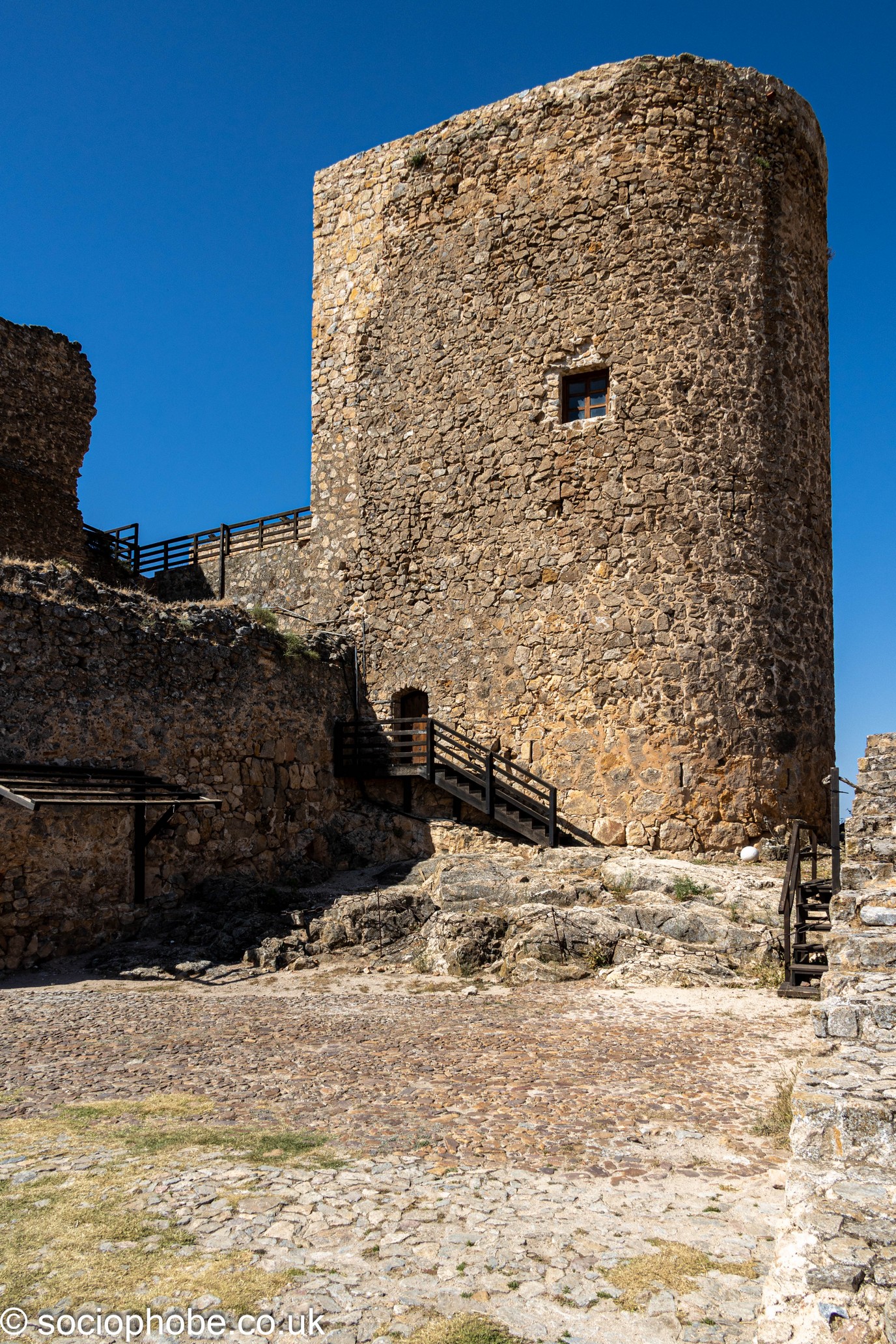
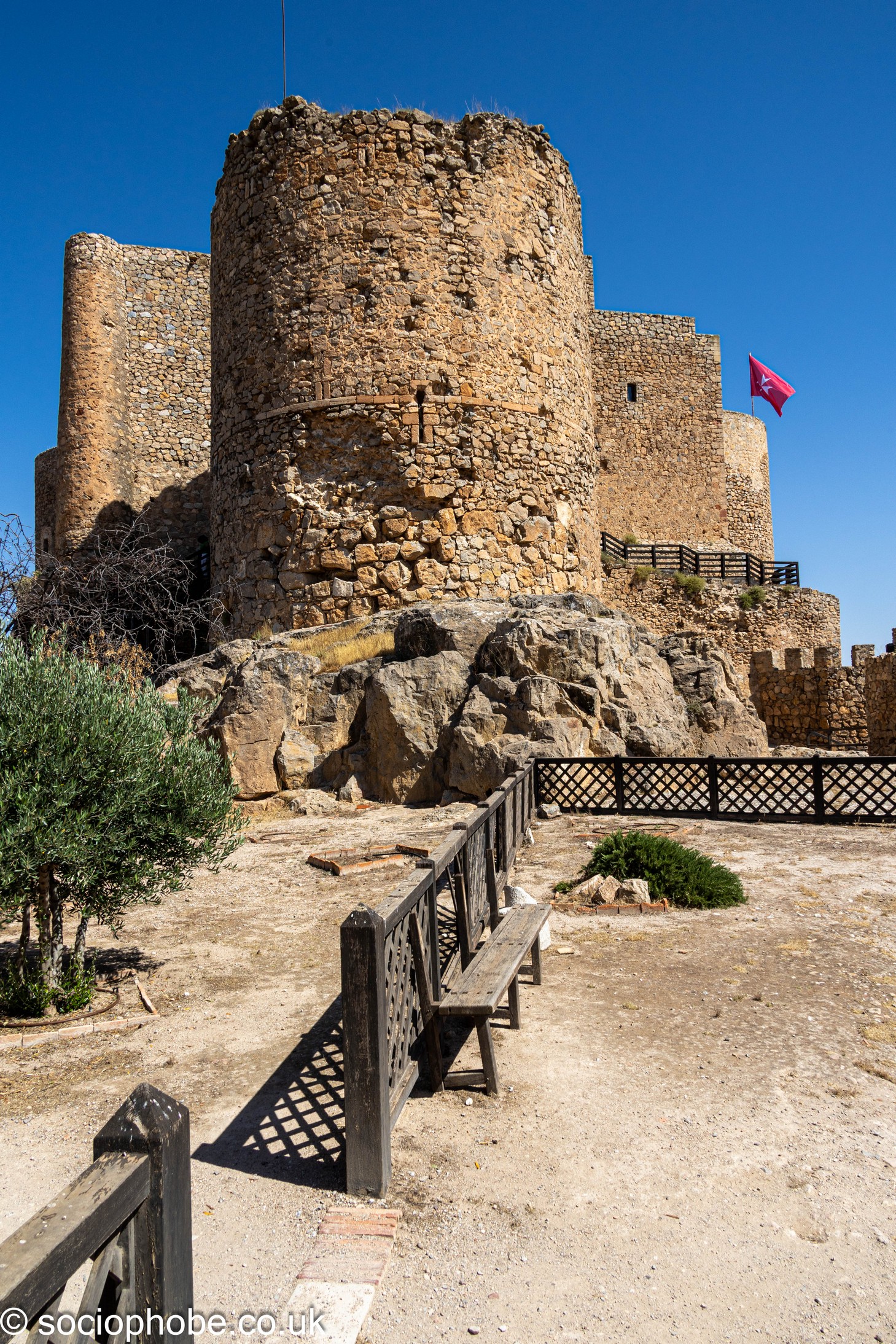
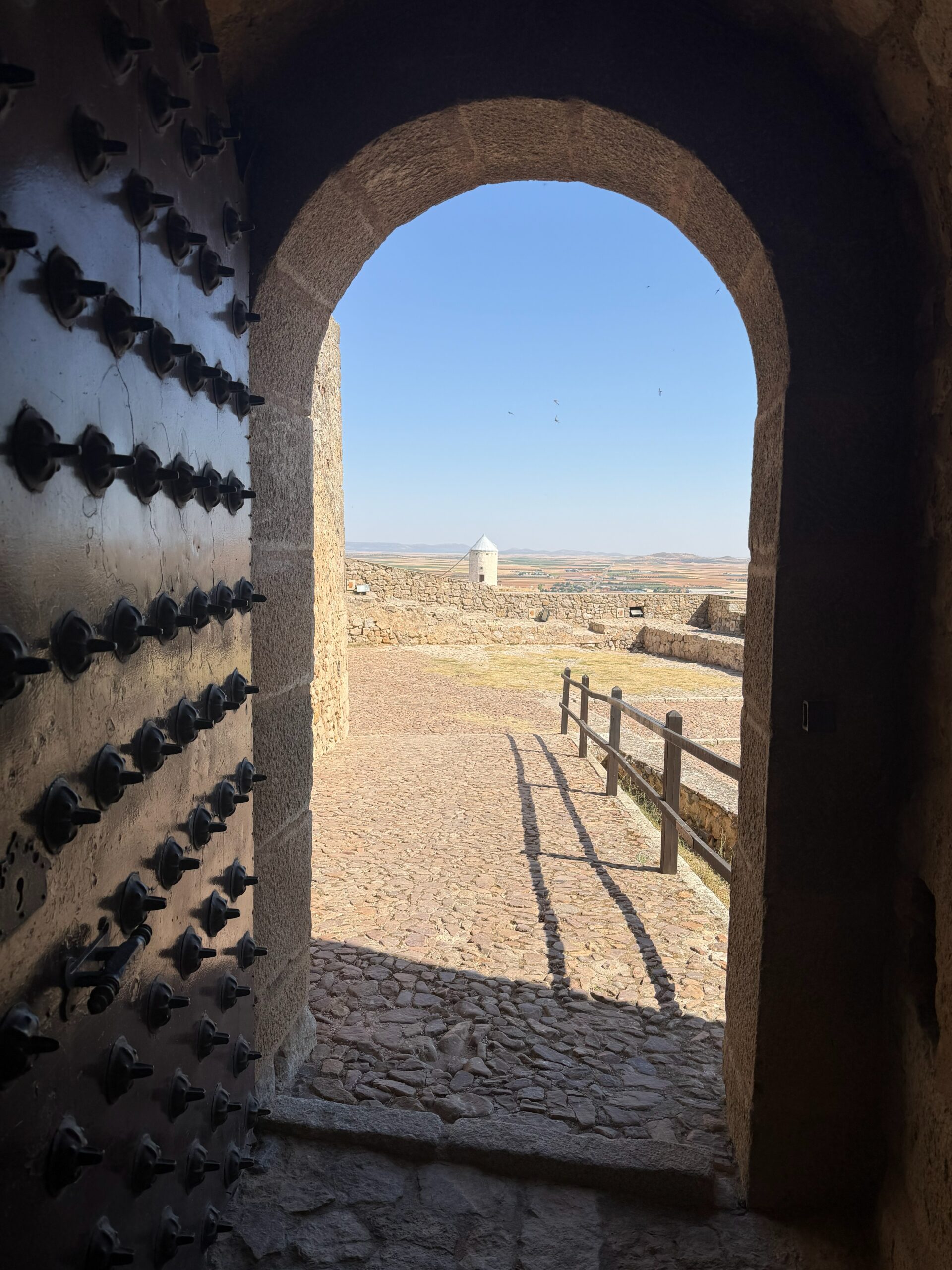
It was a short drive to Consuegra, home of a castle and also a row of windmills, of Don Quixote fame, along the ridgeline. There were maybe 9 windmills in total, before and after the castle and all were restored with at least one working on certain days of the year. We parked at the castle and walked to the far end of the ridge and then worked our way back through the windmills. The ridge is the only feature on the vast plain of this La Mancha region so the views were quite far reaching.

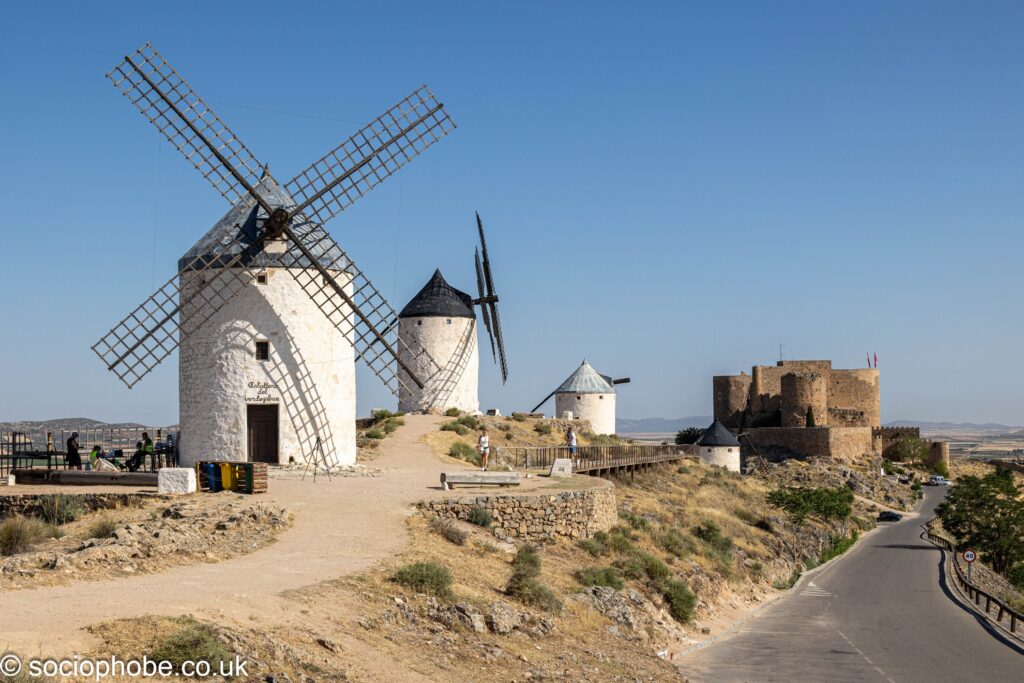
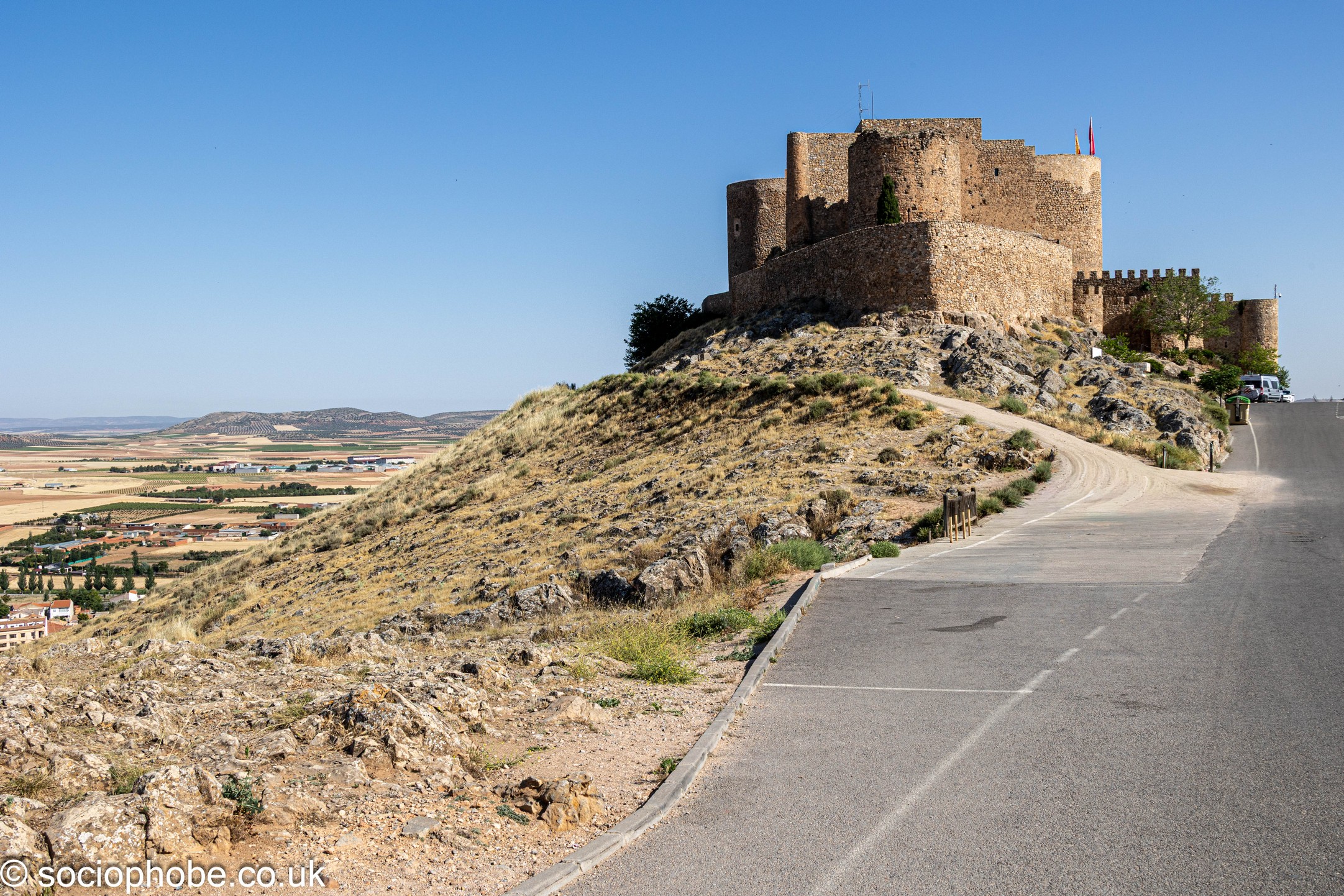
One of the windmills was open to go inside and see the interior (2 euros I think) and the guy in there spoke excellent English so we had a quick look around before continuing on to the castle. Originally built by the Moors in the 10th century the castle was greatly expanded when granted to the Hospitallers in the 12th century but declined in importance as the frontier moved south during the Reconquista. It was badly damaged by French troops in the Peninsula war and restoration started in the 1960s.
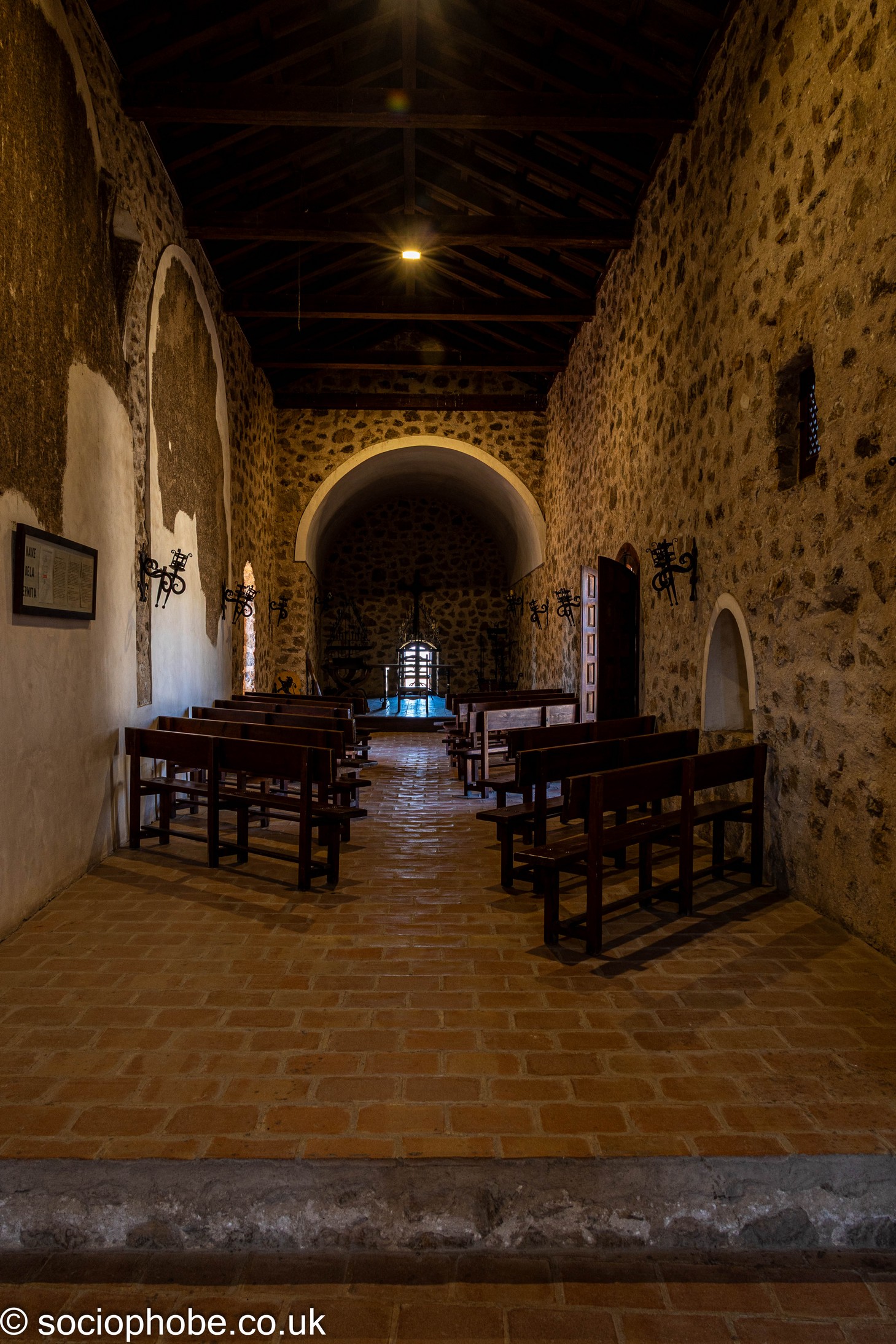
The castle was 6 euros each to enter and the guy in the ticket office was very helpful. We downloaded the audio guide and started to explore the castle, which has been well restored with even some rooms being dressed. The cistern still had the distinctive red paint and we visited the chapel as well as the hall and other interior rooms before climbing to the top of one of the main towers to look at the views. Sadly there was no café on site but we did find one on our drive back to our Parador.


Once we got inside I had a nap for 2 hours, adopting local and very sensible traditions, before a shower and finally feeling human again. We had dinner in the Hotel Manzanares opposite us as the Parador didn’t start food until 8:30 and we really didn’t want another late night. The food wasn’t up to Parador standards but it was both available and only 15 euros for a 3 course menu of the day.
Penarroya Castle
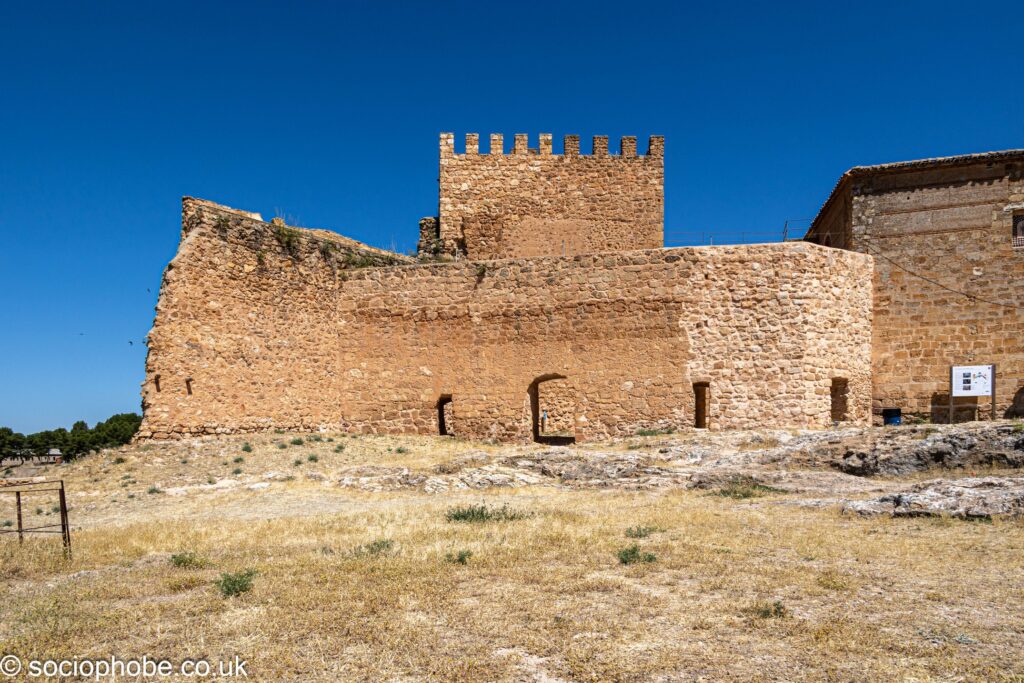
After an abysmal nights sleep we got up for another wonderful breakfast before packing up and heading to our final Parador of this holiday, Albacete. We took the scenic route as we had plenty of time and drove through the Las Lagunas de Ruidera National Park for a visit to the castle at Penarroya. This is another 12th century castle, owned by the military order of San Juan and home to an impressive baroque chapel.
There is now a dam and reservoir next to the castle and they are currently building a pathway so you can walk from the dam, across the reservoir and to the fortifications on the far bank. It looks like a lot of safety and reconstruction work has been done at the castle and as entry was free, it makes it a good option to visit. There is also a big car park, a shop selling ice cream and a museum that does guided walks at weekends and public holidays.

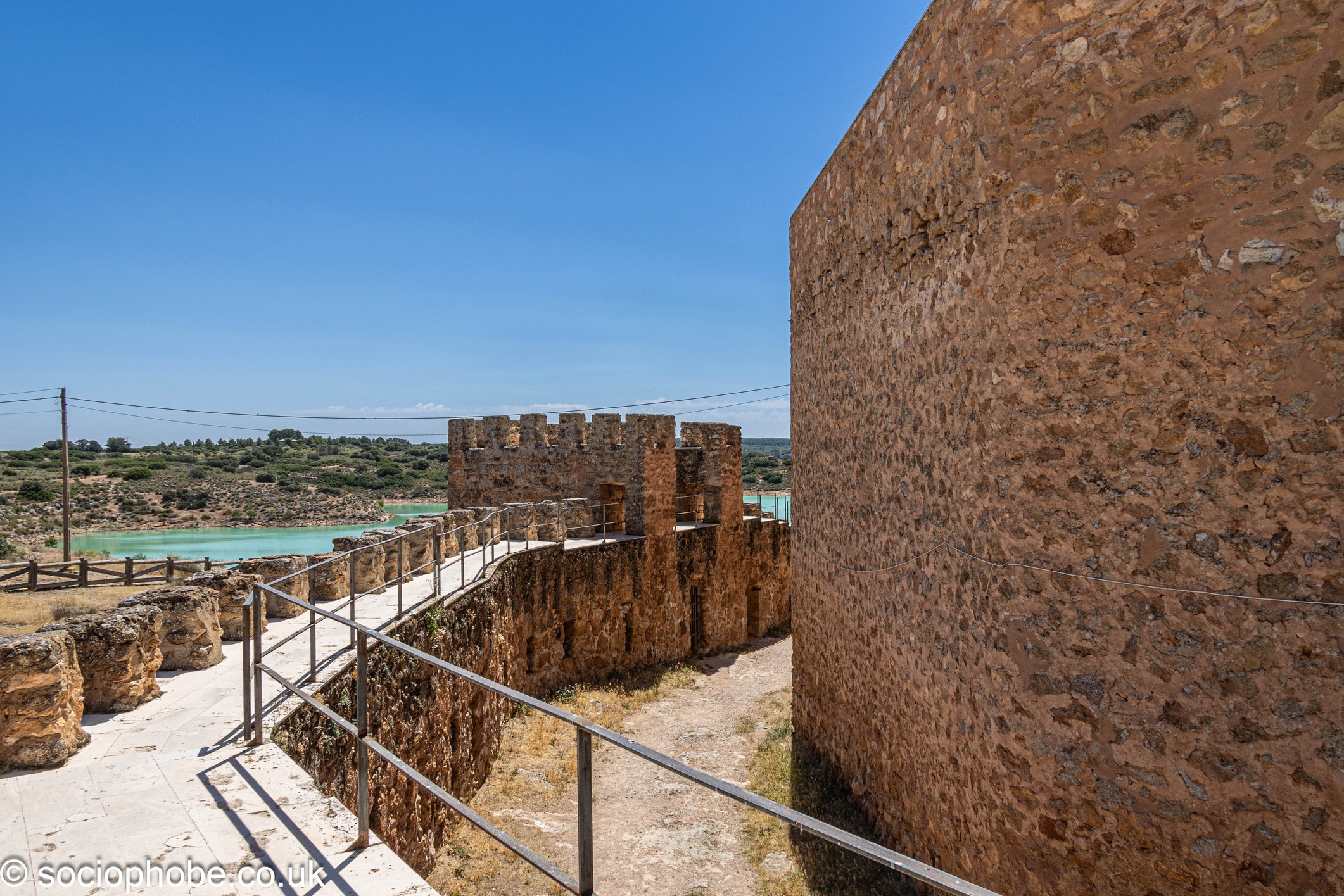


The castle had battlements you could walk along and the chapel had some wonderful murals. There was also a small hermitage but the setting was the main draw with the wonderful turquoise reservoir and woodland walks. We didn’t have the inclination to do the walks as I am paranoid about leaving the car loaded with luggage but on another day that would certainly be an option.
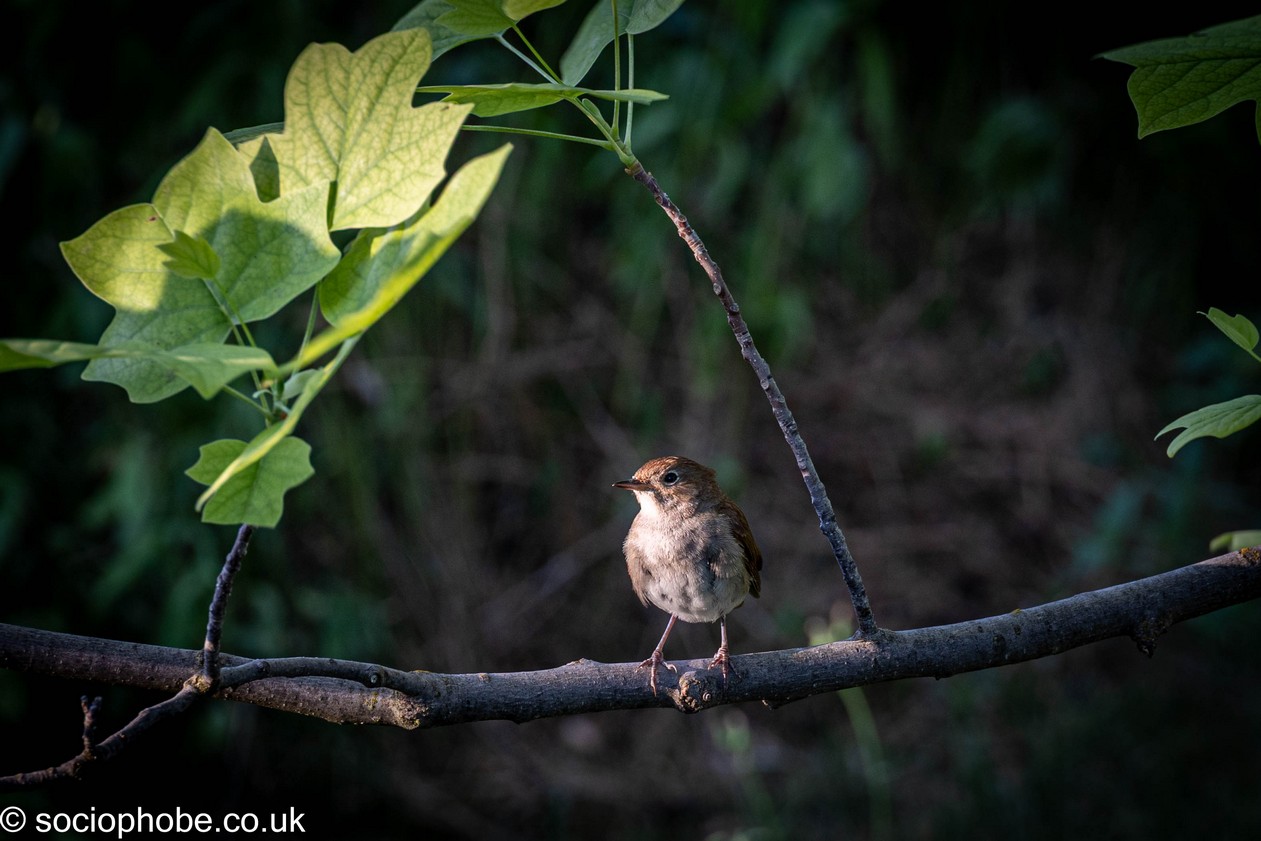
From the castle we drove a couple of hours to Albacete along very well maintained B roads through beautiful countryside. It wasn’t until we actually reached the town that we saw any real traffic. We parked at the Parador and checked in, we had wonderful rooms overlooking the gardens with a lovely shaded balcony and a great pod coffee machine. We spent a while alternately listening to birdsong and the sound of military jets from the nearby airbase, home to the Spanish equivalent of ‘Top Gun’.
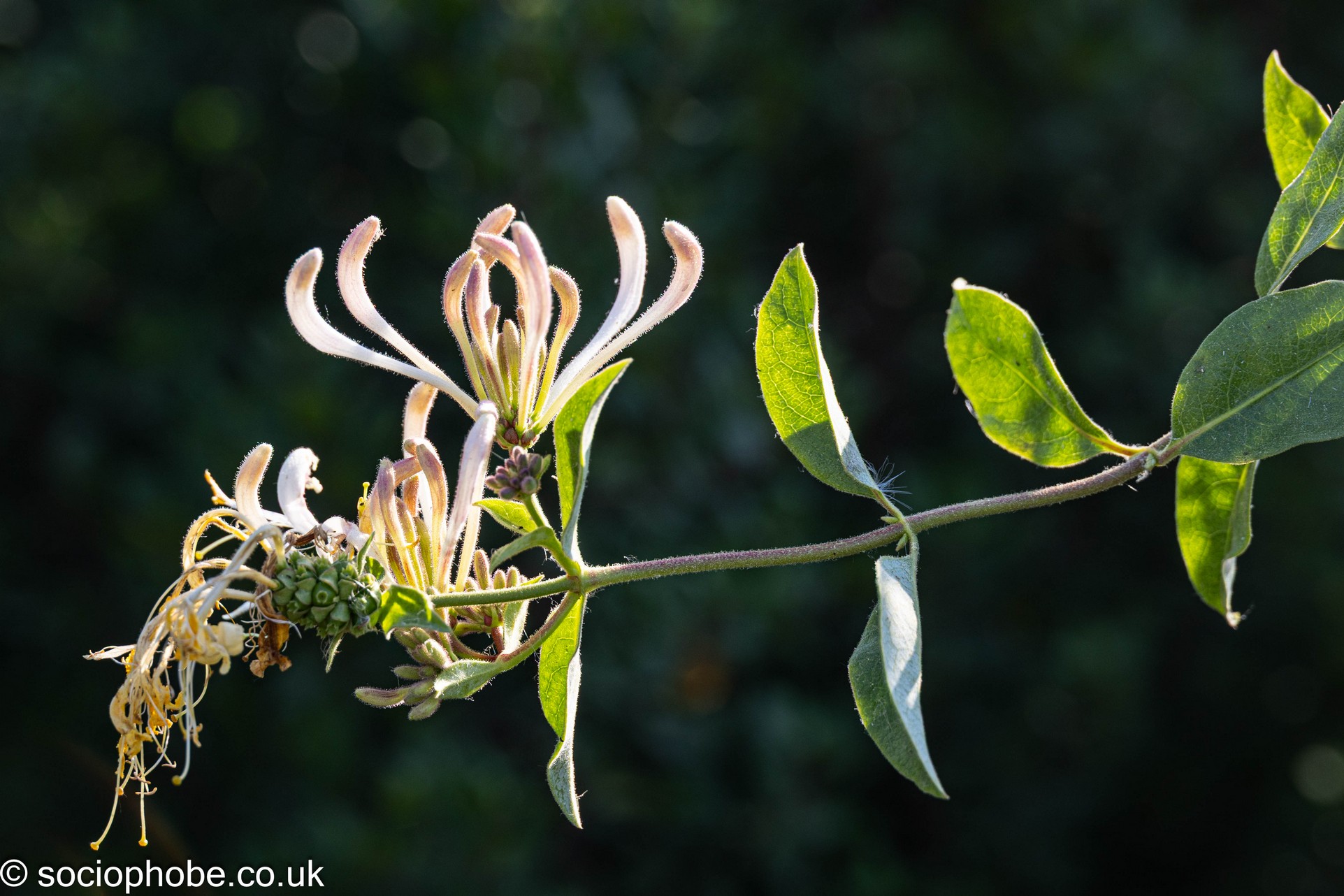
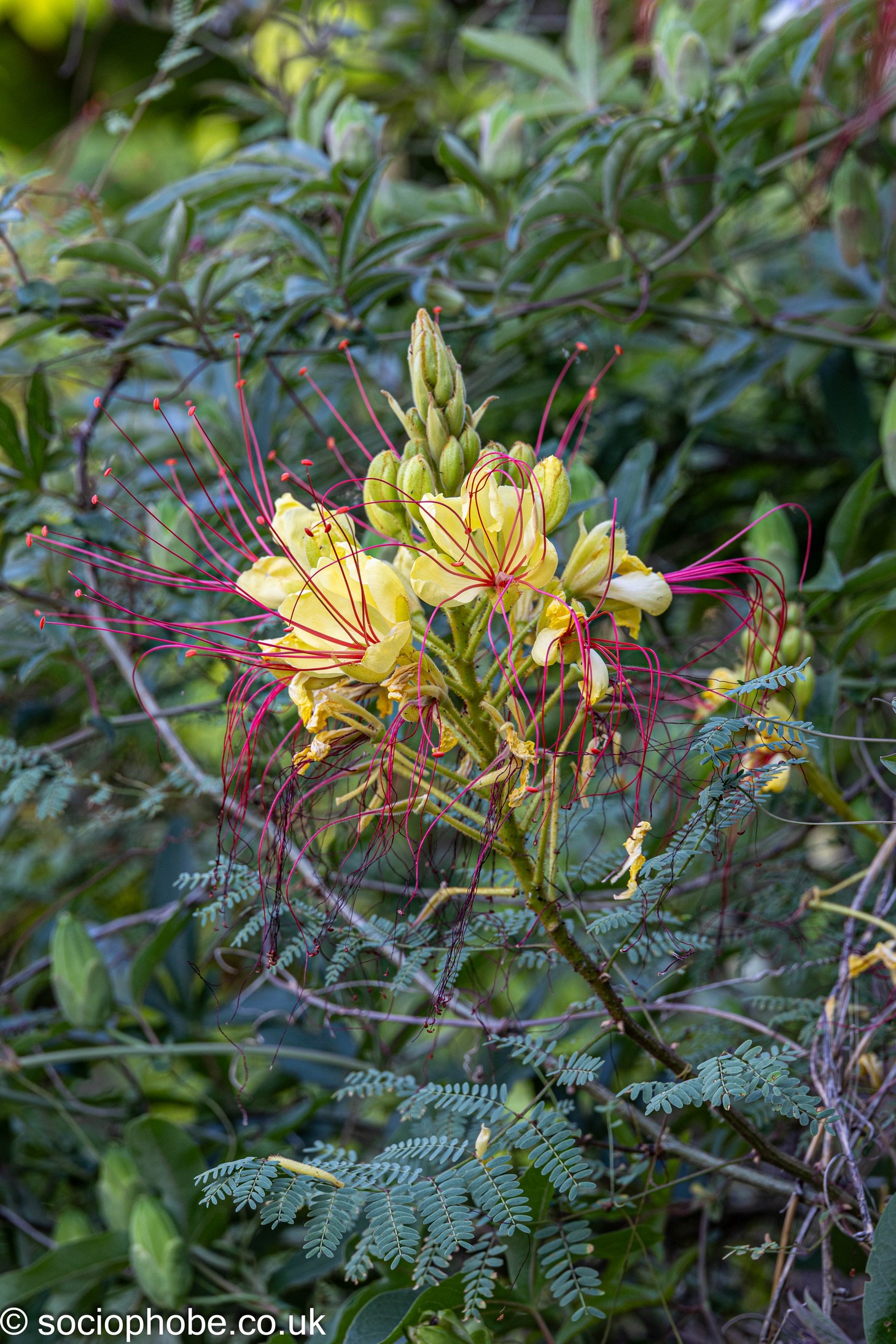
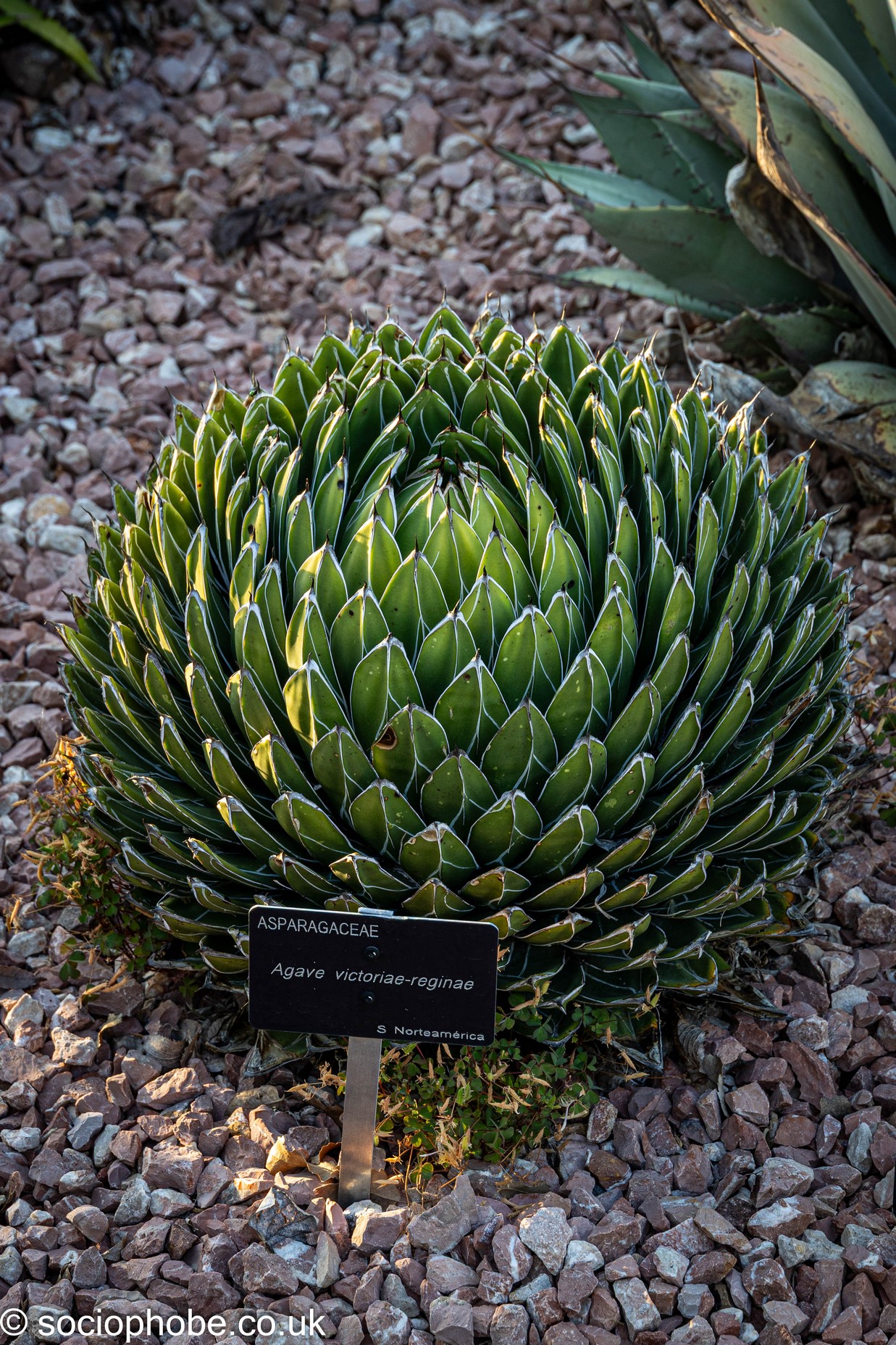
Albacete Botanic Gardens
The reason we’d chosen Albacete, other than it being a convenient stop on the way home, was the Botanic Gardens. These opened at 7PM so we had dinner at the Parador – delicious veal burgers whilst sat on the terrace – before we drove the short distance to the gardens. These were rather wonderful as a free community asset. The guy in the ticket office was very helpful with excellent English and we spent about 2 hours in the gardens walking round, playing with the cats and enjoying the plants and shade.
We returned to the Parador for the compulsory dessert and spent an hour or so chatting on the terrace before going back to our rooms. Even at 10PM it was lovely to sit outside and a very pleasant temperature.
Chinchilla Town Tour
We had another wonderful breakfast and I am actually dreading weighing myself when we get home as I have absolutely no will power when it comes to desserts. Today was a chilled morning though as we were going back to Chinchilla which was only a 15 minute drive away so we didn’t need to leave until 11:30.
We drove the short distance to Chinchilla and followed the sat nav to the Tourist Office although we opted not to drive down one of the streets and to park in an actual parking space nearby. We walked down the hill to the Tourist Office, Mum setting Strava going immediately as usual.
The tourist office had a wonderful museum detailing the history of the town from pre Roman times to the present day with sections on Iberian culture, the Romans, The Moors, the Reconquista, the vandalism of the French in 1812, the vandalism of the Spanish in 1900 destroying the Moorish castle and then the destruction of the prison in 1946. There was also a model of the castle as it looked before the building of the prison in 1900 entailed the destruction of the Moorish castle that was inside the later Christian outer walls.
Our guided tour was with Antonio, the museum curator and he spoke some English (far more than my Spanish) but the tour was mostly in Spanish so it was down to my trusty Airpods to translate again. Antonio gave us a potted history of Chinchilla and how the town was a constant strategic target both for invasions and in various civil wars. We looked at a 15th century bombard excavated from the castle as well as a couple of the cannons used in 1812 before crossing the road to the church of St Mary the Saviour.
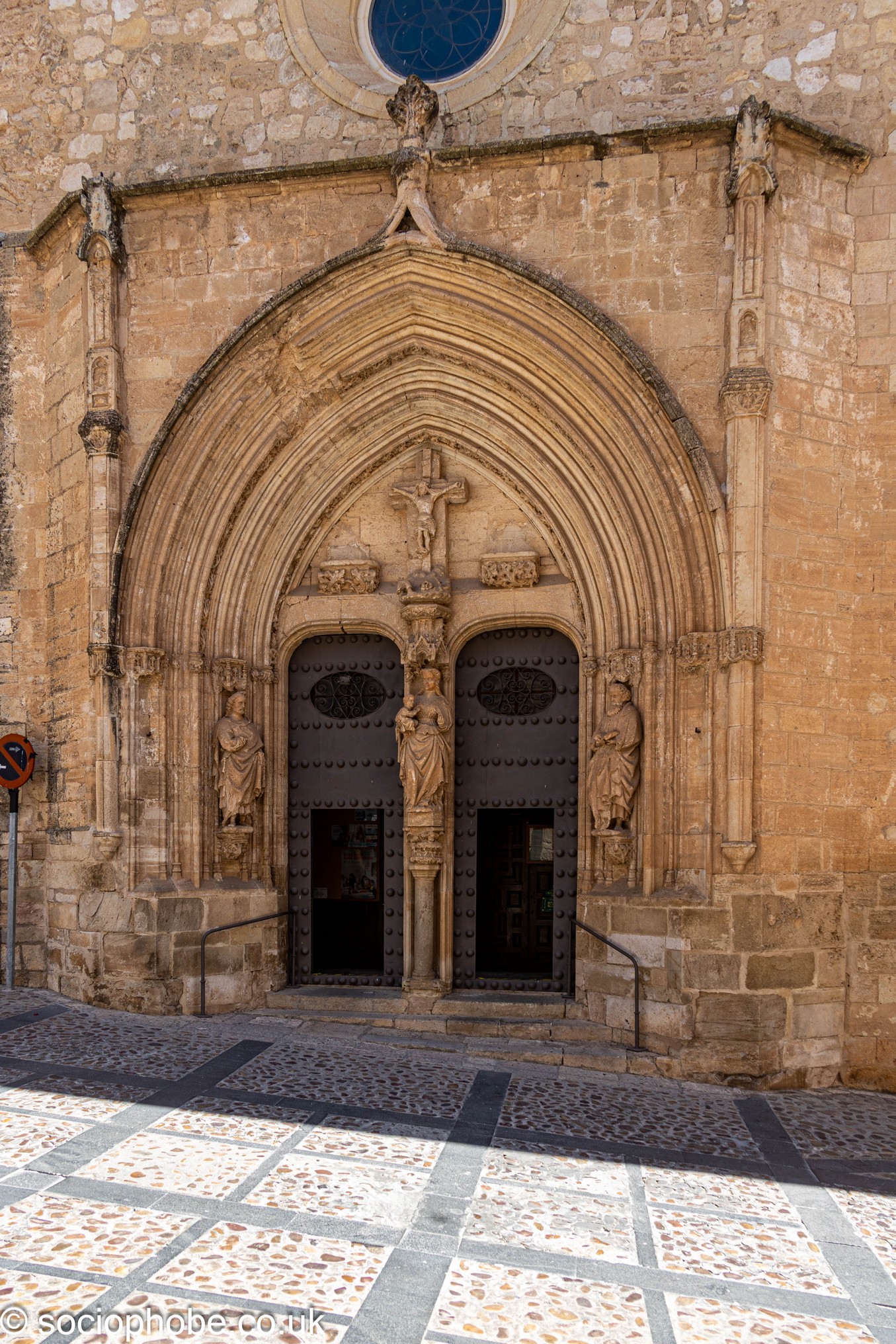
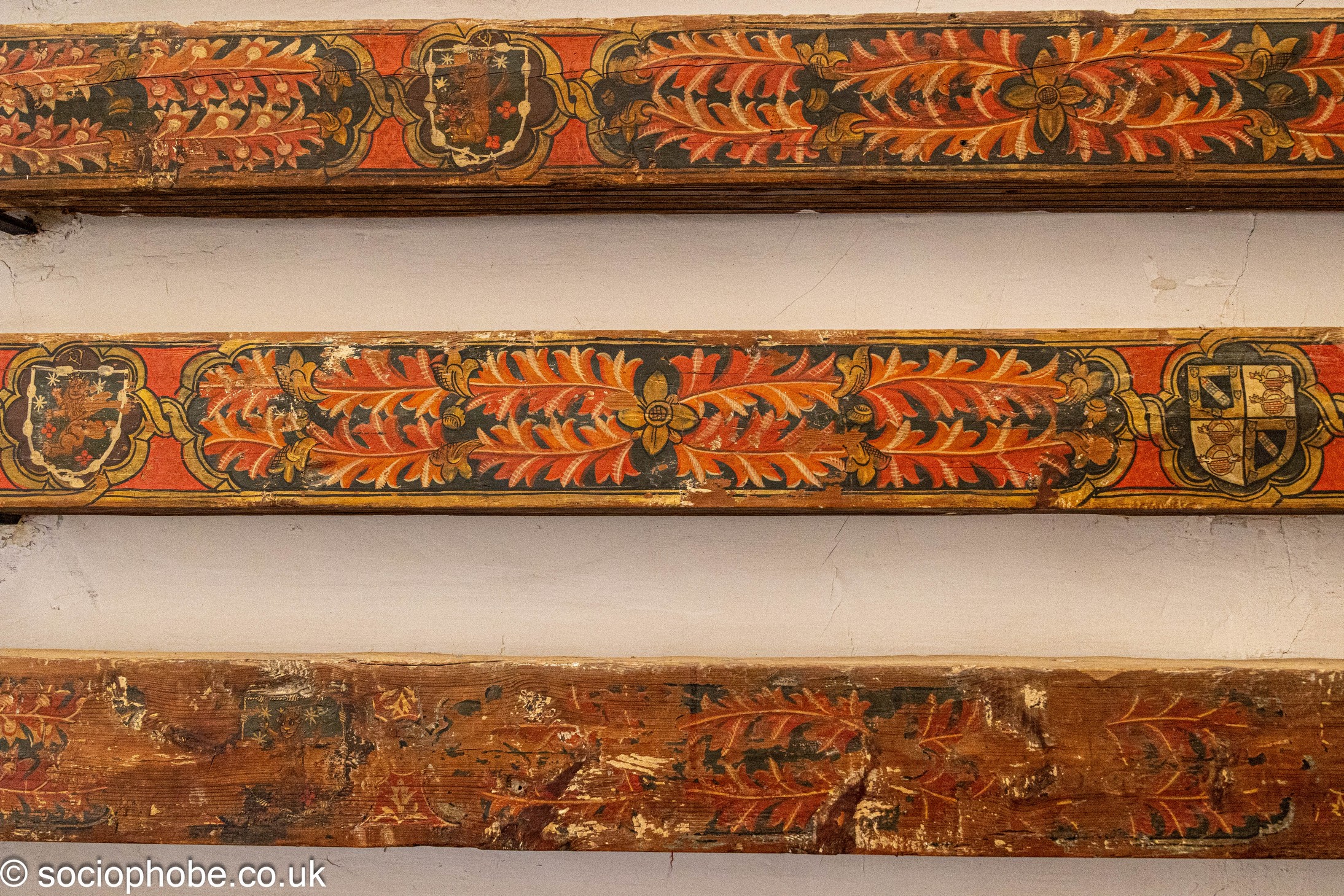
This church was, I think originally a cathedral but was then demoted when the town moved to a new bishopric. Although this may be rubbish as the airpod translation was about 60% accurate. Built in the 14th century the church was originally built in the Mudjedar style (Spanish – Moorish fusion, absolutely beautiful) but was then remodelled in conventional baroque style in the 18th century. At the entrance were some of the original mudjedar painted roof beams and there was also a 16th century iron fence built around the altar and modelled on the one at Murcia cathedral. Antonio also showed us some of the effigies still used in processions around the town today.

From the church we walked up the hill through various winding streets to the castle. We had visited the exterior a week or so ago so we quickly skirted that before Antonio explained the strategic importance of the site and pointed out the various roads that intersected on the plains below. Crossing the drawbridge we then entered the interior of the castle.
The inside of the castle was, frankly, like a building site. You could see traces of the original Muslim keep tower and walls, the keep was originally 35m tall with 10 storeys to it but was destroyed by the French in 1812 in an act of revenge against the castle’s defenders. The rest of the interior was cratered with holes or rubble from the demolished prison although you could also see the original Muslim cistern, 15m deep for collecting rainwater.
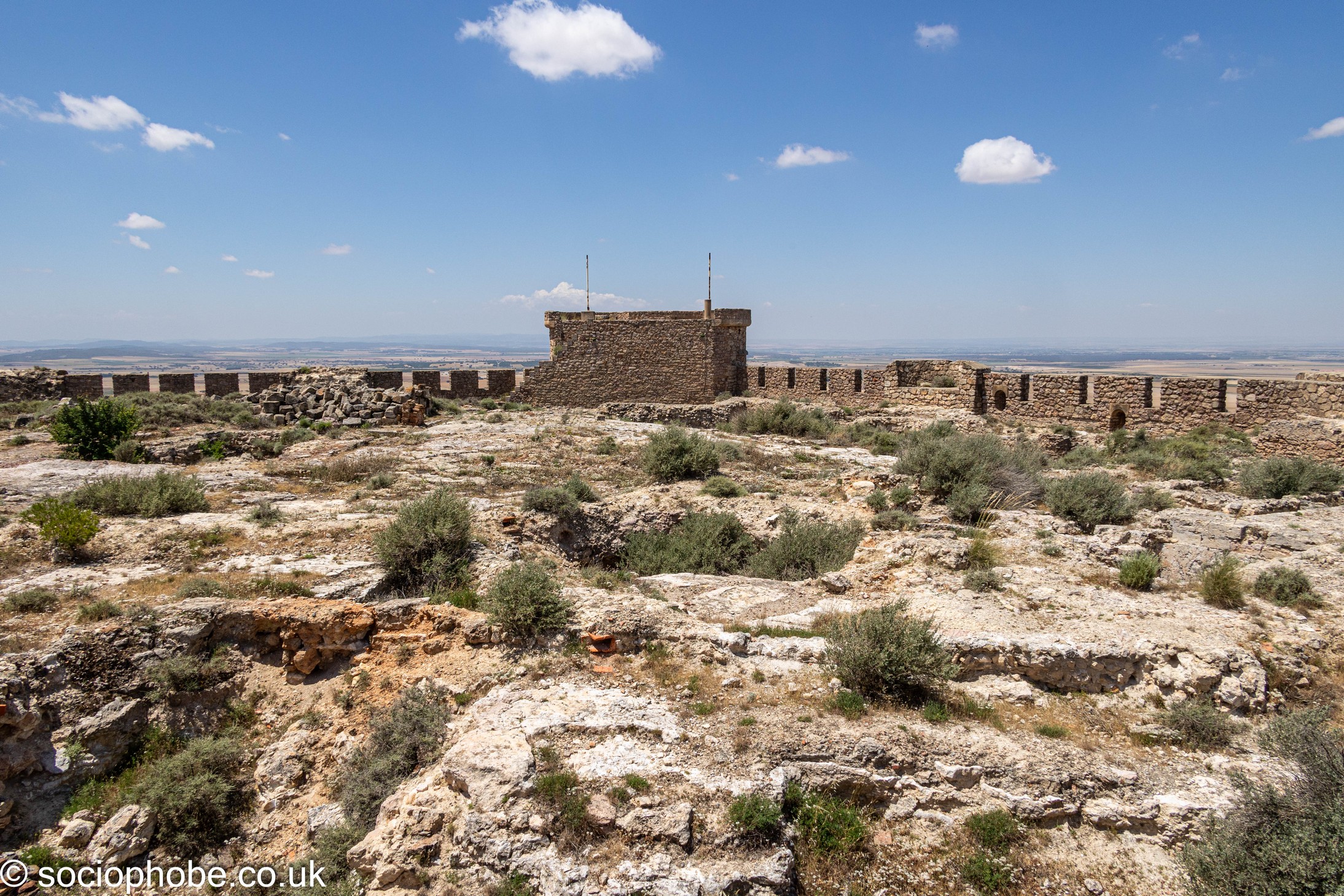
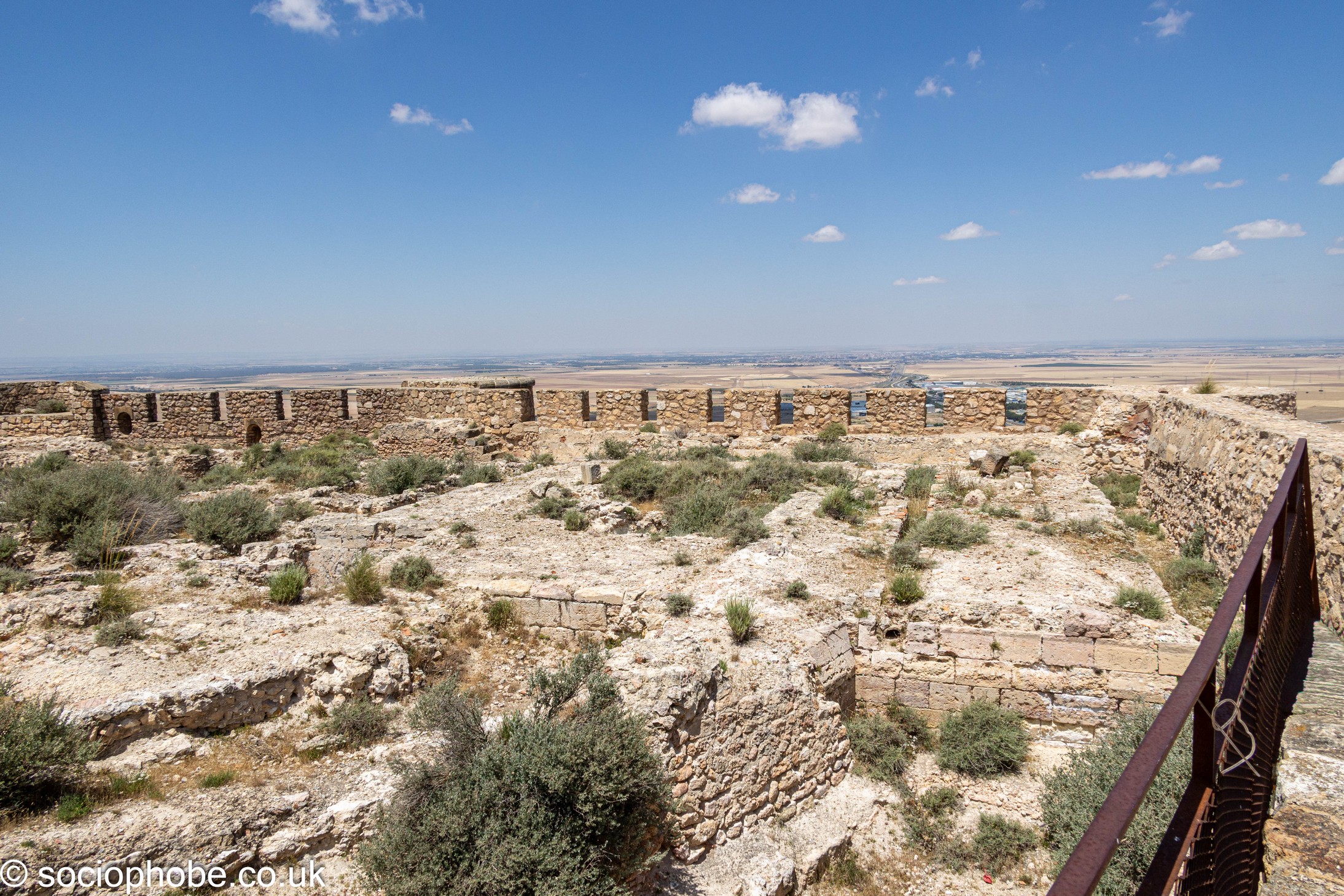

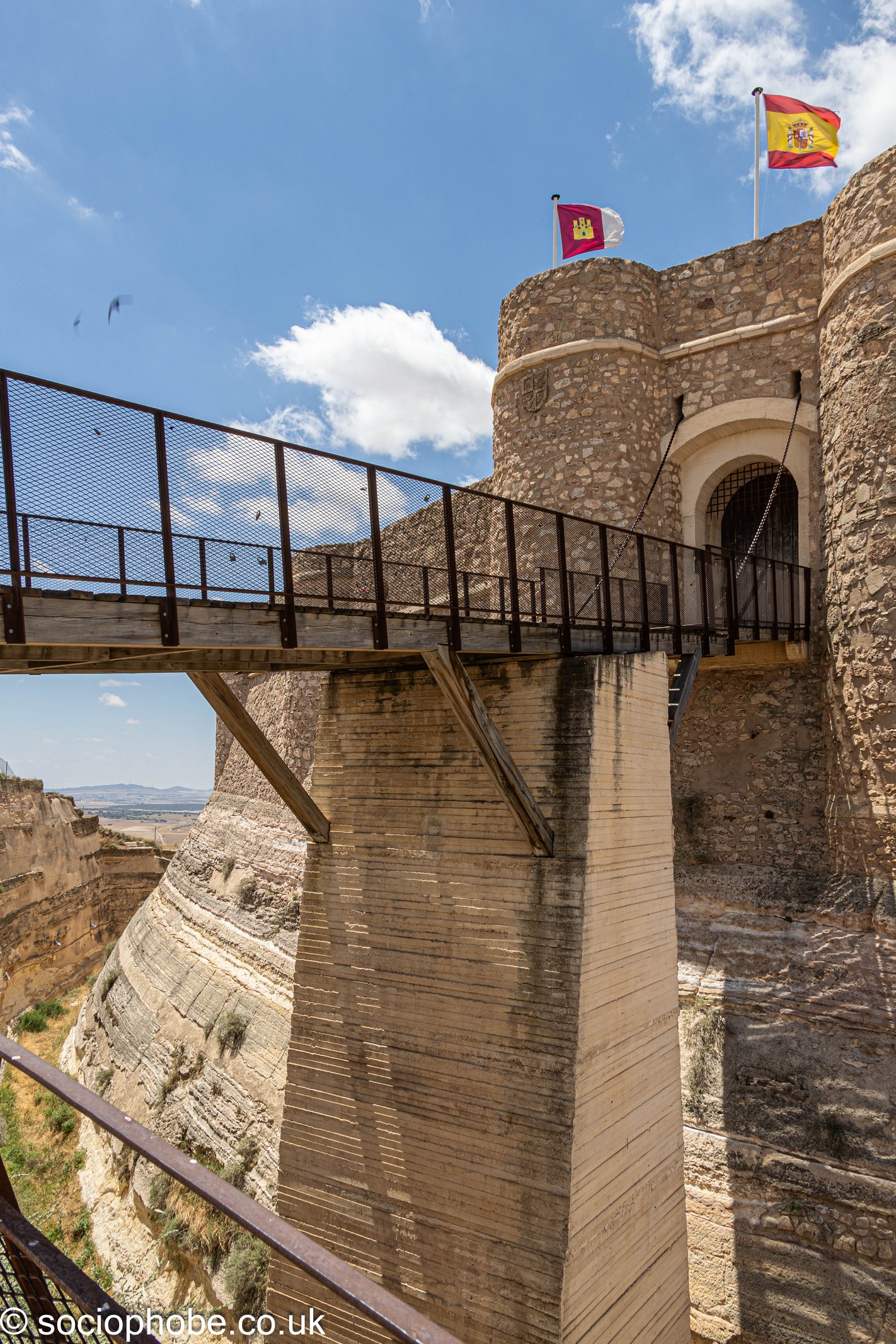
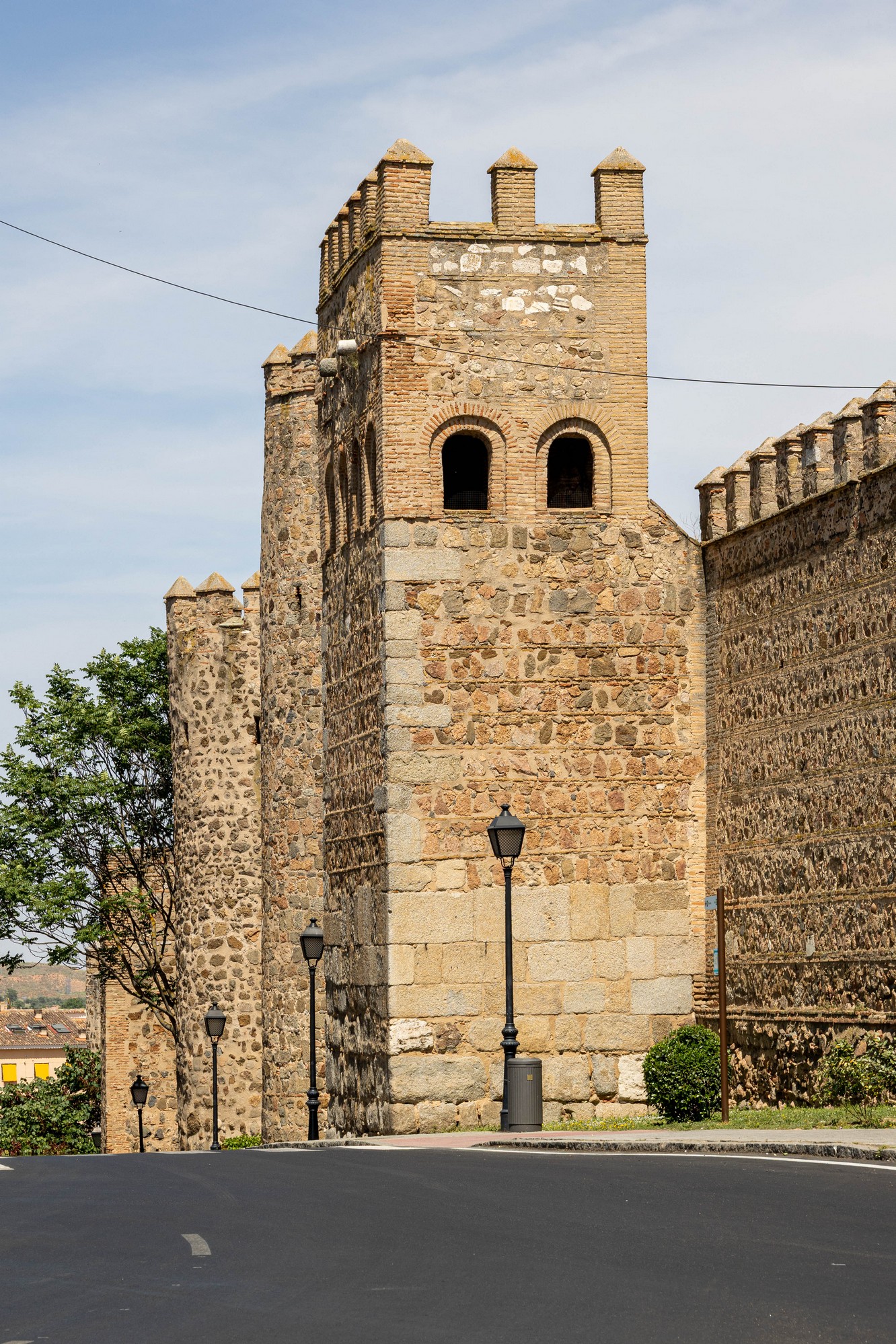
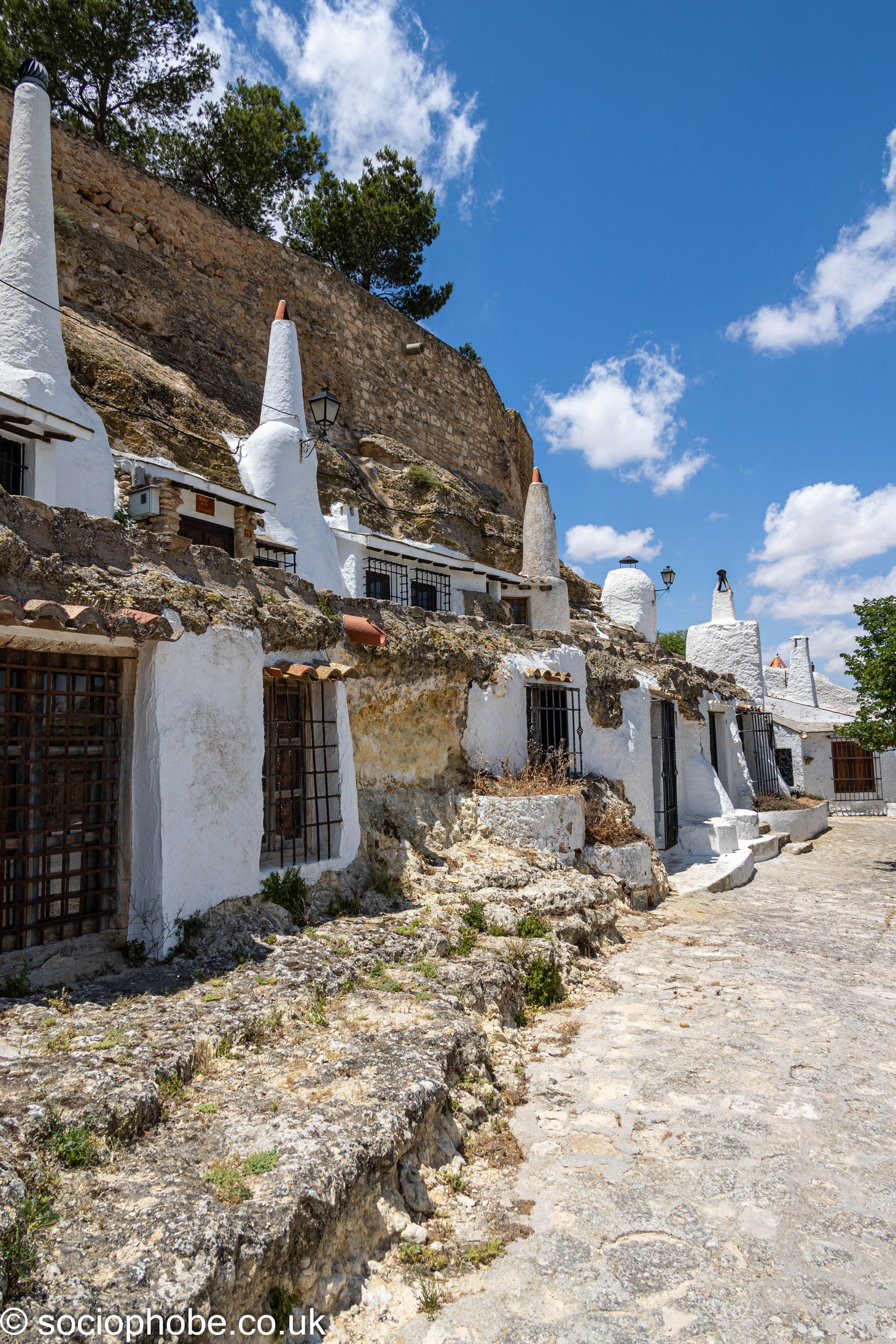
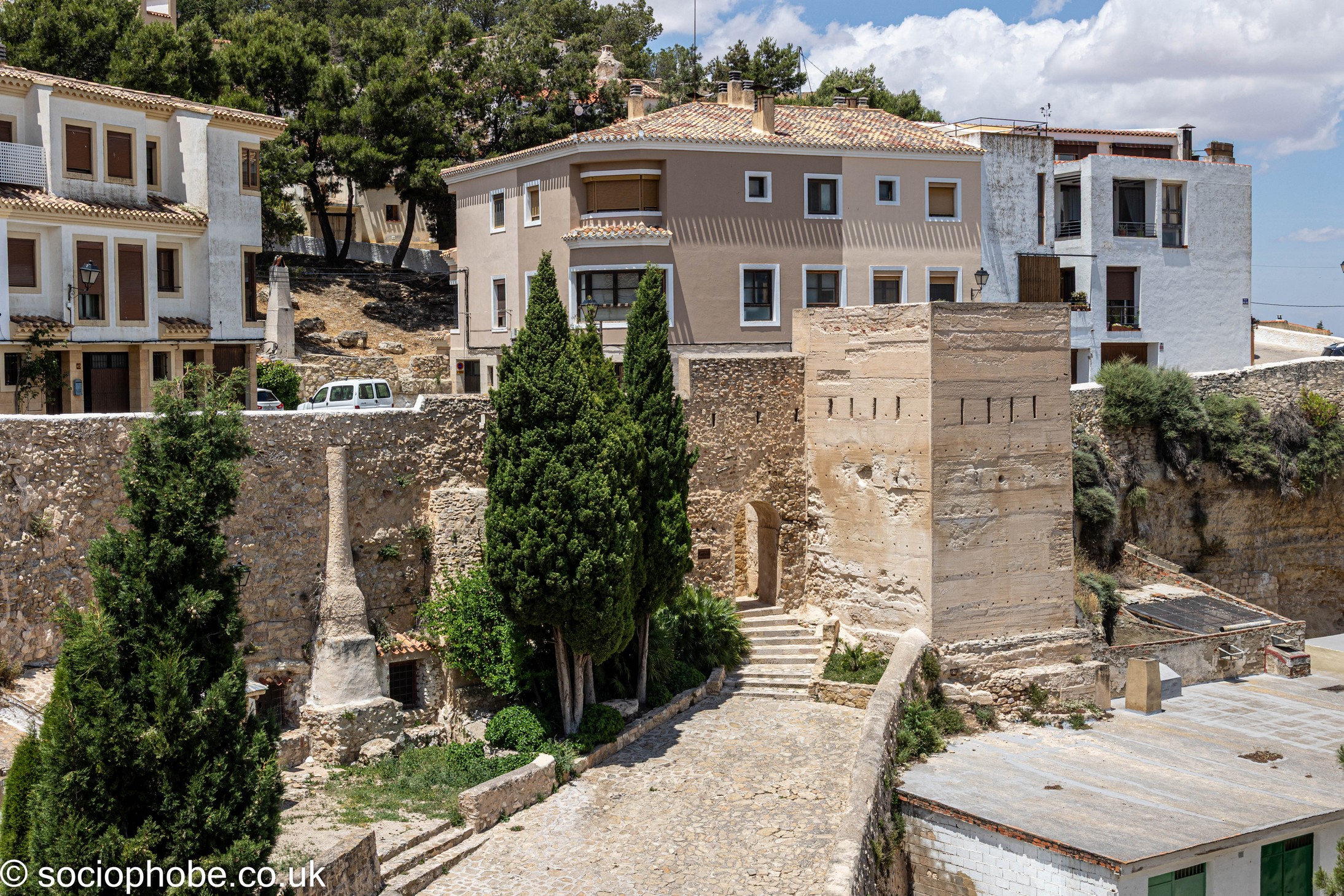
We exited the castle via the wooden bridge over the moat (the moat took 10 years to dig!) and then walked down through the town to look at the cave houses. These are, as you’d expect, homes dug into the hillside. They maintain a stable temperature of between 18 – 21 degrees all year round but only 2 are currently lived in, the rest are either private holiday homes or let via Airbnb or Booking.com. We then looked at the original Moorish city walls and gateway including a restored tower before returning to the main square and bidding Antonio adieu.
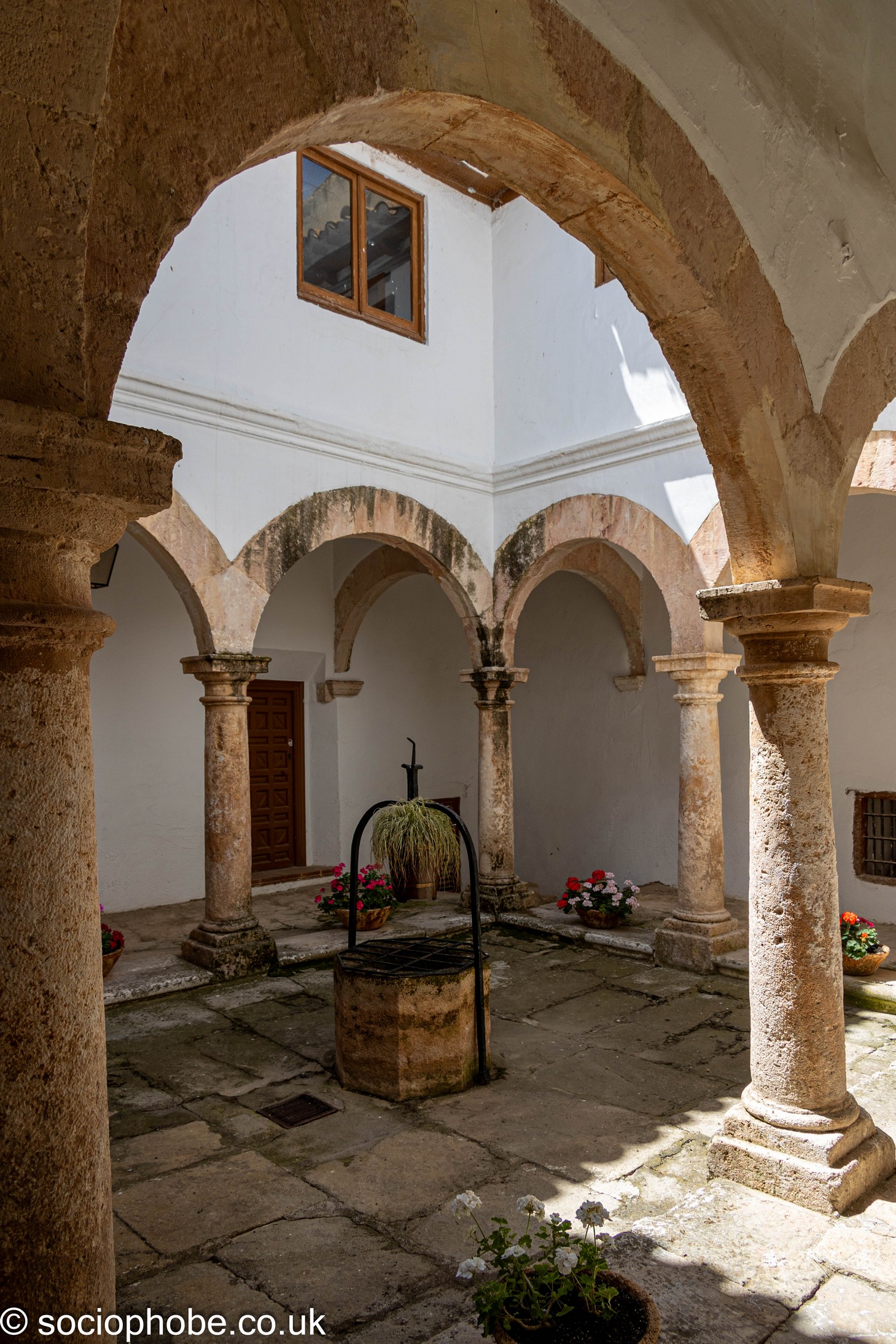
We did have an entertaining time driving out of the town, including a 7 point turn that almost involved plummeting down some steps and some very nerve wracking corners and streets. Luckily I had Deb to point out where I was going wrong from the back seats!
Return to Alicante
We then had a 120 km drive along excellent motorway to Alicante where we parked at our final hotel, the Hilton at Alicante Airport. We met Steve there so left him and Mum to a reunion while we went to our room for a much needed shower after marching around Chinchilla in the blazing sun.
We had a meal together in the American Diner opposite the hotel, a strange experience after spending so long (well, eight days) in the rural Spanish interior. It had been another amazing road trip through eastern Spain, seeing some beautiful natural sites as well as a plethora of historical ones and also enjoying the Paradores hotels, a wonderful commercial use for those magnificent buildings. As always, rather than crossing an area off our list it gave us a new list of places to visit or revisit but as long as we live to be 600 in good health we should be ok and get it all done.
The only two difficulties we encountered were:
Lack of foresight in Spanish medieval town planners in making roads wide enough for cars. Joking aside, unless you have a tiny car or are disabled, in most cases you’re better off parking outside the town and accepting you have a walk.
Lack of vegetables in Spanish cooking – certainly every time we ate out we were lucky to get even a small potion of veg, the meals being primarily meat and carbs. This may be a feature of Spanish cuisine or it may be a feature of the dishes we chose!
A wonderful break and the road trip to Toledo allowed us to explore this magnificent city as well as spend some quality time with Mum. We got to explore yet another new area of Spain, for us and also eat a ridiculous number of desserts.
This really is an excellent write up and covers the wonderful time we had and the amazing sights we saw. The photographs are really excellent, some of the best you have done, I think. As you say, we could definitely go back and do some more sightseeing in the same area. Although it was hot, the lack of traffic on the roads and the beautiful hotels made the trip wonderful. I’m sure a lot of people would enjoy doing the same trips-following your guidelines. 🙂