
A long weekend in Lisbon allows you to see the historic highlights of this ancient European city and enjoy the food, climate and culture. The attractions are mostly walkable if you stay in a central hotel and there are plenty of public transport or private options to get further afield. Lisbon is a wonderful city for ambling and has beautiful architecture and some unique culinary options too.
| Holiday Ratings | |
| Recommended days | 4 |
| Budget | £ |
| Difficulty | Easy |
Why Lisbon?
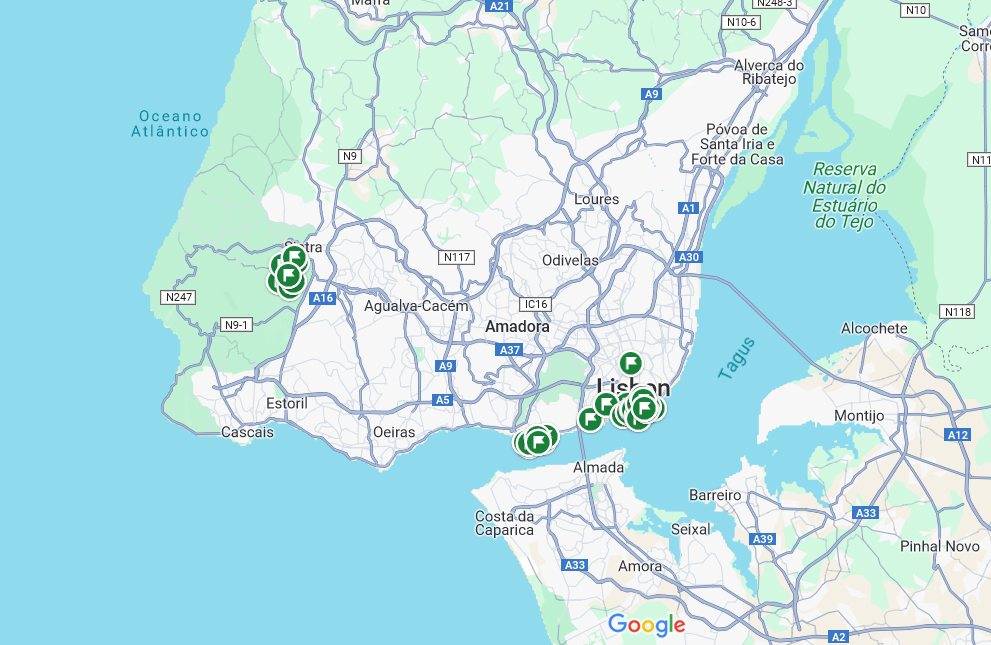
Lisbon is the second oldest European capital after Athens and has had a varied history, being ruled by Celts, Phoenicians, Romans, Visigoths and Moors before becoming the Portuguese capital in 1255. There is a fabulous amount of history on display in the city and an easy day trip away is Sintra, holiday resort of the Portuguese royalty and nobility for 500 years. It is also the largest and richest city in the country and has a very international feel with a huge variety of shopping and eating options. It was also our first city break with my sister and brother in law so it was going to be interesting on many levels.
Our Accomodation
We stayed in the Turim Terreiro do Paço Hotel, chosen primarily for its location in the heart of the historic centre. Right from check in (with Filip) service was fabulous. Everything was explained to us and if we wanted to visit anywhere we were given options and advice. The location of the hotel was fabulous, other than the Belem area we were able to walk to every attraction we wanted to see. There are also plenty of dining options within 5 minutes walk and the whole area is clean and well looked after.
Our room was a good size, very clean and internally quiet with decent wifi. There was street noise from the trams sometimes though but the windows were all double glazed. It was great to have a kettle in the room so us Brits could have a cup of tea! I would have liked power sockets on both sides of the bed and also the option to use stairs other than as a fire escape, sometimes it’s too much effort to wait for a lift and stairs are an environmentally friendly option. The breakfasts were very good with a large selection of both hot and cold dishes and the usual attentive service. The combination of location and hospitality helped make our stay in the city enjoyable.
Lisbon Cathedral
After sorting our rooms out we took our first walk into the city, heading towards the cathedral. We’d agreed a rough itinerary before the trip but also accepted that each couple could do their own thing too. We had a quick lunch in a nice cafe before continuing the walk uphill to the cathedral. Portugal, or certainly the historic area, seems to be a city of hills and these are both quite steep and often cobbled so slippery and noisy!
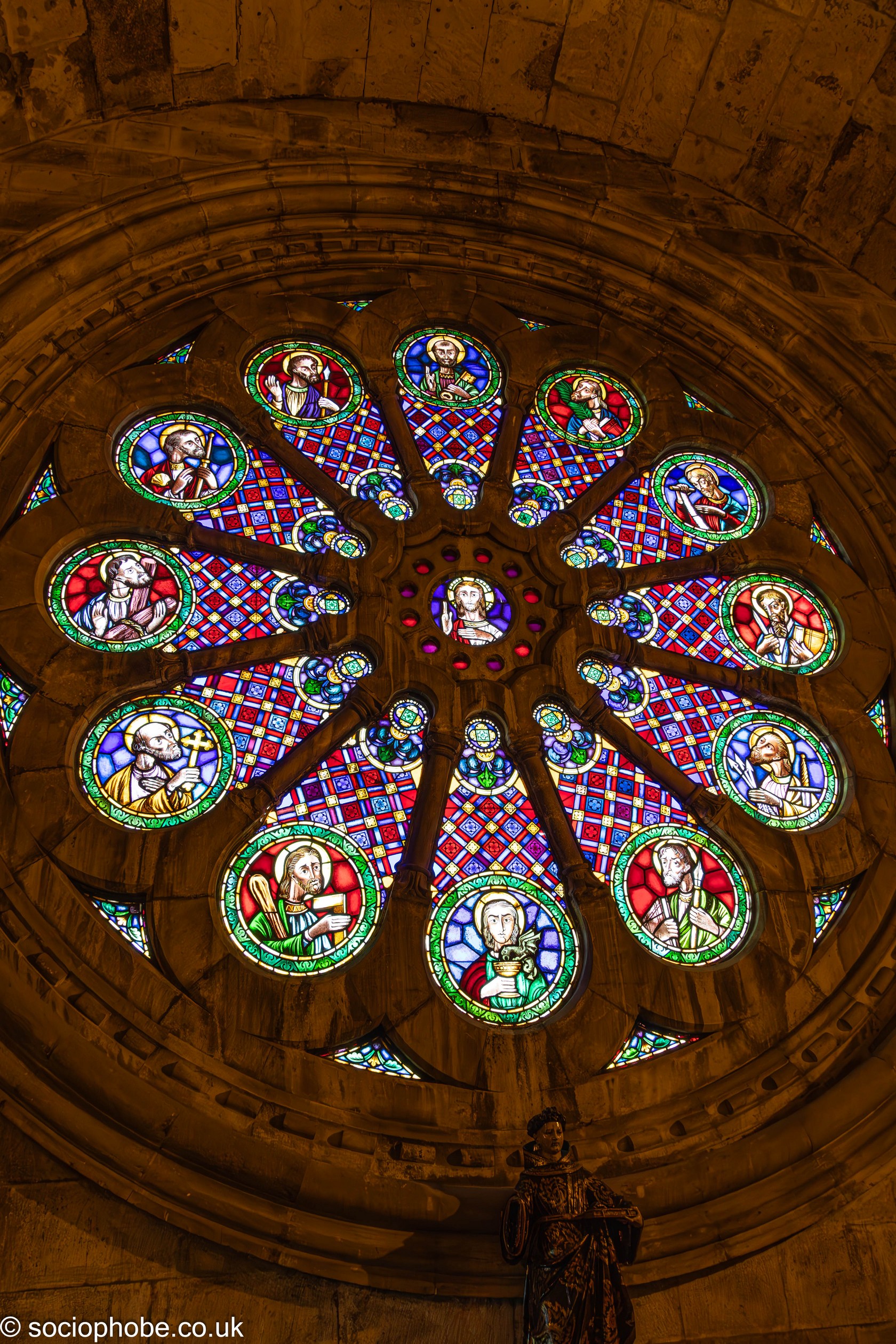
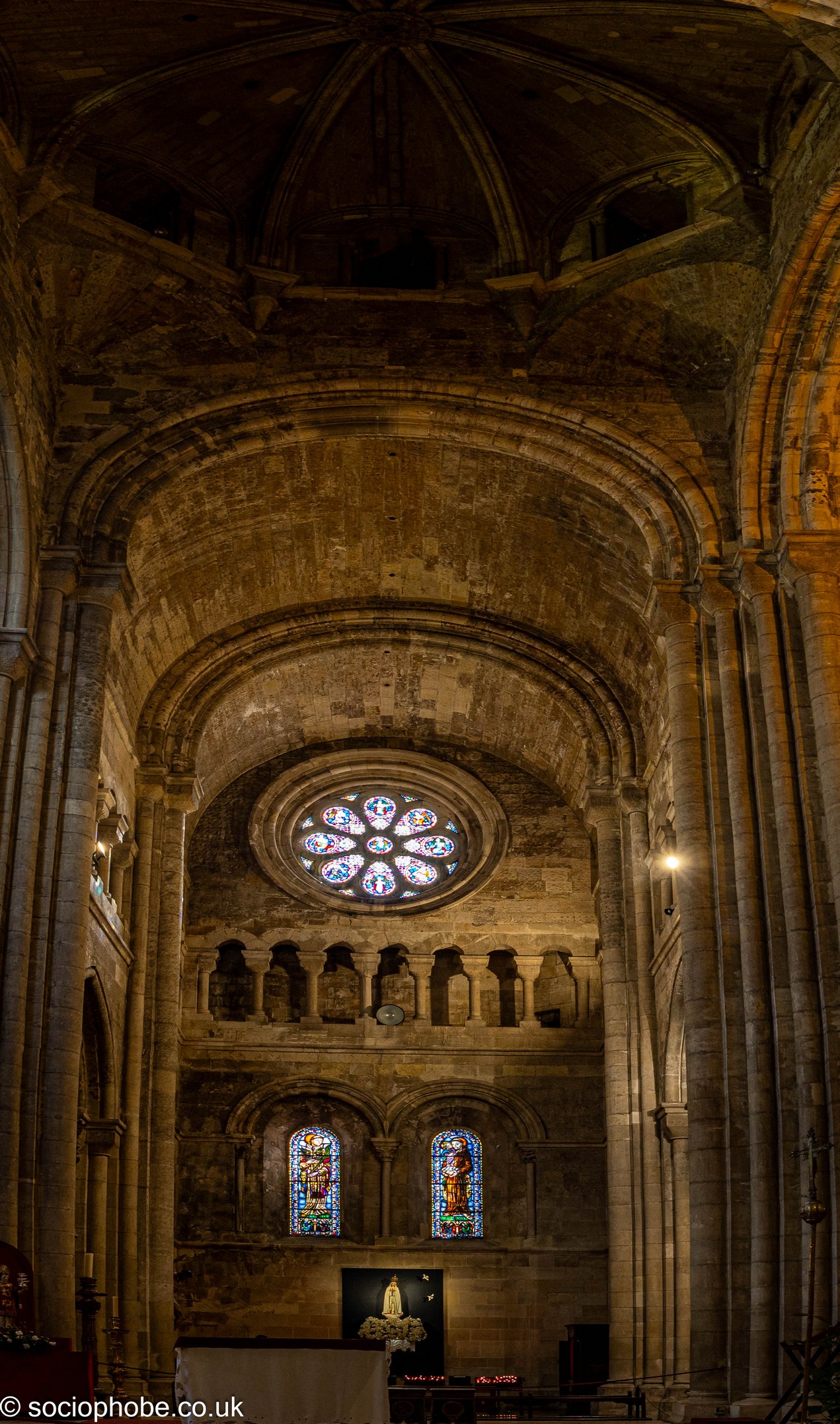
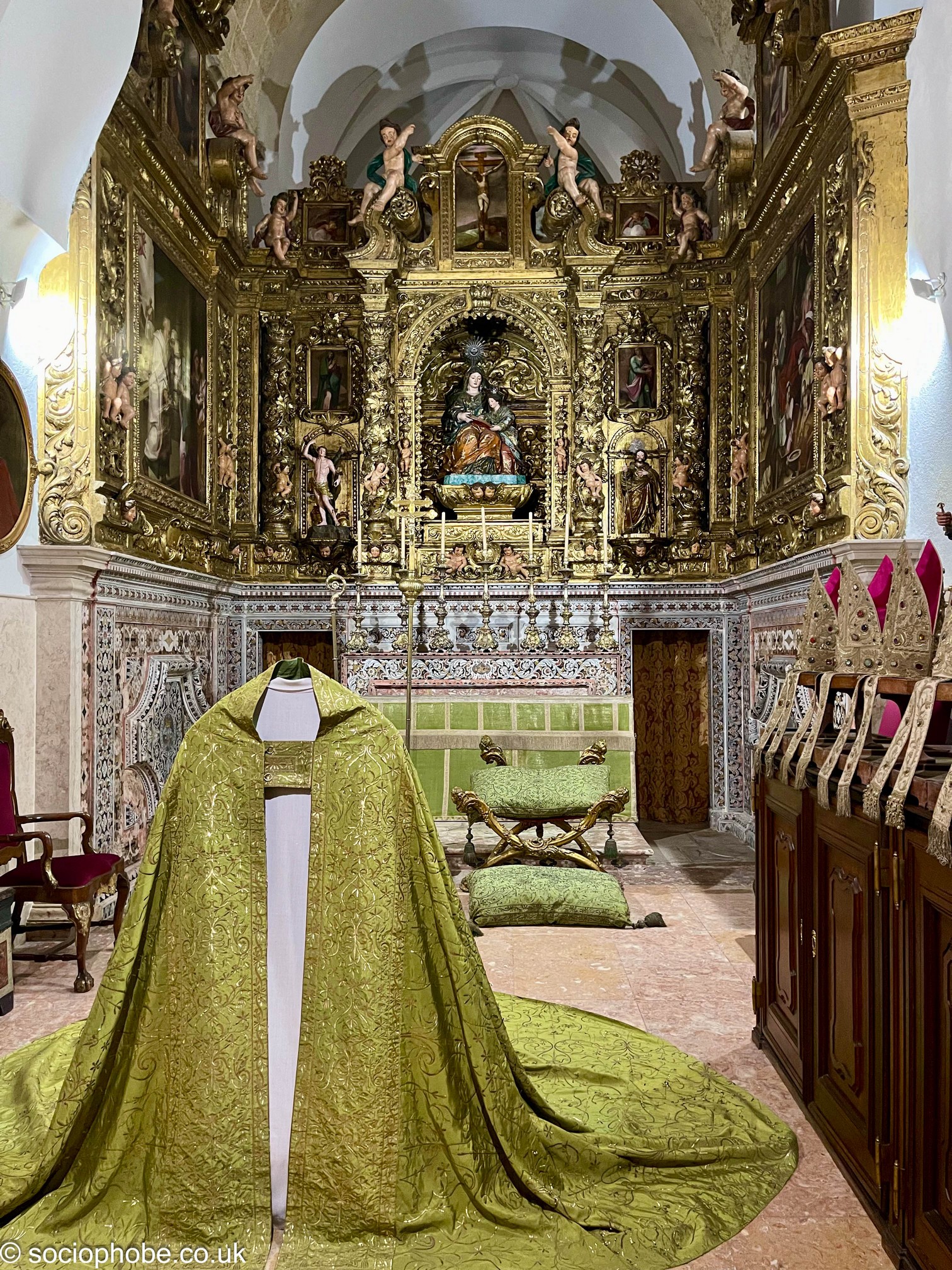
The 12th century cathedral is easy to get to but is now surrounded by roads and buildings so difficult to get a sense of the size or even shape of the building. Inside there is an exhibition of future plans which look like the cloisters will be excavated and then open to the public so that’ll be impressive. The ground floor area was very solid and unpretentious and it was great to be able to go up to the gallery and look down inside the church. There were also views from a balcony and a museum with reliquaries and vestments.
The tombs in the cathedral were interesting in that the effigies of all the women showed them reading books and all the medieval tombs I saw had dogs on them too. The knights buried were shown in full armour and with swords but not with their legs crossed like crusaders which surprised me. A lovely building, well worth half an hour or so and around €6 I think for the entry.




Castelo de Sao Jorge (Castle of Saint George)
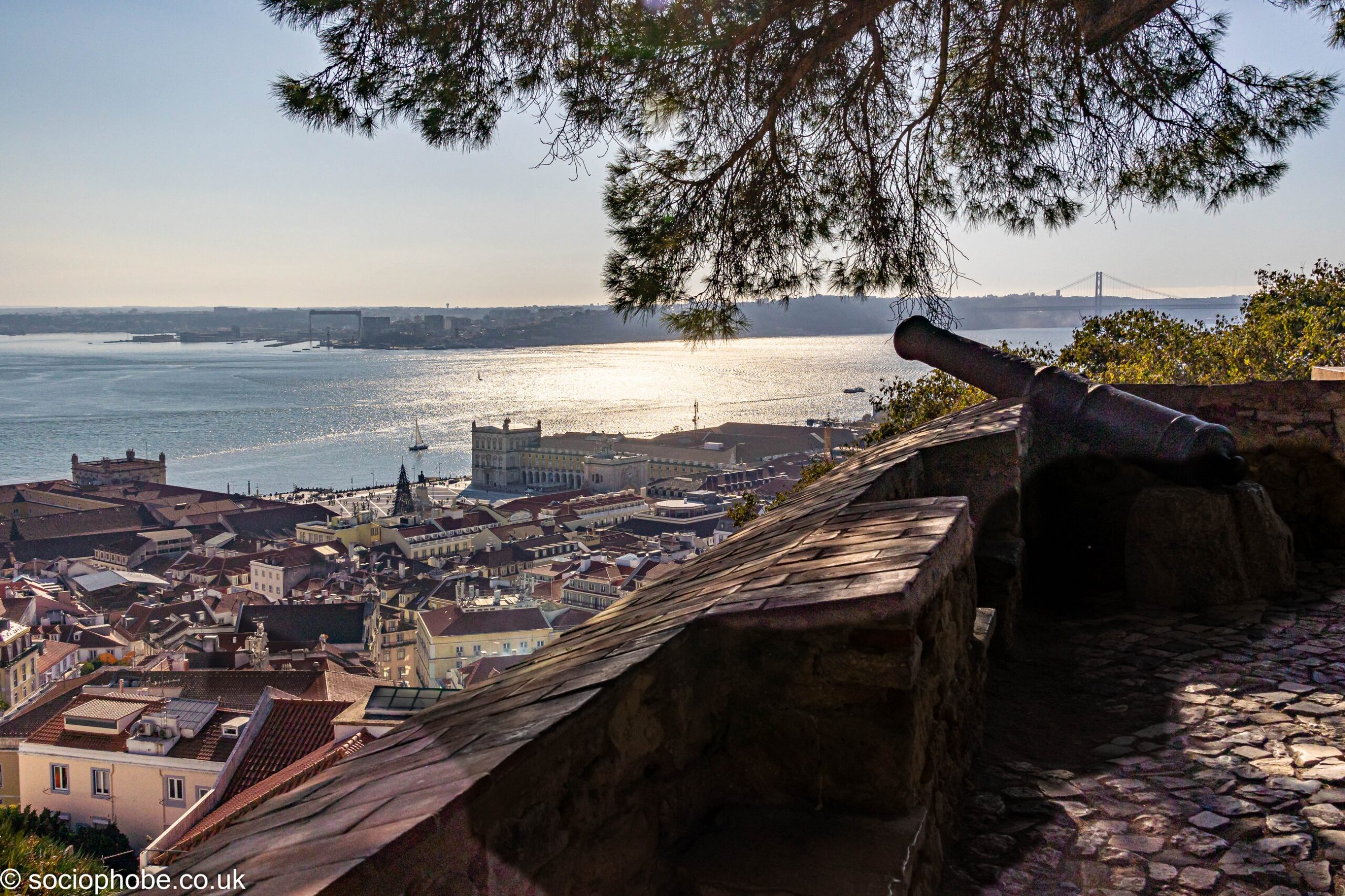
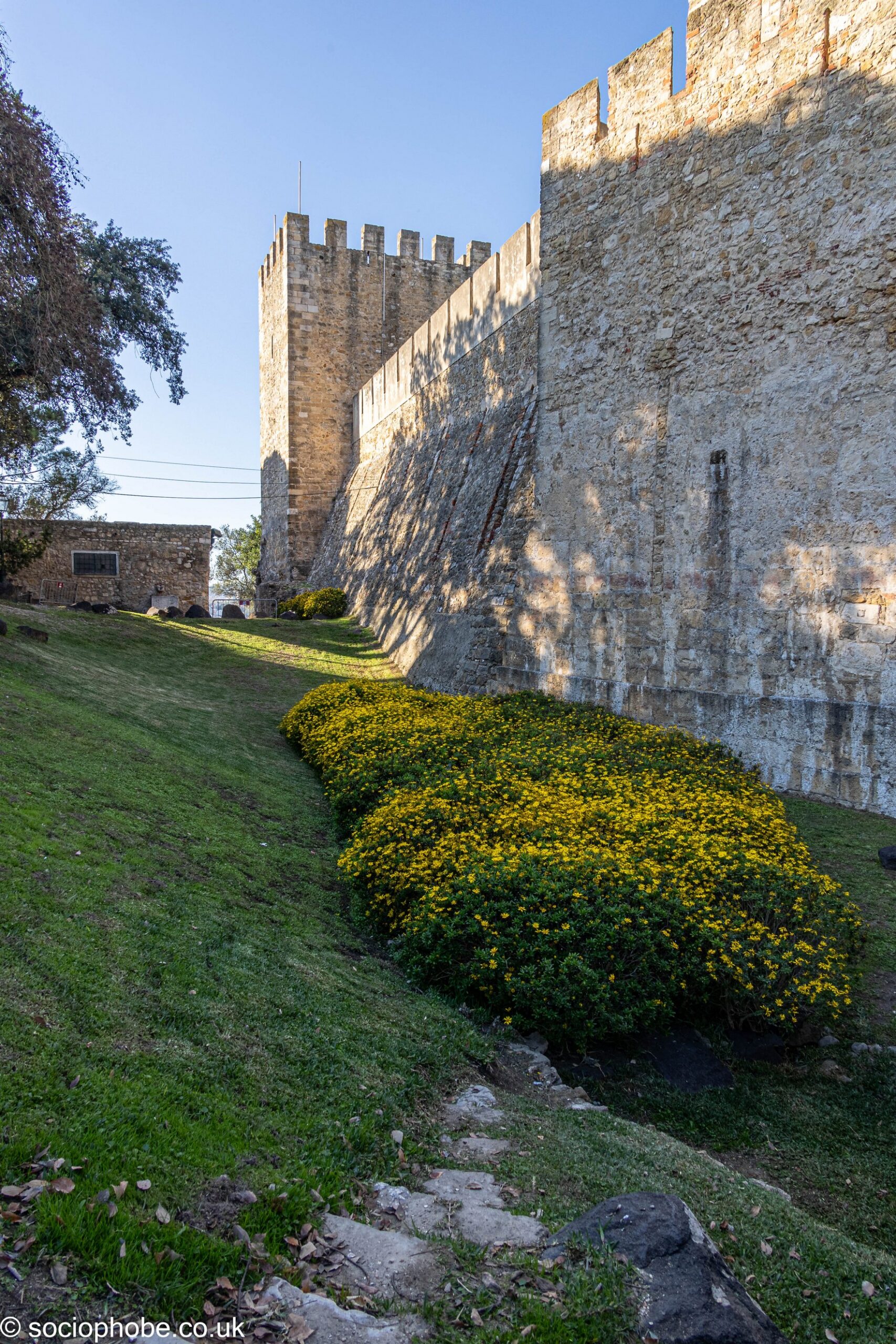
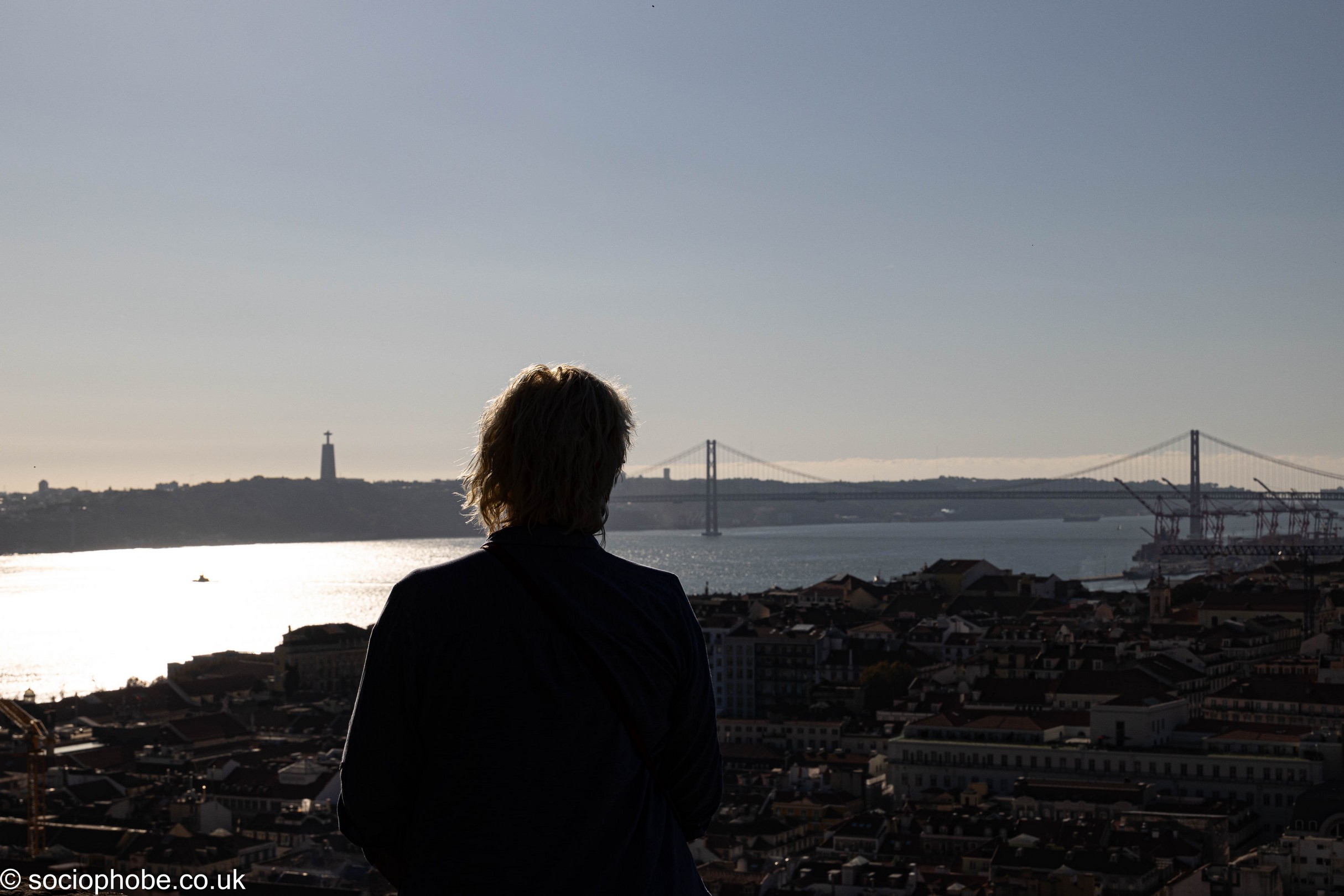
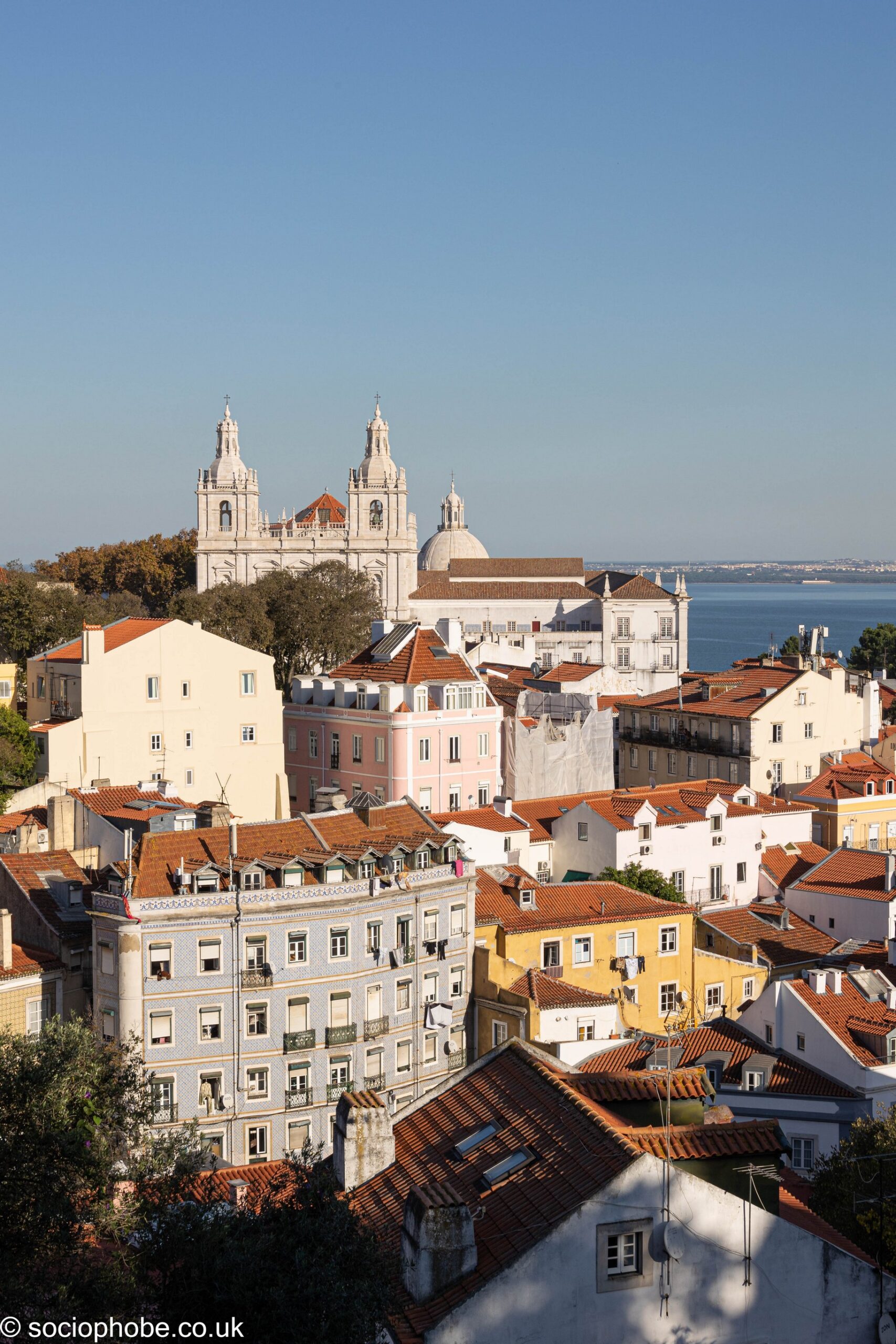
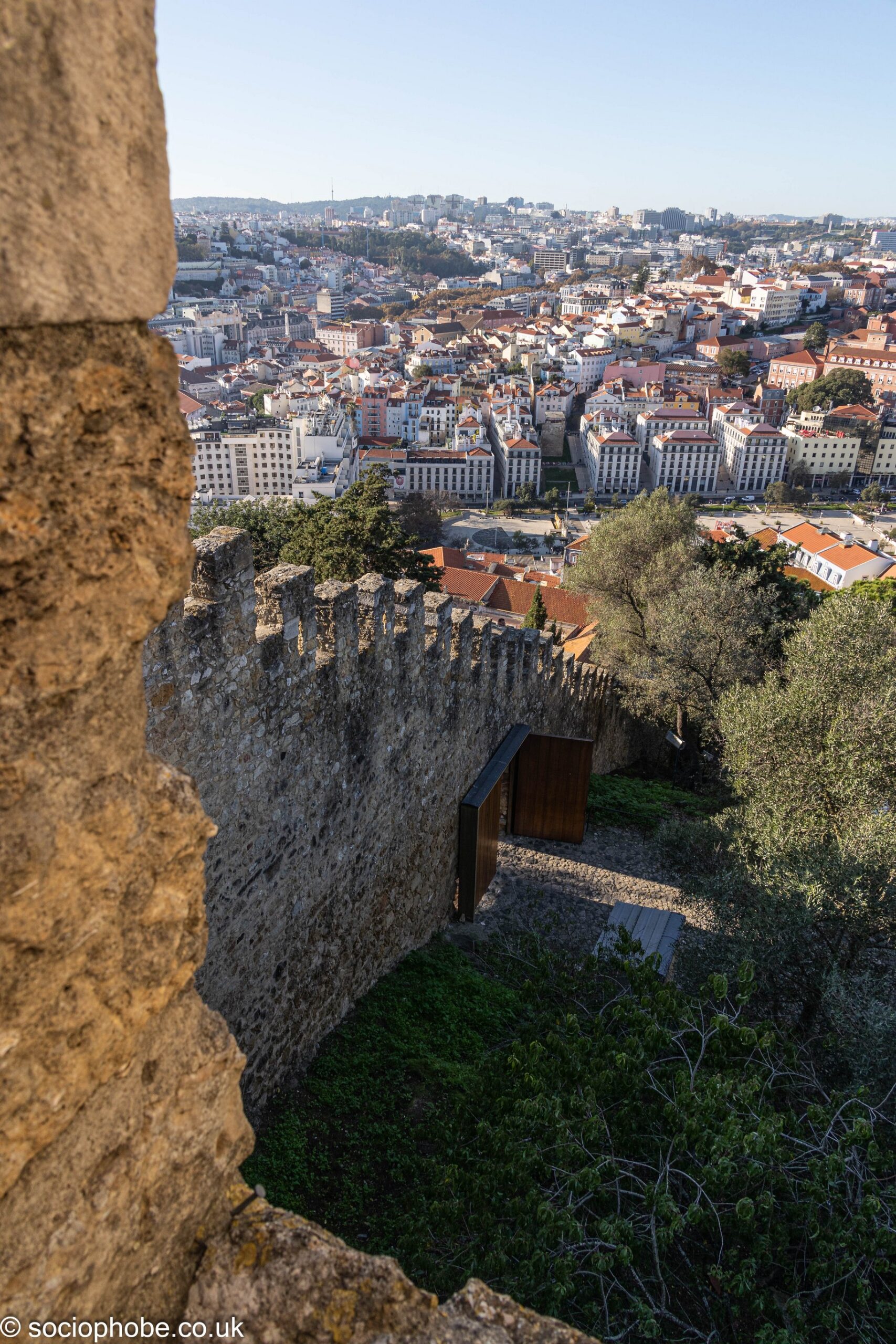
The Castle of St George dominates the city of Lisbon, as a castle should and is a spectacular viewpoint. We visited mid afternoon on a Friday and there was quite a queue – maybe 20 minutes. I think it cost €15 entry. Mel and Paul decided to explore the Alfama district instead as the queue was quite off putting!
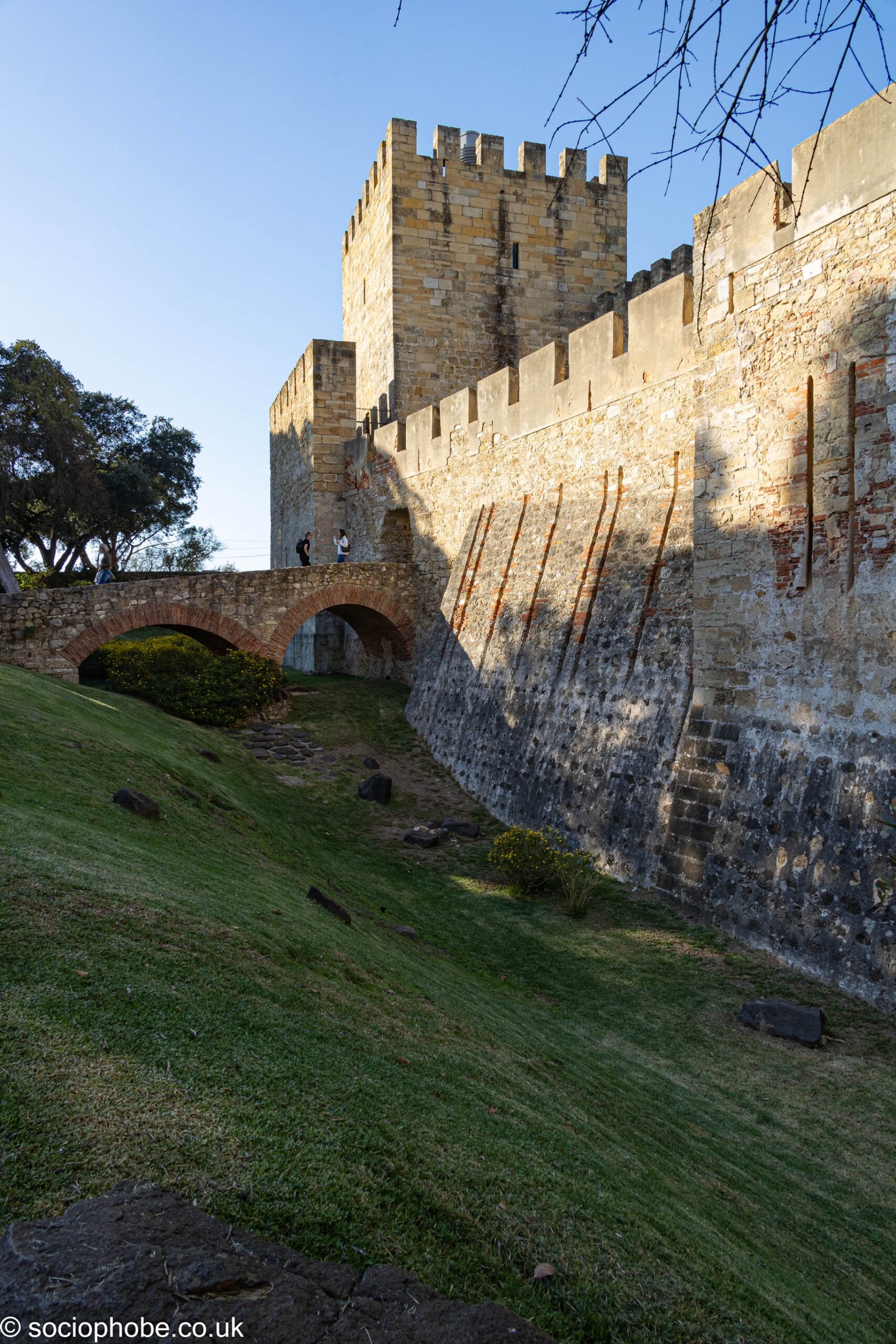
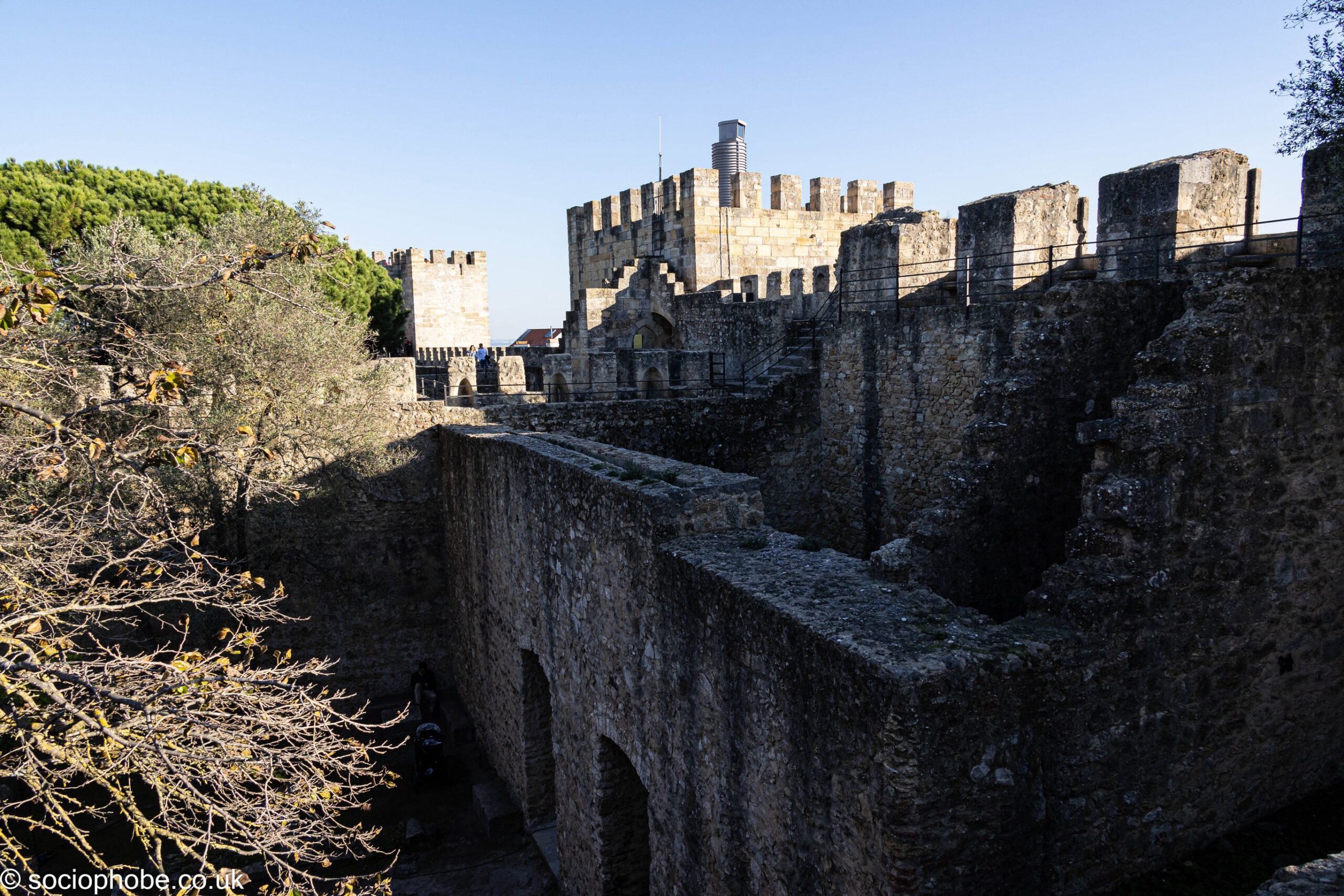
The castle was captured by the Portuguese from the Moors in 1147 and for the next two hundred years underwent extensive modifications and improvements but then suffered inevitable decline as warfare changed and the 1755 earthquake badly damaged what was left. It wasn’t until the 1930s that restoration work began, stripping away later additions and repairing the medieval core.
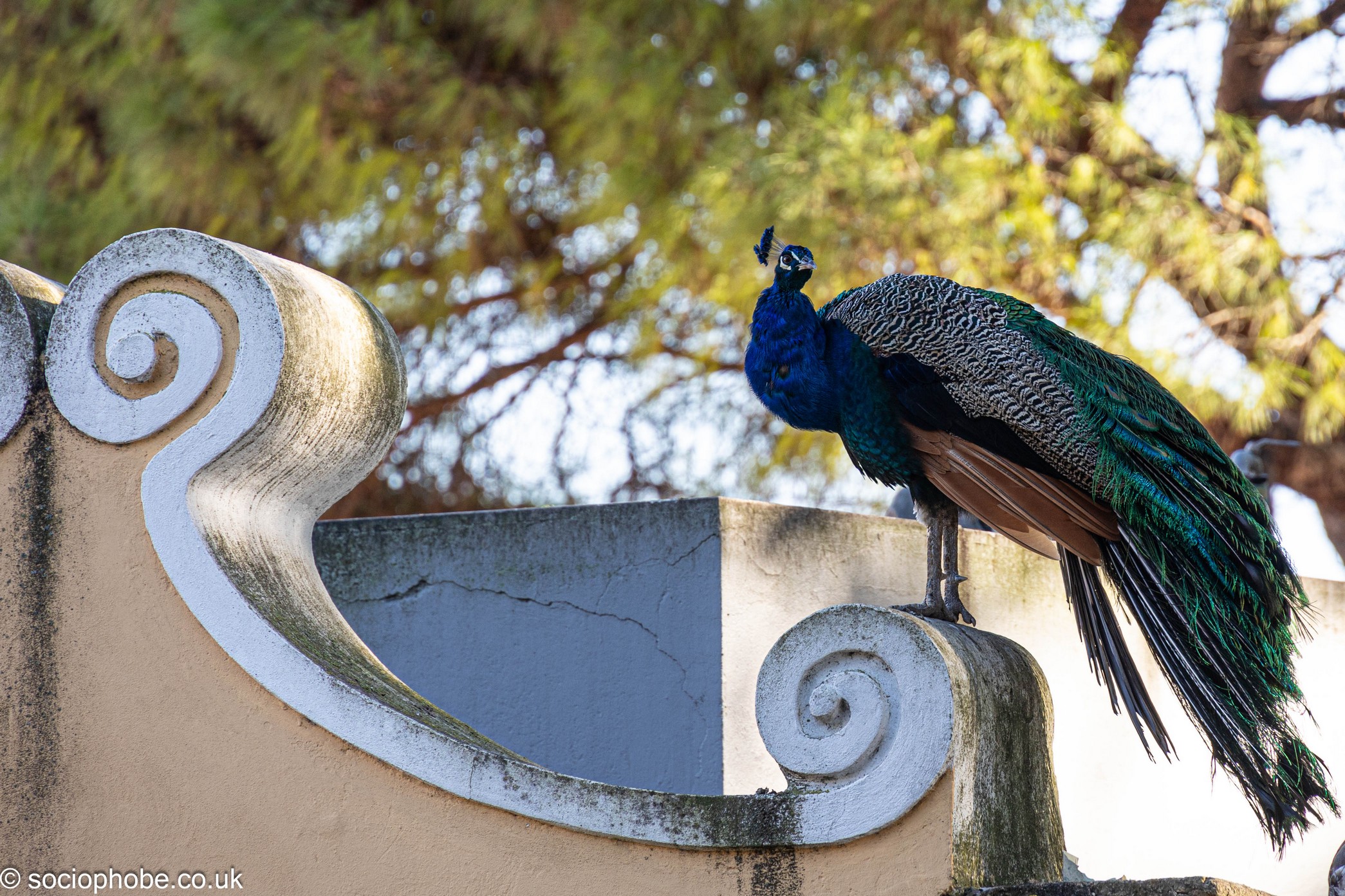
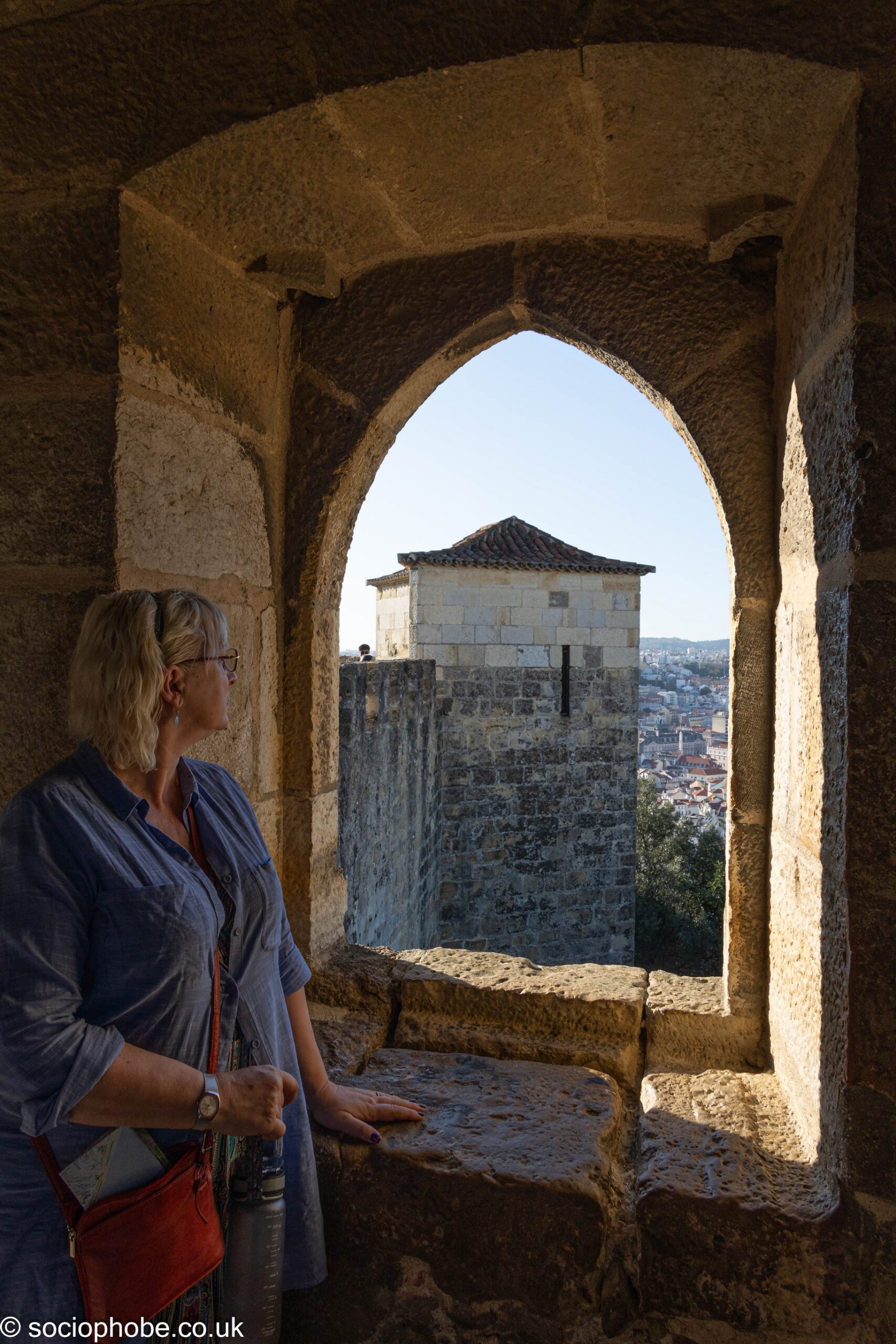
The castle is huge and there are multiple lines and zones of defence. We spent 2 hours there and we didn’t get to see the palace or archeological museum so allow a half day really. There are so many battlements to walk along and towers (empty) to look out from it certainly isn’t a quick visit. It does lack any sort of information boards though and this means either having to download an audio tour – which is intrusive – or having to look stuff up as you wander around. There are a few 17th or 18th century cannons on the battlements and also a lot of peacocks wandering the grounds!






Belem Tower
We all met up back at the hotel which gave me a chance to change out of shorts and into trousers as it was starting to get chilly! One of our great discoveries on this visit was Bolt, like Uber, neither of which I’d used before. Our trip to Belem (about 90 minutes walk) cost us around €20 for the 4 of us and was so much more convenient than a bus.
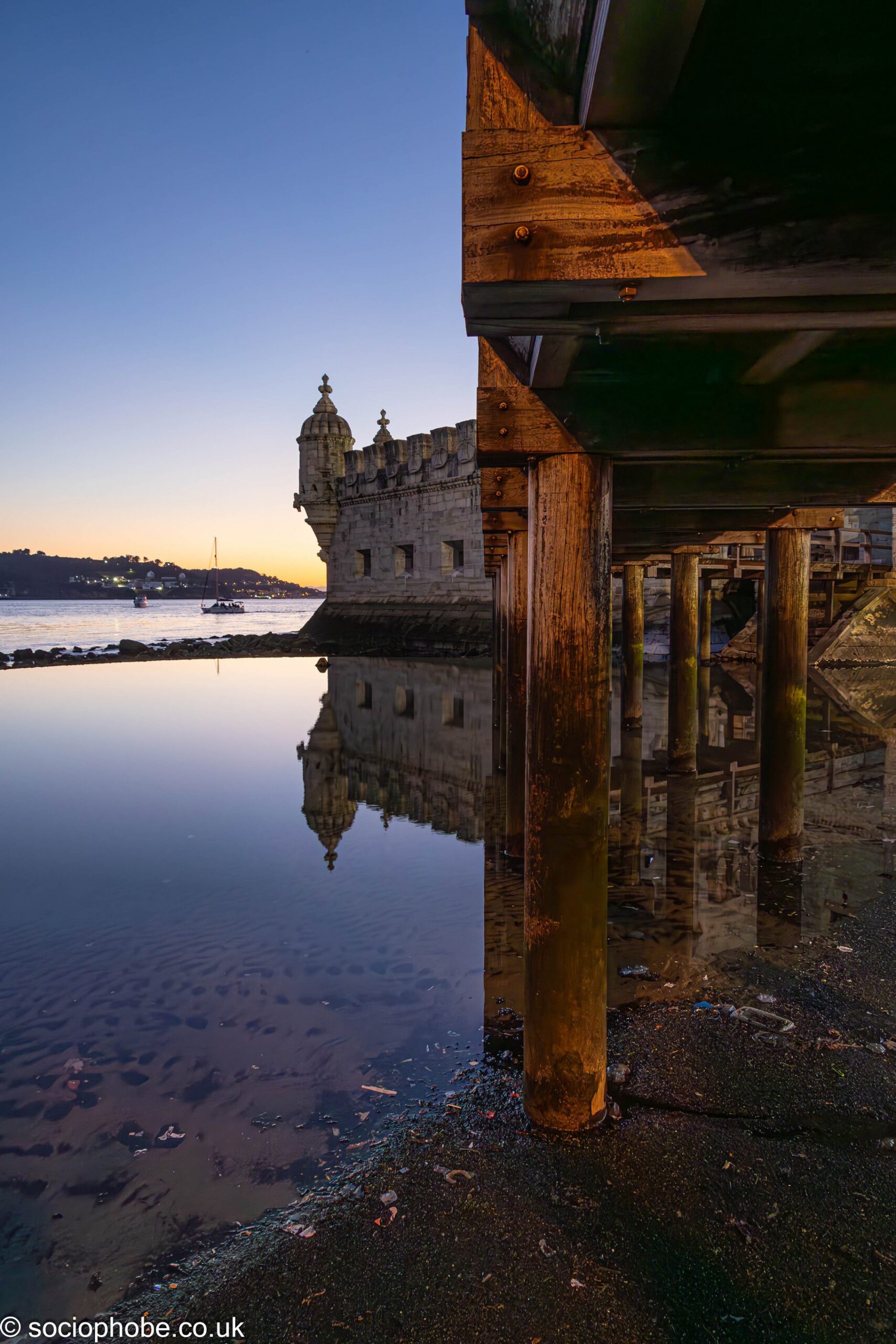
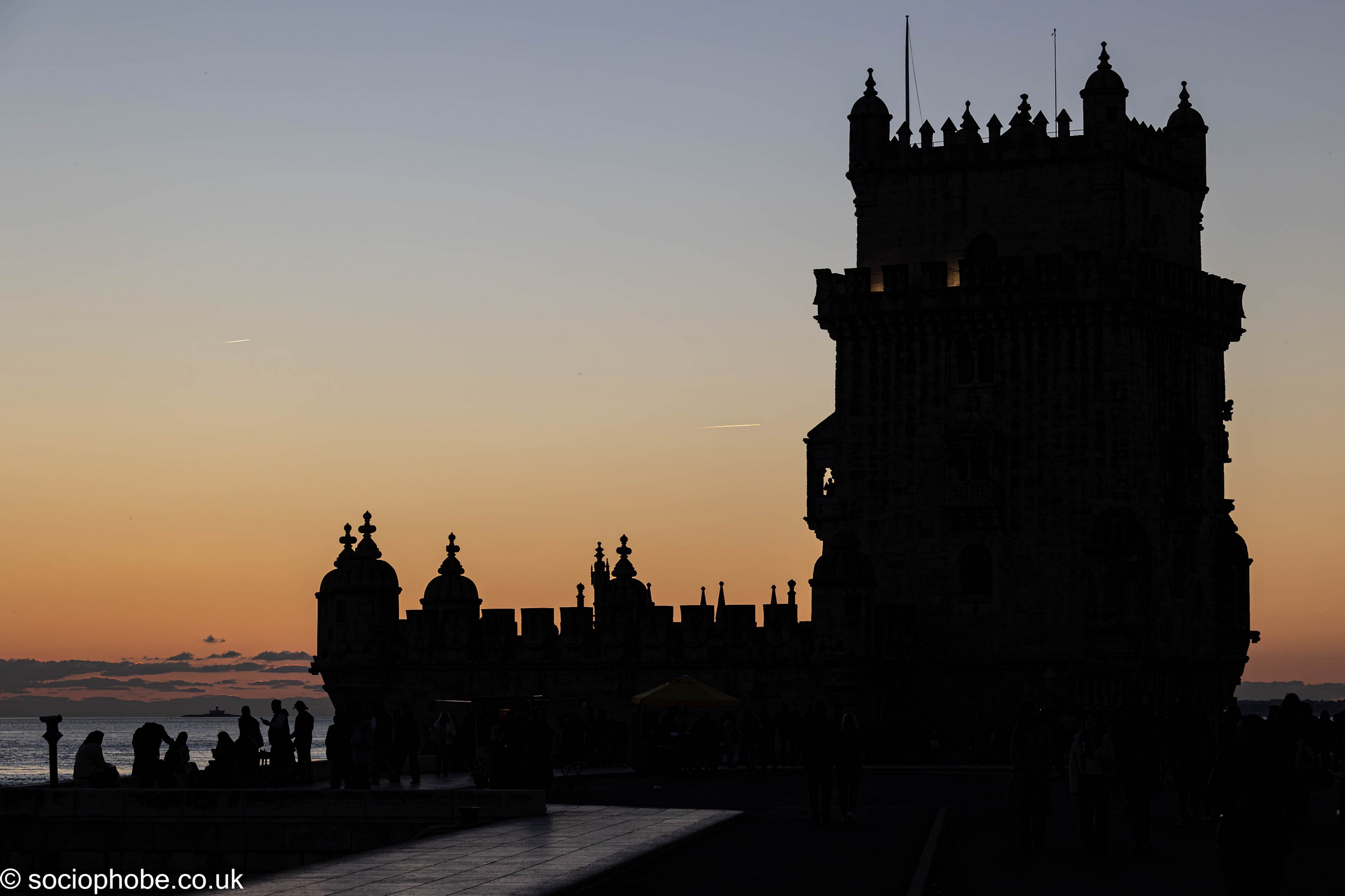
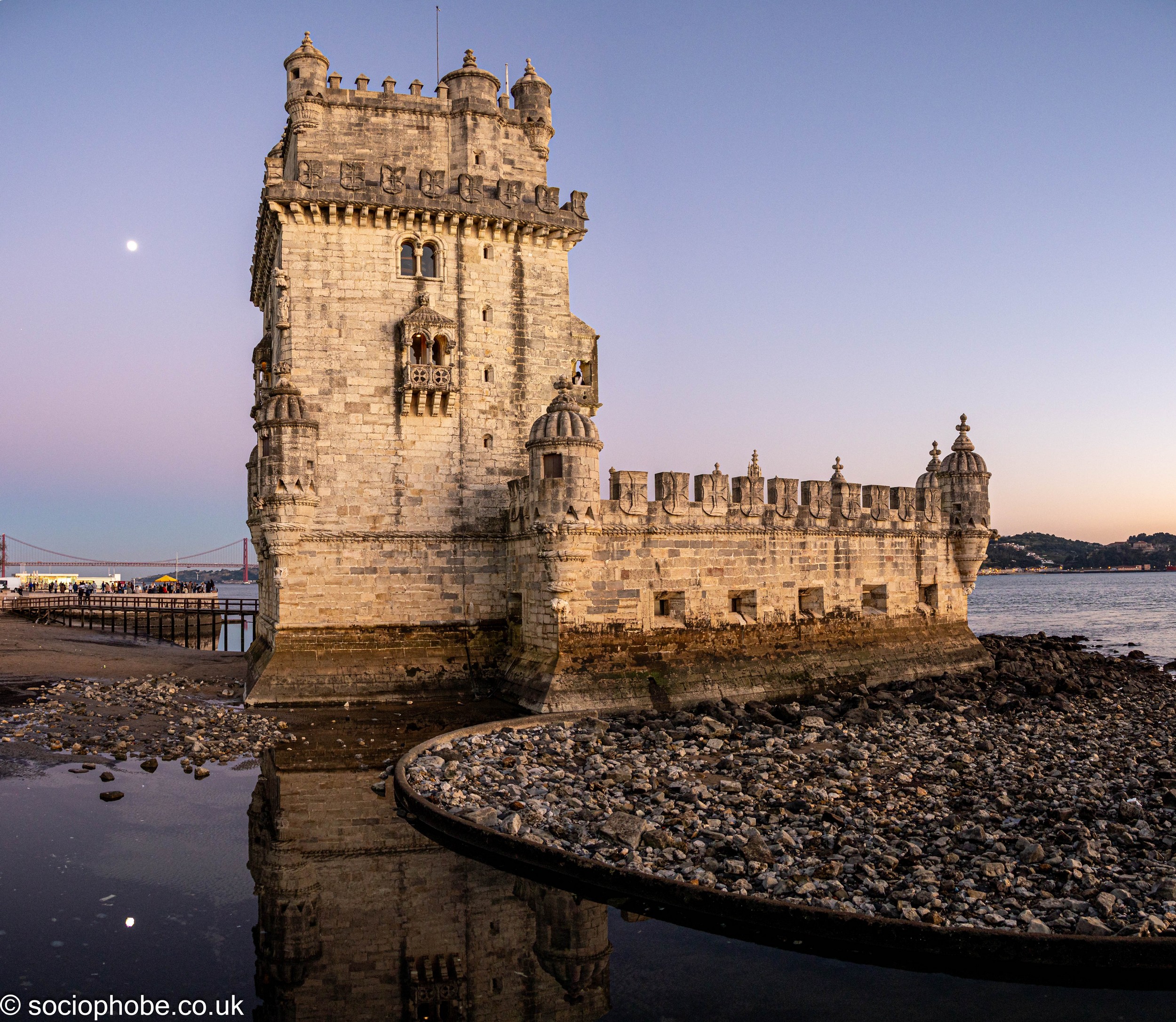
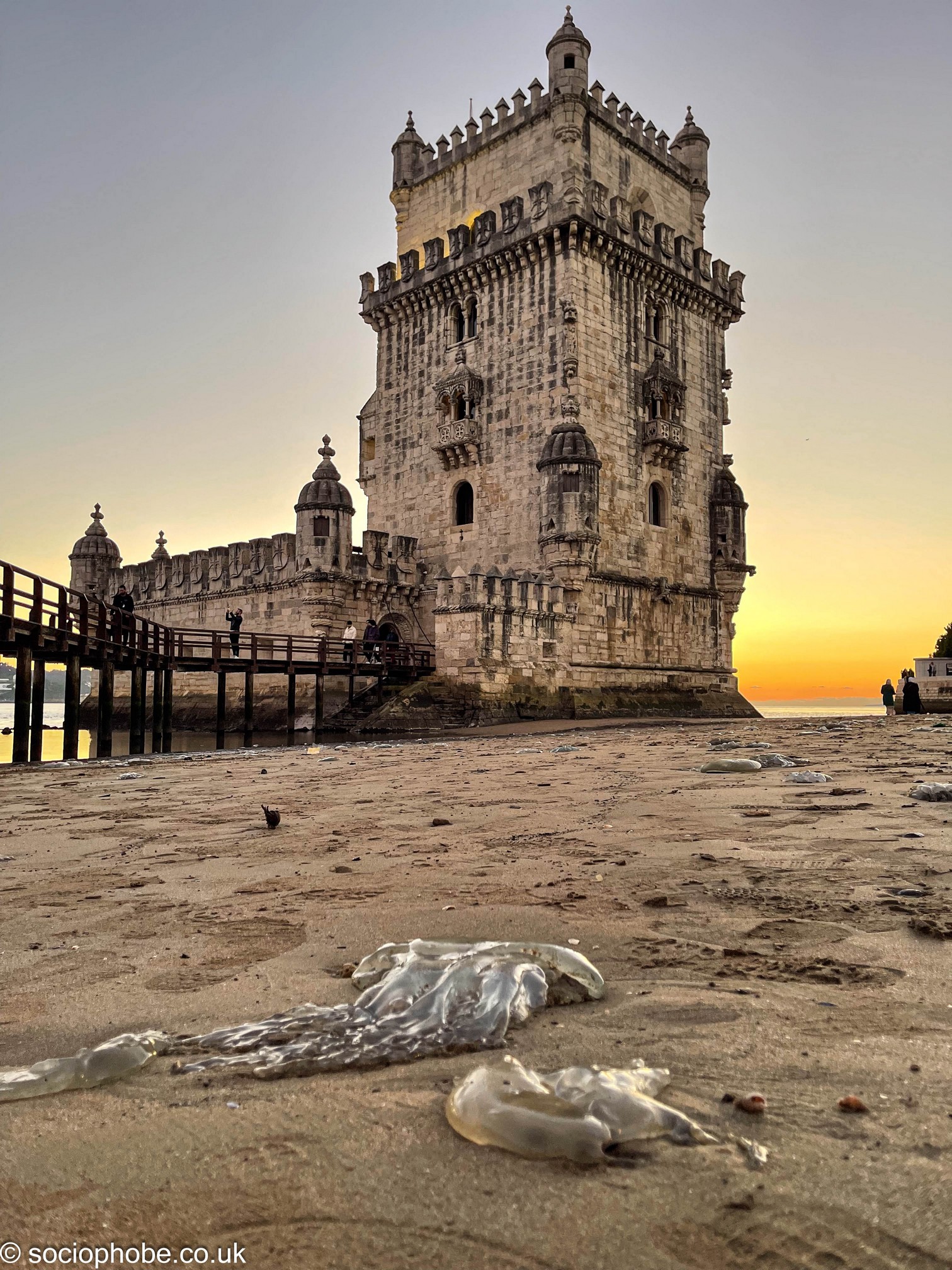
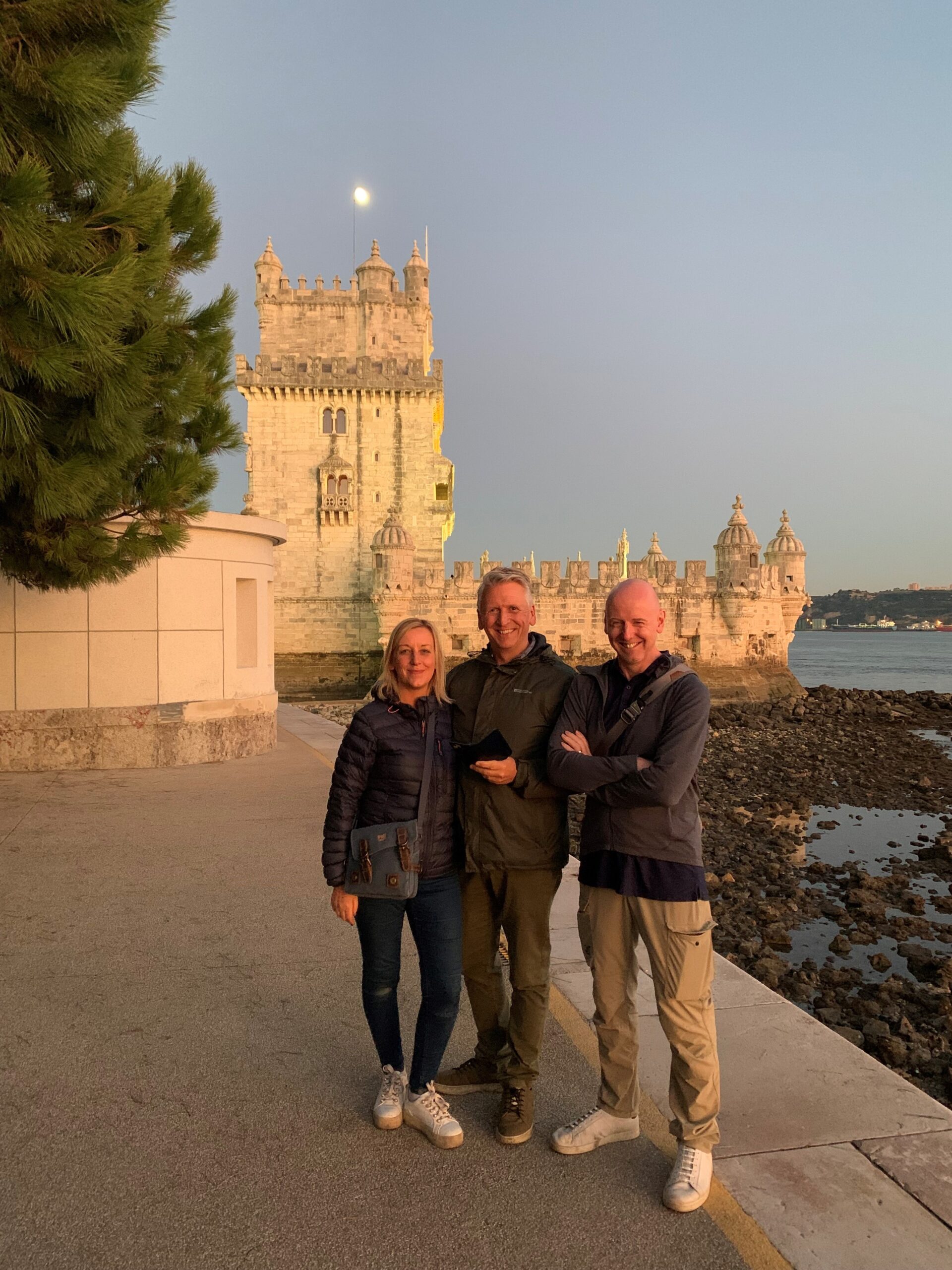
Despite this being our second visit to Belem Tower we still haven’t managed to get inside. I really need to remember to book tickets in advance when we come back for the third time! The tower is in a lovely riverside area that includes the Monument to Explorers and Jeronimos Monastery. We arrived just after sunset which was a shame but the traffic was so bad it took a lot longer to reach than expected. There were lots of people wandering around and enjoying the view and this was on a November evening so I can’t imagine how busy it’d be in high season! The tower is a lovely place to watch sunset and also wander around, enjoying the promenade and gardens but if you want to go inside, book in advance!
Built in the 16th century, Belem Tower is a small structure with a single 4 storey tower and an attached platform, all isolated from the shoreline with a short bridge linking the two. The tower was designed to protect the entrance to Lisbon and the Tagus and also serve as a welcome symbol for those returning from overseas. As a symbol it certainly is iconic but as a fortress it seems to have been a dismal failure, being captured by both the Spanish and the French after desultory sieges. It also served as a prison until the mid 19th century.





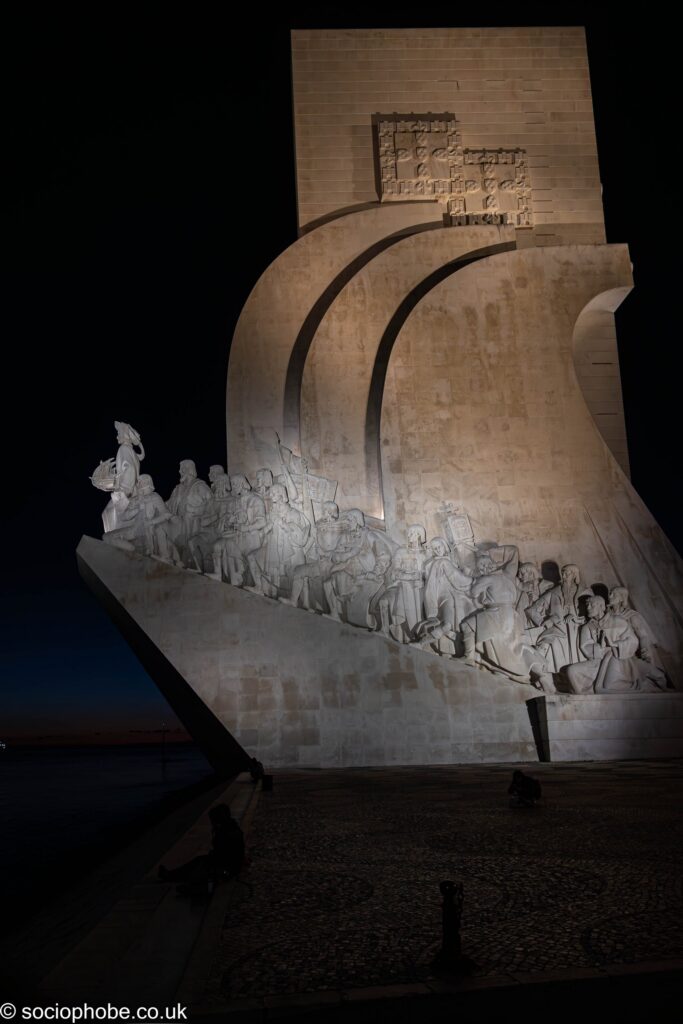
We then took a Bolt back to the centre and ate at a lovely Italian, Prima Pasta, a few minutes walk from the hotel. As we didn’t arrive at the hotel until well after midday we’d done rather well for an afternoon’s sightseeing although the 4AM start was now catching up on us so we all had an early ish night.
National Palace Sintra
Day 2 of our long weekend in Lisbon started with a great breakfast at 8AM we took another Bolt for the 40 minute drive to Sintra. We were intending to go by train but as there were 4 of us Bolt was quicker, cheaper and easier. Sintra is a National Park in the mountains to the west of Lisbon that hosts the holiday palaces of the Portuguese nobility and royalty as well as extensive parkland, all now open to the public.
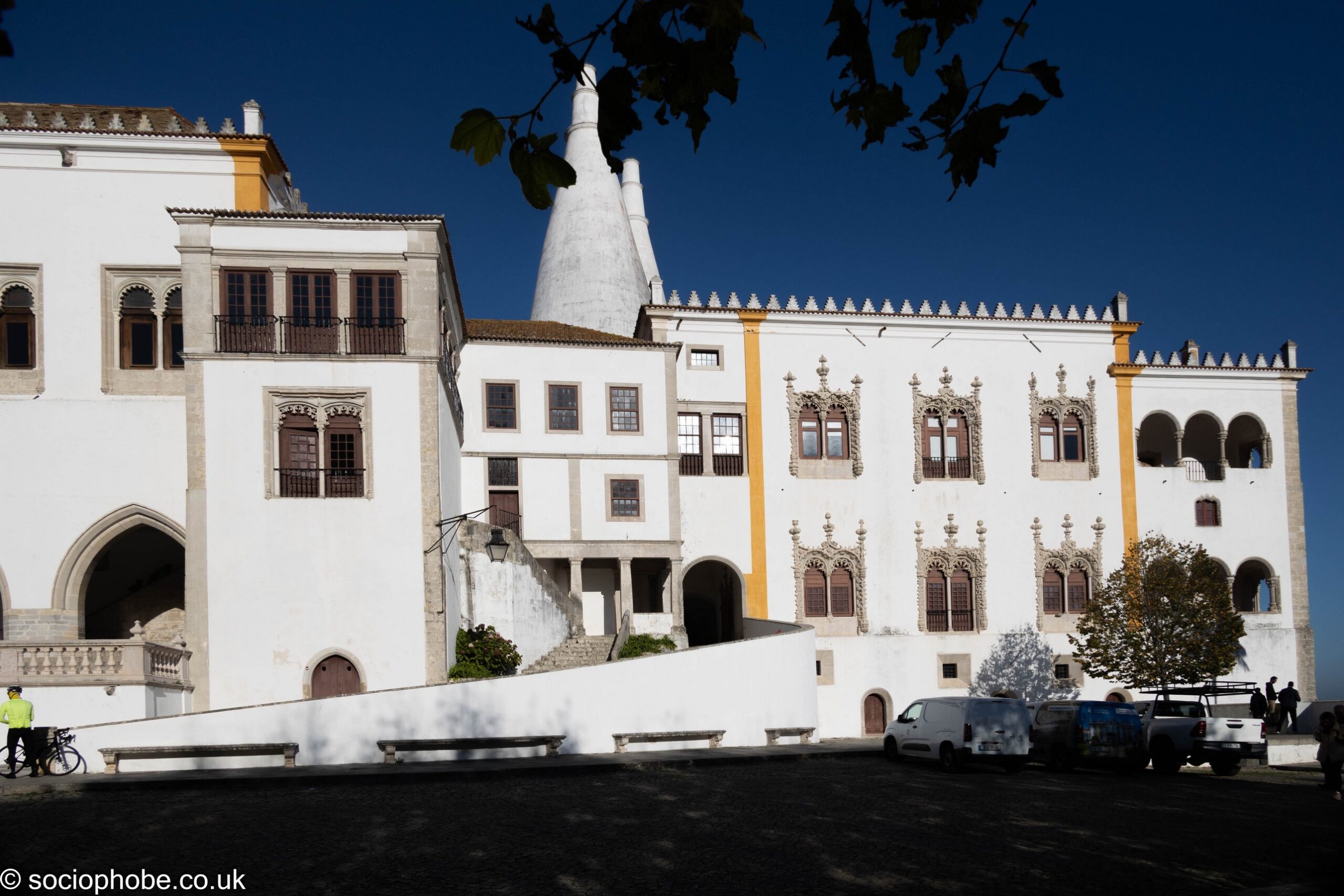
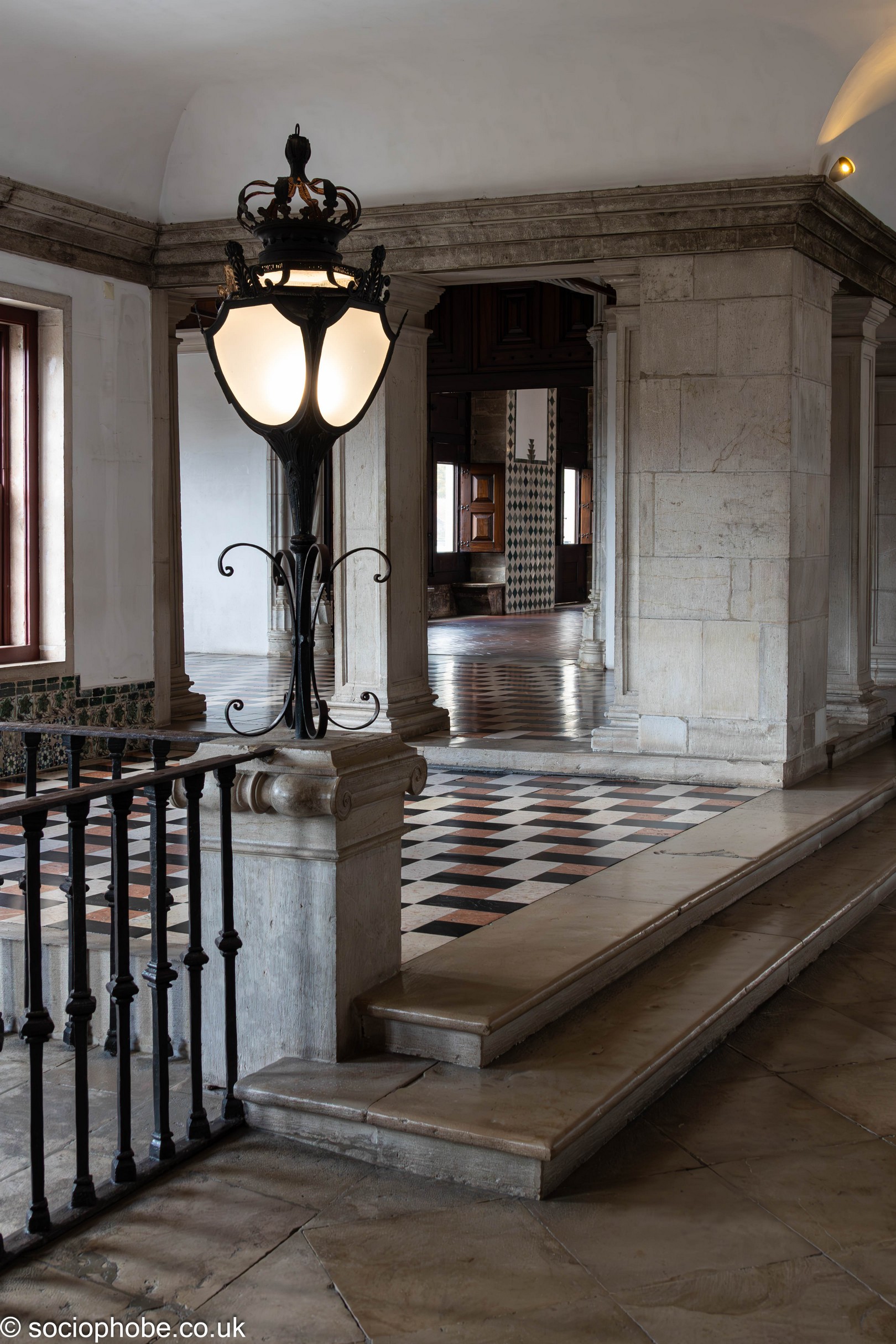
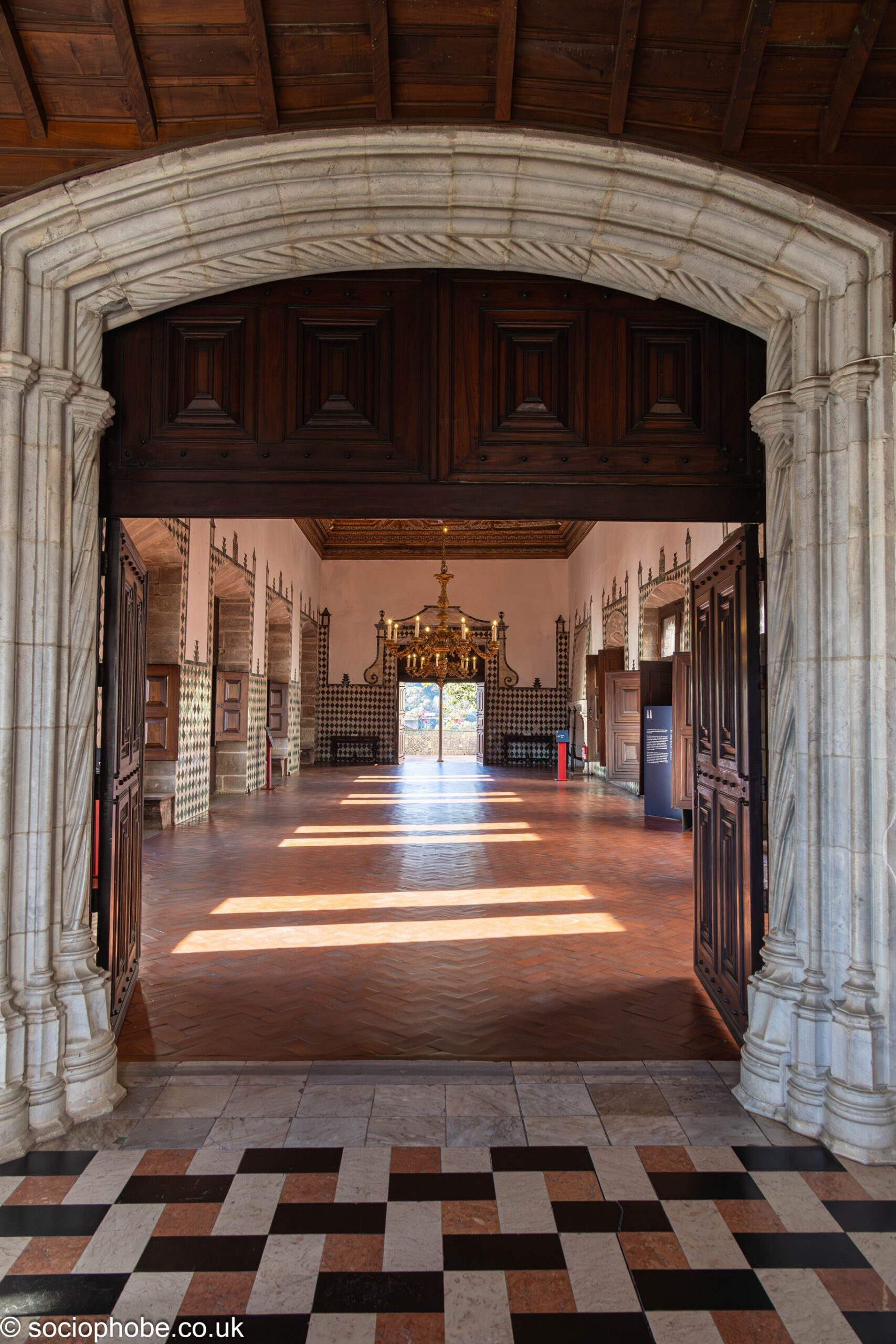
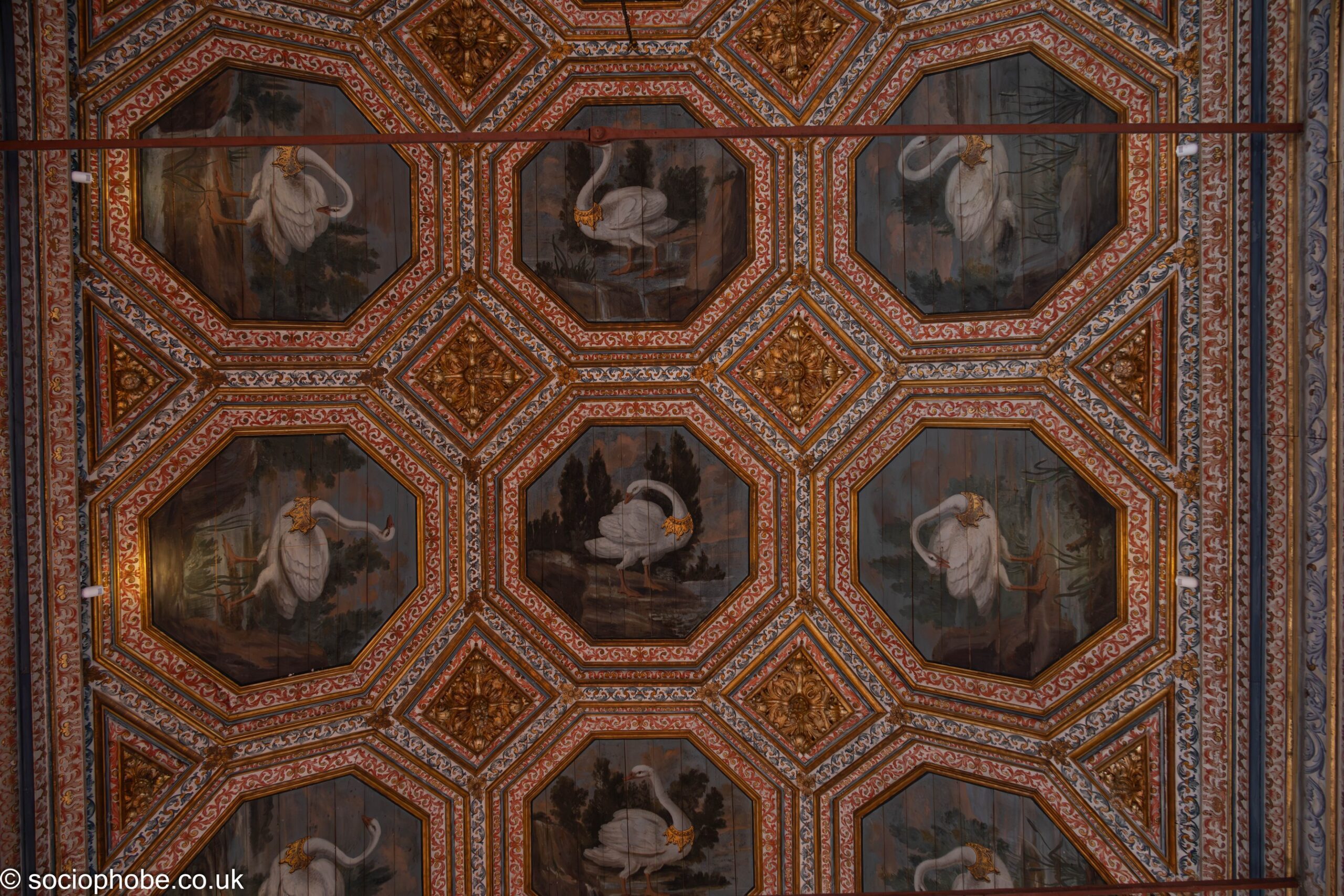
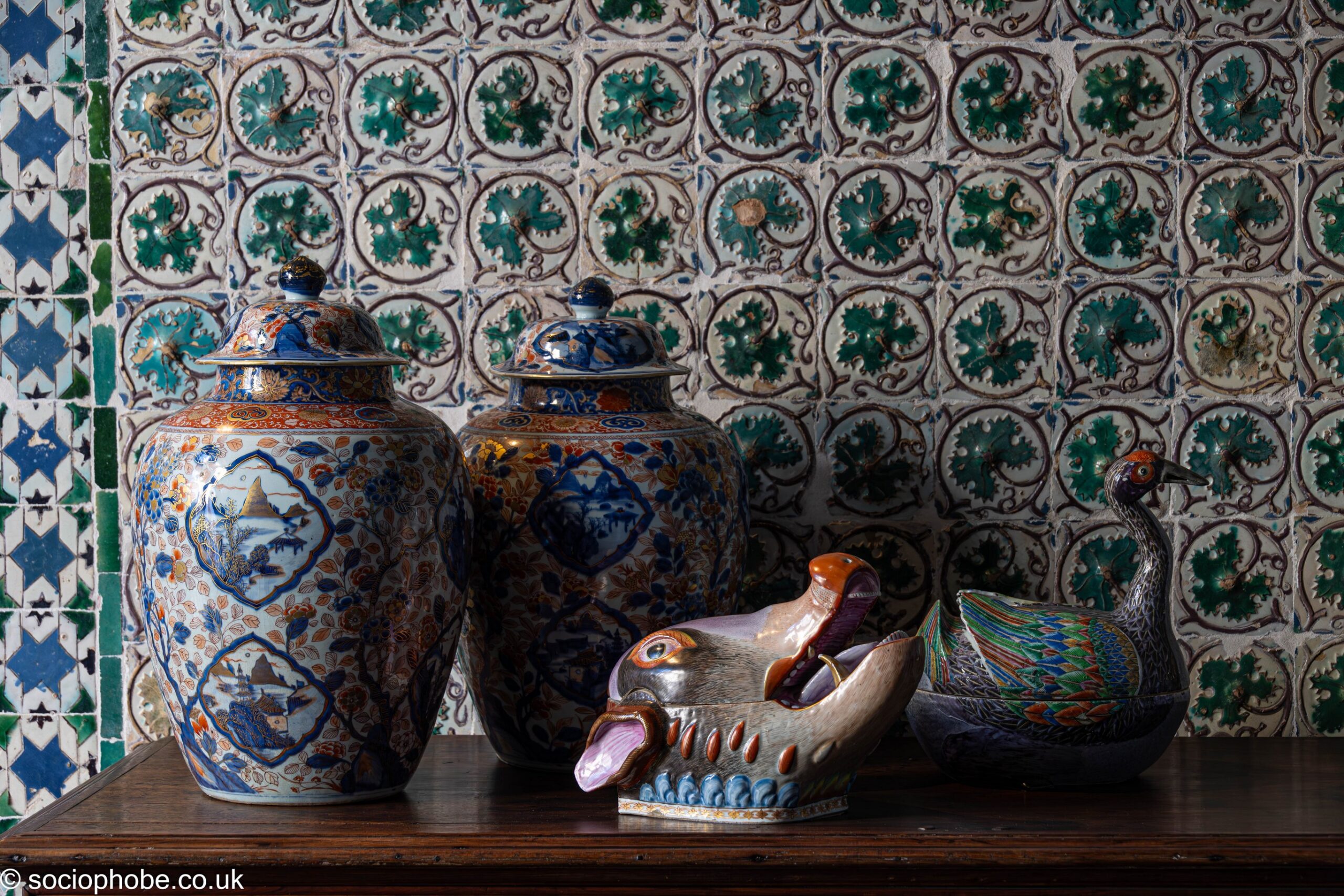
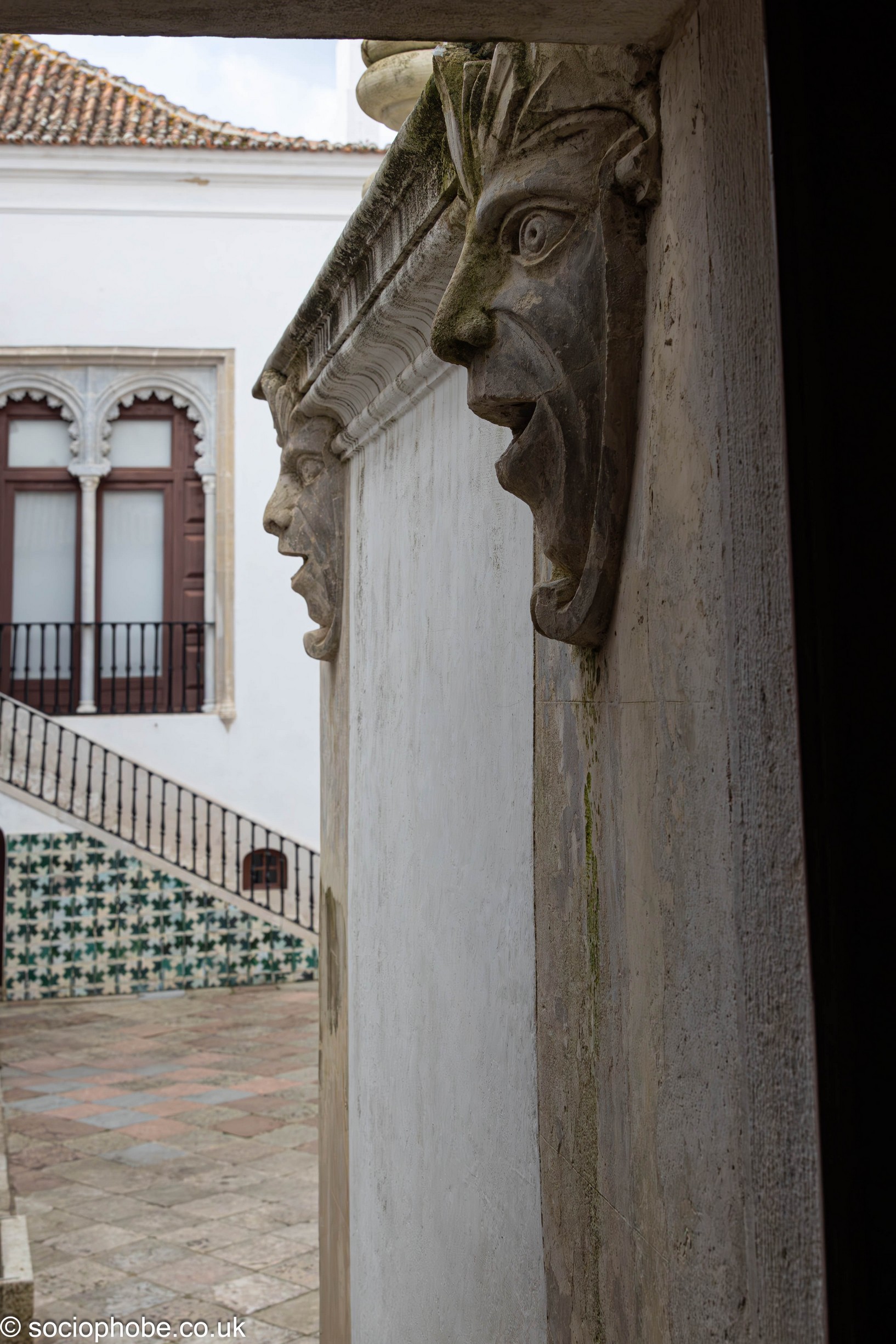
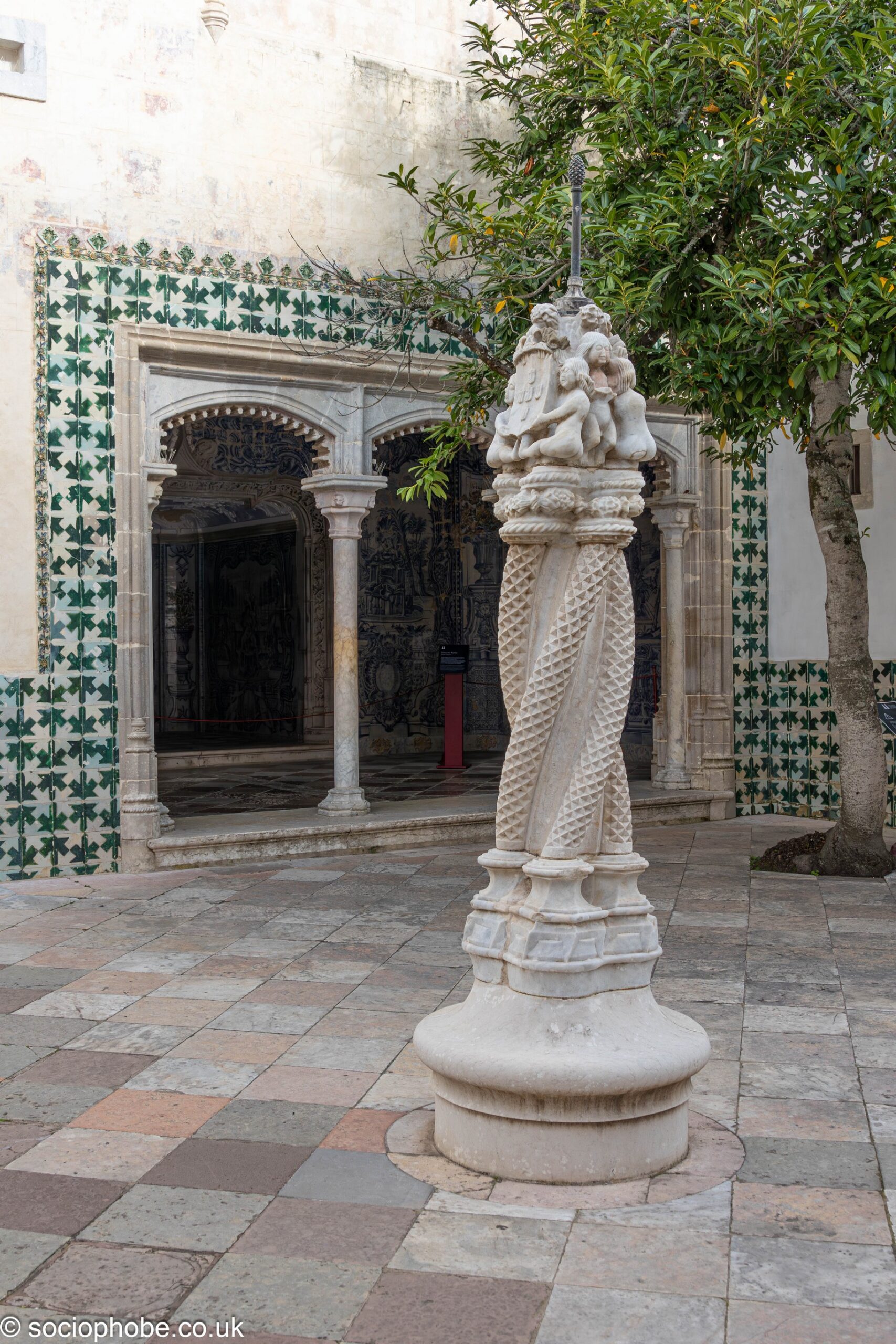
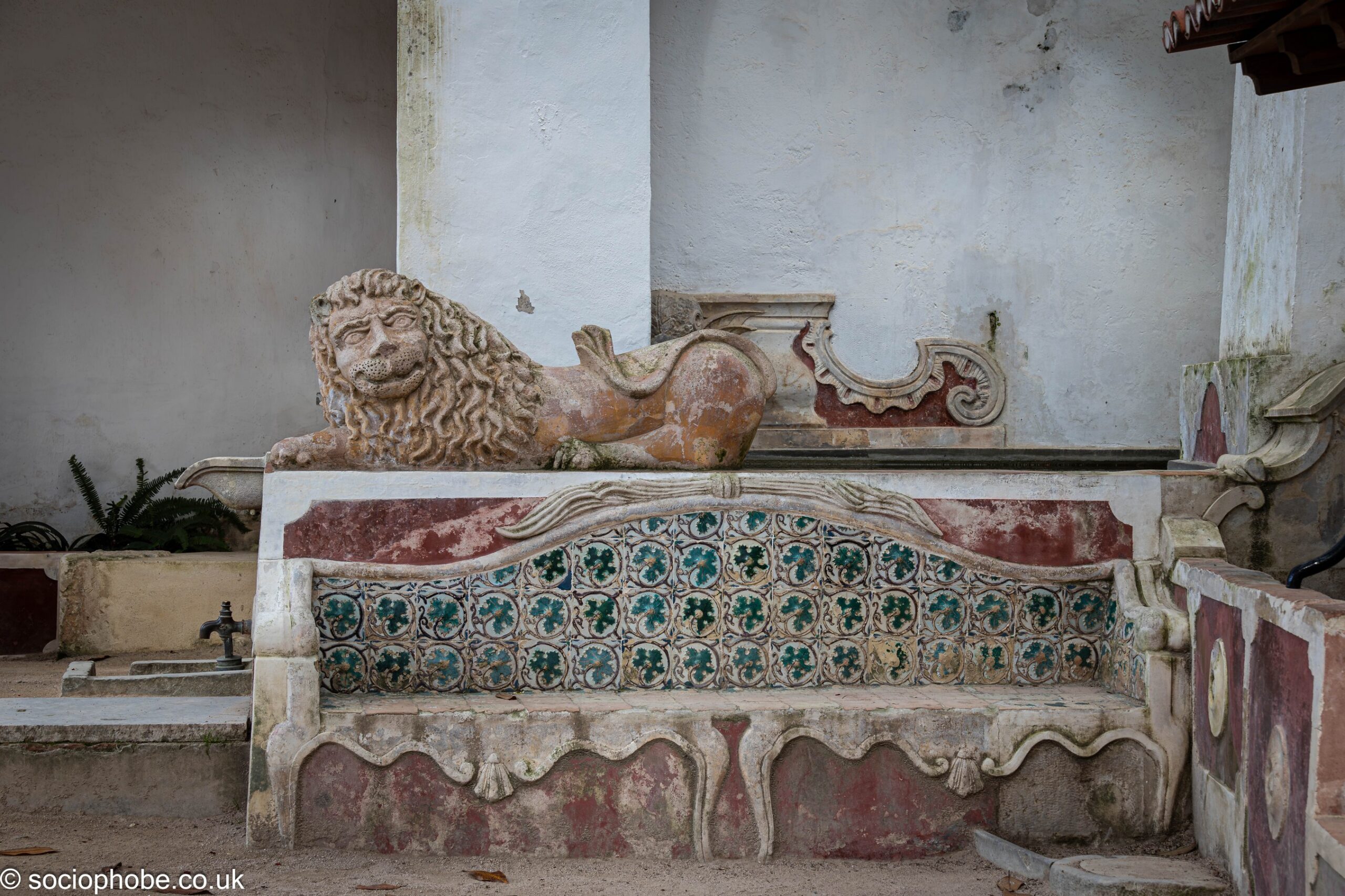
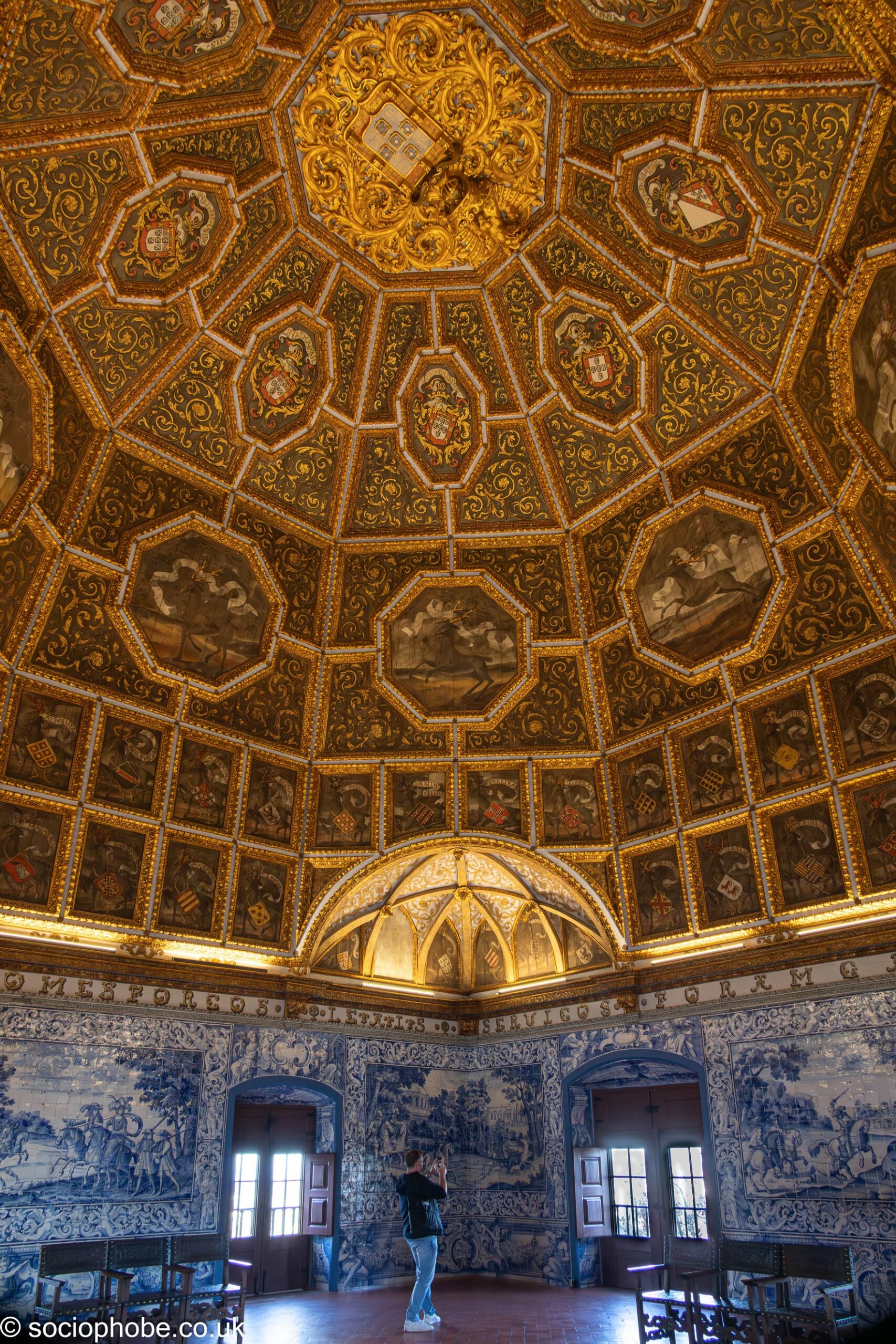
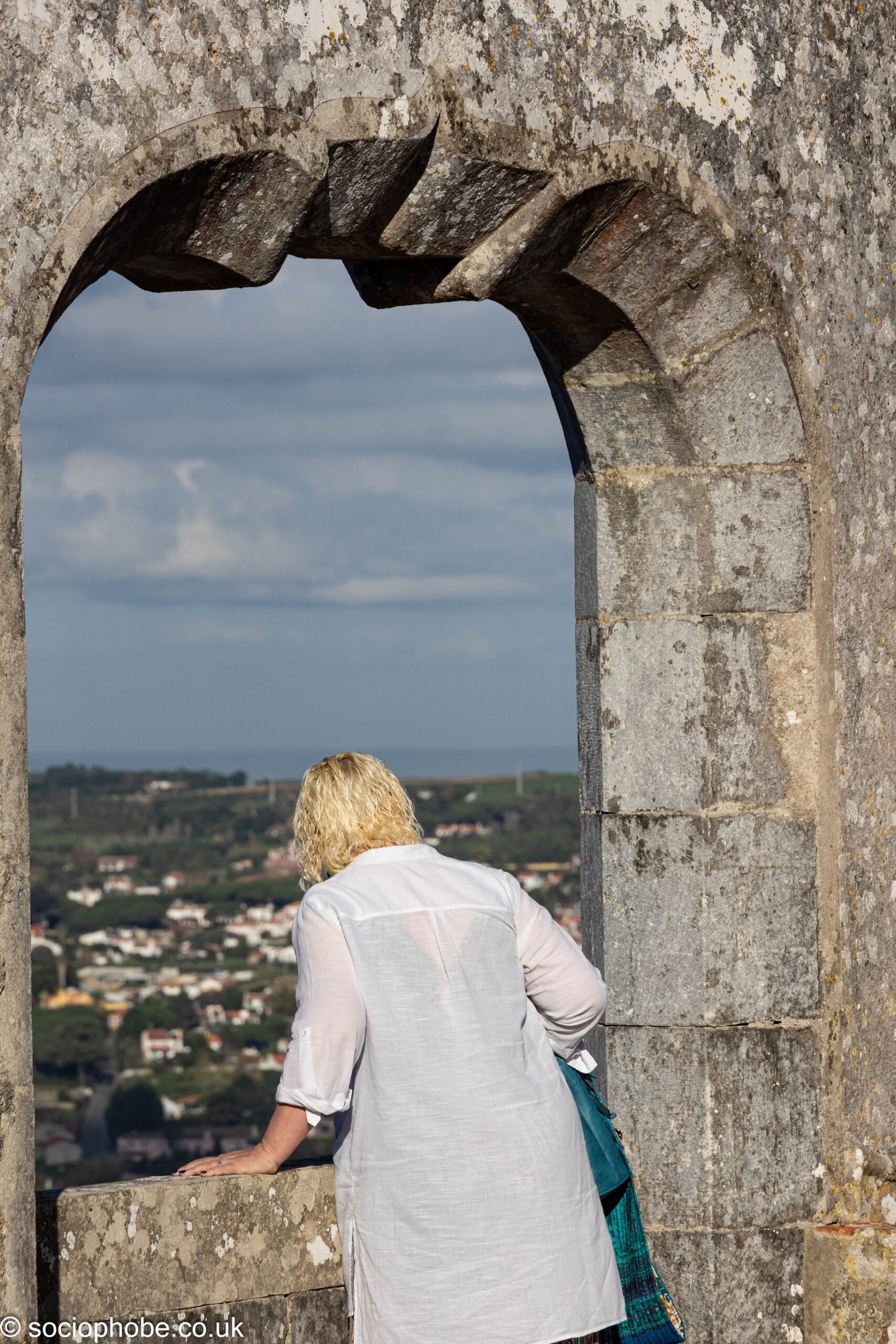
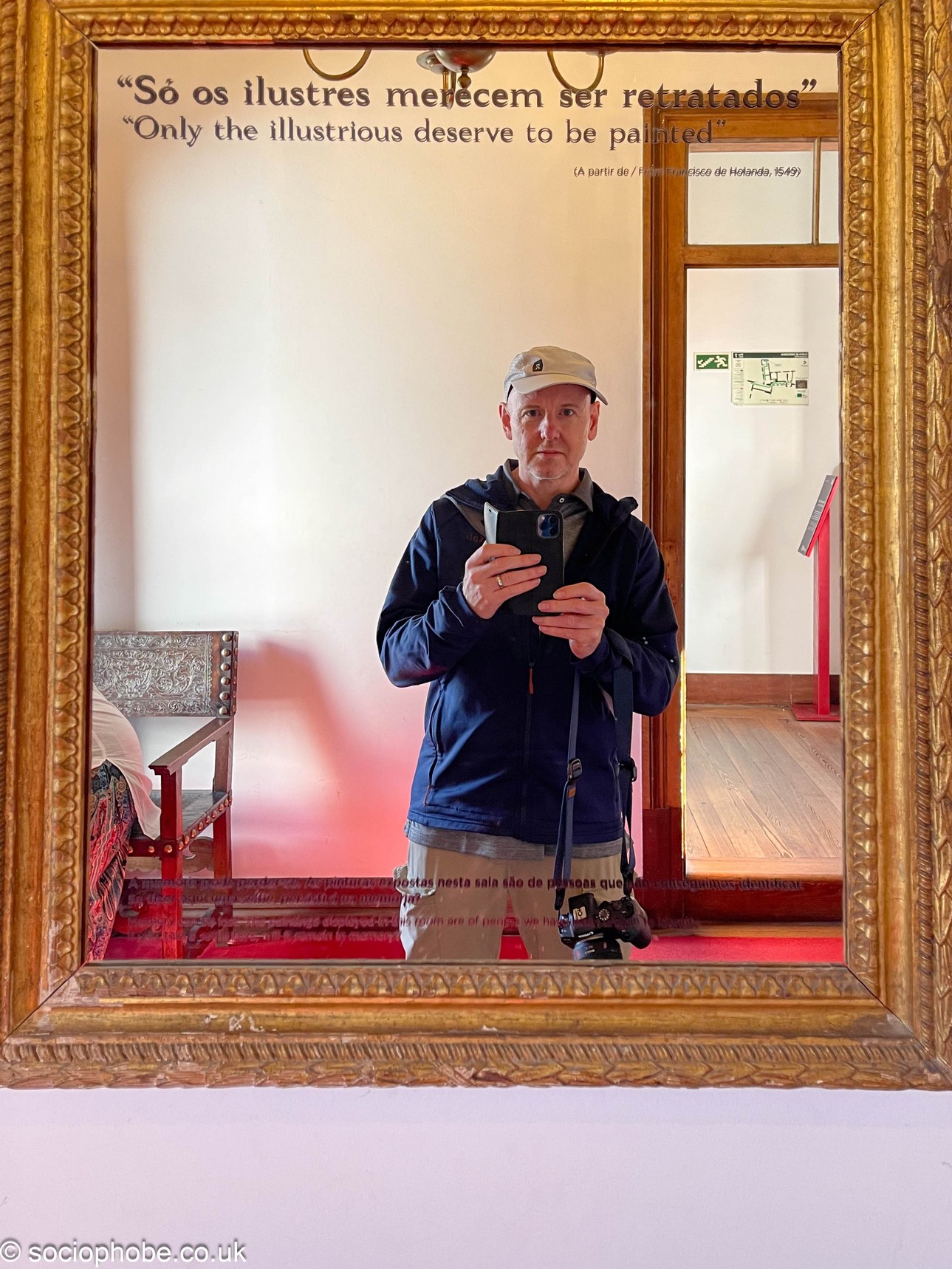
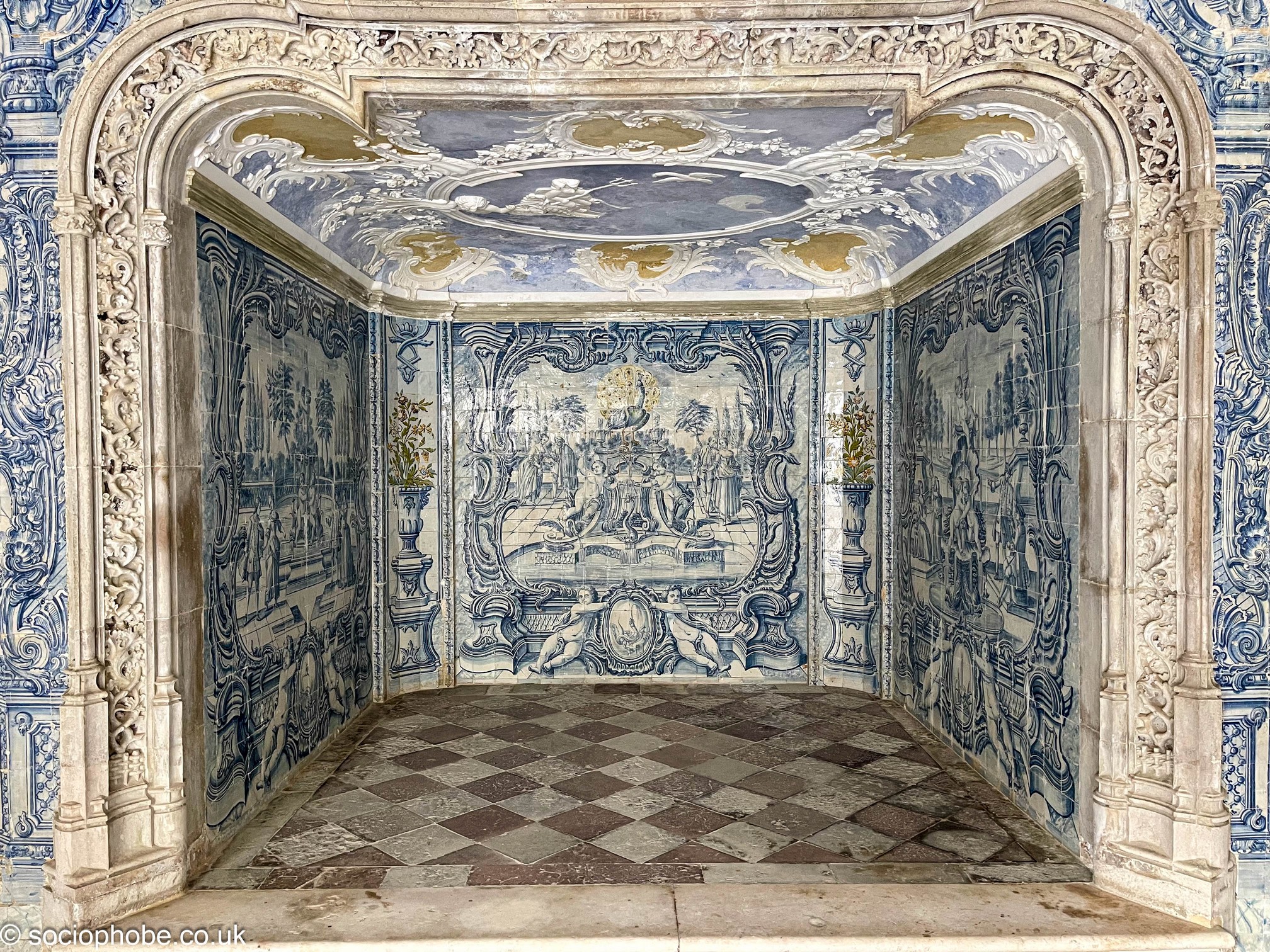
The National Palace was the first place we visited in Sintra and was a fabulous start to the day. Originally a Moorish castle, Sintra was reconquered in the 12th century and constantly remodelled until the 19th, most of what we can see now dating from the 15th and 16th centuries. A lot of the style is Portugese Gothic and the English connections are particularly fascinating, for me, with Phillipa of Lancaster featuring prominently. As expected there are lots of fabulous tiled rooms and also lots of heraldic rooms as the court seemed obsessed with lineage and ancestry.
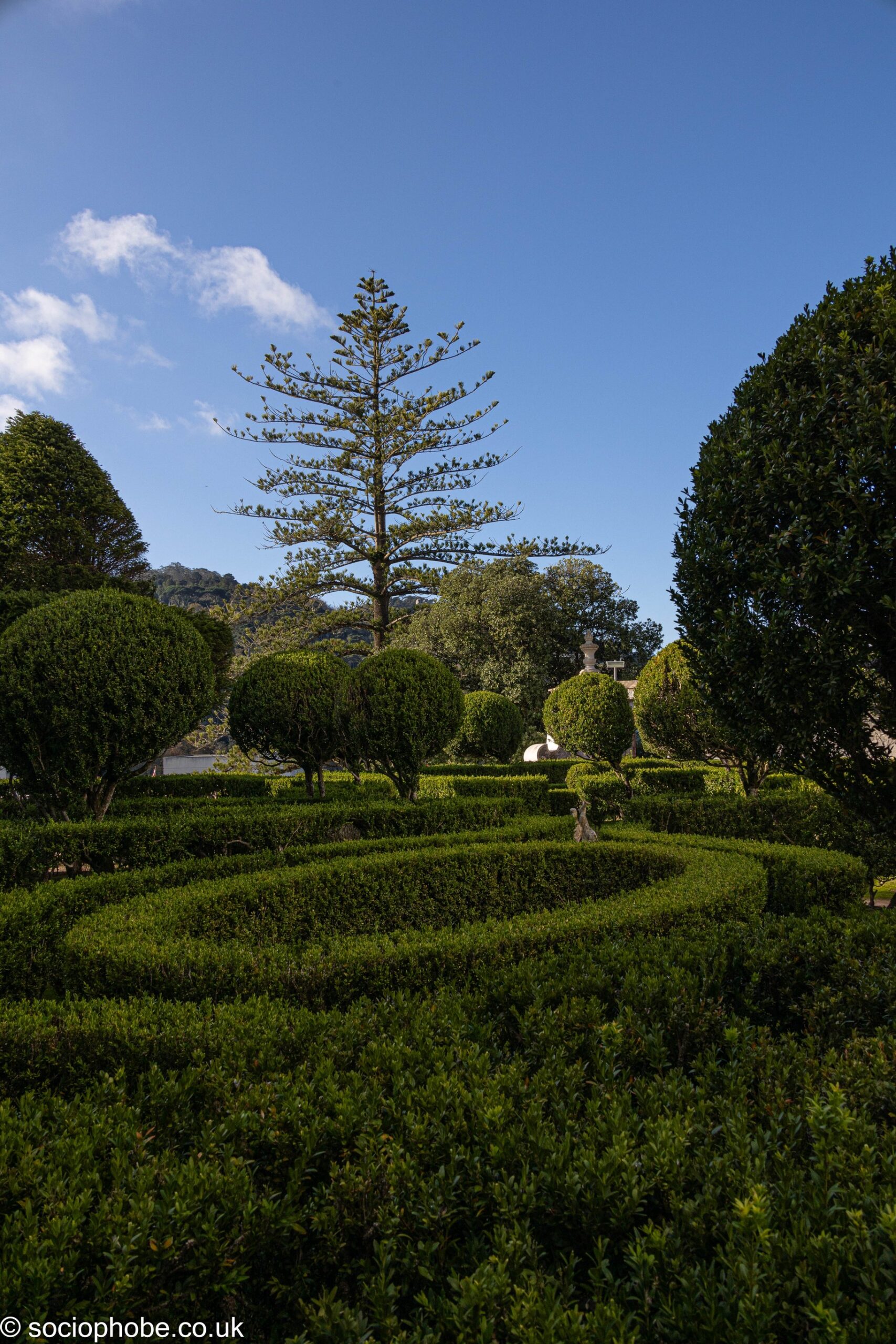
Walking round the palace, the route is well laid out and linear so you can’t miss anything. There are information boards in each room which just adds so much to the experience. The gardens and terraces were fabulous as well and gave views over Sintra and also up to the Moorish castle. Excellent value at €10 and a great insight into Portuguese history and character.

Quinta da Regaleira
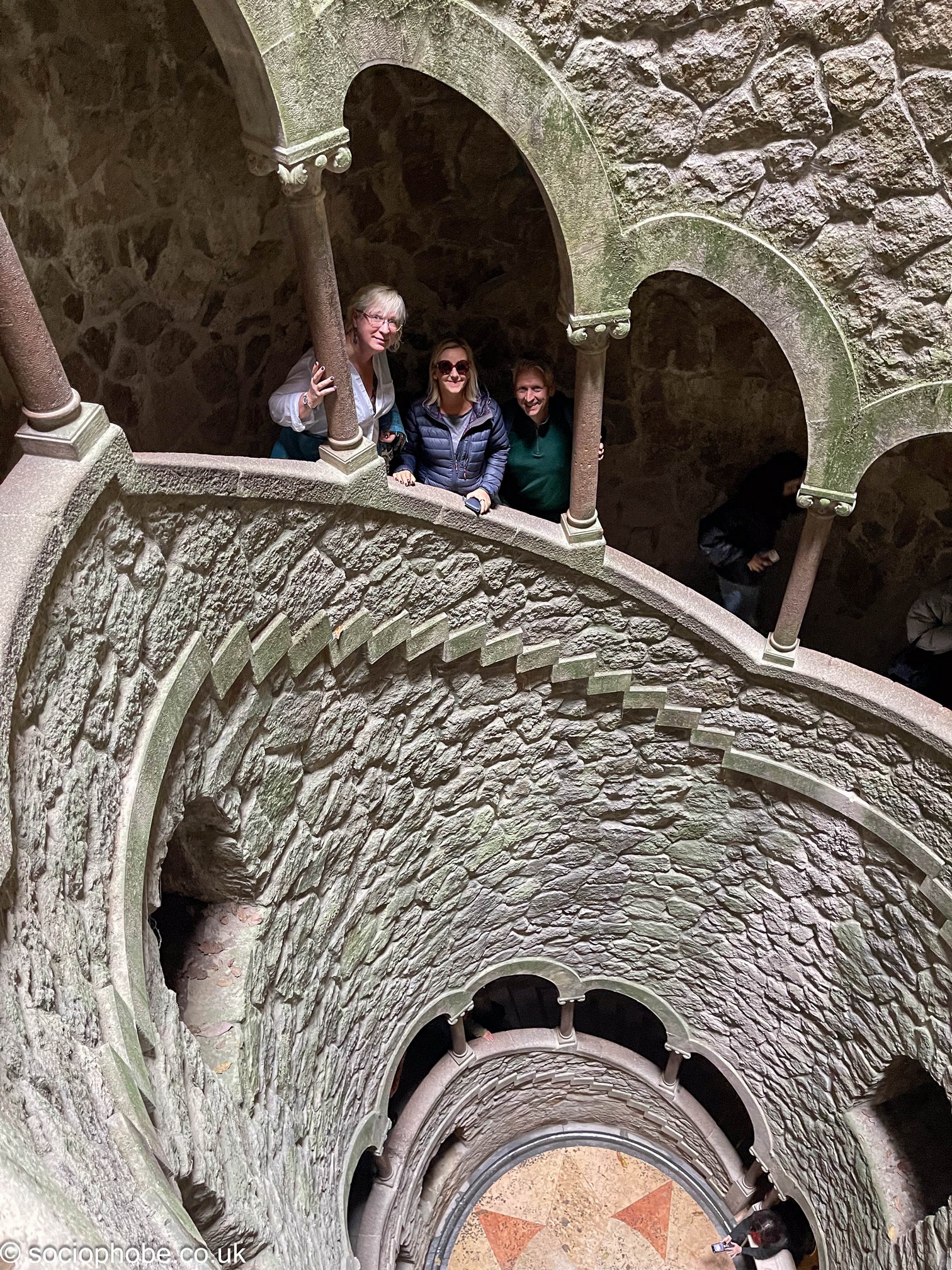
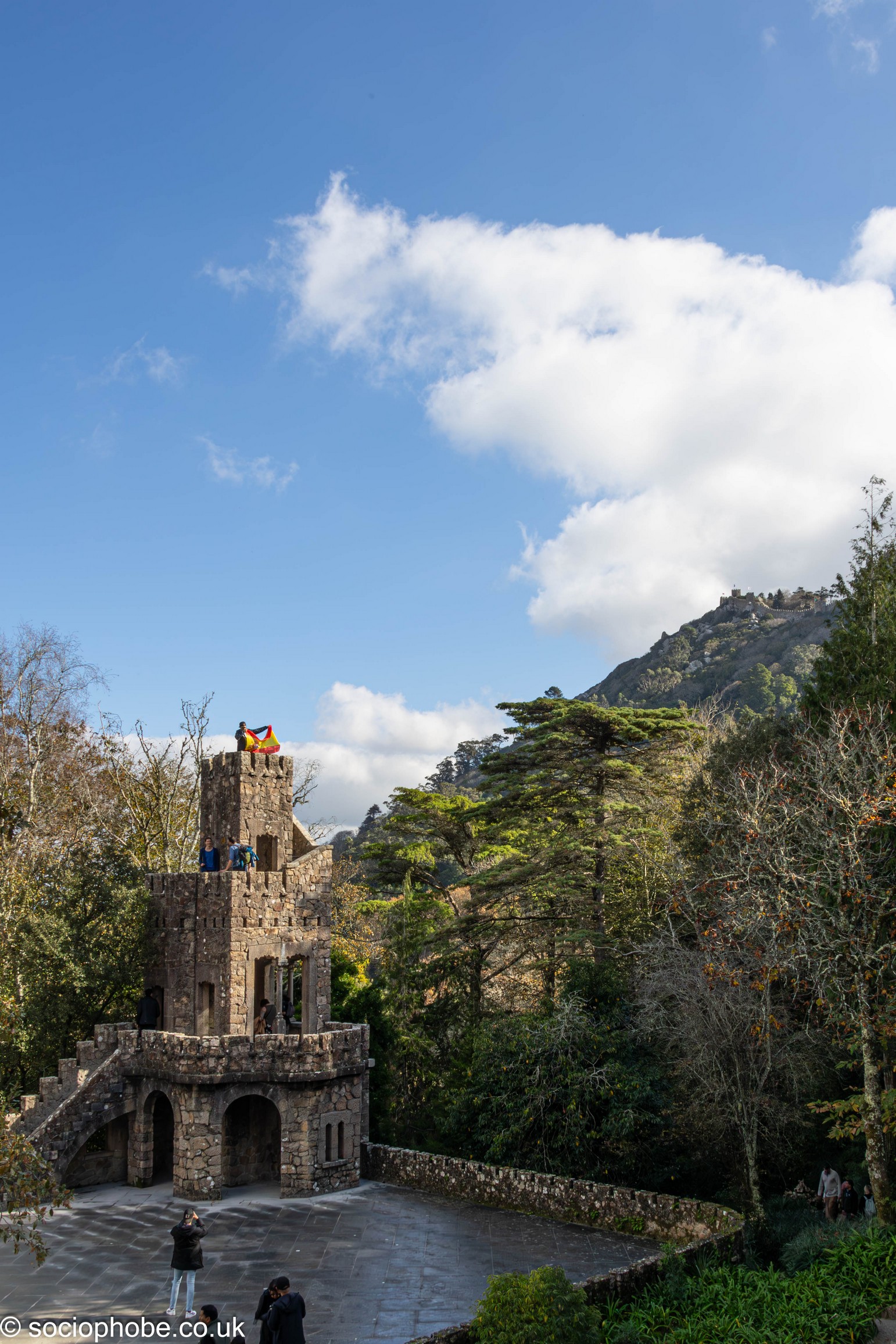
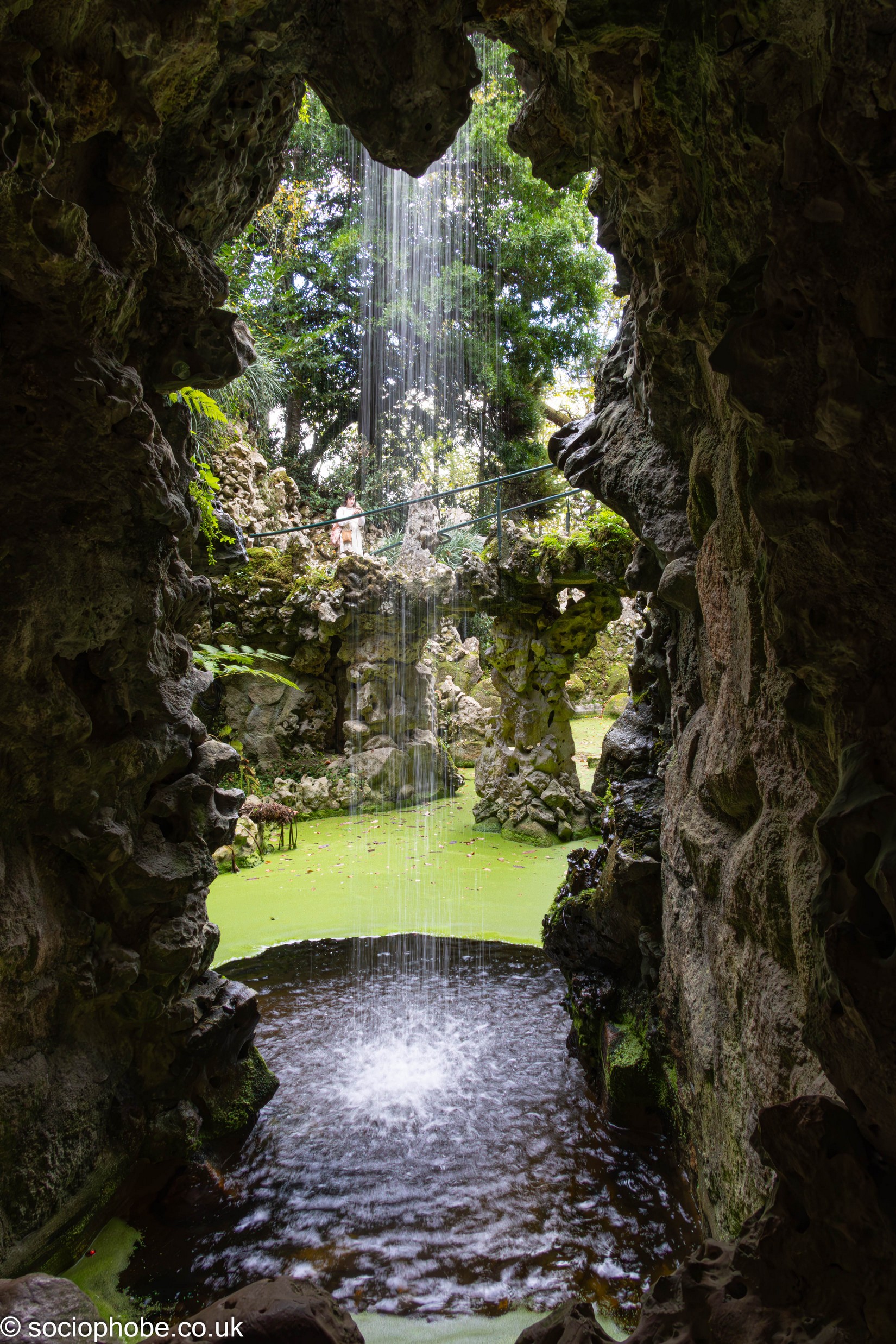
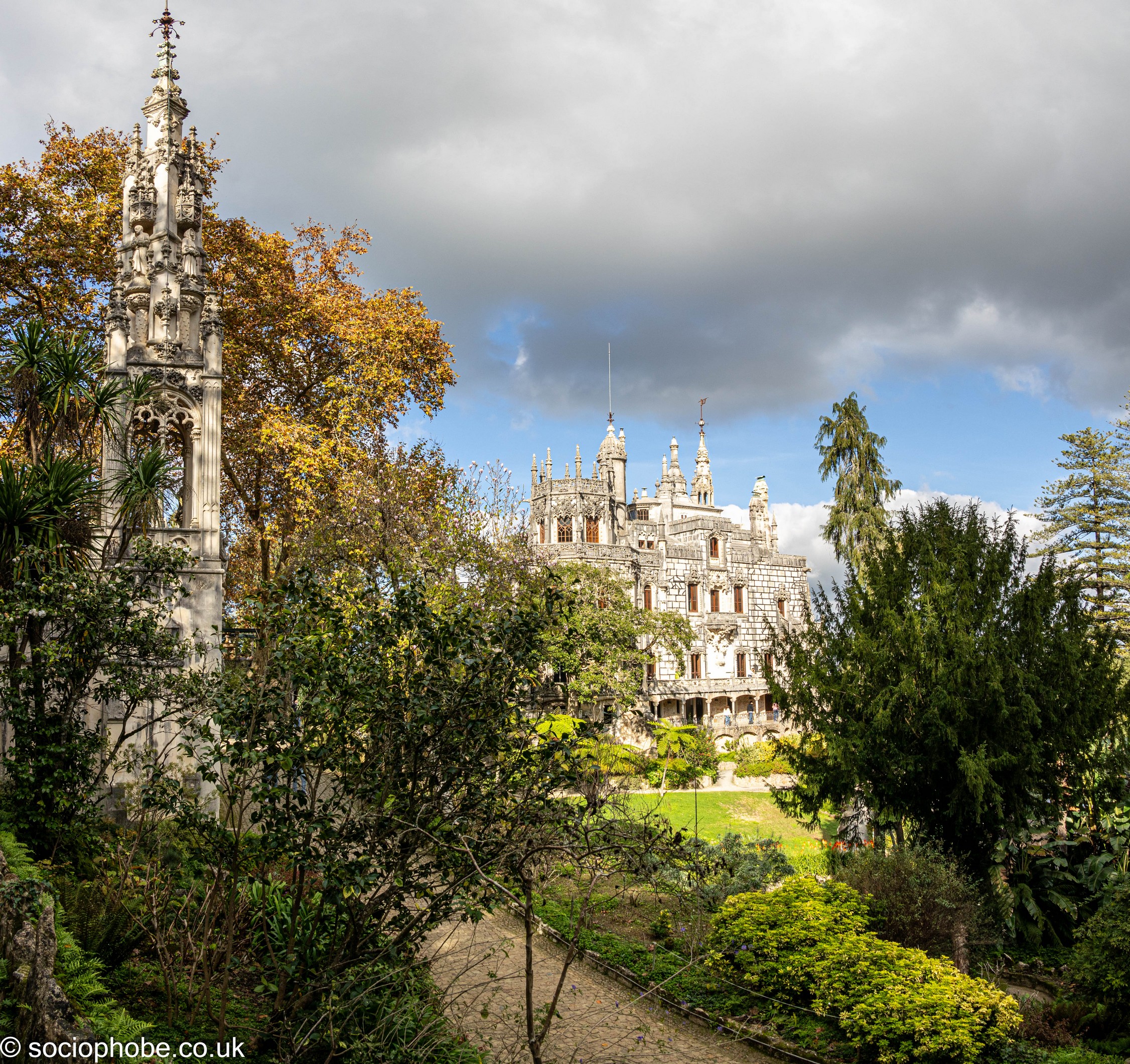
After a quick coffee stop we walked the short (10 mins) but steep hill to Quinta da Regaleira, a 19th century grand folly. We’d seen photos of the initiation well at this place and it looked fascinating. The whole estate is a testament to the Carvalho Monteiro’s interest in the occult and esoteric societies of the time and there are symbols and alleged connections to Freemasonry, the Templars, the Rosicrucians etc throughout the site. It is also a testament to vast wealth with decorated grottoes, fountains and follies throughout the estate.
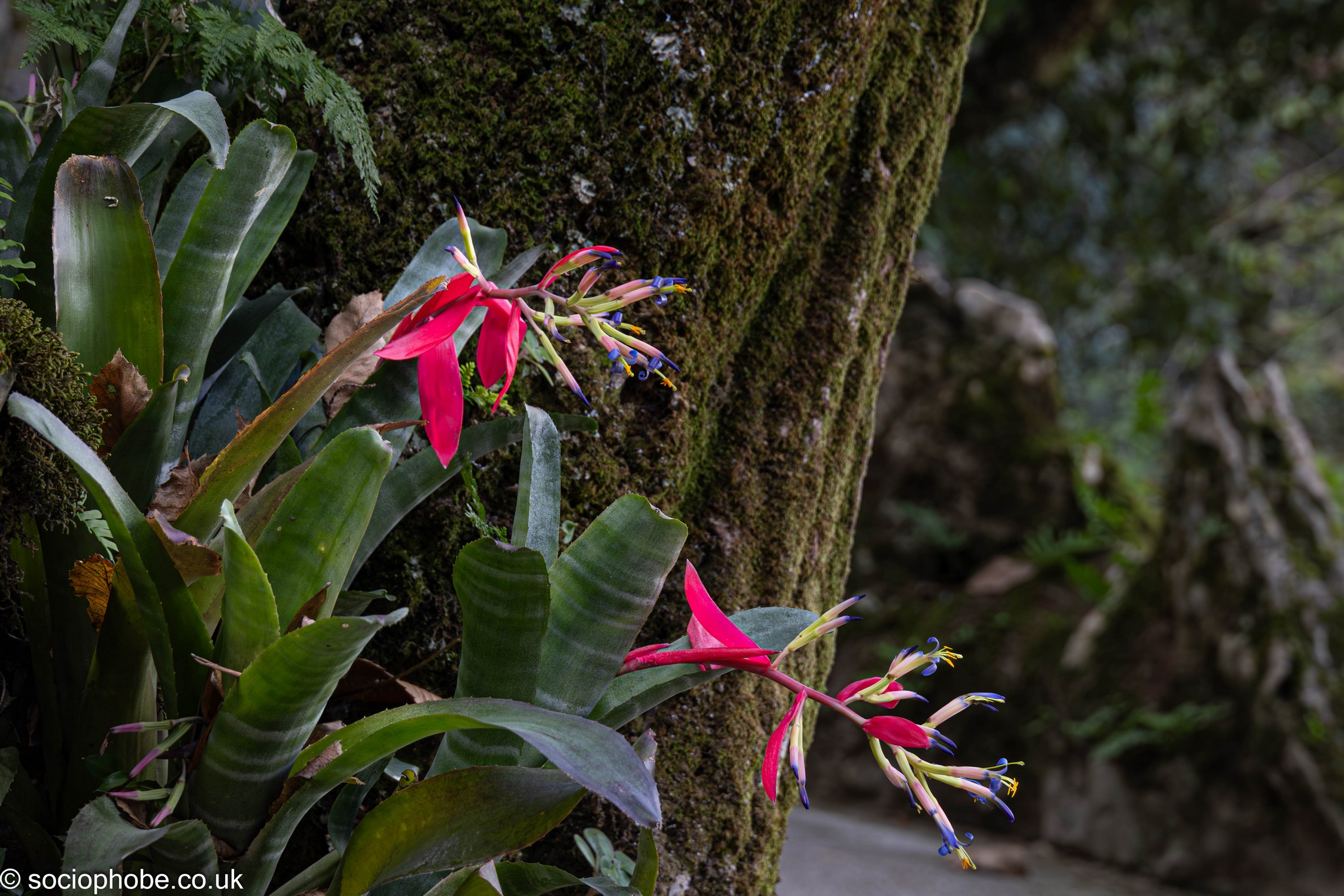
The gardens were beautiful to walk around, even in November and the paths are well laid out and marked. We spent a couple of hours in the grounds and house but you could easily spend double that by exploring some of the smaller pathways. The well was interesting and the waterfalls pretty and there were great views of the Moorish Castle. Definitely worth a visit.


We walked back into Sintra for lunch and stopped at Estrahda Velha. It’s a little way out of the town and a very unpretentious place that focuses on serving good value food. We had omelettes and they were lovely, a good size portion and well presented. It was a nice atmosphere in the bar and service was friendly and efficient. Definitely not a tourist trap and very good value.
Castle of the Moors
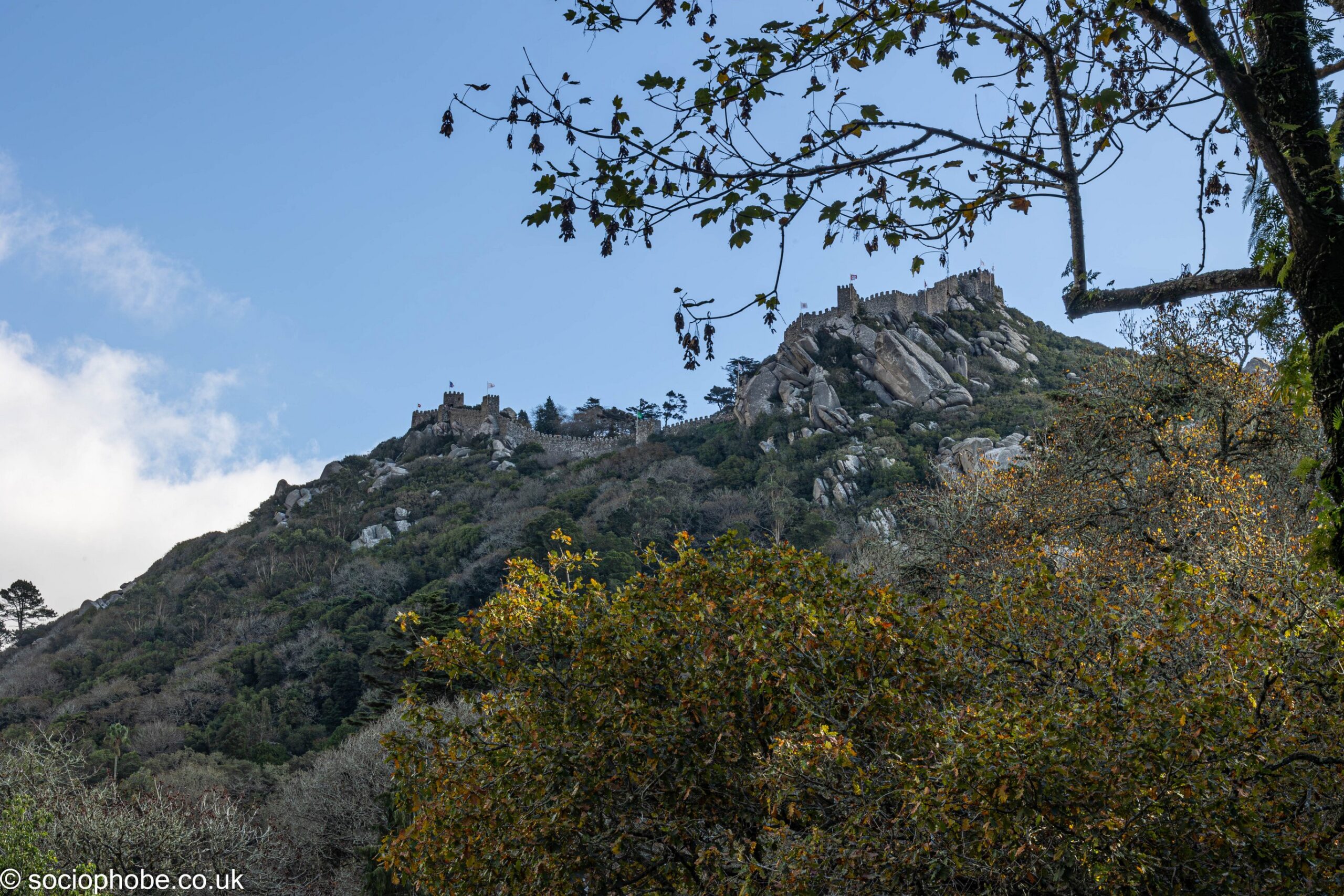
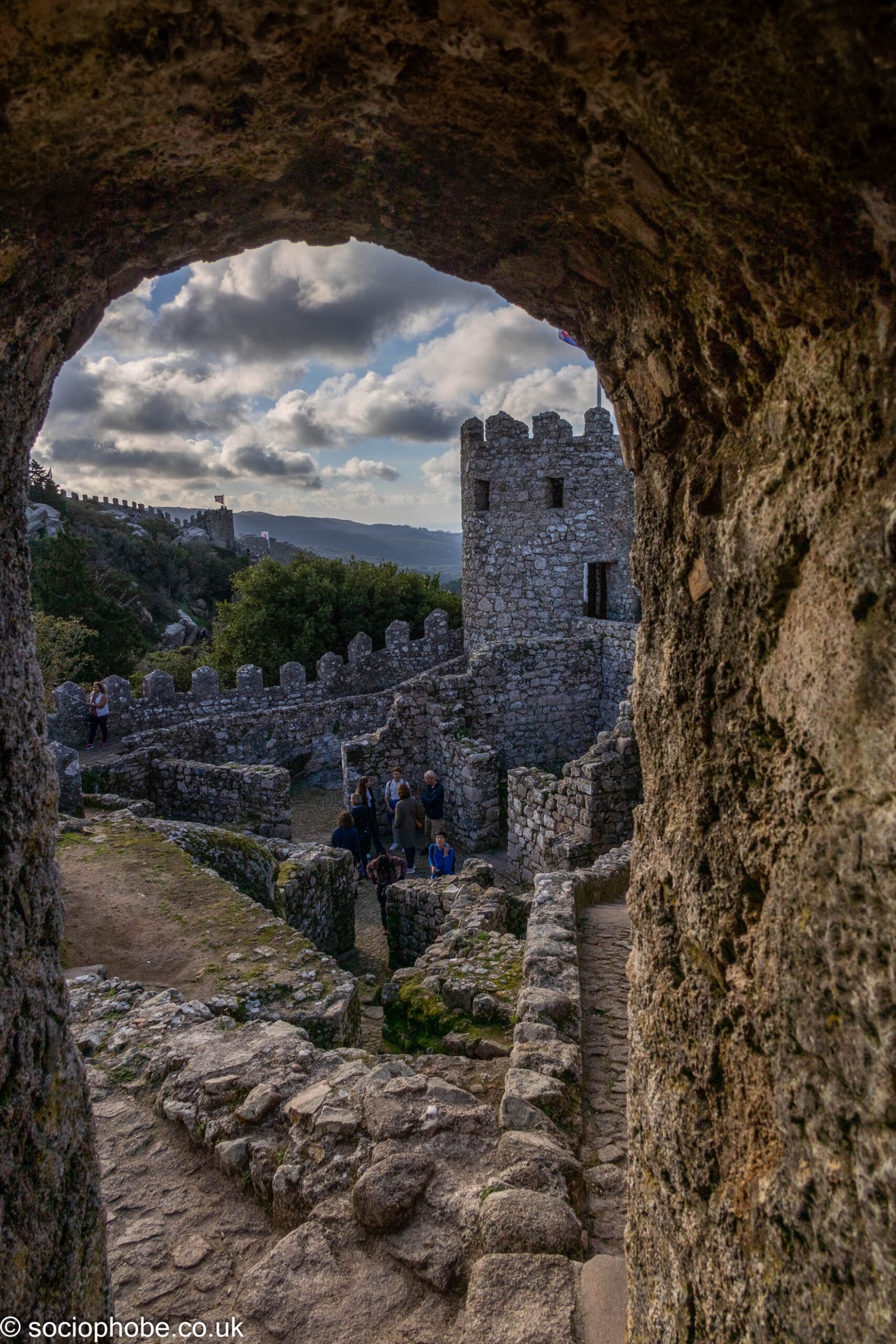
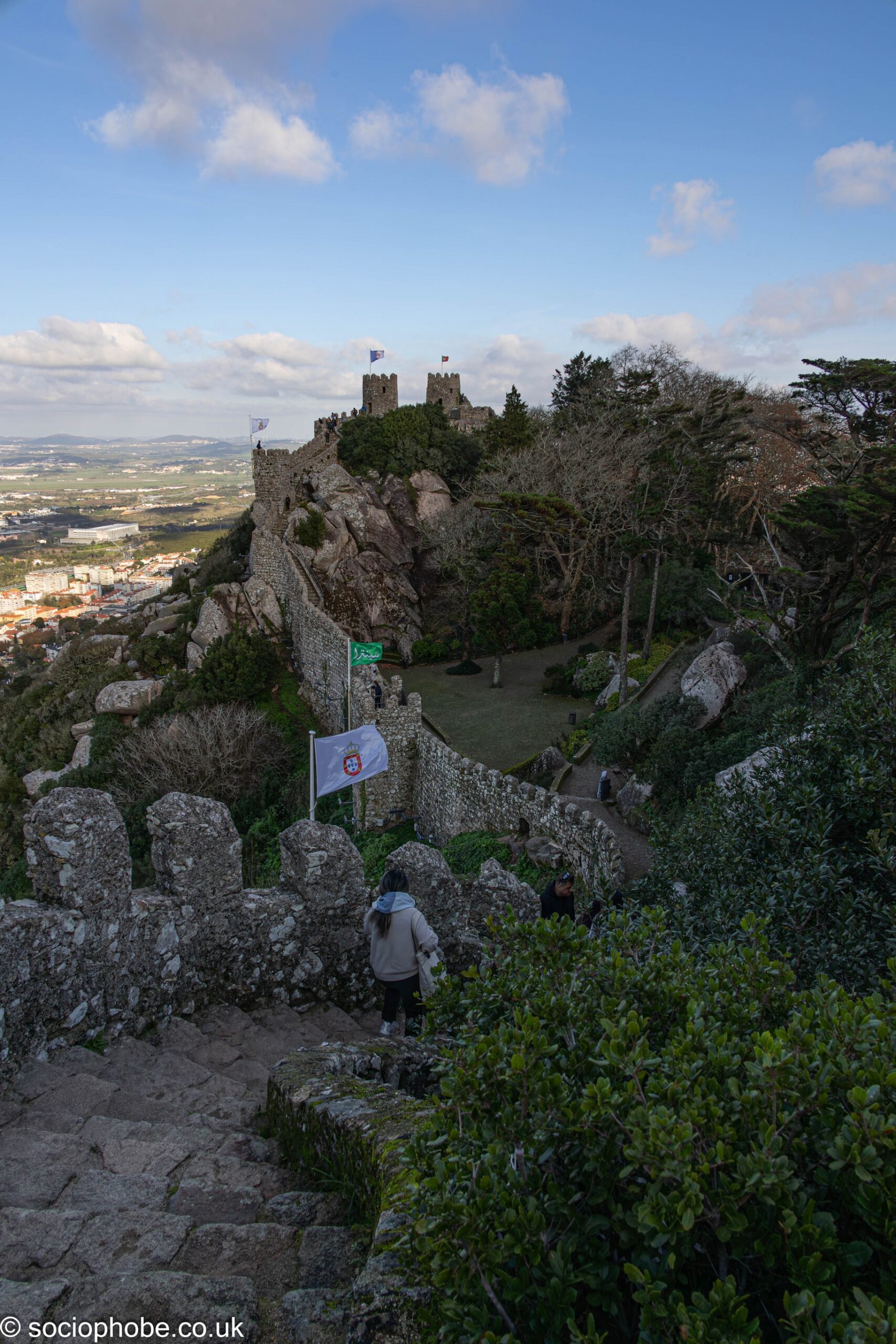
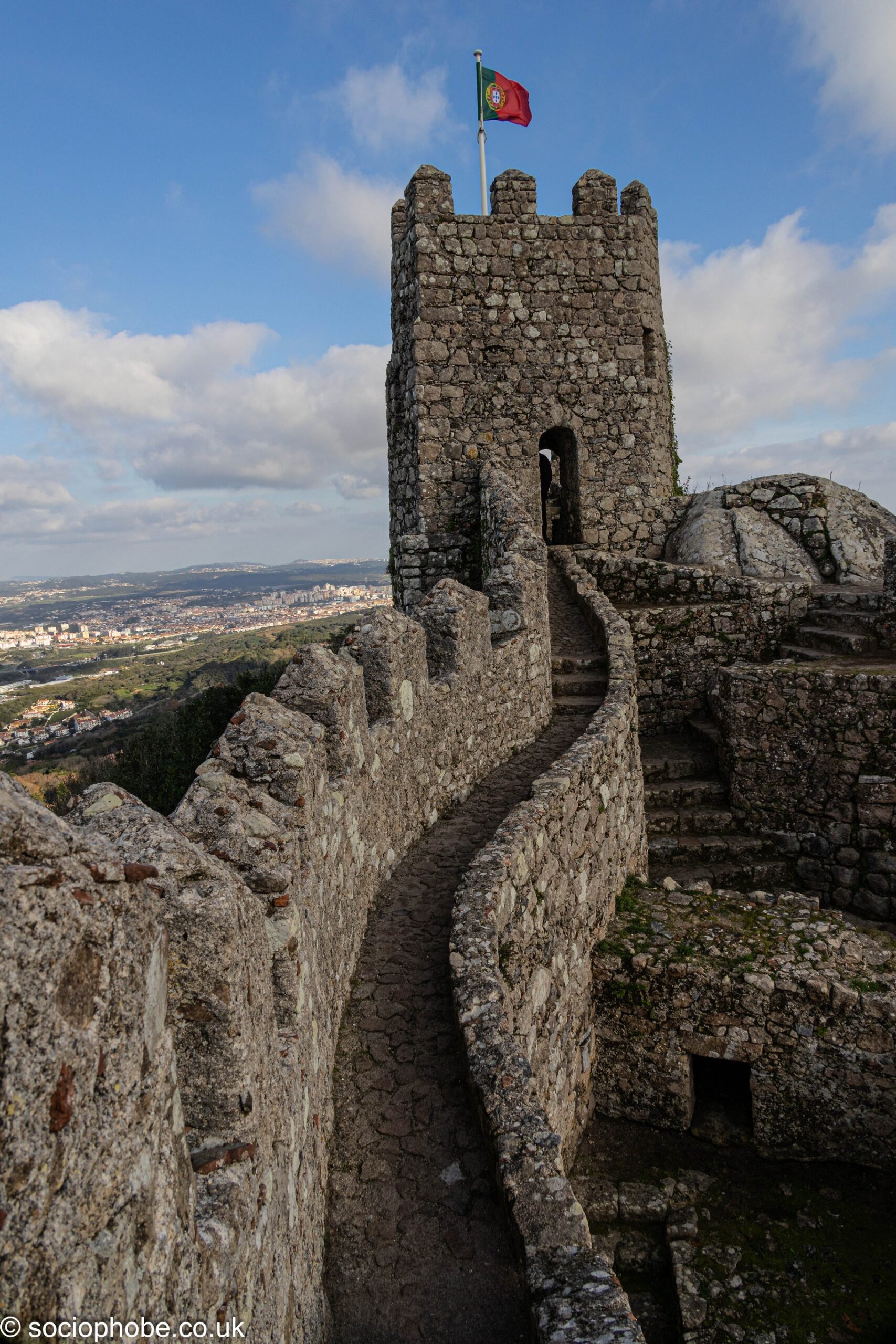
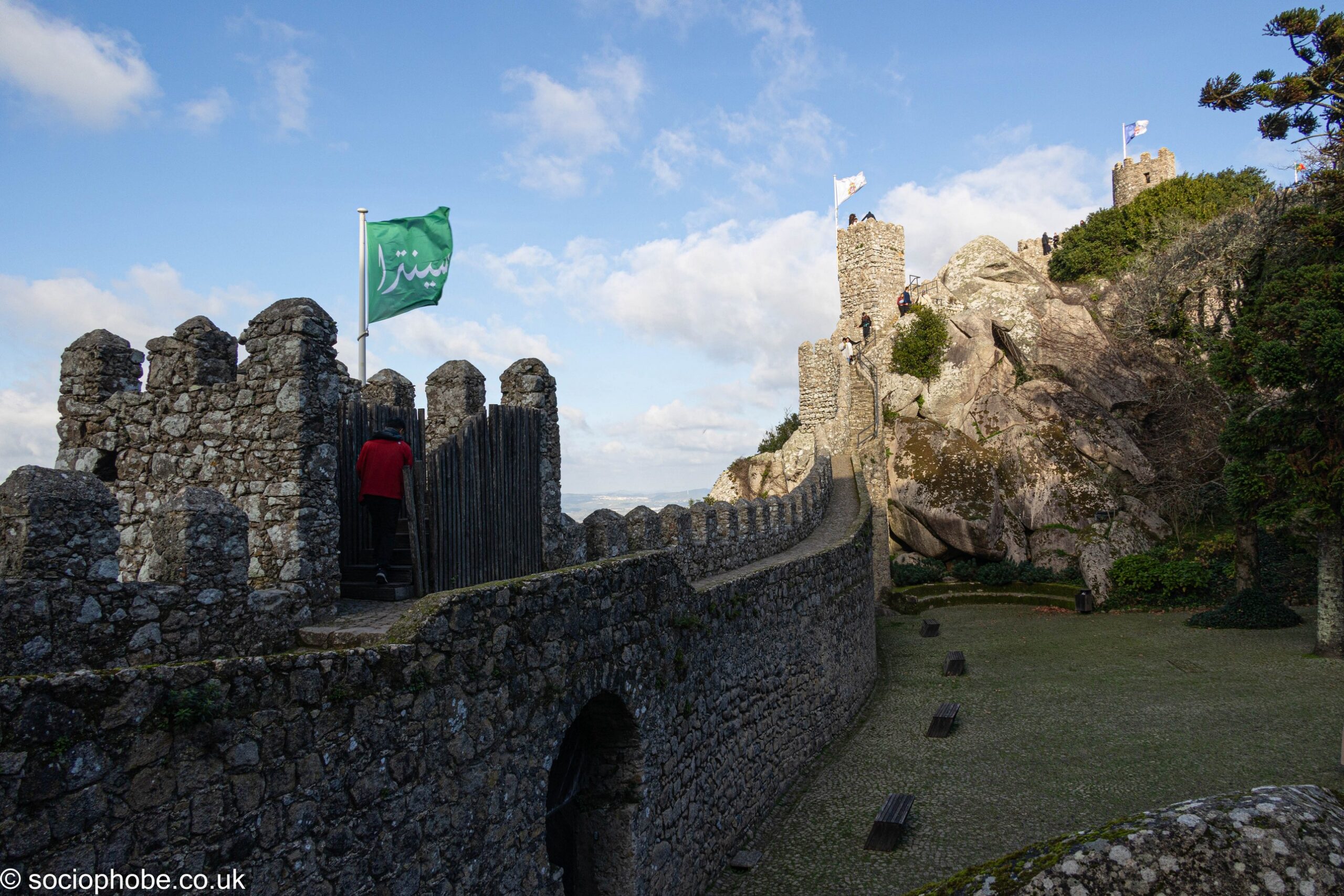
This was a place that I’d seen in the distance on our last visit to Sintra but never visited. Built in the 8th and 9th centuries by Moorish colonisers, it is more of a fortified village than a castle. The fortifications were surrendered to the Christians after the conquest of Lisbon, expanded in the 14th century, abandoned by the 16th and then romantically remodelled and restored in the 19th.
It is quite a hike to get to the Moorish Castle from Sintra so we opted for the tuk tuk, great value at €10 and a lot less sweaty than walking, although M&P wanted to burn off lunch so took the hike option! From the parking area there is a short walk through the woods with a guardhouse below you and then the chapel and necropolis. You then enter the castle proper and the ticket office if you haven’t already bought tickets in the car park.
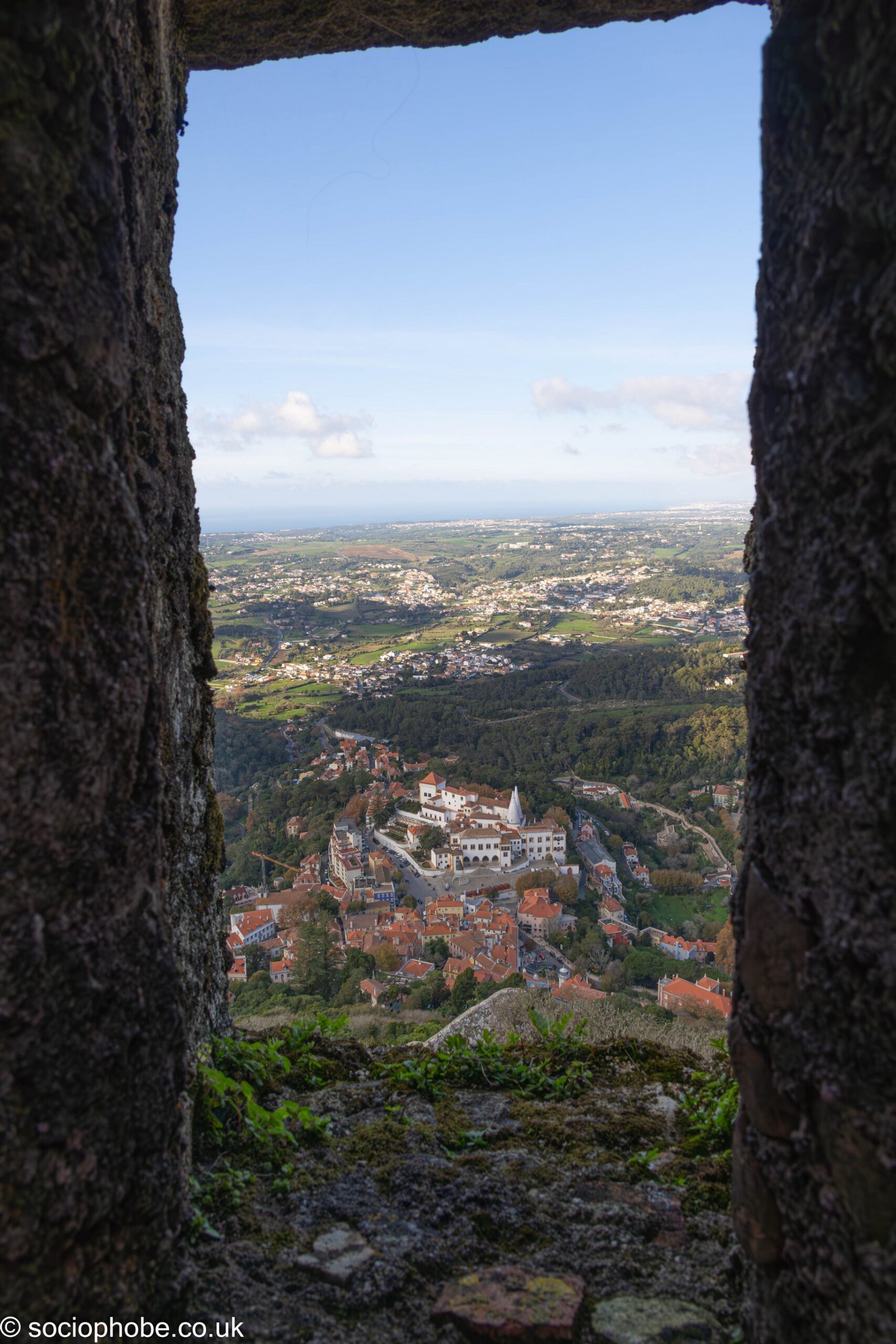
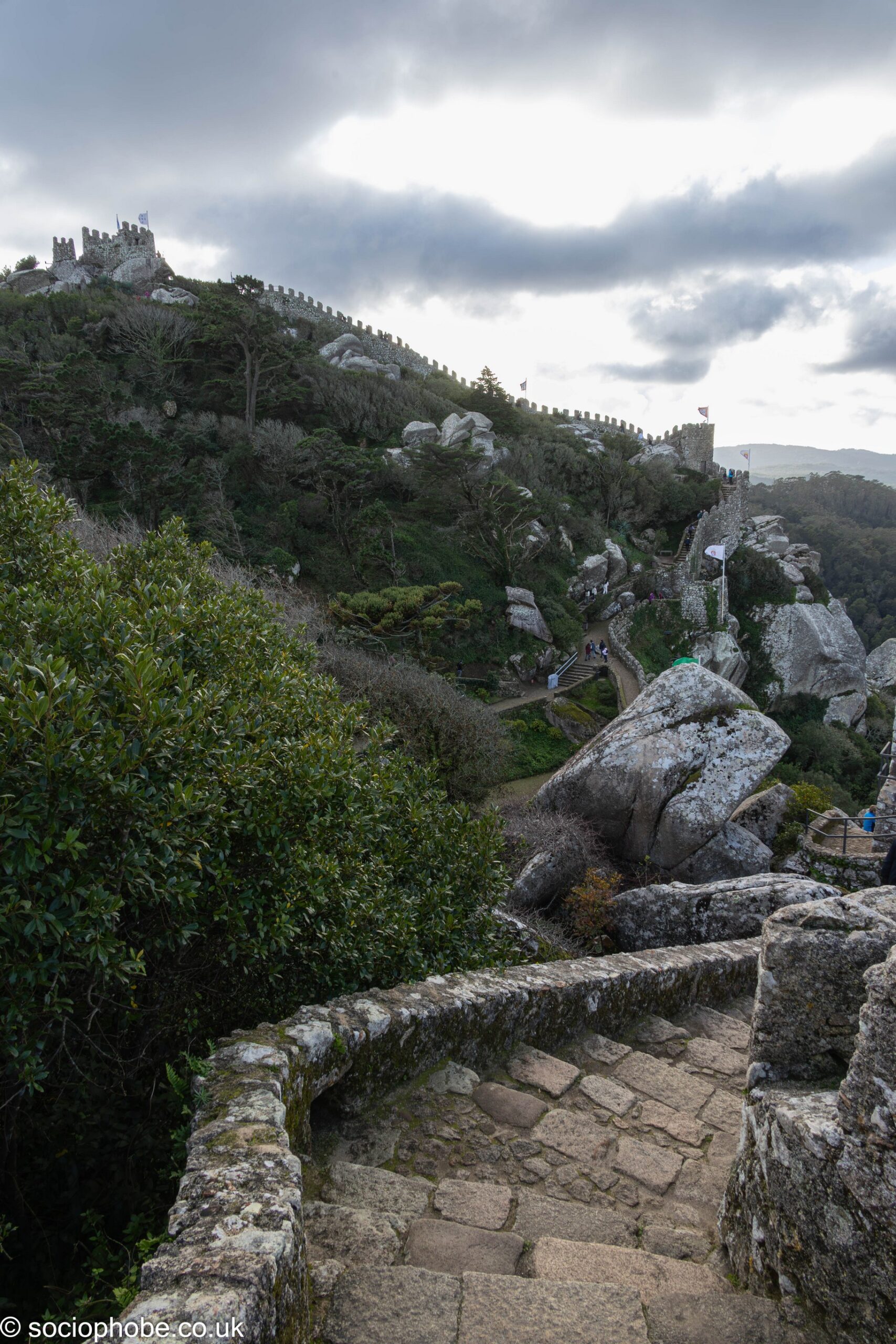
The walls of the castle obviously follow the ridgeline and they are ridiculously steep in places although they are well restored and have proper steps. The views are just awesome over both Sintra village and the Pena Palace and luckily on our visit there was no wind. My vertigo was bad enough without having to contend with a gale as well! I’d say this was my highlight of this visit to Portugal and we spent about 90 minutes inside although we didn’t get to see the archeological area or the museum so probably 2 hours is more sensible.




Pena Palace
From the Moorish Castle we could see Pena Palace, on a hilltop and slightly above the castle so that was our final destination. We again opted for the tuk tuk option and M&P walked but it wasn’t far this time, maybe 10 minutes through a marked path in the woods.
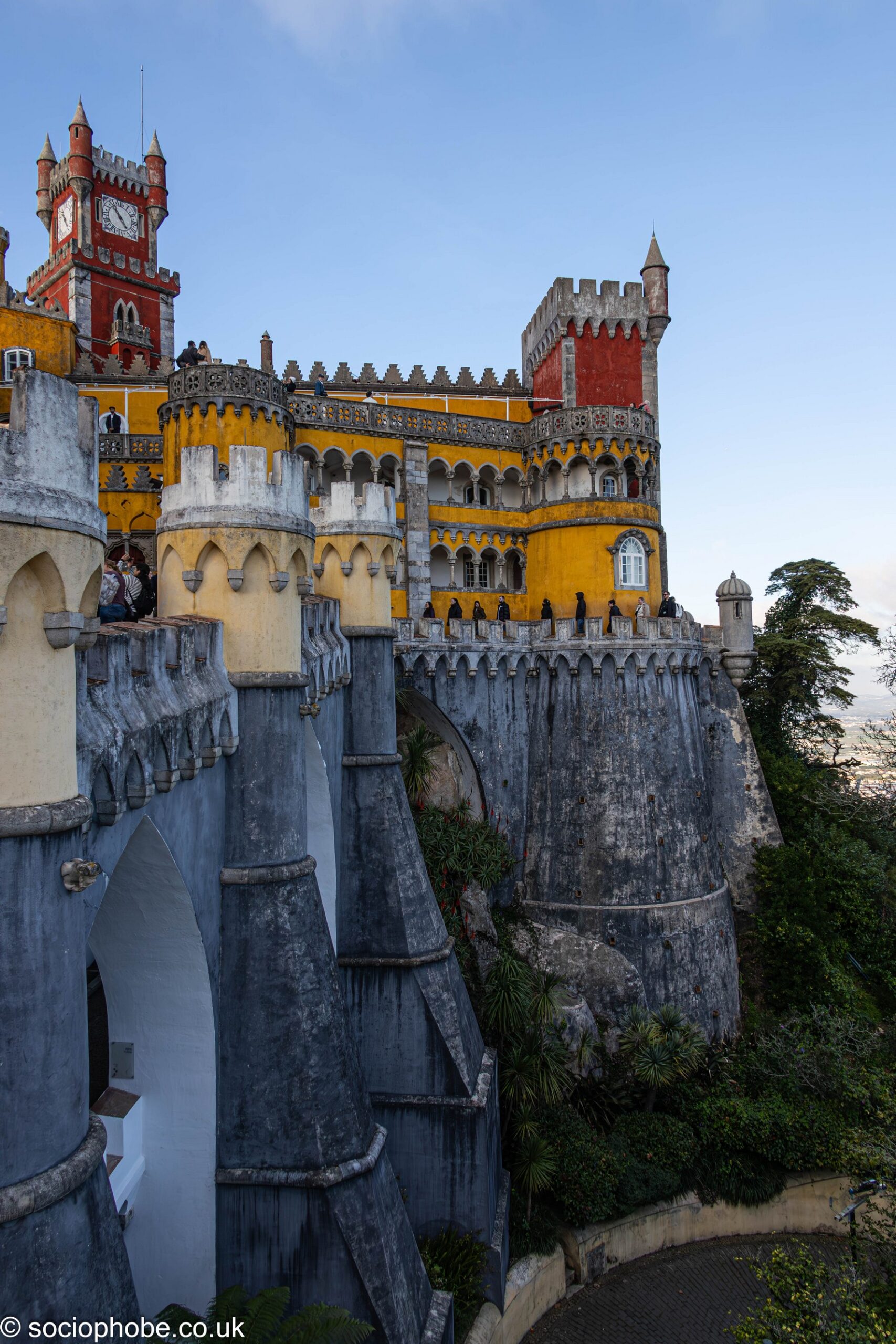
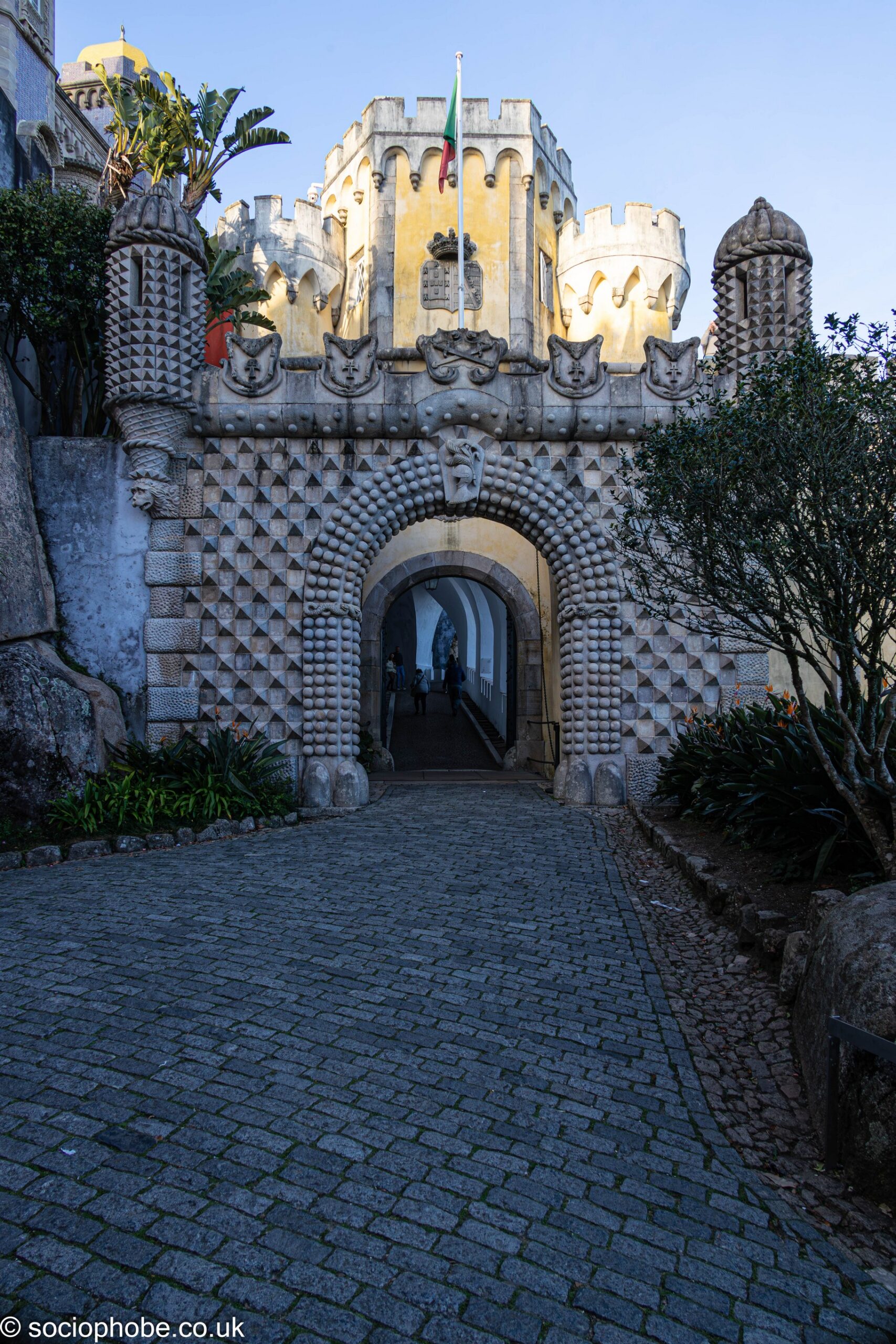
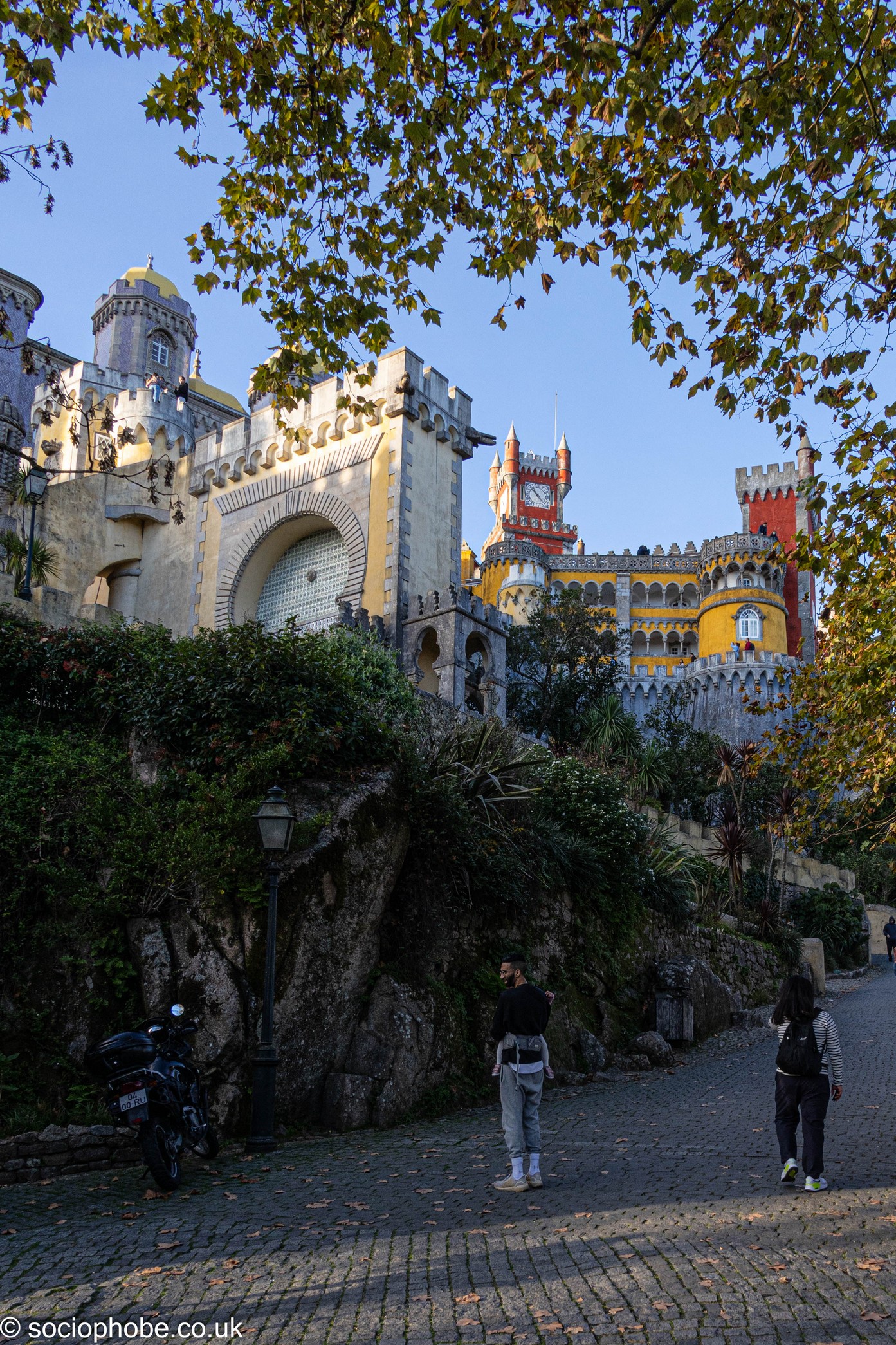
Pena Palace is one of the many iconic buildings in Sintra and is easily visible on its hilltop for miles around. Originally a monastery that fell into ruins the current palace was built in the mid 19th century and served as a summer palace for the Portuguese royalty and nobility before their exile in Brazil in 1910.
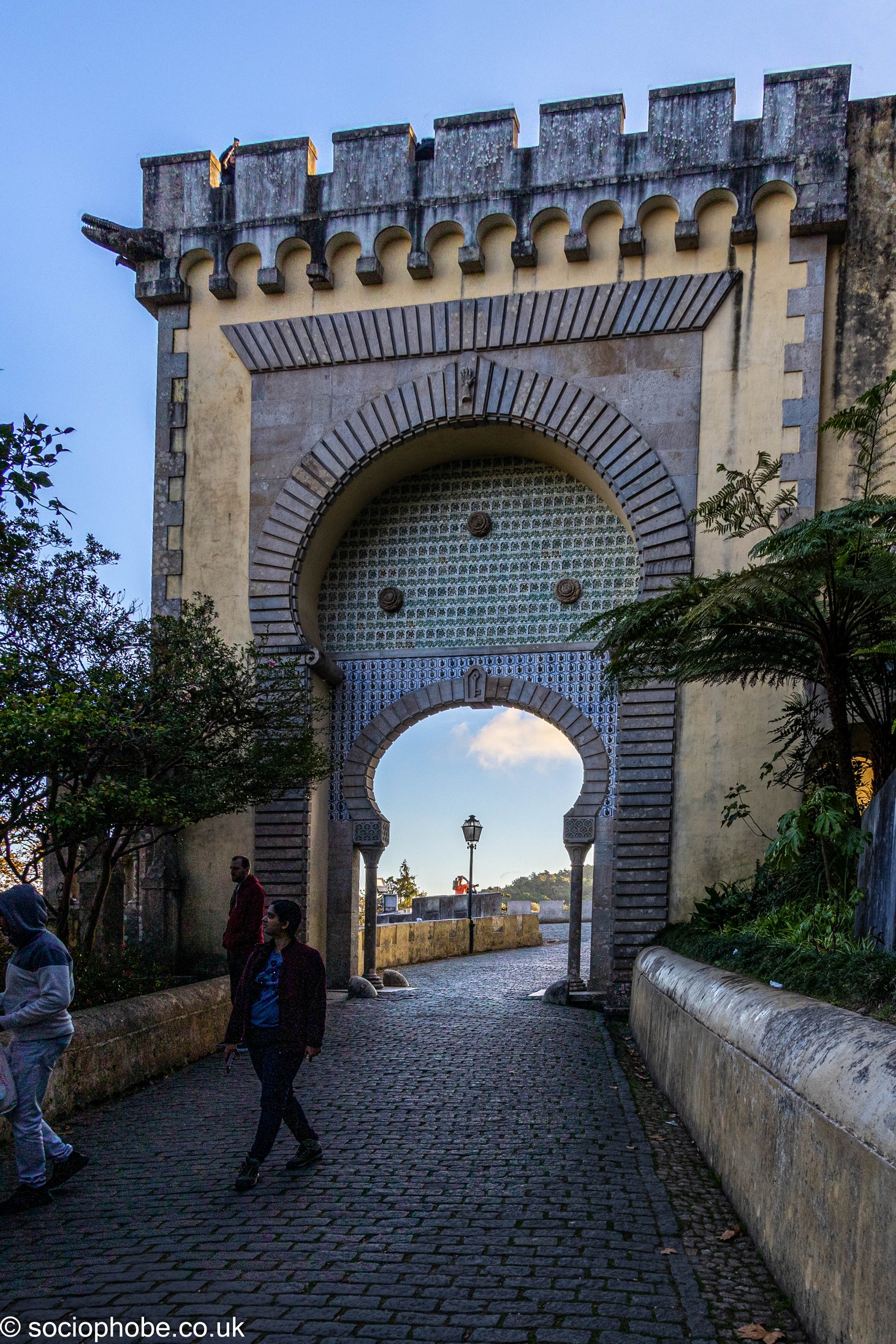
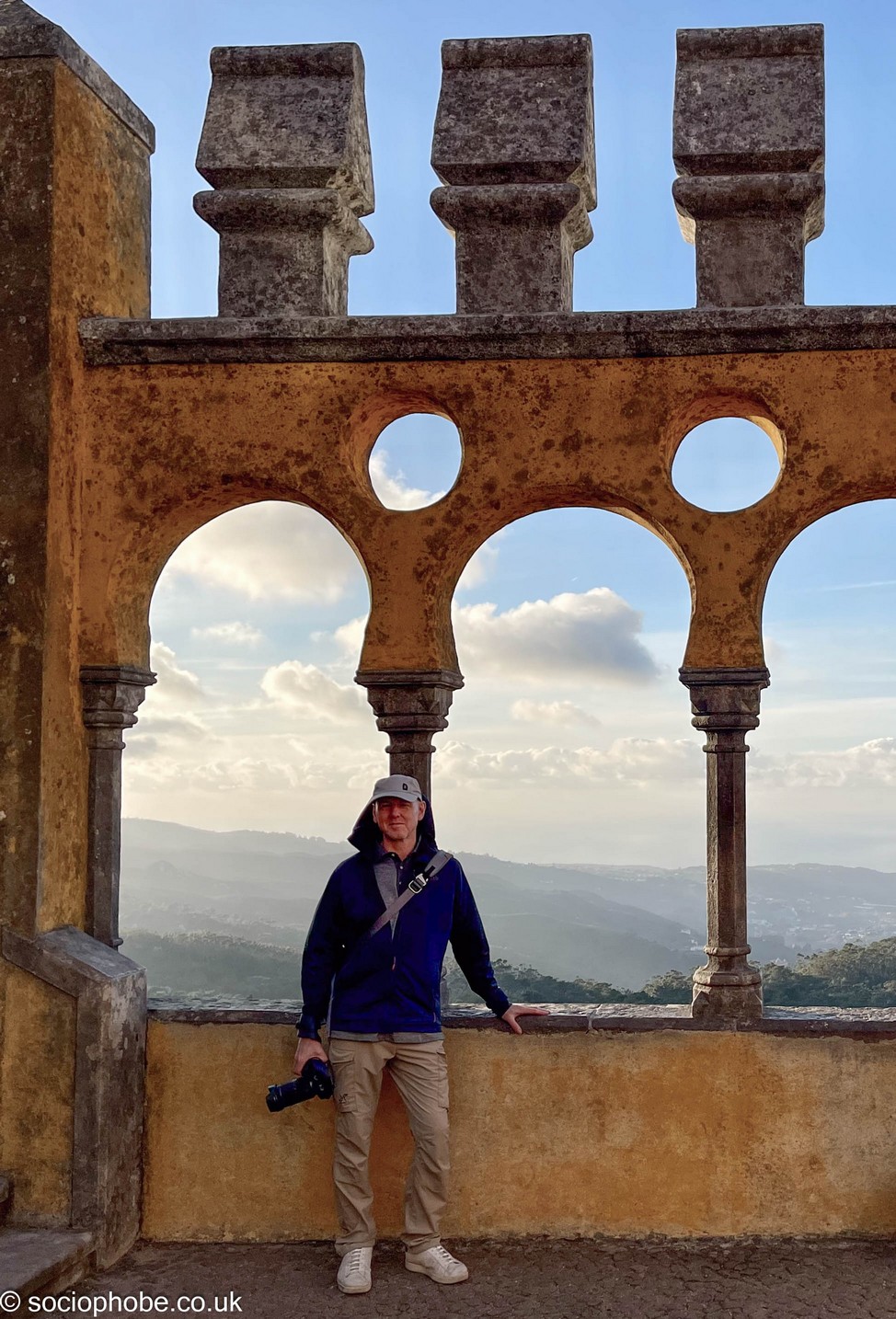
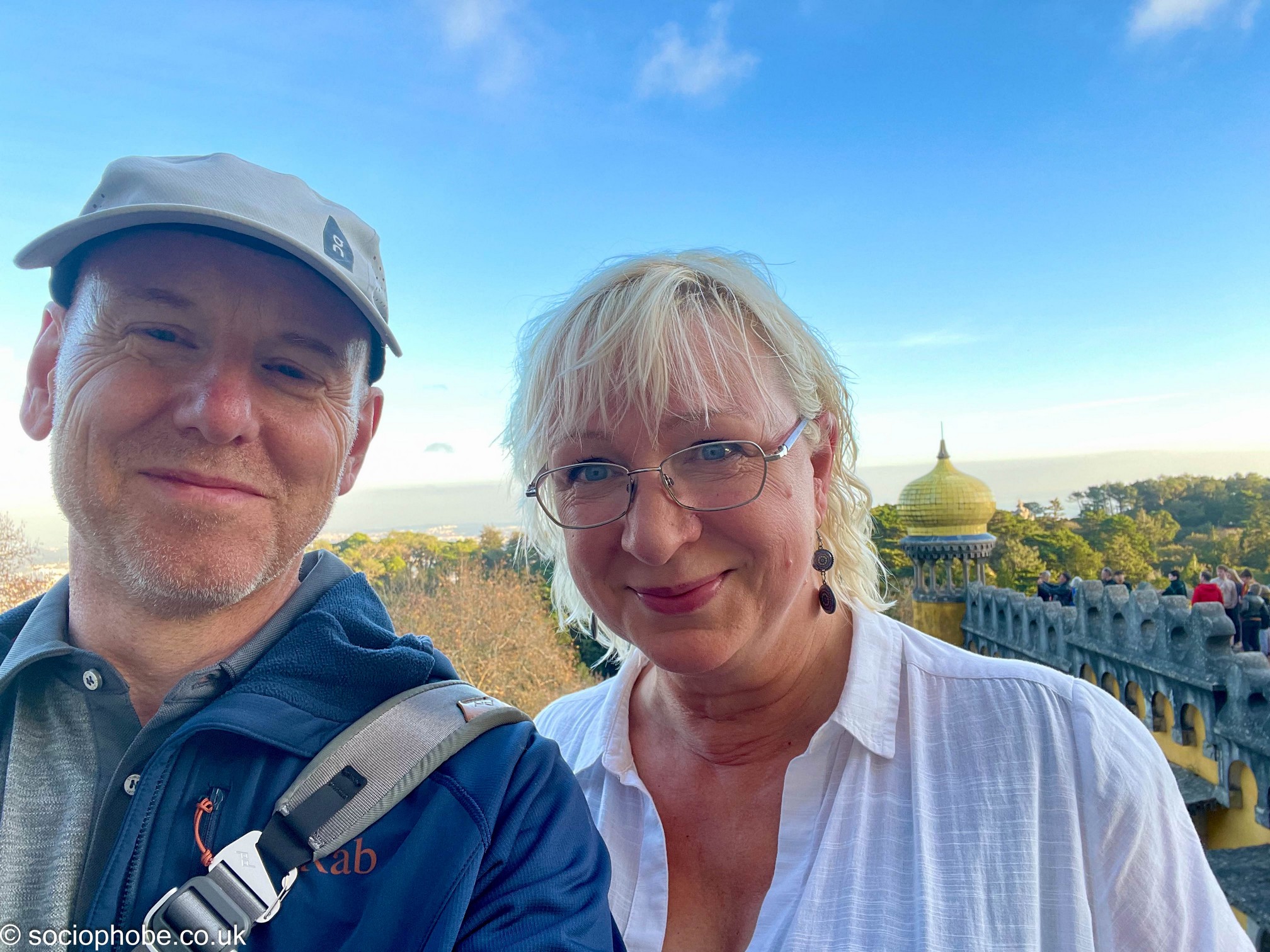
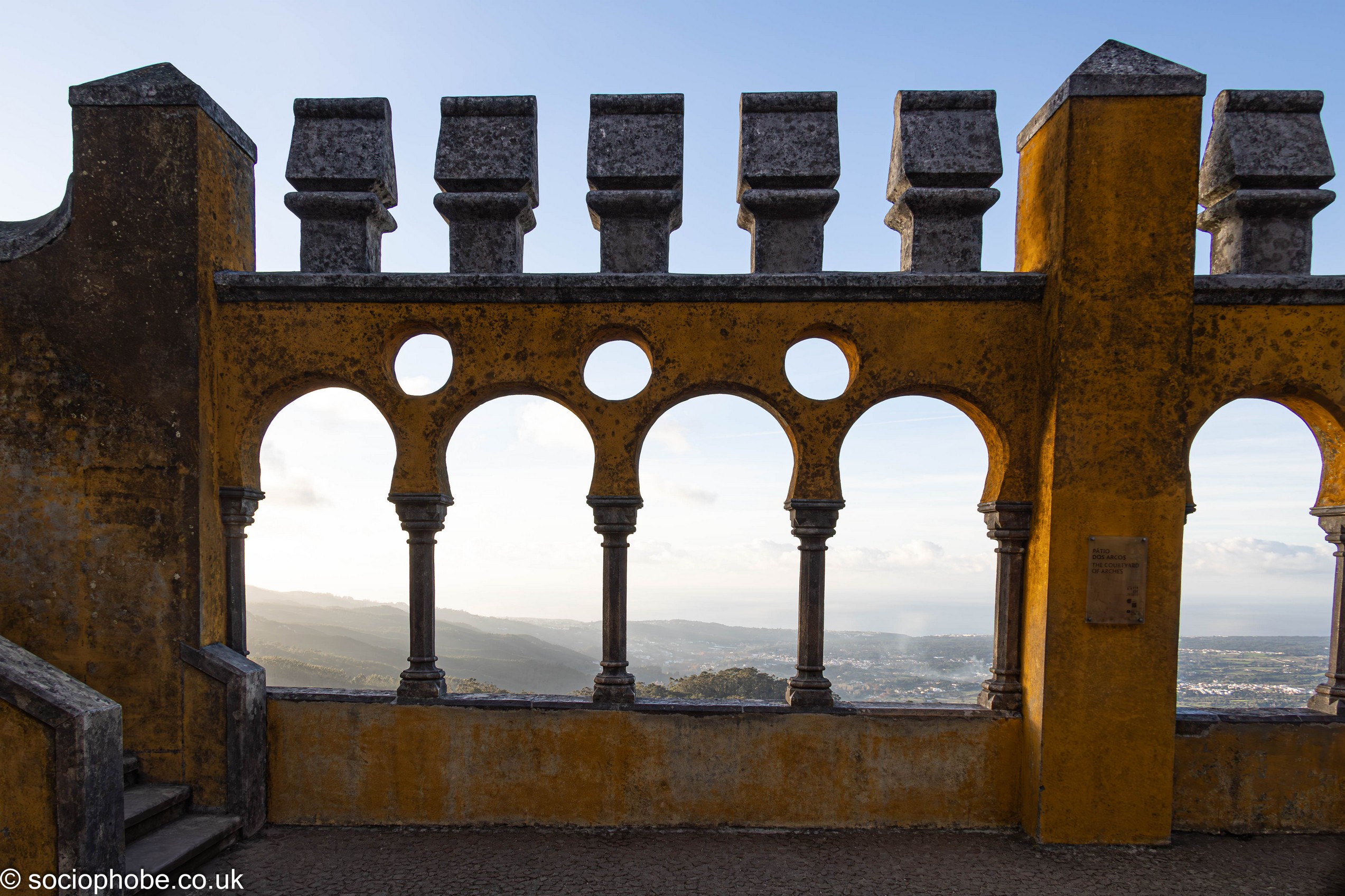
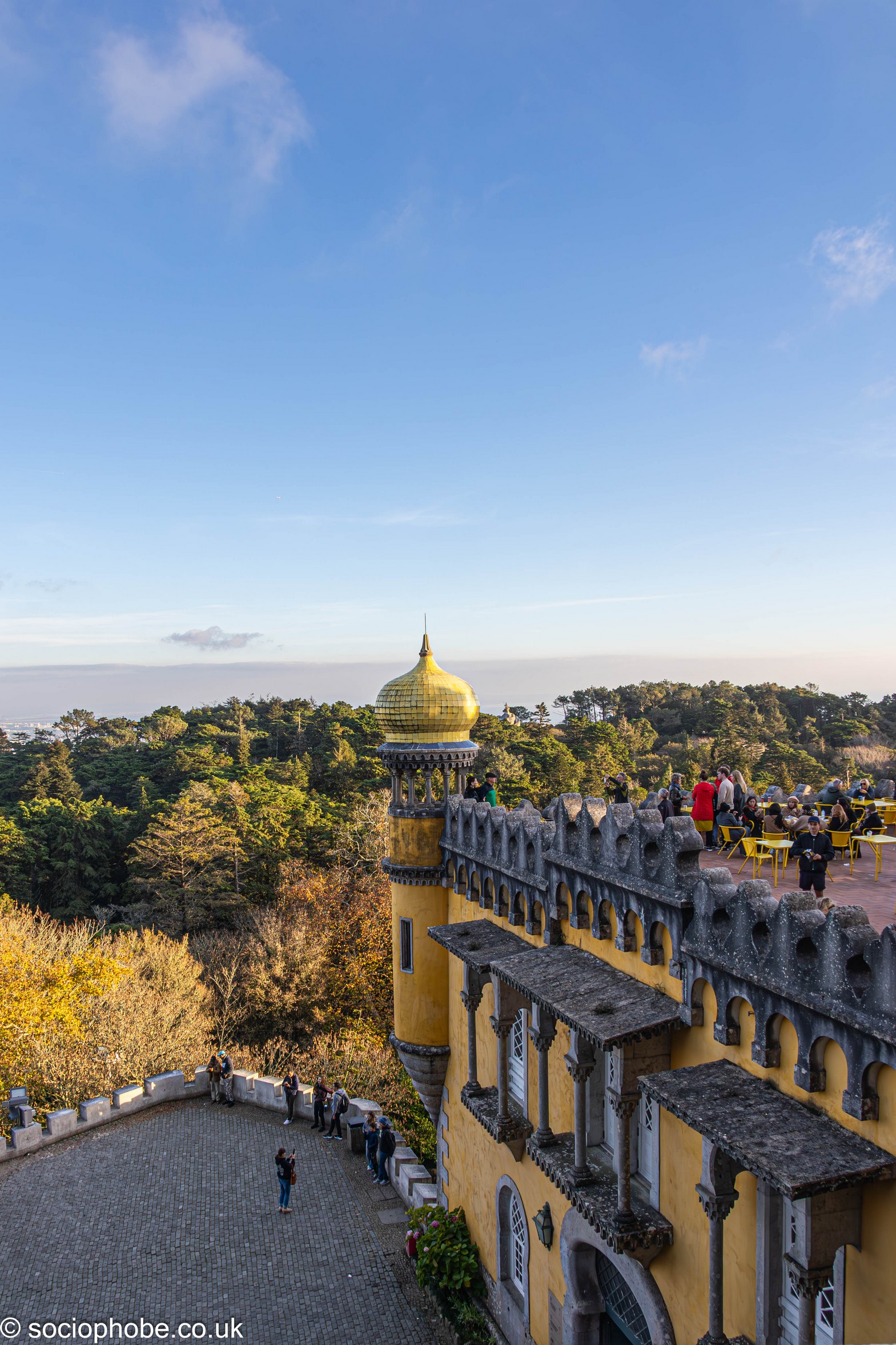
There are two ticket options – either the palace exterior and gardens or the full ticket that allows timed access to the inside too. As we didn’t arrive until gone 4 and sunset was at 5.20 we opted for the former. It was a nice walk through some gardens before reaching the driveway that led to the palace and its huge Moorish style gates. Once inside the courtyard we were able to walk around some of the terraces and balconies including the cafe terrace where we sat and watched the sunset.
The palace is a magnificent medley of styles ranging from Mughal to Moorish to Manueline to Hanseatic (rather spoiling the alliteration). There are tiled walls, golden pagodas, red ochre towers and it is a fantastic journey through world architecture. From the terraces there are great views over the whole national park of Sintra as the palace is one of the highest points in the area. Looking at the map of the Pena Park there is a massive amount to see and when we return we’ll allocate a whole day to the park and palace so we can see the lakes and gardens properly.


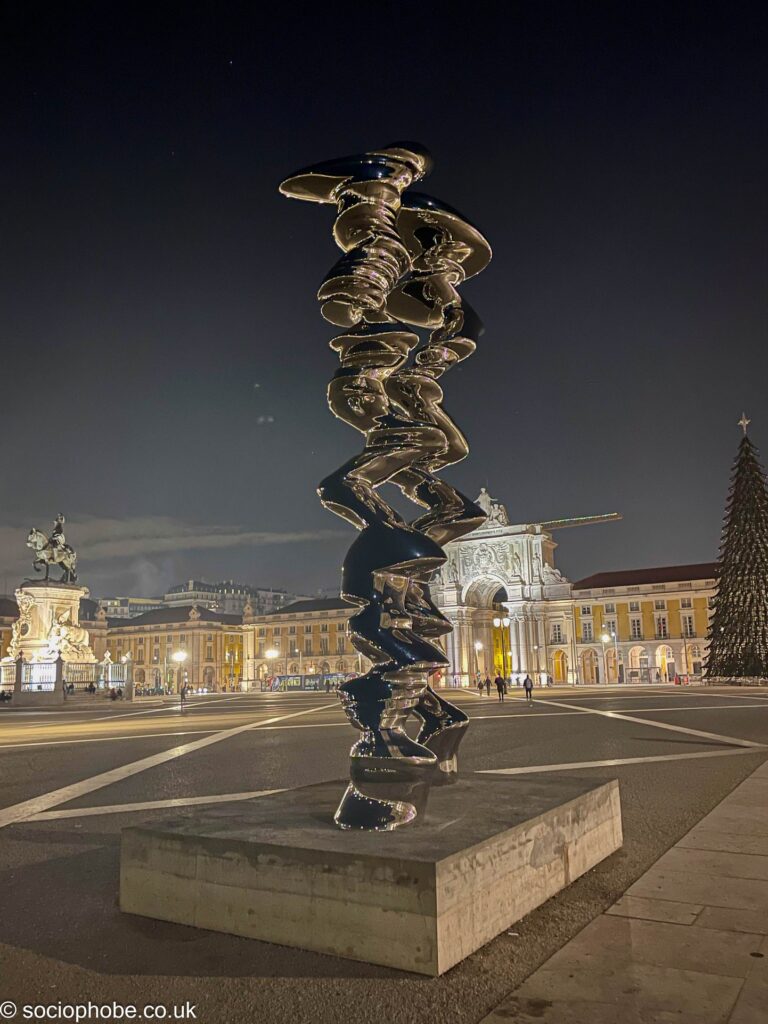
We left a little before sunset as we were pretty tired from all the sightseeing and absorbing all the new sights and information. We were only half way through this long weekend and we’d seen so much in Lisbon and Sintra already! We took a Bolt back to the hotel, had a little break and then went out to the Italian again. After another fantastic meal we walked through Praco do Comercio and along R. Augusta to Rossio Square and its Christmas Market.
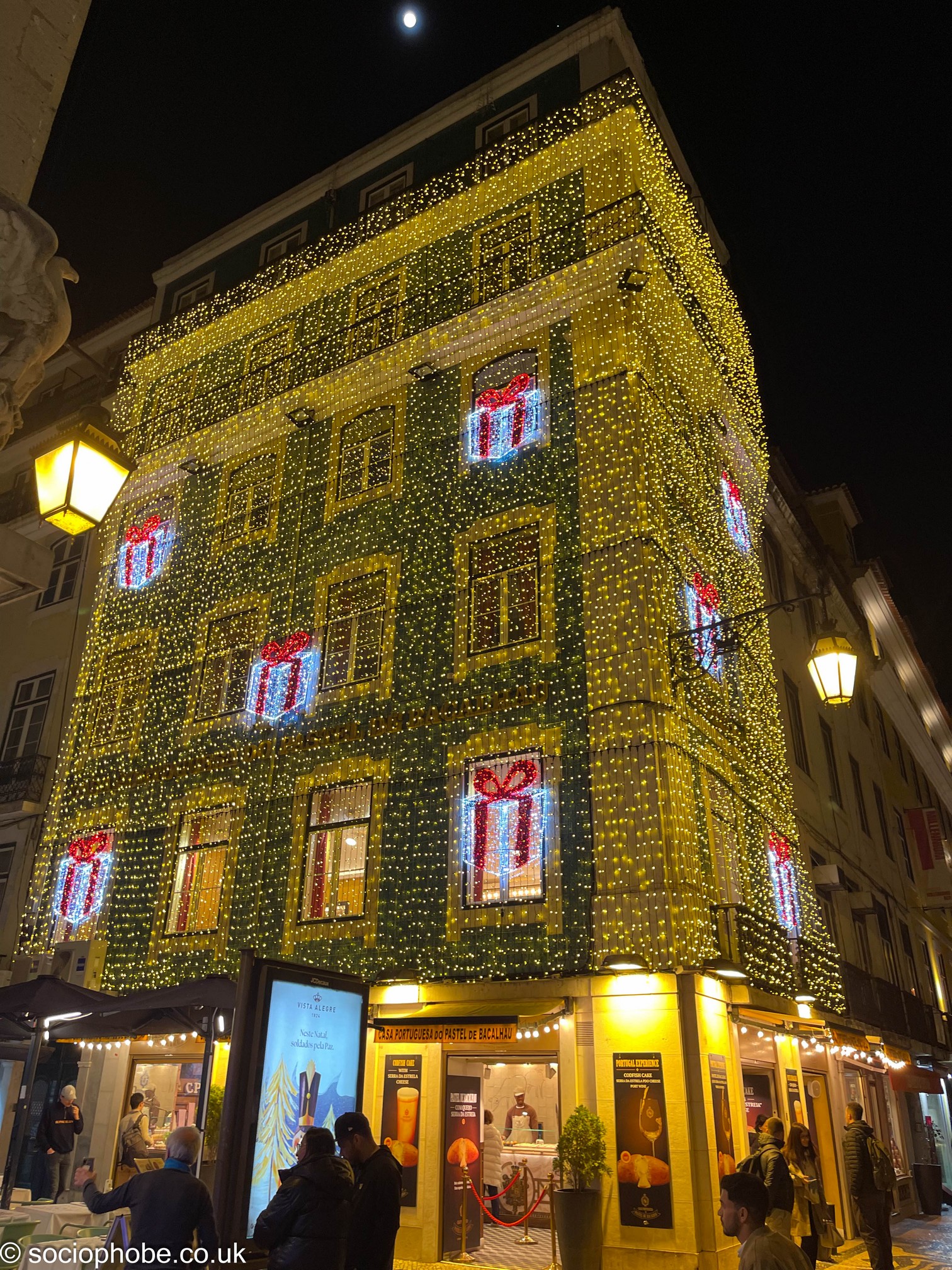
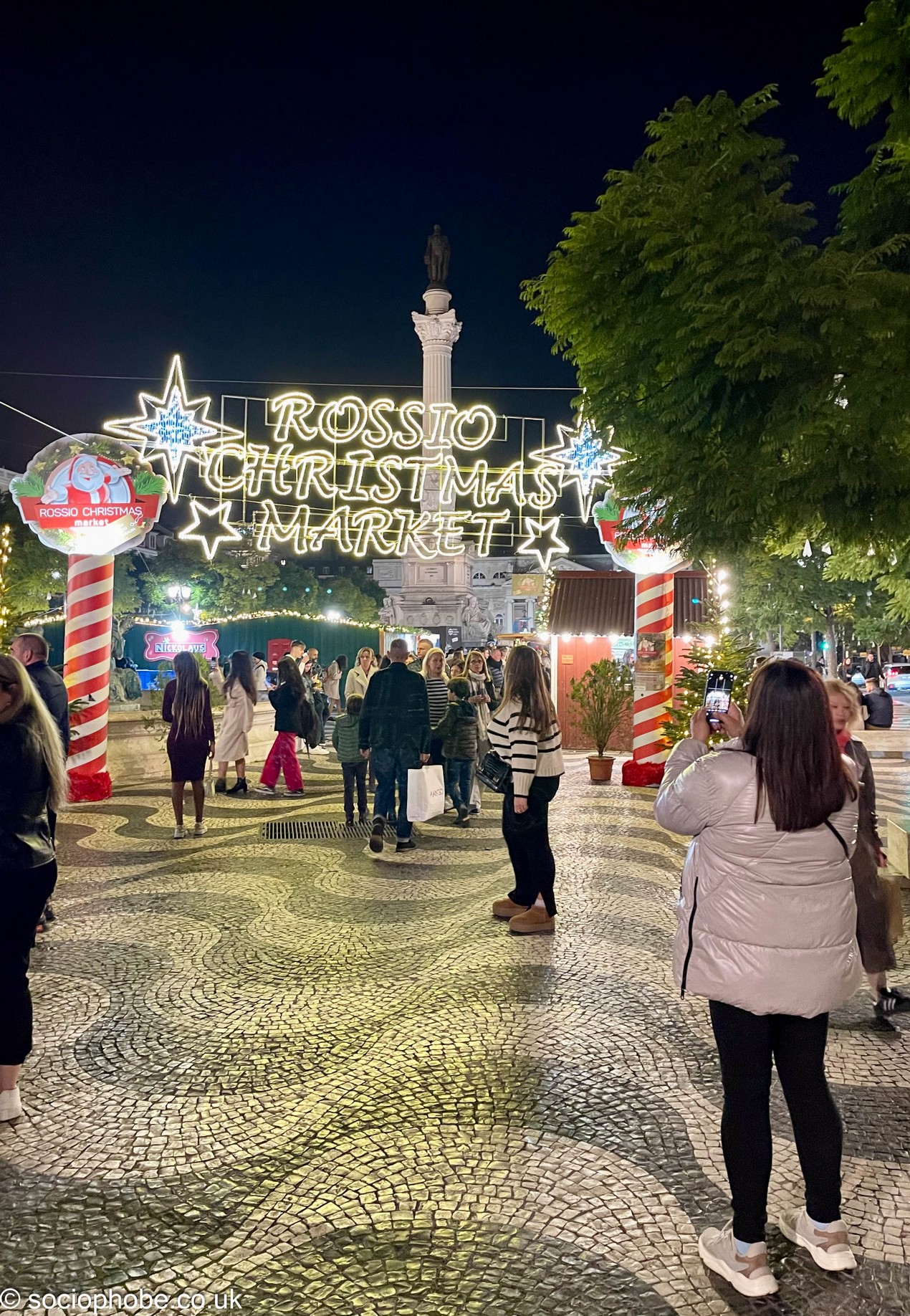
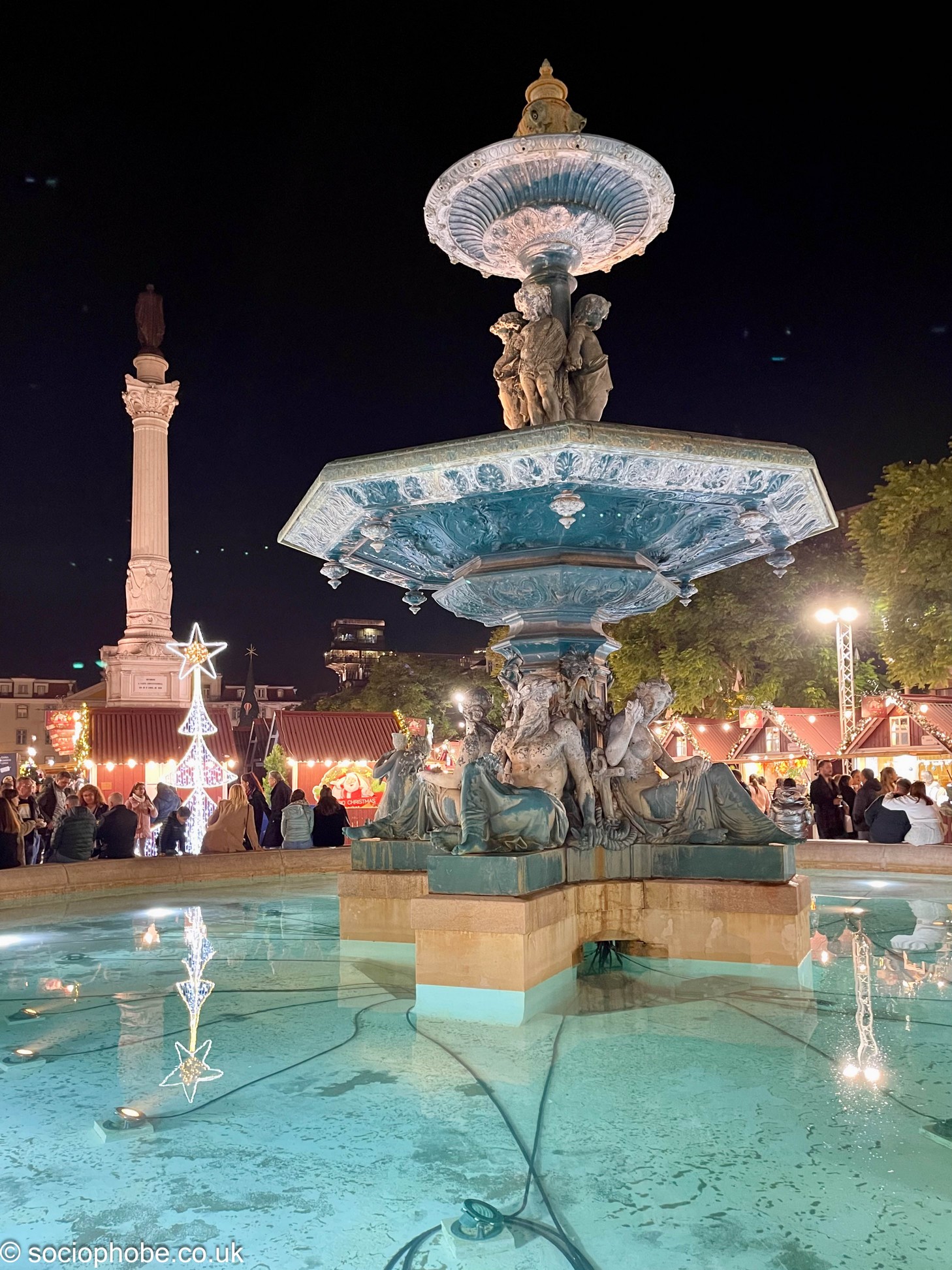
The route was beautiful, with lots of lovely architecture, totally pedestrianised, outdoor seating (with heaters!) for all the restaurants and plenty of Christmas decorations (not lit until the 1st Dec I believe). We had a slow amble through here and then got to the market and had a slower amble, browsing the stalls. There was a lovely atmosphere and we indulged in various chocolates just in case we hadn’t breached our calorie goal for the day!
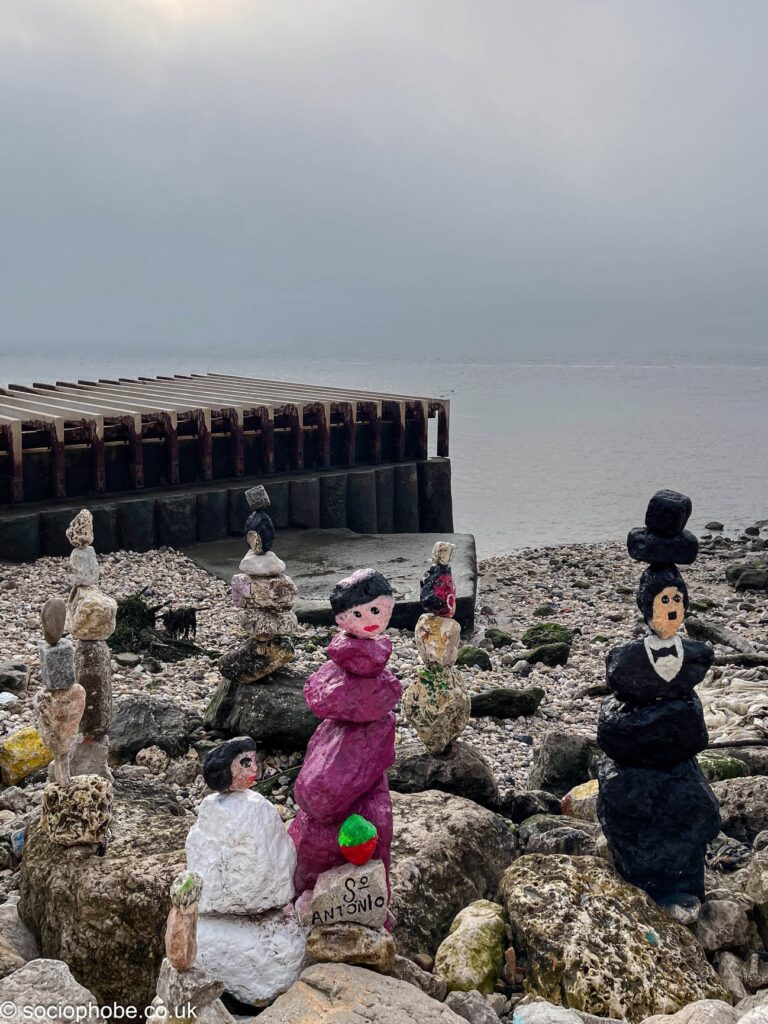
The next morning, our last full day of our long weekend in Lisbon, started with the habitual 8AM breakfast and then we walked to Placo do Comercio, via the arcades that form two sides of the square. There was thick sea fog and it was definitely chilly but there were still lots of people out walking or running and hot chestnut stalls. We carried on walking west, along the prom but as we approached the train station the area became distinctly dodgy so we called a Bolt again.
Jeronimos Monastery
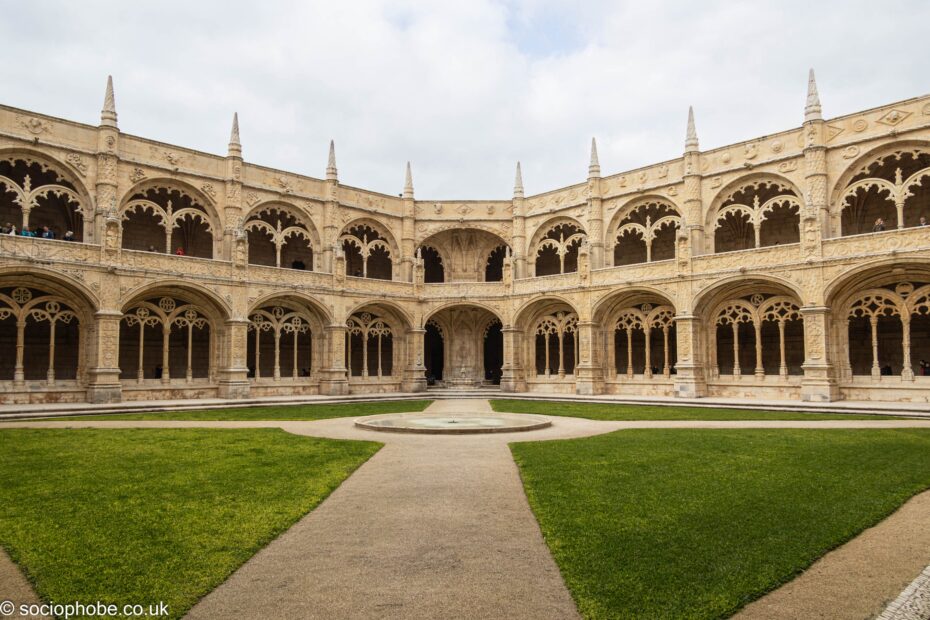
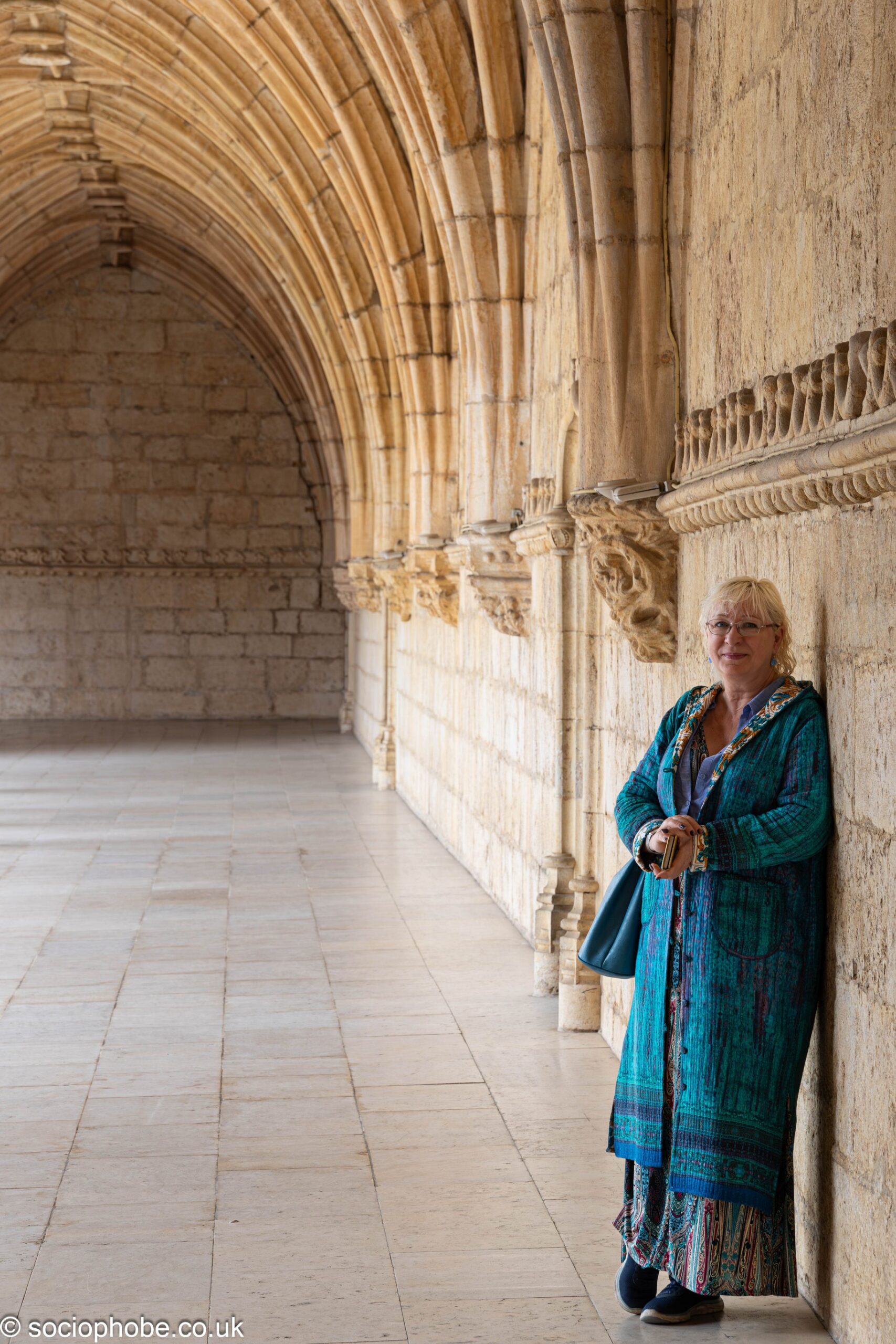
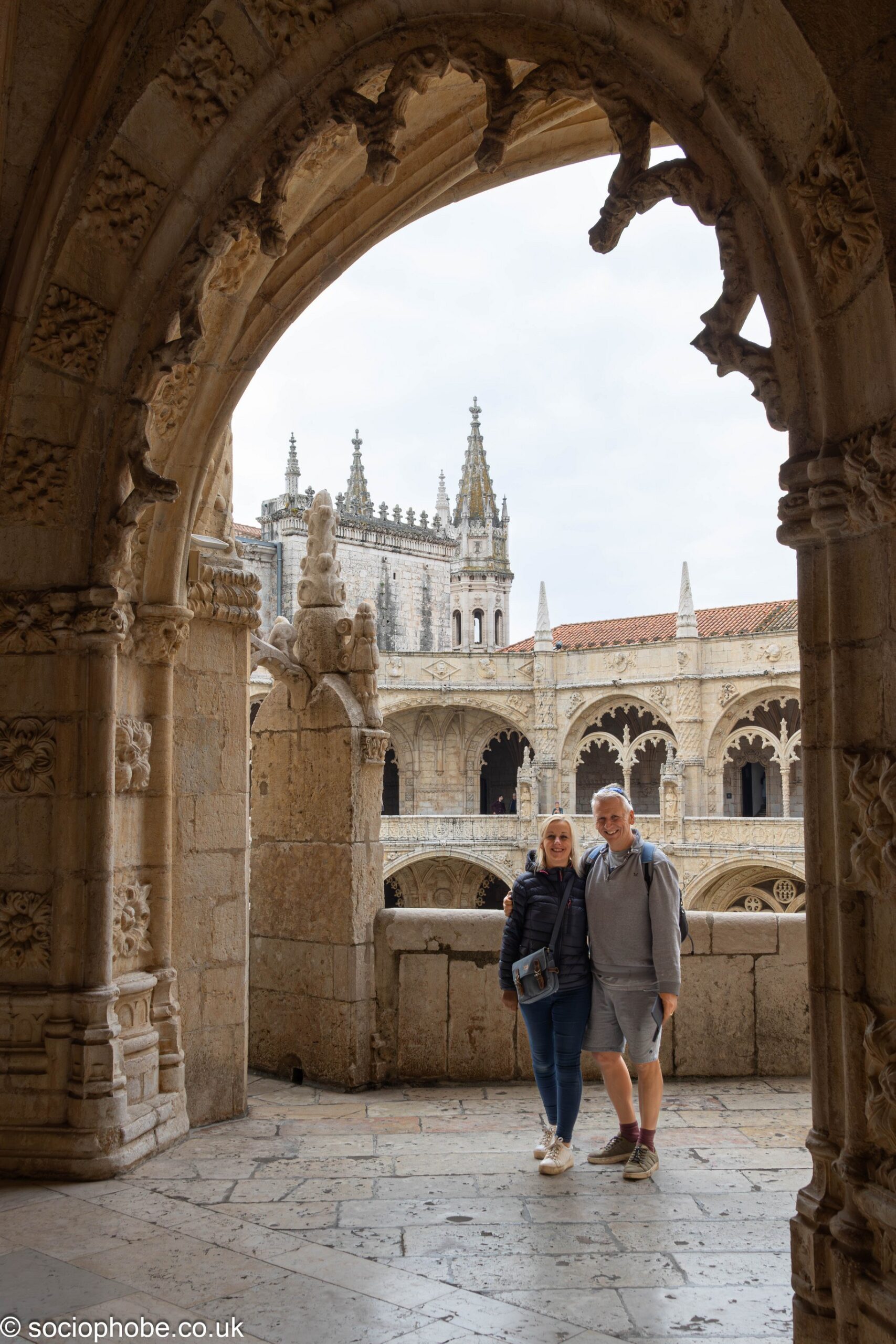
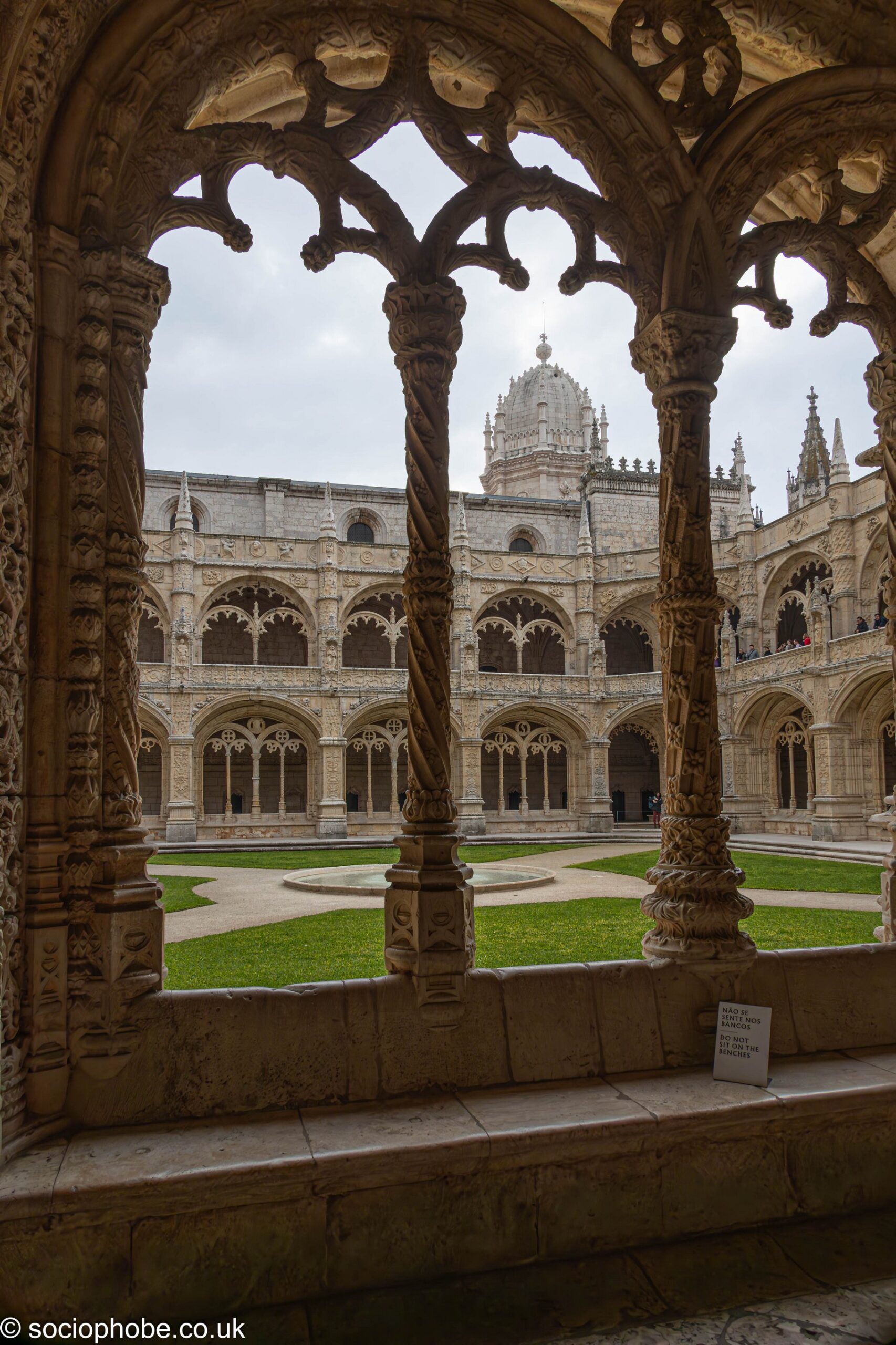
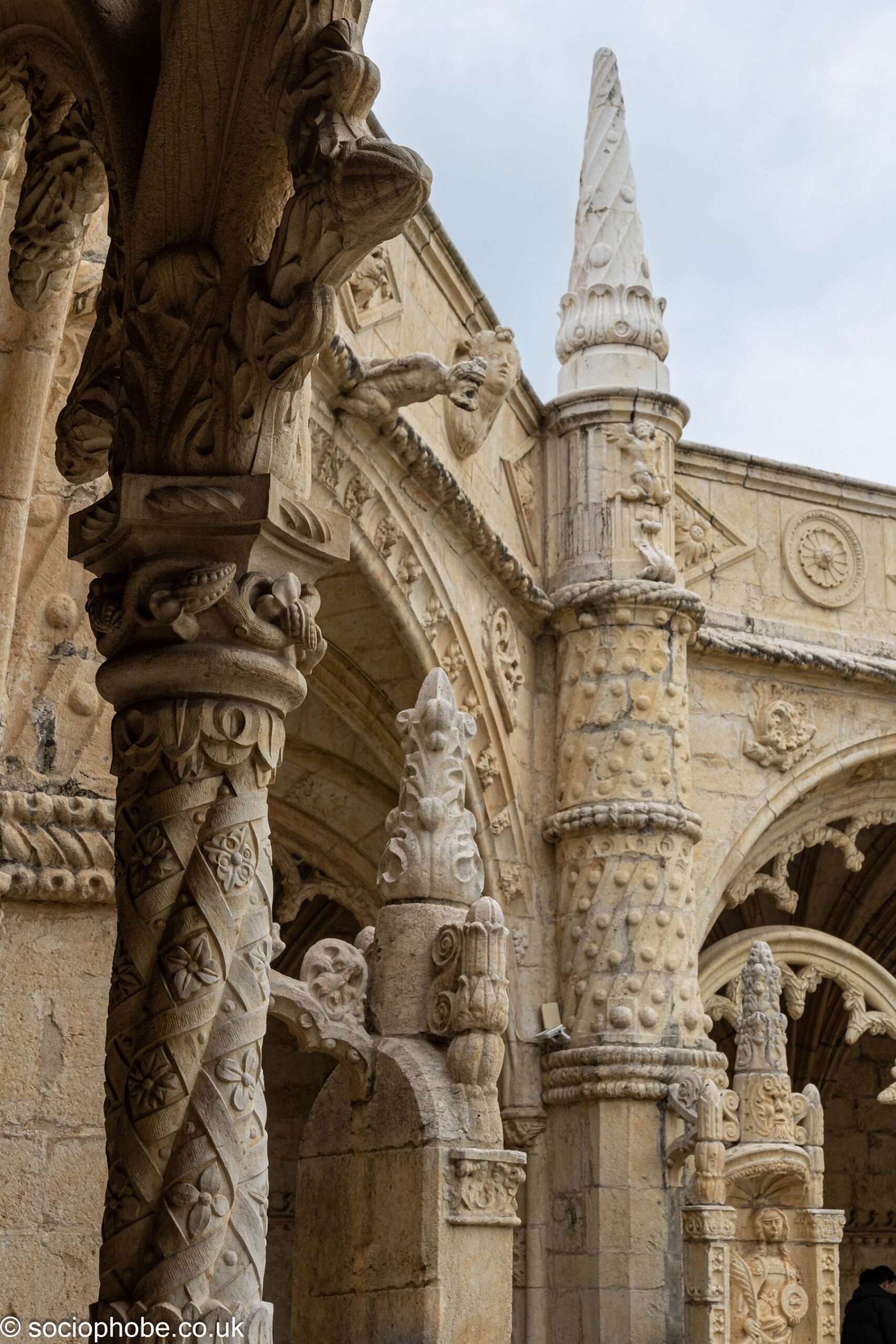
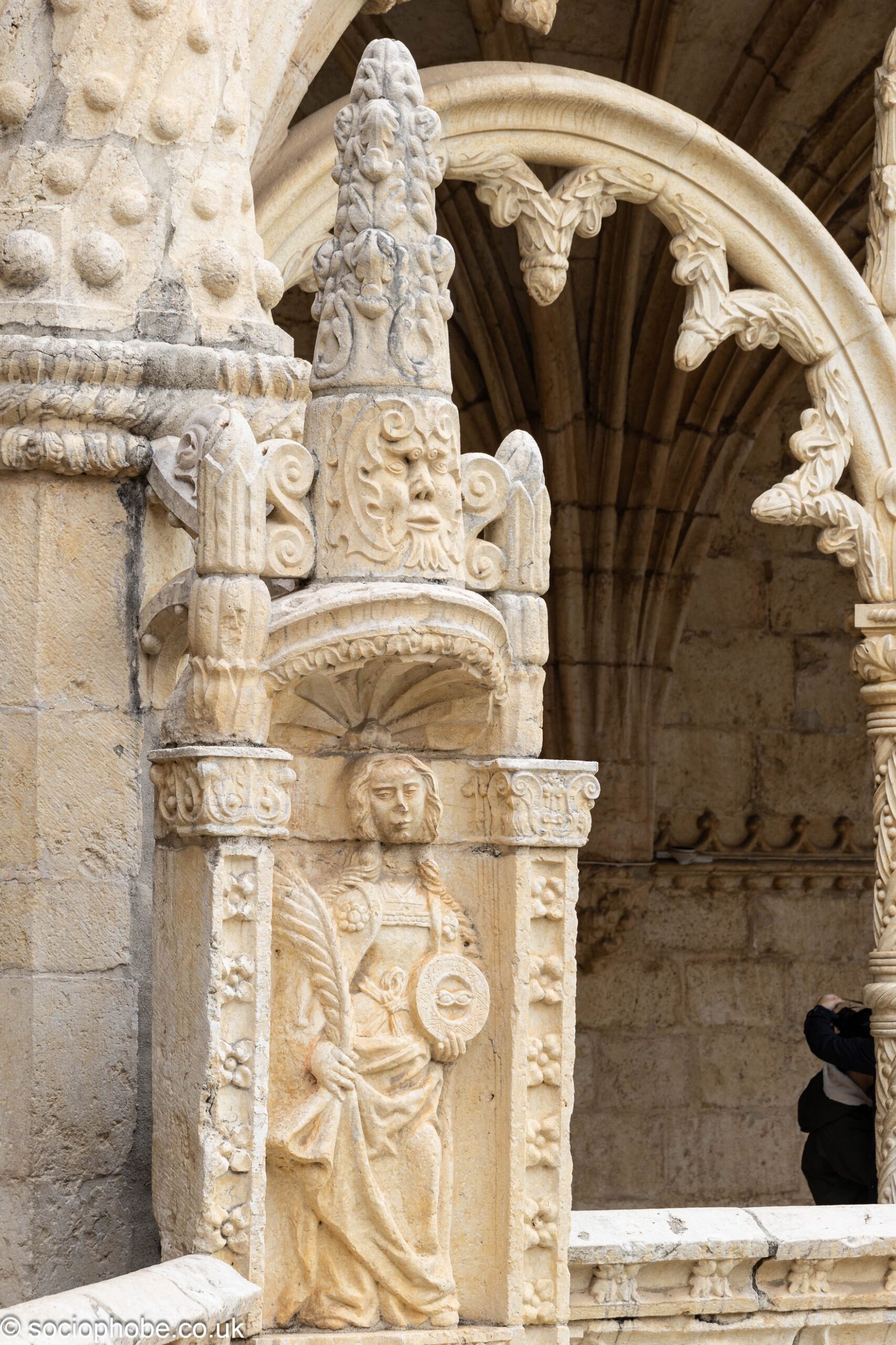
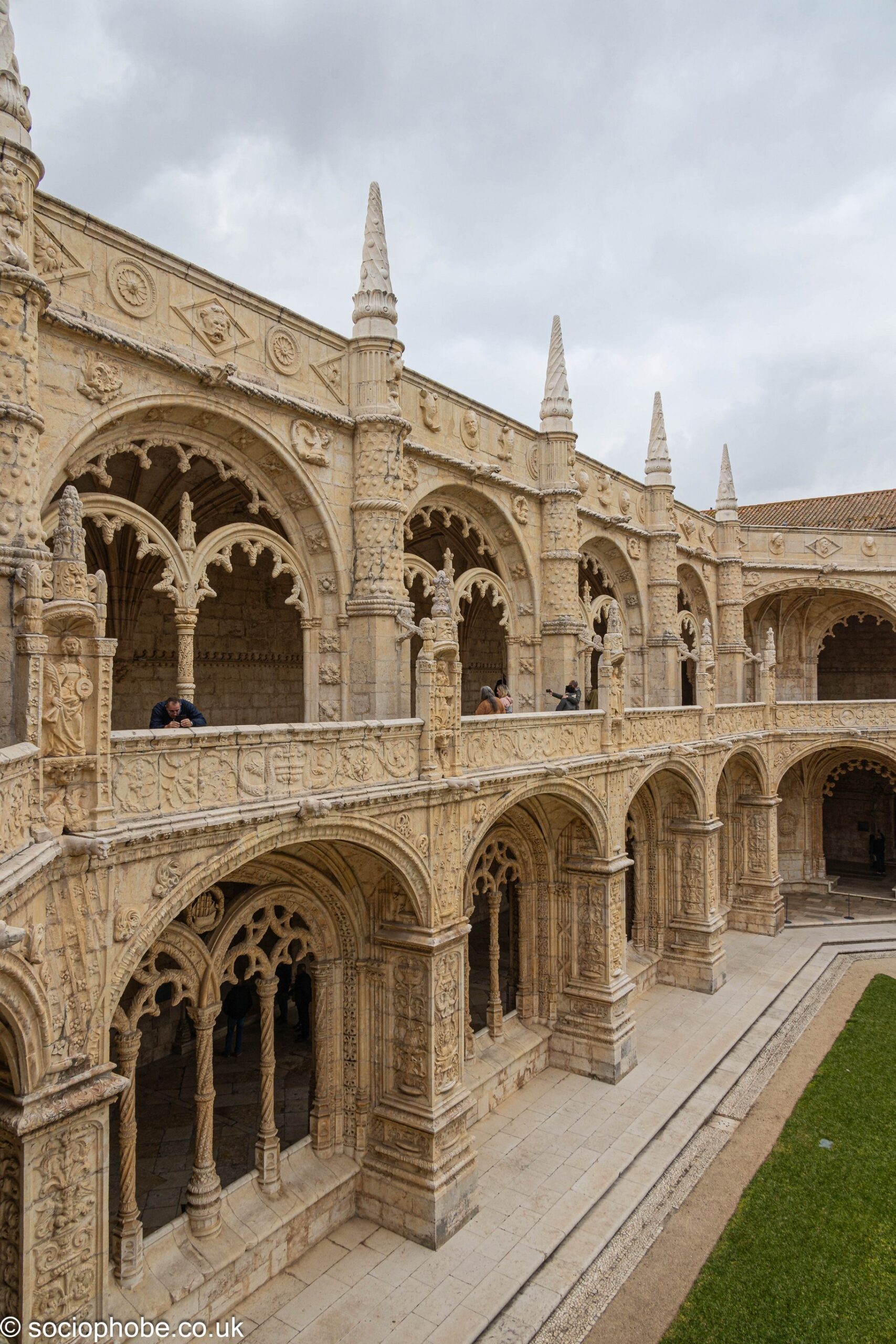
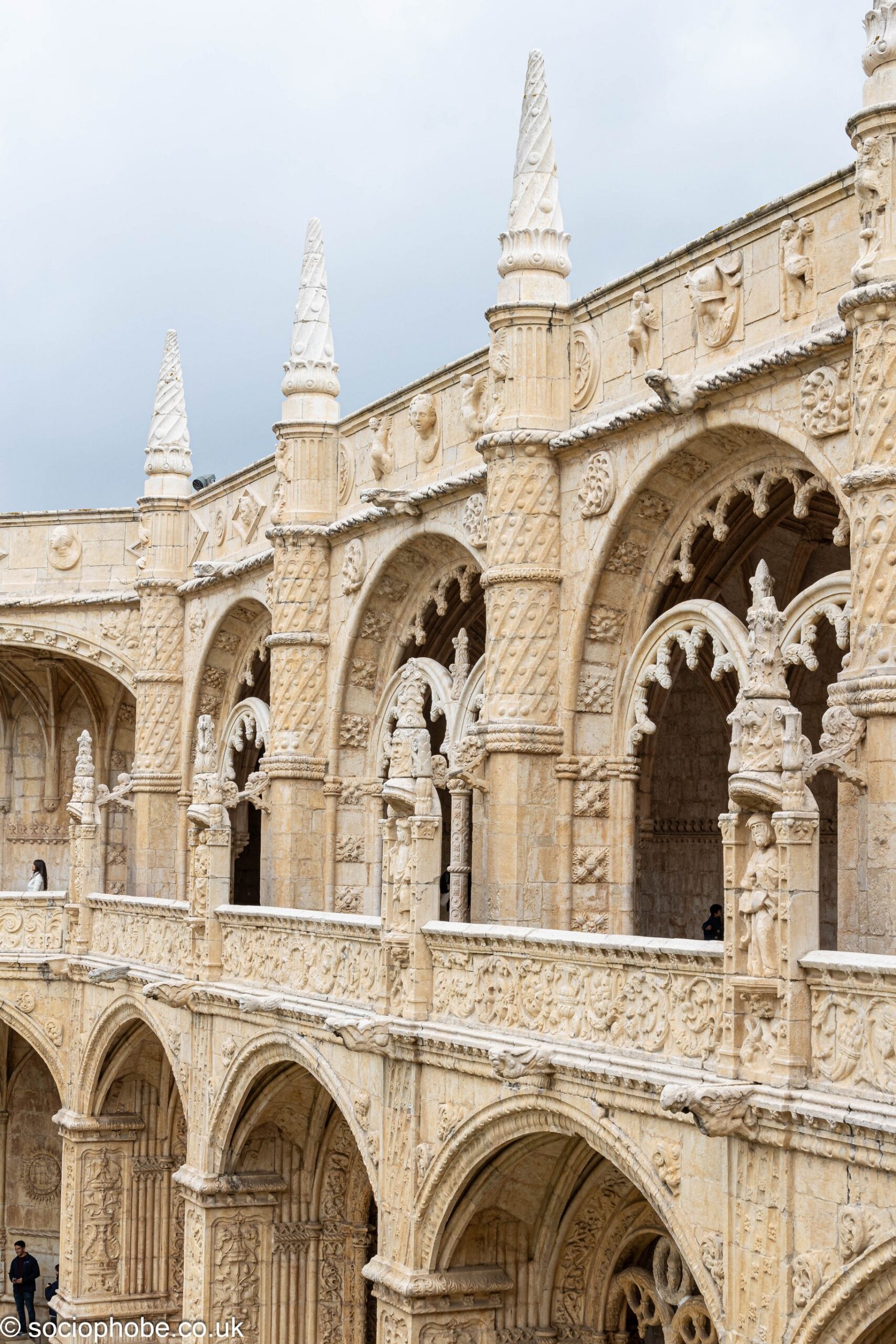
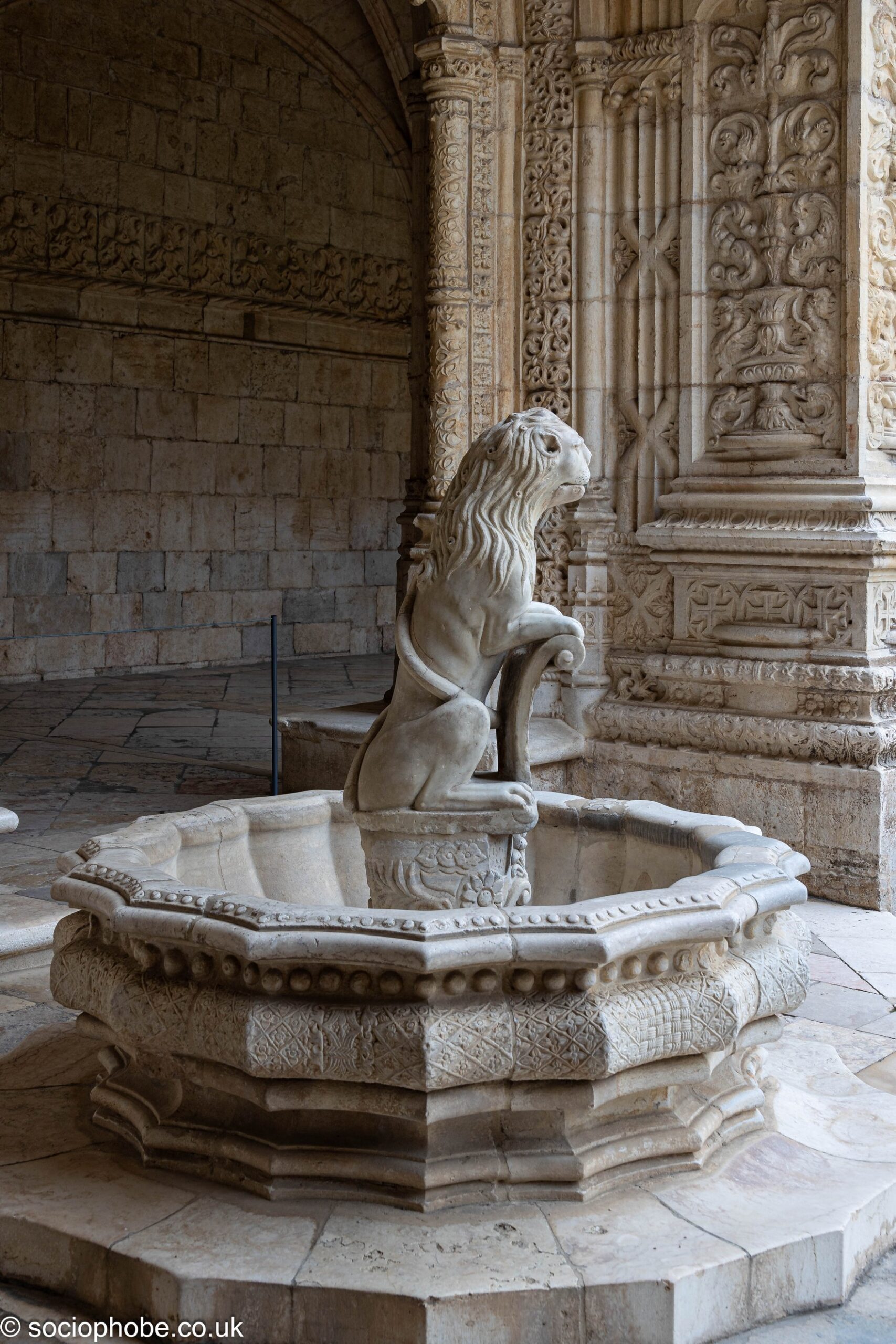
One of my memories from my last visit to Lisbon in 2004 was the Jeronimos Monastery, a fantastic 16th century Gothic building. Both the cloister and the church (containing tombs of some Portuguese monarchs and also Vasco da Gama, amongst others) are covered by the same ticket. The building is an extravagant architectural excess and was funded by a tax on trade with the Indies and Africa, the monks of the monastery being responsible for the spiritual care of the sailors.
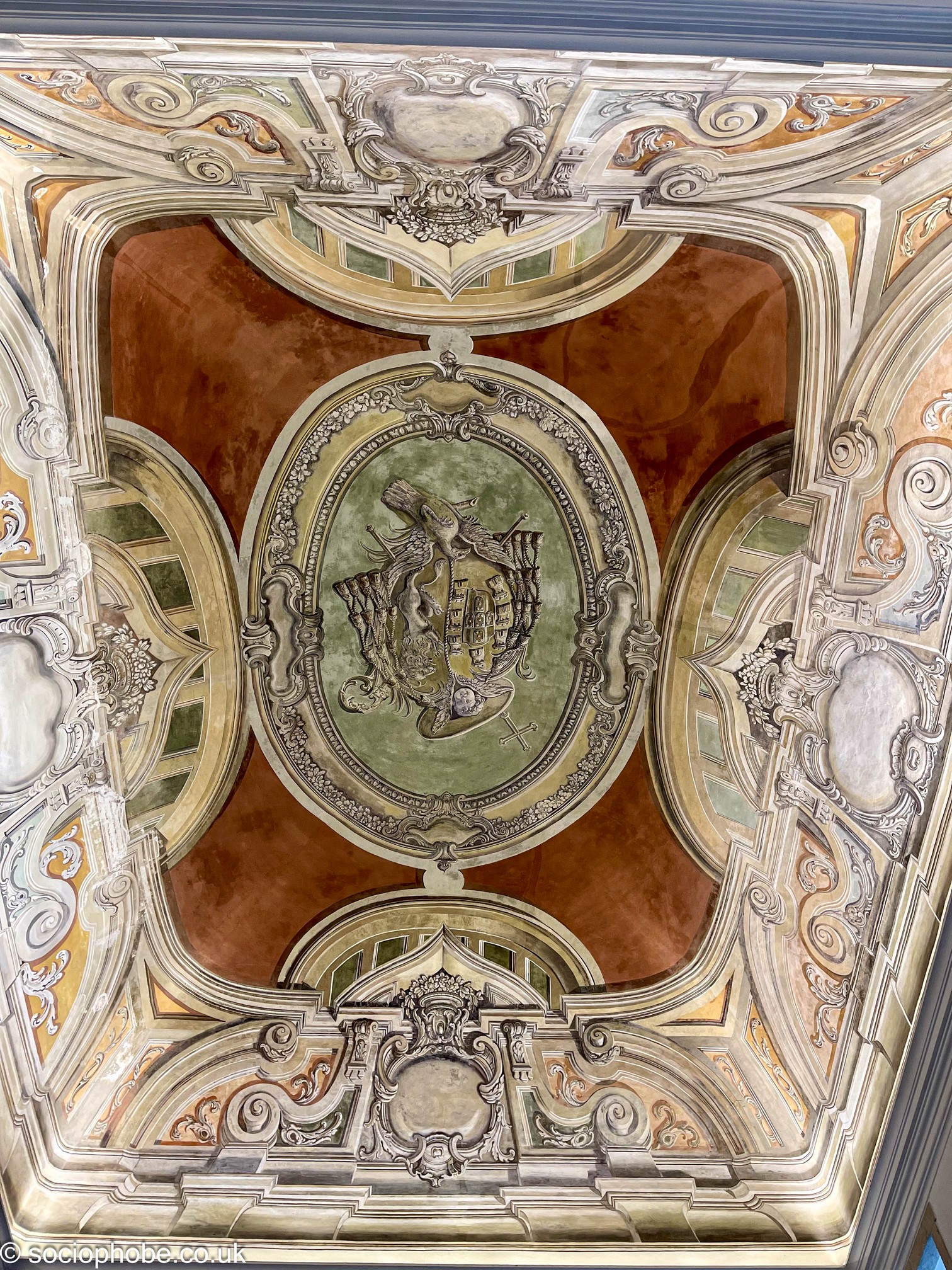
We arrived mid morning on a Sunday in November and the queue stretched the length of the cloisters! We eventually got in and a friendly ticket lady explained about access to the church (after 2PM on Sundays) and we headed up the stairs to the cloisters. The route is well marked and there are some information boards. The decorated ceilings were impressive but paled when confronted with the sculptural exuberance of the cloisters. Every surface seemed to have a design on it so although the structure was broadly symmetrical, the detail was individual.
The area was naturally packed with other tourists but was still glorious to see and we followed the route around the upper floor and then the lower floor before seeing the tiled refectory and some other less memorable rooms. We didn’t get to see the church as we’d spent about 45 mins in the cloister and it would have meant a 2 hour wait for 2PM but we should have really gone back there after the Maritime Museum.




Maritime Museum
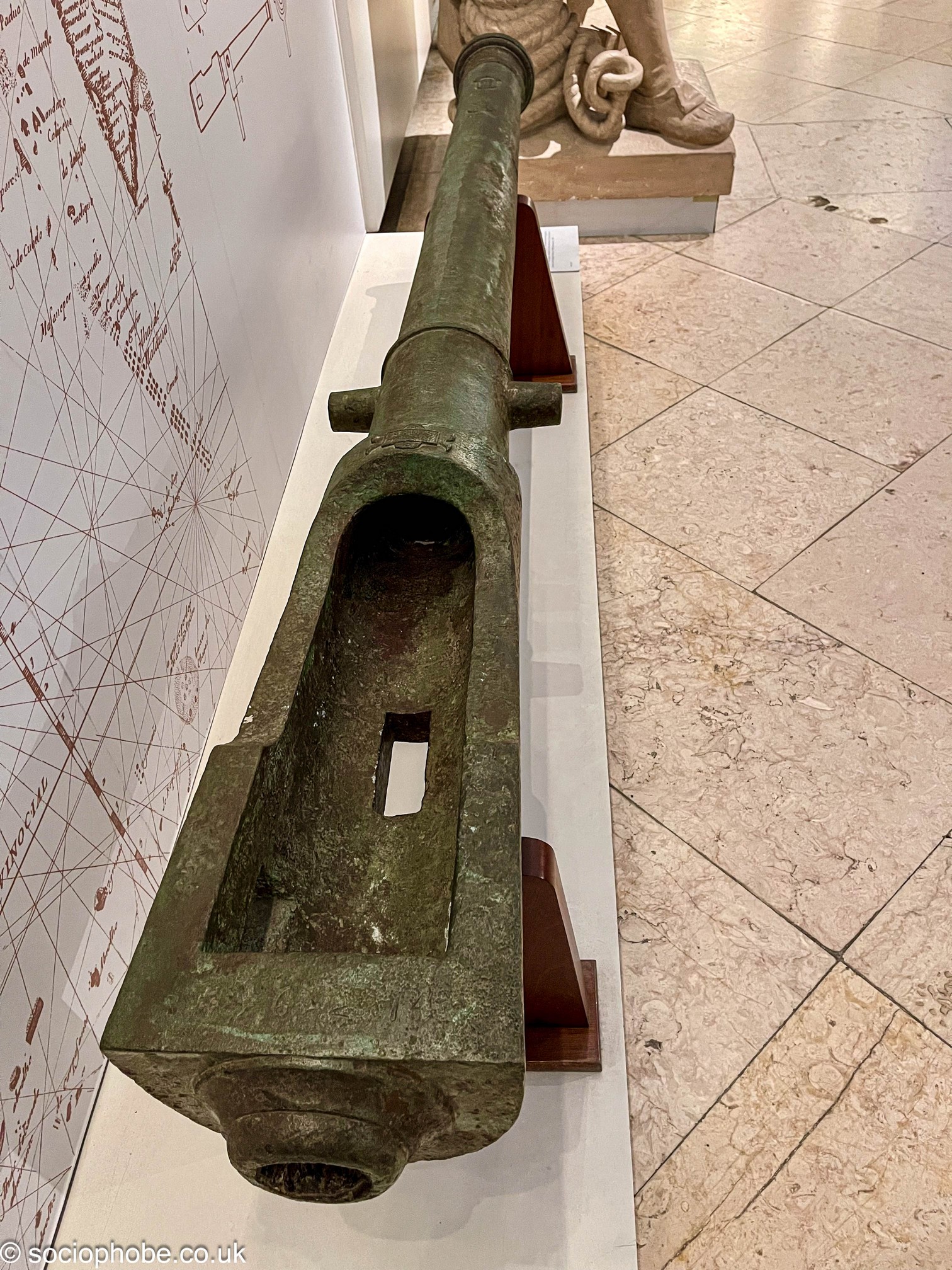
The maritime museum is a celebration of Portuguese exploration and naval prowess and is next to the Jeronimos Monastery. The entrance is a bit confusing to find and is opposite the cafe/shop entrance, in an innocuous part of the monastery itself with two towers flanking the doors. Once you’ve bought tickets you’re free to wander around and there are different rooms, each with their own theme.
I found the first part fascinating and I really don’t think the early Portuguese explorers get enough credit for their achievements in cartography and discovering areas previously unknown to Europeans. We did spend quite a while looking at the map of the routes the early explorers took and the ships they travelled on were amazing, smaller than a river barge now! These ships carried small crews and sailed for months at a time through uncharted waters, quite incredible.
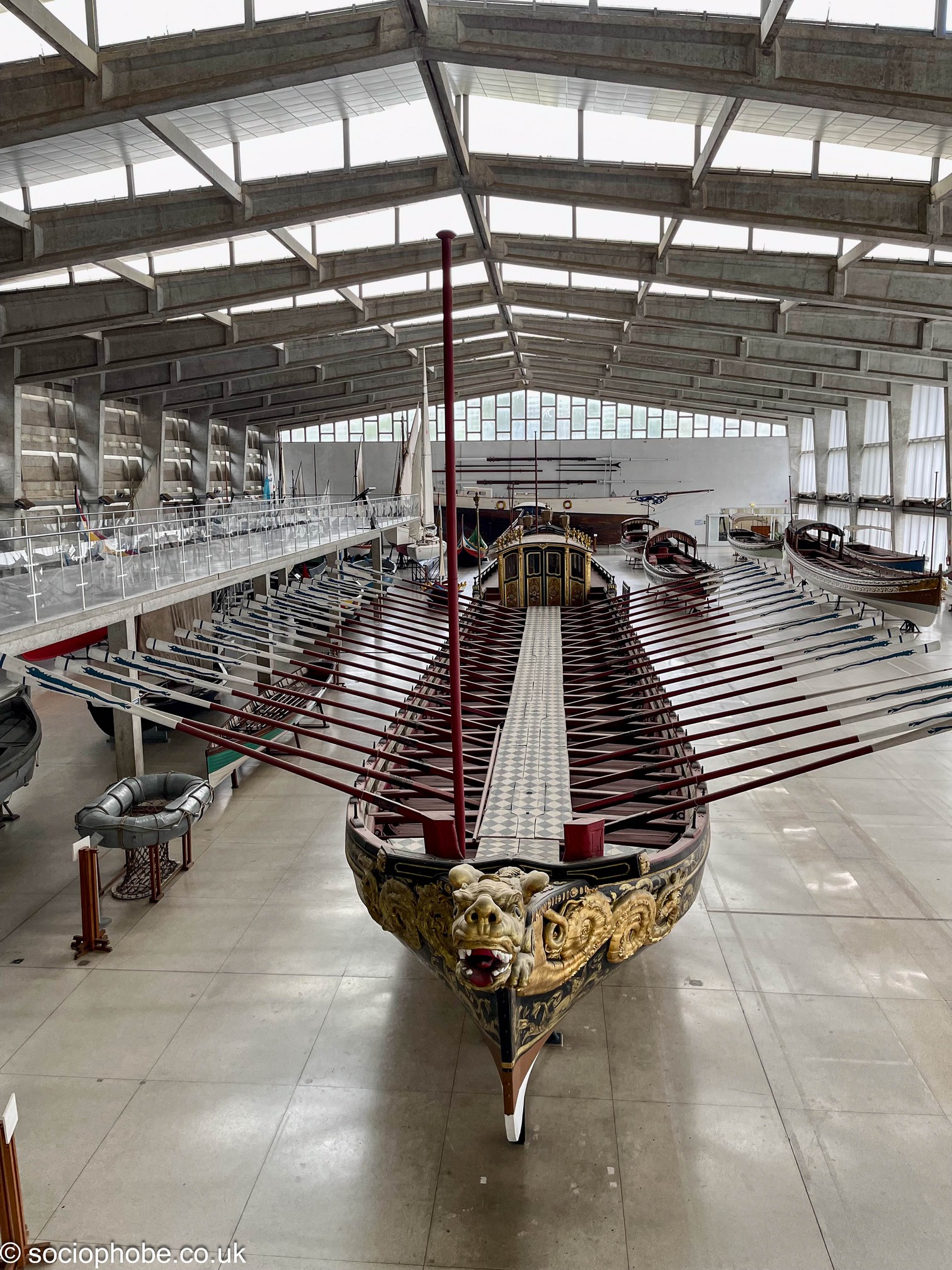
The museum continued on through the age of gunpowder to that of steam and then the modern era. There was also a couple of rooms devoted to the Portuguese fishing industry, which I skipped. The modern era section was fascinating as I didn’t know much about the Portuguese African colonies or Portuguese submarines. All of the rooms and exhibits had extensive information in English and after a couple of hours we were suffering brain overload but it was all so interesting! The final section showed the royal river barges and also some seaplanes which were quite beautiful. After our visit we had lunch in the museum cafe which was excellent value and gave us time to absorb what we’d seen before our next destination.
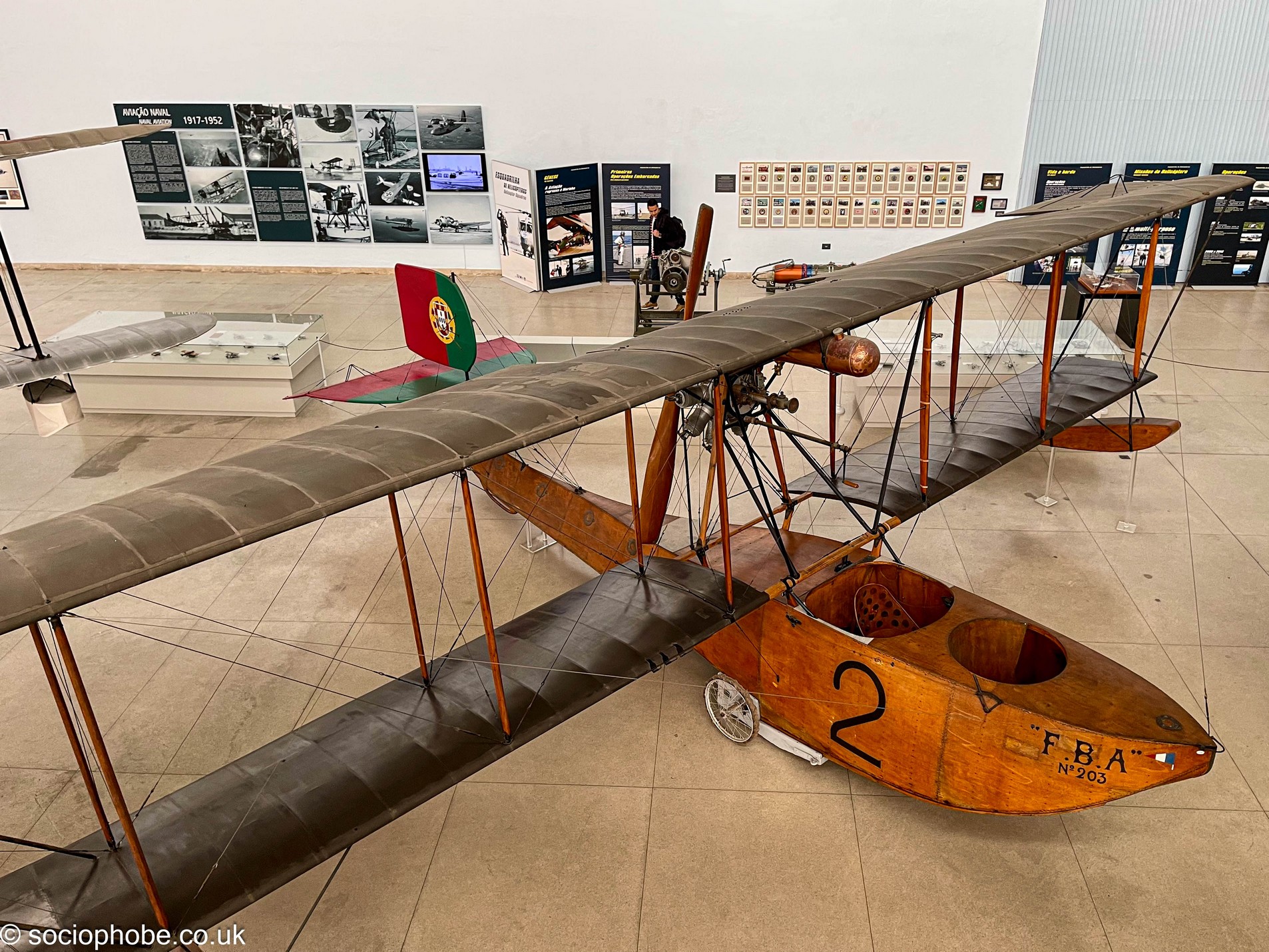

After lunch we all went back to the hotel and then our separate ways. Deb stayed in the room to relax, M&P went off to do Christmas shopping and I went off on my photo tour.
Personalised Photography Workshop in Lisbon
I booked the photo tour with through Withlocals and my tutor for the afternoon was Pedro. We met up in a park near the hotel and discussed what style of photography I did, technical competence and what I wanted to achieve.
Immediately it was obvious that this was not going to be just a point and shoot tour and we spent quite a while sat down looking at compositional options and why different styles of photos worked. This blew my brain really as it was yet another area of photography to consider when taking a shot and a whole new way to look at things.
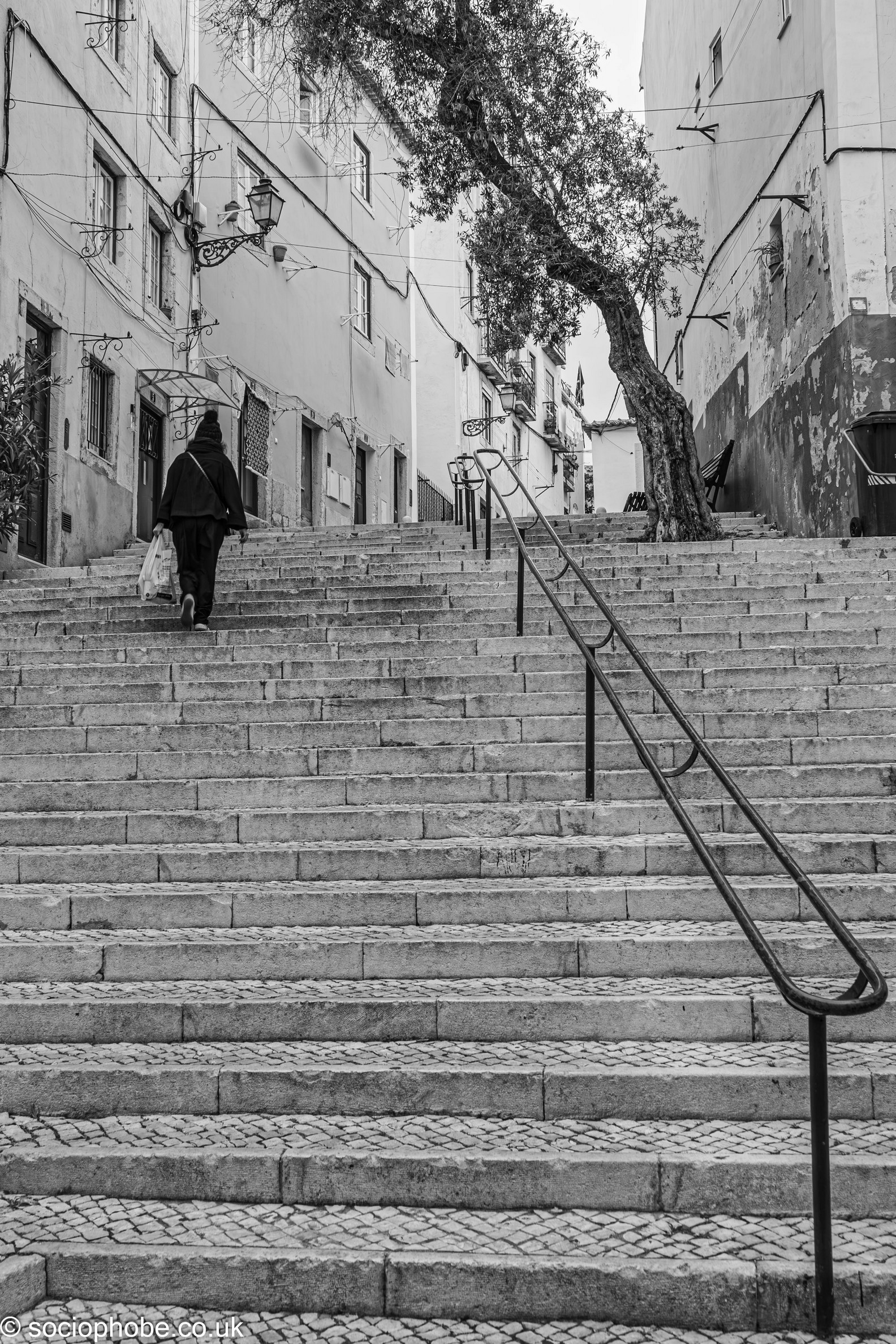
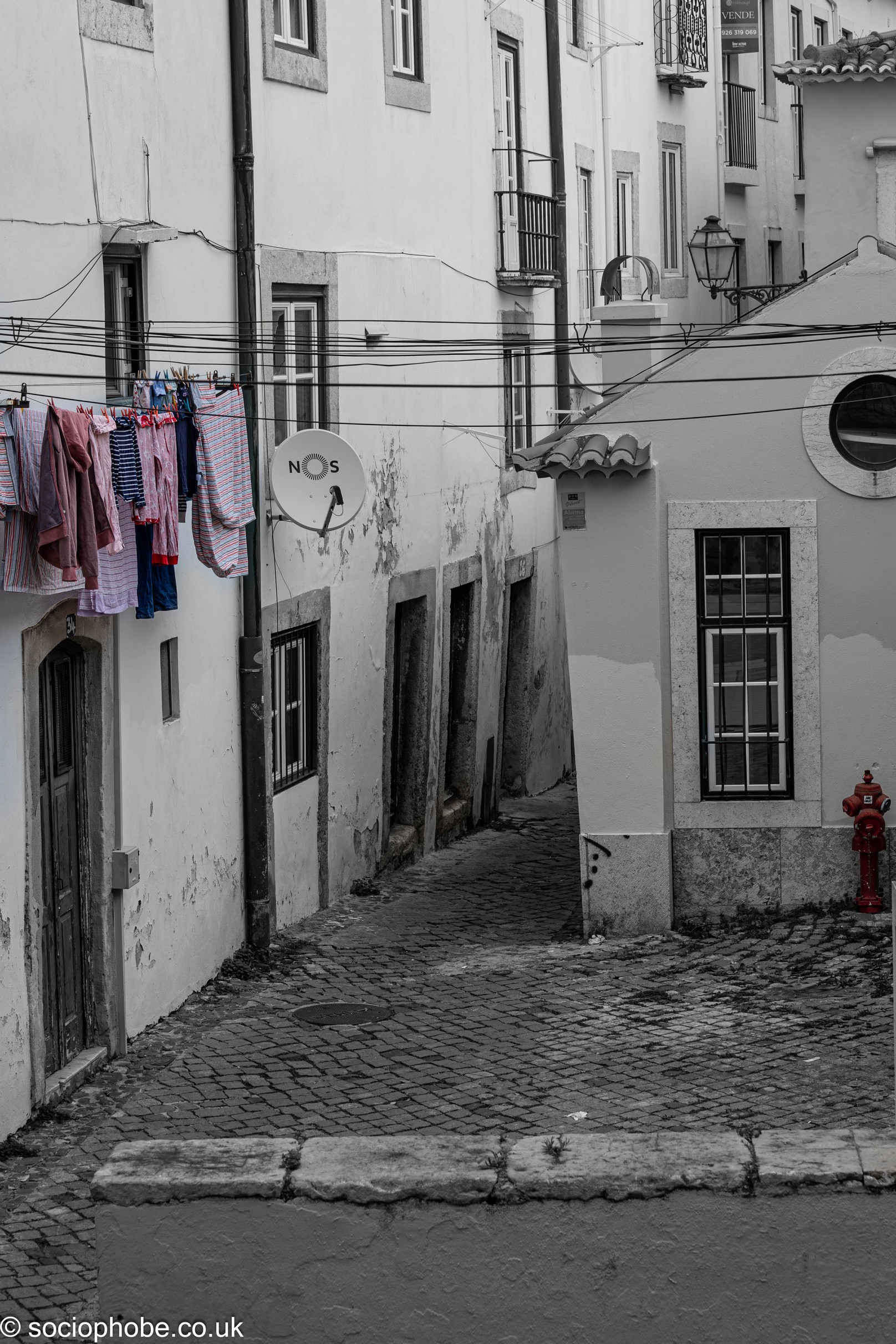
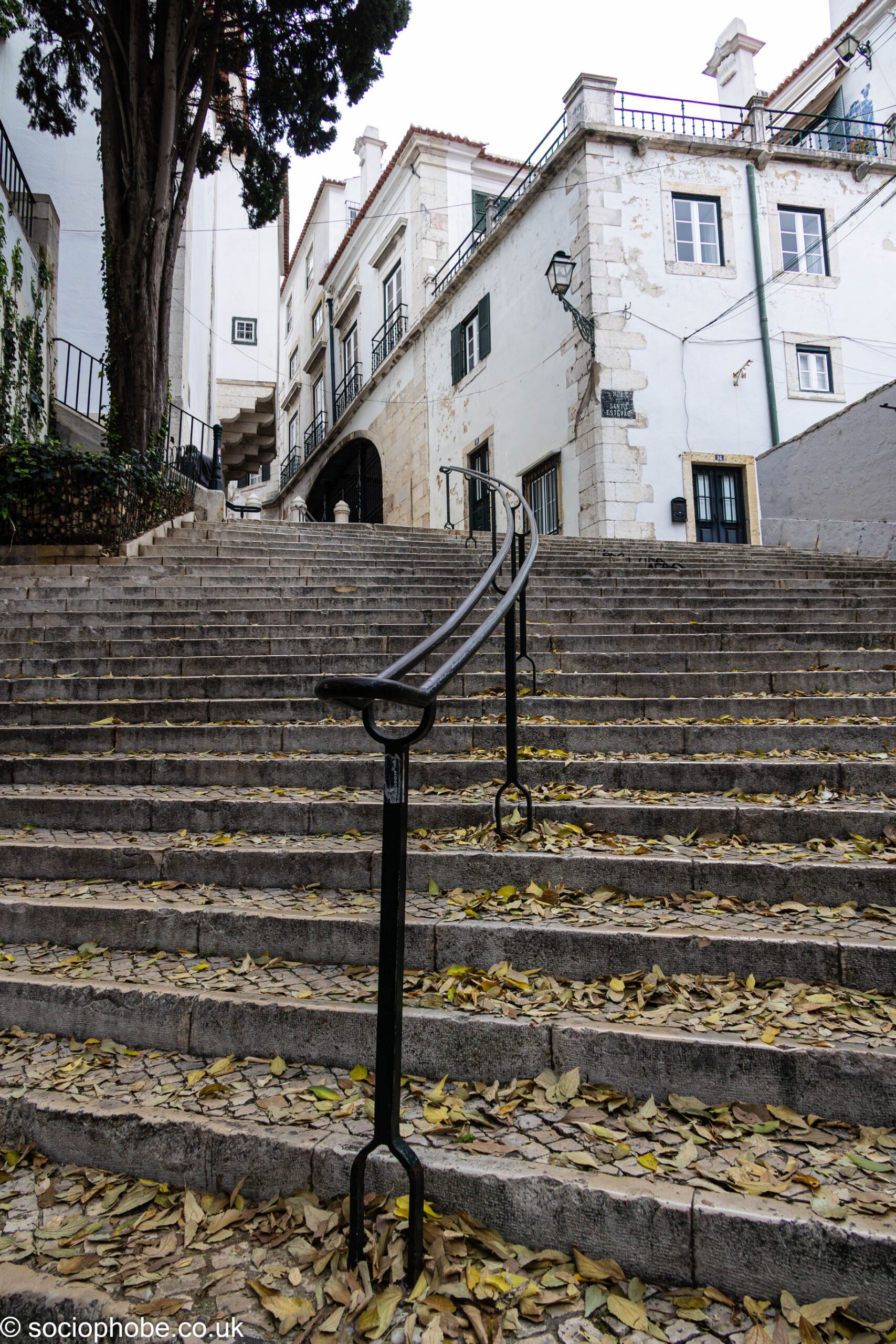
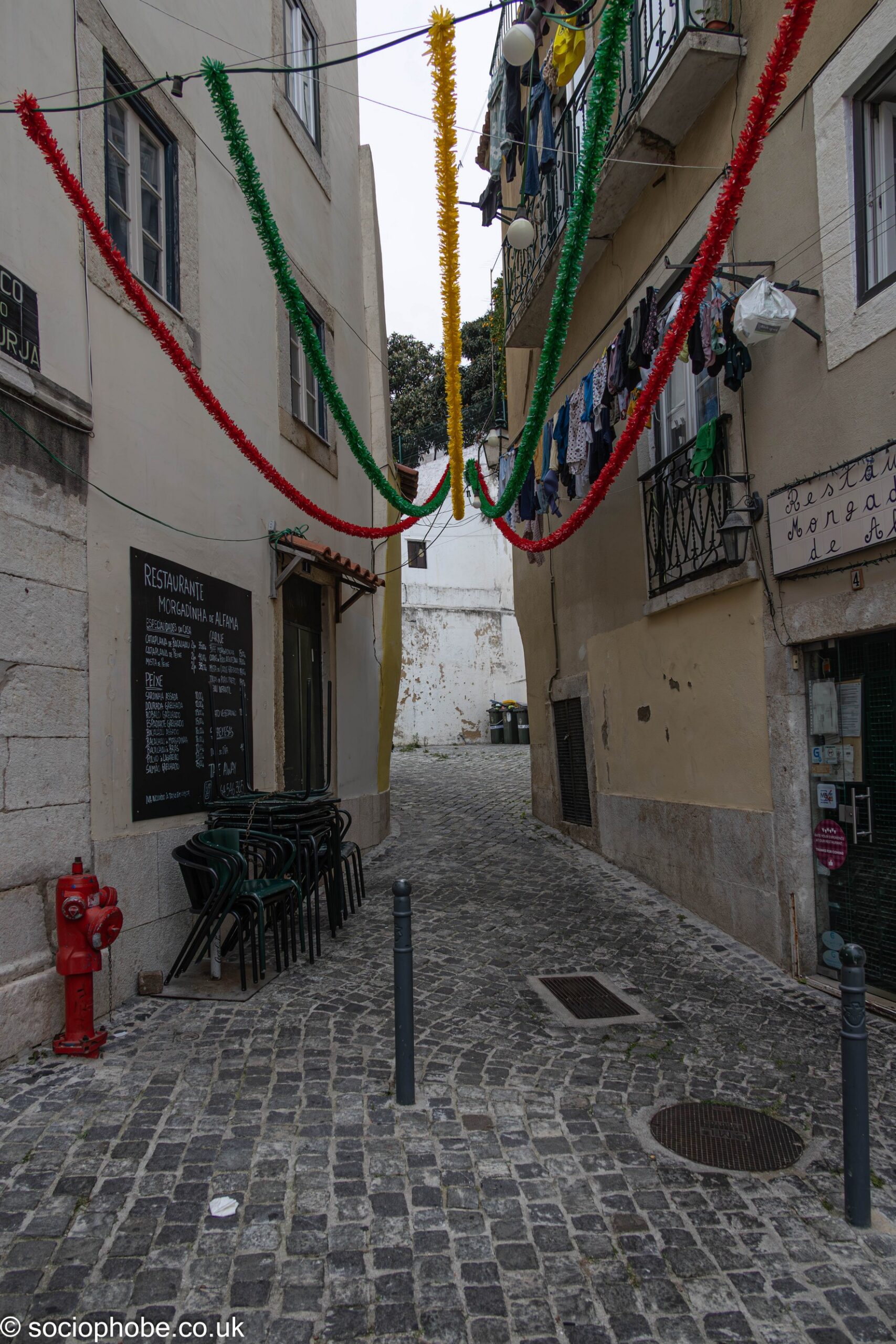
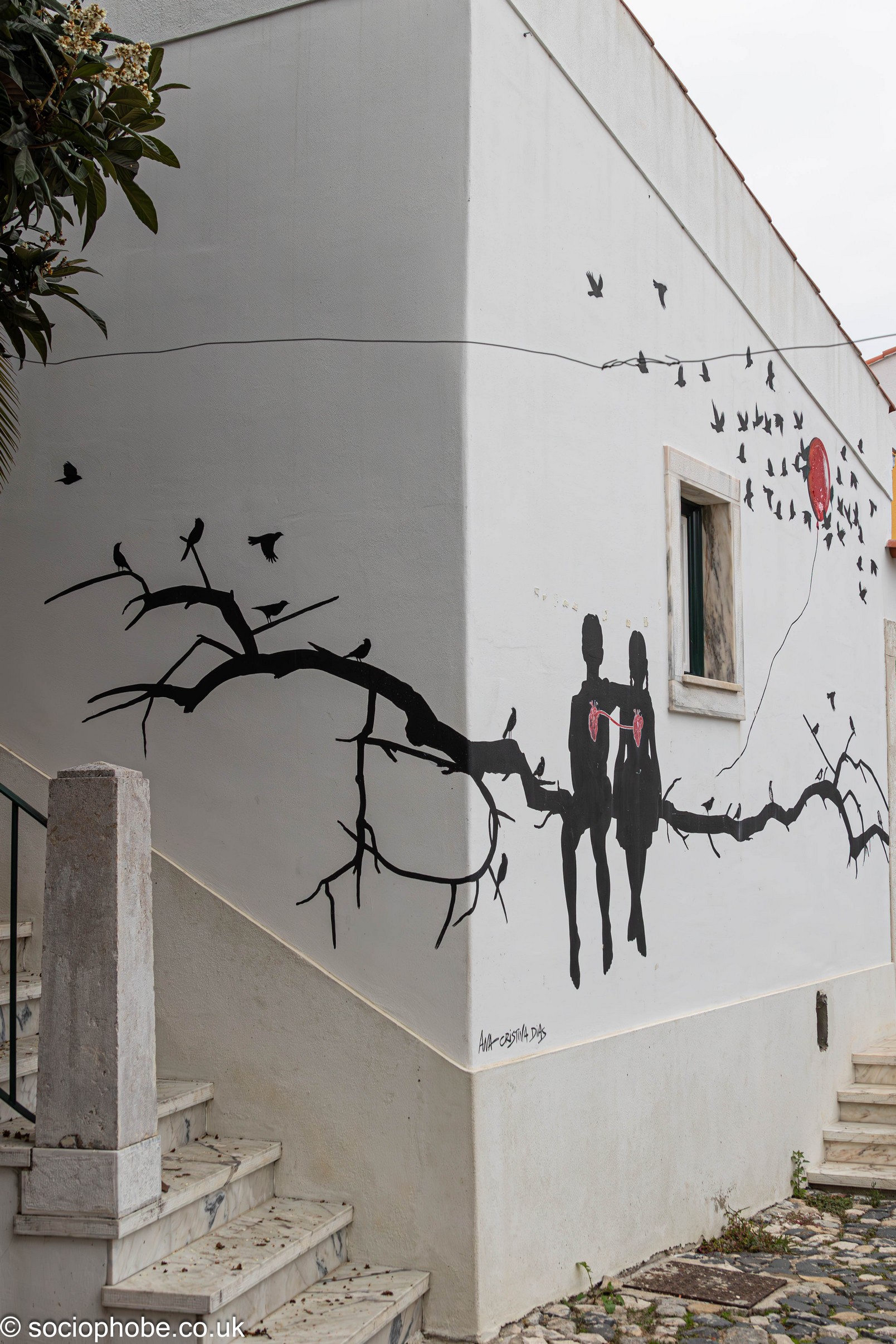
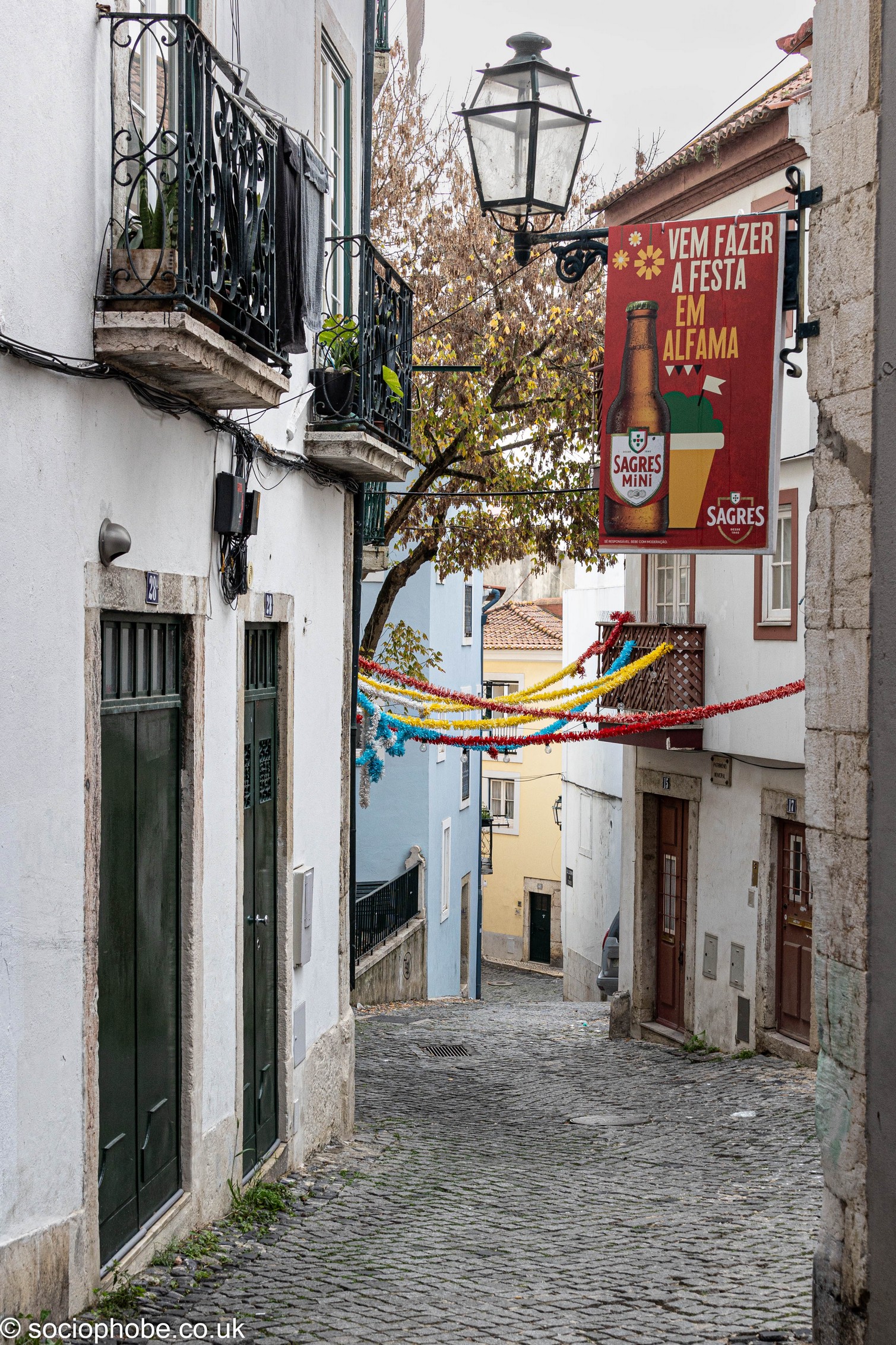
For the actual tour part we wandered through the Alfama district, through Praco do Commercio and then possibly into the Bairro Alto and Baixa de Lisboa areas before returning to the hotel. I didn’t take many photos but was mentally absorbing the composition as we walked and talked. Aside from photography it was fascinating to learn more about the city and country and Pedro is an engaging and entertaining guy. A very enjoyable part of my trip.



Eating Bear
For our final night of our long weekend in Lisbon we decided to eat somewhere different and after a bit of research found Eating Bear. The restaurant was quite busy but we were able to get a table and make our choices. The menu had some interesting options and the choices were certainly different.
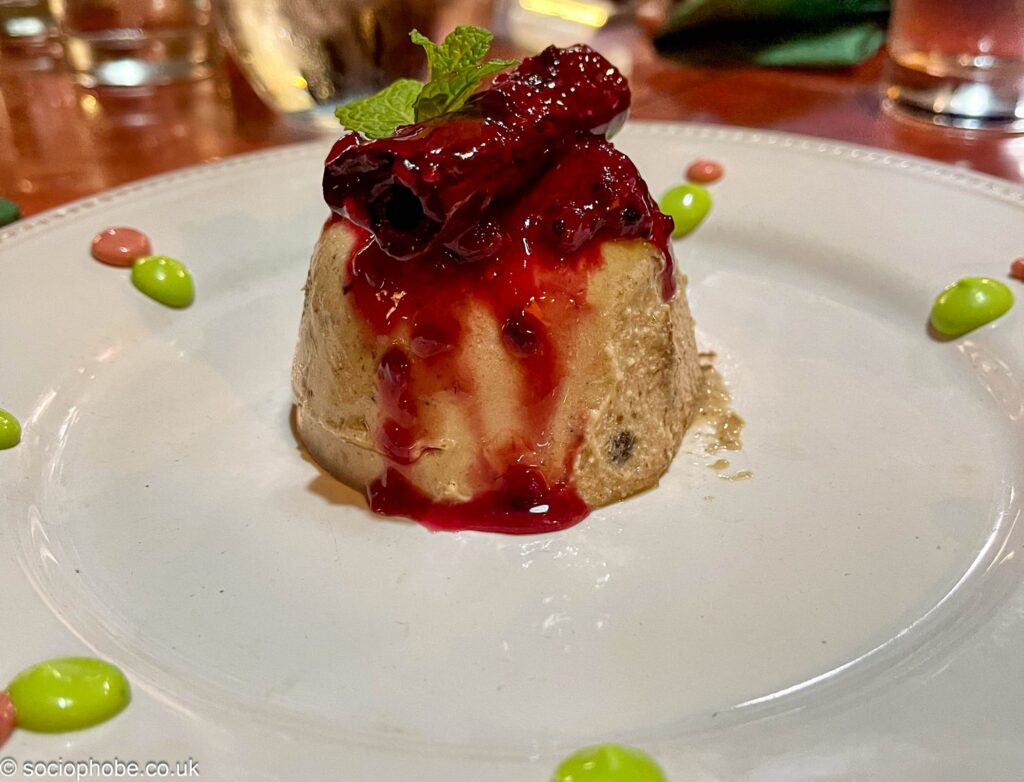
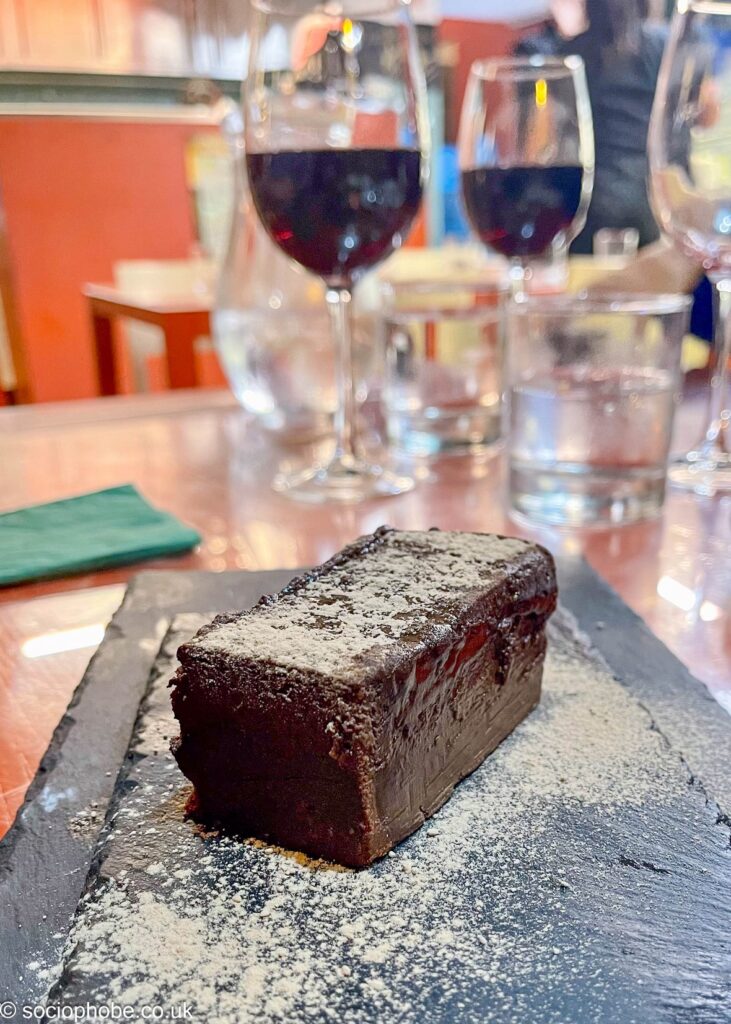
Our food arrived in several waves, giving us a chance to finish one tapas before starting the next. From memory we had a figs and cheese dish first, followed by tuna salsa tacos and then two fantastic desserts – ultimate chocolate brownie and panna cotta. The food was all beautifully presented and tasted delicious.
What made the evening a real experience (a much overused word) was the engagement with both the waiting staff and the chef. We had a great chat with the head chef, from Nepal, and it really elevated the evening. Prices were excellent for the food and alcohol that we had and it is definitely somewhere I’d recommend for a special dining destination.
After our meal we had another walk around the Praça do Comércio area before going back to our hotel. We left after breakfast the next morning to flay back to the UK. It was a very enjoyable long weekend – Lisbon is a fabulous city break destination even in November. There are plenty of options for places to visit and we could easily return next month and see some of the places we didn’t get to see this time, or didn’t allow long enough to properly visit. The social element was a new one for us as we usual just travel on our own and it was a nice touch, made the evenings busier and the dining choices were far nicer than we’d have usually opted for. A thoroughly enjoyable long weekend in Lisbon.
We are traveling to Portugal in March for 6 weeks. Fly into Lisbon and plan 3 days there before heading to Porto. I’ve seen the Turim Terreiro do Paço Hotel you stayed at and was wondering about you comments on the hotel and area. It looks like a prime area but I’m getting mixed reviews on that hotel, as I always seem to notice. I was considering the URBANO FLH or Lisbon Serviced Apartments next to the RLH hotel. So many to chose from and review it gets overwhelming at times. Your comments on your experience would be appreciated. I’ve read your trip details while in Lisbon. Any MUST SEE/DO things also. Thank you very much fir your time.
Pat
Hi Pat,
Yes, I saw the reviews but I can only speak from experience. Street noise can be intrusive, despite double glazing, as their is a tram stop just outside the hotel. The service in the hotel was excellent, very helpful and friendly both at check in and breakfast. The breakfast buffet varied each day but we always had plenty that we liked so I was pleased with that as it just makes things easier than going out for breakfast. We didn’t have dinner in the hotel. Our room was classed as a superior double and it was decent enough with plenty of space although there were only power sockets on one side of the bed.
I would highly recommend a day trip to Sintra – whatever your interest there is a lot to see there and you could easily spend two full days there. We used Bolt but the train is an option, from Rossio I believe. Belem is a lovely area as there is the tower, Jeronimos Monastery, Monument to the Explorers, Maritime Museum and the Military Museum, all within 5 minutes walk. In March the park there may be nice too. Jeronimos is certainly worth a visit but book in advance if you aren’t going to be there for opening time. The area around the hotel, Commercial Square etc is nice to walk around but not really a destination in itself although I did find when we got back that we could have gone to the top of the archway on the Commercial Square as there is a viewing platform there!
Have a fabulous break, it is a lovely and very compact city to explore.
Just loved reading all this Marcus. You covered such a lot of ground in that long weekend-perhaps seeing fewer places but seeing each place fully, may be another option. Sintra is amazing and the Moorish Castle also-the photos are beautiful. Great idea to do a photo session with a guide too-maybe you can do one of those in Granada? Cafe /restaurant choices were good and the food looked lovely at the last place. Such a lot to see there-I must go there too! Great write up and historical information. Thanks.