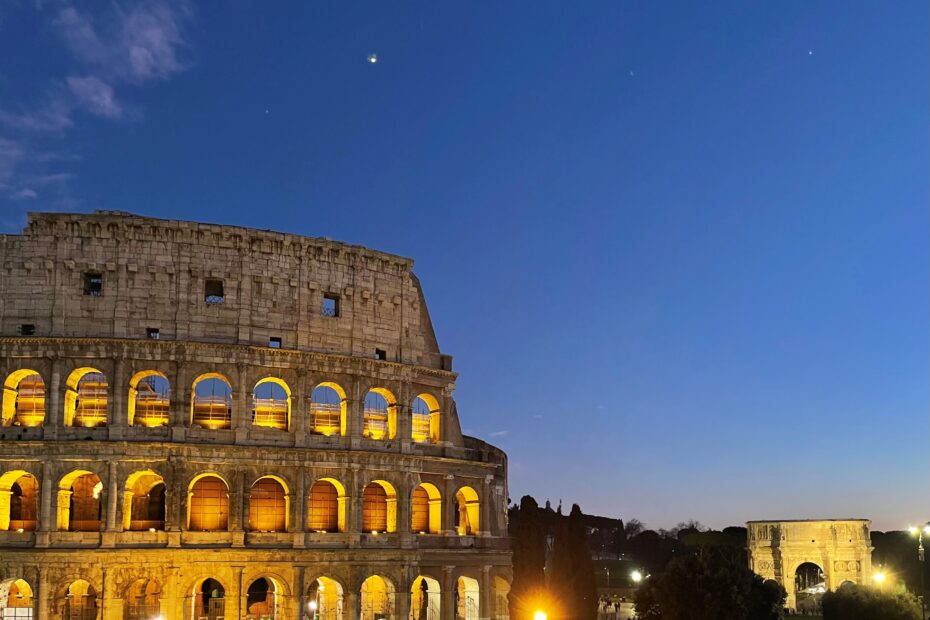
Imperial Rome was the bedrock of European civilisation and still exerts a huge influence so we took a walkable tour of the highlights. Roman customs and law shaped our continent and despite them all being ‘dead, white males’ the heights we have now reached in science, civil rights and law are largely due to the foundations they laid.
| Holiday Ratings | |
| Recommended days | 3 |
| Budget | £ |
| Difficulty | Easy |
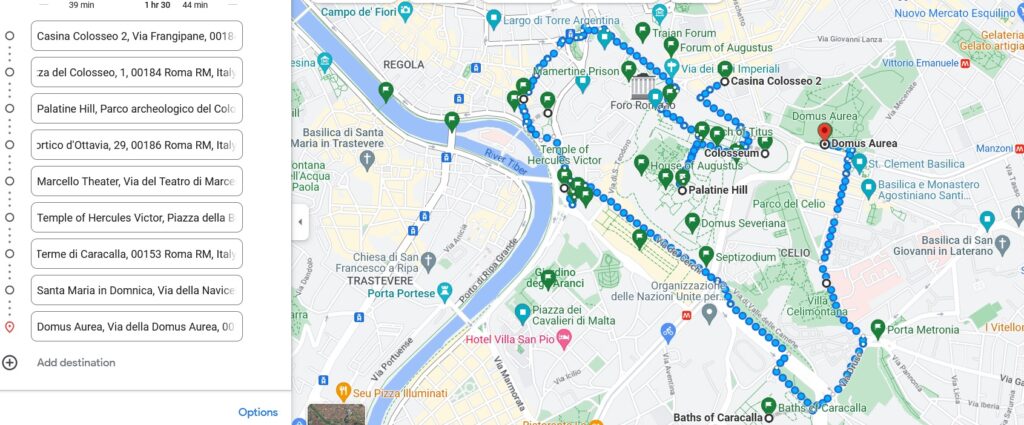
These were the Imperial sights we visited in Rome (as well as the Tomb of the Scipios that was closed) – the whole area is very compact and easily walkable.
Our visit to Rome in 2023, detailed here, whetted our appetite for this magnificent city so we immediately booked a return trip. We still haven’t really touched on the museums as the weather has been so nice we have focused on the outdoor attractions.
The challenge for this break was to see the highlights of imperial Rome in a long and walkable weekend. We had already visited the Pantheon last year so that was off the list and Deb was so pleased to have 4 full days of traipsing round stone and brick ruins! After last years visit to Rome in Feb we decided to do the same again this year. We had vouchers to use from Covid cancellations so we booked it all up. This was before the first house we were buying fell through and the moving date to our new house was … a week after we got back from holiday. Our new house also required loads of work which we’d been doing since mid January (managing I should say, rather than actually ‘doing’, my DIY skills are akin to that of a bull in a china shop). Therefore timing wise, this wasn’t an ideal break.
Accomodation – Monti Suite Terrace, 27 Via Frangipane
We landed mid afternoon and our transfer was waiting and took us straight to our apartment. Last time we had stayed near the Vatican area so this time we’d booked near the Imperial Roman centre. It took a while to get into the apartment, obviously they avoided anything silly like actually having a name or some other identifier on the door! When we did get in the apartment was …. very different. To be fair, it did what I wanted – somewhere to stay within literally a minutes walk from the Colosseum. It had a good sized lounge but it was damned cold inside (-1 outside!) with just one of those useless AC heaters on the wall – great as a summer rental but not so much a winter one. The bedroom was up a ladder and didn’t have enough headroom to stand up – both of which proved entertaining! It did have decent wifi though and a nice little terrace outside.
We dumped our bags and went for a wander and some food and found a very busy place a few minutes away. We sat outside next to the very eco unfriendly heaters and had a delicious fresh pasta dish and a beer. Time to relax. We walked past the old forum and skirted the Palatine Hill before returning to the apartment, turning the heater on, keeping our coats on and looking at other accommodation options in the area. Sadly there was nothing decent in walking distance under £200 a night so we got ready for bed, carefully climbing the ladder and crouching.
I have to say, I had the best sleep I’d had for weeks! I slept nearly 10 hours and managed to get to the loo in the night without falling off the ladder. Sadly when I woke up I stood up to stretch and banged my head but I’ll learn by the end of the three days here. Maybe. It was damned cold in the morning but we went for a wander which had mixed success.
Our first stop was the Tomb of the Scipios (the family who’s general defeated Hannibal) – this was about a 30 minutes walk away and very pleasant but when we got there, closed. Guided tours only and only by appointment. On the plus side we did see the house of Cardinal Besarion, a Byzantine who escaped the fall of the city and had a colourful career. Next stop was a couple of churches. These were pretty and amazingly old buildings although they had been repaired/restored/rebuilt many times in their 1500 year lives.
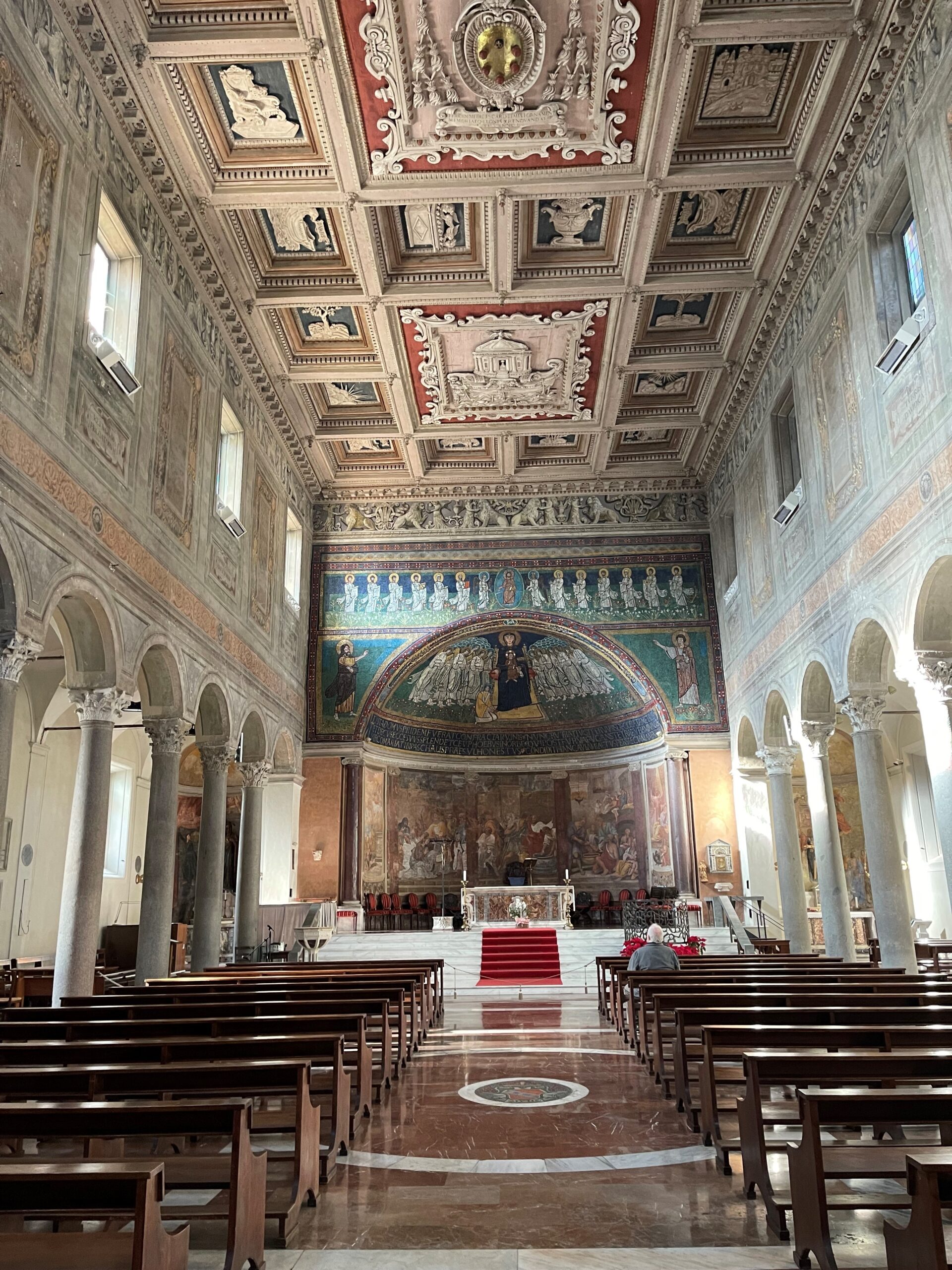
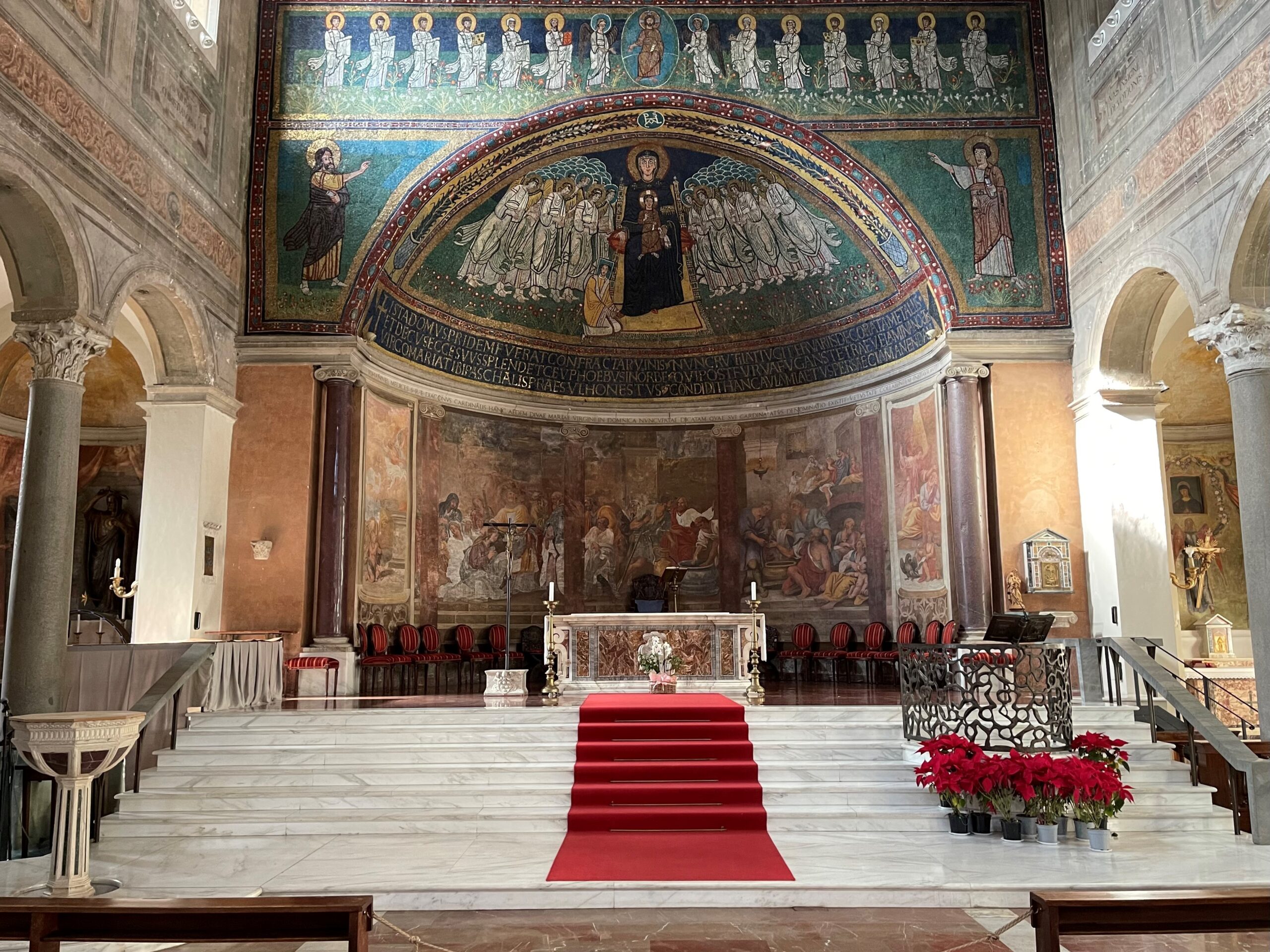
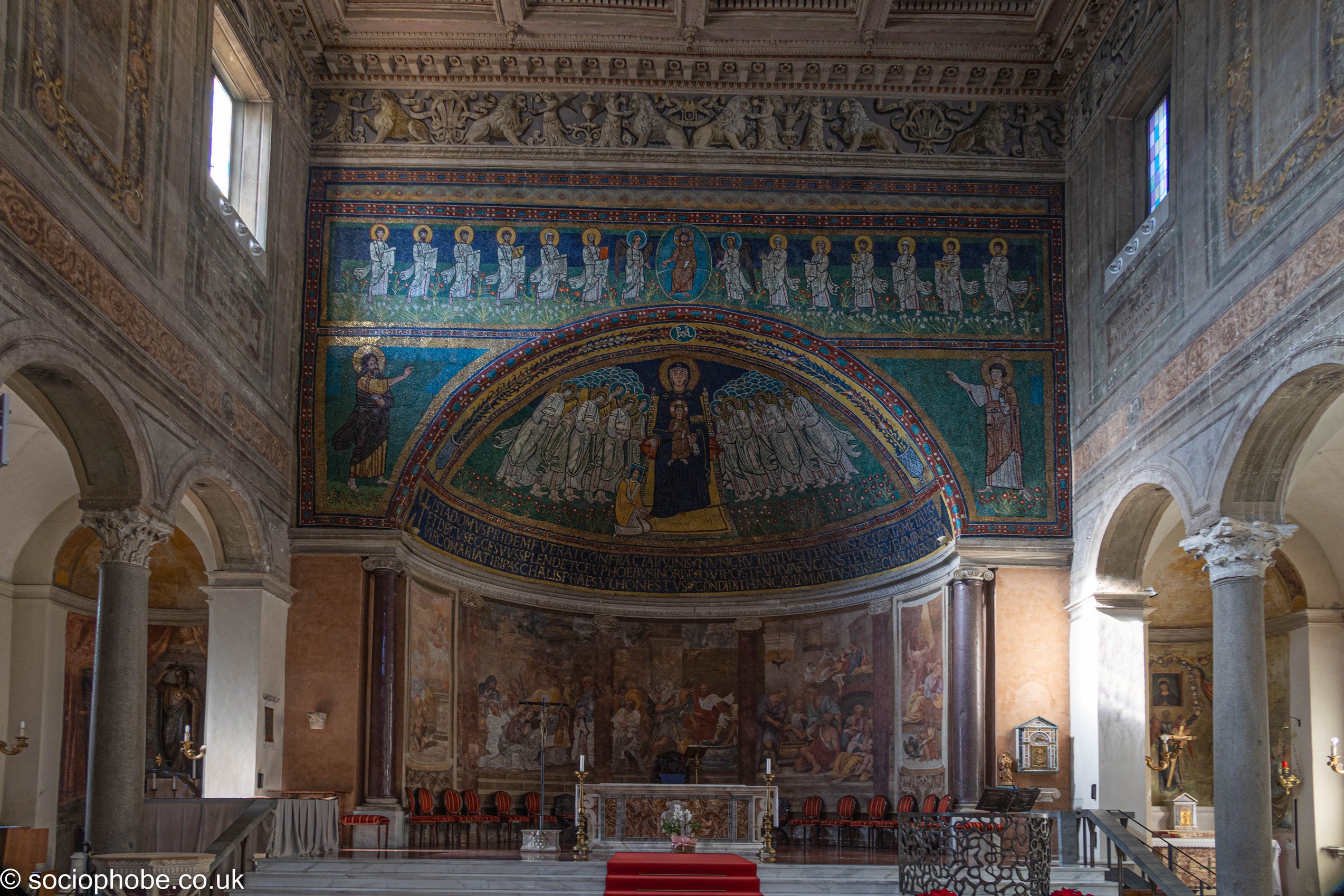
Santi Maria in Domnica
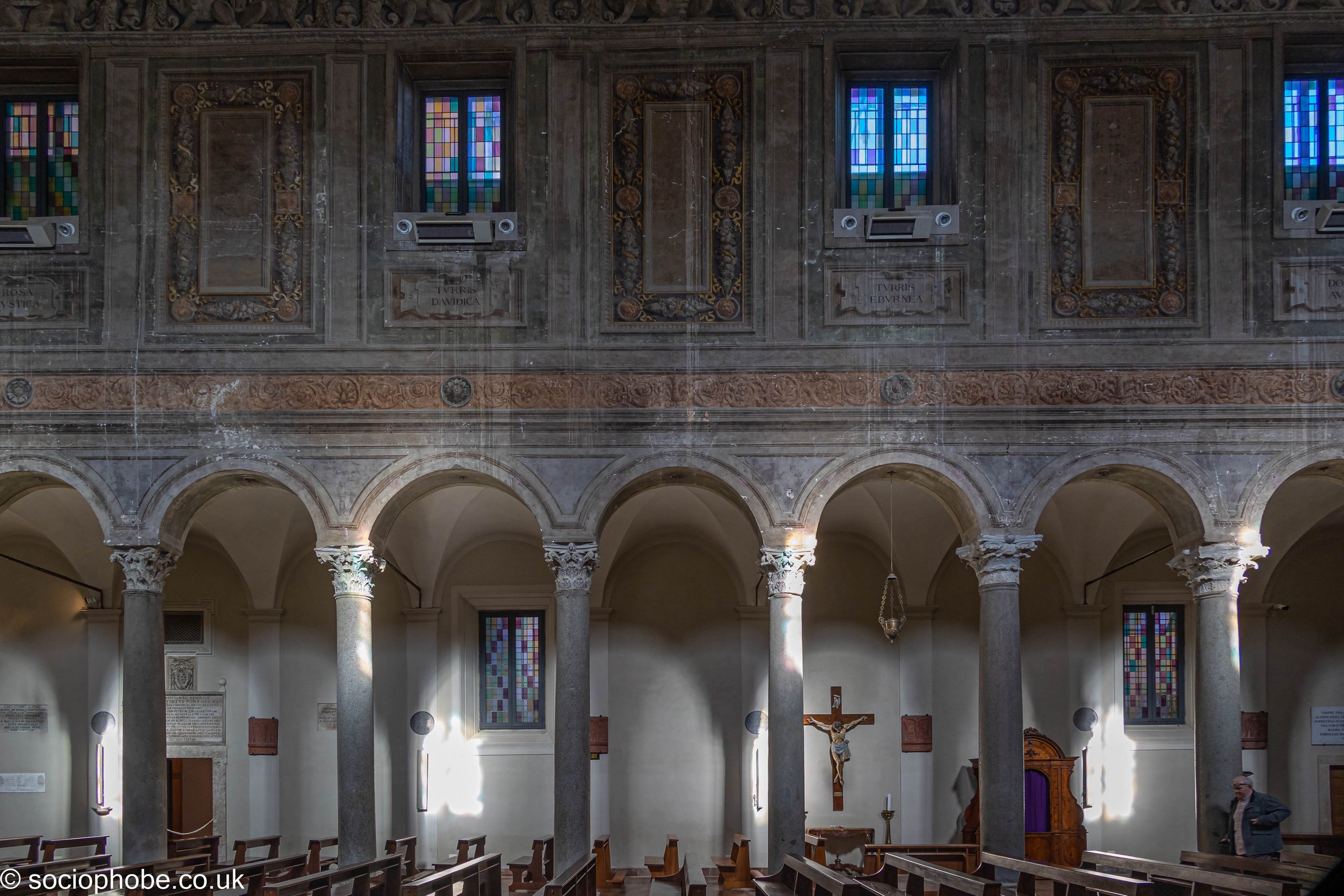
This is an old church, certainly existing by the 5th century. The part that interested us were the mosaics that were laid in the 9th century at the instruction of Pope Paschal I. It was quite a contrast seeing these next to the baroque refresh of the church under the Medici’s in the 16th century. The mosaics are very Byzantine and I think I read somewhere that the artists had to be imported from the east because no one in Rome knew the skill by then.
Santi Quattro Coronati
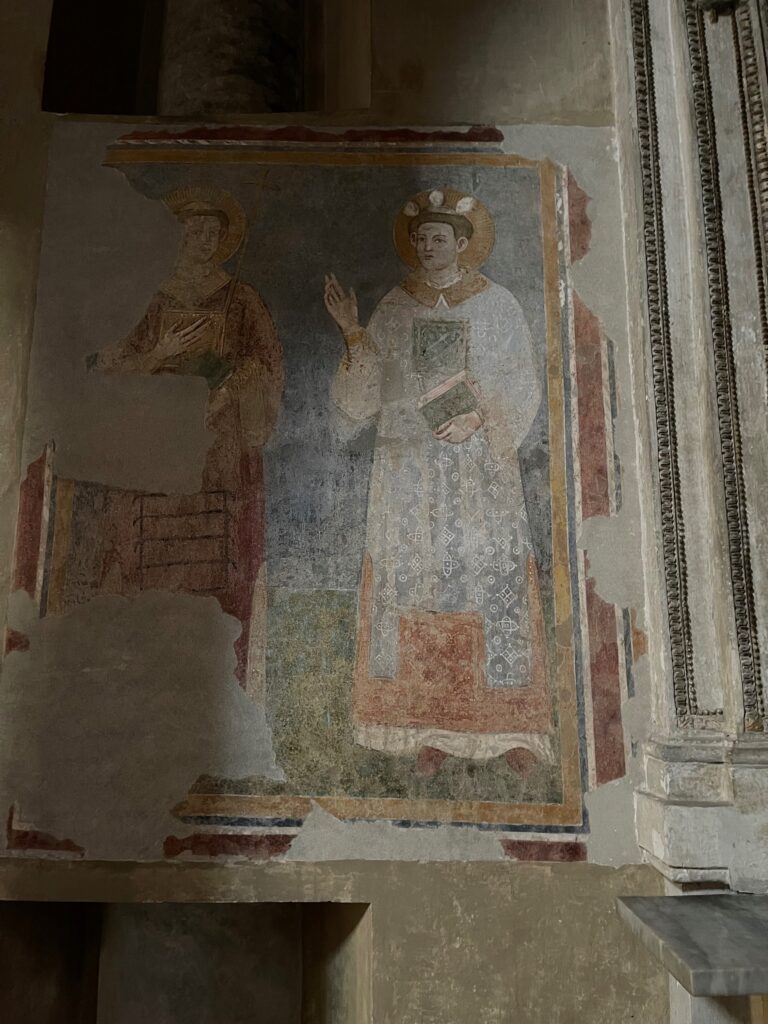
A short walk away was another church that was recommended to us. This was the archaic styled Santi Quattro Coronati, one of the earliest churches in Rome that has some wonderful frescoes. The original church was destroyed by the Normans in the 11th century and then rebuilt on a smaller scale after that. There is an attached monastery too and a lovely courtyard.
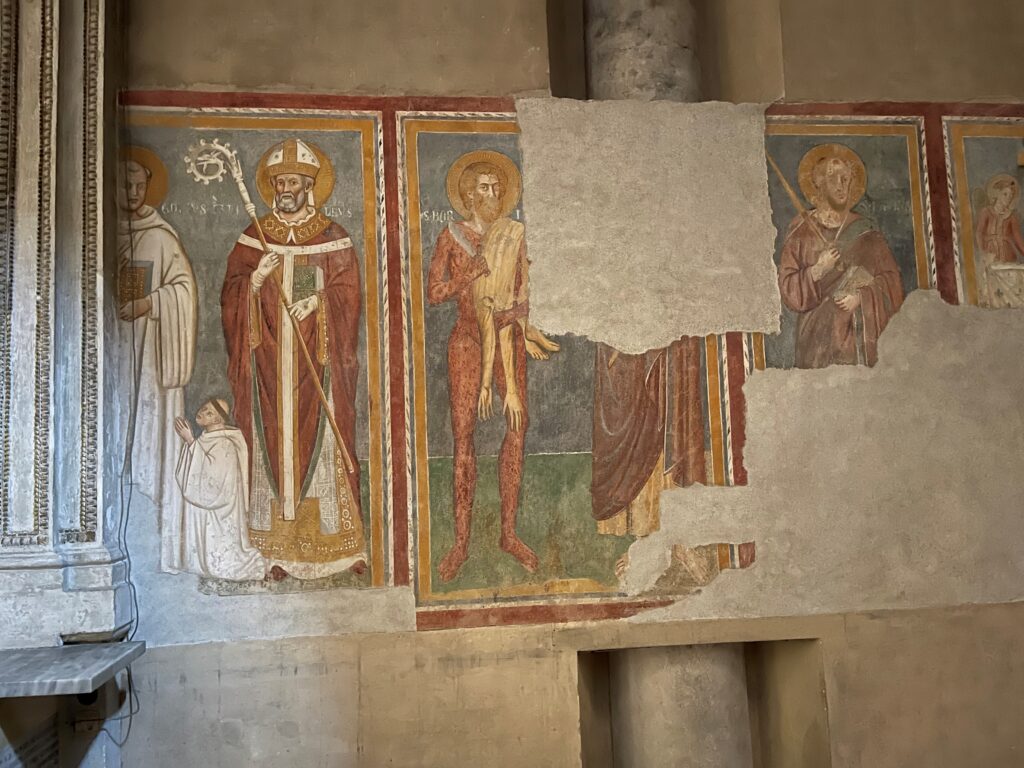
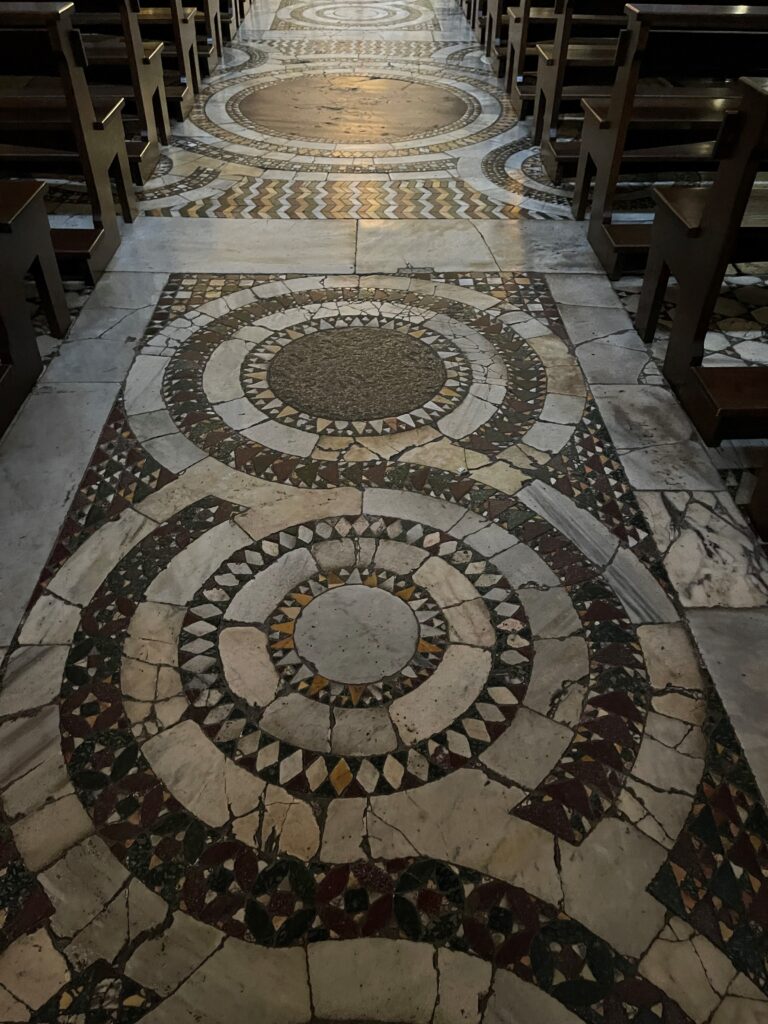
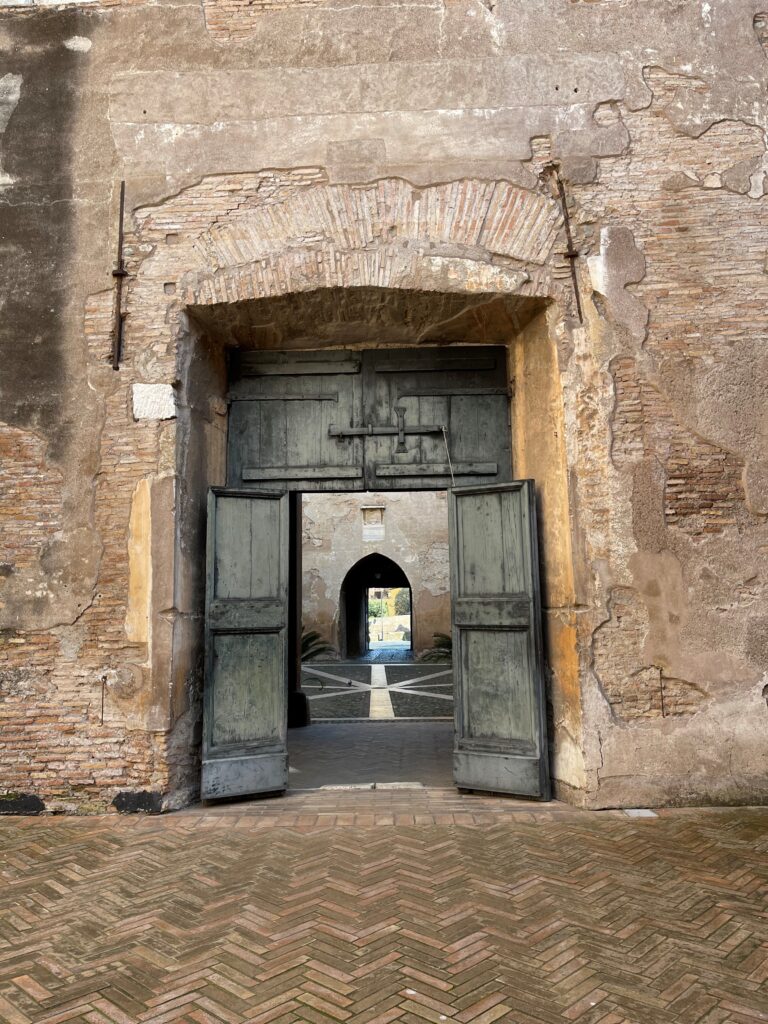
Another major site on our itinerary was Domus Aurea, Nero’s famous Golden House. Sadly it was so famous that it was sold out for the day by 10AM. We consoled ourselves with a mediocre fruit salad for breakfast and then queued to enter the Palatine Hill. So the lesson so far, if you are intending a long weekend in Imperial Rome then do the planning and book ahead!
The Palatine Hill
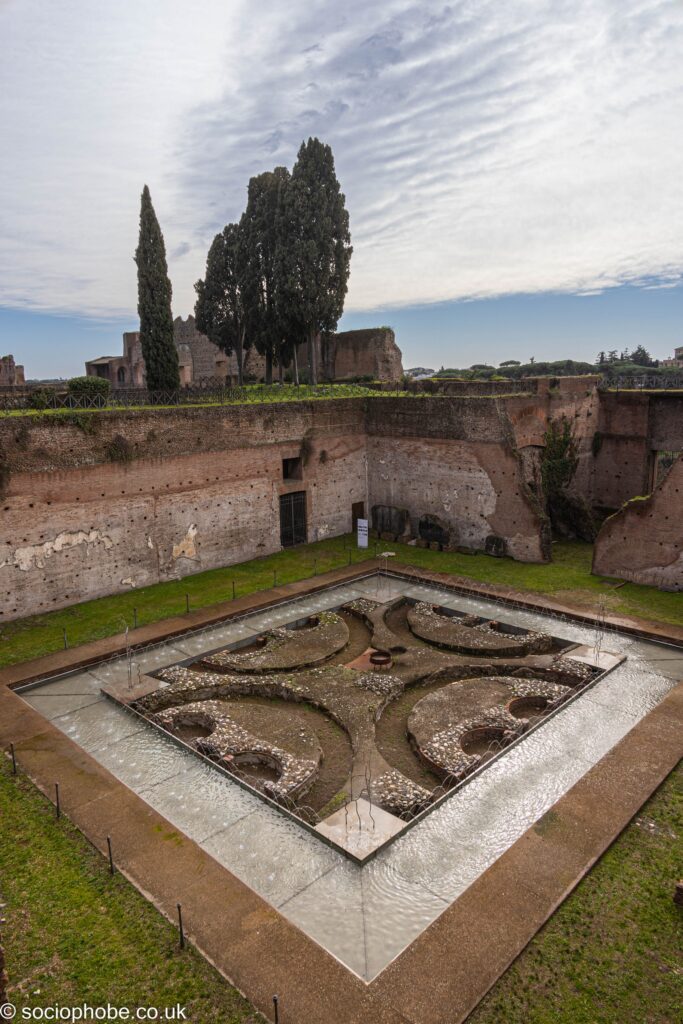
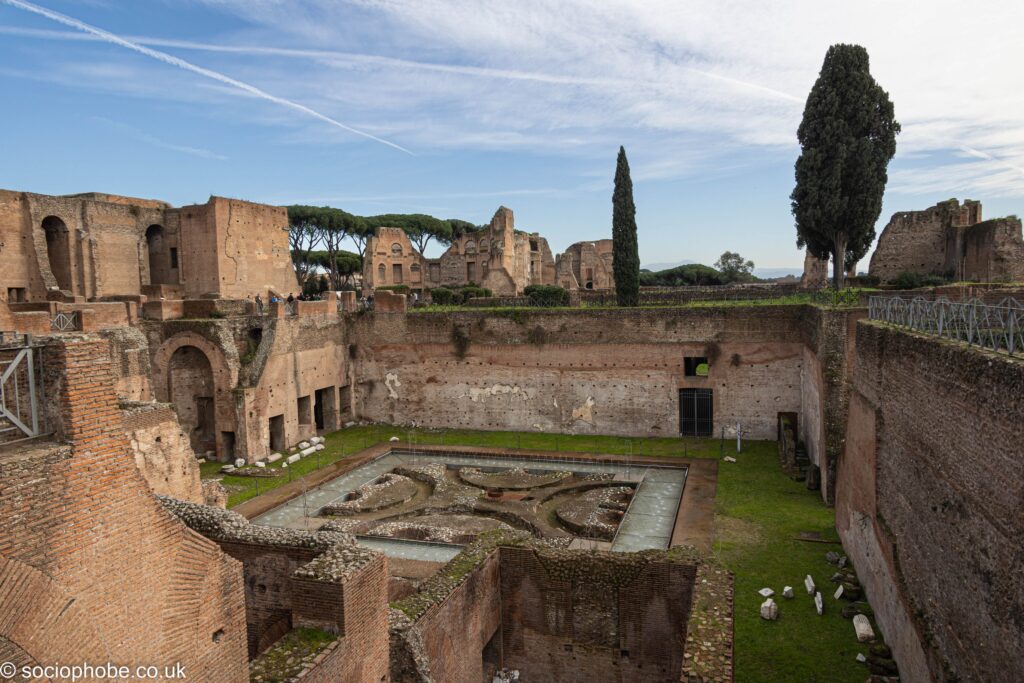
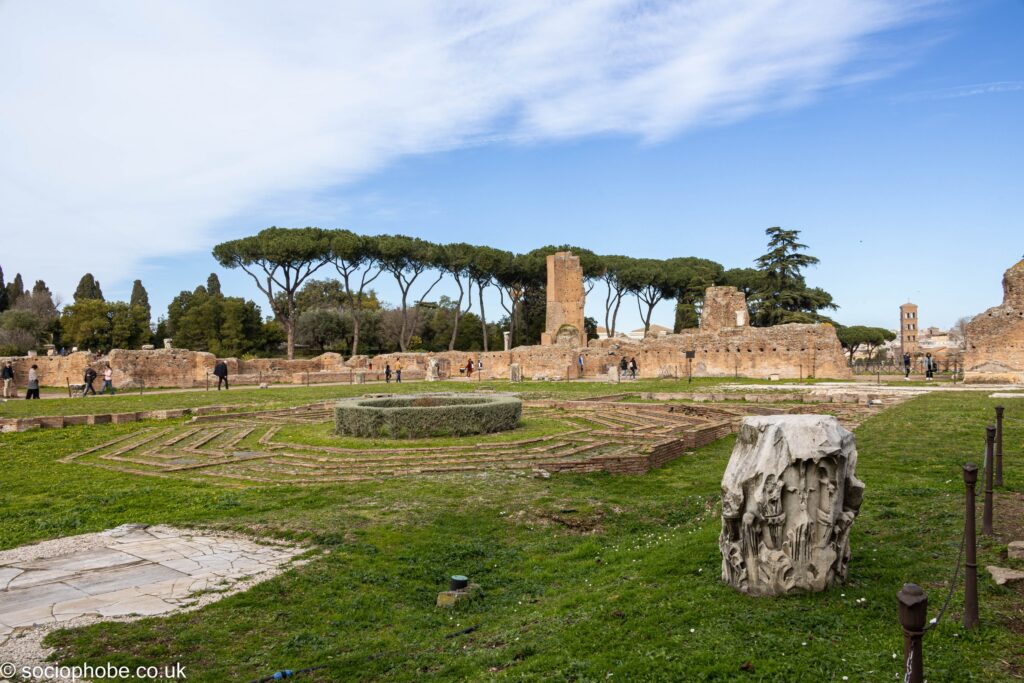
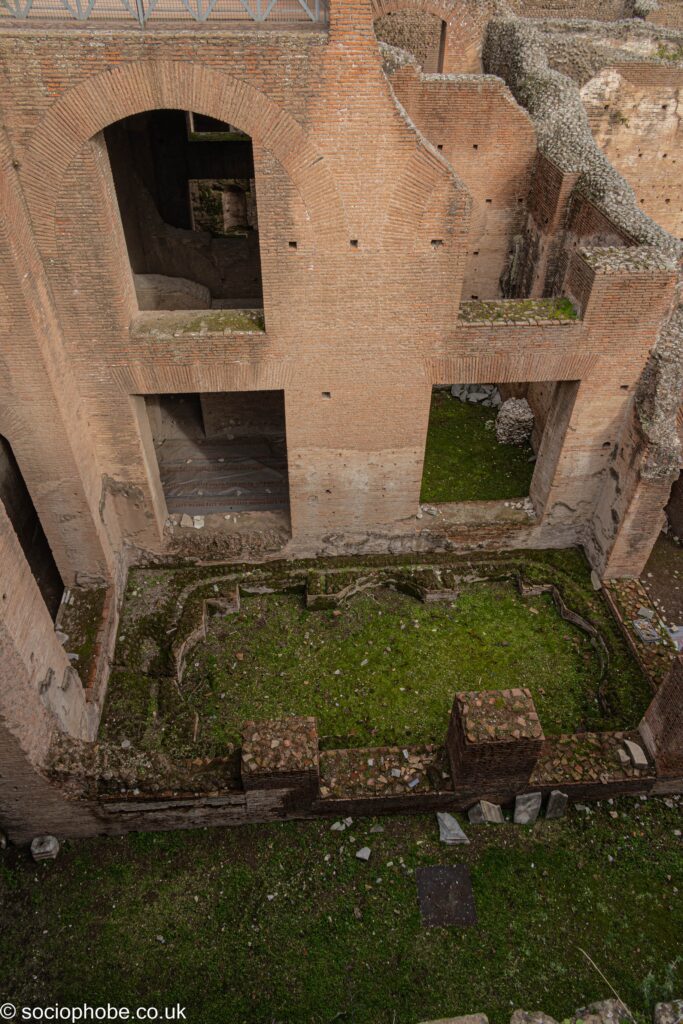
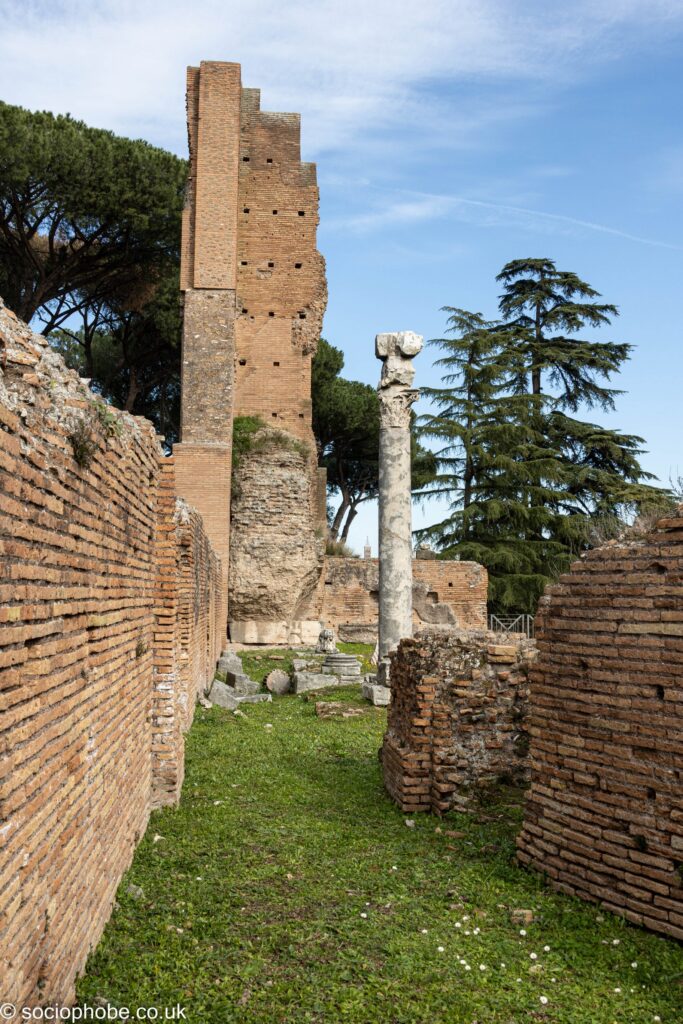
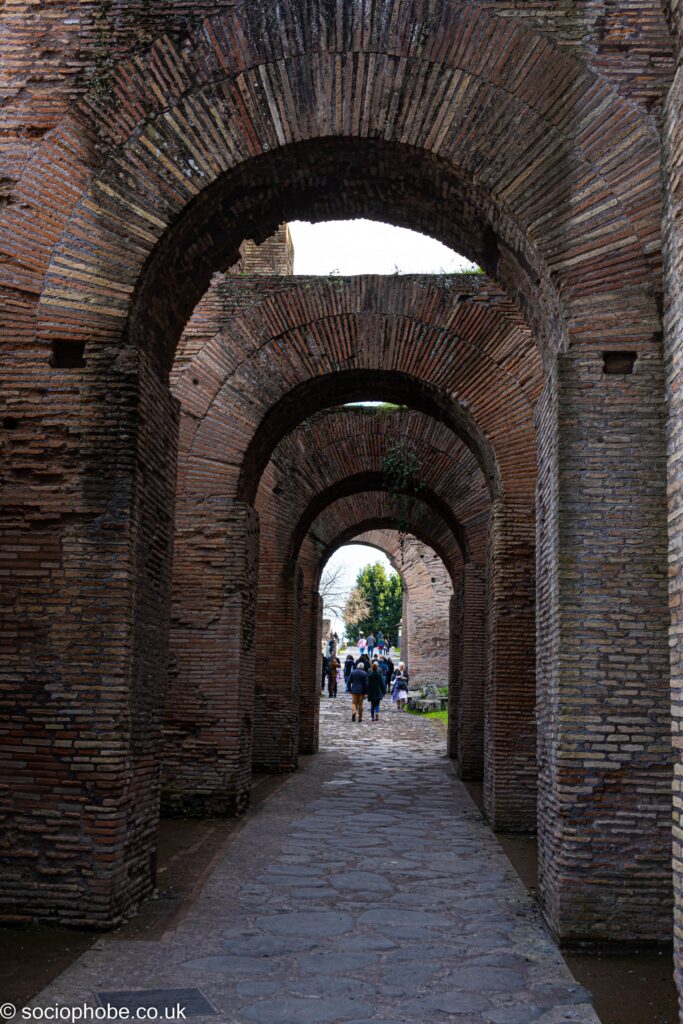
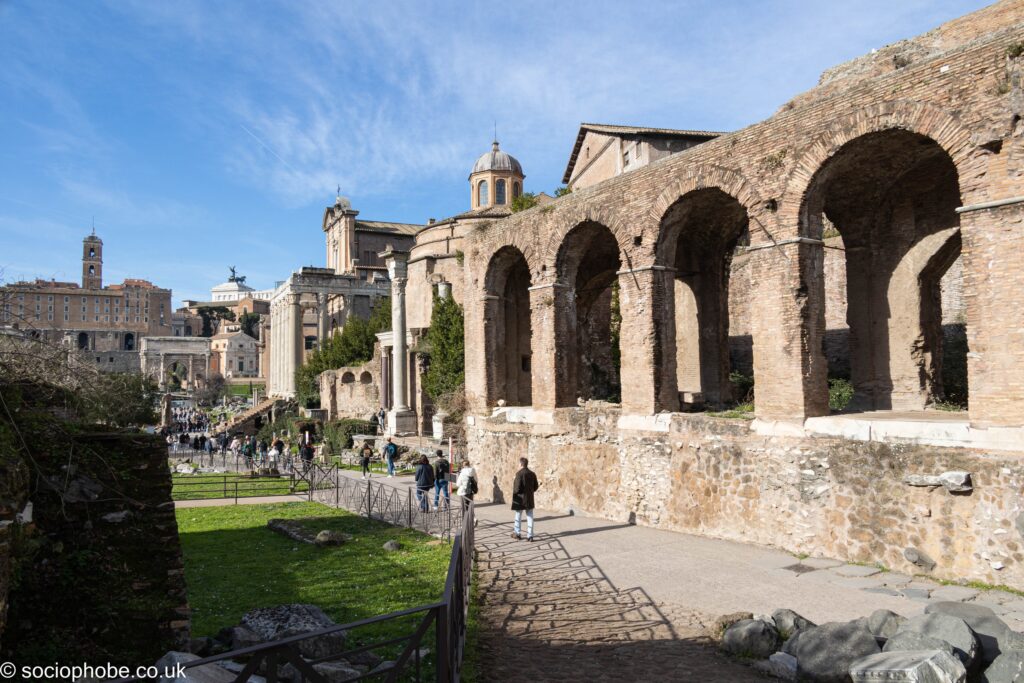
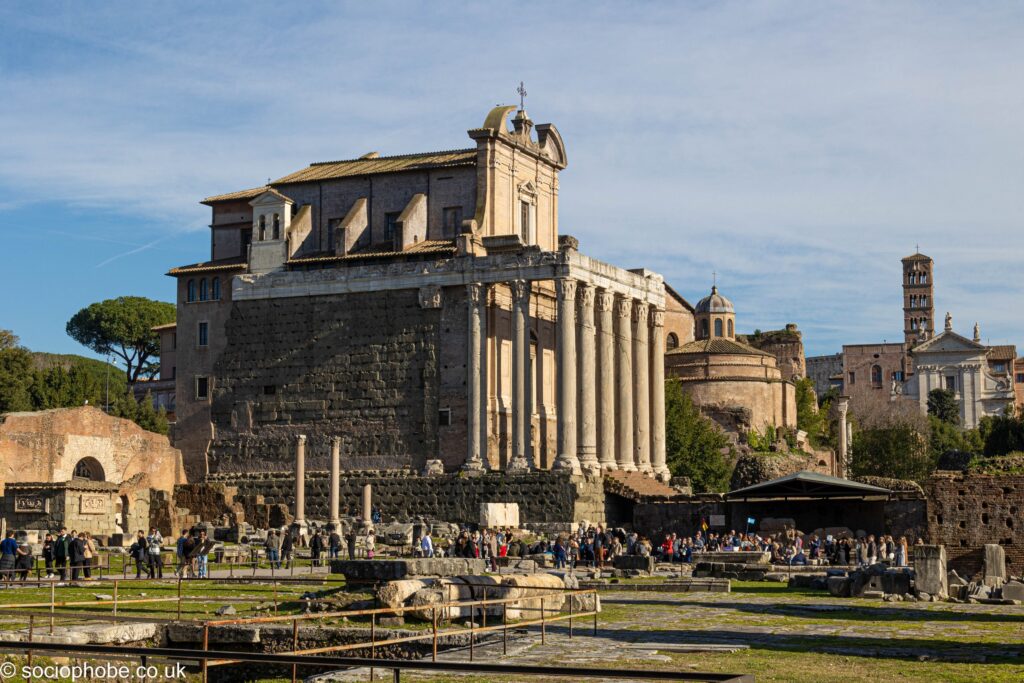
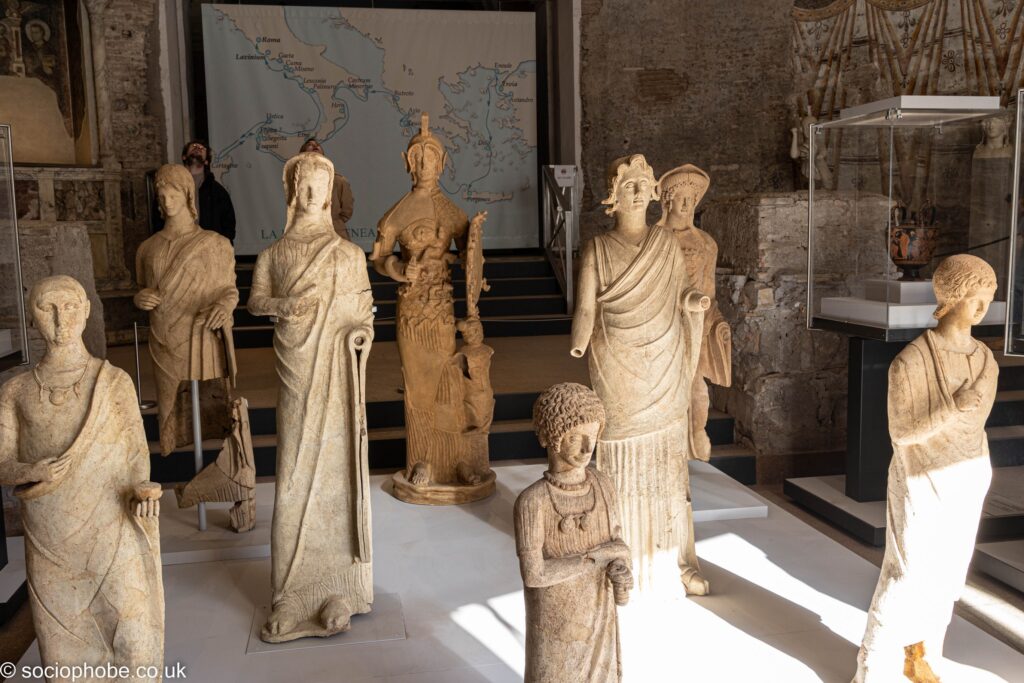
The first two stops on our walkable tour had very little to do with Imperial Rome other than possibly using pre-existing buildings but our next stop was the core of Imperial Rome itself. The Palatine site covers the Imperial Palaces of Rome and – if I’m honest – was mostly just piles of bricks with the odd bit of stone. Anything interesting had either been looted or was in the Palatine Museum, which we didn’t go in. The site includes the Roman forum and assorted temples too.
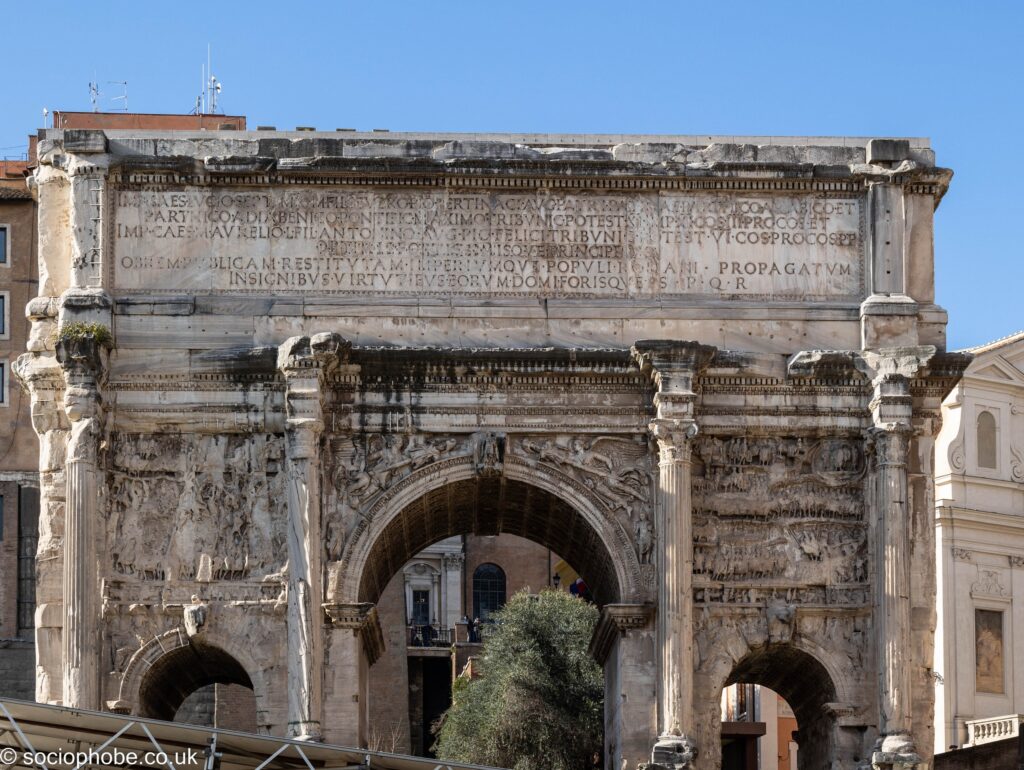
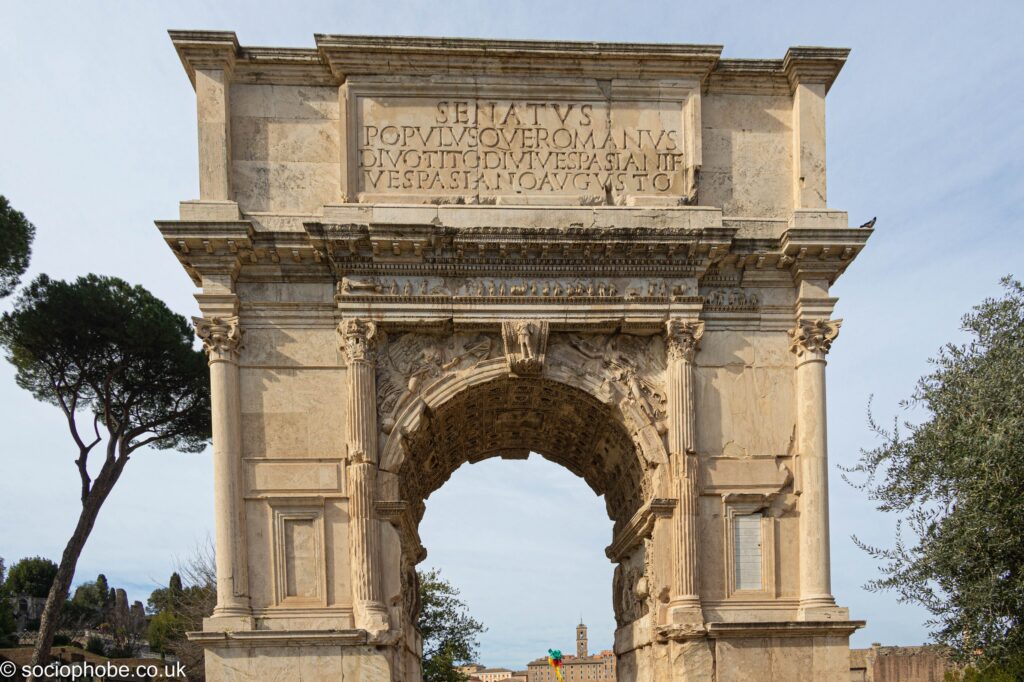
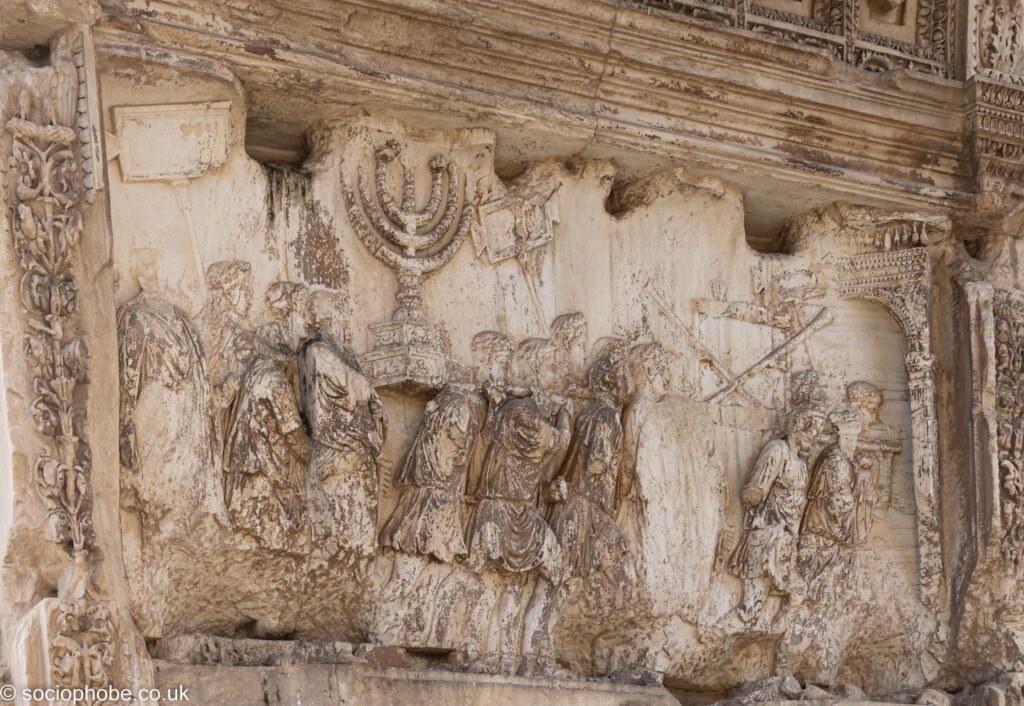
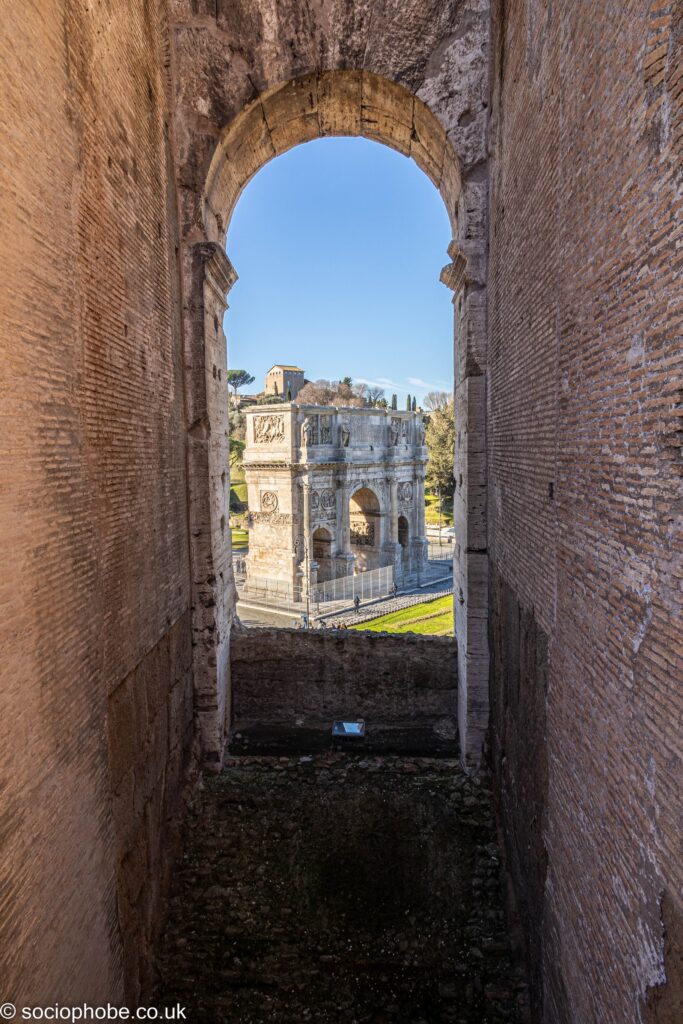
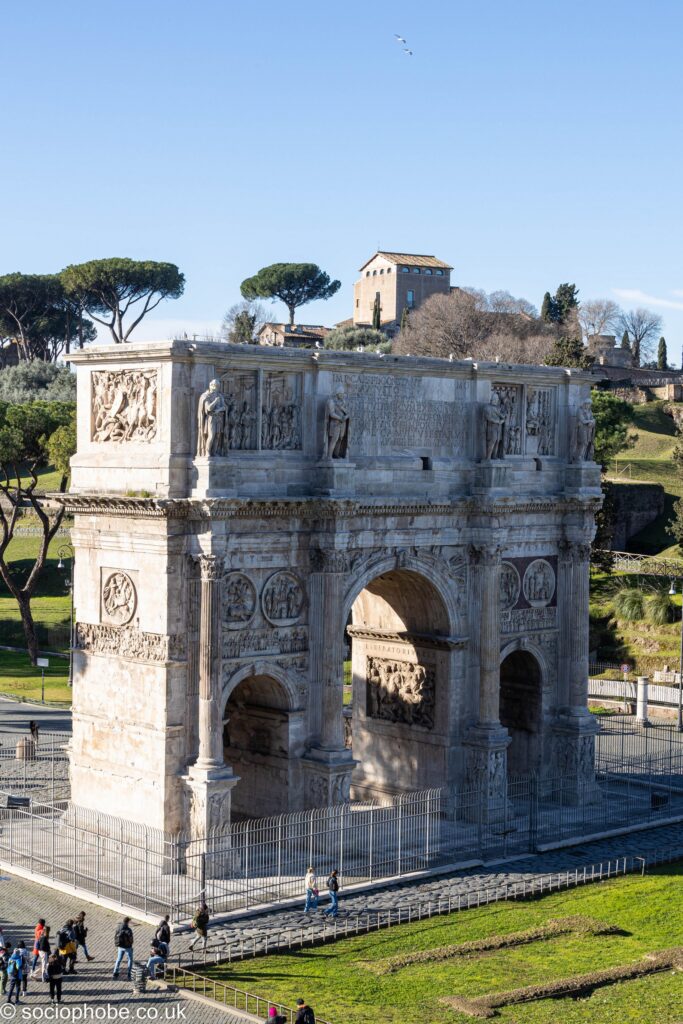
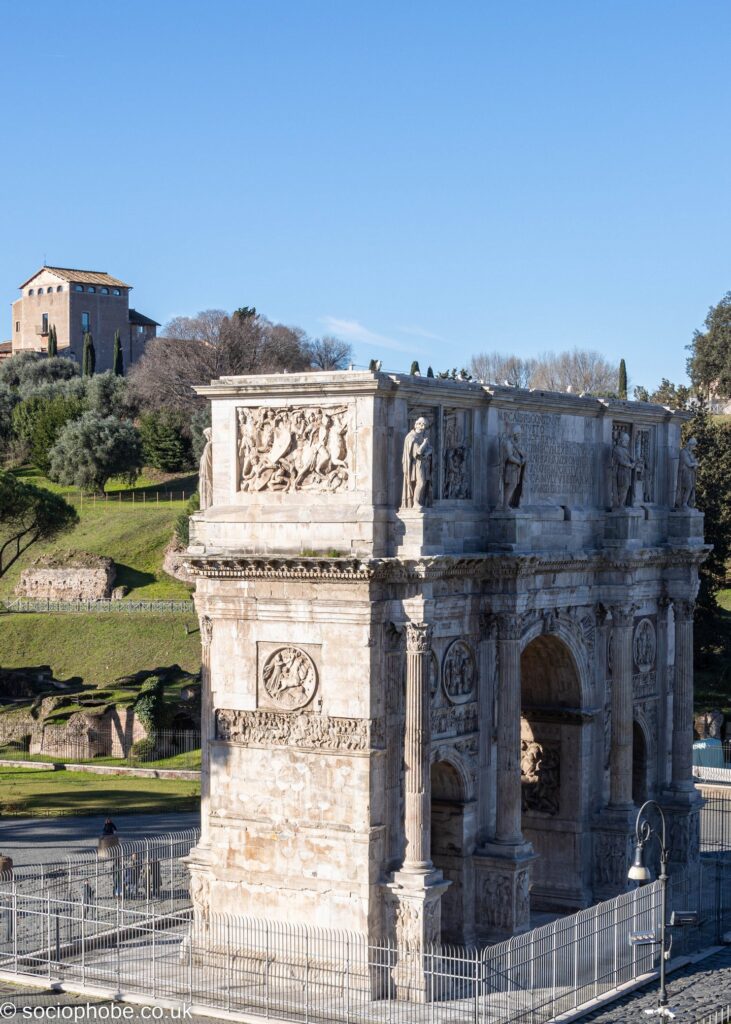
One of the grandest legacies of Imperial Rome are the triumphal arches, erected by the emperor to celebrate a particular victory. This area has the Arch of Titus – to celebrate the sack of Jerusalem and the Arch of Constatine, to celebrate his victory over Maxentius. There weren’t even any mosaics or images of what the buildings were originally like and the site was oh so huge – it would have been nice if the €18 entry fee included a map! We spent about 3 hours there and were so blase we were skimming past the last temples and arches in the forum. As we were leaving we did find the only cafe on the huge site so we had a coffee and pastry and fed the little finches whilst resting our legs.
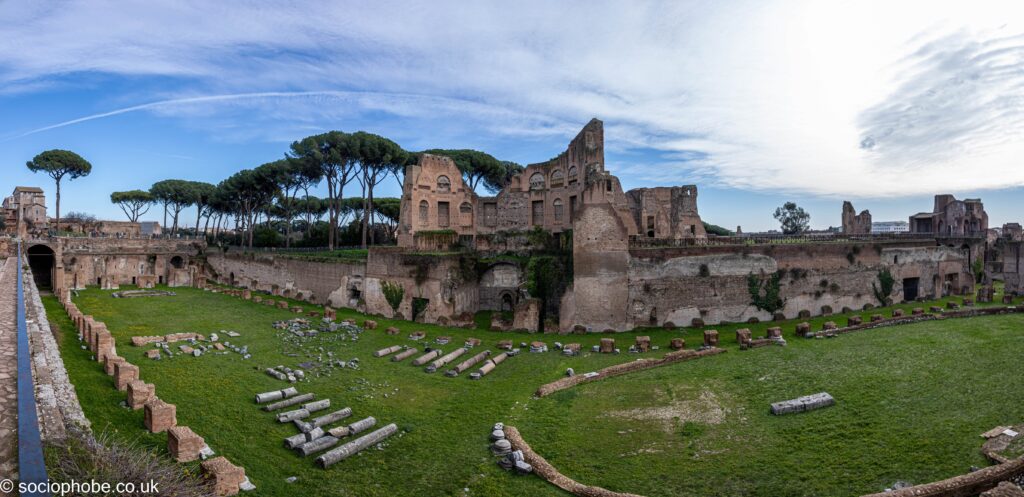
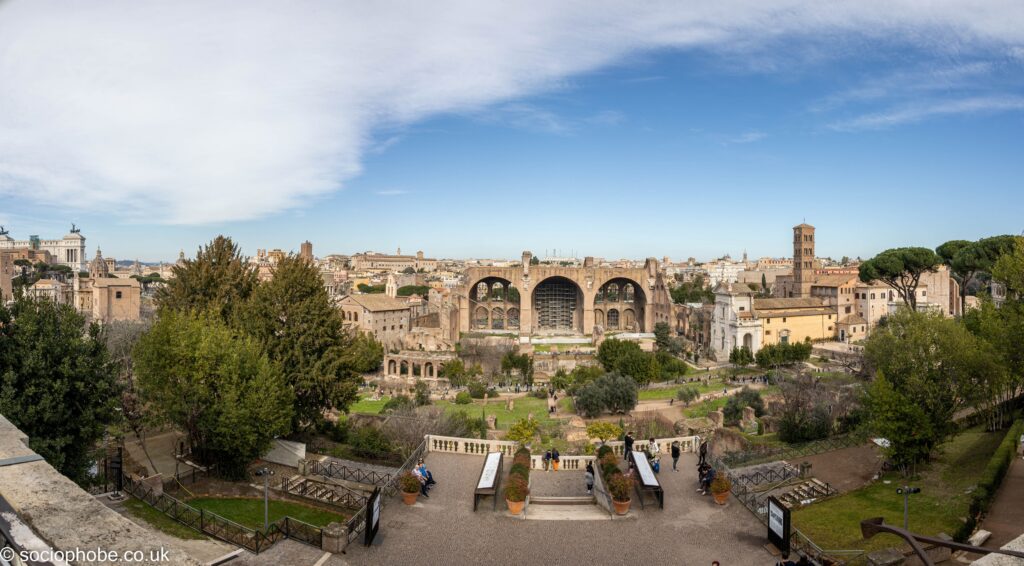
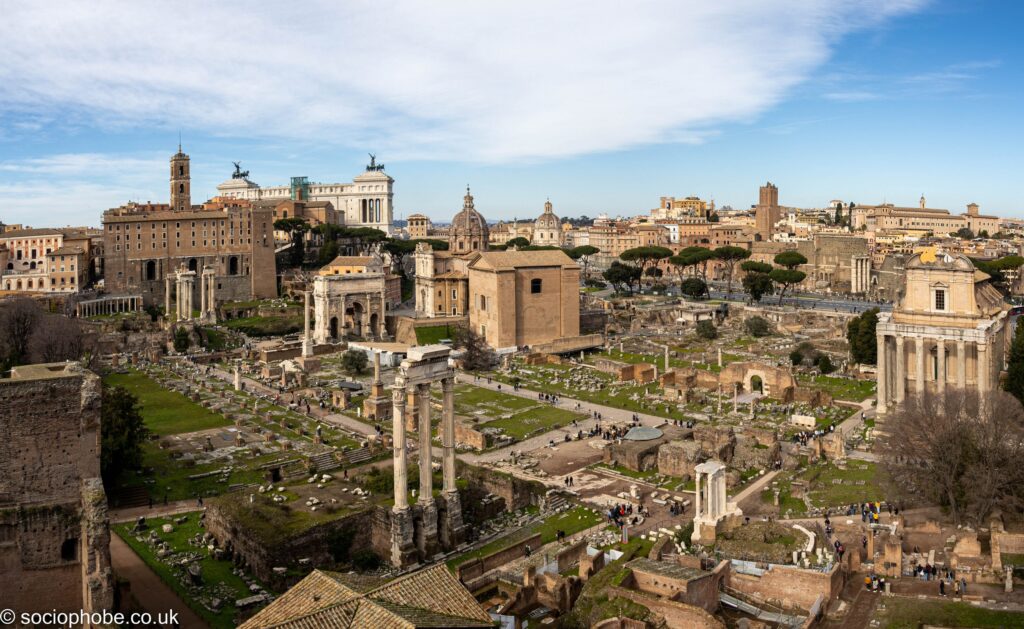
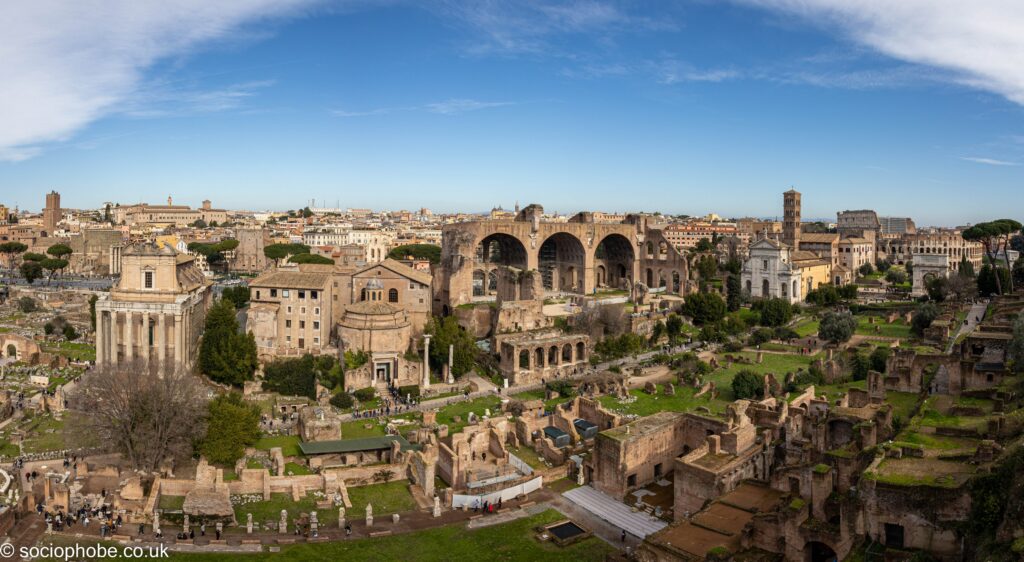
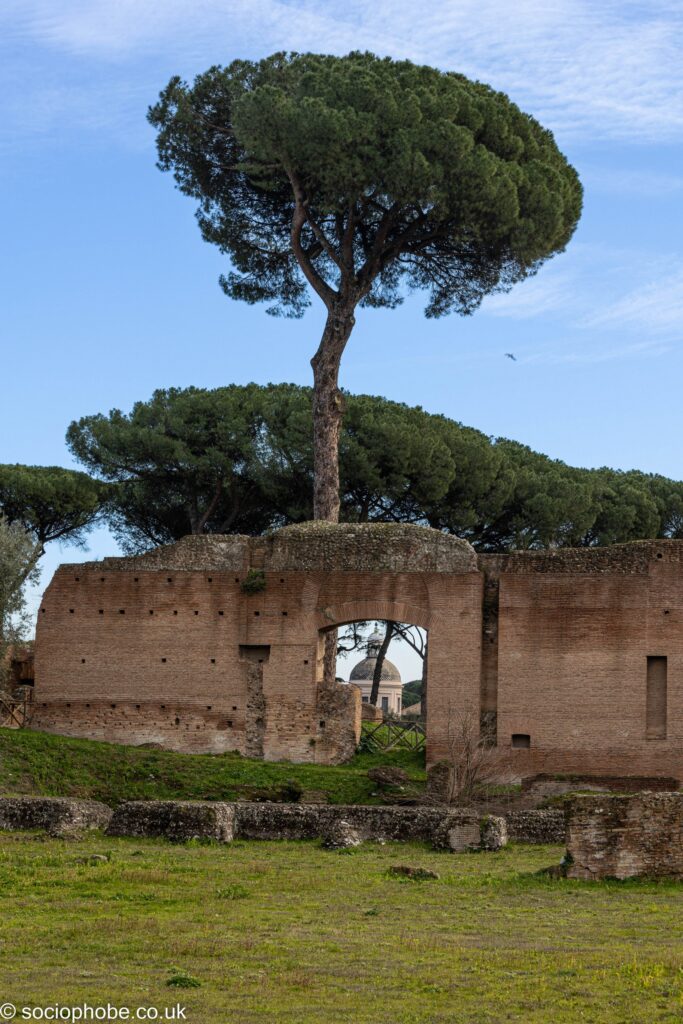
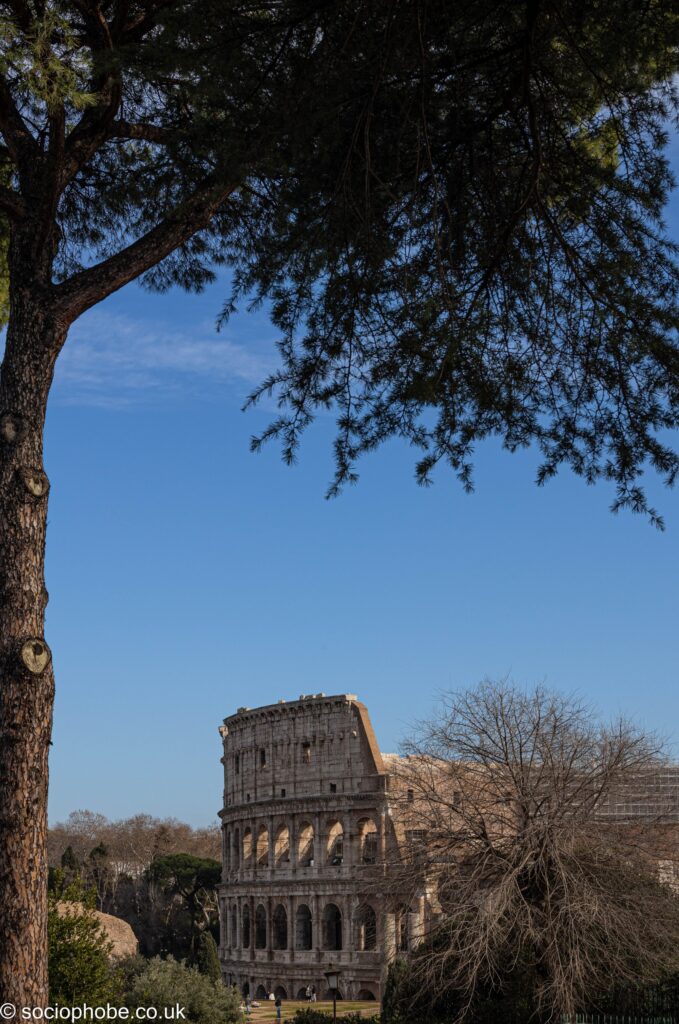
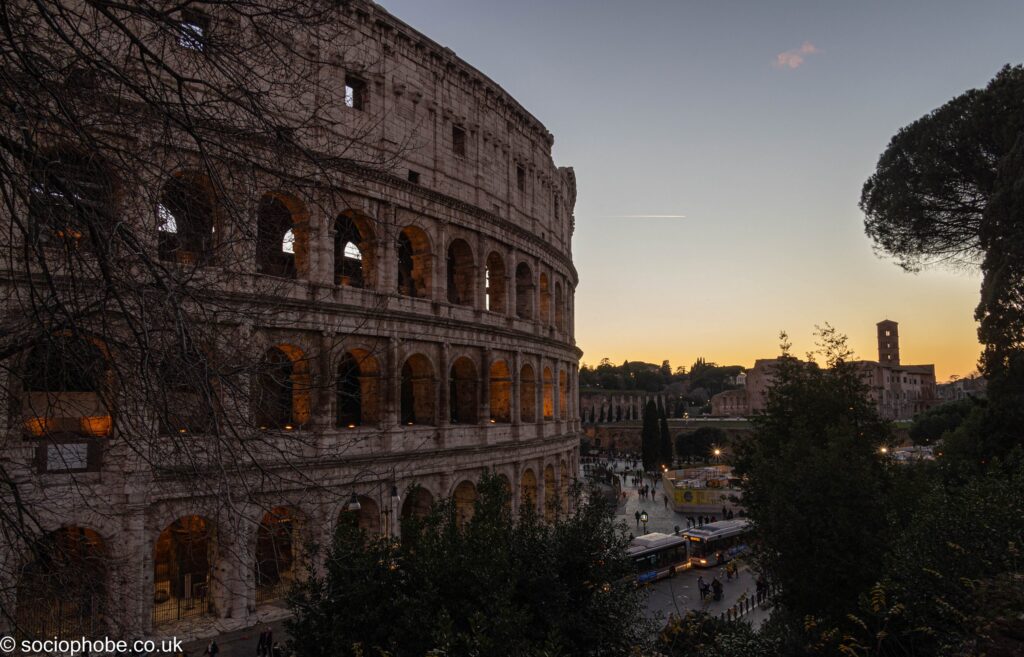
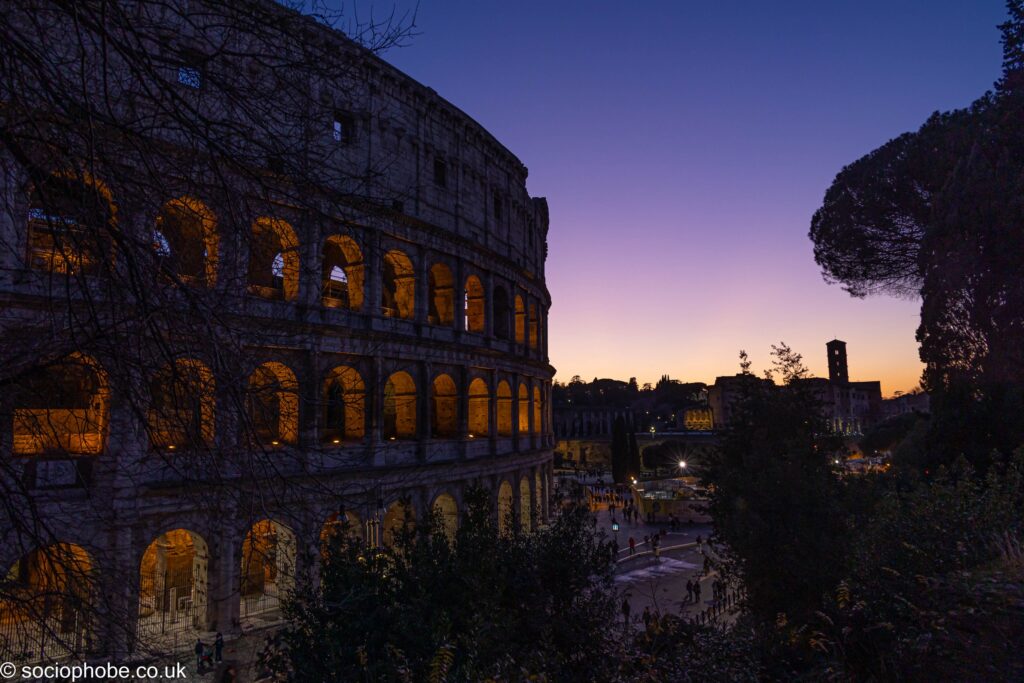
It was gone 3 when we got back to the apartment for a cuppa and to sort photos. I hadn’t actually taken that many so that was a bonus! By 5 we went out and took a meandering route to the Colosseum to watch the sunset along with most of the Insta brigade before going for dinner and actually having Italian lasagne. Which seemed disappointingly familiar. Back to the apartment again and it was quite amazing what you can fit into a day. It is also so good for the soul as the stresses or work and the house move finally took second place to new sights and the sheer joy of travel.
Temple of Hercules Victor and the Temple of Fortuna
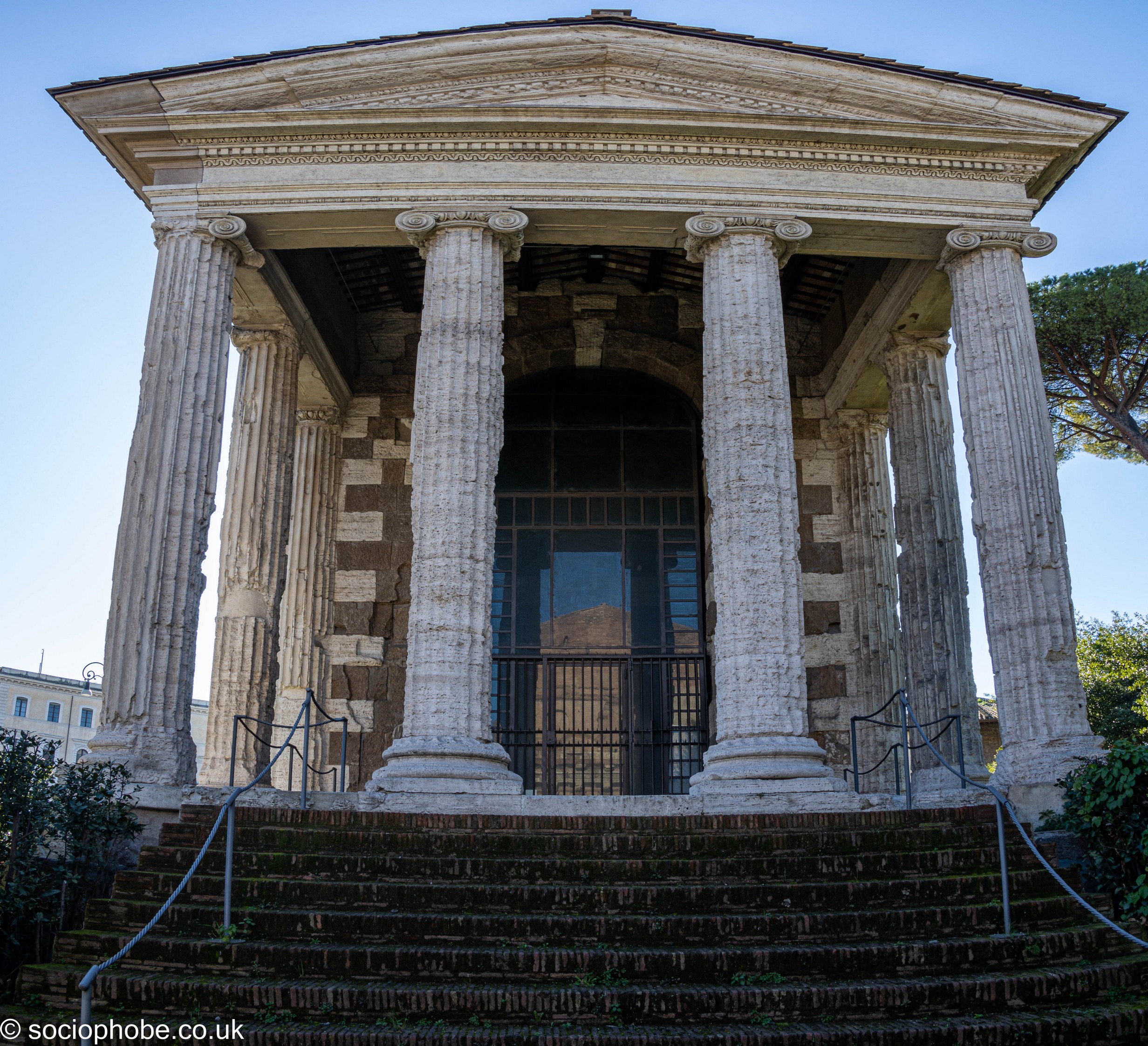
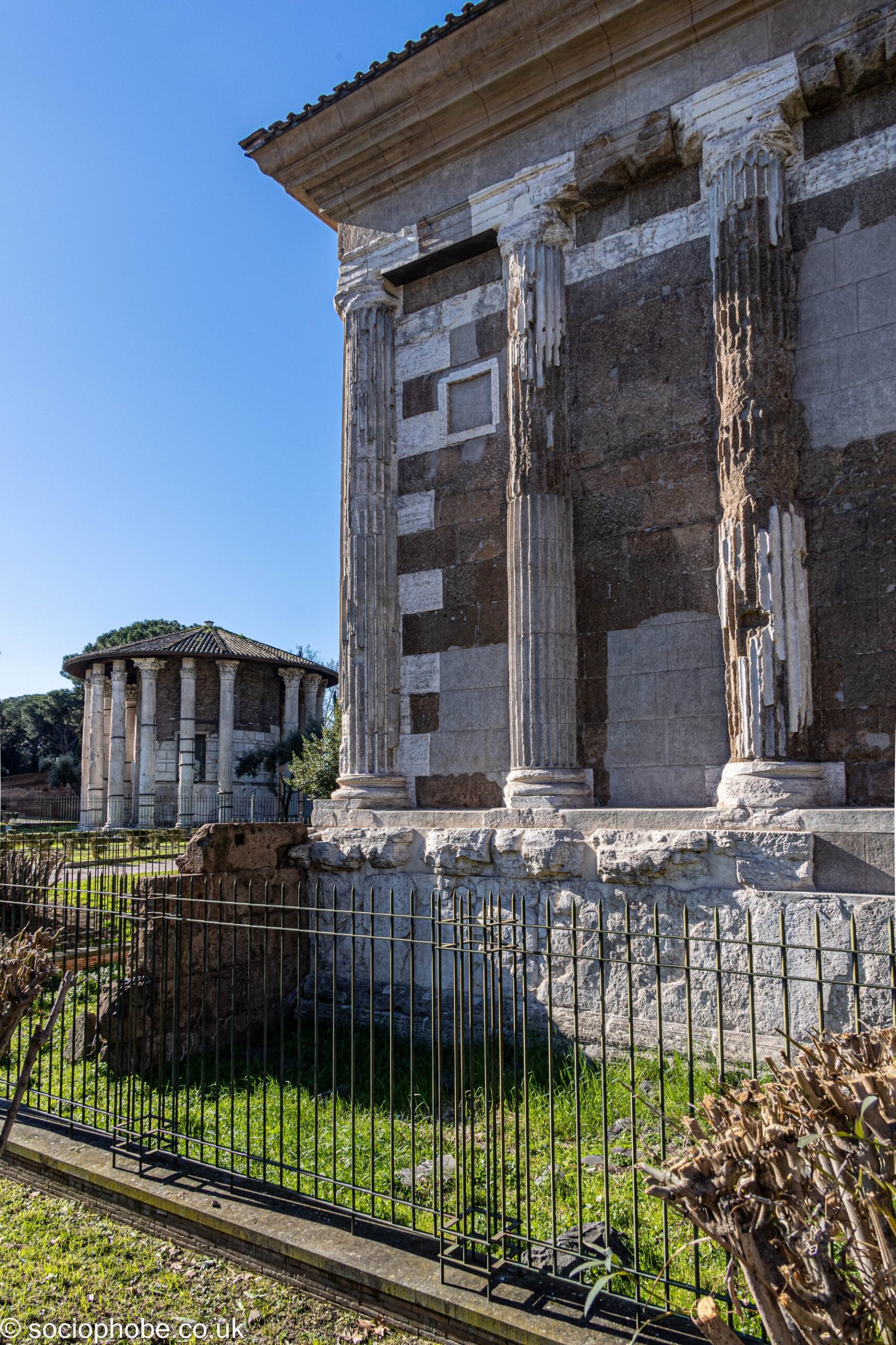
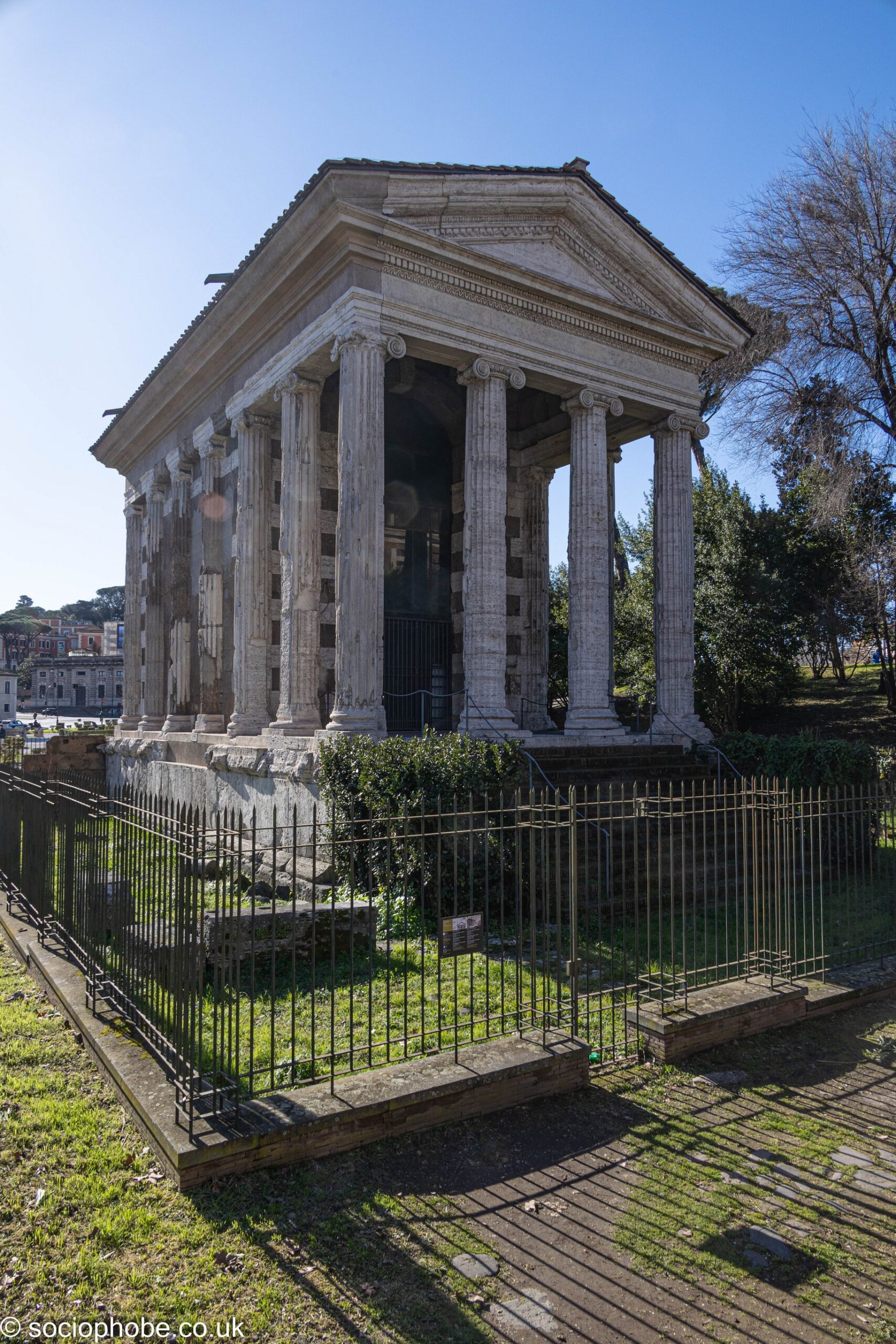
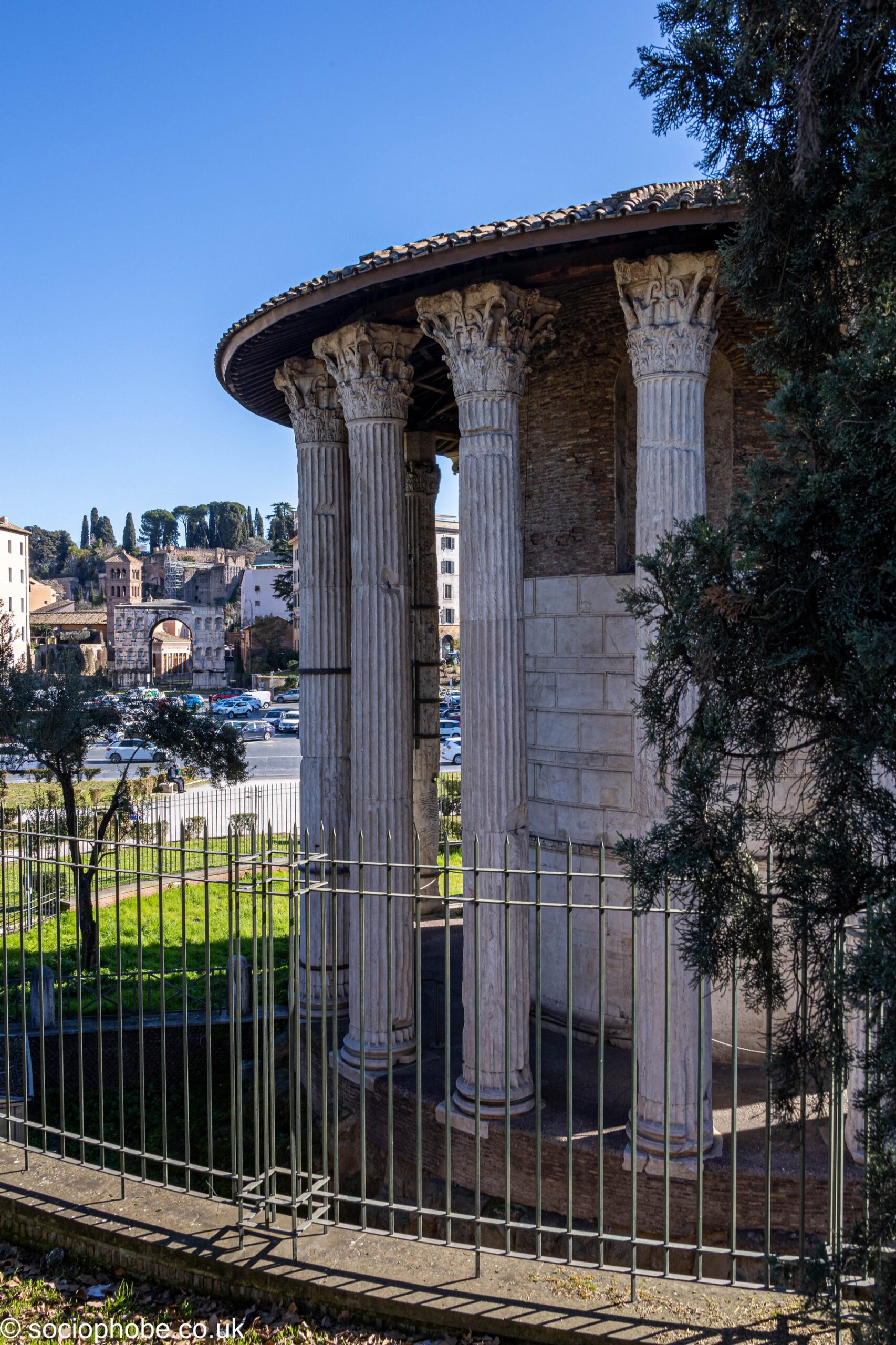
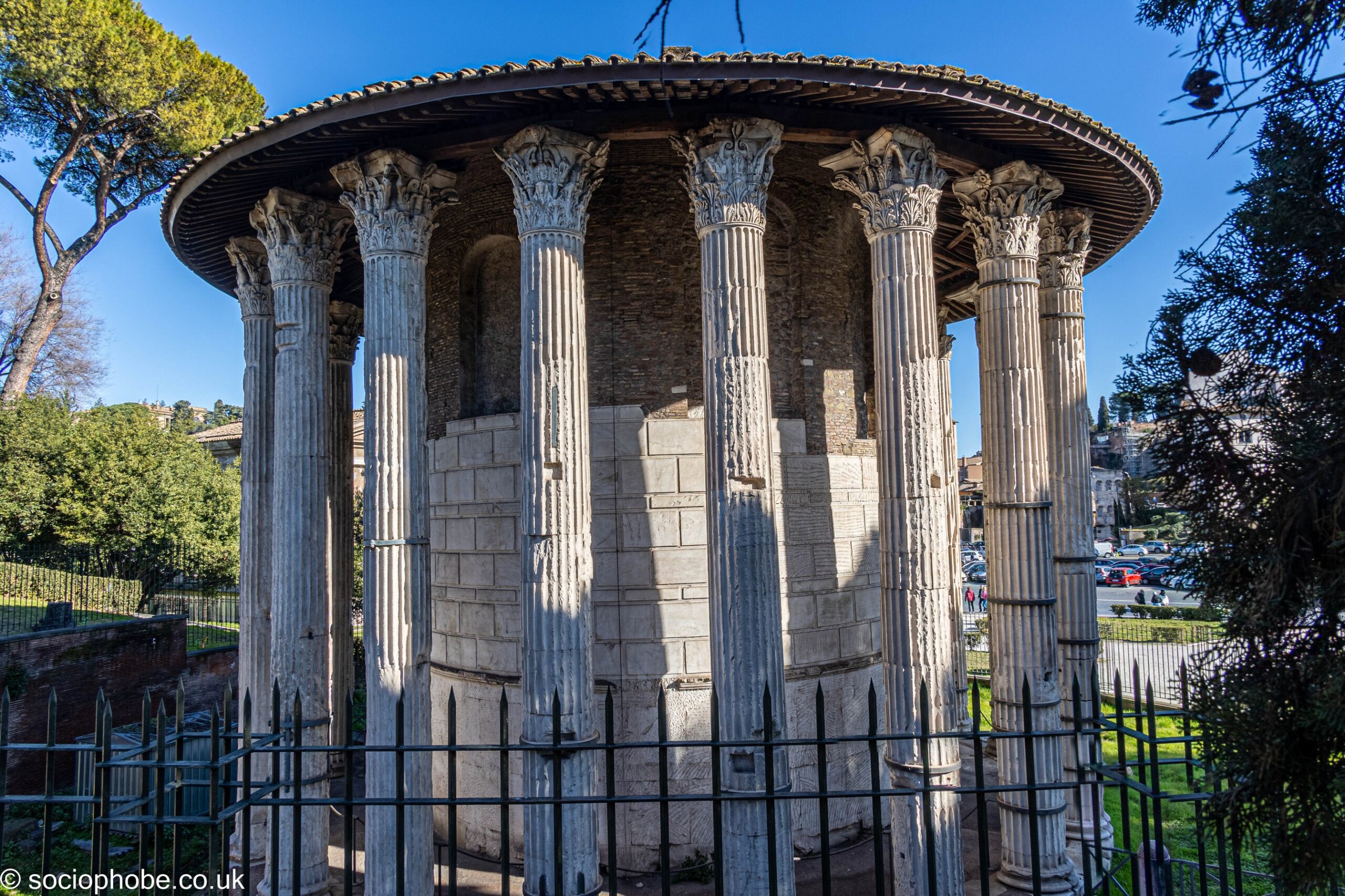
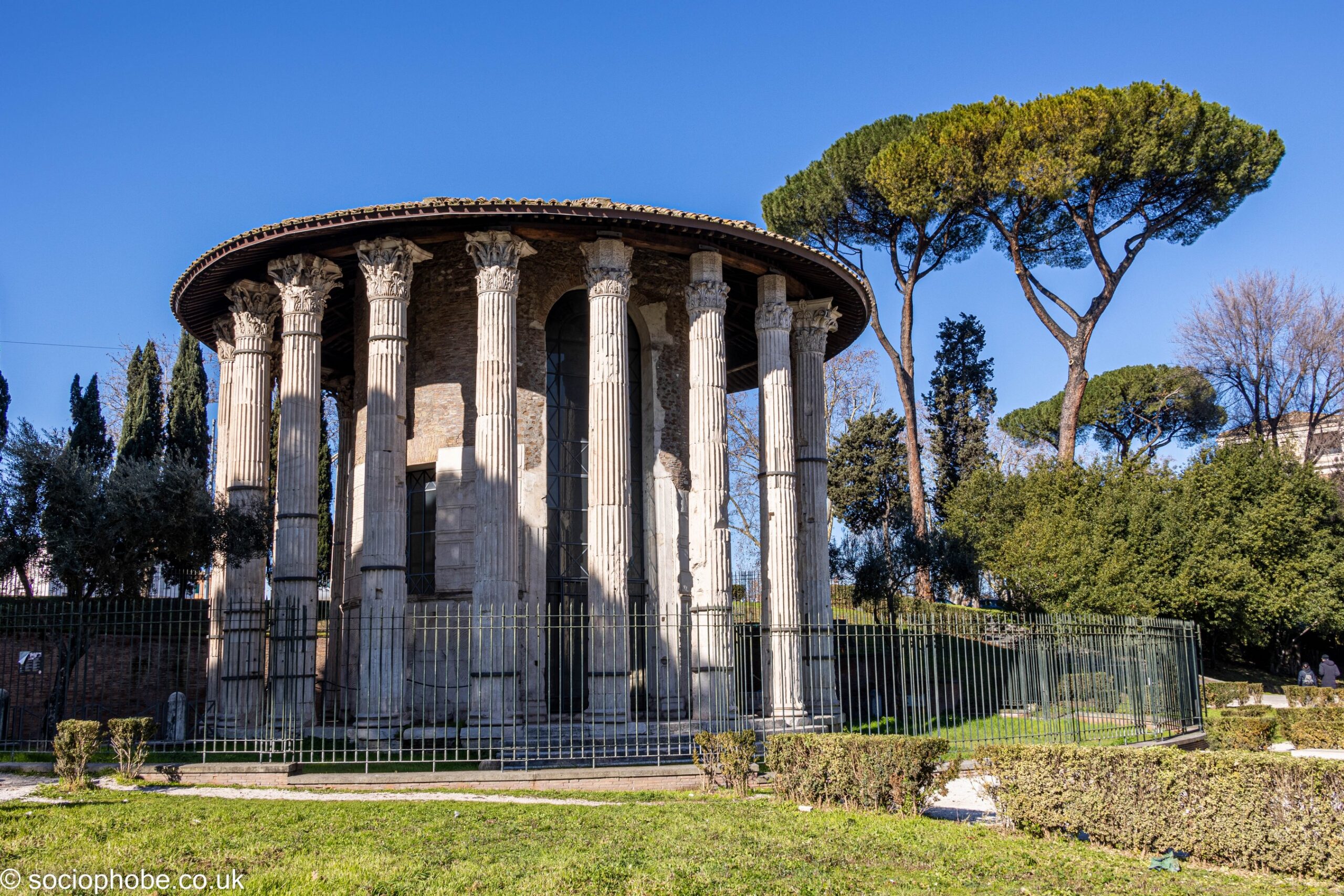
The next morning I had another good sleep and didn’t get up until 8AM. We had a relaxing start to the morning before going out for a healthy breakfast of bread with olive oil, avocado and omelette. To continue our relaxing theme we skipped one of the proposed sites to visit as it was too far to walk and made our way to the Temple of Hercules Victor. Built in the second century BC it is the oldest surviving marble building in the city and built in the Greek style. We couldn’t actually go in and the same applied to the nearby Temple of Fortuna Virilis, a more traditional Roman temple from the same era. Both temples survived the purge of classical buildings by being converted to churches and were strictly speaking Republican rather than Imperial Roman.
Theatre of Marcellus and Temple of Apollo
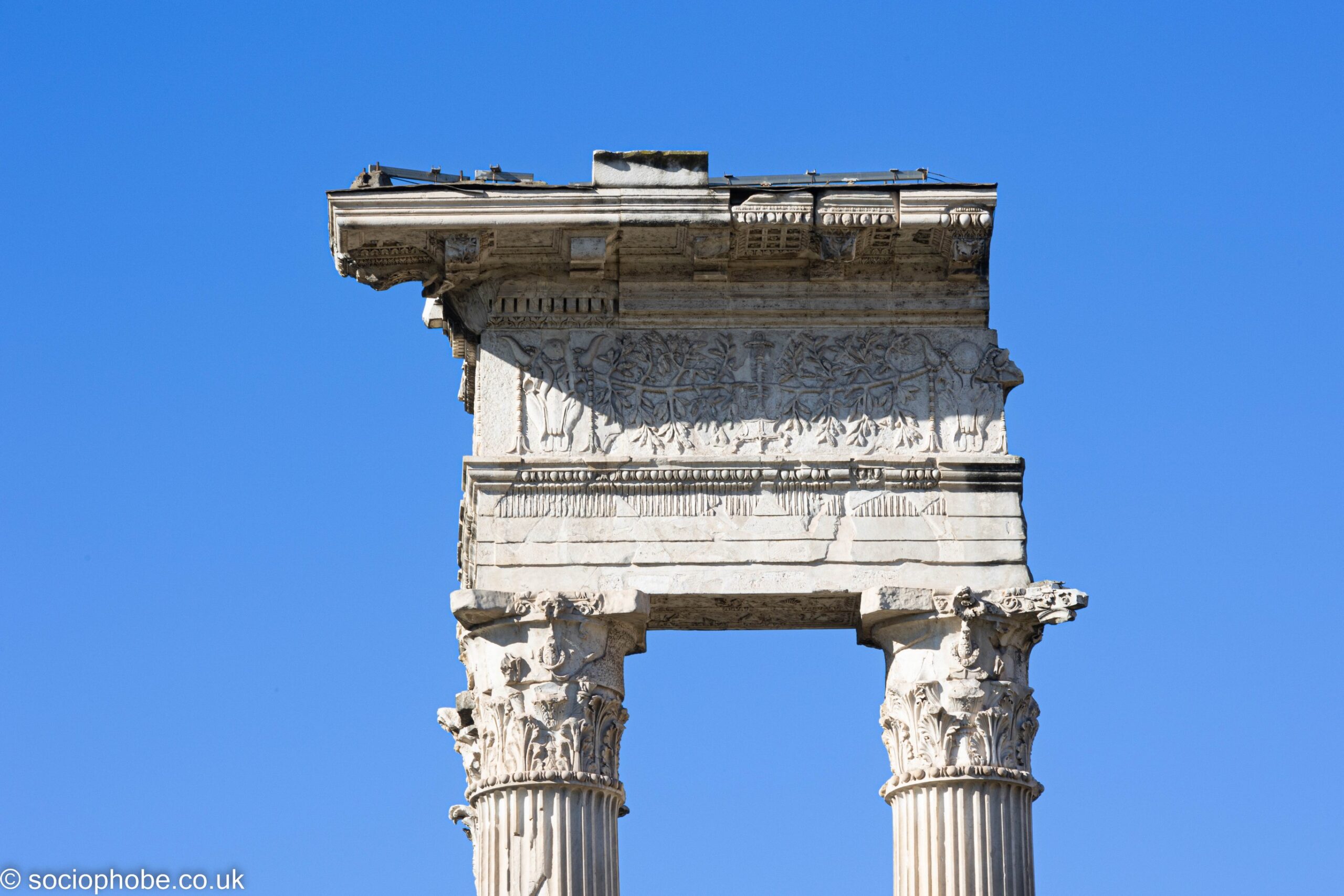
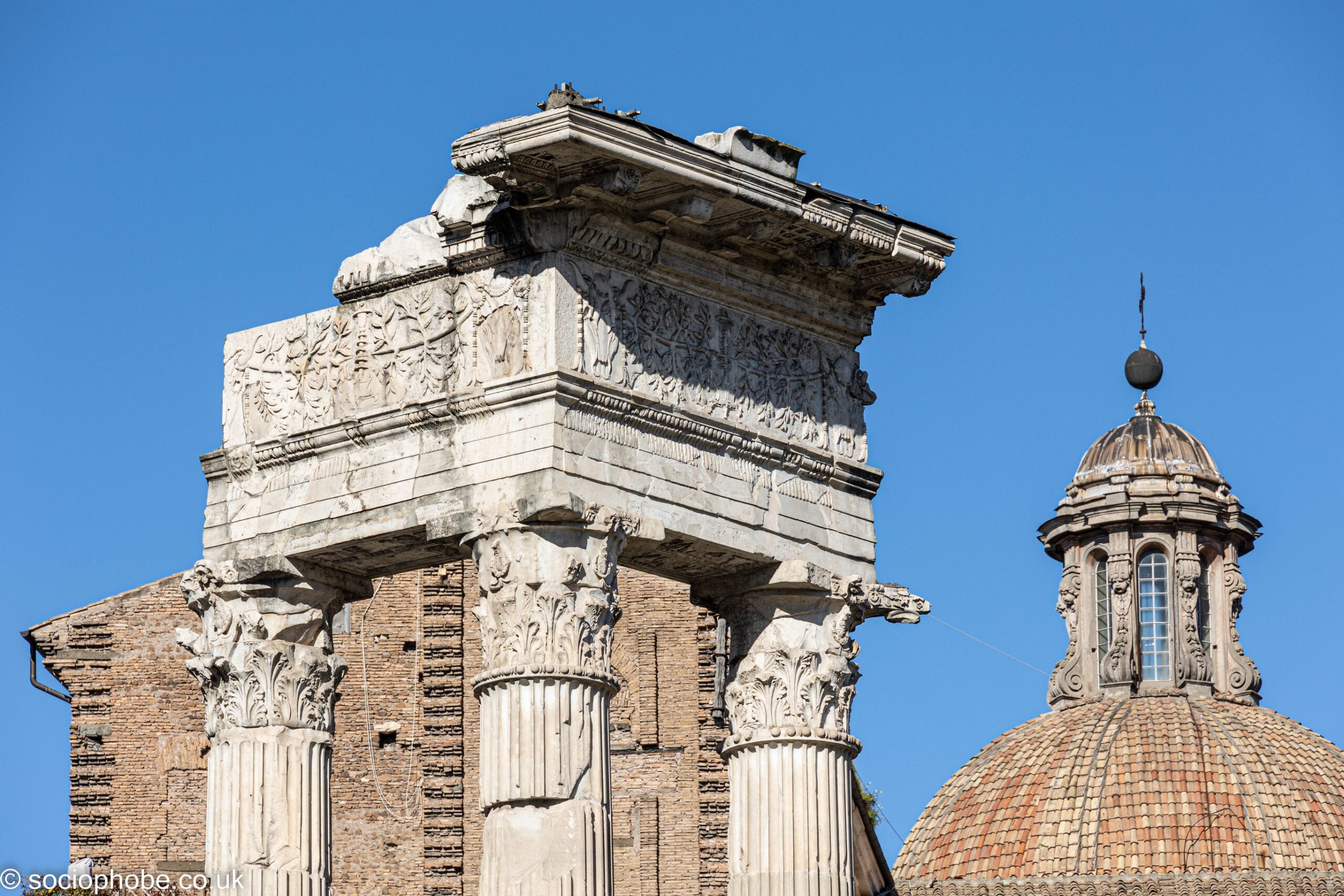
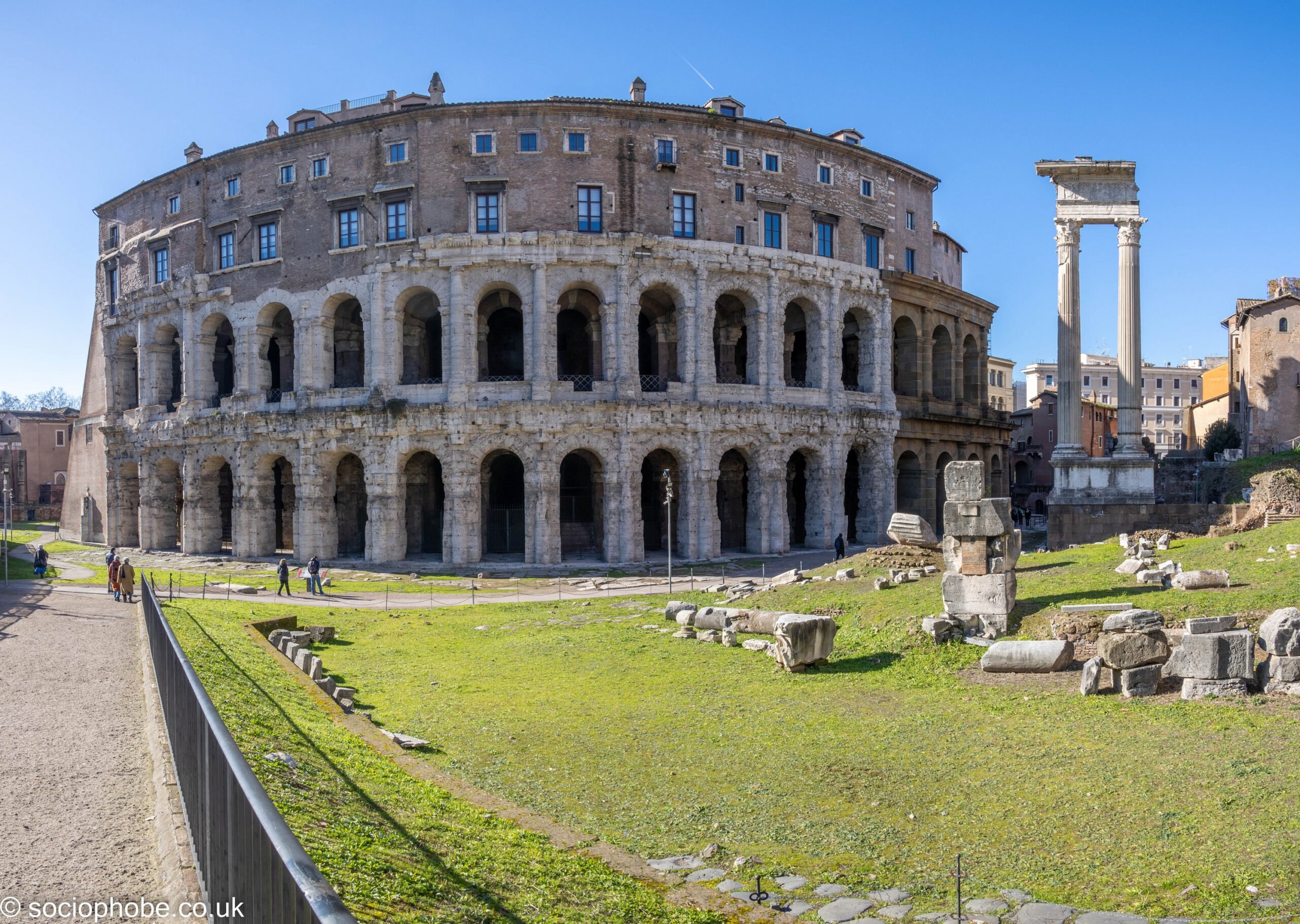
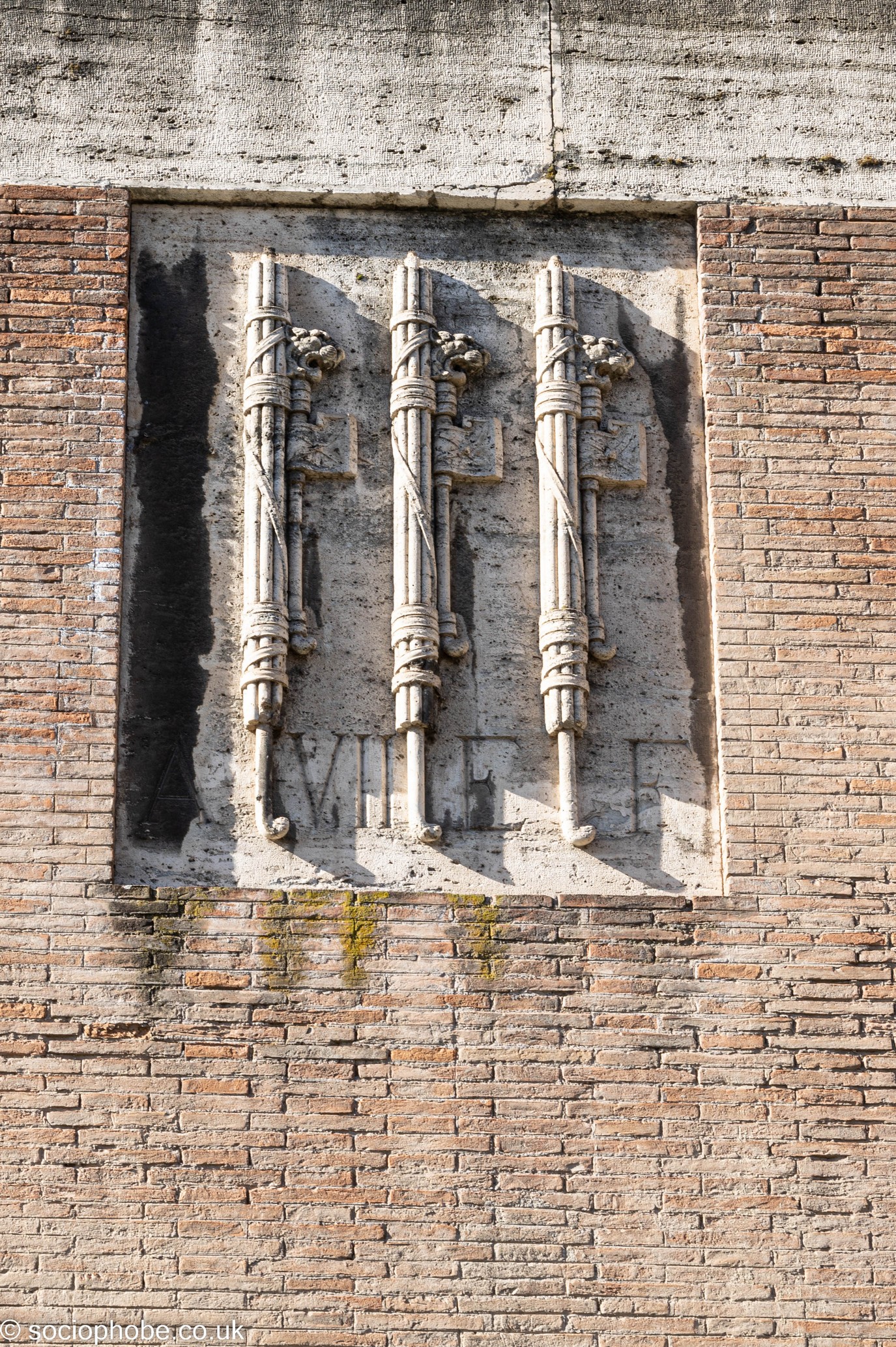
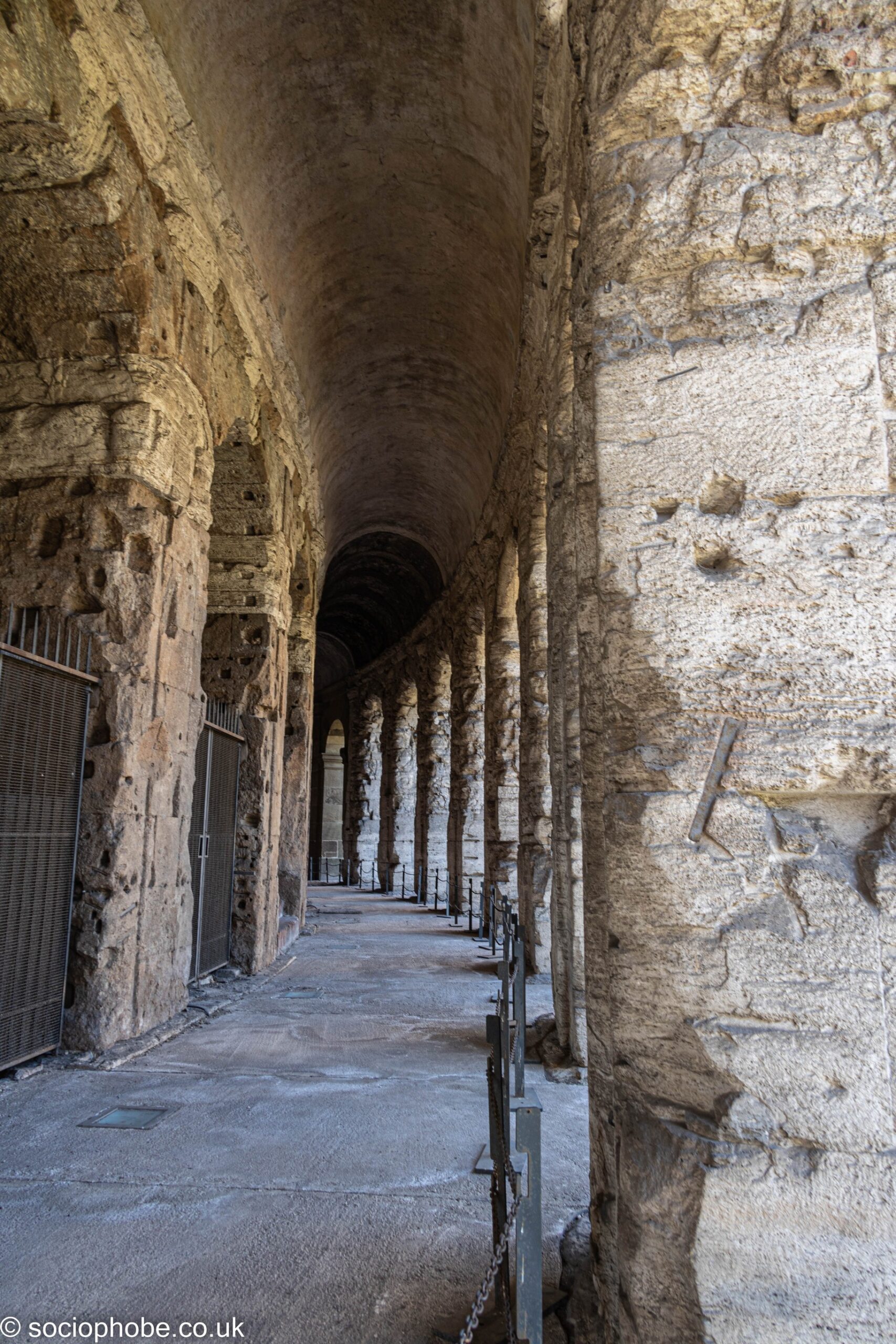
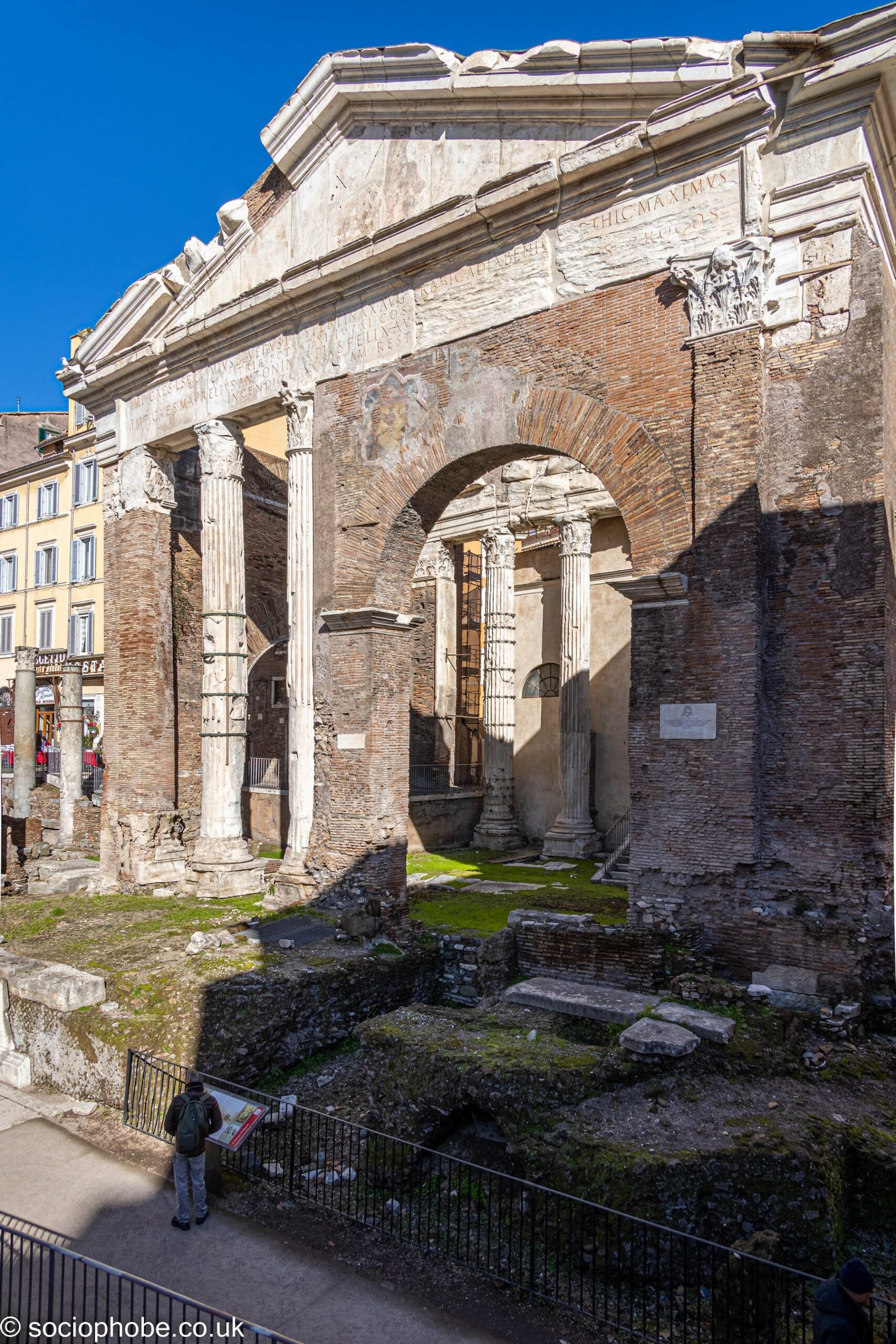
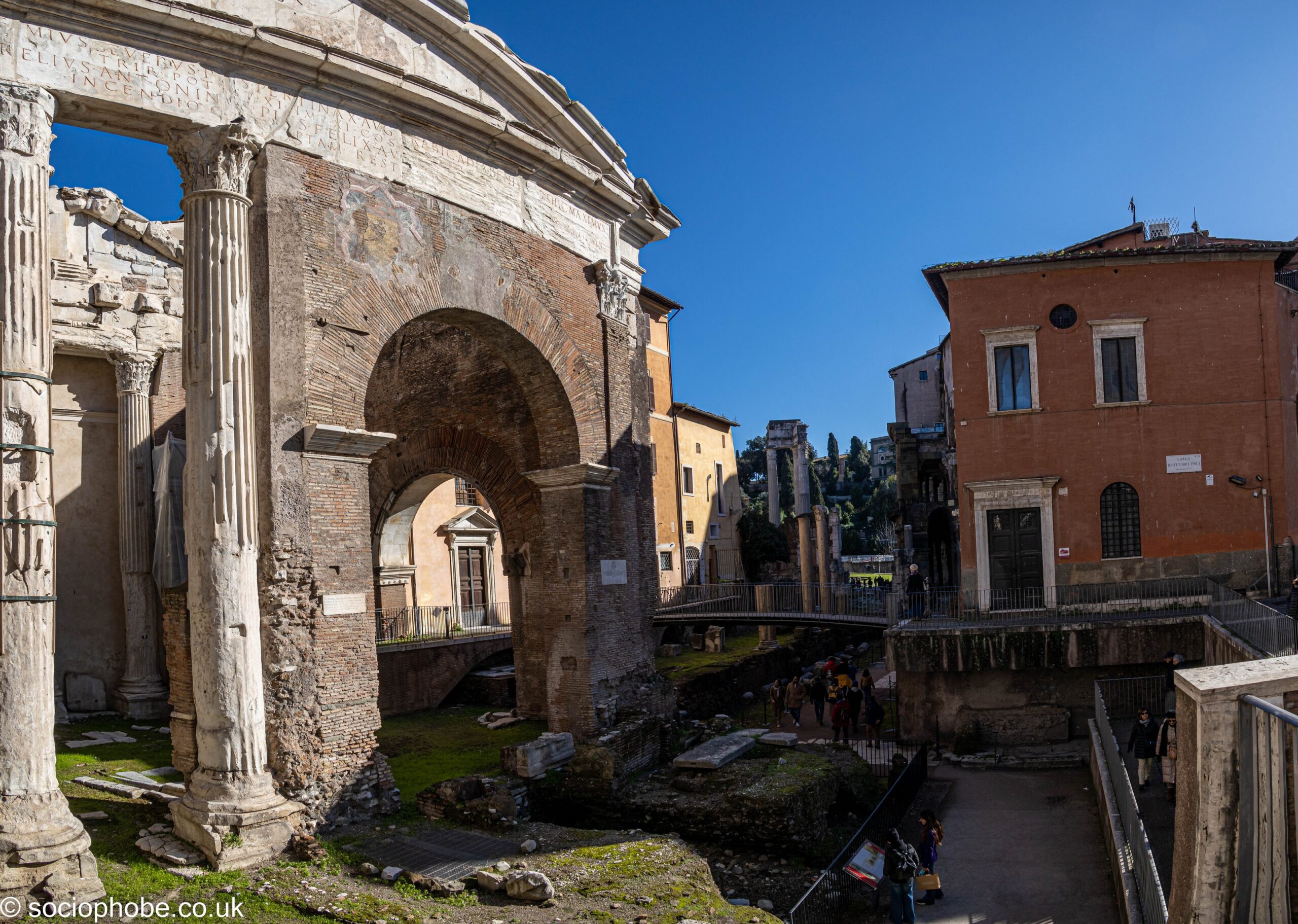
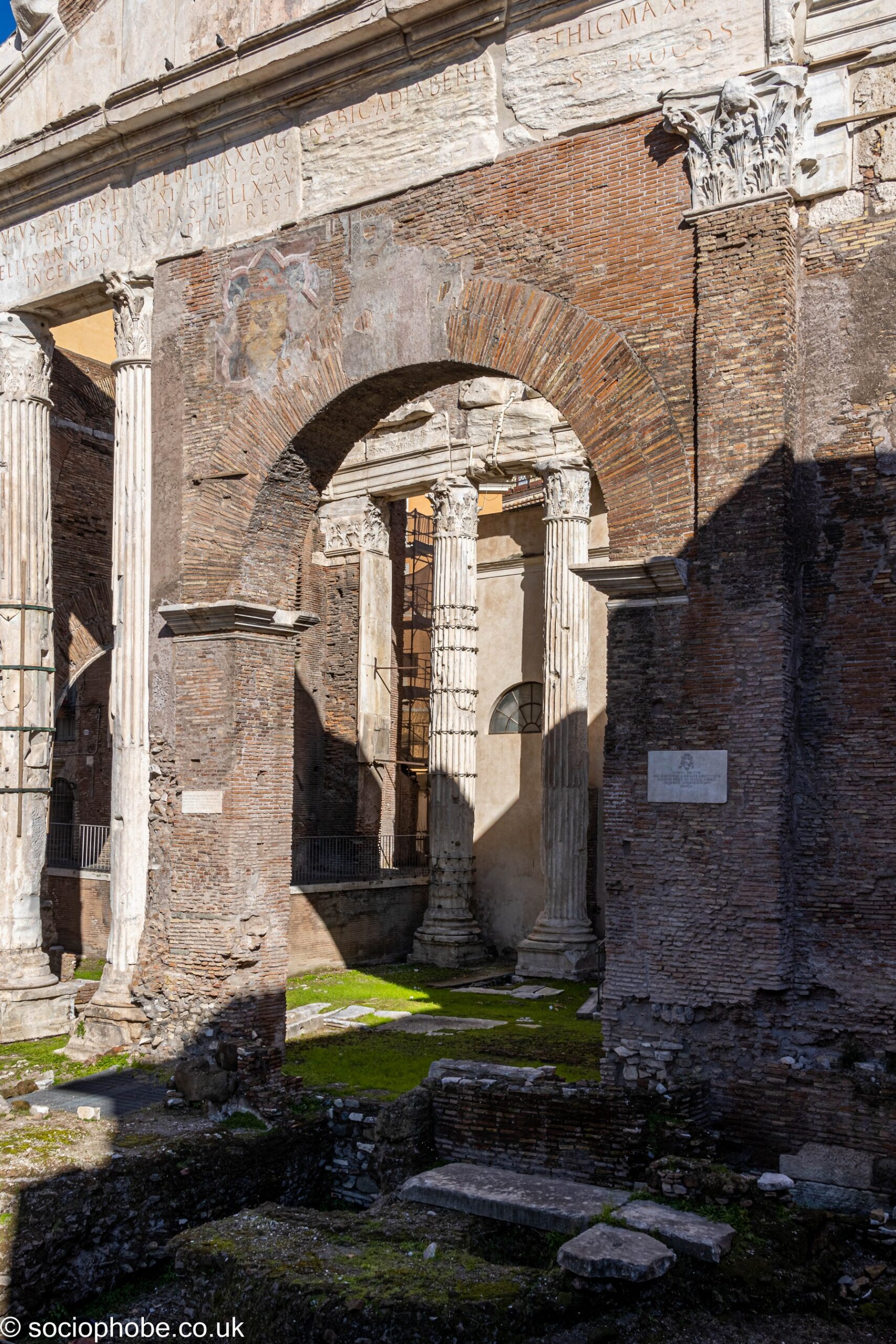
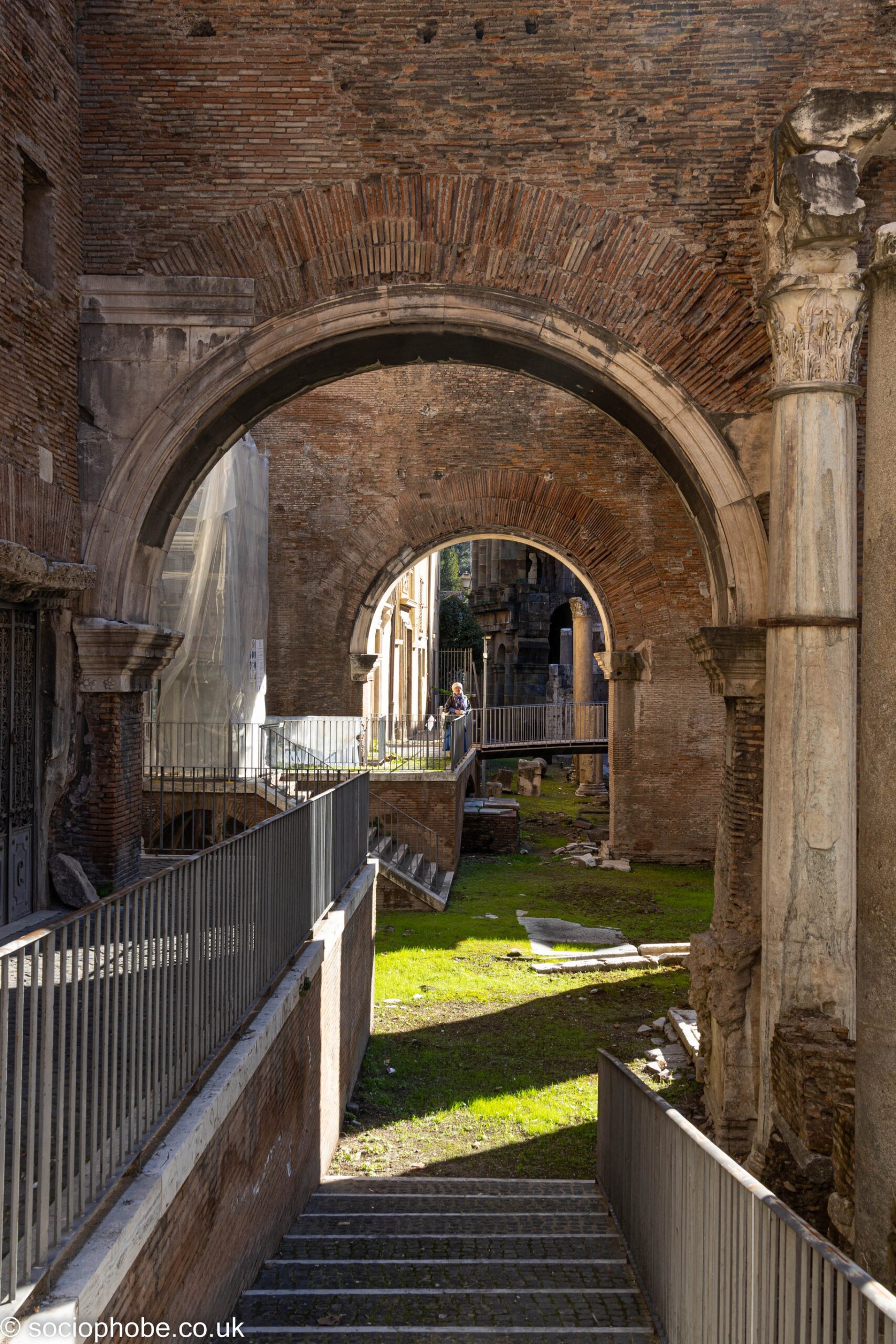
We walked back the way we came to get a better look at the Theatre of Marcellus, a late Republic building that was converted into a fortress and then housing so the bulk of it has been preserved. We didn’t go inside – I’m not sure if you can – but we had a look at that plus the three columns remaining from a Temple of Apollo and then walked around the Portico of Octavia archeological area.
Portico of Octavia
Originally two temples and a library the area then suffered various fires and earthquakes before a church was built in the ruins and later, a fish market. It’s quite amazing there is anything left! Deb’s shoulder pain was really playing up by now, despite my best efforts in distracting her with glorious historical architecture! We visited 3 chemists before finding one that was open so she could guzzle some painkillers.
Our final stop was intended to be the Capitoline Museums but they were fully booked (usually I prepare better for a holiday but the new house had been a major distraction!). We decided to have a pause at the rooftop cafe and decide what to do next and also give the painkillers a chance to kick in. The cafe was very busy but we managed to get a table and I had my first tiramasu of the holiday, as well as cheesecake for comparison purposes.
After coffee and food we walked the length of the terrace, taking in the views. While waiting for lunch I had managed to book us on the VR tour of the Domus Aurea that we intended to visit yesterday but was fully booked. We had time to kill before that started so we walked to the hillside park and sat on a bench, enjoying the sunshine for a while.
Domus Aurea
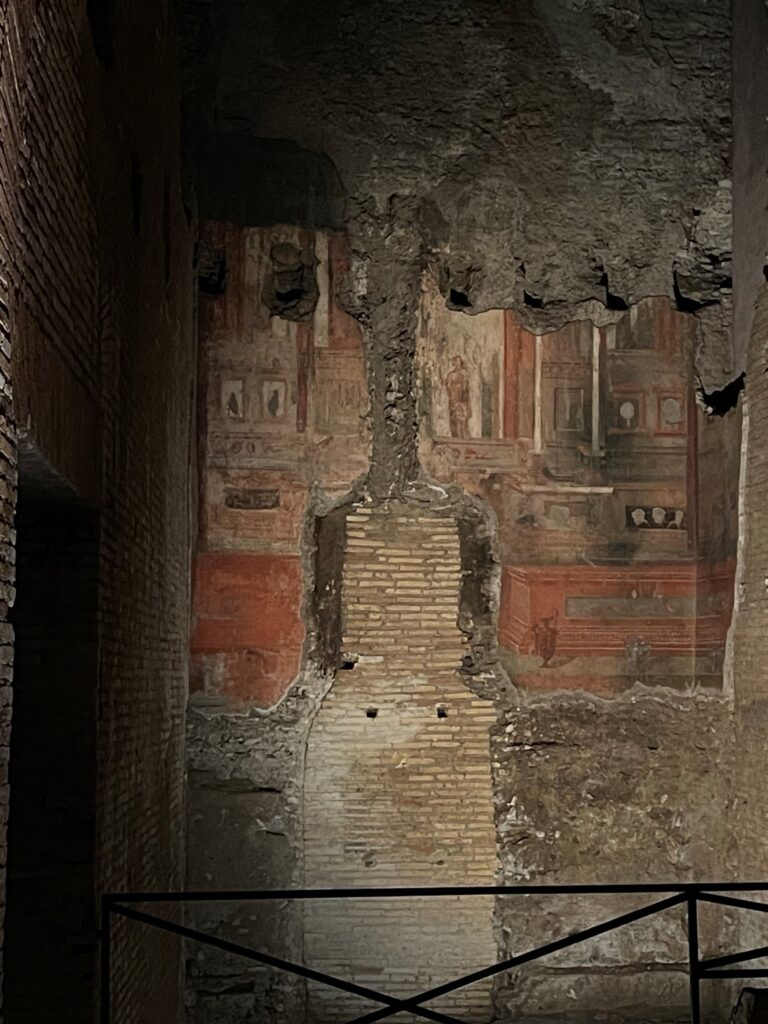
The Domus Aurea is Nero’s Golden House. After the purely coincidental fire destroyed a large part of ancient Rome Nero was able to appropriate the ruins to build his palace complex. This was a ridiculously large (over 300 acres) and ostentatious project, even for the Julian emperors and after his death the palace was largely dismantled and destroyed. The area left now survived as it was filled in with earth to act as foundations for Trajan’s new public baths.
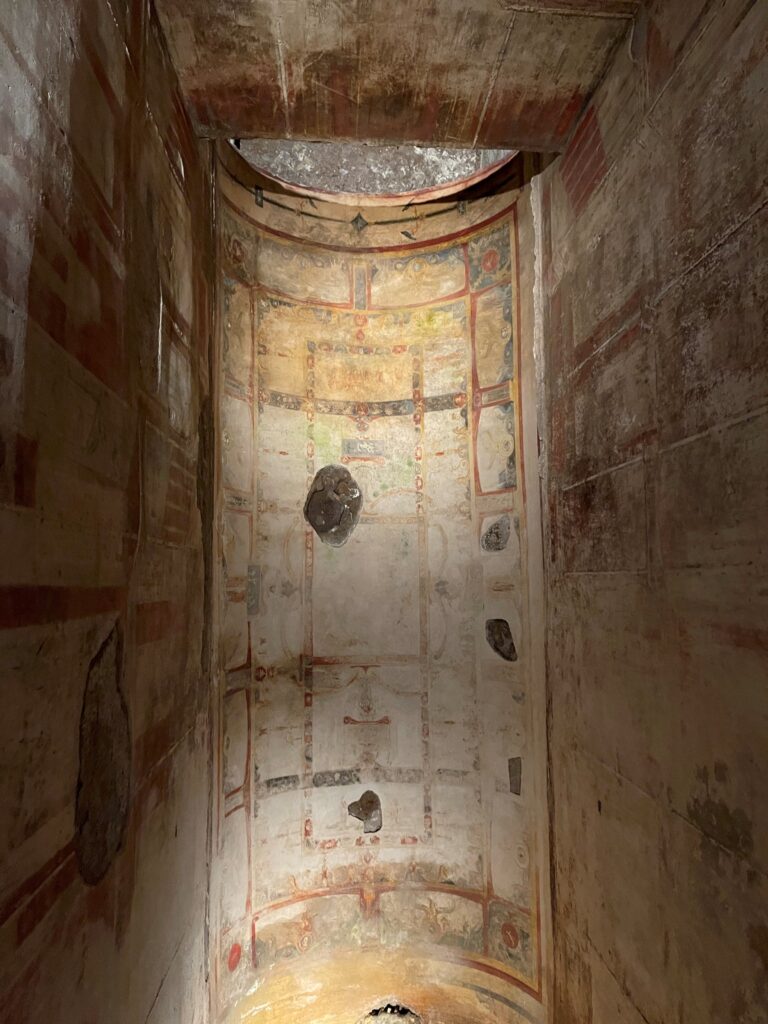
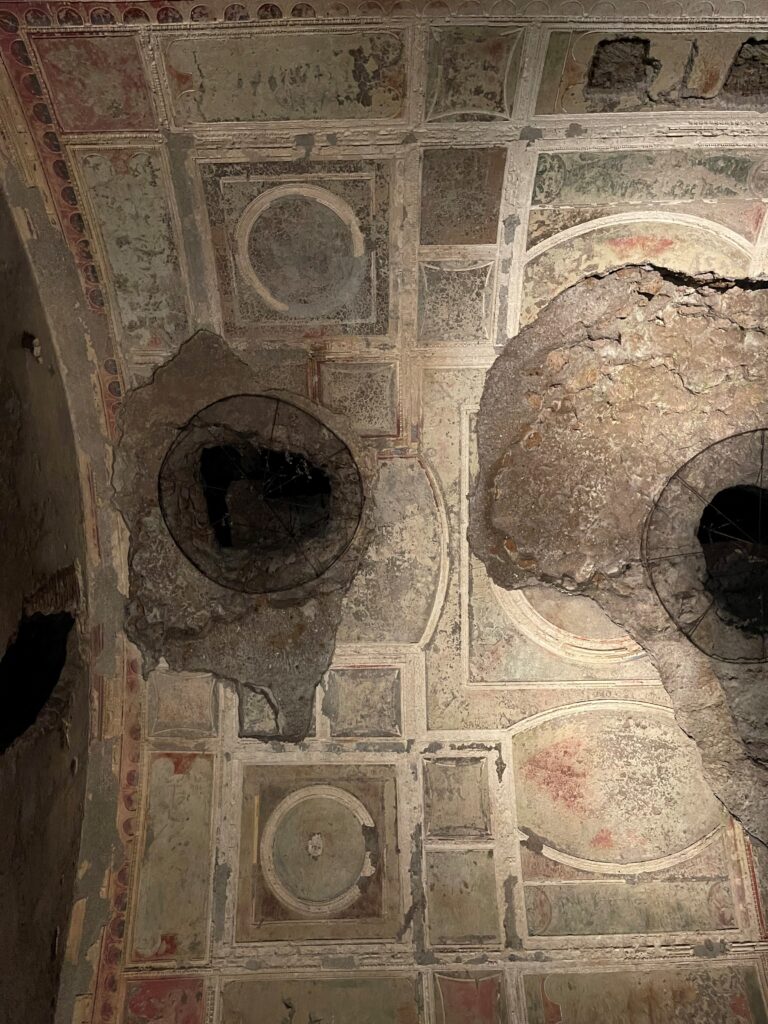
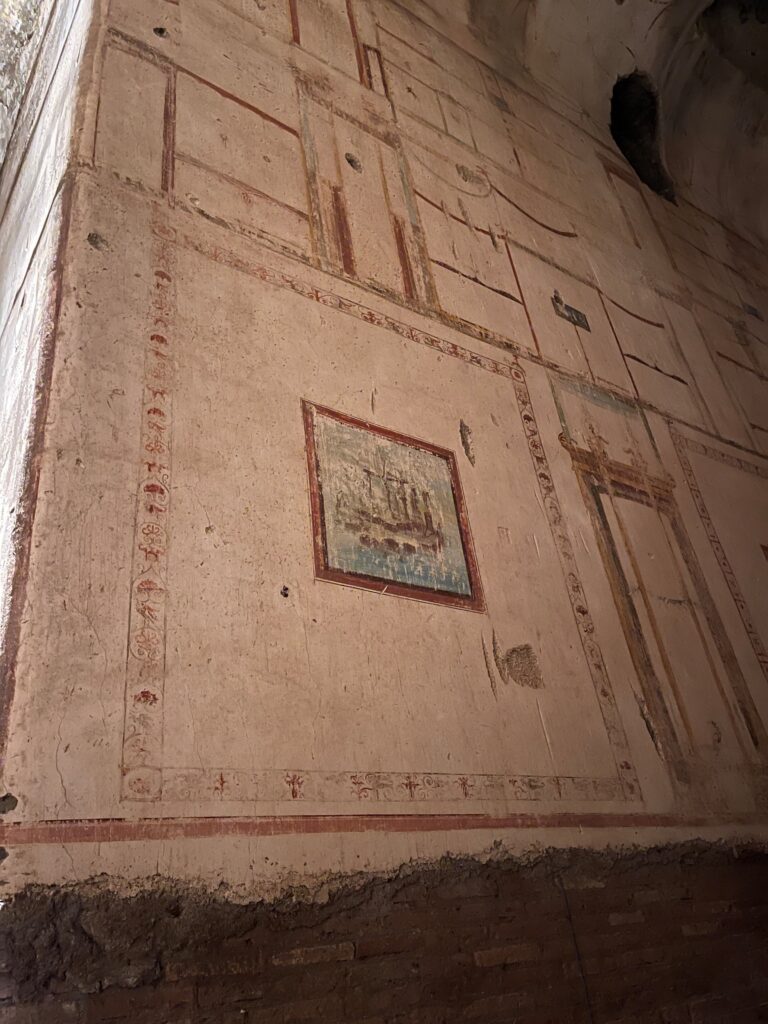
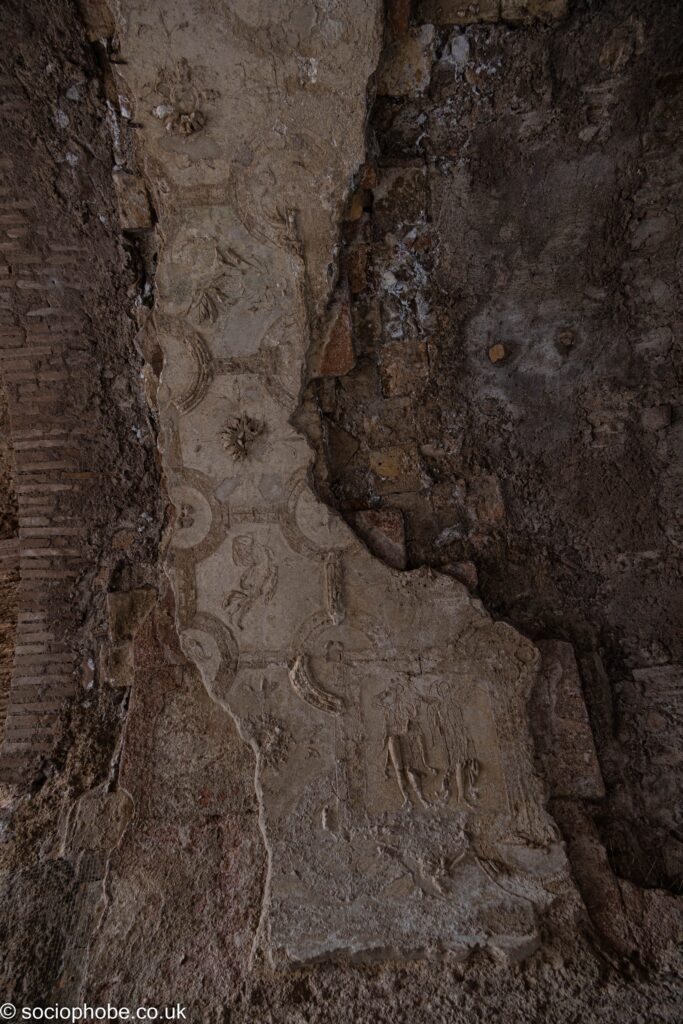
The Domus remained hidden until around 1500 years later when a farmer digging a well broke through one of the vaulted ceilings and discovered the intact murals and frescoes. This became an inspiration for a generation of Renaissance artists who visited the rooms and made copies of what they found. This was rather lucky as the paintings have now largely been destroyed after being exposed to air and damp.
The complex is massive and only a small portion is open to the public with varying levels of artwork on display. A lot of it is faded completely and there are areas of damp with no trace of what was there before. There were some rooms with some decent images left though and the sketch books of the 15th century artists may allow some kind of restoration once the structure is stabilised.
The VR aelement of the tour showed us what the structure could have looked like in Nero’s time and included a ‘walk’ onto the terrace to look over the site of the Colosseum (then an artificial lake) and the pleasure gardens that are now completely built upon. I have to say I preferred Nero’s vision.
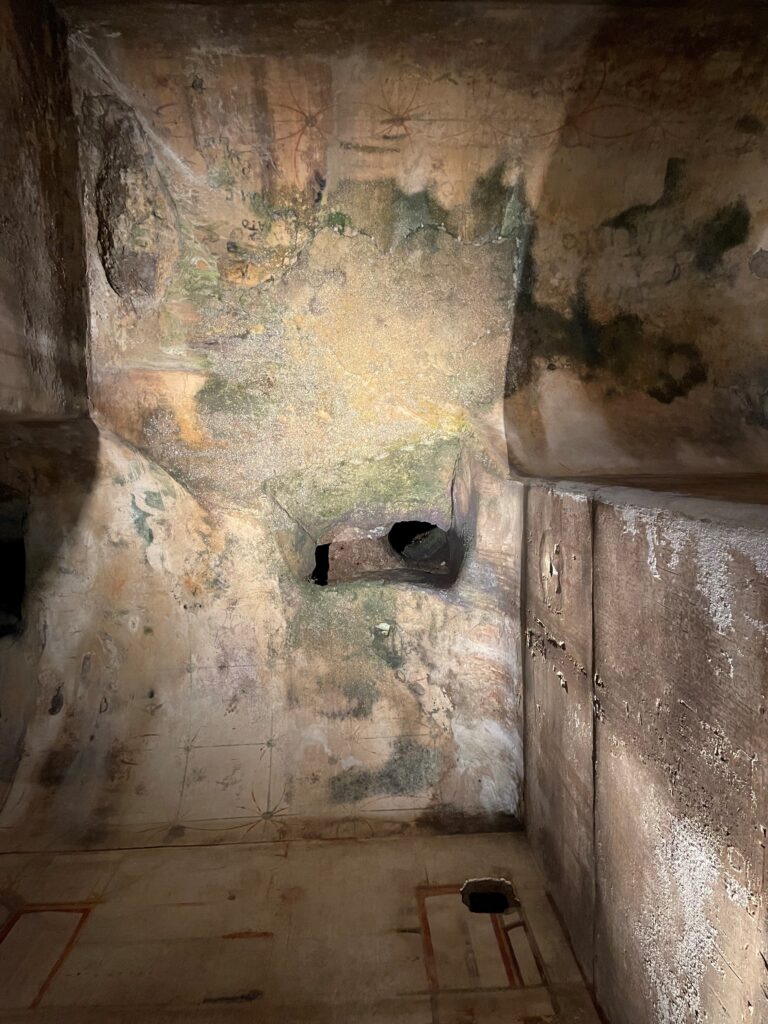
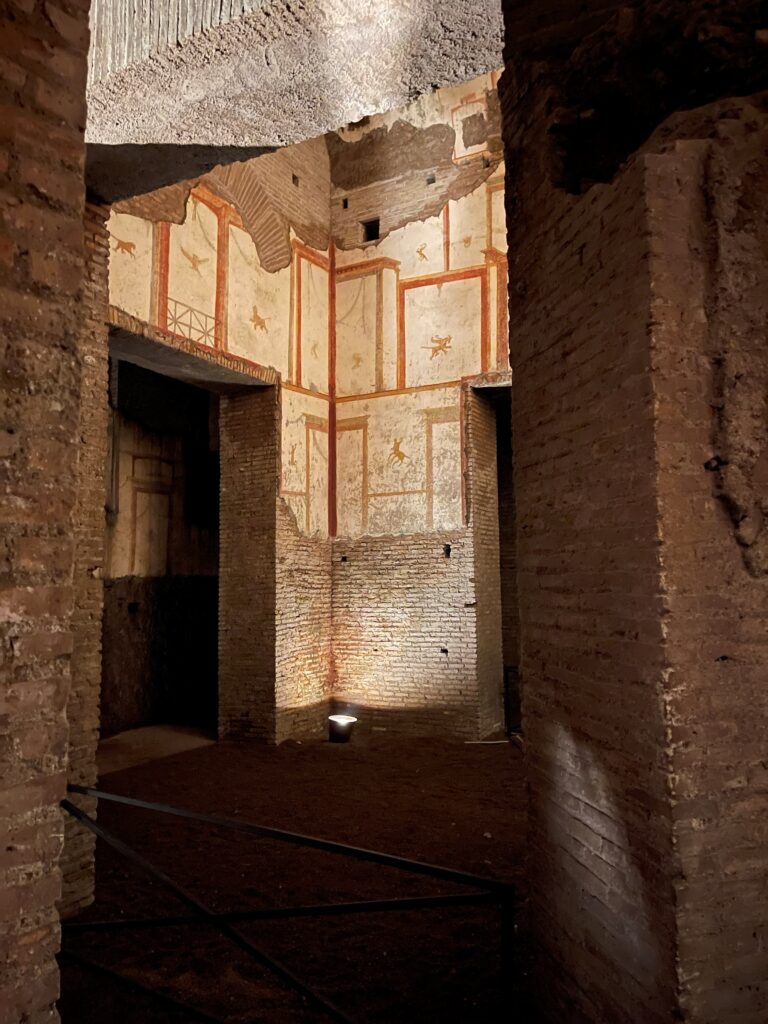
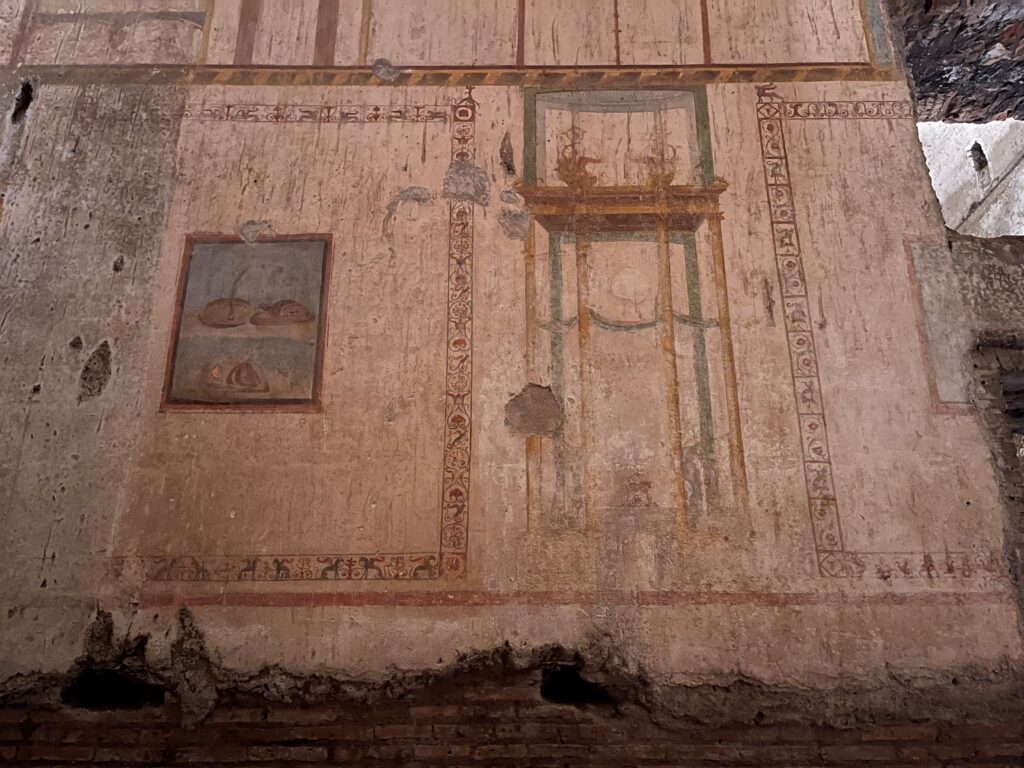
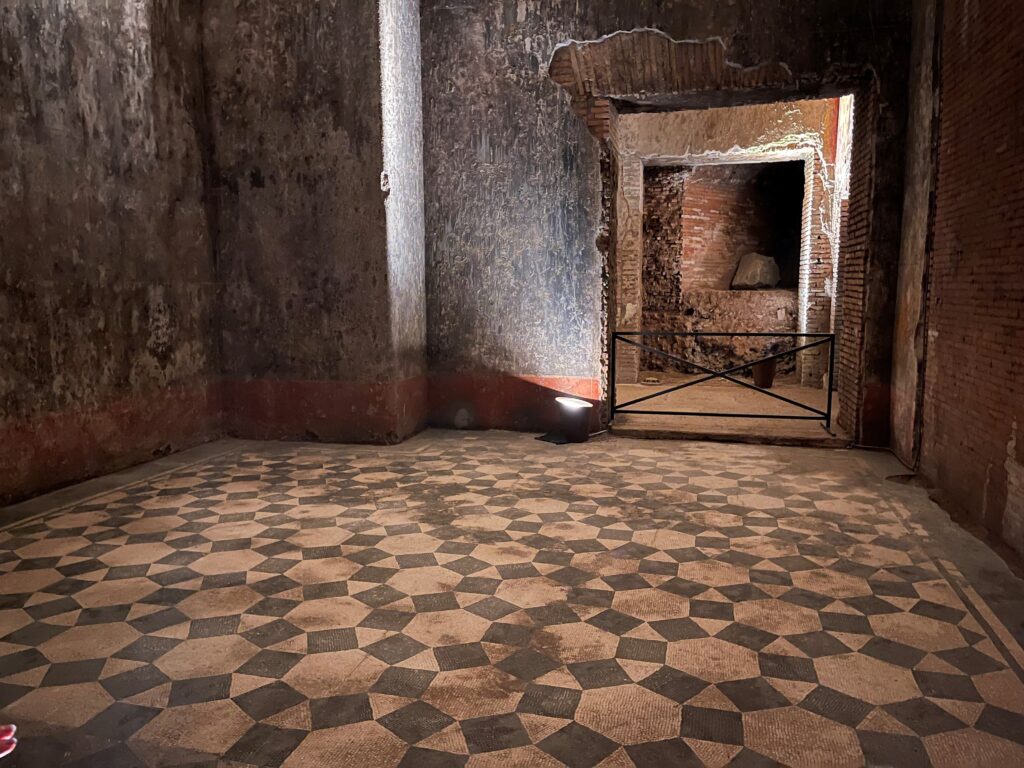
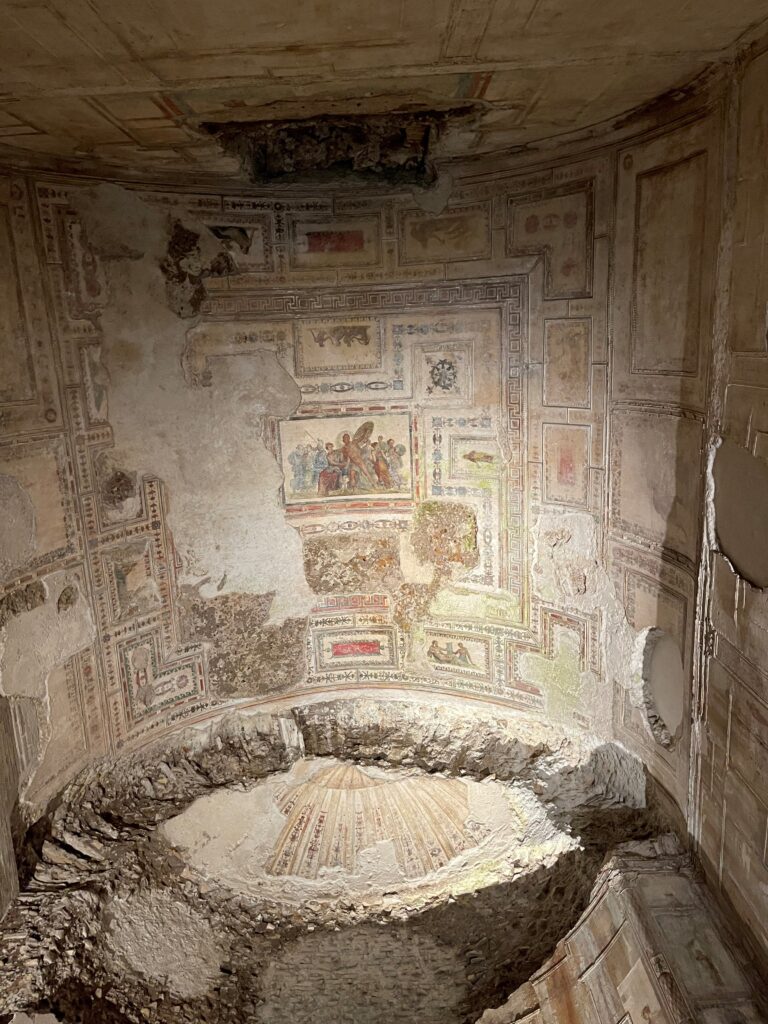
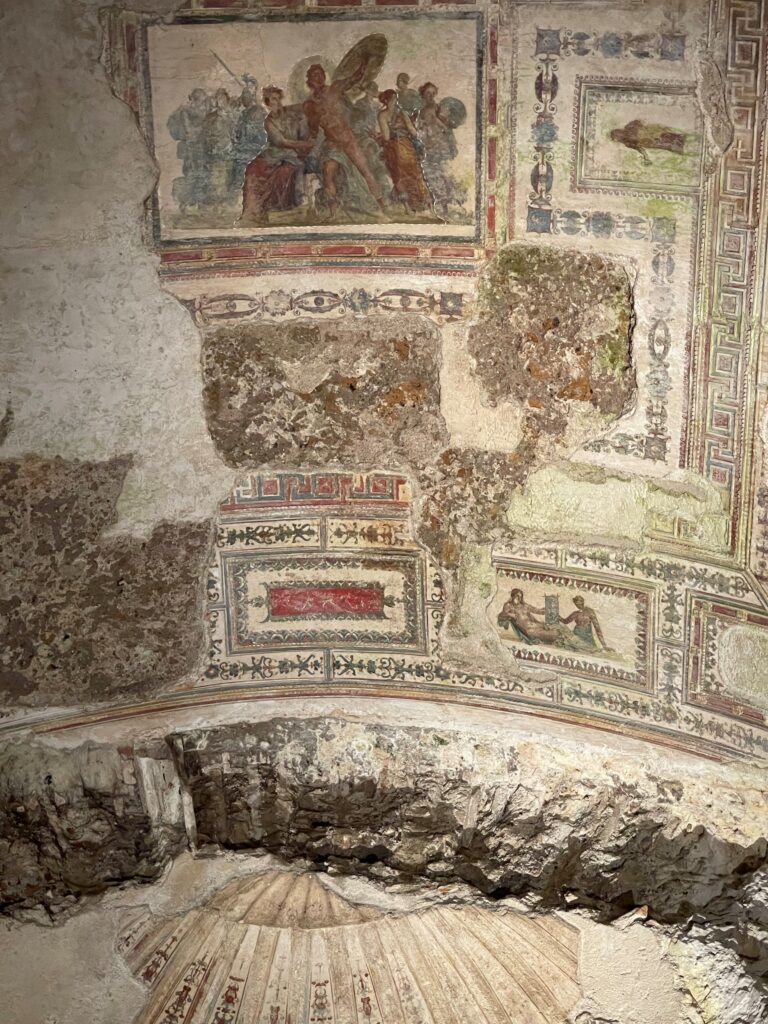
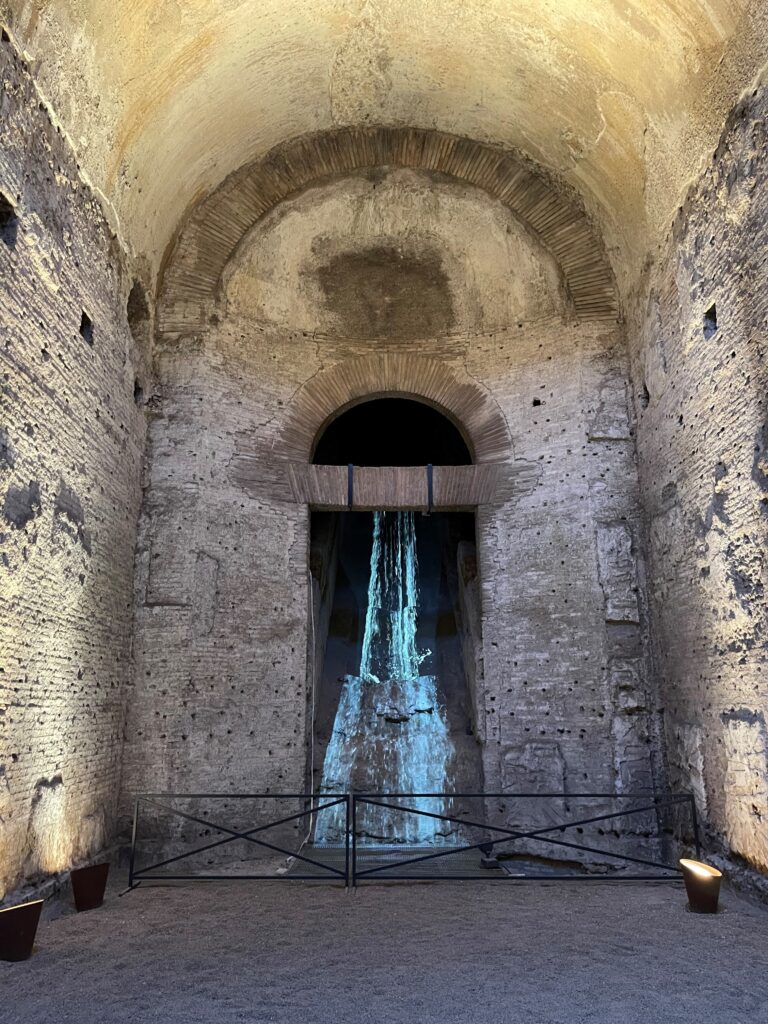
After this vision of Imperial decadence we decided to have a spot of tea and a cake. This made a refreshing change from coffee and we then walked the short distance back to the apartment. The usual routine of sorting the photos for me and a rest for Deb after more painkillers and then we were ready for dinner. There was a restaurant about 10m from our building which we walked past every day (I say “every day” but we’ve only been here two nights so far!) so we decided to give it a try. The food was fabulous, easily the best so far and the staff were great so that was a pleasant way to end the day, along with my fifth dessert of the day!
Colosseum
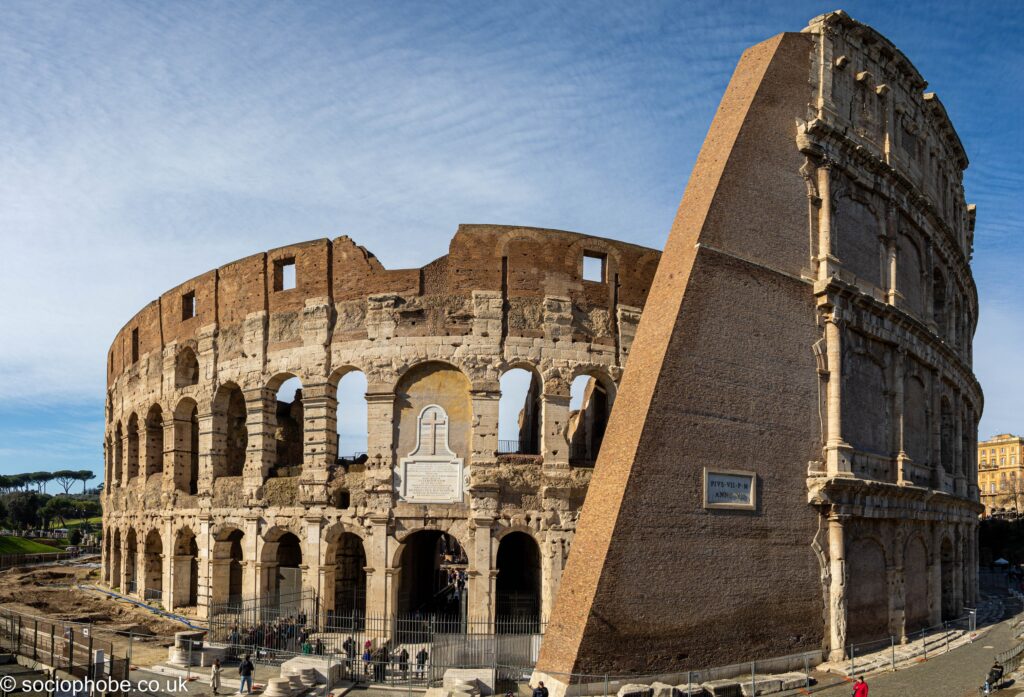
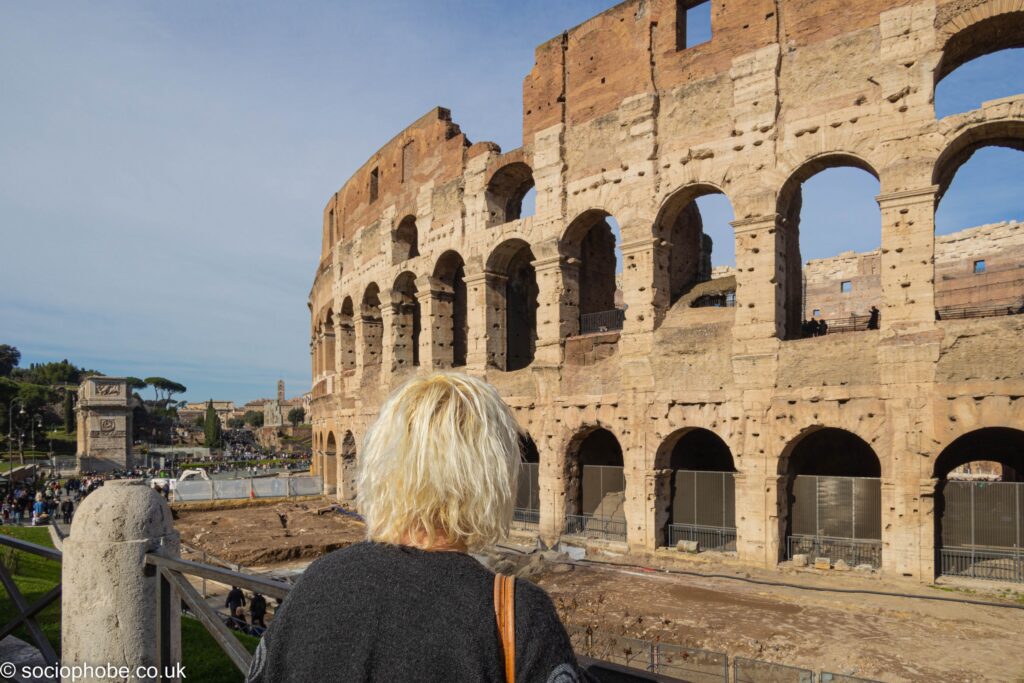
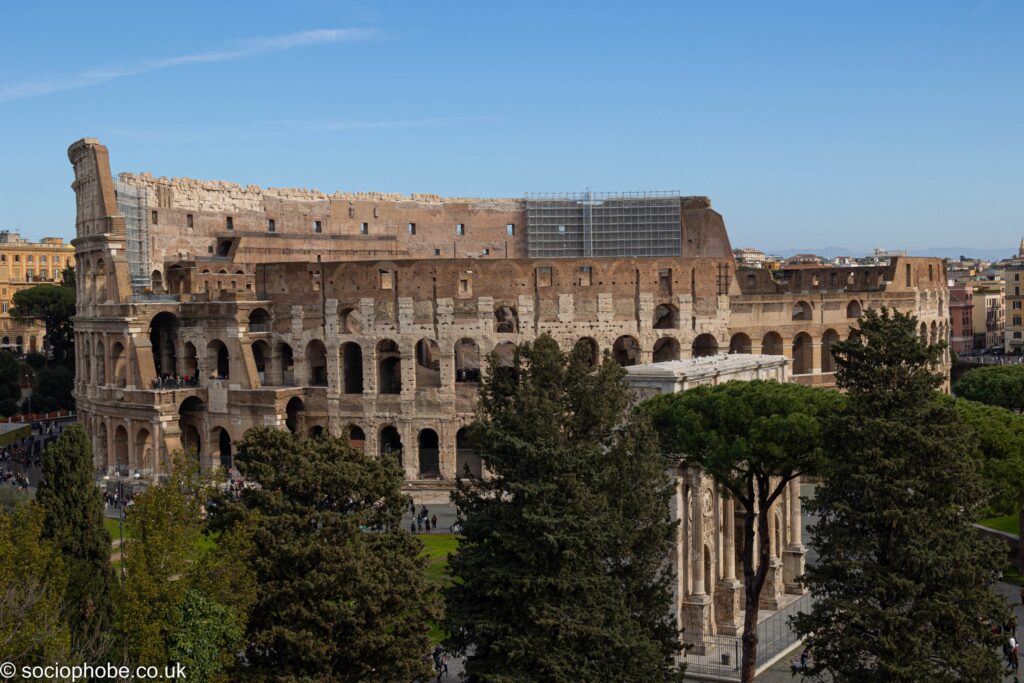
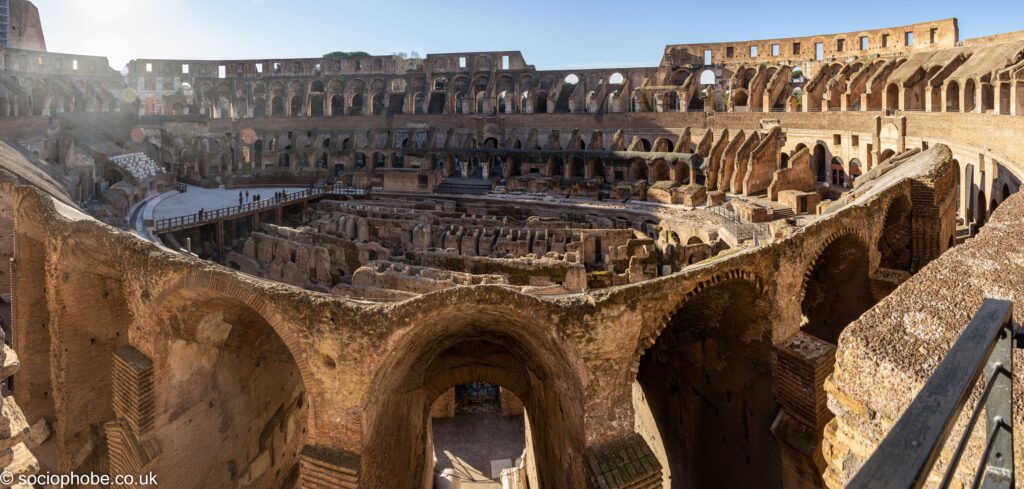
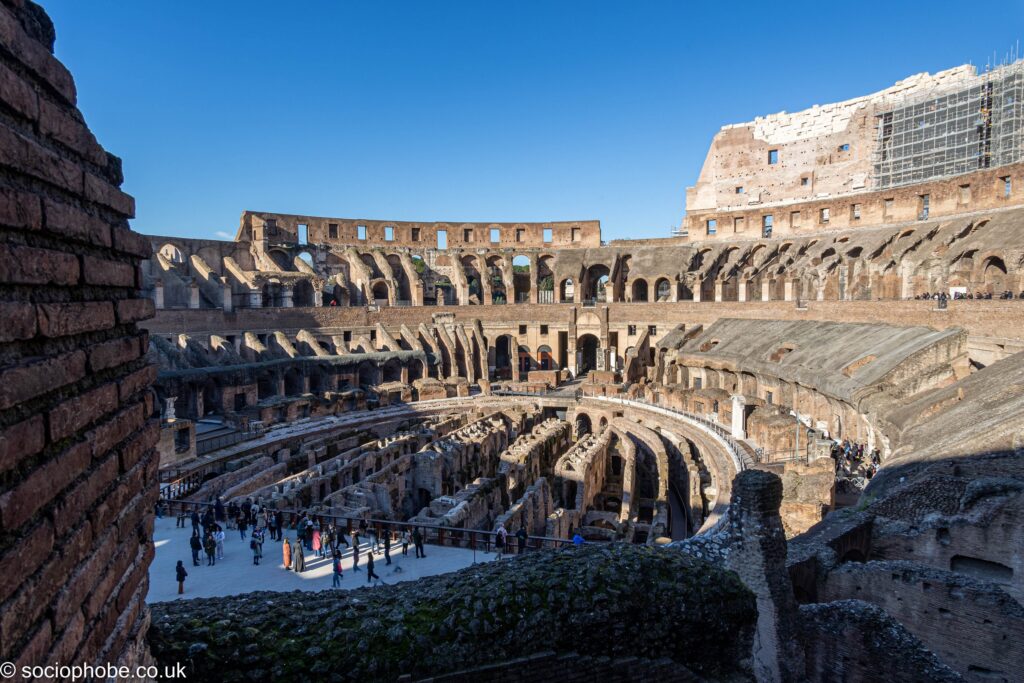
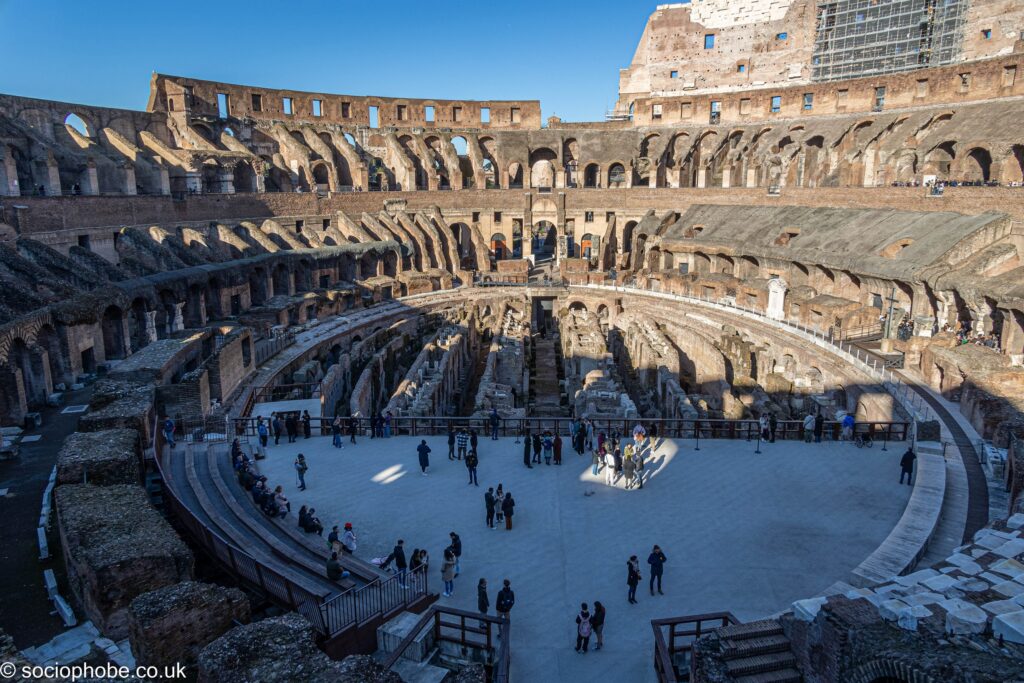
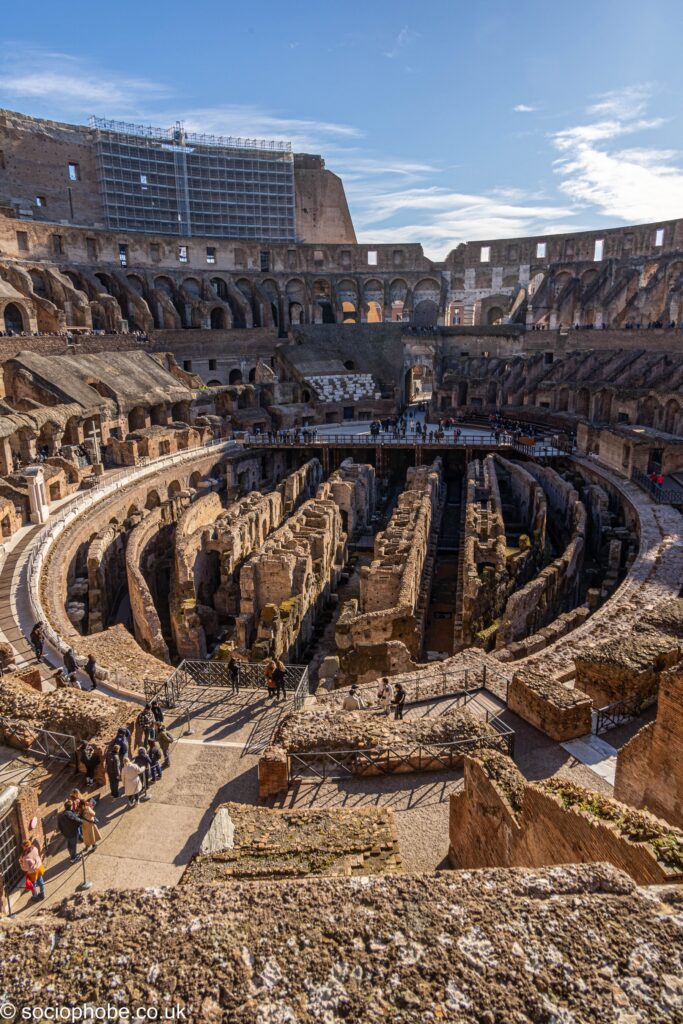
Monday morning was Colosseum day. After a warming shower we headed out for another healthy breakfast and then joined the very small queue for the Colosseum. It was quite amazing the difference in visitors compared to yesterday. We walked inside and past all the exhibits to the first viewing platform to take some pictures while it was empty before going back to the exhibits. The Colosseum was built by the Flavian emperors, successors to Nero, over what used to be his artificial lake. Loot from the temple of Jerusalem funded the building work.
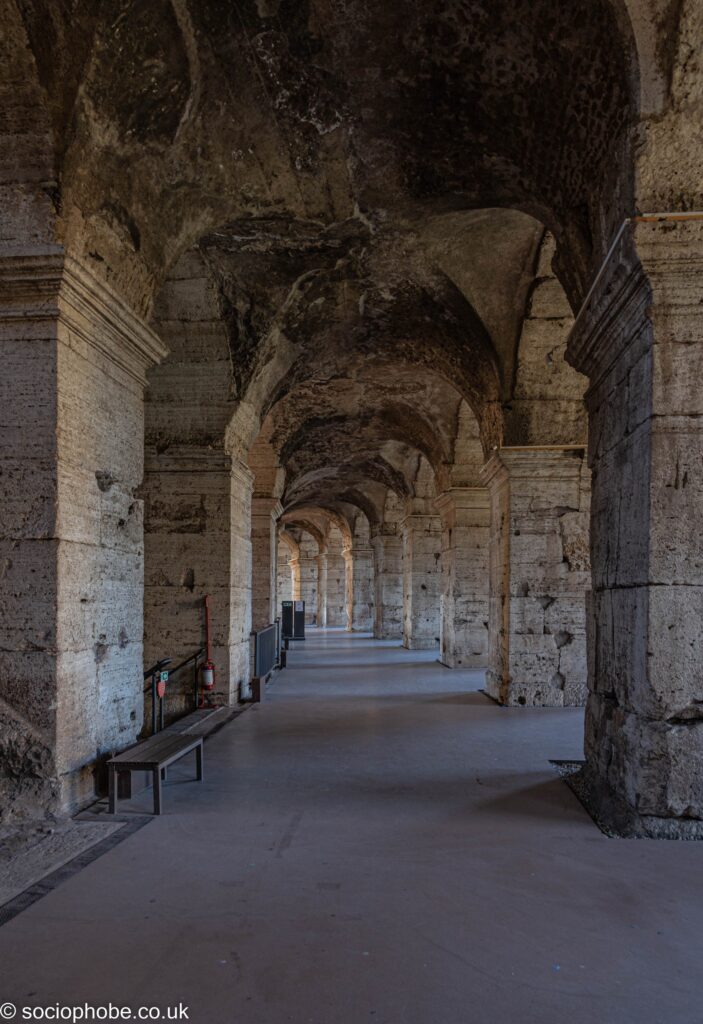
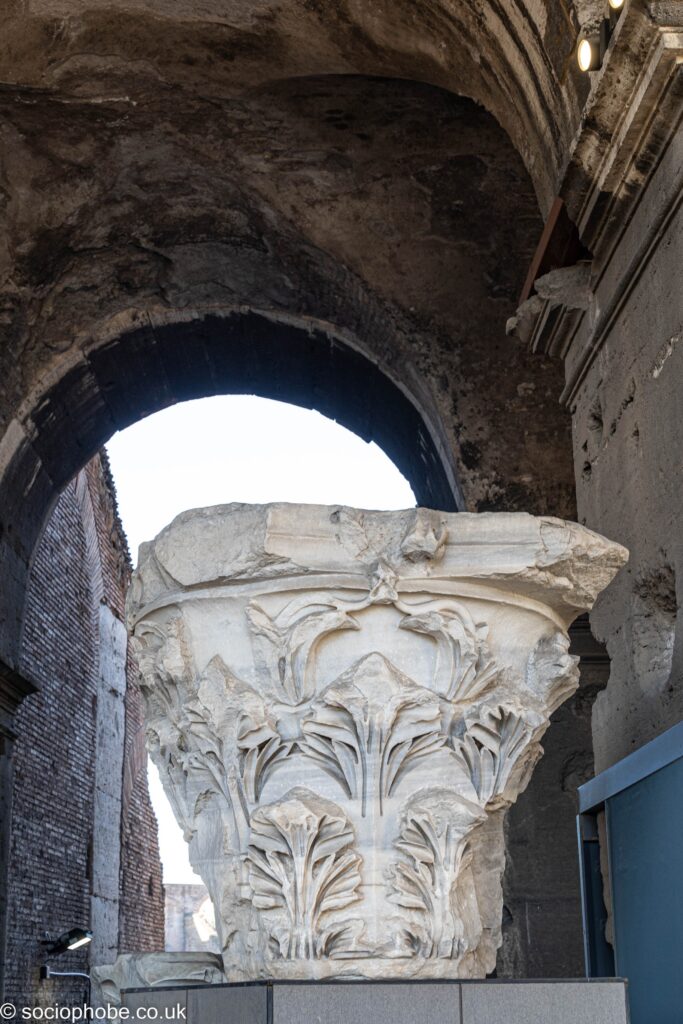
These told the story of the structure, from it’s construction with socially designated seating, a sun shade and the immense logistics required to house the animals, victims and competitors as well as cater for all the spectators. After the empire collapsed the building became a cattle pen, workshops and housing. The decline continued into the medieval period when the marble was largely stripped and burned to make quicklime and the iron bindings between the stones looted and melted down. Just re-reading that sentence makes me seethe! It wasn’t until the nineteenth century that the value of the building as a historical legacy was recognised and restoration started.
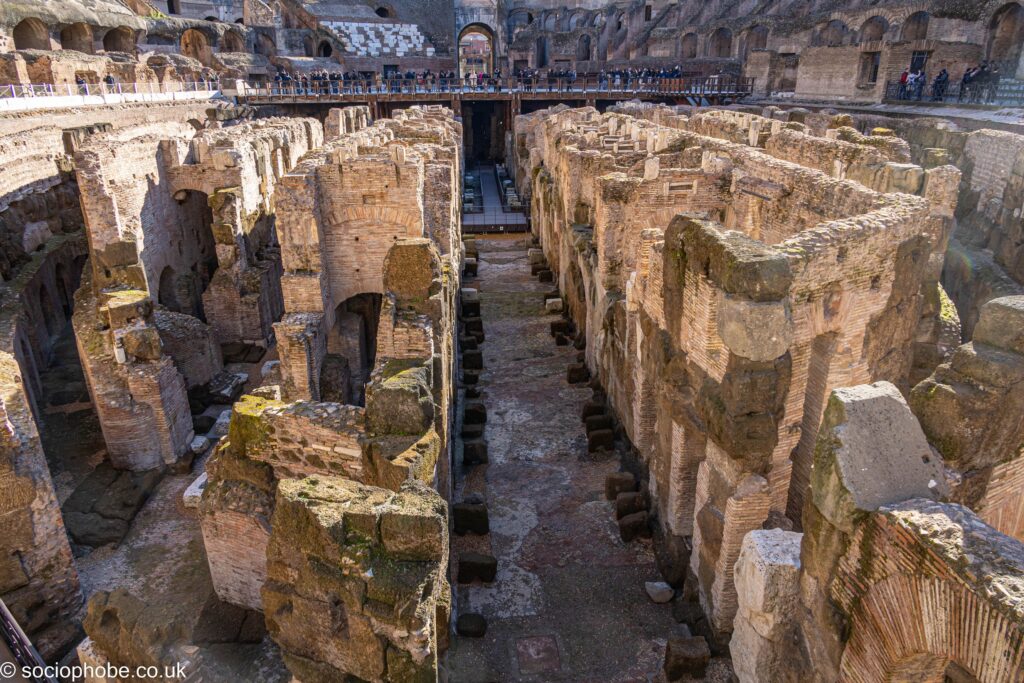
We continued our tour around the second level and then back to the ground floor level. The size was vast (it seated around 80,000 people) but the arena area didn’t appear that big although we couldn’t actually see the much of floor as it had been excavated to show the tunnels and rooms beneath. It’s easy to see why it is such an iconic and influential building though.
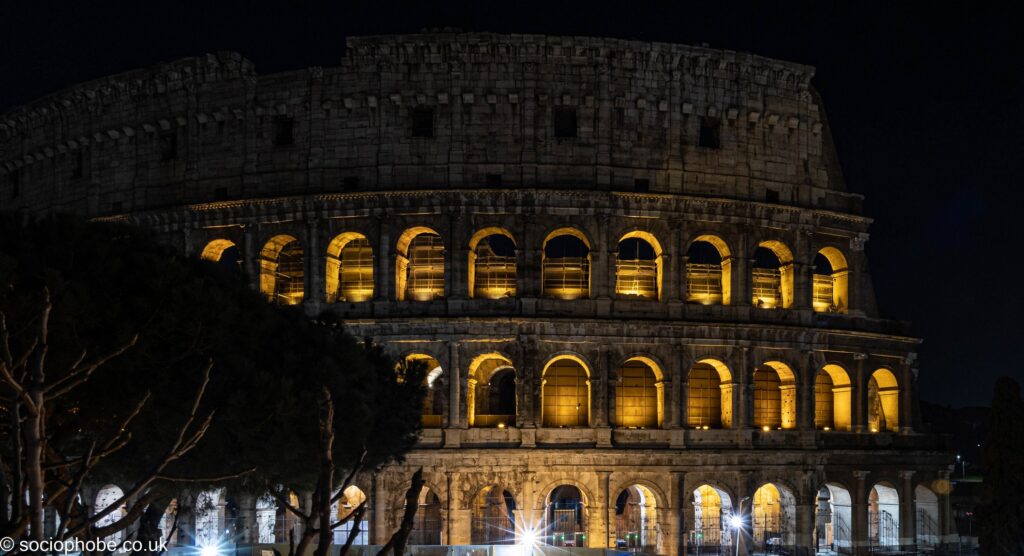
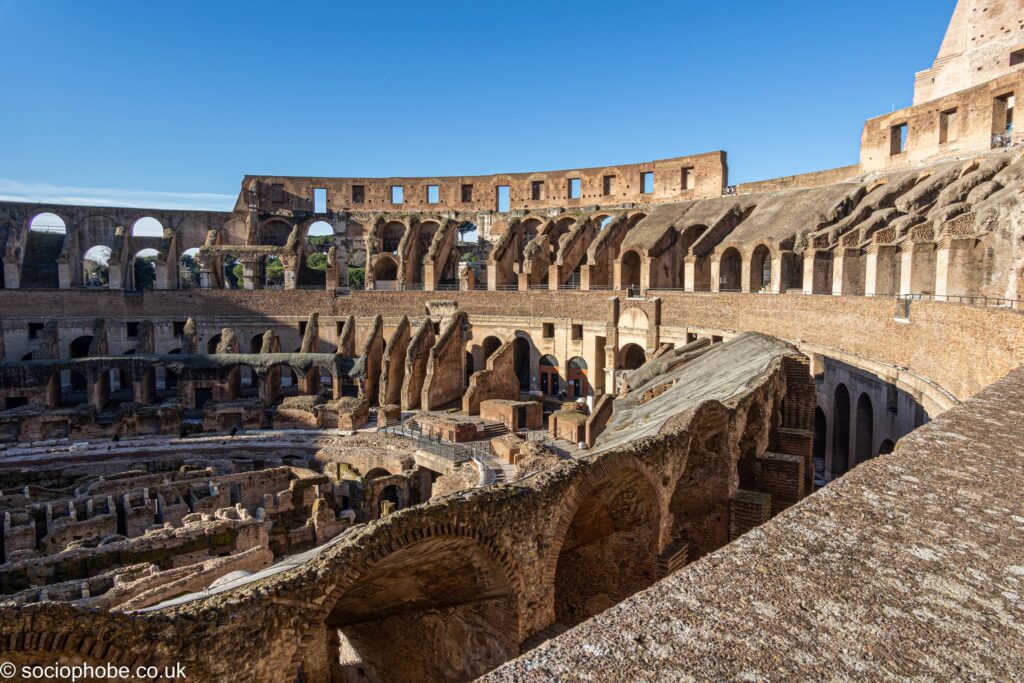
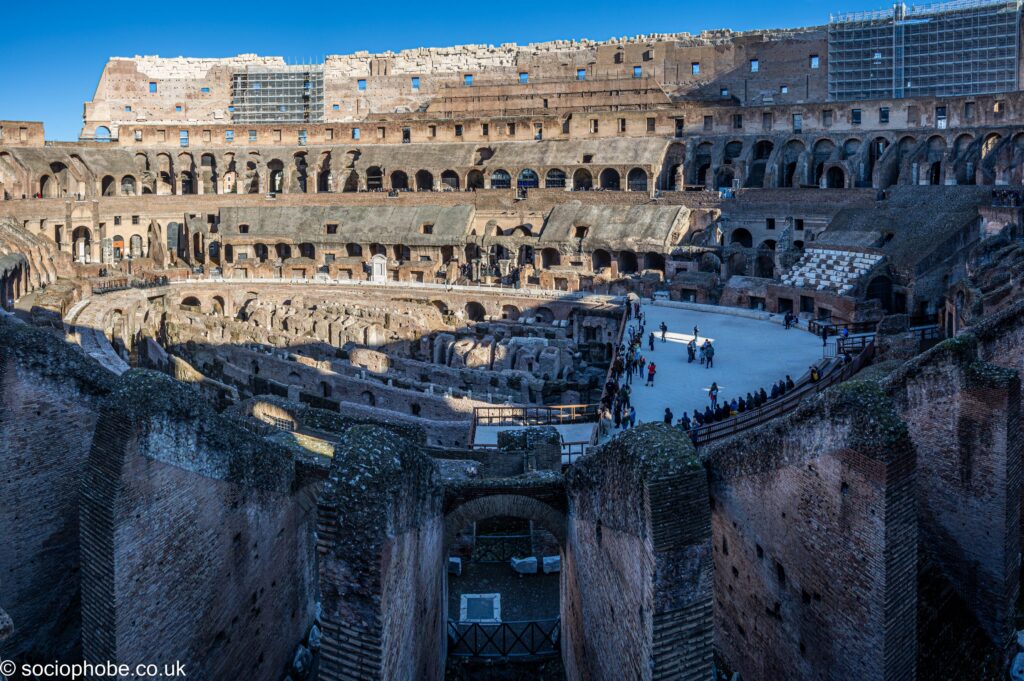
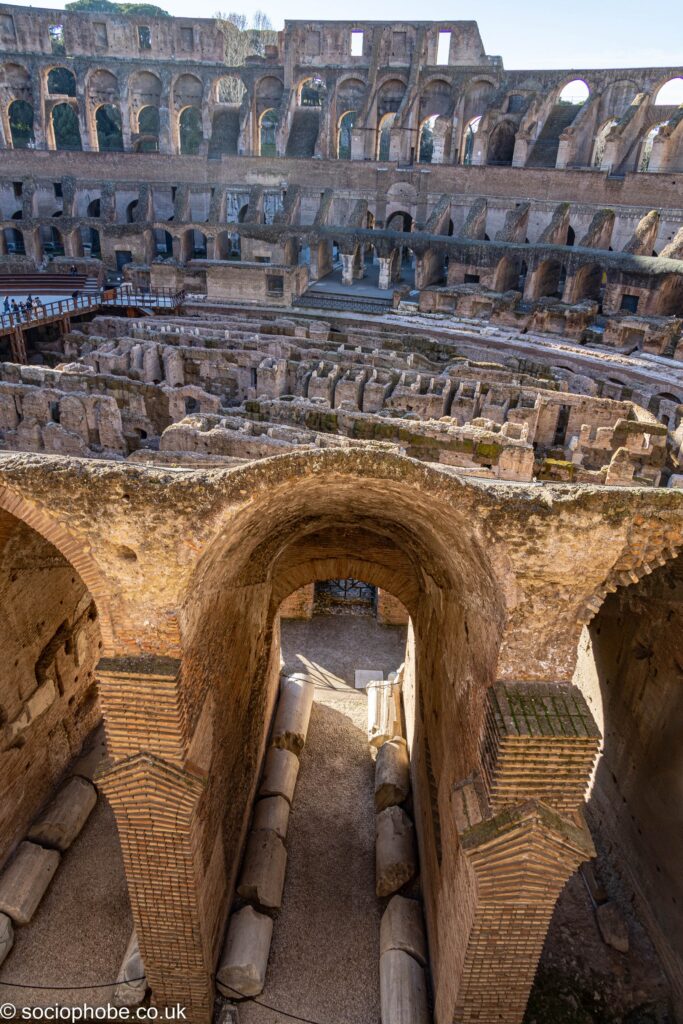
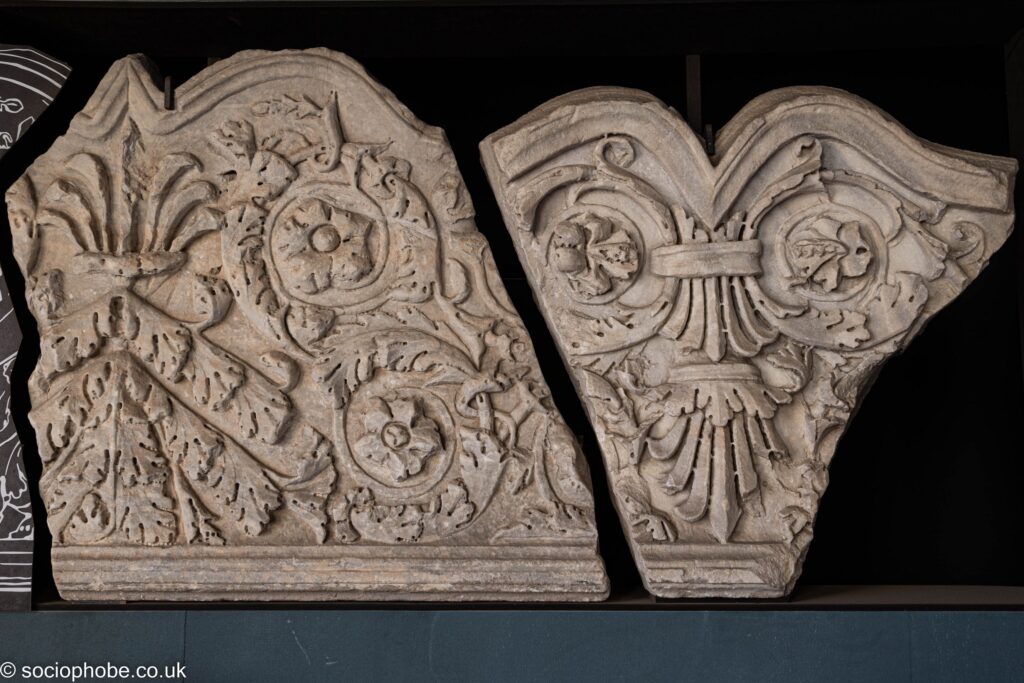
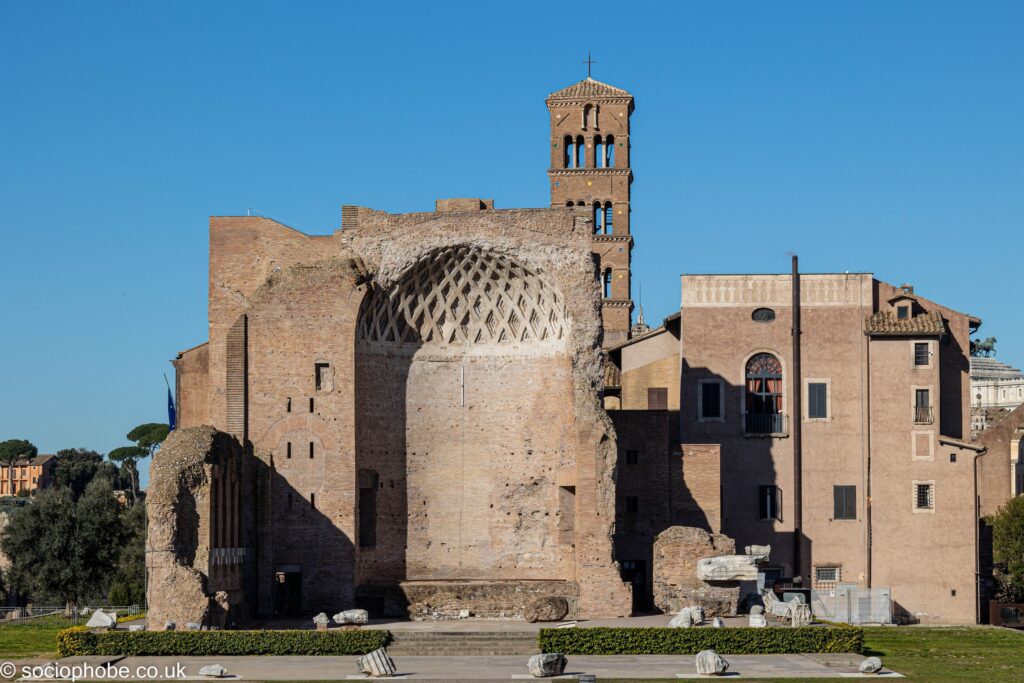
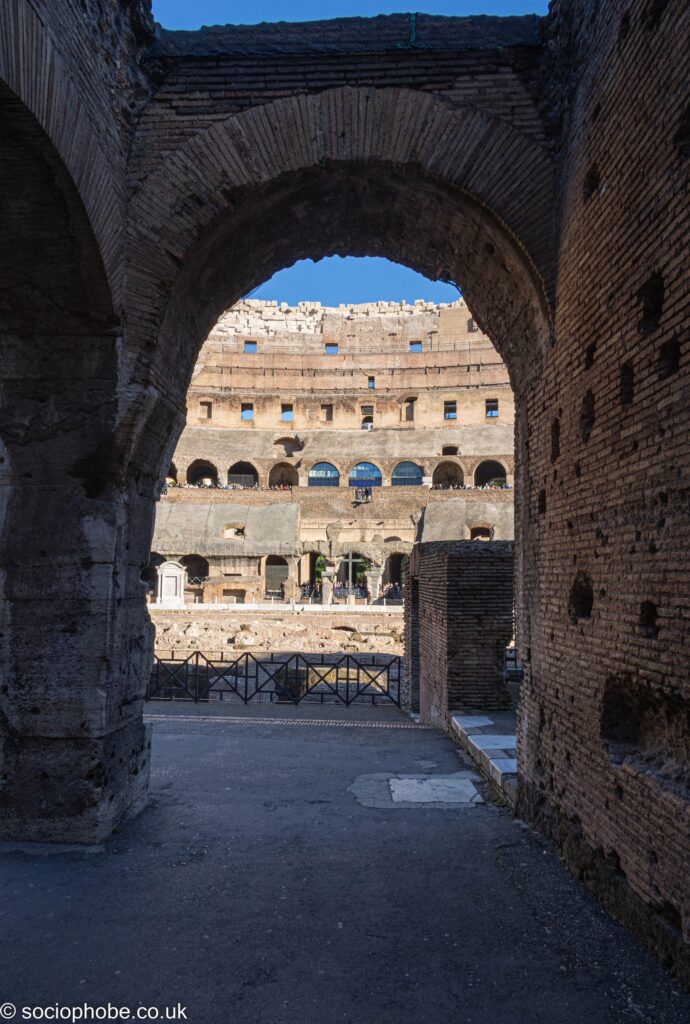
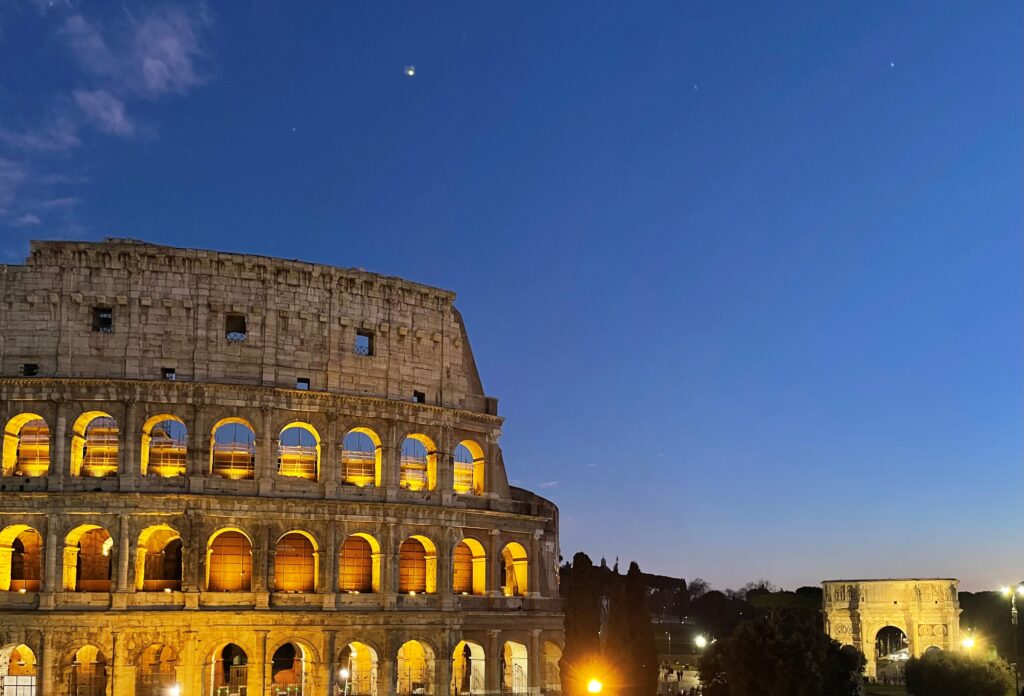
From the Colosseum it was back to the room to finish packing and then get a taxi to the next hotel. I’d booked this hotel so that we could continue our long weekend in Imperial Rome with a visit to the archeological park of Ostia, the port to Imperial Rome before it silted up. Sadly it was closed Monday so we arrived at our hotel 4 hours before check in! The guy was very accommodating and we were soon sat on our patio basking in the sun. He explained about bus routes into the site as one of us wasn’t keen on a 30 minute walk each way ….
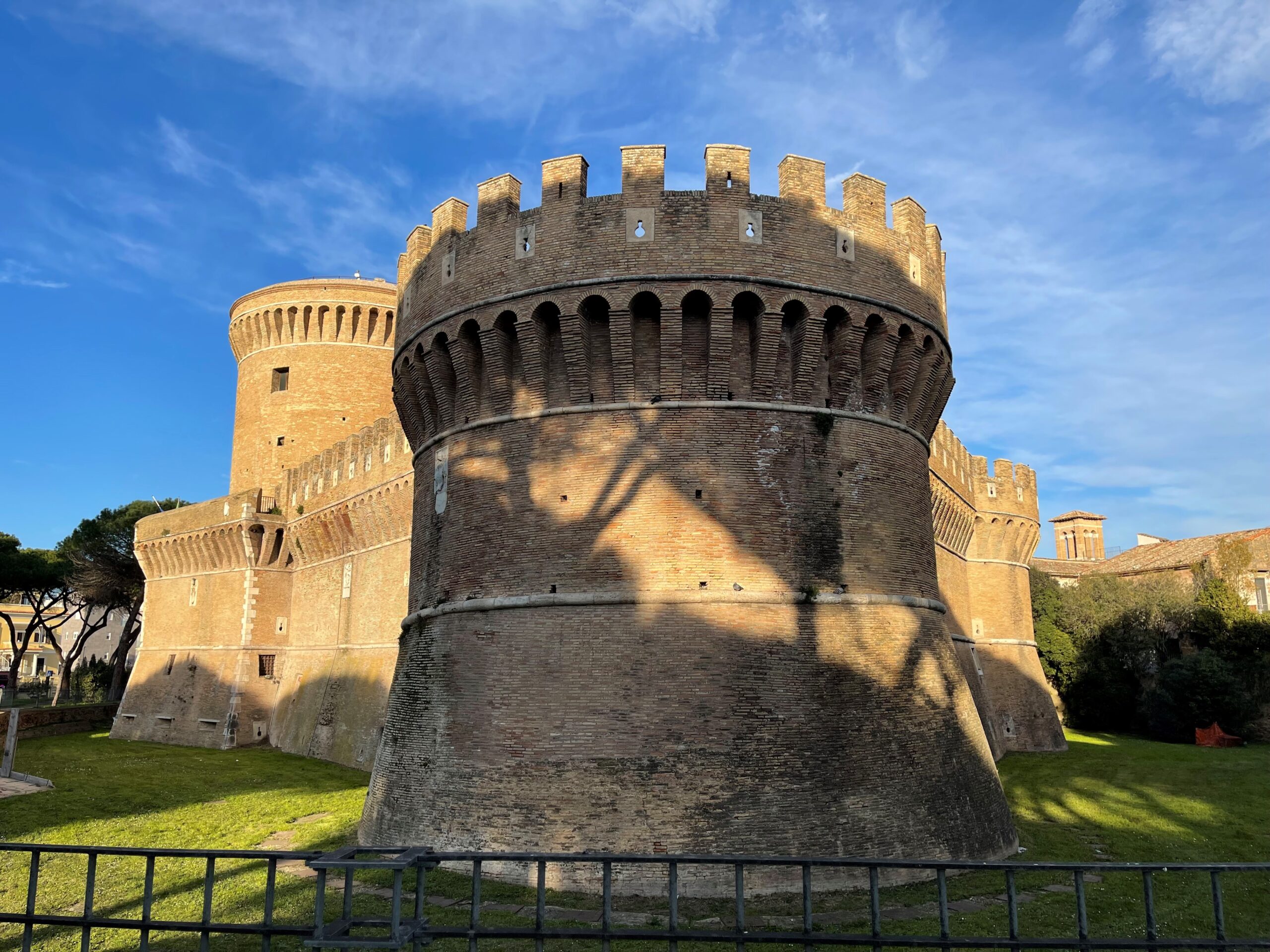
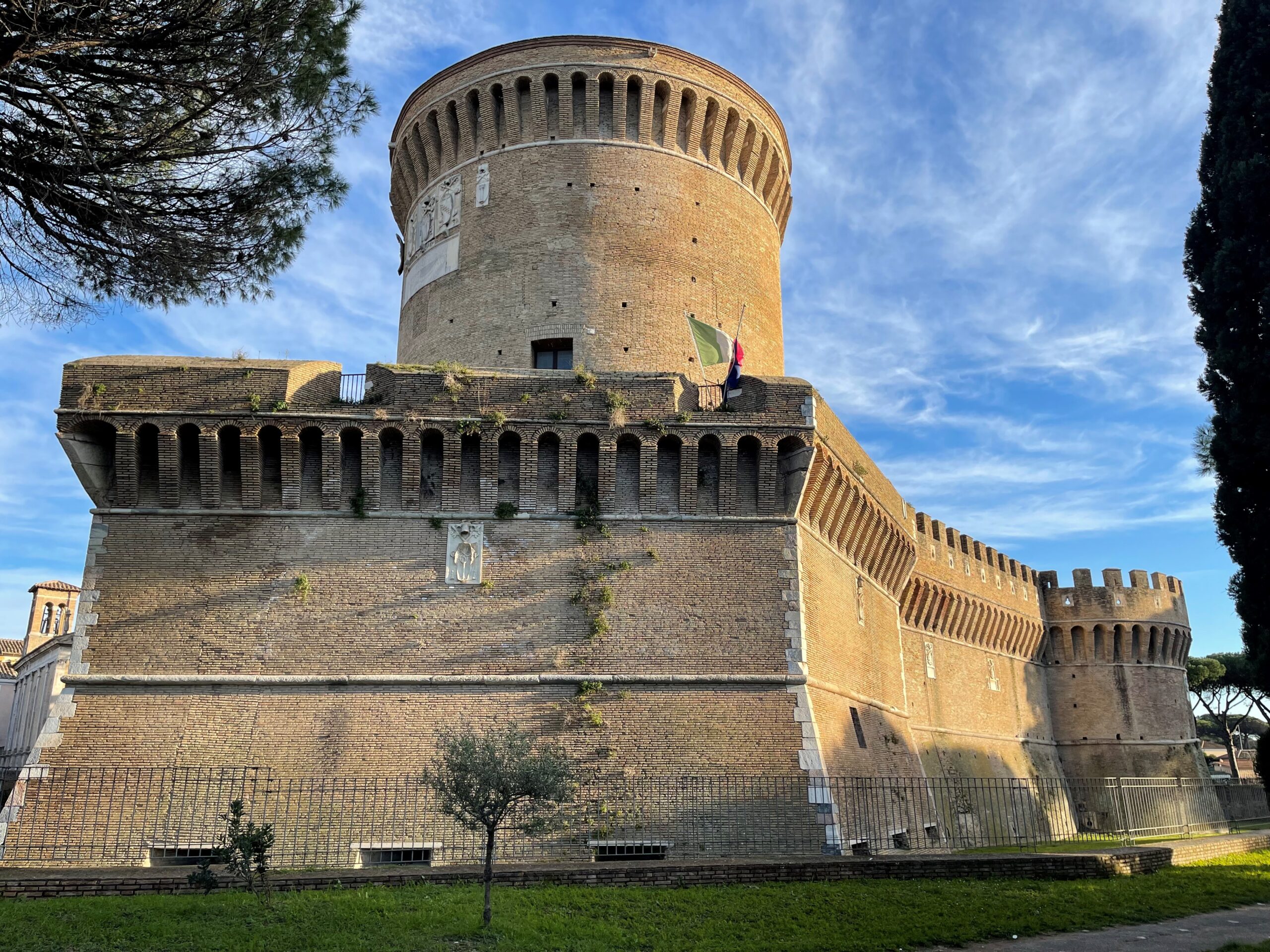
We did walk into town, had a wander and found the Papal castle which looked really well preserved and then stopped for pizza and beer. We then took public transport back to the hotel which was such a good idea – a little community bus that runs a loop around the town every 20 minutes so people don’t need to drive in and won’t have to walk more than 5 minutes to a stop.
Ostia Papal Fort
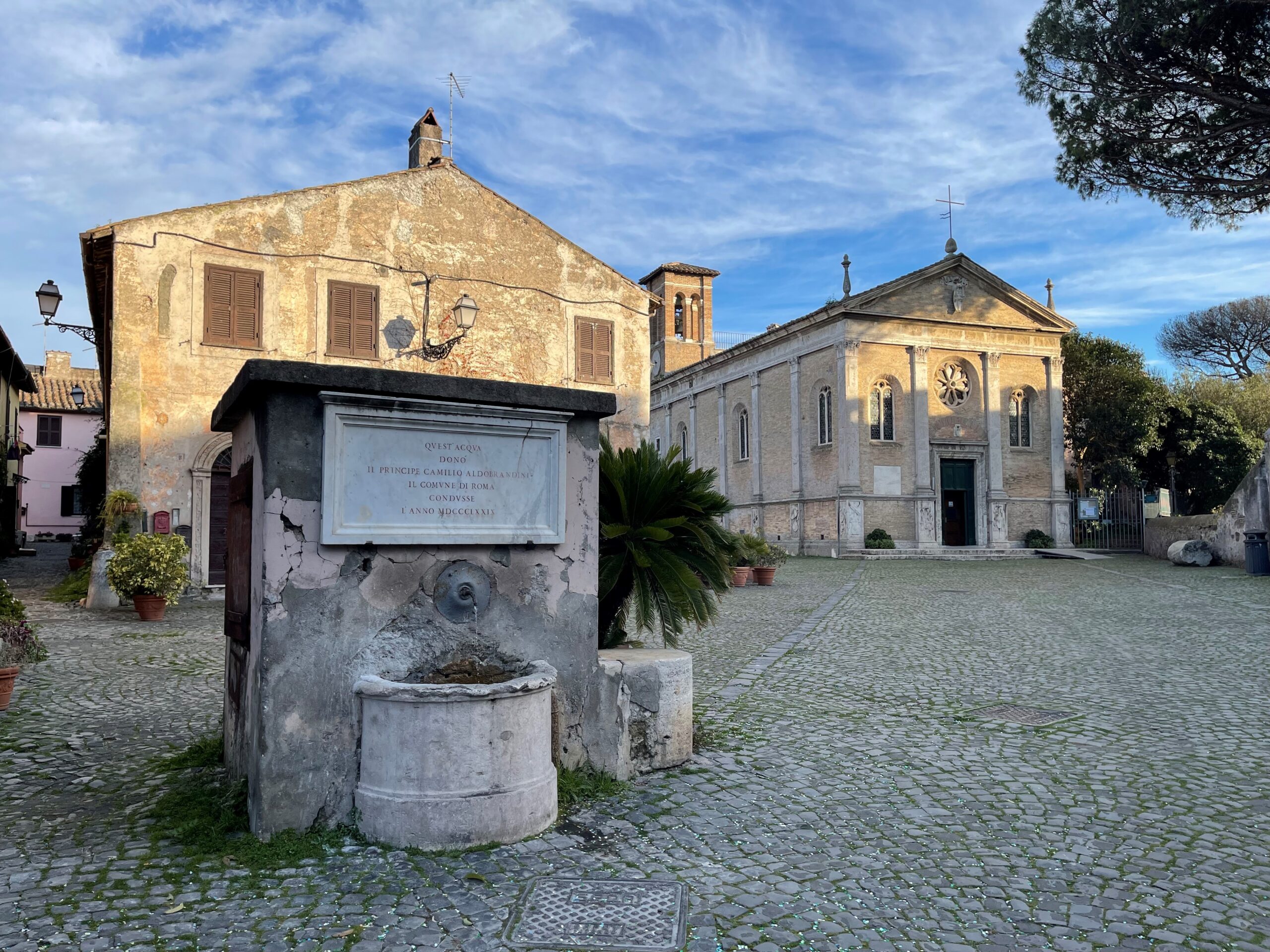
It was another cold night and the houses here are not built for it – no insulation and no carpets on the floor combined with crappy AC/heater units. We actually sat in bed the whole evening to stop getting frozen toes! We did sleep well though under a weight of quilts and blankets!
The next morning was again, blue skies and damned cold. We walked into town, much to Deb’s delight and had a kind of breakfast at a little cafe – cakes and coffee, which I thought was ideal. The Archeological Park of Ostia was just a few minutes walk away, past the Papal castle.
Ostia Antica
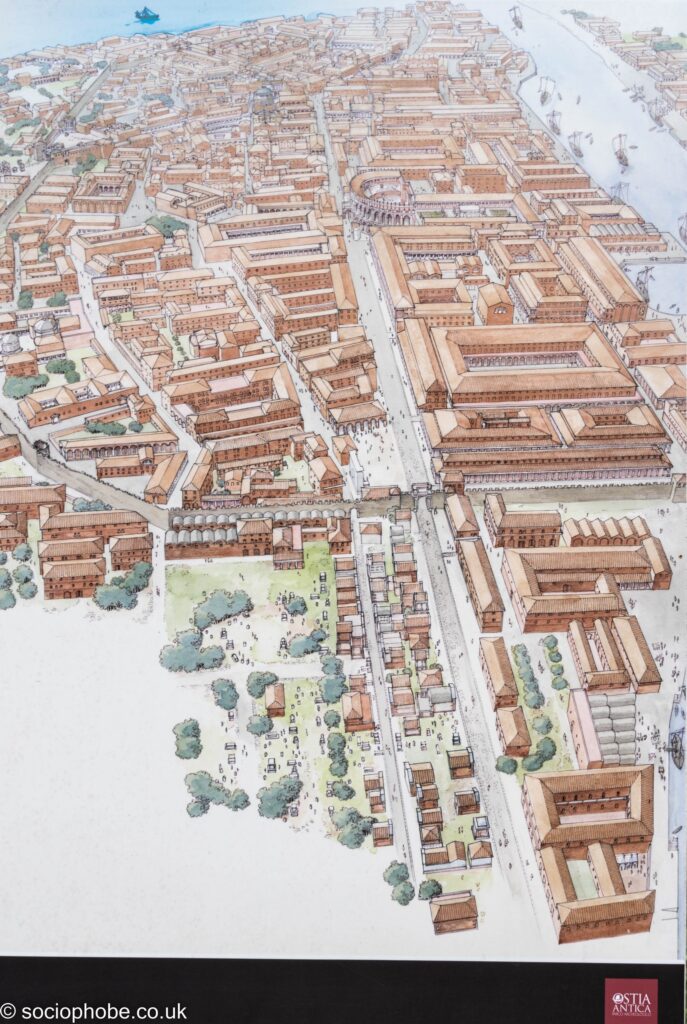
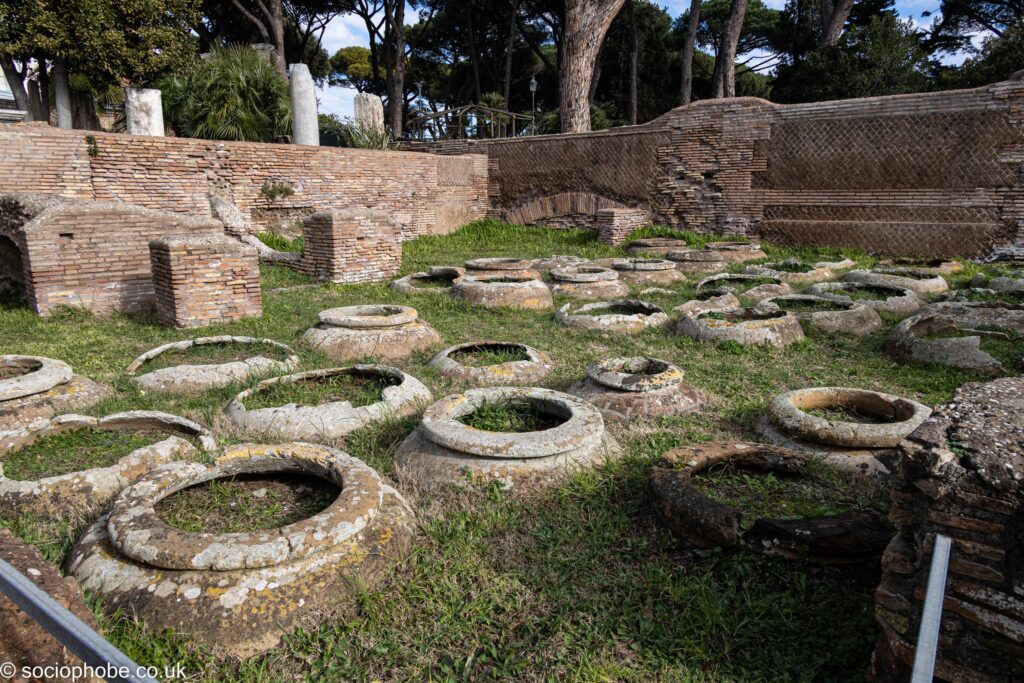
Some background on Ostia: This was the founded in the 7th century BC and by the time of Julius Caesar was the main port of Rome, dealing with the grain imports that kept the plebs fed and moderately happy. It was a large city with a theatre, temples, walls and warehouses. A canal was dug to enable large barges to reach the city and things continued like that for a few hundred years until the port silted up. The town then became a holiday residence for the aristocracy and slowly declined as the empire faded. After repeated raids by Arab slavers (you won’t hear about them on a BLM march!) the city was abandoned and became a quarry for Rome.
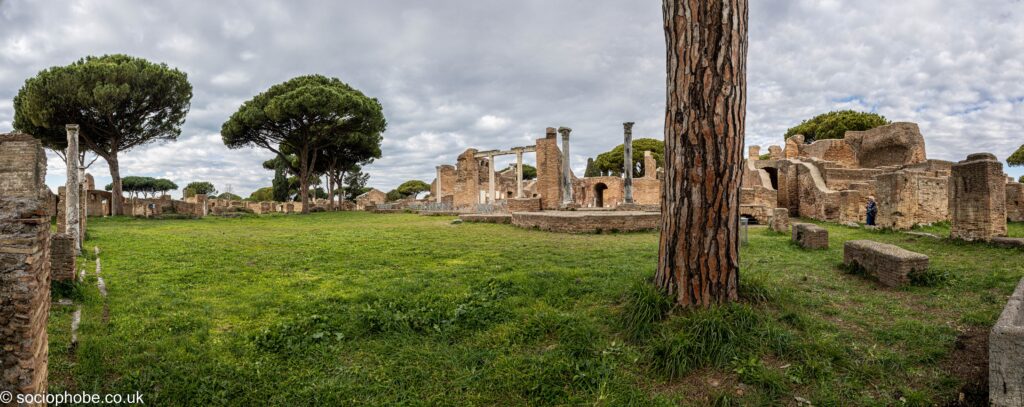
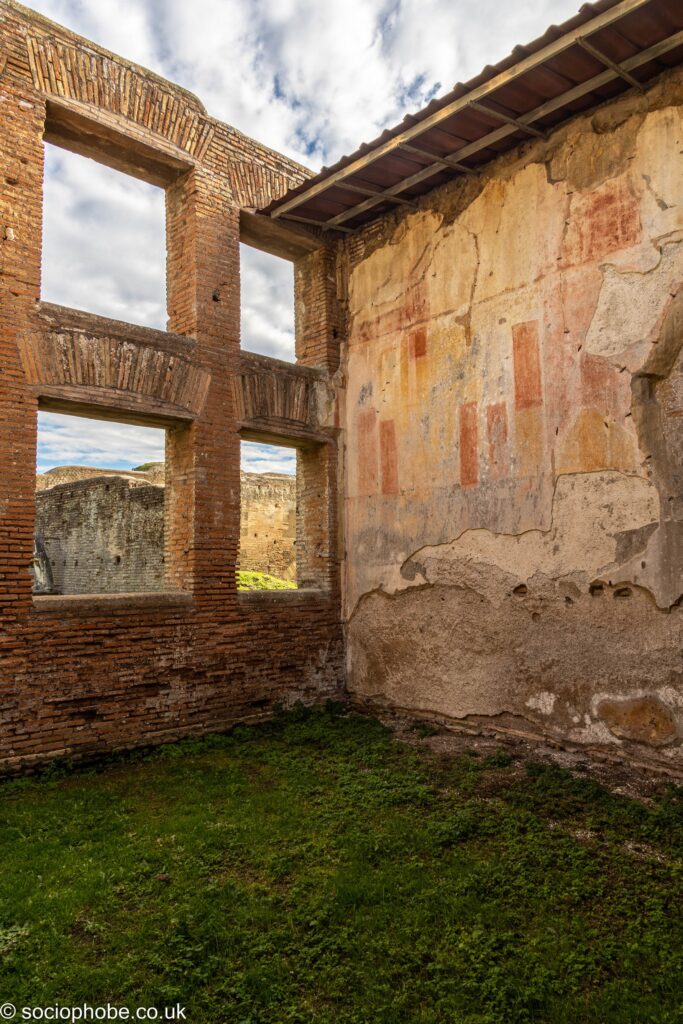
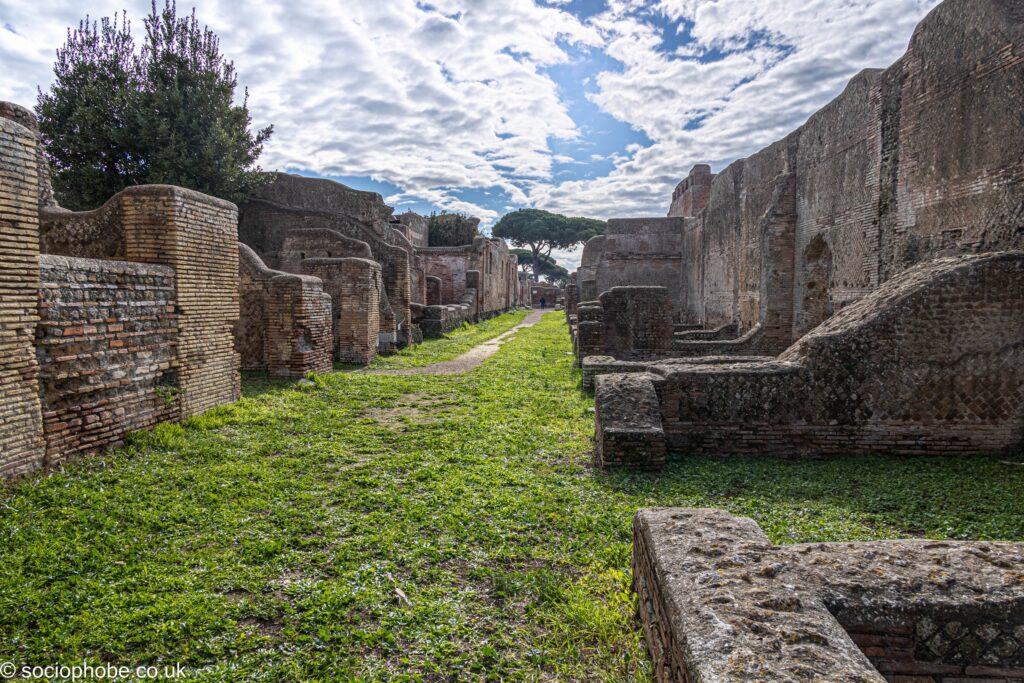
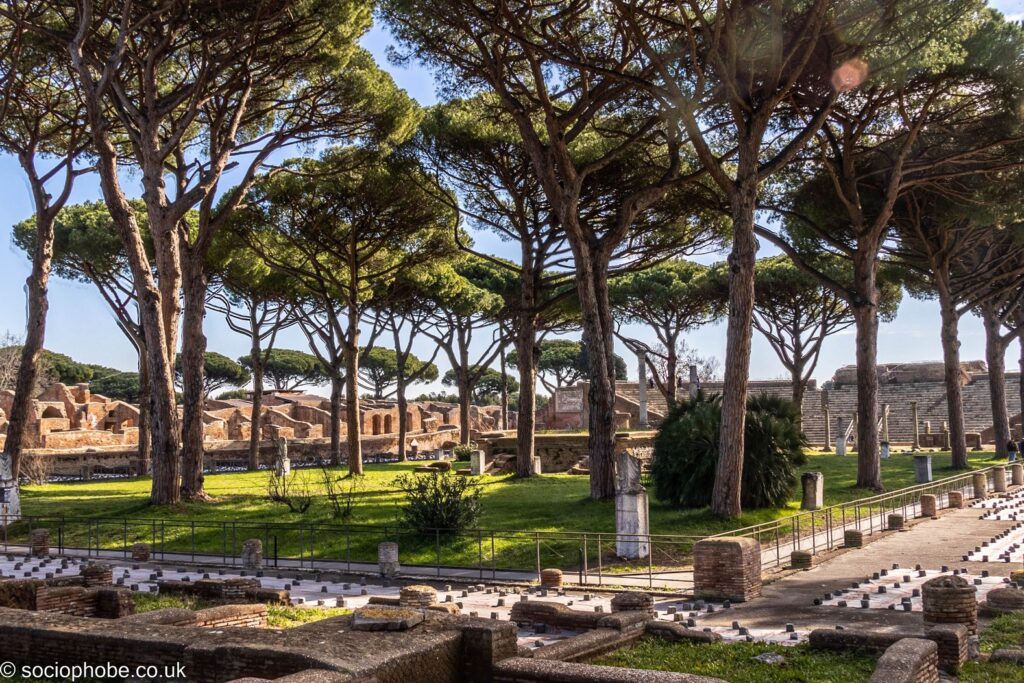
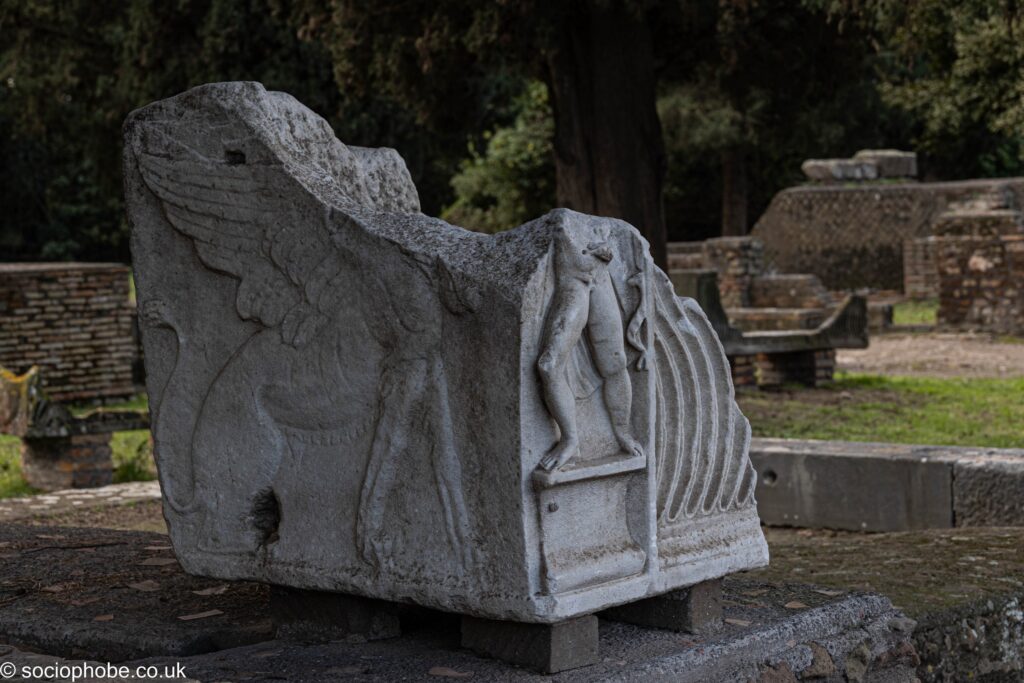
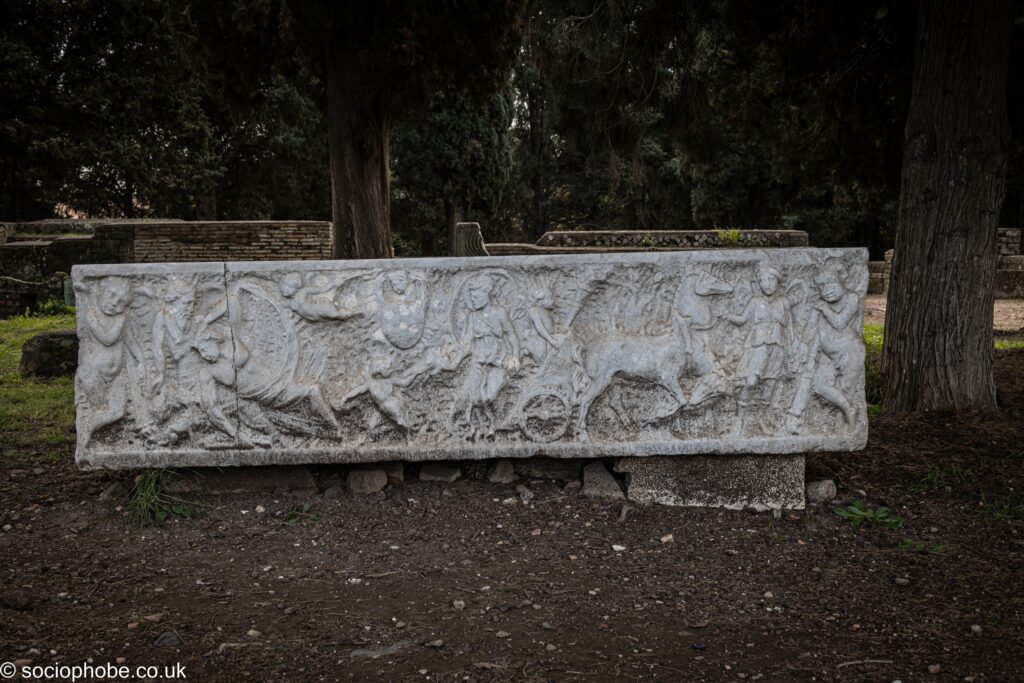
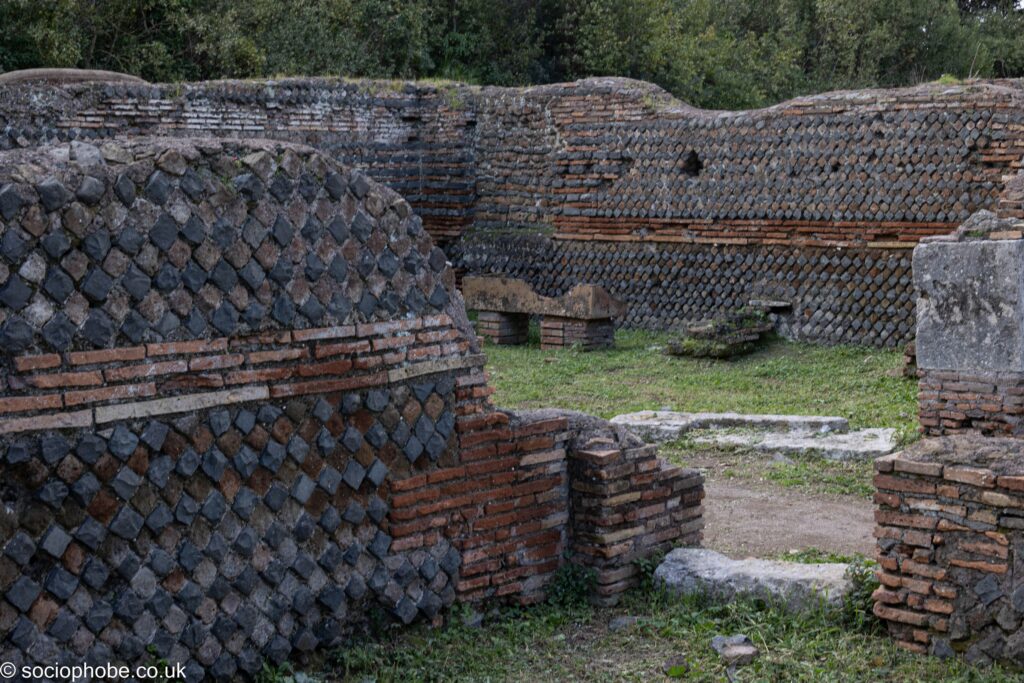
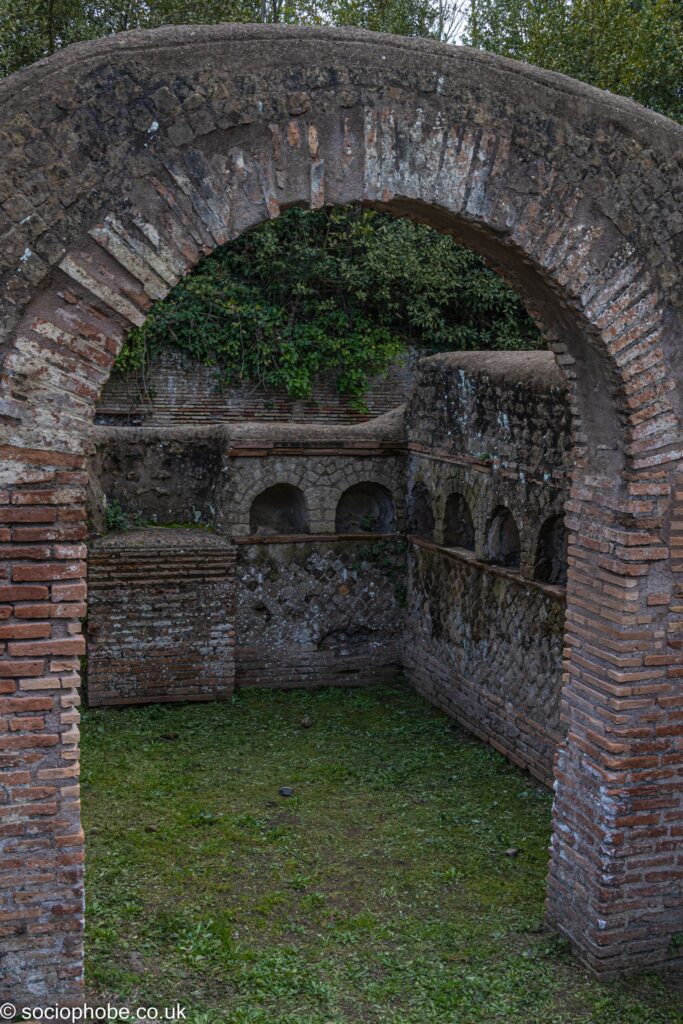
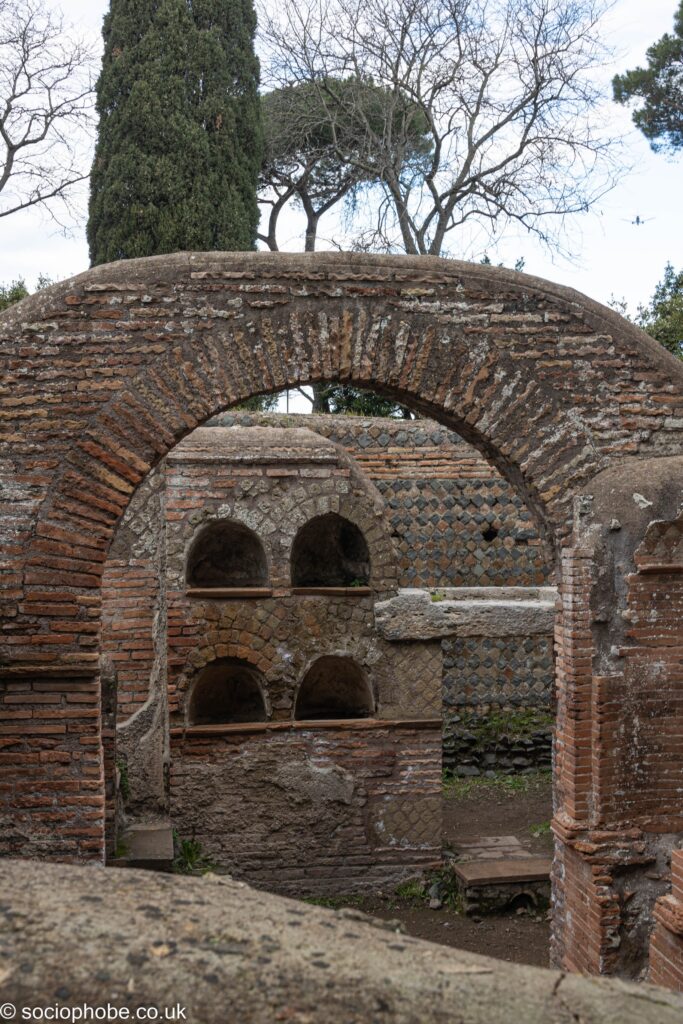
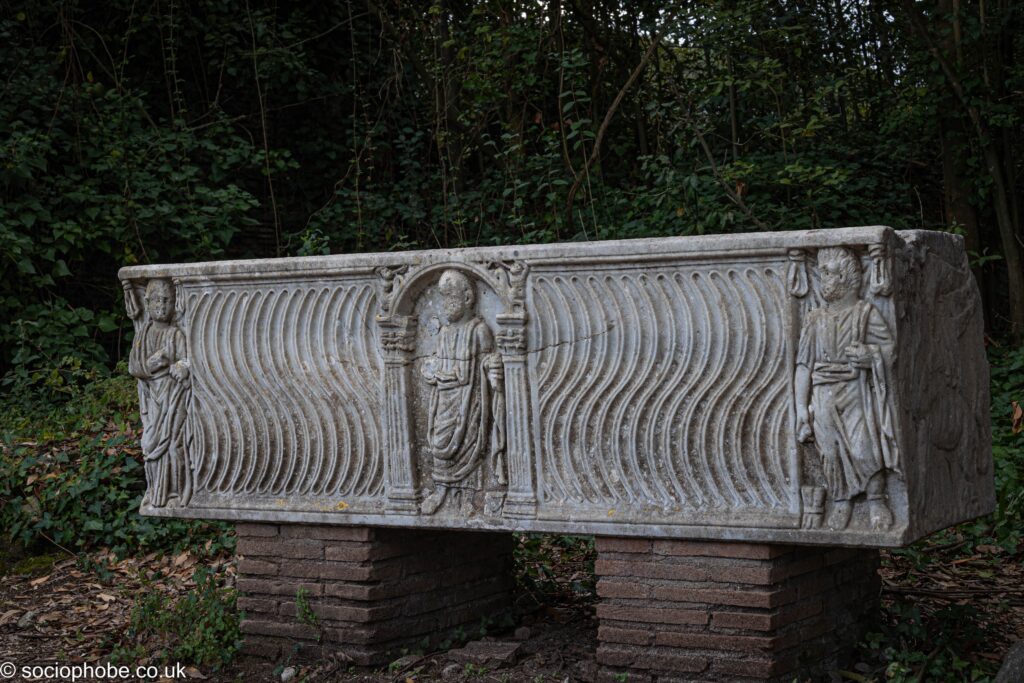
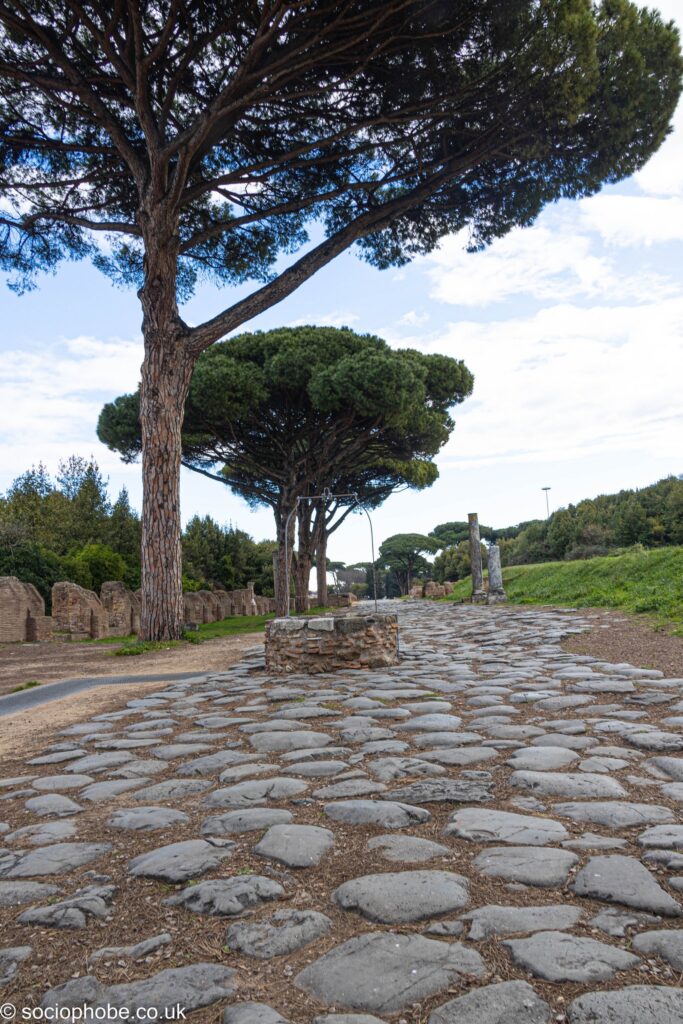
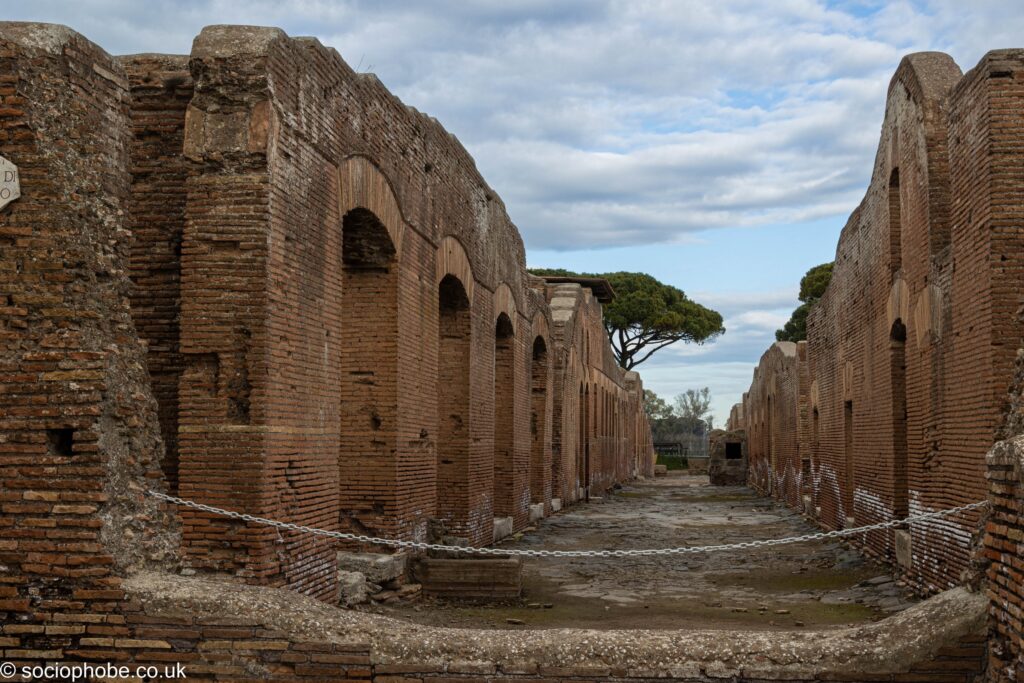
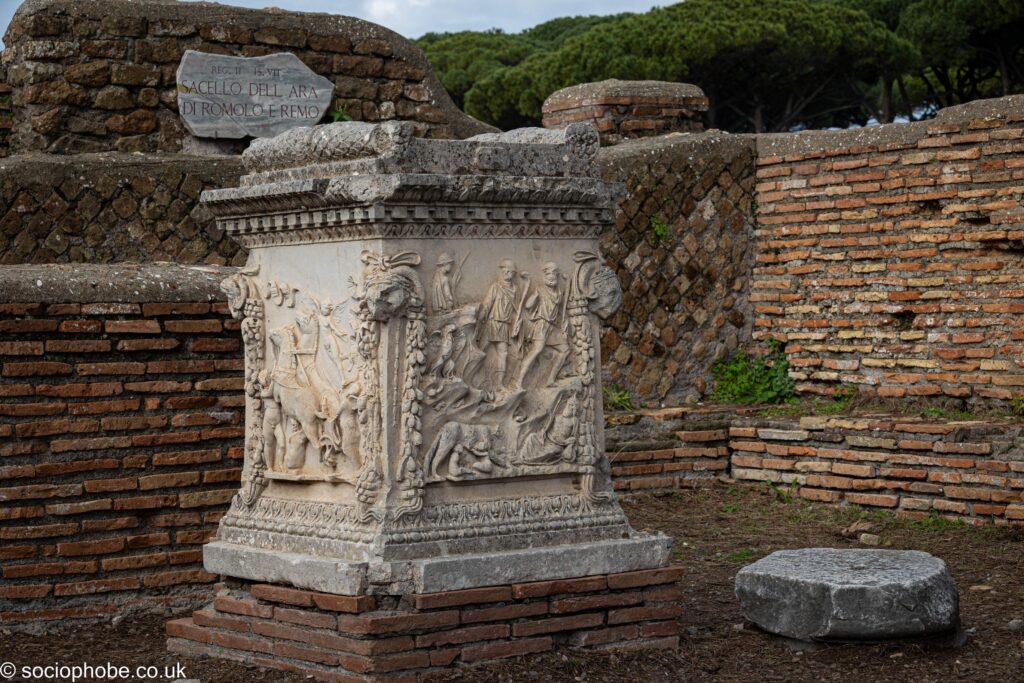
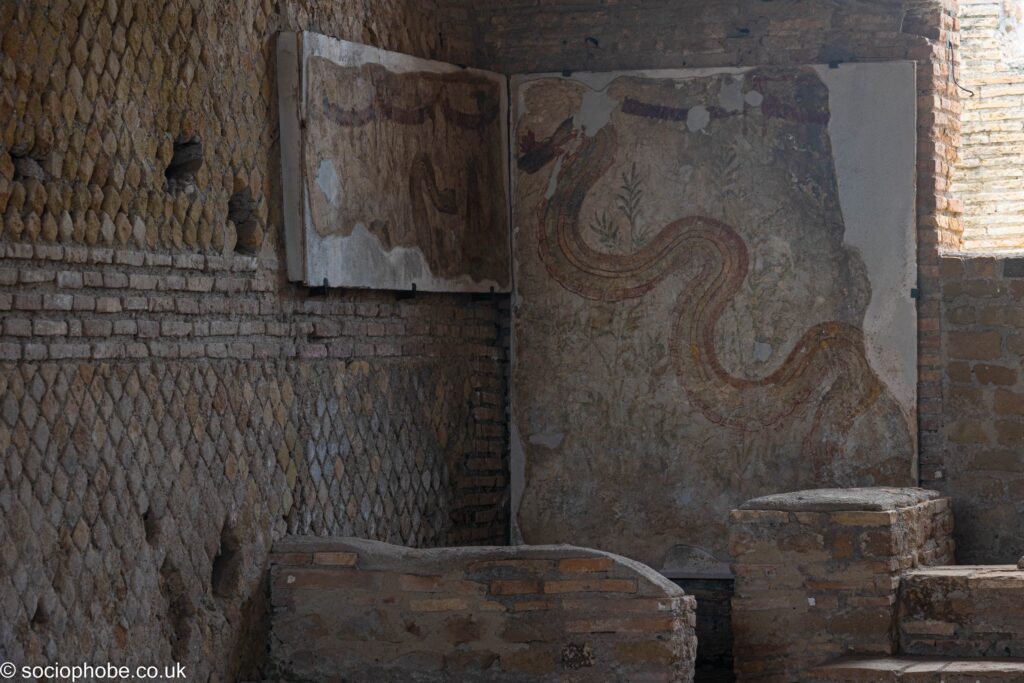
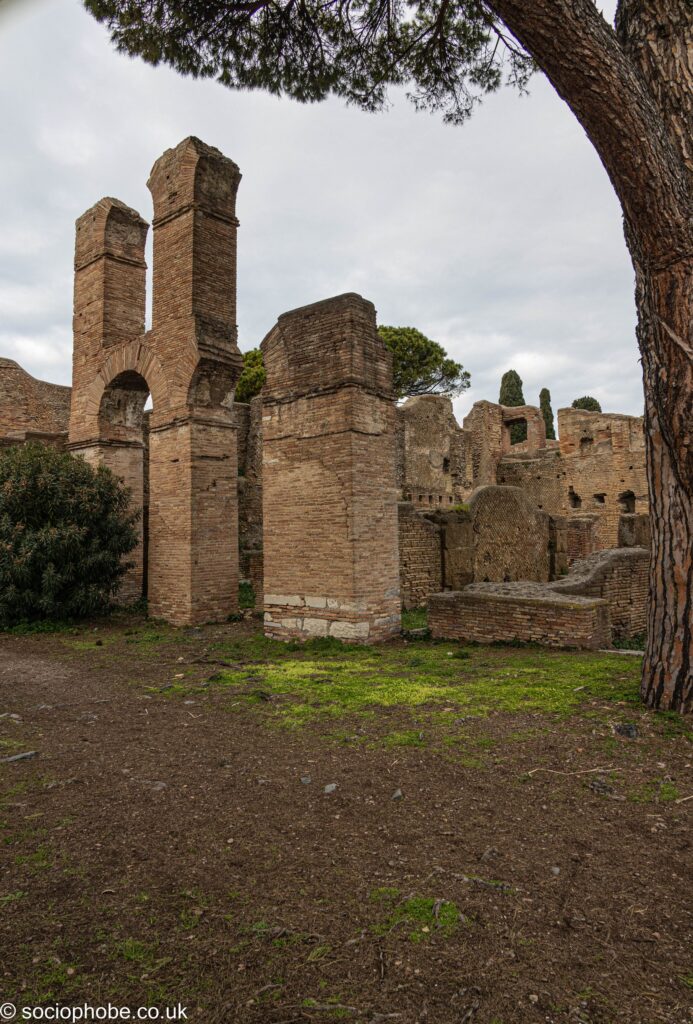
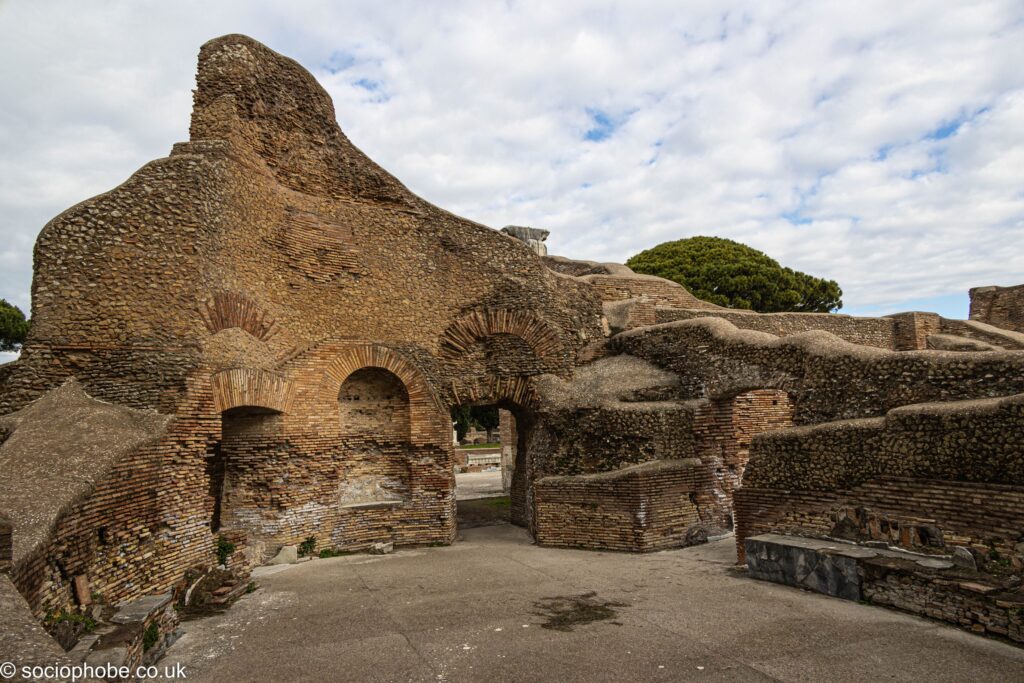
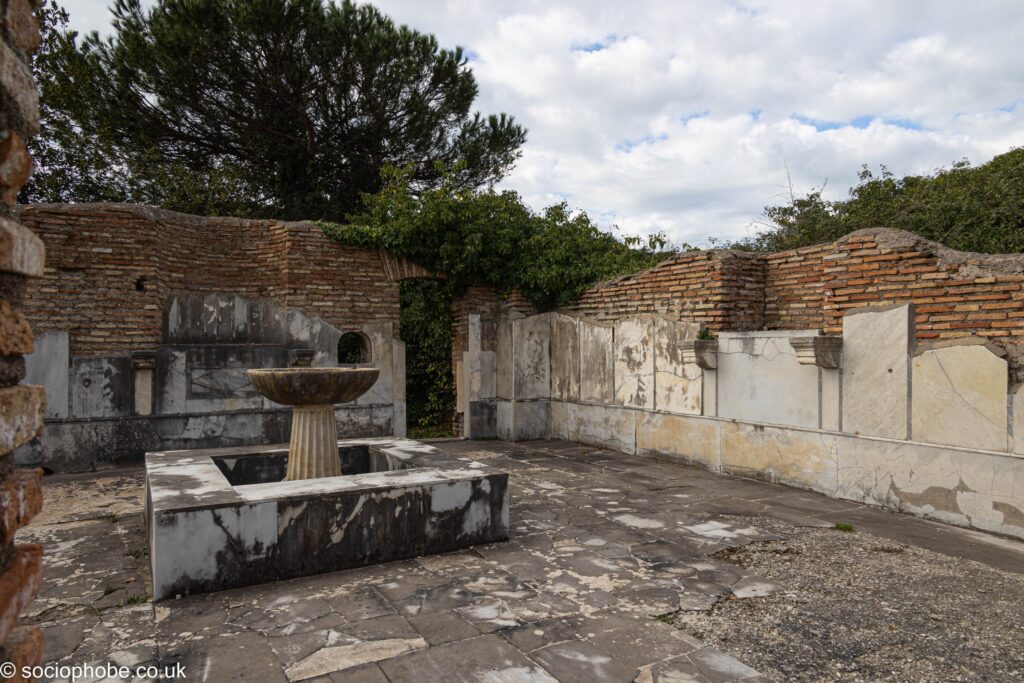
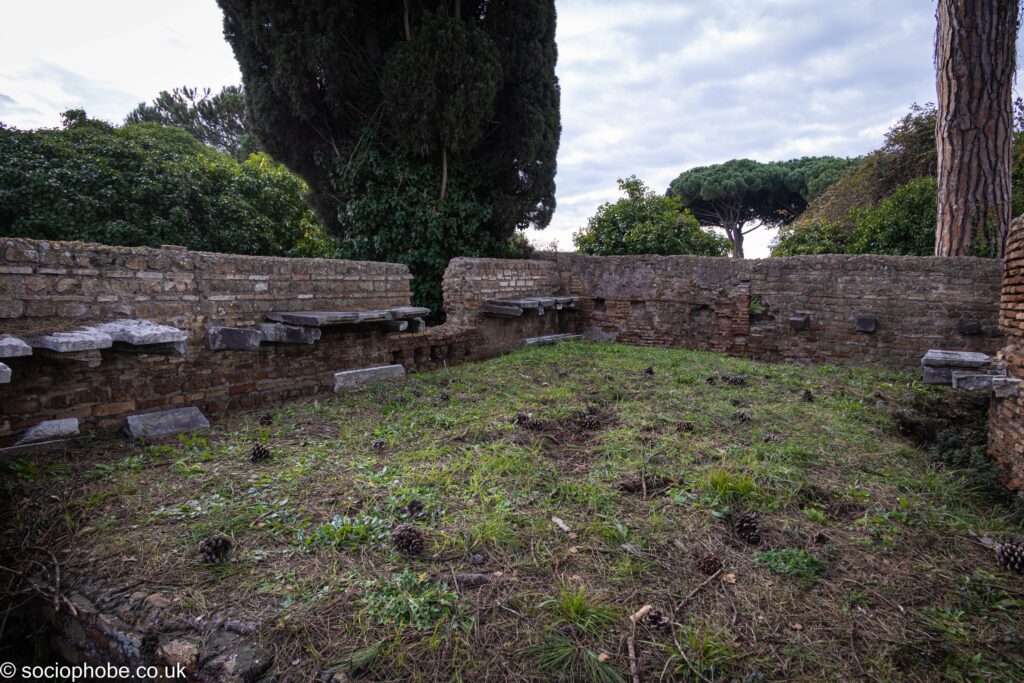
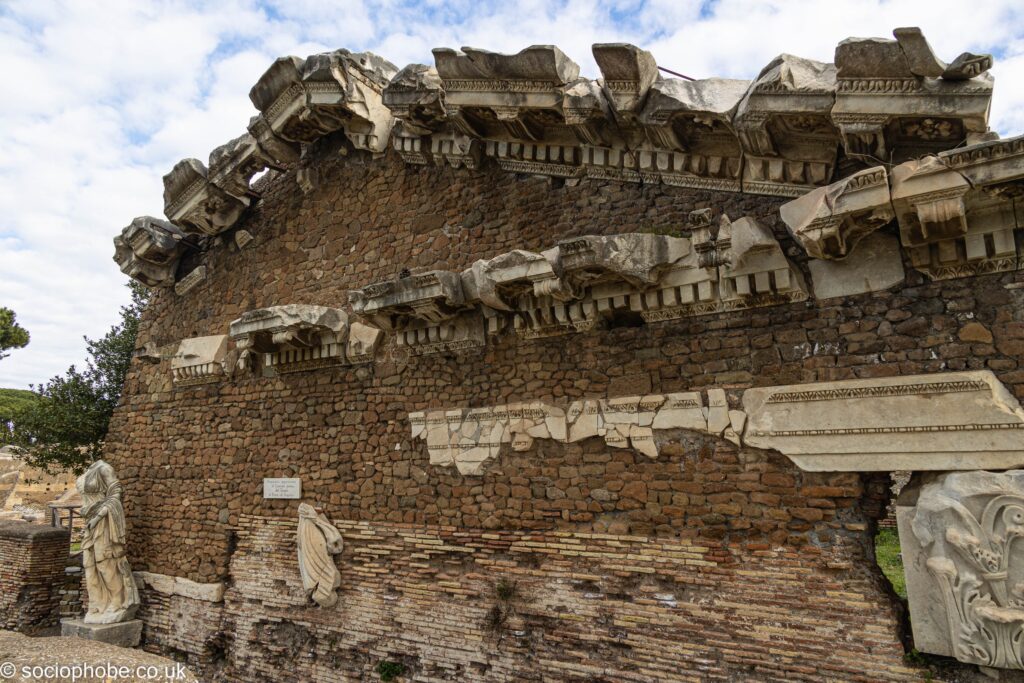
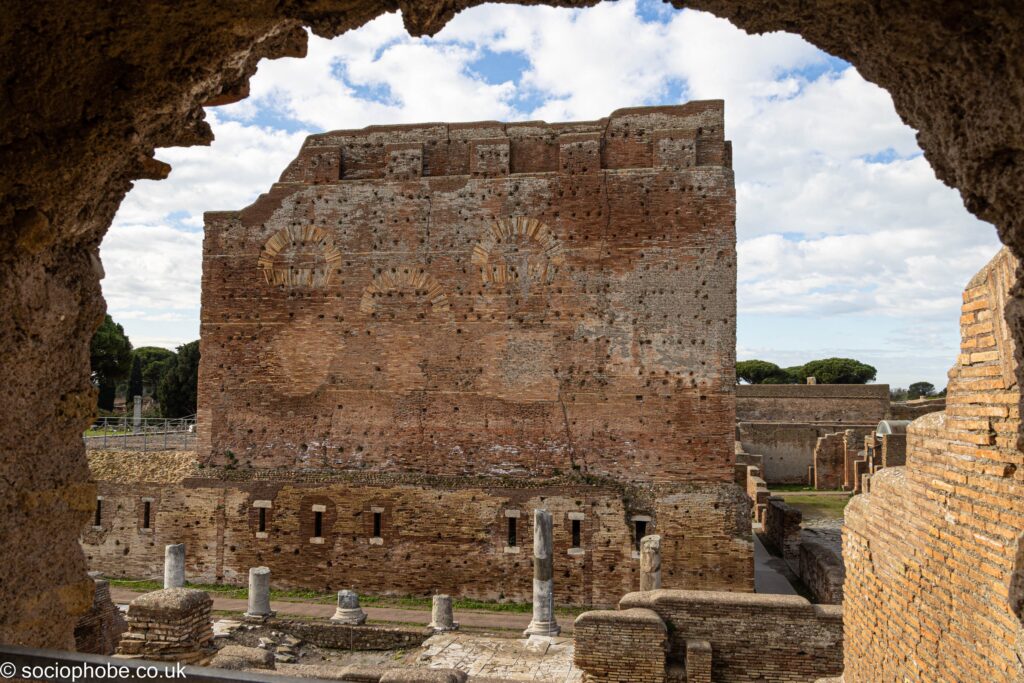
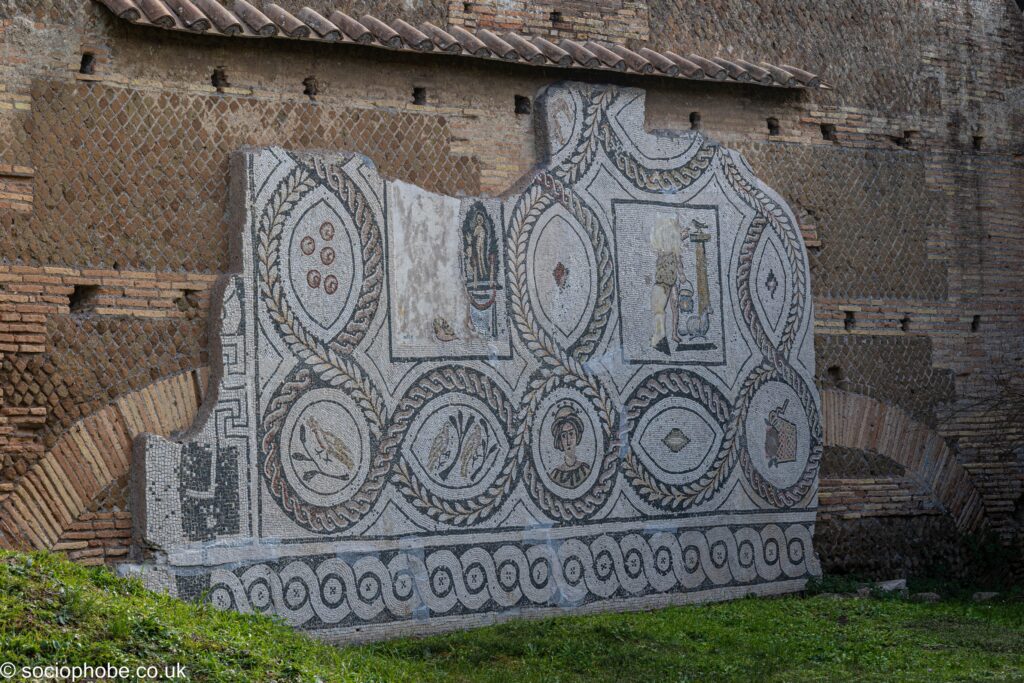
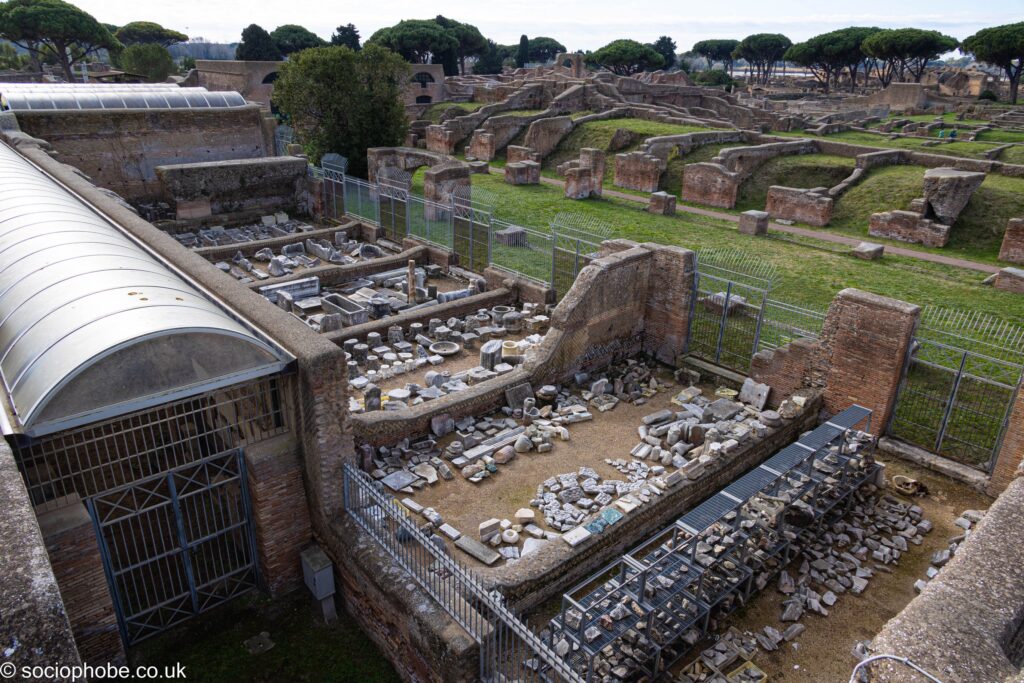
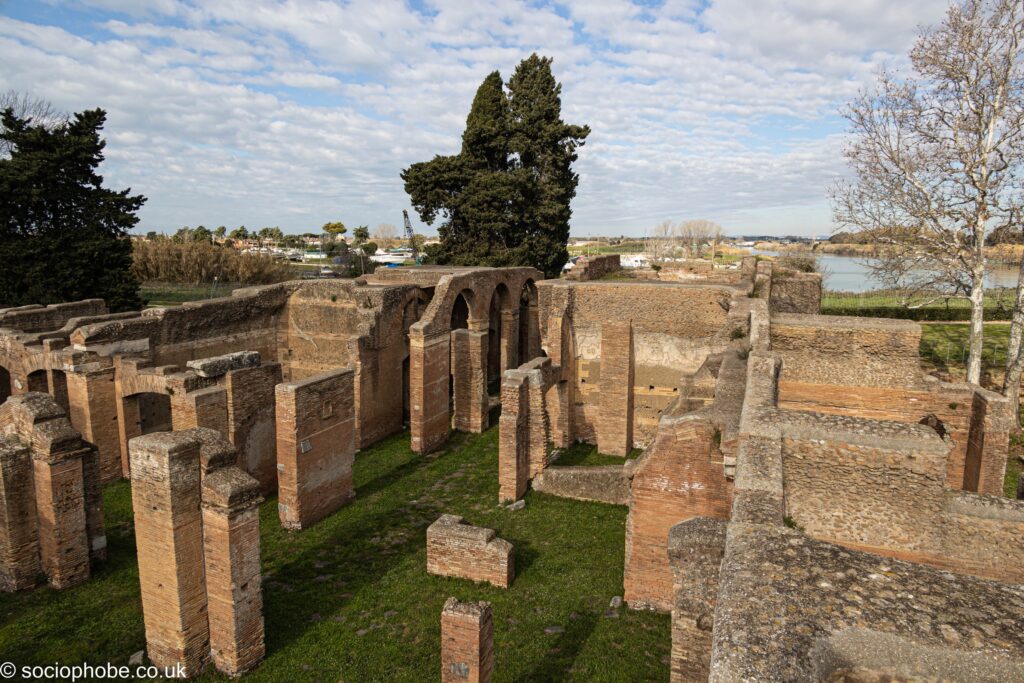
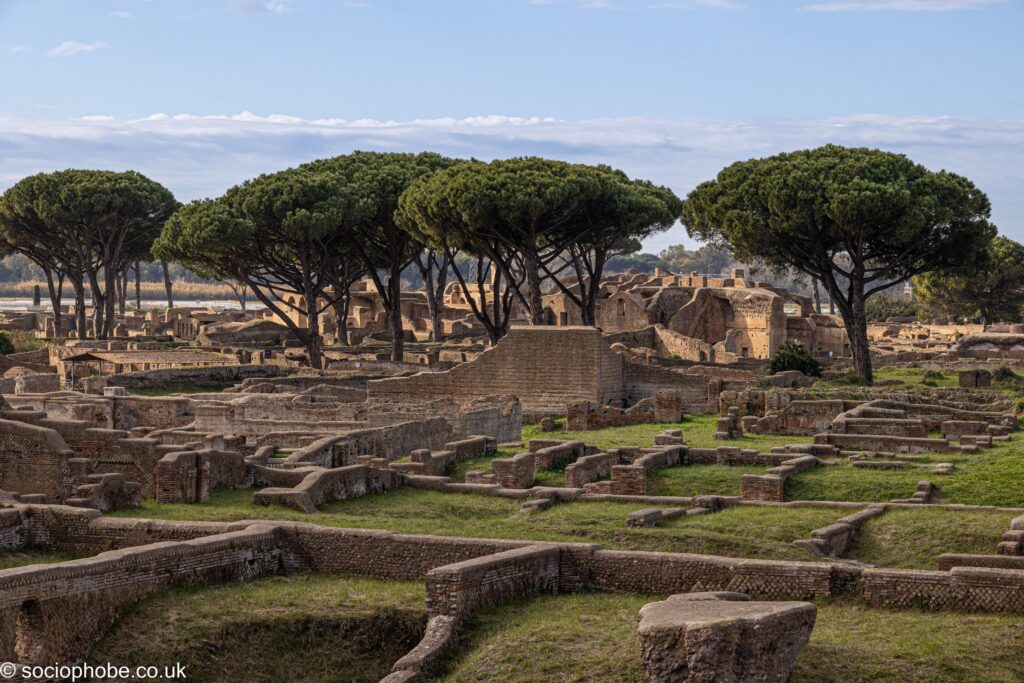
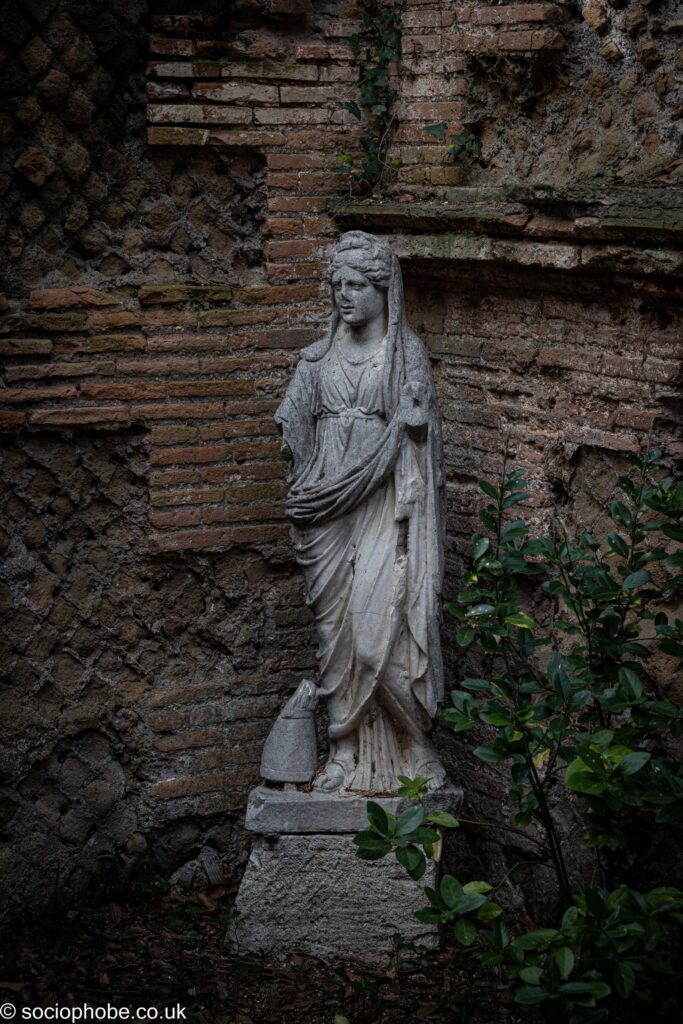
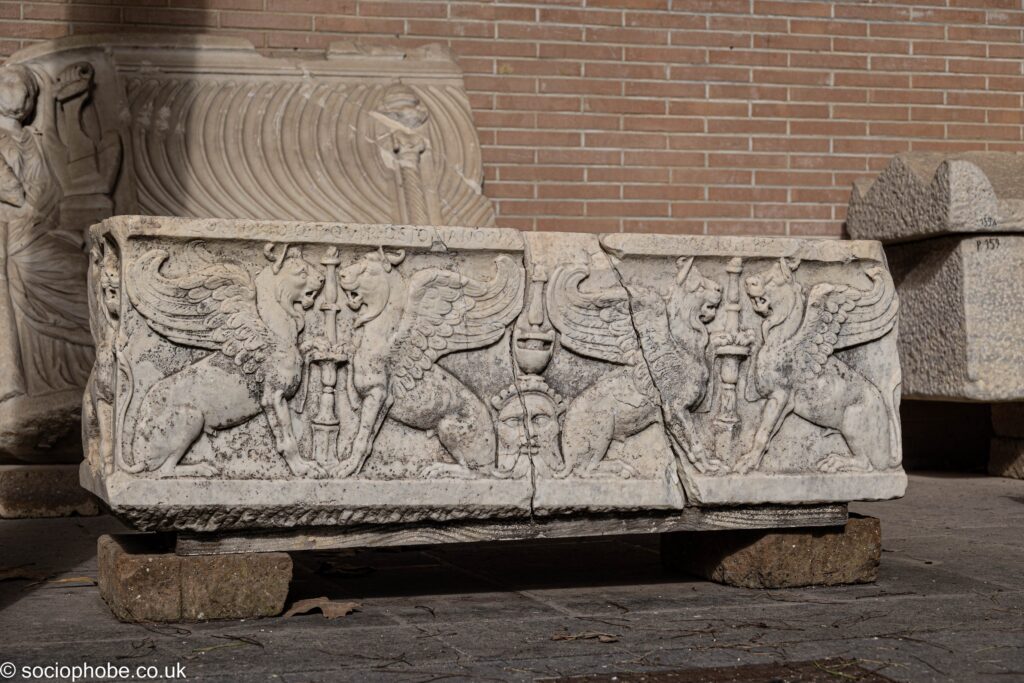
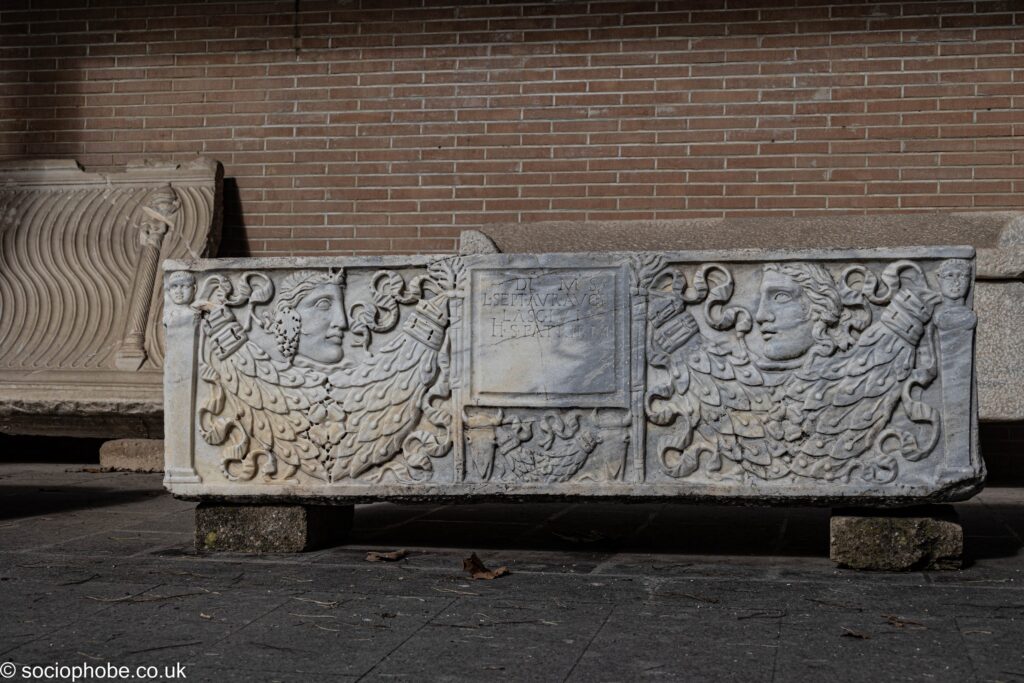
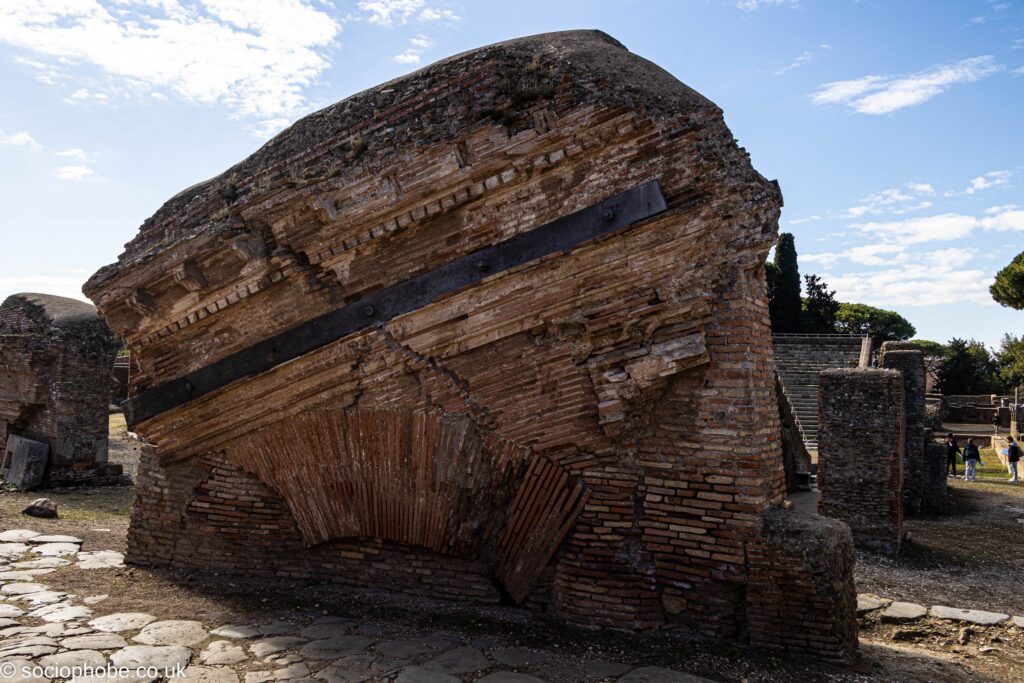
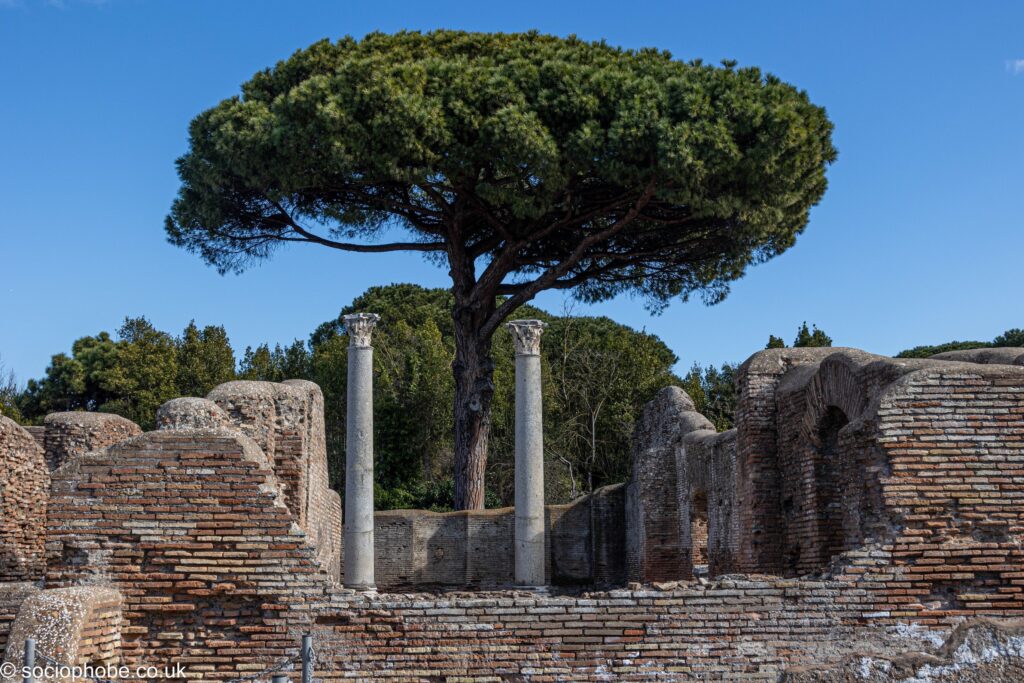
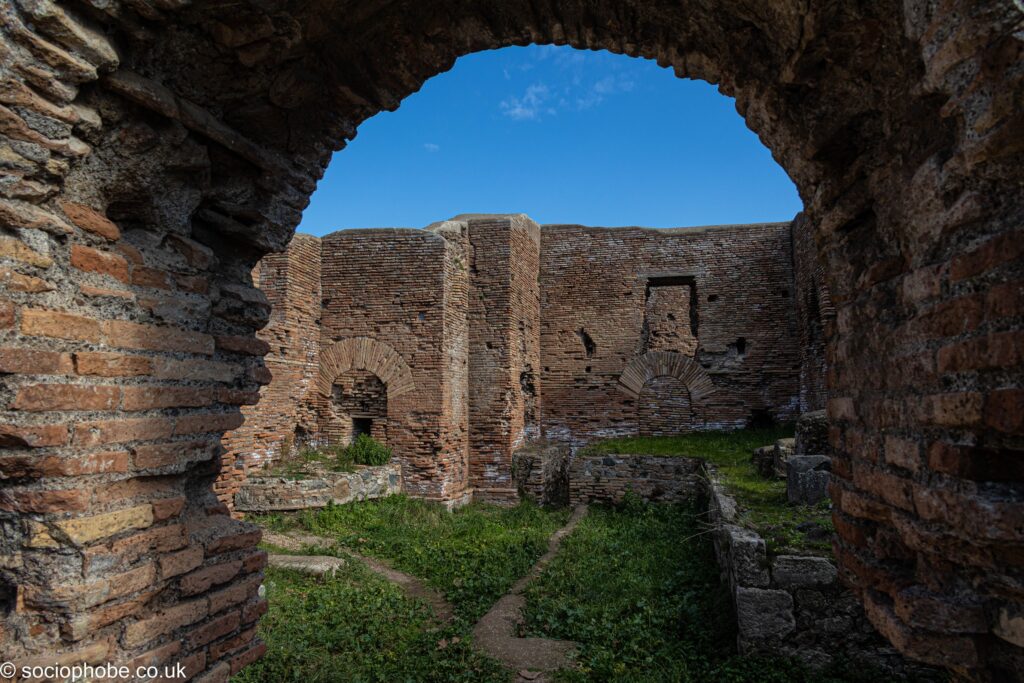
When we arrived we were the only visitors there and we walked through the necropolis in total peace. The sheer size of the place and the number of buildings was a bit of a shock to me. I’m used to visiting sites that are basically just a foundation level of stone or bricks but a lot of the walls were intact at Ostia, some to the height of several storeys. There were lots of ornate sarcophogi and also family vaults for storing remains.
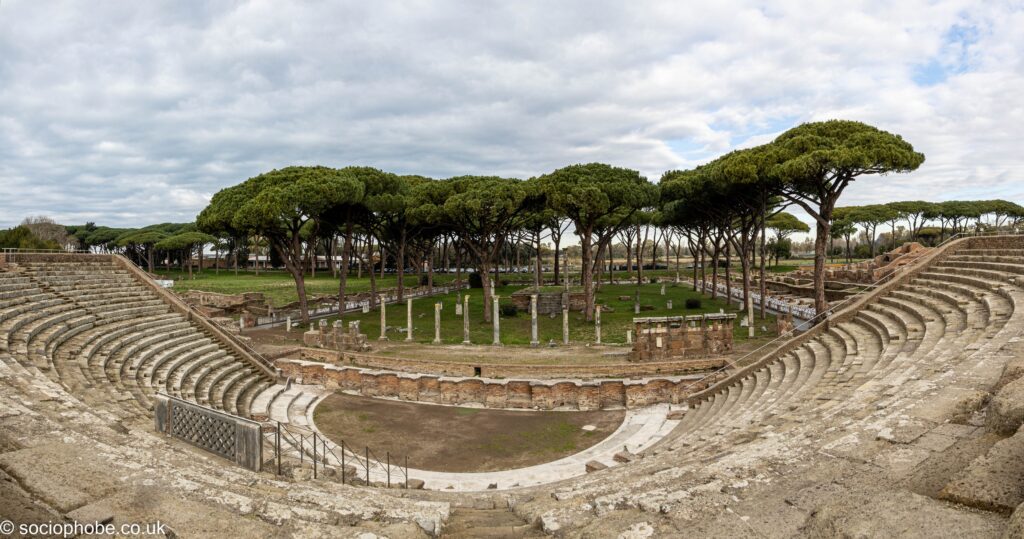
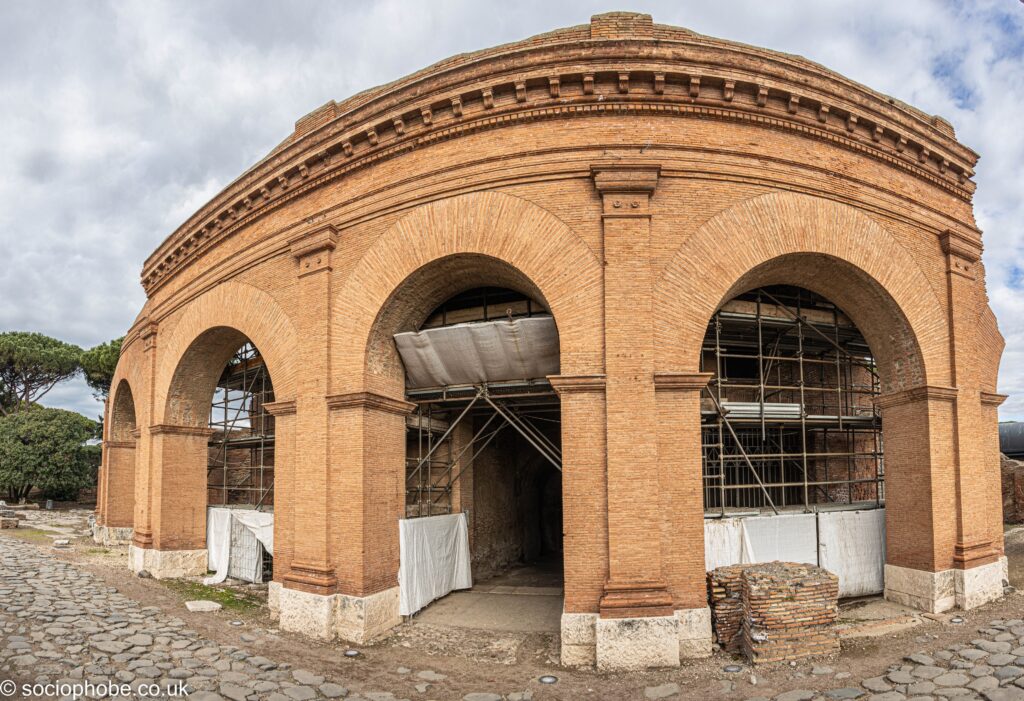
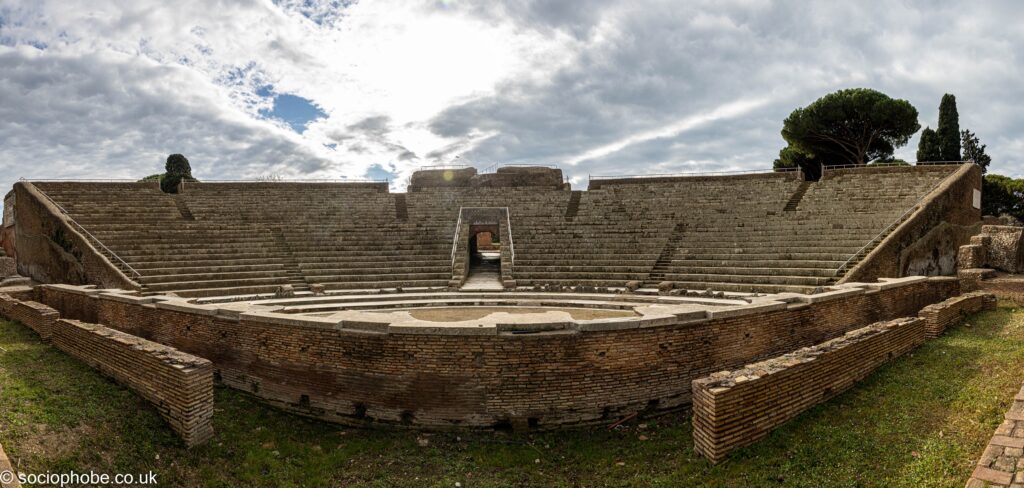
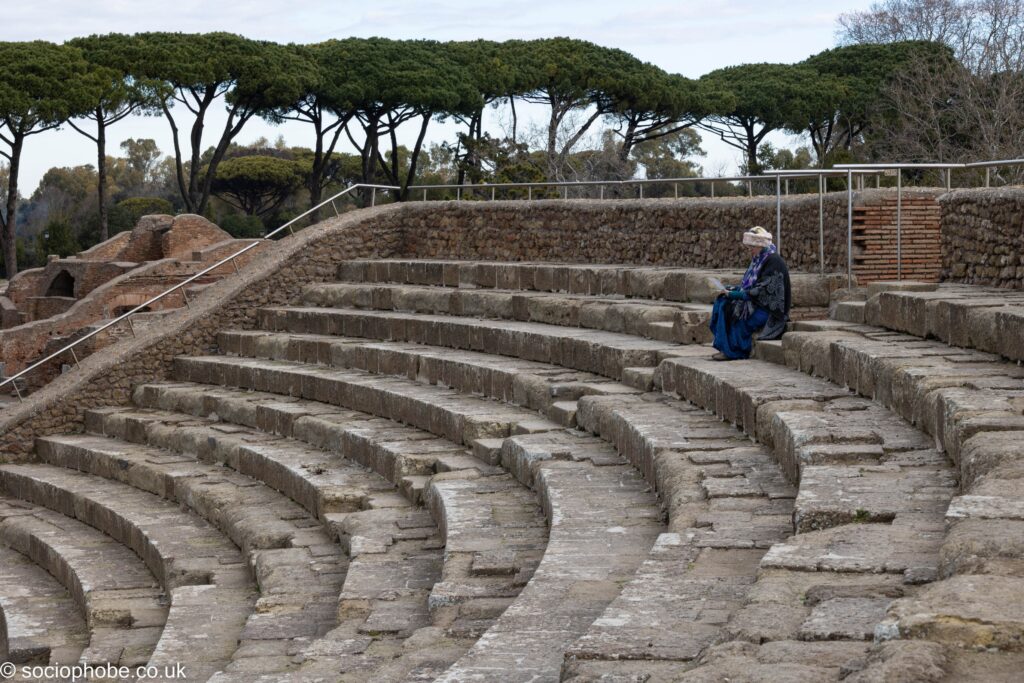
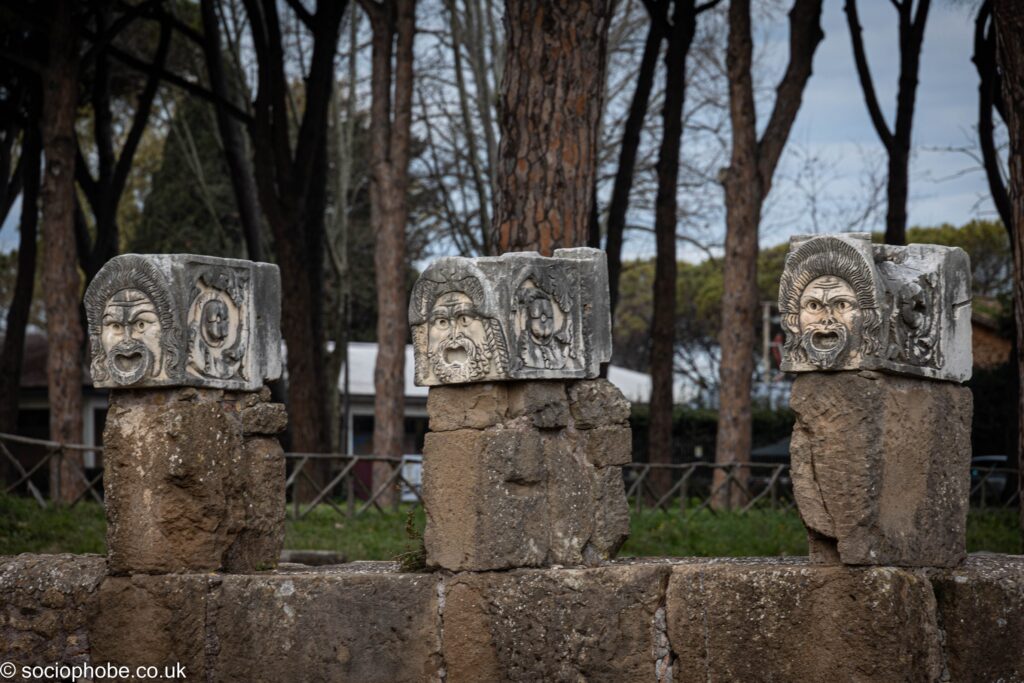
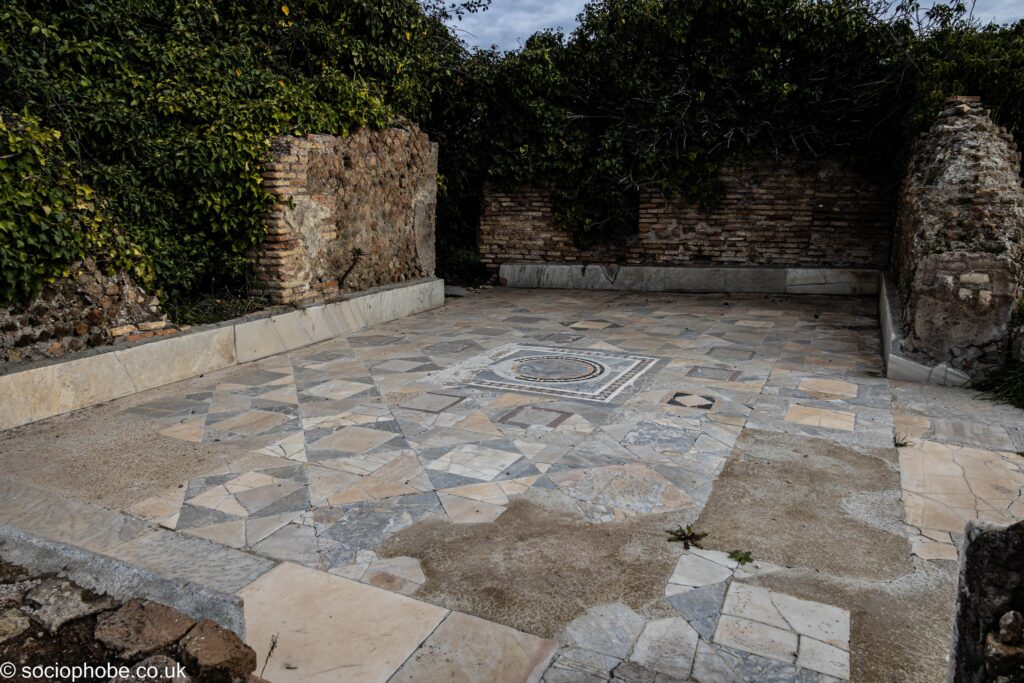
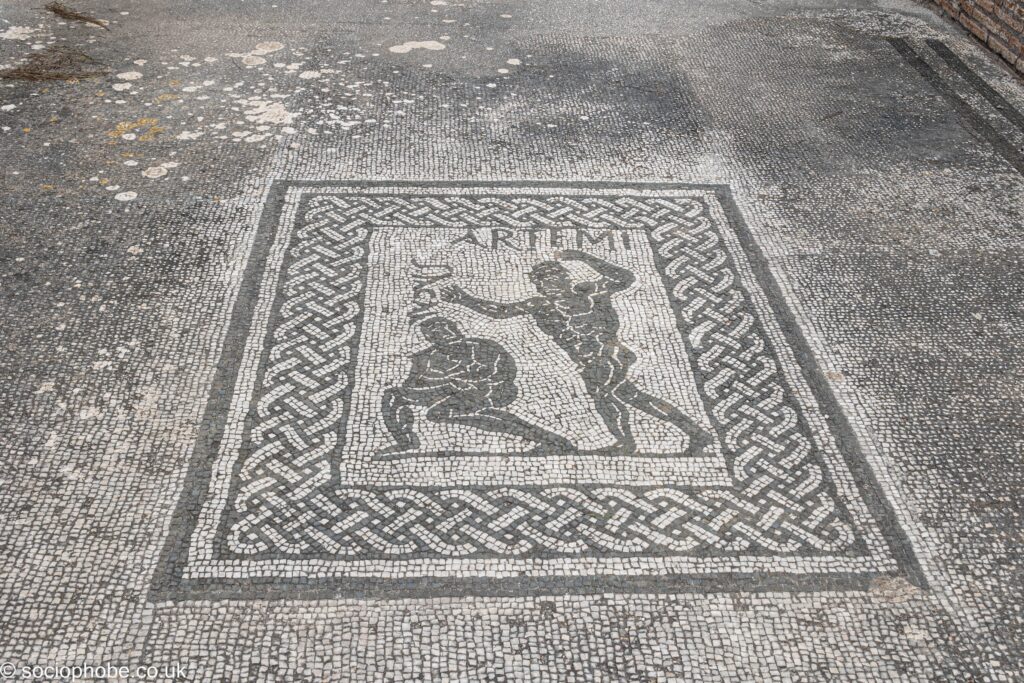
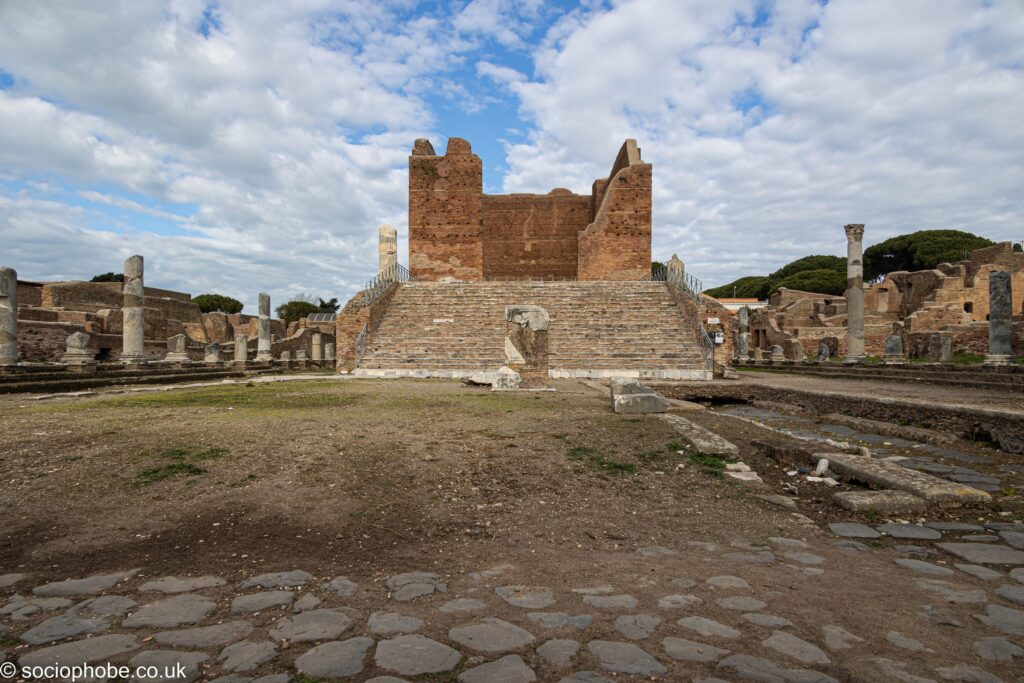
Some buildings had been partially restored which was fantastic as it gave you a chance to experience what they were actually like. The temples and theatre were particularly magnificent and the theatre is apparently still in use today. We continued walking to the Capitoline building which is another impressive edifice and also saw a Mithraeum. The cult of Mithras was a competitor to Christianity for a while in ancient Rome and there were several mithraeums in the city.
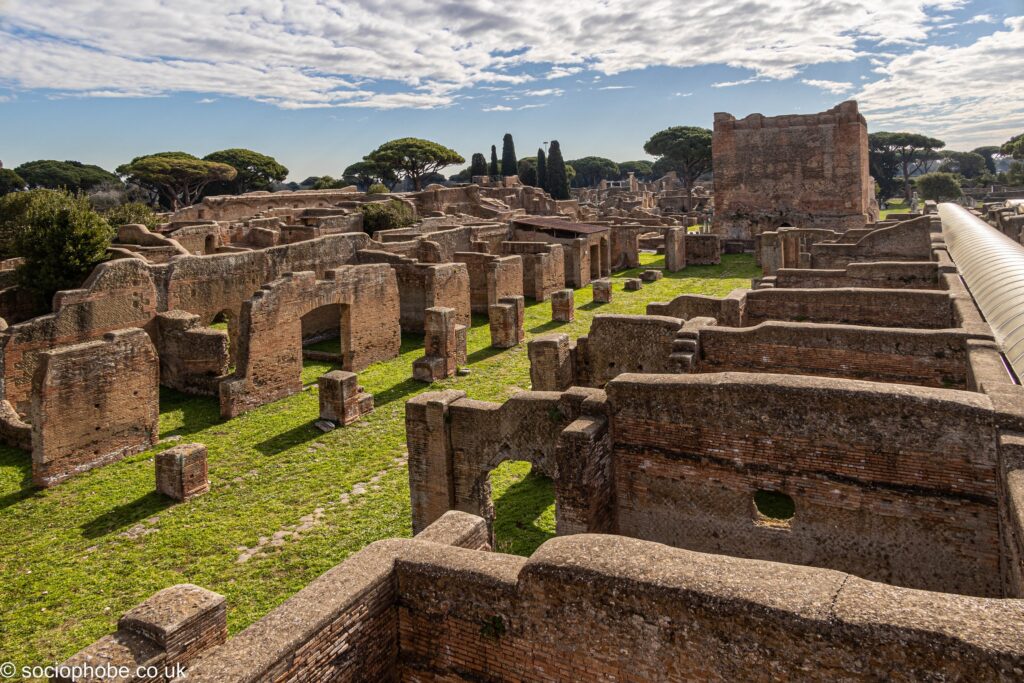
We climbed to the top of the castrum to get an idea of the size. Apparently only about 25% of the city has been excavated, mostly the central public buildings with the residential areas remaining buried, for now. We were now getting a bit jaded and we’d seen around two thirds of what has been excavated so we sat and had a coffee and cake before making our way back past the forum and fire station, via a display of the better preserved sarcophagi. We had spent about three hours in the ruins which was twice as long as the Colosseum and far more interesting. Somewhere to return to, preferably when it is warmer so the mosaics are uncovered.
We took the bus back to our hotel and then packed up ready to leave. The guy at the hotel was doing our transfer so that was simple and we got to the airport, through security and sat and had tortellini and truffles. Back home to England soon. Next year we will either go later in February or wear warmer clothes! The great thing about Rome is that this long weekend covered a good walkable chunk of the Imperial period. There is so much more to see, maybe the Vatican next time as well as booking tours ahead to see the sights we missed on this visit.