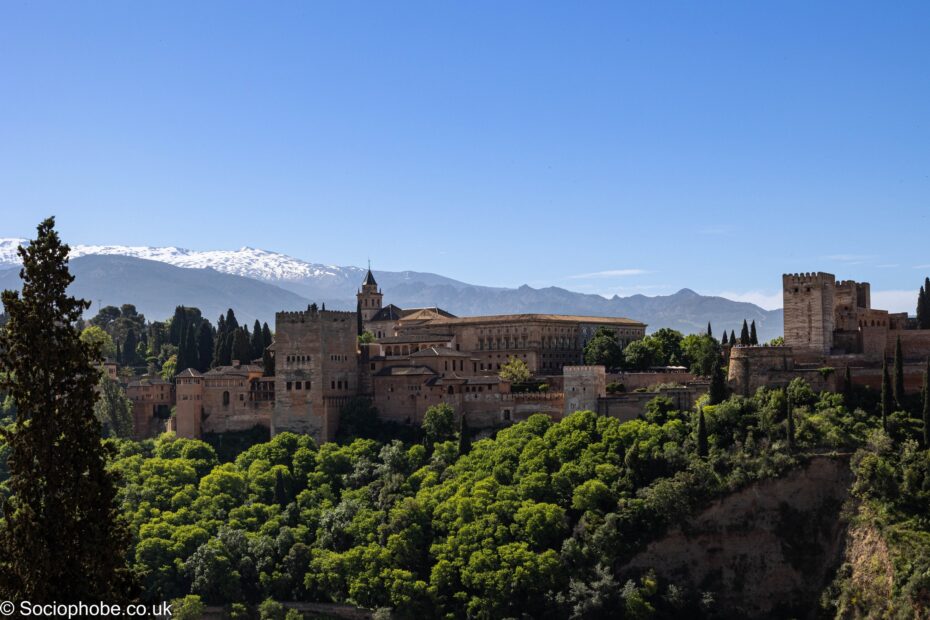
Moorish architecture has always fascinated me so we chose Granada, home of the Alhambra, and the provincial capital of Jaen to explore. This was planned as an early birthday present for my Mum, to give her a chance to explore places in Spain she may not have seen before and also for us all to get some time together. In hindsight, although there were some impressive monuments, most of Jaen’s Moorish architecture is long gone.
- Recommended days 7
- Budget £
- Difficulty Easy
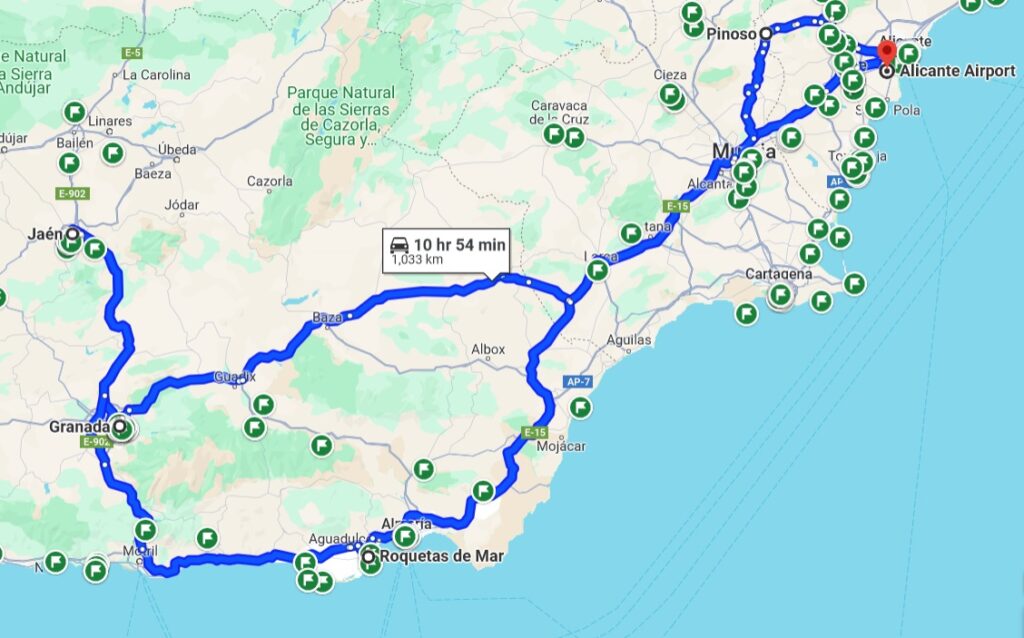
We had to fly in and out of Alicante to collect Mother, flying in to Malaga or Granada itself would have allowed an extra day of exploring and stop offs at some of the amazing castles on the route.
Why Granada and Jaen?
Jaen was an important border city and its cathedral is UNESCO listed and the castle and Parador above the city are both impressive buildings. Granada has the Alhambra complex, with two UNESCO listings, as well as a host of other Moorish and Spanish Renaissance buildings that are well worth a visit.
Rather than our usual mad road trip, in deference to Mother’s age, we had a relaxed 3 nights in Granada and then a night at the Parador in Jaen before continuing on to meet my Uncle in Rocquetas for a night and our final night near Pinoso. With different company I’d have probably spent longer in Jaen and used it as a base to do some hiking to the many border fortresses nearby, it is the most fortified region of Spain apparently!
Our Accomodation
For Granada it was important, for me, to get a hotel within walking distance of the attractions. I can’t be bothered with the hassle of taxis/buses etc to get anywhere although we use them for longer trips if needed. With that in mind I chose the Hotel Boutique Puertas de las Granadas, 10 minutes walk from both the Alhambra and the Cathedral and for Jaen we stayed in the Parador, next to Castillo Santa Catalina.
The Granada hotel was fabulous, with one proviso – parking. Granada was an absolutely horrible place to drive through and we drove down numerous Residents Only streets, trying to follow the sat nav and get to the hotel but so many roads were either one way, bus only or no entry that after an hour of pointless futility we gave up. We parked next to the cathedral and walked the 10 minutes (with our luggage) to the hotel. Parking was €30 a night so needs to be factored in if you drive.
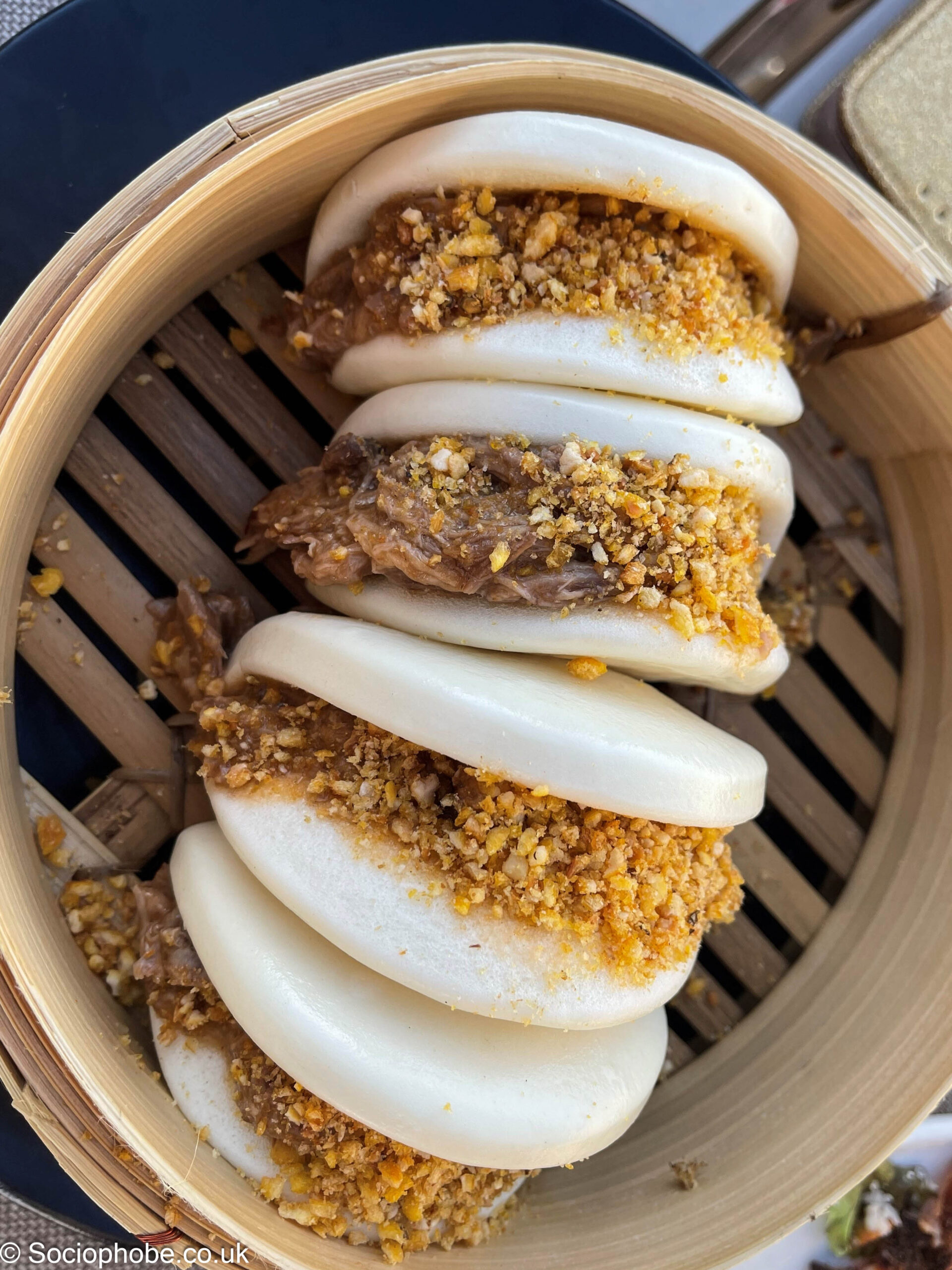
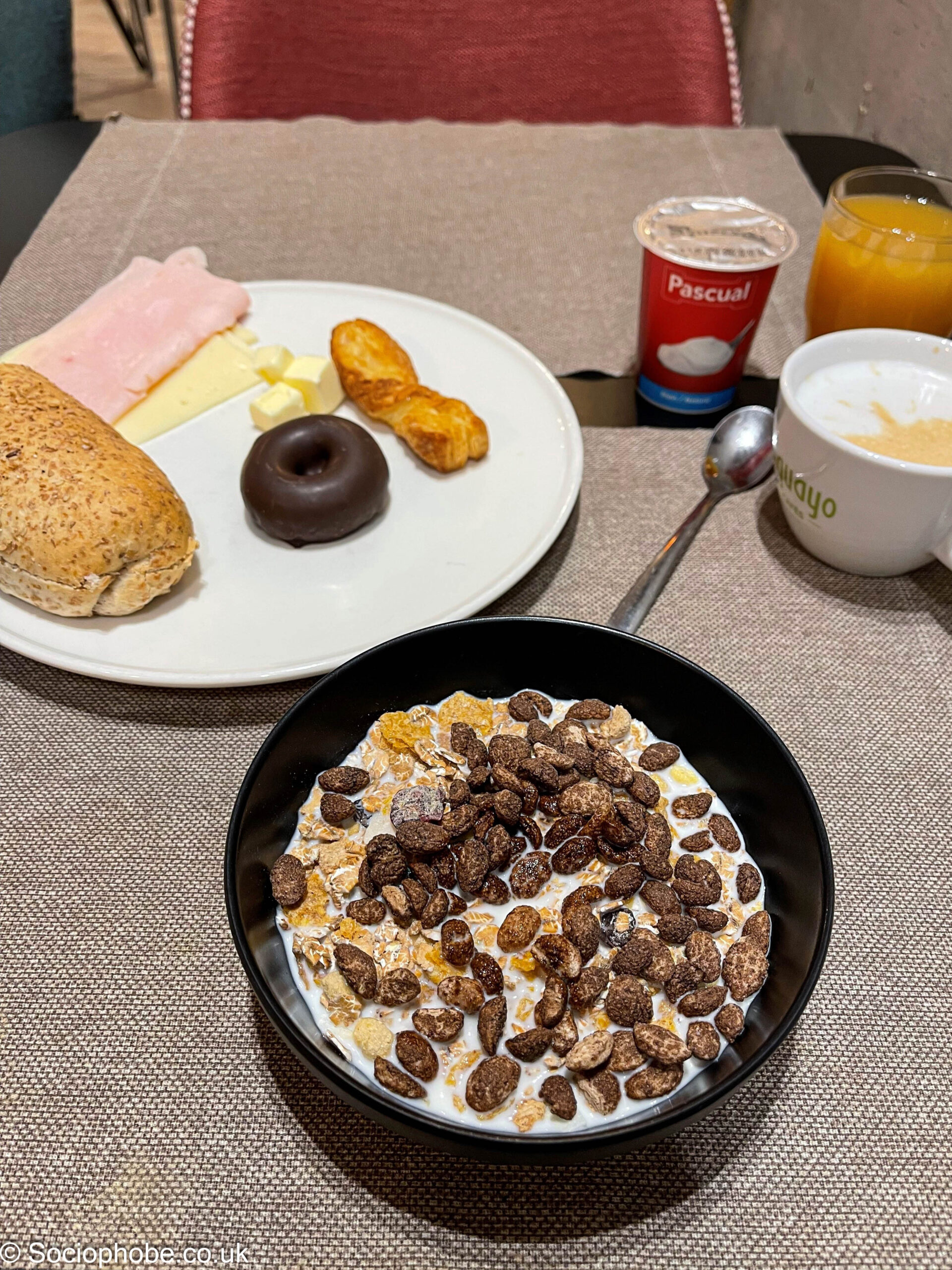
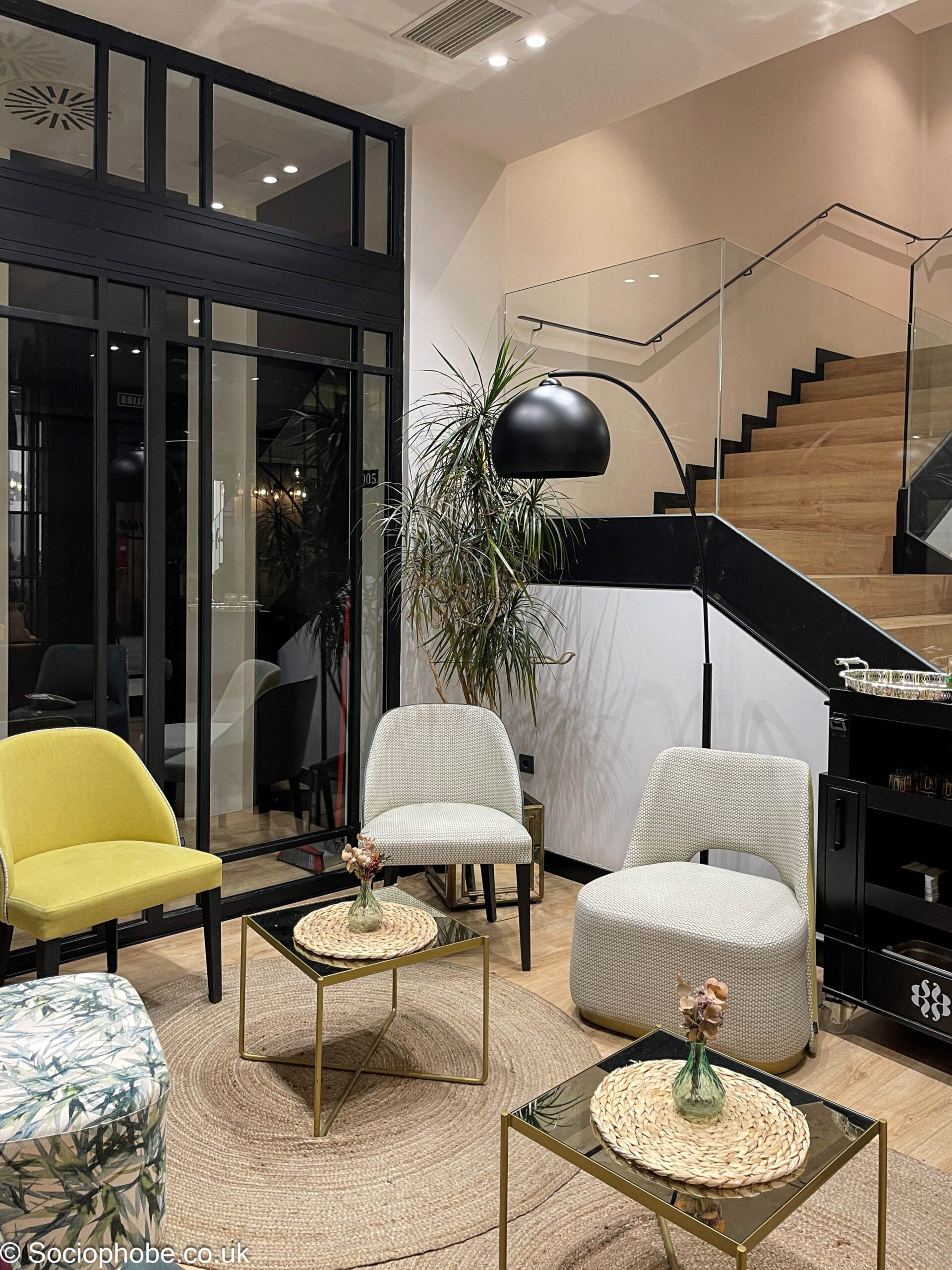
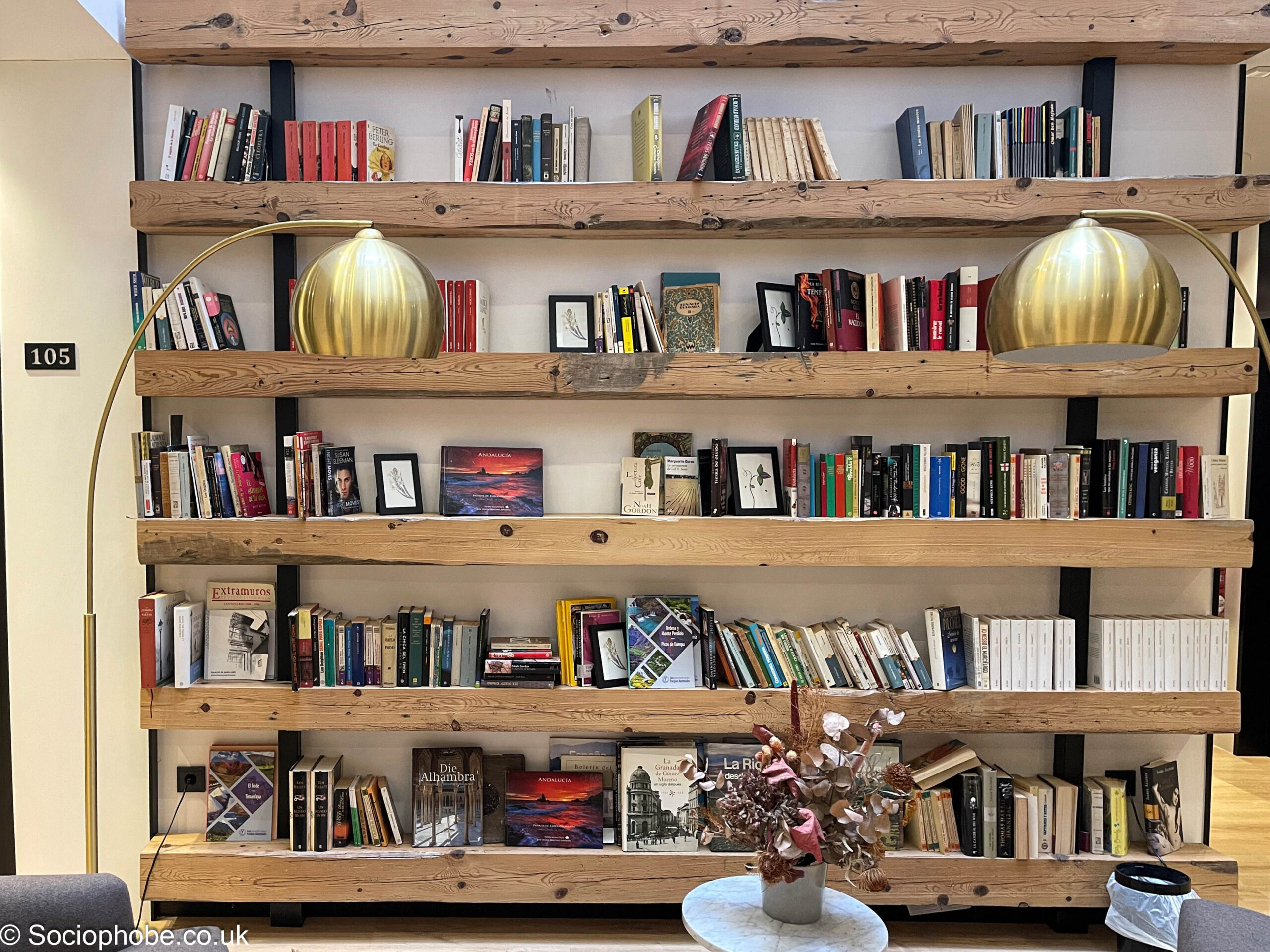
Once checked in we had lovely rooms with plenty of space and a desk for work. Wifi was good and there were a couple of nice lounge areas to sit and chat. The rooms even had kettles! There were also two terraces, either side of the hotel, so you had differing views and sunshine. The staff were excellent and the rooms quiet too. Breakfast was a comprehensive variety of hot and cold buffet options and the dinner we had one night was lovely.
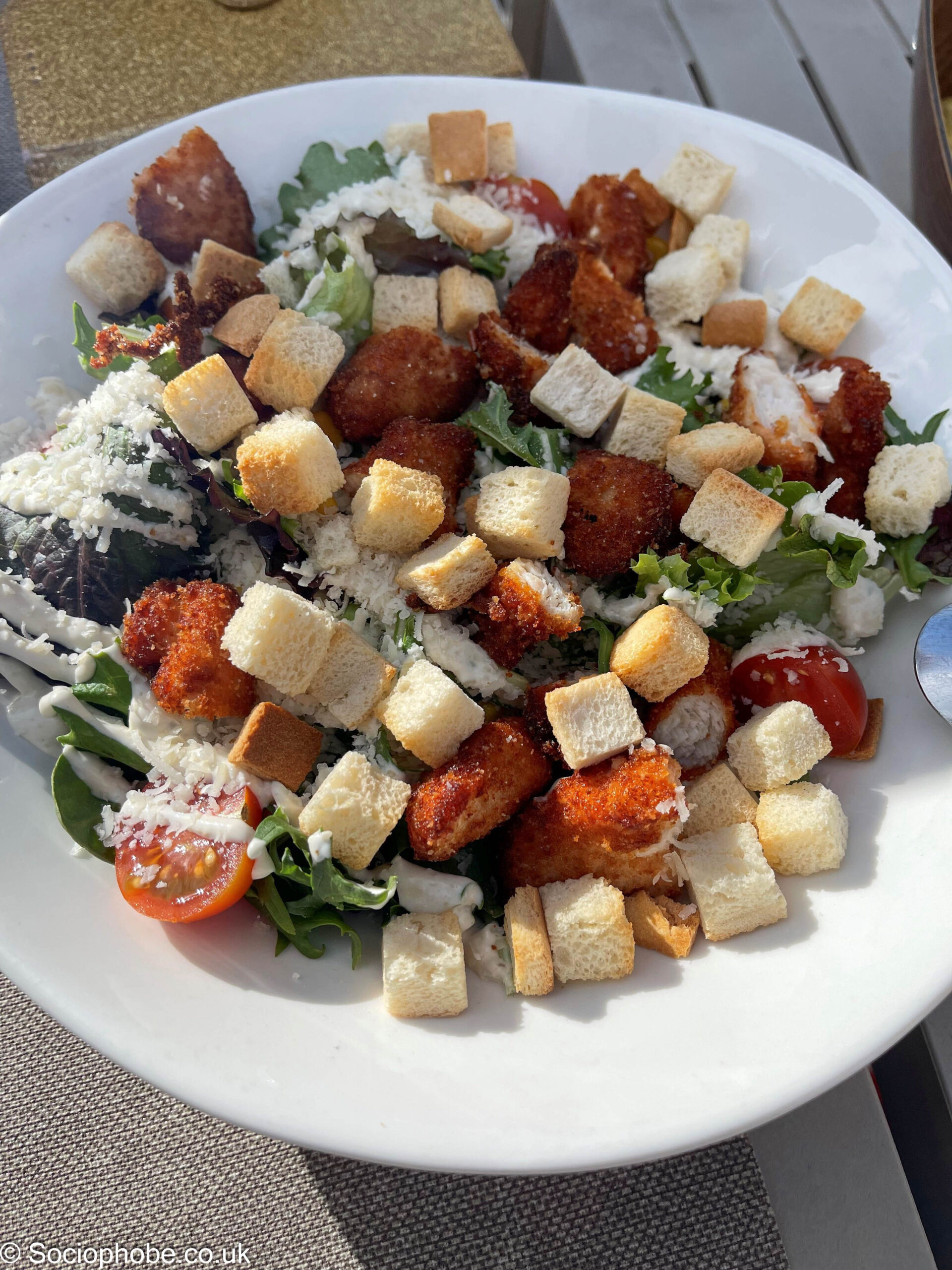
In Jaen we were actually able to park right outside the Parador and our rooms were superb. As you’d expect in a converted castle they were huge rooms with amazing views from the terrace. Sadly it rained most of the time we were there so we didn’t use our terraces as much as we intended but the thought was there.
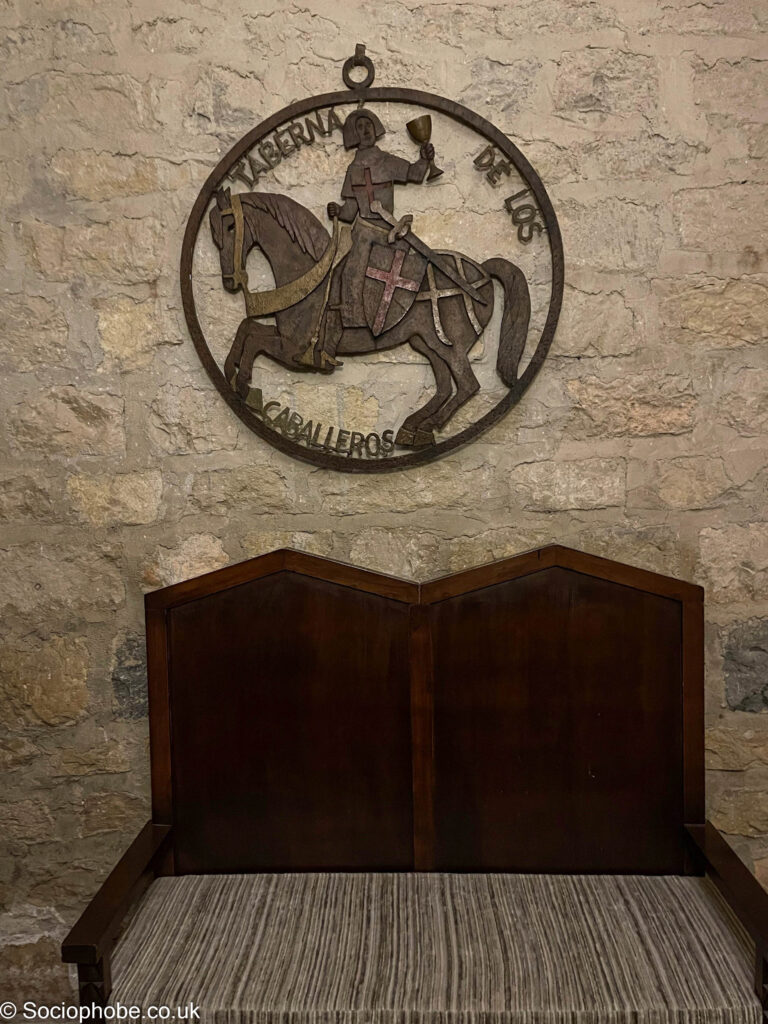
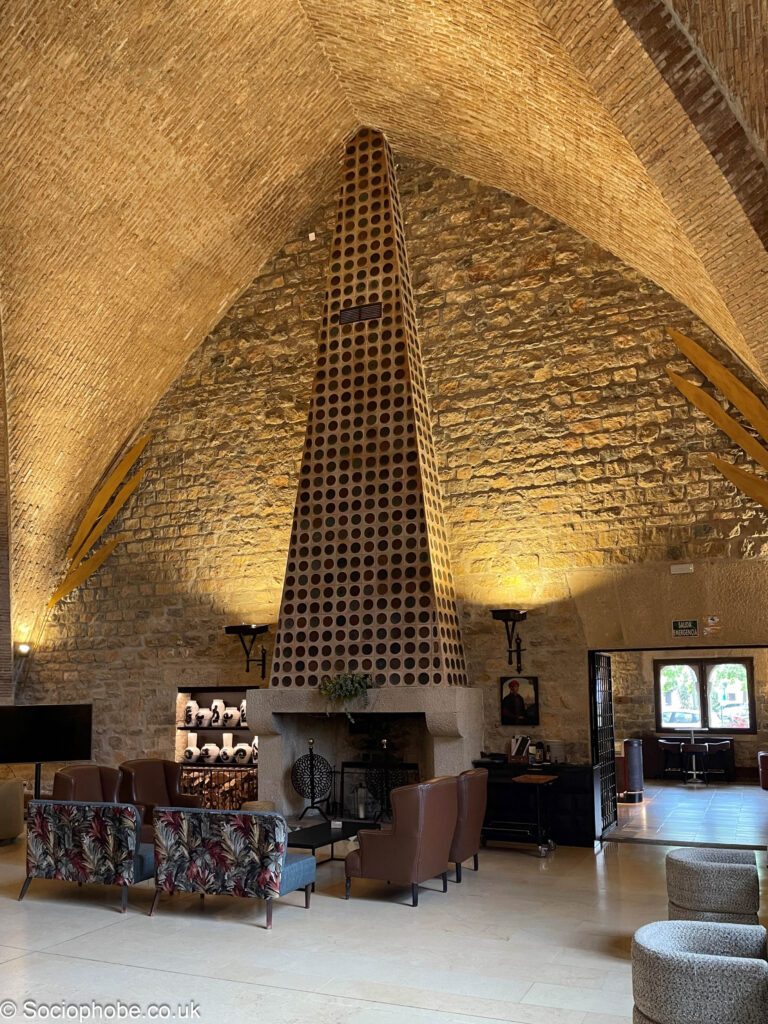
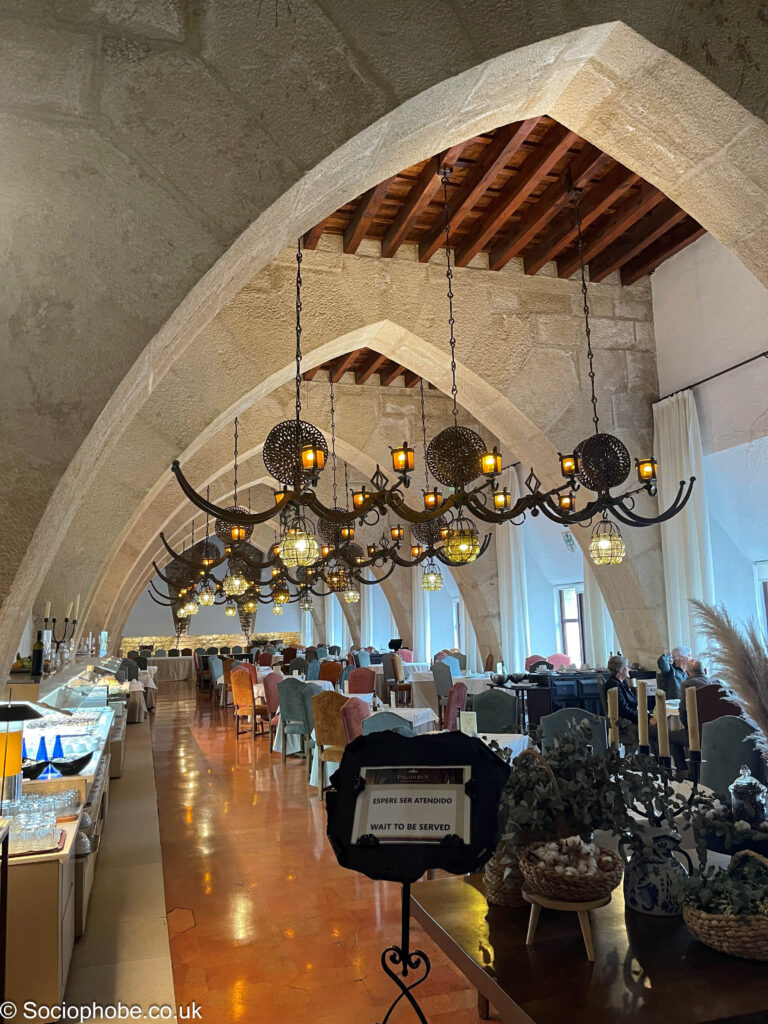
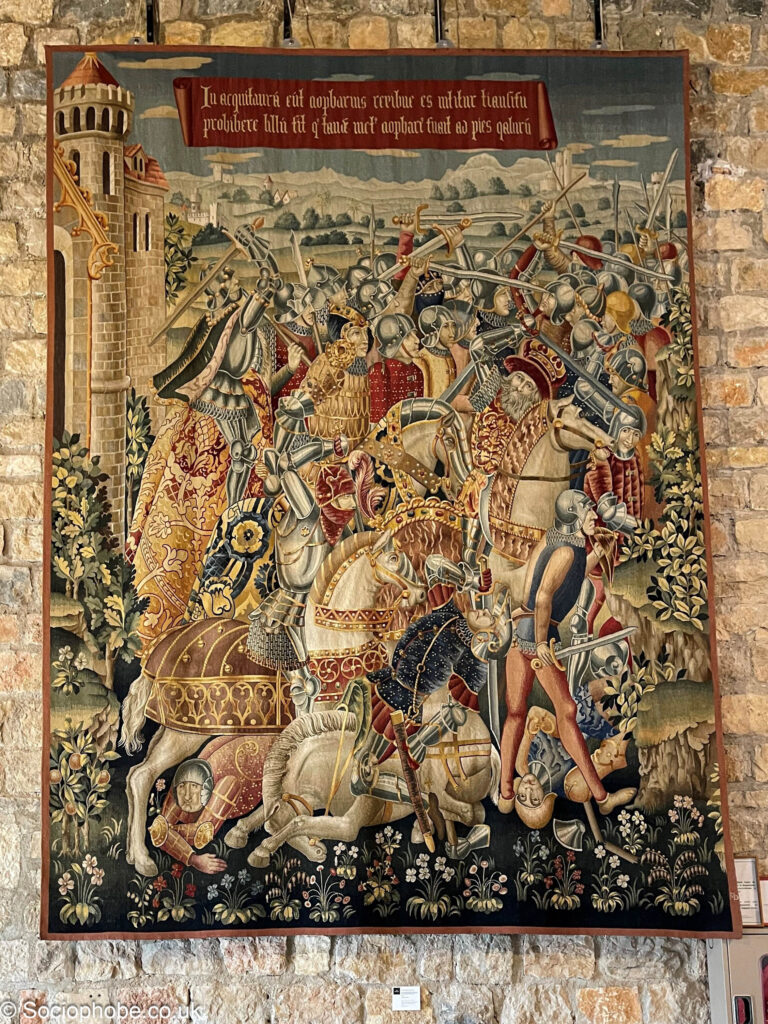
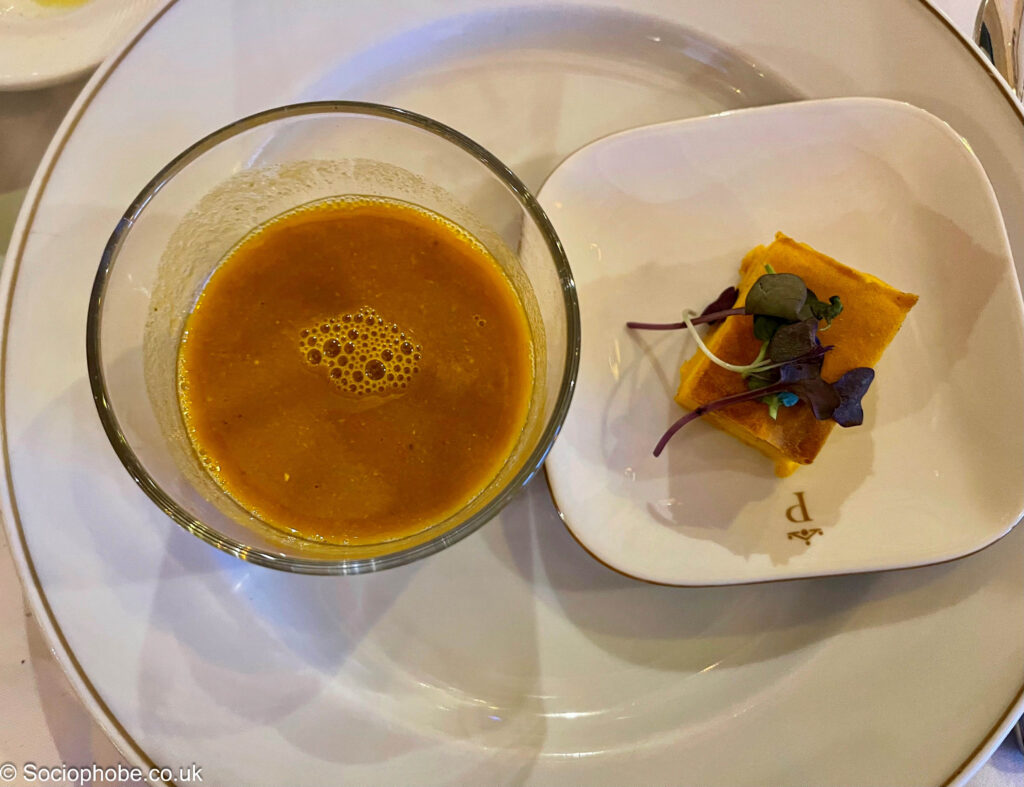
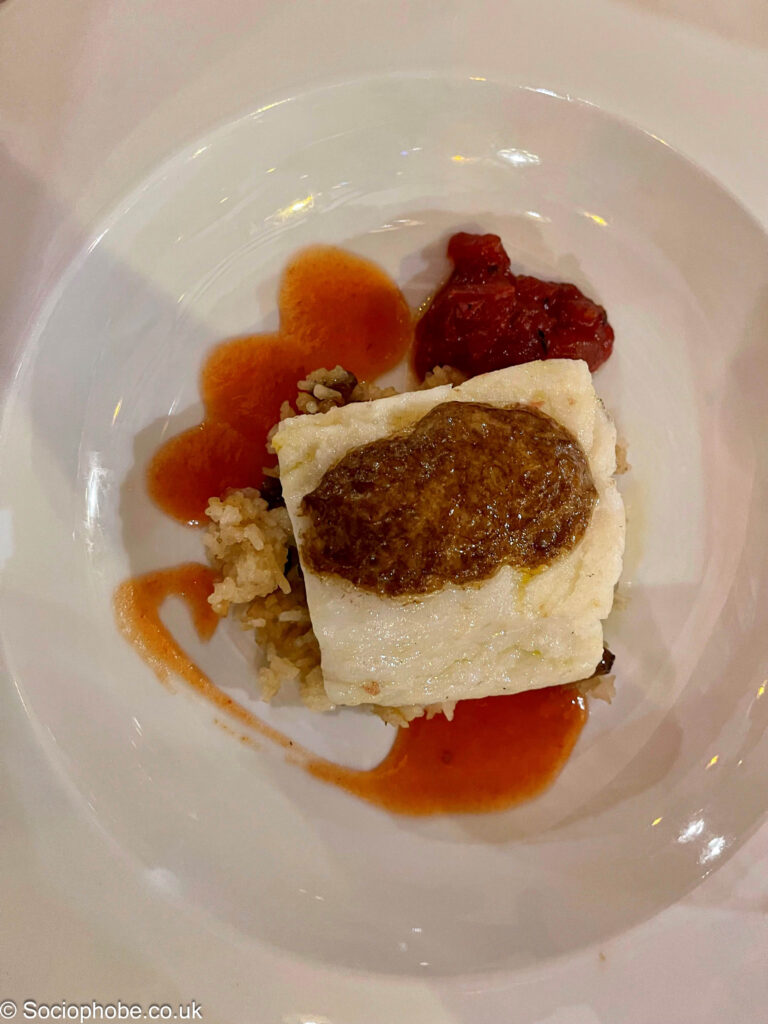
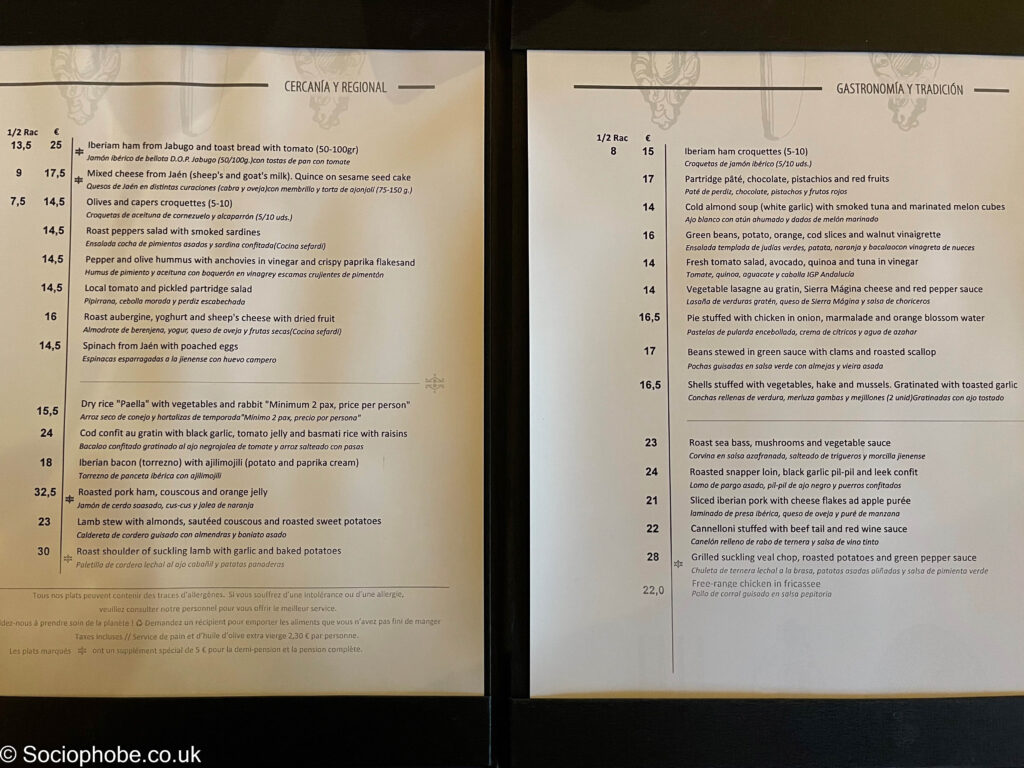
Dining at the Parador was surprisingly mixed. The location was a large vaulted hall, just fabulous. Breakfast was wonderful with a huge number of choices and cook to order options too. Dinner was disappointing though – the food was wonderfully cooked and presented but just too little of it and almost no accompanying vegetables. The staff were wonderful though, although they were rushed and short staffed.
Day 1 – Alicante to Granada
We landed at Alicante airport and met Mum and Steve for a coffee before he headed home for a week of peace and Mum had the dubious treat of a week long birthday trip to spend the time with her eldest son! We collected our hire car and drove on amazingly empty roads through very hilly scenery to Granada.
When we got there Granada was an abomination of bus lanes, no entry roads and one way streets. We used both Apple and Google maps and still couldn’t get to hotel. We spent about 60 minutes accumulating fines and frustration before finding a car park to dump the car and then walking to the hotel.
After checking in we dropped our bags in the room and went outside for a walk to relax. The hotel was in a great location and it was a 5 minute walk to the riverside, under the ramparts of the Alhambra and enjoying some sunshine. We saw various vestiges of the Moorish presence in the city, passing the Arab baths as well as the ruins of one of the original bridges to the Alhambra.
After about 15 minutes walk we turned around and headed to an open area with plenty of cafes. We sat at Rabo de Nube and I had pan fried salmon in a soy sauce with vegetables followed by baked cheesecake. It was a lovely location with views of the Alcazaba towers on the hill above and people watching the other tourists. We ended the evening with a coffee on the terrace at the hotel before retiring to our rooms.
Day 2 – The Alhambra
After breakfast we left our hotel around 8:45 and walked up the hill to the Alhambra. We had prebooked and had our passports so that was all in order. The Alhambra is the name given to the Moorish fortress and palace complex overlooking Granada. Built between the 13th and 15th centuries it is now a UNESCO World Heritage site and one of the biggest tourist attractions in Spain.
There are four main areas – Generalife, Alcazaba, Charles V Palace and the Nasrid Palaces. They are all well signposted and there are maps as you walk around. The Nasrid Palaces is a timed ticket so organise the rest of your visit around that.
Generalife
We started with Generallife and wandered through the gardens and past the water features. There were roses, sculpted hedges and views of the Alcazaba battlements and it was amazingly green and with so much running water. As we had arrived early although there were some tour groups it wasn’t too busy. It was frustrating that there isn’t much information anywhere, other than maps and it all seems to be reliant on the free audio guide.
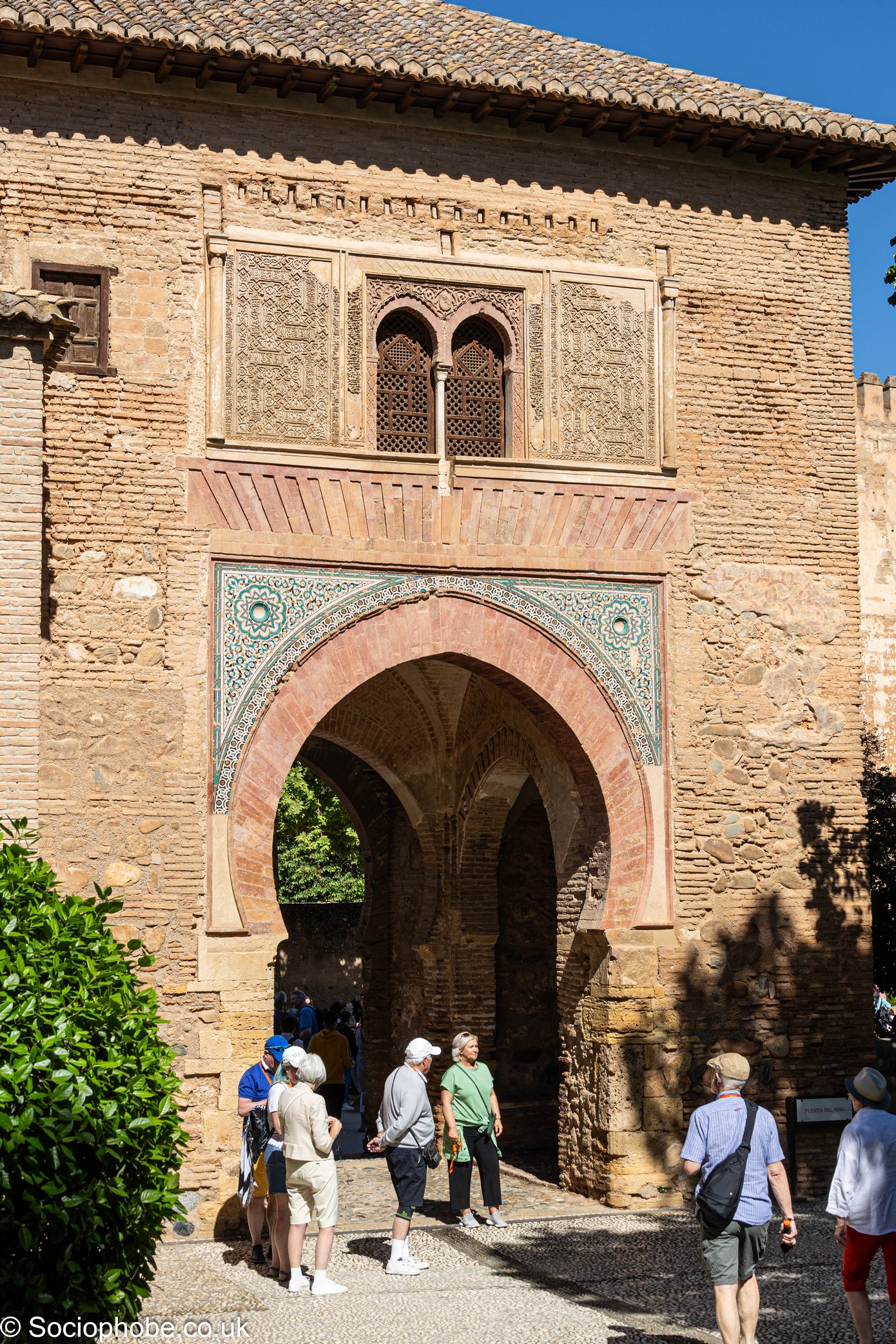

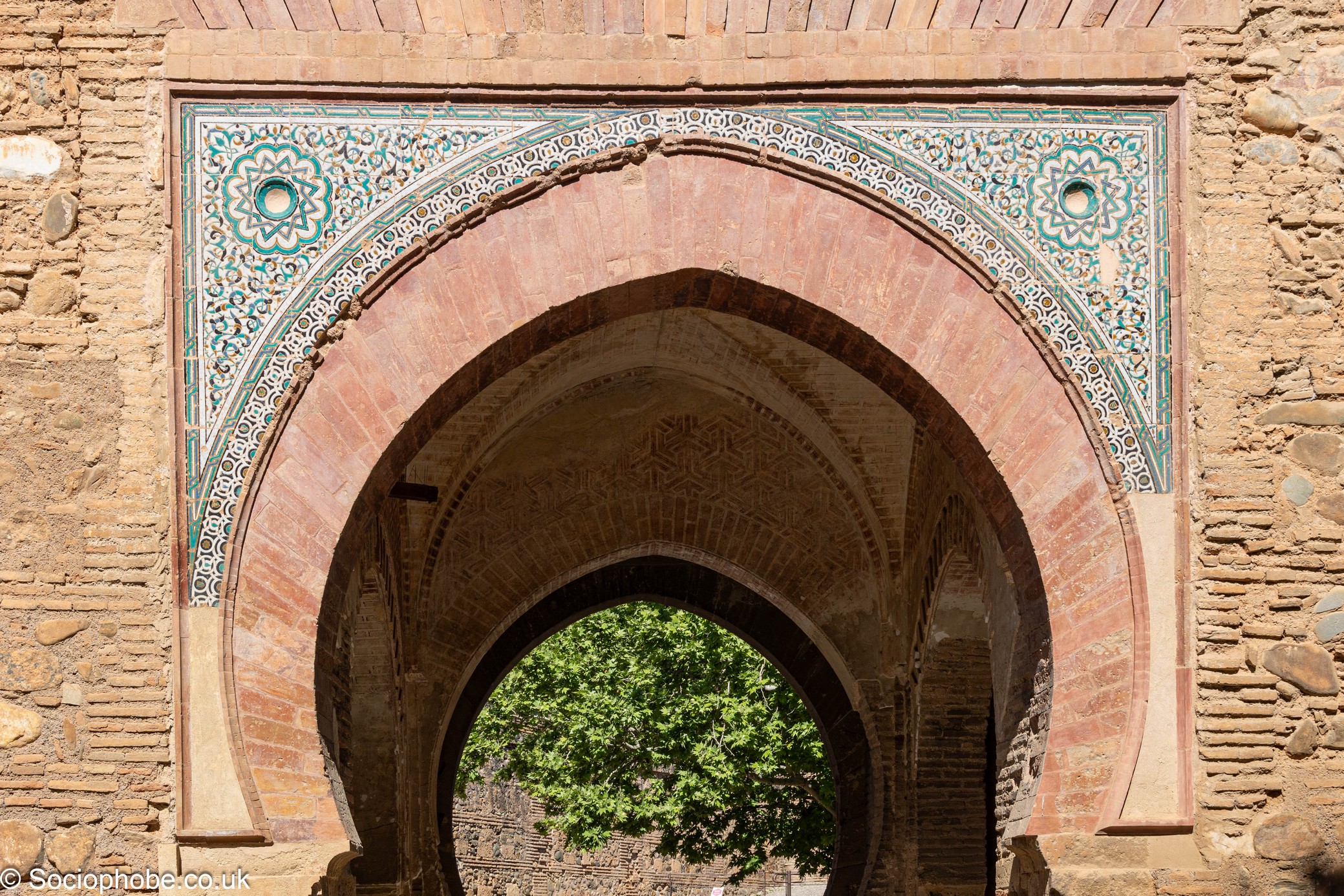

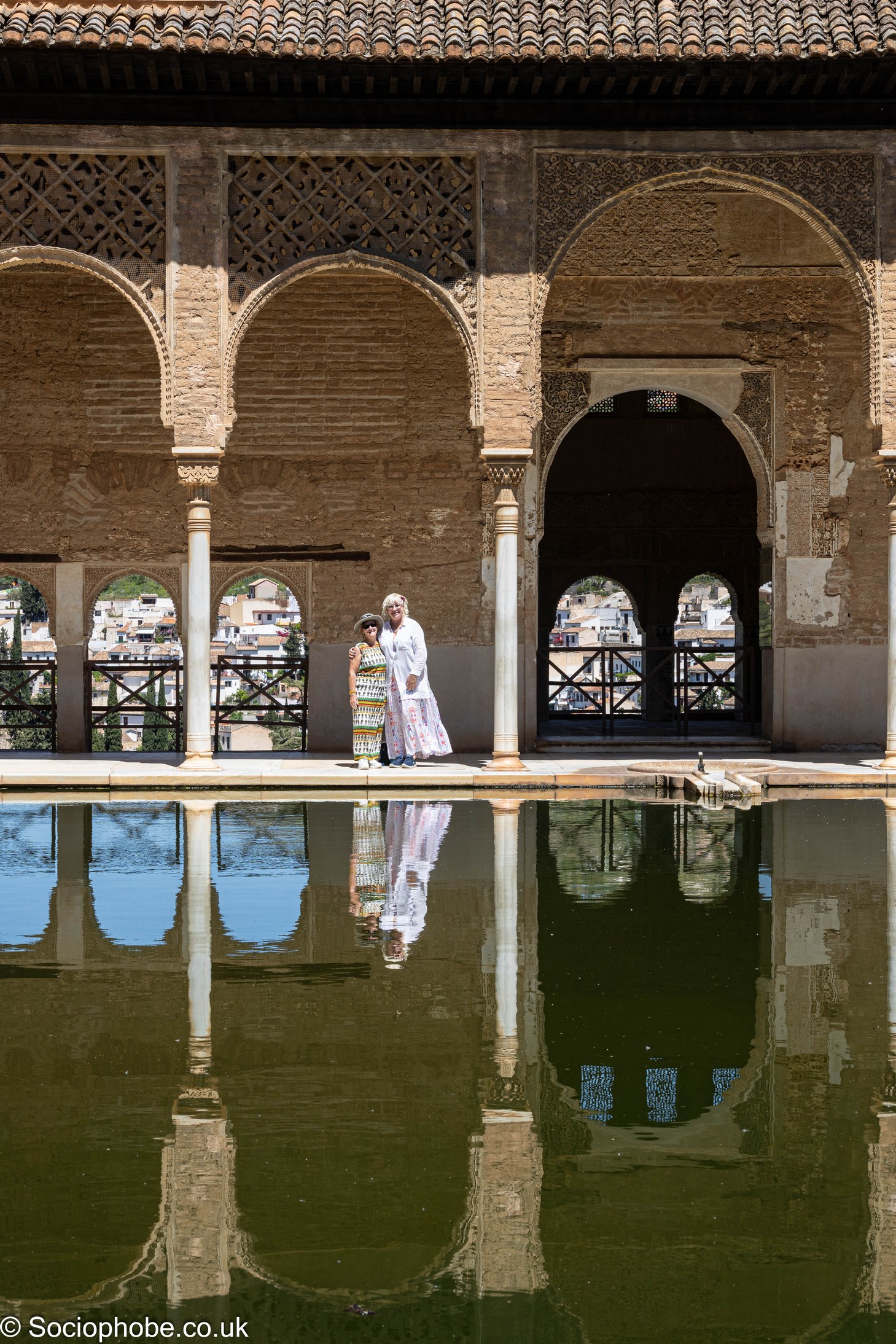


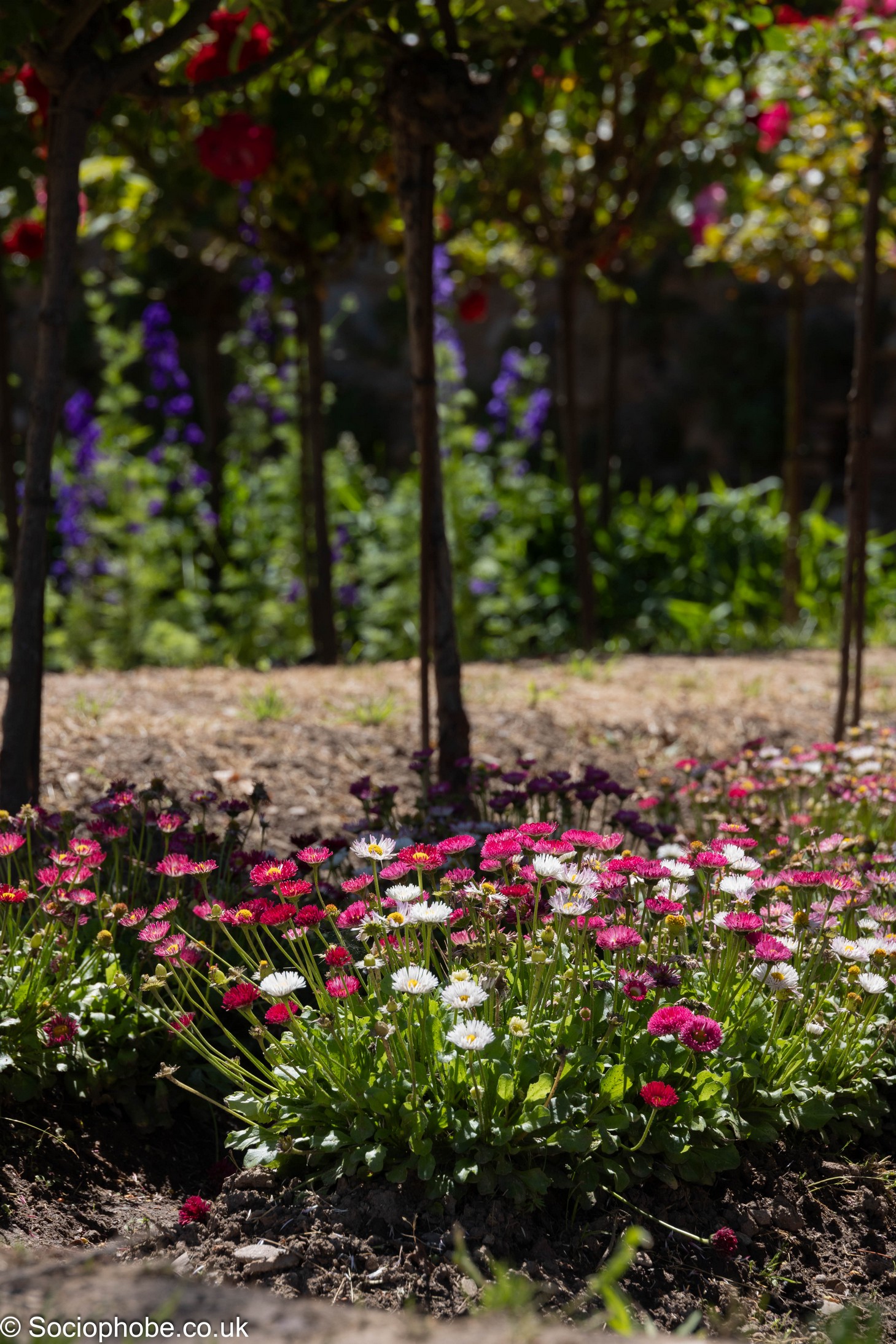

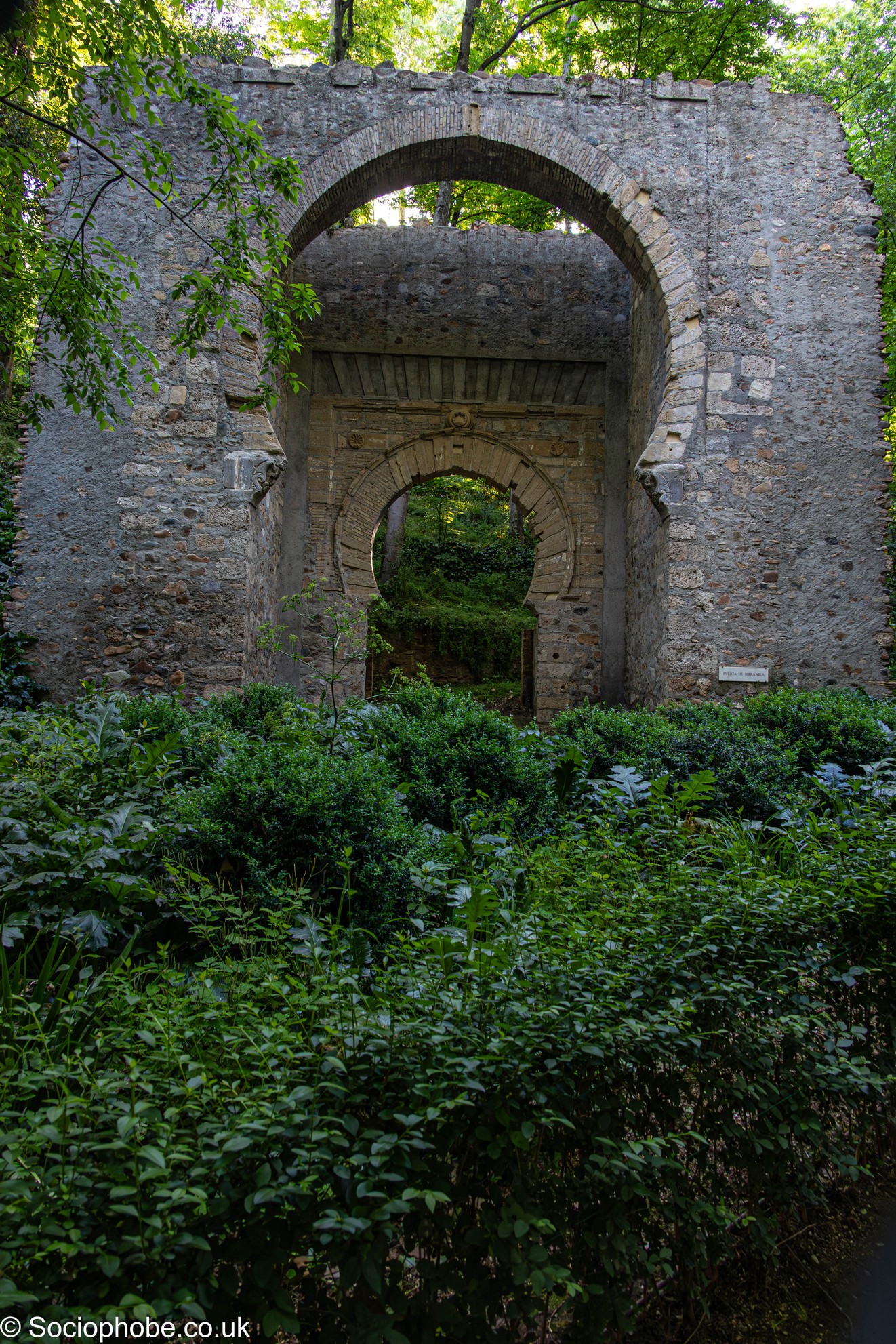
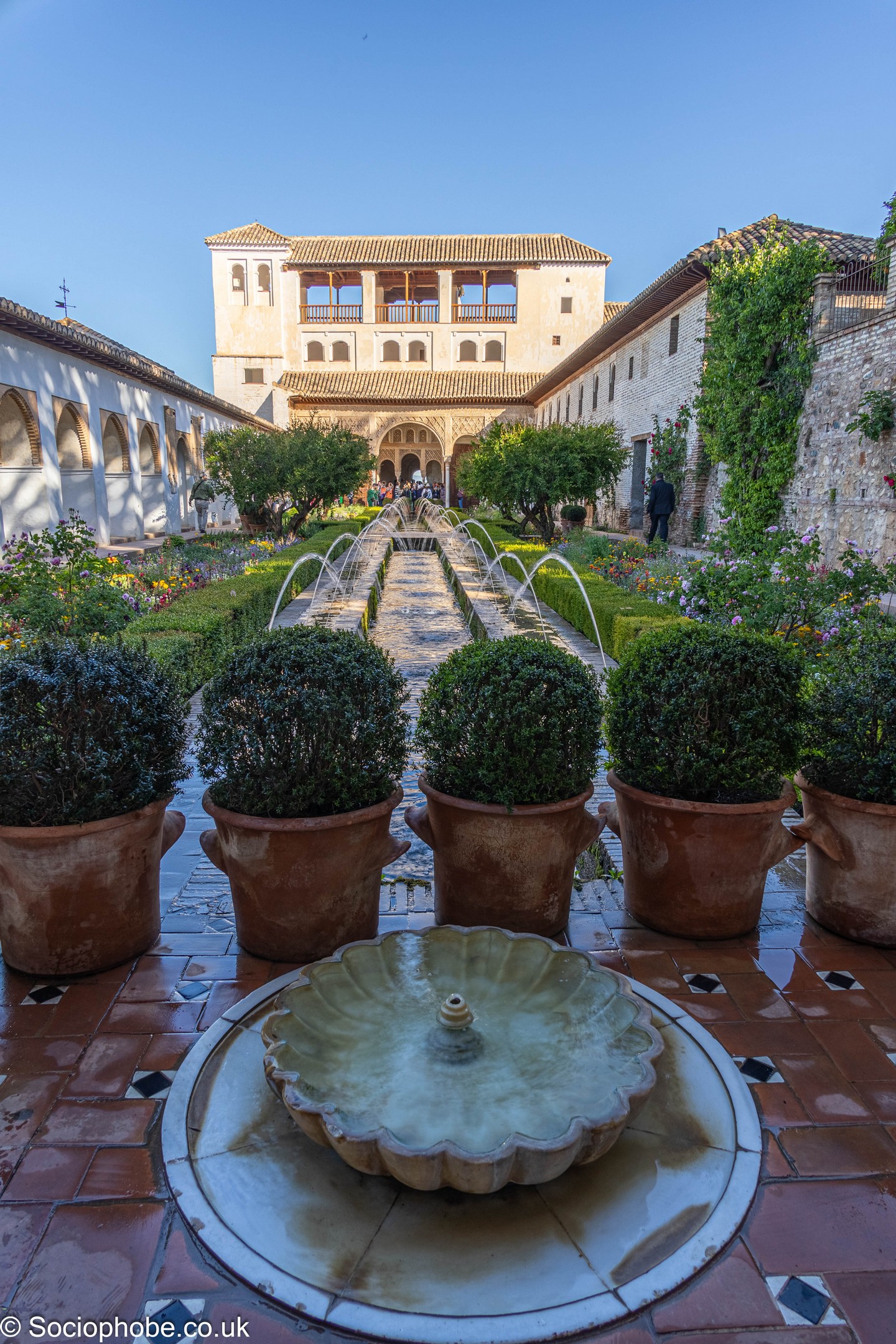
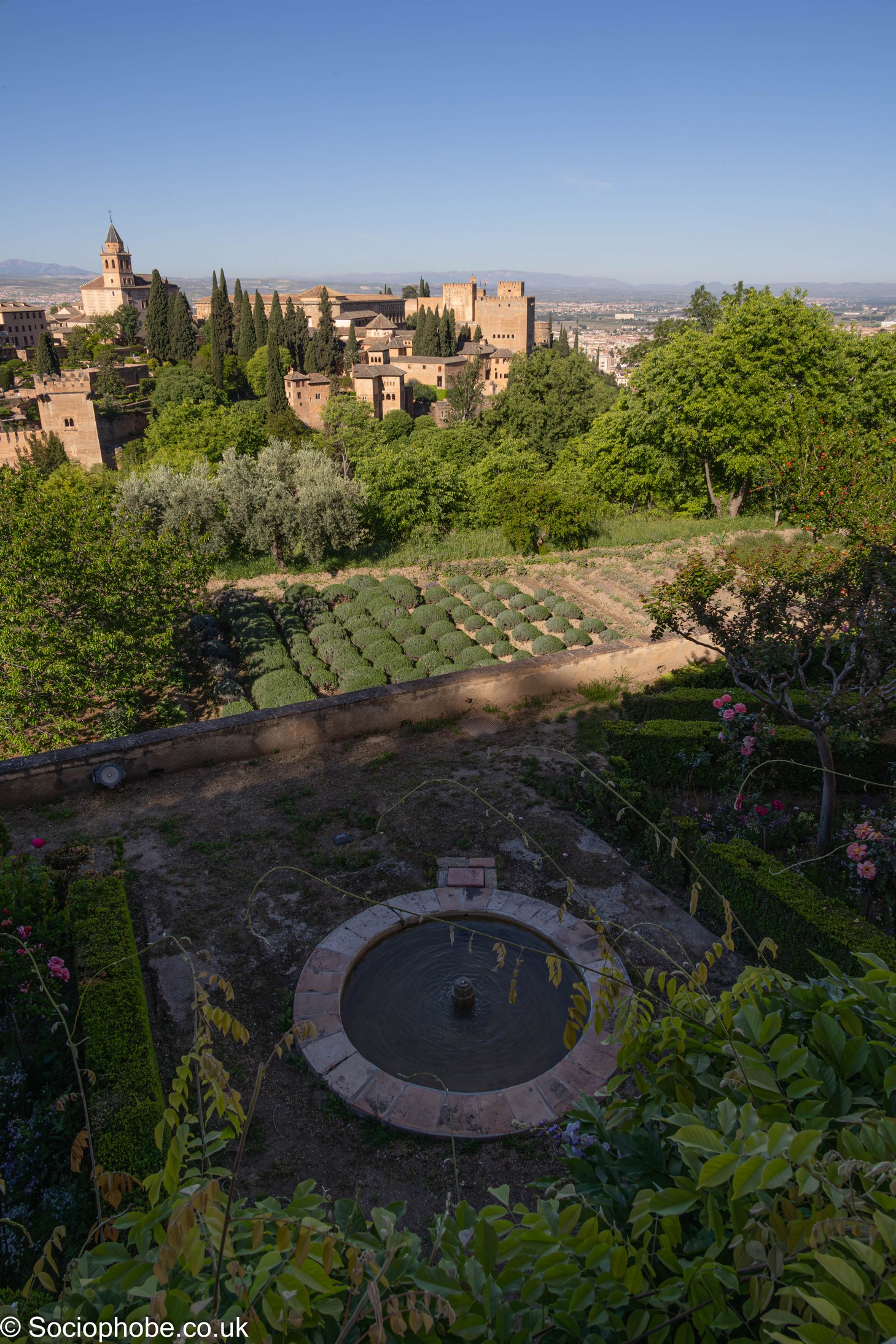
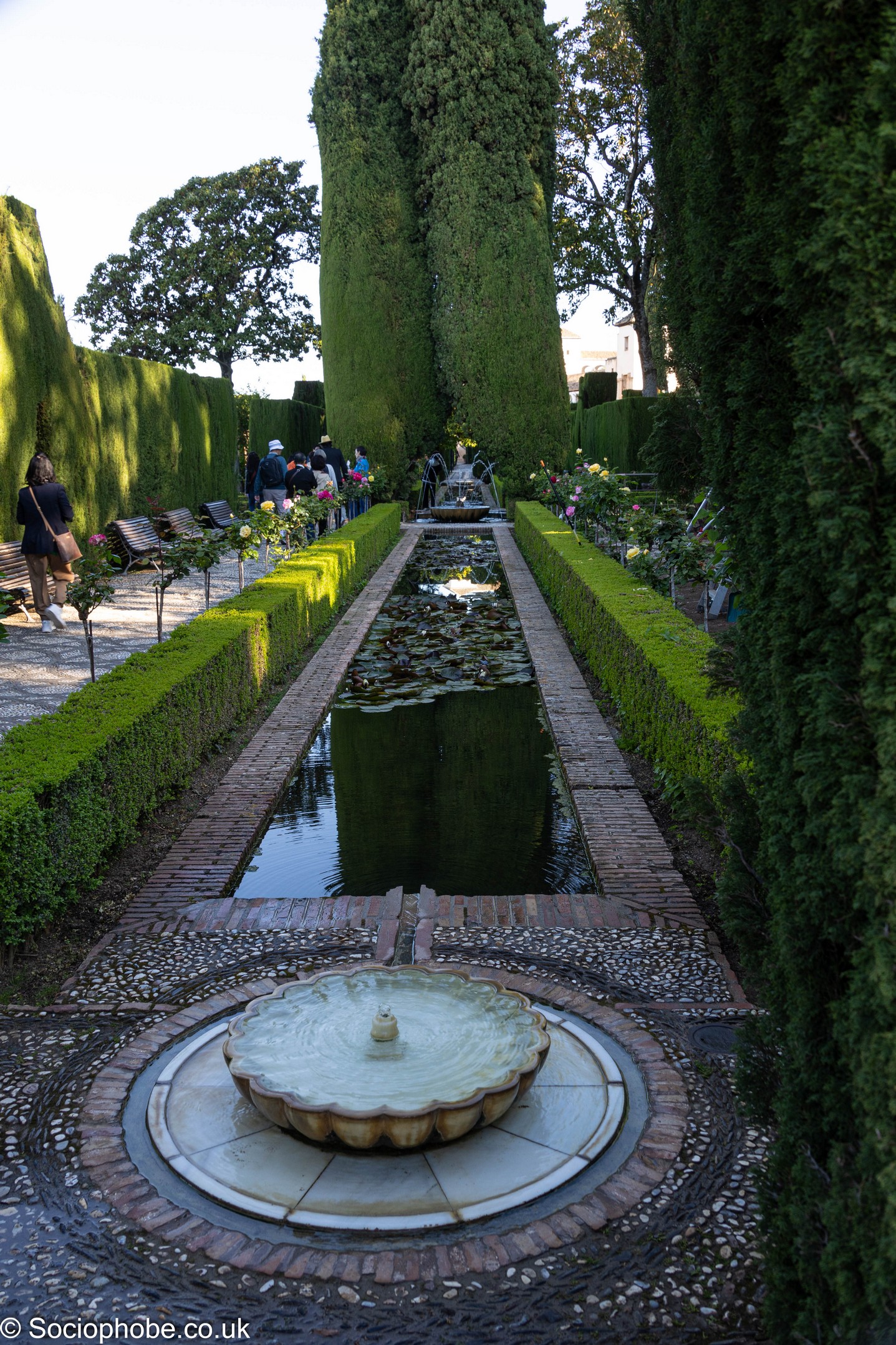
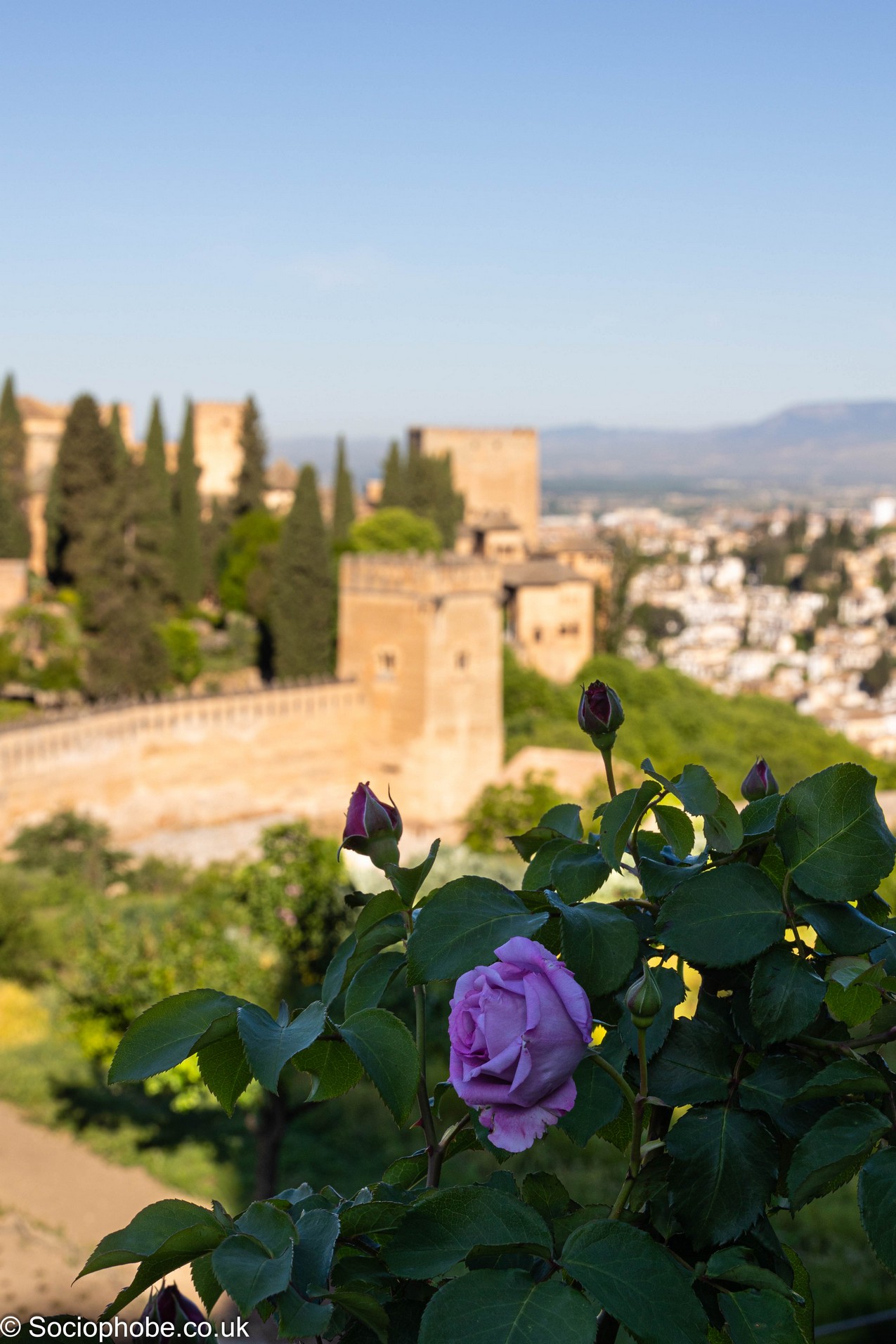
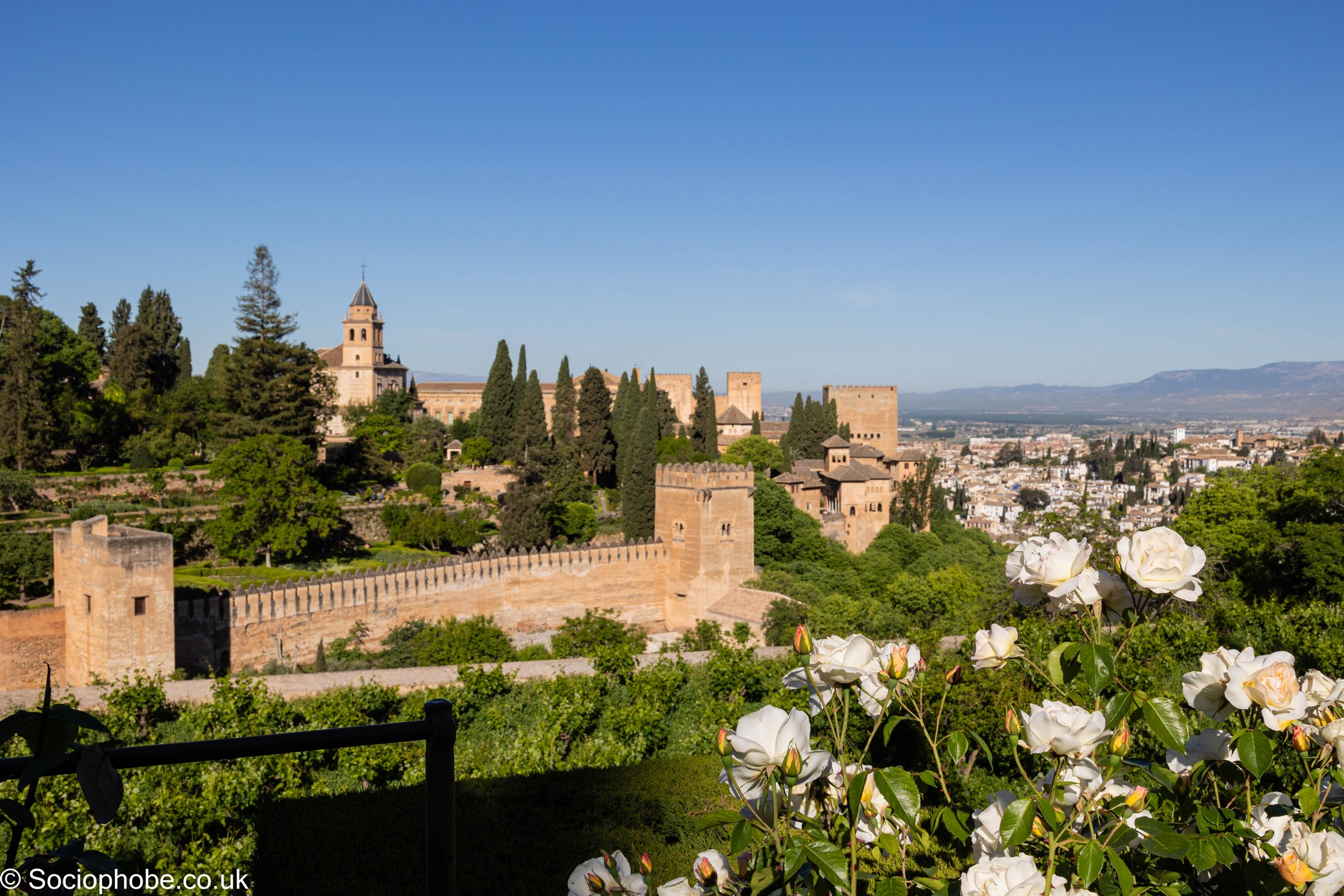

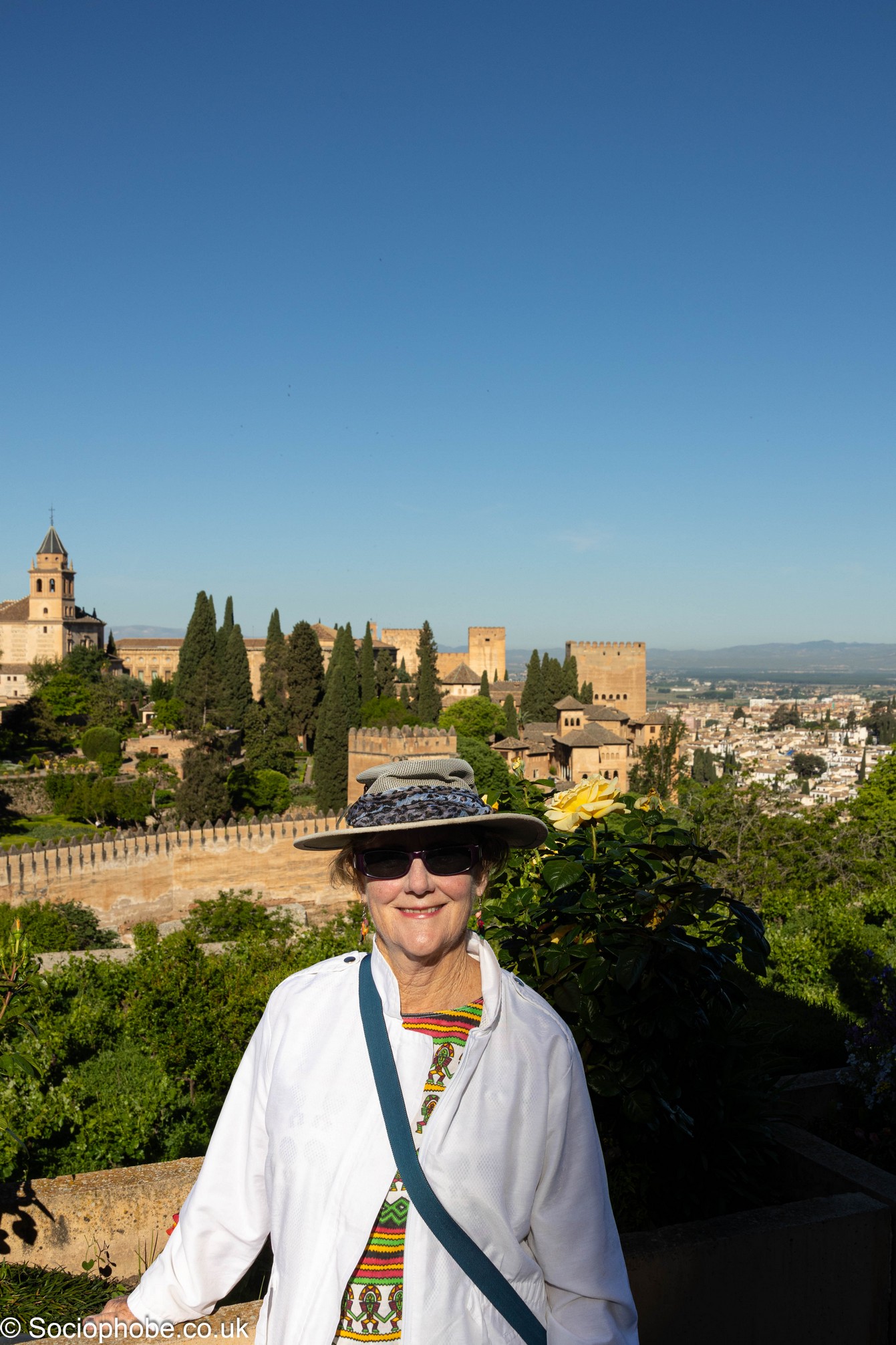


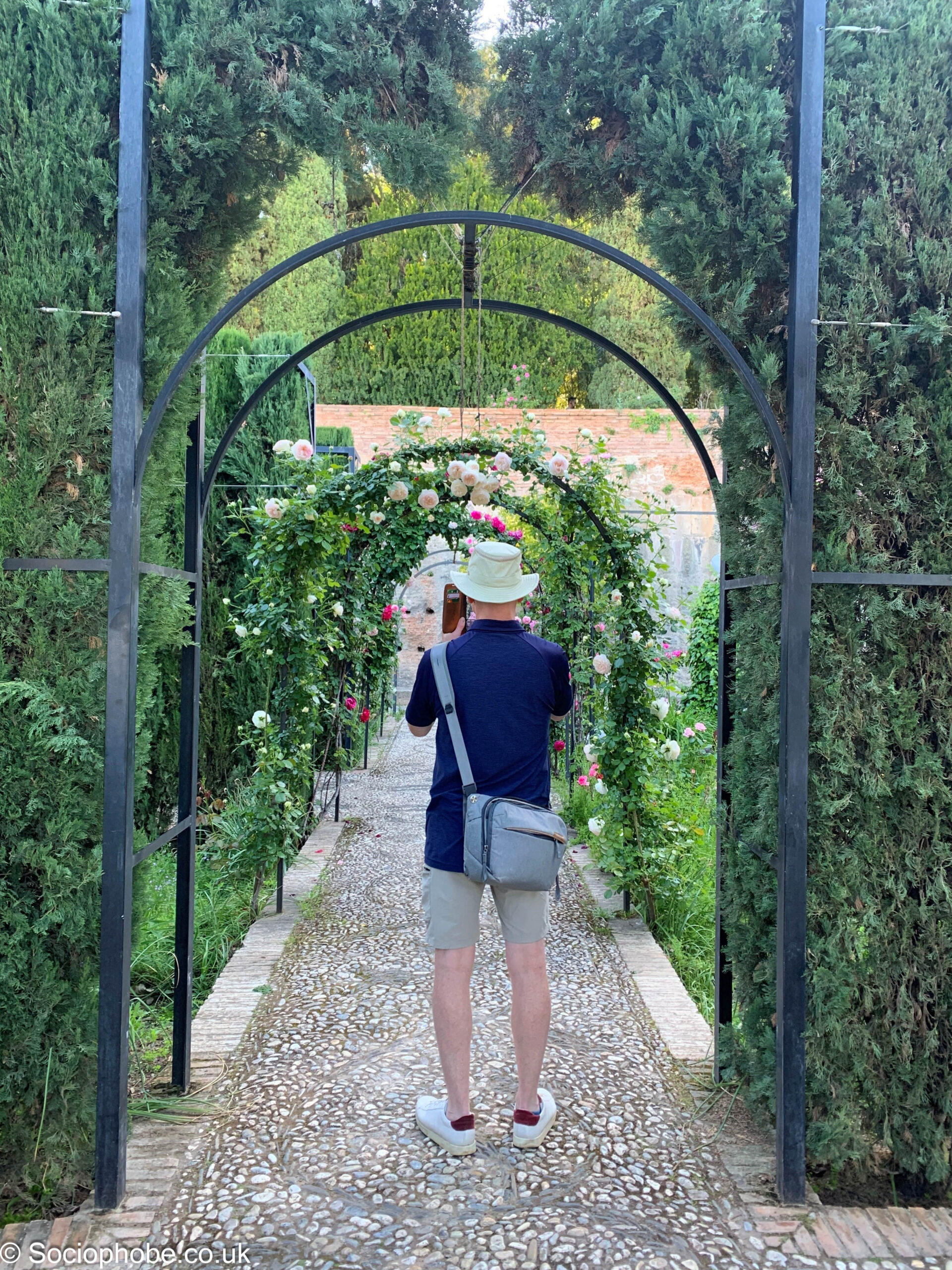


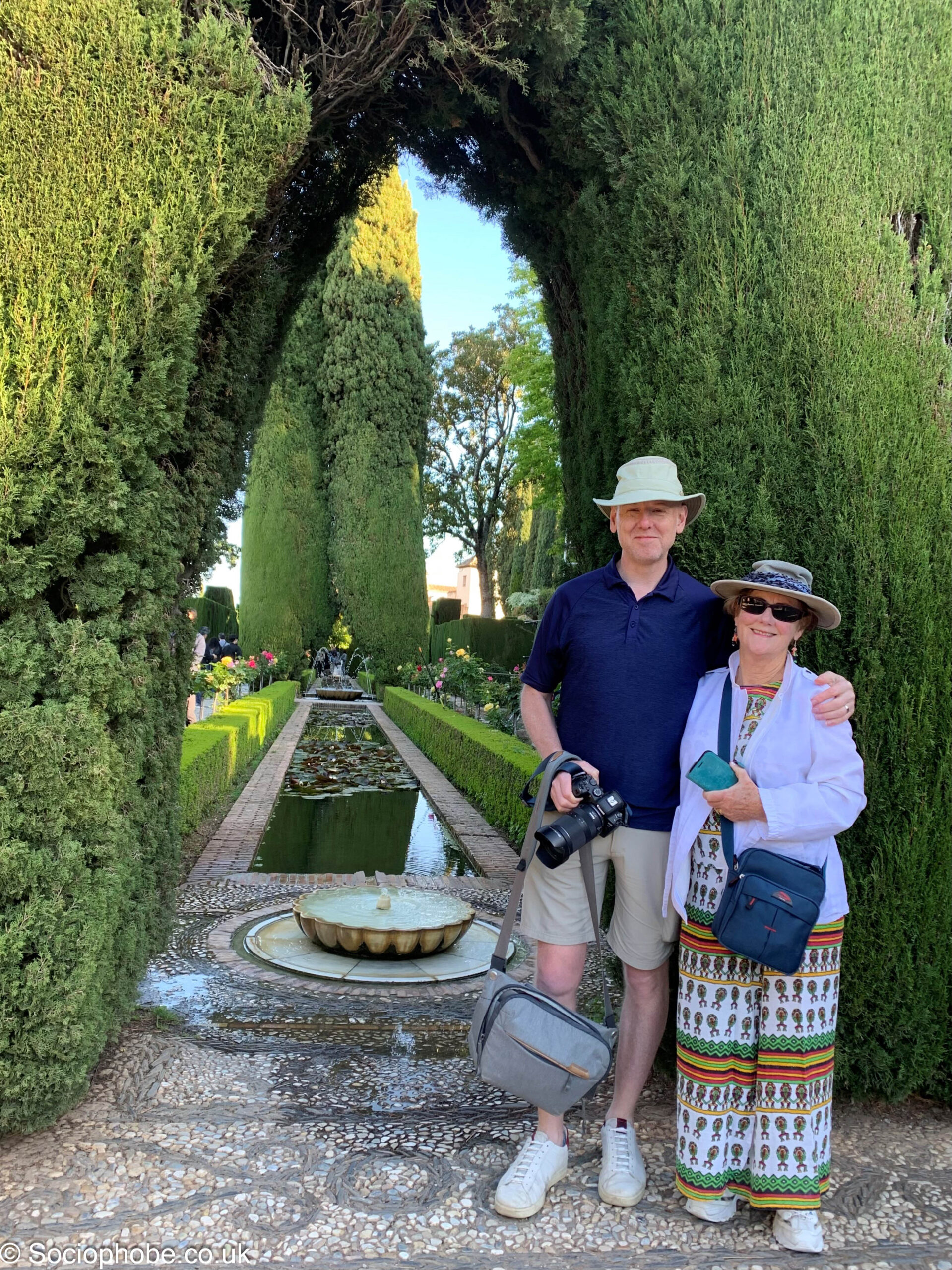
We spent nearly 2 hours in Generalife, enjoying the beautiful architecture, views and planting. I am glad we had allowed a day to see the entire site although cafes are very limited and we only saw one, the rest being vending machines with very limited seating.
Alcazaba
The Alcazaba had square towers and 3 sets of concentric walls and it wasn’t until we looked back across the valley to Generalife that you realised how steep the slope was. There were views to the Sierra Nevada mountains and obviously across the city of Grenada. A very impressive location and it gave us another chance to see just how green this whole area is, very different to the arid scrubland we had driven through to get here.
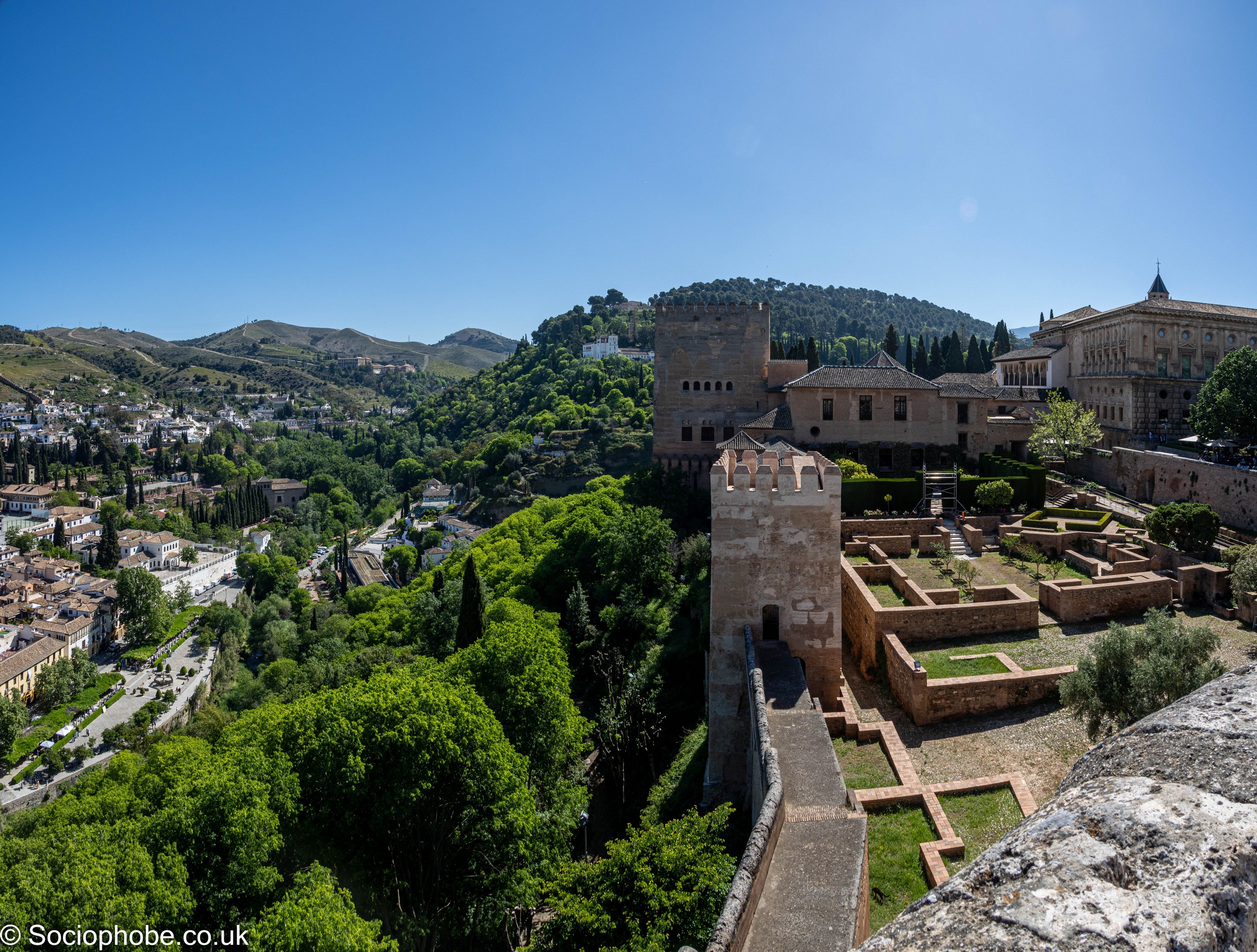


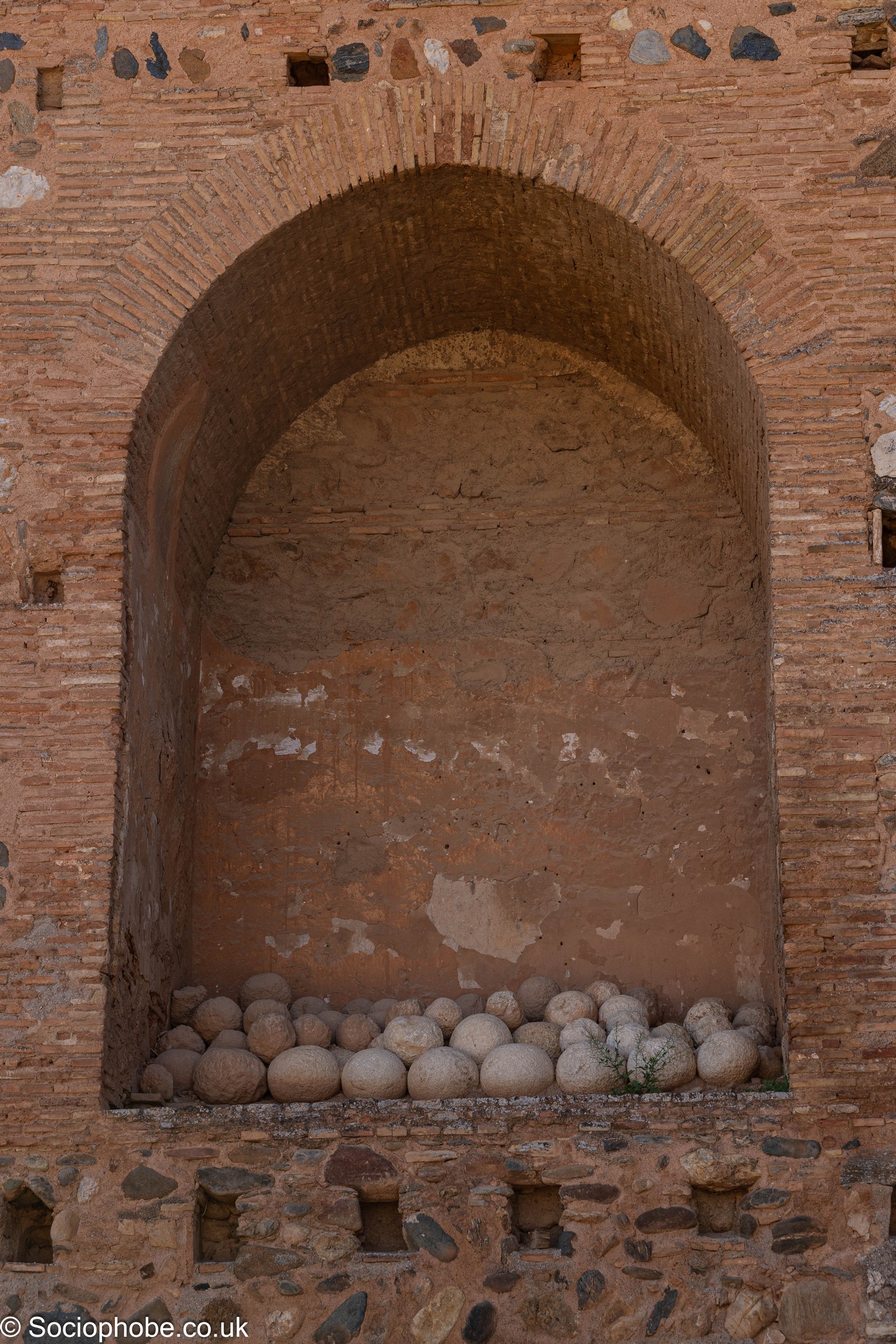


There are various towers you can climb to get views and this is a popular spot so can get busy. The towers, though impressive, were very dated by the time of the final siege and the modern Spanish cannons would have done immense damage if the city hadn’t surrendered so it was lucky they did as they architectural heritage has been preserved, even if the libraries were burned by the Inquisition.
Charles V Palace and Archeology Museum
Charles V was the grandson of Ferdinand and Isabella who captured the city from the Moors in 1492. His palace was a total contrast to the Moorish buildings; where they were graceful and delicate this building was a brutal dog, marking its territory on the Islamic Alhambra. The exterior was particularly ugly and the interior marginally better, with 2 levels of circular colonnades. There was very little ornamentation so we actually spent around 5 minutes there.
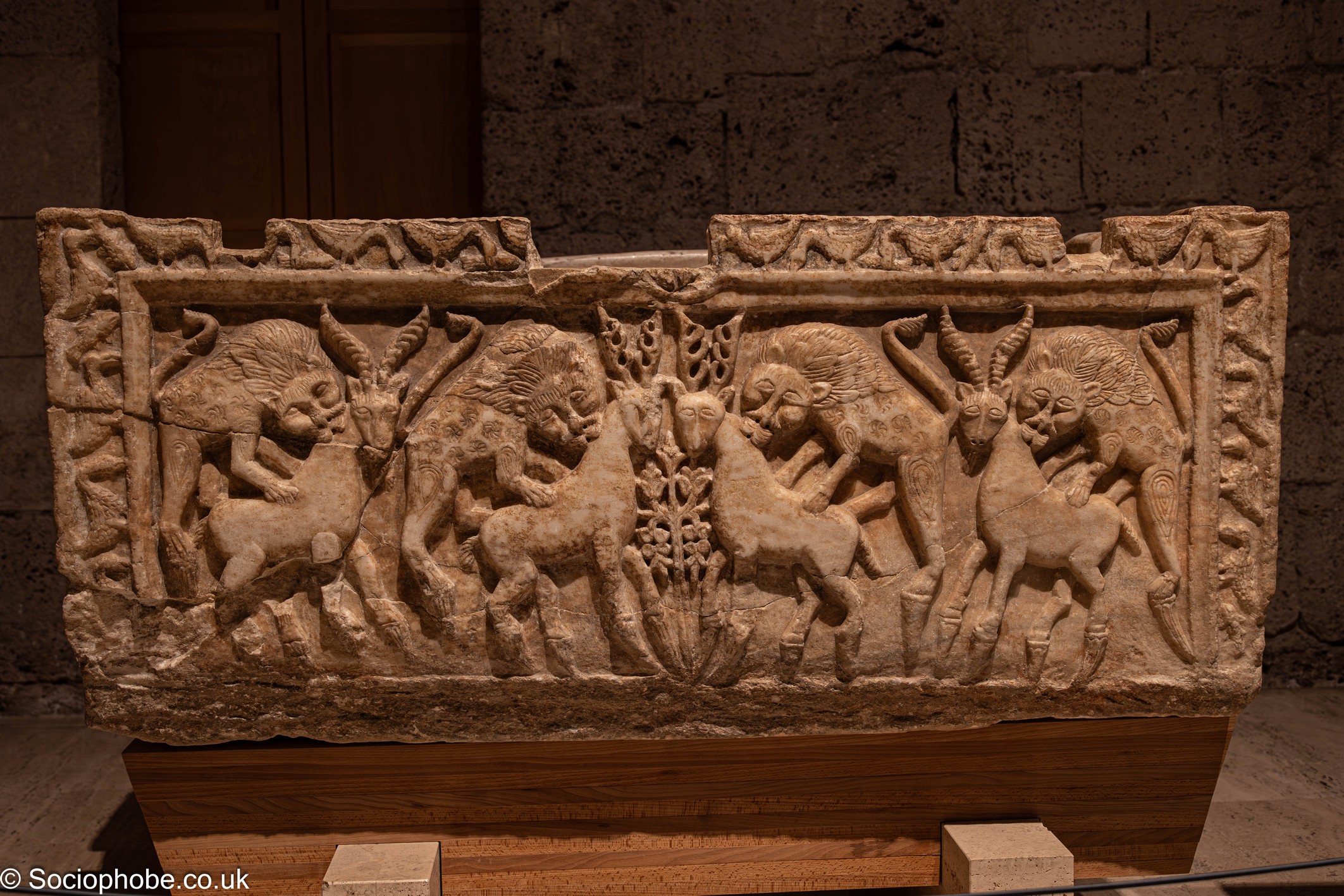


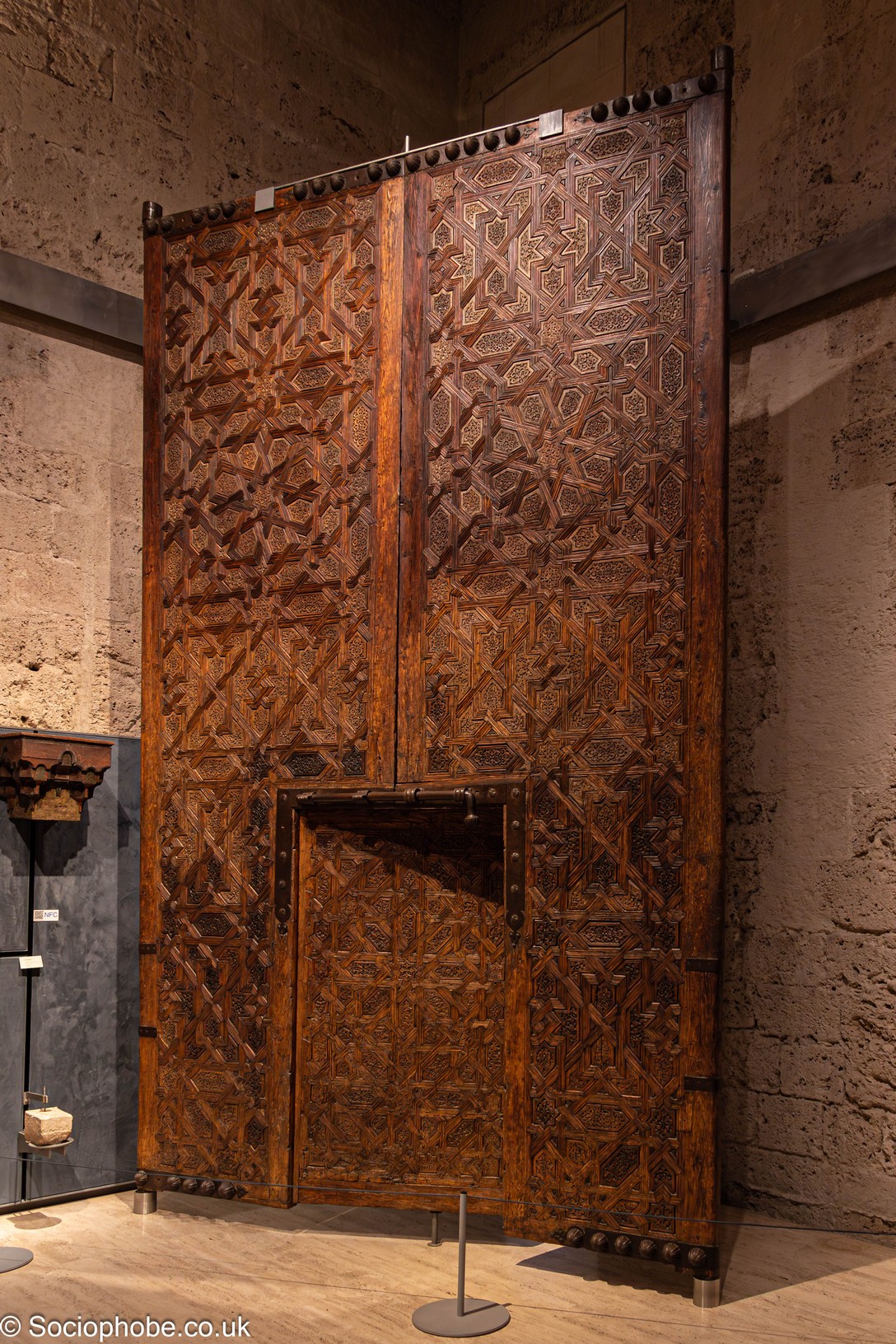
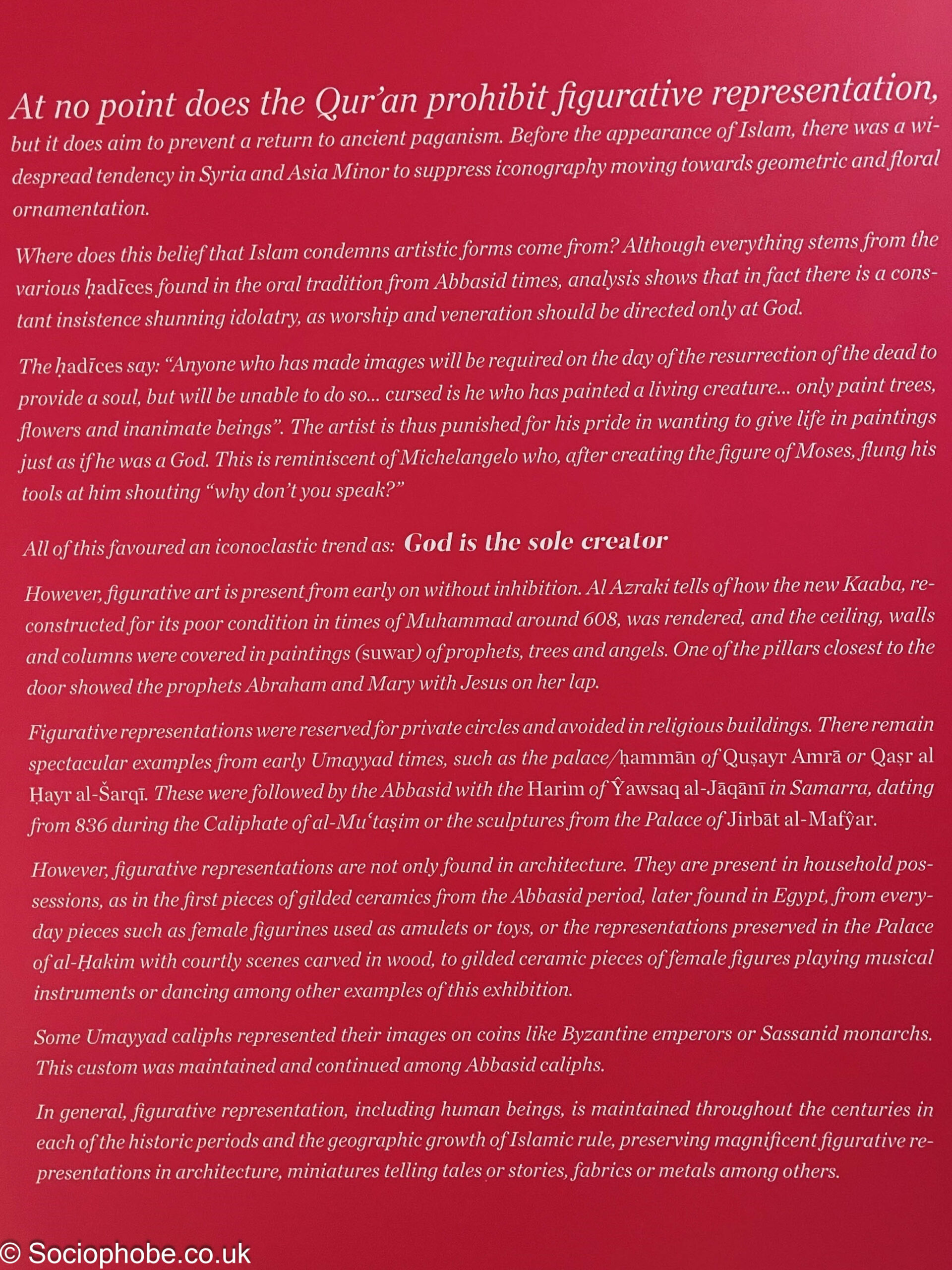
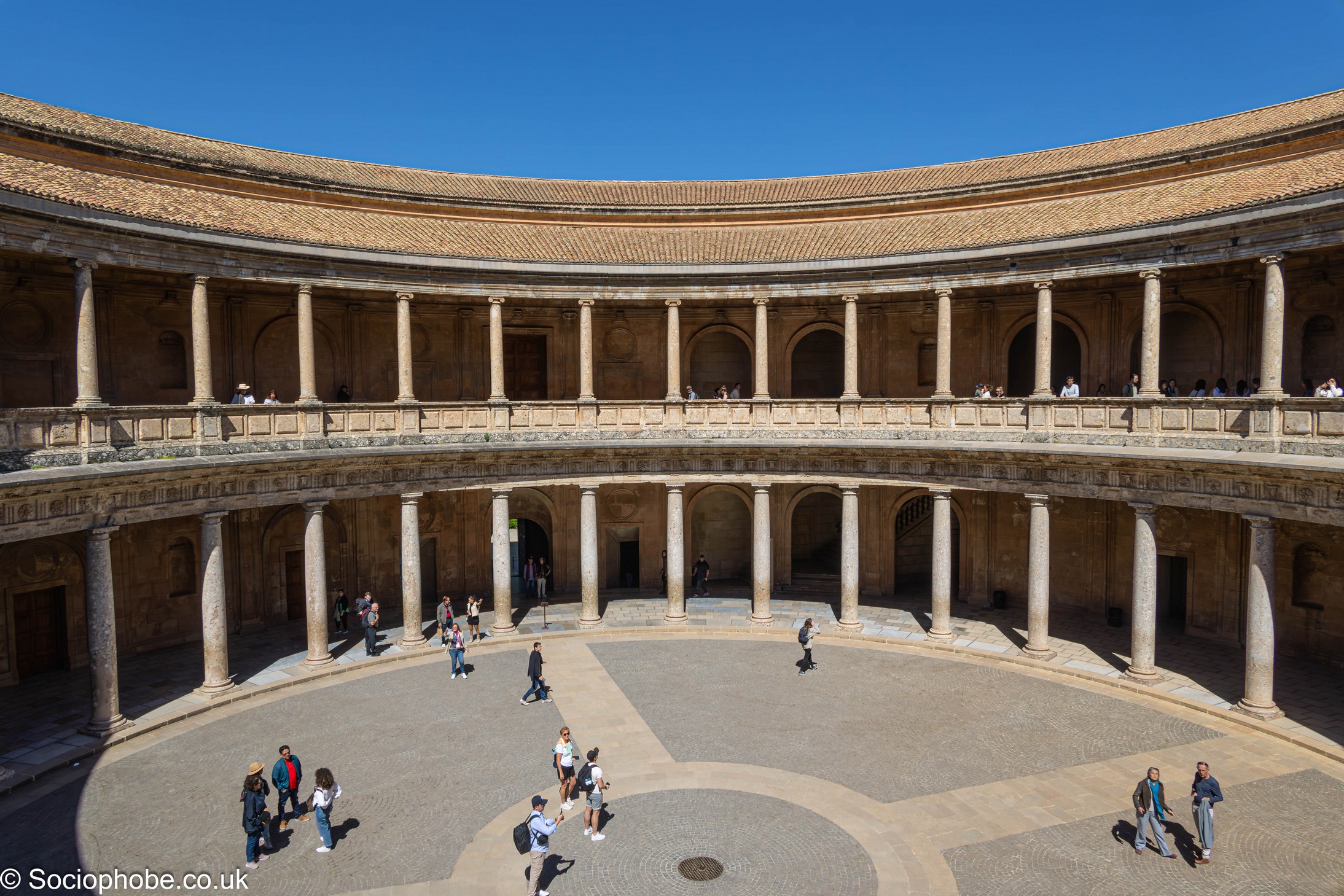
We did visit the archeology museum on the ground floor before leaving though and that was excellent, with information on the Visigothic and Muslim kingdoms of Spain and trade, money and culture. A lot of information was in English and there were some fabulous exhibits.
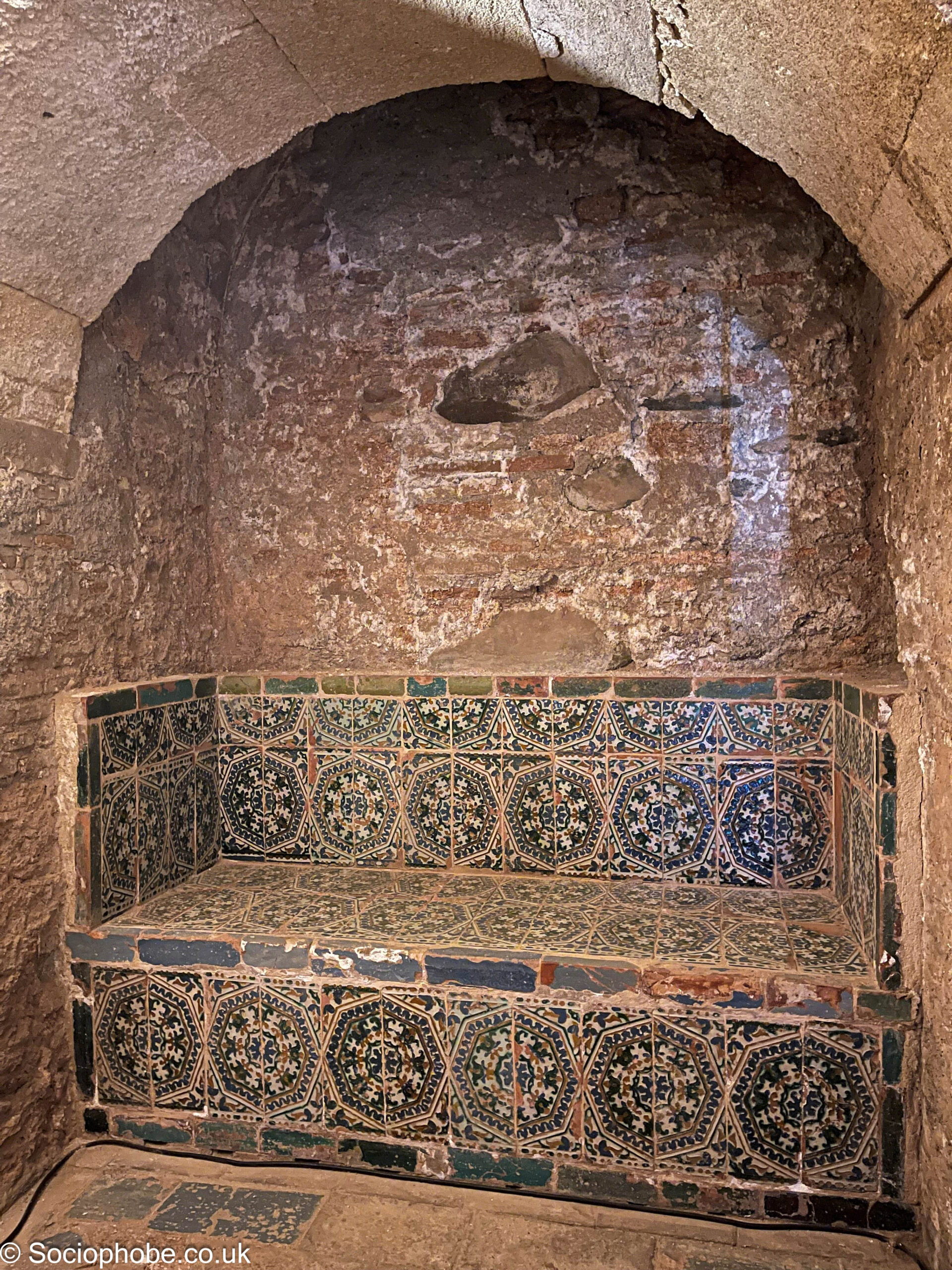
Our final stop on this visit was our timed entry to the Nasrid Palaces. This was the palace complex built for the Moslem rulers of Granada over a period of about 200 years. Despite the Kingdom of Granada being relatively poor by this stage the palaces are still amongst the most wonderful buildings I have ever visited. Almost every surface was decorated and not like the hulking edifice of Charles V Palace but with an awe inspiring beauty and grace.


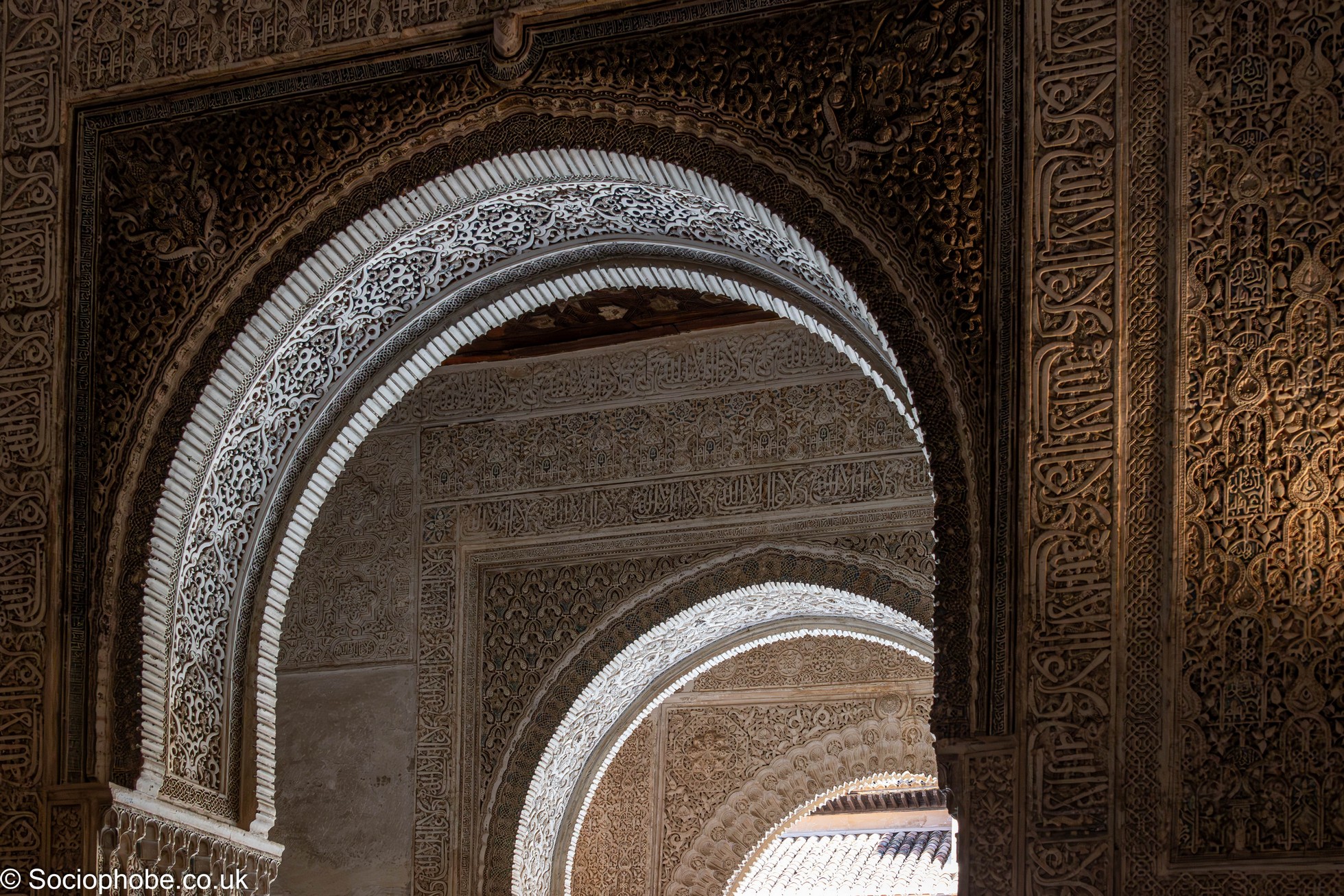
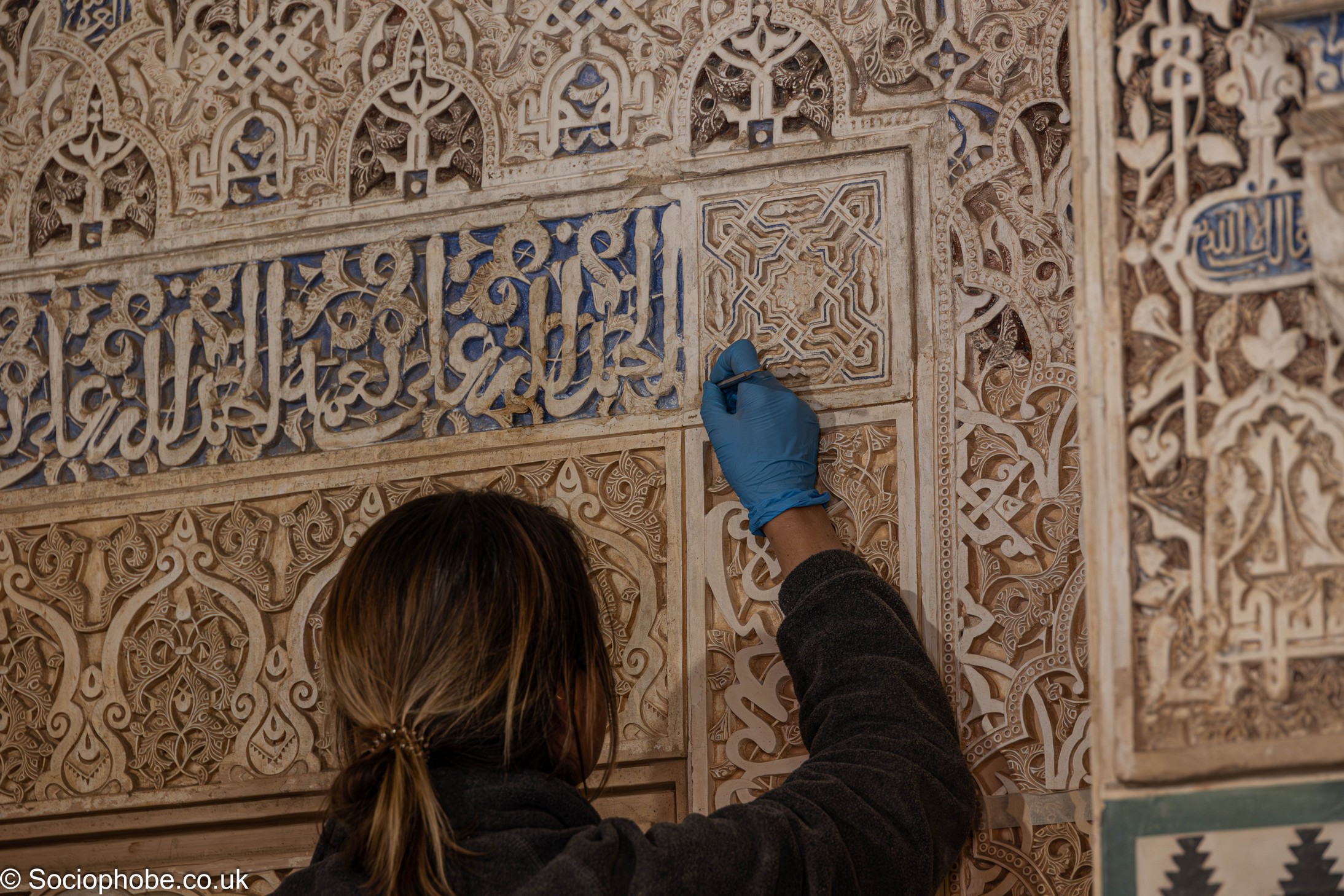
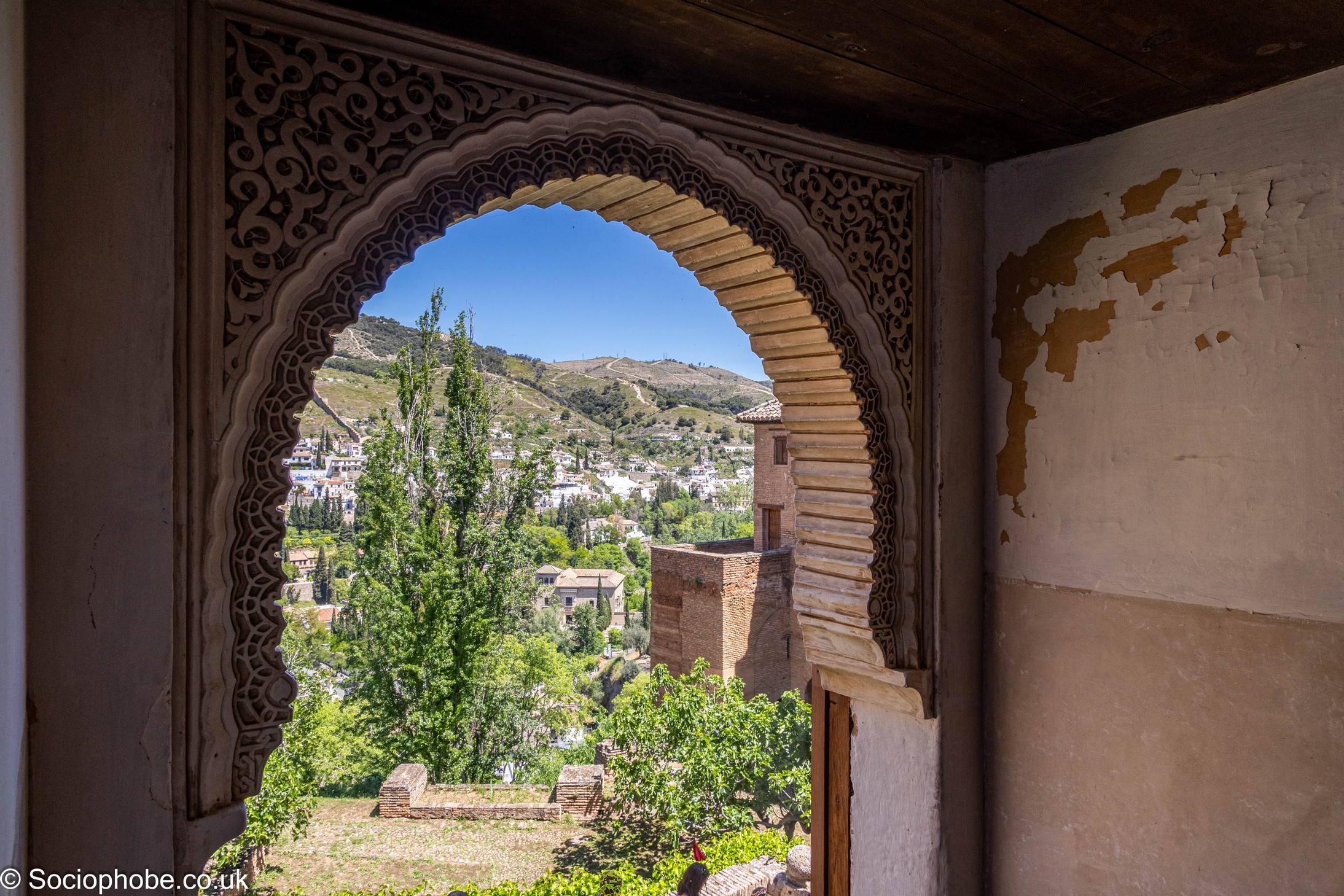
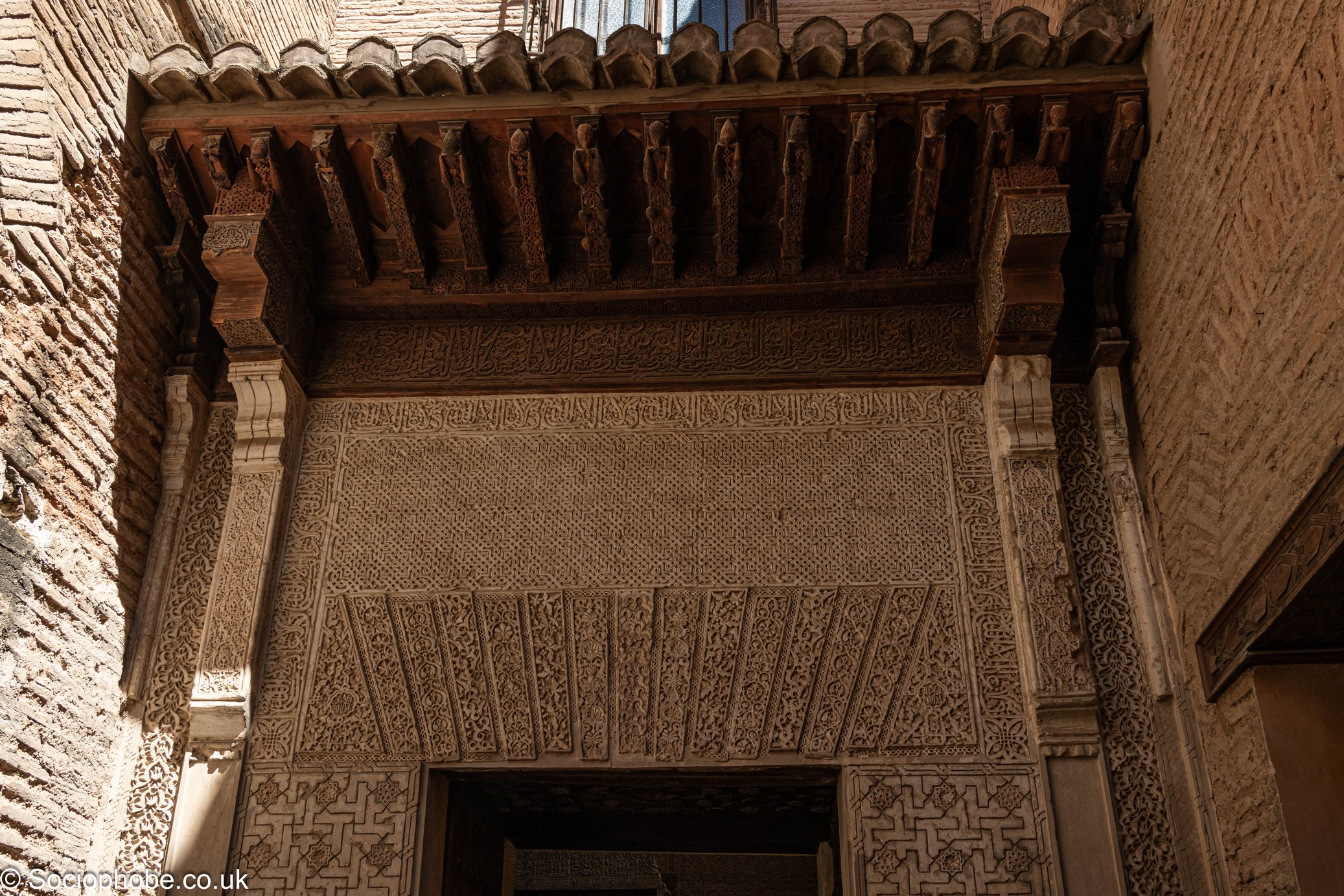
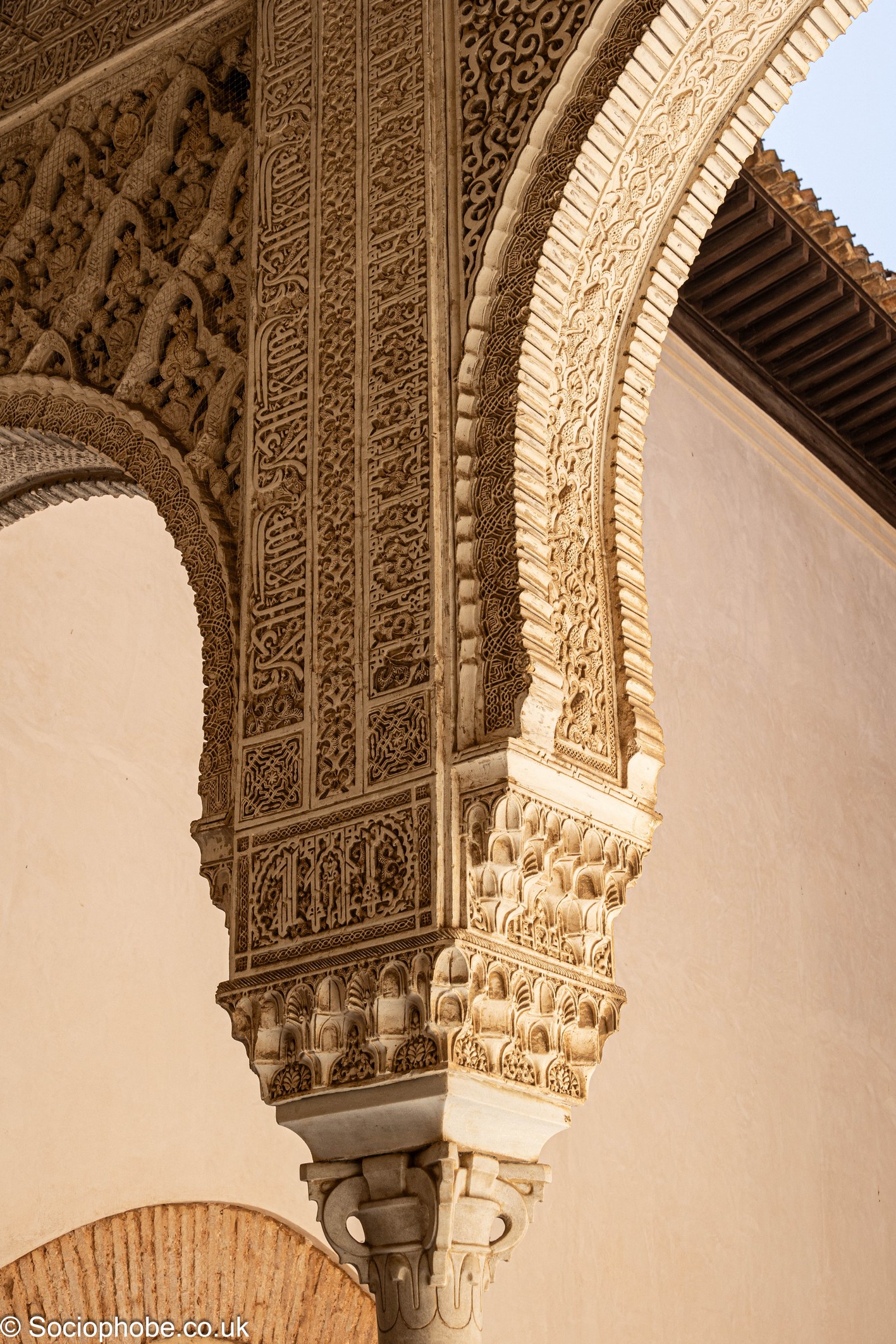
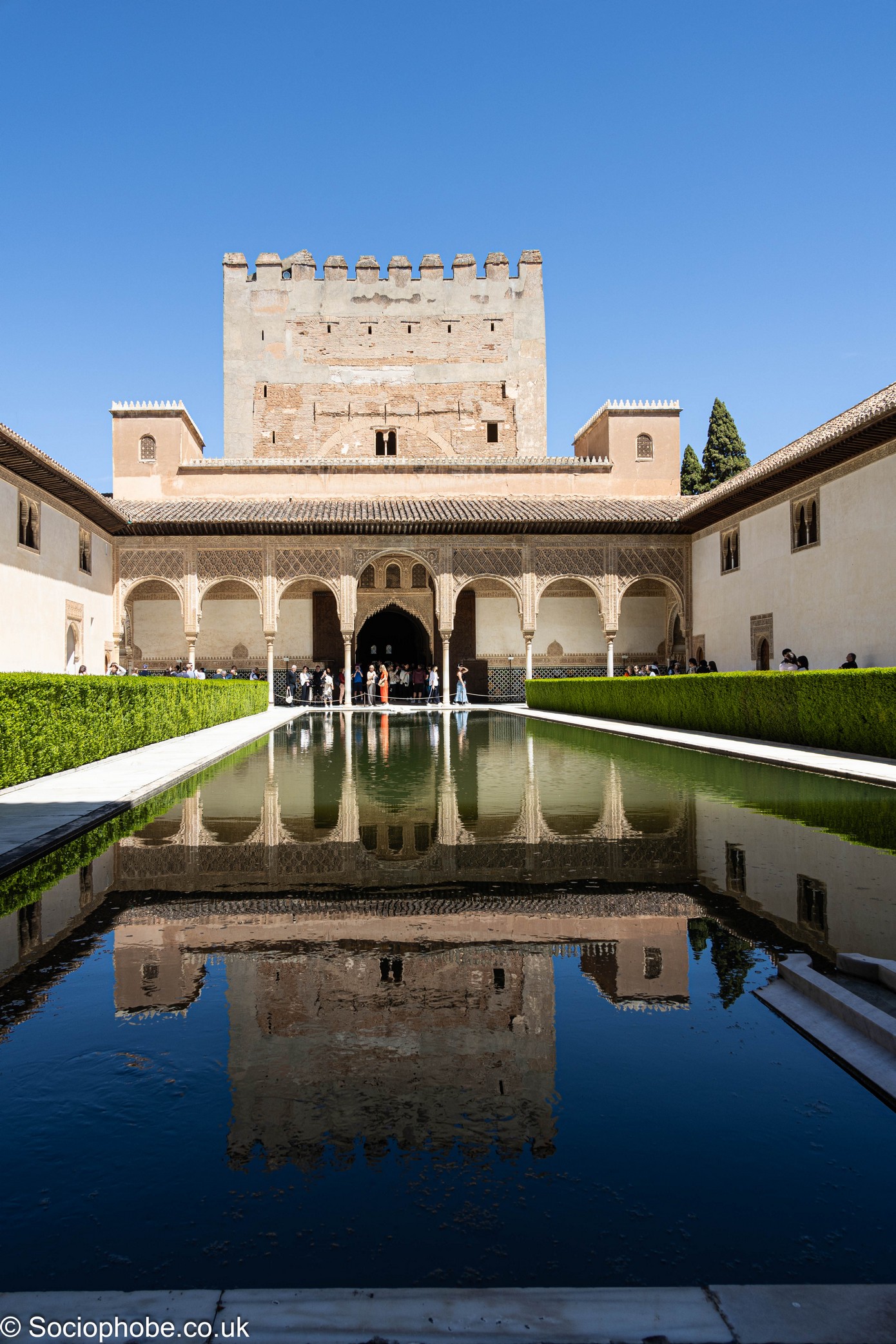
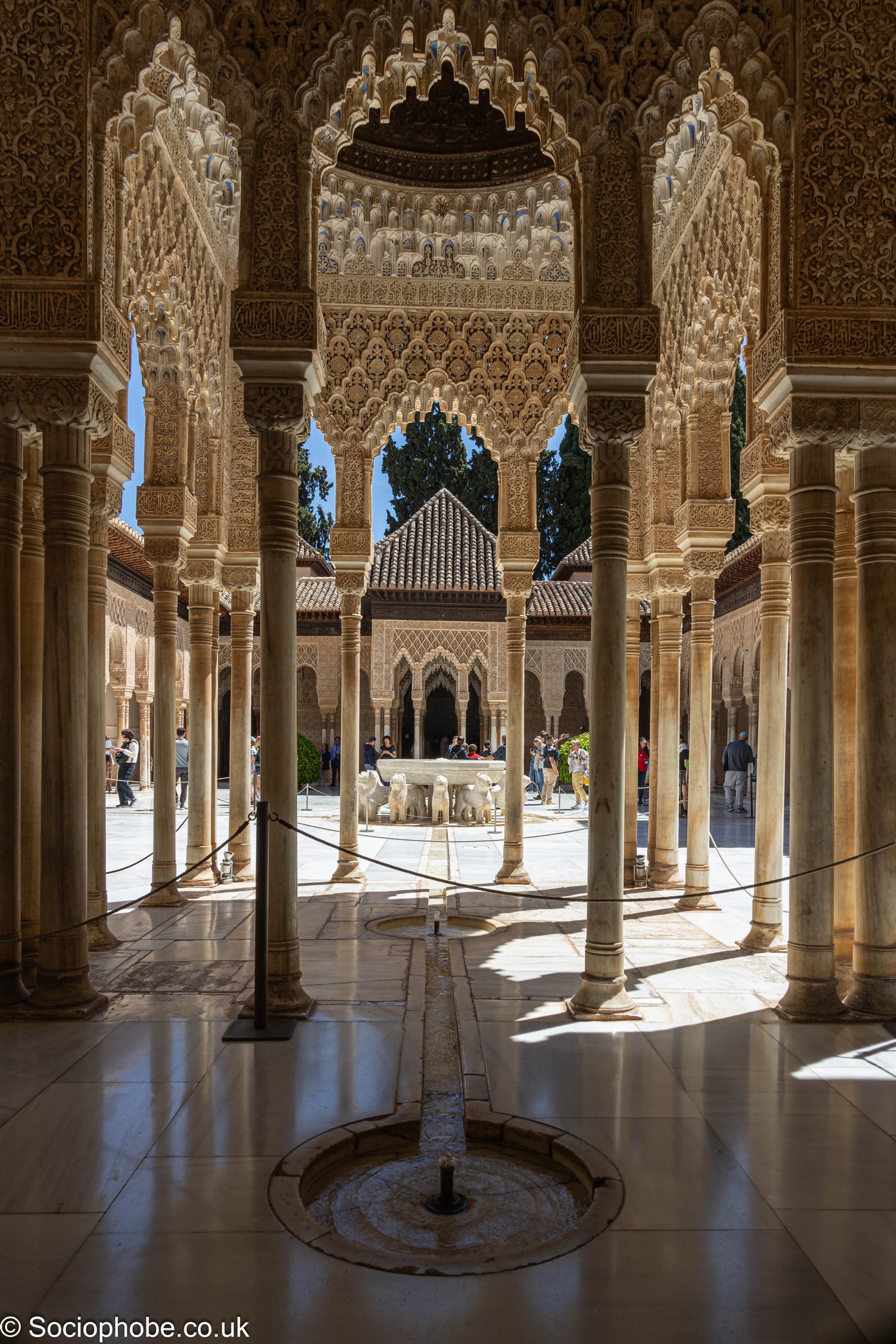

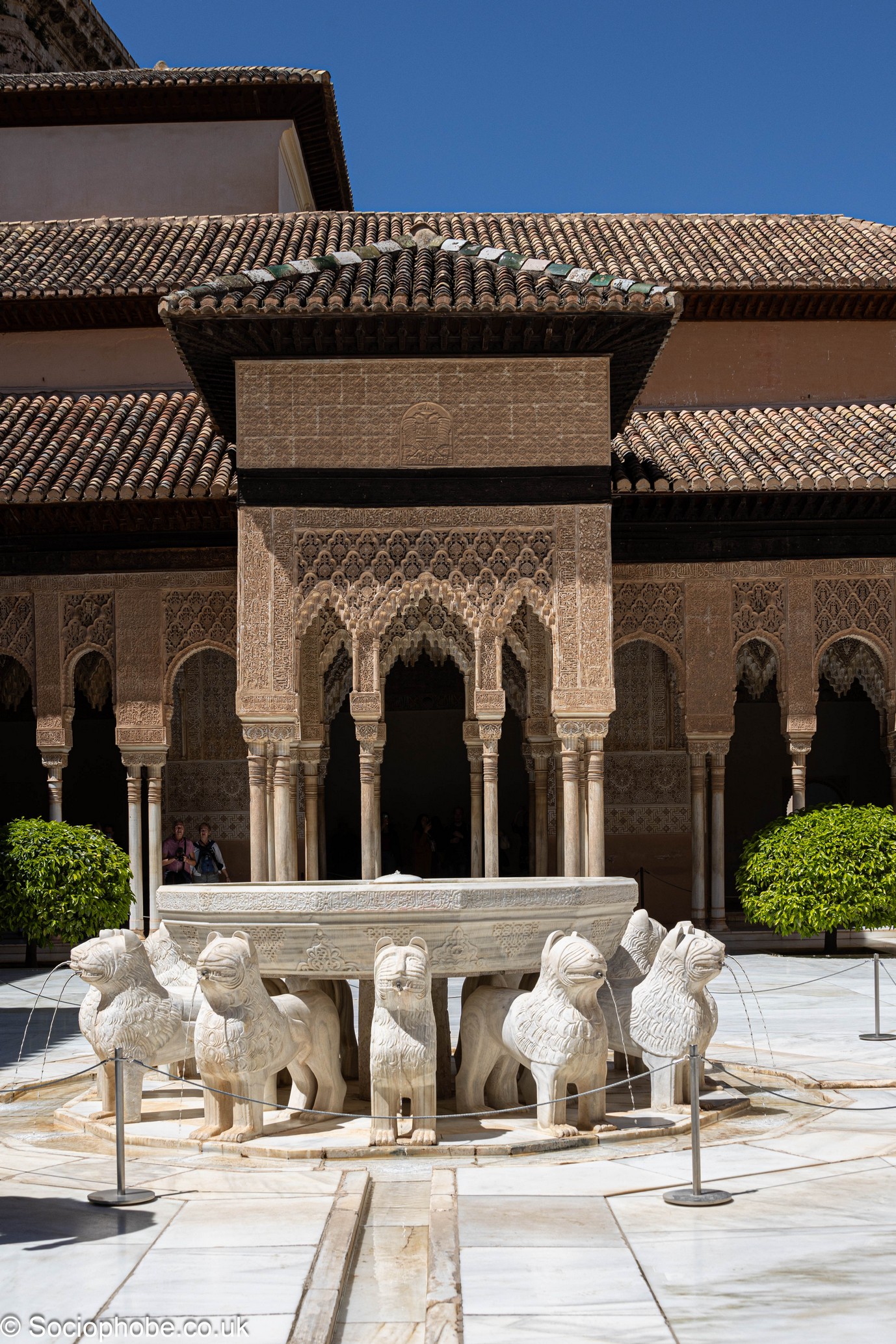
We then left the Alhambra and walked down the hill, stopping at a cafe for cheese omelette and a juice before returning to the hotel. Deb had a snooze while I started on the huge number of photos I’d taken.
Cuarto Real de Santo Domingo
When she woke up we walked to Cuarto Real de Santa Domingo, the ruins of one of the earliest Nasrid palaces in the city, dating from the 13th century. The hall (intact) became part of a Christian convent after the 1492 conquest and was even lived in by Torquemada, founder of the Inquisition. There was a nice AV presentation and although we didn’t spend that long it was well worth the €2 entry fee.
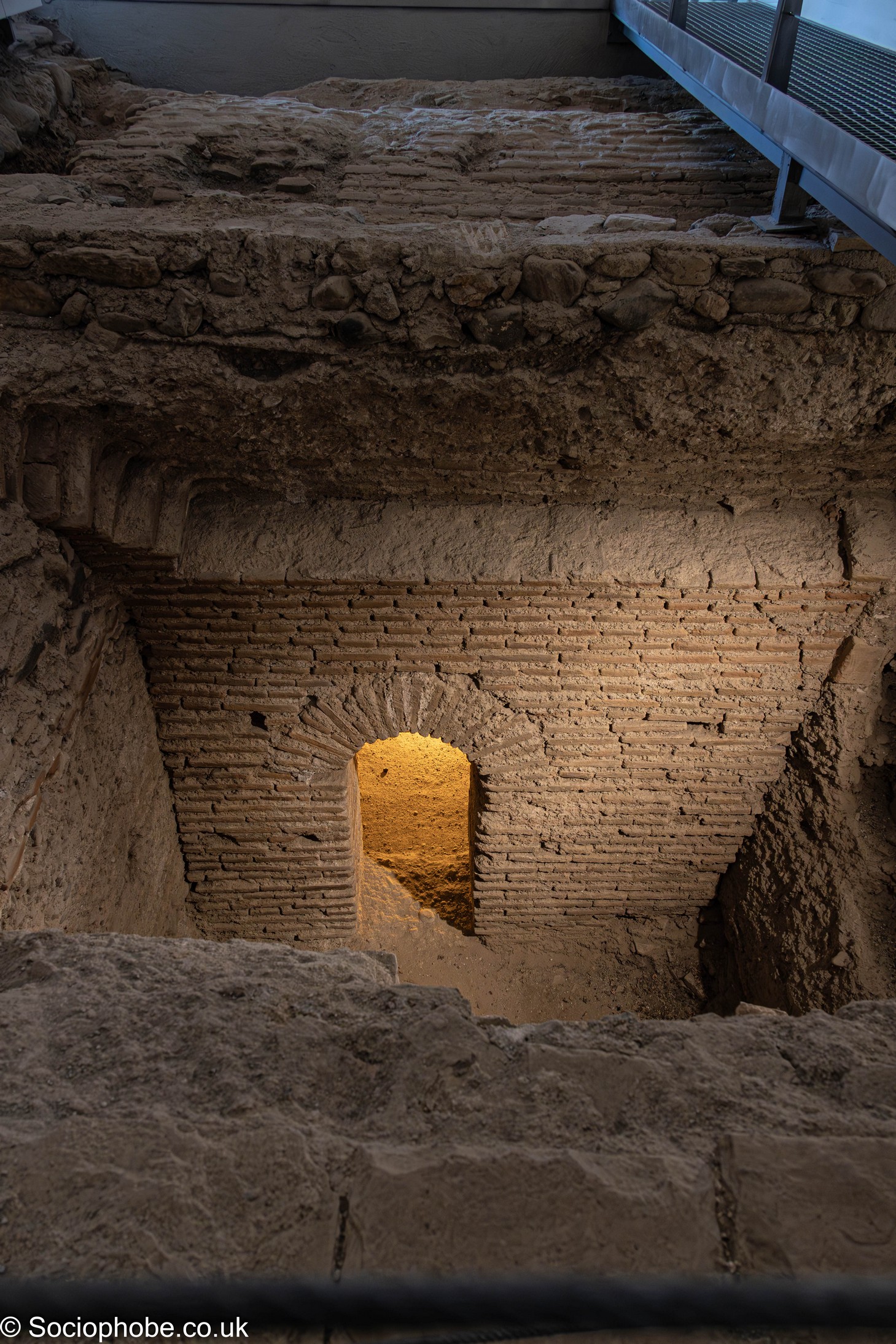
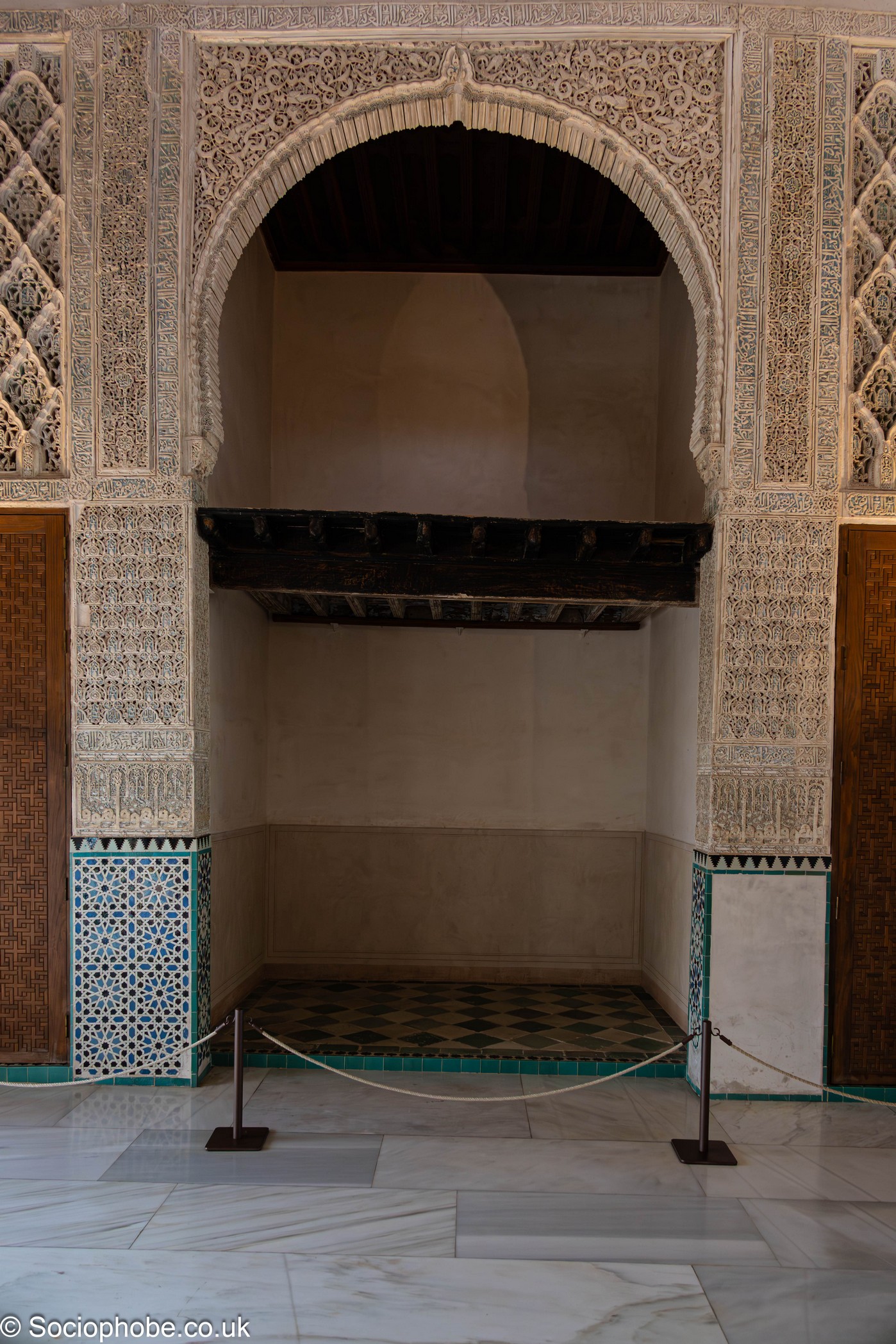
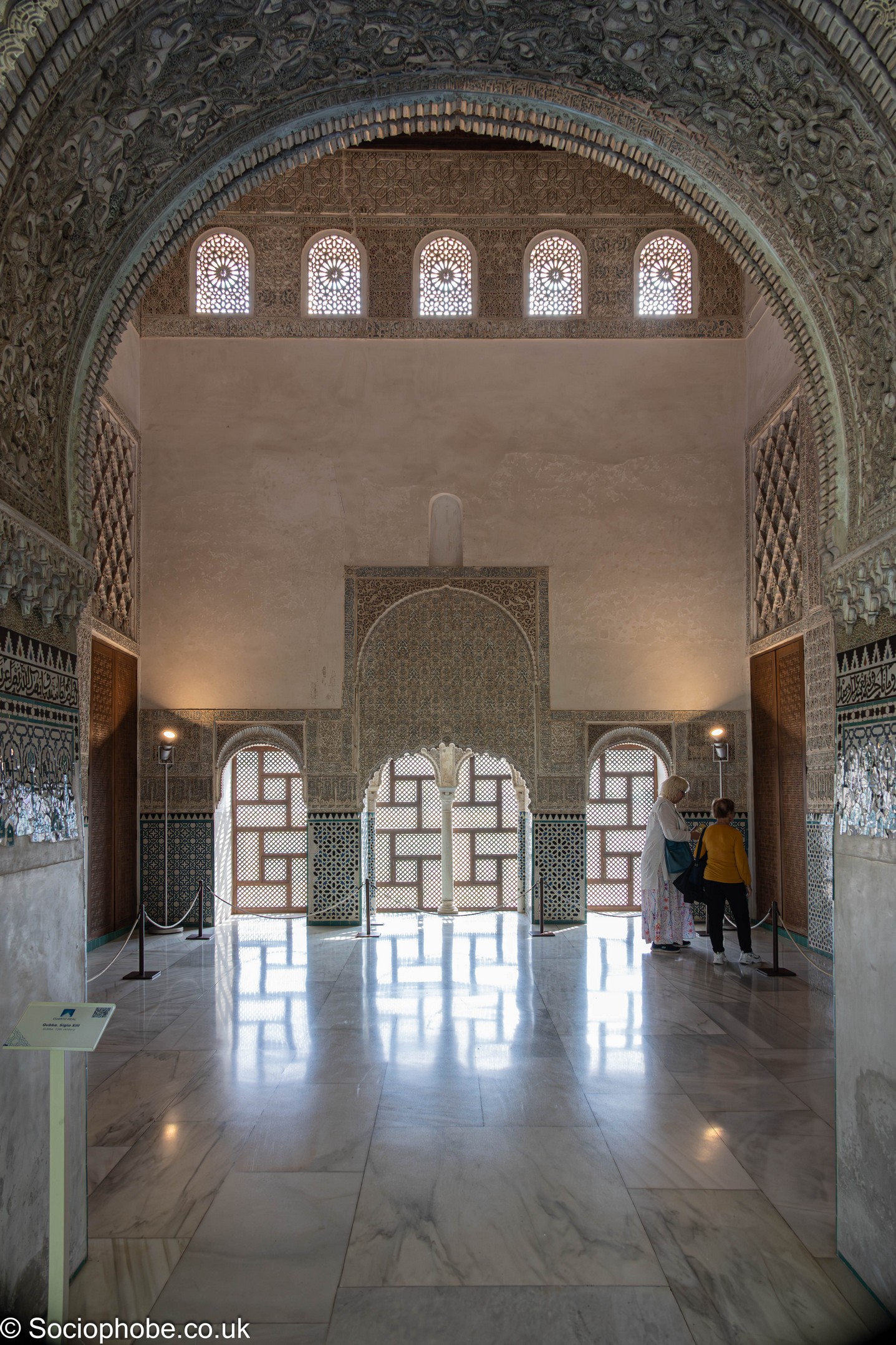
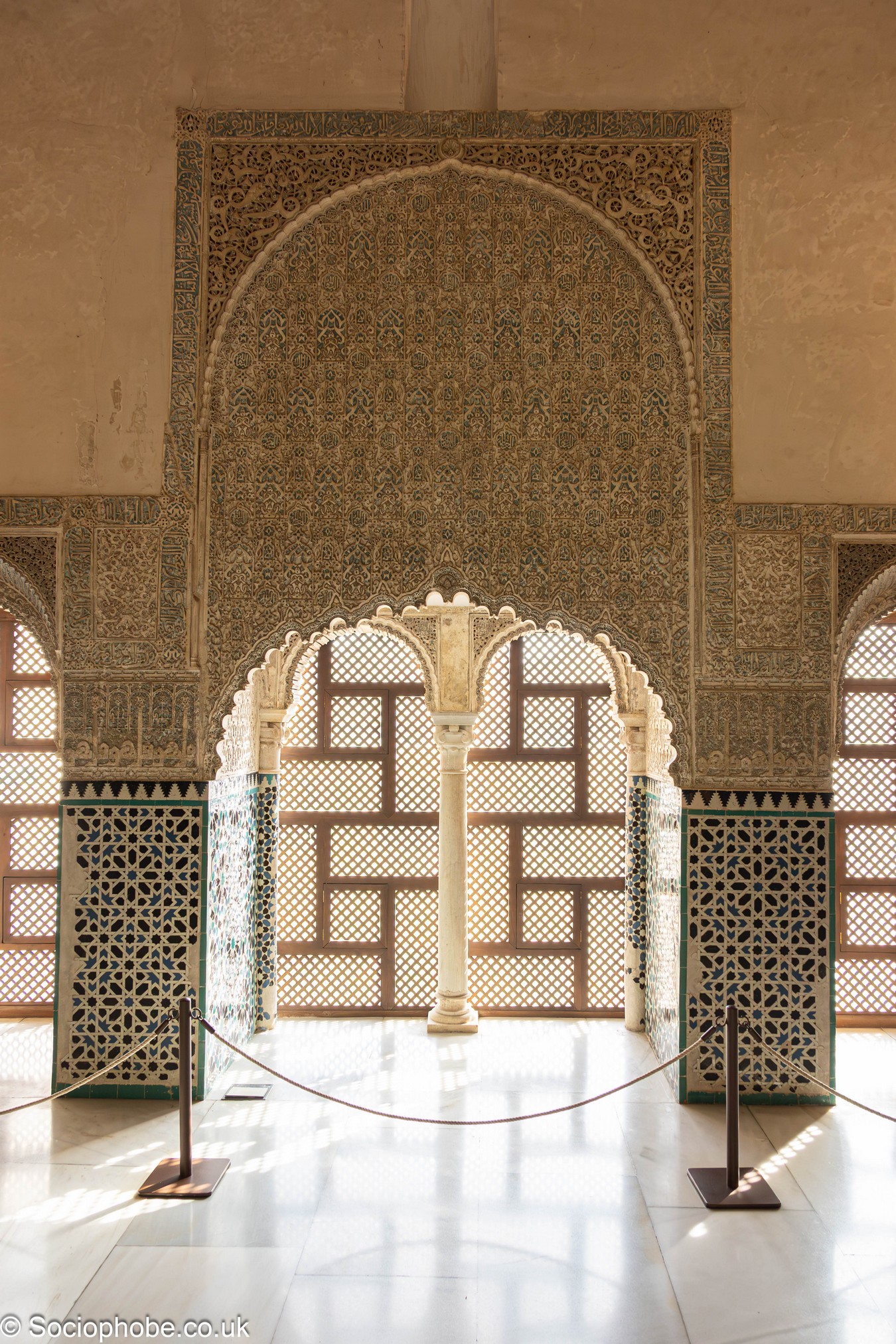
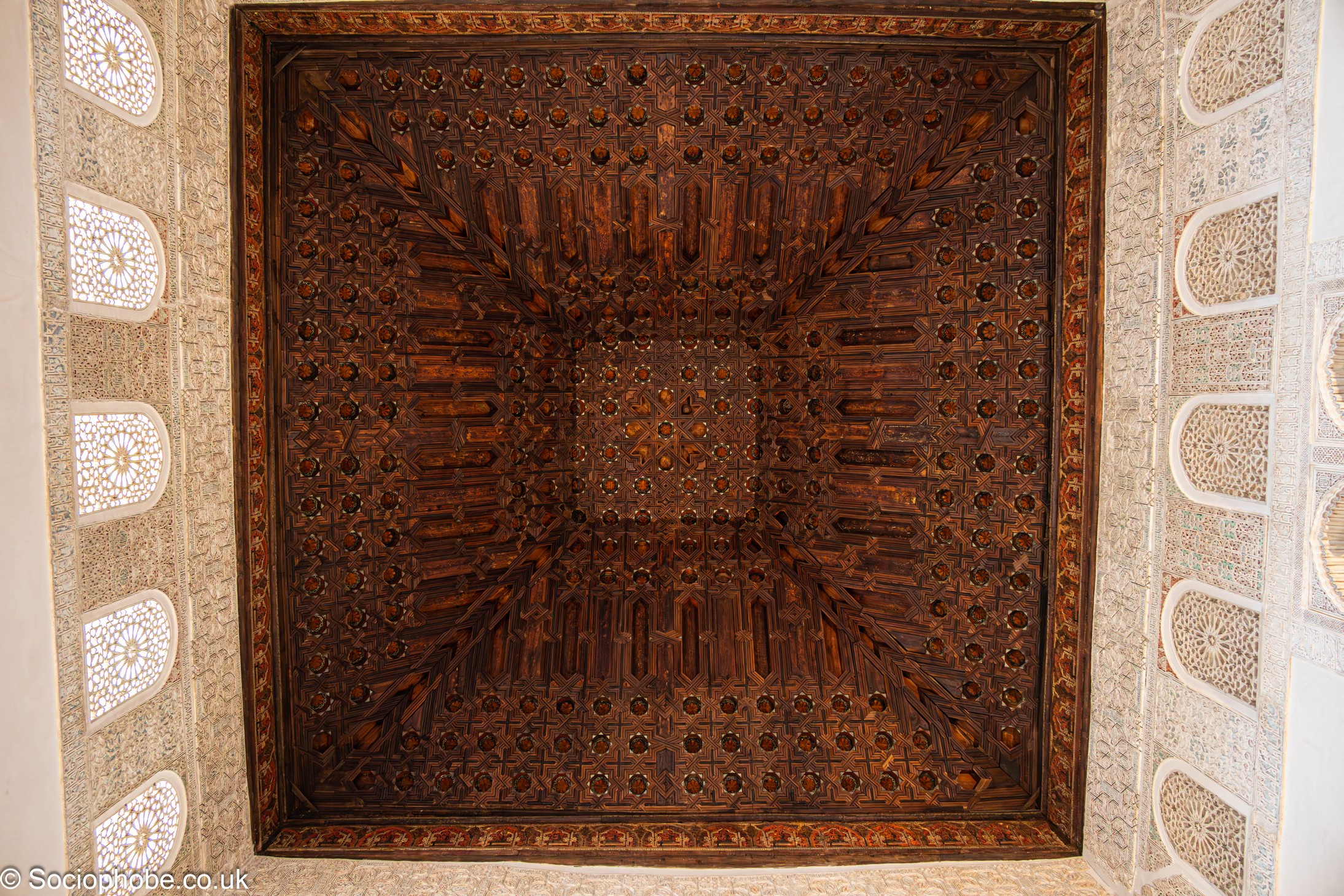
We then walked home via Genil Navas – where we had a great tapas followed by a fabulous cheesecake and then stopped again before getting back to the hotel to have a gelato. The fun filled remains of the evening was spent sorting the photos.
Day 3 – Granada Cathederal, Monastery, viewpoints etc
We woke at 7 and had a nice breakfast but the restaurant was very busy even though we arrived just before it opened. It was another sunny day and ideal mid 20s temperature for the four places we’d booked to visit.
Monasterio de San Jeronimo
First stop was about 15 minutes walk, the Monasterio de San Jeronimo, the first Christian building built after the conquest of Granada. It was very baroque, dark, gaudy and oppressive, a complete contrast to yesterdays buildings! The sacristy was definitley a ‘wow’ room, beautifully decorated and bright with colour and decoration with a magnificently restored altarpiece. The cloisters had a lovely orange grove in the centre but were otherwise surprisingly limited in decoration.
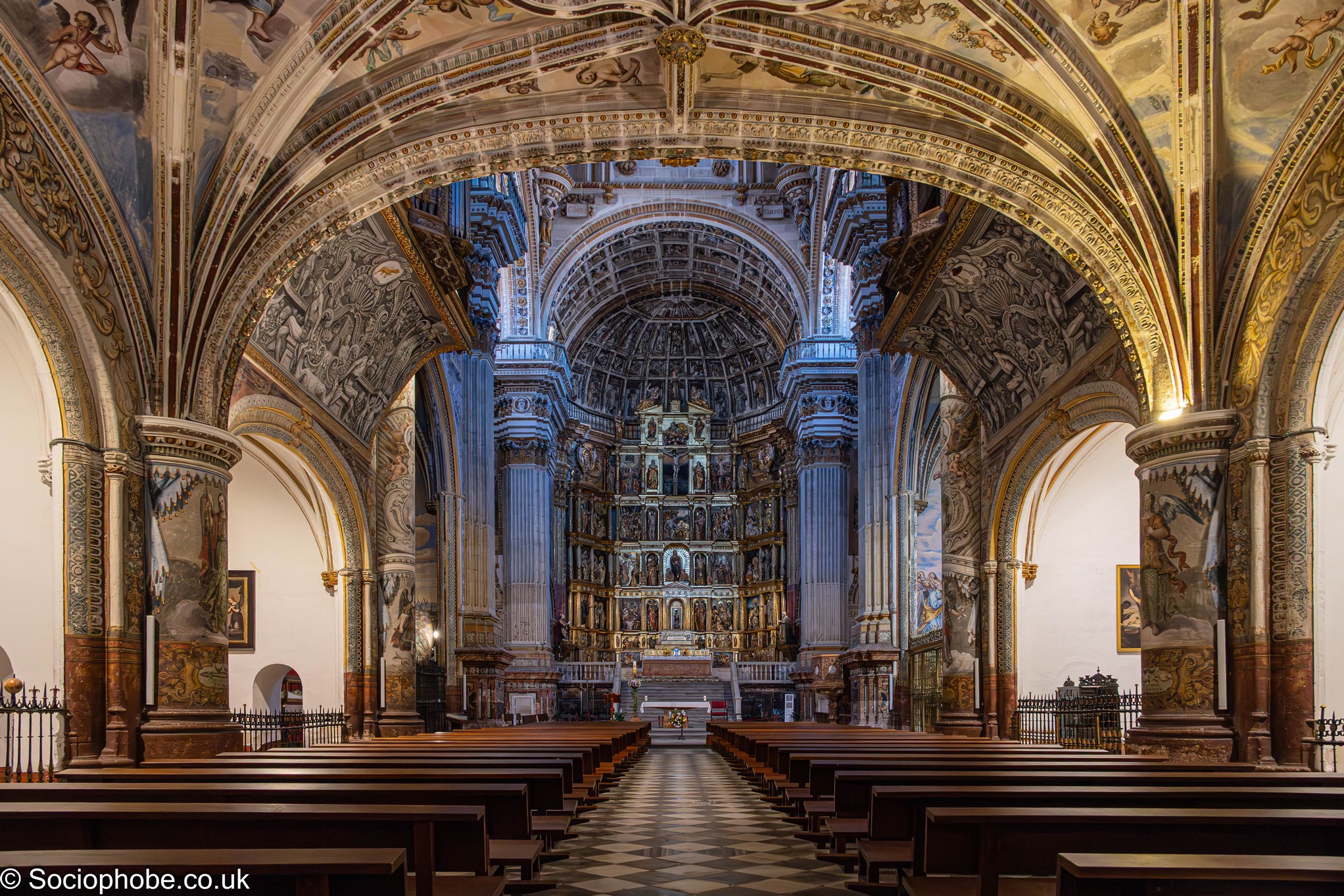

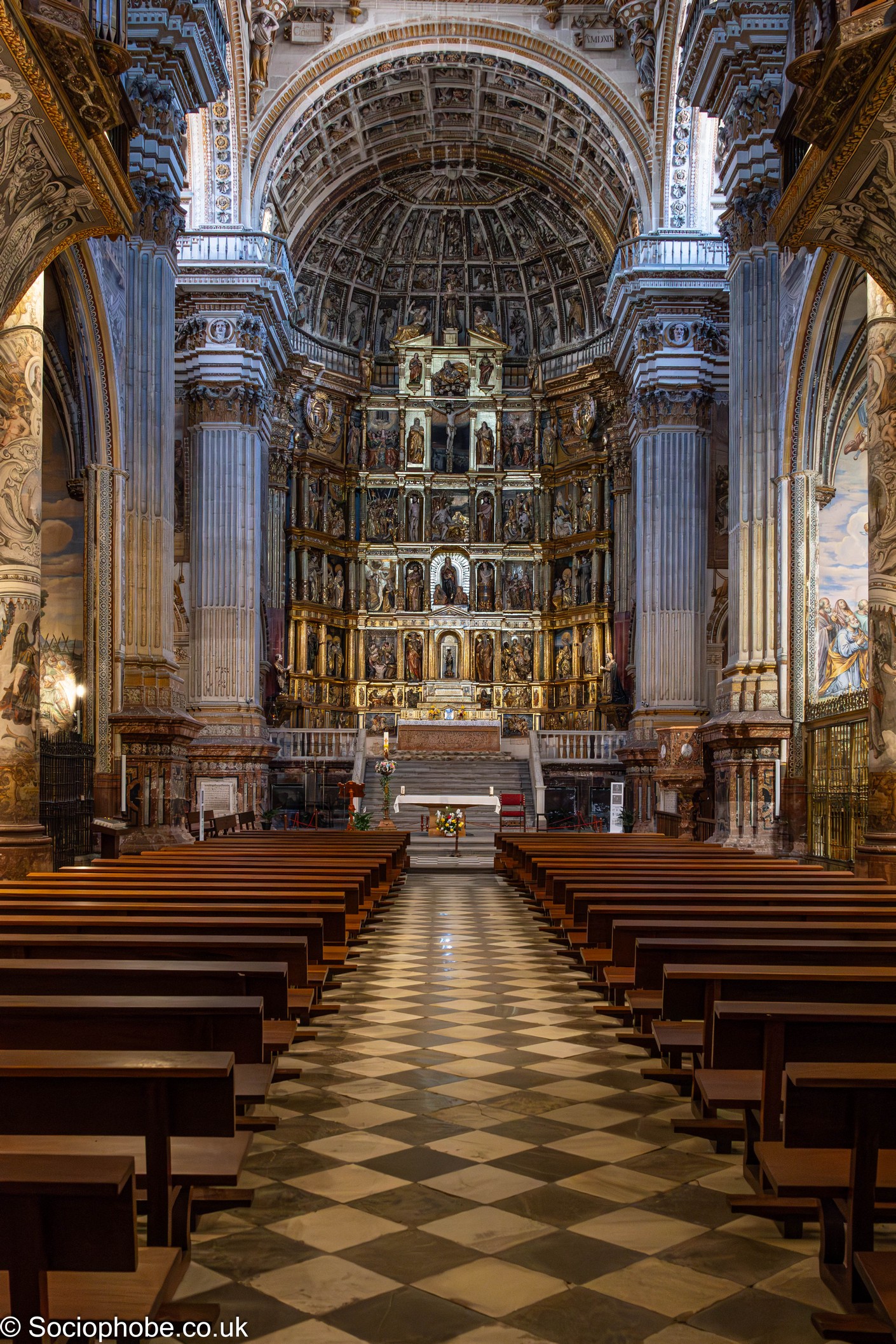
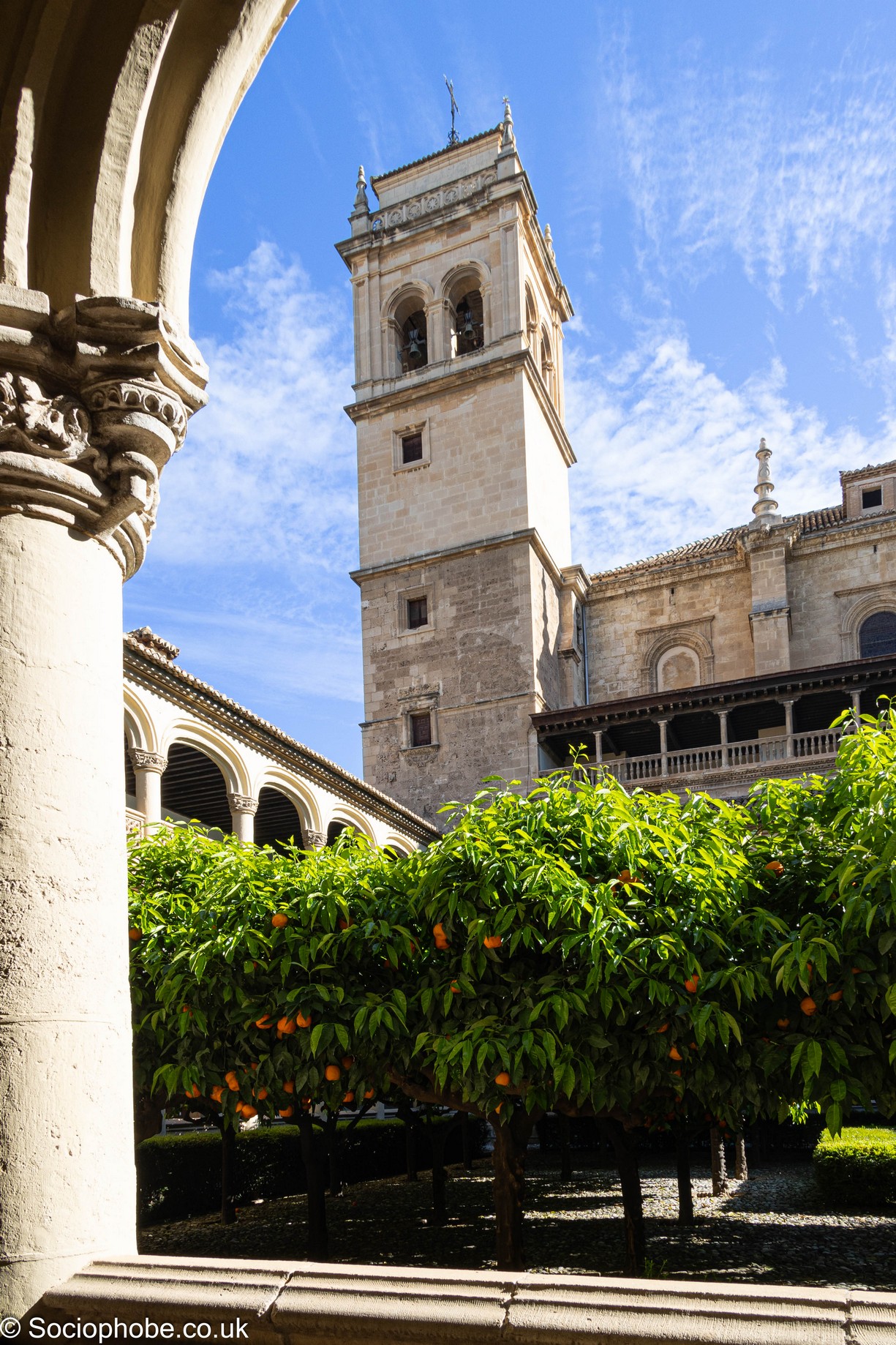
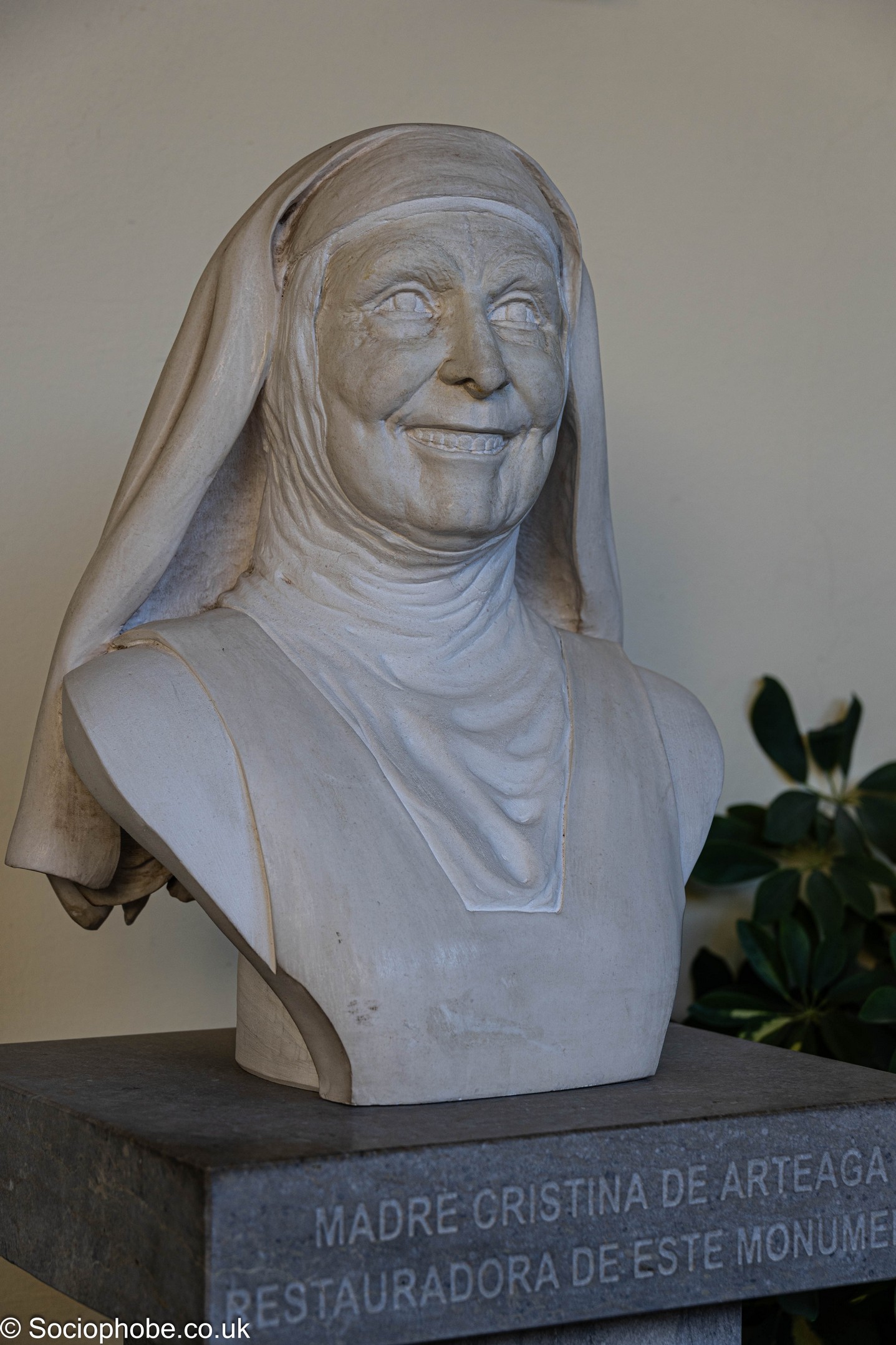
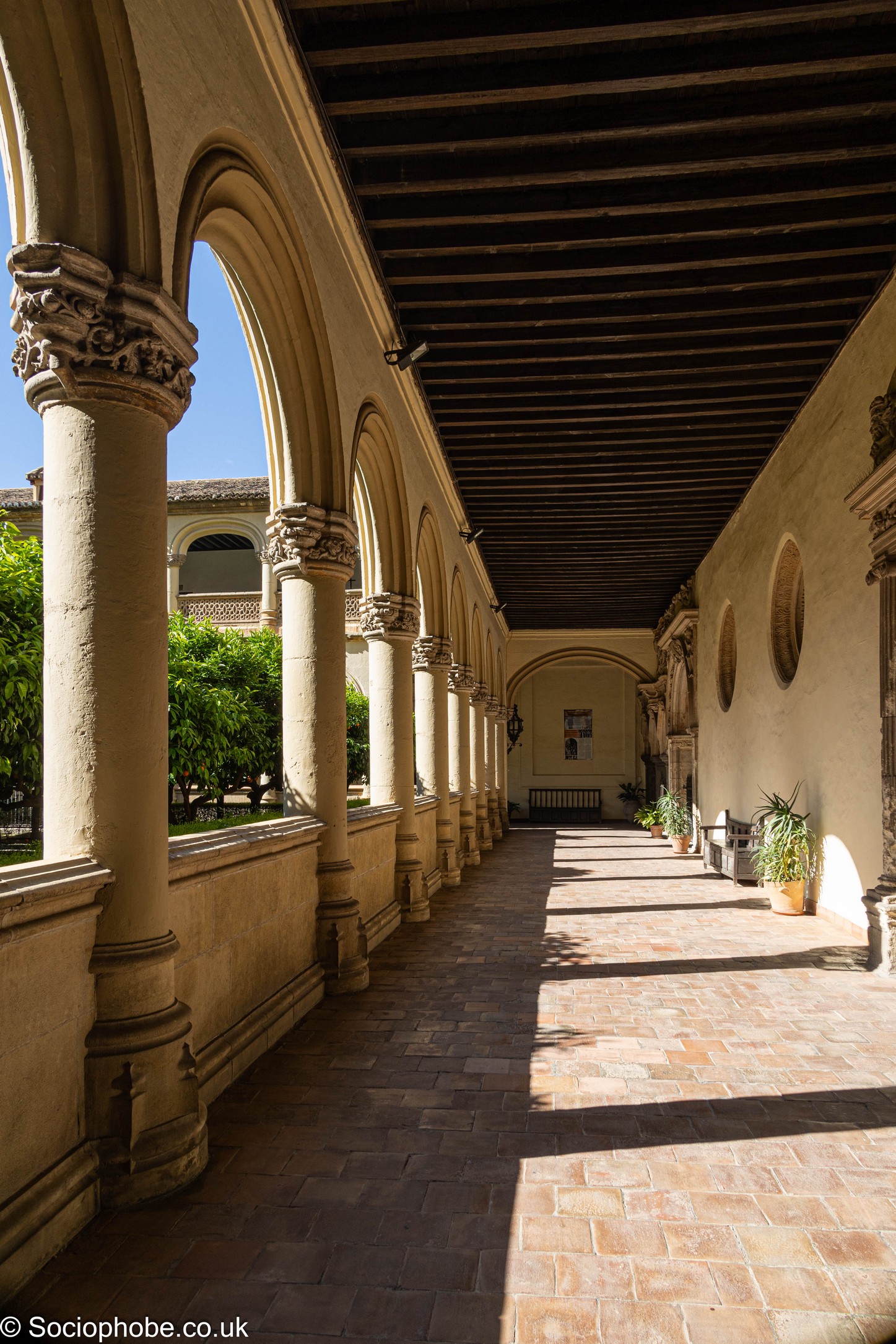
In the nineteenth century Spain underwent a mini reformation and a lot of church property was seized by the state and then fell into decay. This monastery was also badly damaged by the French during the Peninsula War who demolished the tower, looted the buildings and then used them as a barracks. We spent about 20 minutes in the monastery complex.
San Nicolas Mirador and Tower
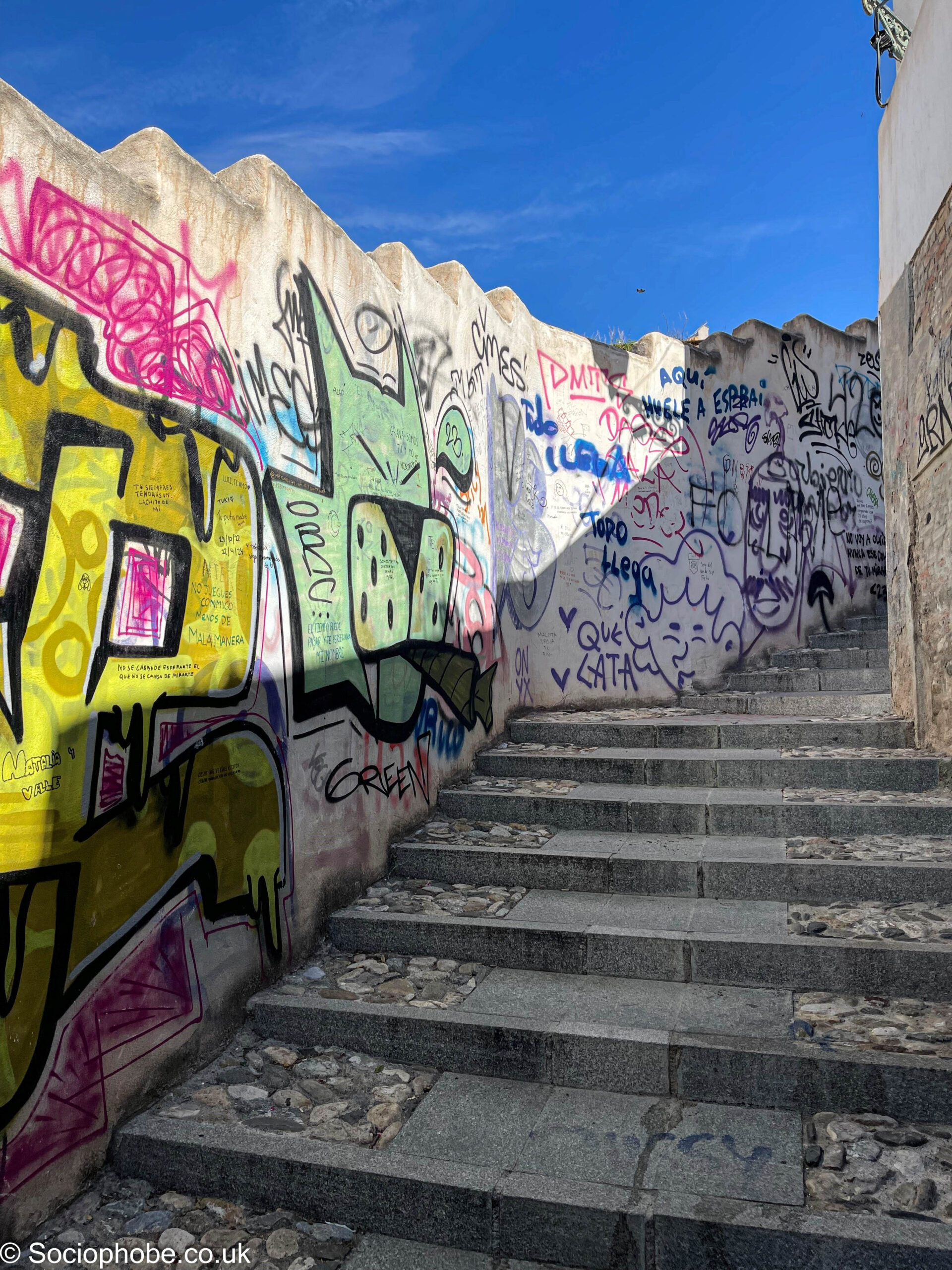
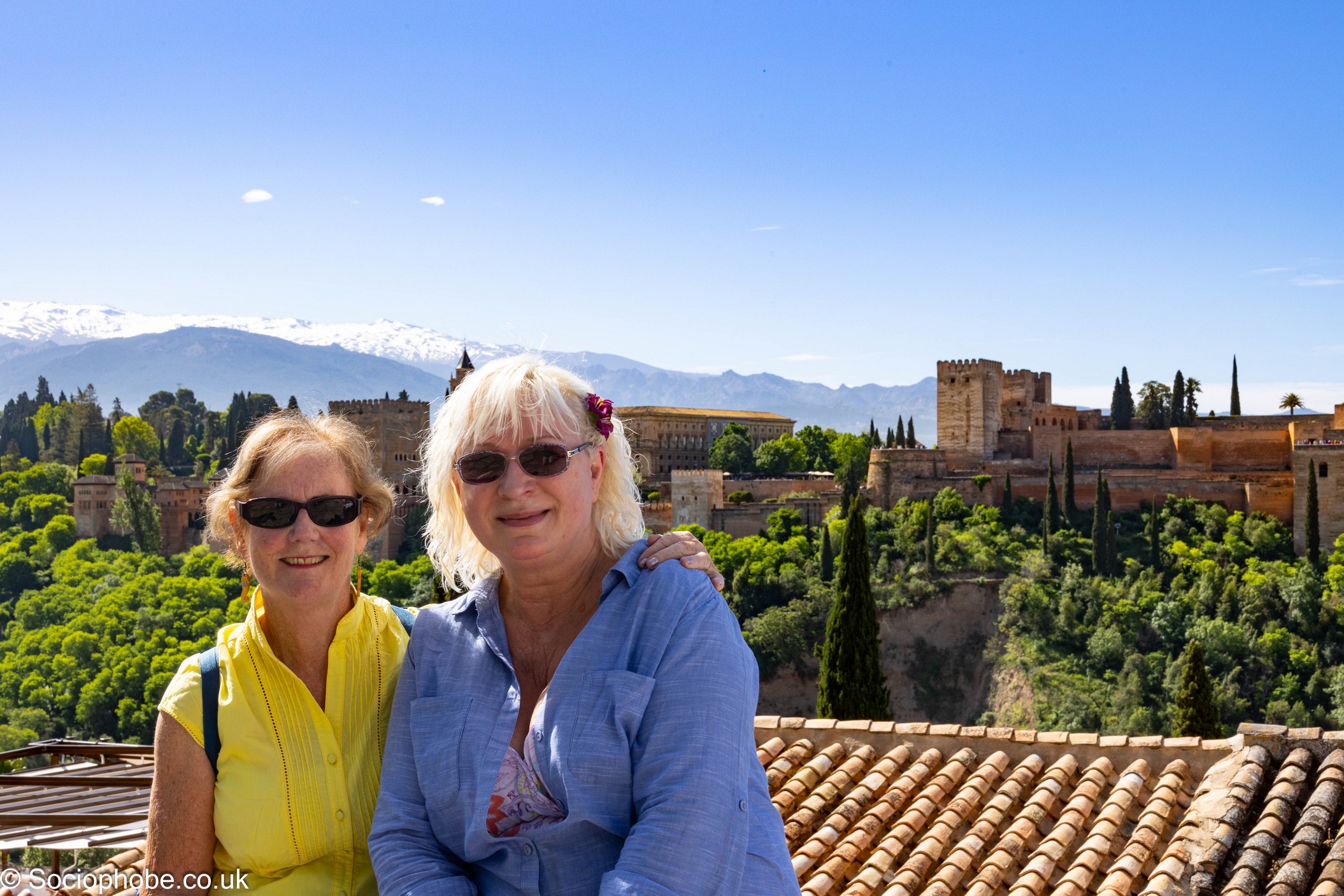
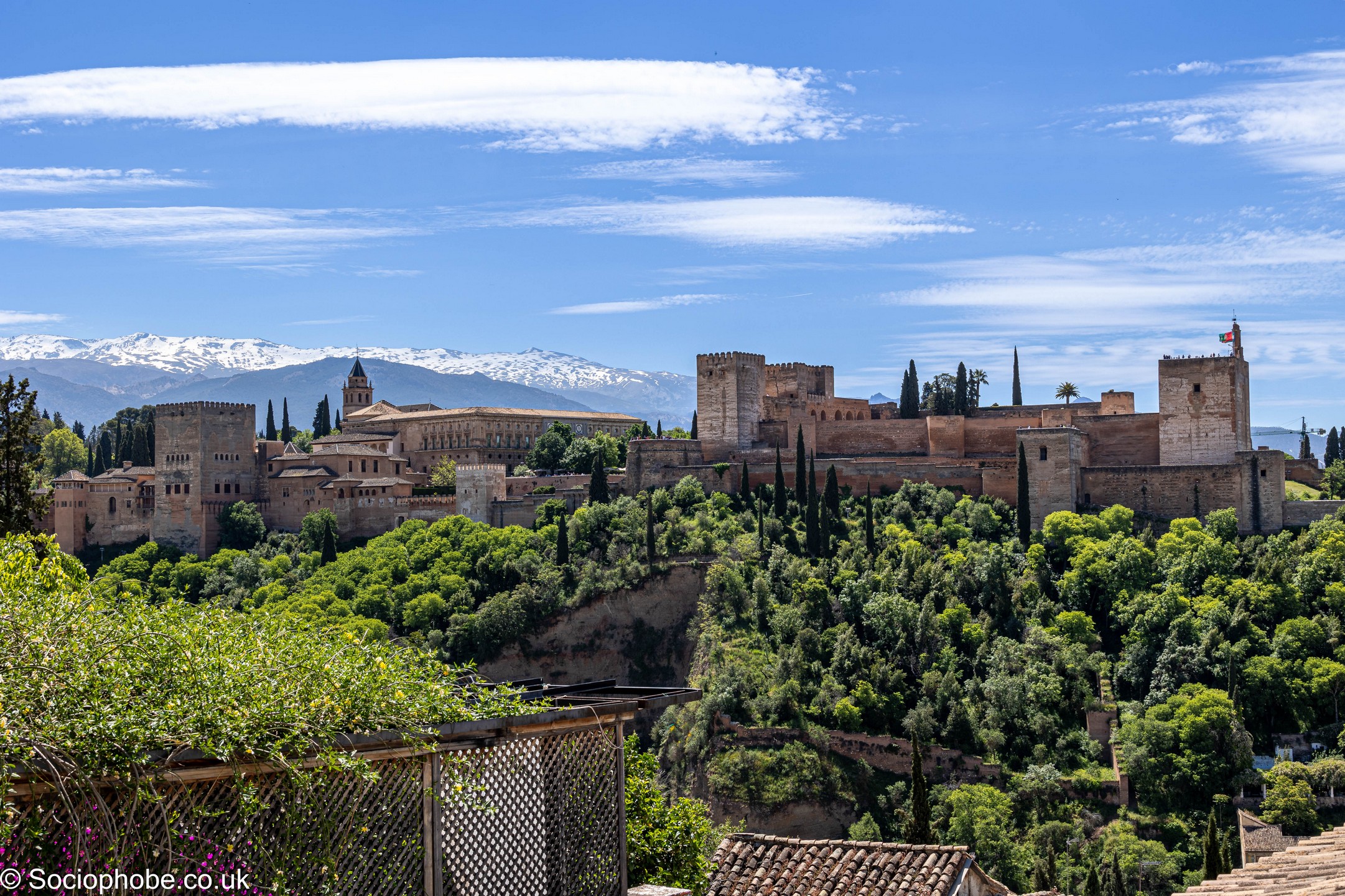
The next booking was the Tower of San Nicolas church, next to the San Nicholas Mirador. This was quite a long walk, zig zagging up the hill through the very narrow, graffiti abused and cobbled streets of the San Pedro and Albaicin districts. Deb struggled so it took longer than expected but we weren’t in any rush. The Mirador was crowded and there were guitarists playing while everyone enjoyed the view, or their phones. The Mirador was directly opposite the Alhambra and had wonderful views with the Sierra Nevada snow capped mountains in the background.

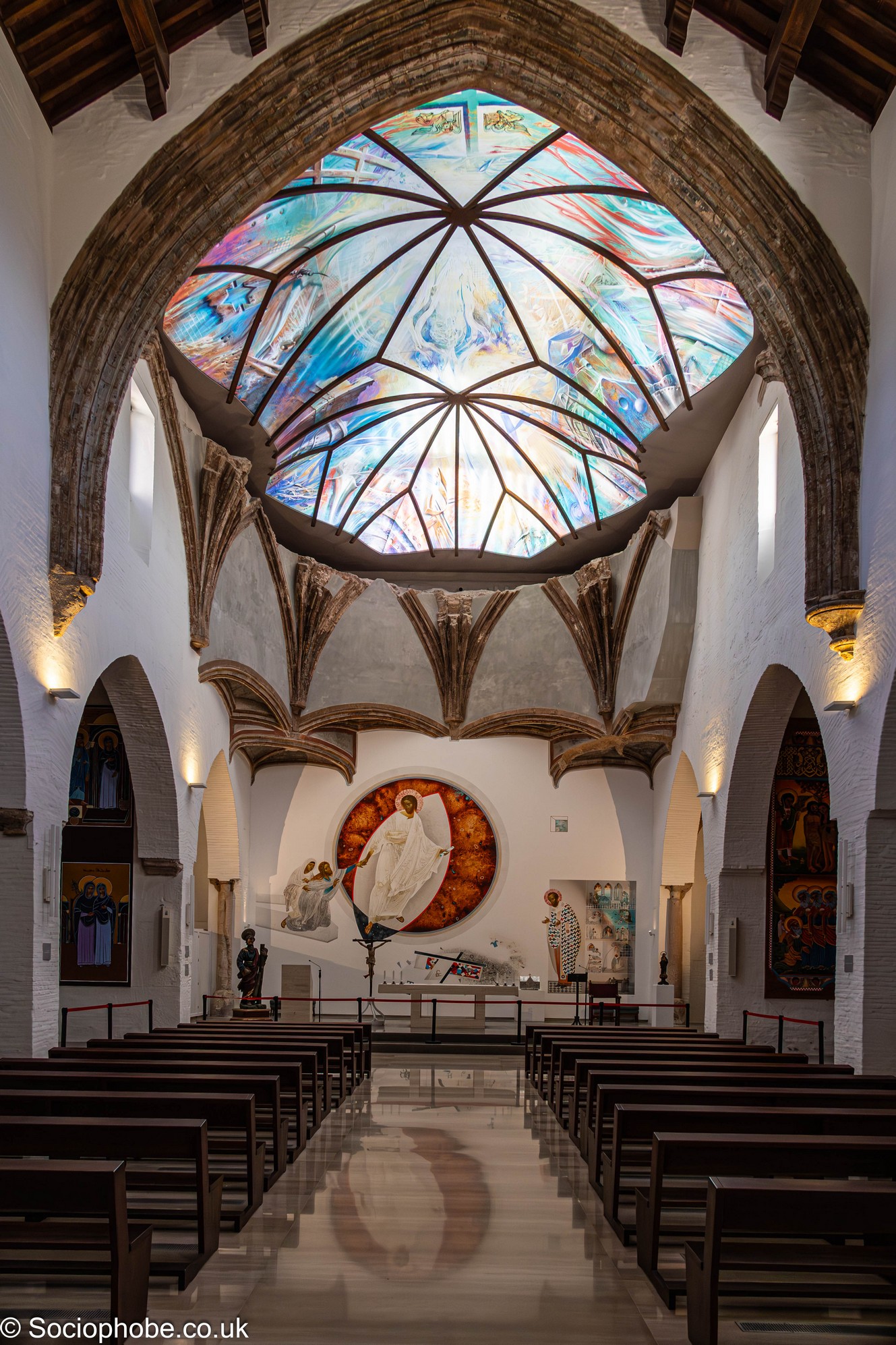
I was expecting the Church of St Nicholas to be a five minute visit but it was actually fantastic, one of the best churches I have been in. The interior was painted white but the roof opposite the tower was a sort of stained glass affair (probably not actually glass though!) that bathed the church in coloured light. The church was heavily damaged in the civil war and recently restored. The murals on the wall were wonderfully colourful too, one told the story of St Nicholas and the others were Ethiopian and Syriac/Maronite.

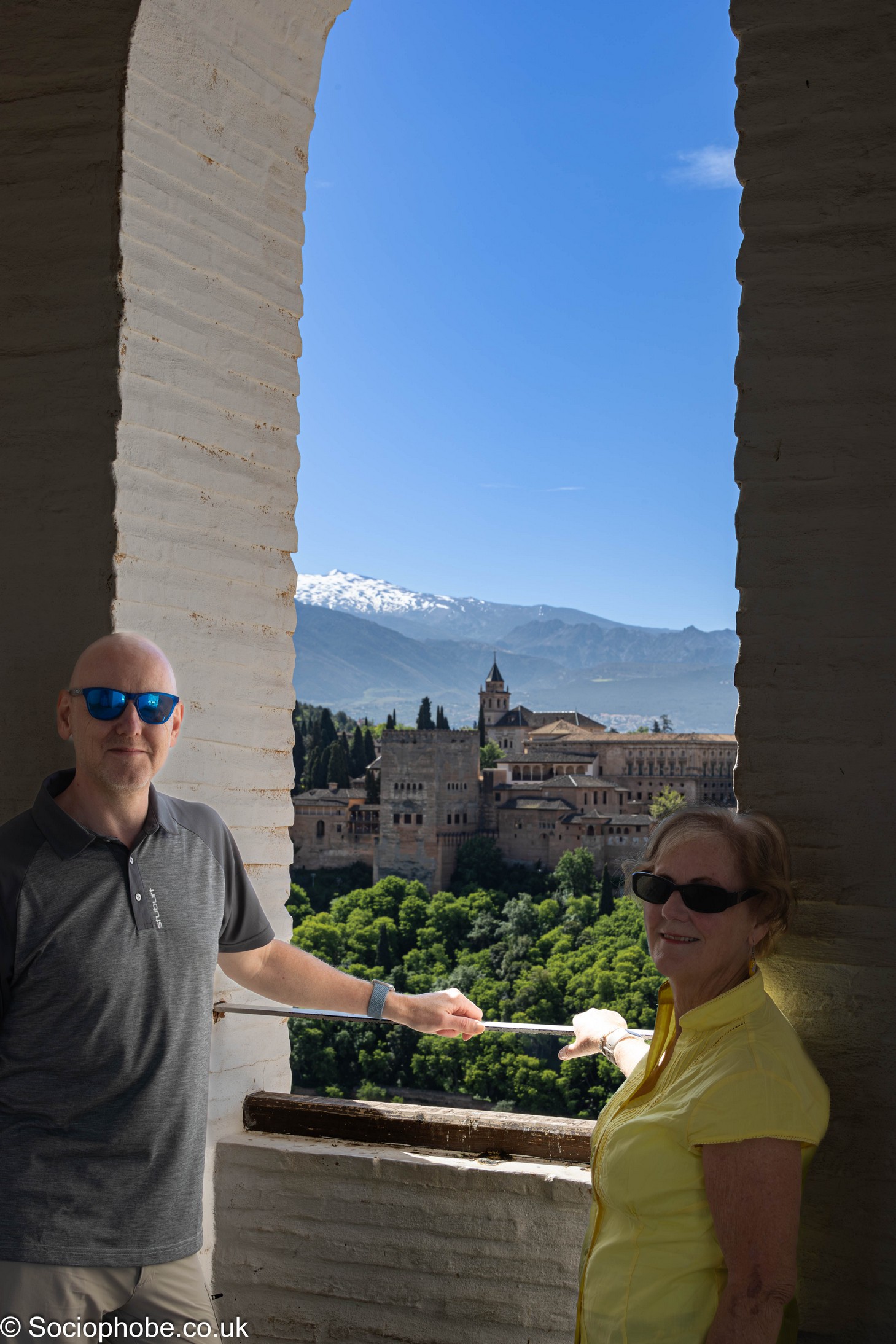
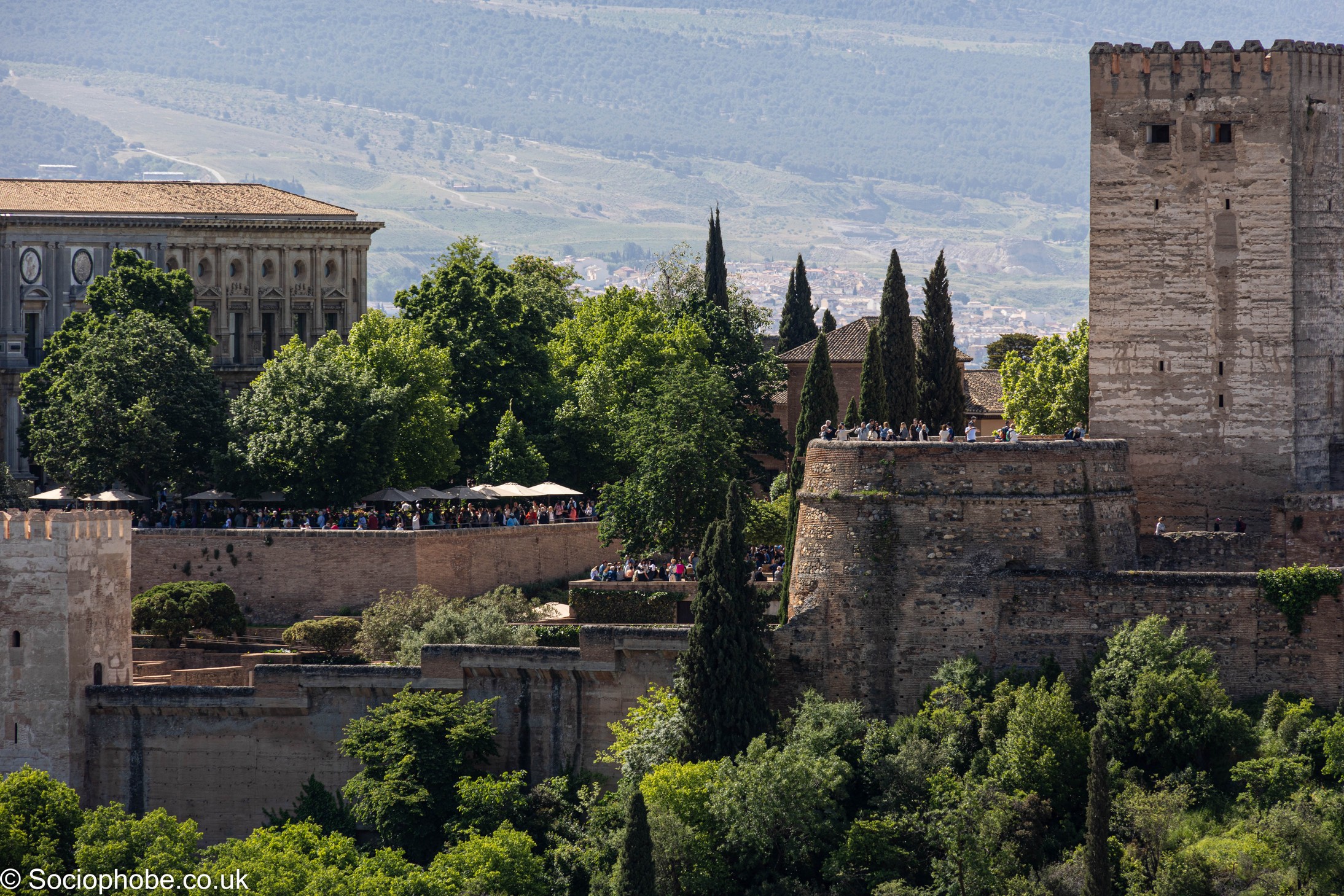
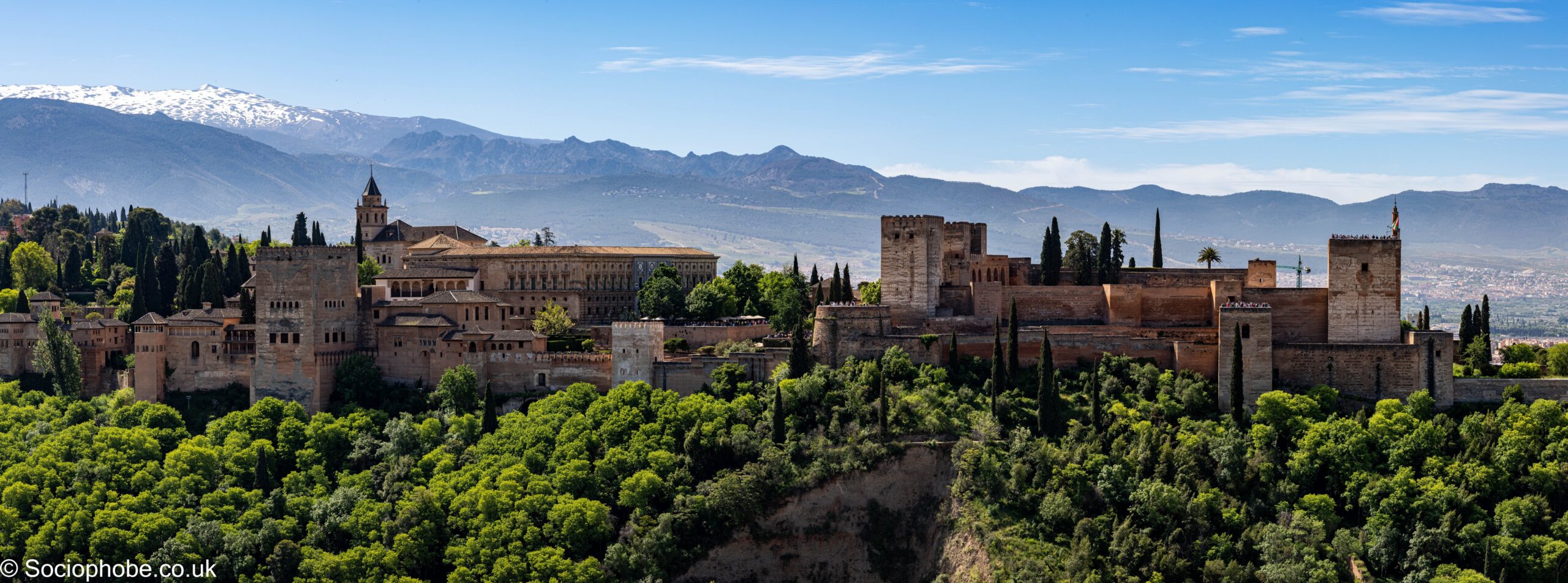
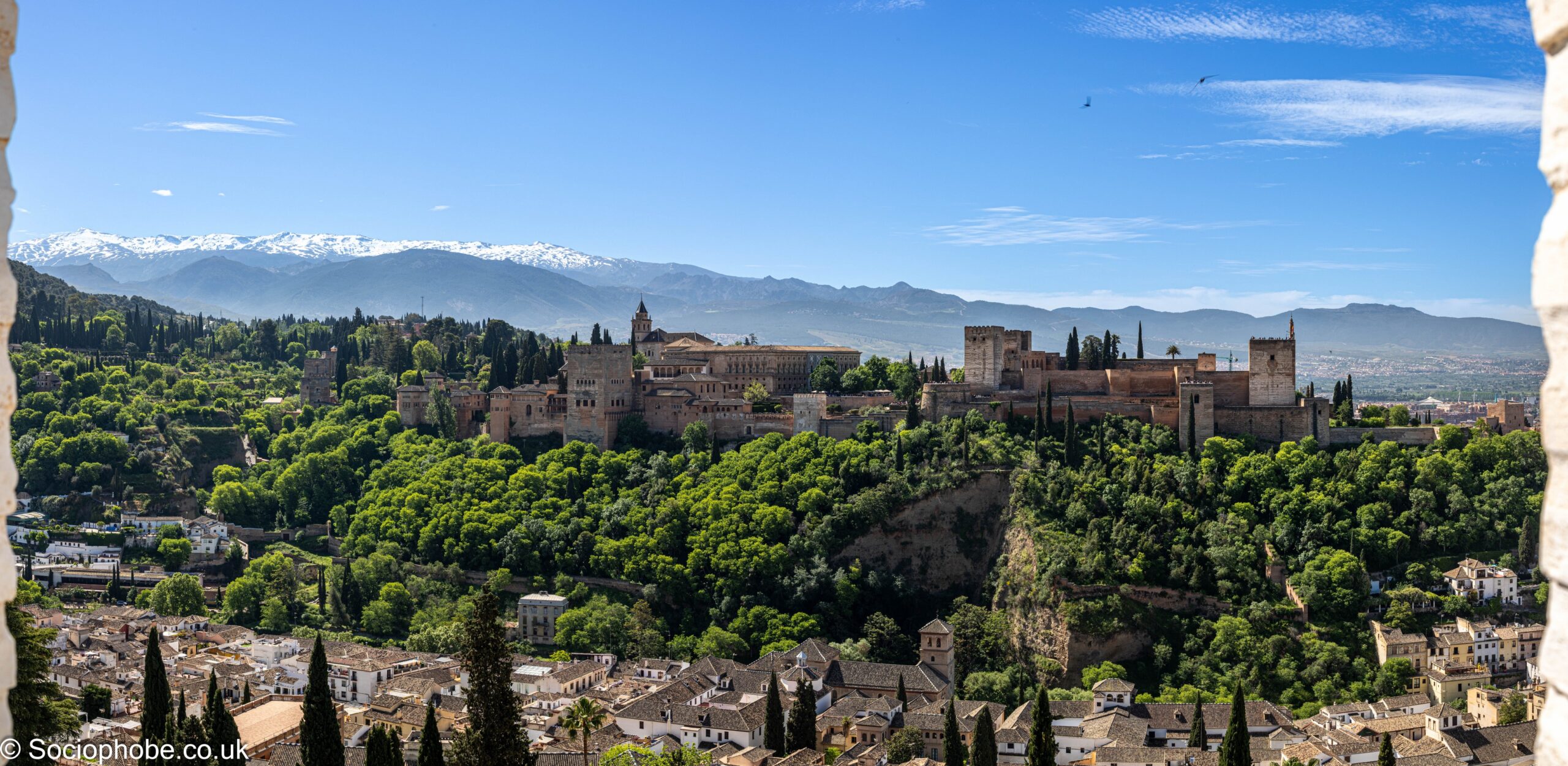
We then climbed the stairs to the tower, these were modern concrete so the vertigo wasn’t too bad and we were the only ones there luckily. The view from the top was just amazing, the panorama of the Alhambra spread out in front of us but with no house roofs intruding and blocking the vista. I took a lot (!) of photos here as it was just so spectacular and we then headed outside to get a coffee.
Casa Max Moreau
After our coffee in the square we meandered towards the town centre, visiting a few of the places we had passed on our climb up. Casa Max Moreau is the house of a Belgian artist and composer father/son duo. The house was on a variety of levels with a wonderful garden and more views of the Alhambra.
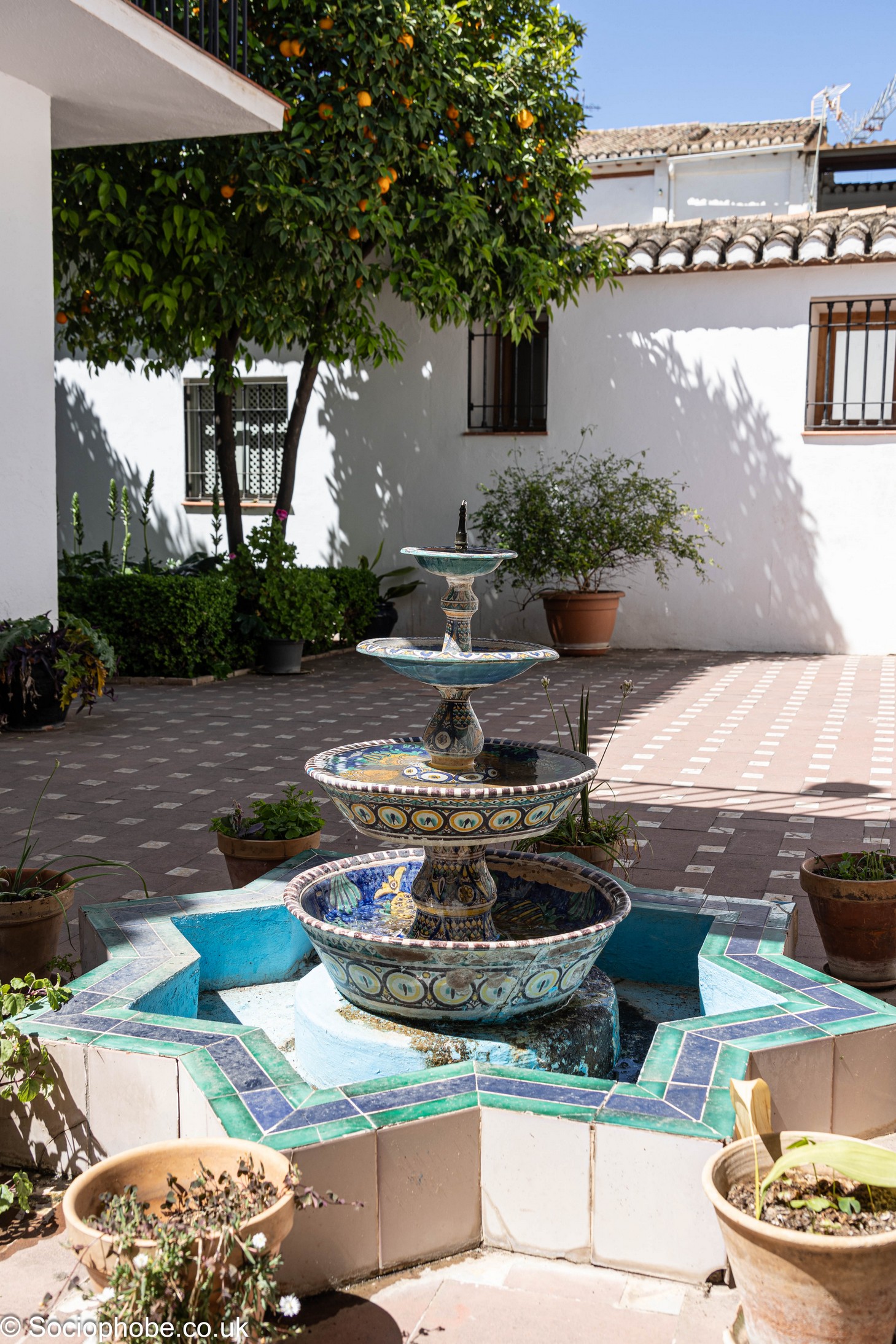

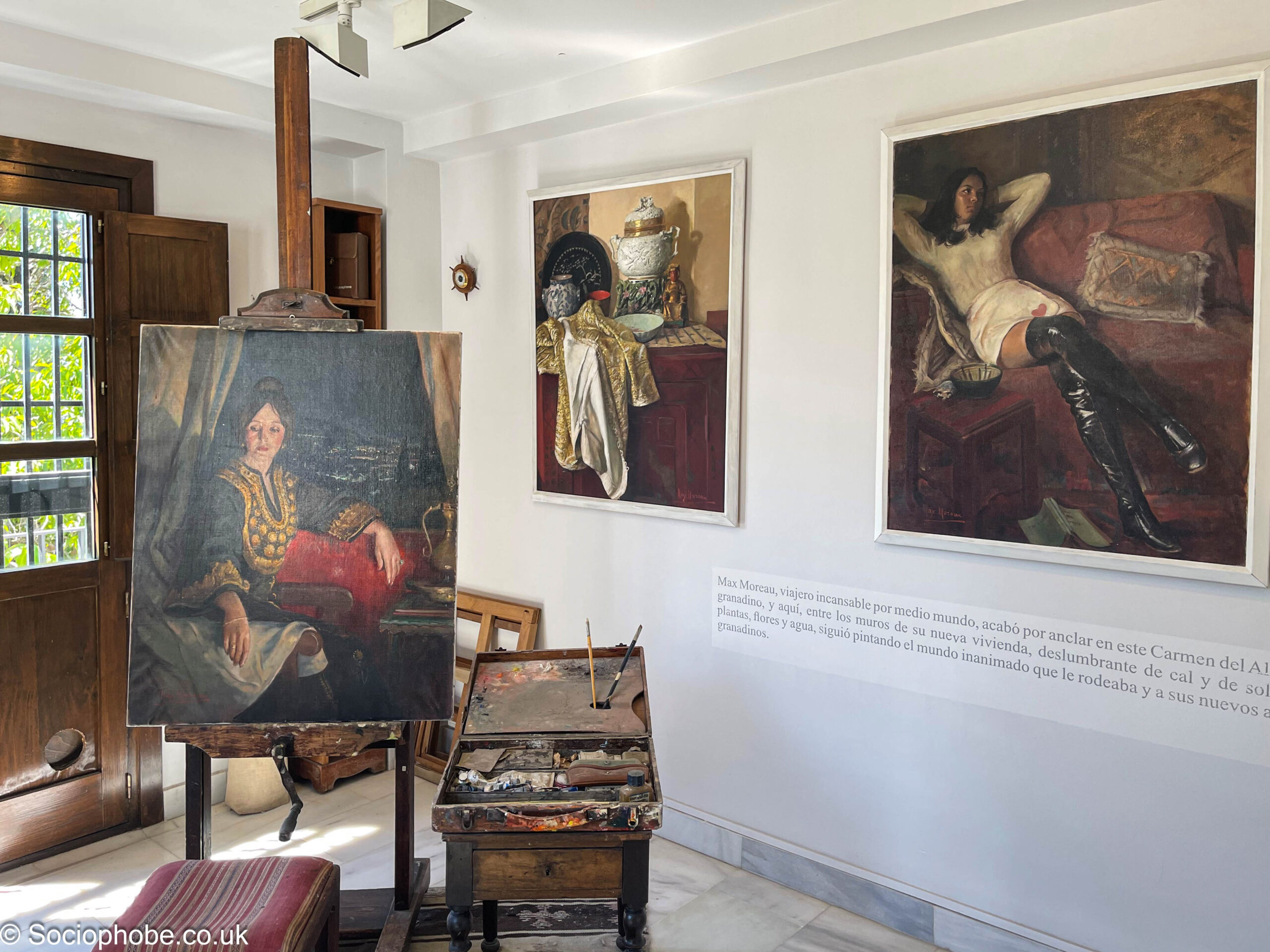
Inside were various paintings and sketches, as expected but we didn’t really see much information about the people. Entry was free and there was a lovely atmosphere here.
Palacio de Dar Al Horra
Next stop, 5 minutes walk from the San Nicolas Mirador, was the Palacio de Dar Al Horra, a palace owned by the Mother of the last Moorish Emir of Granada, Boabdil. This was a lovely little place, beautifully decorated with ornate plasterwork and painted wooden ceilings.

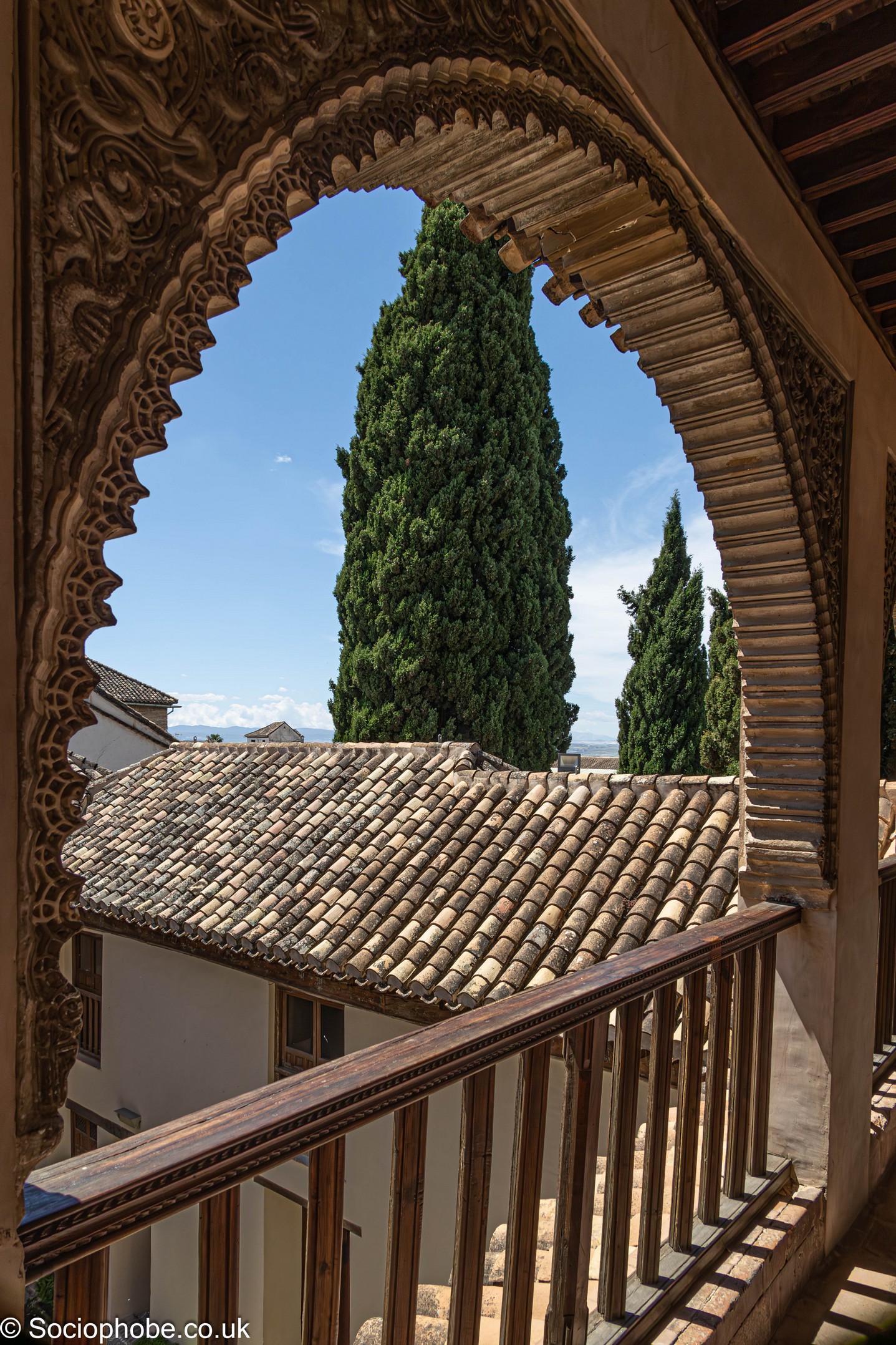
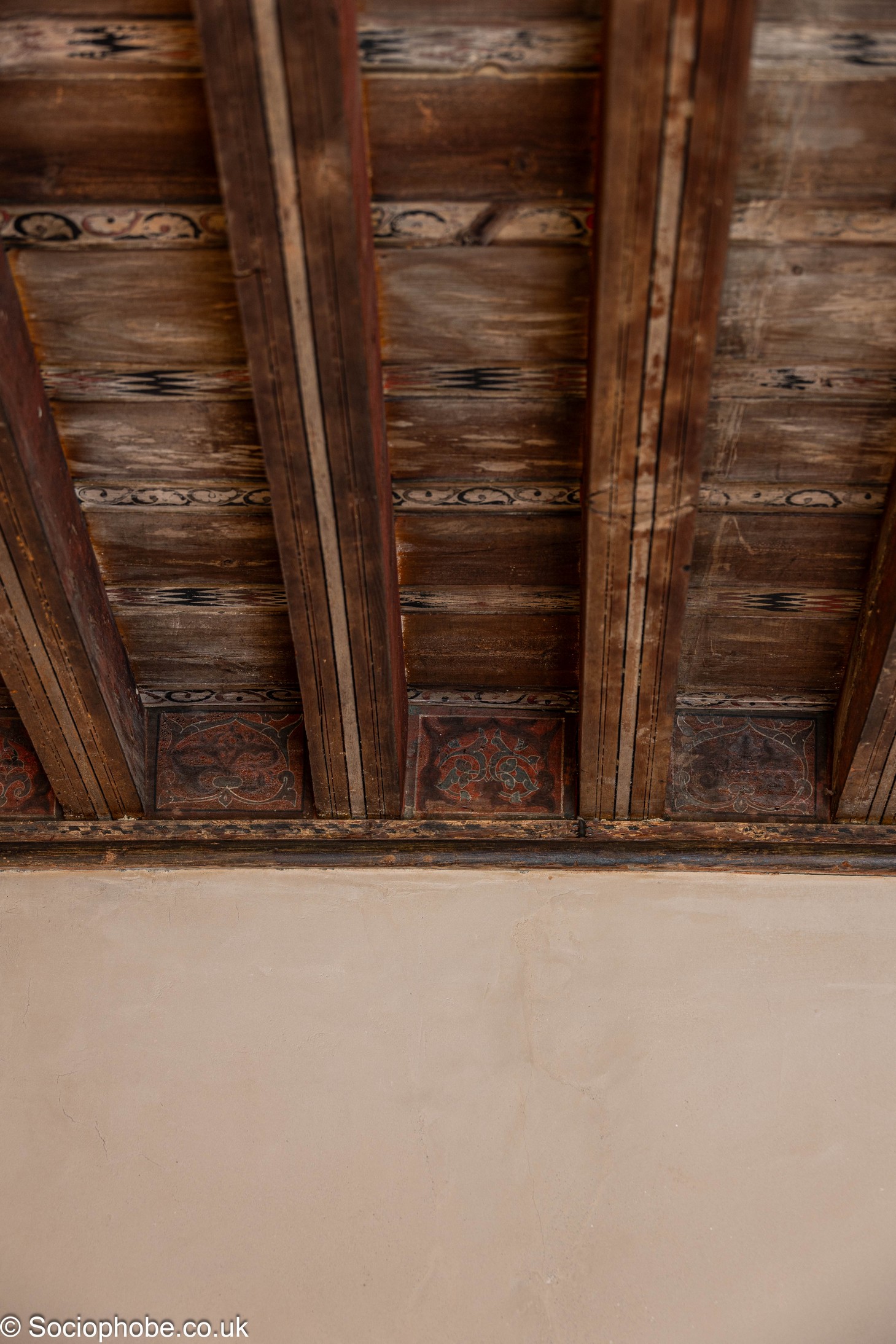
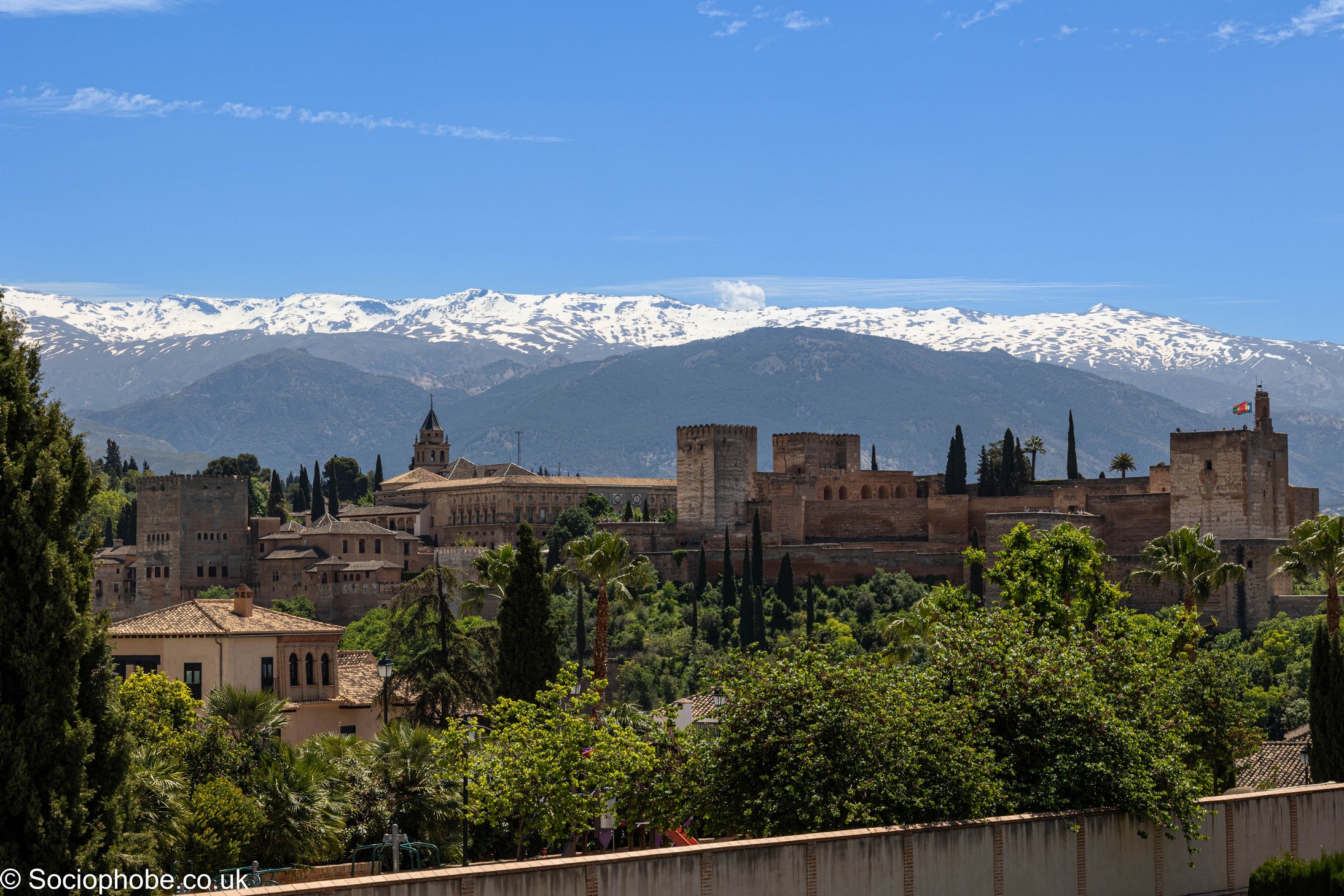
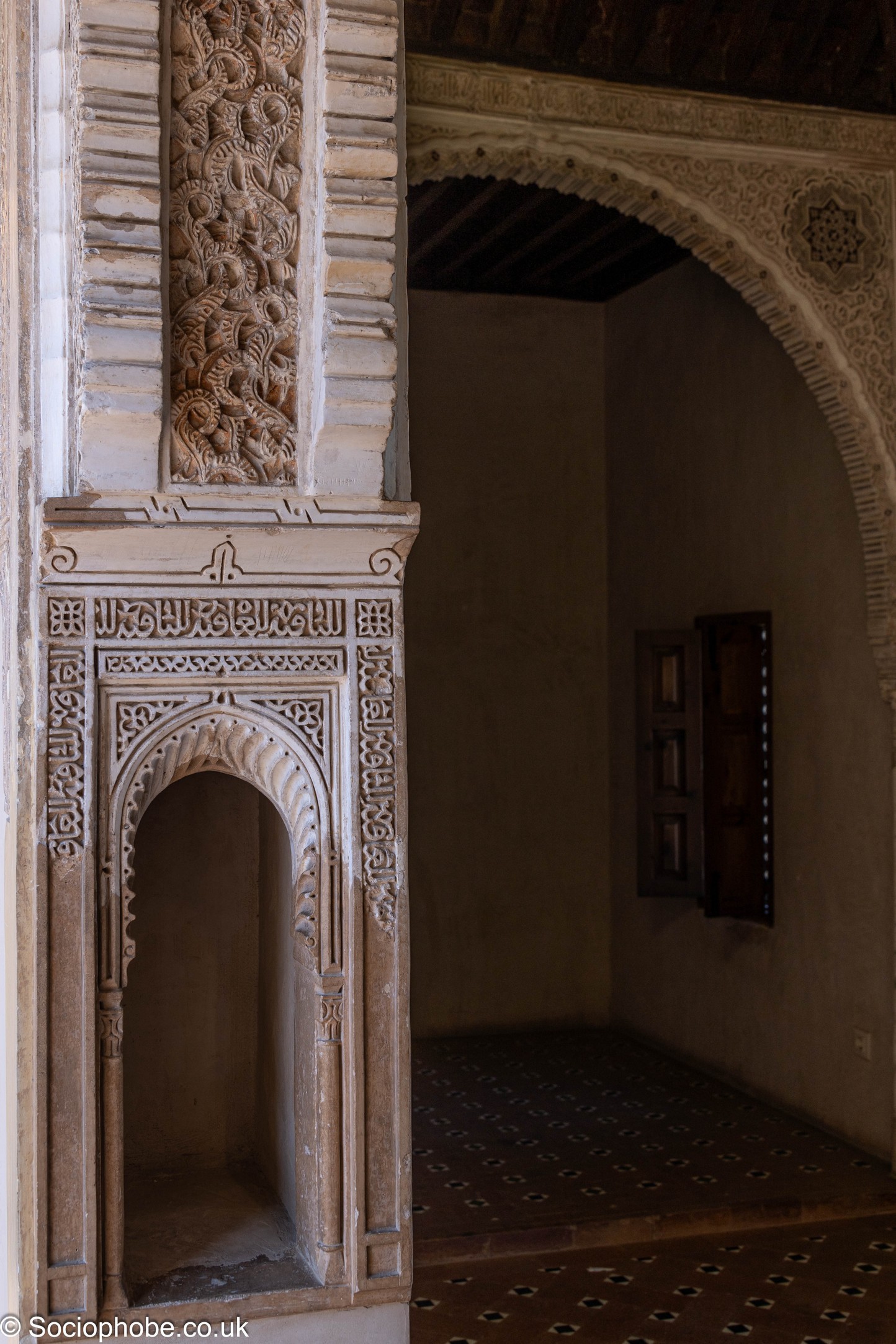
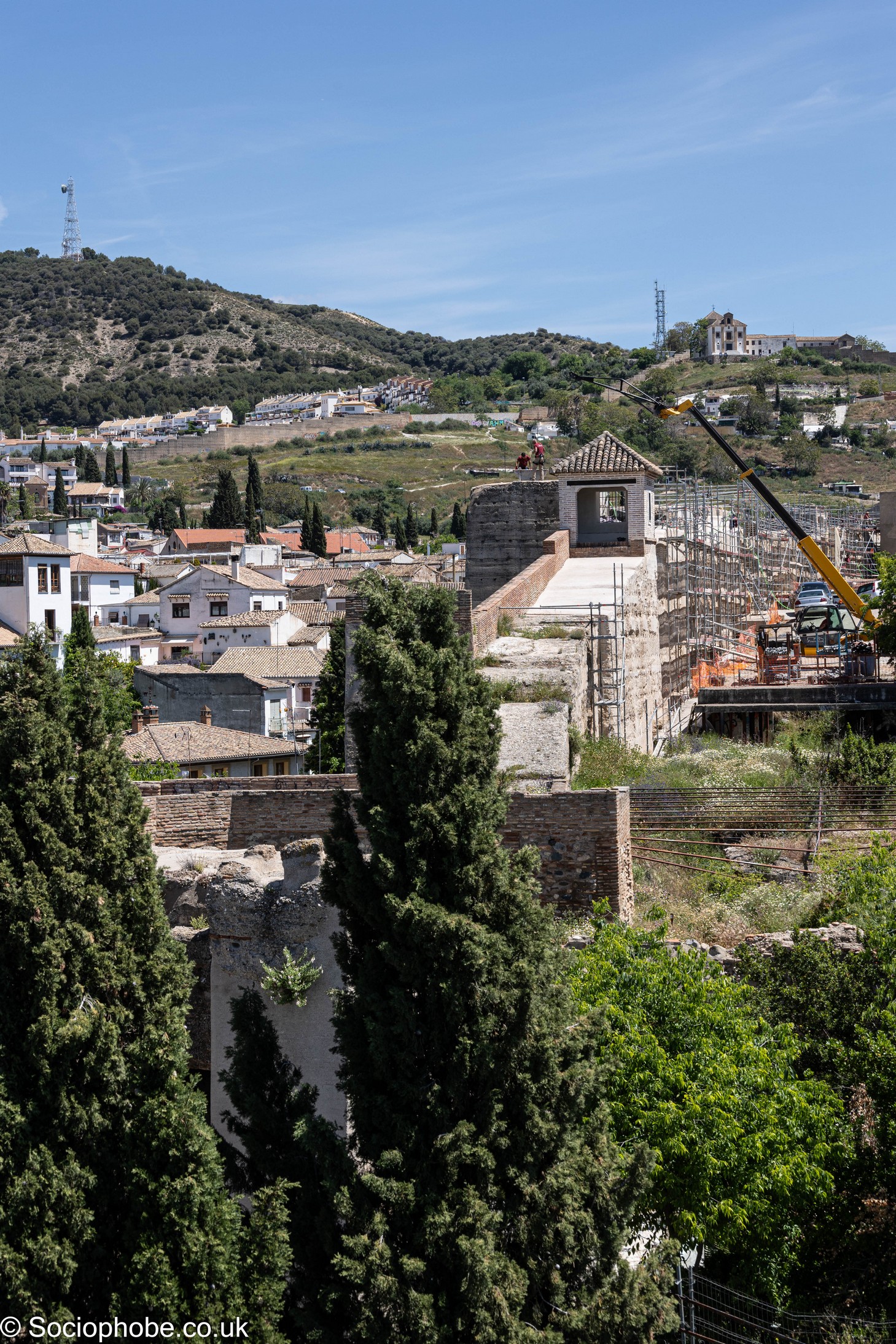
There were views of the city wall (being restored?) that runs alongside the palace as well as the rest of the city and the Alhambra. Entry was €7 and included access to 3 other attractions, rather a bargain.
Granada Cathedral
We continued our walk towards the sixteenth century cathedral, eventually getting to the crowded and narrow shopping streets that run parallel to the River Darro which gave Deb a breather as we had to slow down. The cathedral, built on the site of the mosque, was actually better than expected. It was painted white inside which made it less gloomy than normal and wasn’t too ostentatious, other than the side chapels and altar area.

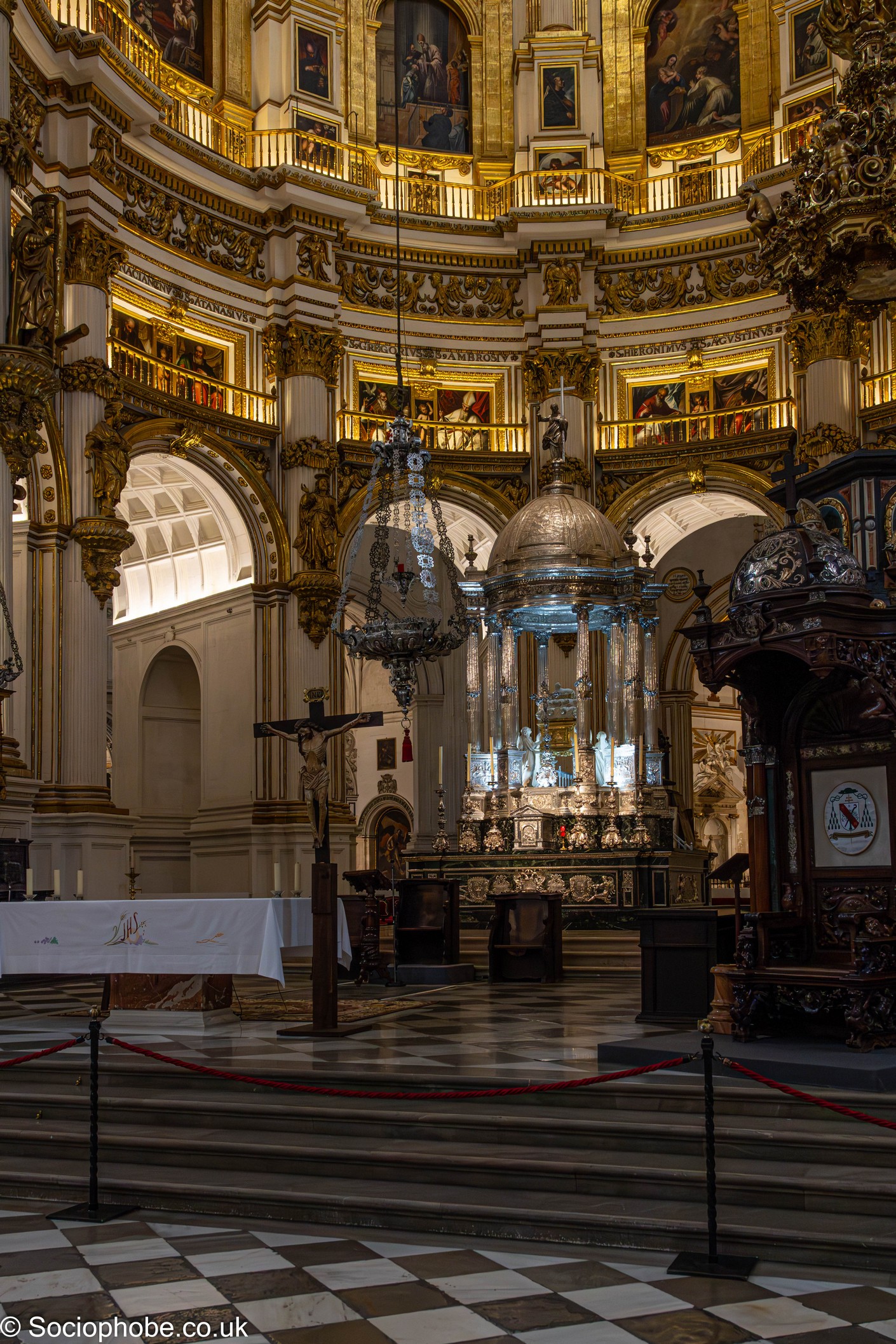
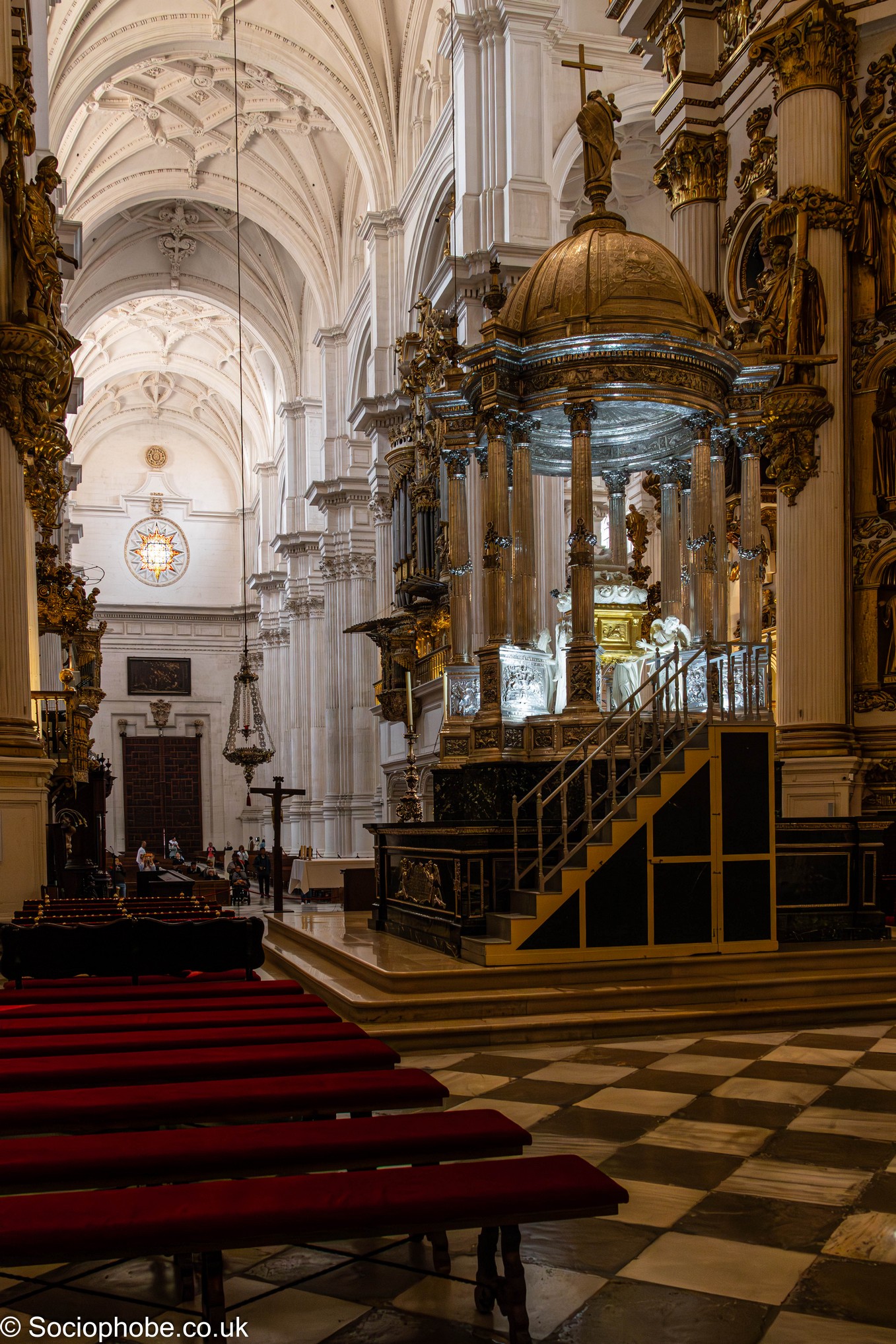

The trend seemed to be with these places to have an audioguide rather than any information boards – I can understand the logic as you can have multiple languages and update the guides quickly but it was frustrating. In a church particularly, the last thing I’d want is a hundred people listening to their phones so even if the information boards were just in Spanish that would be a start.
The Royal Chapel took a while to find and we had to ask at the cathedral in the end (left and left again as you go out of the cathedral entrance!). It contains the burial crypt of Ferdinand and Isabella plus Philip II and Joanna the Mad. No photos which was a real shame as there was some genuinely decent post Islamic marble carvings on the tombs. All info was audio guide only, as usual and our visit lasted 10 minutes.
El Banuelo
As we’d bought the group ticket we walked 10 minutes along the river, where we were a couple of nights ago, to El Banuelo, an old Arab bath house. This was interesting and had some lovely decoration, as expected but it was only a few rooms so we were there maybe 10 minutes.
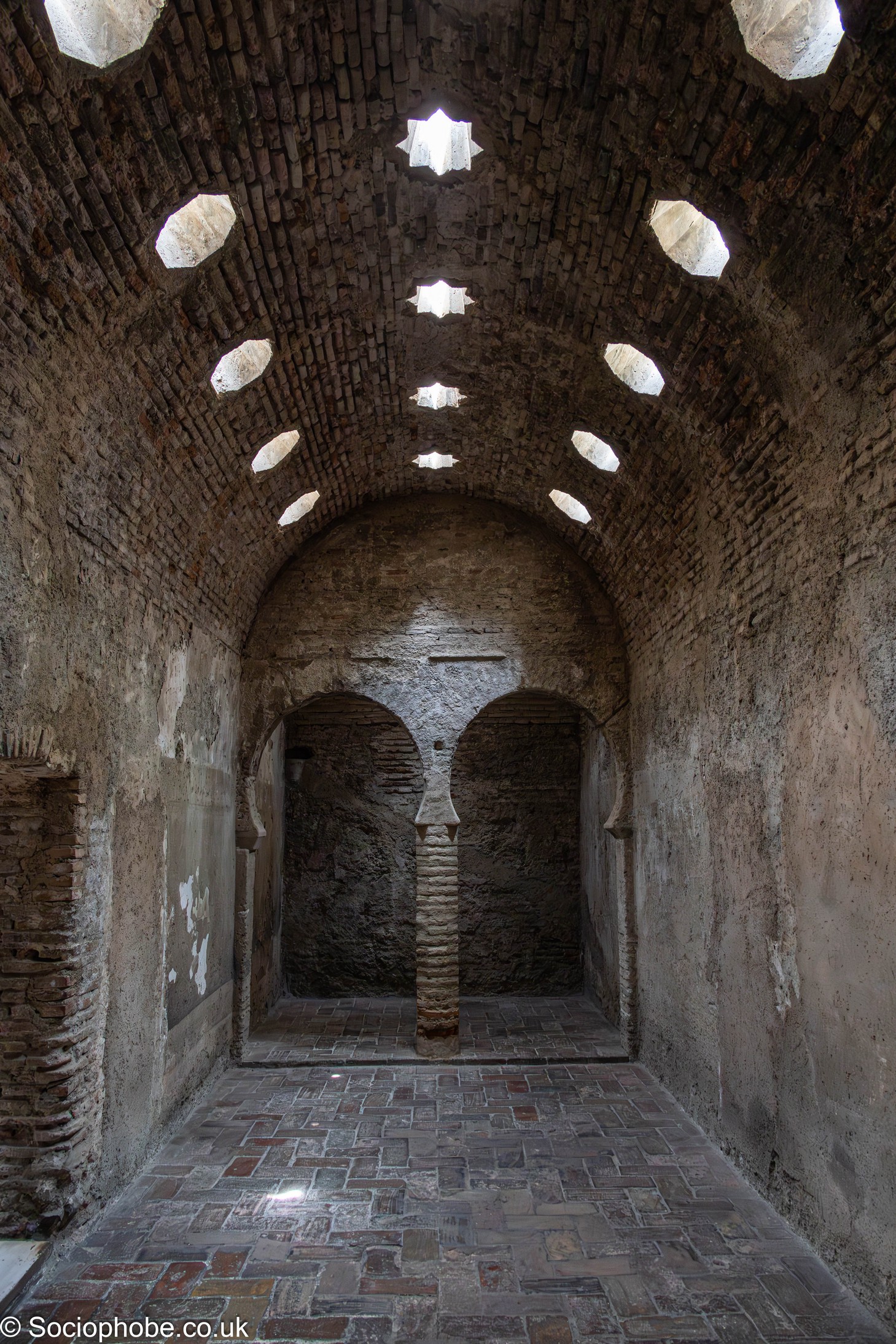
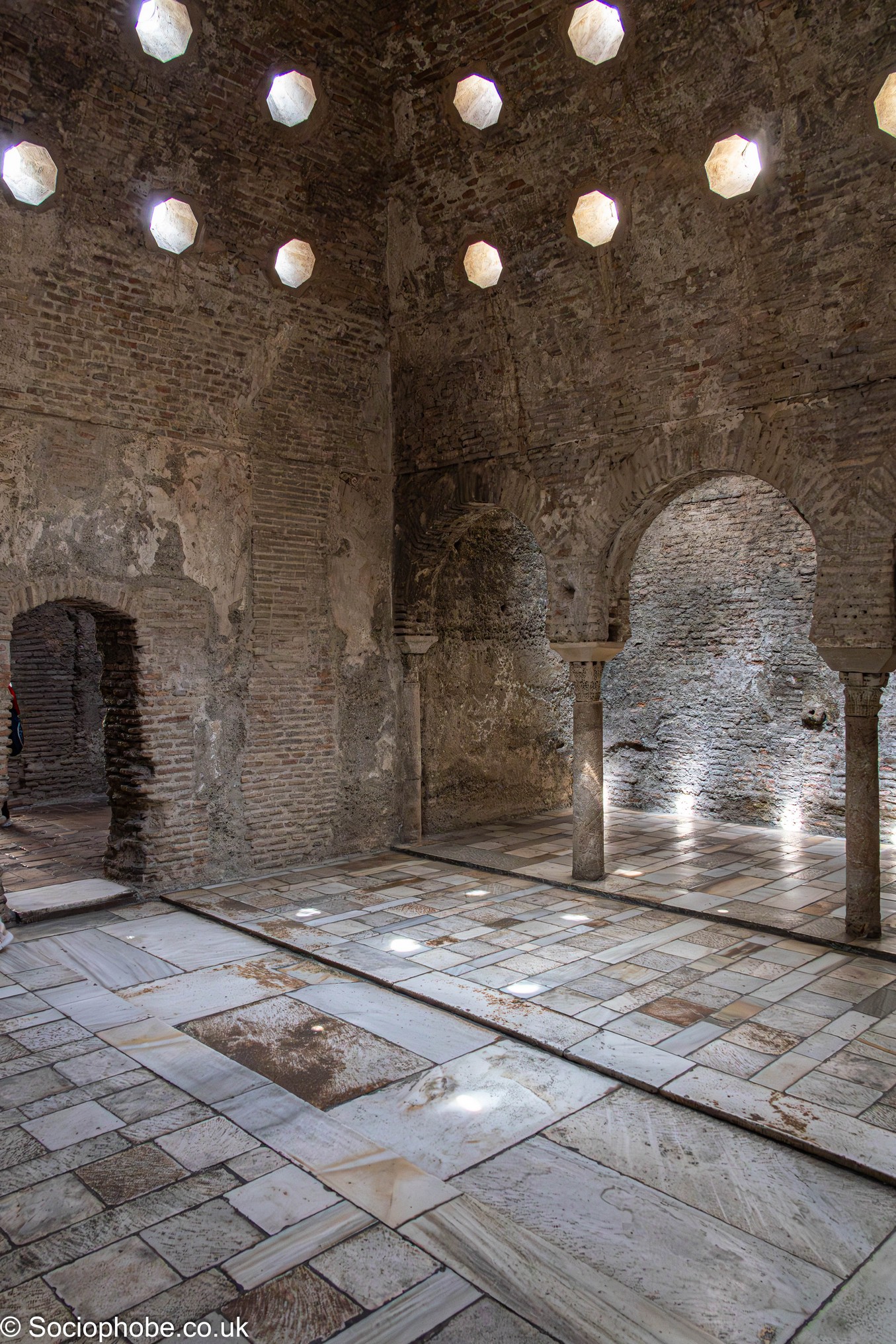
We walked back to the hotel, Deb had another snooze and I started sorting the photos. I think I need a different hobby as I spent a couple of hours doing that and writing notes while I remembered things before we all had dinner on the hotel terrace.
Nasrid Palaces Night Tour
We had a visit booked for the Nasrid Palaces at 10PM, something that has been on my list for ages. This was an unguided individual tour which allowed us to wander at our own pace. We had visited the palaces the day before but it was a completely different experience at night and we spent around 90 minutes walking round and the lights and shadows bringing out depth of the plasterwork designs. We also seemed to notice things that we didn’t see yesterday, such as some of the inlaid ceilings. It certainly helped being less busy.
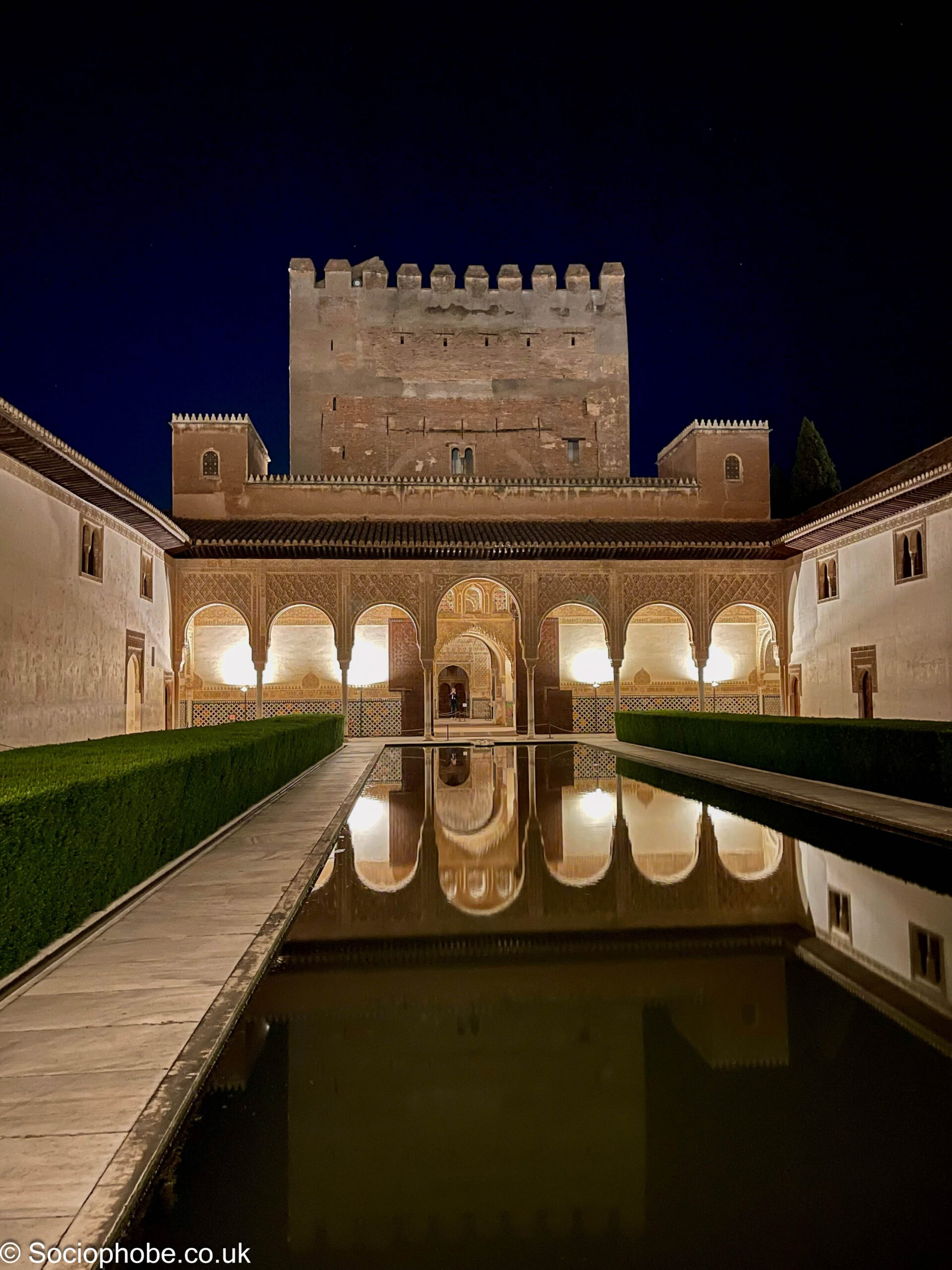
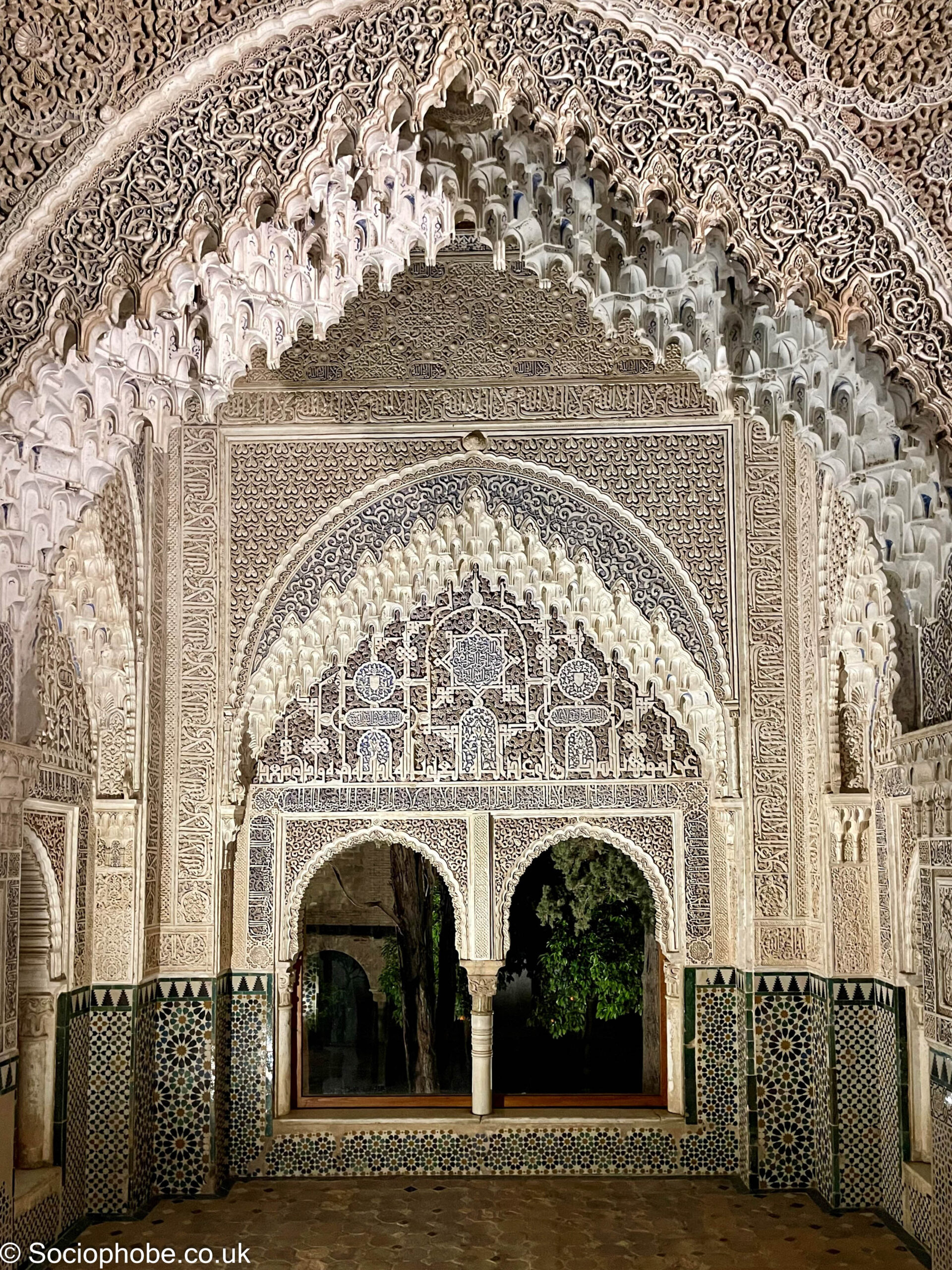
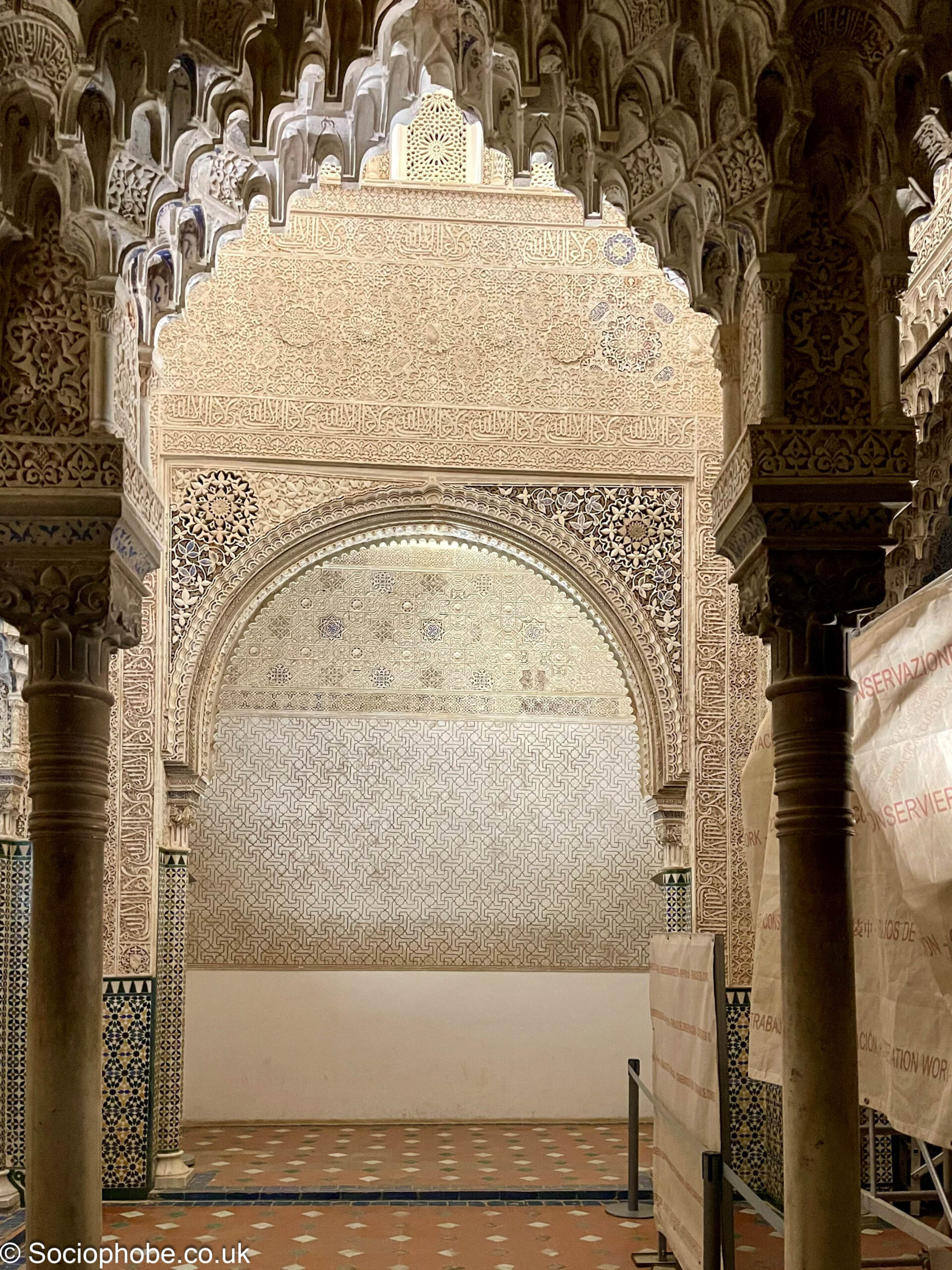
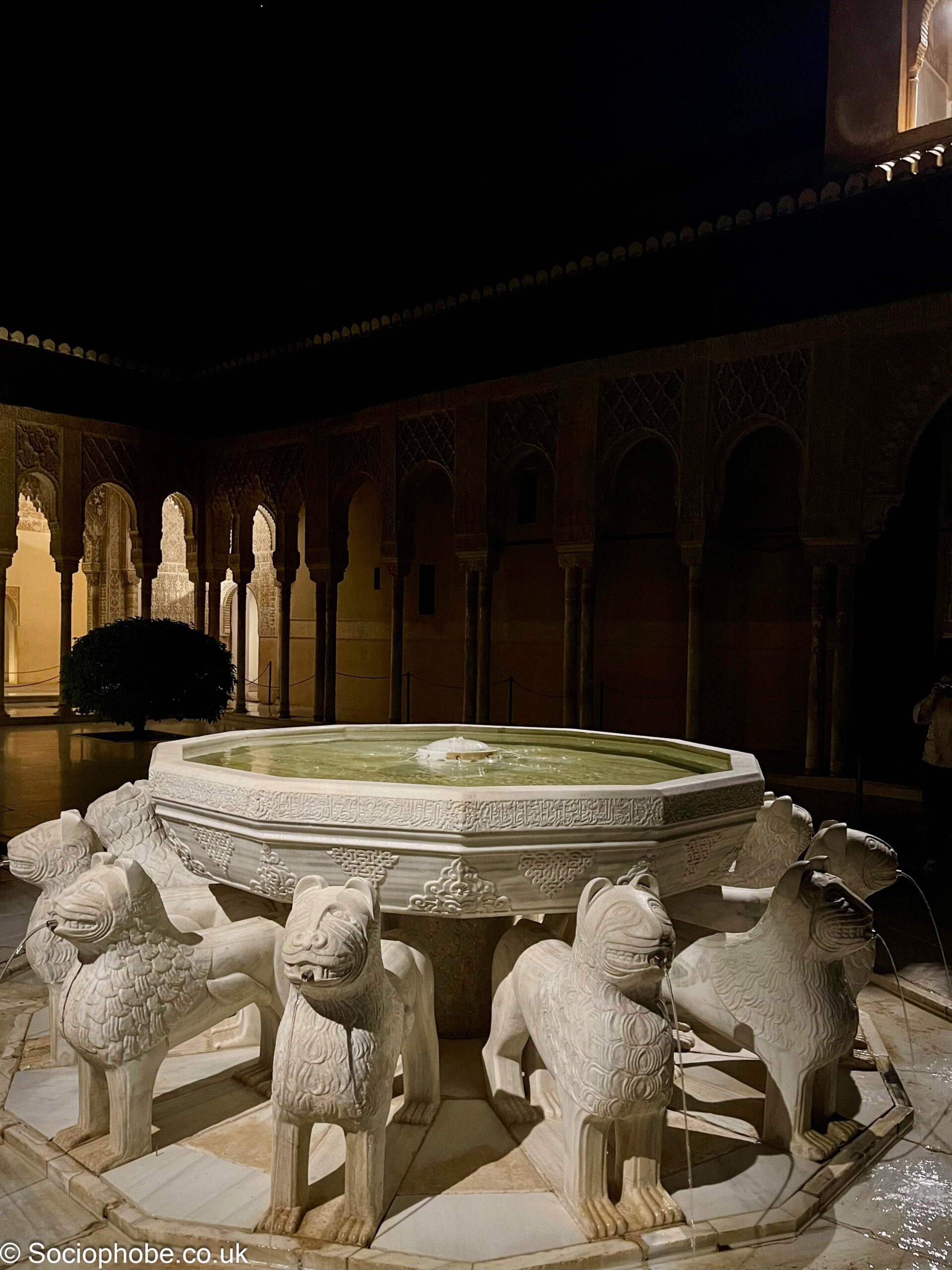
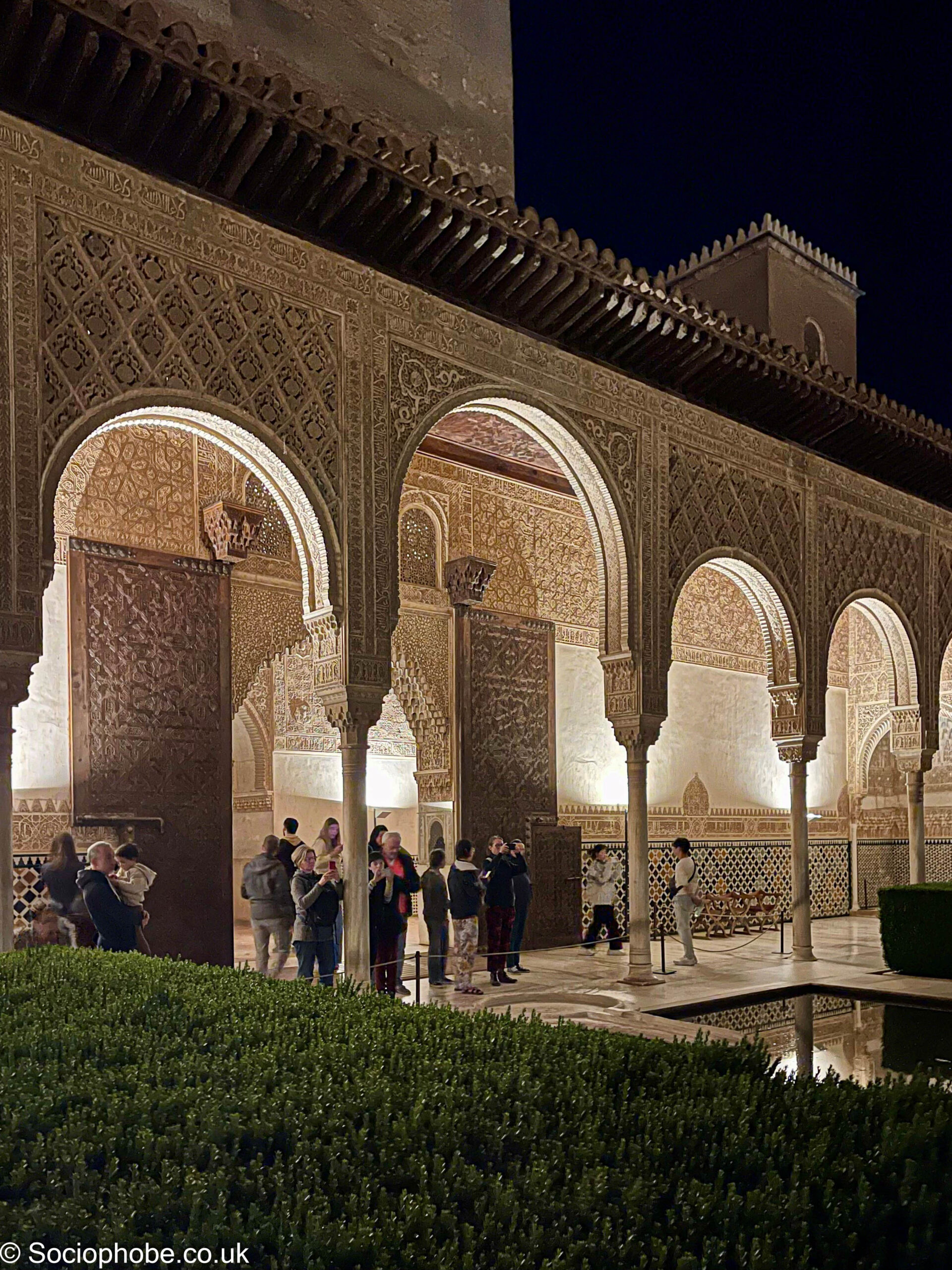
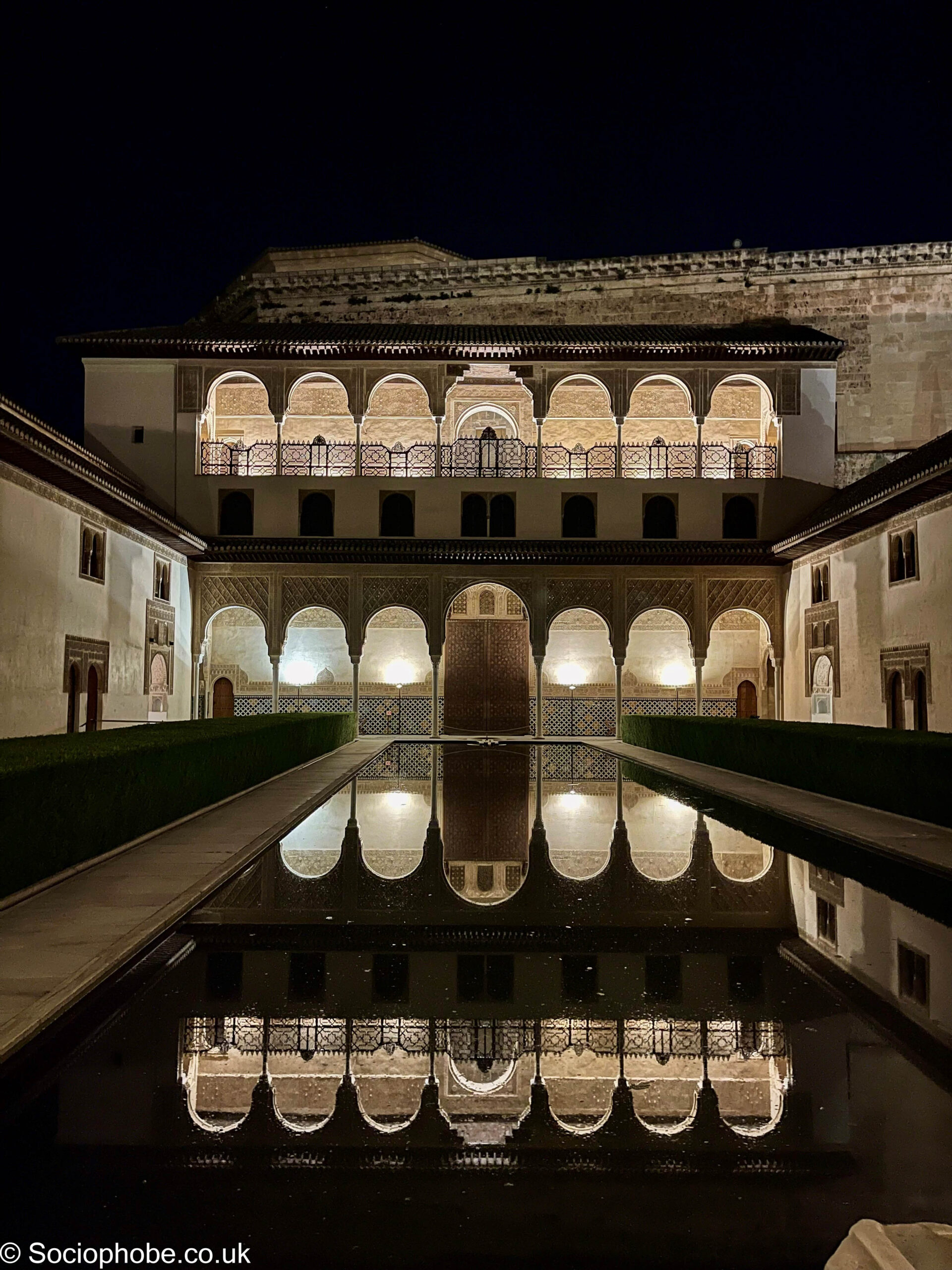
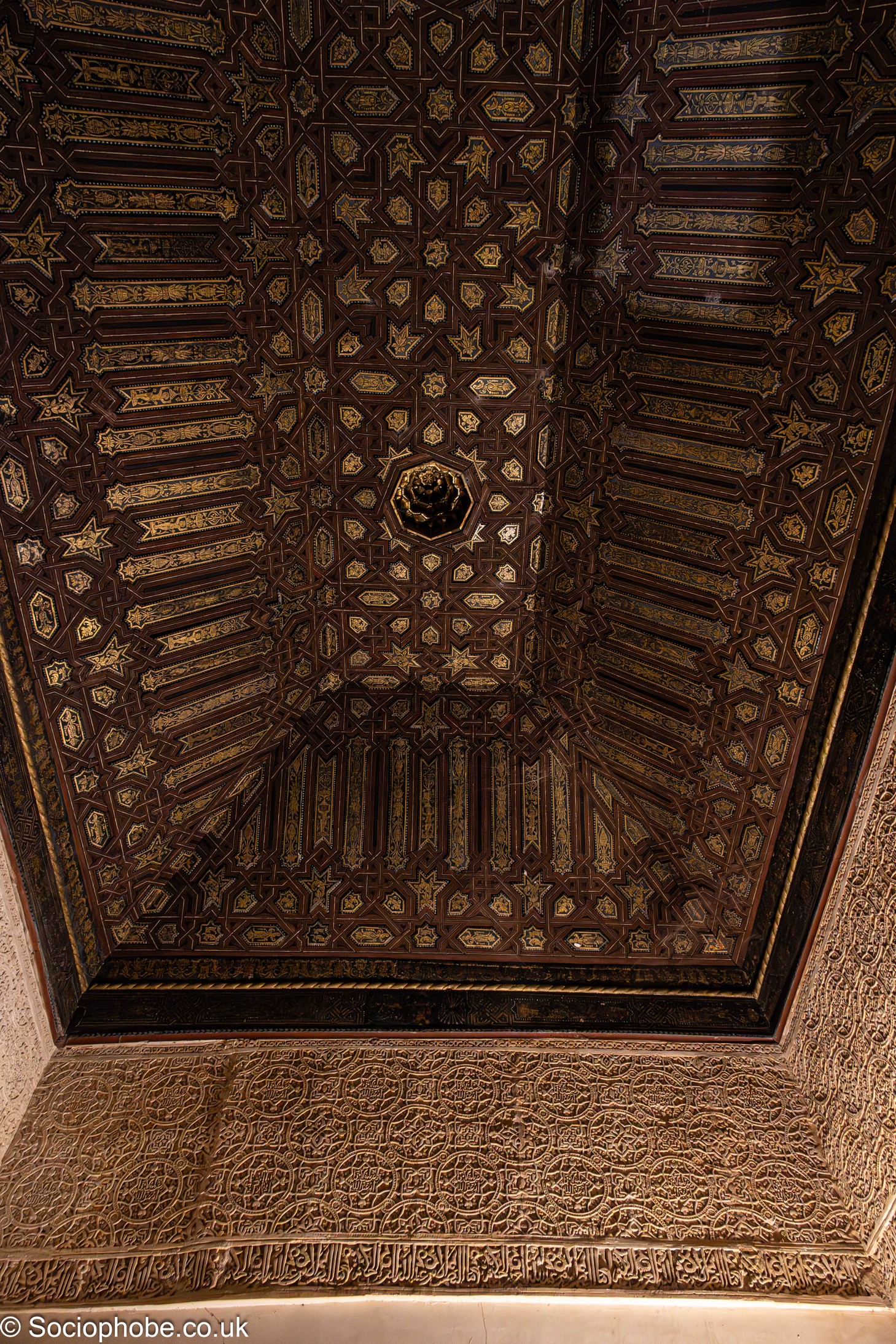

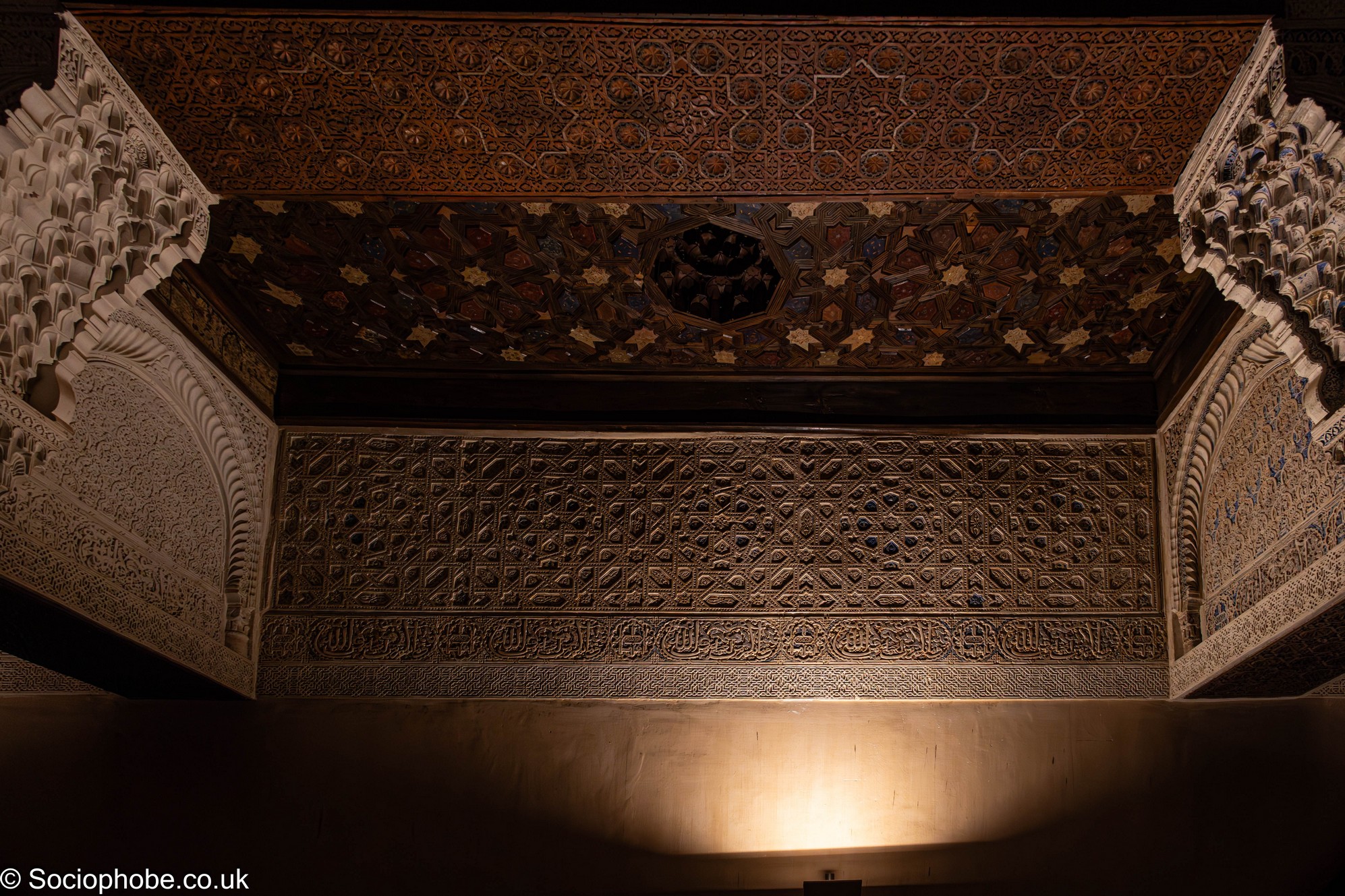
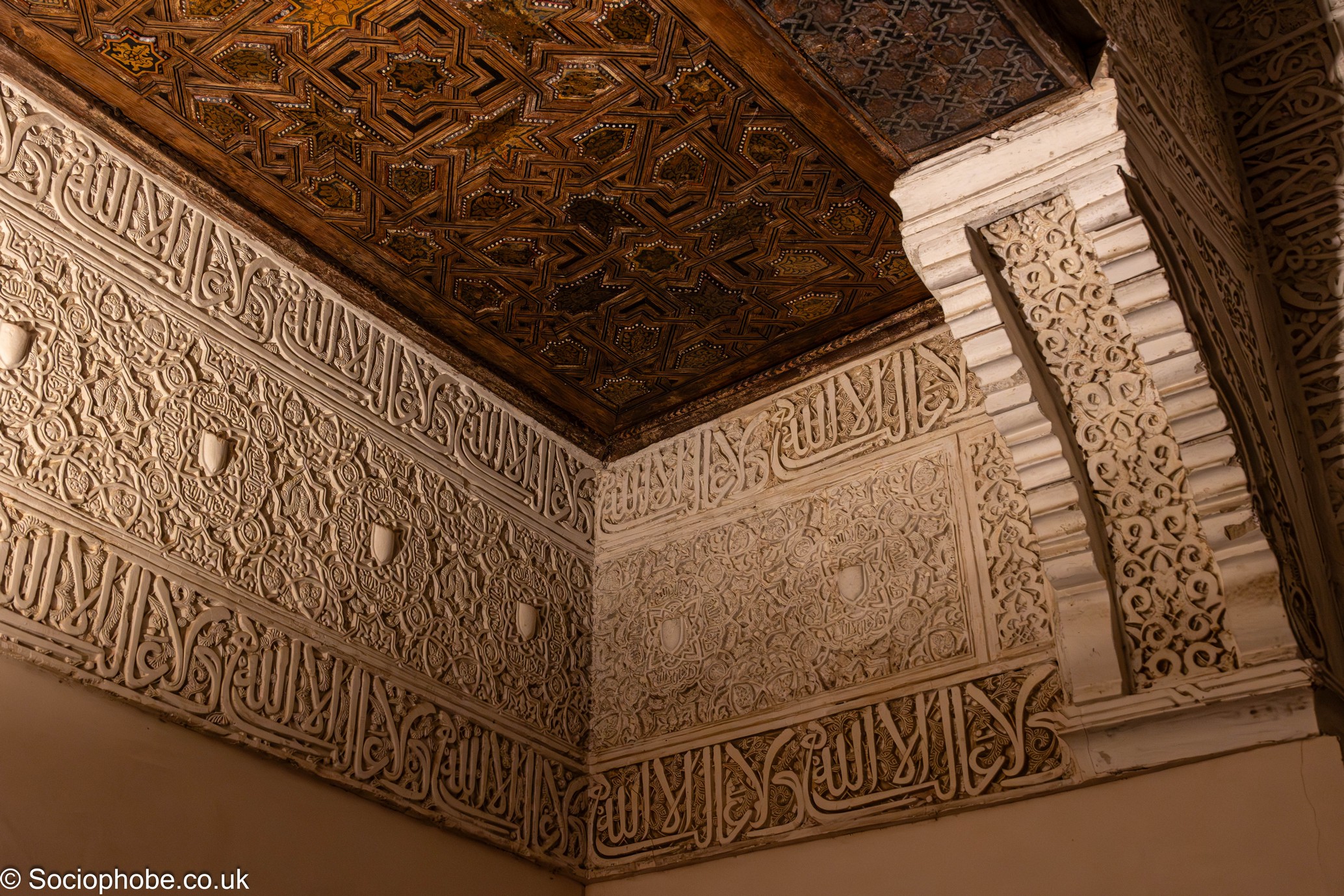
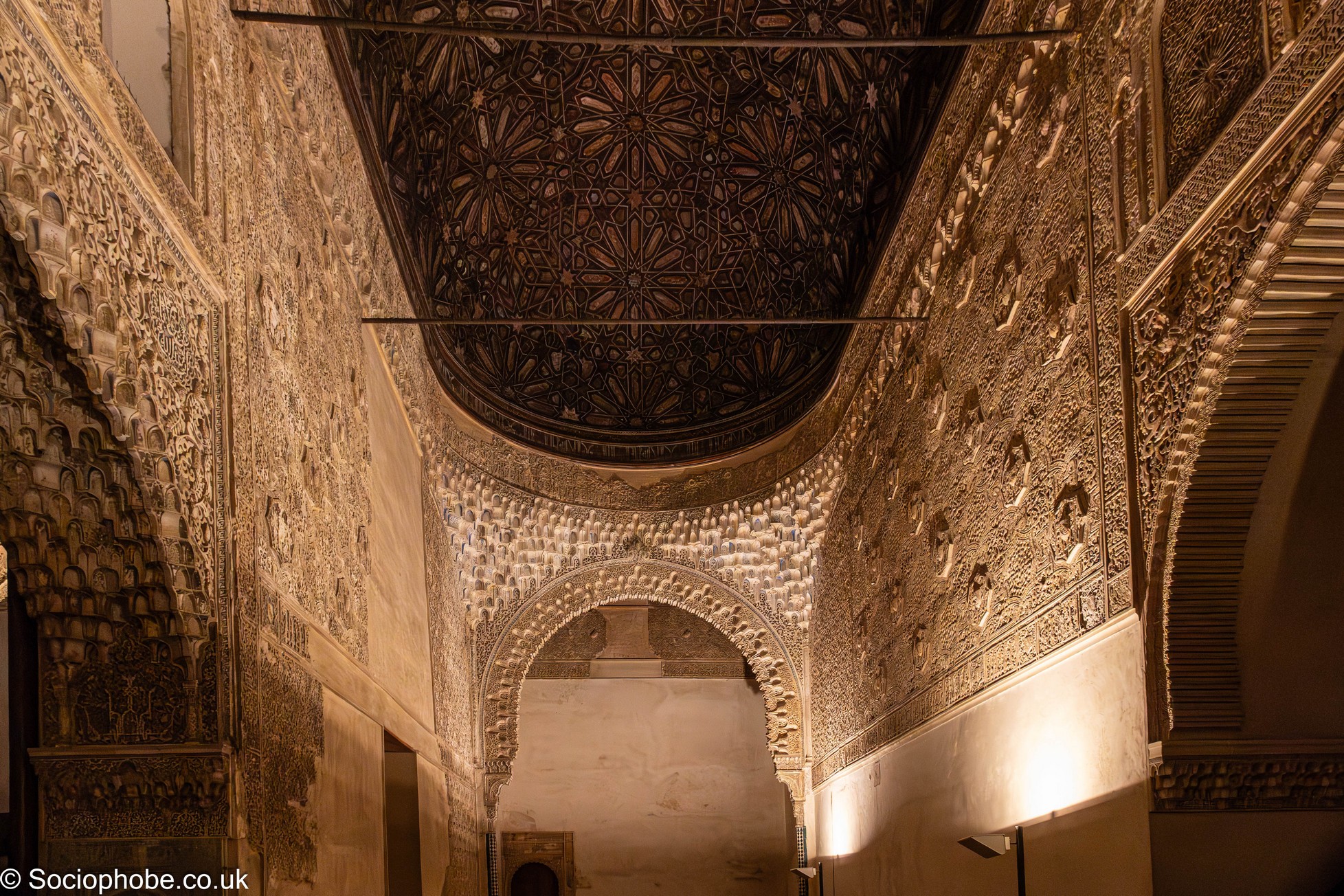
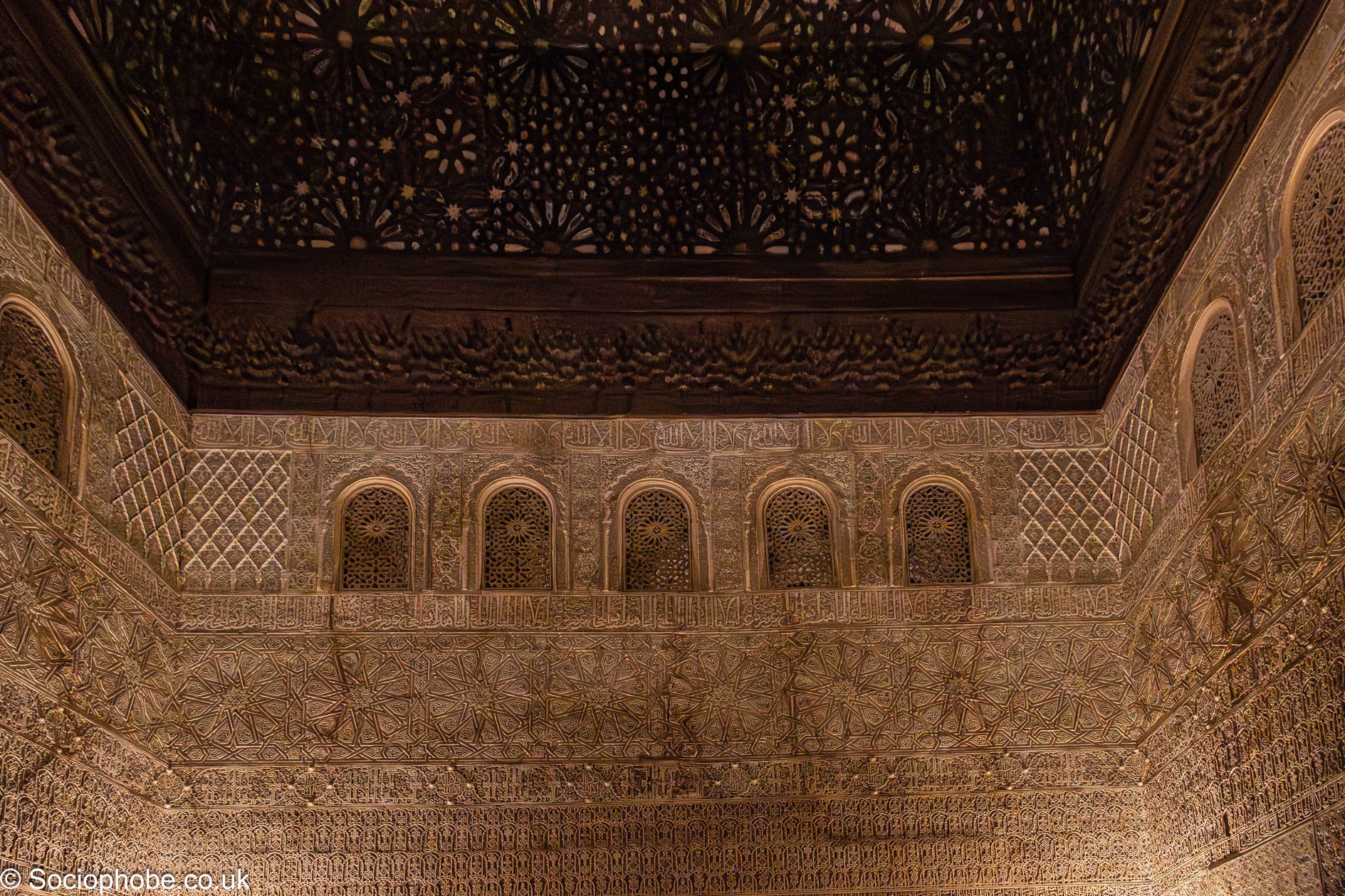
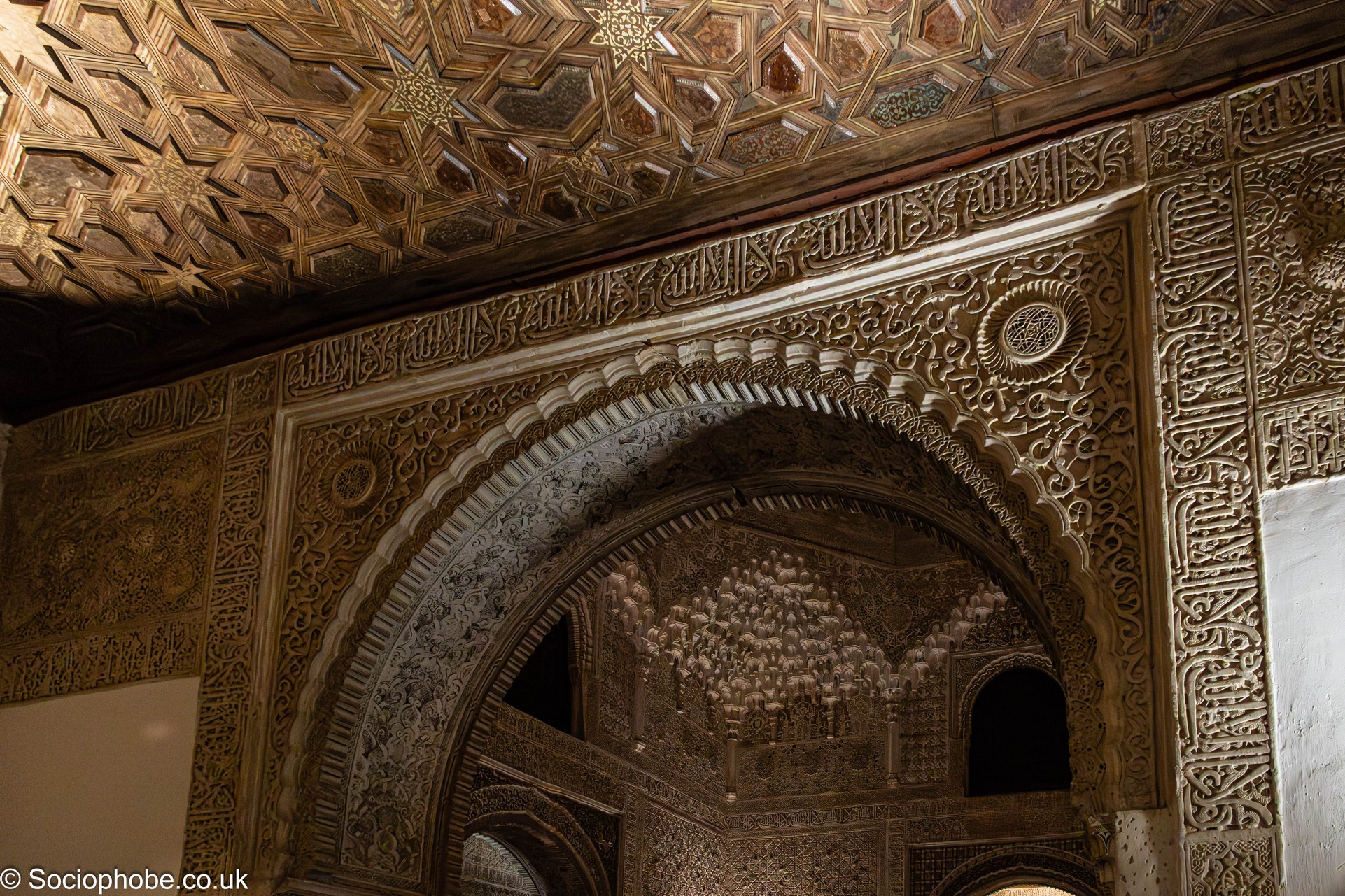
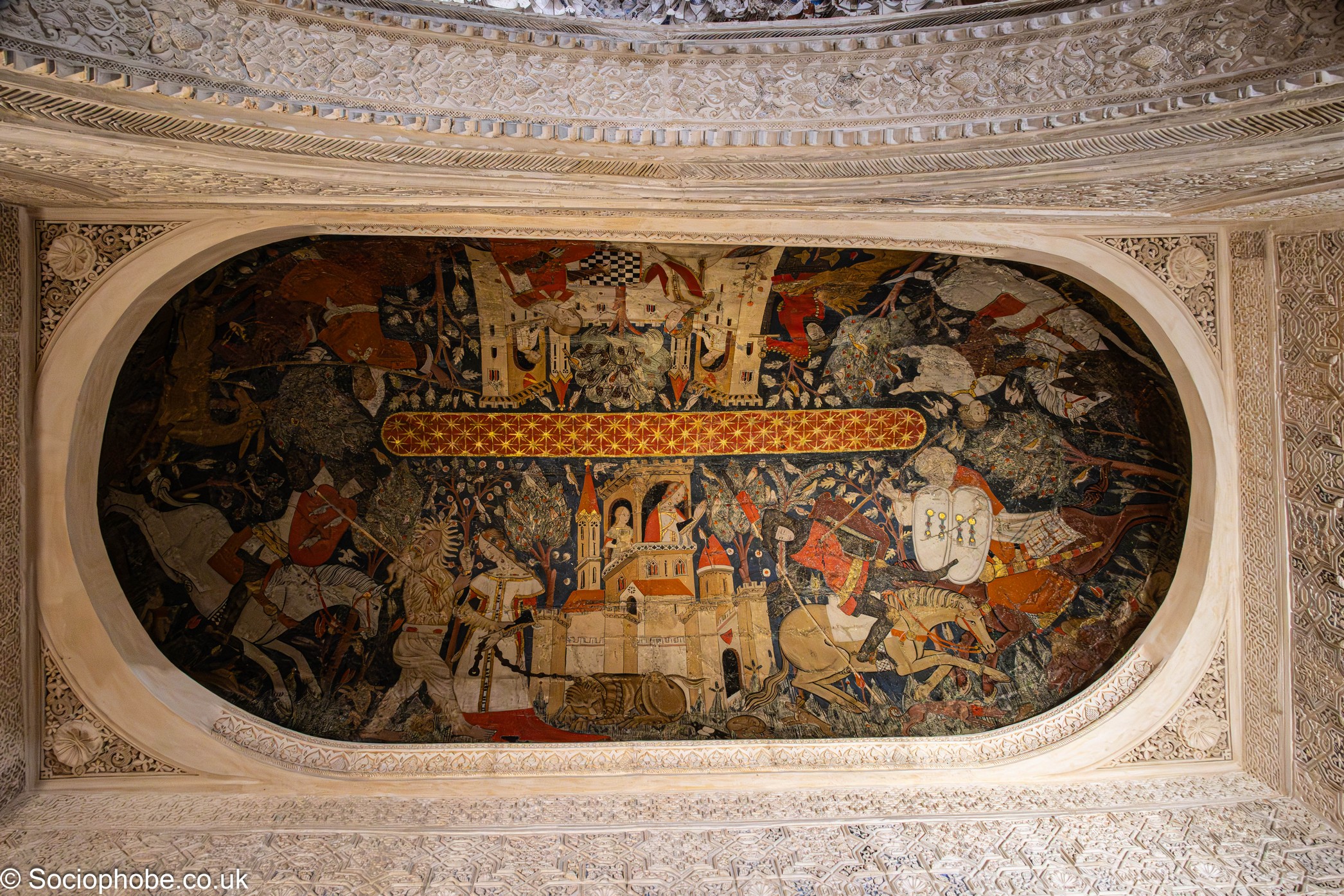

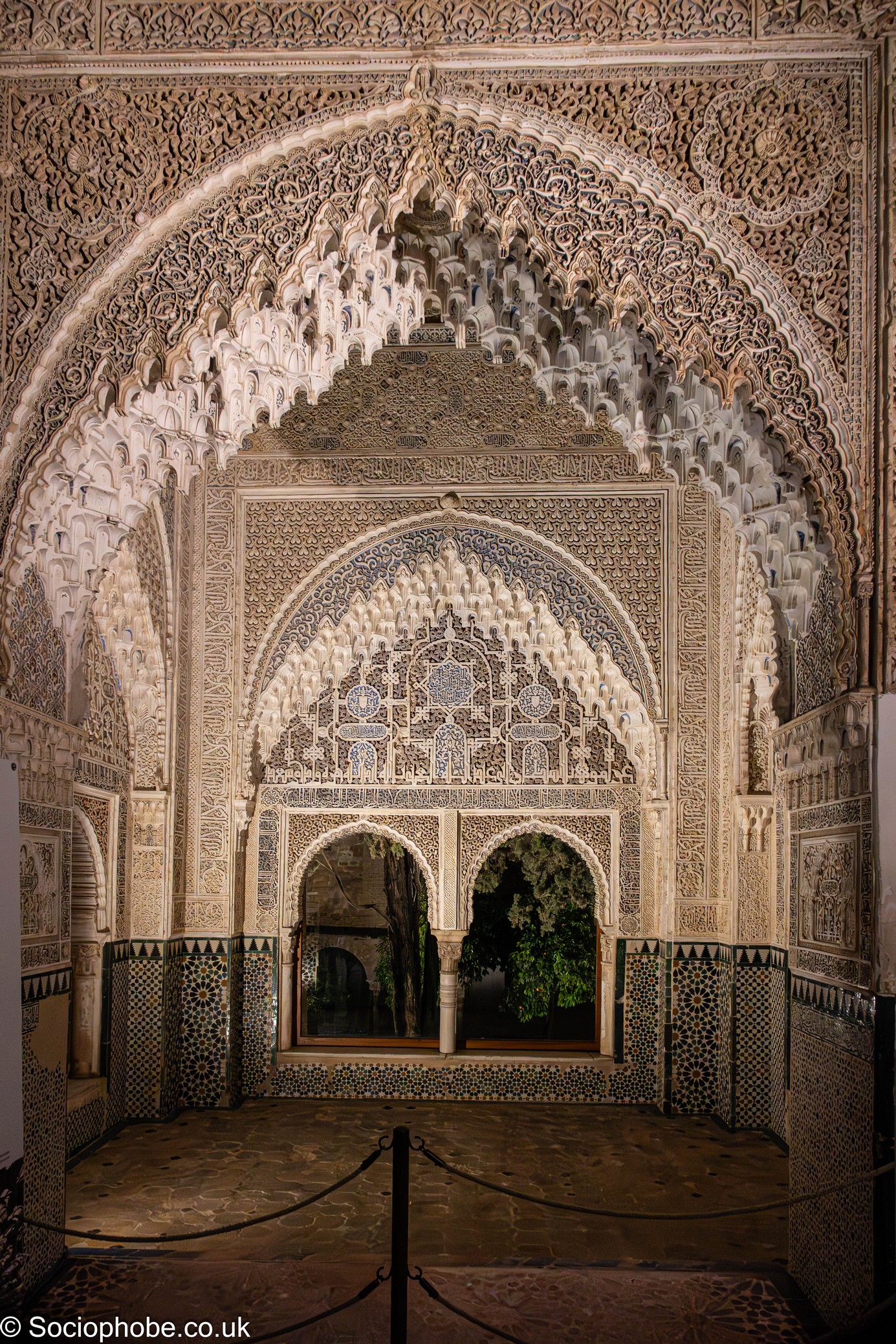
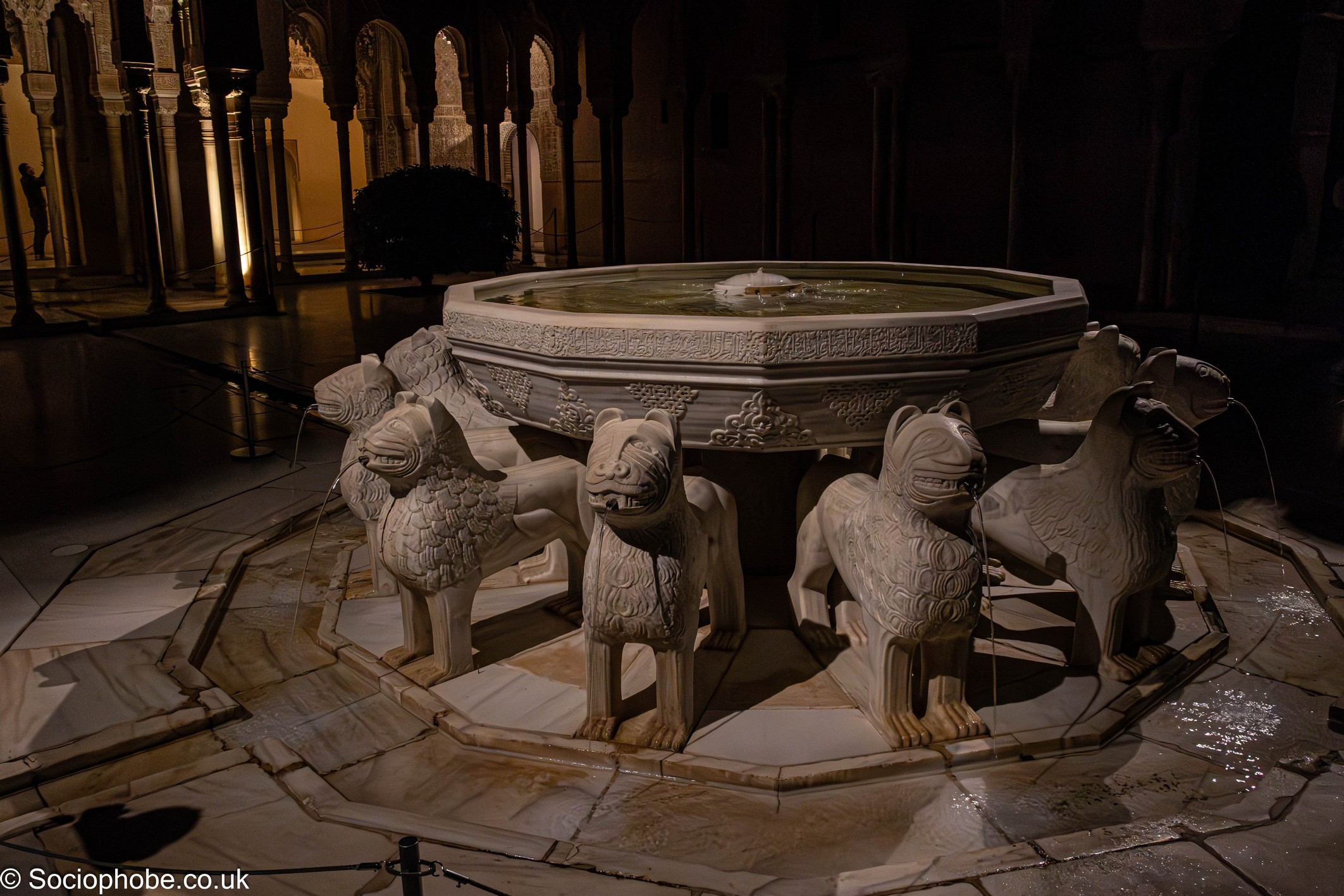
The weather was just perfect too, no wind and totally clear so the reflections in the ponds were like a mirror. For the €10 ticket fee this visit was an absolute bargain. Sadly the photography on my DSLR was largely unsuccessful as it was too dark for handheld shots and I didn’t want to lean against 700 year old plasterwork just to get a picture! Most of the photos are iPhone ones and some are from my Canon R6 at ISO 20000 where Lightroom’s Denoise AI wasn’t too zealous in smoothing detail. We walked back to the hotel through the park, arriving after midnight.
Day 4 – Jaen
We had a relatively late breakfast the next morning and then relaxed in our rooms, in my case sorting photos, before checking out at 11. We paid for the car park and then walked there, very pleased that all the tickets from the hotel worked, exited the car park driving up the 4 level to street level and made our way out of Granada towards Jaen. Once out of the city the traffic levels dropped massively and we had an uneventful drive 90 minutes north to Jaen, through more hilly terrain, with scrub and olive or maybe almond trees.
Jaen is another old Moorish city and we were staying in Santa Catallina Parador, part of the castle that has been converted to a hotel. On approach the downside became obvious – it is high up on the hill and not practical to walk up and down to the town! Check in was friendly and efficient though and we were shown to our rooms, fabulously spacious and each with a lovely balcony looking over the hills.
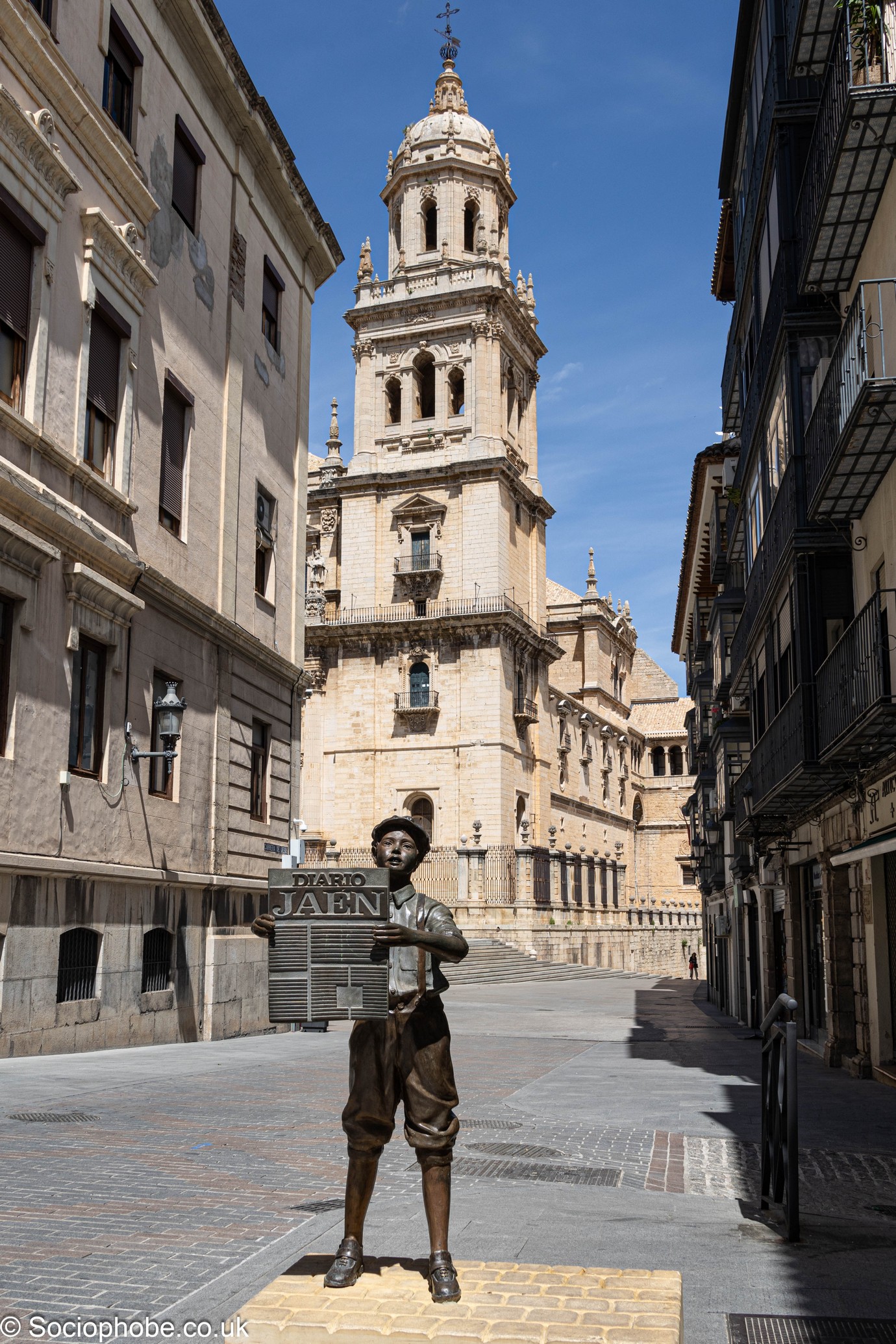
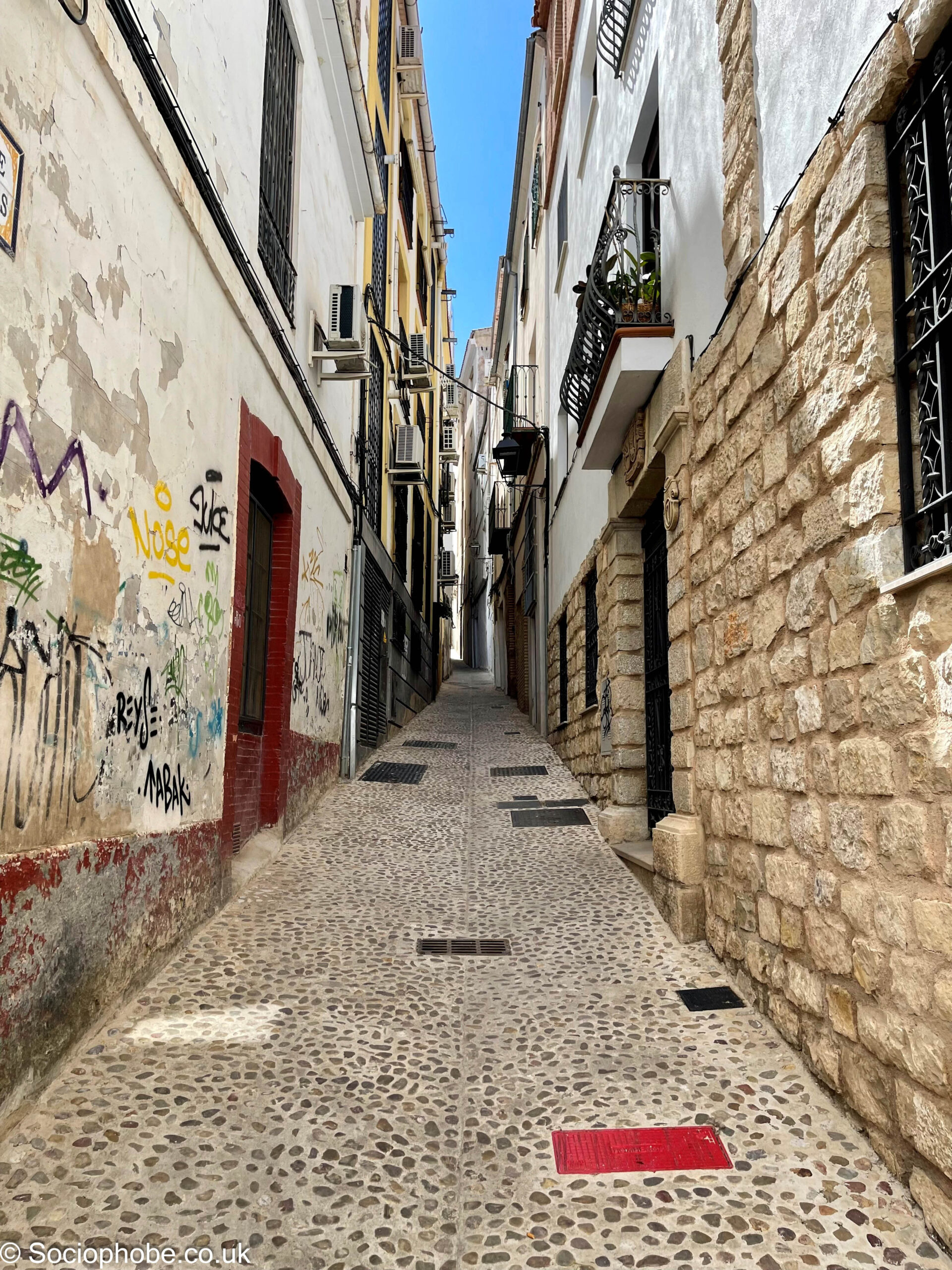
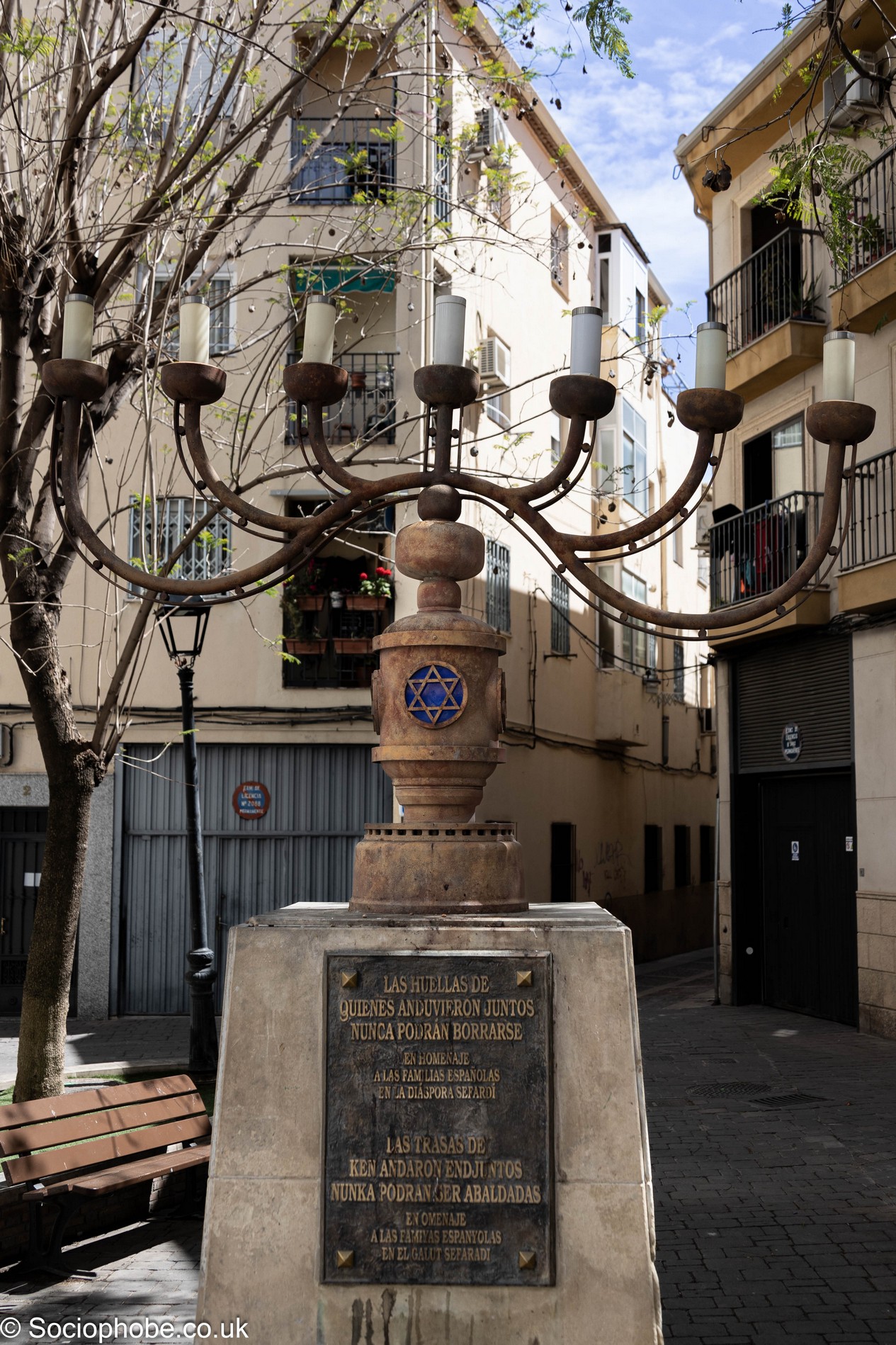
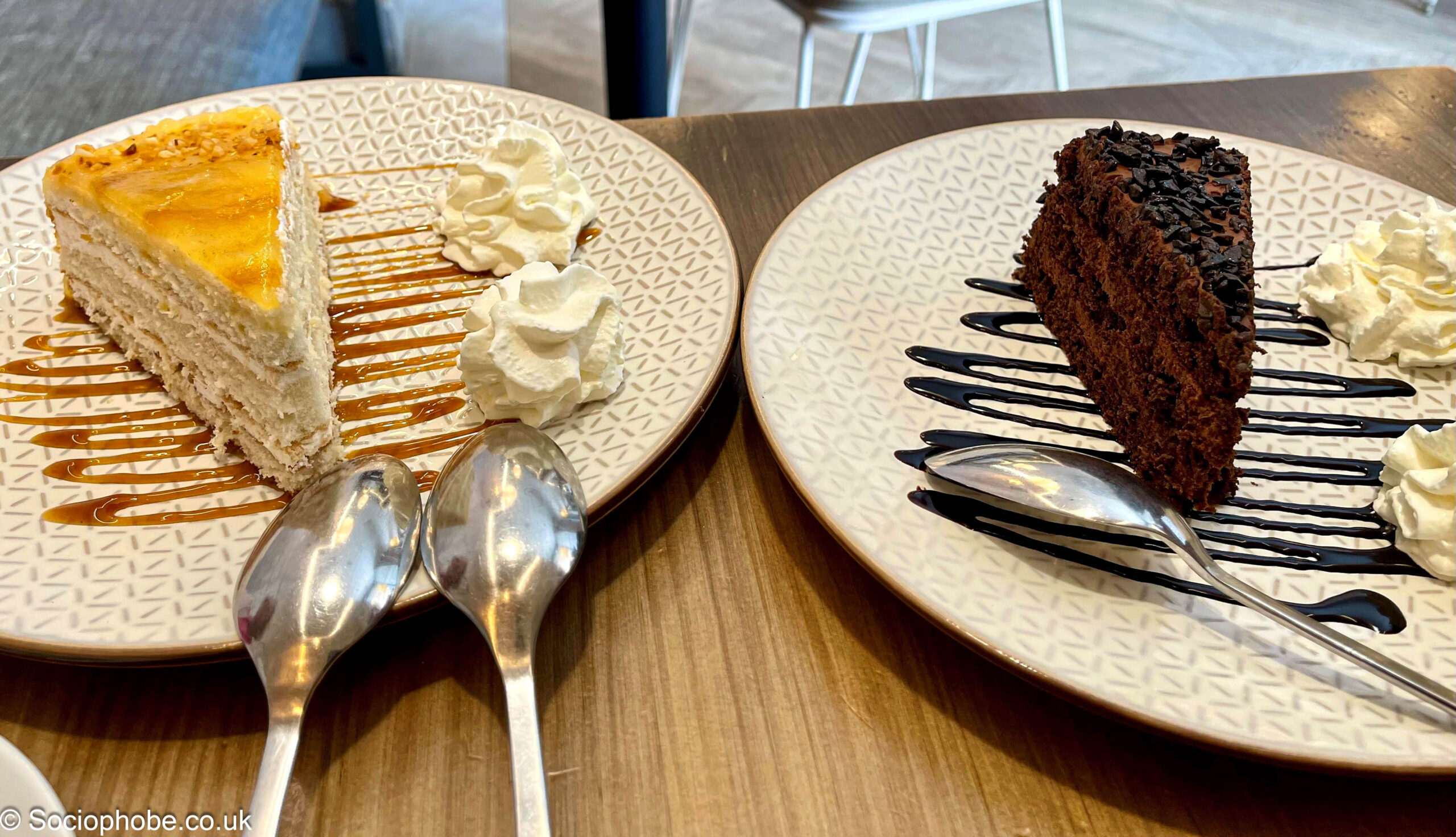
We took a taxi to town around 3 and stopped at the cathedral. This was a huge box shaped building that dominated the town. It was closed so we walked around it, walked to the Arab Baths (closed), Monastery of Santa Clara (closed) and the Jewish Memorial (open air so able to view) and then ended up, much against tradition, in a cafe for coffee and cake. The town appeared to be a bit grubby with very few architecturally impressive buildings and those that we saw were all spread out. We spent maybe an hour walking back and forth before the cafe and felt a little let down. The cake though was superb, with a deliciously dense chocolate one being particularly good.

We arrived at the cathedral at 16:45 to meet the guide at 16:50 but everyone seemed to be leading Spanish tours and no one was looking like they expected anyone else to join them. I’d booked the 3 hour Jaen Walking Tour with Get your Guide and after waiting and wandering a bit we approached one lady and she was the one that ran our tours but they had no record of the booking and, with a new level of imbecility, I’d booked the Spanish language tour. Luckily Patricia was a saviour and let us join the Spanish couple that she was expecting as well as translating everything into English. Being bilingual is such a fantastic skill and she had no trace of accent so we had a winner there.
Jaen Cathedral
The tour was fabulous, not so much for the sights but for the way Patricia brought them alive. The cathedral – which if I’d been wandering solo would have been a ten minute visit was extended to an hour by learning about the bishop who remained unburied for 500 years, the choir seats and the council being snubbed, the balconies around the outside, the bombing of Jaen in the Spanish Civil War and the face of Christ relic.
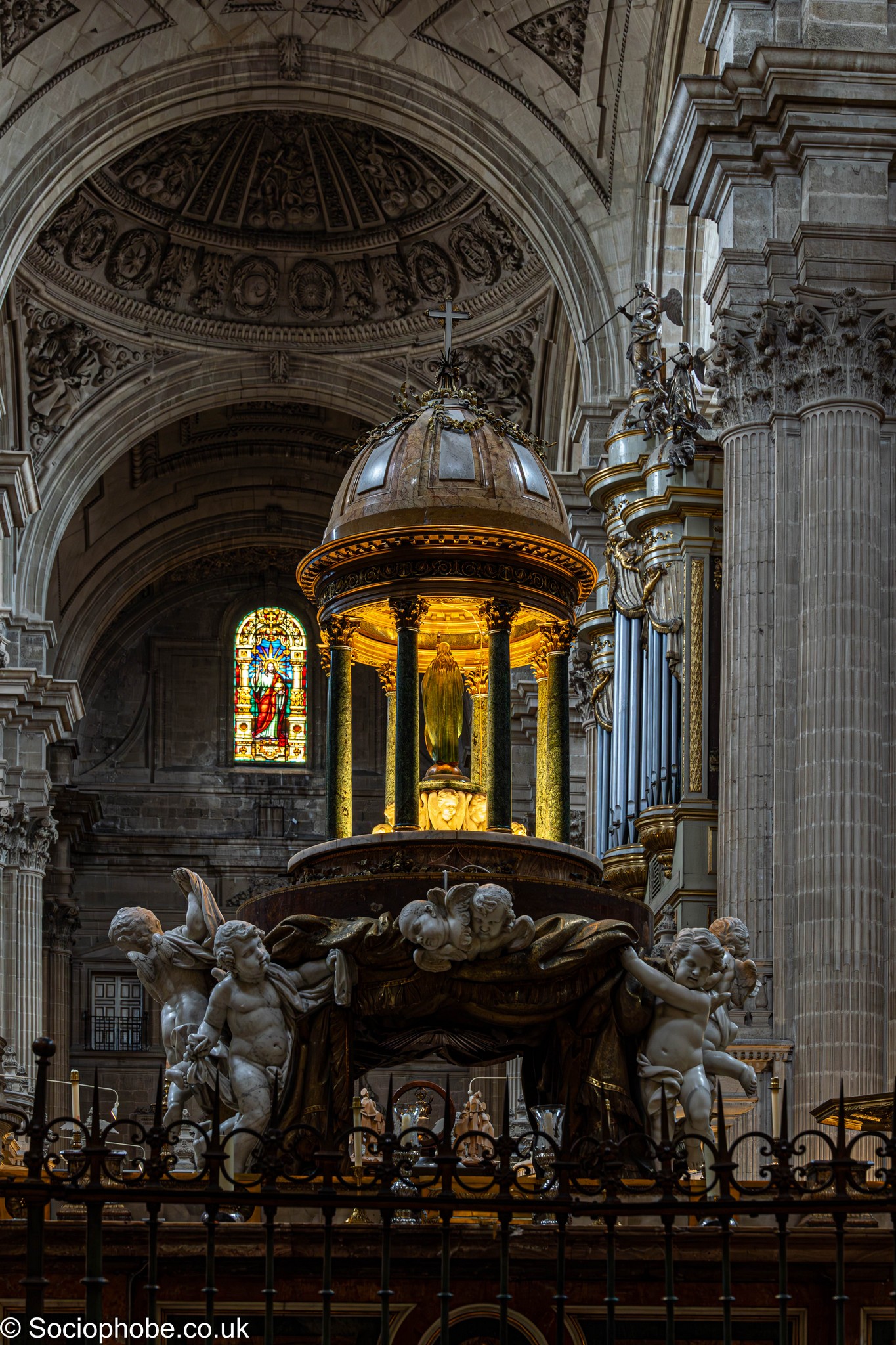
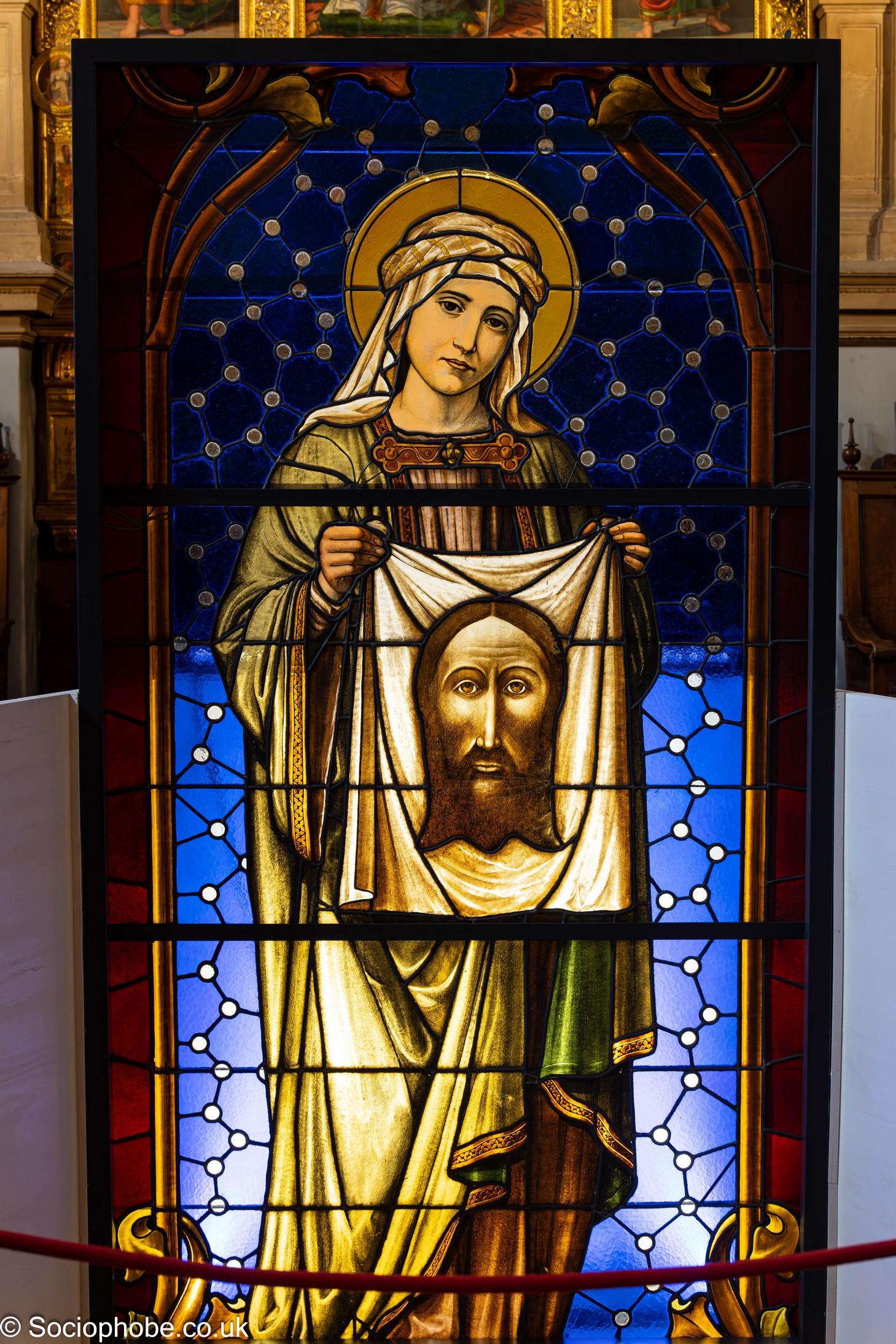

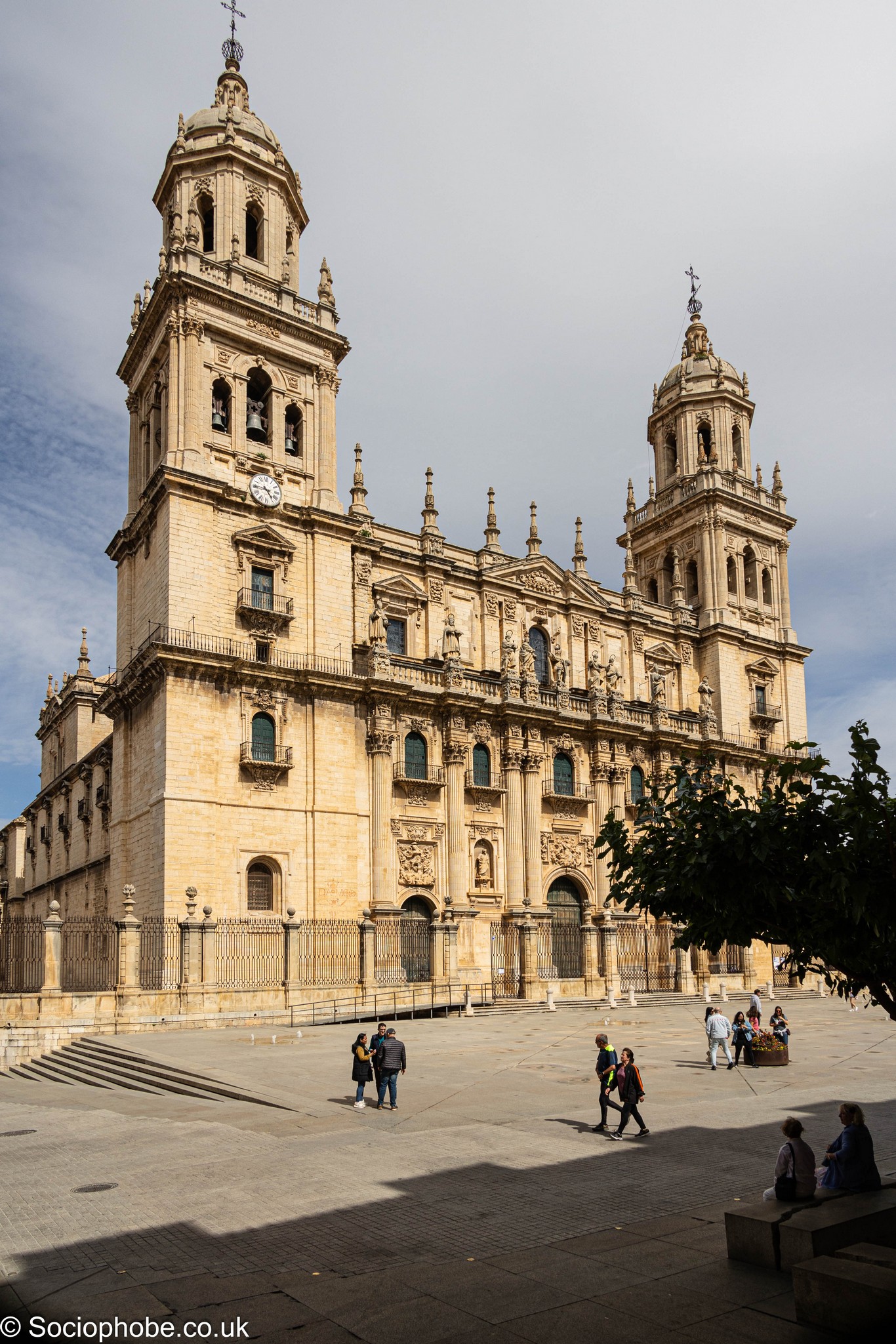
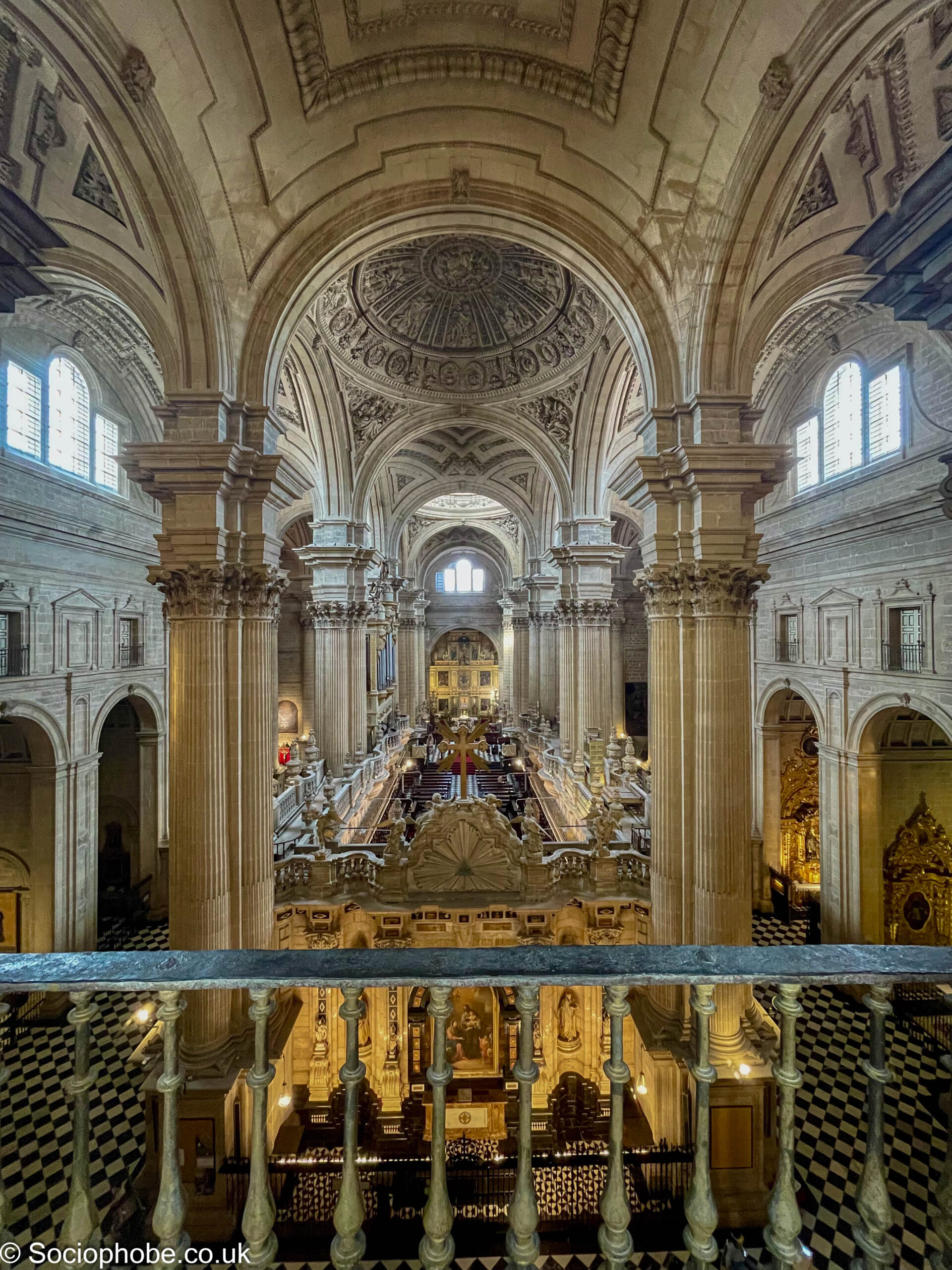
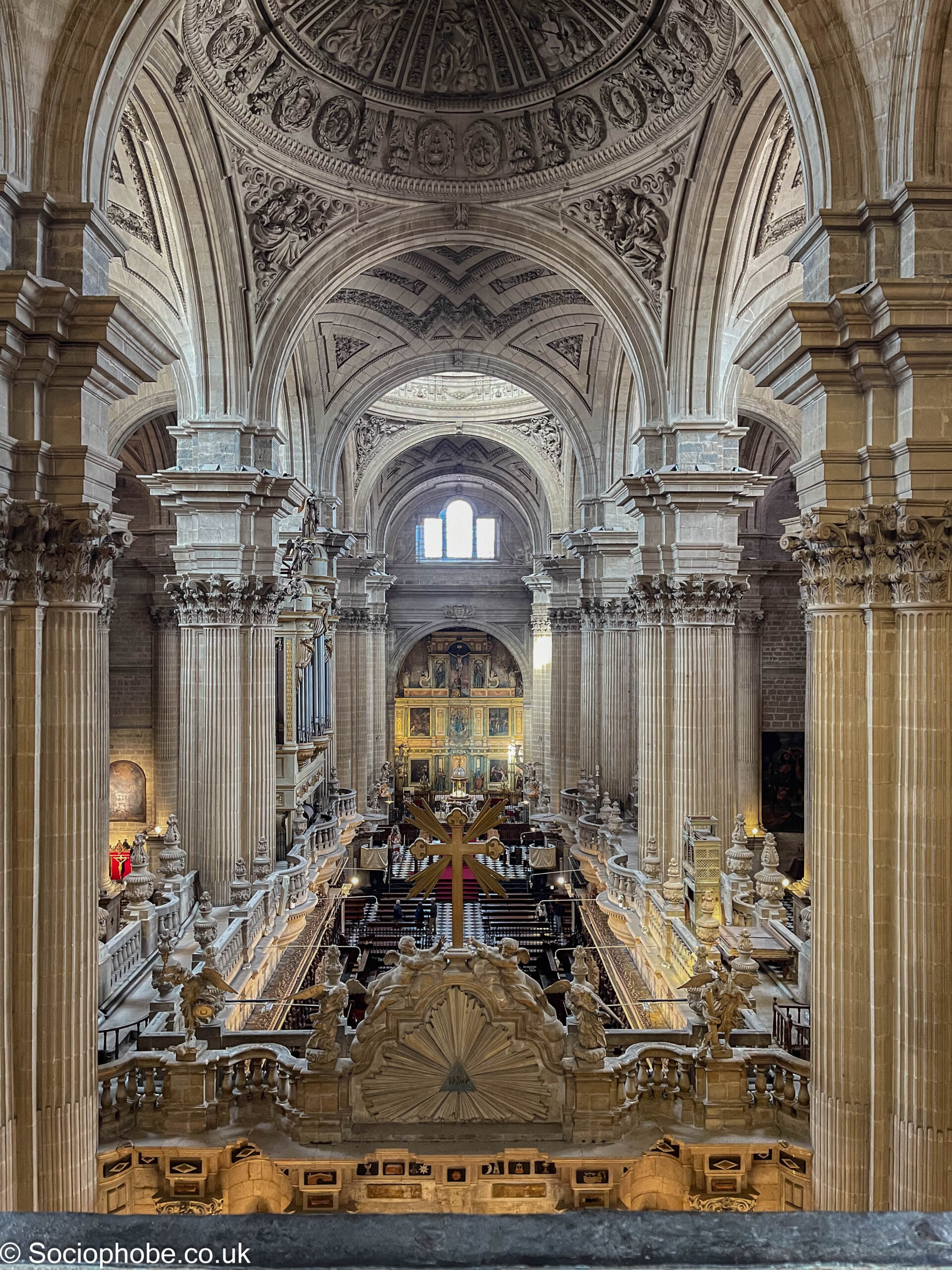
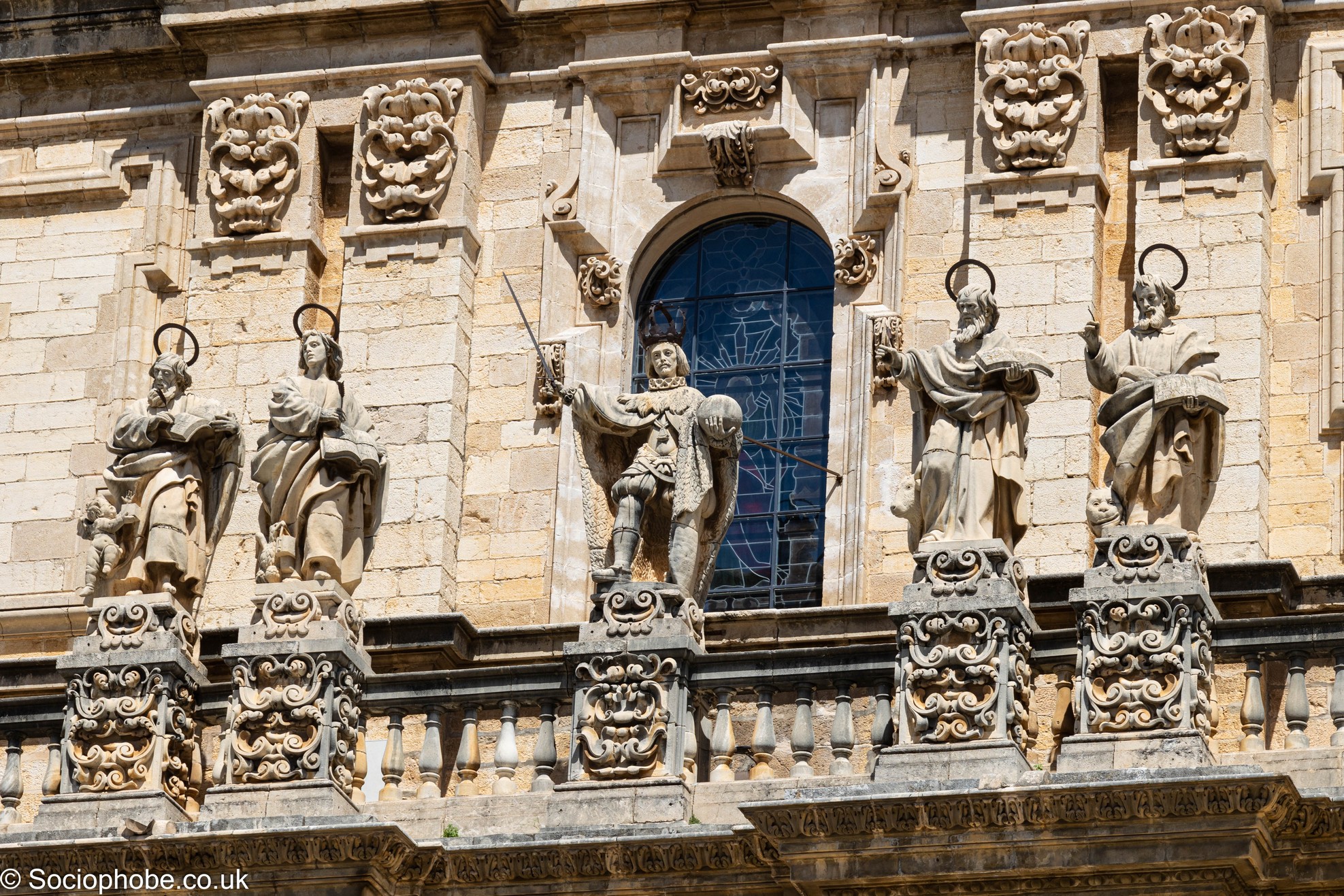
It is an impressive and well maintained building but there is very little in the way of information unless you have an audio guide. Being able to climb to the second level allowed us to get a better idea of the scale of the place. The cathedral is such a large building with a relatively small square around it that external views were difficult. Built on the site of the city mosque, this iteration of the cathedral started in the 16th century and ended in the 18th century and is now a World Heritage Site.
Jaen Arab Baths
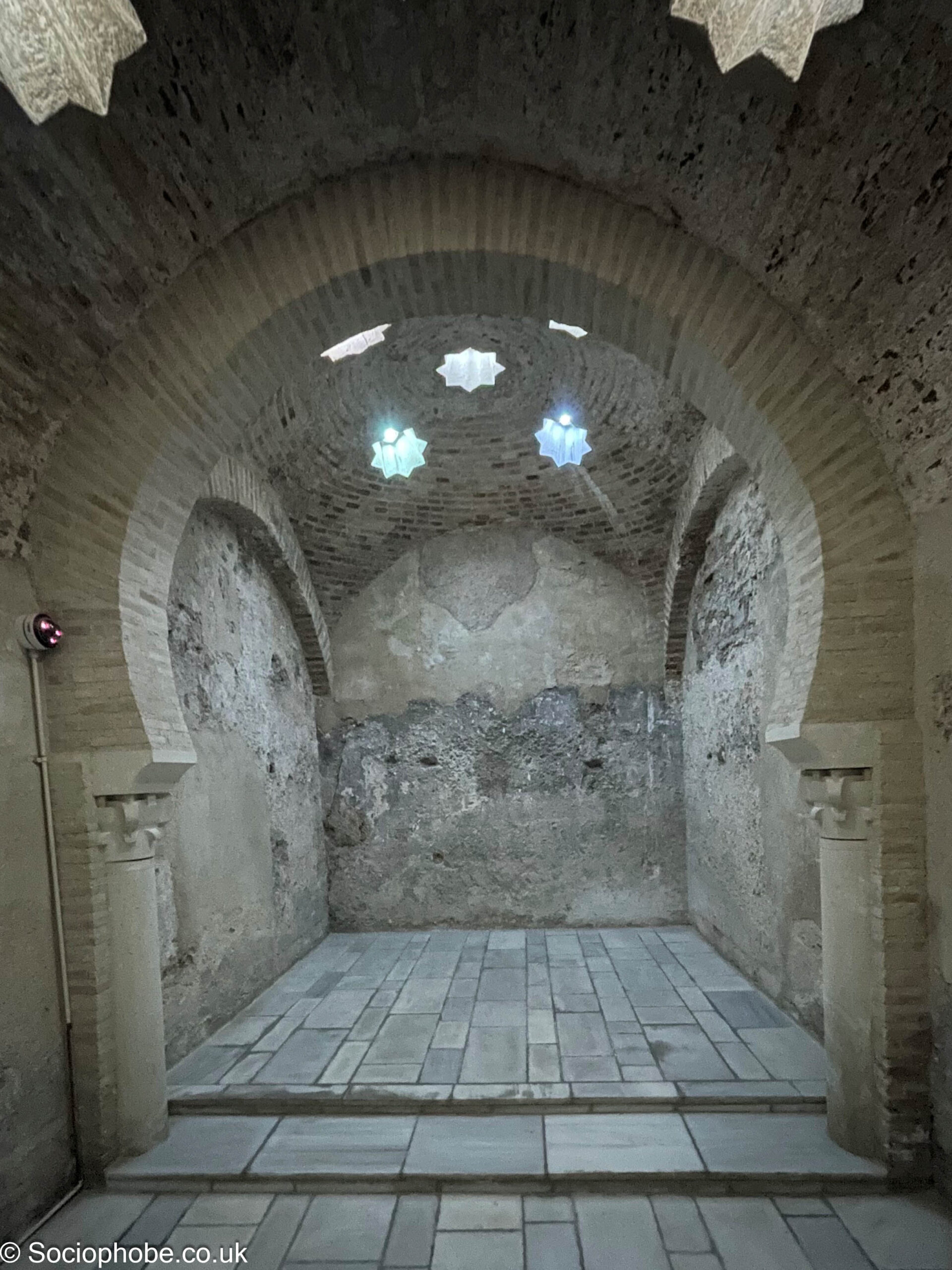
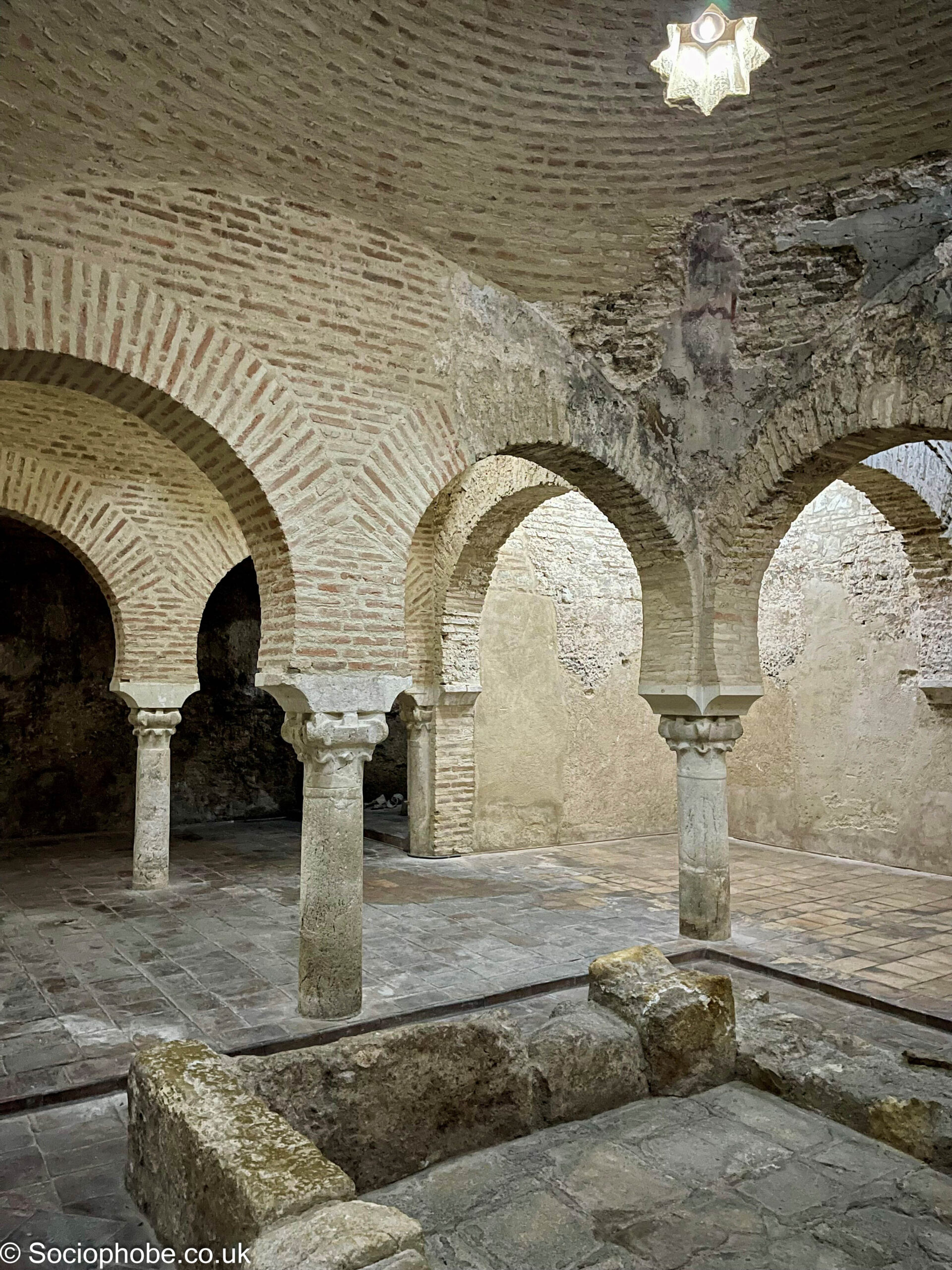
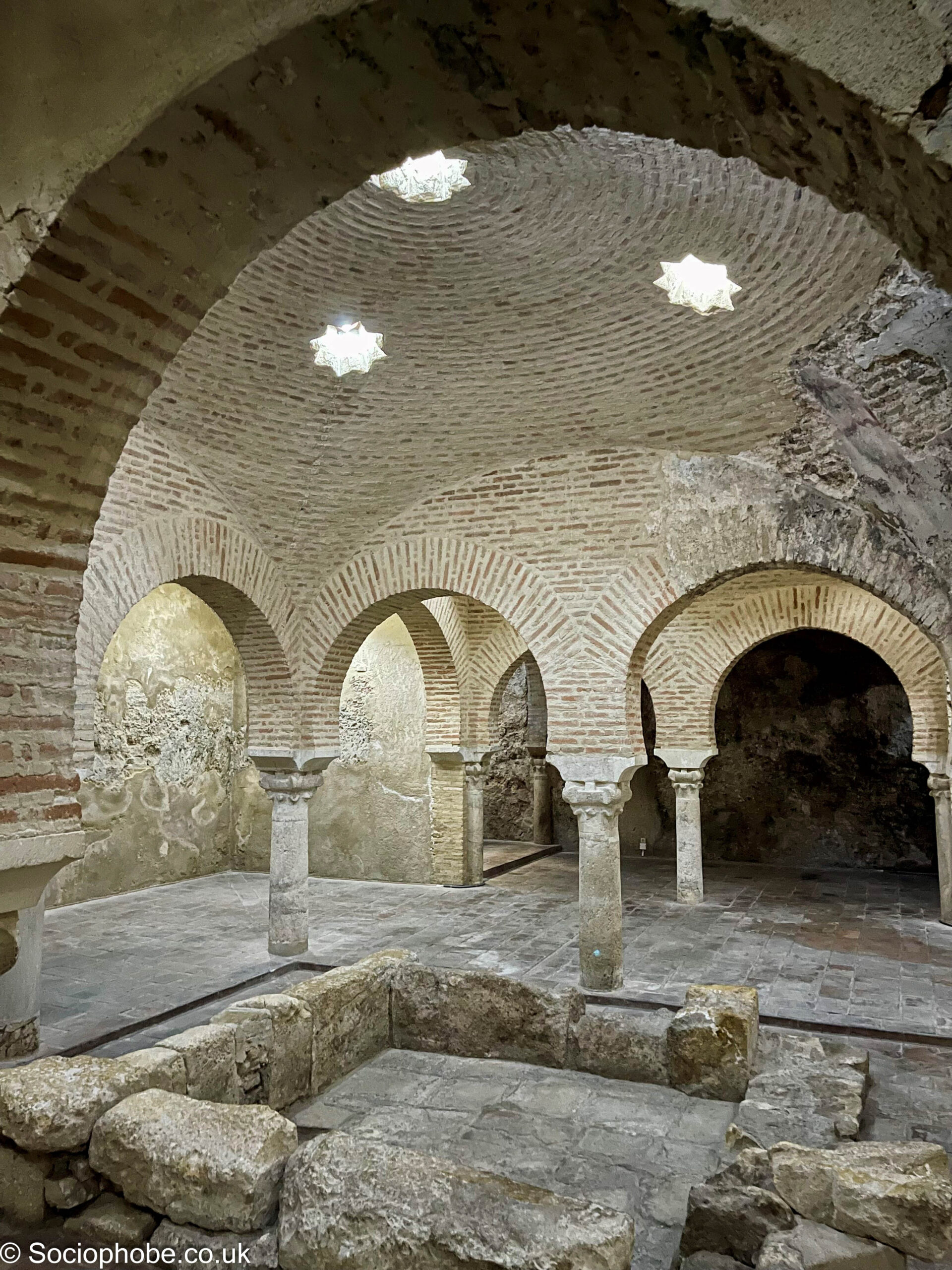
From the cathedral we walked to the Arab Baths, excavated and restored after a 16th century palace was built over them. These are the largest Arabic baths in Spain and were built over the Roman originals. The restoration is mostly plain brick but there were some areas with the original geometric decoration. There’s not a huge amount to see but it’s certainly worth a 15 minute visit. The palace courtyard itself is very pretty too and has examples of local cultural dress. As the baths are underground now most of the light wells are actually lights but the effect is the same.

Jaen La Magdalena
After the baths and a quick look at the central courtyard of the palace we walked to the Church of Mary Magdalene to see the original Moorish ablutions bath there as the church was built on the site of the mosque and retained some Moorish colonnades too. The tower was originally the minaret but not sure if it is possible to climb it. The church is the oldest in the city and when we visited there was a mannequin (not sure of that’s the right word) that is carried around the town during Holy Week. Patricia then took us to the taxi rank to return to the Parador. A really engaging and informative tour.
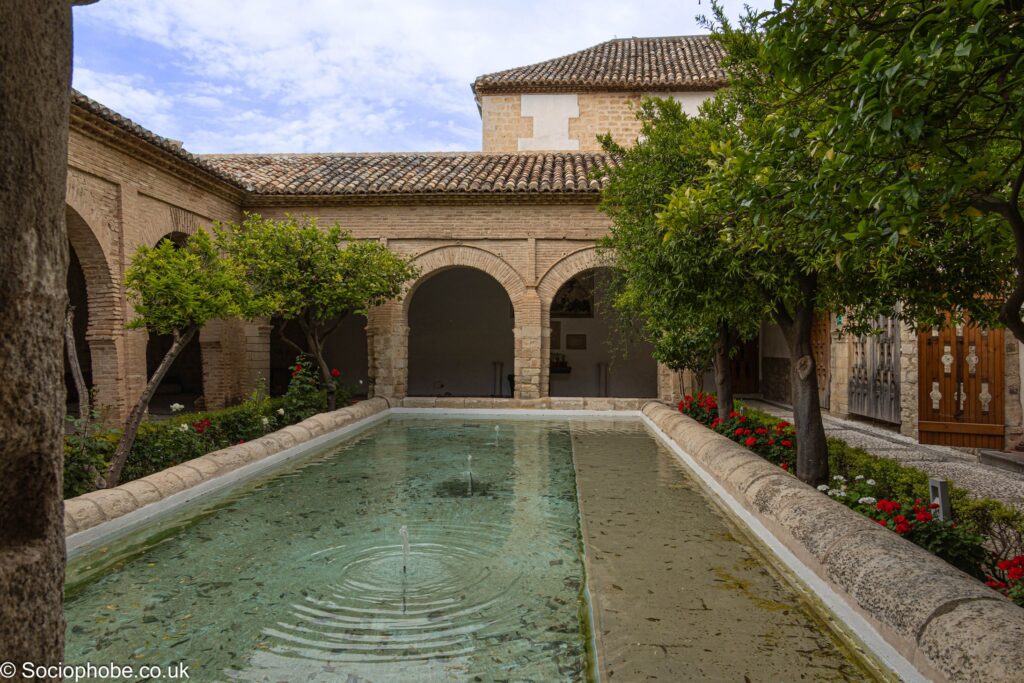
Back at the paradour we just had time to quickly get changed for dinner. I wasn’t really hungry and luckily the portions were small but there seems to be a real aversion to vegetables in Spain, certainly when eating out. We shared some croquettes – amazingly airy – and then I had sea bass with a mushroom sauce, broccoli and asparagus that probably had two florets of broccoli, one piece of asparagus and a single mushroom. It was all beautifully presented and well cooked but hardly a full meal. The restaurant was also understaffed on the evening that we ate there and I actually left before dessert as I was fed up with waiting. The staff were all wonderful, there just needed to be more of them.
Day 5 – Jaen to Roquetas de Mar
I had an excellent sleep and we didn’t meet up until 8:30 for breakfast. This was an excellent spread and I ate so much I could have had a nap after but sadly there was no time for that! The weather was by now so windy and wet that Deb opted to stay inside but Mum and I braved the elements to visit the castle.
Castillo Santa Catalina
I was intending to walk around the outside early in the morning but as I had slept in late and the weather was abysmal we visited Castillo Santa Catalina after breakfast. Entrance was €3.50 and the wind had really picked up so we joined a few other visitors, hats and raincoats sticking to our bodies as we dodged from tower to tower to avoid the driving rain.
Each tower had exhibitions about the castle and there was an AV presentation, in Spanish. It showed how the Moorish city grew and there were two castles built as the city expanded. The Christians then extended the walls and built additional towers and the French demolished parts of the old castle when they left Spain after the Peninsular War.

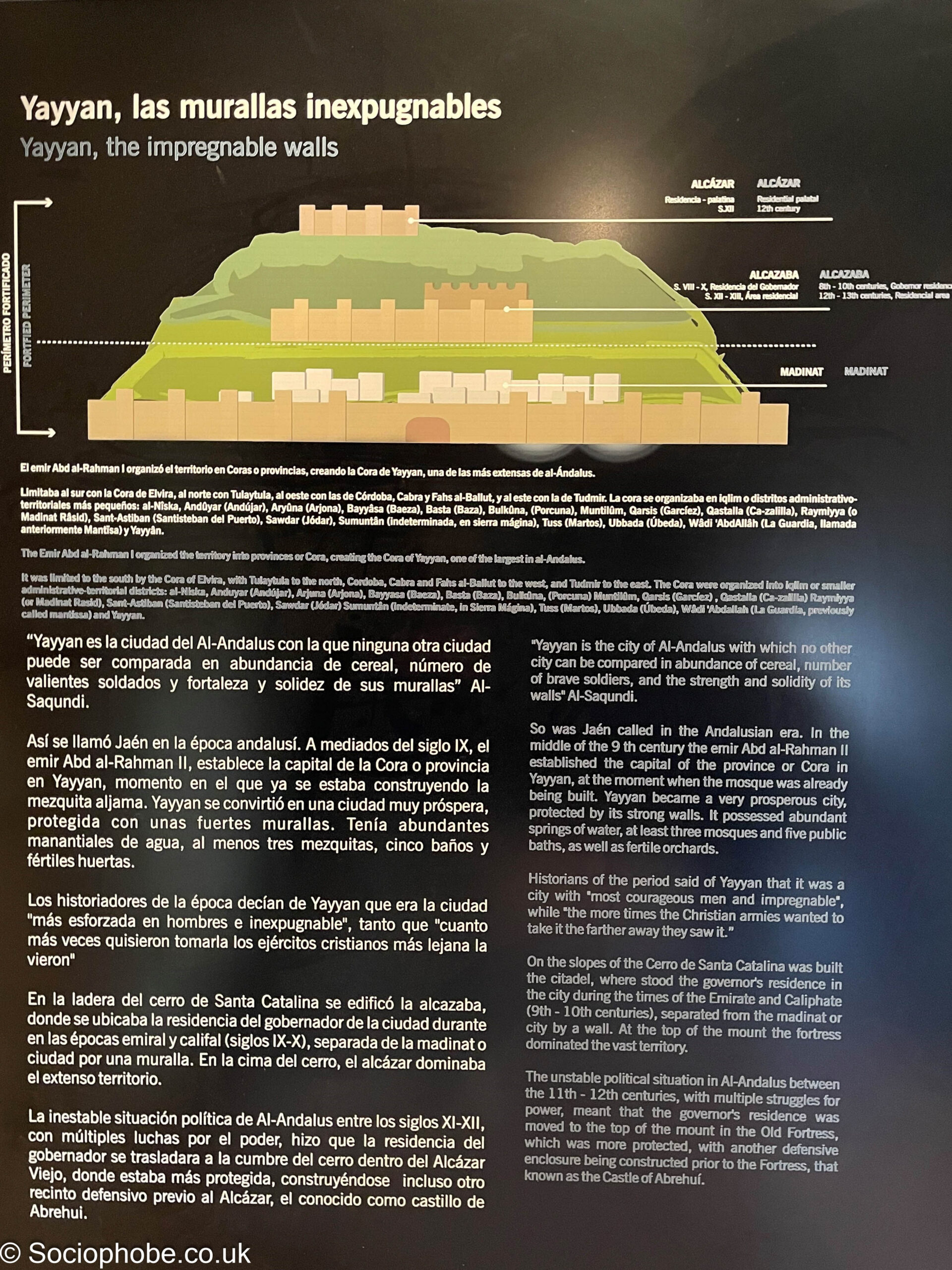
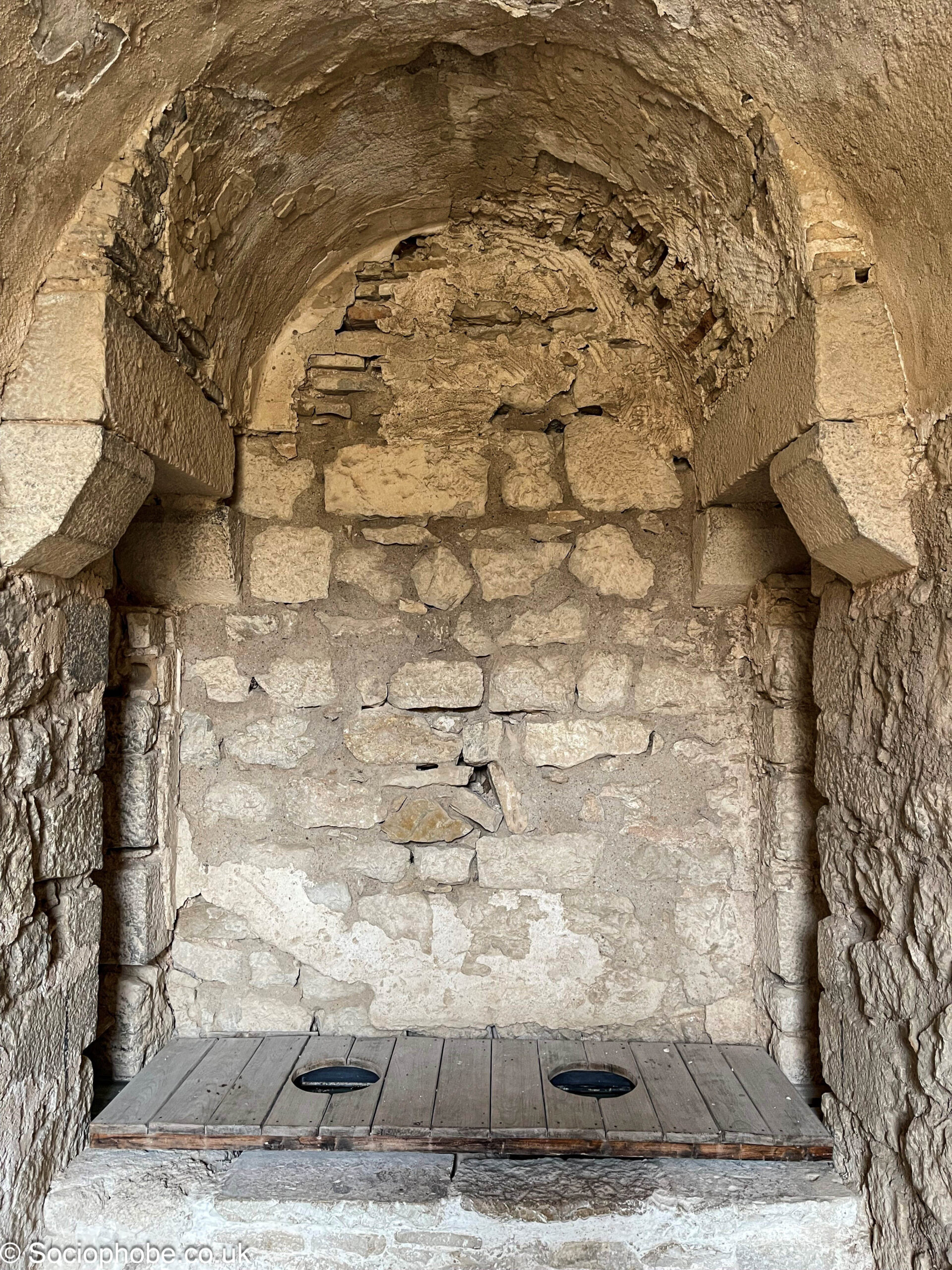
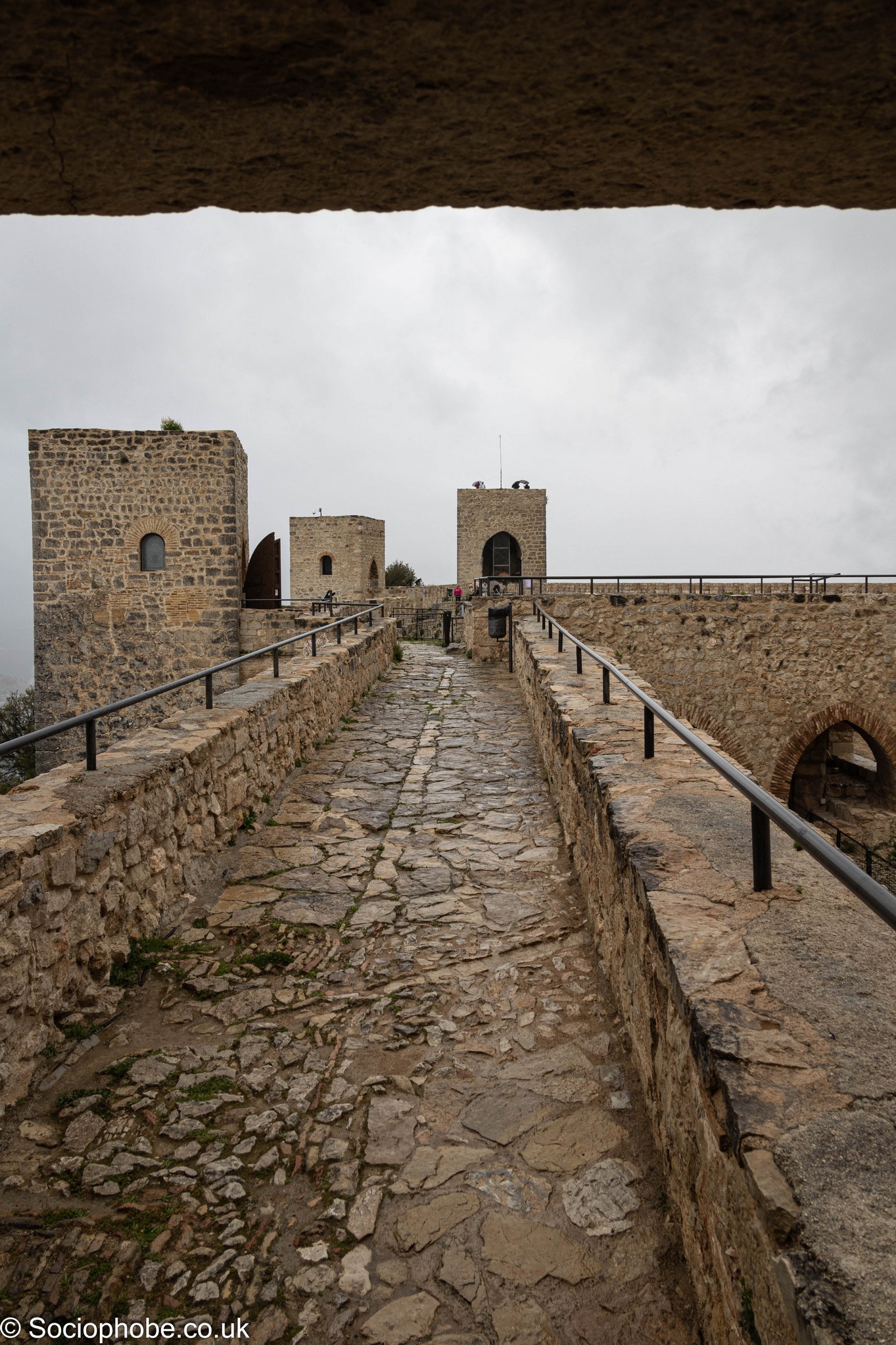
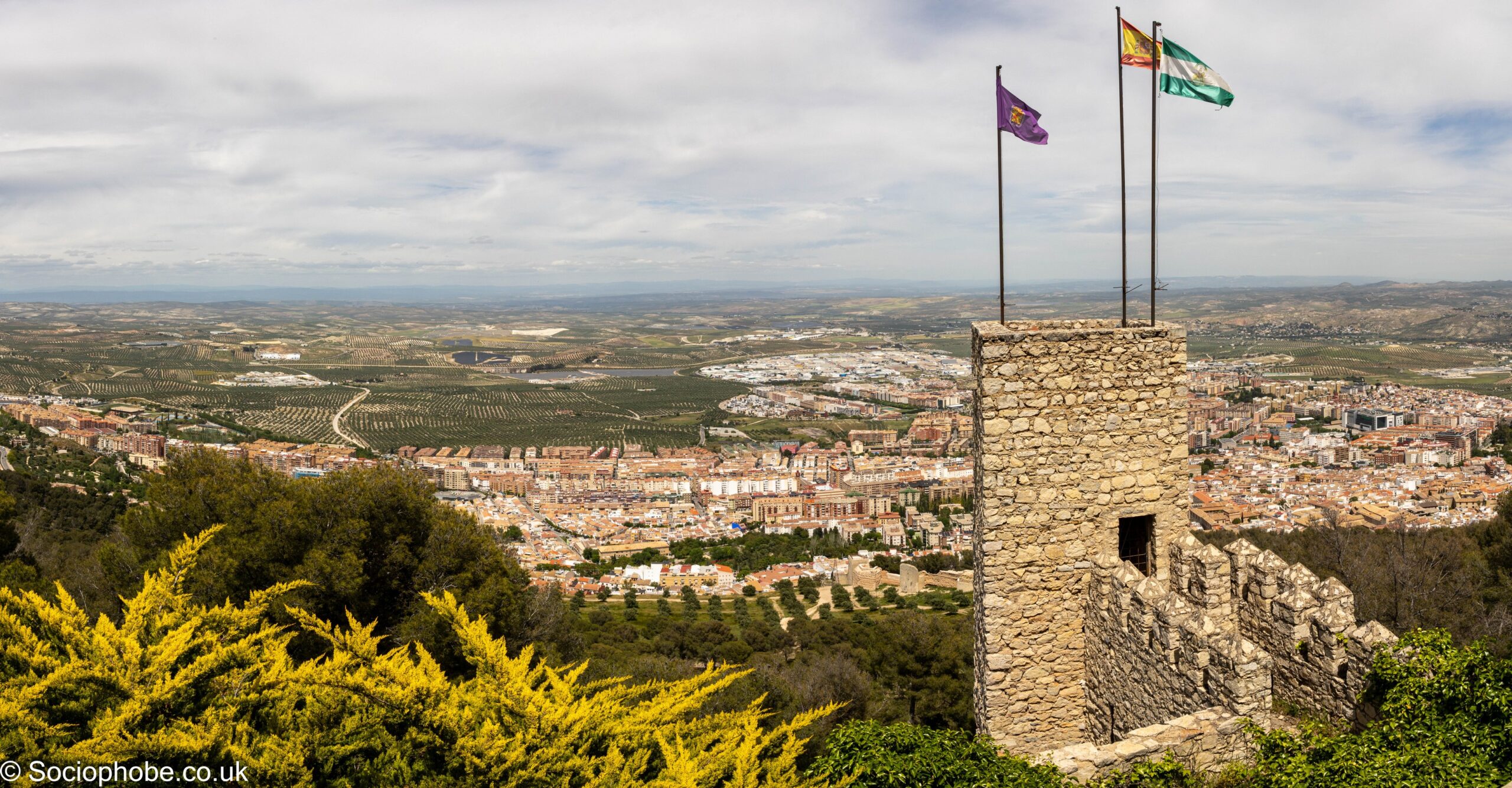
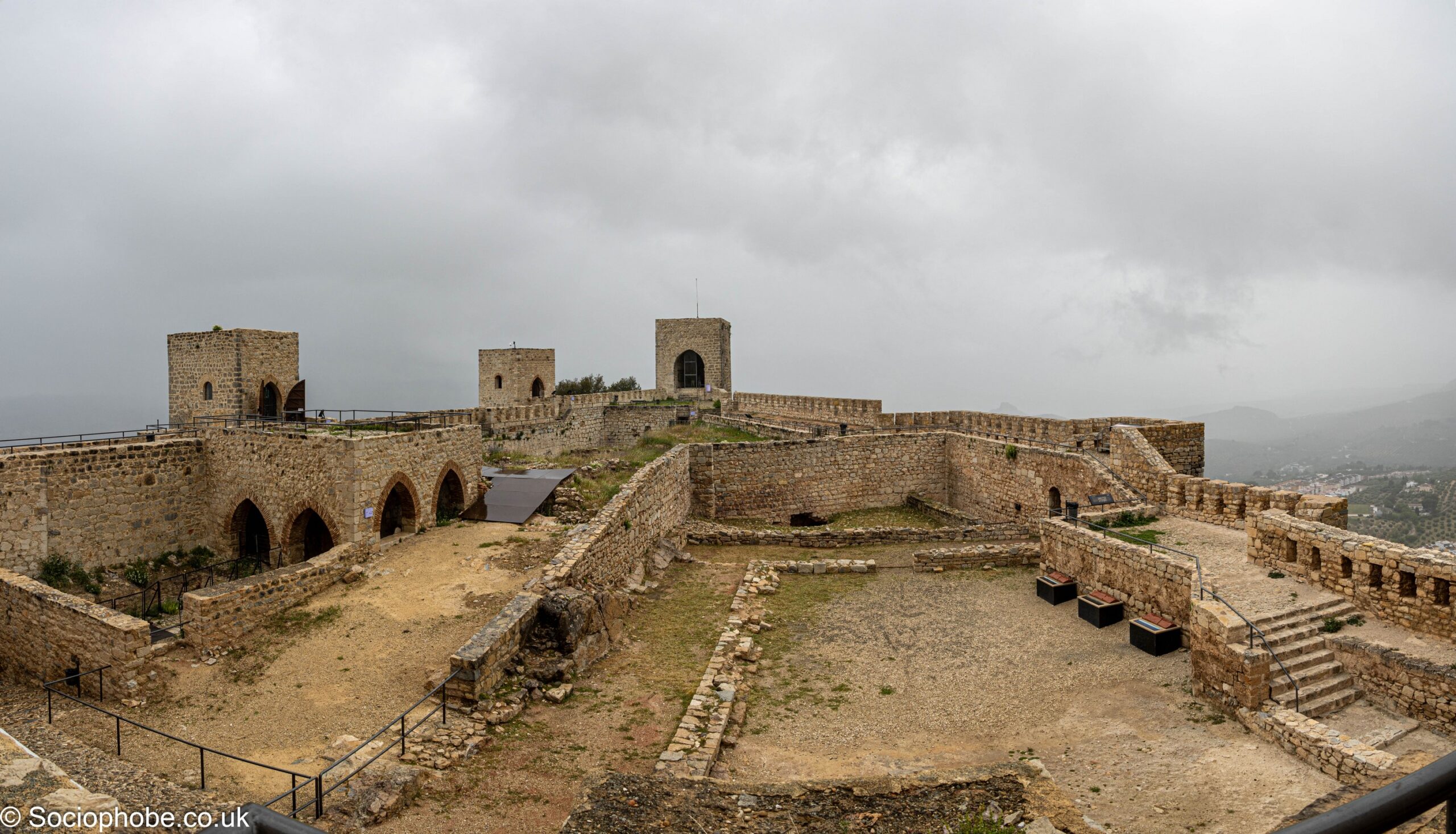
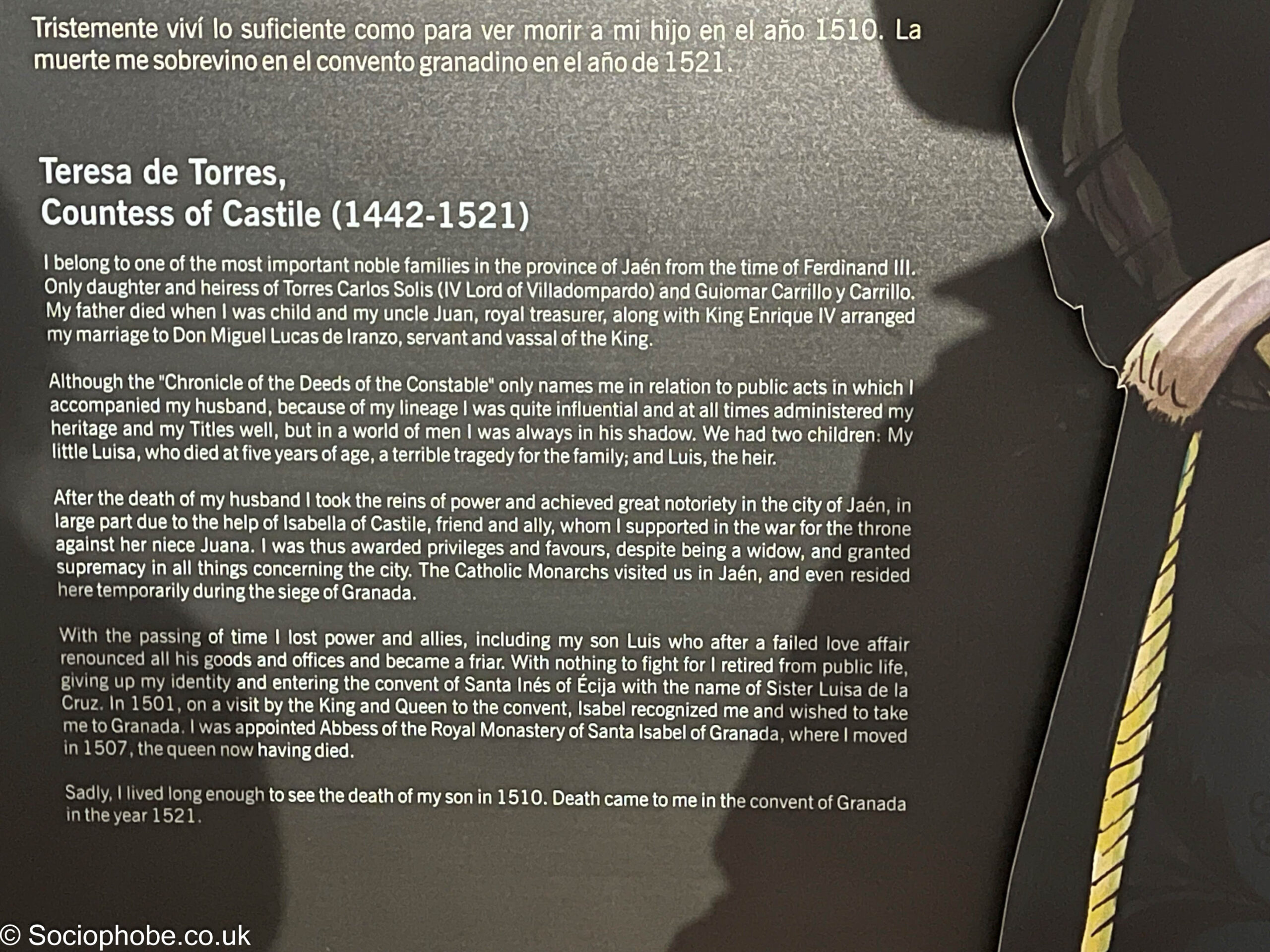
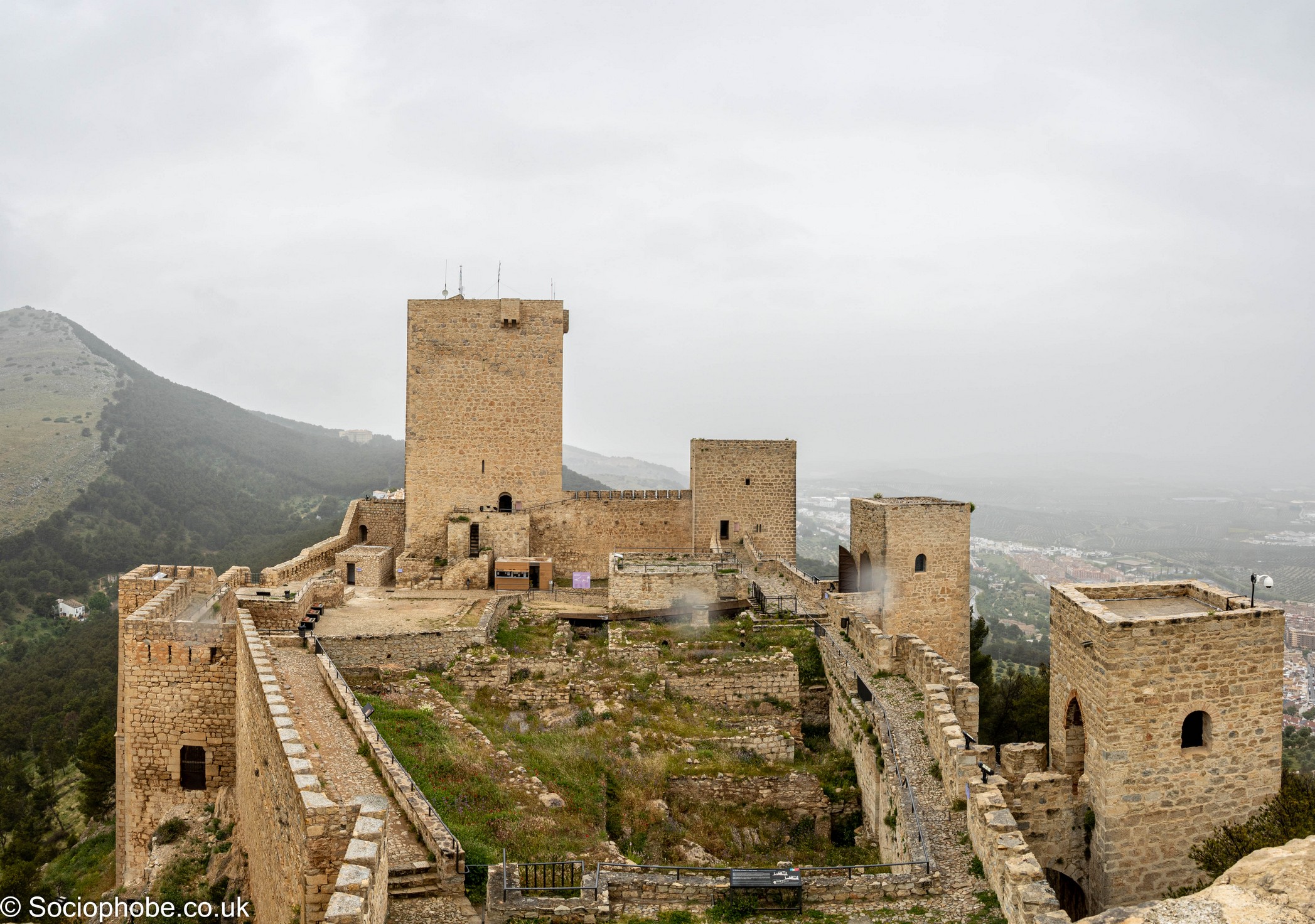
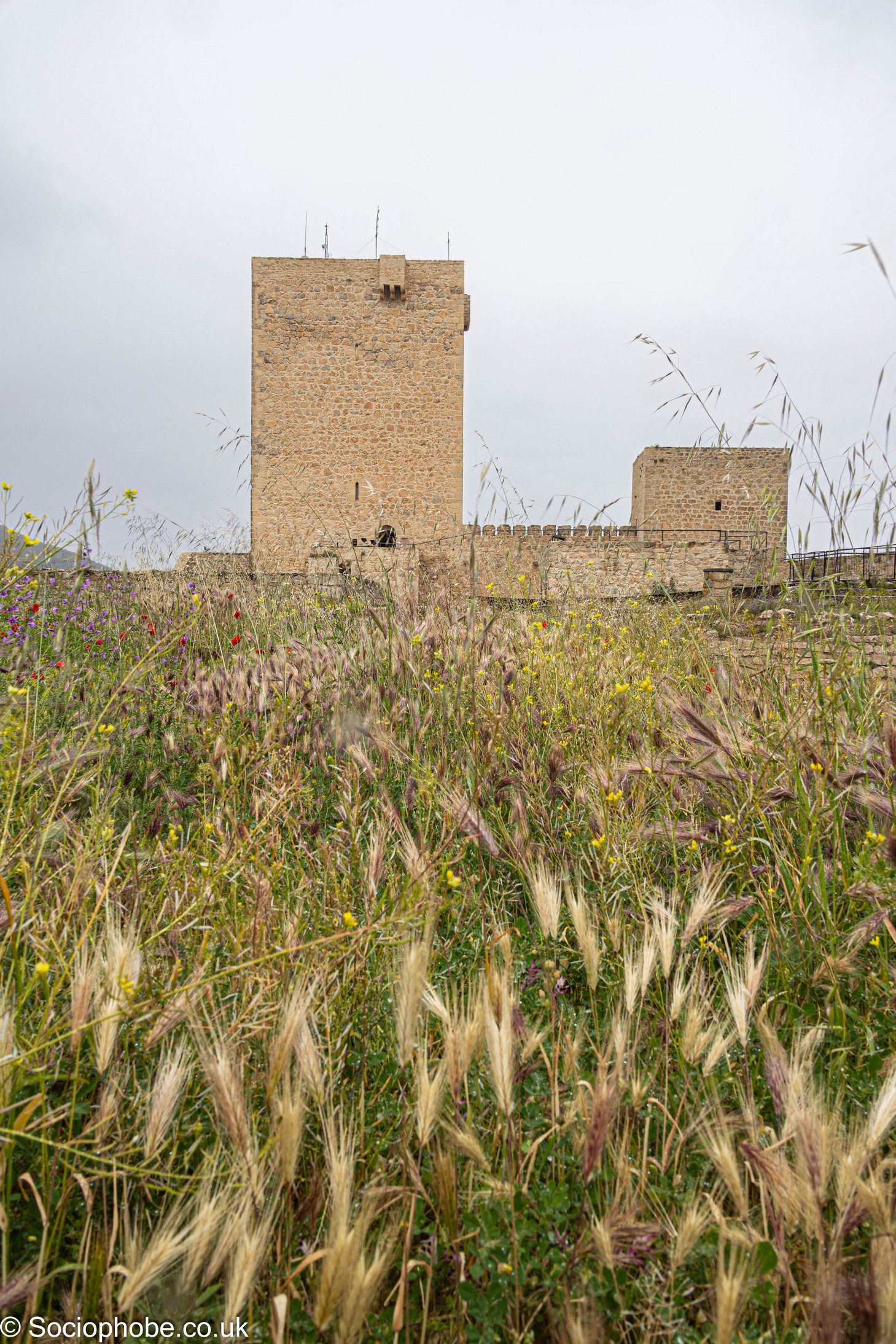
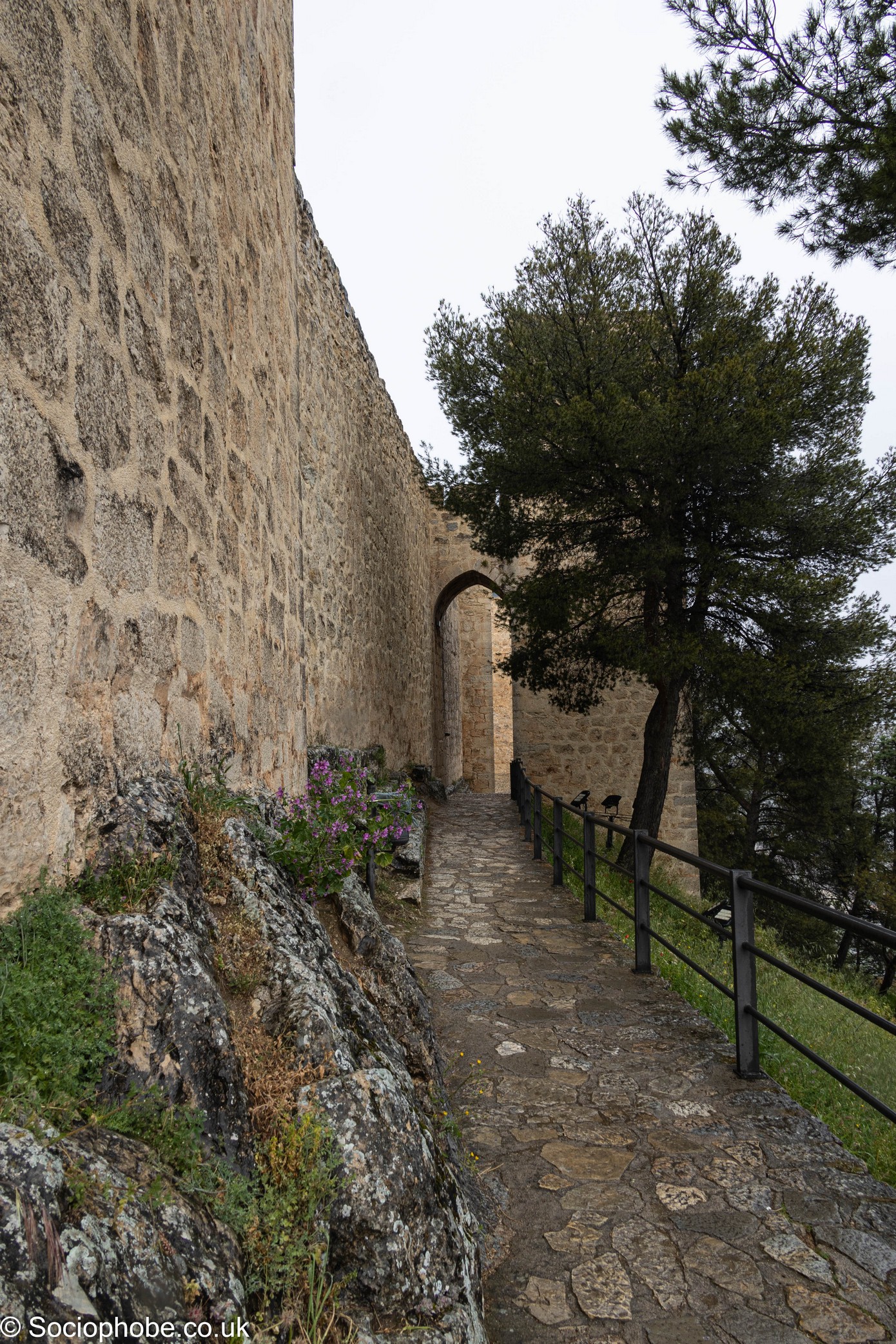
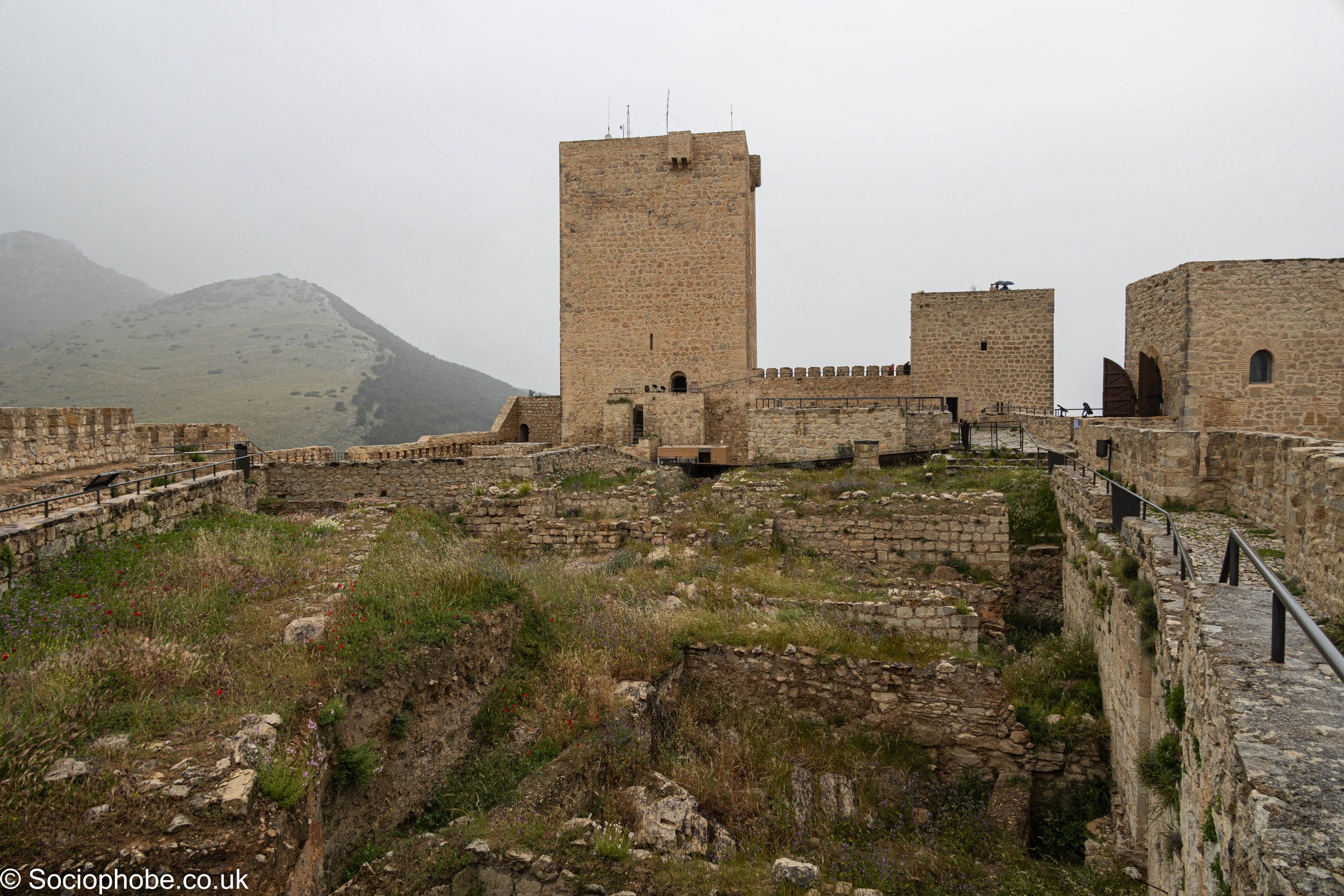
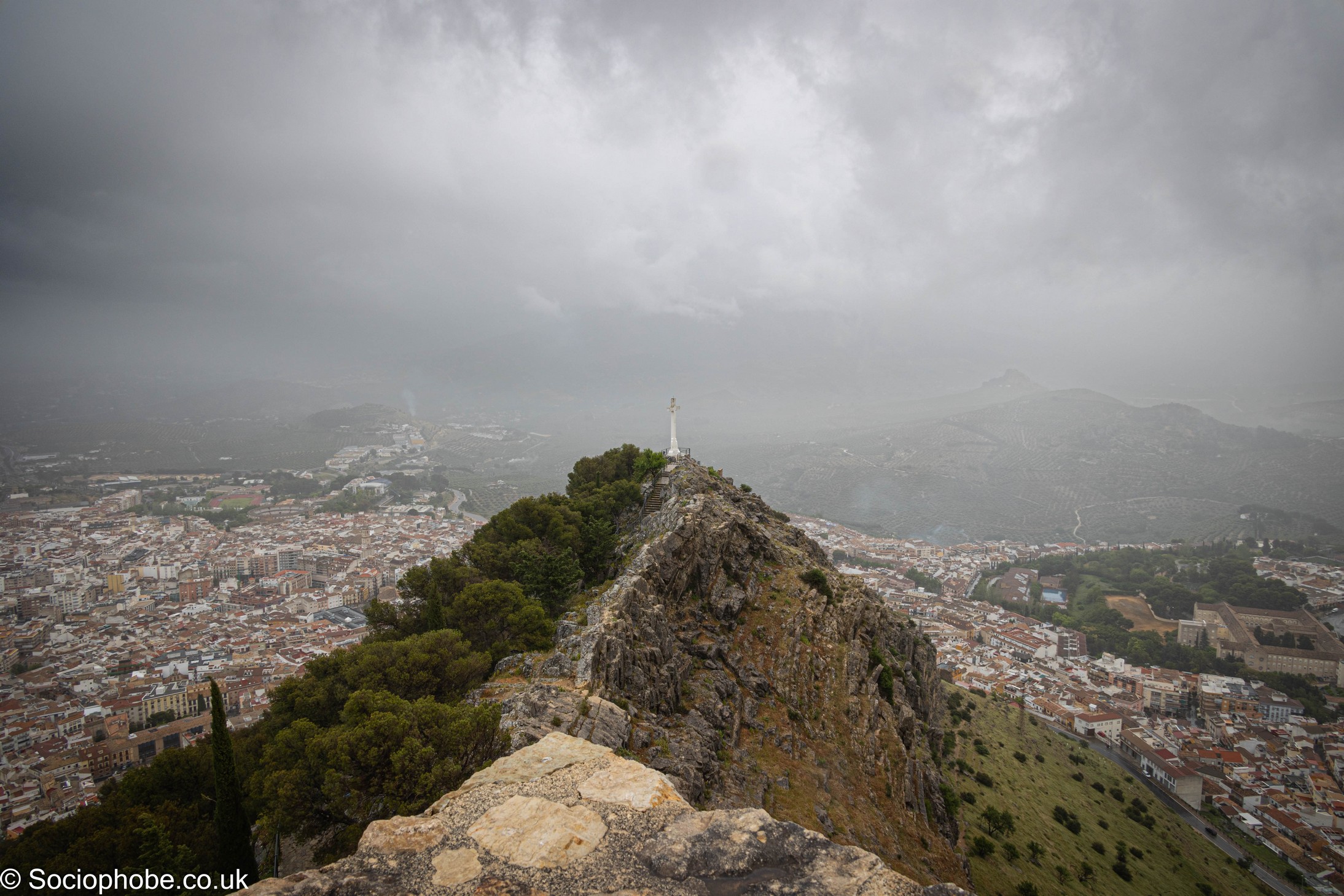
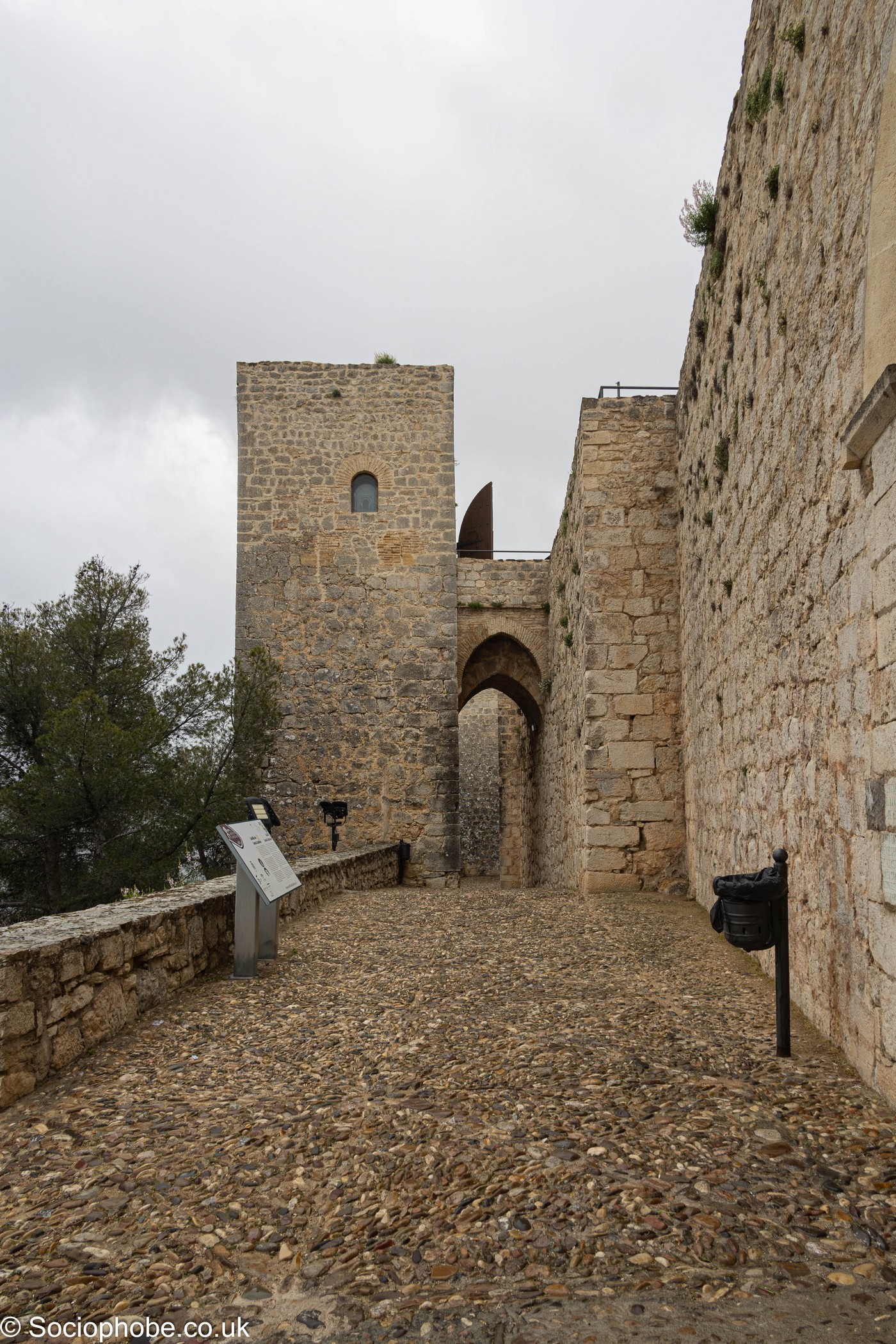
We saw the prisons where the French kept Spanish guerillas before executing them and there was information on Teresa and the politics of the area after Ferdinand III captured it from the Moslems. The weather put us off spending too long outside but the wildflowers in the centre would have been beautiful in the sunlight and the views, even with the cloud, wind and rain were stupendous.
We went back to the Parador and had a coffee in the lounge to warm up a bit before checking out for the 3.5 hour drive to Rocquetas to meet my uncle. The driving was interesting, from Jaen we had 2 hours through rain lashed hills, passing Granada on our way south and then into sunshine as we neared the coast and then another 90 minutes driving past ranks of poly tunnels and plastic greenhouses. There were so many that for periods of time the ground was totally obscured and it seemed strange that a region so devoid of water should be such a focus for intensive agriculture.
We checked in to our hotel there and had a lovely apartment looking over the beach, a shame we were only there for one night! We walked towards Nick’s although Mum got lost (I can’t say anything, I have no direction sense at all!) so in the end Nick collected us. He has a lovely house next to a golf course so we had a good yak and a few beers before walking back to our hotel via the prom.
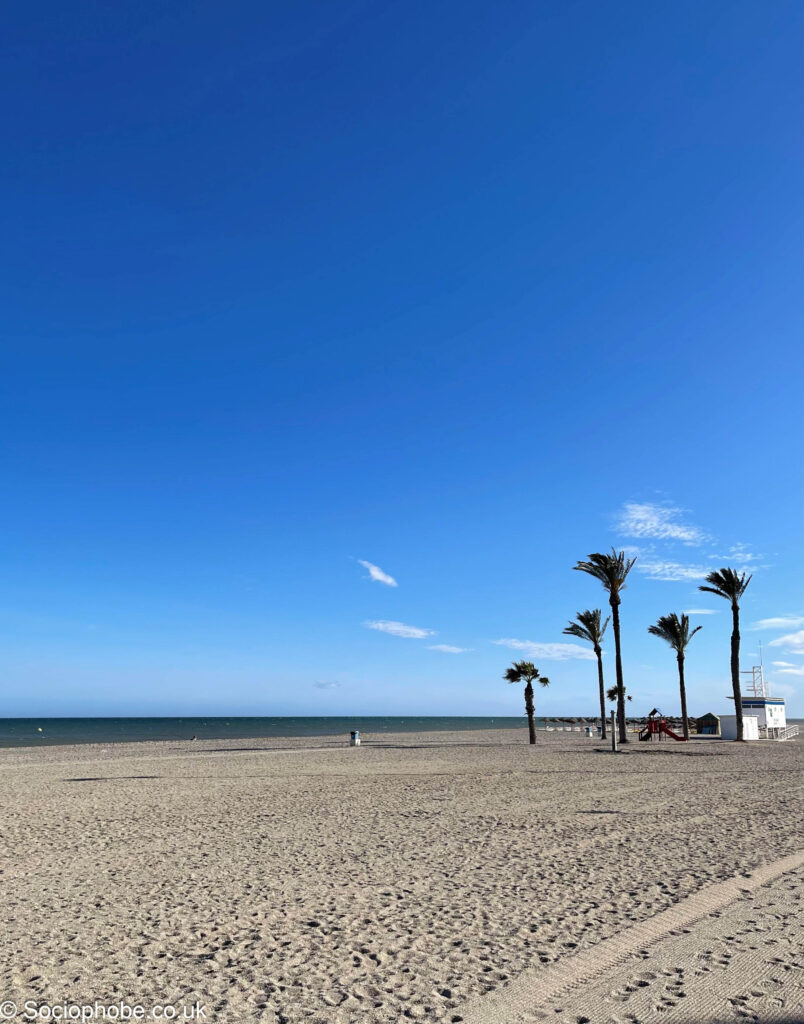
We had a quick freshen up and then met everyone for the short walk to Nido’s, just off the promenade. We had a wonderful evening with some delicious tuna, huge profiterole desserts and some rum concoction to finish us off and got back to the hotel just after 10PM with a rather full belly!
Day 6 Roquetas de Mar to Pinoso
Being so full meant I had a bad night’s sleep so I was up at 5:30 but I managed to clear a lot of work emails so that was at least productive! When Deb got sorted we went for breakfast which was a bit basic and obviously a destination for pensioners on long winter breaks, hopefully us soon! We then went for a quick walk along the prom which was really well kept and had a separate cycle path, parallel with the beach. We then met with Mum, Nick and Julie and went for a longer walk of around an hour to the end of the promenade and the Castillo de Santa Ana.
Castillo de Santa Ana
It was a pleasant prom to walk along and so busy! Apparently it’s the Spanish go to activity on a Sunday and there were certainly plenty of them, mostly our age or older, enjoying the activity. The Castle was a small artillery fort with a round tower on each corner, heavily restored after a lightning strike ignited the gunpowder store which destroyed one tower and then a few years later an earthquake badly damaged what was left.
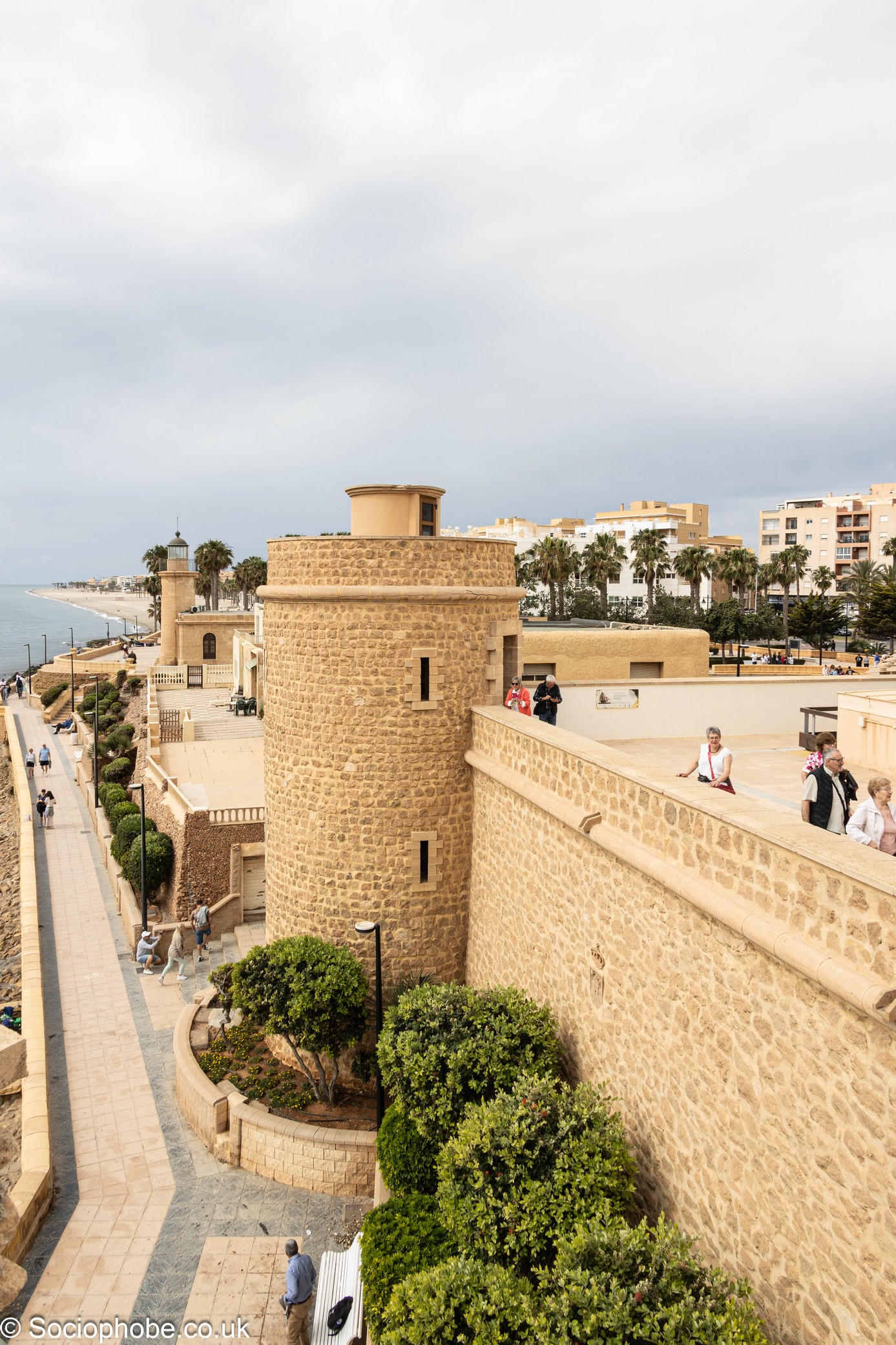
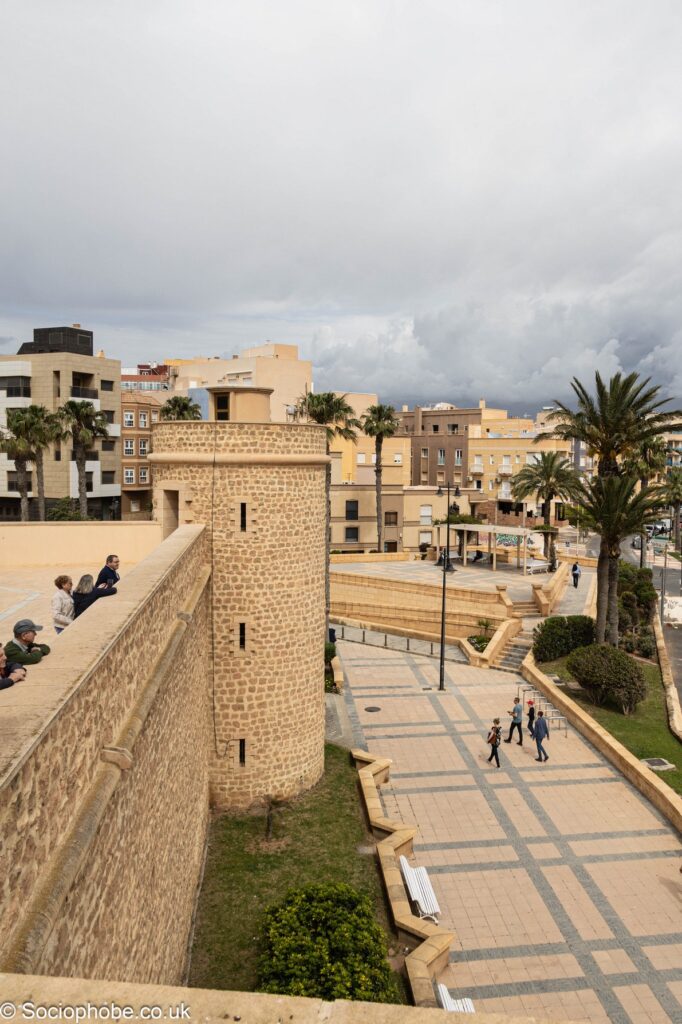
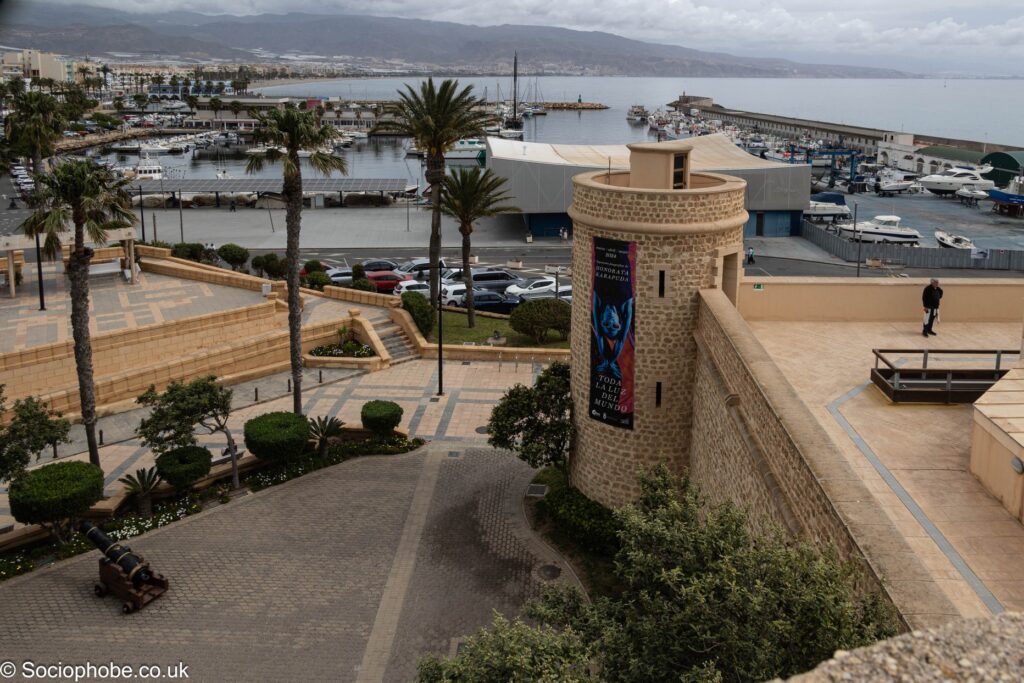
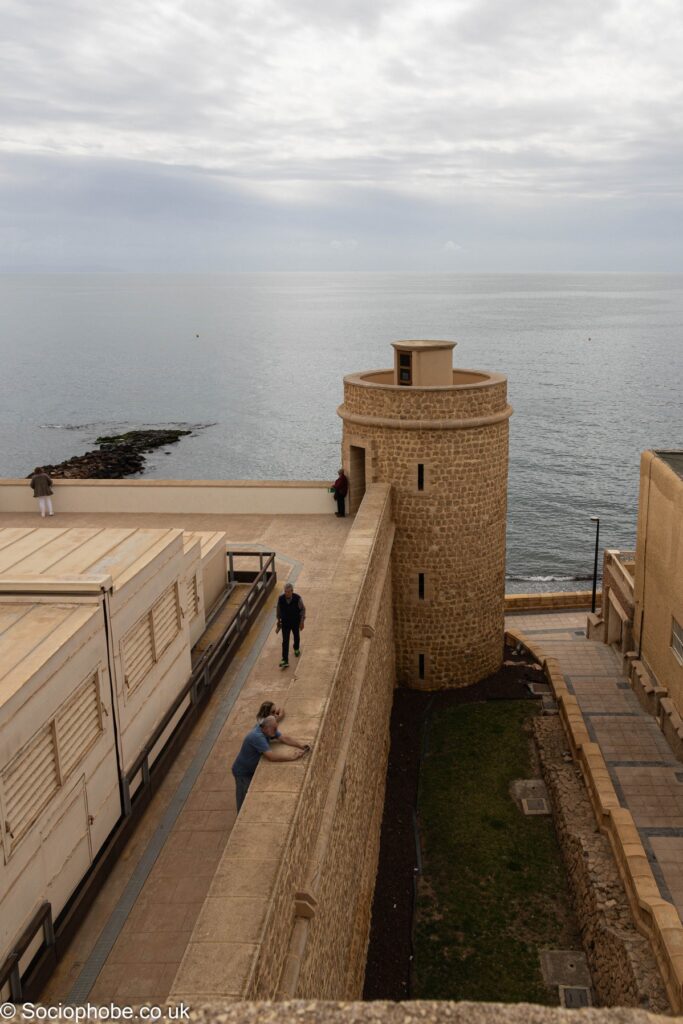
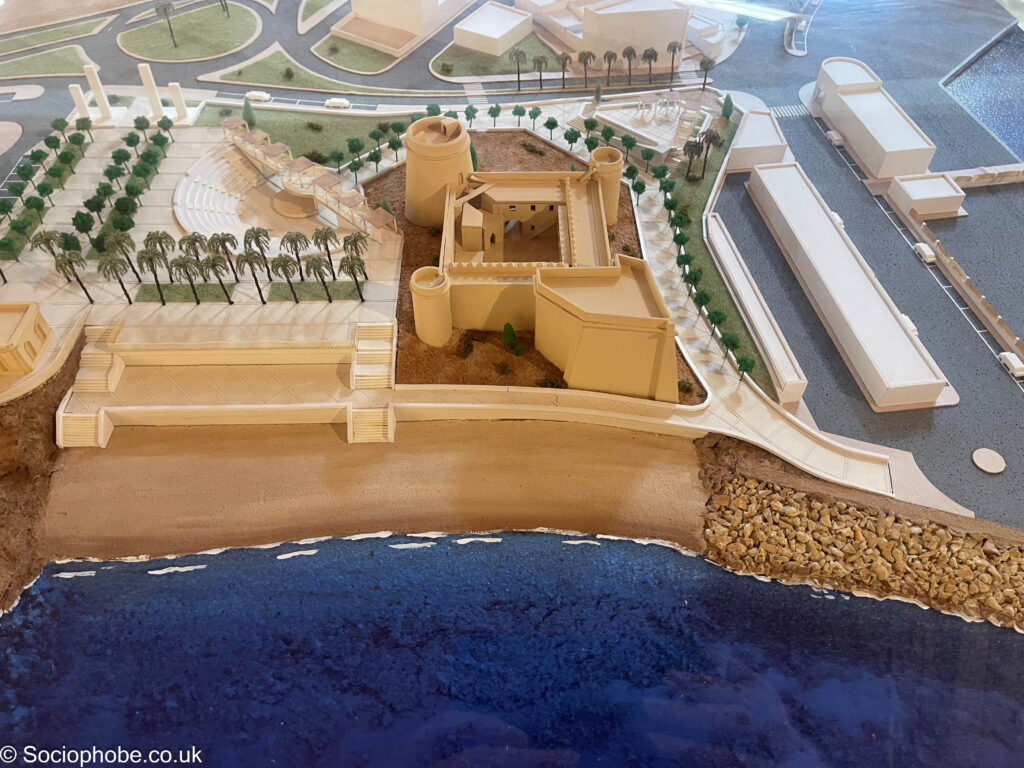
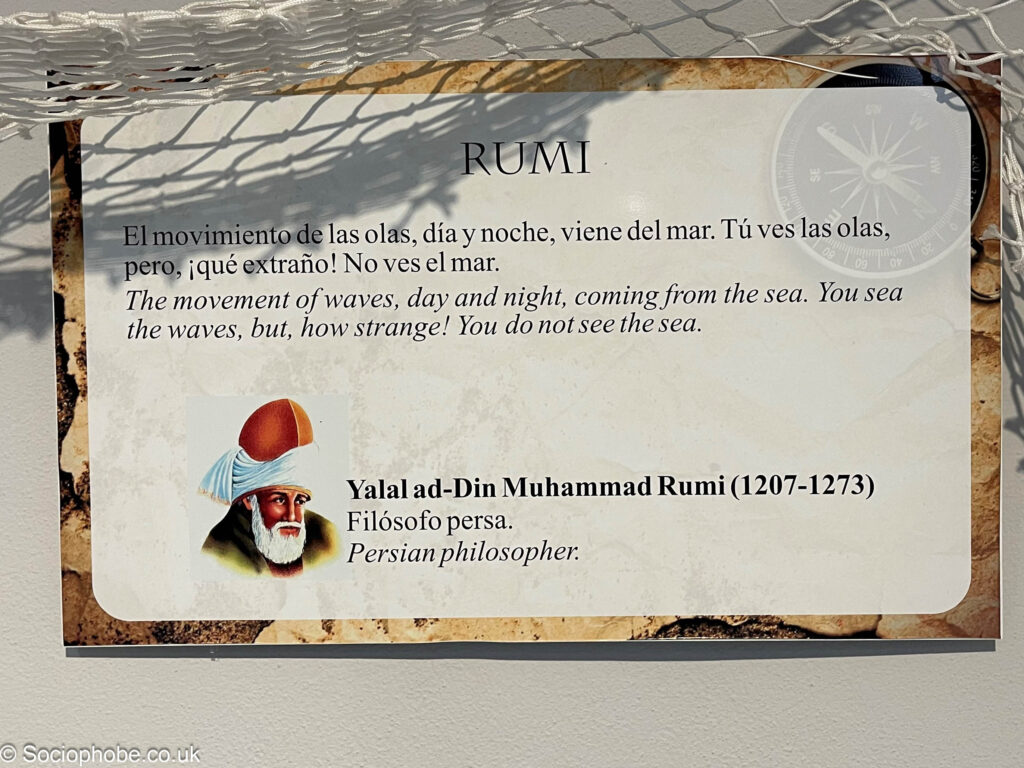
It is now used as an arts and exhibition centre. Inside was a model boat exhibition, ranging from 15th century galleys, HMS Victory, Colombus’ 3 ships, a Viking longship and then more modern fishing vessels and steamers. There was a photography exhibition and also a large display of Goya’s prints of French war crimes in the Peninsula War.
We then retraced our steps and had a quick lunch at El Pirata with some wonderful value tapas dishes (€32 for 5 of us including drinks!) and friendly service before walking back to the hotel to pick up the car and start the long drive to Pinoso to drop Mum off.
It had been lovely to see Nick and Julie and the resort was probably a great place to spend a bargain month in the winter. It seemed rather like Blackpool without the tackiness and grubbiness. We had to stop for coffee on the way to Mum’s as I just couldn’t stop yawning but we got there in less than 4 hours. Deb had a quick look around the garden, I chatted to Steve and then we had a light lunch before continuing on to our airport hotel. This was a bargain last minute booking (£40 inc breakfast and parking!) and it was lovely to have a shower and feel clean again after all the walking!
Overview
This trip could have been done as a long weekend if we hadn’t had the social activities included. Granada and Jaen are about an hour apart and there is a regular bus service so you wouldn’t even need to hire a car. You can fly direct to Granada from London City Airport or from other locations in the UK if you don’t mind a stopover. For us, 2 full days in Granada were important and Jaen needed a day. Alhambra tickets need to be booked weeks in advance, depending on the time of year that you visit.
Spain is dominated by the Reconquista, the war of reconquest as the Christian kingdoms of the north slowly moved south and liberated areas from Moorish rule. This lasted around 500 years and then the next couple of centuries were spent ensuring the population that weren’t good Christians were either evicted (Jews and unconverted Moors) or forcibly converted and persecuted by the Inquisition. Mosques became cathedrals/churches/monasteries and the church held massive power.
This can all be seen in the architectural landscape with an amazingly beautiful Moorish heritage in many cities (Granada and Cordoba being two that spring to mind) and powerful Christian presence in others, such as Jaen. The good thing with a trip like this is that as many places as we tick off our list we realise there is always more to see. A wonderful trip all round and great to spend some quality time with Mother.
Lovely write up and pictures. So nice to have time to look at all these places with you. There is so much to see in Spain that we need to book the next year’s trips and start adding to the places to see. You did forget to add the wonderful Japanese bidet’s in the first hotel though 😉 Great photos and a really wonderful trip 🙂