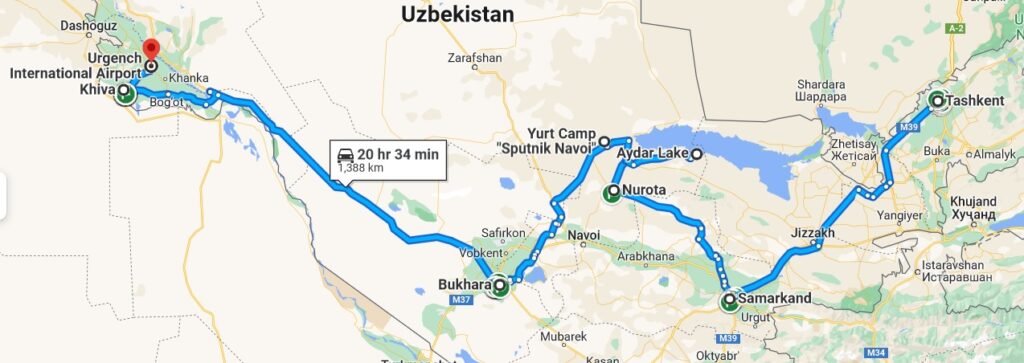
The Highlights of Uzbekistan Tour covers the cities of Tashkent, Samarkand, Bukhara and Khiva, the main Silk Road cities of Central Asia. As well as being great trading cities they were places of science and literature that were amongst the most important in the world. Sadly they also bore the brunt of Chingiz Khan’s destructive tendencies and were all badly damaged and depopulated in the thirteenth century before the Timurid Renaissance of the fifteenth century gave us the buildings we can see today. We had a 10 day tour, booked with Trailfinders and run by GAdventures, to explore them all.
| Holiday Ratings | |
| Recommended days | 10 |
| Budget | ££ |
| Difficulty | Medium |
Why the Silk Road?
The Silk Road has always stoked my imagination, with images of camel trains trudging across Central Asia carrying trade goods to and from west to east and, perhaps more importantly, ideas, religions and technology. The road (although it was actually many roads and routes, weaving their way across Asia) was in use for around 2000 years, finally declining when it became quicker and safer to use sea lanes for trade in the eighteenth century.
The cities we were visiting – Samarkand, Tashkent, Bhukara and Khiva were massively important on the world stage and contributed important advances in science, medicine, literature and mathmatics. For 1500 years they made cities of Western Europe look like backwater villages and the entire axis of world history could have been very different if Chingis Khan hadn’t destroyed them all and massacred or enslaved the inhabitants in the thirteenth century.
The Highlights of Uzbekistan was the first group tour we had done for about 15 years. The tour was a 10 day romp and we tagged on a couple of extra days to make the international flights more palatable. We had no idea what to expect of our travelling companions and that would be the make or break element for me.
England to Tashkent
We had arranged to fly out the day before the tour started as it was such a long flight that we wanted time to rest as we are not young any more! I had a hectic day at work and then we left at 17:30 to drive to Heathrow, parked up and for the first time in years actually had hold luggage. I’d forgotten how long this takes to process but it was eventually done and then we went through security and sat down. The flight was delayed by about an hour which meant it was gone 23:00 before we took off.
We were flying Turkish Air again and we had a nice dinner on board, even in economy, and a decent amount of room. We did doze a little but with the food, drinks and announcements we didn’t really manage much sleep. Landing was around 4.30 AM in Istanbul where we had around 2.5 hours wait before boarding our connecting flight to Tashkent. We were amongst the very few Westeners on board this flight but everything went well although we were delayed again so we didn’t arrive until nearly 14:00. There was a bit of a wait for luggage, the majority of the luggage coming through seemed to be carrier bags which was amazingly trusting, we even had our rucksacks locked! It was also interesting how many passengers were returning from Haj, at least 4 groups that we noticed. Our transfer vehicle didn’t arrive so we had to get a taxi (bargain at $8), arriving around 16:00, almost 24 hours after leaving England.
Tashkent
Tashkent is an old city but without the lustre of its more famous siblings. It was largely destroyed in 1966 by a massive earthquake and the almost all the historic buildings destroyed. Over three hundred thousand people were made homeless and the city was rebuilt in grand Soviet style, with large boulevards and plenty of parks. After independence from the Soviet Union in 1991 the city became the capital of Uzbekistan with a significant Russian population.
As we were part of a tour the hotels were all chosen for us and the one we stayed at in Tashkent was the Alpha Plaza Spa hotel, actually rather nice and in the embassy district. We had a quick sort out and then went on an orientation wander. I’d seen there was a park nearby (there are actually a huge number in the city) with a statue of Timur in so off we trotted.
Our first shock was how well mannered the drivers were, stopping at lights and crossings with no impatience at all. The city, or the area we were in at least, was very clean with no litter or graffiti and everyone looking very well dressed. We successfully navigated an underpass without being mugged or wading through piles of rubbish and then arrived in the park.
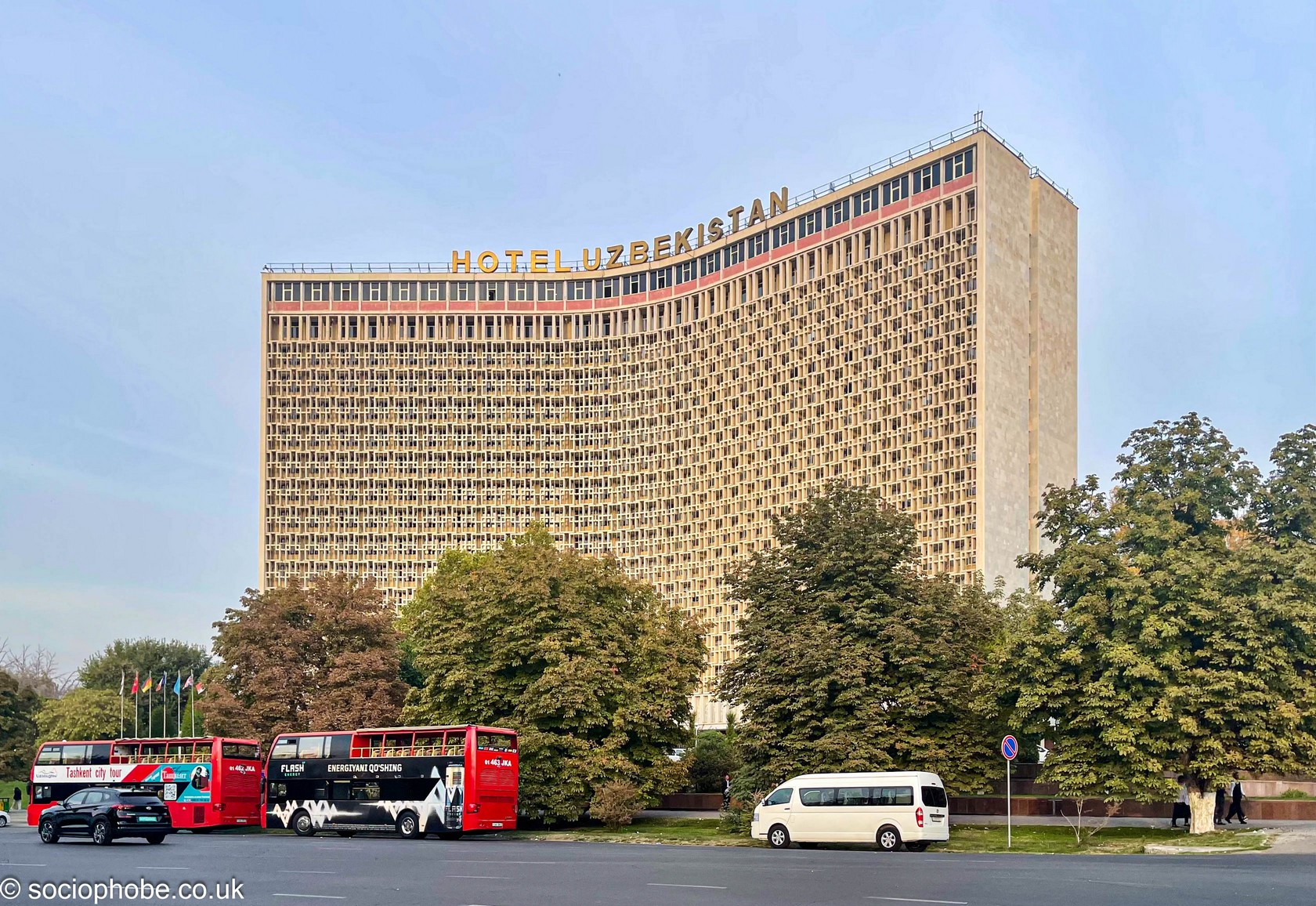
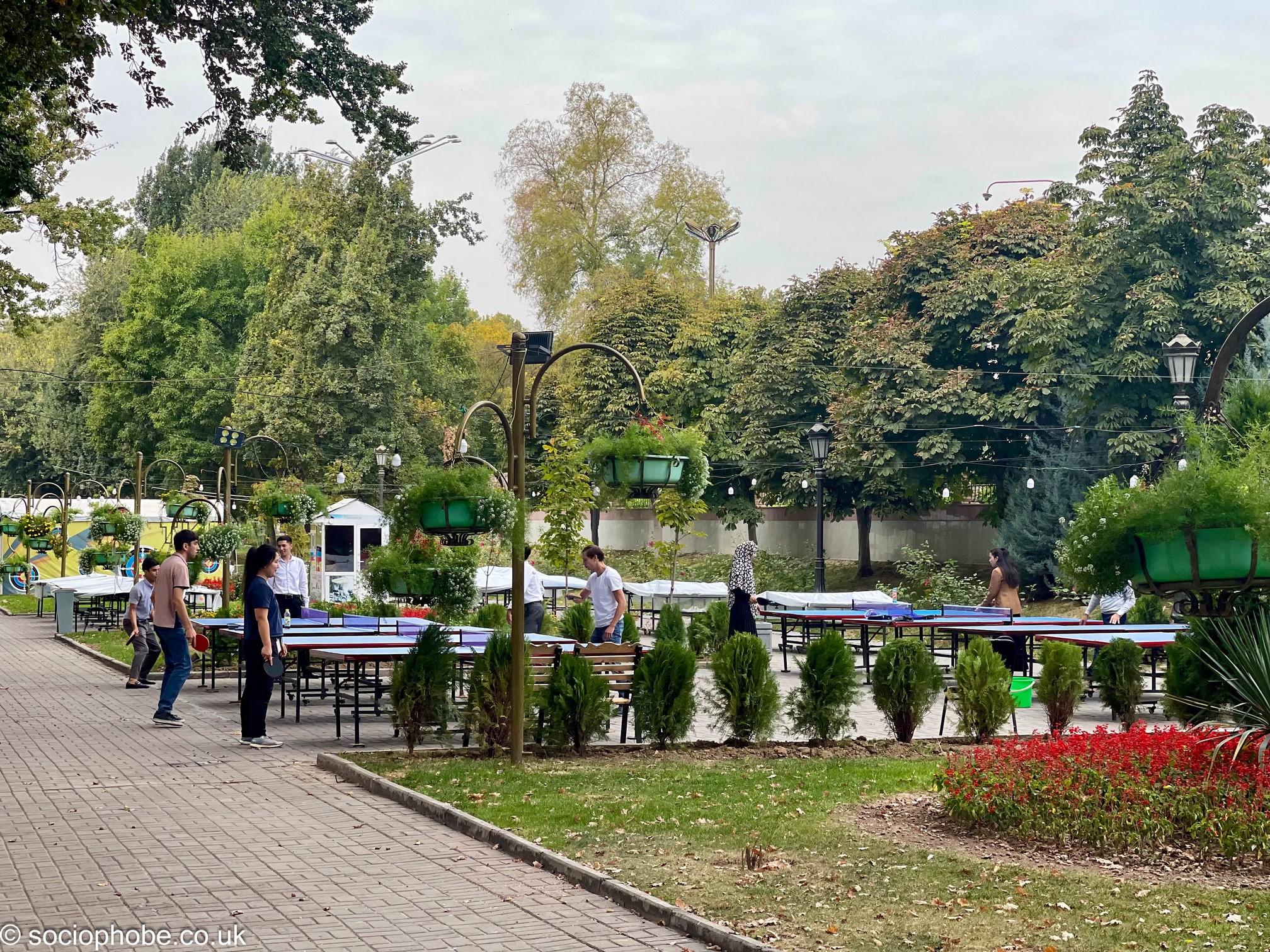
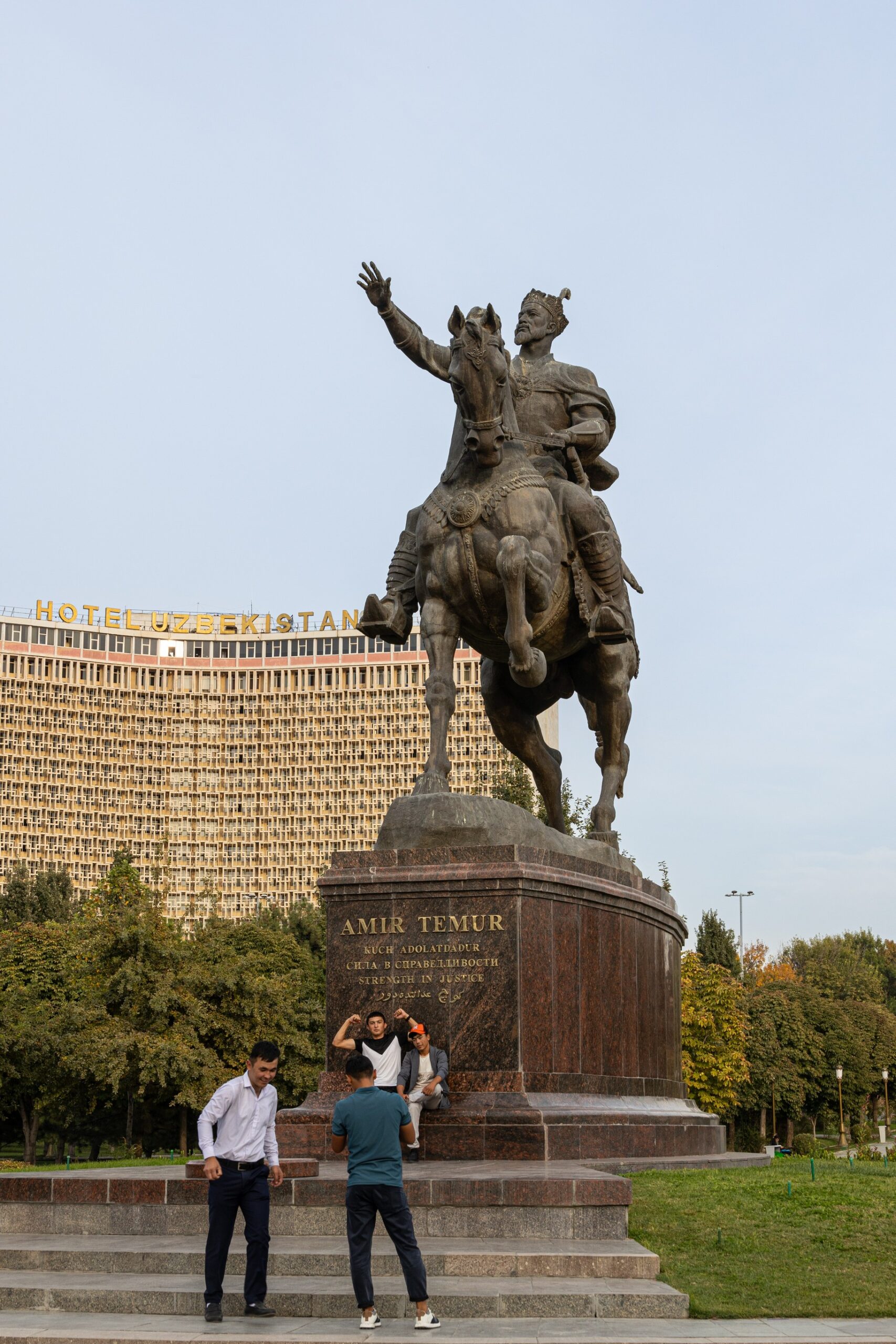
This was very pleasant and had lots of benches for sitting. The statue was huge and Timur (Tamurlame) is very much revered here, in contrast to the views of nations that were subject to his wrath – India, Persia, Georgia, Russia, Syria etc where in excess of a million people were either executed or enslaved. For Central Asia though he was a patron of the arts and sciences and bought them peace and prosperity. His empire lasted three generations before fragmenting.
We then continued to walk around the park and were interviewed by two groups of school children to see what we thought of the country, why we were there, how long for etc. This was actually lovely and they were incredibly polite and well spoken, I wish I’d thought to ask them questions too.
I had previously chosen a very civilised restaurant, Basilic, so we walked there and sat in the courtyard, the trees and tables illuminated as the sun had by now set. The menu looked excellent and I ordered veal with porcini mushrooms and Deb had duck marget with pear and mixed berry confit and then we shared rosemary potatoes, steamed seasonal veg and sauteed spinach. Dessert was chocolate fondant and apple strudel, so not really an authentic Uzbek meal but delicious and a lovely setting and all for a million Som (about £70).
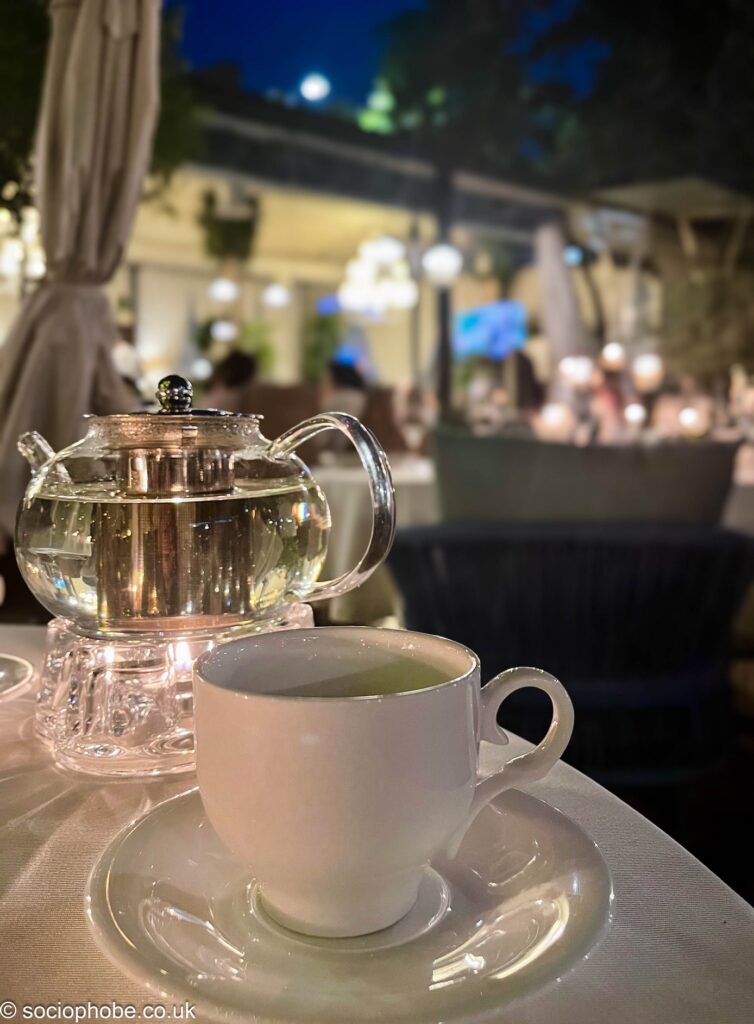
We walked the short distance back to the hotel and finally got ready for sleep. We were shattered after being up for 32 hours. When you think that a hundred years ago the same journey would have taken weeks it does put our changing society into perspective.
We were definitely tired as I didn’t wake until nearly 9 and then had to quickly get Deb up as we needed showers before breakfast, which finished at 10. I really should have taken it slower as my chest was pretty bad and I didn’t eat much although Deb, as usual, experimented with whatever was on offer.
In the guidance notes for the tour, we were advised to use a money belt. I had last used mine in 2002 in Peru so let’s just say I’d put on a few inches since then and it was somewhat tight! My plan was to have a quiet day, just visiting a couple of nearby museums before meeting the tour group in the evening.
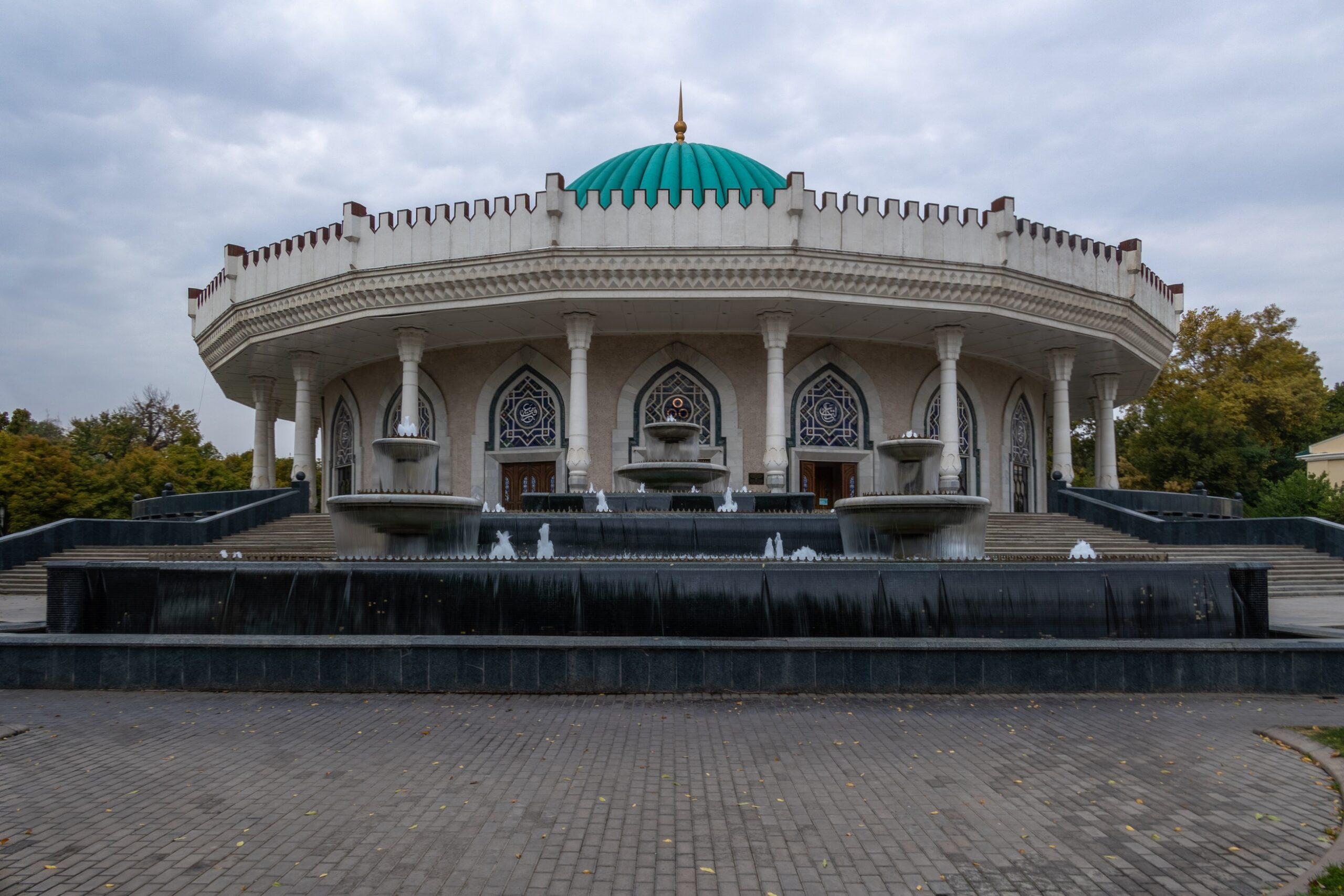
We walked to the Amir Timur Museum, a celebration of the life and achievements of Timur. This was in a beautiful new museum and very well laid out with lots of descriptions and information in English. The only confusing part were the maps of his campaigns and empire that were in Russian and the place names just didn’t mean anything to me.
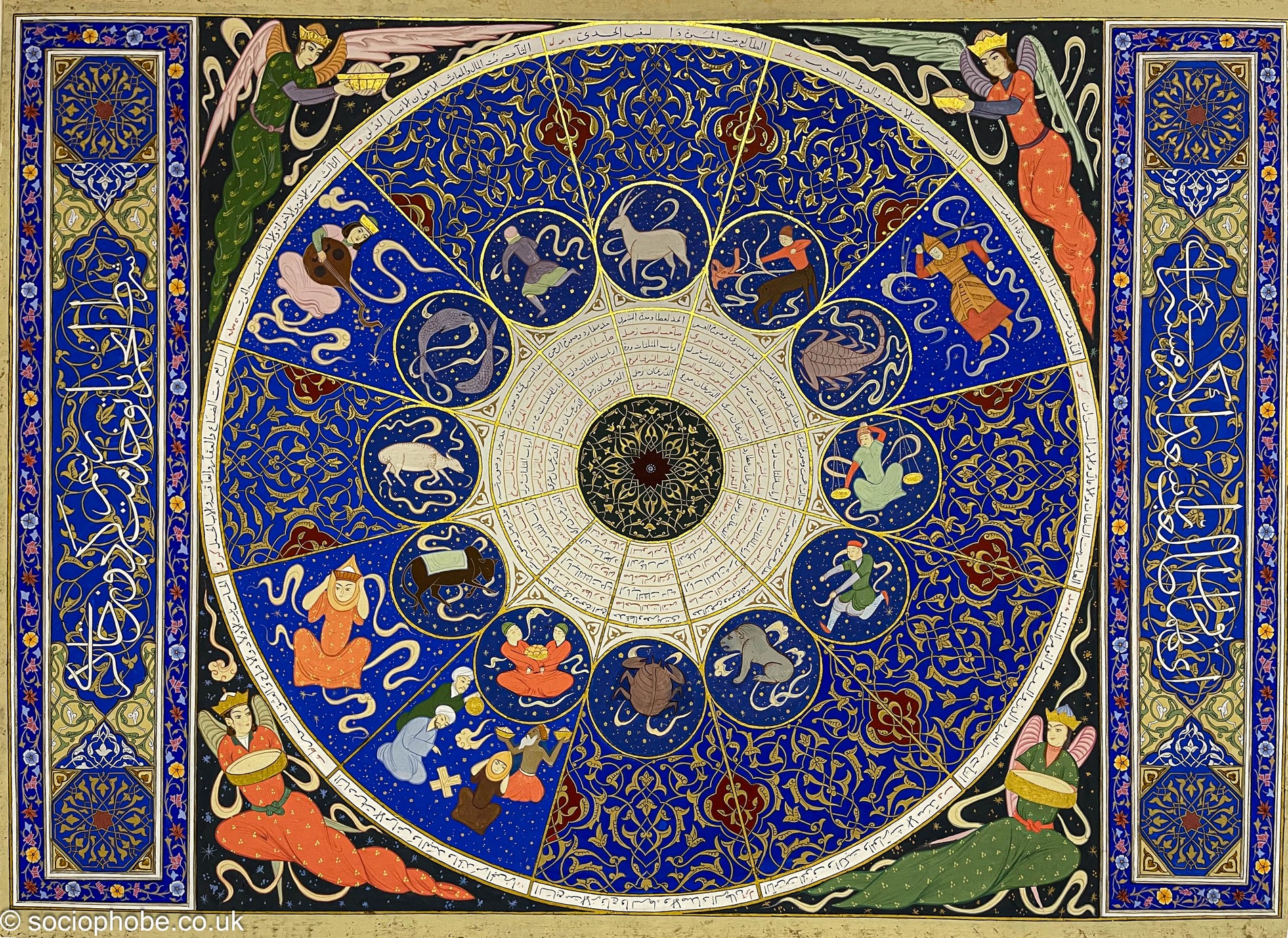
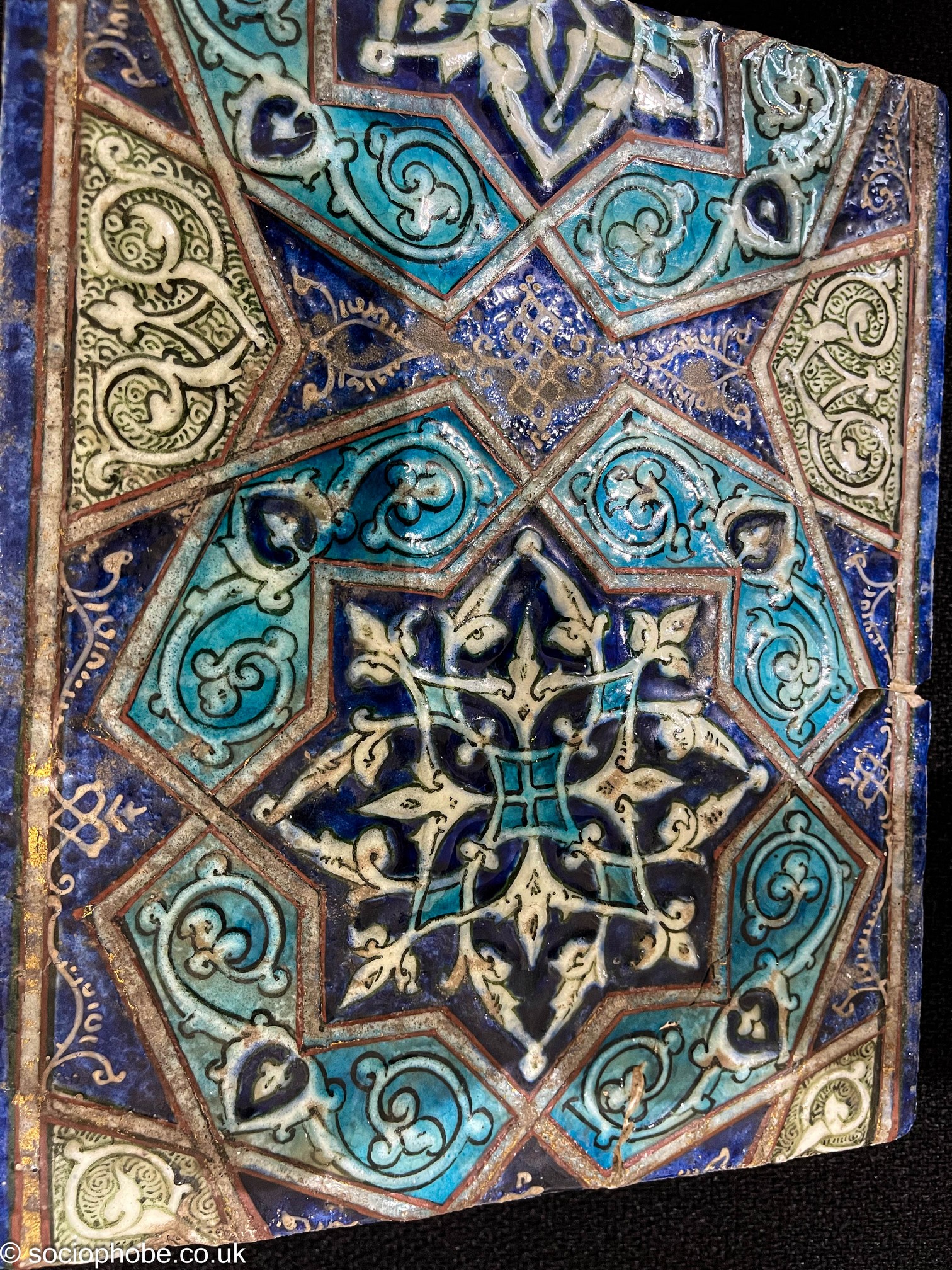
There were some amazing artefacts from the period and models of the buildings as well as a sculpture of Timur using a reconstruction of his head from his skeleton that was exhumed in 1941. I was surprised to see his horoscope there as I’m not quite sure how that balances with Sunni Islam.
Next stop on our fun filled tour was the State Museum of the History of Uzbekistan. This was just what it said and had displays and artefacts from the stone age to the modern day. There were some beautiful creations from the Persians, Bactrian Greeks and Bhuddist statues that were prevalent in the area before the arrival of Islam.
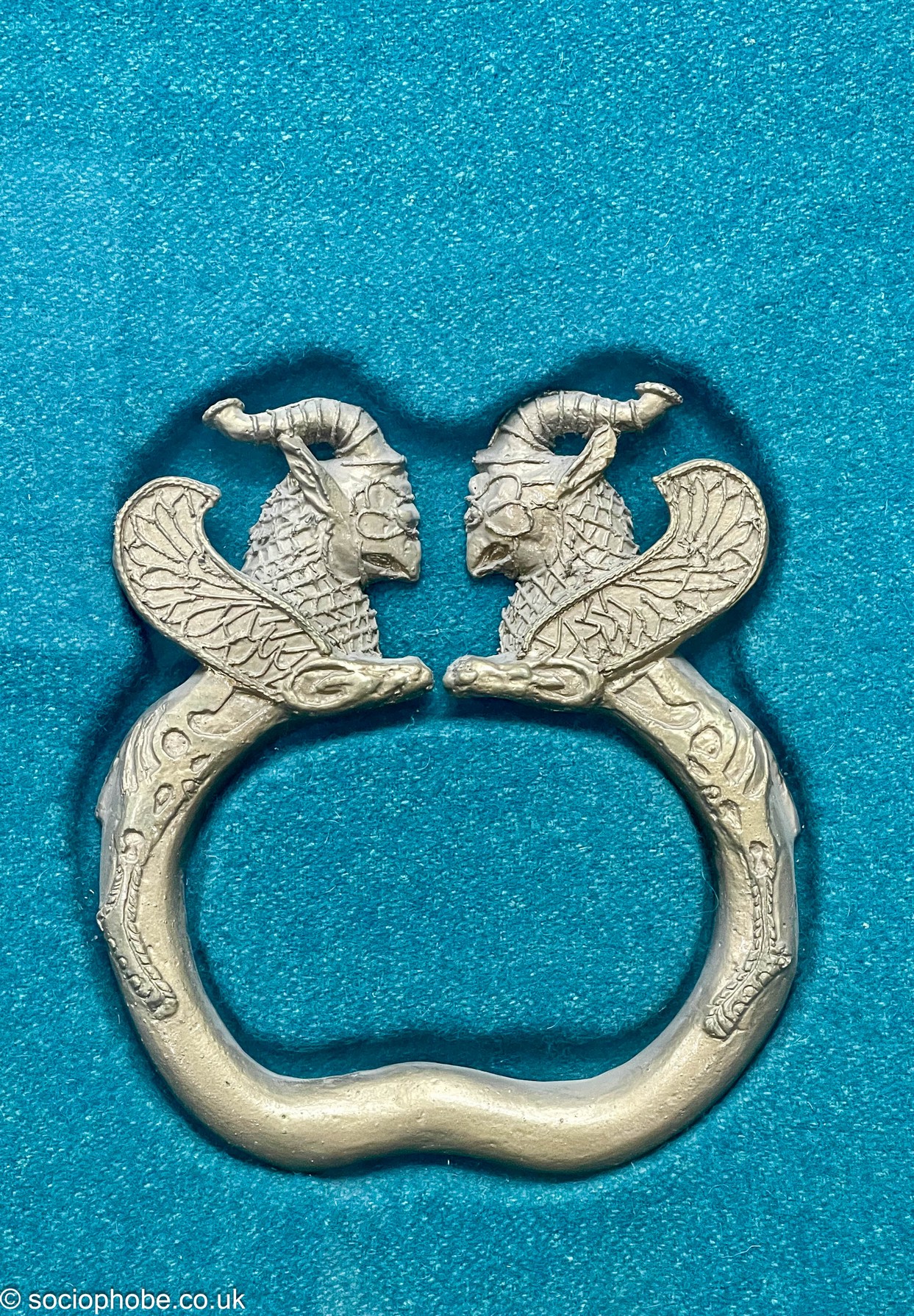
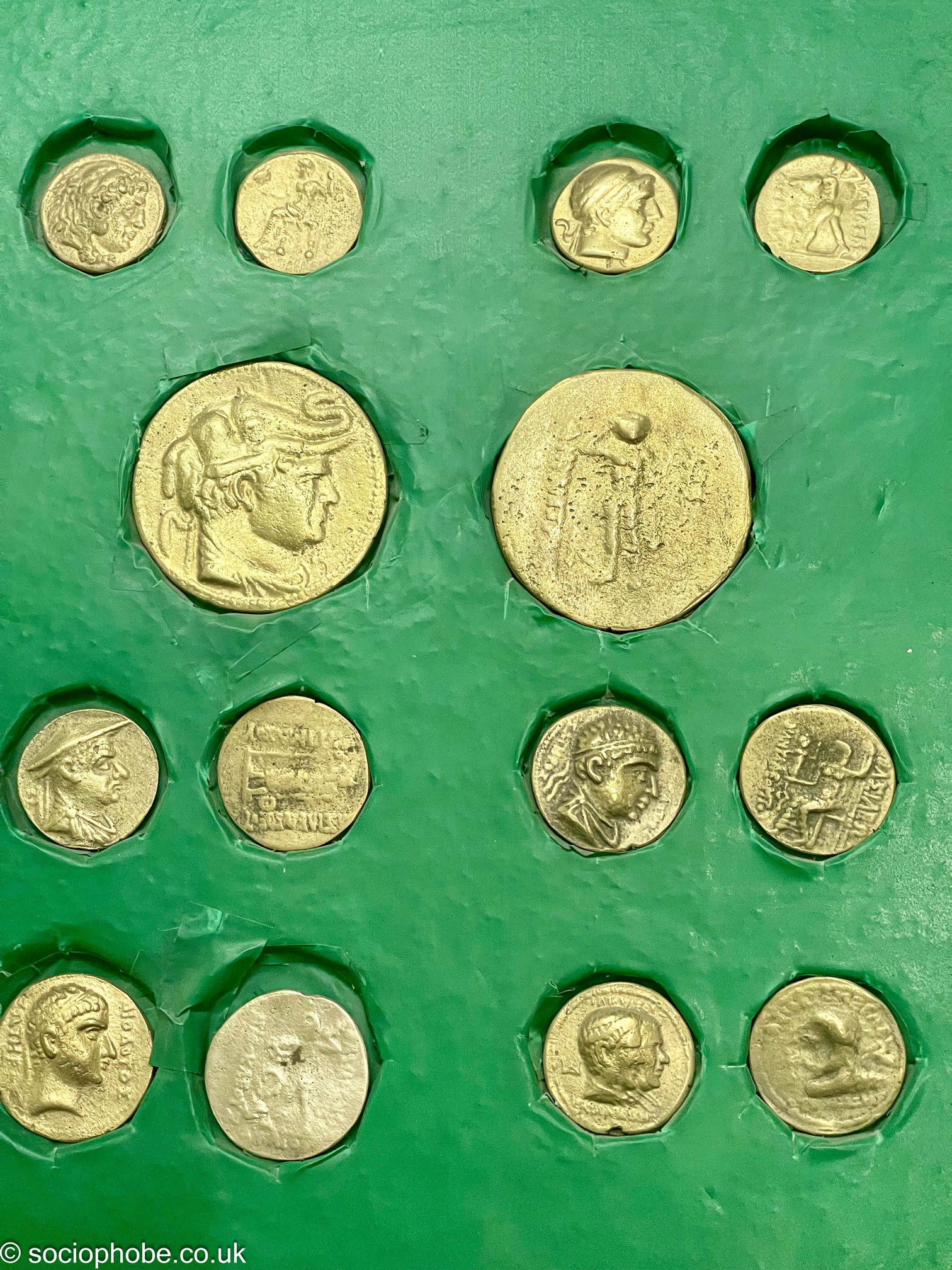
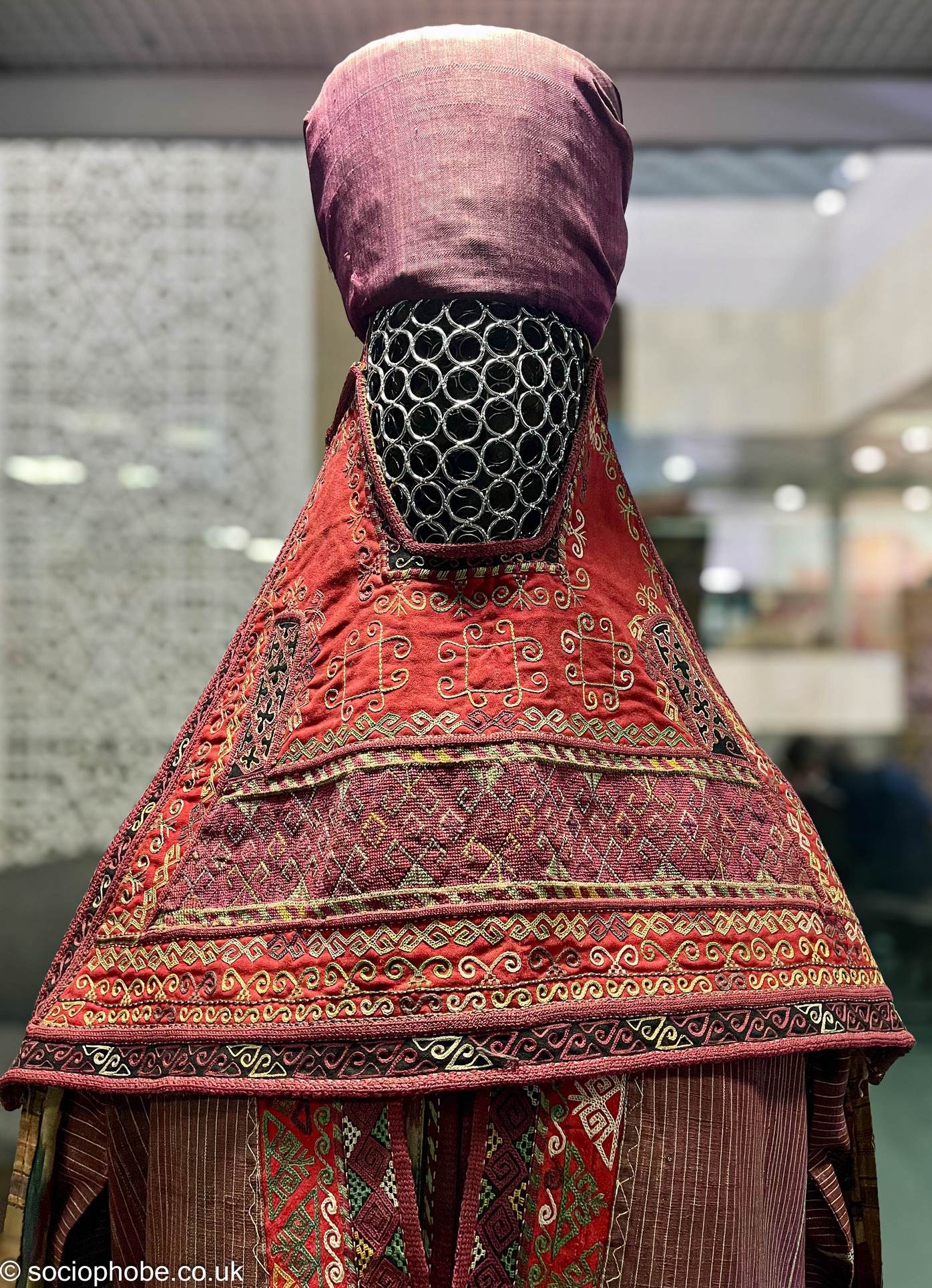
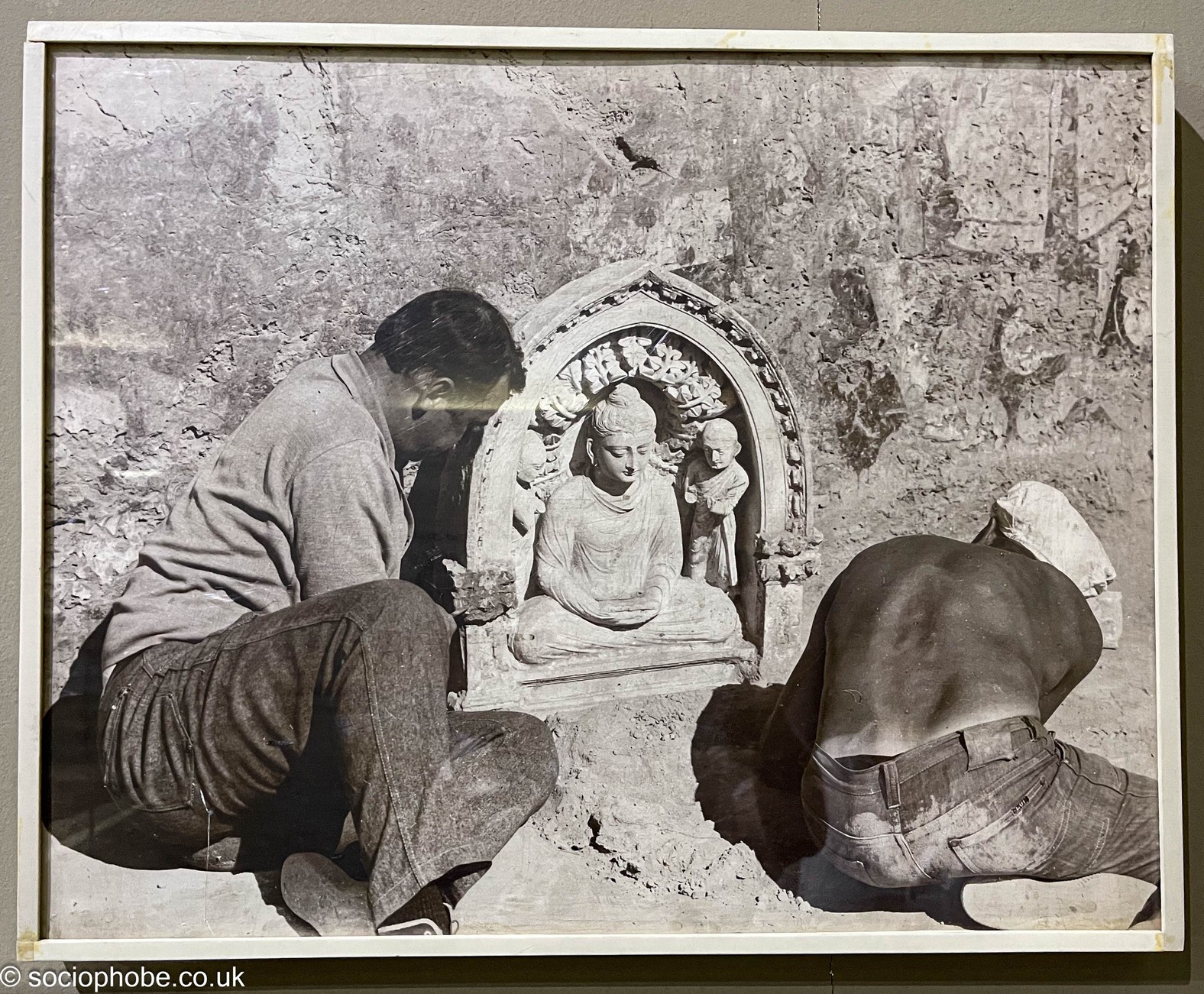
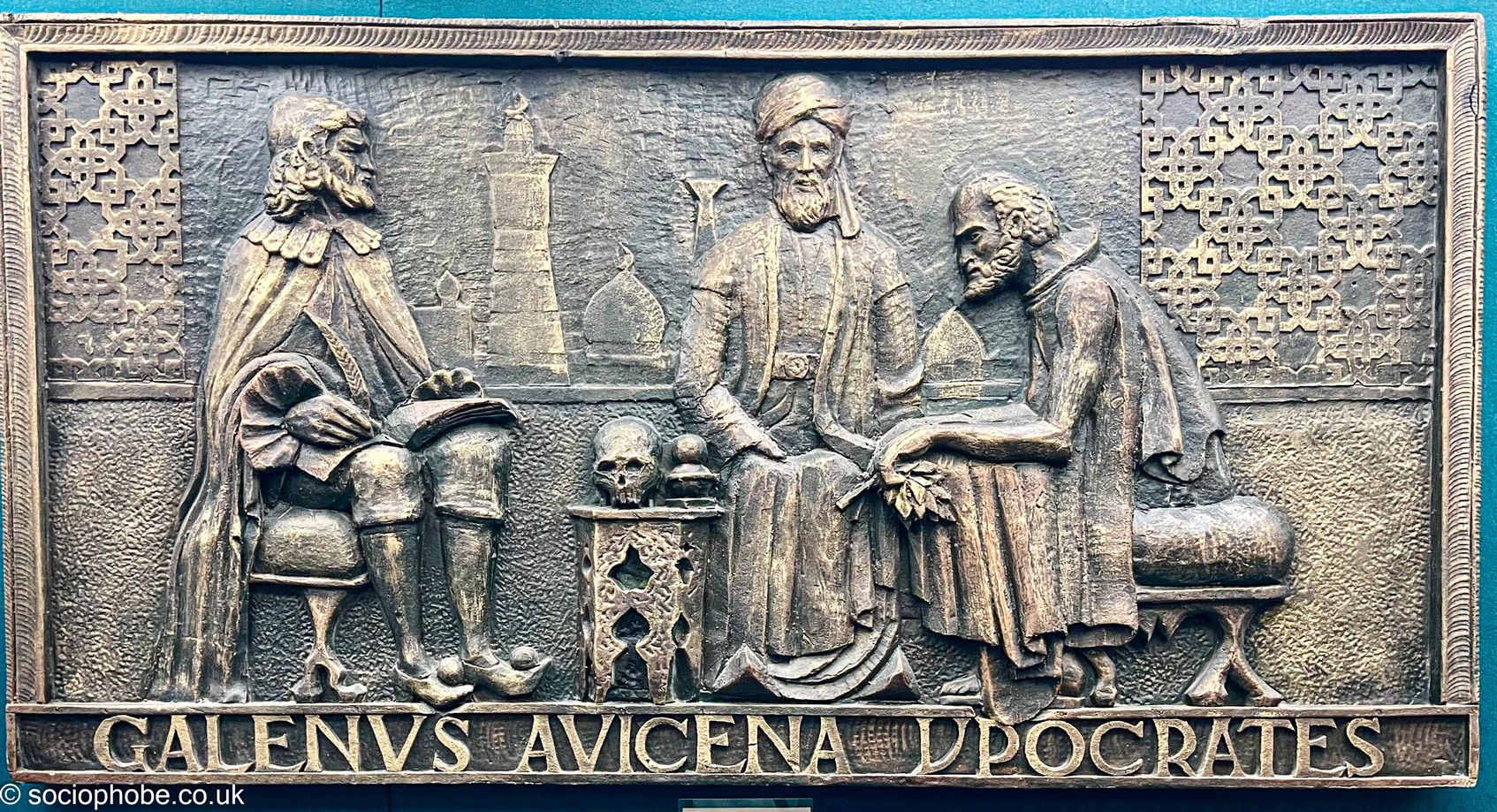
There were sections on the massive contributions to science, medicine and culture that the area had made as well as lots of displays showing how the country had improved since independence (in 1991) from the Soviet Union. This section looked like it came from the Islam Karimov school of propaganda as it was very much raising his achievements and brushing everything else aside. Doing some research later, it was very interesting how corrupt the country is with nepotism, bribery and extortion being common!
Deb wanted to visit a third museum, Tractors and Cotton Growing Techniques of the Glorious People’s Republic, but I managed to dissuade her and we started to walk back to the hotel. We stopped at the way to get some traditional Uzbek food, plov, but even Deb decided against it and so we had a pizza at New World Pizza instead. This was lovely and very filling as well as being a bargain at £9 including drinks.
As we walked back we noticed how much water the city wastes, considering it’s on the edge of a desert. Trucks were driving past washing and spraying the roads and all green areas seemed to have sprinklers continuously running. It was also getting rather warm so it was nice to get to the hotel and change in to shorts, before writing my notes up.
We had the welcome meeting at 6 and it all sounds rather good. The rest of the group is comprised of a couple of Europeans, 4 Americans and 4 Australians, some of whom had been touring together already as the Uzbekistan tour fits in the middle of their Five Stans tour. It’s a mix between some very loud people and some far quieter ones so it’ll be interesting!
We avoided the welcome meal, along with an American couple. We chose to go to Urban Food, a five minute walk away, for traditional Uzbek quesadilas. Again, very polite service, tasty and cheap food and no issues walking back in the dark. It is interesting that, unlike Turkey a couple of weeks ago, groups here are separated by gender. We have rarely seen couples in Tashkent, it’s either a group of blokes or a group of women, possibly with kids too. And there are only two genders here!
We have an early start tomorrow for the city tour before the 4.5 hour drive to Samarkand, a far more ancient city. On the tour tomorrow we’ll see what’s left of the old city plus some of the famous metro stations.
Tashkent City Tour
There were only 13 of us on the Highlights of Uzbekistan Tour including the guide and the coach sat 32 so that was a bonus! First stop of the day was Hasti Imam, a large complex with a mausoleum, a mosque and the original of the 7th century koran replica we saw in the museum yesterday.
Hasti Imam Complex
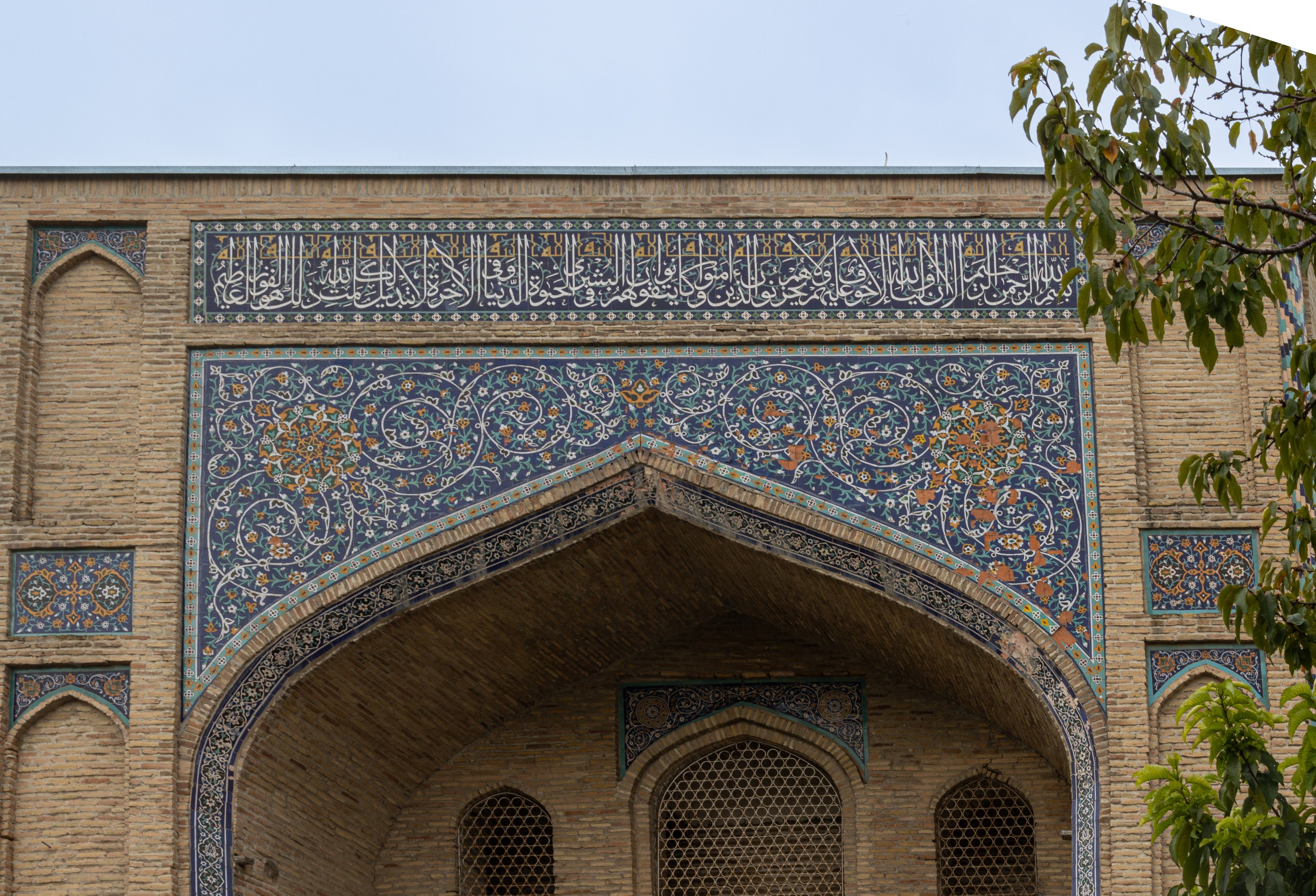
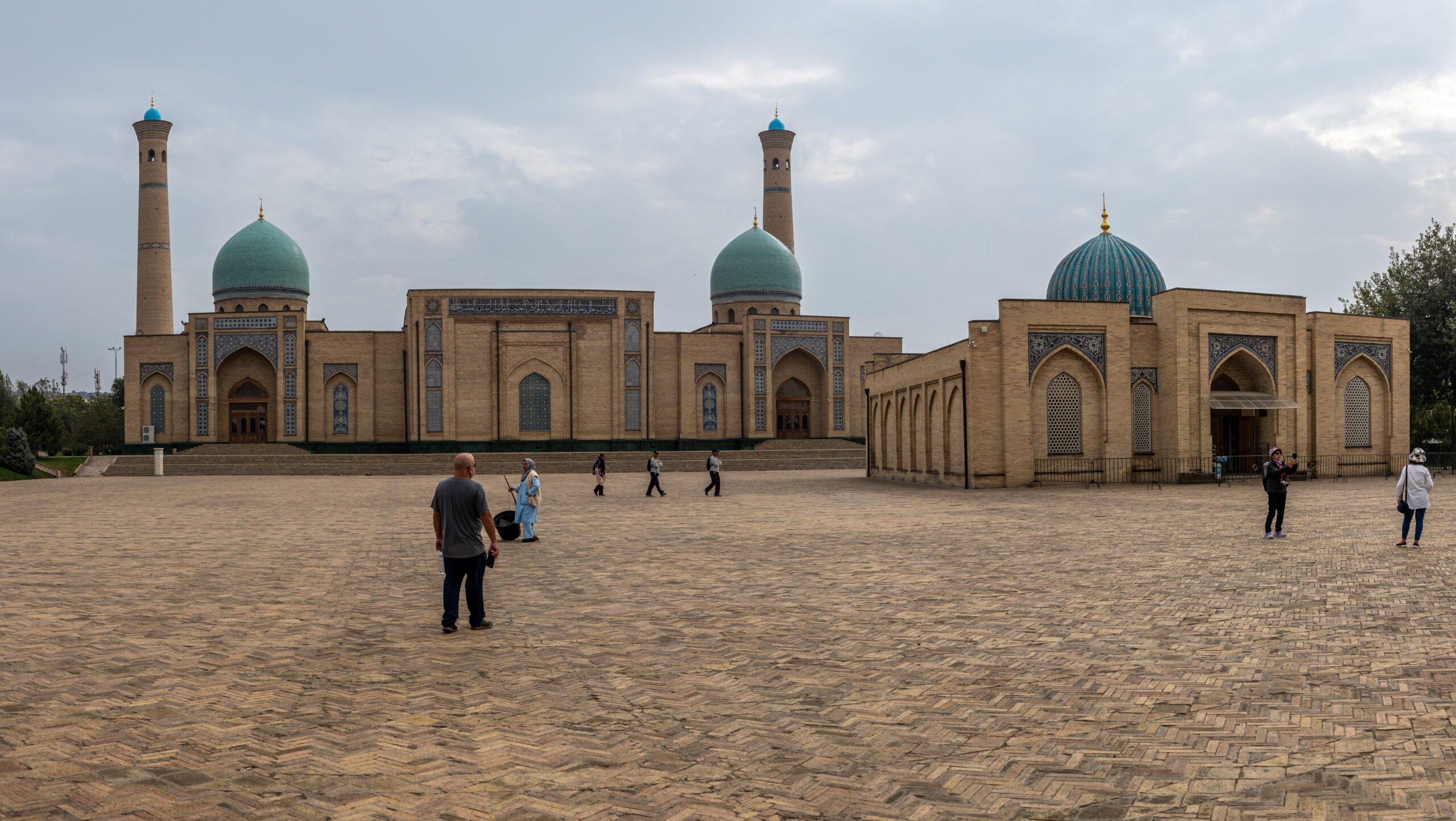
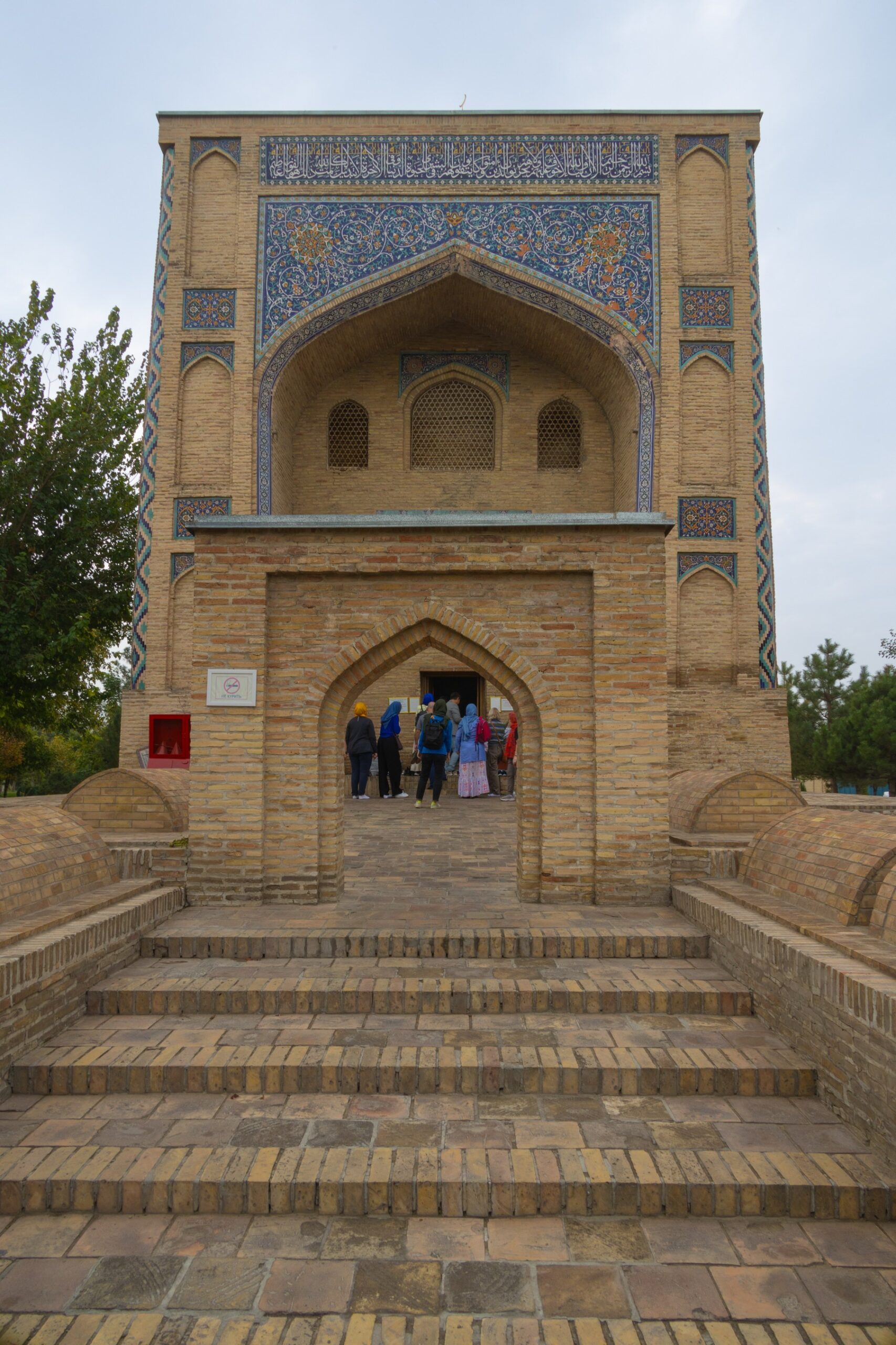
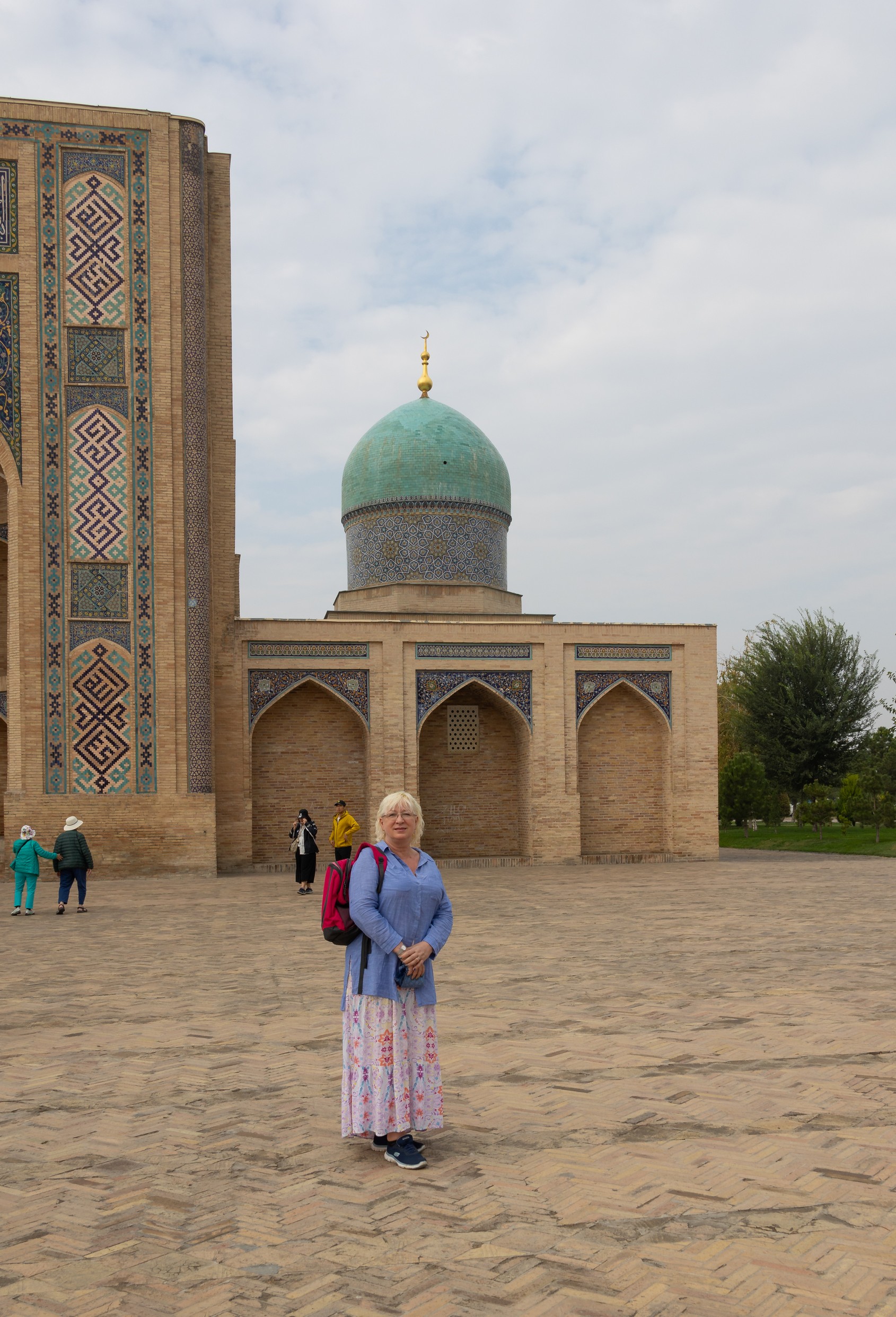
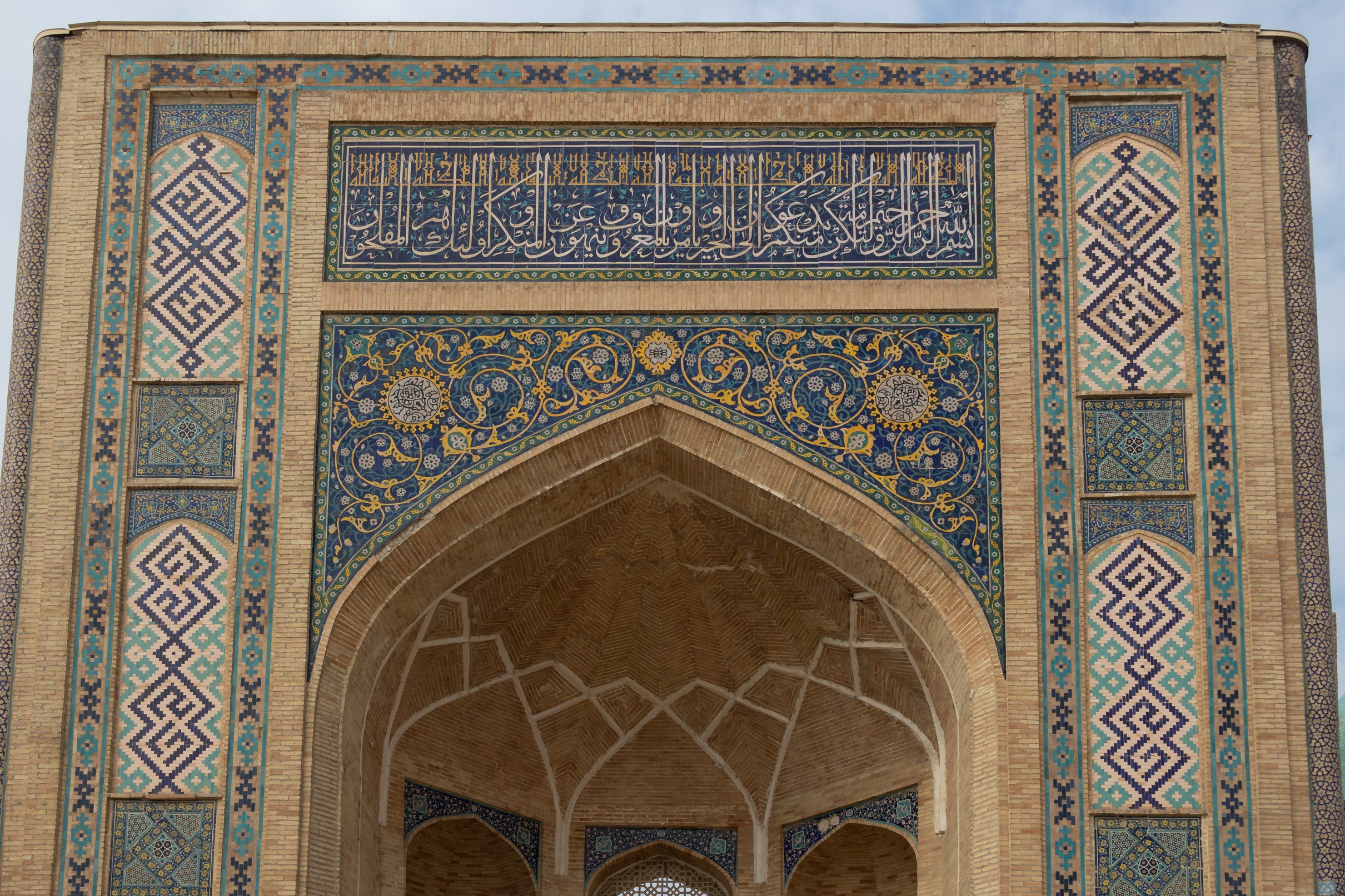
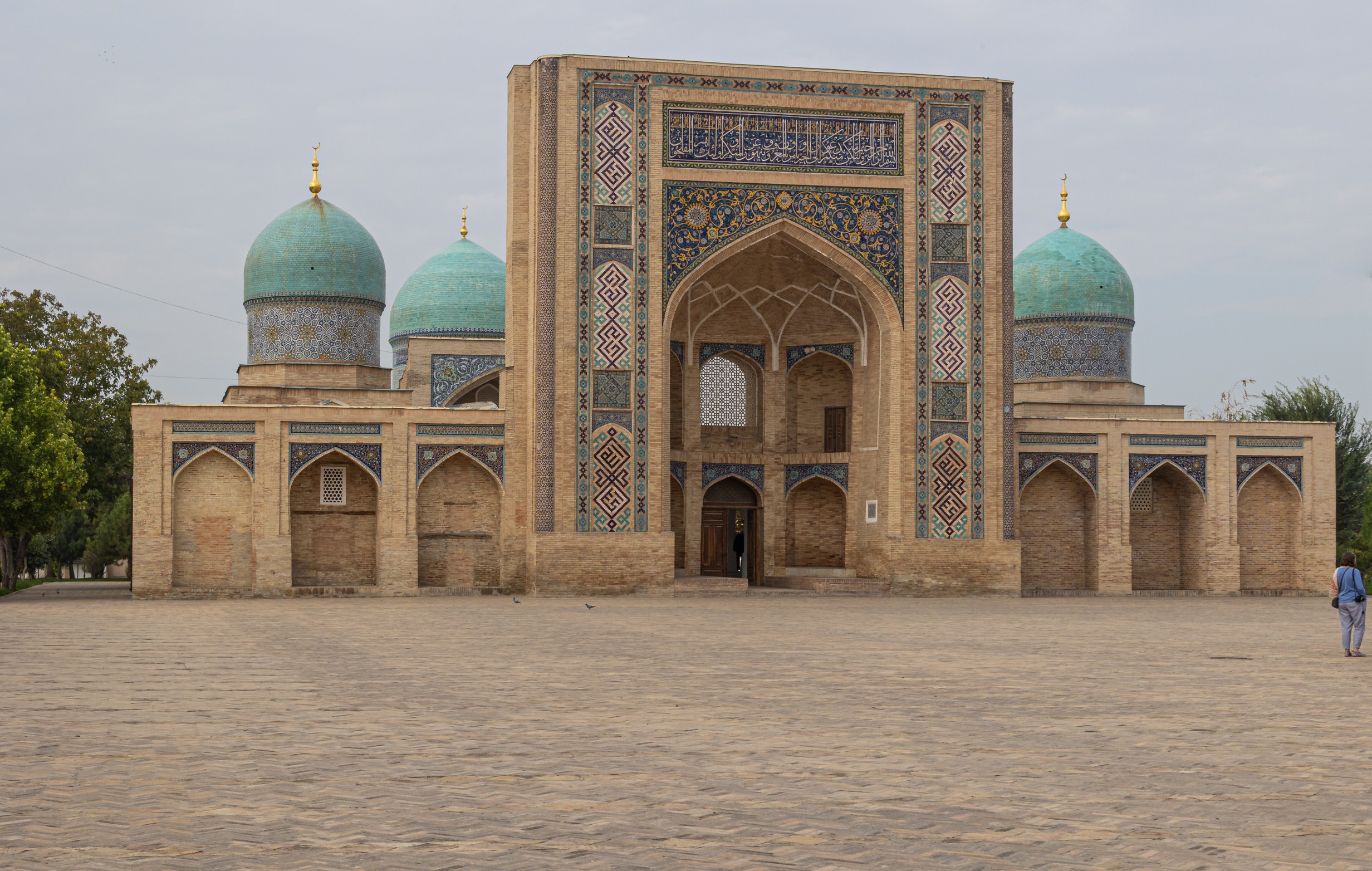
All the buildings were rebuilt in the 20th century so they aren’t old but are in the Timurid style. The Friday mosque had particularly impressive minarets and some lovely woodwork inside. There was also a very impressive Islamic Centre being built too so it looks like, although the constitution says the country is secular, the president is doing all he can to bend that and increase Muslim approval like Erdogan in Turkey.
Chora Bazaar
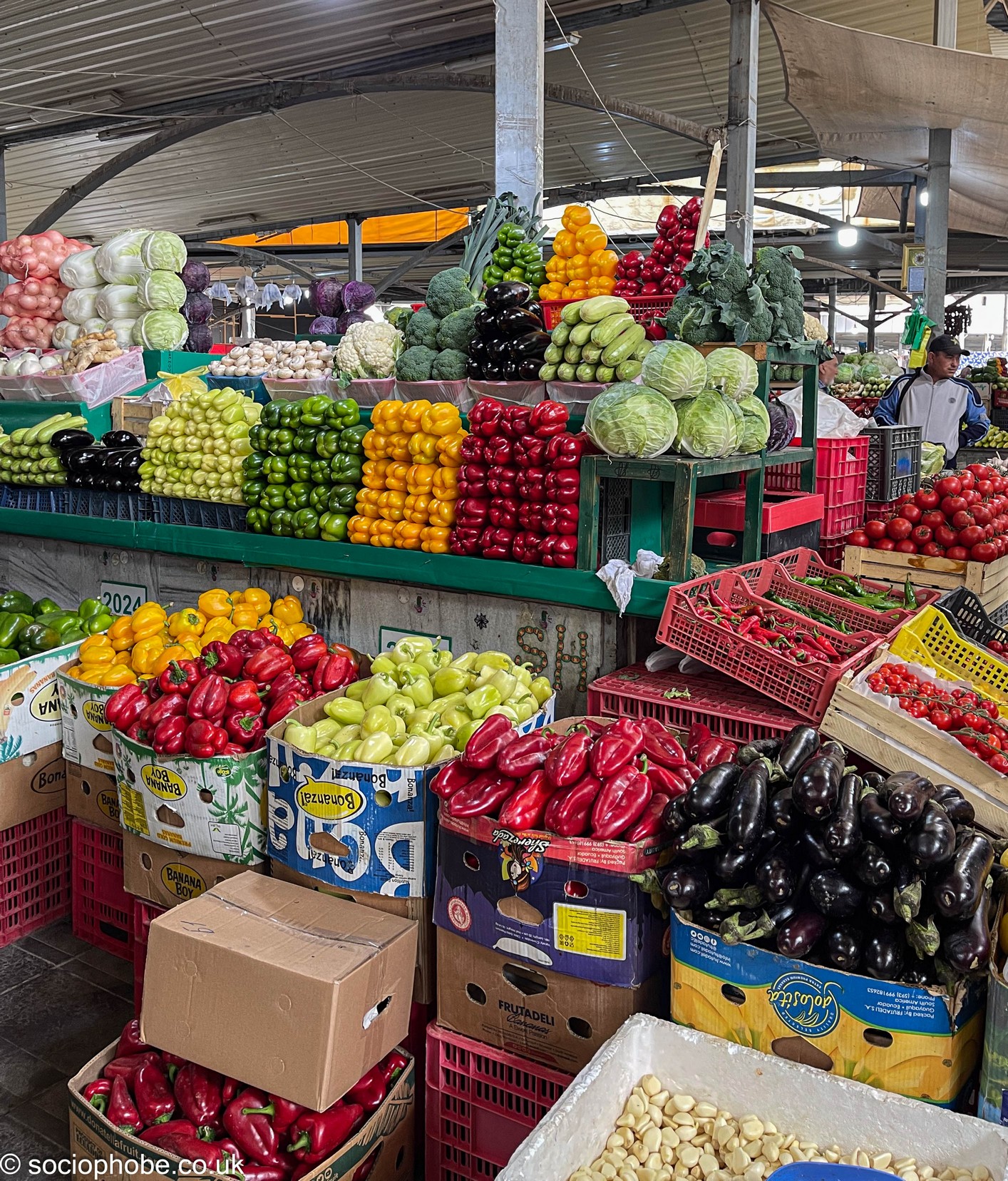
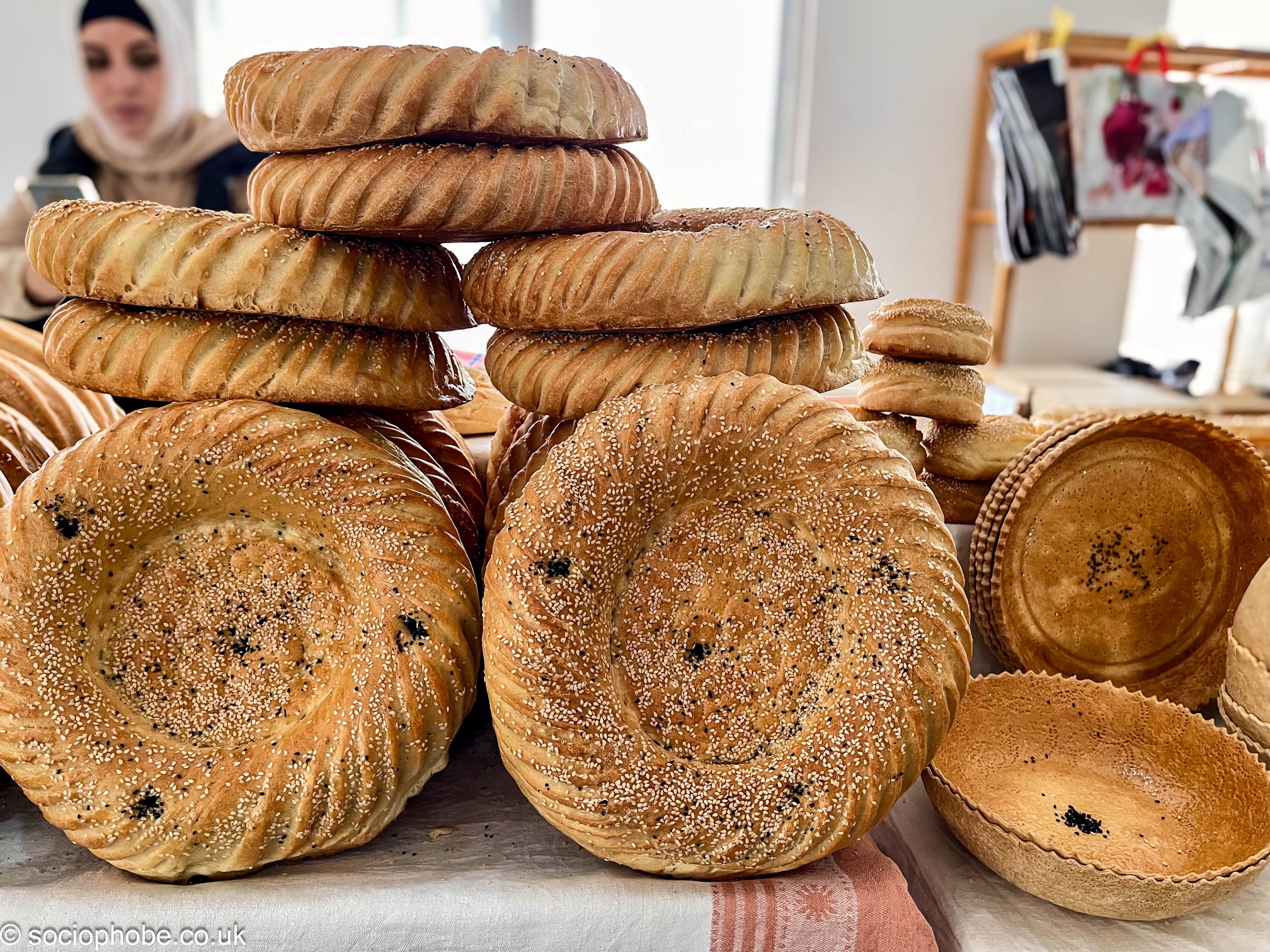
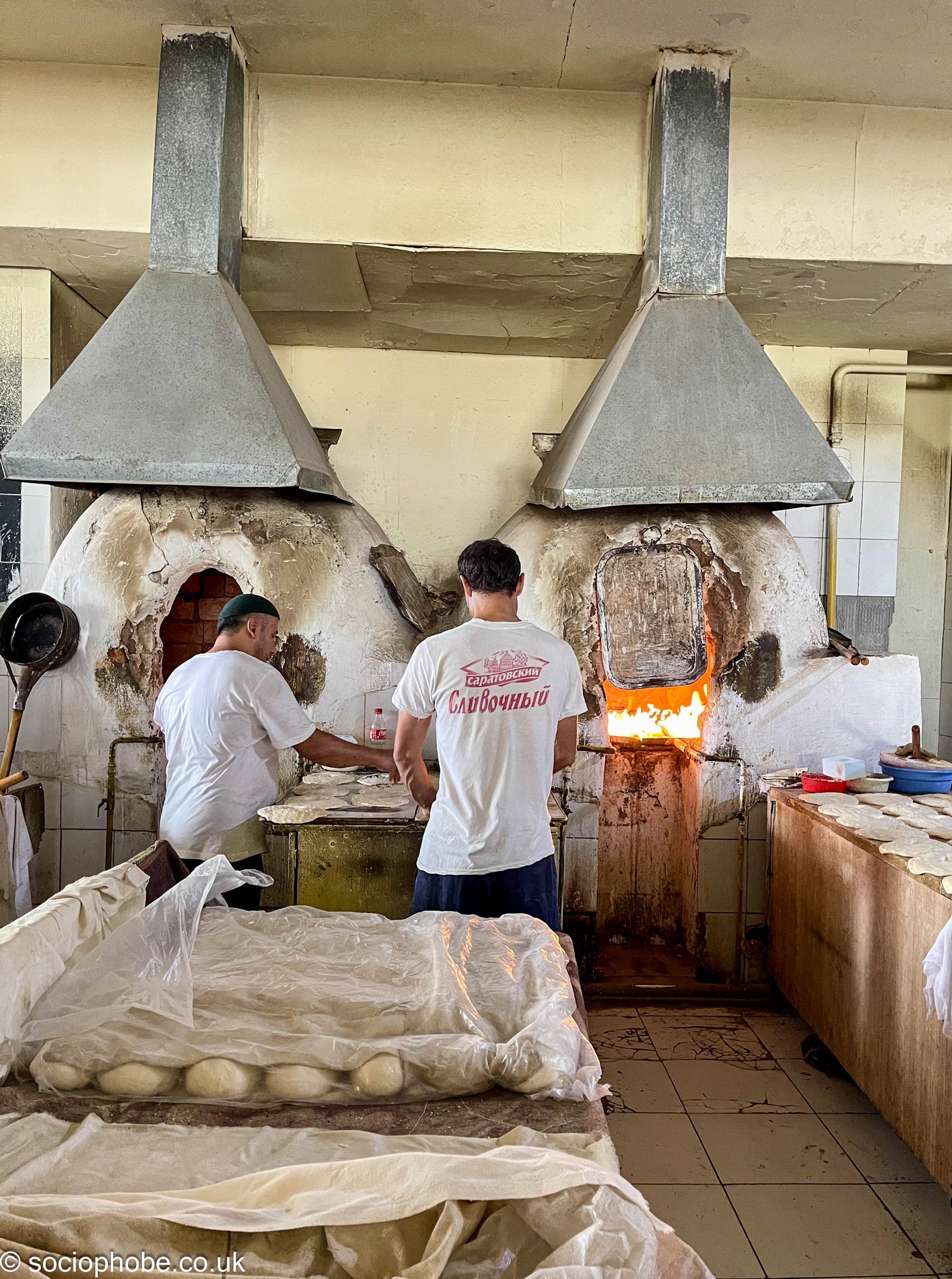
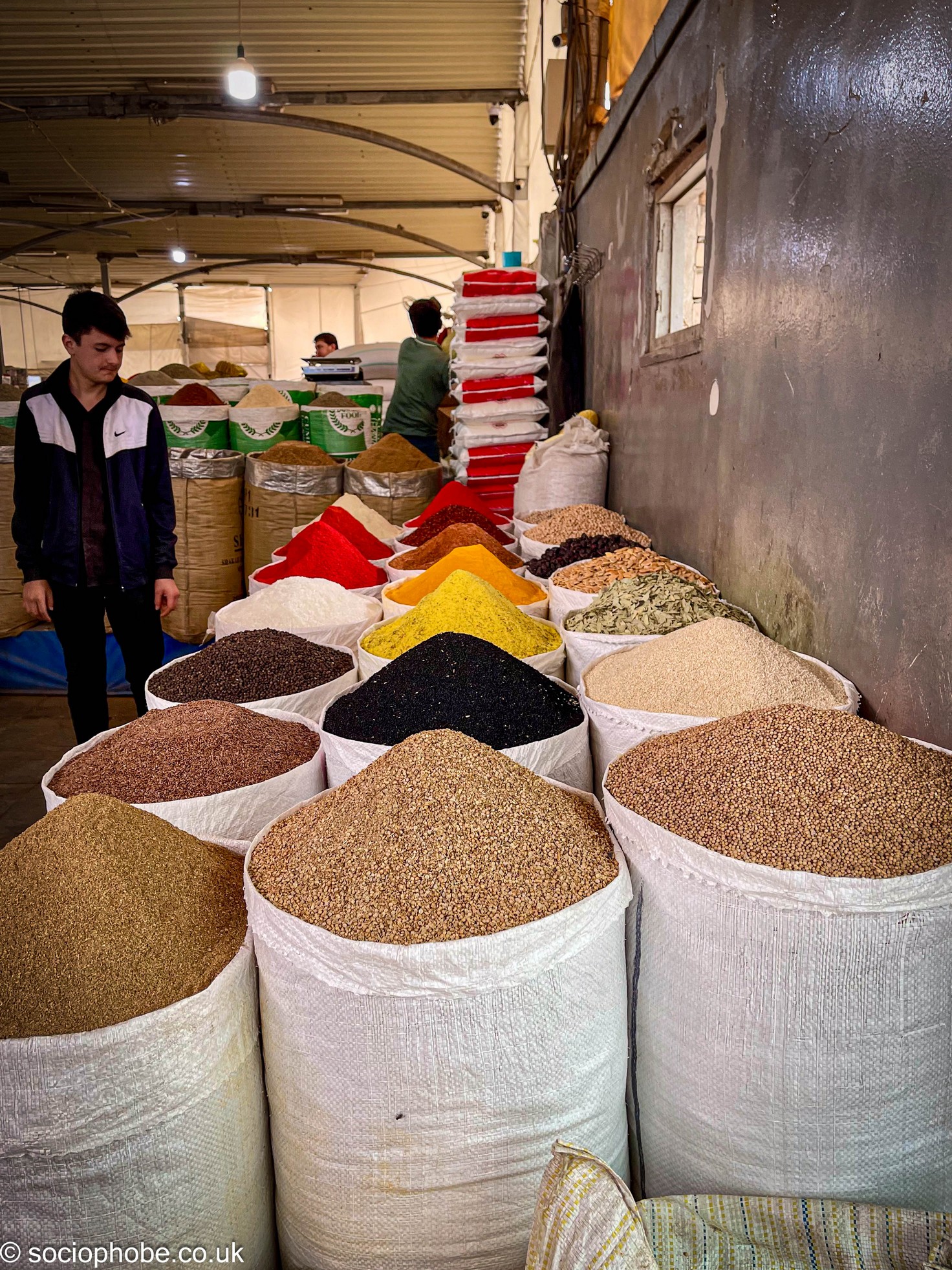
After these buildings, the first we had seen in the distinctive Central Asian style, we drove the short distance to the Chora market which we probably wouldn’t have visited if we weren’t on the Highlights of Uzbekistan Tour as it wouldn’t have entered my head! Deb was in her element here pointing out plants and spices that we can get in Sainsburys although to be fair, the displays were far better here. We watched the bread being made which was impressive and we could feel the heat of the ovens from 6m away.
Tashkent Metro
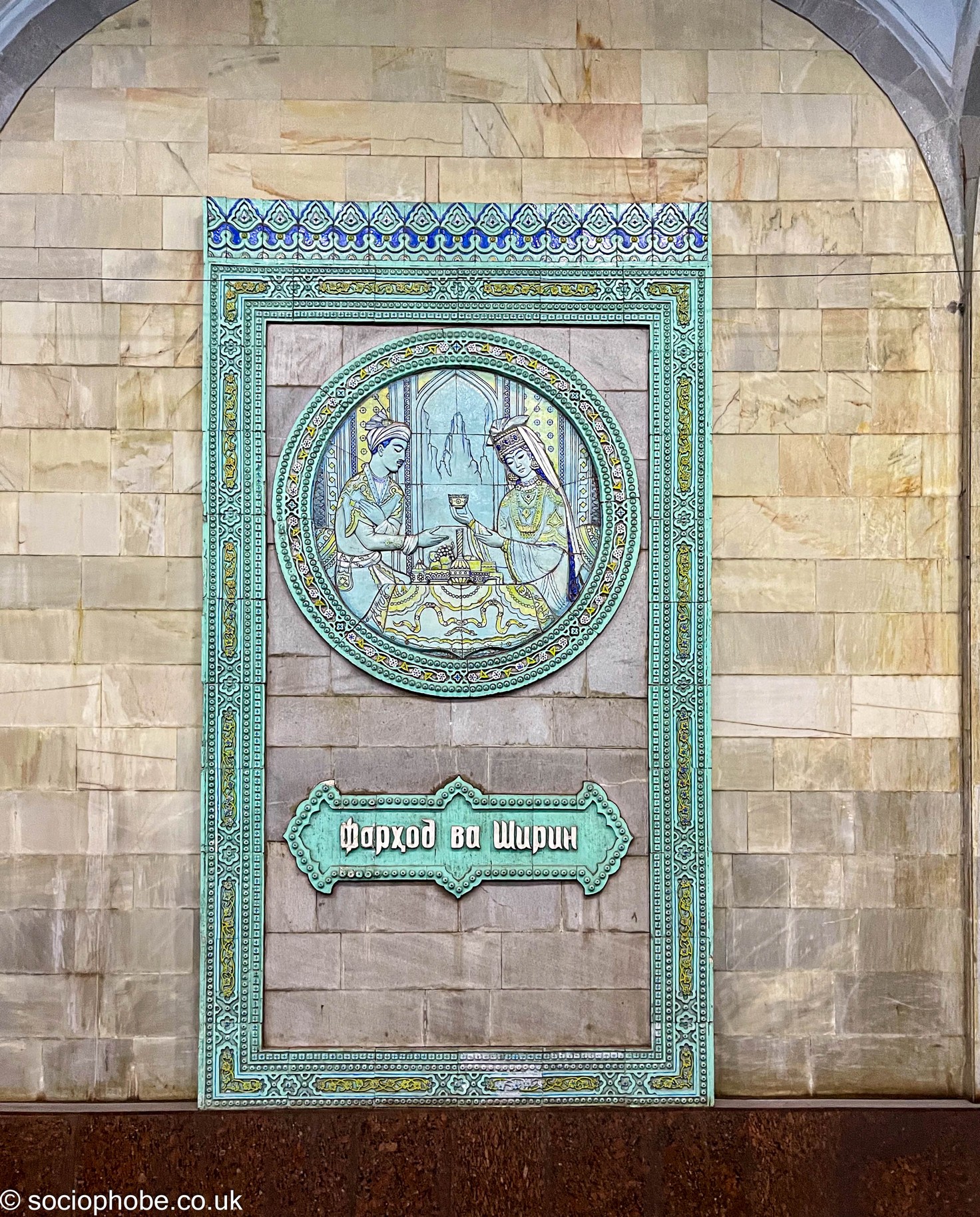
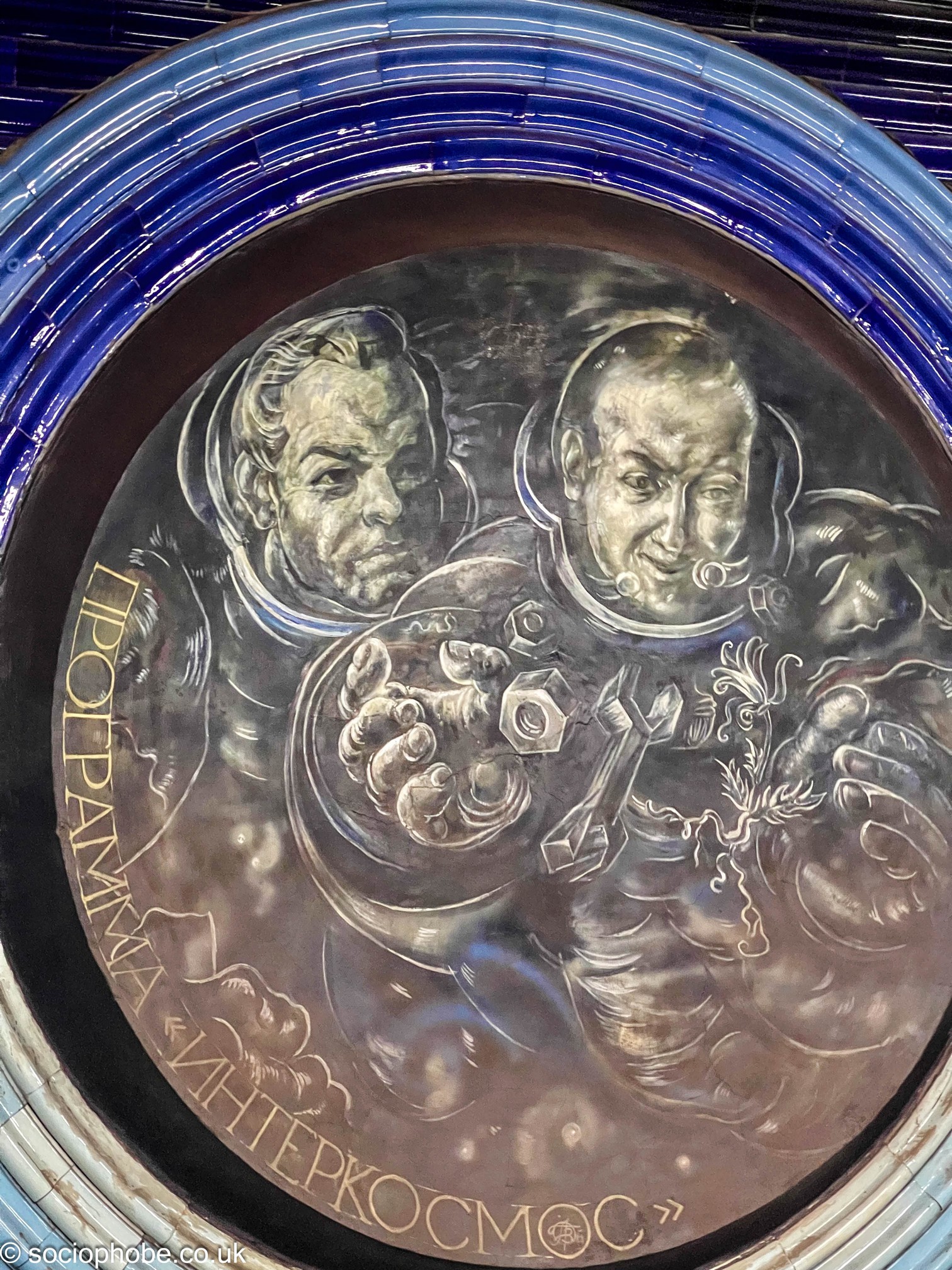
We then caught the metro (10p a ticket!) so we could look at some of the metro stations. The trains were very busy and the stations were impressive – each had their own colour scheme and theme, the cosmonaut station being by far the best. In keeping with the rest of the city, the stations were spotlessly clean and well ordered.
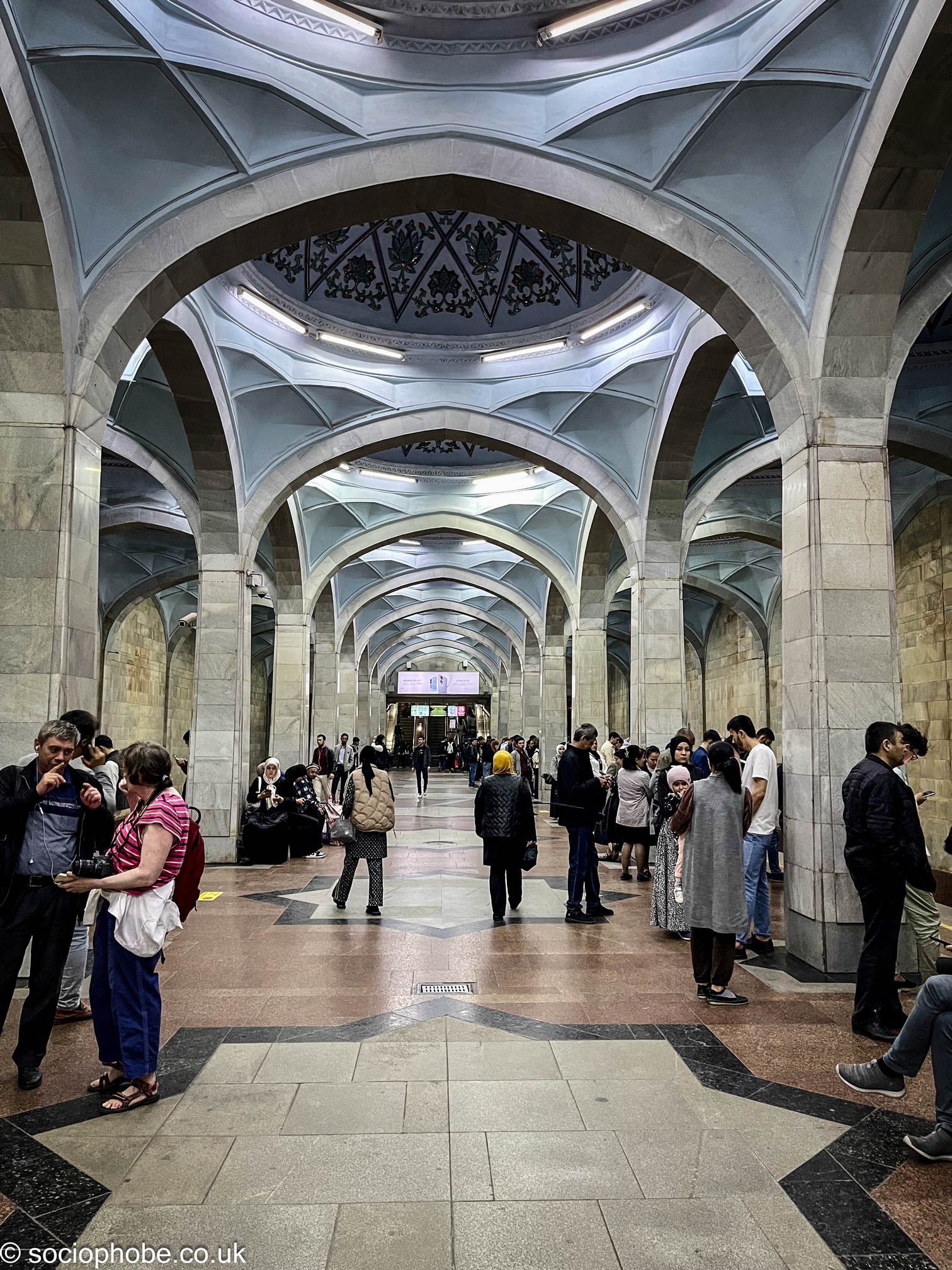
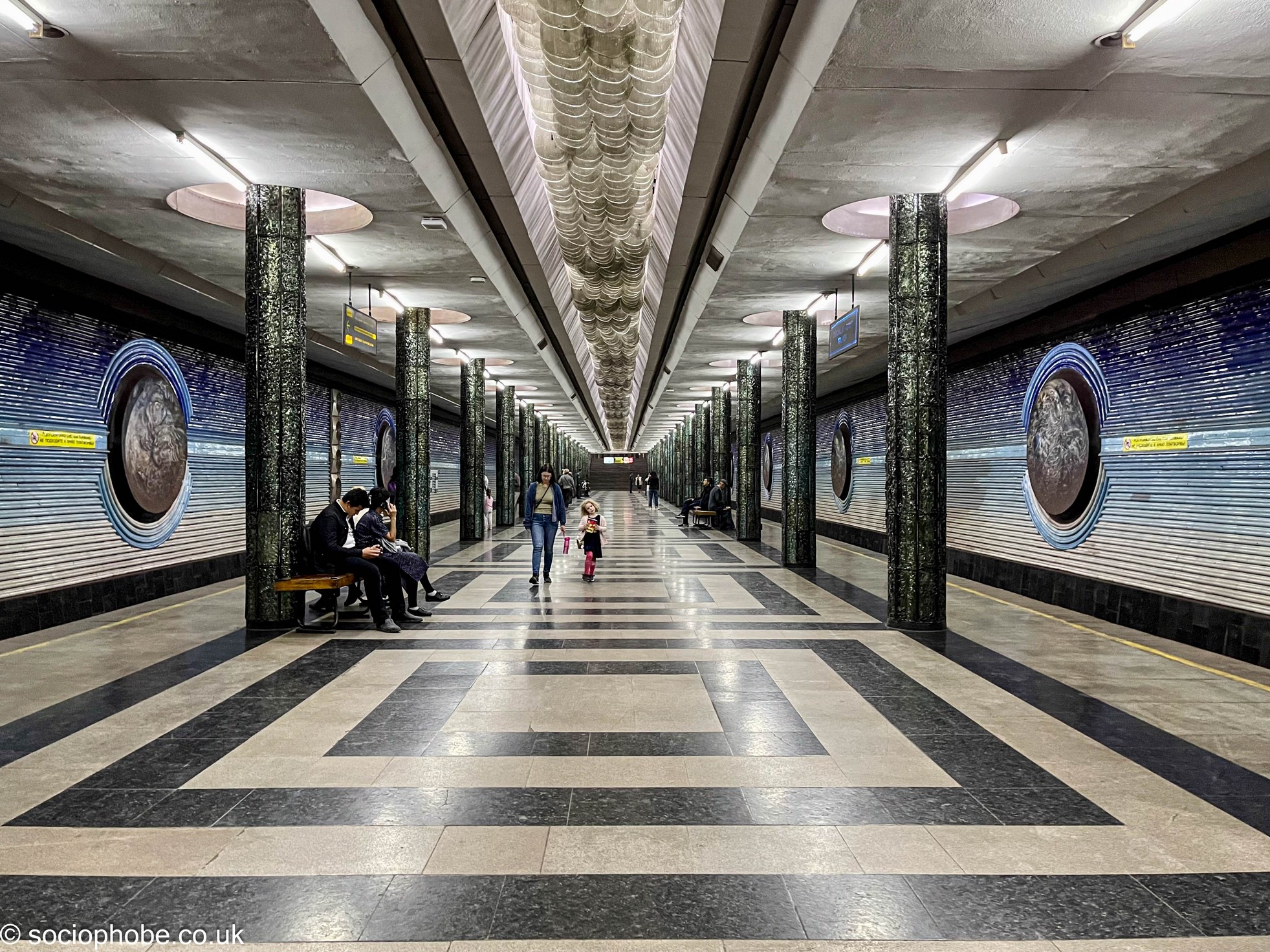
The city gives the impression of being like Victorian London, a city on the up with a proud and impressive facade but don’t look too deep! We had dinner in a local restaurant, which was really delicious – a sort of cheesy pasta sauce and meatballs – before boarding the coach for our journey to Samarkand.
Samarkand (or Samarqand if you prefer)
Samarkand is one of the oldest cities in Central Asia, almost 3000 years old, and has had a multitude of rulers including Persians, Greeks, Turks, Mongols and Russians. It’s position as a trading city made it both rich and important as a centre of learning and culture.
Before the arrival of the Arabs the city was a centre for Zoroastrianism as well as having a Christian bishopric and large Jewish population. Central Asian scholars made huge advances in science, arts and medicine in the city before stagnation set in. In short, as well as its evocative romanticism it was one of the most important cities in the world for well over a thousand years.
The drive to Samarkand was meant to take around 4.5 hours but ended up being 6 due to the traffic in Tashkent. The country has rapidly outgrown its road infrastructure, or perhaps the influx of cheap Chinese cars has swamped it. Once out of the city, using the horn became the norm and the road quality plummeted. The main highway between the two most populated cities in the country was potholed more than any British road, which is saying something!
As we were driving we saw lots of goats and cows, even camels but very few of the horses the area was famous for. We saw fields of scraggly cotton bushes and also melon and the flat landscape was interspersed with wide, concrete canals. The houses were almost all single storey once out of the city and had corrugated tin roofs. As we drove south and the very small number of trees disappeared and were replaced with scrubland. We could see a mountain range to the east and to the west just dusty, flat steppeland.
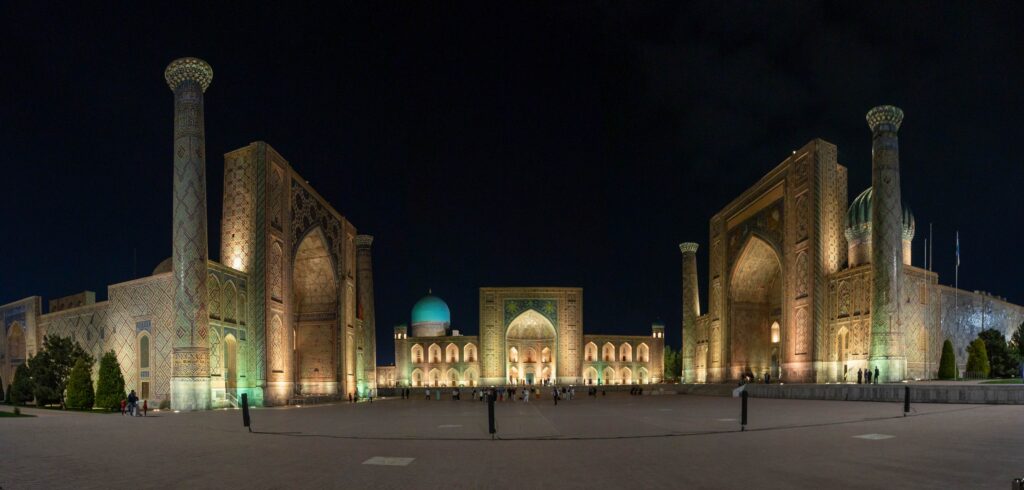
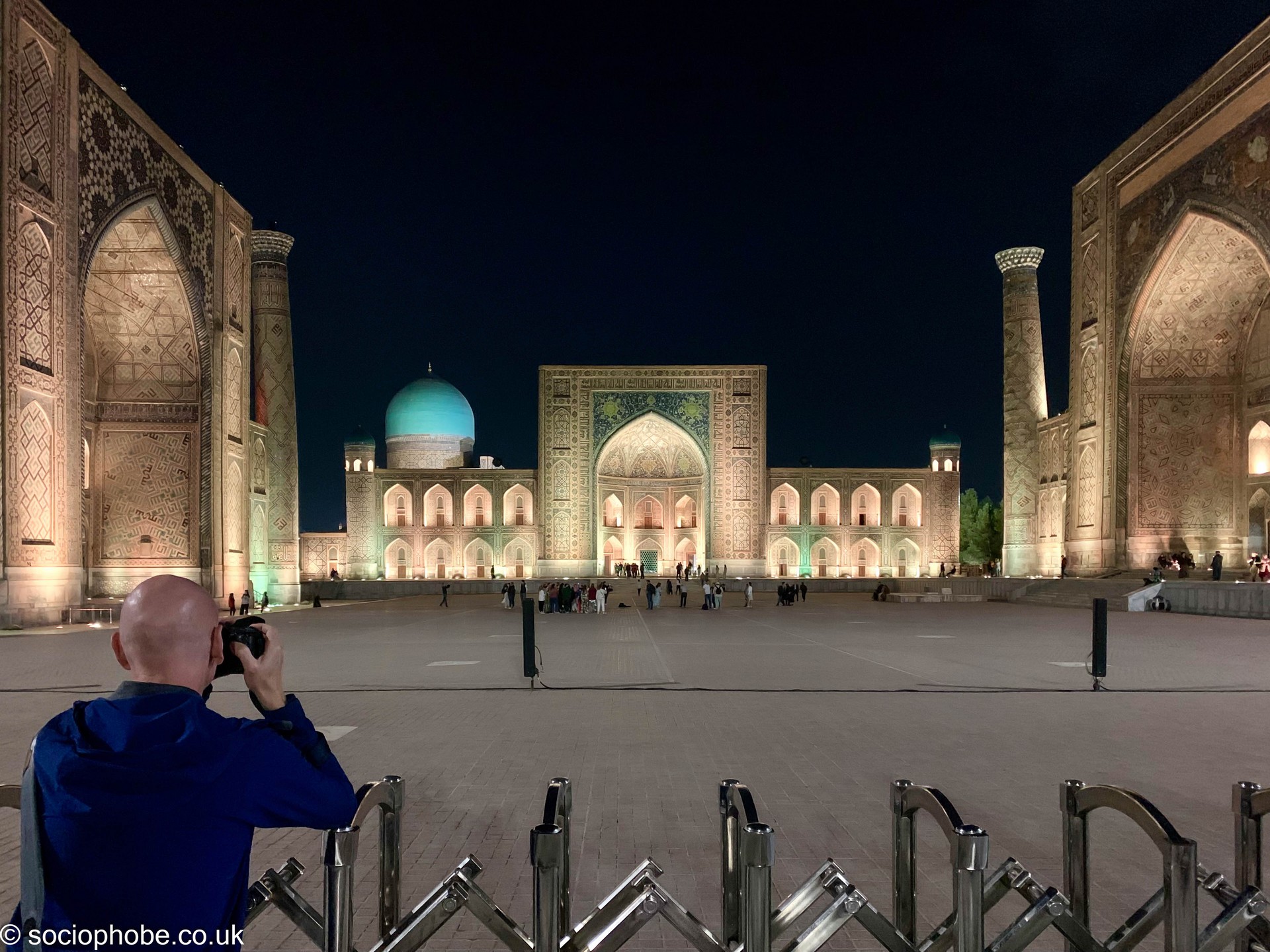
We arrived in the city in the dark so couldn’t really see much of the citadel or Jewish graveyard that were pointed out as we passed but we did stop for a quick look at the Registan.
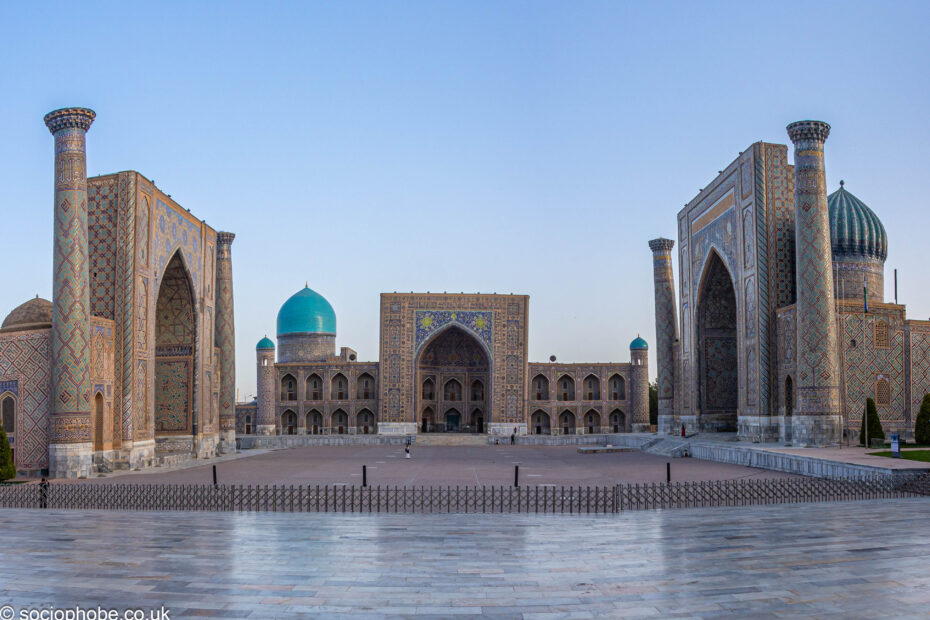
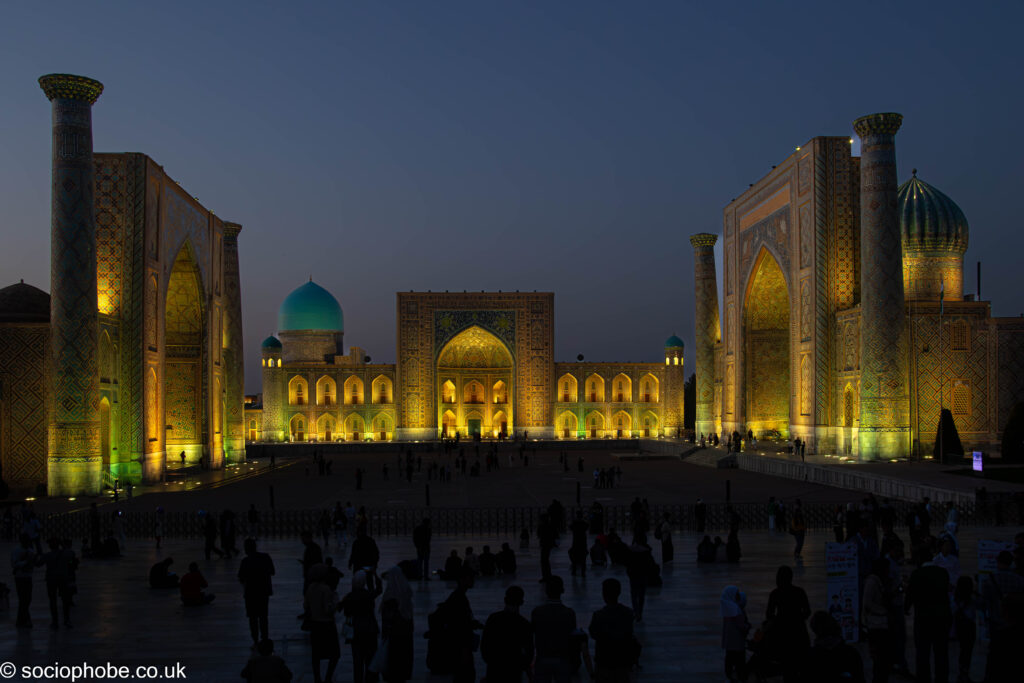
Wow what an absolutely awesome structure! It was beautifully lit and very busy but we took a few photos and then walked the short distance to the Zarina hotel. It took a while to find our room as it was quite a sprawling lay out but we got there in the end.
The room was large with 3 beds, a seating area and a desk and blissfully quiet. We quickly dumped our stuff, freshened up and then headed back to the Registan for a longer look before getting some food, at Deb’s insistence.
We both had kebabs and flat bread which was ok, there was a very pregnant cat that came and sat next to us so she had a lot of chicken! It was then a case of going back to the room, writing up notes and sorting stuff for a 6AM sunrise start tomorrow!
The Registan
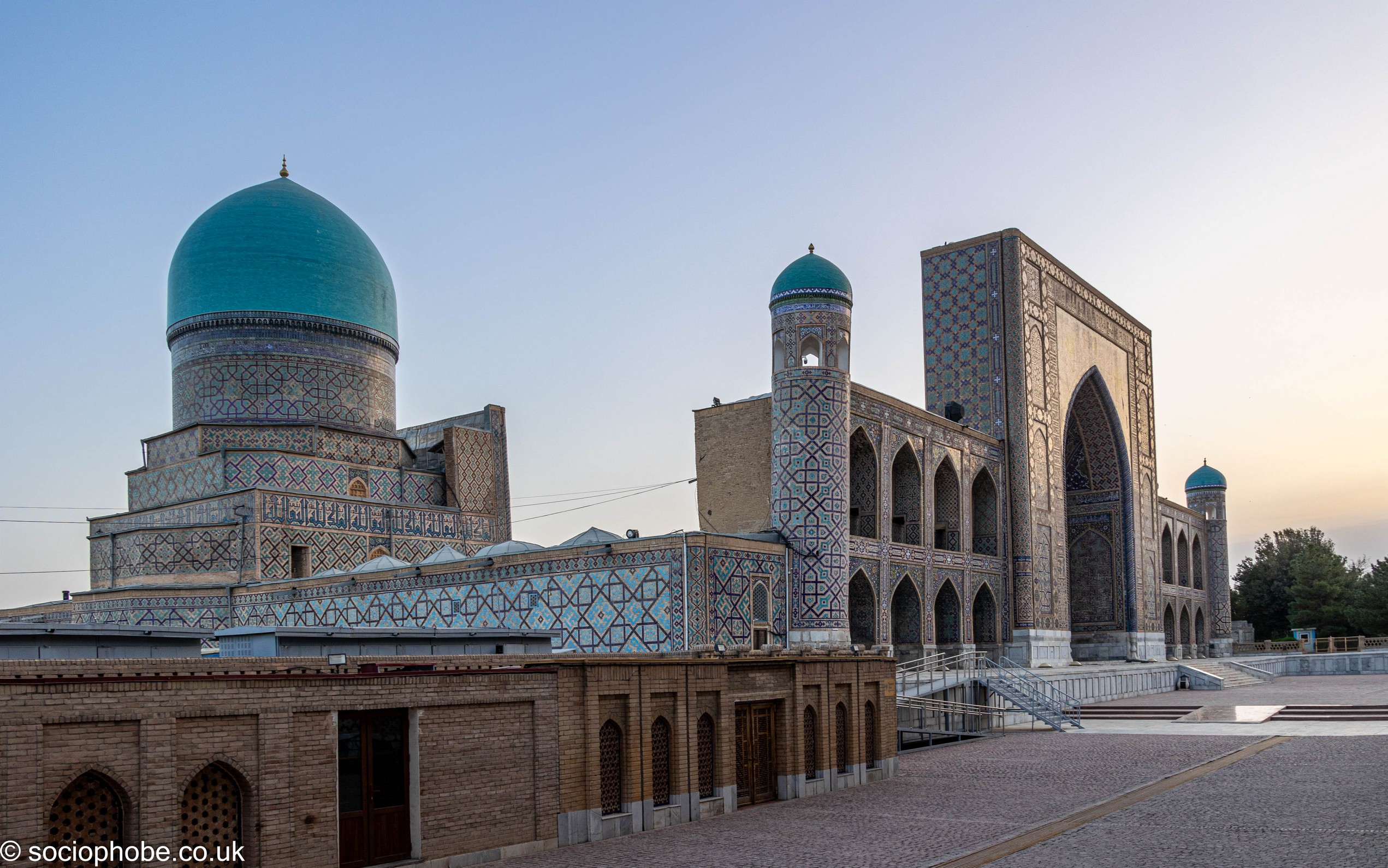
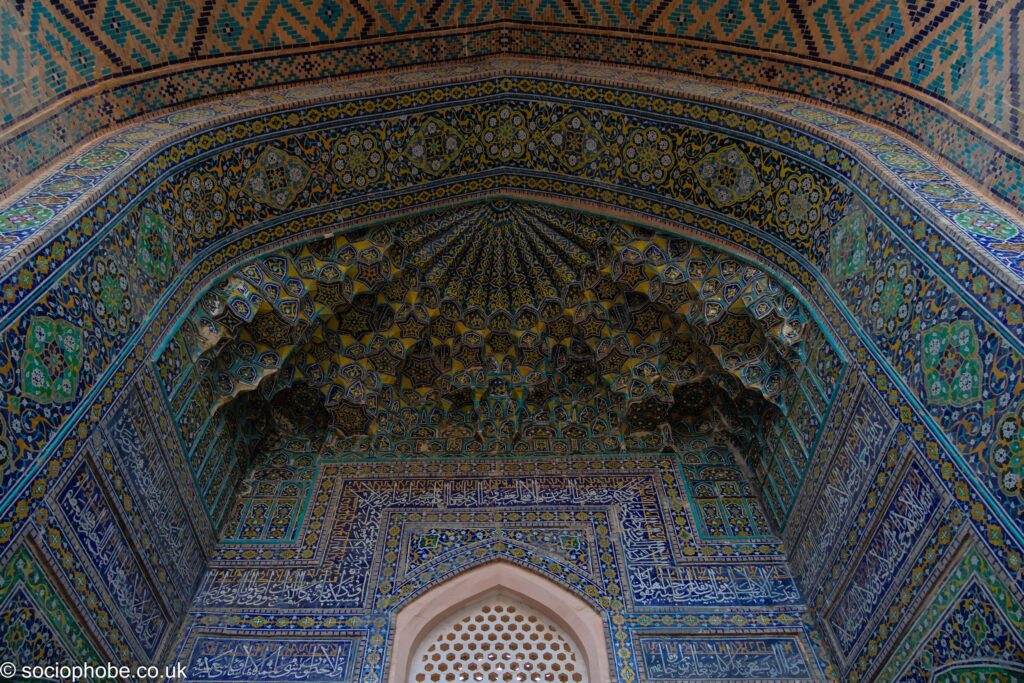
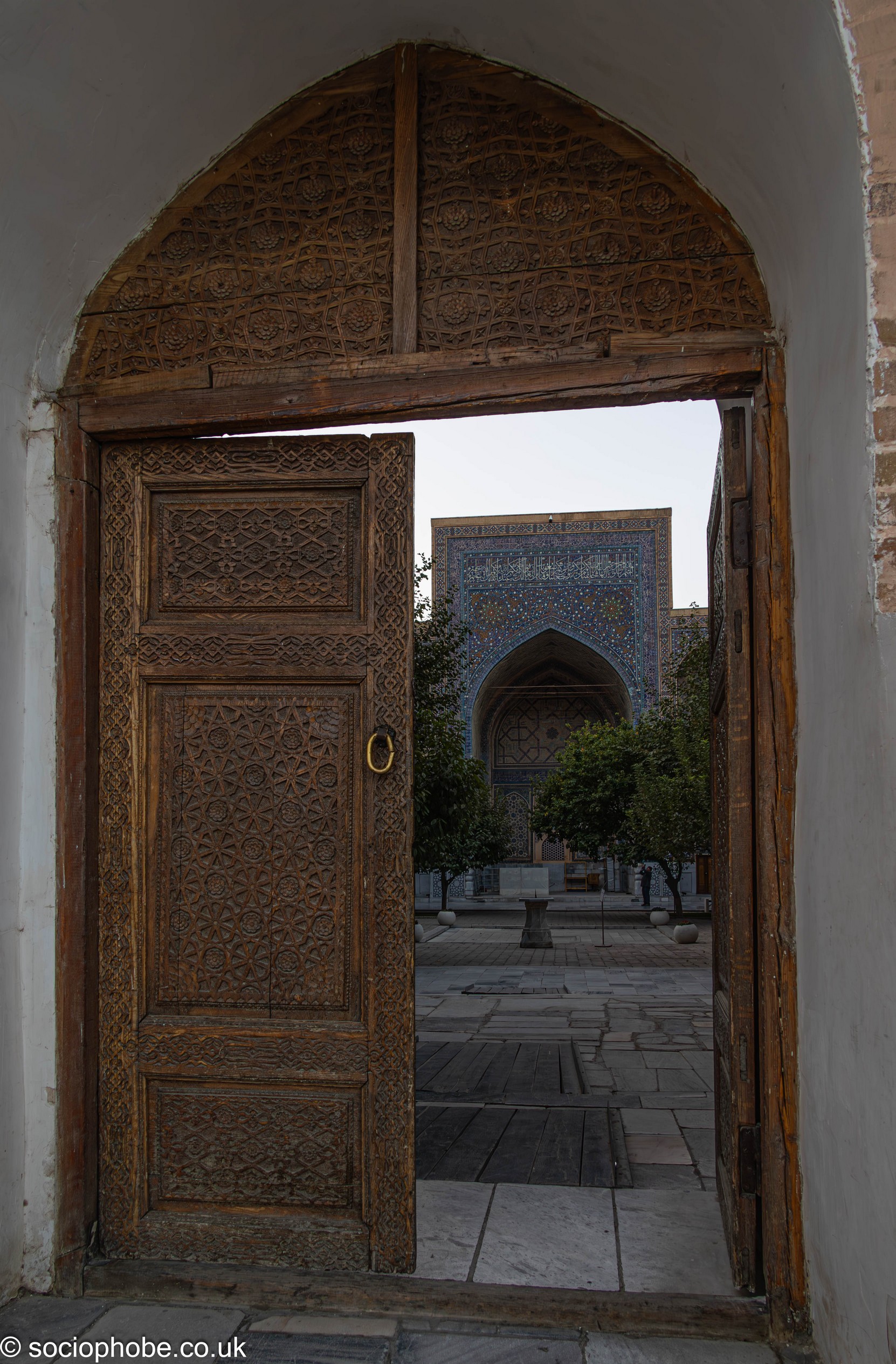
We woke early and were both out before 6.30 to watch the sunrise. Another guy from the tour was there too and we paid one of the security to guards to get ‘early admittance’ to the buildings themselves. It was absolutely wonderful to walk around and look at the architecture and design without other people although a low bank of cloud delayed the sunset.
We spent about an hour wandering into the different madrassas and courtyards before walking back to the hotel for a rather nice breakfast. Luckily there was no rush as the tour start was knocked back 30 minutes so we were able to take our time.
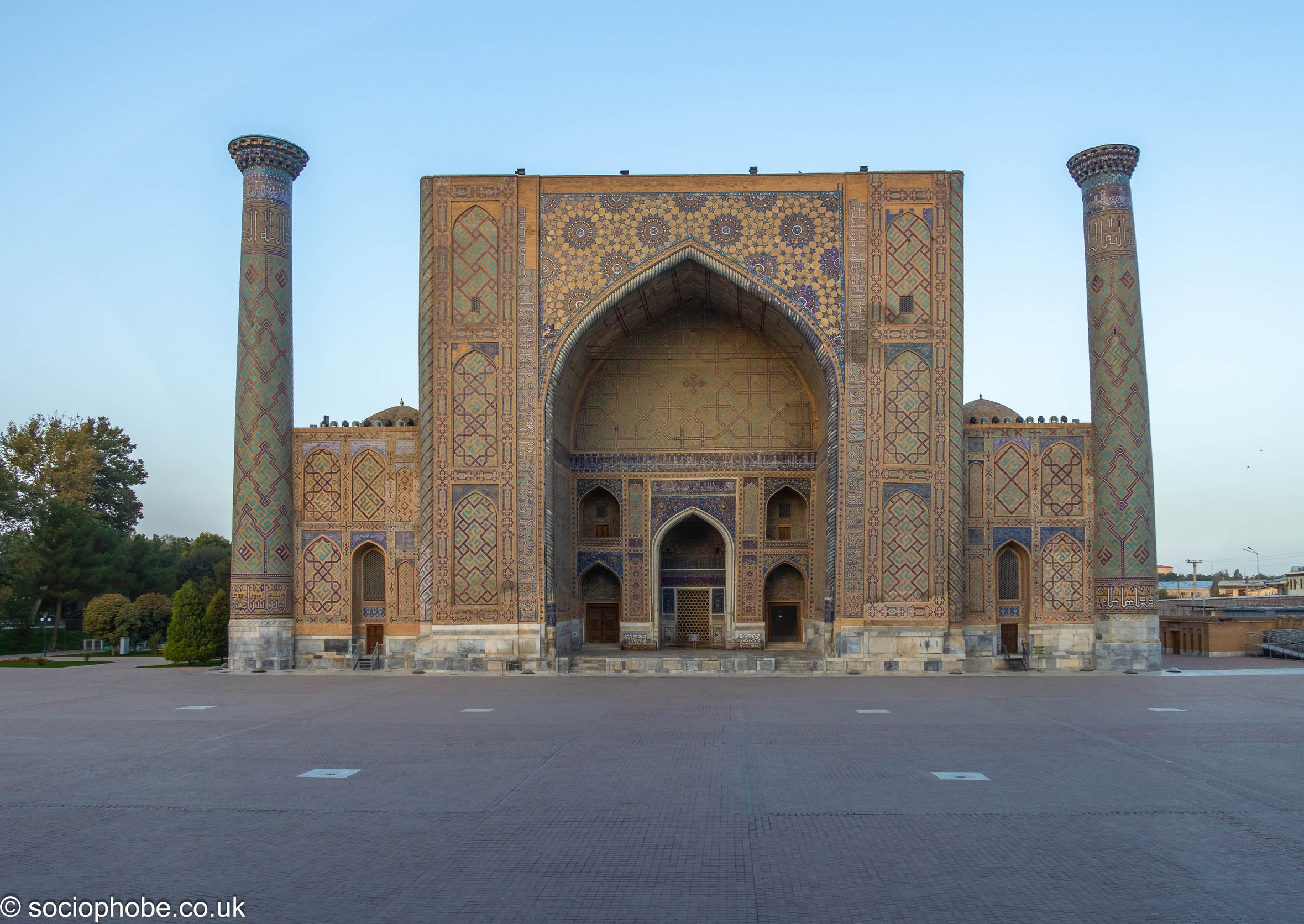
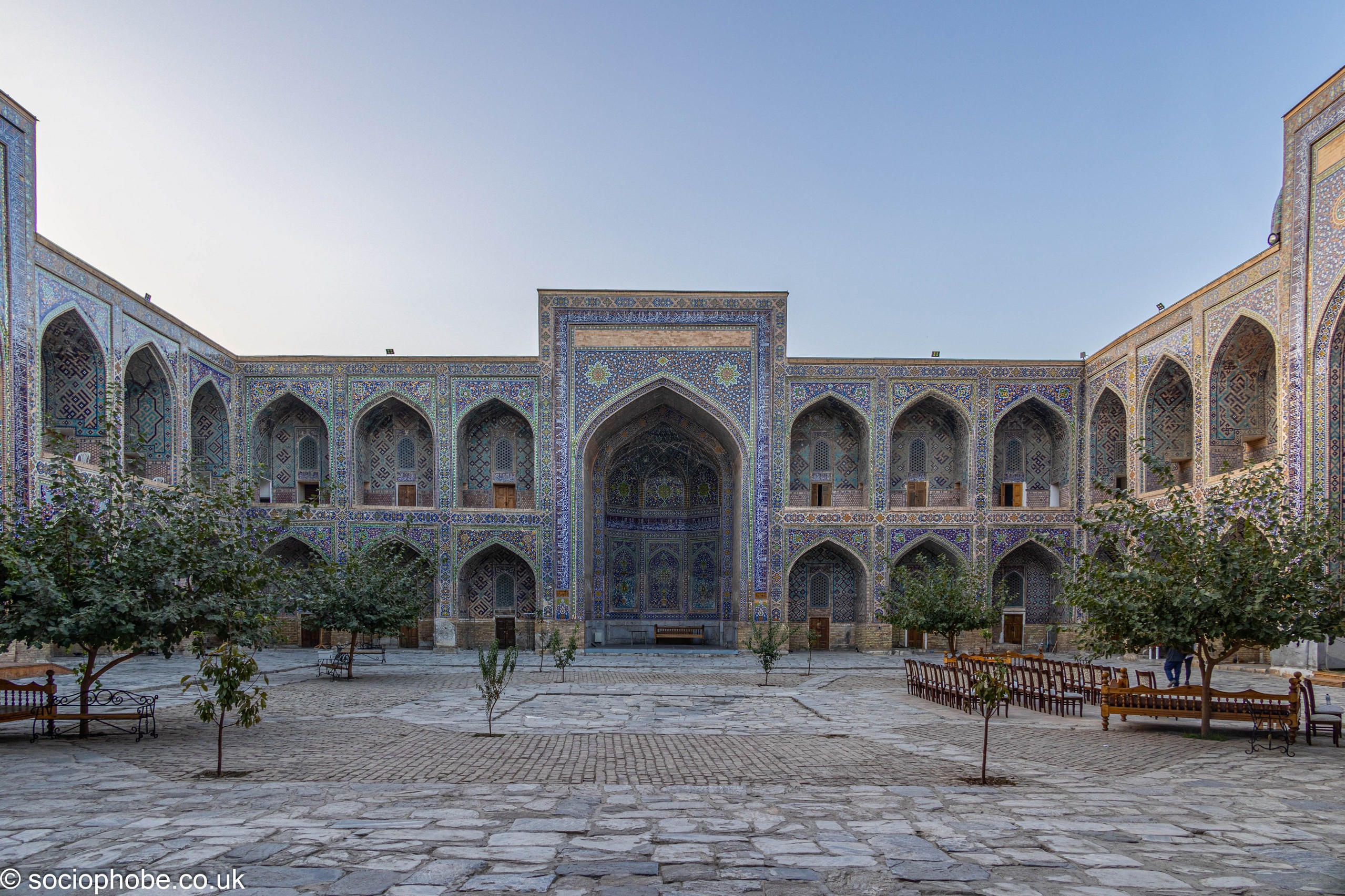
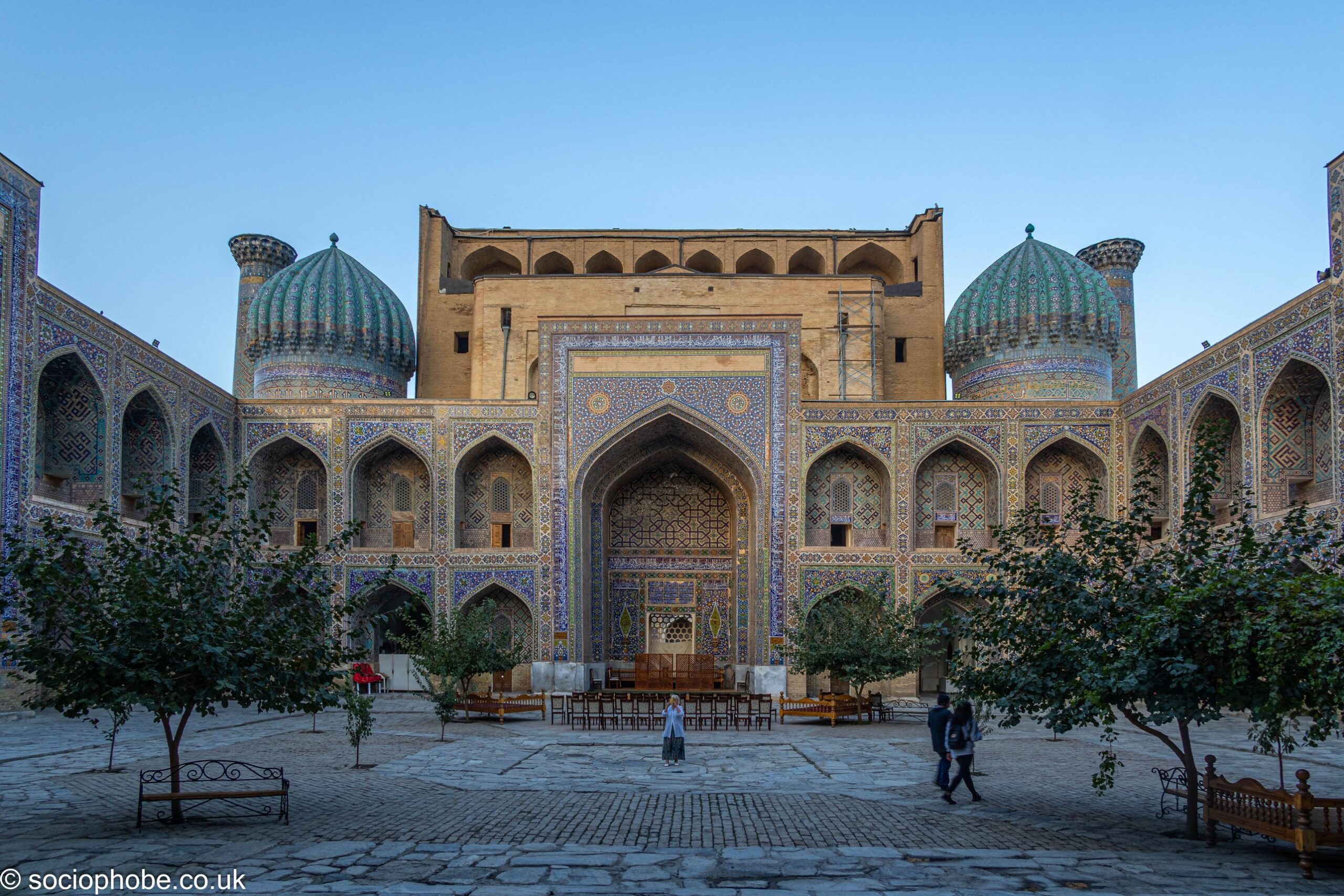
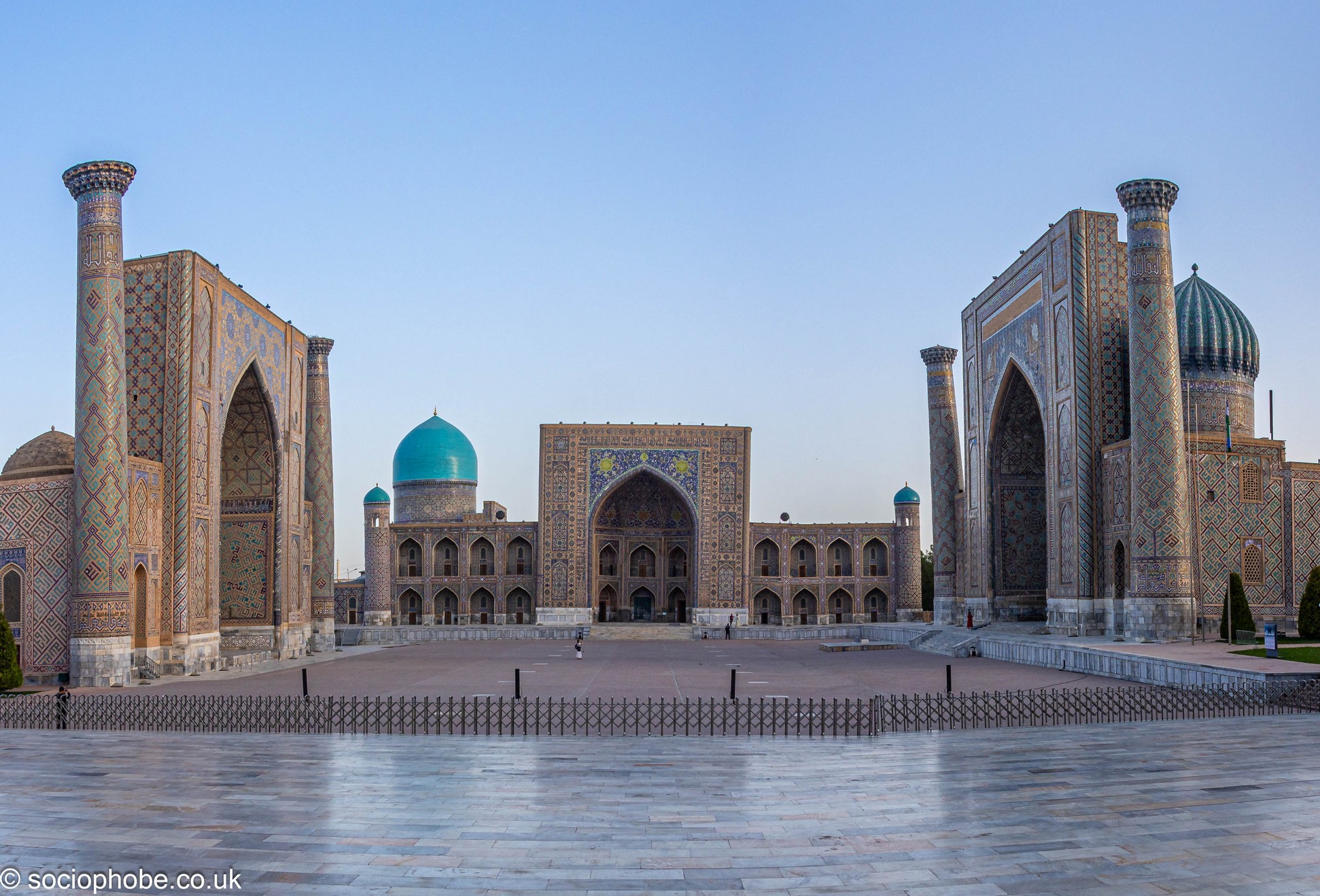
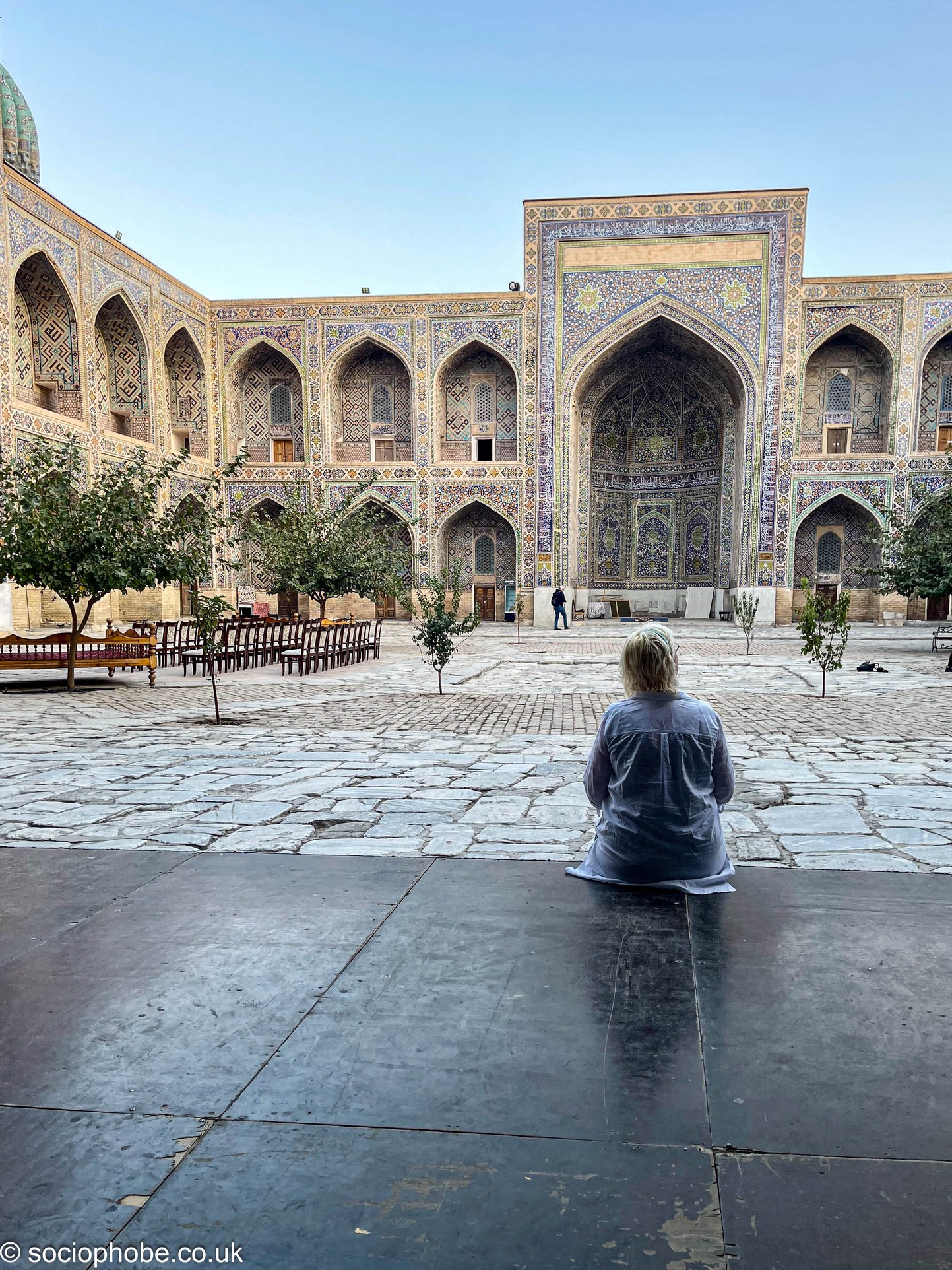
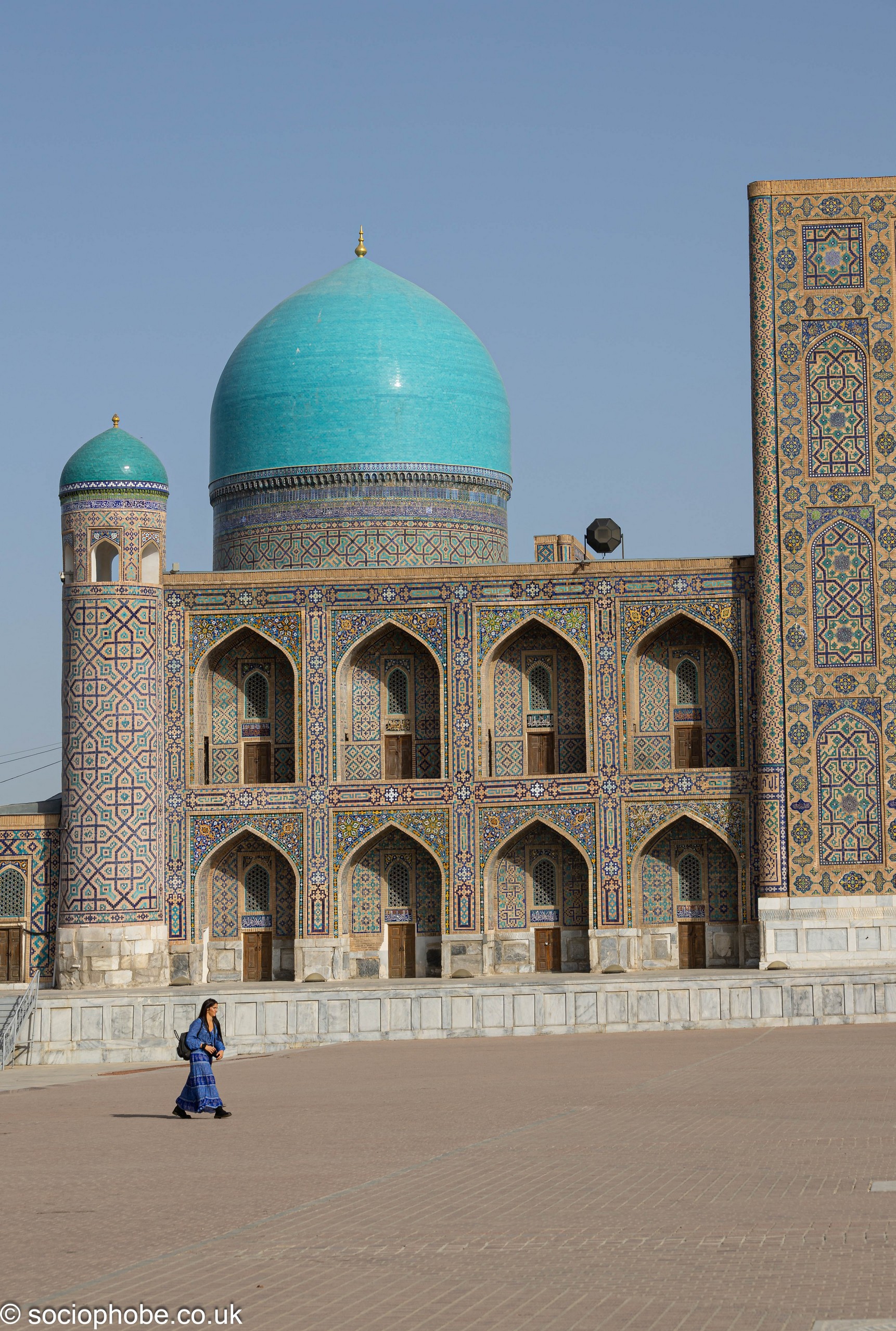
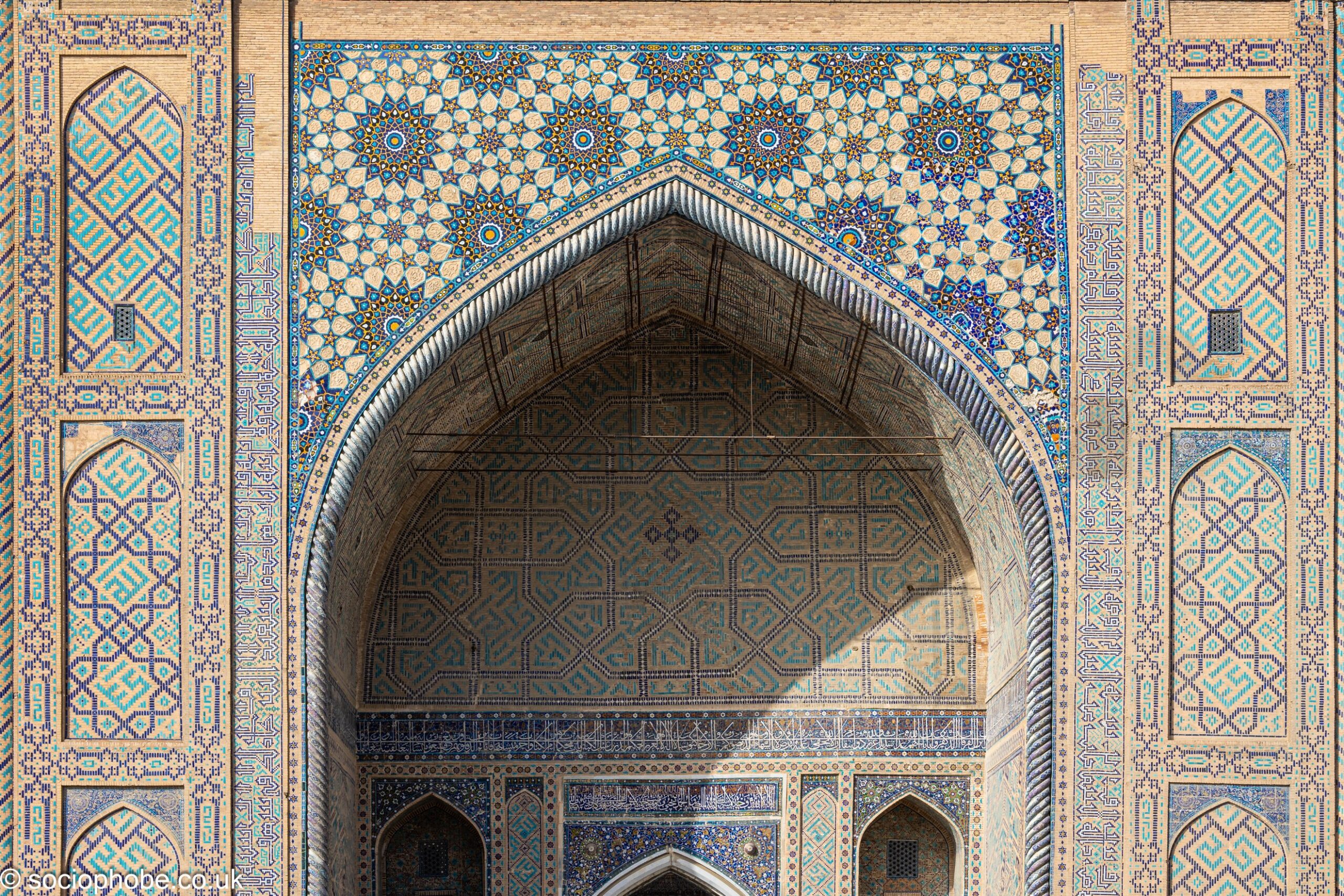
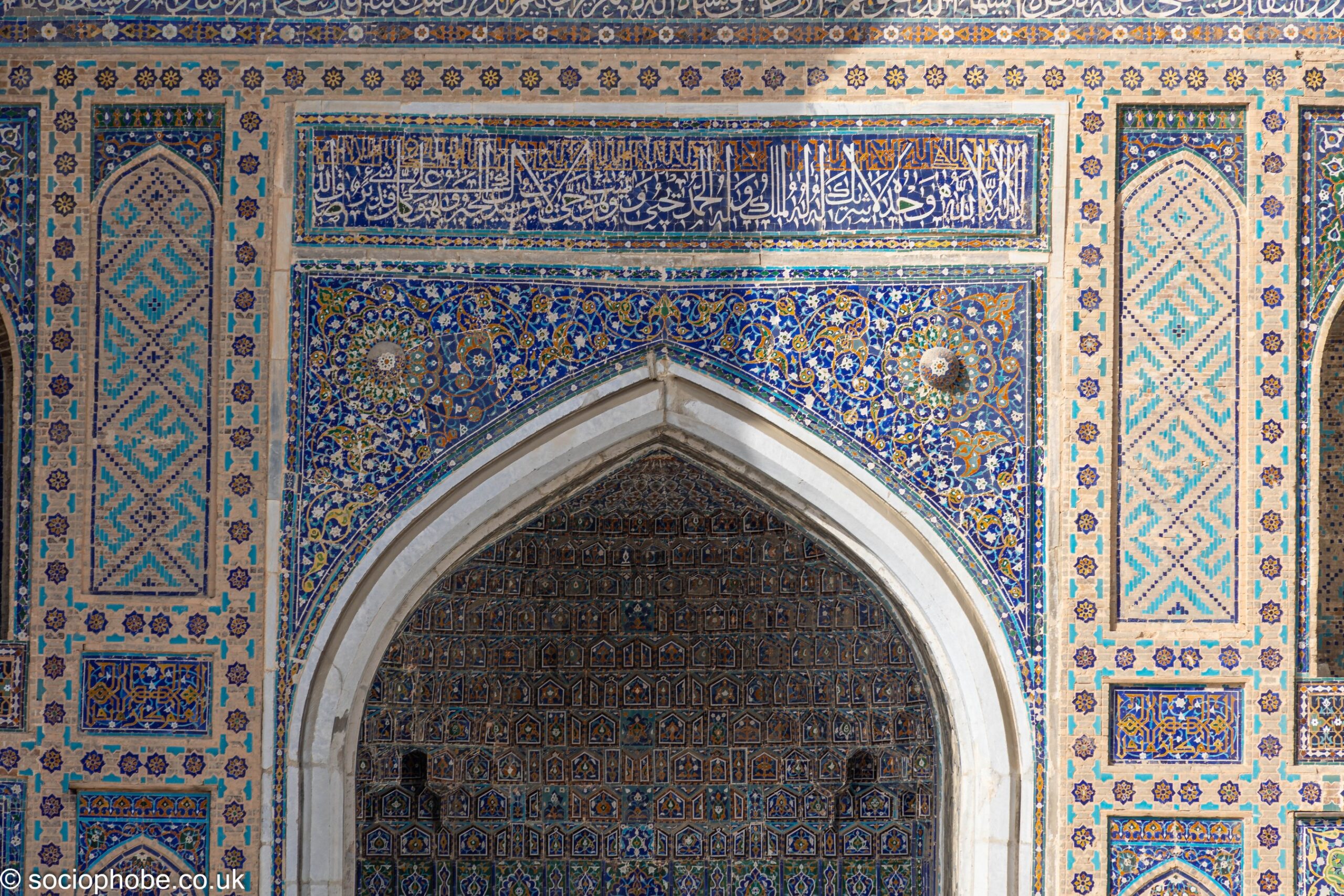
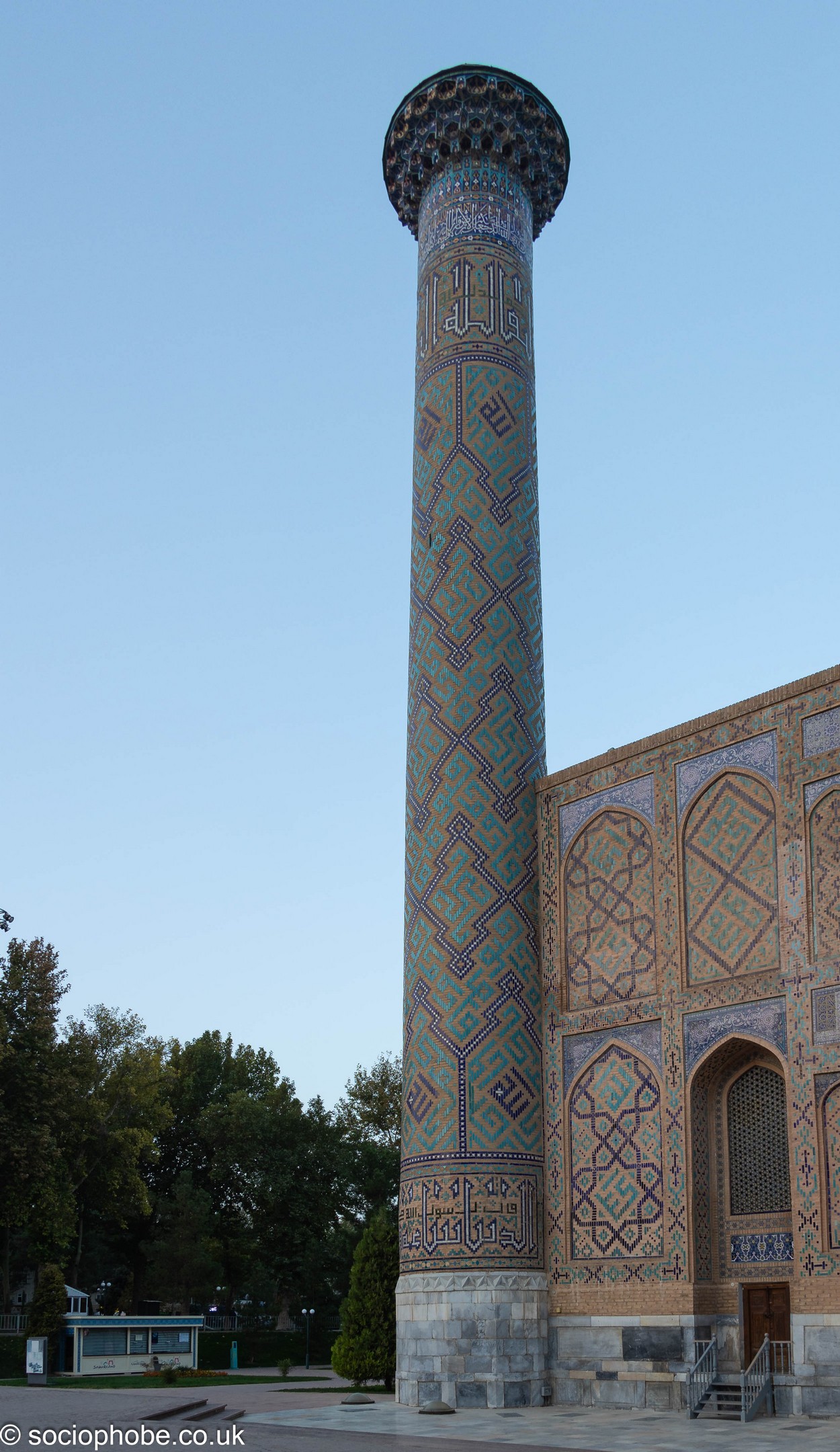
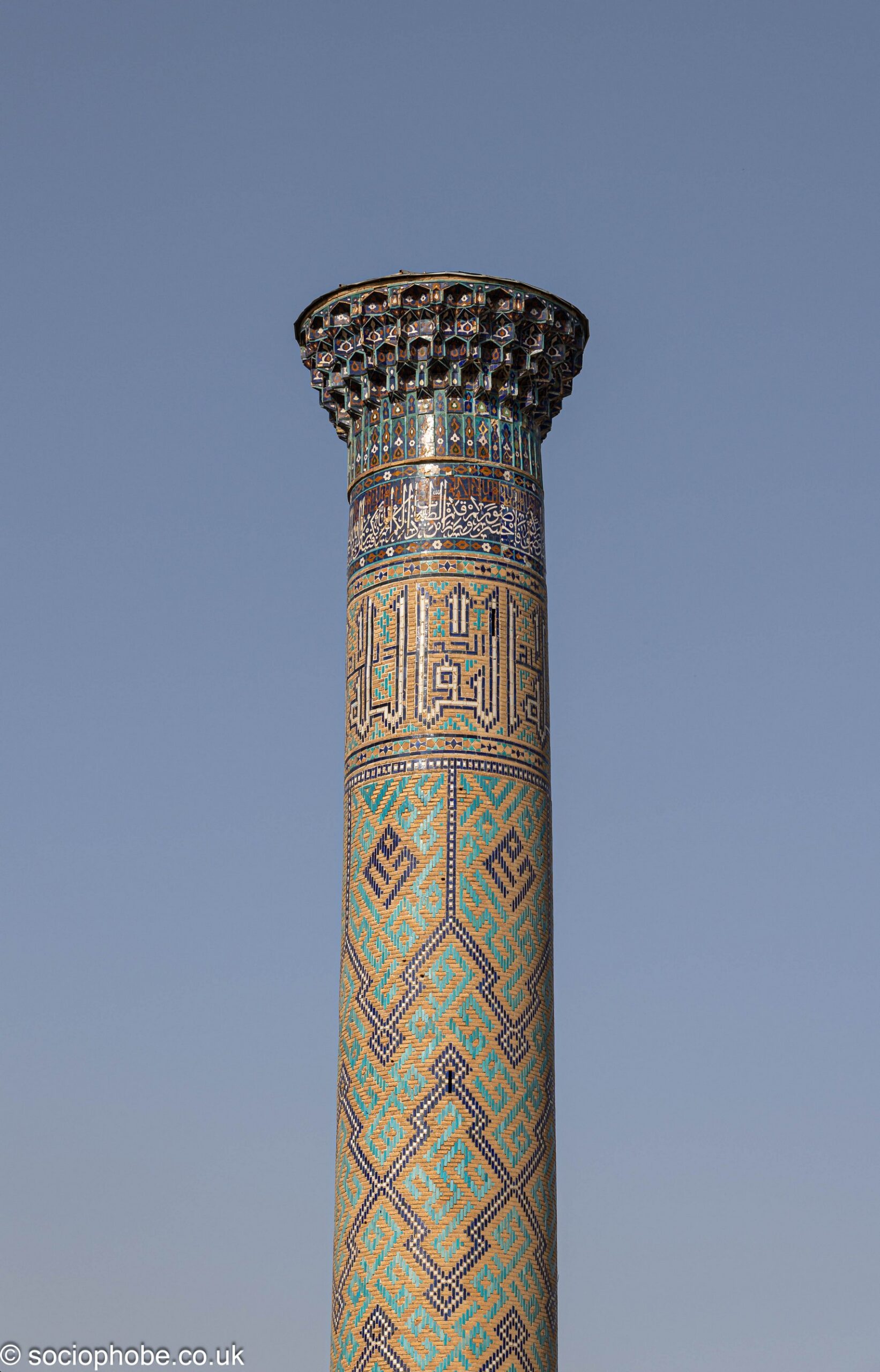
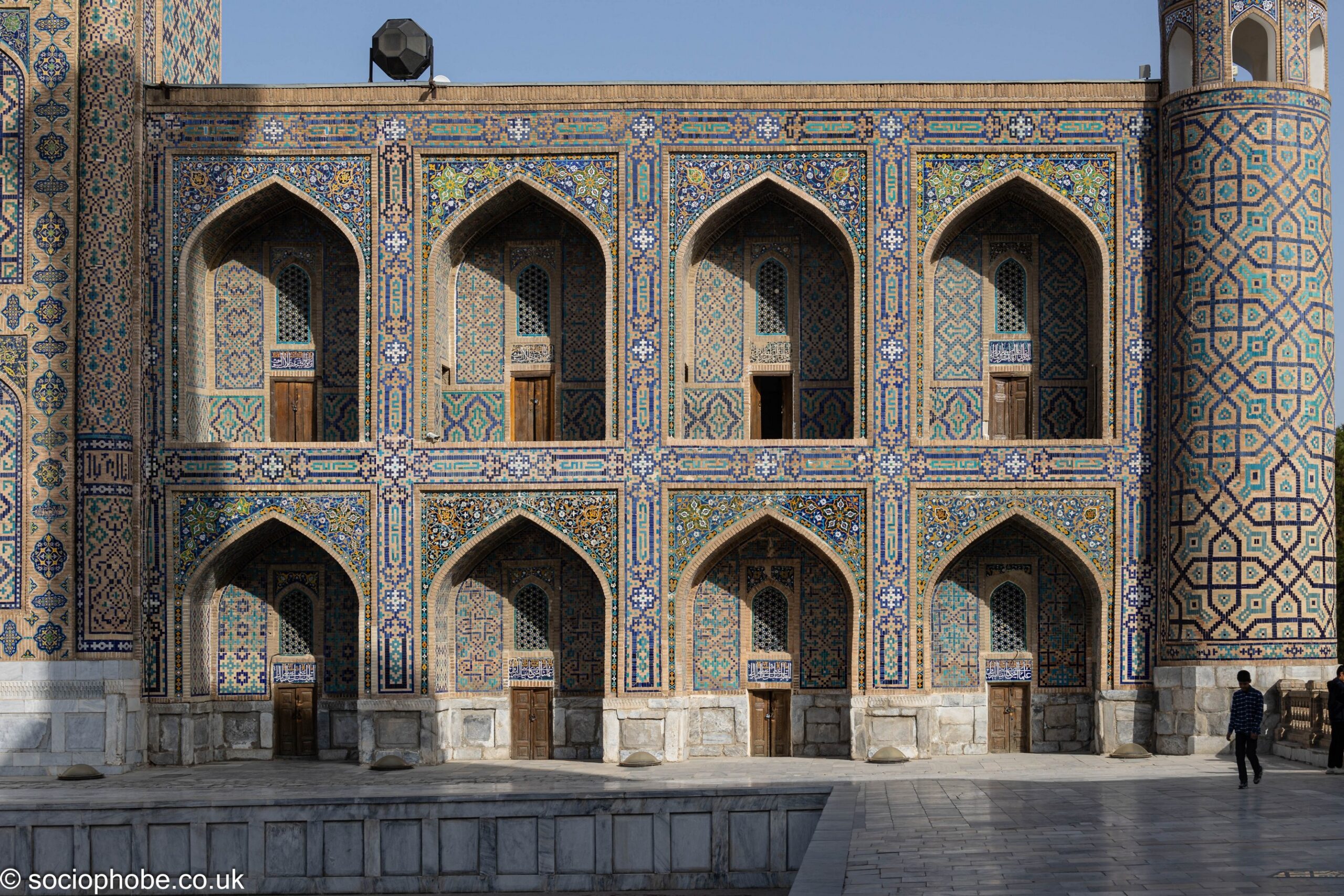
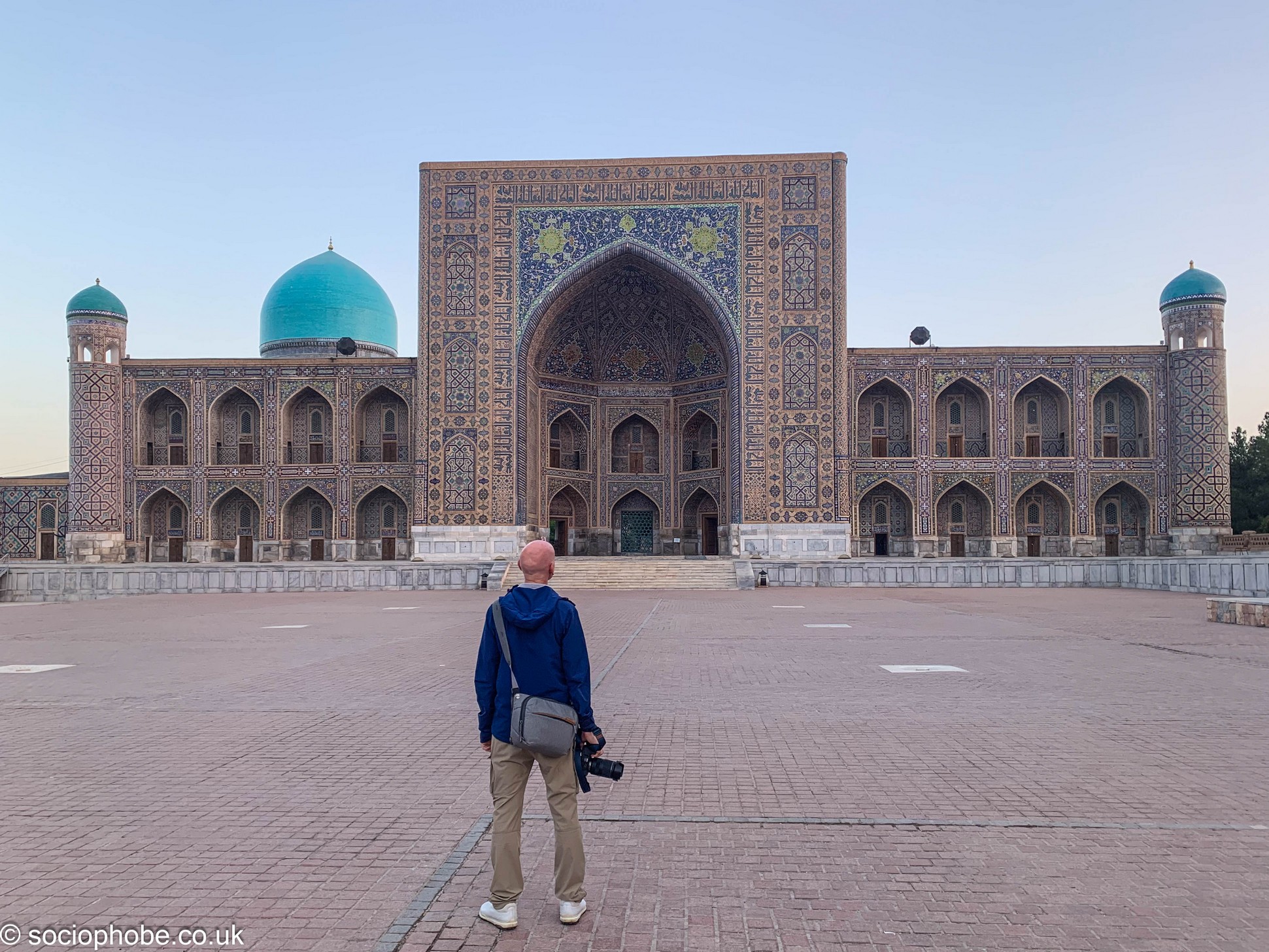
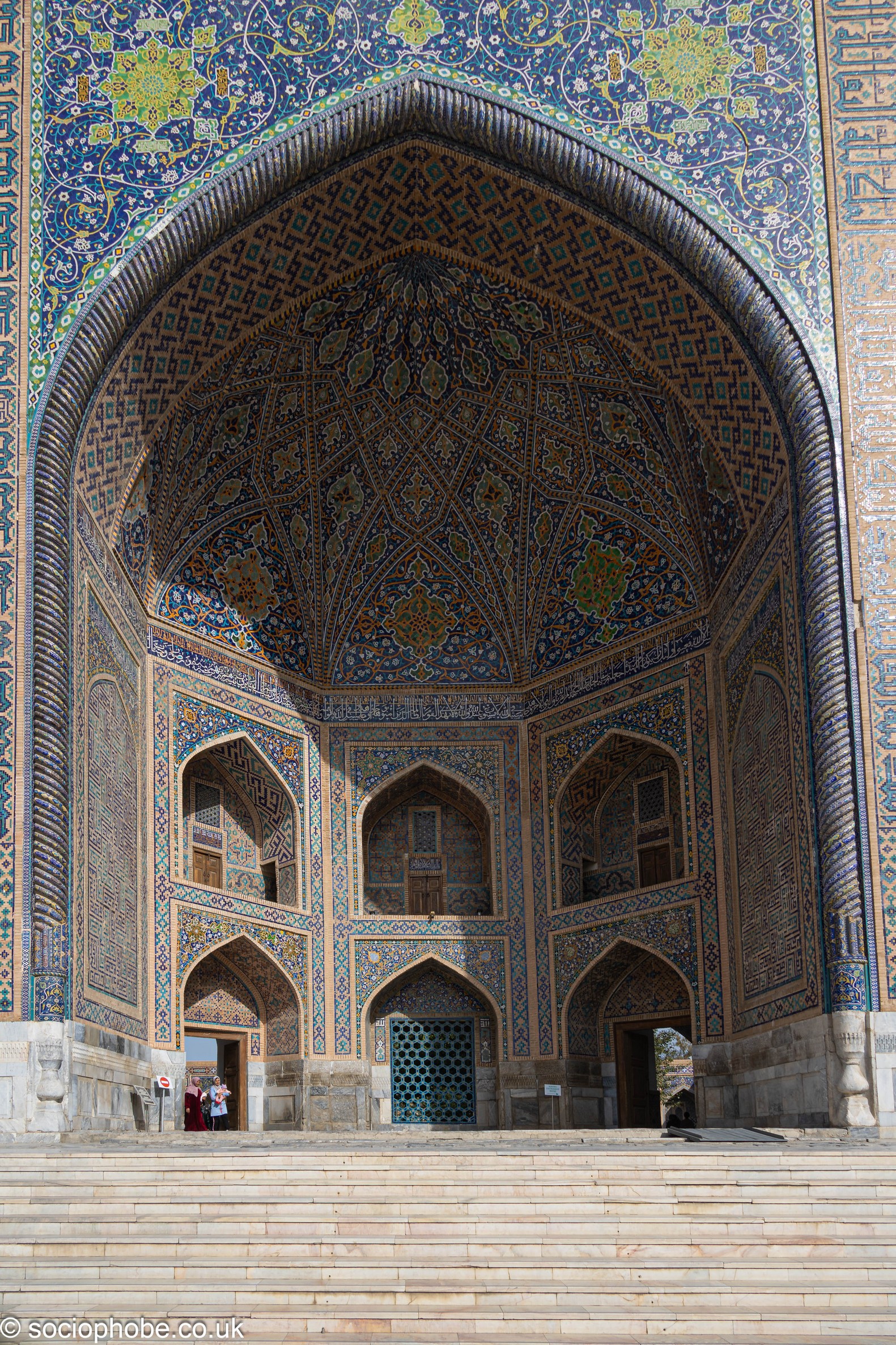
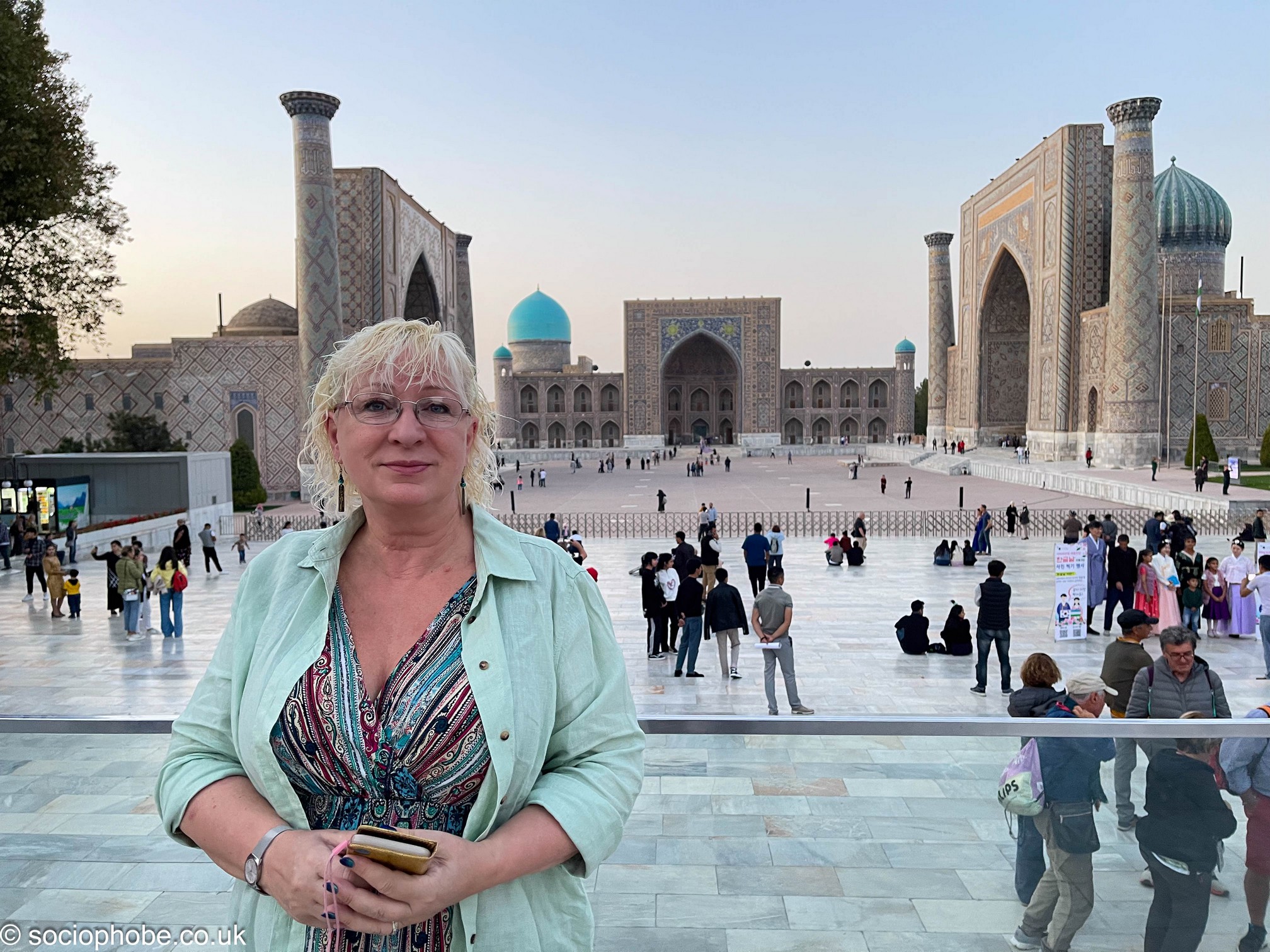
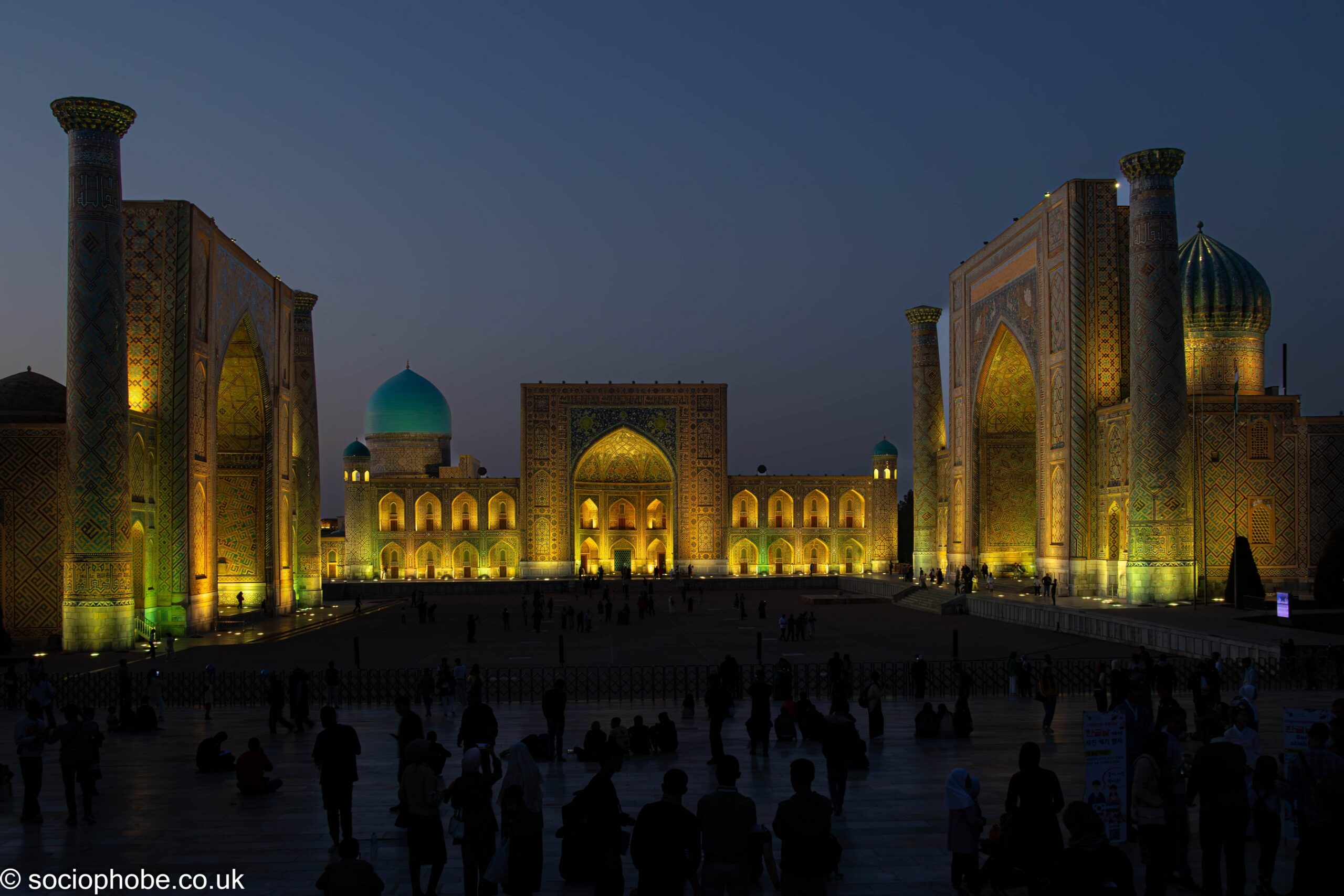
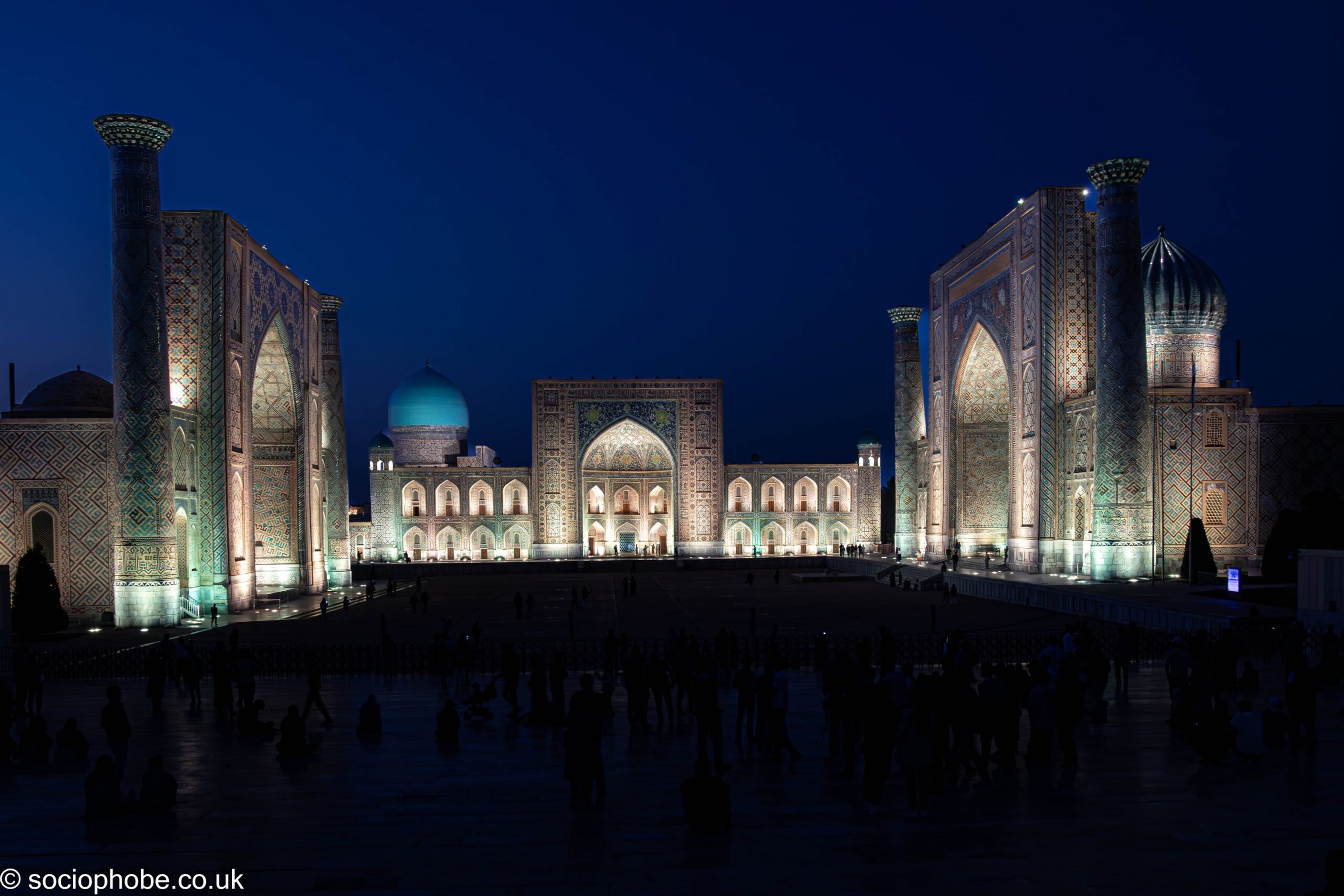
First stop on the tour was … the Registan again, it truly is one of the Highlights Of Uzbekistan so three (four in the end) visits on the tour was justified! We had yet another meander through the site and the sun was higher so the colours were a lot stronger. There were more people but it was by no means crowded and we were able to go onto the first floor in one of the buildings which let us see the internal construction and also gave a different set of views.
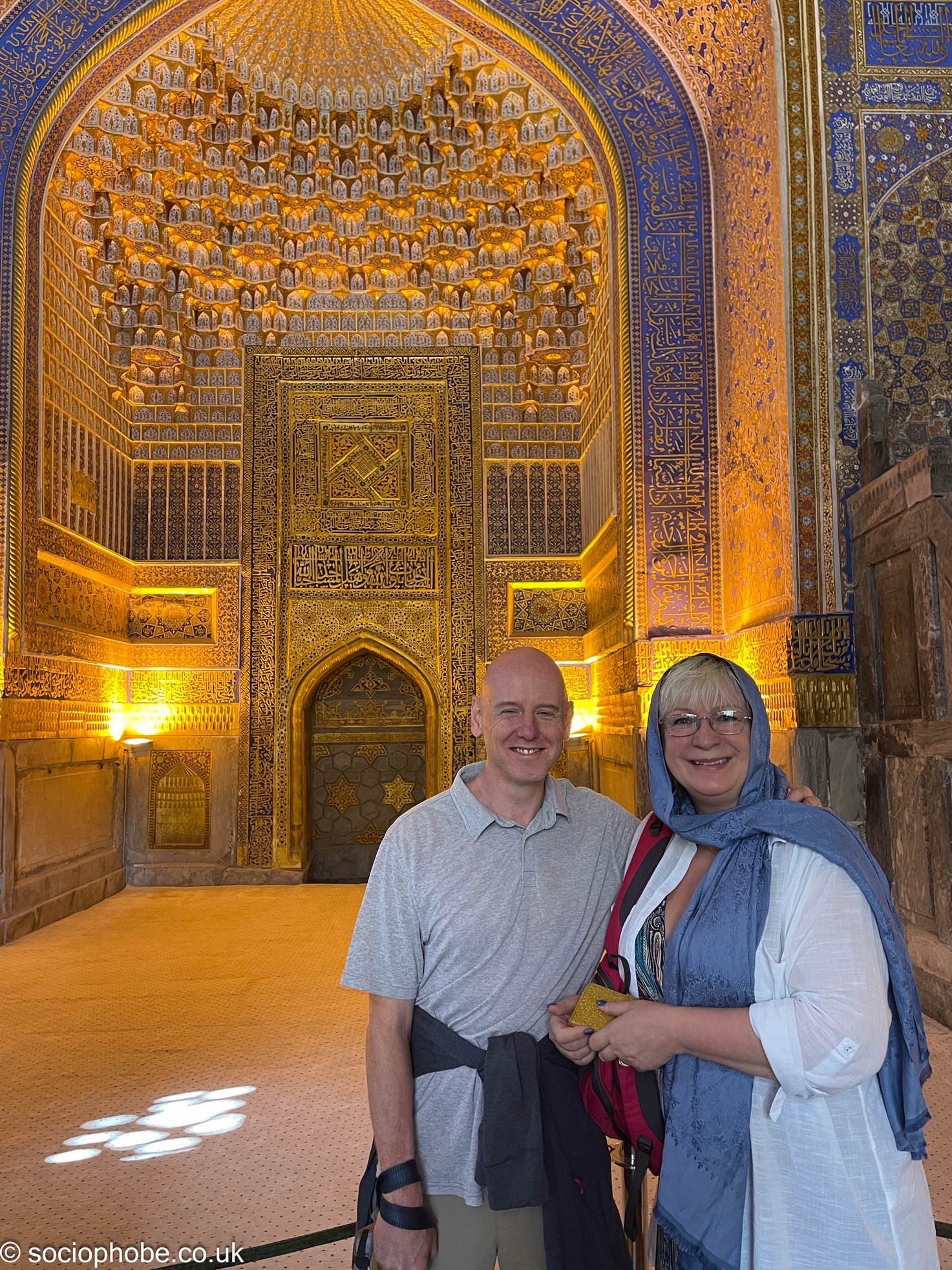
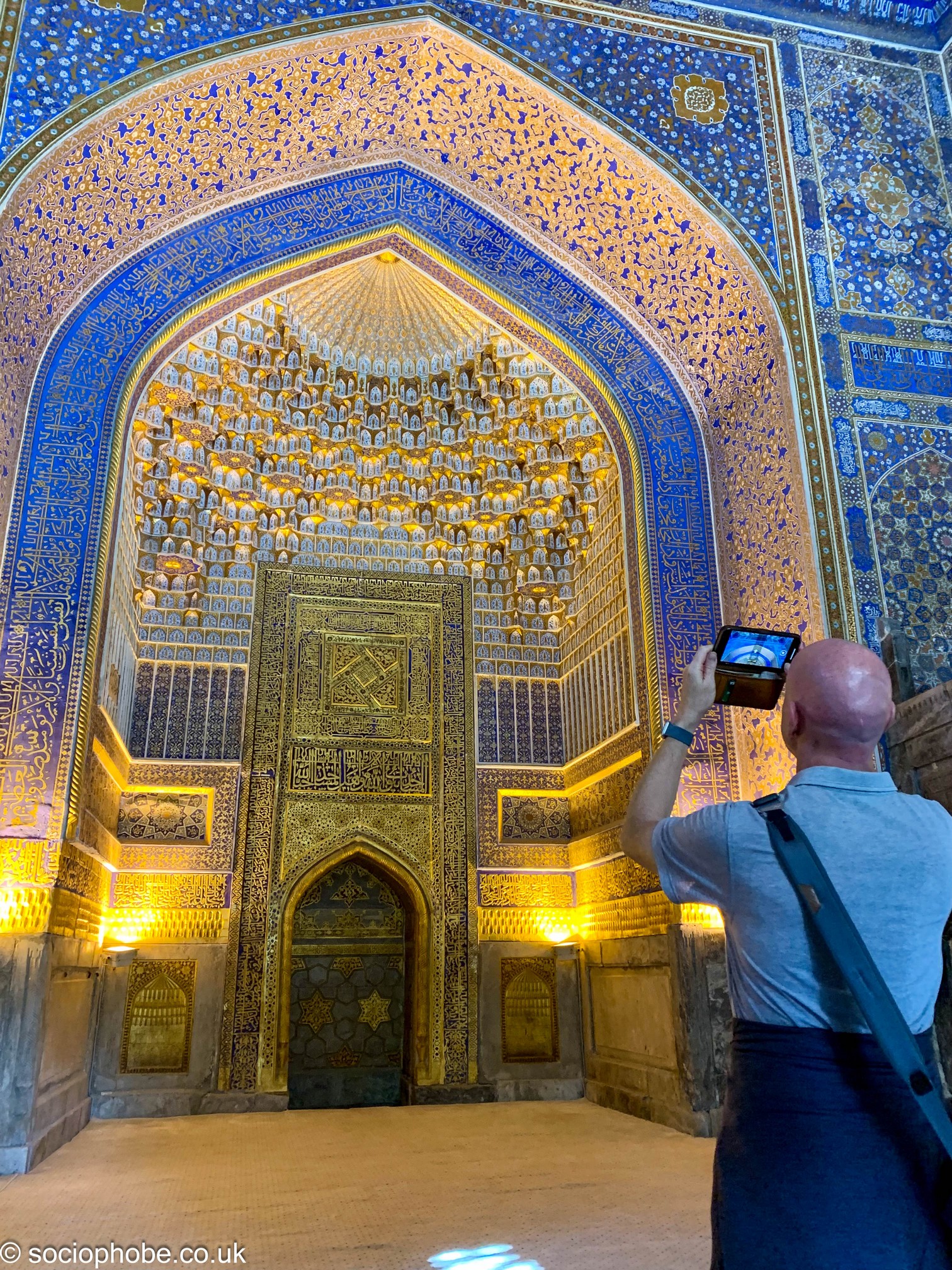
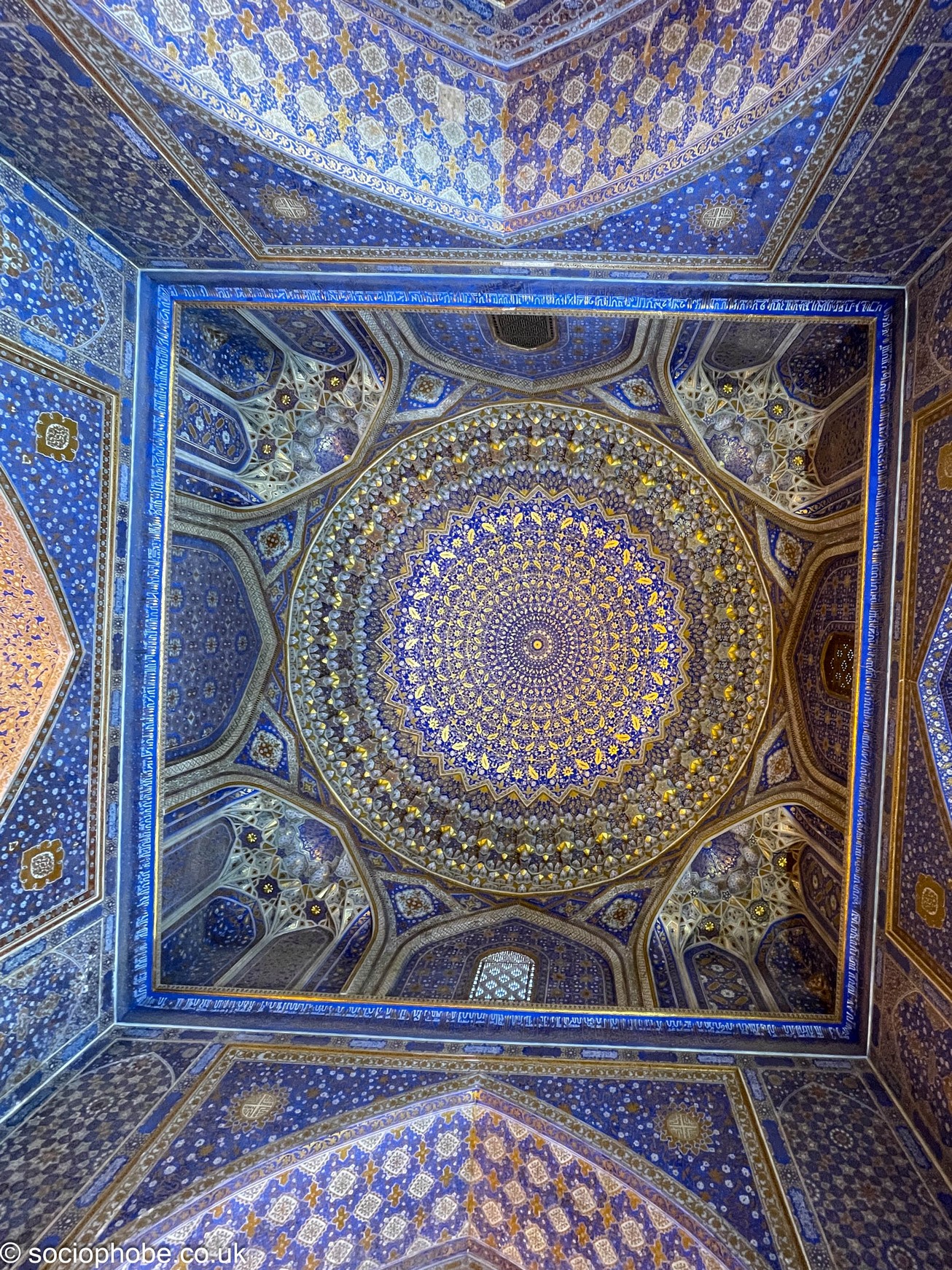
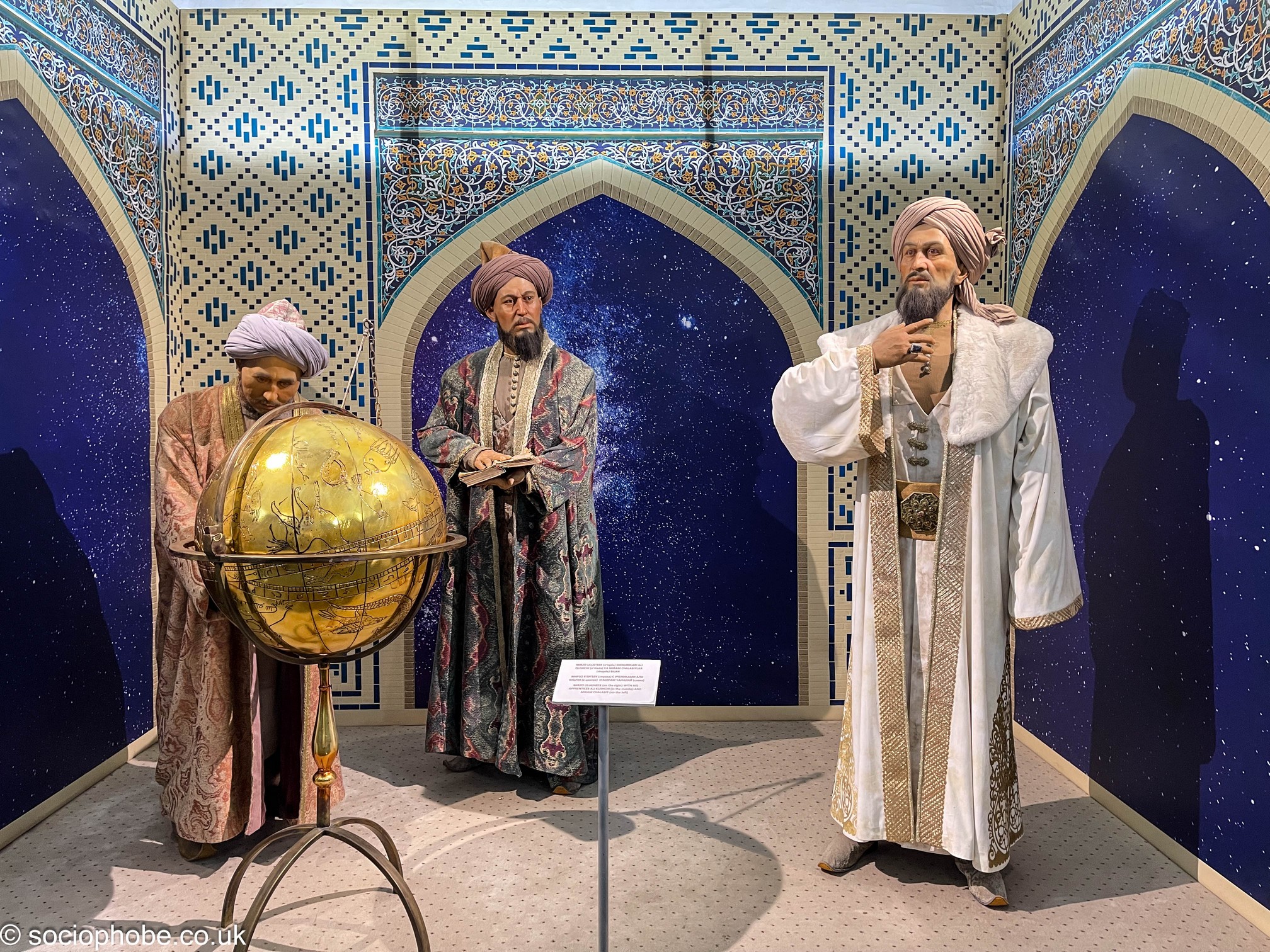
There were also mini museums in some of the rooms which was interesting, learning about the scientific advances made in this period and how they influenced world history. There was also a beautiful mosque with golden interior that hadn’t been open earlier in the Tilya-Kori Madrasah, the newest of the three at just 350 years old.
Bibi Khanum Mosque
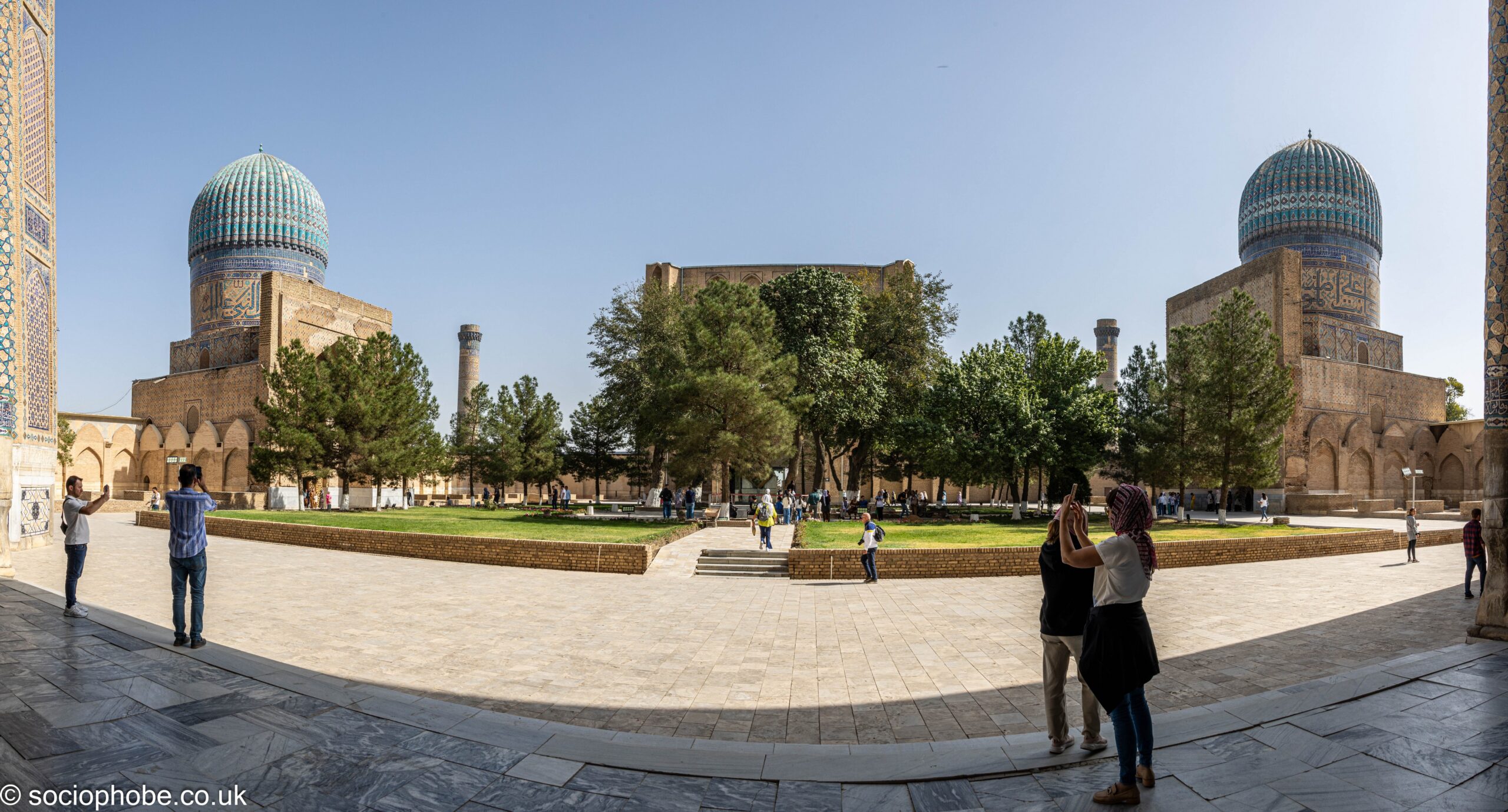
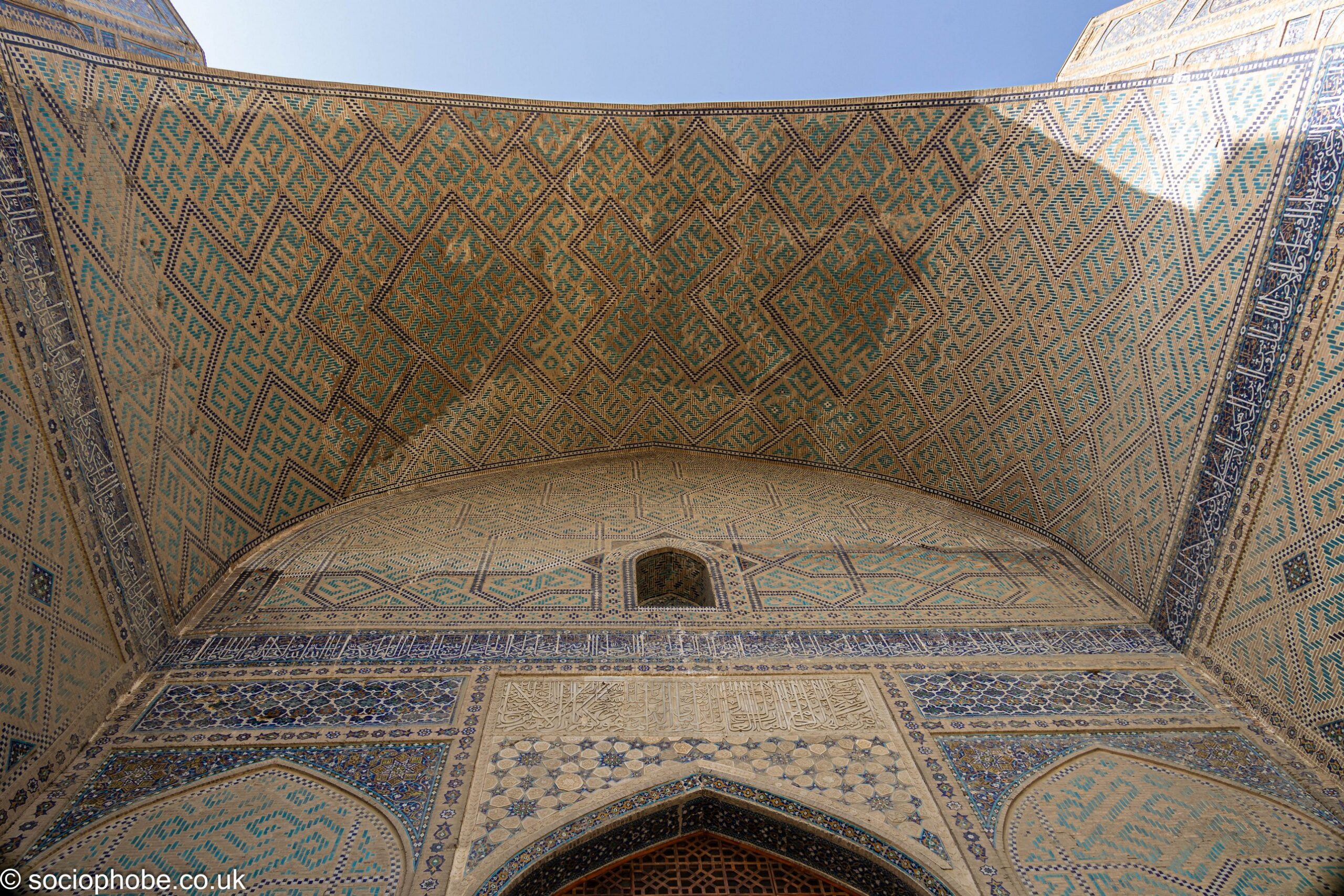
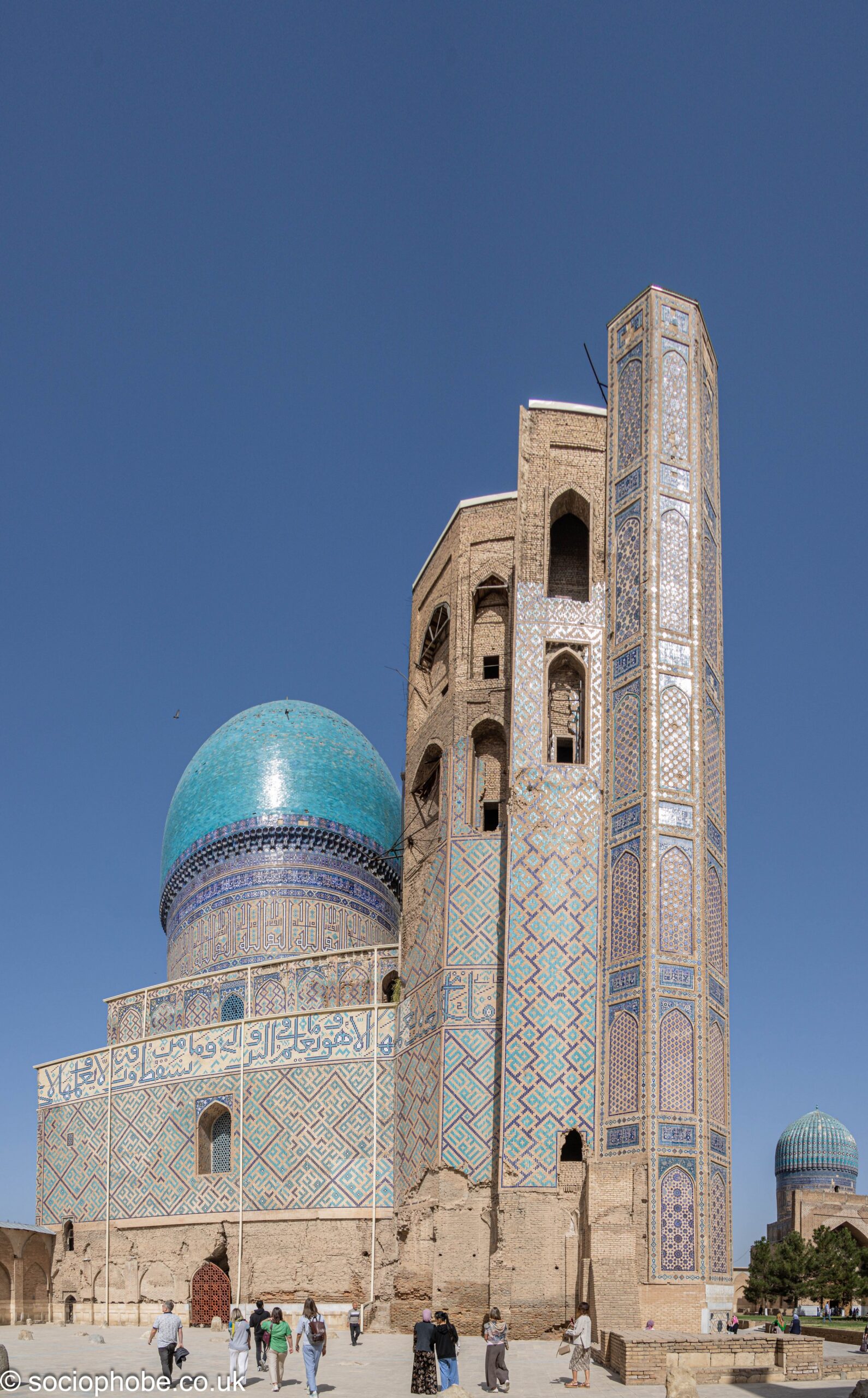
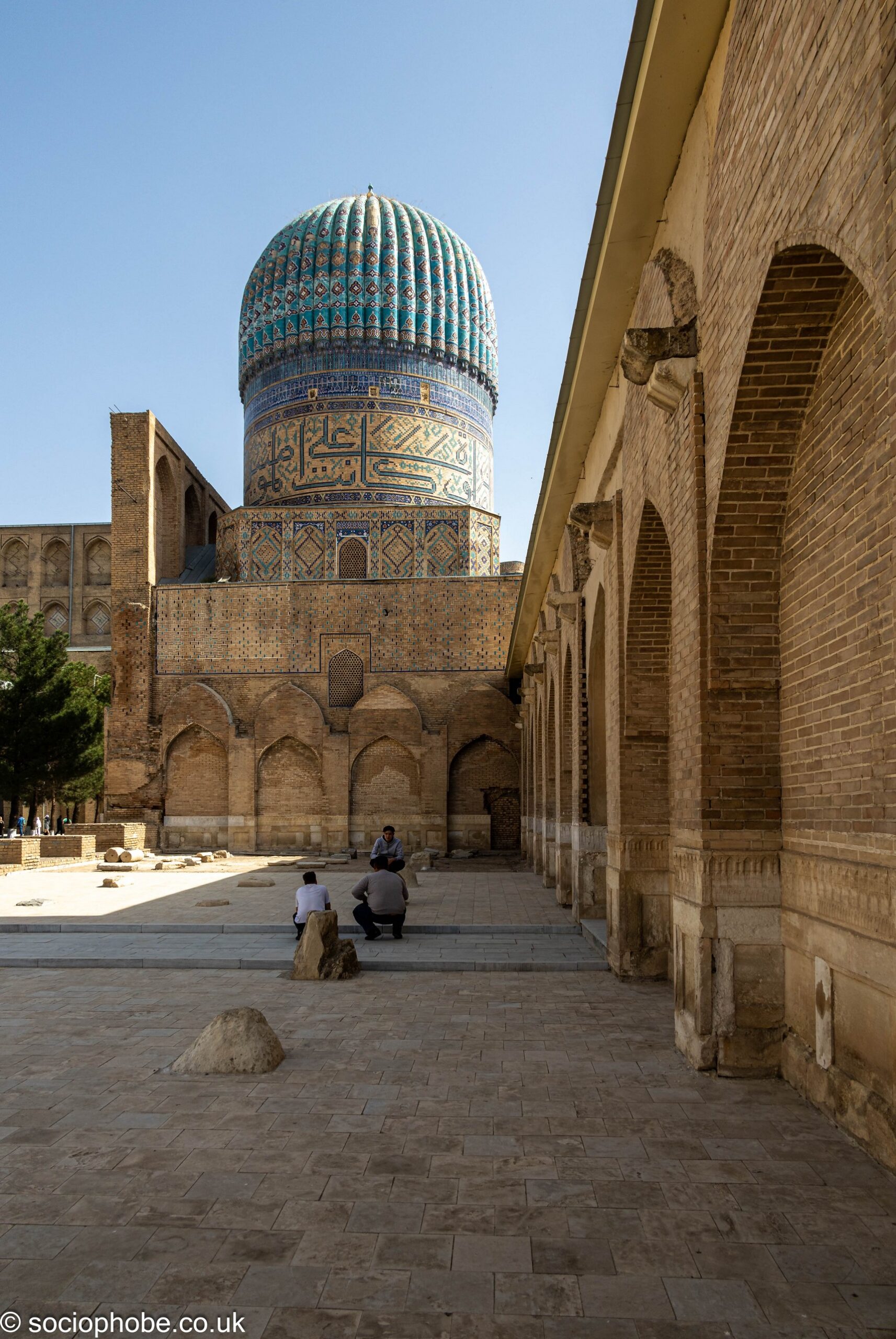
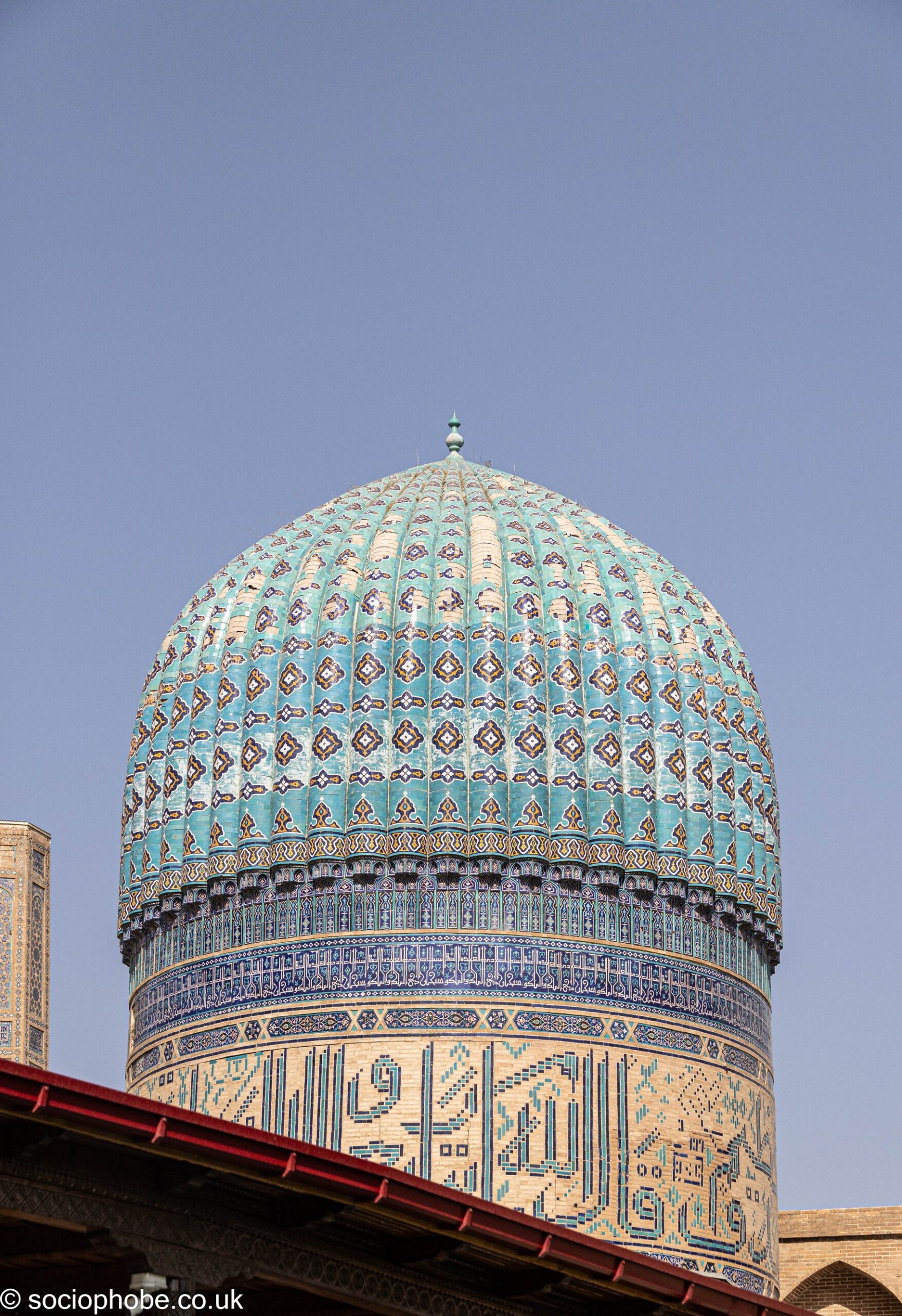
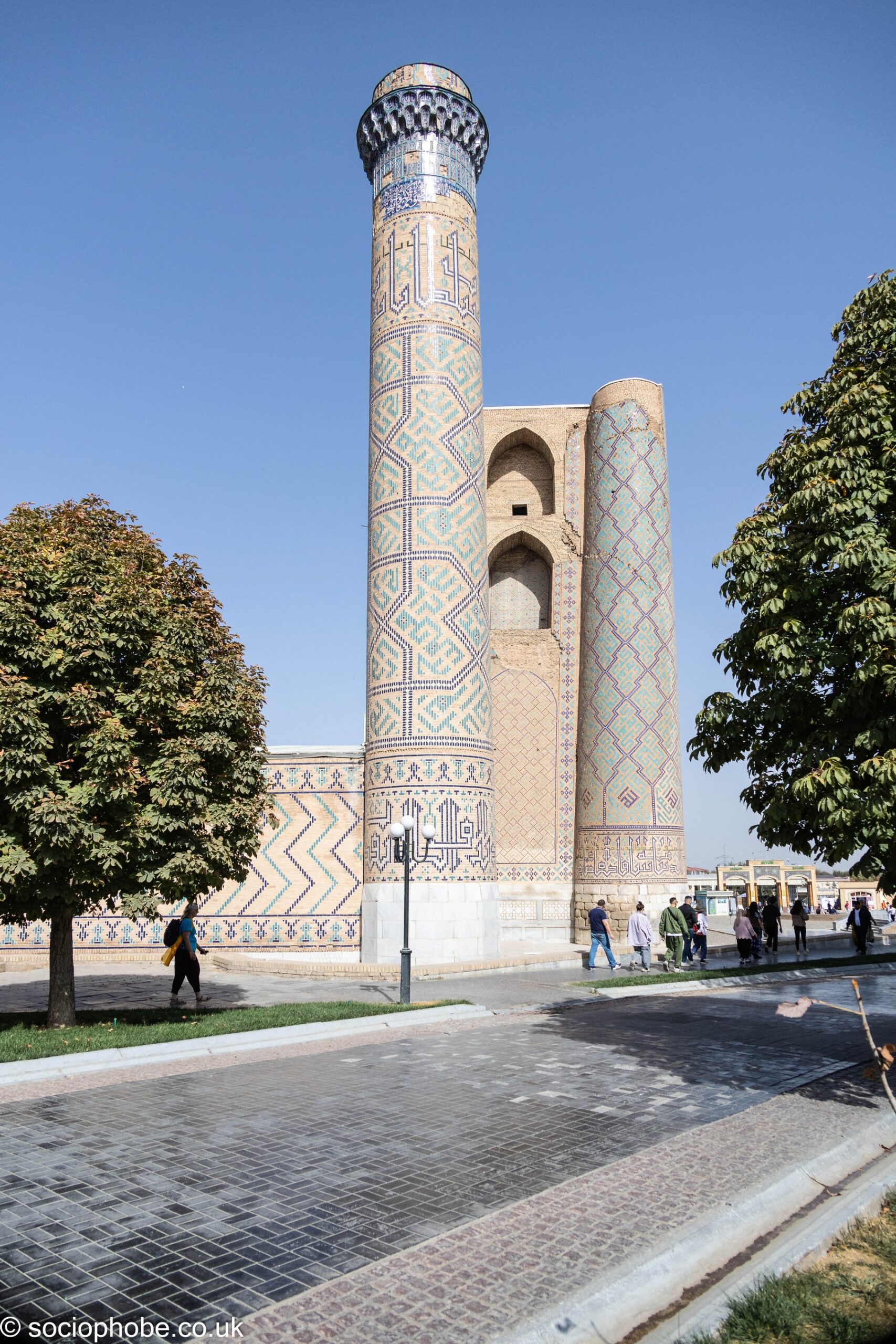
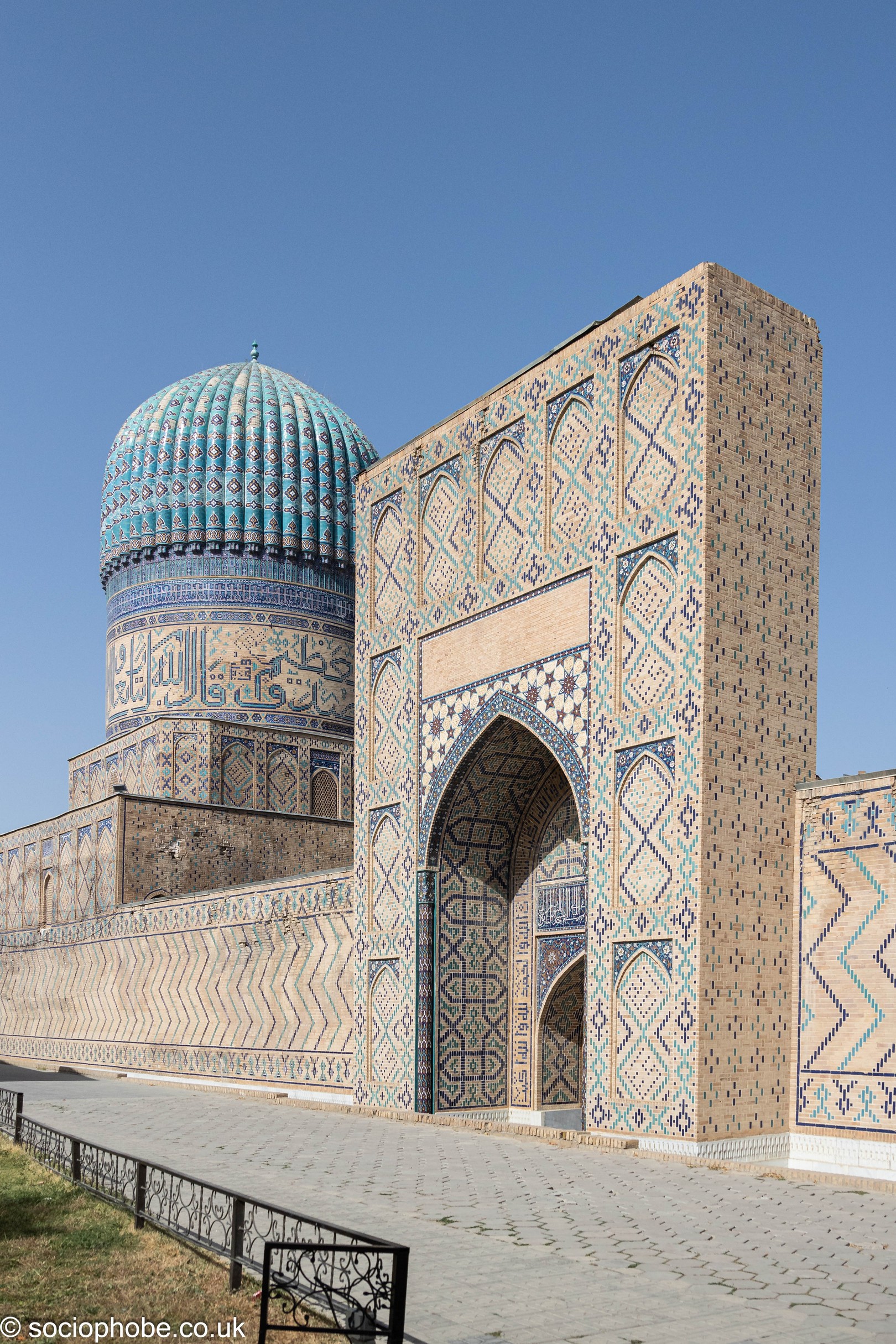
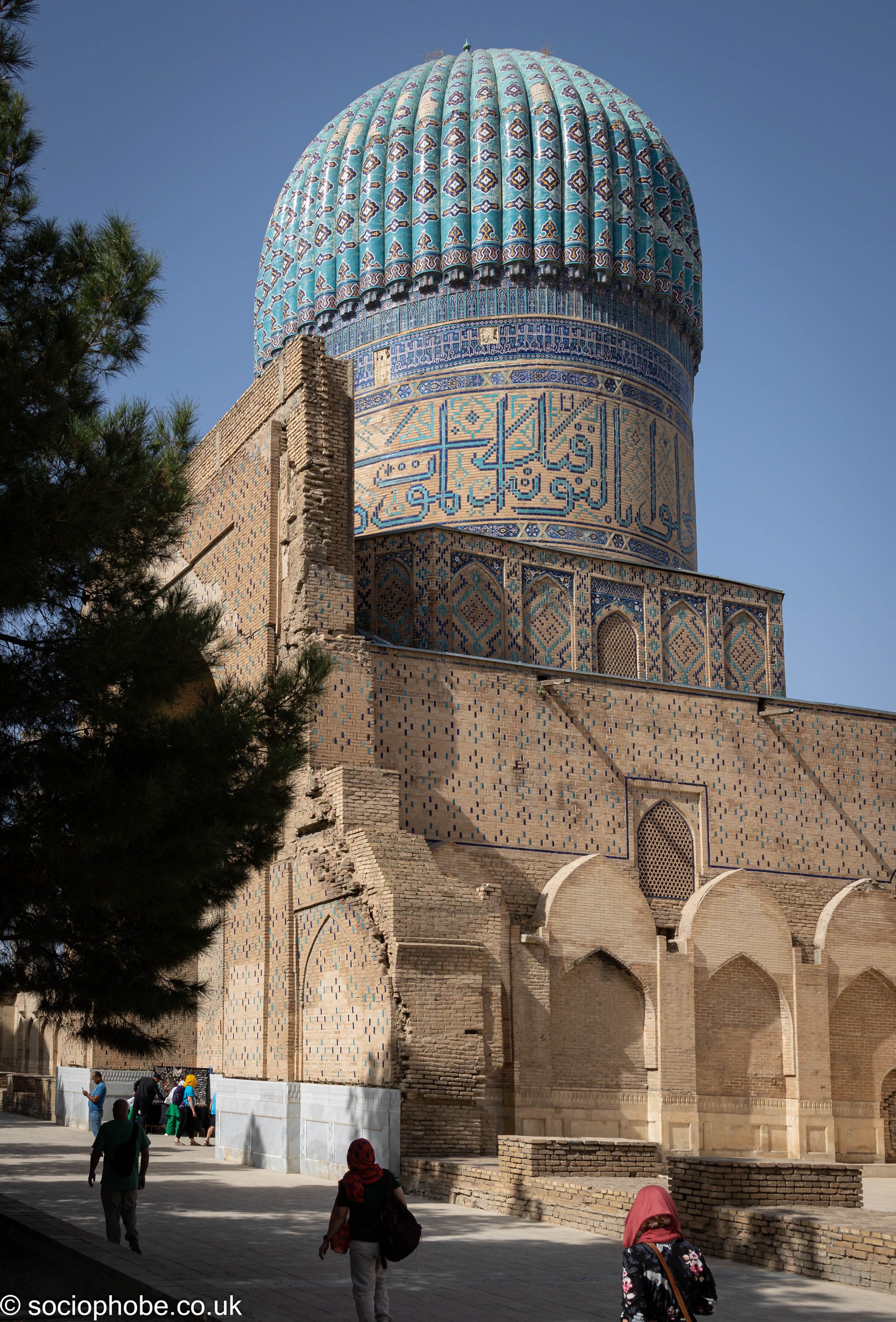
We spent another hour in the complex before walking down a pedestrian avenue to the Bibi Khanum mosque. This was built by Timur to celebrate his victory over the Indians and for a long time was the largest mosque in central Asia. With Samarkand’s loss of status in the sixteenth century the mosque steadily declined due to looting, weather and earthquakes. It was almost entirely rebuilt by the Soviets in the 1970’s, using a mix of reclaimed and new materials.
The mosque was so large it was difficult to photograph in its entirety but it was pleasant to walk around and look at the rooms that hadn’t been restored yet as well as the finished work. It was quite warm by now but instead of a coffee stop we trudged to another bazaar for some reason and from there we took the coach to the observatory.
Ulug Bek Observatory
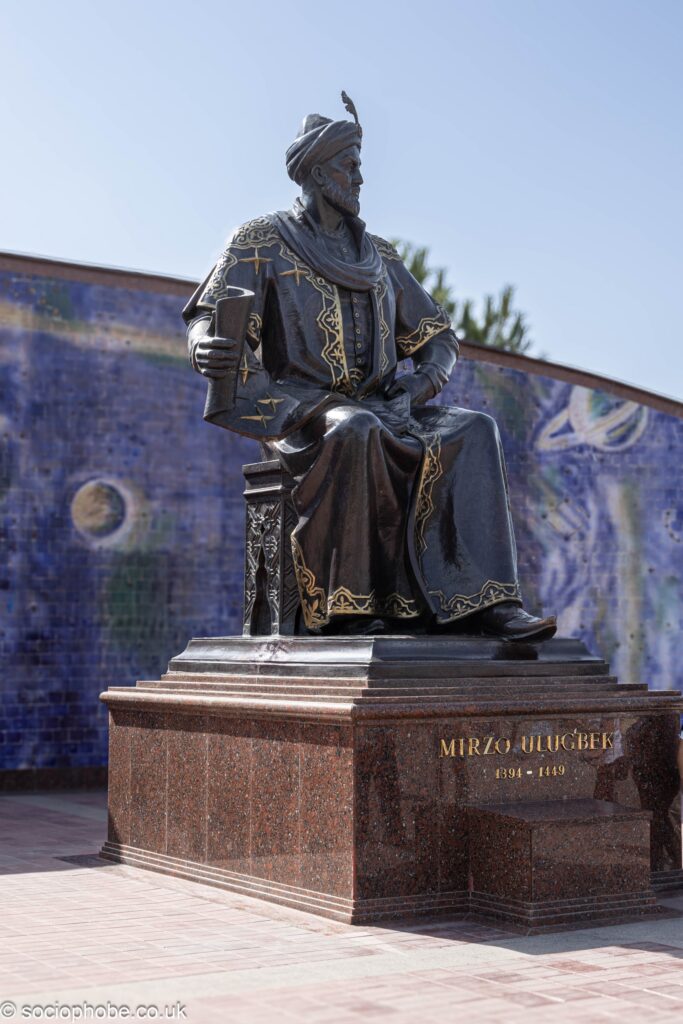
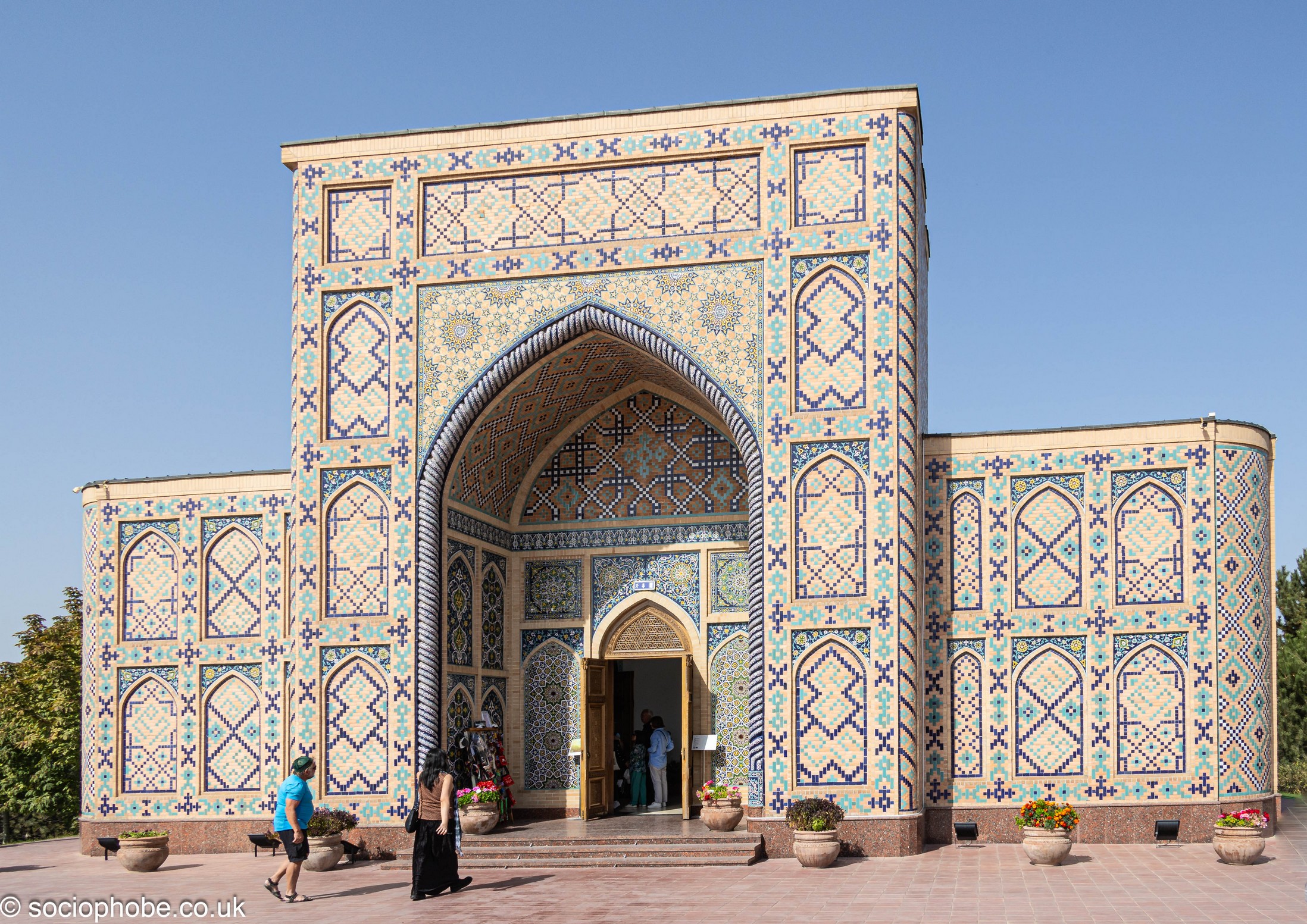
The Ulug Bek Observatory was excavated by the Soviets in the late 1940s I think although nothing remains of it above ground. He was responsible for star charts used to calculate distances between cities as well as improvements in the science of astronomy and mathematics and his calculation of the length of the solar day was only 25 seconds different to ours. His court was very much based around the arts and sciences but this upset religious leaders so they fomented a rebellion against him, led by his son. Ulug Bek was murdered and his library and scientists scattered or destroyed. Religion yet again using faith against facts and trying to stagnate human development.
Shahi Zinda Mausoleum
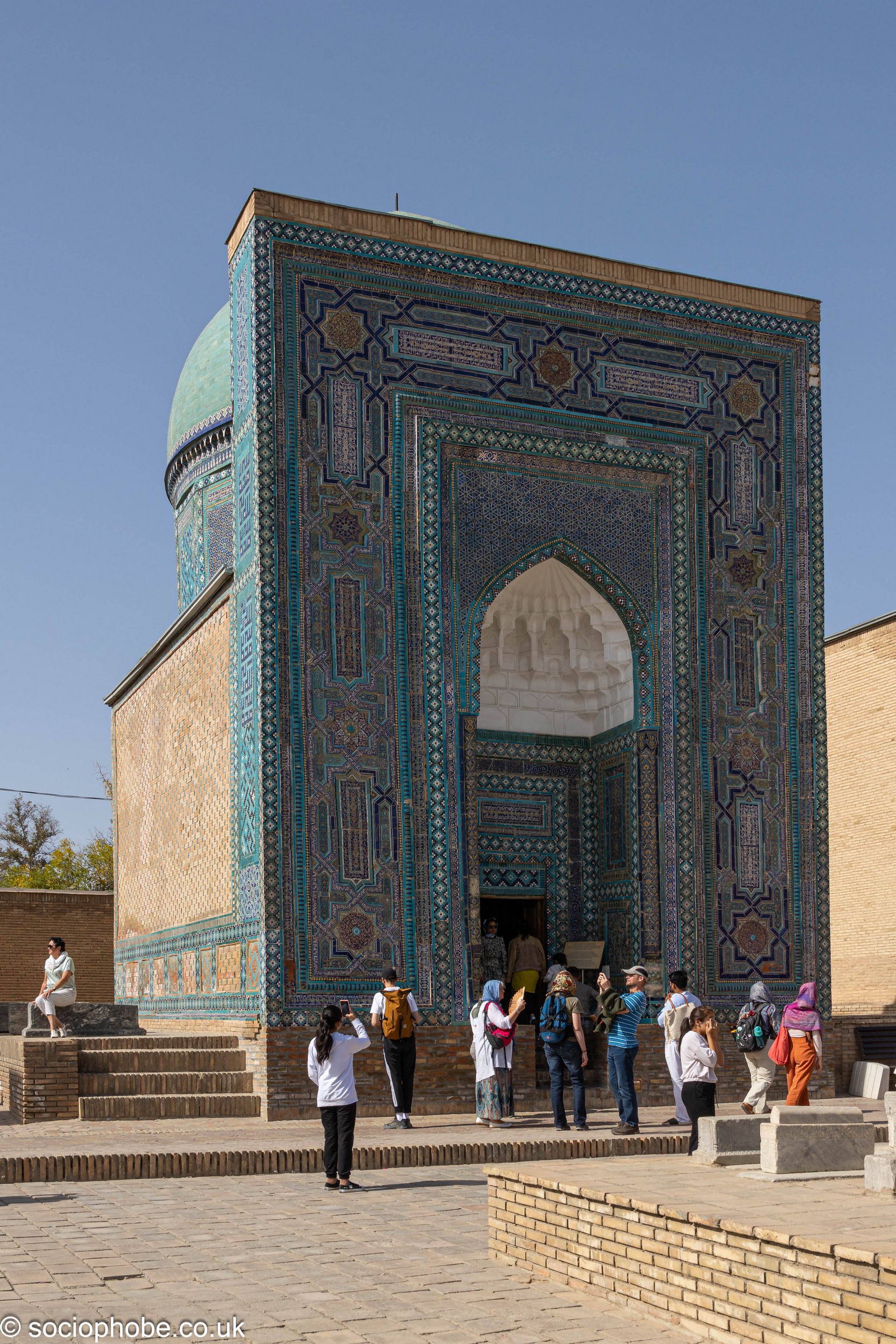
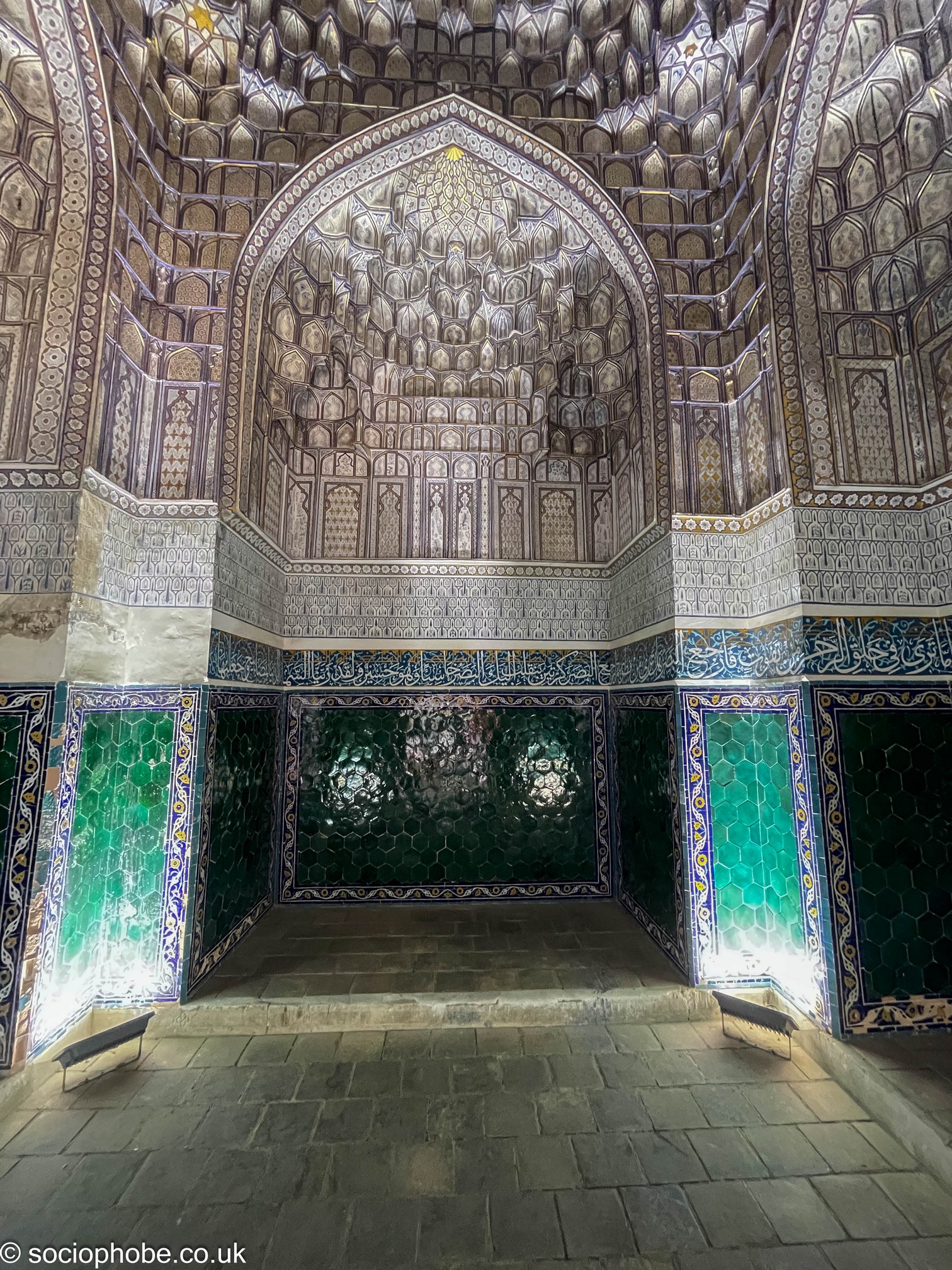
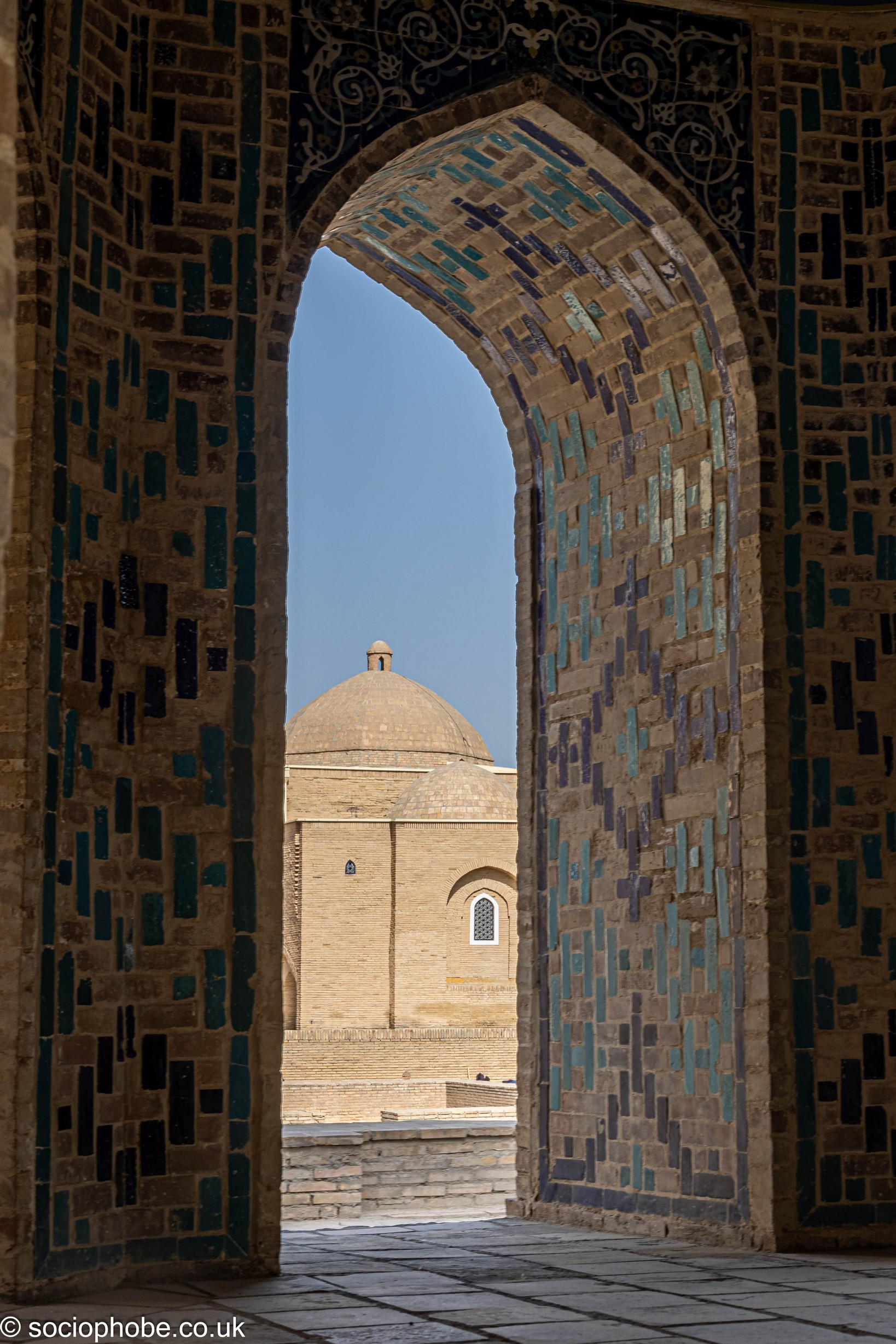
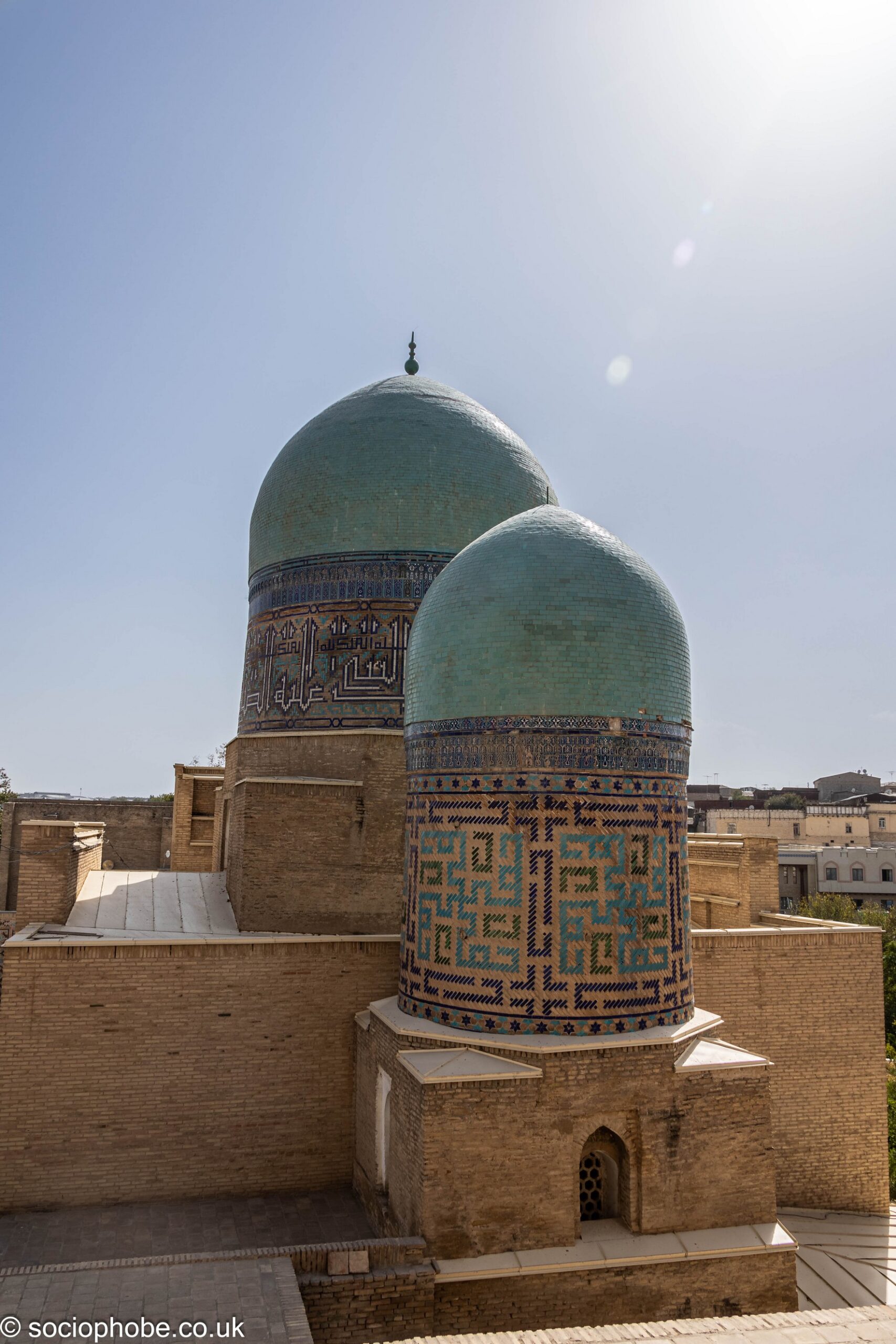
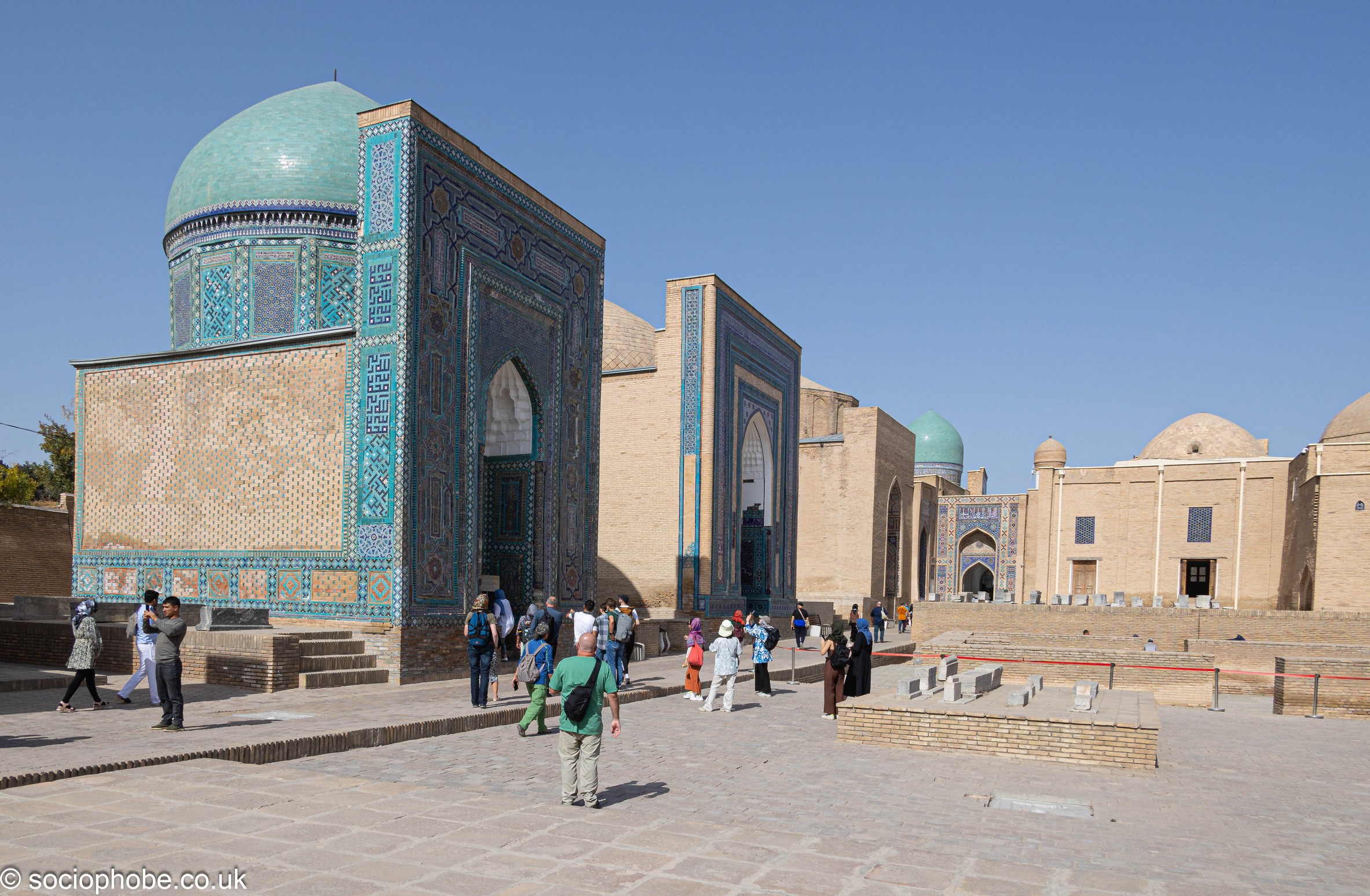
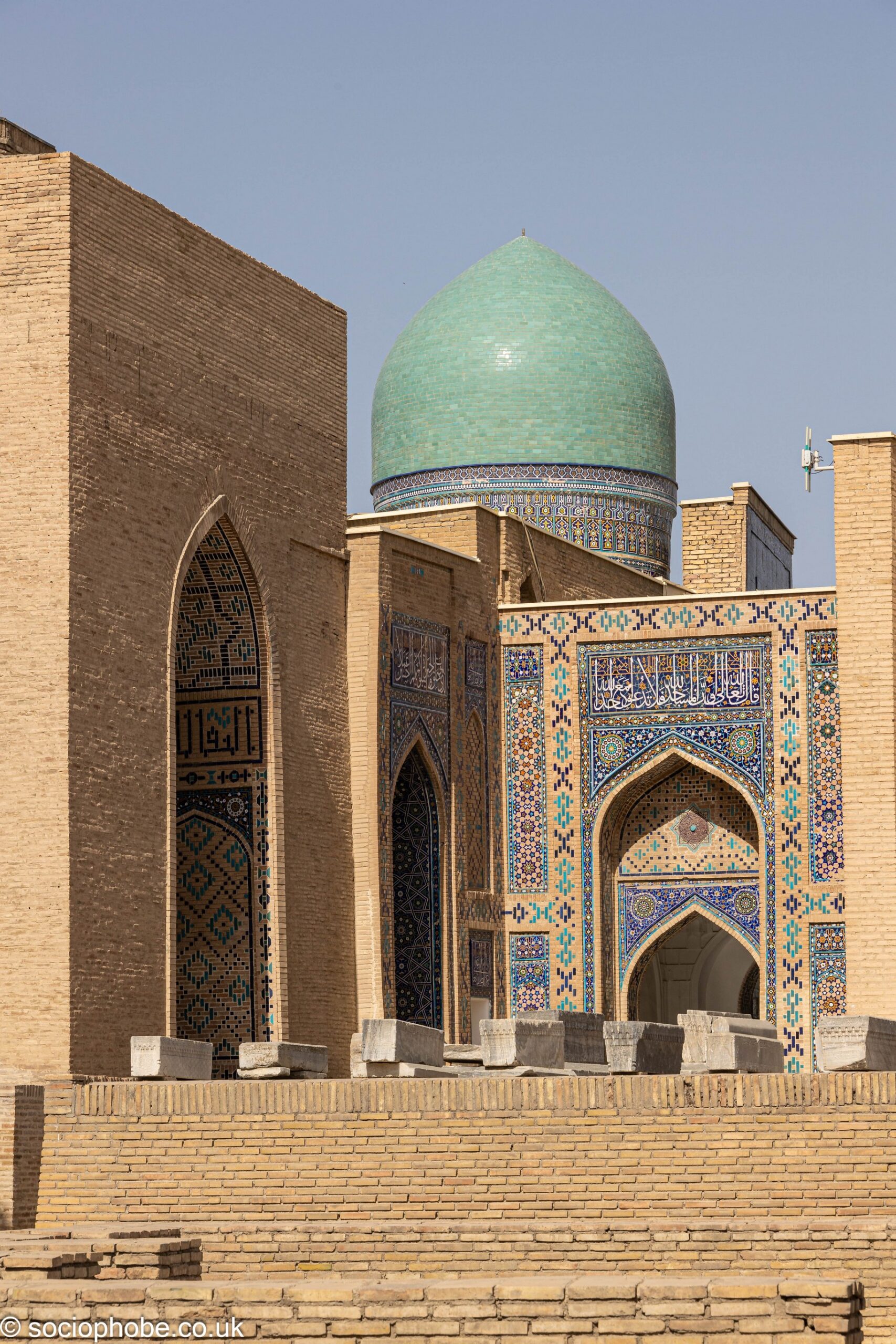
Our final stop – and by now we were all getting rather jaded – was the Shahi Zinda Mausoleum complex. Built in the fifteenth century around the alleged grave of the prophet’s cousin. It was a steep climb with a necropolis on the lower slopes and then mausoleums on the top of the hill.
Some – such as the ones to Timur’s wives or daughters – were beautiful and others were far plainer, often with an unknown person or family interred inside. By now it was the case of more amazing mosaics, more beautiful blue domes, more gorgeous calligraphy, yawn!
Amir Timur Mausoleum
We took the coach back to the hotel, refreshed and footled for an hour and then I dragged Deb out to see Timur’s Mausoleum, about 15 minutes walk away through a pleasant park. The park had lots of information on the gardens that Timur had built around the city as well as two huge bronze tigers and some nice fountains.
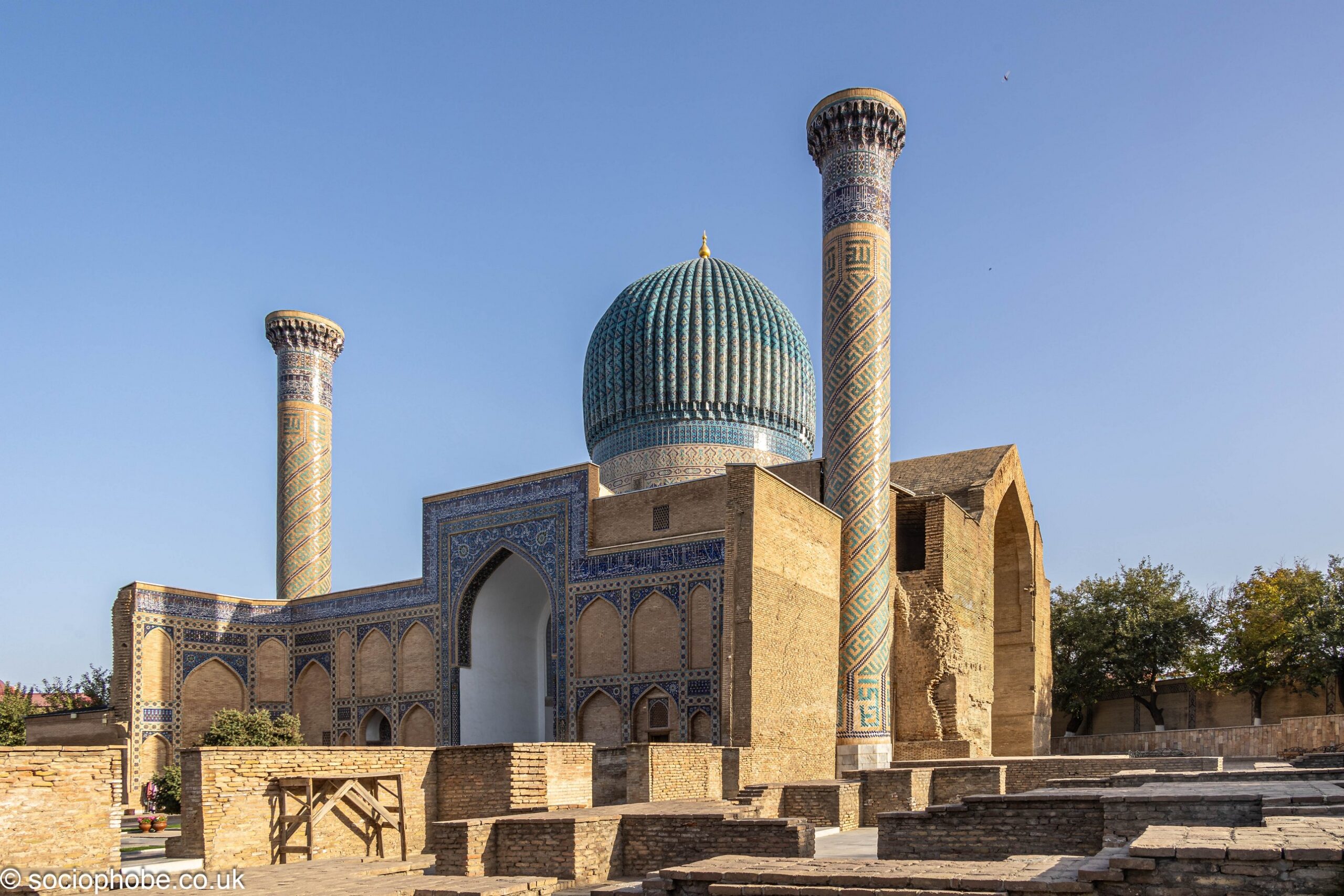
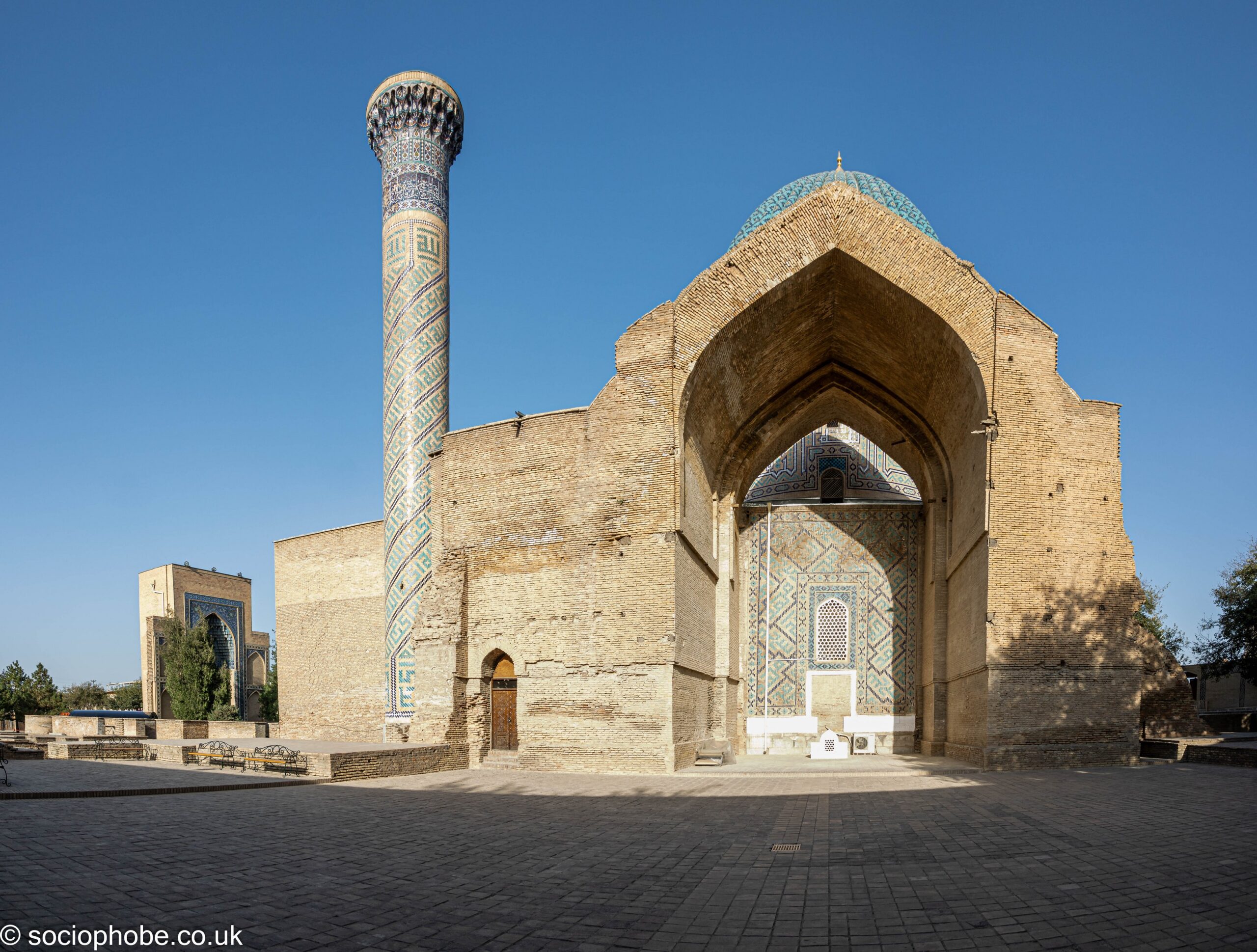
The Mausoleum was very similar to all the other Timurid buildings we’d seen – no shock there – but we had a very polite greeting from the security guard and he welcomed us to his country which was lovely. It’s unusual to go somewhere that has so few Western tourists that when they do arrive they are a novelty. Especially in the context of Hamas’ insane attacks on Israel this weekend that have killed 600 people.
The interior of the mausoleum was beautifully decorated in gold that seemed much less gaudy than the gold in European buildings, maybe because the Islamic blue tones it down compared to the royal red in Europe.
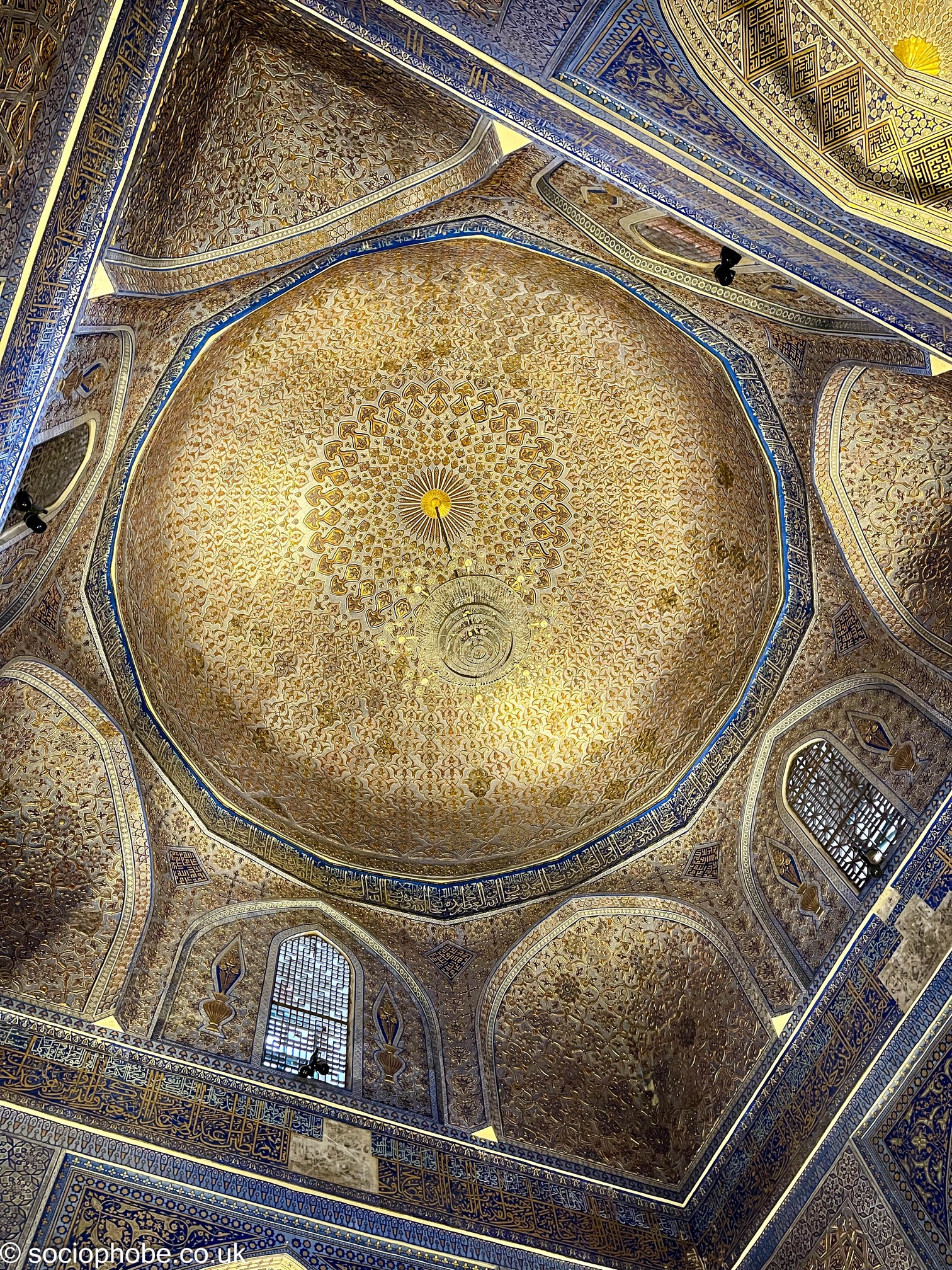
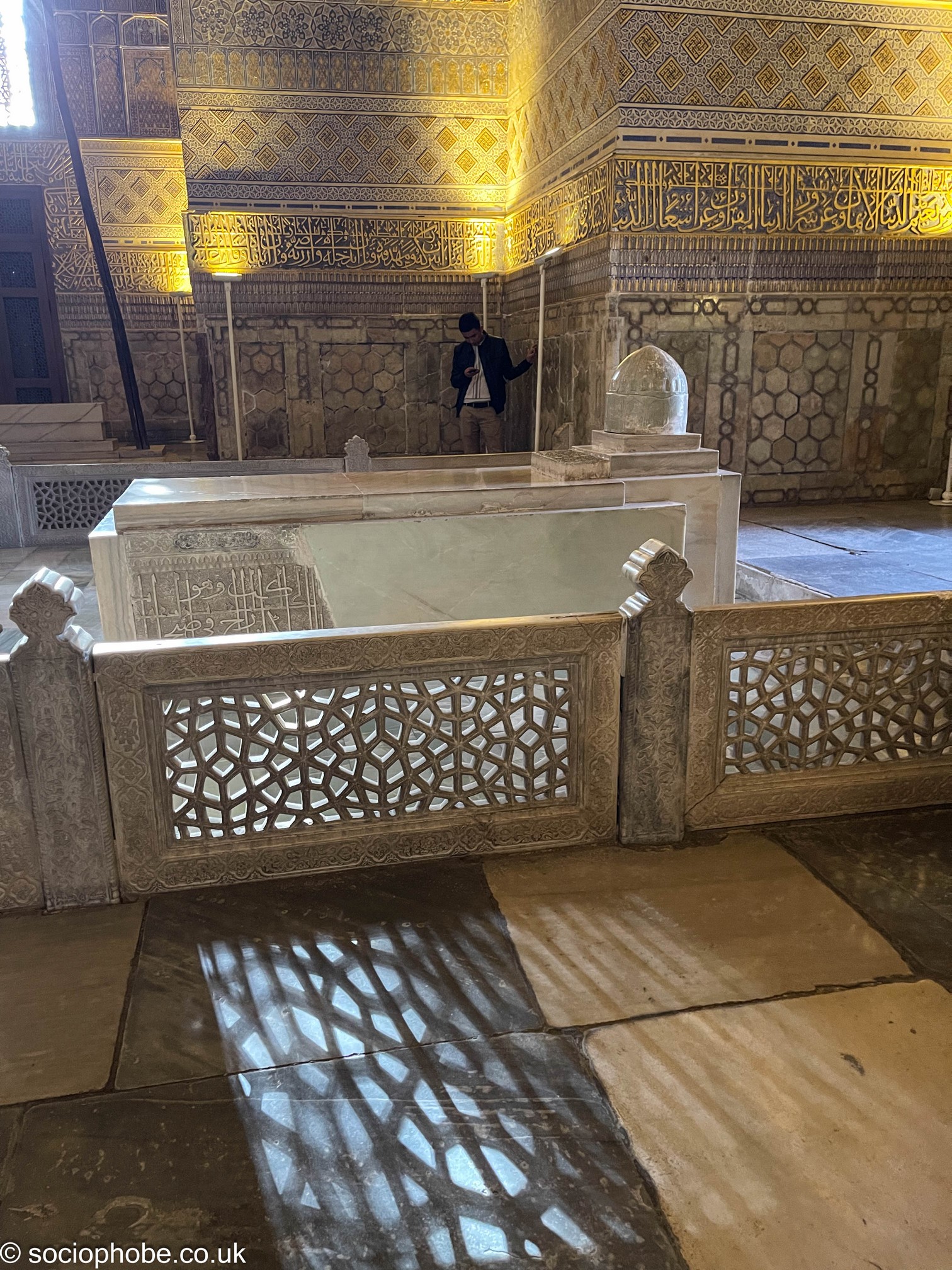
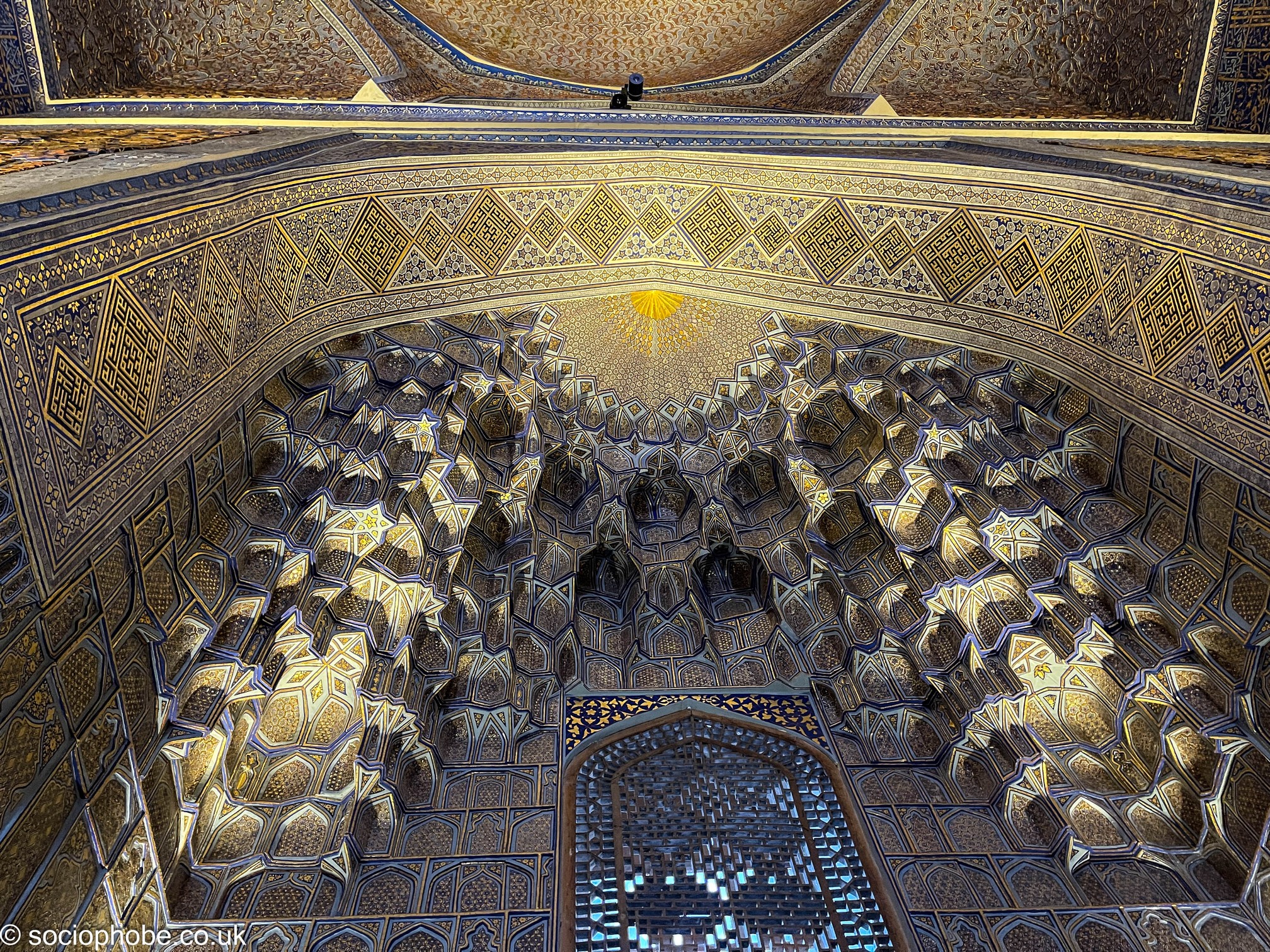
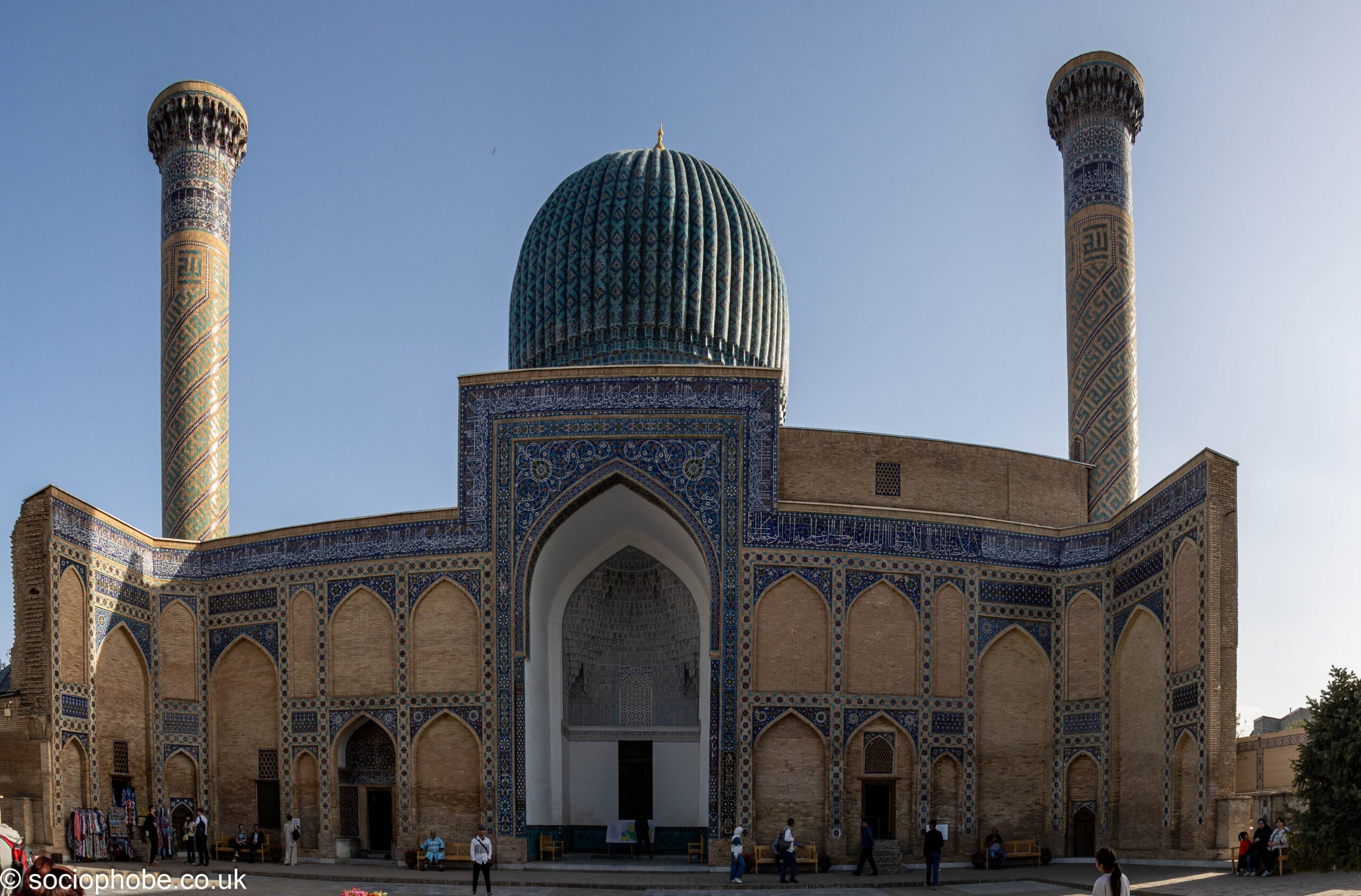
We came back to the hotel and Deb had a shower while I did notes and then I walked back to the Registan (3rd time) to watch the sunset. When I arrived it was pretty empty of people but the noise of the birds in the nearby trees was amazing! Deb then joined me and we stayed there for about 45 minutes watching the sky slowly darken and then the building lights get switched on. It was a wonderful evening and probably rivals sunrise over Palmyra for my best holiday experiences.
We walked the short distance to the restaurant Deb had chosen for the evening – Registan Restaurant – where we’d had coffee earlier. There was one lady there that spoke English and she was a real character. I had vegetable dumplings and Deb had some kind of stew and then we had some baklava style desserts, all delivered with panache by our server. We even had a drink too – our first of the holiday – and the whole lot came to less than £30.
Tomorrow we’re off to some mountains and then a yurt camp. Very mixed feelings about that but it’s only one night. I had a shower and then packed ready for the morning after doing some research on night photography if it is clear skies in the desert tomorrow night.
Driving through the city the next morning, it appears that the smartness and cleanness may be limited to Tashkent, or possibly even the district of Tashkent (or maybe just Uzbeks as Tajiks form the majority in Samarkand) we stayed in as there is quite a lot of litter in Samarkand and the dress code is far more casual. The people are still unfailingly polite and eager to communicate which is really lovely.
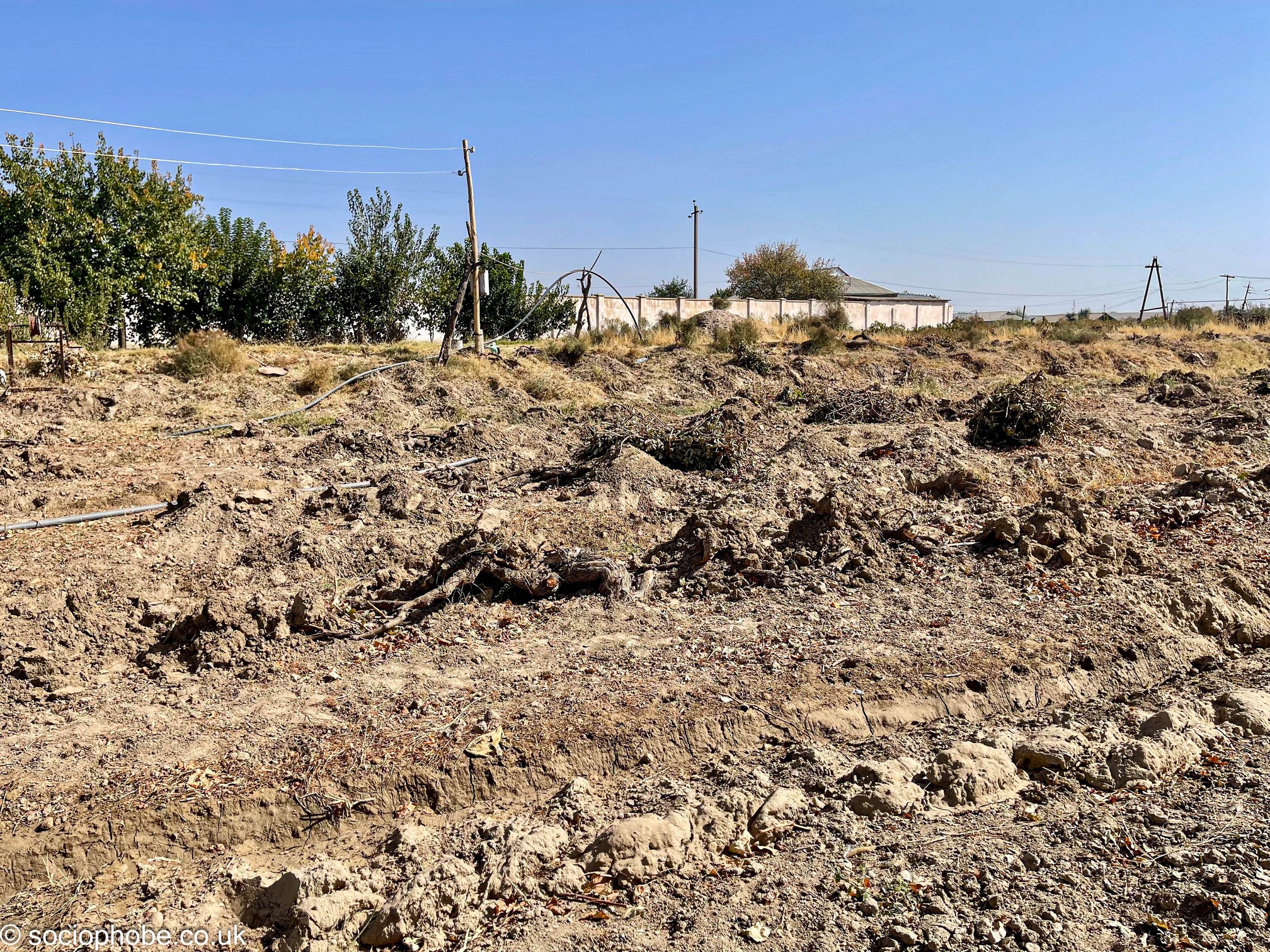
Some of the front gardens in the agricultural areas are very pretty with lots of marigolds, geraniums and roses. Most people just seem to leave their land barren though with just grasses or weeds and mud. The houses with any pride in their appearance are few and far between and most are unrendered breeze blocks. It seems strange they aren’t better built considering the winters here but possibly because gas is so cheap they just have the heating on all the time? It is definitely a very poor country compared to Europe, despite some obscene individual wealth cough nepotism and corruption cough.
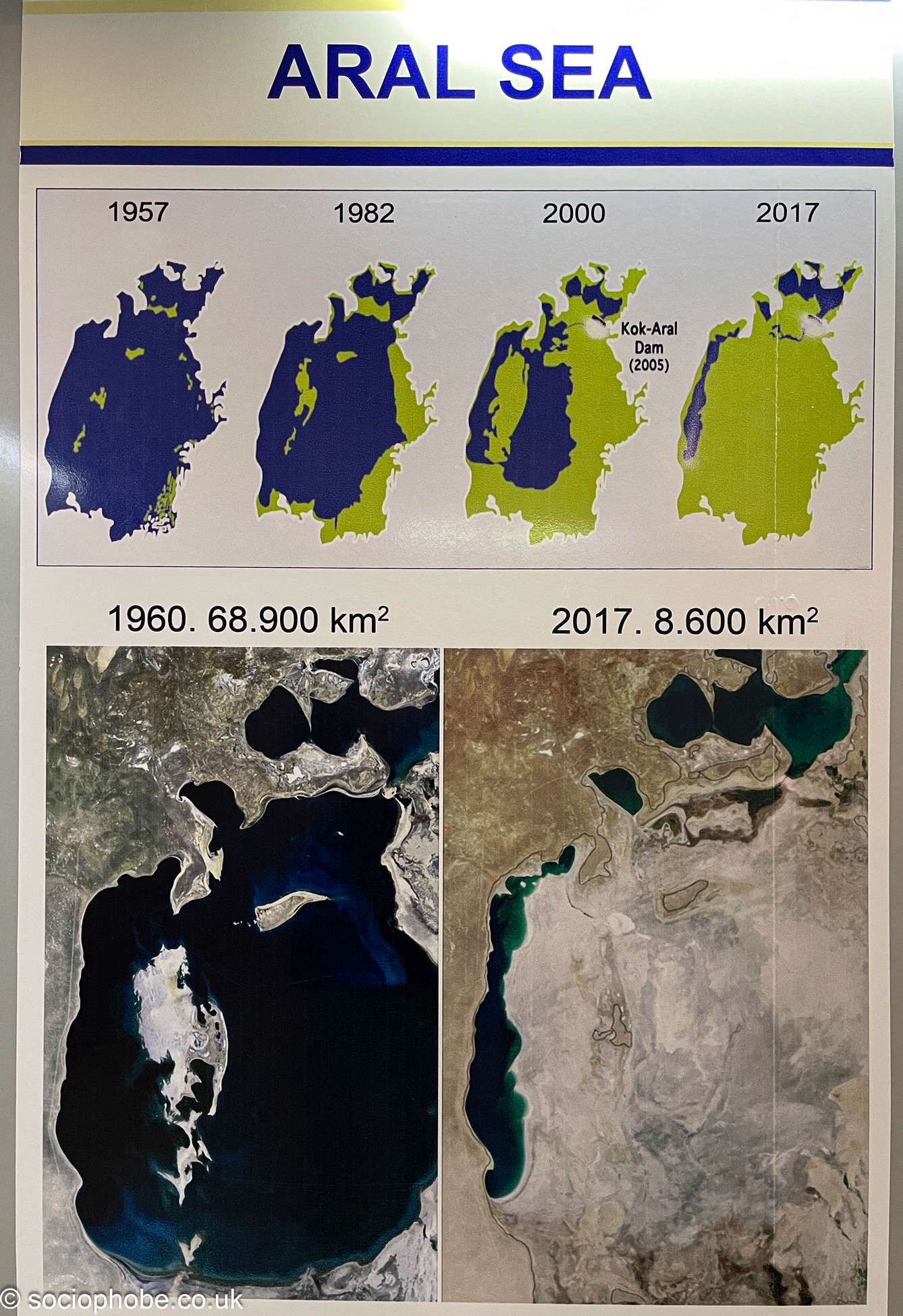
There is definitely no visible sense of environmentalism with almost no solar power (we did see one solar farm just outside Bukhara on the 10th), no water management, heavily polluted cities, no wind power despite the constant steppe breeze and the destruction of the Aral Sea.
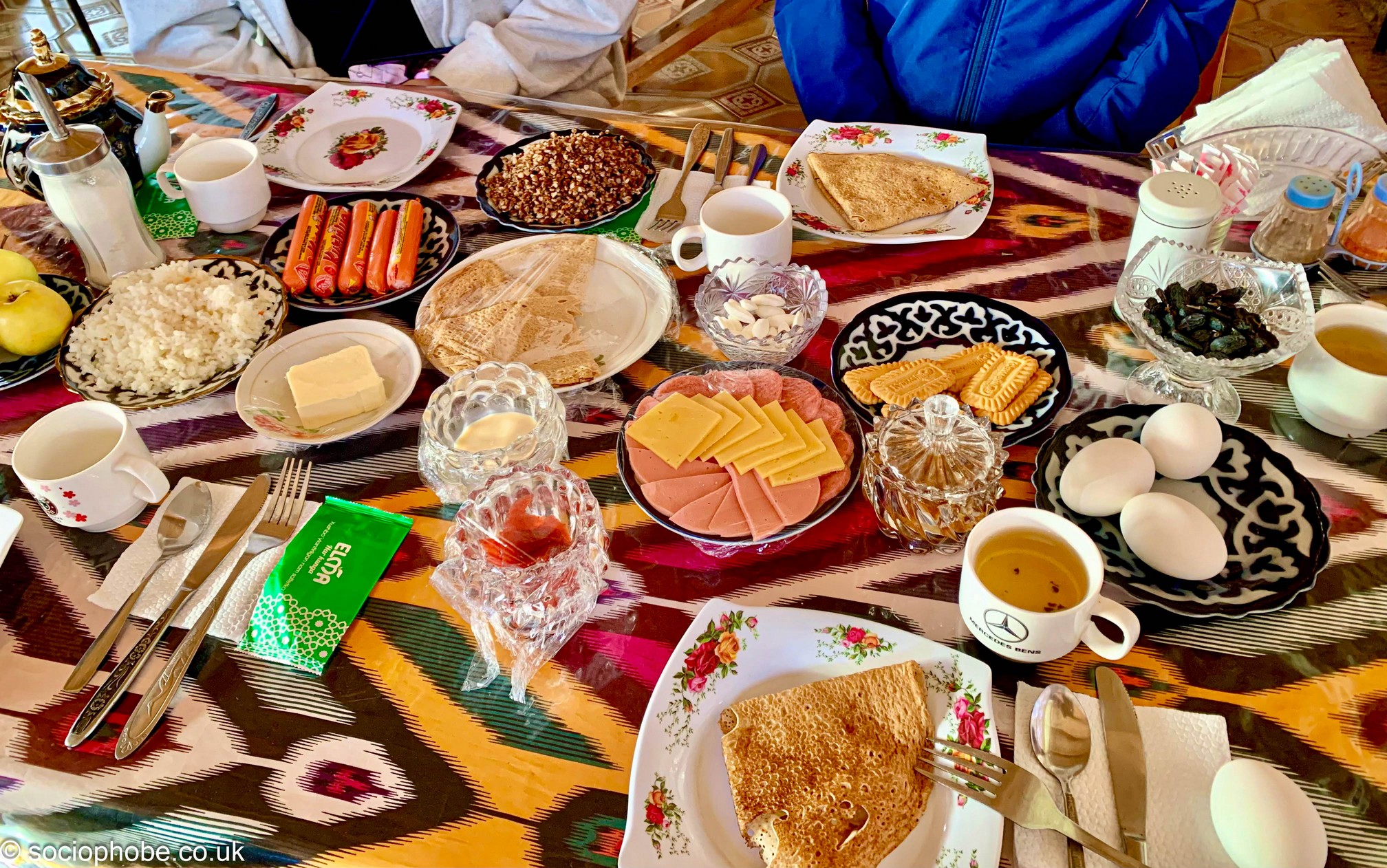
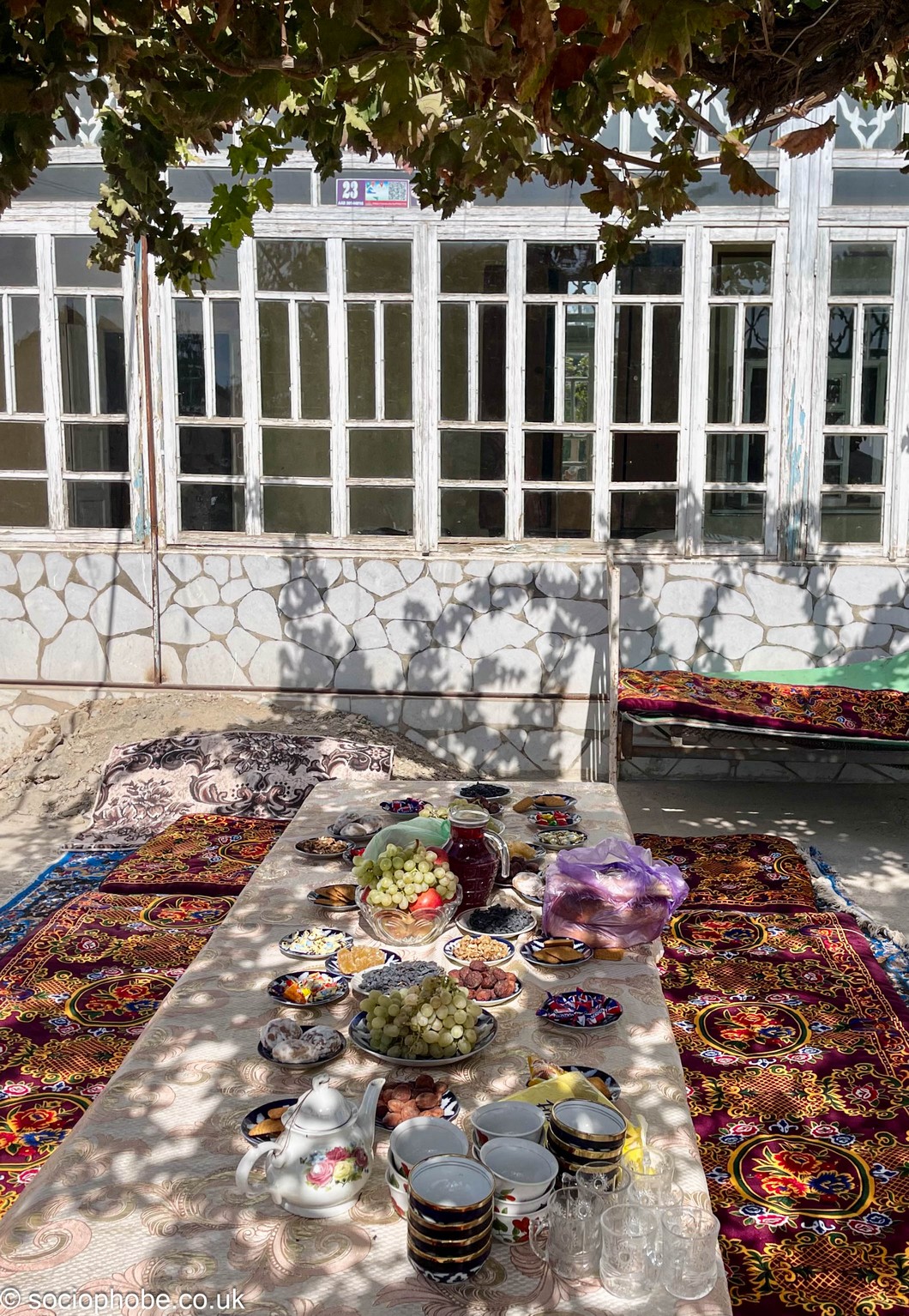
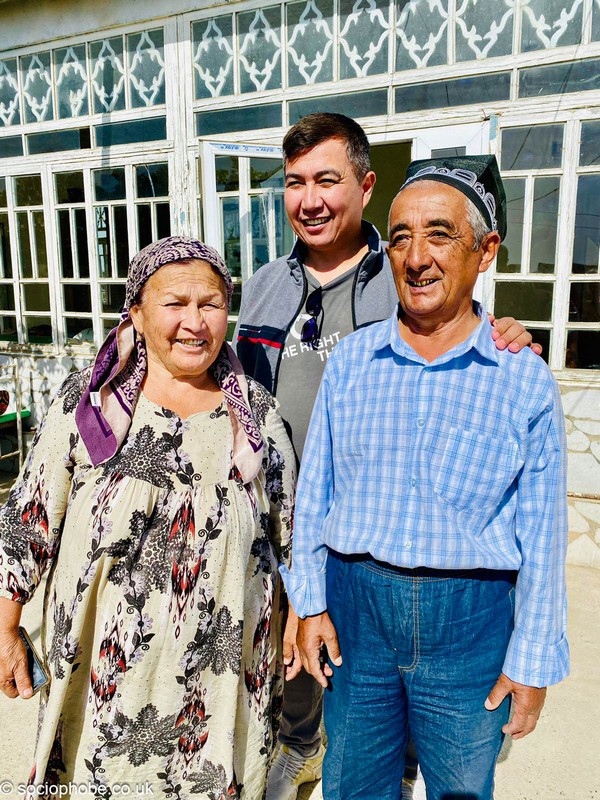
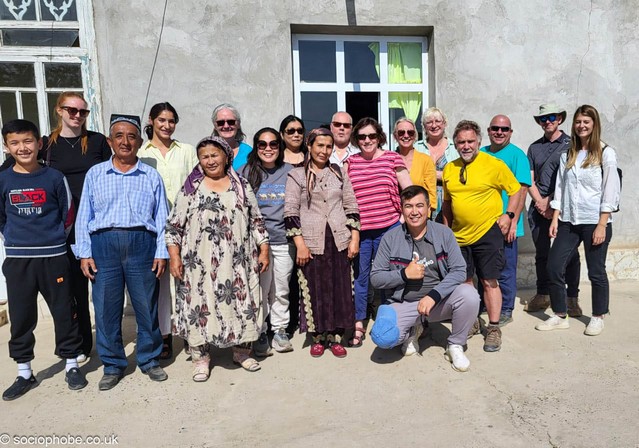
We drove past cotton fields, occasionally with people picking the crops, and agriculture is certainly the mainstay of employment once out of the city. We stopped at Ganisher’s village to meet his parents and have a light lunch. Their farm focuses on raisin and cherry production with a very short growing season – April to October. In October they have to prune the vines right back and then bury them under soil so they aren’t killed in the minus 20 winter temperatures. It is all very labour intensive with relatives and other villagers helping. It was a lovely, and very personal, pause in our tour.
After leaving the village and continuing west the land became more desolate with no trees, agriculture or animals. We saw the Nuratau Mountains to our south and the roads became progressively worse. We drove across dried river beds that had no bridges but Hsien said they have the same in Western Australia and when it’s winter, they just flood. I think I remember seeing on Long Way Round some of the winter river crossings so we’ll have to rewatch that.
Talking to Ganisher, it looks like education is extremely valued here and everyone that can stays on for further education, which is all free. Literacy is apparently 100% but I think government figures here need to be taken with a bucket of salt. I think the previous president, Islam Karimov got 98% of the vote at his last election…. The younger generation speak impeccable English but the older generation (and the native Russians) speak Russian and they both speak Uzbek and some a smattering of Arabic. There is also a large Tajik minority as when the Russians were drawing the borders they didn’t want a threat from nationalism so the lines were drawn to fragment rather than unite. A rather common practice that’s been going on for thousands of years but is most noticeable in our post colonial era.
Nurata
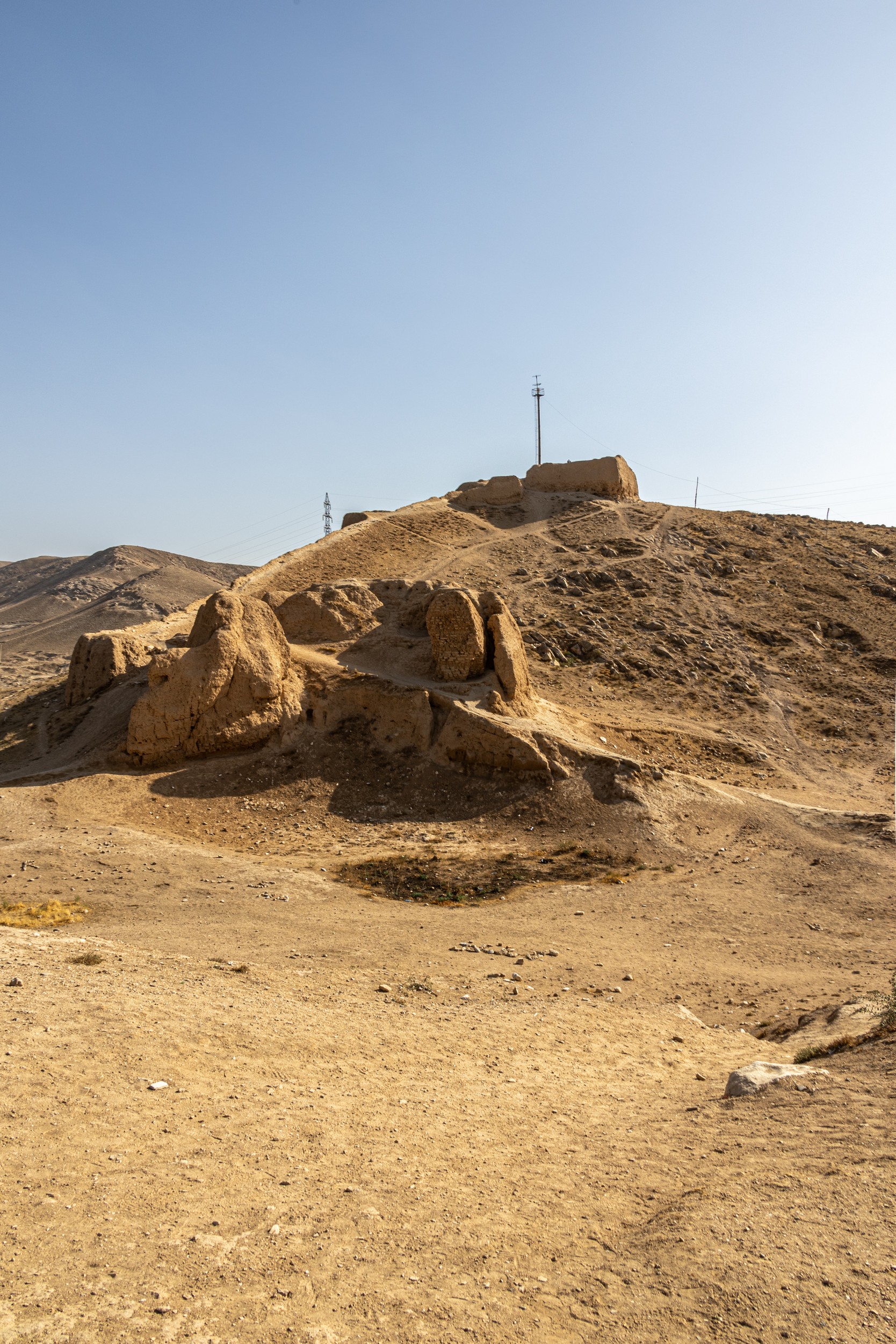
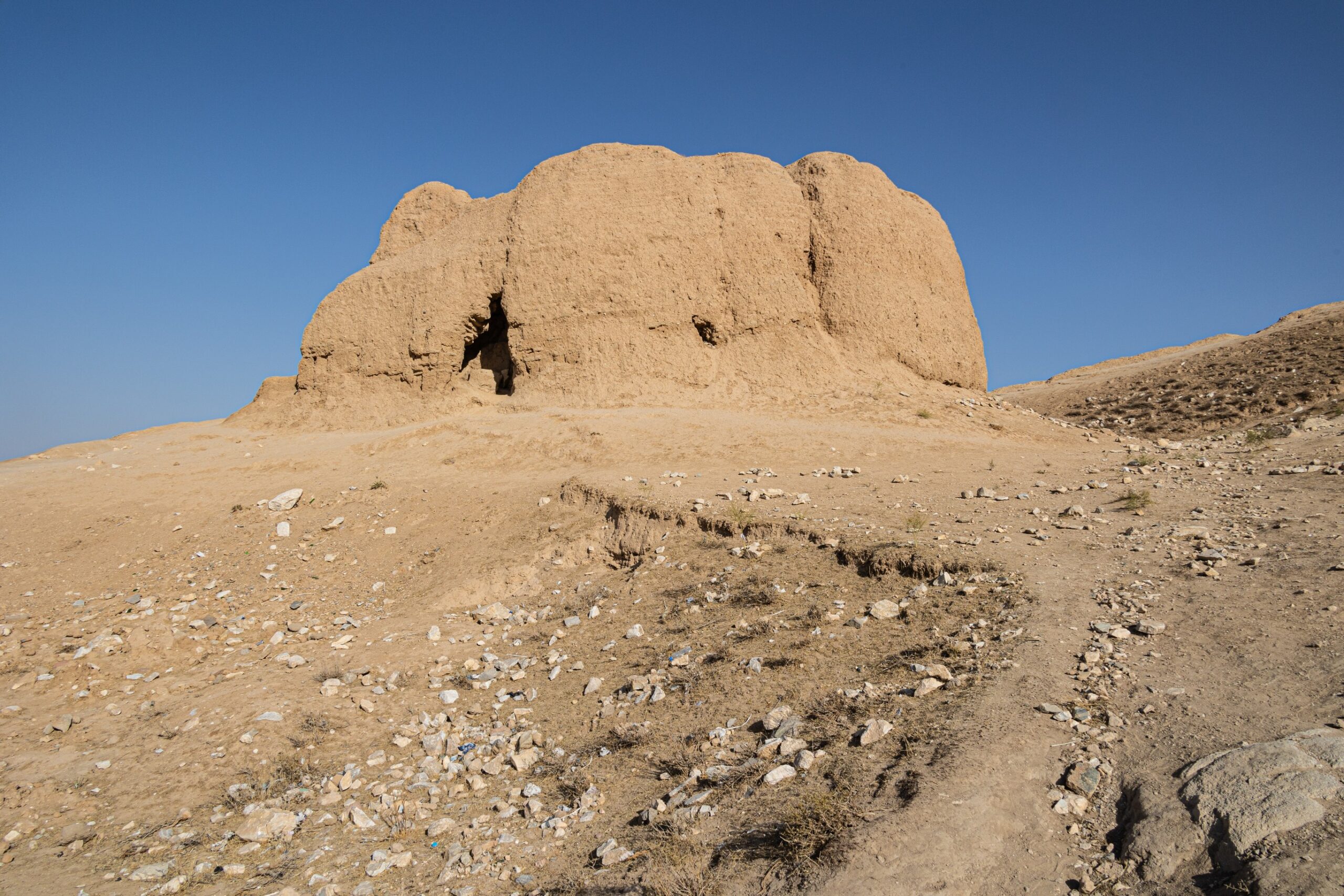
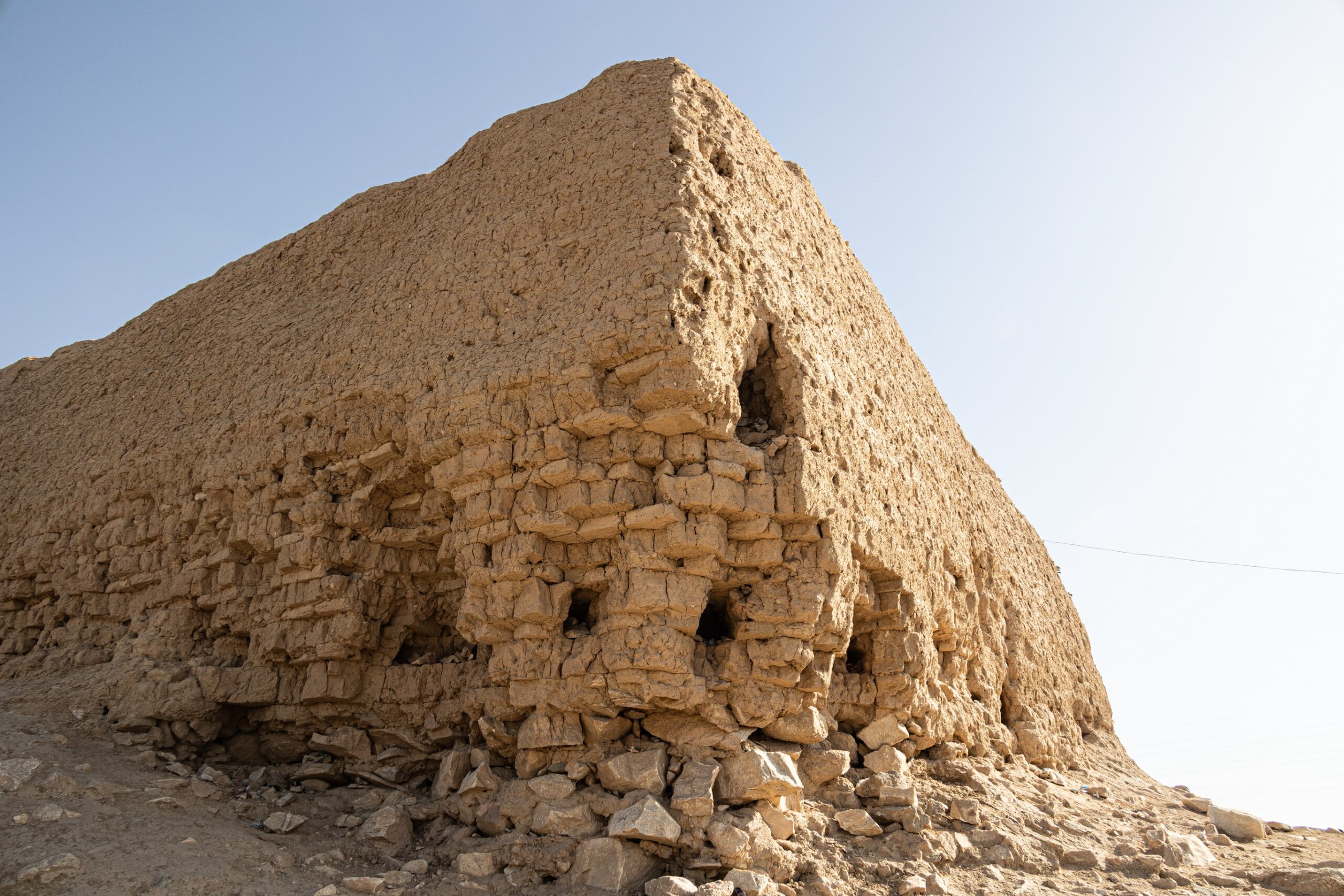
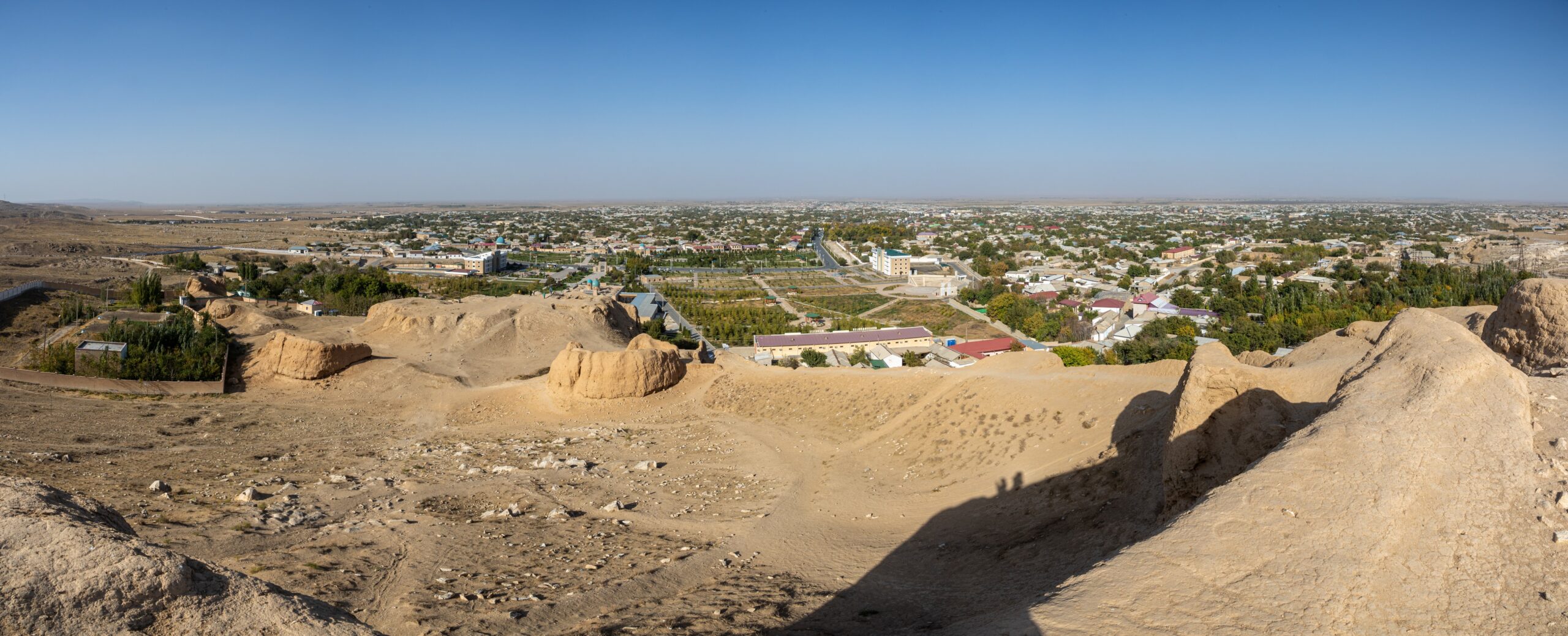
The drive continued on to Nurata, a small town famous for another mosque or mausoleum and a huge, but very ruined, fortress that was attributed to Alexander the Great. Deb stayed in the shade at the bottom of the hill but Hsien and I climbed to the top – rather sweaty and slippery but the views were quite expansive. We saw what I assume were the Nuratau Mountains but the fort had just eroded away so the mounds we were climbing was actually mud brick walls and towers that had collapsed and then been trampled. There were a few bits of towers still standing but nothing to give any sense of what it really looked like.

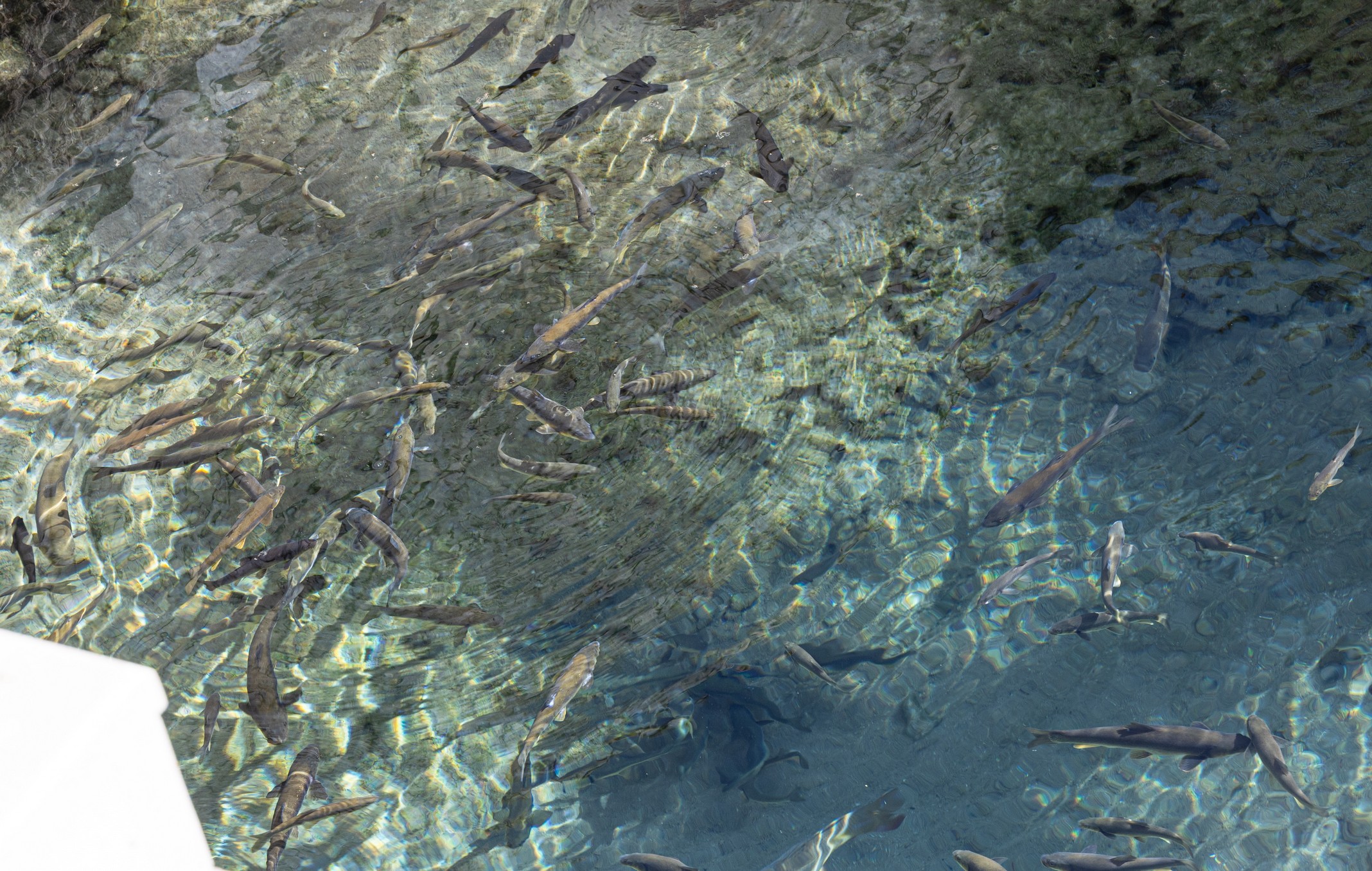
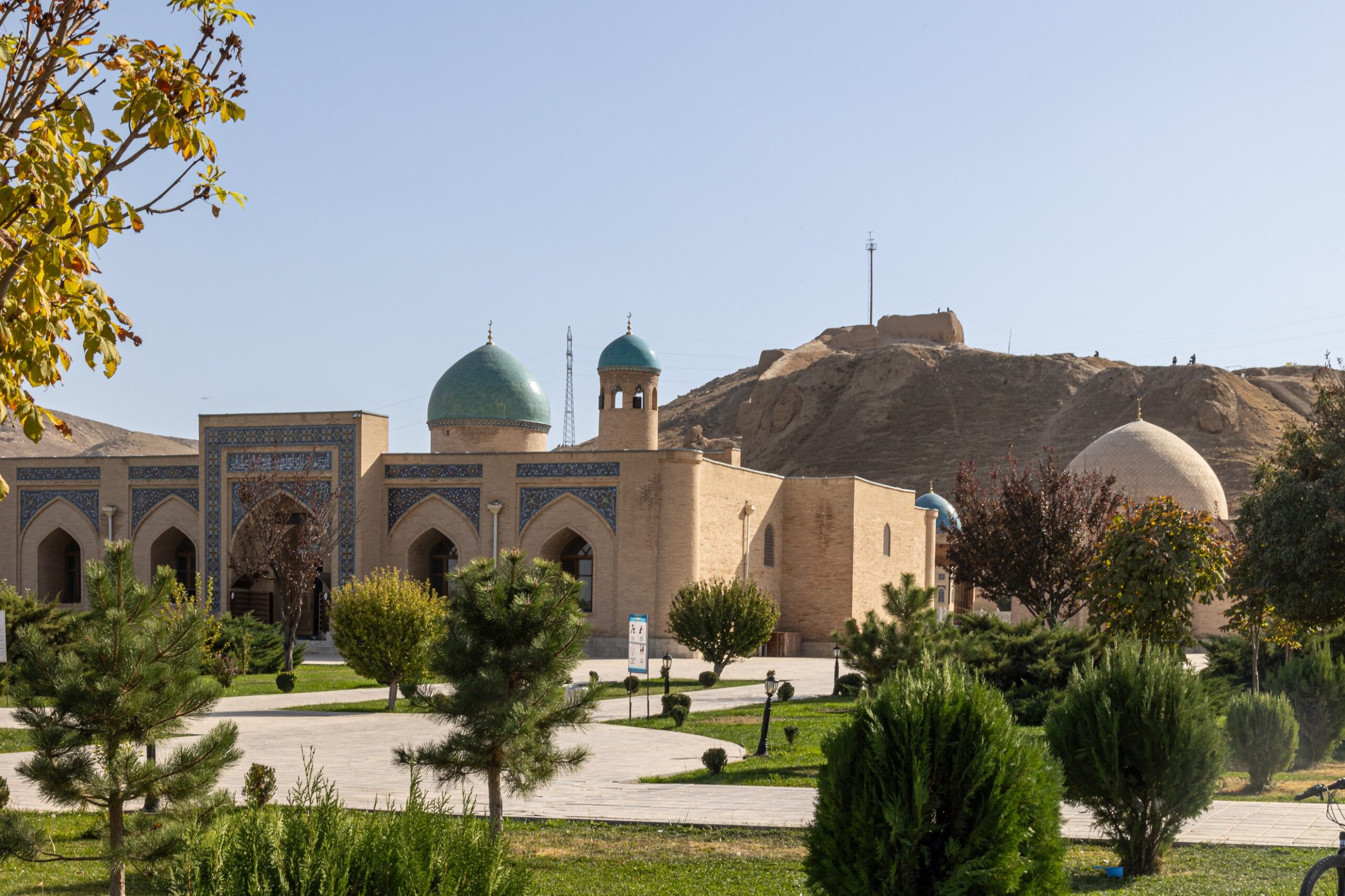
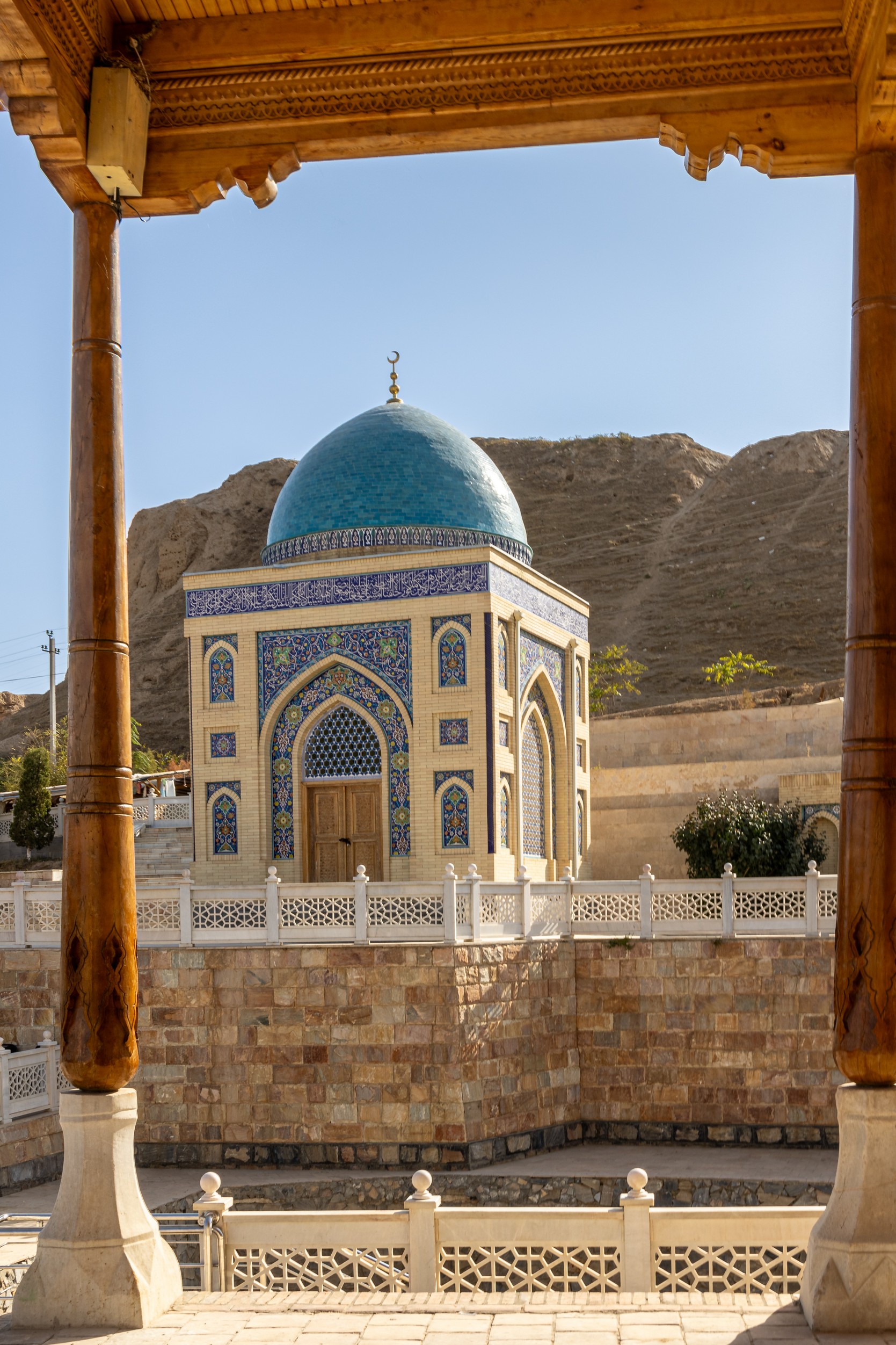
The village also has the inevitable mosque as well as a holy spring, apparently created by the Prophet’s son in law putting his staff in to the ground. A useful skill. The spring has lots of trout in but they were sacred so off the menu.
Aydarkul Lake
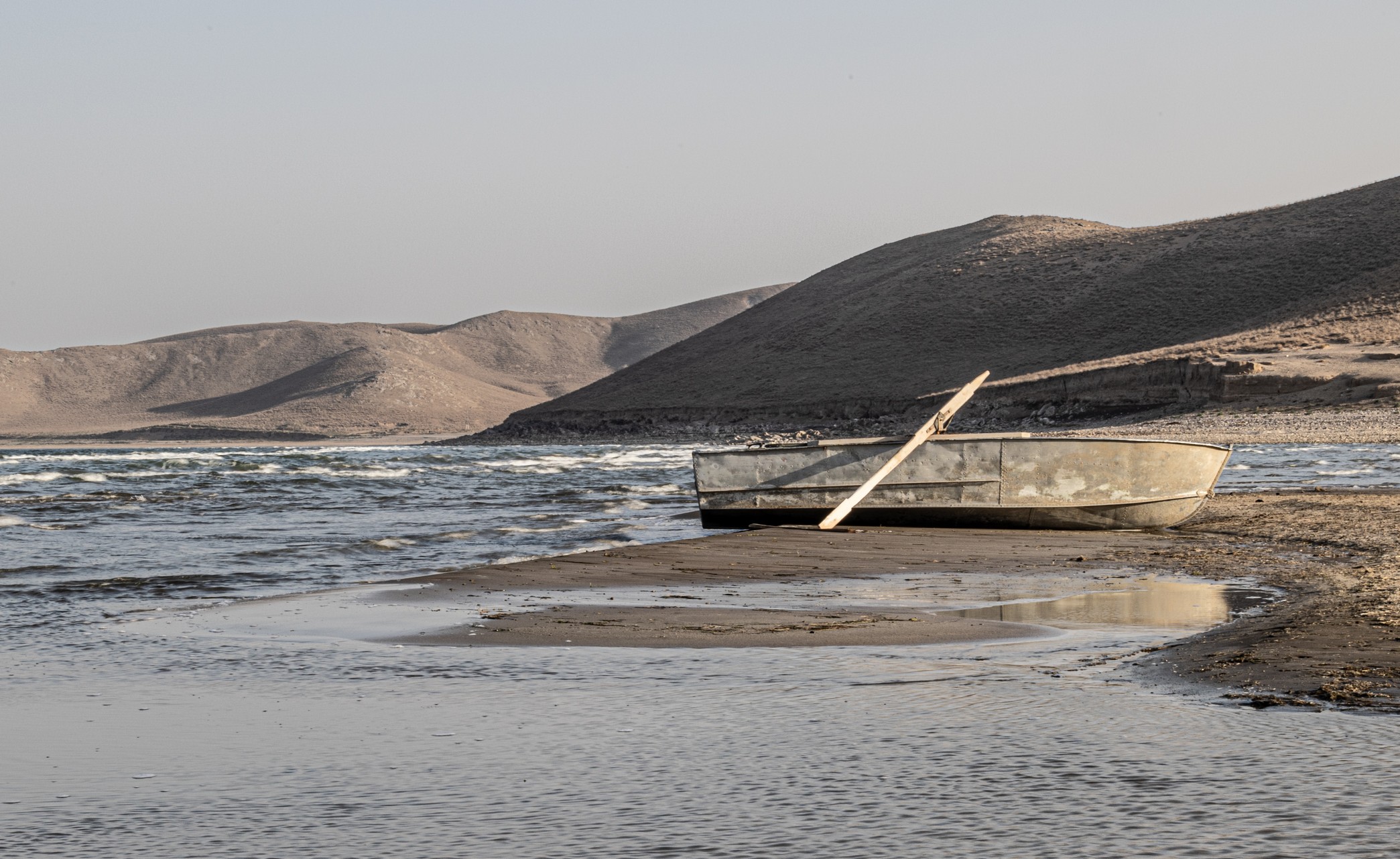
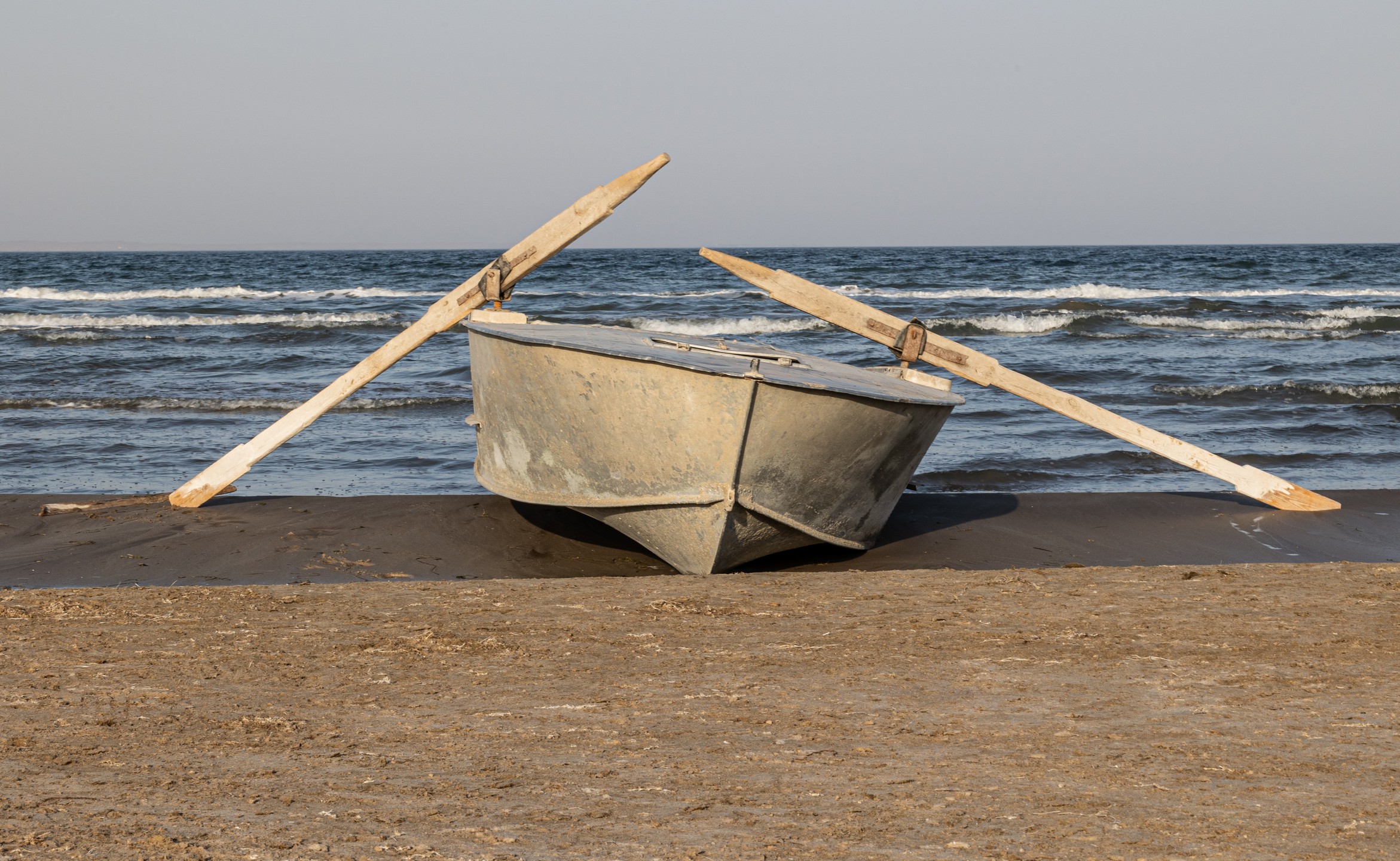
After Nurata we continued on our way to Aydarkul lake. This was originally 3 lakes and depending on season and water levels these combine to one with a changing shoreline. It was incredibly peaceful there as it was deserted but there was no sign of bird life or animals where we were although apparently the lake accounts for half of all the fish eaten in the country. Deb did some paddling along with a few others and said the water was surprisingly warm.
Sputnik Yurt Camp
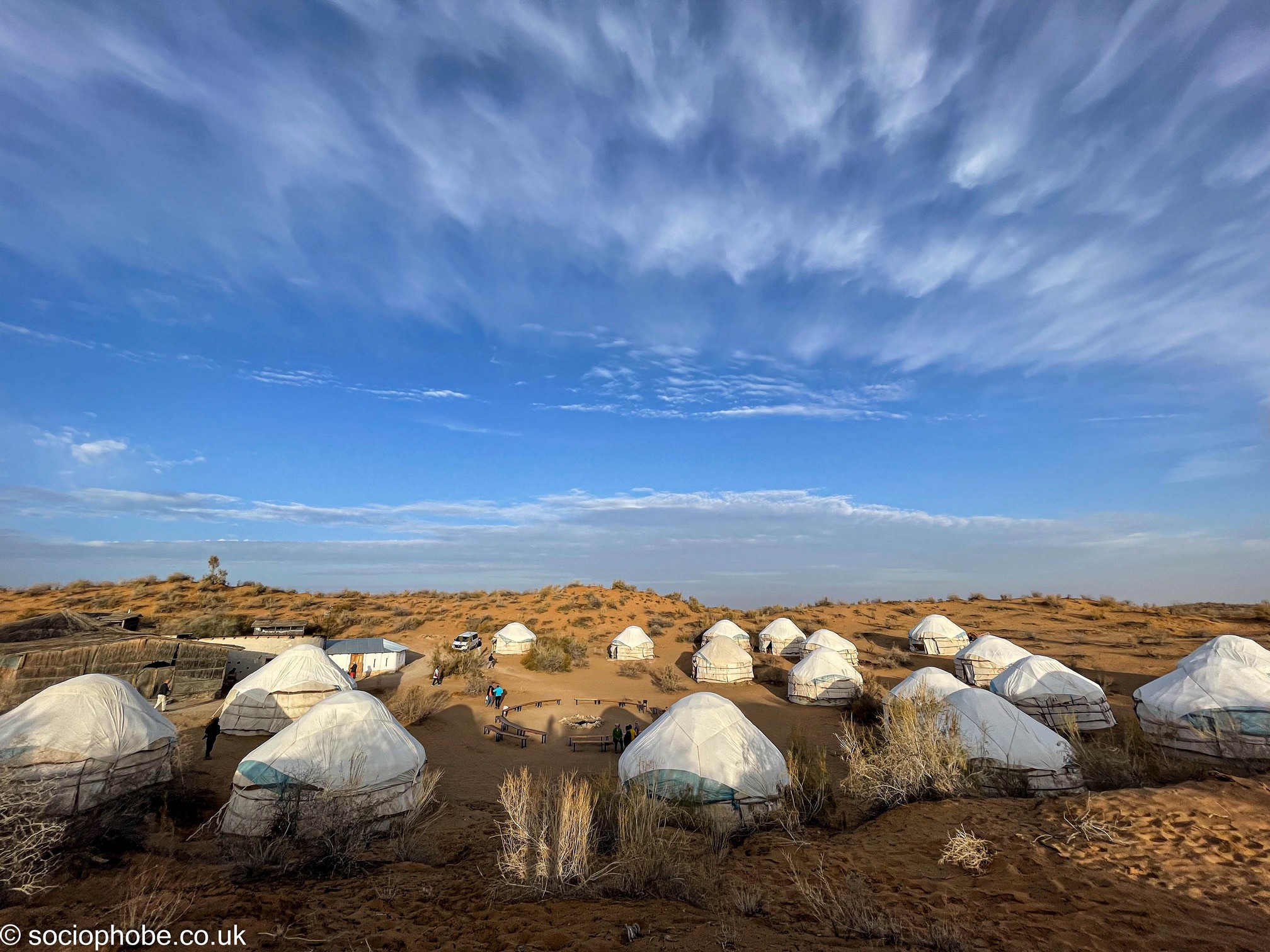
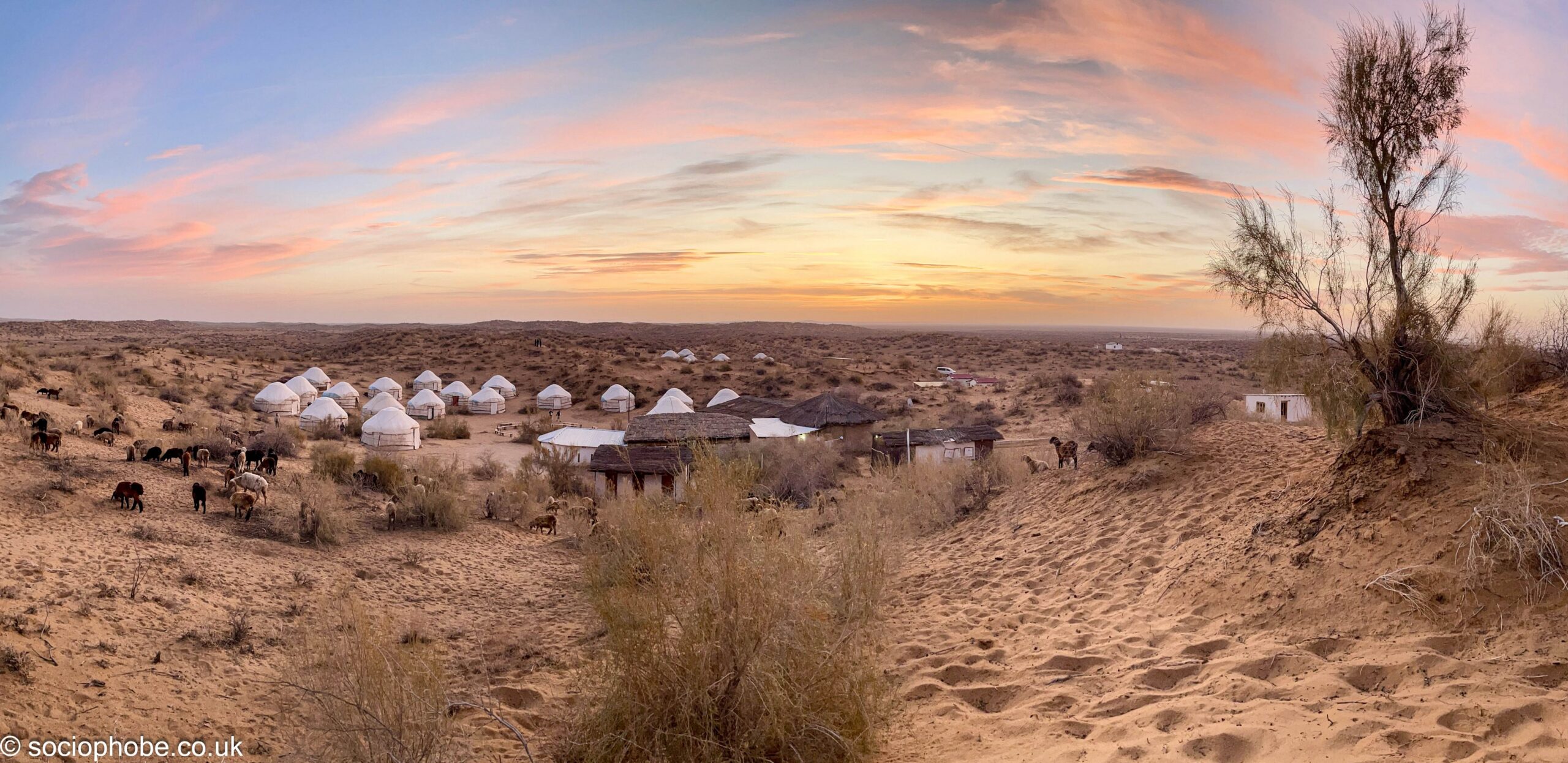
We finally arrived at the Sputnik Navoi Yurt Camp after a very bumpy final few kilometres. There was a very scruffy Kazak village just before the camp (the camp is a Kazak camp as the Uzbeks are urban, Kazaks nomadic). Outside the village was the rubbish tip which extended for quite a way and they don’t make any attempt to bury the rubbish, it is just dumped along the roadside. It must be a nightmare for the animals as there was so much broken glass!
We disembarked and then were immediately put in a bad mood as the yurts were both shared and single sex so we had four people in our yurt, all guys, and Deb was sharing with 3 other women. Although that may be Uzbek culture it certainly isn’t the Western way of doing things. There was obviously no phone signal but I was surprised they didn’t have Star Link or something similar to offer wifi, I guess that’s not what the ‘experience’ is about. There were 4 shower cubicles and 4 toilets between about 12 yurts, each yurt sleeping up to 6 people.
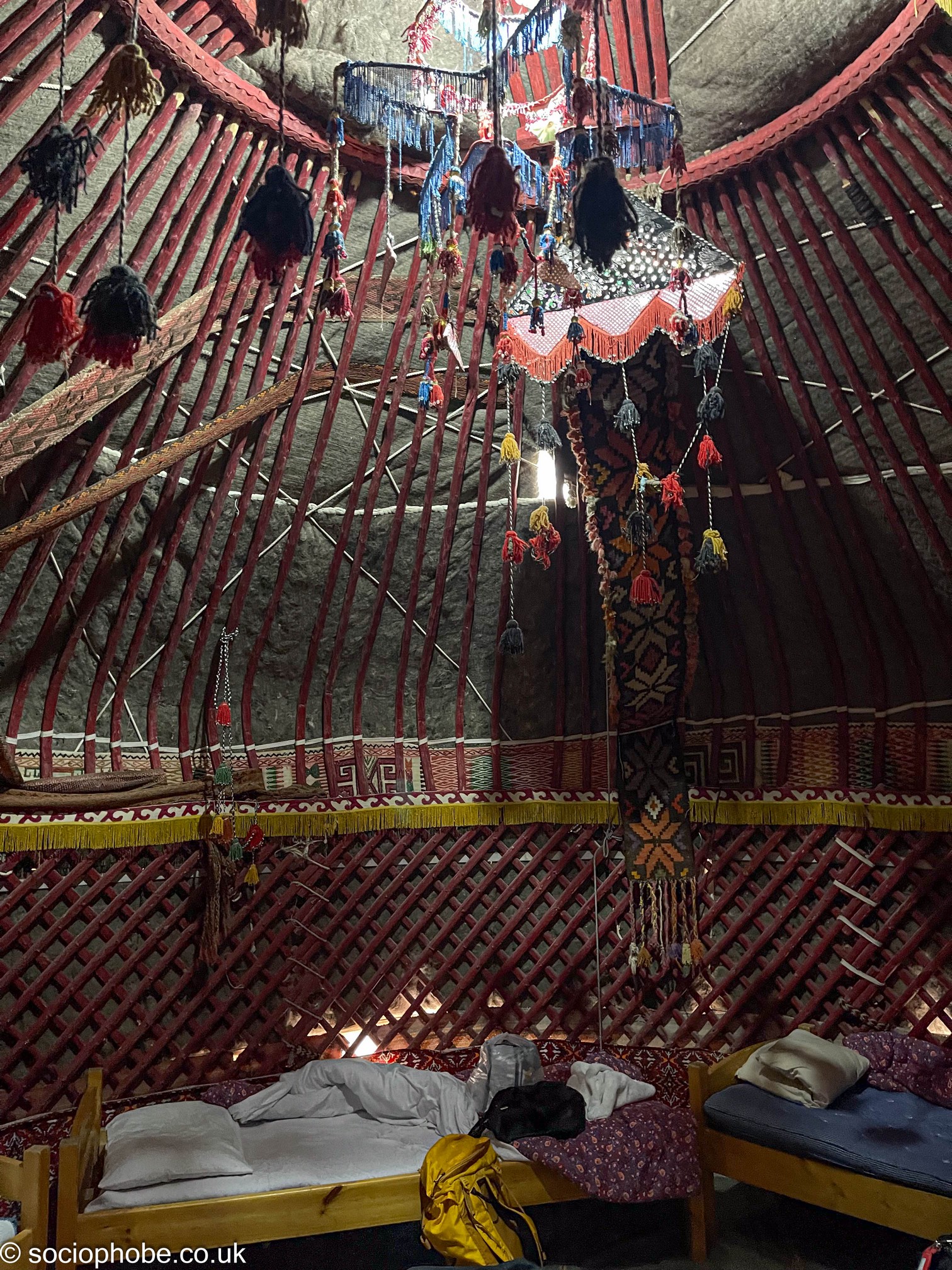
The yurts themselves were roomy and you could easily stand in the middle as the beds were arranged around the edge. The yurts were covered in thick felt for insulation and then polythene to keep the rain out but there was no noise insulation and you could hear everything. Maybe that’s why they don’t have couples in them! There was a single light bulb and a power socket by the entrance and once the light was out it was pitch black inside.
Dinner in the evening was better than expected. We had bread and chicken noodle soup followed by a kind of stew with ‘meat’, carrots, cabbage and potato. We sat with Veronica, Rich and Darcy (all Americans) and chatted about our travels, bucket list and US and UK politics. As always, it was great to get a different perspective on things.
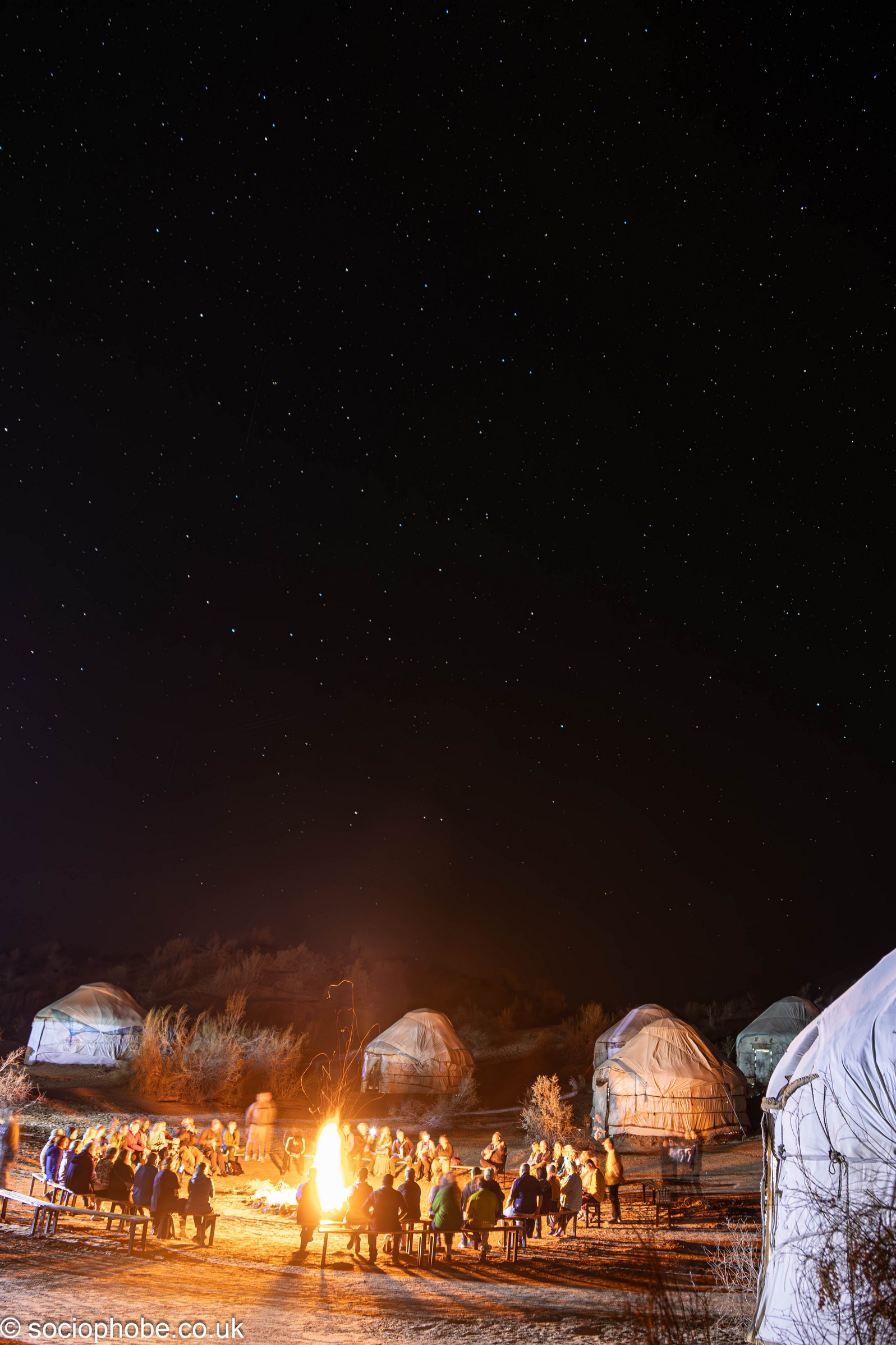
Leaving the dining area it was amazing how dark it was and the stars! Wow, there were just so many although I couldn’t identify any and couldn’t even see the Milky Way although I’m sure it’s still there. I am such a moron that, after spending £300 on a tripod, I left it in the UK so was using the camera to burrow into the ground so it was stable for the 30 second exposure shots! The shots were all rubbish though, which was rather frustrating.
The desert scenery was low undulating hills, covered in scrub and grasses, with the line of telephone poles and the dirt track being the only signs of human habitation. There was a campfire in the centre of the yurt camp and this was then lit ready for the singer. He started played what I presume were Kazak folk songs and as the evening progressed people were dancing and clapping and enjoying themselves. Some went to bed before the singing started and I tried to do some astrophotography, which I’d never done before. It was great to use the phone to control the camera though, made it a lot easier.
I went to bed around 9 I think, Rich was already asleep and the other two came in later. The bed was solid and every time someone wanted something they had to use the phone torch which illuminated the whole yurt. We could also hear every person in the camp that snored!
I woke at 5 and then waited until 6 before groping around for my stuff and getting dressed. It was still dark and felt damned cold but the sky slowly lightened. I walked along the hills surrounding the camp and took some photos but mostly just enjoyed the peace, the only sound being the sheep’s bells.
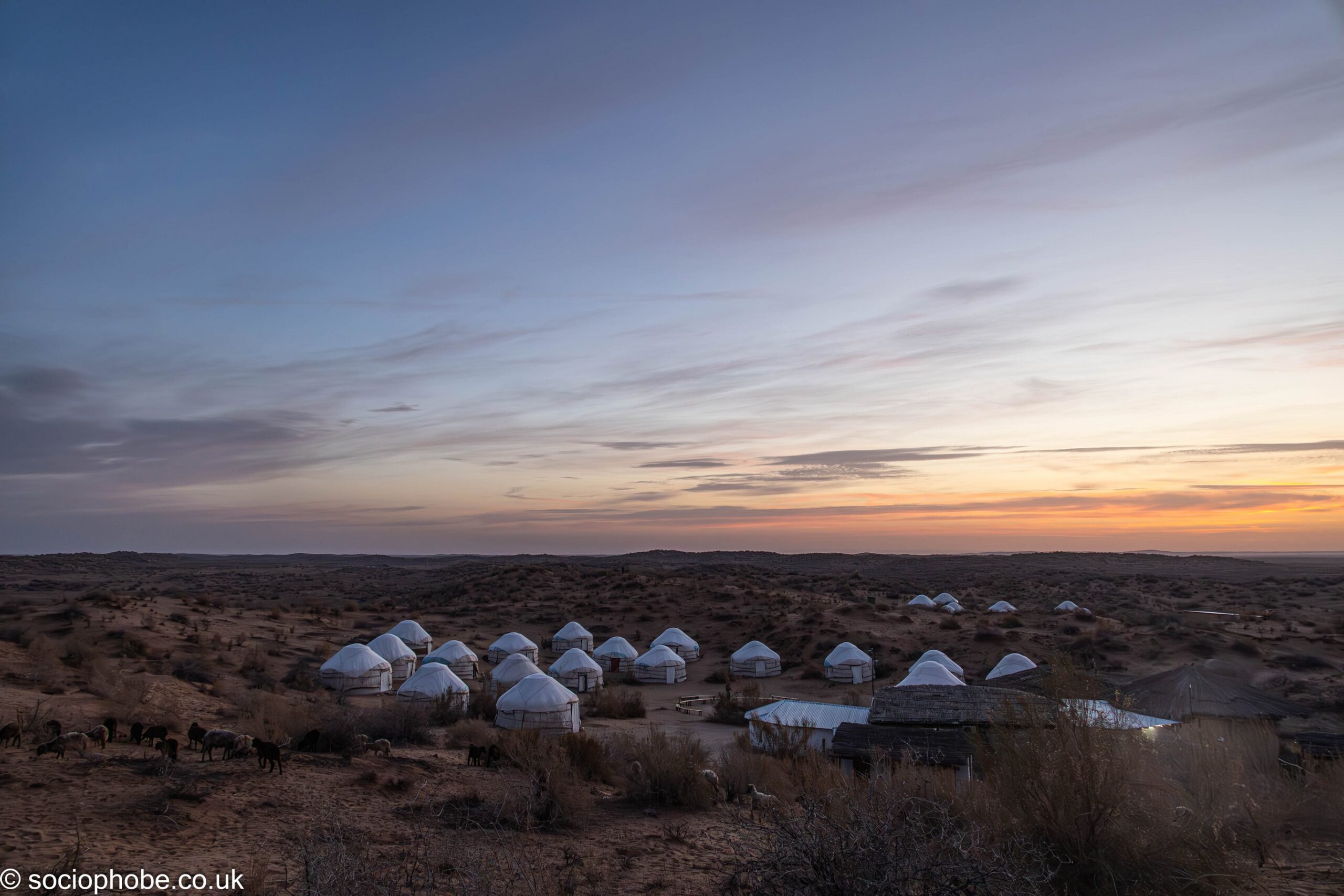
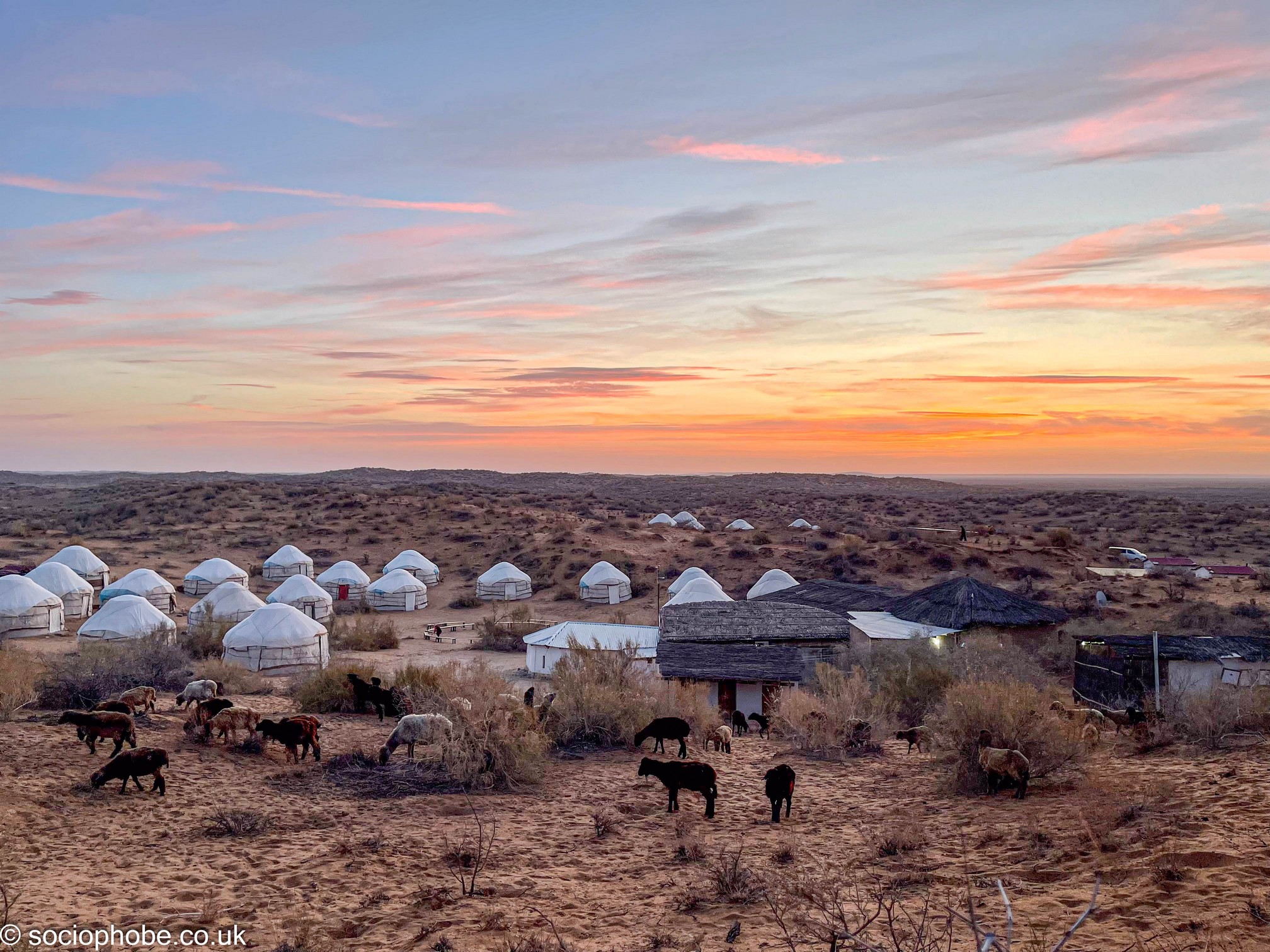
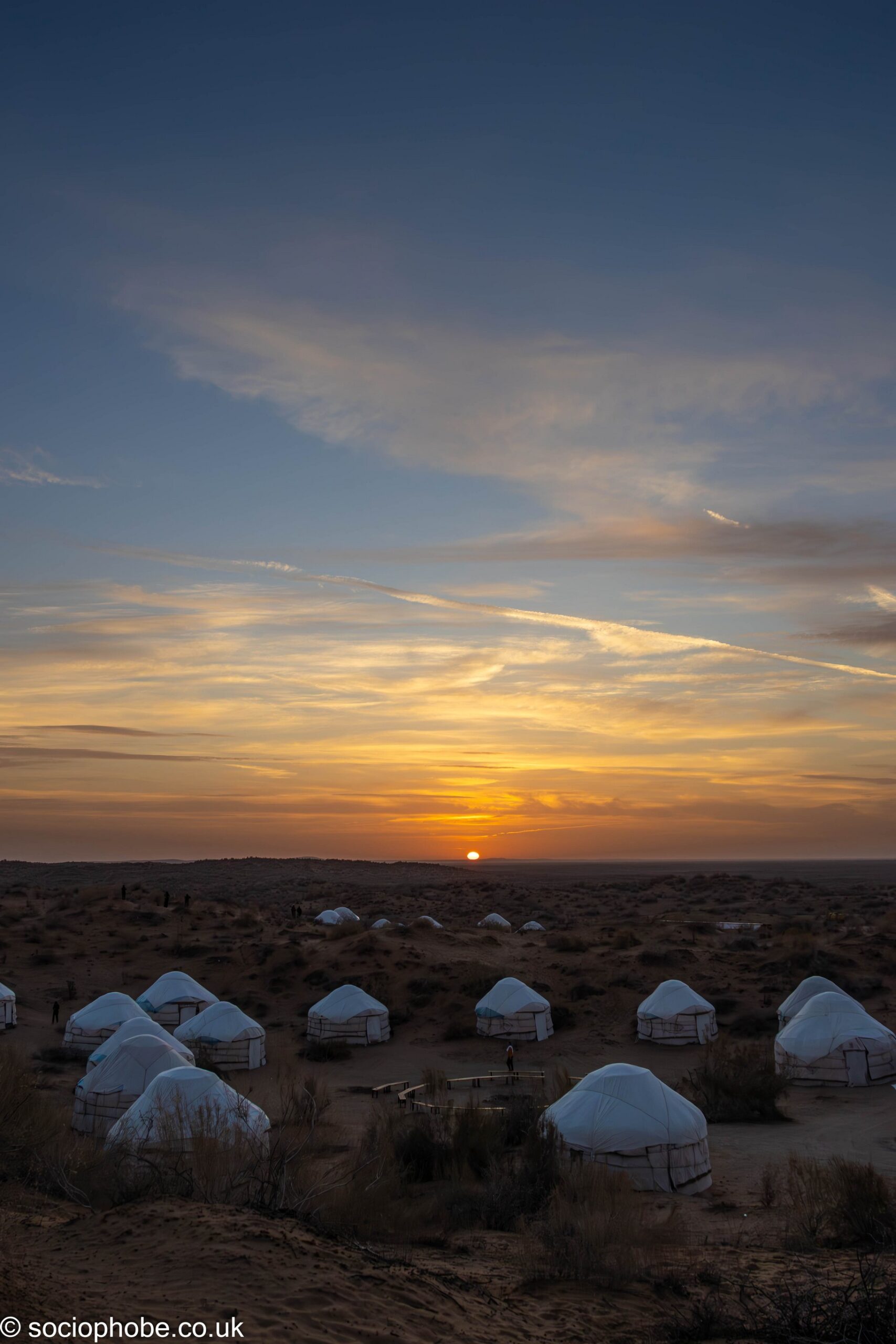
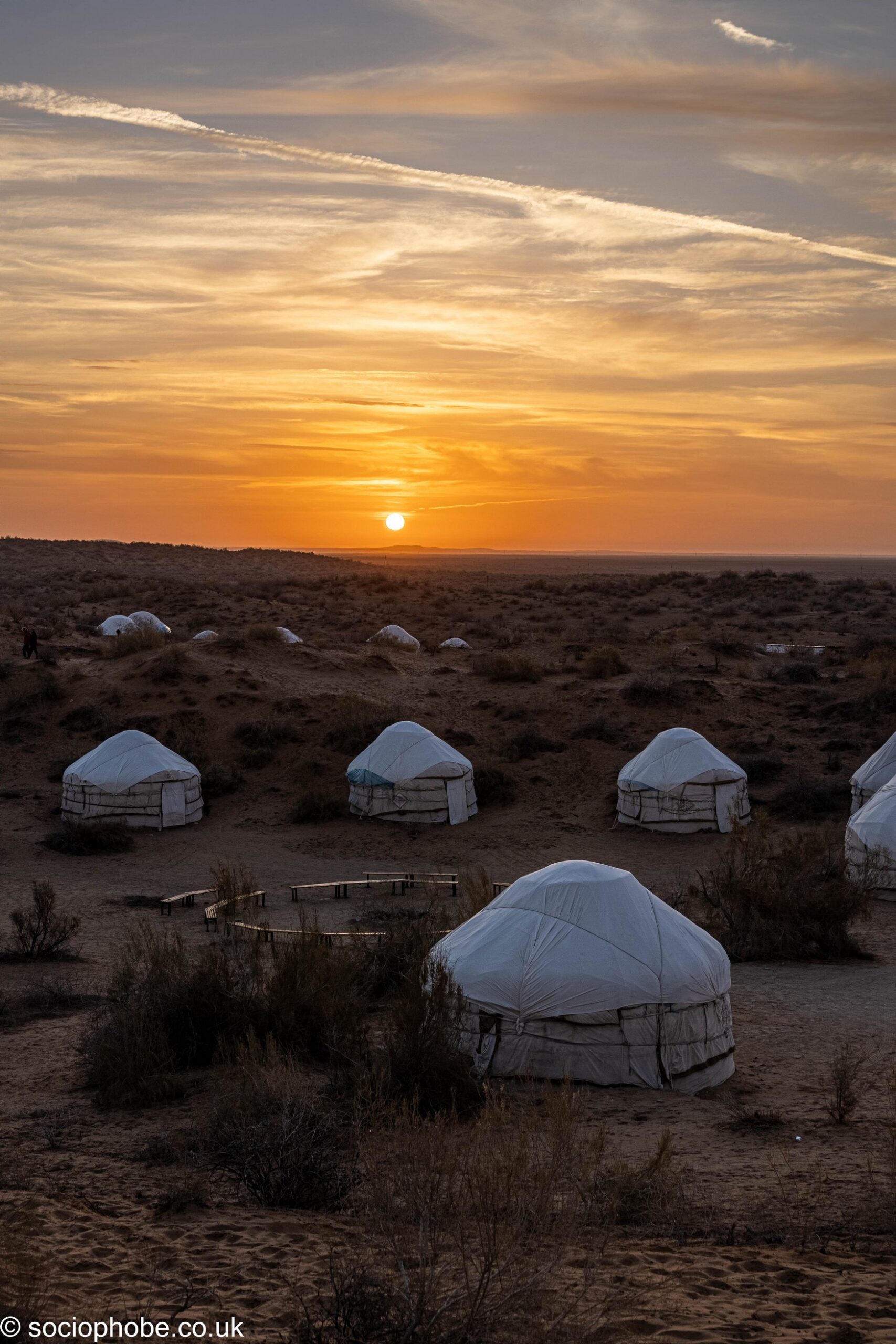
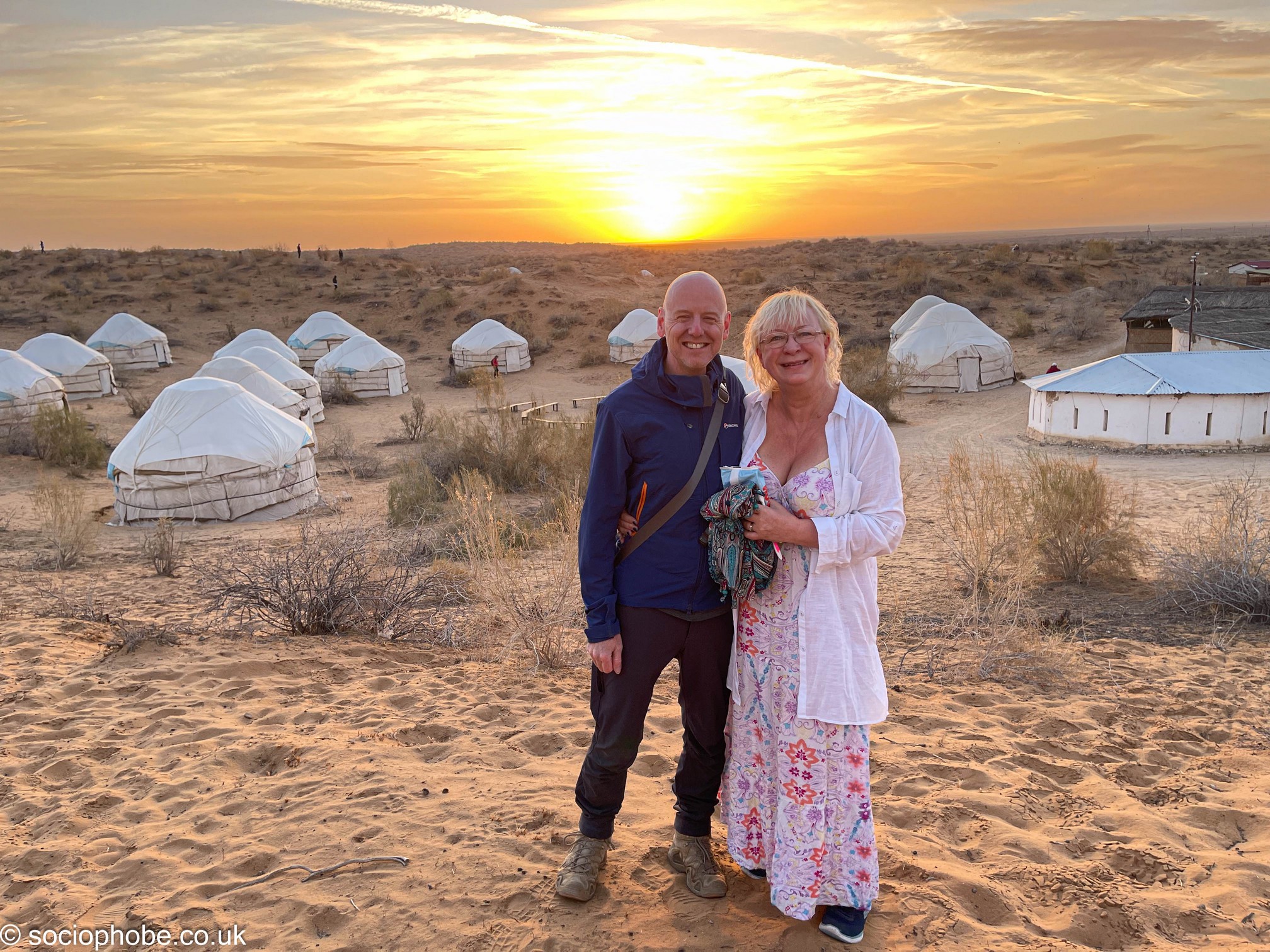
After several circuits of the camp the sun began to appear on the horizon. Deb then emerged from her yurt with Julie so we were able to get a sunrise photo of the two of us before it got too busy with everyone going to freshen up before breakfast. They could really have done breakfast at 7 as everyone was up and ready and just milling around but when we eventually got in it was a nice spread. We sat with Isabel, Charlotte and Jevon and had pleasant chat while Deb consumed everything on the table.
Bukhara
We left the camp just after 9 and then had a very long drive to Bukhara, maybe 6 hours driving. We also stopped for an hour at a ceramic workshop and for lunch which was a pain as we had to miss our stop at a 12th century caravanserai and cistern as we were behind schedule. The area we were driving through was recently made a free trade area so tax free for foreign companies that invest, assuming the government doesn’t fabricate something against them and confiscate the business as they have with so many others. The province is very rich in natural resources such as gas and also gold mines.
We arrived at the hotel in Bukhara – Hotel An Nur – just after 4 and then had until 6 to relax. The hotel was lovely, again in a great location next to the old city and a very nice boutique hotel with large rooms. We opted to get all our laundry done ($7!) and then had a most welcome shower and started writing up notes before meeting up at 6 for an orientation walk.
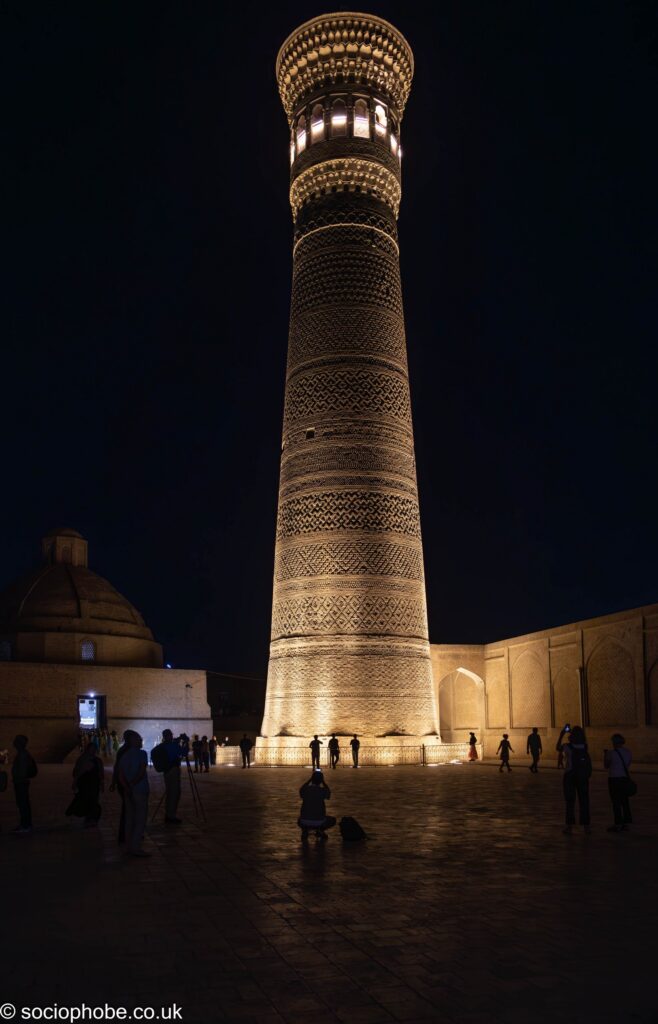
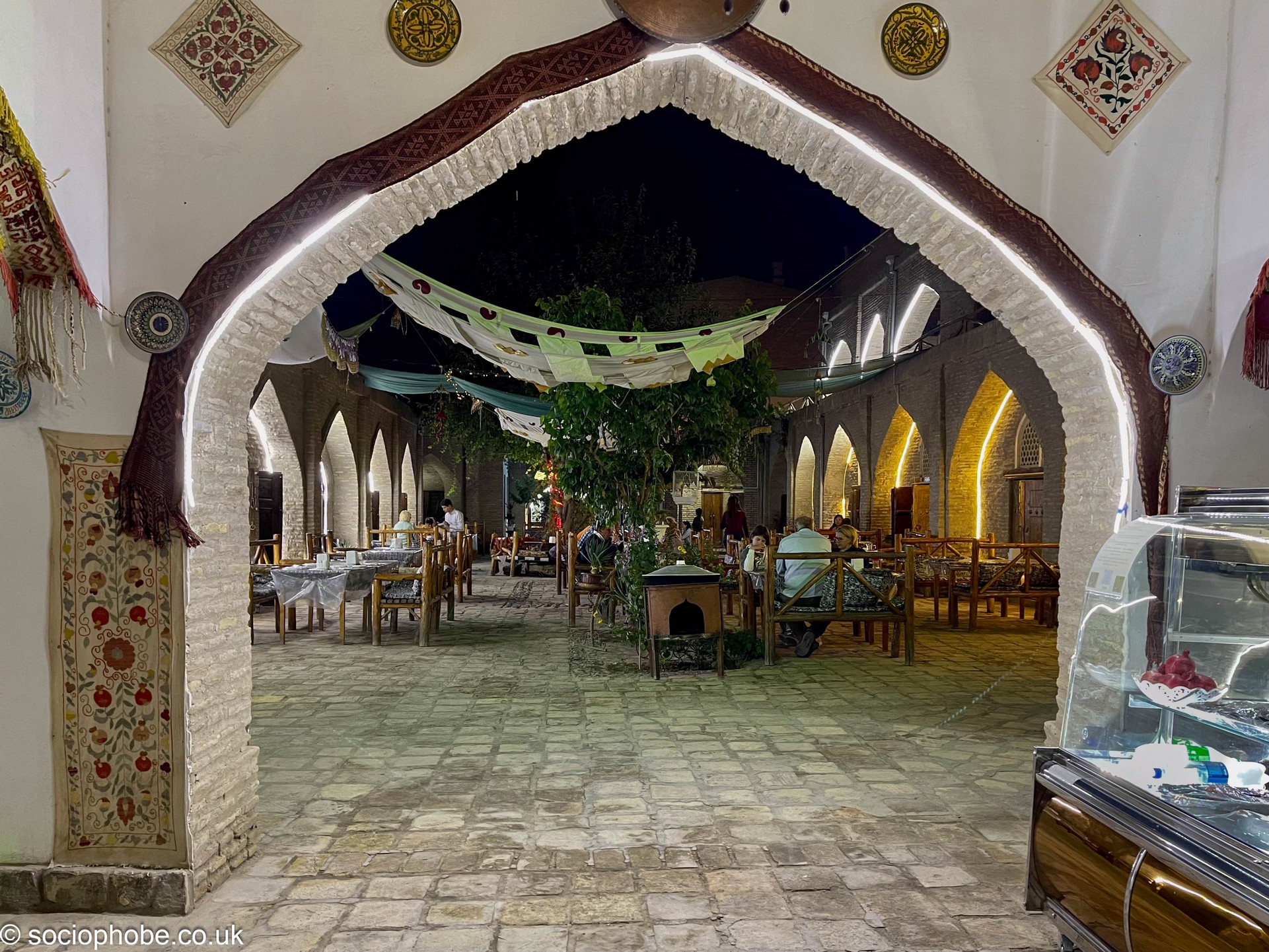
Bukhara is my new favourite city, definitely one of the highlights of Uzbekistan so far on the tour! So much to see and a lovely atmosphere, a real trading city full of stalls and cafes and totally traffic free so it was beautiful to just wander around. They even had sign posts to the attractions. We walked with the group for an hour then Deb and I ambled around for maybe another hour before choosing the Art Restaurant for dinner, mostly because the other 3 places we tried were full. This turned out to be an inspired choice as we had a lovely meal in a beautiful courtyard that was really peaceful even though it was only a few minutes from the tourist track. $30 well spent!
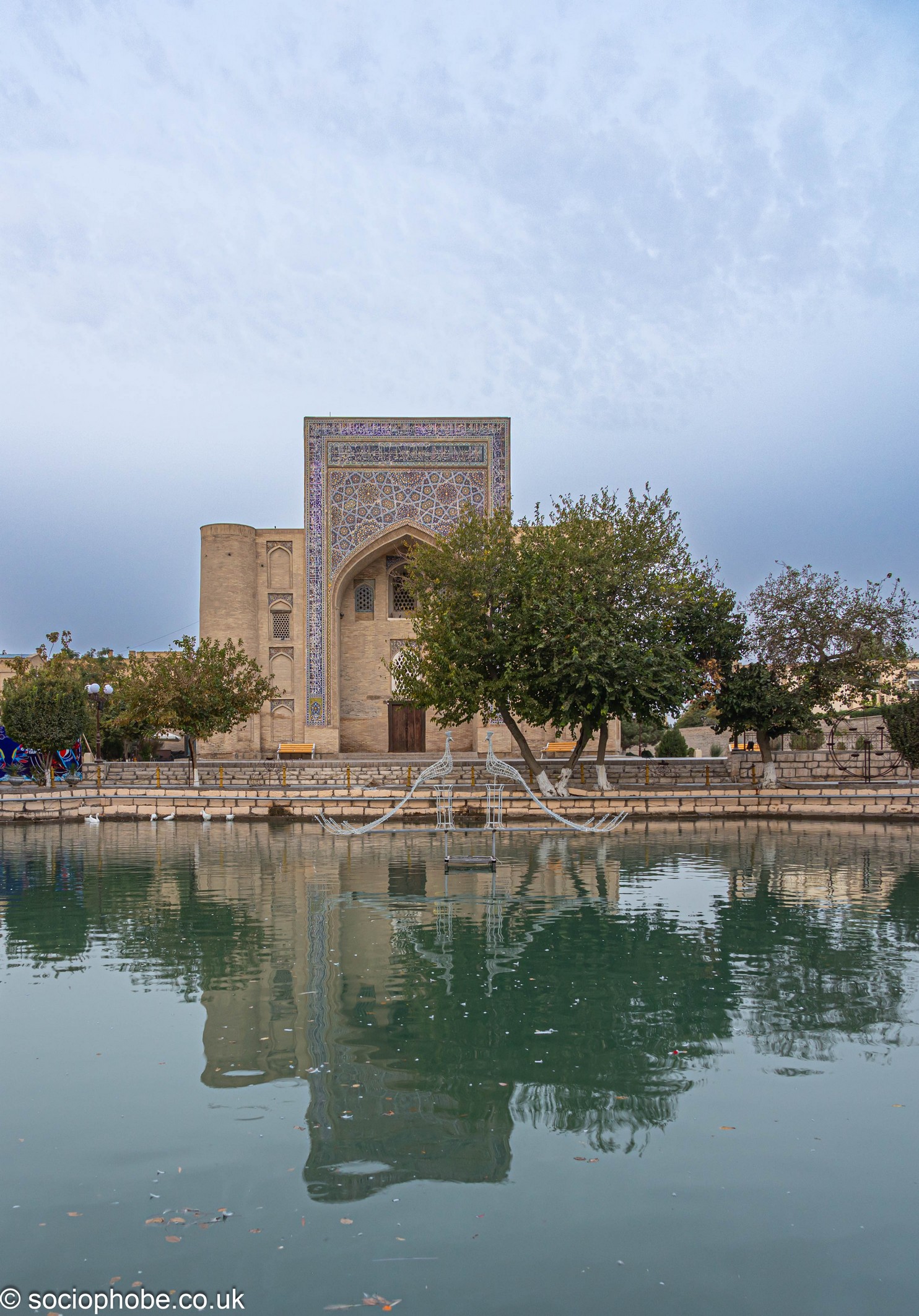
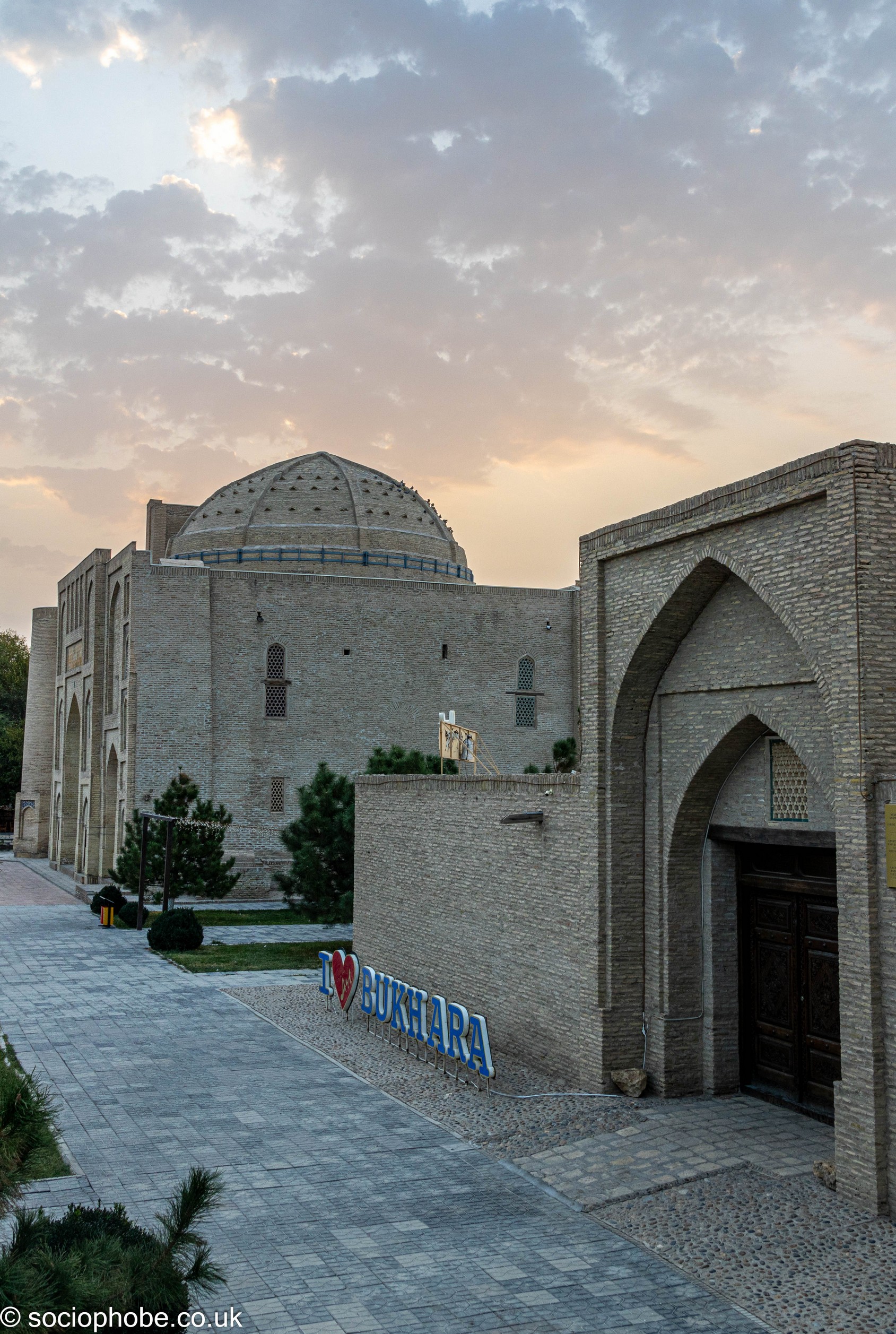
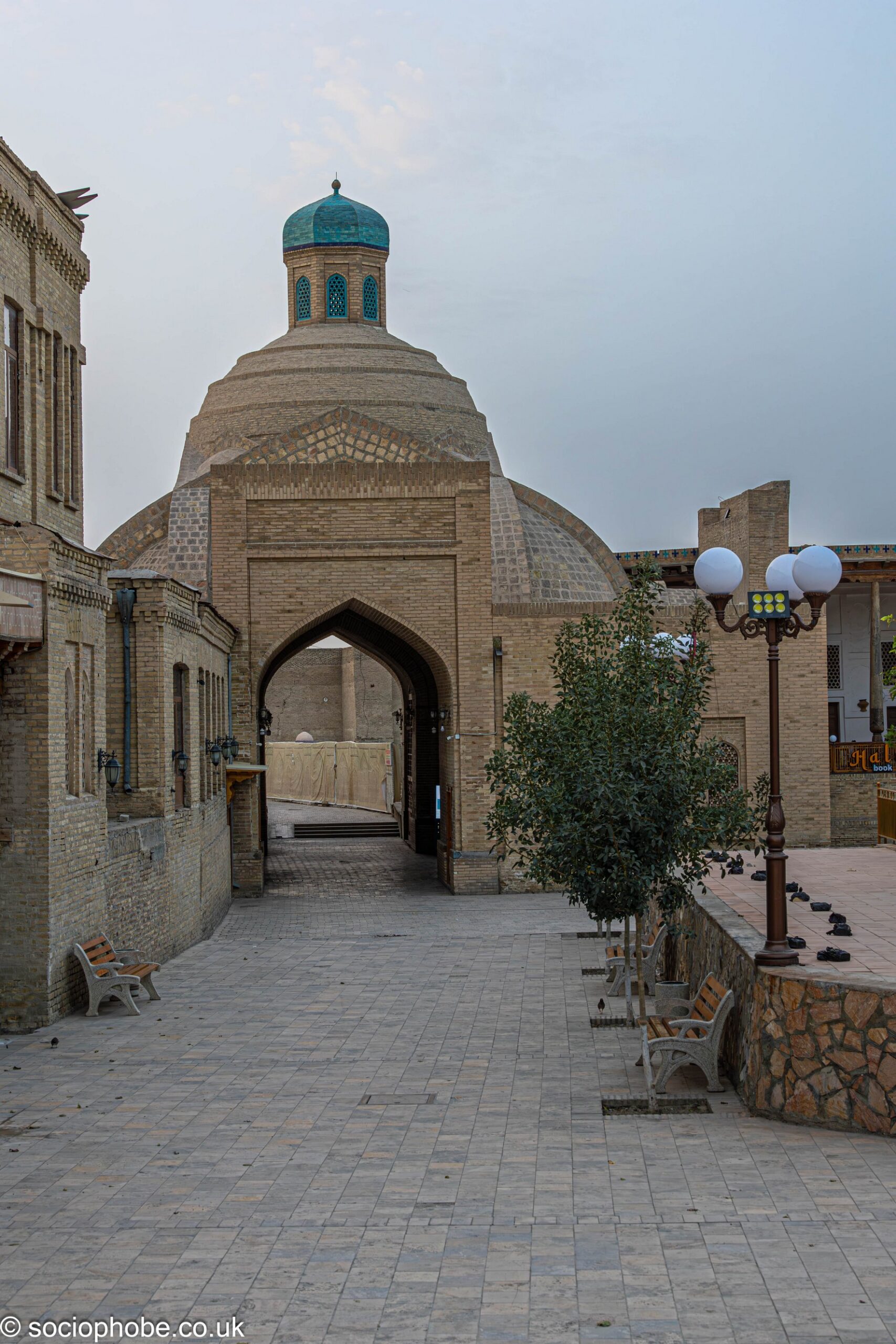
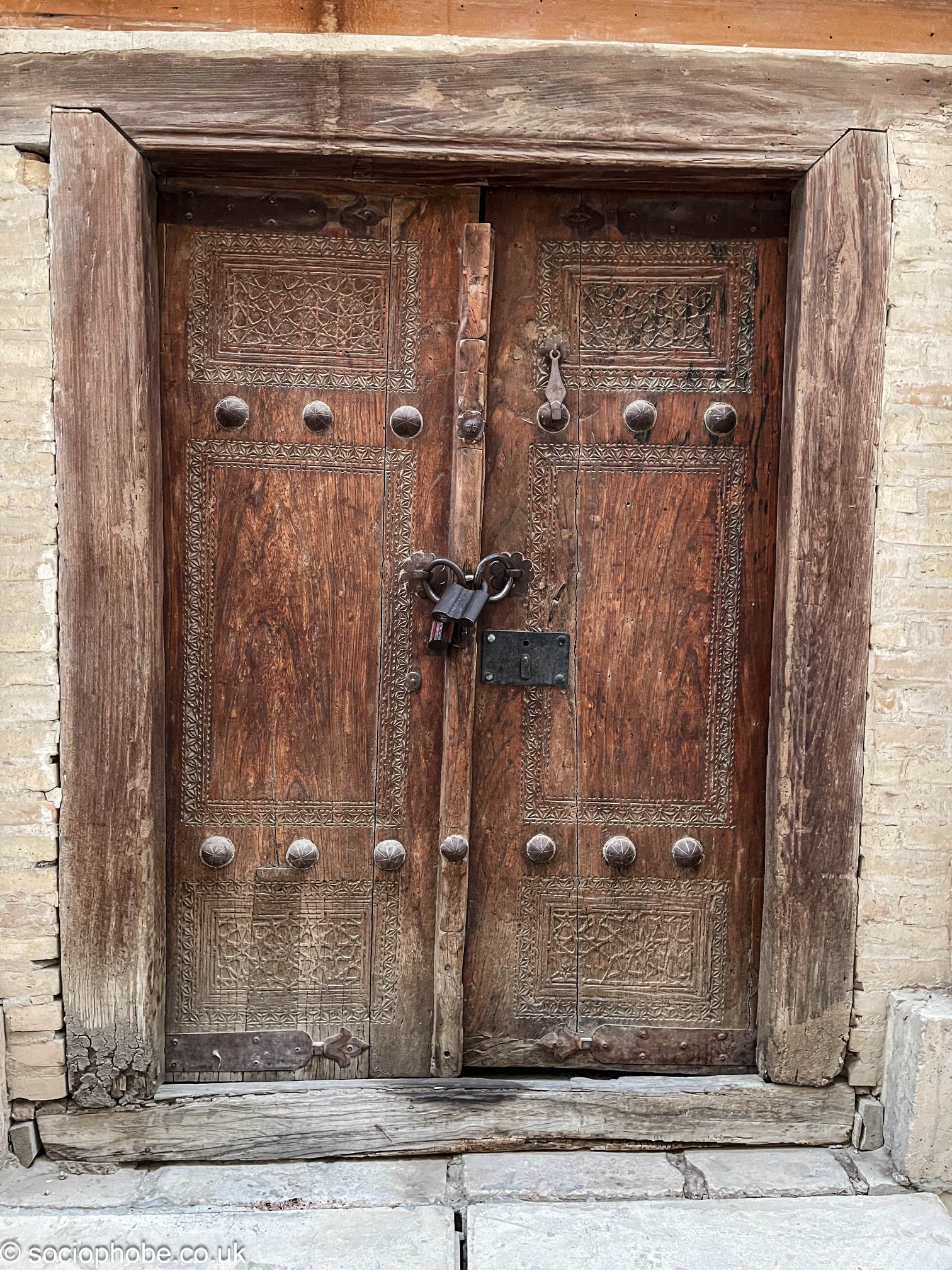
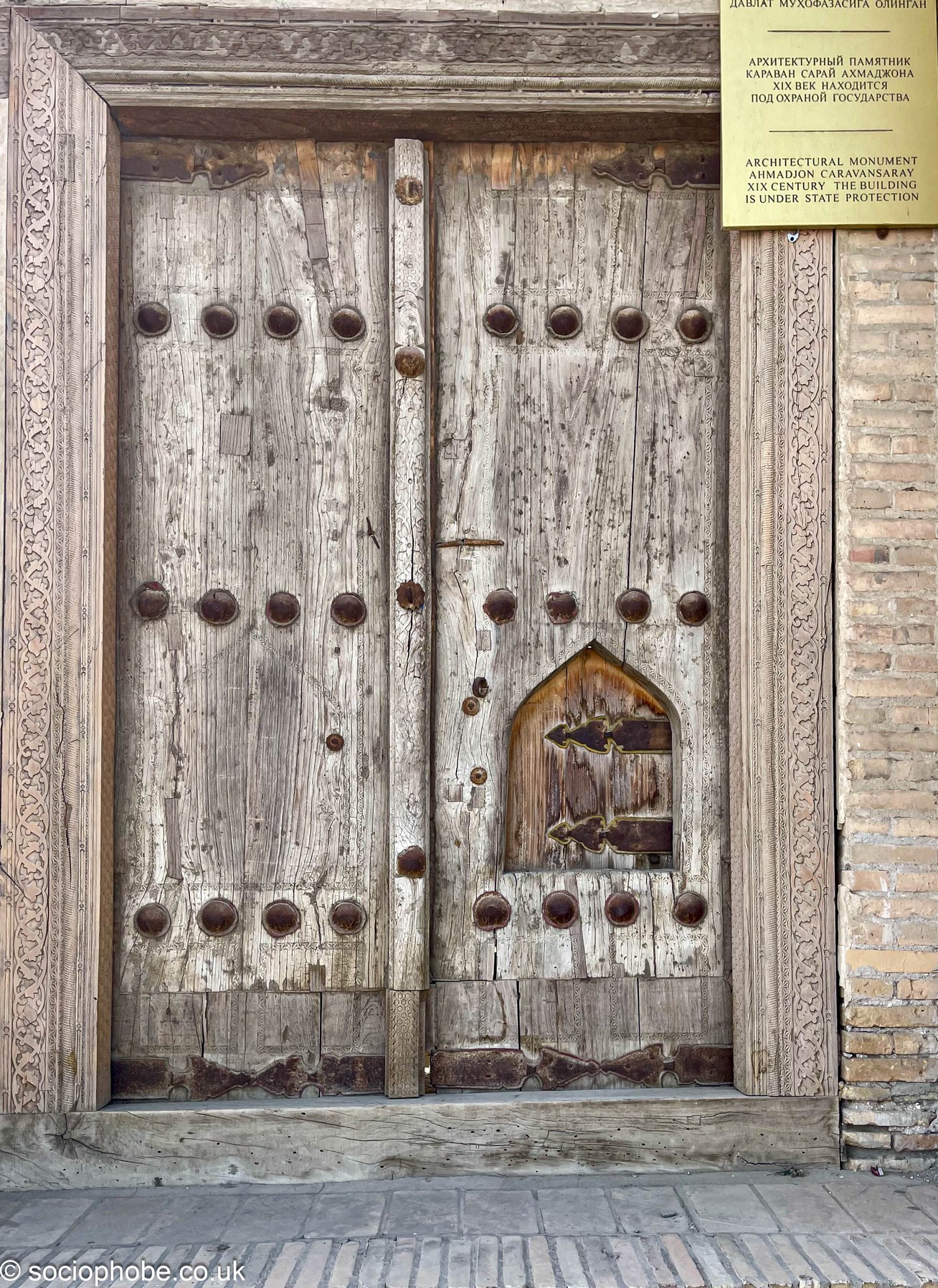
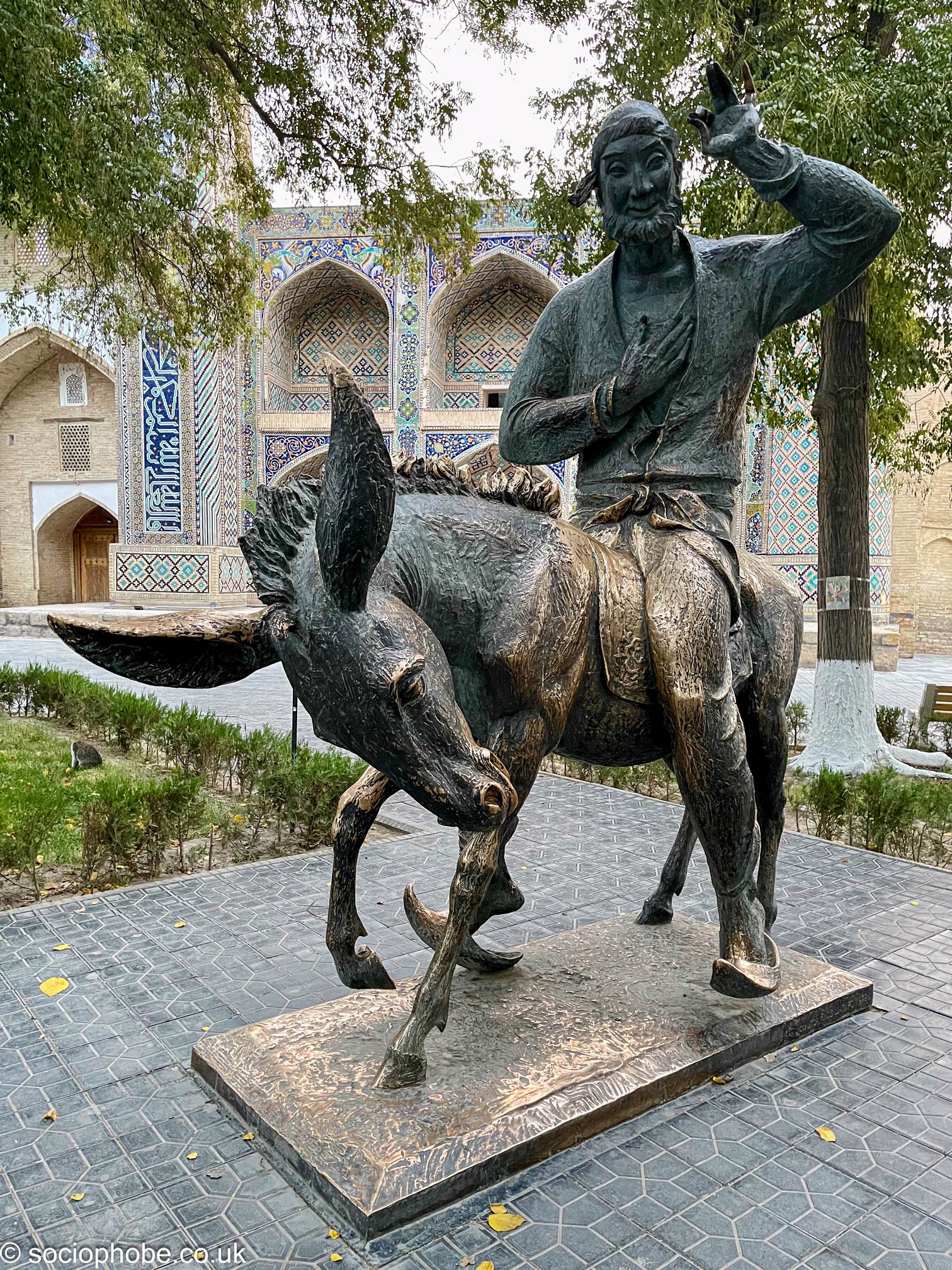
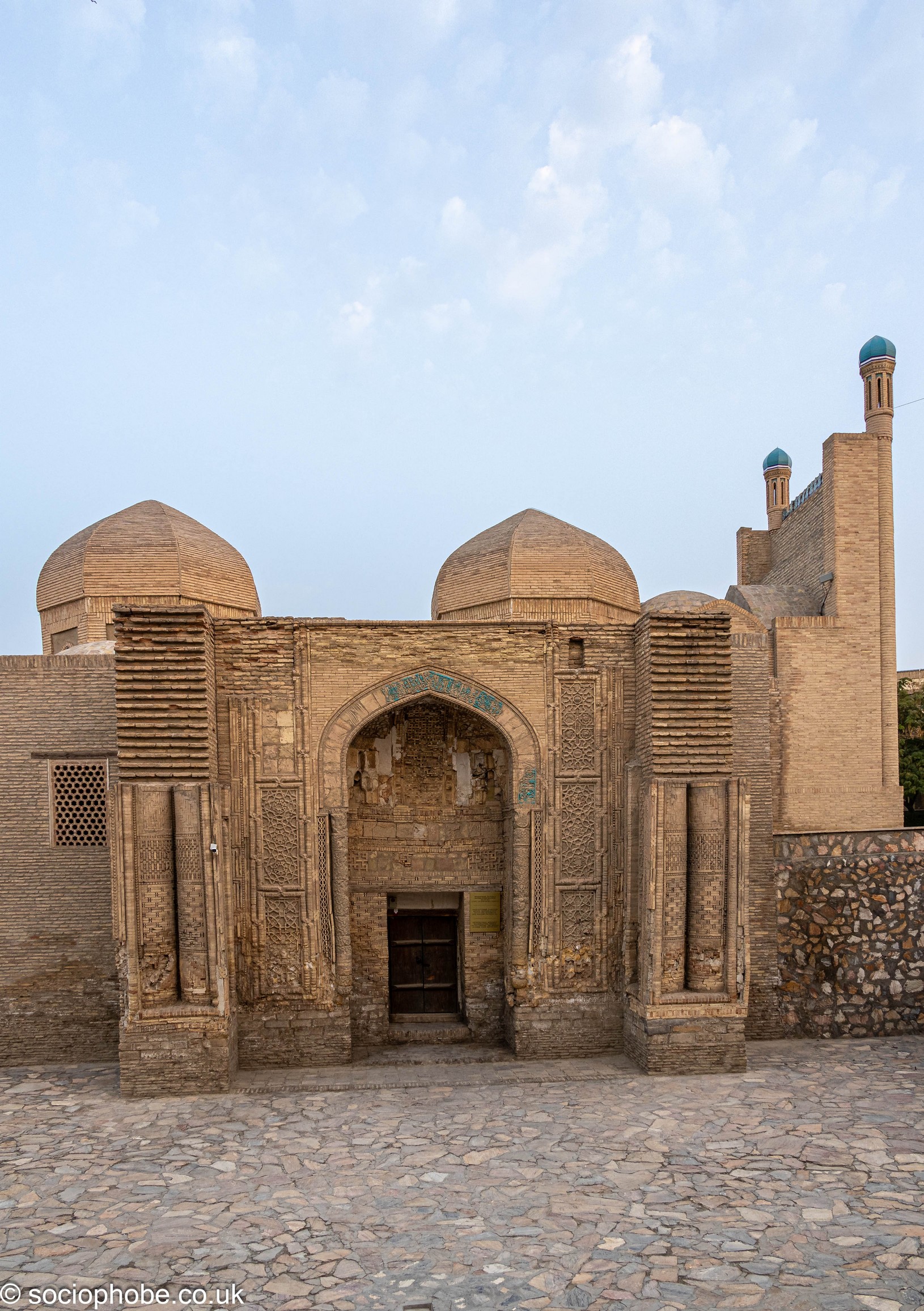
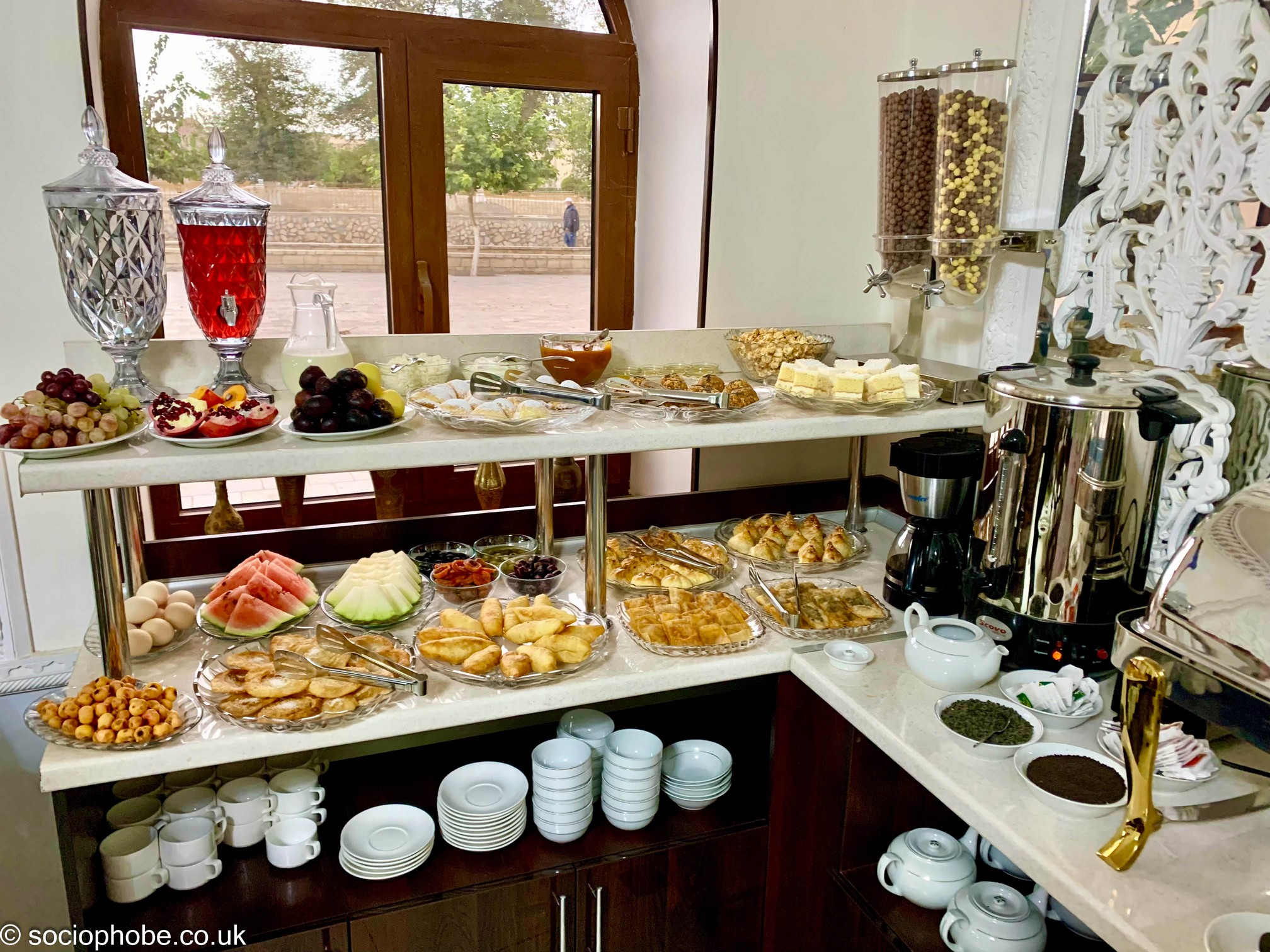
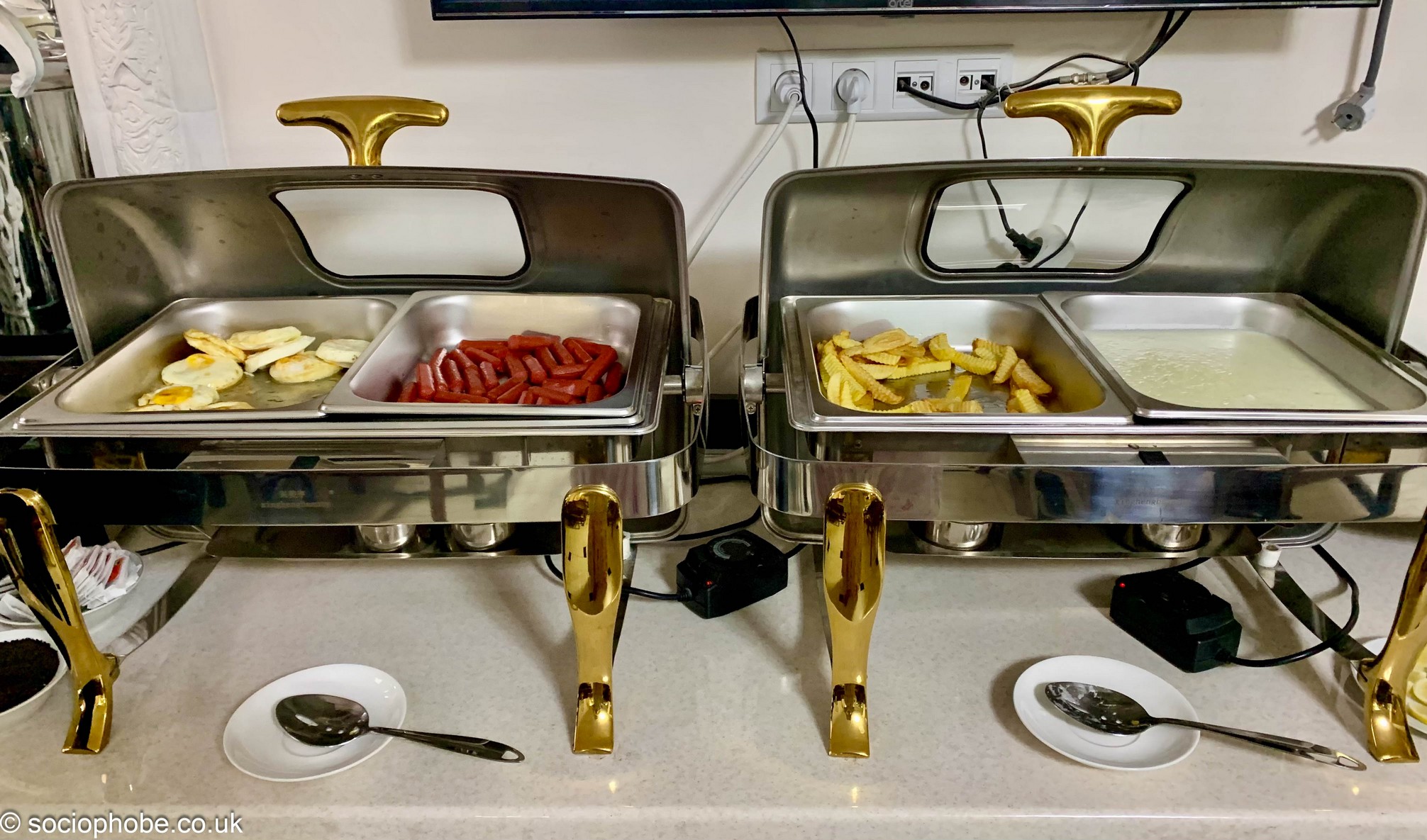
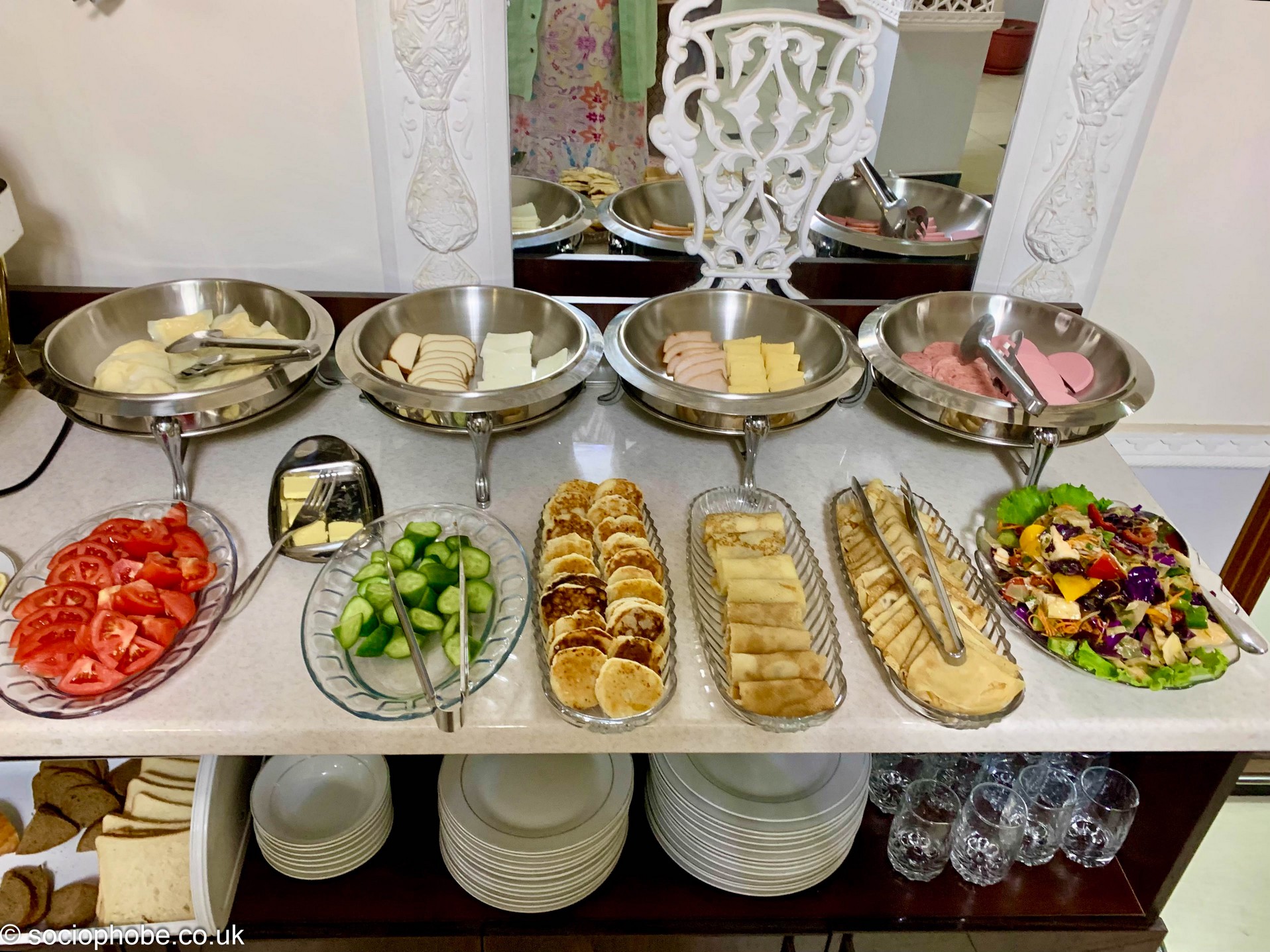
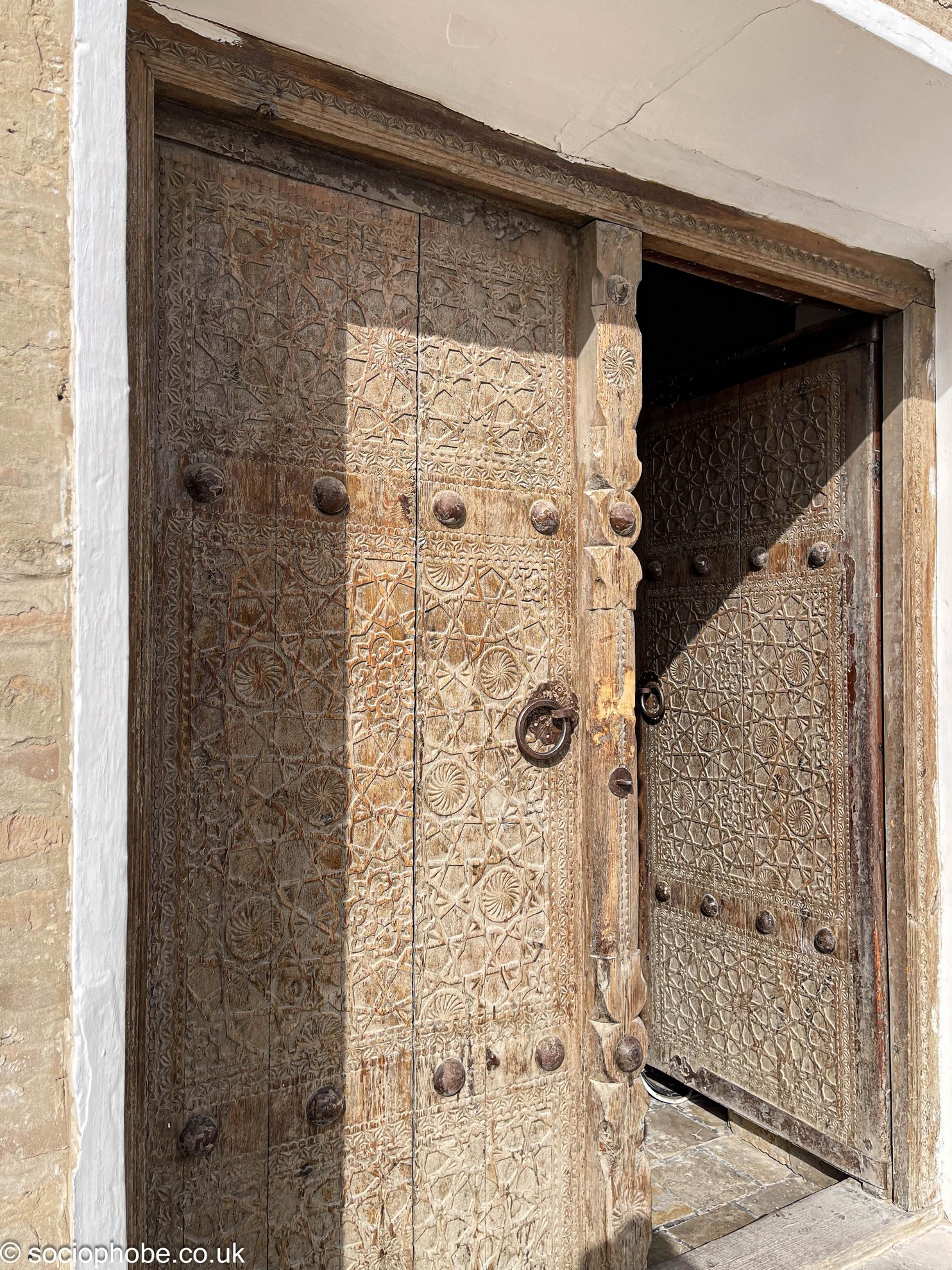
The next morning I woke early, quietly got dressed and went out and the old town was almost deserted. I didn’t see the sunrise due to all the buildings but it was lovely to amble around in the peace and just have a wander. There were a couple of friendly stray dogs and I noticed for the first time the amazing wooden doors on some of the buildings. Back at the hotel breakfast was really good, the best yet and far too many cake options for someone with no willpower!
Ismail Samani Mausoleum
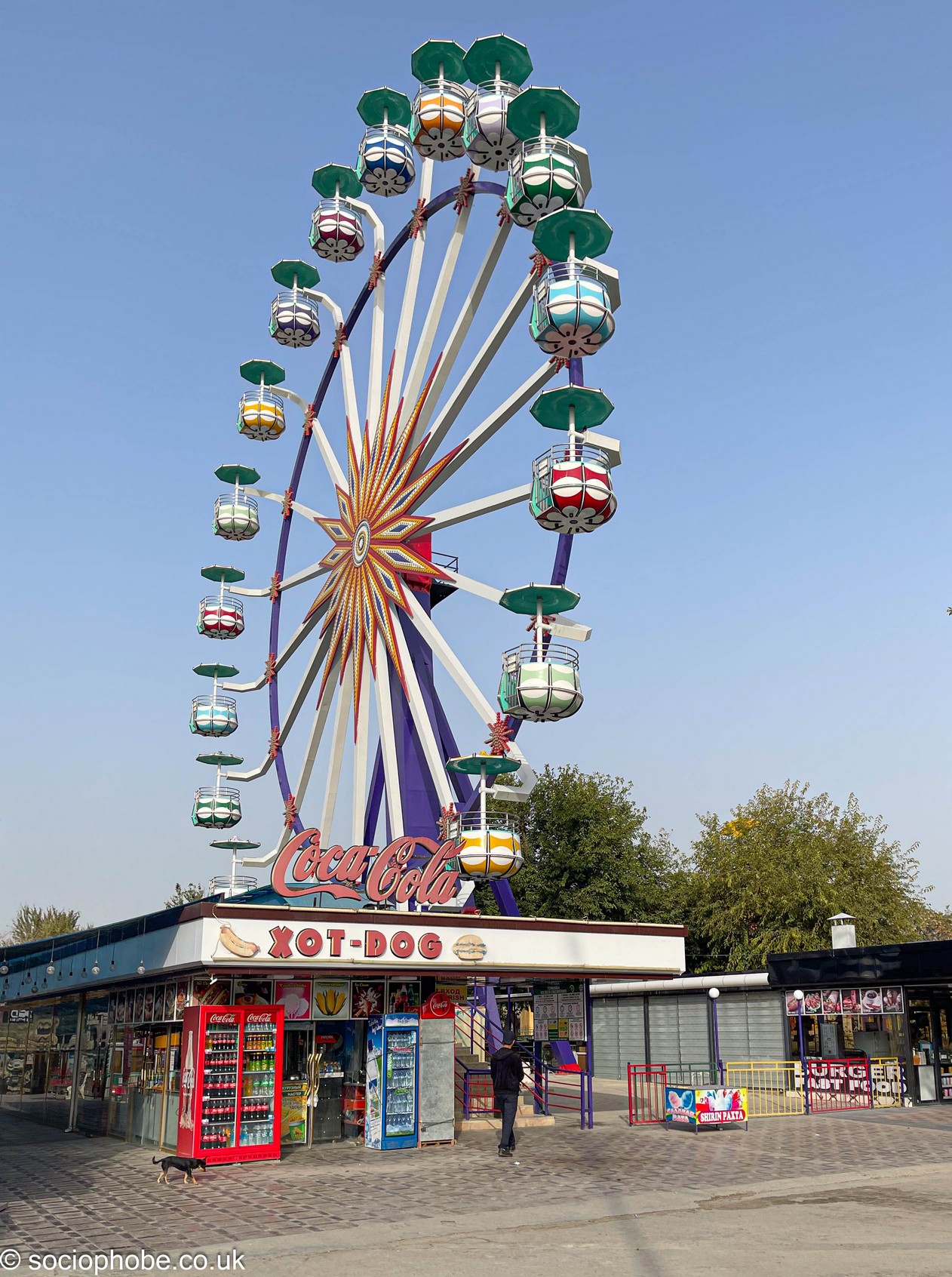
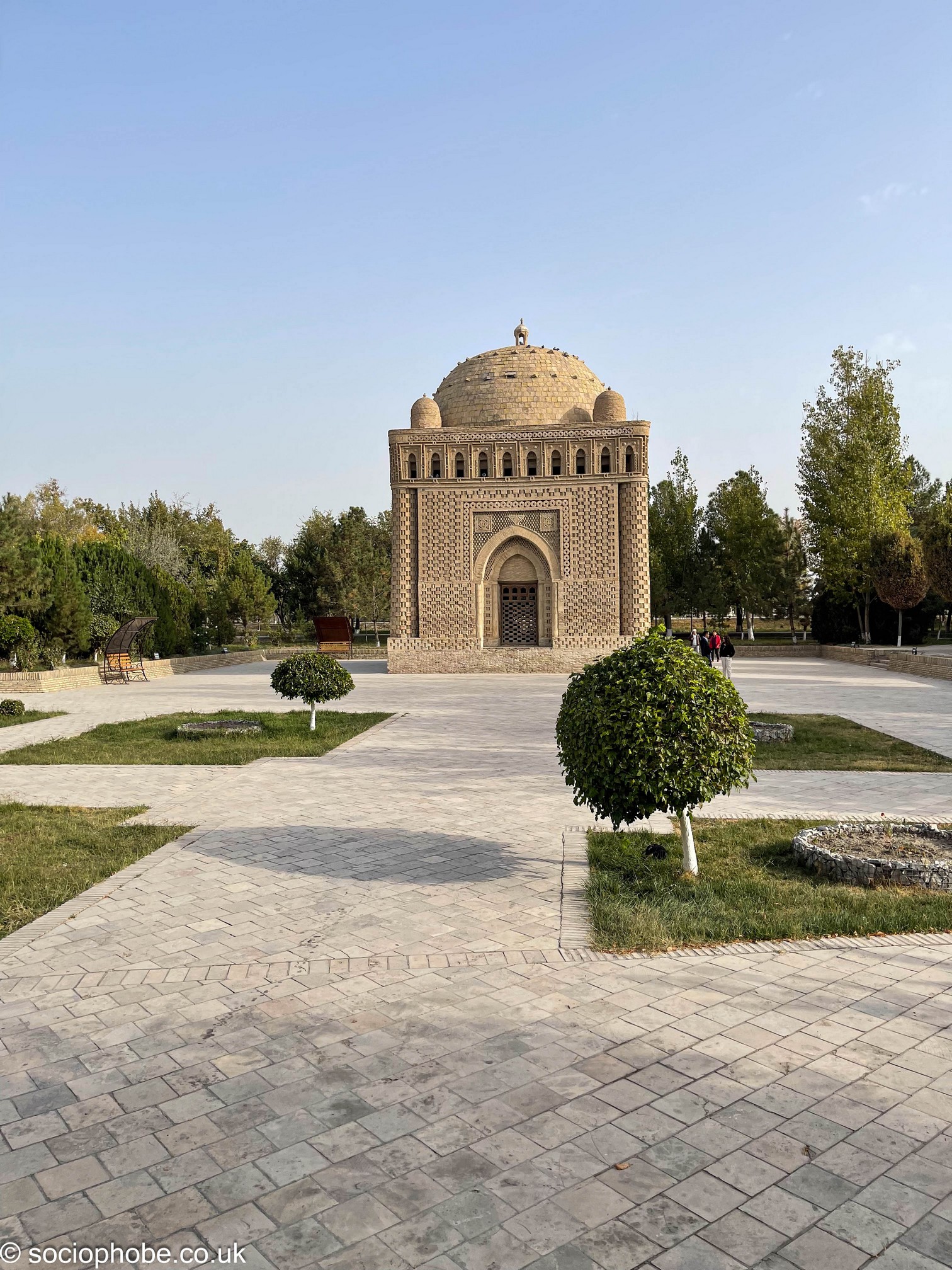
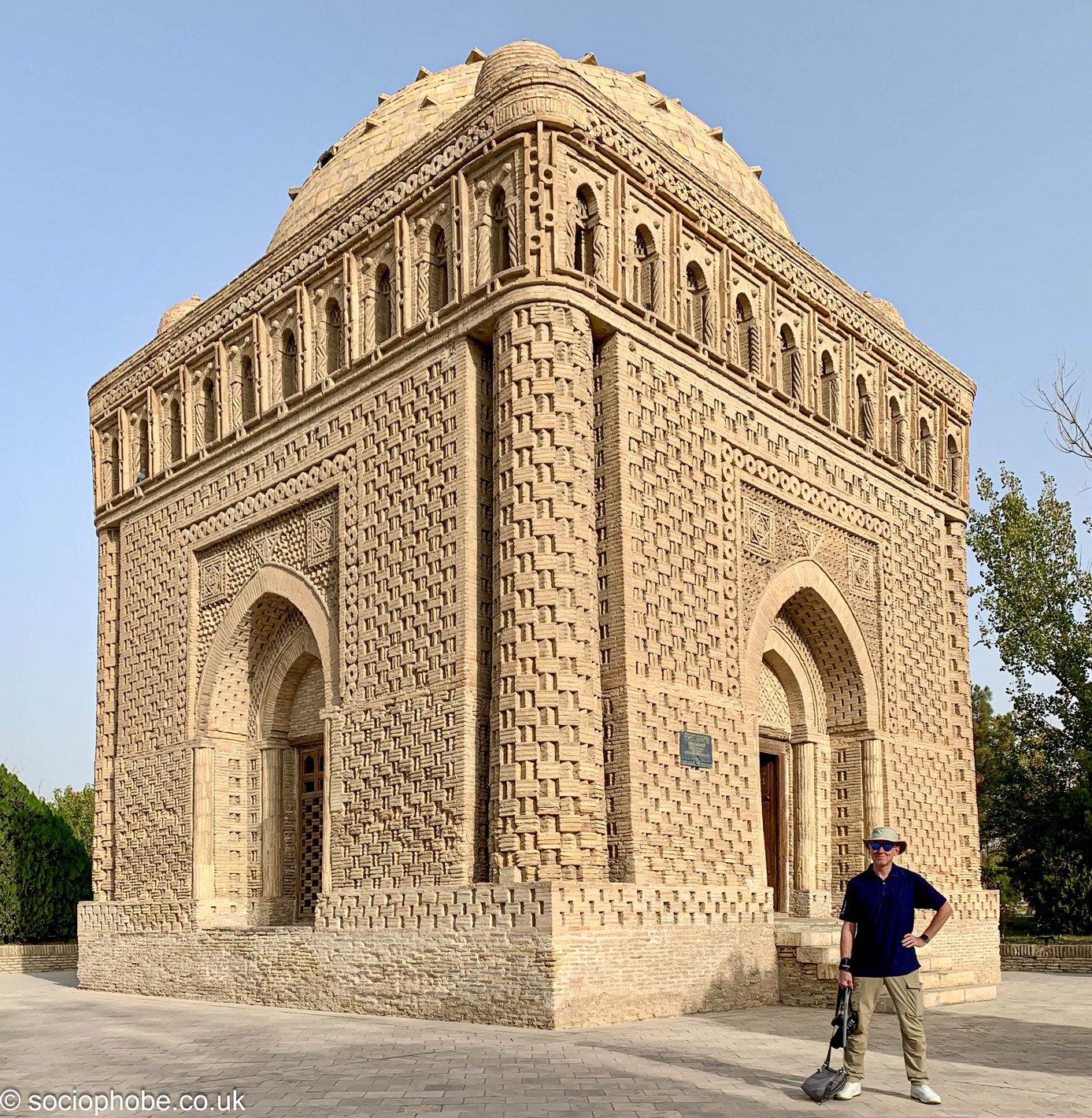
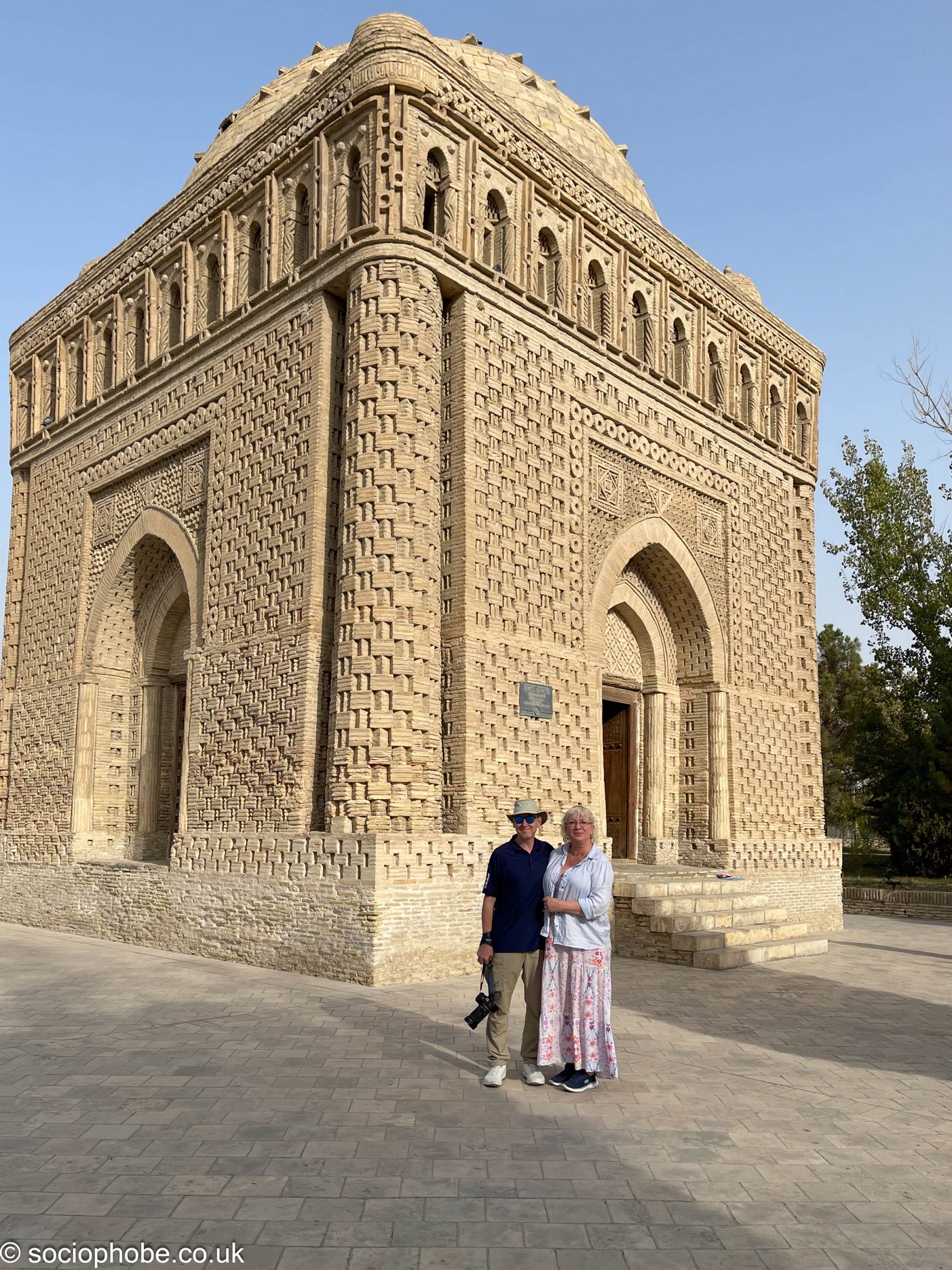
The group left at 9 for our city tour and first stop was the Samani Mausoleum. This was excellent as it was on my list but I thought it was outside of what we’d do as a group so that saved me a walk! It is set in a pretty park that also has a ferris wheel and other stalls.
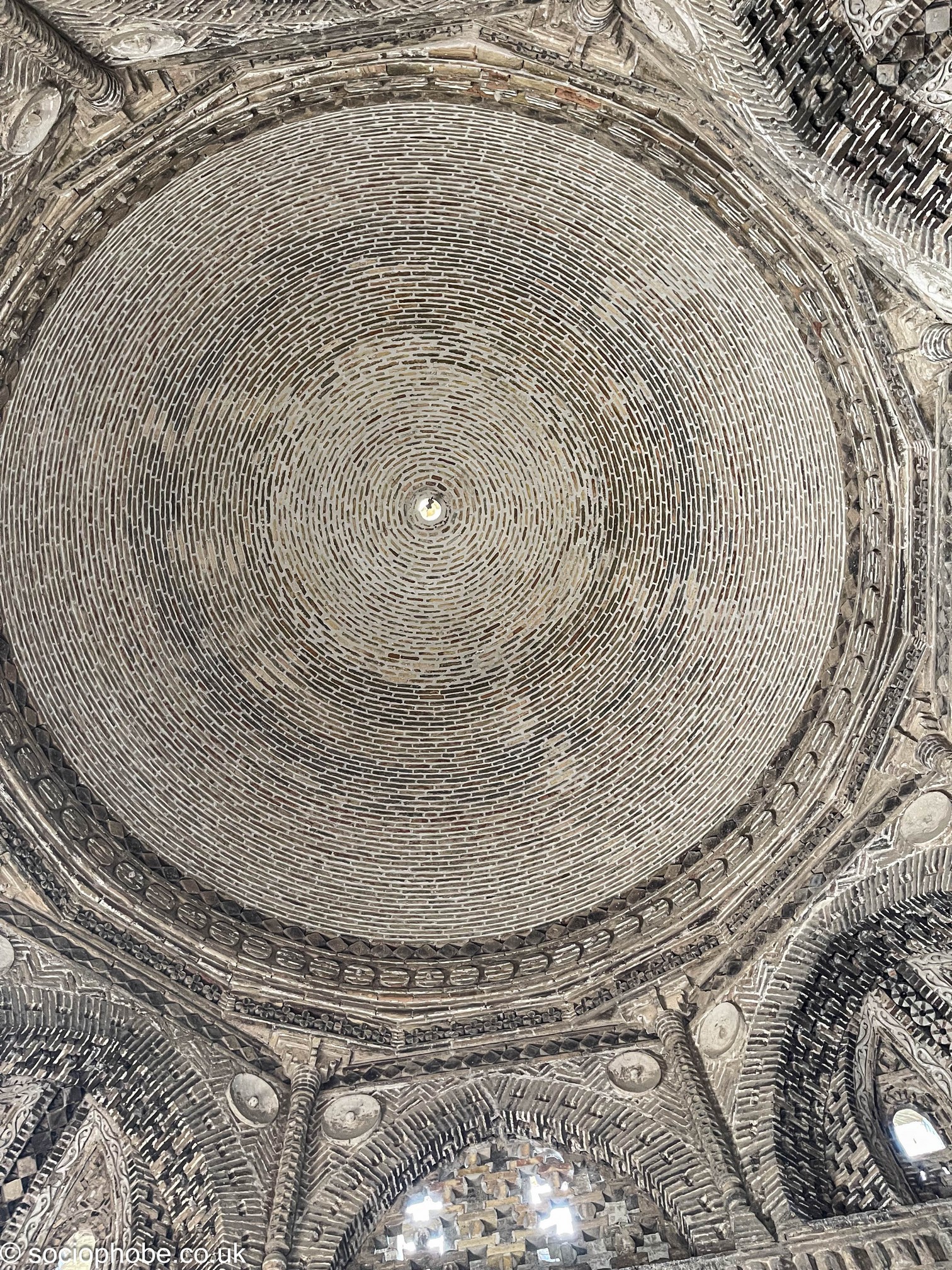
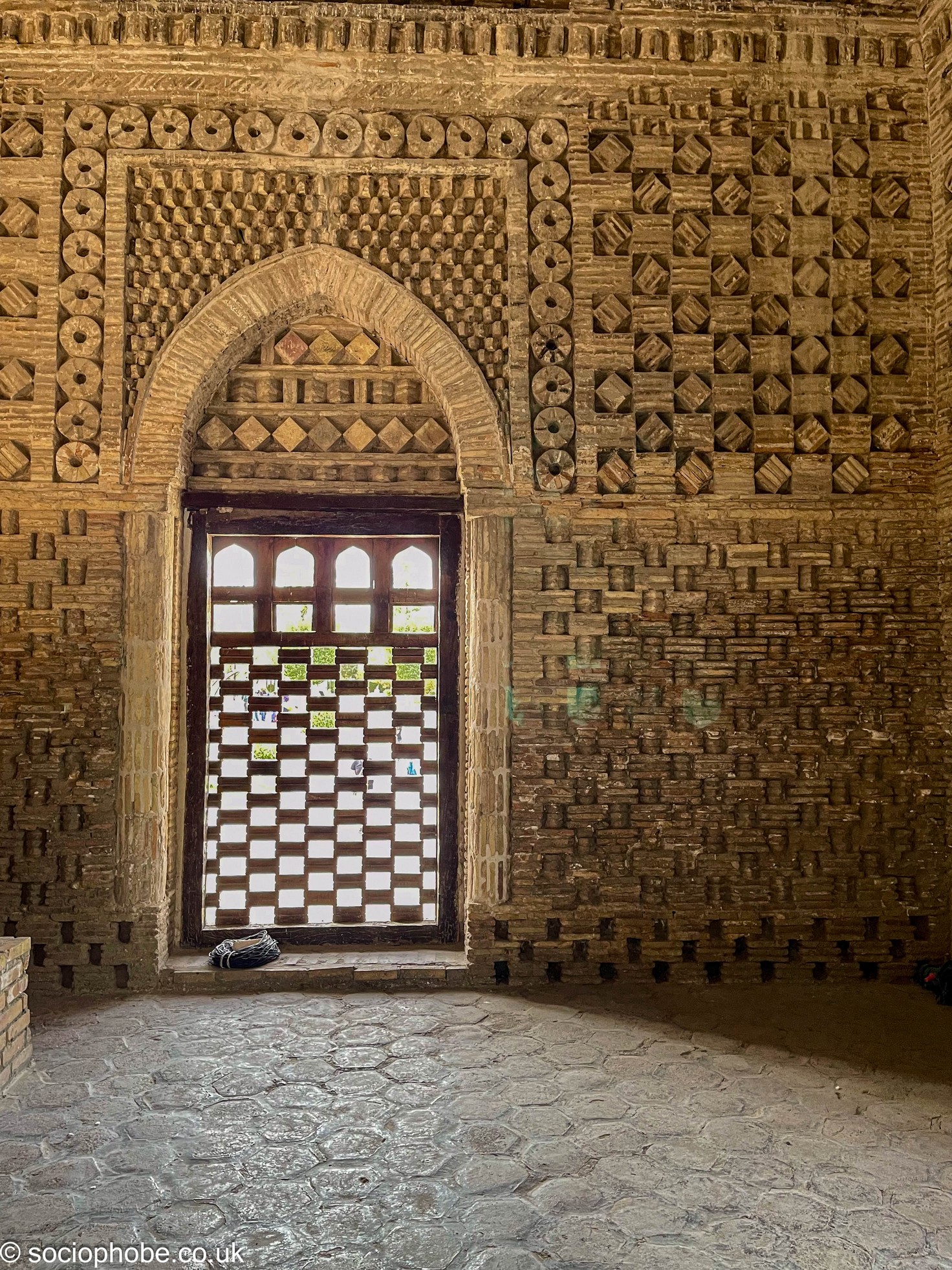
The mausoleum is one of the oldest in the city, around 1100 years old and has survived earthquakes and wars largely intact. The architecture is beautiful plain brick but in wonderful designs and with 2m thick walls. The decoration continued inside and the brick dome was pretty impressive too.
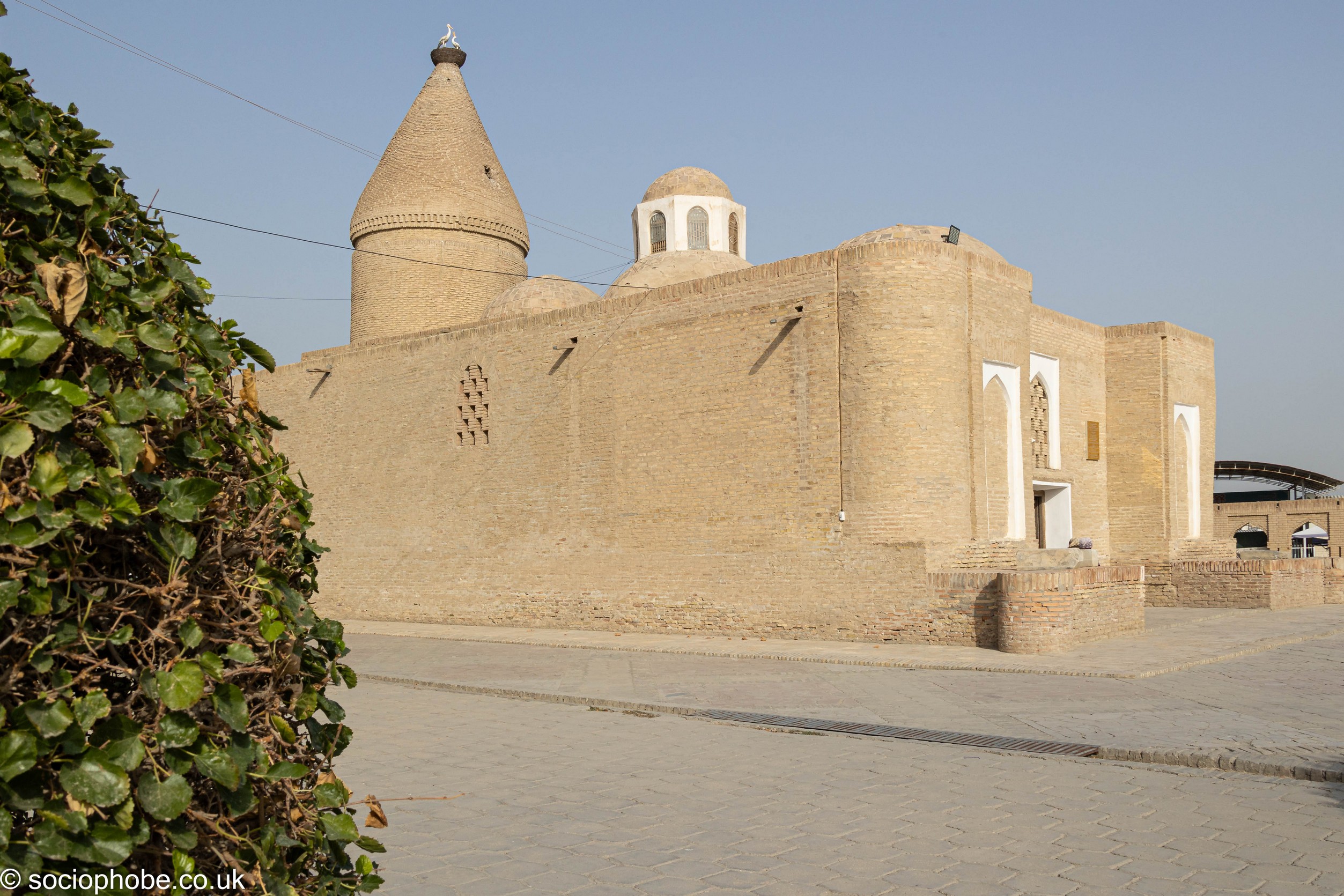
Chashmai Ayub Mausoleum
We continued through the park to the next stop, the Chashmai Ayub Mausoleum, now a museum of Bukhara water supply. It’s a rather nondescript building and entry costs around 30k som (£2) and the museum is quite interesting. It only takes about 10 minutes to read the panels, most are in English, and the scale of destruction of the Aral Sea due to cotton farming was particularly amazing.
Bolo Hauz Mosque
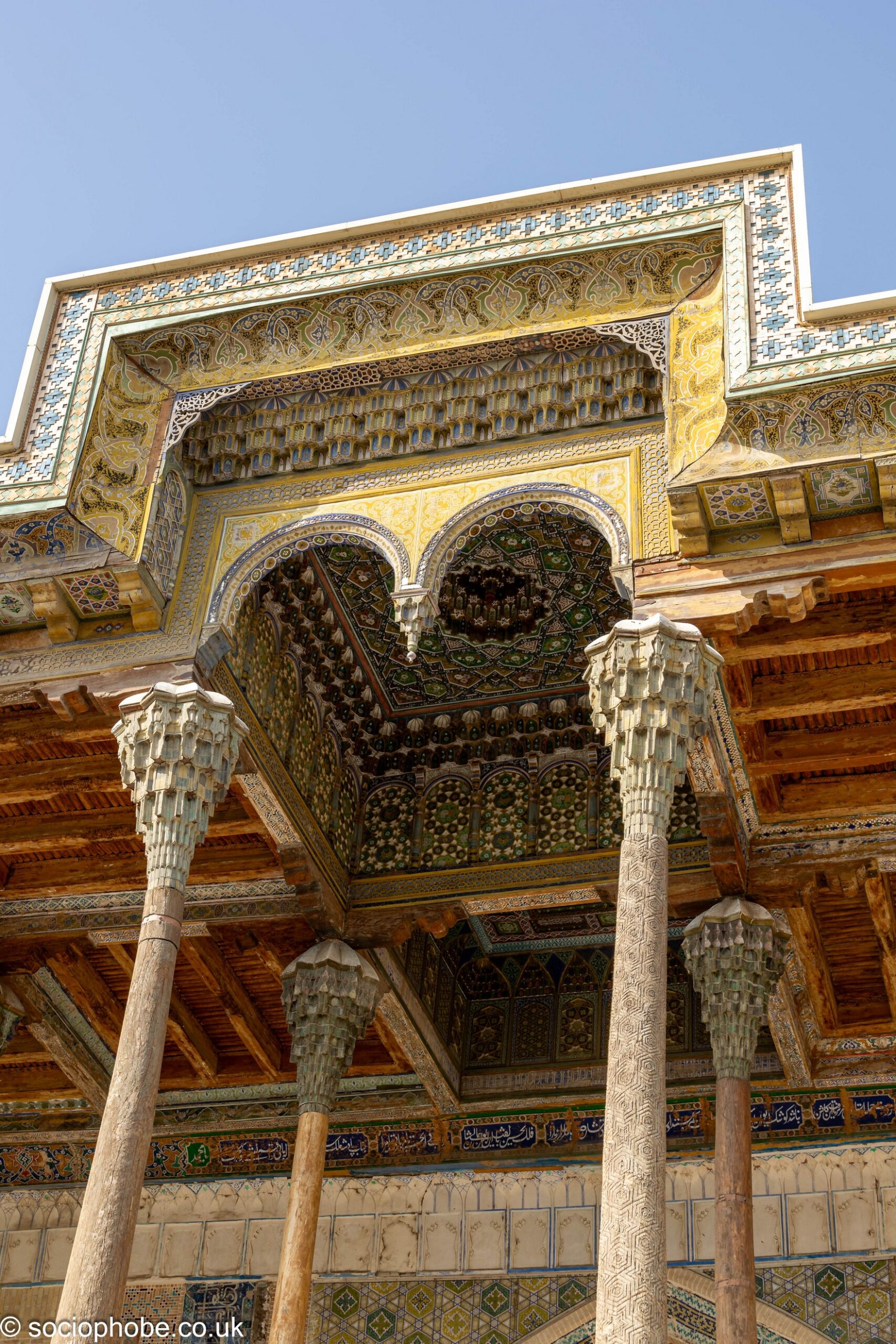
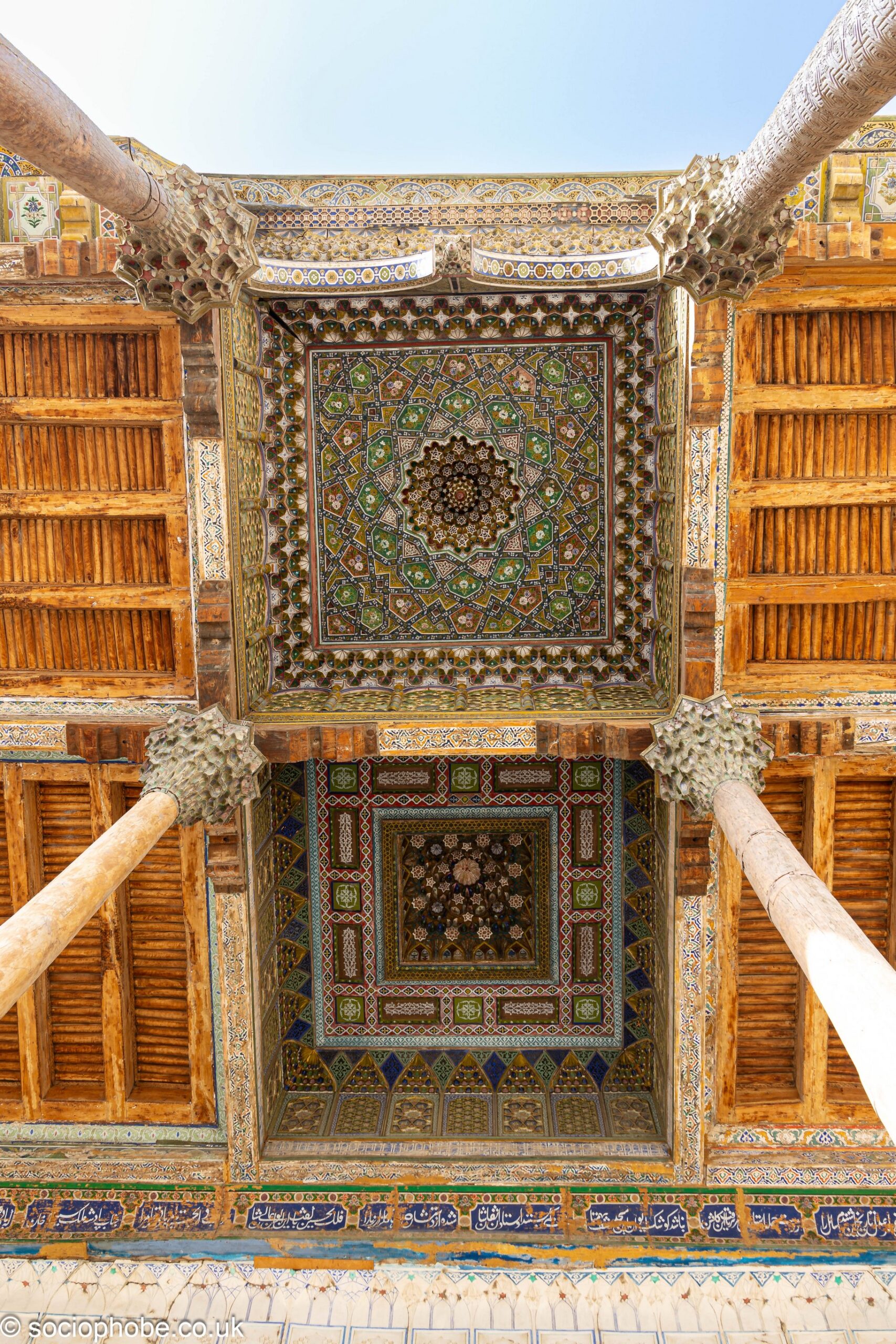
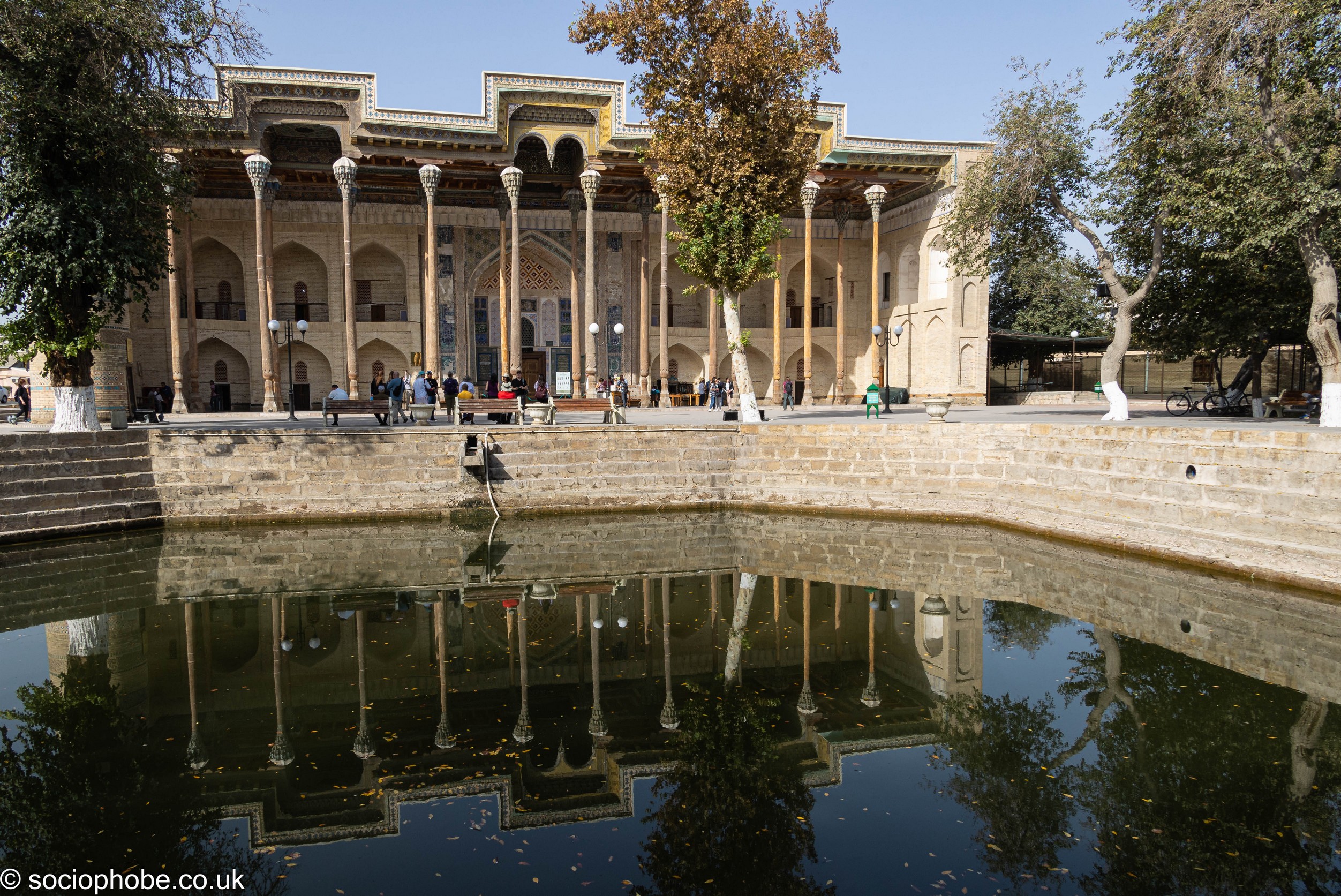
Just across the road was, joy of joys, another mosque! The Bolo Hauz Mosque dates to the 17th century and although we couldn’t go inside, the entrance portico was impressive with an amazing carved and painted wooden ceiling and decorated wooden columns. There was also a minaret standing next to the mosque and a nice pond in front of the mosque.
The Ark of Bukhara
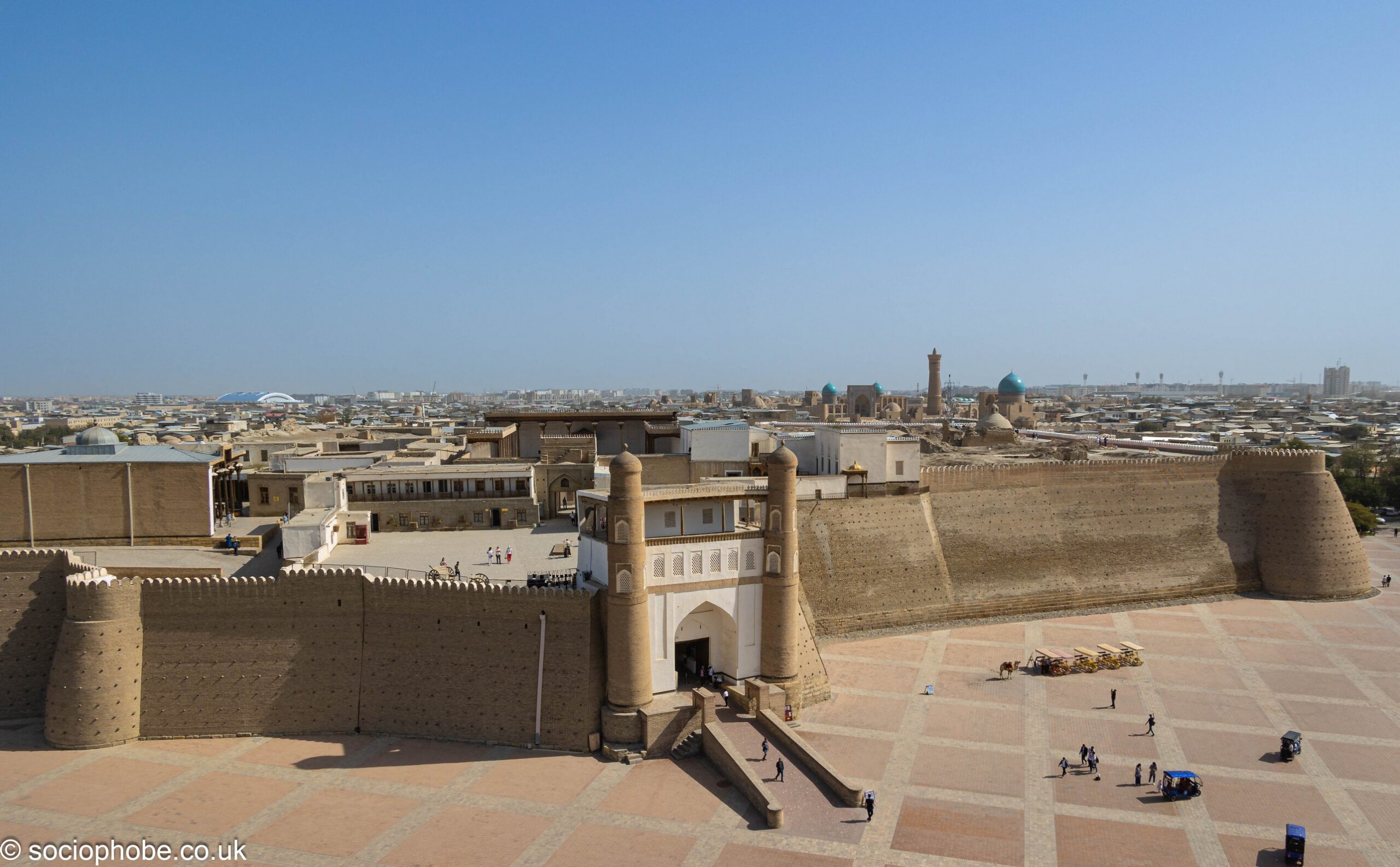
Finally we got to the highlight, for me at least! The Ark of Bukhara, fortress of the Emirs for around 1500 years, although during that time it was damaged and rebuilt many times. The final conquest by the Russians in the 1920s resulted in the almost total destruction of the fortress and very little original work is left today. The restoration has focused on a couple of internal rooms and the walls either side of the entrance ramp – if you go further round the walls are reduced to just a pile of mud. This doesn’t in anyway distract from the awesomeness of the building and how impressive it must have looked in its heyday.
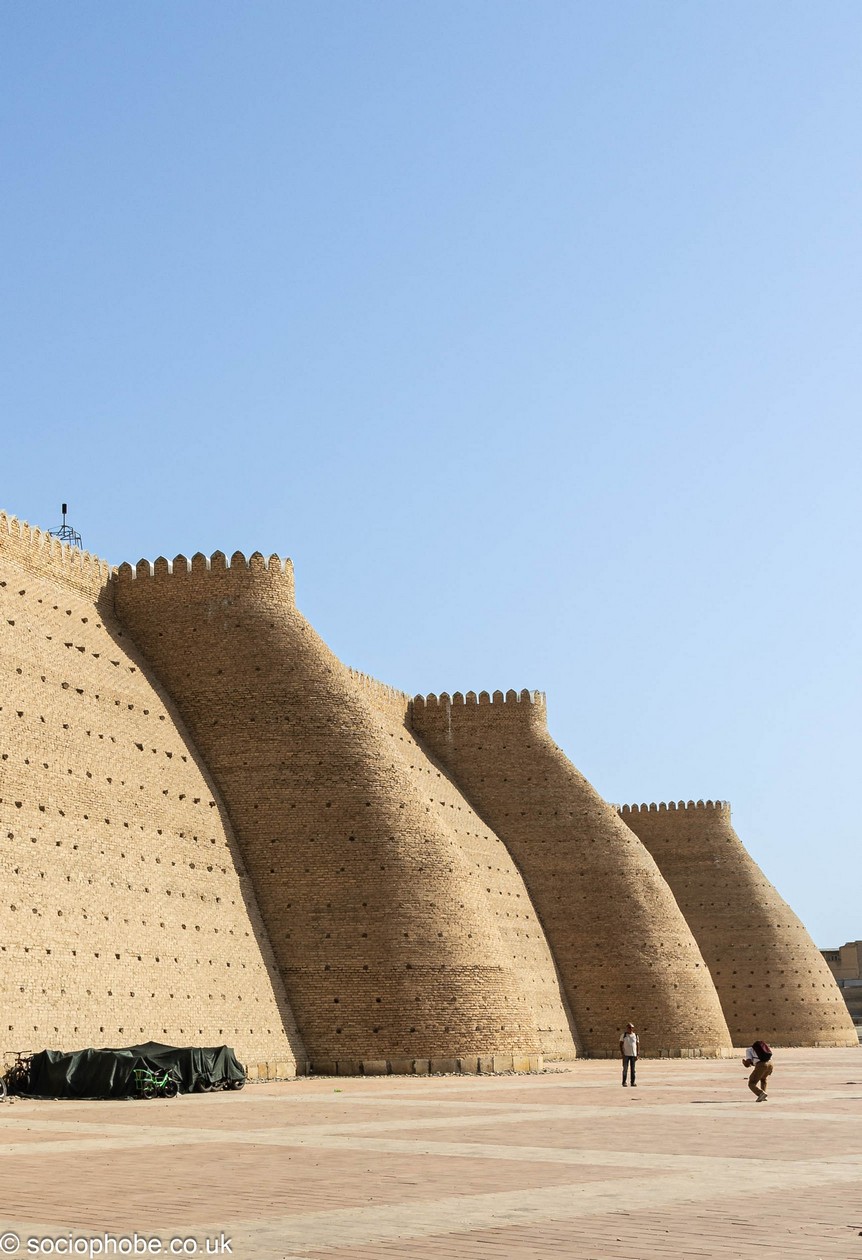
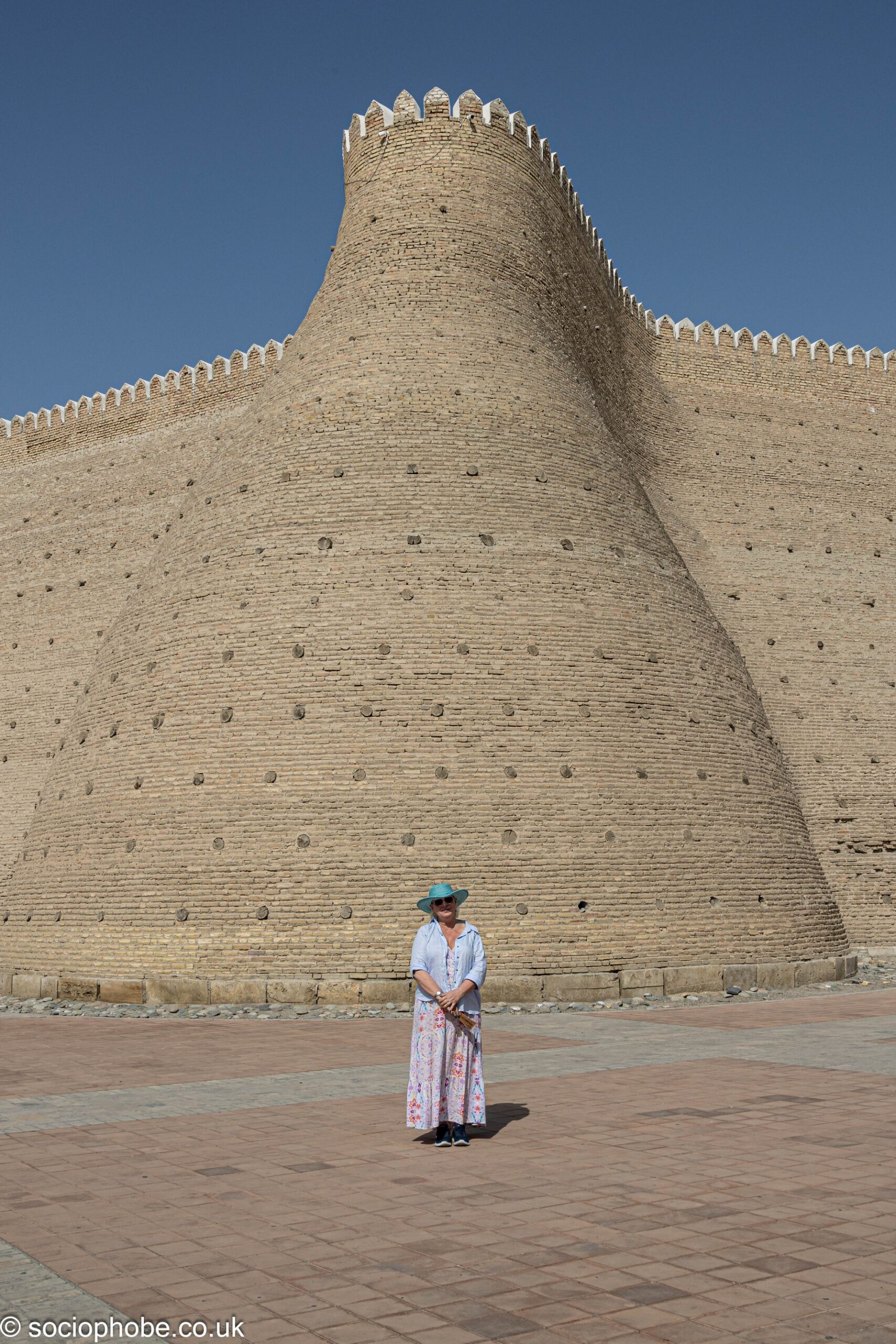
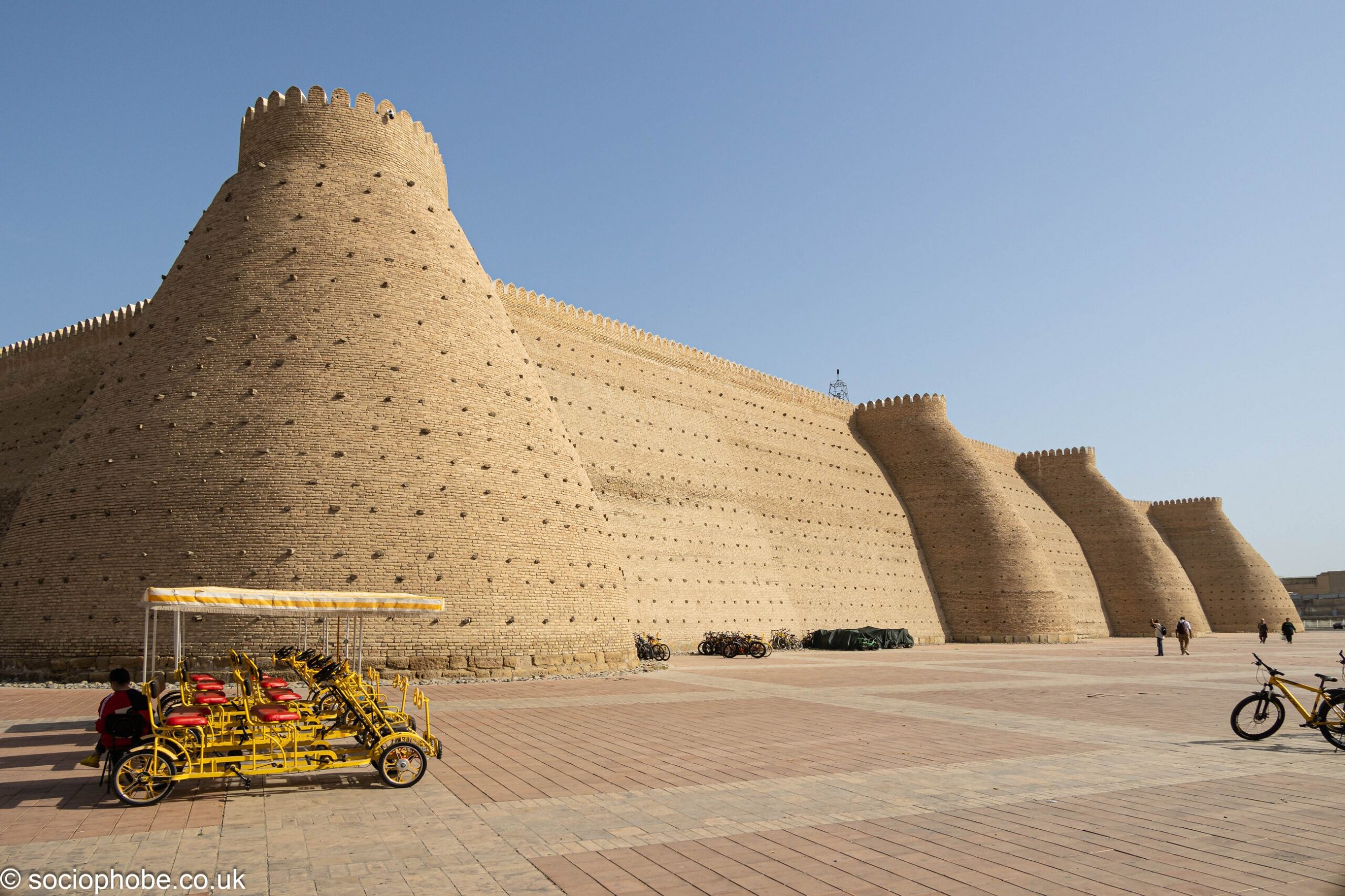
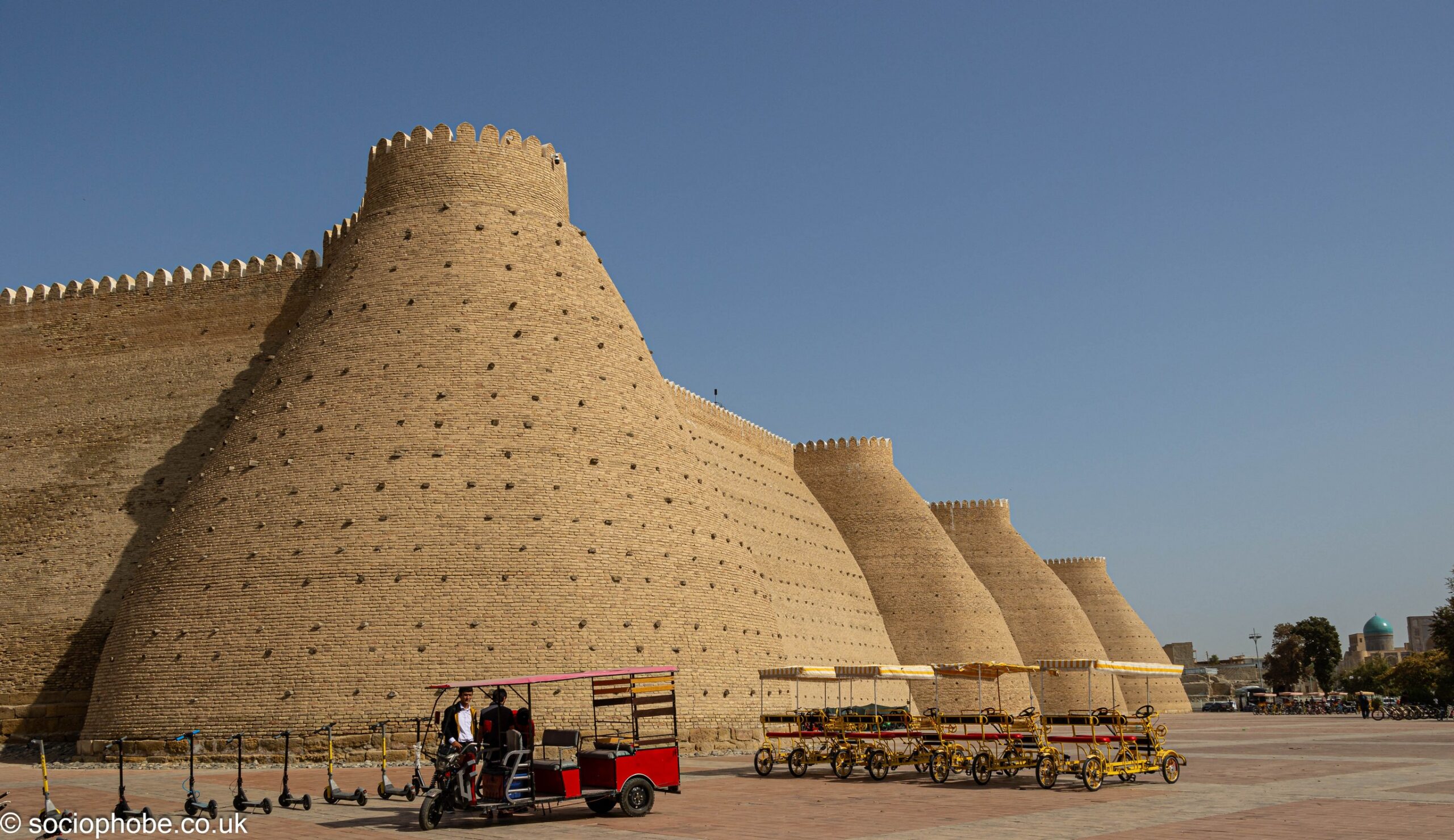
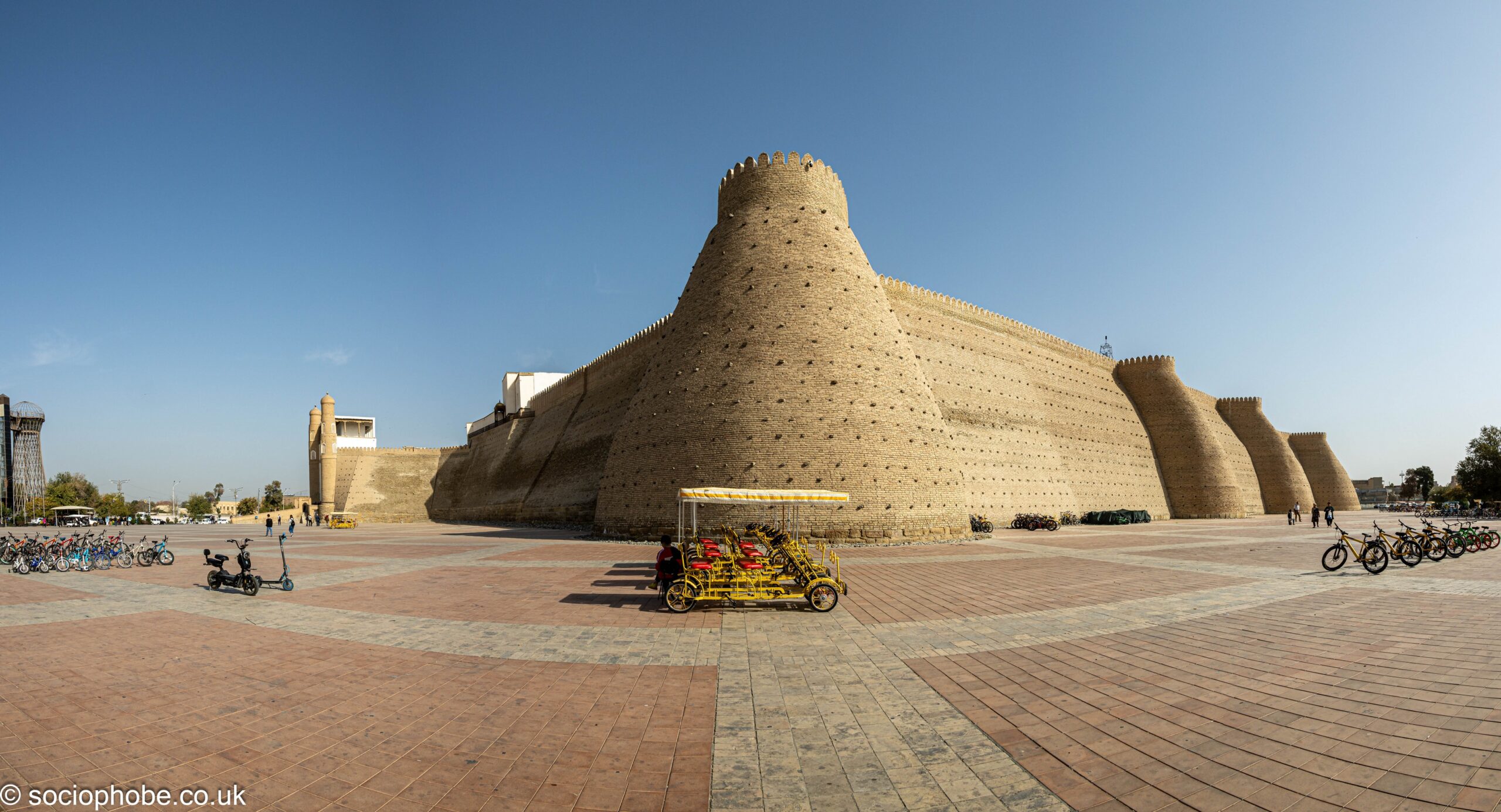
We went inside the fortress and there are a few small museums, some with lovely 19th and early 20th century photos of the old city and some of the Emirs, the last one dying in Afghanistan in 1947 after the Russians took over Bukhara in 1920. There was also the coronation room, where the Emir would meet foreign dignitaries although this was completely destroyed so it has now been partially restored. It does give an idea of the splendour and wealth of the Emirs, if you use some imagination.
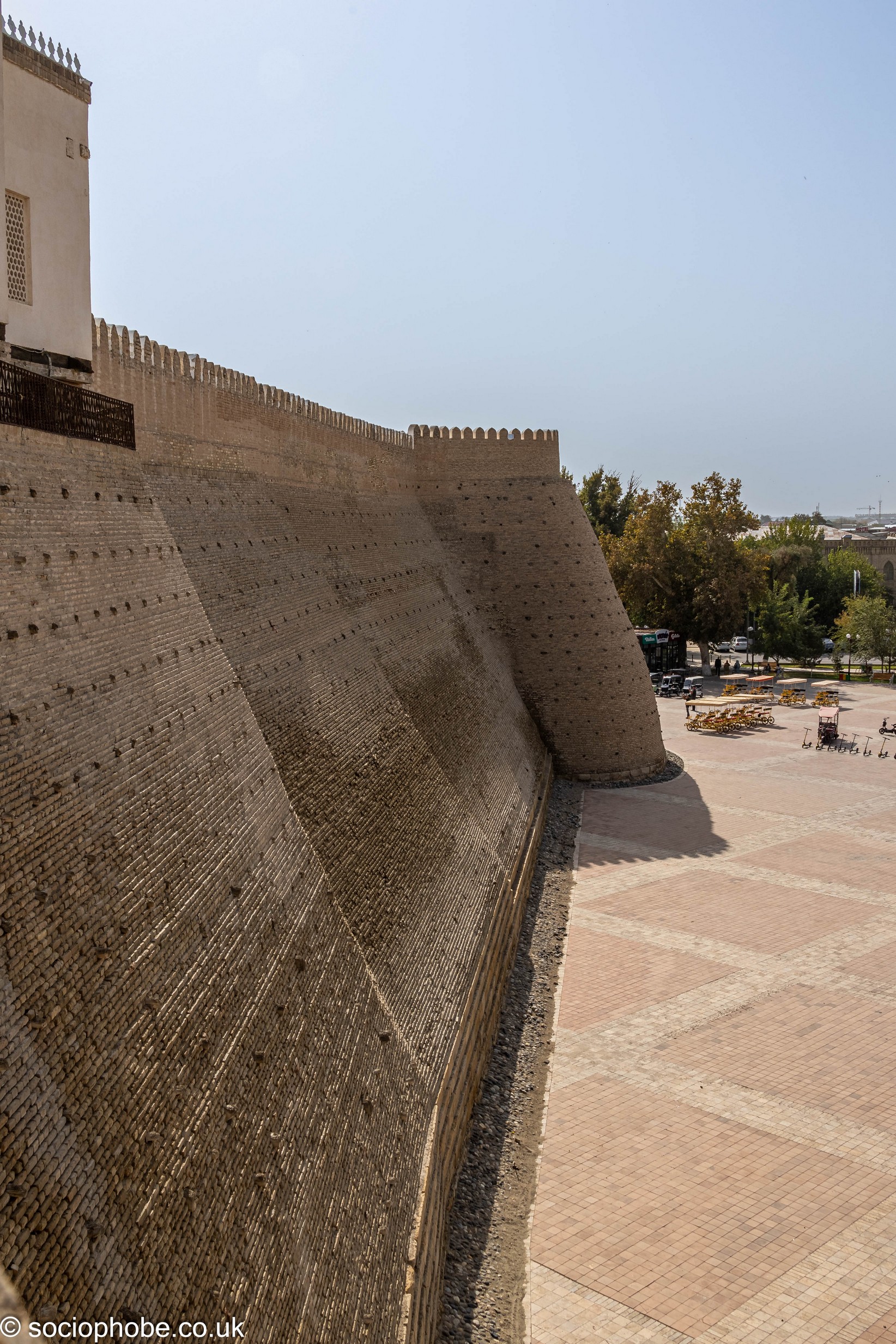
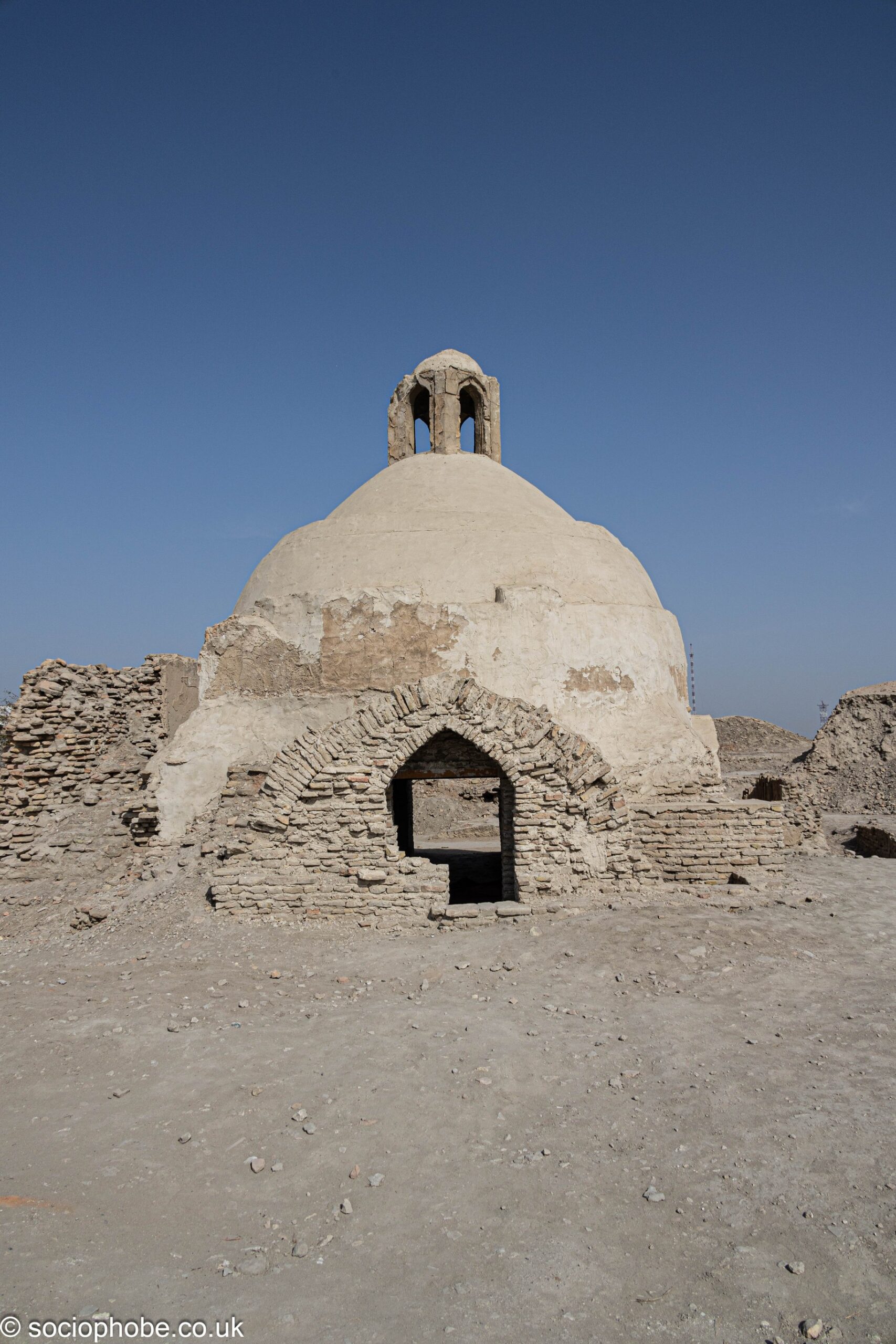
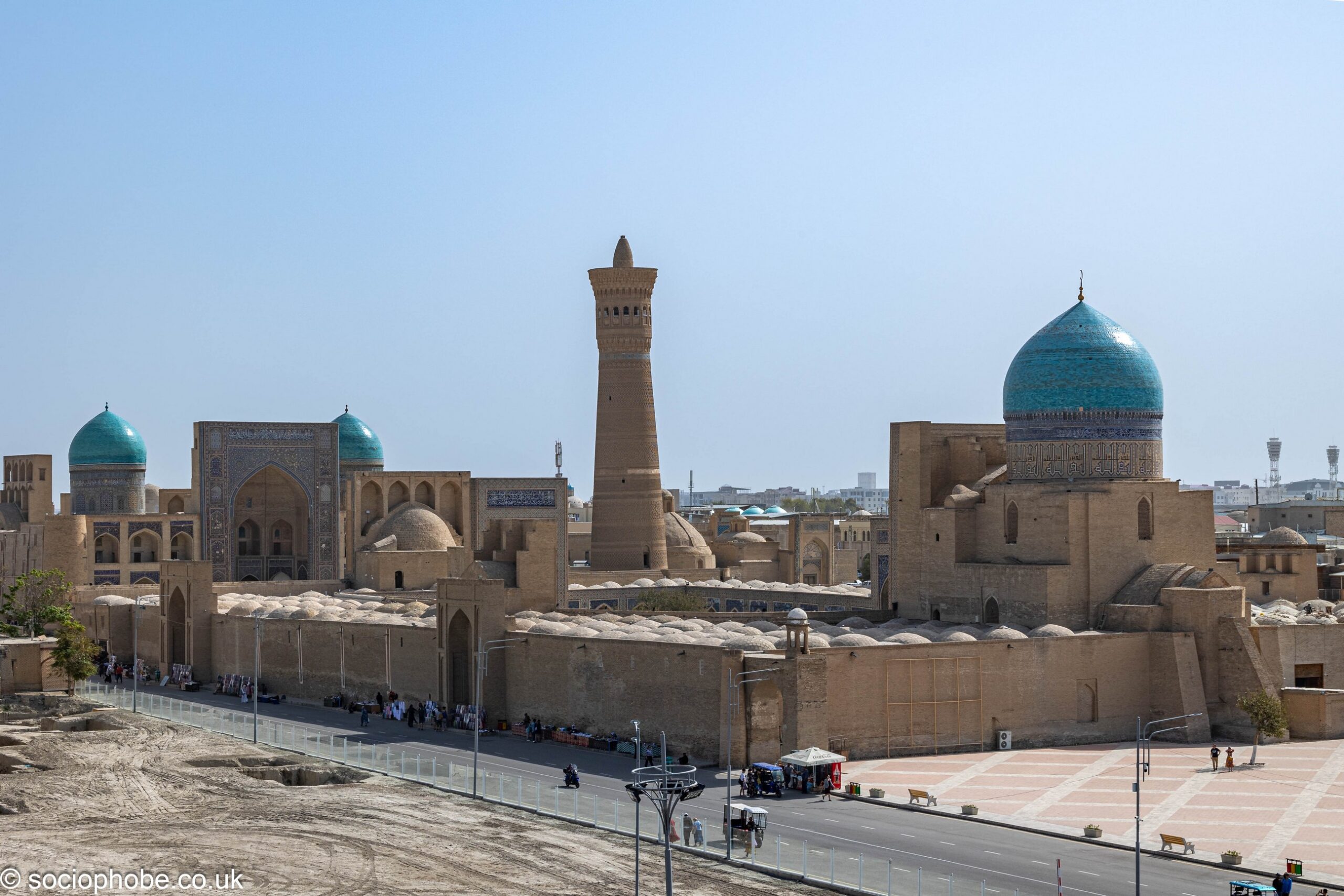
There is also a walk into the archeological area, basically all the internal areas they haven’t restored and a walk along the restored section of the walls. There is one small badly damaged mosque to see and that’s about it, the rest is rubble. The views from the walls are good but it’s best to go mid afternoon as otherwise you’ll be photographing straight in to the sun. I probably spent as long outside the ark, walking up and down the route of the ramparts, as I did inside and an hour is more than enough.
Kalon (or Kalyan/Kalan) Mosque, Madrassa and Minaret
The final stop of our tour was the Kalon Mosque and Minaret, both originally built in the 1120s. The minaret is a fabulous structure, so impressive that Chingiz Khan spared it from the general destruction he ordered for the rest of the city. The minaret foundations are 10m deep which probably helps explain why it has survived all the earthquakes as it stands nearly 50m tall! It was the first building to use the turquoise tiles for decoration that became so prevalent under the Timurids and all the other decoration is composed of bands of baked bricks.
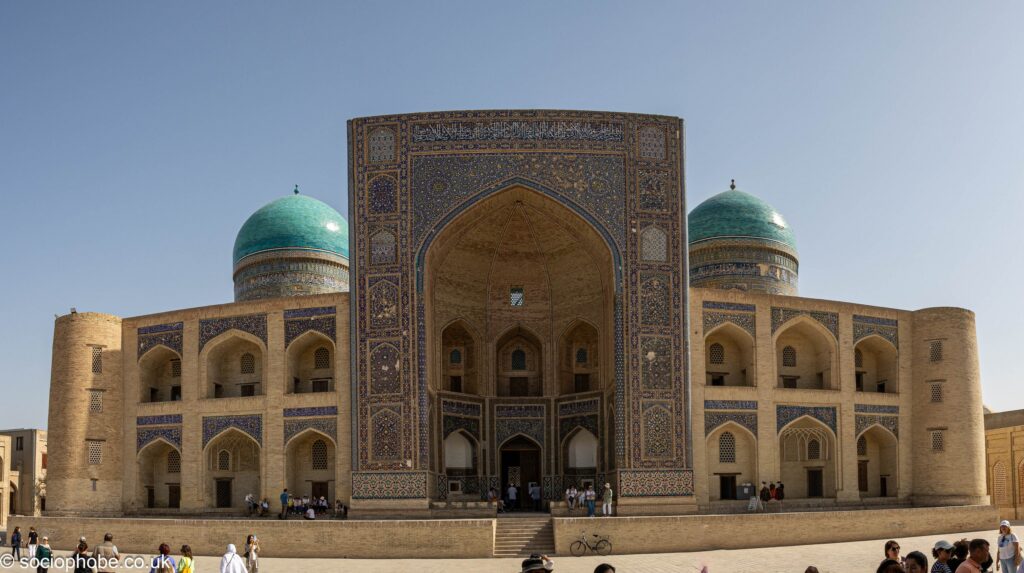
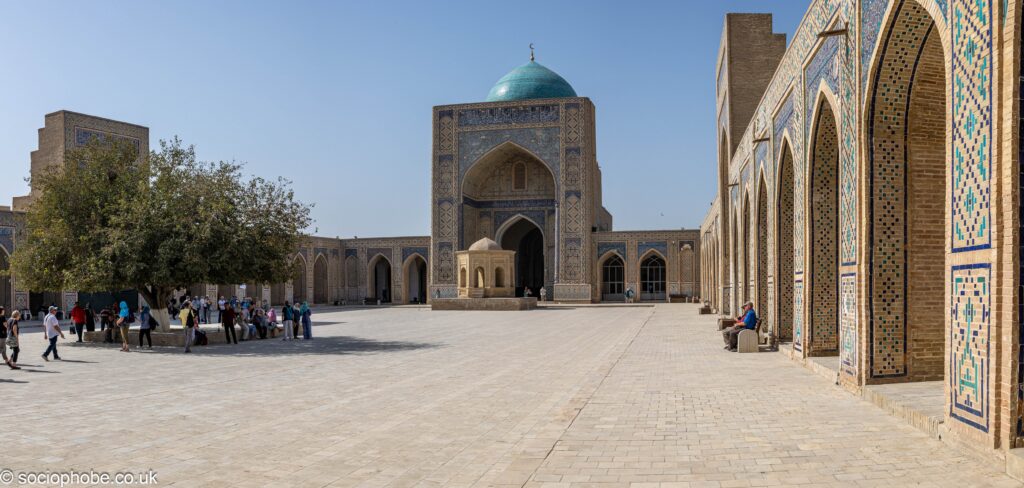
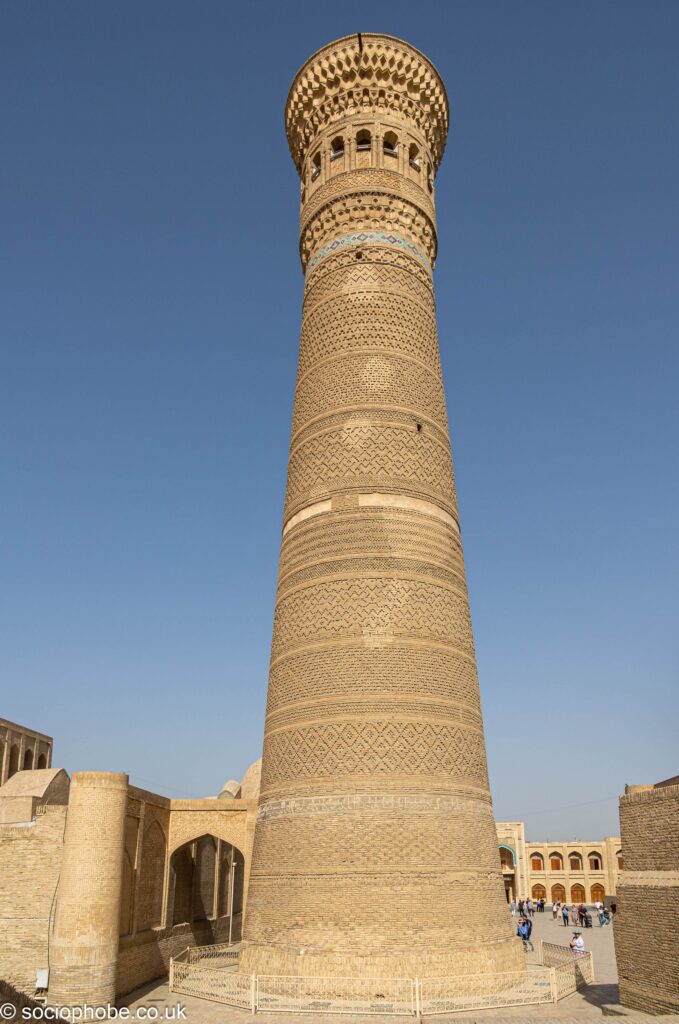
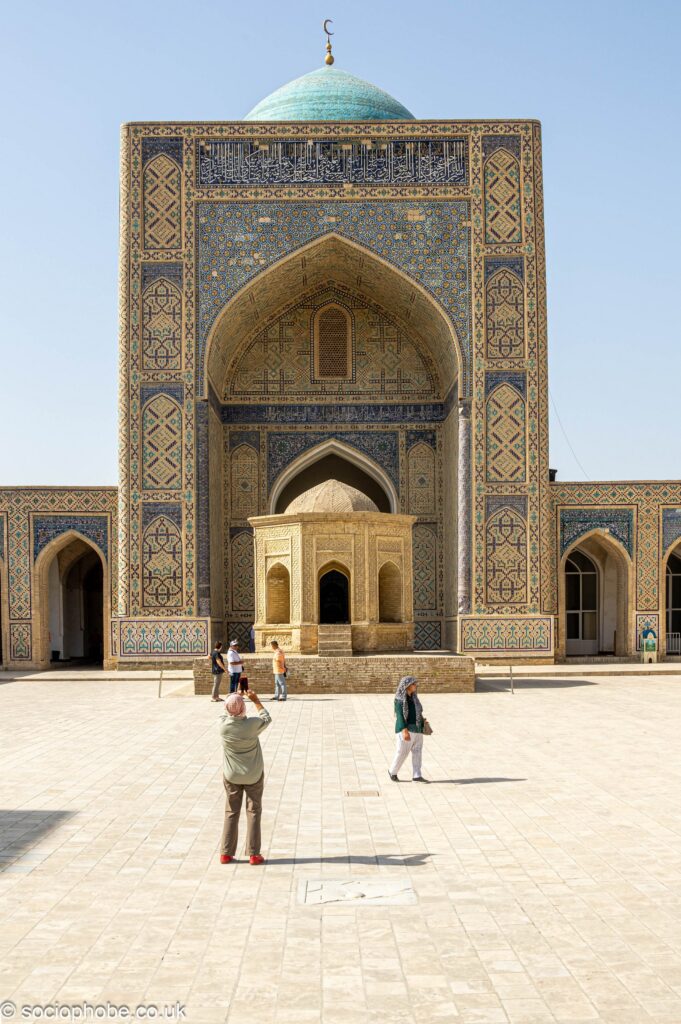
Kalon mosque is pretty but we were suffering beautiful mosque overload so we were in there for just 10 minutes. The original was destroyed by the Mongols so this incarnation was built in the early 16th century, along with the madrasa. It has a nice cloistered courtyard and then a main building, that we couldn’t enter. Another lovely central Asian mosque but we were too blase by this stage. Mir i Arab Madrasa was opposite the mosque and was again, more of the same. All three buildings are lit up at night and it’s another extremely pretty area to sit.
Chor Minor Madrasa
The tour then finished and everyone else went for lunch. I decided to visit Chor Minor Madrasa because it looked amazingly photogenic, having four turquoise domed minarets. I negotiated a price with a lady driving one of the little electric tourist buggies by the Kalon Mosque and off we went. It was interesting drive through some very much back streets but we arrived at the minaret after maybe 10 minutes and I walked around the outside.
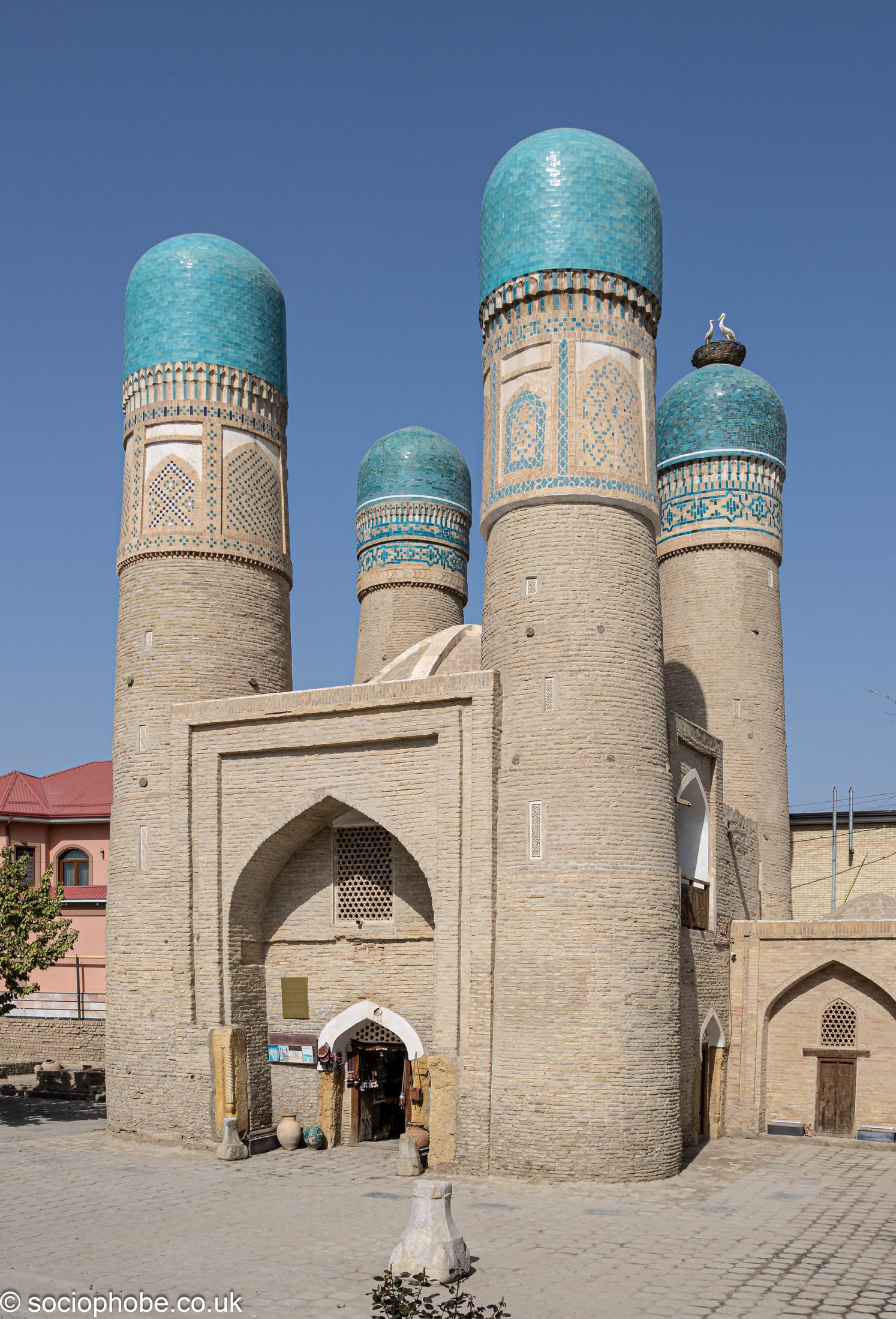
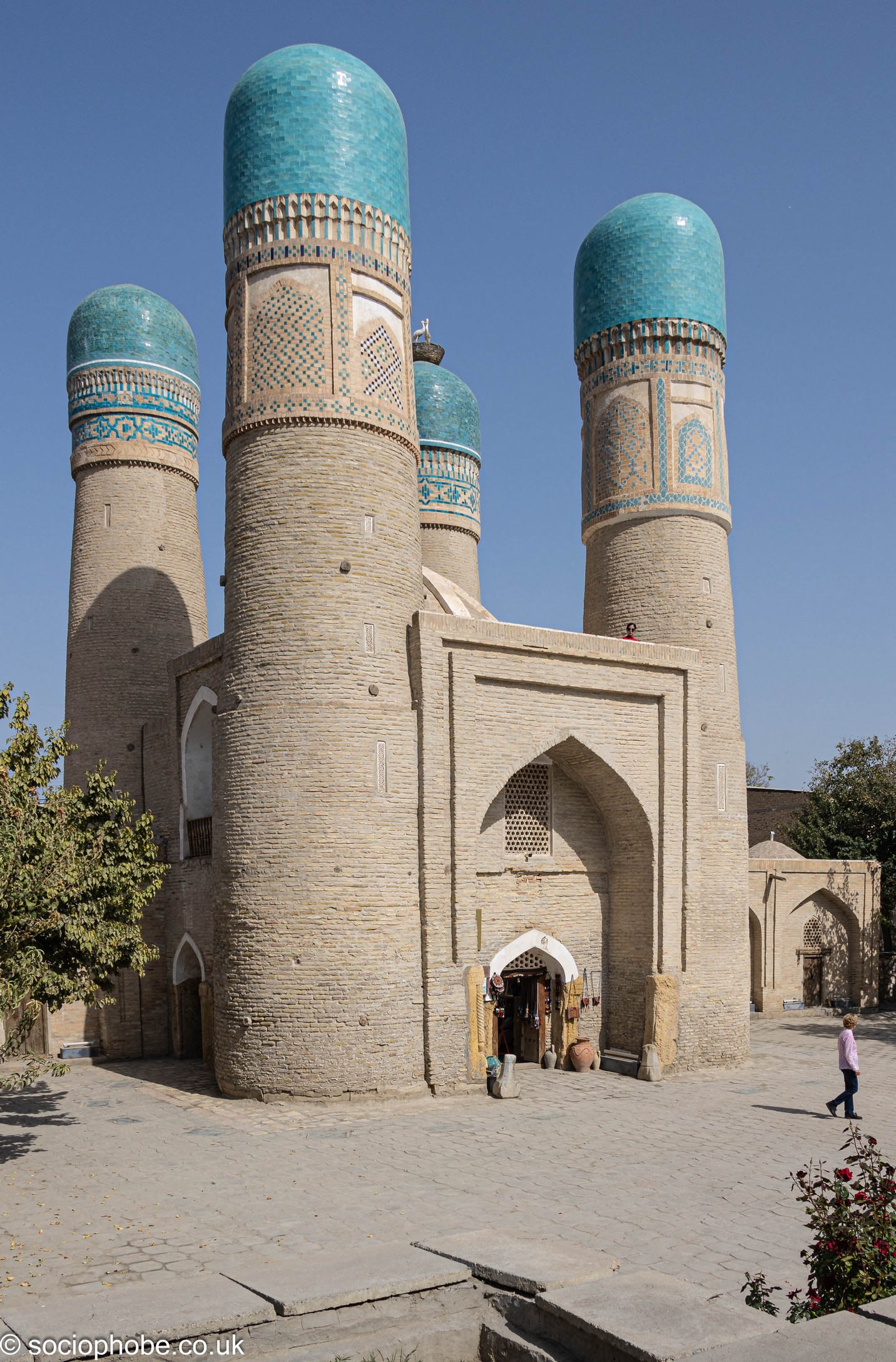
The pool next to the minaret was empty but the rose garden was pretty and the minaret was as gorgeous as expected and there were very few people there so it was easy to take photos. There was someone looking over the parapet so I guess you can climb up to the roof if you want to.
Bhukara Ark Viewing Platform
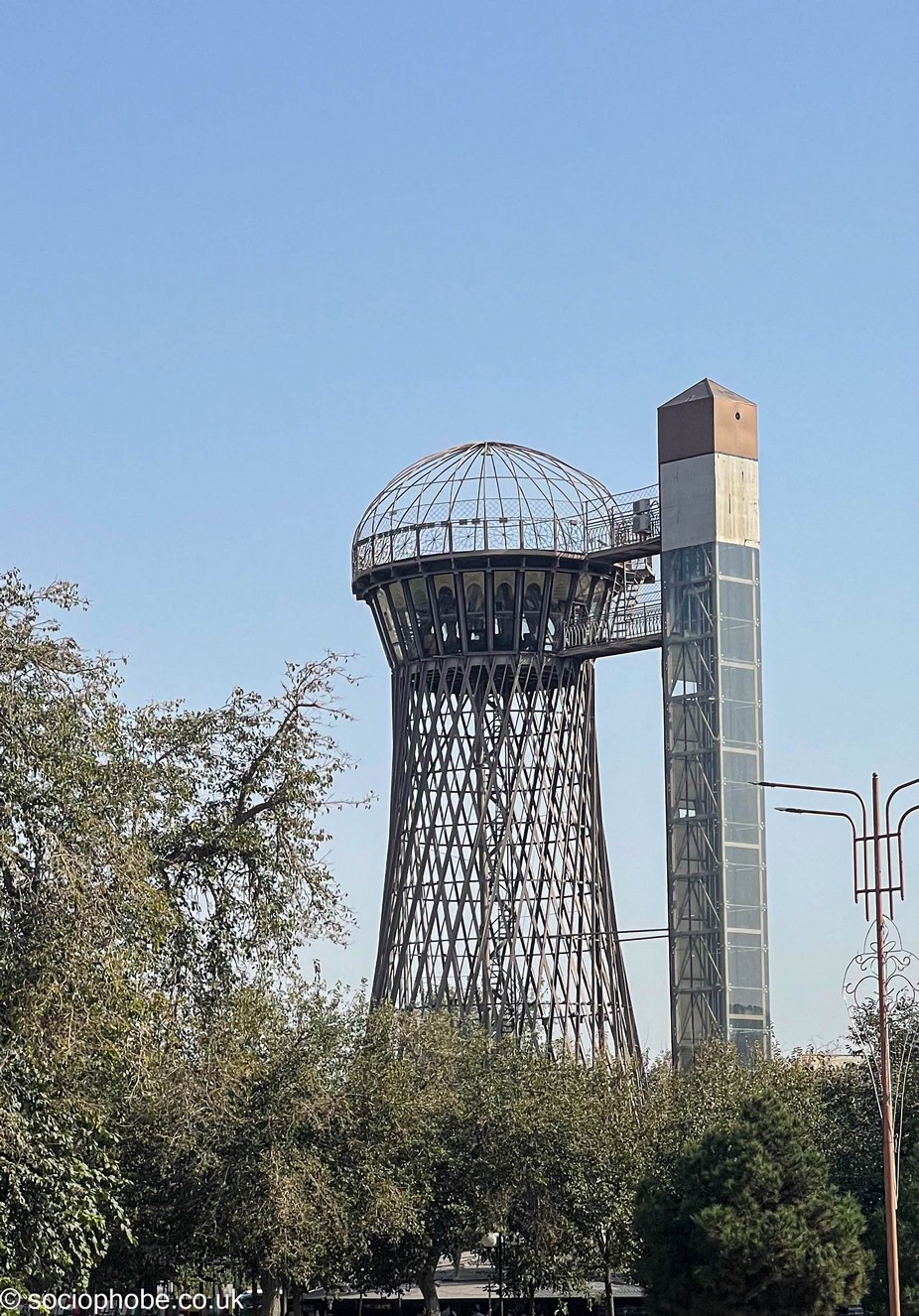
I got back in my taxi for the drive to the Ark as I wanted to see it from the viewing platform. I said goodbye to the taxi lady and went in to the ticket office, paid the 50k Soms (£3.50) and waited for the lift. The viewing platform was originally a Russian era water tower, standing on spindly metal legs just opposite the Ark. It was a quick ride to the top and I tried not to look at the rusting metal structure as the lift climbed the floors!
I hate heights so it wasn’t easy to walk around but the view over the Ark and mosques/minarets/madrasas was impressive and worth 5 minutes of stress! There were signs around the top of the platform showing distances to major cities, London was 5099km!

I walked back to the hotel and was by now rather hot and sticky. Deb was still at lunch so I had a much needed shower and then she came back so we popped to the gelato shop next door to the hotel. Giotto’s has a great menu, an amazing selection of cakes and ice cream as well as more substantial desserts and excellent staff. We had 3 gelatos each and 2 cakes between us plus drinks (all for less than £12) and then Julie came in so she sat down as well and we had a good chat about past and future holidays!
After about an hour we left, Deb and I did some souvenir shopping before returning to the hotel to write up some notes and relax before our evening meal. This was at the Old Bukhara restaurant, 5 minutes walk away, which was meant to be very good and the idea was we all went out together. It was actually only 11 of us in the end including Ganashir but the restaurant did look lovely – a large courtyard with tables on both the ground floor and roof terrace.
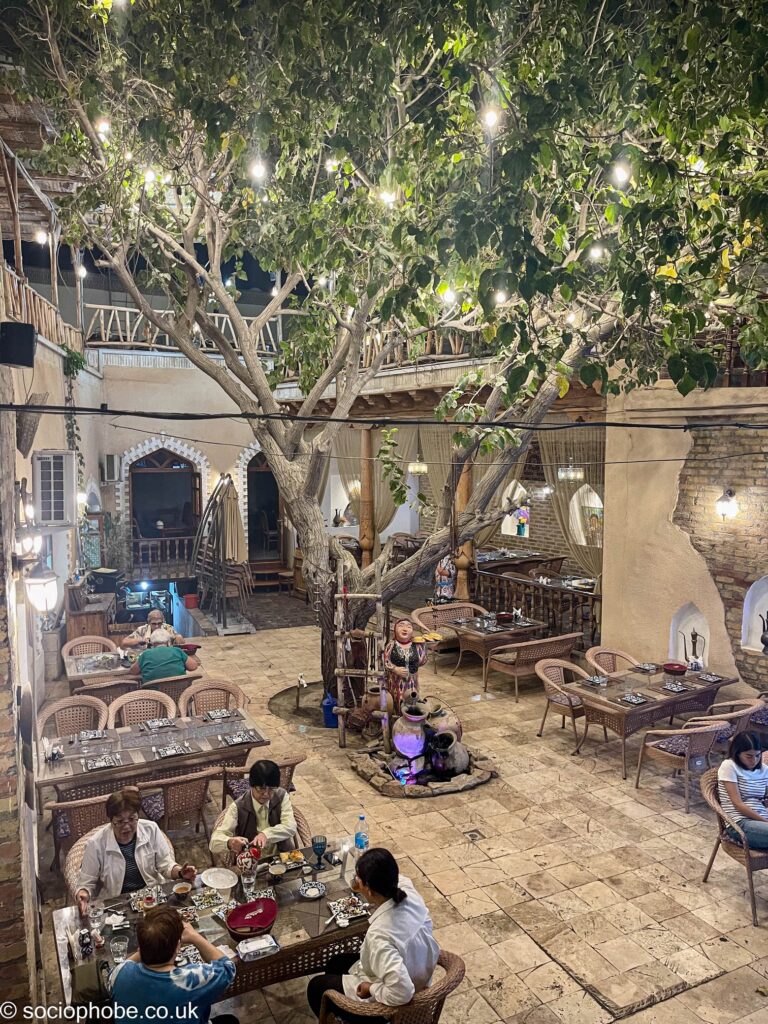
The food was a bit disappointing, partly because half the things we ordered weren’t available, partly because the cooking and presentation were pretty sloppy, partly because the food arrived at random intervals and partly because the taste was just bland. Still, we had a lovely chat with Allison and Derrick, two Australians and we spent a couple of hours there before walking back to the hotel to pack for Khiva tomorrow.
Khiva
Next stop on our Highlights of Uzbekistan tour was Khiva, one of the main cities of the area until it was destroyed, as usual, by the Mongols. It was also the birthplace of the Zoroastrian religion which covered most of central Asia and Persia until it was snuffed out by Islam, along with Bhuddism and Nestorian Christianity which both had adherents in the region. The Arabs also did their best to destroy the native culture when they arrived in the 8th century, making a point of destroying libraries and the educated class. After two centuries of Mongol rule a native dynasty took over and for three hundred years ran the largest slave market in Central Asia and then was finally conquered by the Russians in the 1870s.
Driving from Bhukara we were soon in sandy desert with an astonishing amount of scrub. The scenery soon became completely devoid of human life other than the road and litter. The road was quite good and is being upgraded to four actual lanes instead of two that become four if you beep your horn enough. The area is rich in gas and in Soviet times this was all exported but now 80% of Uzbek homes are on the gas network.
One area that we passed through had a massive gas reserve discovered by the Soviets but when they started mining/excavating for it the pressure was so high that it caused a fire that lasted 3 years, burning the gas away into the atmosphere and was only stopped when they detonated a nuclear bomb 500m underground to seal the breach. This worked but the area is now totally irradiated so they can’t get to the gas anyway. It was apparently one of the 115 nuclear bombs the Soviets detonated in Uzbekistan! No sign of any eco protesters here!!
We stopped for lunch at midday but the options were so limited I went without and everyone that did it was grumbling about the quality. I did go to the loo but they absolutely stank, almost as bad as China! Coming back to the bus Darcy fell over and looked like she’d injured herself quite badly so we drove to a nearby medical unit for her to get a painkiller injection and bandages.
We continued on our way, crossing the Amu Darya river (the Oxus of ancient fame) and after that the road quality plummeted along with our speed. We made very slow progress but the land was well irrigated and we drove slowly past rice fields, apple orchards and the usual cotton. Although the area is rich in resources it is still very poor and other than the main road all the side roads seemed to be just mud tracks.
At 17:00 we arrived at our hotel in Khiva after driving past the massive mud brick walls. The hotel seemed lovely and our room was again huge although it was bloody freezing as the weather had turned to rain and the forecast was 3 degrees overnight! We had a large desk, a nice seating area and loads of space as well as a lovely sized bathroom.
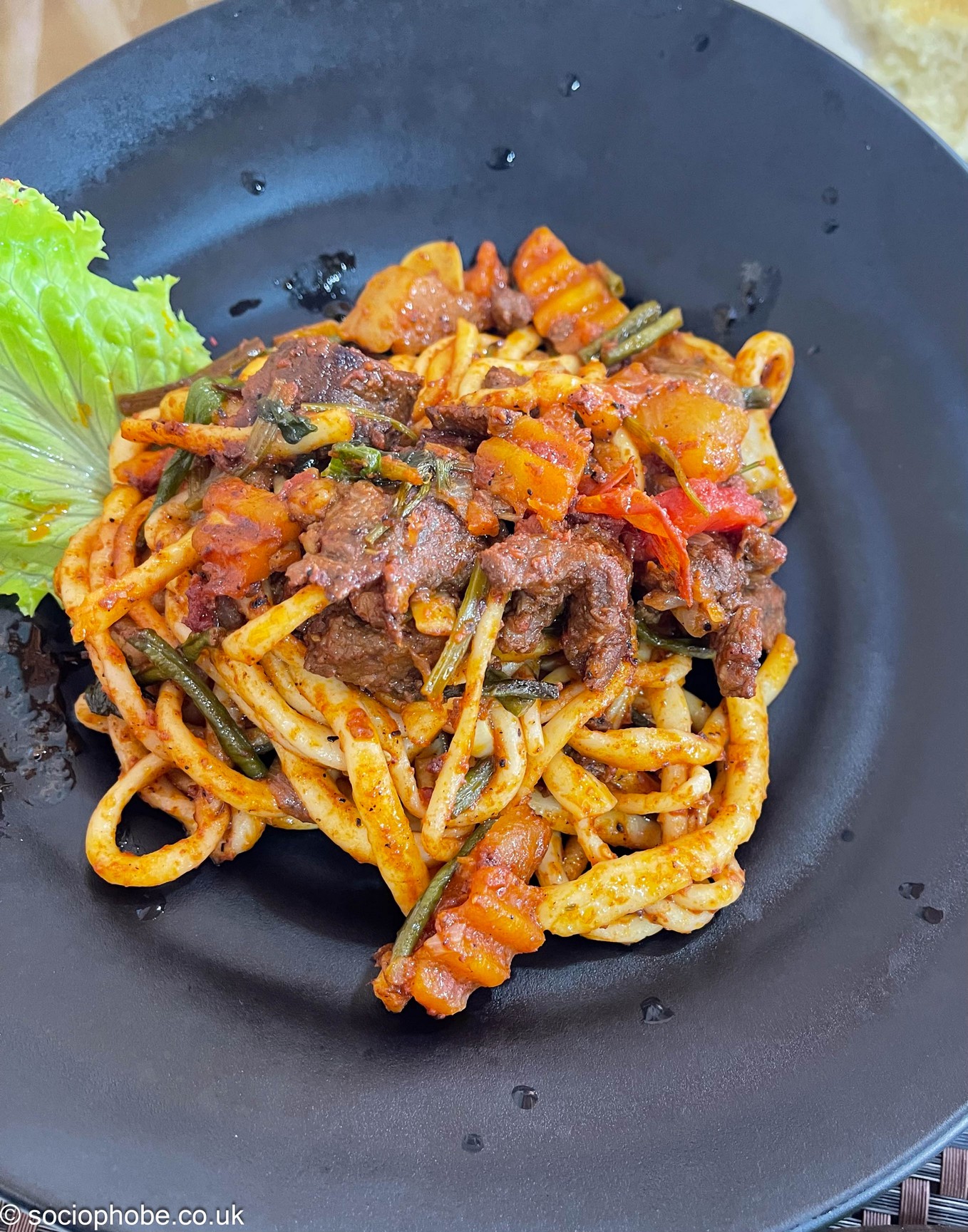
We had a quick orientation walk at 6PM – the old city wall was only a couple of minutes from the hotel – and then went for dinner at Tea House Mirza Boshi as a group. The tea house was lovely inside, a really spacious and beautifully decorated room. The menu was mostly Uzbek food but it was actually the best Uzbek food we have had so far. We both had the spaghetti with cheese and chicken with grilled local veg and chips (the latter probably wasn’t authentic Uzbek food!). Service was great and the price was the usual bargain that we will wistfully remember next time we eat out in the UK. We actually chatted to Hsien and younger Derrick so I think that’s everyone in the group covered now! A lovely evening and a nice walk back through the old city, which was almost deserted at 8PM, to the hotel.

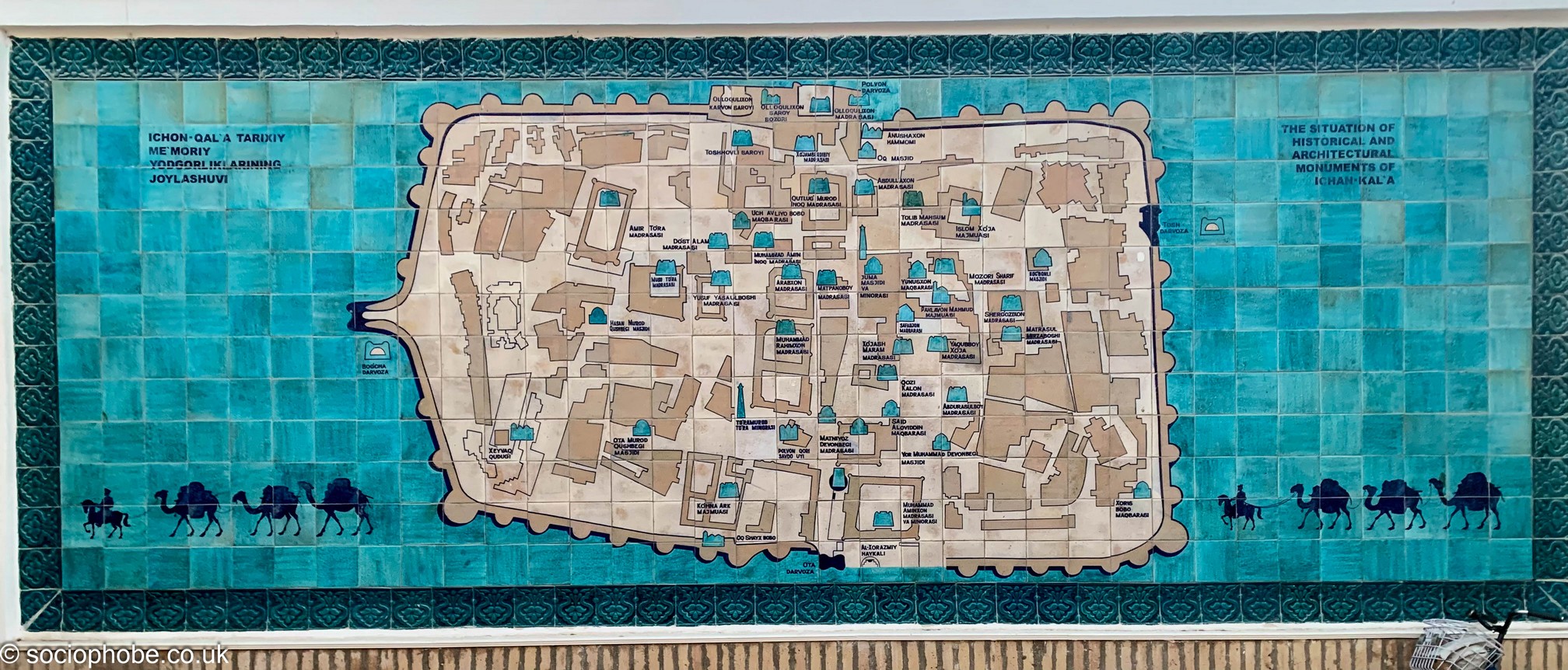
Itchan Kala
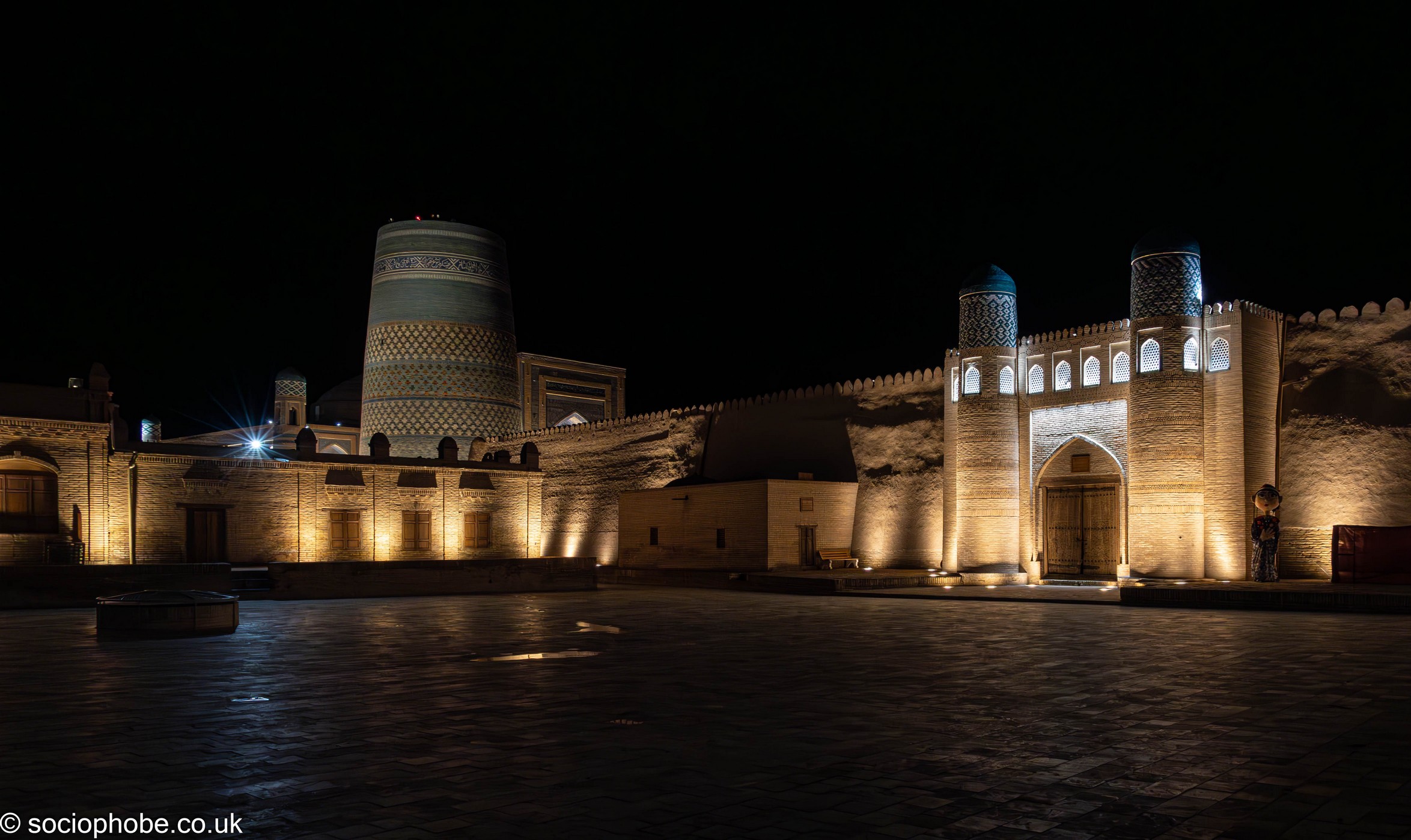
I had a restless nights sleep and got up at 6 the next morning to go and walk around the city. I wasn’t sure if you’d actually be able to enter the city so I walked around the north and western walls before entering by the western gate. It was a shame the walls weren’t illuminated but it was lovely once inside the Itchan Kala as there were almost no people at all.
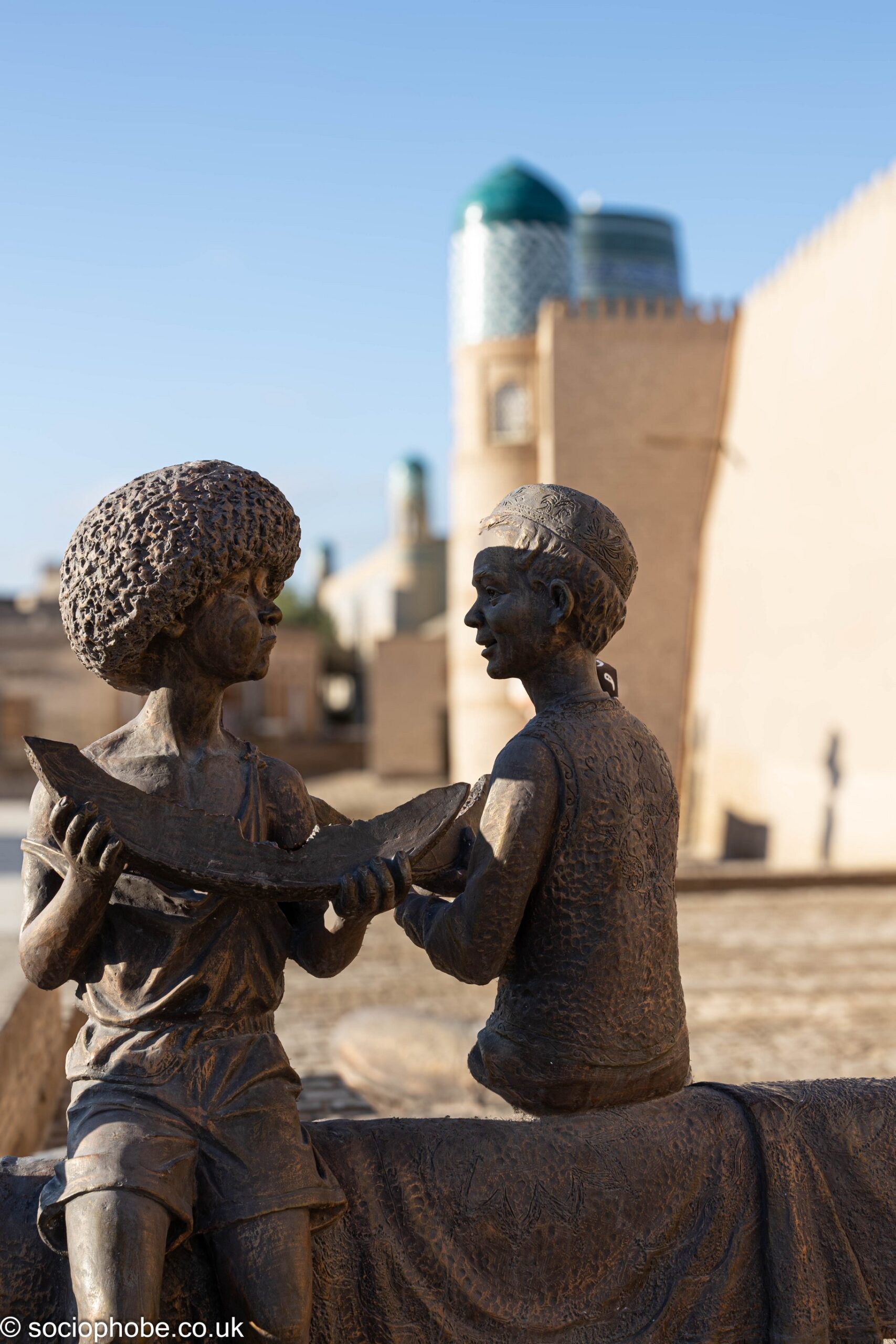
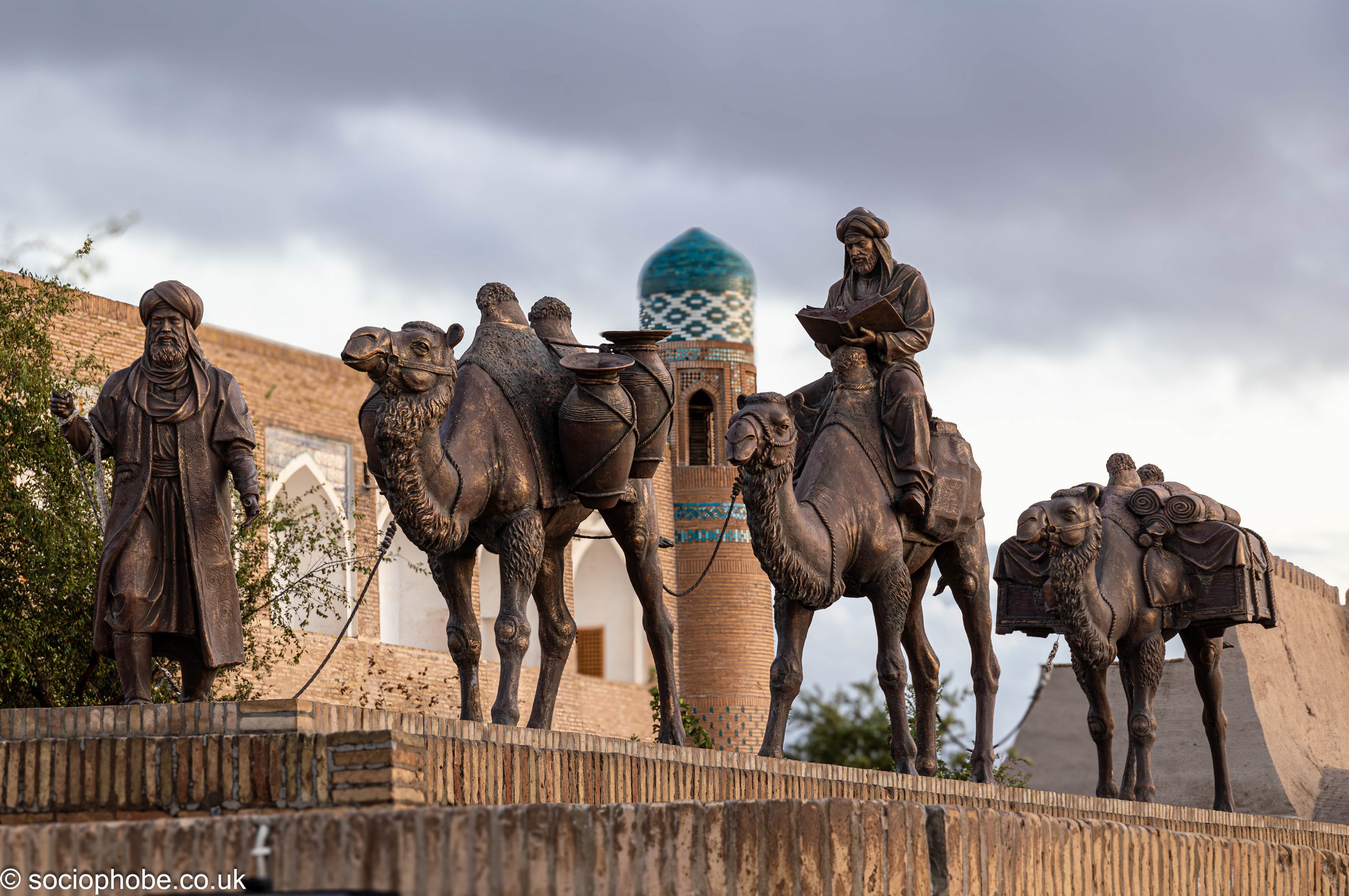
There are some lovely bronze statues scattered around the city depicting a tea house scene, boys eating water melon, a flute player and that sort of classically Muslim social scenes. The sun didn’t rise until around 7 so I didn’t get many photos done before having to head back for breakfast but it was great just wandering down the little streets and seeing where they ended up and what sights were round the next corner. Walking around the base of the walls gave an idea of the size of the inner city and the outer walls extended for about 10km but are mostly destroyed now.
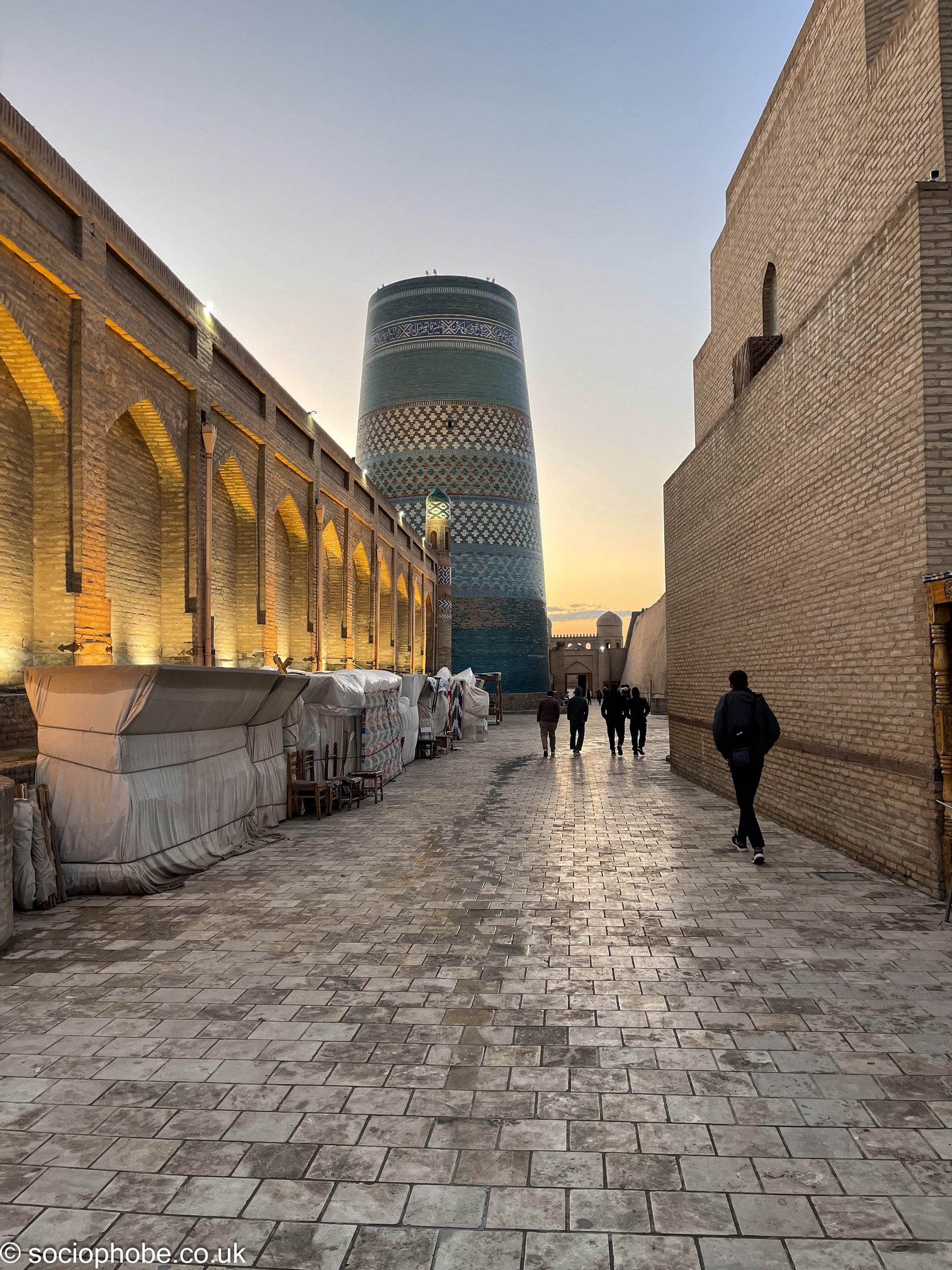
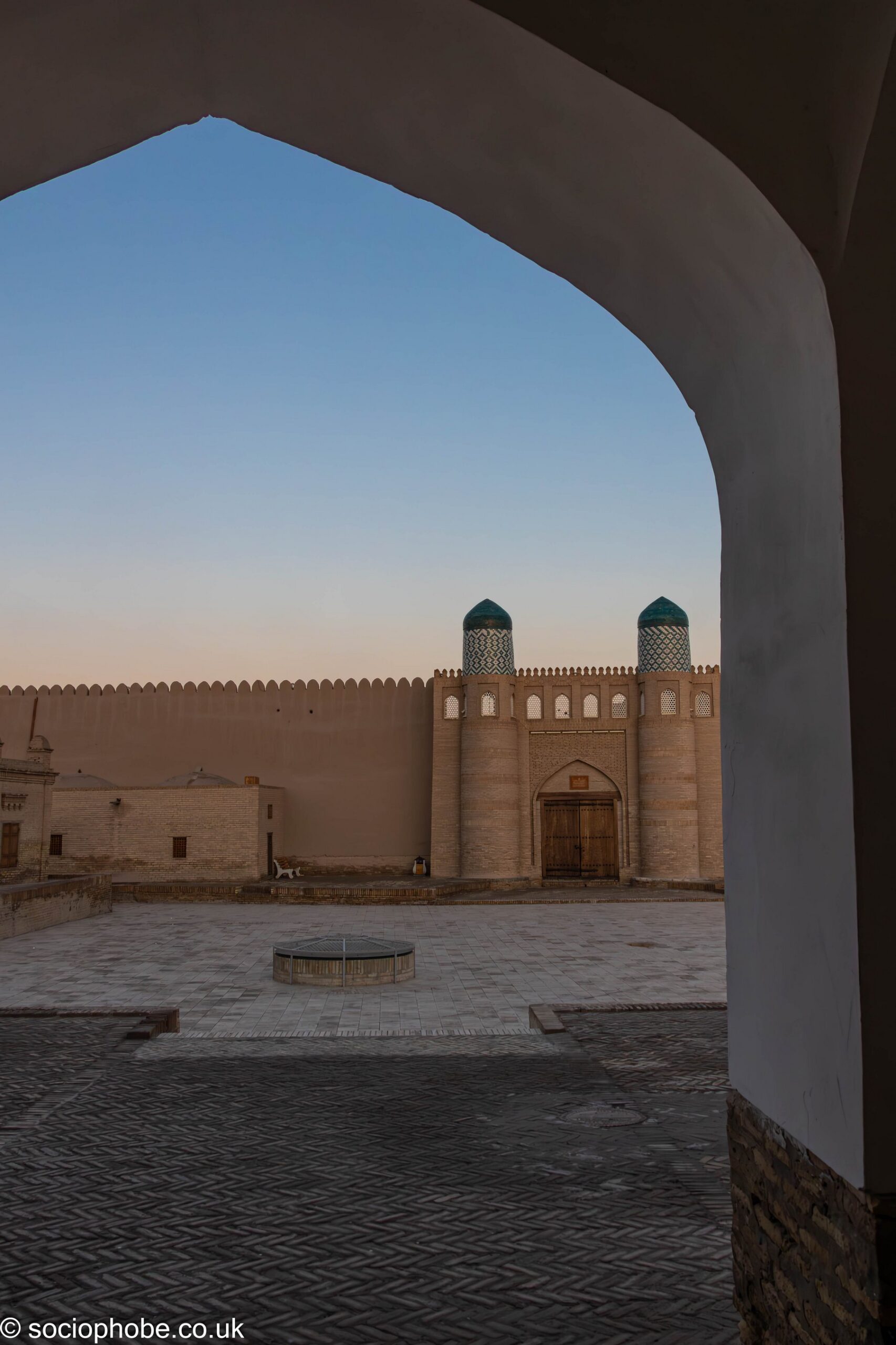
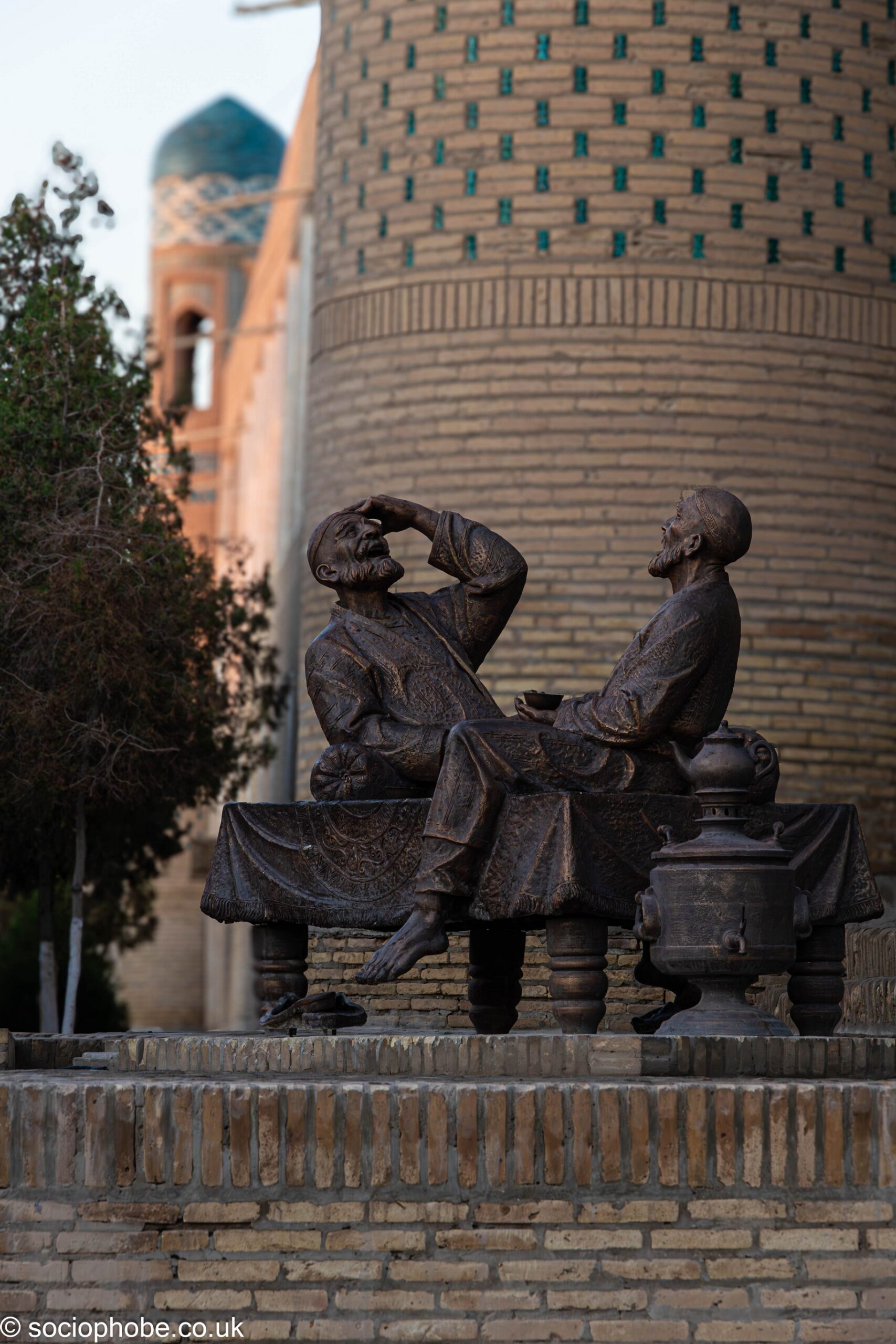
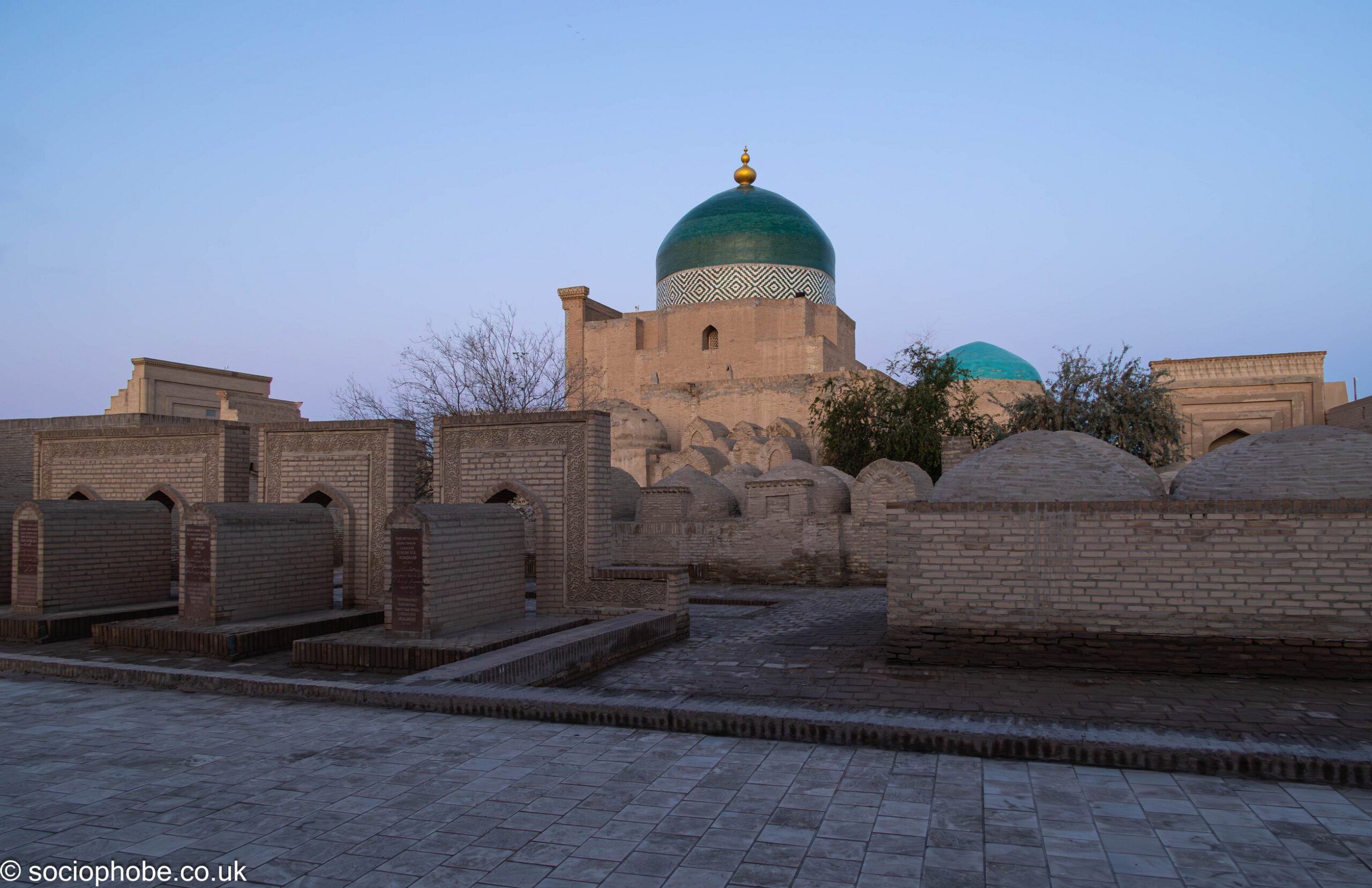
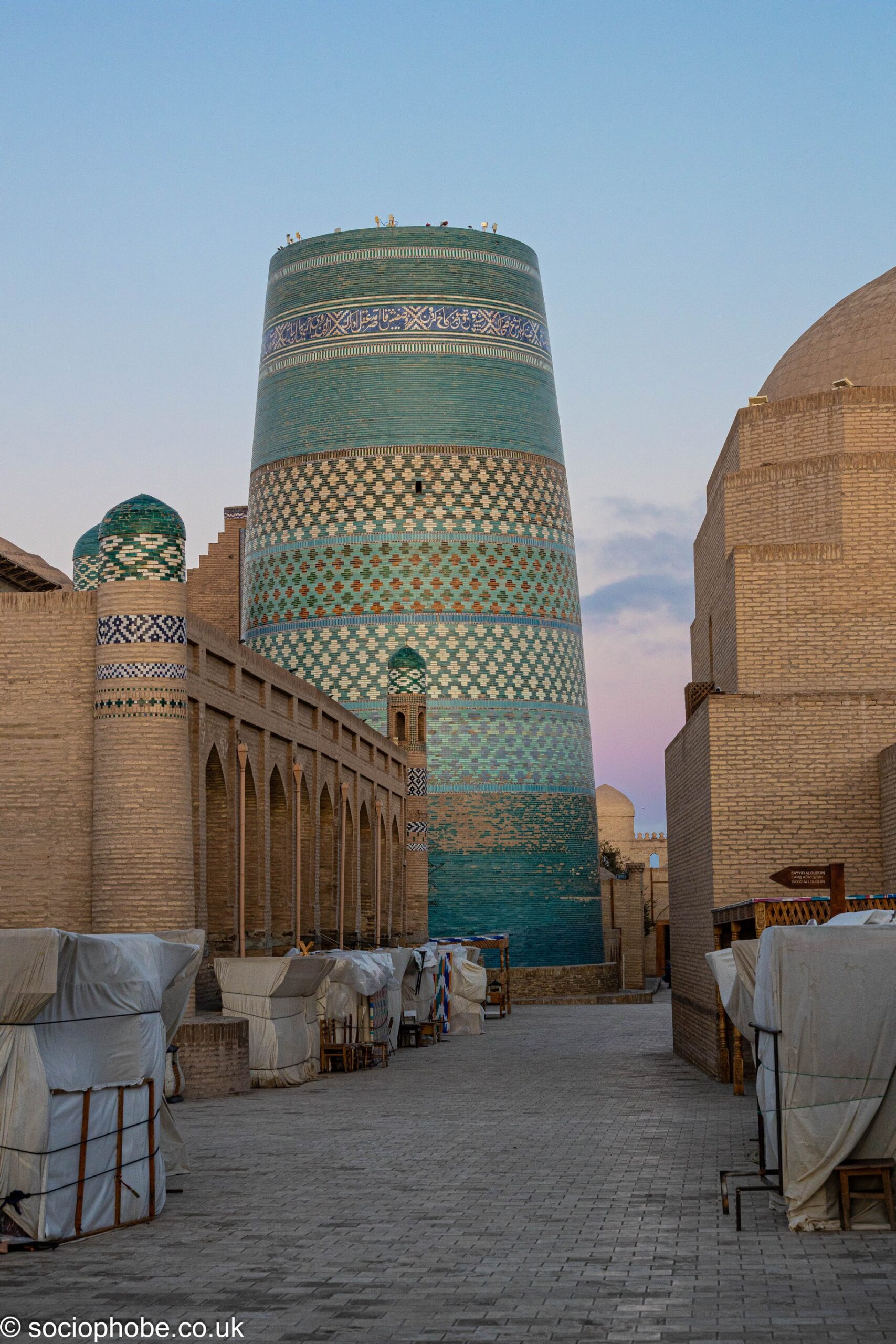
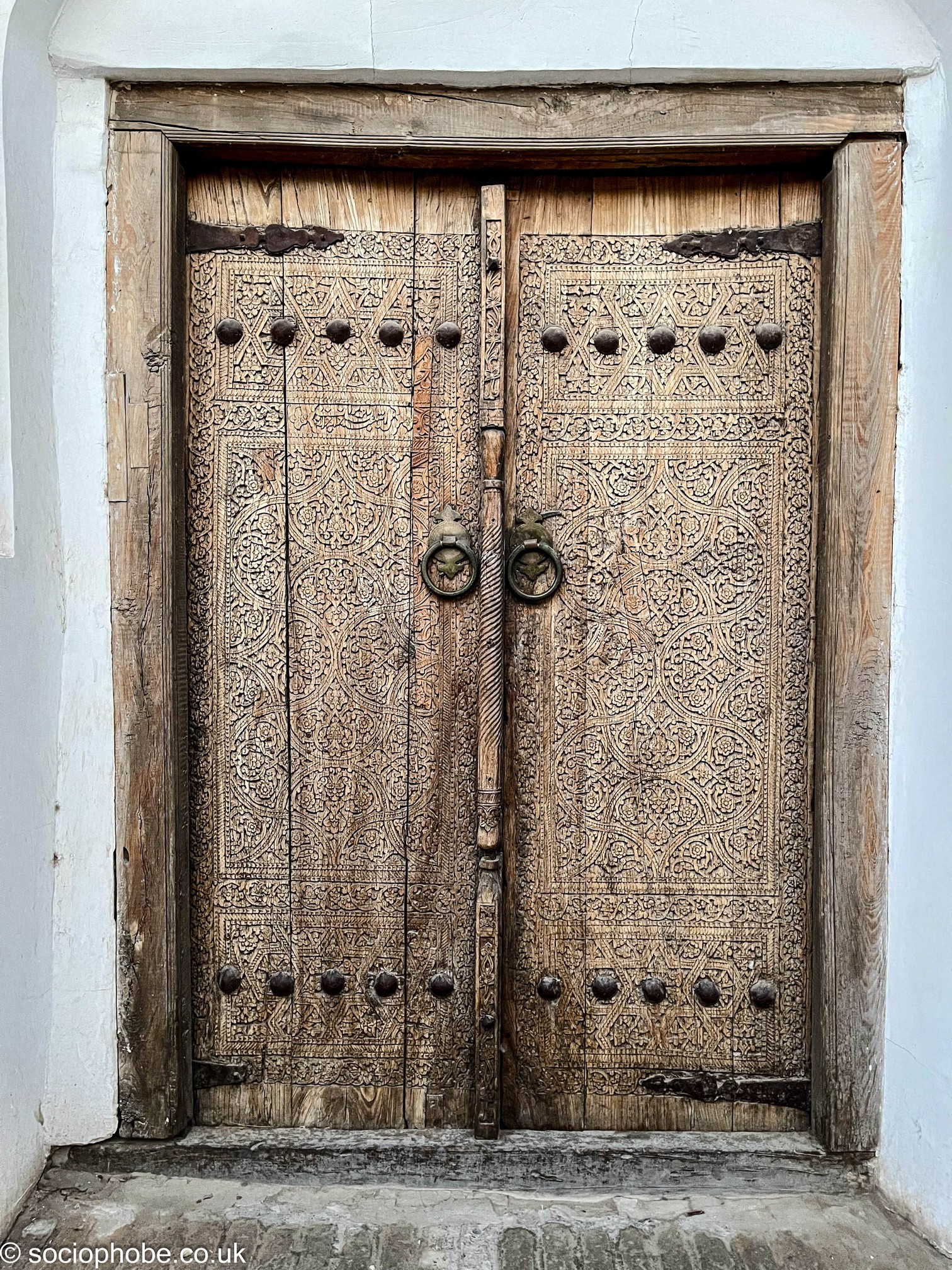
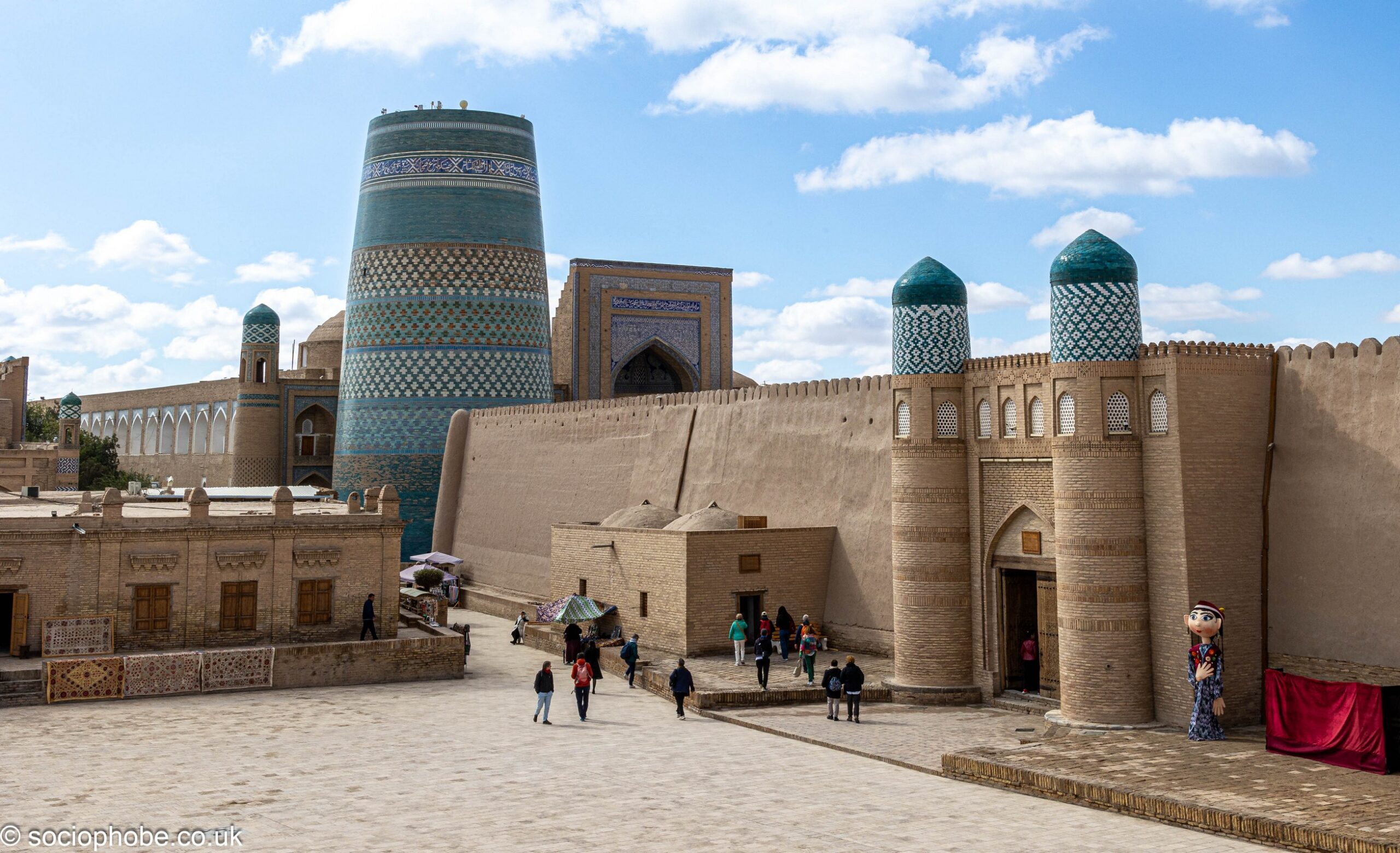
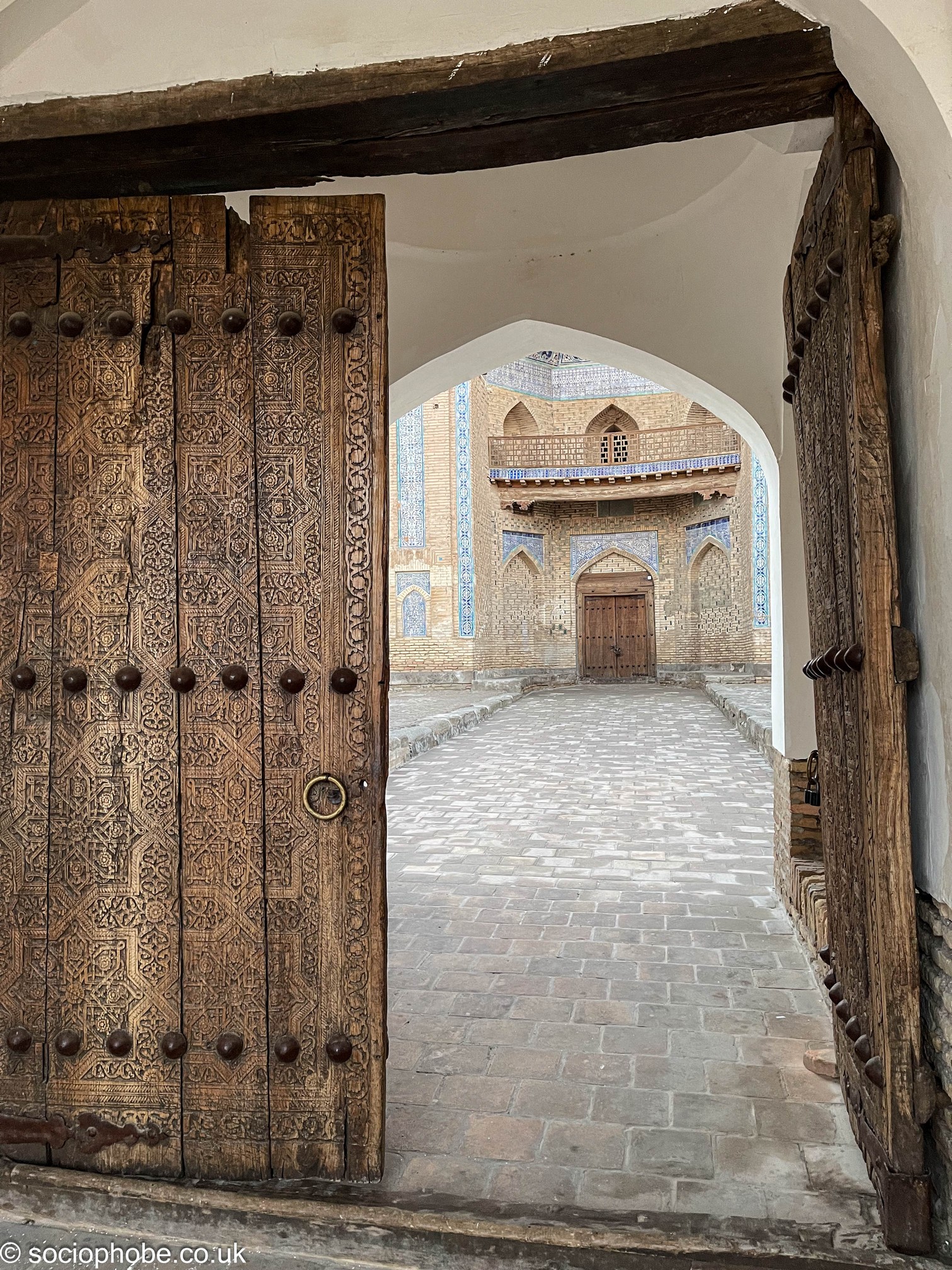
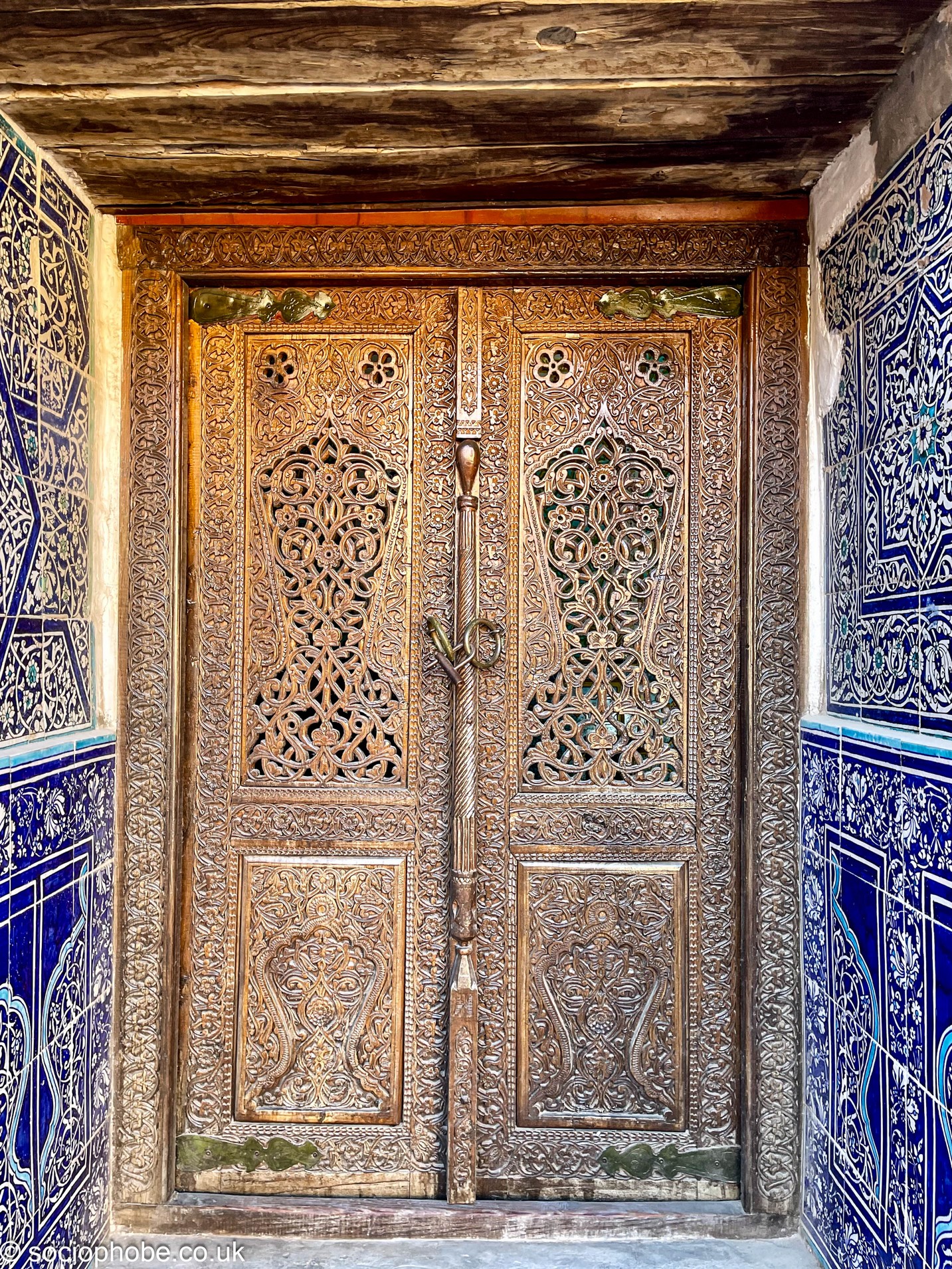
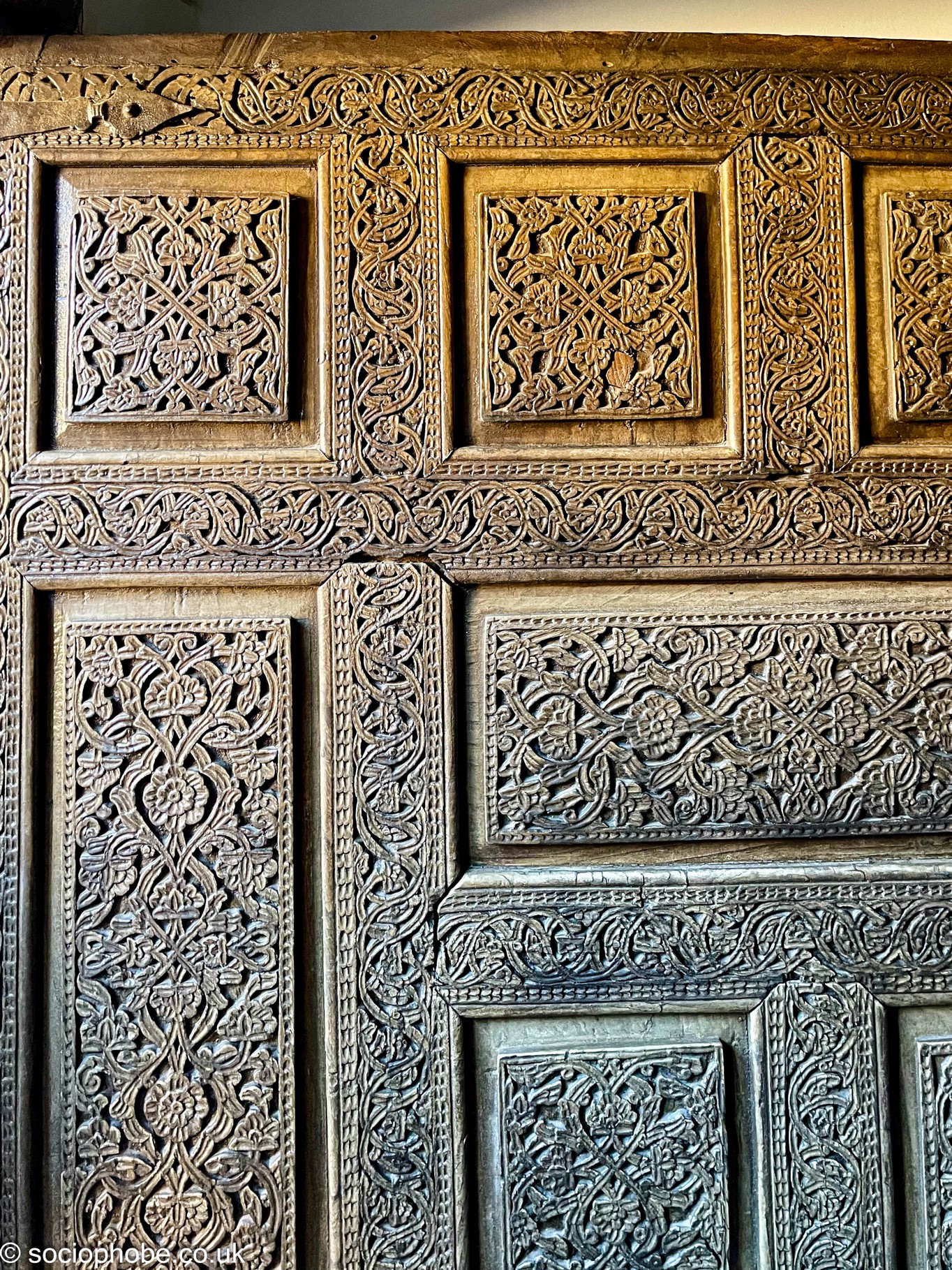
I watched a lady sweep the area in front of the beautiful Kaltor Minor Minaret with her bunch of twigs in a scene that has probably been repeated every day since it was built, the turquoise bands of the minaret contrasting with the darker blue of the morning sky. Being a saddo I also got to see the beautiful carved wooden doors on most of the larger buildings, absolutely wonderful.
I made it back in time for breakfast, which was rather nice although mine did consist mostly of cakes! We then had a group tour at 9 so did another quick half hour wander as the light was a lot better and there were still almost no people around. Darcy decided to join us after having her fractured wrist put in a cast yesterday so that was good as it isn’t the sort of place you can pop back to!
Muhammad Amin Khan Madrassa
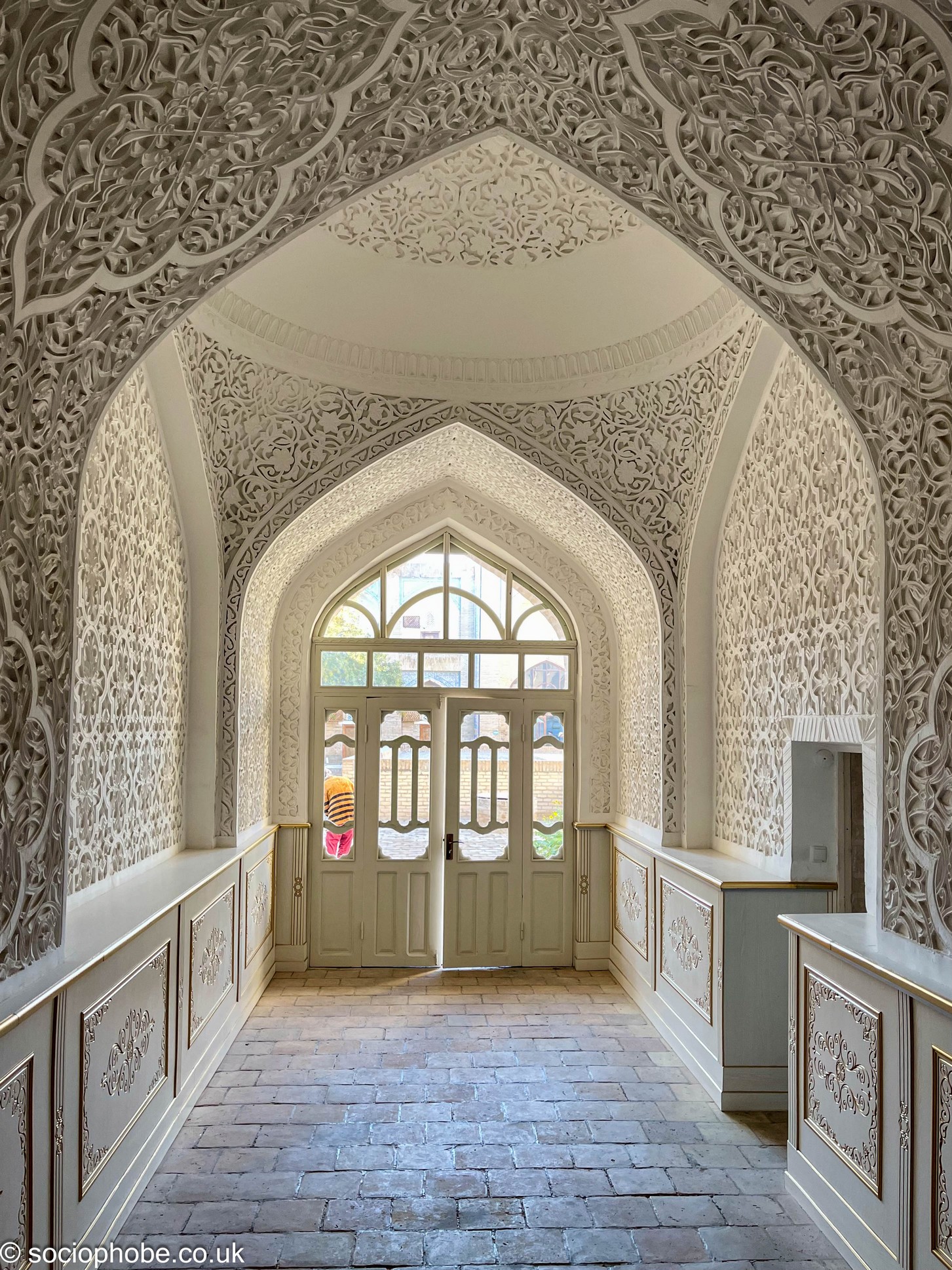
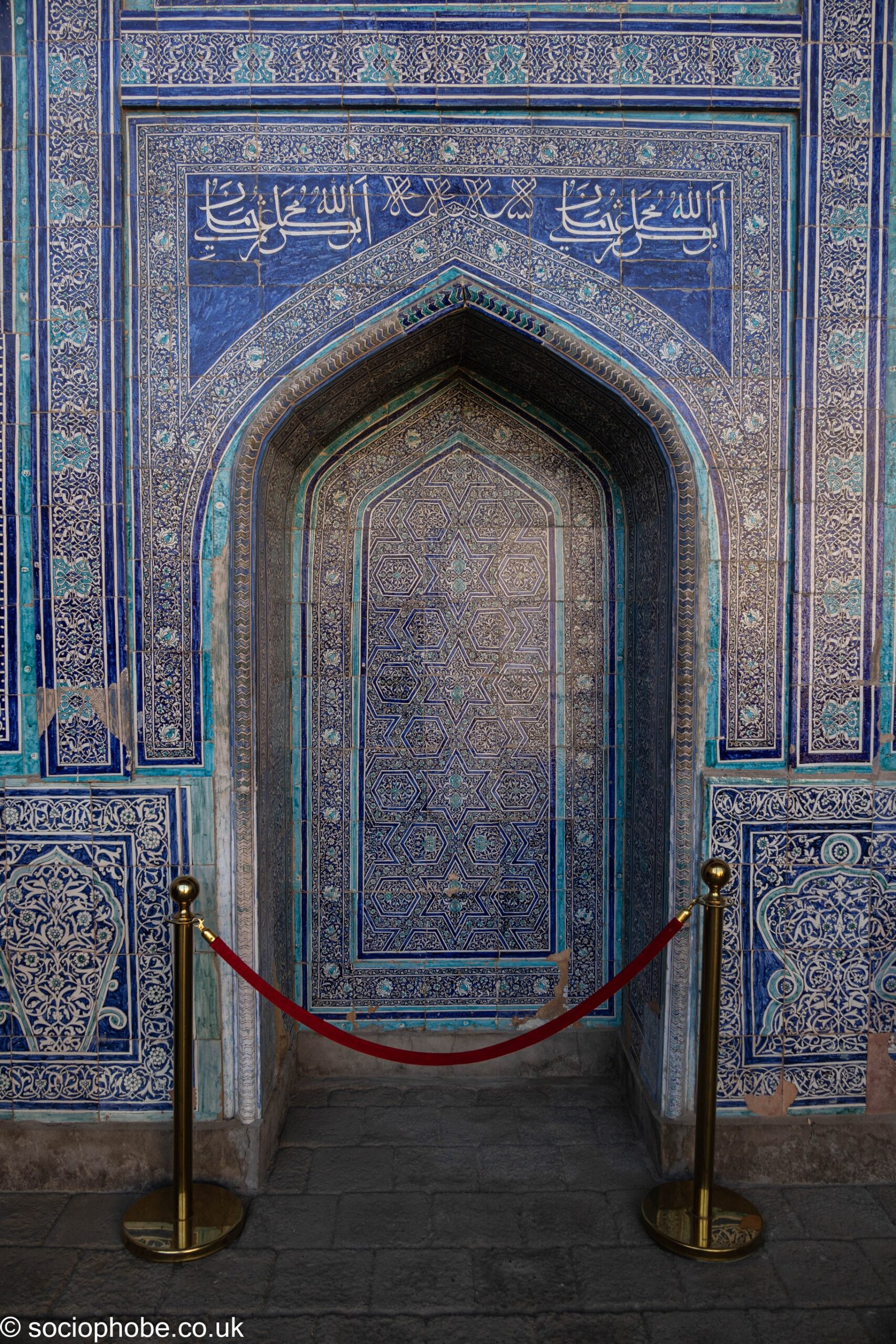
We entered the city through the west gate and first stop was a madrasa (Muhammad Amin Khan), now converted to the Orient Star Khiva Hotel. This had beautiful plaster work in the interior and was pretty reasonable to stay in, about $60 a night.

Kuhna Ark
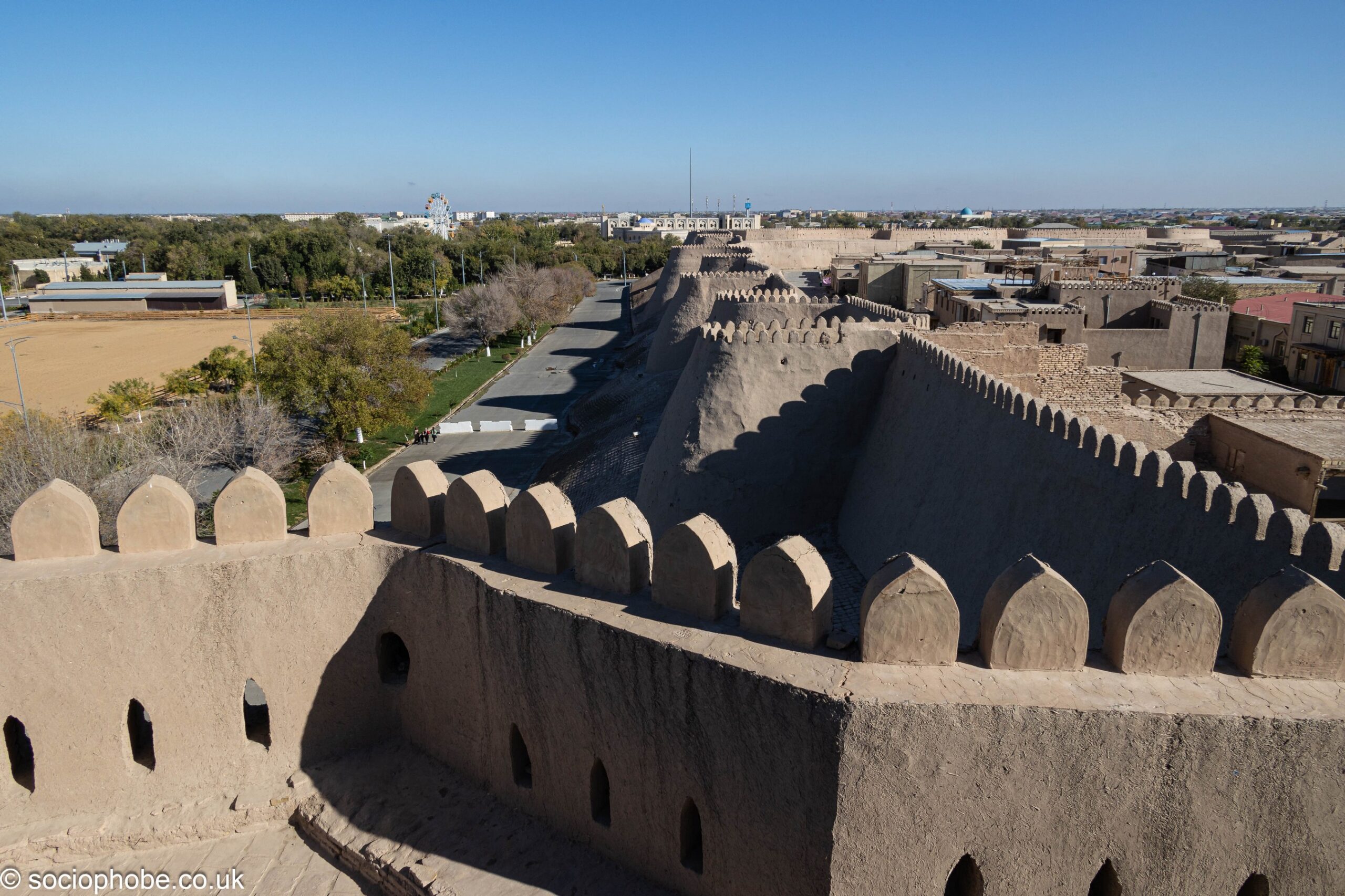
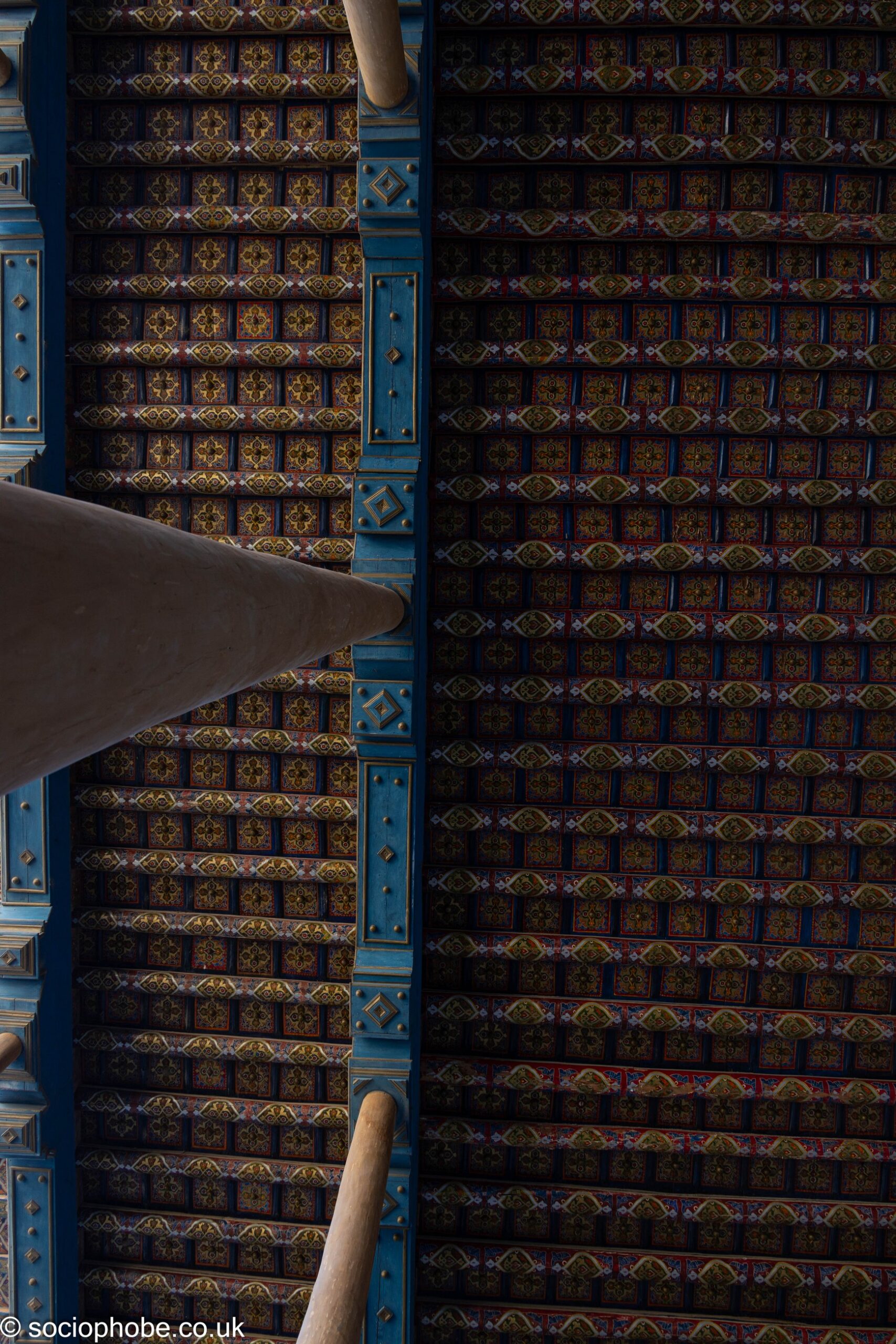
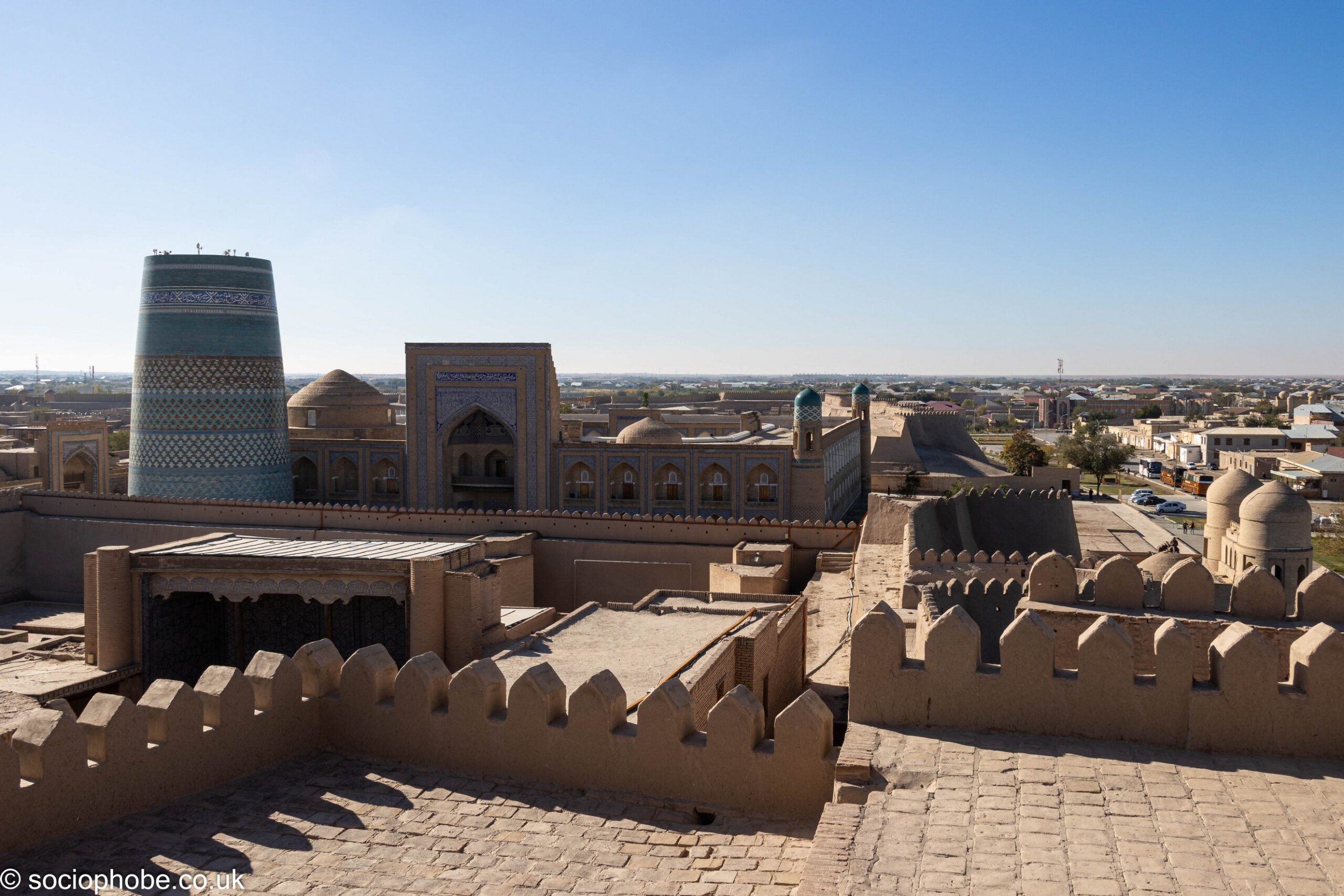
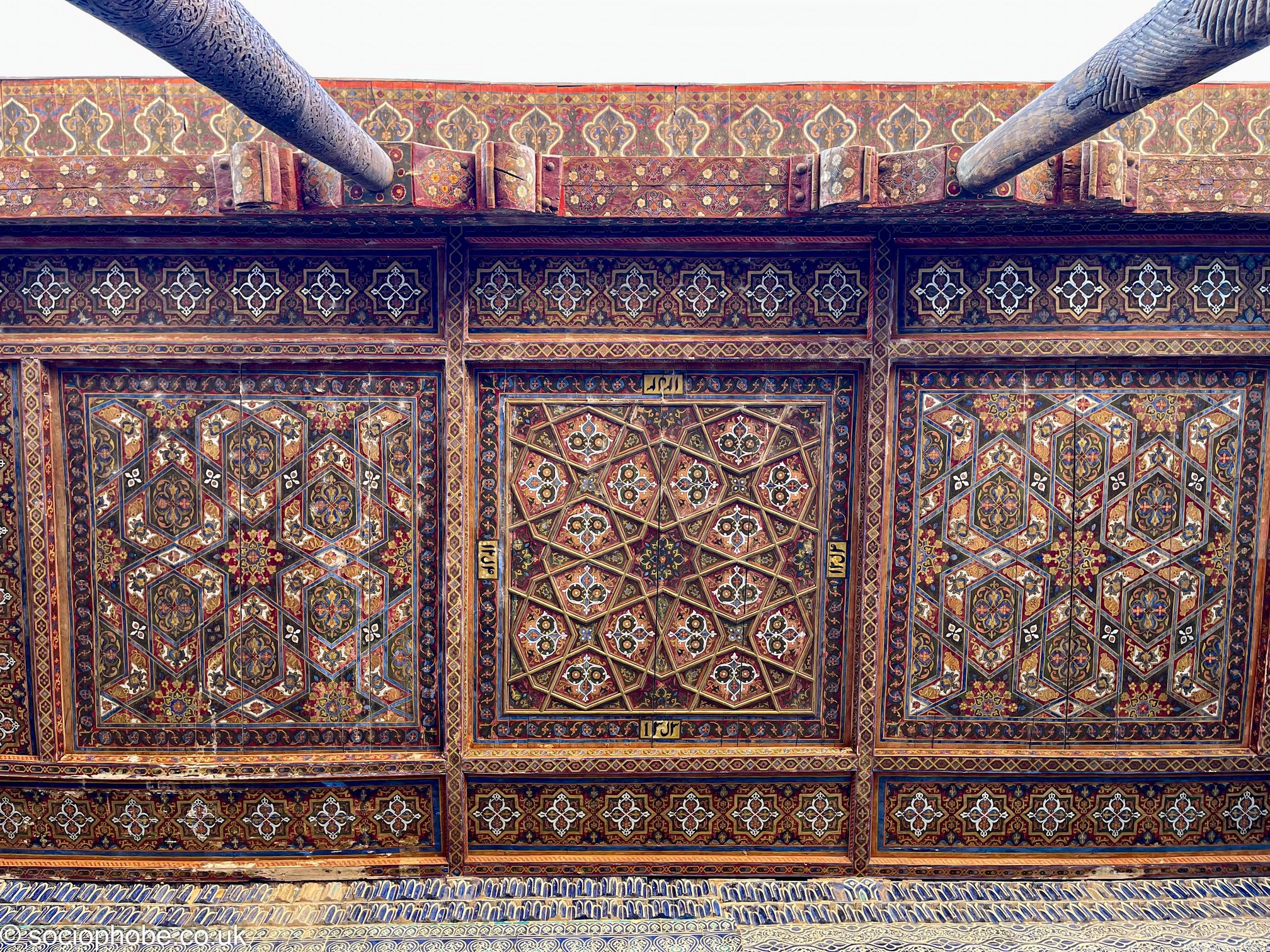
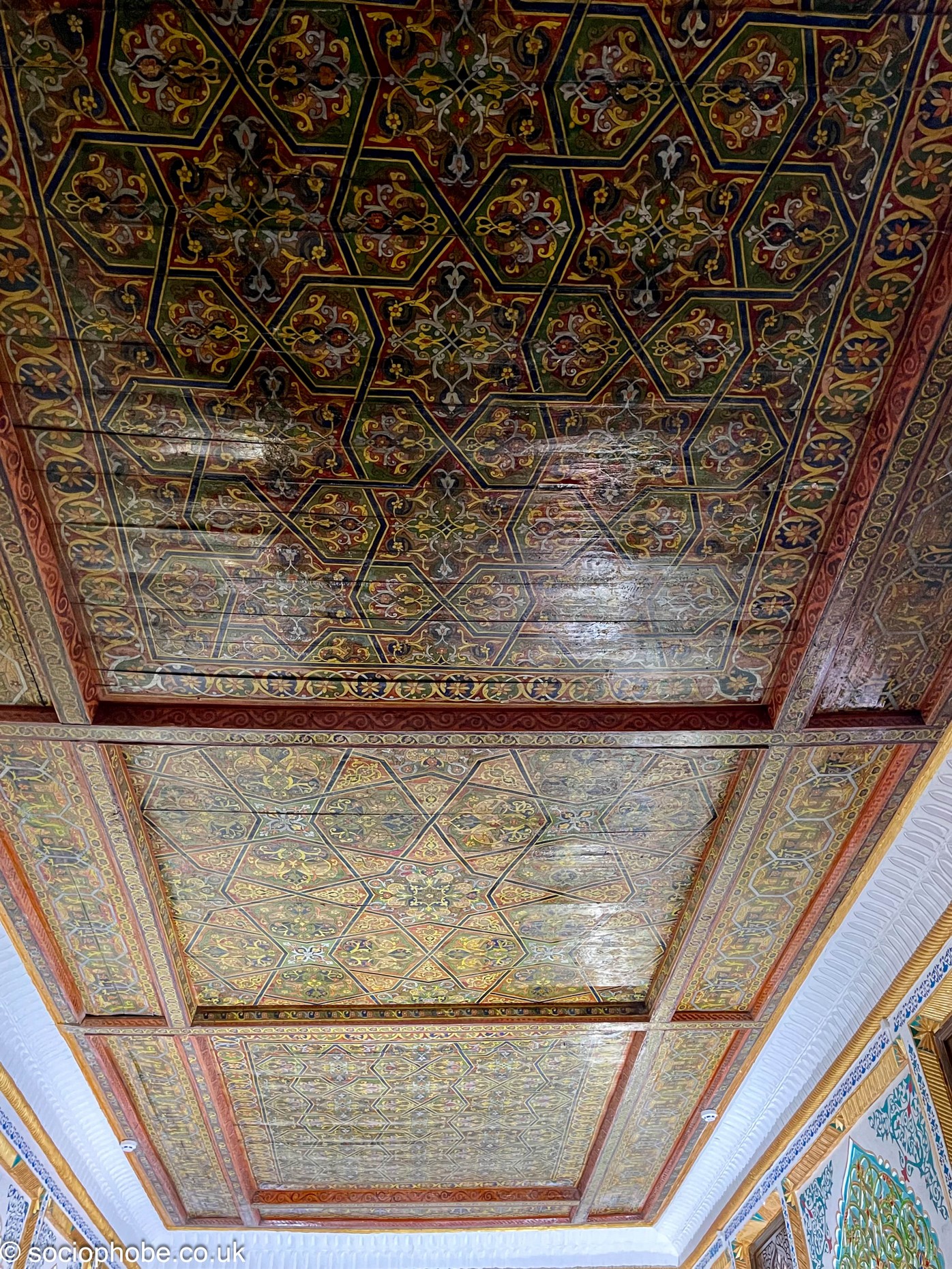
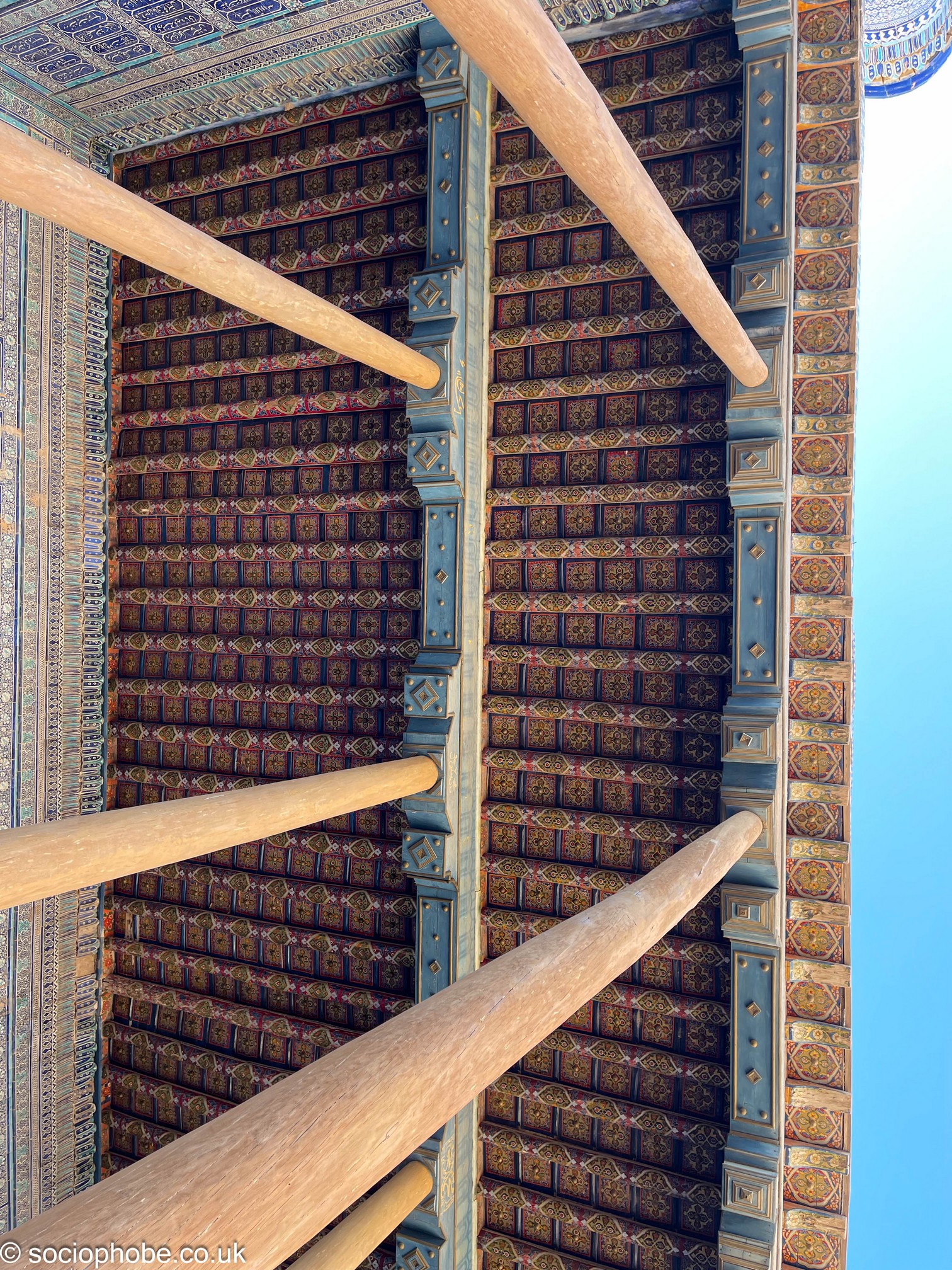
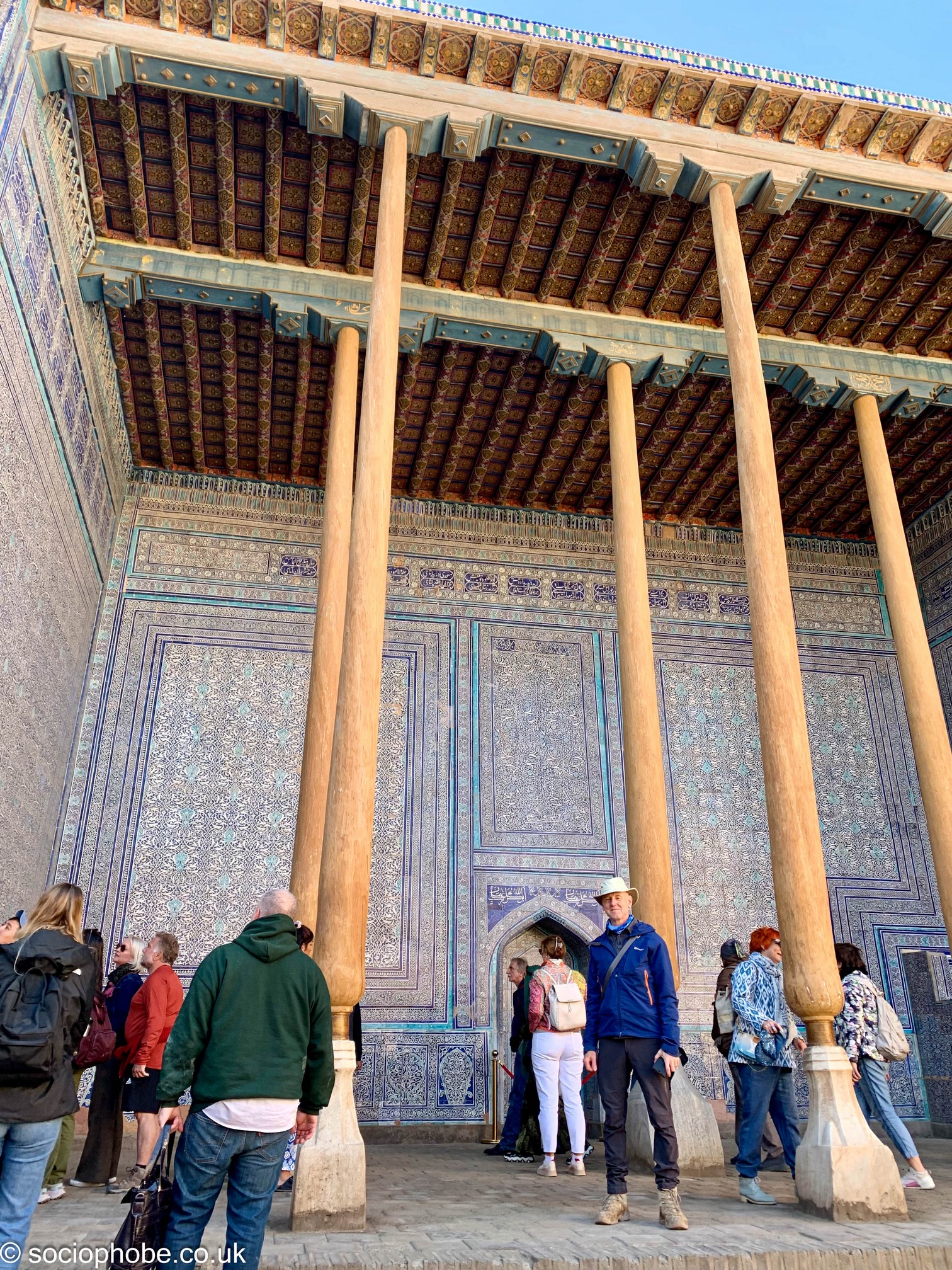
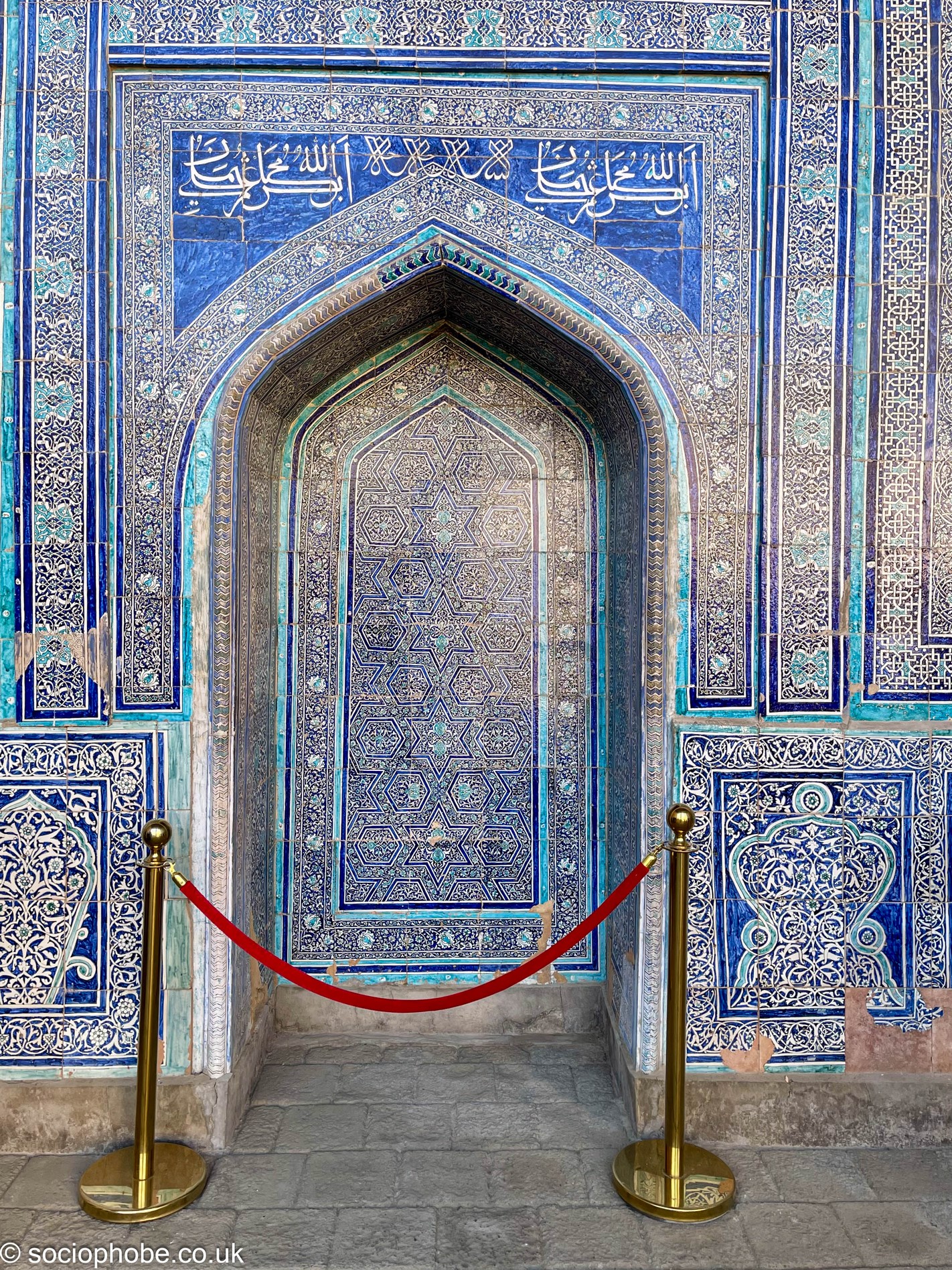
The Kuhna Ark was our next stop, built next to the gate this was the fortress of the Emirs, the equivalent to a European castle keep. A lot of the interior looked like it was still being excavated but there were some beautifully decorated audience rooms with incredible ceilings and doors. There were also steps that led to the watchtower which gave views over the city walls, rebuilt after the Persians destroyed them in the 18th century.
Juma Mosque
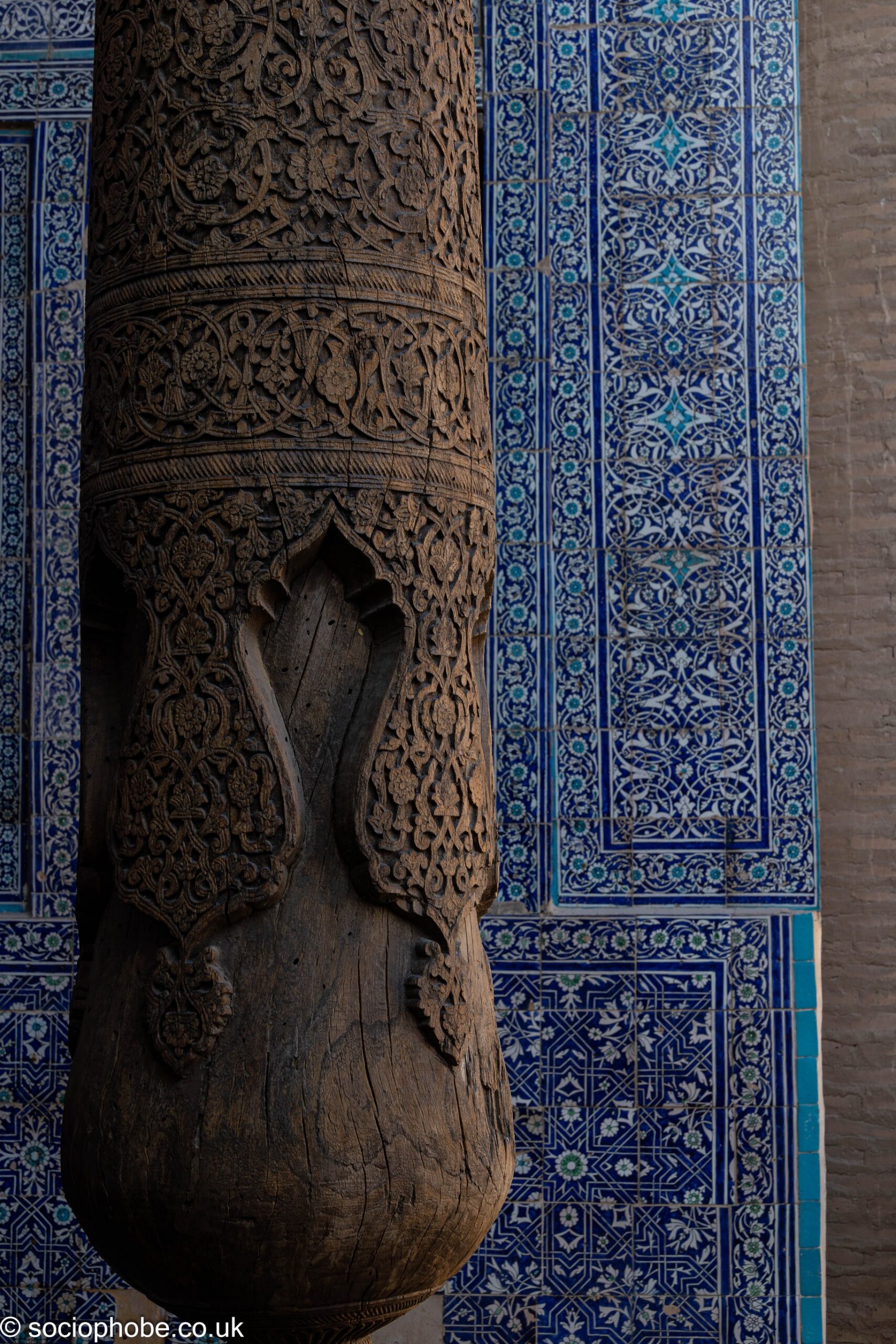
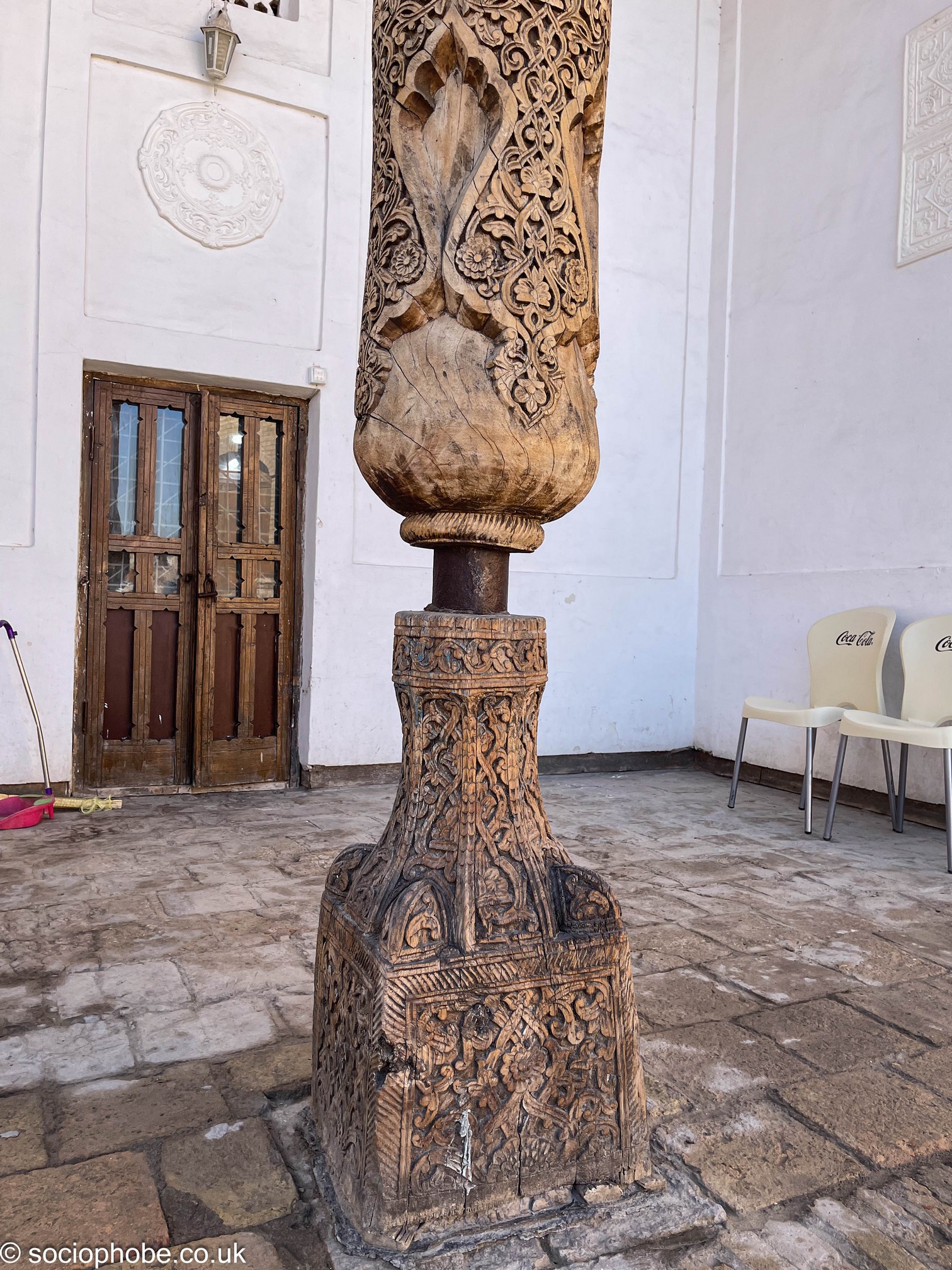
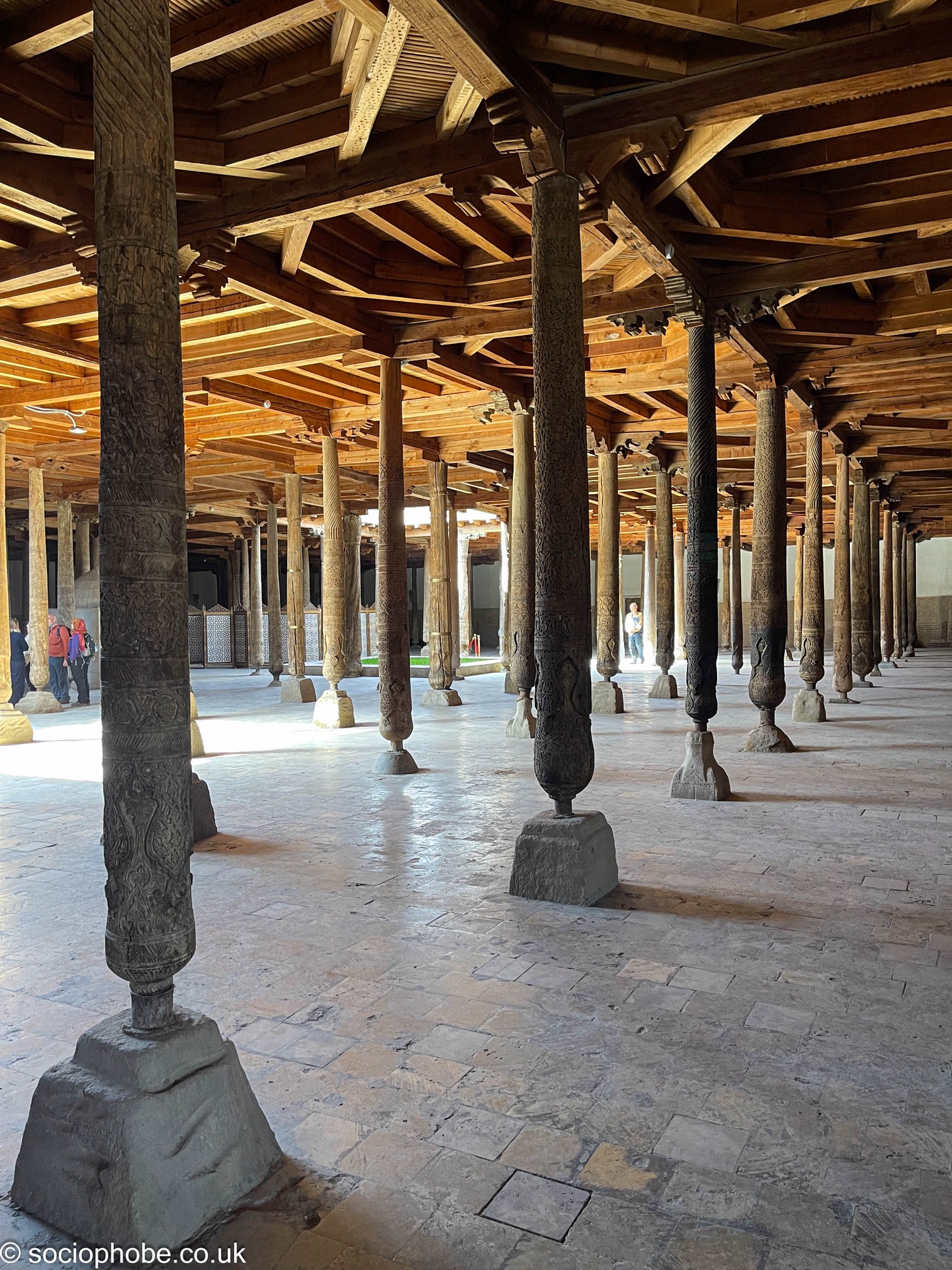
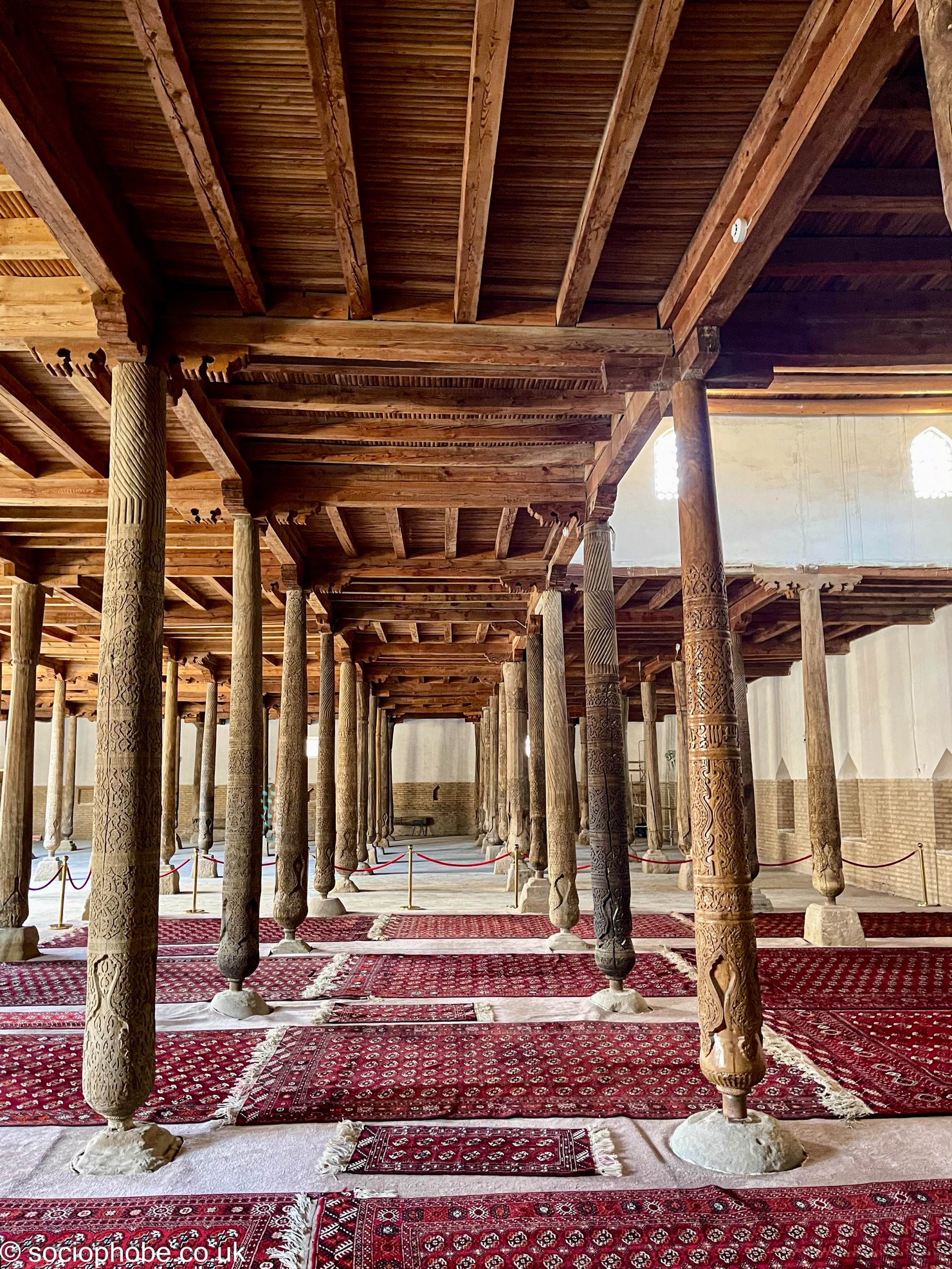
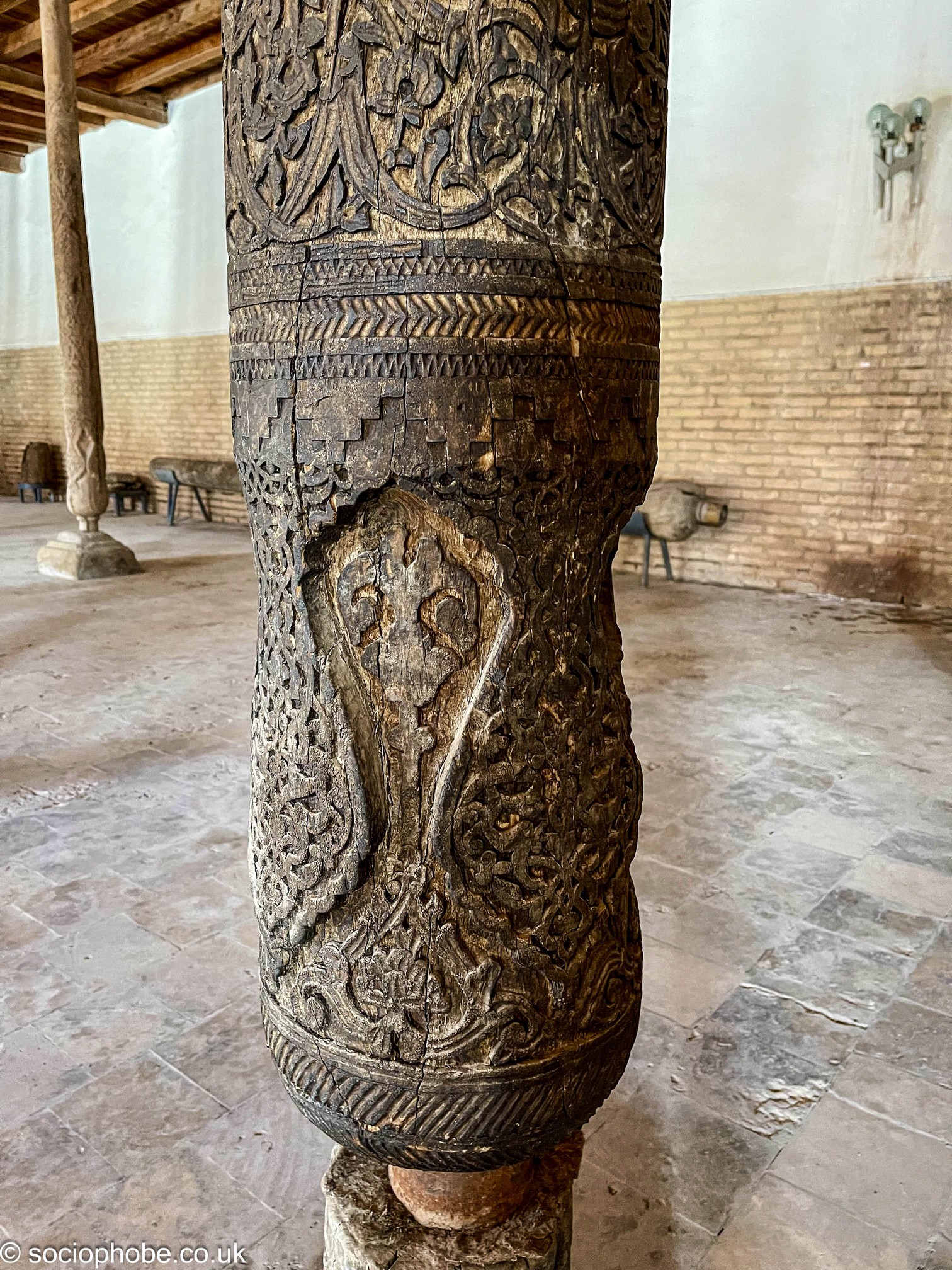
The group then walked the short distance (everything in the old city is only a short distance) to a coffee stop for coffee and cake before continuing to the Juma Mosque which had a wonderful interior, unlike any of the mosques we’d seen so far and more like Cordoba in Spain. Inside were 212 wooden columns, all beautifully carved and at least one had traces of paint on although I’m not sure if that was original. We spent quite a while inside before taking a meandering route to the Tosh Hovli Palace.
Tosh Hovli Palace
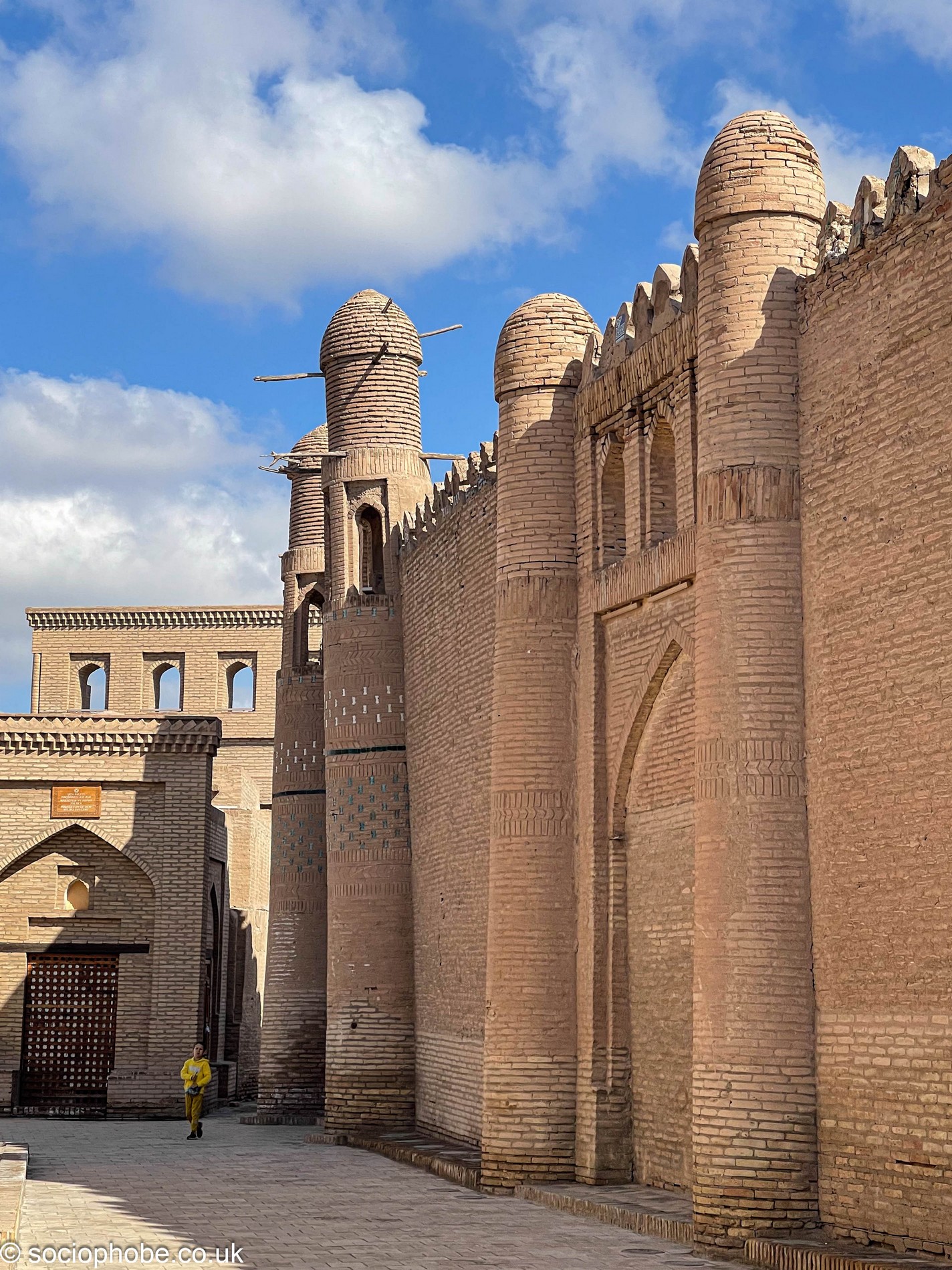
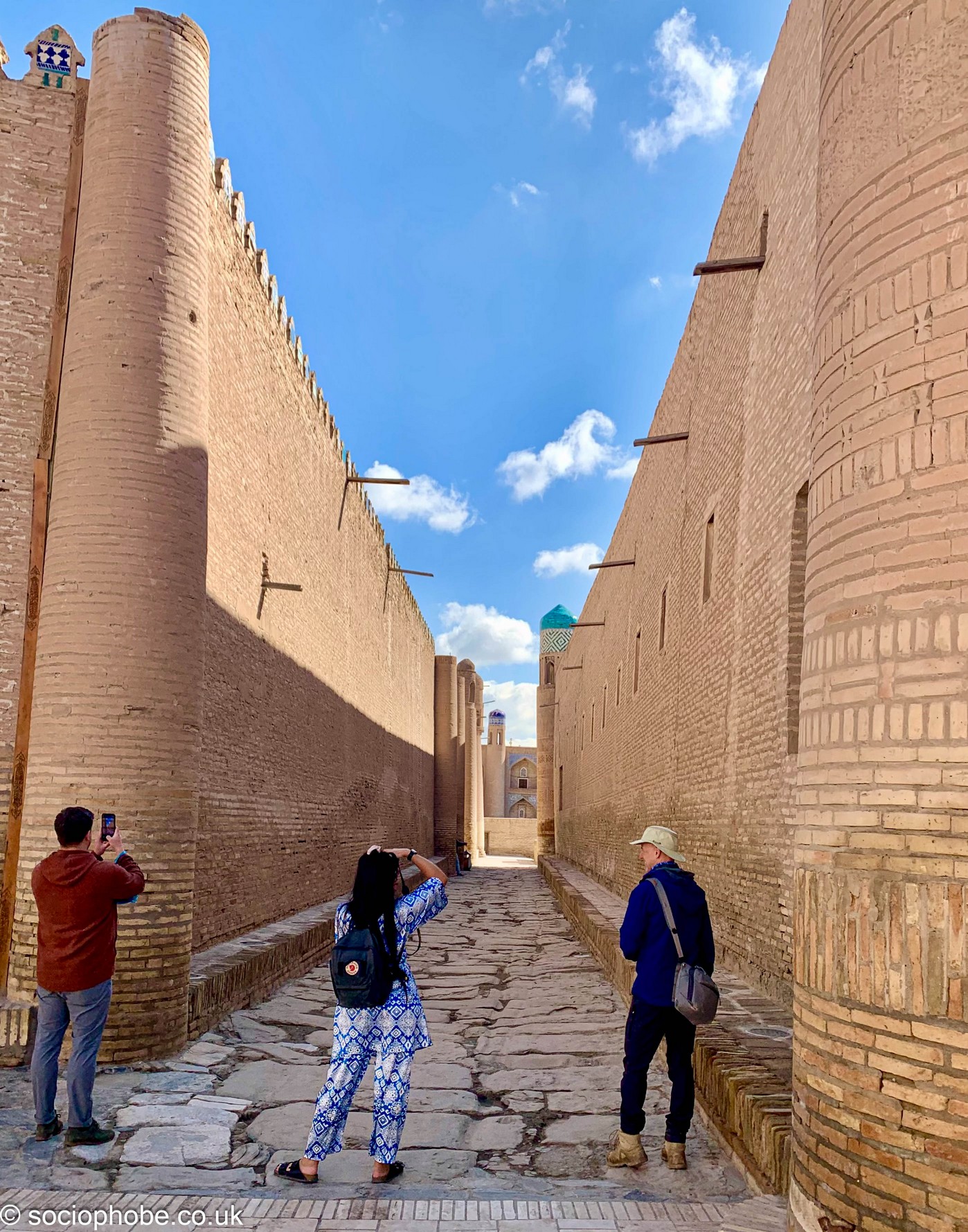
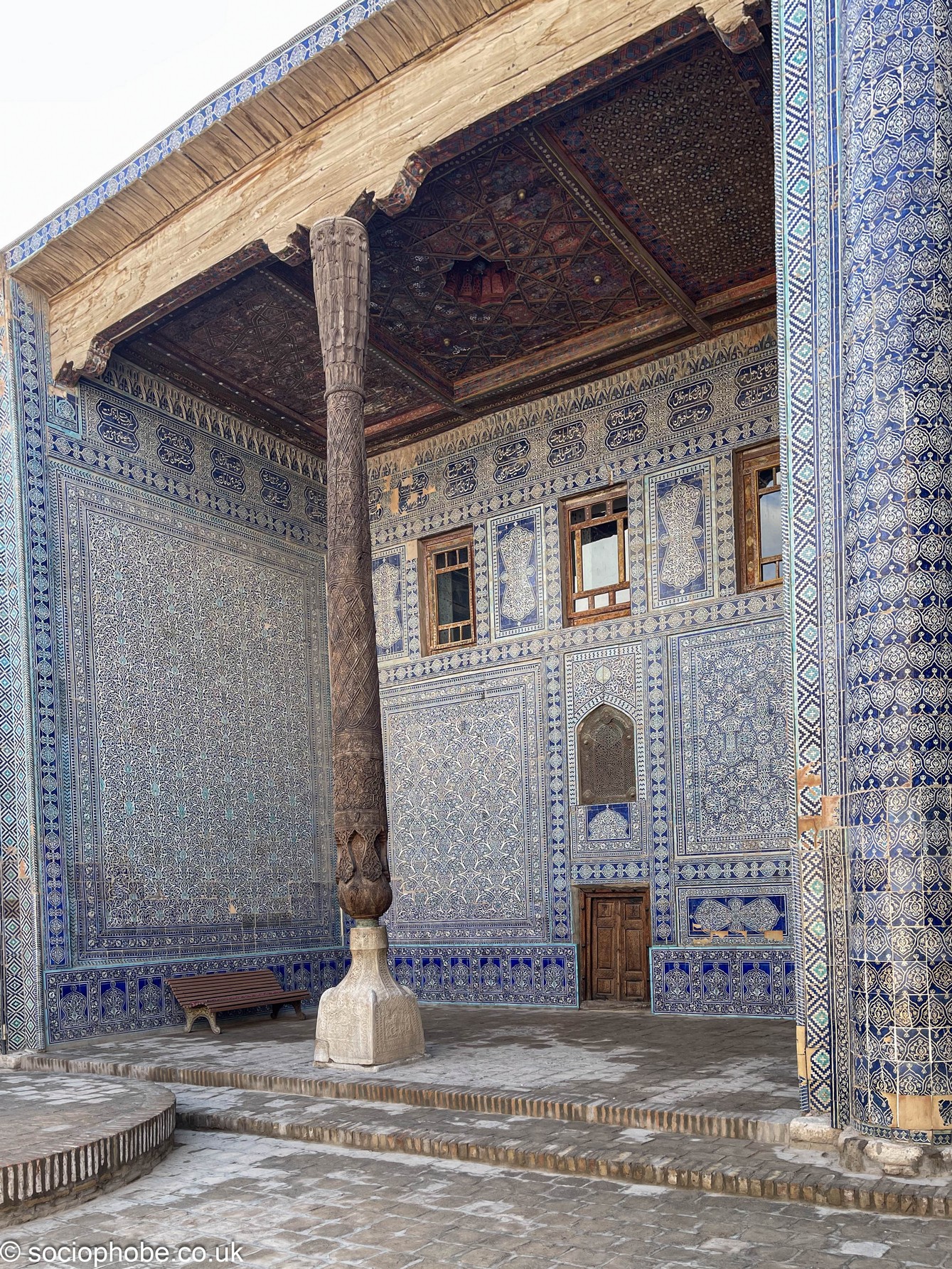
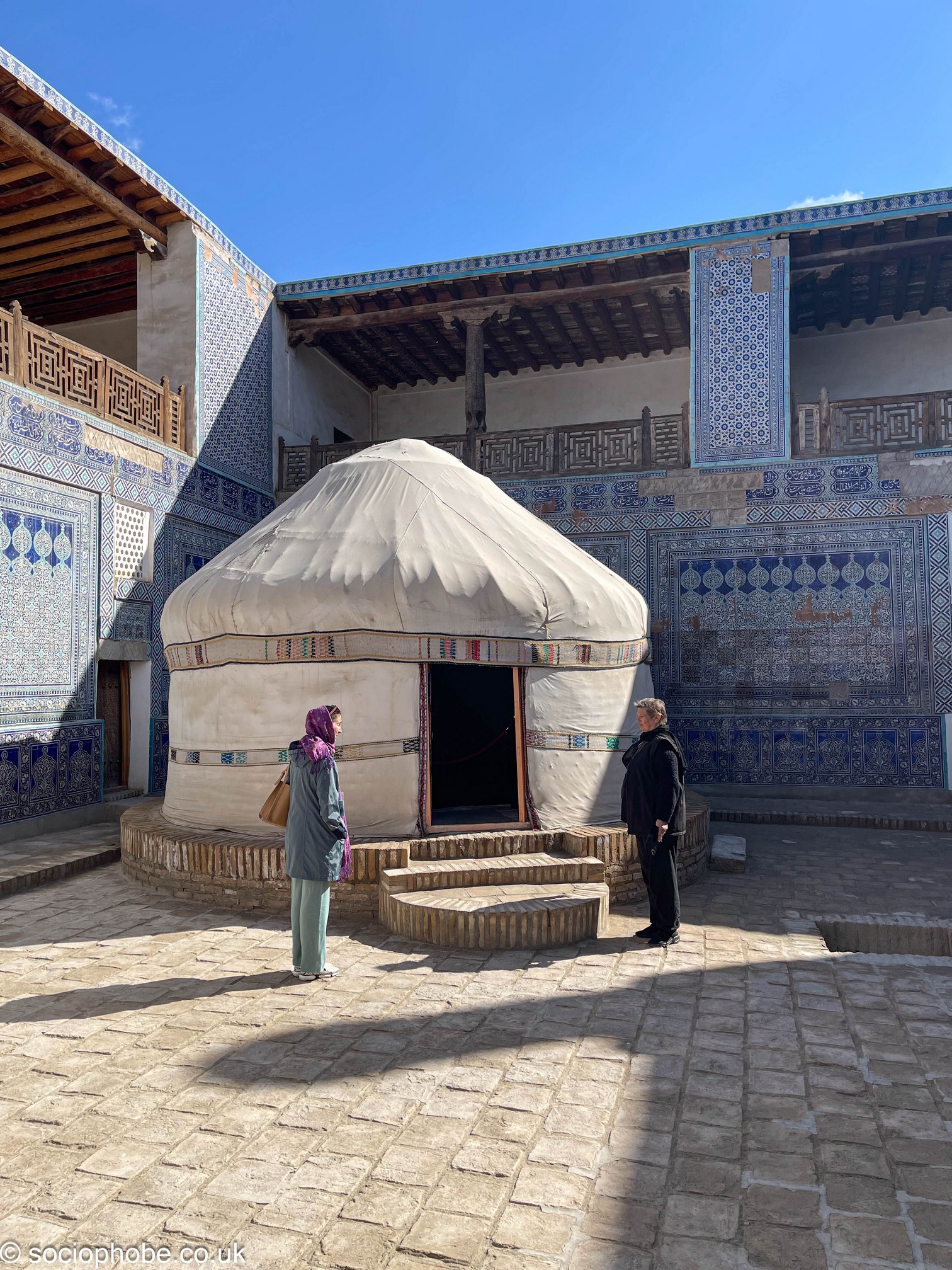
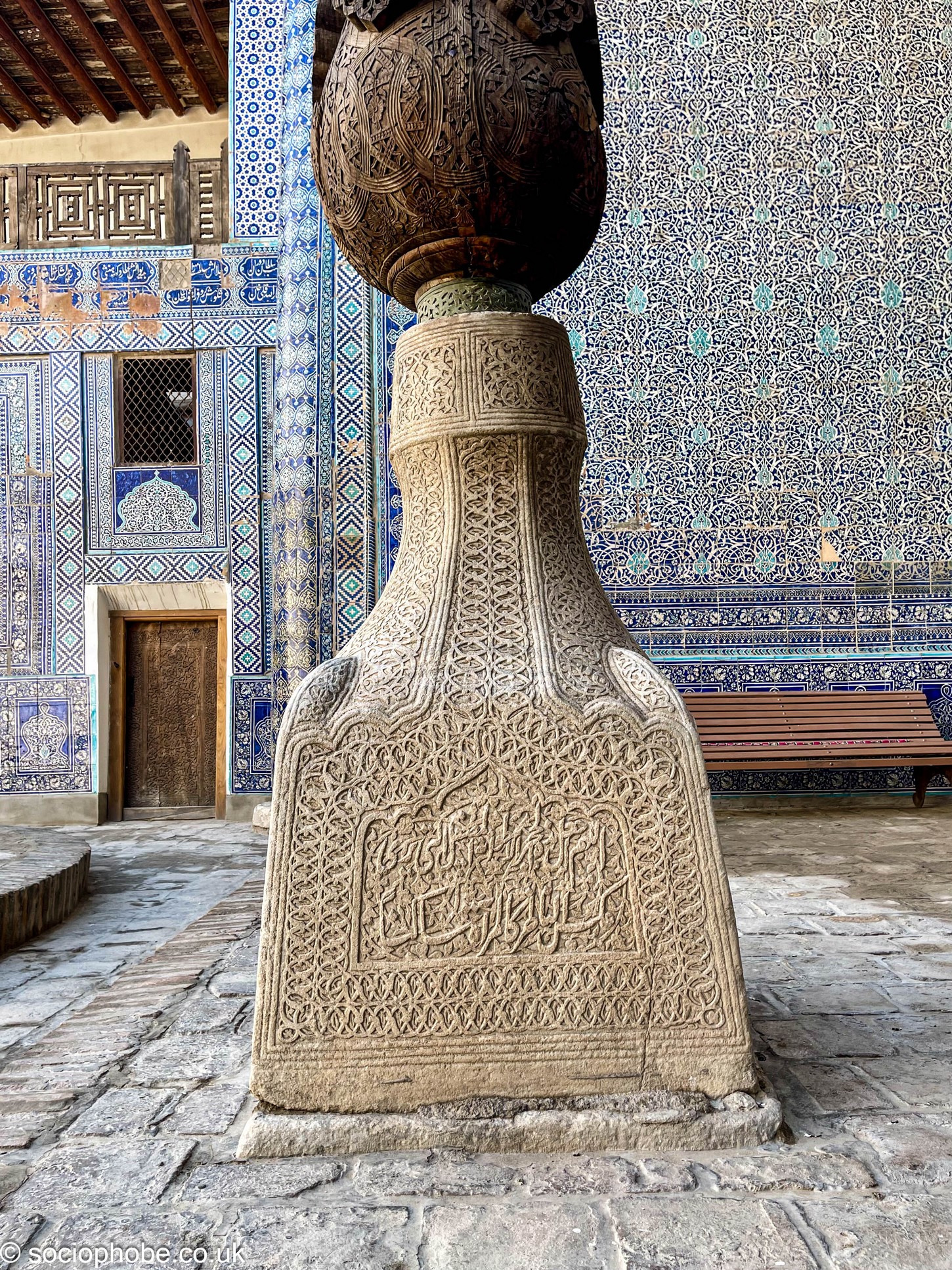
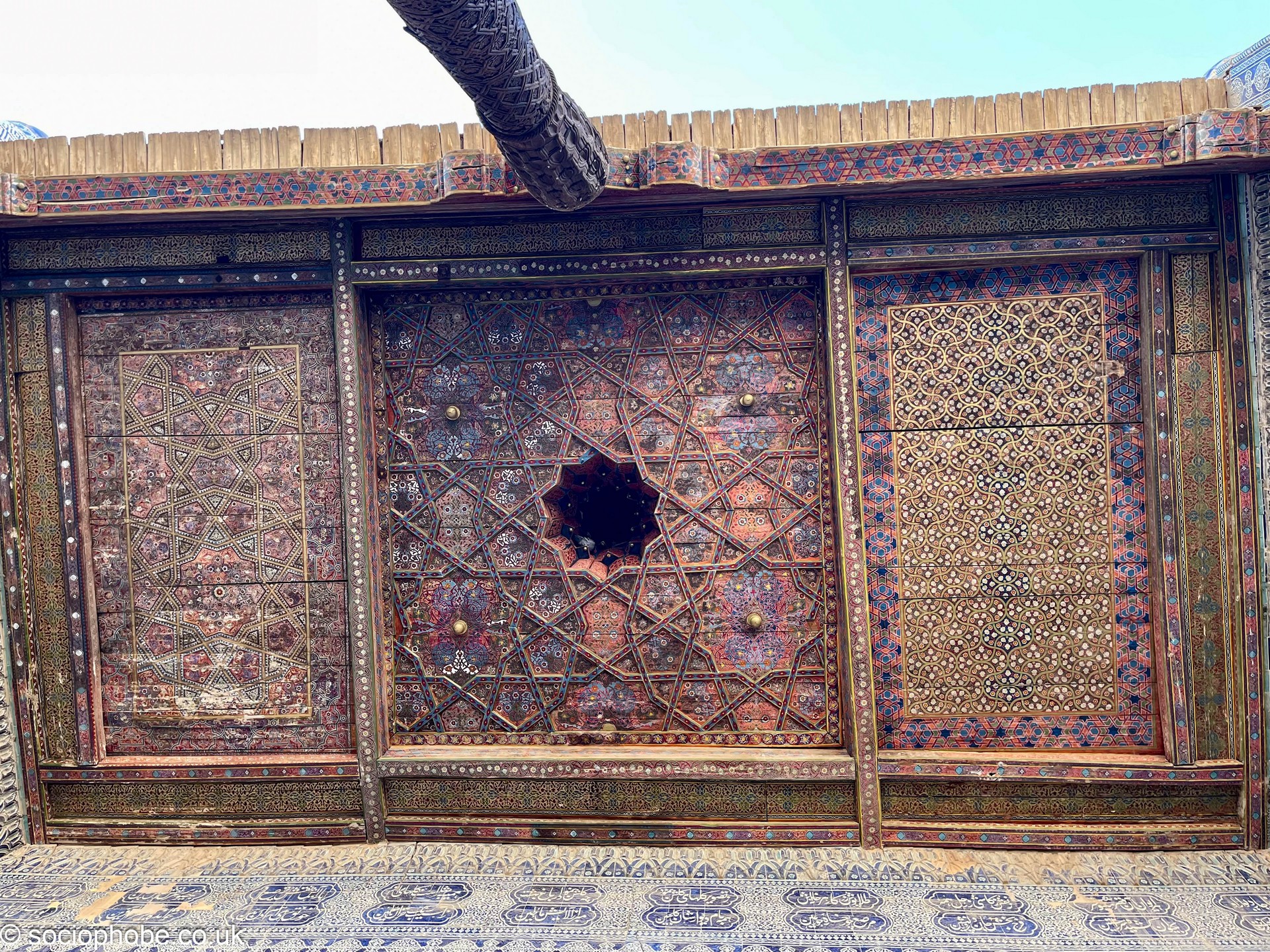
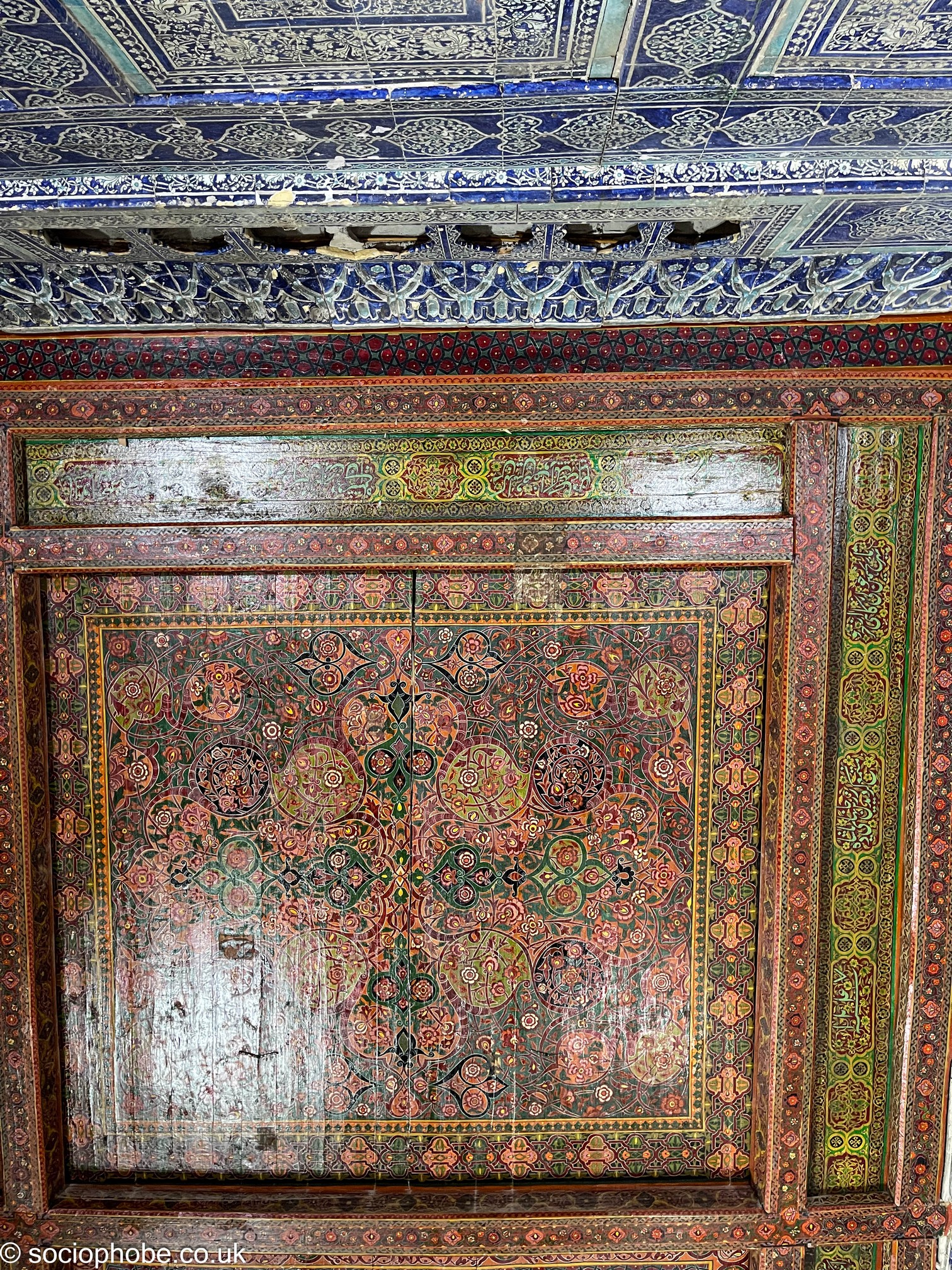
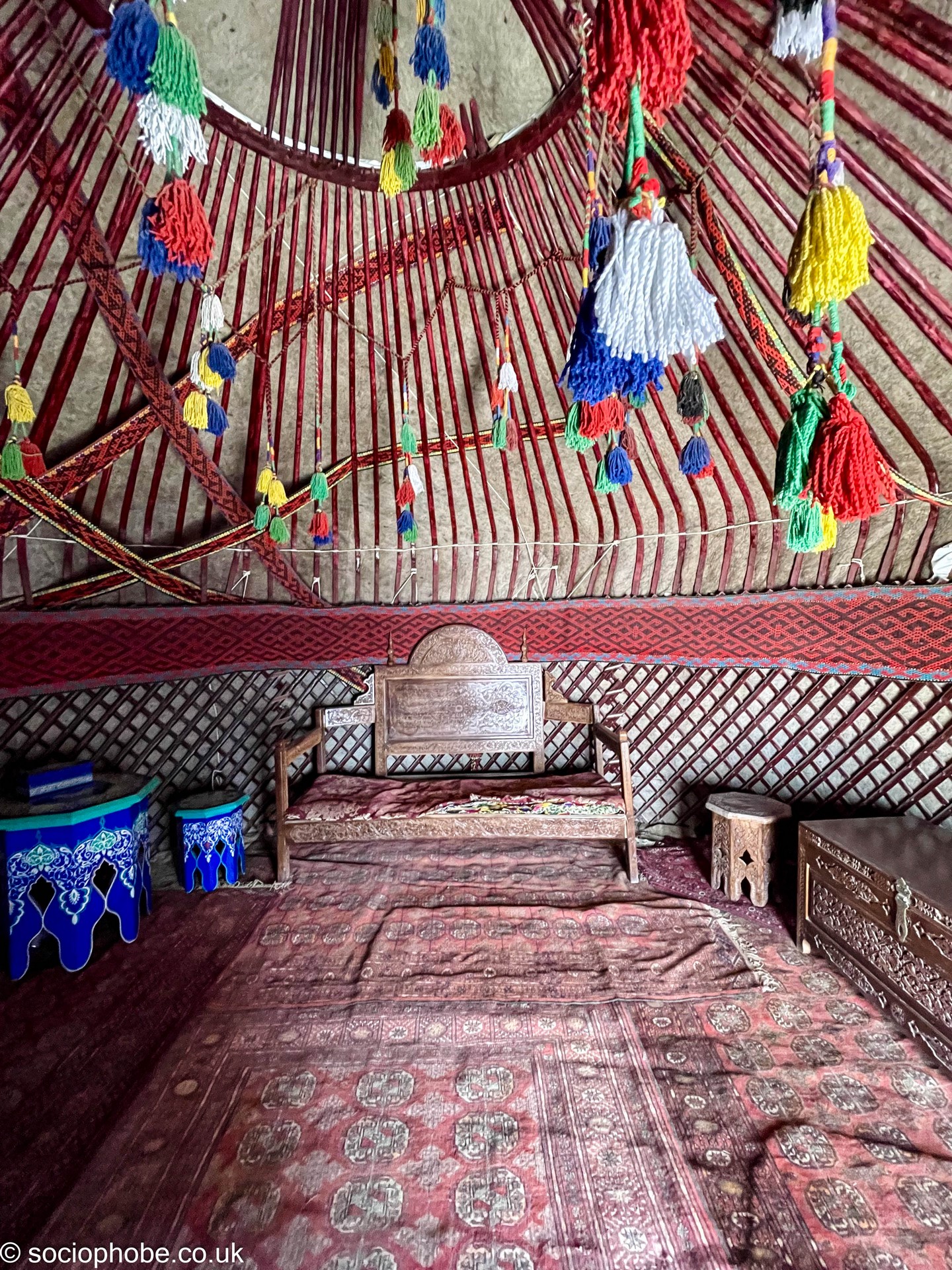
The Tosh Hovli Palace looked very unassuming from the outside and if you just popped your head through the door you’d see a dull courtyard with a European carriage in it, a gift from the Tsar and nothing else. There were doorways to other rooms and the place was a real warren with some rooms having displays and exhibitions, some being amazingly decorated courtyards, especially the harem and also a yurt used when the ruler wanted to pretend he was still a nomadic tribesman, not the ruler of an urbanised city state. The wall decorations and ceilings were again beautiful.
Islom Hoja Minaret
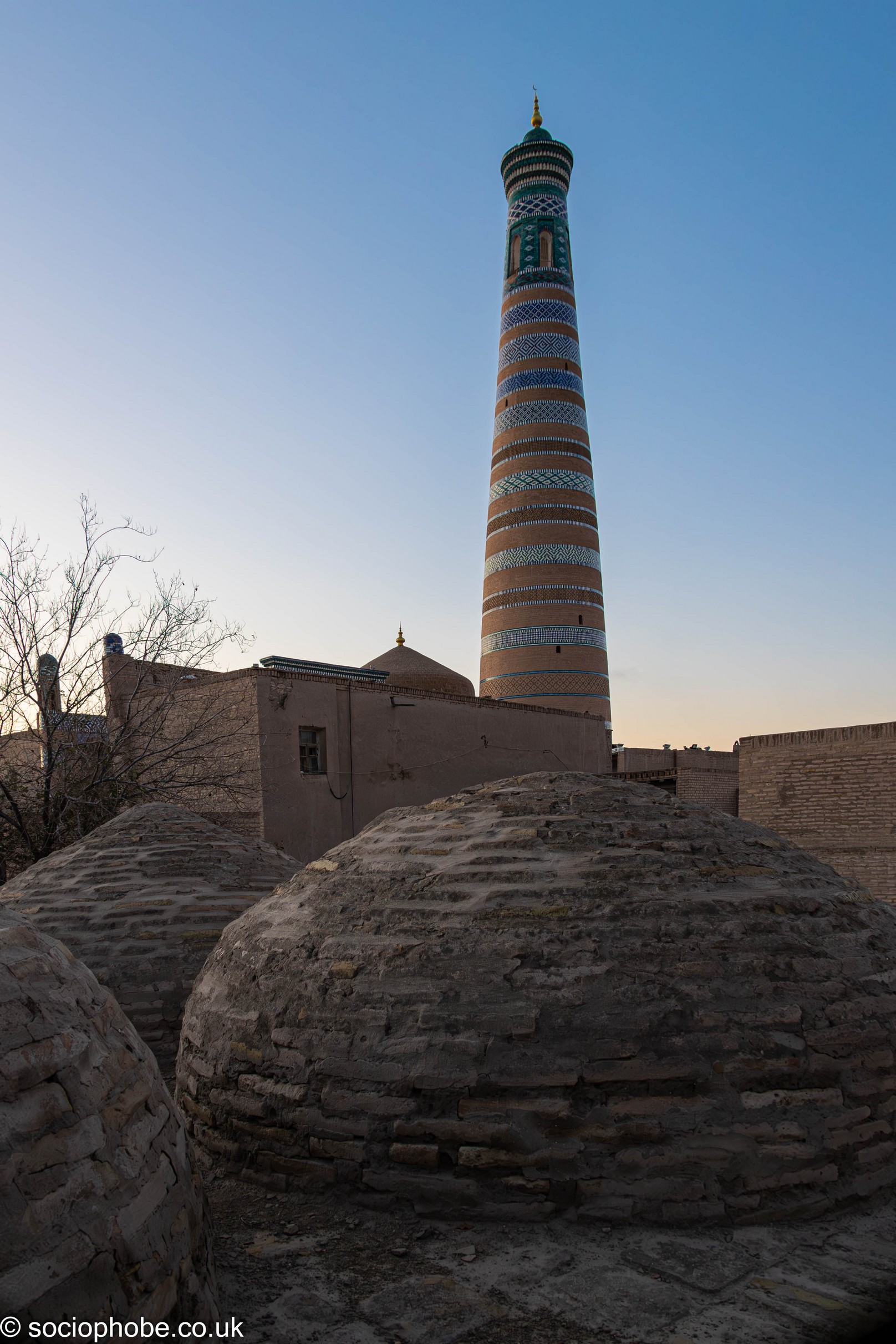
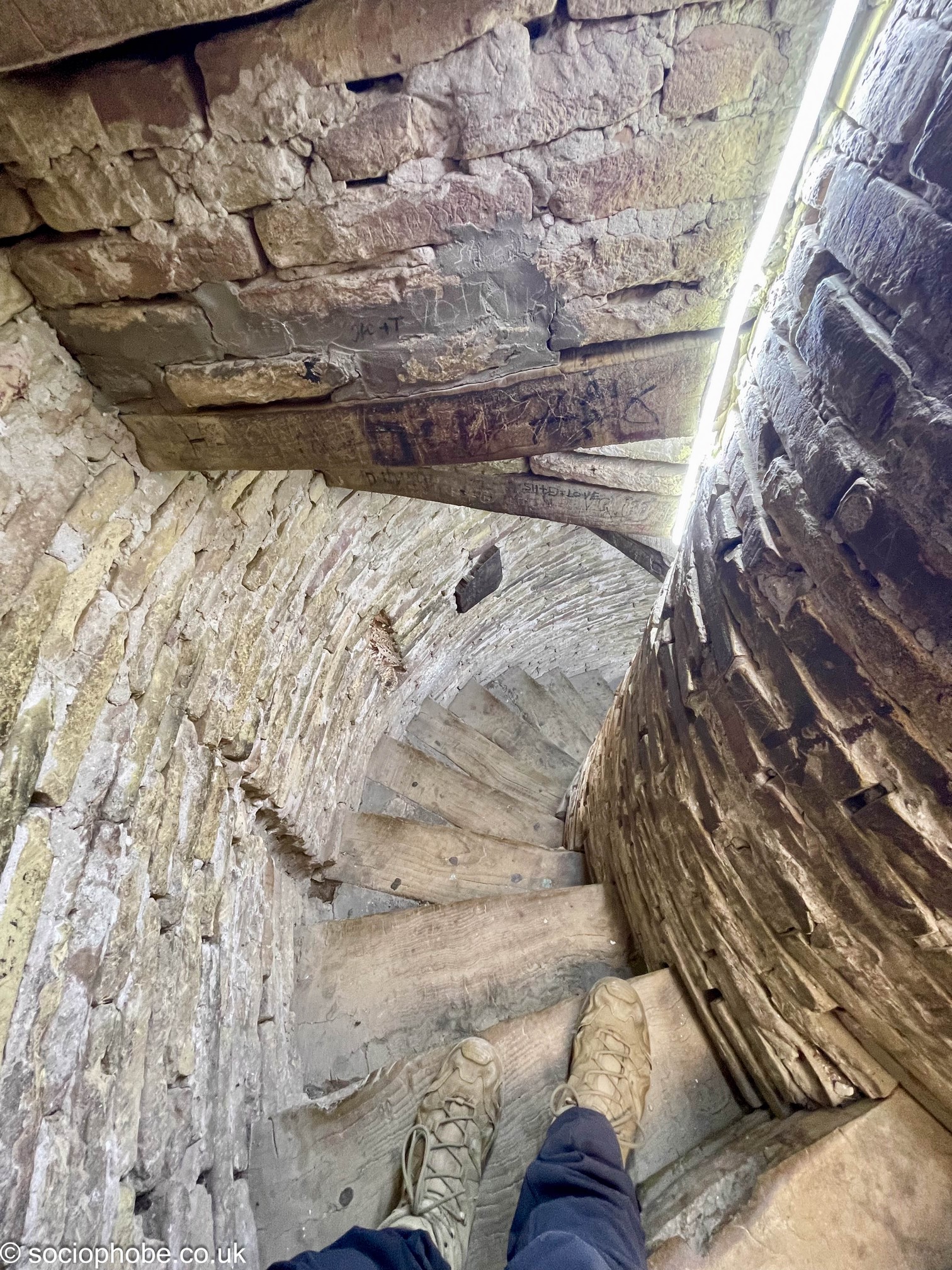
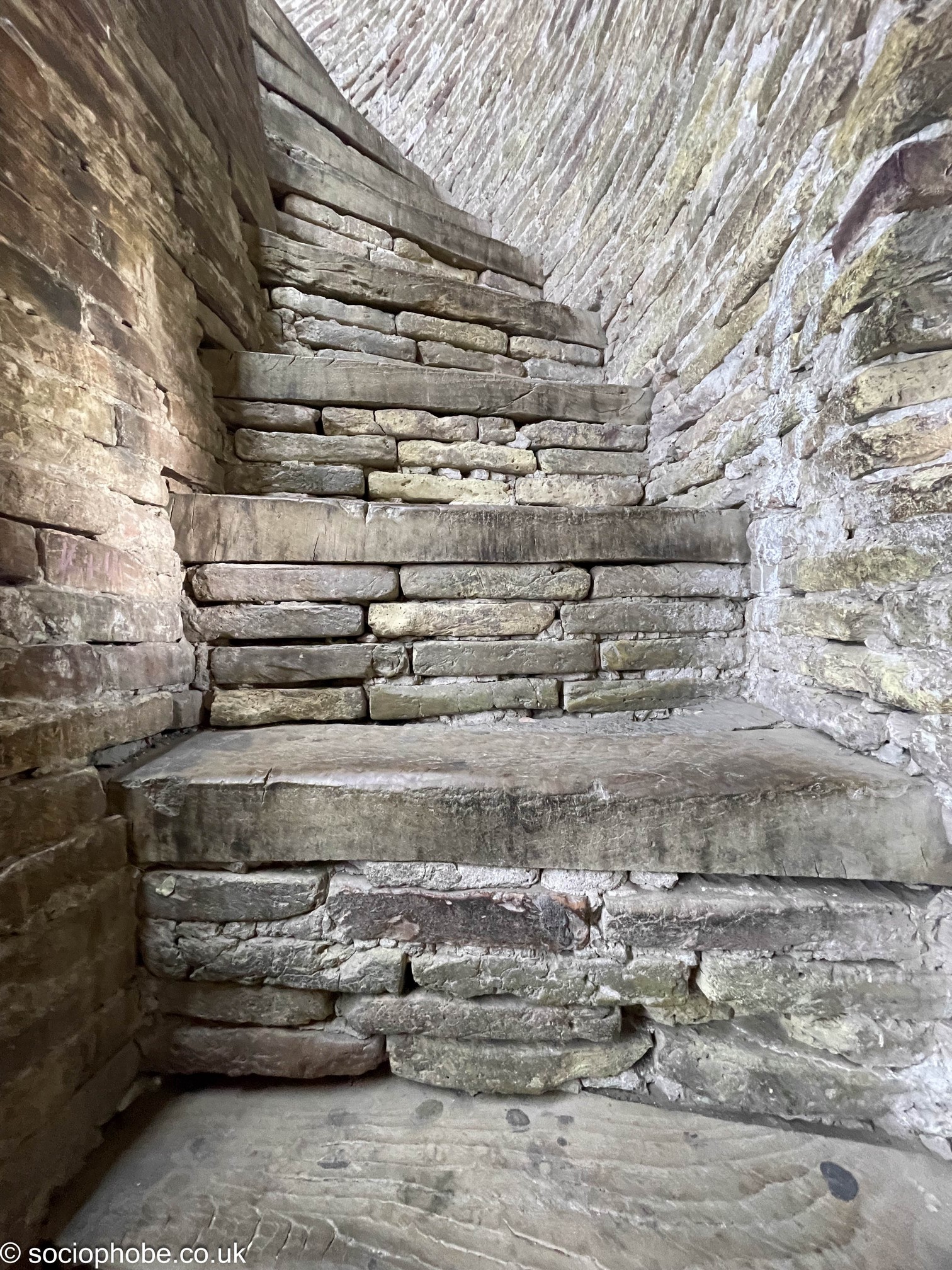
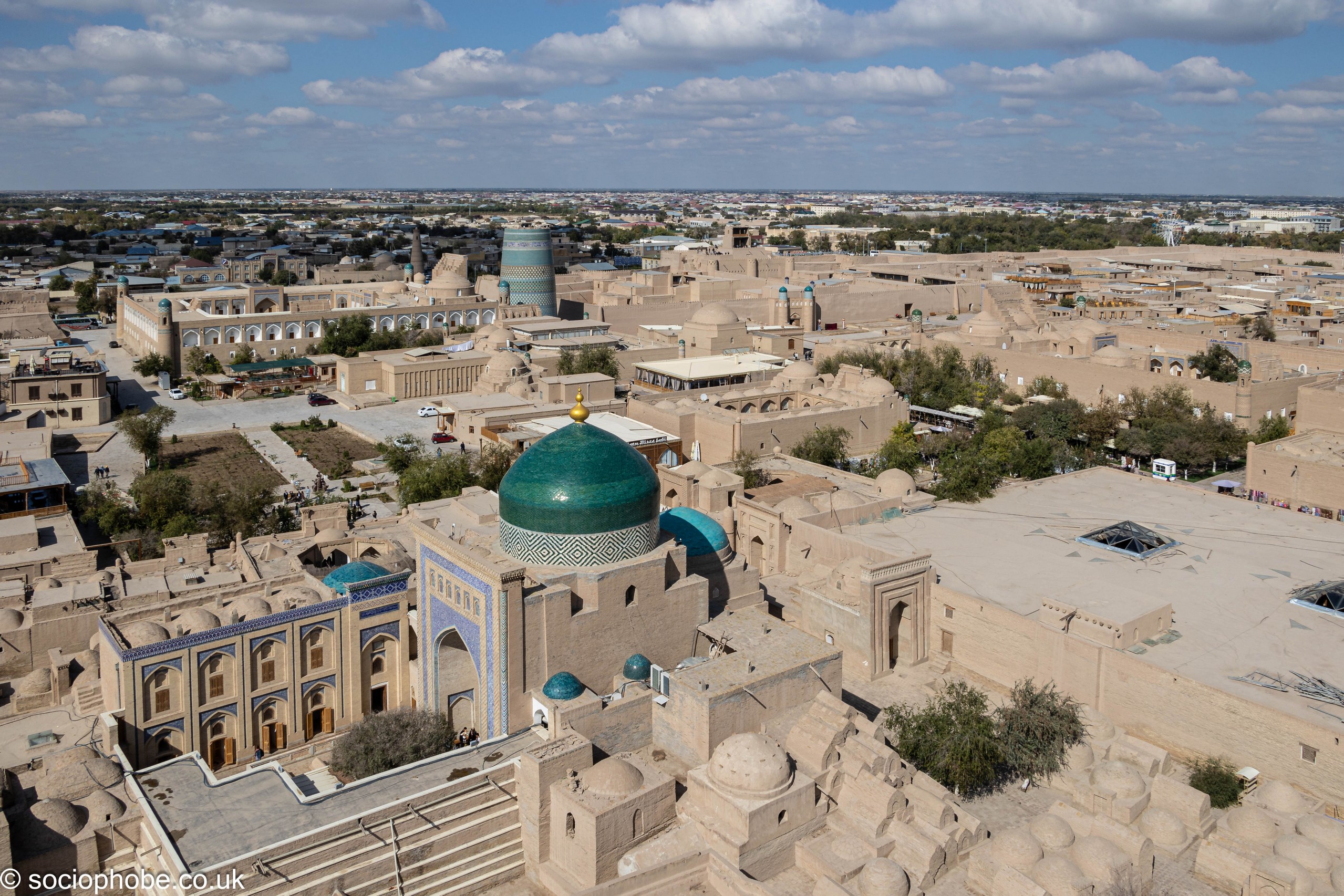
We split from the group there, although not intentionally but we waited outside and they were apparently looking for us inside. After a while we headed towards the Islom Hoja Minaret, which is the only one in the city you can climb. I paid the 100k soms (£7) and started climbing up the spiral staircase. Each step was very tall and there wasn’t enough headroom to stand up straight. Also, if anyone was coming down you had to squeeze against the sides so they could pass. Once at the top though you had an amazing view over the city and it actually felt safe, after the initial shock of the height. Climbing down was more difficult than going up but there were no mishaps and I met up with Debs and we headed to the lunch rendezvous.
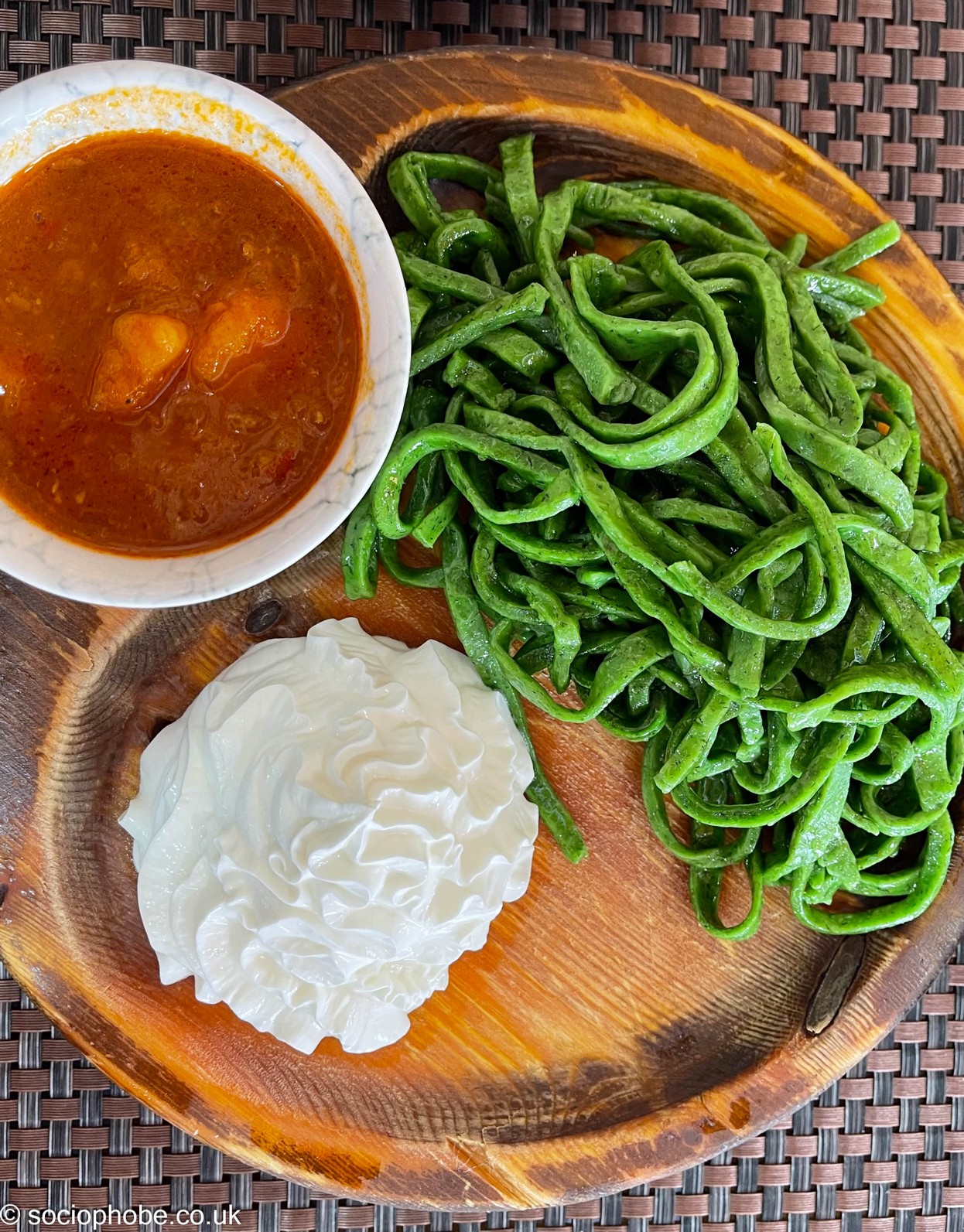
Lunch was at the Terrassa Restaurant, near the west gate and overlooking the Kaltor Minor Minaret. Luckily we were inside as it was quite a cold breeze but the menu had some good options and I opted for the dill noodles with yoghurt that I’d seen other people have last night. Deb had beef with fried noodles and we declined cake! The food was delicious and it was a pleasant break and we chatted with Ganisher, Hsien and Julie before splitting up.
Madrassa of Qutlug Murod Inoq
Hsien wanted to see the cisterns in the Madrassa of Qutlug Murod Inoq so we walked with her back towards the palace until we found them. They were deep underground but I guess hadn’t been fully excavated yet as there was no visible means of filling them and the floor was still earth. A lovely domed ceiling though, built of baked brick. From there it was a short walk back to the hotel where Deb had a doze and I had a shower before writing up the days notes.
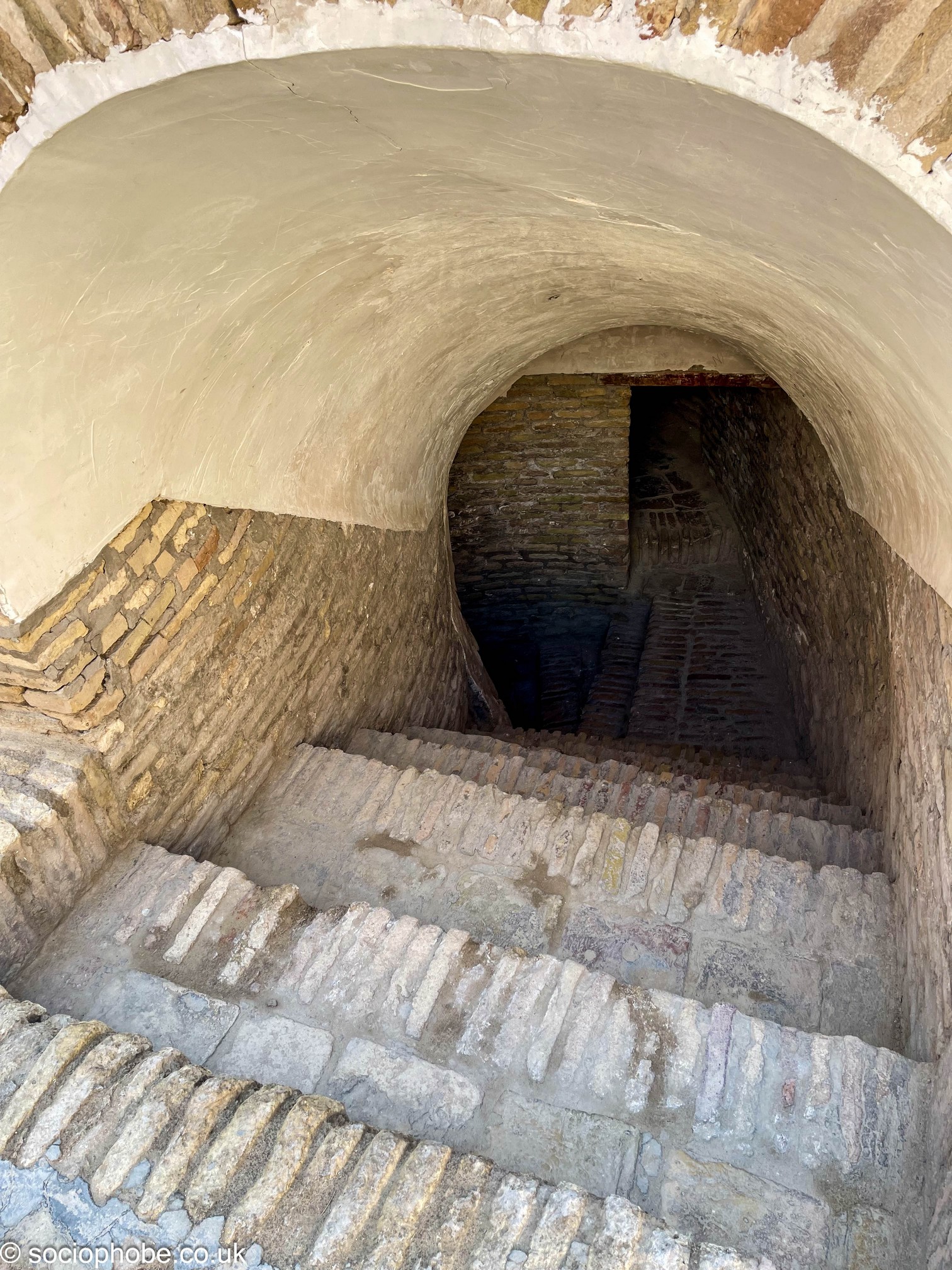
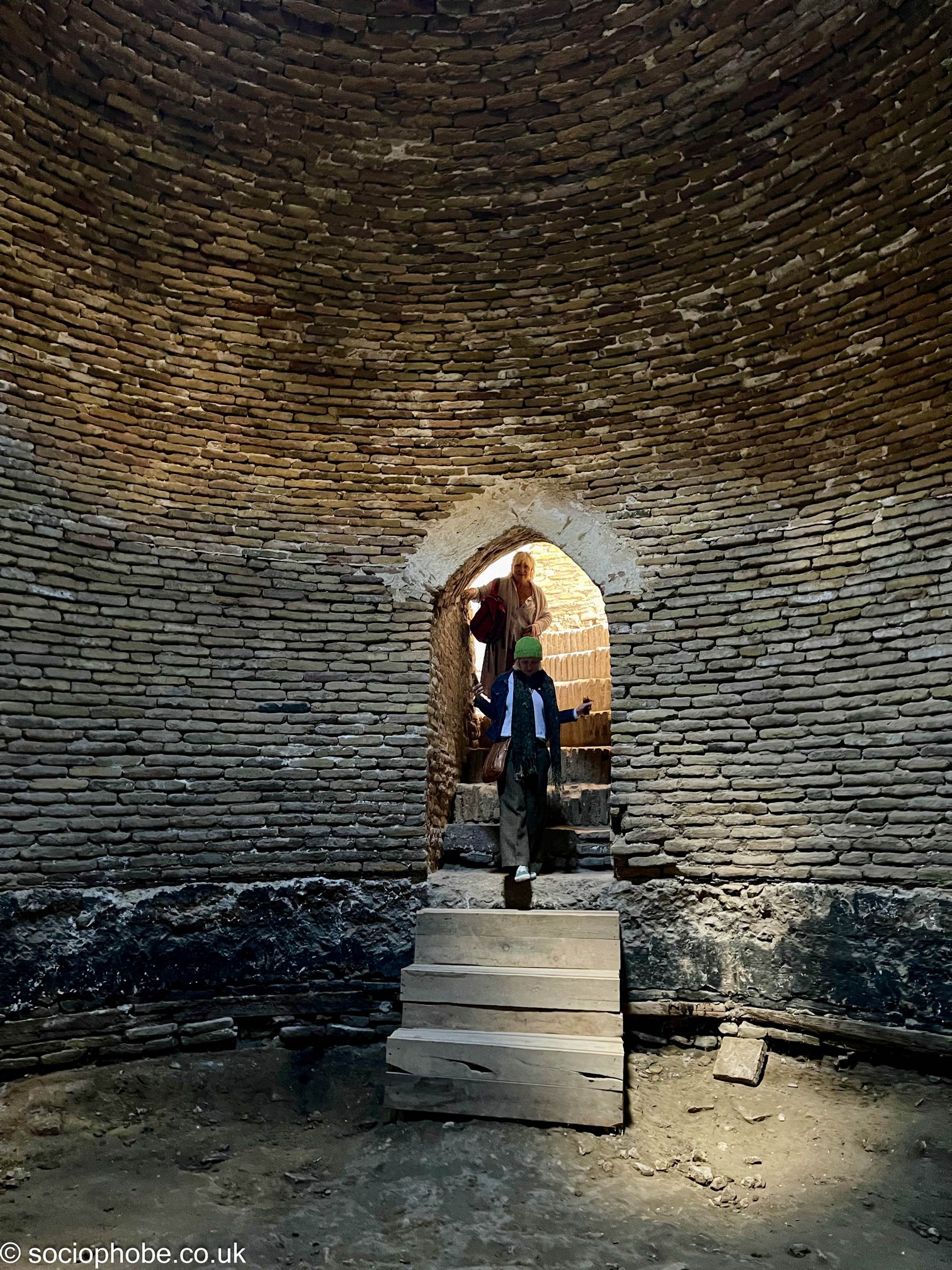
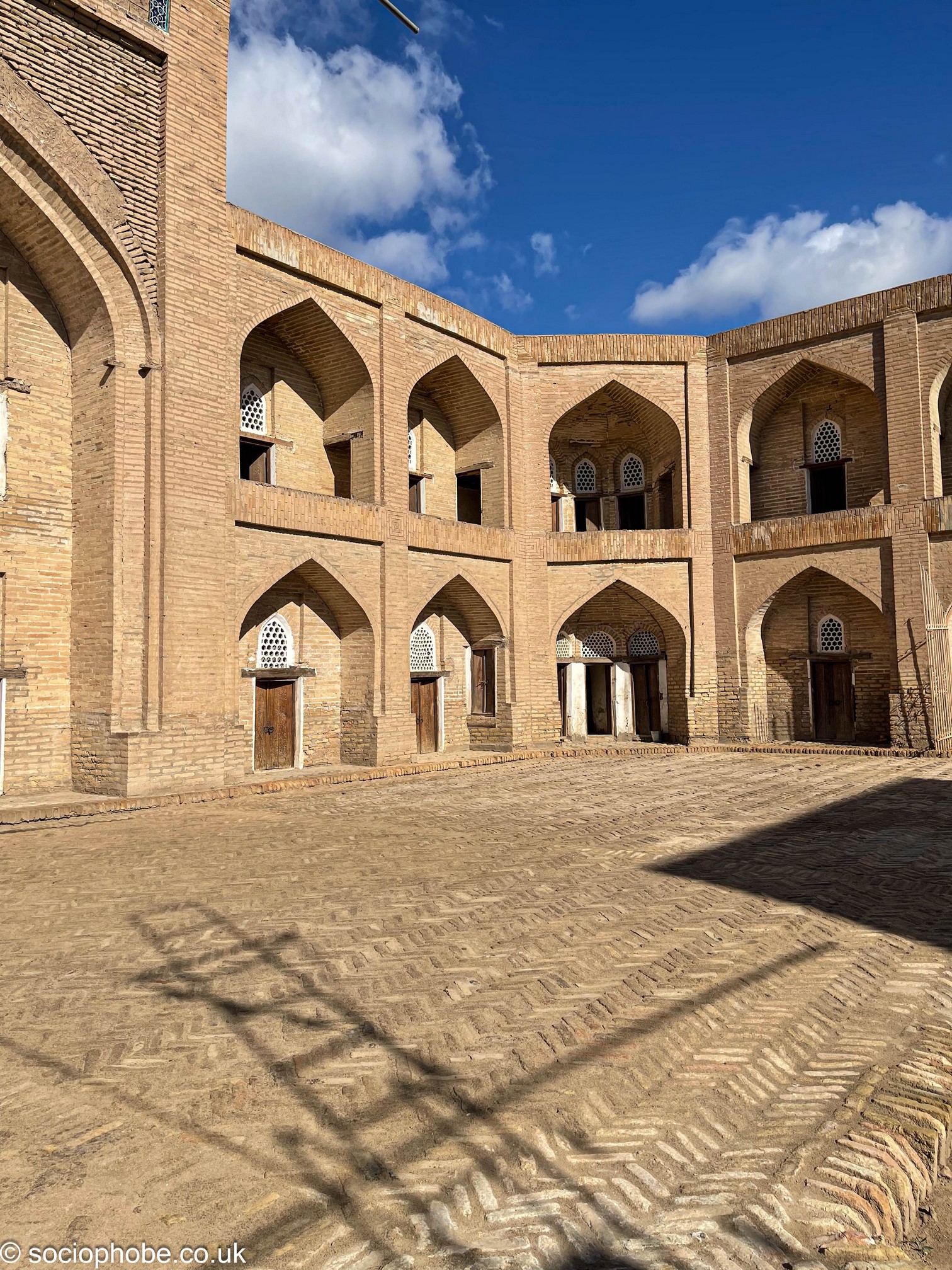
Khiva City Walls
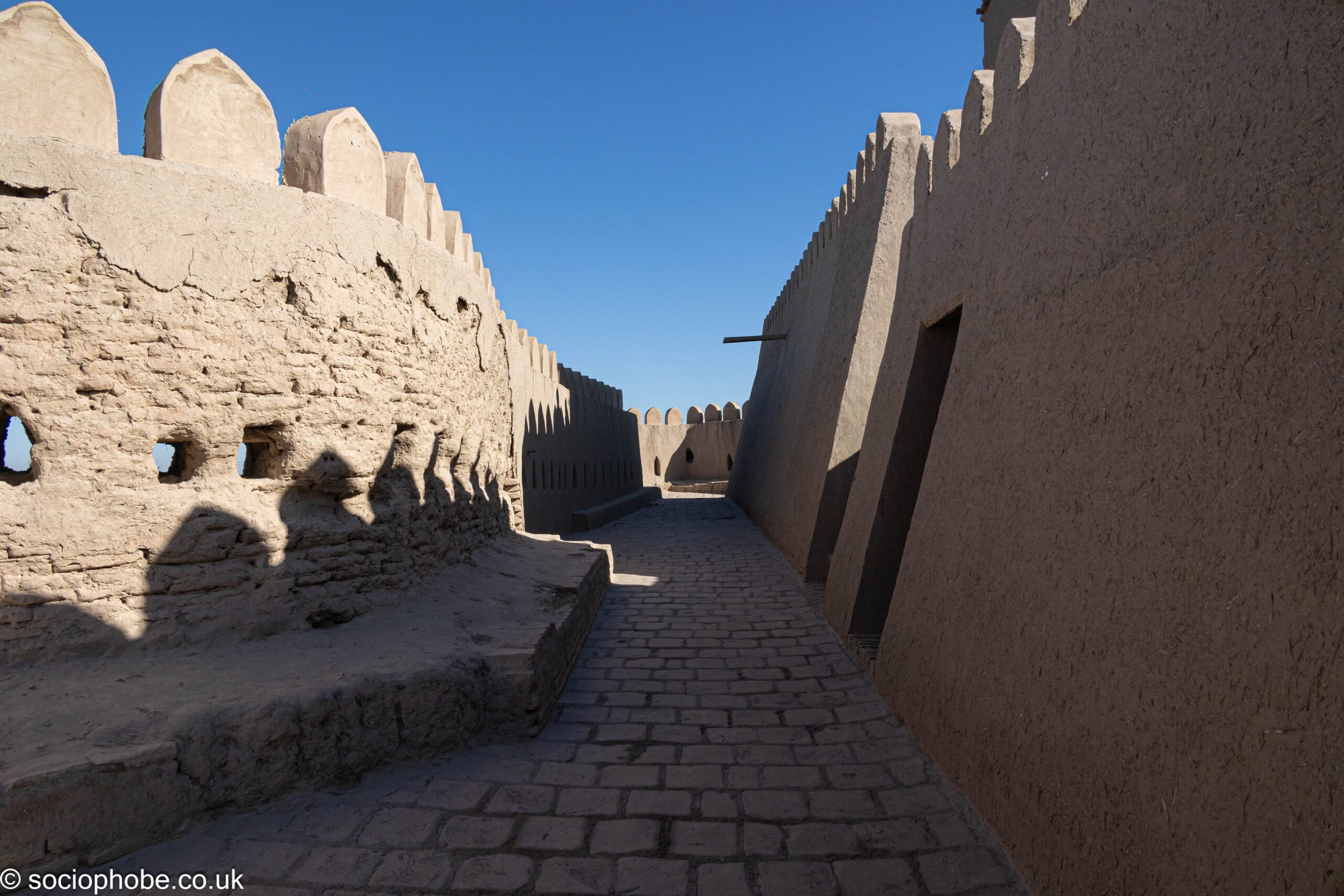
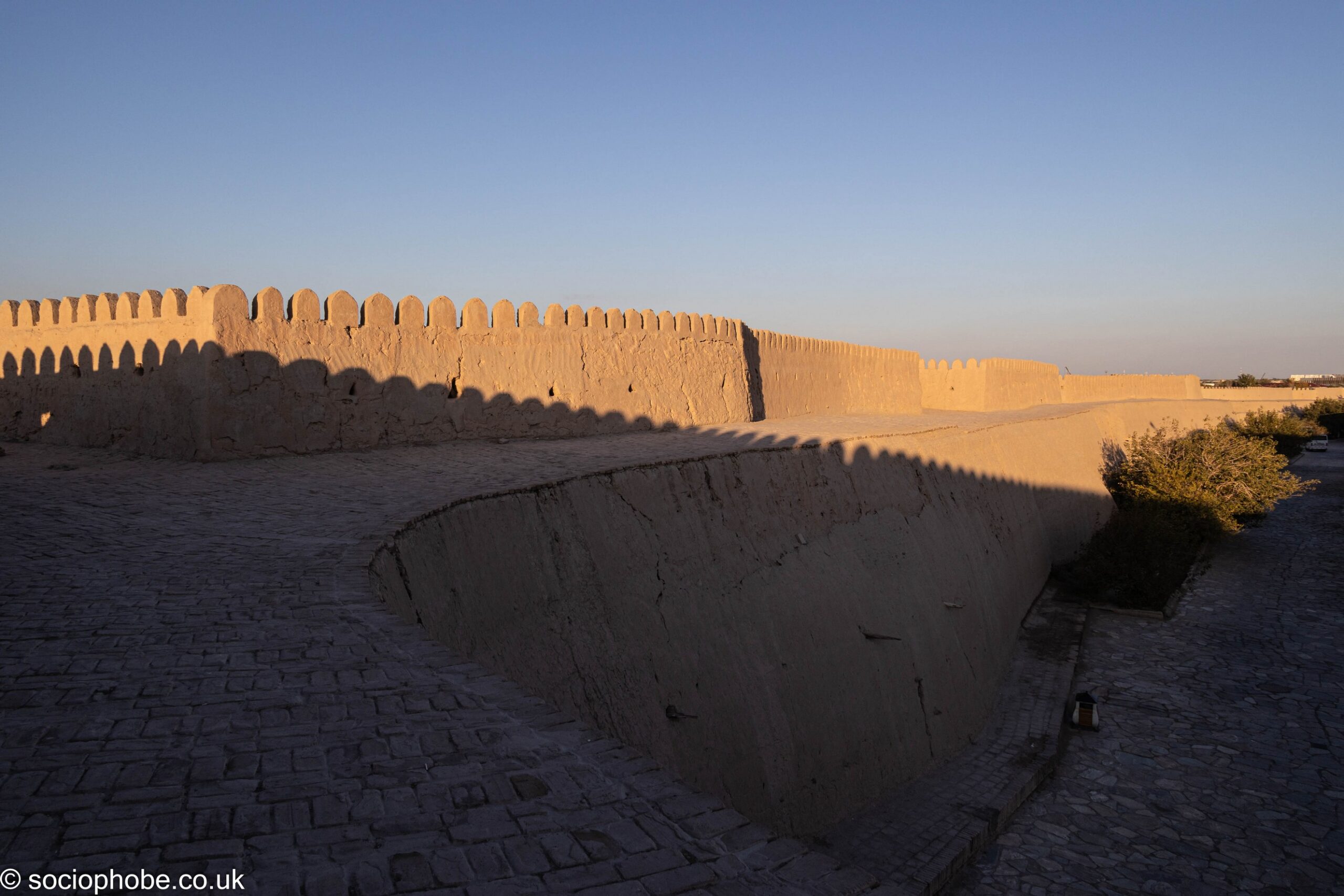
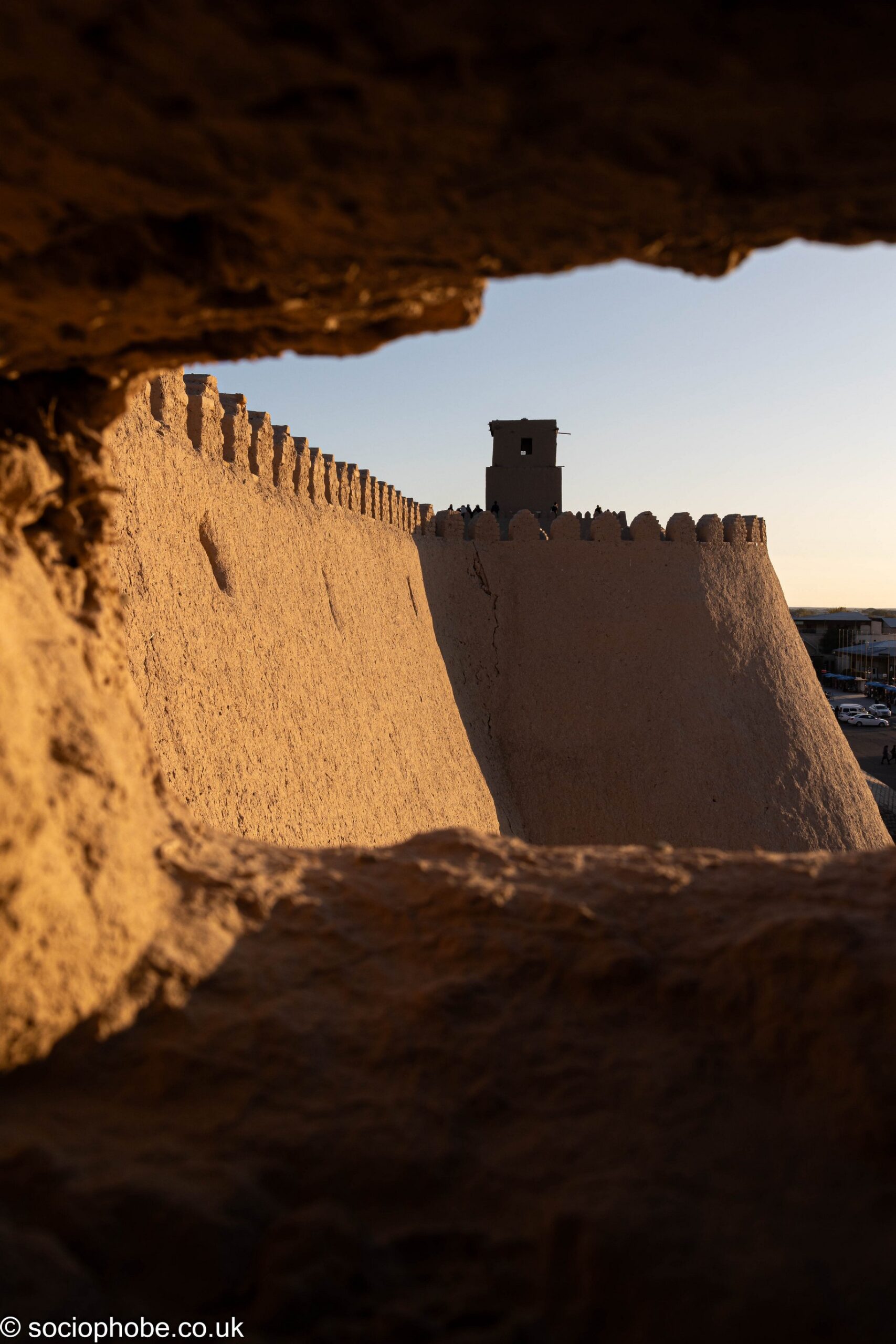
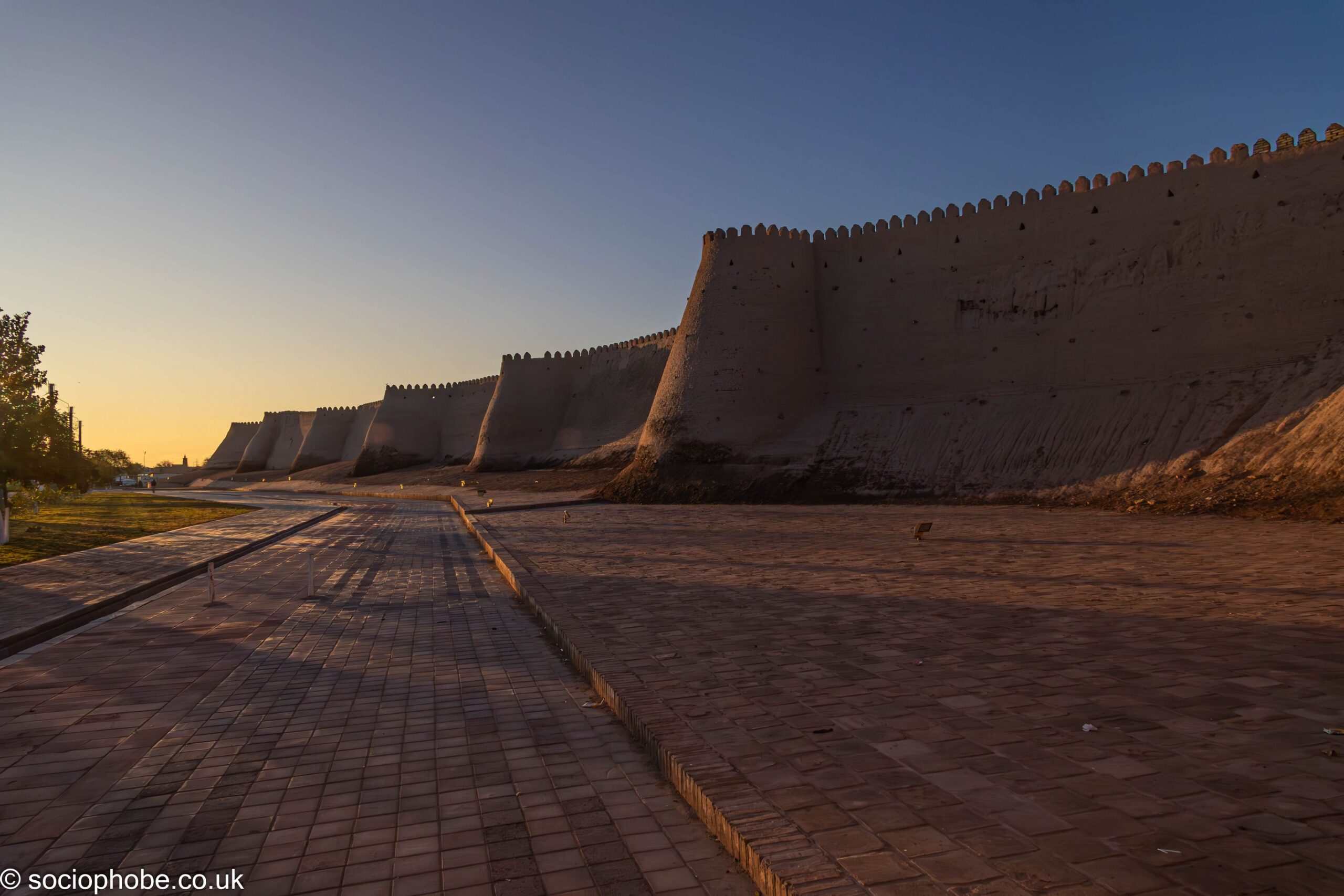
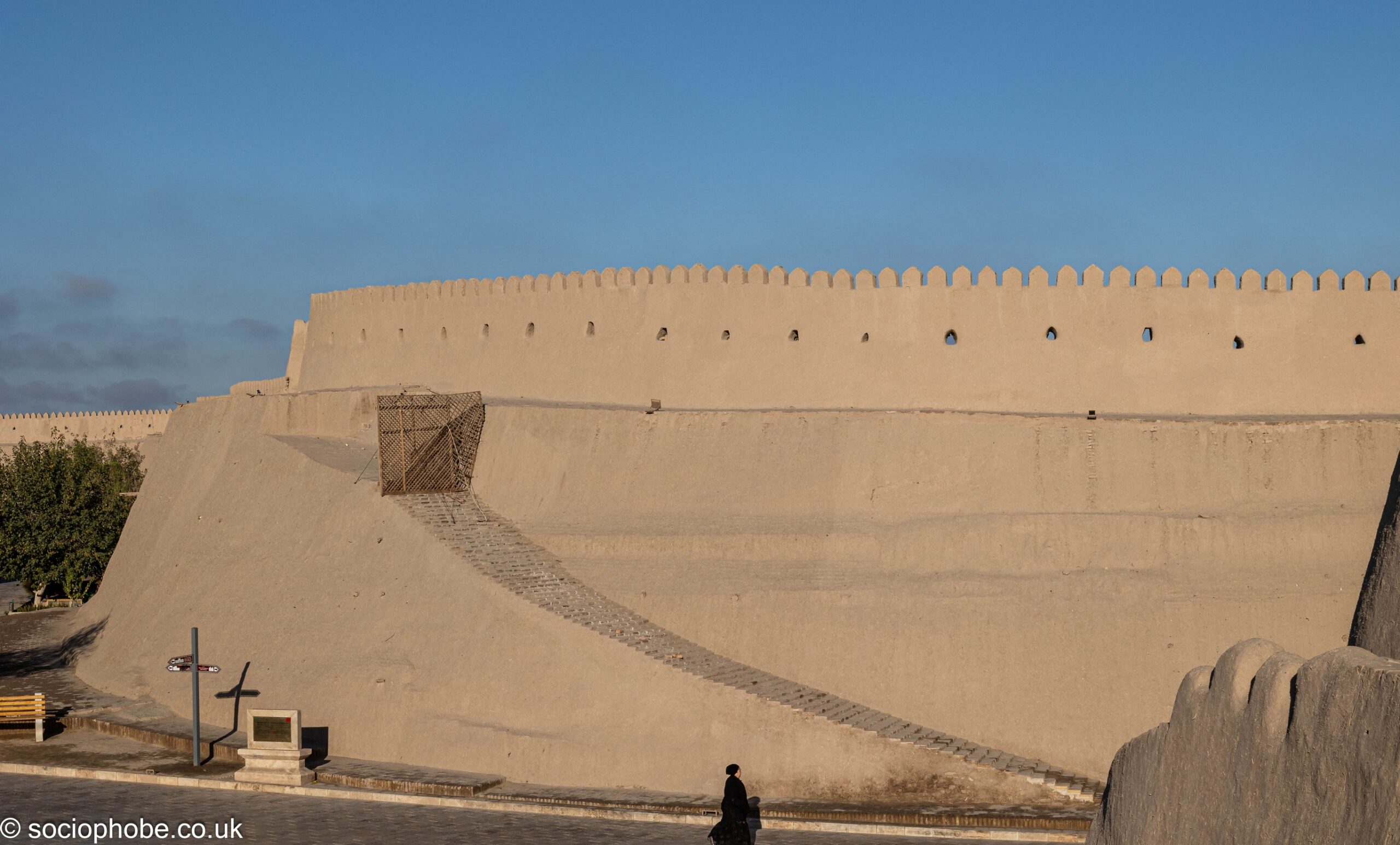
I went out around 5PM to watch the sunset from the walls. I climbed the walls at the north gate and walked towards the west gate. The walls were incredibly bad for defence, the crenelations were way above my head and the loopholes didn’t point down, just straight so you could barely see the outside of the walls at all. I managed to find a couple of places where you could actually take a photo through the loophole but maybe 1 in 20 views were any good. I walked back to the Ark fortress and climbed the steps to take in the view from the watchtower, along with half the tourist population of Khiva. It was pleasant to see a sunset although it was in the wrong direction and I probably should have walked the walls and headed to the east gate instead.
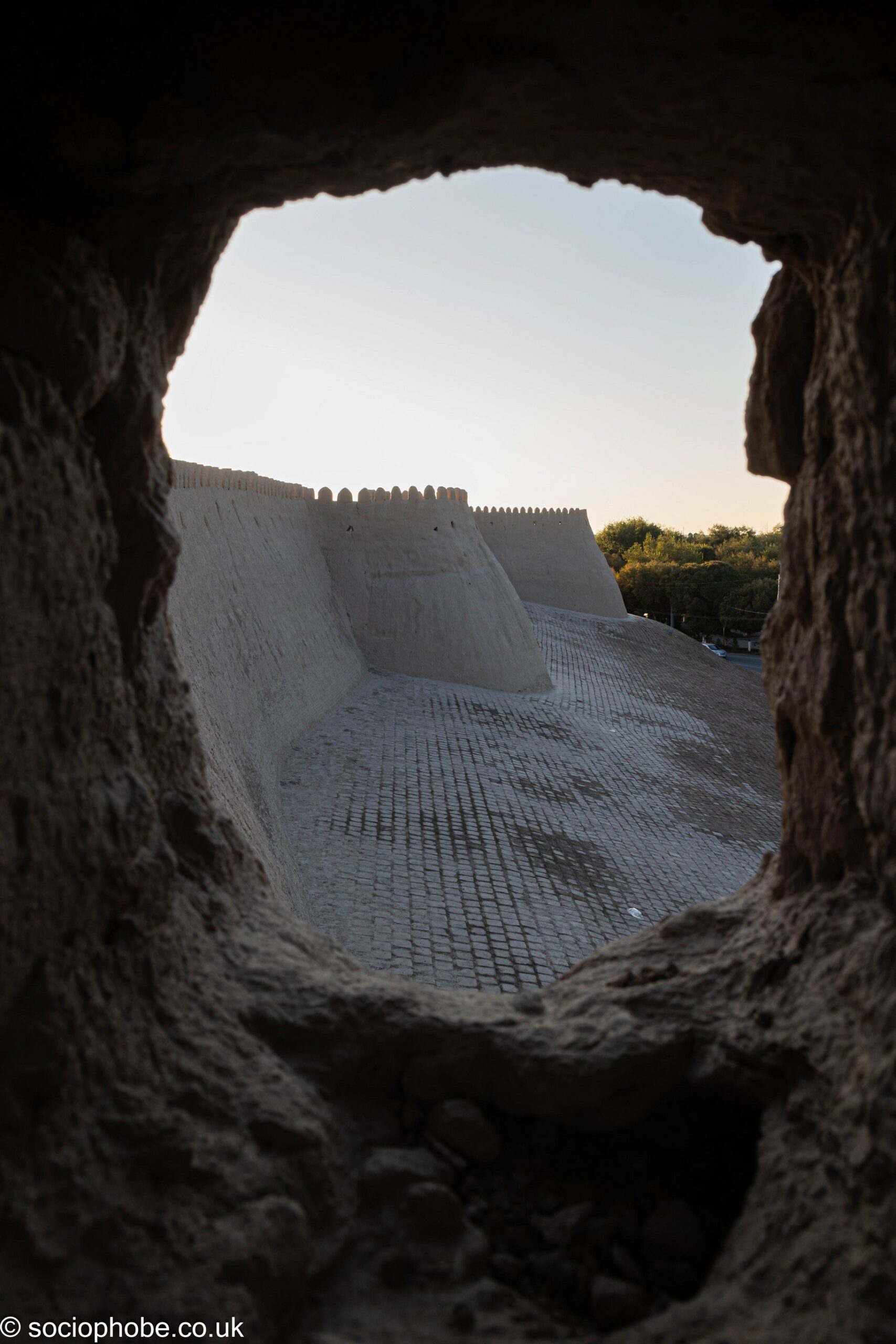
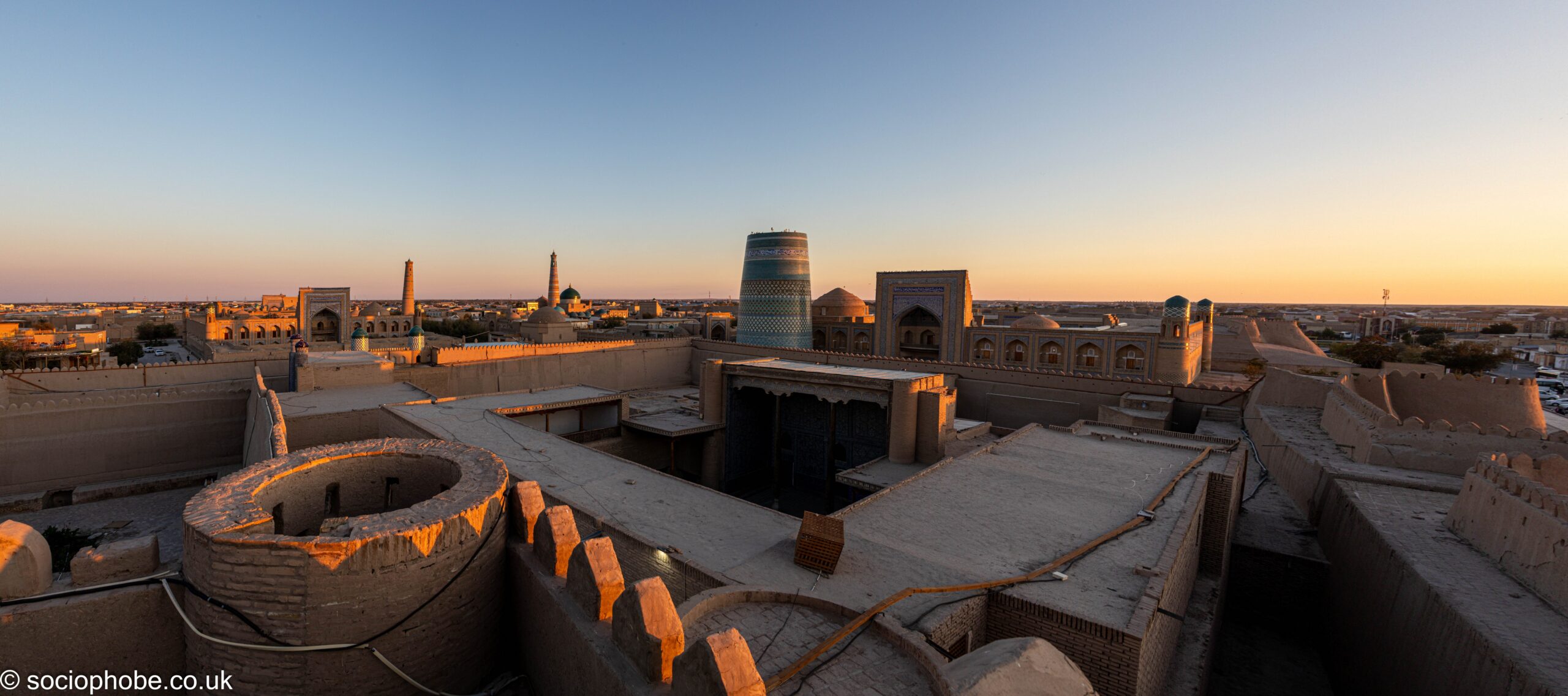
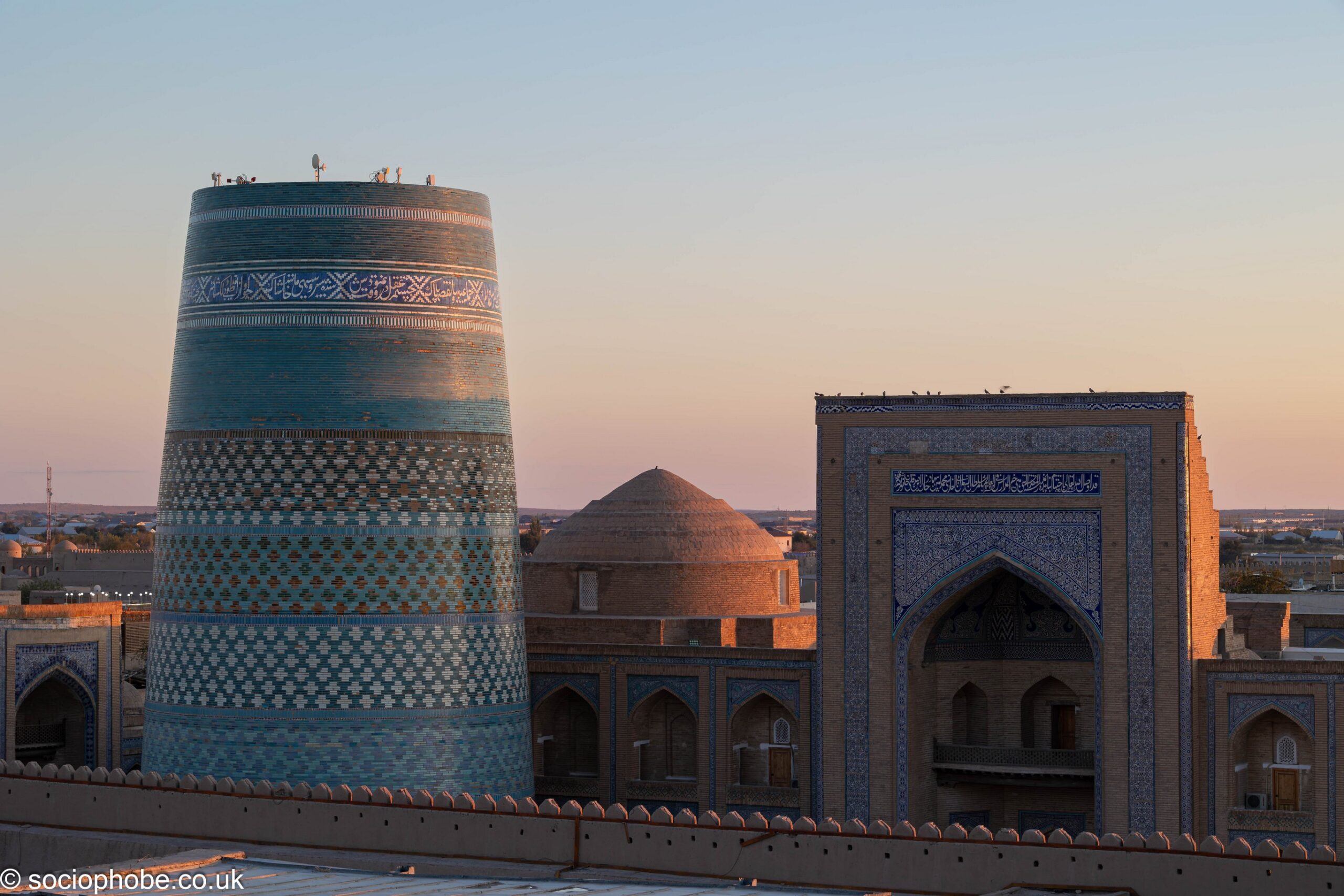
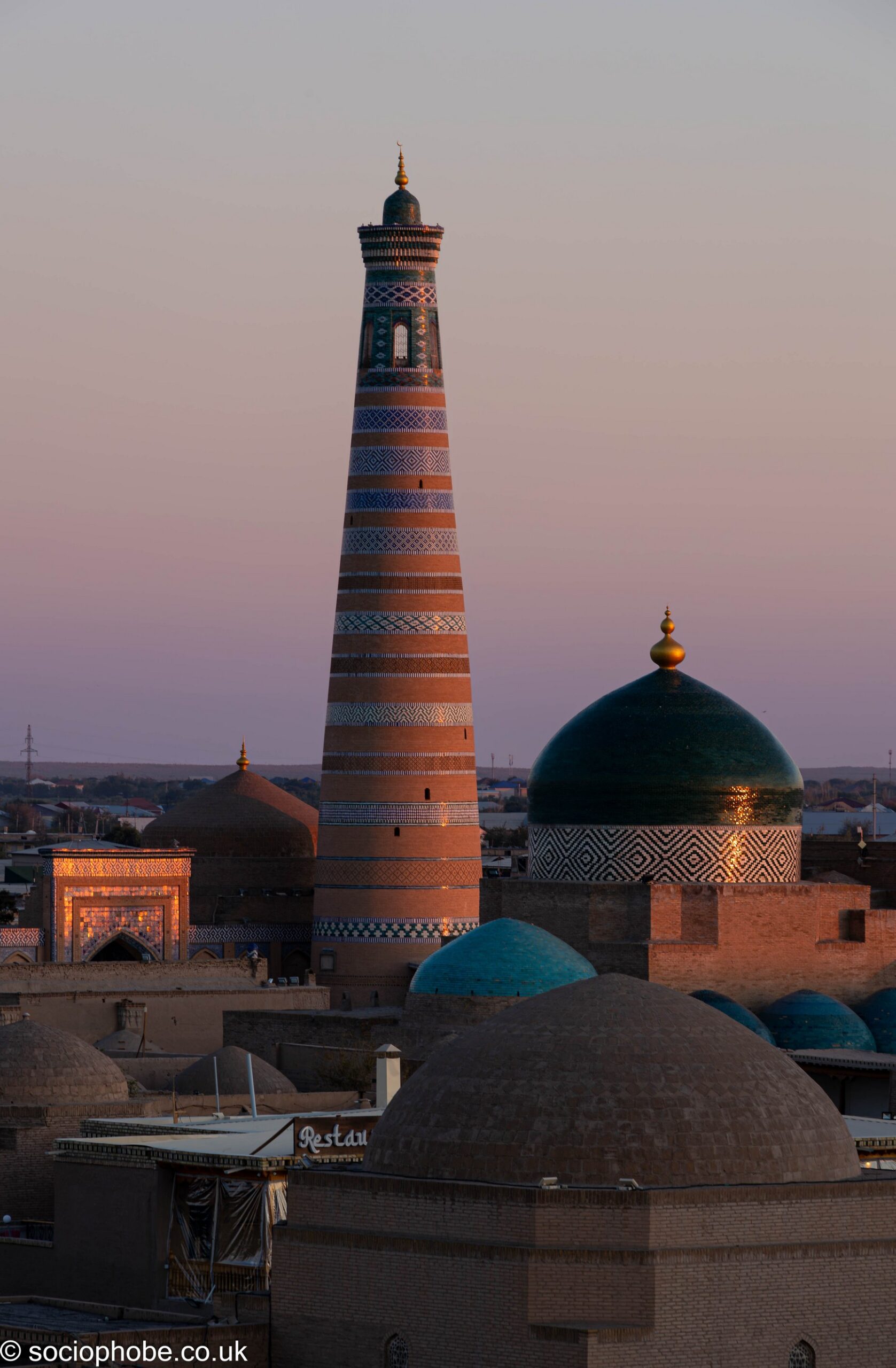
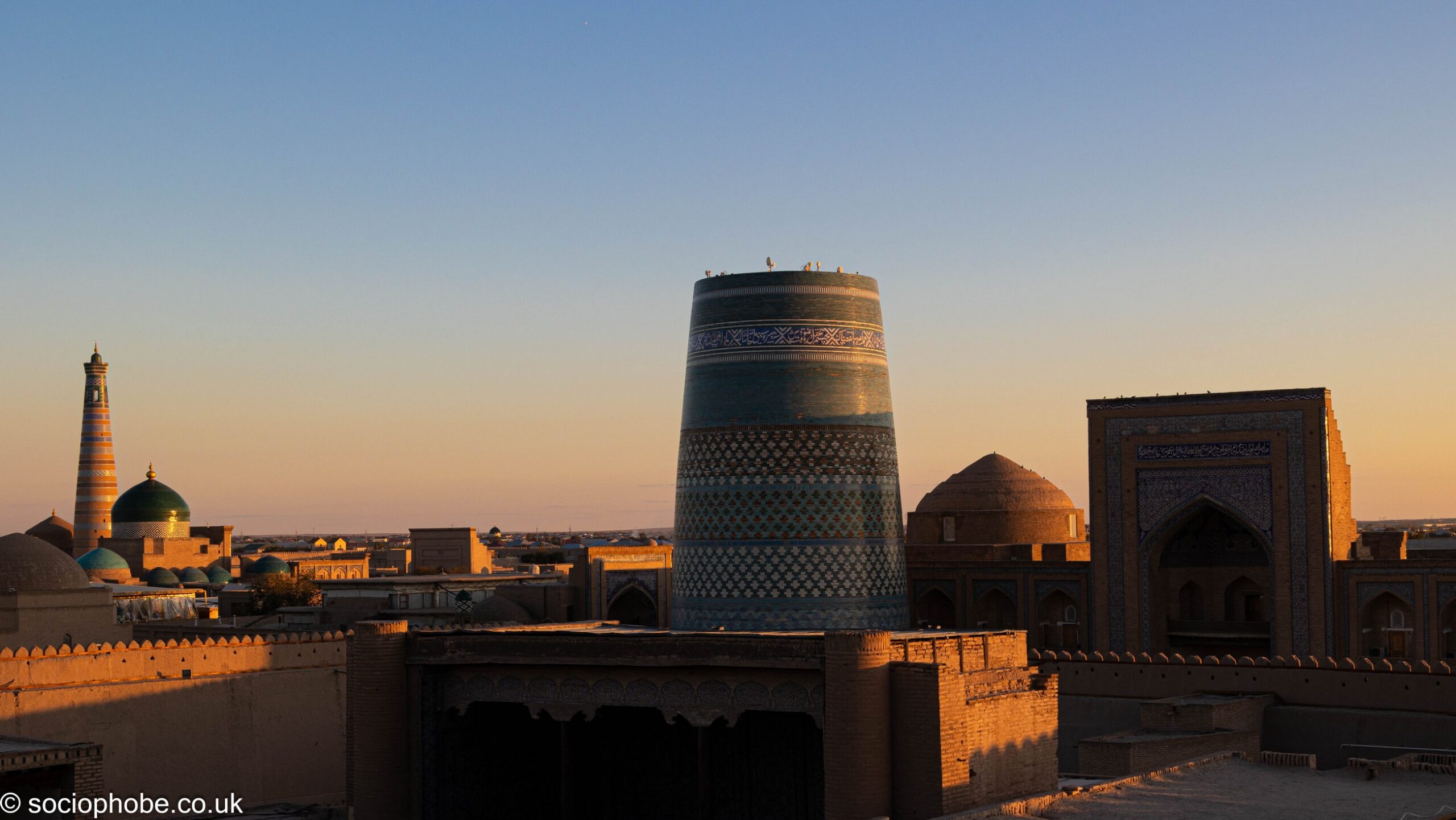
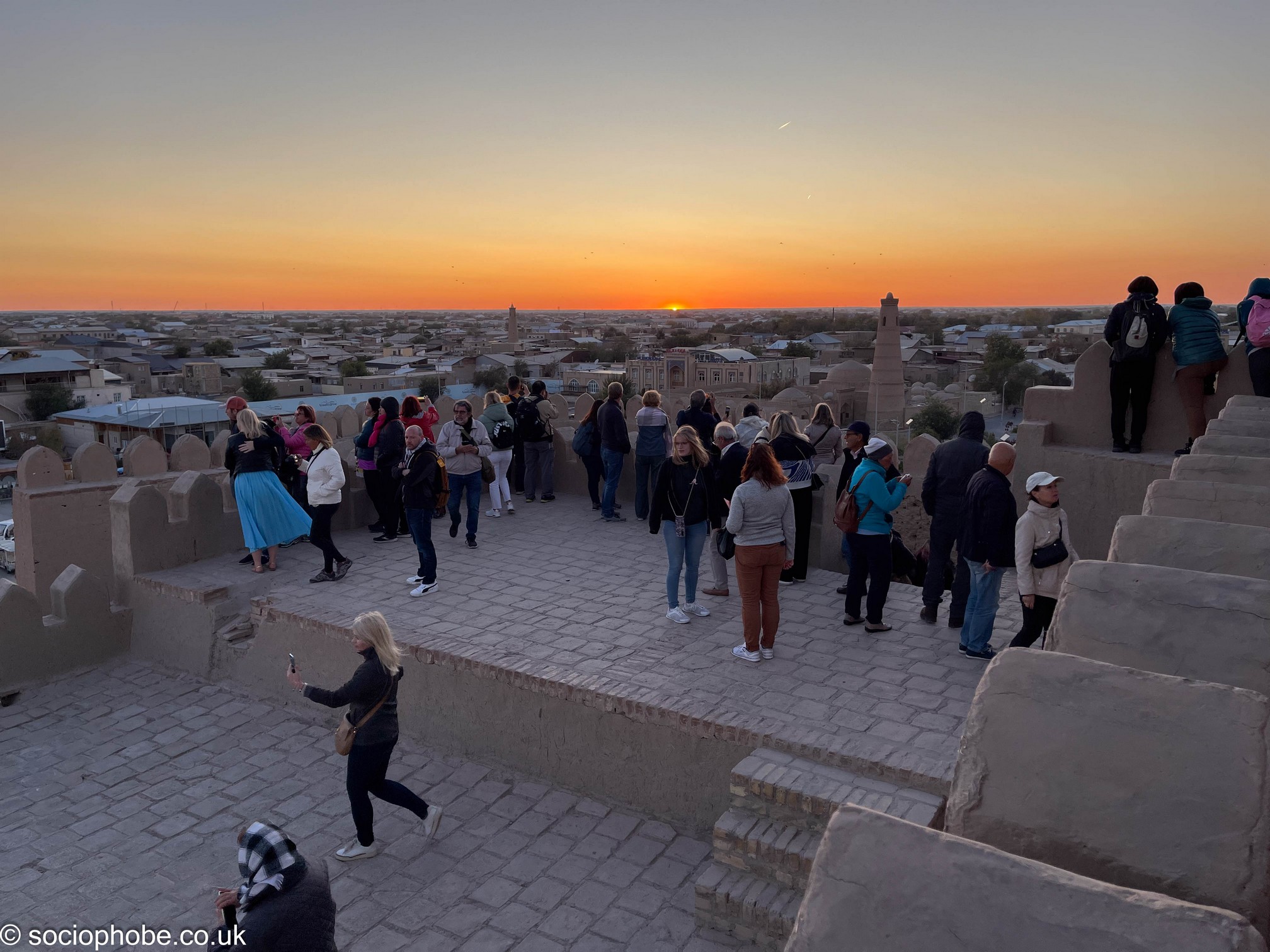
Once the sun had gone down I made my way to the dinner venue for our final meal together. The food was lovely but took oh so long to arrive and was all out of order but we had a nice time and chatted to everyone. We left for the hotel around 9, to pack for our 6AM start tomorrow back to Tashkent, the end of our tour through the highlights of Uzbekistan.
Tashkent
The 5 of us plus Ganisher were all ready to return to Tashkent after a quick breakfast at 7. We said goodbye to Rich and Veronica and young Derrick, who’d just come back from a very dark run, got in the minibus and headed to the airport. Everything went smoothly and it was a nice new plane for the short flight to Tashkent.
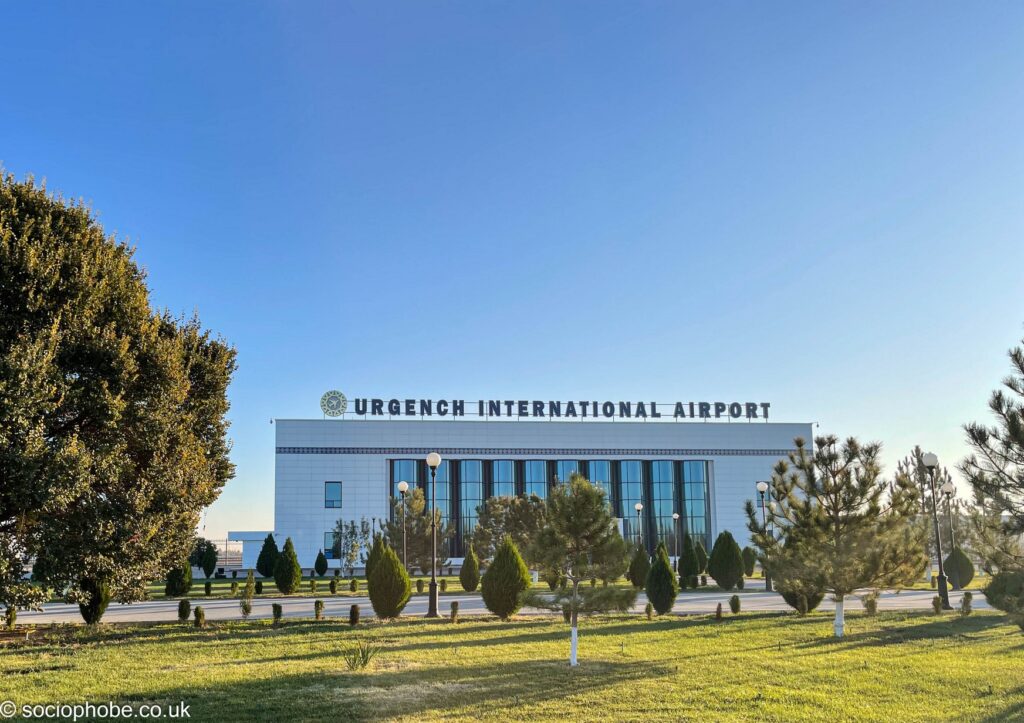
After landing the shuttle but did a circuit of the airfield before dropping us at the terminal to get our bags before returning to the Alpha Plaza hotel. We had a chat with everyone and then went our separate ways. Ganisher had been fabulous as a guide, incredibly knowledgeable and well organised when it came to recommending banks, restaurants etc as well as dealing with Darcy after her fall.
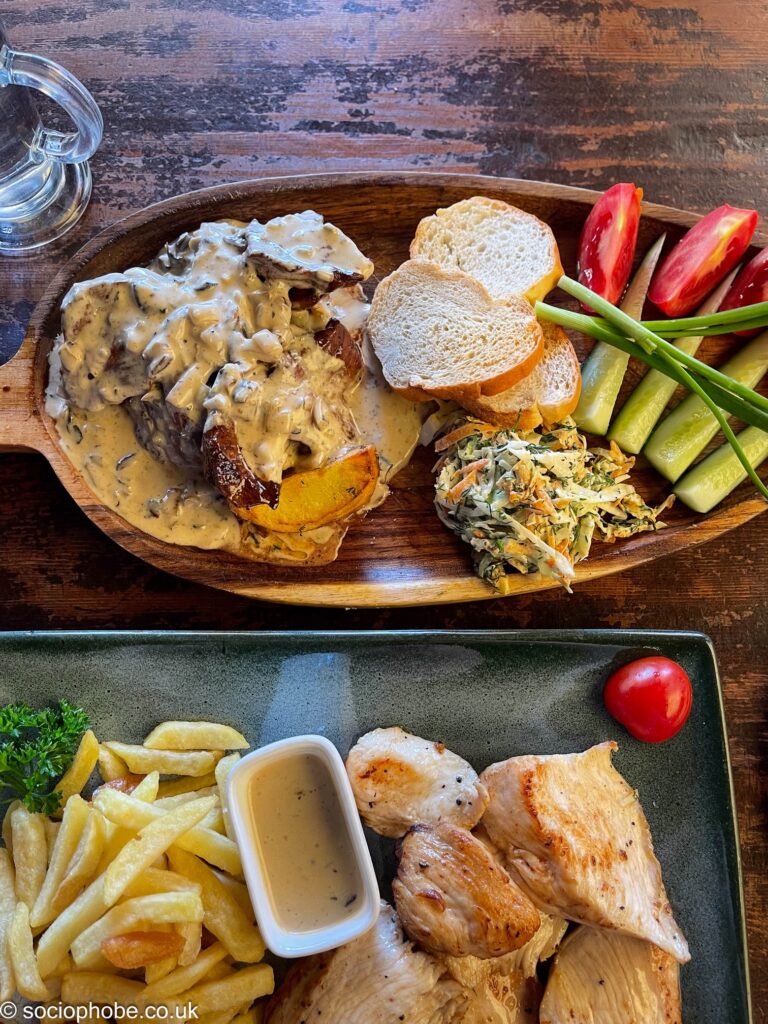
Deb and I sorted stuff in the room for a while before going for lunch as we were surprisingly hungry. Some of the other guys from the tour recommended the Brasserie Pastrie and Cafe and as it was only 5 minutes walk from the hotel that was good enough for us. We had a lovely lunch, superb chicken in a mushroom sauce for me and beef stroganoff for Deb. It was a nice atmosphere inside and service was efficient. There were plenty of menu options that appealed which was a nice change and the food was very well presented. Prices were decent and it was nice to have a leisurely lunch for a change.
We got back to the room and then had a message form Darcy suggesting the 5 of us meet for dinner together before we all flew off to our various homes. After writing some notes we both had a nap for an hour which felt really needed! Afsona was the restaurant that some of our group had been to the day before we arrived and was recommended by them. It was about 10 minutes walk from the hotel and the service was a different level to almost every other place we’d visited in Tashkent – excellent English and engaging staff.
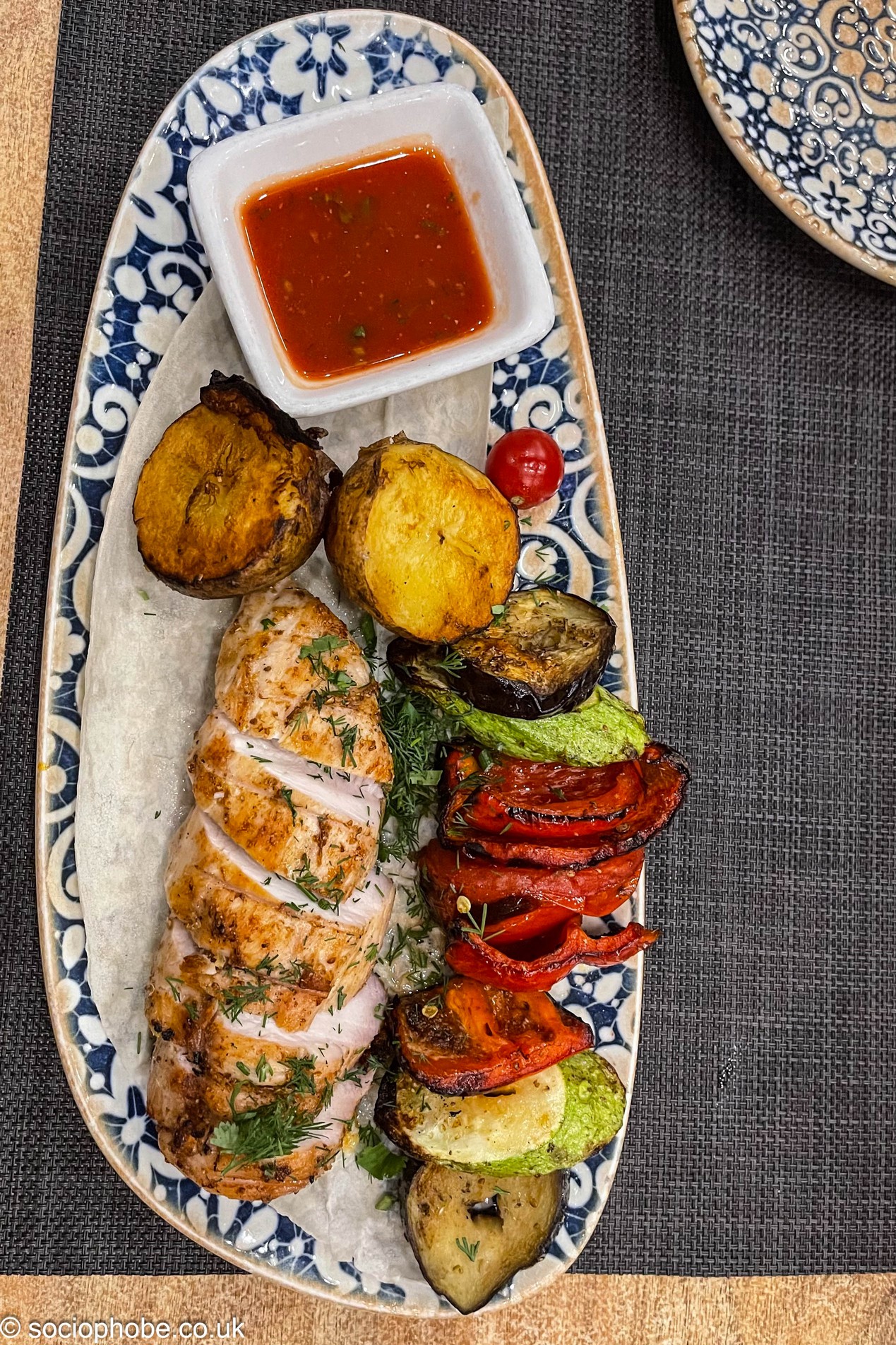
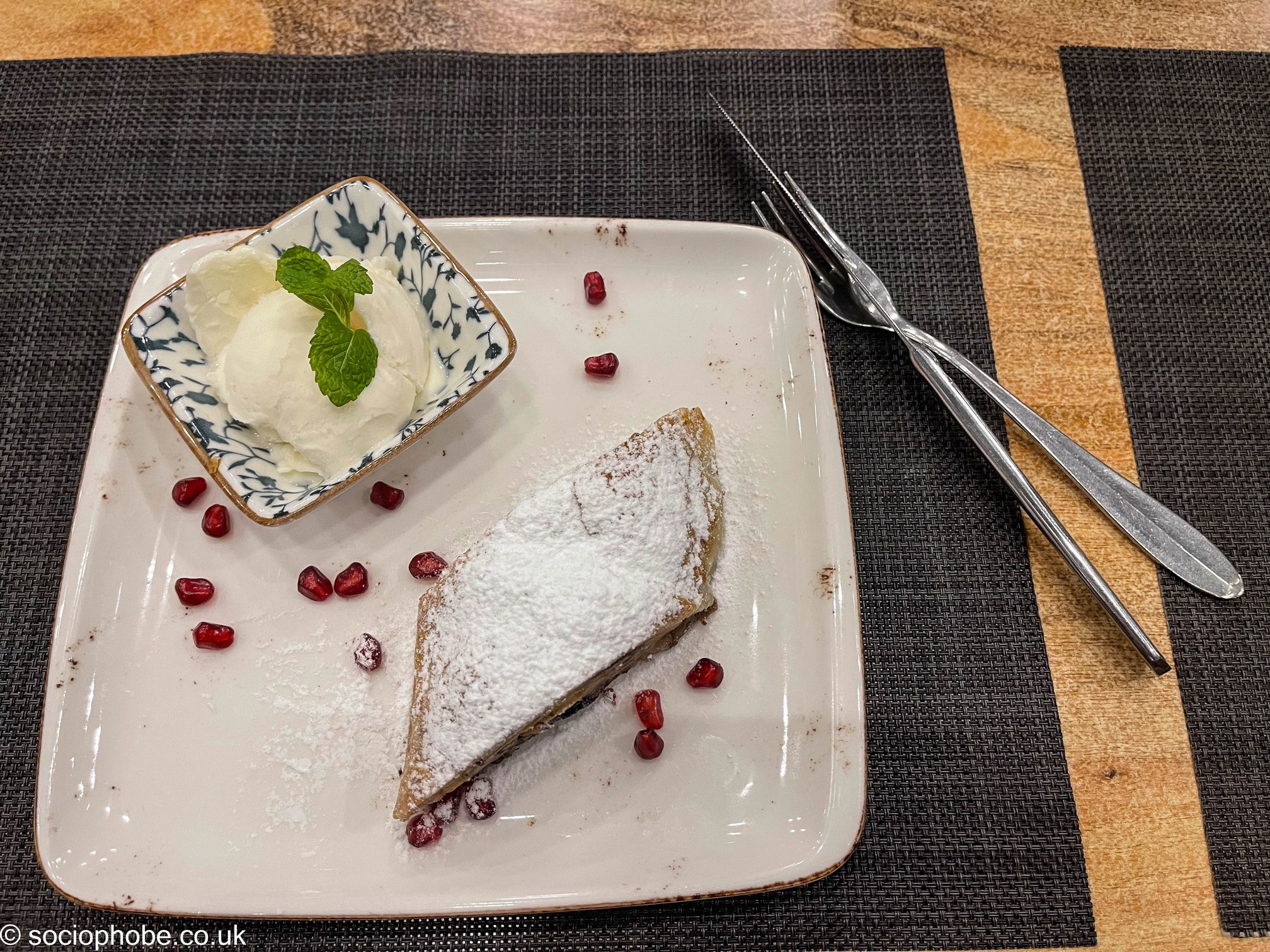
The menu had plenty of choices and proper English descriptions rather than just a couple of words or something poorly translated from Russian. There were loads of options I could have chosen but I settled on chicken with mixed veg and roast potatoes. This was beautifully presented and a decent portion size and the veg was actually properly cooked and still crunchy, delicious! As we were chatting together and not in a rush I opted for strudel as a dessert, good choice as it was superb. Certainly a good choice of restaurant with food as nice as Basilic but better service and less than half the price. It was great to have a nice chat with Charlotte, Isobel and Darcy and was a lovely, relaxing evening.
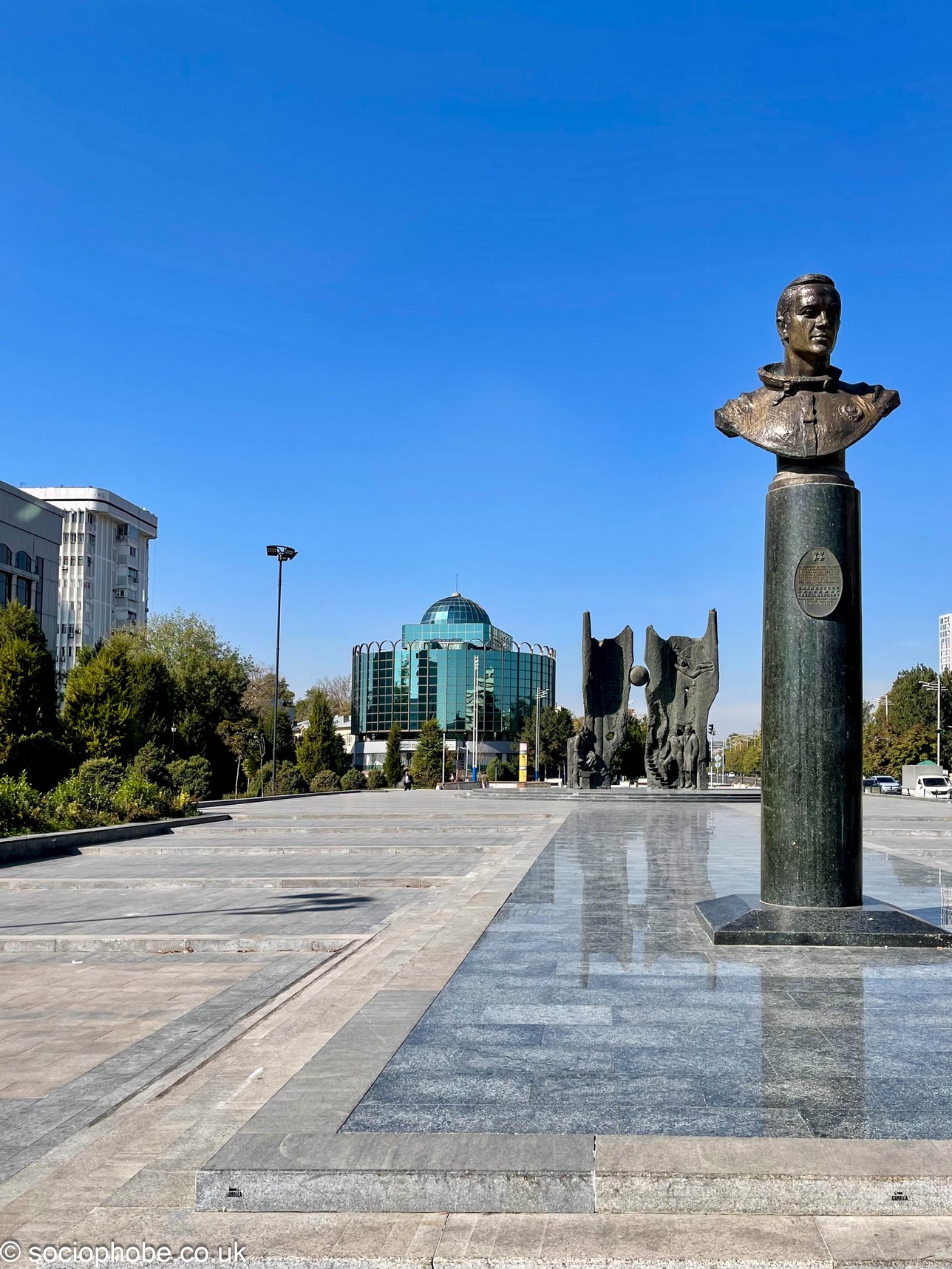
We had a quick breakfast the next morning and then pottered a bit before heading out for our last day in the city. I had said to Deb that we could go wherever she wanted but she didn’t actually come up with a single choice so we walked to the Applied Arts Museum. This was about 4km away so took a while but it’s an easy place to walk around with most of the pavements shaded by trees, we weren’t in any rush so we paused to look at one of the parks and also a cosmonaut memorial.
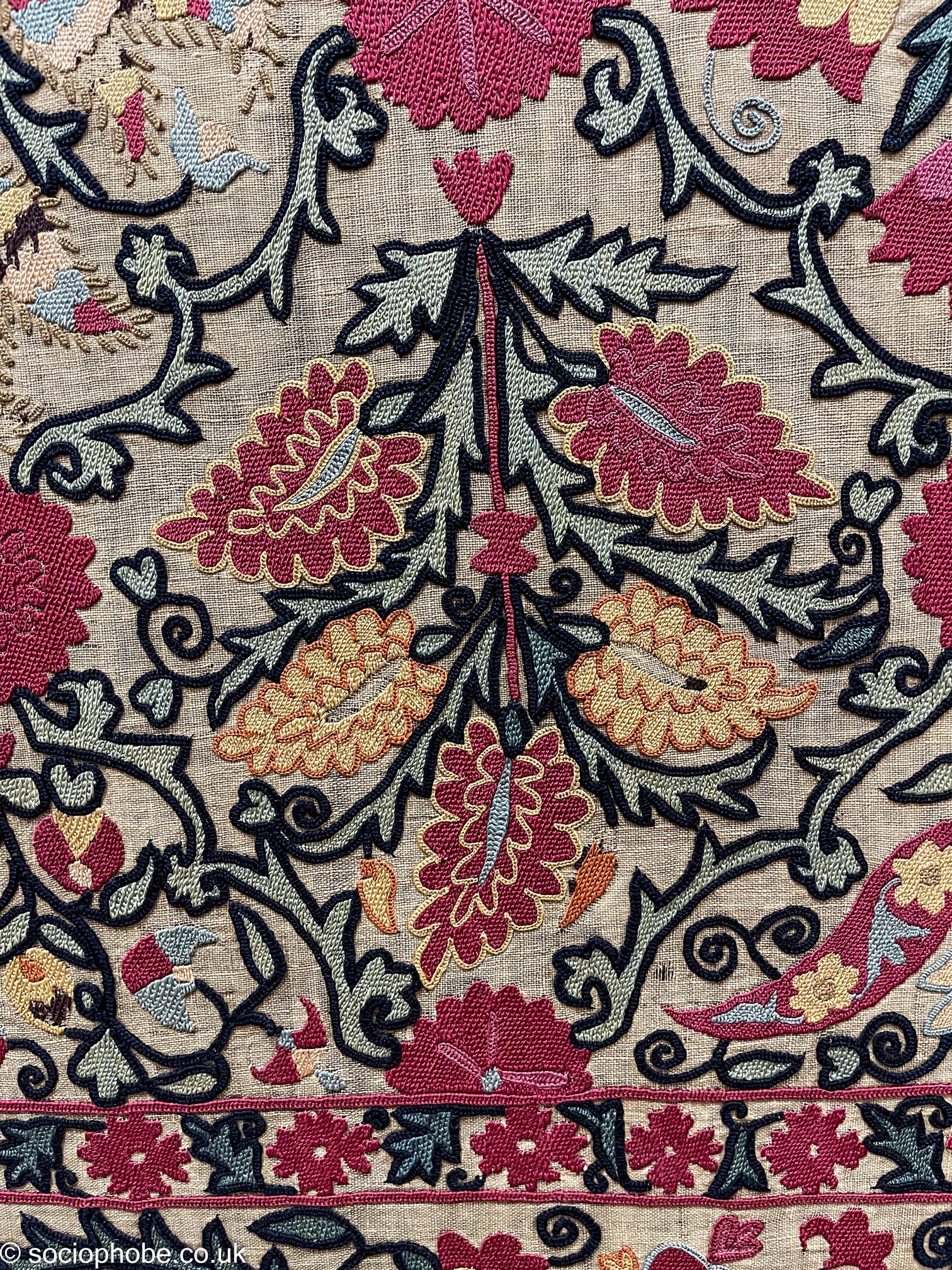
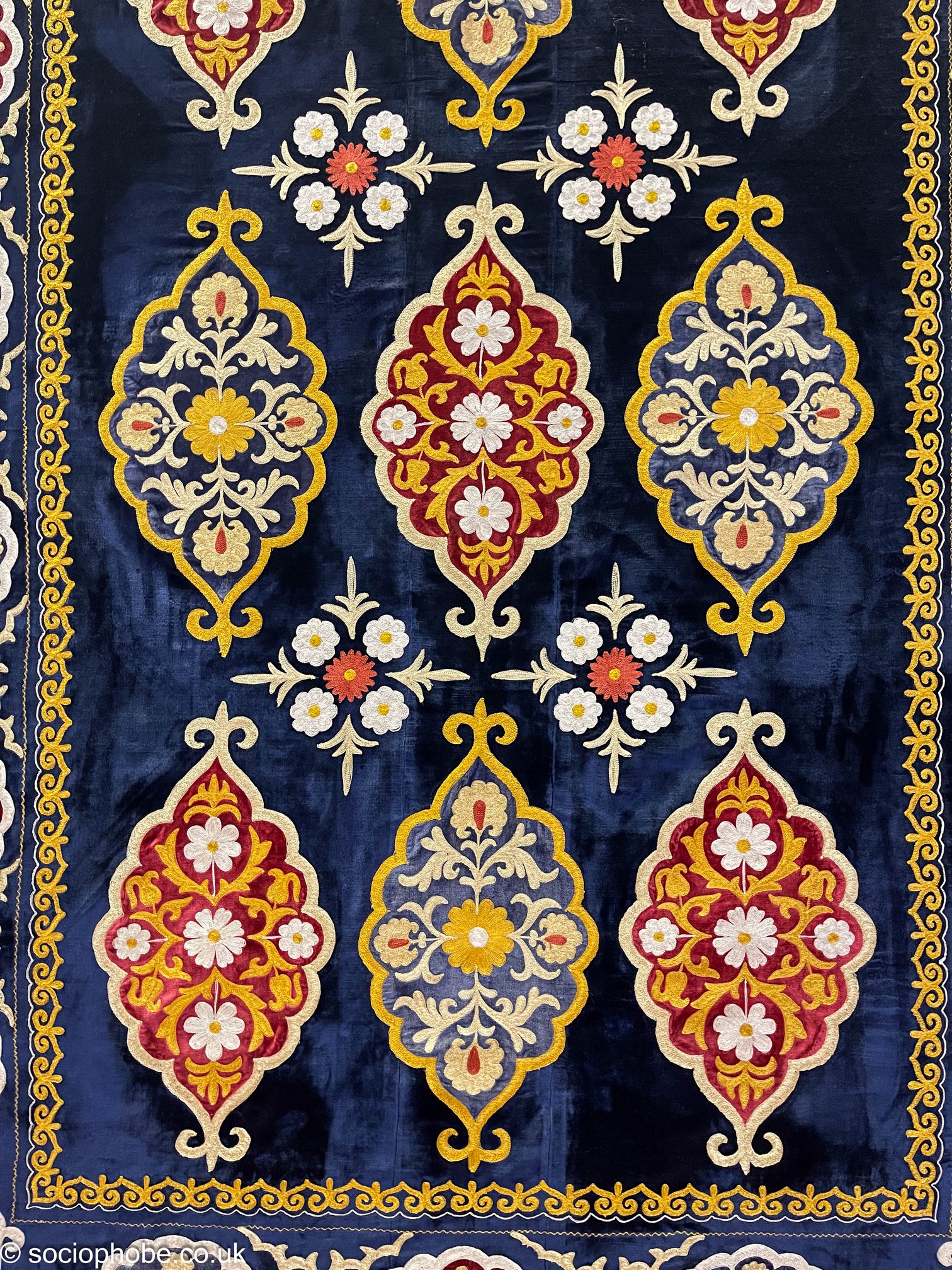

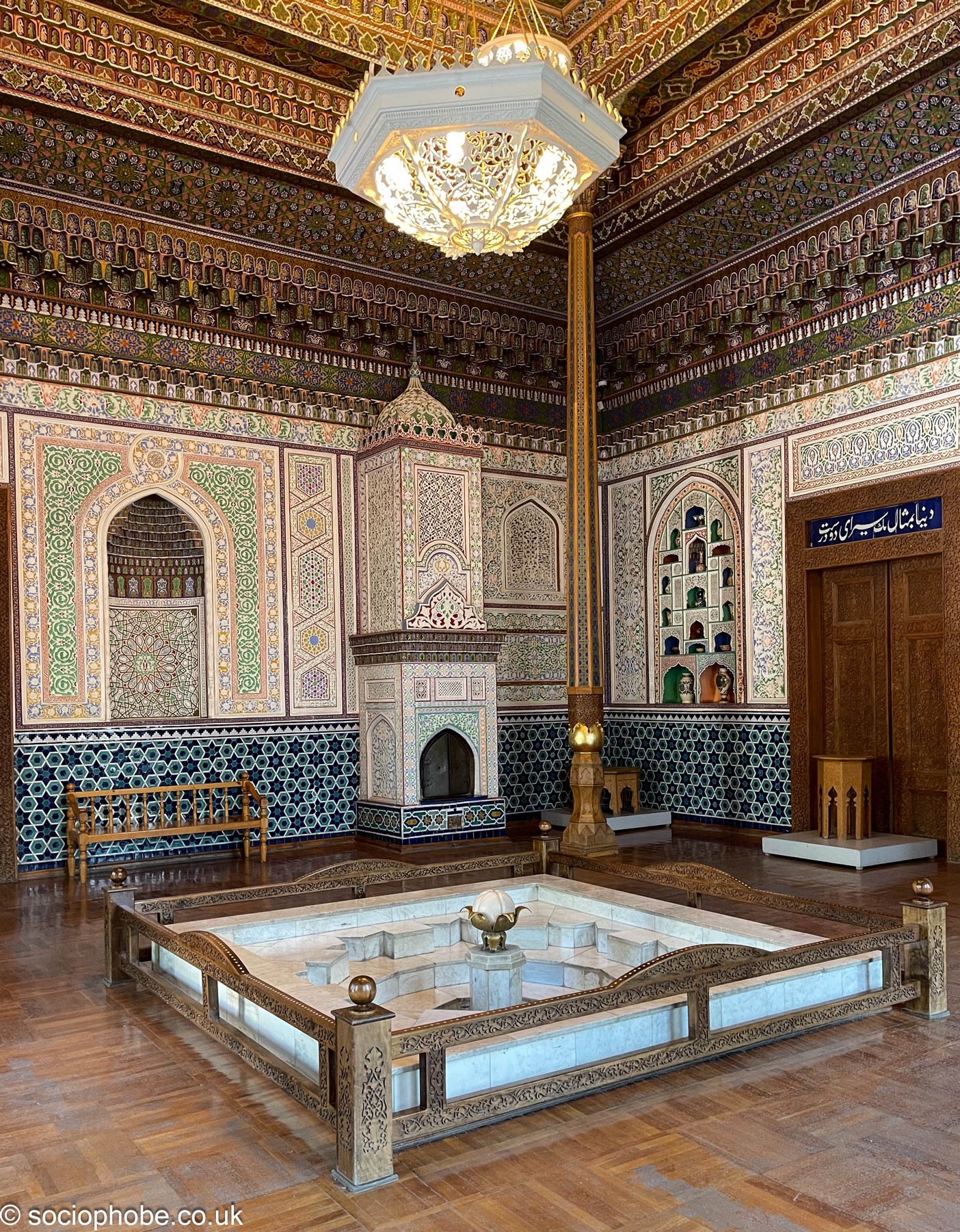
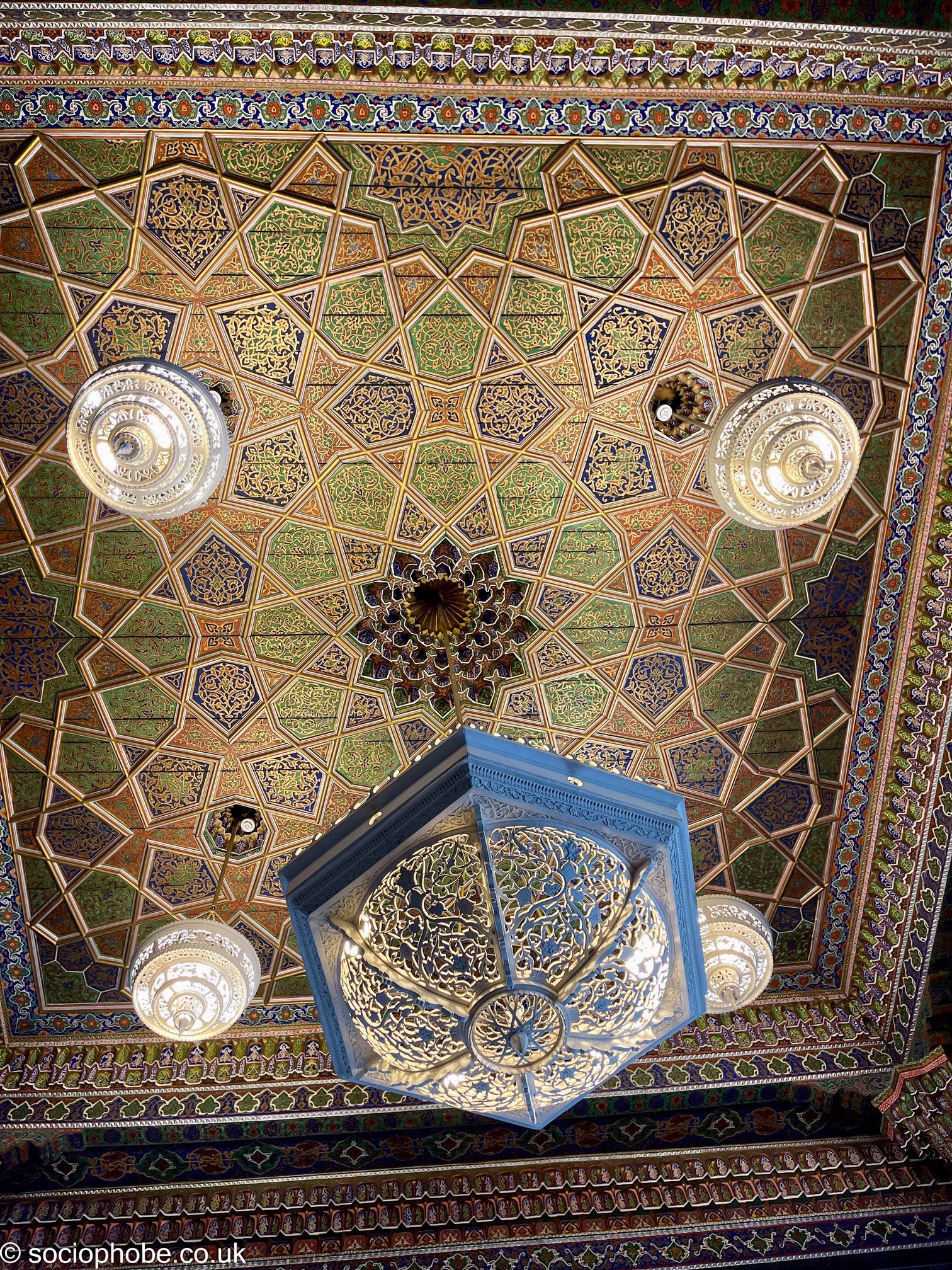
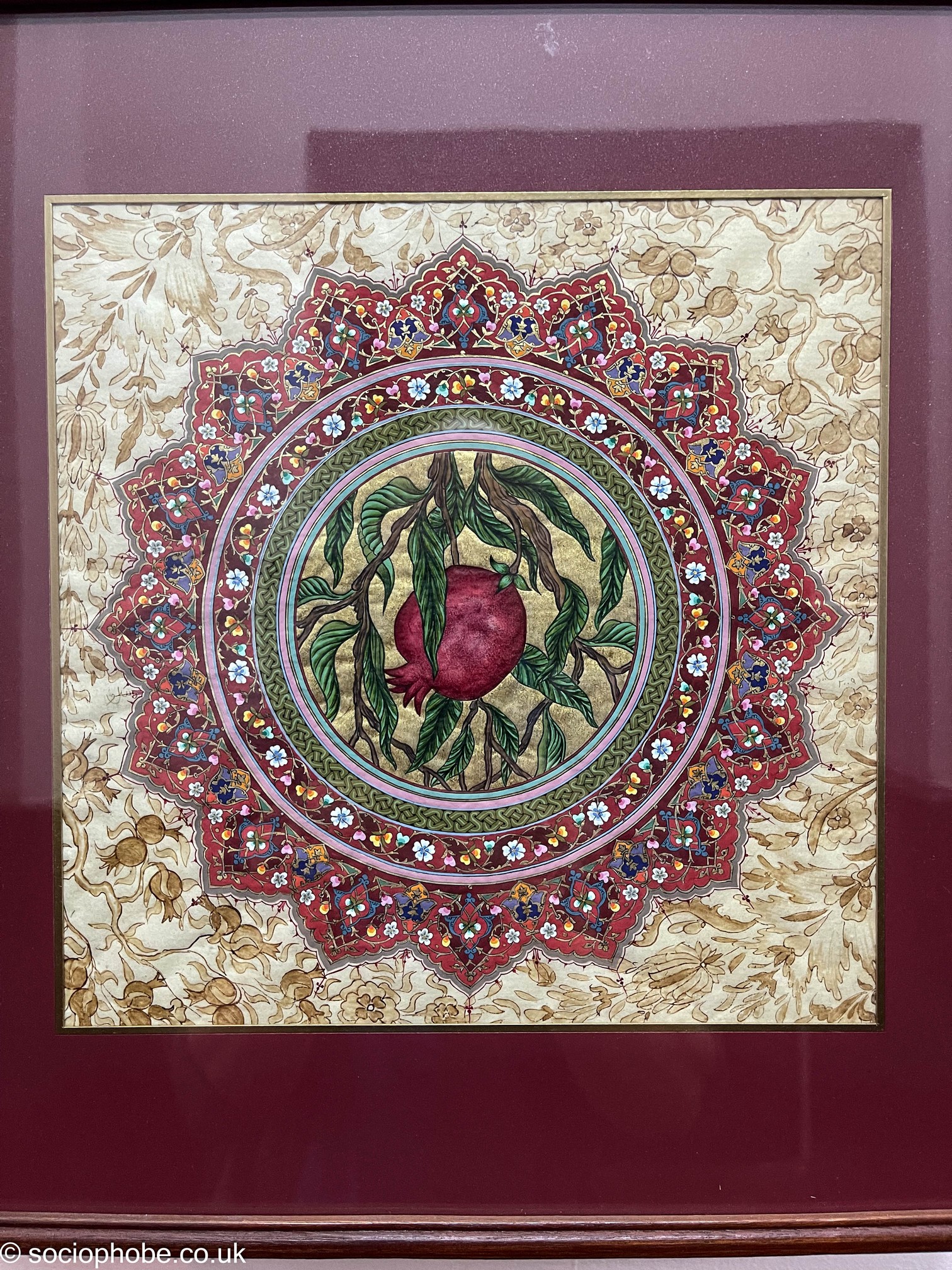
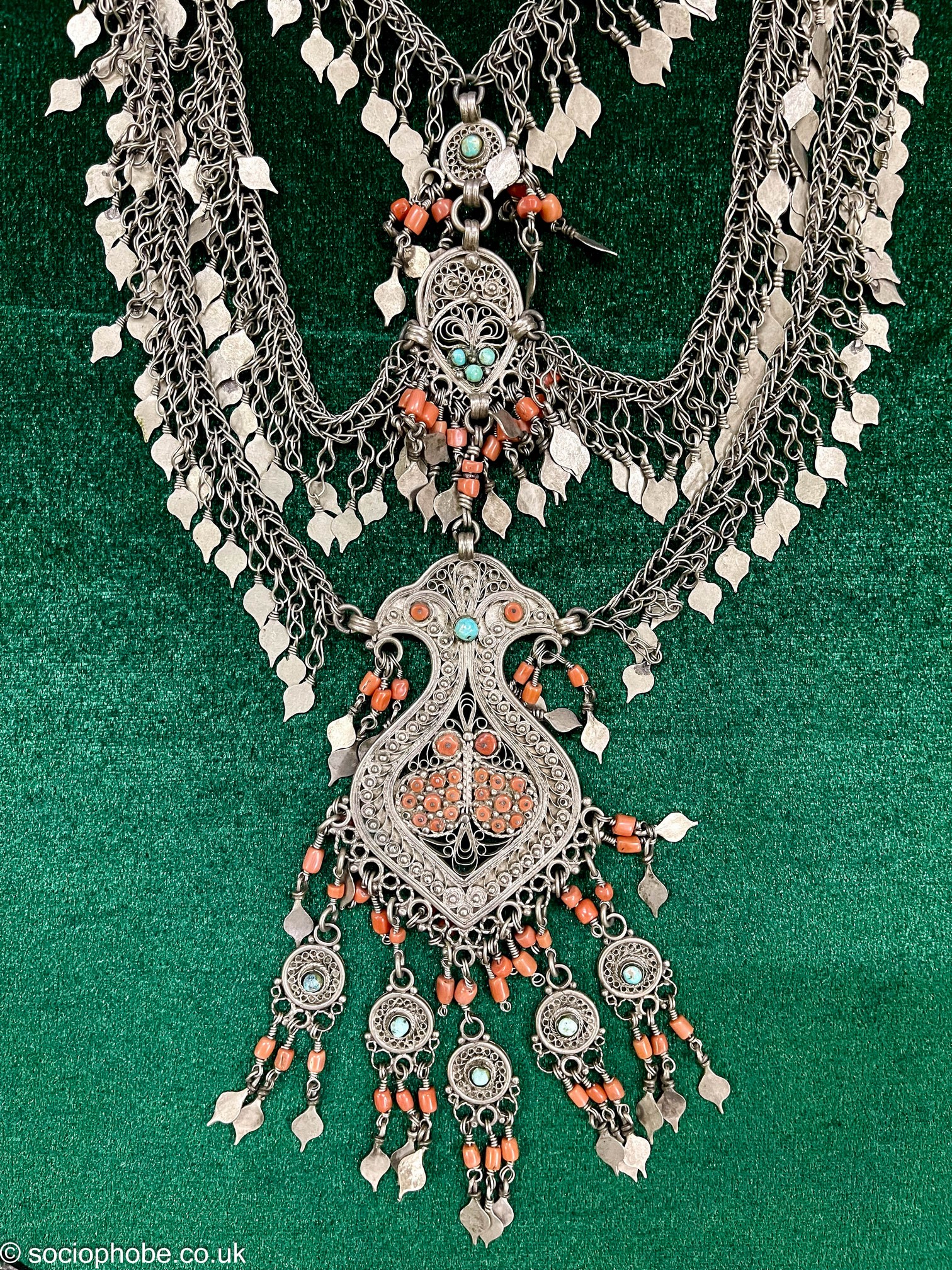
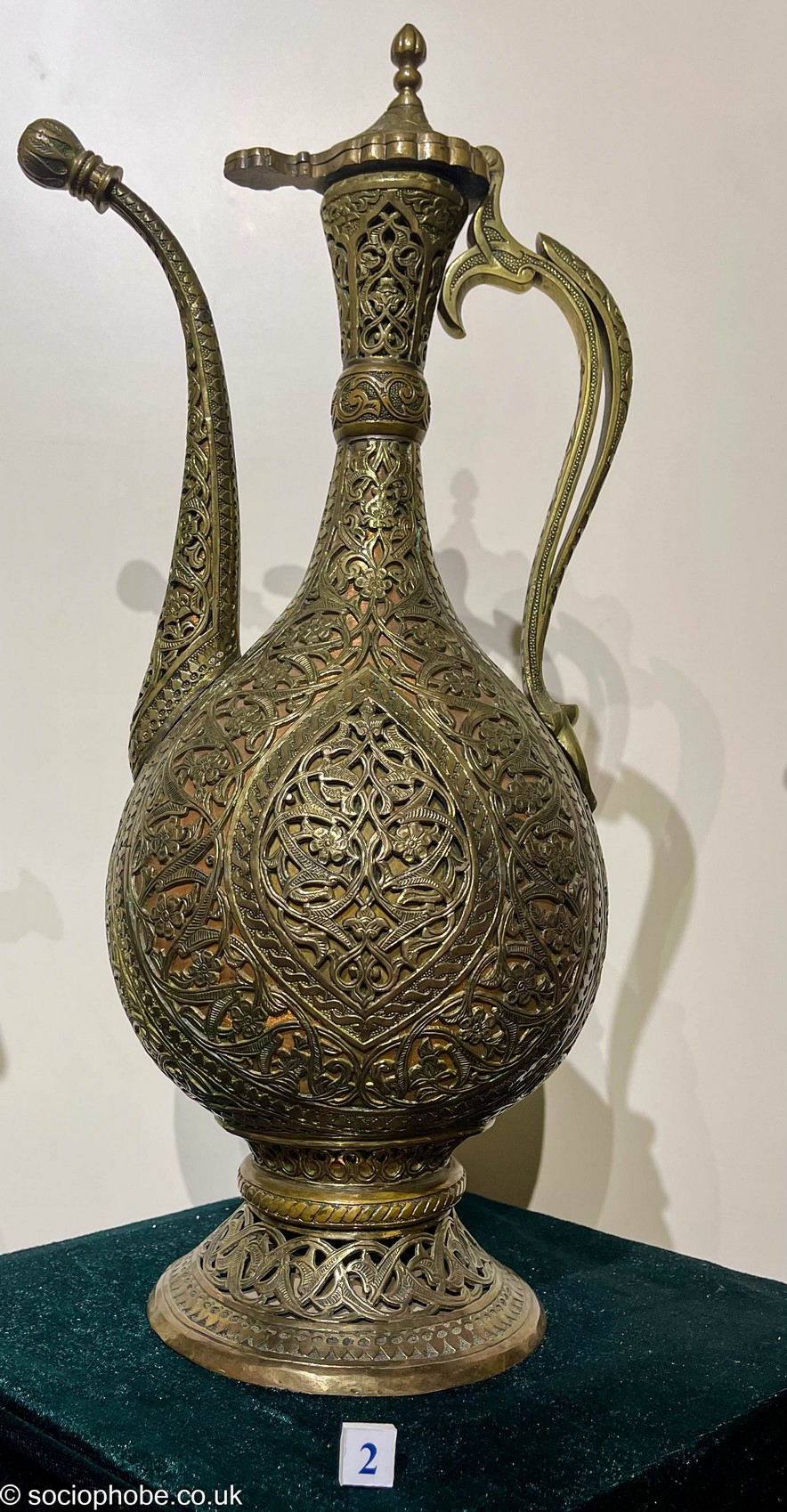
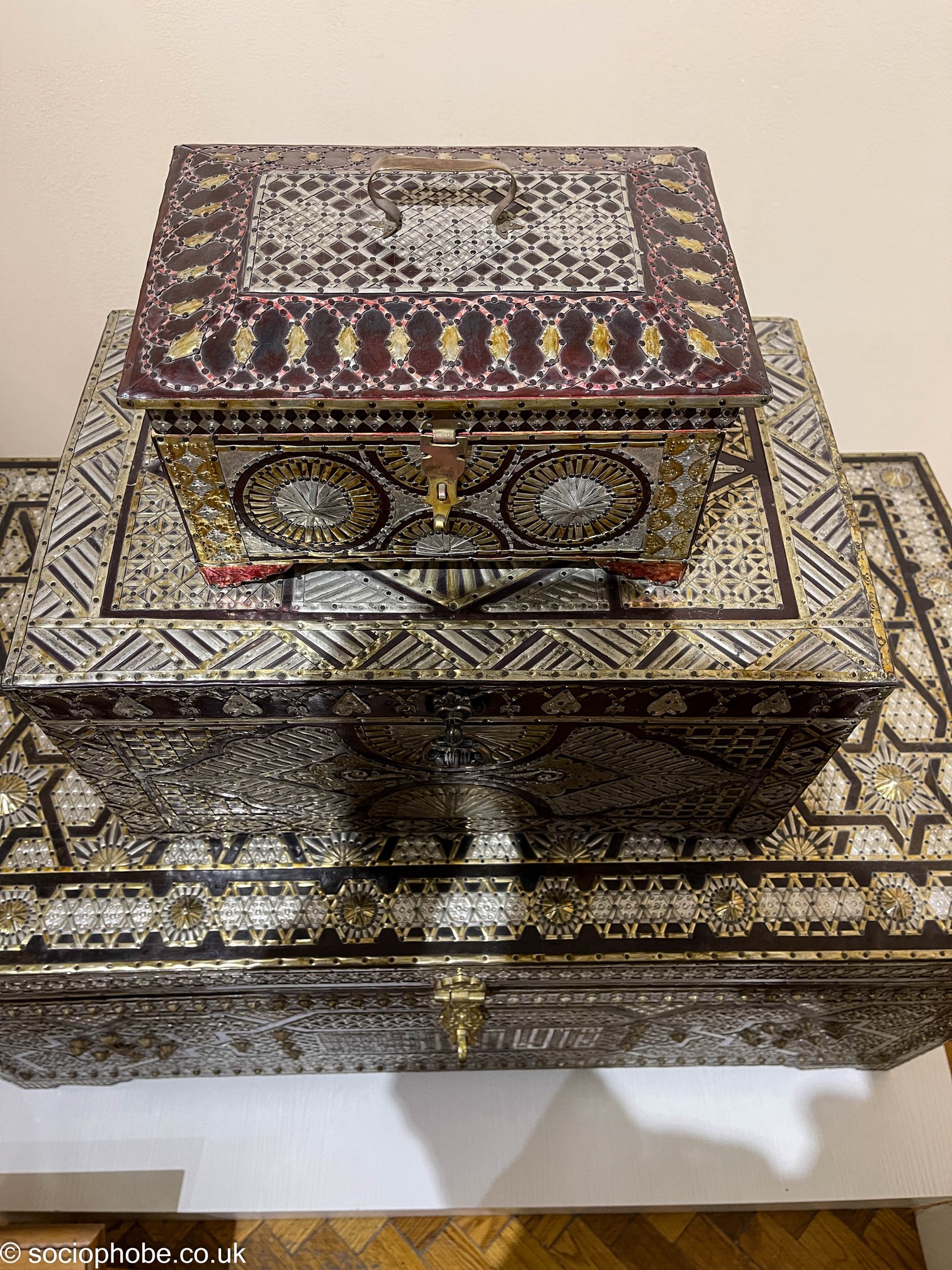
The museum is in an unassuming building and cost 25k Soms each to go in. We actually spent a couple of hours inside looking at the exhibitions on silk making, musical instruments, jewellery, embroidery and other similar crafts. Every exhibit had an English description which was really useful. It was interesting to see the transition, maybe 50 years ago, from hand woven and embroidered items to machine made and also the change from natural to artificial dyes. Once we’d finished we sat in the courtyard cafe and had a coffee and Deb bought a couple of bits in the little shop.
We stopped on the way back for lunch and I had banana pancakes, expecting just that. What I got was a mega omelette stuffed with warm banana and a huge ice cream! Lush but oh so bad! We got back to the hotel and it was lovely to put the AC on so I could cool down before a shower. Our little excursion had actually taken over 4 hours! I spent the afternoon writing and Deb had a snooze before we met Isobel for dinner. We finally got to try plov and it was actually ok. The low light meant I couldn’t see what the meat was – probably best – and there was lots of apricot and raisins to add a fruity flavour. We chatted for a while and then all returned to the hotel for our flights home.
Highlights of Uzbekistan Tour
The tour was everything I had hoped it would be and the highlights were indeed fantastic, Uzbekistan has an amazing concentration of historic treasures. The idea of a group tour has now grown on me and it was nice to meet people with a similar interest. I was like a kid in a sweet shop because I wanted to see everything and a couple of times when I got back to the group everyone was waiting for me – sorry guys!
Ganisher was fantastic as a guide with a wide range of knowledge and a lot of patience, a credit to @gadventures.The Uzbek people were amazing, incredibly polite and friendly and I felt totally safe wandering around early in the morning or late in the evening. A holiday that is definitely in my top 3, fantastic.
Wow what an incredible journey. So great to read about a tour off the beaten track to many of us.
Such an exciting read, Marcus. The whole trip sounds amazing! I loved the Timur museum, the Chora Bazaar & all the metro stations. So clean and bright, no graffiti or rubbish around. Interesting that the places on the outskirts of Samarkand have corrugated roofs, it must get very hot in summer. Then you show the opulence of The Registan Square-which is just fantastic! Great idea to go early and look around when there are few people up and about. I love the colours and the complicated designs. The pictures of the Registan at night are beautiful.
The Ulug Observatory sounds so interesting, how sad to be murdered and his library destroyed-religion causes so many problems and halts progress.
The Yurt stay sounds interesting and Bukhara looks just spectacular! Great it is being restored to its former glory.
Looking forward to reading the rest of the trip! It sounds exciting and exhausting! 🙂
Loved the rest of the trip, Marcus. Interesting you enjoyed meeting with the people on the tour, but nice because they must enjoy the same things you do and great to chat and acquire more information. The Applied Arts Museum looks excellent! What a great find, so nice you tried and found so many super cafes and restaurants- the food looked wonderful! Great write up and photos- thanks 😊
A very intersting account and fabulous photos. It reminds me of my trip to Iran and Afganistan more years ago than I care to remember