| Holiday Ratings | |
| Recommended days | 10 |
| Budget | £ |
| Difficulty | Easy |
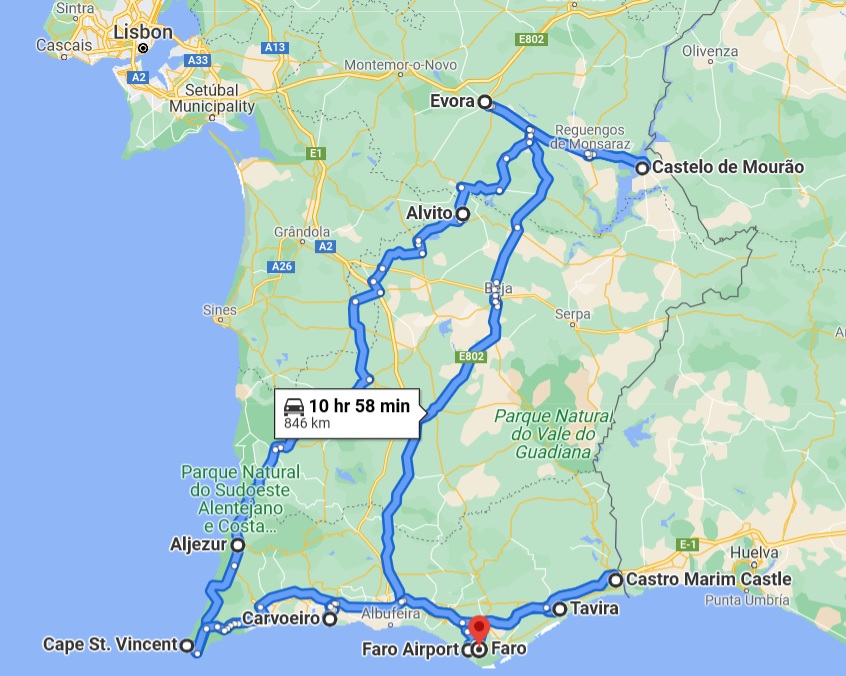
Other than a brief city break in Lisbon nearly 20 years ago we had never visited Portugal so a road trip through southern Portugal was a great way to experience some of the country. We wanted to visit the interior as well as the coast, both for the history and the different lifestyle and even in his short trip we were able to get an idea of the range of scenery and culture within such a compact area.
Evora
Finally, after 3 cancellations due to Covid, we headed to Portugal!
We’re also flew from Bristol this time which makes things easier although it was a bit of a panic finding a place for the dogs and their stay cost more than our hotel bill for 10 days! The flight was an almost civilised 7.45AM departure so we didn’t need to leave home til 5.15, a nice change. The flight was very busy which was good to see as it meant a return to normality and the cultural, economic and emotional benefits travel brings. It was a breeze going through Faro airport and we soon picked up our hire car and headed north.
Our first stop was Evora, a medieval hilltop town about 3 hours north of the airport. The drive was mostly on A roads, past olive groves, vinyards and basically non stop agricultural land. No hedges though which was great as it meant we could actually see! The town itself was a maze of narrow cobbled streets and I was very happy to finally park the car and walk the short distance to the hotel.
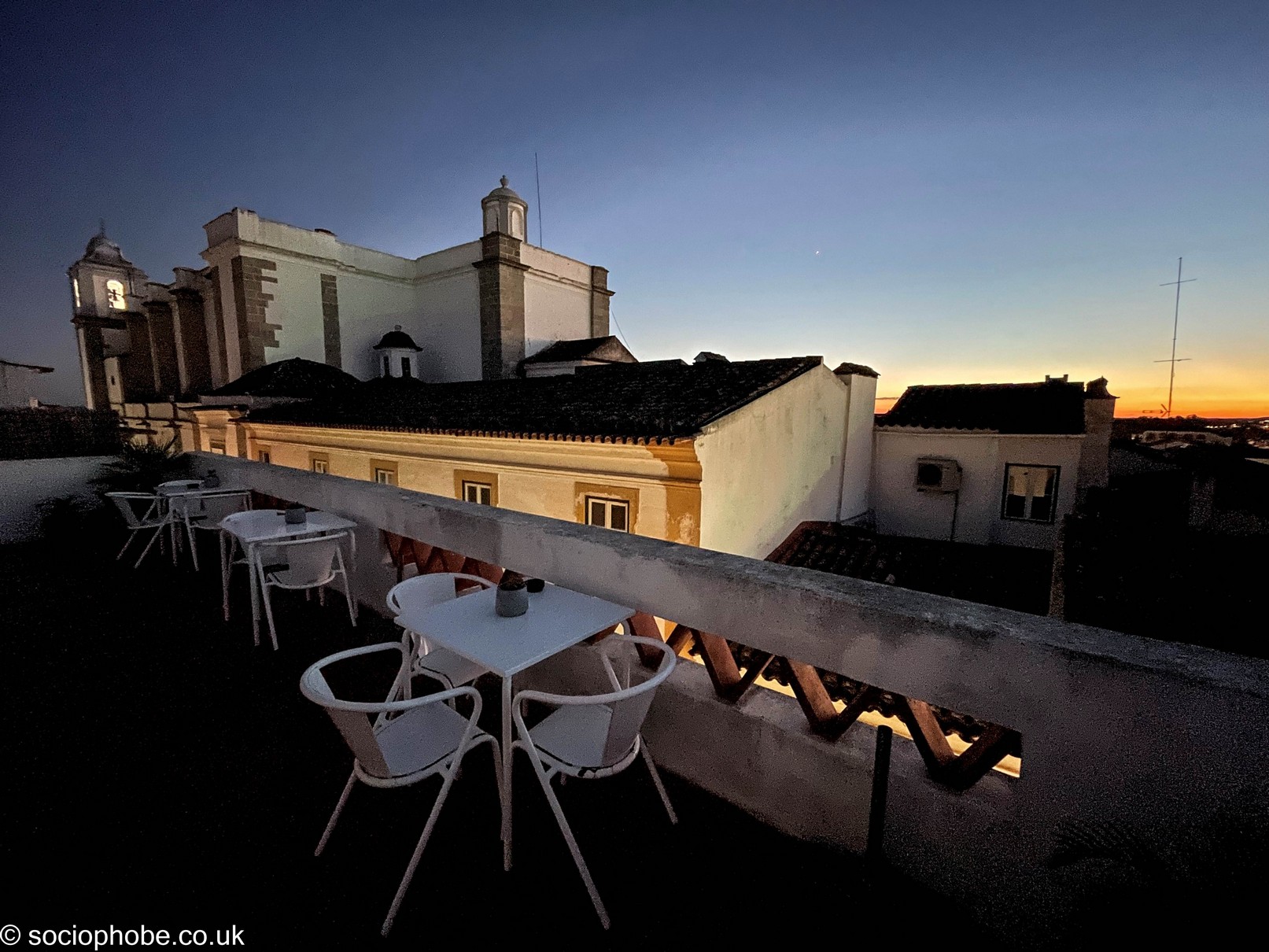
Our room was small but had nice furnishings and was warm as well as having excellent WiFi. The roof terrace was also fabulous and the check in was very helpful, especially to learn about the mask requirements in the country.
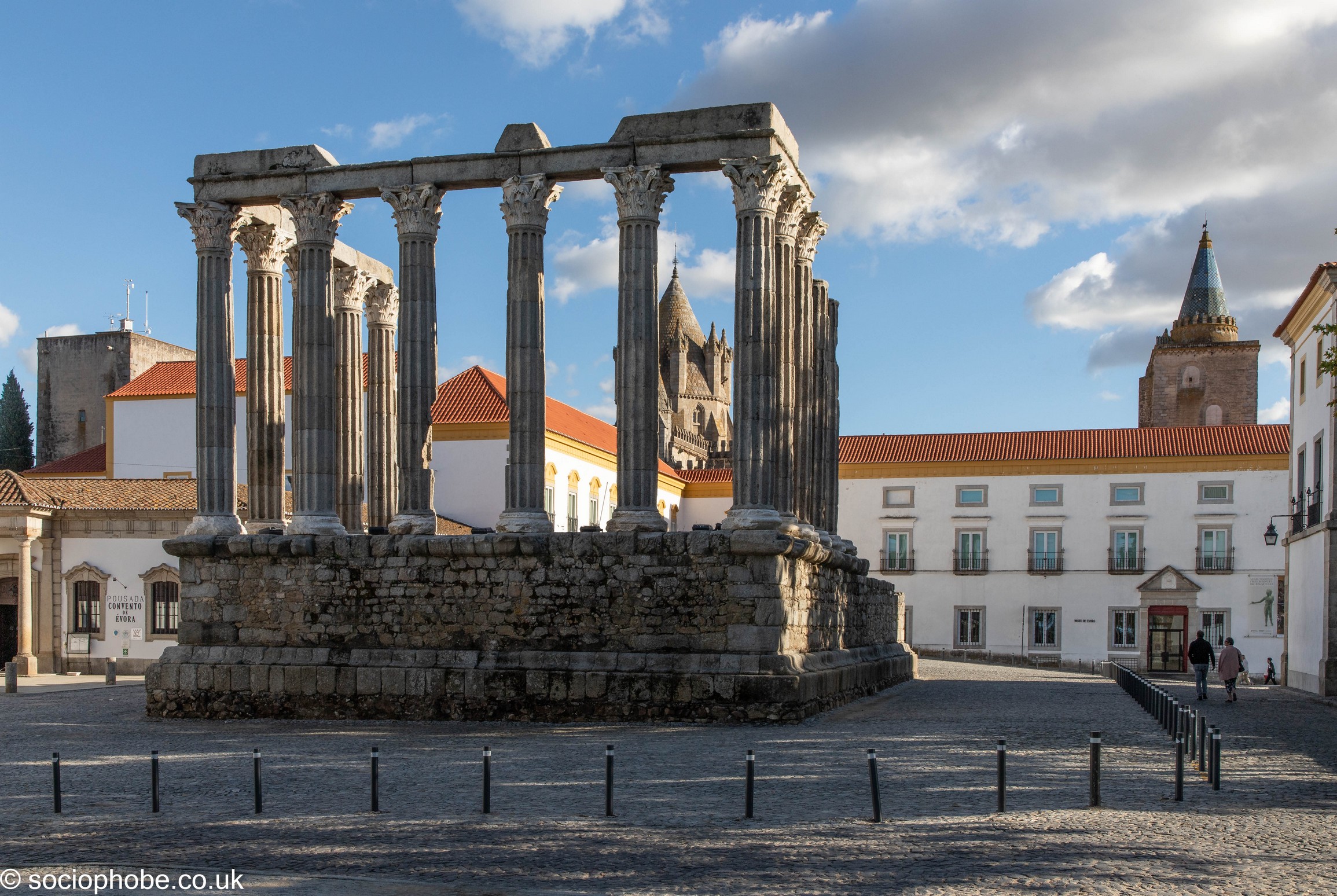
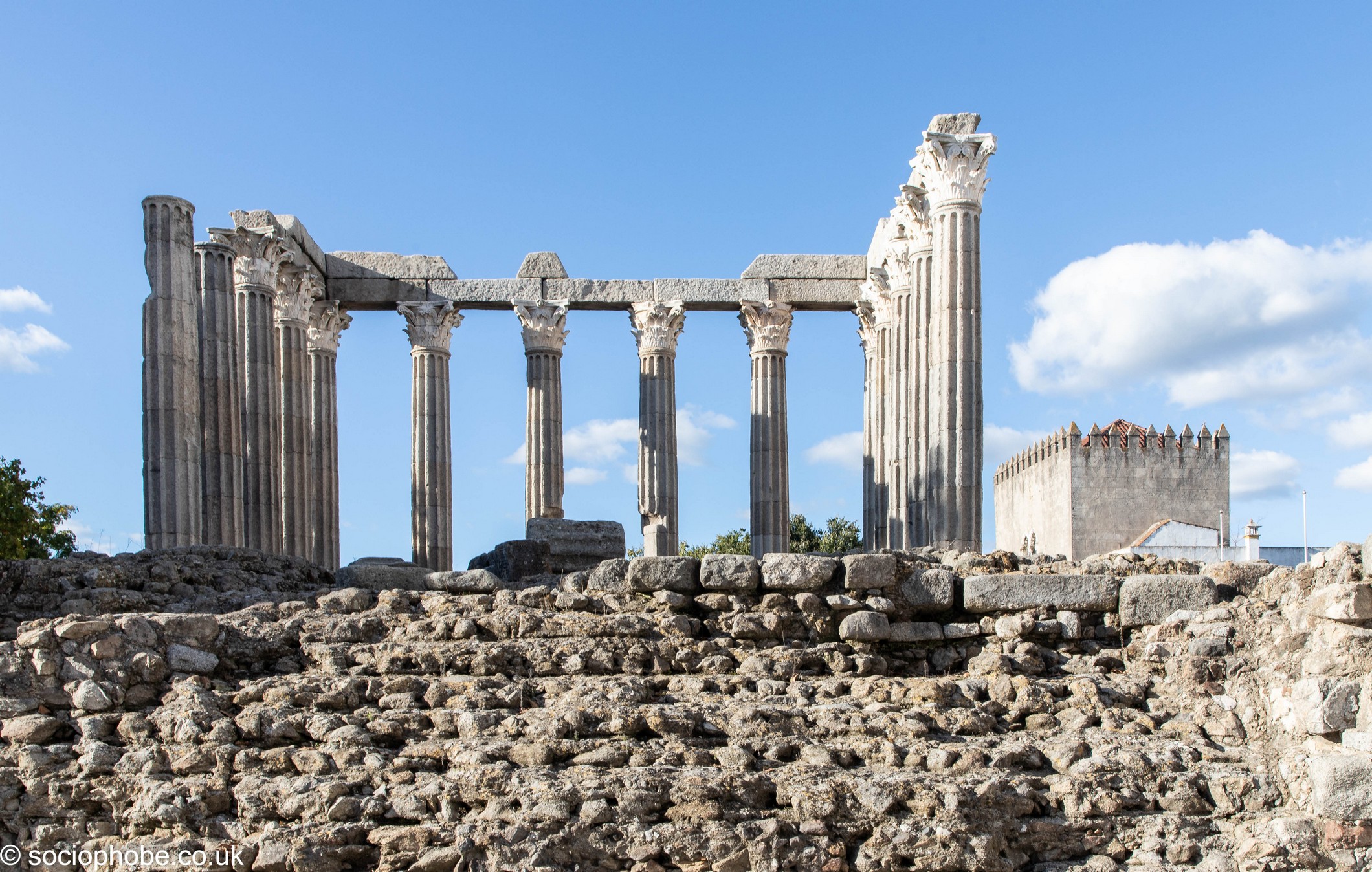
We dropped our bags in the room and then headed out into the sunshine. It wasn’t easy to navigate as the streets were narrow and there were lots of dead ends but we found the restored Roman temple and the ducal palace of the town. The temple was really just a 30 second photo stop as it was cordoned off but it was in a nice garden area. The palace was closed until the weekend which was a pain.
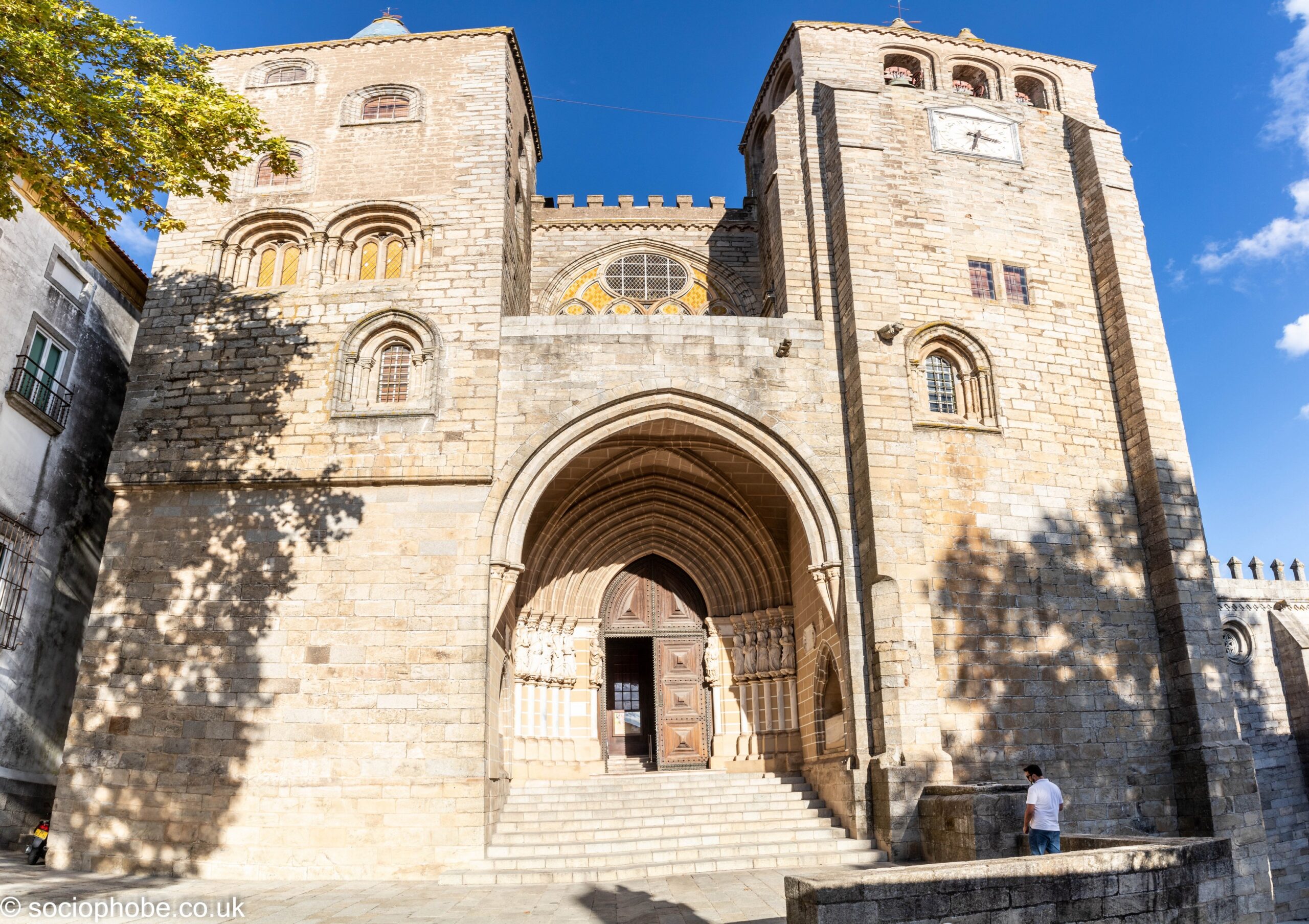
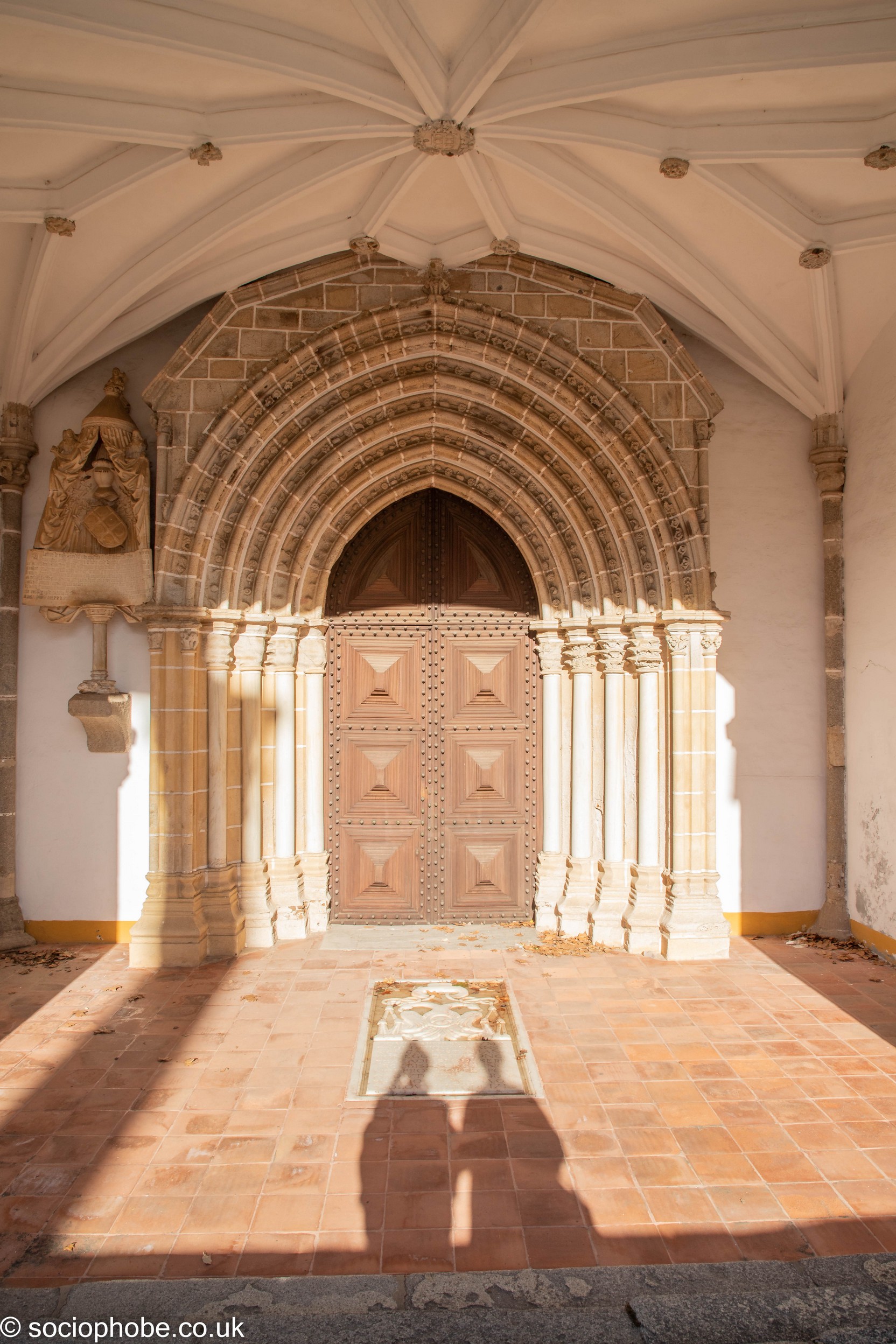
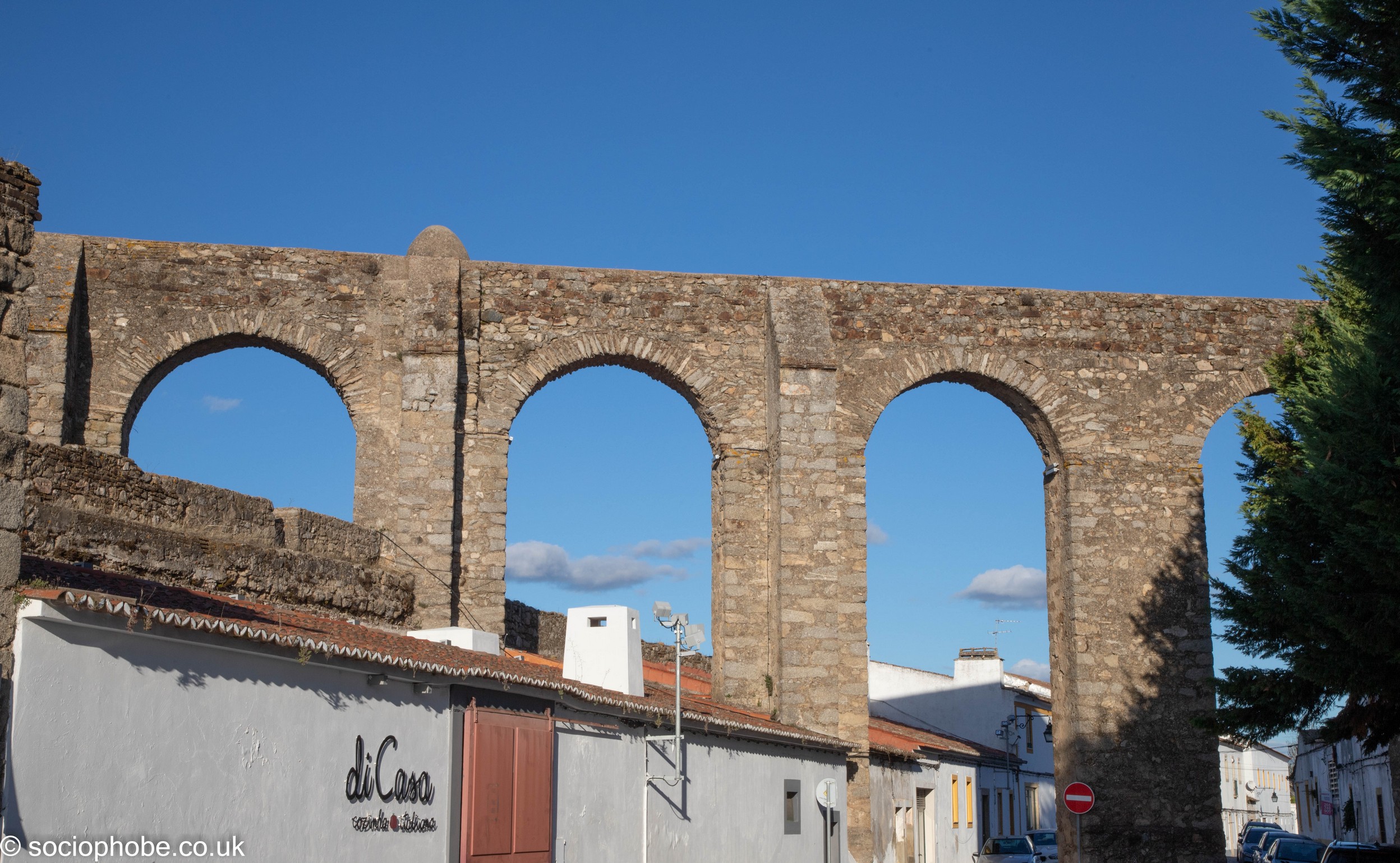
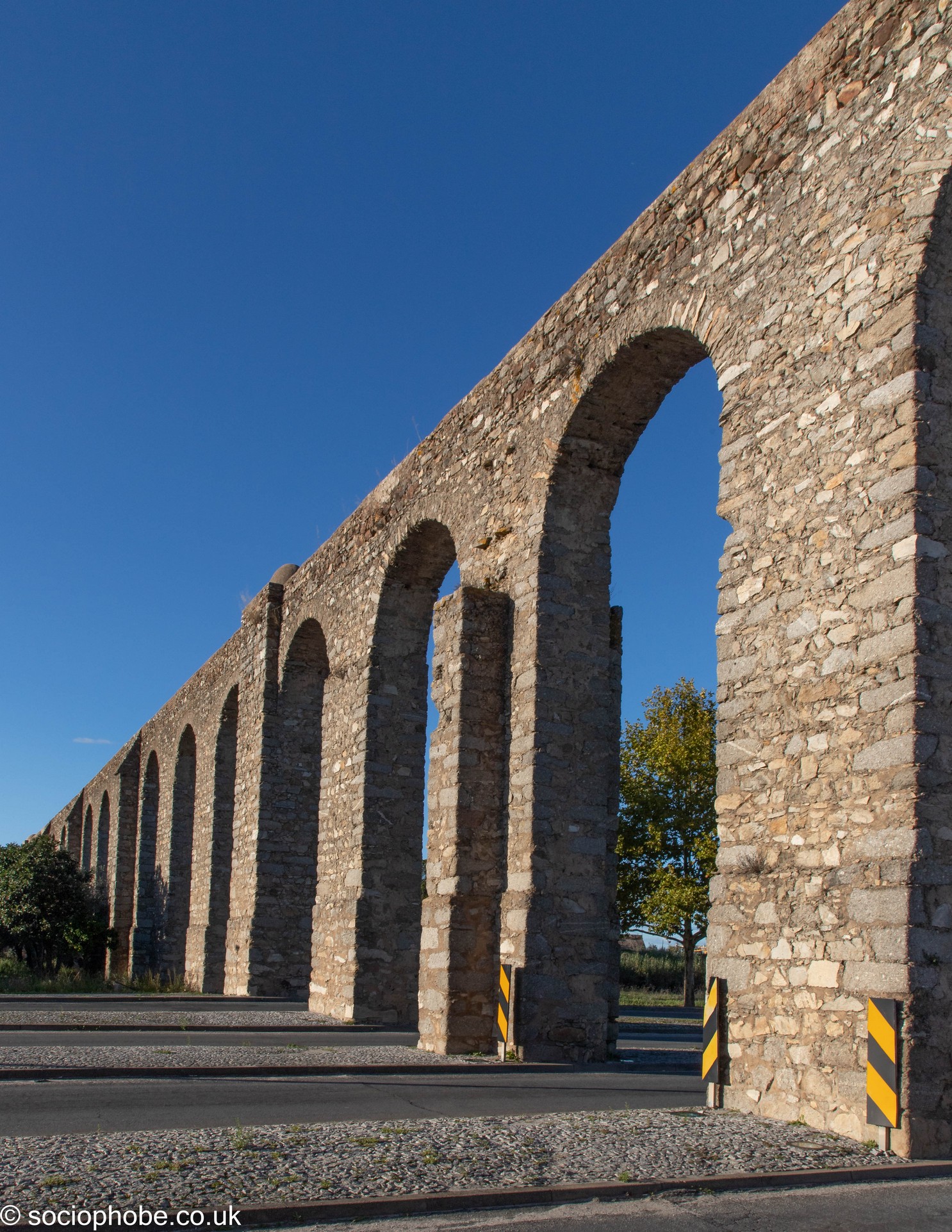
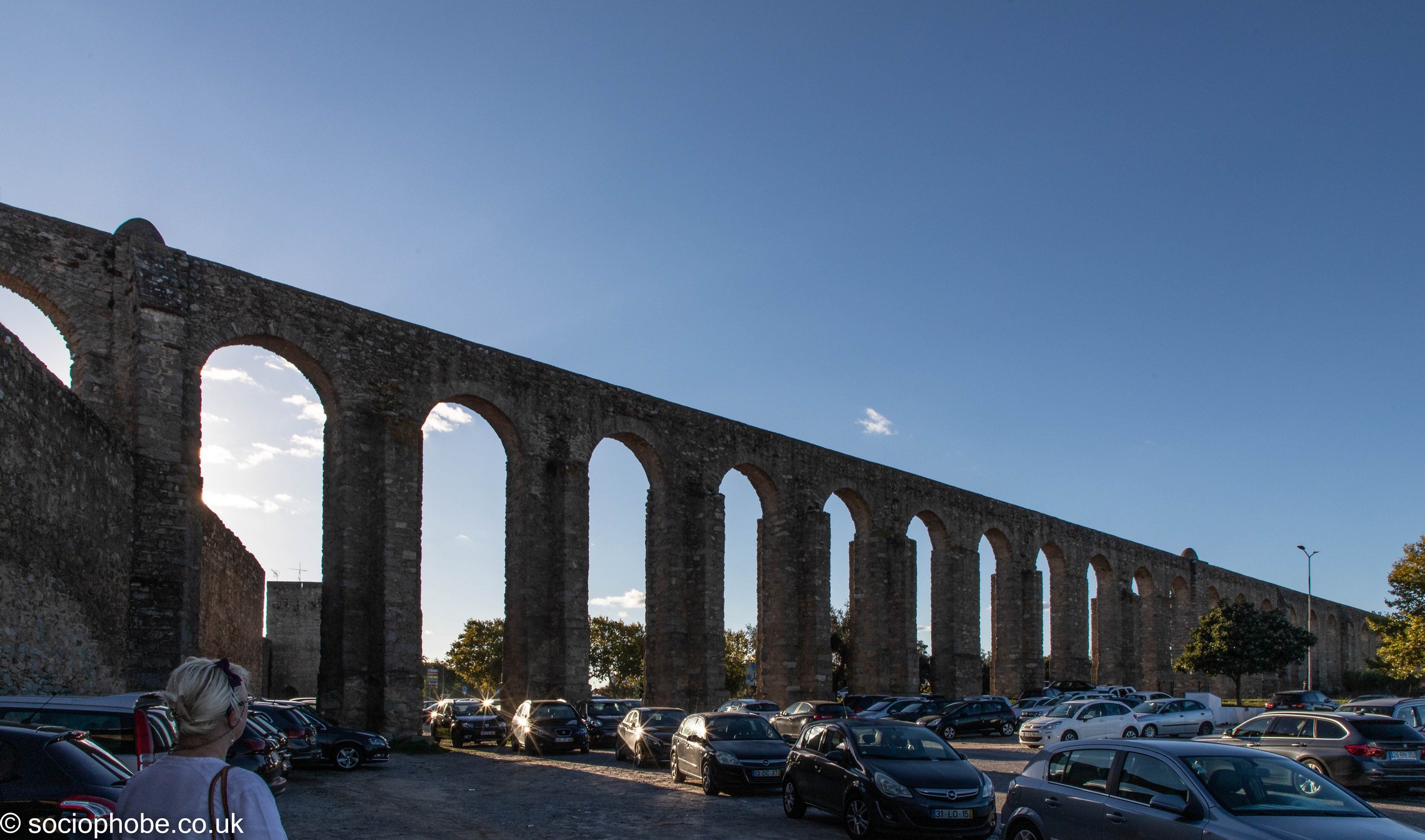
We walked around the outside of the cathedral twice (not intentionally!) and then down to the medieval aqueduct. This is an impressive structure, even 500 years after it was rebuilt on the foundations of the Roman creation, and the larger arches have now been modified to have houses built into them. The aqueduct was then used as a lane divider for 4 roads of traffic and then stretched off into the fields. Other than its longevity it didn’t have any particular architectural merit and the setting was less than salubrious, a car park/dumping ground.
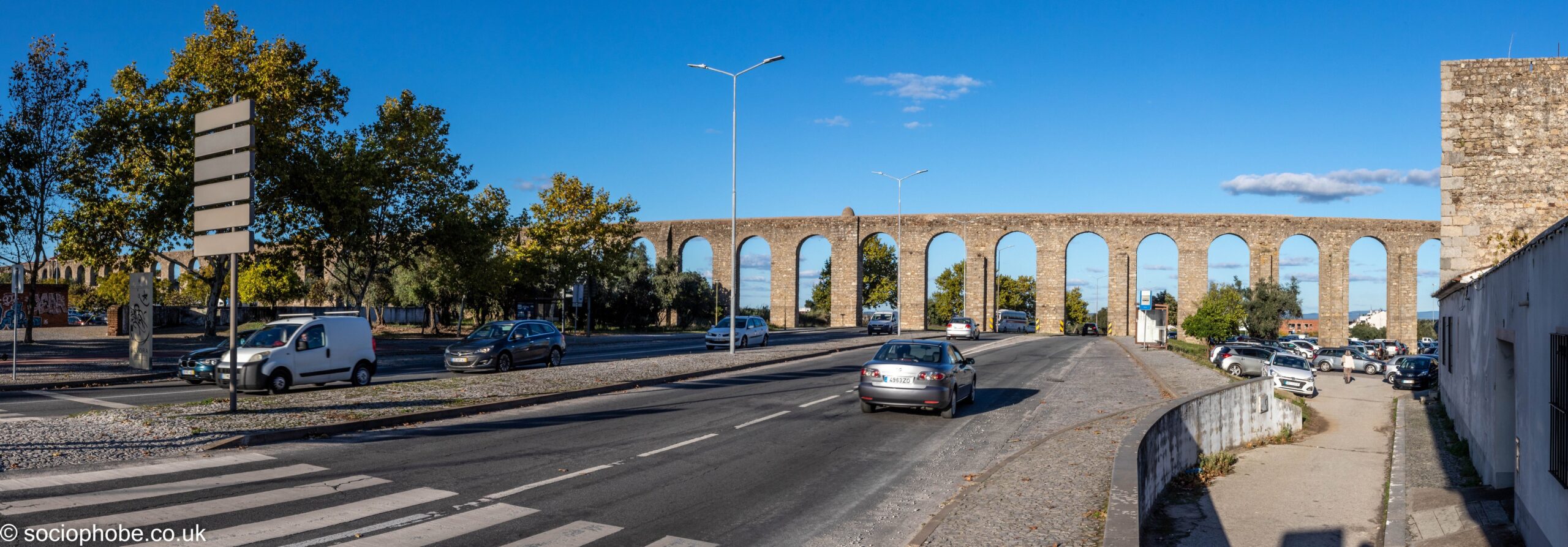
The number and quality of Roman buildings in the town was quite a surprise and showed it’s importance, at least until the collapse of the empire. We stopped for a coffee at a local cafe before going back to the hotel.
We sat and watched the sunset on the roof terrace but it was then getting cold so we had to tog up with coats and hats. Luckily our evening restaurant was only a few minutes walk. The guy there was excellent, spoke very little English but with a mix of Google, shrugging and gesticulation we ordered our meals. They were so filling, and the veal and sheep cheese so delicious, I actually couldn’t order dessert! We had a chilly walk back to the rooms before a very welcome sleep.
The sleep was so welcome it actually lasted 9 hours, a new record! I awoke to daylight peeping around the window shutters and by the time we’d showered and sorted stuff it was gone 9 before we left the room. The intention was to have breakfast and then visit the Royal Palace. Breakfast was the easy part although it was a bit insipid so I didn’t finish it. Finding the Royal Palace was more problematic – we knew where it was and could see parts of it but the entrance seemed to be hidden and there were no signs anywhere.
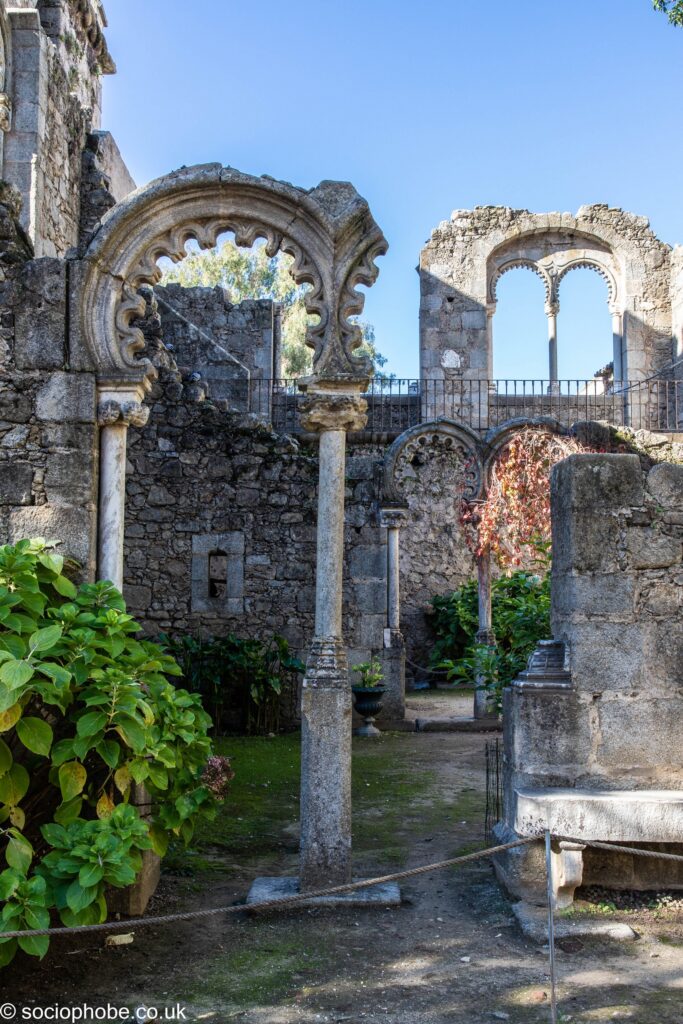
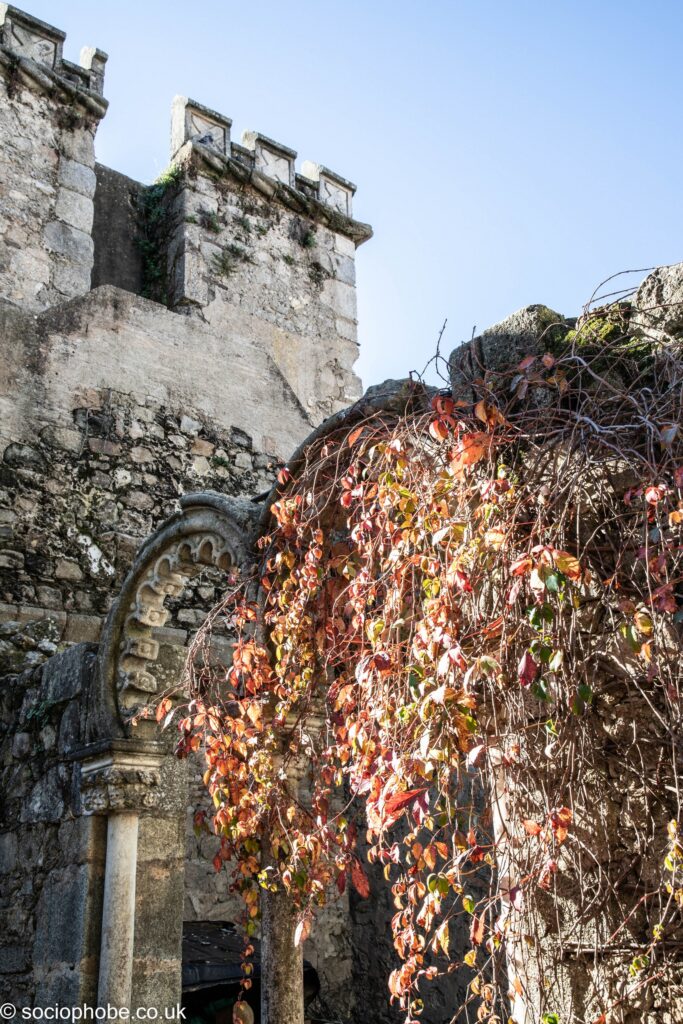
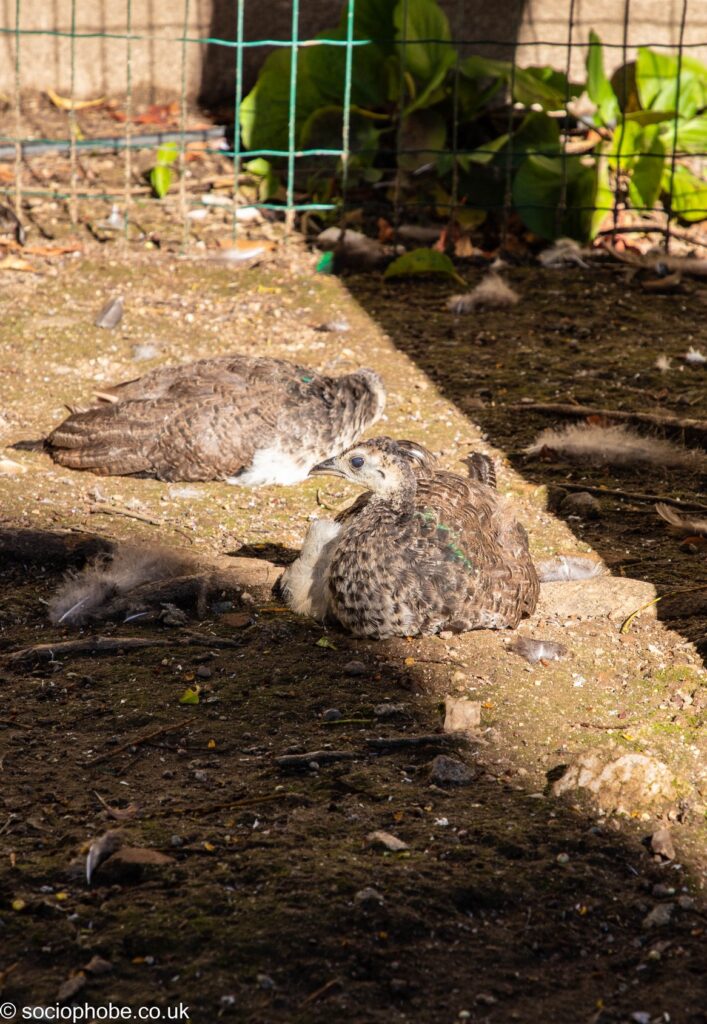
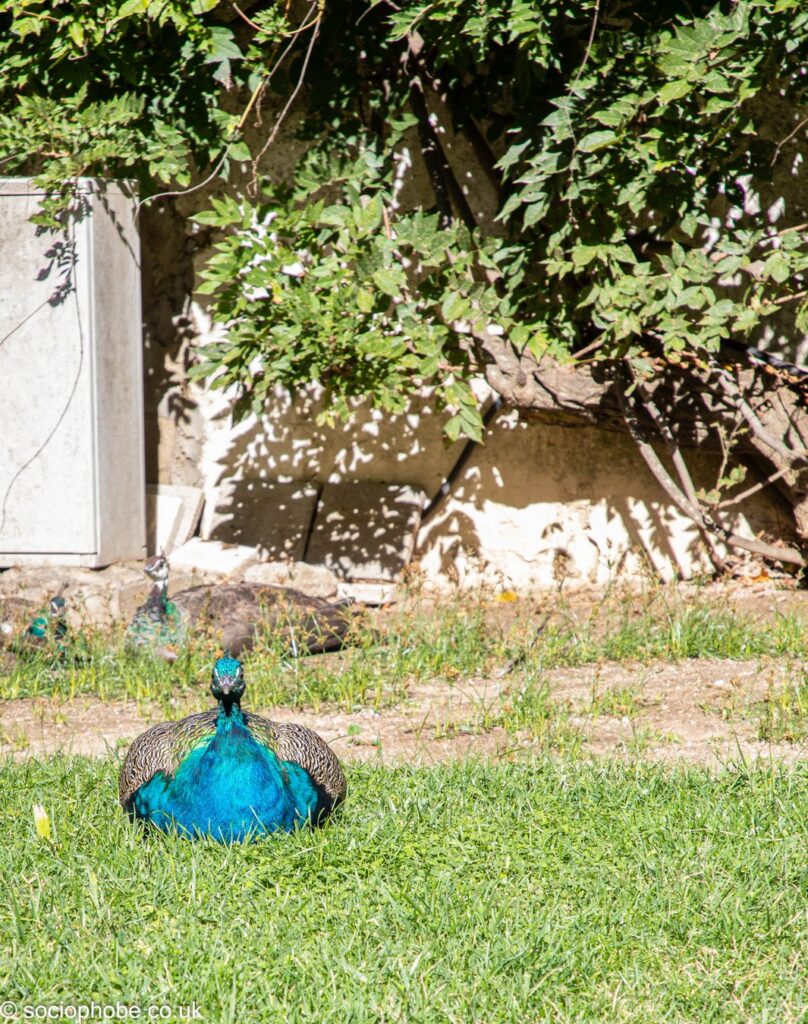
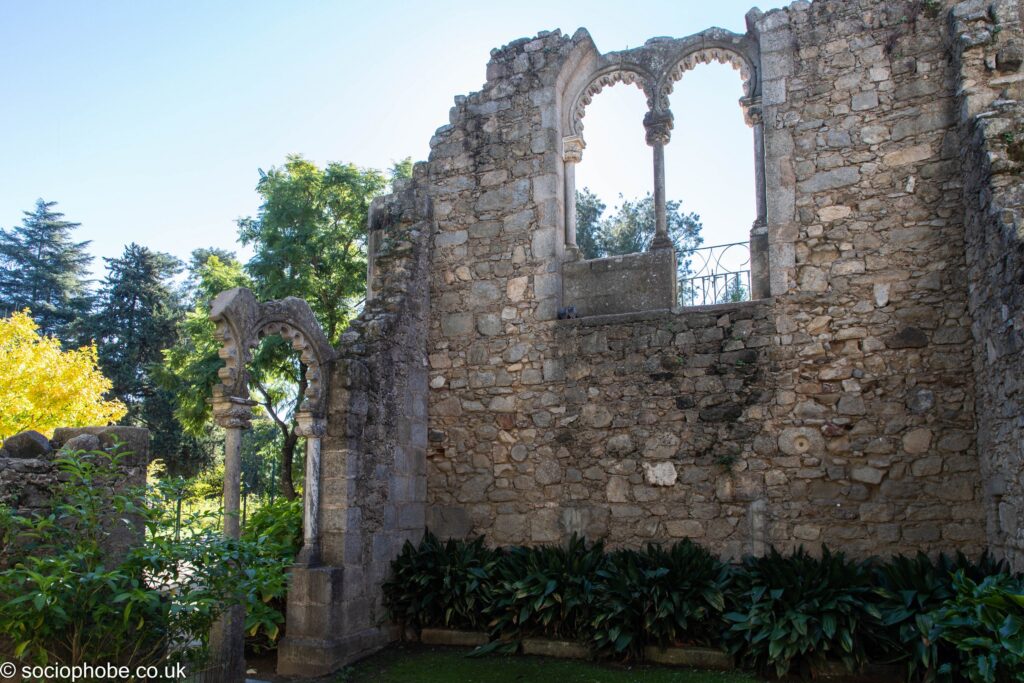
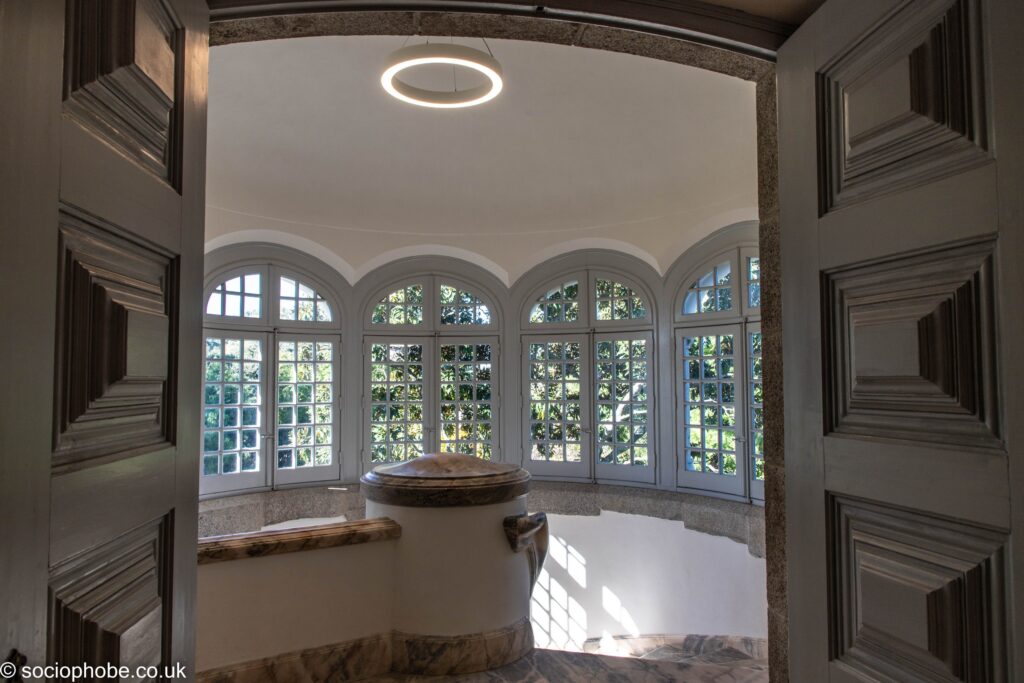
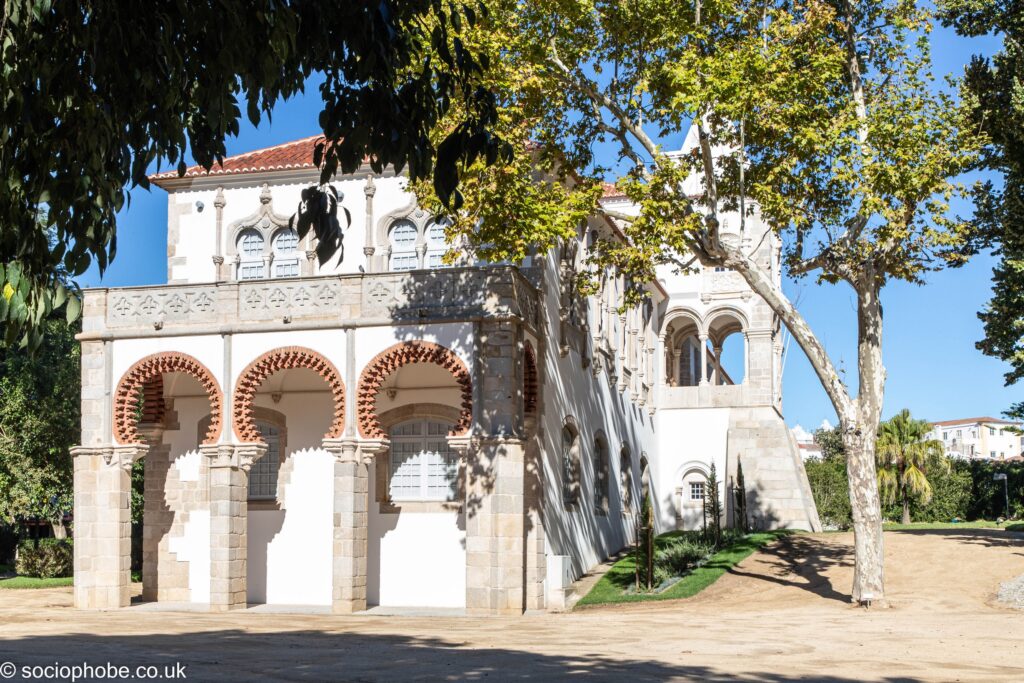
Eventually, after giving up and wandering through the park we found the palace. I actually had to ask inside to make sure we had the right place but it was worth it in the end. The downstairs part detailed the history of Evora from pre Roman times to the modern day. It was well laid out and had a fantastic part that showed you a current photo that you could then overlay with an early 20th century image to see the changes. Just behind the palace was a folly built from materials salvaged from monasteries that had been demolished, now populated mostly by peacocks.
Mourao Castle
We then walked back to the hotel, got our bags and left to get the car. We then had a fun time driving through the silly streets until we eventually reached a tarmac road and headed out of town. Our first stop was Mourao Castle, about an hours drive away across the river delta and almost on the Spanish border. The drive was through more vinyards and farmlands and then over a variety of bridges across the delta, incredibly scenic and I actually kept to the speed limits, much to the chagrin of just about every driver behind me!
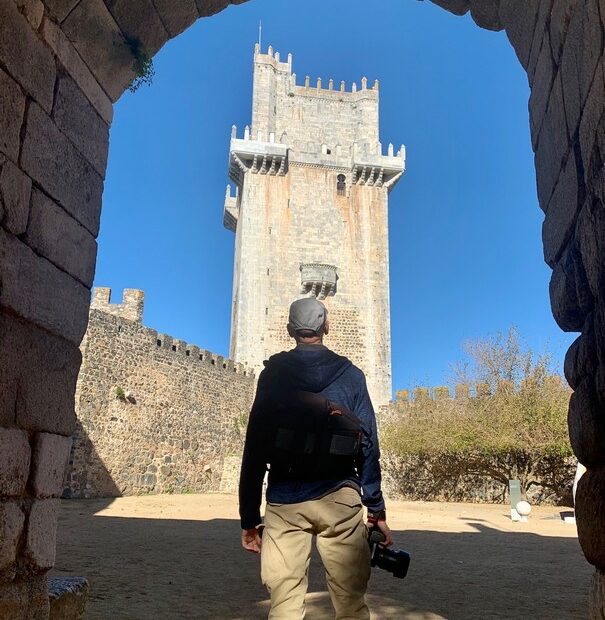
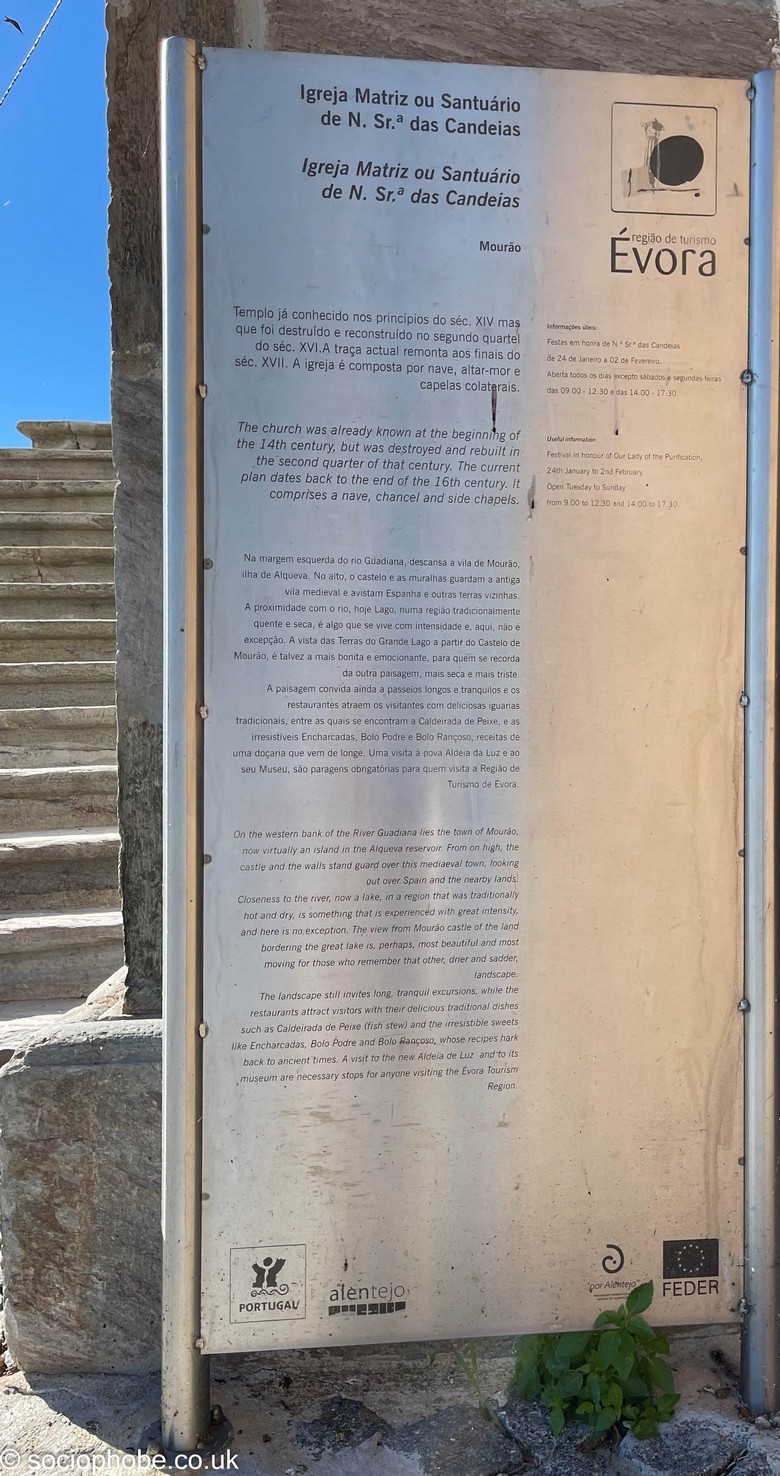
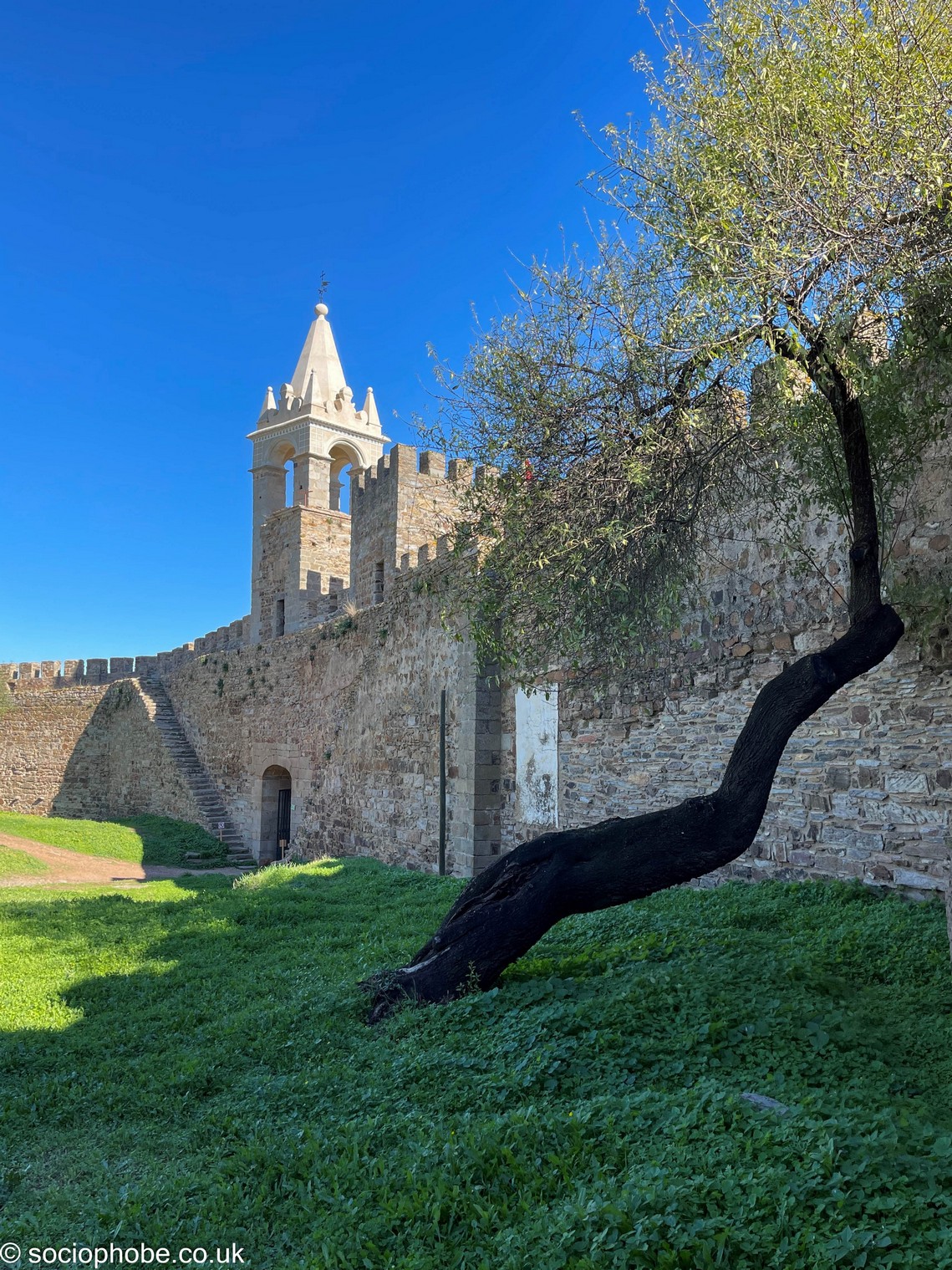
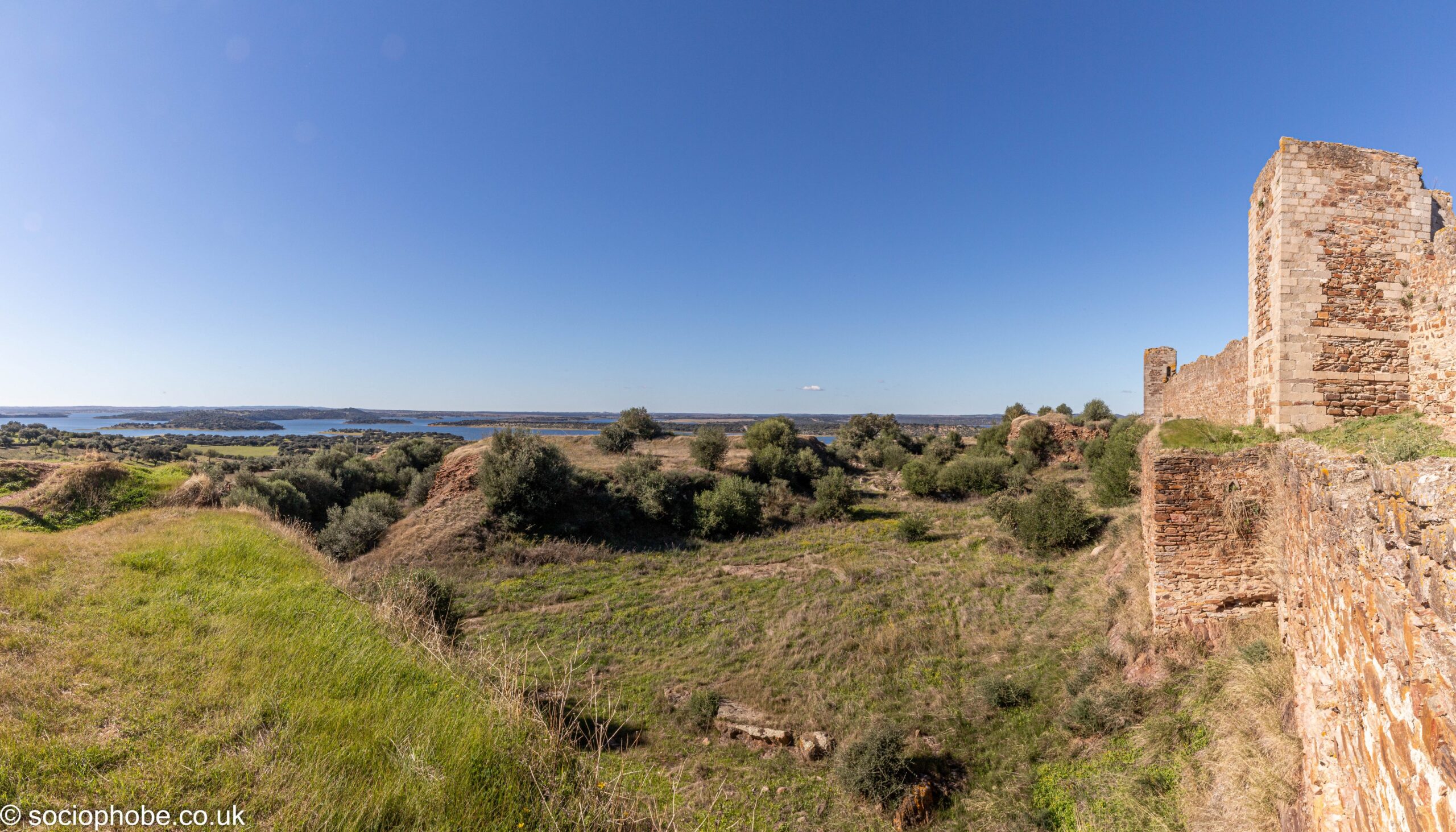
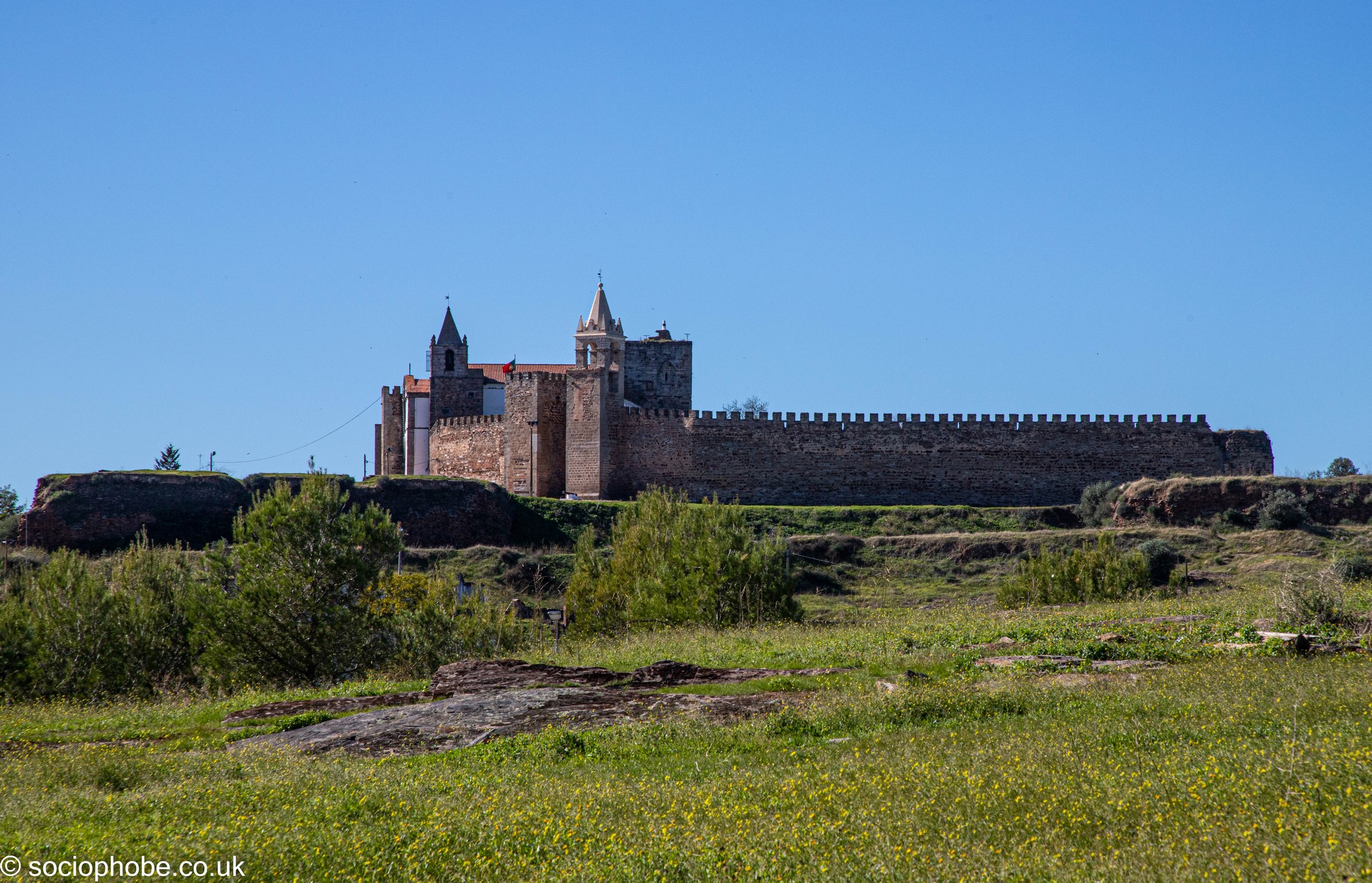
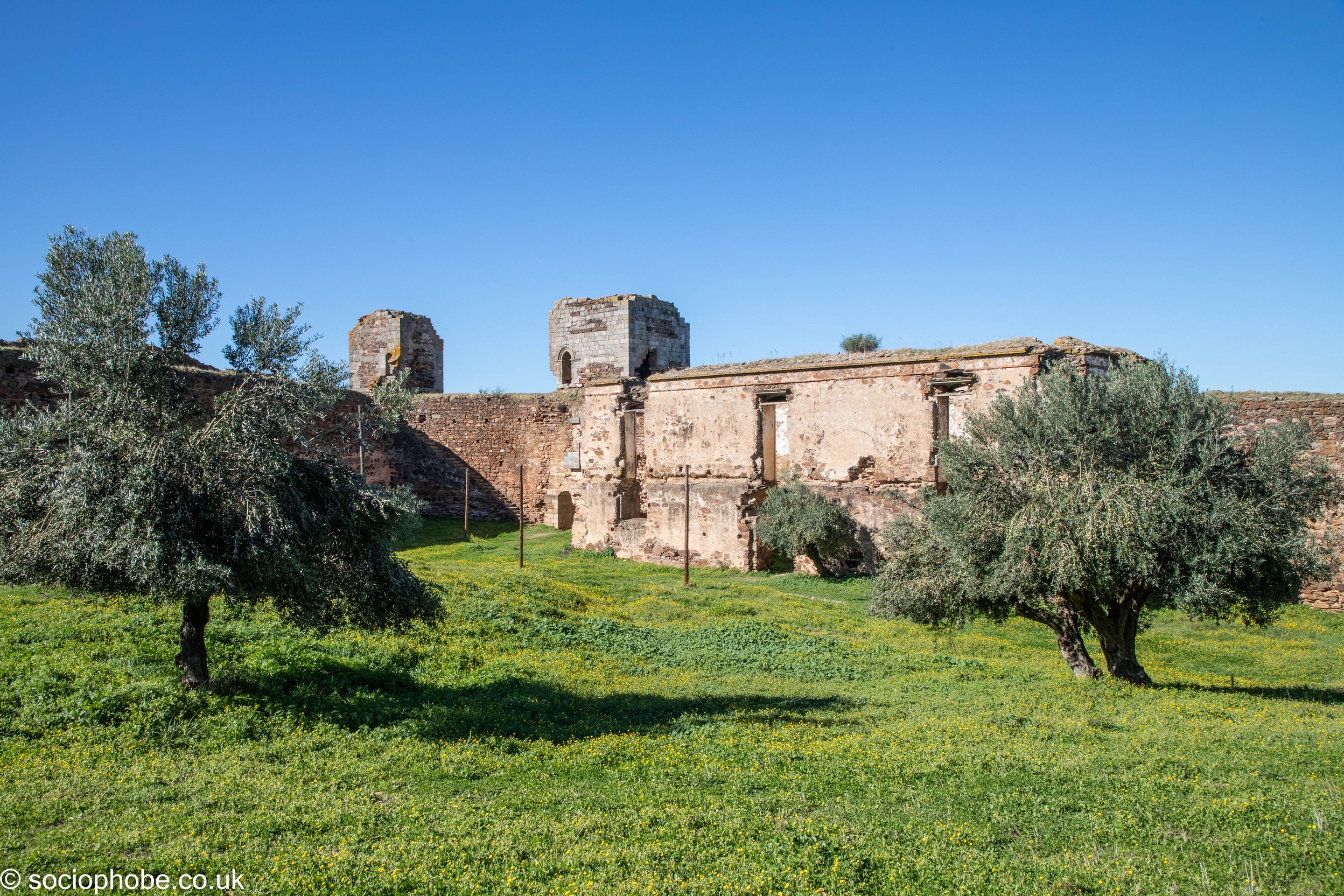
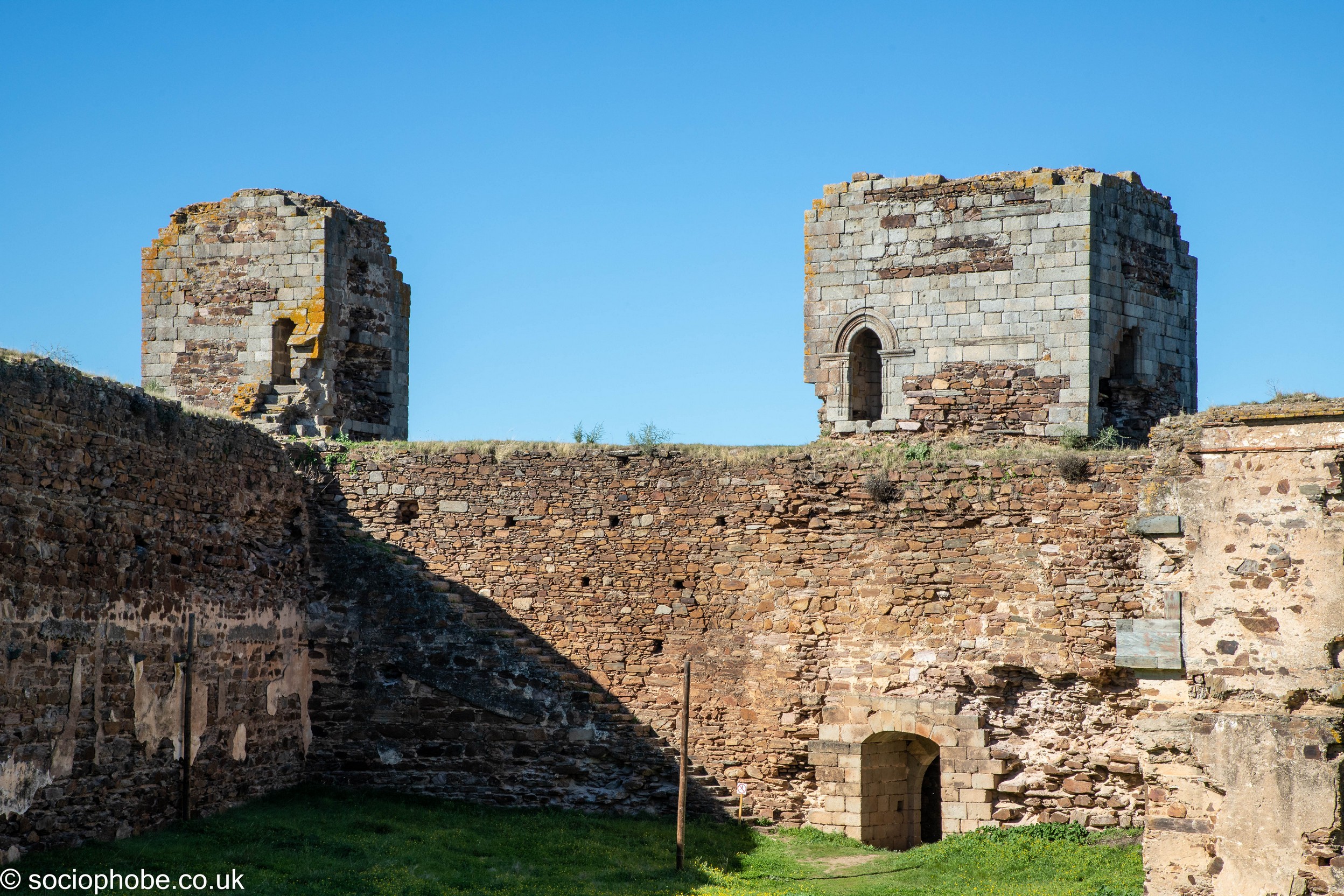
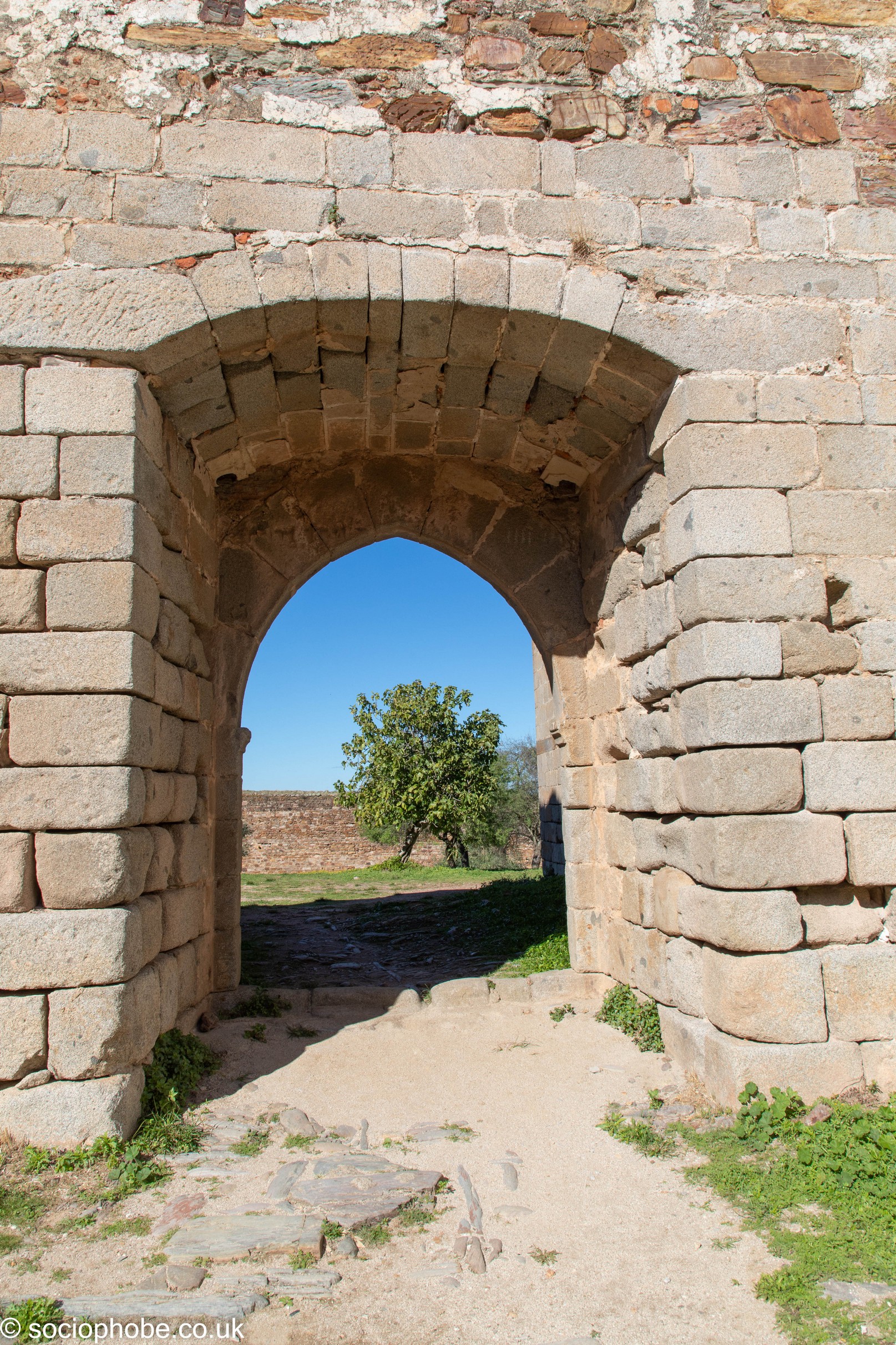
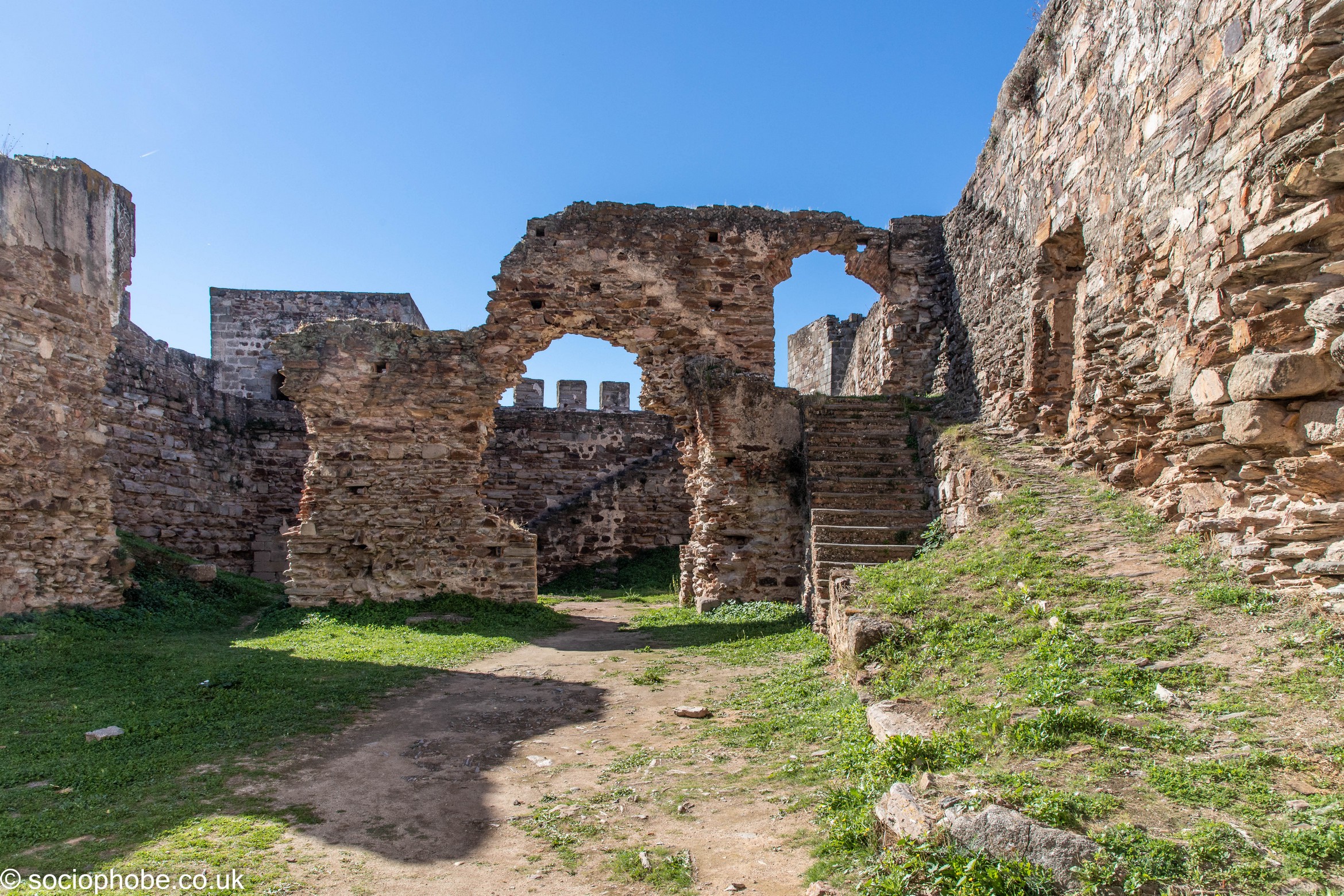
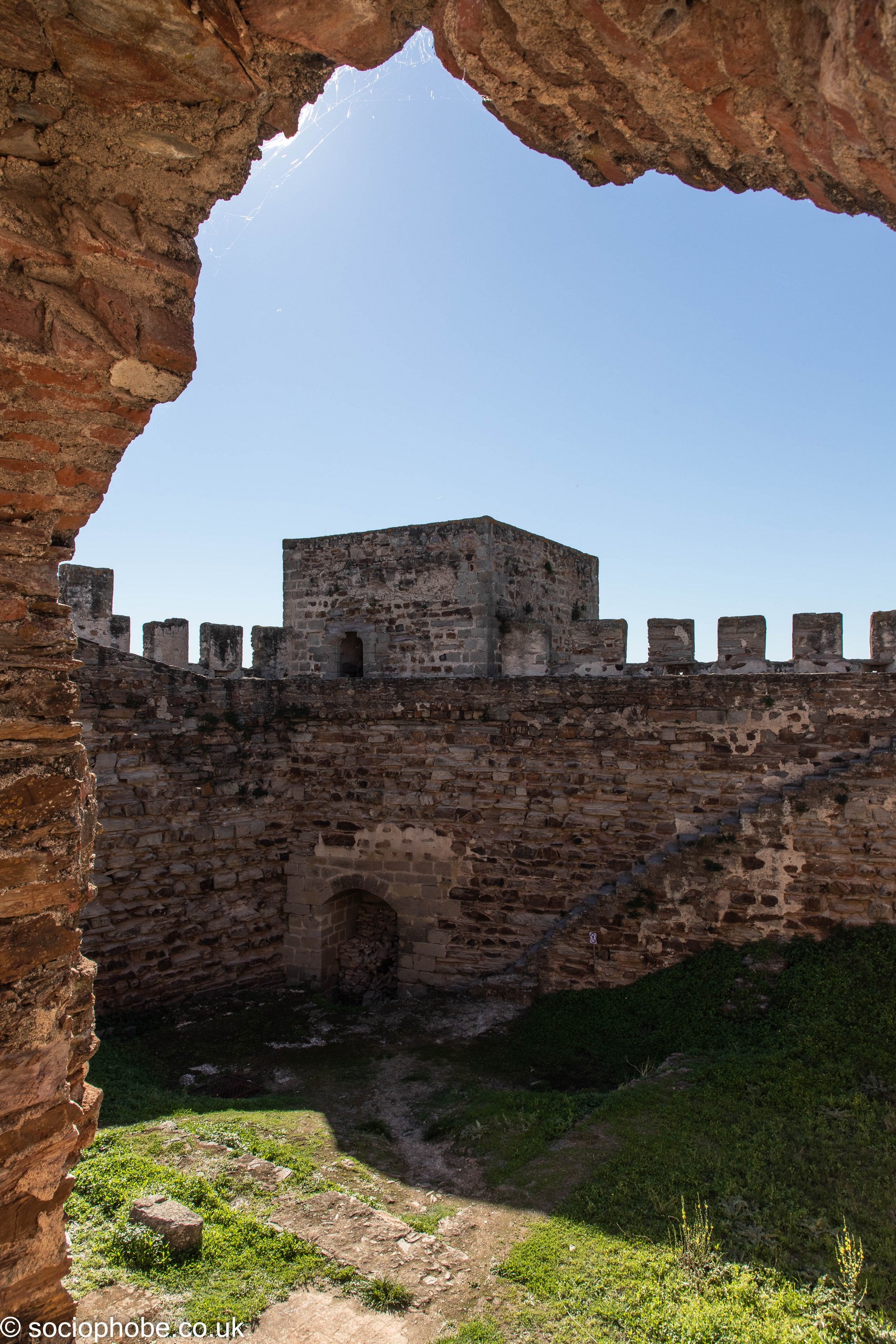
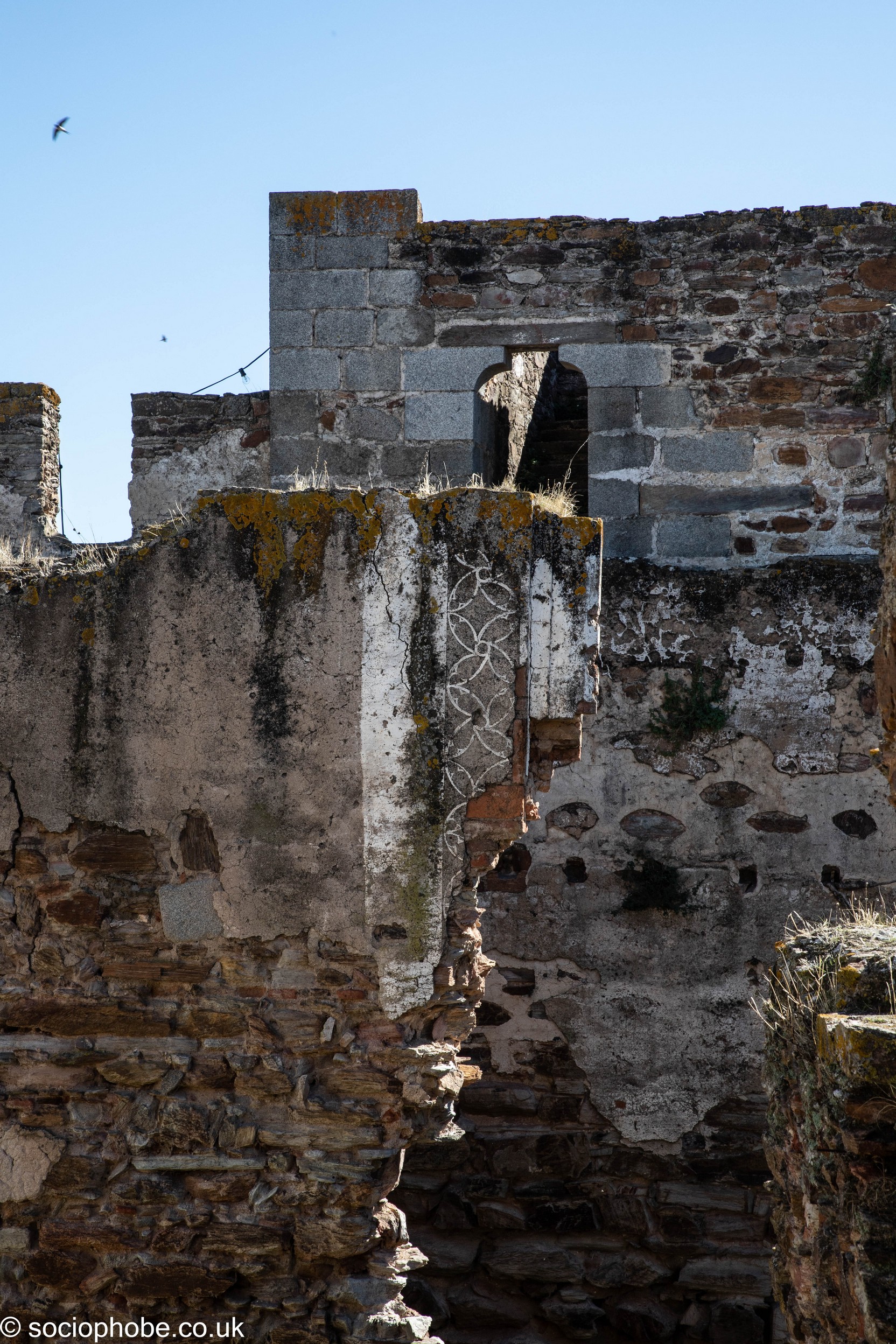
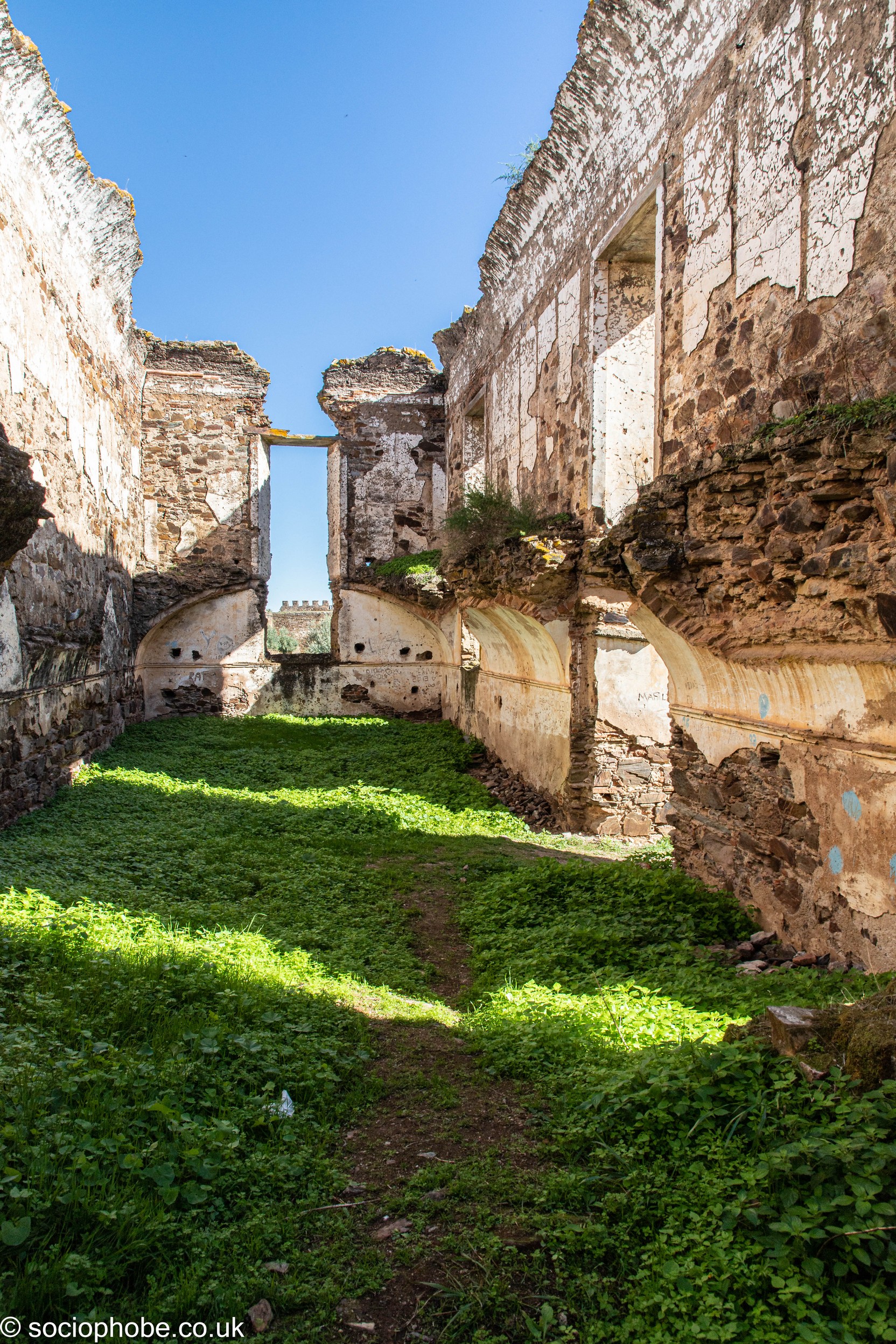
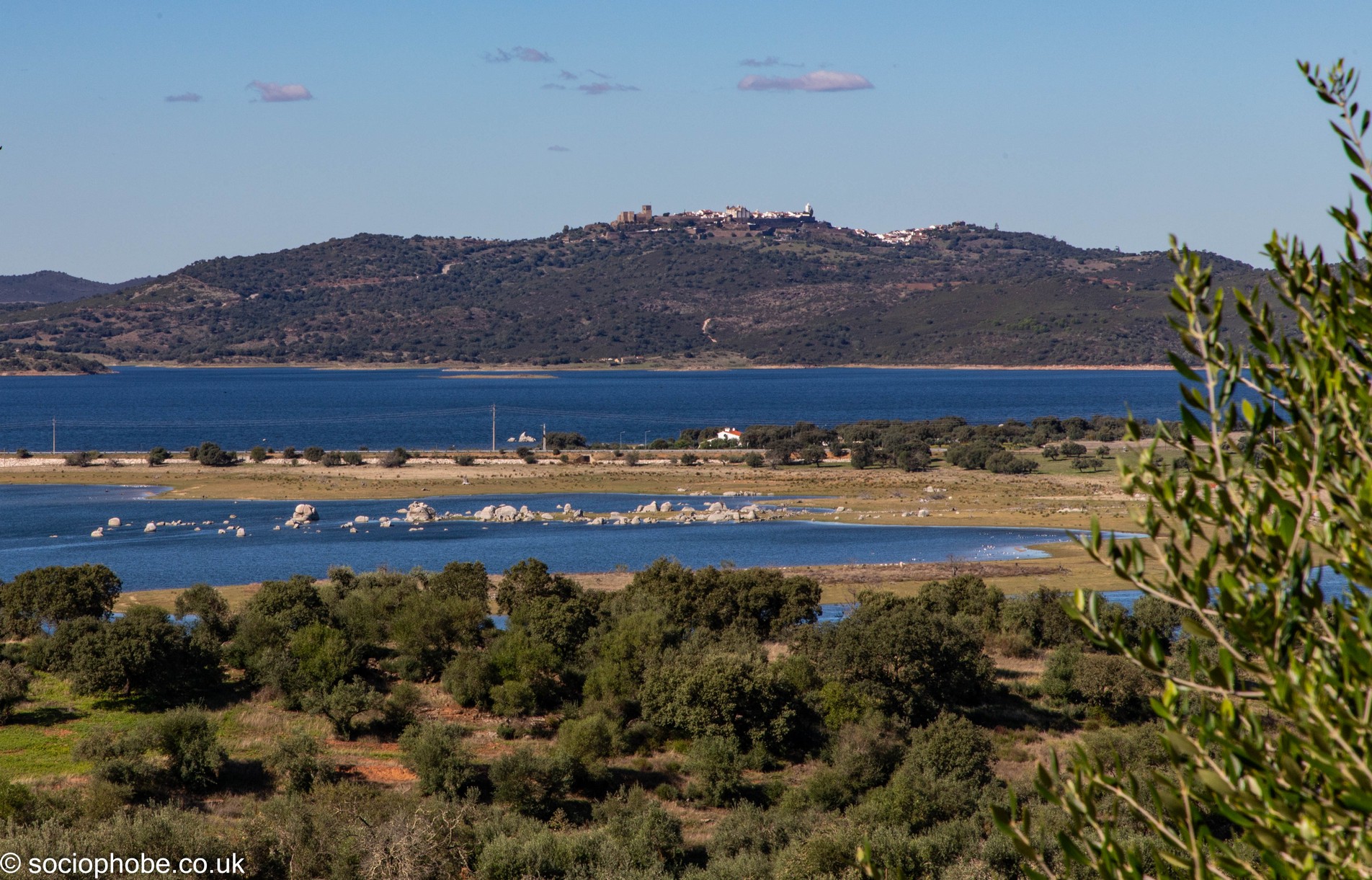
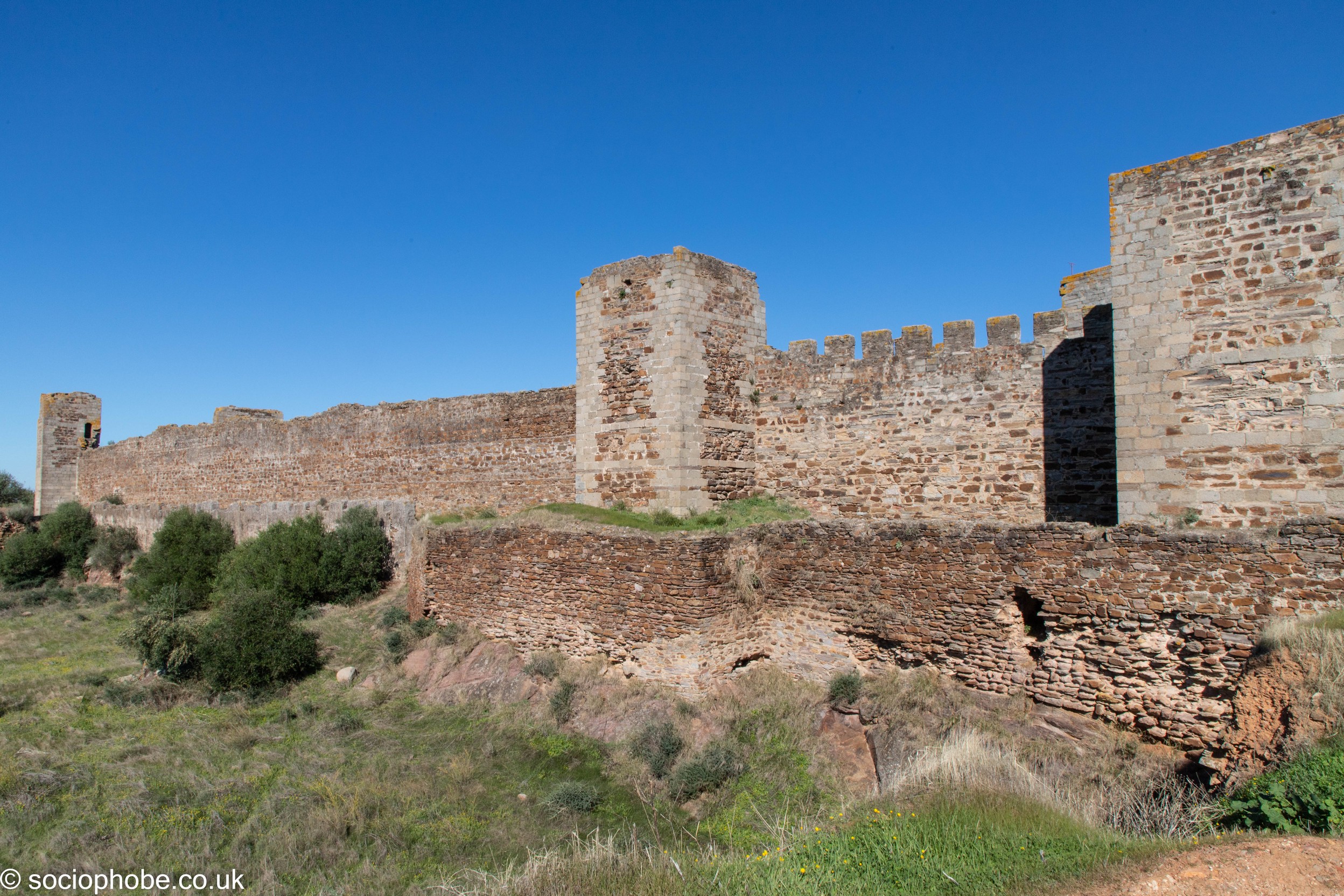
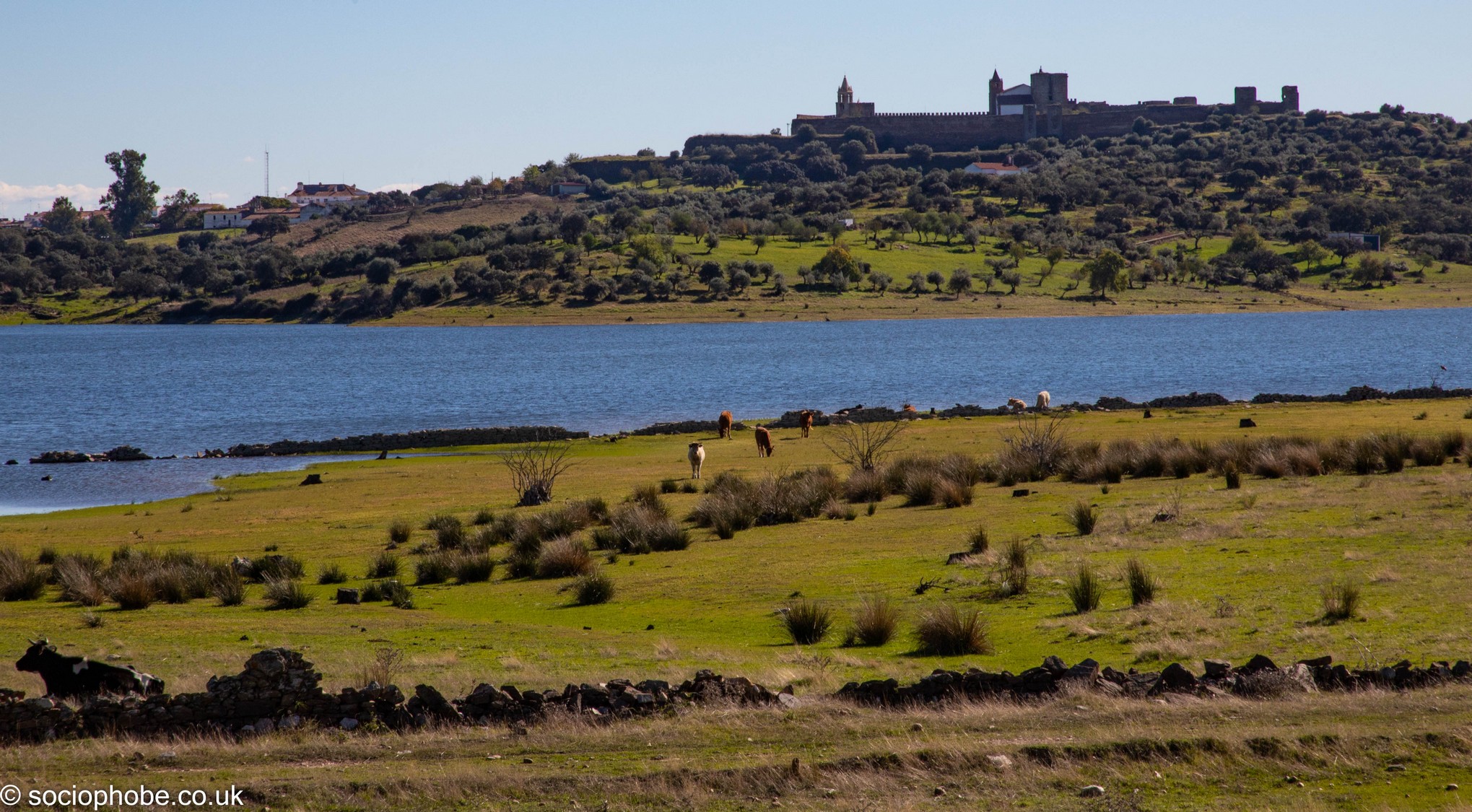
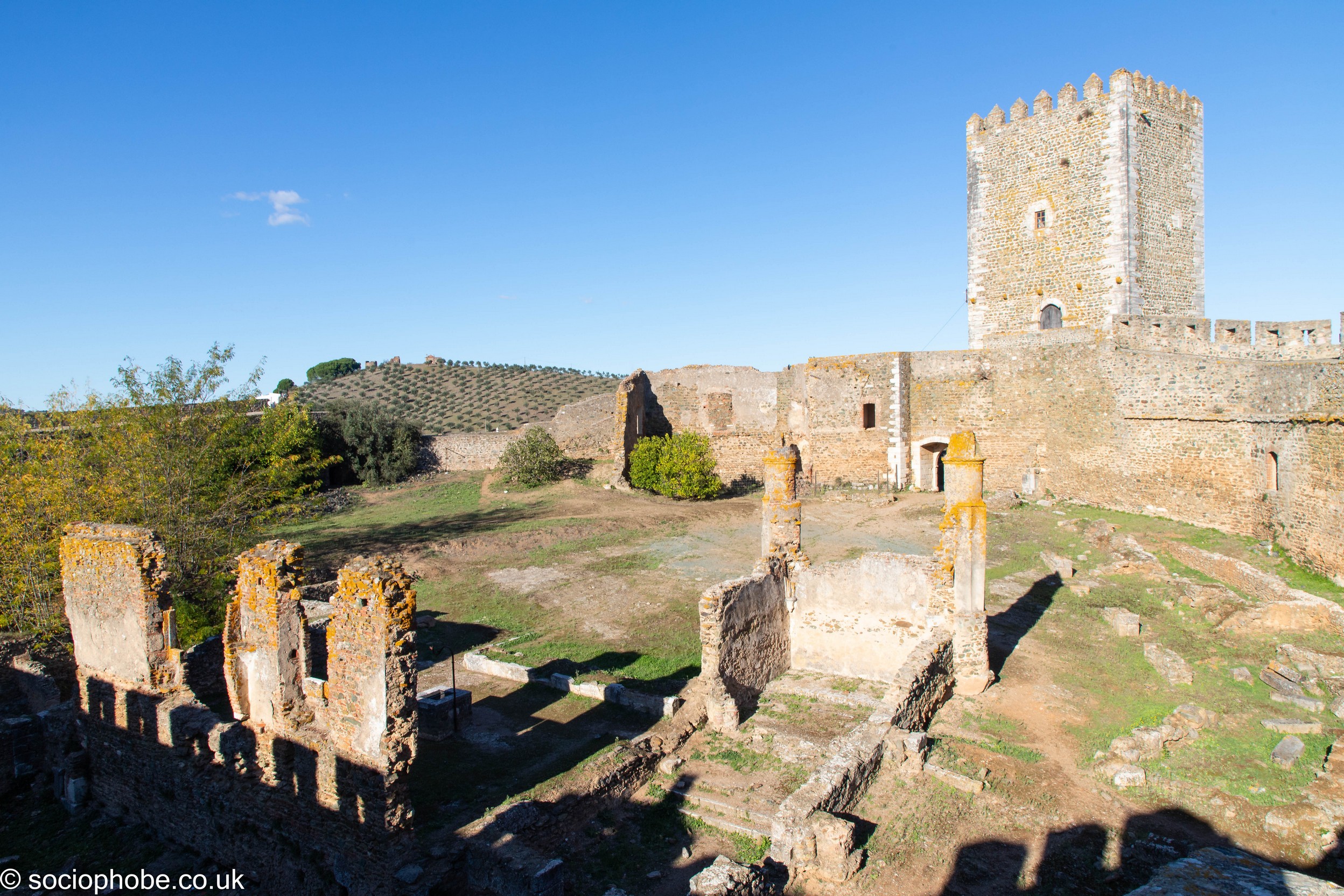
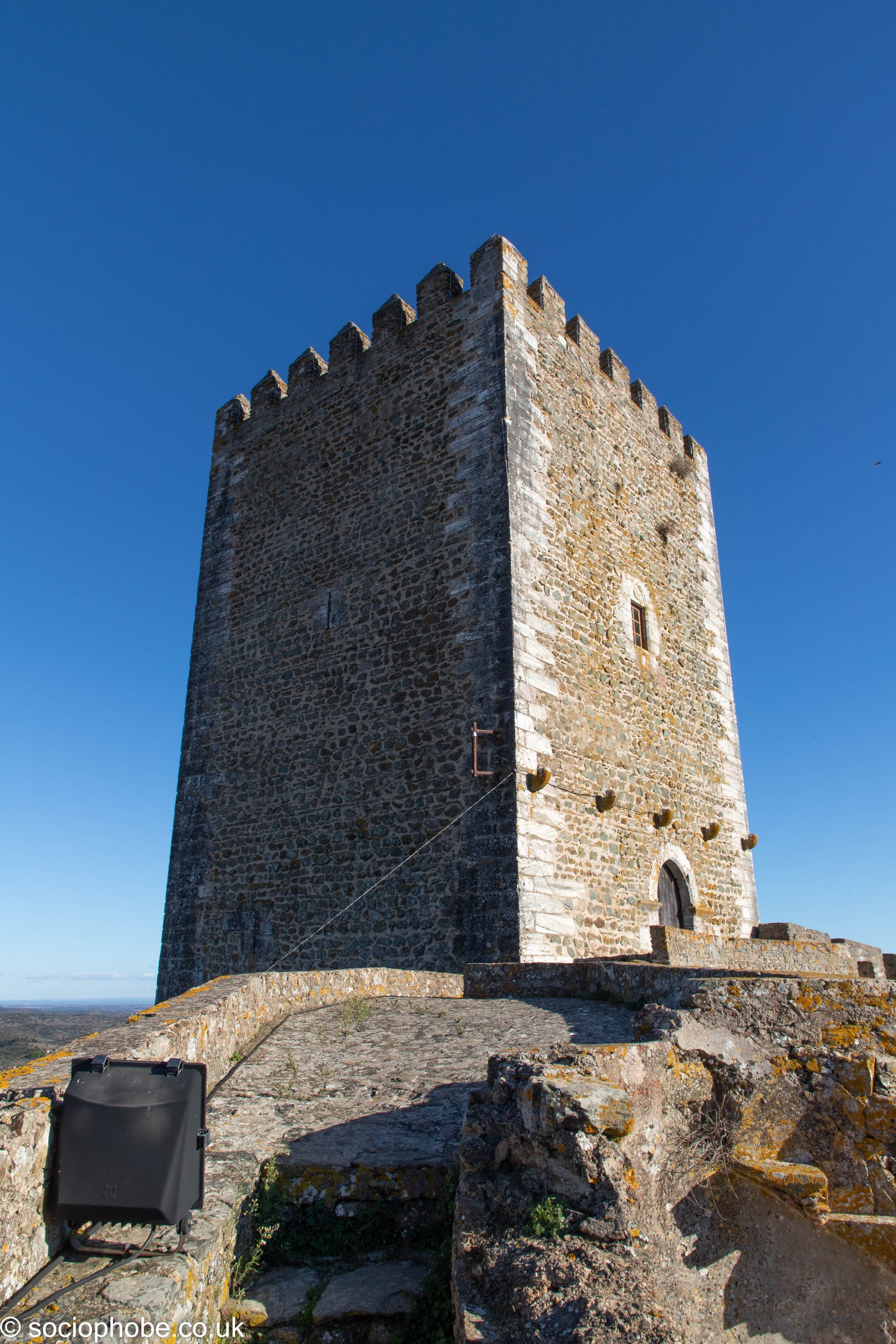
The castle was at the top of a hill above a small village. It is surprising how poor and backward rural Portugal appears and we were quite amazed as we drove through the village. We parked outside the castle and walked in. Although it is a national monument and quite a big structure it was open and free to just walk in. It obviously didn’t have any maintenance done on it and the intact wall walks were cordoned off for ‘safety’ reasons. The views from the outside were impressive and the amount of water and islands was quite surreal. We spent about 30 mins walking around until 2 other cars turned up and the place got crowded!

Portel Castle
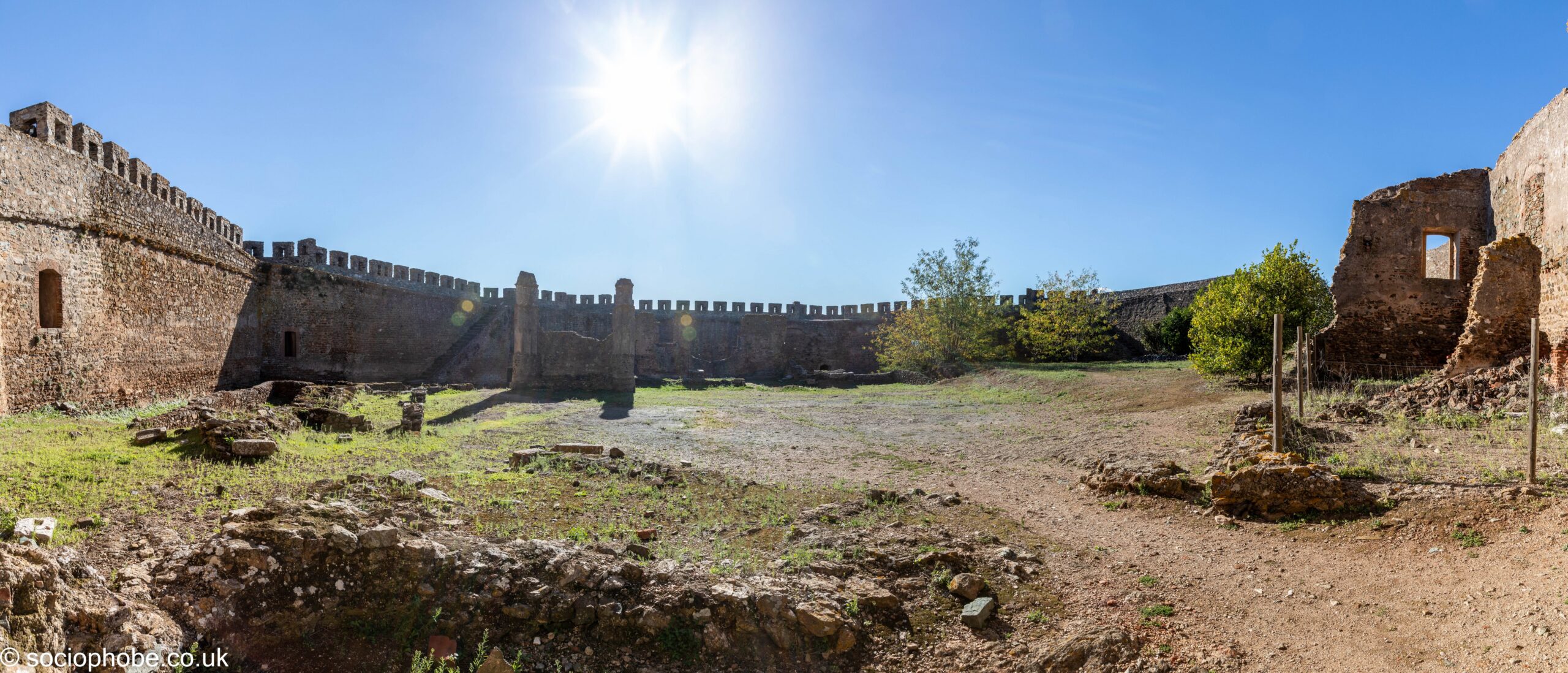
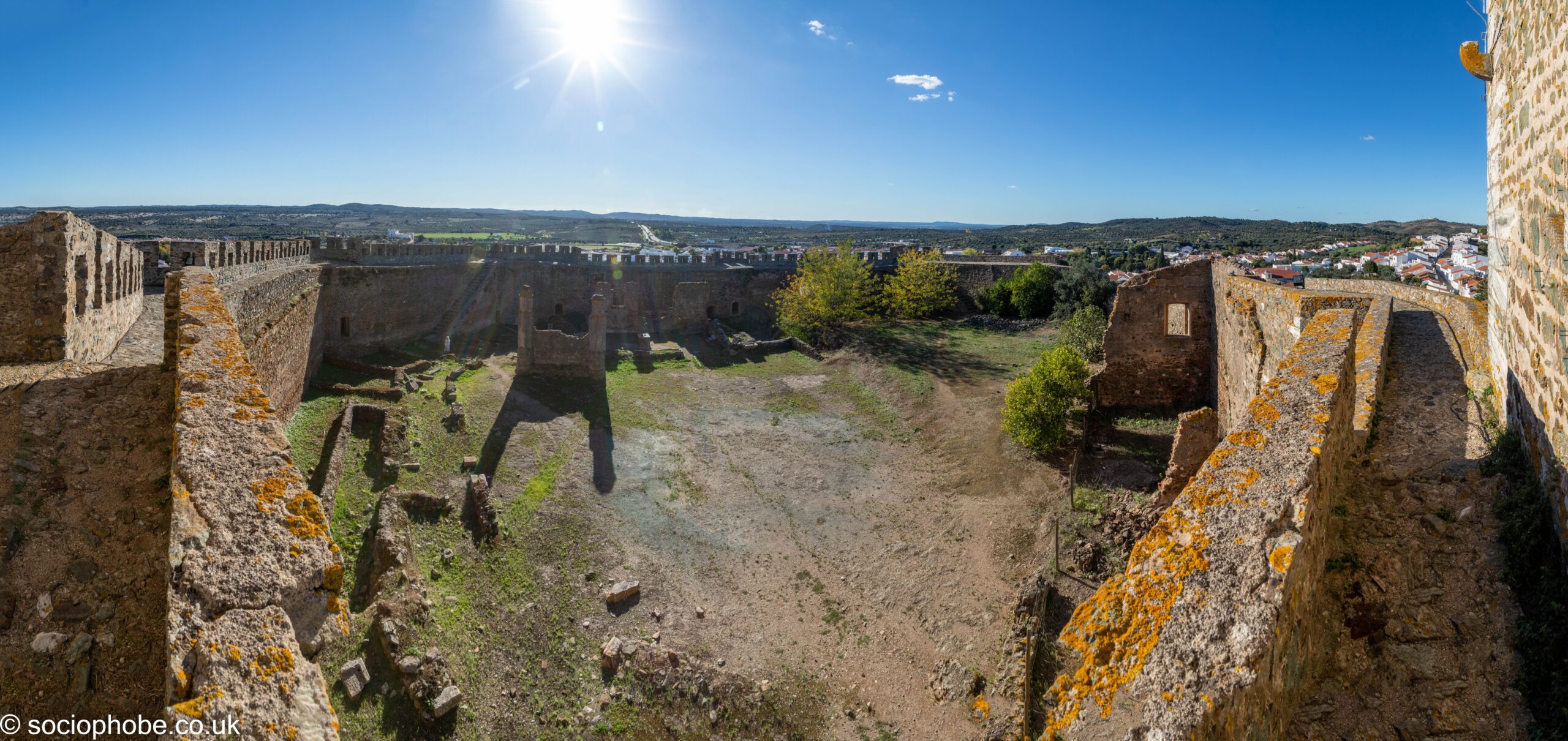
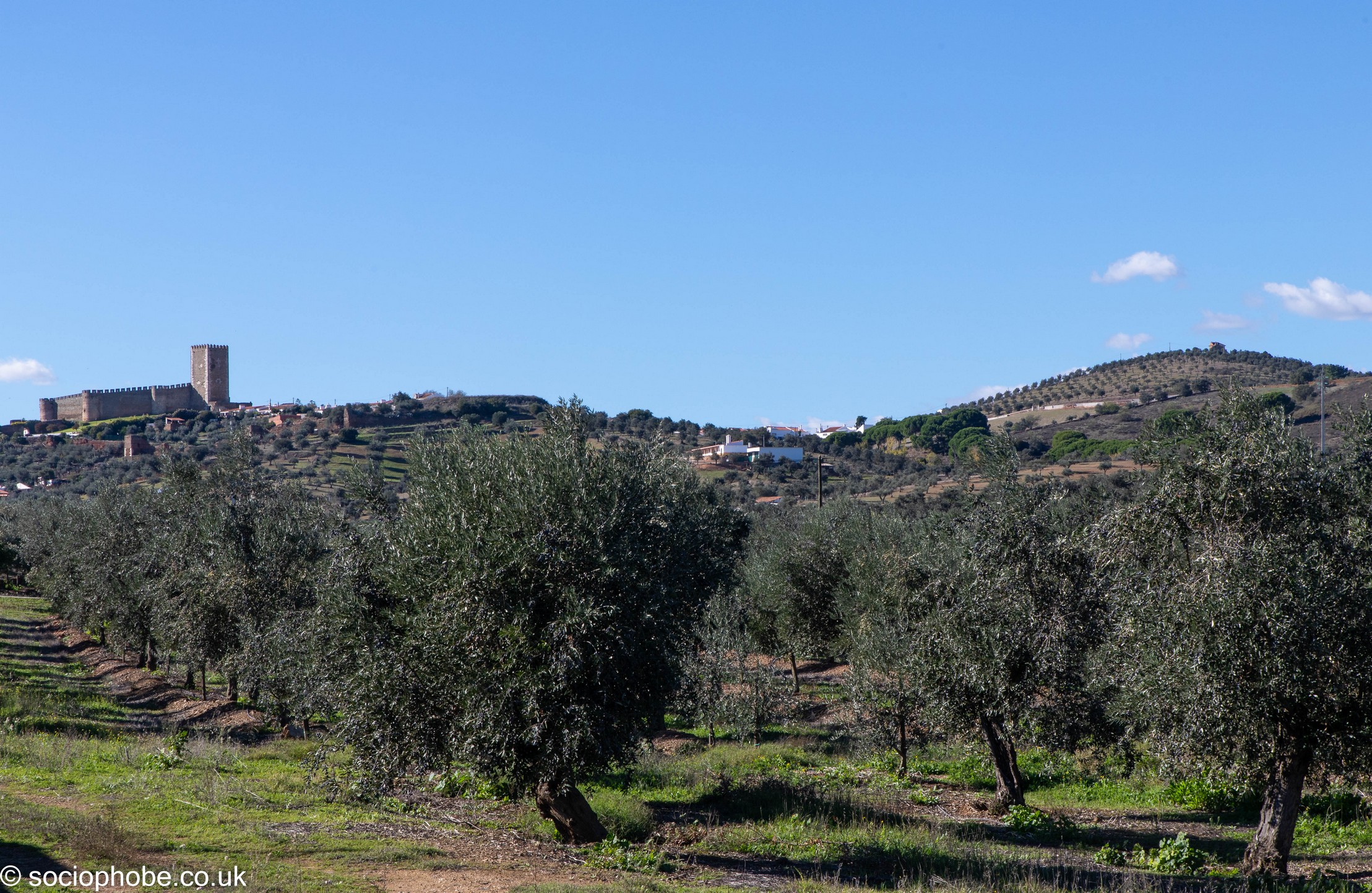
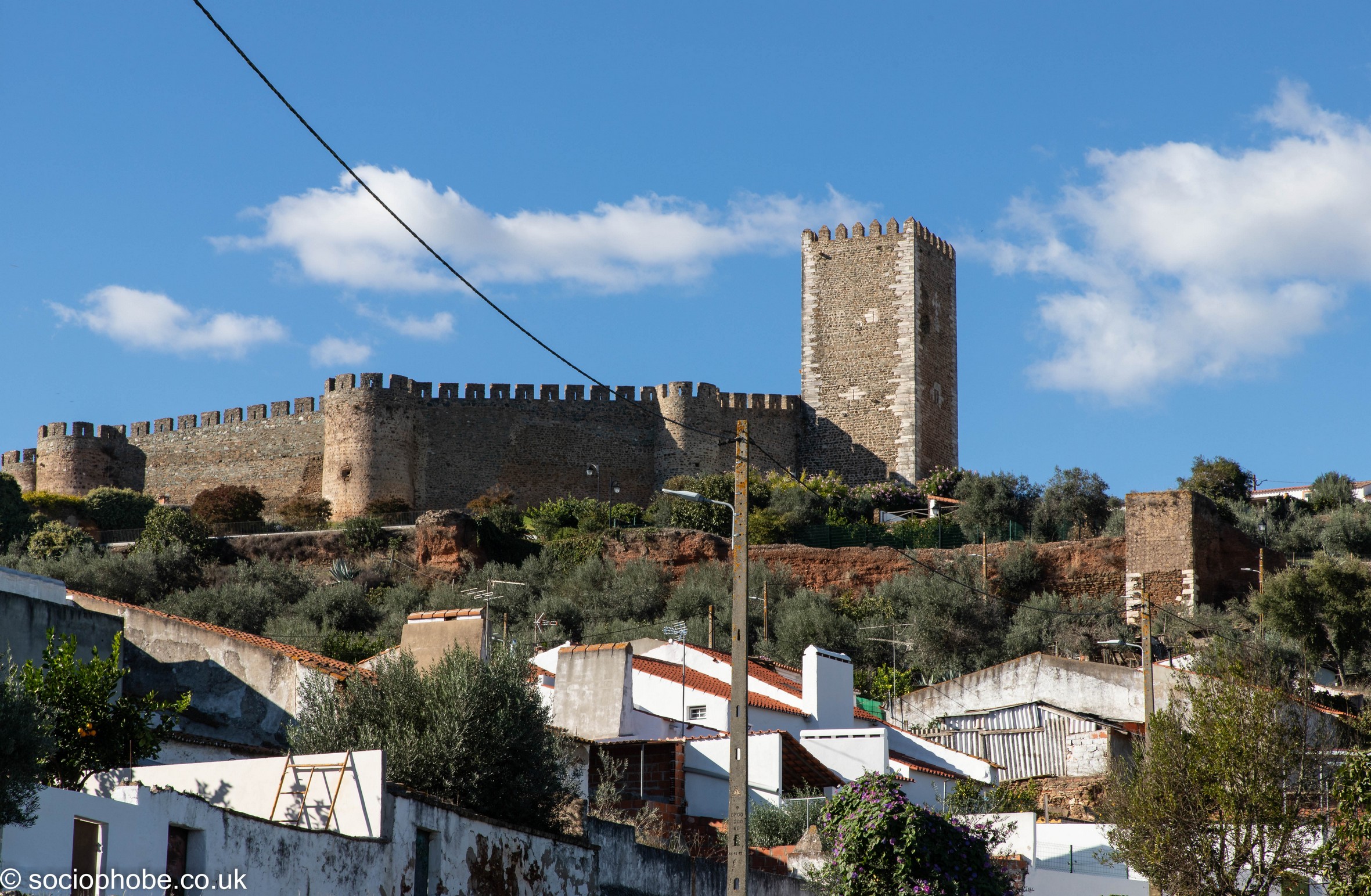
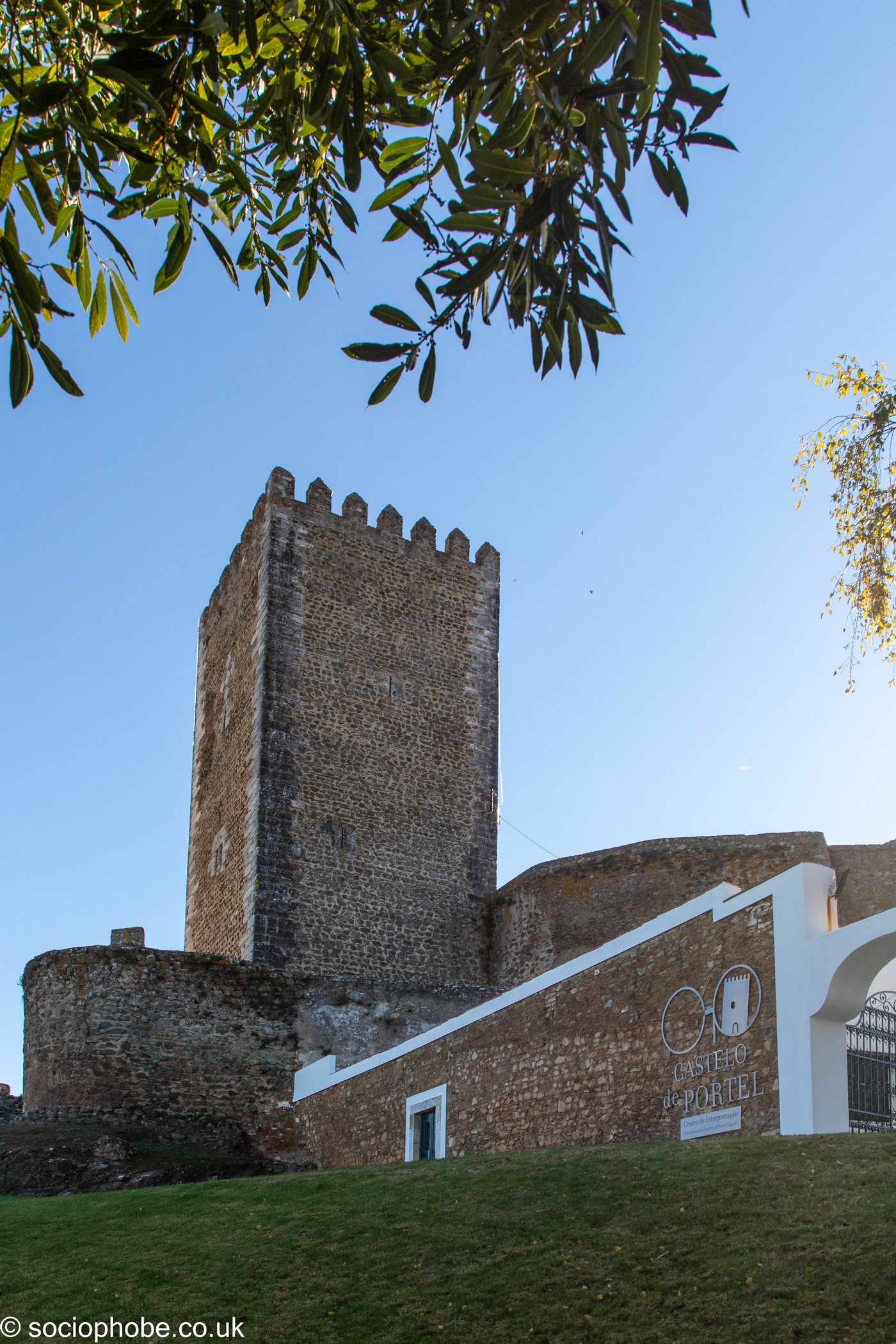
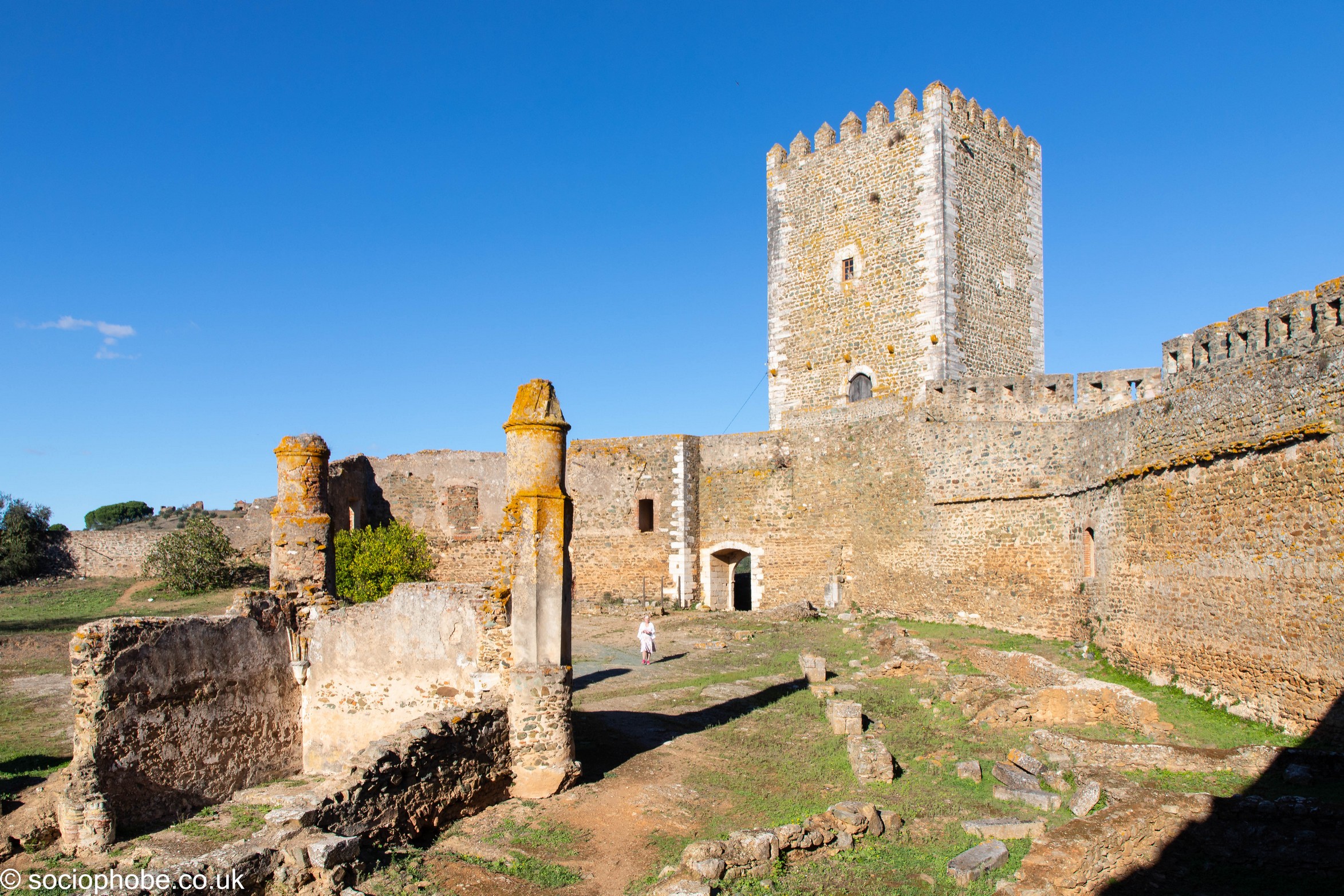
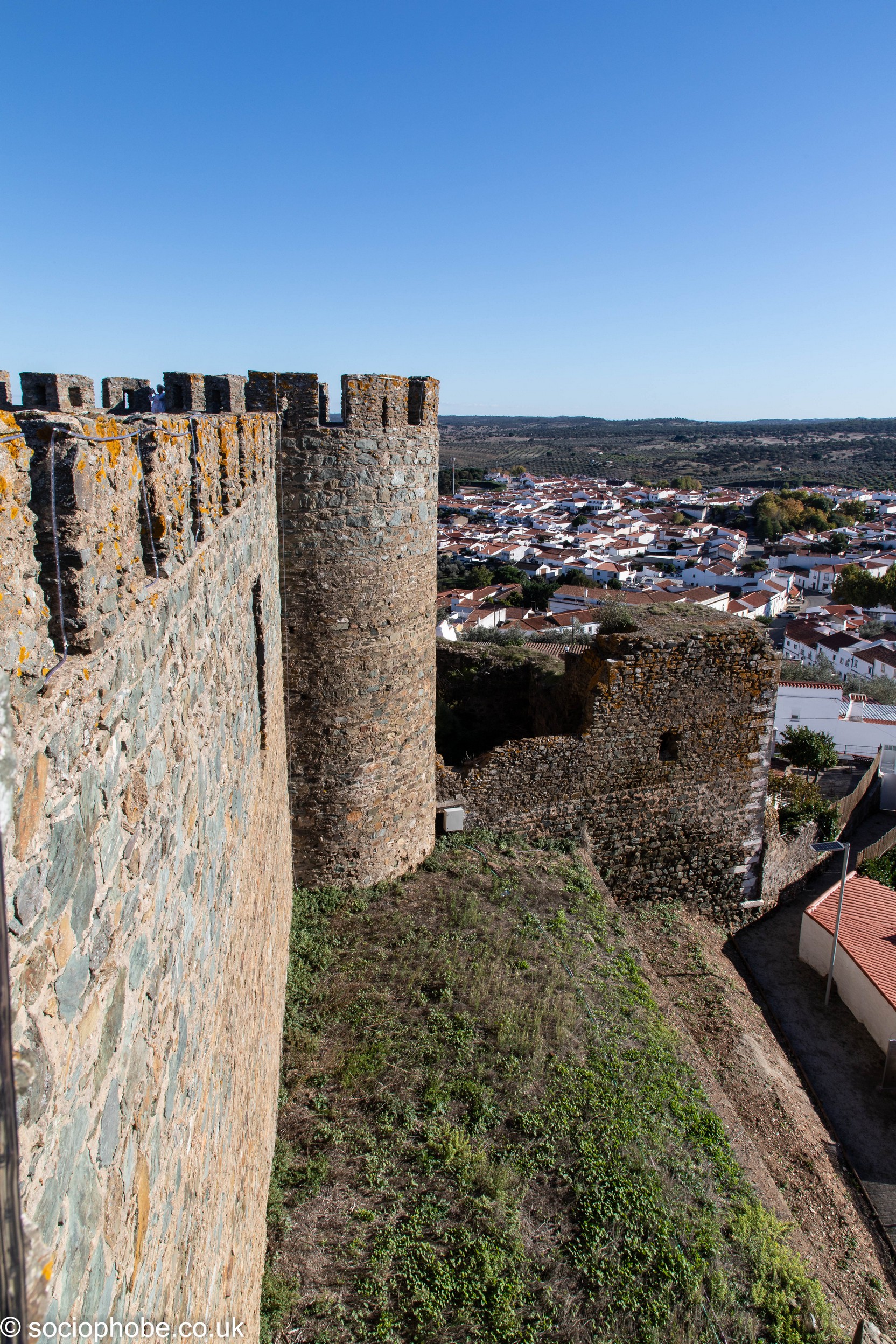
Our next stop was about half an hours drive to the town of Portel and, shocking I know, another castle! This one was well maintained but the main defences seemed to be narrow one way streets with parked cars and no signs so we dumped ours a little way away and walked to the castle. This was also free to enter and had an excellent exhibition about the castle’s history.
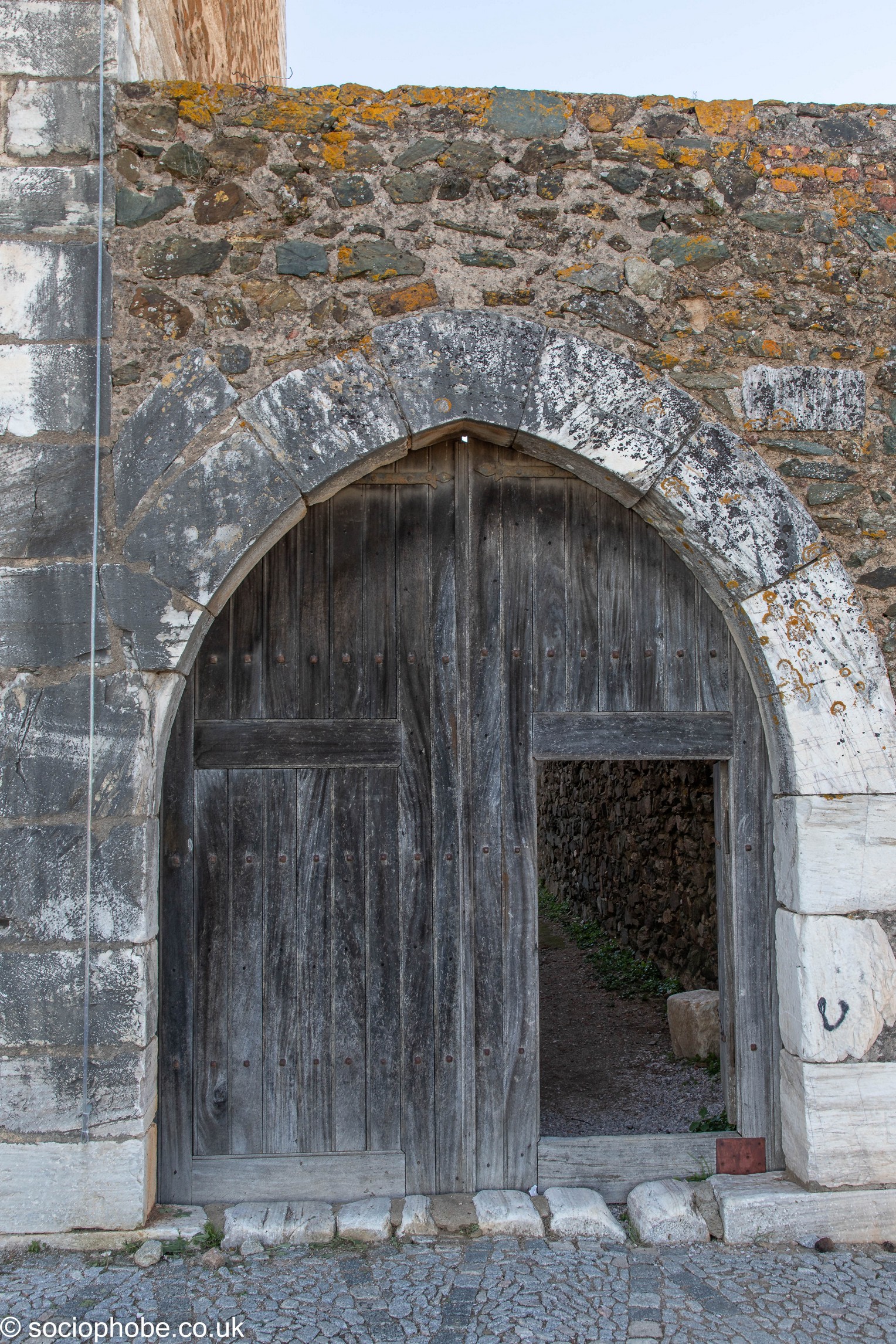
The castle itself had fully intact walls that you could walk on but there were no barriers so it did feel a bit dodgy. The views were again impressive though. Inside the main tower was closed and there were no interior buildings other than a ruined chapel but it was still lovely to walk around and enjoy the sunshine. We then navigated a route back to the car and eventually left the town after some very low speed manoeuvring past parked cars. We drove past more vinyards before a quick photo stop at a large Roman bridge, Deb is just spoiled at the thought I put into these things!


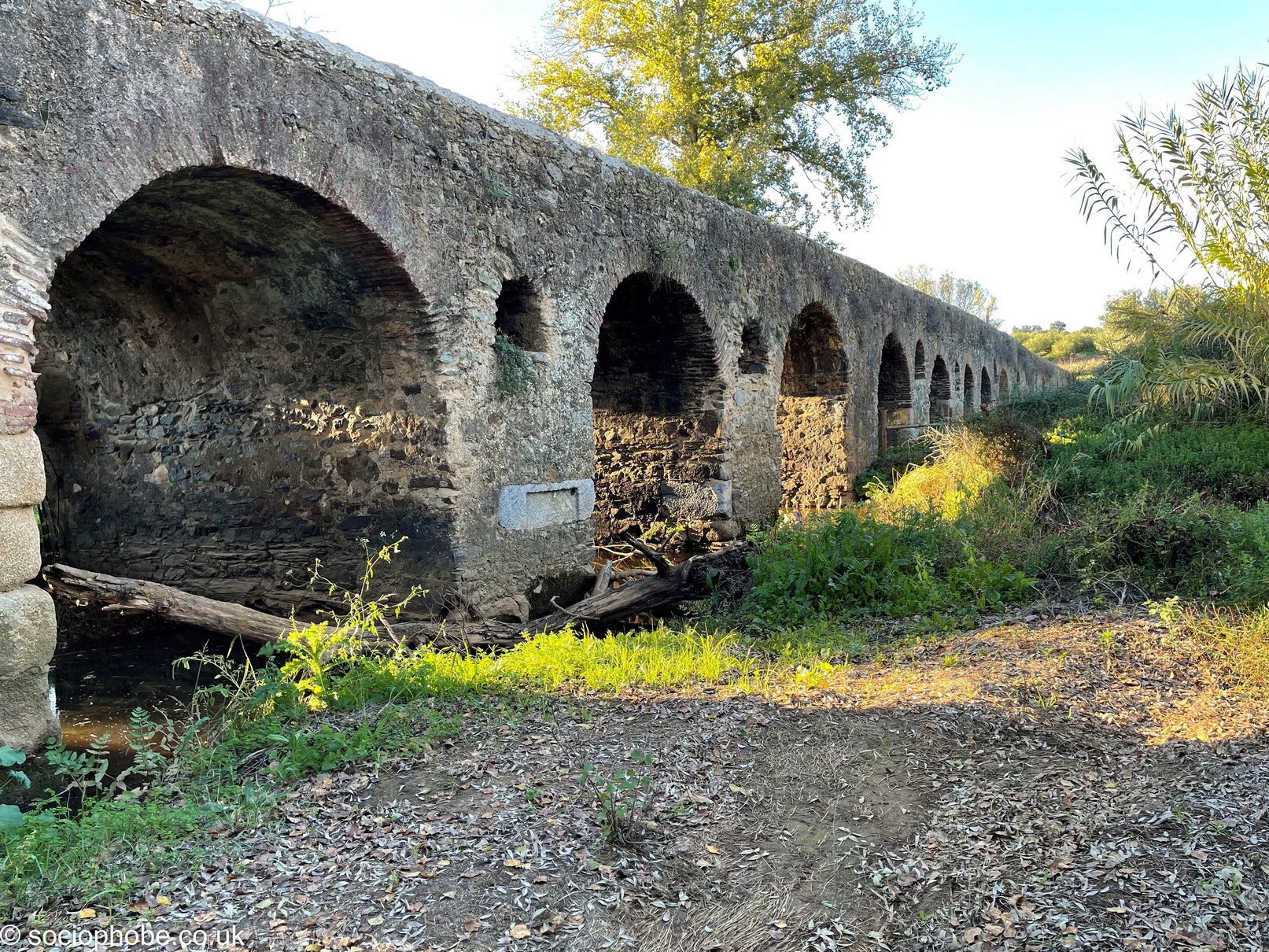
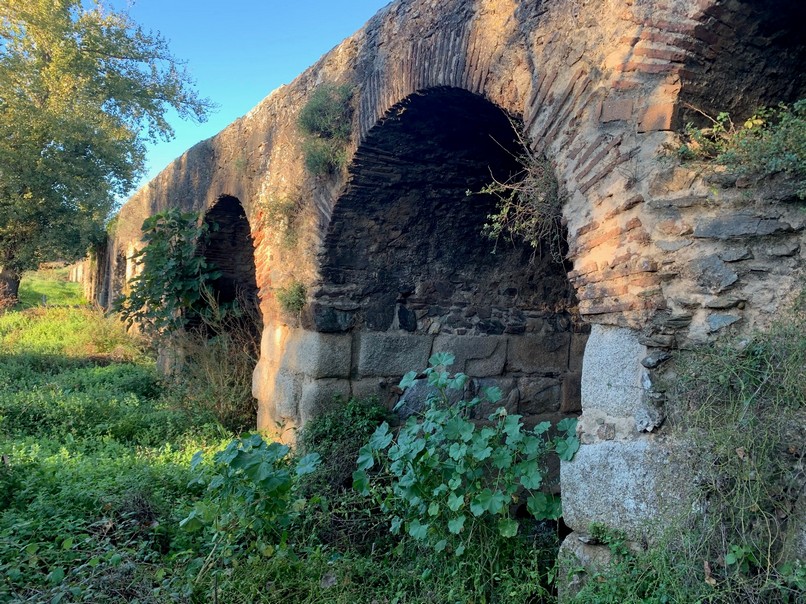
Alvito Castle Hotel
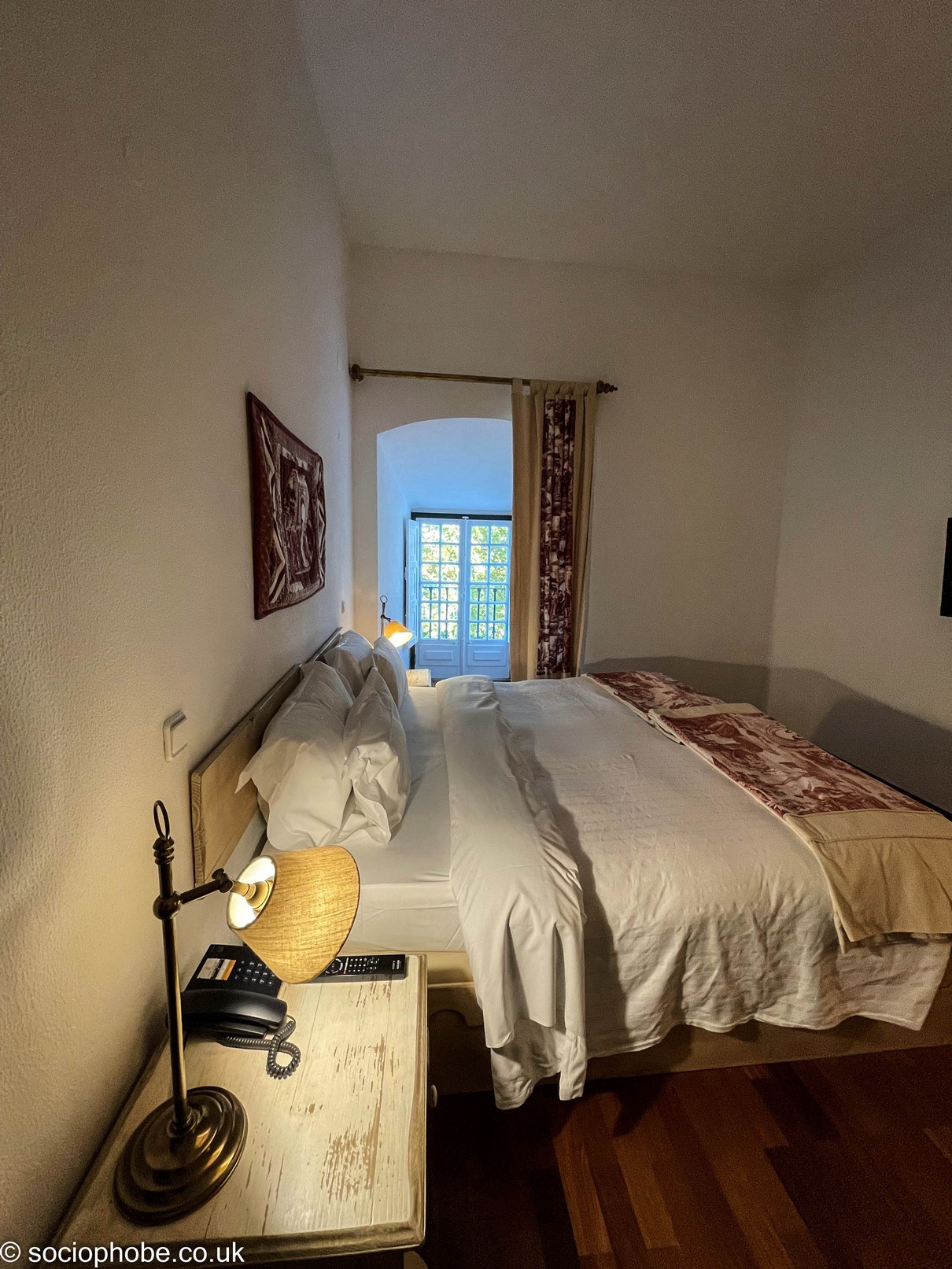
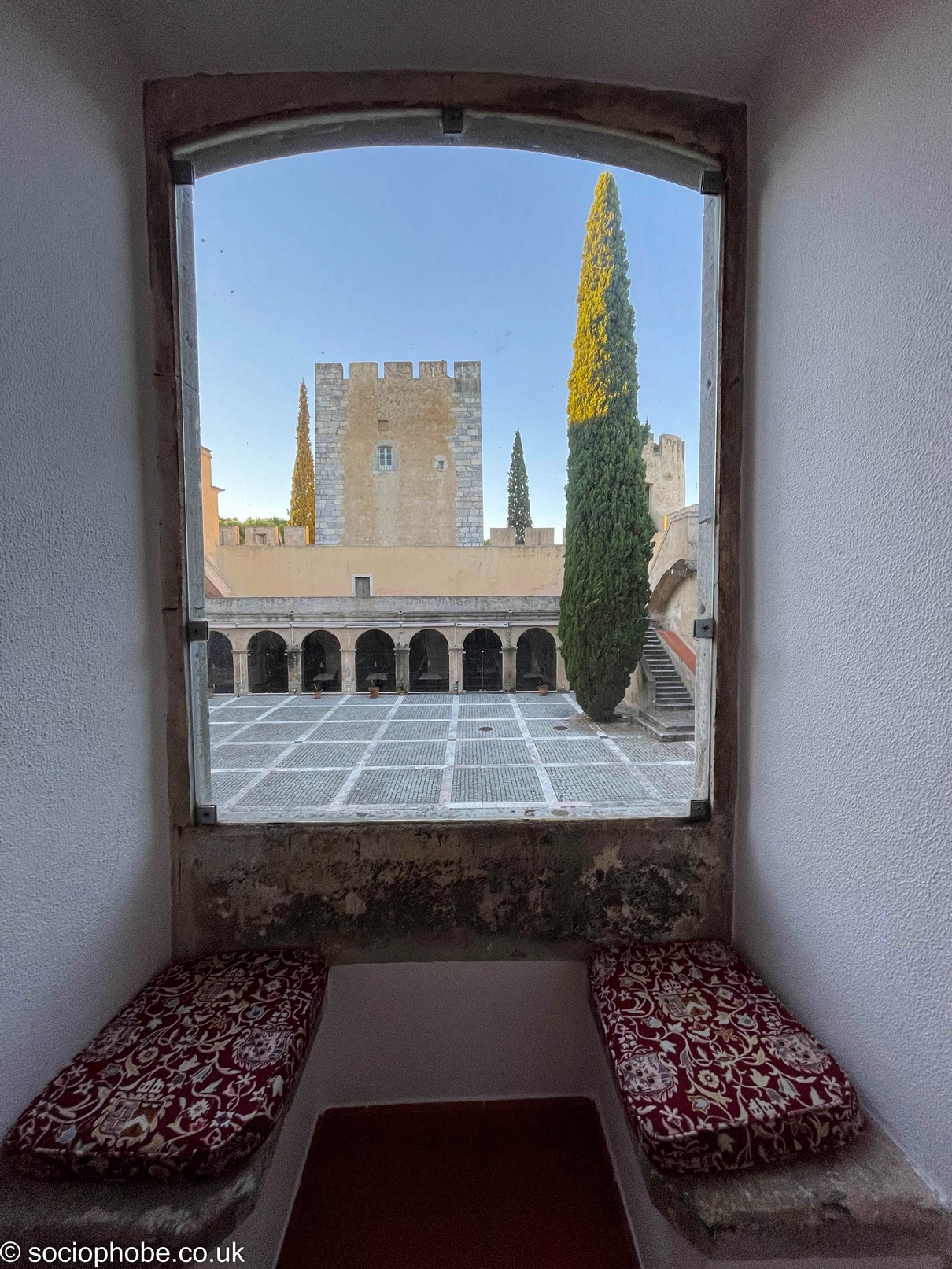
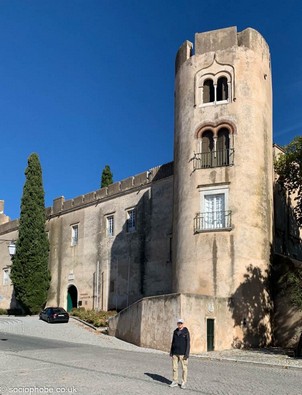
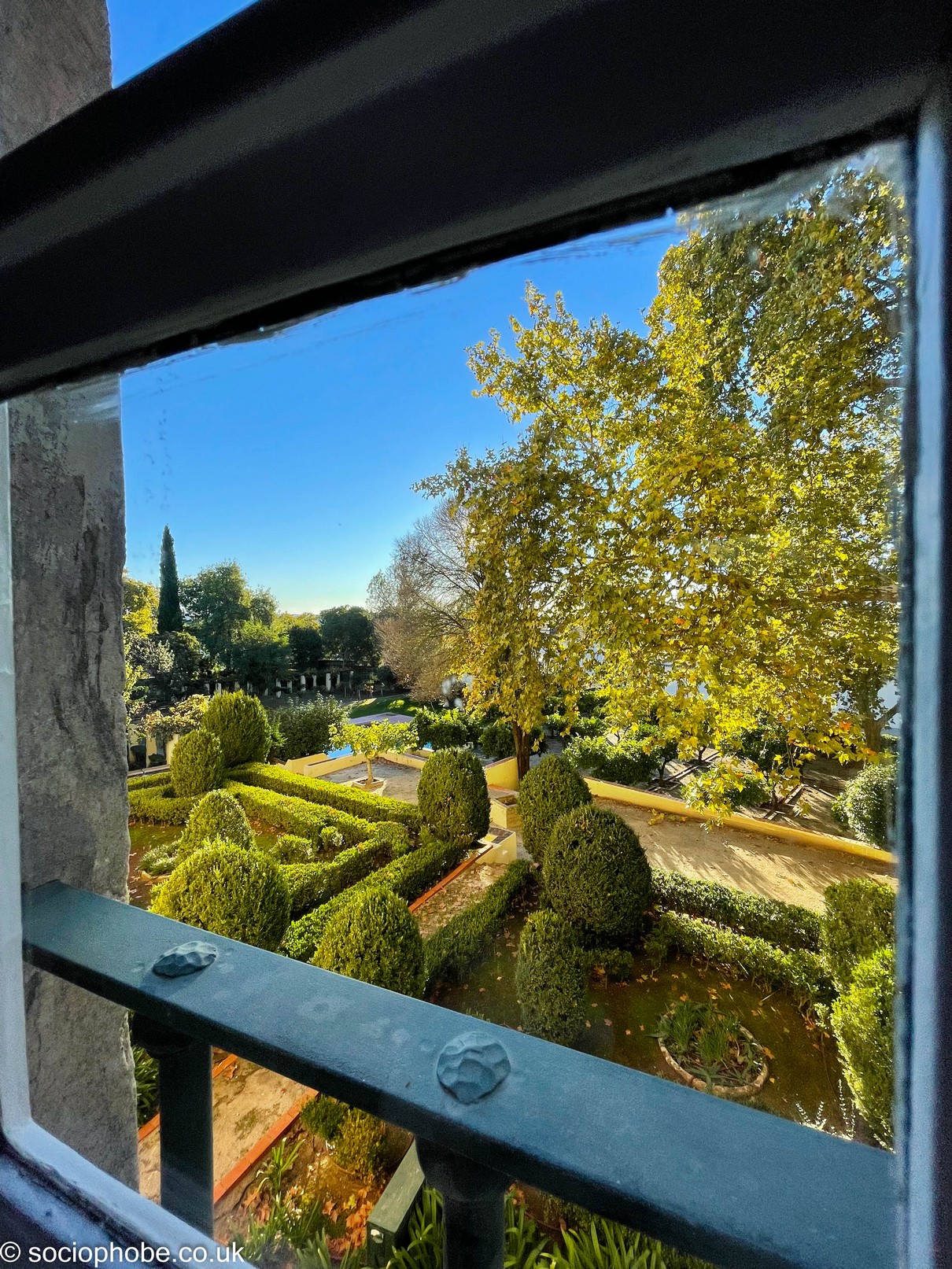
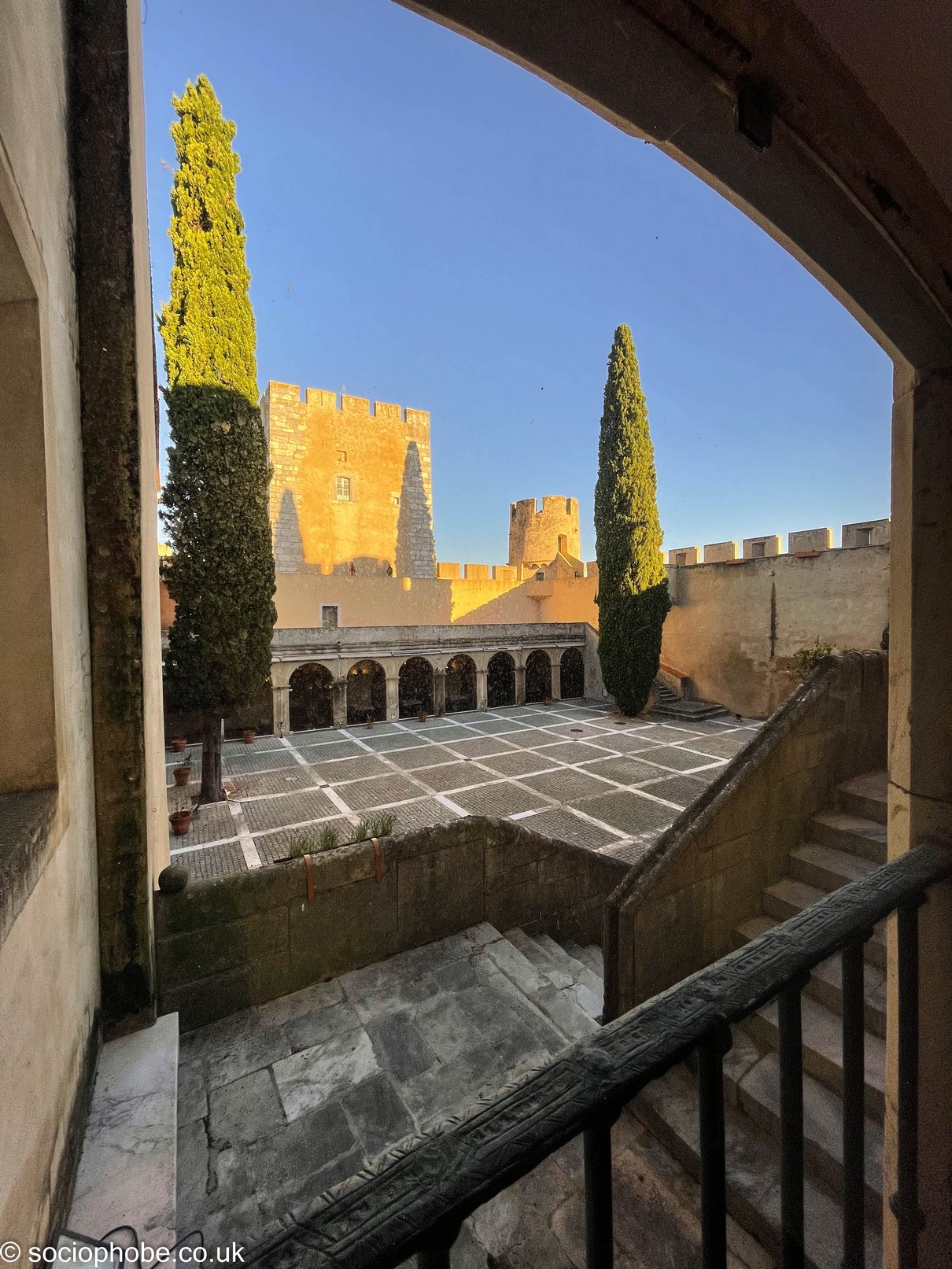
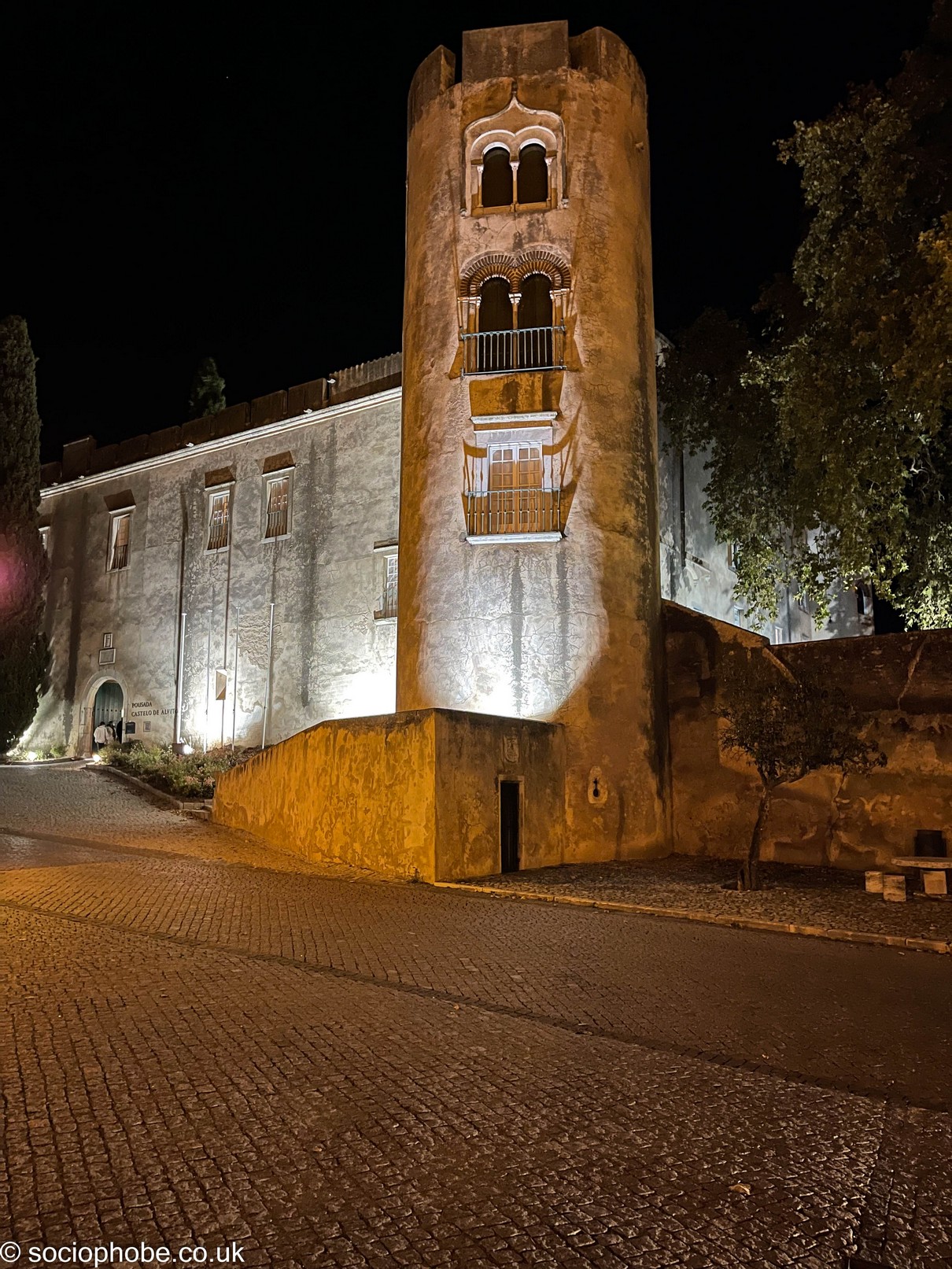
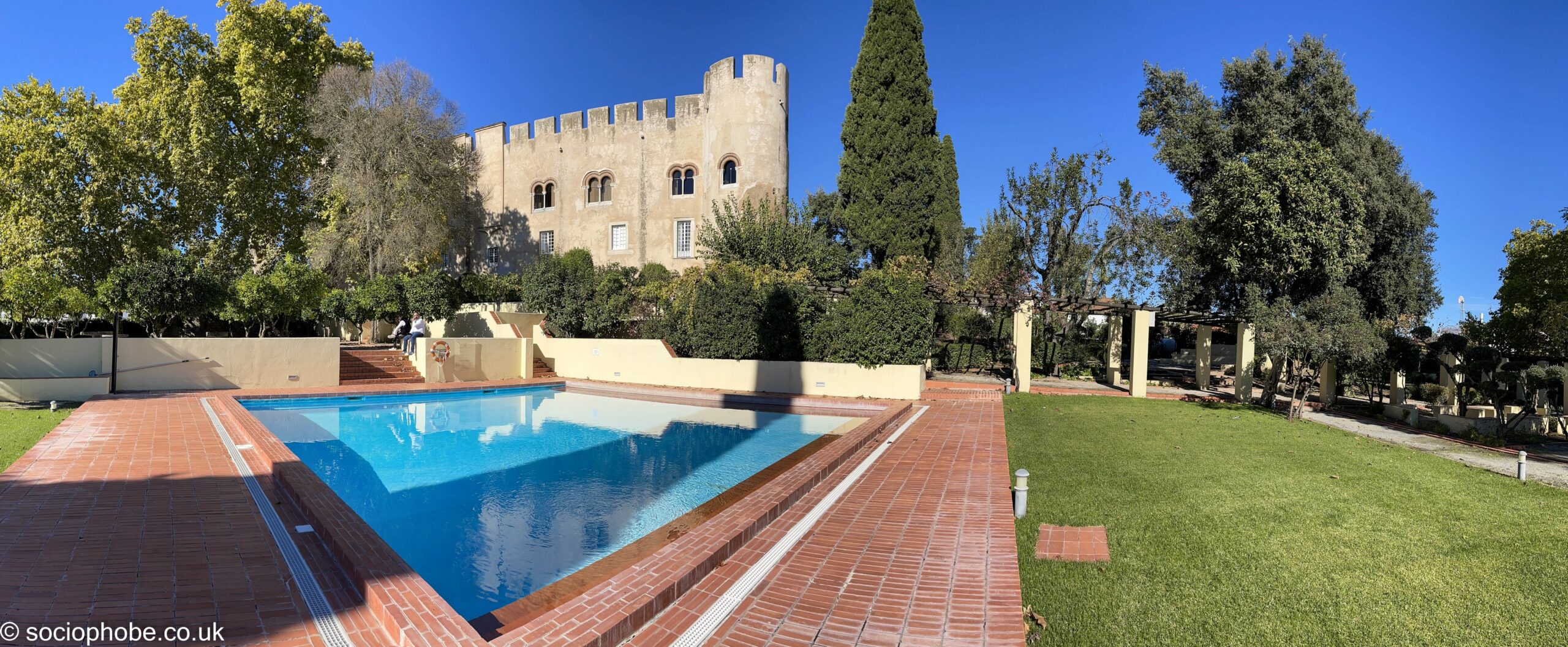
10 minutes further on from the Roman bridge we arrived at our next stop on our southern Portugal road trip, Alvito Castle. We had a fabulous room overlooking the gardens but I was by now bloody starving so we dumped our stuff and walked into the village for some food. We did find a nice restaurant but they weren’t serving food until 7.30 so I had a croissant and cake instead. We did sit there for quite a while just relaxing and sipping the little coffees.
After that is was back to the room to sort photos. Which took nearly 4 hours with just a brief interlude to nip to the bar for a (damned small) coffee! And that 4 hours was only about 2/3 of the photos. I can really see the attraction of just using an iPhone and clicking ‘autocorrect’ for the editing!
As we went to bed a lot later than usual I forced myself to doze a couple of times and didn’t get up until nearly 7. Breakfast was at 8 and was suitably splendid and there was even a lovely spiced cake to enjoy alongside the cereal, breads, fruit, bacon, sausage and yoghurt. We weren’t in any hurry so we had a variety of courses to fill us up for the days exploring.

Beja Castle
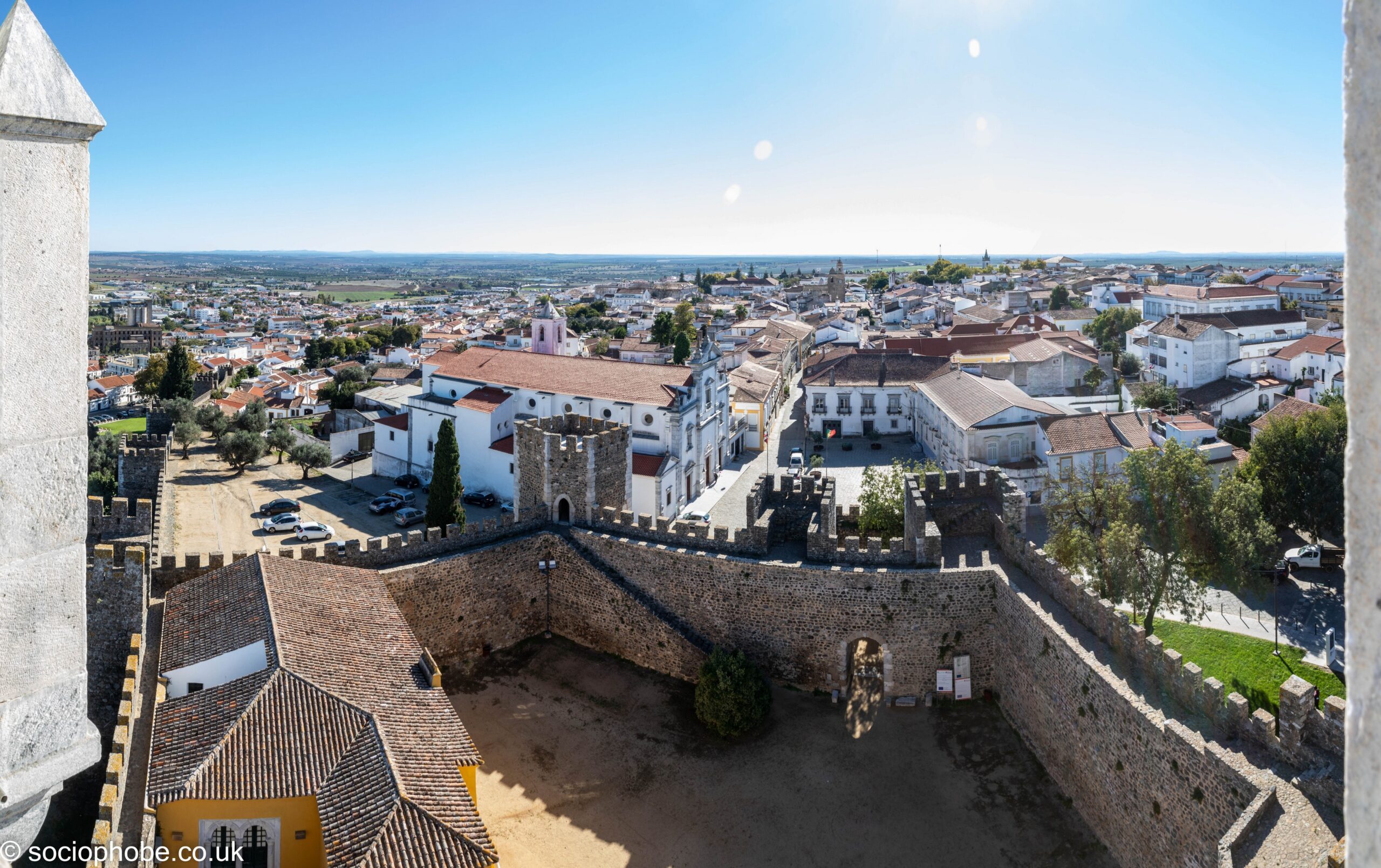
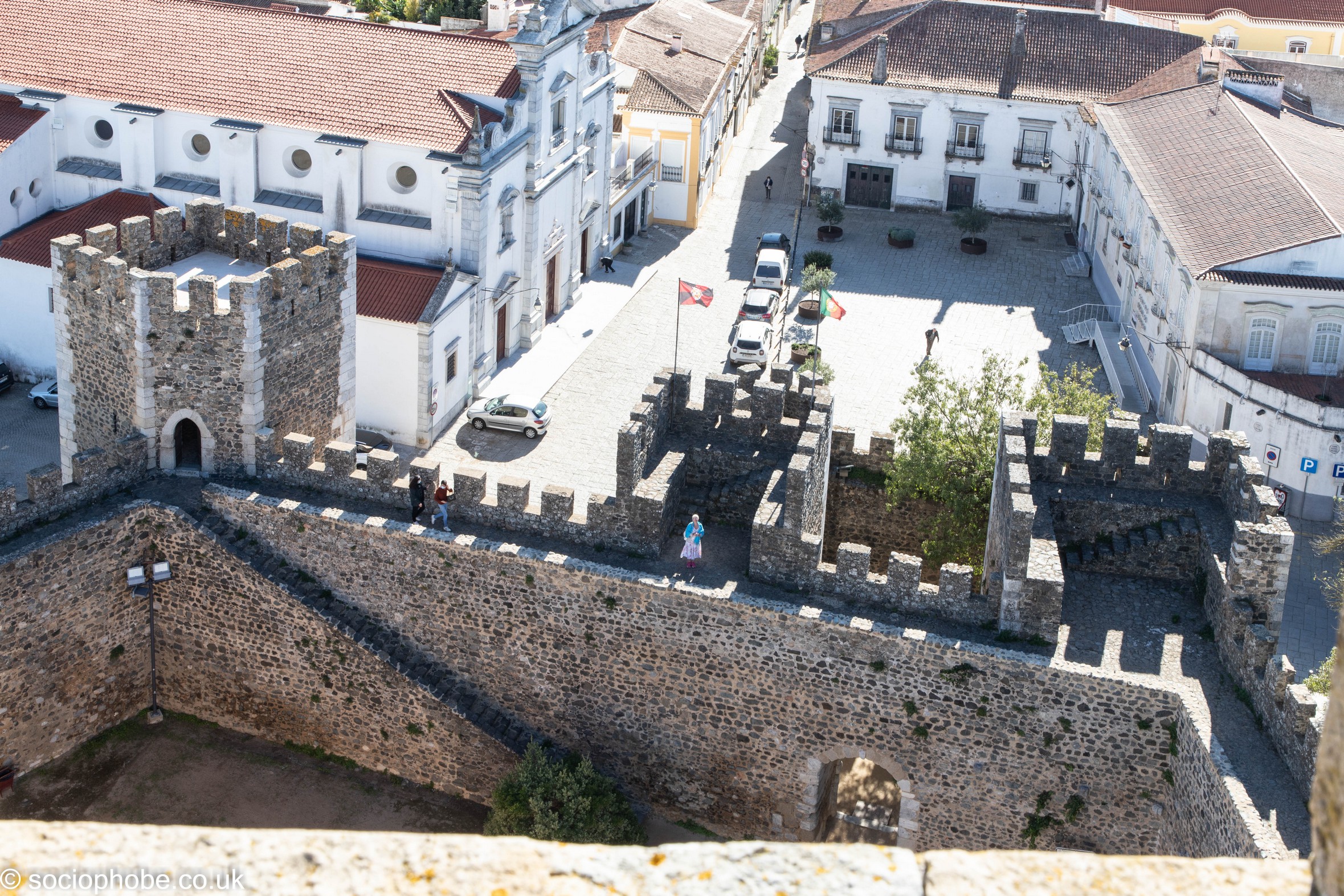
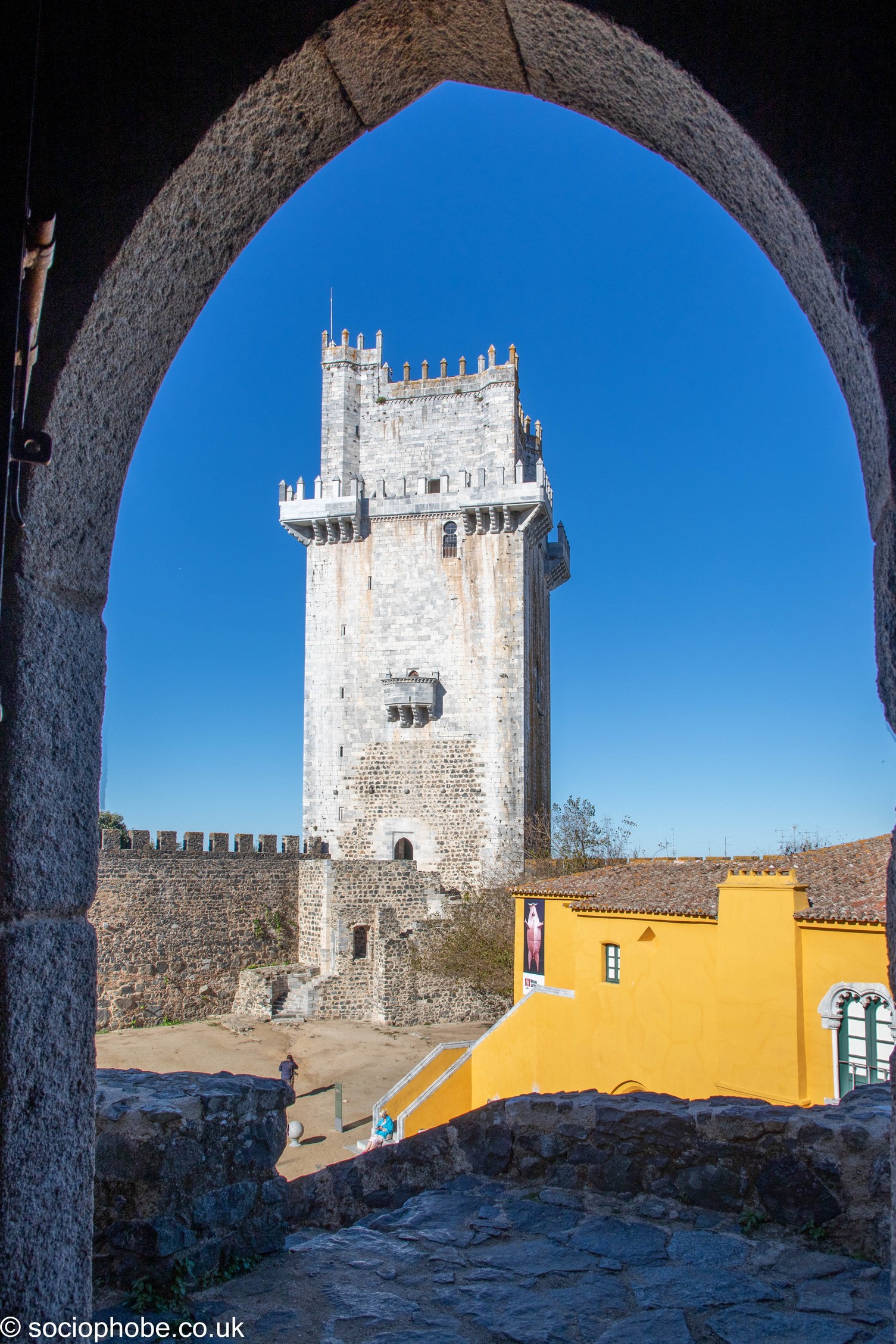
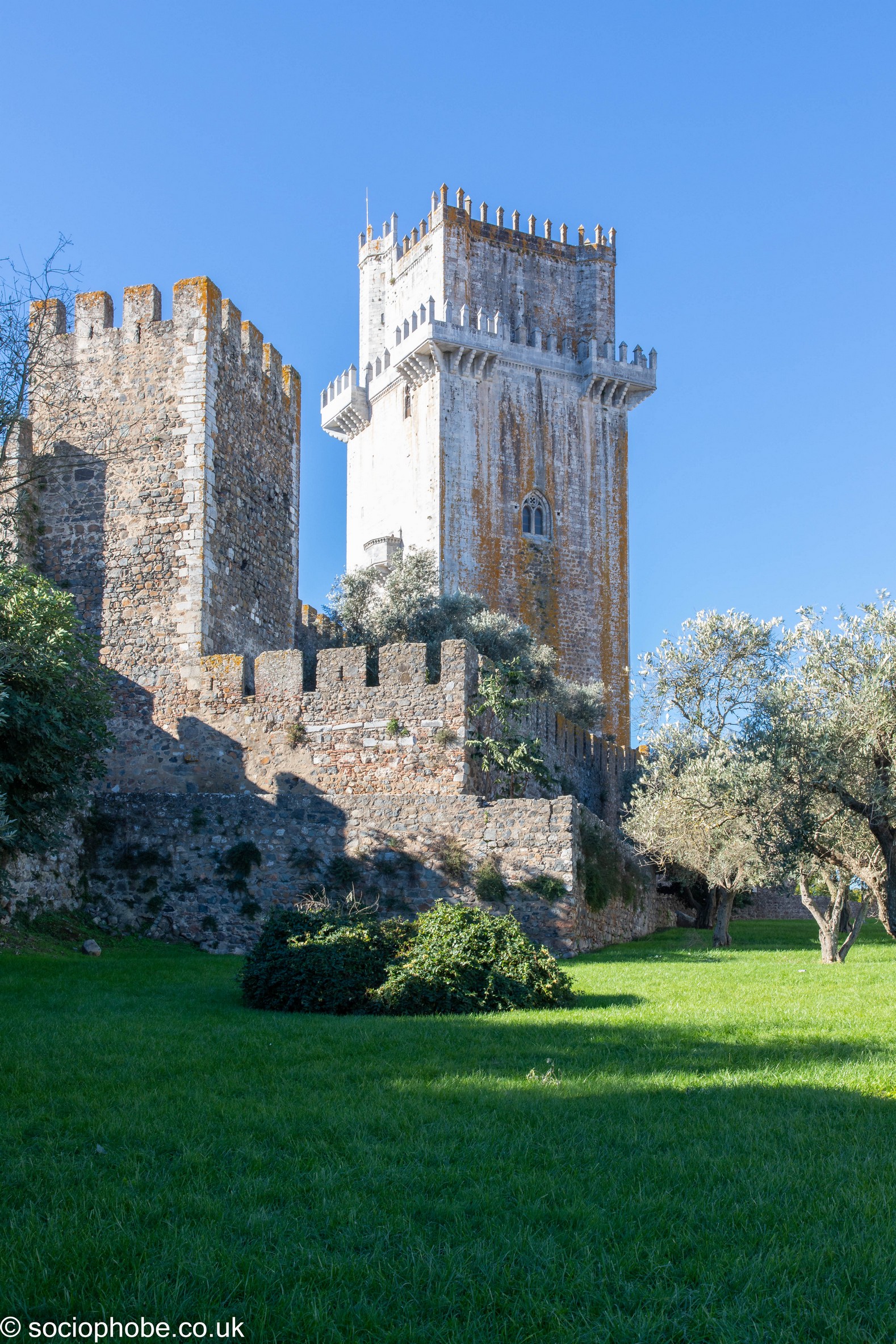
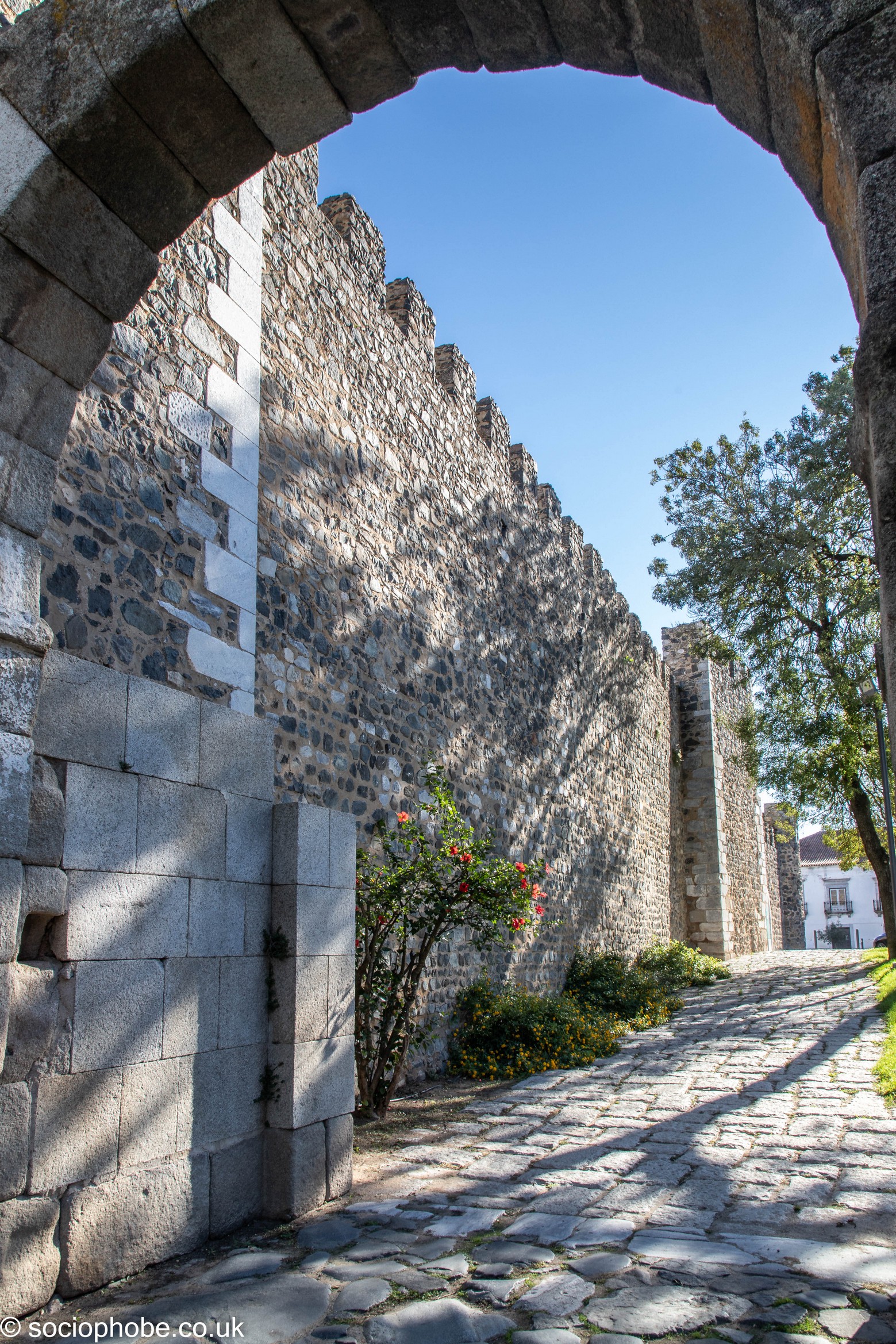
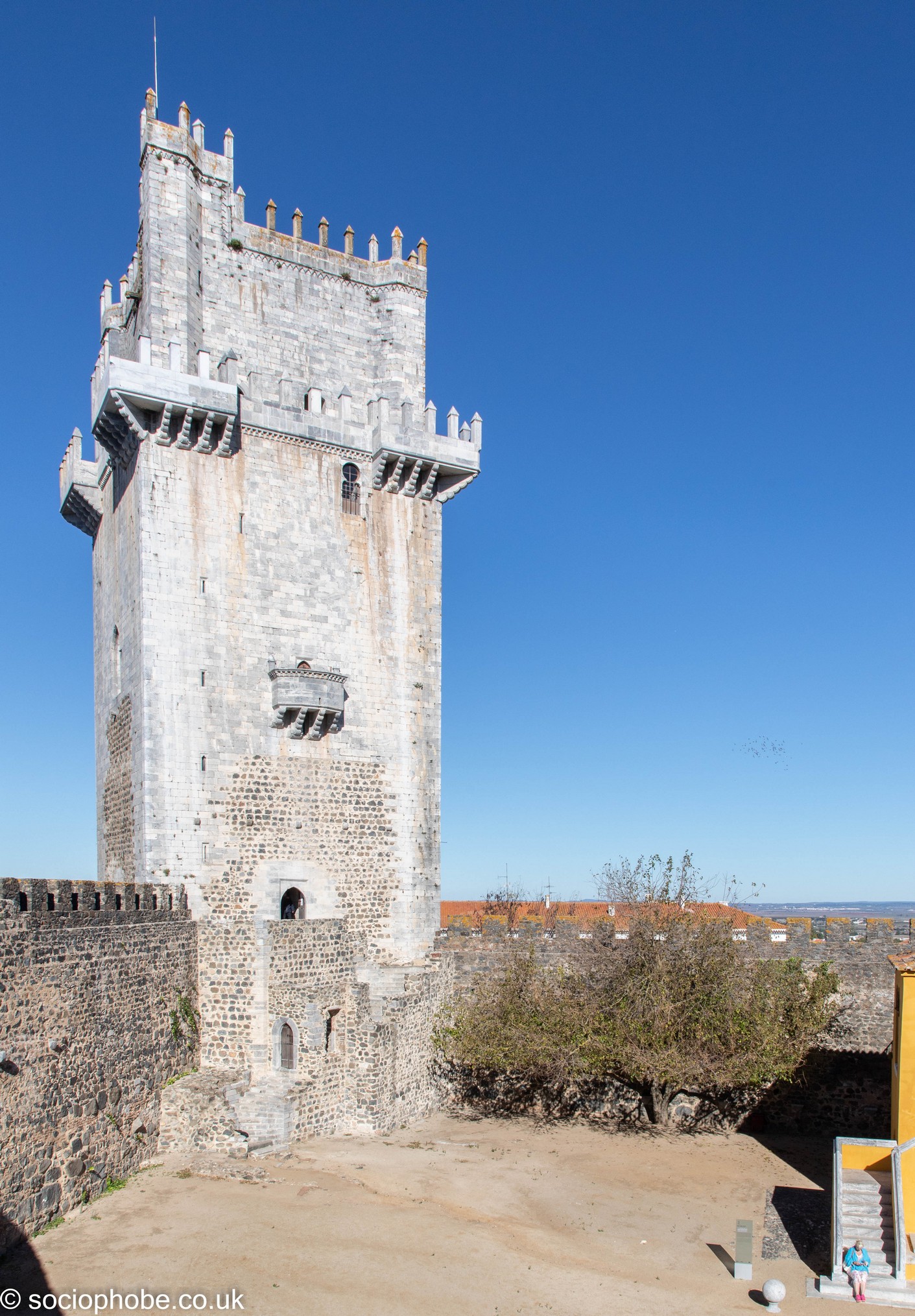
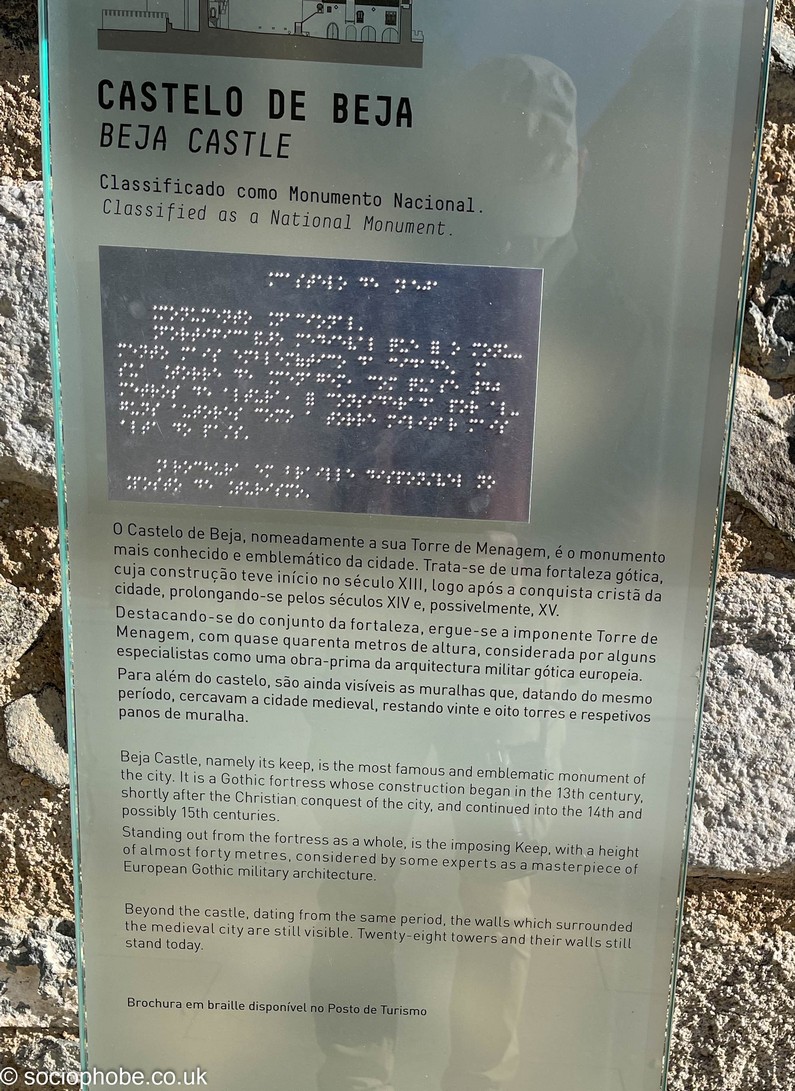
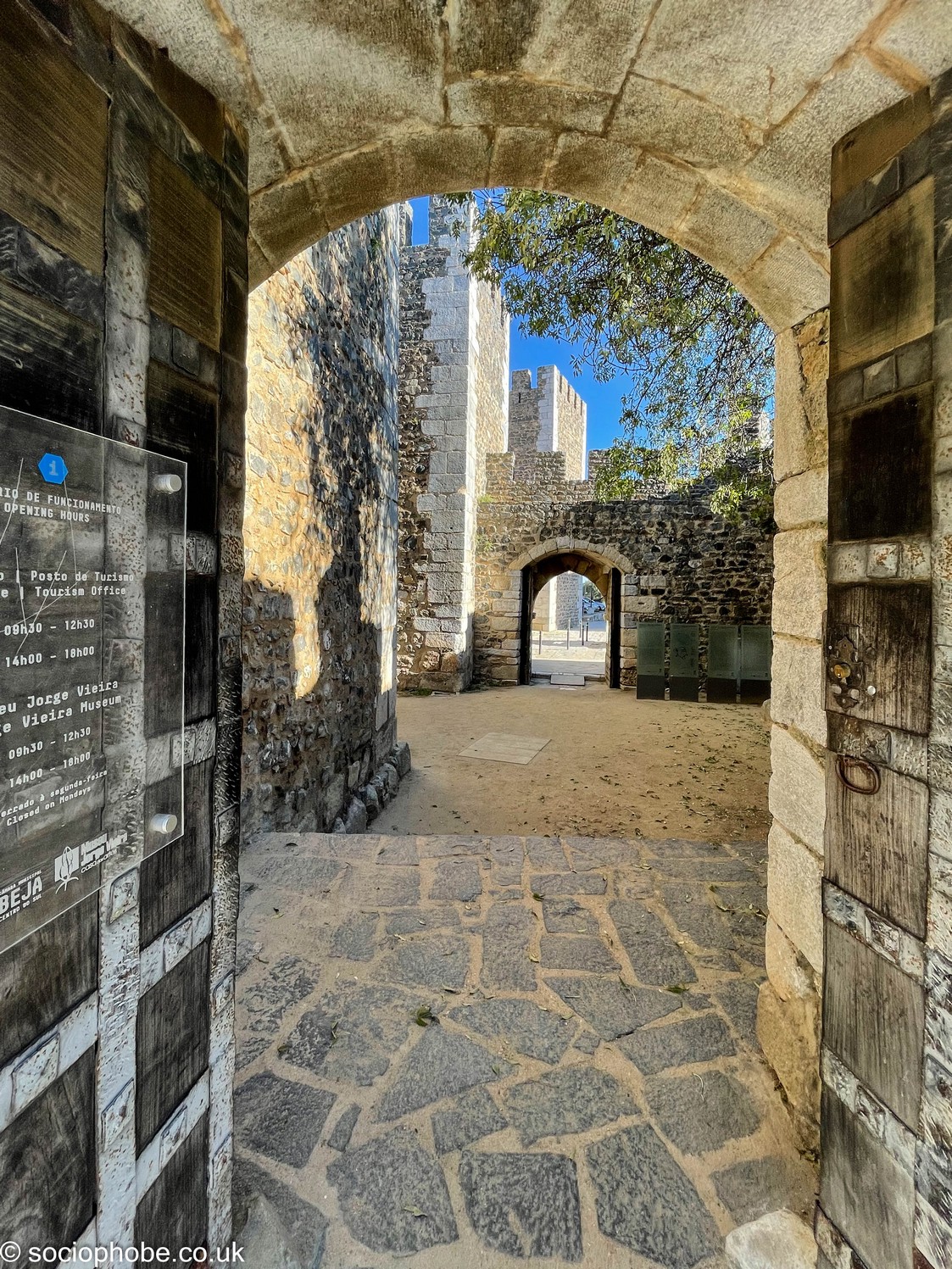
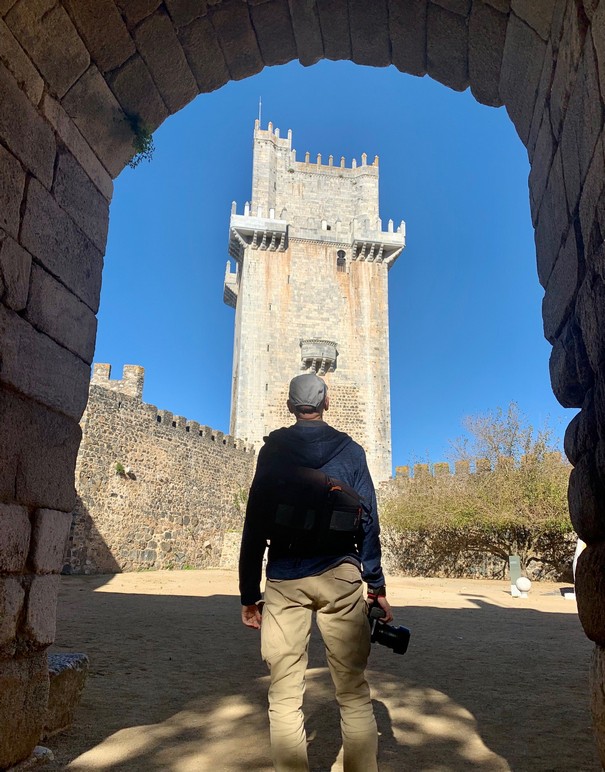
First stop was about 45 minutes away, the old town of Beja. This had, rather a shock actually, a fully restored medieval castle and some city walls! What a stroke of luck! We parked near the walls after having to ignore the sat nav that was trying to send us through the middle of a street market. Although it was bright sunshine we regretted not bringing our coats as it was damned windy! The castle was free to enter and had a huge tower, looking like Belem in Lisbon, with an inner wall and a much lower curtain wall.
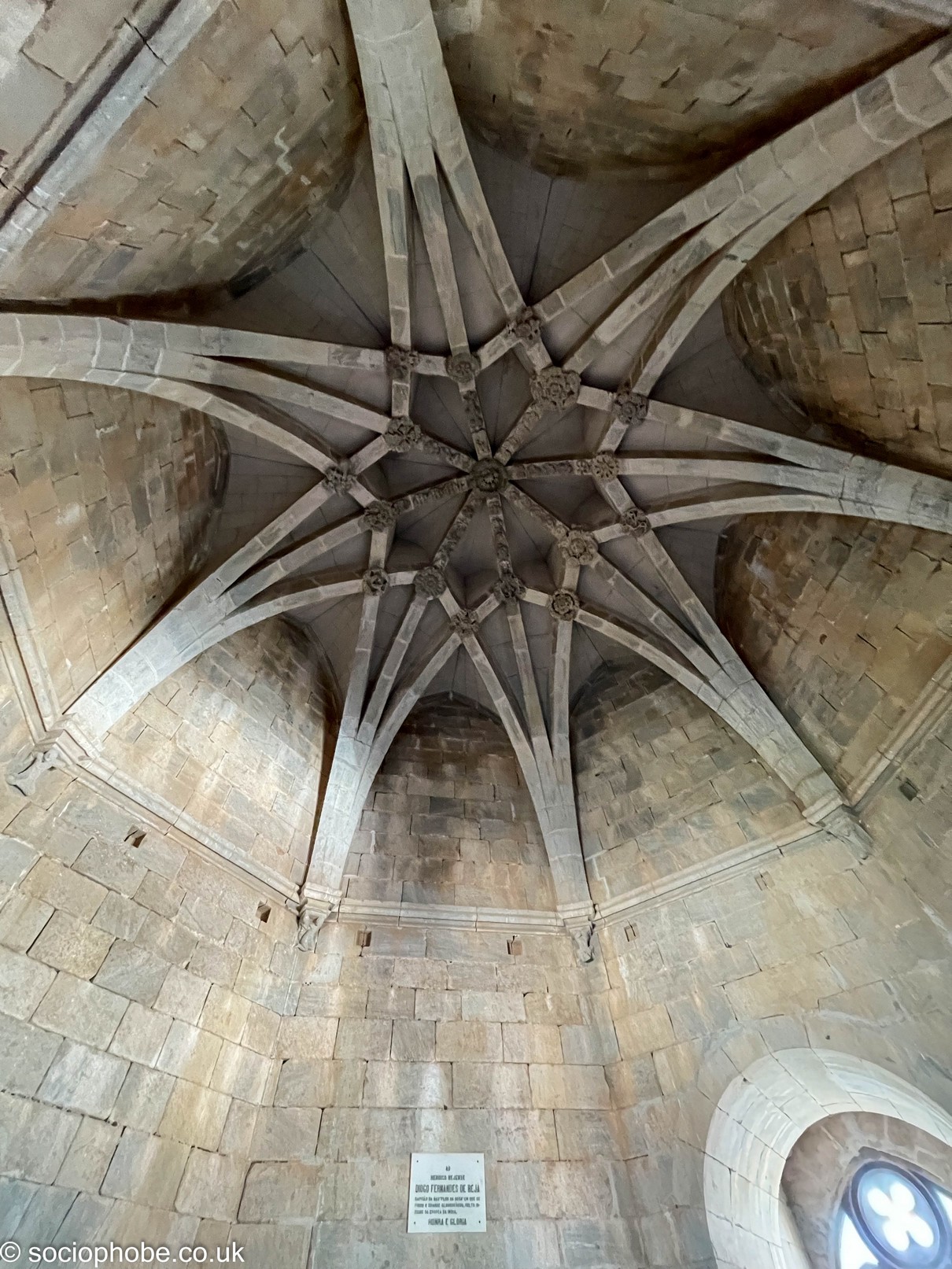
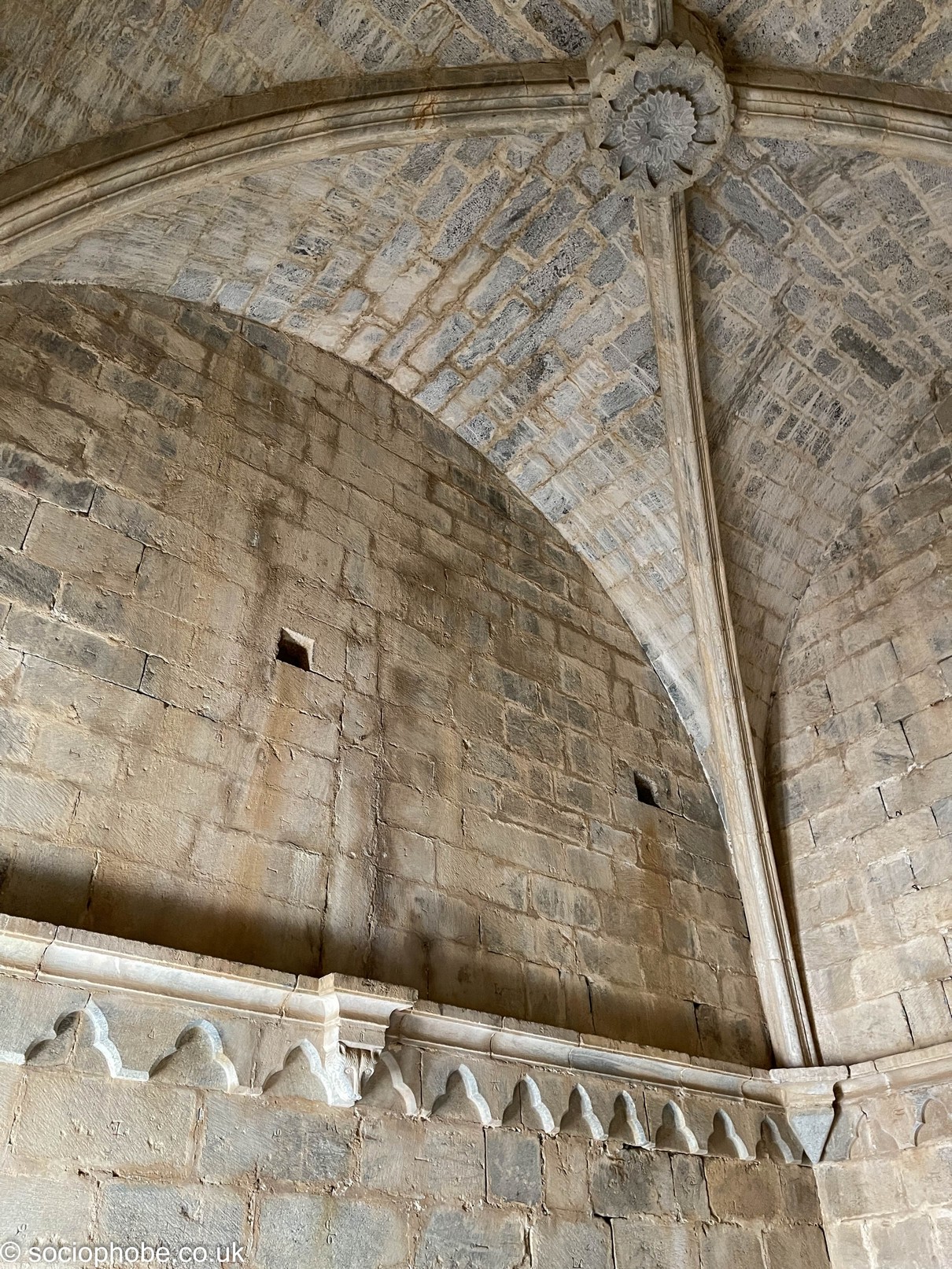
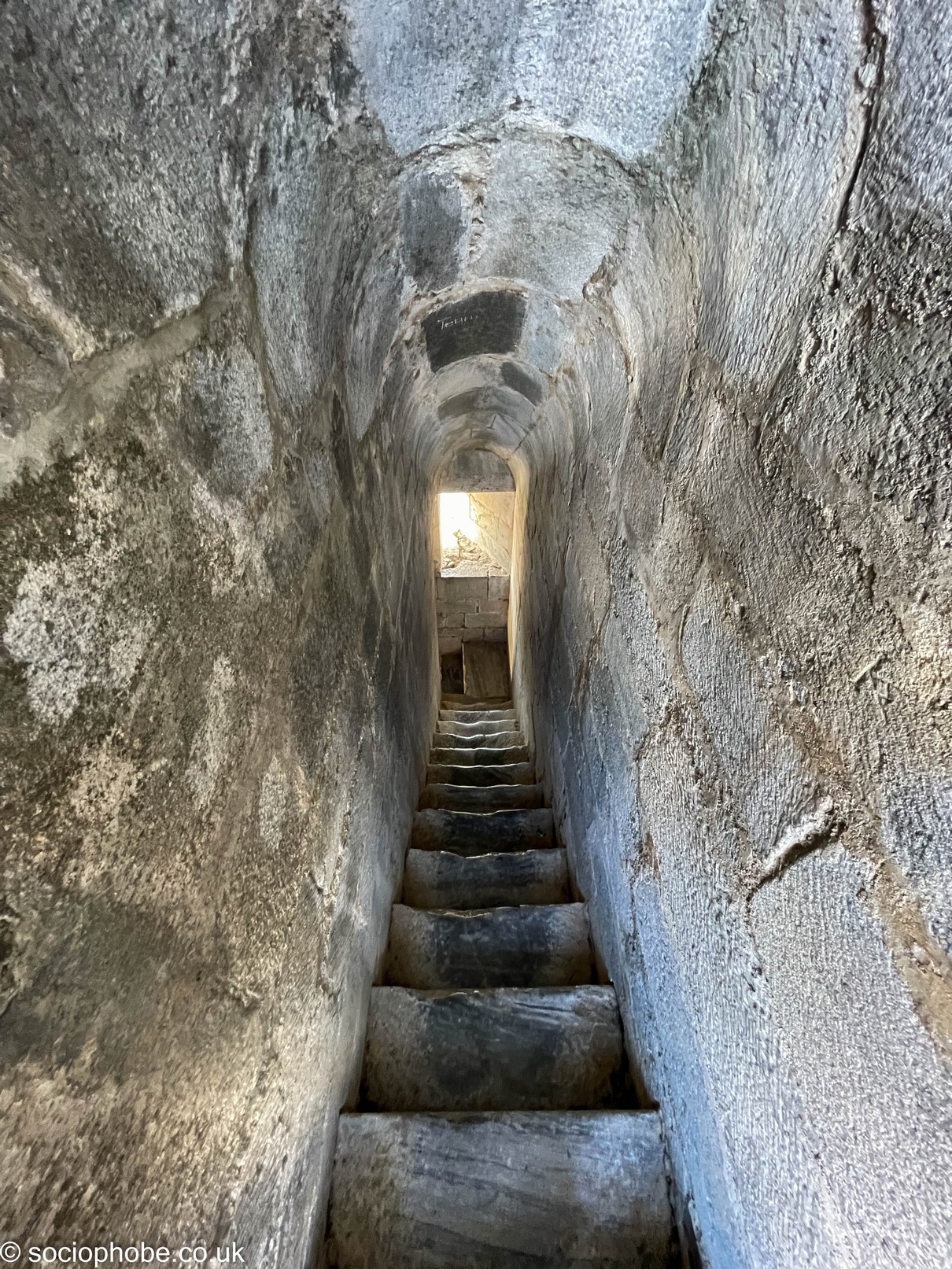
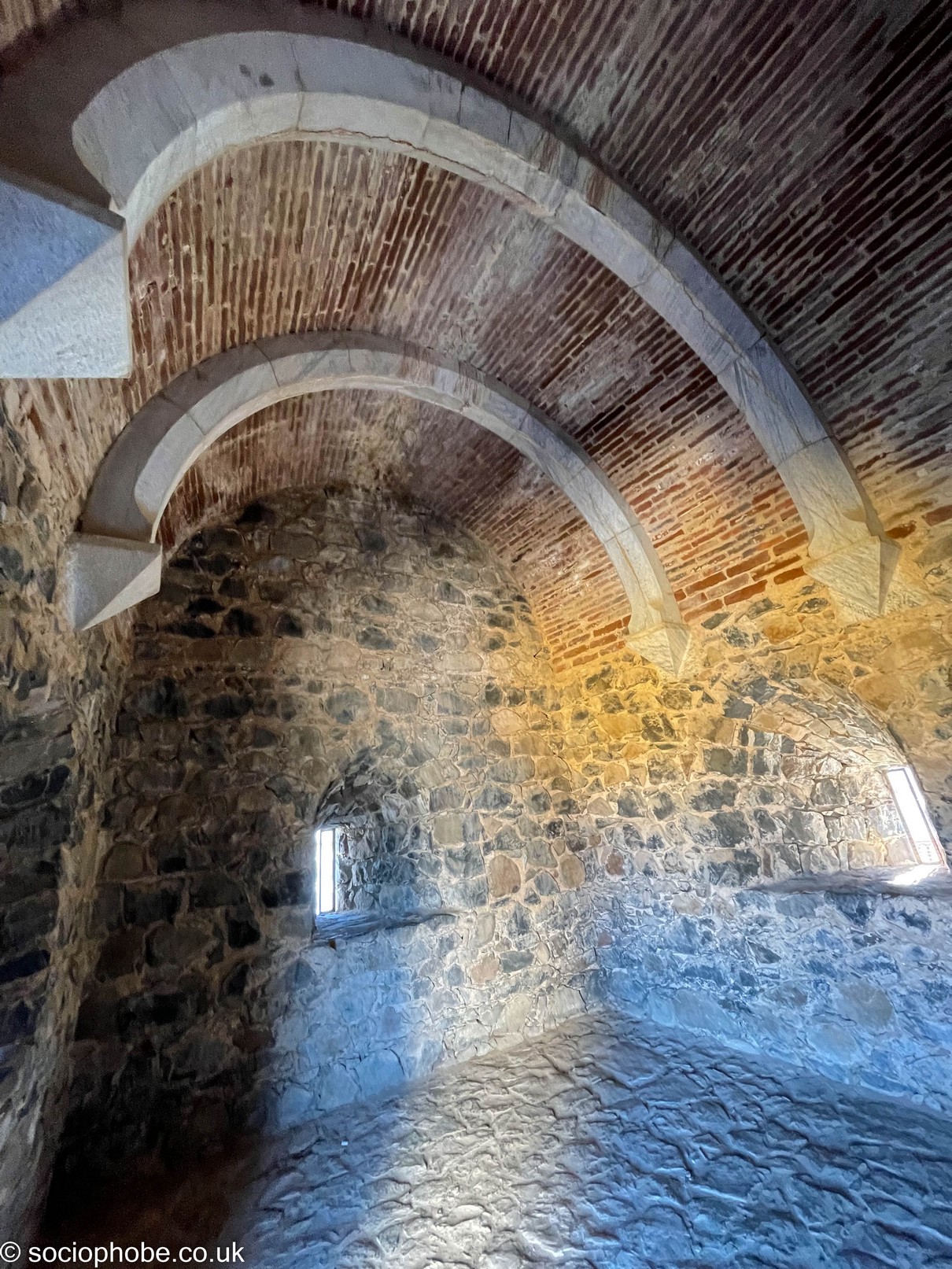
Deb didn’t go into the tower as it was 180 steps up a spiral staircase to reach the top. There were 3 rooms inside, all with gorgeous vaulted ceilings and then a parapet walk. I started to walk around the parapet then noticed the grilles in the floor and realised it was actually an overhang so my legs froze and I had to go back inside, logic defeated by primitive fear. Rather too common these days. There were more steps up to the roof level so I took those and had a walk around this far more solid structure. The viewing distance was quite amazing and it must have aided the security of the nearby district immensely.
I left the tower and did a quick walk around the walls before joining Deb on the ground floor. We left the castle and headed to the Visigothic Museum to find it was temporarily closed due to bloody covid. We walked back to the car and headed to the next planned stop, a large excavated Roman villa complex nearby.
Roman Villa of the Fishes
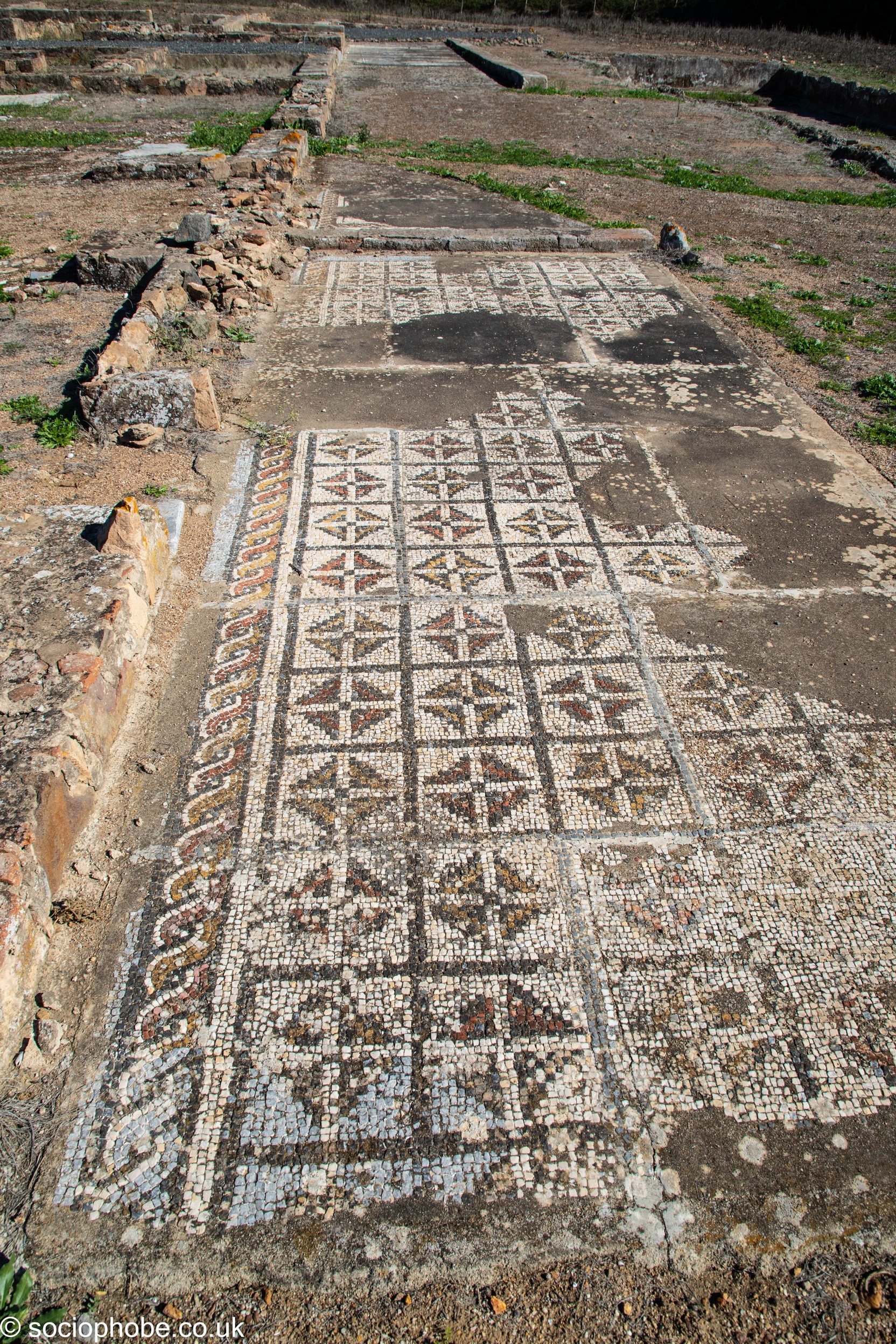
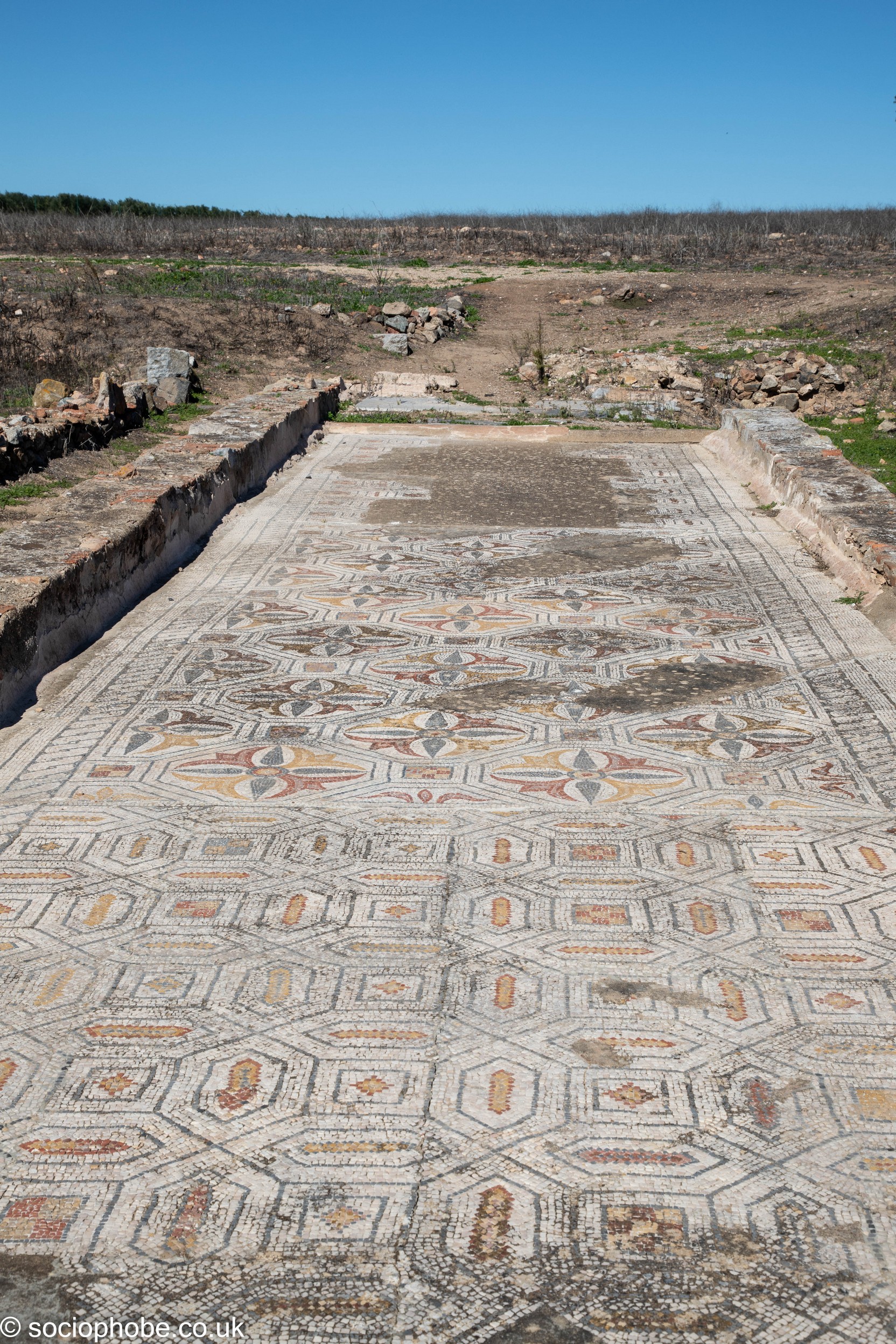
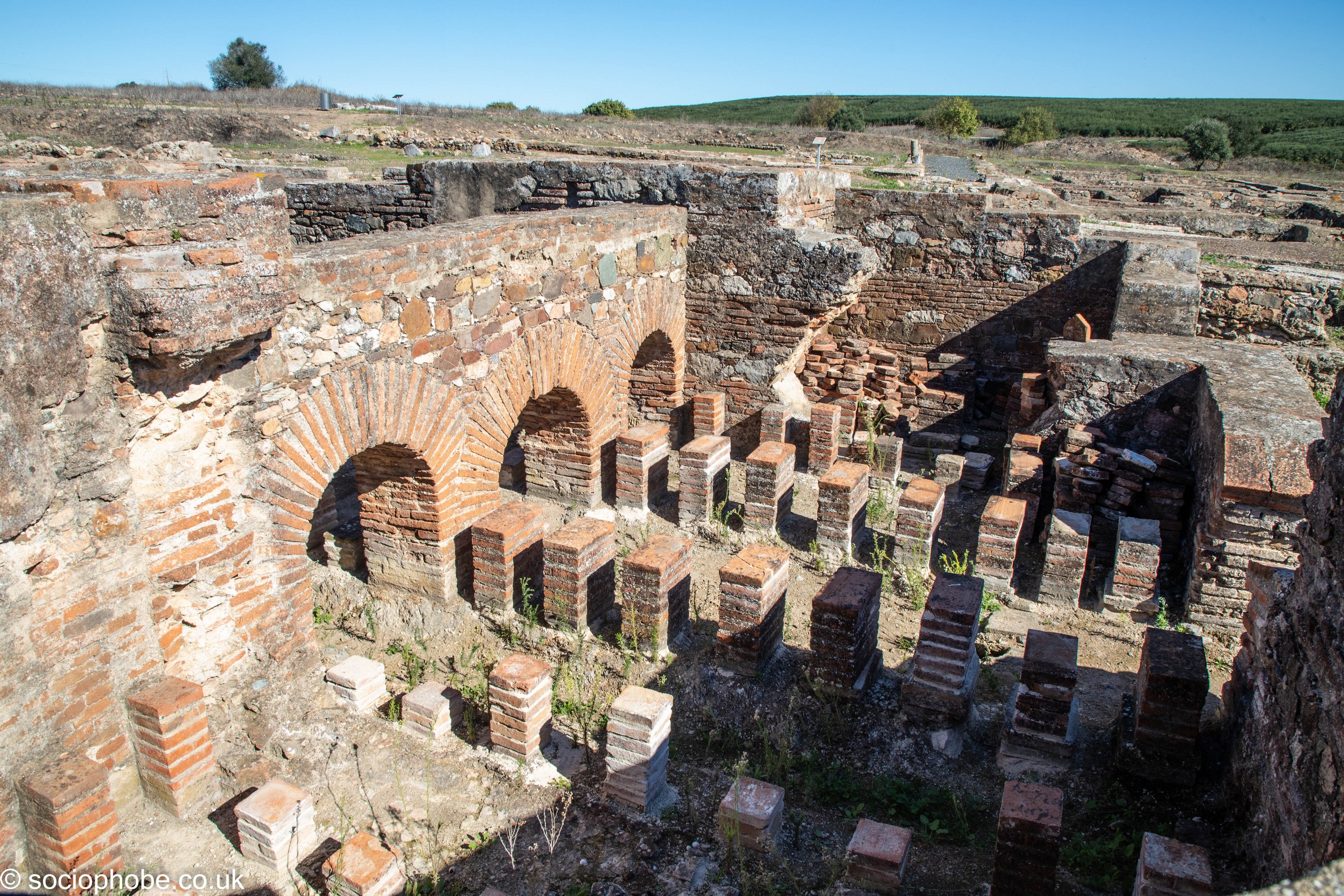
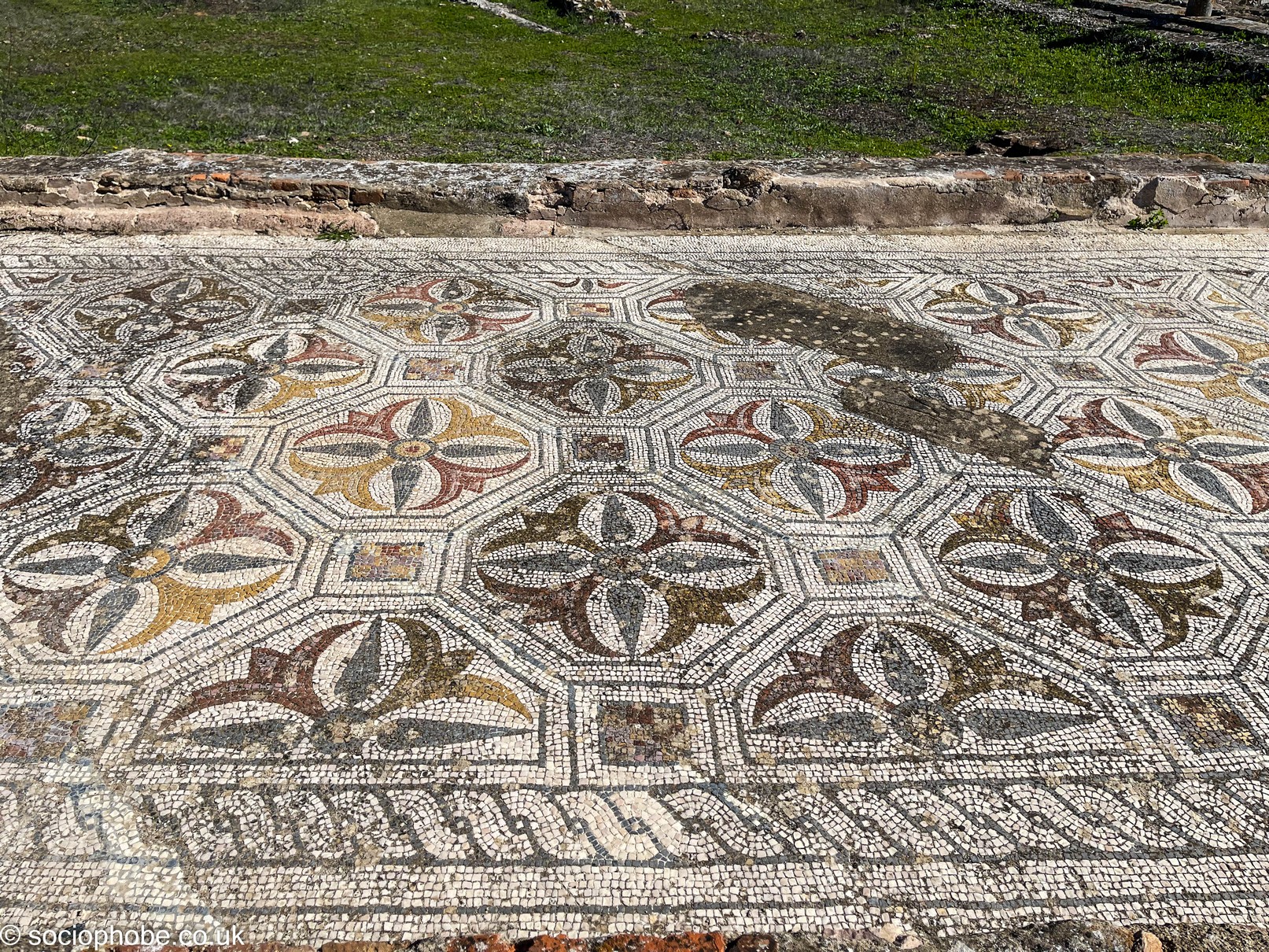
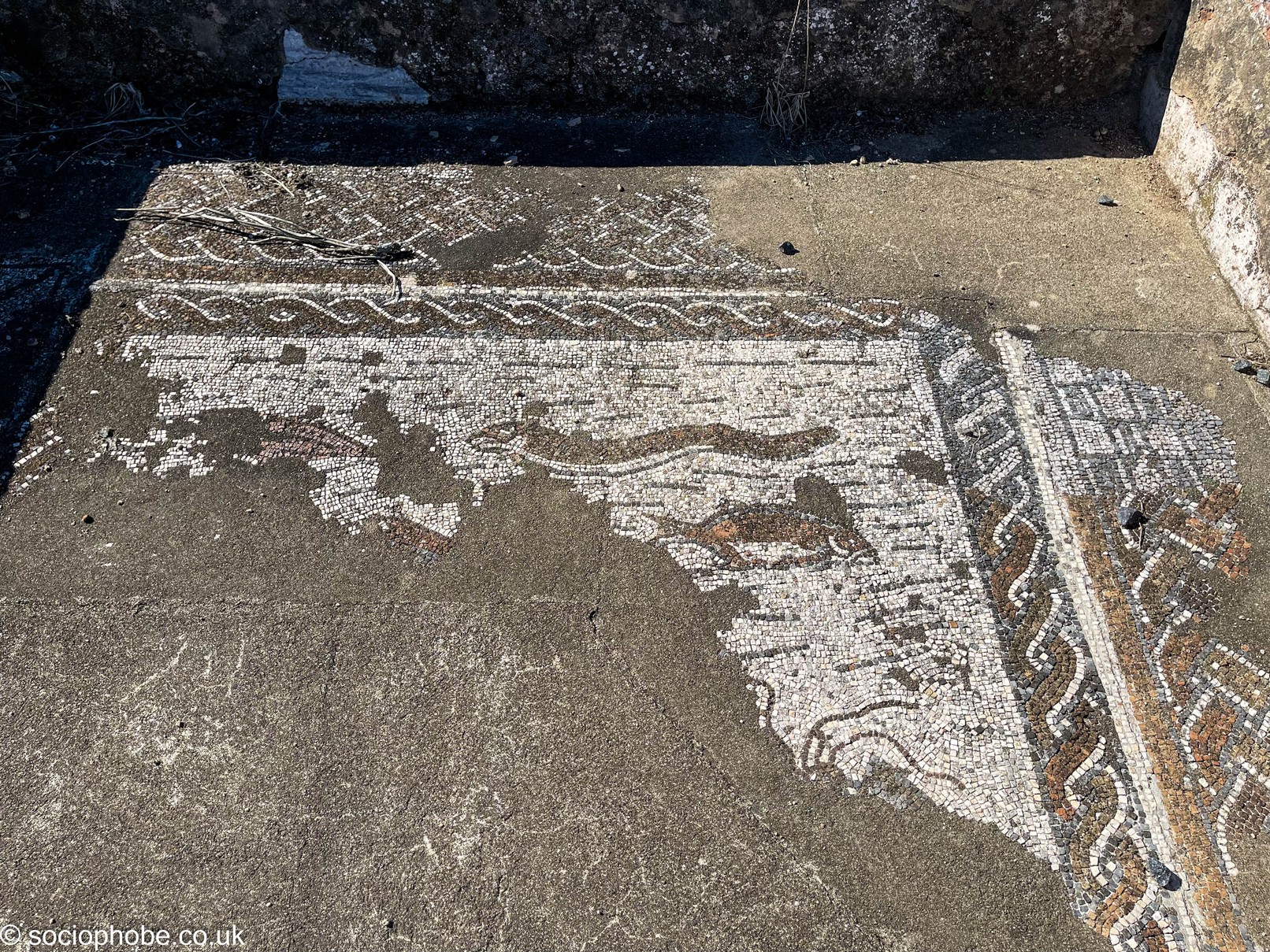
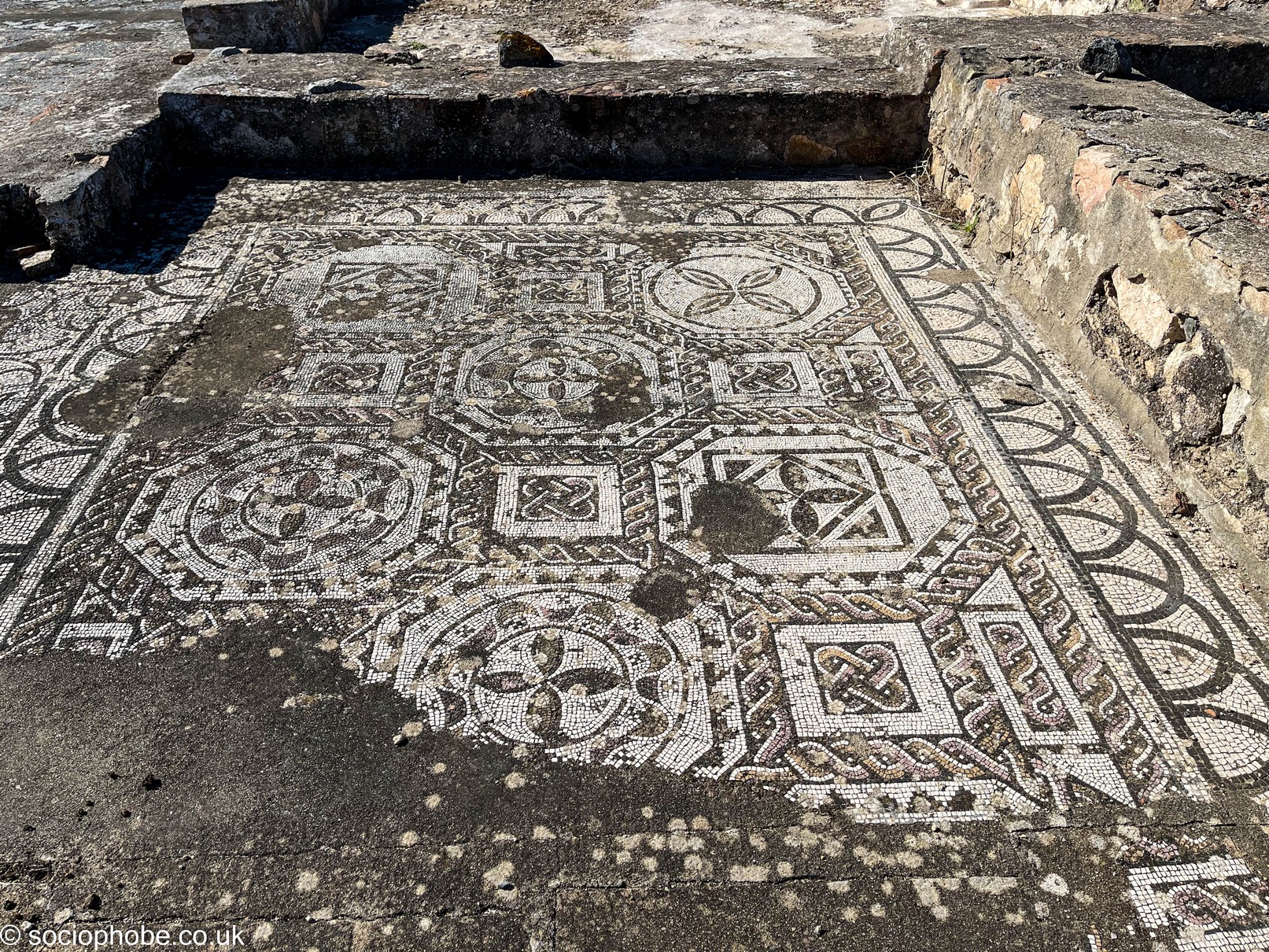
The Villa Romana de Pisões was at the end of a long and bumpy dirt track but was certainly worth it, if you like that sort of thing. The lady there was fantastic, she spoke almost no English but was so keen to point out all the features on show that we had a quick overview of what was there before leaving the ticket office.
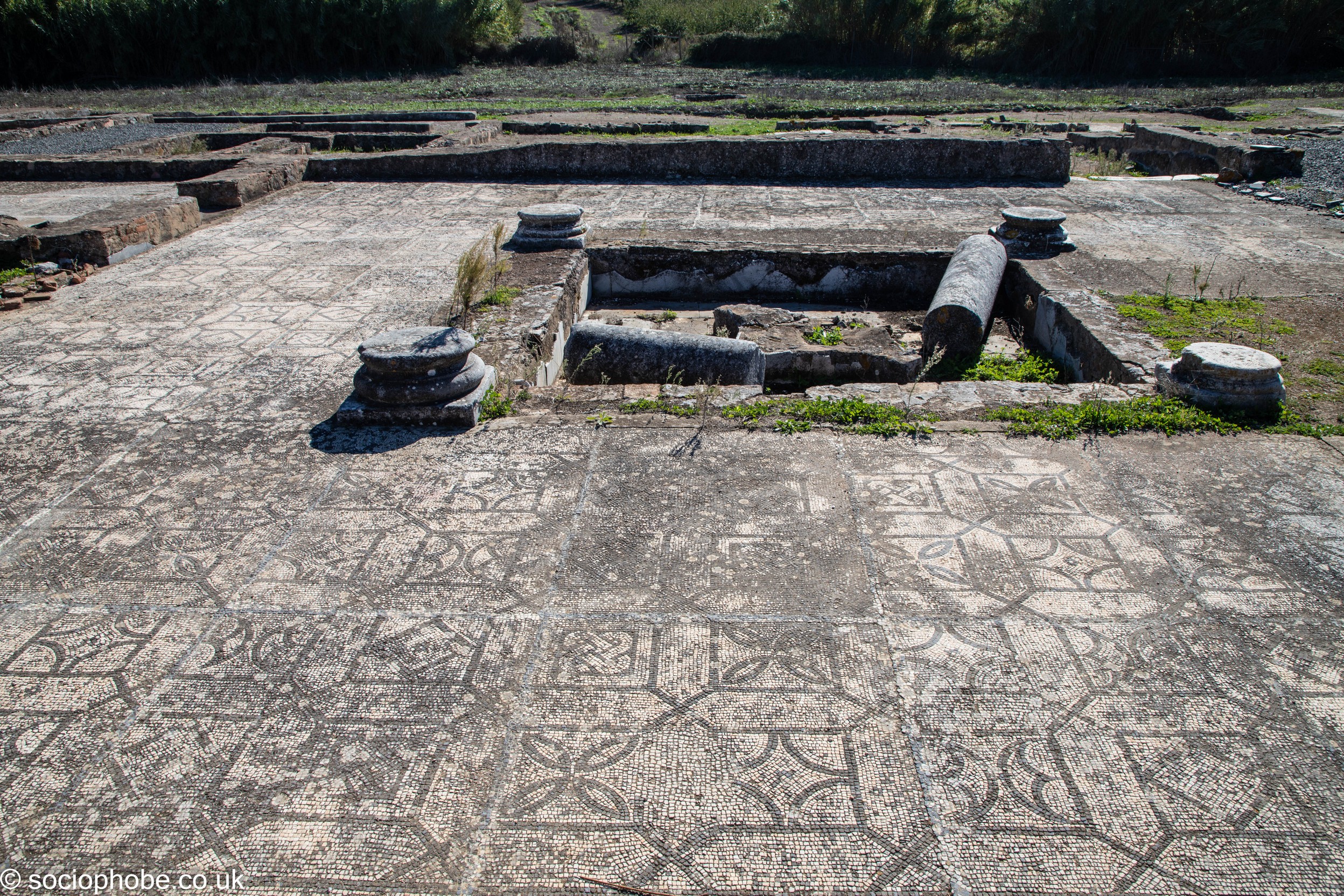
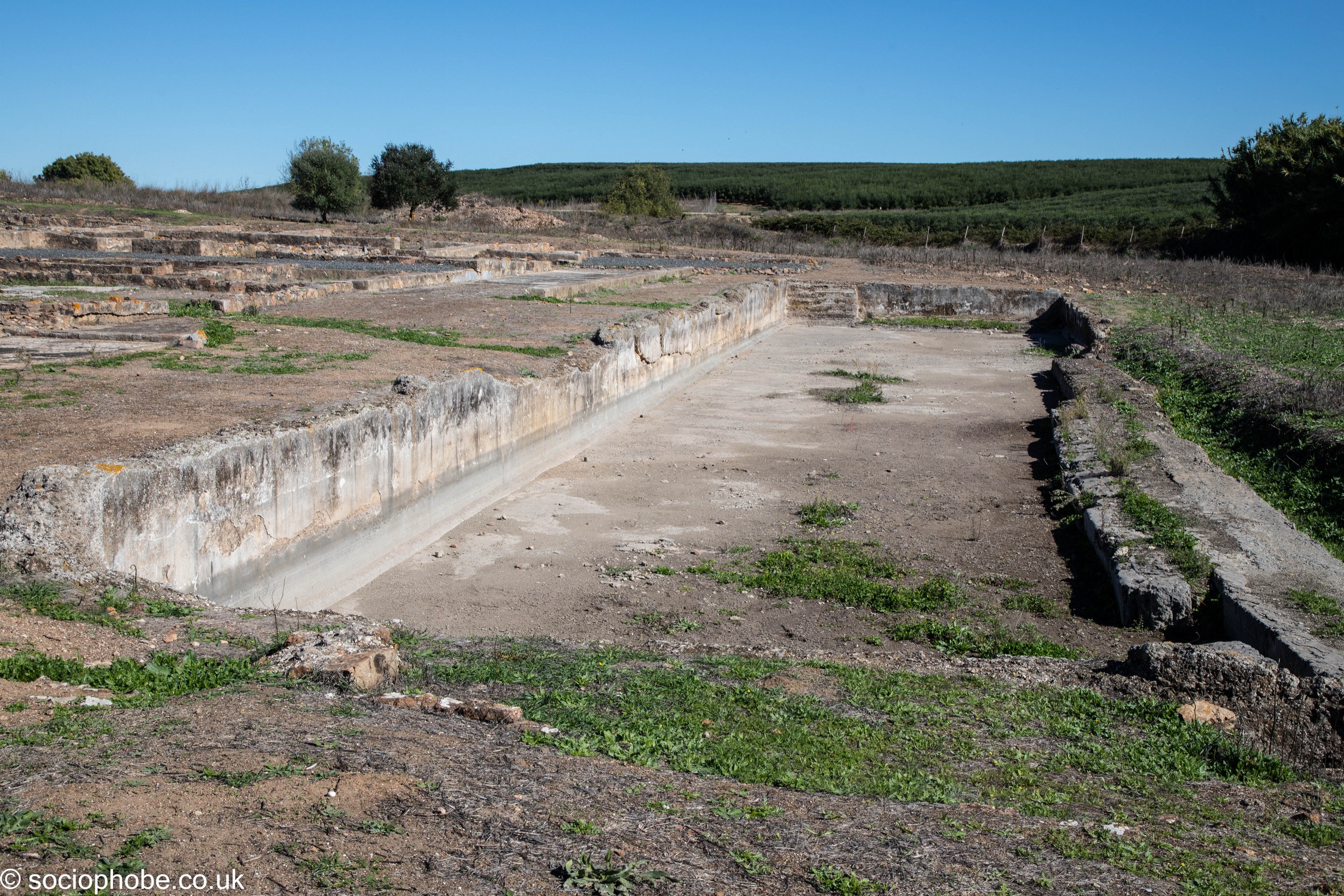
We walked past several cactii on our walk to the site which was actually quite large. There was a pool that was the size of a modern swimming pool and then various plunge pools with heating for one of them. There were lots of different mosaic floored rooms too and a small central atrium. The mosaics were very muted colours but still impressive for being 2000 years old!
Alentijo Castle
We left the villa and the sat nav sent us on a long trek though dirt roads where we were pretty much restricted to 20 km/h before eventually reaching blessed tarmac. We drove to Alentijo for yet another castle – even I was getting RSI from looking at all the damned towers by now! This was now lunchtime so the village was almost dead. We went into a bar for coffee but they didn’t do food although the guys spoke amazing English so we walked around a bit more and eventually found another cafe where they spoke no English at all but did do a mean pulled pork burger. After that the castle had reopened from siesta.
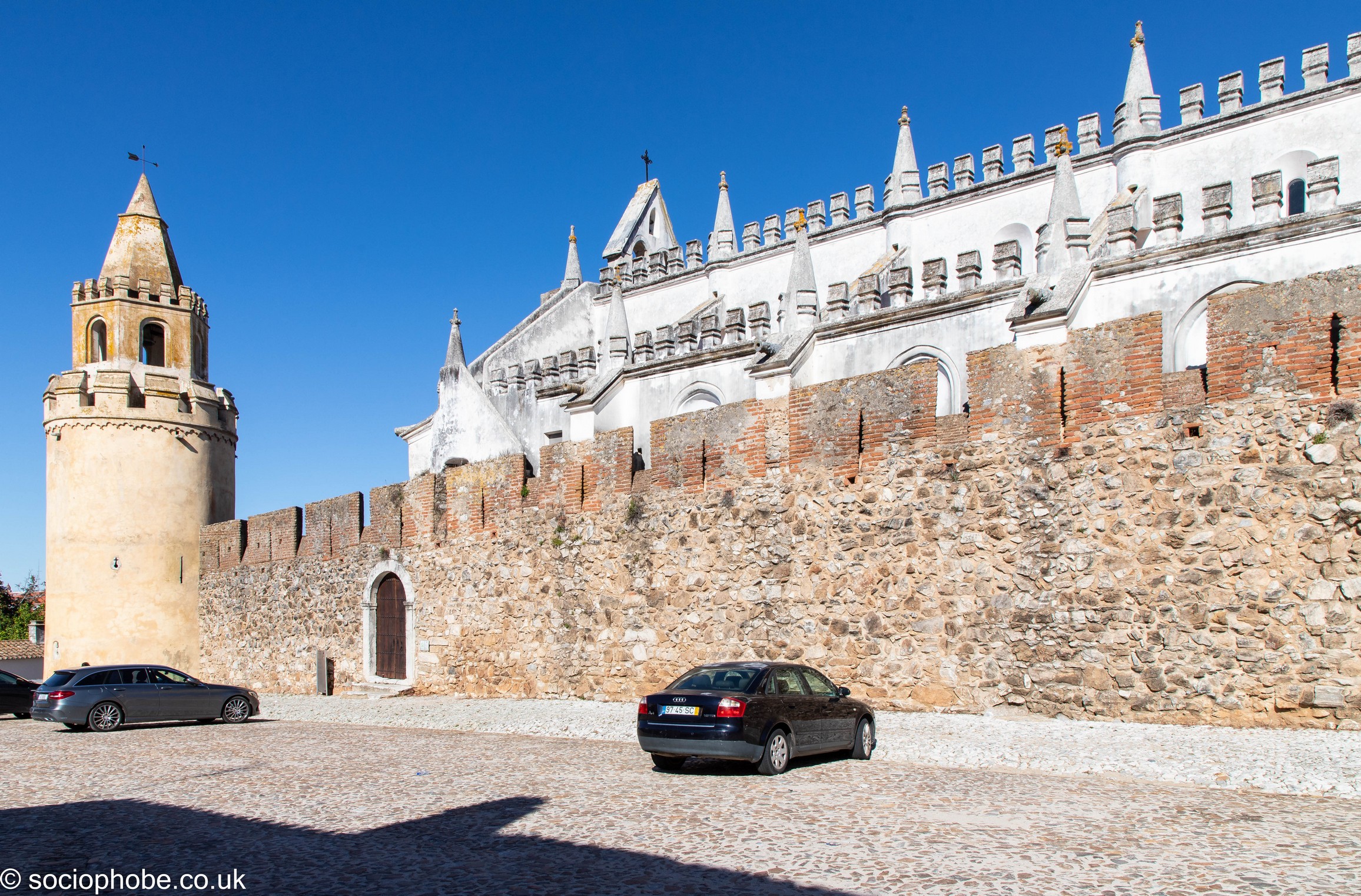
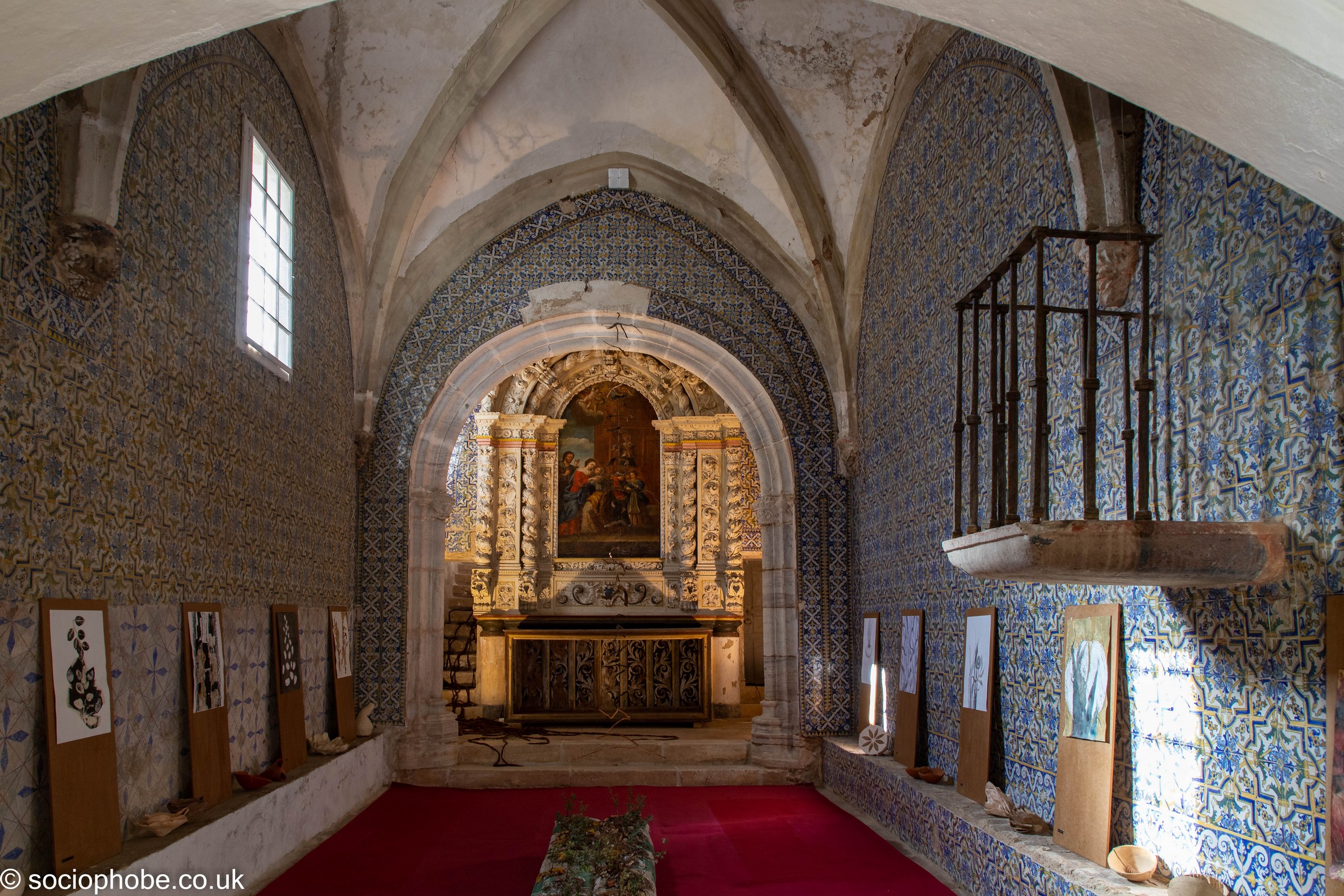
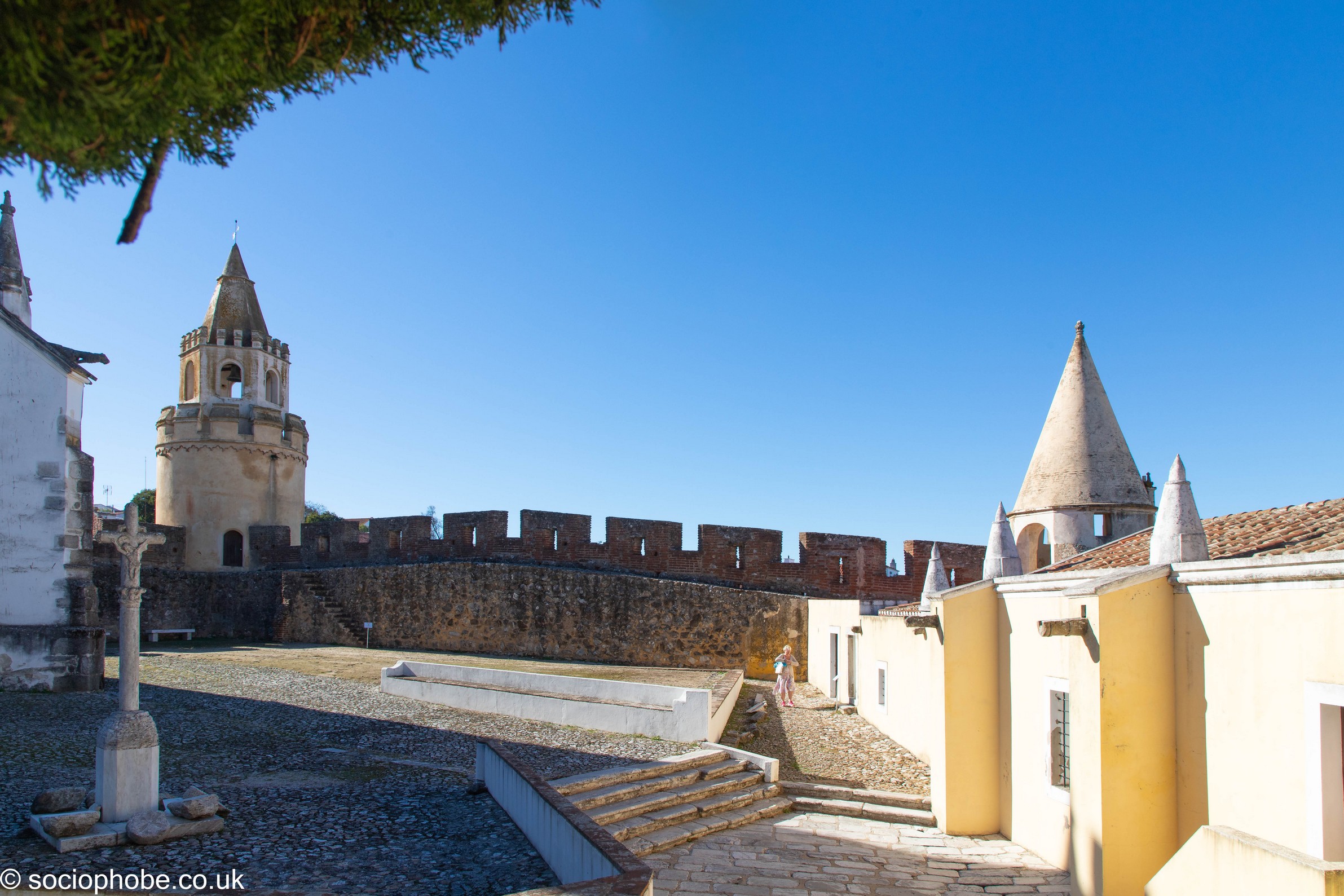
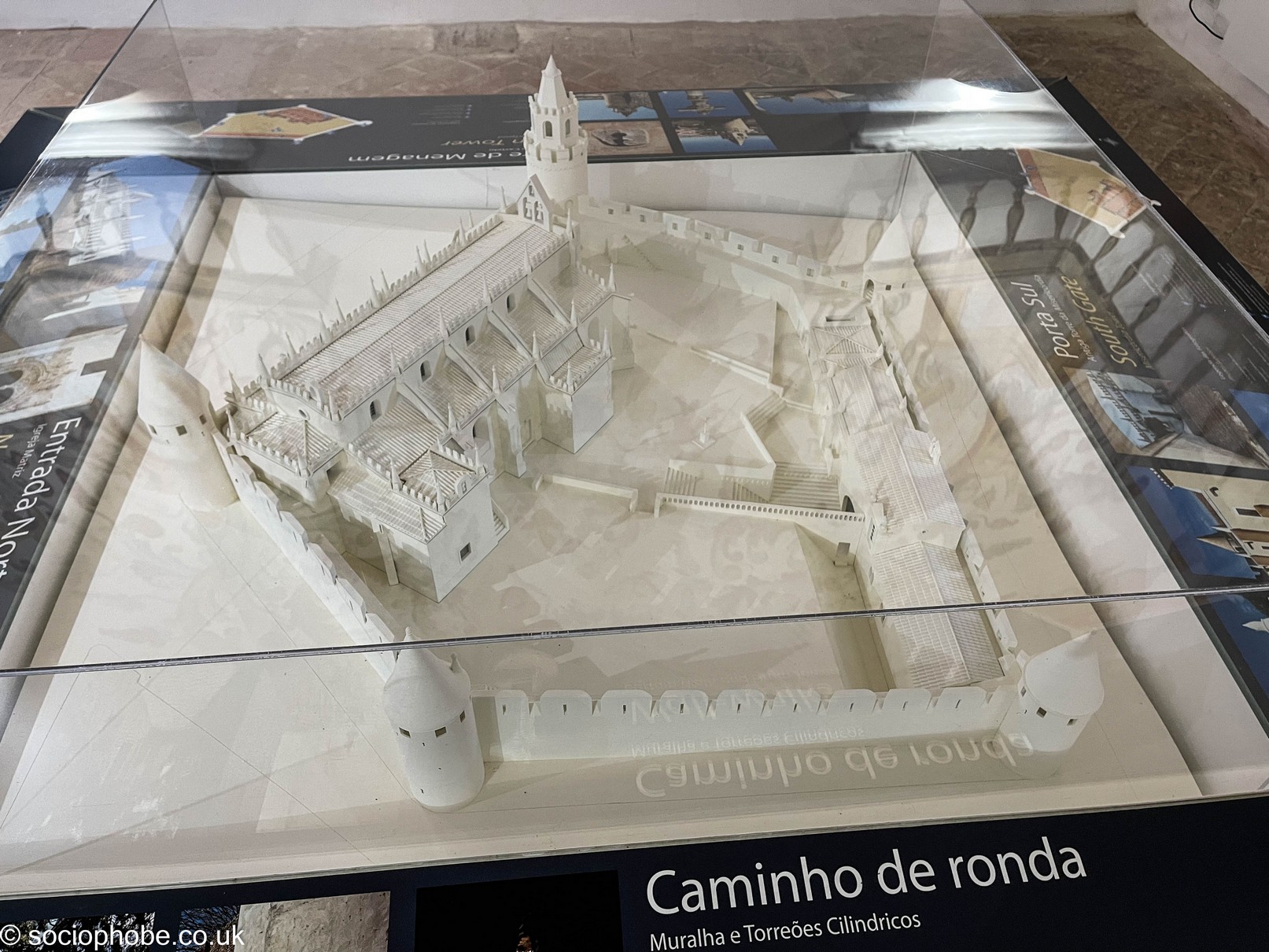
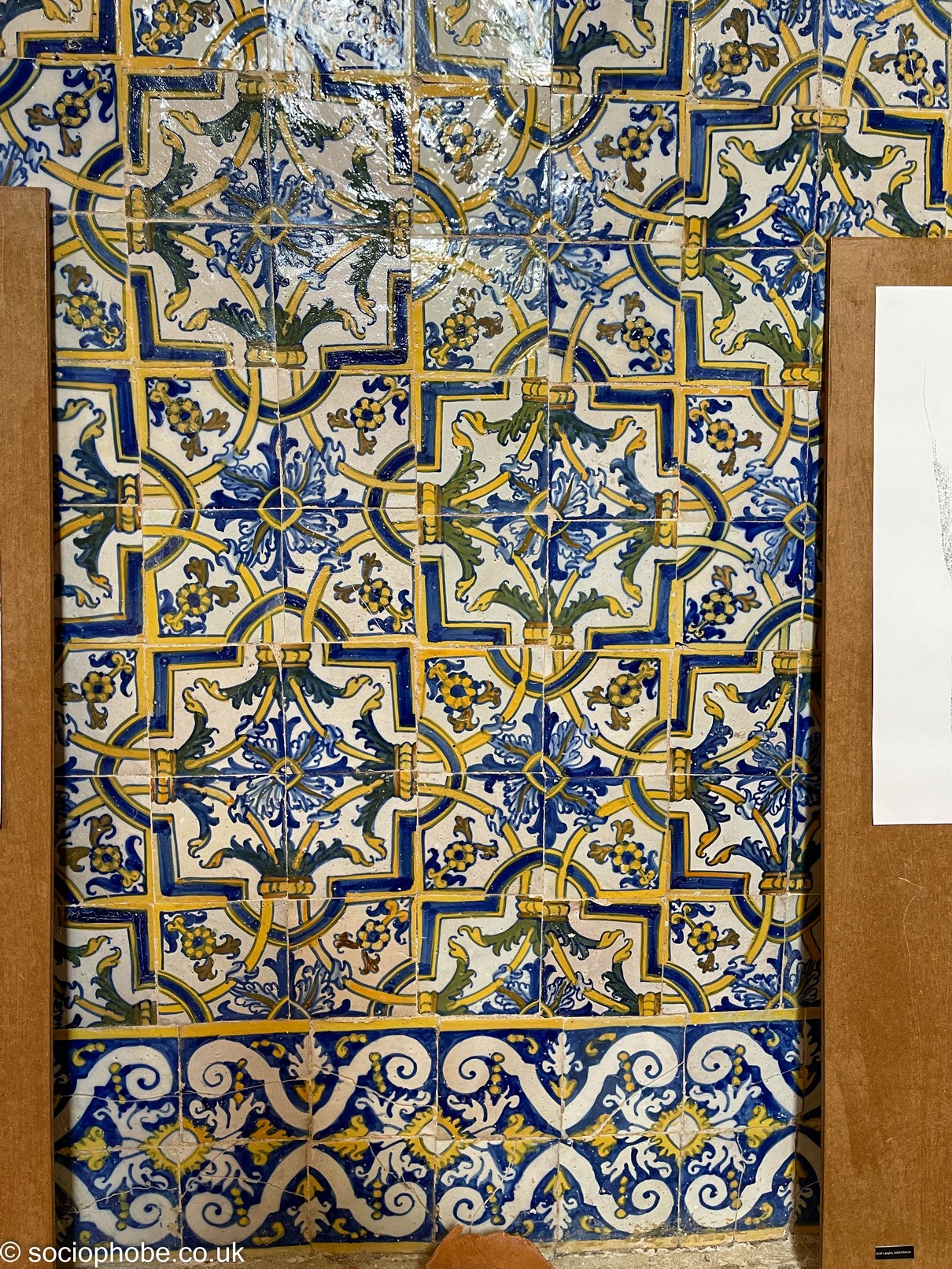
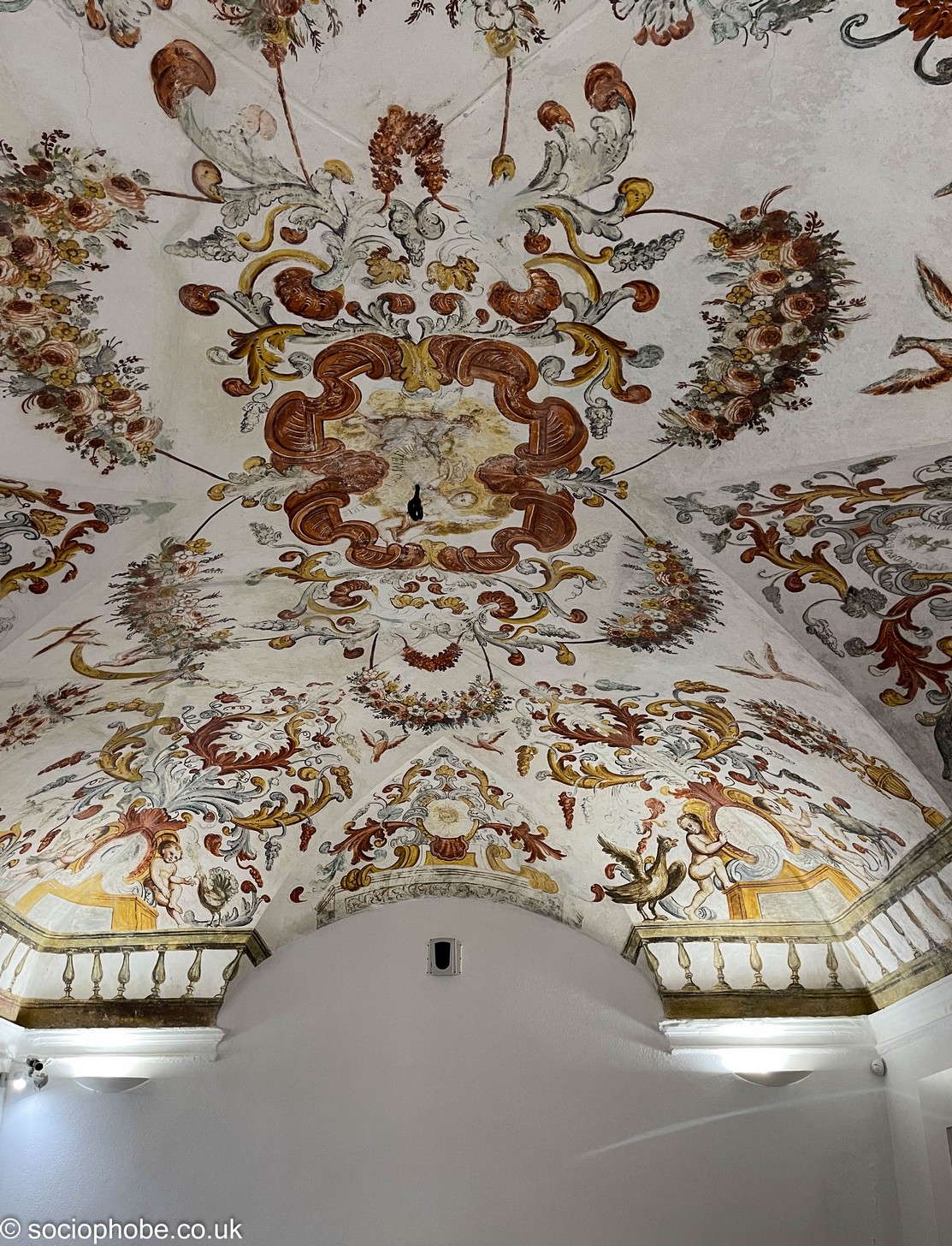
The guy in the castle was incredibly enthusiastic and explained about the history of the building and the churches inside the walls. There were some impressive carvings and lots of lovely tile work inside the churches. The castle was more of a display than a functional building, it was built after the time it could be any use and was just for show. There was a nice museum with pictures of the restoration work it had undergone. The guy suggested a nearby 17th century chapel and garden that was famous for the sea shell decorations that covered all the walls.
Sadly, we got to Paco dos Henriques but couldn’t get in to it. We walked outside and could see the garden with the seashell decoration and could hear people inside but every access door we tried was locked so maybe it was a private viewing or an extended siesta time. A bit of a shame but I was pretty knackered from driving either on dirt roads or through ridiculously narrow village streets so we headed back to the hotel for a most welcome coffee and rest.
After sorting the photos we walked into the village for dinner but the place we expected to eat at was closed and there was a dearth of venues that were open. We eventually found one and had a nice three course meal, the lad spoke superb English and with a bottle of wine it cost €20! That did put me massively over my calories for the day but hey ho. Back to the room to let the food baby settle before falling asleep in the bath.
Aljezur Town and Castle
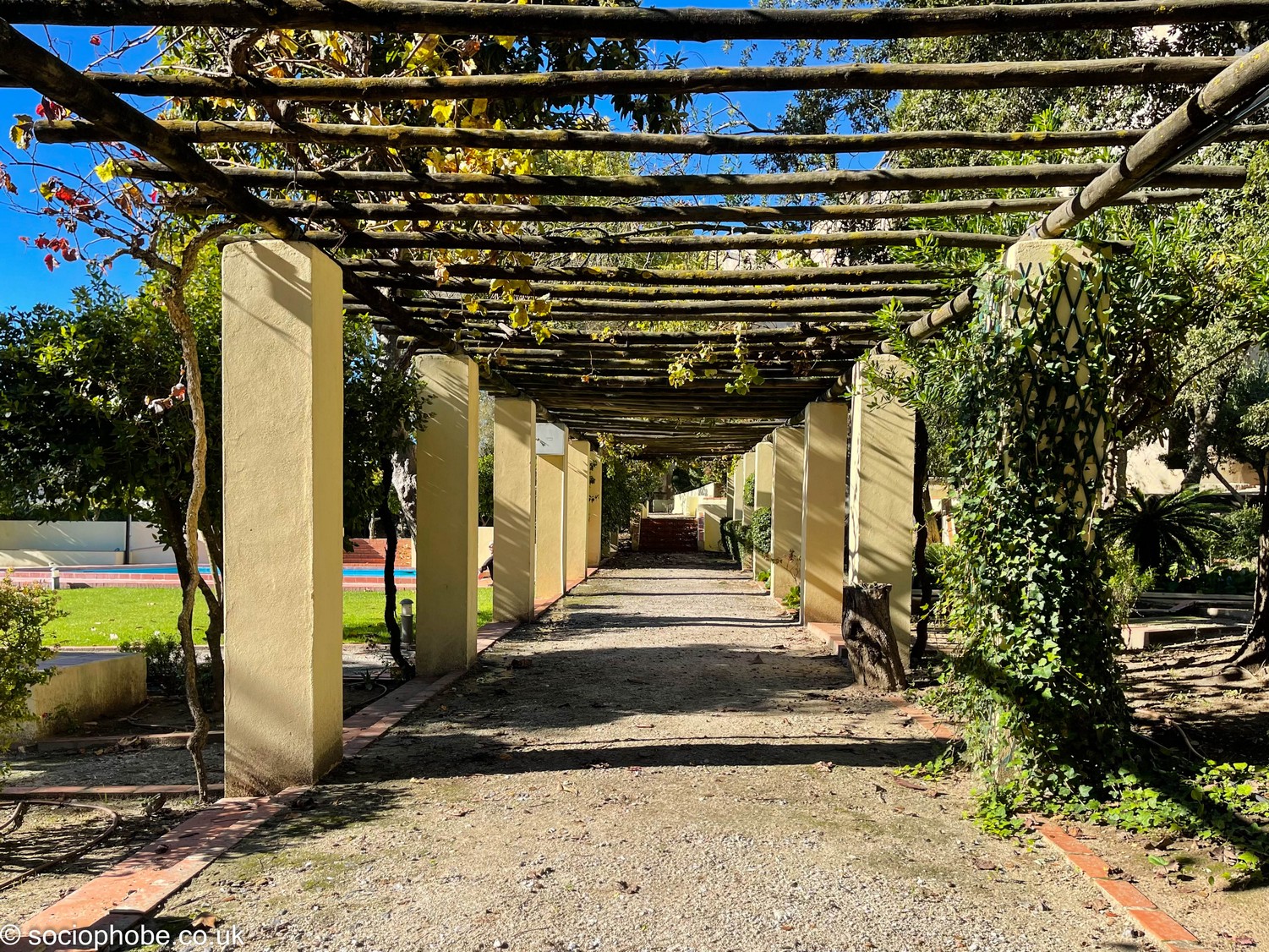
We awoke at about ten to seven, just in time to watch the sunrise as the light streaming through the windows lightened and the vinyards and orchard in the hotel garden were slowly revealed from their dark shadows. We had another splendid and stomach engorging breakfast before calling Auntie Kay and showing her the room and view on Skype. We then togged up in coat and hat and took a meander through the hotel’s gardens – lots of water features and some lovely planting and very cold unless you were in direct sunshine.
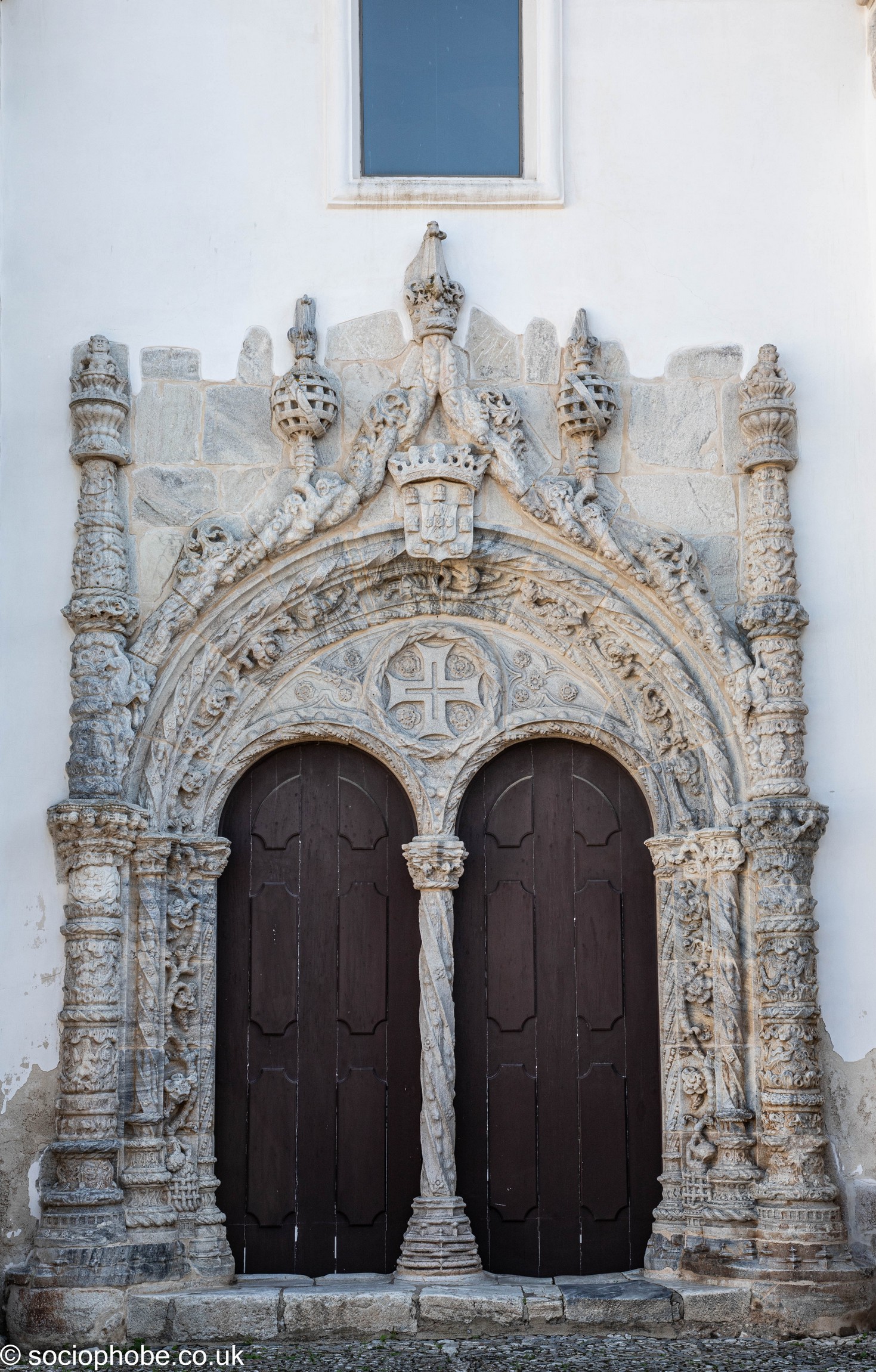
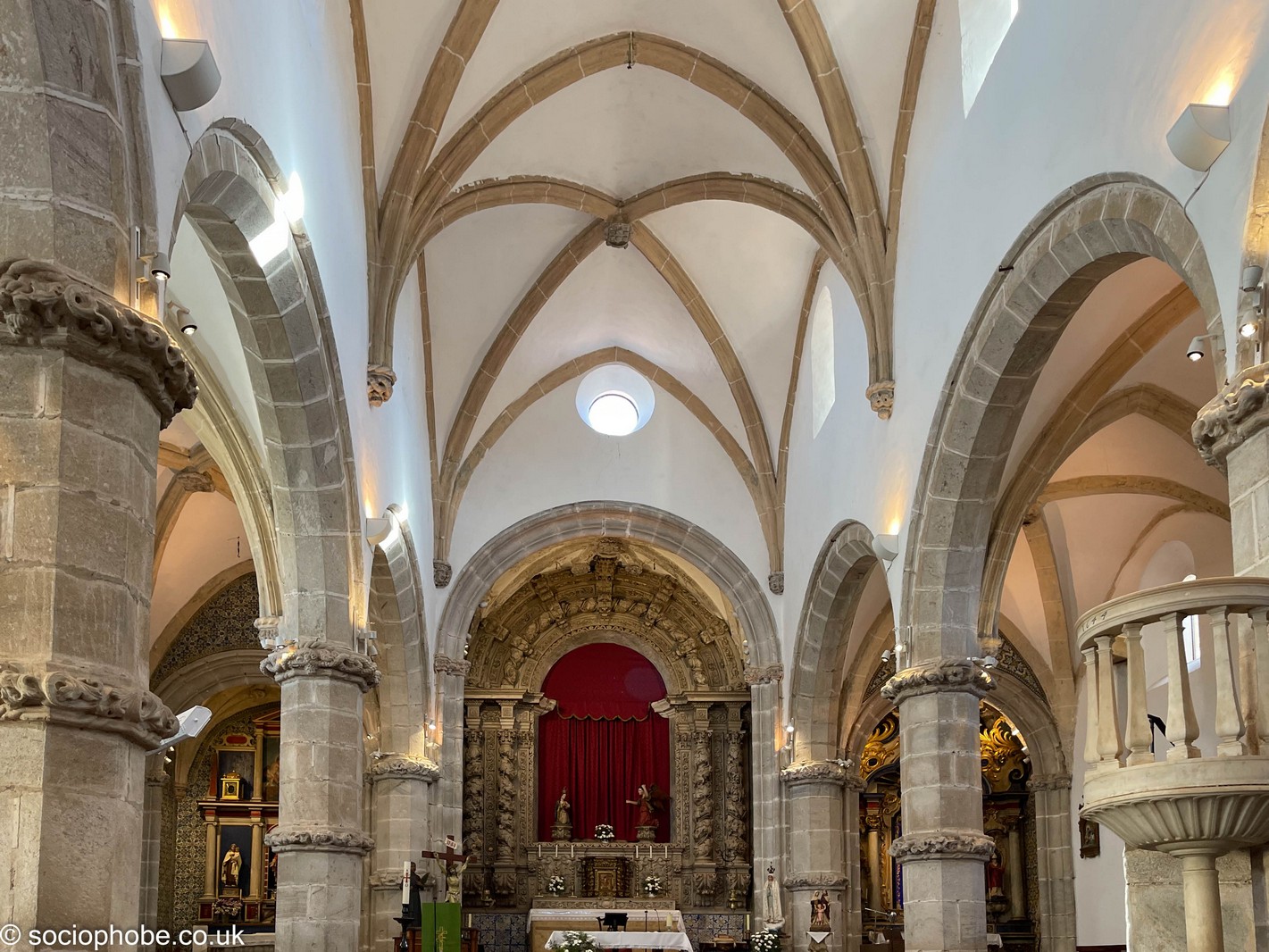
After this we decided to up the level of intrepid exploration and go for a walk around the village. It was rather compact so didn’t take long but there was a lovely 15th century church and some pretty park areas. It was ridiculously quiet though – there was one guy taking his dog for a walk the Portugese way – he drove and the dog lolloped along next to him and then one guy out walking. That was it. We sat down on a bench in the sunshine, like whiskerless seals, and just basked. I could easily turn into one of those old men portrayed in films in these sort of villages where they look irritated at the car driving by for disturbing their reverie even though it’s the only car in the village the whole day.
It was then time to leave so we packed the car and started our drive towards the Atlantic coast. We only had a one night stay booked and on reflection I have no idea why I didn’t just book the extra day on the Algarve coast and save the time and mileage. The road was pretty horrible almost the entire way, basically like driving from Bristol to Torquay on B roads.
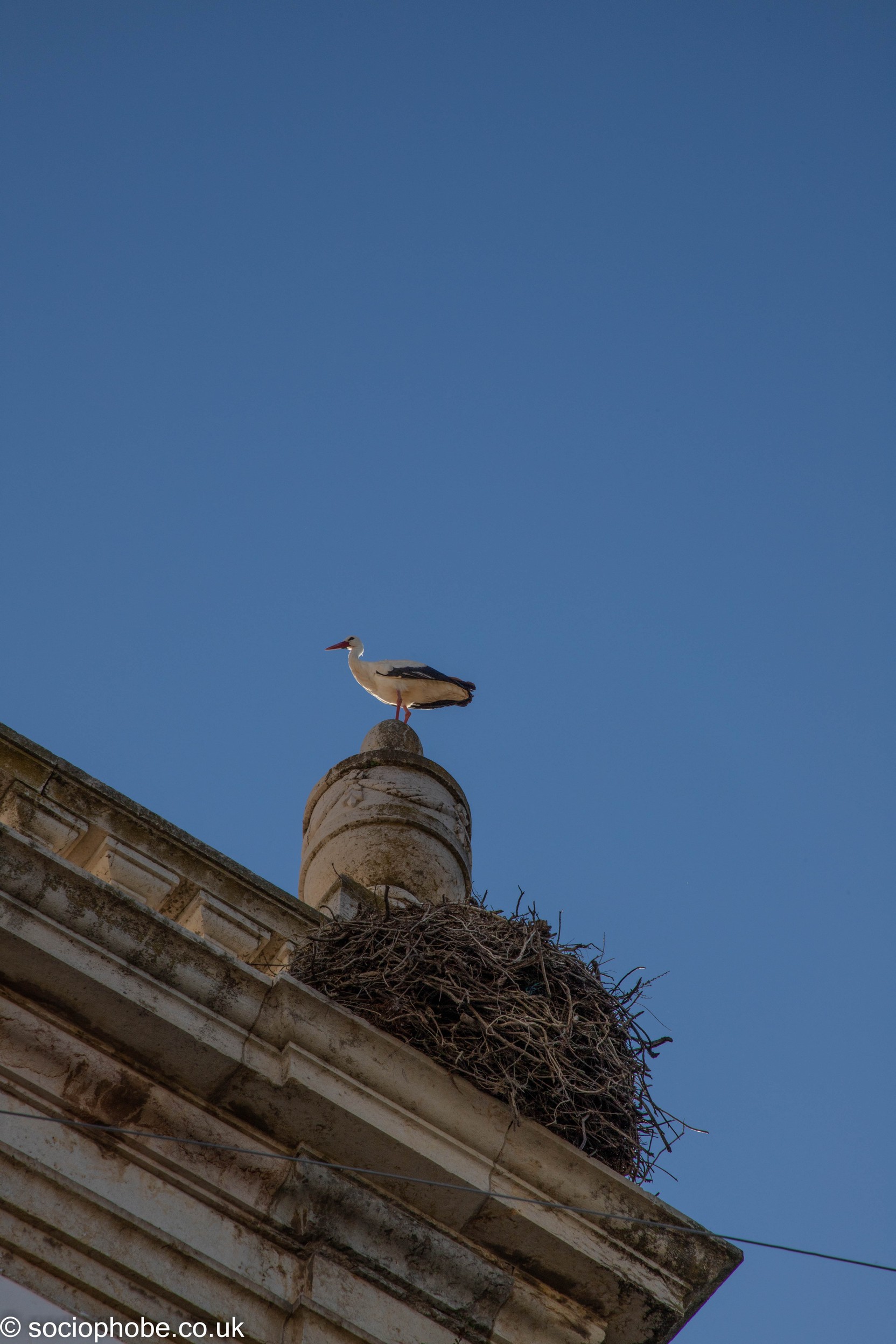
The scenery was interesting though, changing from the fertile farmlands of the central plateau to windy, hilly roads through heavily wooded terrain. We passed lots of cork trees that had the bark stripped from them and in the farm areas there were lots of stork nests built on roadside signs, phone poles etc. The population density seemed about the same as mid Wales and the roads were about the same too. It was good listening to our audiobook as that distracted from the tedious focus on every corner and hole in the road.
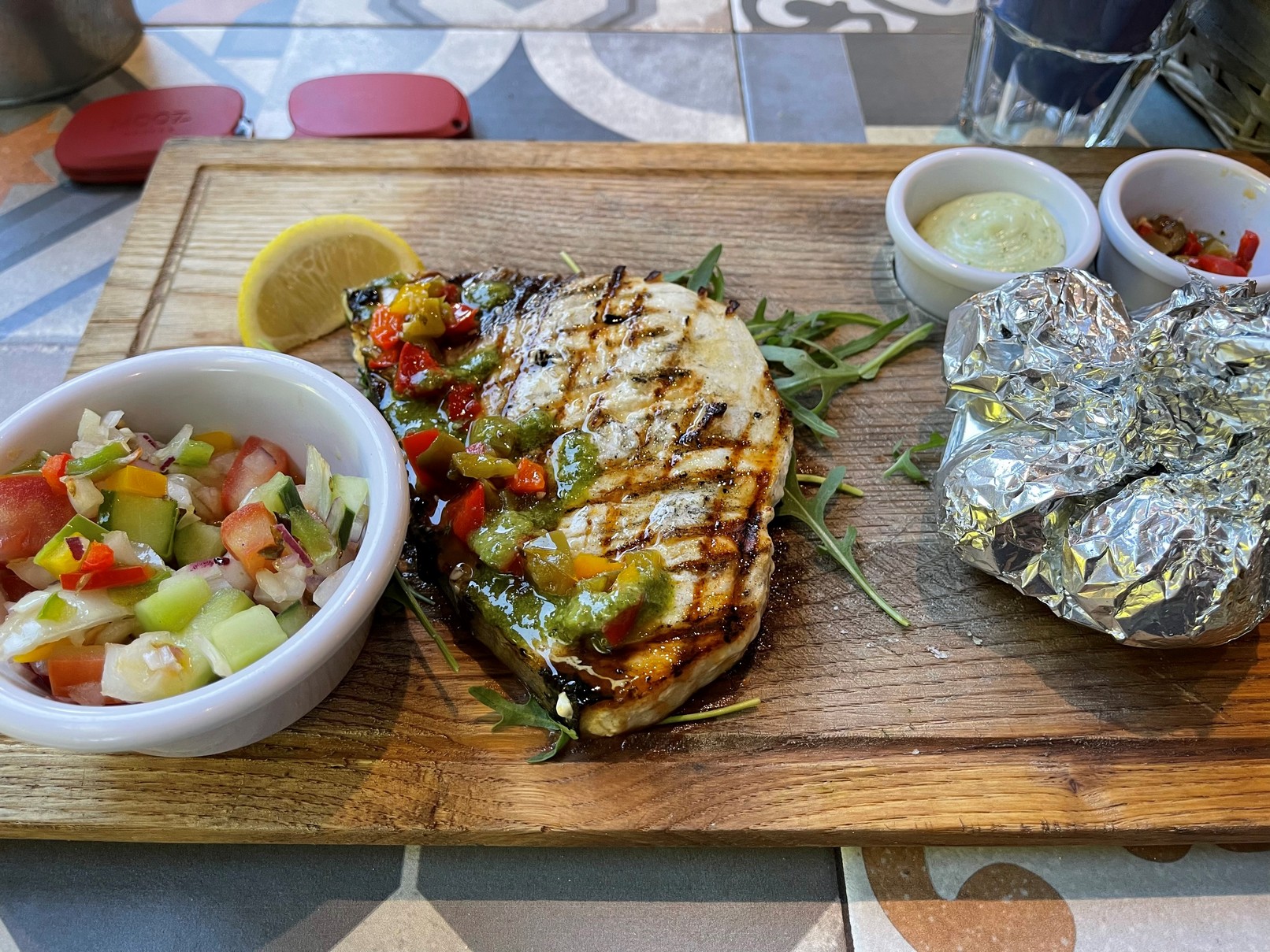
After almost three hours we arrived at our destination in the small town of Aljezur. I had intended to use it as a base to visit the Atlantic coast but after getting there I really couldn’t be arsed to do a 10k drive on crap roads. We checked in at the hotel and then went for lunch in a nearby bistro. The food was fantastic and our swordfish steaks were delicious. It was twice the price of dinner the day before but you could certainly see that you get what you pay for.
After that it was back to the room to sort the very few photos and write up my notes. This then turned into a 2 hour nap as I fell asleep, stuffed from the food! Once I’d woken up we dressed up in coats, hats, scarves etc for the 5 minutes walk back to the bistro so I could have dessert. We then extended this with some cocktails, lovely to have a relaxing evening although if bloody hotels in Portugal actually had kettles so we could make ourselves a cuppa we’d probably have stayed in!
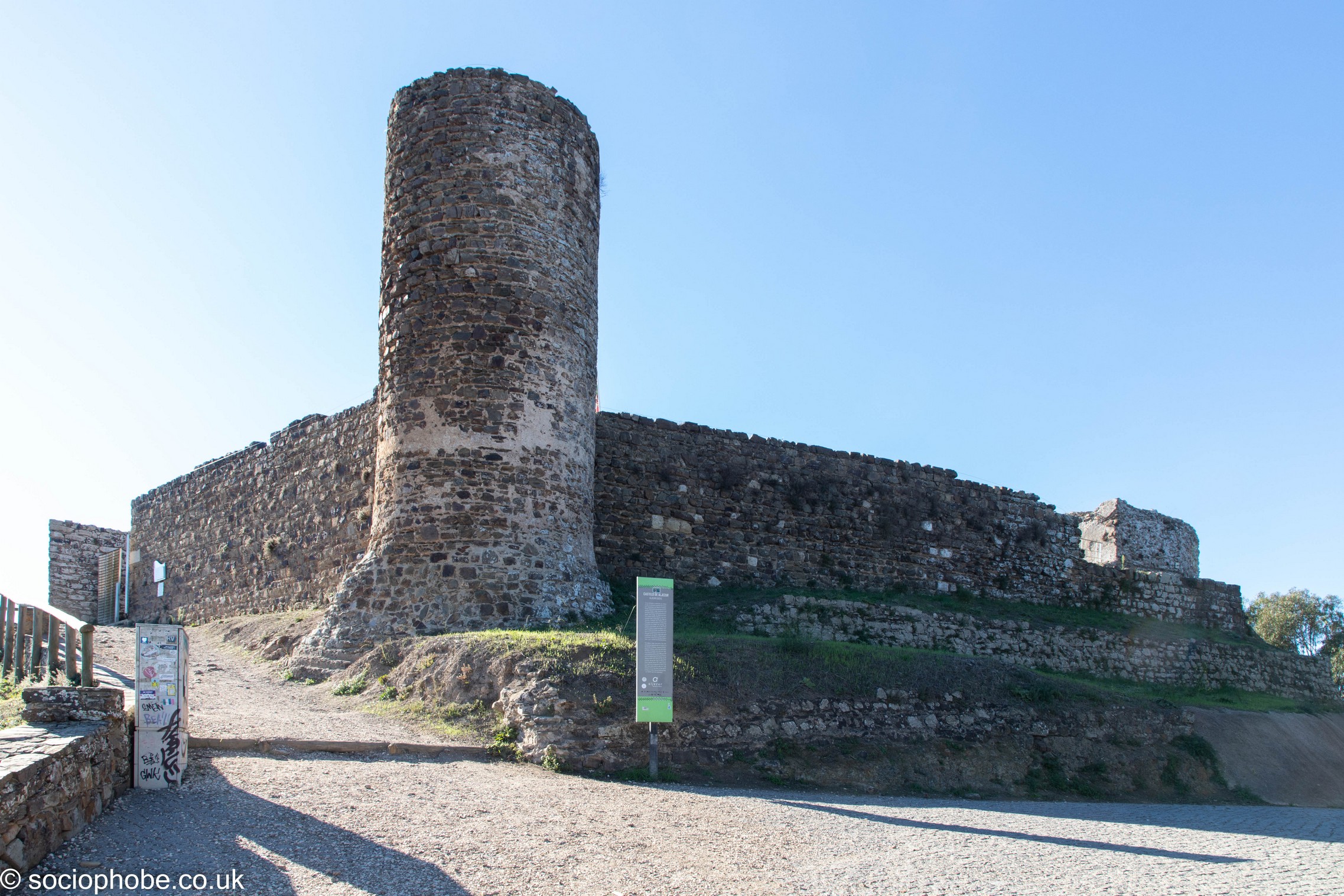
As the hotel actually had decent heating we both slept well and I didn’t get up until after 6. We had another belly stuffing breakfast and then had to idle in the room for a while before eventually waddling to the little castle on the hill overlooking the town. The castle of Aljezur was a Muslim bastion but was finally captured in the thirteenth century and then reinforced to defend against north African slaving raids. Yes, the slave trade wasn’t just a single long instance of whites enslaving blacks – North Africans and Arabs had been enslaving Europeans and black Africans for centuries on an industrial scale.
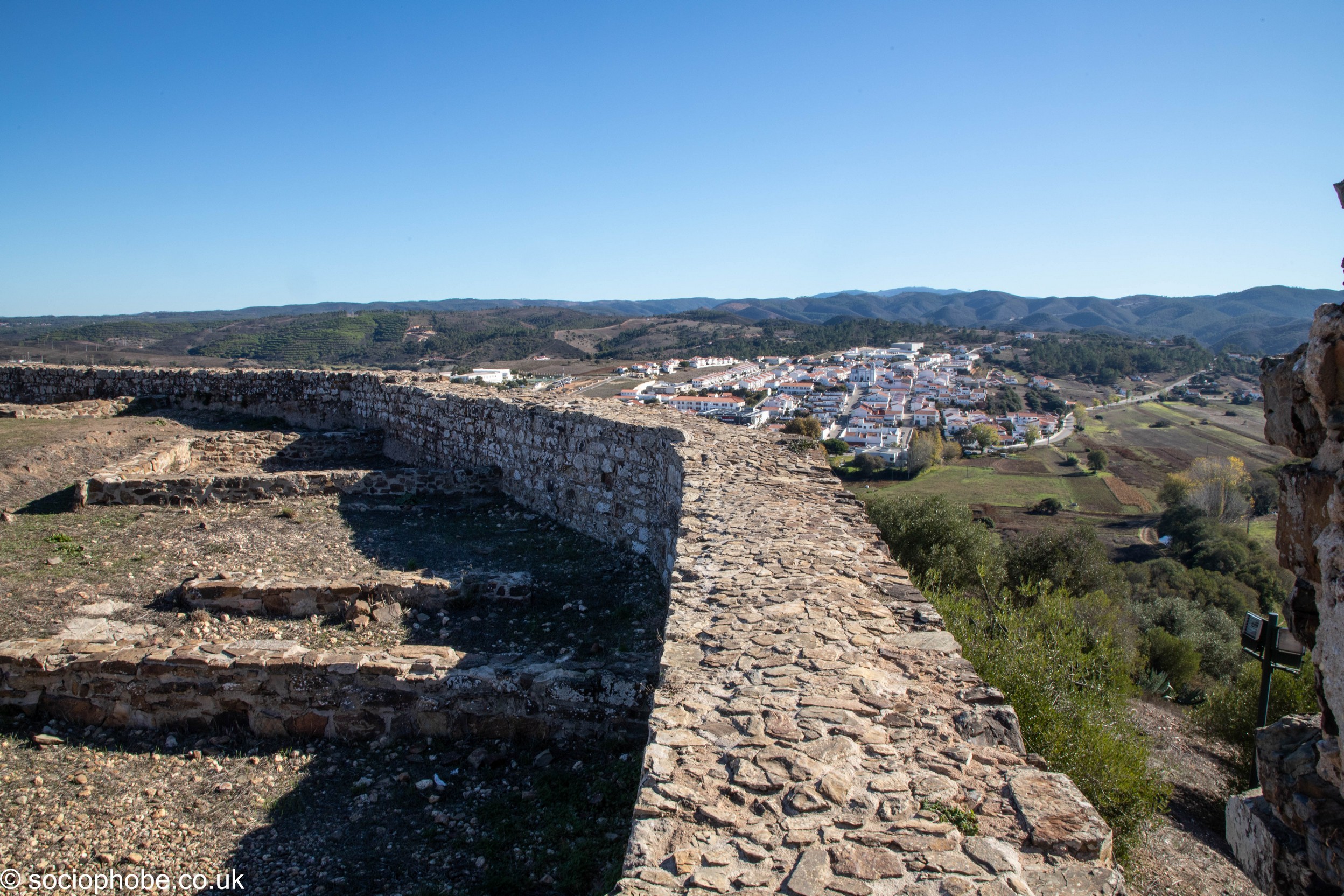
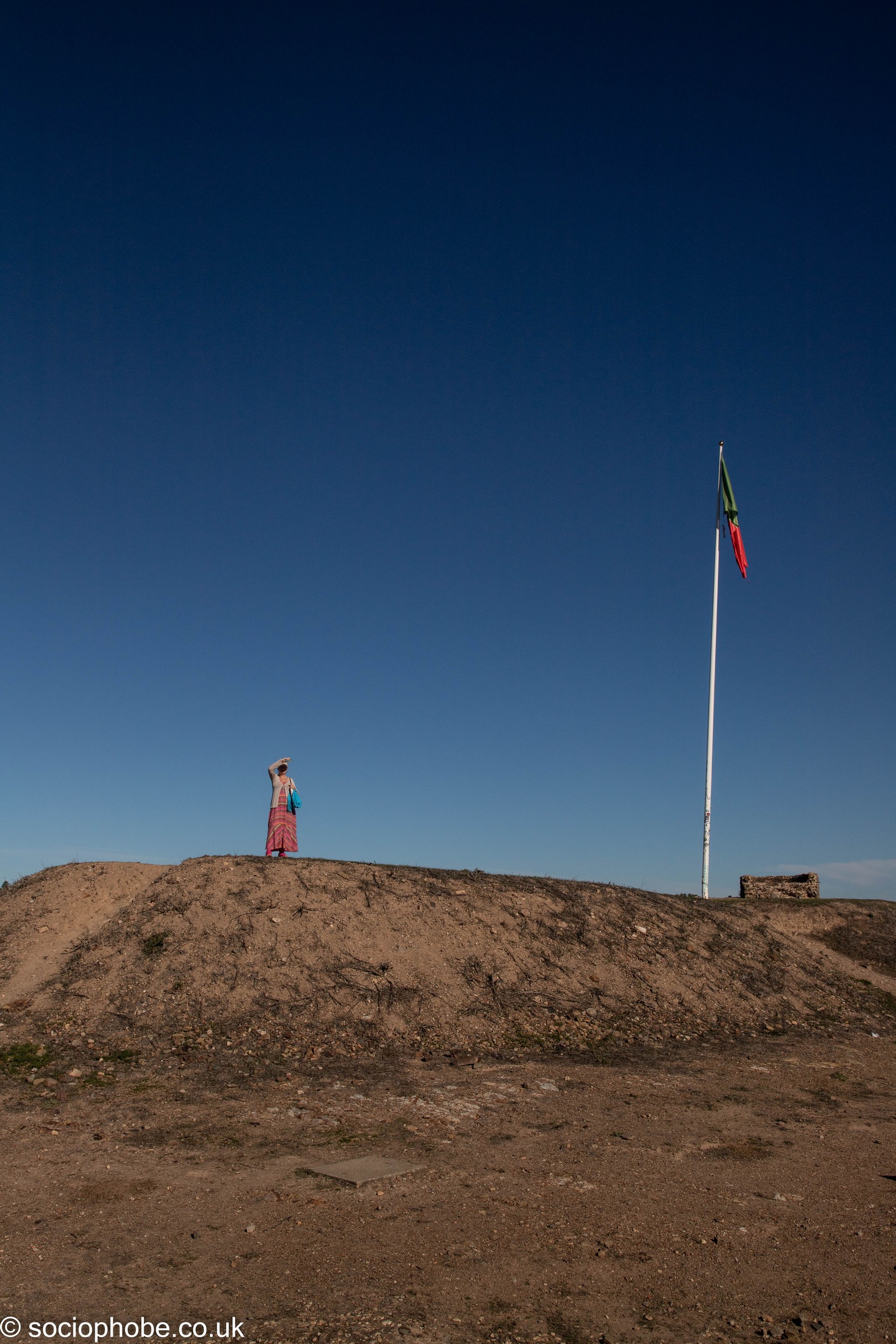
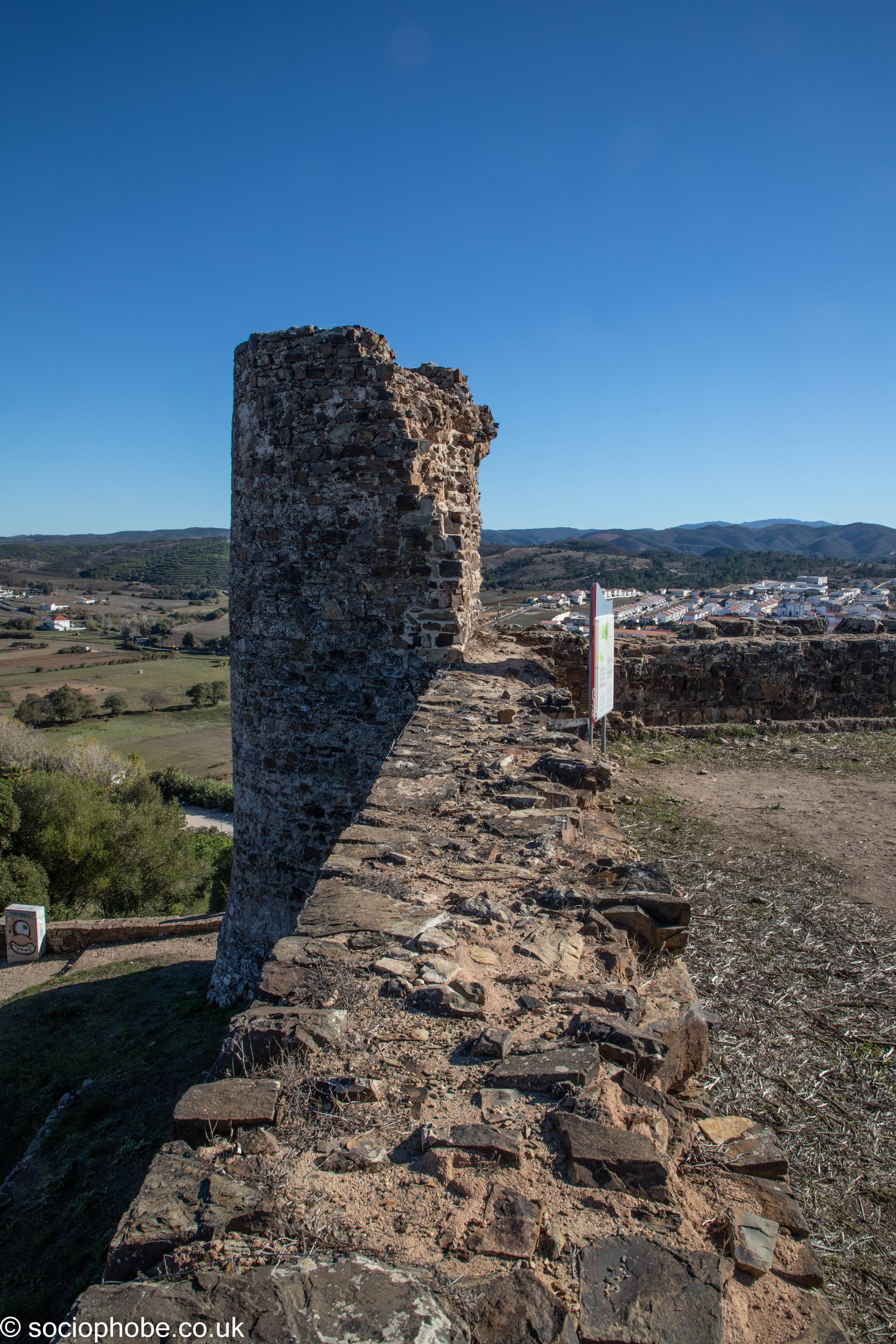
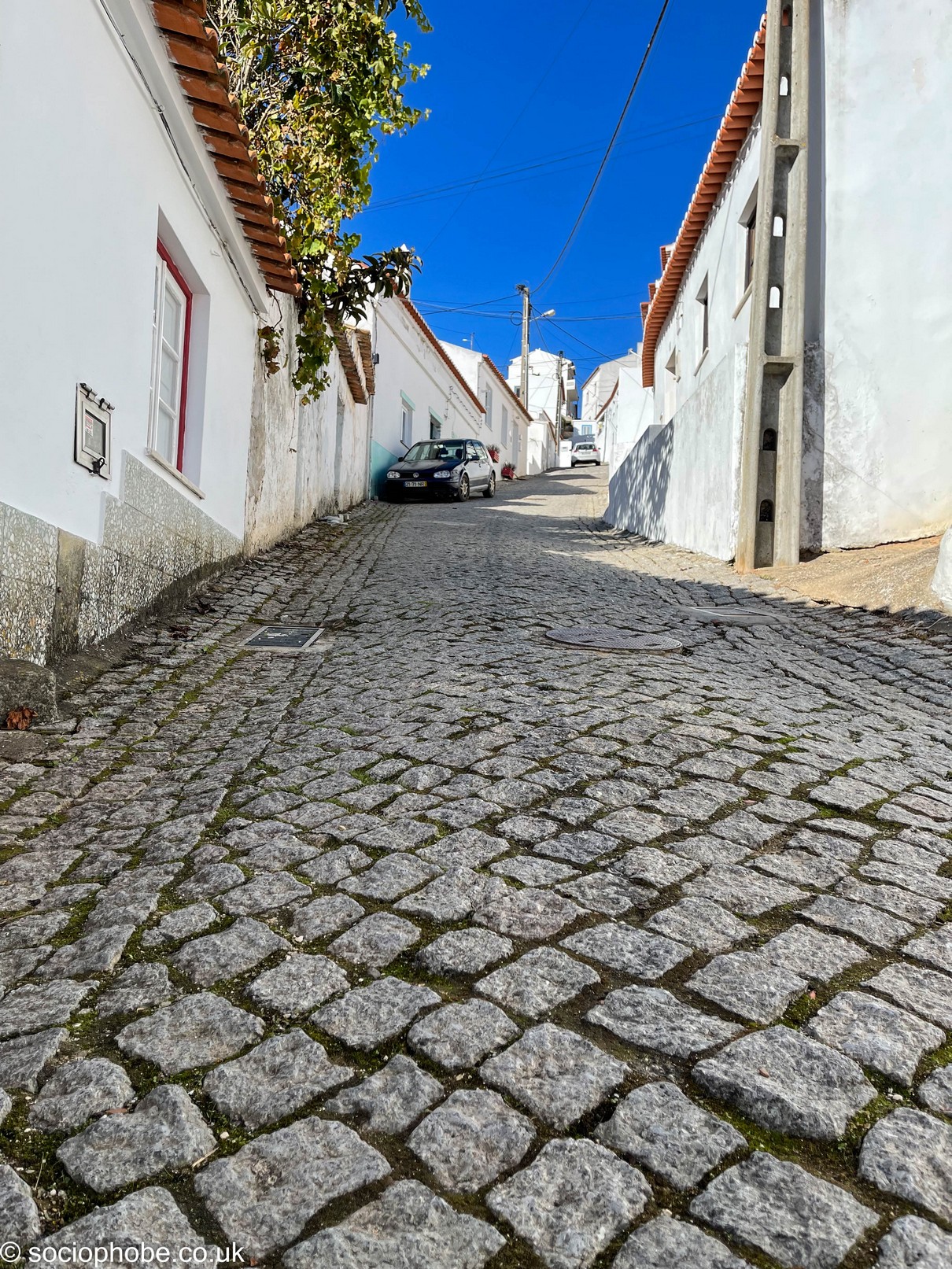
The walk to the castle was damned hard work up a very steep road and then finally through a very fragrant eucalyptus forest. There isn’t much left of the castle, half an outer wall and a couple of towers but the views were amazing, over the whole village, river basin and surrounding hills.
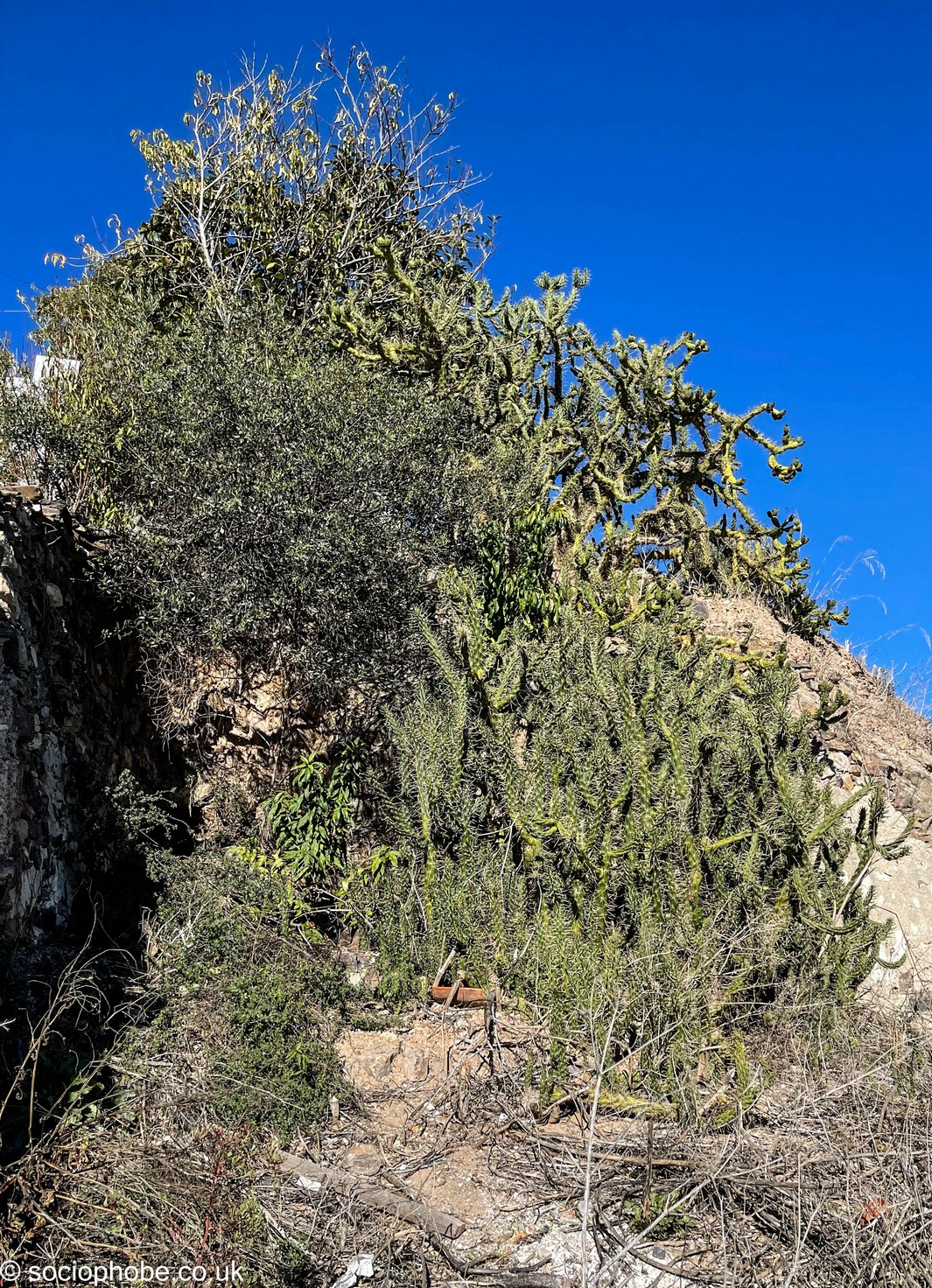
We walked down from the castle by a different route, through the old historical centre of the village but there wasn’t much left as the earthquake that destroyed Lisbon also damaged most of the buildings in Aljezur. At least it wasn’t as steep though and there were plenty of gardens with succulent plants in for Deb to see. We returned to the hotel, I changed into shorts and we packed the car again and decided to head to Cape St Vincent, the most south westerly point in Europe.


Cape St Vincent and Sagres Fortress
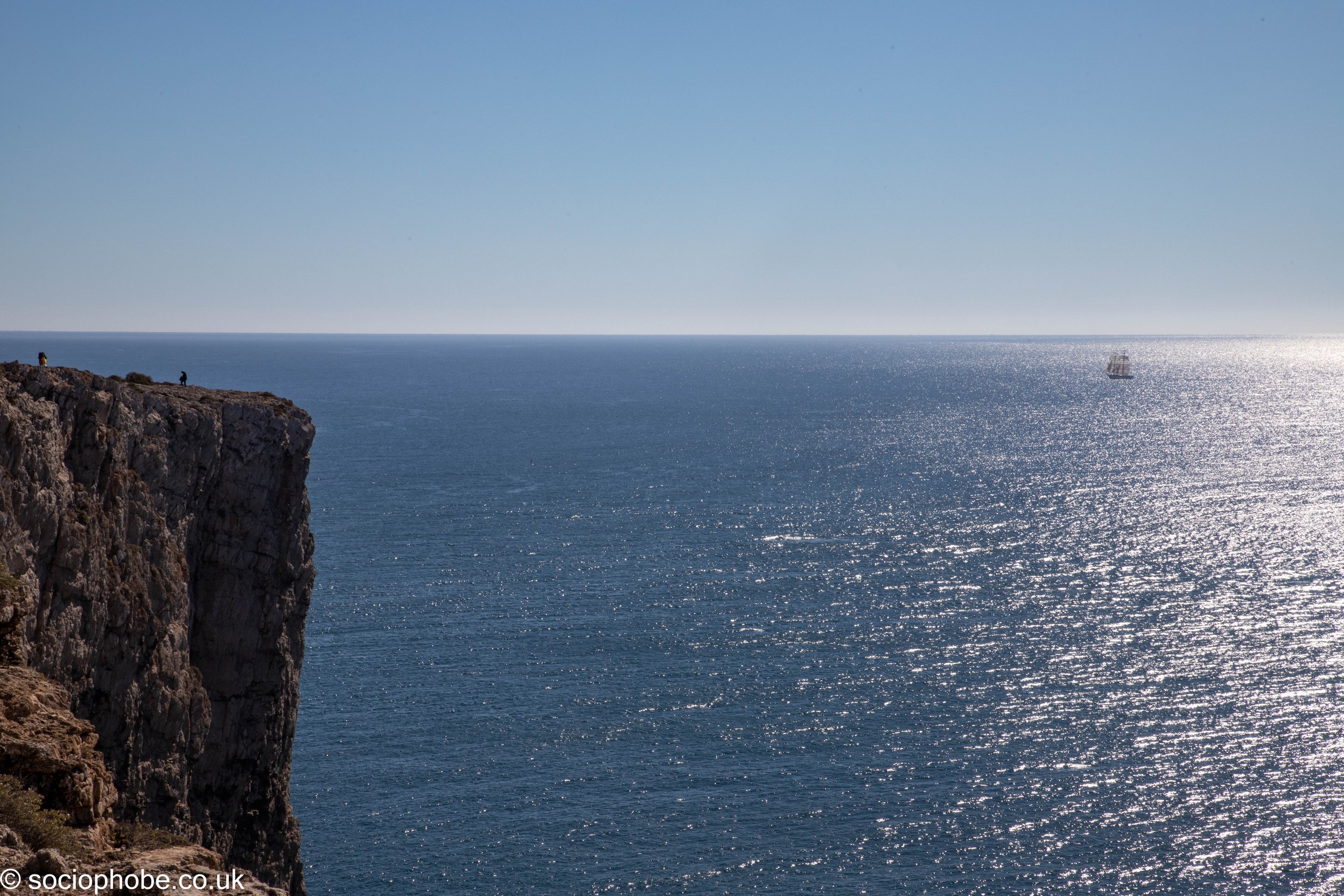
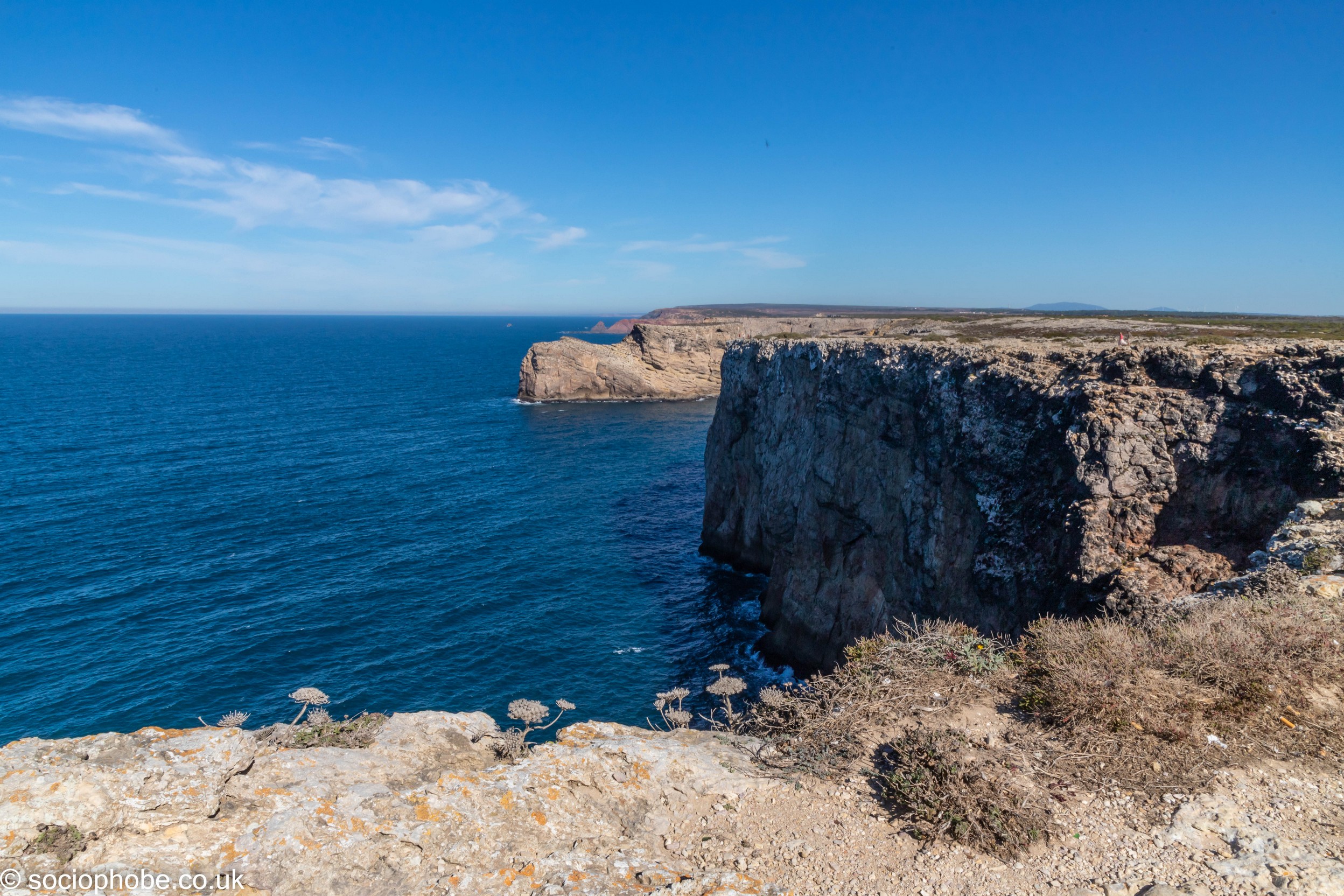
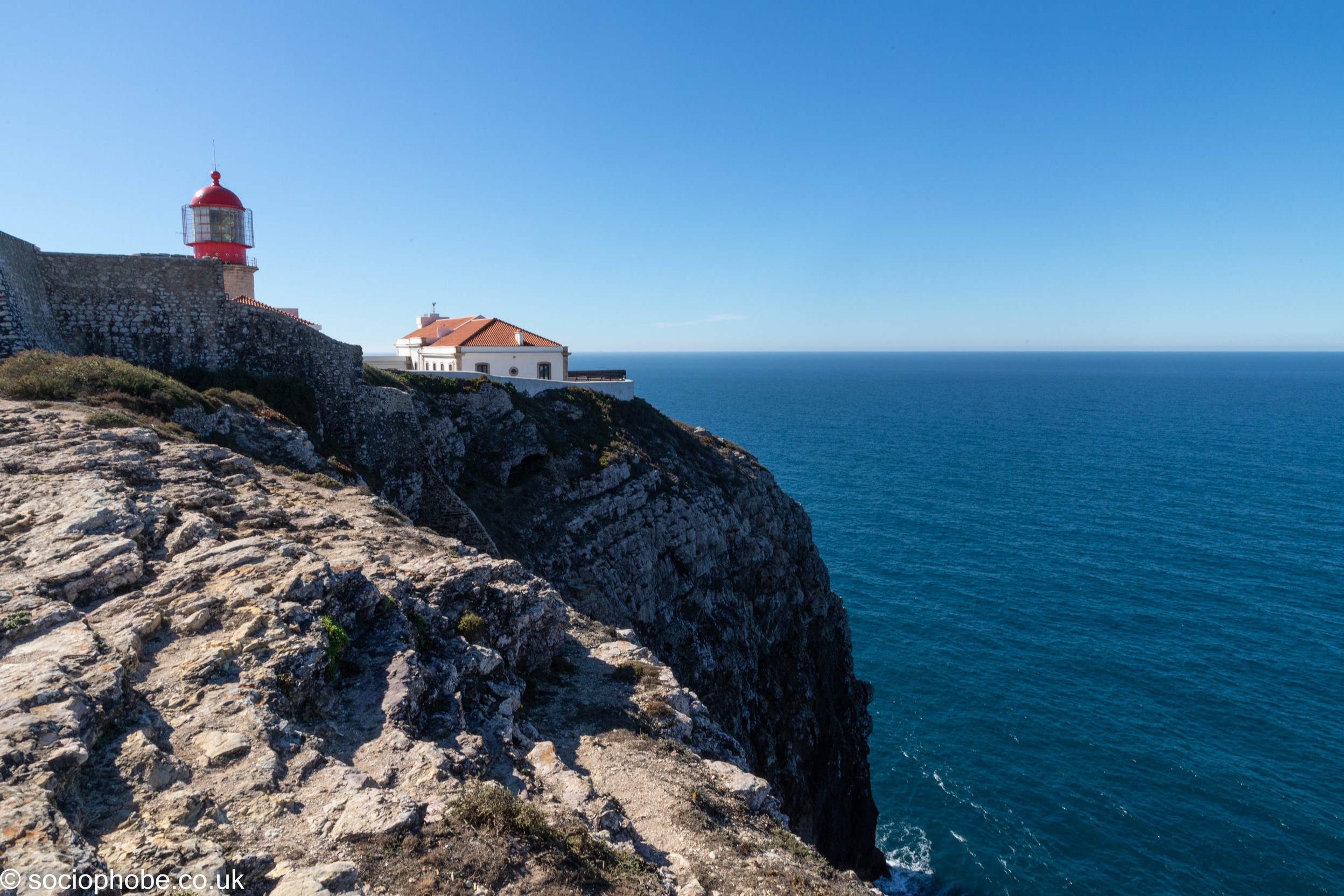
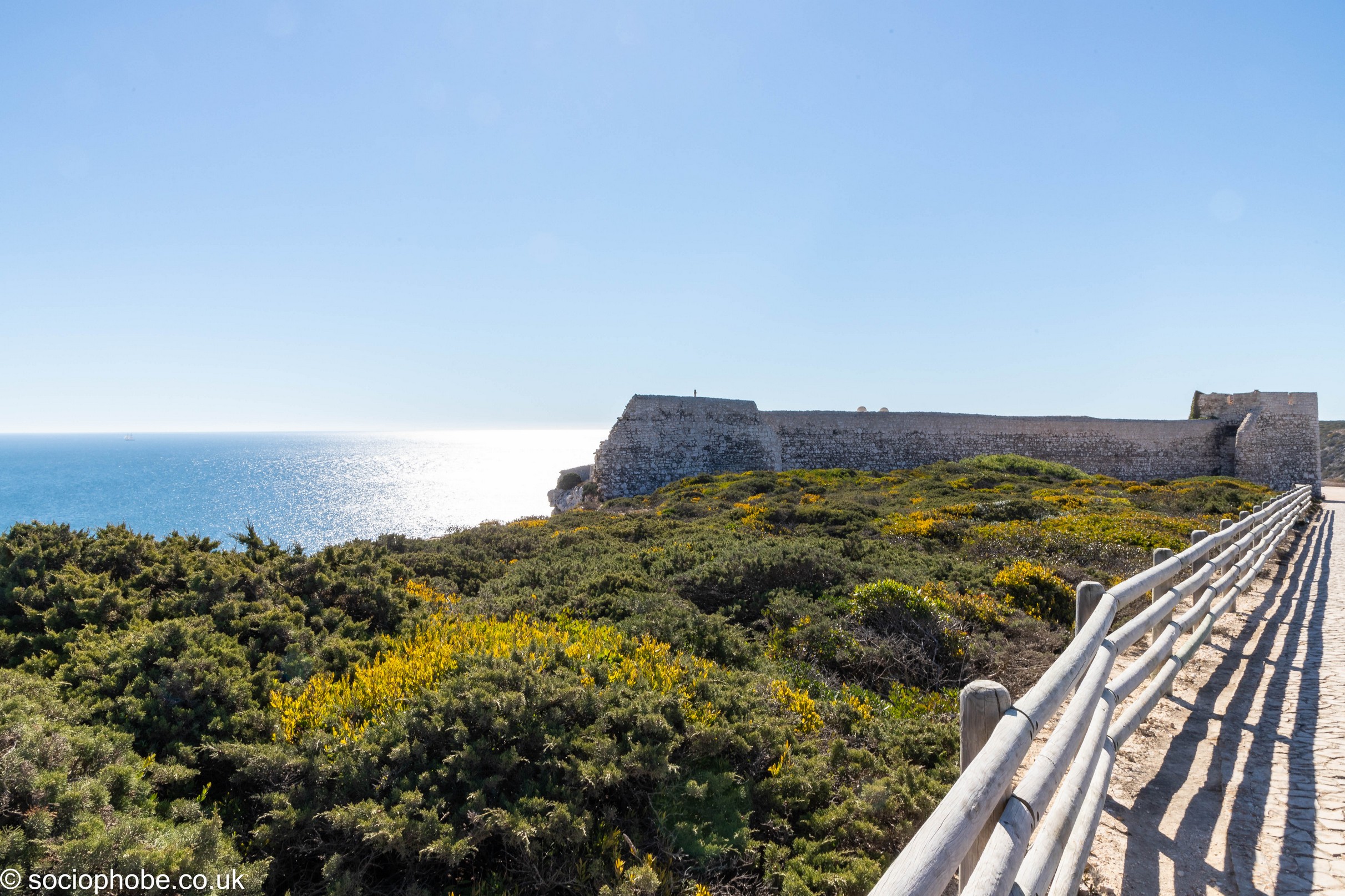
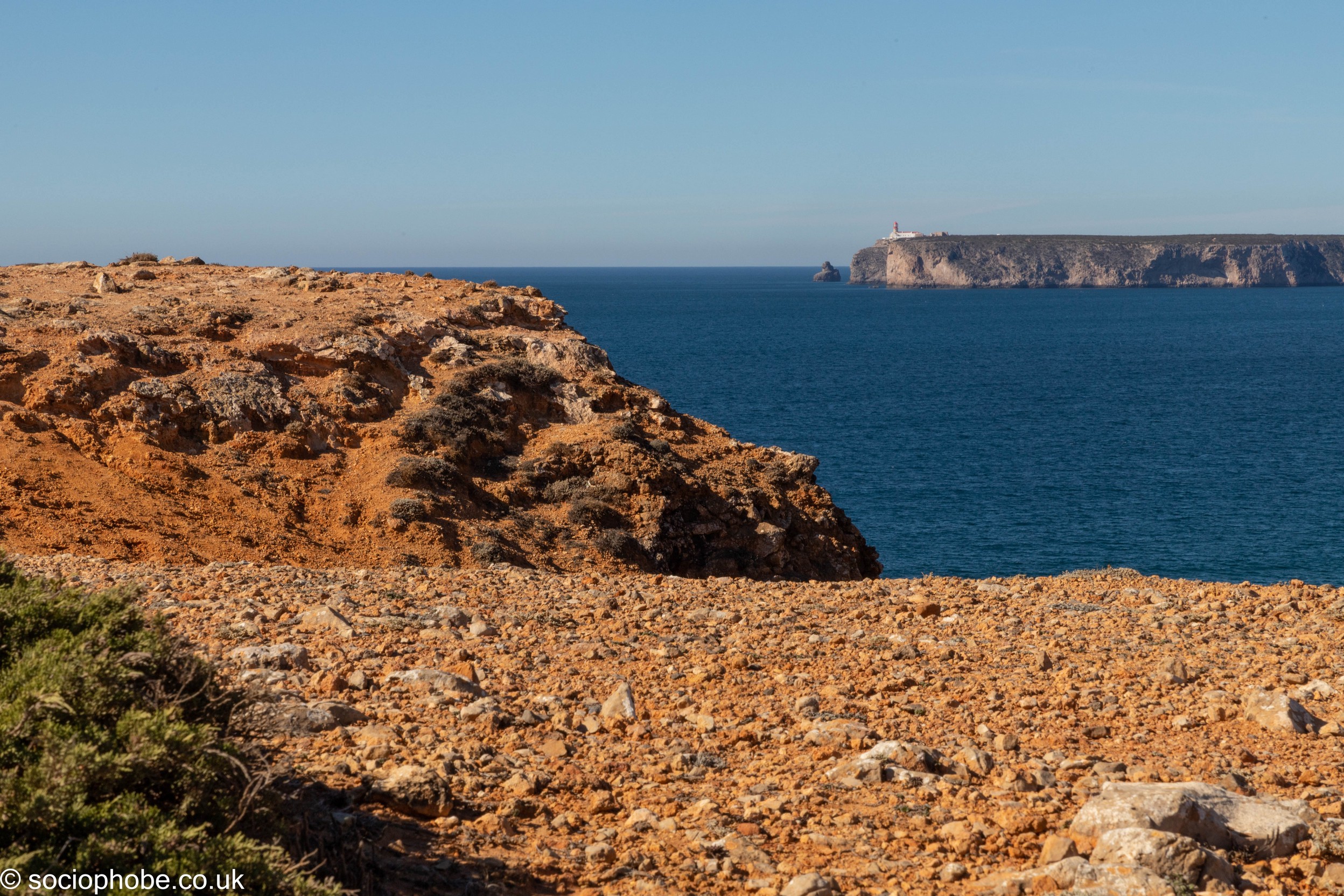
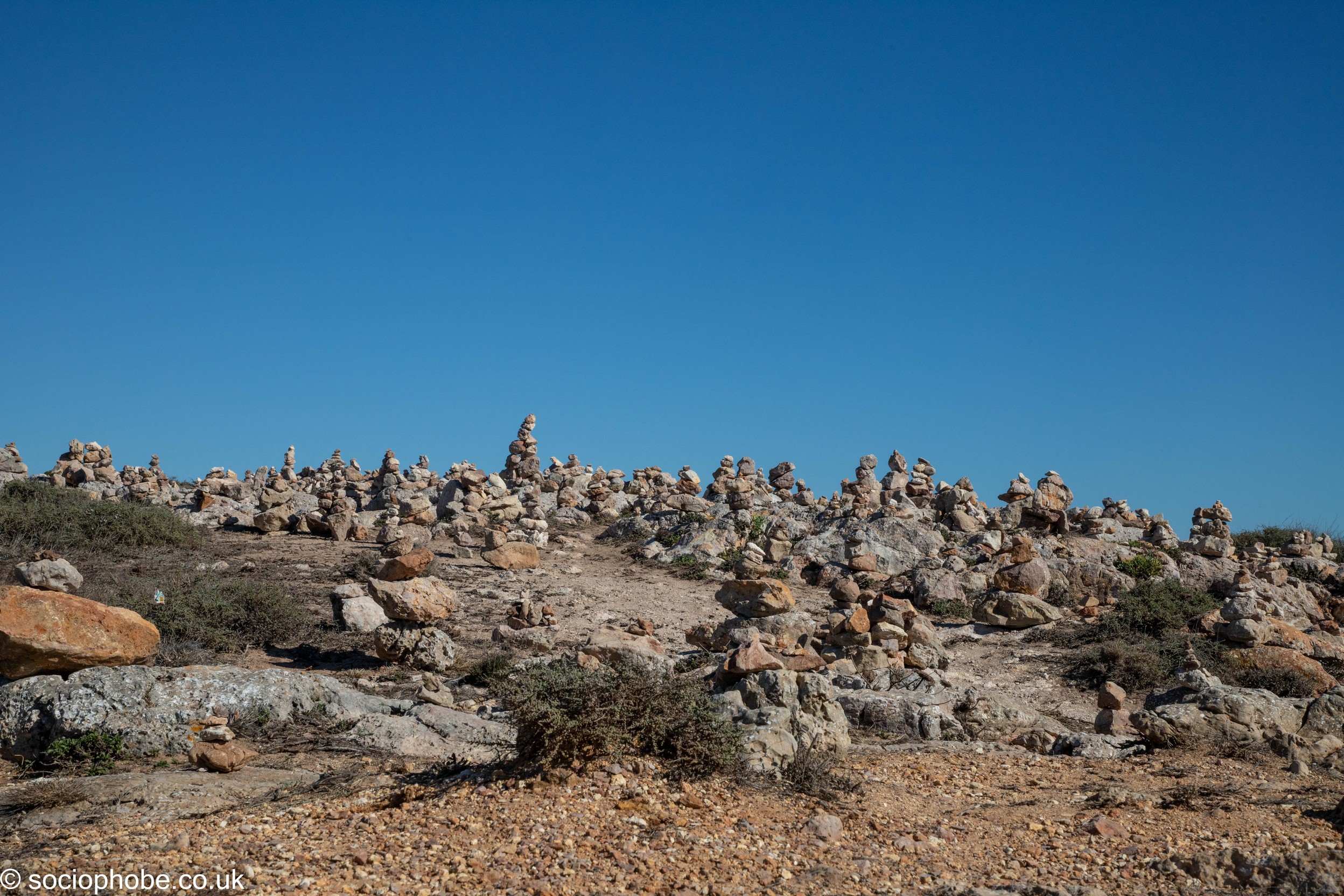
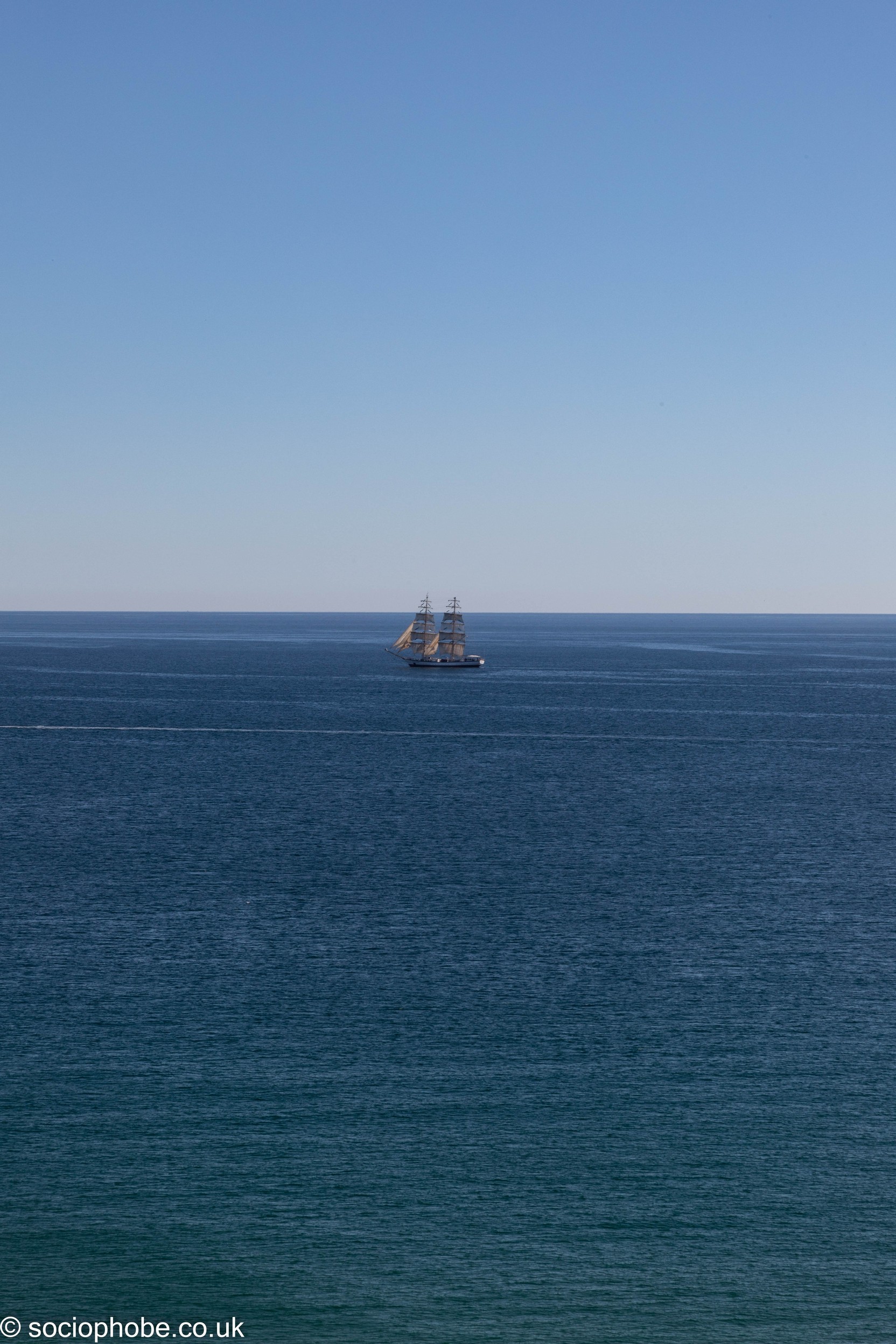
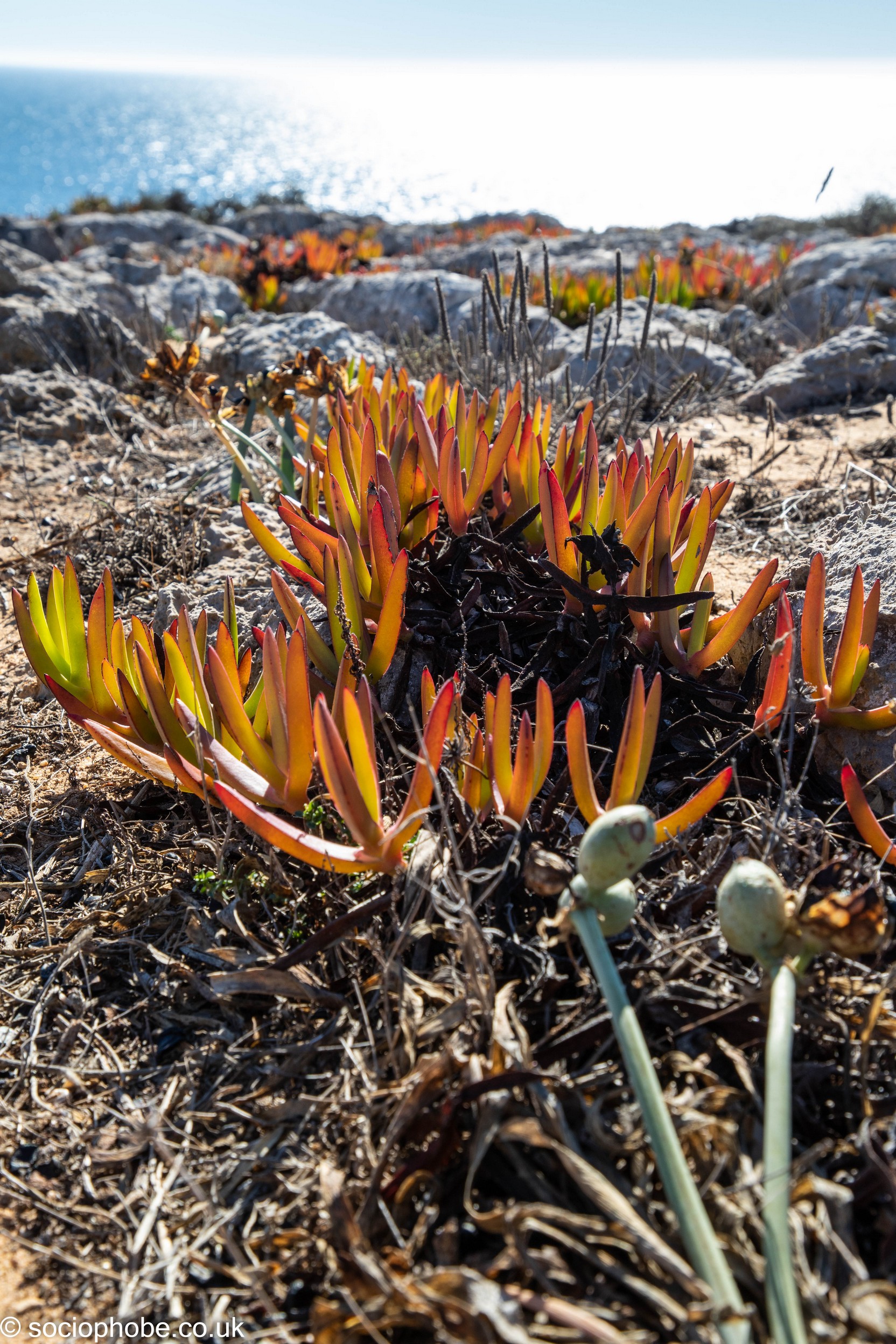
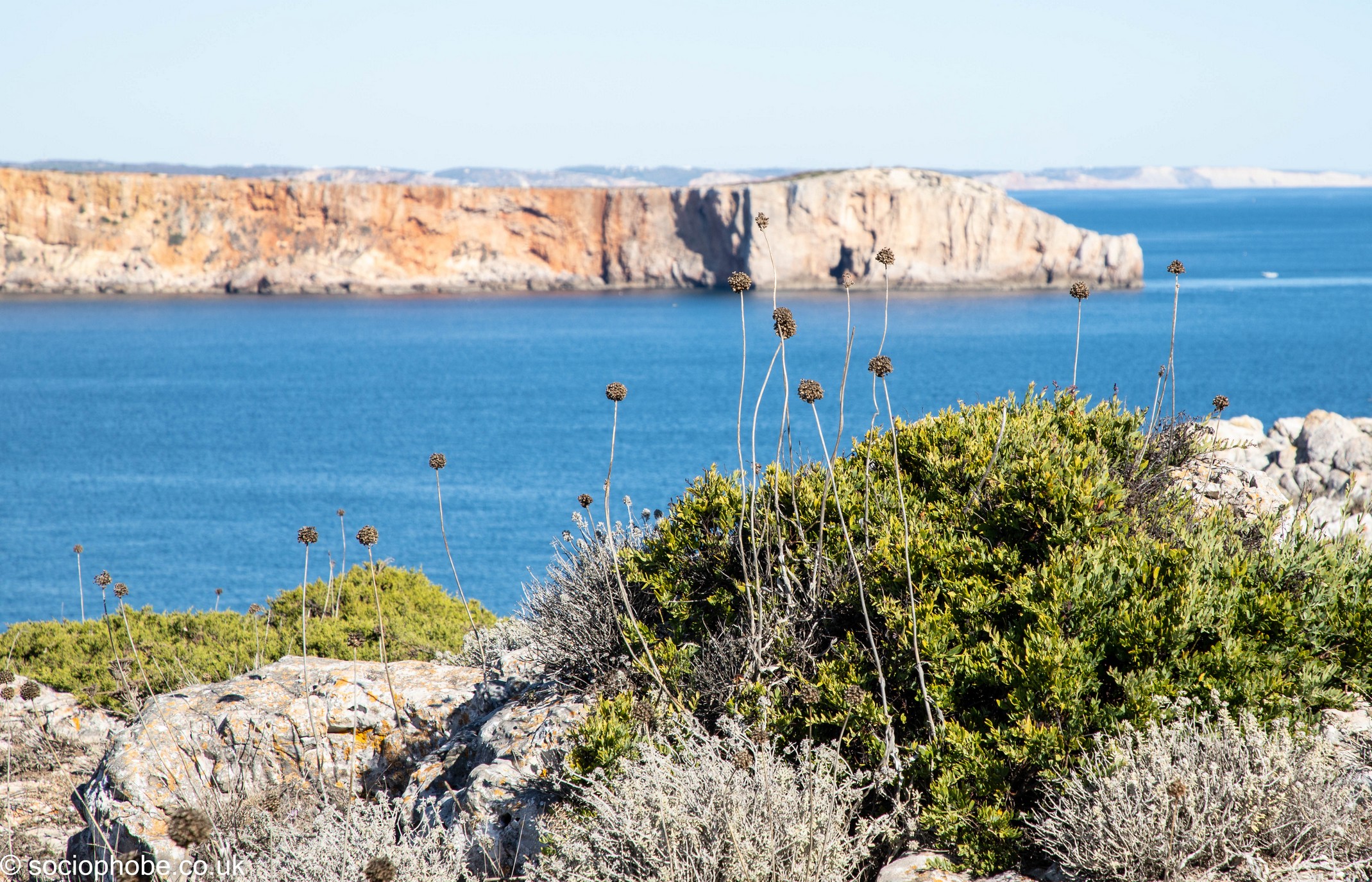
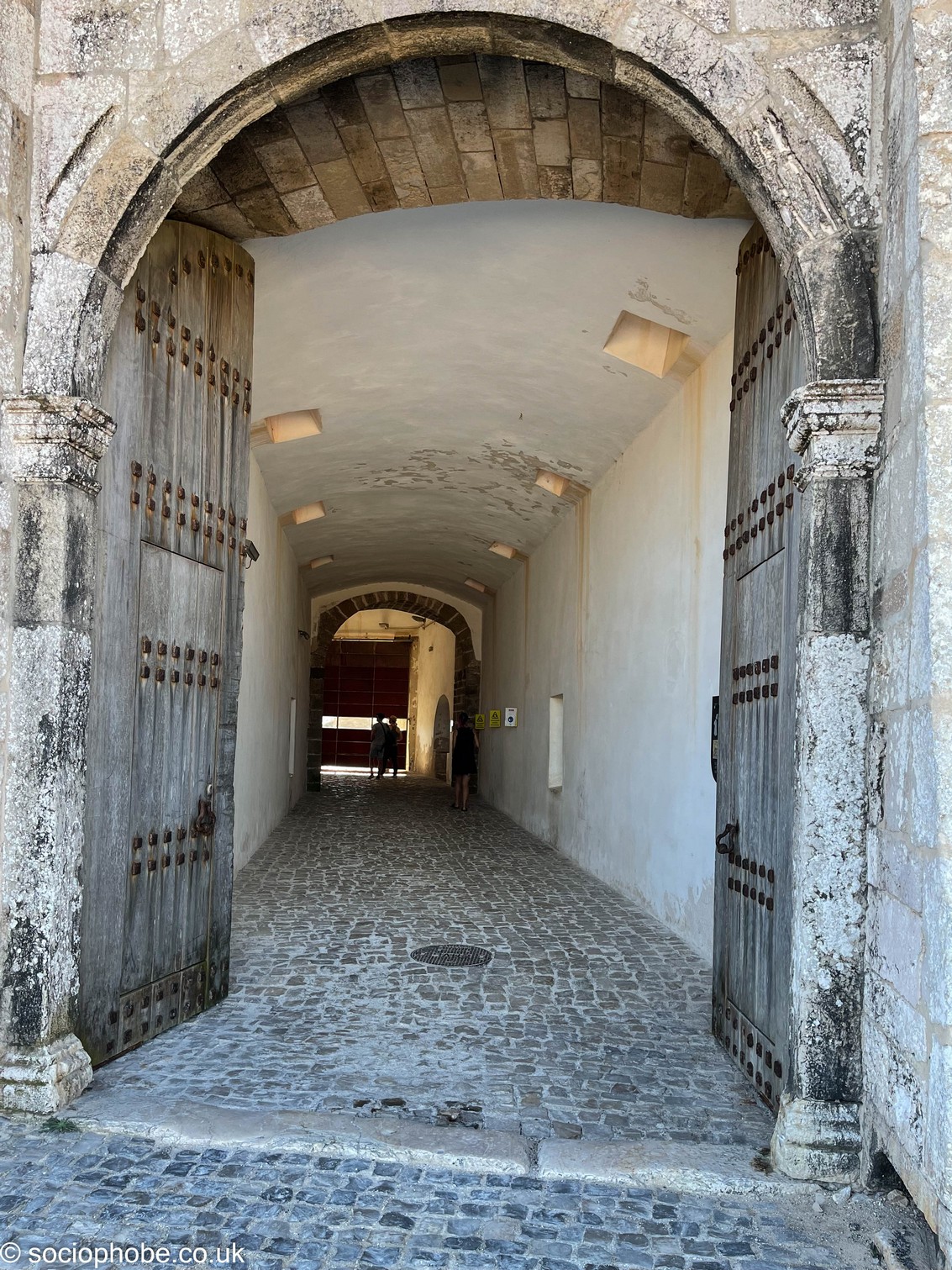
The drive was hard work as it was through lots of winding roads, getting stuck behind the occasional cyclist or motorhome, but the terrain eventually opened up as the trees seemed to just die away. The landscape on the coast was far more lunar with just ground cover and rocks. We drove down the long peninsula to Cape St Vincent lighthouse at the end and parked the car. We couldn’t actually go into the lighthouse as it was out of season but we were able to see the sea, some amazing cliffs and bask in the sun like lizards! We watched a sailing ship sail up and down the coast nearby and drank in the sight of azure blue sea, blue skies and actual warmth on our skin.
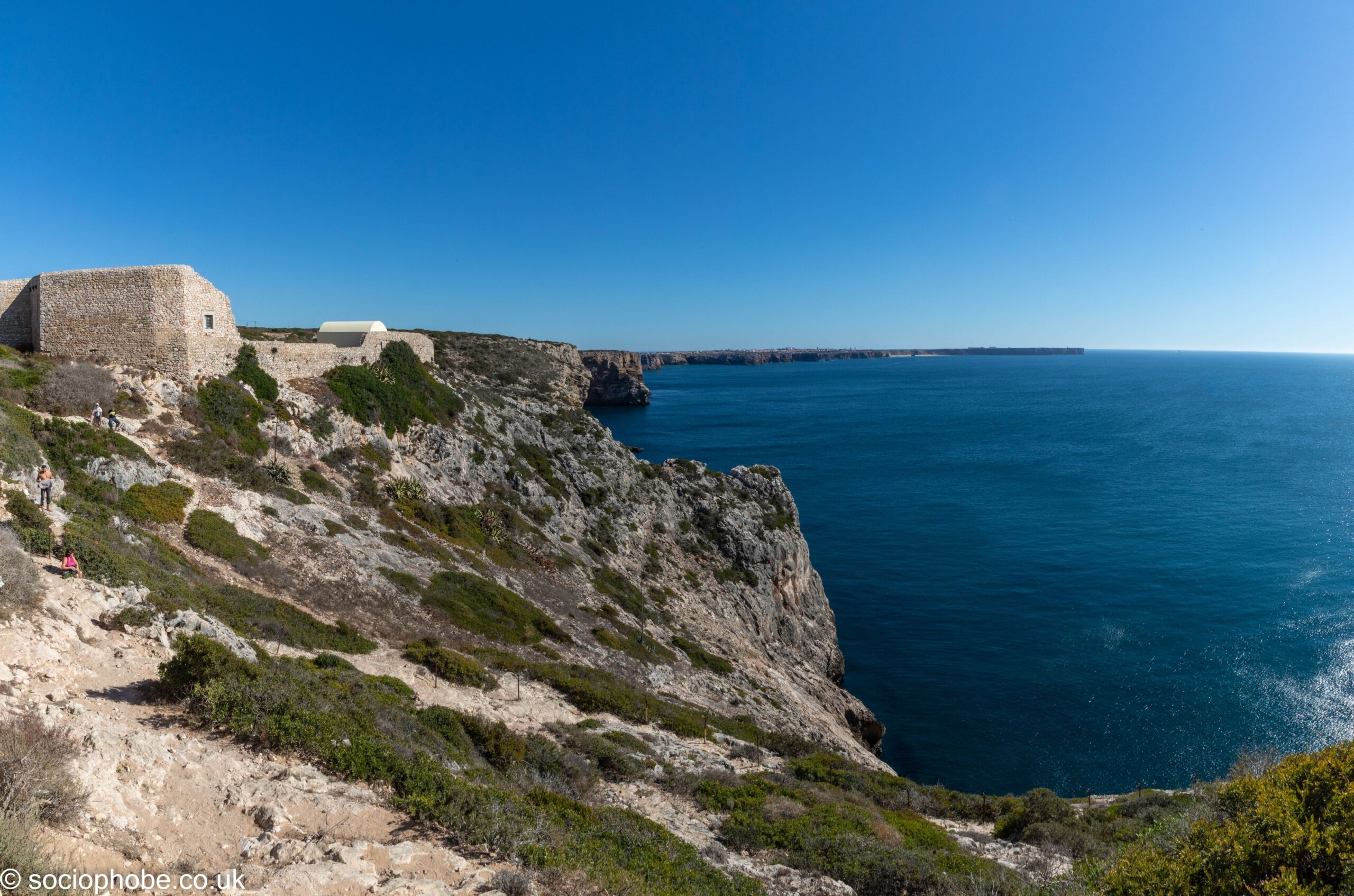
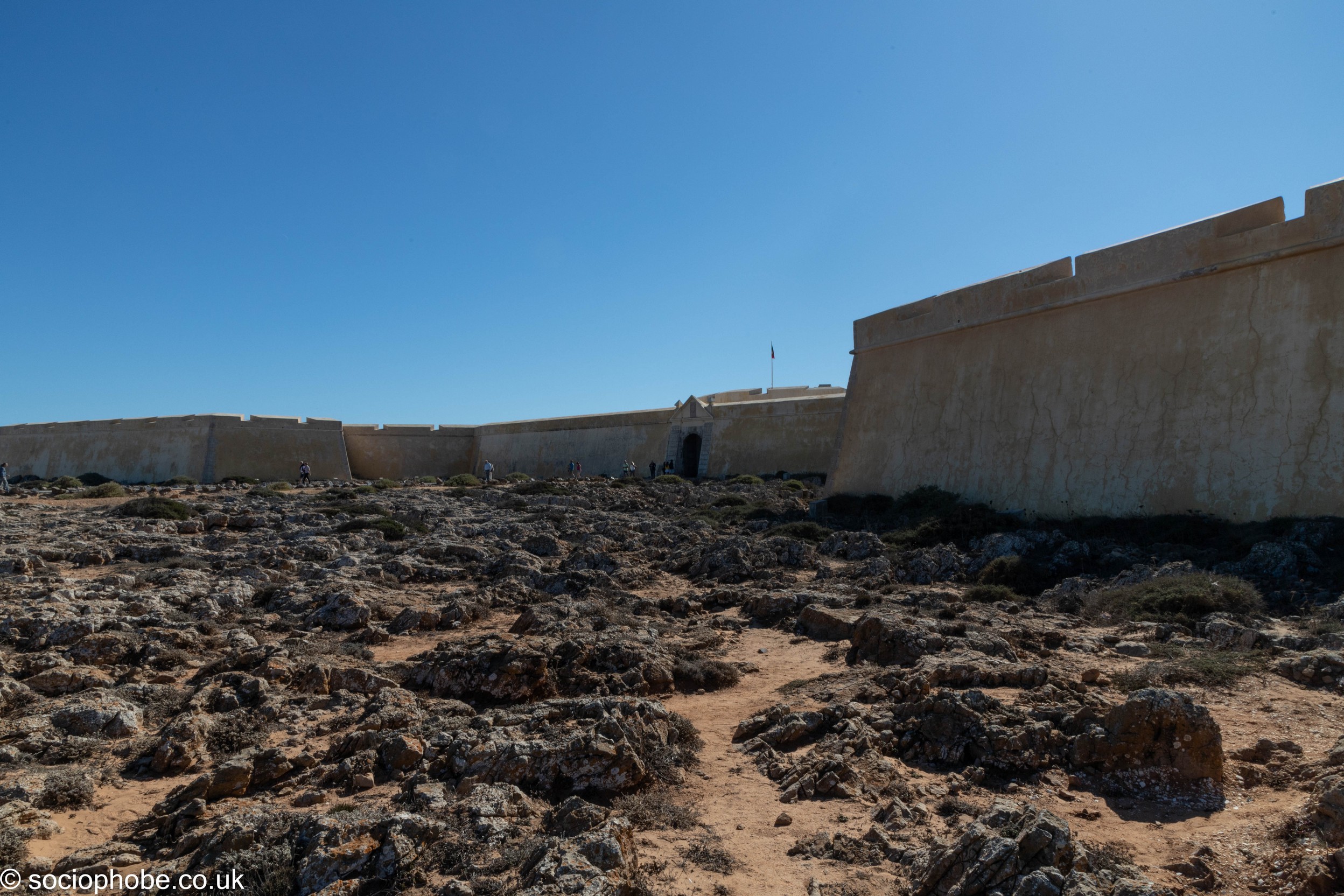
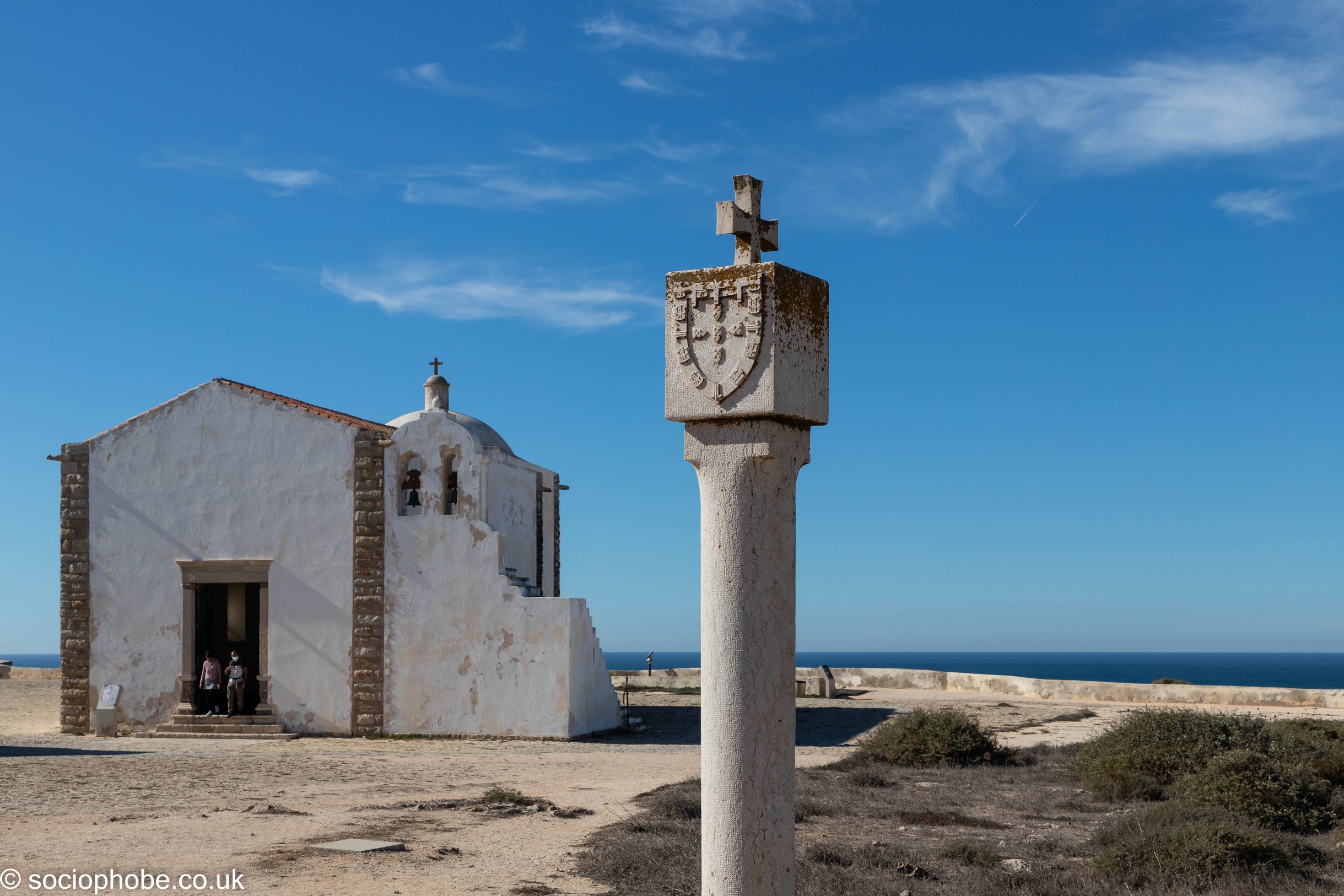
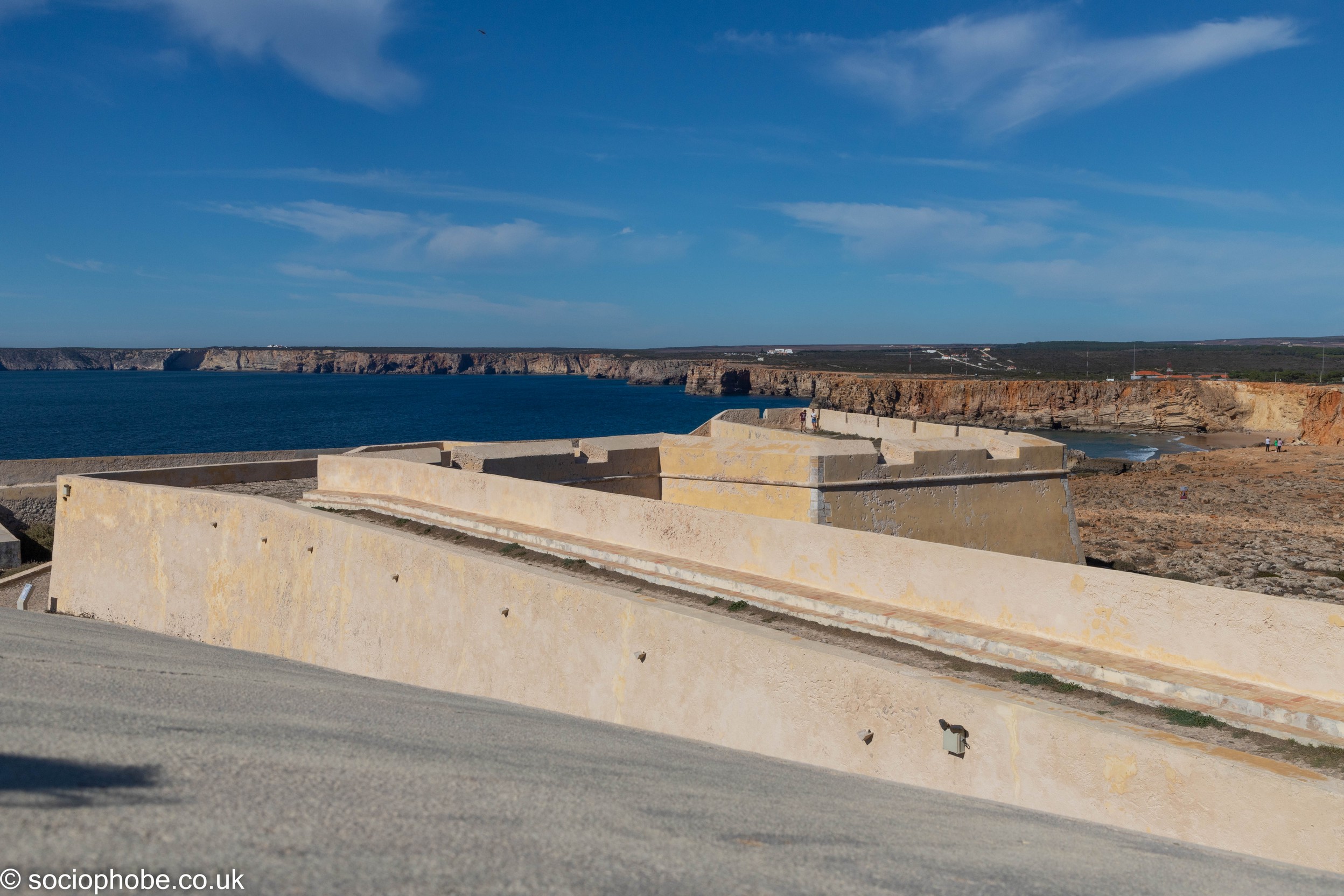
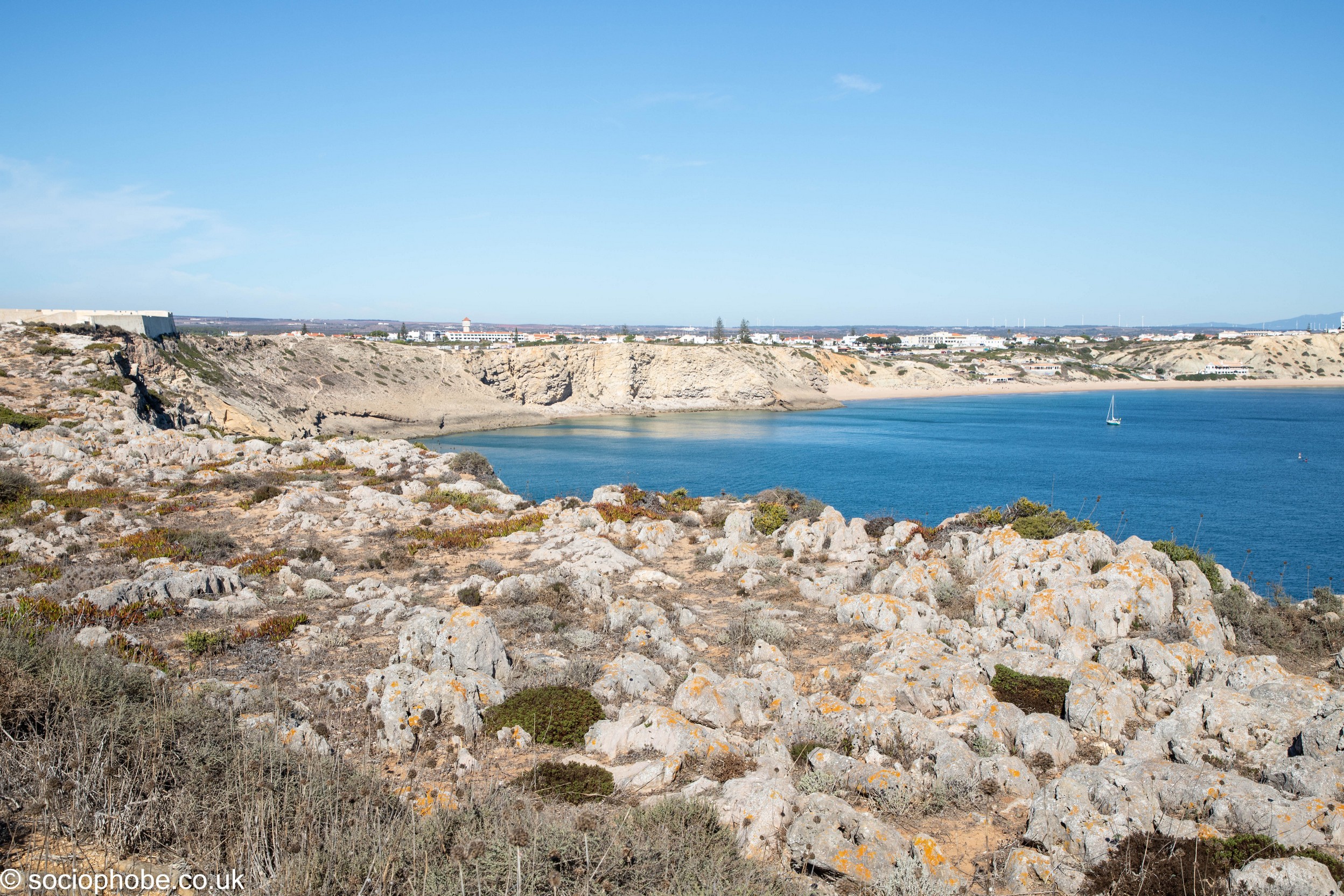
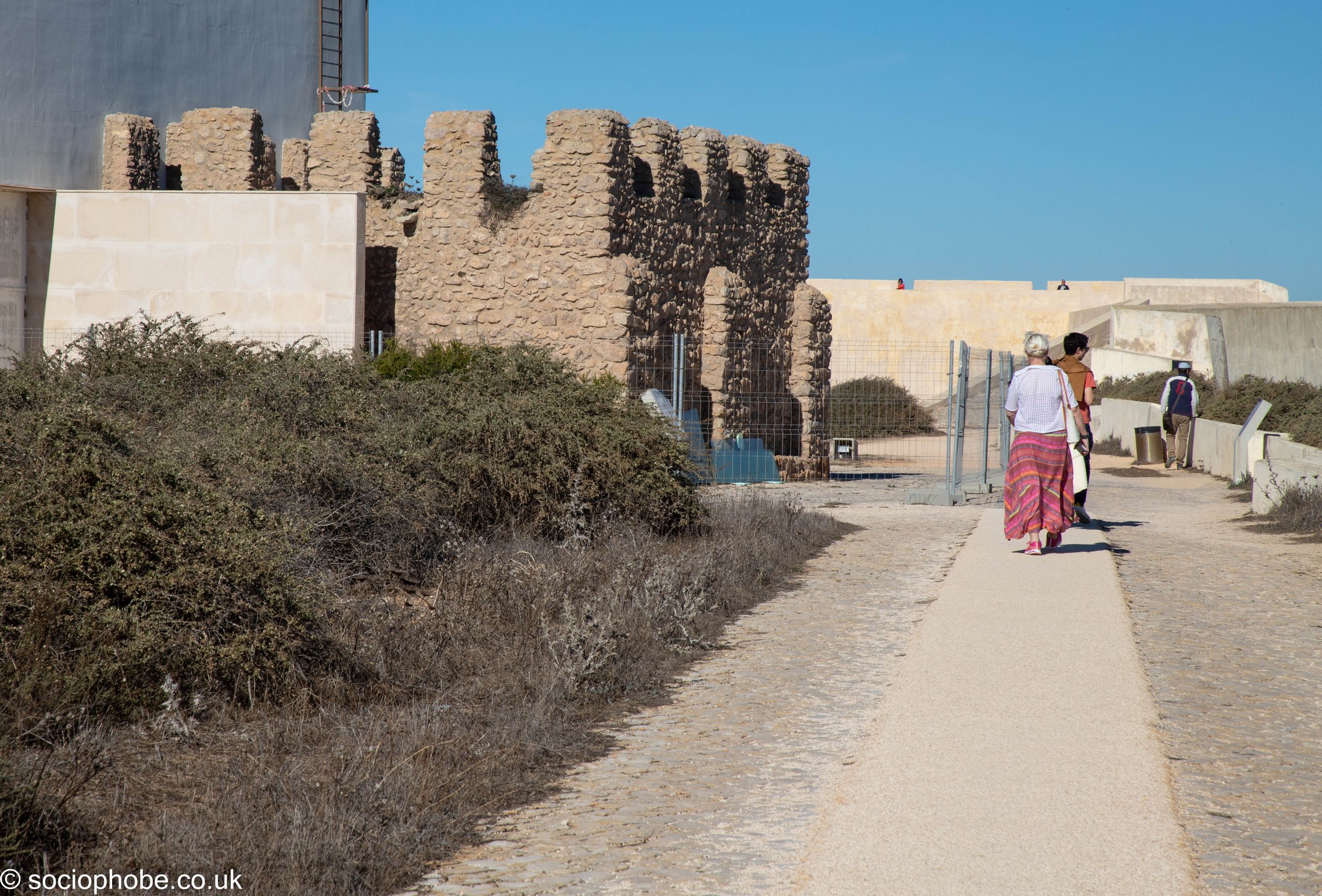
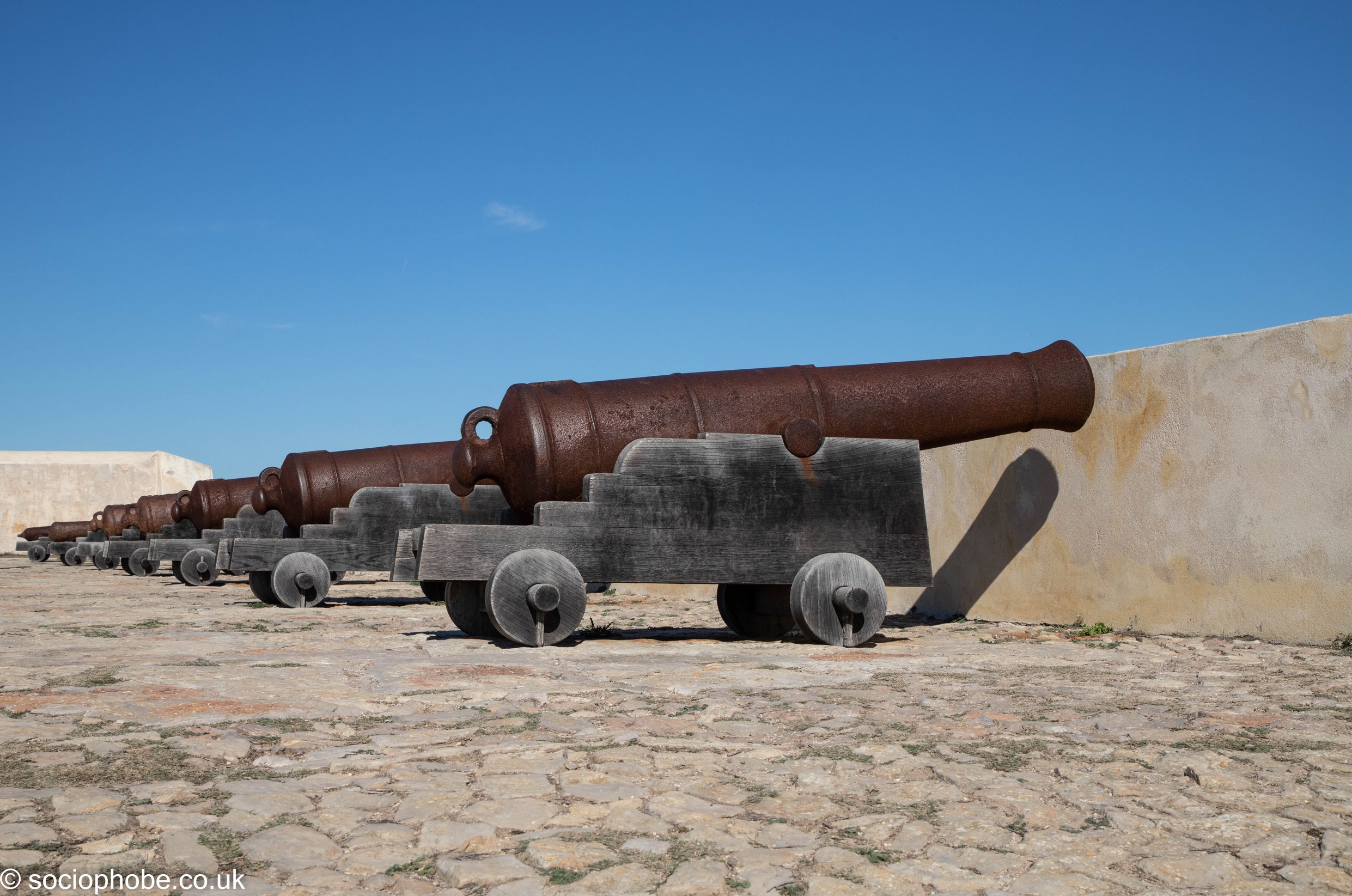
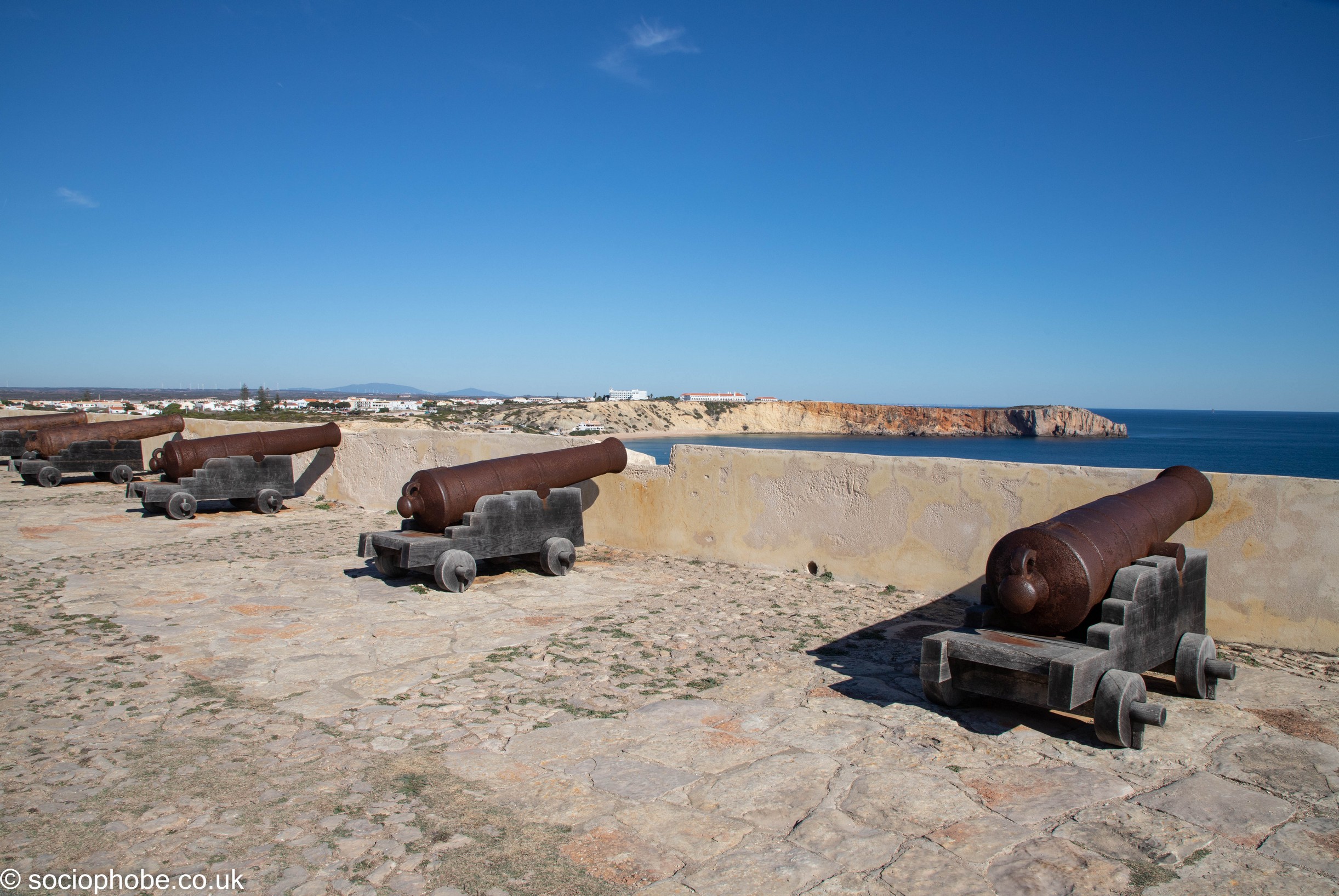
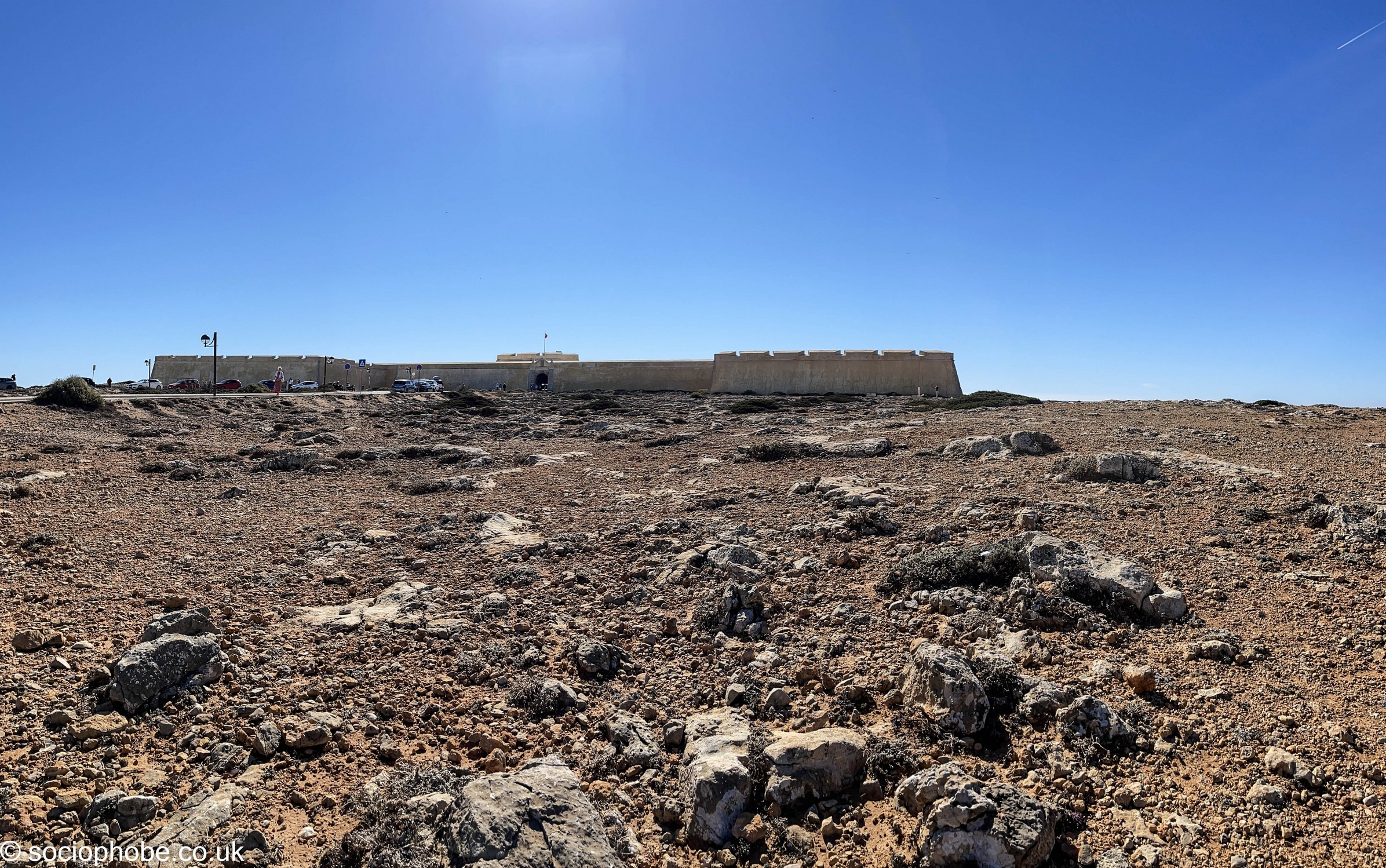
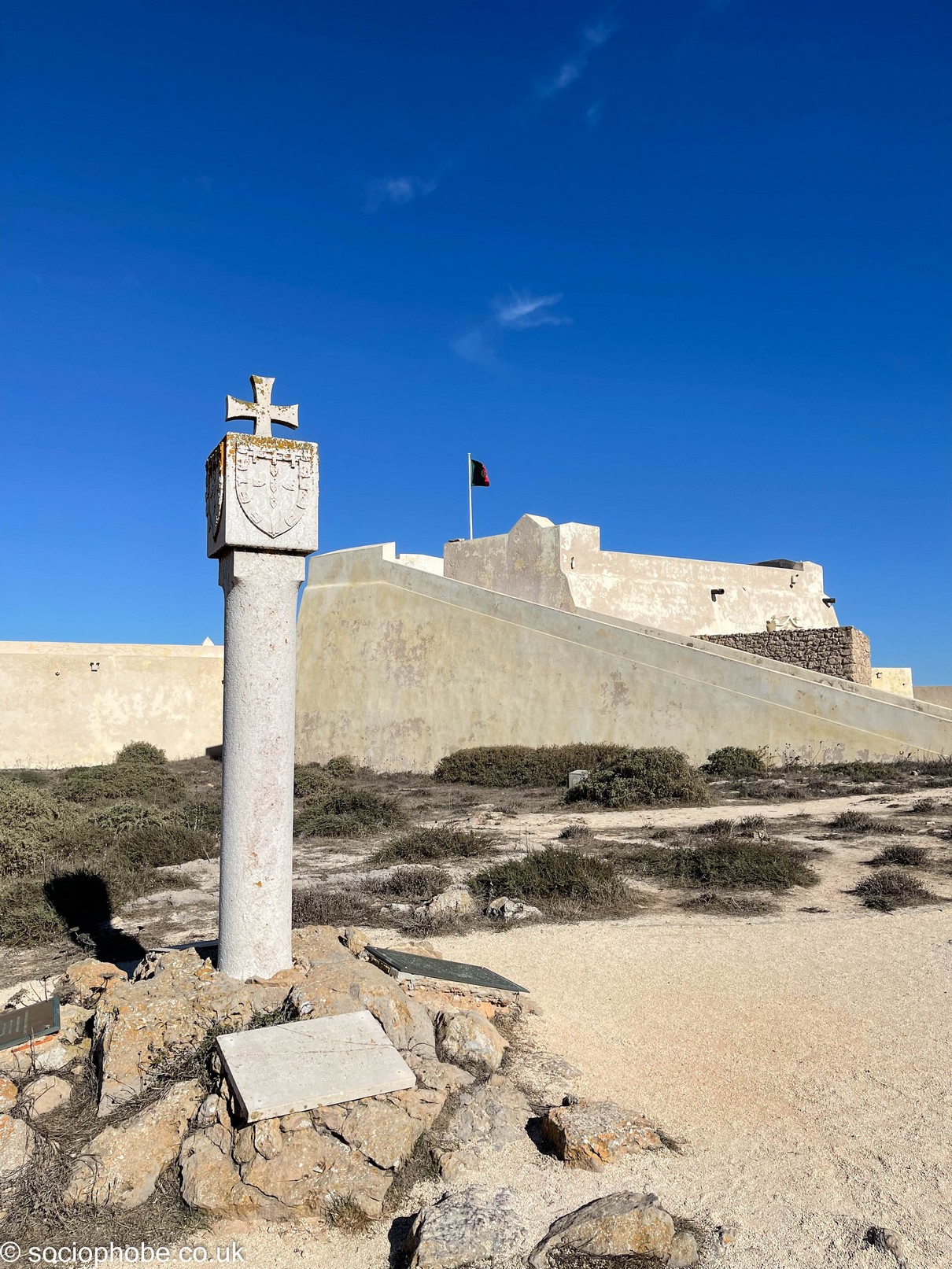
After this brief top up we drove a few minutes down the coast to Fort Beliche. This was closed too but we walked around the outside and savoured yet more views. Our final stop was, bucking the trend a bit, another fort at nearby Sagres. This was a huge defensive wall across the peninsula and then various gun battery positions behind to cover access to the coast. It was developed by Price Henry the Navigator who encouraged the Portugese voyages of discovery and the development of nautical and navigational technologies.
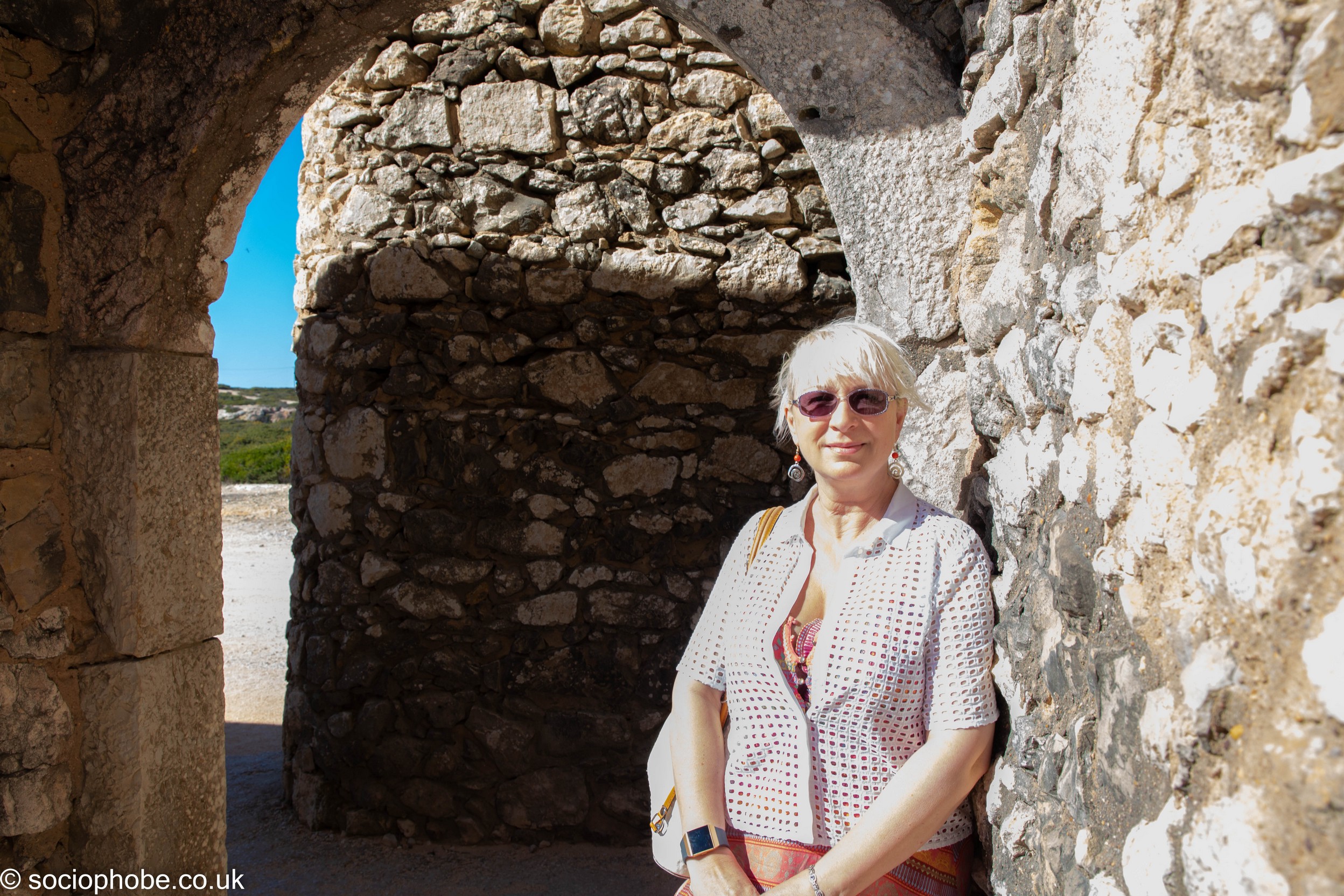
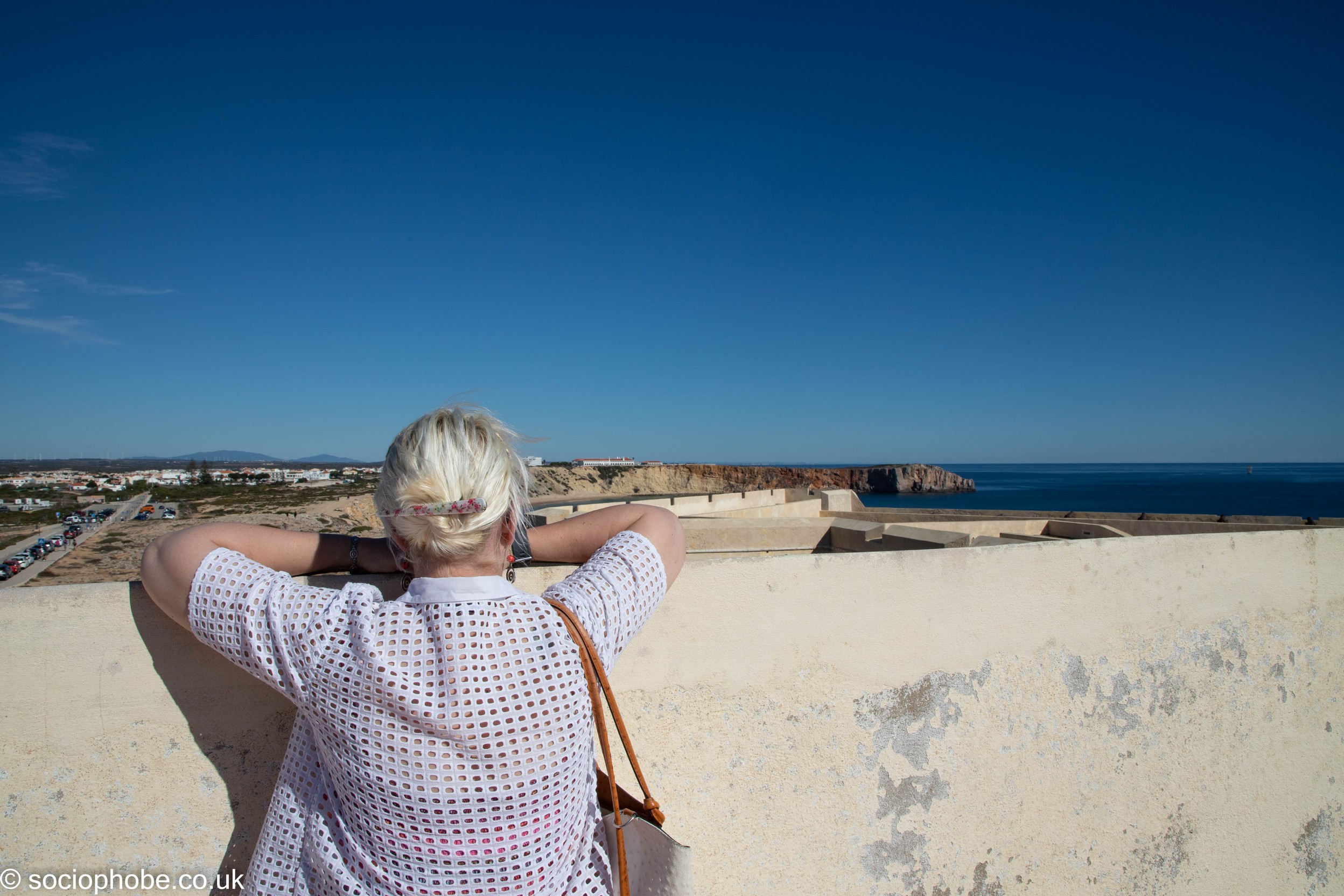
Other than the outer wall there wasn’t a huge amount of actual fortress to see but there were more impressive views and a long walk around the perimeter with lots of info boards about the plants and bird life of the area. It was lovely to be walking in the sun and by the sea so we took our time. Sadly there was no cafe on site so we went back to the car park to start the drive to our hotel.
Carvoeiro hotel
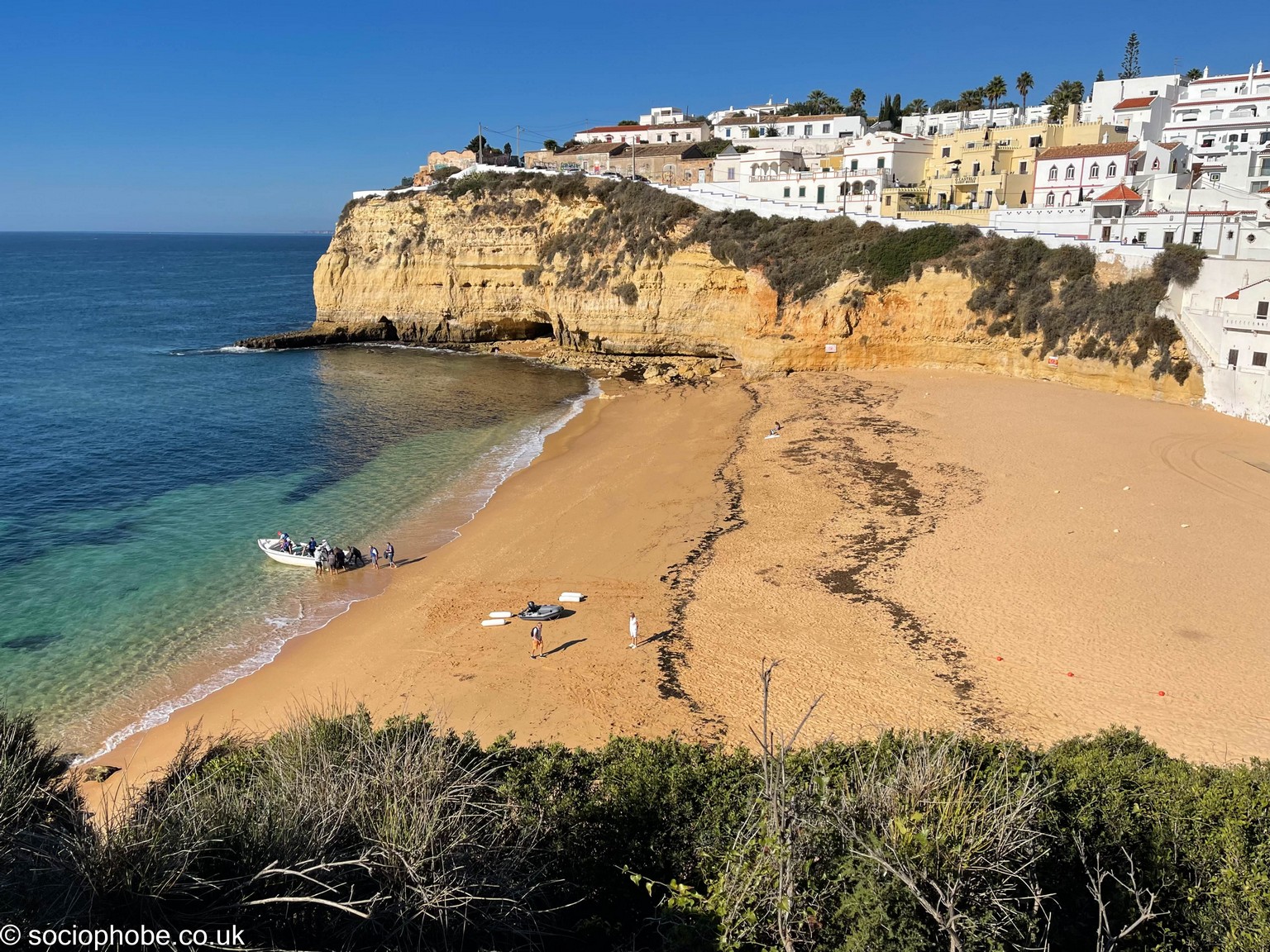
Our road trip through southern Portugal continued with two nights booked in Carvoeiro, a small town on the coast in the western Algarve. The scenery soon became a lot more built up and with a lot more traffic as we entered the Algarve and the more touristy areas. After another hour we reached our destination and went in to our hotel. We did spend a little while just looking at the view from our patio doors of the sea and beach. More importantly, the room had a kettle!
We spent a couple of hours in the room, enjoying the view and sorting photos etc until it got too cold and we then went out to a local place for a light dinner. And a bottle of wine for Deb. Back to another soak in the bath before bed.
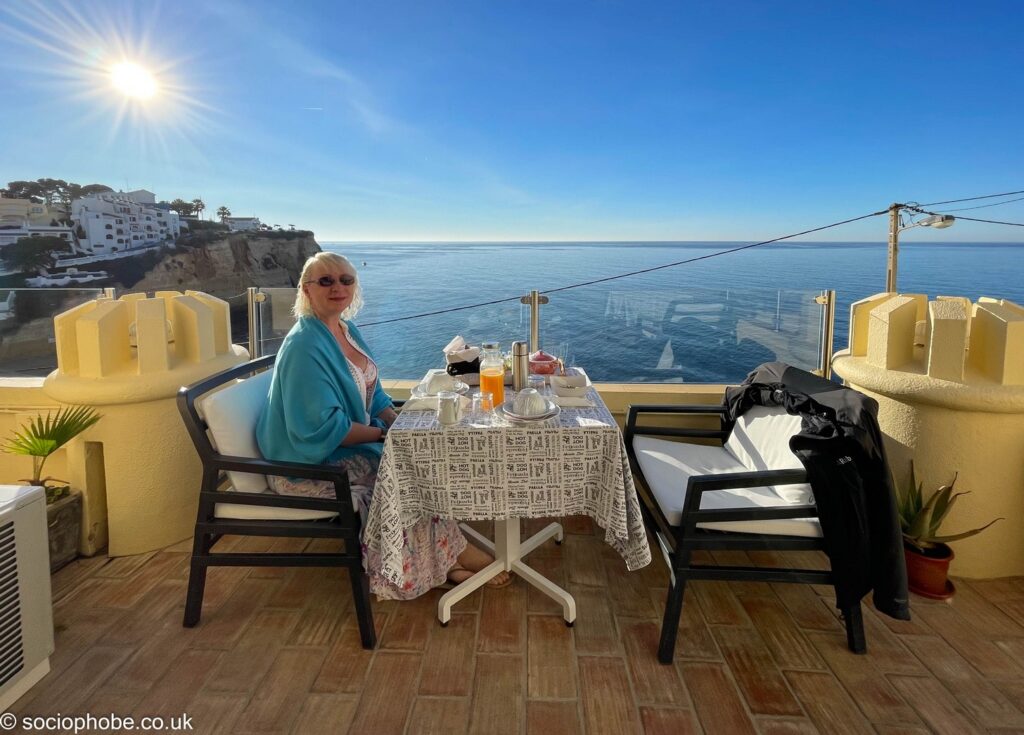
I woke at 6.30 and had the usual ‘creep around like a church mouse’ for an hour morning. It was a shame because it meant I missed the sunrise but such is life, there will be more sunrises. We had a lovely breakfast on the terrace overlooking the sea. Even at 8.30 the sun was warm enough not to need a jacket.
Silves Castle
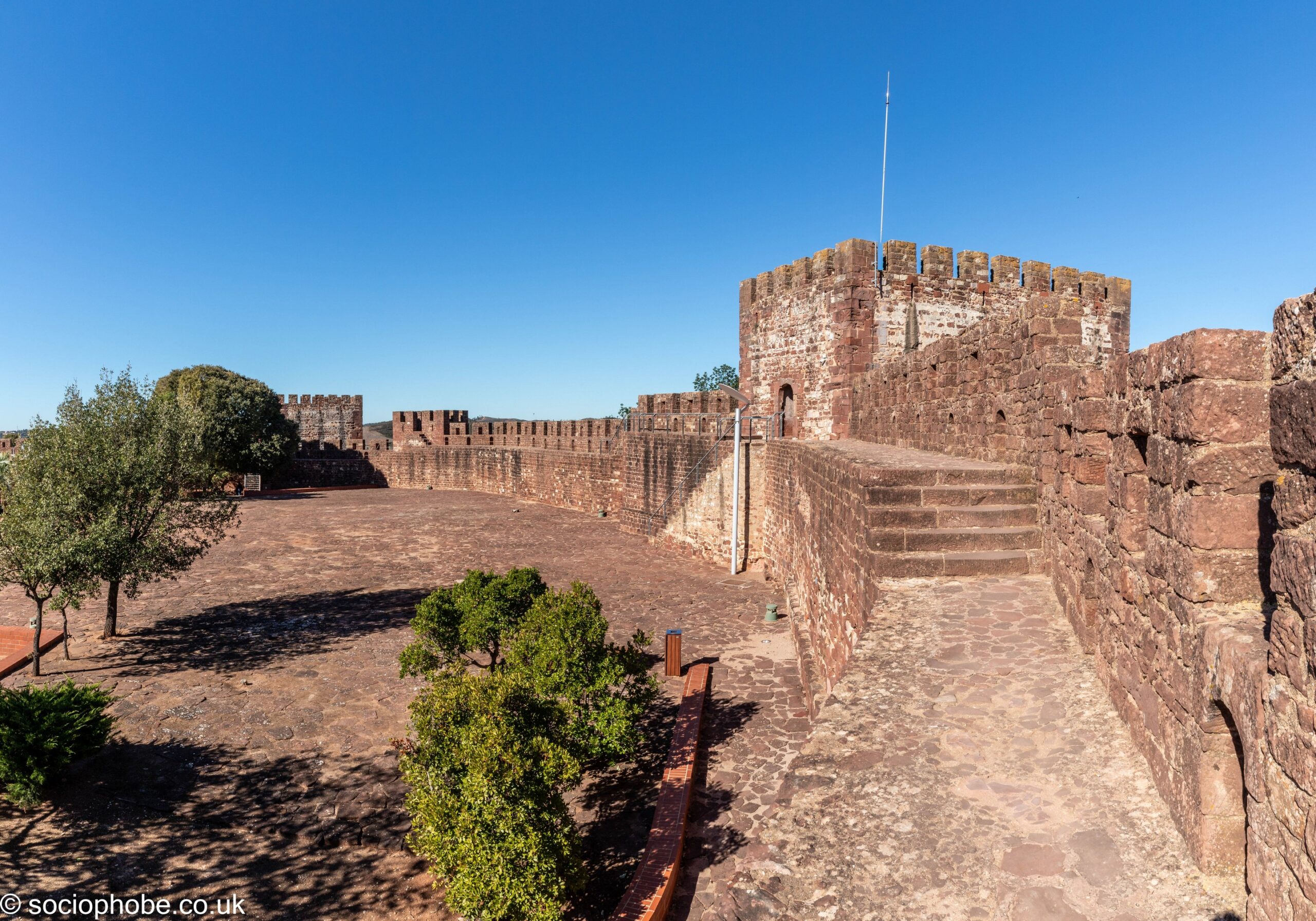
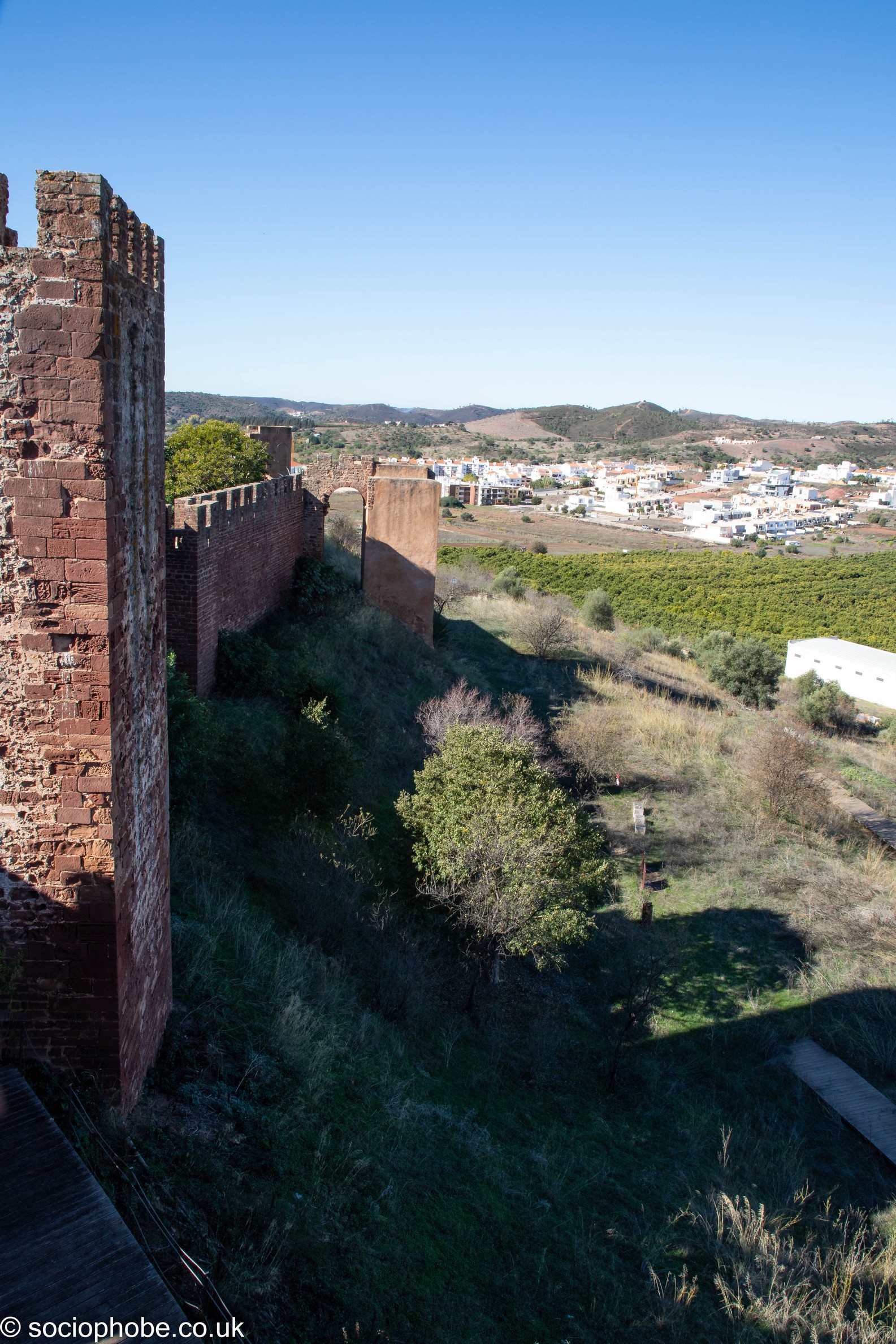
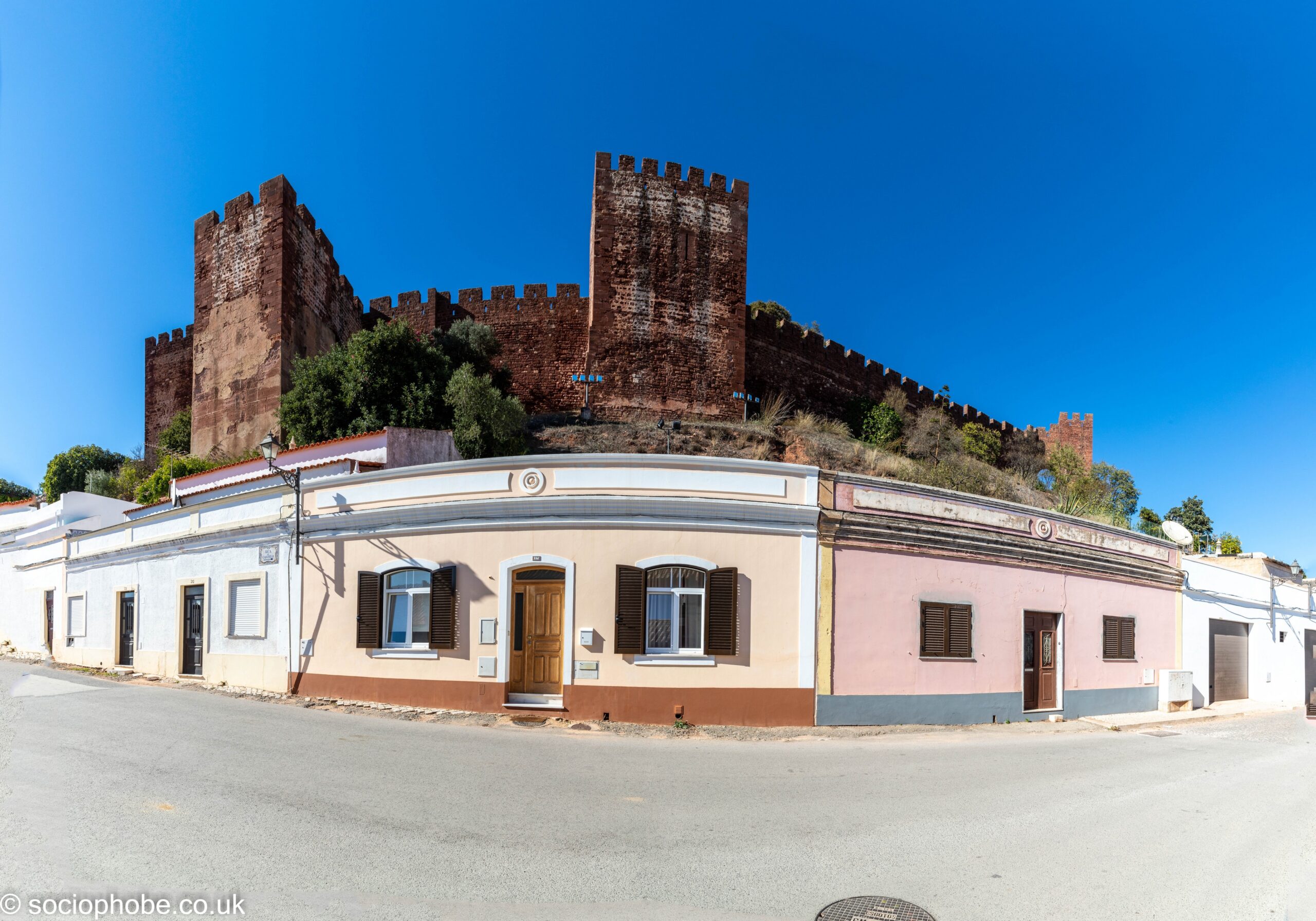
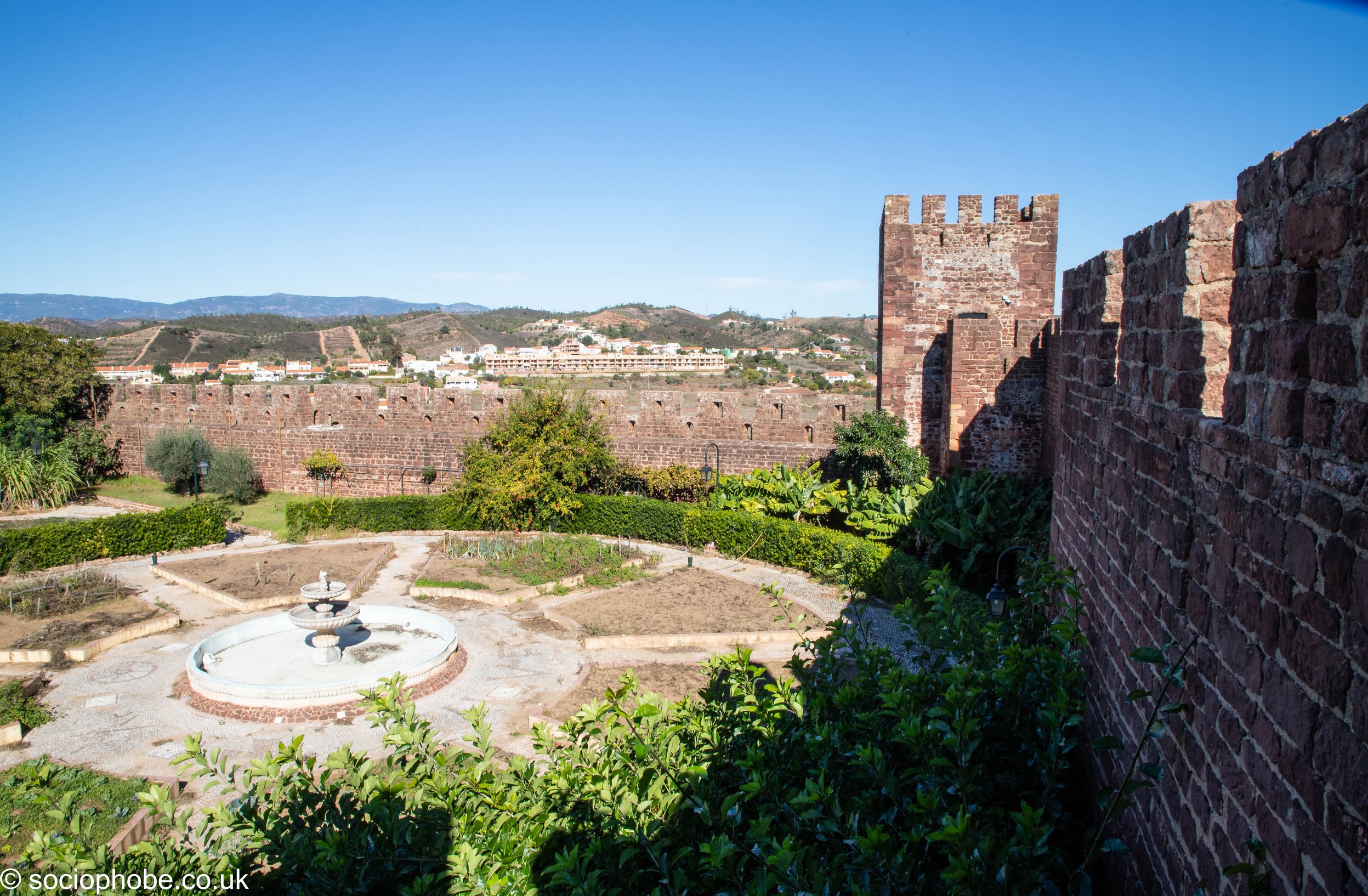
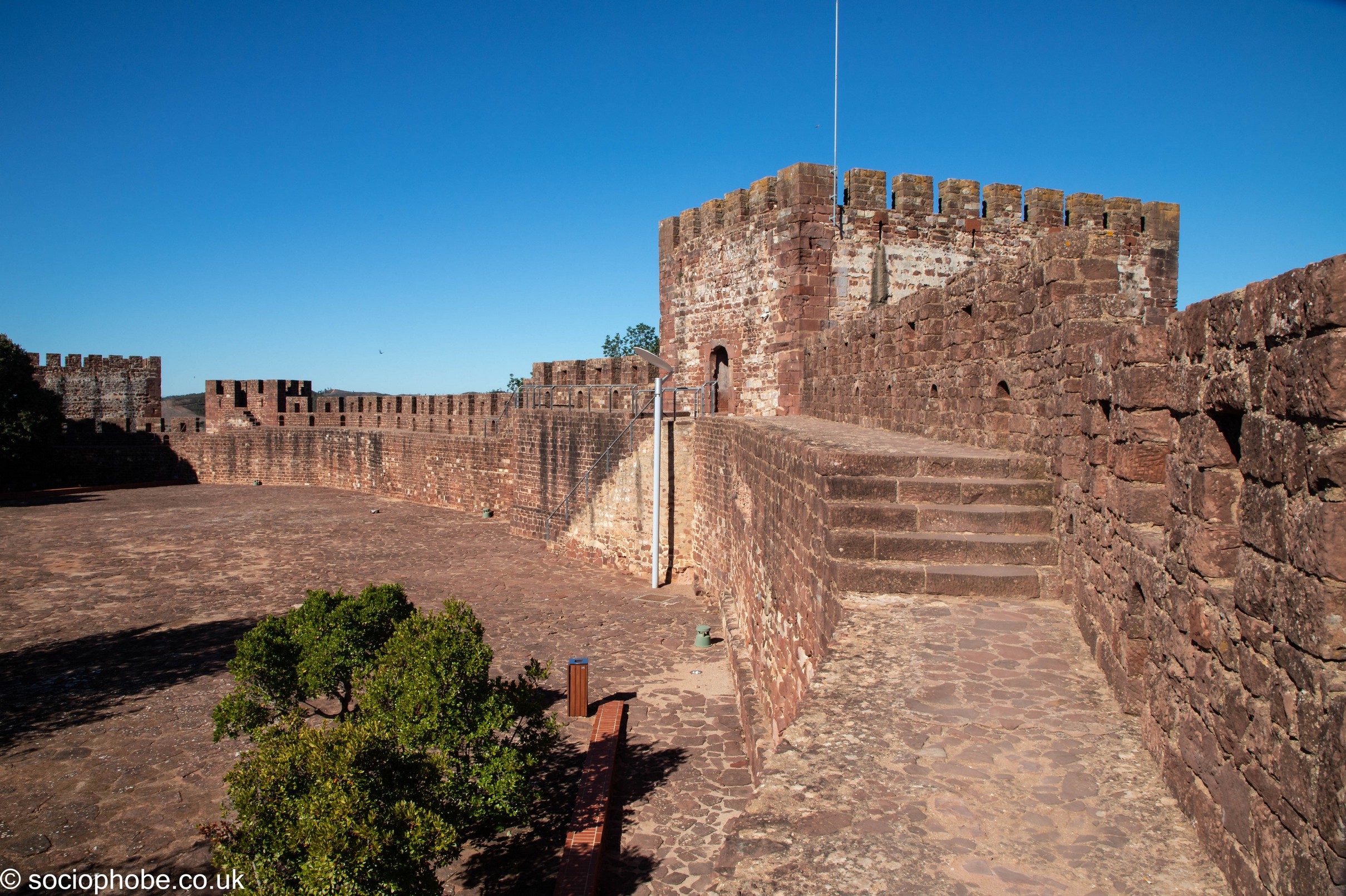
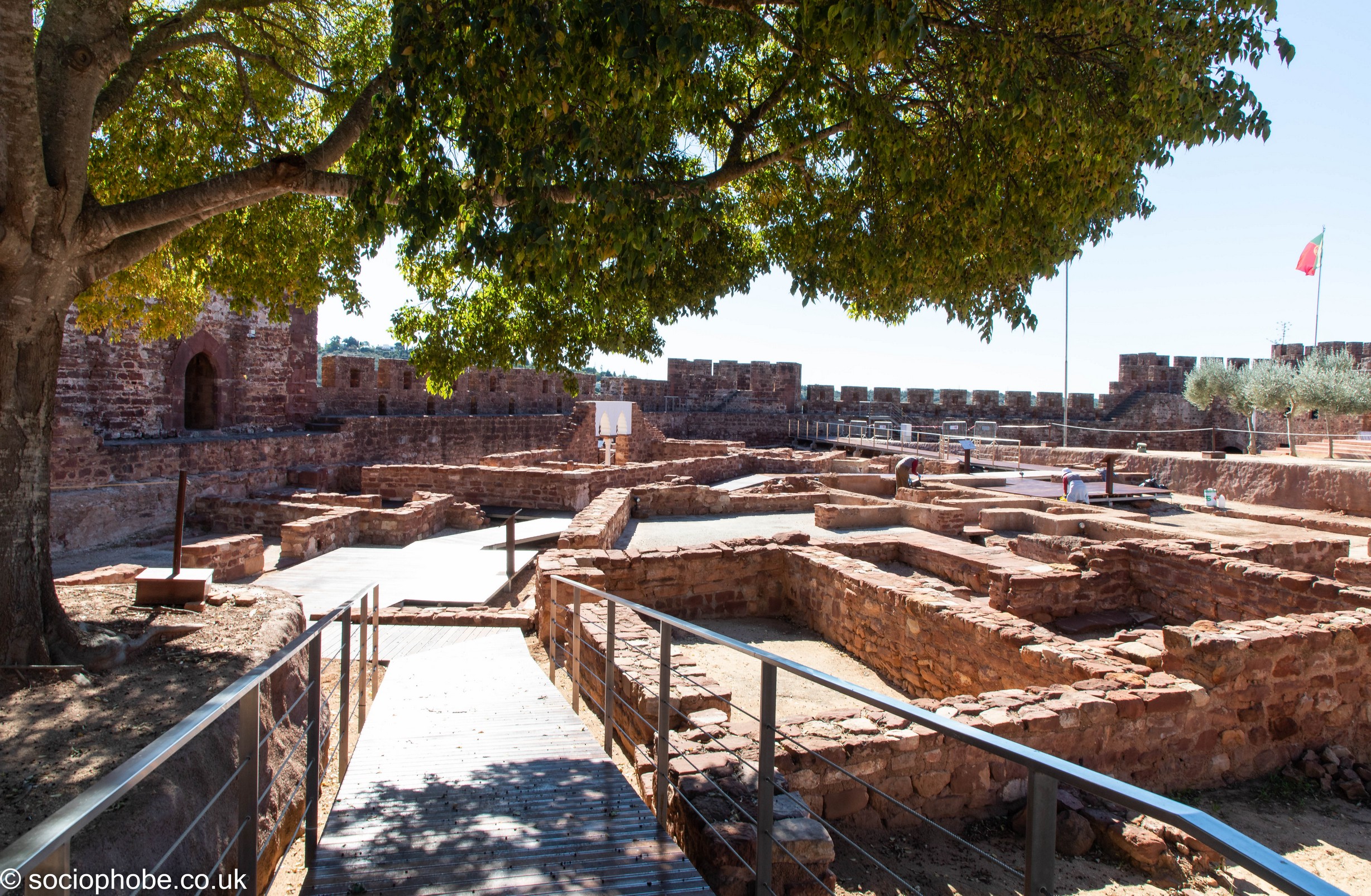
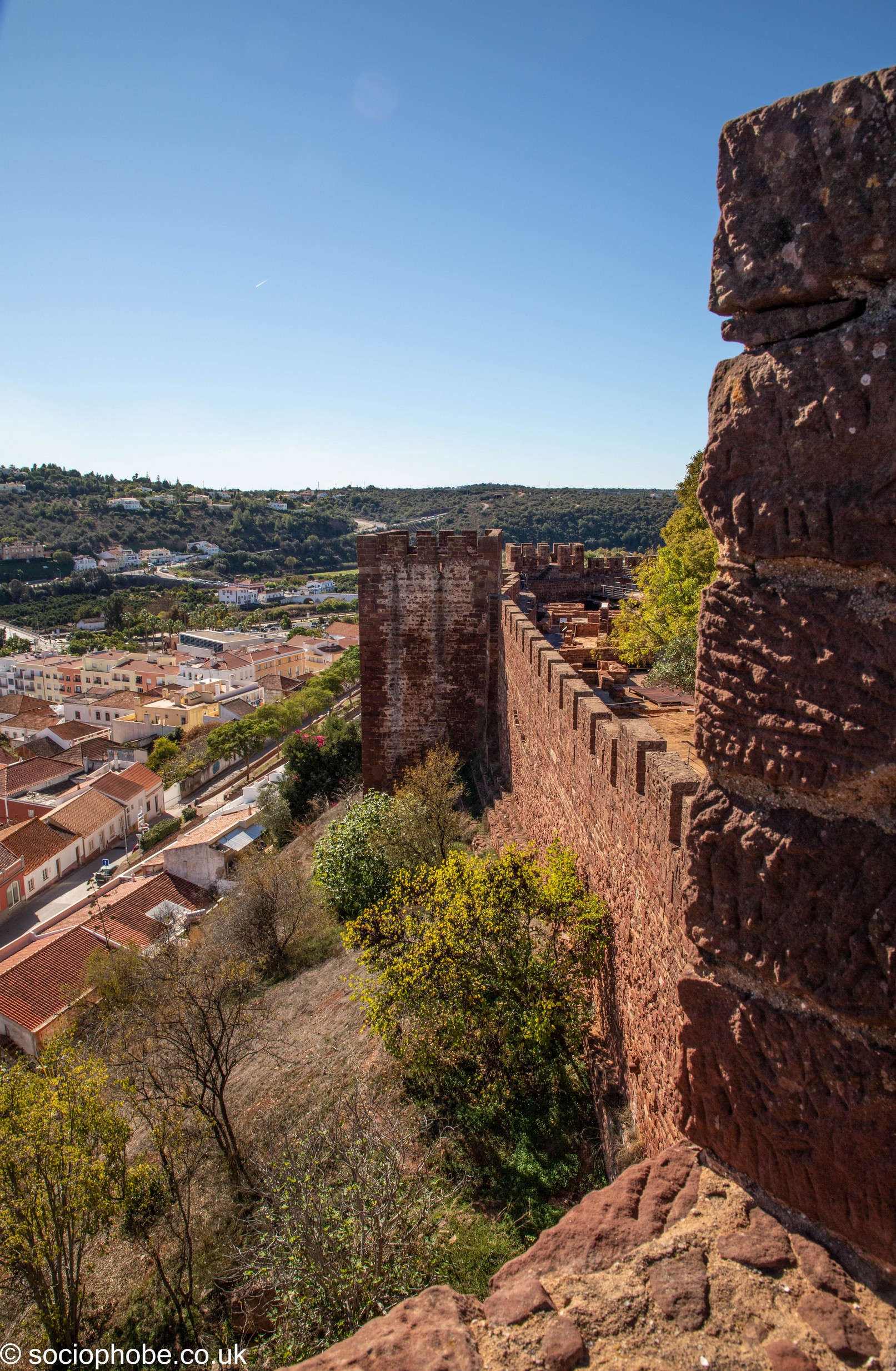
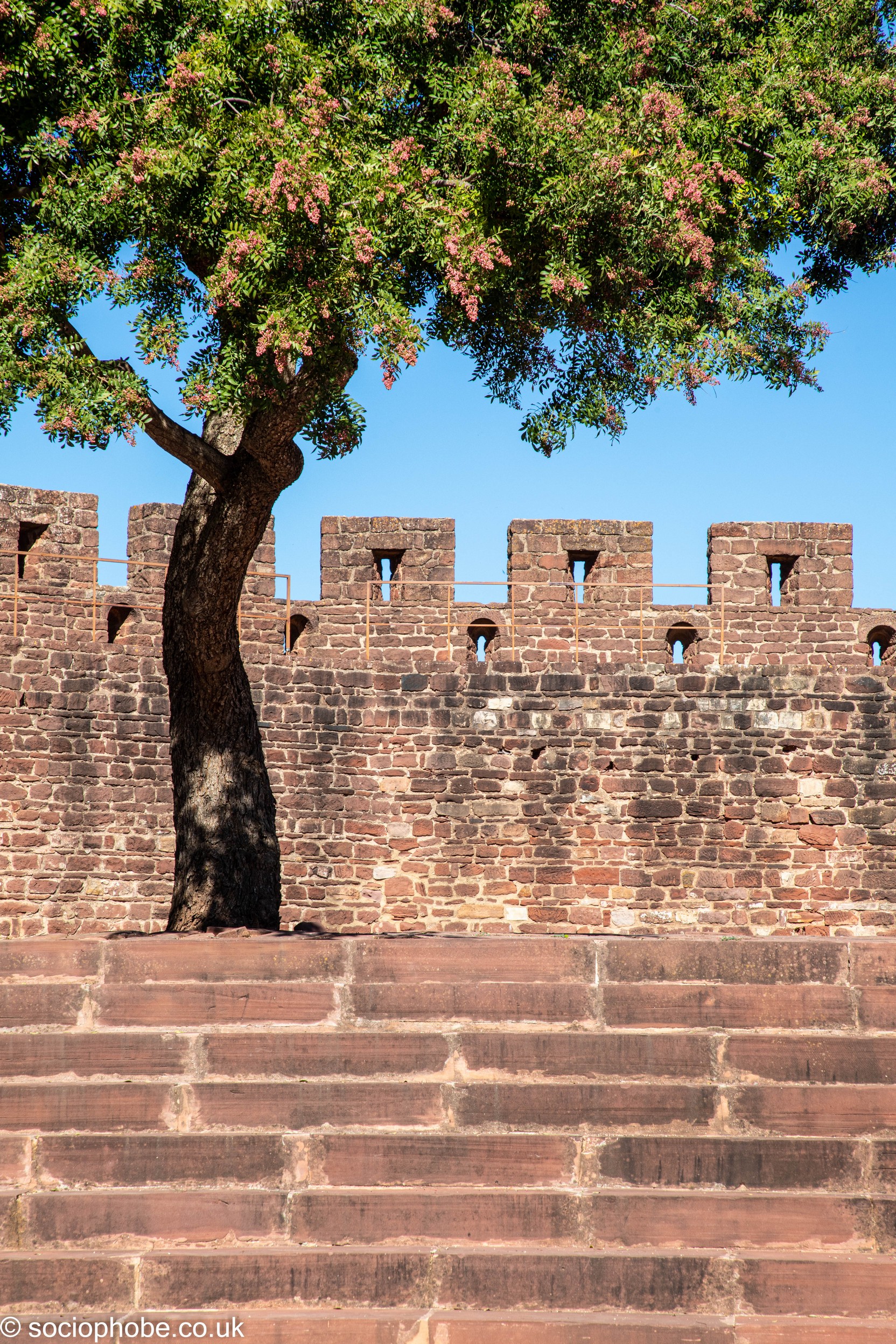
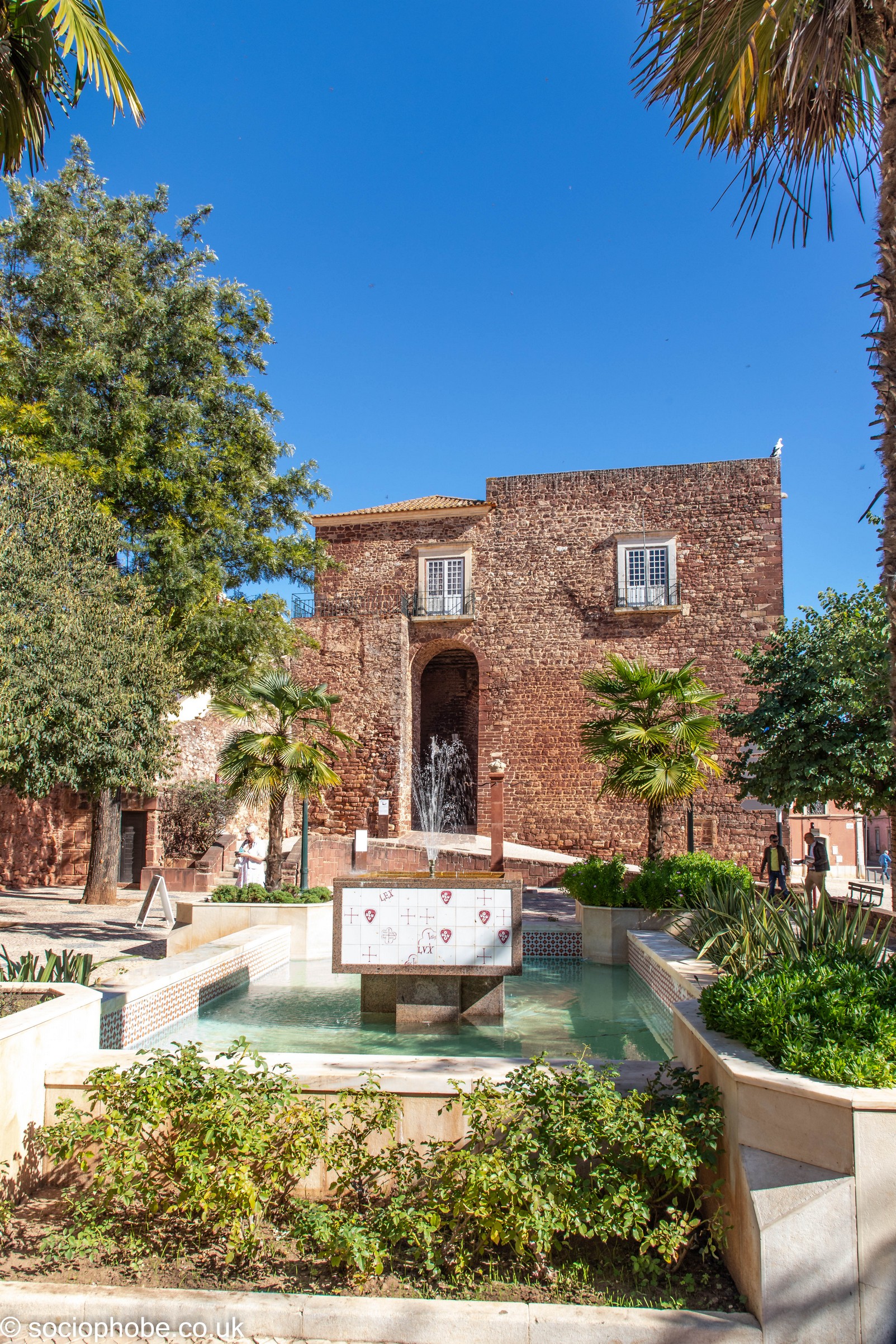
We weren’t in a great hurry so bimbled around for a bit before leaving around 10 for the town of Silves. During the Muslim period, Silves was the most important city of the Algarve. It was finally captured by the Portugese in the thirteenth century after a 40 day siege after being bounced back and forth between Muslim and Christian hands for a hundred years. As the river silted up it declined in importance but the castle was restored in the 1940’s and is now an important tourist destination. Not important enough to have a car park though.
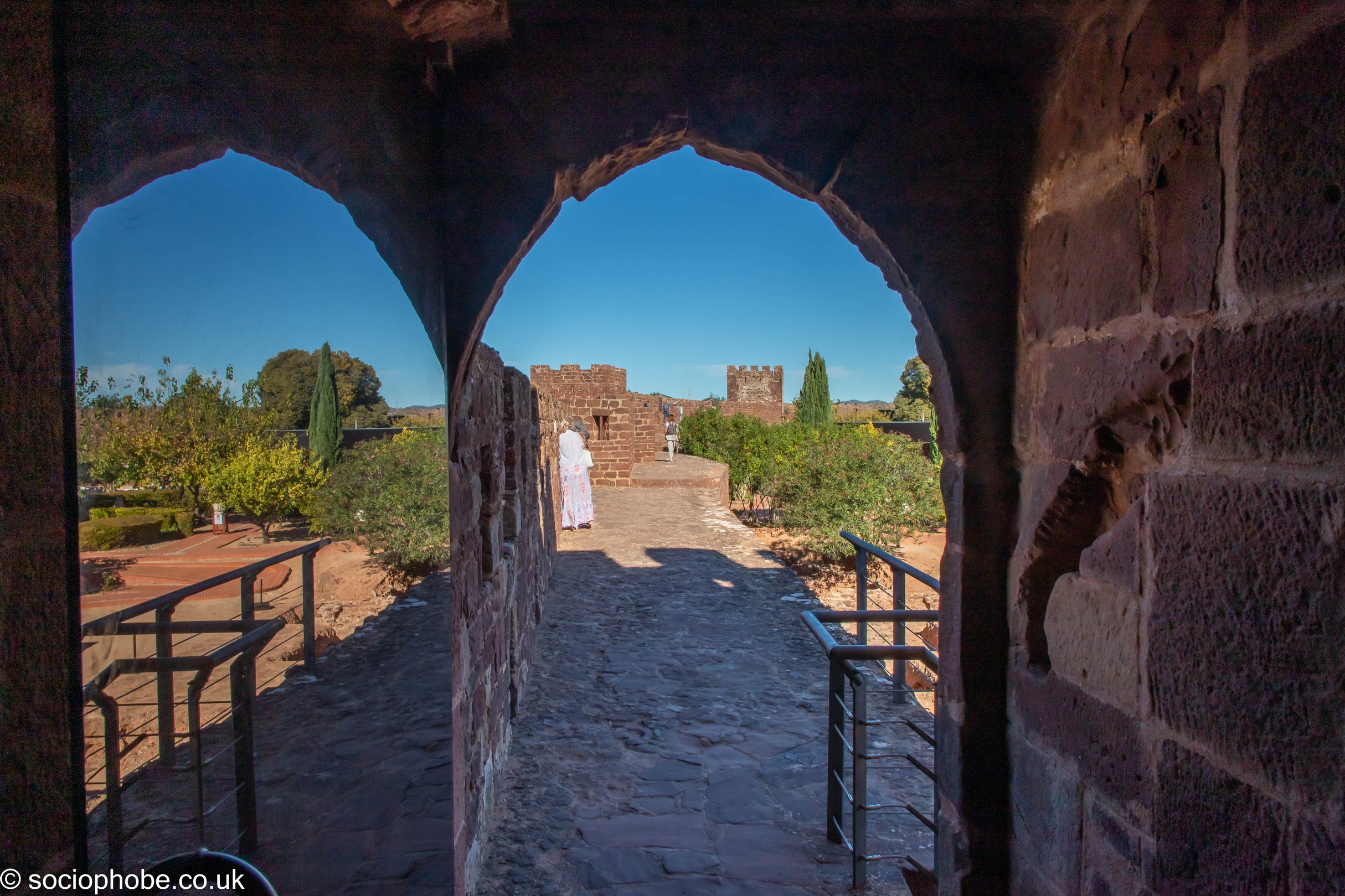
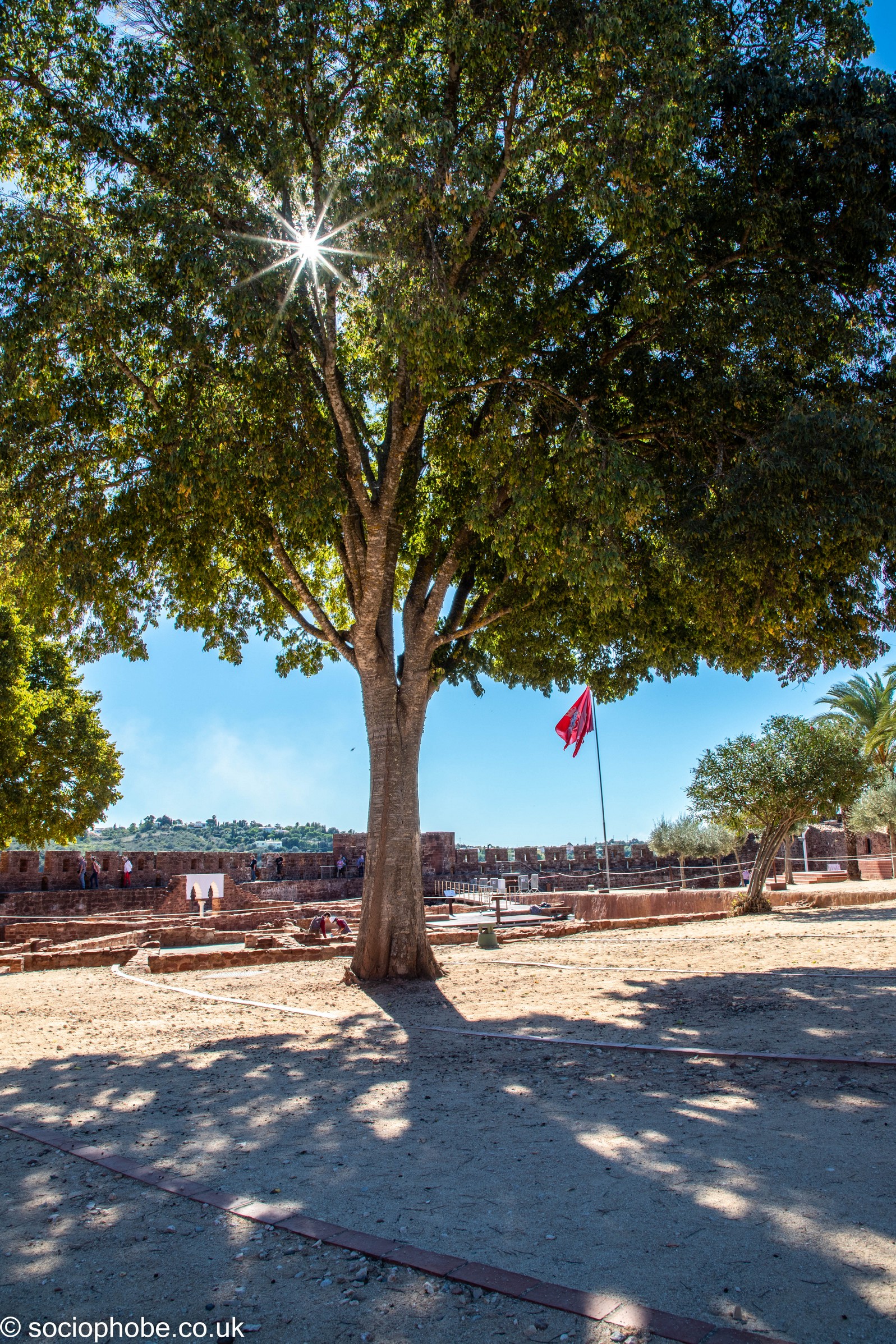
We parked on a side street a little way away and walked up the hill to the castle, past the faded cathedral built on the site of the mosque. Entrance with the museum was about €7 and we walked out of the gates into the courtyard. The centre of the castle is now a mix of garden and archeological dig although the gardens are a bit neglected after the tourism decline due to Covid. We walked a full circuit of the walls and then had a drink in the cafe before looking at the gardens. One of the towers had an exhibition of castle photography which I obviously loved!
The cisterns, in use as the towns water source until the 1990’s, are now an exhibition of the decline of the Iberian Lynx and the work being done to protect and reintroduce it.
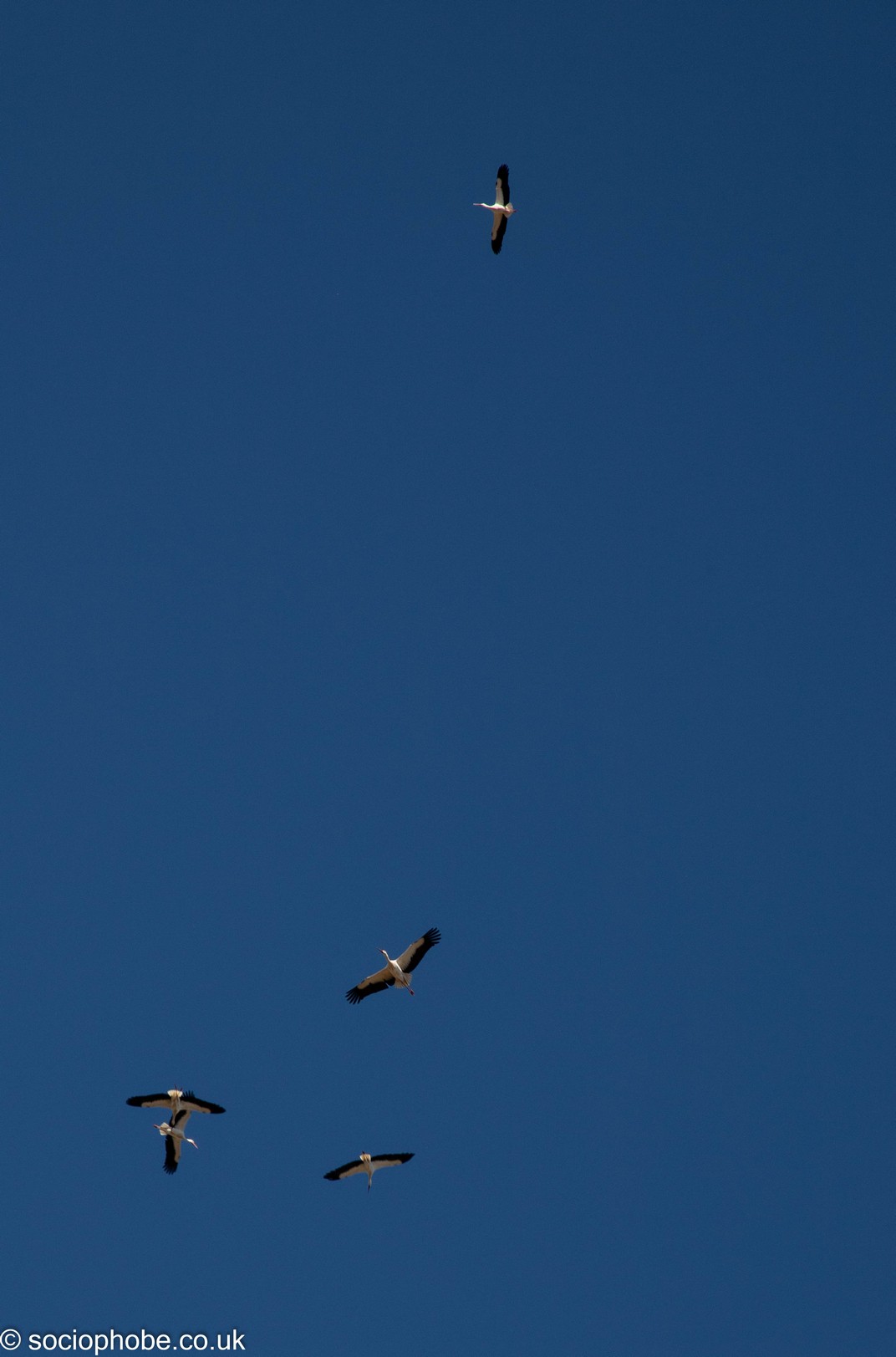
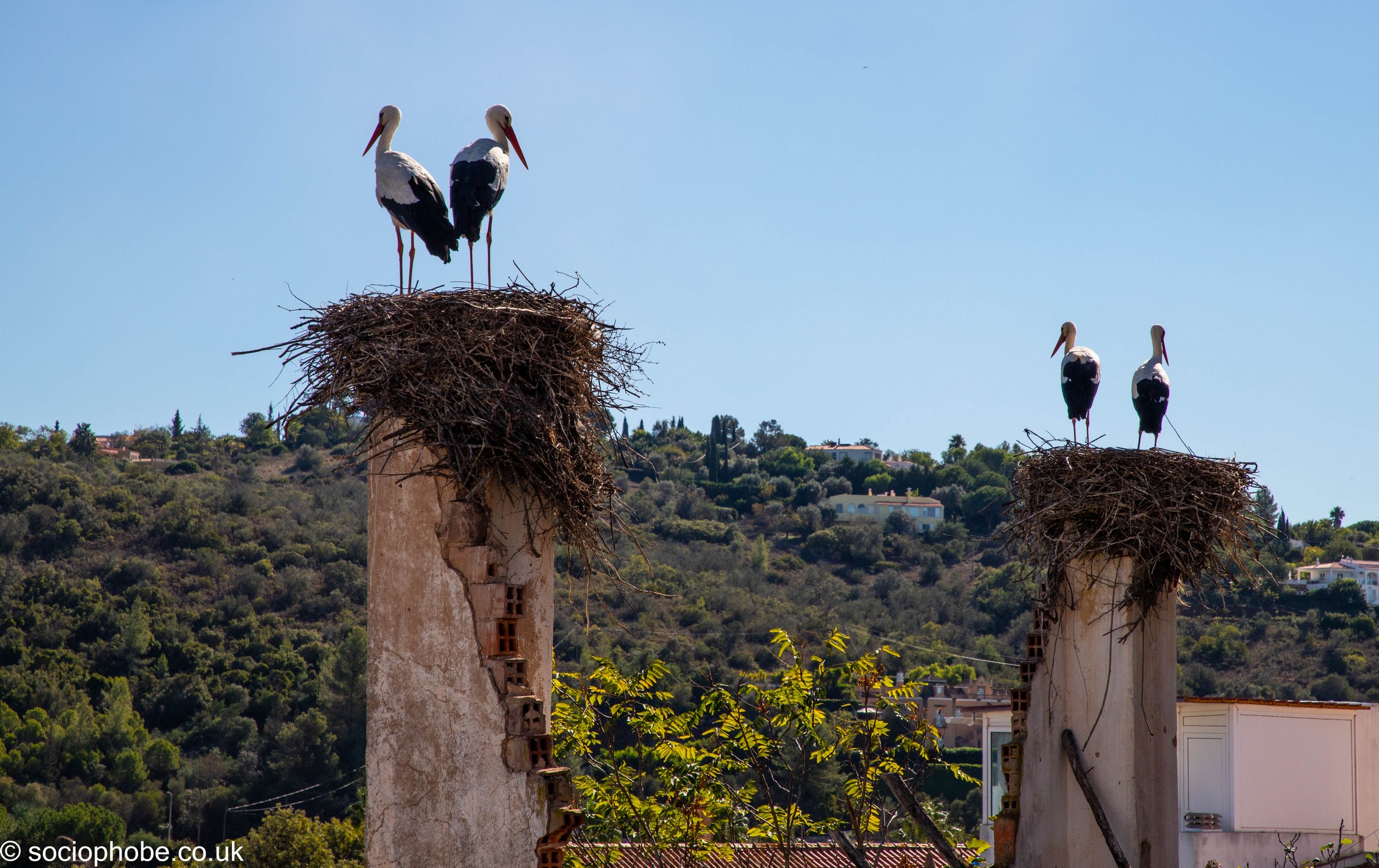
We then left the castle and walked down to the archeological museum which was well laid out with a comprehensive history of the area and finds from various excavations. These included a Moorish well 20m deep with a staircase spiralling down the outside to allow access to the water. Walking back to the car we saw several storks nests, which explained the number of birds we’d seen flying above us most of the day! We were going to stop for lunch but neither of us was hungry after such a huge breakfast so we got back to the hotel and I sat on the bed and fell asleep for half an hour!
Carvoeiro Boardwalk
That was a bit pathetic so after I woke up we decided to do one of the boardwalk walks leading out of the town.
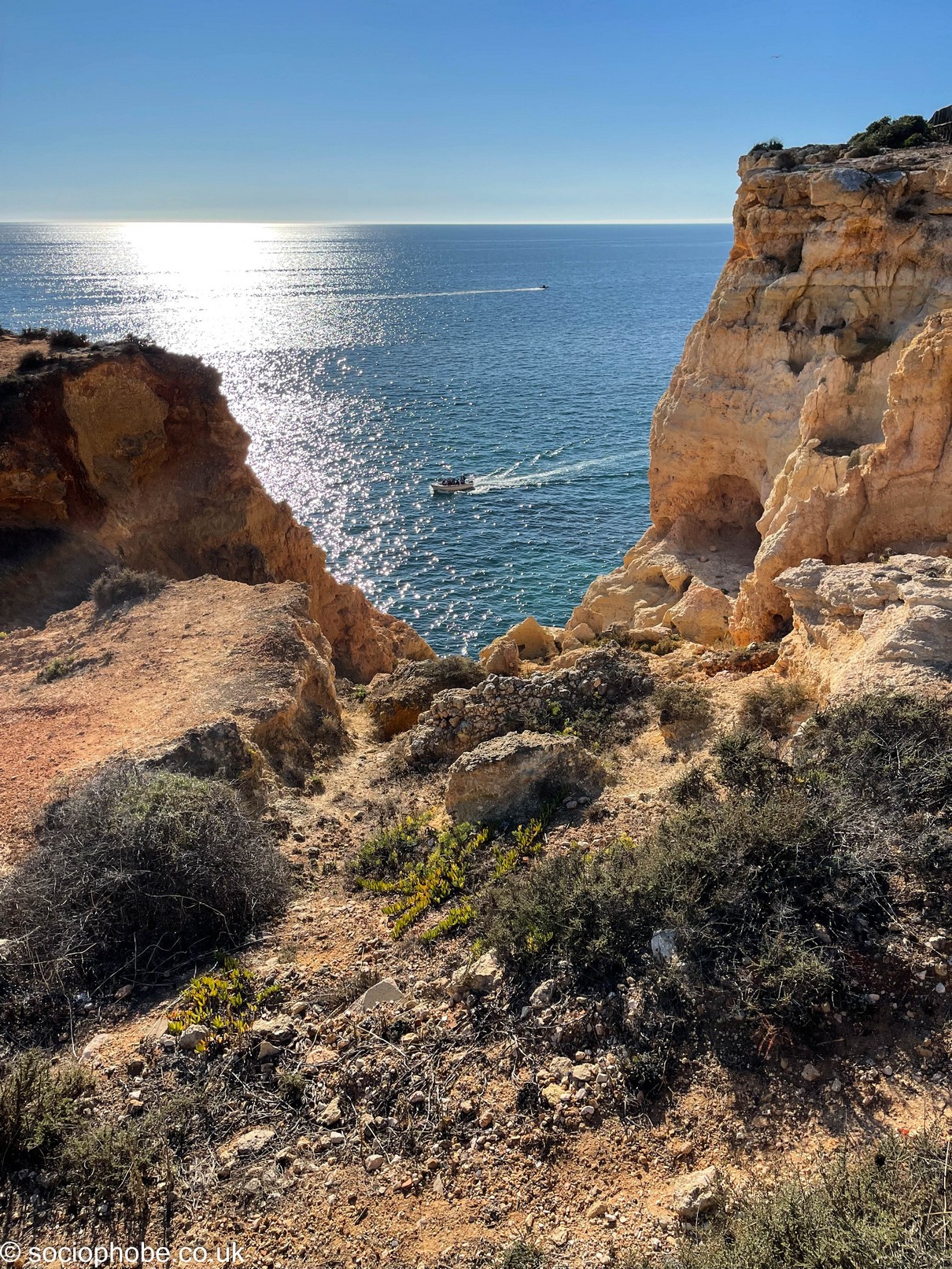
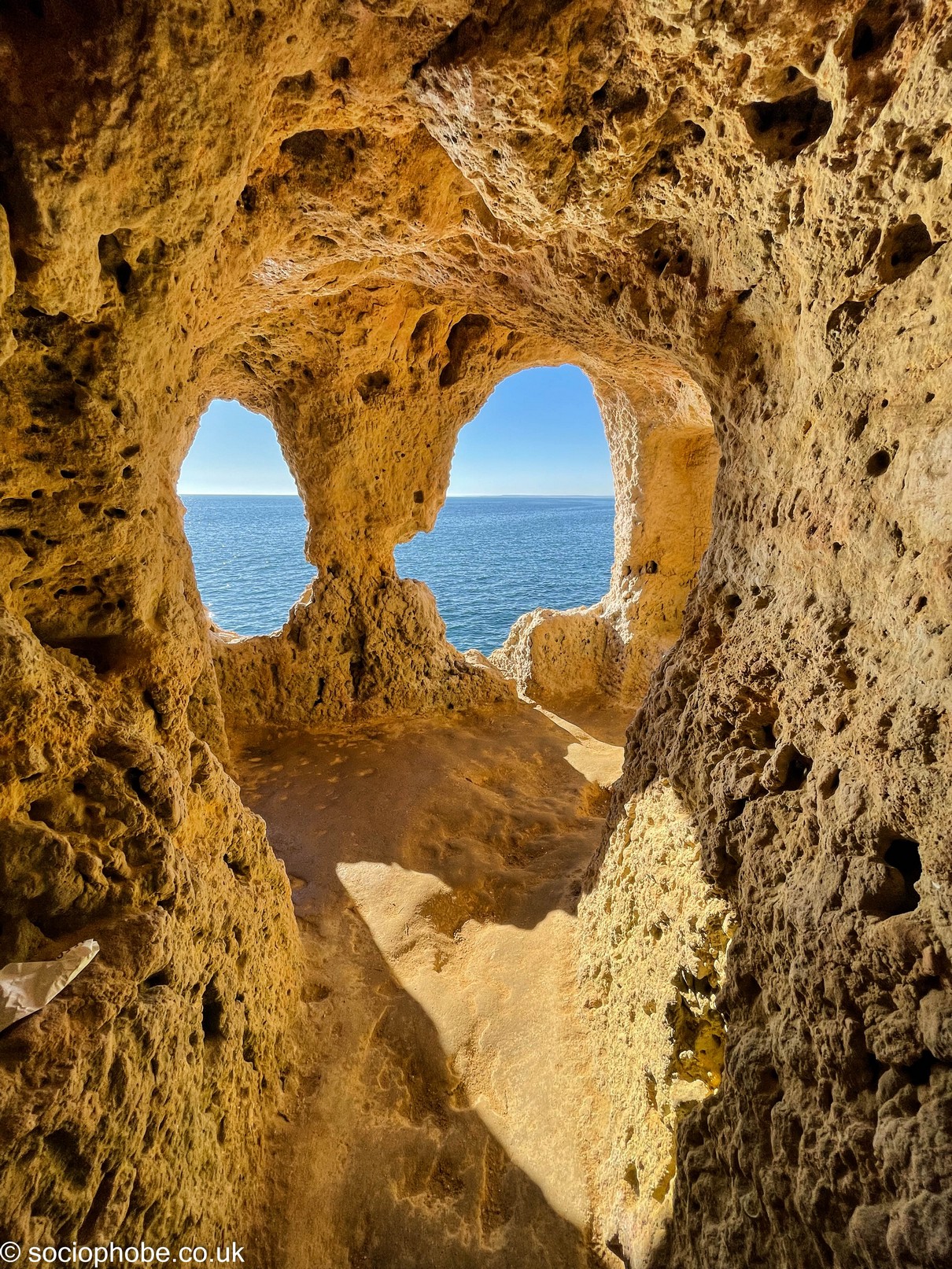
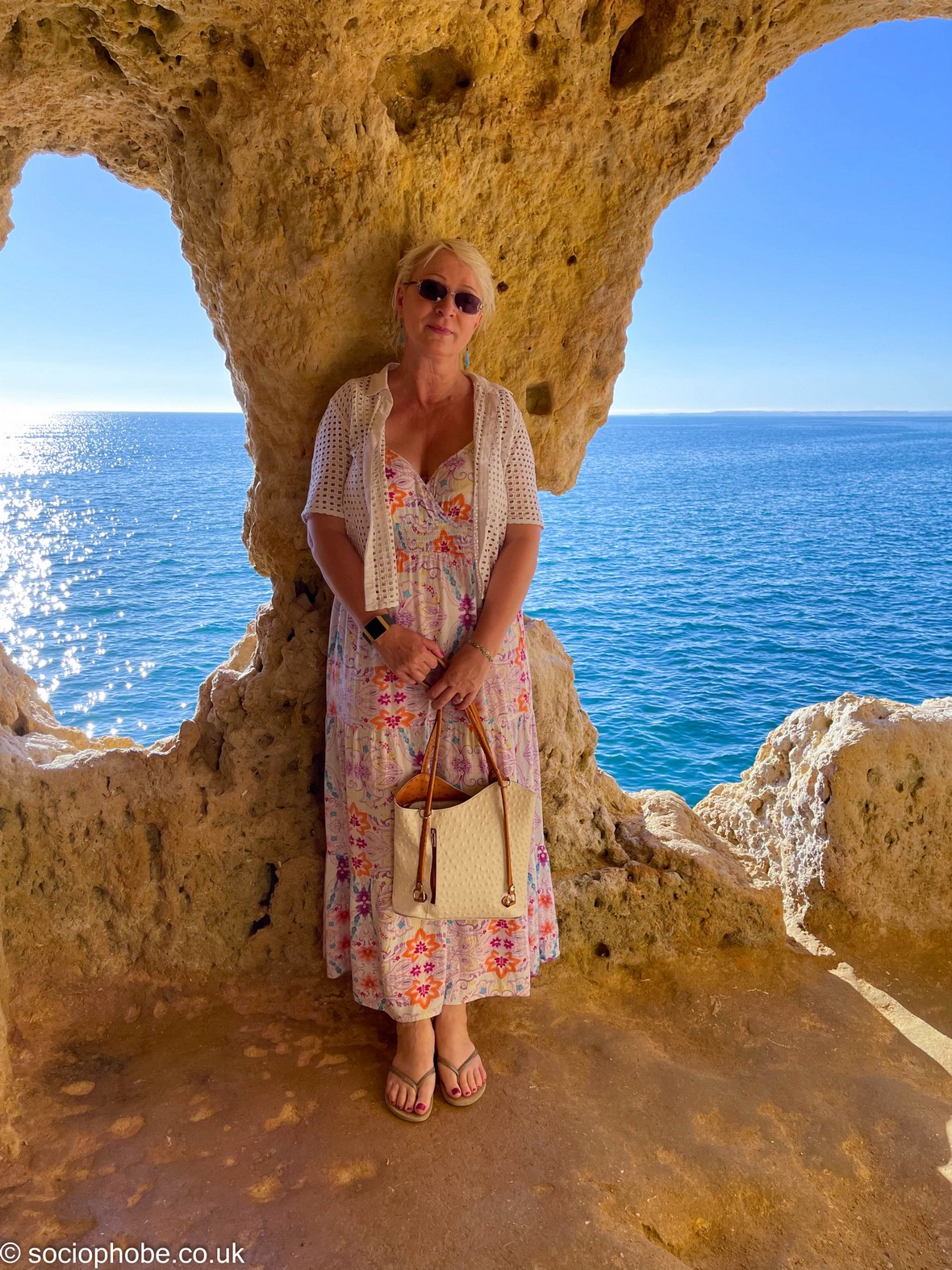
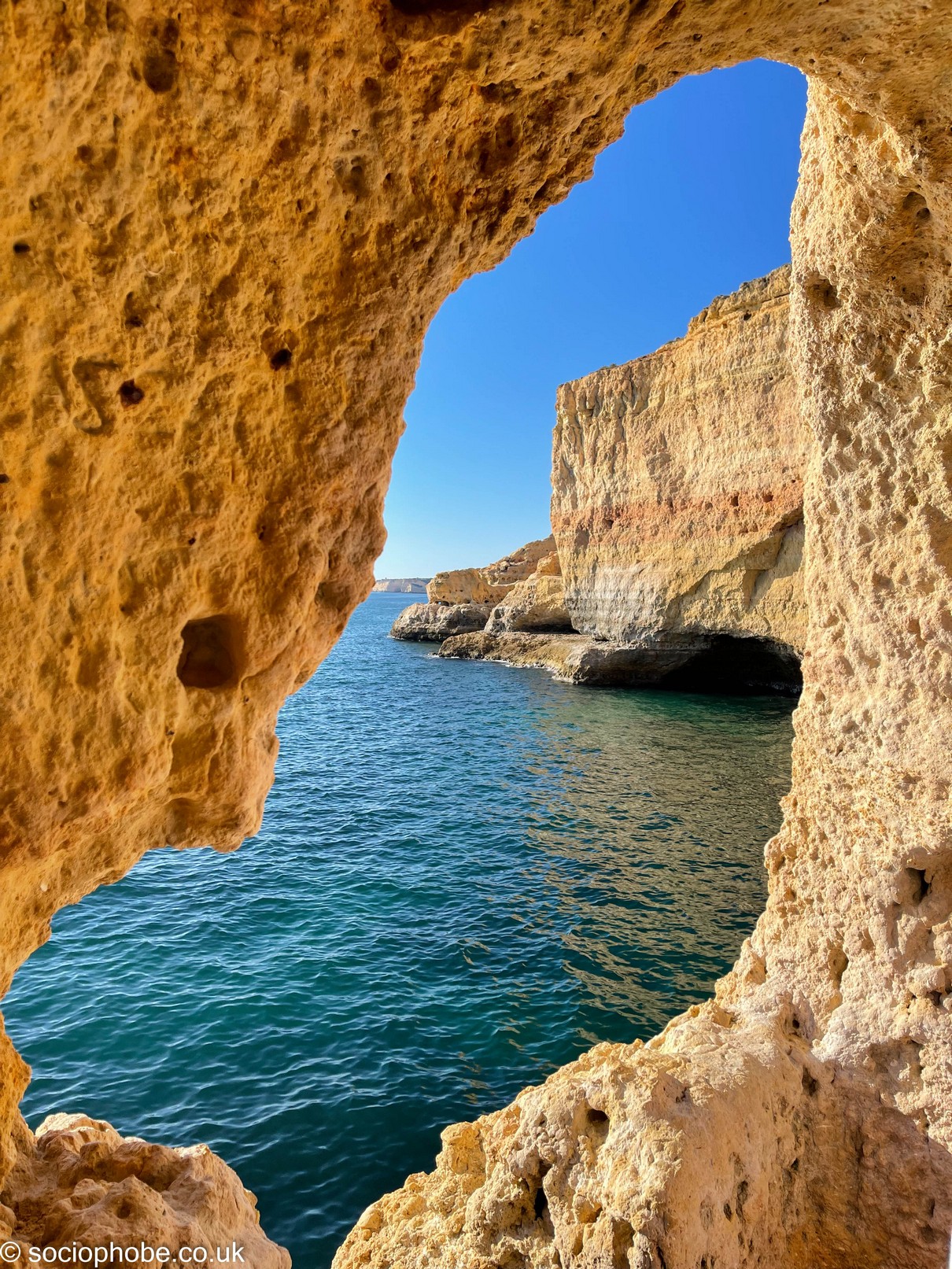
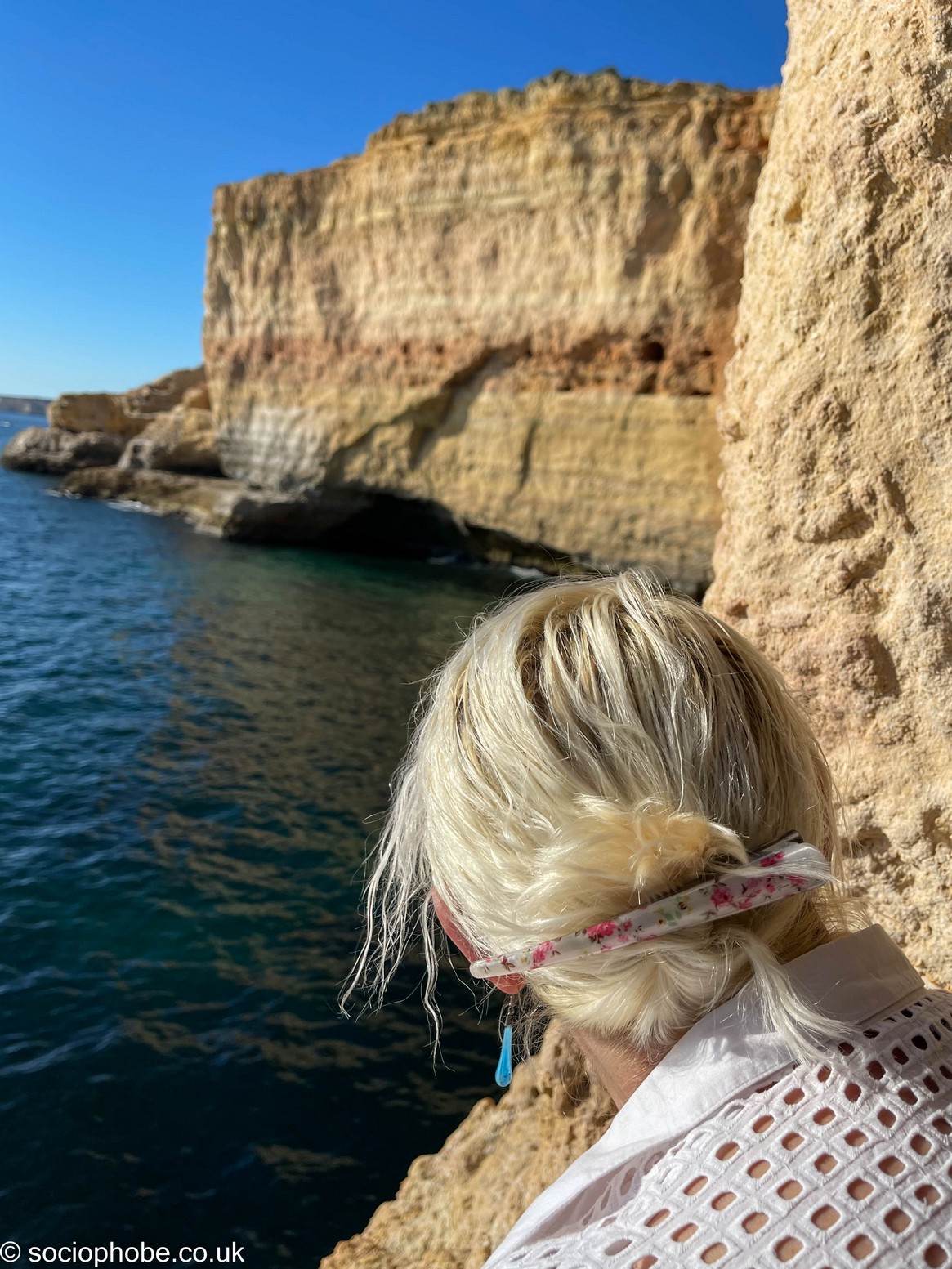
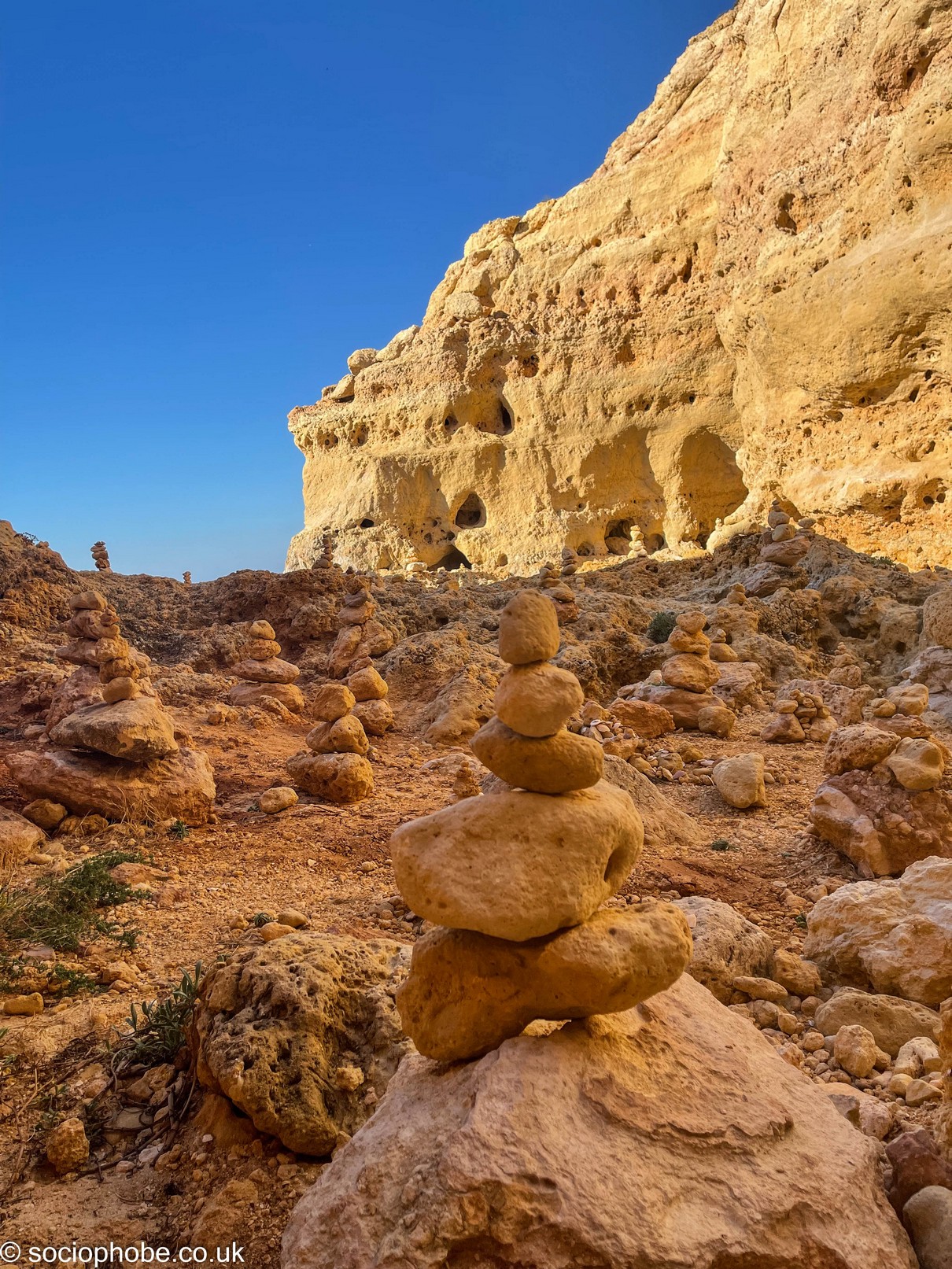
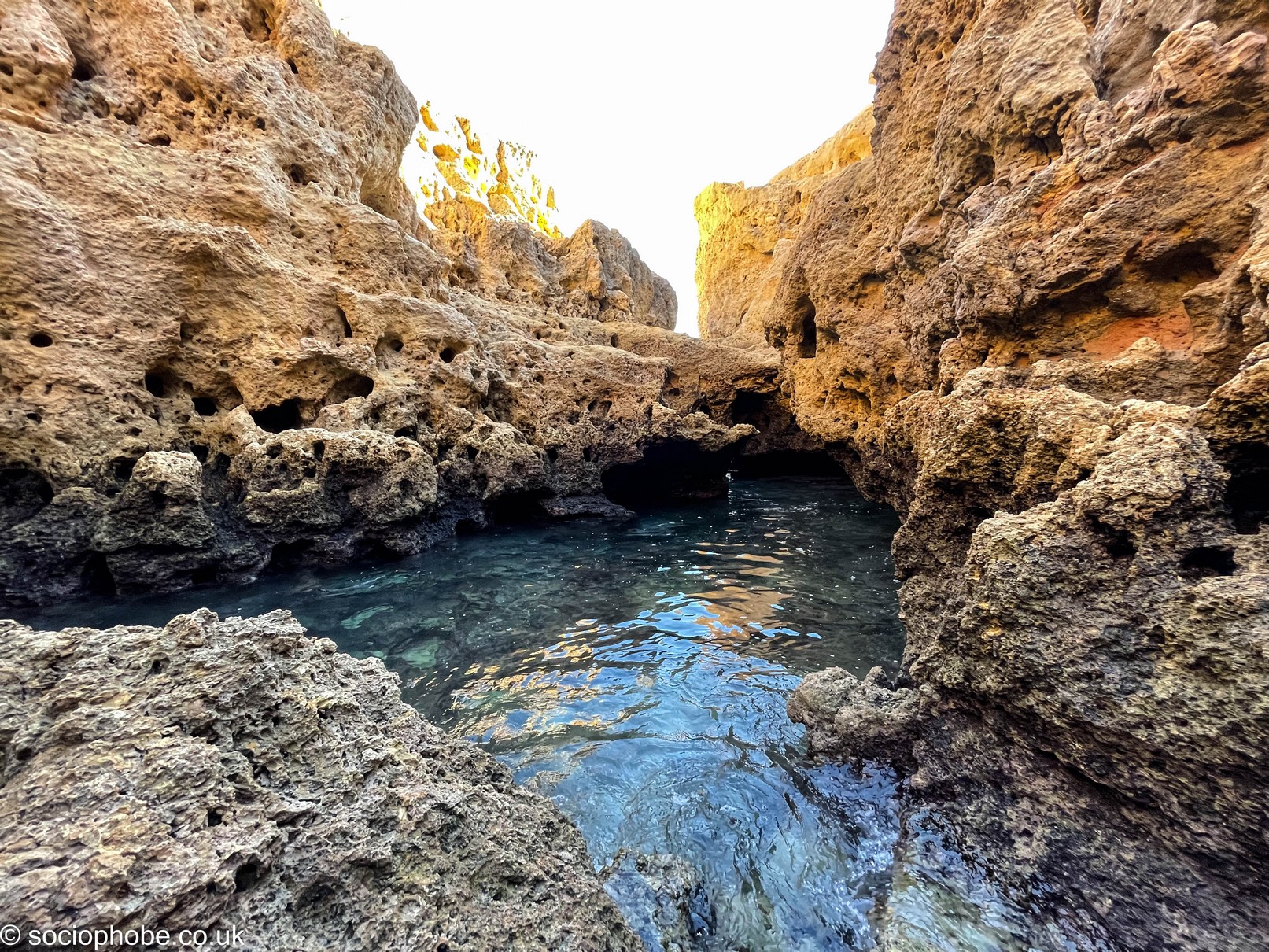
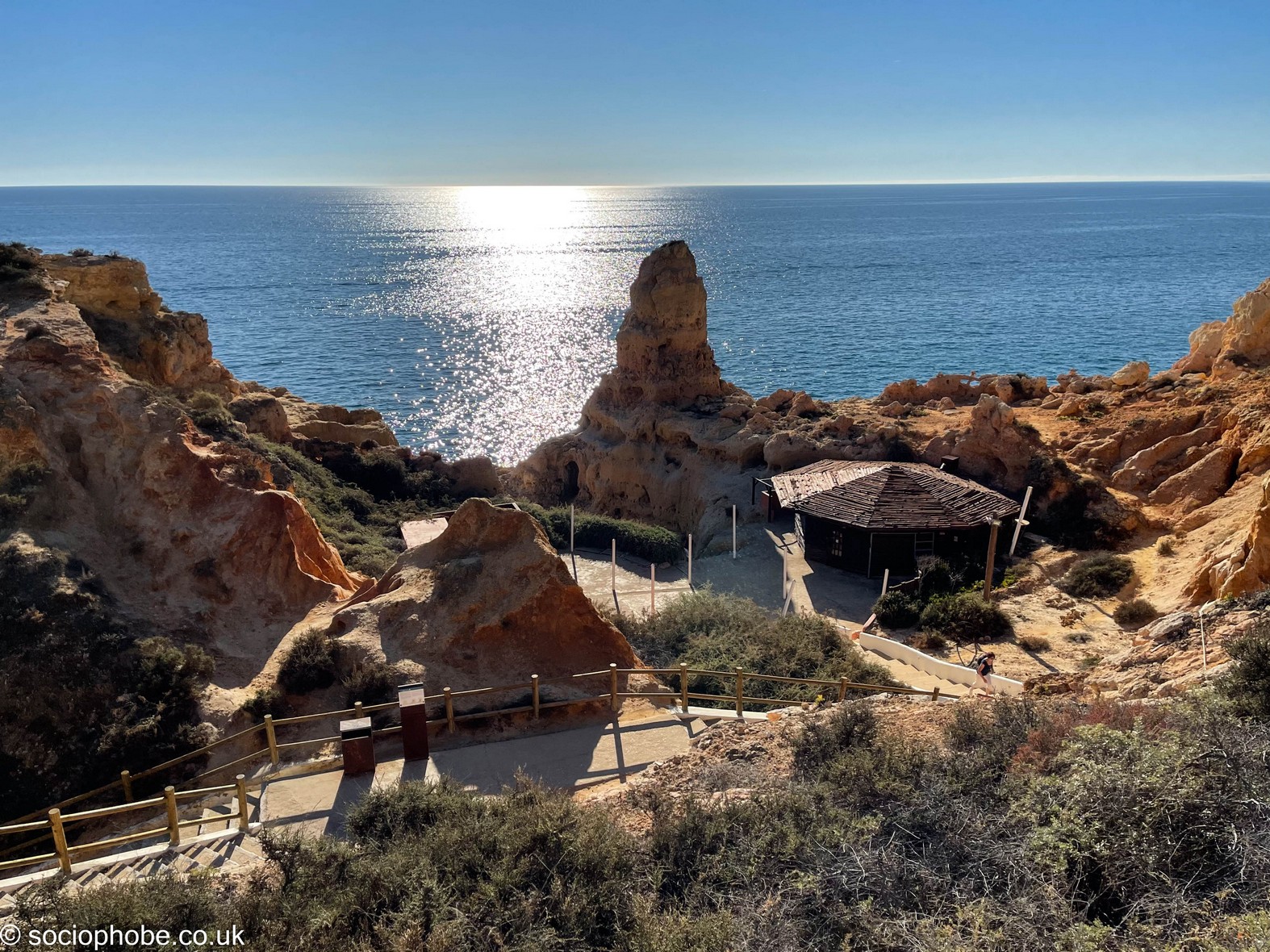
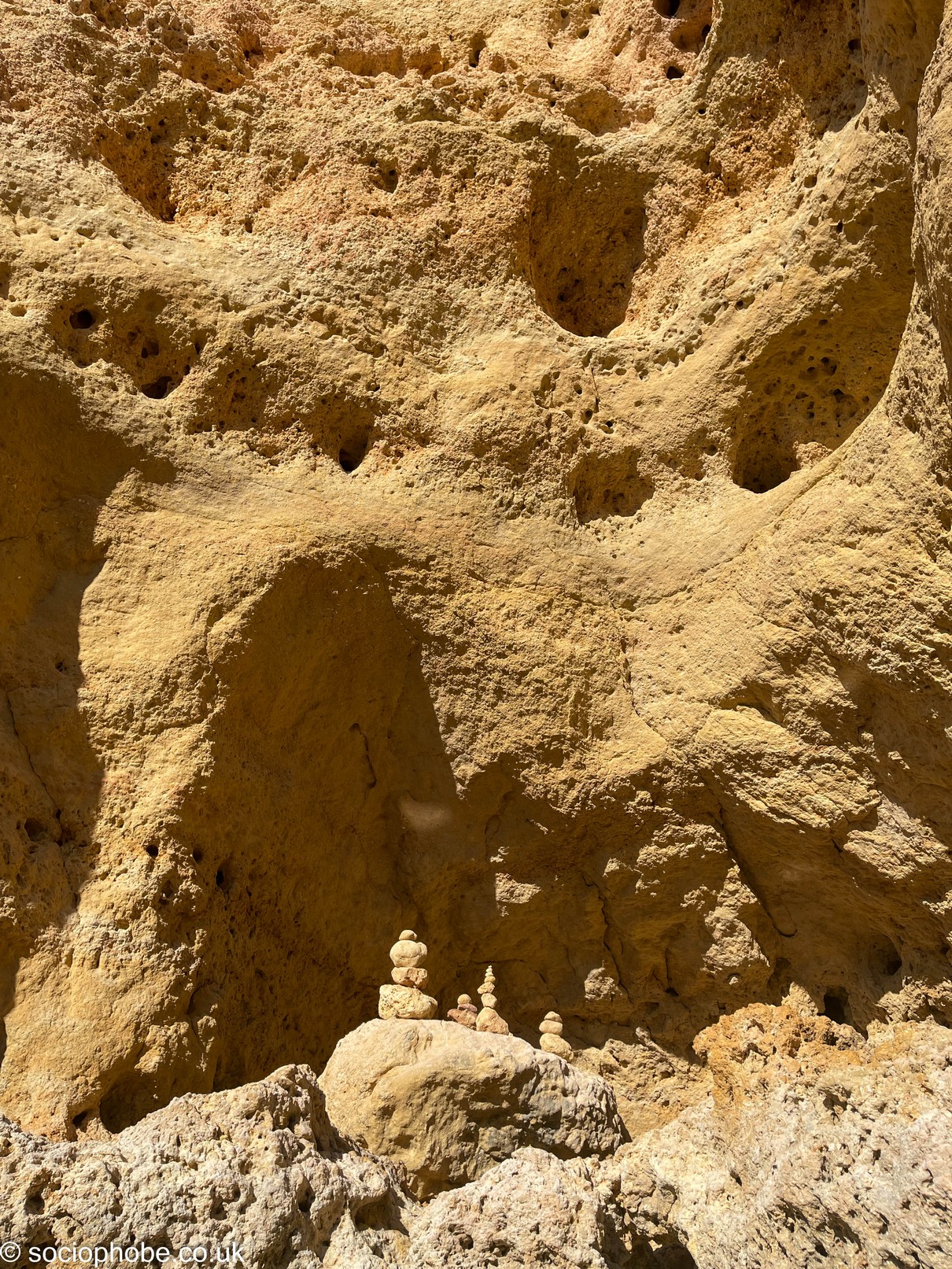
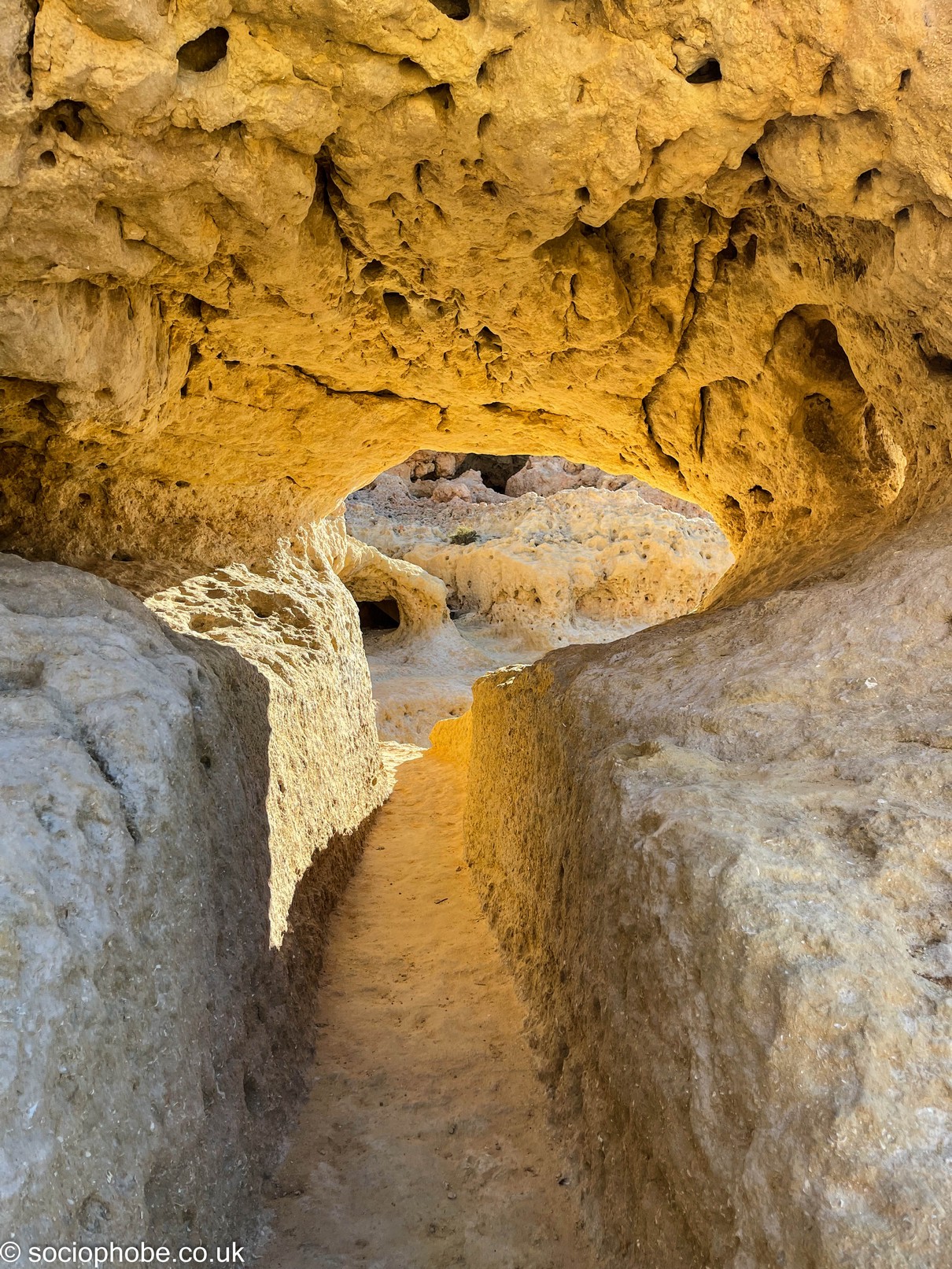
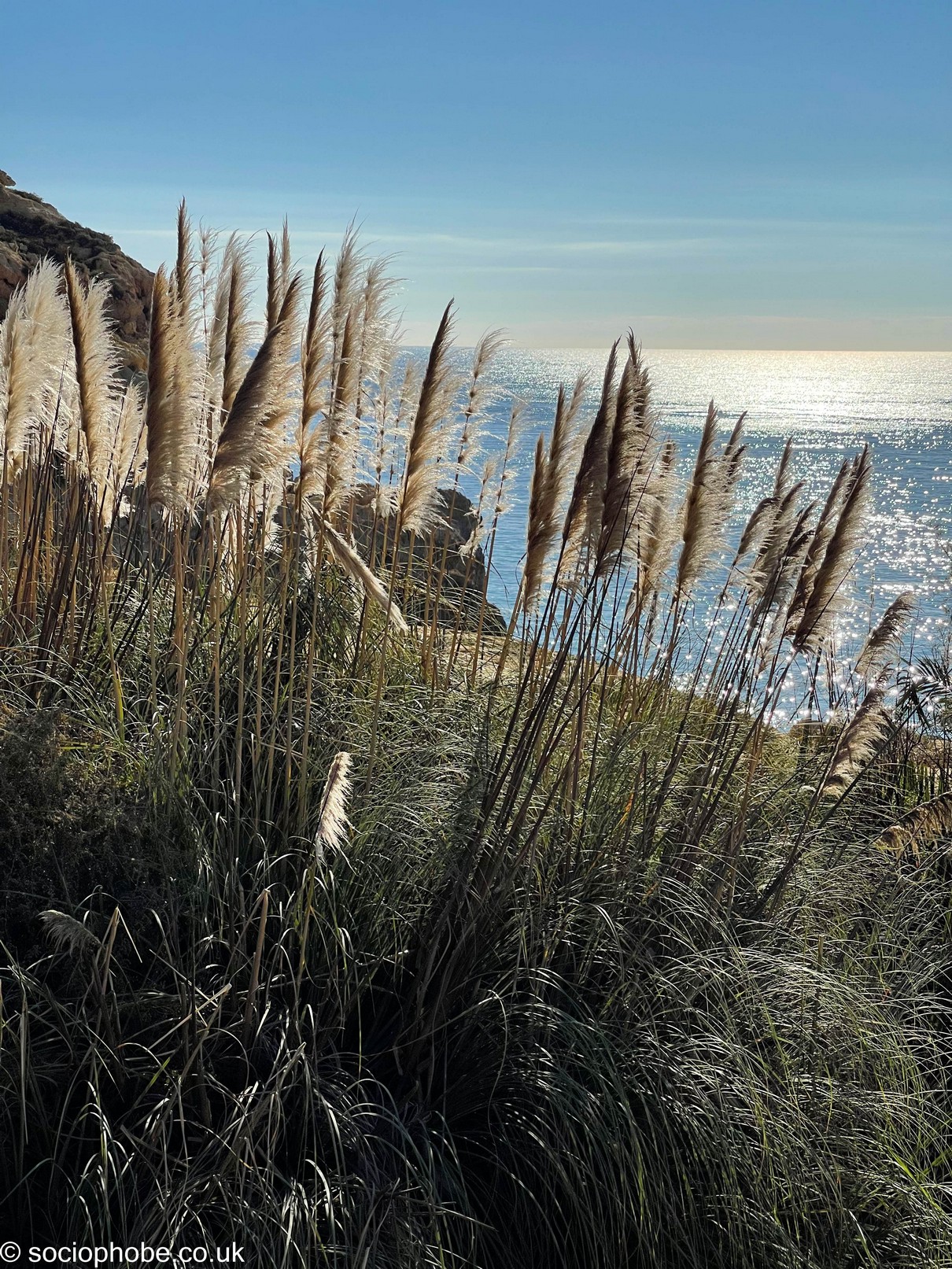
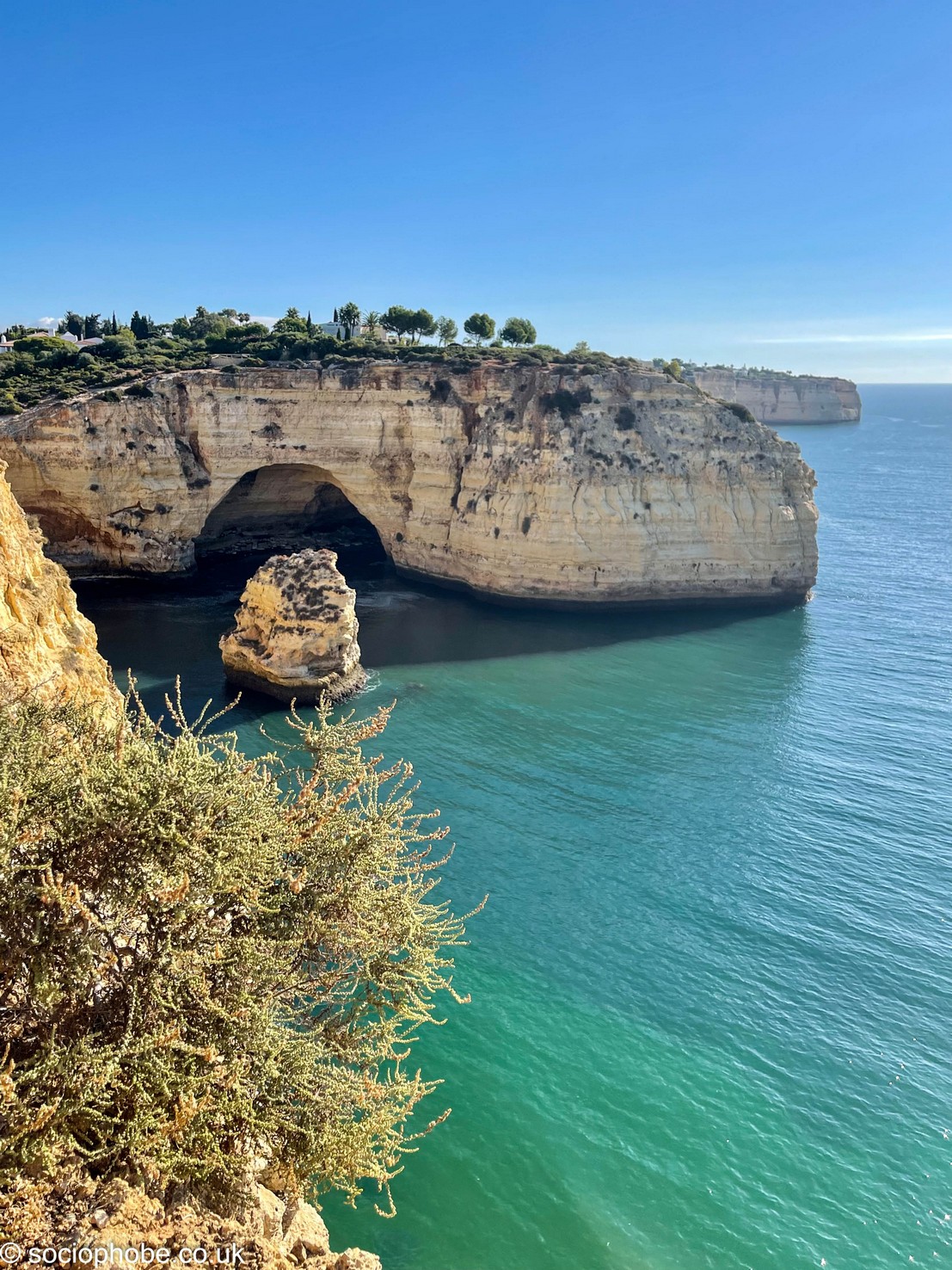
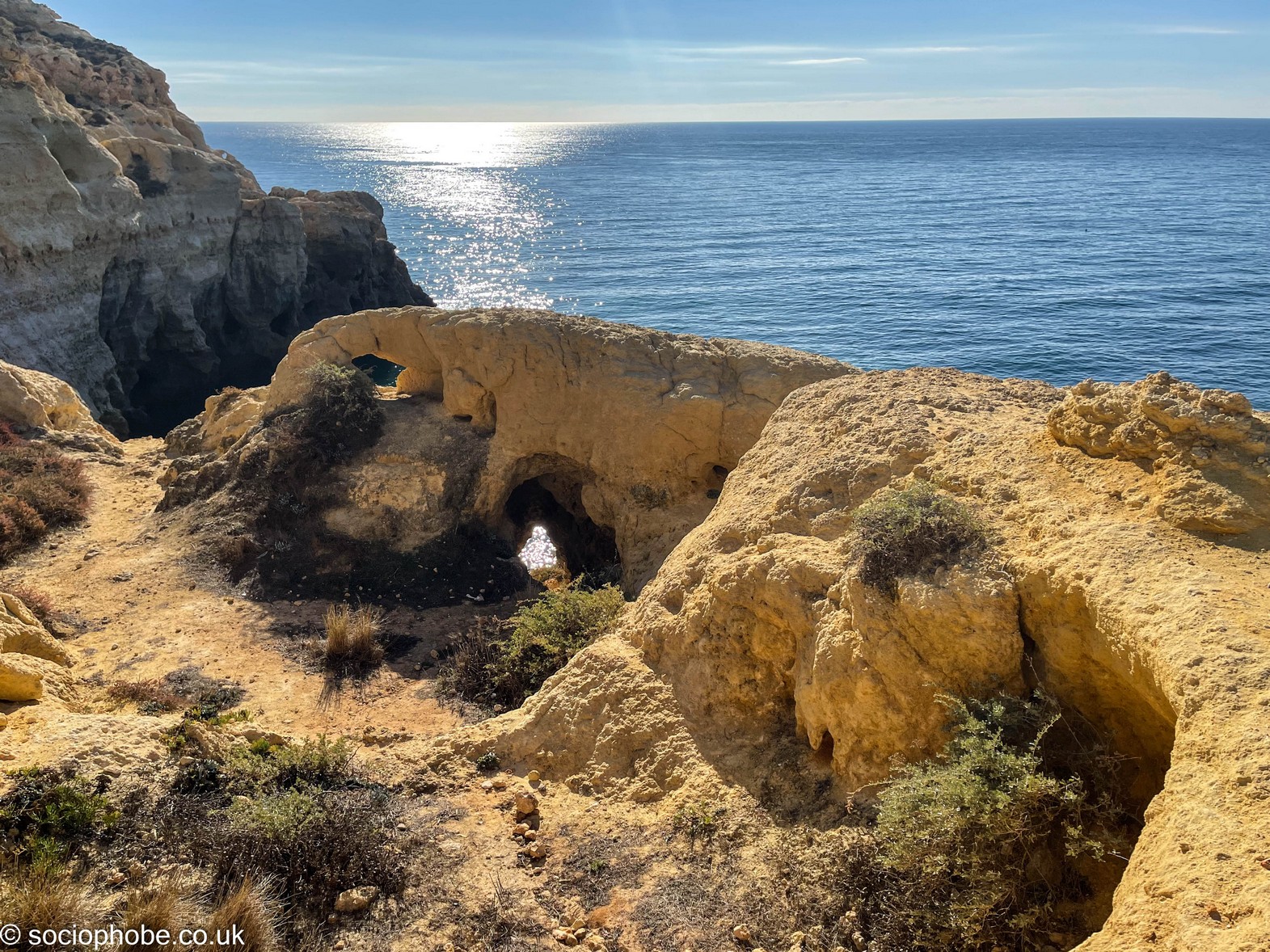
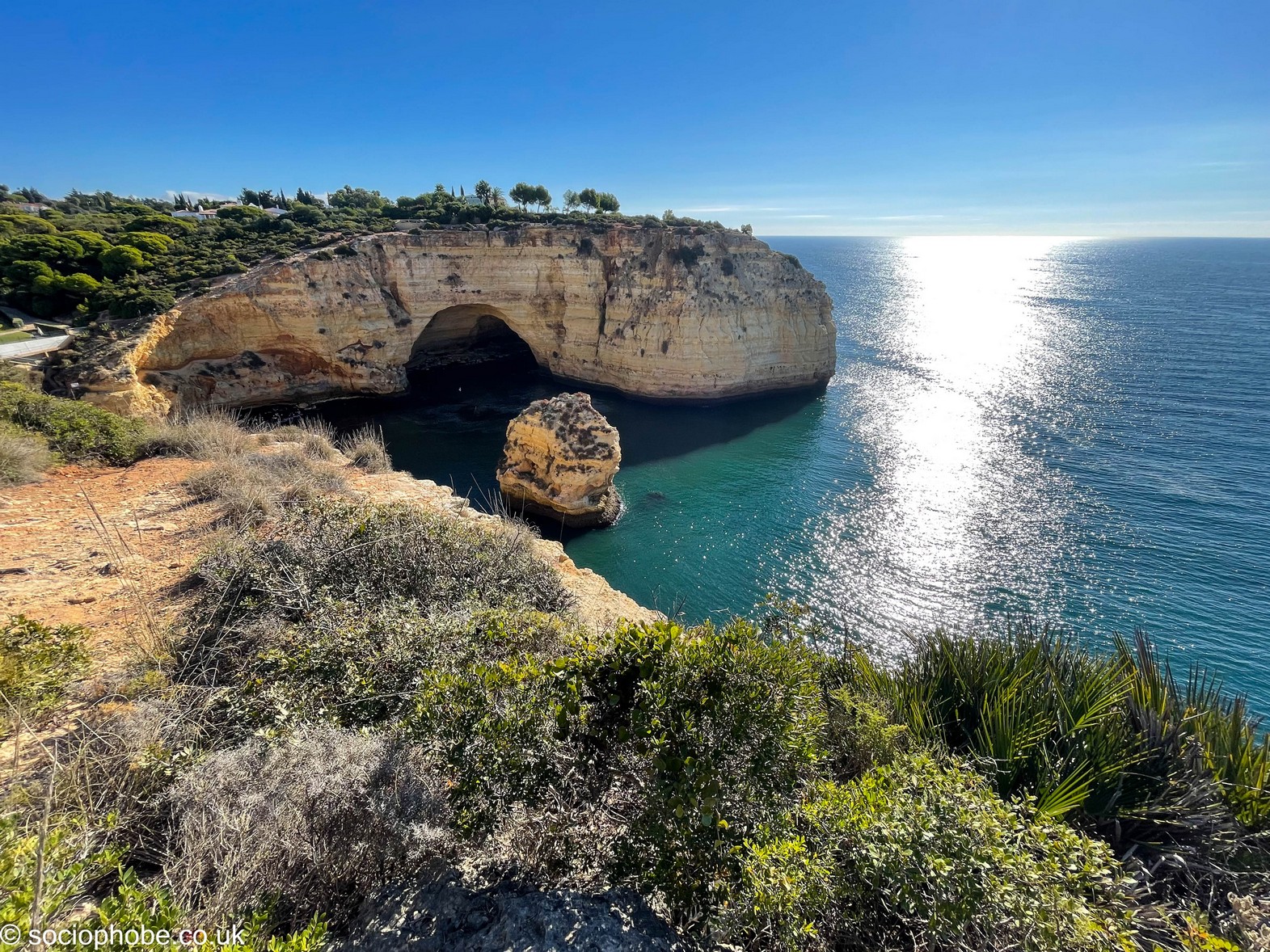
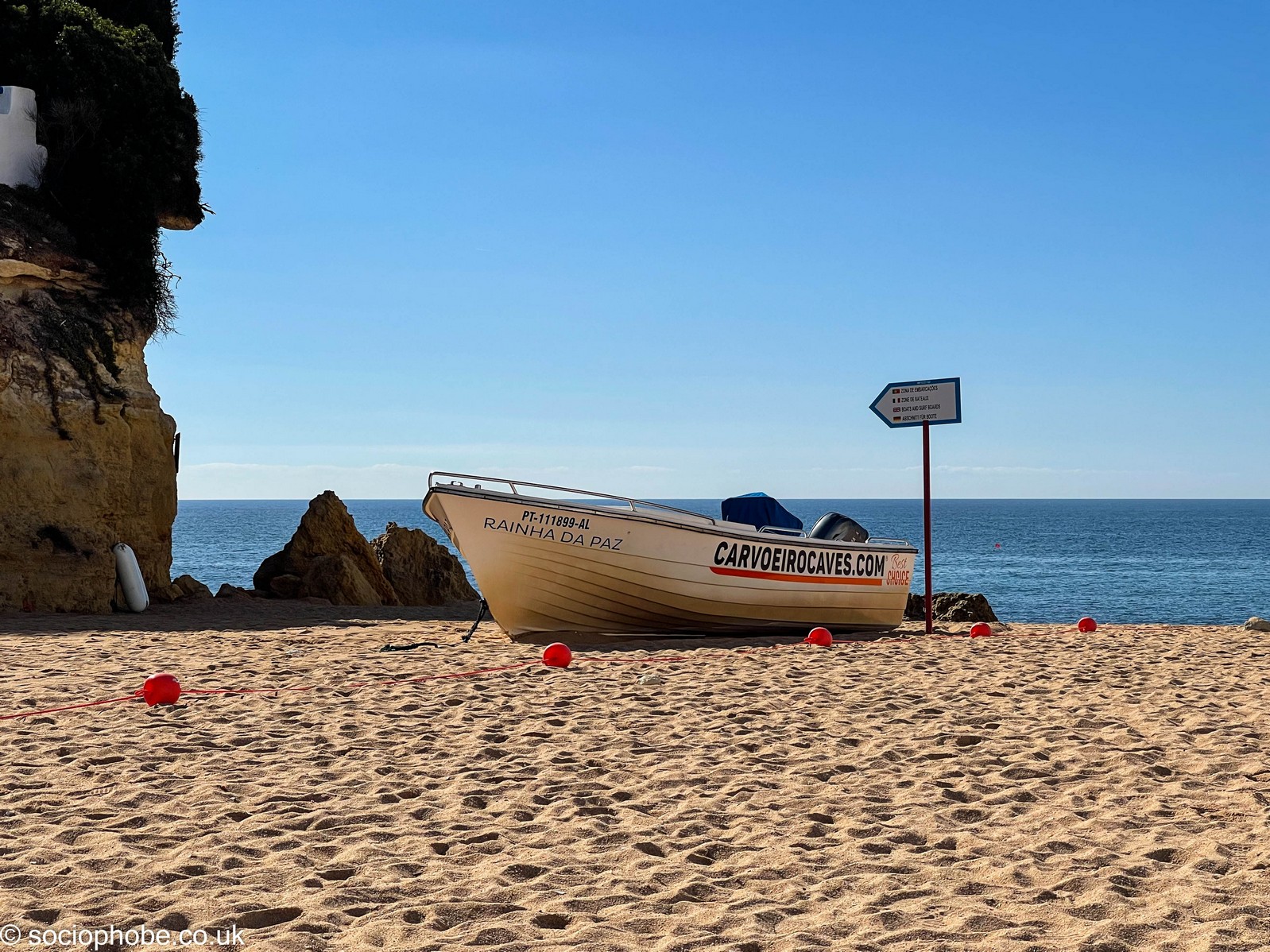
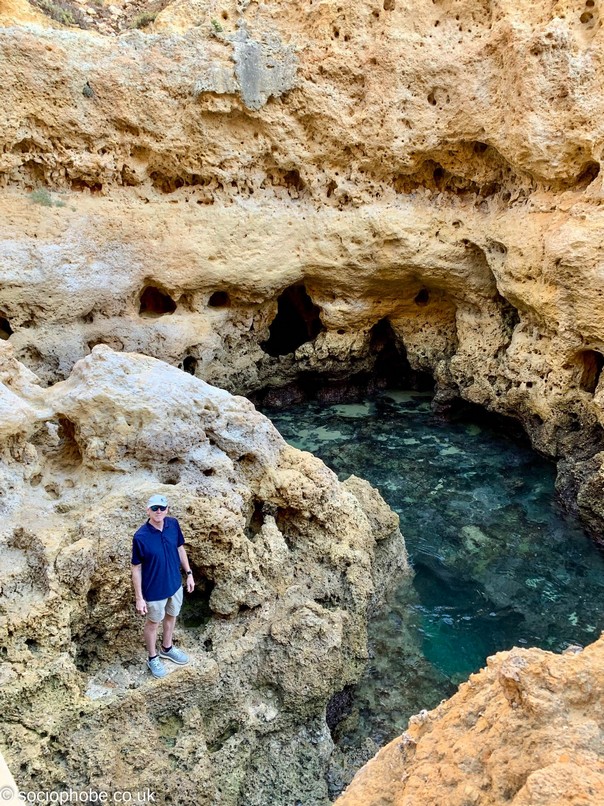
The boardwalks were well done and had plenty of signs and seating areas. It was a lovely walk along the coast and although we probably did less than 2k, though meandering down into grottoes and coves meant we were gone nearly 2 hours. The scenery really was spectacular as the limestone erodes in such unusual ways and it was lovely to just get some sun.
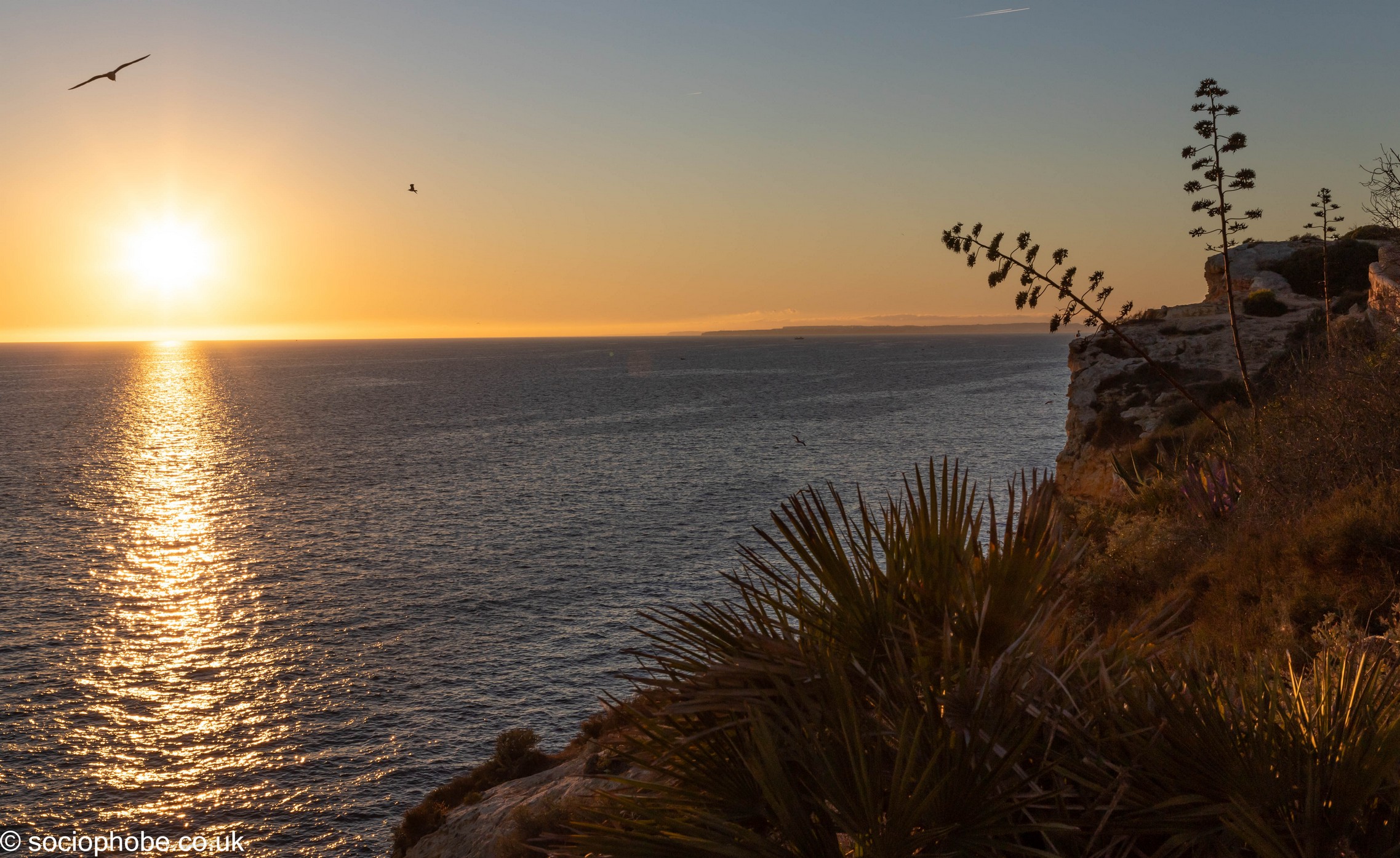
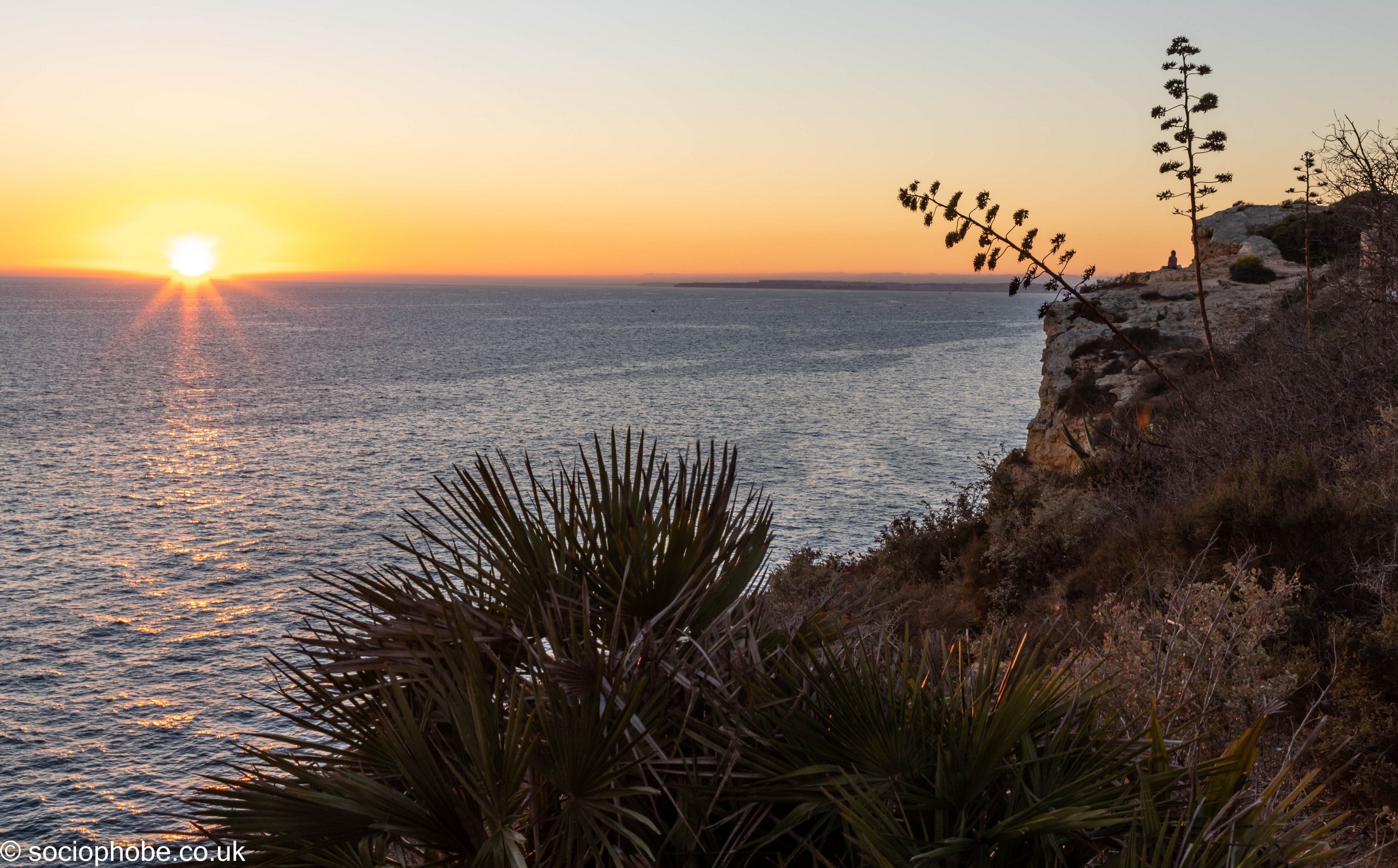
Once back in the hotel we then changed into winter wear before heading out to watch the sunset. This was a wise precaution as it was amazing how much the temperature had dropped in just an hour. It was lovely to sit and watch the sun go down with the sea birds circling overhead and the sky slowly changing from orange to red to pink. We took a few photos and then walked into the town for dinner.
Dinner was at a central restaurant and the menu sounded superb but the food and service didn’t live up to the initial promise, which was disappointing. So much so I skipped dessert! Another evening was then spent sorting photos, writing notes and planning the next day’s activities.
We both woke at 7 to have breakfast at 8 on the terrace. This was as excellent as the day before, with delicious food, no other people and blue sky and sunshine. We were both stuffed by the end of it so we had a chilled hour, rang Auntie Kay and packed ready for our next hotel. By then our food had gone down so we did another walk along the boardwalk and this time carried on a couple of headlands further. The scenery was quite spectacular and we were out for nearly 2 hours.
Tavira
We left Carvoeiro and were intending to visit another Roman villa but they were closed for siesta so we drove straight to Tavira, left our bags in hotel reception and went for lunch. This didn’t take long enough for the room to be ready so we had a visit to the Museum of Islamic Culture to look at the Moorish history of the town which was very interesting. It looks like Islam lost the town at around the peak of their culture, before religious dogma and conservatism stopped the development of art, architecture and science that had put them centuries ahead of the West.
We then returned to our hotel and the room was ready at last. This was a bargain hotel – £23 a night including breakfast! When we got in you could kinda see why, it was rather dated inside but it did have USB charging by the bed, was a good size and in the town centre so swings and roundabouts. We then had a bloody lazy couple of ours catching up on notes and correspondence.
Due to a severe attack of laziness we’d chosen an Indian restaurant two doors down from the hotel for our evening destination. This was actually a good choice as the food was superb and had some interesting variations that we hadn’t seen in English Indians. We had 3 carafes of wine and chatted for hours which was unusually pleasant. We both slept very well!
We both woke somewhat in need of 1) water 2) a shower 3) tooth cleaning. Once that was all done we felt a bit more human and went downstairs for breakfast. For me this wasn’t as good as some of the previous locations but there was plenty that was to Deb’s taste.

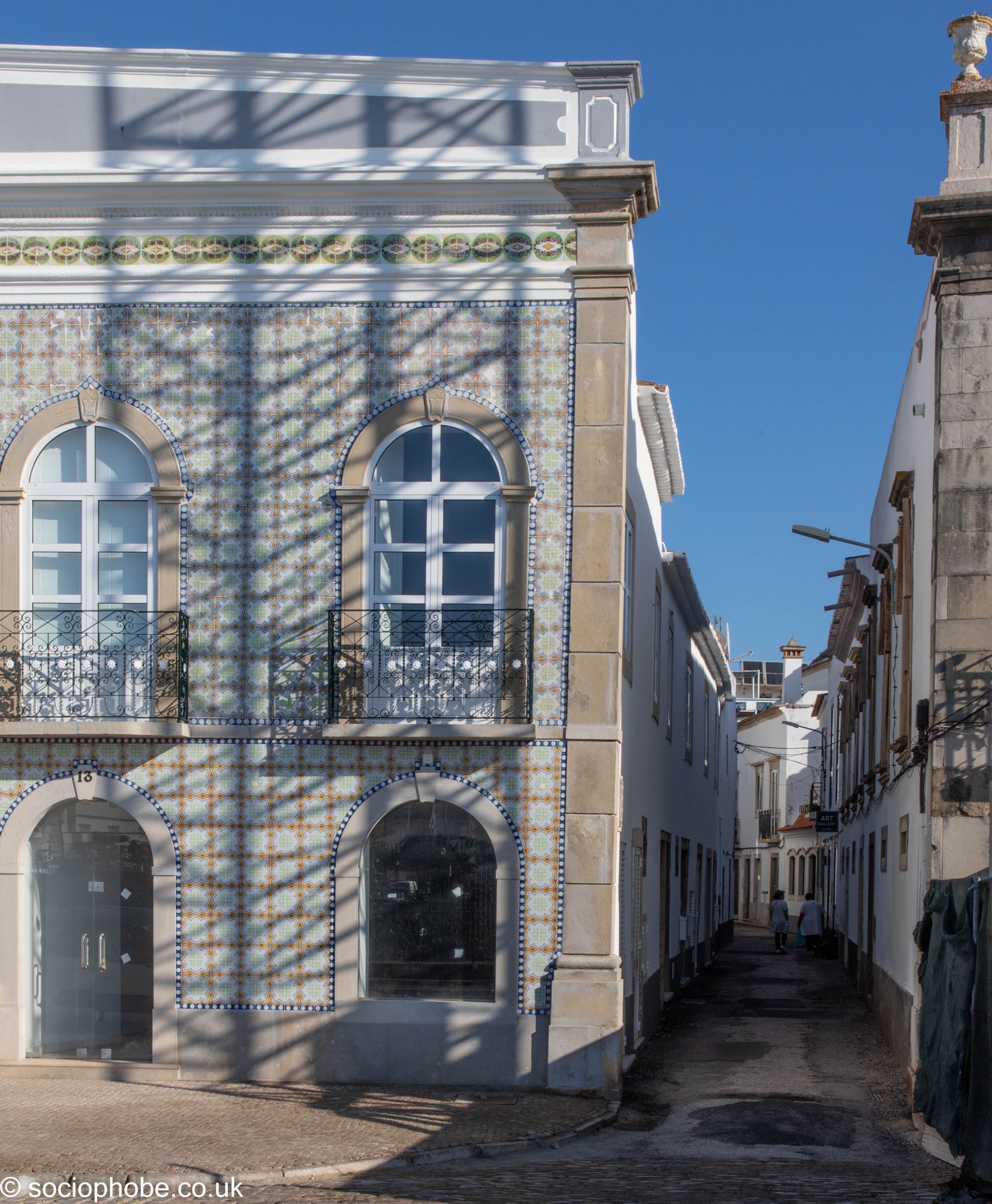
Palace Gardens of Estoi
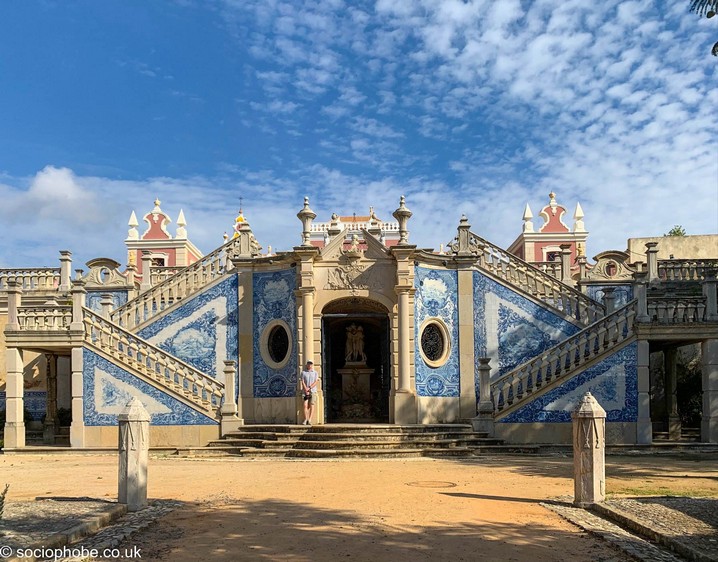
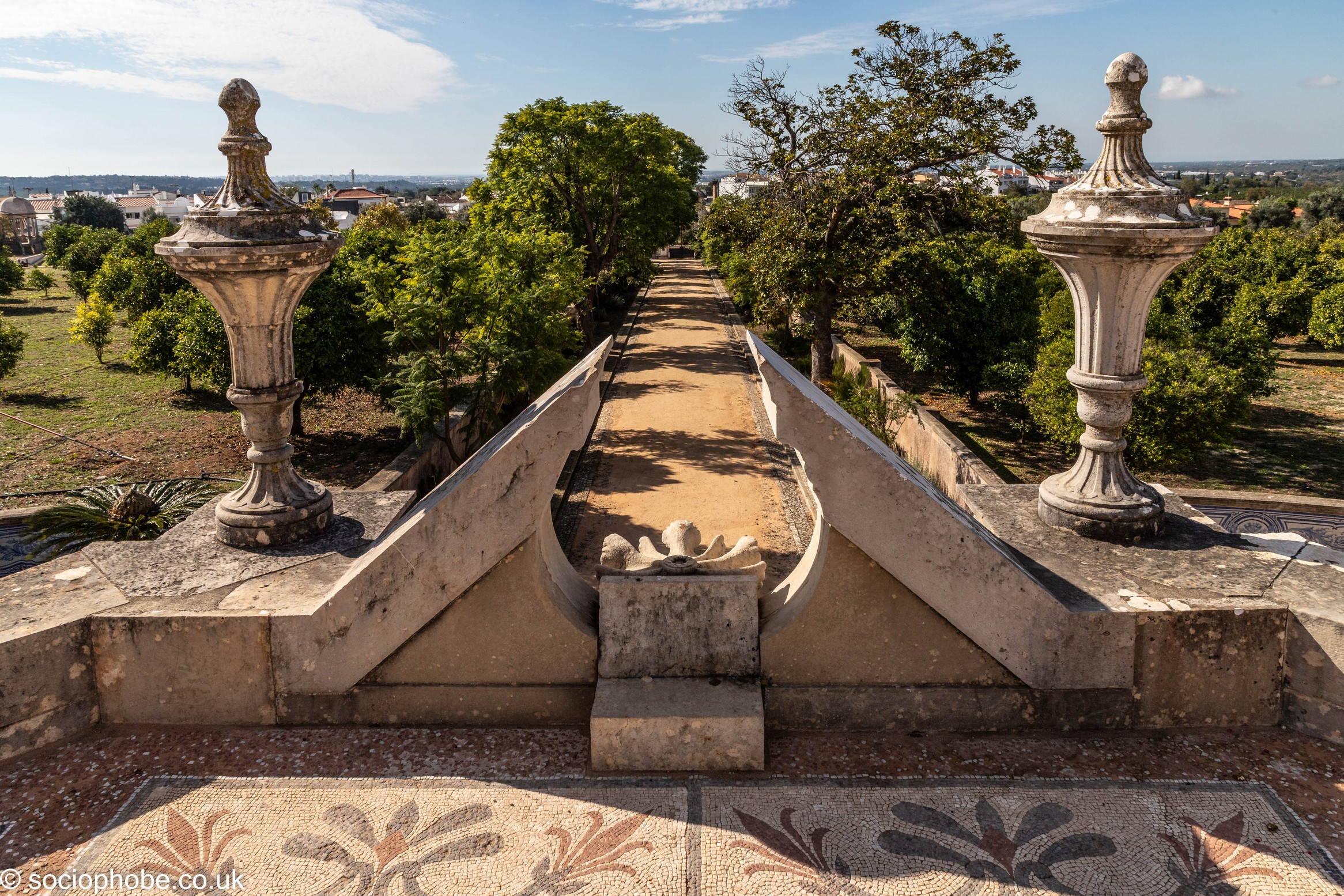
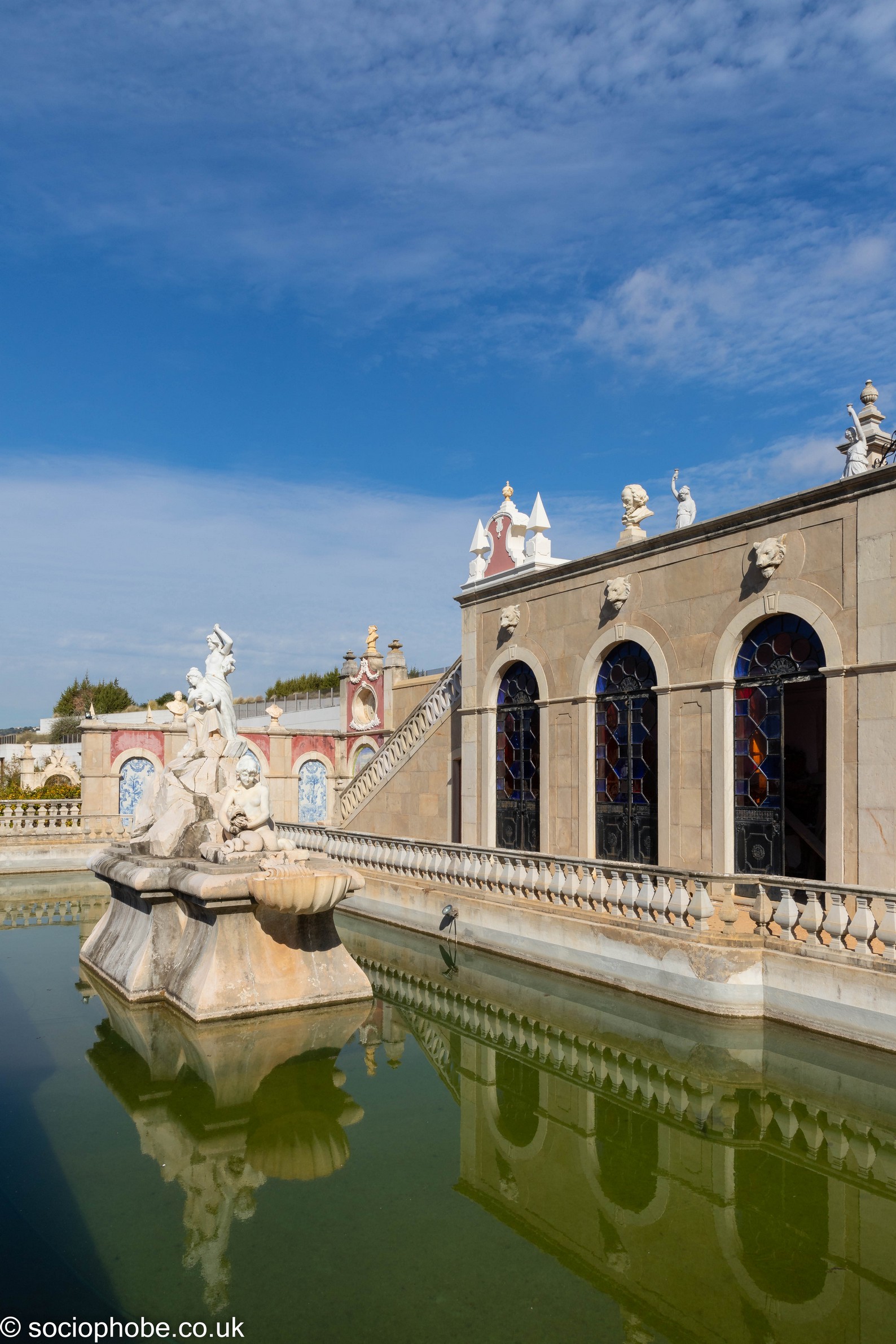
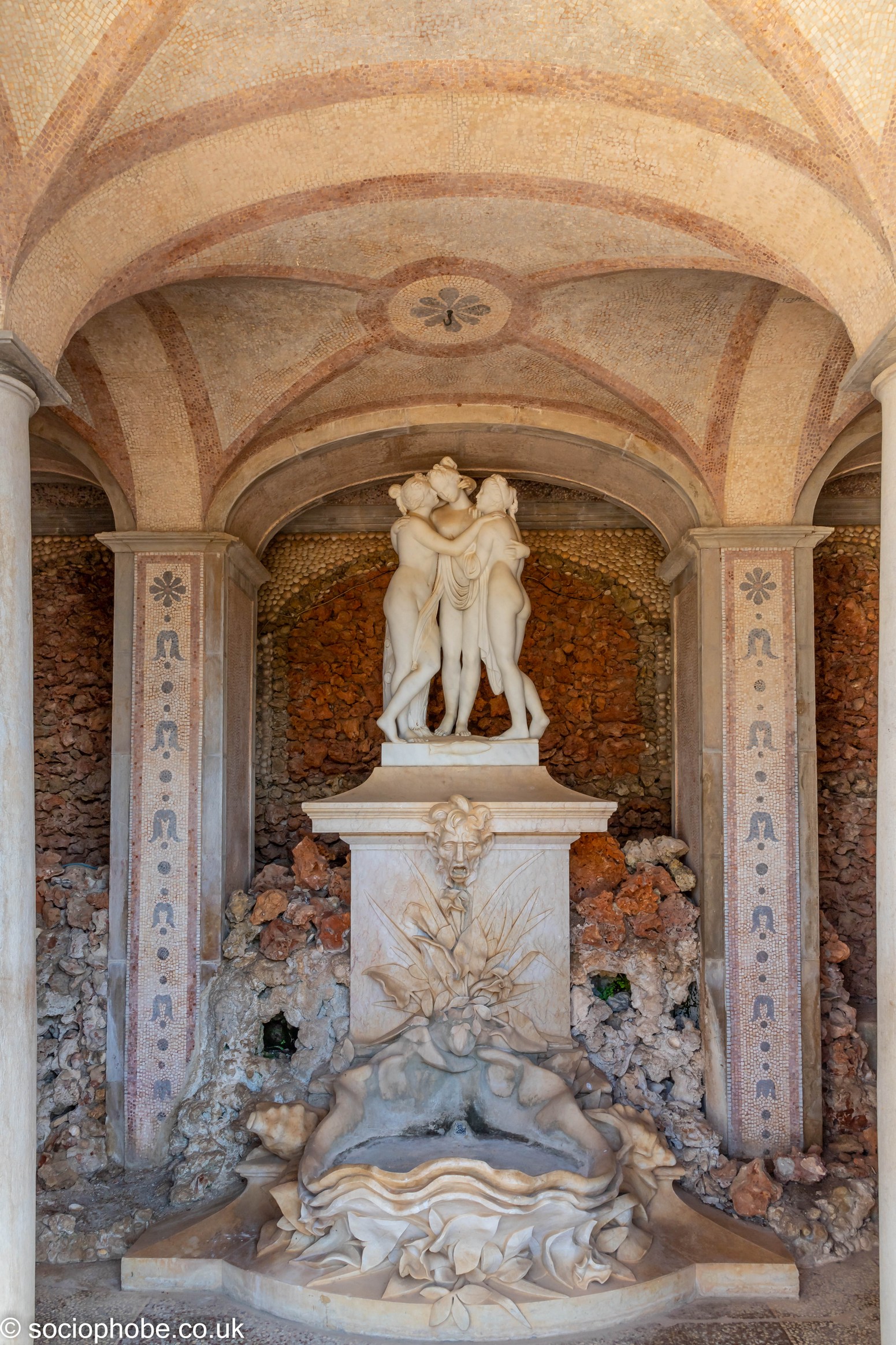
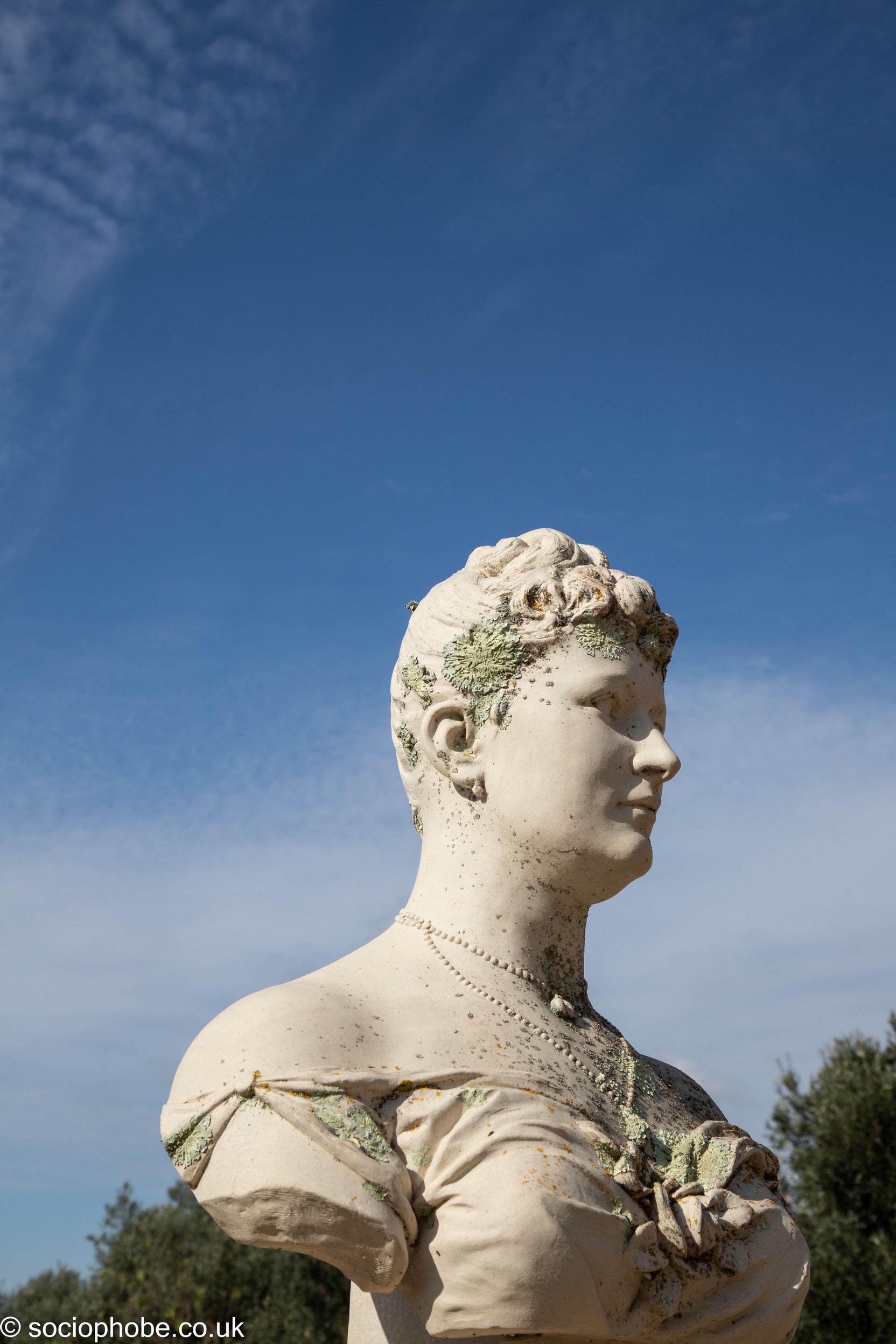
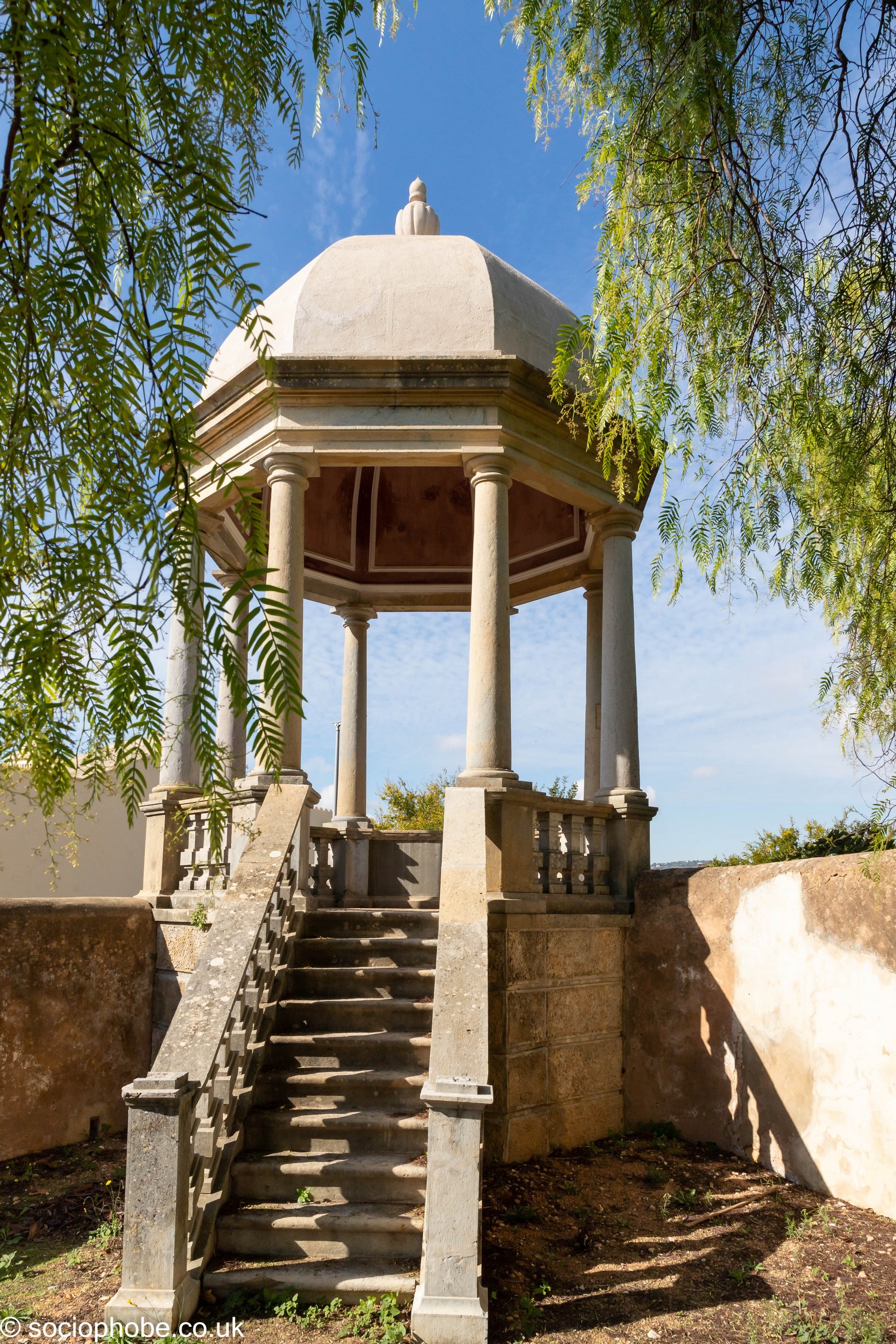
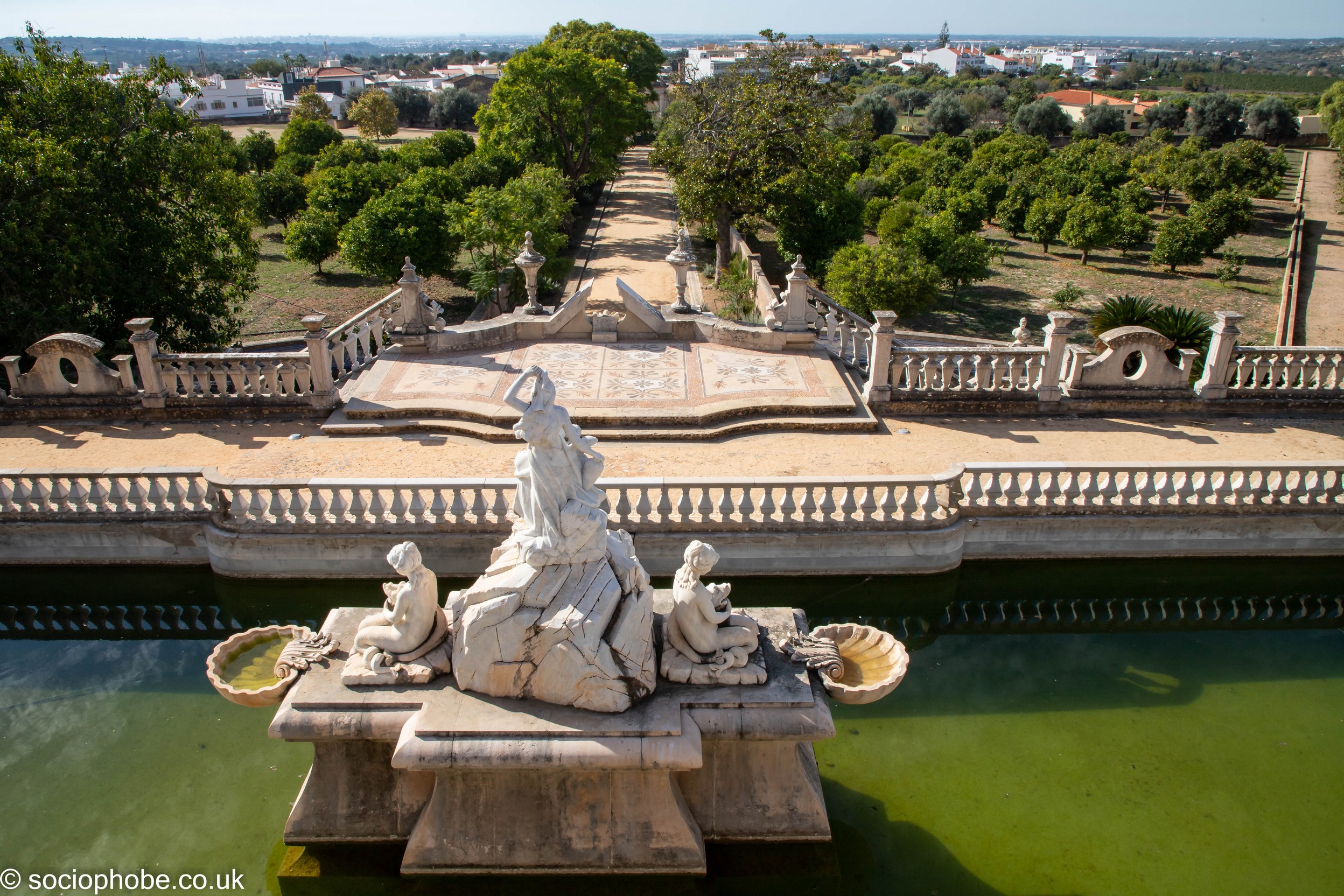
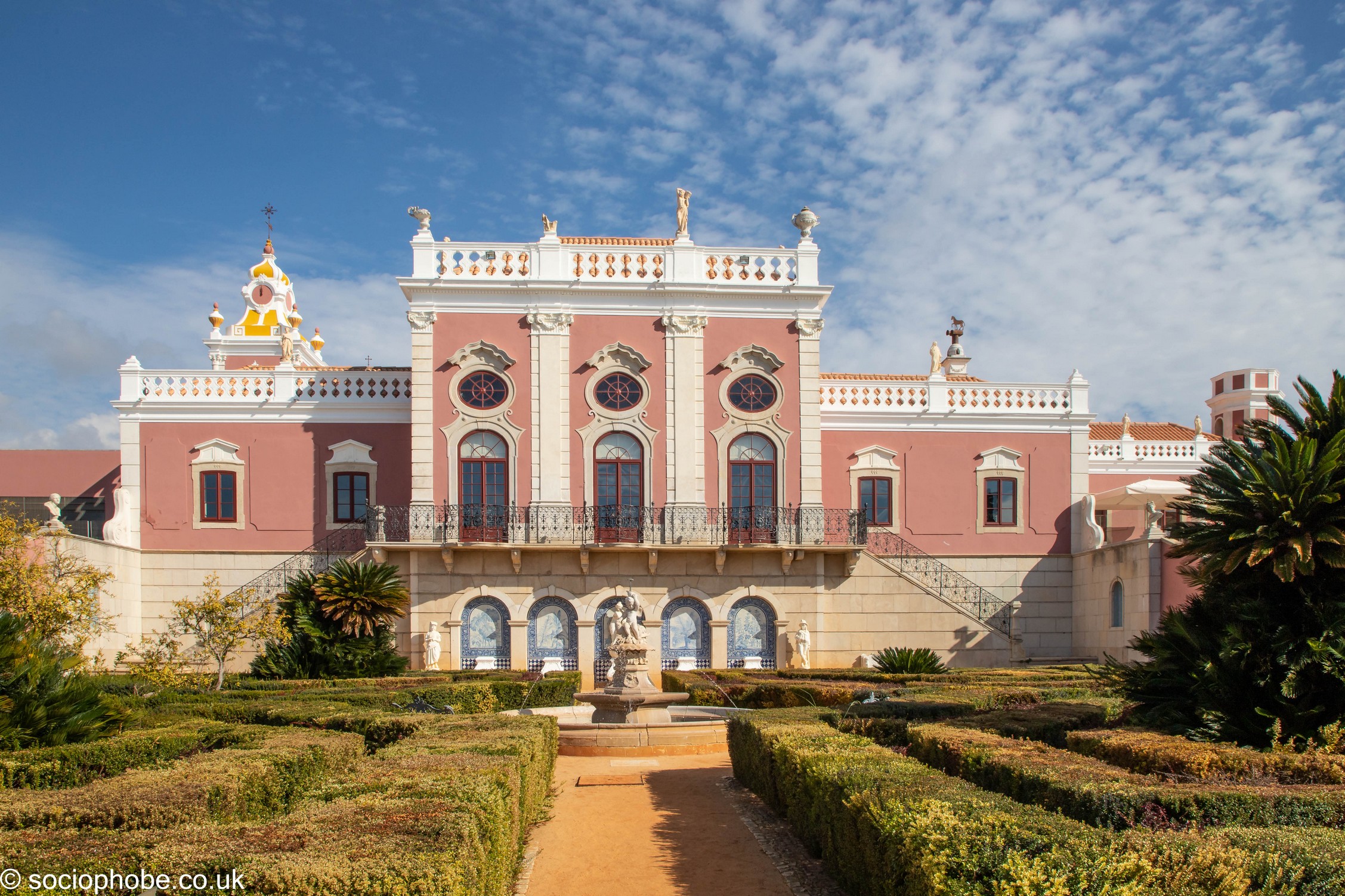
We’d taken longer than expected so we didn’t get to our first destination, the Palace Gardens of Estoi, until very later morning. The palace was started in the 1840’s but not completed as the guy died and it wasn’t until sixty years later that a local businessman took on and completed the project. It is very much in the style of a mini Versailles, very formal and gaudy, but the king was so impressed when he visited that he made the owner a viscount so he must have done something right! It then slowly decayed until bought by the state and restored as a pousada (state owned historic hotel) in 2009.
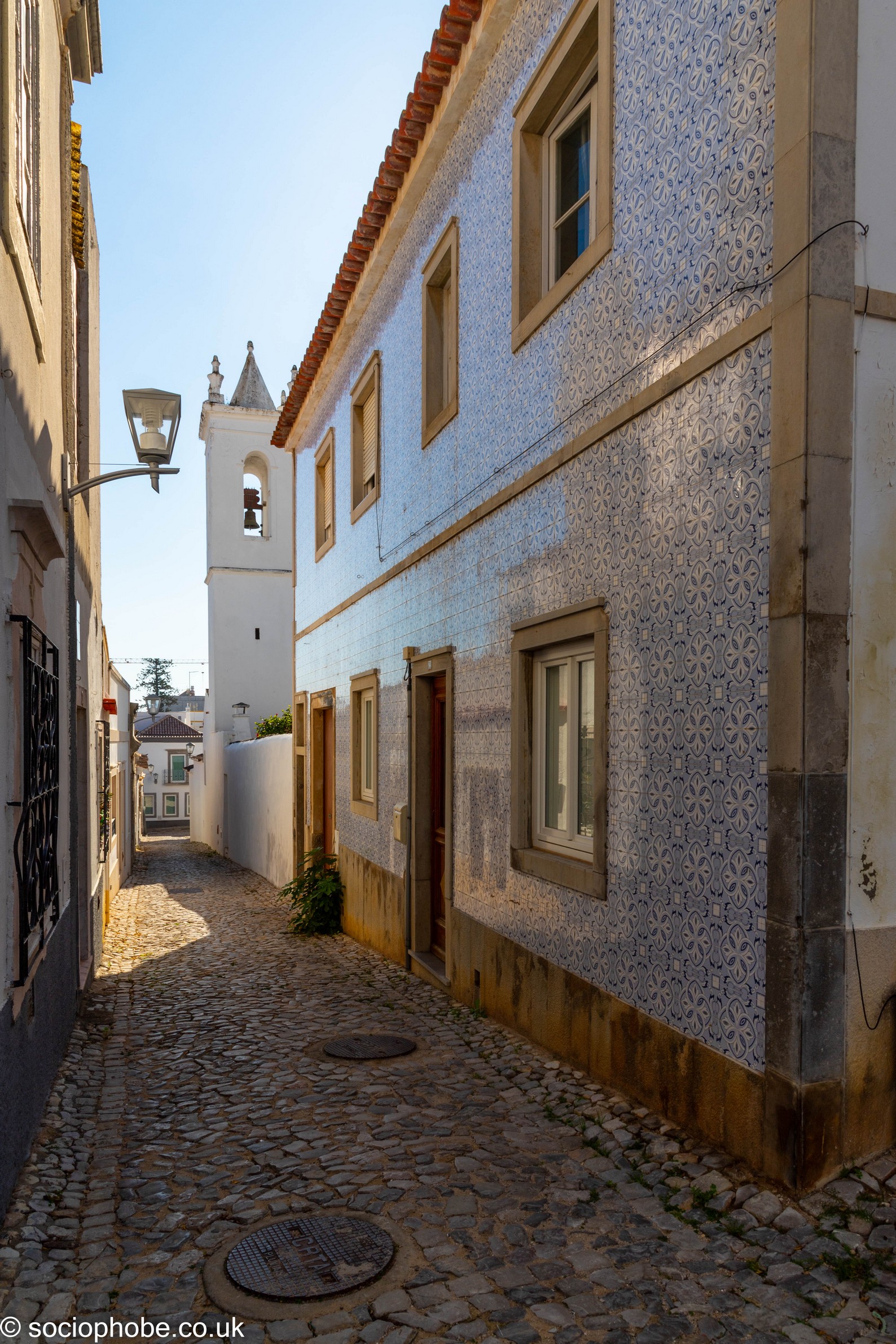
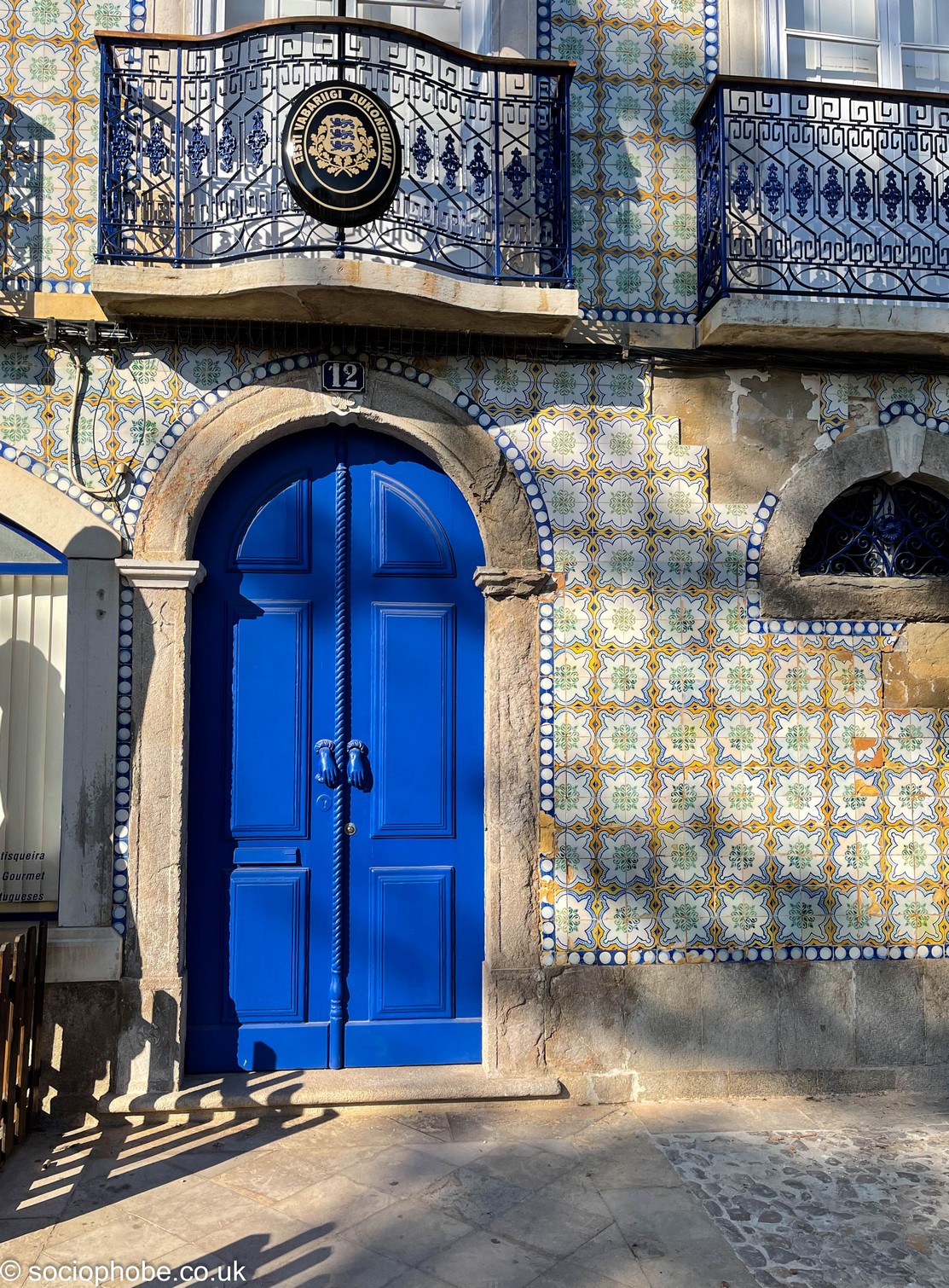
We didn’t go in to the hotel but we did walk around the gardens and probably spent a couple of hours. There were some uniquely Portugese touches, with the tiled facades, and it was very pleasant and relaxing to walk around in the sunshine. Very empty too! We did see some vandalism of the statues and graffiti by mentally challenged imbeciles but sadly there were no stocks with the bodies of malefactors slowly rotting in.
Milreu Roman Villa
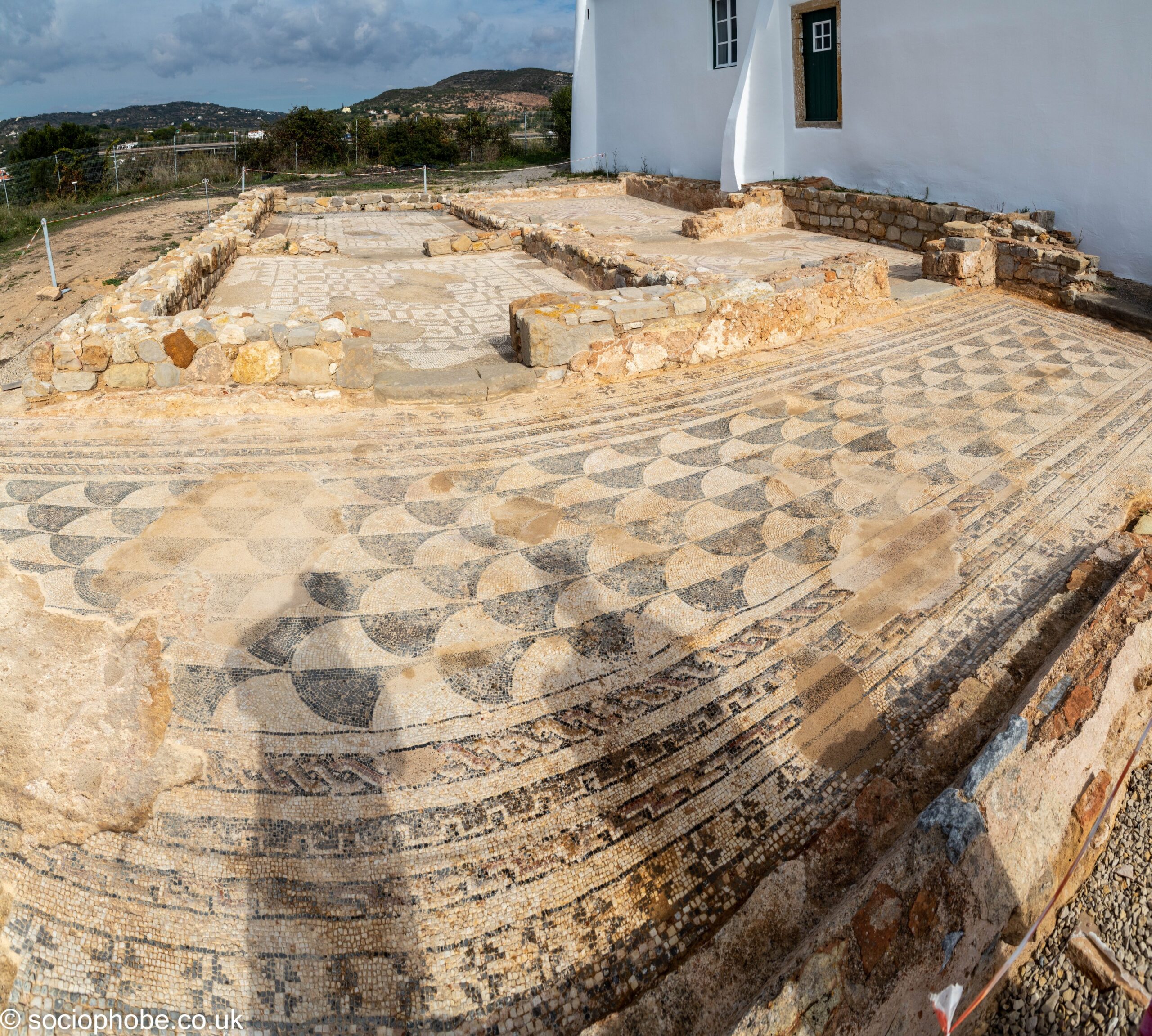
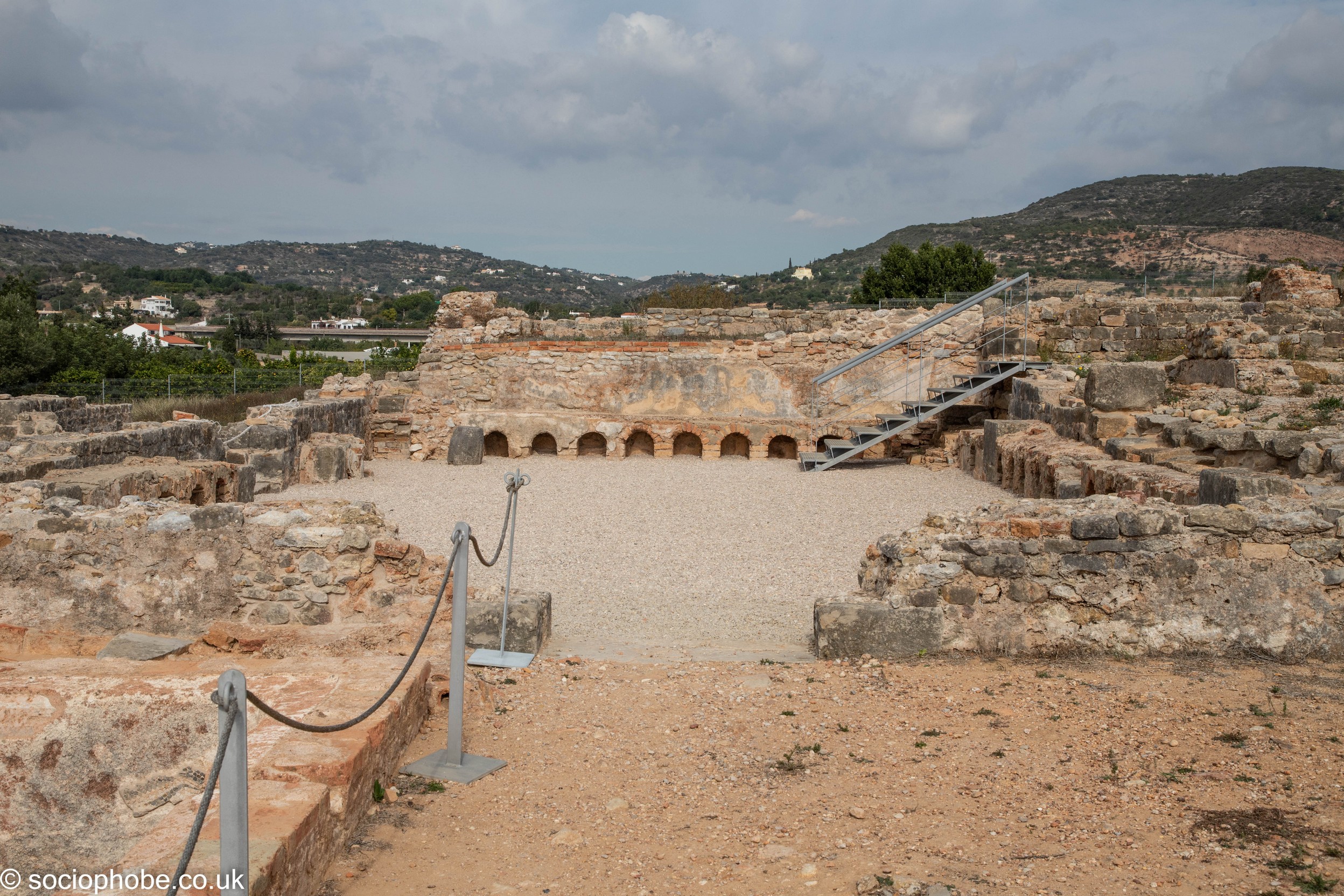
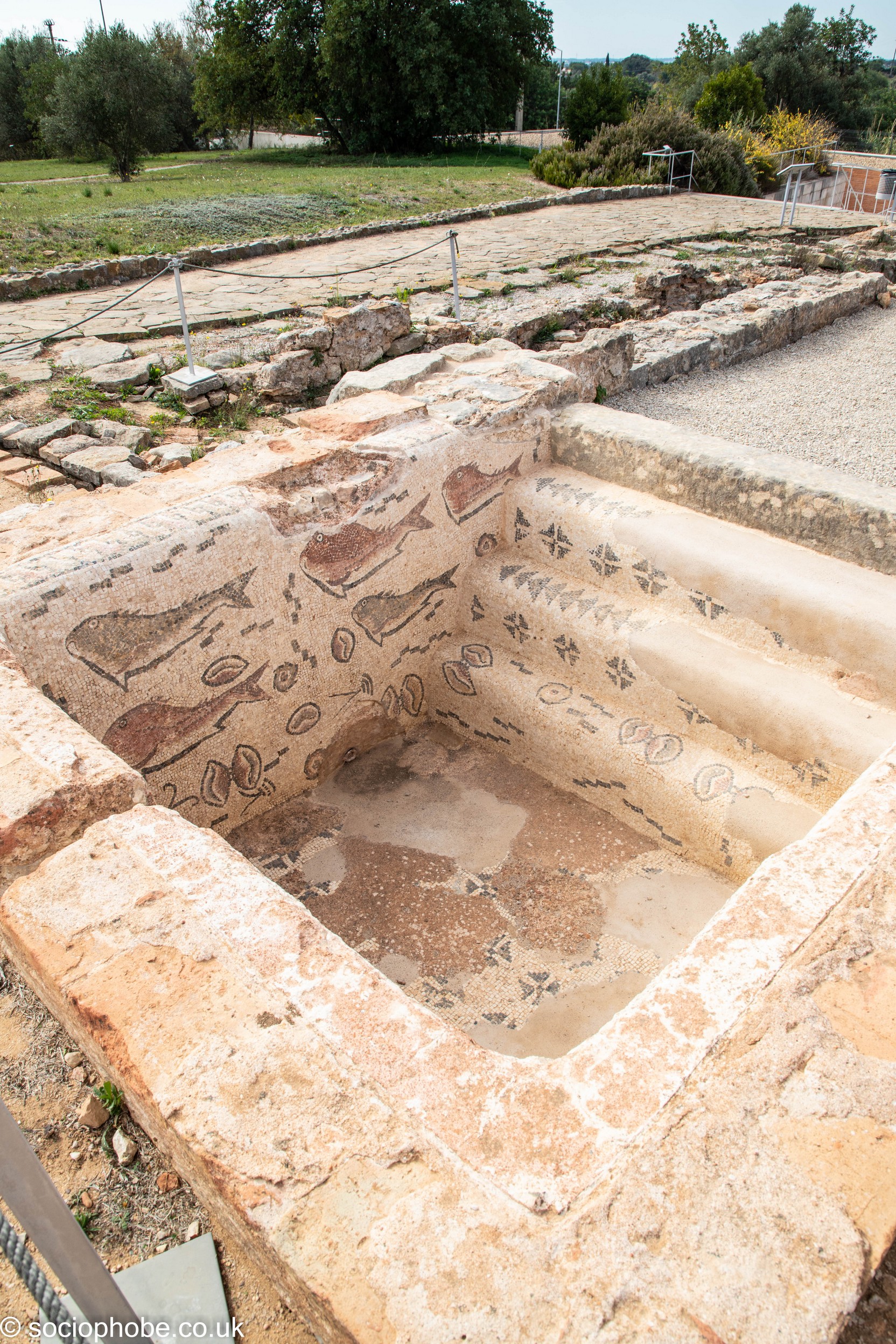
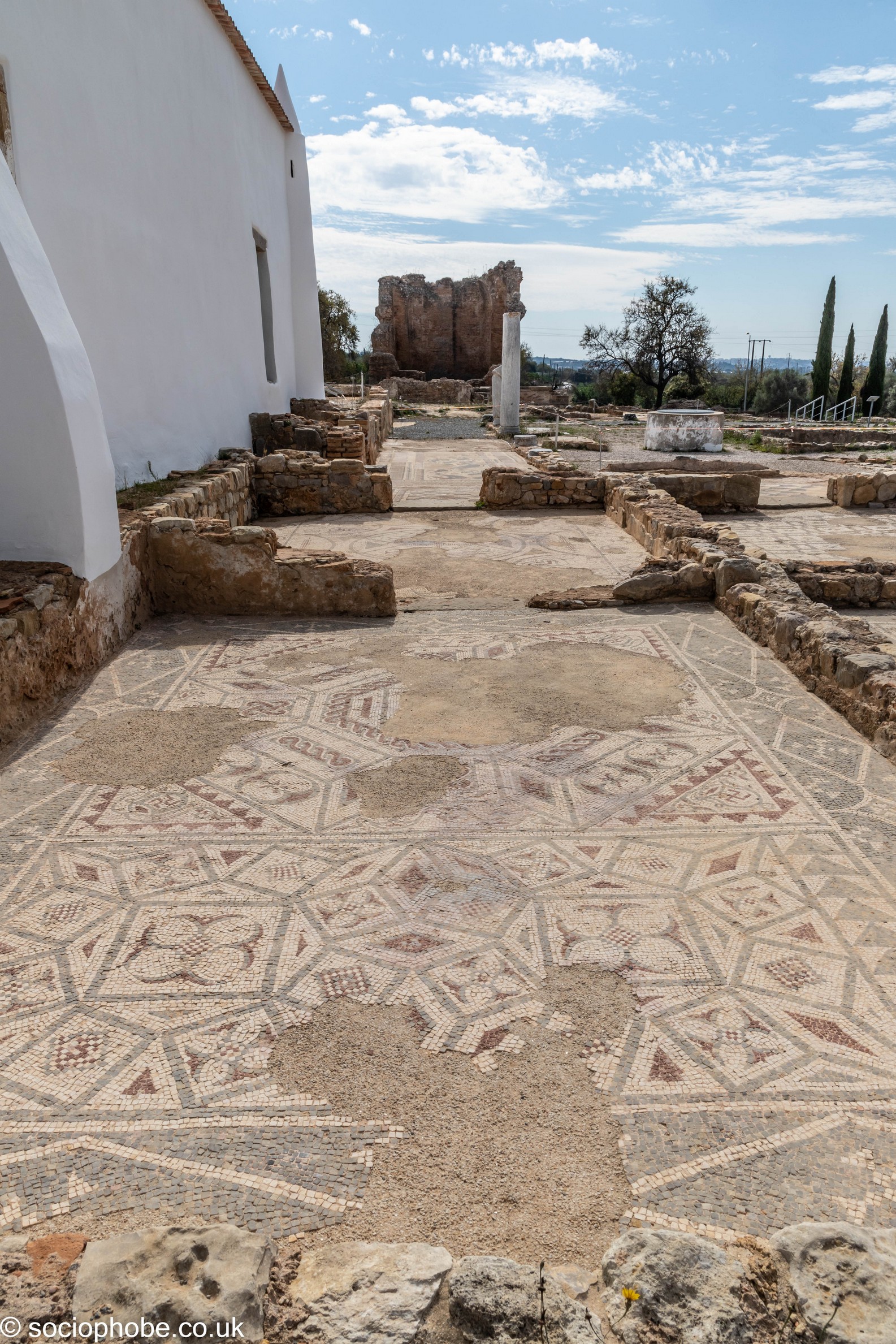
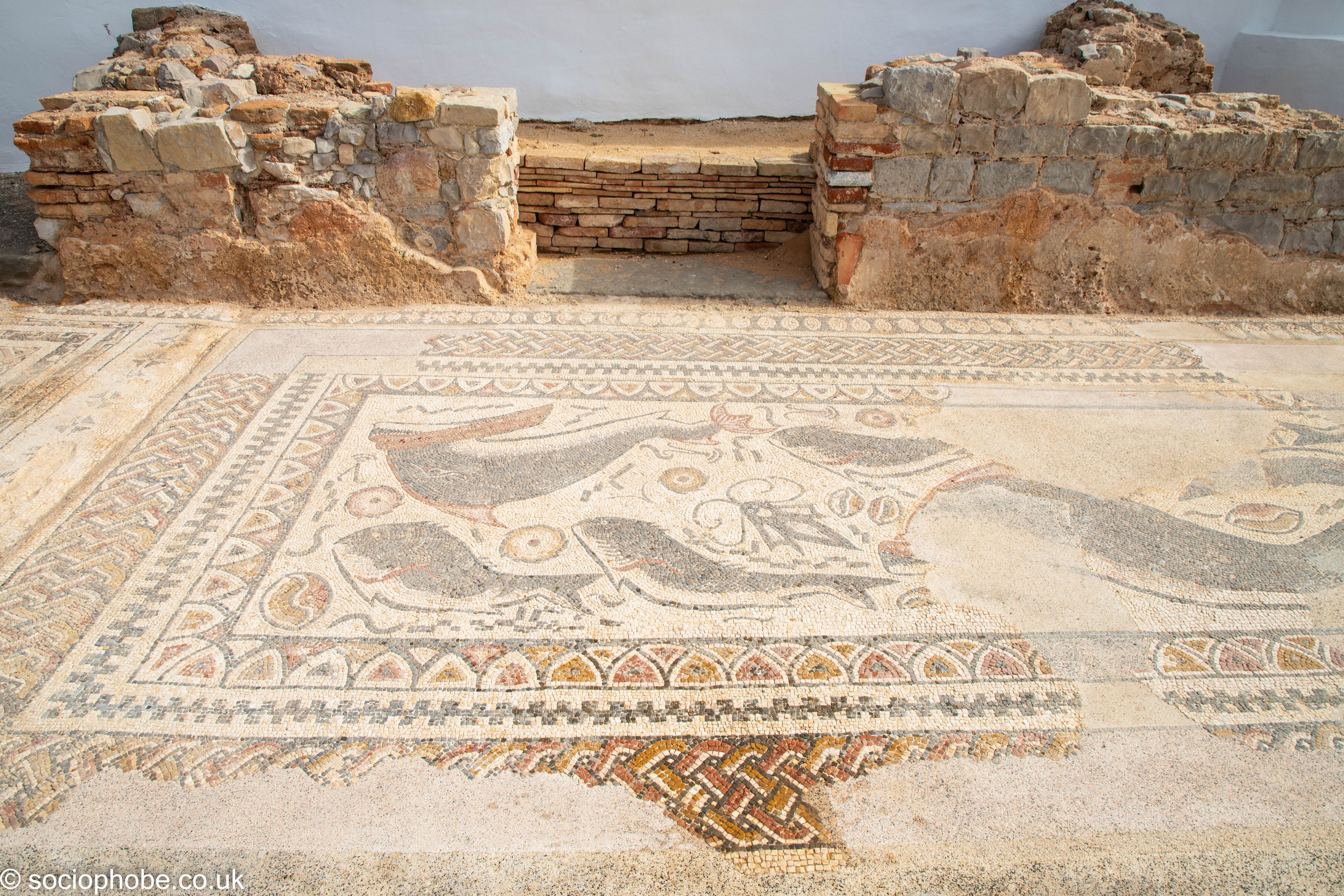
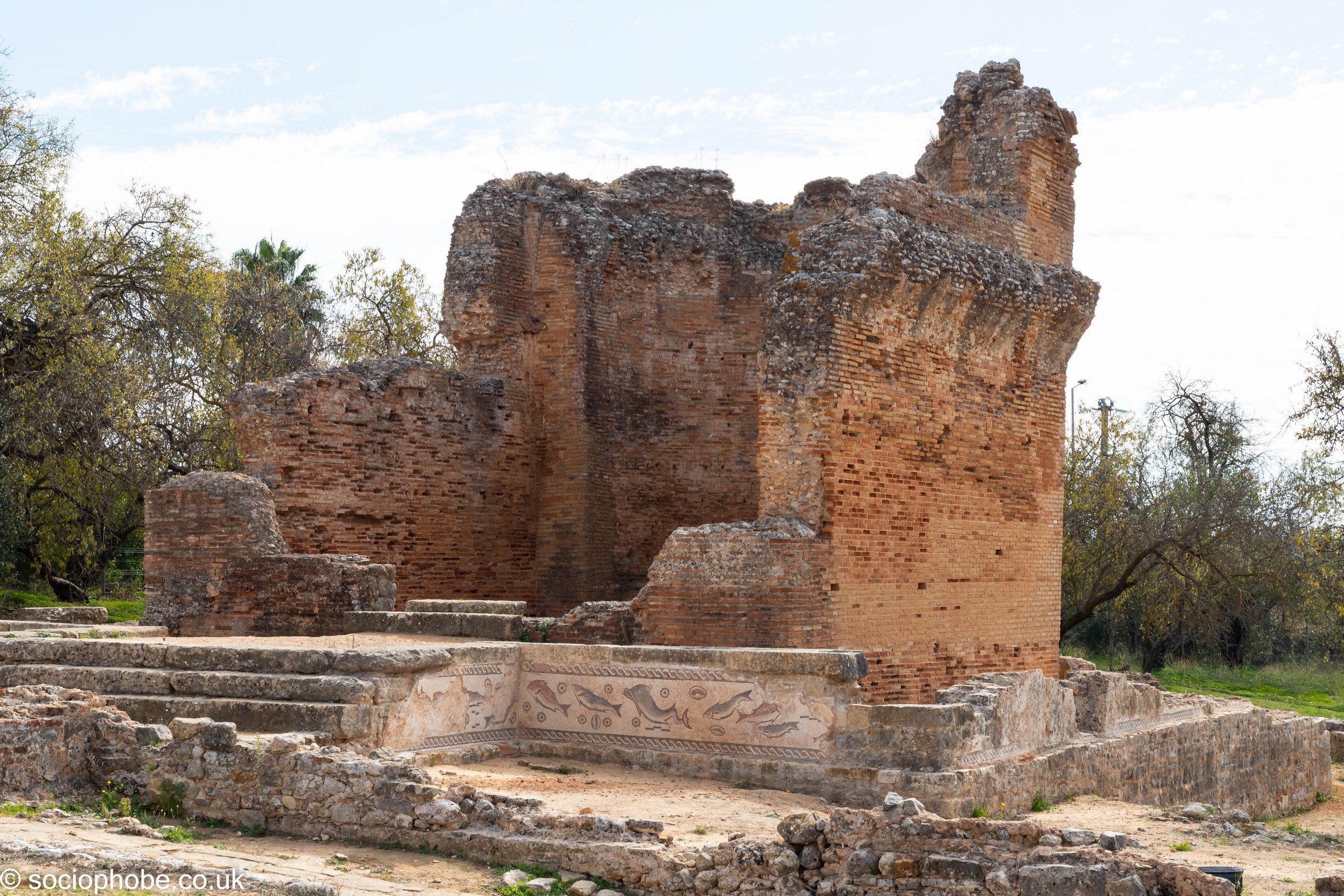
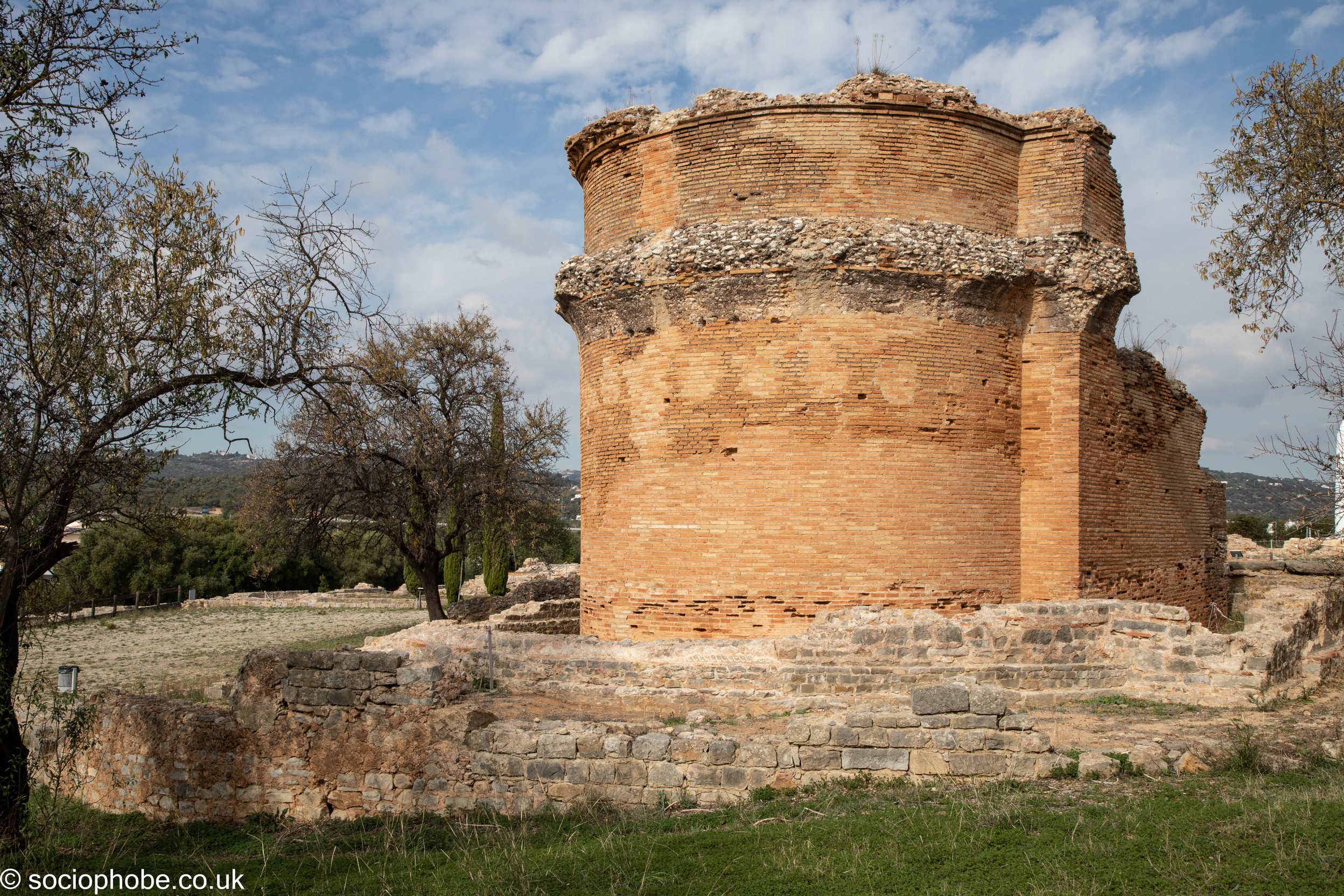
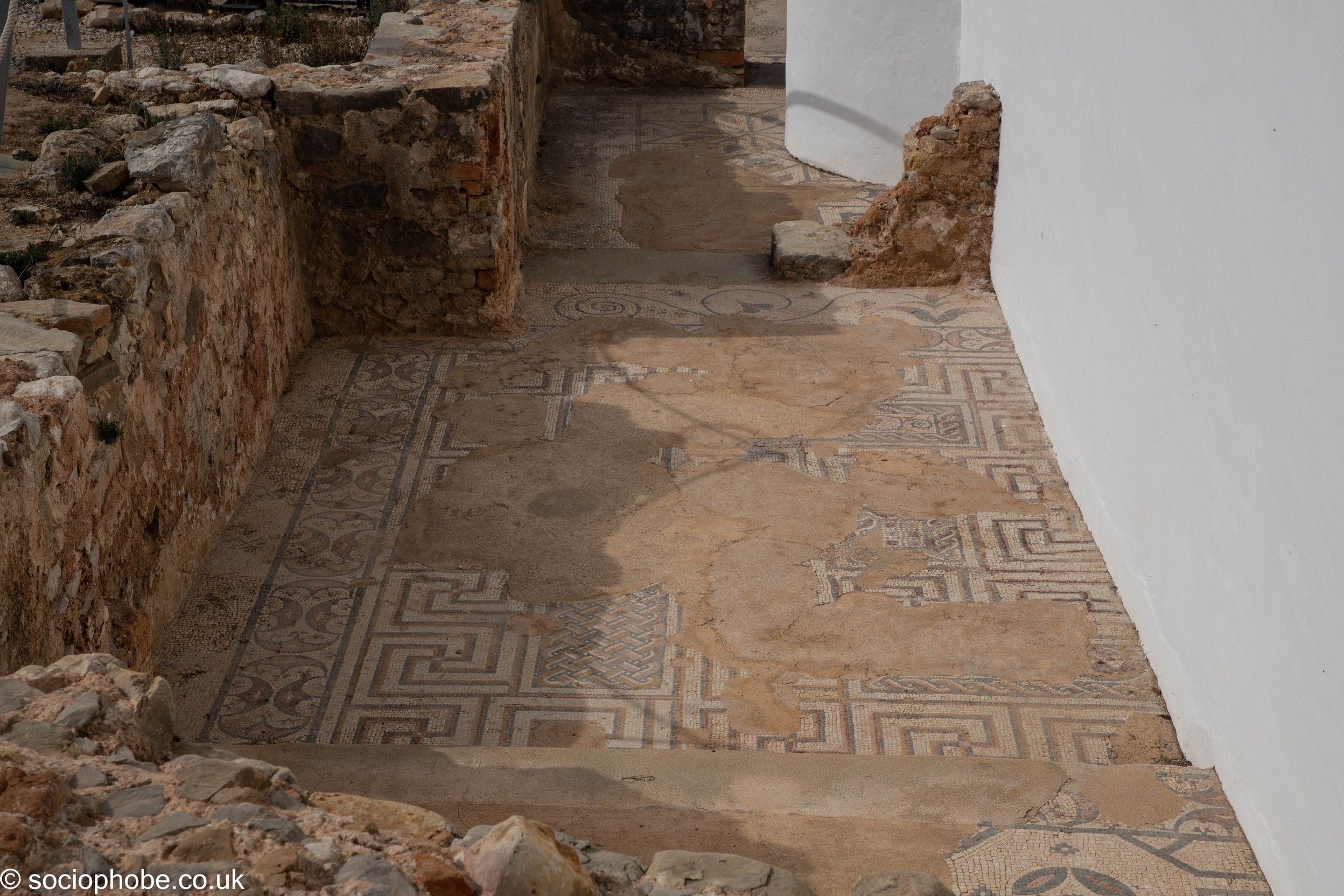
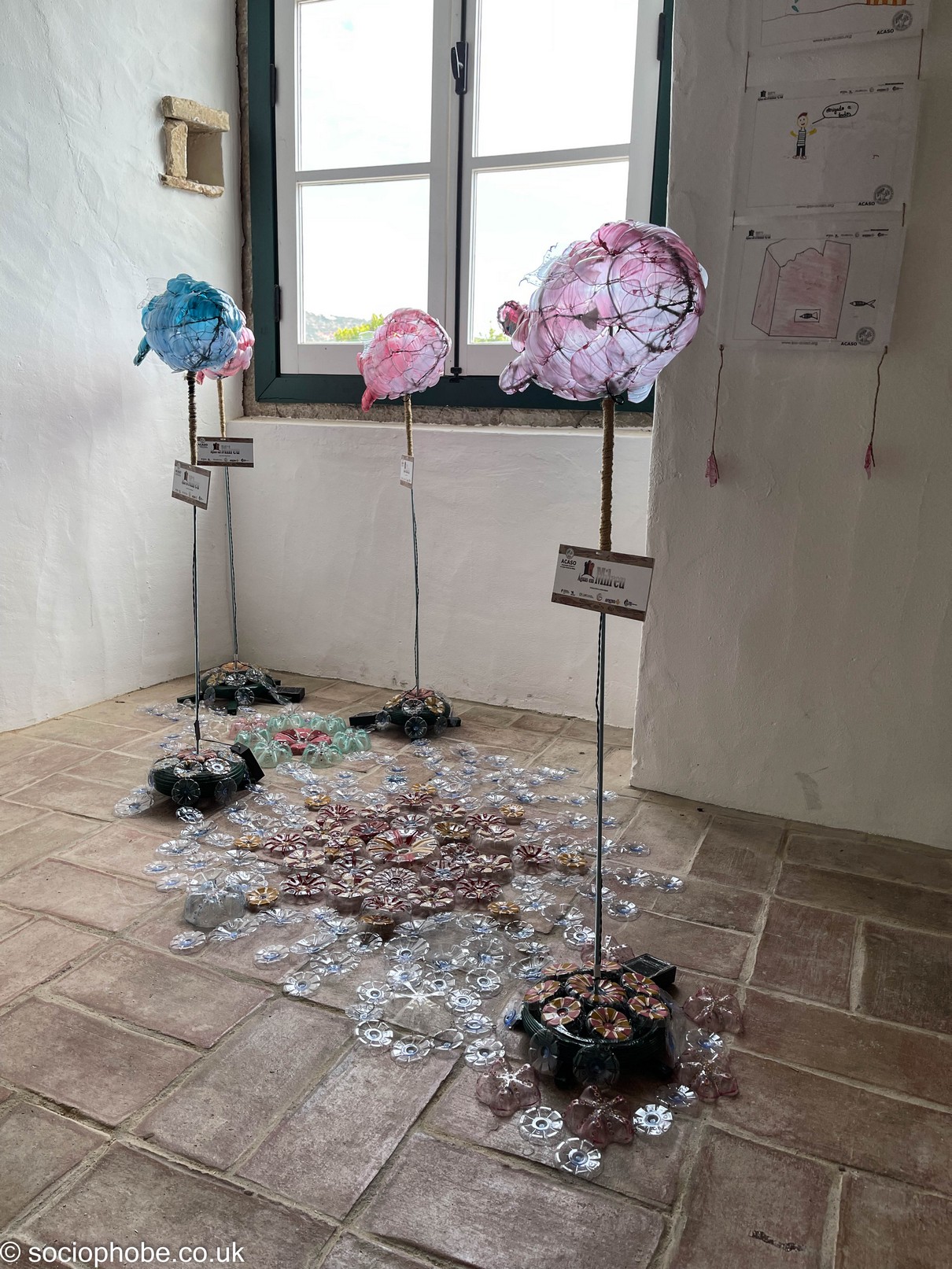
Our next stop was another Roman villa a few minutes drive away. This building was in continual use for a few hundred years after Rome fell but then decayed with the Arabic takeover and had a farmhouse built on the ruins in the sixteenth century. The villa was obviously an impressive structure in its heyday with large amounts of mosaics and a grand temple that later developed into a Christian church.
The farmhouse is now a very good interpretation centre that shows both further Roman remains and also has exhibits by visiting school children. The site was large and we spent about an hour wandering round it all. Sadly, as usual, there was no cafe on site. Why is it that the UK seems to be the only place that tries to capture this revenue stream for its attractions?
Castro Marim Castle
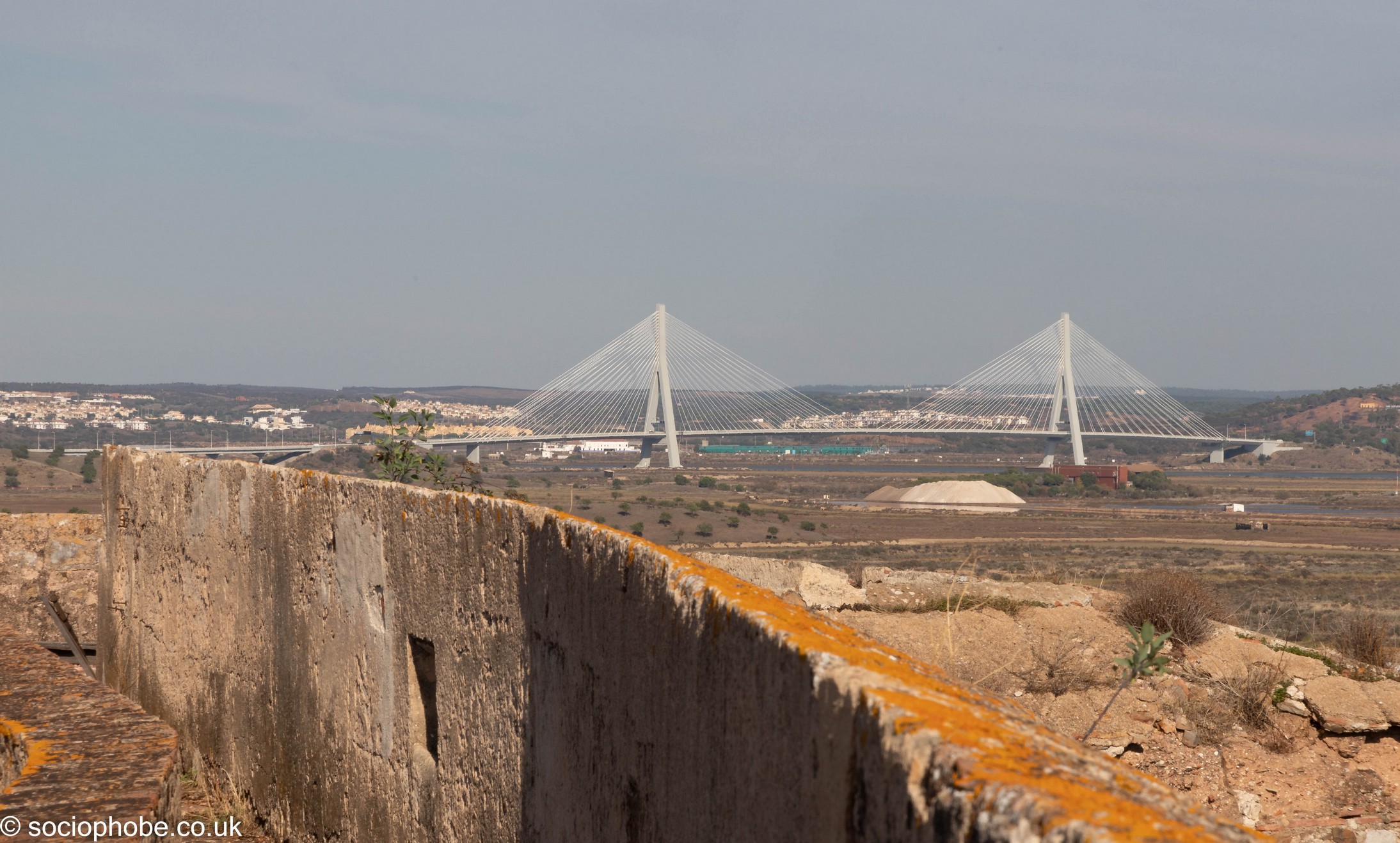
We then drove back on the motorway and crossed into Spain. This wasn’t really intentional, I wanted to get some photos of the Guadiana International Bridge but there was actually no where to stop and get a decent view of it. We even stopped at the Algarve Tourist Information point and they had no useful suggestions. That was a bit of a let down but luckily solace was at hand on the form of nearby Castro Marim Castle!
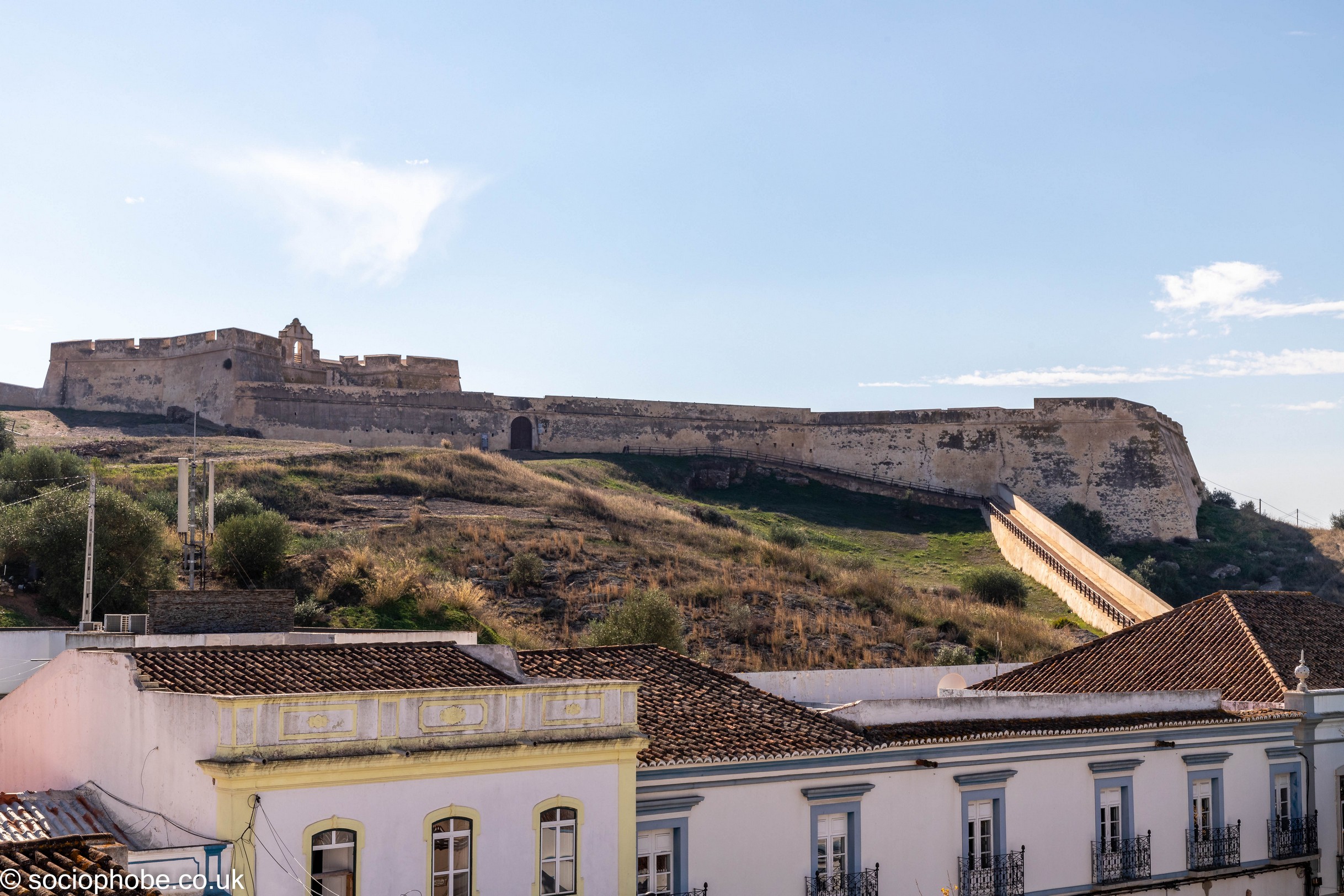
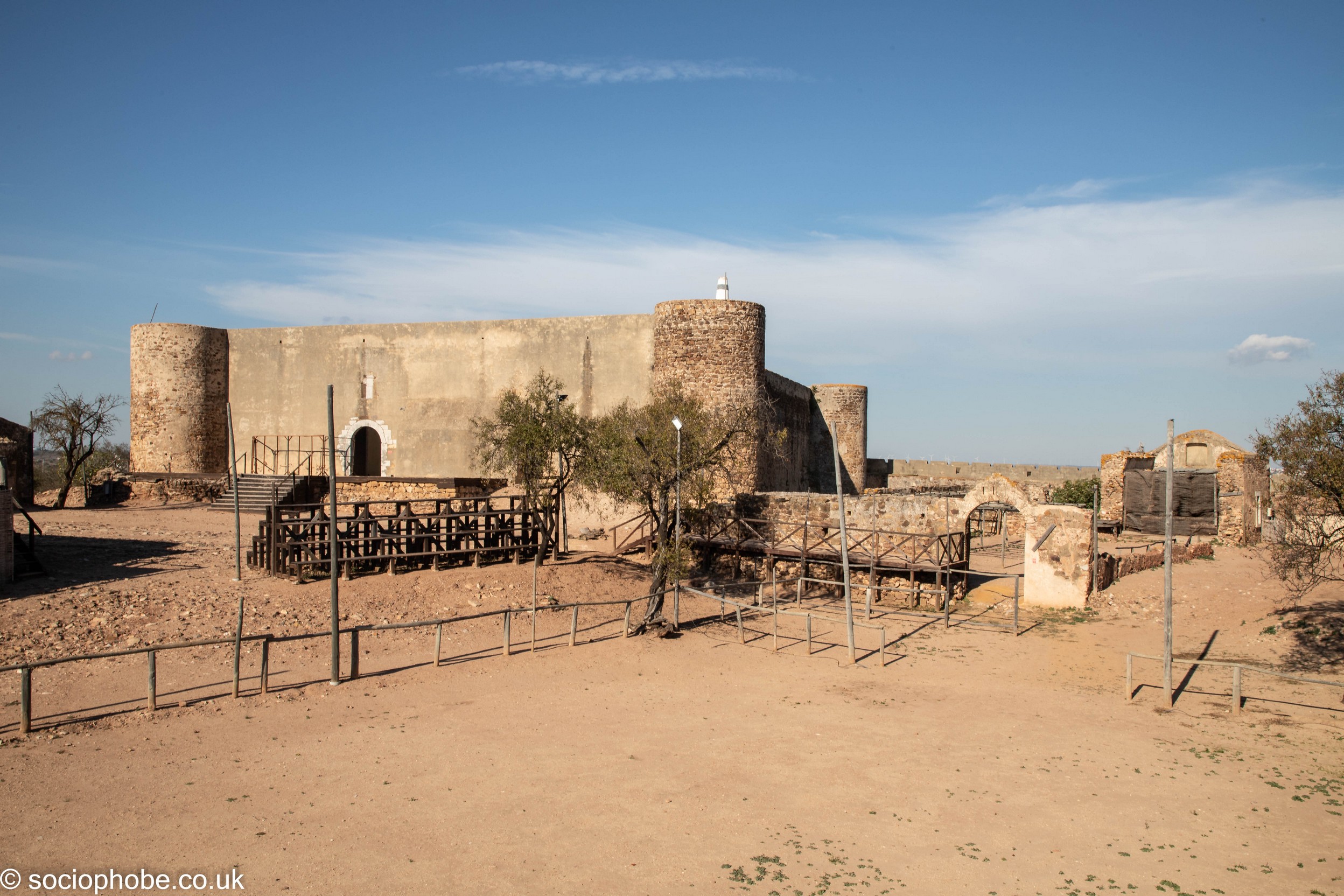
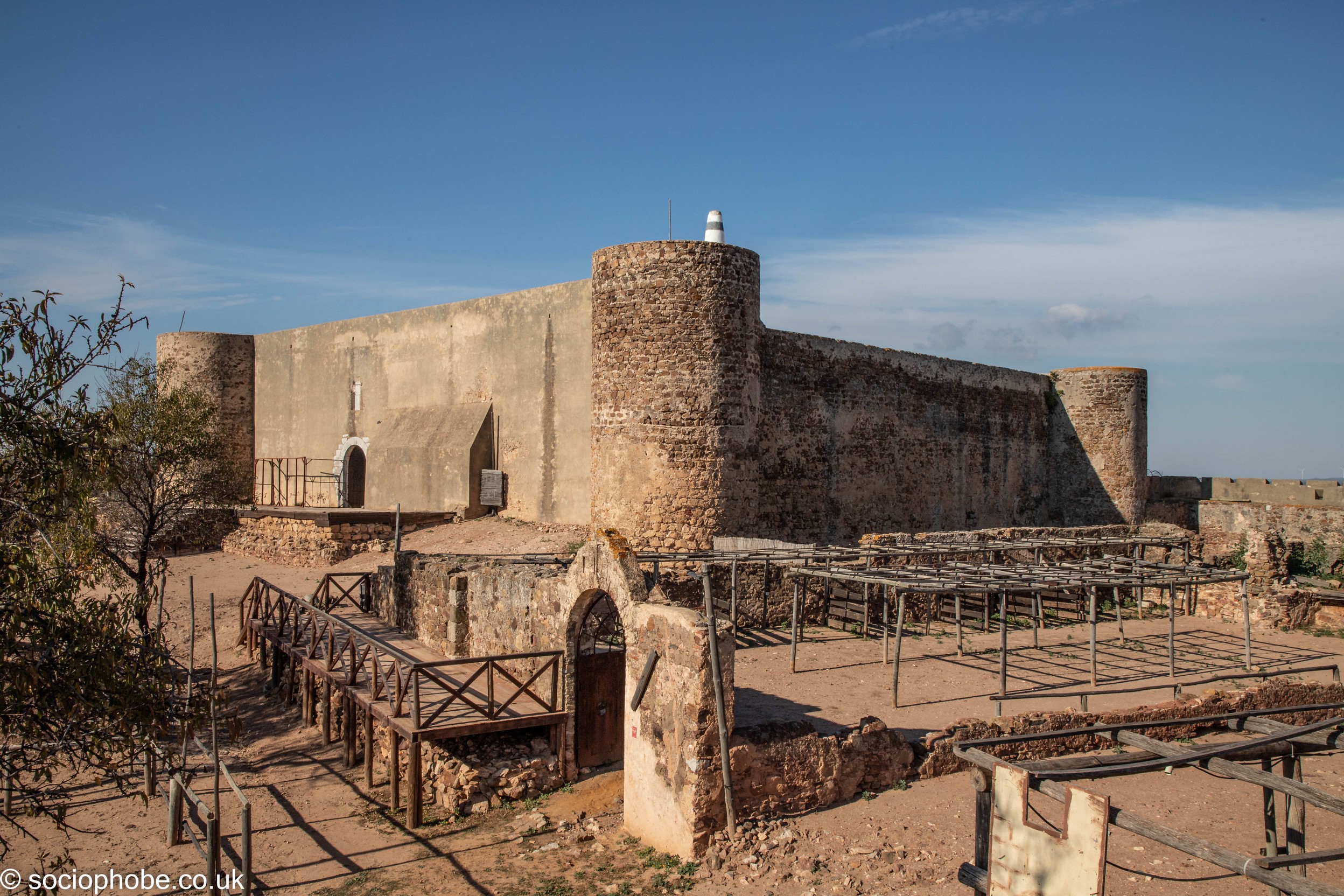
This is a large medieval structure, originally developed by the Templars and then, after some deft political manoeuvring by the Portugese king, the Knights of Christ. He created this military order to take over the Templars properties (and probably personnel too) so they didn’t go to the Pope when he dissolved the order at the request of the perfidious French king, Philip II. The castle became very wealthy and was an important border fortification, both against the Moors and after 1492, against the Spanish.
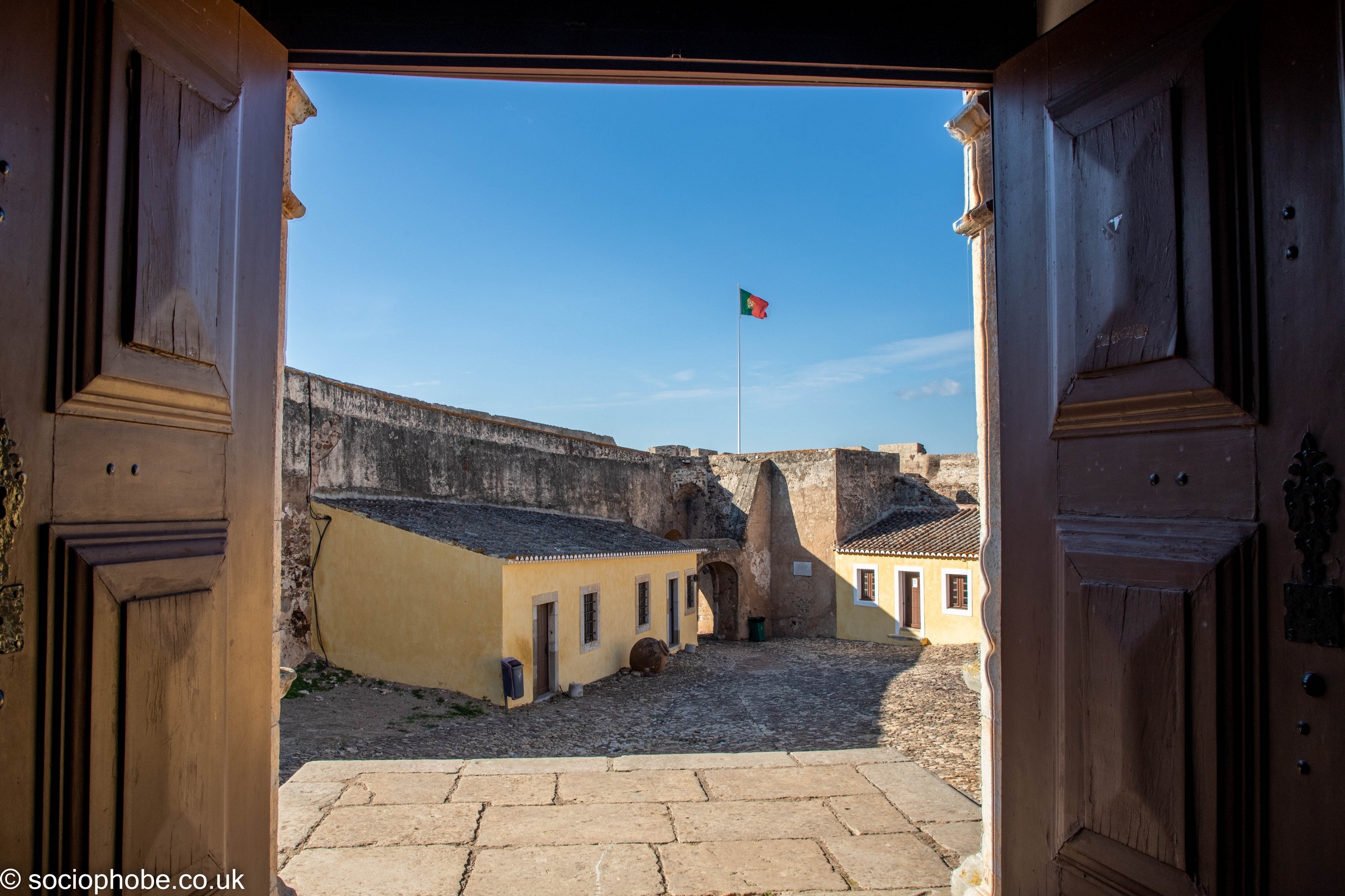
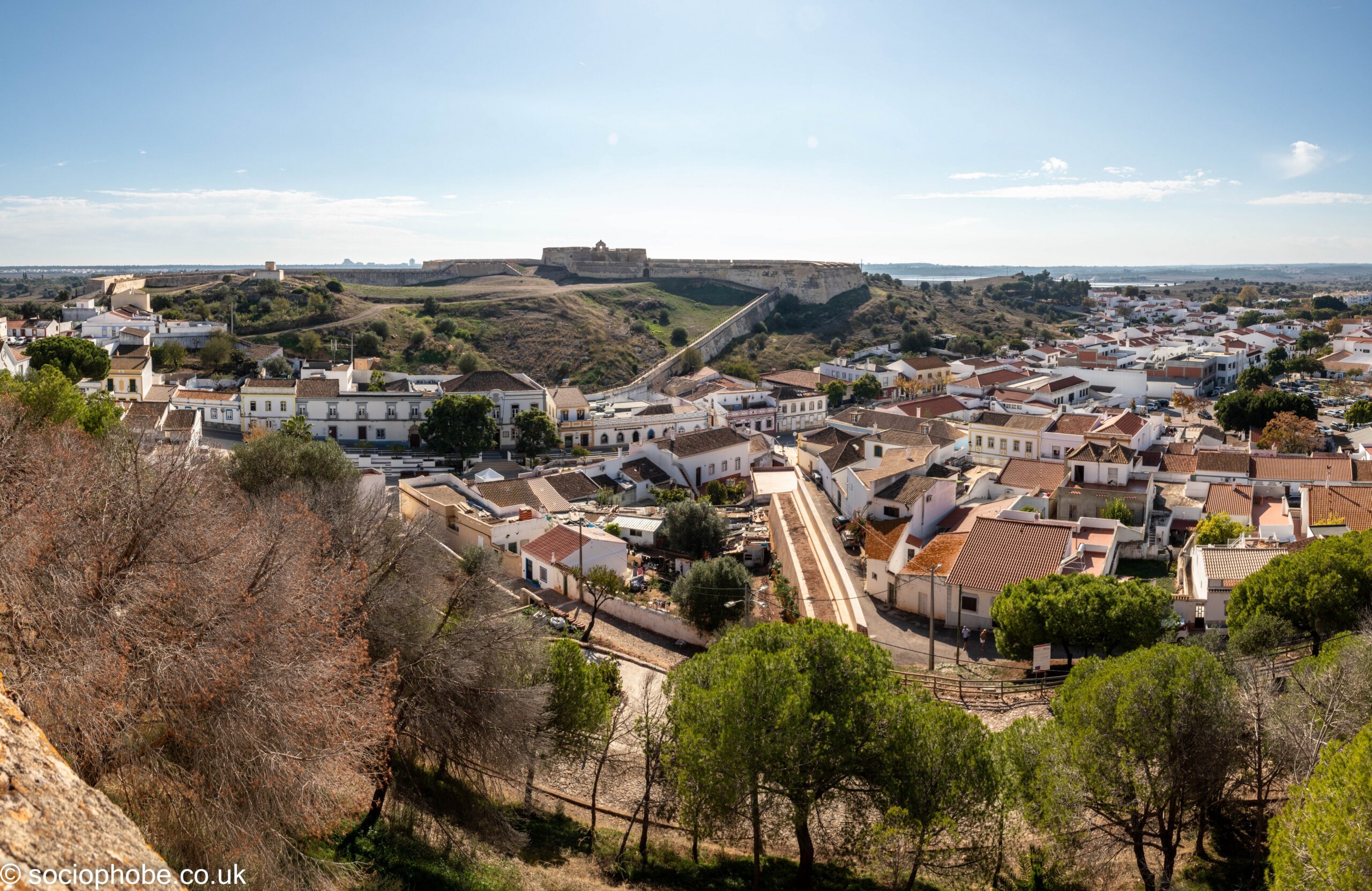
In the seventeenth century a more modern defensive structure, the fort of San Sebastian, was built on the adjoining hill but this wasn’t open to the public. We paid the small entry fee and went into the castle museum which had a good history of the place before climbing the steps to the walls and doing a circuit of the castle. We were actually able to see the Guadiana Bridge in the distance too. The walls were quite uninspiring though, there were no real towers or bastions that we could get to.
The keep is a large and imposing building inside the walls but other than walking around the courtyard we couldn’t go into the towers or on the walls. The inside seems to have lots of temporary structures ready for the medieval fair that is held in the castle every year but obviously covid has devastated that source of revenue. It was now mid afternoon and we felt we ought to eat so we walked back to the medieval tavern “Velho Cavalinho Taberna Medieval”.
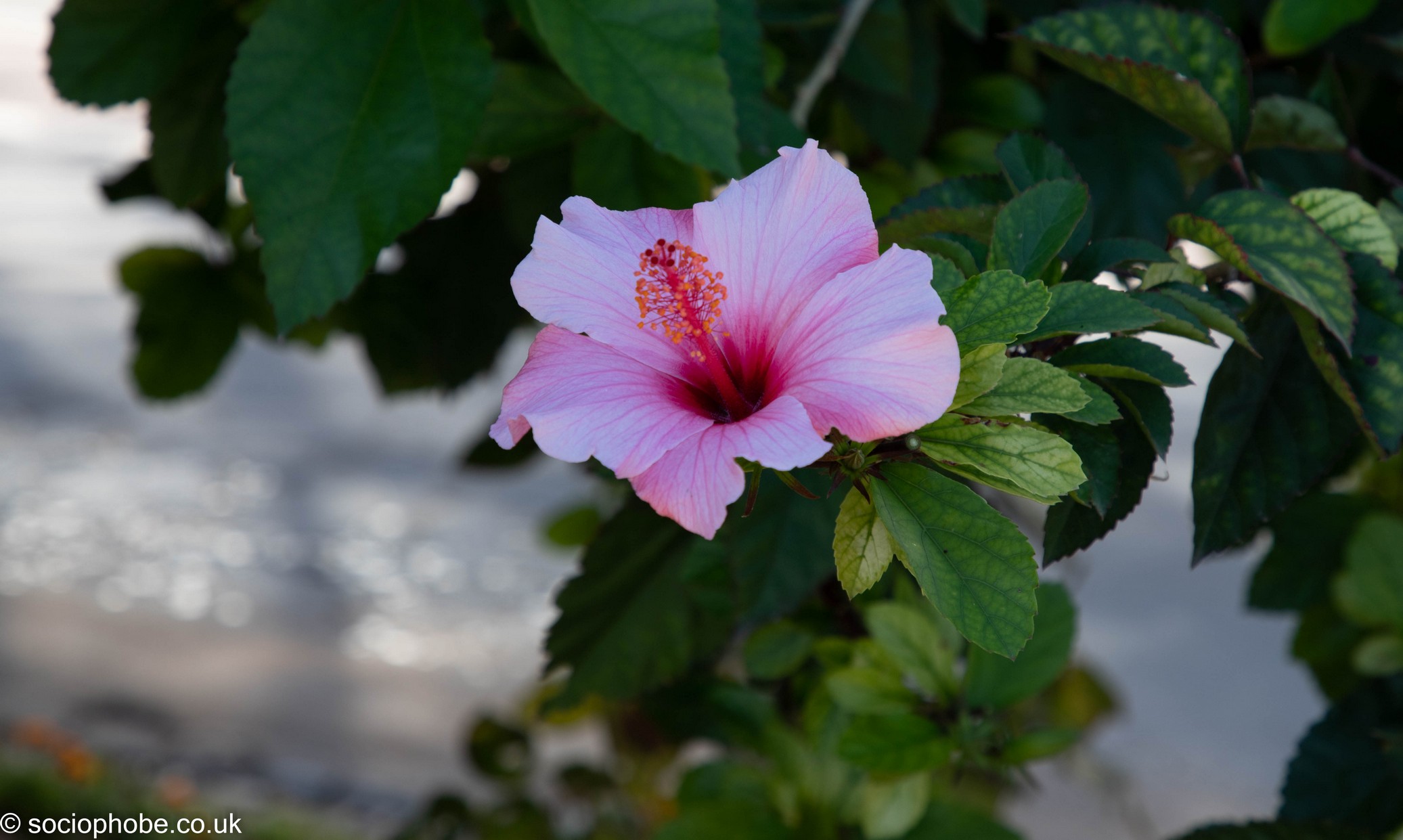
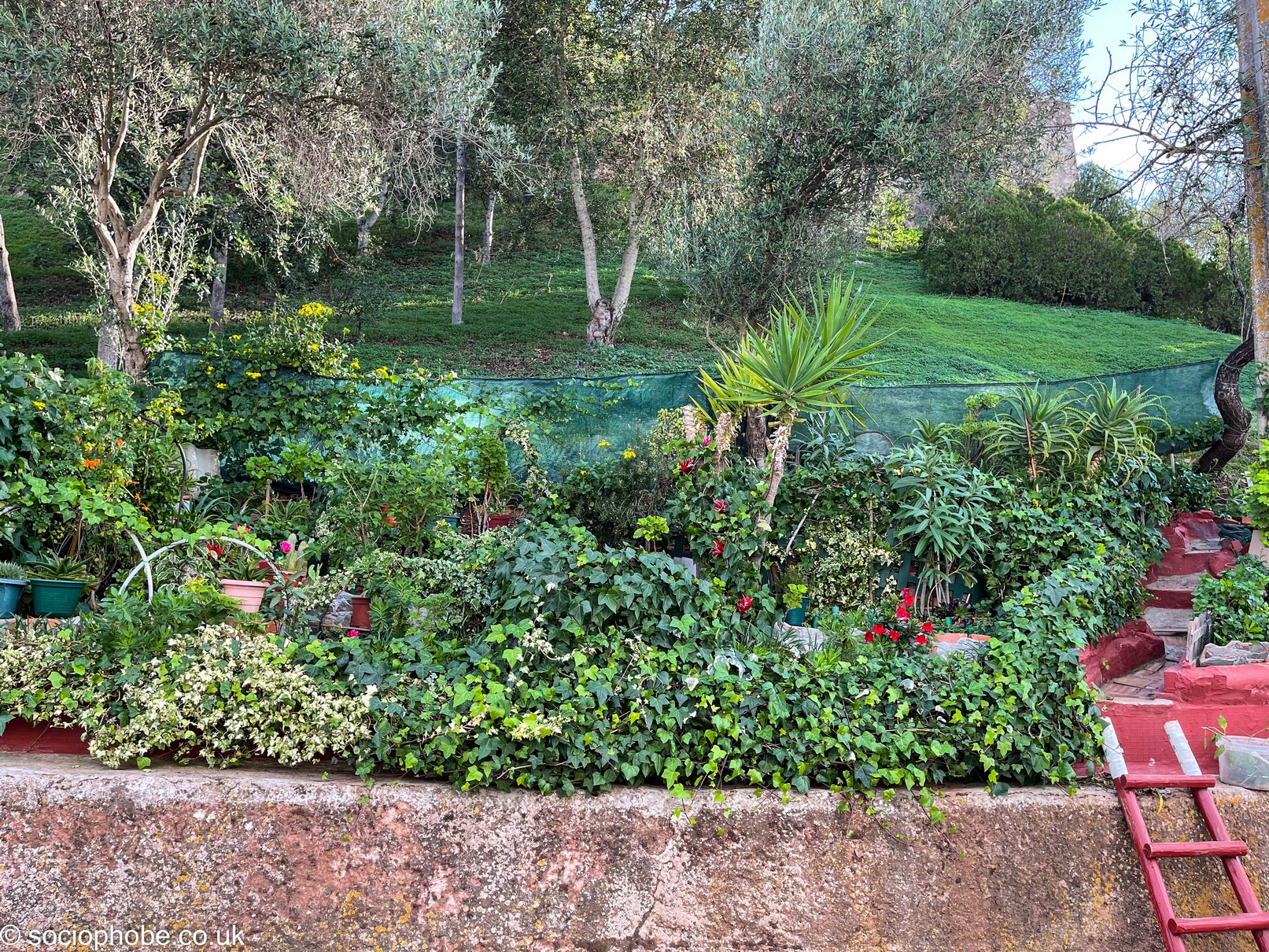
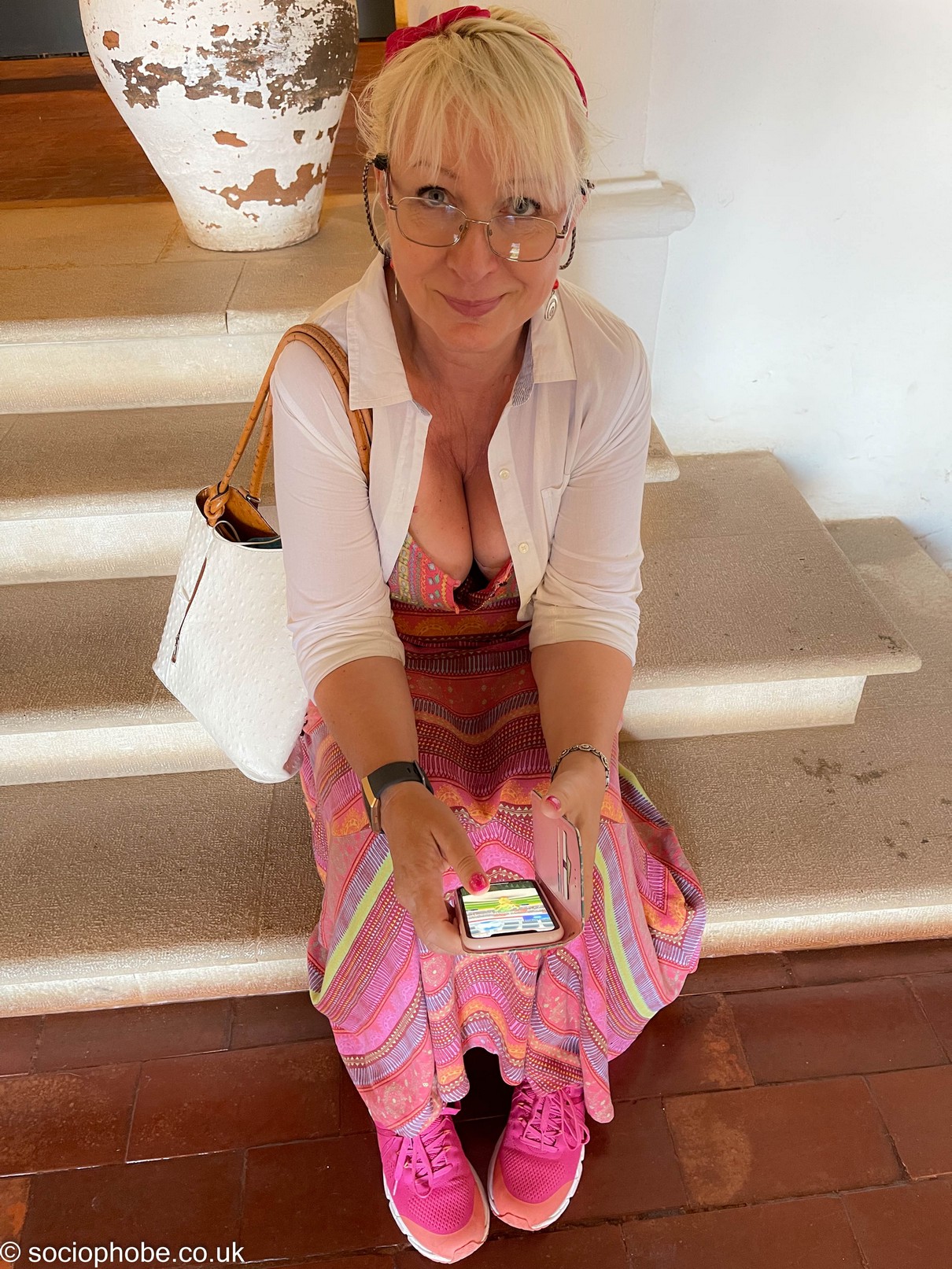
This was a fun place, designed to give you the medieval vibe without the dirt and disease. There were racks of costumes to wear if you chose, medieval rules to follow while eating, sort of period furniture and decor and an excellent host. The menu was a little esoteric but Deb liked it so I left her eating and did another circuit of the castle. I saw a lovely flower garden that an old lady had built in the parkland adjoining the castle that was very pretty.

Tavira Town and Castle
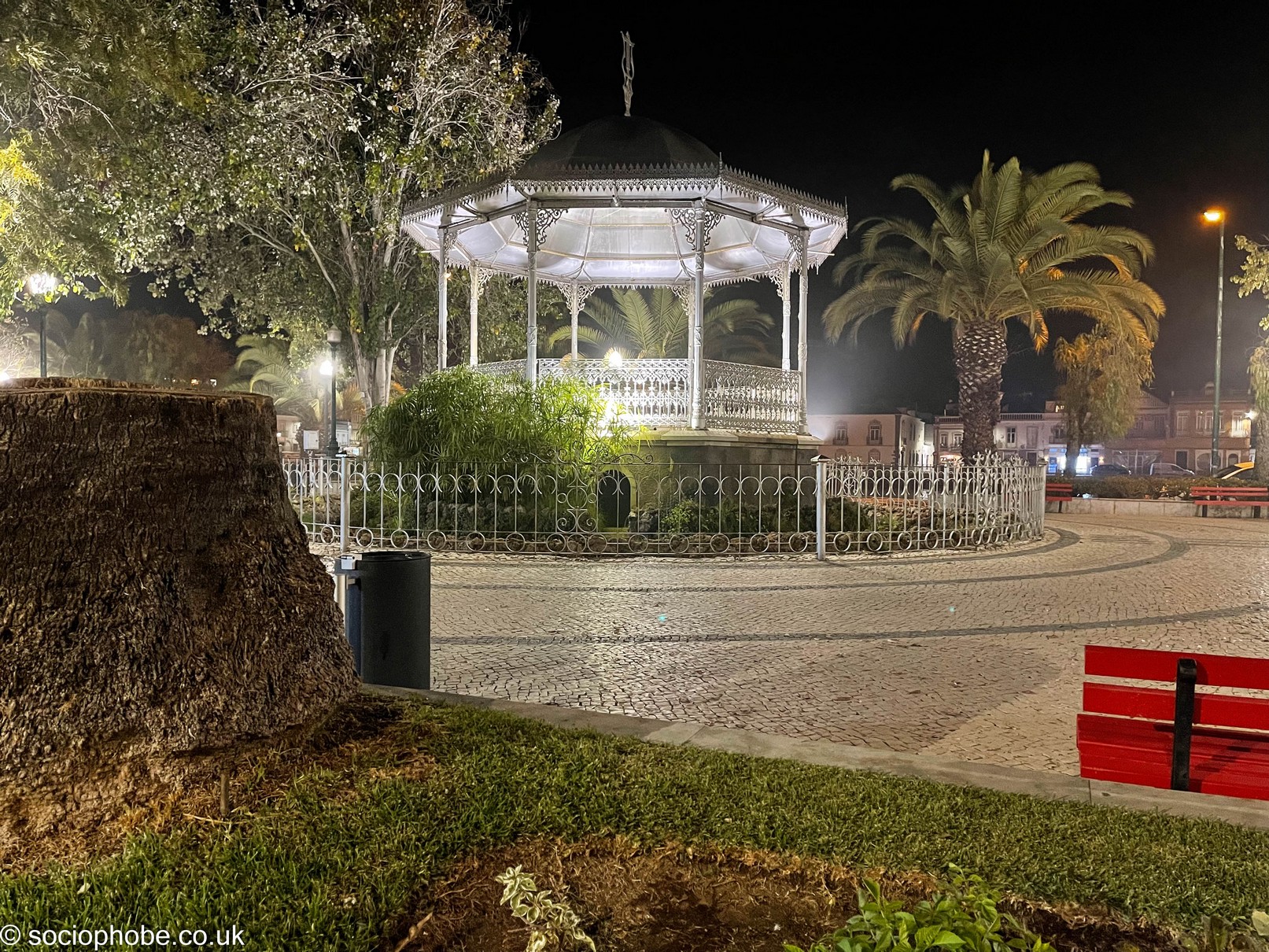
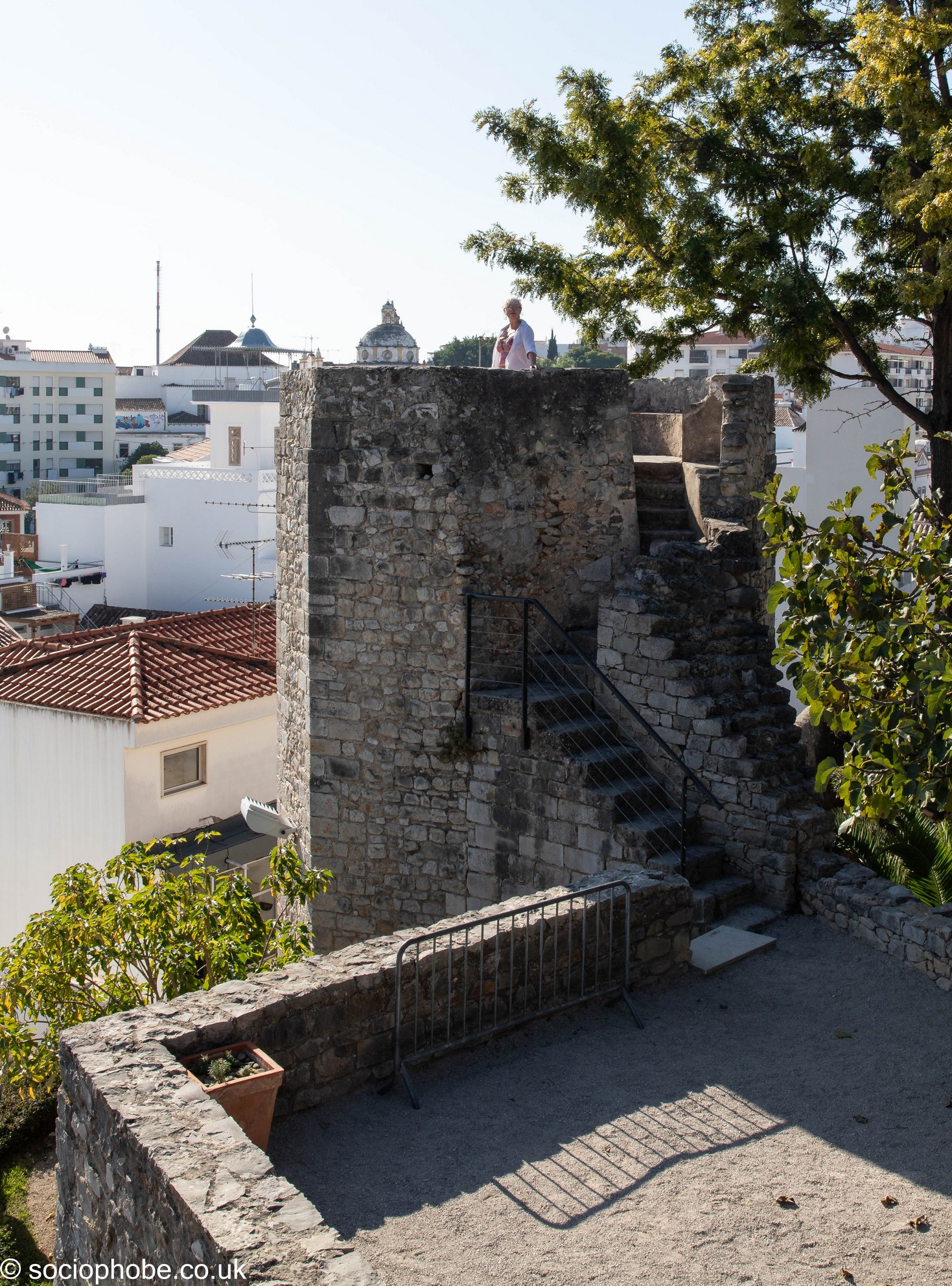
We then had another drive through silly small streets before taking the motorway back to Tavira and then more silly streets to park the car. I then spent a couple of hours doing the ritual photos and notes from the day. It was about 8 before we finally left for dinner and by then most of the places we tried were closed or closing – Portugal isn’t like Spain! We eventually went to a different Indian restaurant and then found a little places doing Crepes for dessert. Walking back was very atmospheric as the smoke from the hot chestnut vendor gave the park a foggy glow!
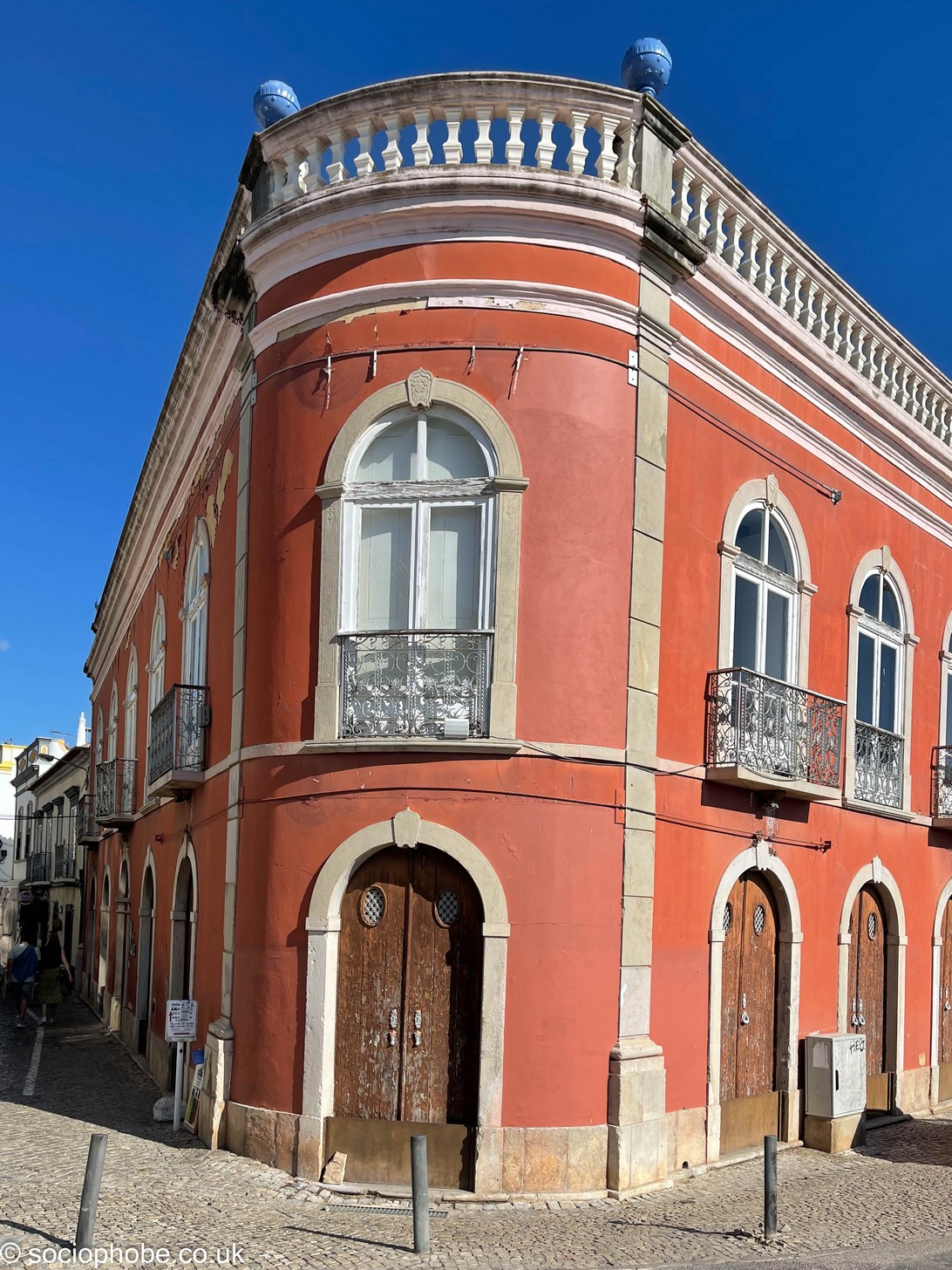
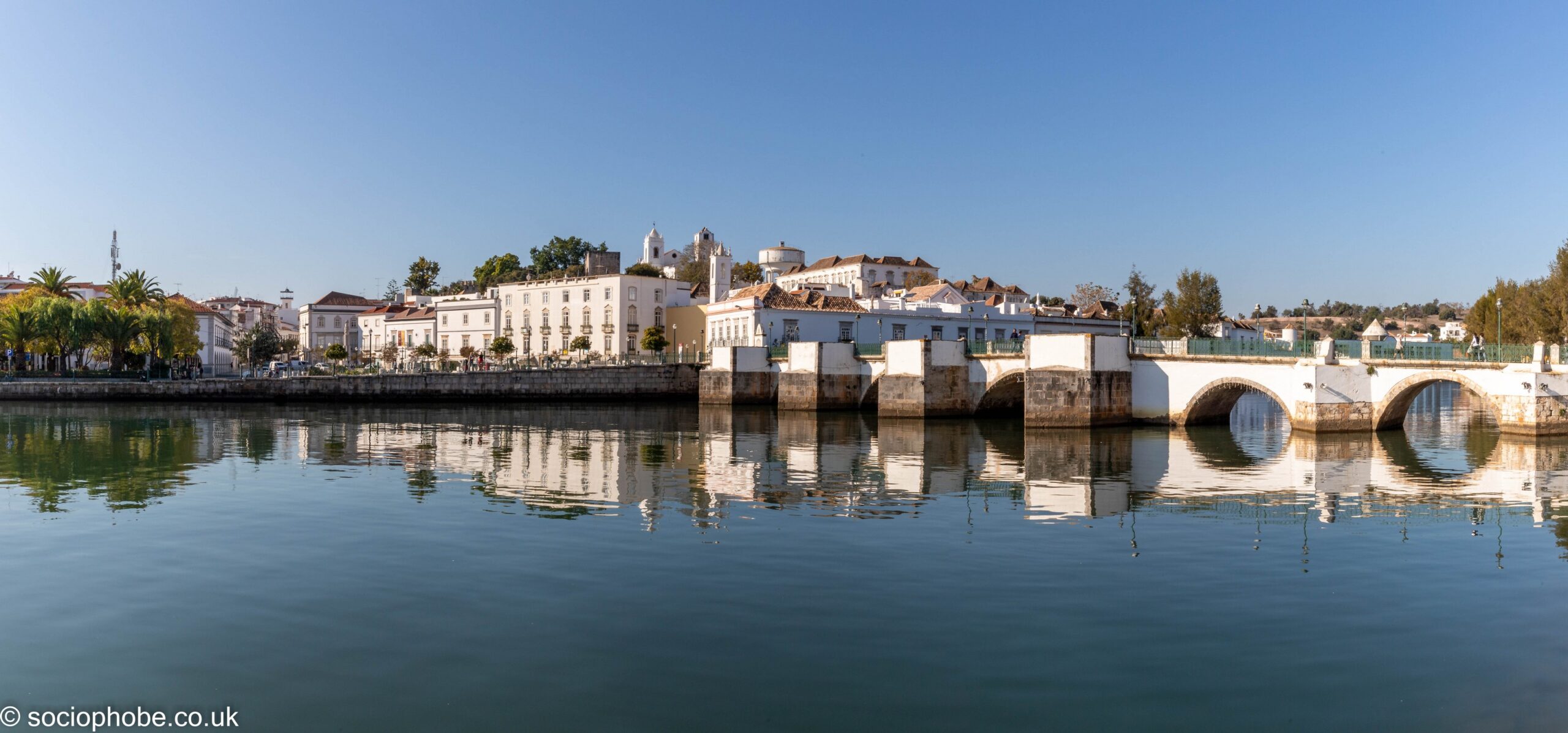
We actually managed to get to breakfast by 8.30 which annoyed Deb as that seemed to be the busiest time! I ate mine quickly and left her to her larger repast while I walked around outside. When she was done we then took our first proper walk into the town of Tavira, following the river and then crossing the allegedly Roman but actually seventeenth century bridge. That in itself was lovely, it was warm, the water was almost still so there were pleasantly coloured reflections gently oscillating on the river and we could see some of the tiled houses in the daylight. Some of these were absolutely beautiful and some were in very serious need of repair. It is surprising how there can be properties just abandoned, often in prestigious areas, but we have seen it all over the country.
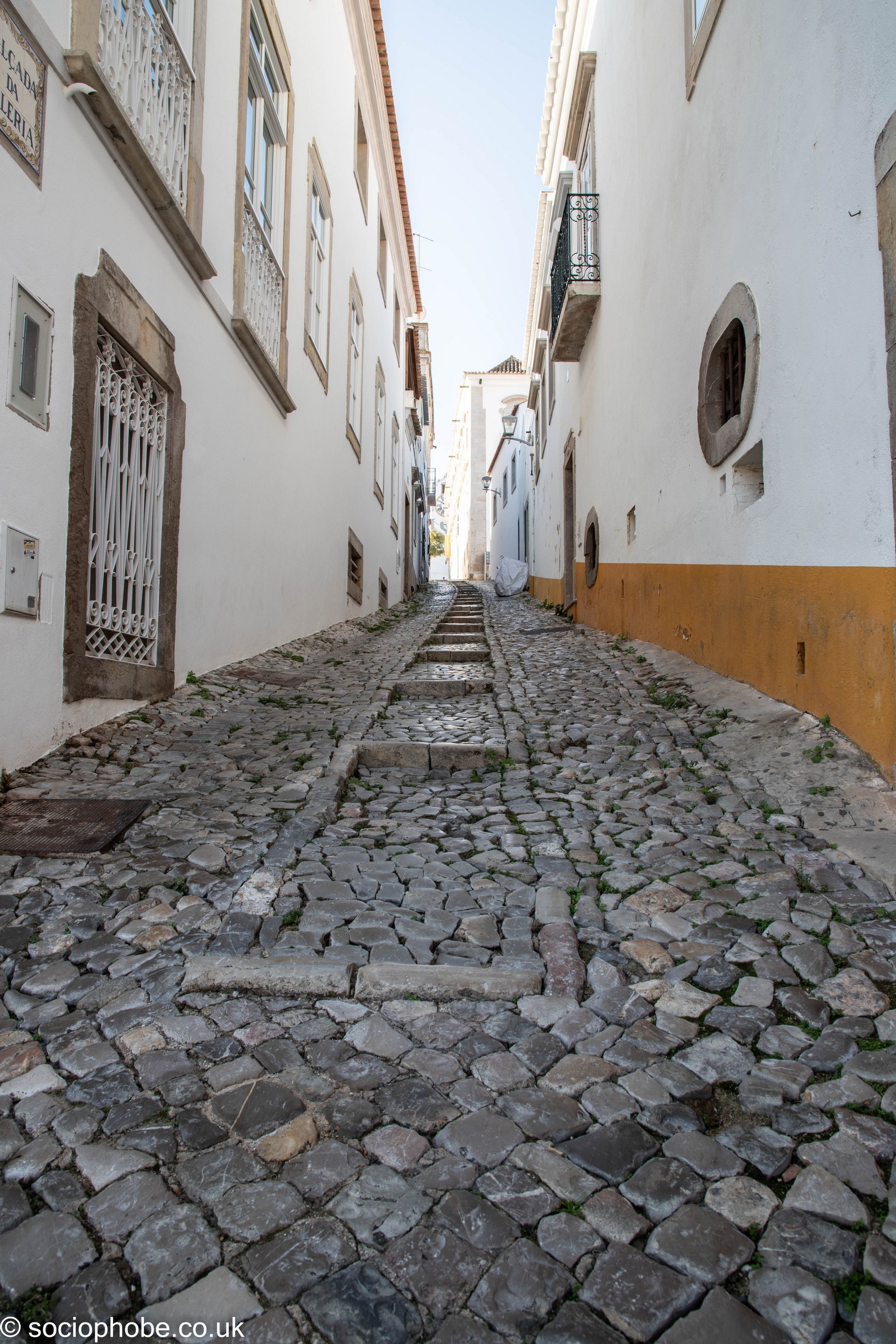
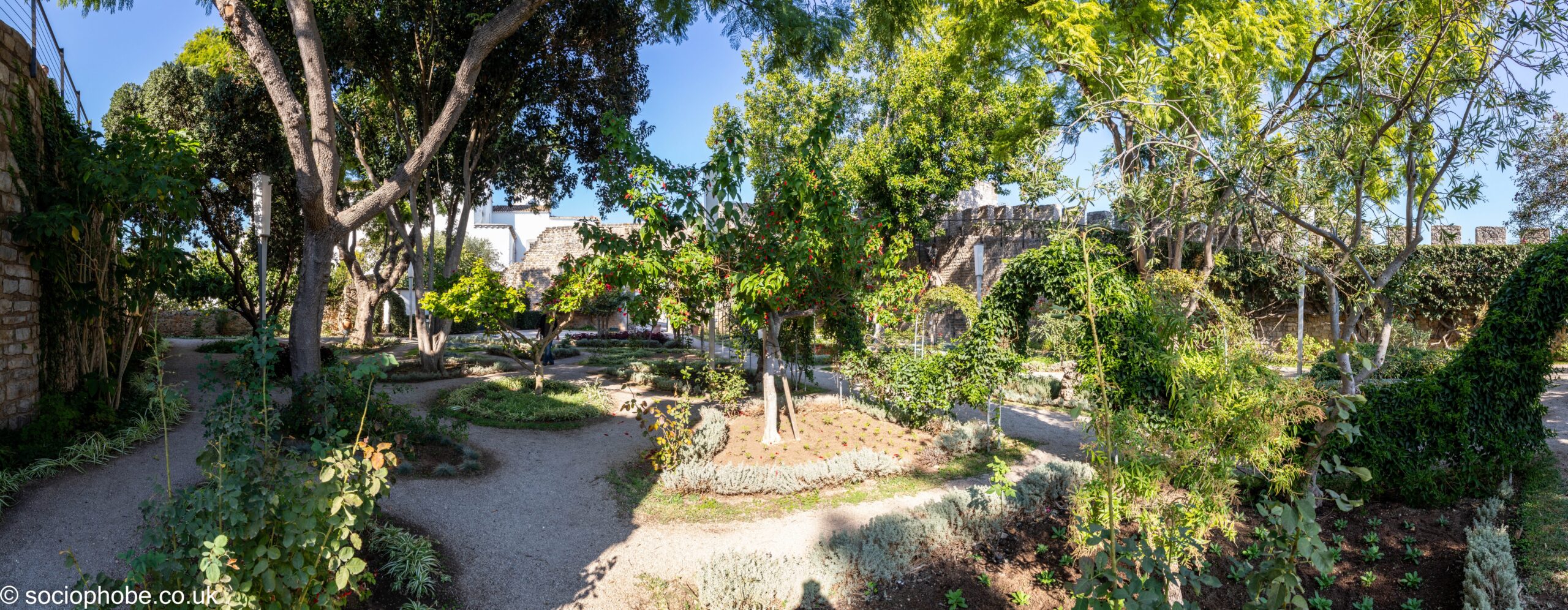
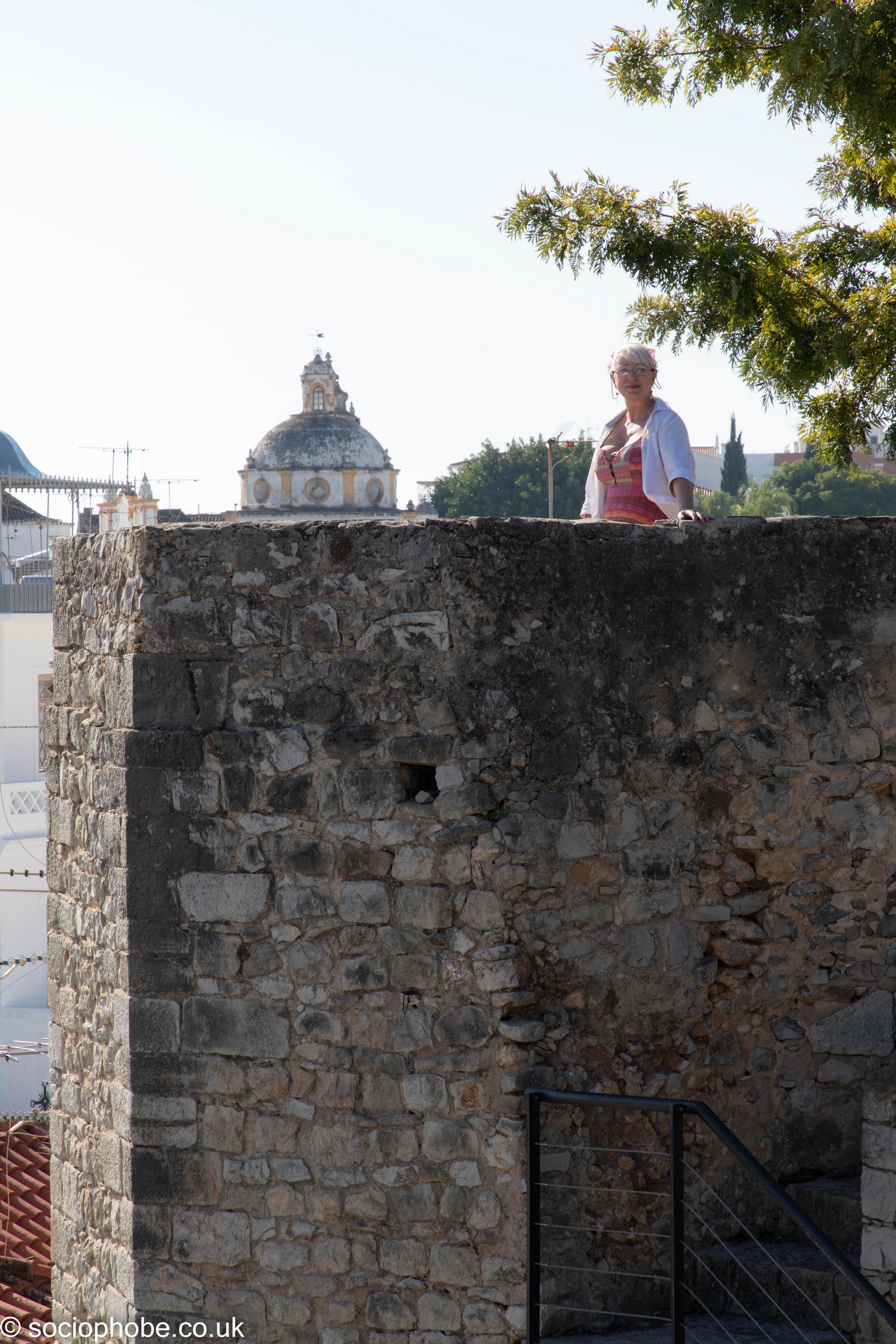
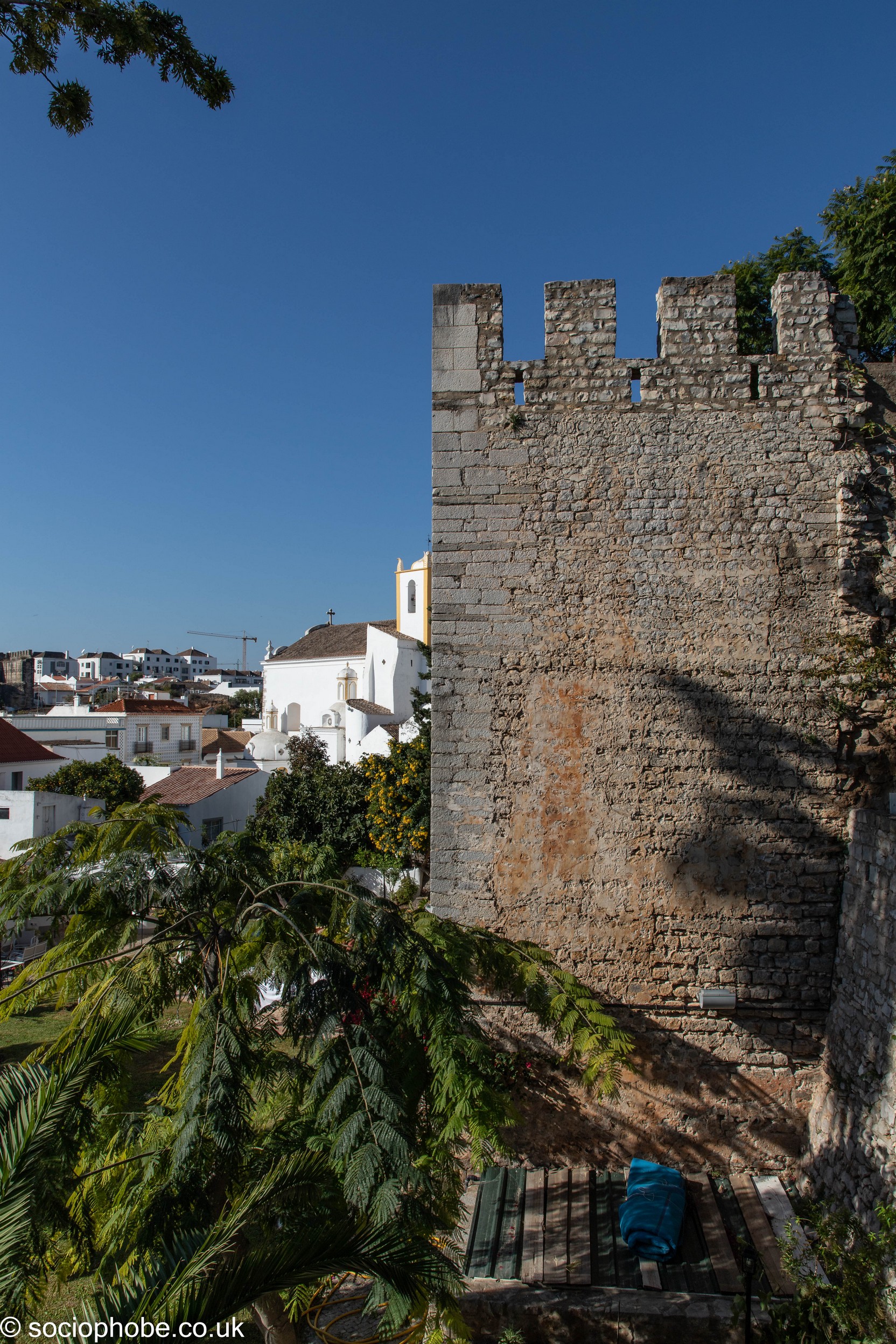
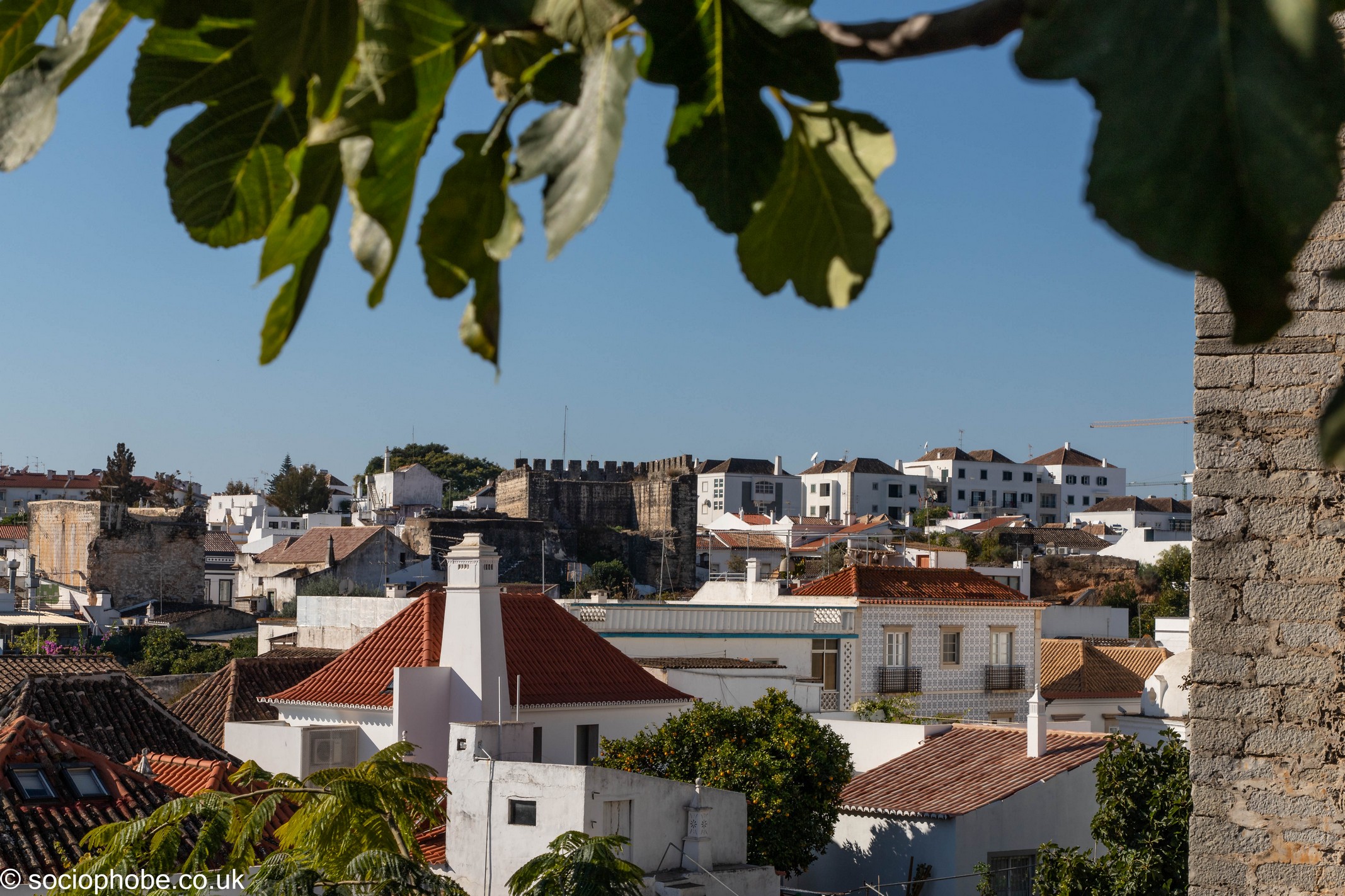
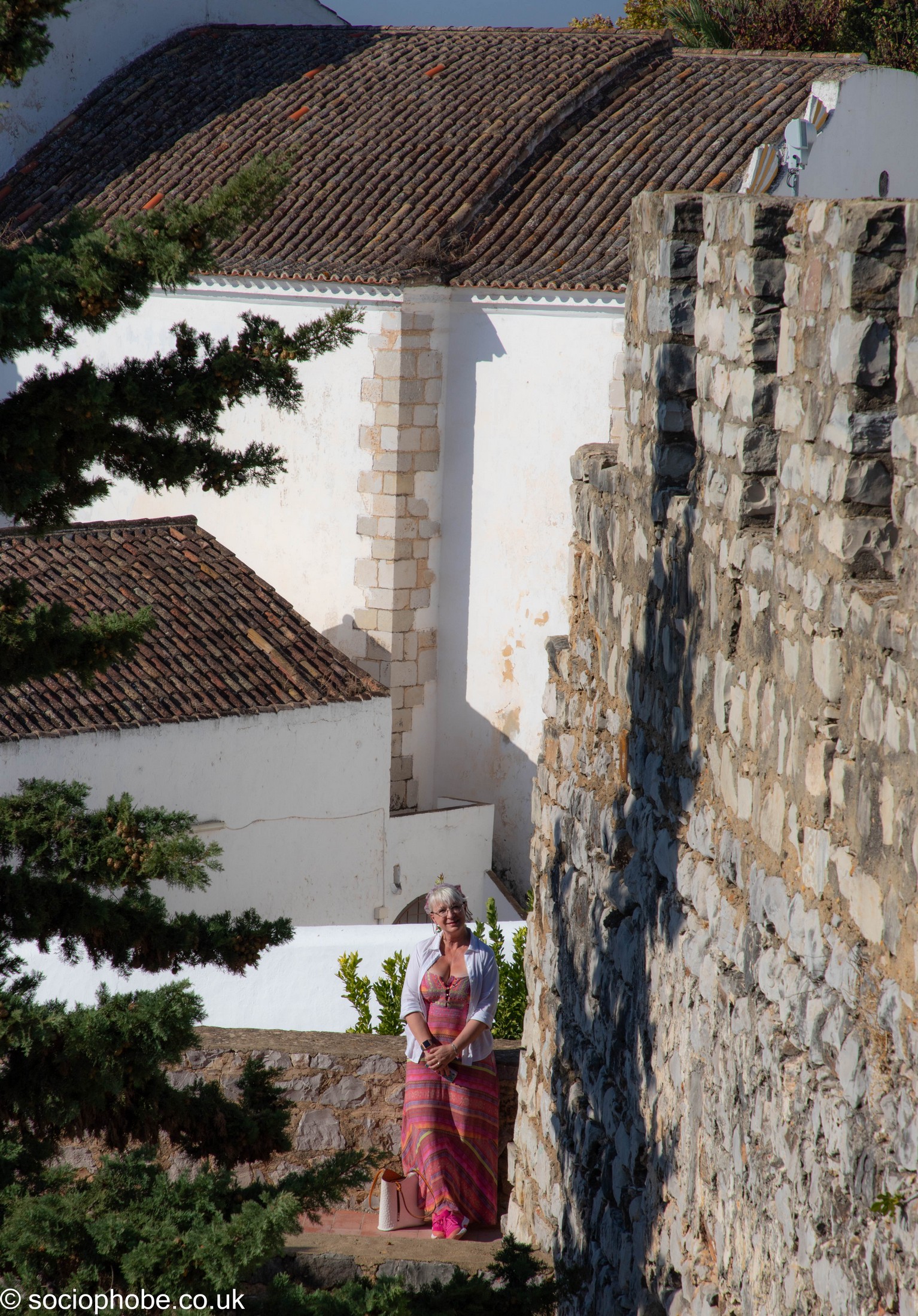
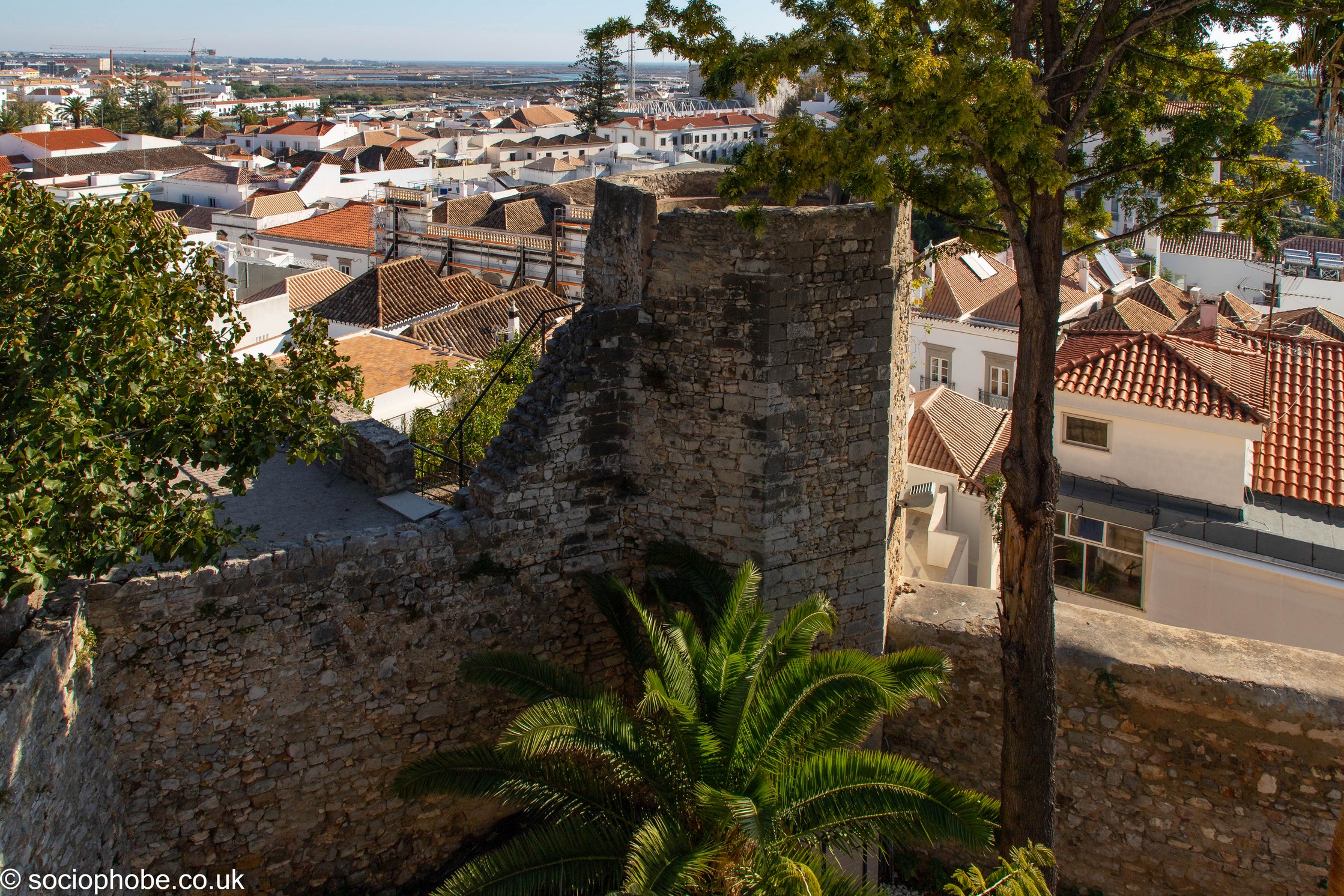
We looked at the Bishops Square, a small park with a few benches and some lovely planting with cafes on two sides, a church on one and an abandoned mansion house on the other. We then crossed the river again and walked through some more tiny cobbled streets until we arrived at the castle. I know, I can hear those cries of joy, but sadly this was a very small and forgettable thirteenth century building, originally built by the Moors but expanded by the Portugese after the 1242 conquest. To be fair it was free, the walls had lovely views over the city and it felt safe. The interior was actually a garden with lots of planting that totally transformed it from a nondescript pile of old rock into a really special venue. Having seen it, I don’t know why this isn’t more widely adopted elsewhere. Most castle courtyards or baileys are just empty spaces so a garden both adds interest and makes things more aesthetically pleasing. Sadly there were no benches and no cafe onsite.
Just outside the castle was the camera obscura so we thought we’d give that a try to see if we had missed anything of the town. We paid our €10 and took the stairs to the top of the old water tower, not looking down or to the side at all! The guy was very enthusiastic and went through his script showing us the various churches and hotels that were landmarks of the city and explaining about the flooding that has been a continual problem. He also spoke about all the buildings damaged in the 1755 earthquake that devastated half the country.
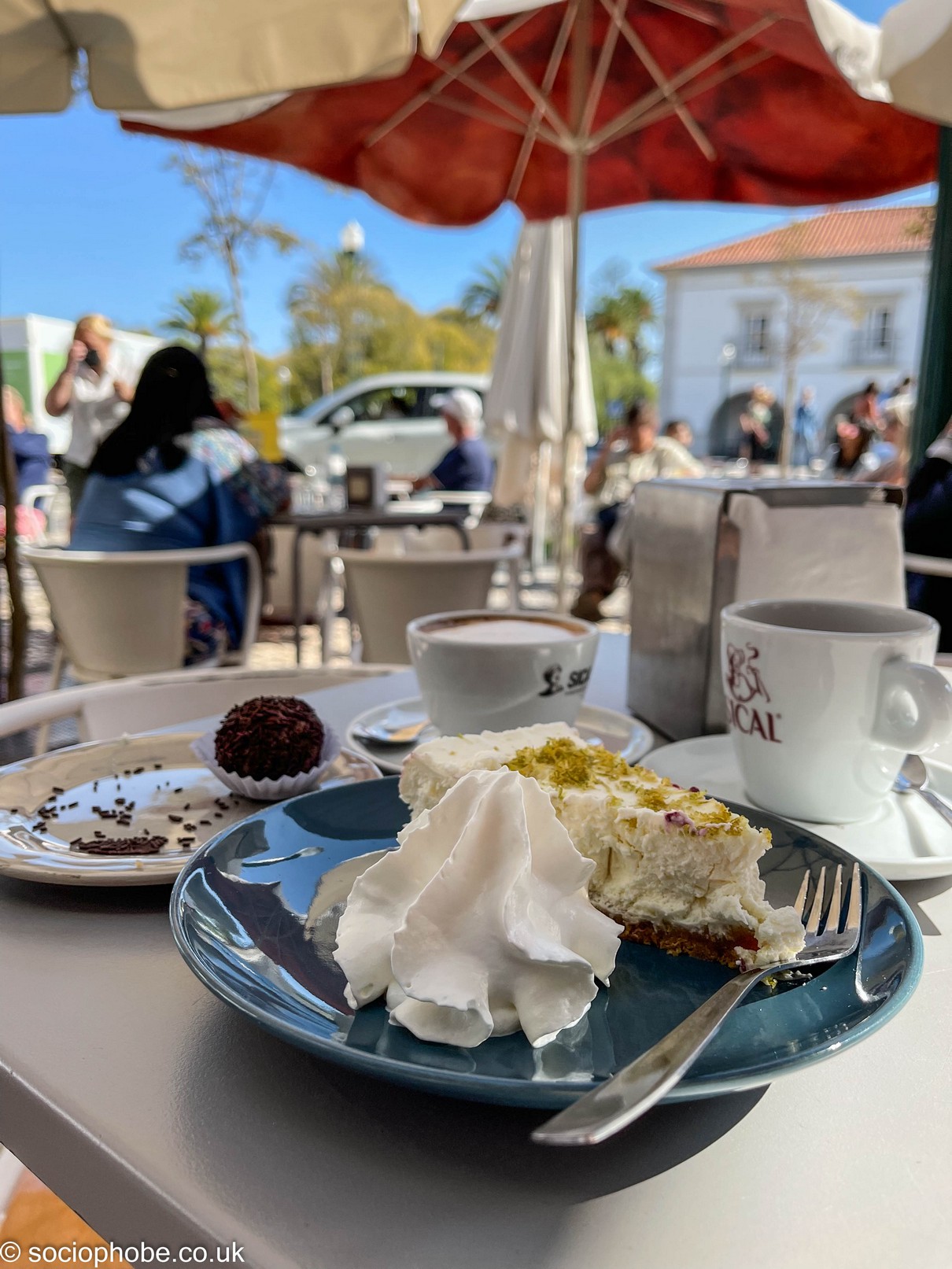
After this education I decided it was time for cake so we stopped at Veneza, a cafe next to the river, and I had lime cheesecake and a chocolate truffle while Deb had a sad black coffee. Just to rub it in I then went for ice cream which was delicious – a fig scoop and a dark chocolate scoop. Having eliminated any chance of controlling my paunch in just 30 minutes of failed willpower we then went back to the hotel. We had a cuppa, sat and chilled for a bit before packing ready for our final hotel of the holiday.


Faro Old Town
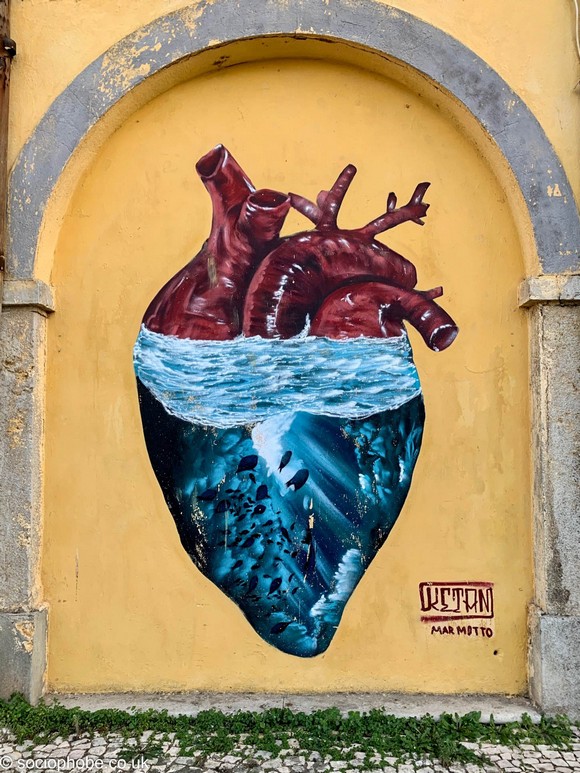
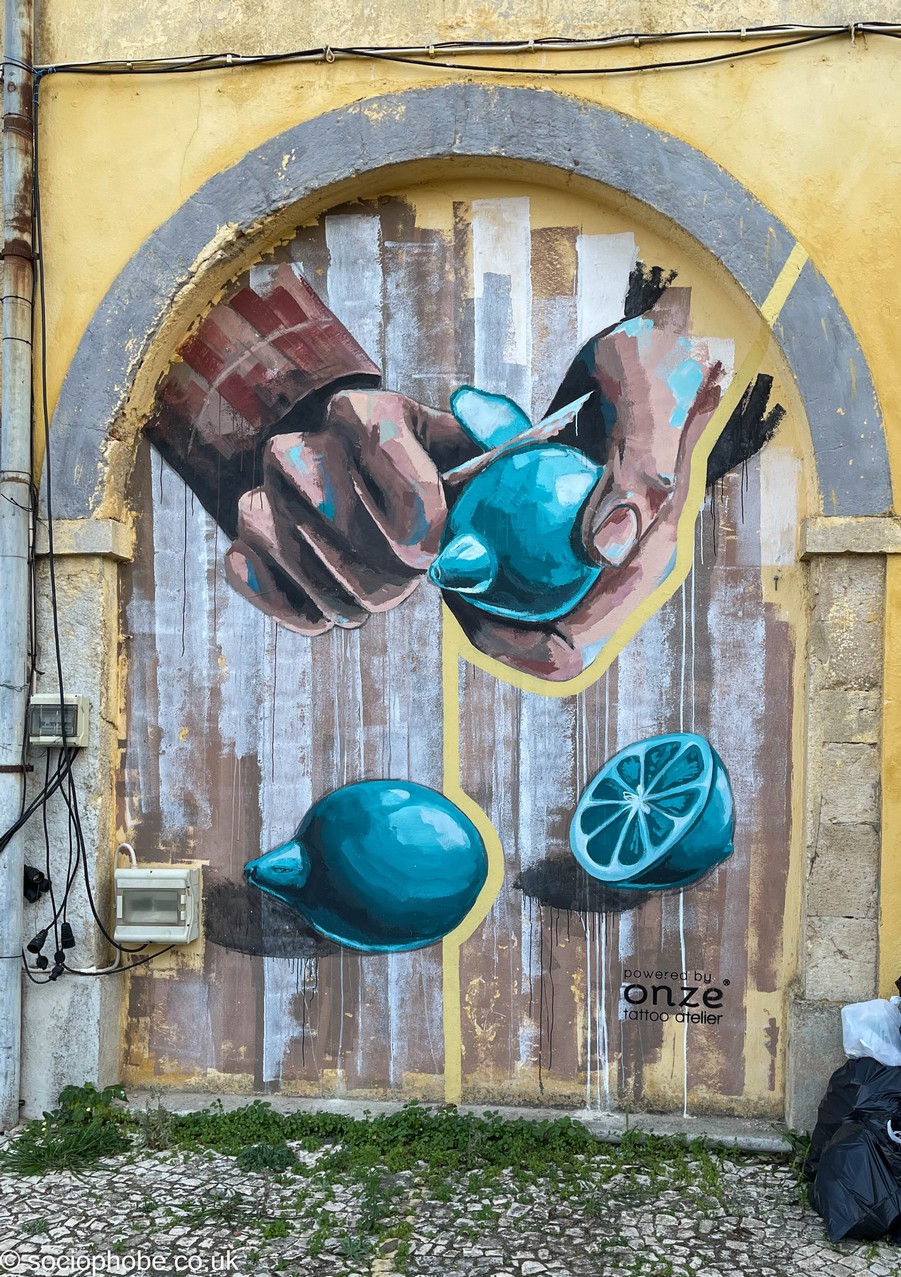
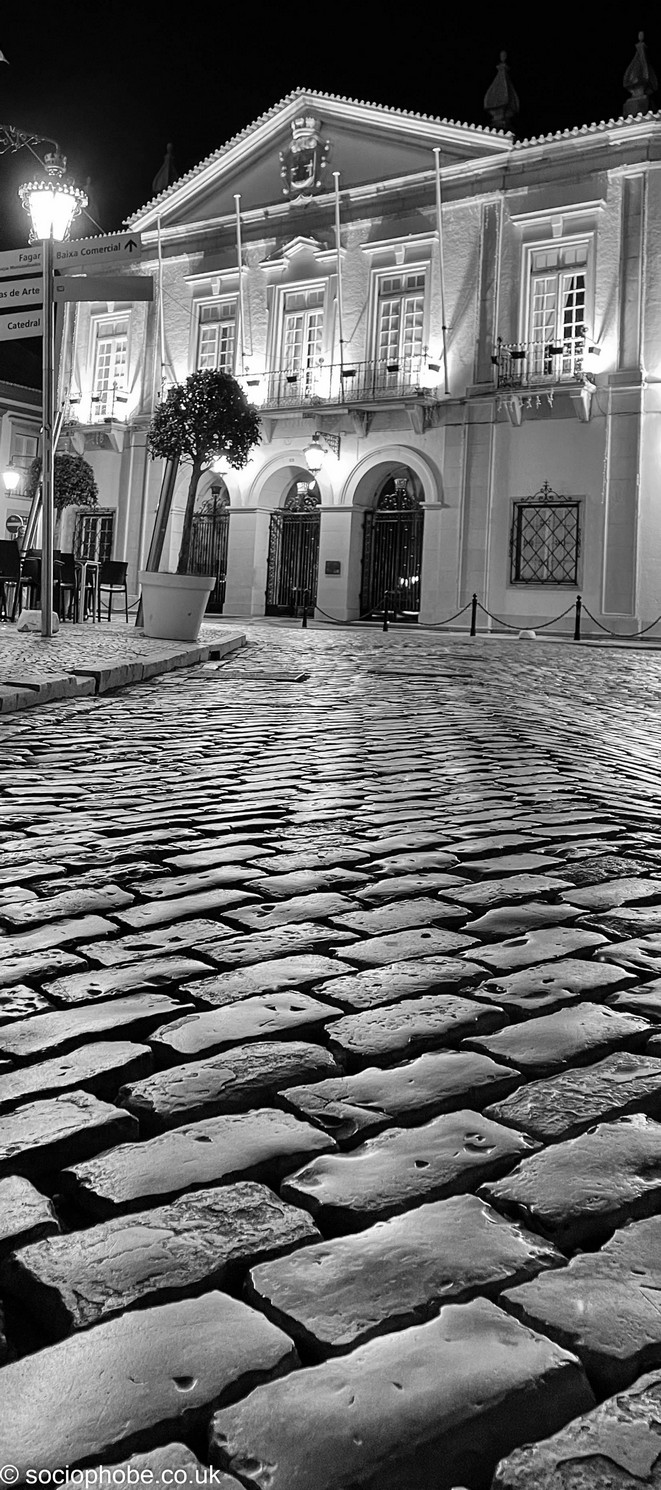
Faro was only 30 minutes drive away and our last hotel on our road trip through southern Portugal was on the outskirts of the tourist area. This was good in that it had free parking and the traffic was light but bad in that we had a 10 minute walk to see the sights. We dumped our stuff in the room and walked through streets that were, at best, mixed in the impression they created. There were lots more abandoned and empty buildings, some very good street art but also a huge amount of talentless and moronic tagging. The streets were clean though.
Arriving at the marina, we saw the tourist centre of the town, which was both pretty and very busy. There were probably more people in that one area than we’d seen in the entire holiday up to now! There was a small street market which always strikes me as sad – these were products that the stallholders had made themselves or invested in buying and people just walked past, condemning them to an evening of hunger. The perils of running a business!
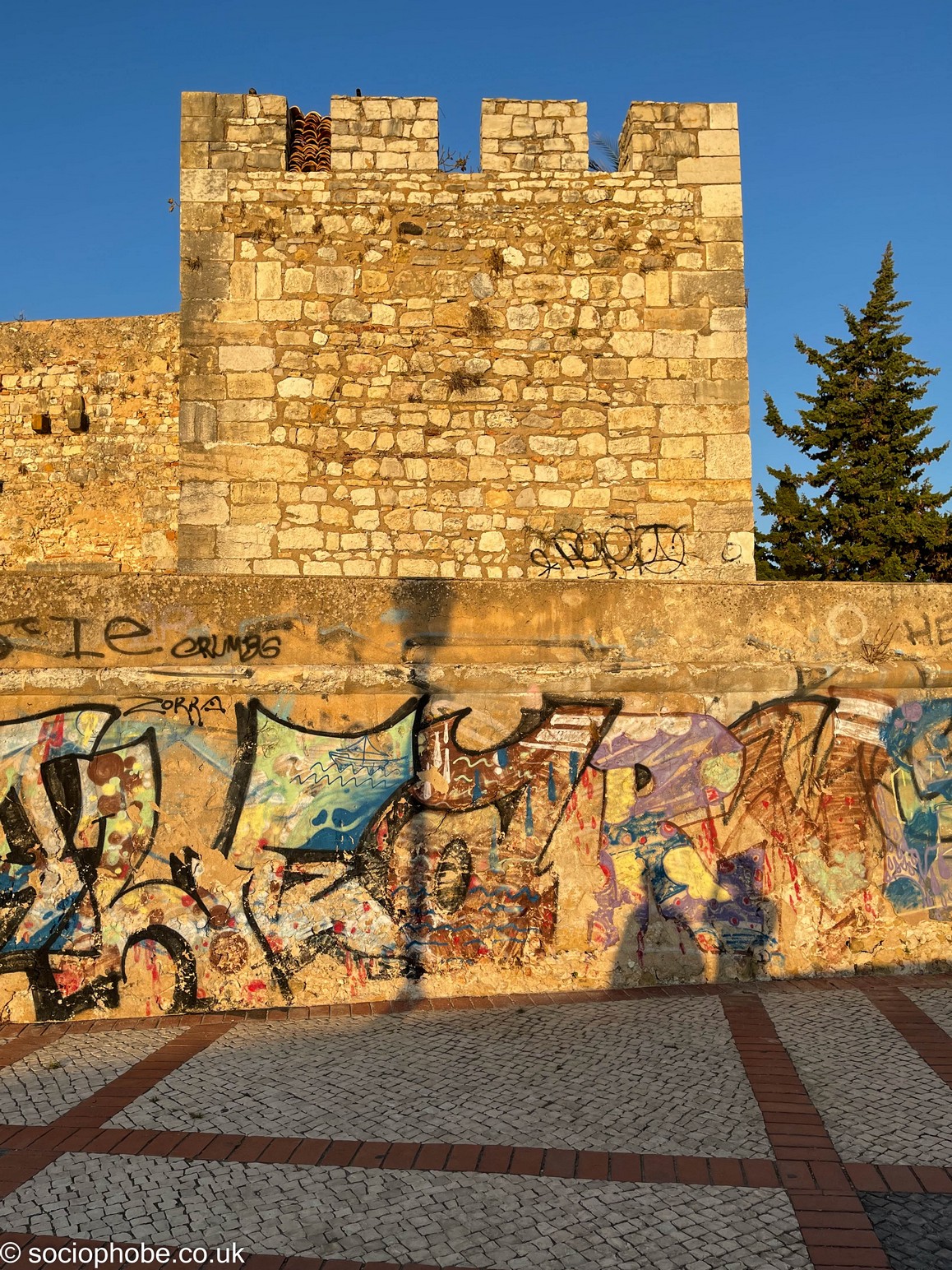
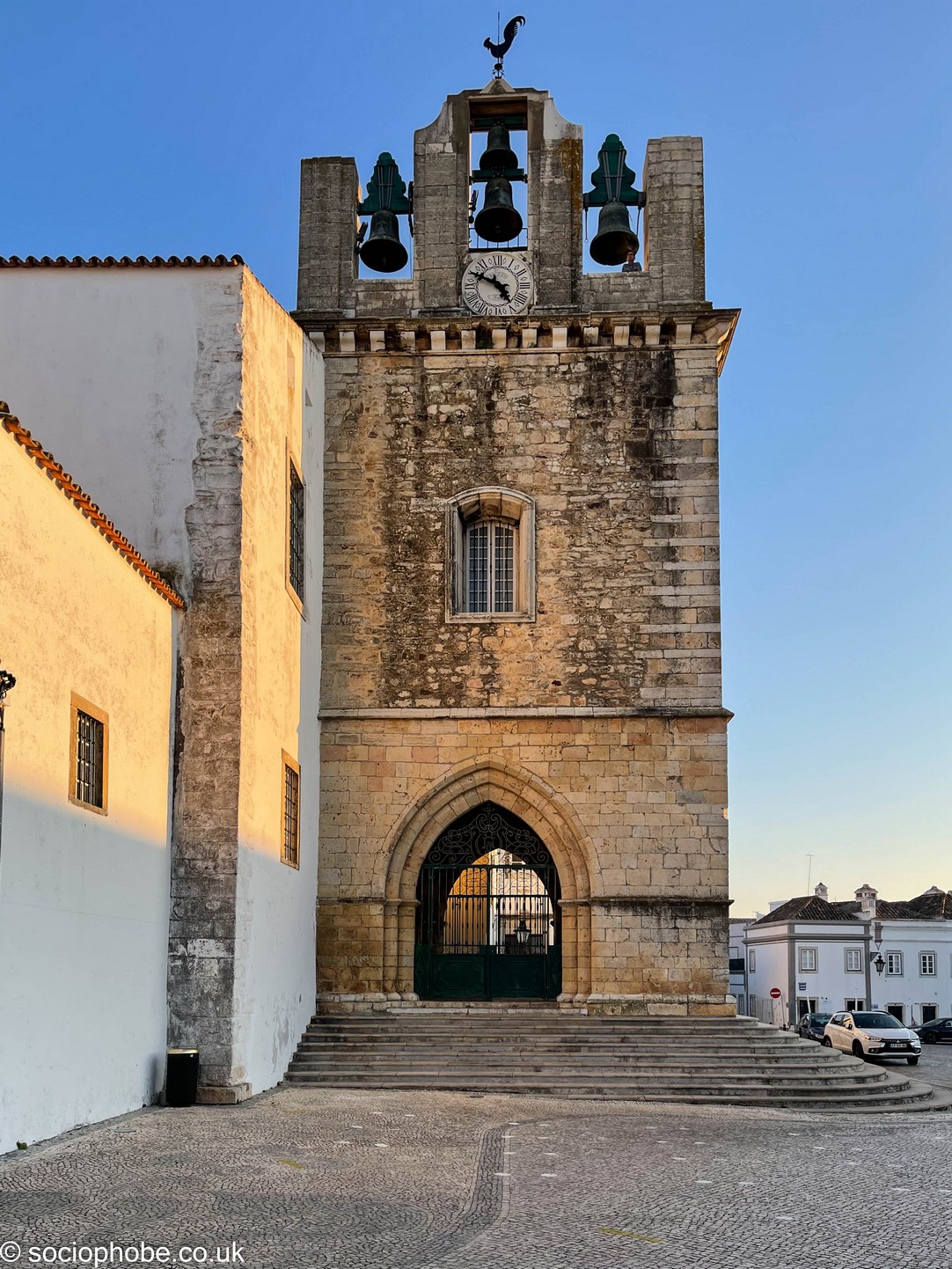
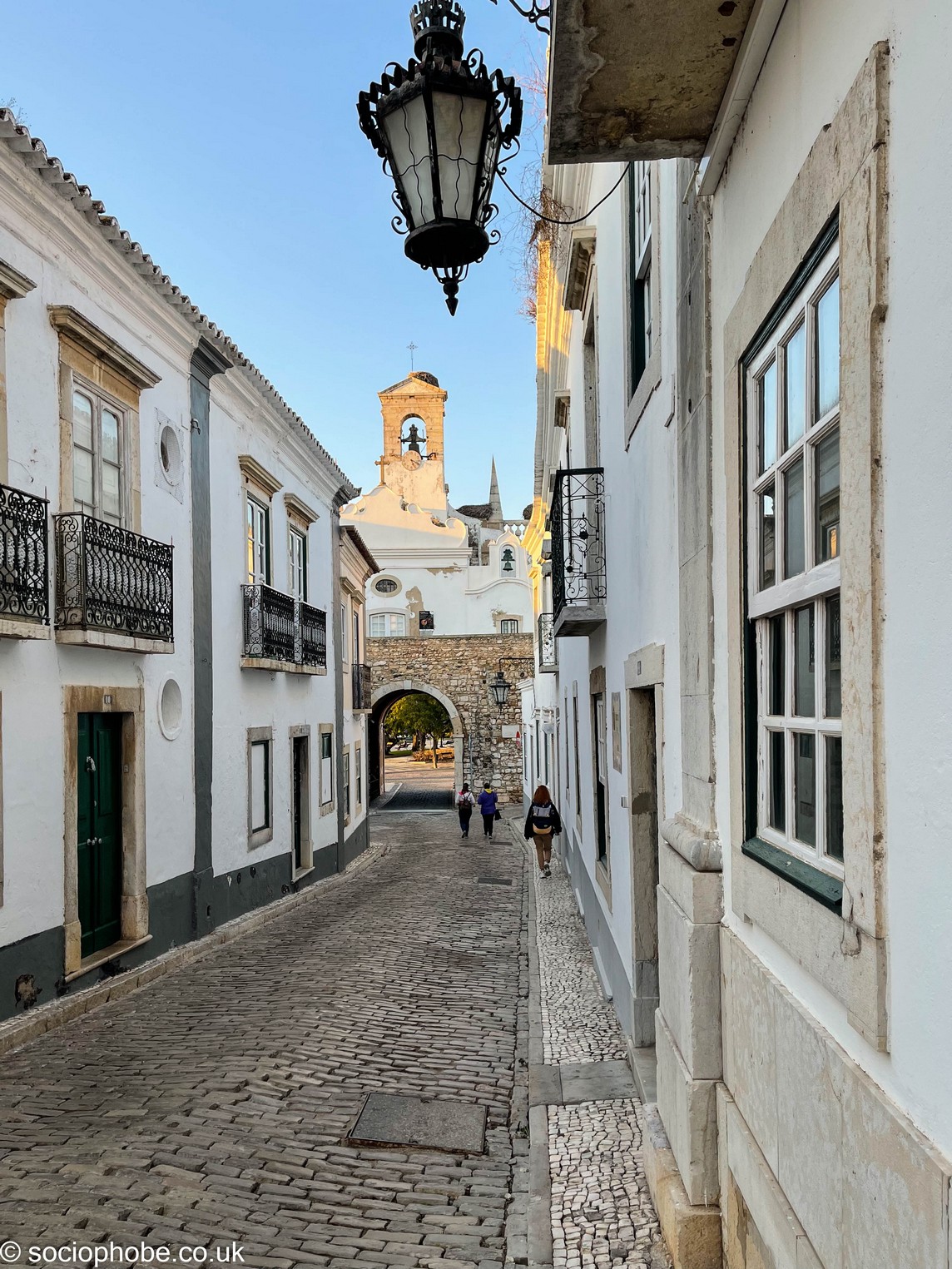
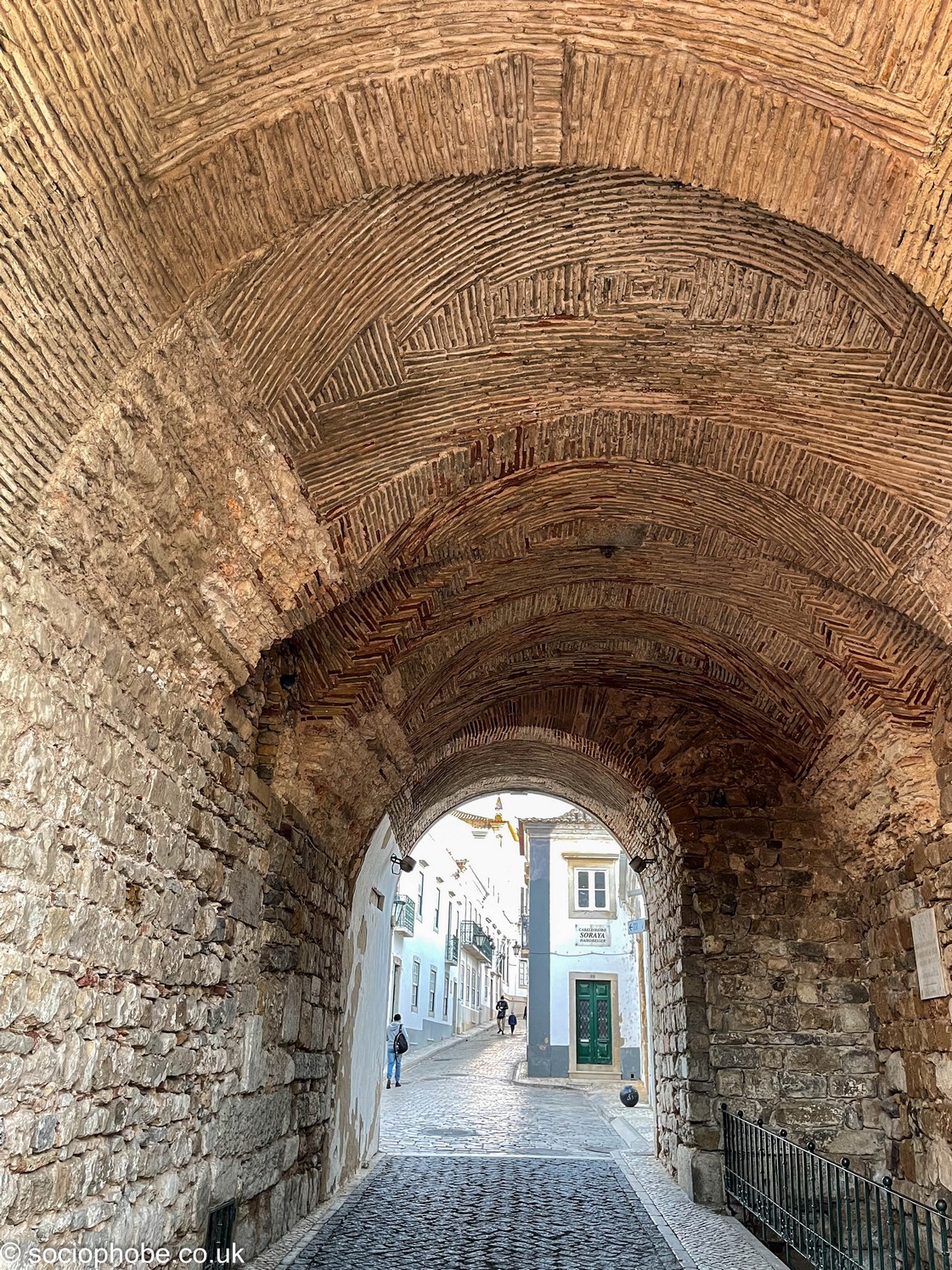
We continued on to the old town, which bordered the dock area. This had some impressive buildings but also lots that were derelict and that scourge of civilisation, tagging, was endemic. I really would introduce Sharia Law penalties for this as I’m pretty sure having a prosthetic hand or a hook would limit the ability to use a spray can. We walked along the harbourside and then, as we had no plans, booked an island tour for the next day. I just hope that the sea is calm as I don’t mix well with boats and have been sea sick on a pedalo before!
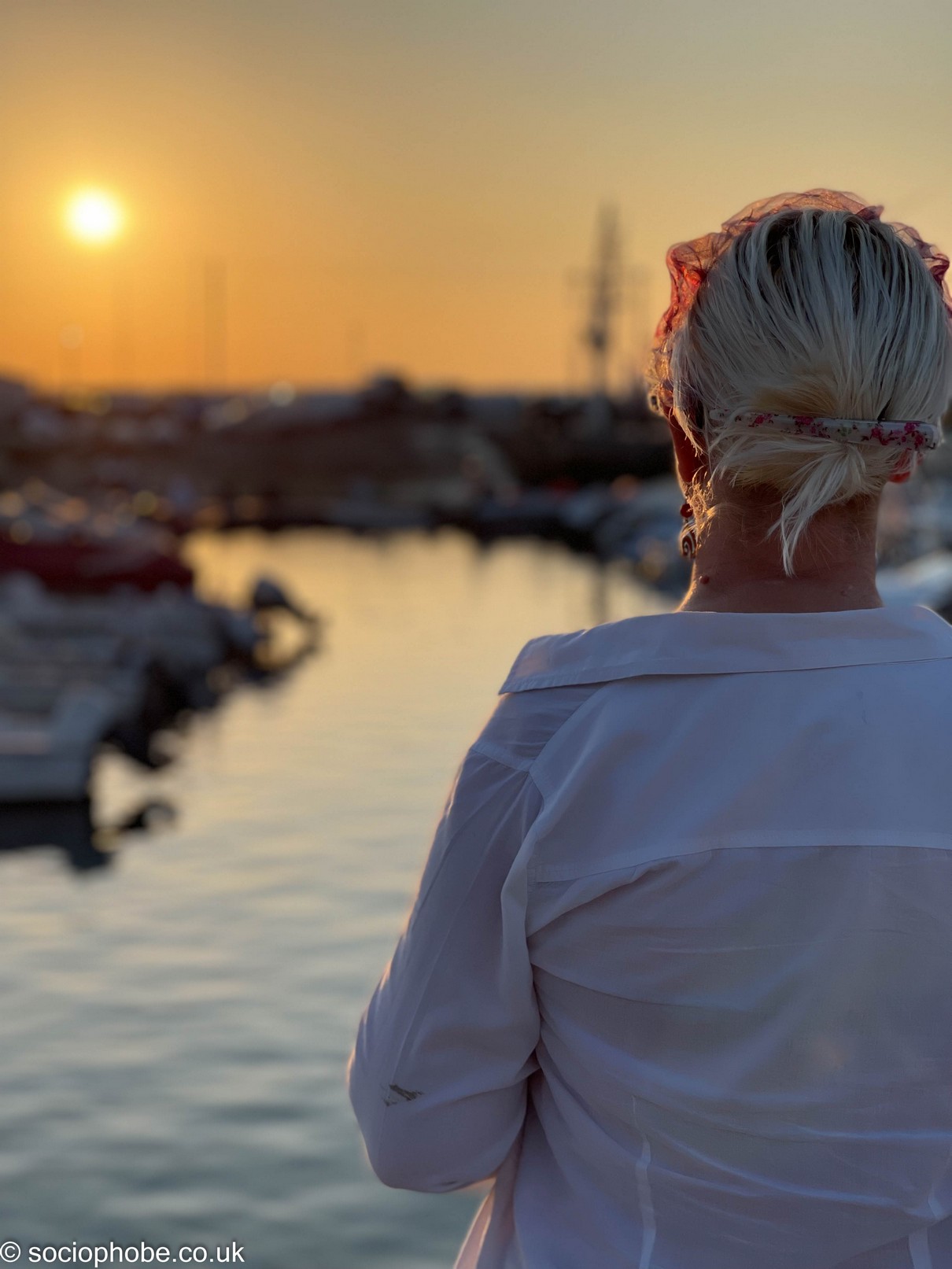
It was now approaching sunset so we watched that for a while before walking back to the hotel. We were hoping to eat before we got there but we didn’t find anywhere that was open so we went to the room and had a coffee while I started the notes for the day. That took us until about 7 which was definitely food time. Deb’s venue of choice was a local Portugese place chosen on budget grounds. The food was filling, it was nearby and it was cheap but it wasn’t somewhere I’d choose to revisit. It was then back to the hotel for photo editing, possibly a mistake after a litre of wine!


Faro Island Tour
After a light breakfast we walked down to the old town of Faro to catch our boat trip. We were still shocked at the sheer number of empty and dilapidated buildings, especially as we chose a different route to see if yesterday was just a one off. We arrived on the harbour in, as expected, gorgeous sunshine and soon boarded the boat. We chugged off across mostly calm sea, just the occasional buffeting from a passing speedboat. After about 40 minutes while I basically just internally cursed non stop we arrived at the first island, Deserta. It would have been sensible to have thought of wearing a jacket as the speed of the boat plus the breeze on the island meant I was bloody freezing was such is hindsight.
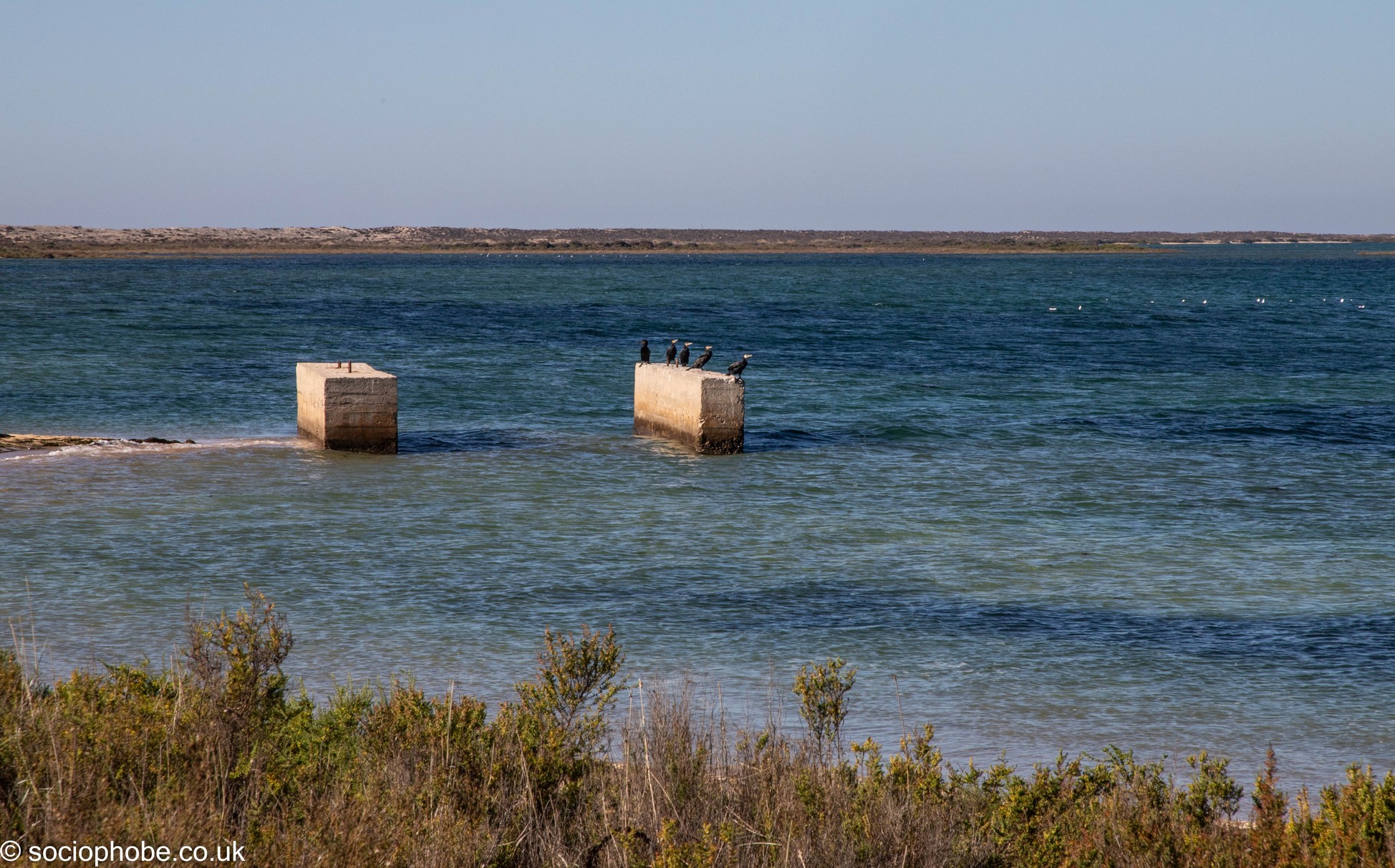
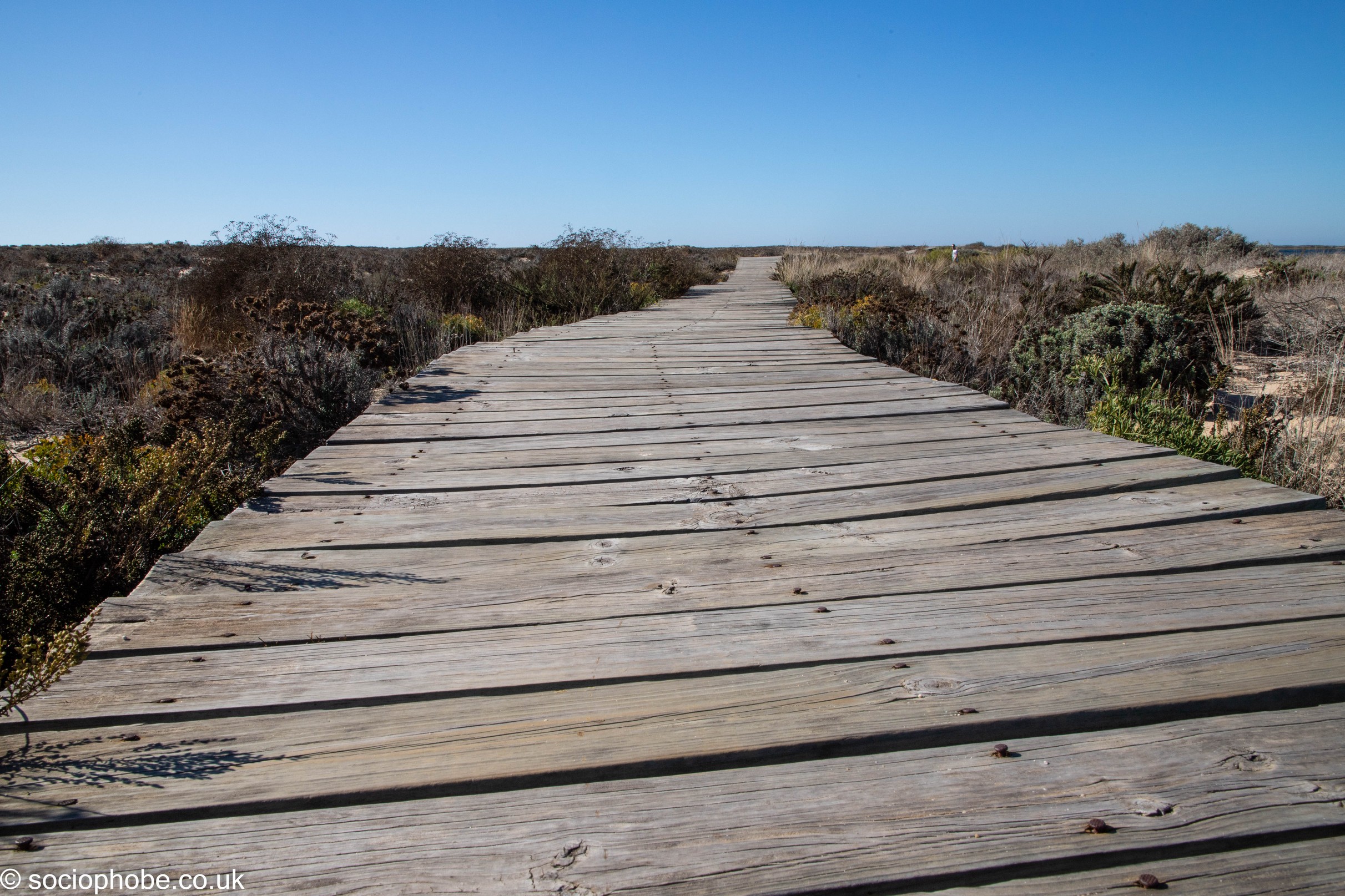
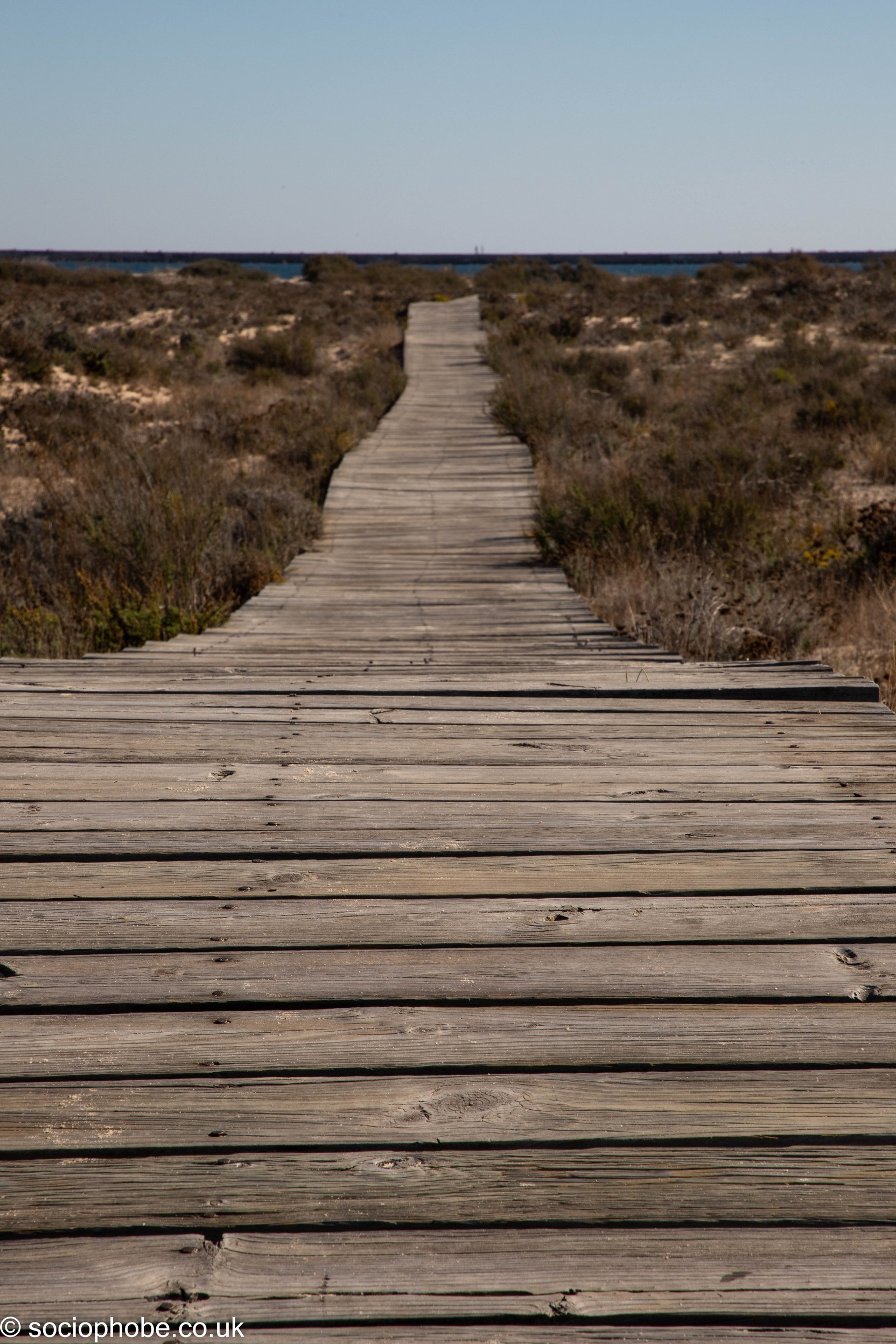
The island was, frankly, dull. 5 minutes would have been plenty. There was a boardwalk all the way around but the foliage was just scrubland and there was nothing to really see or do. We walked back to the jetty and Deb sat in the sun whilst I wandered up and down, looking at fascinating driftwood or a scintillating wavepool.
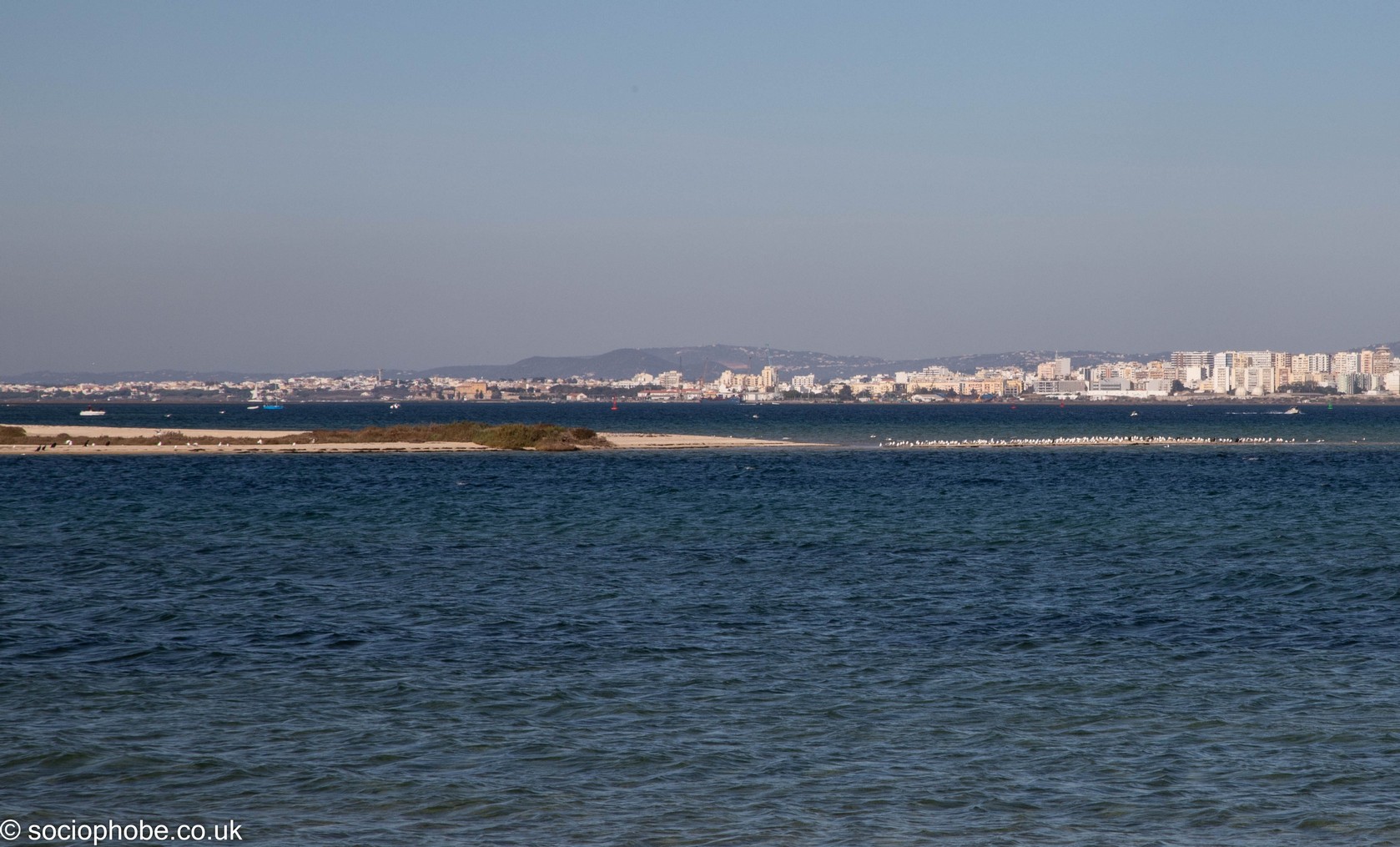
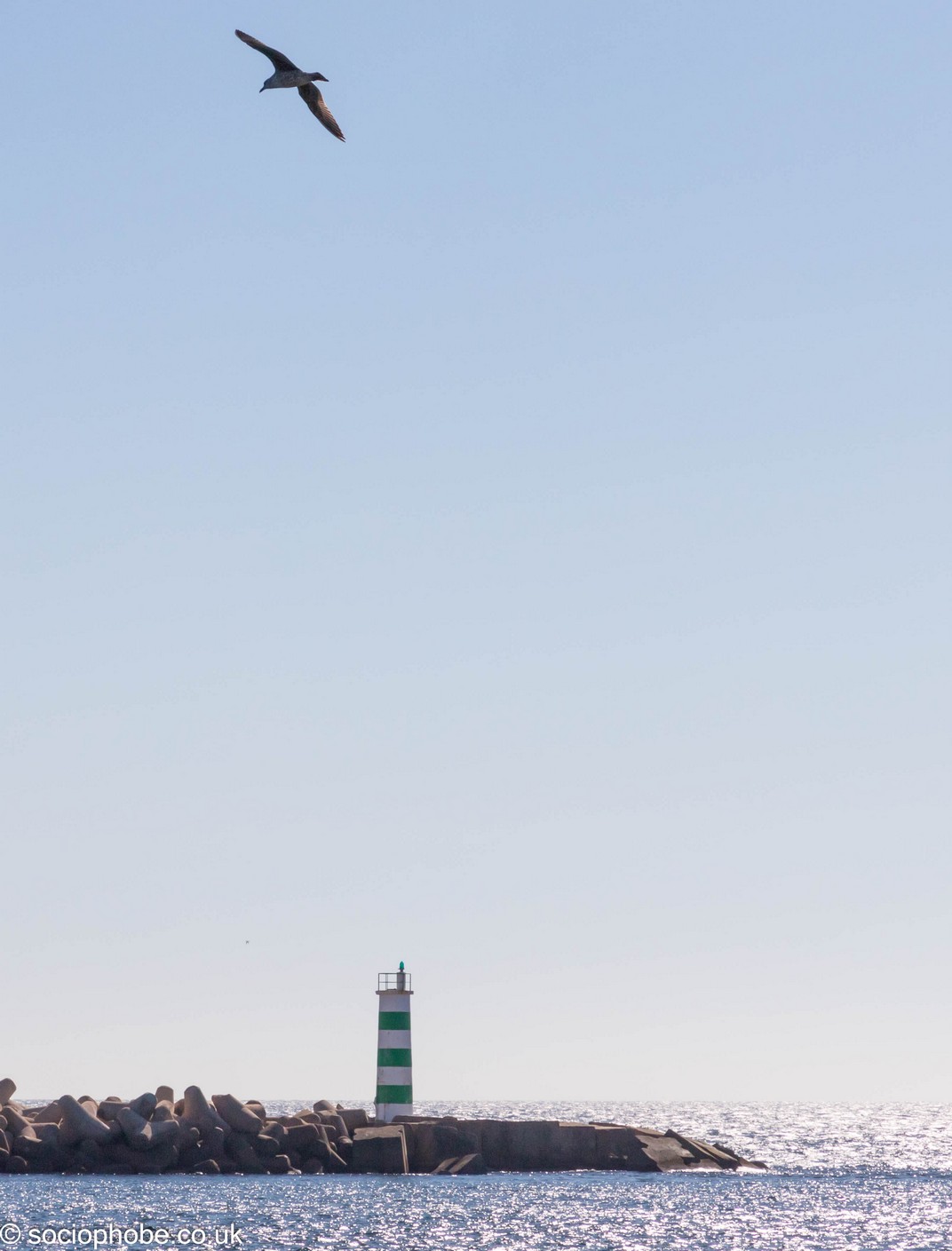
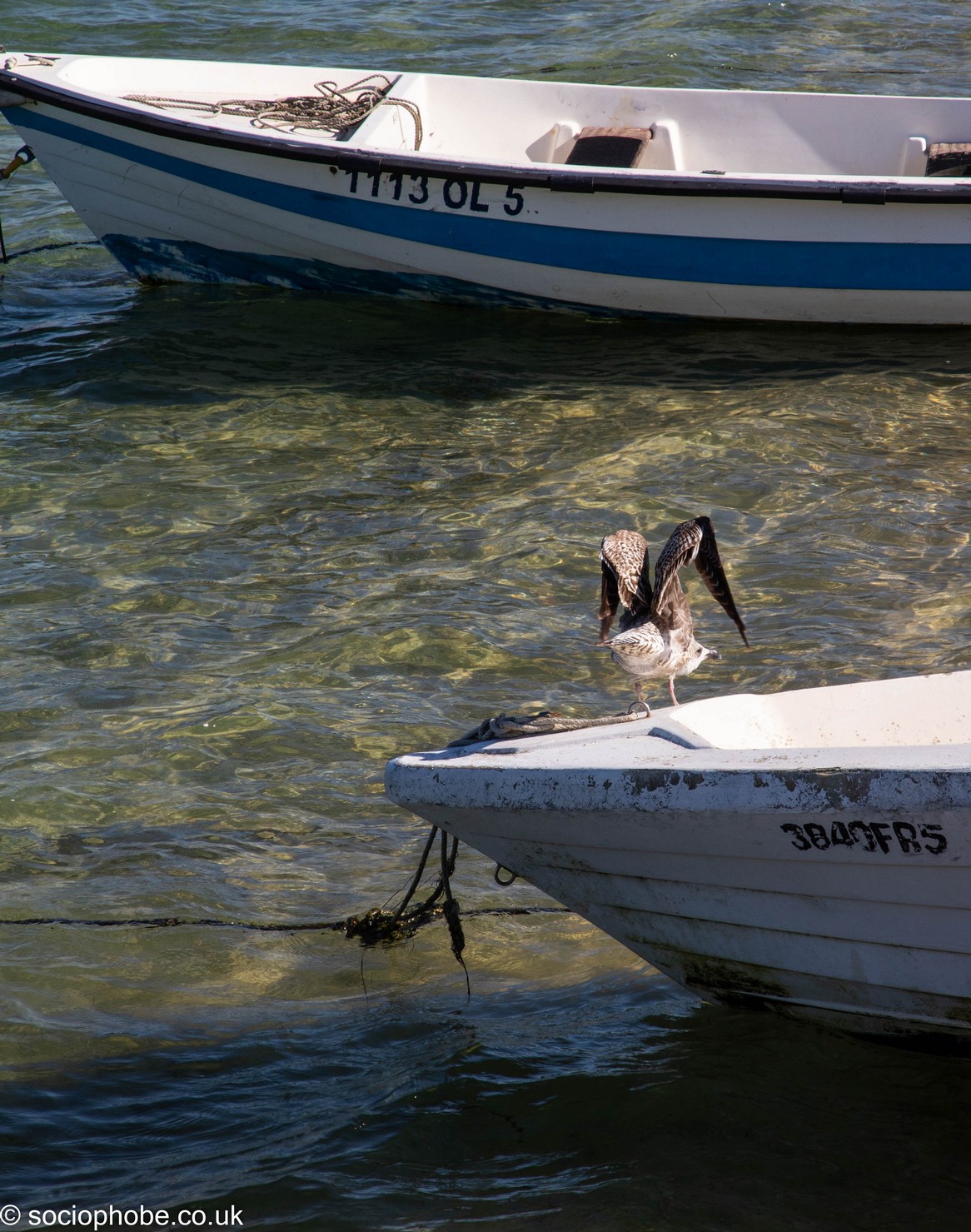
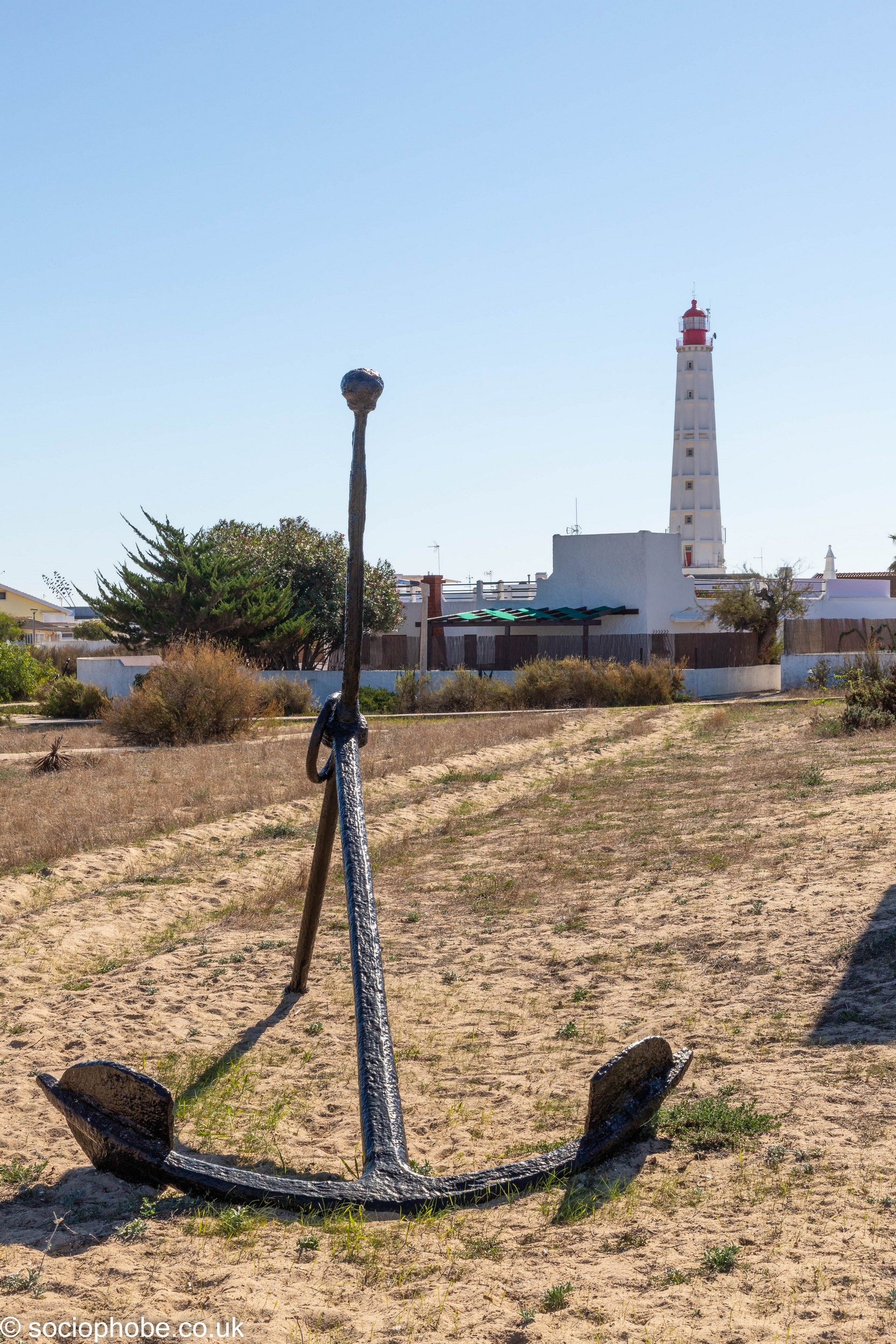
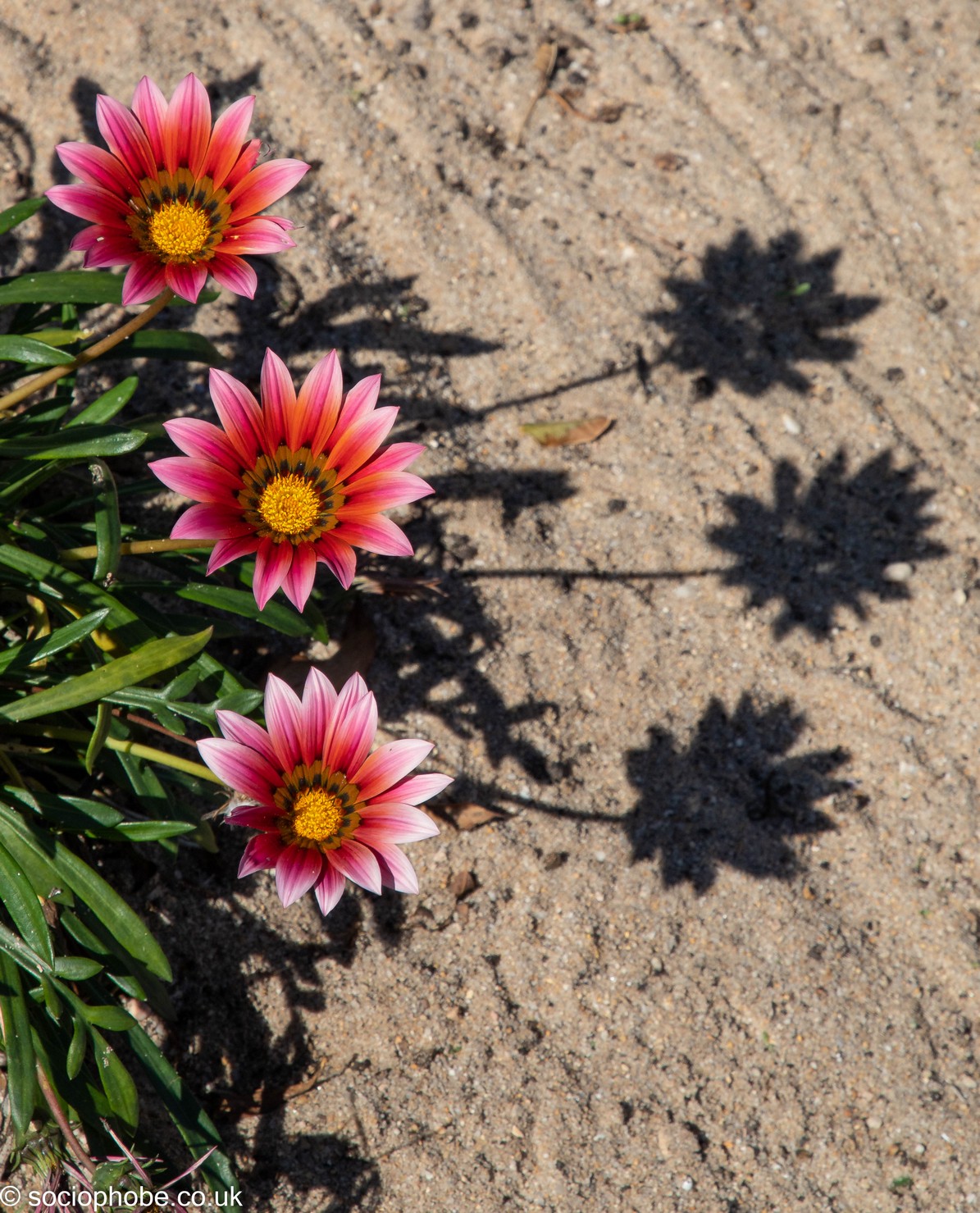
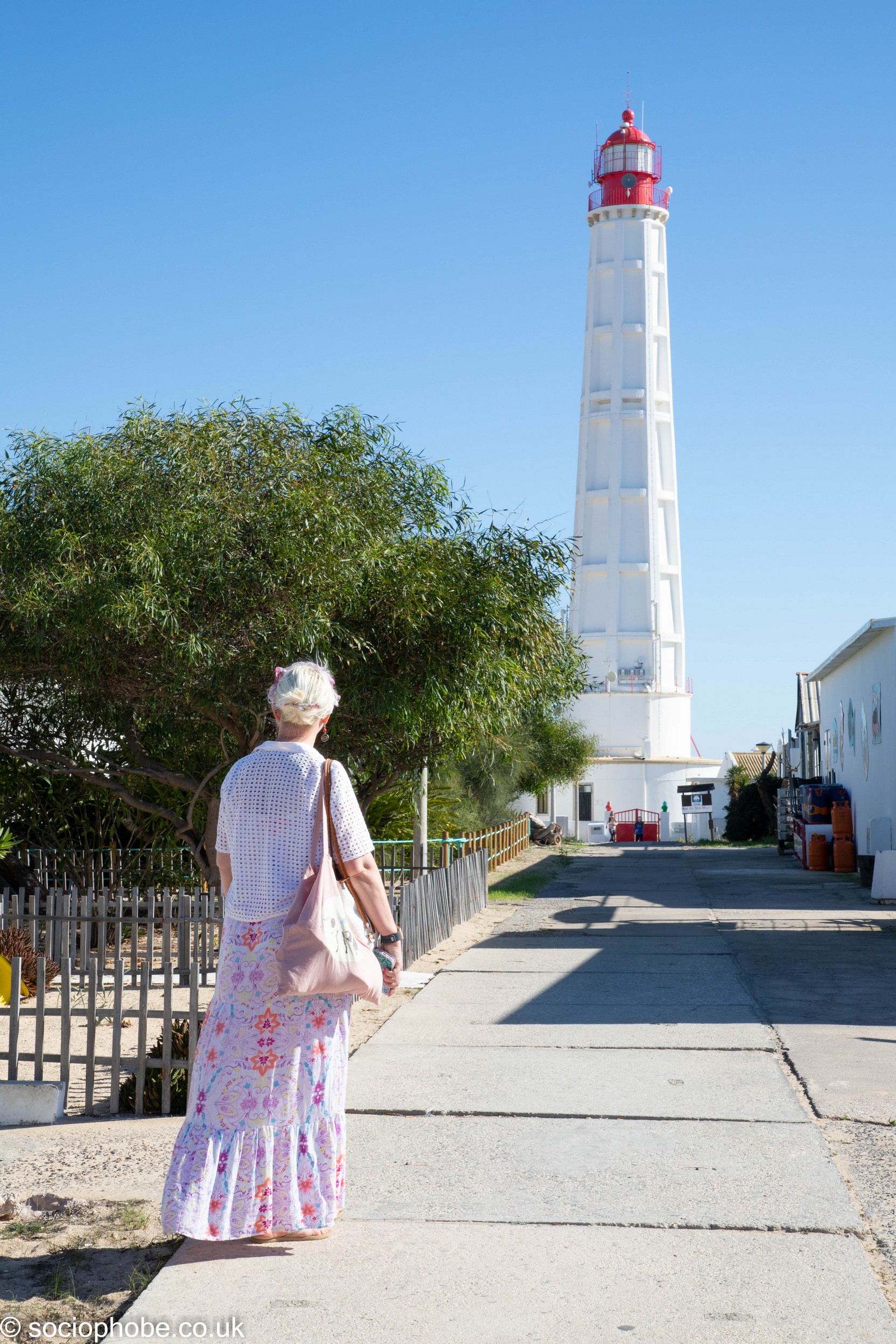
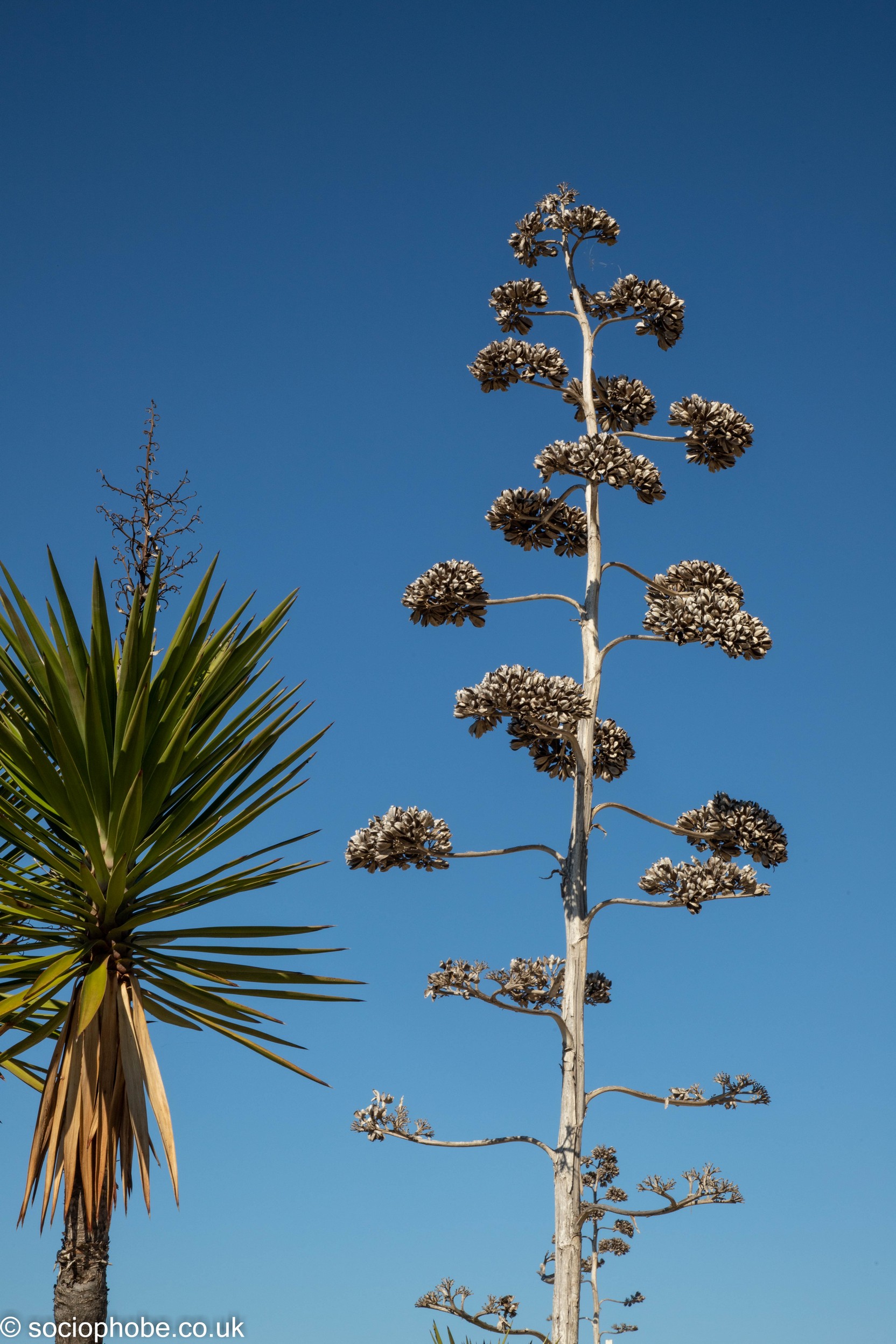
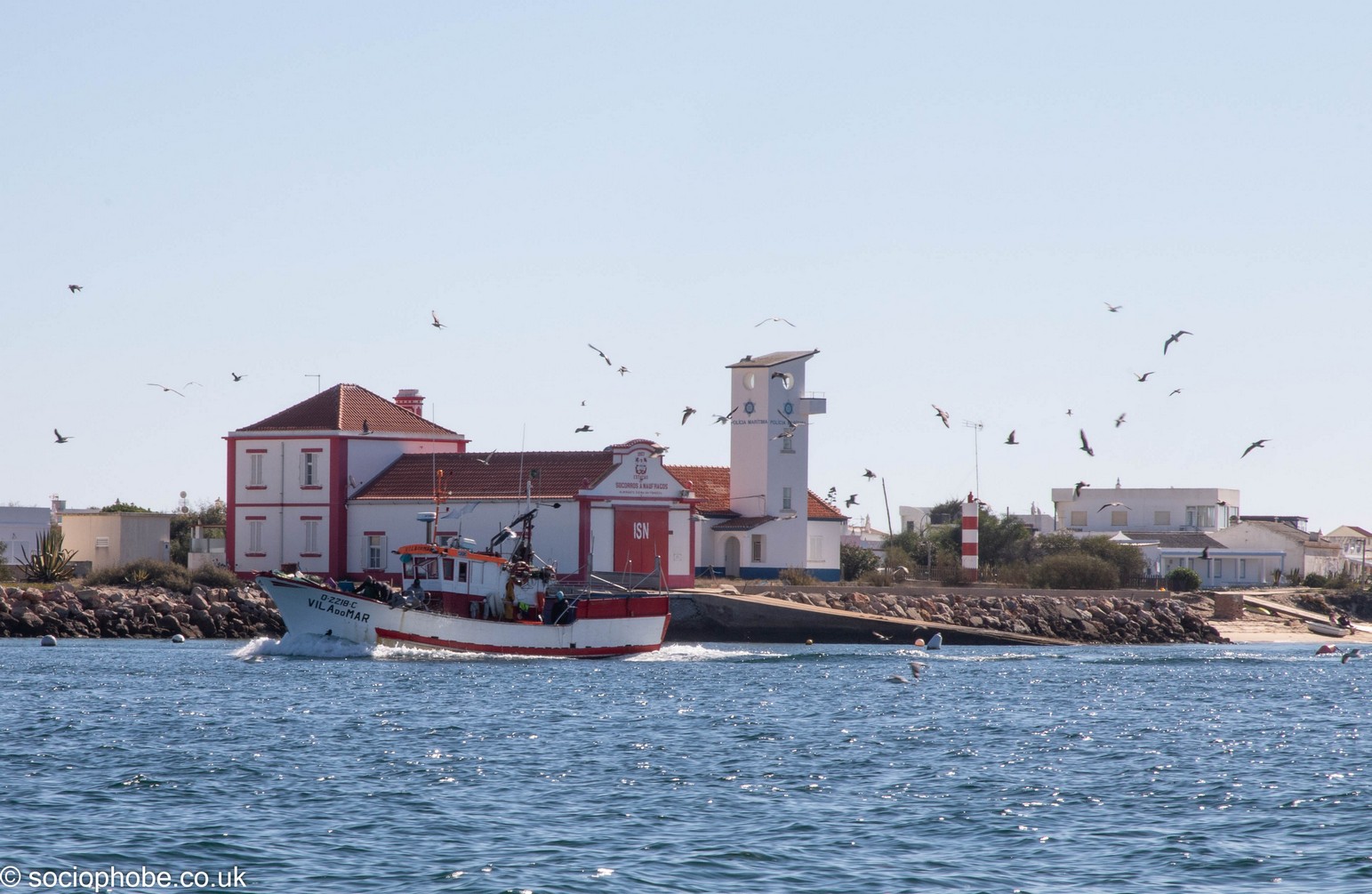
The next island, Farol, was only a few minutes away and it was actually lived on with plenty of holiday homes and a few cafes as well as a large lighthouse that dominates the island. There was a long beach on the sheltered side and in the summer it is apparently very busy. We had a wander, Deb enjoying the plants that people were growing in their gardens, and a coffee before going back to the boat. I dozed on the way back which was excellent as it made the trip seem far quicker!
Sunset and leaving Portugal
Once on shore we booked our table for tonight at O Castelo, overlooking the harbour. We then walked through the old town, pausing at a fabulous fish restaurant, Sol e Jardim, for lunch and then back to the hotel. This was so Deb could have a doze and I could sort the morning’s photos as well as fill in the paperwork for entry back to the UK.
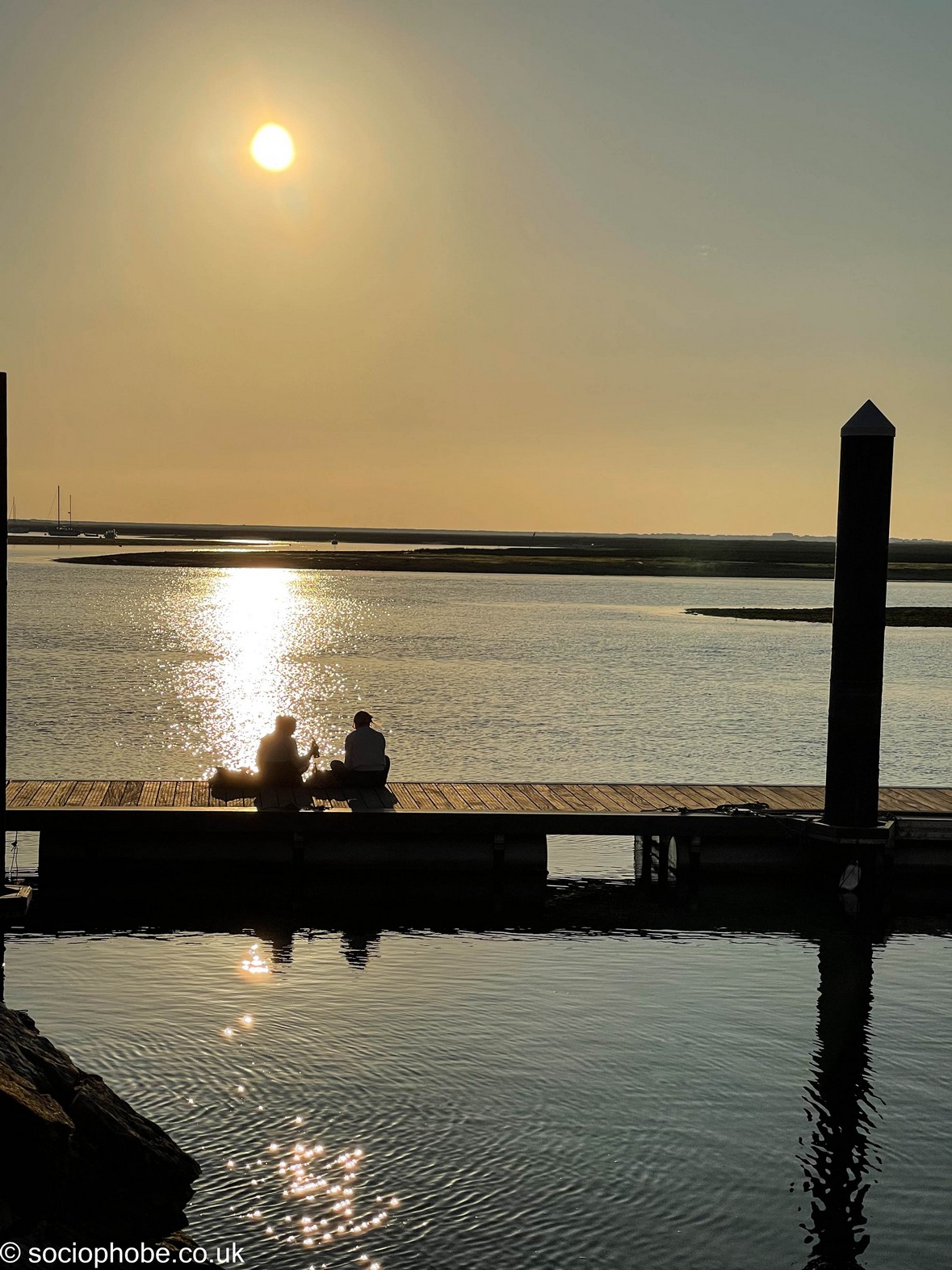
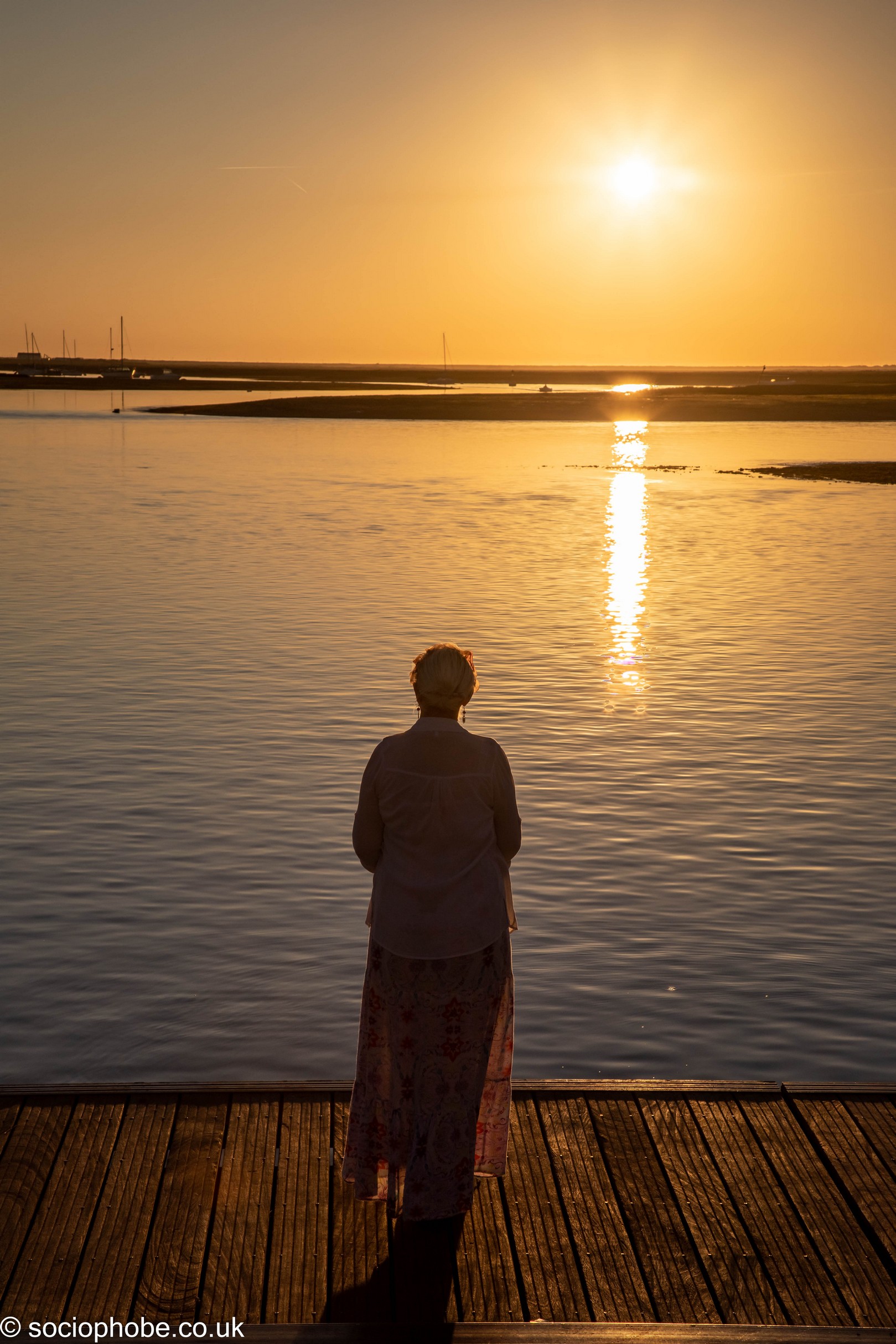
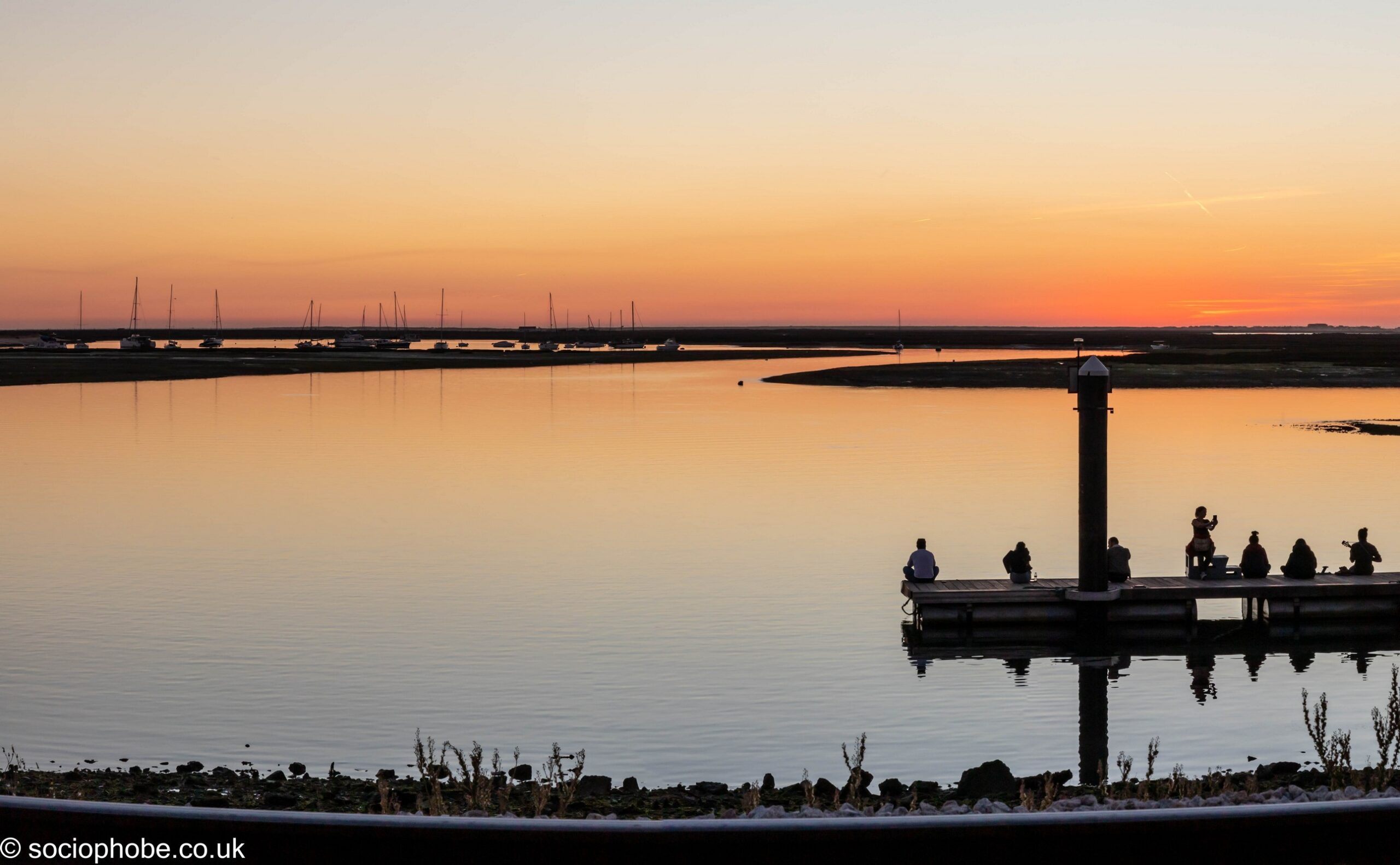
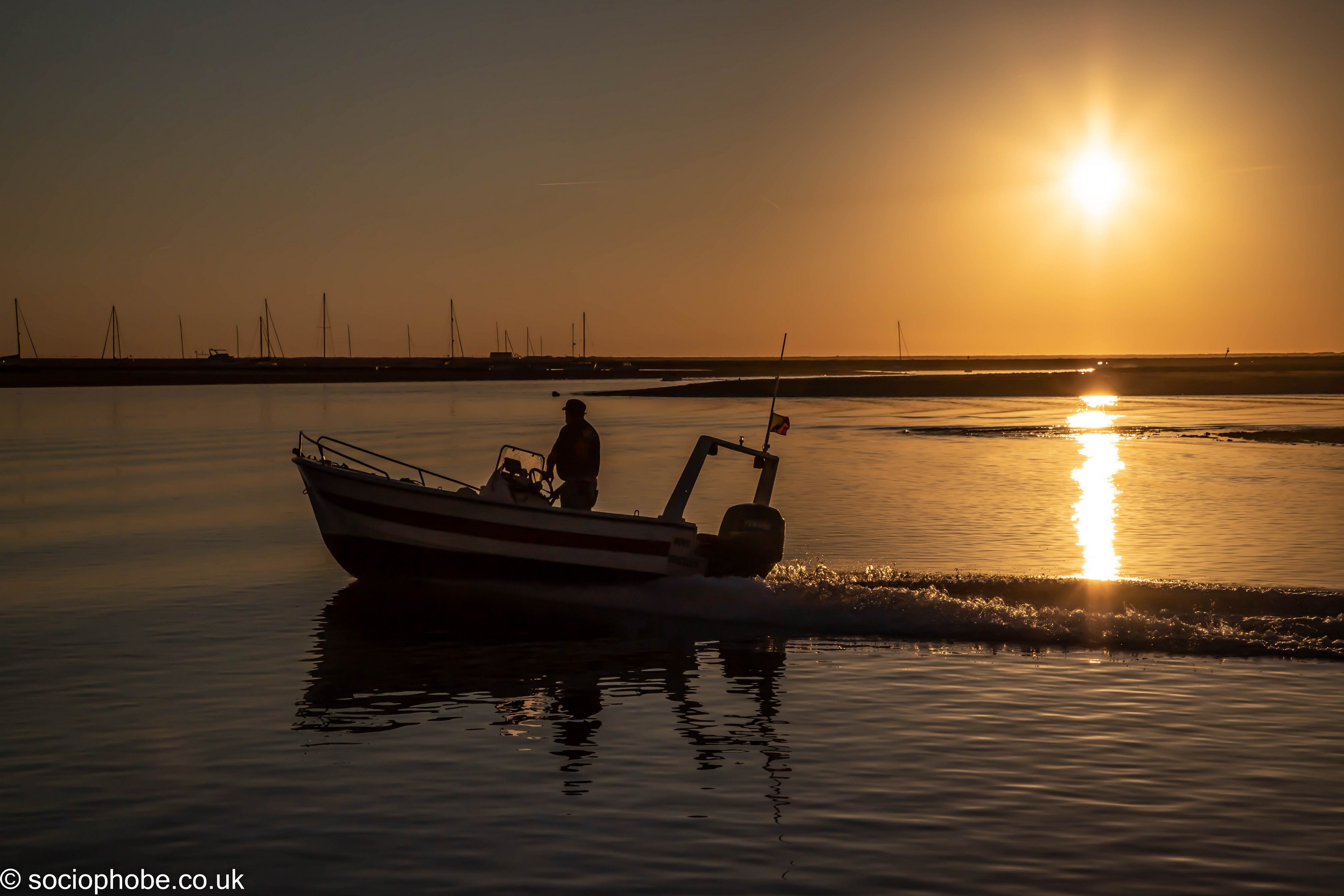
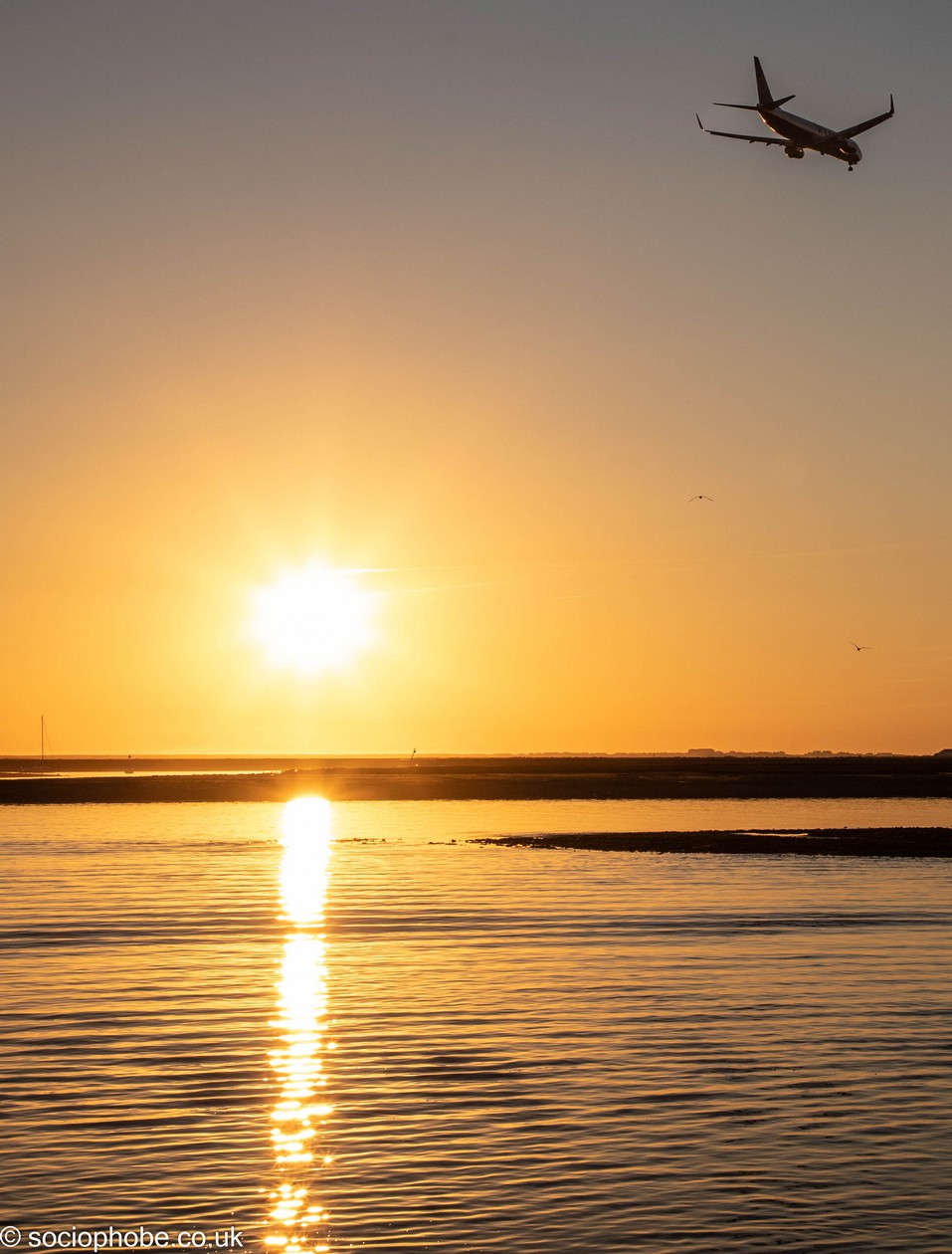
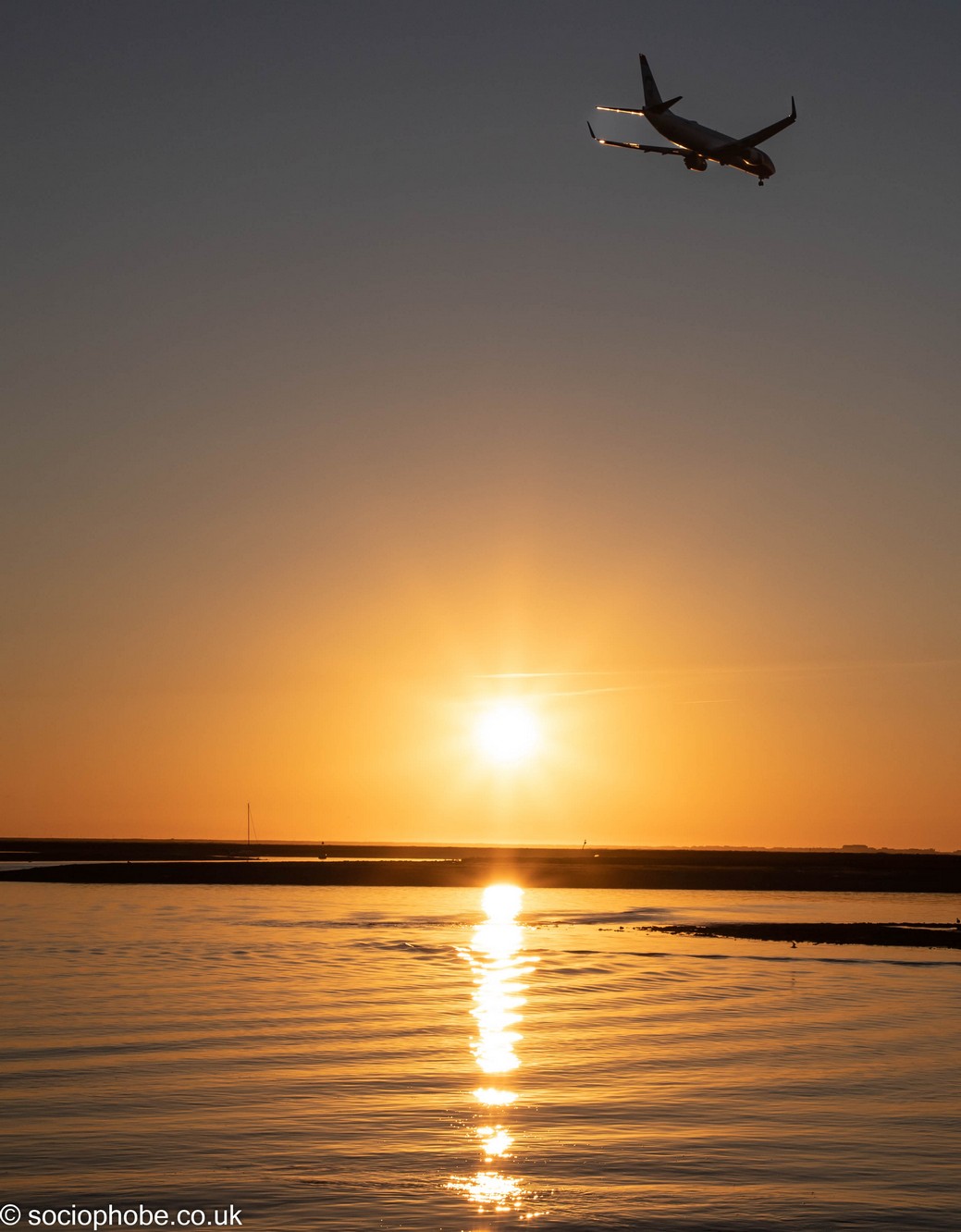
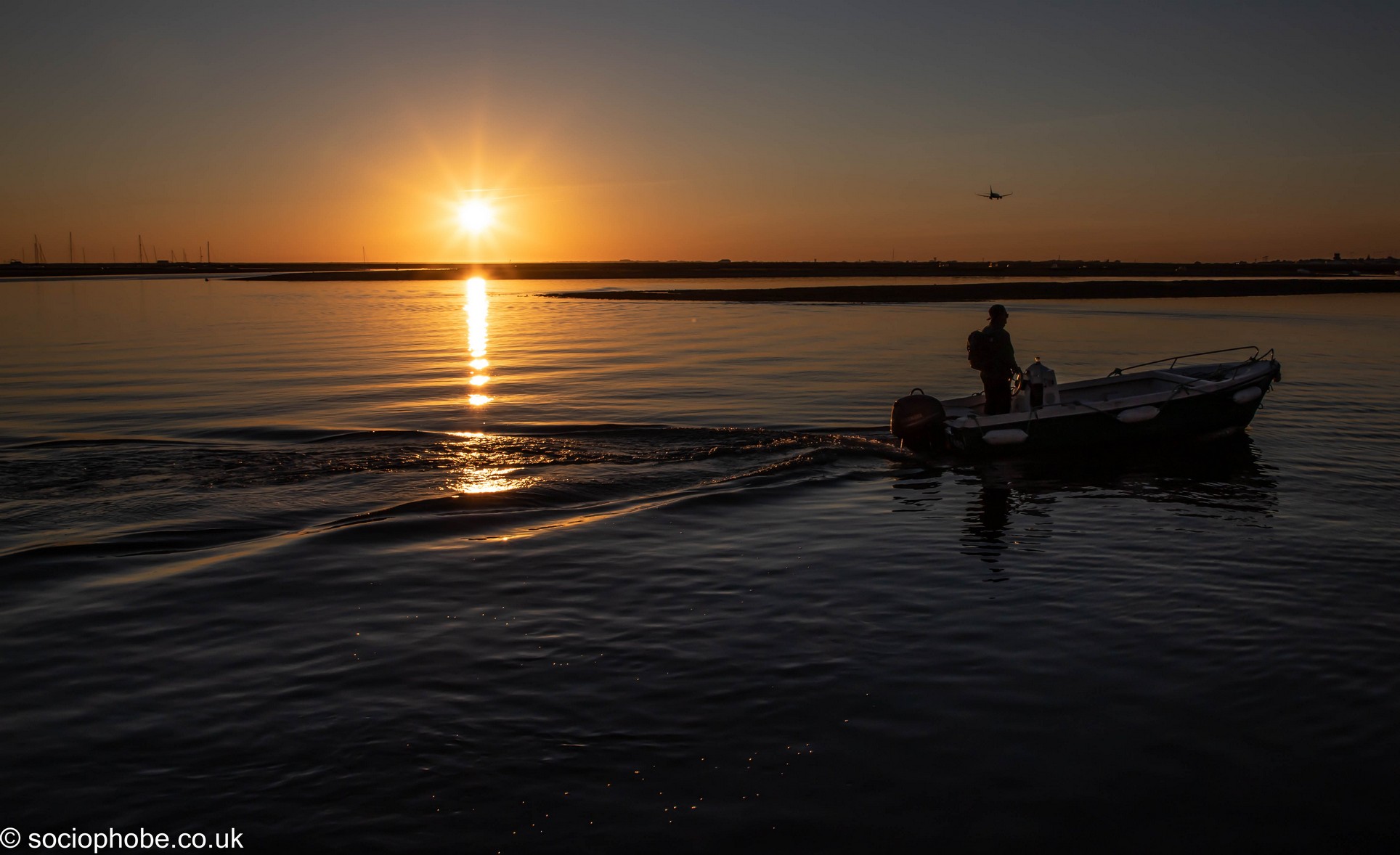
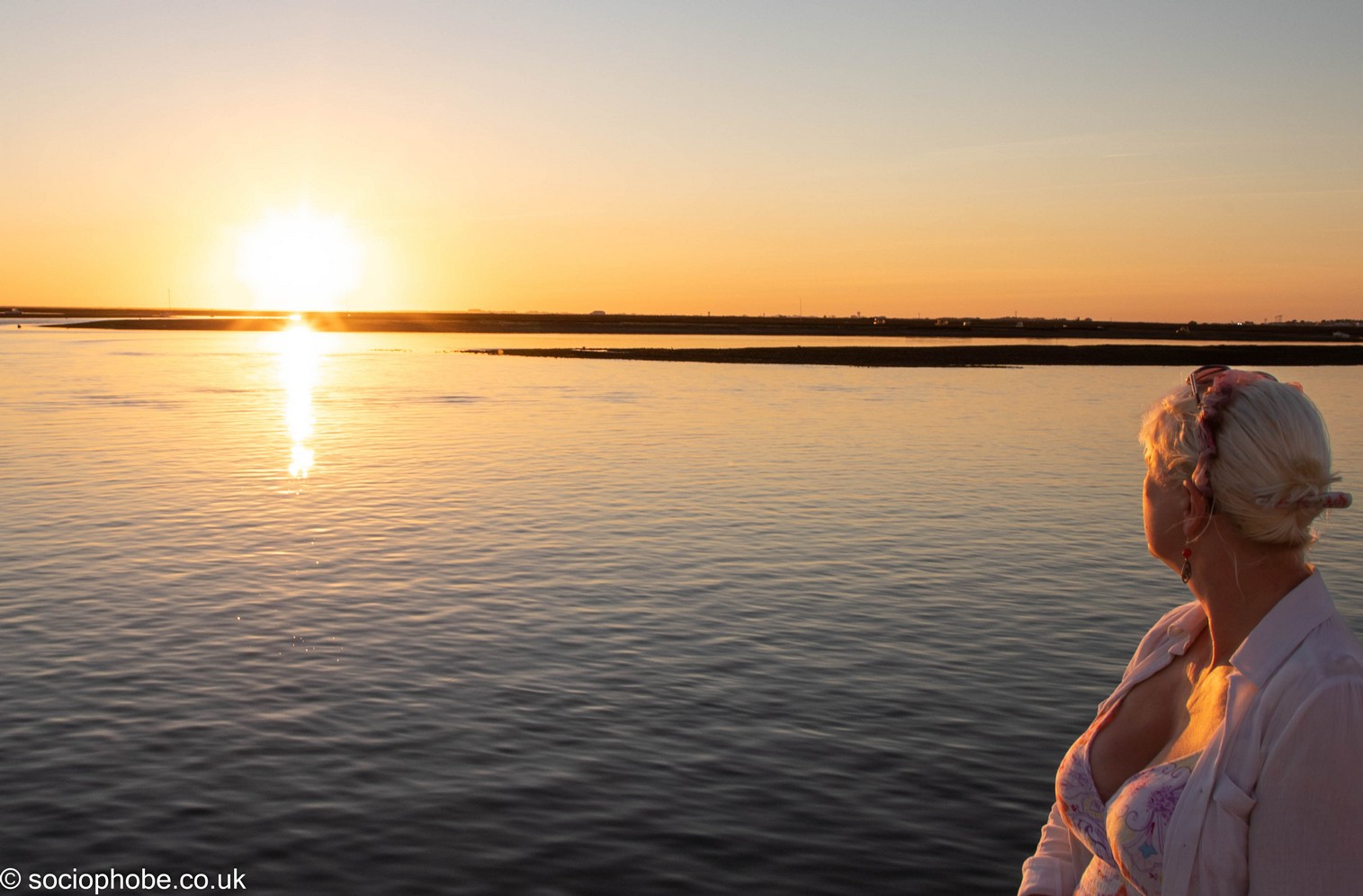
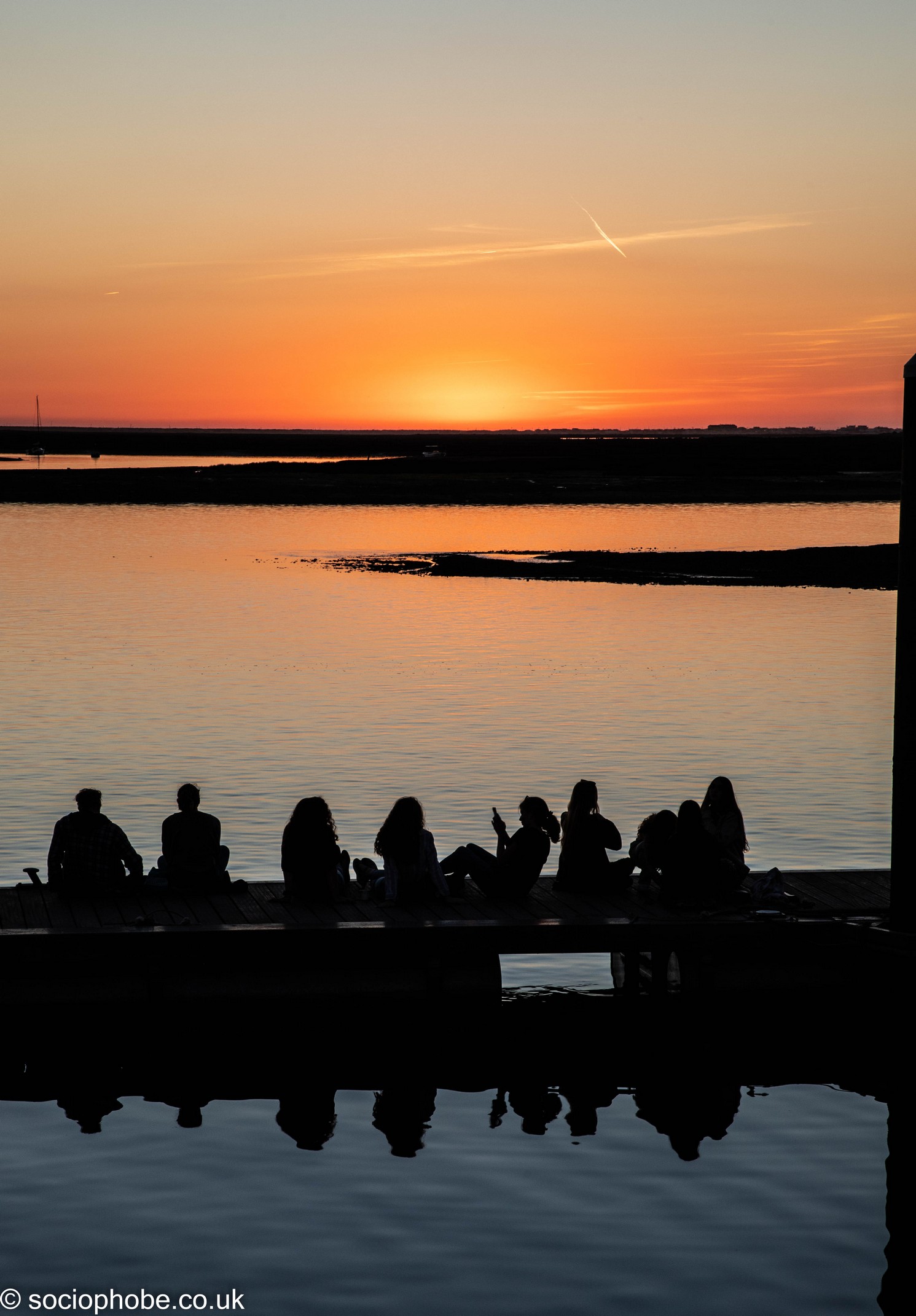
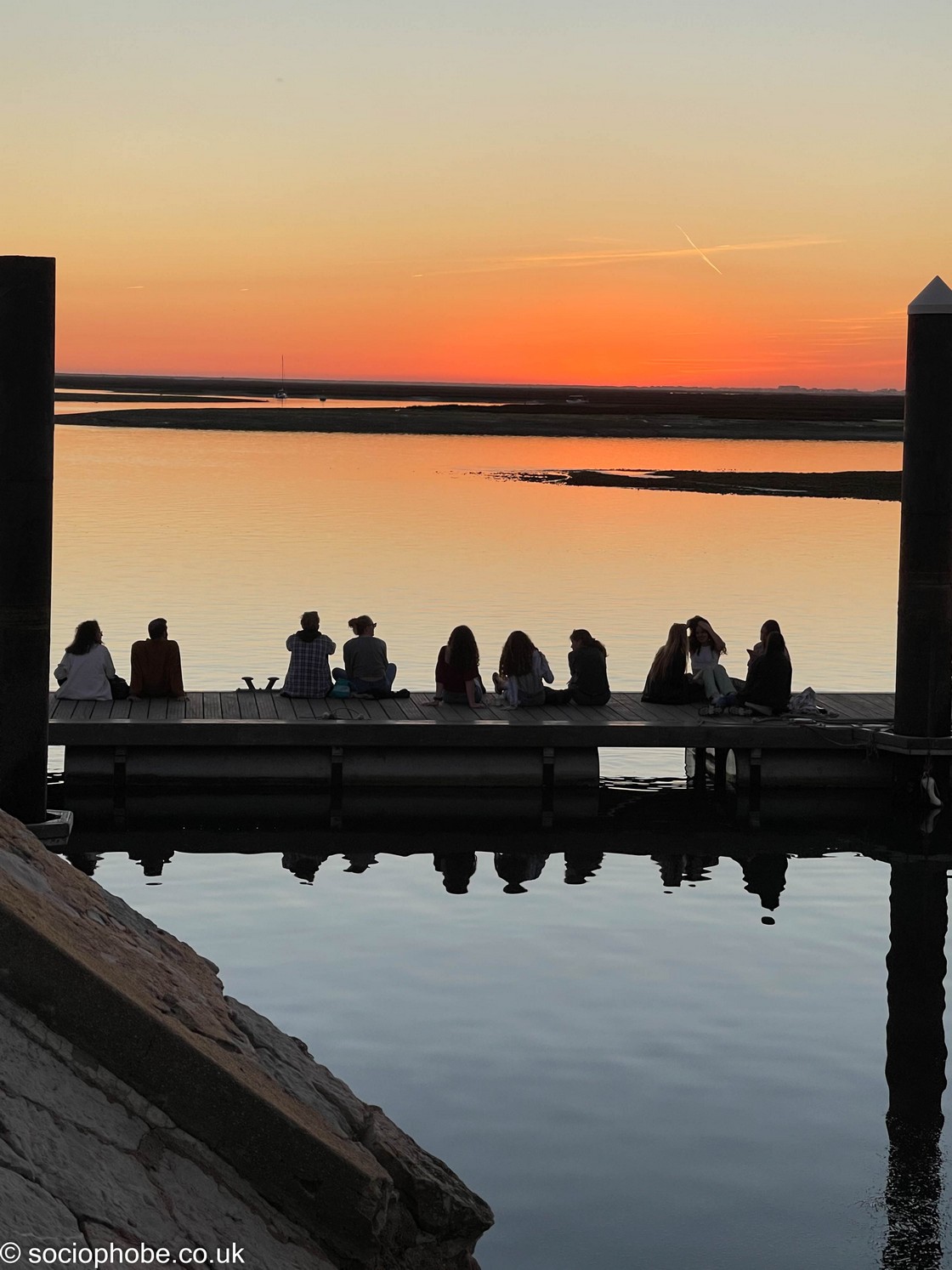
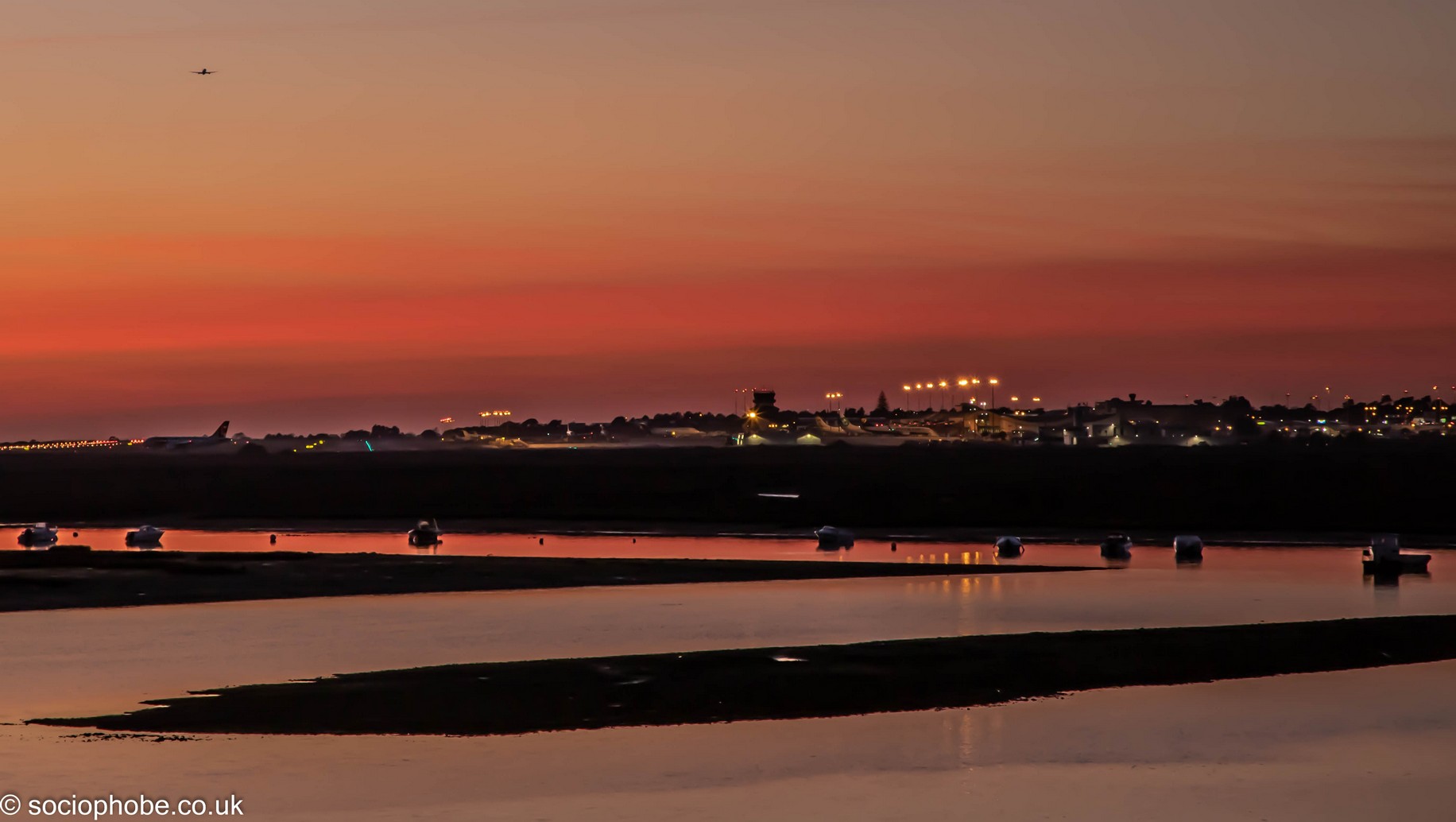
We left at 4.30 to walk into the town and watch the sunset before our final evening meal in the city. There were quite a few people with the same idea and the floating pontoon we were stood on was quite crowded. The sunset was spectacular though and enhanced by the occasional plane landing at the airport opposite or boat going past in front of us. We actually spent about an hour there before we sat down for our meal.
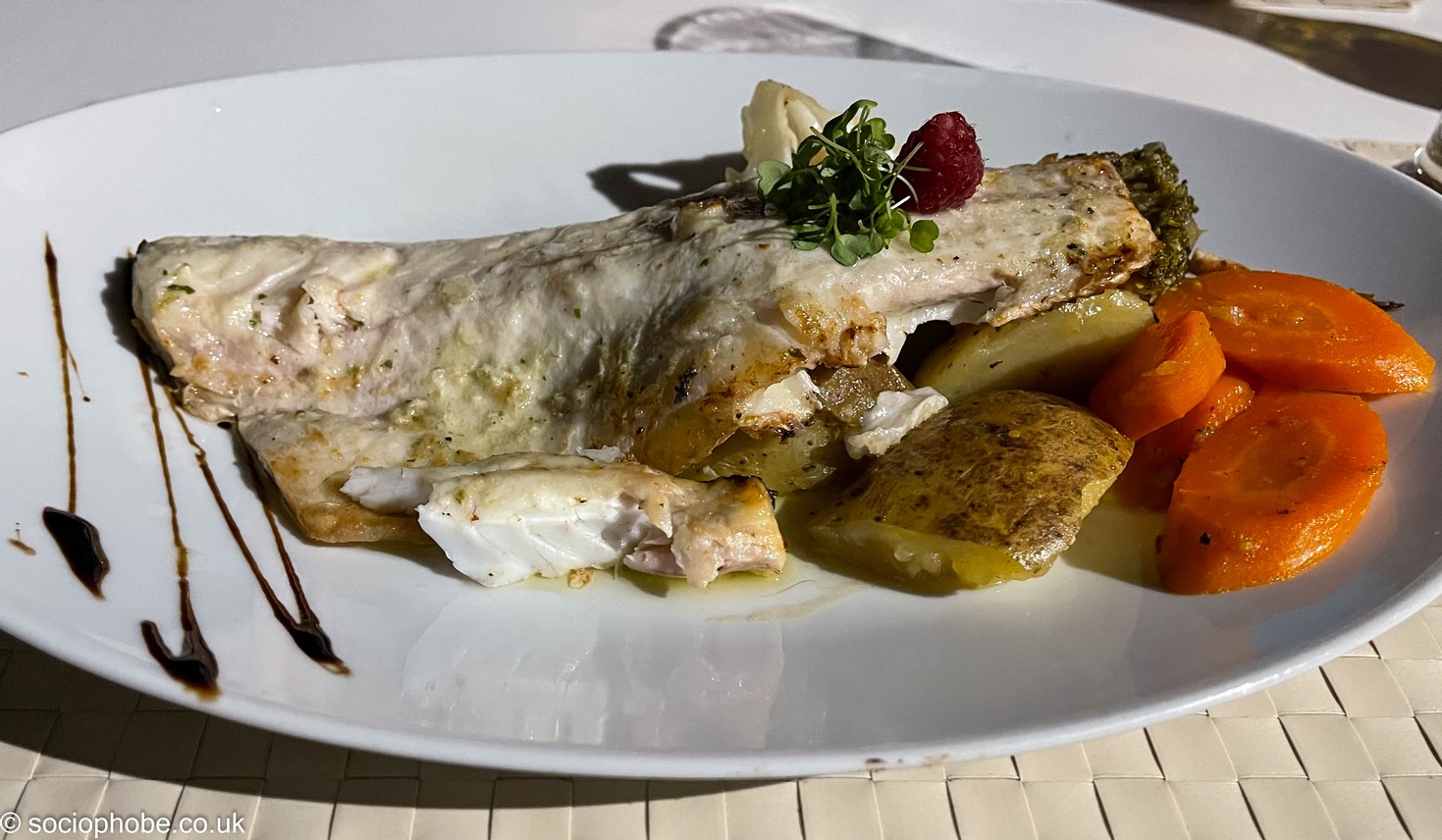
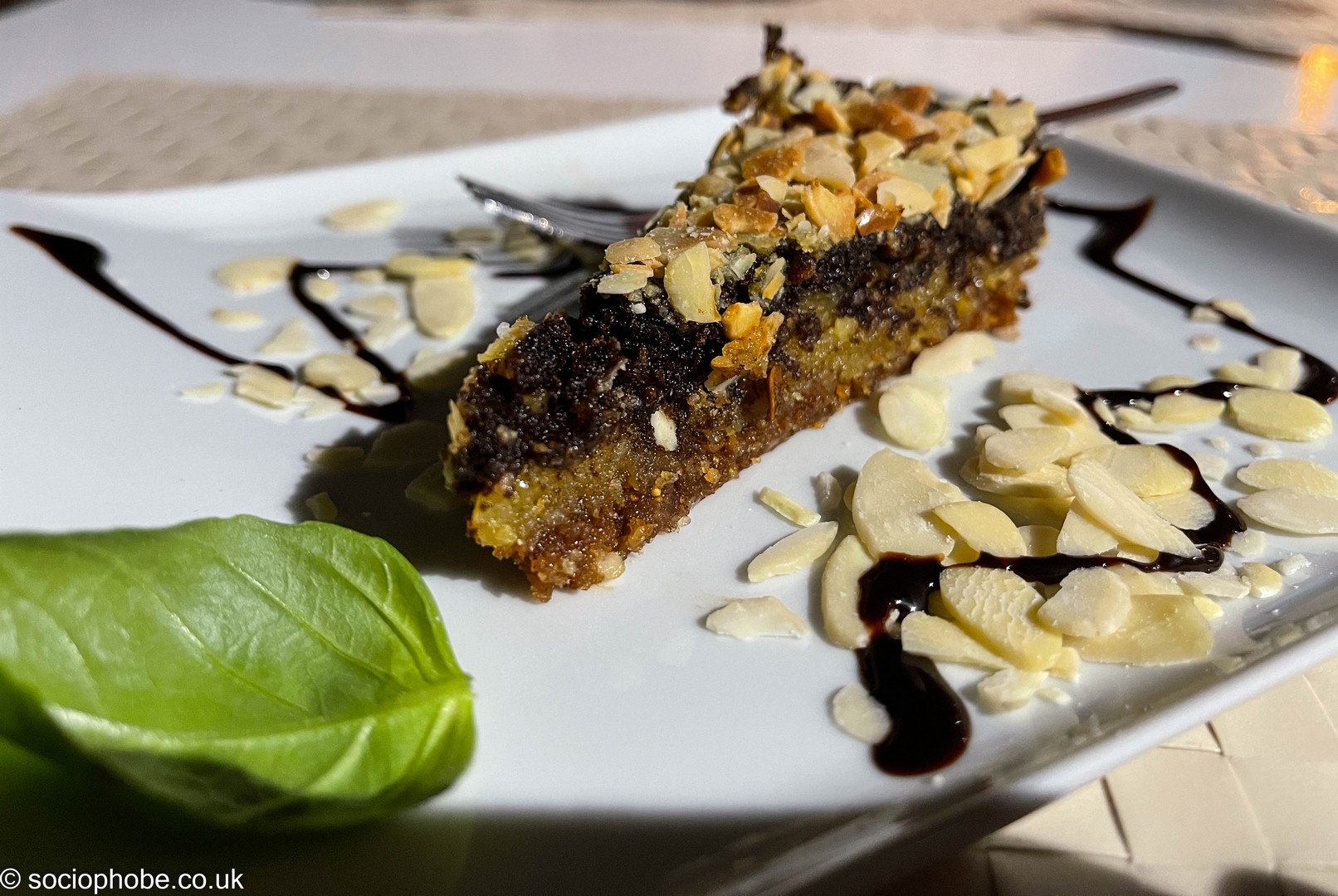
Food doesn’t really interest me (unless it is dessert!) but even I could tell this was a good meal. The sea bass was real melt in your mouth stuff and my fig pie was superb too. It was pitch black when we left and it seemed very strange walking through the dark streets wearing shorts although we were actually back before 8PM. We then had the usual final night of packing and working out how many layers we’d need to wear when we landed in the UK.
The next morning was somewhat marred by finding that someone had hit the side of the car at some point and that would obviously cost me the €1200 excess. The flight at Faro was chaotic too and despite arriving 2.5 hours early we had no time to actually chill in the airport. Ah well, first world problems and it was a fabulous break somewhere new.
The contrast in the country, just traveling an hour inland was quite amazing. The interior is very rural and agricultural and seems a century behind the coastal regions we visited. The people were universally friendly though, despite me greeting them in Spanish as the old Portugese I knew was “thank you”. A fantastic time and after our southern Portugal road trip I’m looking forward to doing a road trip around the north of the country, although that will be a summer trip!
Beautiful photos Marcus and a really interesting trip.
I suppose you have to weigh up what is best- going out of season and several attractions being closed,
Or going in season and having crowds of tourists.
It really looks a wonderful trip and you and Deb do a lot of walking 😊
Well if Spain continues to be silly with its visa requirements then we may consider Portugal 😀
Your blog is very informative. thanks for Sharing this blog.