| Holiday Ratings | |
| Recommended days | 4 |
| Budget | £ |
| Difficulty | Easy |
Arrival in Rome
We had four nights in Rome which was nowhere near enough but it’s a great city break destination to return to year after year. This visit was a continuation of a week in the Italian hill towns to the north, detailed in my blog here.
Well the lure of Rome proved too much even for Deb and she was awake and up by 6.30AM! We had showered, breakfasted and packed and were on our way by 8.30. I did make one cock up on the way – I got in the wrong toll lane which was for season pass only and couldn’t reverse as there was the inevitable queue behind. I explained to the remote management and they opened the gate to let me through. That was jolly nice I thought until I came off the toll road 20 miles later and because I had no ticket I had to pay €79! That was a frustrating lesson to learn.
Hotel Villa Pinciana
We arrived in Rome by 10 and there was probably more traffic than we had seen in the entire previous week. And all of it was using its horn! We got to the hotel with no further issues and parked up and were able to check in to our room even though we were 6 hours early. Our base for this city break was the Hotel Villa Pinciana, on the northern edge of ancient Rome. The hotel was lovely with a really nice room overlooking the gardens and it was amazingly quiet.
The Aurelian Walls and Pinciana Gate
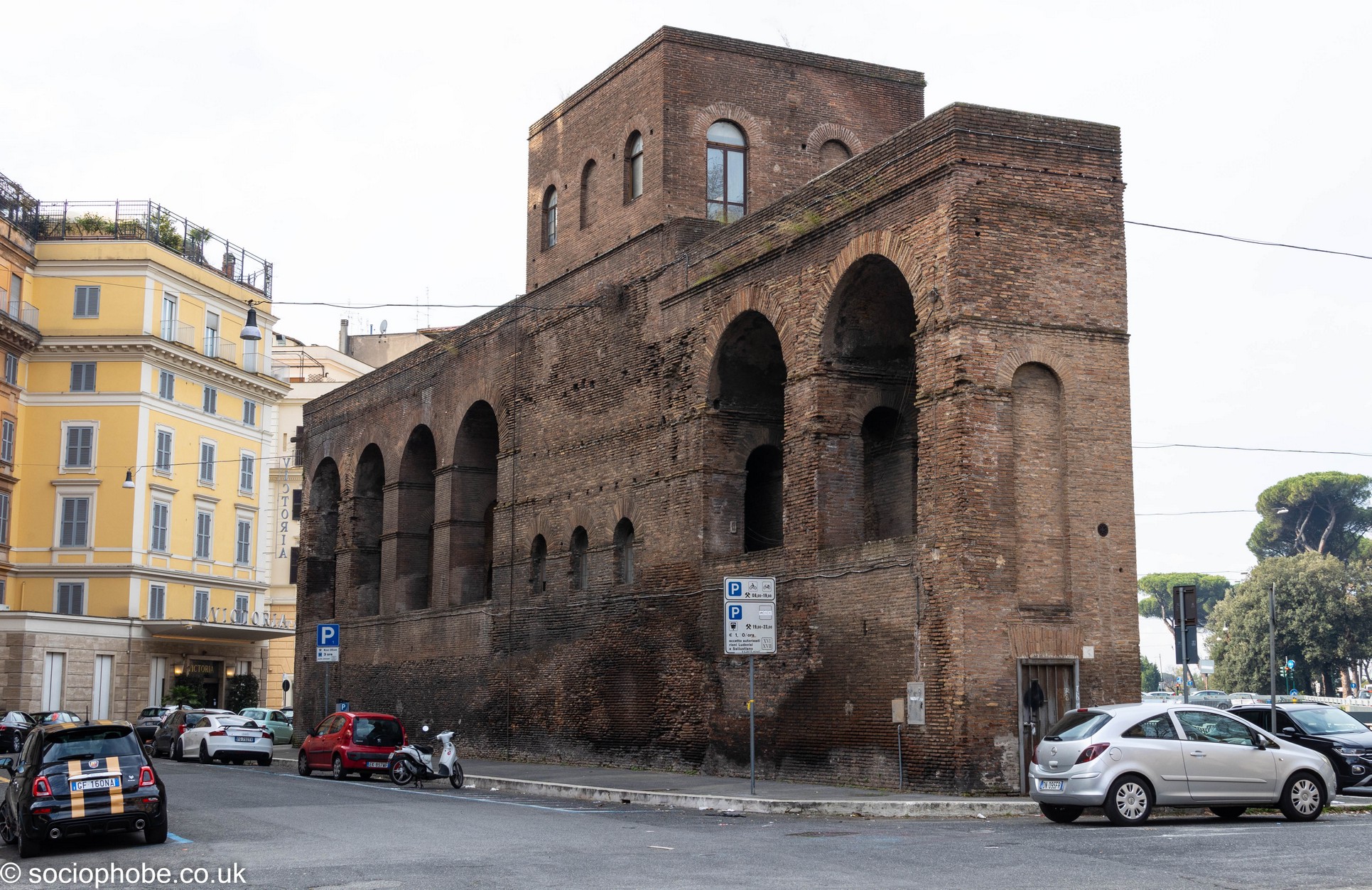
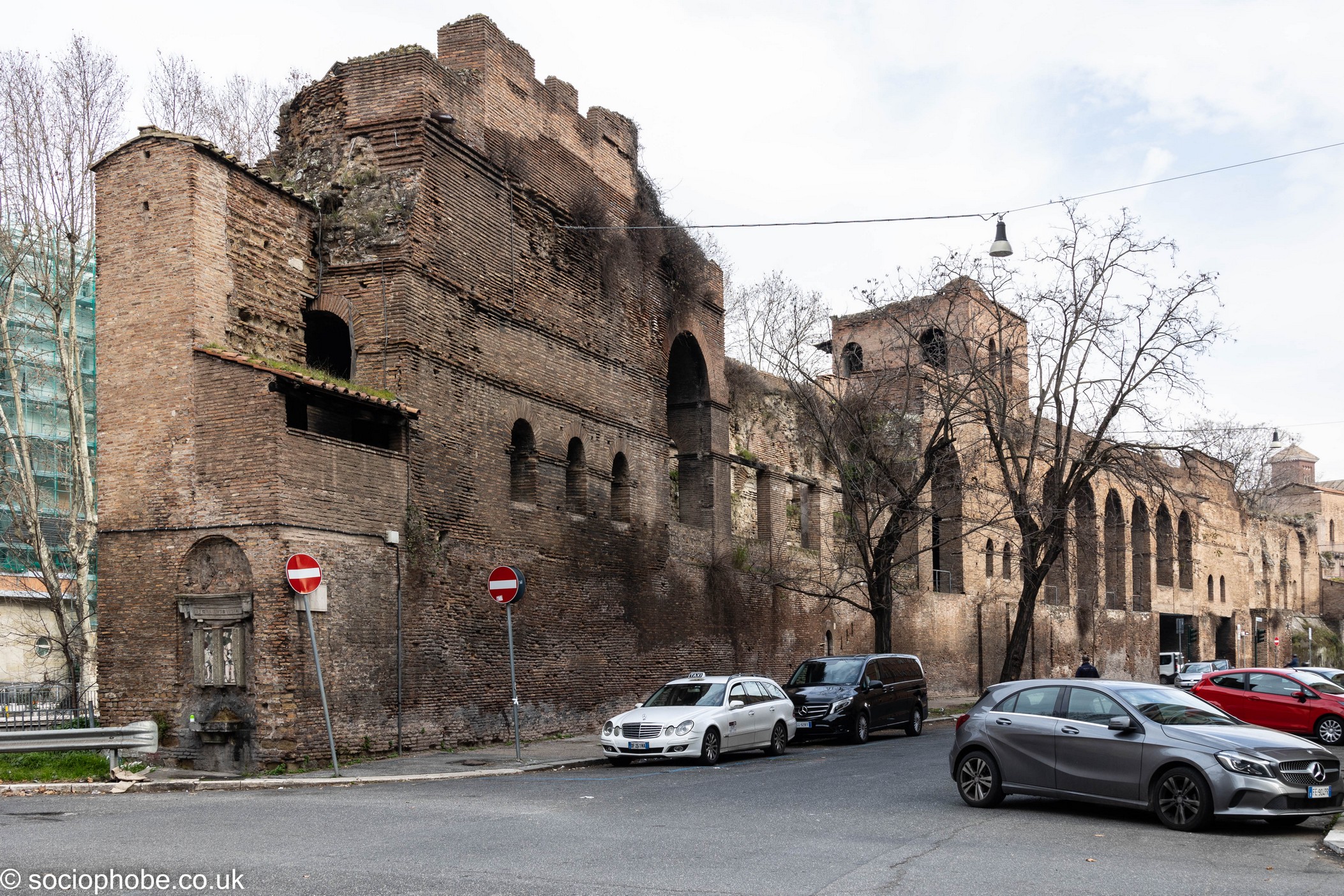
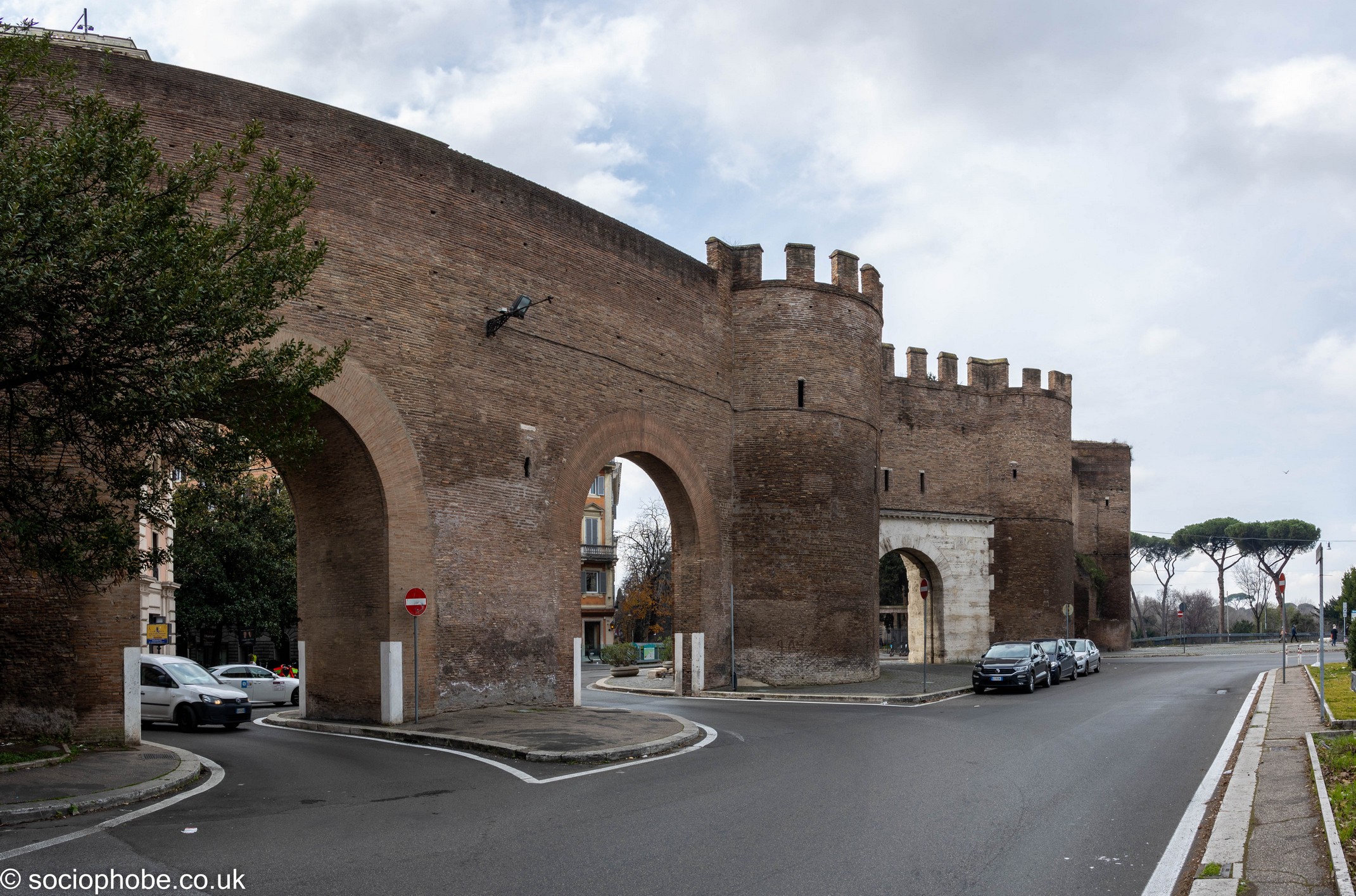
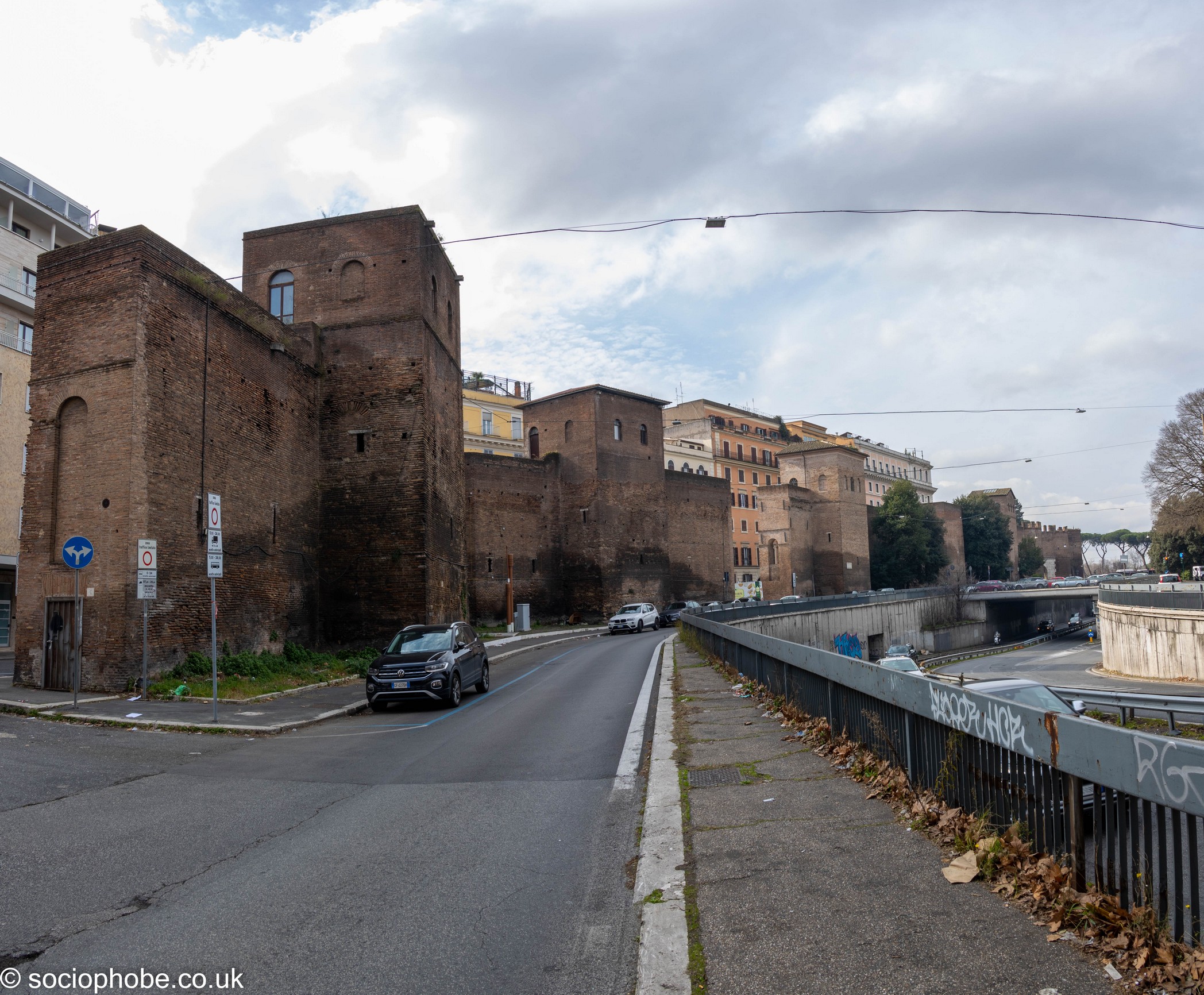
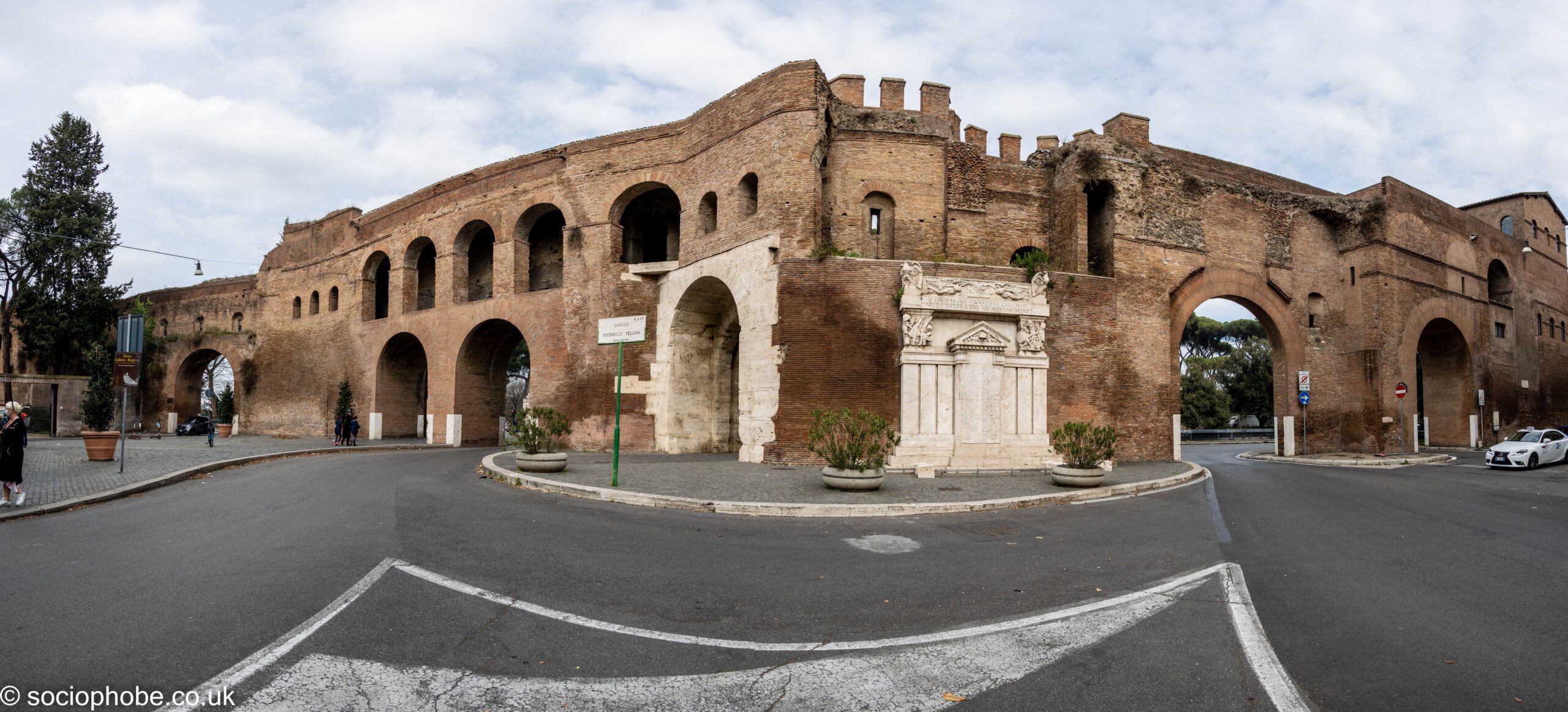
The hotel was in a quiet area near the American Embassy and the Borghese Park so after a sit down and a cuppa, plus a quick look at the roof terrace, we went for a walk. First stop was, obviously, the Aurelian city walls and Pinciana Gateway at the end of the street. I had to hold Deb back from rushing out of the hotel with gleeful exuberance!
For 1800 year old defences they are still in pretty good condition and it is impressive how much is left. It’s also a shame they weren’t more use! Built in the third century the walls were too long for the depleted Imperial forces to garrison by the time they were really needed. All of the walls and gateways were built of bricks rather than the expected stone blocks and had been carved up in the last hundred years by inserting extra gates for roads and trains.
Villa Borghese Gardens
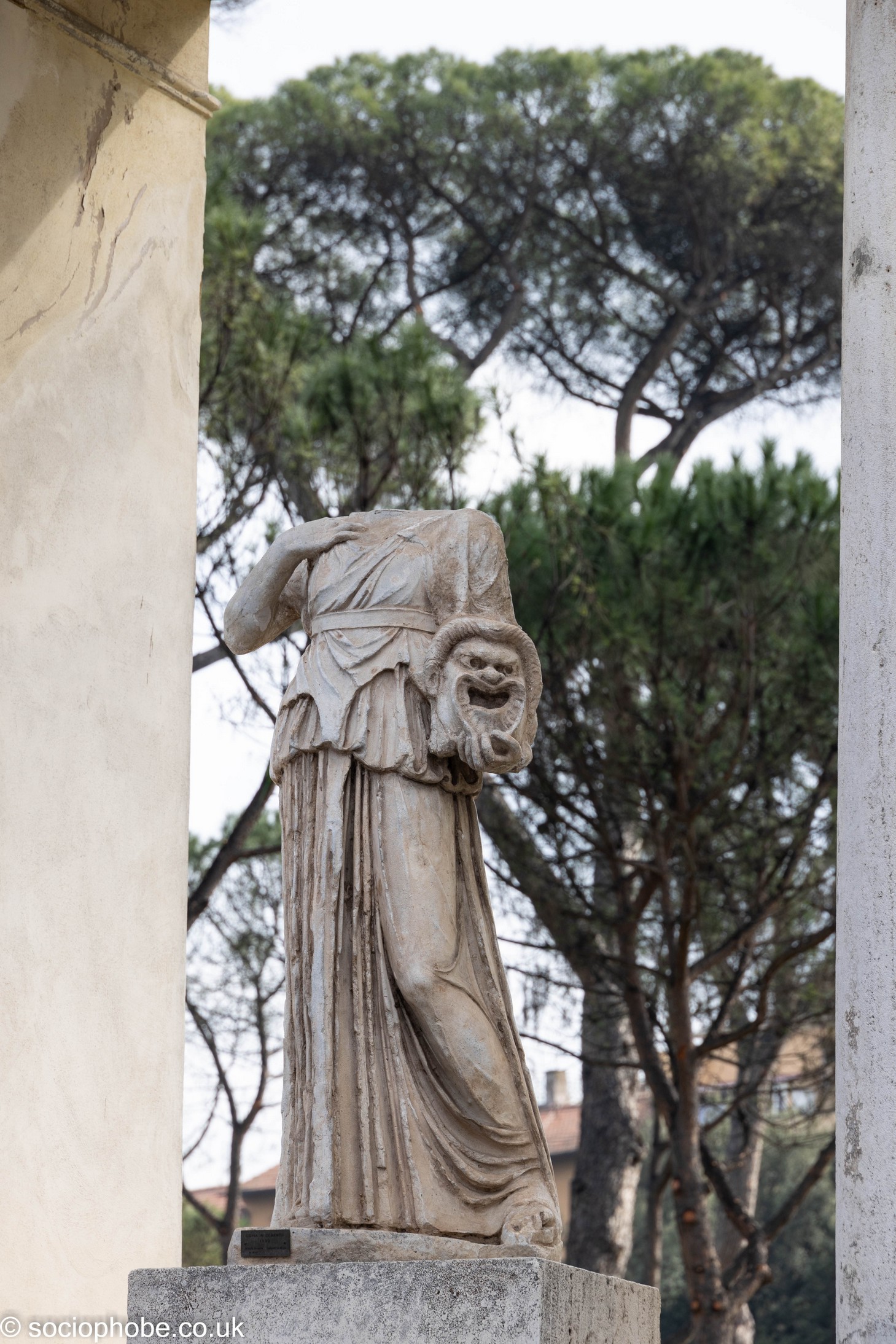
The Gateway was conveniently close to the Borghese Gardens so we crossed the road into these, along with a good portion of Romans by the look of it. Built in the seventeenth century by yet another cardinal, the park was eventually taken into public ownership at the turn of the twentieth century.
The park wasn’t crowded but it was certainly busy which was great to see. There were lots of families and kids doing pony rides, cycling and playing. It was also the first place in Italy we’ve seen where the majority of people weren’t wearing masks so we’ll have to check the actual requirements for Rome. Along with the lack of masks we saw two blokes pissing in the hedges/roadside within 10 minutes of each other. Welcome to Rome!
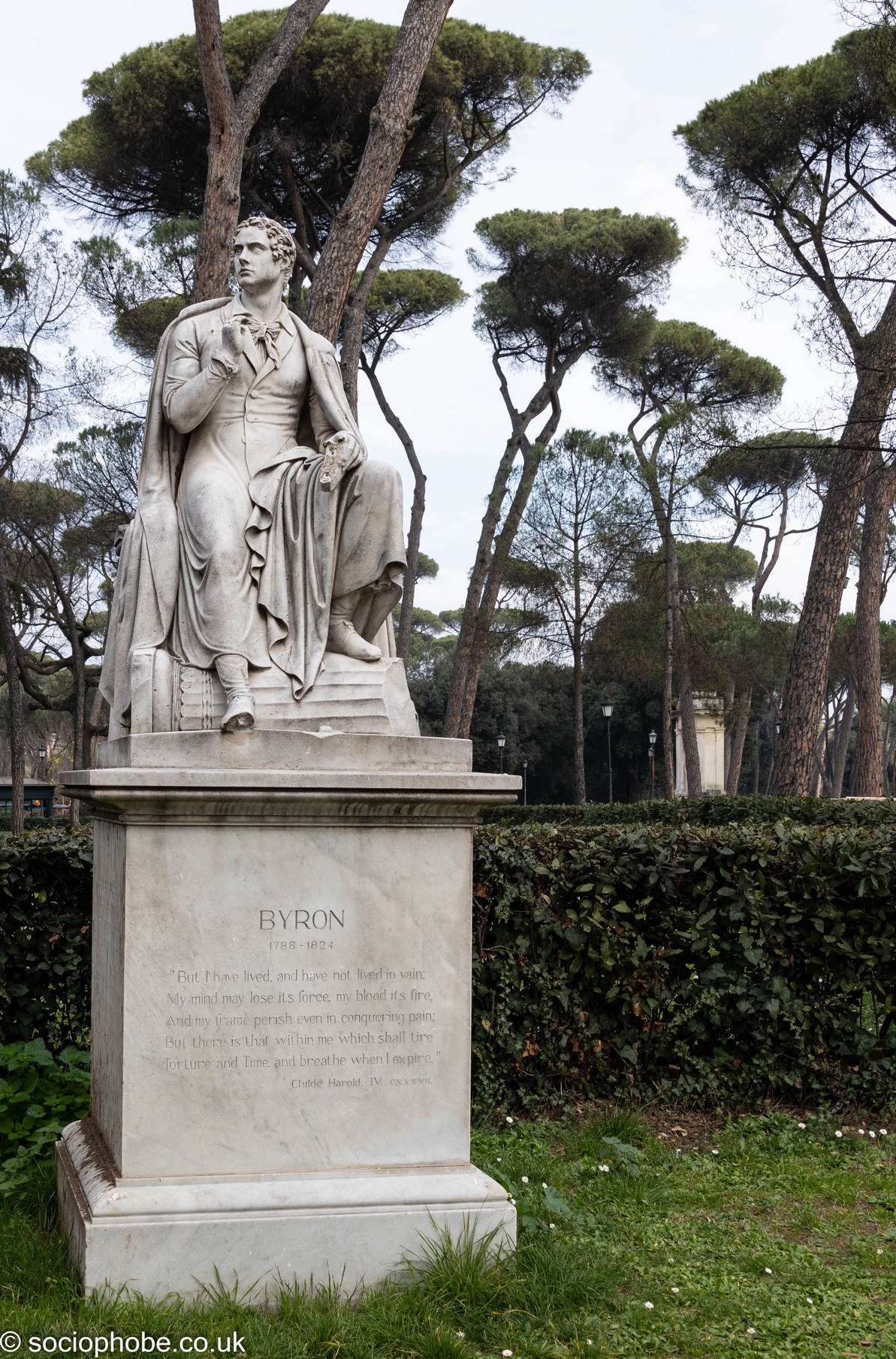
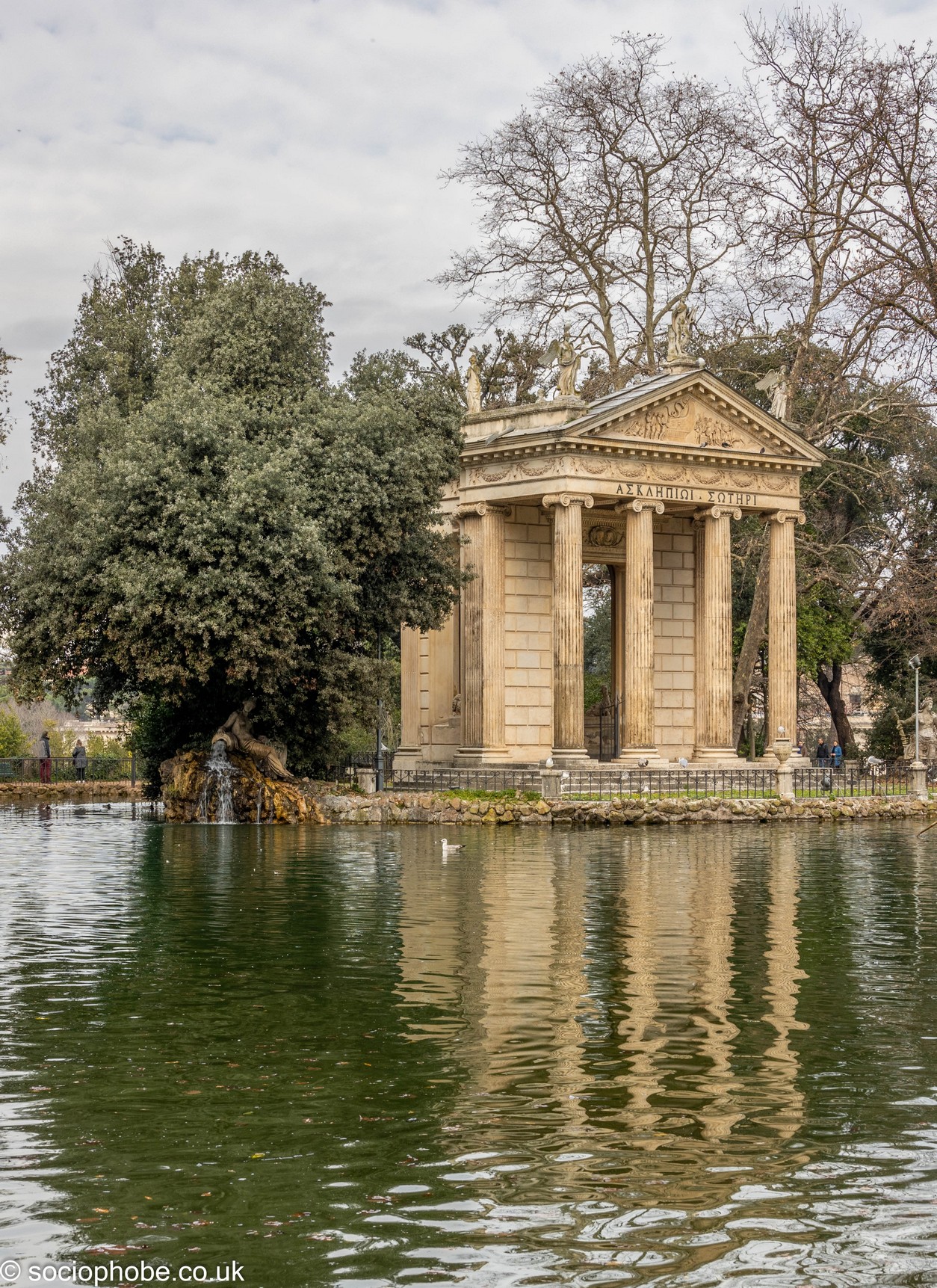
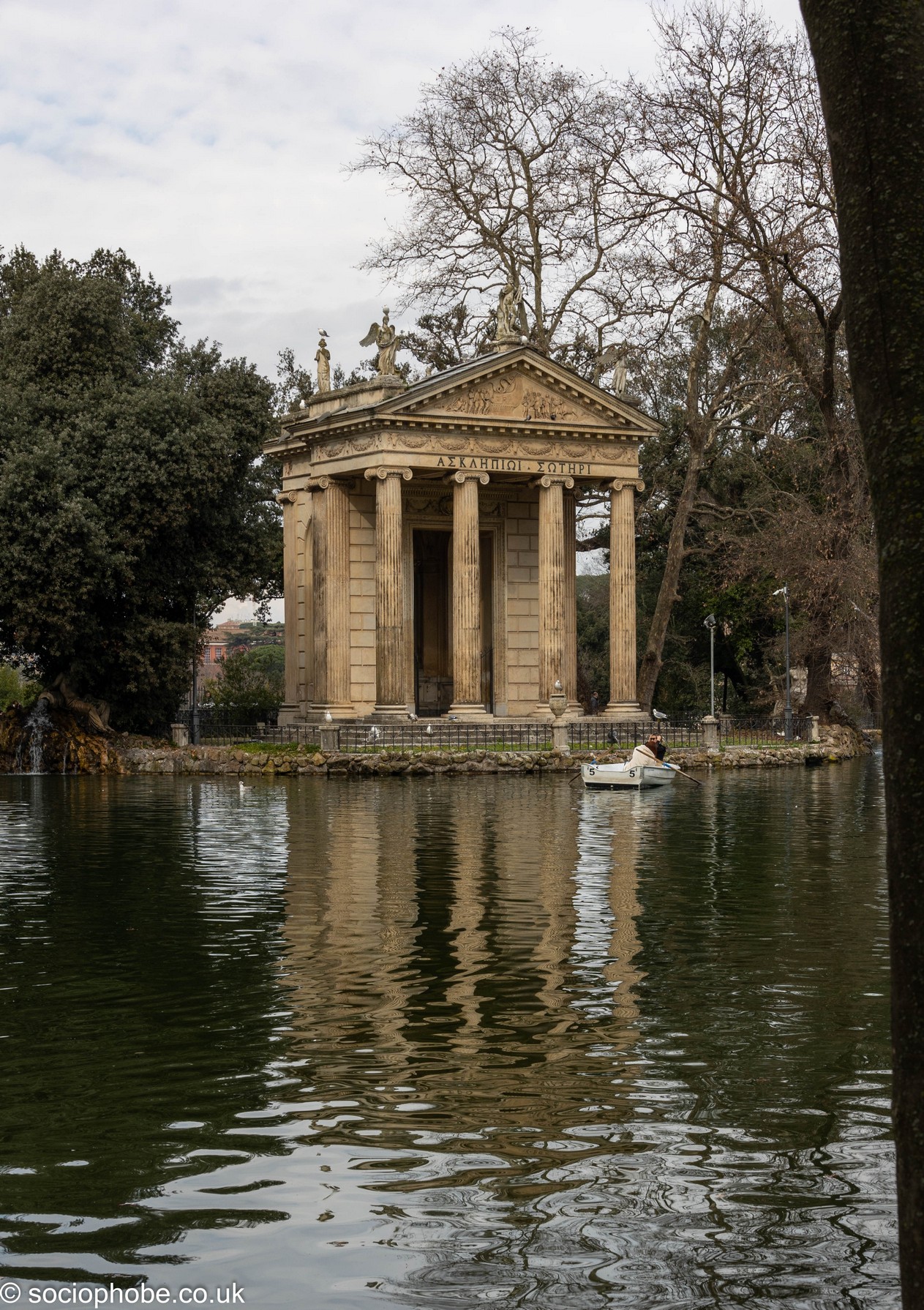
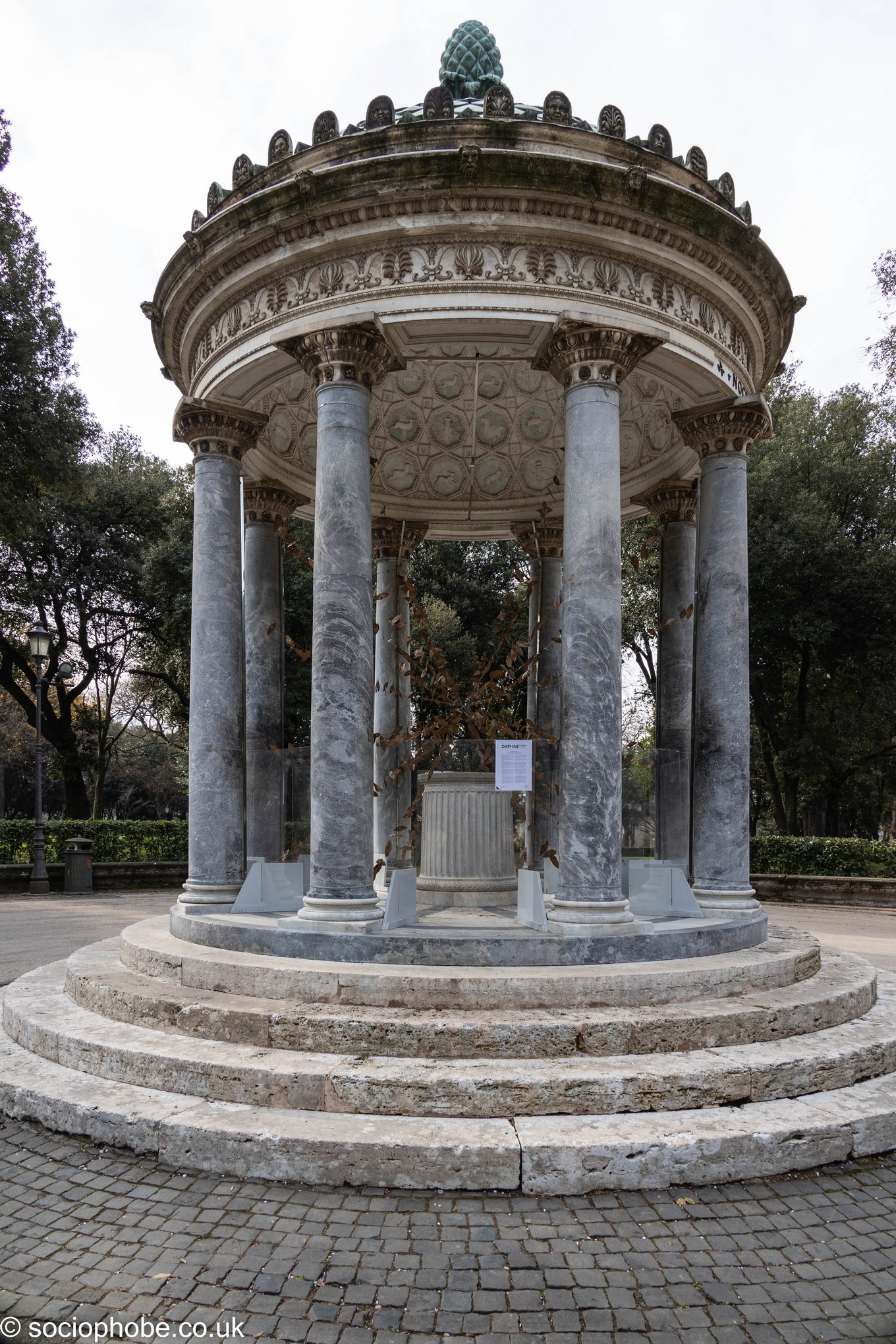
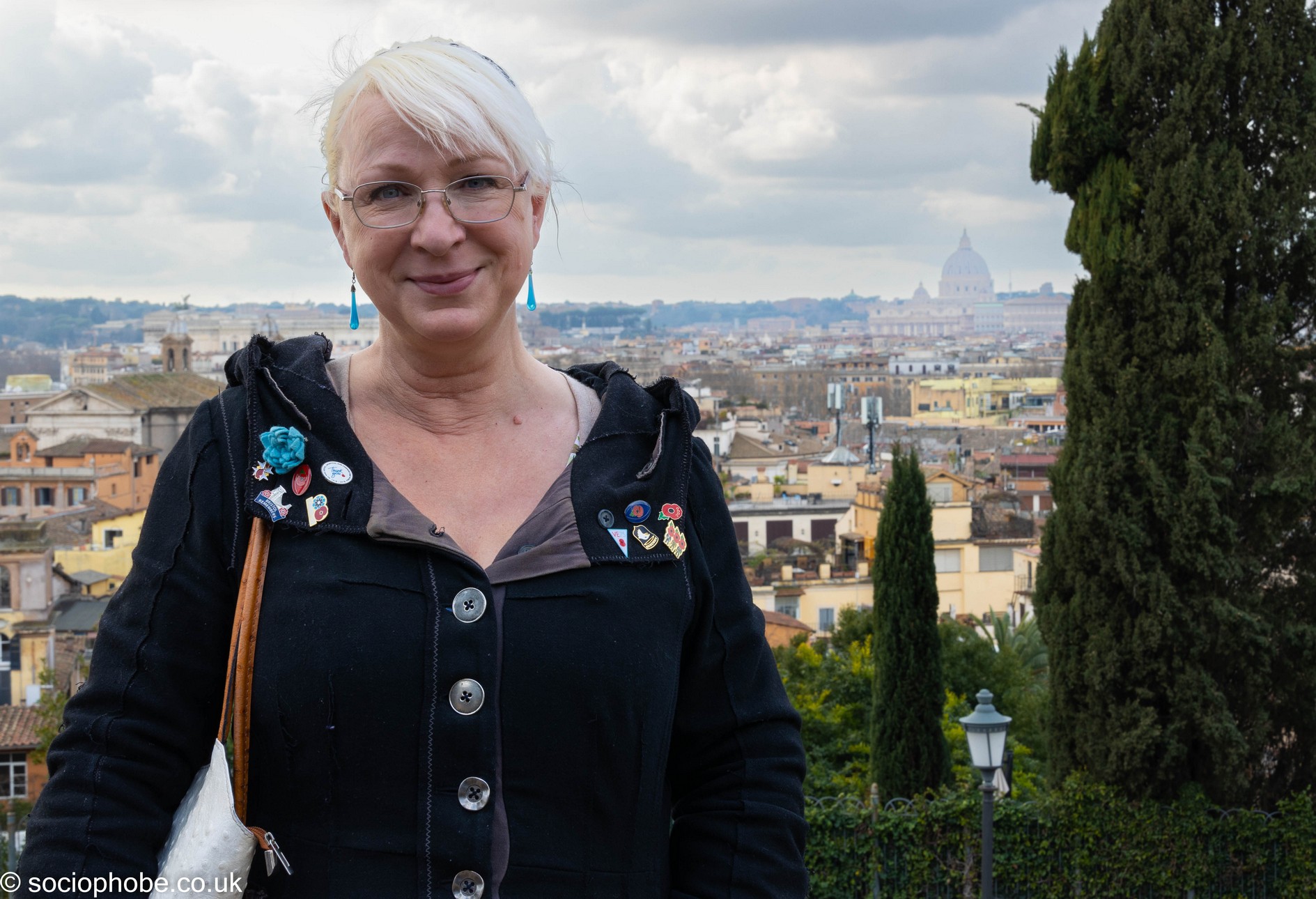
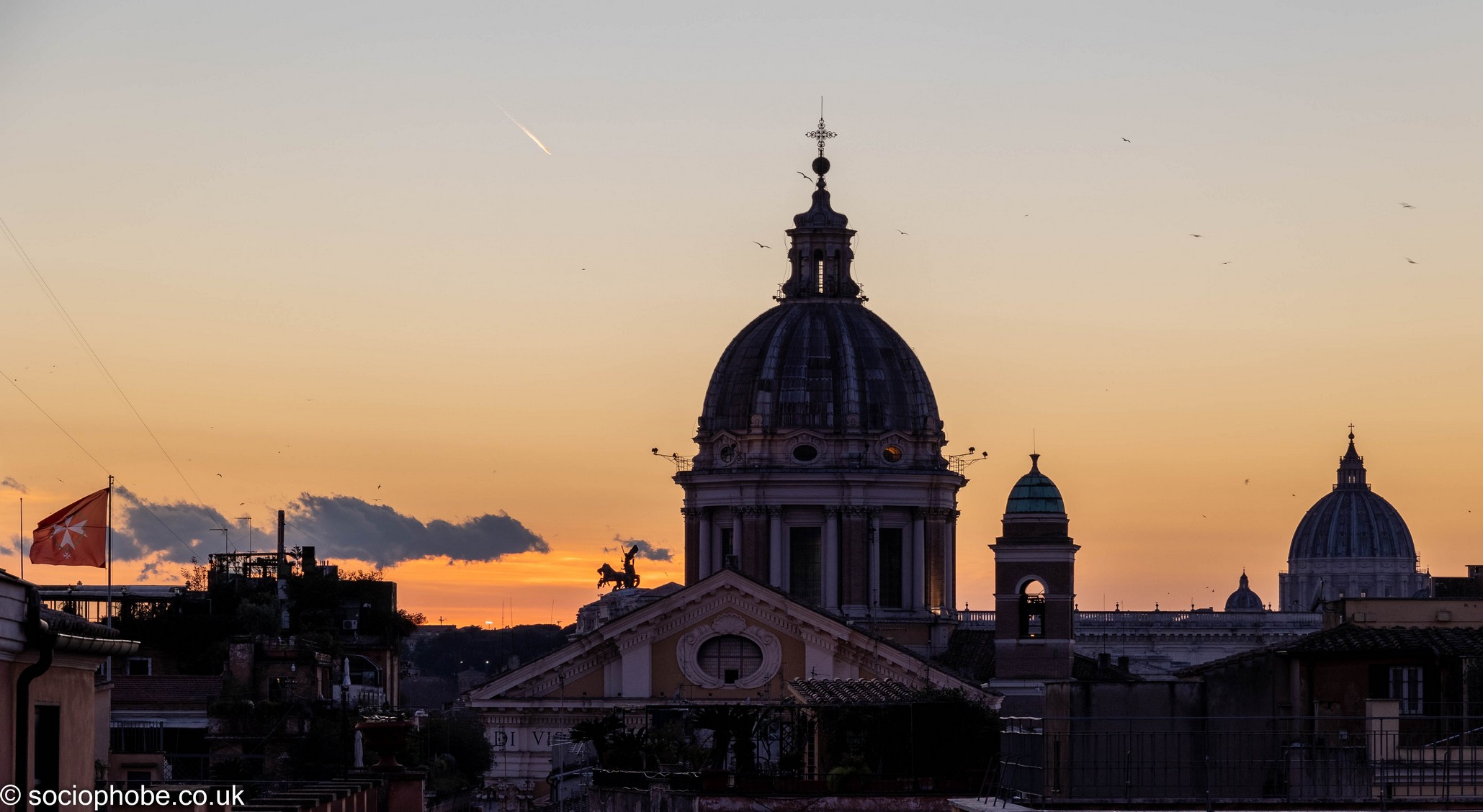
We saw Byron’s Statue and then the Temple of Diana, an eighteenth century creation although the original Roman statue there was looted by Napoleon and is now in the Louvre. We had a coffee and a pinsa (a Roman sort of pizza without a tomato sauce) and then walked by a somewhat circuitous route via another temple folly to the Terrazza del Pincio, for views over the city. From here it really did look lovely, lots of rooftop terraces interspersed with church domes and towers.
Capuchin Crypt
One of the places I’d always wanted to see was a proper ossuary and the Capuchin Crypt was nearby so we paid it a visit. The bodies of about 4000 monks are in the crypt and were arranged in their current form in the seventeenth or eighteenth century. After checking vaccinations and temperature we were allowed in, firstly to the museum. This had some interesting details about the order extending to their current activities today.
The main attraction was the crypt but it was incredibly frustrating not to be allowed to take photos and I don’t understand why. Some churches charge extra for a photography pass which is fine as it gets them more cash but this was just a ban. Apparently it is a ‘live burial site’ which seems a contradiction in terms but also I could buy postcards of everything anyway so sensitivity obviously isn’t the issue! /rant over The bones were laid out on fantastic patterns and designs and some of the bodies appeared to still have mummified skin on them. But you won’t know unless you look up pictures online as I have none to share!
Castle St Angelo
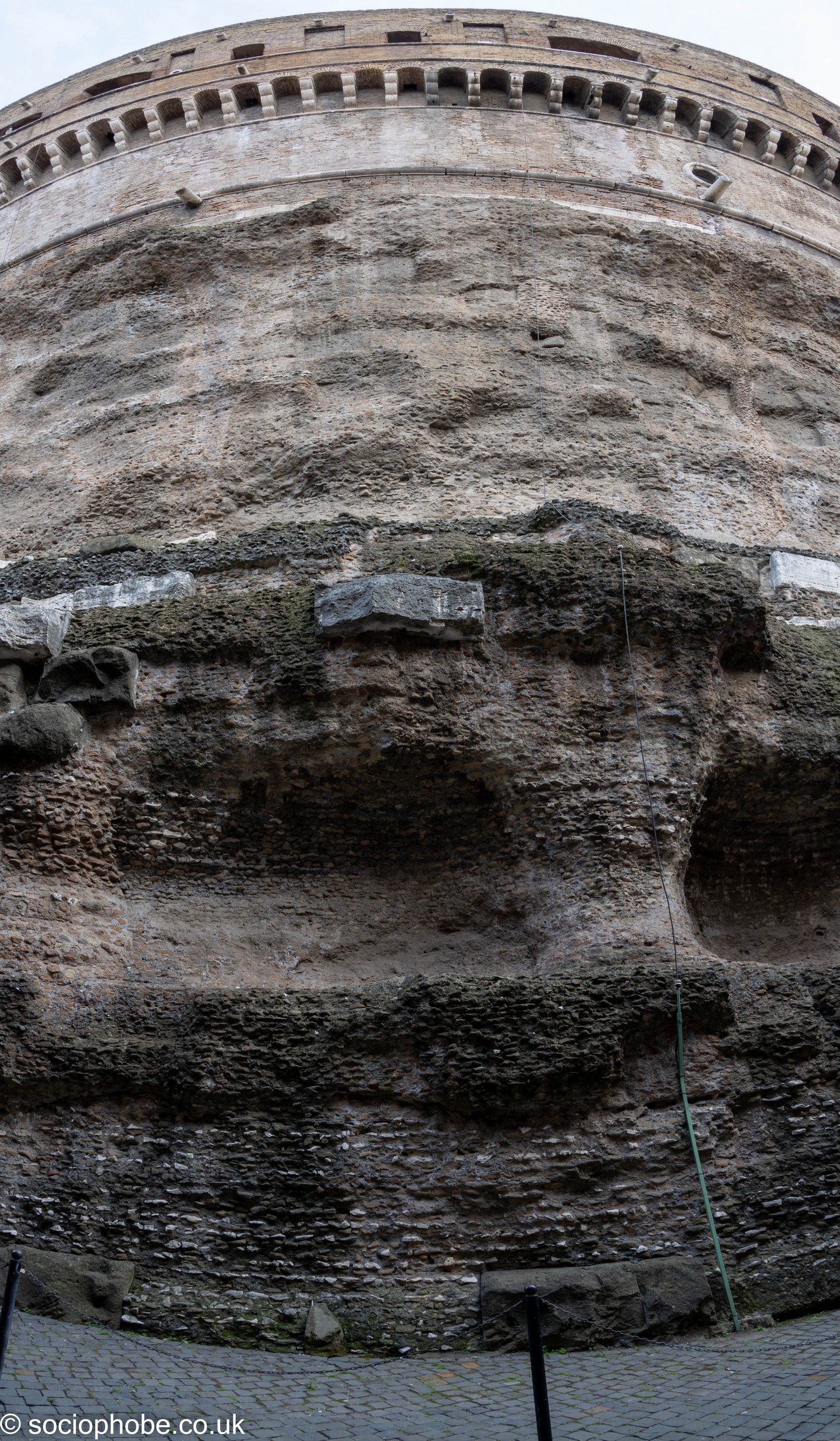
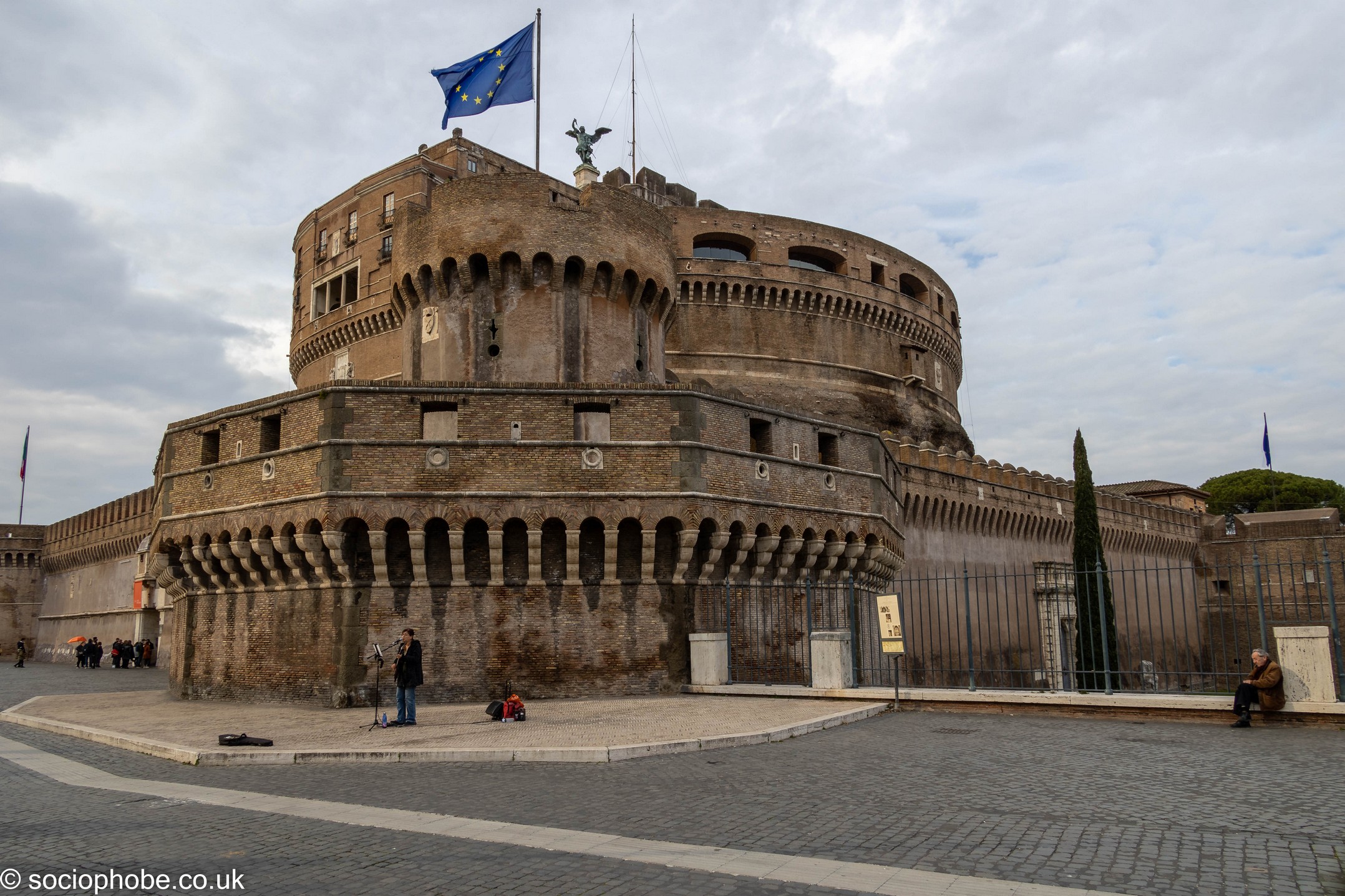
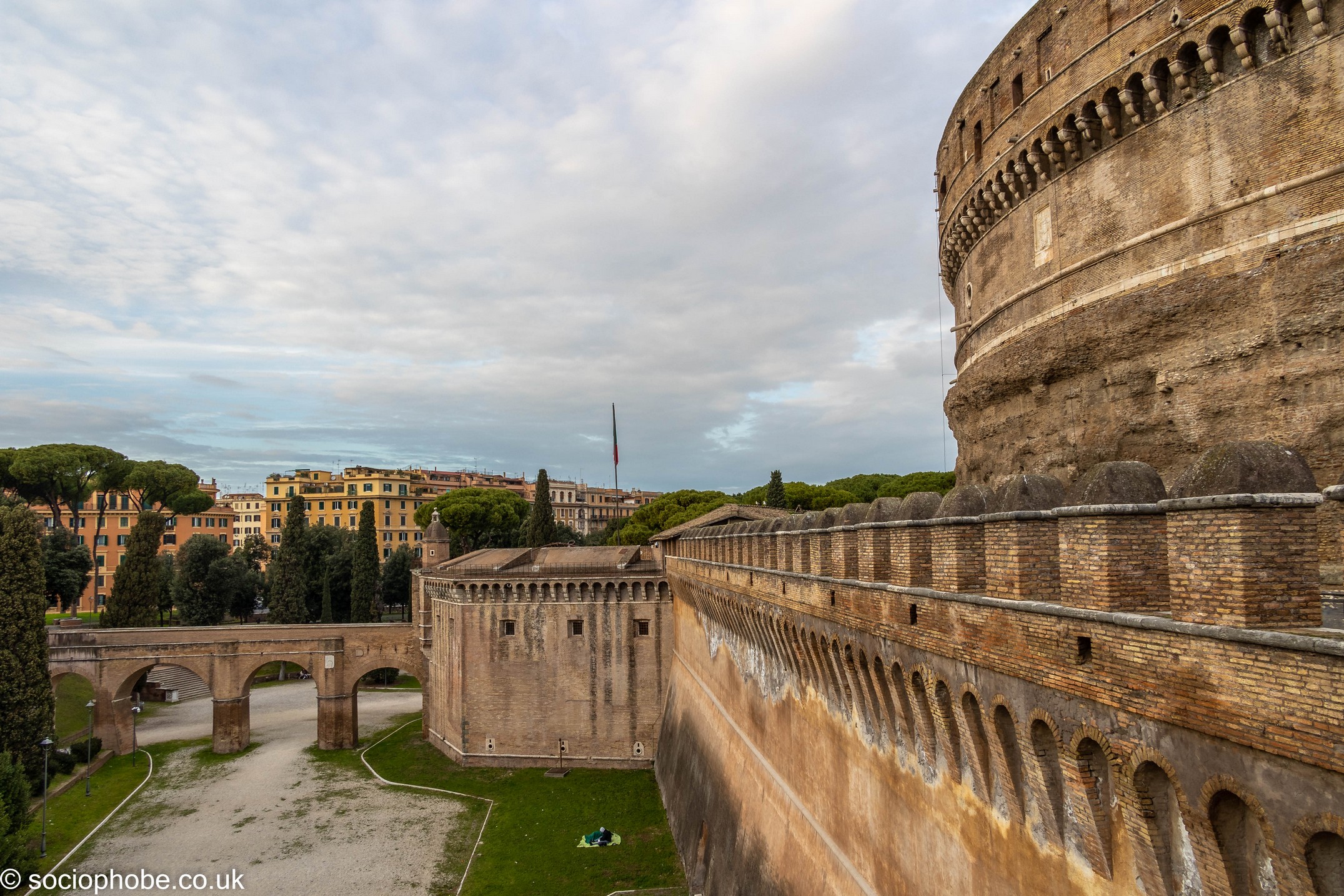
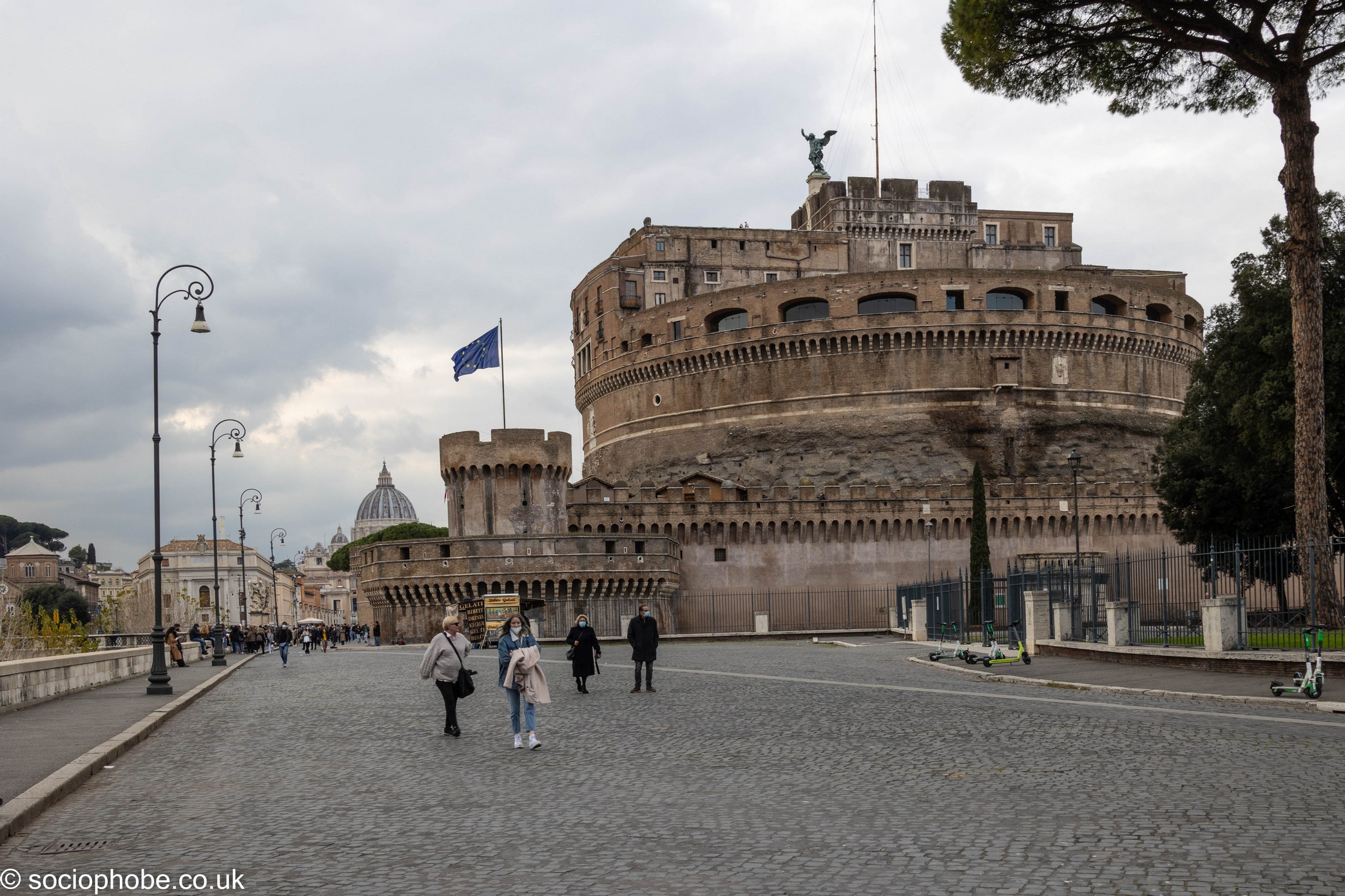
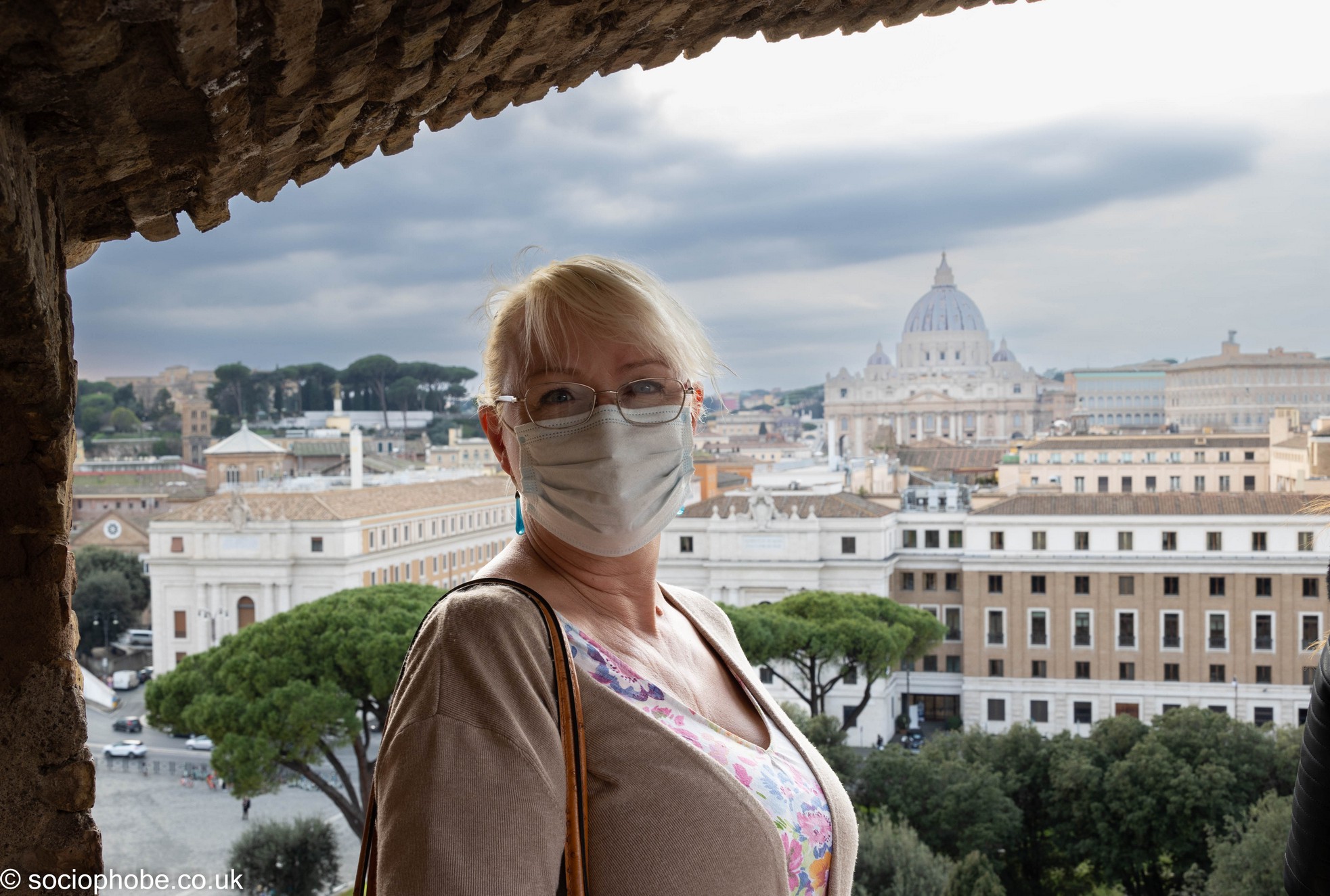
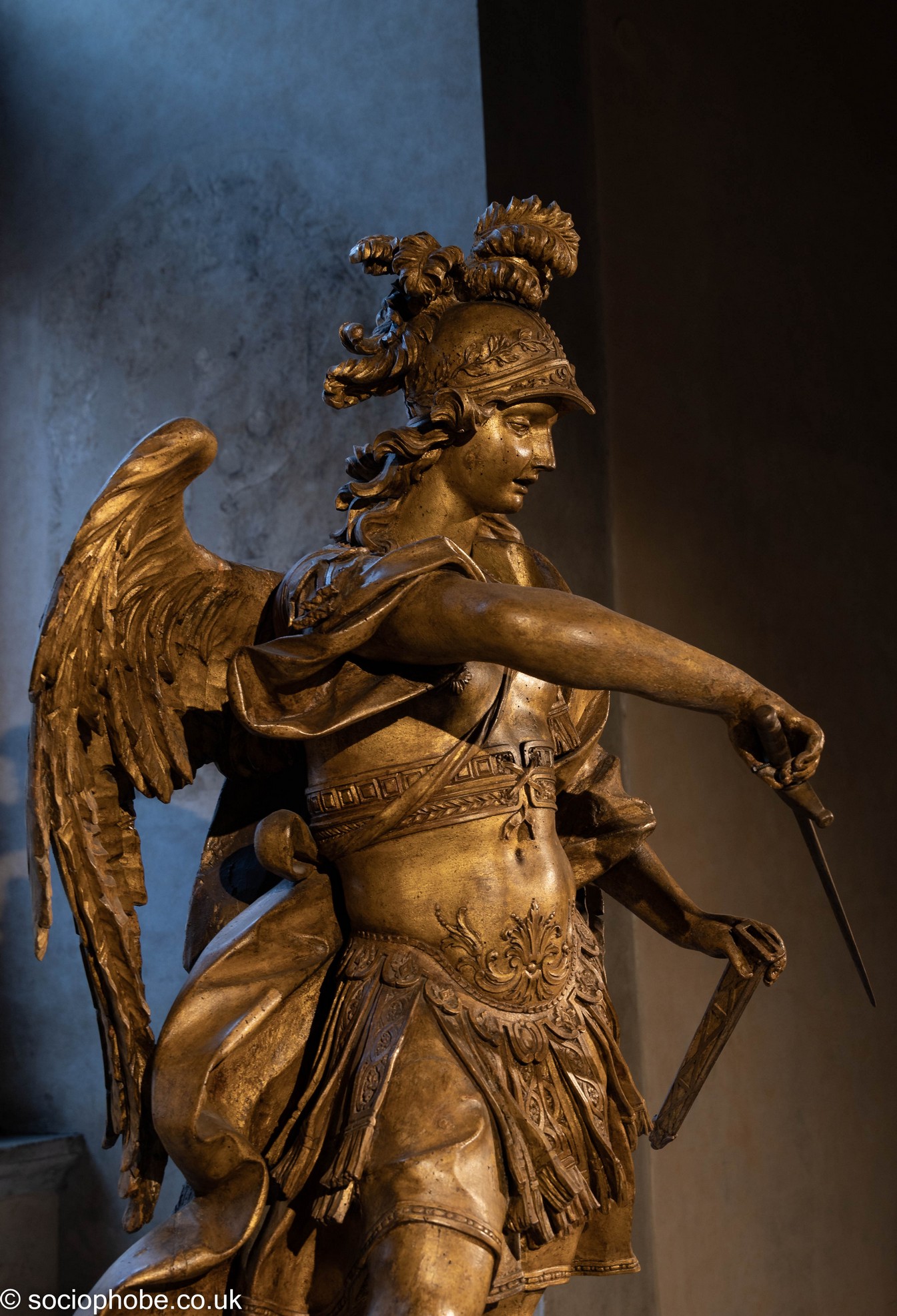
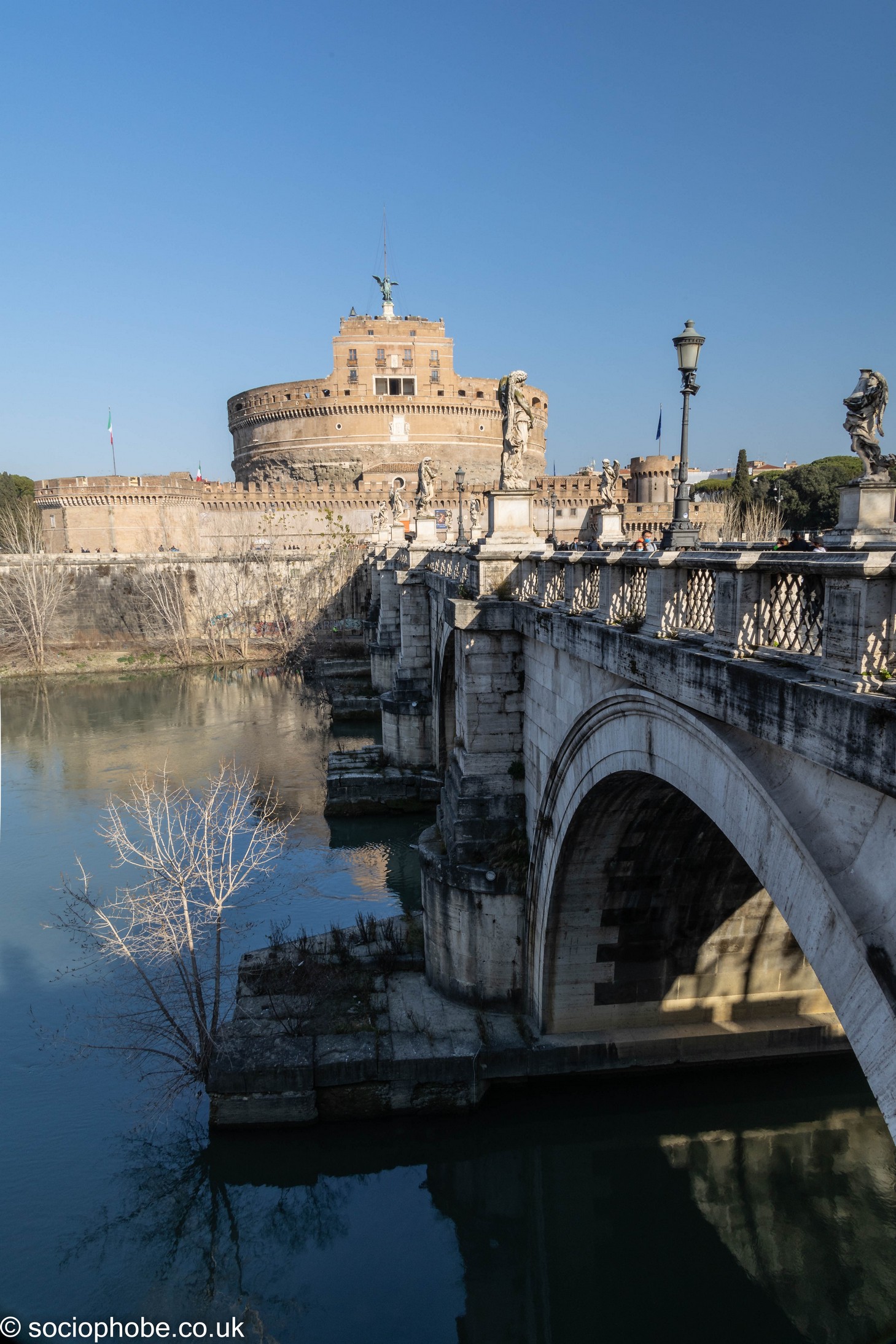
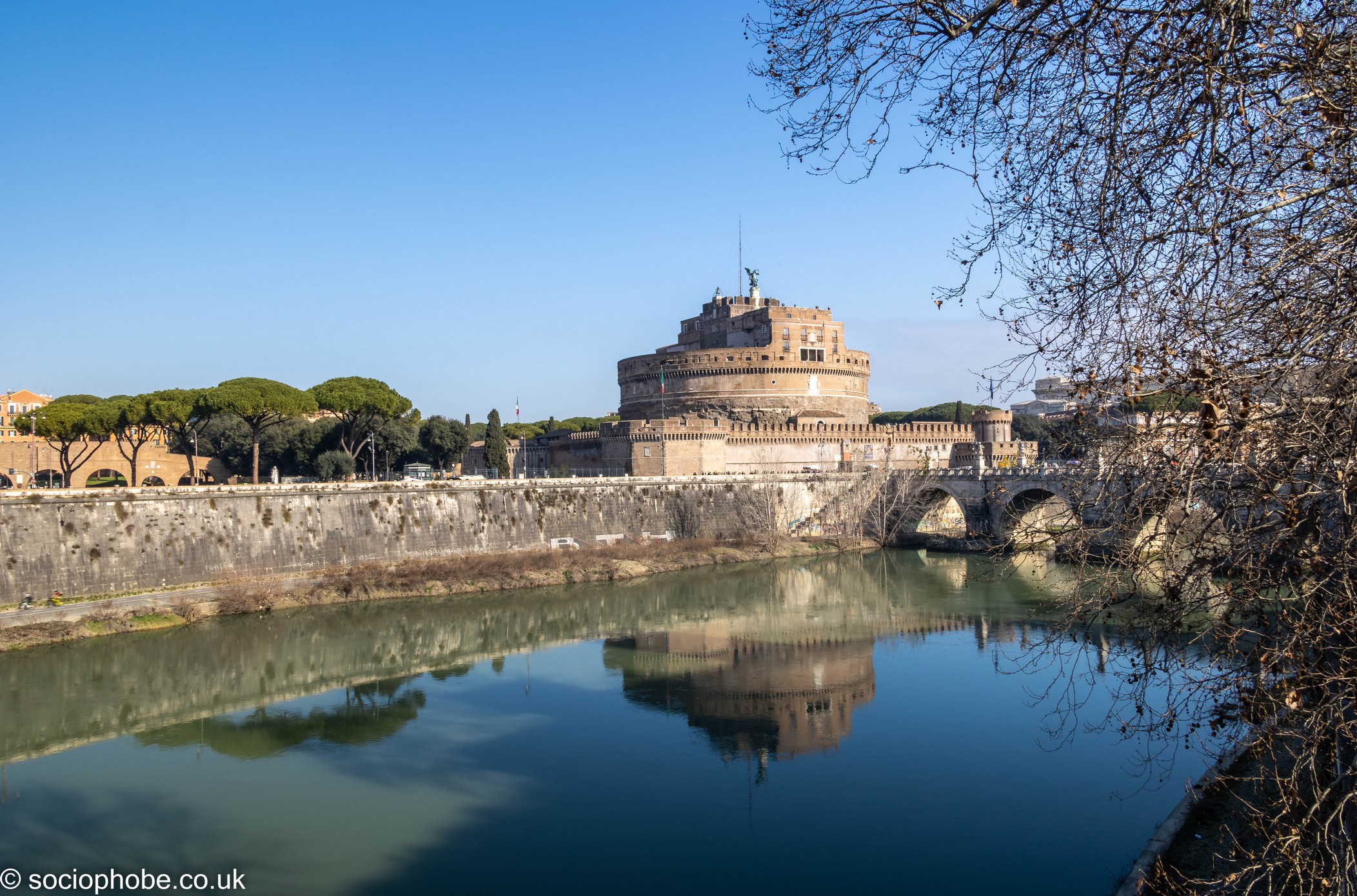
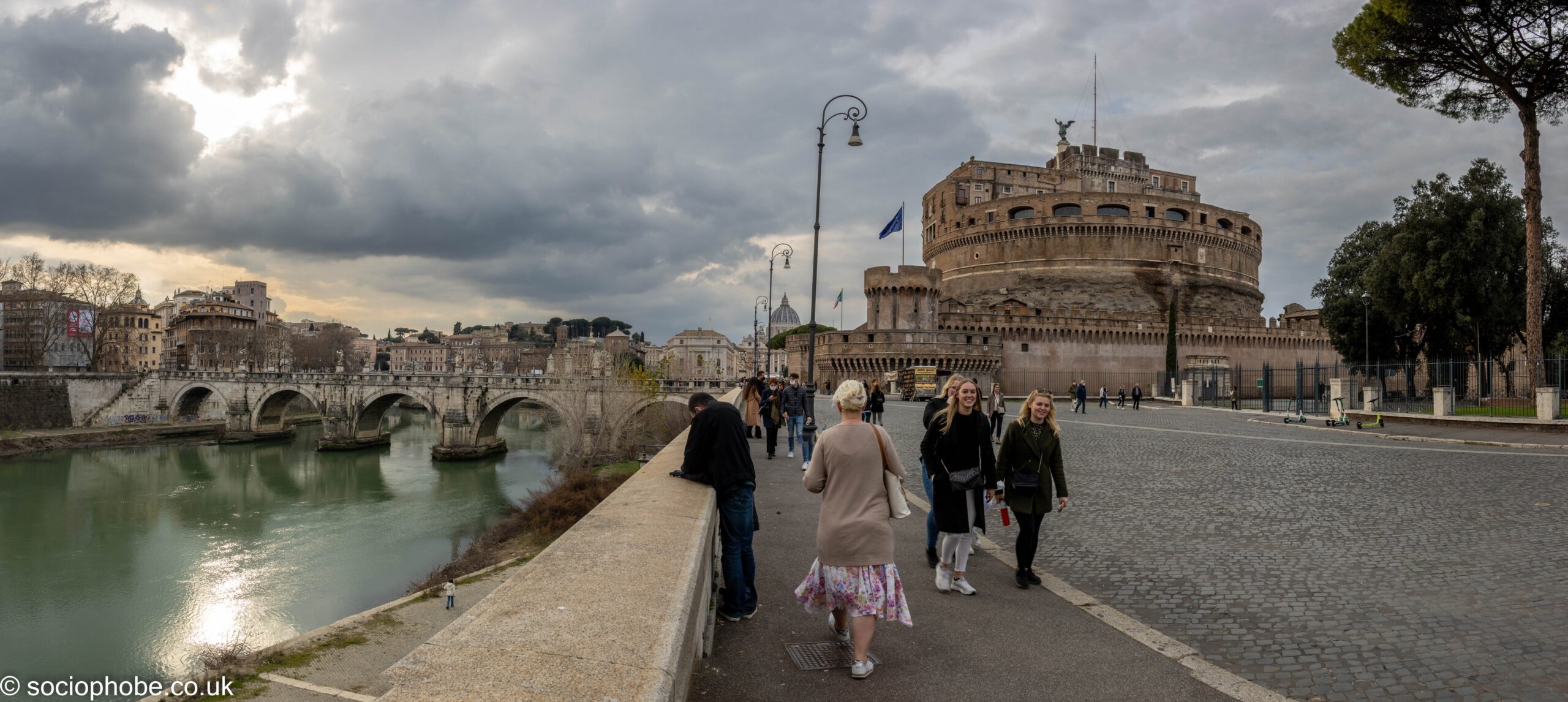
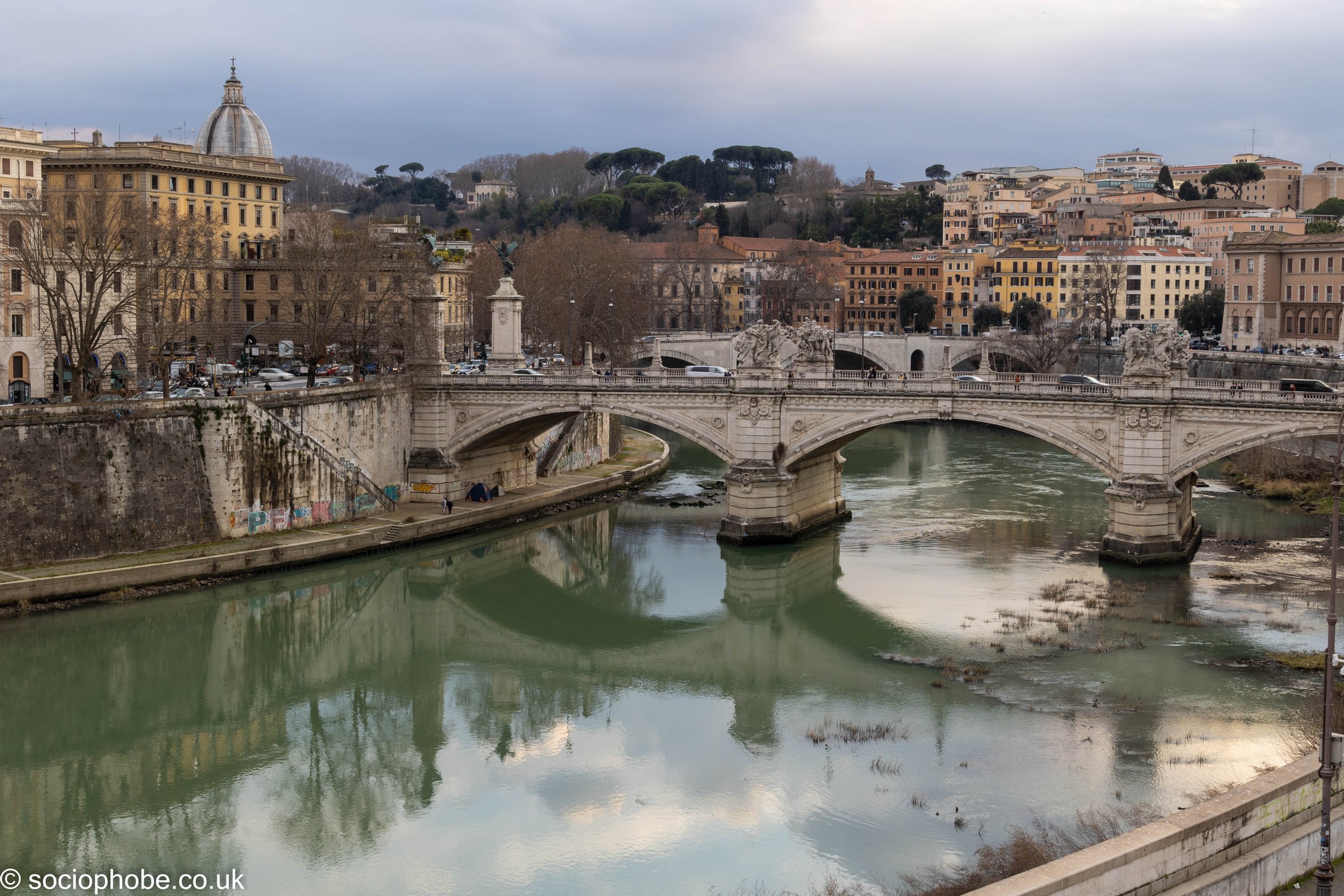
After that frustration we trudged all the way to Hadrian’s Mausoleum. This, as the name kinda implies, was built to house the remains of Emperor Hadrian and various other members of the Imperial families. It was then modified by the Papacy to act as a defensive bastion and a fortified passageway was built linking it to the Vatican.
Again we had vaccination and ID checks before paying €13 each and going in, starting the well laid out route. I was immediately irritated that almost every trace of Imperial Rome had gone – there were niches for statues but they were empty and there was nothing to indicate that the emperors had been interred. I’d have thought some replica statues, sarcophogi or information boards would have helped but maybe the info was on an audio tour or guided tour that we didn’t do.
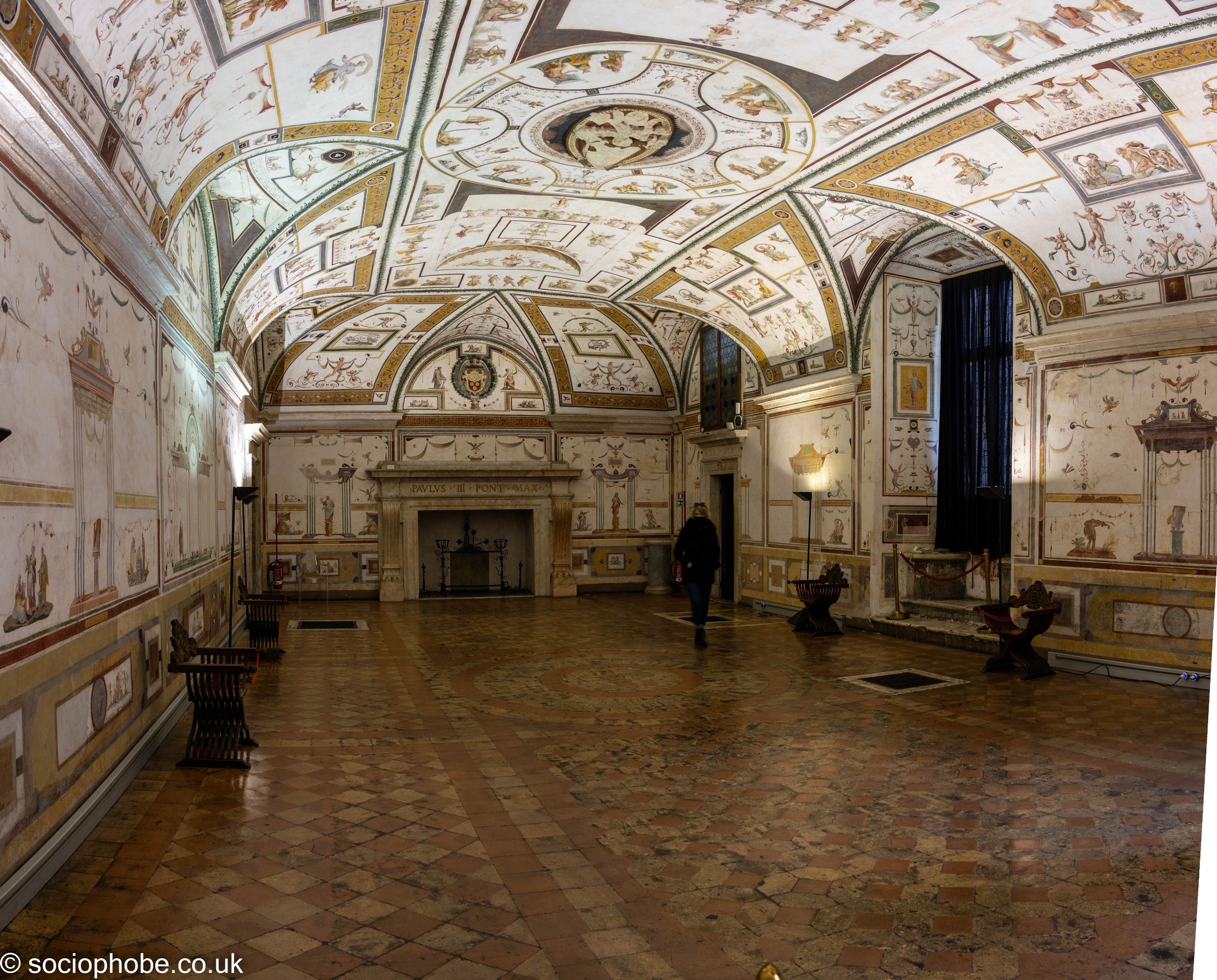
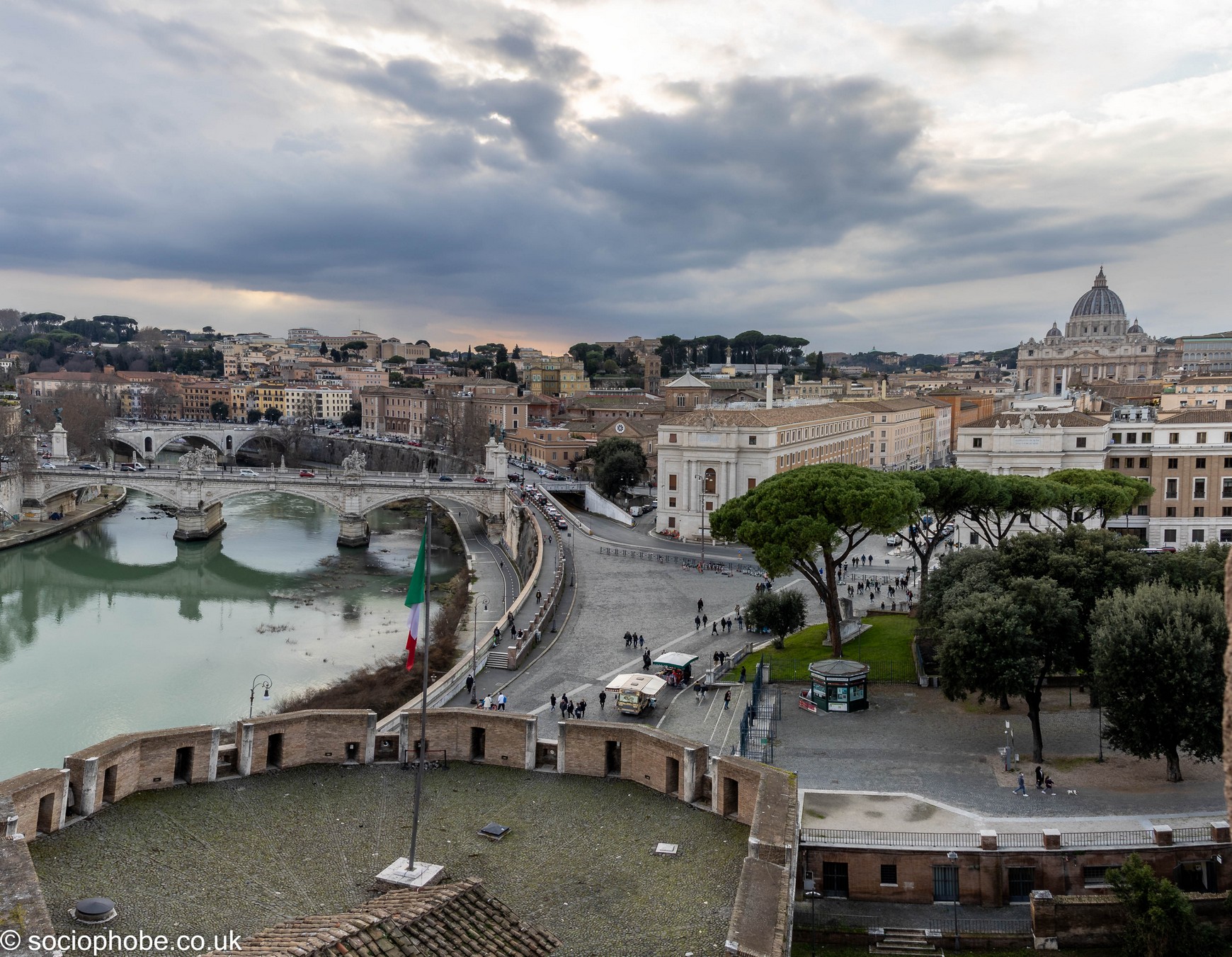
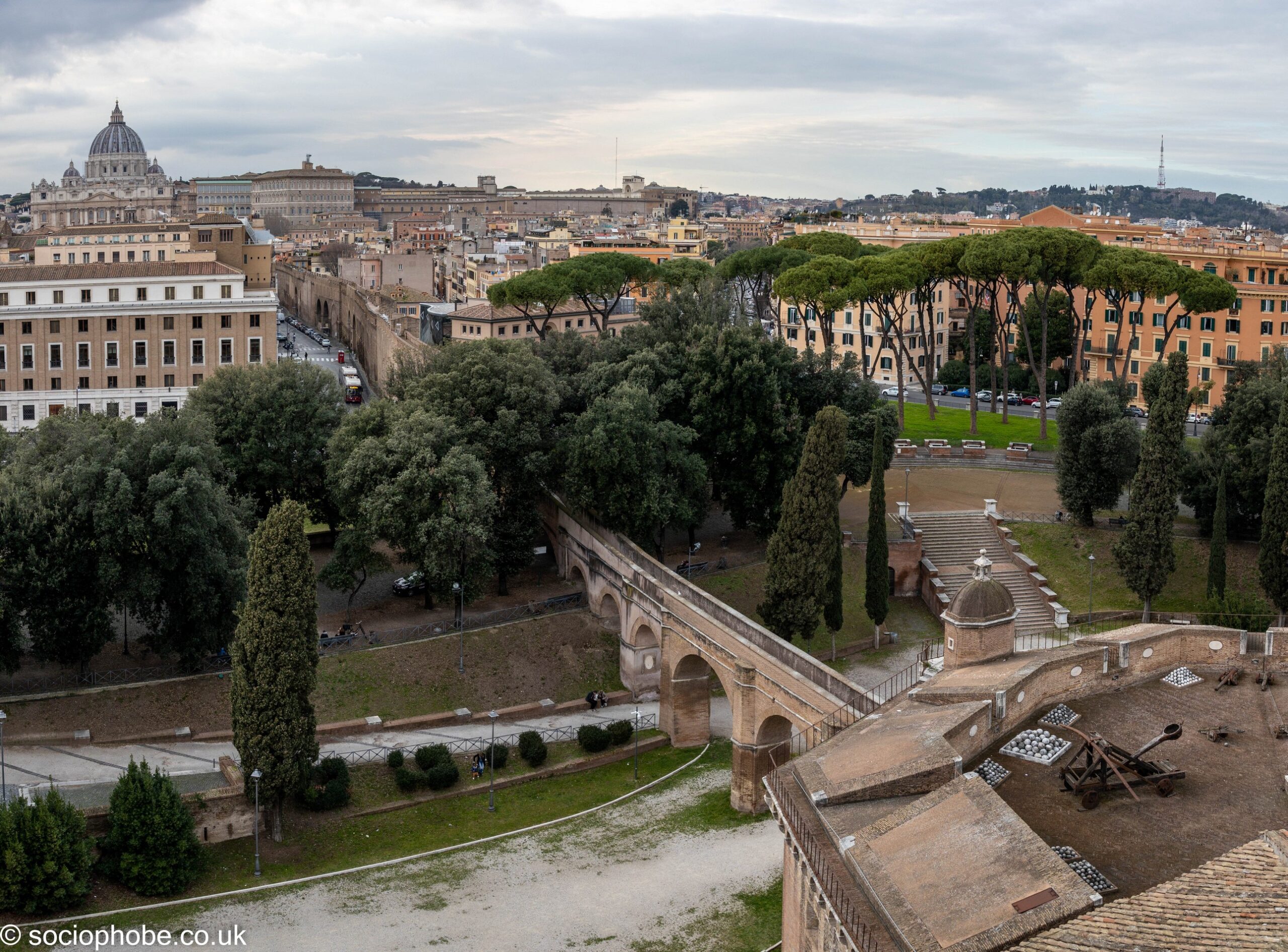
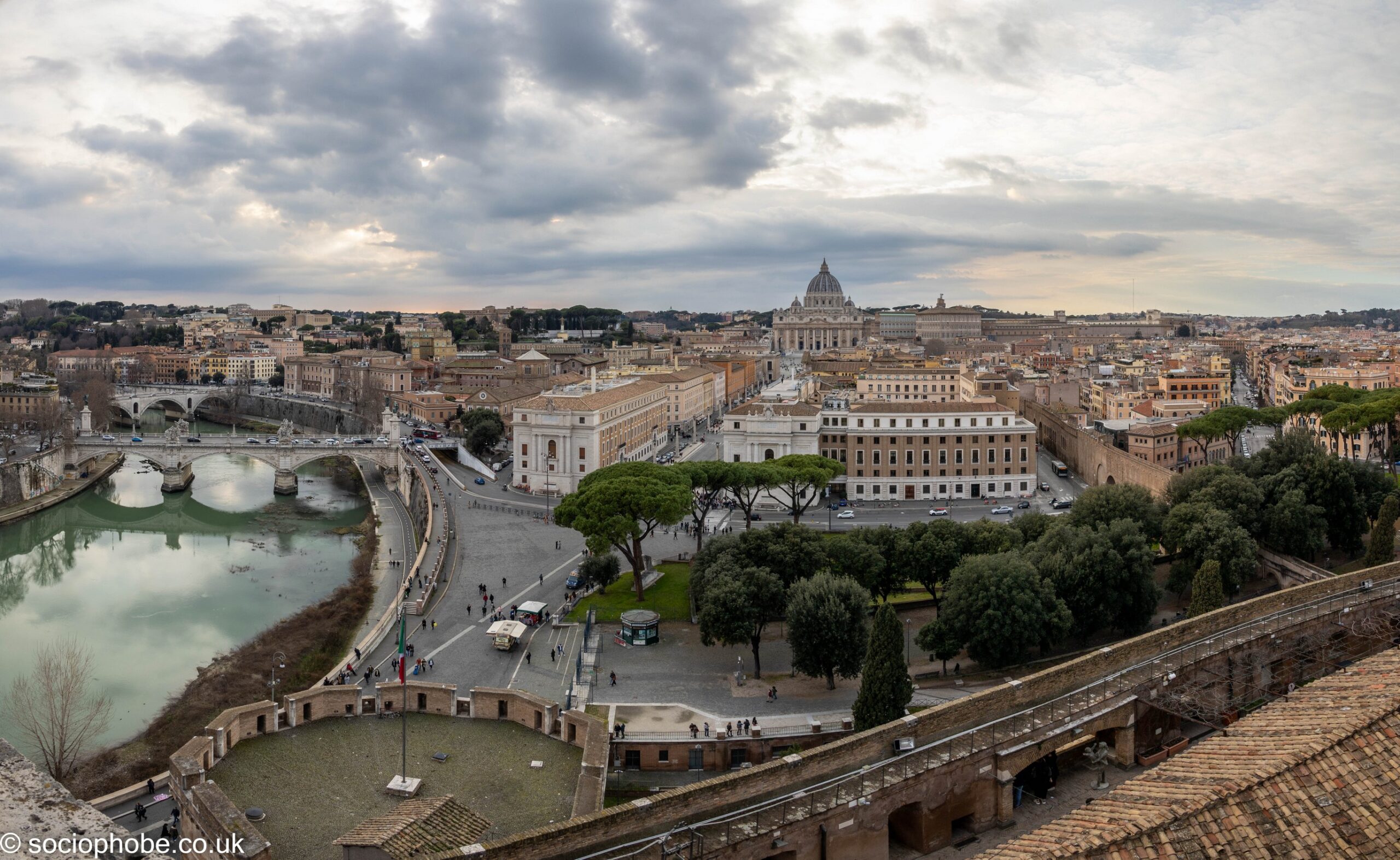
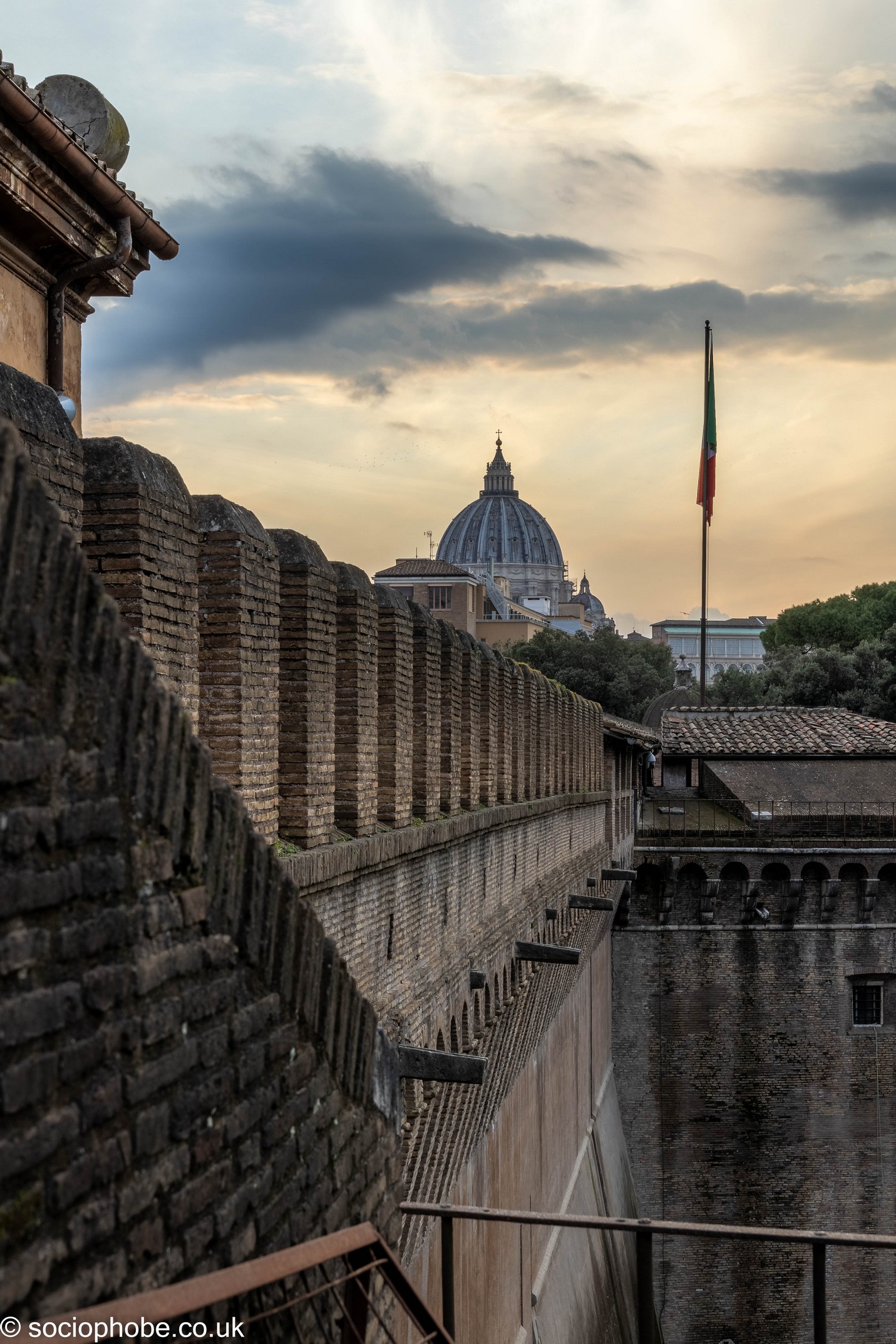
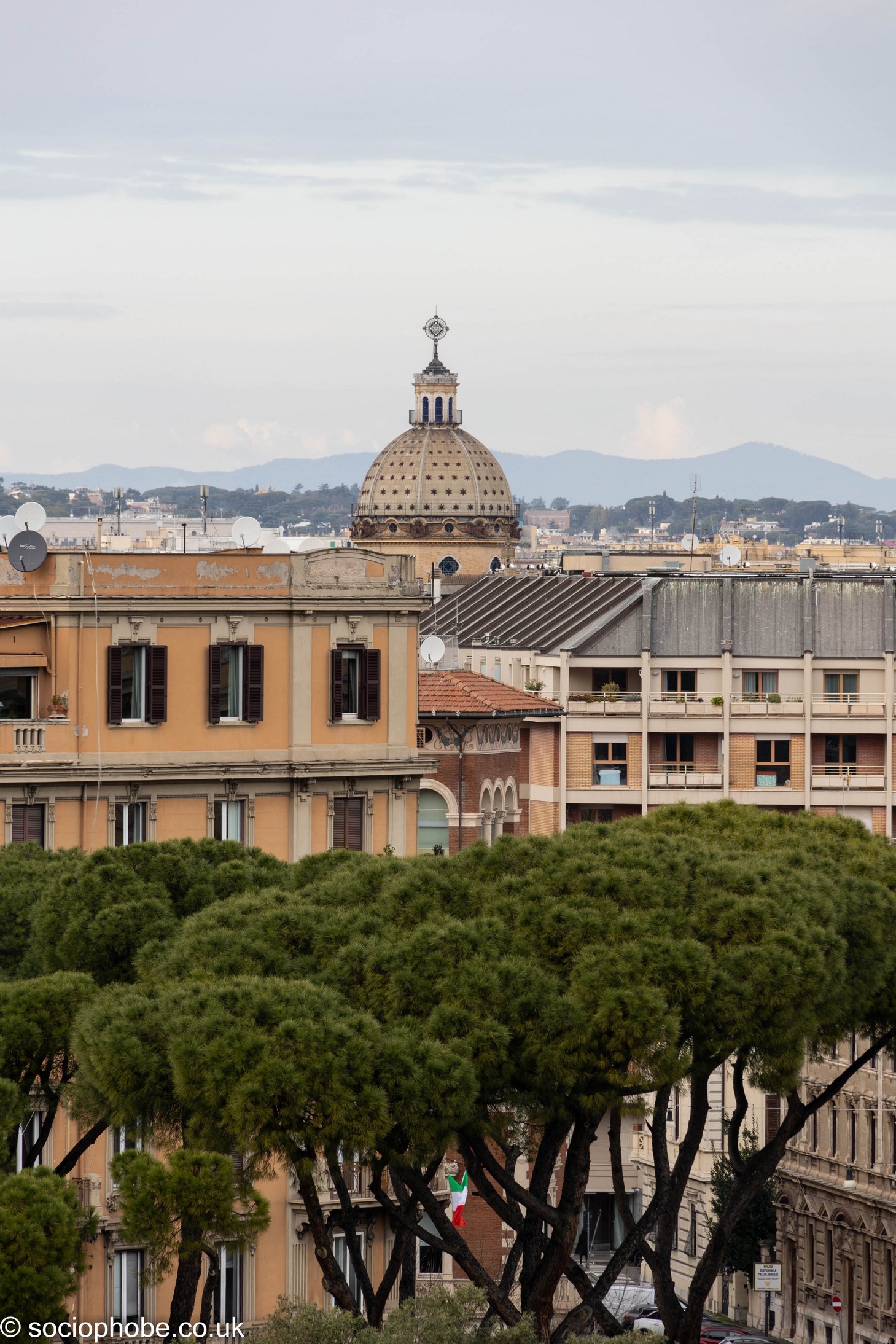
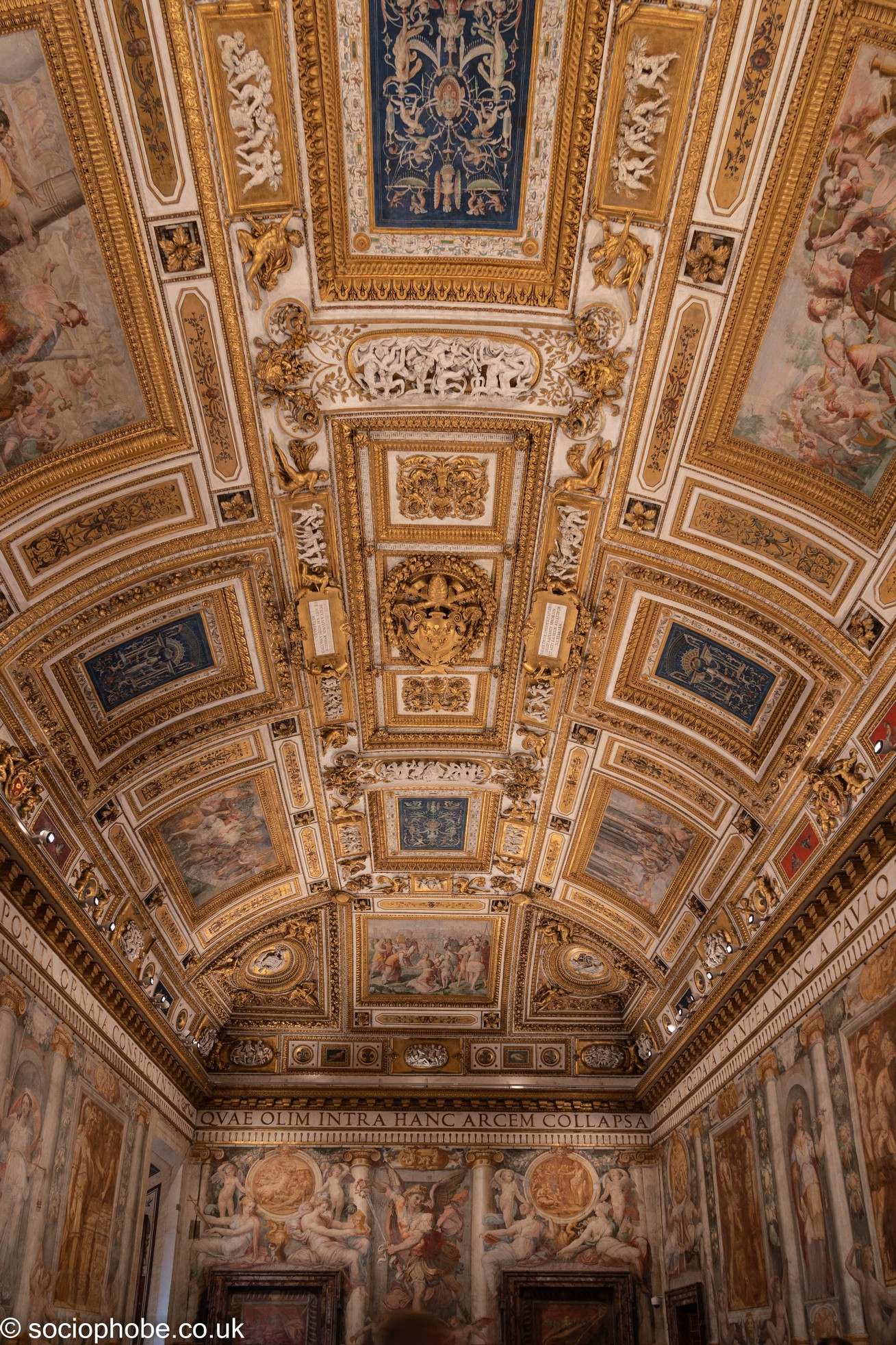
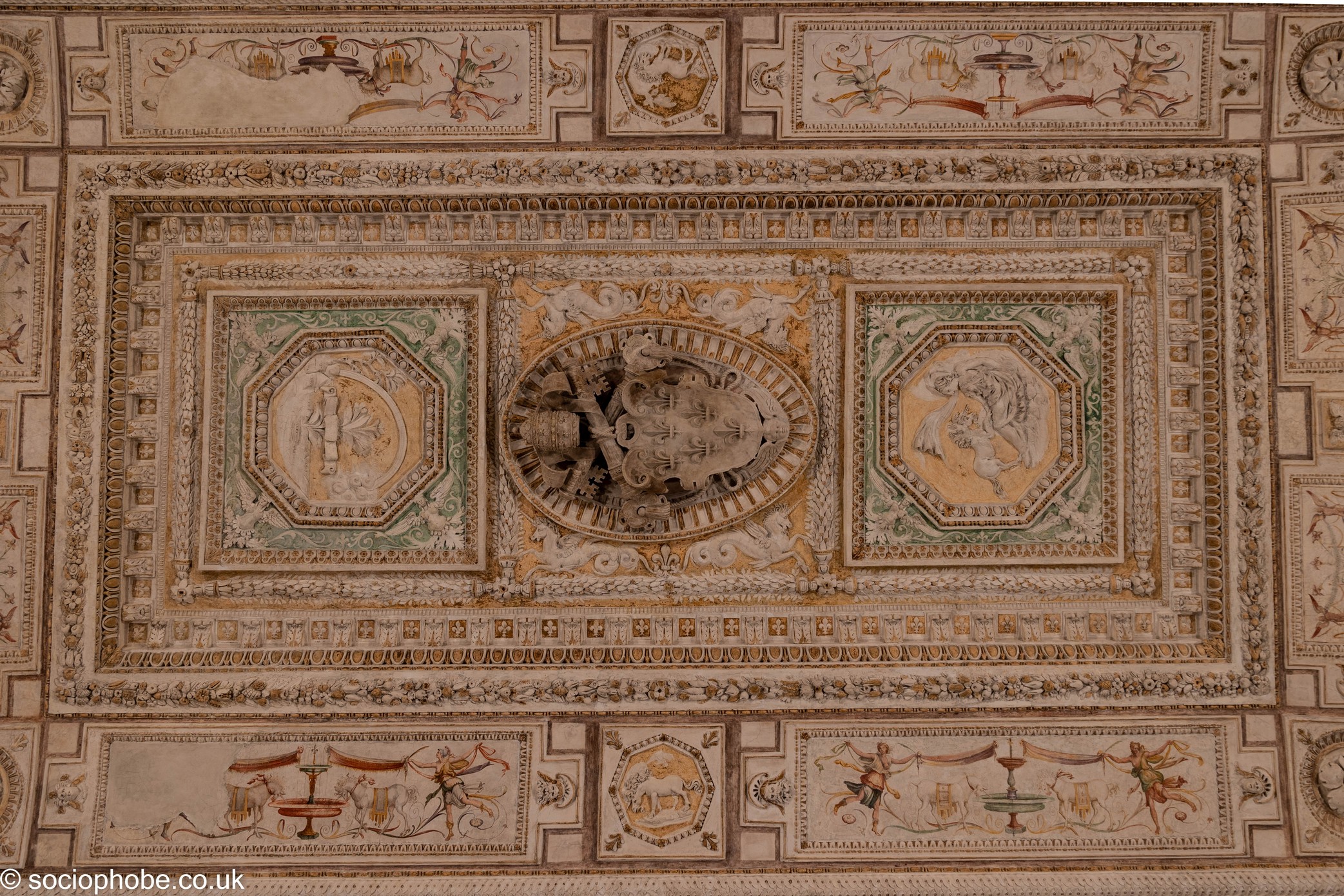
We probably spent a couple of hours in the building, including a coffee break on the roof terrace. There were several ornately decorated rooms but nothing was a patch on Palazzo Farnese but the views from the various levels of battlements were the real winners. It also gave a sense of scale of the defences as they were pretty impressive. This was certainly a highlight of our city break and a must see for visitors to Rome.
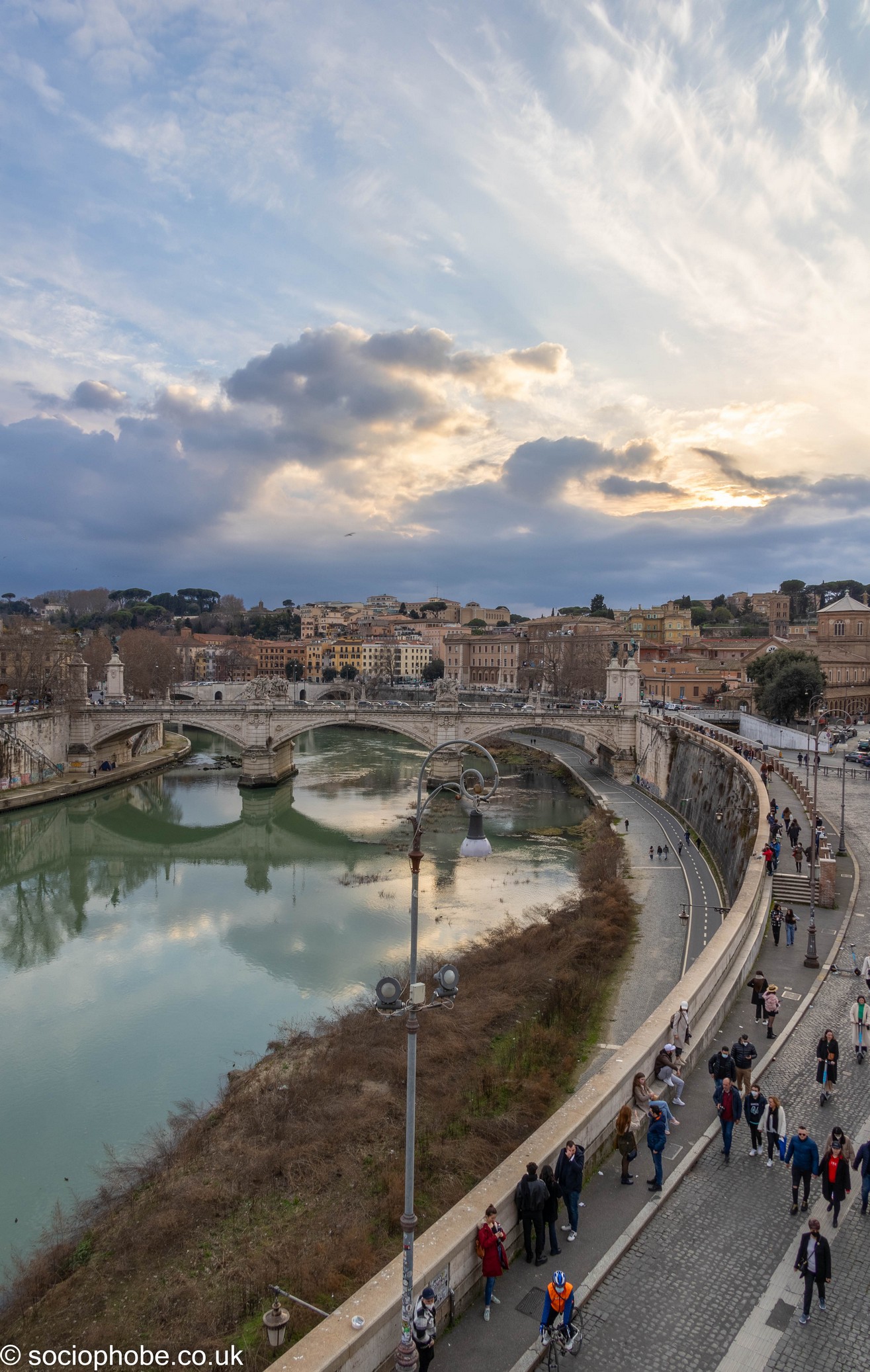
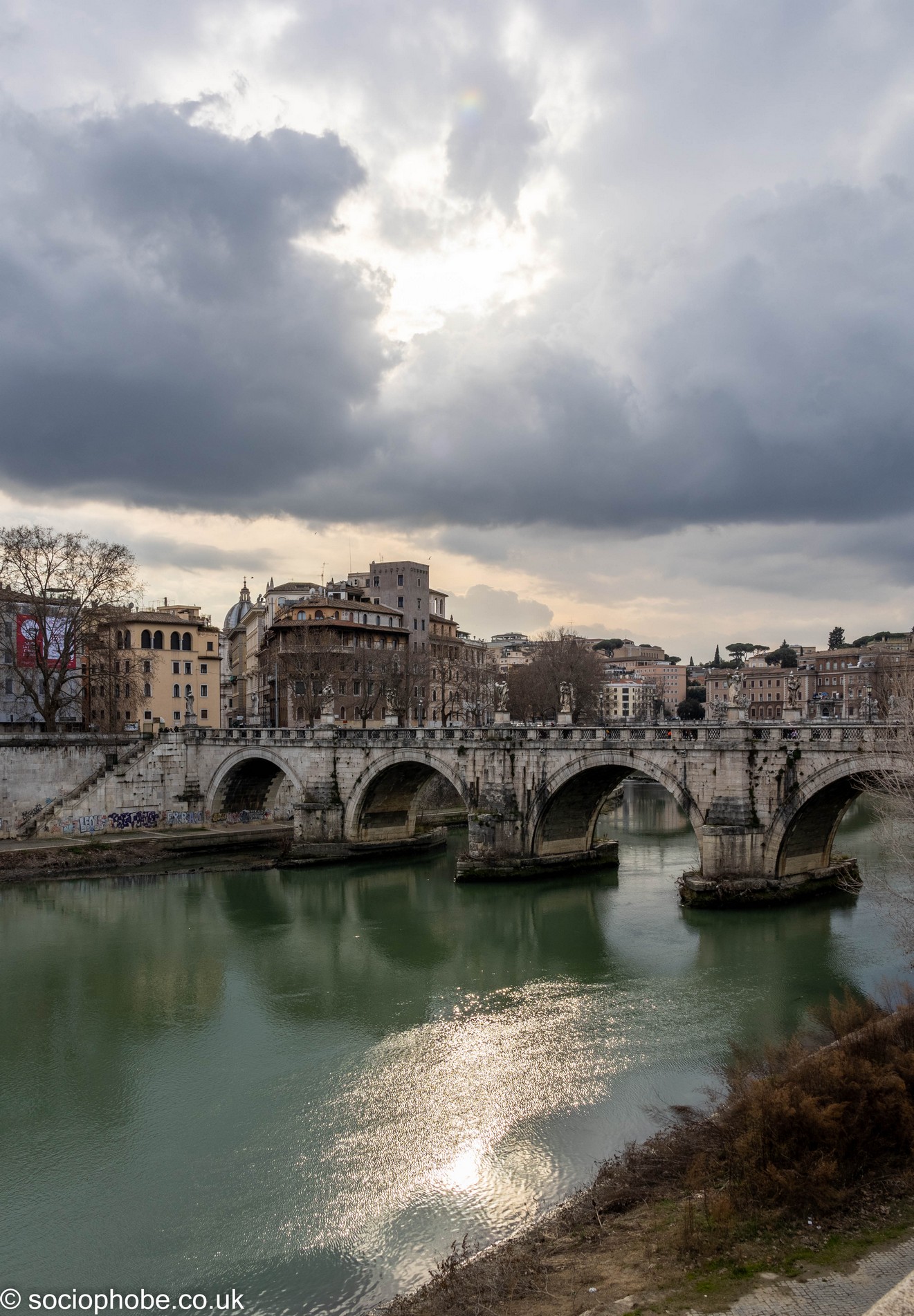
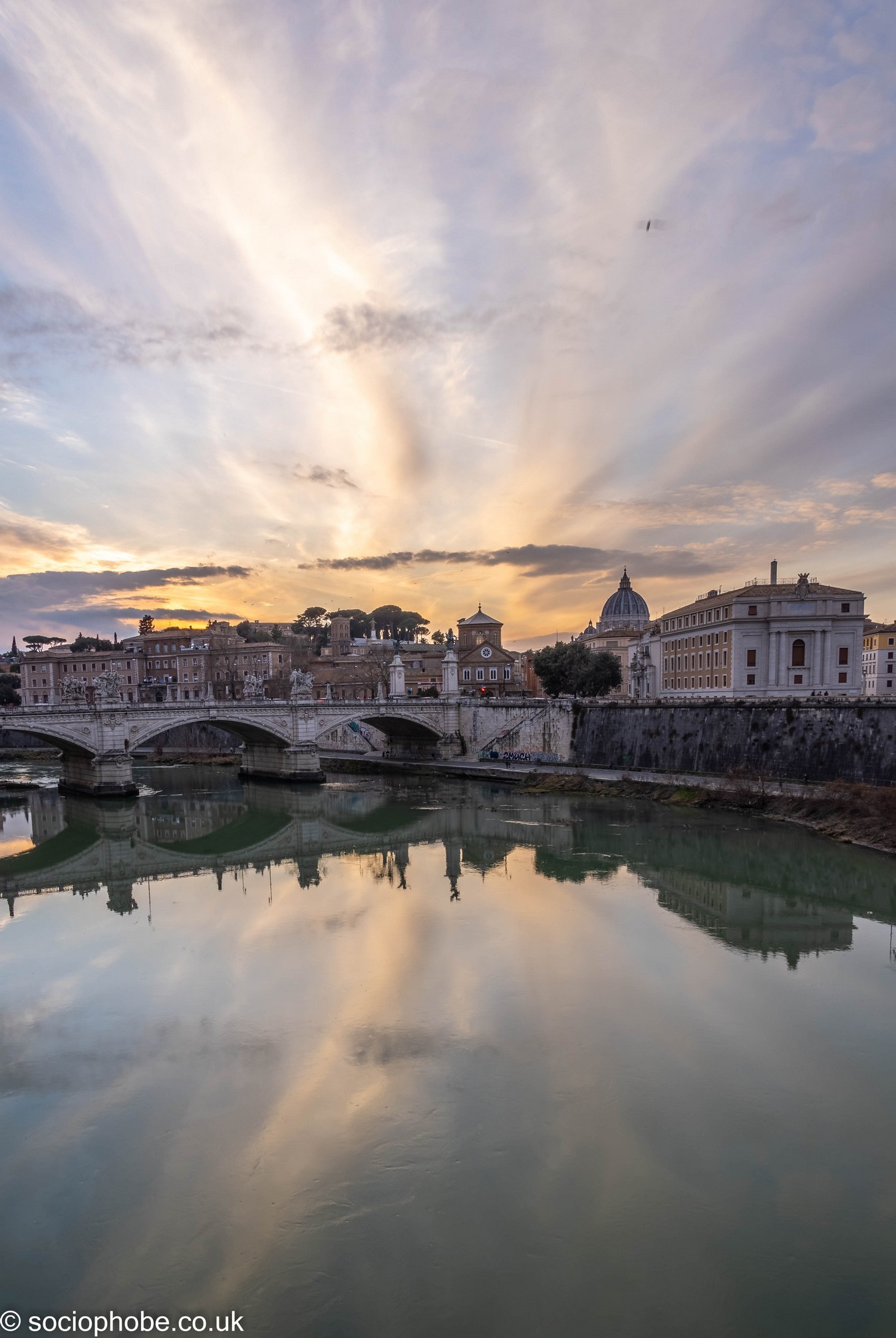
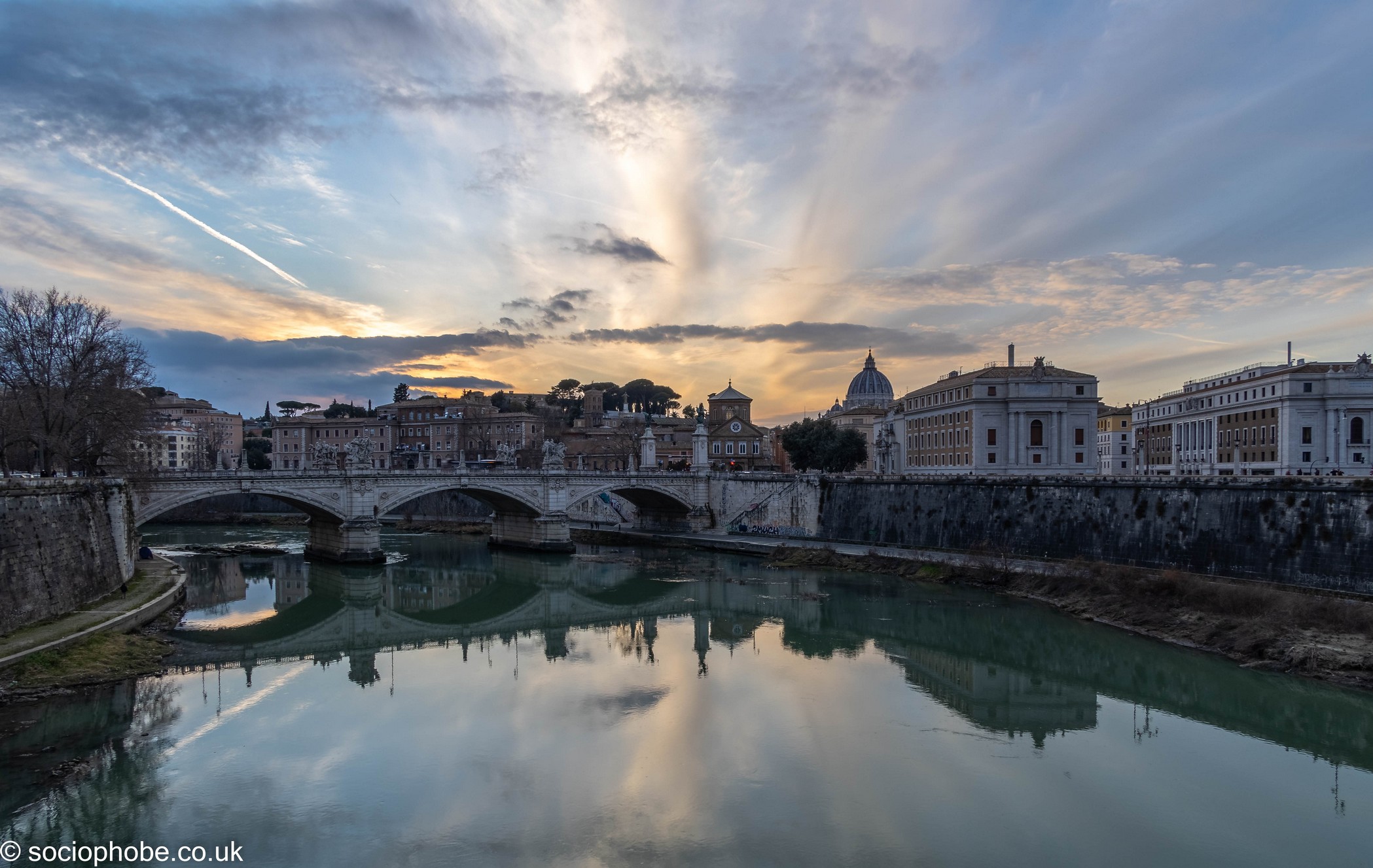
I was tempted to watch the sunset but Deb was getting chilly so we left and had a quick walk on the riverside before the very long walk to the hotel, arriving around 7PM. We’d walked nearly 20k and it took nearly 3 hours to sort photos etc but we achieved a lot so that was good.
Sunday
Traditionally Sunday is a day of rest but this doesn’t apply if you’re on holiday with stuff to see! Deb was up just after 7 so we could be showered and at breakfast for 8 and then ready to start our full day walking around Rome. The weather was amazingly good, blue skies and warm – so warm in fact I had to buy a cap as my winter beanie I’d bought with me was too hot! We had booked tickets for the Pantheon but the earliest we could go was 12:30 so I had to try and work a route out that would fit that in.
Trevi Fountain
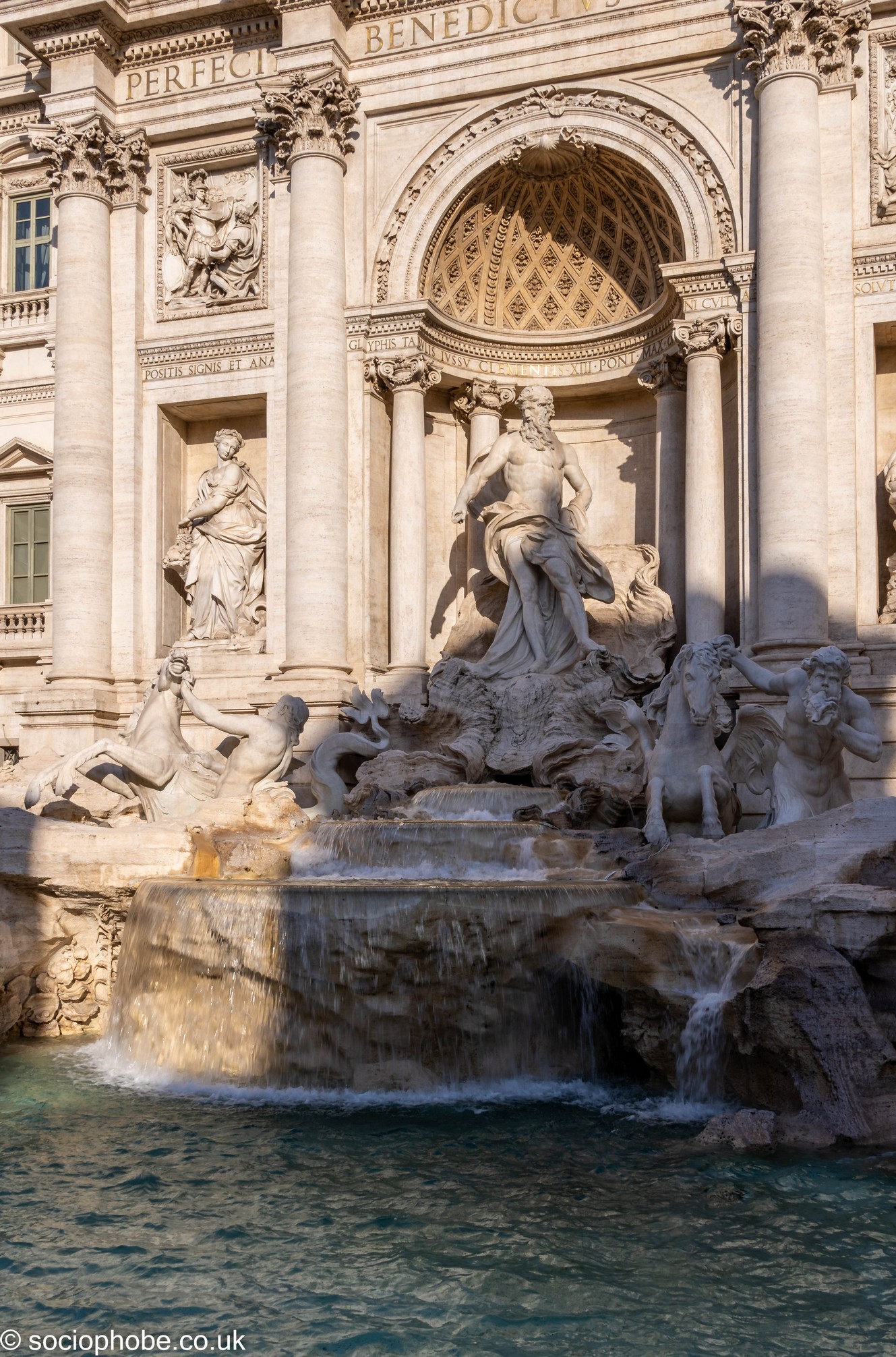
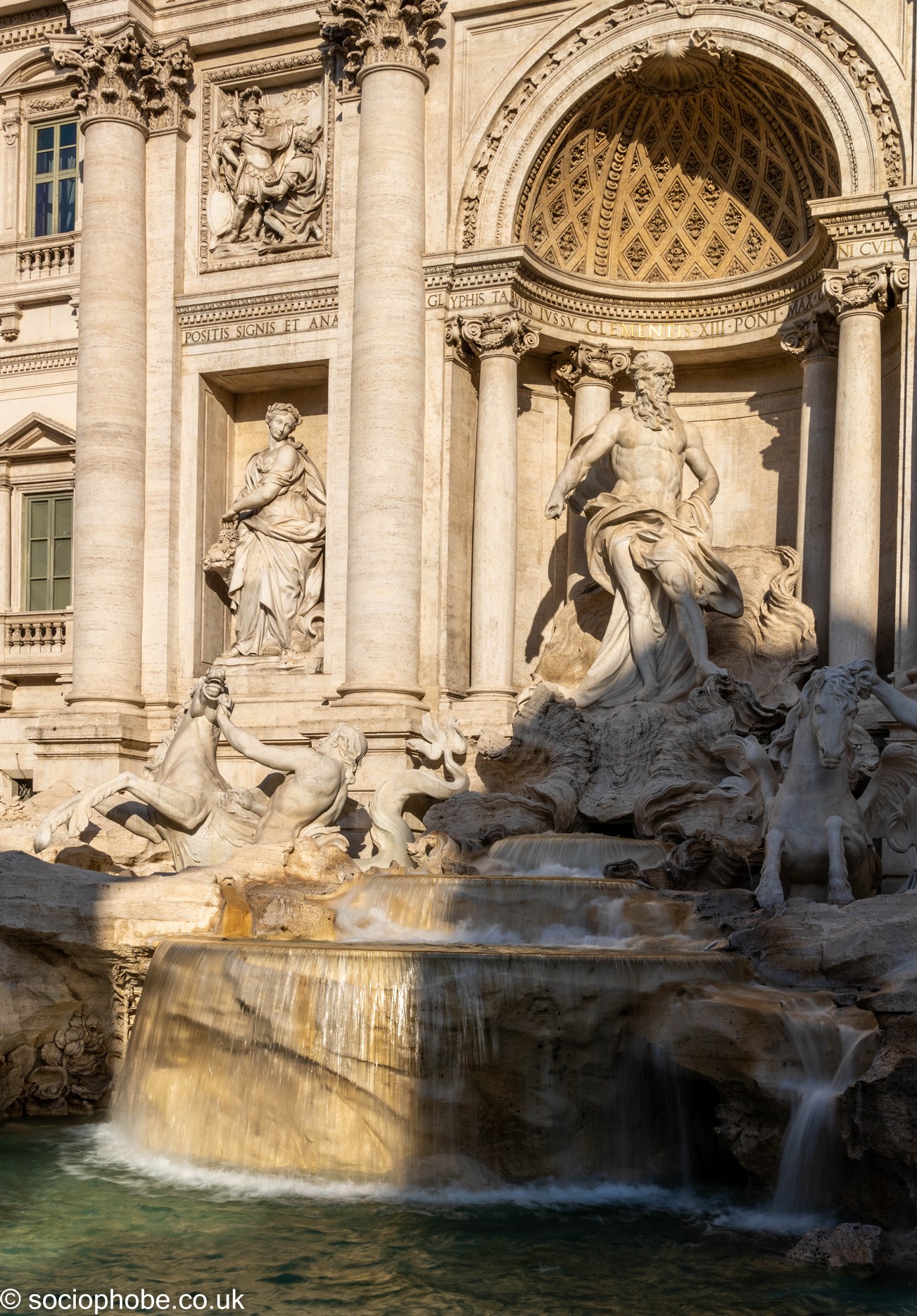
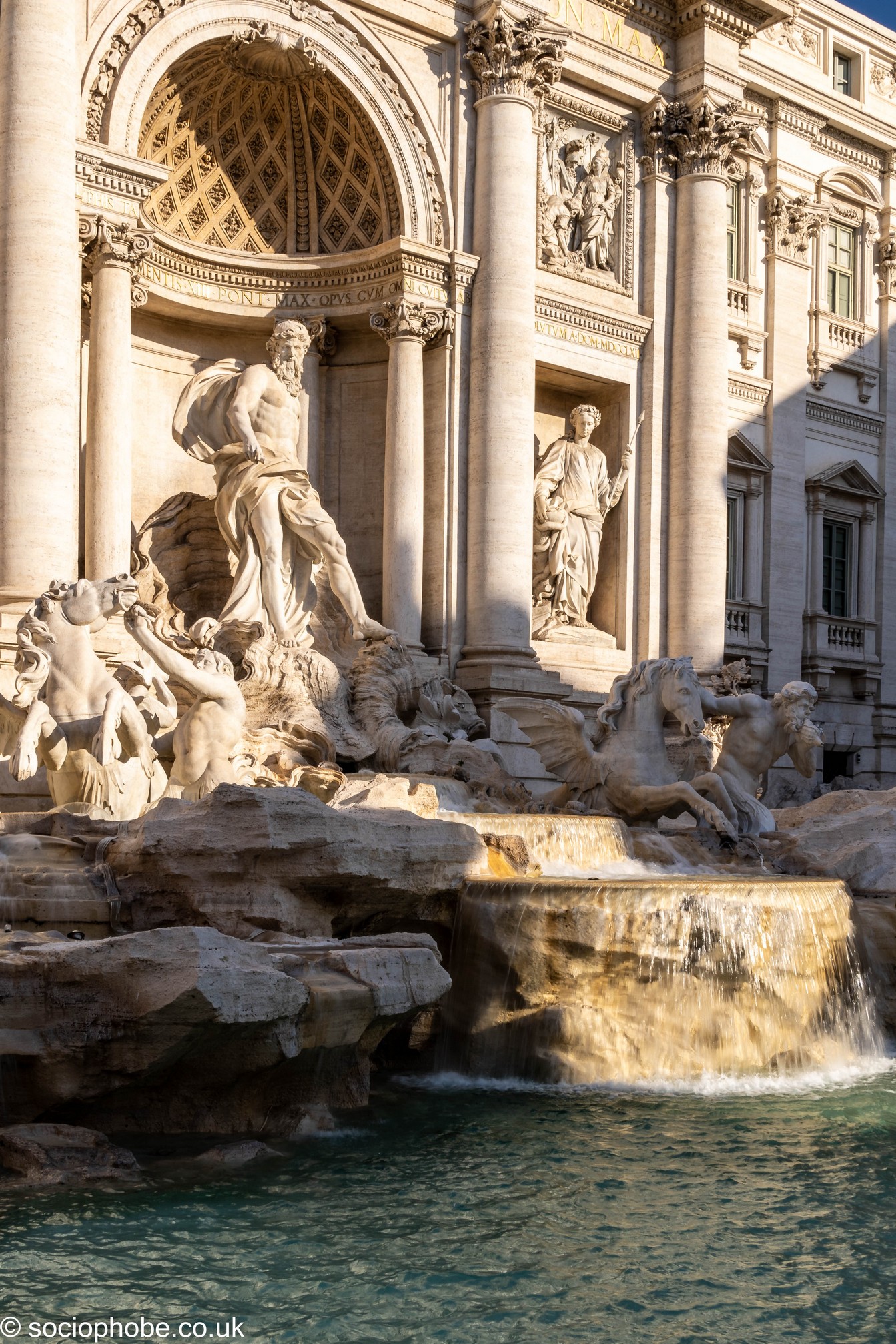
We arrived at the Trevi Fountain at 9 to find we were not alone! It wasn’t crowded but it certainly wasn’t easy to get a shot without people in it. The fountain is in a small square and surrounded by tall buildings so half of it was in shadow and half in bright sunlight. It was lovely though and while we were there an Irish guy proposed to his fiance so Deb was all teary!
Marcus Aurelius’ Column
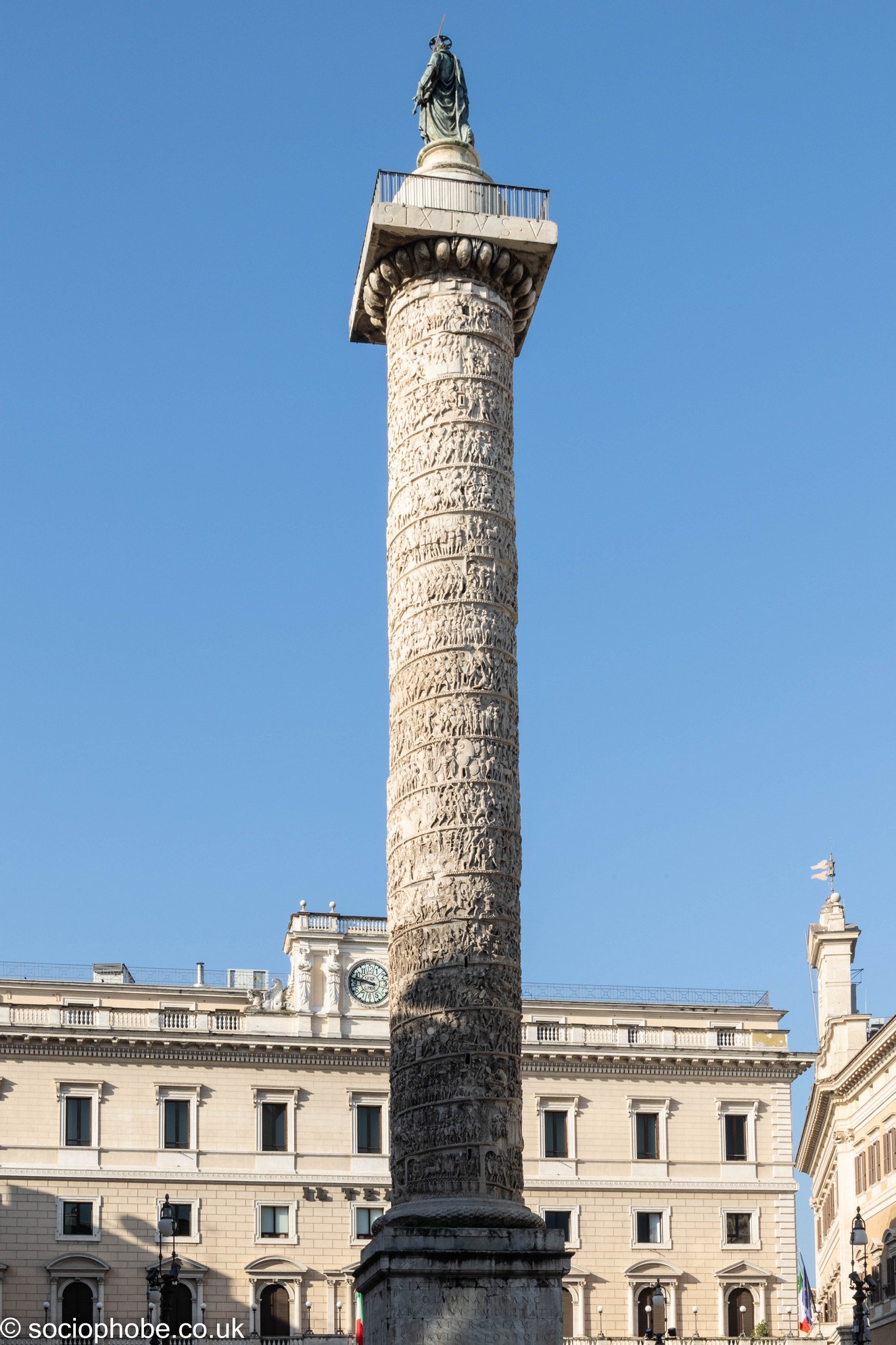
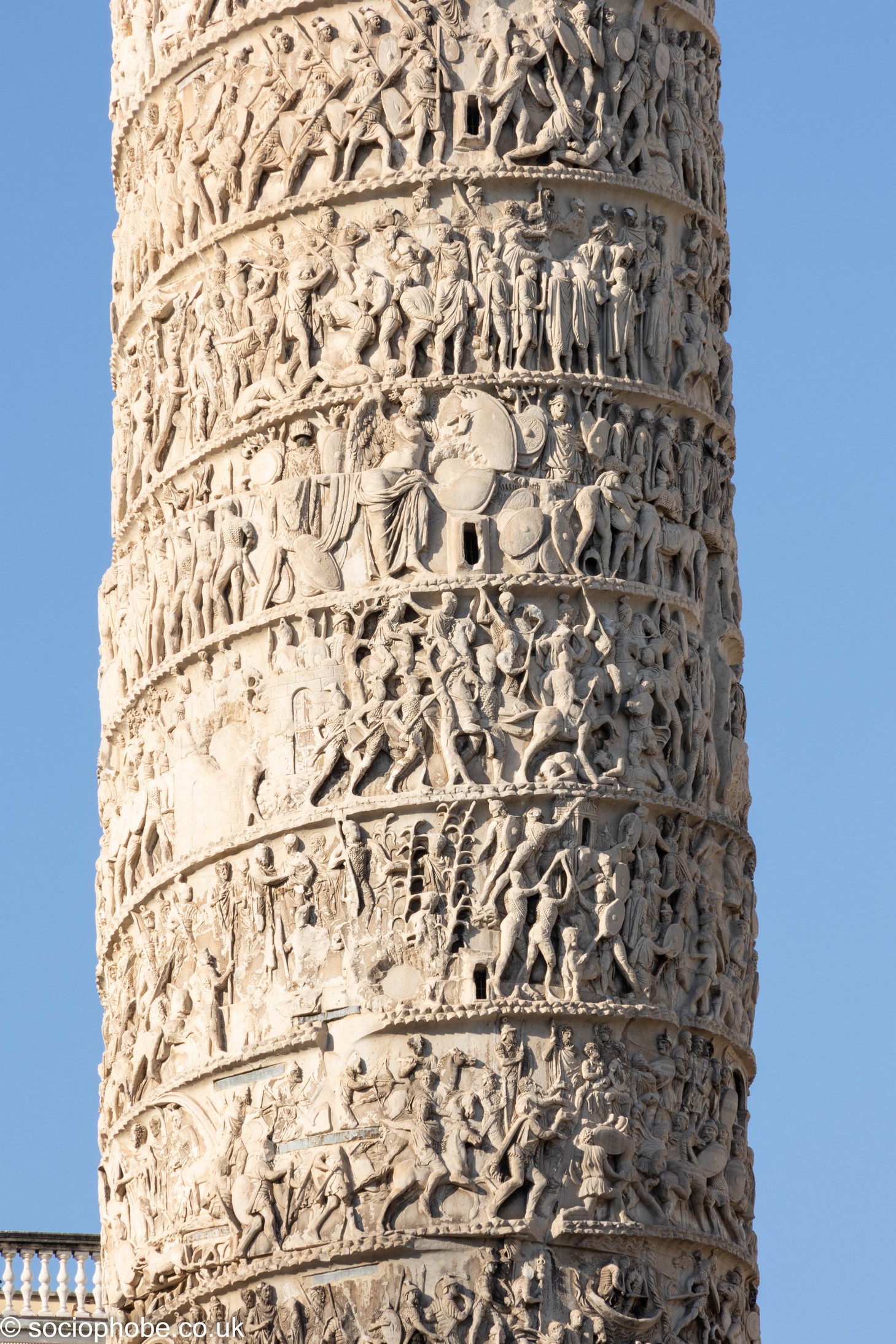
Our next stop was a short walk away – Marcus Aurelius’s Column – in a cordoned off square. This was another amazingly detailed column that the emperors used to celebrate a particular campaign and they are now useful to historians to see what the Roman military and it’s enemies looked like in a particular time period. The square had a military guard so I’m not sure what else was there.
Temple of Hadrian
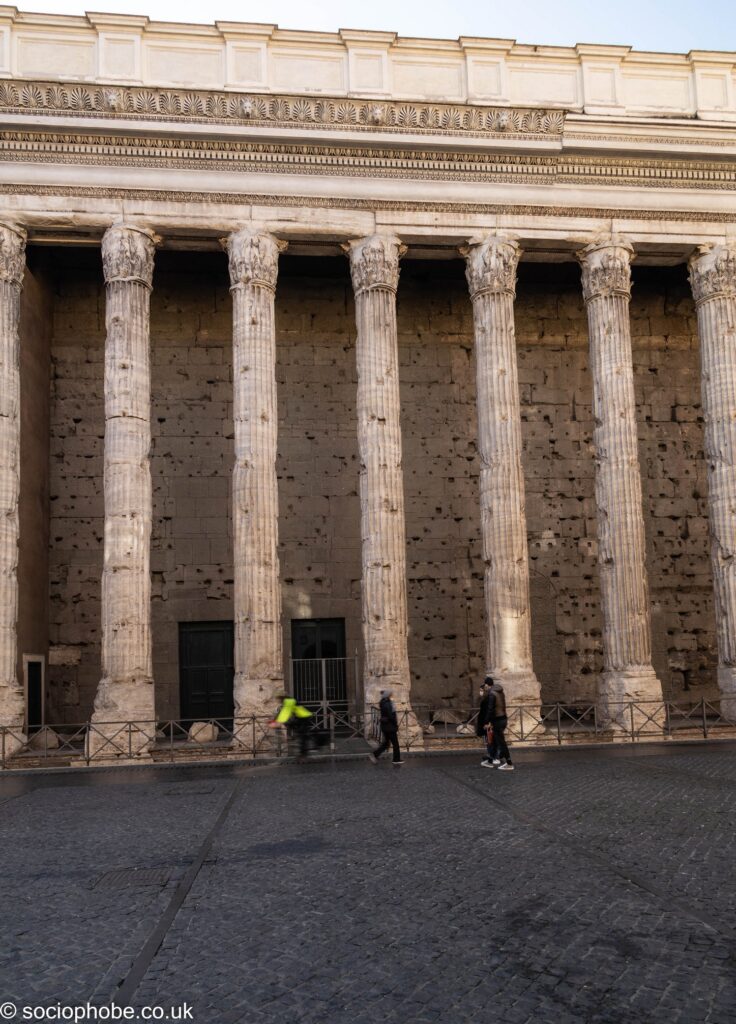
Hadrian’s Temple was another short walk and this is really just a facade now to the Roman Chamber of Commerce. The line of columns are certainly large though, dwarfing the height of most other Roman structures and giving a sense of the scale of Imperial buildings at the height of the Empire. Like so much else the marble has been stripped away and just the stone remains.
St Peter’s (briefly)
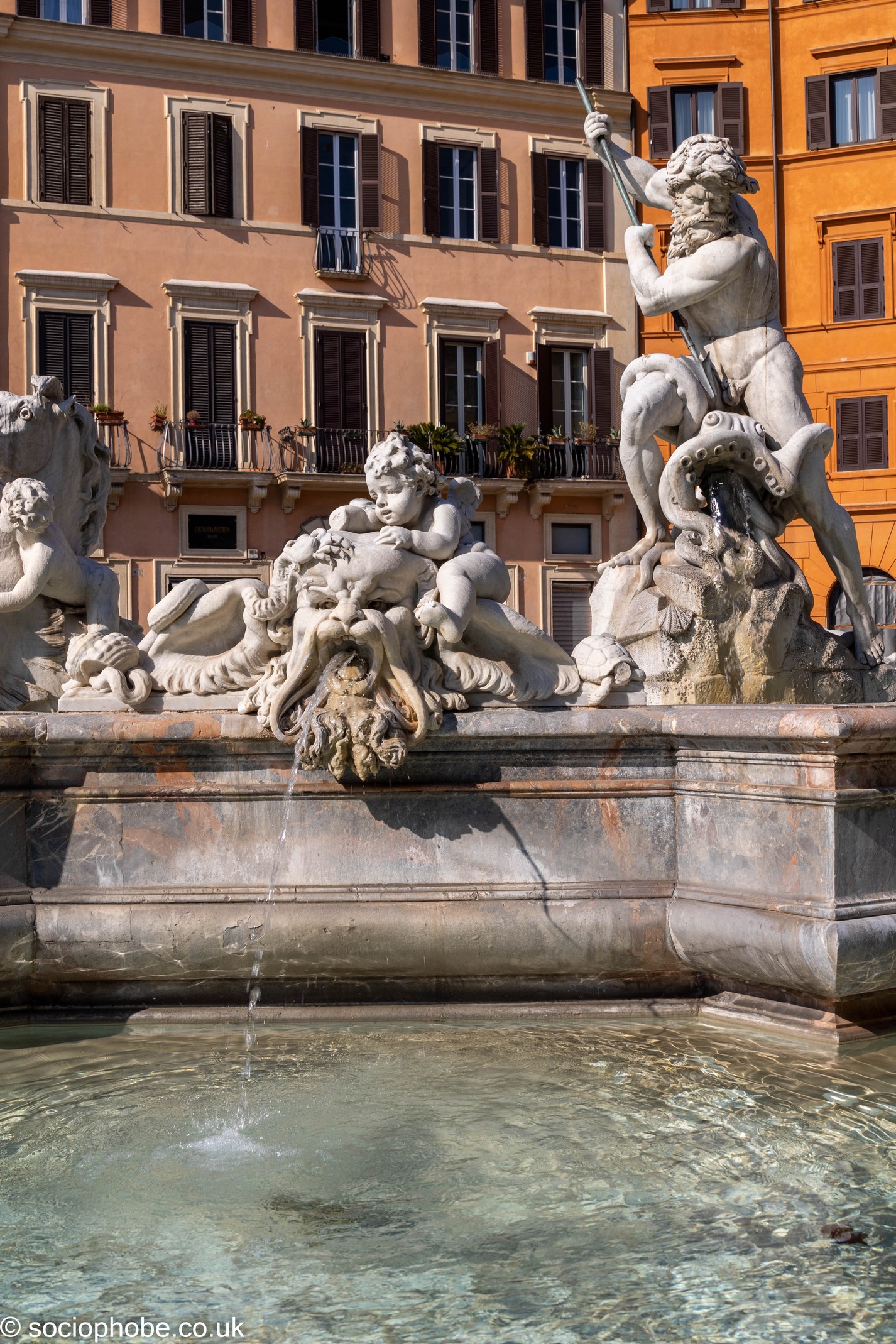
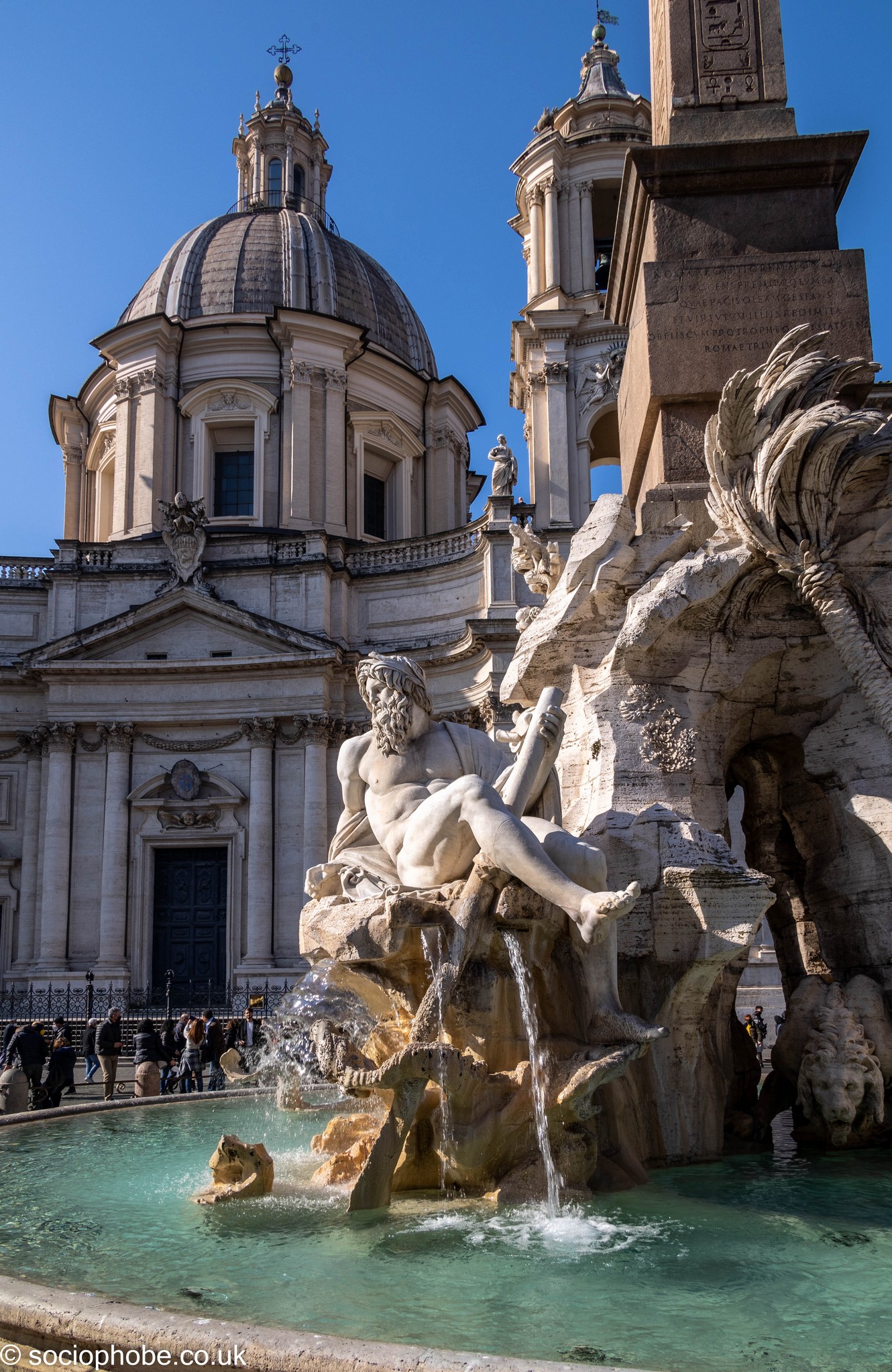
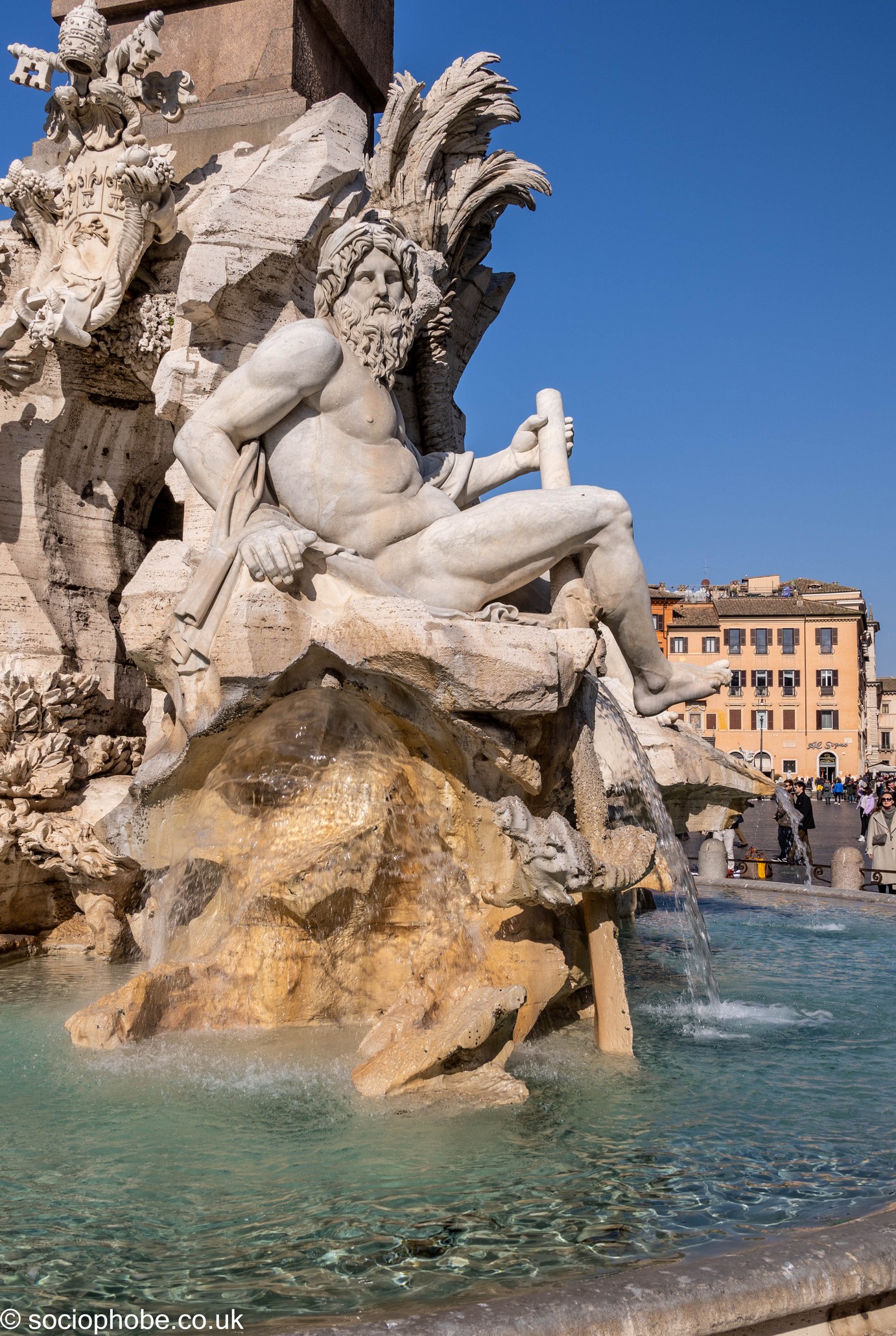
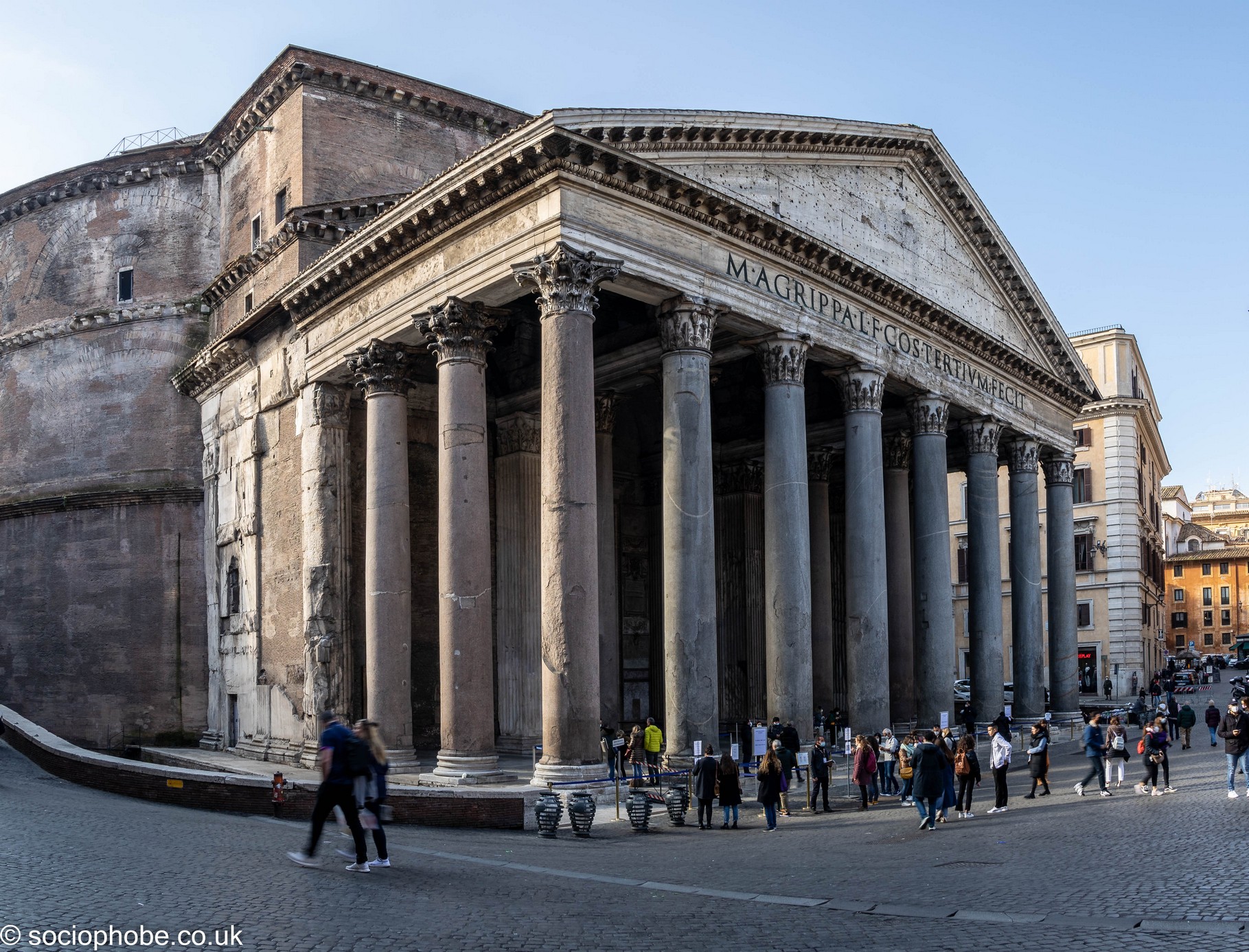
We arrived at the Pantheon by mistake at around 10.30 and as it was relatively quiet I took some photos of the building and the fountain (although they all had sunspots so I didn’t keep any) before continuing on to Castle St Angelo and St Peters.
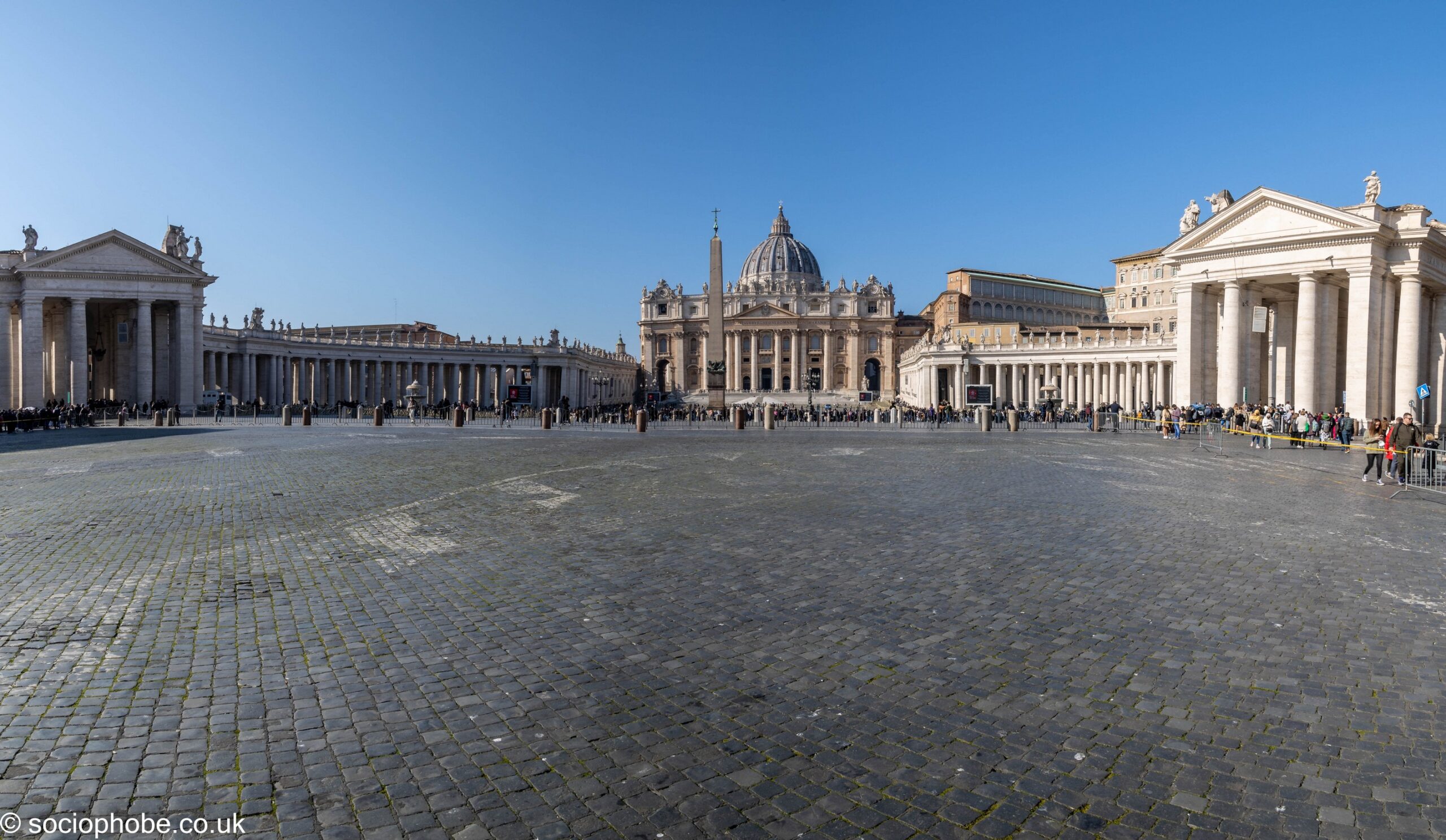
By now the sky was a cloudless blue and the buskers were in full swing so we stopped at a cafe and had coffee and crepe. We did go into the outer courtyard at St Peter’s but the queue for the inner area, before the queue for St Peter’s itself, was offputtingly large so we just had a quick look, Deb prostrated herself falling over a barrier and we left to return to the Pantheon.
The Pantheon
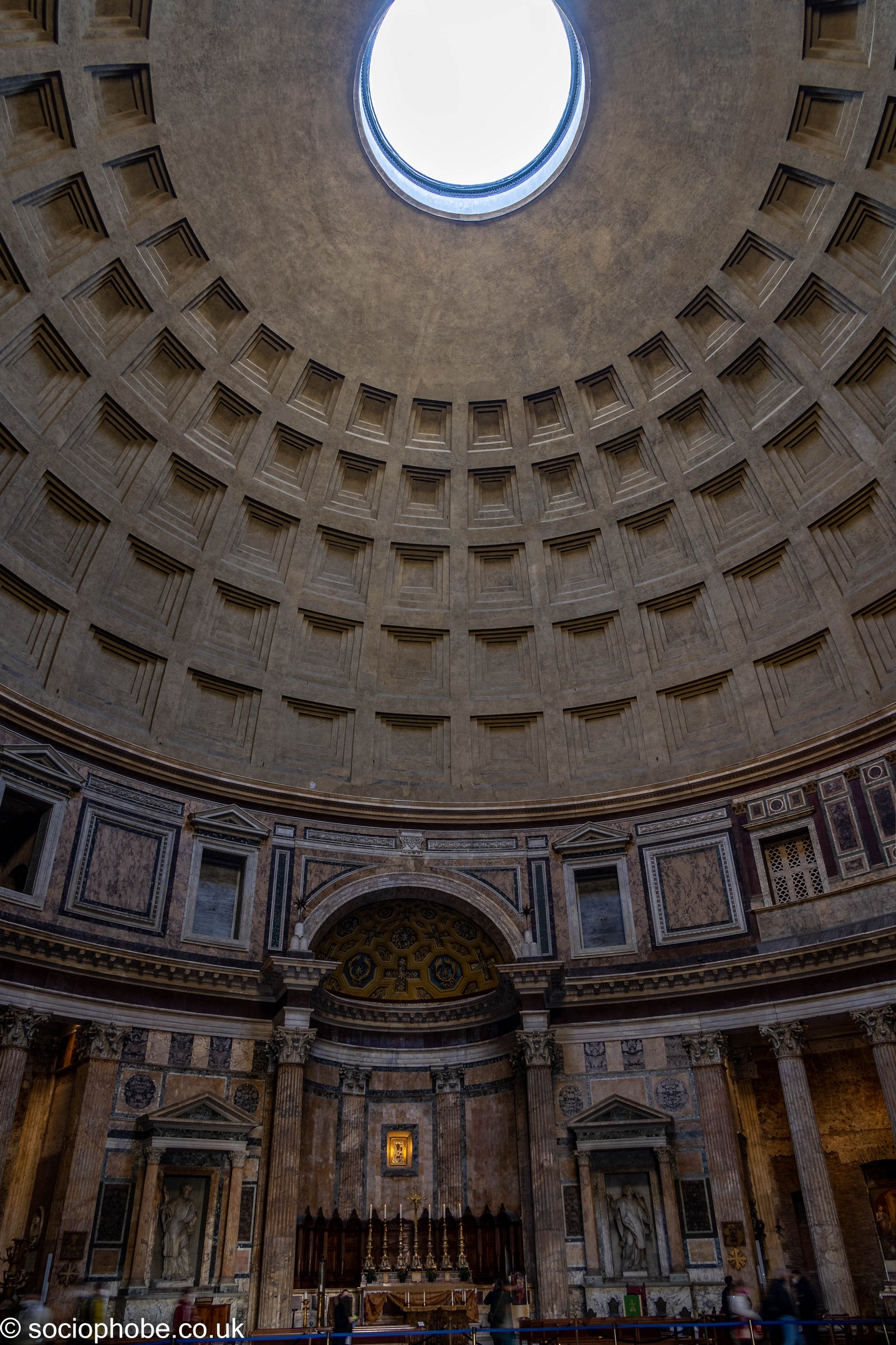
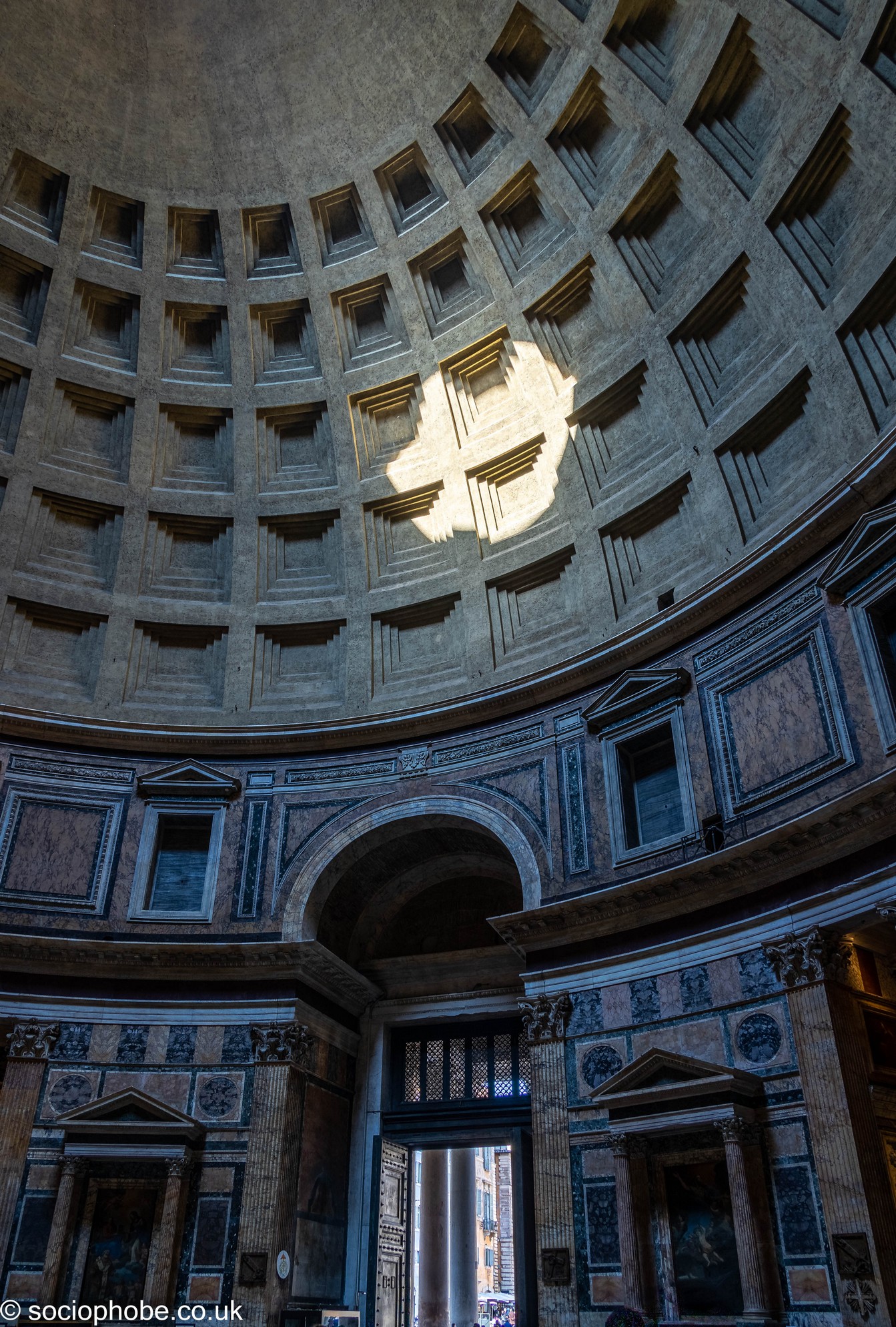
Unlike a couple of hours earlier the area around the Pantheon was now packed and we waited for 20 minutes in the queue. We actually joined a tour along with a Scottish couple to learn a bit about the history. The guards in the building were obsessive about face masks and mask positioning which was quite ironic as most people in the queue didn’t even put them on until they went in! The guide explained about this being one of the earliest Imperial buildings although it was then repaired and rebuilt by Hadrian at the turn of the first century. Unlike most of the pre Christian temples, this wasn’t destroyed by over zealous Christians and was converted into a church.
The design was quite incredible with the dome slowly decreasing in thickness as it climbed and the building materials being swapped for lighter versions, eventually ending at pumice for the very top. The oculus at the centre is open to the elements and represents the pathway to heaven, being where Romulus was allegedly transported to heaven after being struck by lightning. The dome is apparently the largest unsupported dome in the world and Michealangelo built the dome of St Peters half a metre smaller as a sign of respect. Another must see for a city break in Rome.
Ruins of Imperial Rome
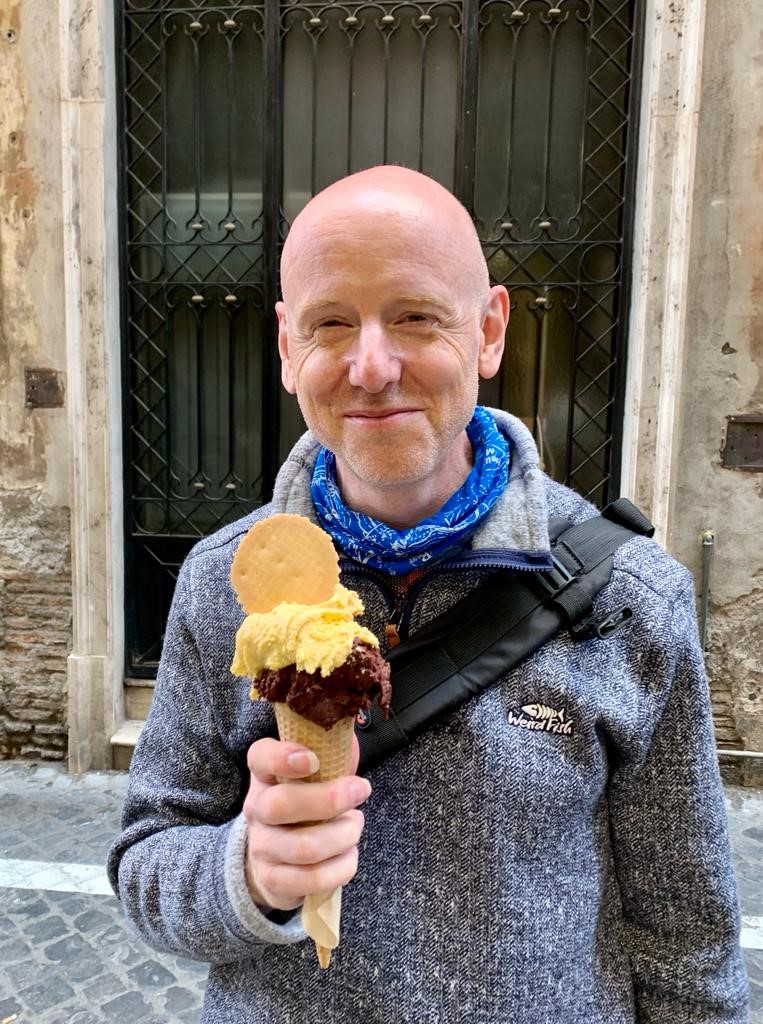
After leaving I was dragged into a gelato shop by some weird gravitic force and had possibly the most delicious gelato ever. Not only was it delicious I actually struggled to finish it as it was so filling!
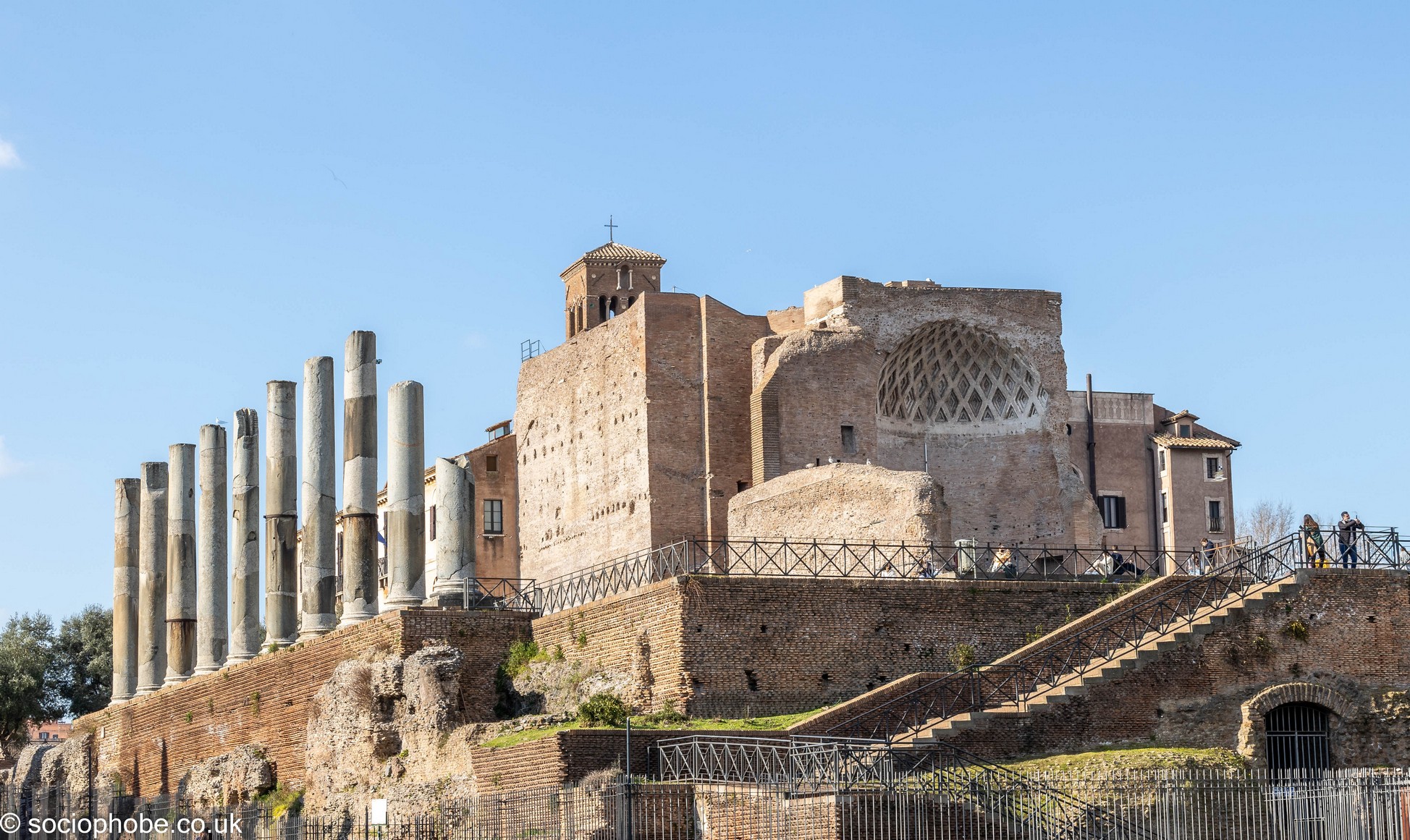
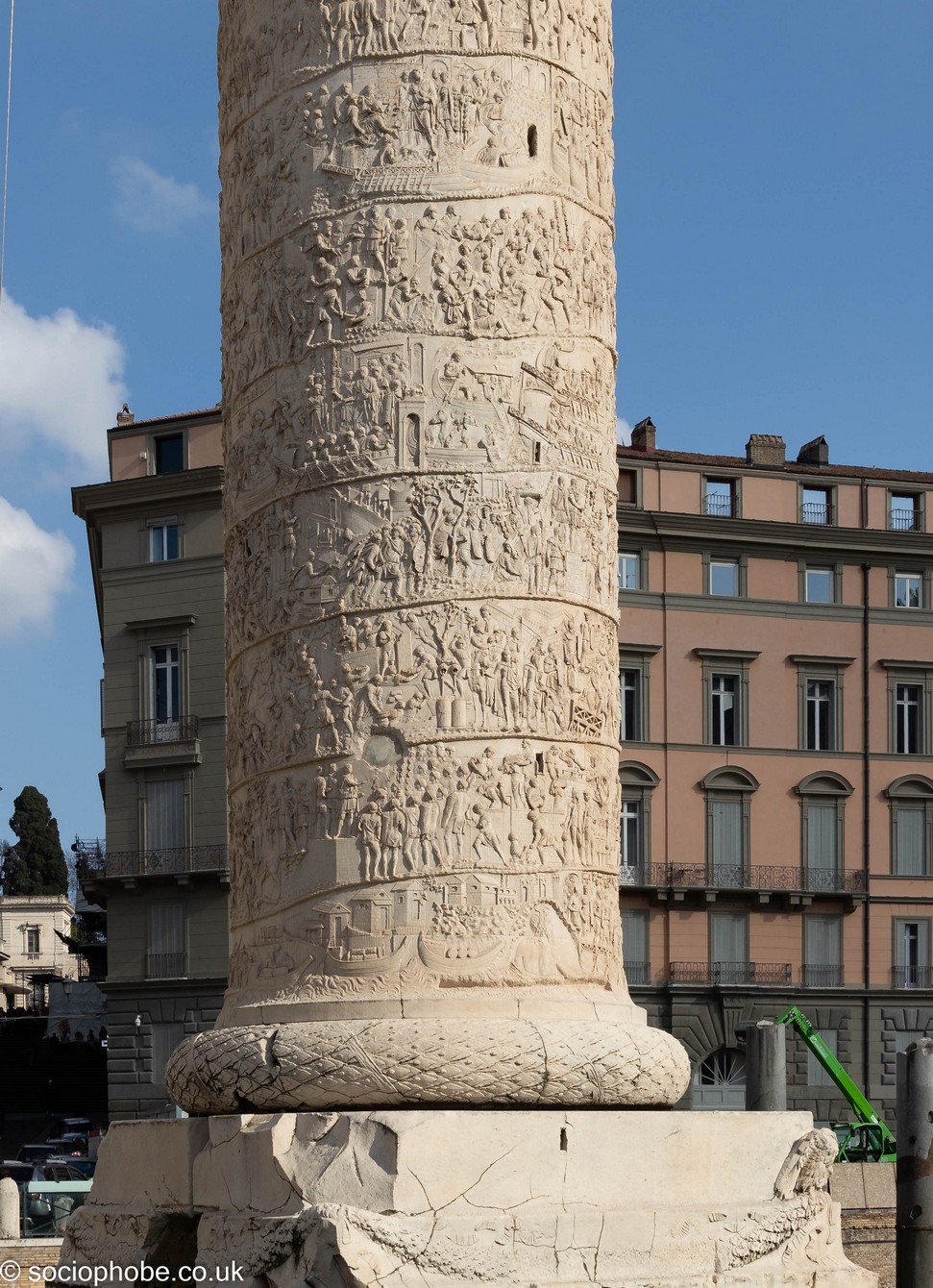
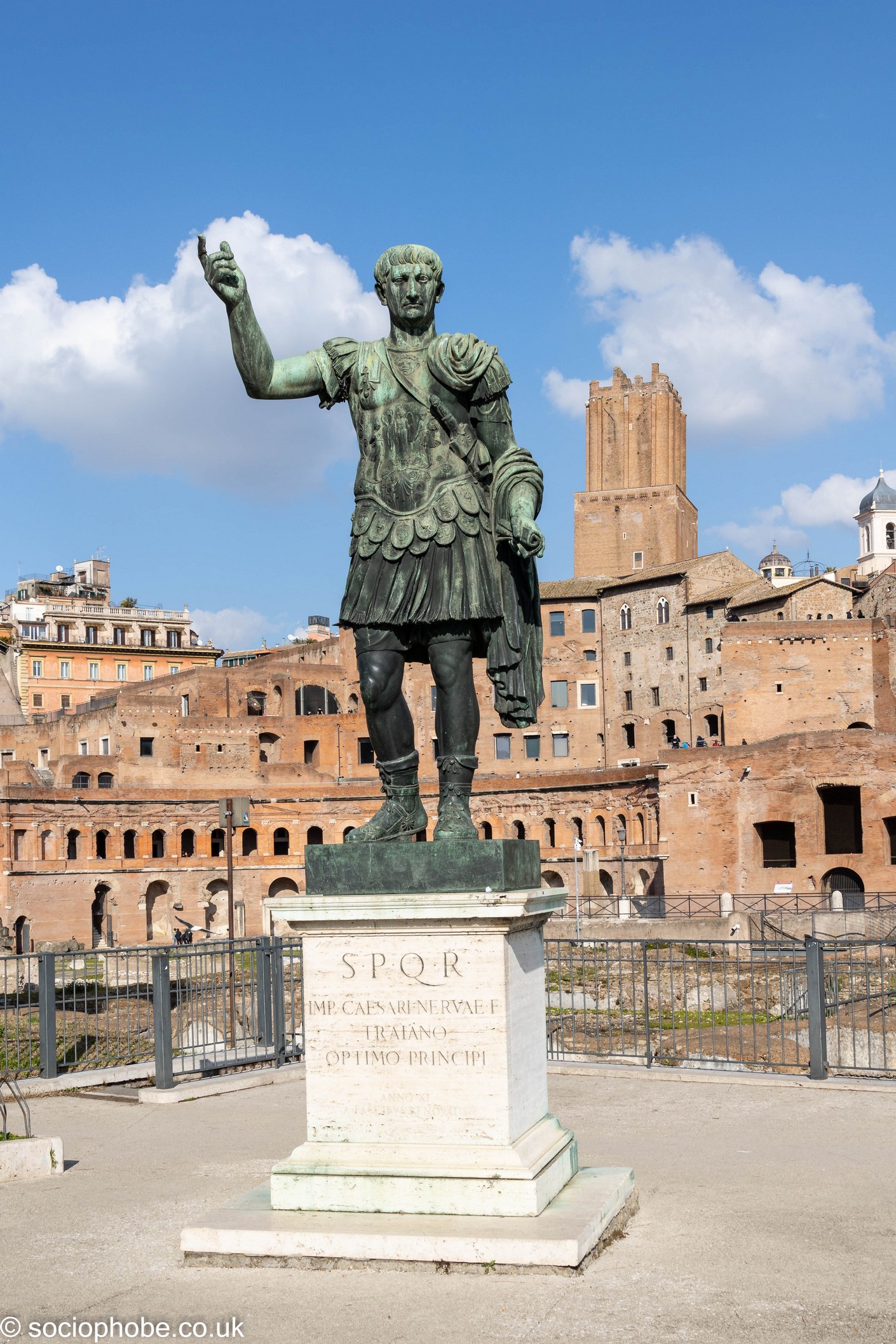
Our meandering walk then took us through the ruins of Imperial Rome with various palaces and administrative buildings and accompanied by buskers playing, for variety, Pink Floyd! The scale of the ruins was impressive but almost all the decorative marble was gone so it was returned to a city of brick. Poor Augustus.

The Colosseum (from the outside)
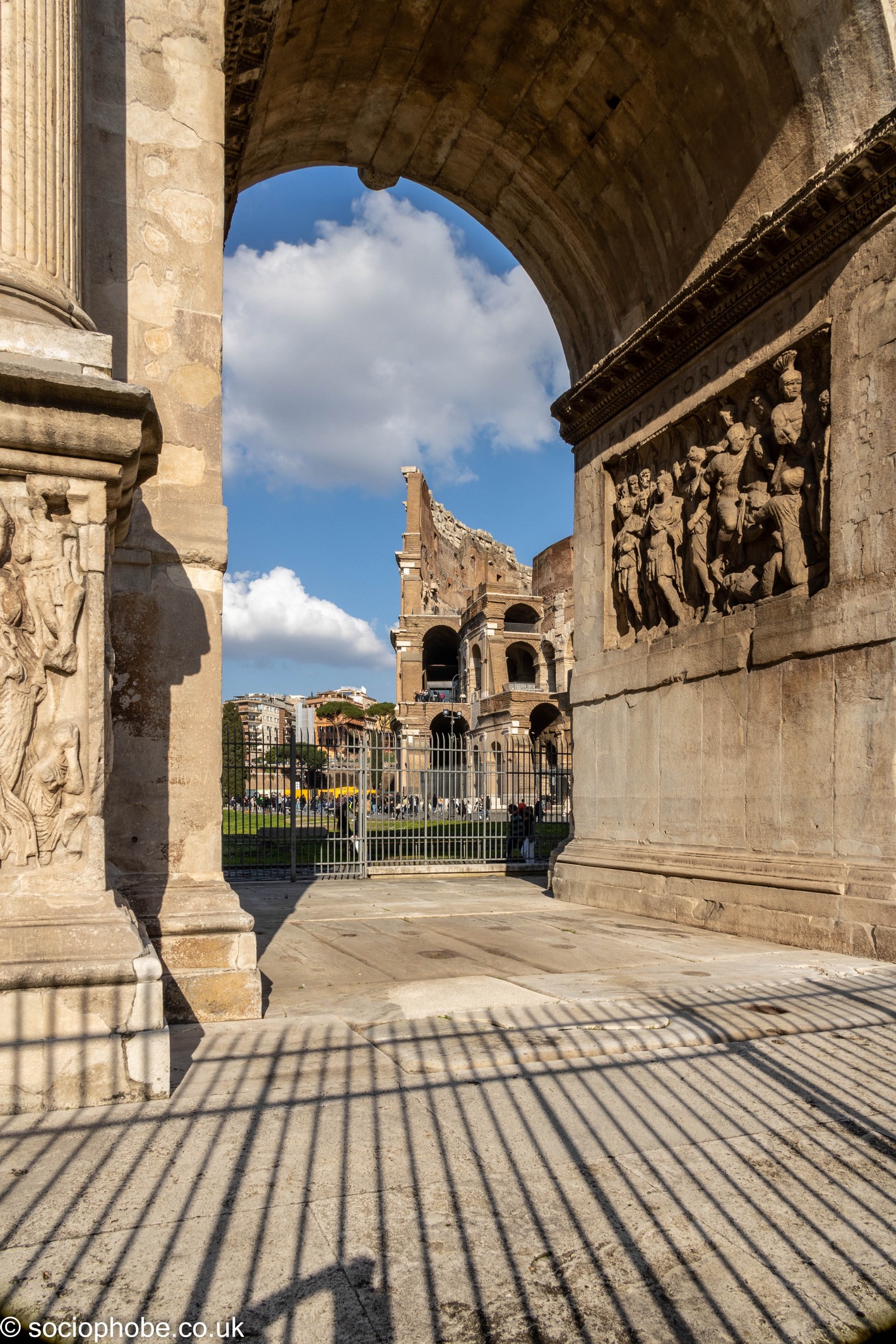
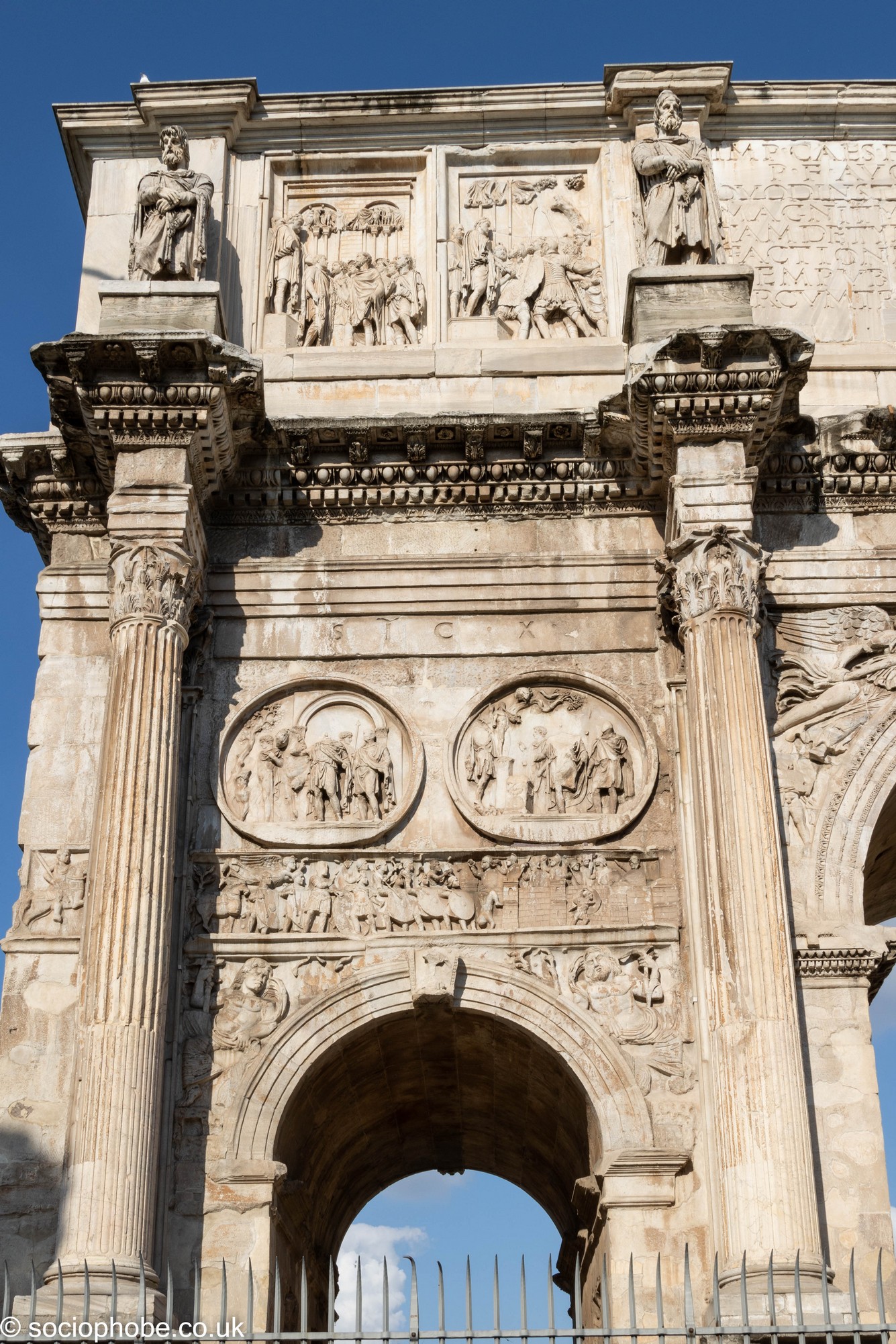
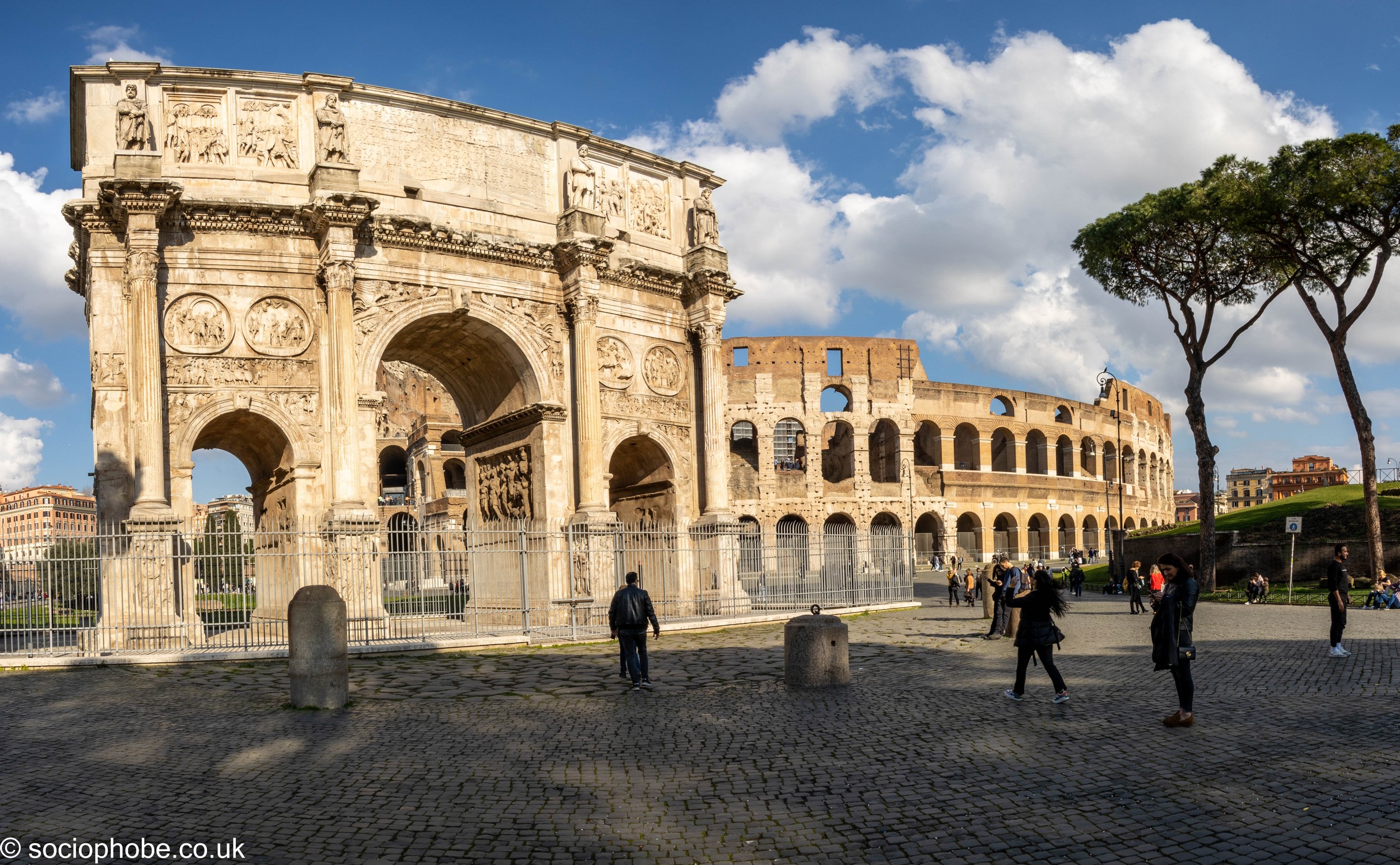
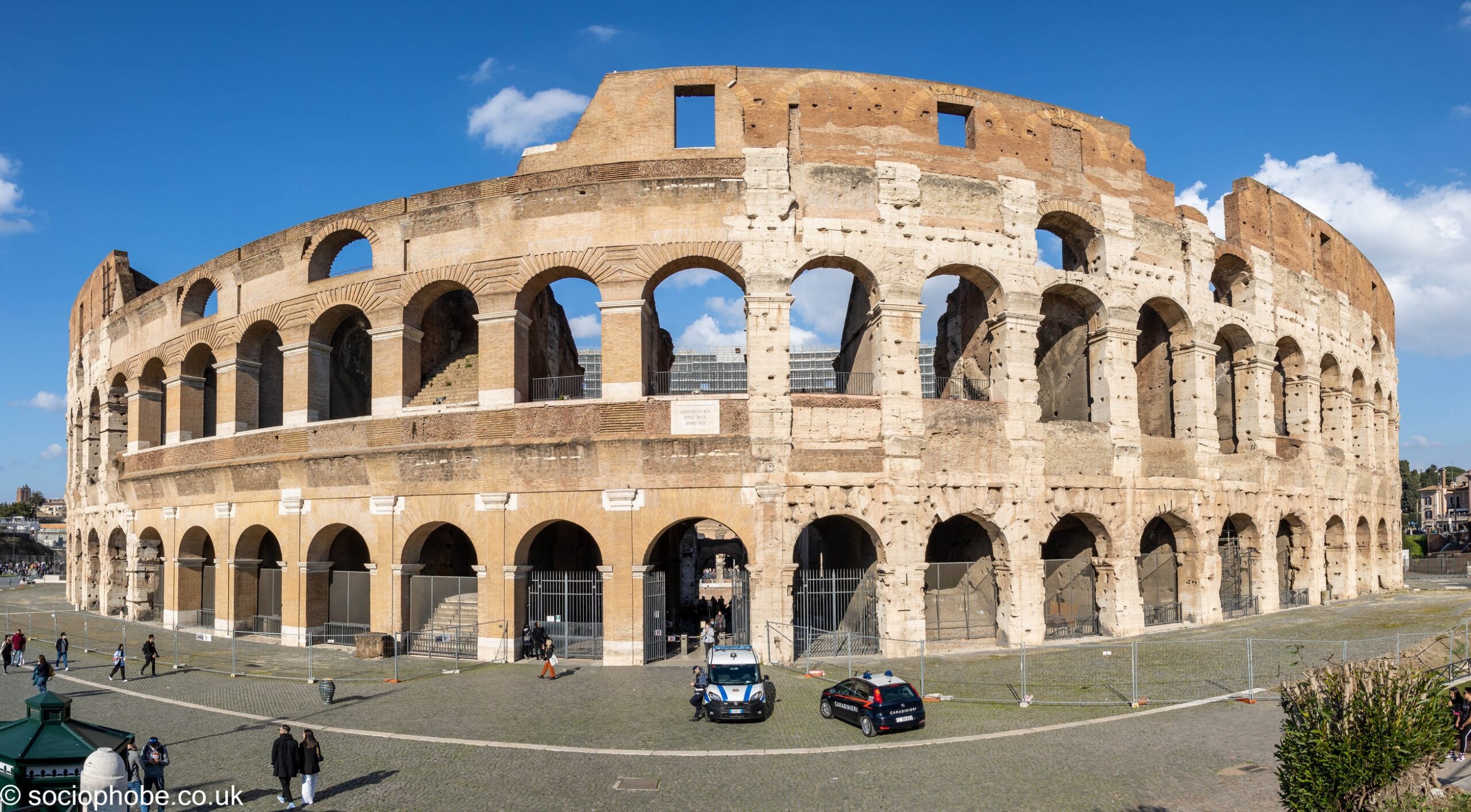
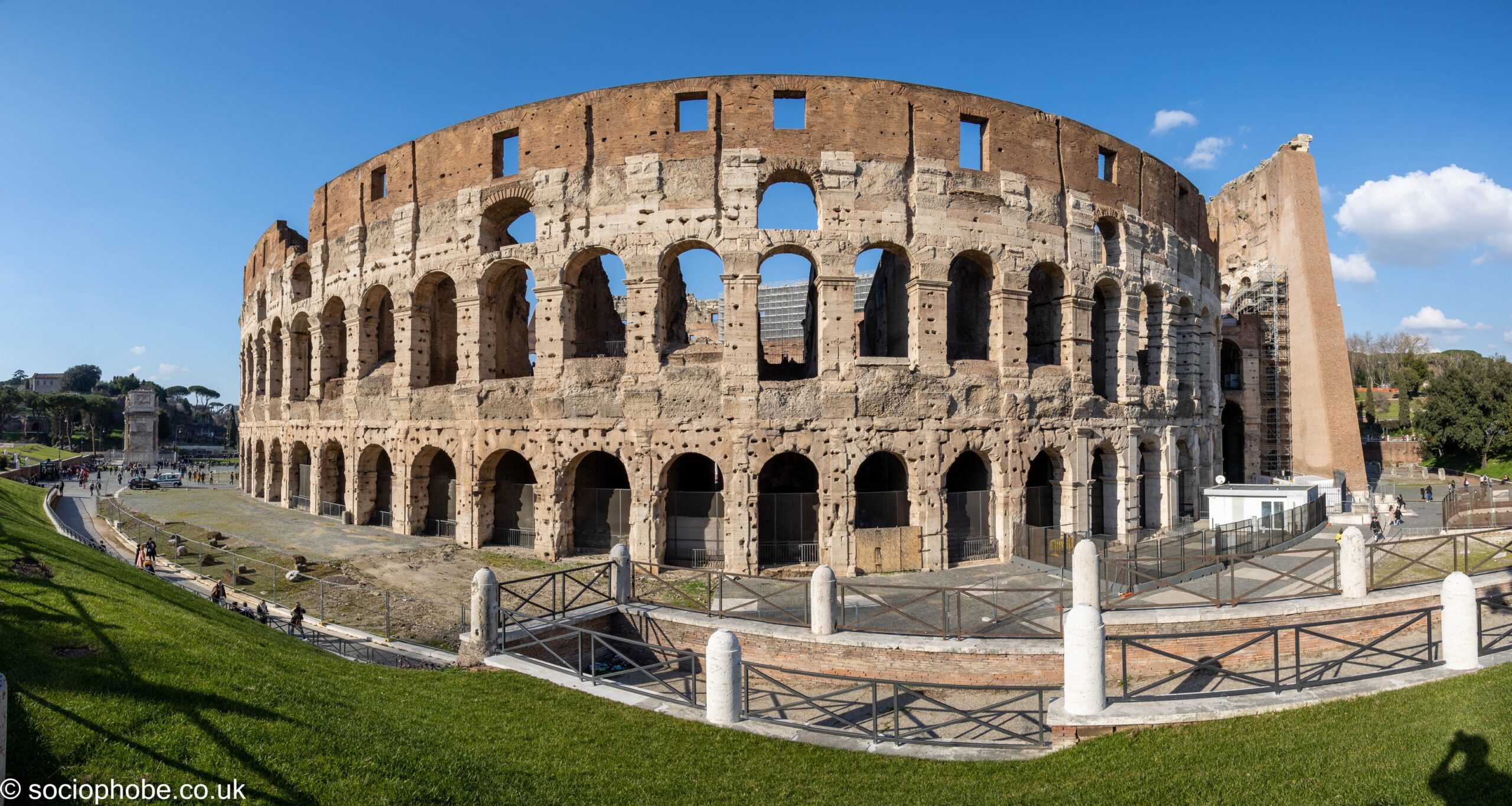
The Colosseum was as impressive as you’d expect. Even now the ruins dominate and it must have been utterly awe inspiring in its day. We didn’t go inside as booking was online only and the queue snaked for quite a way even if we got the tickets. It’s good to save something for another visit and we did a full circuit of the building although the panoramic viewing area was closed off due to bloody covid.
Quick bit of night photography
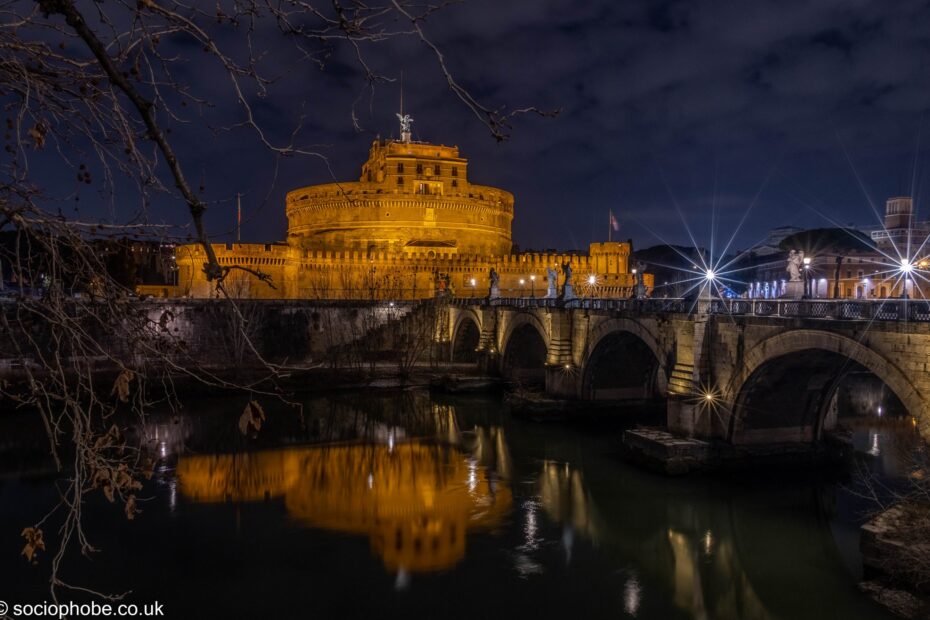
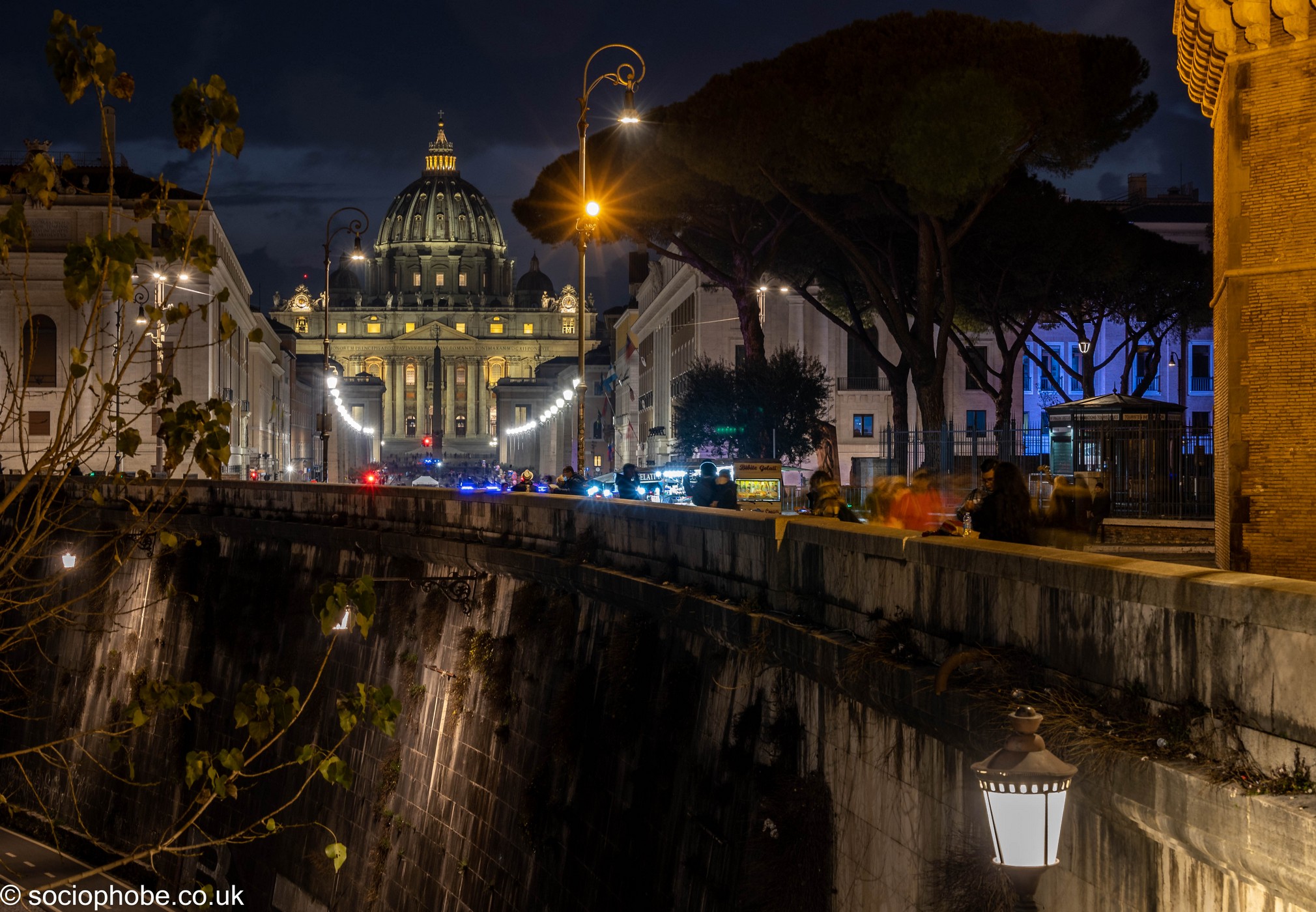
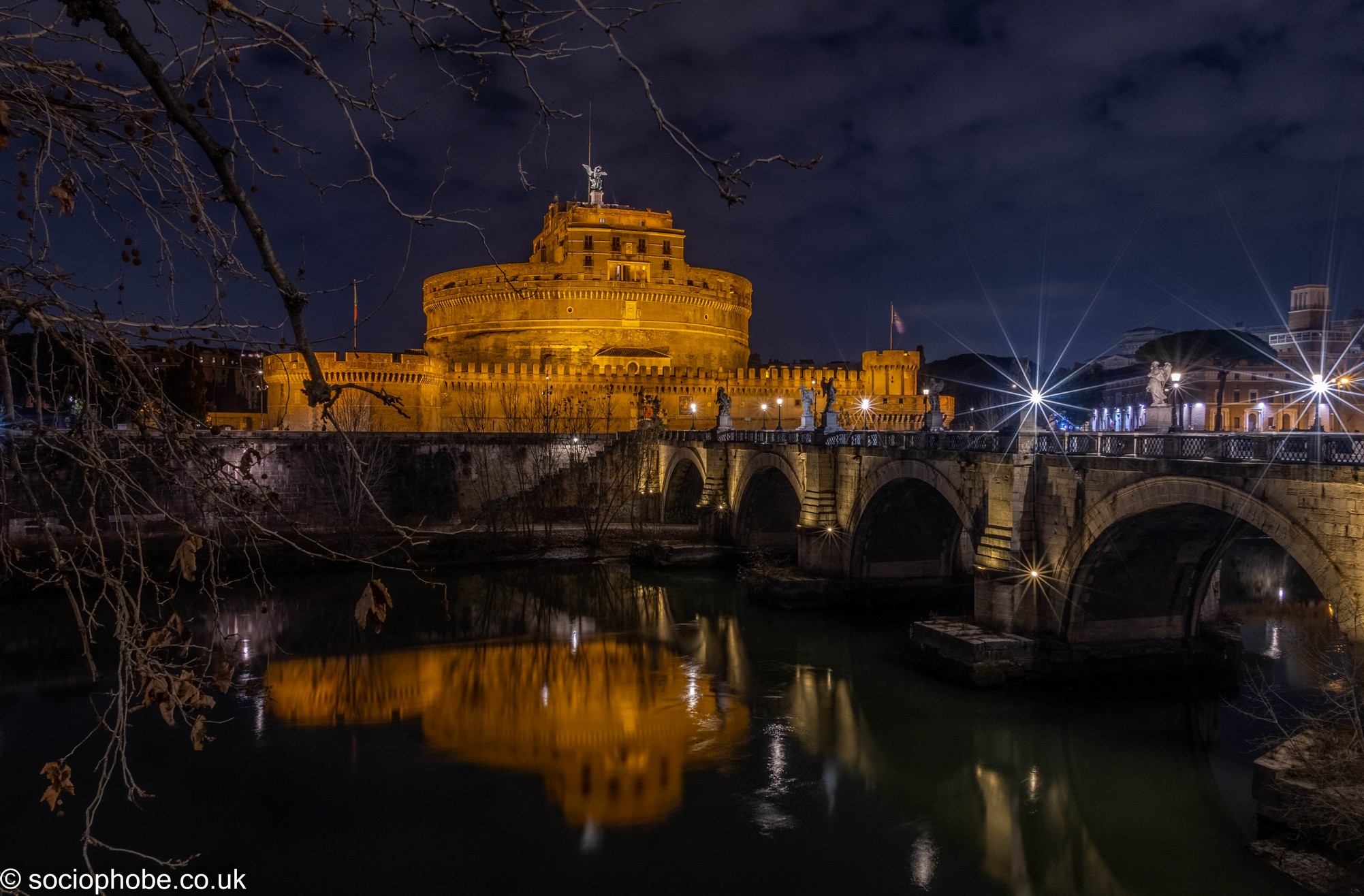
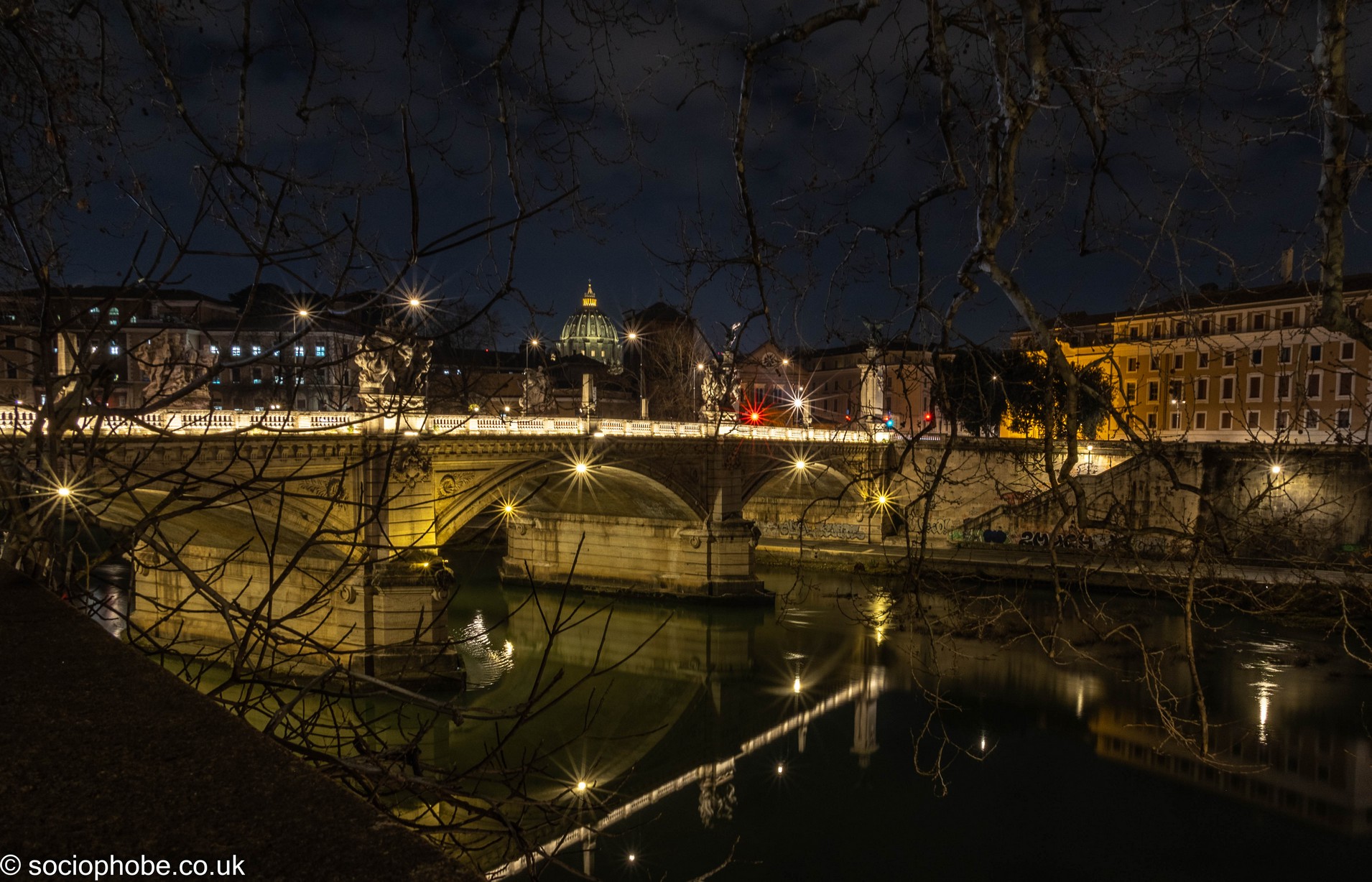
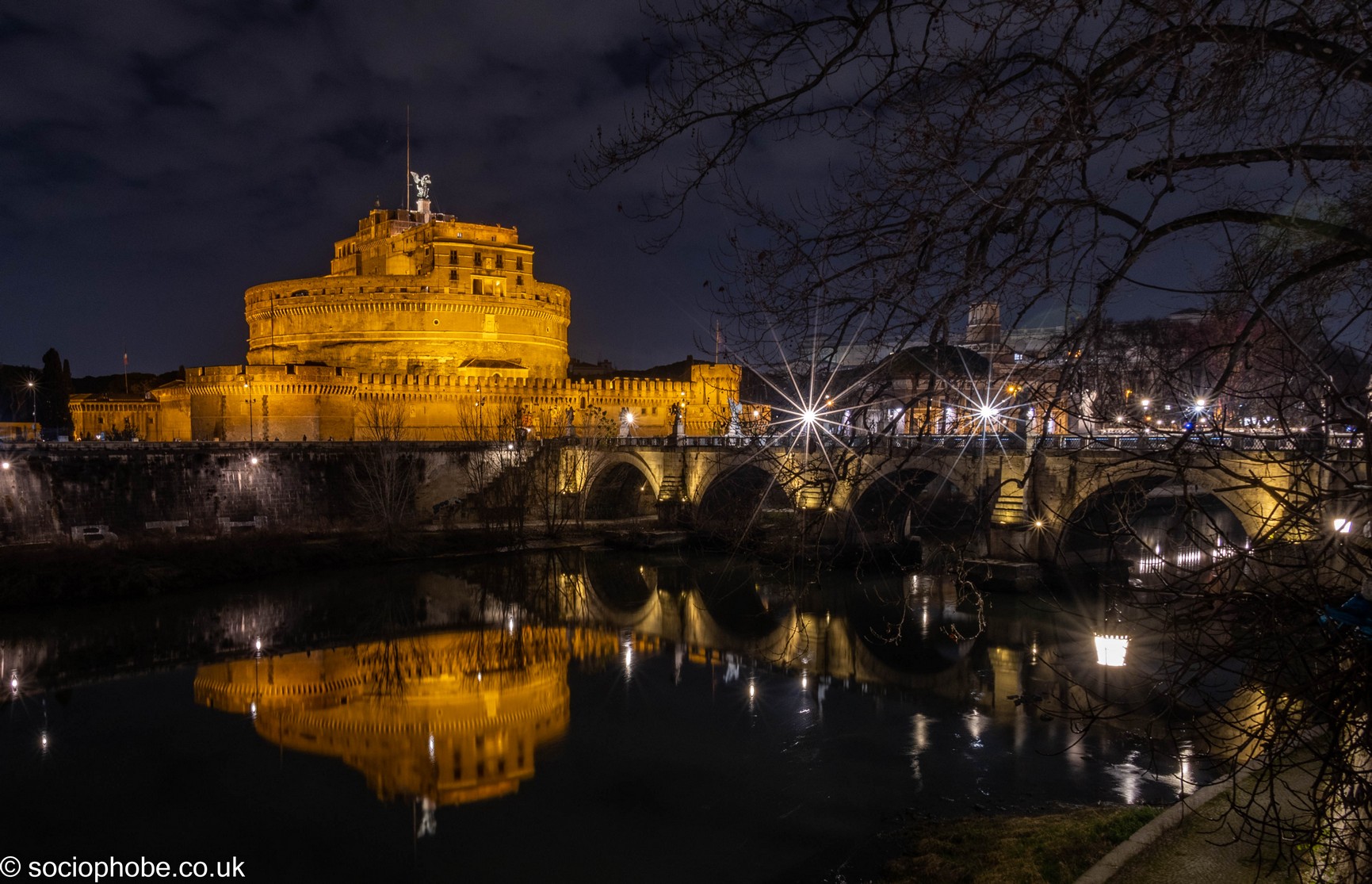
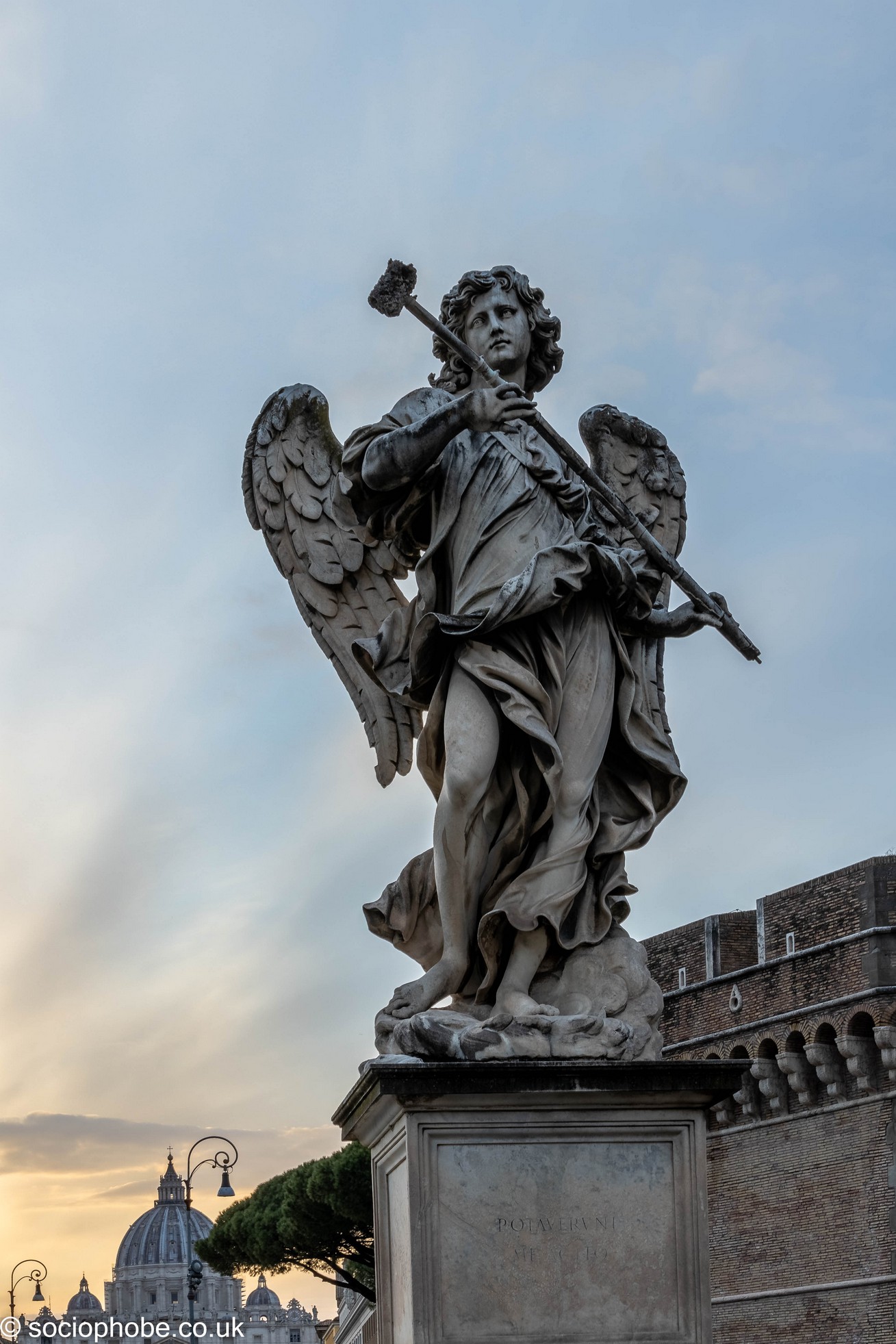
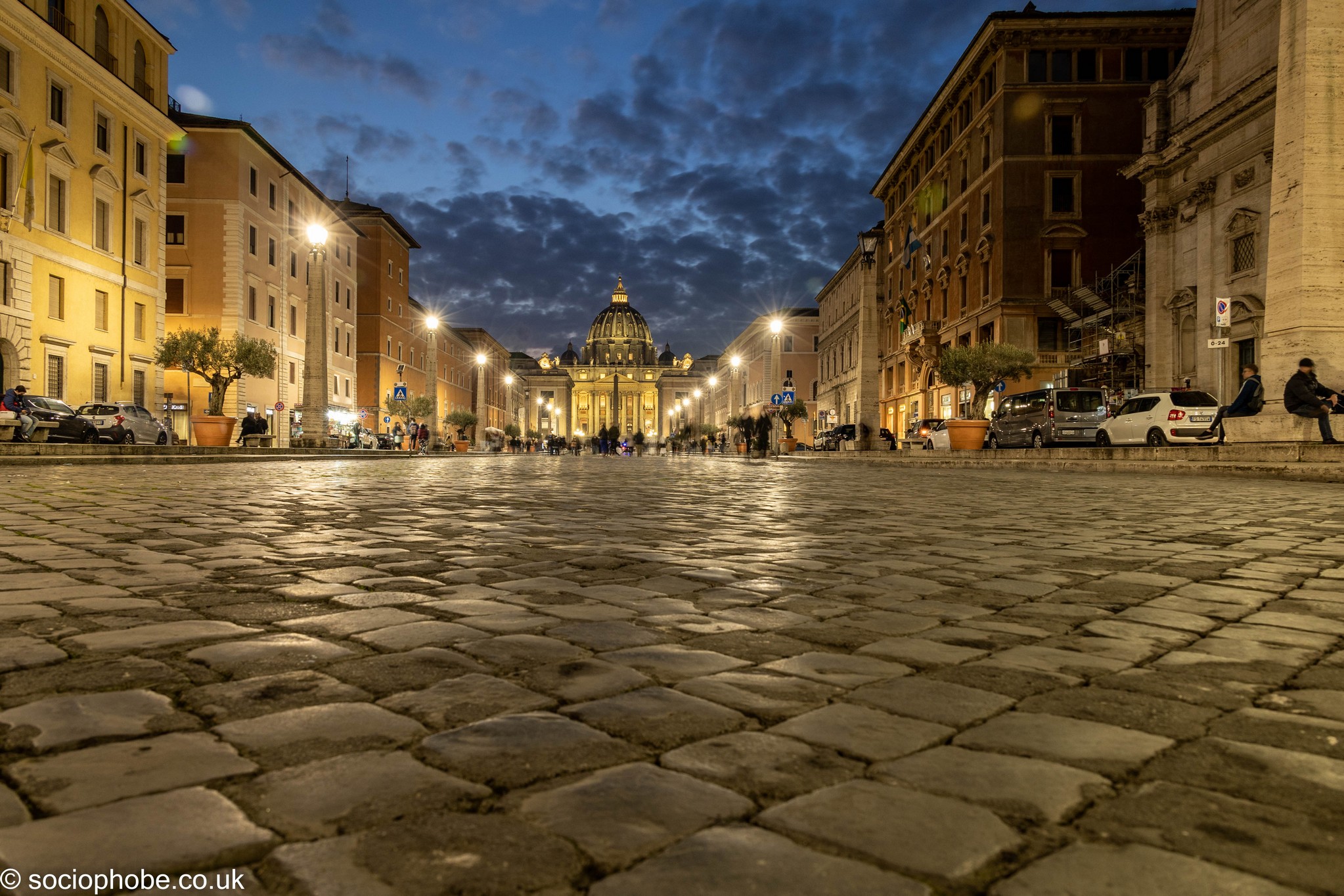
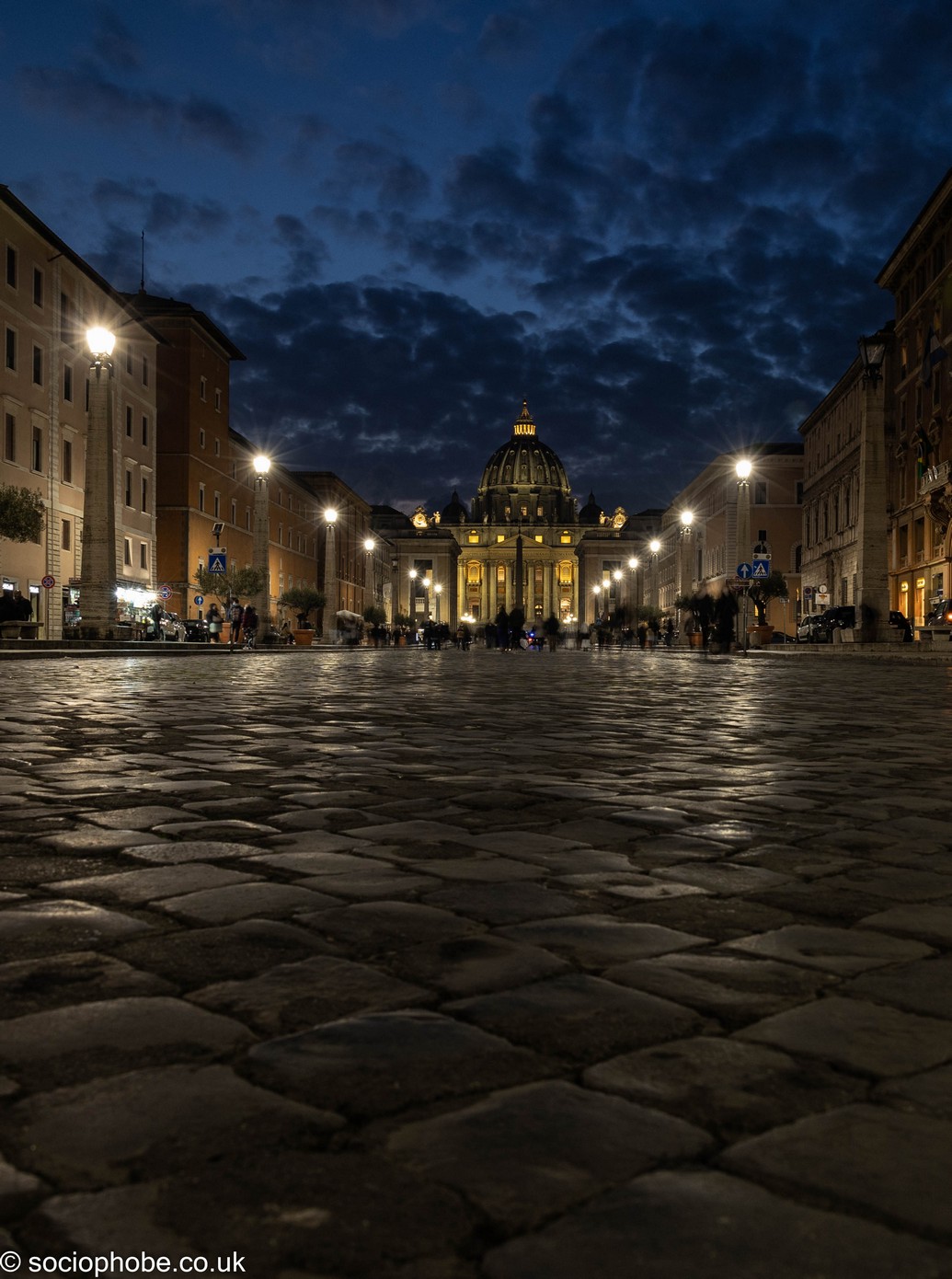
Our final walk, much to Deb’s relief, was back to the Castel St Angelo for me to do some night photos, after dinner. This was a rather basic affair although Deb enjoyed hers and the second place we visited for coffee and tiramasu was far nicer, although this was reflected in the price!
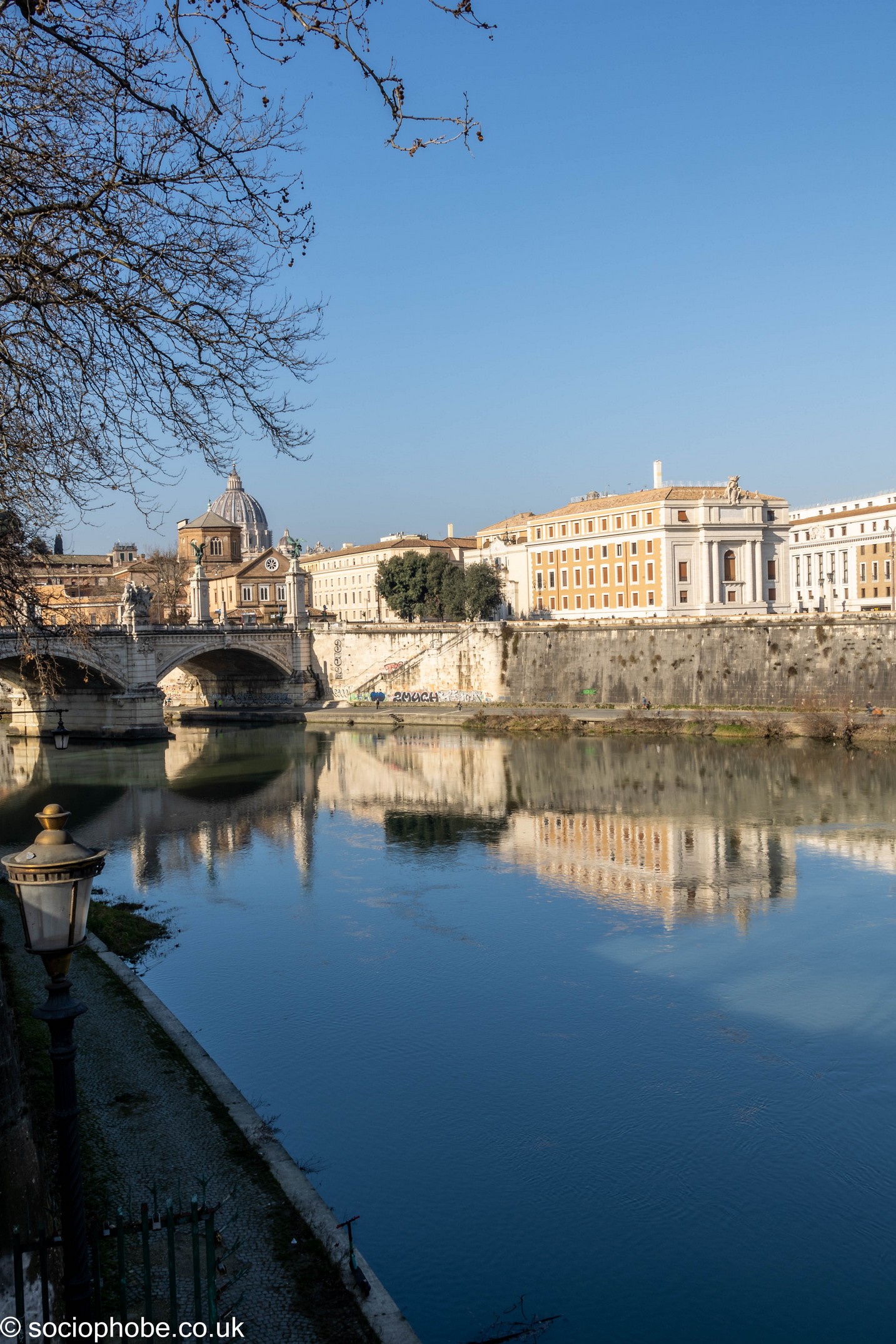
It was very pleasant to walk along the Tiber again, in the dark and enjoy the view without being able to see all the dog poo and graffiti! More buskers, this time with a harp and playing something new, completed the experience. We took a taxi back to the hotel as we’d already walked 20k. 300 photos to sort before bed.
Catacombs Tour
Well, we slept well after yesterday’s exertions! We woke before 7 to see it had rained overnight and then we had a relaxed breakfast before getting ready for today’s tour, to the catacombs. Alan turned up on time and we drove through the Roman traffic, with various sights being pointed out as we went and then discussed and compared. There really is so much to see in the city that everywhere we drove was a litany of names and sights and history. We reached the catacombs of Domitilla and after a brief background explanation were handed over to our guide for the tour.
Kate led us down into the fourth century church, built on the site that two martyrs were buried after being killed in the persecutions of Diocletian. The church was later increased in size and the roof raised about 4m. The catacombs were in use for about 400 years and were almost all plain slots in the tufa stone, cut wide enough for a body wrapped in a shroud.
There were no burial goods or offerings left behind although some families had rooms or tombs that they shared and some had frescoes on their graves. The belief was in imminent resurrection so the bodies here were just ‘sleeping’ until they could be refilled with an immortal spirit. Almost all have now rotted to dust. The catacombs in this area extend for 12 km and contain over 20,000 tombs, a lot of which had multiple occupants.
Frustratingly we couldn’t take photos but the corridors were low and narrow and the tombs, with one exception, just holes. The exception was a fourth century fresco depicting a young Jesus teaching the 12 disciples and St Peter and St Paul. A fascinating insight into this aspect of our heritage and Kate was an excellent guide, engaging and knowledgeable.
We then got back in to the taxi and returned along the Appian Way into Rome. We spoke about banking and Garibaldi and the influence of the Church and the EU and then bounced around between ancient and renaissance Rome. We stopped at the magic keyhole where you can look through a keyhole in an Order of Malta doorway across to St Peters but I messed the photo up. We saw Mussolini’s balcony and the Mouth of Truth as well as the Pyramid of Cestus, looking very clean!
St Paul’s Basillica
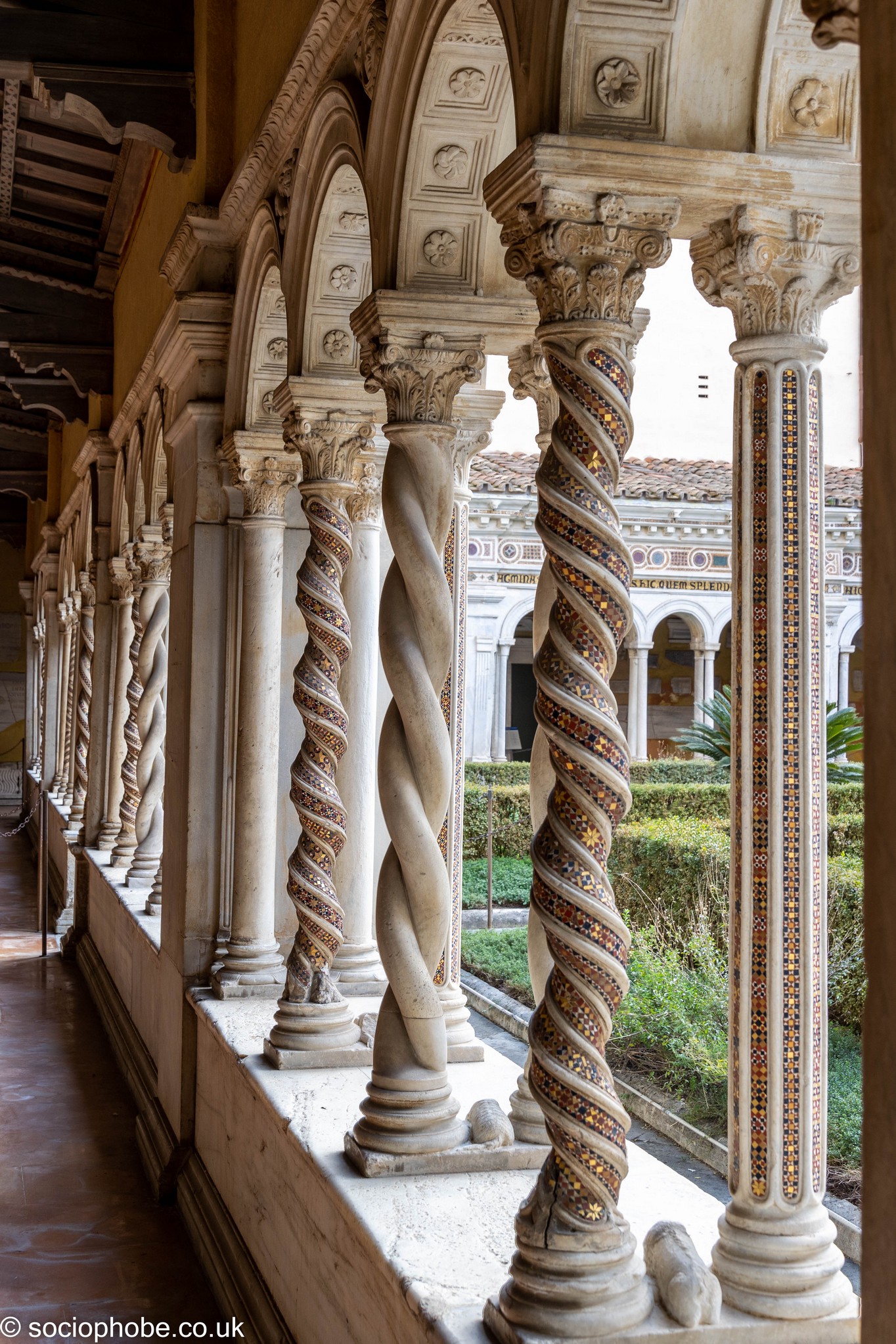
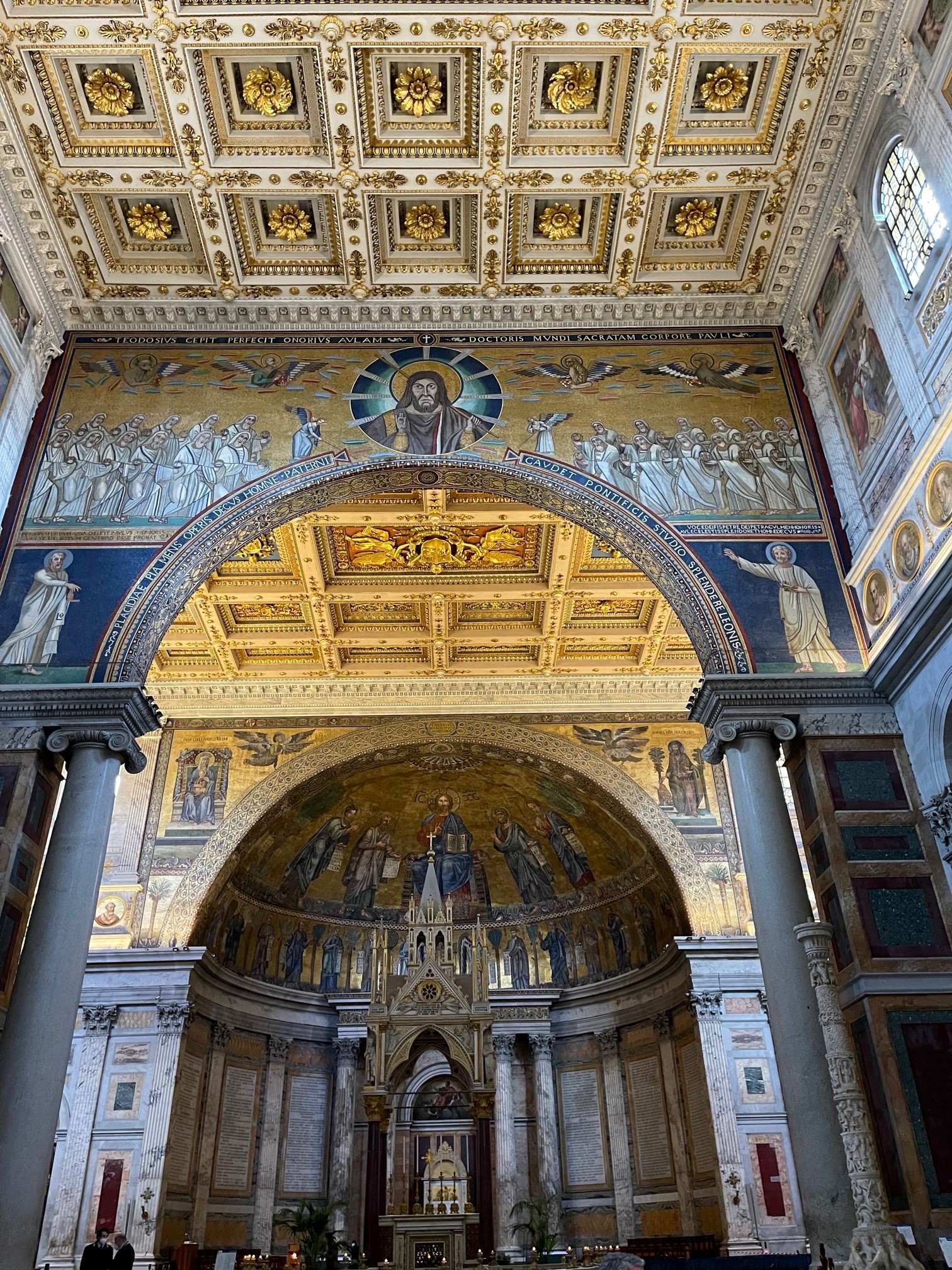
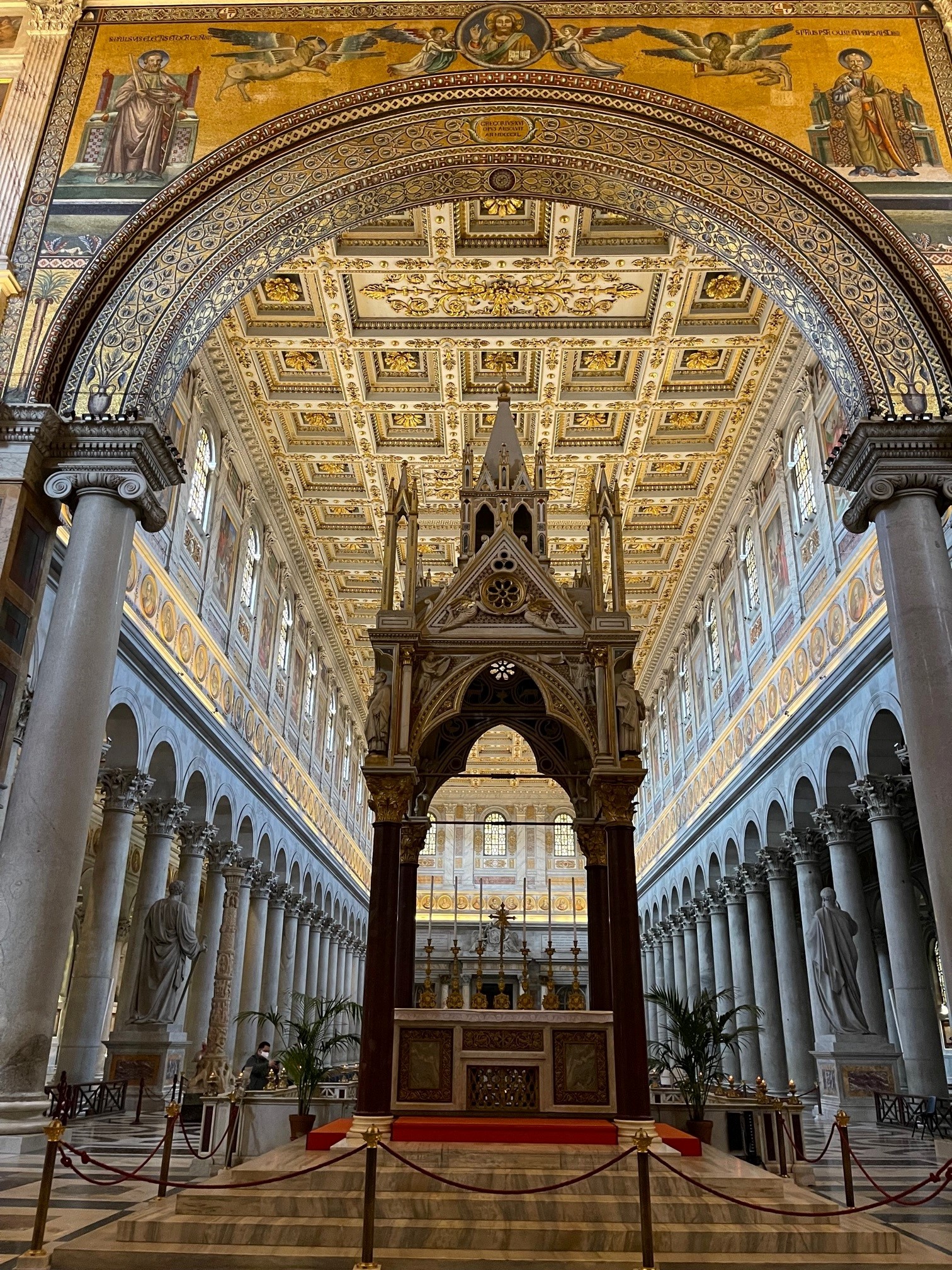
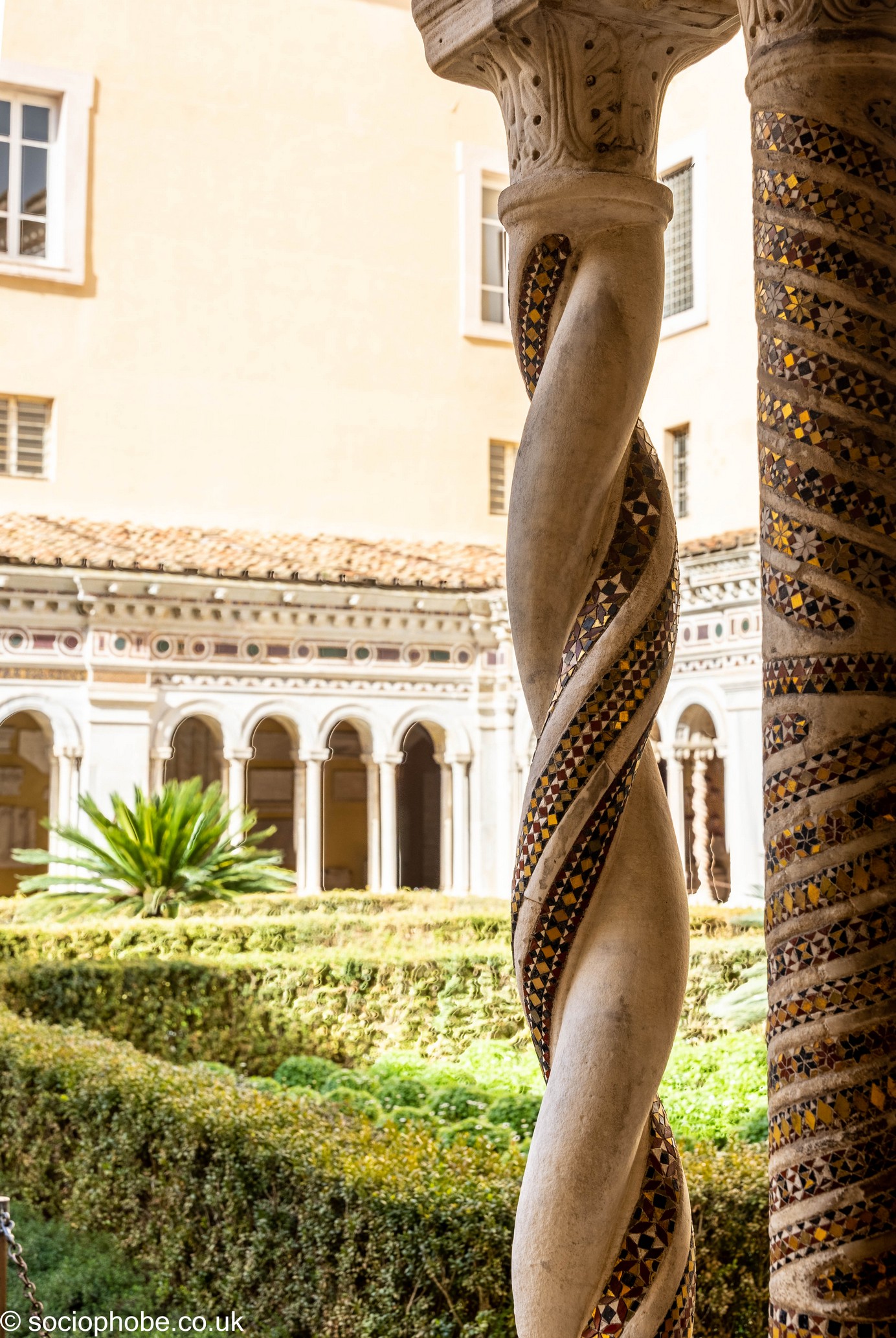
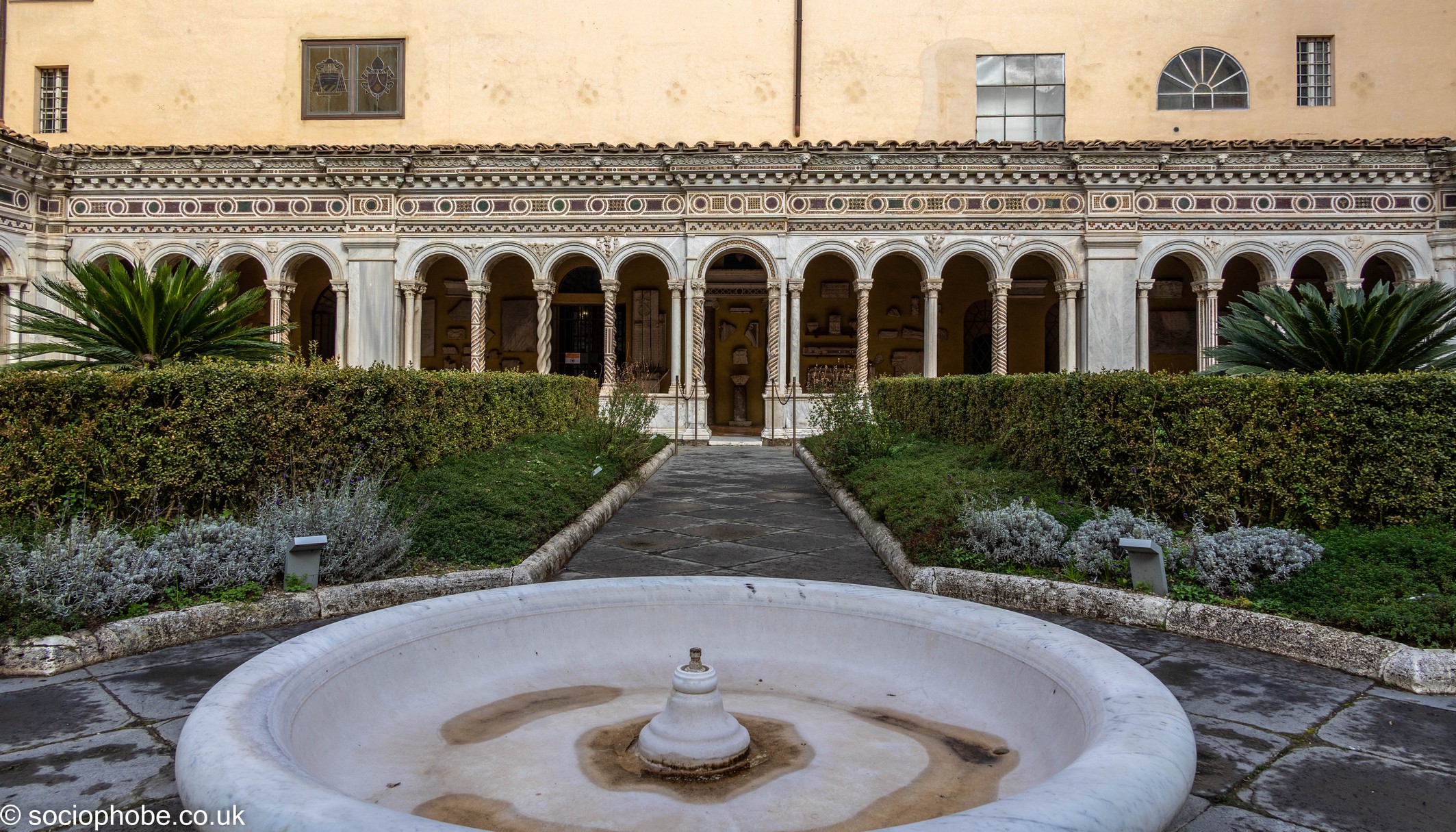
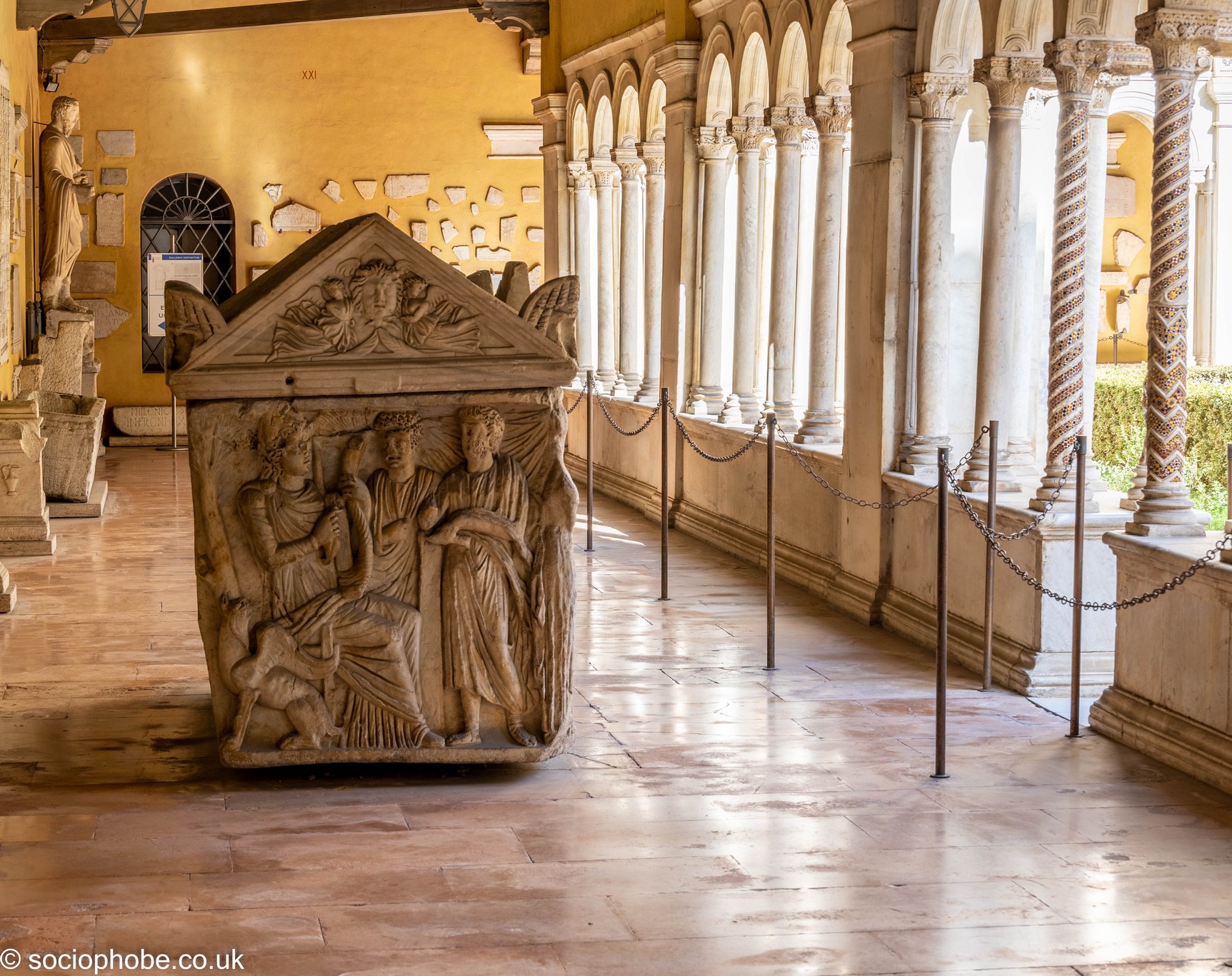
I didn’t even register that St Paul was buried in Rome too but we stopped at his church and had a good look around. The interior was massive and freshly rebuilt after the late nineteenth century fire. We paid the €4 for the optional tour of the cloisters and archeological area and that was well worth it.
The cloisters were a beautiful design and very peaceful and the archeological area had all the old bits they’d found I think, mostly fragments but some beautiful classical sculptures too and some lovely early medieval wall paintings.
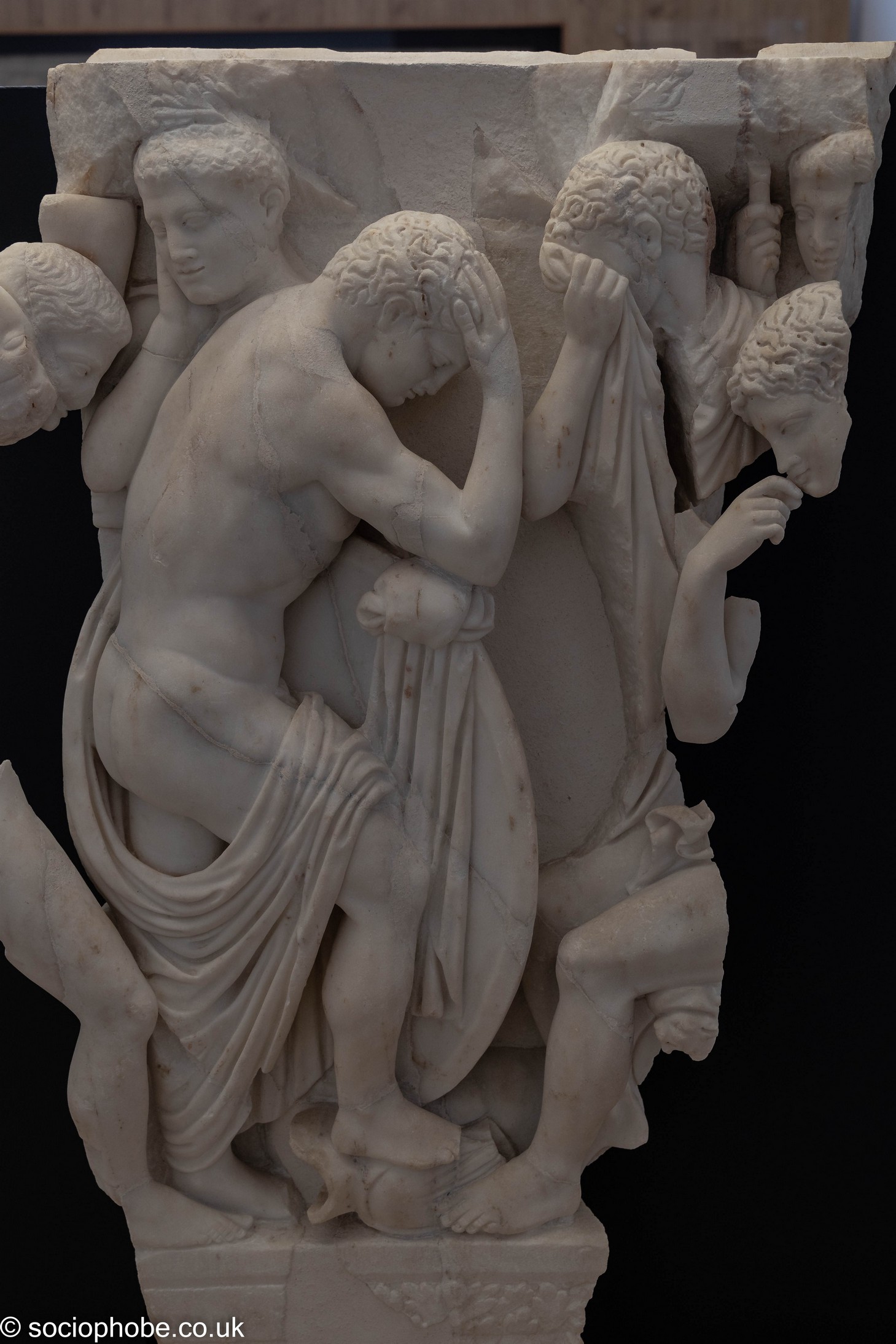
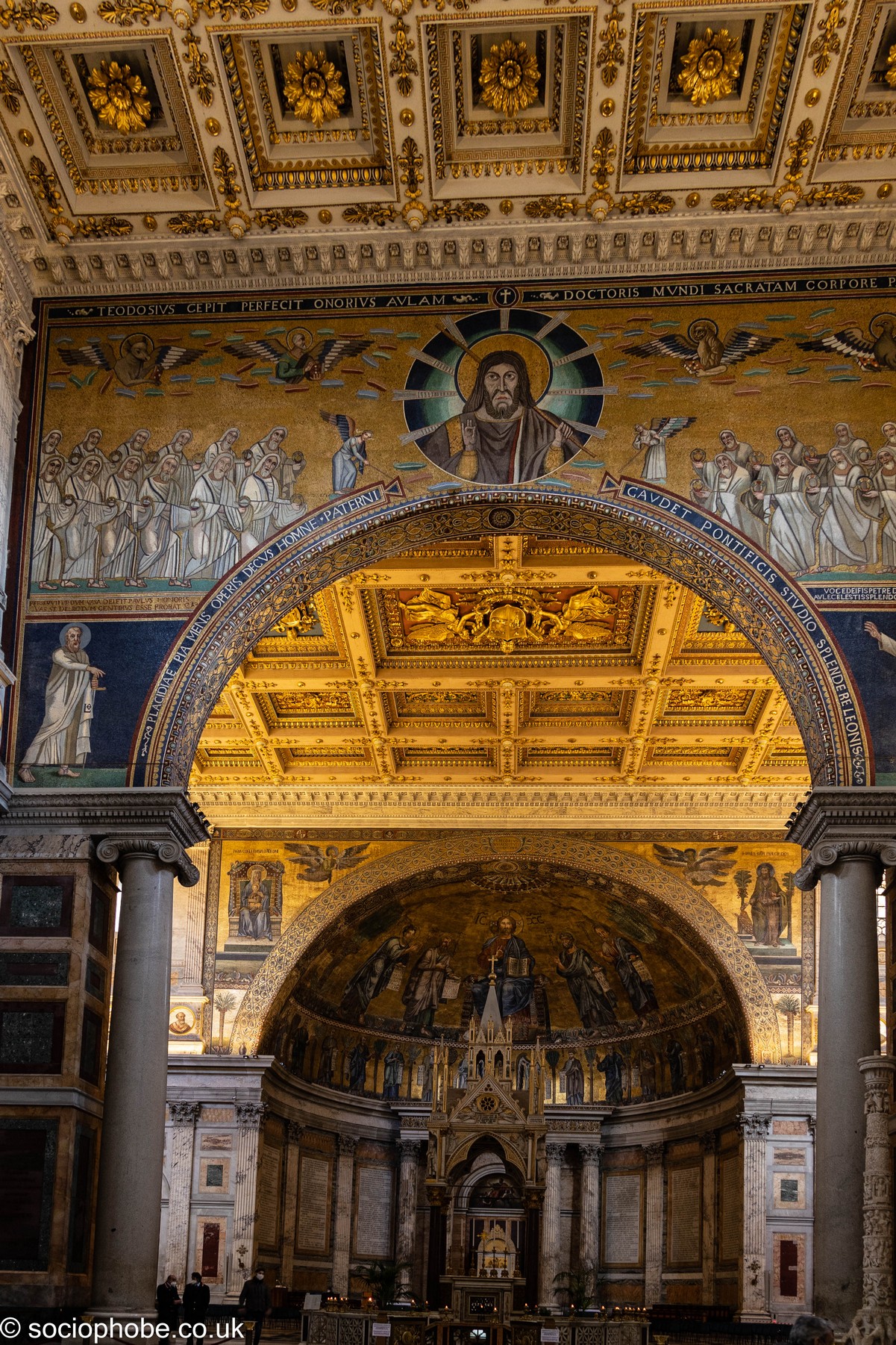
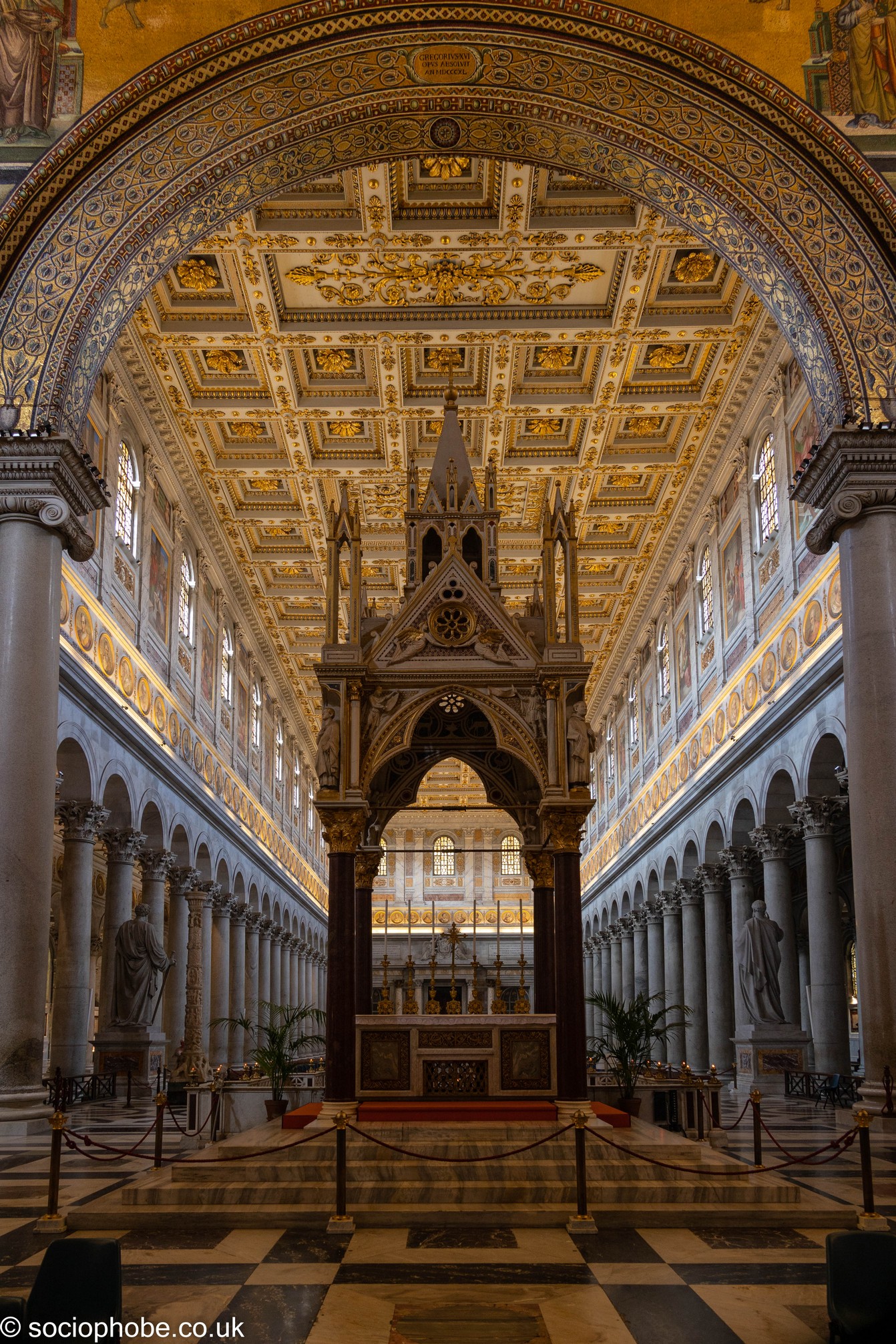
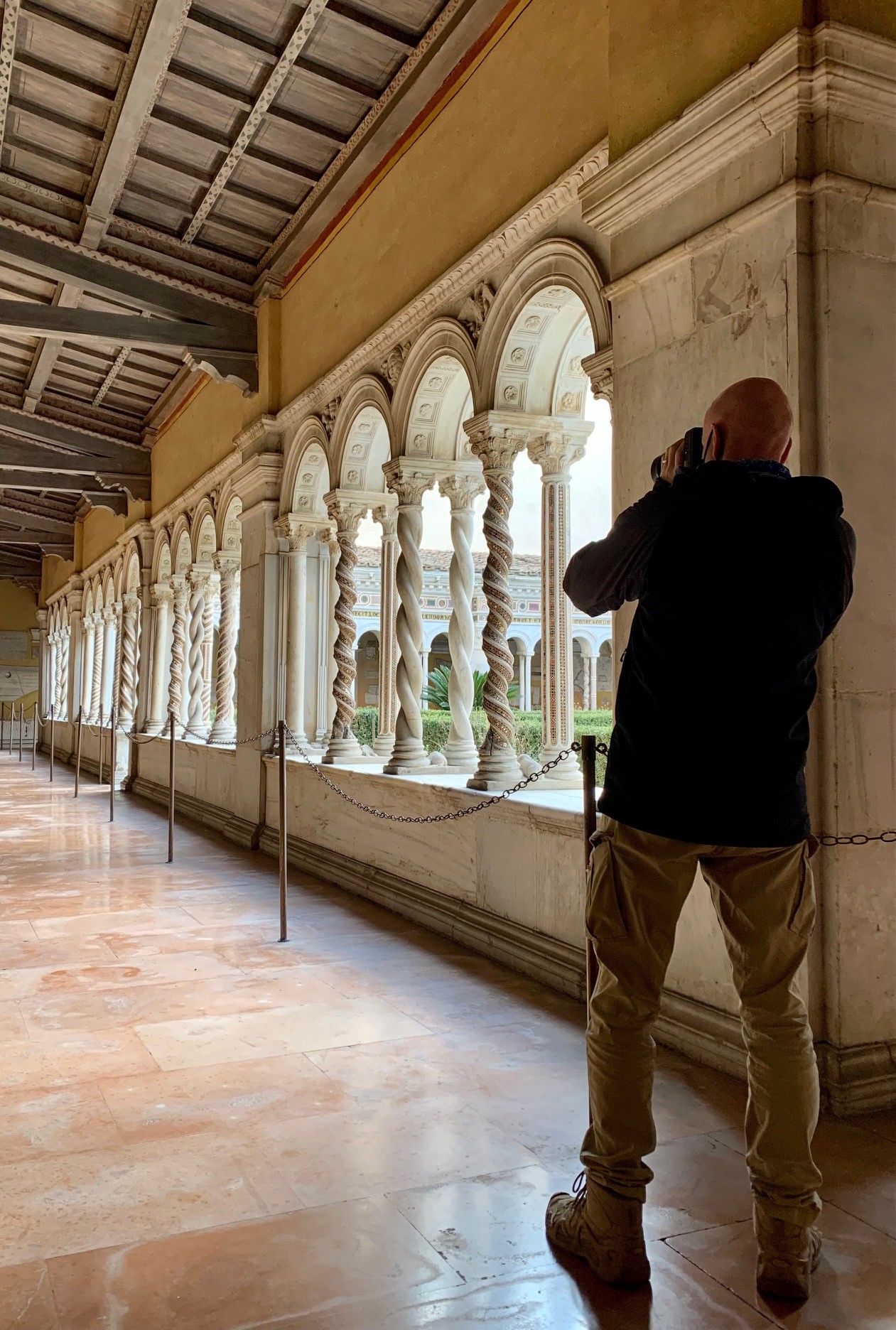
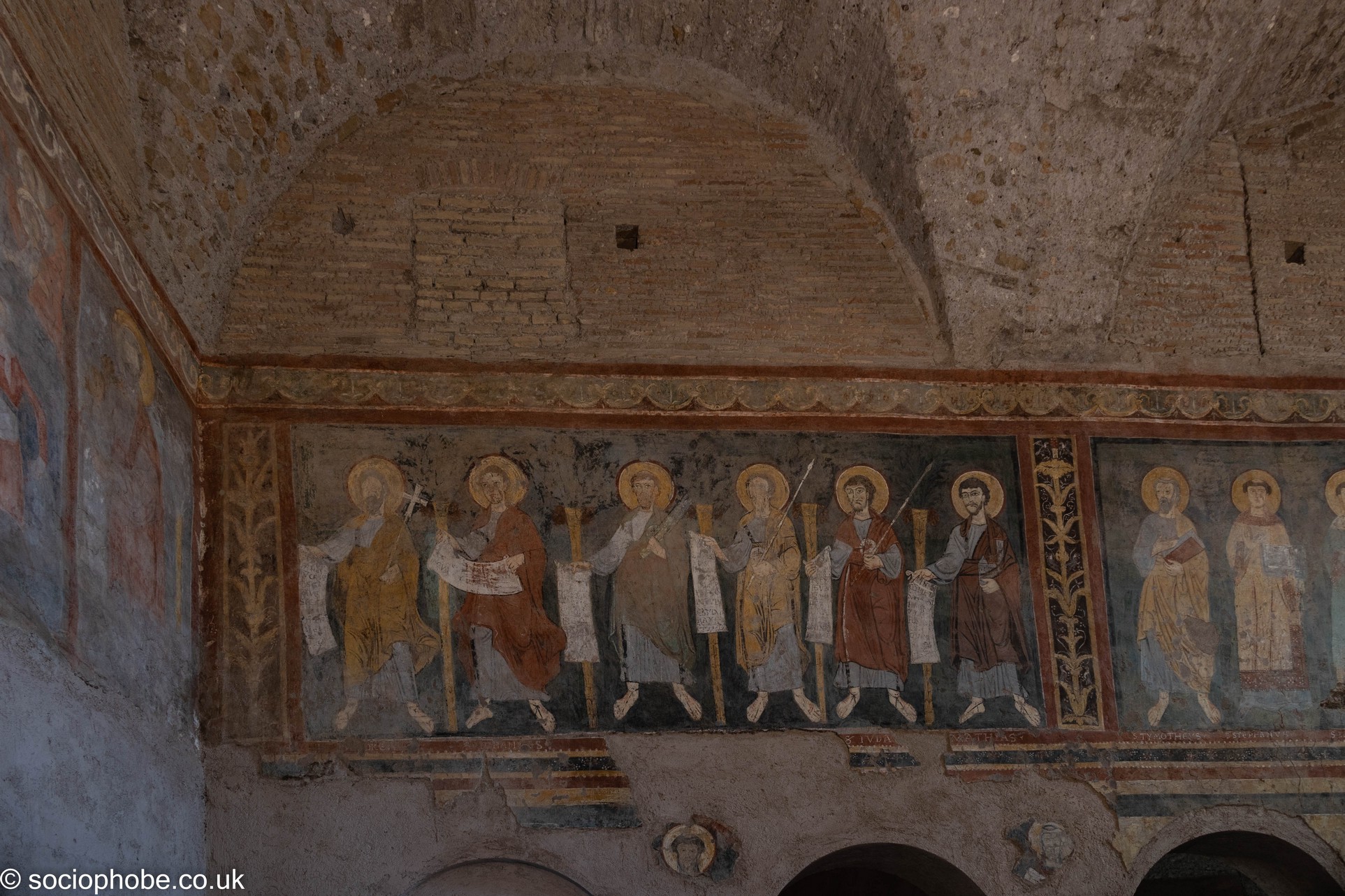
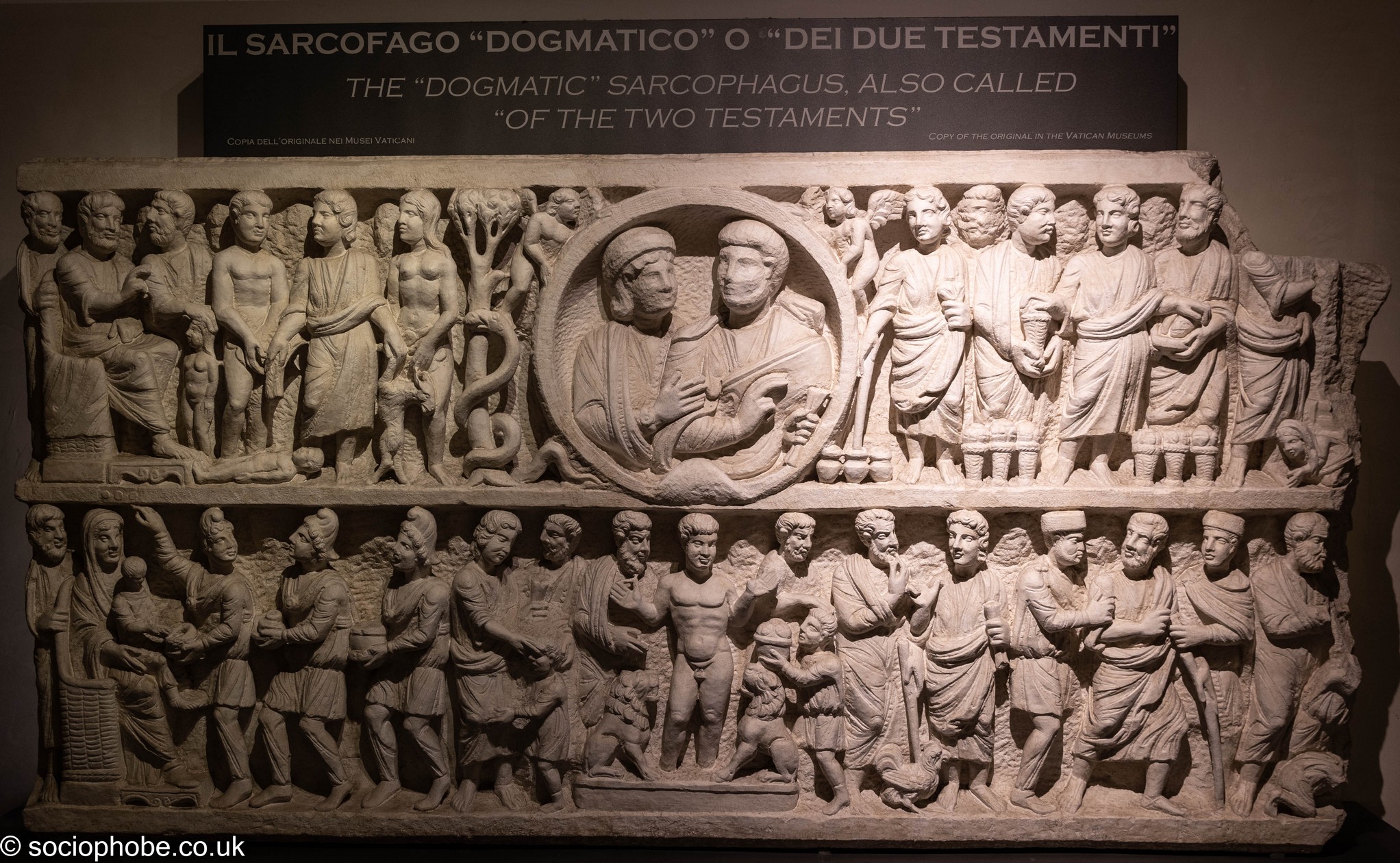
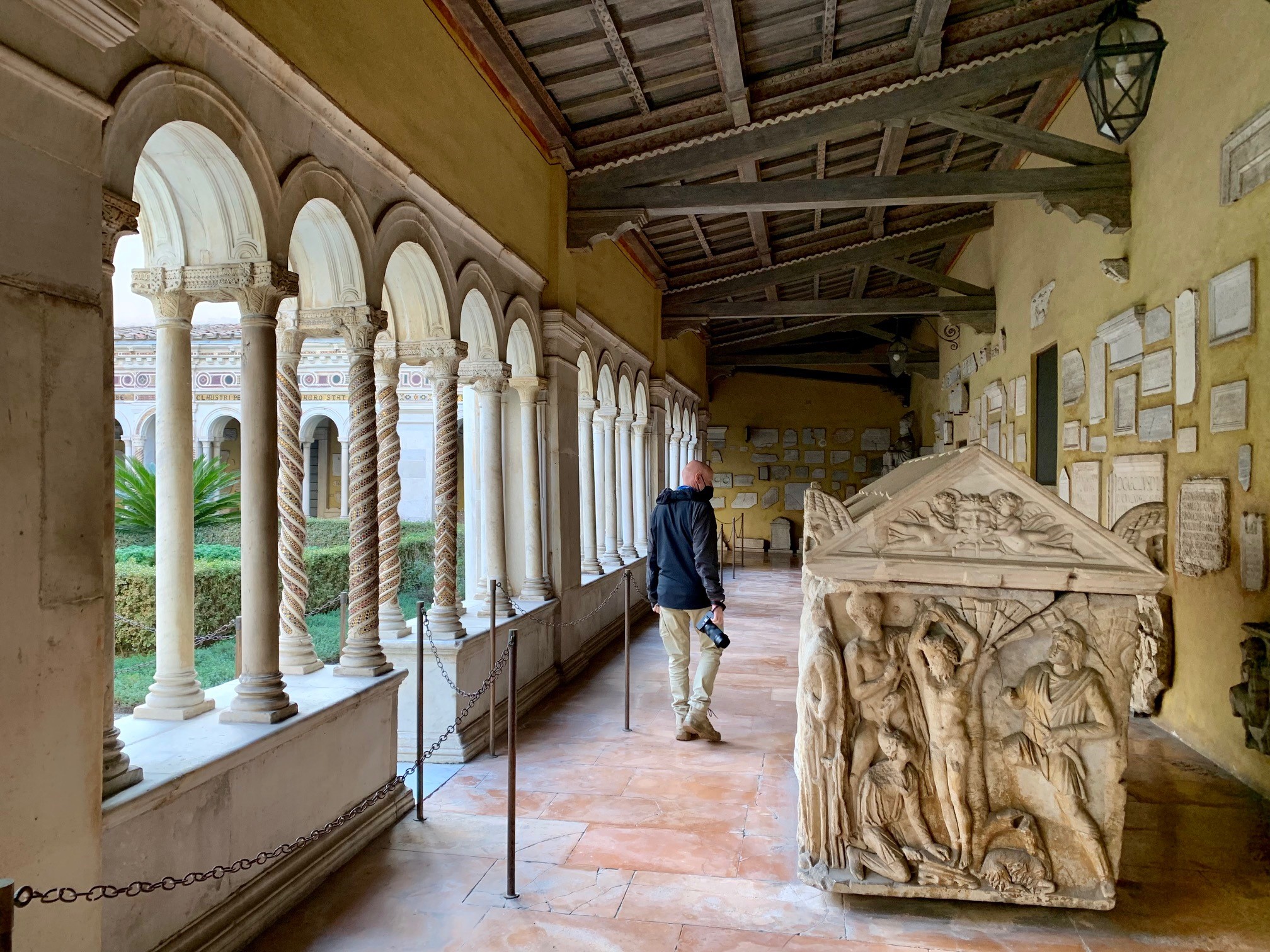
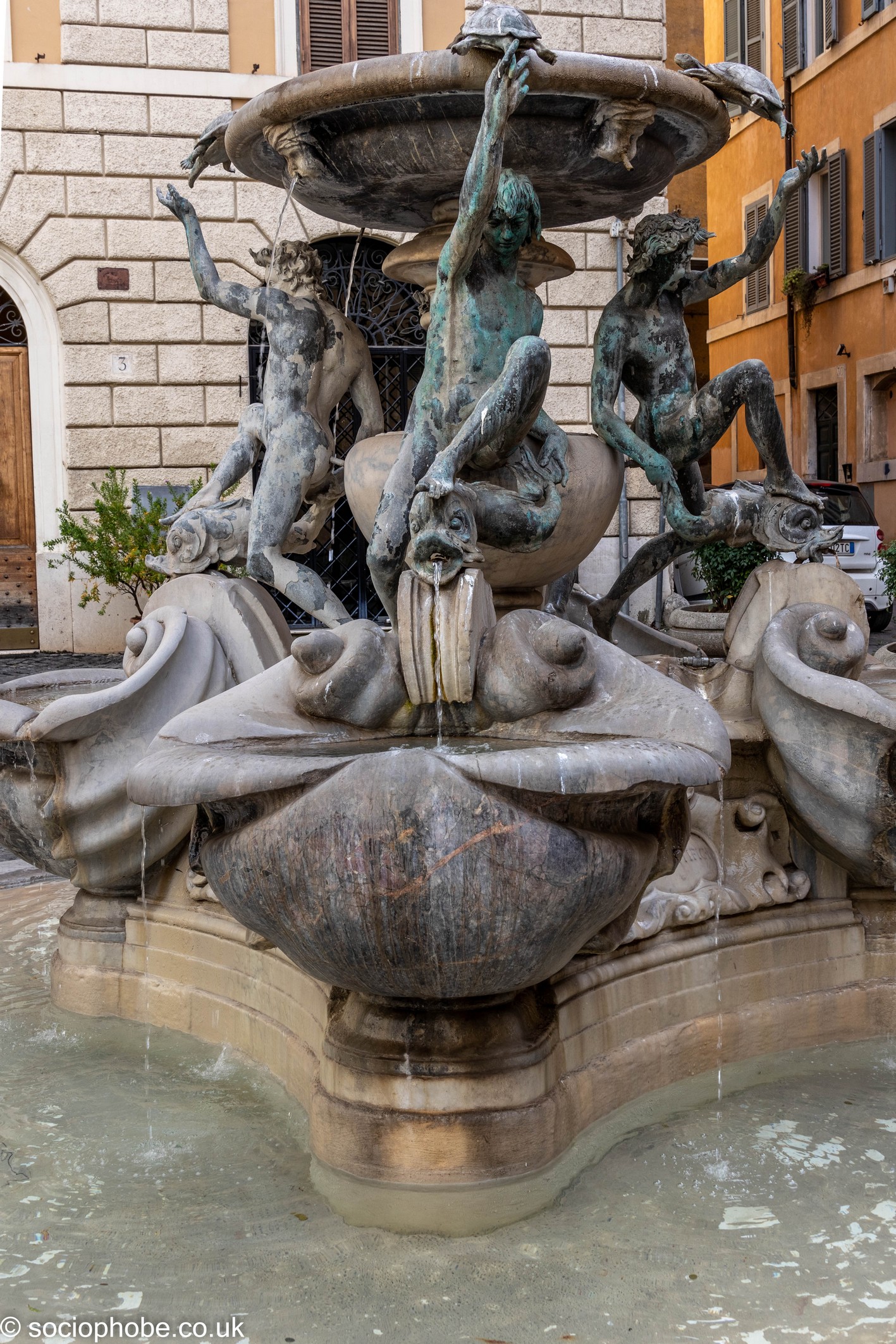
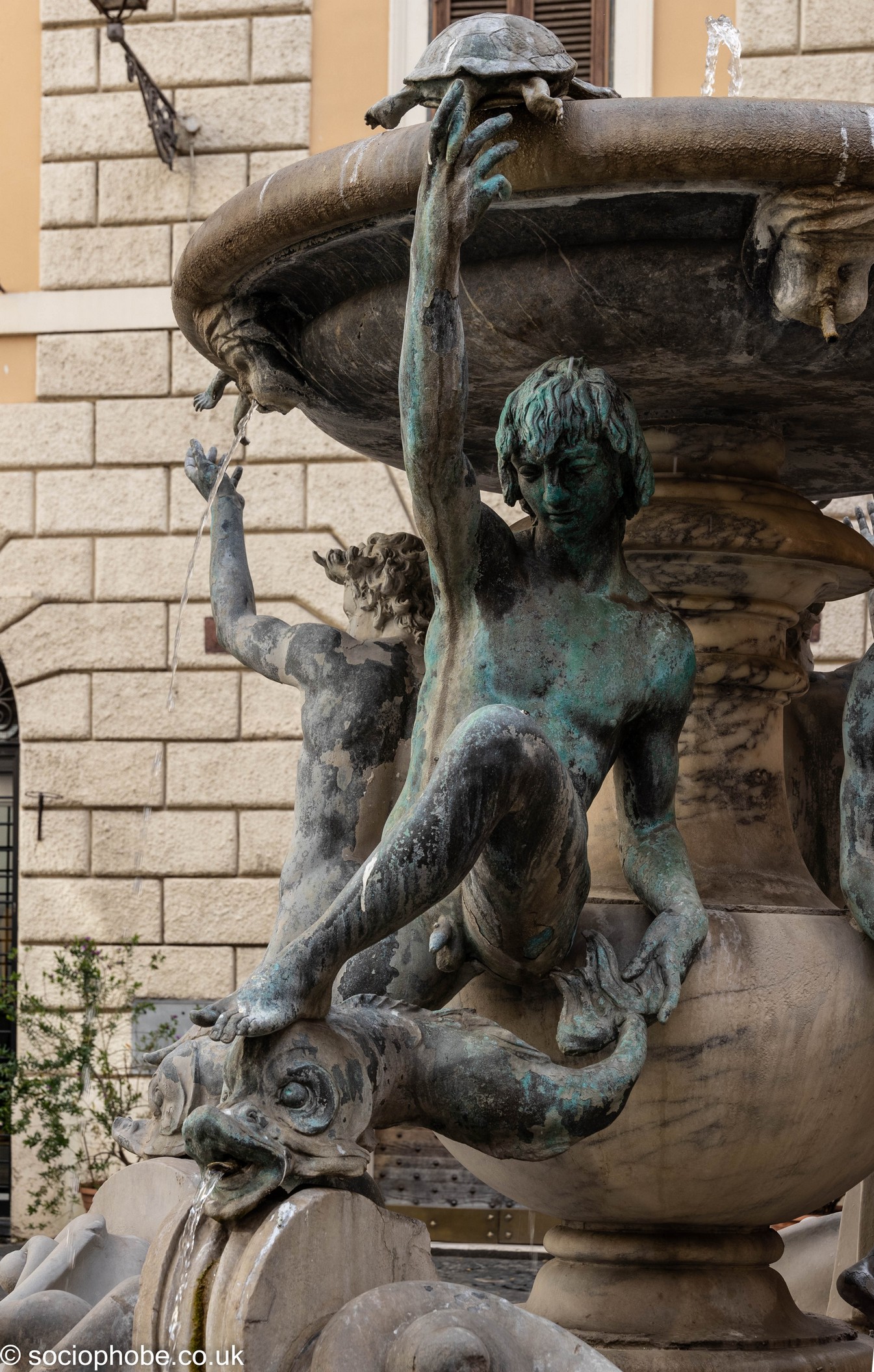
More of Rome followed as we crossed and recrossed the Tiber and went up and down most of the seven hills. The Baths of Caracalla and Circus Maximus were both huge structures that needed a visit in their own right and our final visit was through the Jewish ghetto and ending up at the Turtle Fountain (although it probably has a less mundane and more musical Italian name!). The tour was great fun, more like catching up with an old friend than being lectured and I think we covered pretty much every topic from religion to sex to corruption in our five hours!
The Spanish Steps at night
Back at the hotel was the joyless tedium of doing all the damned stupid travel documents to get back to the UK. On the plus side I’d taken very few pictures so that was an unusually easy job. We went out before sunset, walking along to the Spanish Steps and then through the Borghese Park to the far Terrazza del Pincio where we watched the sun finally sink below the horizon. The area looked like a car park but there were lots of couples and individuals just enjoying the view and/or listening to the busker.
We walked down the Spanish Steps and looked around the Piazza di Spagna before ambling back through the streets to the hotel. There were lots of police around, which is always good to see although once we were off the commercial streets there was lots of litter around and seriously uneven pavements. Coffee back at the hotel before continuing the travel document process.
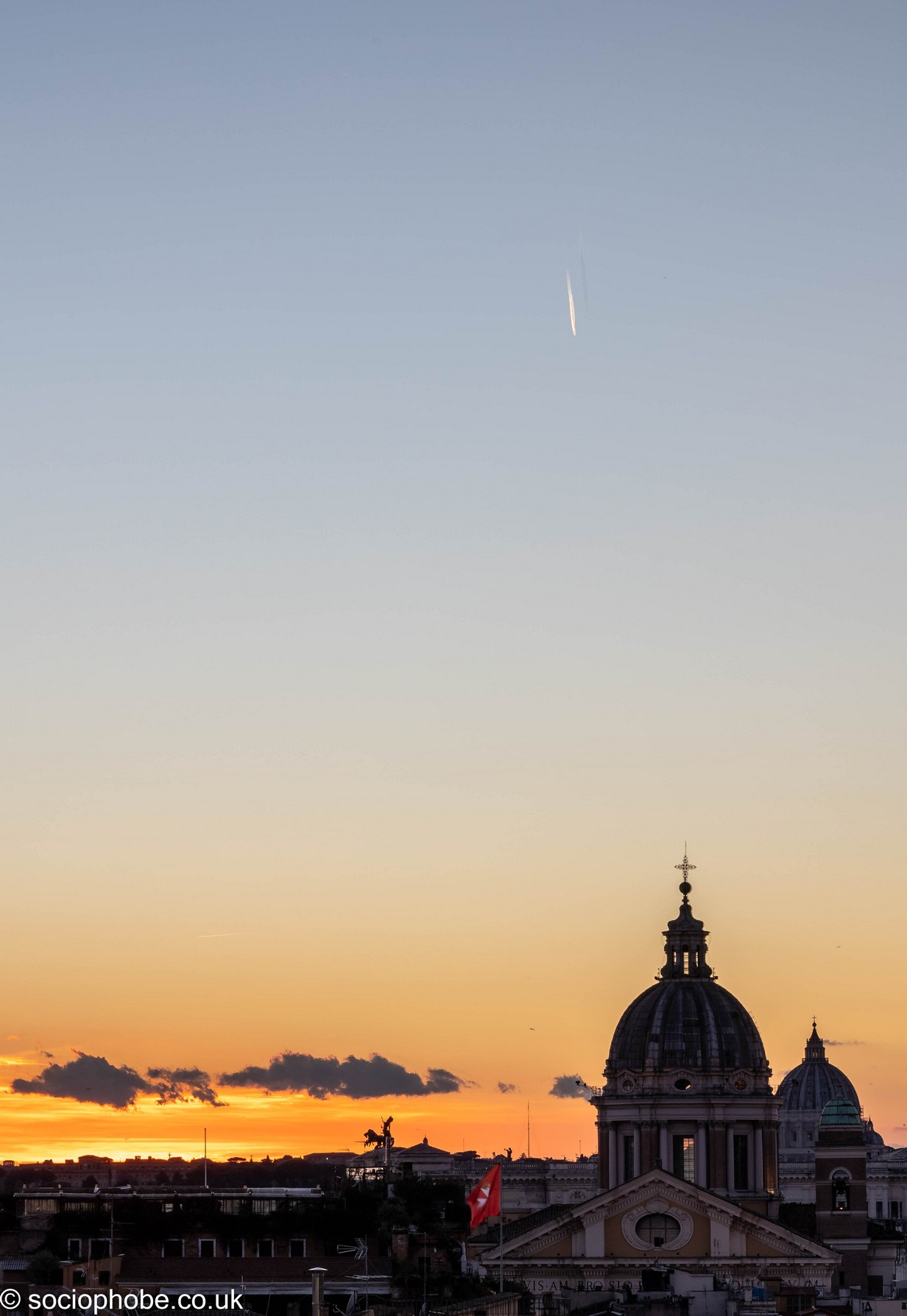
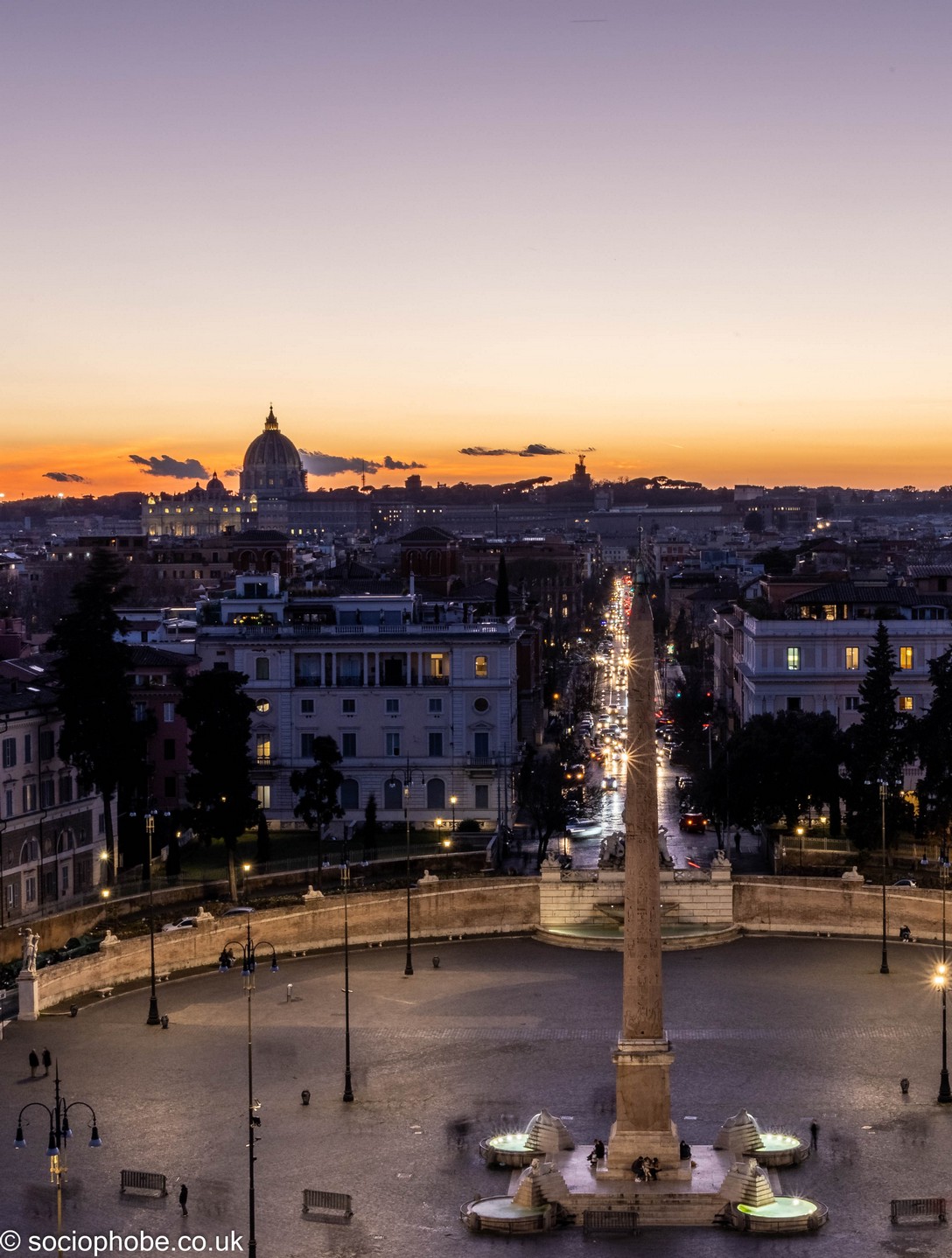
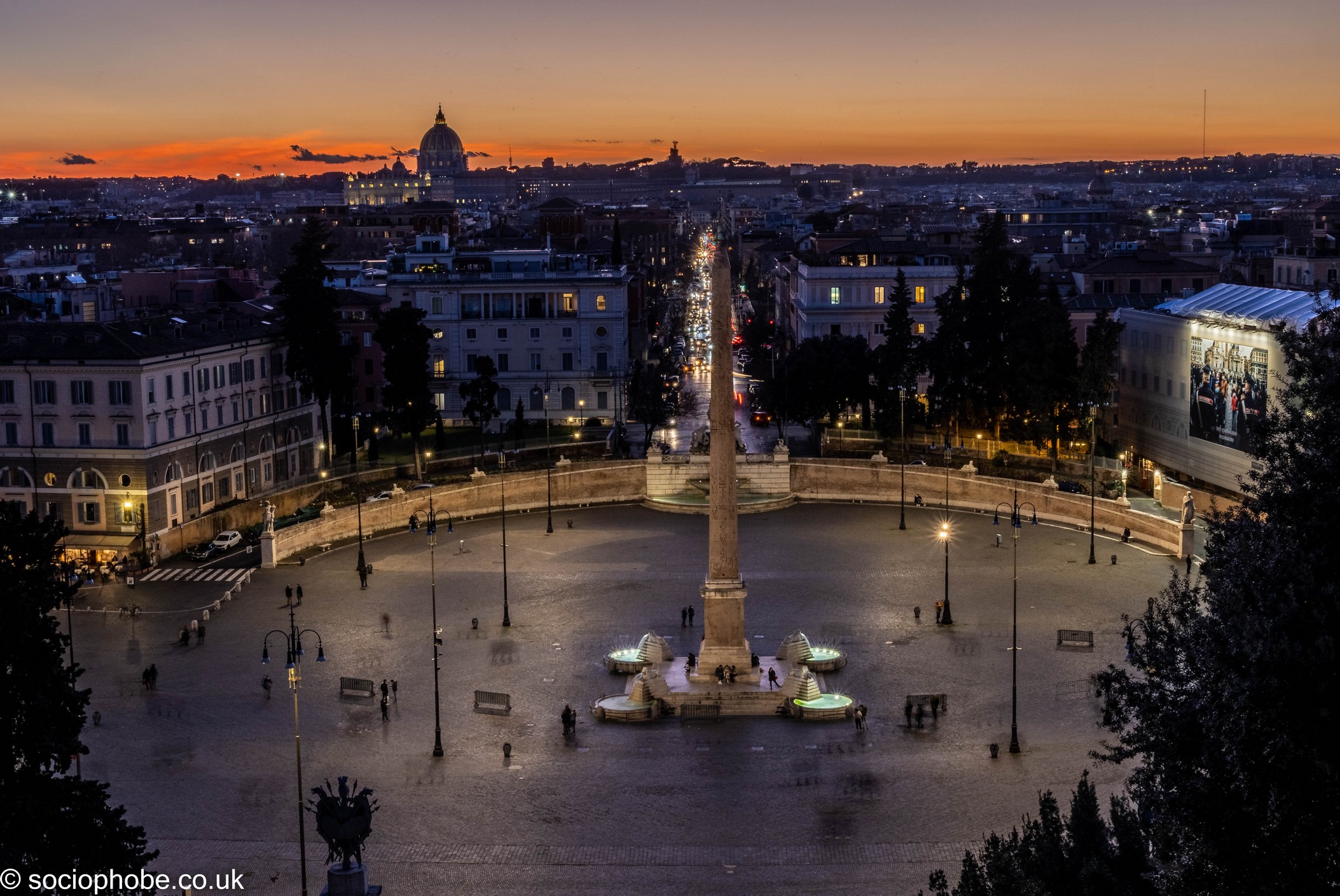
Rome was such a fantastic place for a city break, so much so that I’m going to book a return trip for 2023. It’s not like we have run out of stuff to see after this trip!