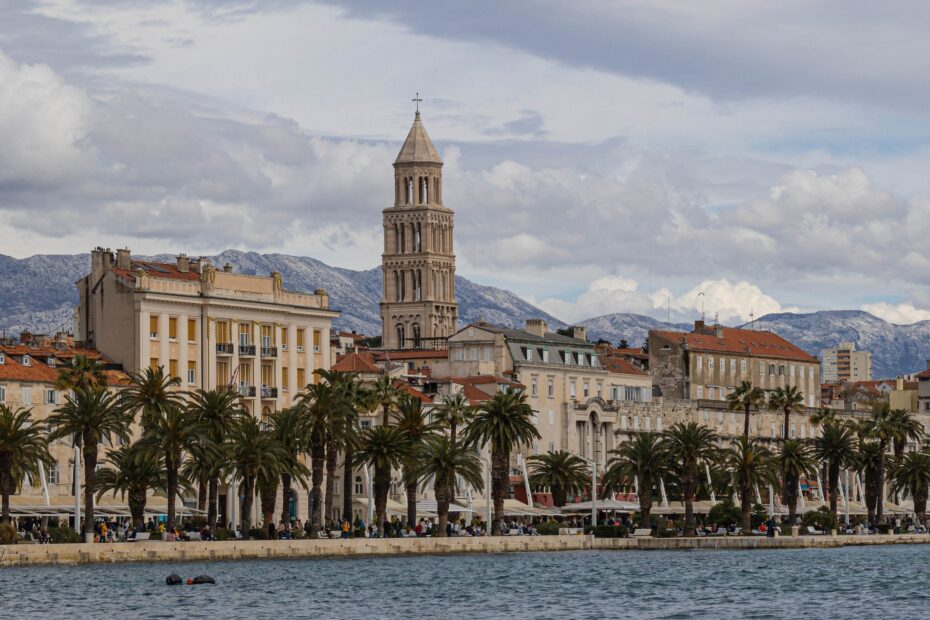
The Croatian town of Split is the site of Diocletian’s Palace and we spent a long weekend exploring the old town and surrounding area. The town sits on the Adriatic Sea and the palace was built as both a fortress and residence in the increasingly unstable Empire.

Why Split?
A bit of background – Split is in the north of Croatia and on the Dalmatian coast. It is famous for its old town which was largely built inside the walls of Diocletian’s Palace. “Who is Dioclectian?” I don’t hear you say, well he was a 3rd century Roman emperor who reformed the tax system, legal codes, army and bureaucracy as well as dividing the empire amongst four rulers to make the job more realistic. Mostly remembered by somewhat biased Christian writers as he initiated the final purge to attempt to eradicate Christianity from the Empire. He is somewhat less famous for being the only emperor to actually abdicate and spent his final years growing cabbages.
Our accomodation – Central Heritage Hotel
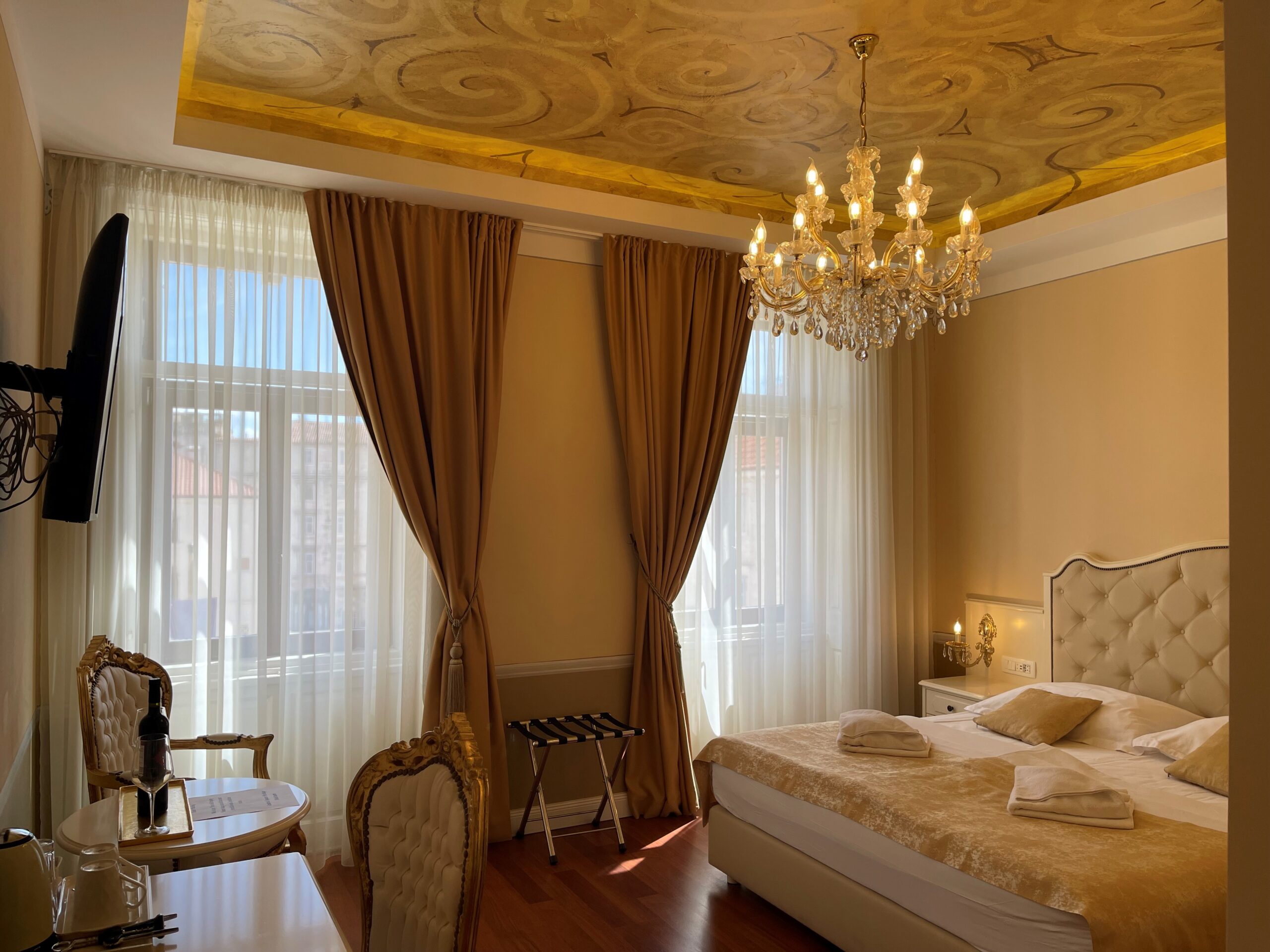
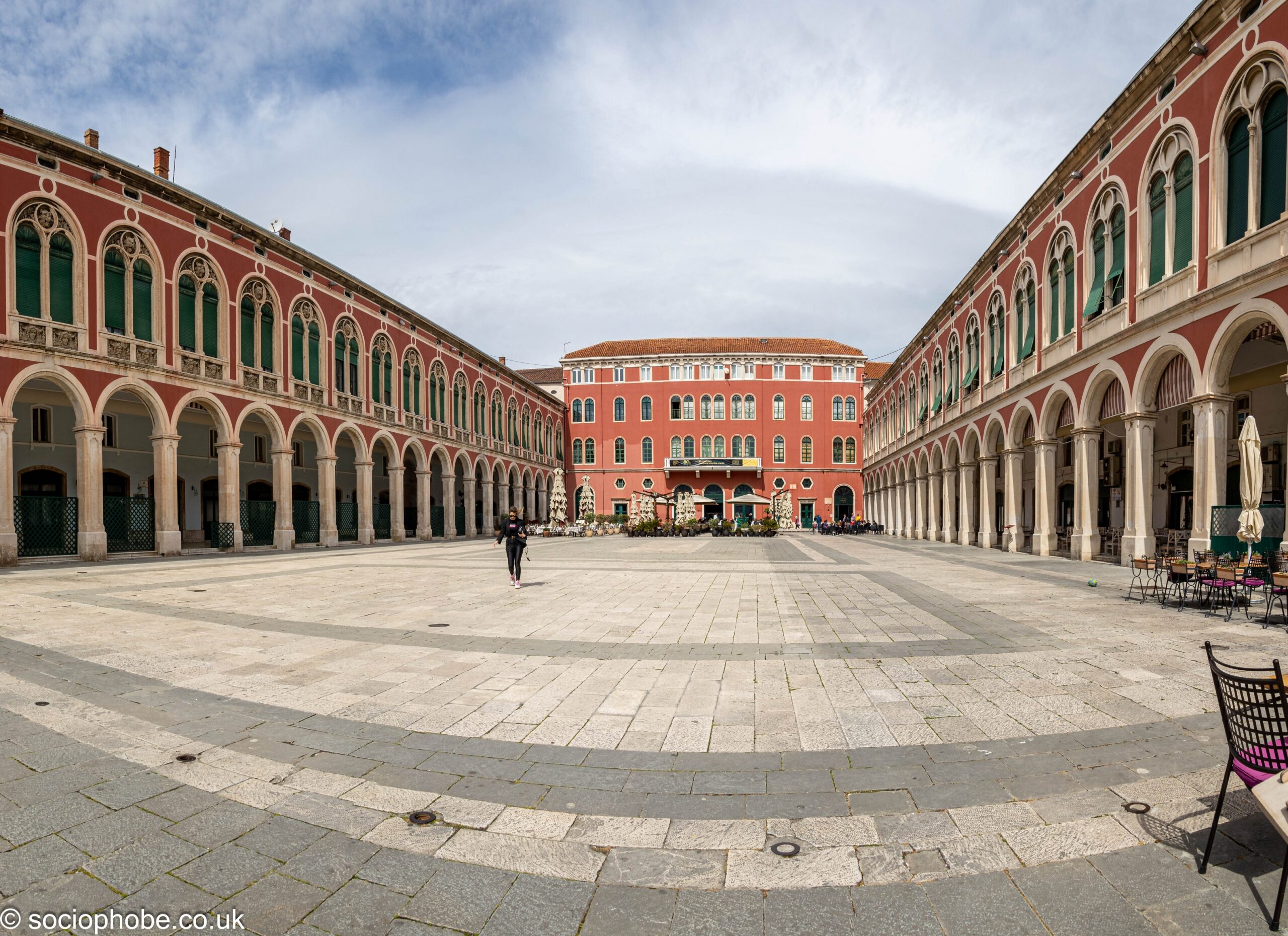
We stayed at the Heritage Hotel on the Central Square in the old town, a fabulous choice. After the taxi had dropped us at the Riva car park (the seaside promenade) we had to wait for Google to orientate itself before the short walk to the hotel. The old city is entirely pedestrianised as even Diocletian couldn’t forsee cars and most of the streets were barely wide enough for a bike. Our room was fantastic, baroque style in a restored nineteenth century building and overlooking the square. The room was spacious and quiet and served as a great base as all the main attractions were within a few minutes walk.
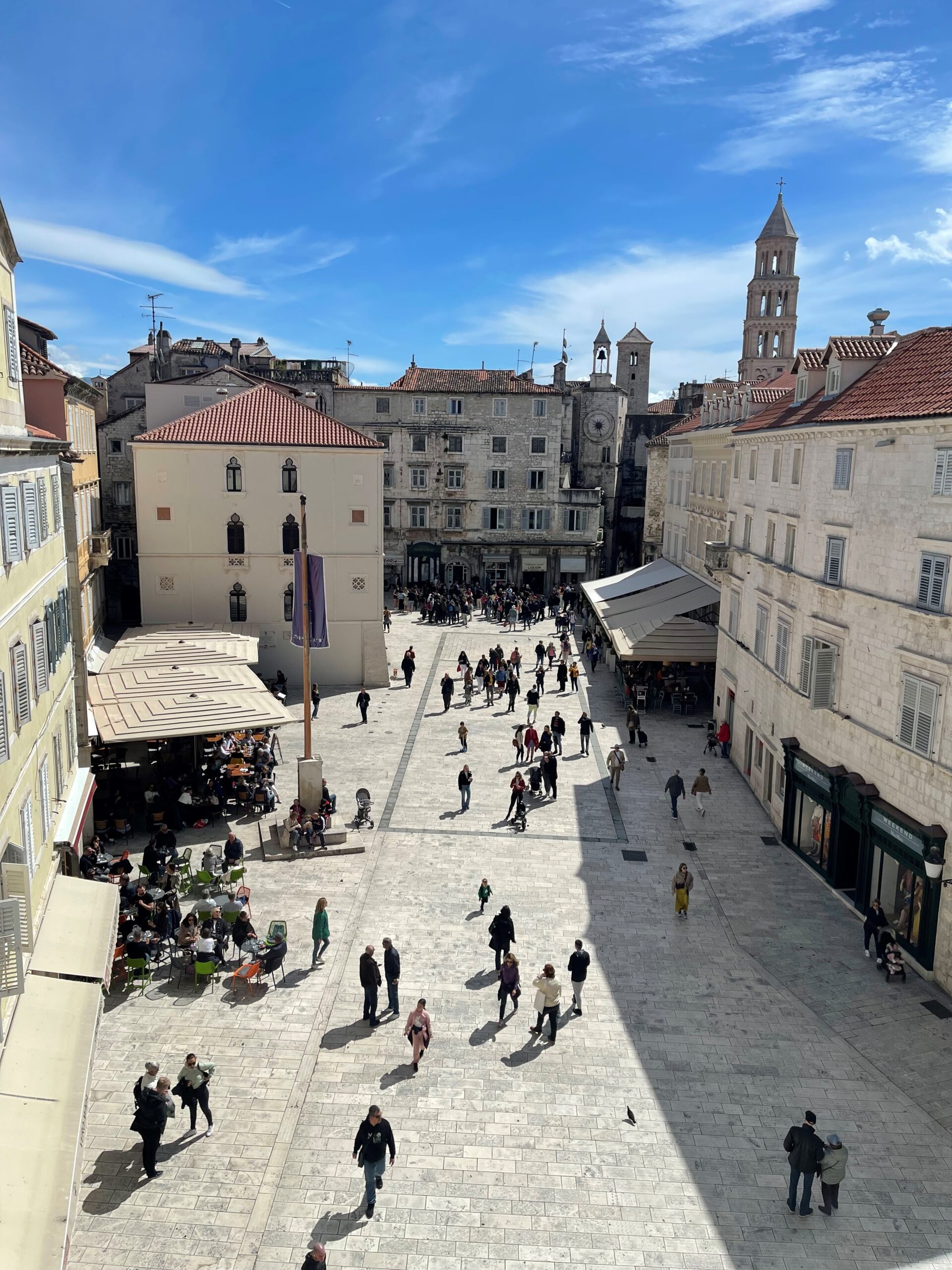
By this time, maybe 11, we were debating whether to have a nap but we dragged ourselves out and started exploring. Well, actually we walked about 20m to a gelato shop but after that we were ready to explore. The old town is probably about 5 minutes walk from end to end but there are so many narrow streets and passageways that there is actually a lot to see.
Split Cathedral
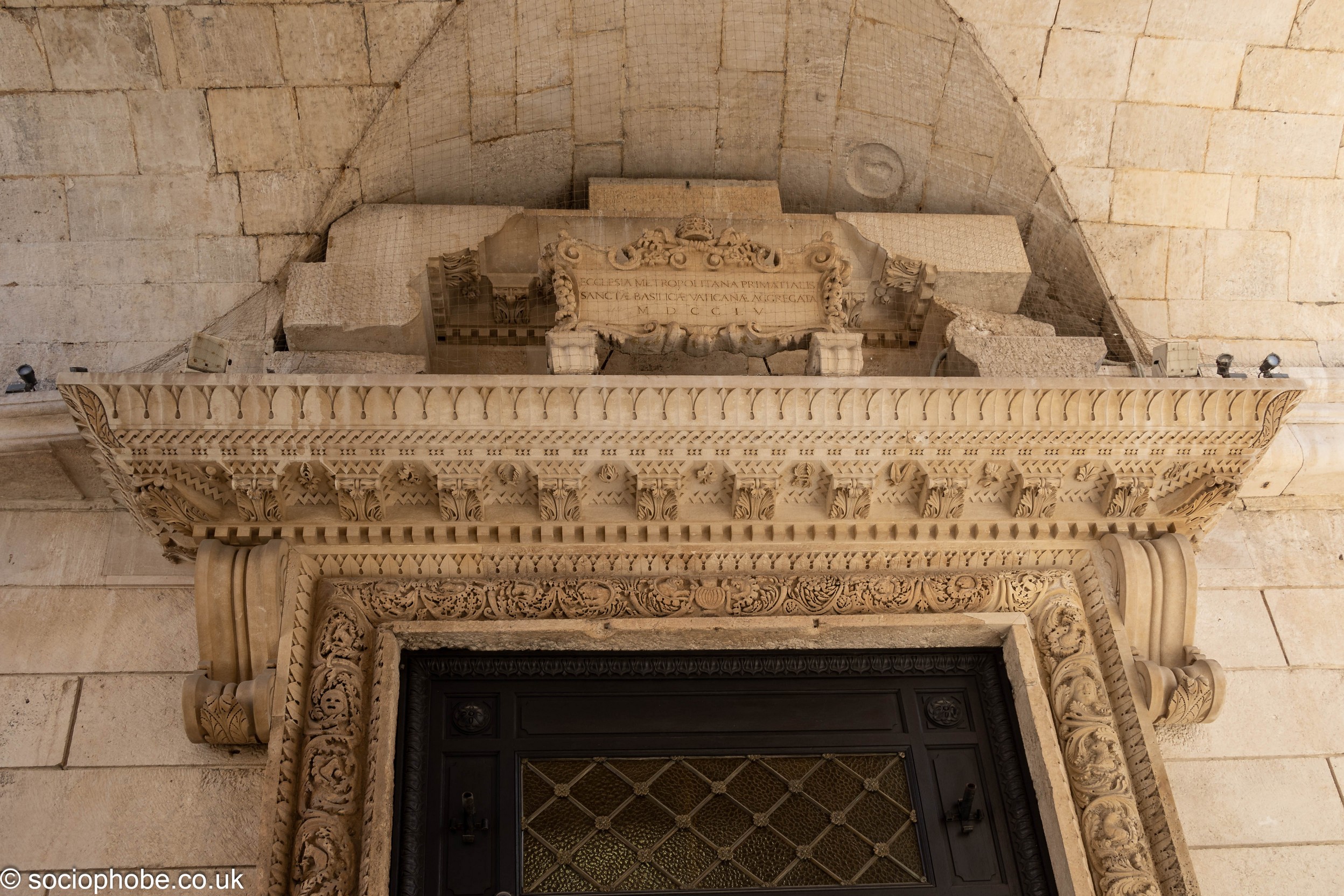
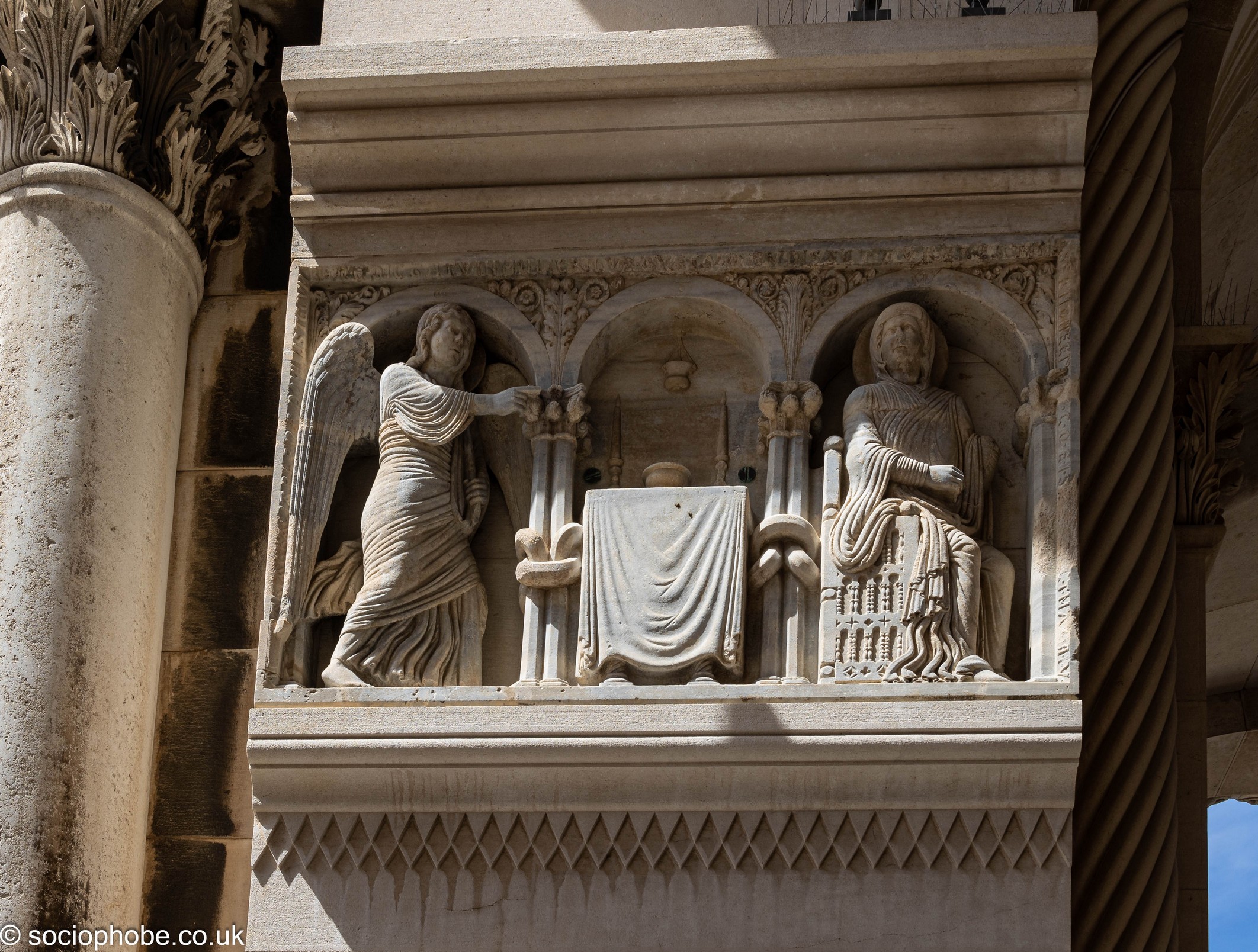
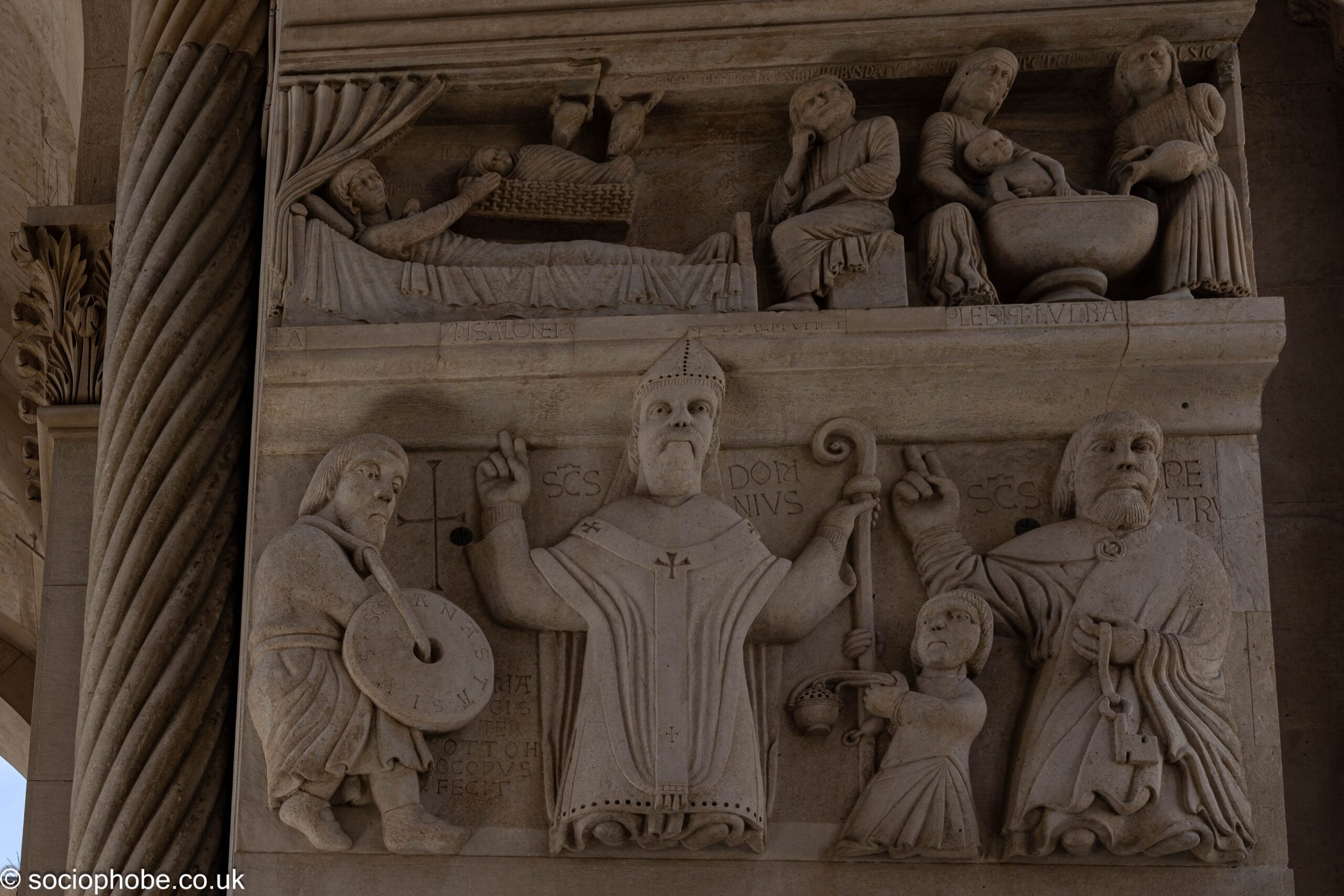
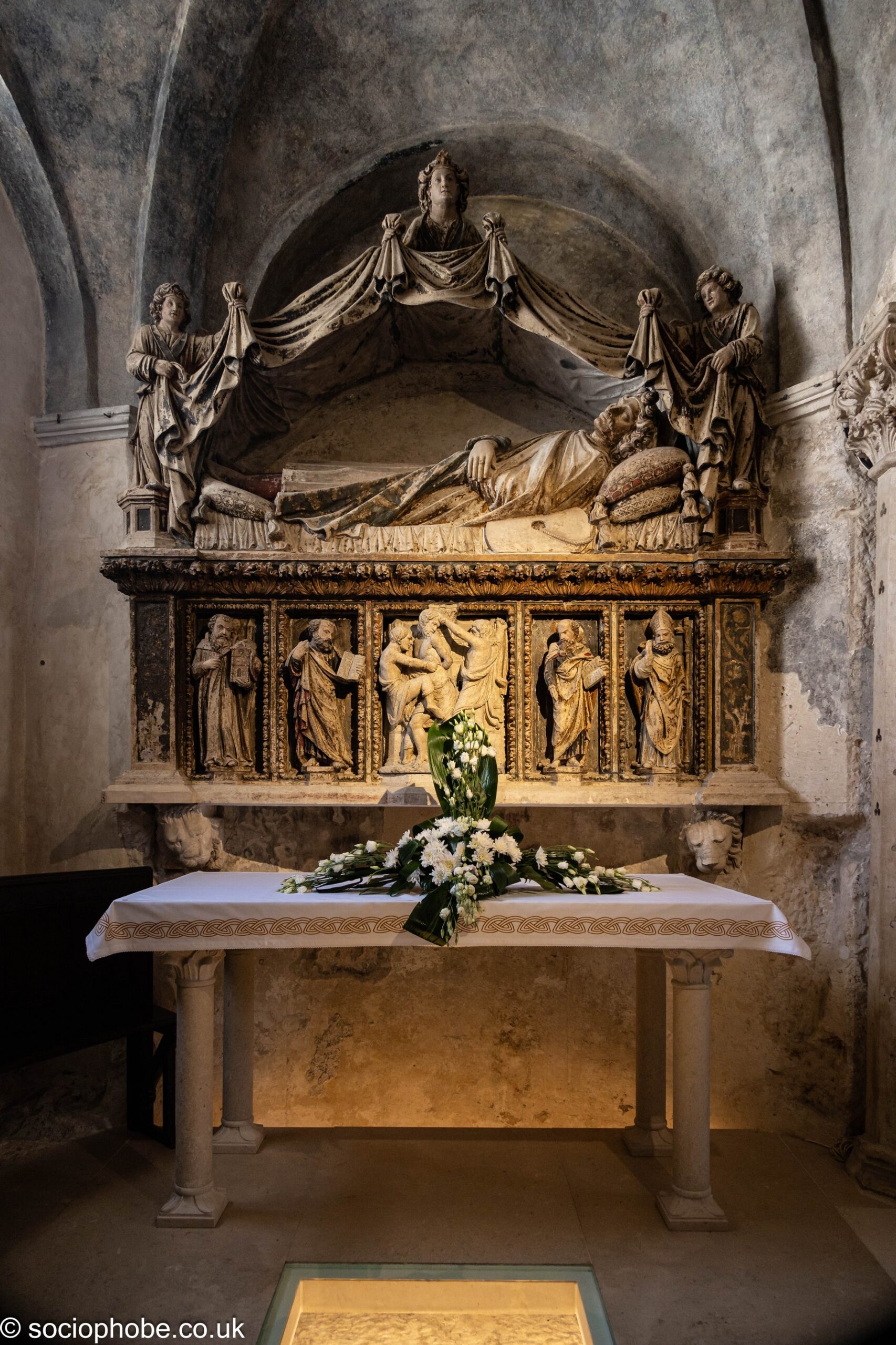
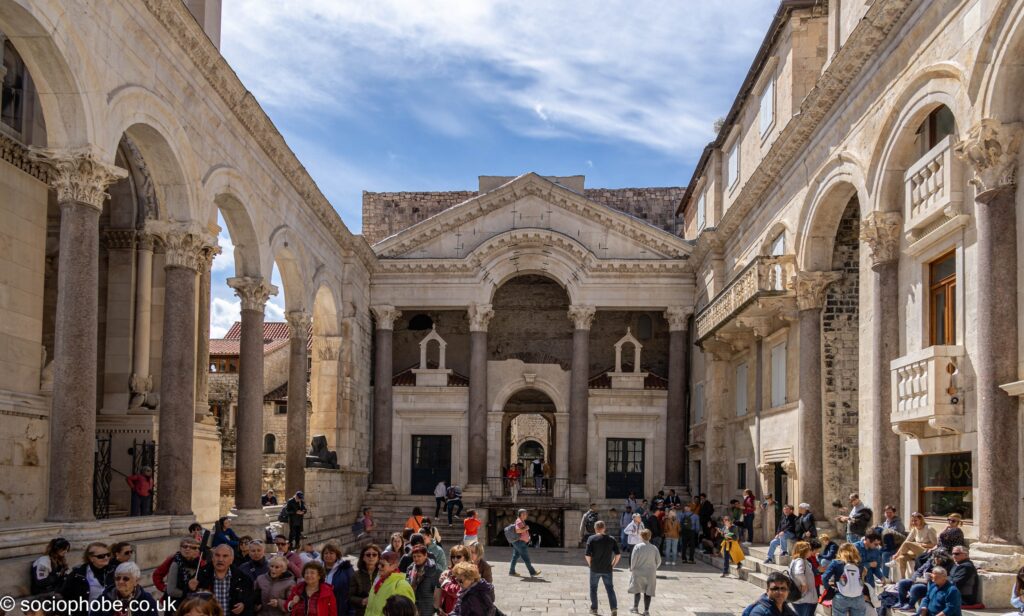
First stop was the cathedral – originally poor old Diocletian’s mausoleum but later appropriated by the church as a small place of worship. Tickets for the cathedral, bell tower, treasury and Temple of Jupiter were all purchased from the office opposite the cathedral steps.
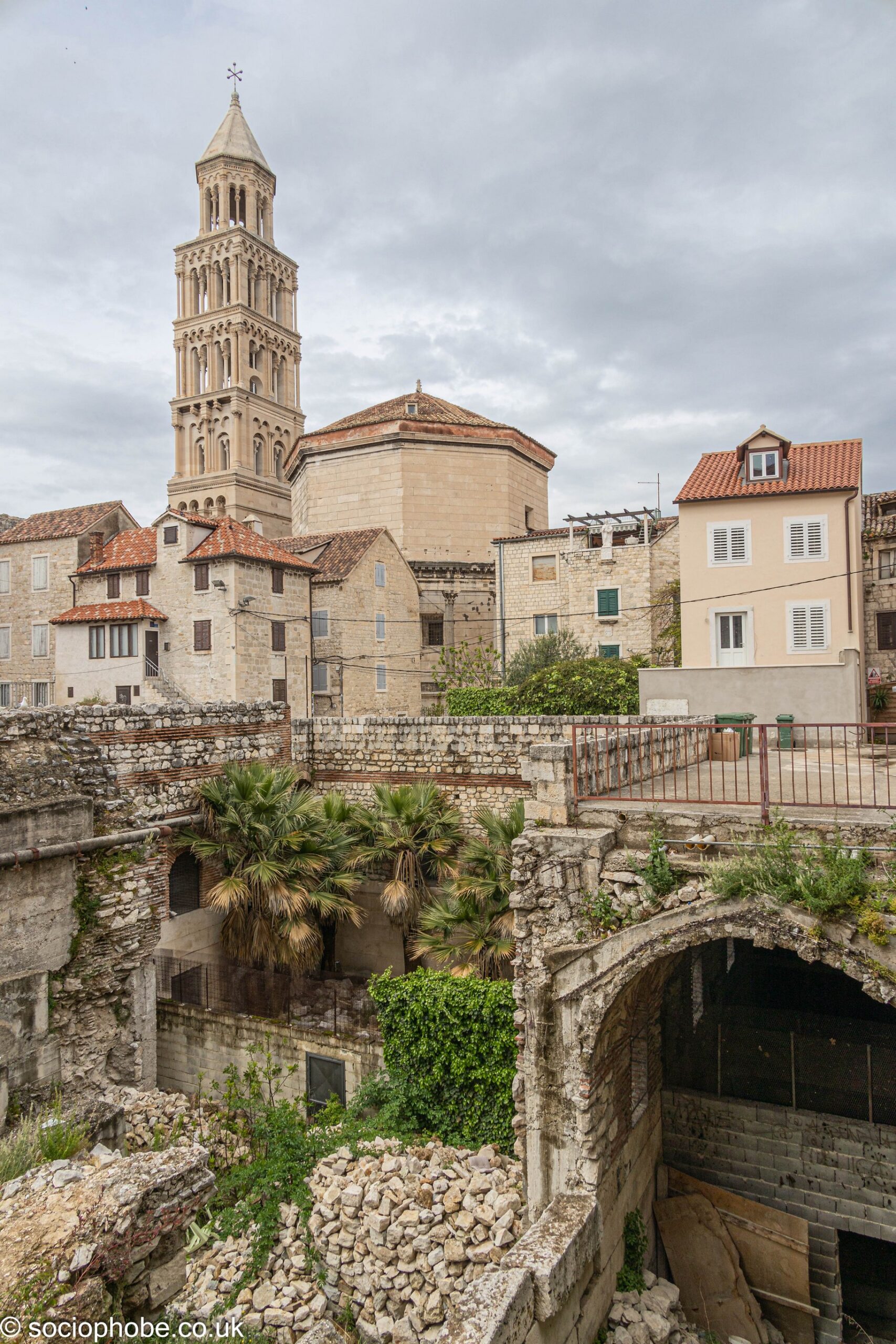
The beautiful dome and columns of the mausoleum were still there but the sarcophagus containing Diocletian’s remains was ritually destroyed in the 7th century when the building was sanctified as a Christian cathedral. The building retains it’s distinctive octagonal shape and also has a beautiful set of 12th century doors.
Cathedral Belltower
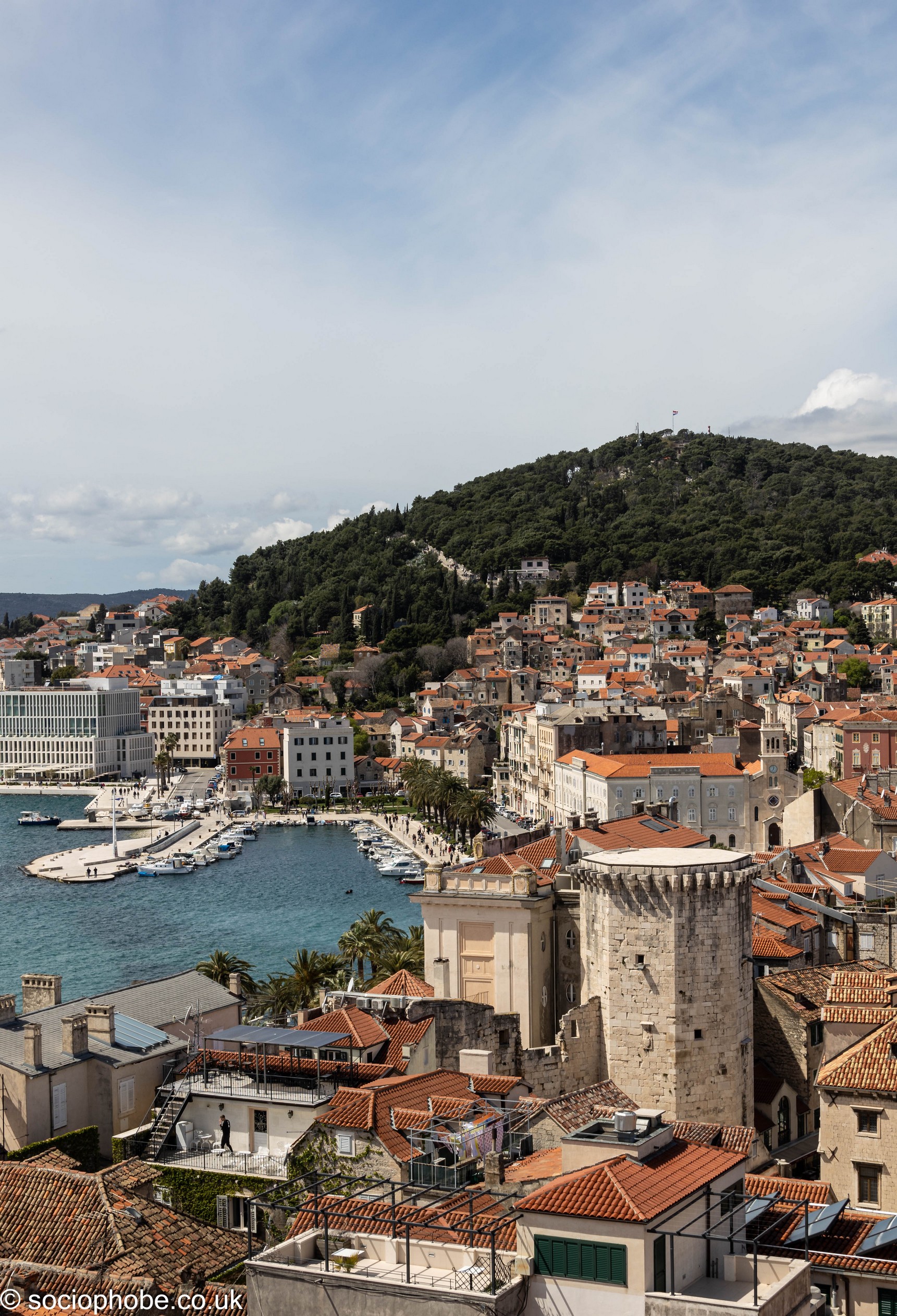
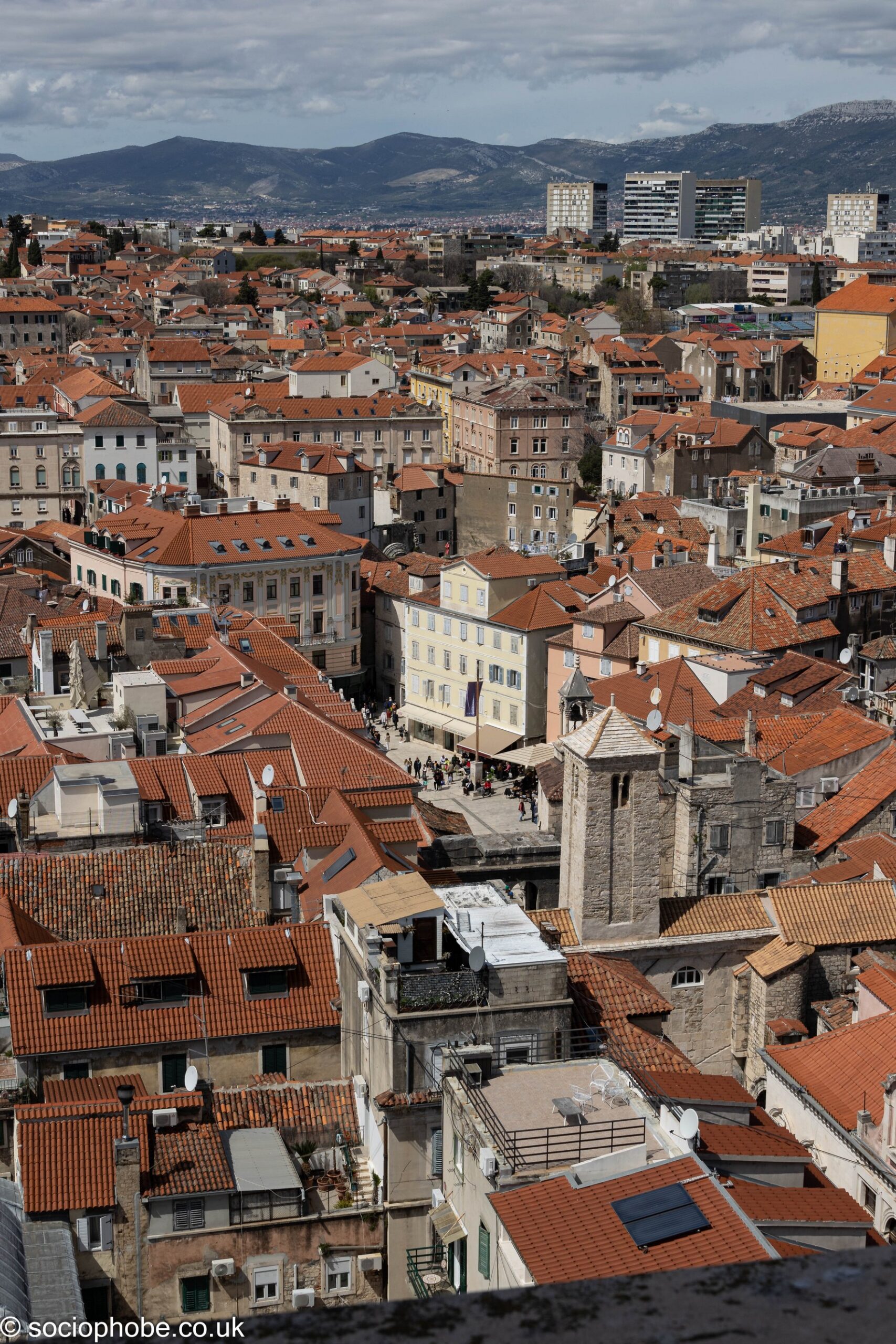
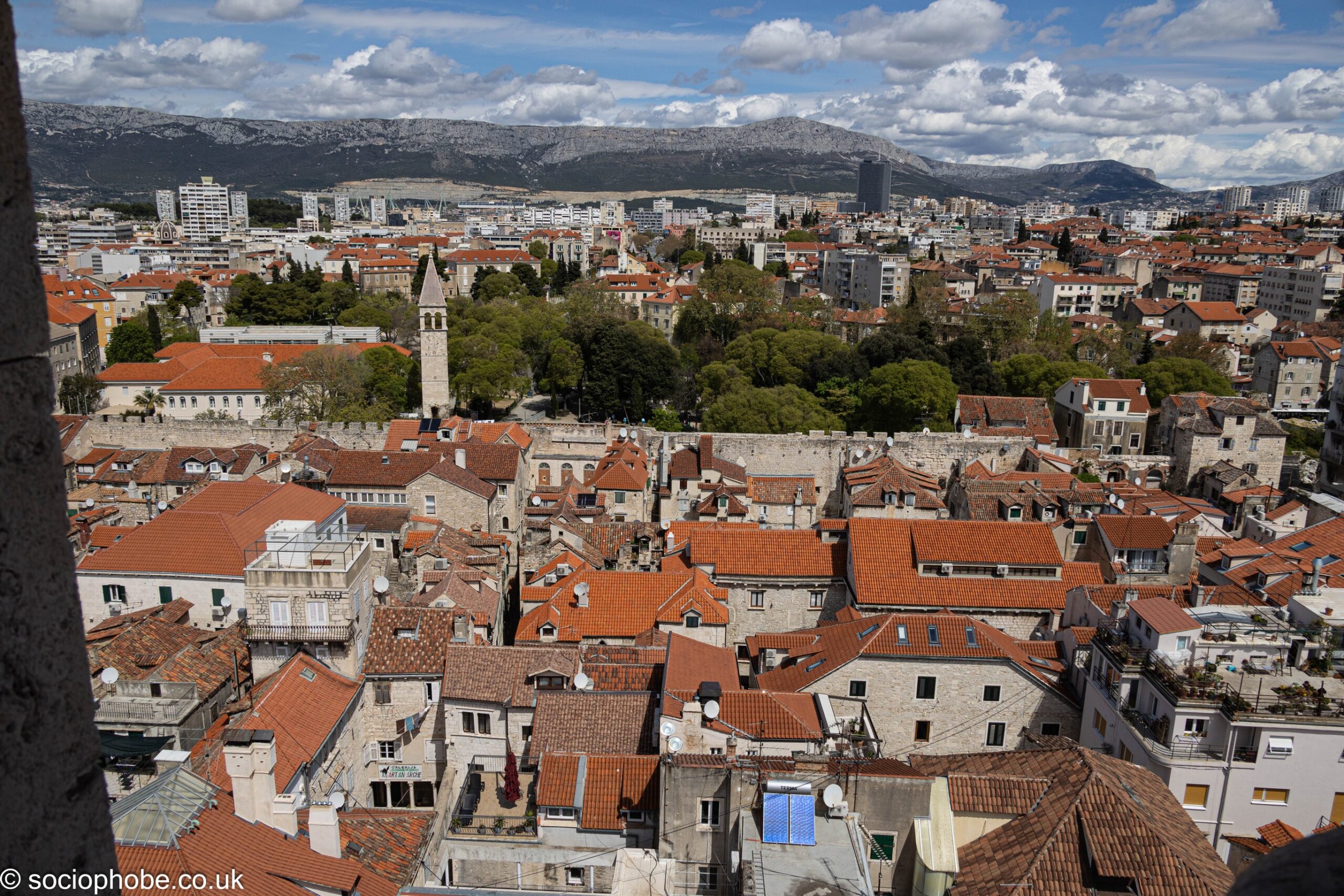
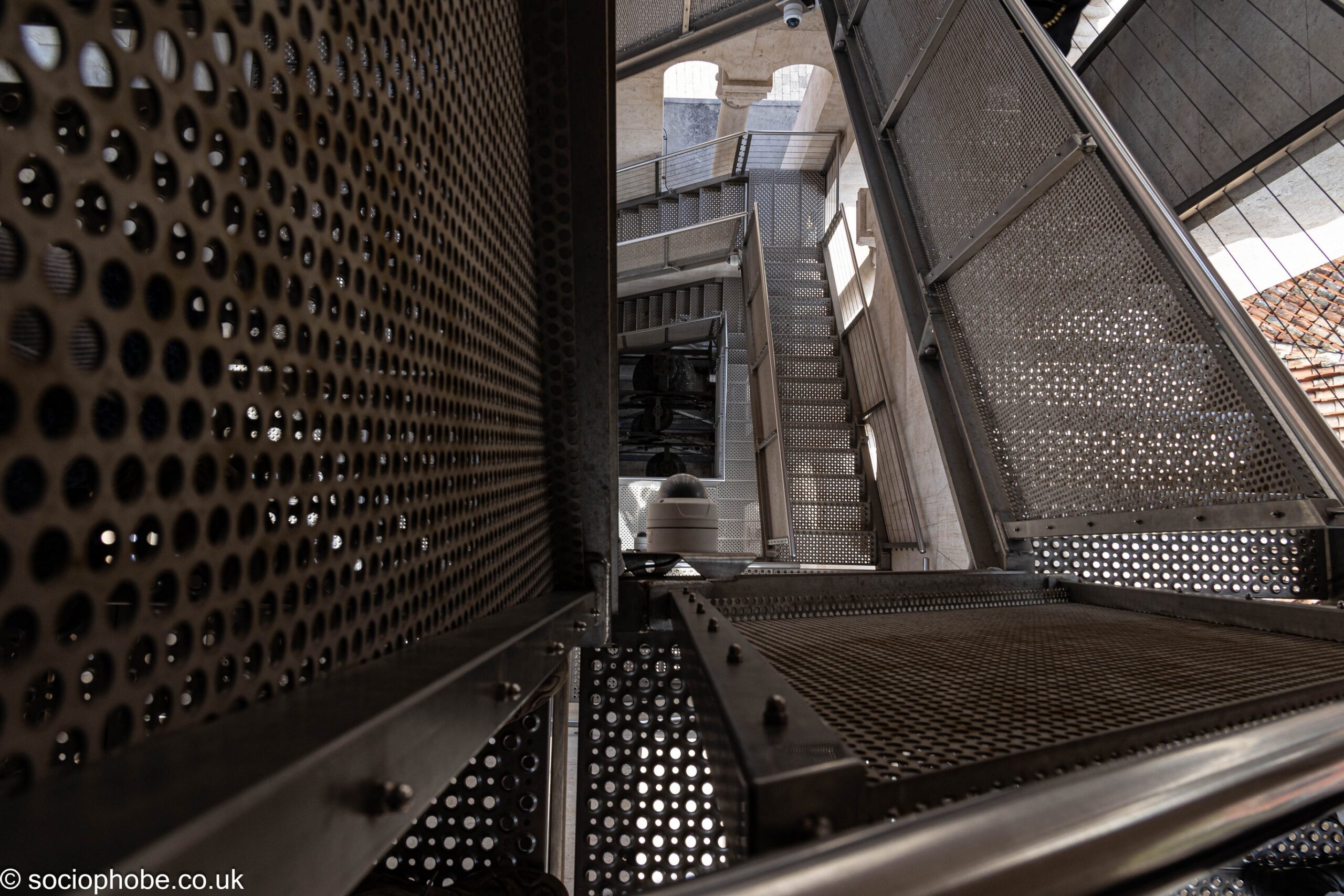
The bell tower was an 11th century addition to the cathedral. We the climbed the ridiculously steep steps although the solidity of those steps was a blessing compared to the open metal stairs they morphed in to after a couple of levels. Don’t look down. Or up. I eventually got to the top and was rewarded with excellent views – the town has very limited vistas due to the high walled buildings and narrow streets.
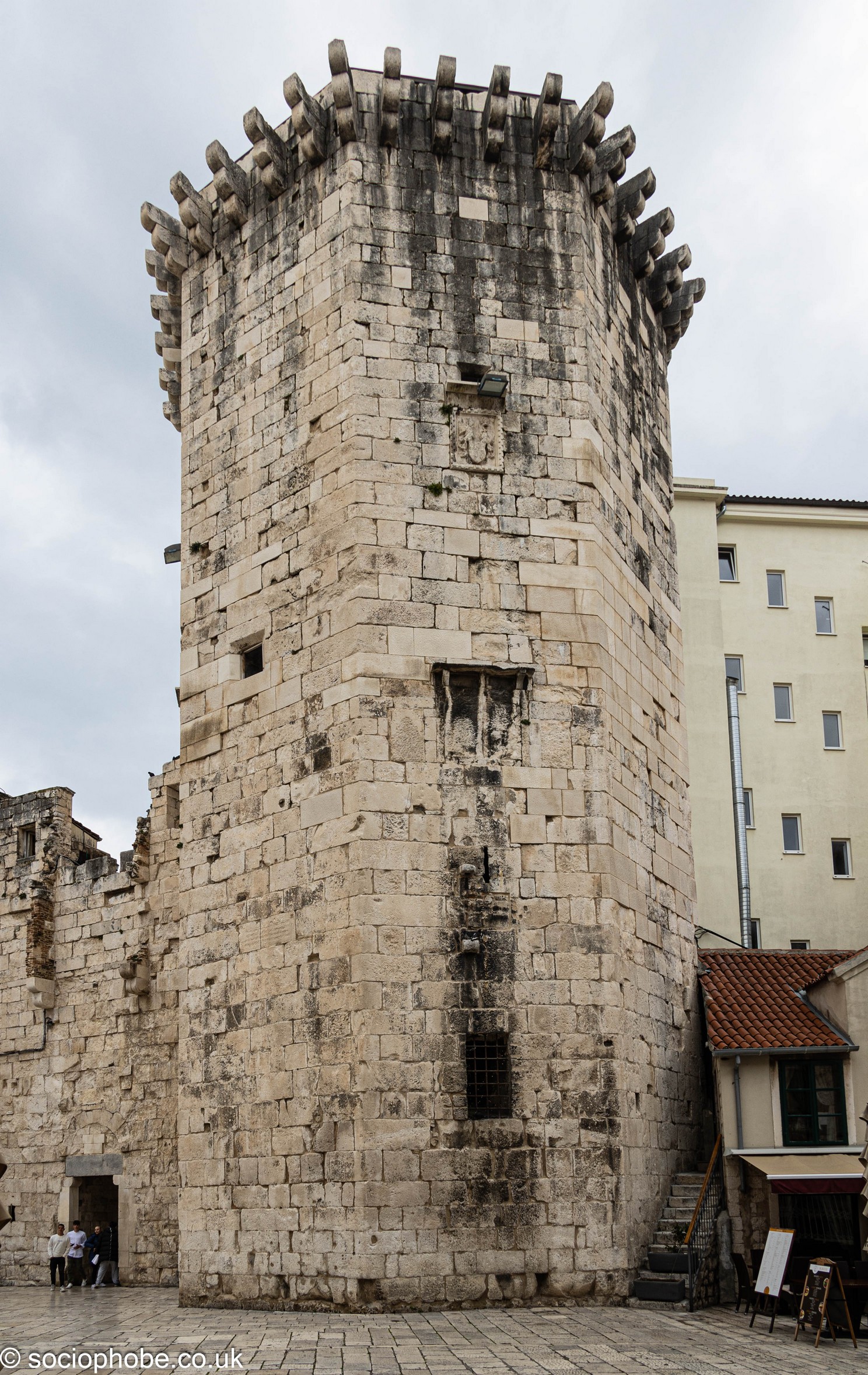
We saw the Marjan Hill and the cruise ships all docked up with their passengers disgorged into the city as well as the remaining defensive towers and church spires raised above the terracotta roofs. We made our way carefully down the stairs and then in to the cathedral treasury.

Cathedral Treasury
This was a quick skim visit as the medieval church stuff was pretty crude so of limited interest after the Roman sculpture. There were also reliquaries of St Jeremiah’s nose hair or something similar – ornate silver and jewel encrusted creations to hold a bone or hair fragment of some purportedly holy man. All in the name of getting the church money of course.
Palace Basement
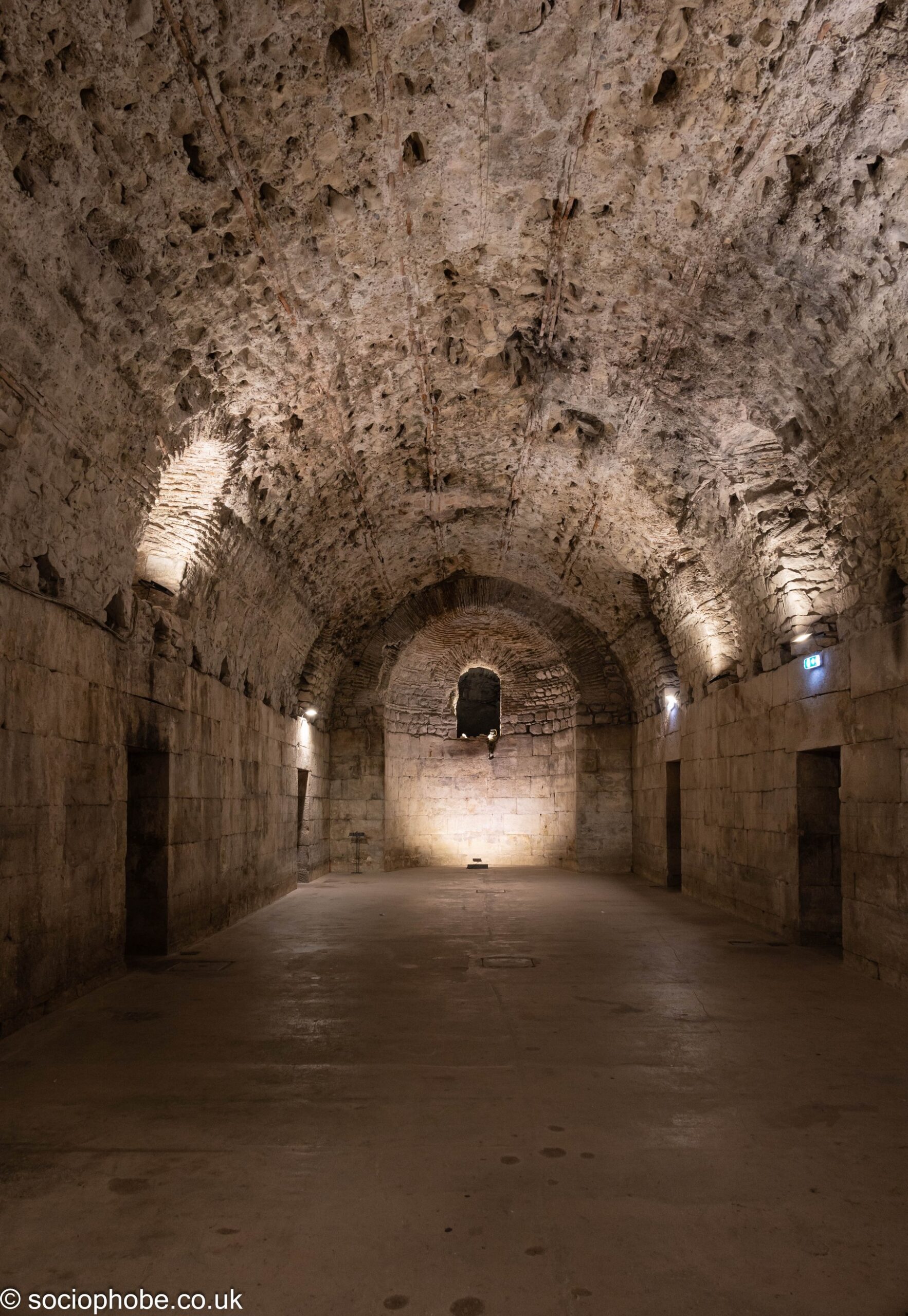
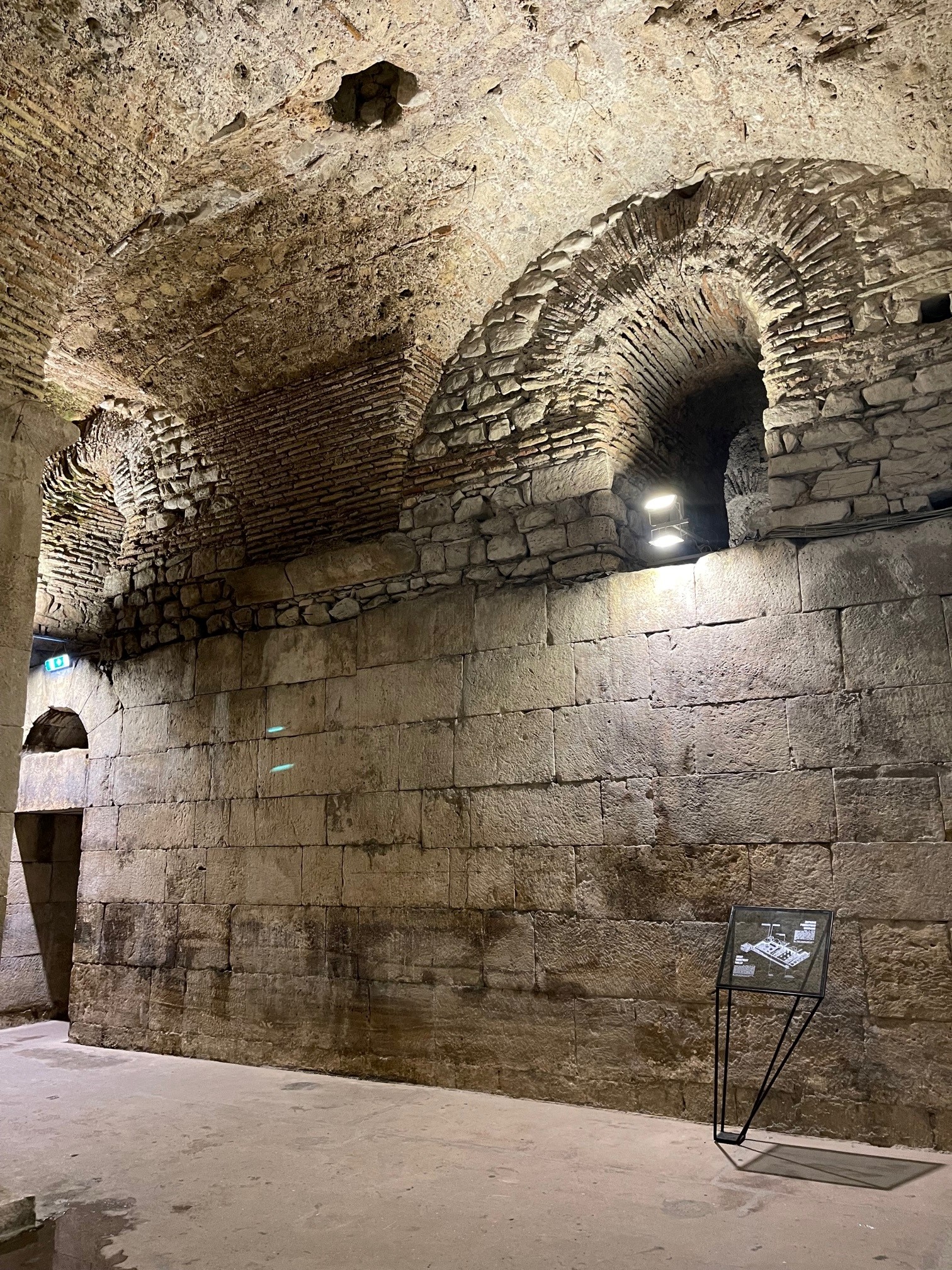
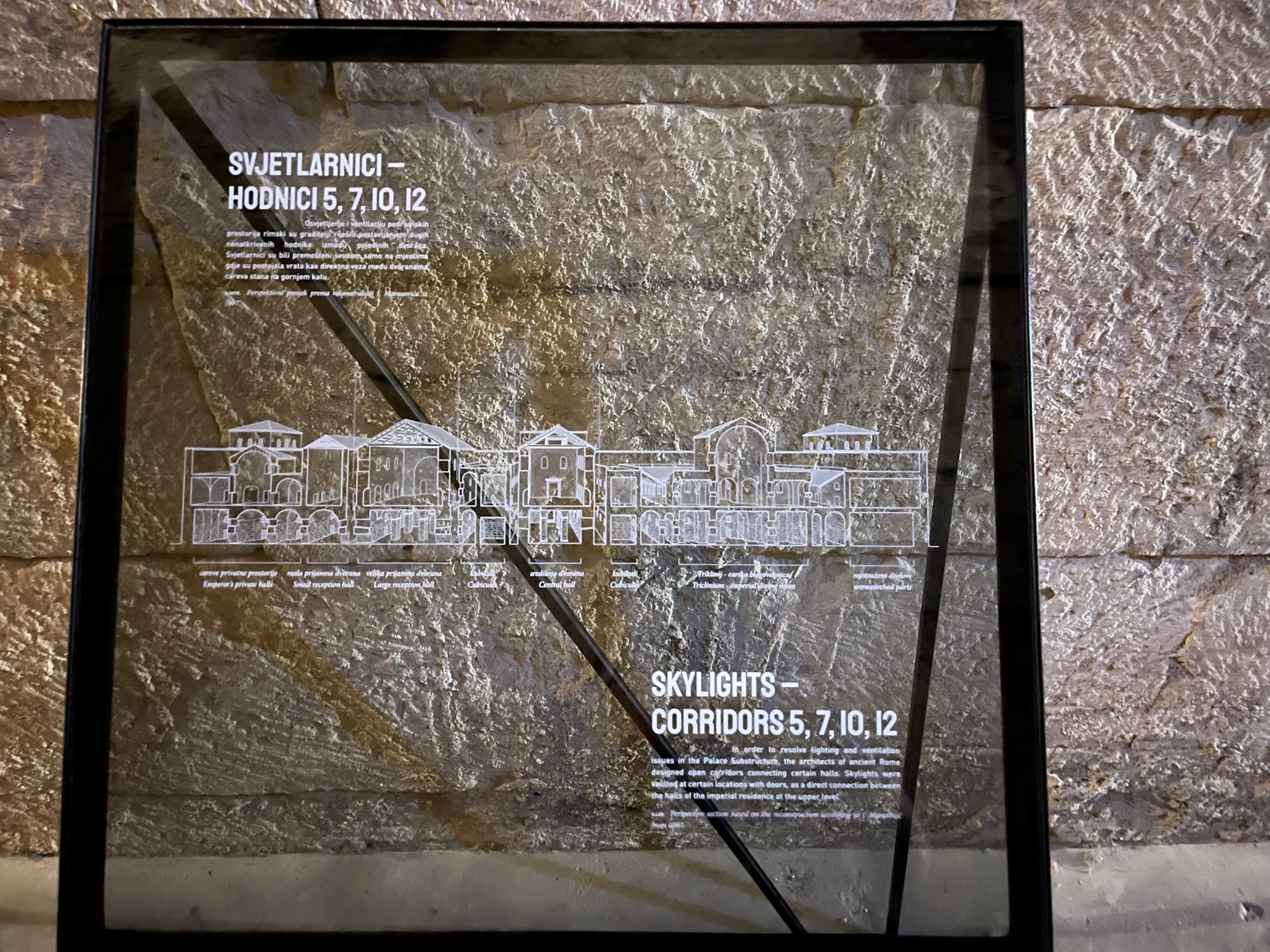
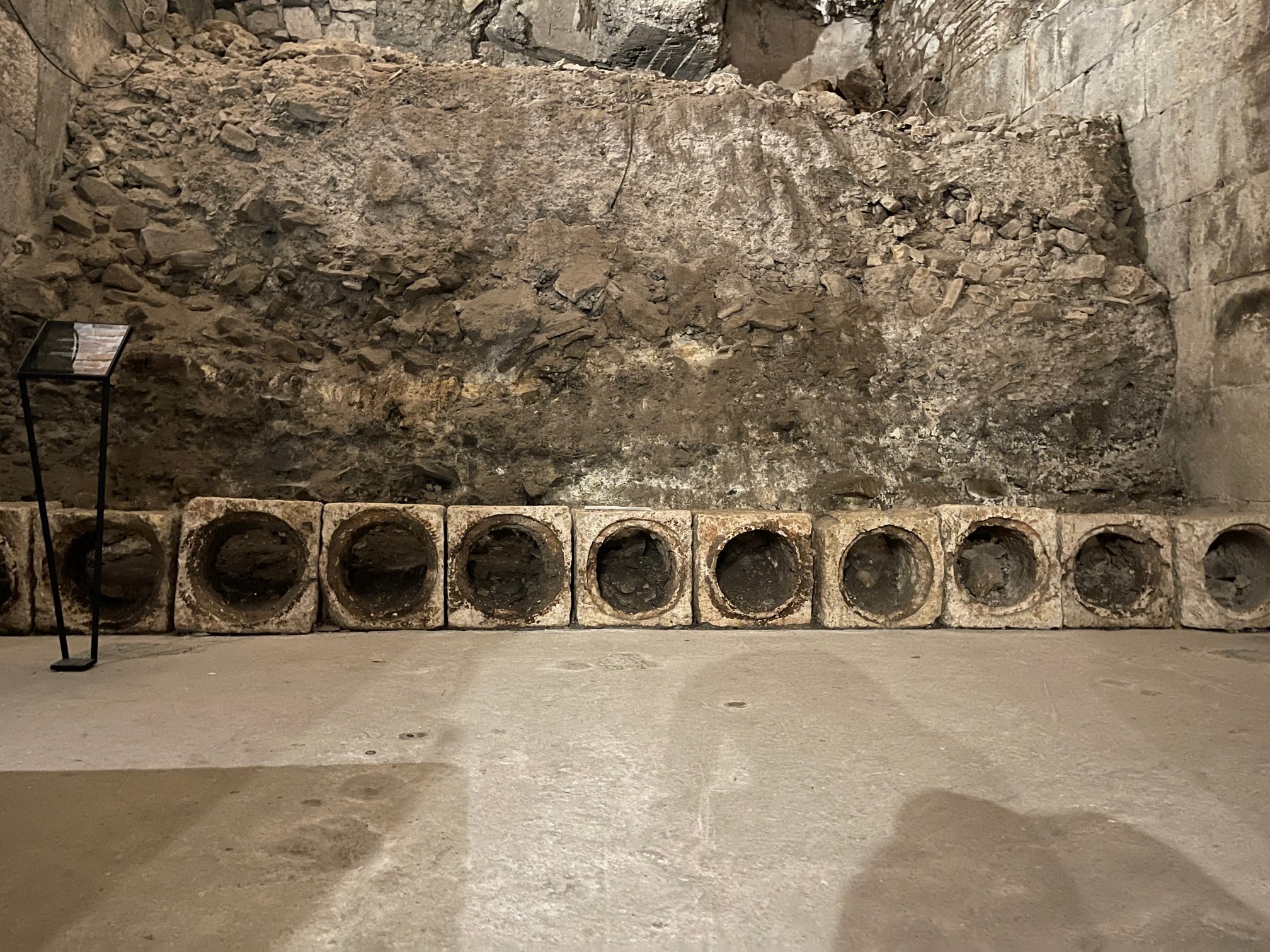
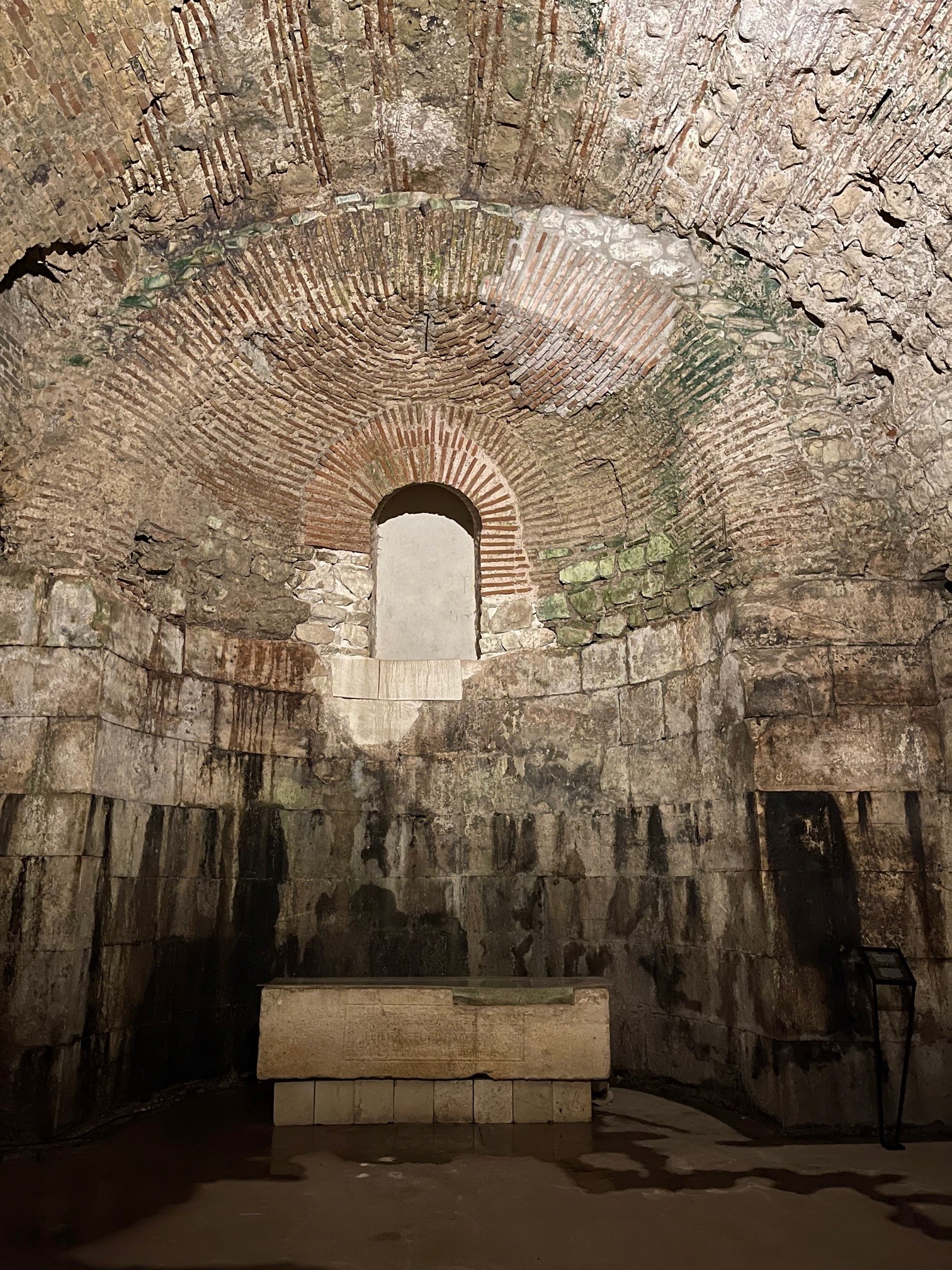
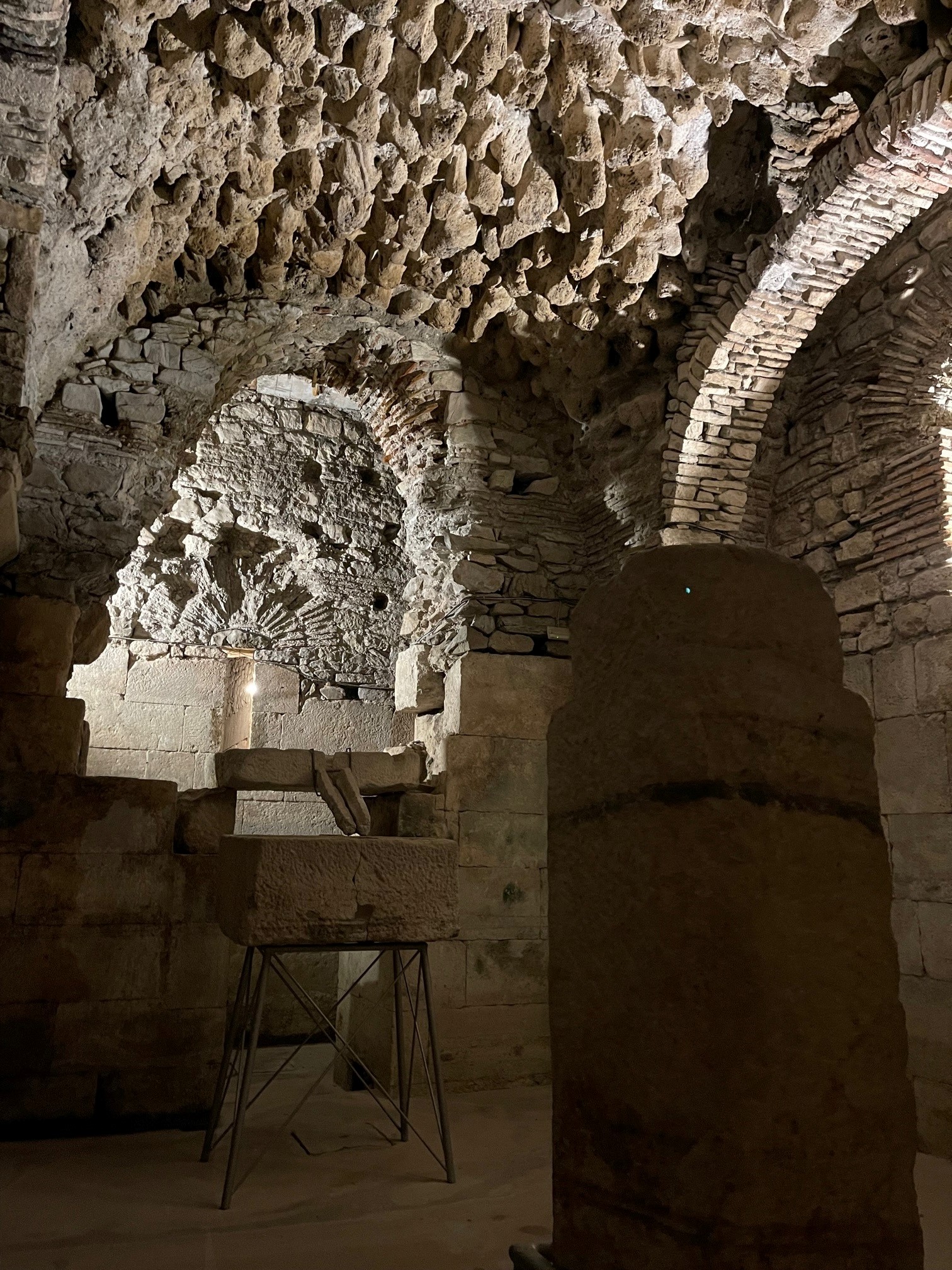
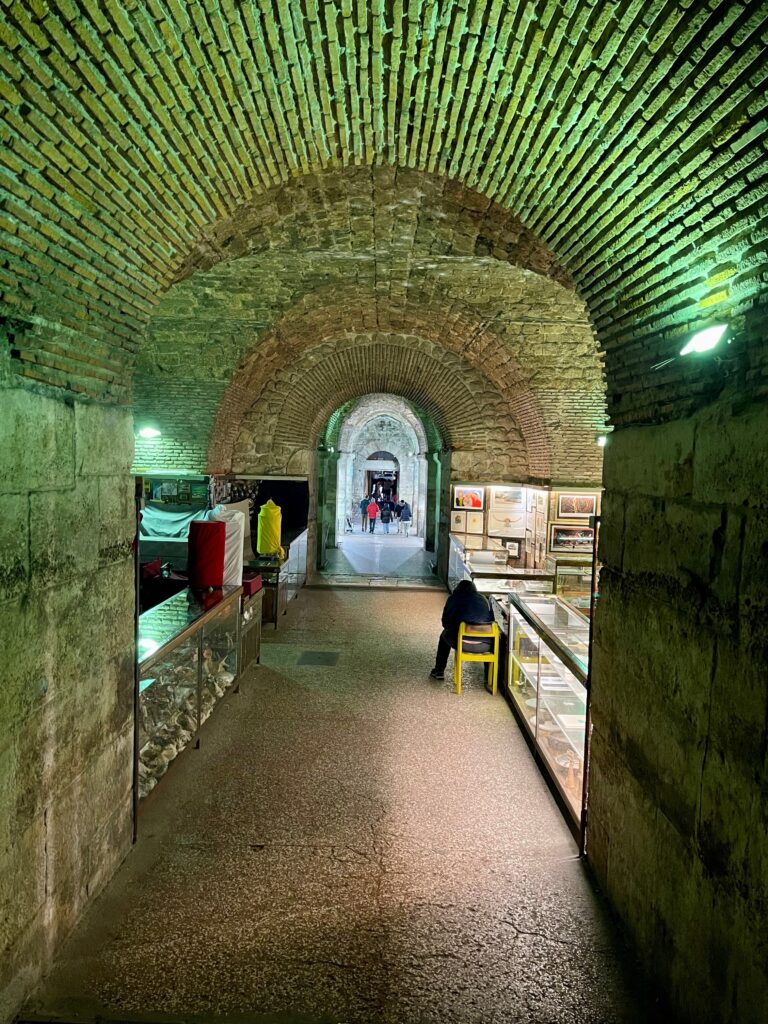
Underneath the modern cathedral were the excavated basements of the old palace. They were just plain stone walls with no decoration but gave an idea of the scale and magnificence of the Roman structures above. They were also quite a maze and very dark and I messed up pretty much every photo I took.
Temple of Jupiter
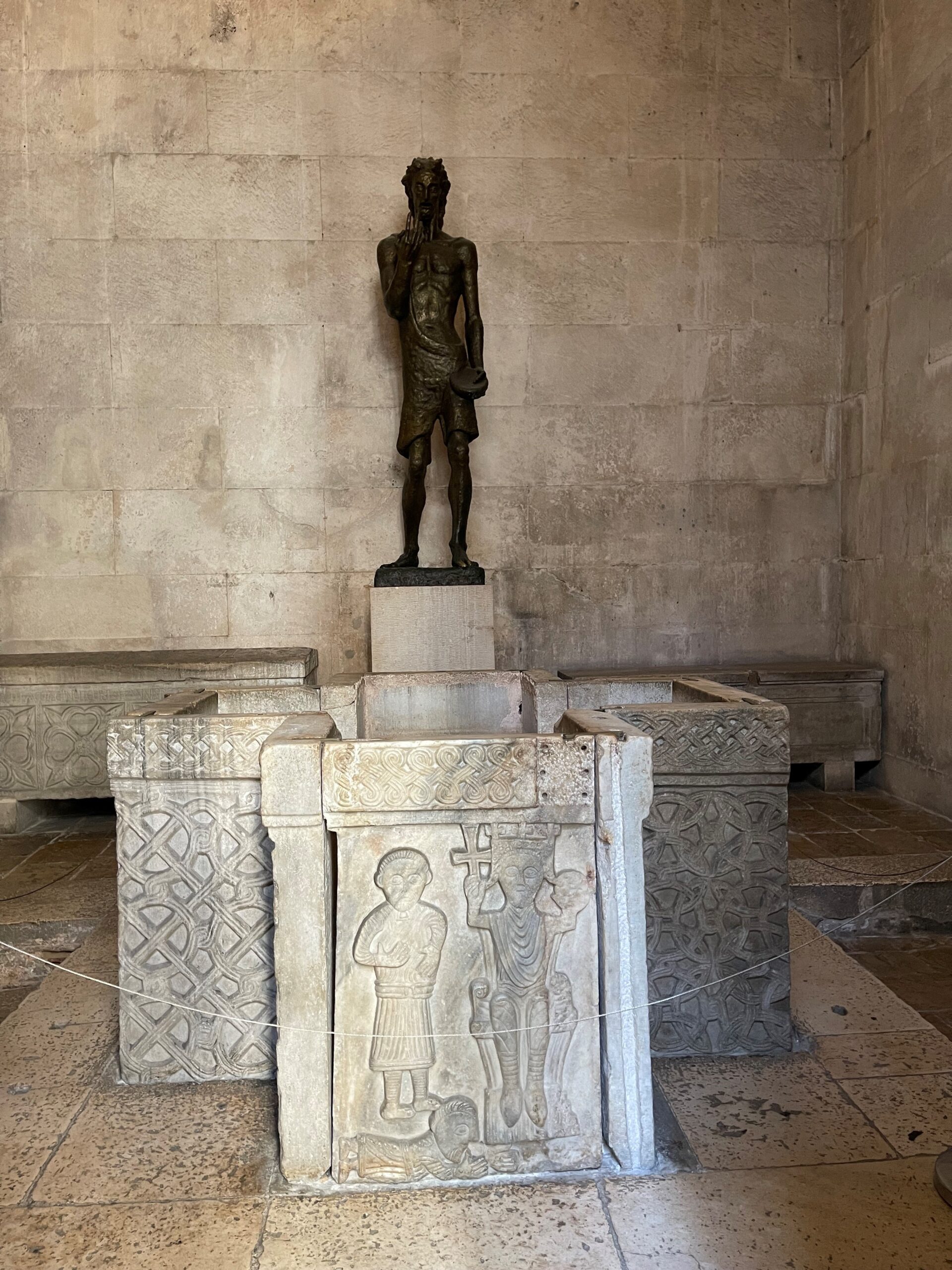
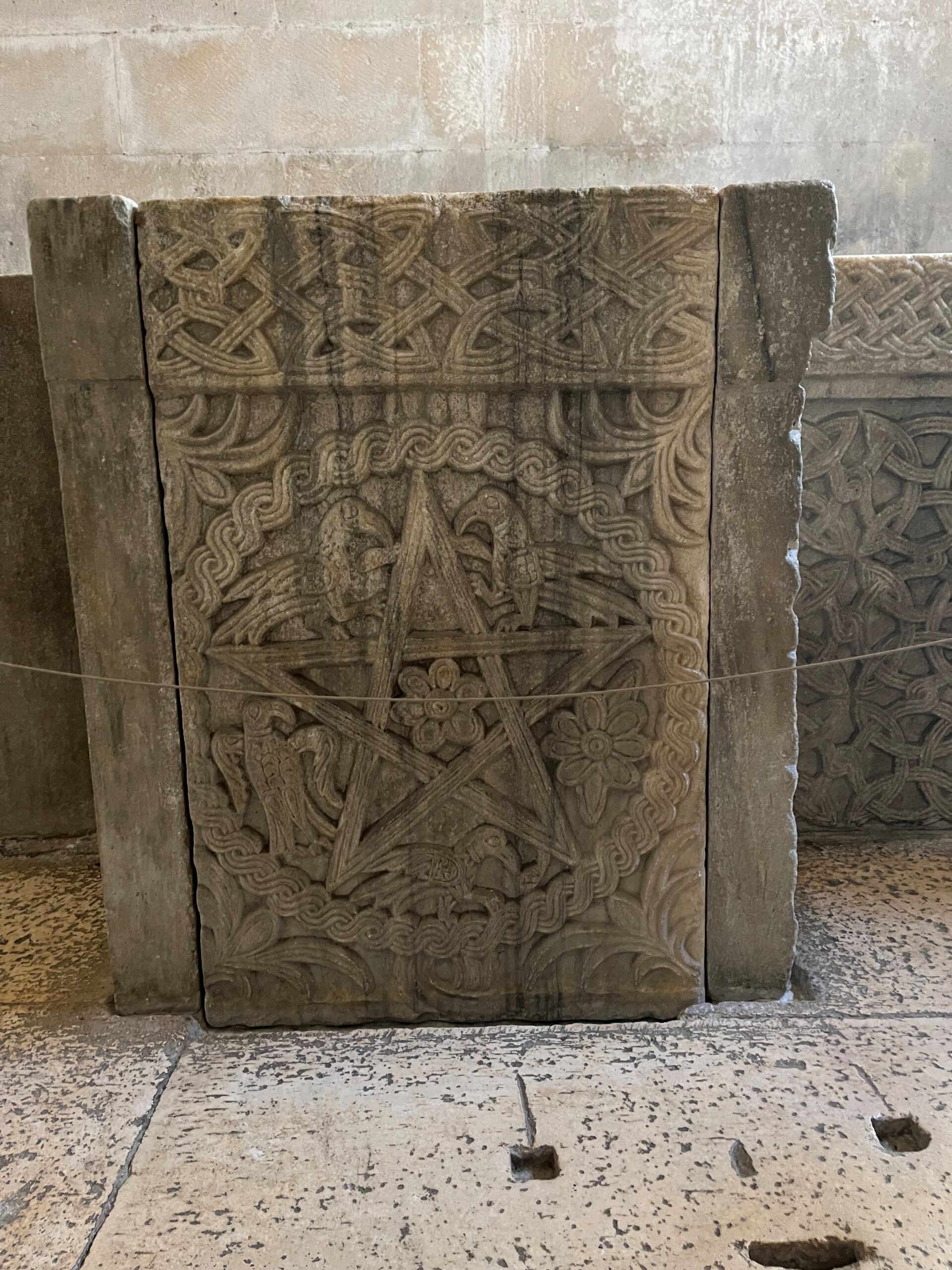
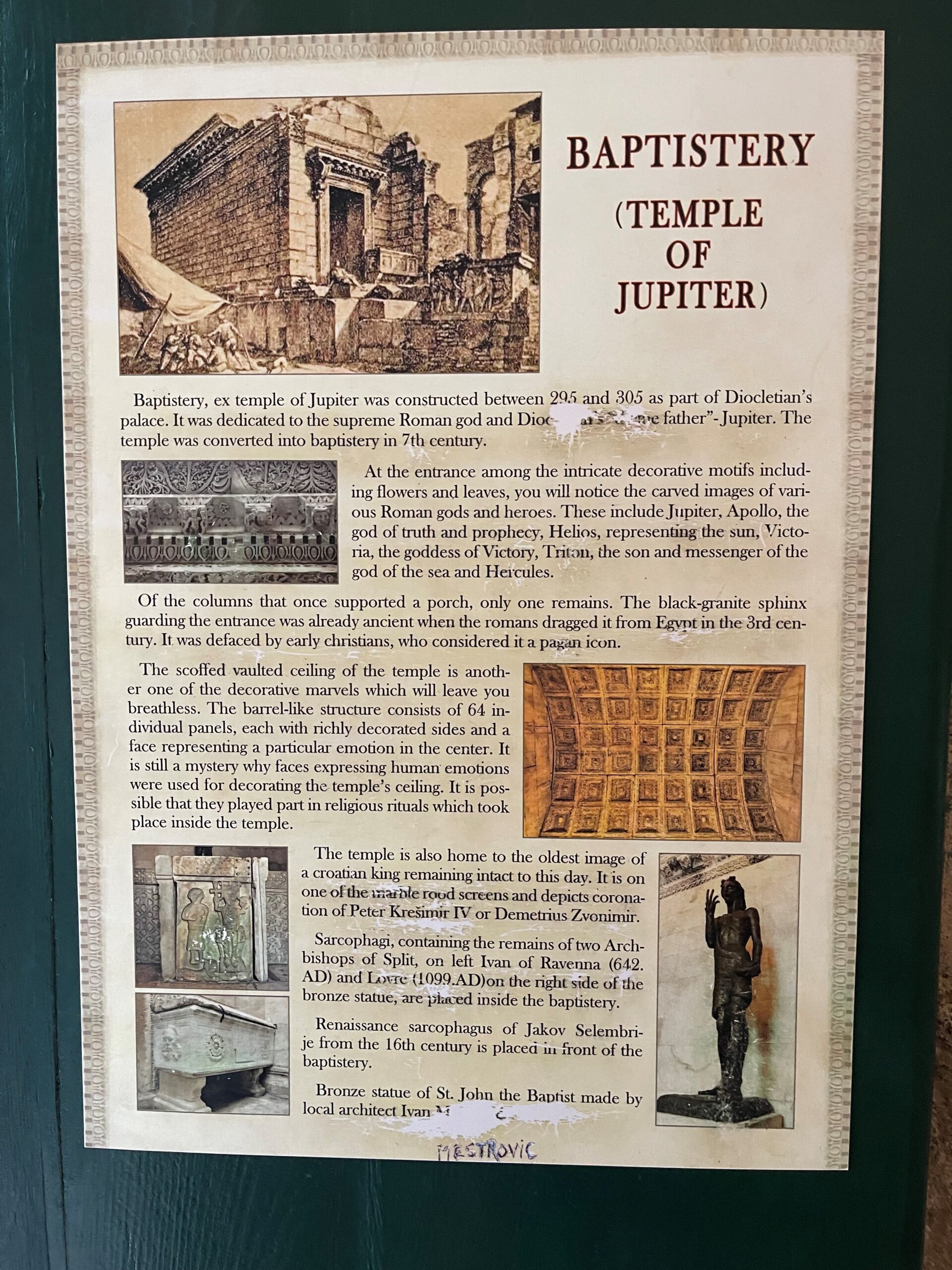
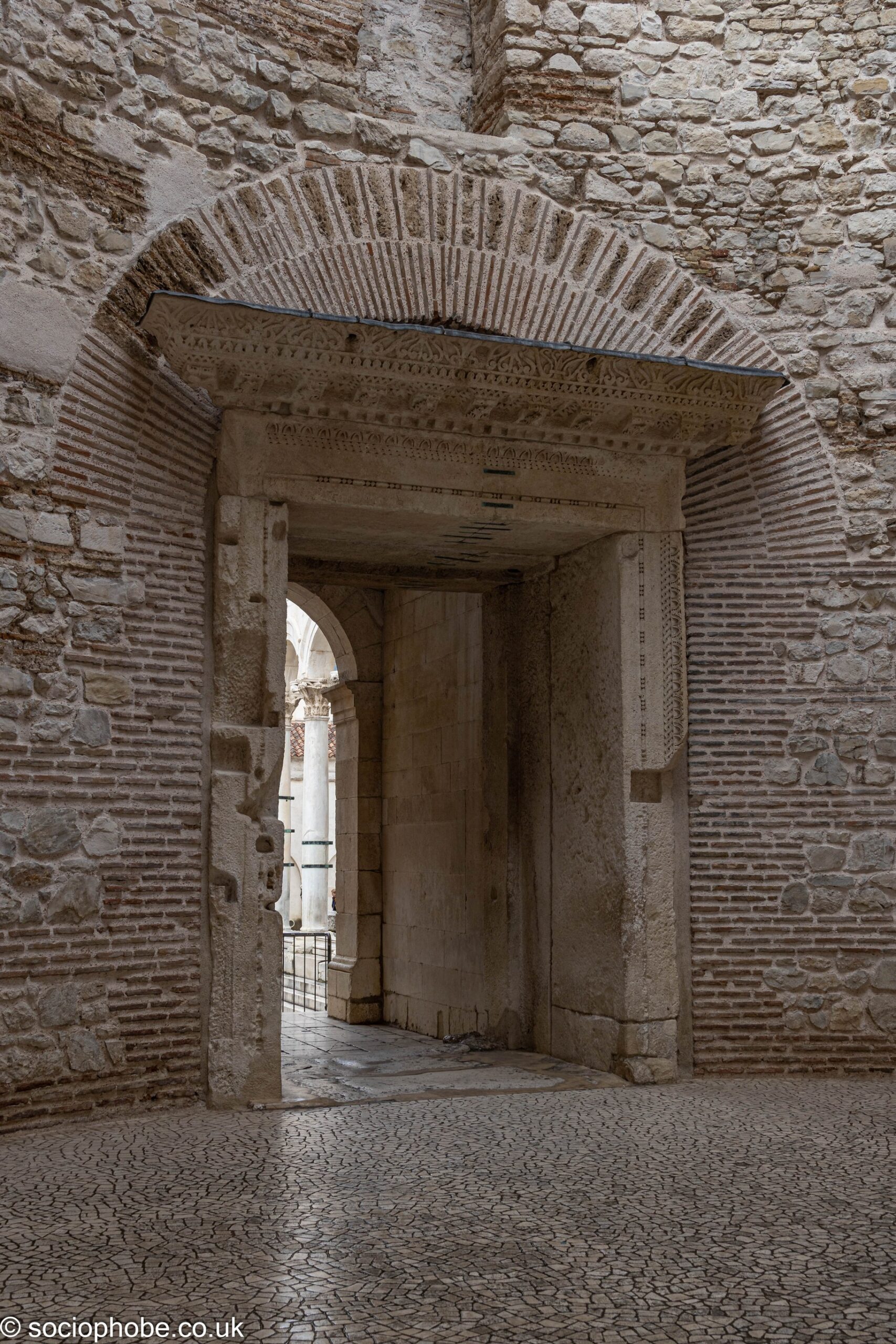
Next to the ticket office is a small alley at the end of which is the Temple of Jupiter which had a beautiful doorway but was otherwise denuded of pagan symbolism and converted to a Christian baptistry. The ceiling was impressive and had sculptures of faces showing different emotions but was badly in need of repair. There was also a statue of John the Baptist but I’m not sure why it was there.
The Riva and Marjan Hill
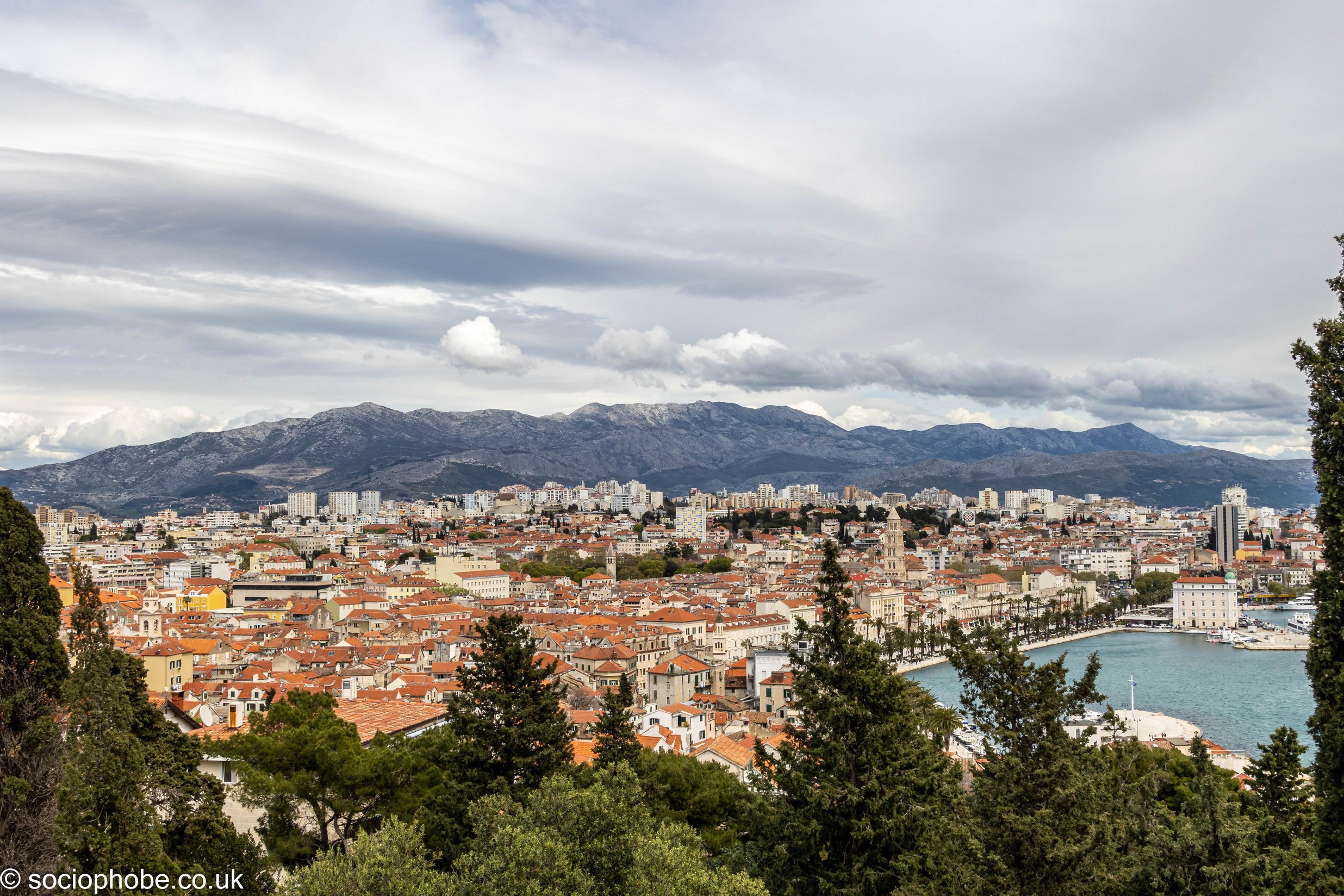
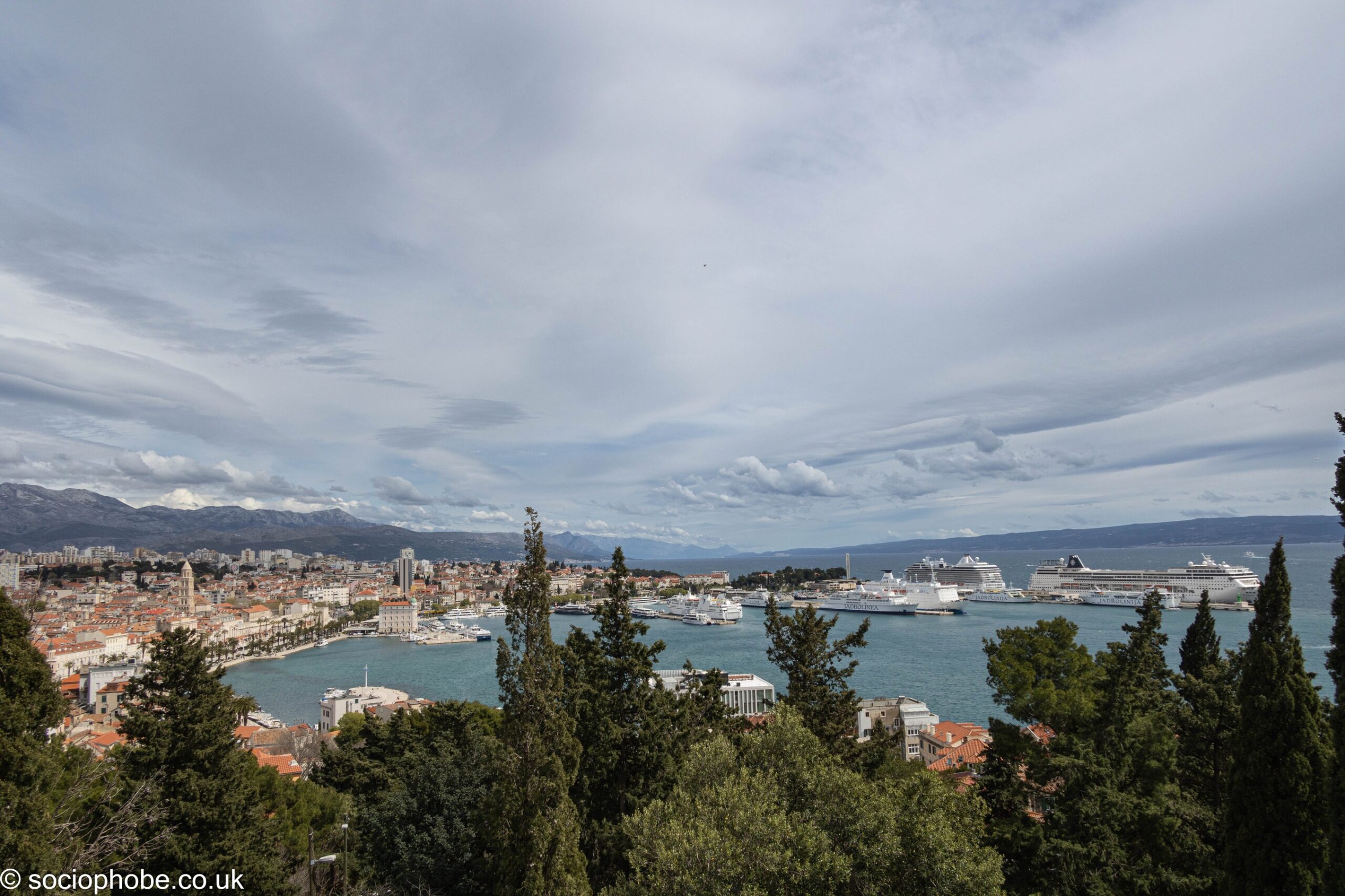
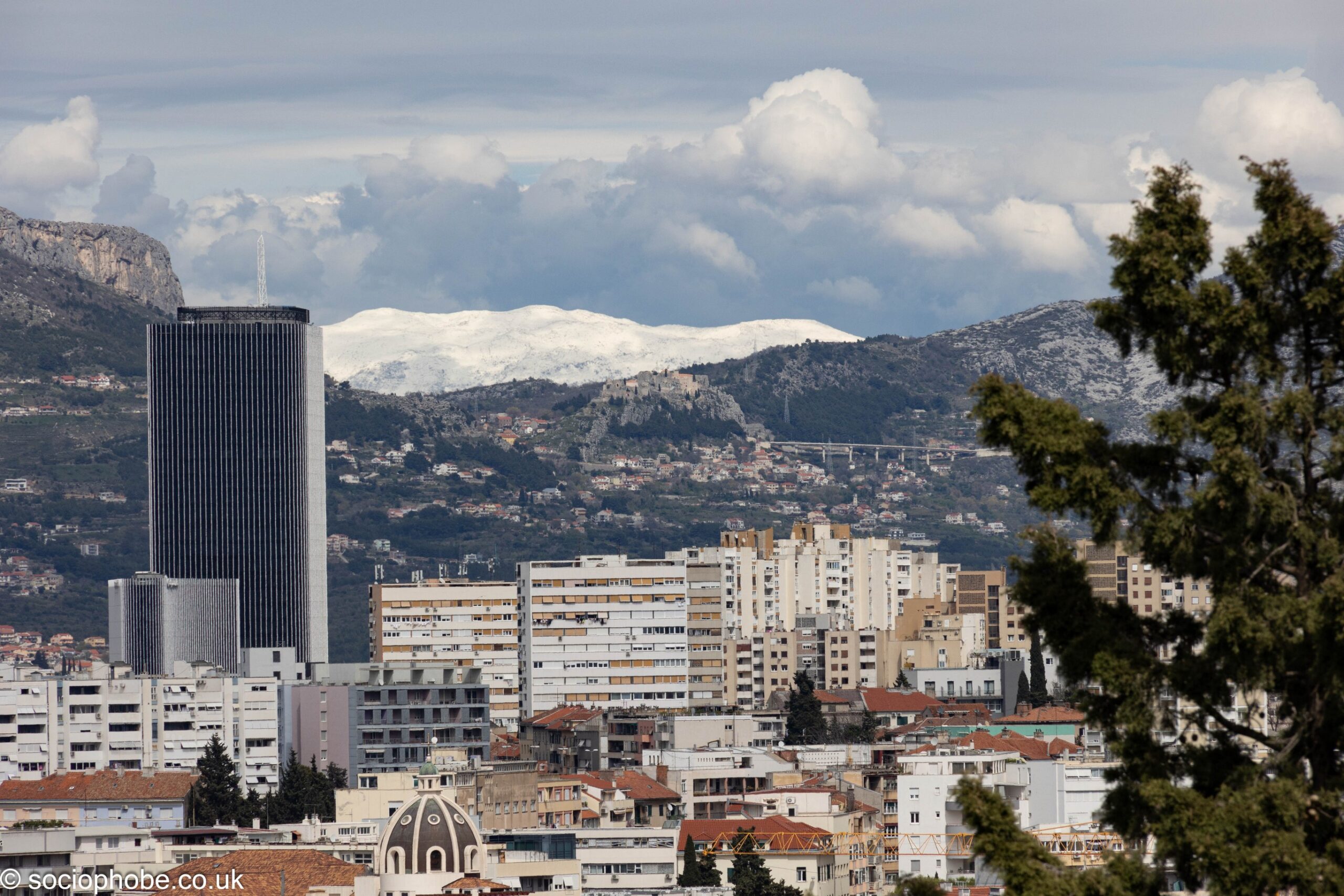
After that morally uplifting (!) visit we walked out to the Riva and then had a quick coffee before following the coast to the steps to the Marjan Hill. We only walked to the first observation point and then stopped for another coffee. We saw a panorama of Split town with the ugly modern blocks of flats on the outskirts contrasting with the terracotta roofed old town. The fortress of Klis was in the distance between two mountain ranges and beyond that, snow capped mountains. We were less than 6 hours in to our long weekend in Split and it already felt a world away from home and work.
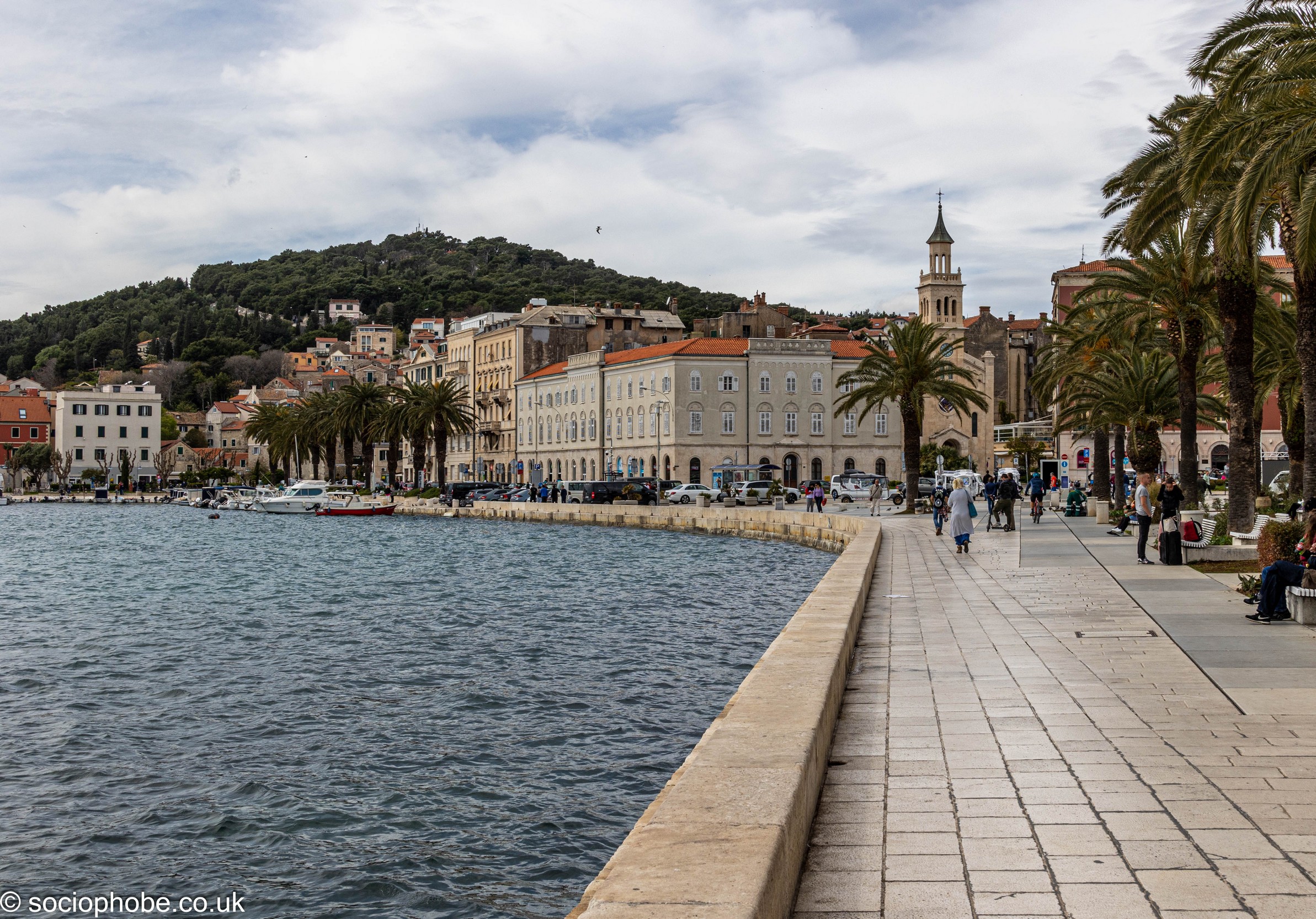

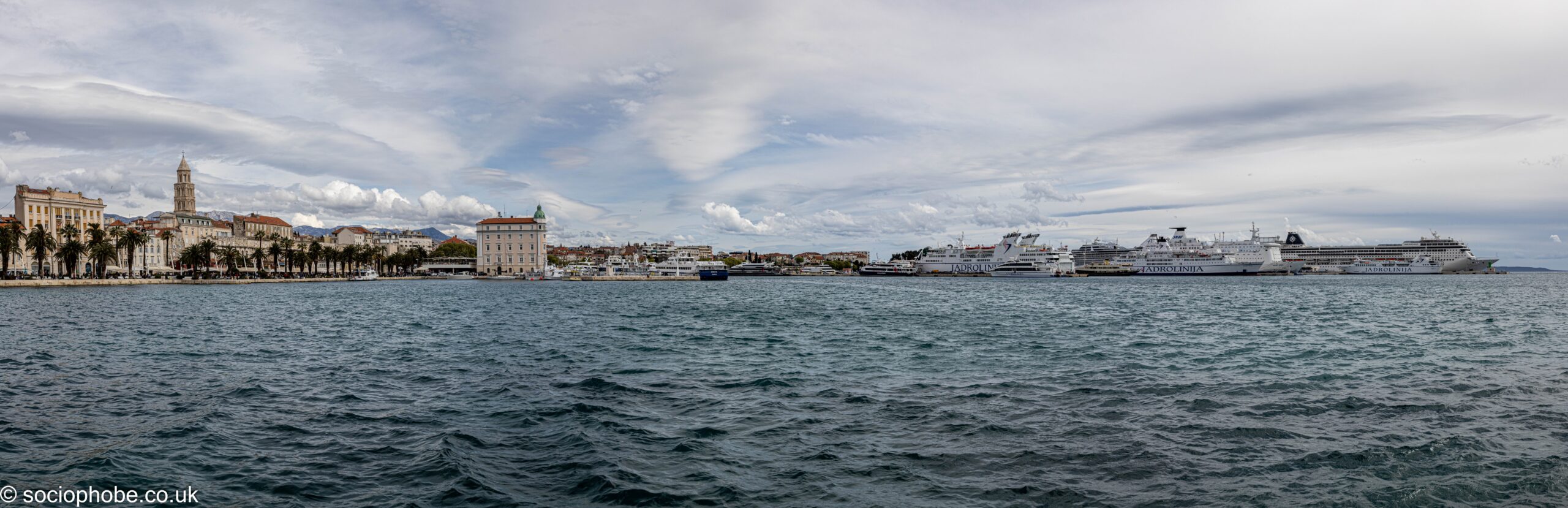
We took a different route back through the town stopped off for a huge and bargain lunch before continuing to our hotel. We sat down to decide on a plan of action and I fell asleep while Deb was looking at the maps and when I awoke a couple of hours later she was fast asleep too. A combination of getting old, a huge meal and not actually being in any rush so it did us both good. After that I sorted photos and notes before we went out for dinner.
Dinner was fantastic! We ate at a little restaurant round the corner form the hotel, it was rather busy and rather loud but the food was great, despite the heavy fish theme. Music was 80’s and 90’s British rock which was very nostalgic and we even had a dessert. It was raining heavily all evening so our plan to walk off the huge dinner and beer didn’t actually materialise and we went straight back to the hotel.
Day two of our long weekend in Split and it was still raining so we crossed the square to one of the restaurants there and had breakfast before heading out to the museums we had planned to avoid the rain. First stop was ….. Froggyland. This was a bit of a strange place, 507 stuffed frogs in various scenes from early 20th century life. It was expensive to go in but was actually well worth seeing, as much for the social observations of life a century ago as for the taxidermy skills of its creator, Ferenc Mere who spent ten years of his life creating it.
The Golden Gate and Diocletian’s Dream
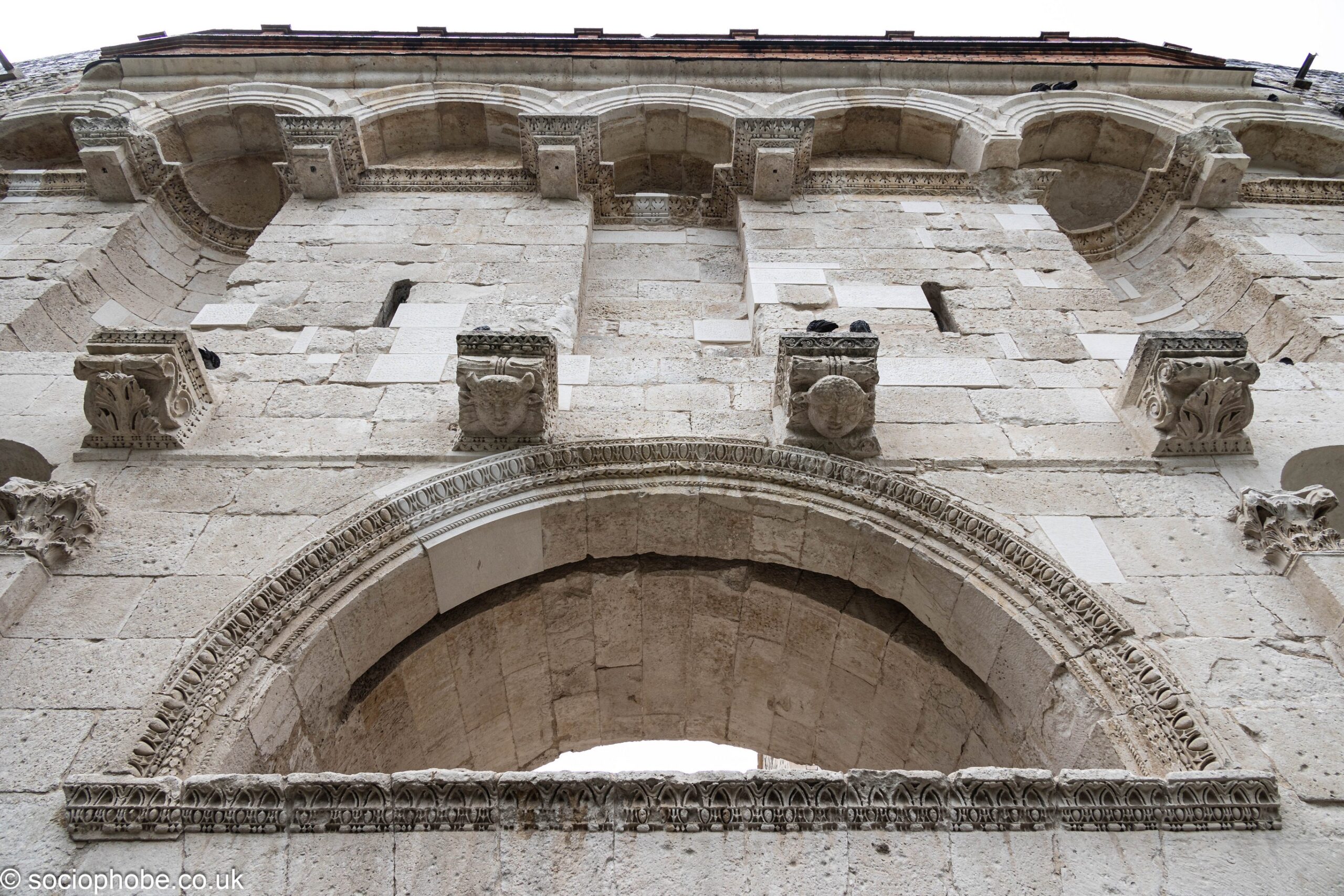
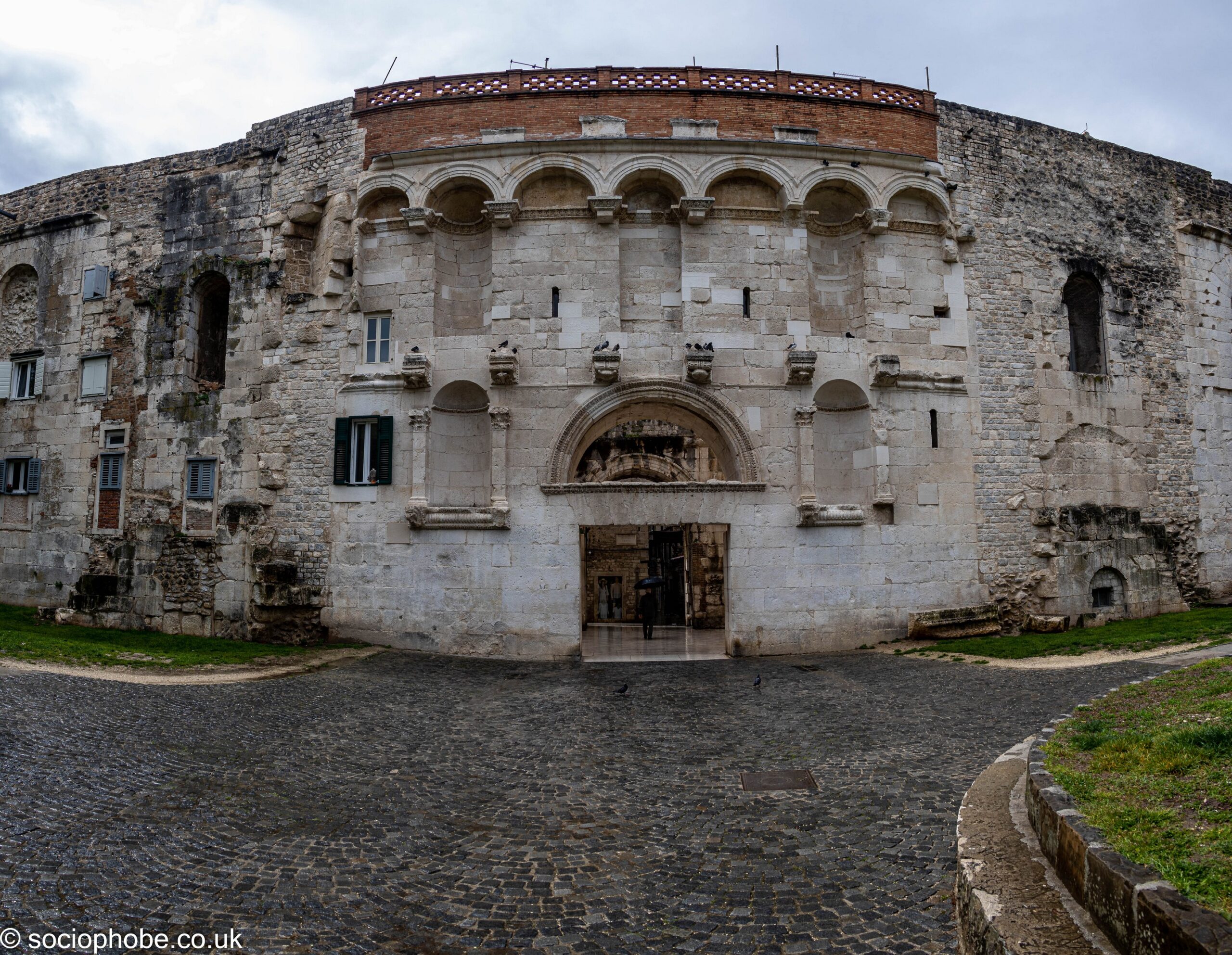
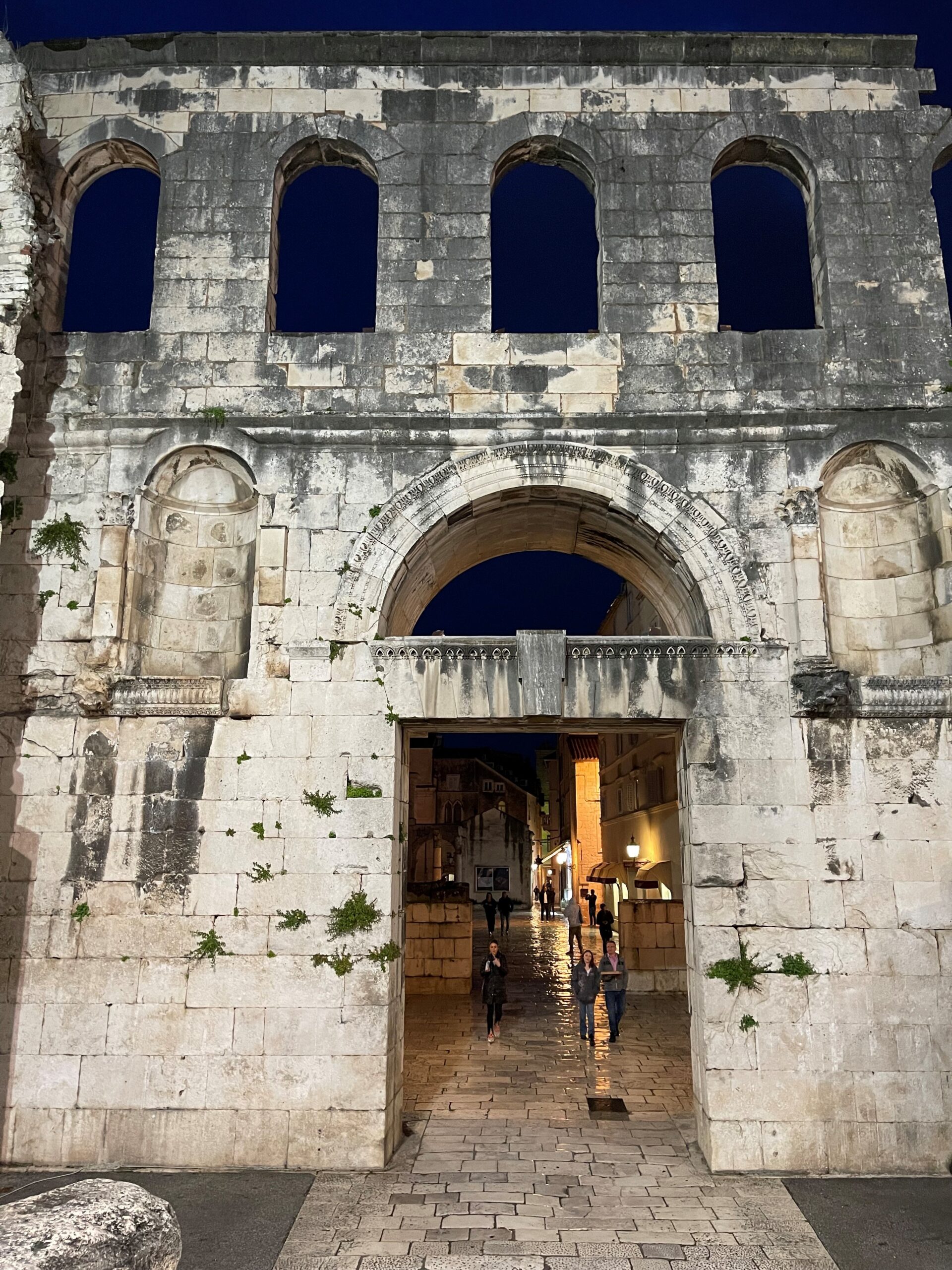
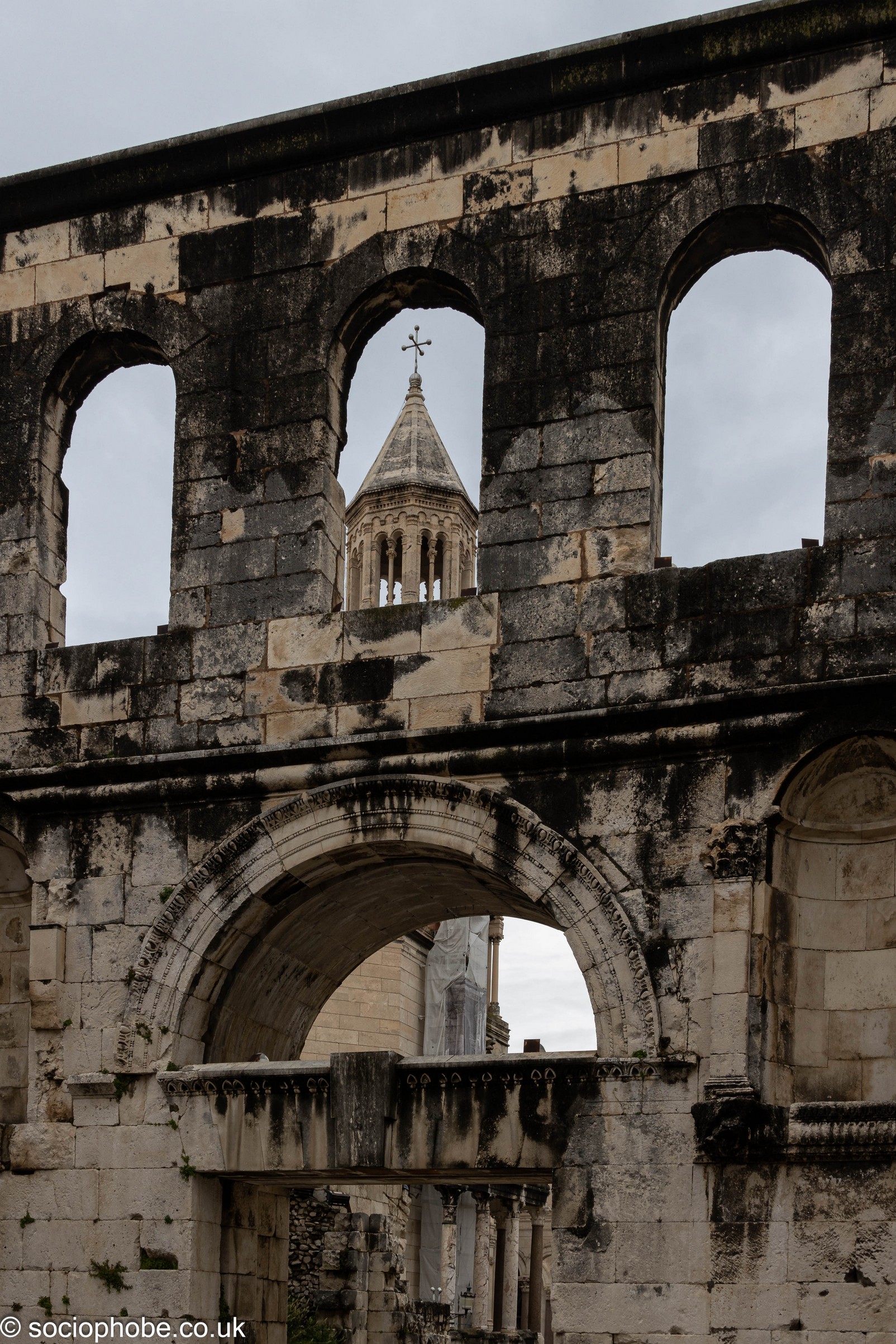
We left Froggyland and walked the short distance to the Golden Gate, the main entrance of the palace in Roman times and still well preserved although the original statuary has long gone.
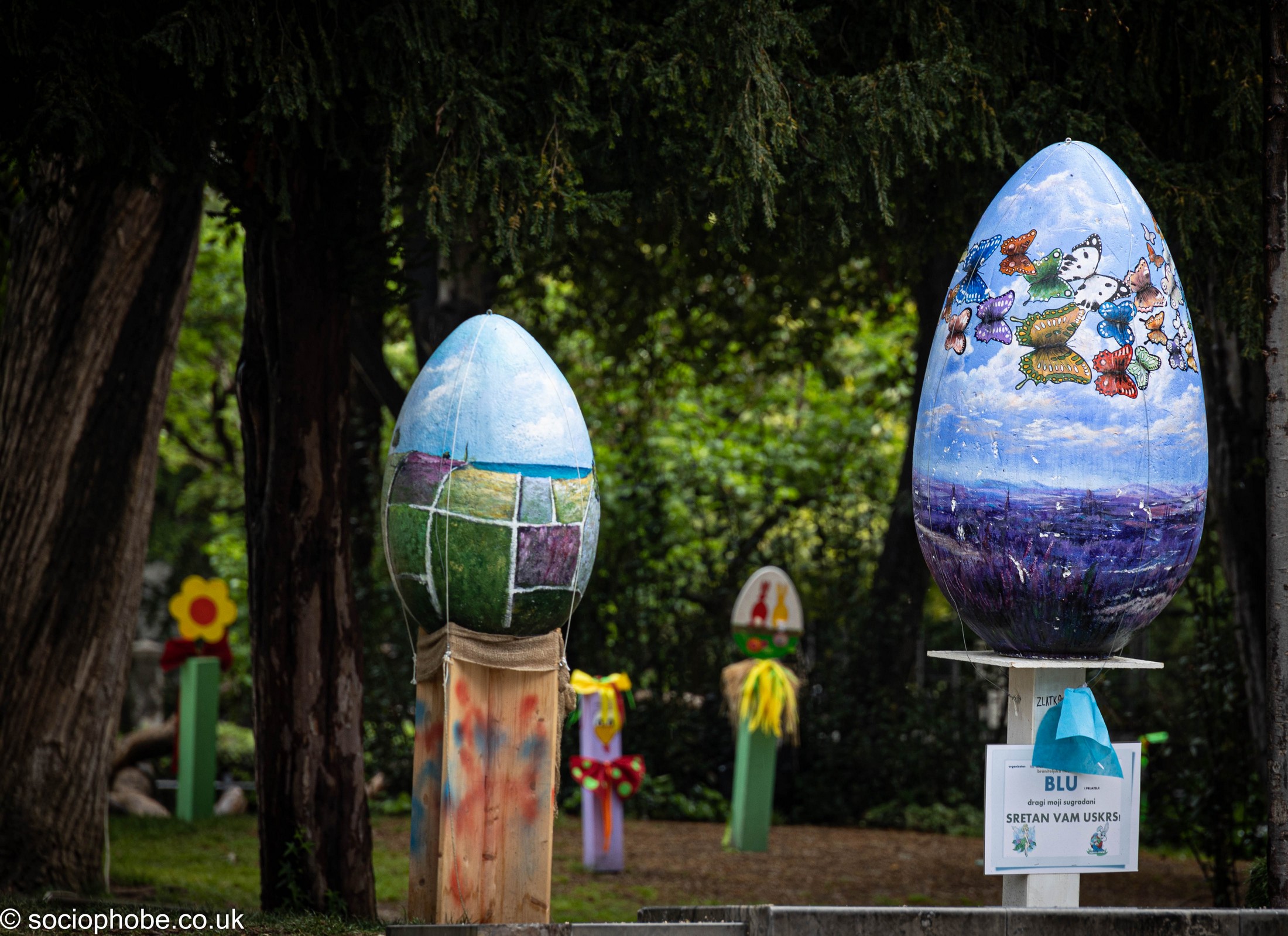
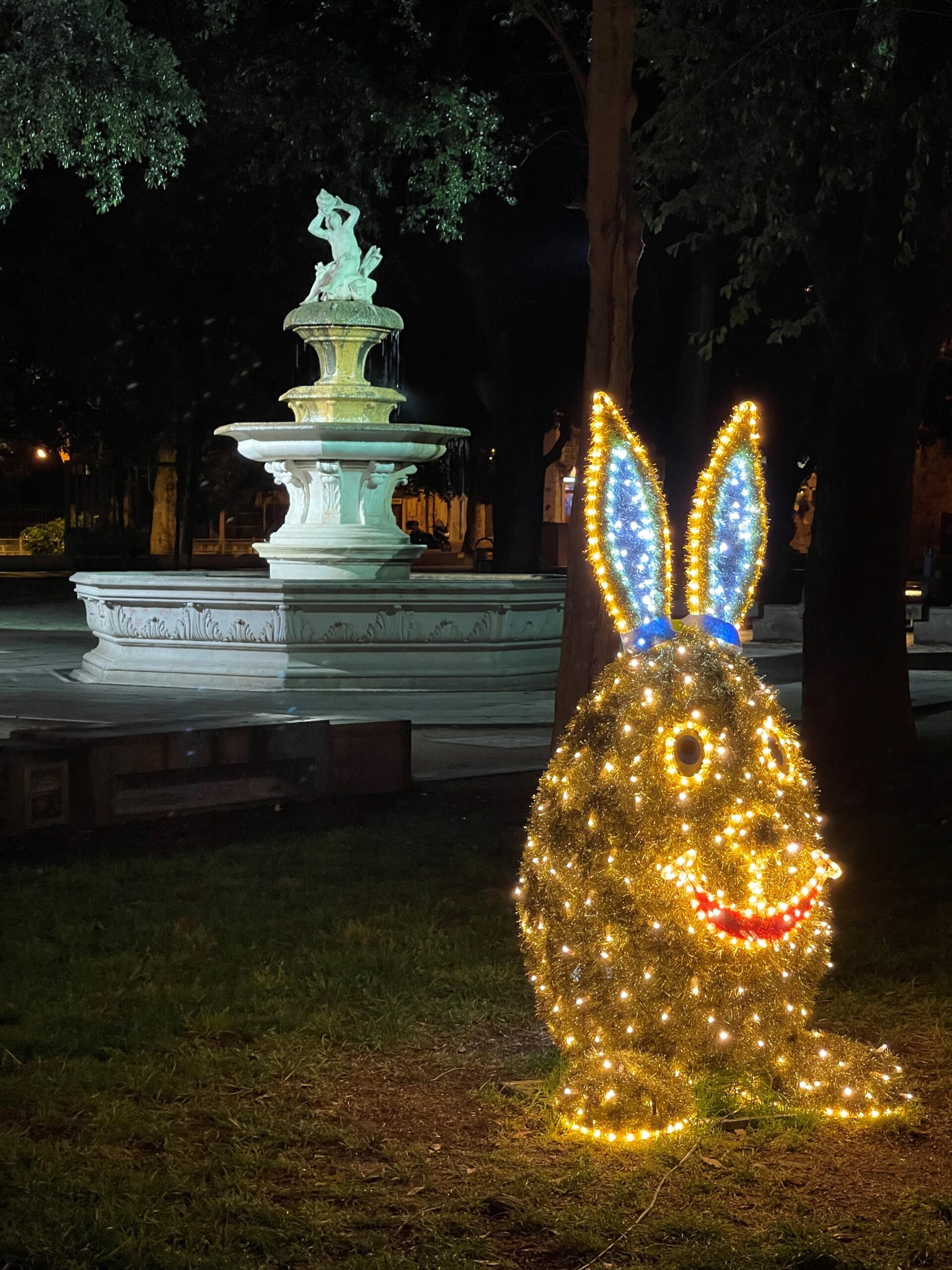
There was a nice park next to the gate with easter eggs and chicks on display as well as part of the Venetian rampart built around the city. The other side of the park was our next stop, Diocletian’s Dream. This is a VR experience to show what the palace area looked like when constructed. The owner, Tomo, was really helpful and the 15 minute show was fantastic for showing the state of the empire at the time of Diocletian and the apprearance and layout of the palace.
We then took a long walk back to the coast and followed the shoreline past our final stop, the Archeology Exhibition. Which was closed. So that was not ideal but it was a nice walk anyway and we still weren’t hungry so we meandered back through the little streets to our hotel.
Vestibule
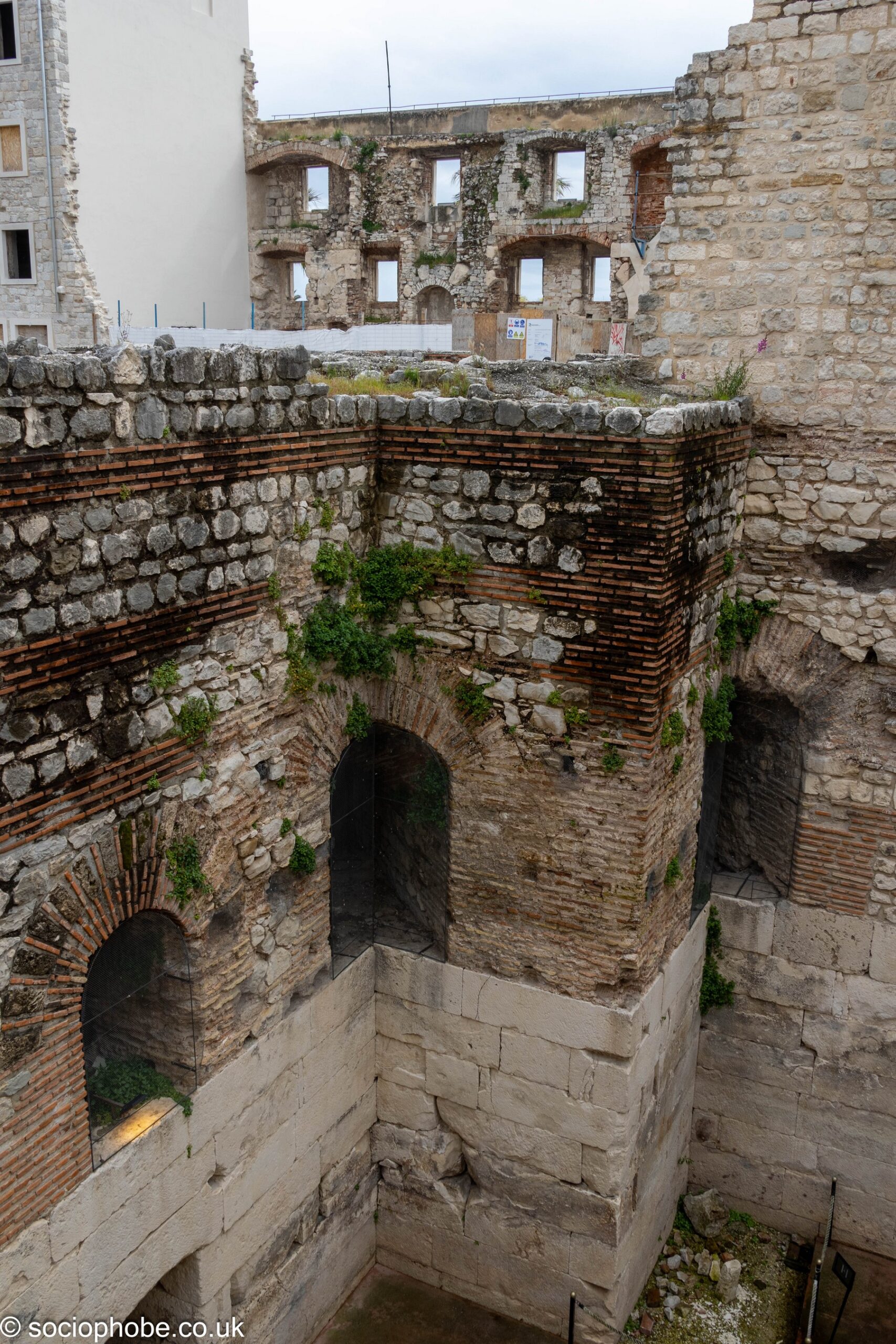
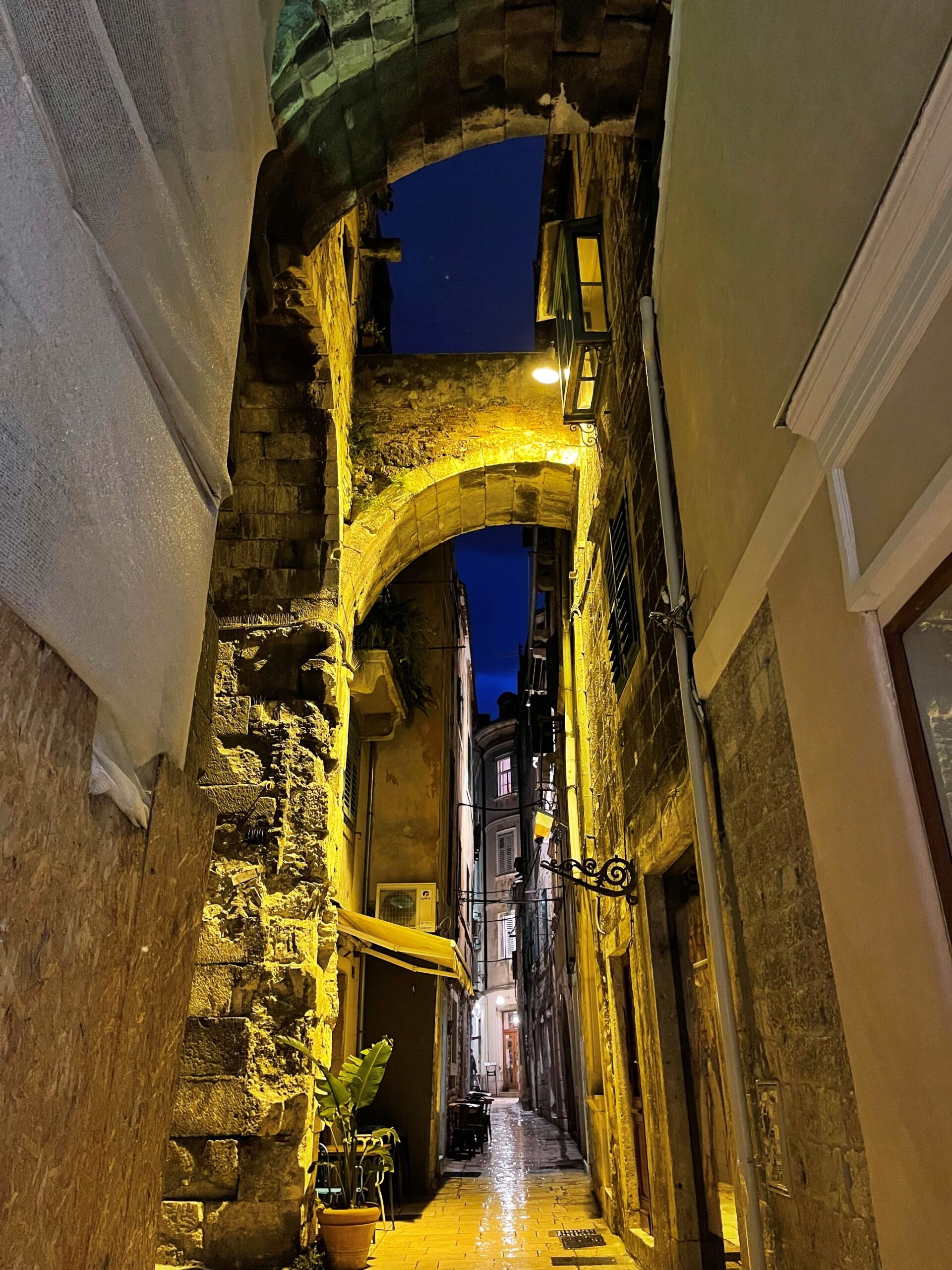
The next couple of hours were spent relaxing in the hotel and then we strolled out into a cloudy but dry afternoon. We were becoming more confident about navigating now and took some really tiny little streets, just wandering at random. We found some very abandoned mosaics and various views we hadn’t see before. We also found the vestibule – a large round room with an open domed roof – and views down in to the basements that we’d been exploring yesterday.
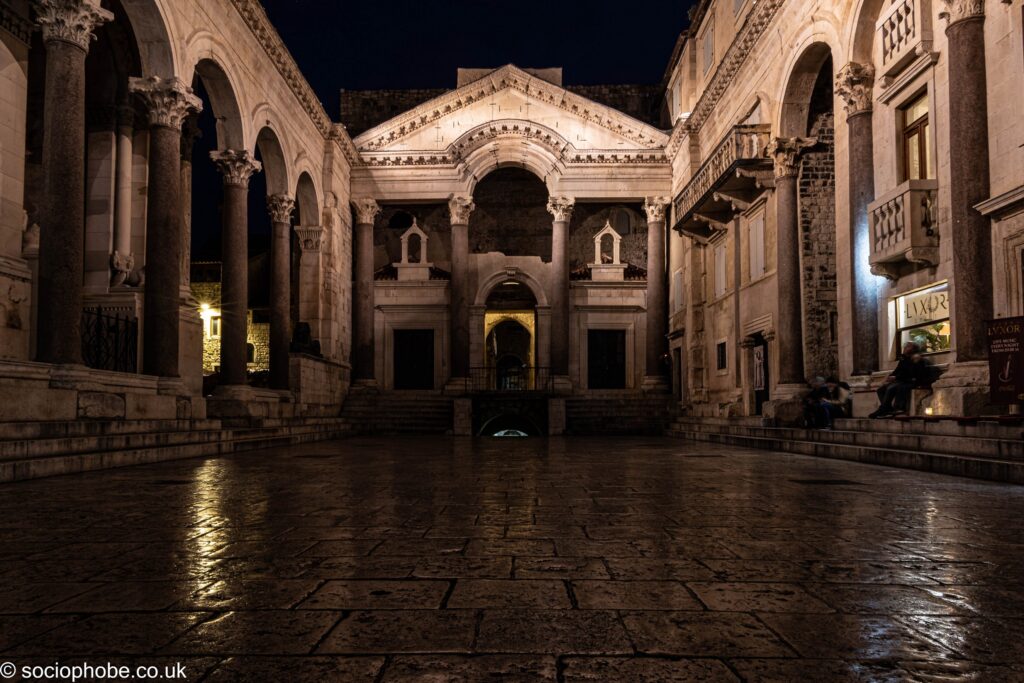
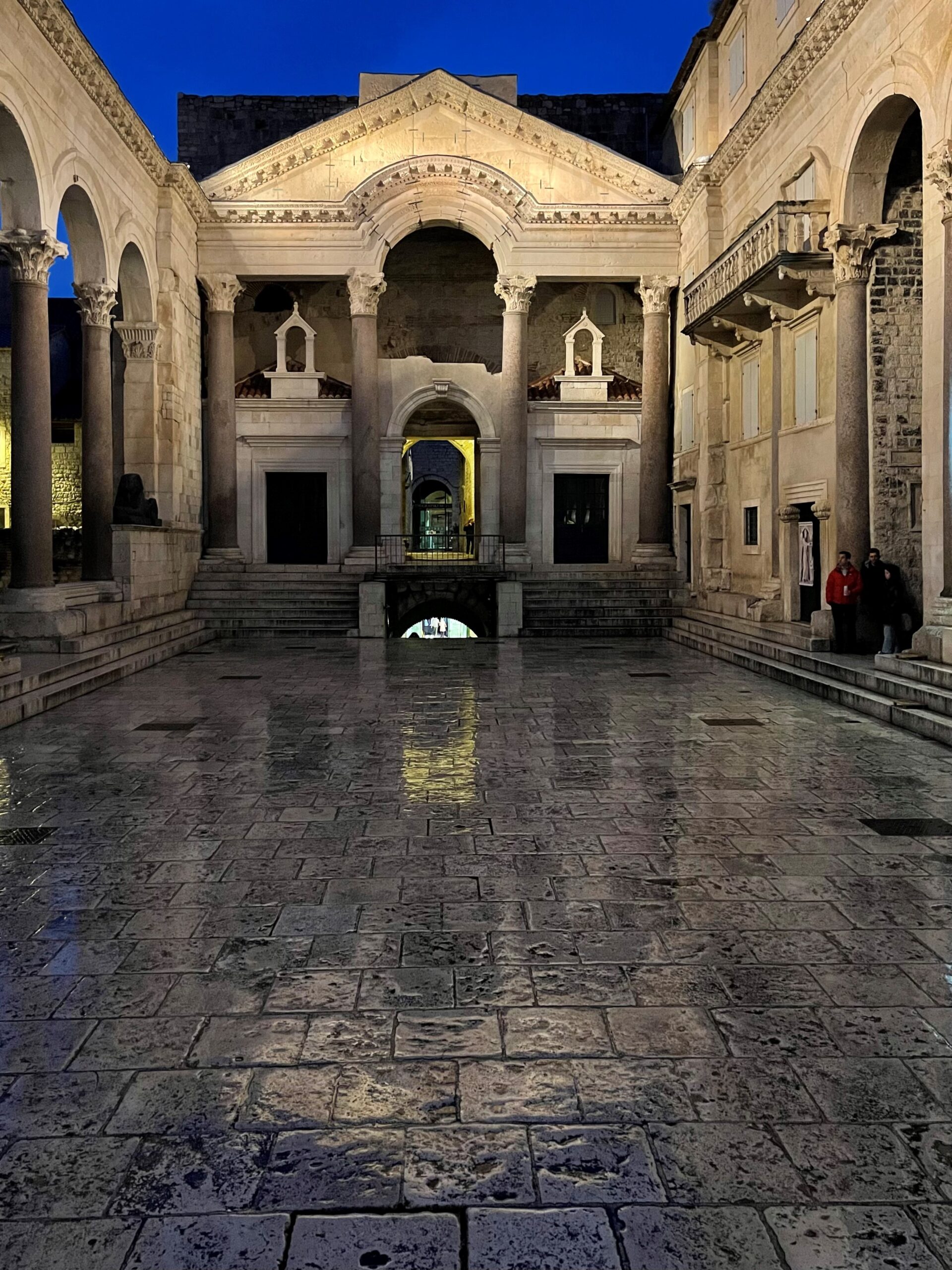
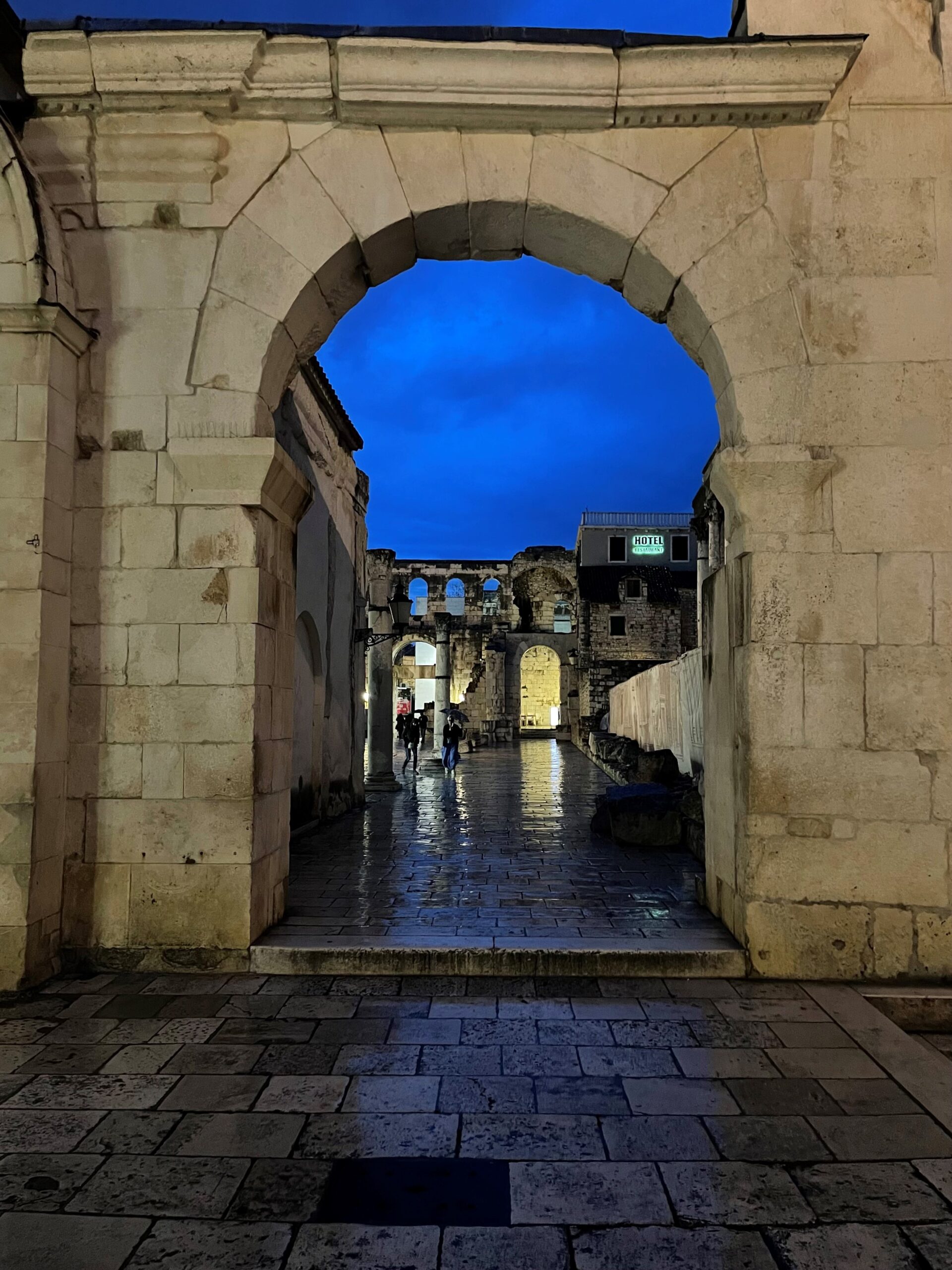
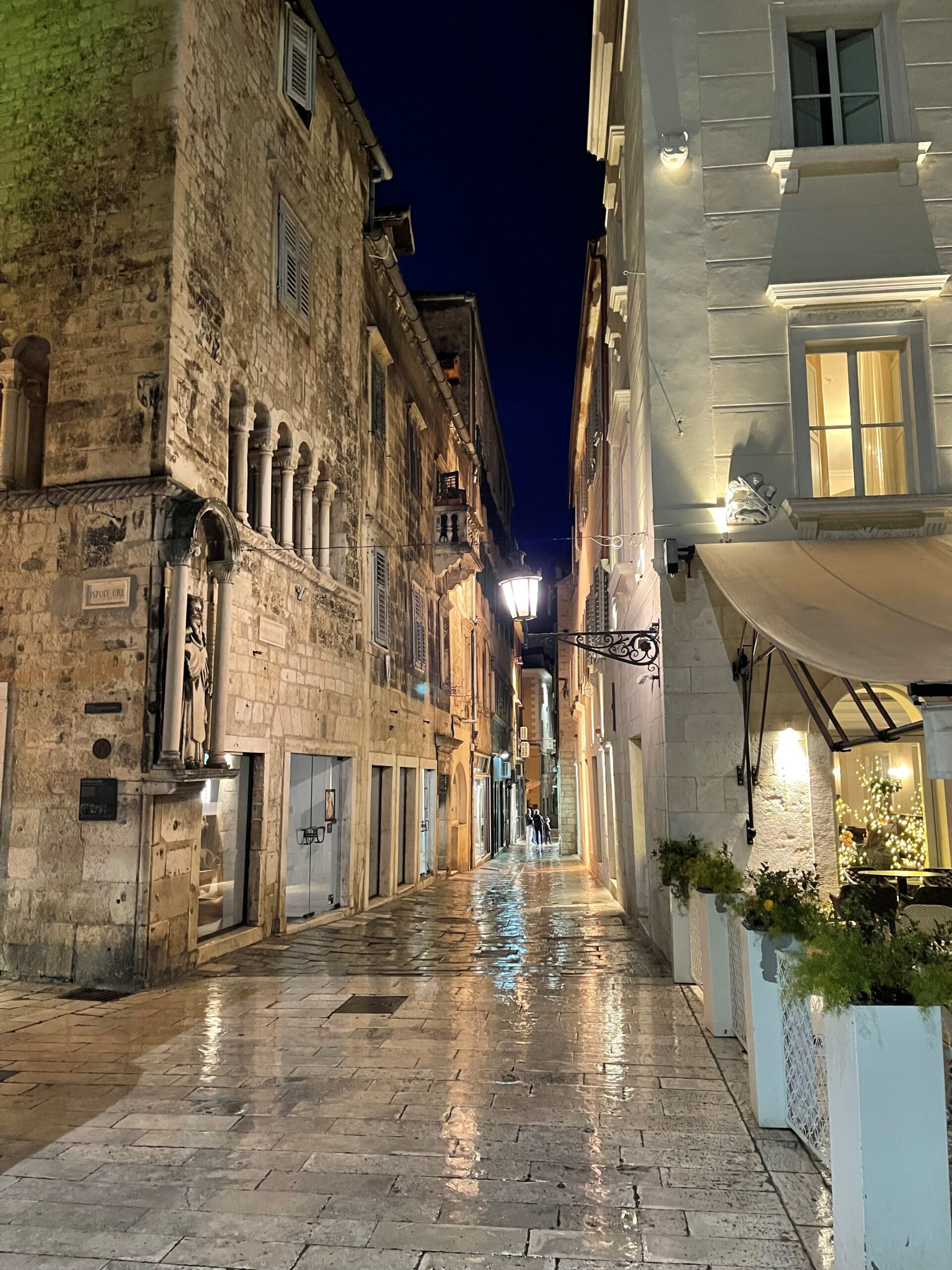
We then exited the city, walked along the Riva to Toto’s and had a different healthy meal to yesterday. Equally filling though and we slowly waddled back to the hotel, stopping to read a few plaques and take a few photos. It was then the photos and notes ritual, made somewhat easier by barely taking and photos at all. We idled around until early evening and then went out for a walk. It had been raining which made everything look a bit shinier so we meandered through the old town and took a few photos before returning to Central Square and sitting down for 3 desserts and some drinks! We then had another short walk to burn maybe the topping from one cake off before getting back to the hotel.
We both slept well, probably due to the huge food belly our bodies were trying to process! After getting sorted we walked the short distance across the square to this mornings food venue and I had a very healthy fruit, granola and yoghurt mix and a decent sized coffee.
Klis Fortress
Our third morning of our long weekend we had decided to head out of Split to the nearby fortress of Klis and also the old Roman town of Salona. There were tours you could do but they were around £90 each and included a stop at an olive oil museum and shop which you just knew was going to leech an hour of time and you’d probably buy something useless just to relieve the boredom. So instead we opted for a taxi. After a bit of negotiating we agreed a price, the guy would wait for us at each stop and then bring us back to Split old town.
A bit of background – Klis is a large fortress, originally Illyrian, then Roman, then the seat of the Croatian royal house. There was an epic siege in the 16th century which saw the Ottomans take the castle and then a hundred years later the Venetians captured it. As the frontier with the Turks moved further east the castle declined in importance and eventually became a national monument with a history museum and armoury. It is probably more famous for being the setting of Mereen in Game of Thrones though! Salona was a large late Roman city that was the birthplace of Diocletian and was one of the largest cities of the late empire until its destruction by Slavs and Avars in the early 7th century.

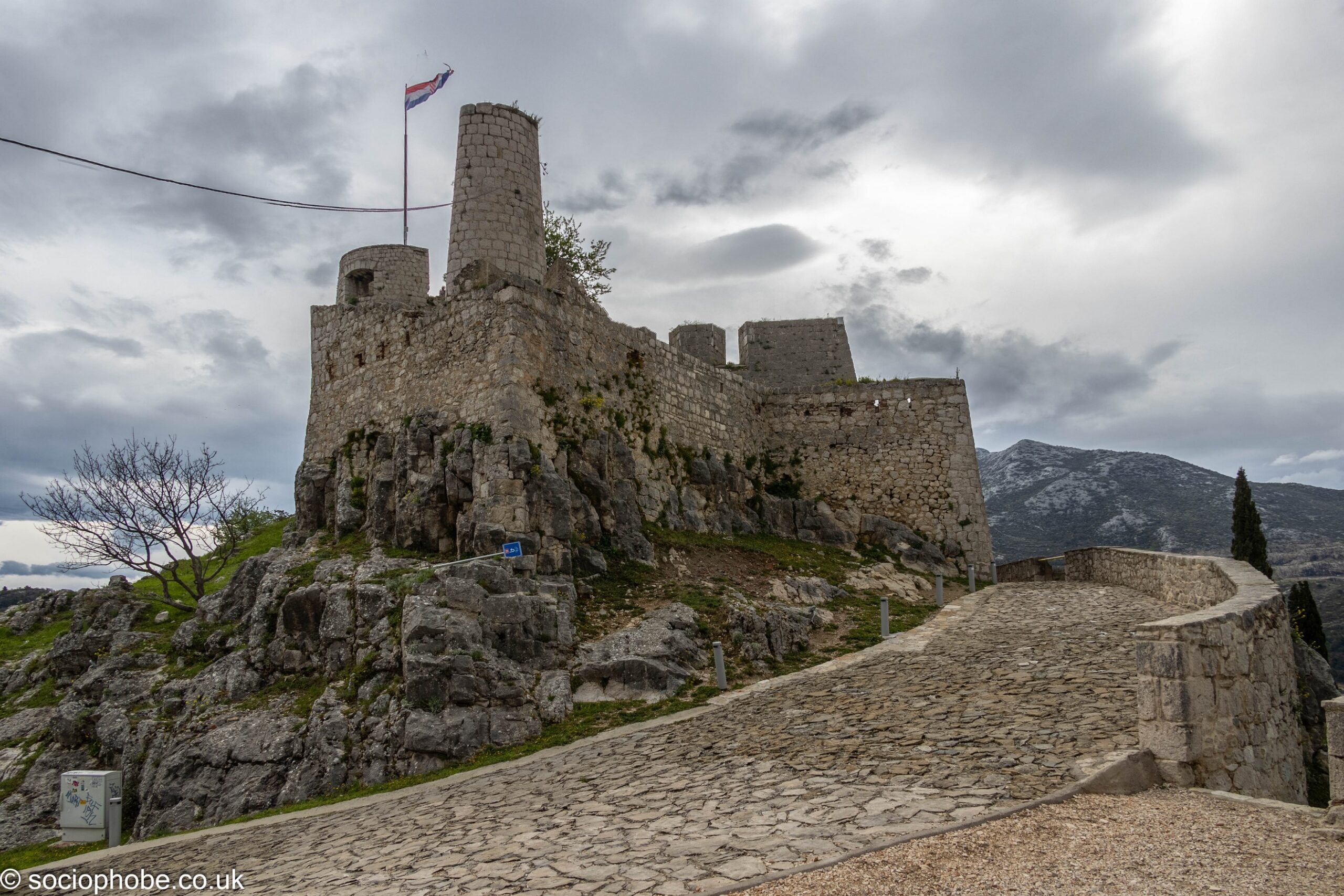
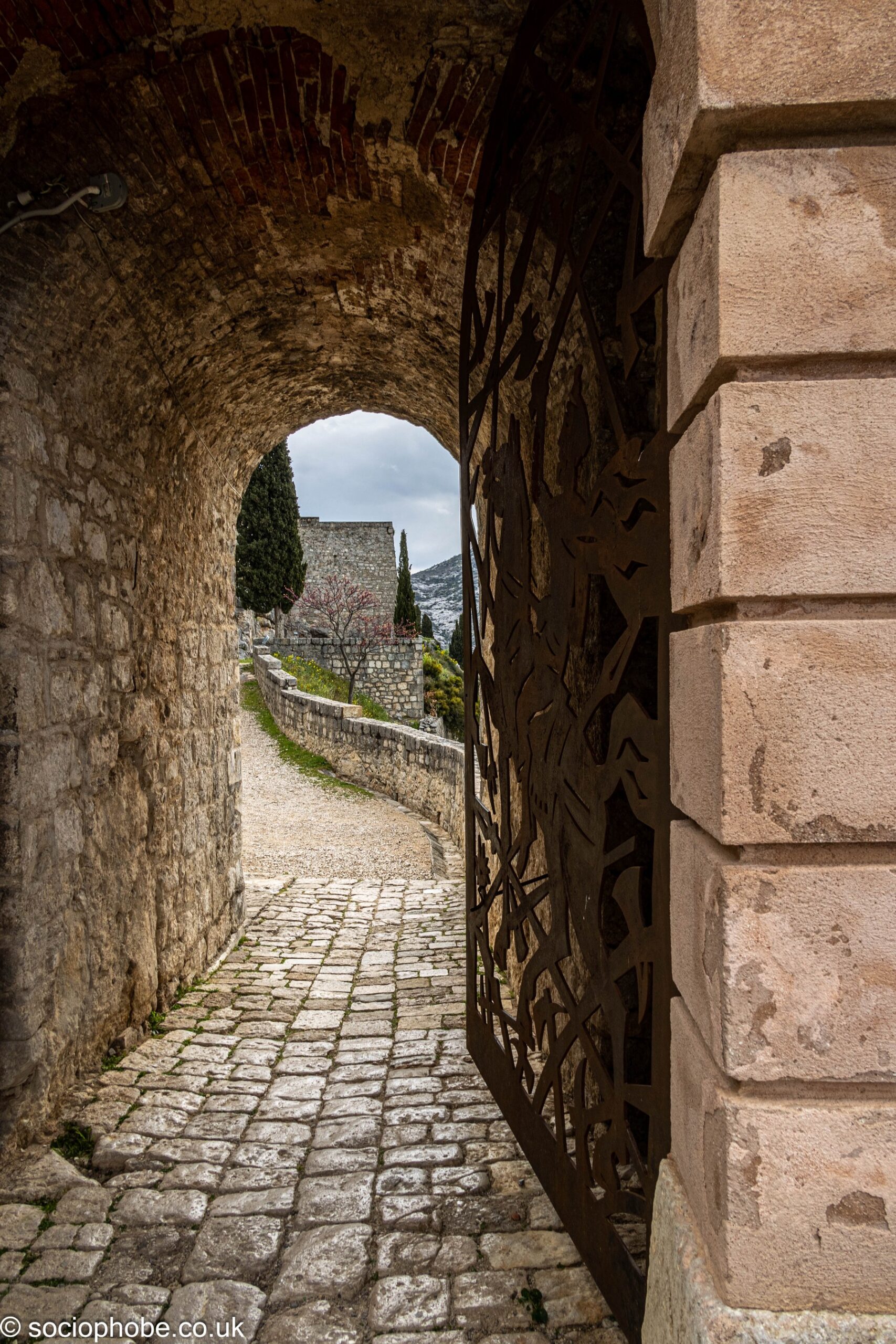
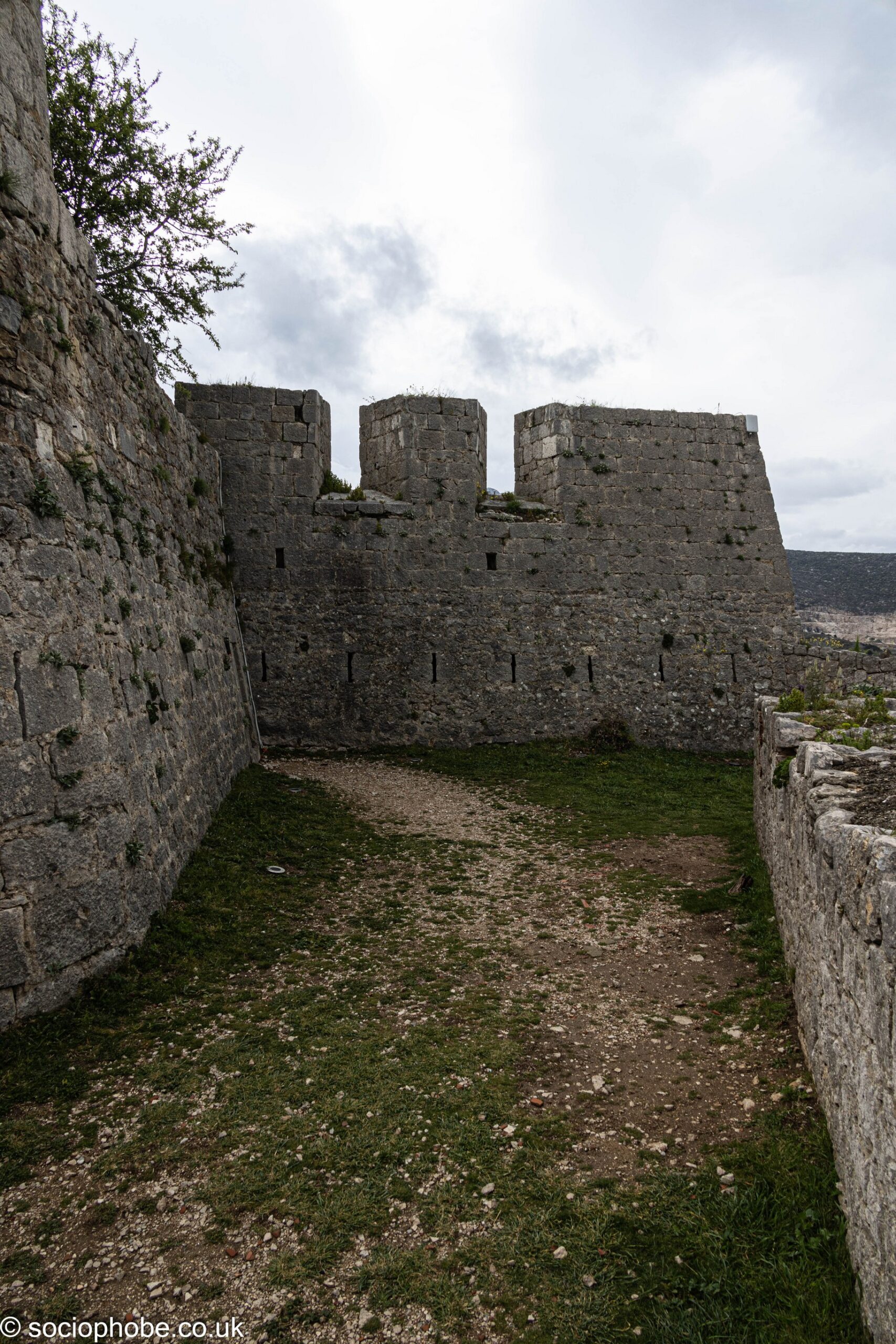
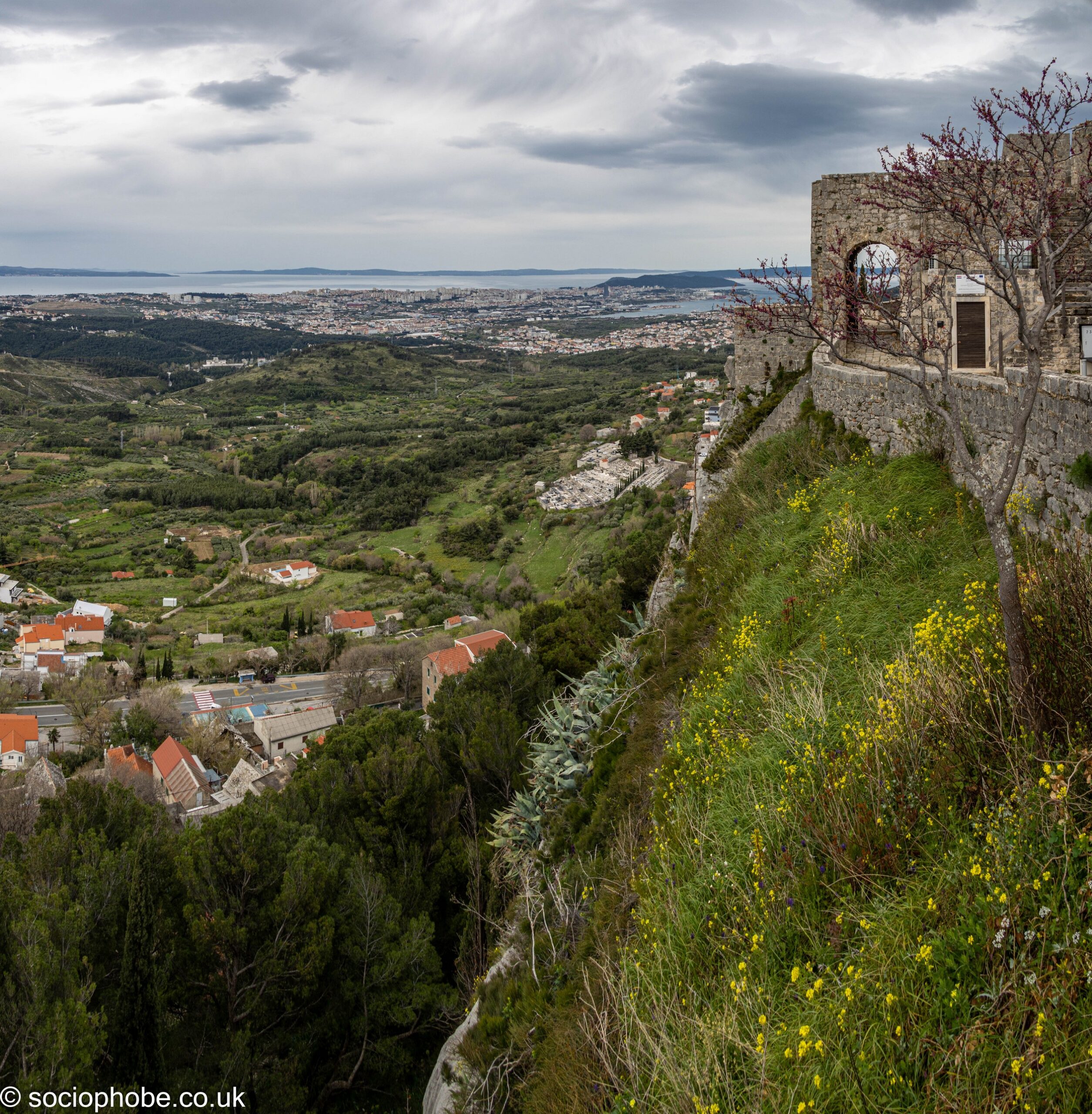

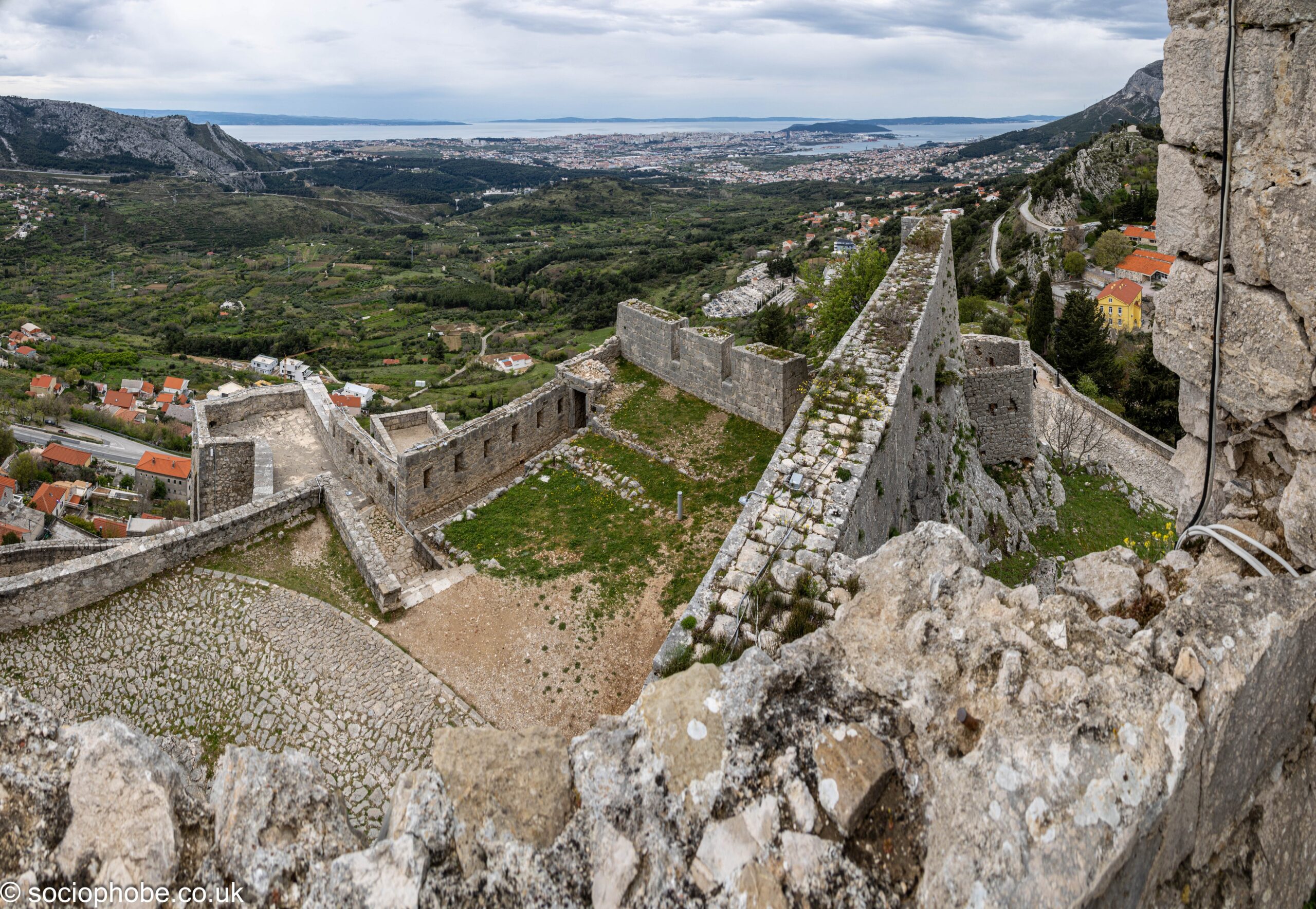

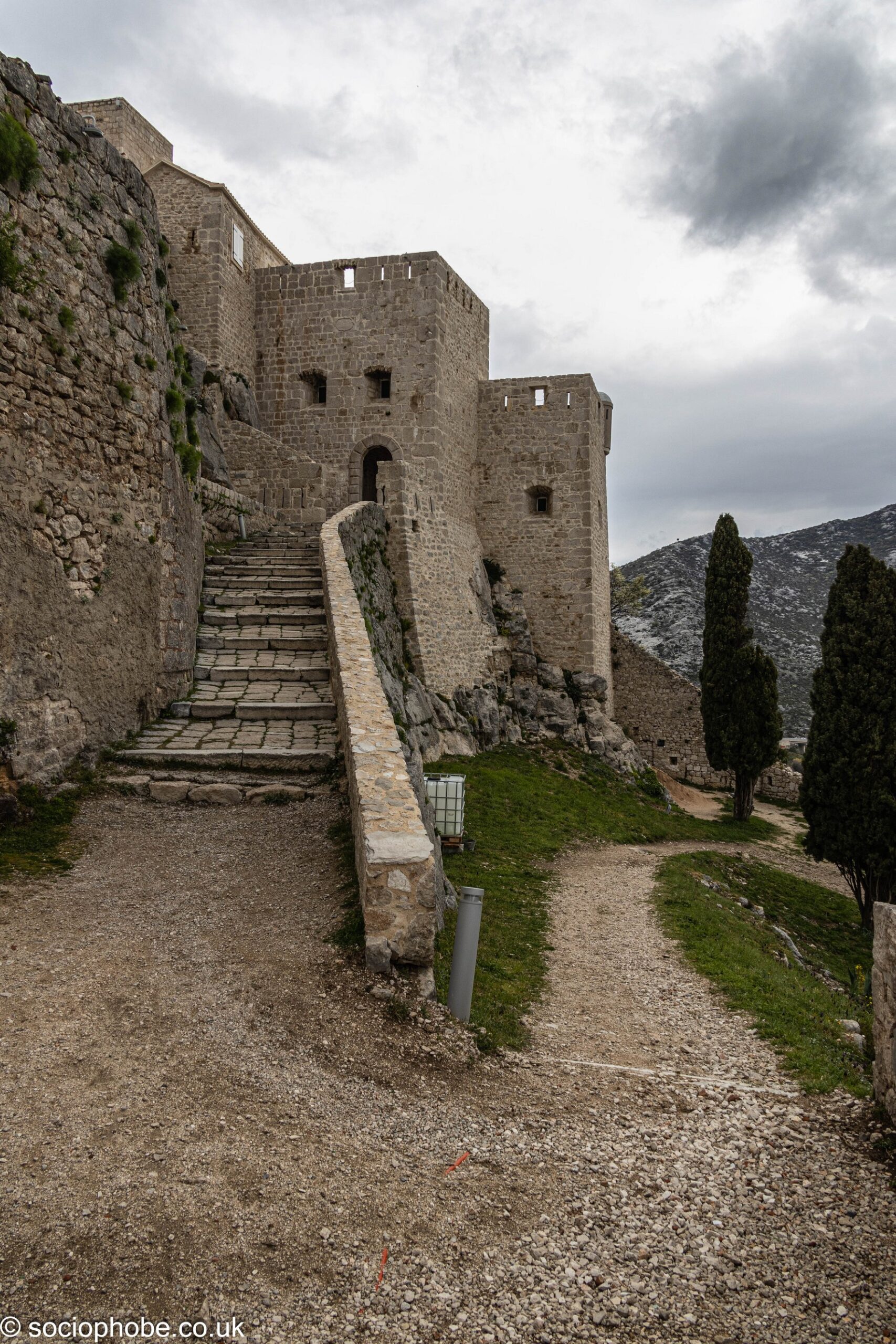
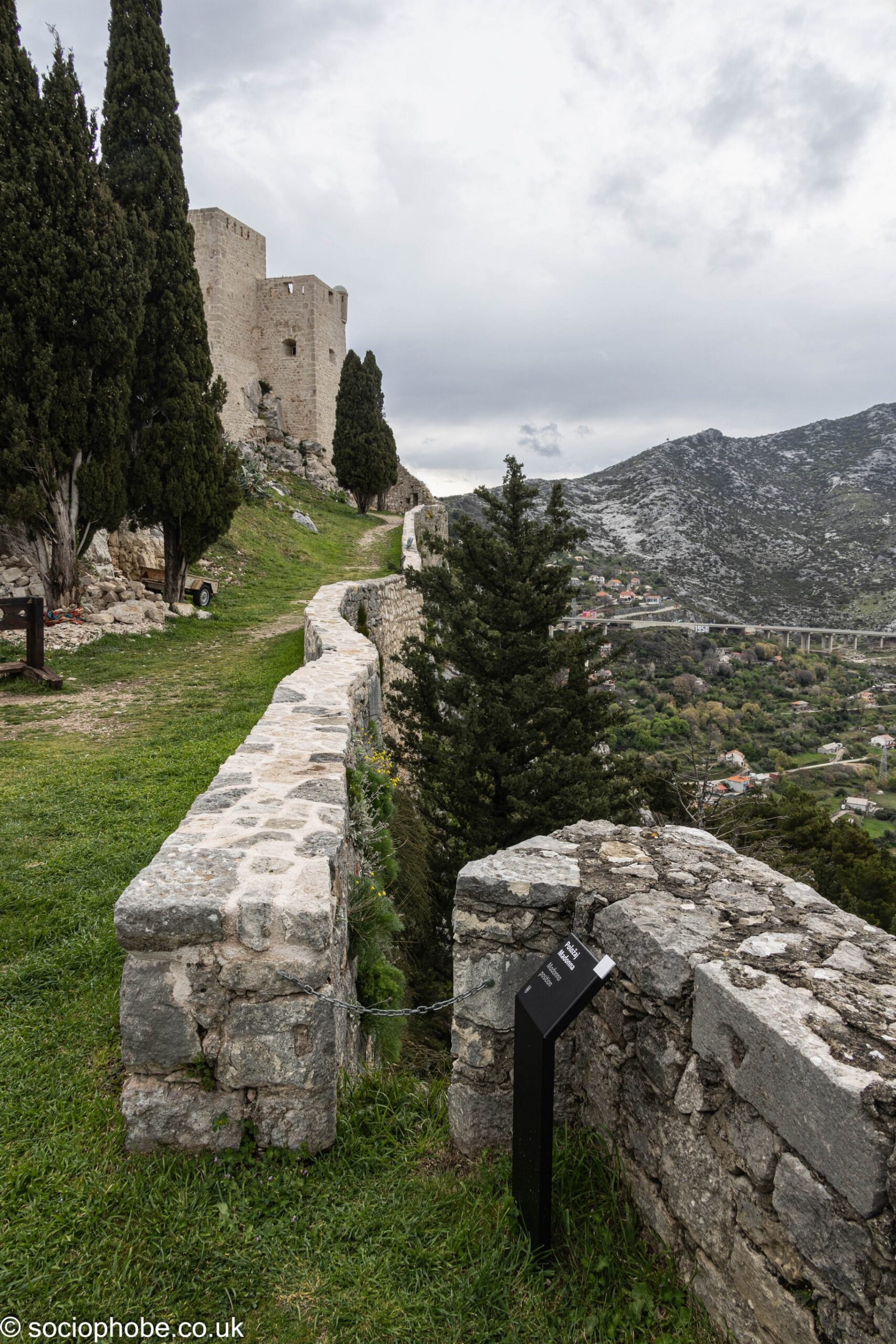
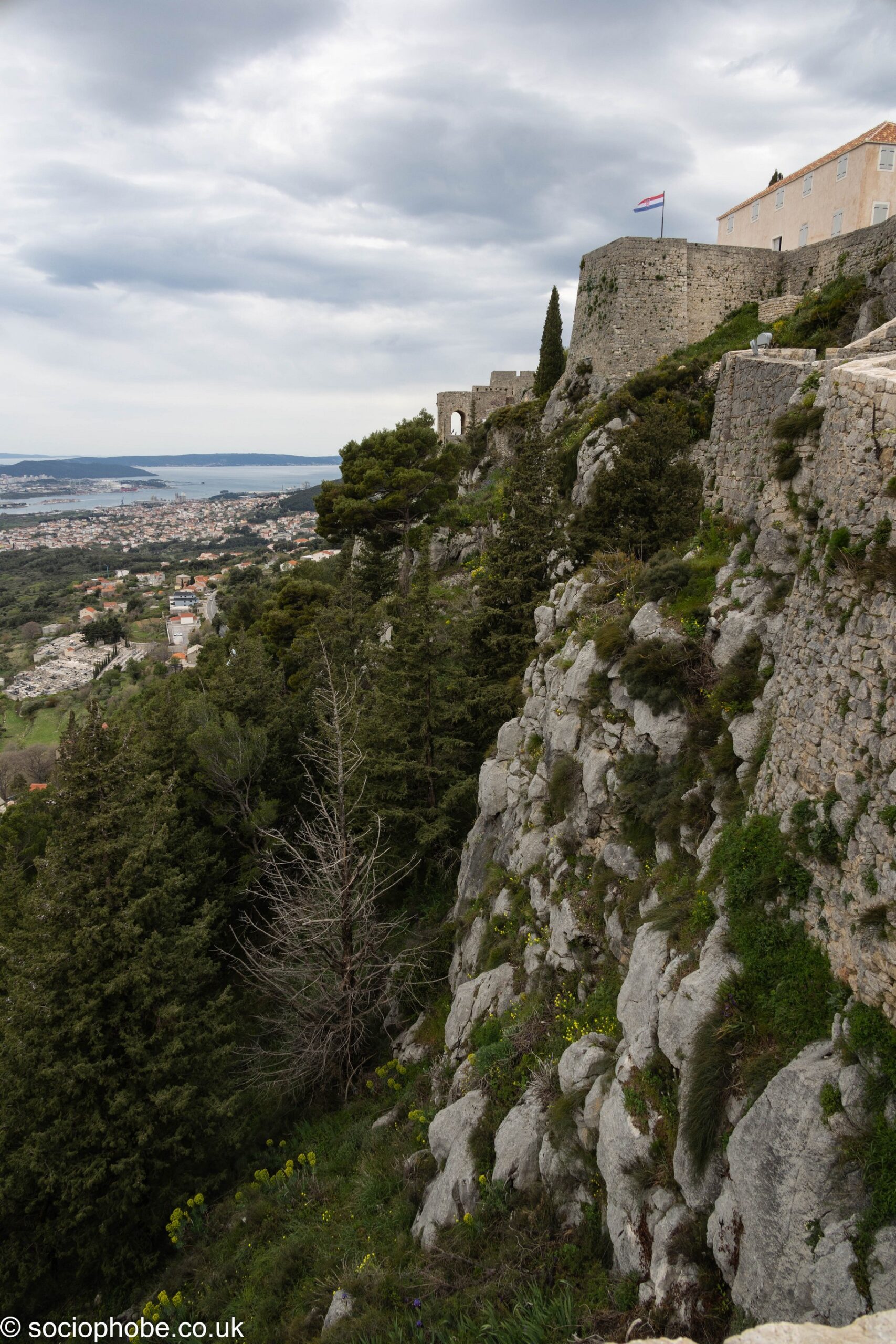
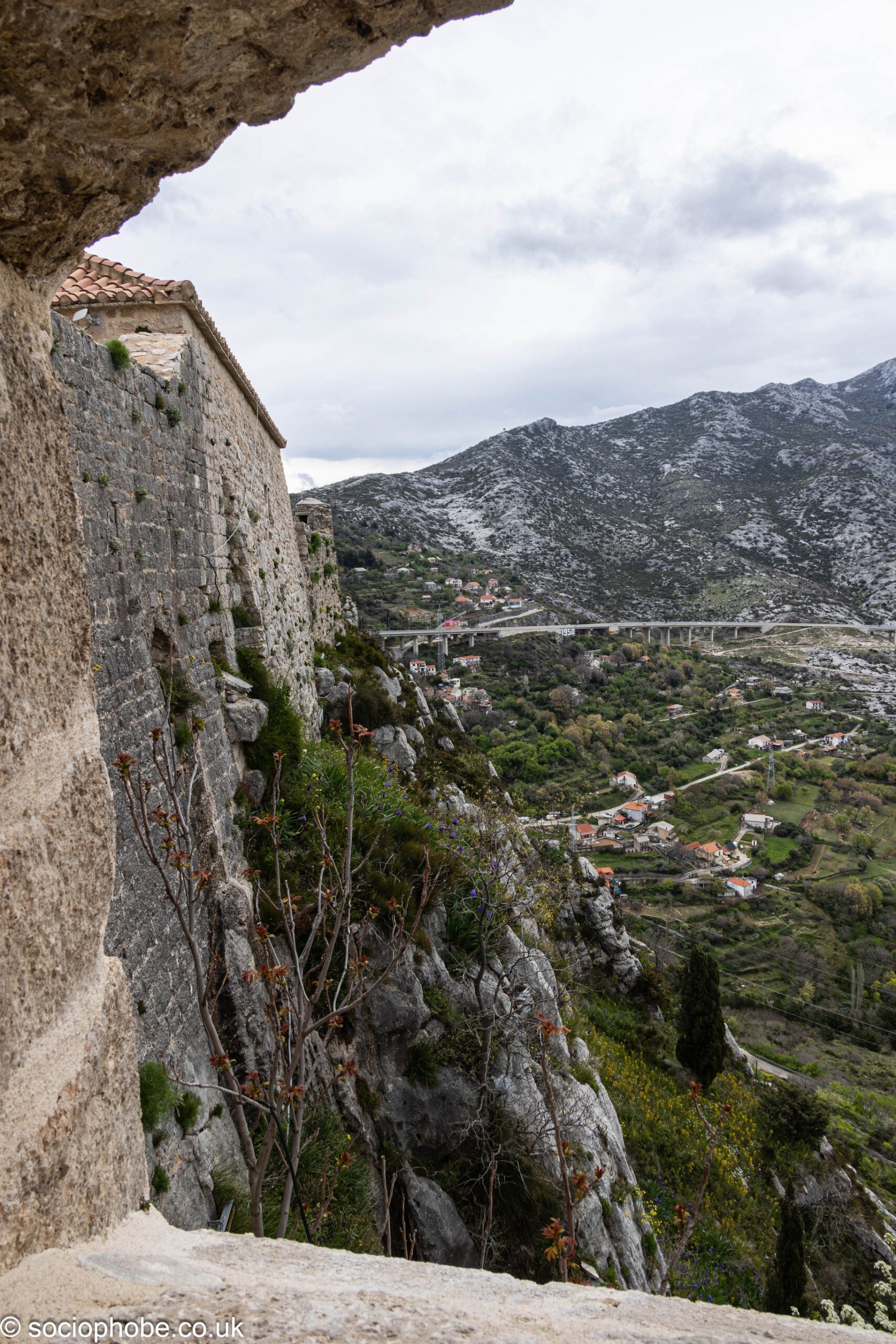
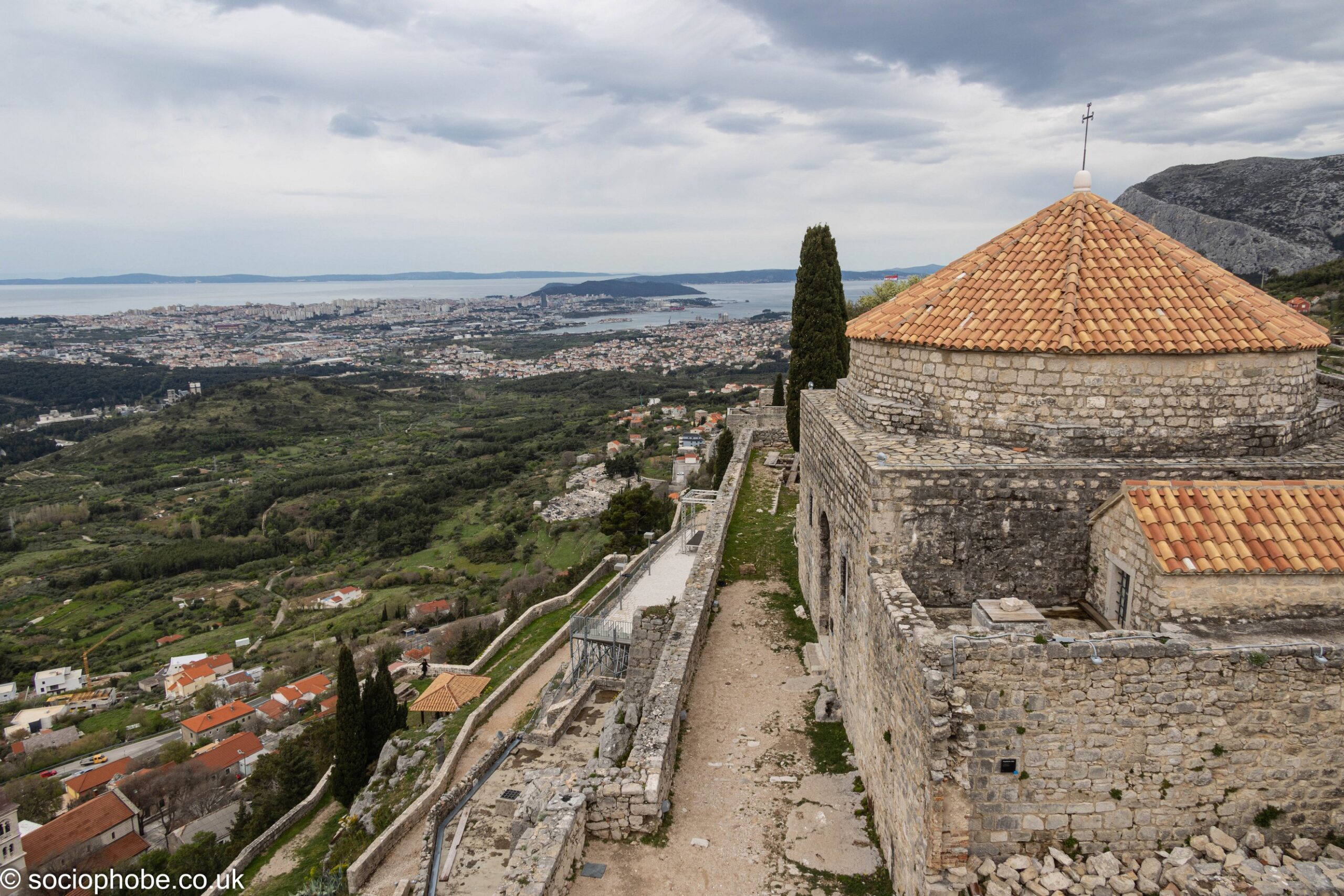
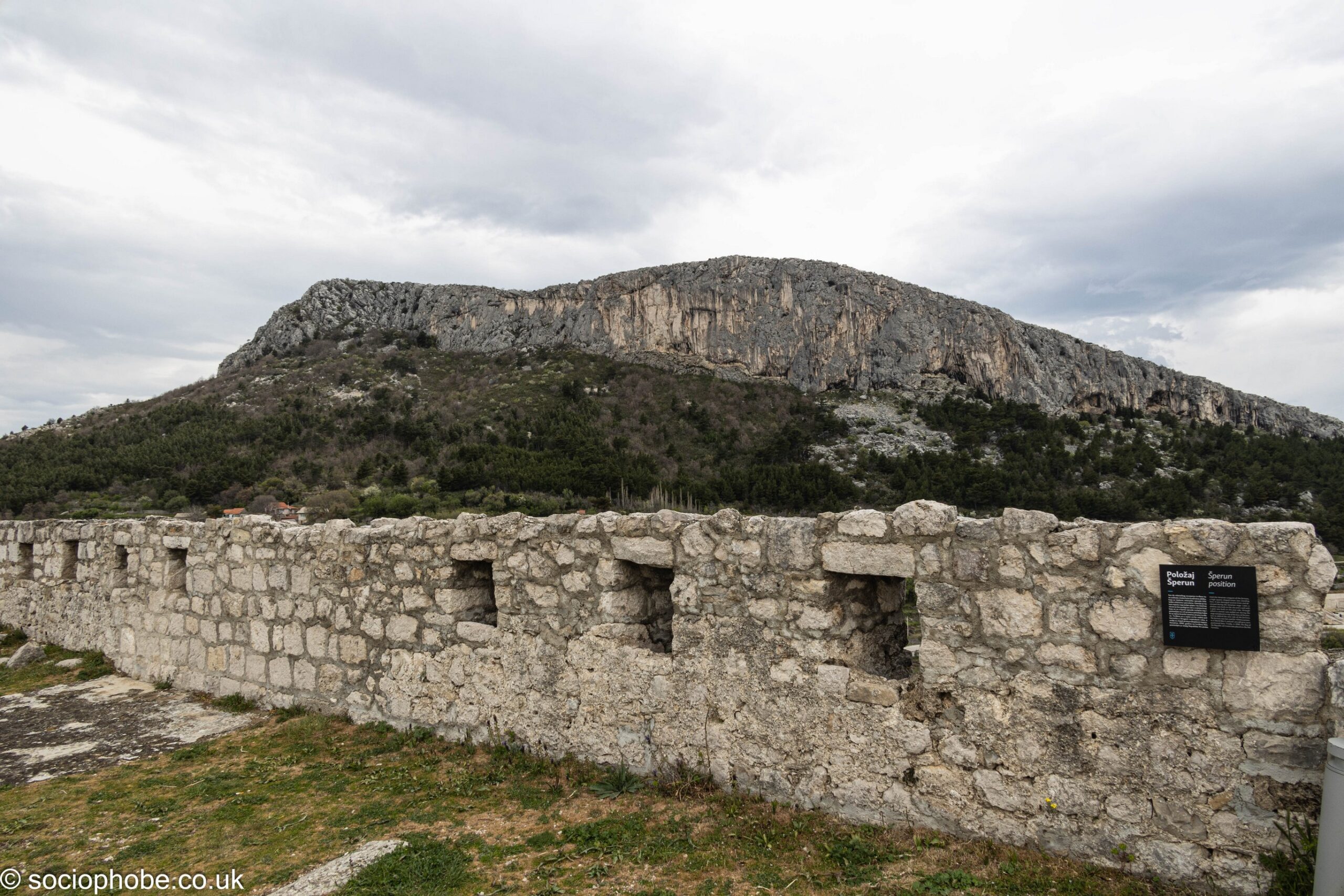
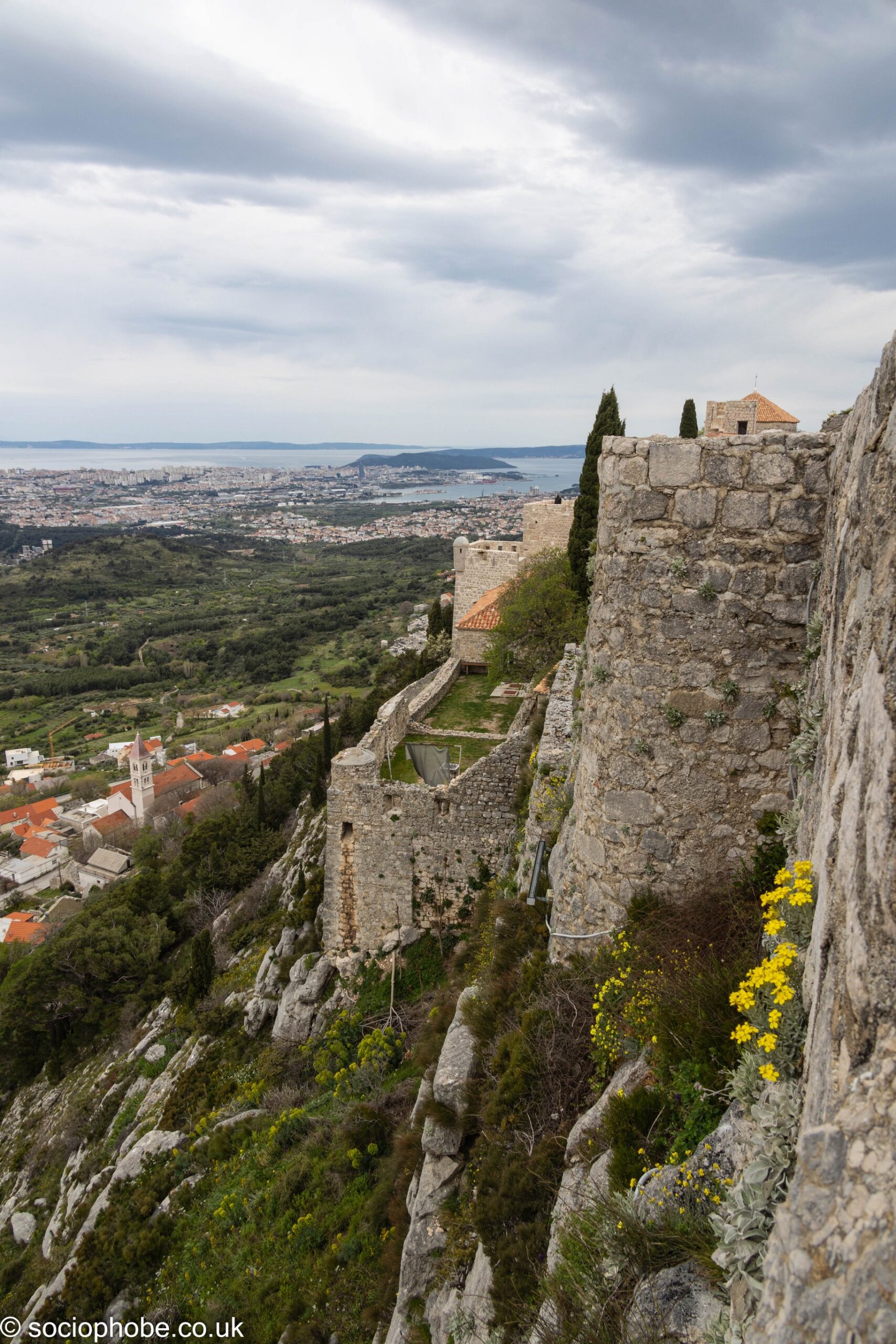
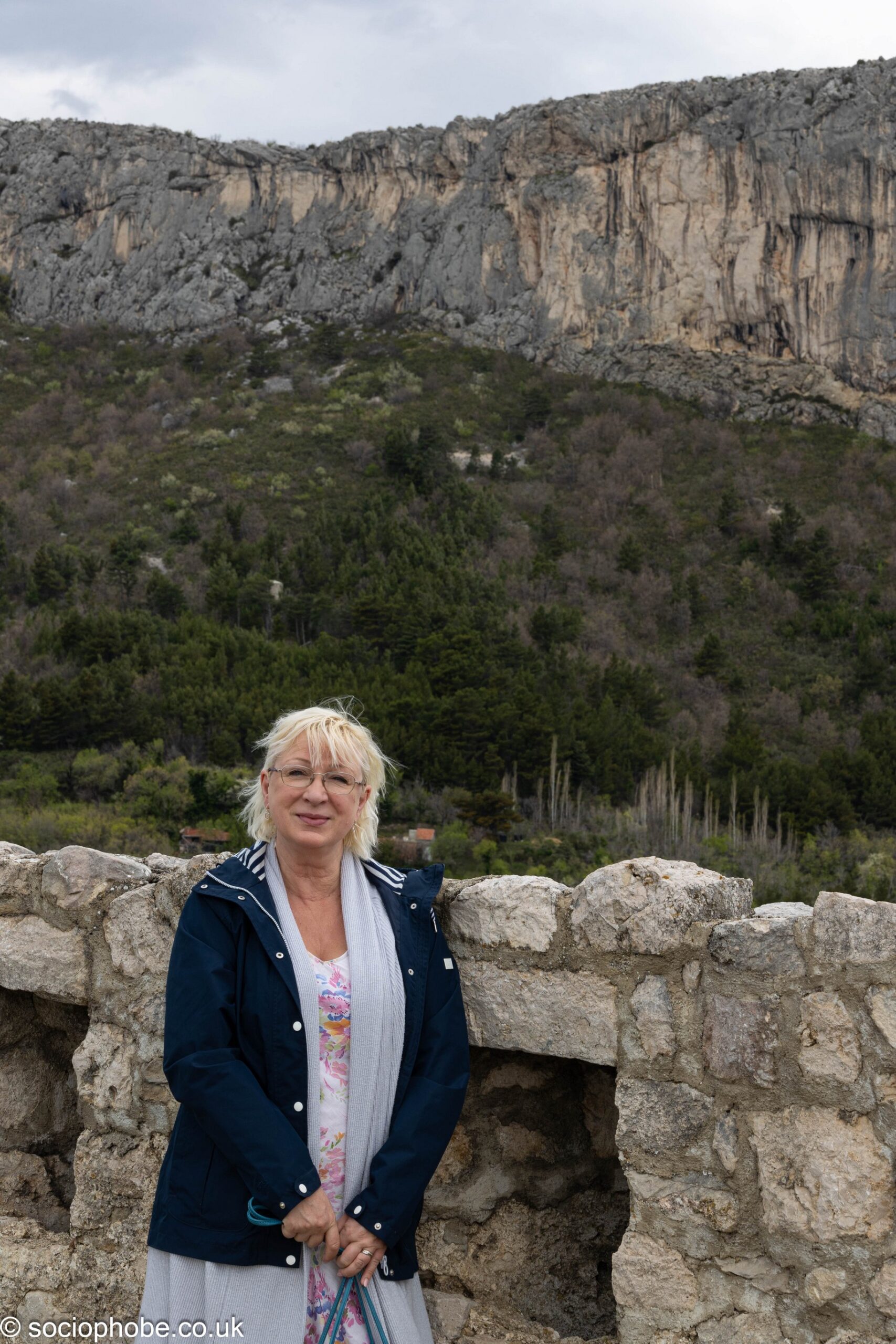
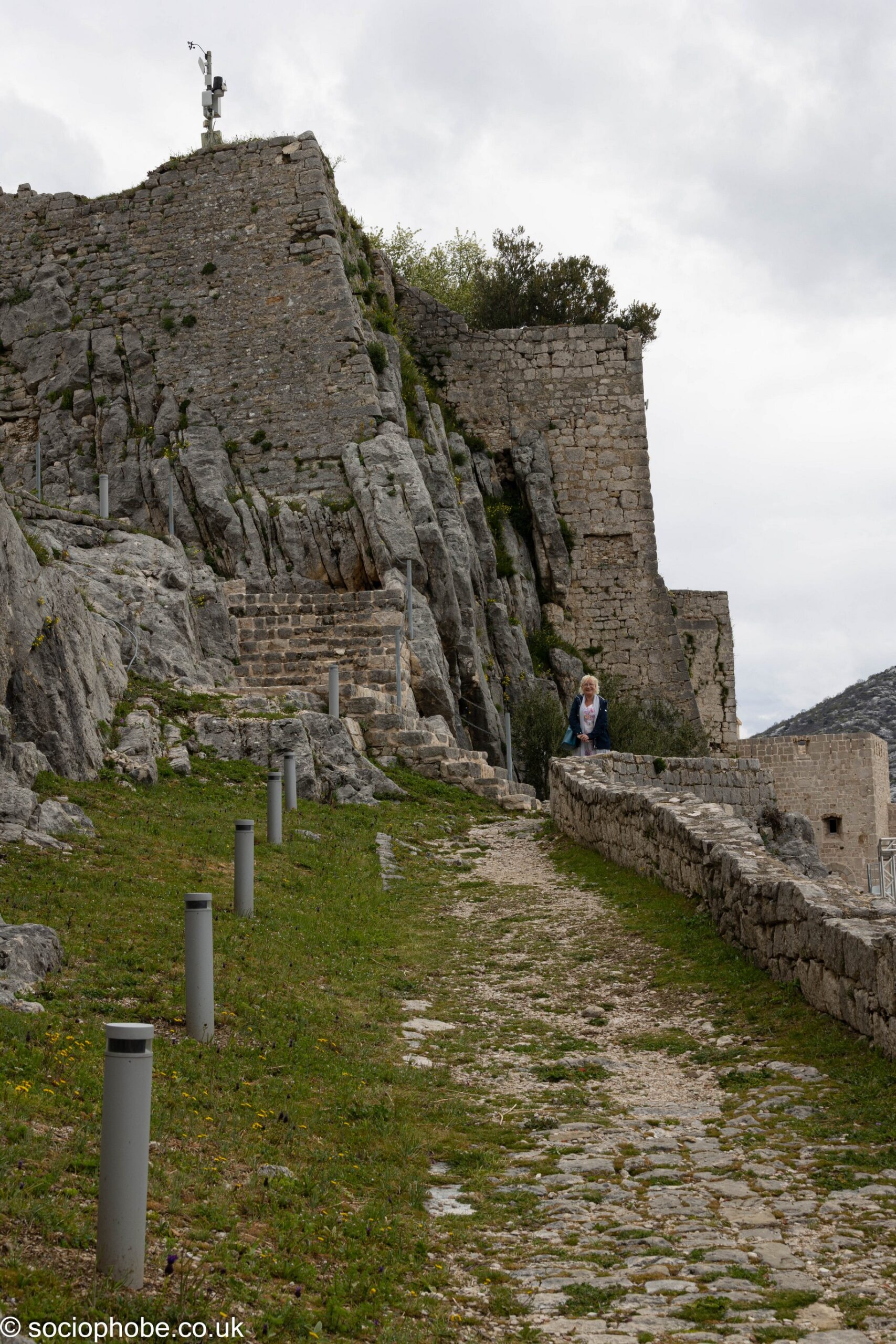
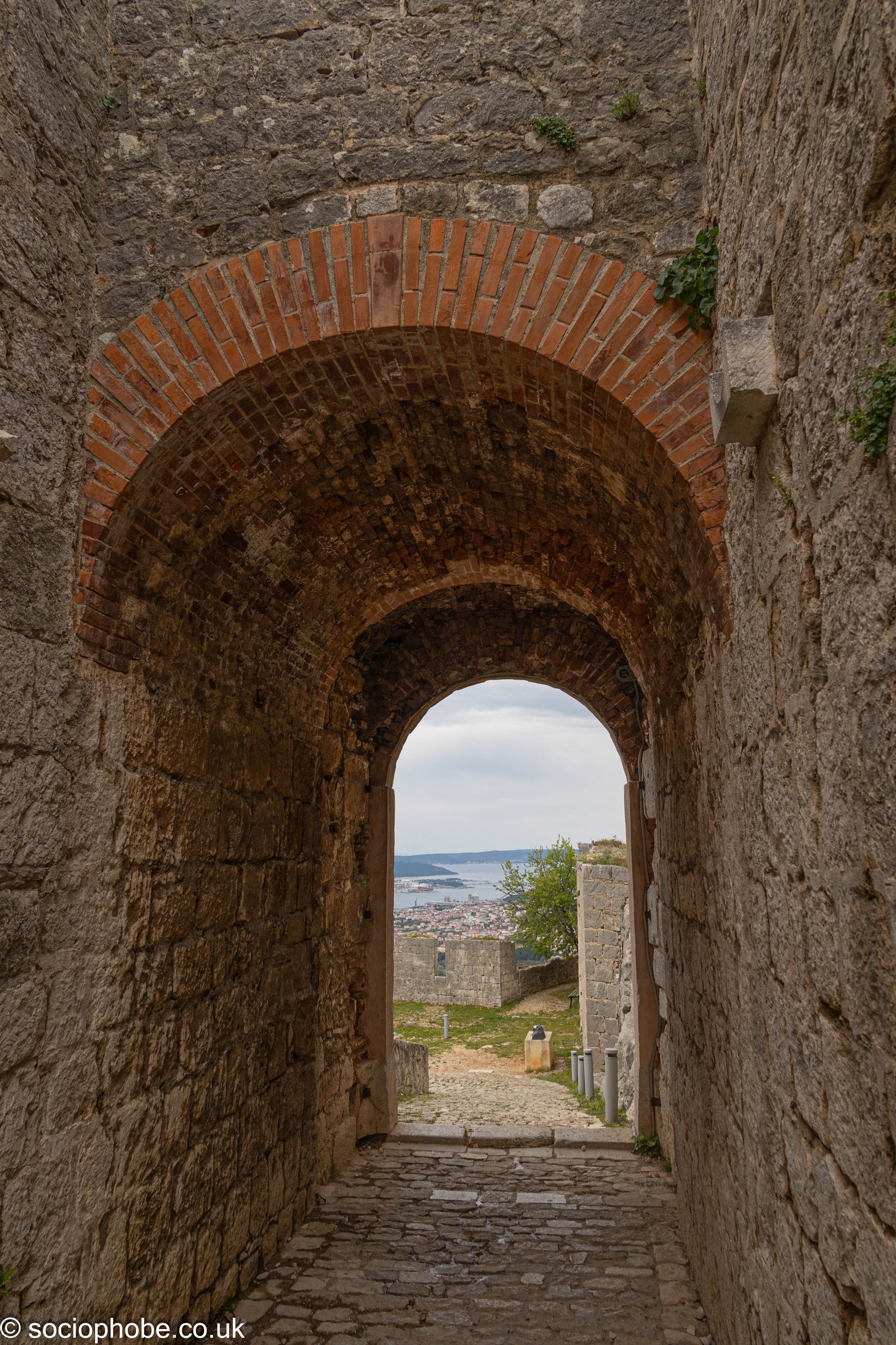
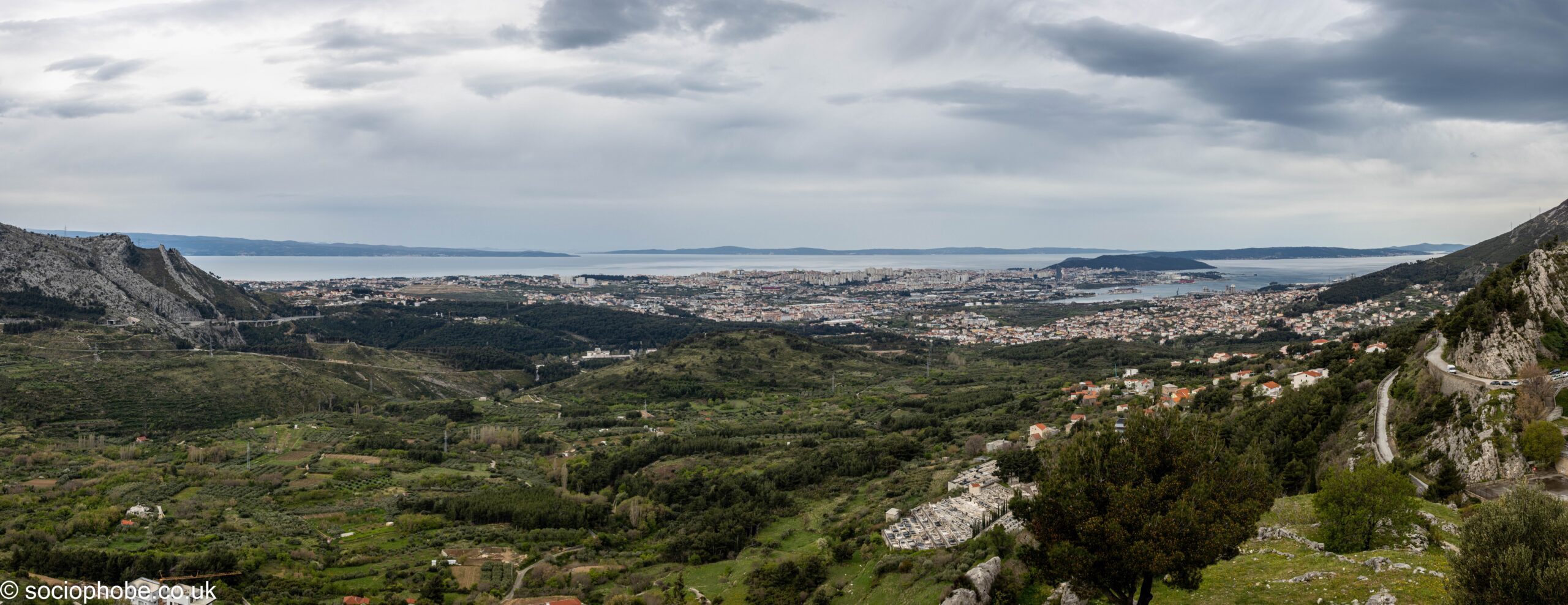
It was an interesting drive to Klis, we didn’t realise how large Split was until we were driving out of it. It also appeared pretty run down and yet again it was clear how lucky we are in Western Europe. We drove past a Roman aquaduct and the road then got smaller as we left the highway and started to drive through hillside villages. After some very narrow roads – no idea how coach tours get there – we arrived at the car park to the castle. We paid the driver his first installment, he walked off to get a coffee and we started the climb to the castle entrance.
The castle was spread along a ridgeline and divided into three areas, each higher up the hill than the last, the oldest part being the furthest away as the castle slowly expanded over the centuries, rather like my waistline. Klis fortress was never actually stormed and each time it was captured it was was taken by negotiated surrender rather than assault.
We spent around 90 minutes in the castle, mostly being impressed by the views and the location where it was built. There were lots of information boards which gave little snapshots, such as the secret door and the converted mosque. There was an interesting armoury showing the weapons the Croatians used against the Turks and the history of the castle in the period from the thirteenth to eighteenth centuries. During this period the castle was occupied at various times by Croatians, Turks, Venetians and Austrians. There were also photos from GoT showing scenes using the castle, particularly to crucify the slave masters along the entrance to the third level.
Salona Amphitheatre
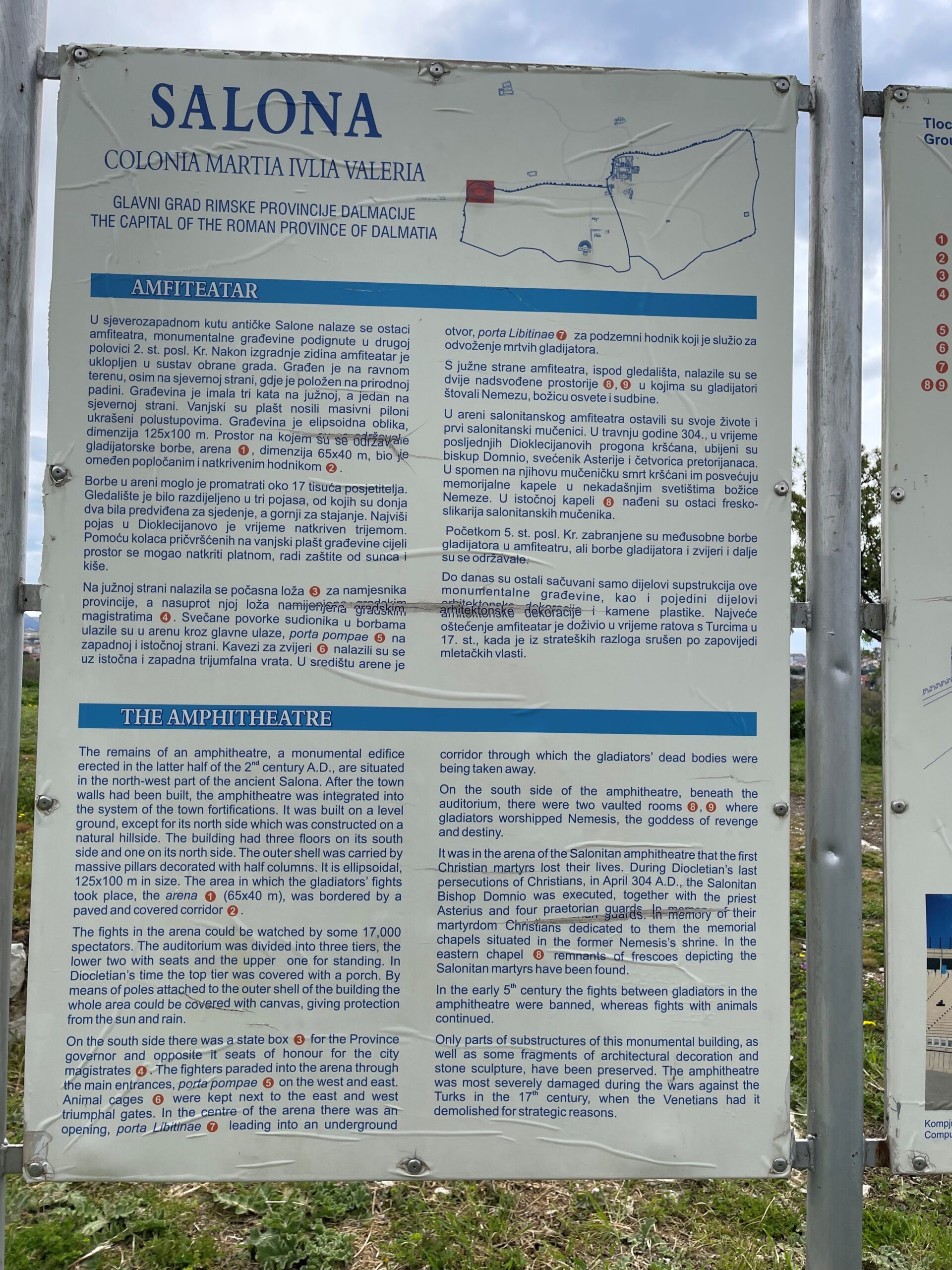
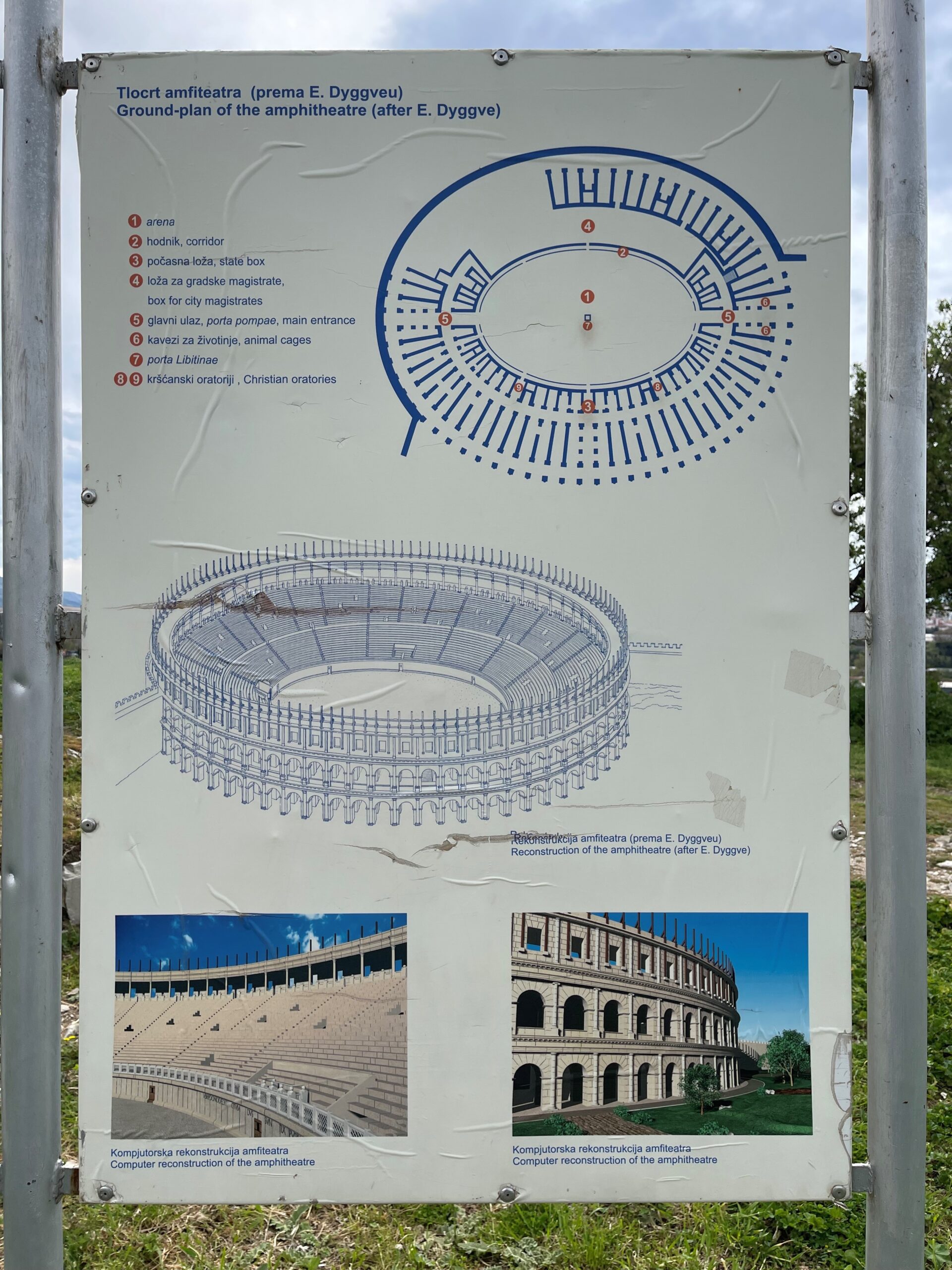
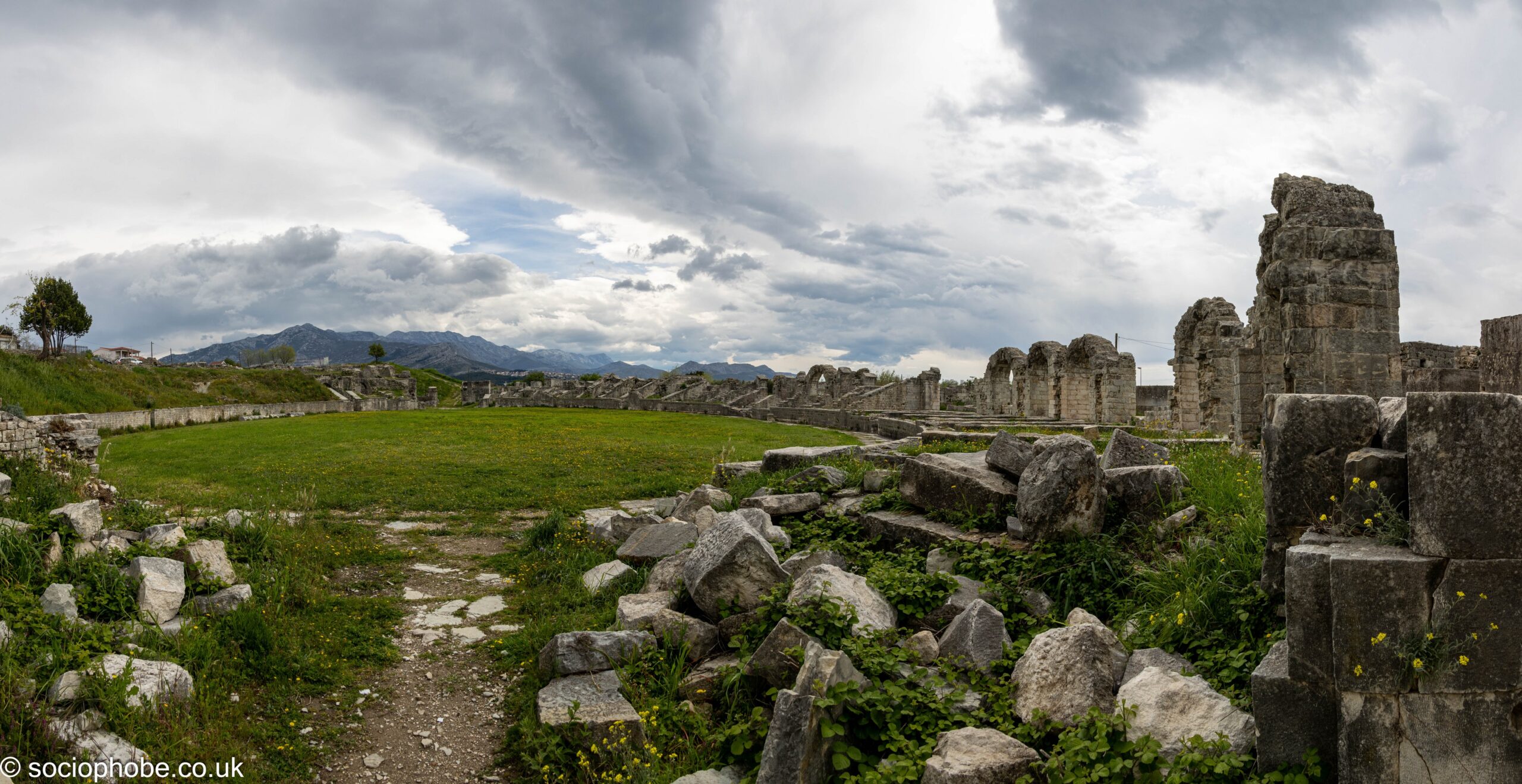
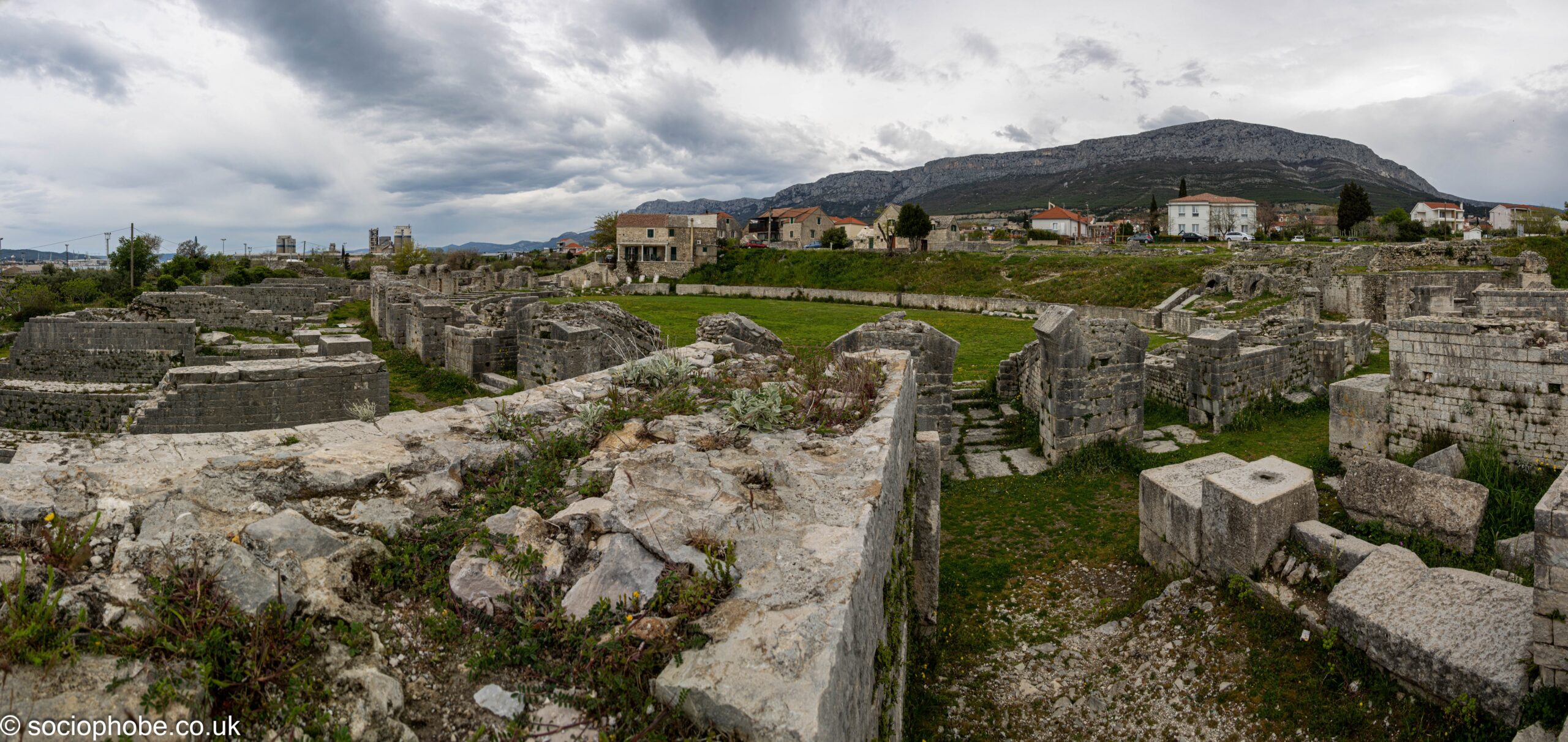
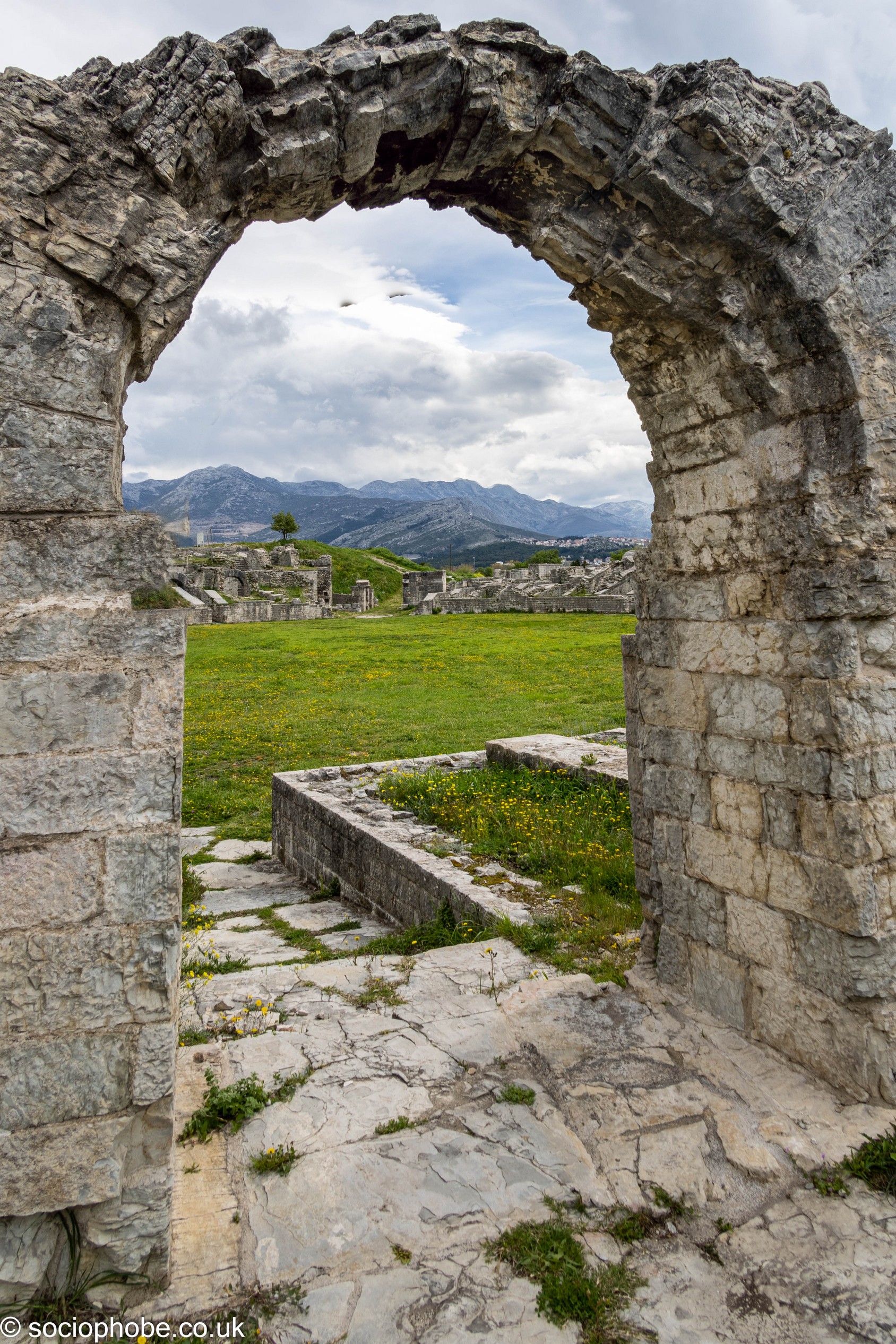
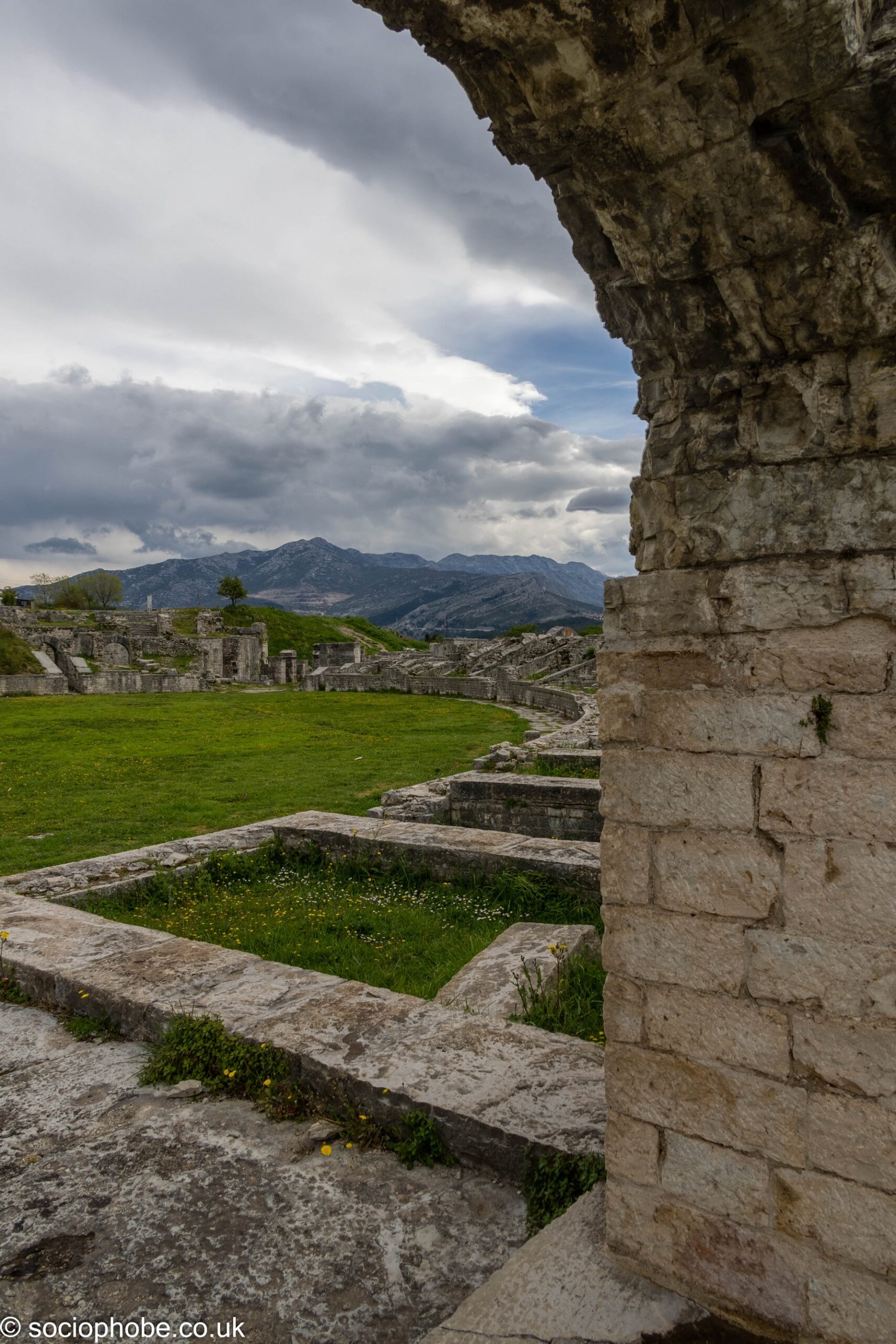
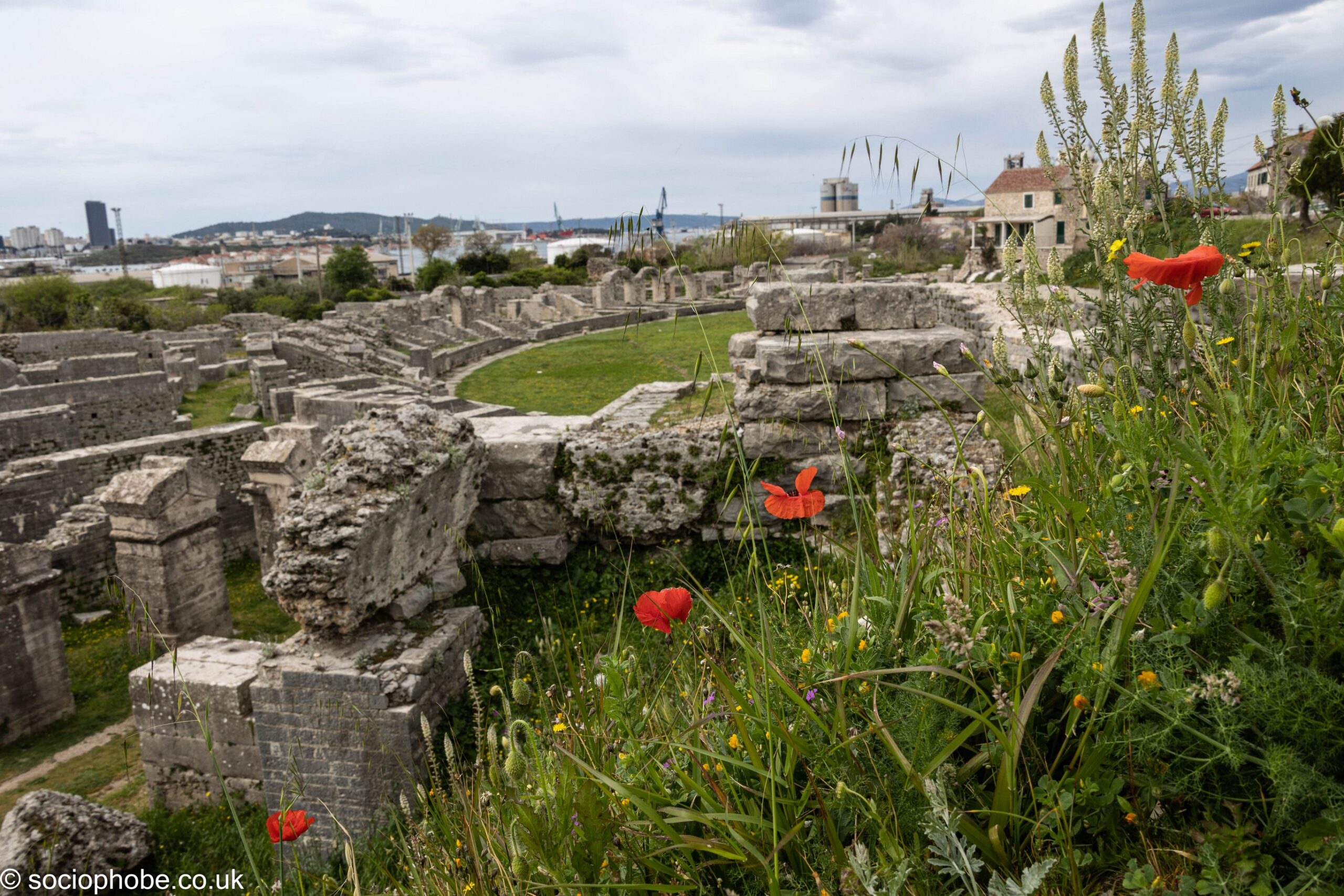
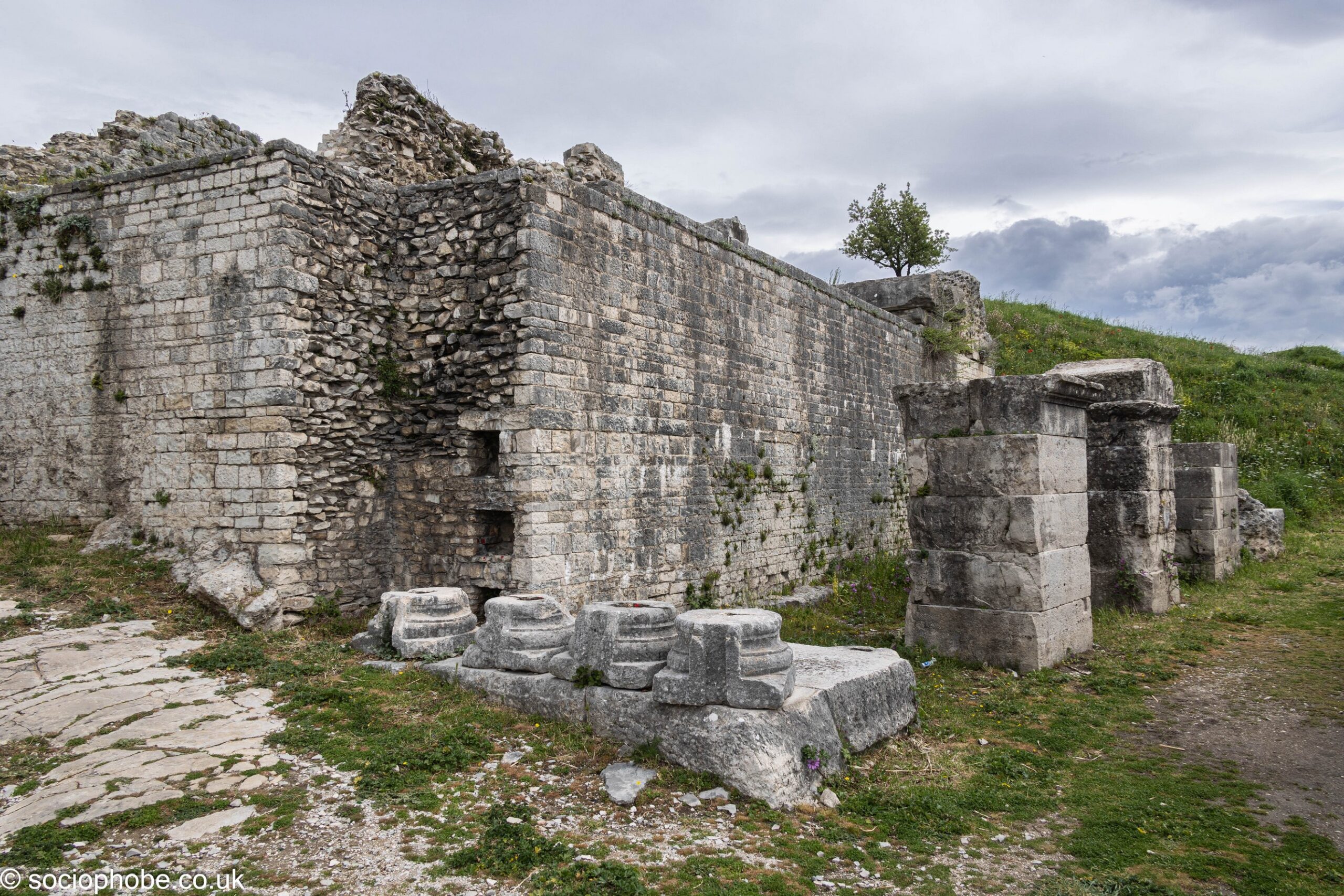
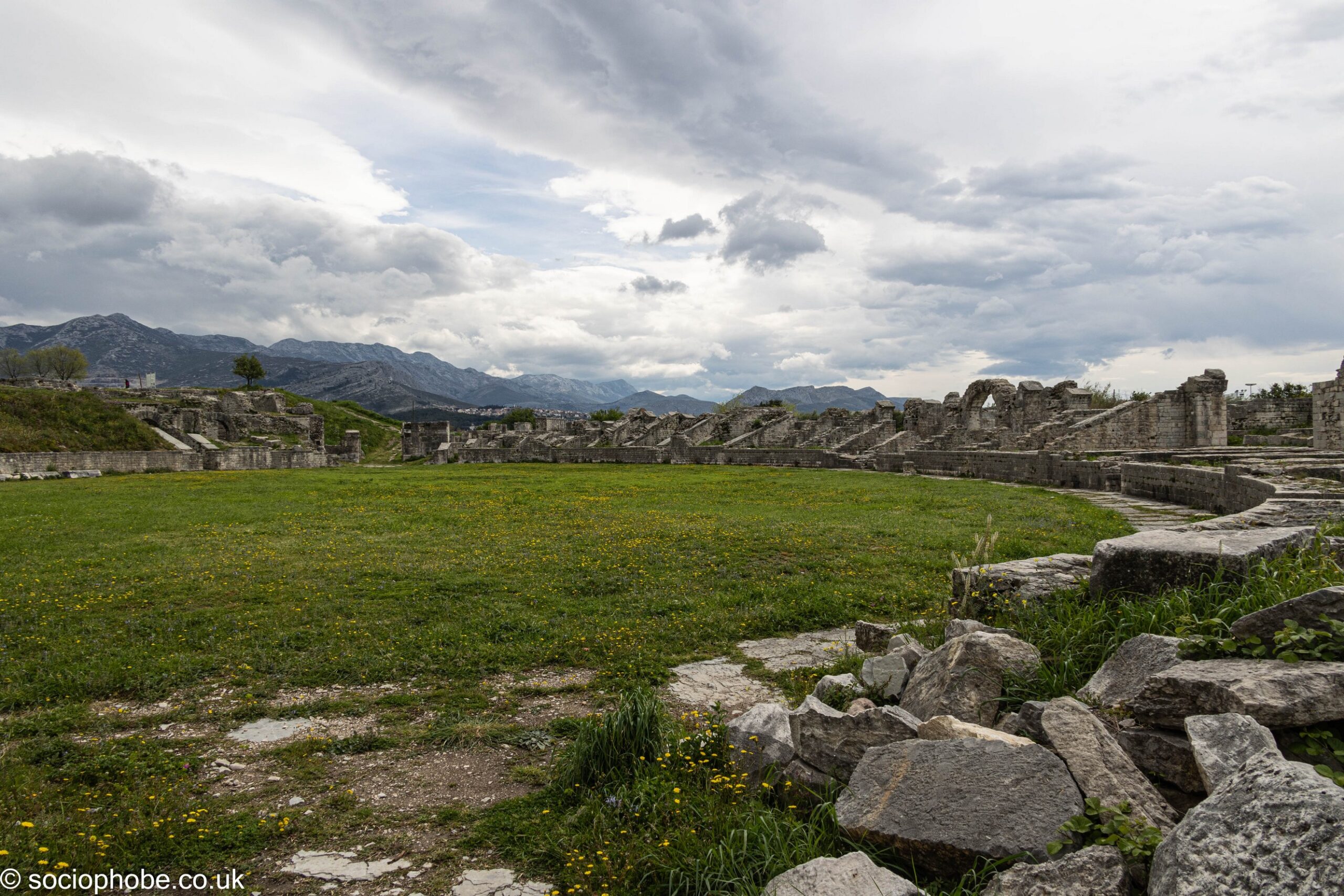
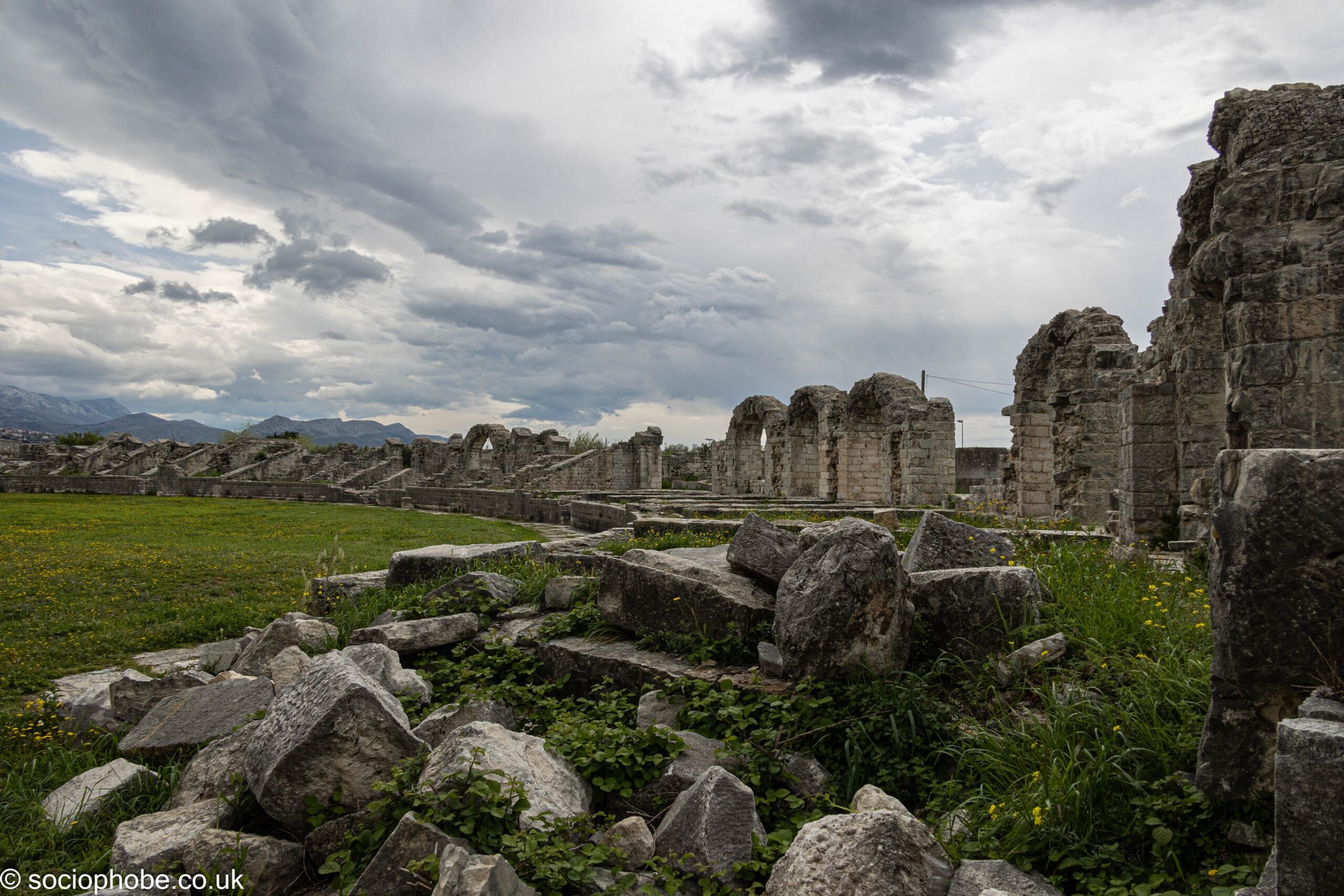
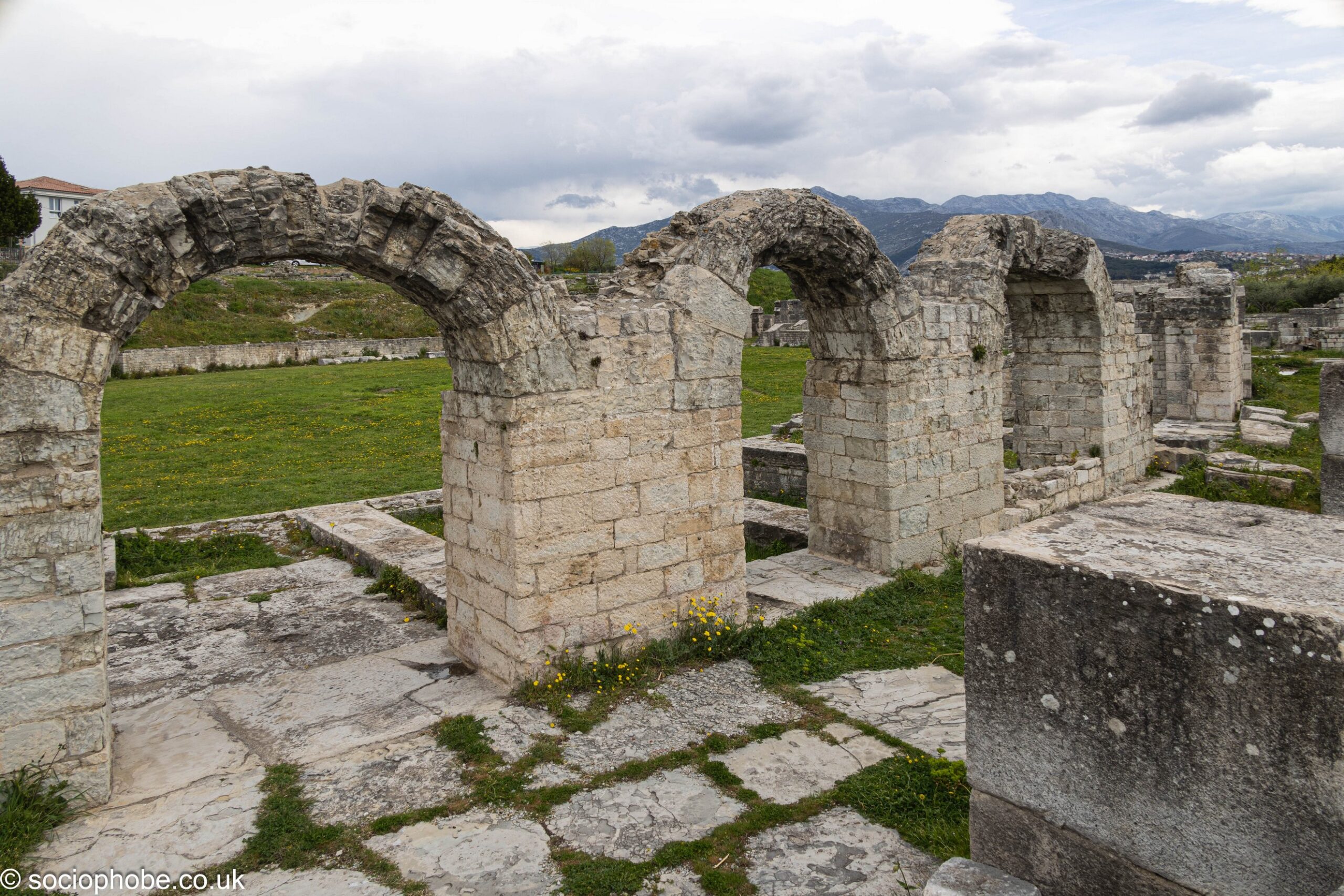
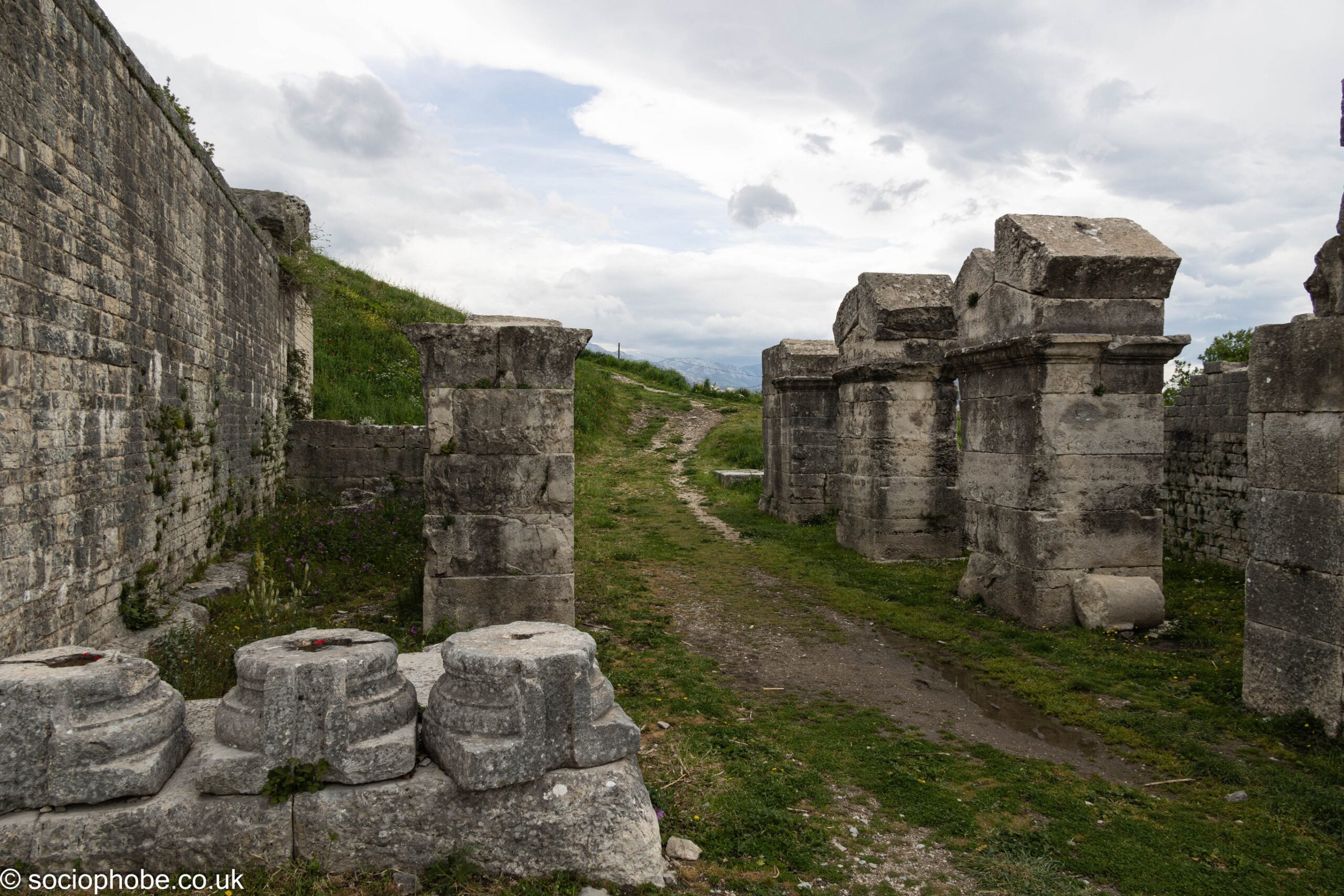
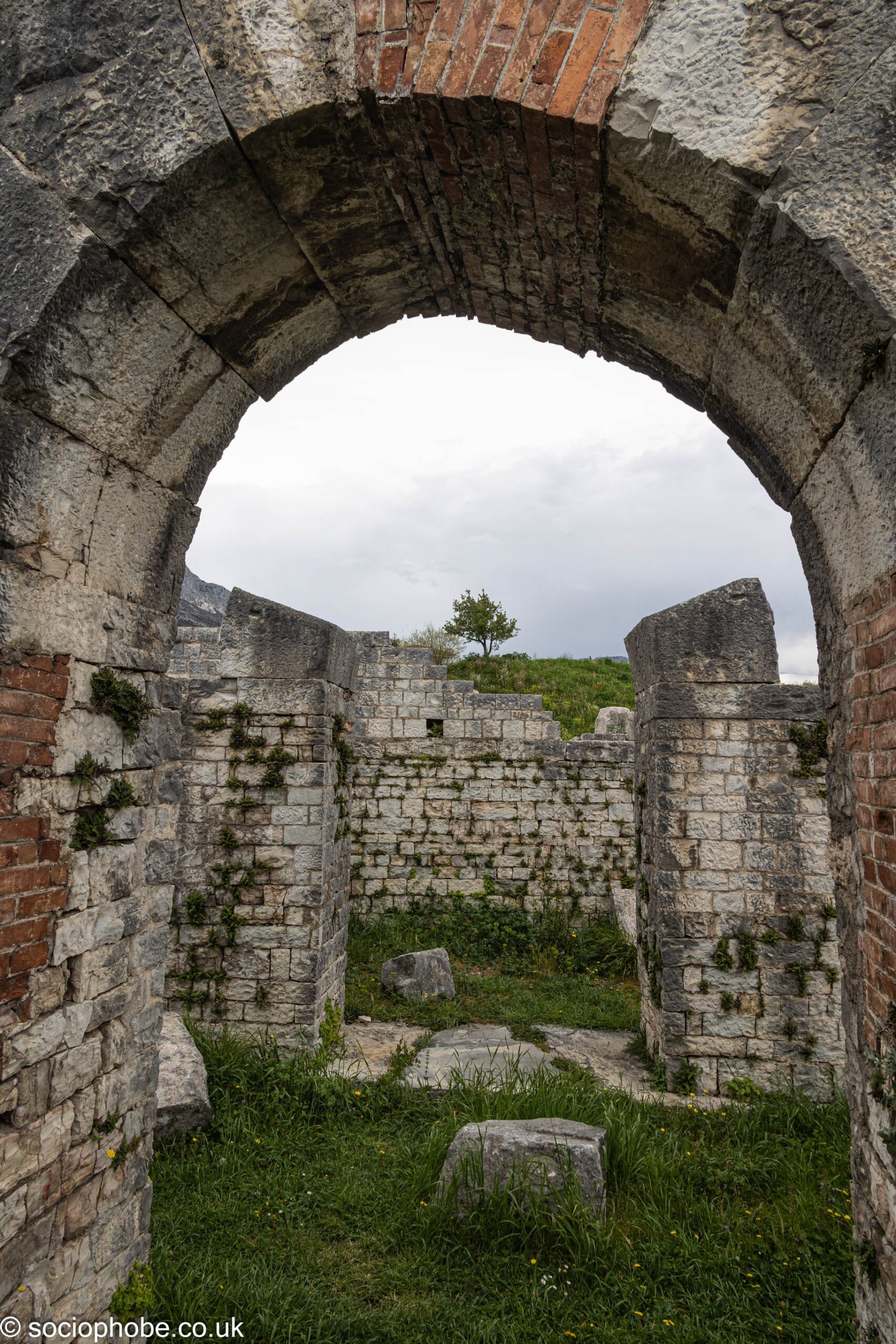
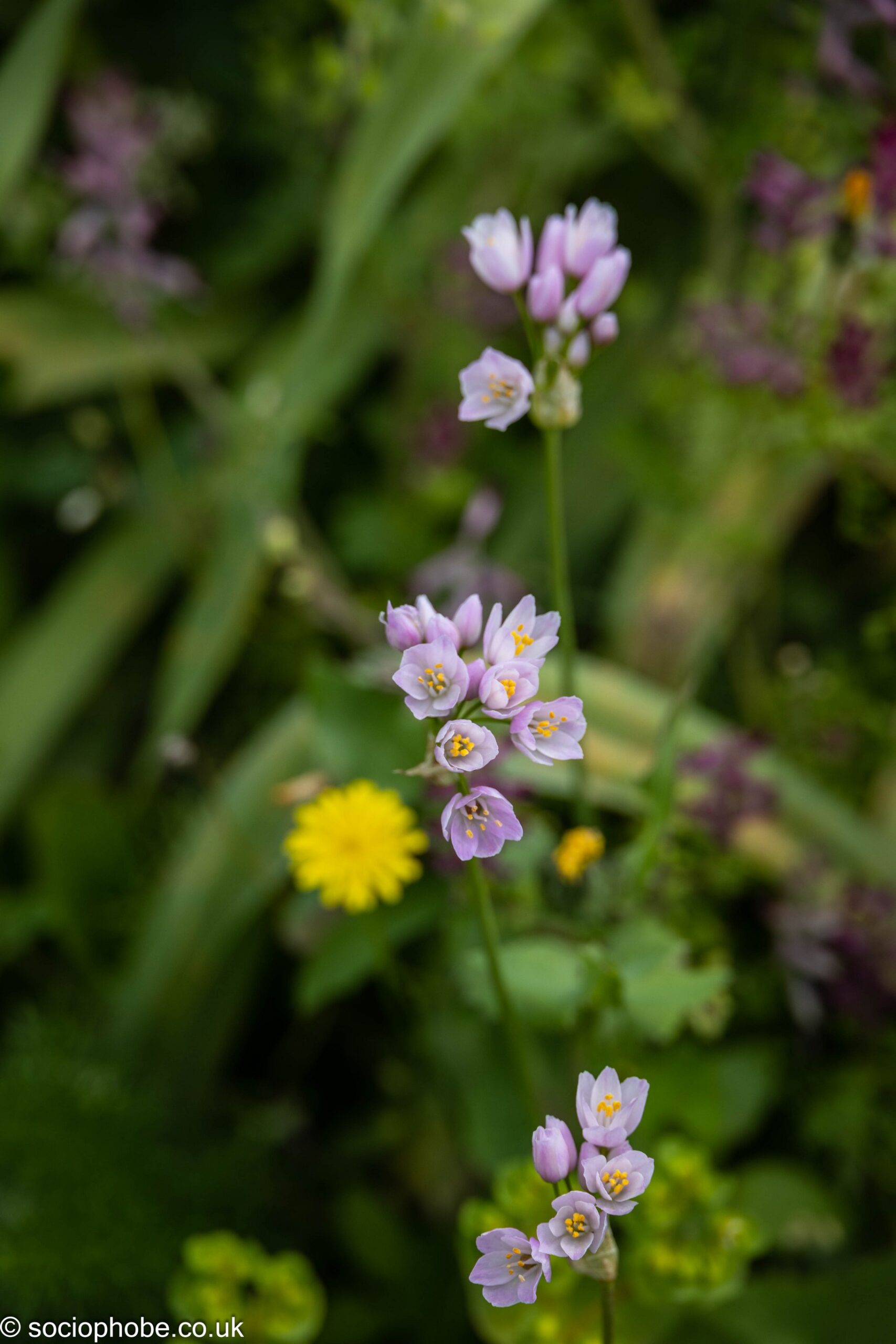
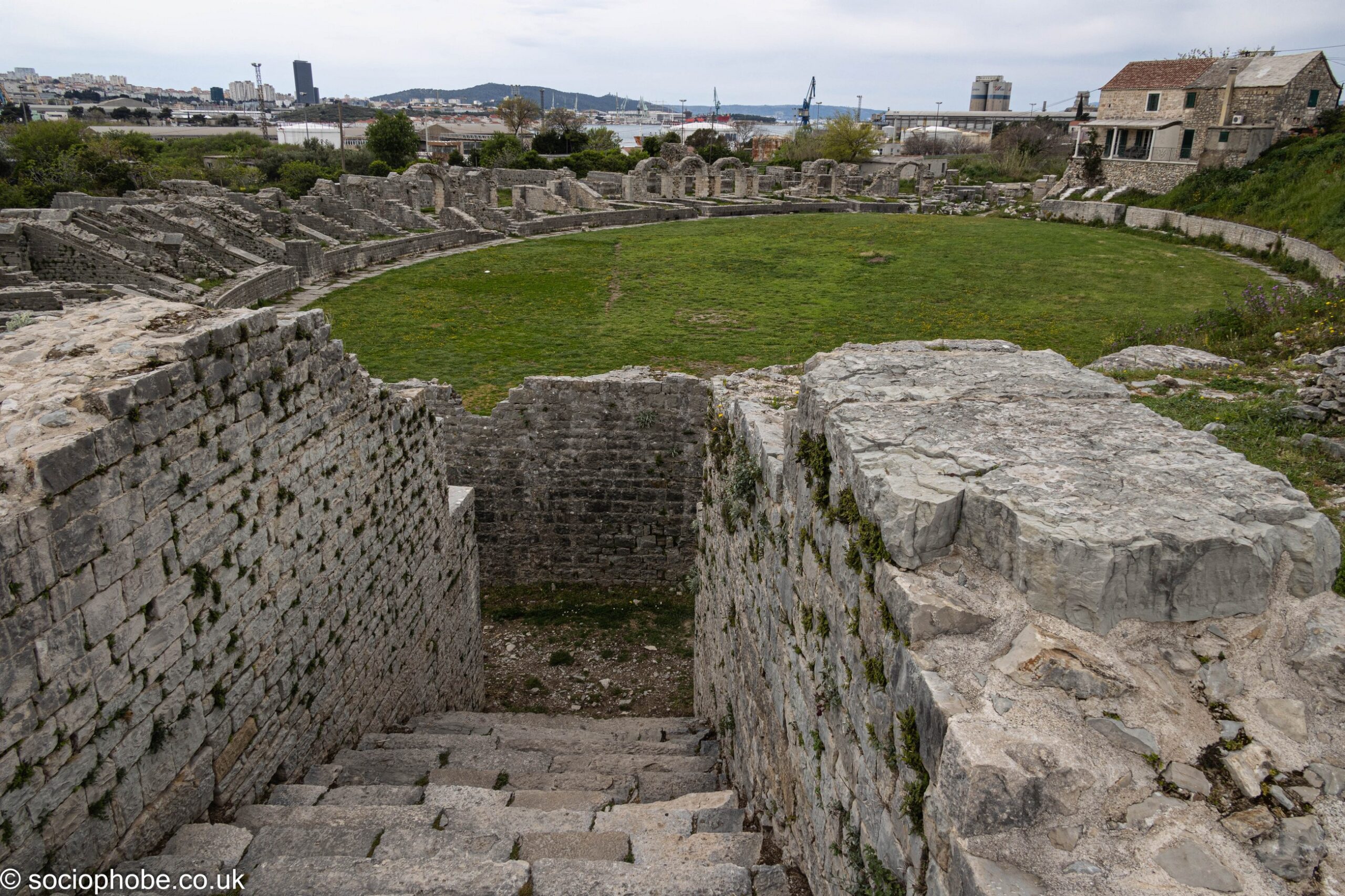
The driver was waiting for us and we headed back towards Split, stopping briefly at the Roman amphitheatre of Salona. This was a ruin and partially buried but there were lots of wildflowers in bloom which made it a lovely setting. As long as you chose to look towards the mountains rather than the cement plant by the shore. We walked the circuit of the ruins which must have been magnificent, right up until the Venetians destroyed them in the seventeenth century.
Final wander through the old town and Riva
We were dropped just outside the old town and took a meandering route back towards the hotel, stopping for coffee and cake on the way. We did both have a 2 hour nap as well as the fresh air plus a cake belly defeated us! We got up in the late afternoon for one final walk around the old town. We walked along the harbourside, had dinner and then stopped at one of the cafes along the shoreline for a coffee. We were hoping to watch the sunset but it was just solid cloud so we walked slowly back towards the hotel. We stopped for a beer before getting back and it was a generally pleasant and restful evening.

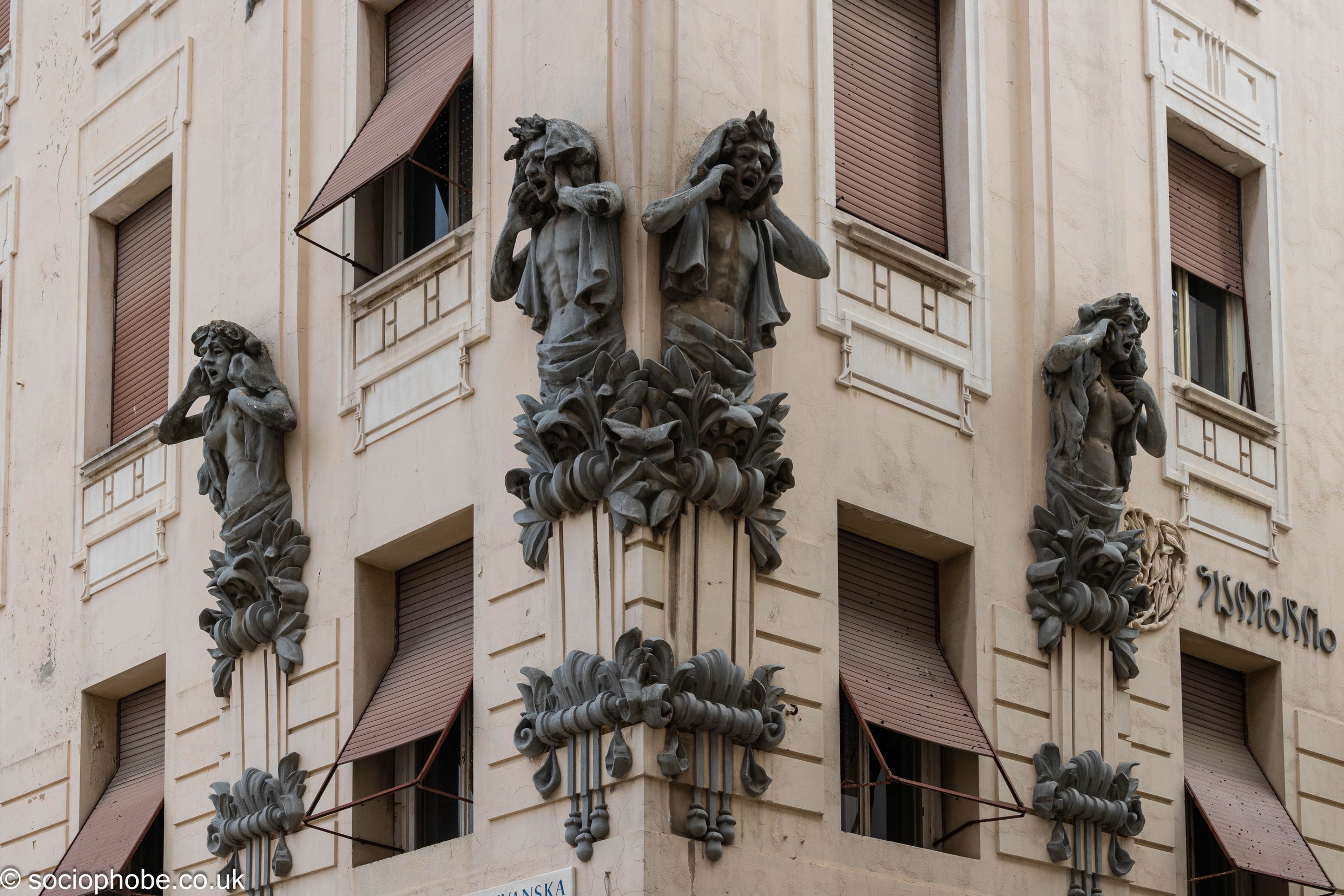
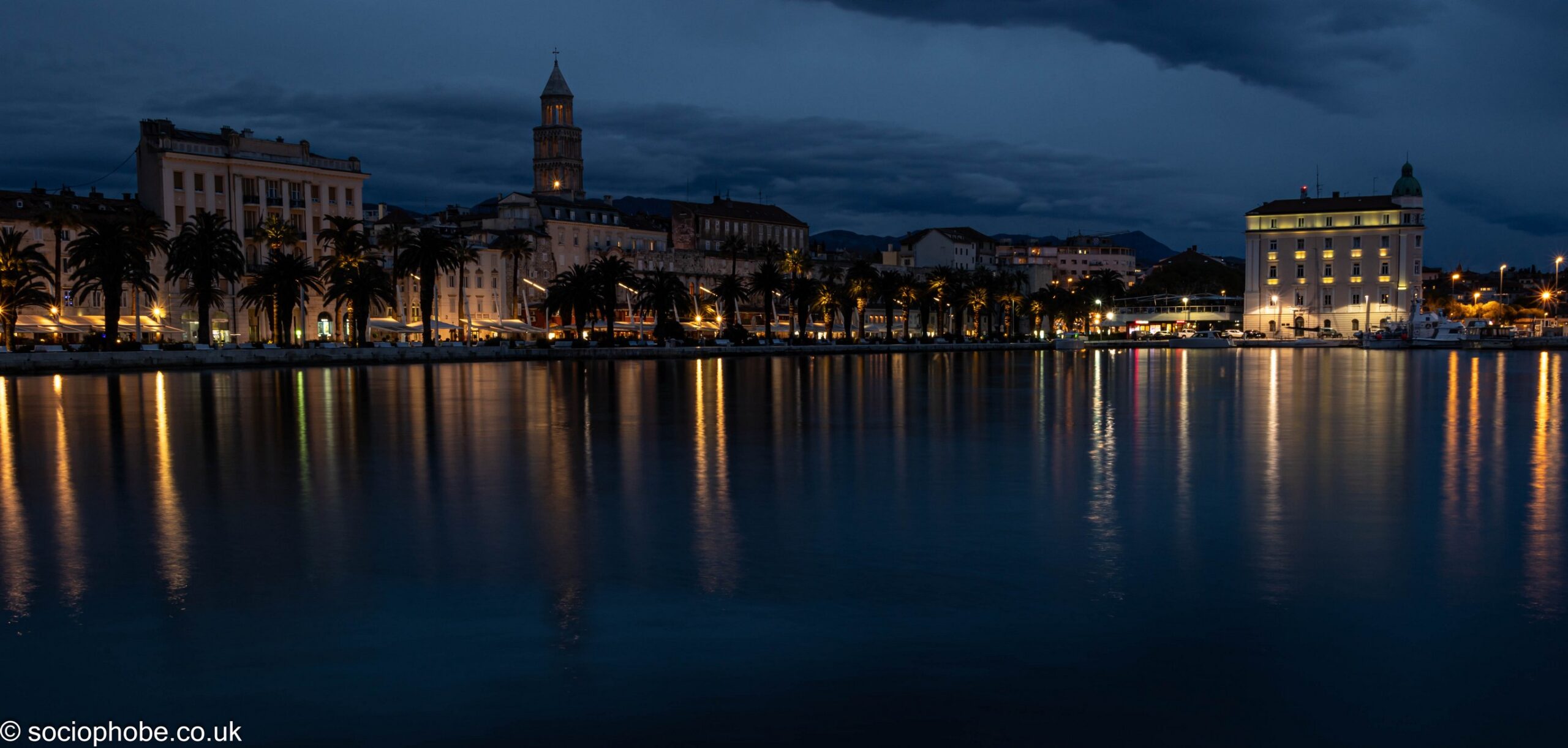
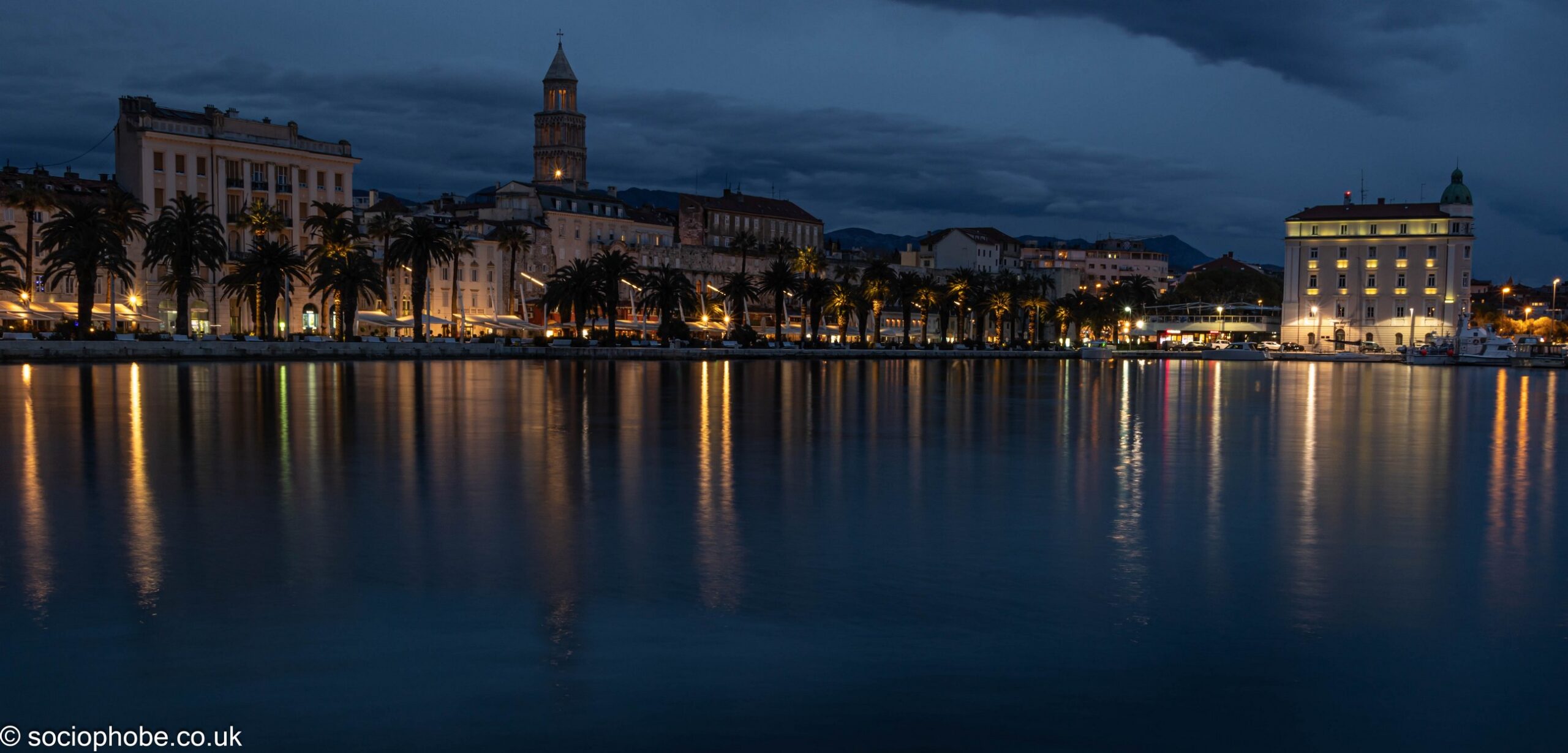
The weather wasn’t ideal but it was mostly warm and because we had a decent amount of time plus a hotel that we could walk to pretty much all the attractions it made it a very relaxing break. As always, we discovered more places to see in the area so next time we’ll stay in Trogir and hire a car. The old town of Split seemed a very safe place to wander around although we didn’t see many actual police. There was also a total absence of solar power and we only noticed one electric car the entire stay which was unusual. The country is definitely fascinating though and being a frontier zone between the Christian and Muslim worlds for 400 years has shaped it in many ways.
– Thank you very much for this valuable information
Sounds like a fantastic trip to Split! Marcus Hurley’s detailed exploration of Split offers a vivid snapshot of the town’s historic charm, especially around Diocletian’s Palace. The blend of Roman and medieval architecture, combined with Split’s stunning coastal backdrop, made for an immersive experience. From the narrow streets to the panoramic views atop the bell tower, it’s clear that Split is a perfect getaway for history enthusiasts and travelers alike. His descriptions of local landmarks, like the Palace basement and Klis Fortress, really bring the atmosphere of Split to life. What an inspiring long weekend!