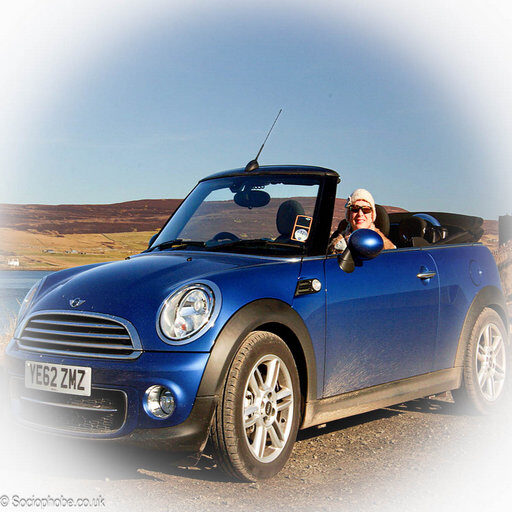
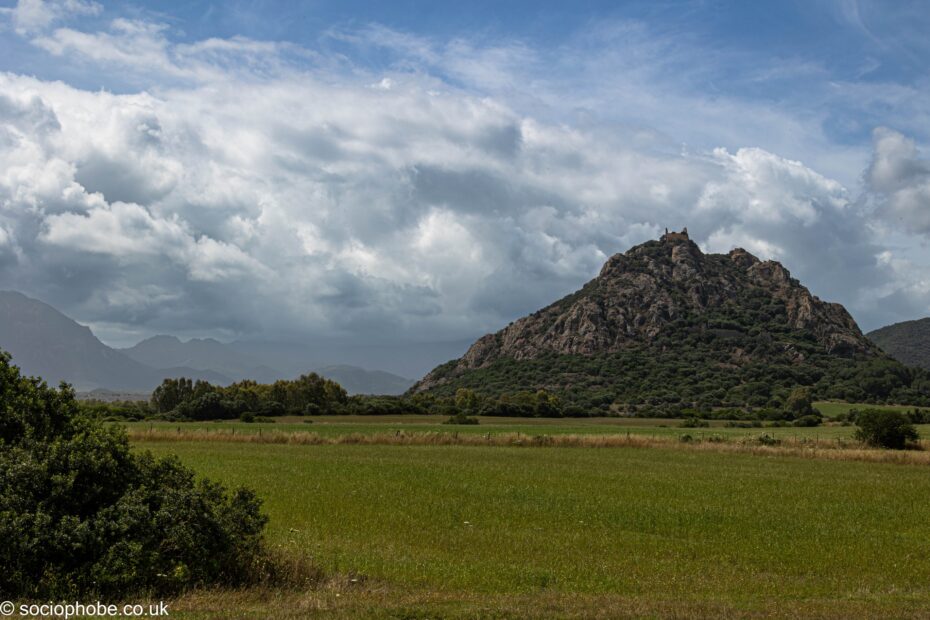
Sardinia is a beautiful island and a Sardinian road trip has scenery, history and beaches that should cater for most tastes and budgets. With international airports at either end of the island the road trip can encompass the entire circuit of the island or just half, saving more for later. Severn days was enough to cover most of the sights we wanted to see but ten would have been ideal.
| Holiday Ratings | |
| Recommended days | 10 |
| Budget | £ |
| Difficulty | Easy |
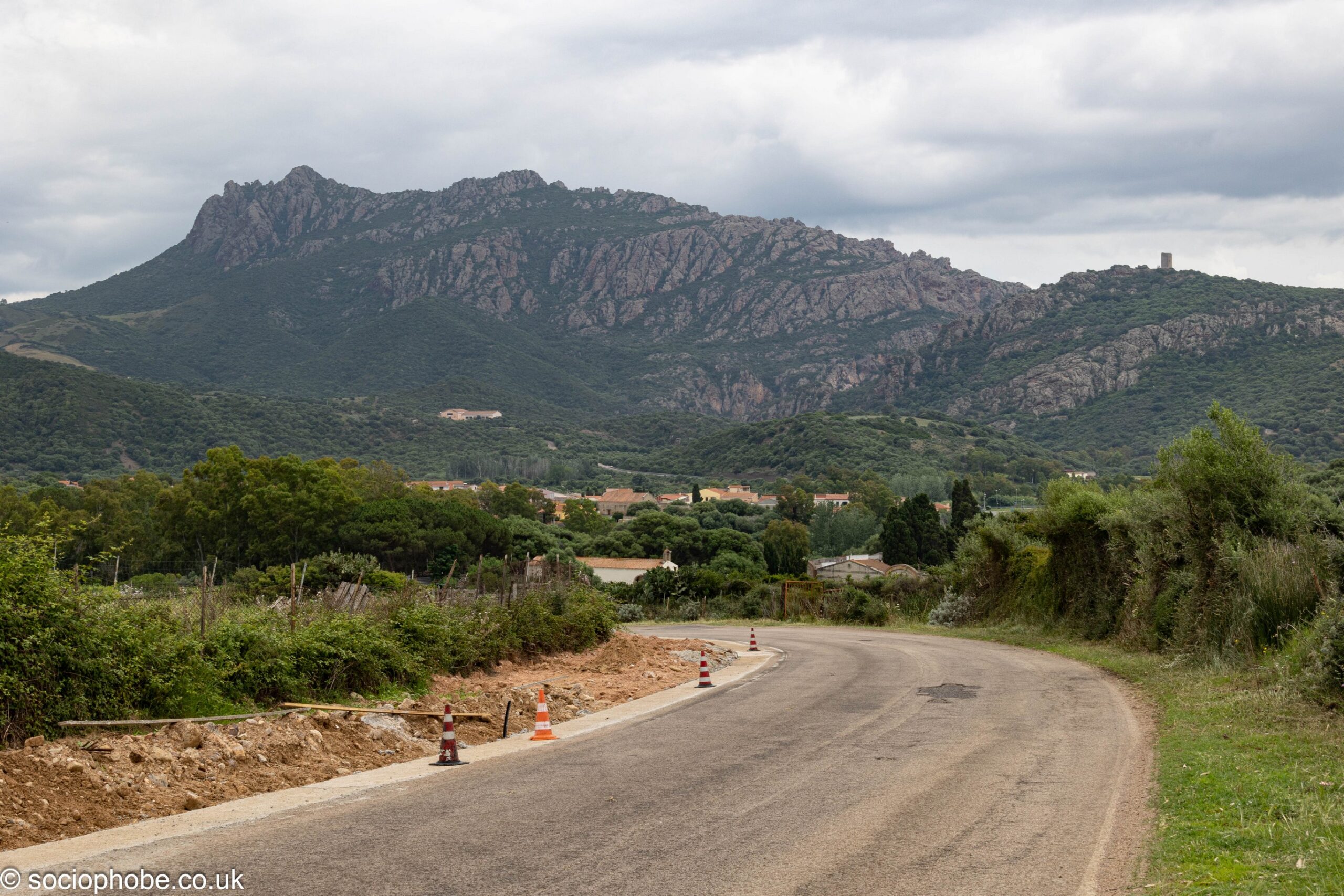
Why Sardinia?
A visit to Sardinia is one of the lesser known vacation spots within Italy, home to a unique Bronze Age civilisation and also scattered with Punic, Roman and medieval remains. Add in beautiful beaches, clear blue sea, hiking trails in the forests and mountains and balance that with apparently suicidal drivers and it promises to be an interesting mix.
Driving in Sardinia
When I collected the hire car I asked about speed limits as tourists are usually an easy target, which was met with mild amusement. Apparently there are only two speed cameras on the island, both marked in advance and other than that the limits aren’t observed.
Having done a weeks driving on our Sardinian road trip I can confirm that is pretty much the case. Marked speed limits seem to be 50 km/h on country roads, 30 or 50 in towns and 70 to 110 on larger roads. If you try and do these limits you’ll be tailgated and overtaken. To be fair, in most cases these limits are ridiculously low so it’s a case of use your judgement.
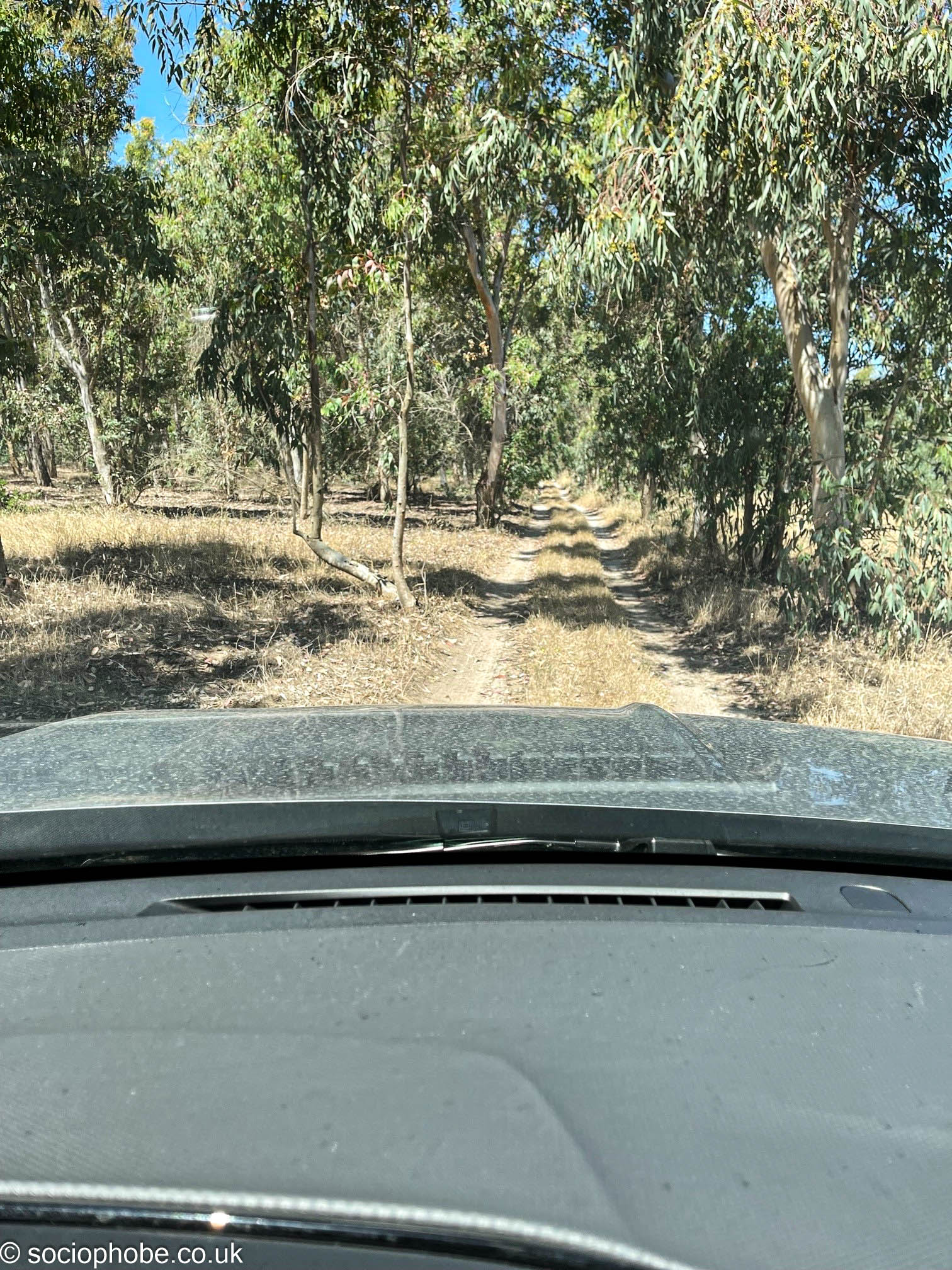
Roads vary from resurfaced and beautiful tarmac roads to metalled or gravelled tracks. Potholes are endemic on some smaller roads so driving on these needs constant attention. I used Google Maps as a sat nav and the roads it chose were sometimes questionable! Fuel in Italy was surprising as petrol was so much more expensive than diesel and also most service stations are pre-pay.
If you drive inland it seems that most road signs are used as targets for shooting and it is quite impressive how far the metal flexes without breaking! Lighting in tunnels is also more like mood lighting than anything actual useful for visibility too.


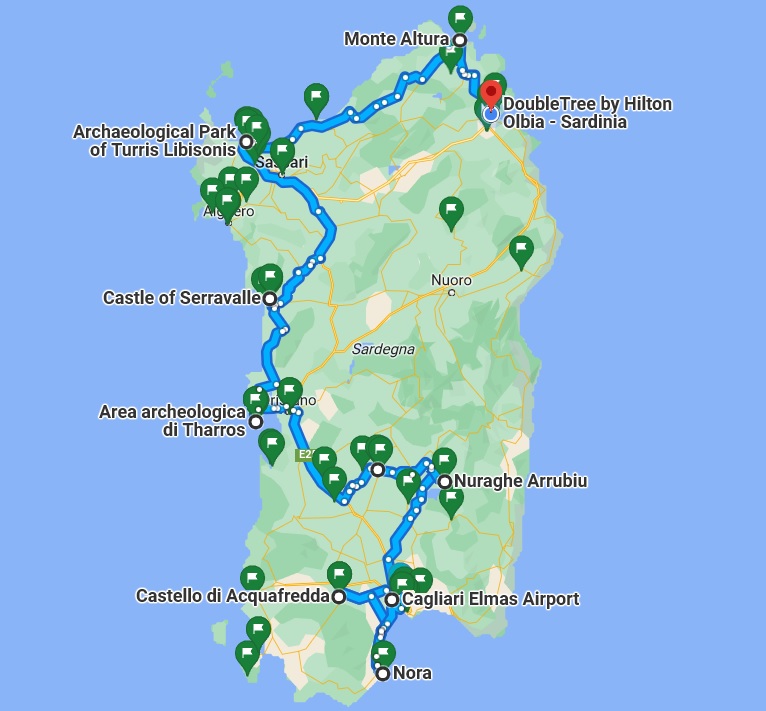
Our Sardinian Road Trip
We arrived at the airport nearly 3 hours before the flight, partly in case the eco freaks had decided to block the motorway while the police watched and partly to take advantage of the BA lounge, booked before the financial disaster of the new house became apparent. I had a 4 course meal while we waited and we weren’t even that fussed when the flight was delayed for an hour. Boarding was lovely as we went on first and had loads of space, whoever said money doesn’t buy happiness was spending it on the wrong things!
The flight was pleasant and we watched 2 and a half episodes of Race Around the World 3, very engaging viewing. We picked our car up, a little Mokka and had a long chat with the guy from the agency who was from Sheffield! The hotel was ten minutes drive away, in a very scenic location on a dual carriageway but it was free, paid for with IHG points! We checked in, got to our room and logged in to Maz’s tracking for his 110km night run through the Dolomites! Nutter but an incredibly fit one.
The next morning he was still going and we’d had a nice sleep and pottered around before working out where we were going to visit. We decided to get breakfast enroute which was a bit of an error as we didn’t pass anywhere by the time we got to our first stop, Castle Acquafredda at 9.30.
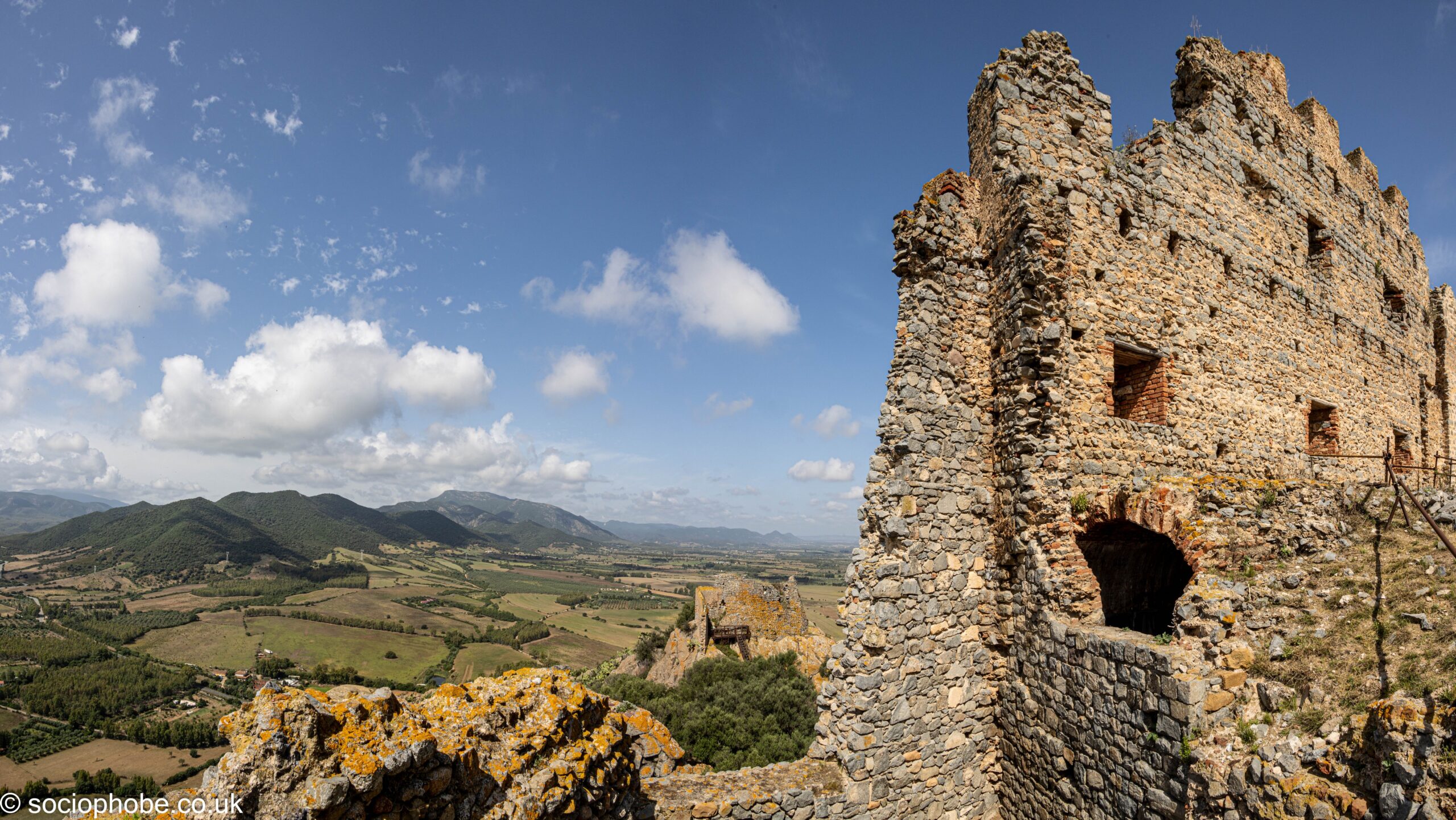
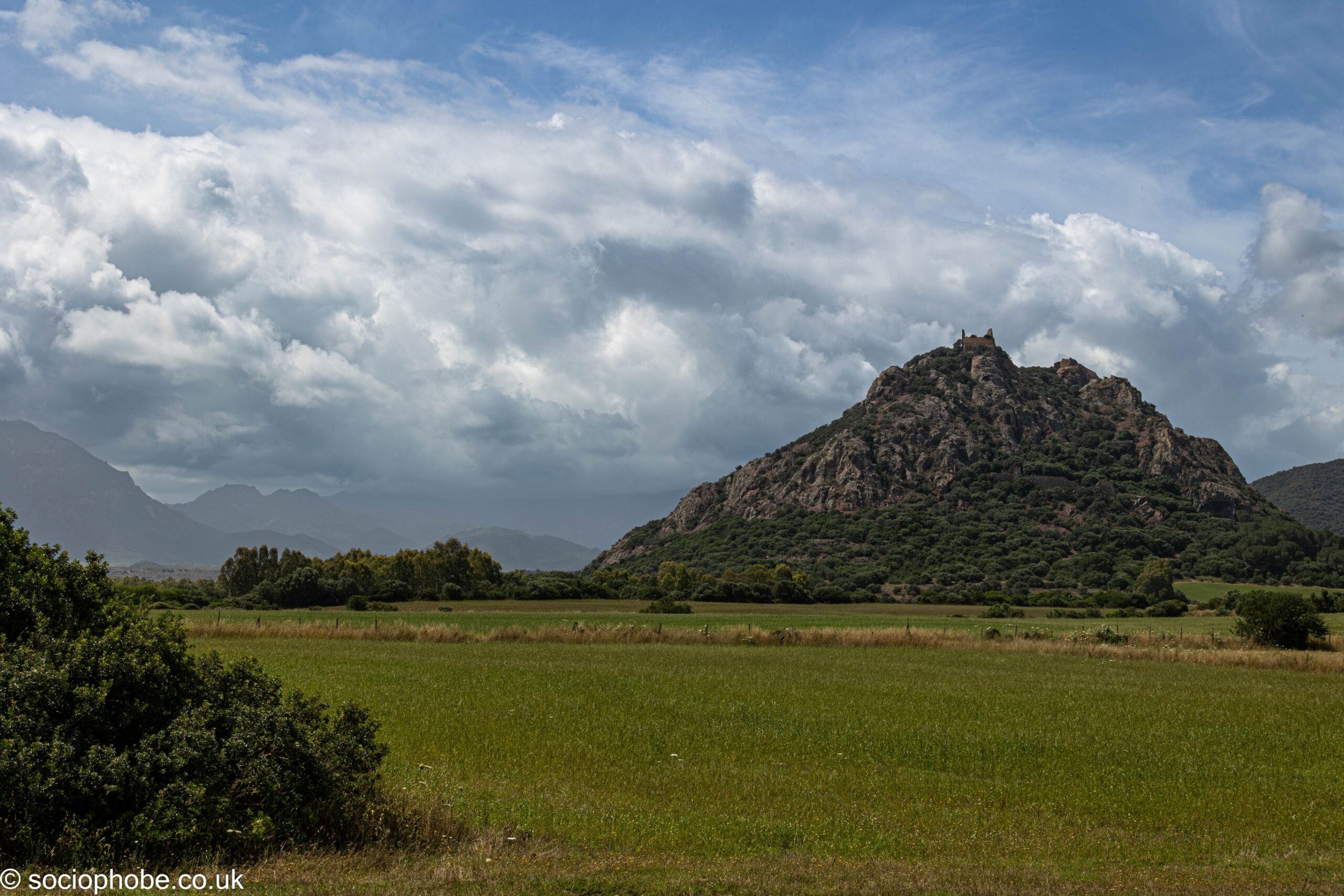
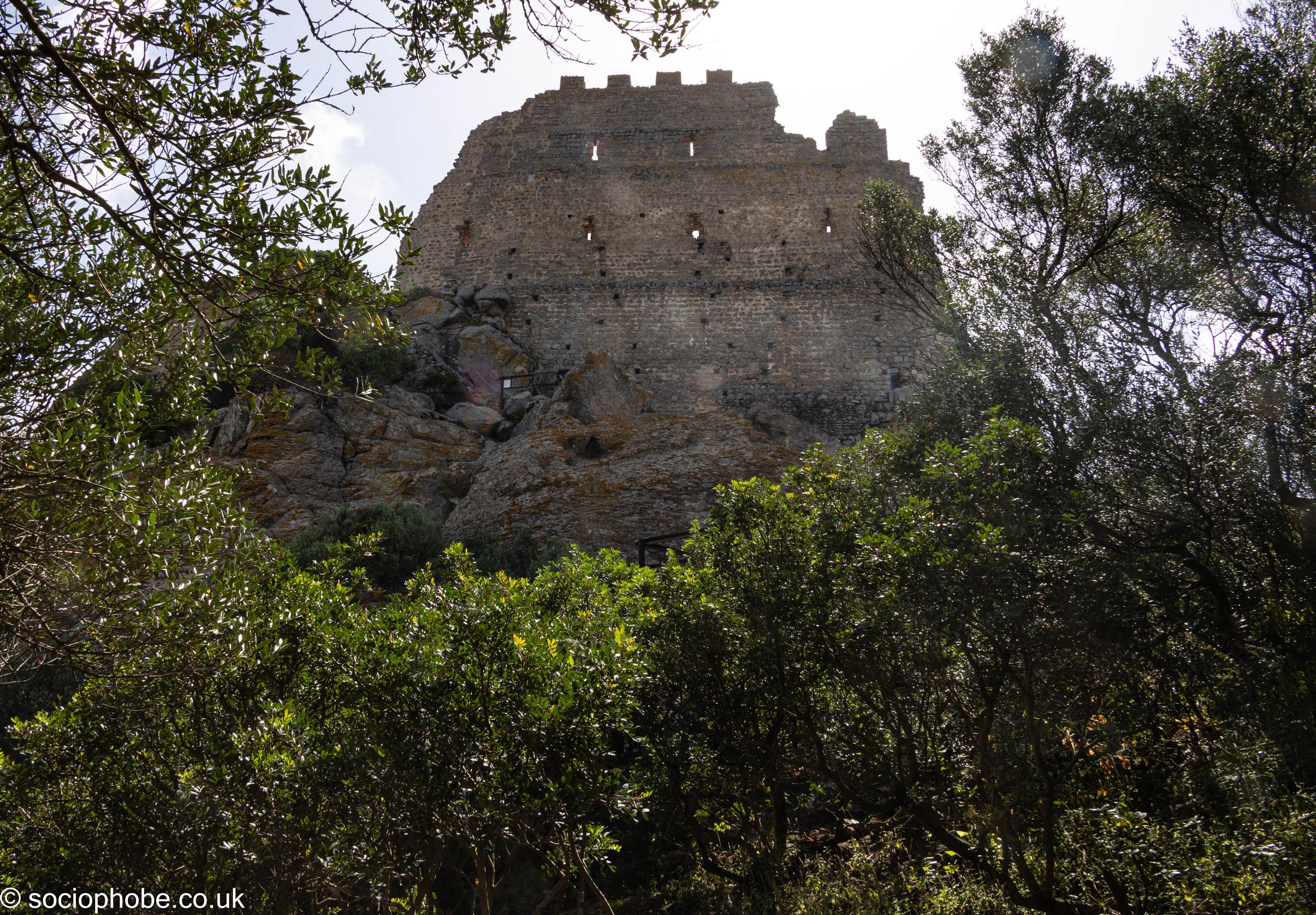
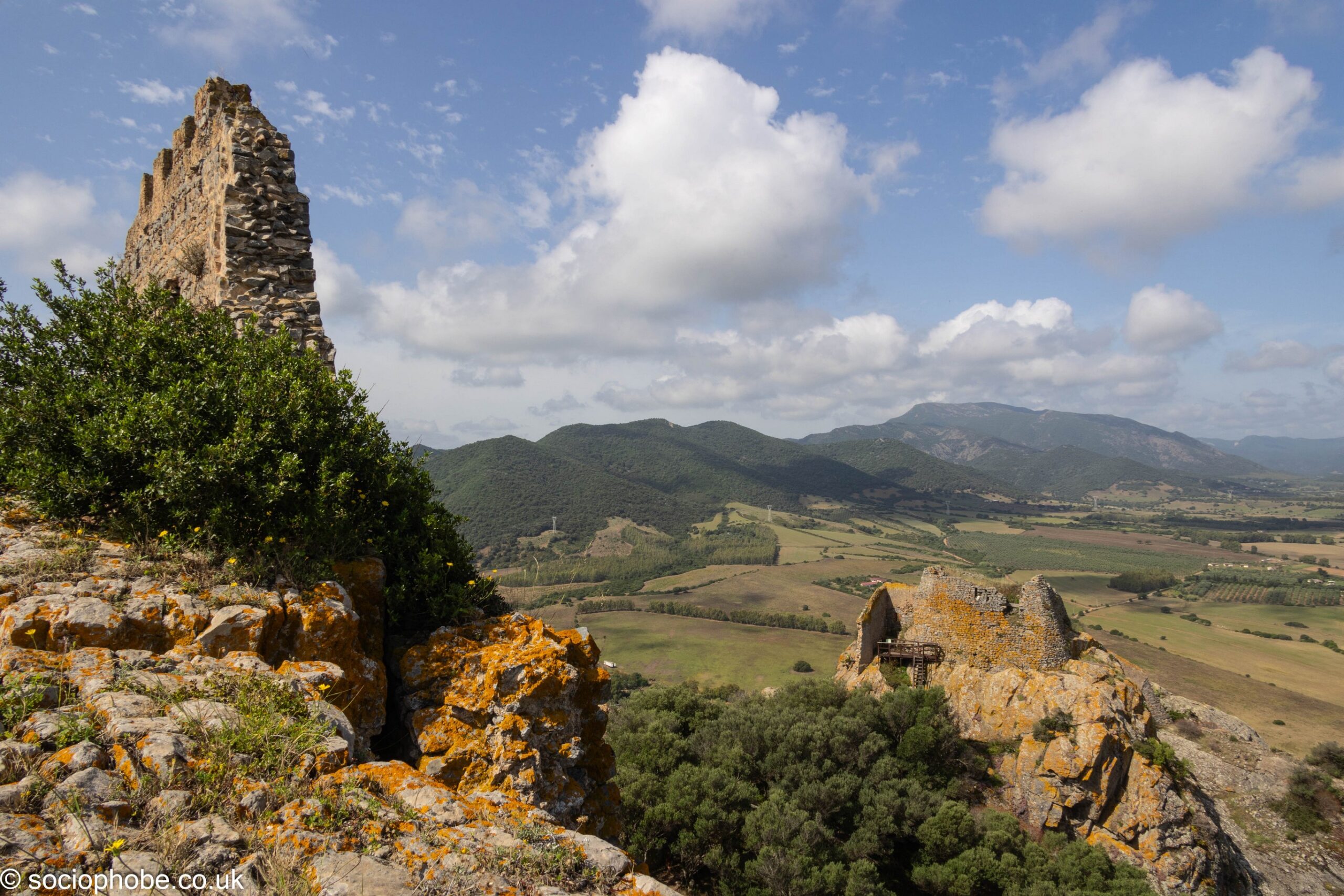
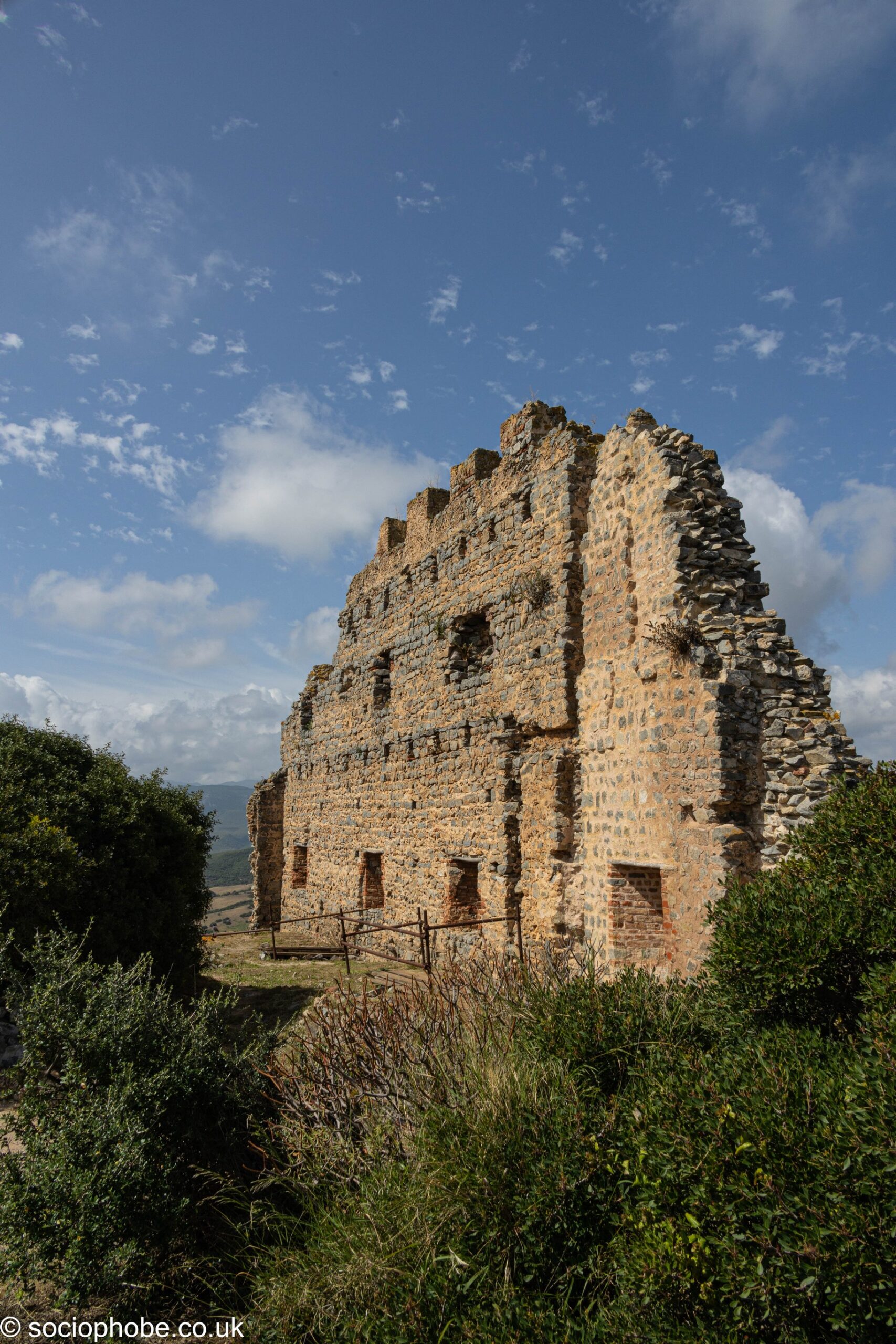
Castello di Aquafredda
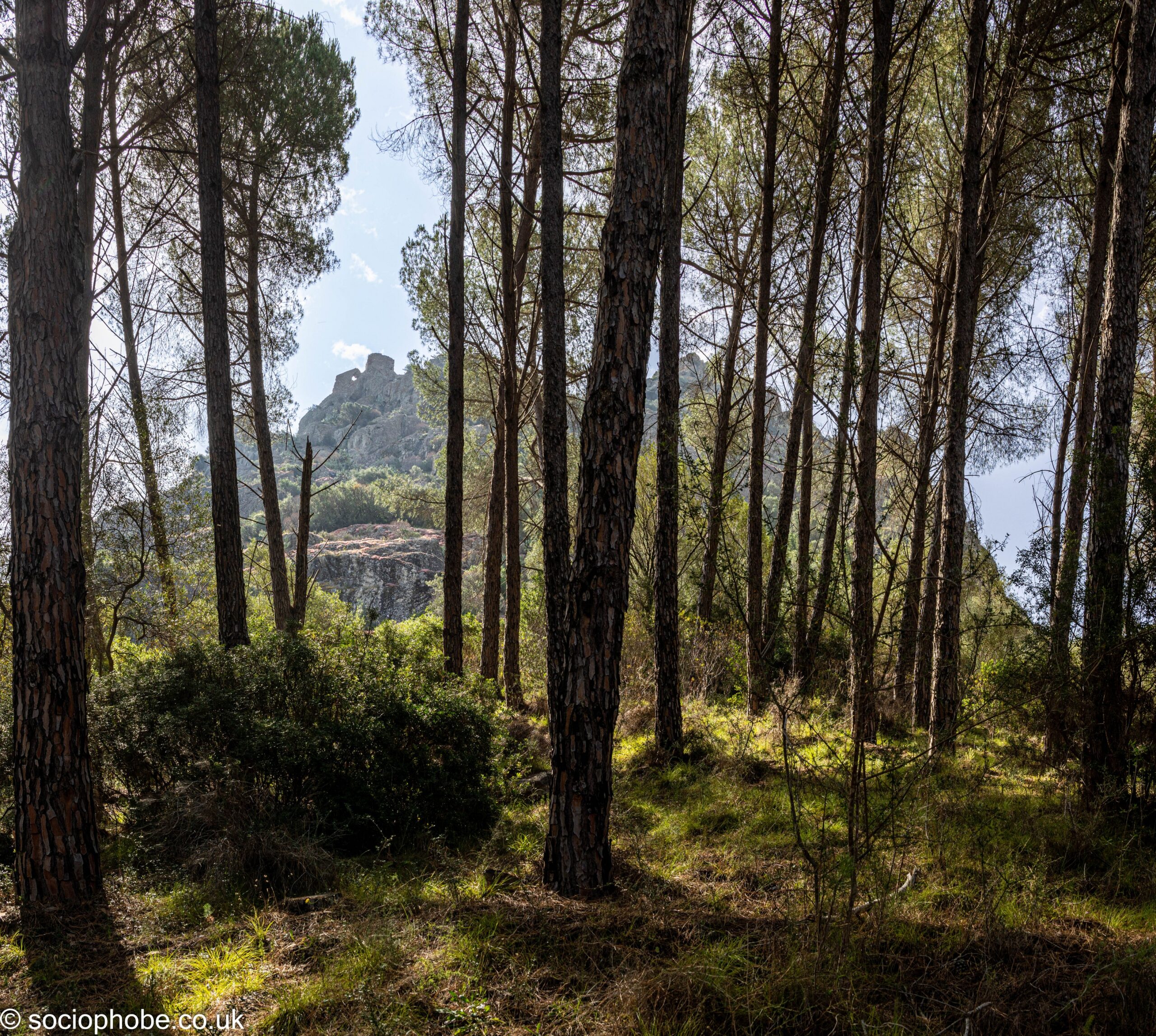
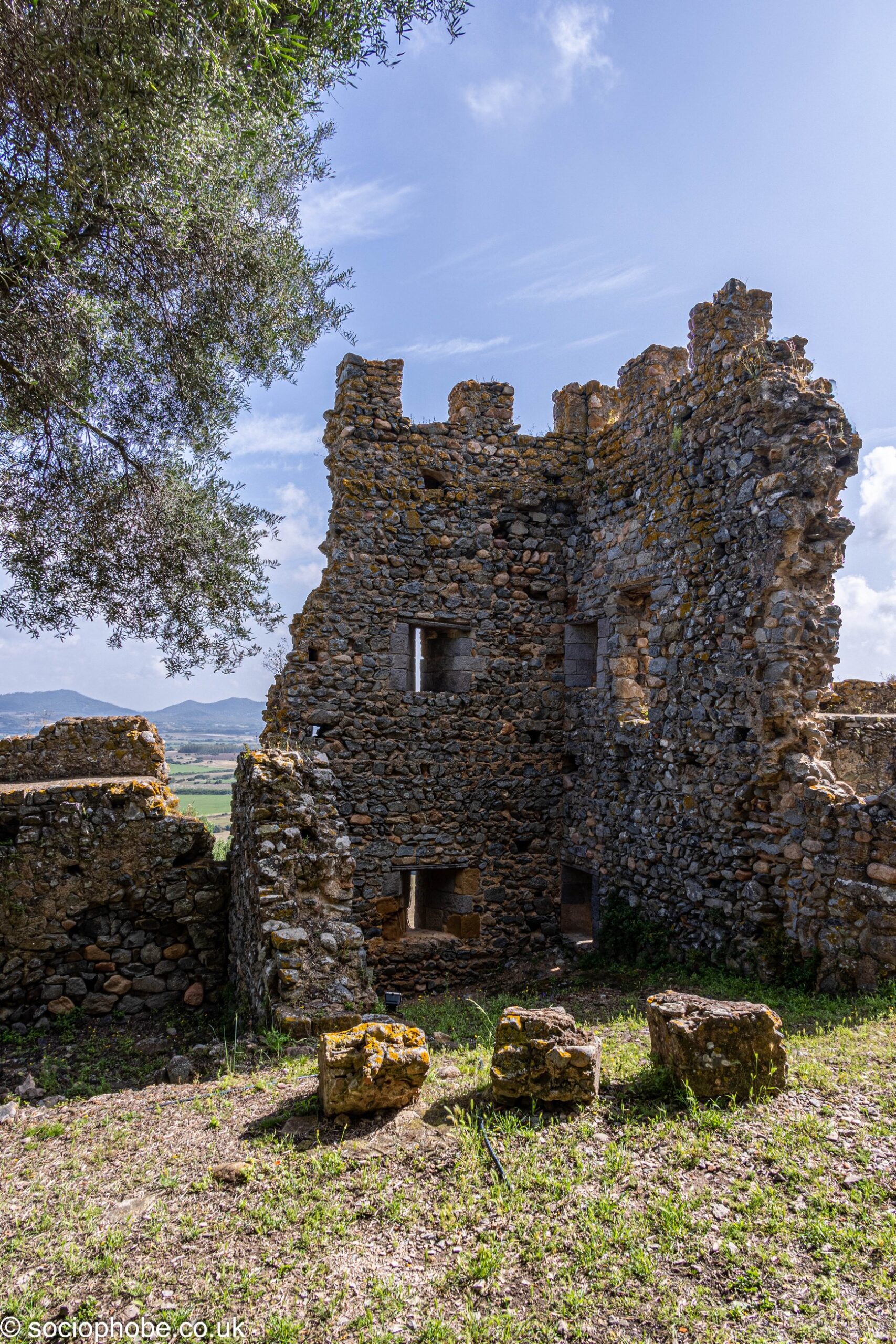
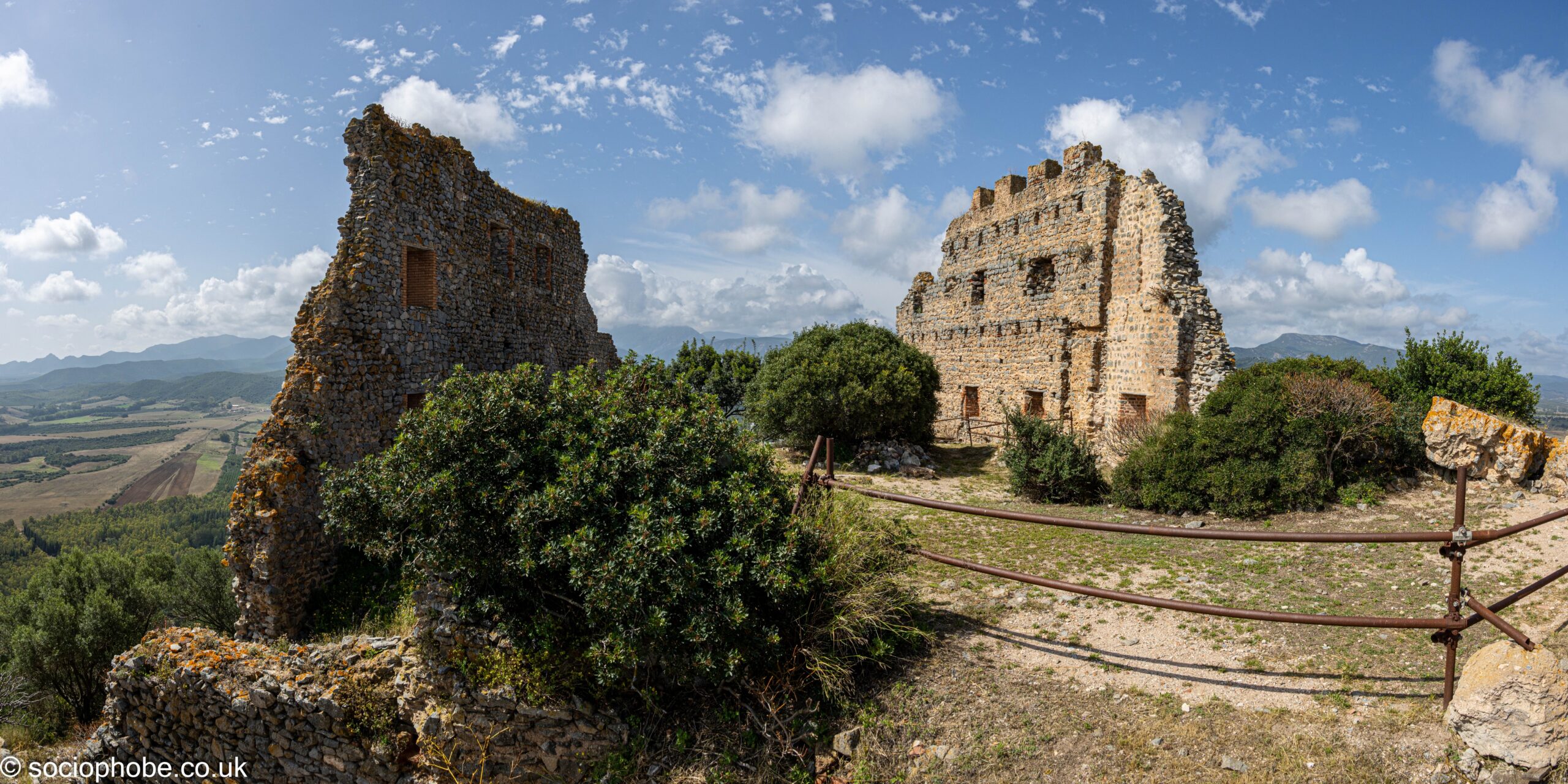
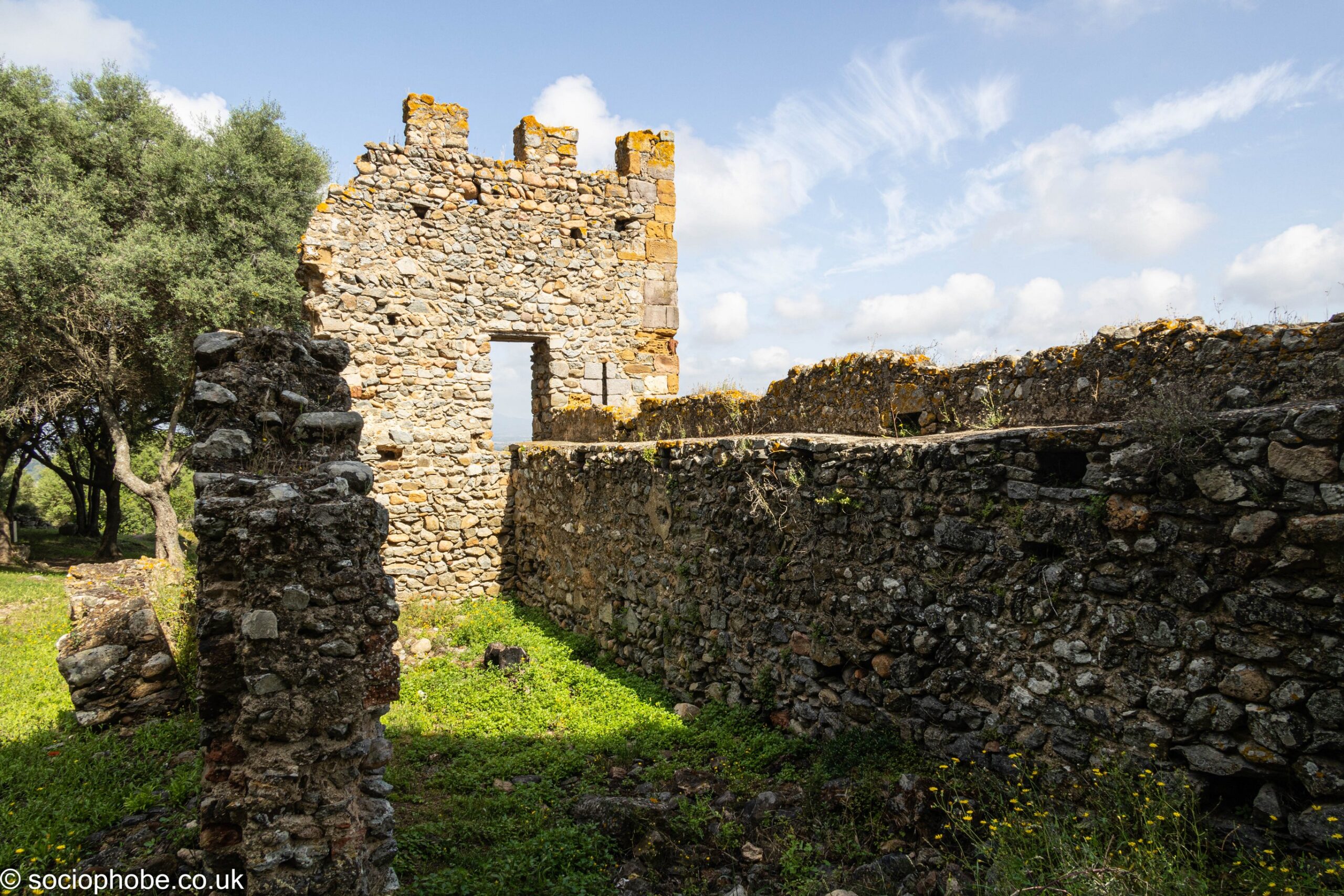
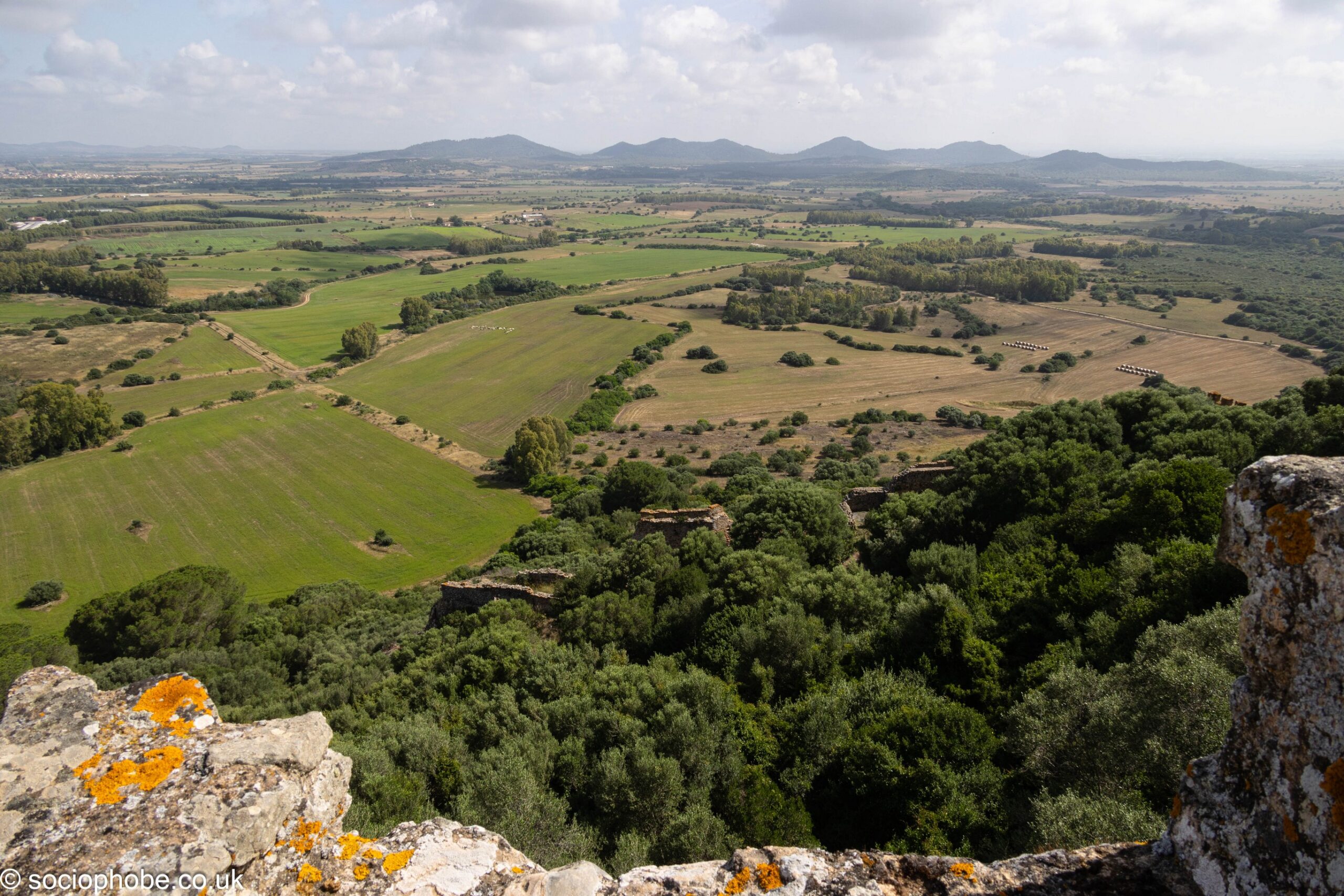
The castle is on a steep, conical mountain and dates to the thirteenth century, built to control access to the local silver and lead mines. It was owned by Pisa and then Aragon before passing in to disuse. The guy in the ticket office was really helpful and explained some background and safety tips before we started the climb. It was 260m through dense pine forest to the summit and although that is pathetic compared to Maz’s endeavour it was sweaty work! The pictures don’t cover the birdsong or the scent of pine trees but take it from me, it was fantastic, especially as we only saw one other visitor in the 2 hours we were there.
The castle was split into three lines of defence as you climbed the hill and the path was a mixture of stone steps and wooden walkways. At the summit we were told the safety barrier was advisory so, working on my usual principle of I know best, we crossed it to carry on up to the keep. There were only a few bits of wall left but it gave an idea of the strength of the place and also the skill and effort that went in to building it! Originally the only access to the keep was a bridge built across the hillside from the guard tower but luckily they now have far more sensible steps!
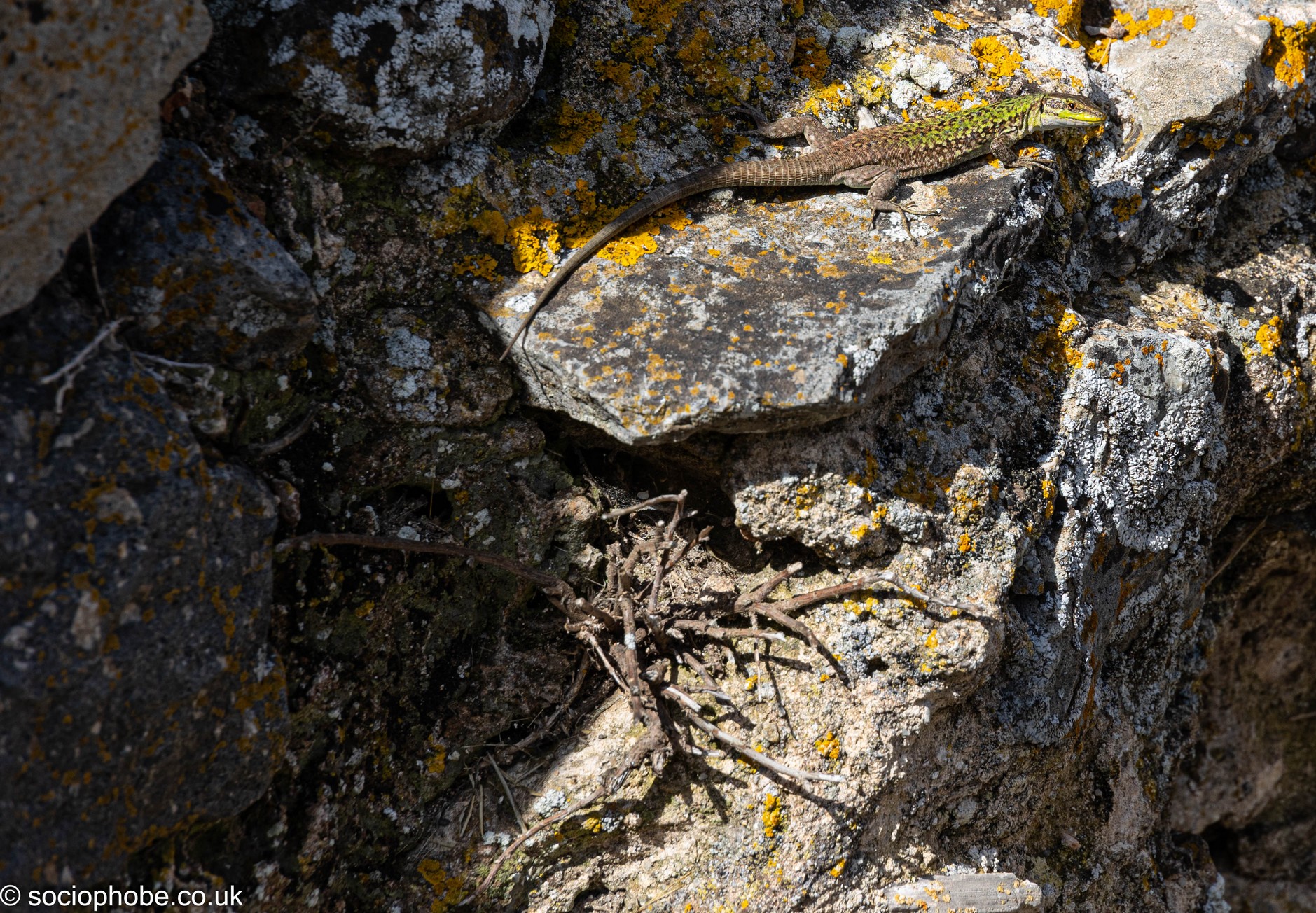
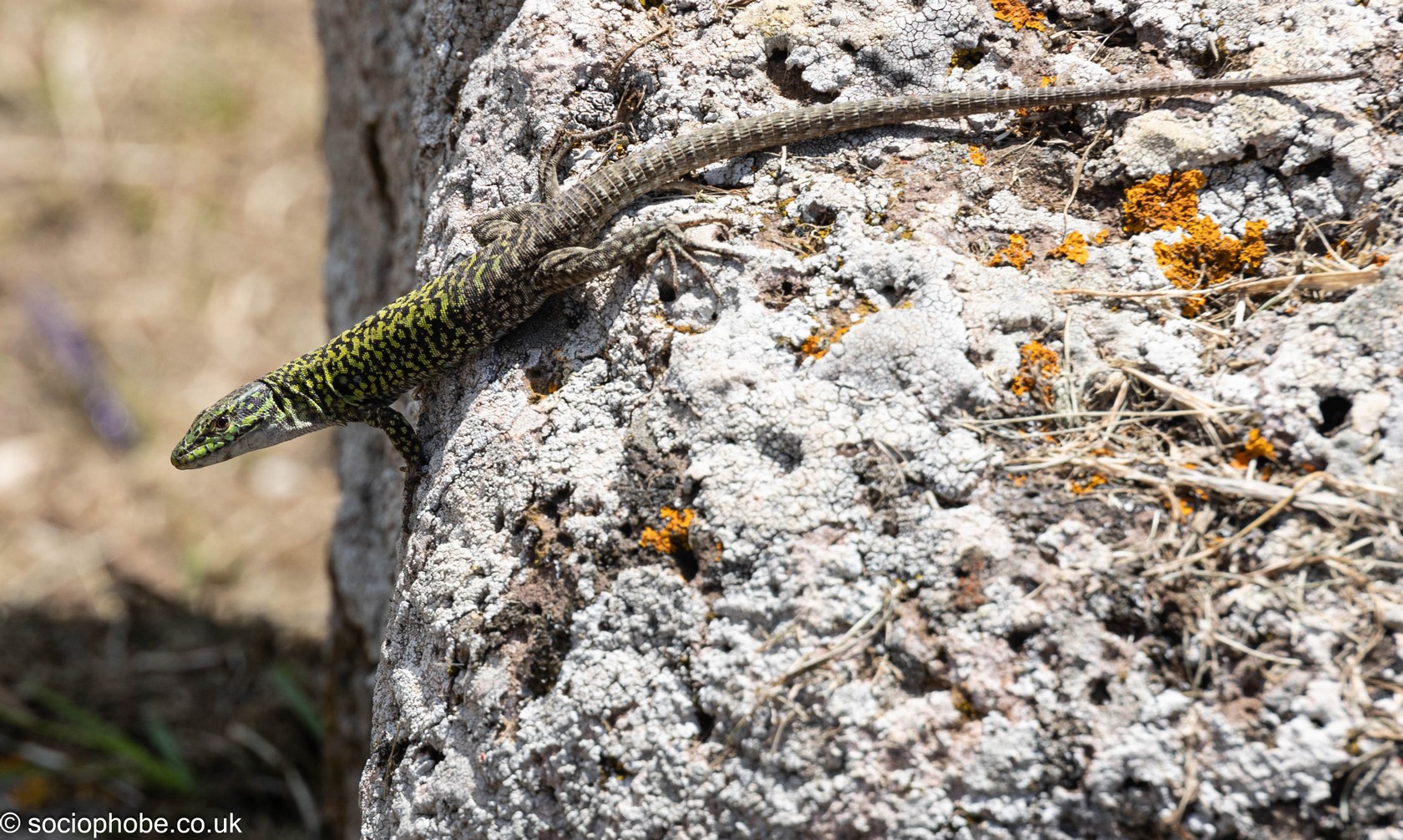
The climb up and down, although hard work, was really lovely and we saw lots of lizards and birds although none of the frogs or snakes that inhabit the hillside. There were some huge mushrooms though, the size of tea plates! Quite a bargain at €4 each. The entrance fee, not the mushrooms.





Roman Ruins of Nora
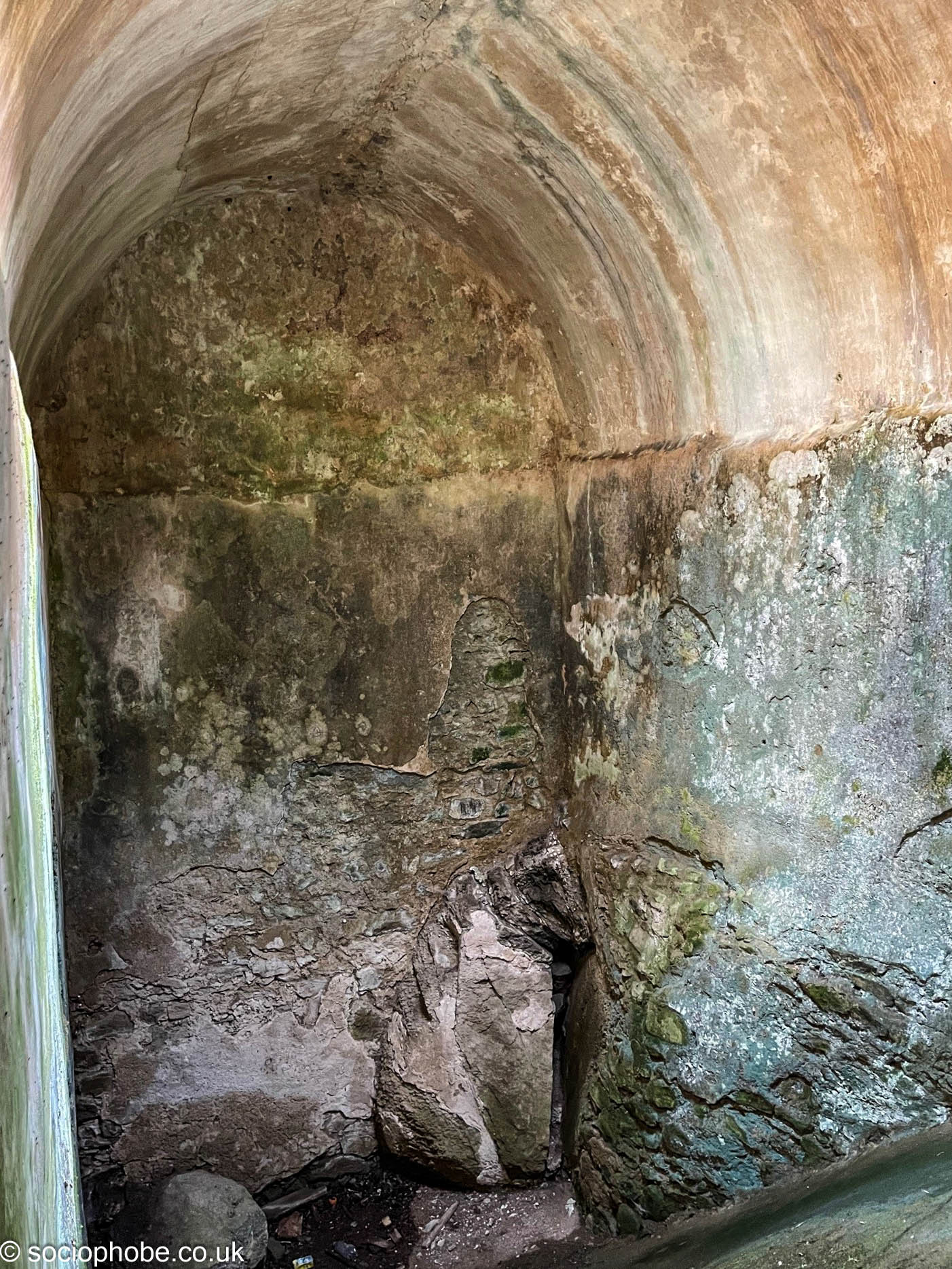
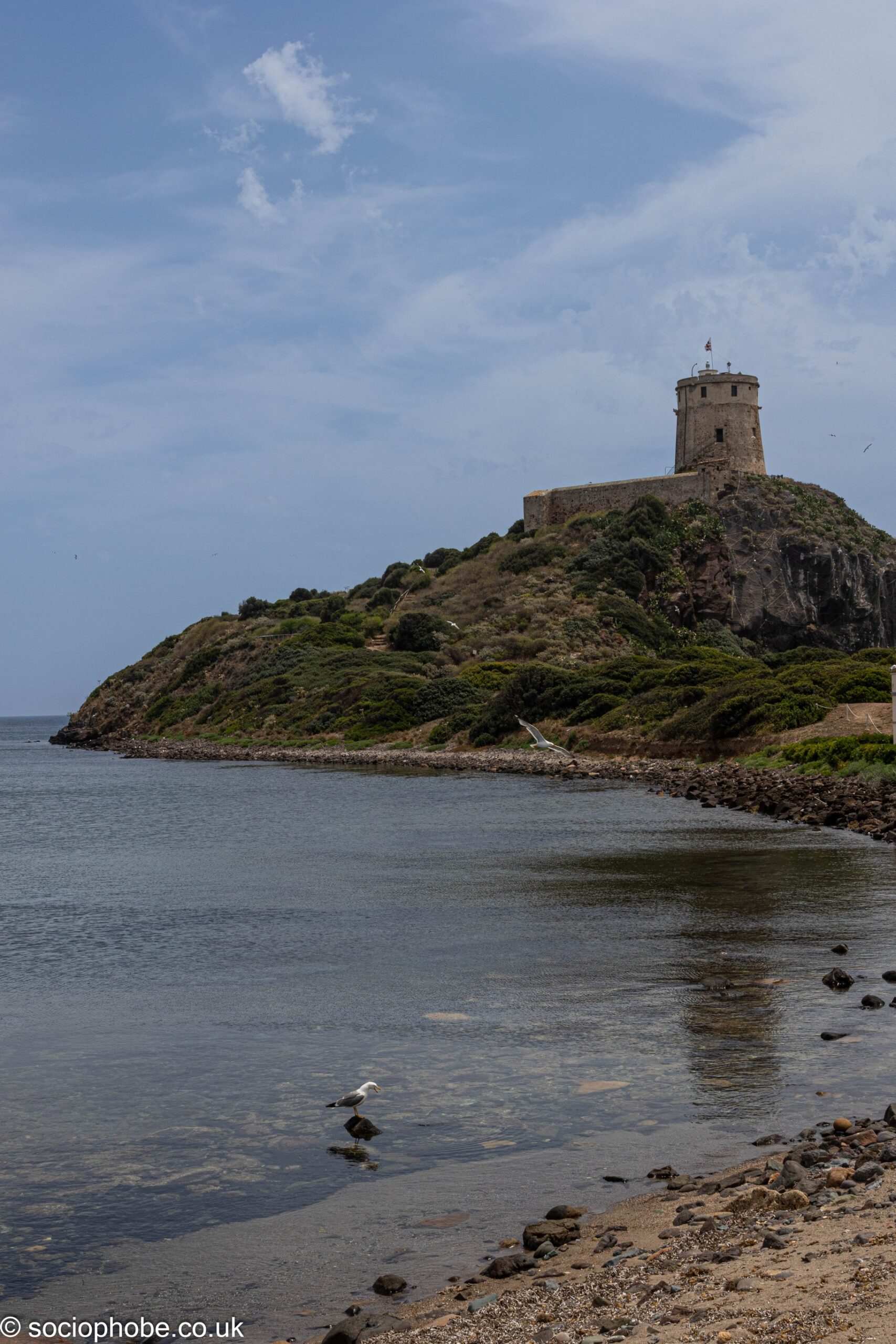
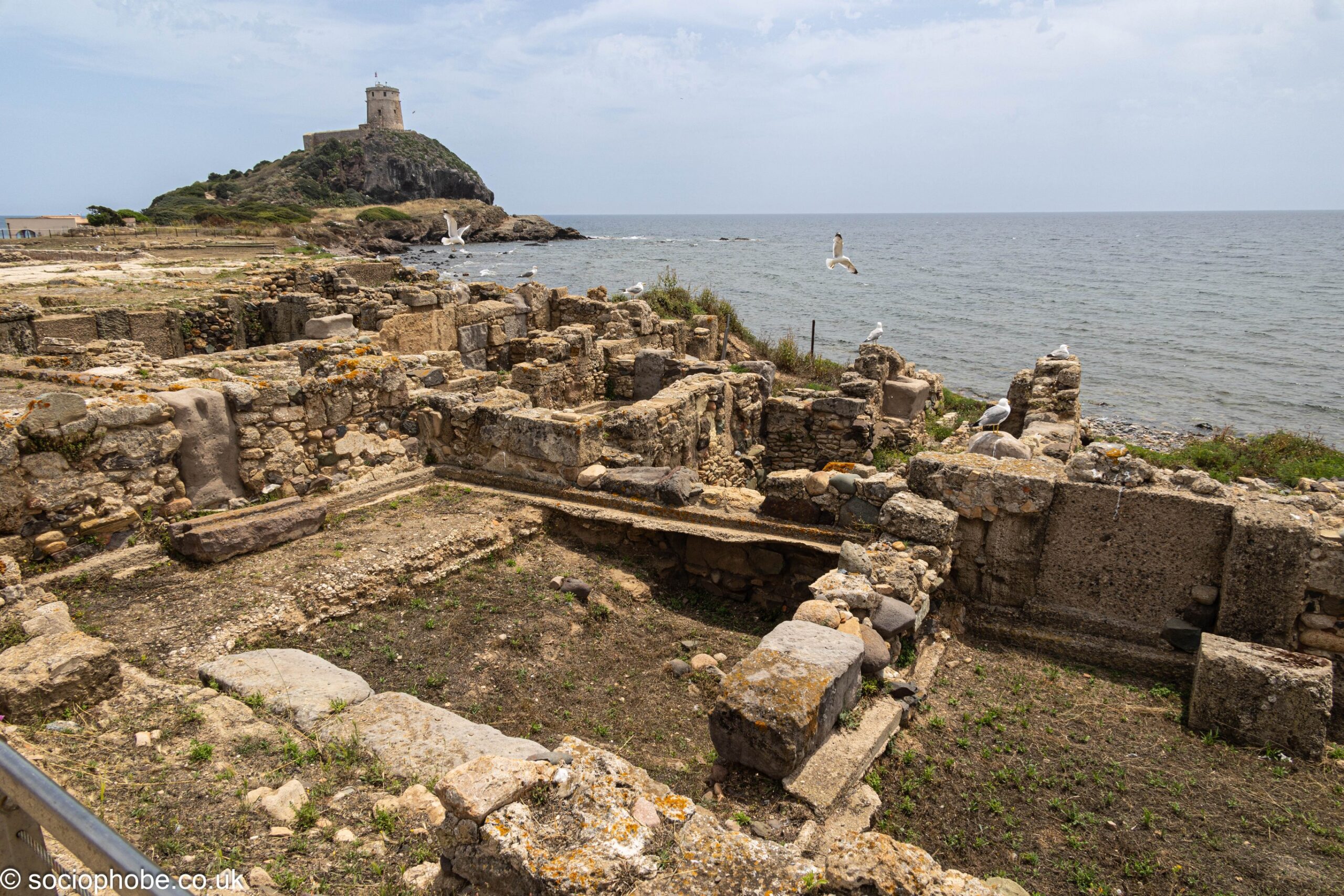
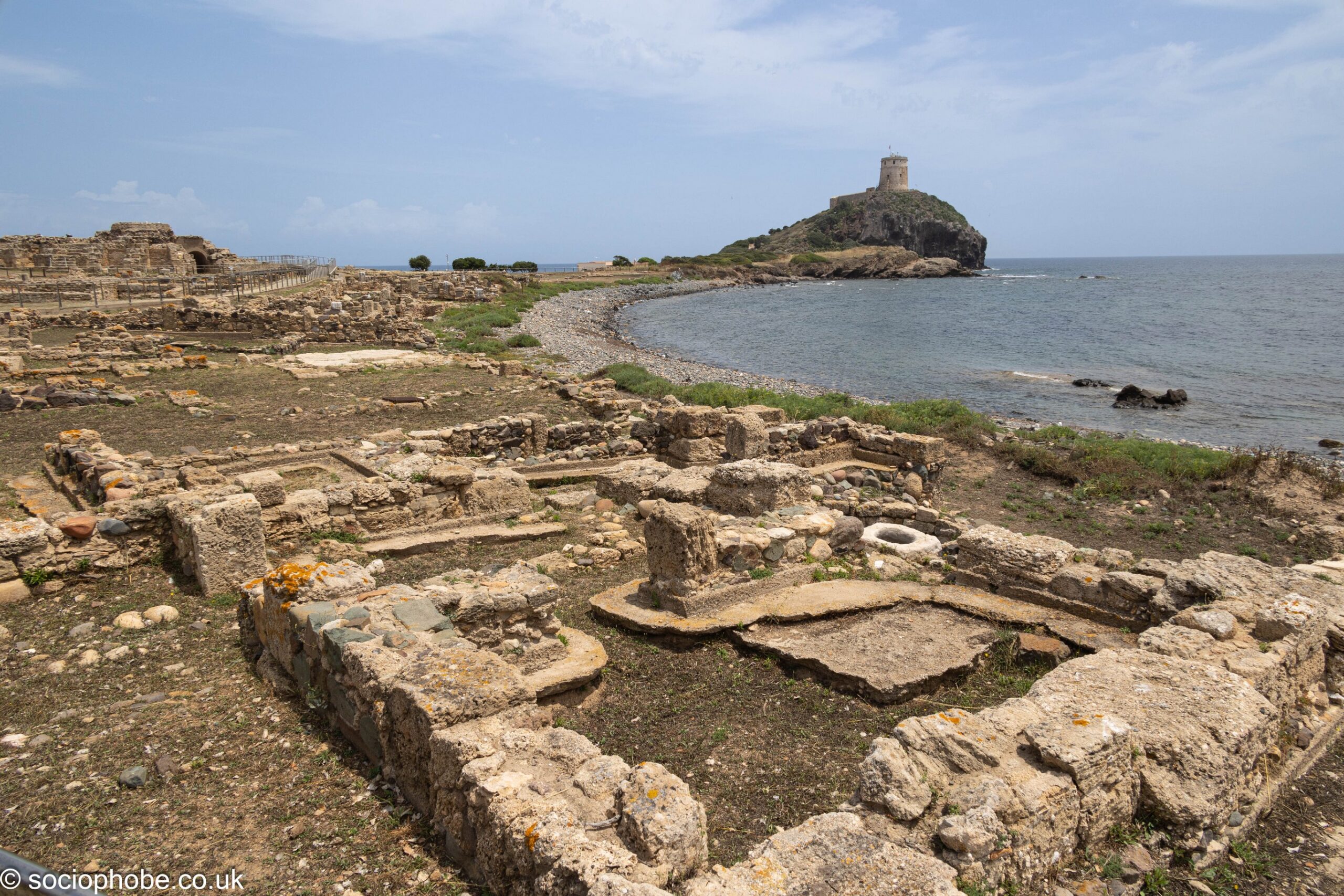
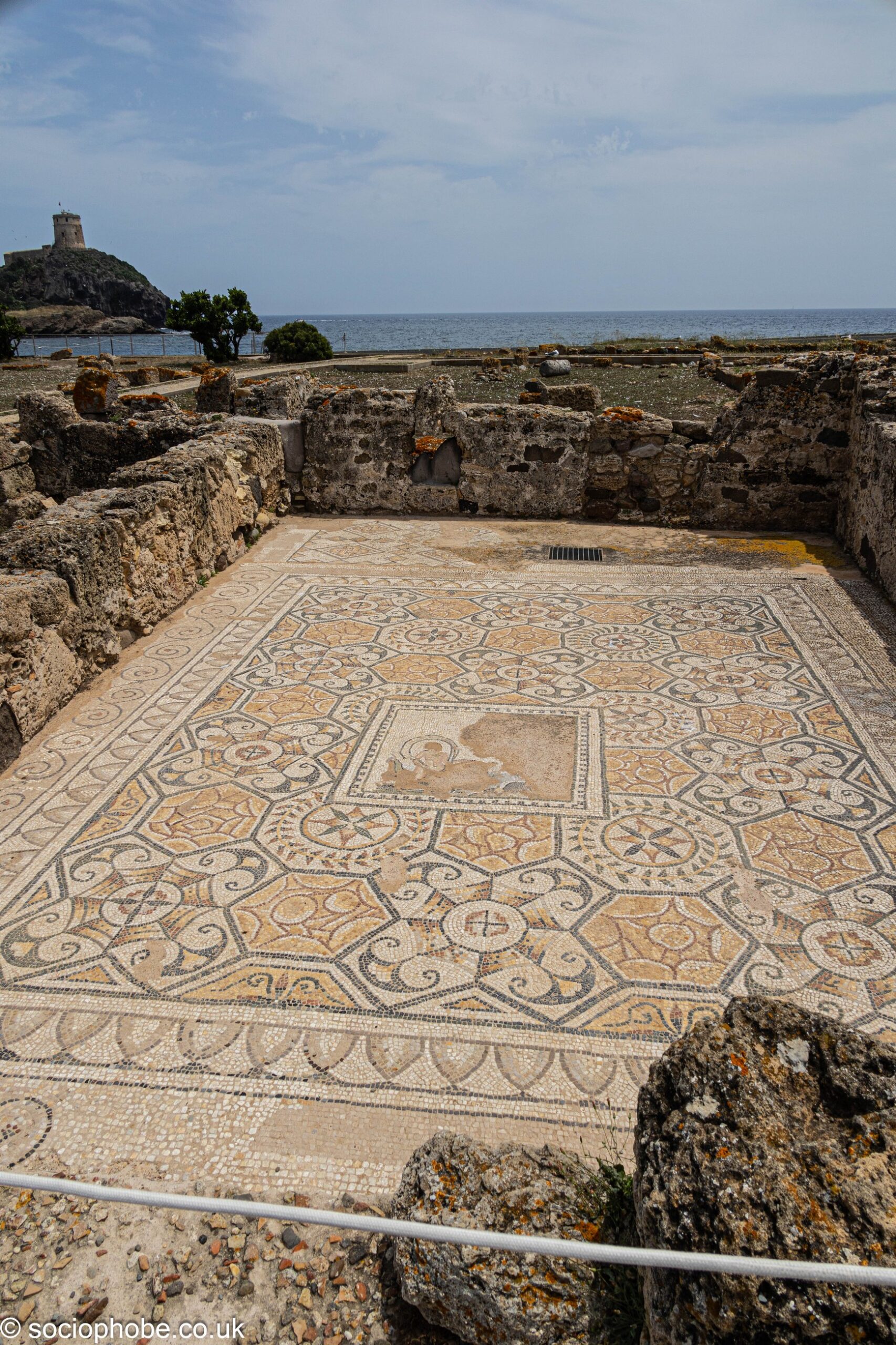
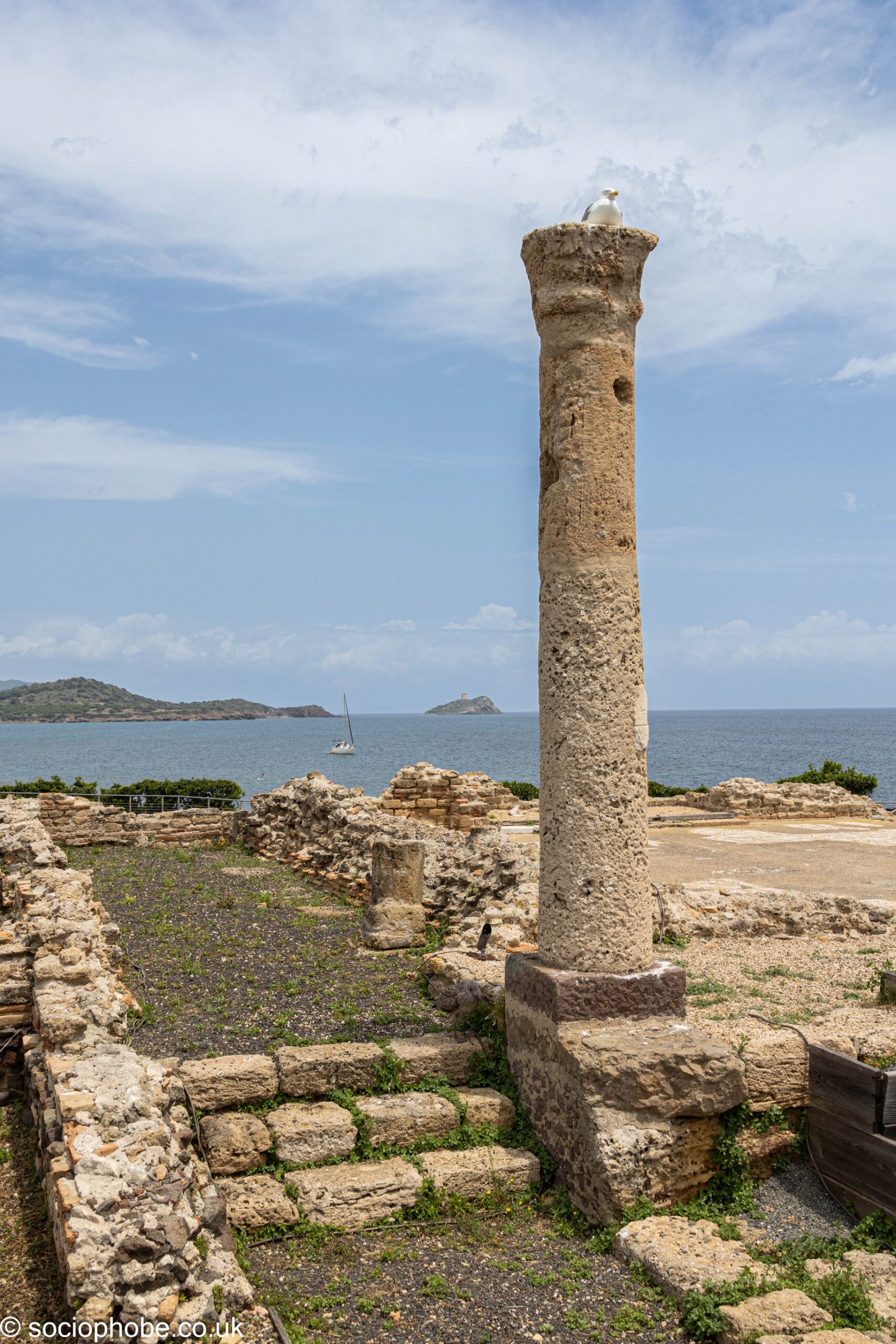
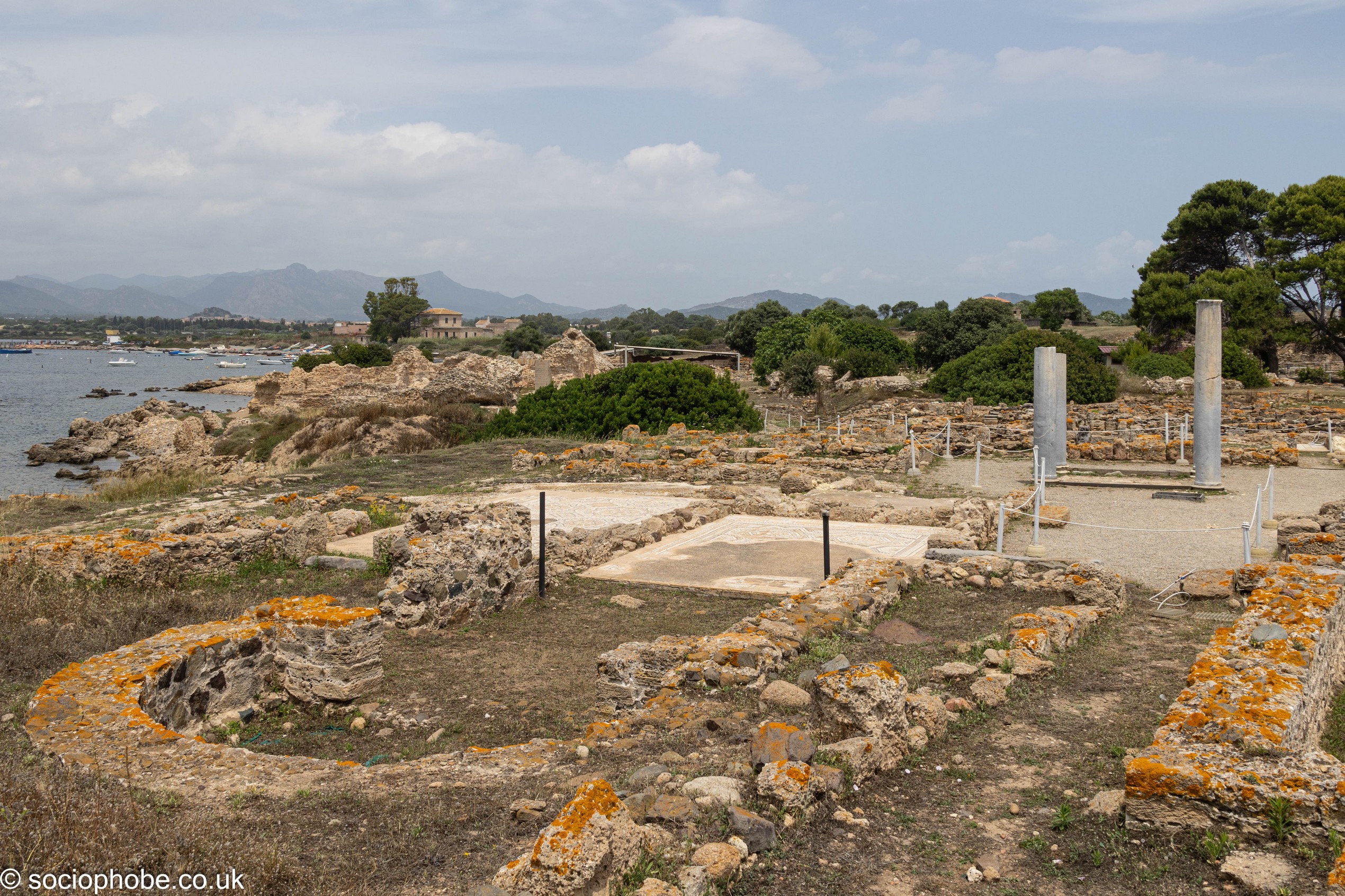
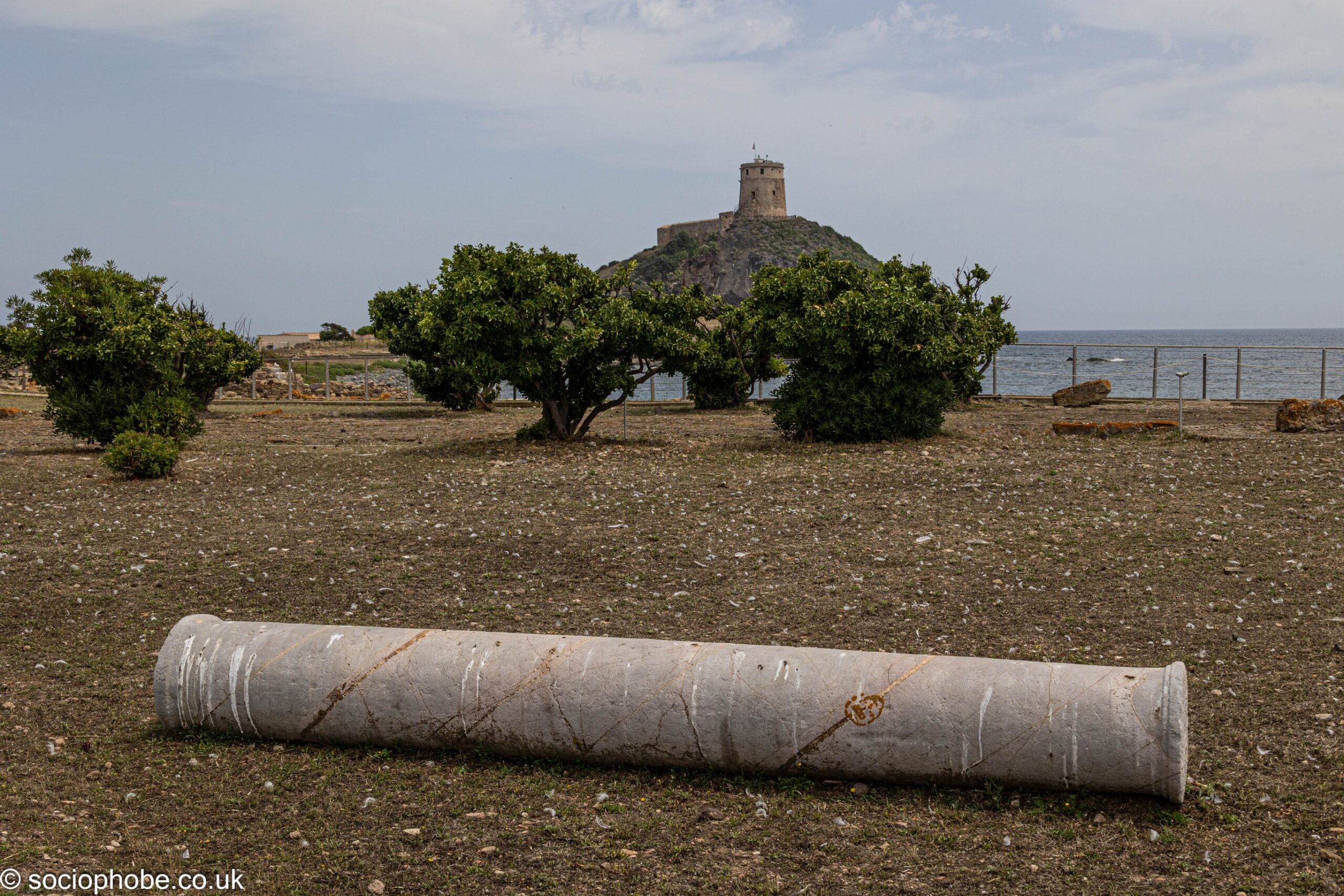
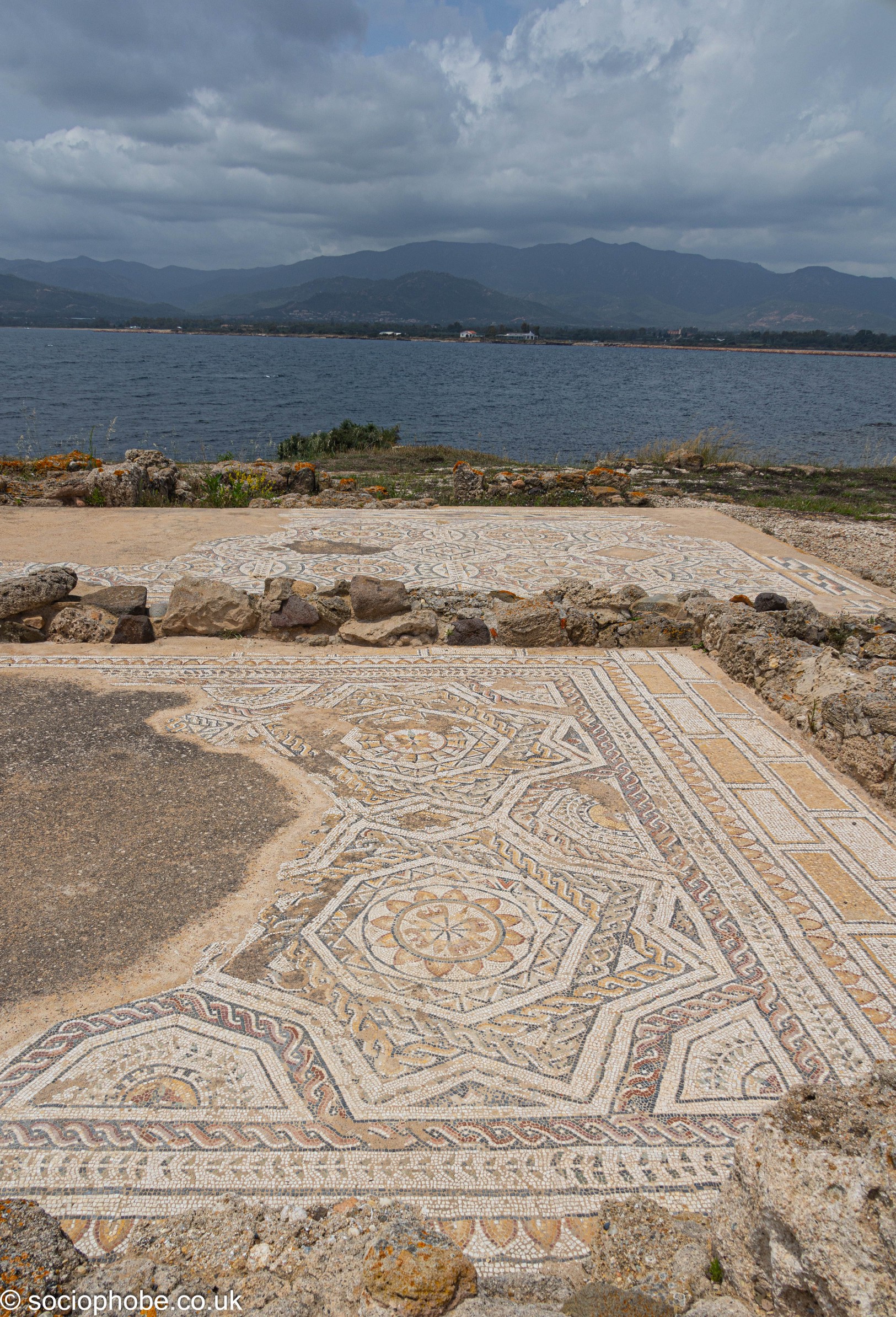
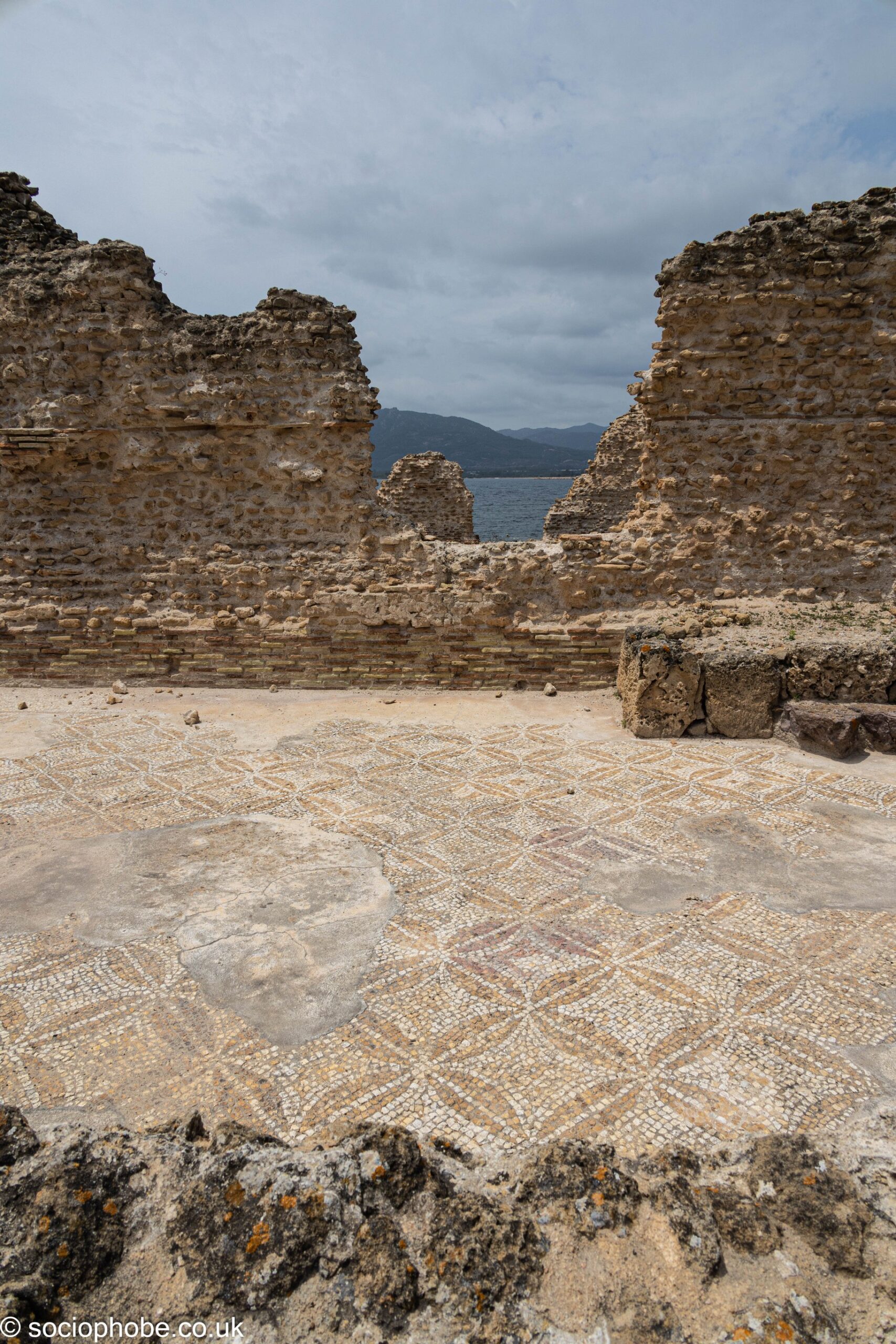
The other stop I’d planned was the old Roman/Punic/Phoenician city of Nora, on the southern coast. It was a pleasant drive past salt lagoon nature reserves with flamingos and then past miles of beaches. We parked in the beach car park and walked along the beach towards the ruins, the water was almost tempting it was so amazingly blue. We sat and had a magnum and a coffee in the little cafe by the ticket office and just enjoyed the 29 degrees of sunshine.
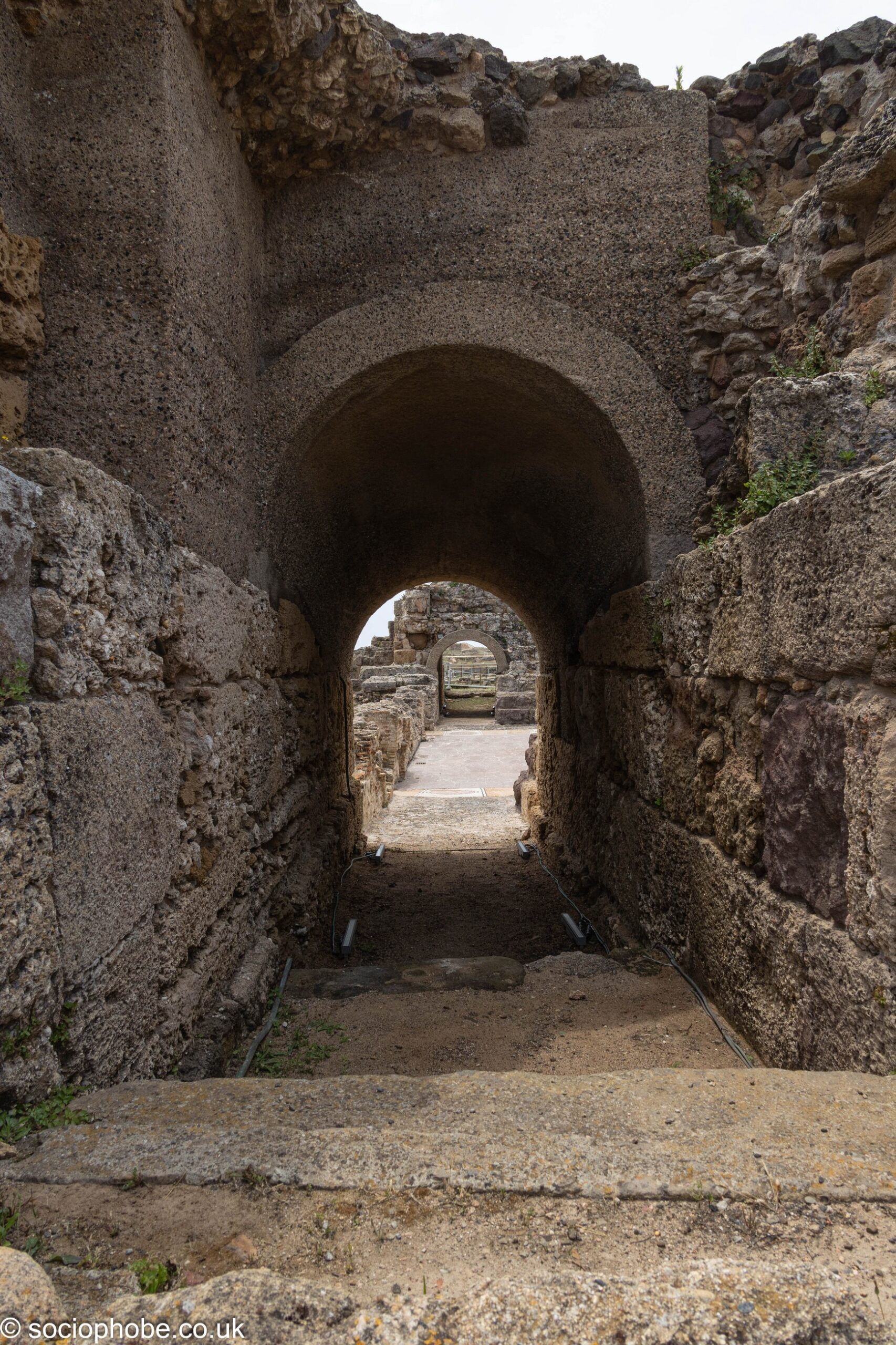
The site at Nora was actually a bit of a let down. It was large but a lot of the information boards were missing so you could have been touring a building site. Some mosaics were on display but others were blocked off, as was the amphitheatre. The city thrived for a thousand years before eventually being abandoned due to persistent raids by north African slavers. We did see a huge grasshopper though, probably 10-12cm long and lots of seagulls using the site.

Cagliari Botanic Gardens
We wandered back along the beach, failed to find a cafe actually serving food and then decided to head into Cagliari to the Botanic Gardens. I was a bit wary as Cagliari looked quite a busy place but it was actually very quiet on a Saturday afternoon and we drove through and parked just outside the Botanic Gardens with no issues. And my parking is apparently competent compared to that of the average Italian driver!
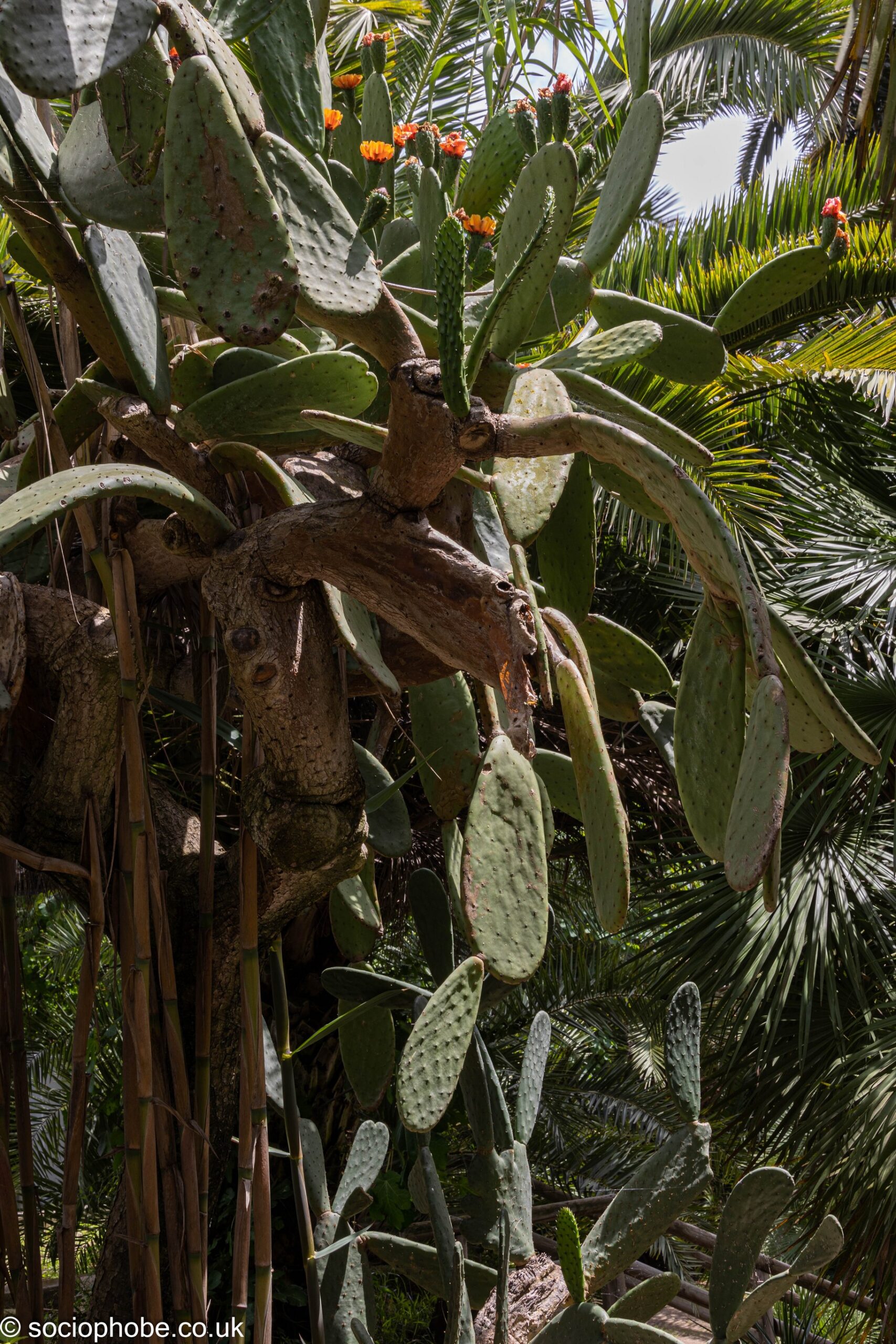
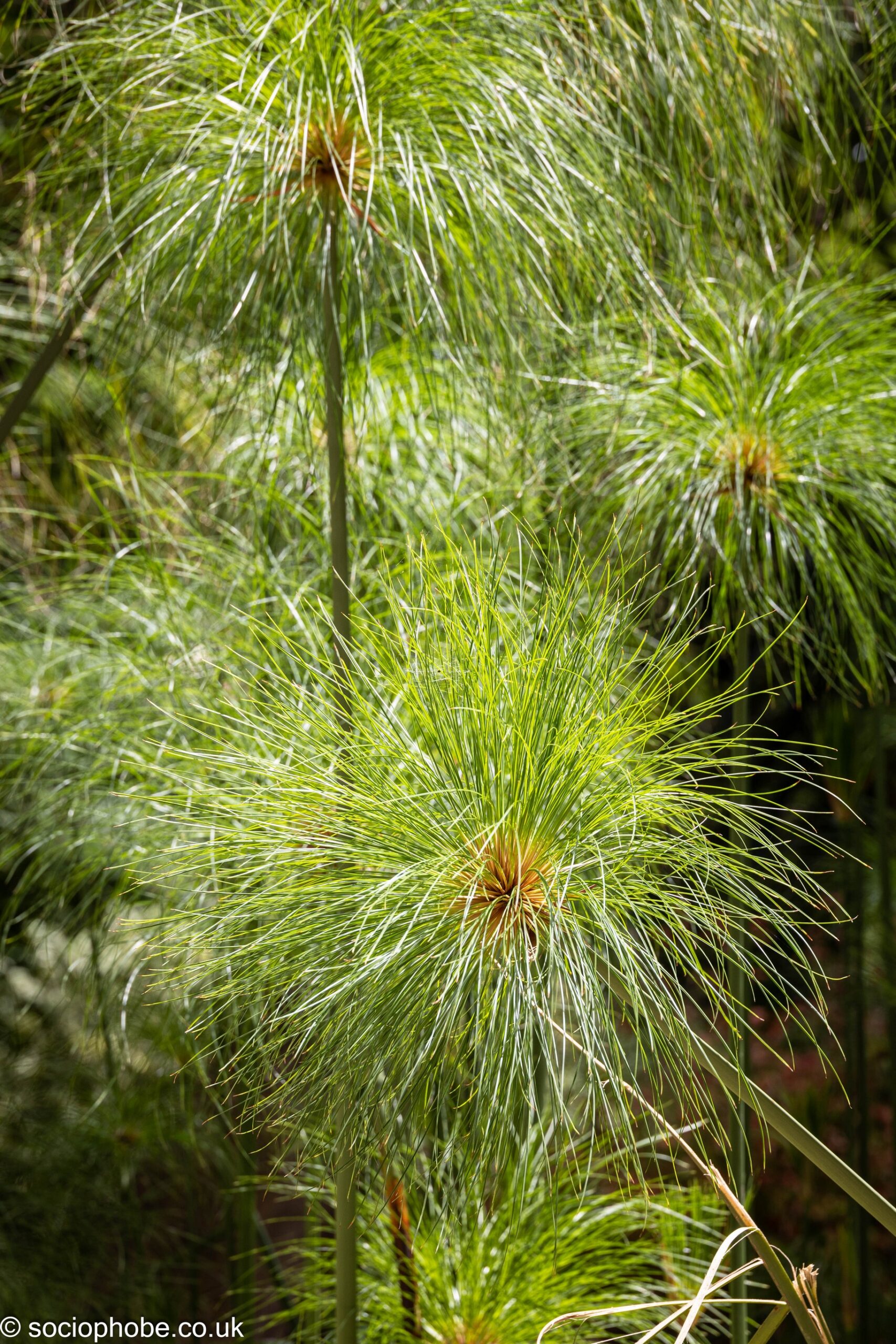
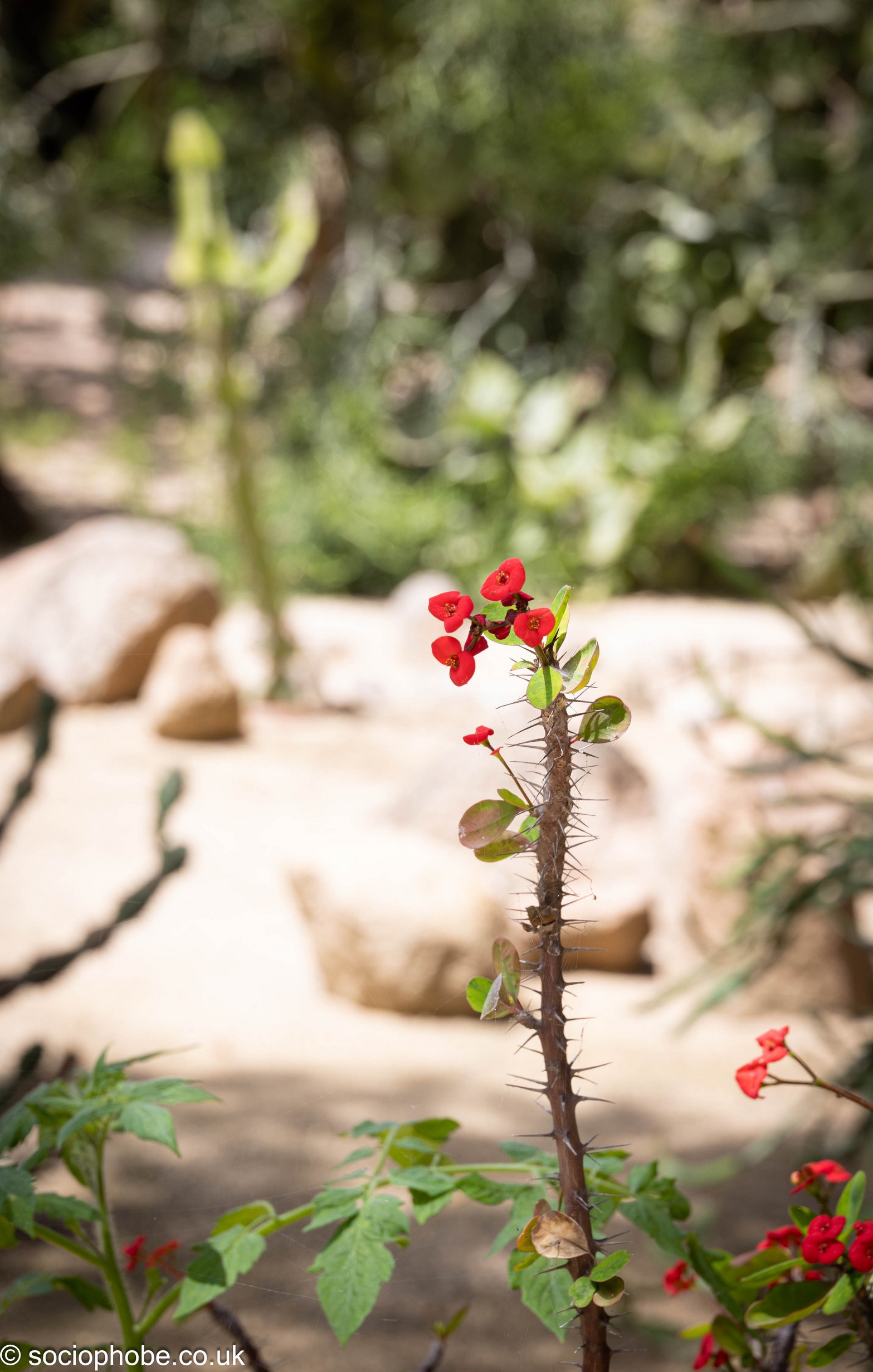
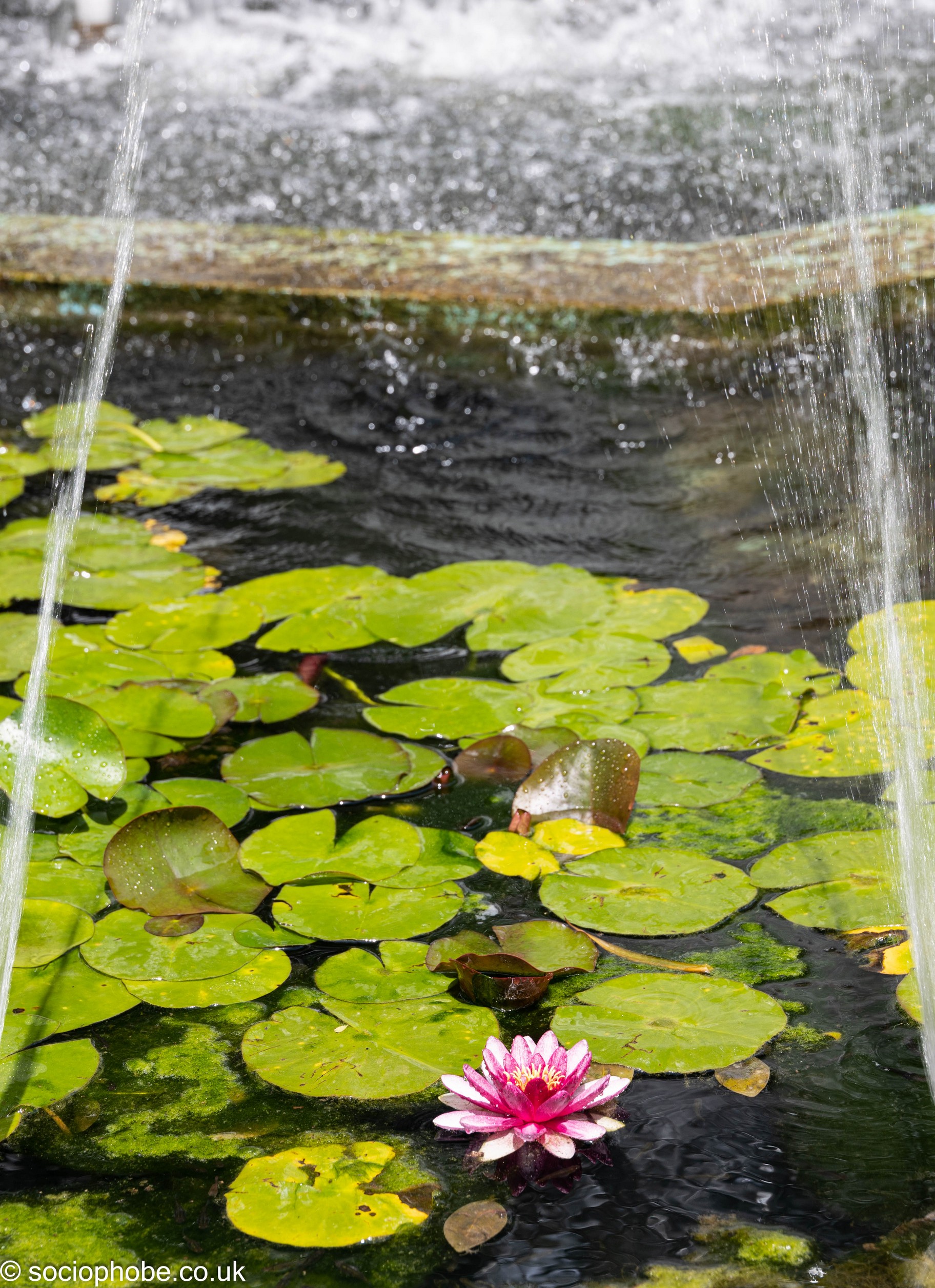
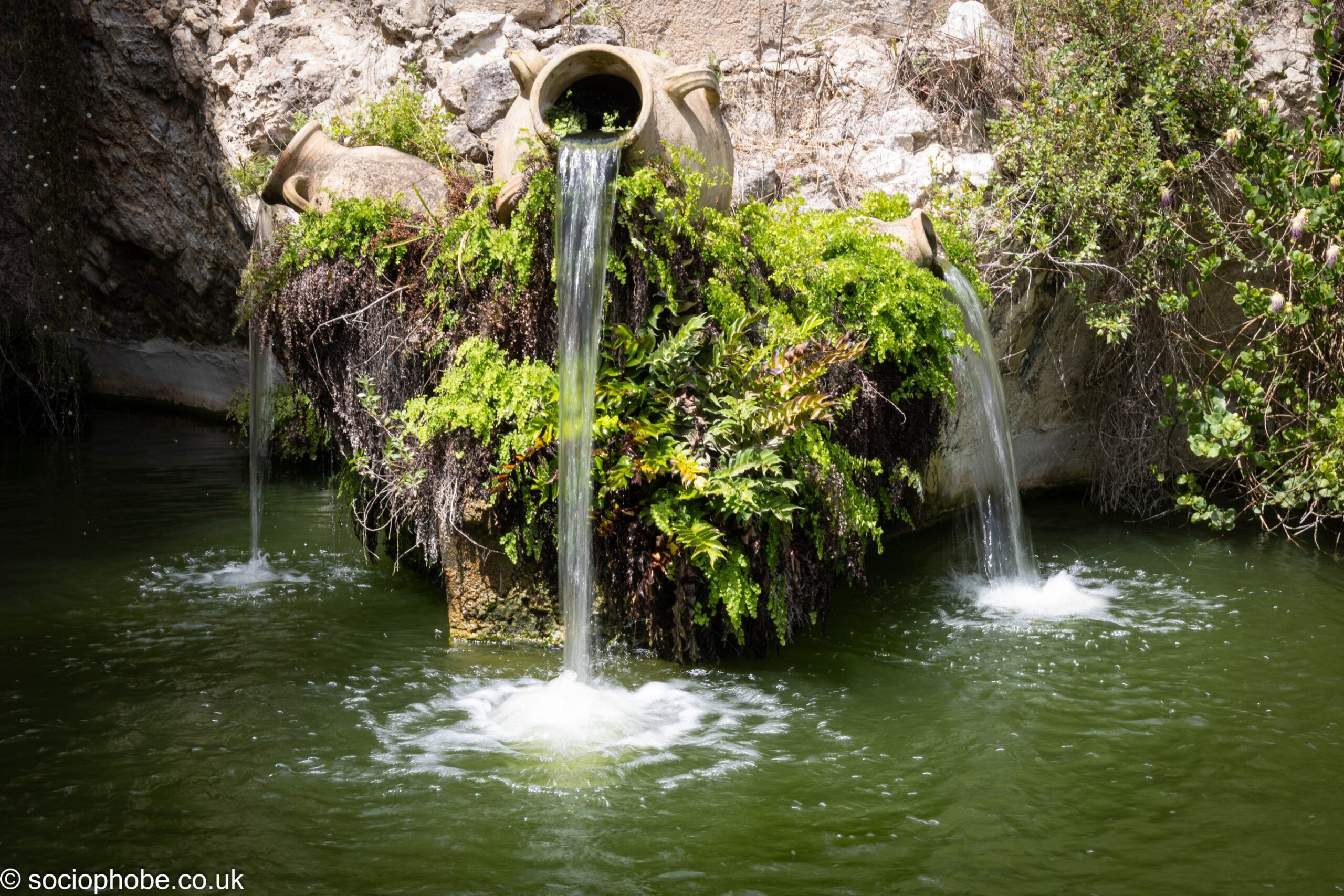
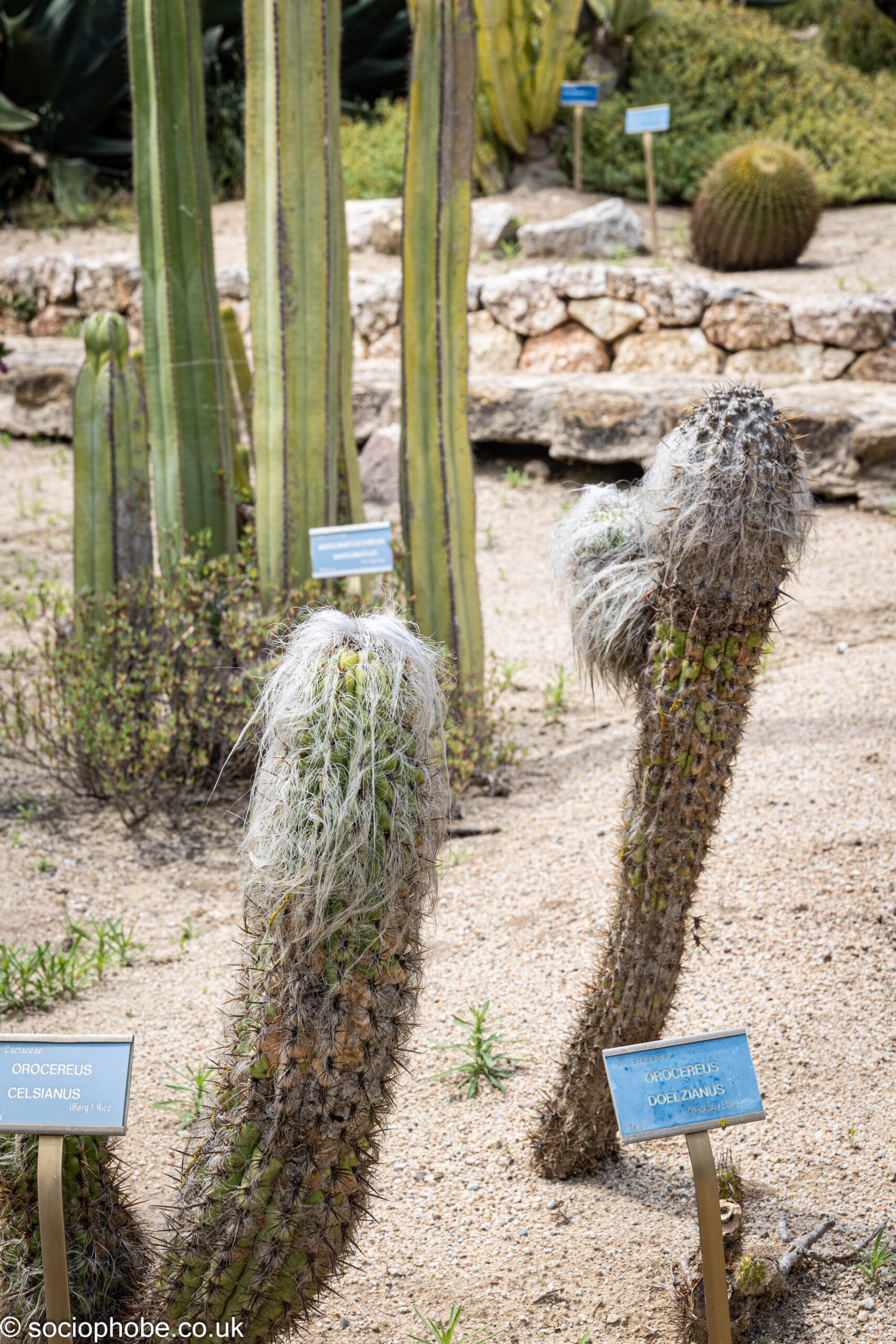
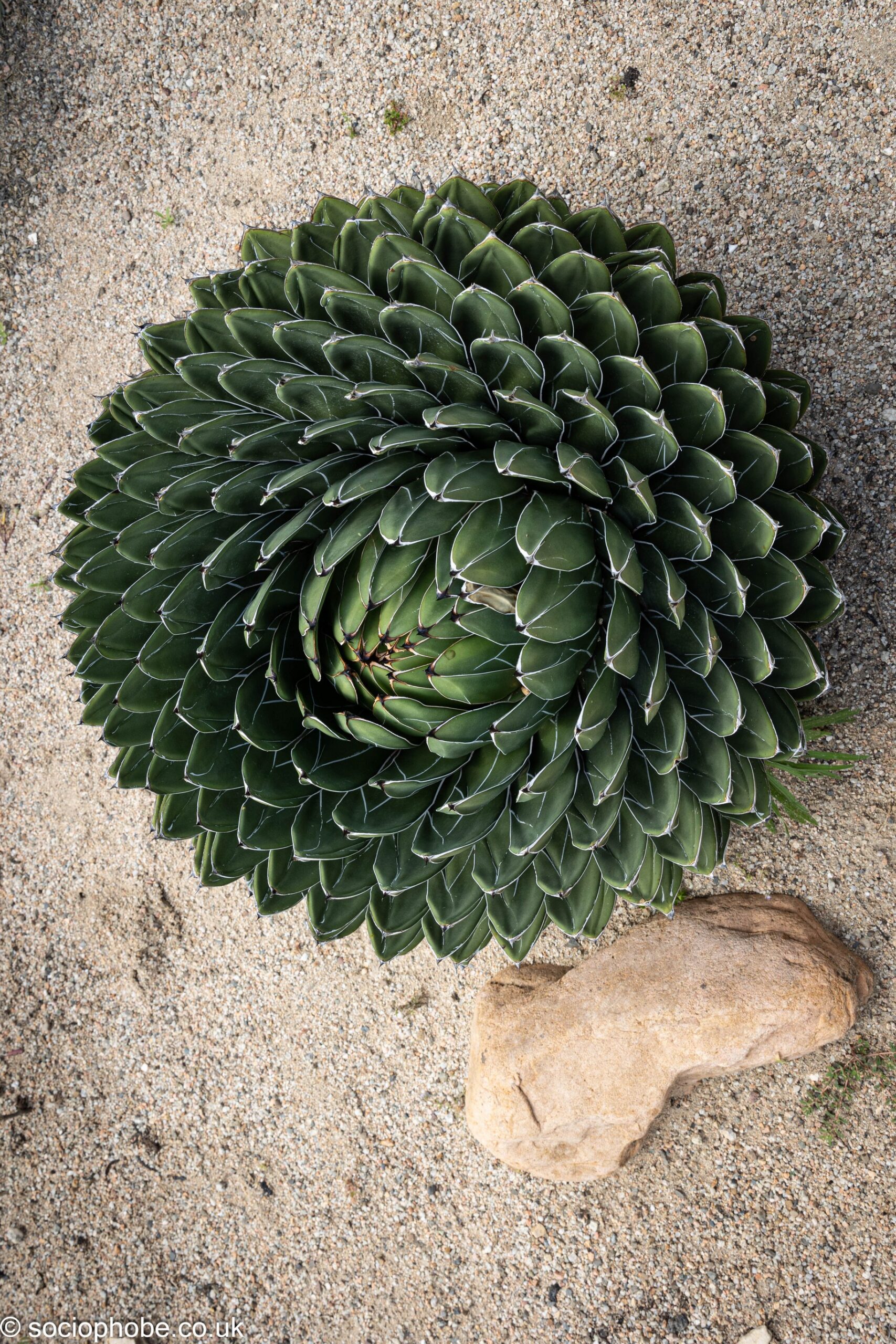
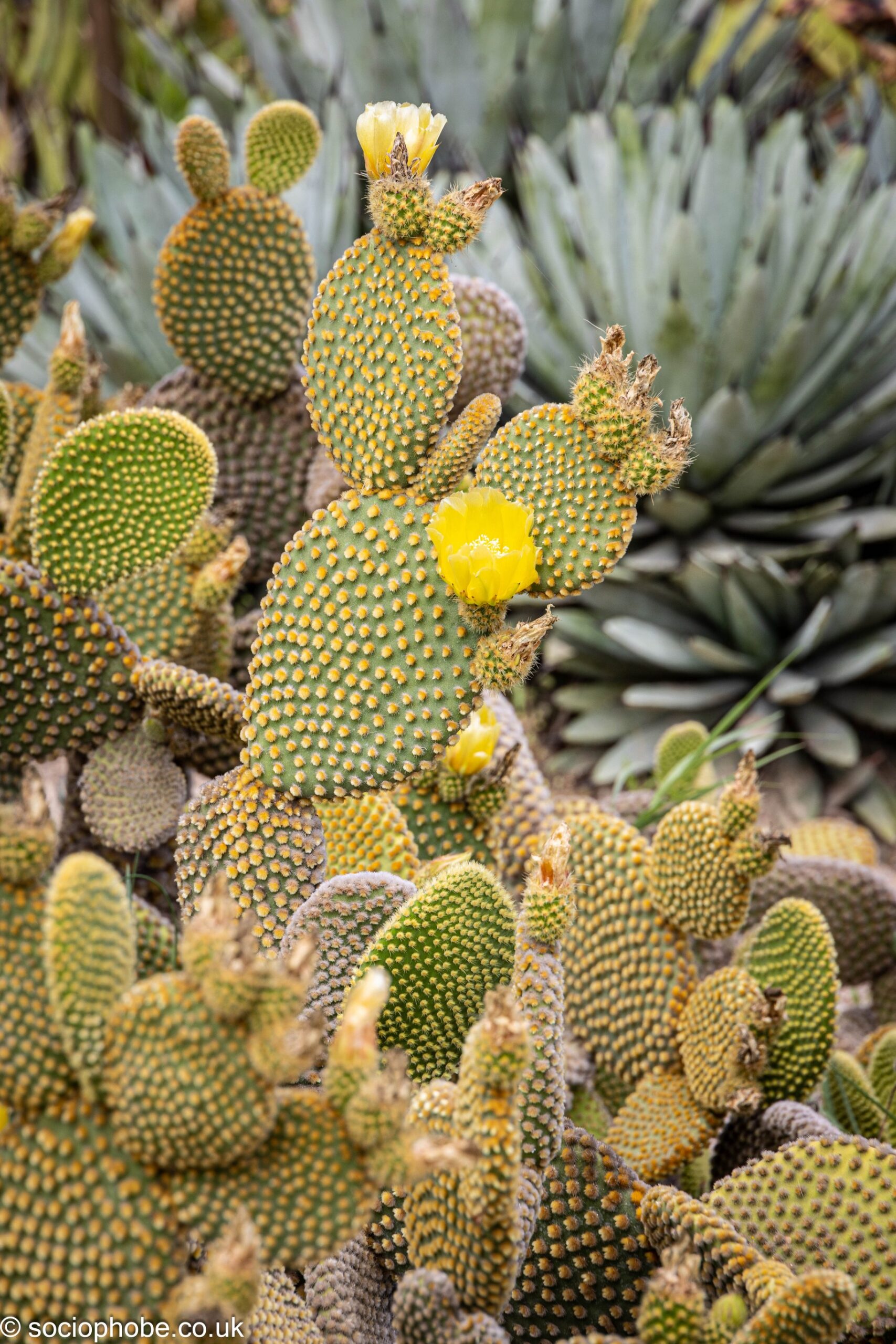
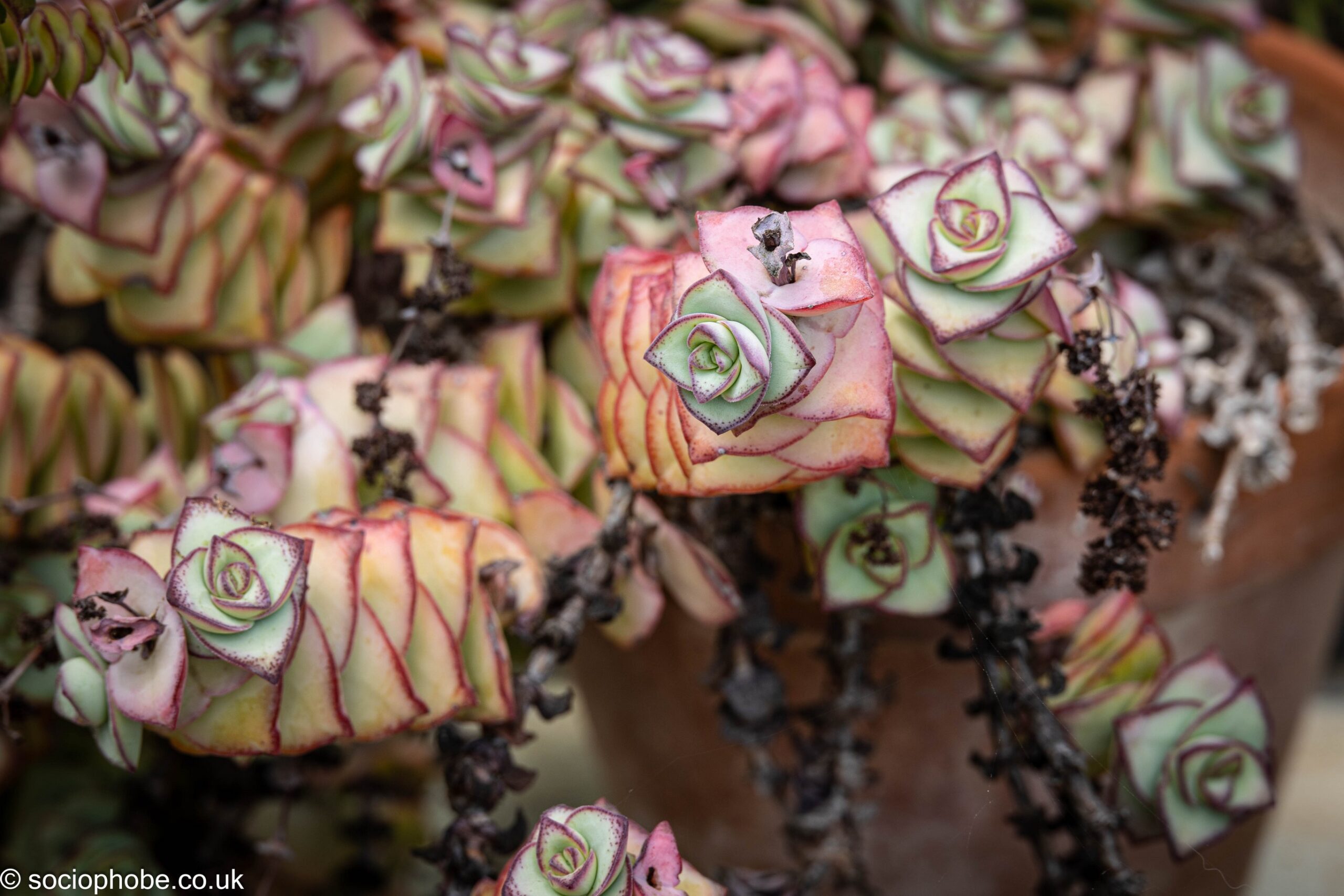
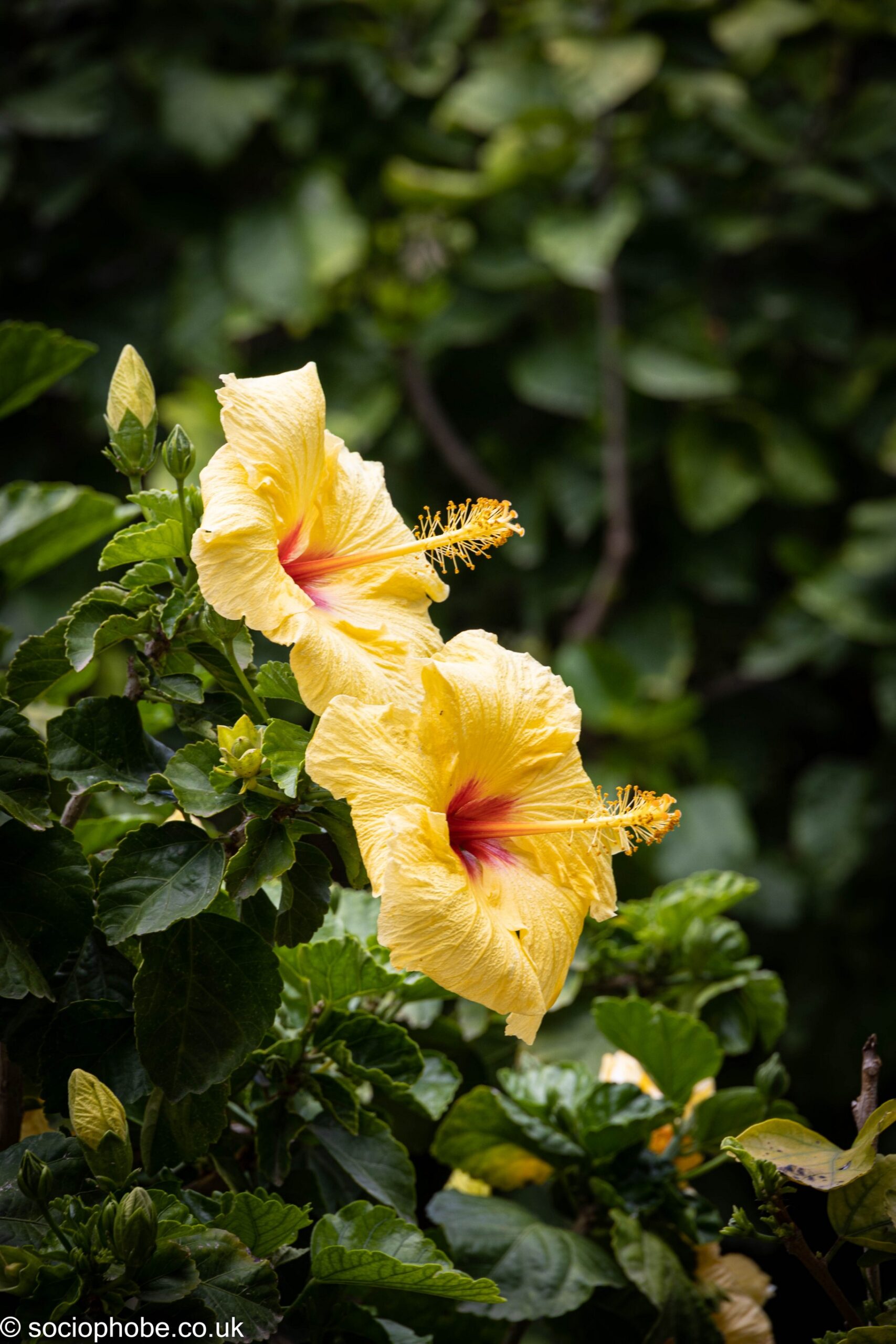
The Botanic Gardens were founded just over 200 years ago and were really rather good. It was quite a large space on a hillside and there were several water features and loads of plants, surprisingly! There were some fabulous cactii and grasses and loads of things I couldn’t identify but were awesomely beautiful.
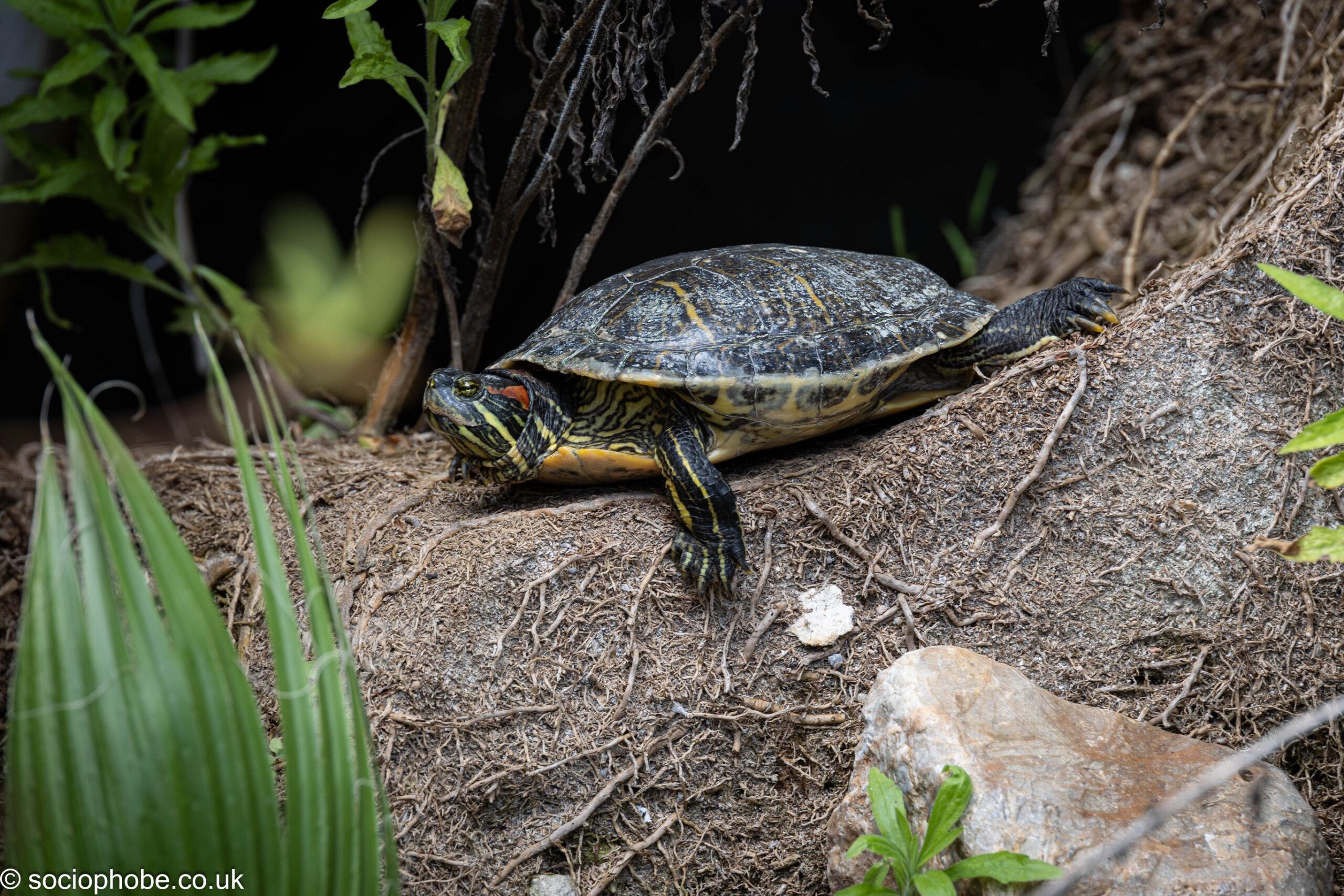
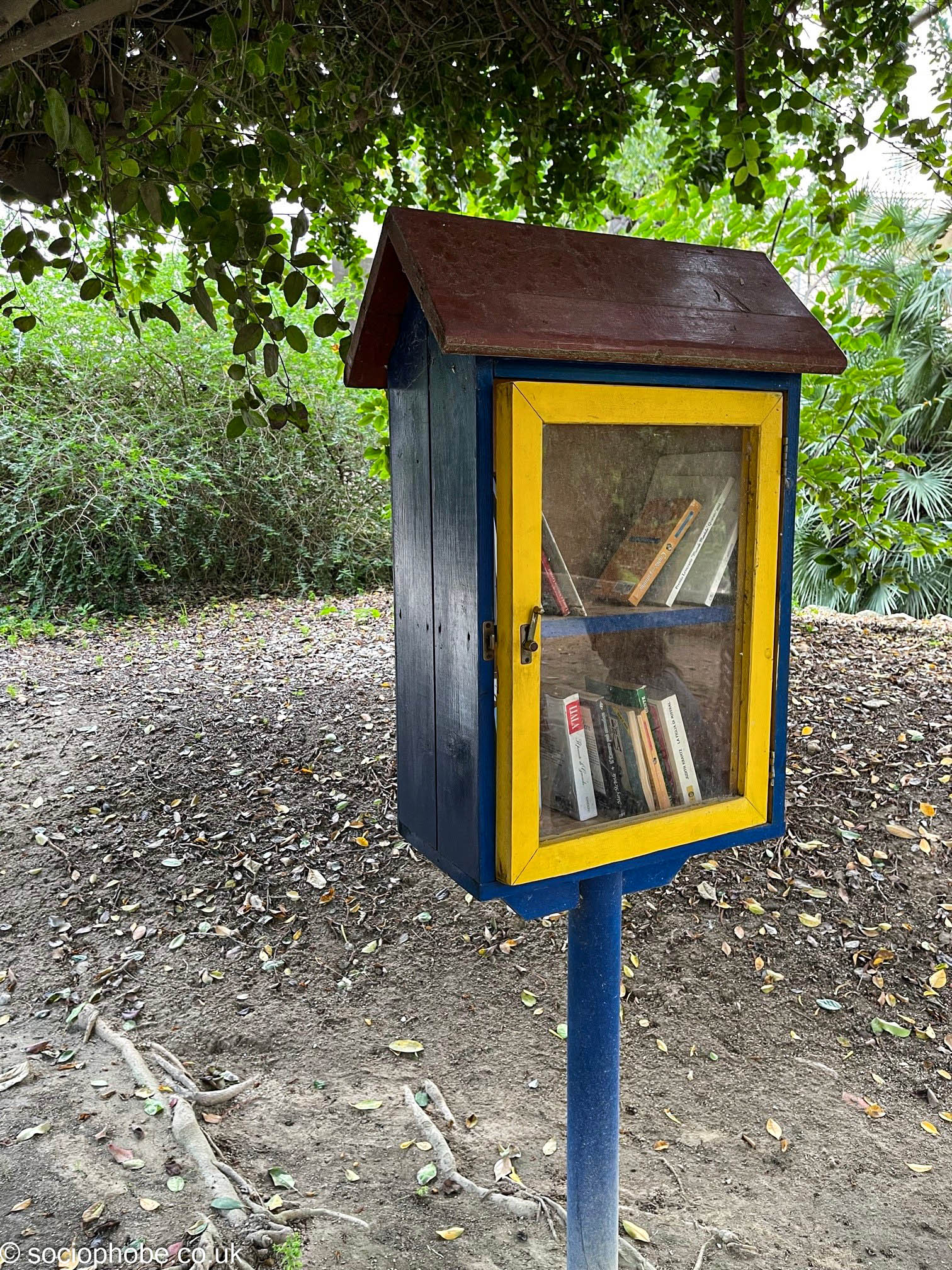
We saw more basking lizards and terrapins in a pool as well. Everything was well labelled and there were loads of shaded areas with benches and little book shelves for people to lend or borrow books to read while enjoying the serenity of the gardens, a fantastically simple idea.


Cagliari Amphitheatre
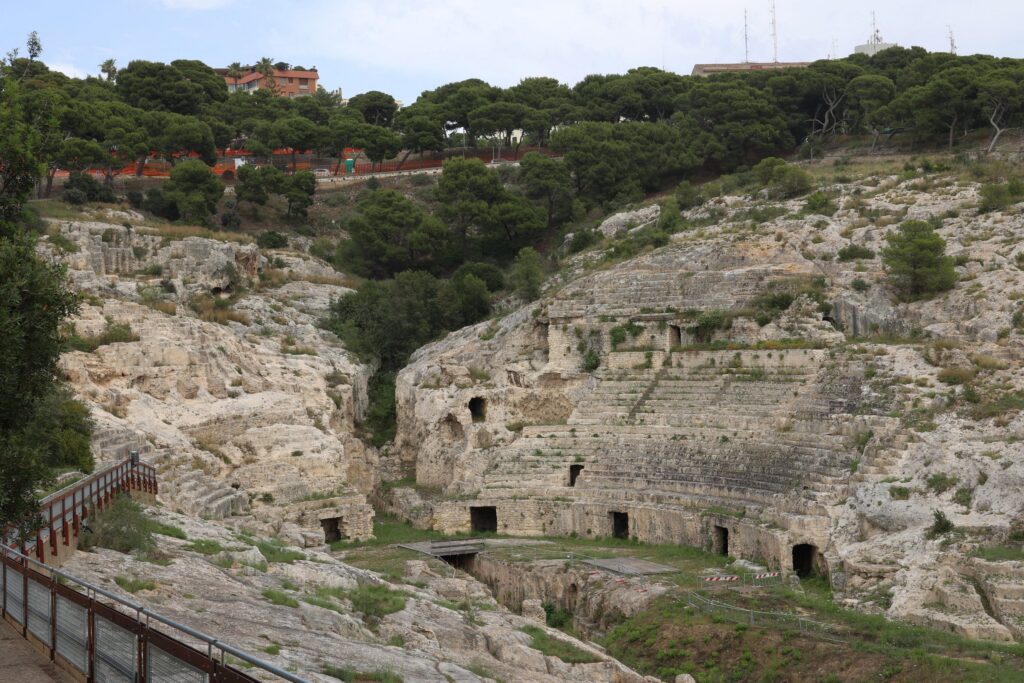
Due to some strategic parking we left the gardens, walked past the car and carried on up the hill to the Roman amphitheatre. The lady here was fantastic. We paid the fee, walked down the ramp to the viewing area, took a few photos and then returned and she explained the history, use and archeological surveys of the amphitheatre.
We learned that, like so many other Roman civic buildings, it was used as a quarry for 600 years. Restoration started in the 1930’s but was abandoned before the war as the archeologist was Jewish. He returned after the war but the city was so badly damned by allied bombing there were no funds for restoration. It made what could have been a 5 minute photo stop an educational experience.
By now we were starving, we’d still only had a magnum all day and the lizards and grass hoppers were beginning to appeal. I’m sure they taste like chicken. We drove back towards the hotel and stopped at a cafe Deb had found (Giusto Gusto), only to find they had stopped serving food so after a sandwich and juice it was back in the car, mildly sated, and on to the hotel. There is was the usual 2 hours of sorting photos and notes while Deb got a bottle of wine and a beer. Today is certainly a calorie deficit day!
While doing the notes we learned Maz was in hospital waiting for an MRI, too many falls in the slippery conditions and either ligament damage or a fractured knee. Ouch! He’ll be coming home on crutches and will miss the next race so that’s very frustrating for him.
The Nuraghe of Sardinia
There is a detailed explanation on the Wiki page here but to summarise, Bronze Age culture on Sardinia revolved around the nuraghe, large conical towers. There are around 7000 still on the island and they were up to 25m tall. The function is still unknown although they do appear very fortress like. These megalithic structures are unique to the island and far more advanced than other contemporary buildings in the wider region.
Nuraghe Piscu
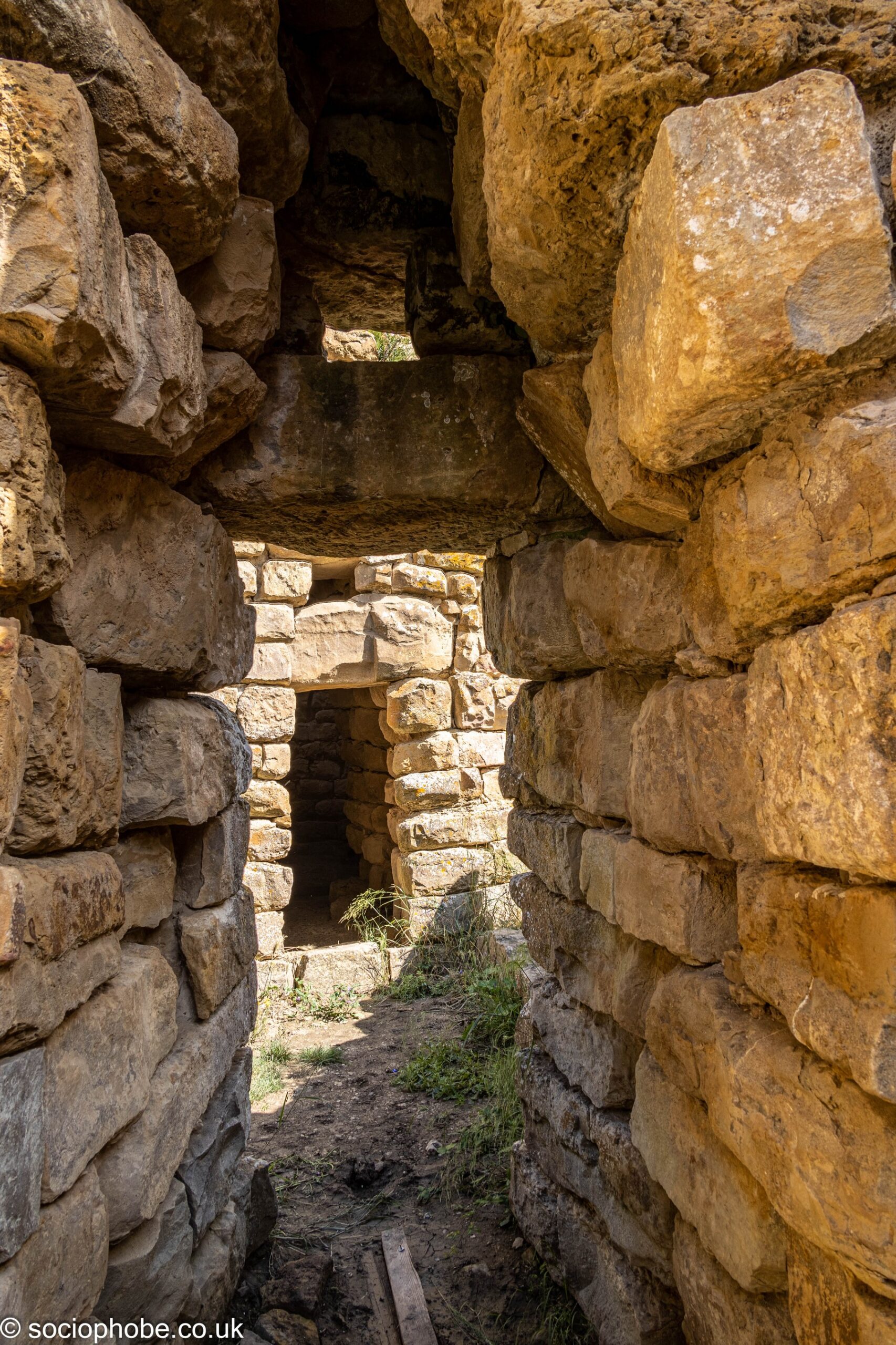
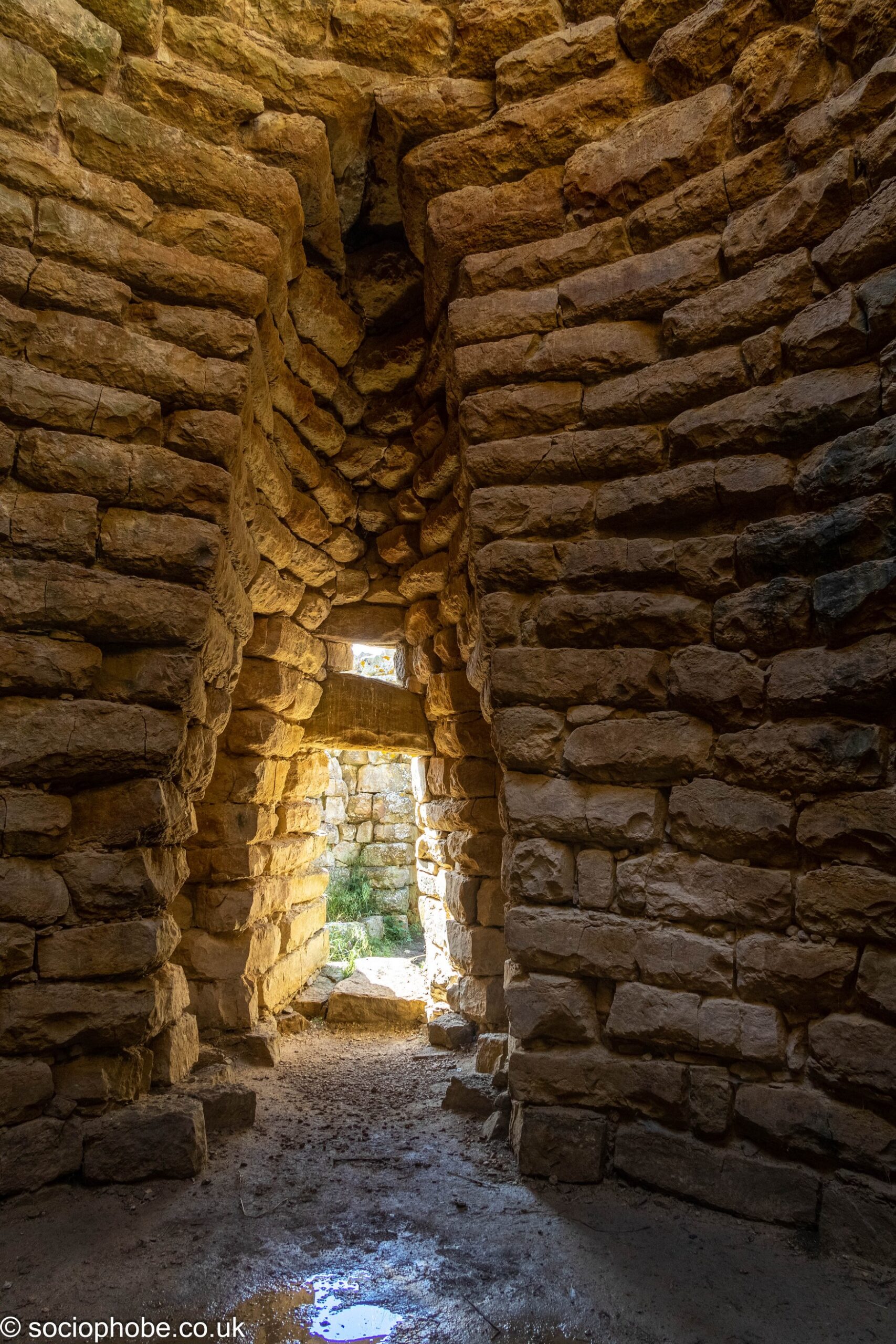
Sunday was another lazy day and we didn’t leave the hotel until almost 10. Sardinia is famous, amongst those who know anyway, for its profusion of Bronze Age sites. These are called nuraghe and are similar to the Scottish brochs but larger and a thousand years earlier. Basically they are a big tower – maybe 3m thick – with spiral staircase built in to the walls to give access to the roof and upper floors. Larger sites have multiples of these linked by curtain walls and possibly surrounded by village huts and they are unique to this area.
Our first stop was a drive about 45 minutes north to Nuraghe Piscu, one of the many that are just left to decay. The drive was really lovely as we weren’t in any rush and the scenery was fantastic, with the plain at almost sea level below us as we climbed up into the hills. We saw flocks of goats and had to pause at one point as the farmer was driving his cattle down the road.
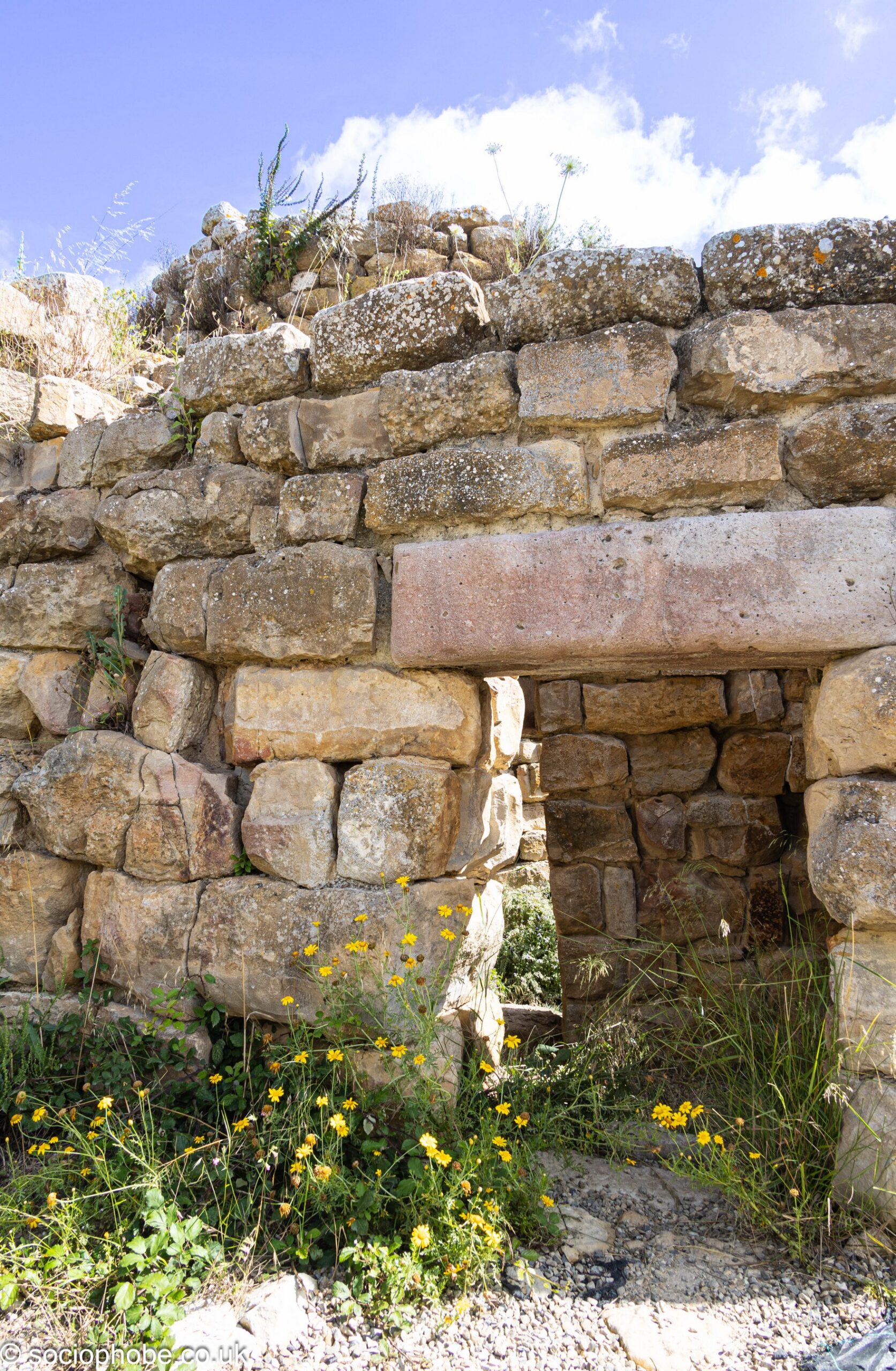
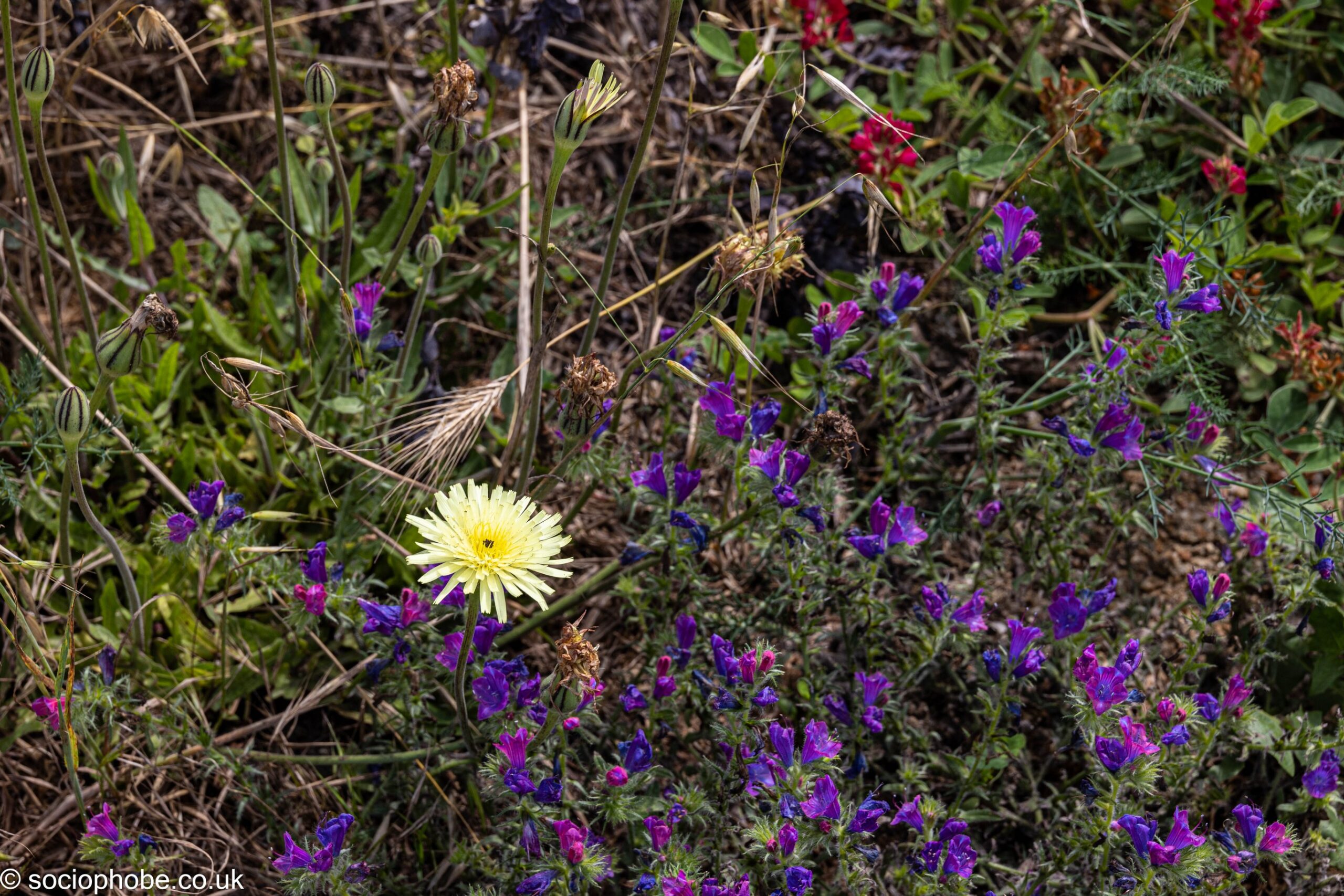
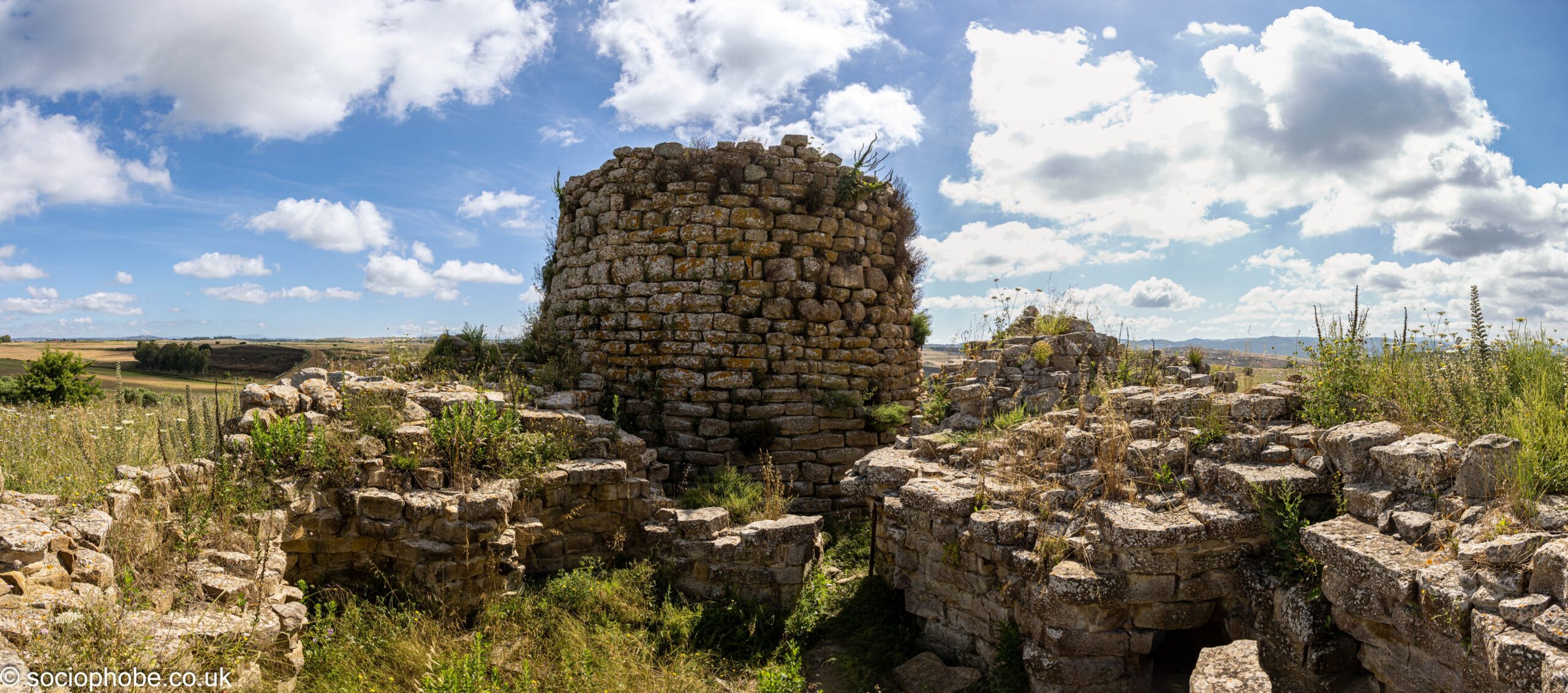
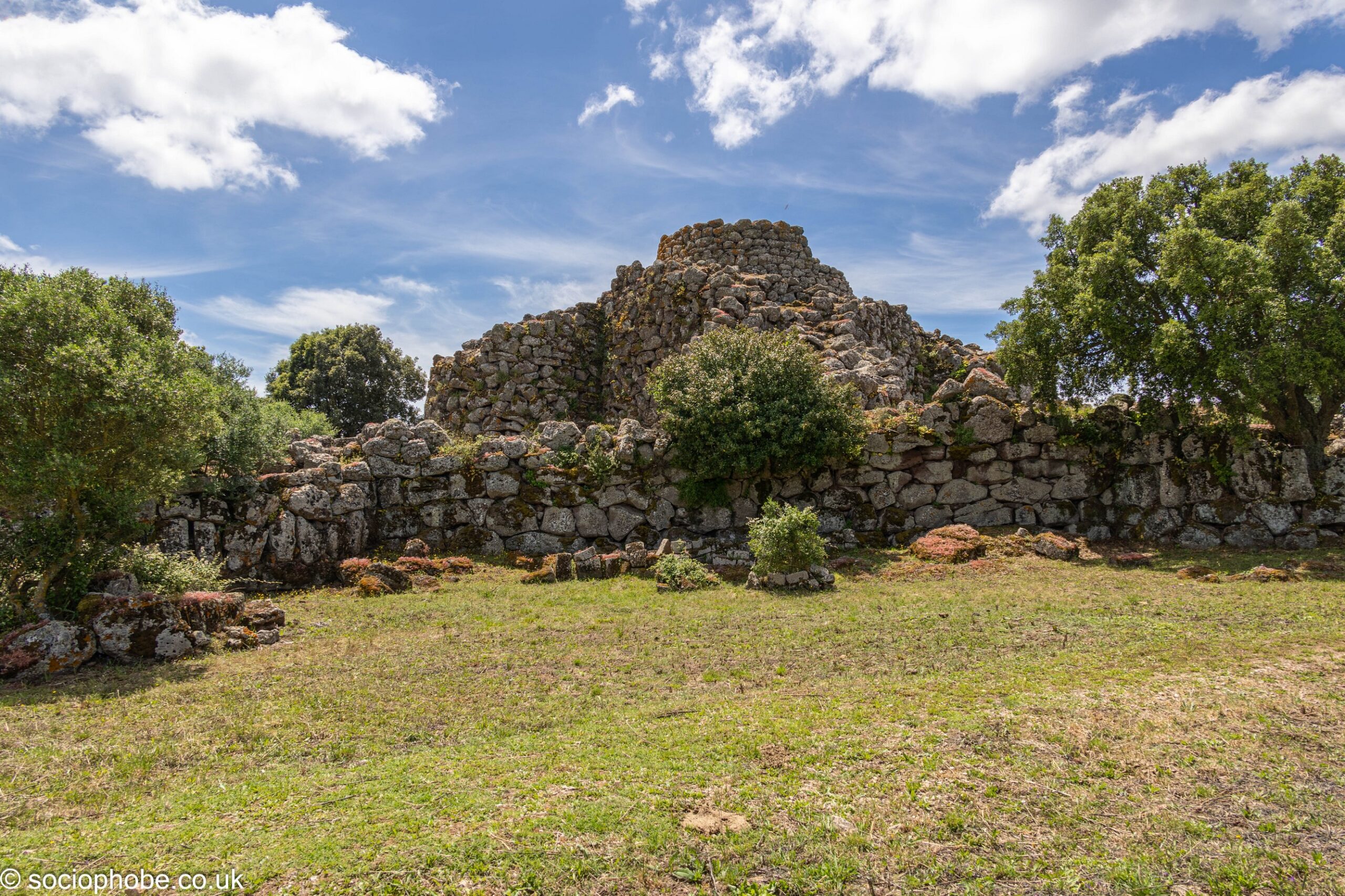
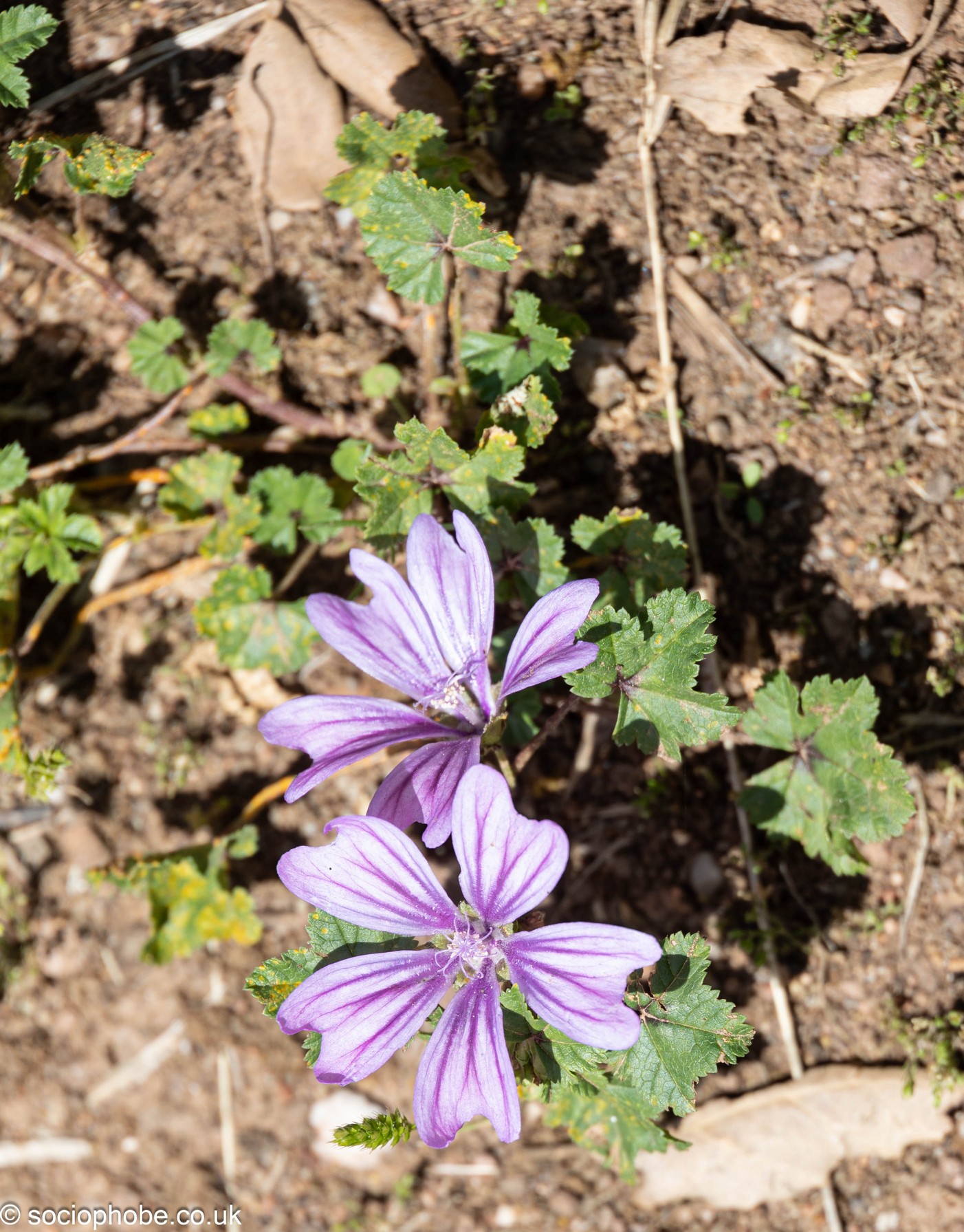
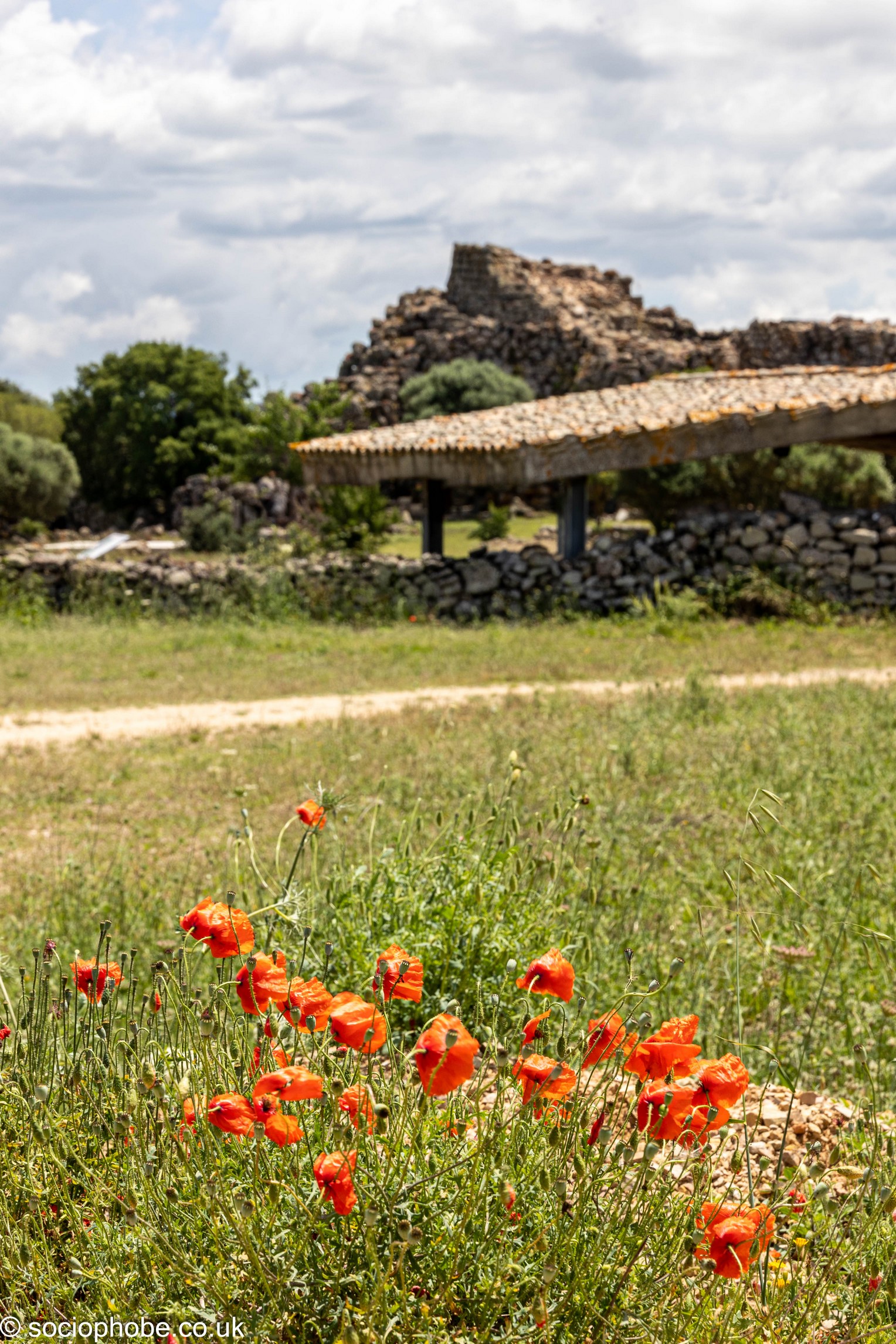
Niraghe Piscu was the ‘least’ of the ones we were visiting during the day – it was not a tourist site and was basically abandoned amongst some fields. We drove a very bumpy and narrow farm track and parked a little way away before walking to the site. This really added to it as so many fields in Sardinia seem to be left to go wild and there was a real profusion of wildflowers either side of us and the drone of bees and butterflies flapping around.
The structure was far bigger than it appeared from the road, with multiple rooms around the tower and extremely solid for something built 2500 years ago. As we were leaving another couple turned up to visit which was good to see as it needed a bit of investment to clear the undergrowth and make it more accessible so raising its profile is good.


Nuraghe Arrubiu
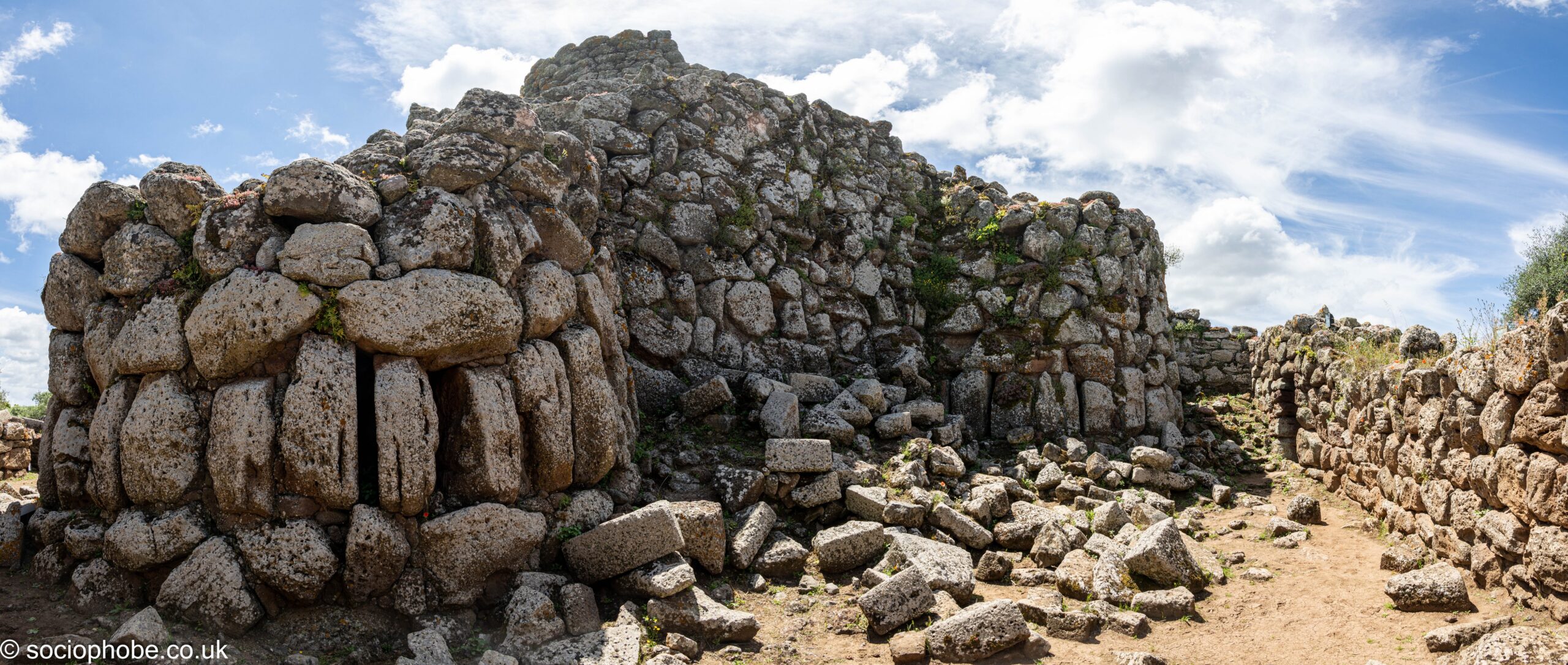
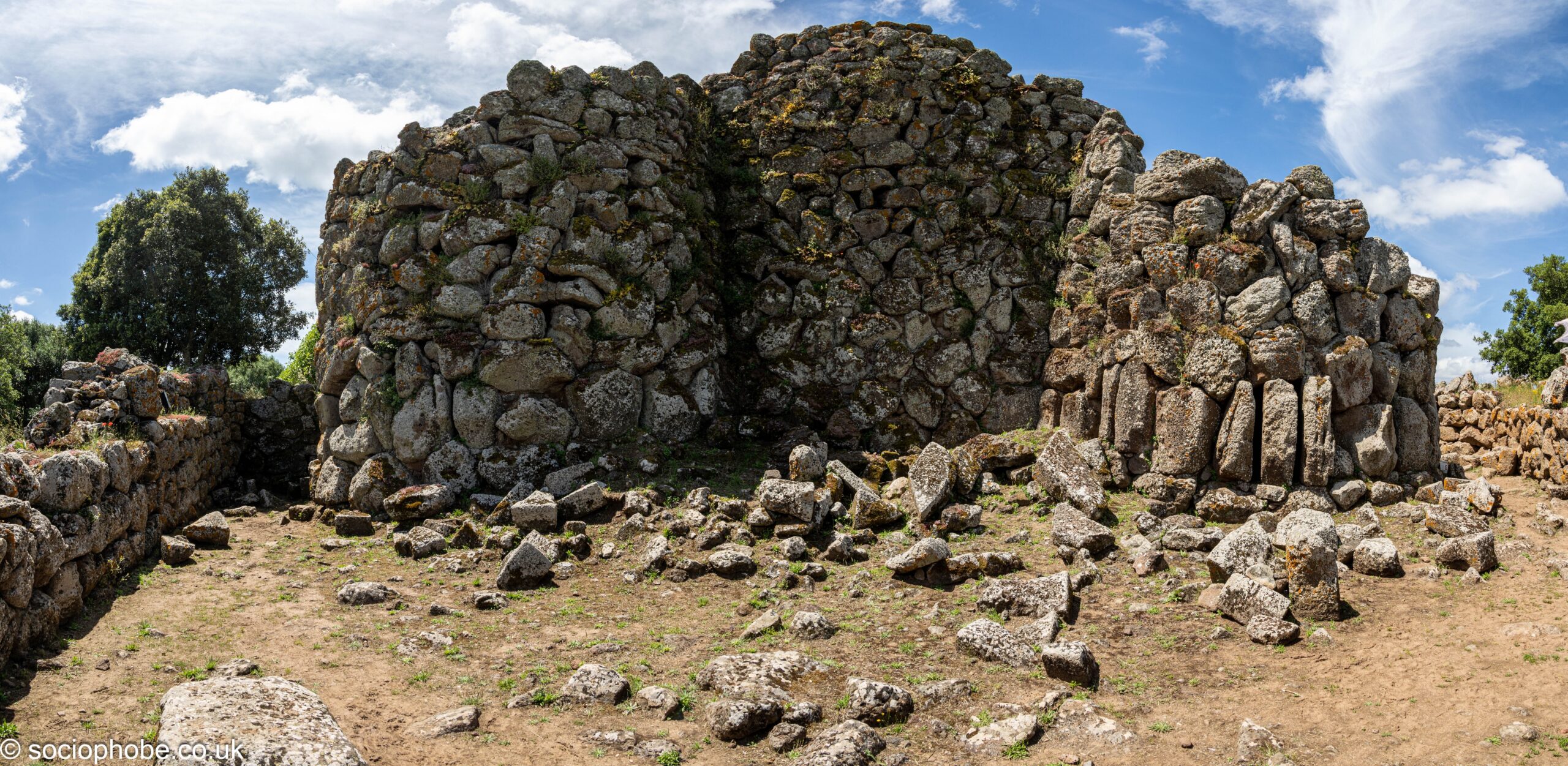
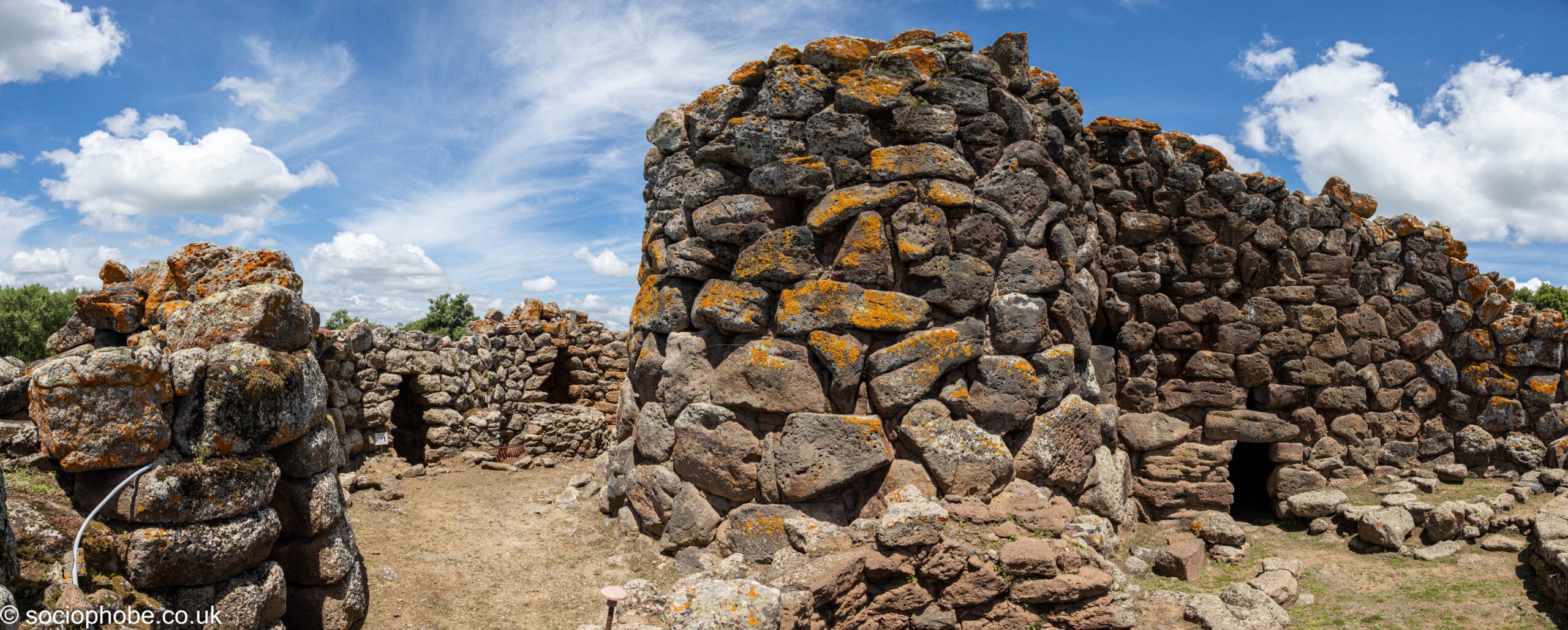
Next stop was on our Sardinian road trip was another nuraghe, this one at Nuraghe Arrubiu, which was a proper tourist site with a cafe – so we could finally have breakfast – and paid for admission. This was another huge site with walls maybe 10m high and 3m thick and multiple buildings and towers radiating from the centre.
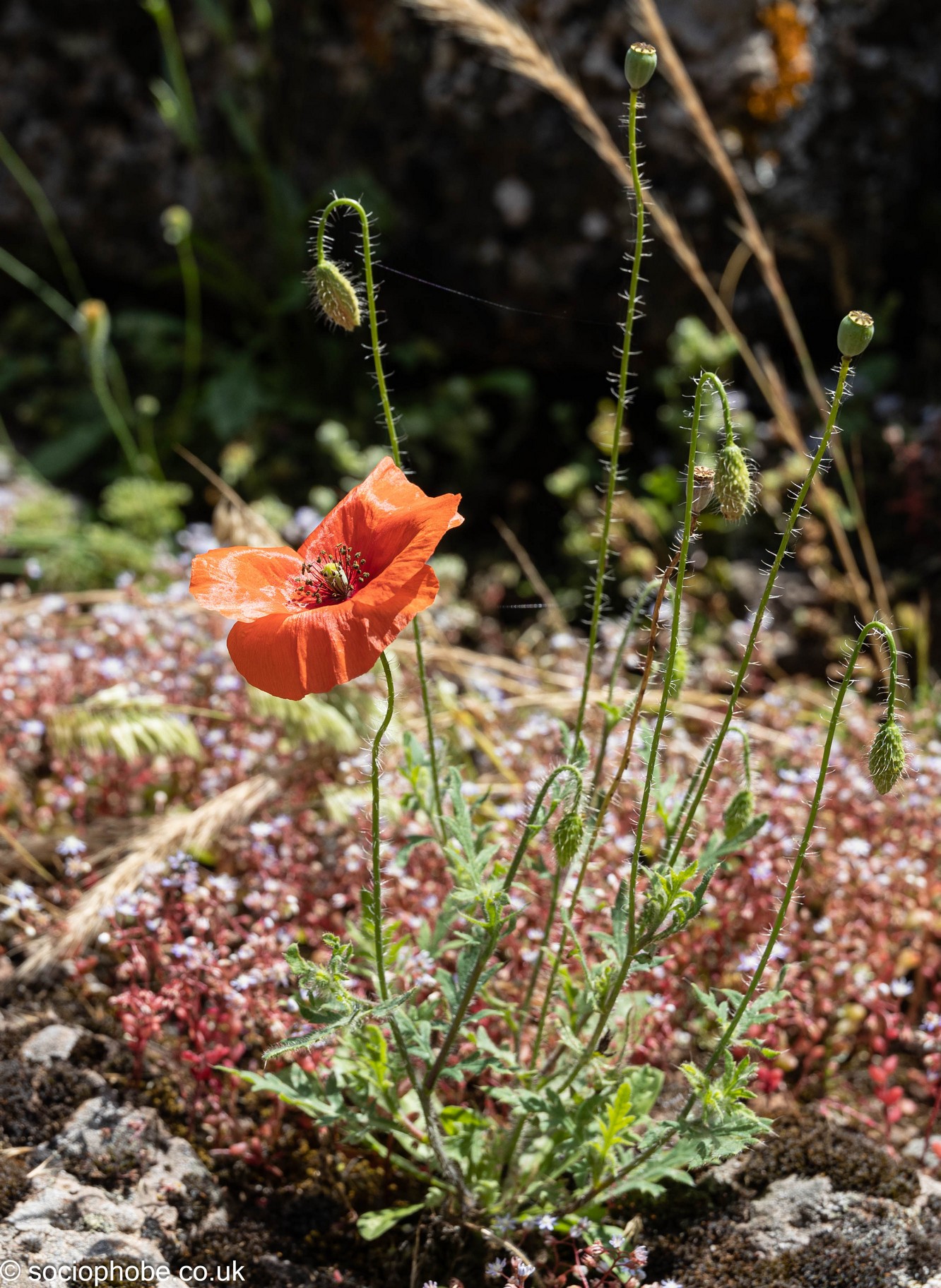
There were more wild flowers including poppies as well as lots of basking lizards. In this tower you could see the spiral stairs although they have been blocked off part way up for ‘safety reasons’. The staff here were very helpful and gave us an English leaflet describing the site, the purpose of each room and what had been found in excavations.
It was impressive how cold some of the interior rooms were considering it was around 30 degrees C outside. The main tower was originally over 25m high which is pretty impressive for something built 1500 years before the Roman Empire was founded.


Nuraghe Barumini
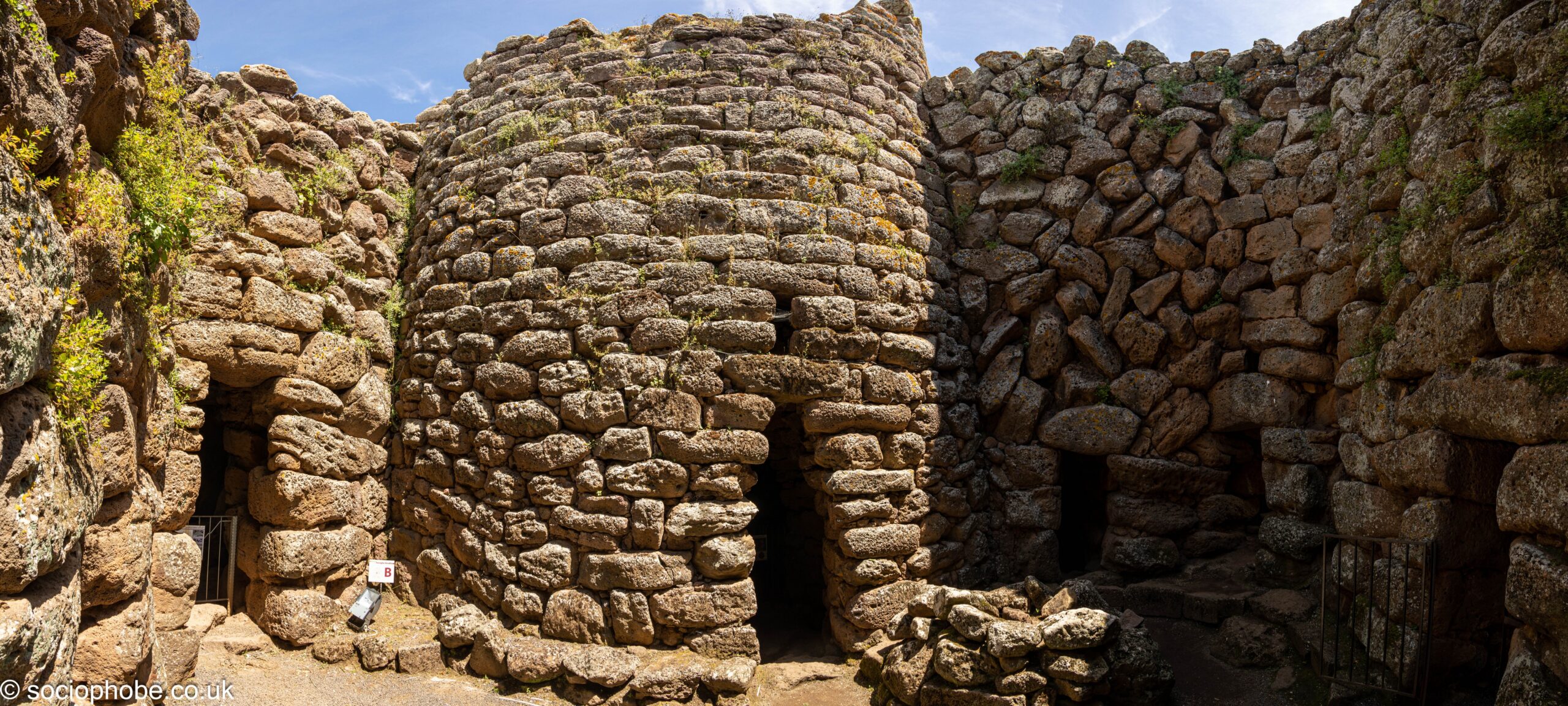
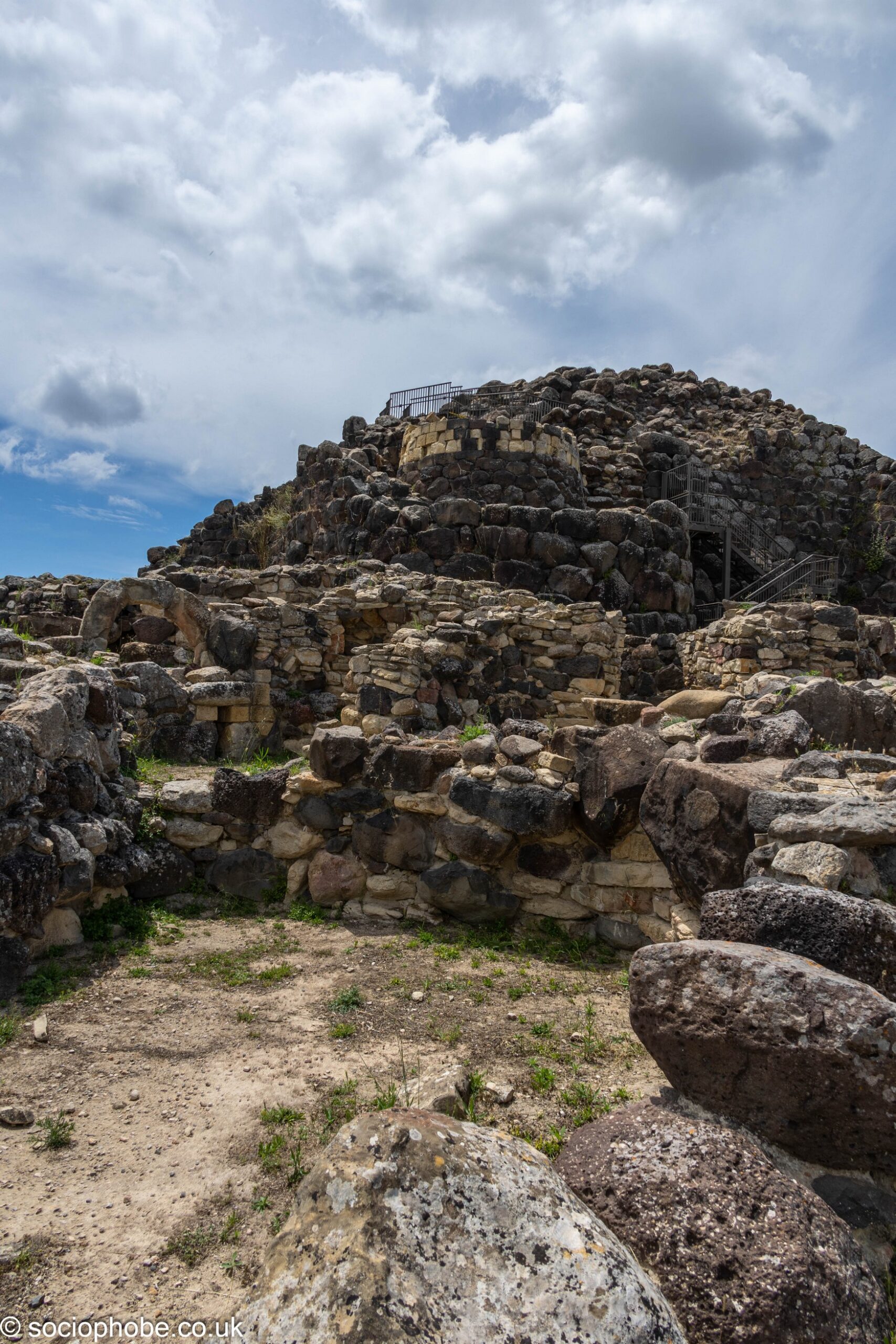
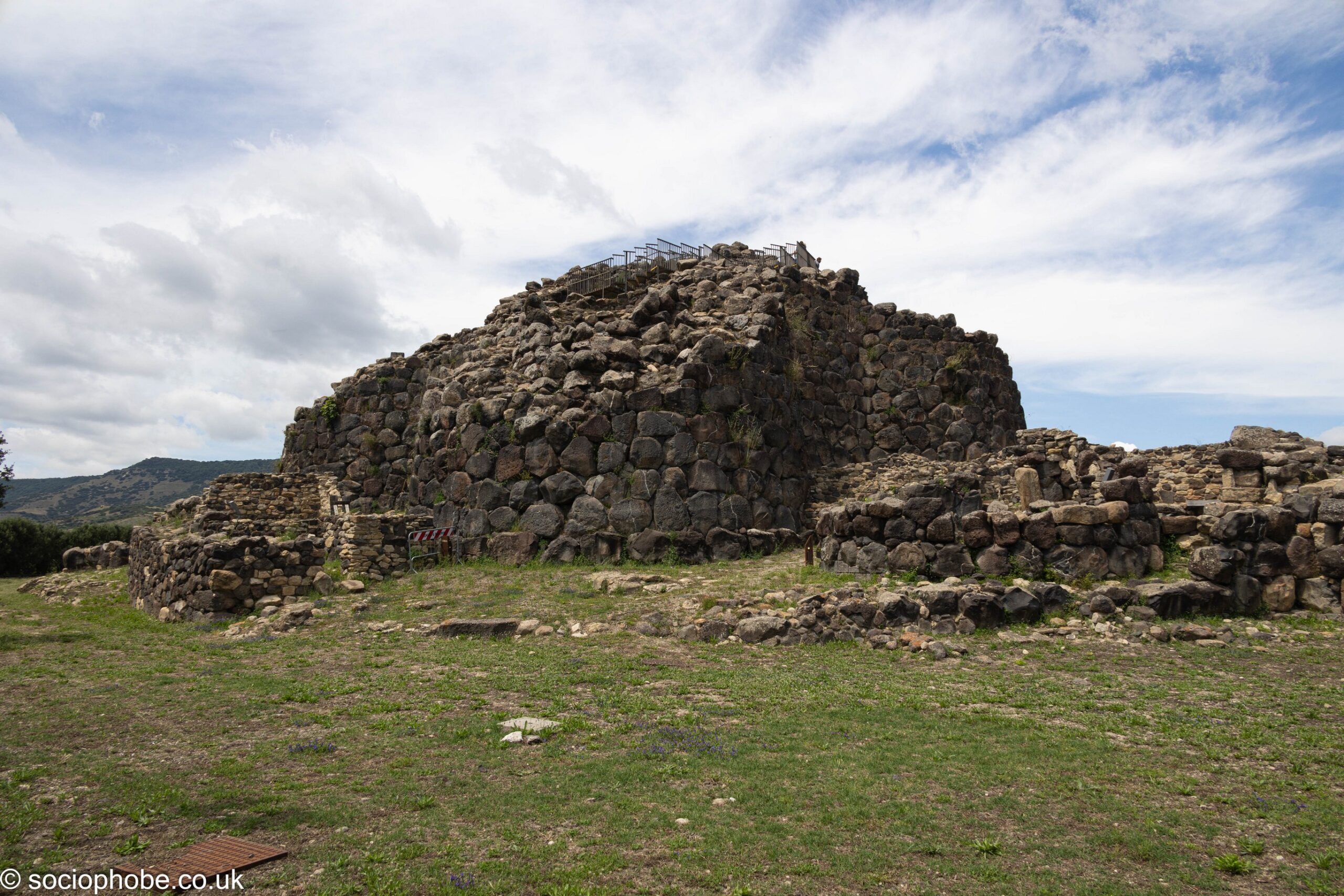
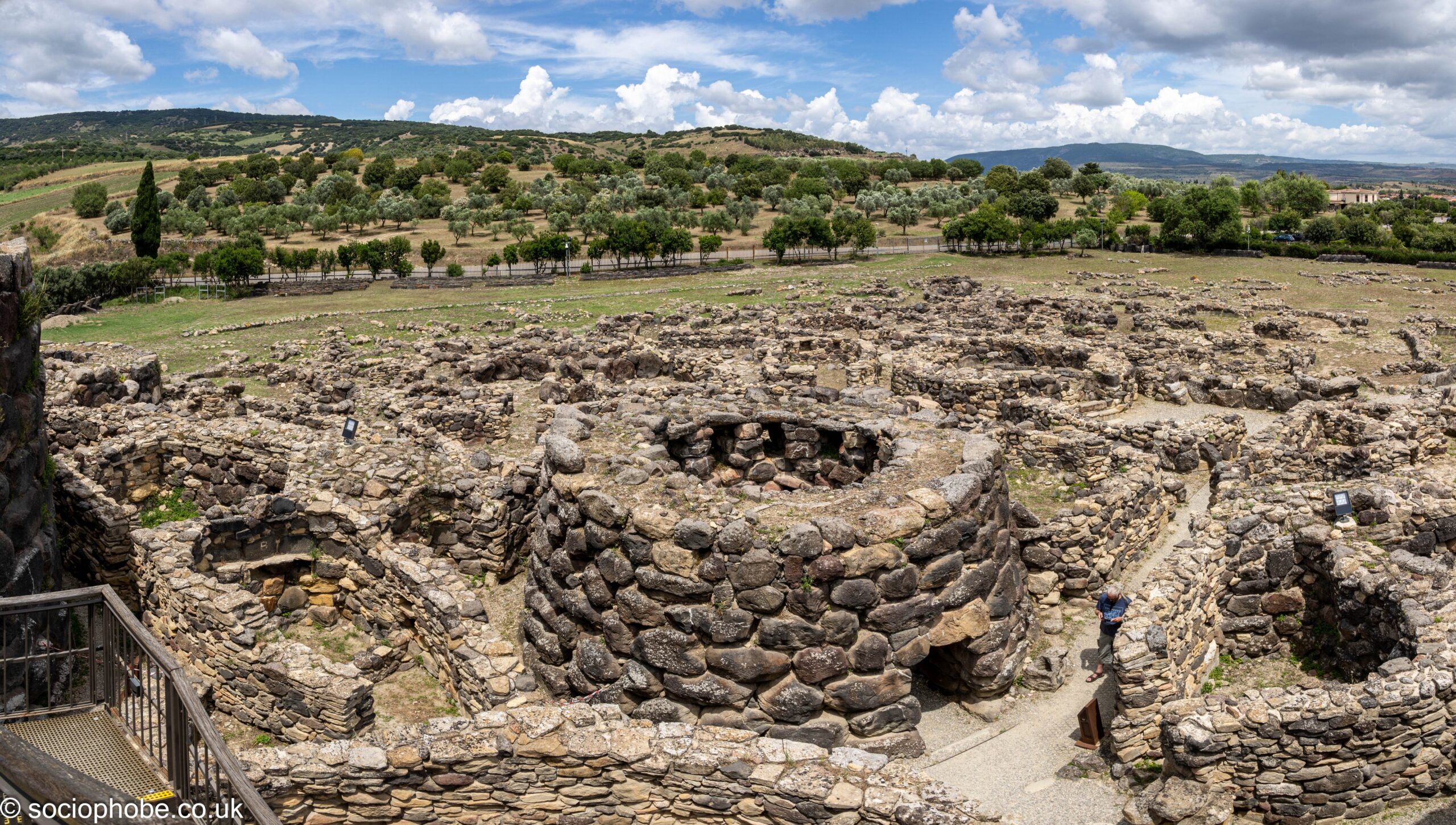
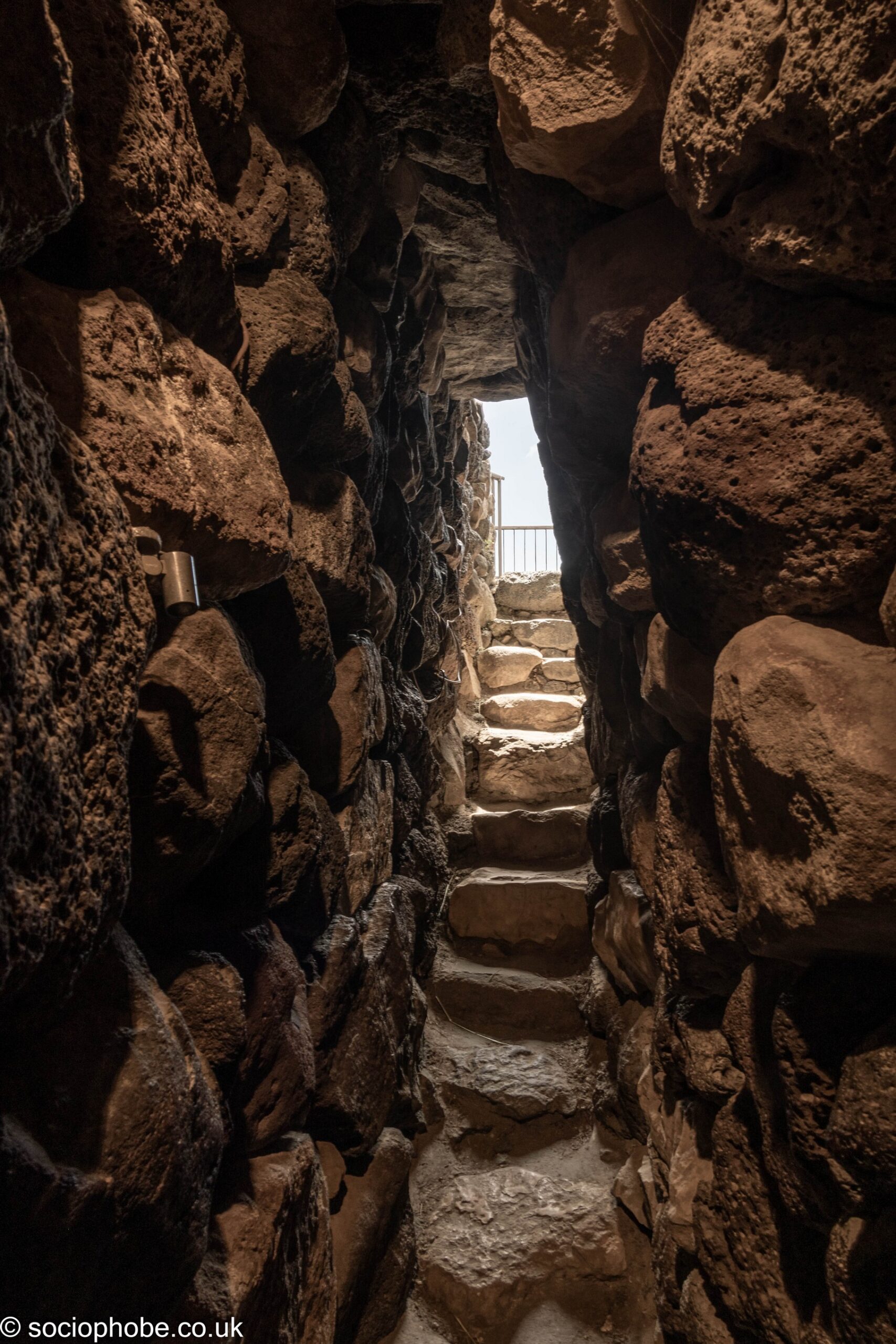
Our final stop was Nuraghe Barumini, this one the most complex on the island and a major tourist site. There was a proper car park and access was only by guided tour. To be fair, after doing the tour you could see why as access to the central tower was by extremely steep and narrow steps. Kudos to Deb though for even getting out of the car after already seeing two of these sites and then doing the tour too.
Our guide was Sabrina who was celebrating her 30th year in the job! She explained about the rise and collapse of the Nuragic civilisation and how little we actually know about them as they left no written records. Archeologists have shown that the towers originally had merlons projecting out from the top with a balcony above them. The reconstructions look like medieval castles but 3000 years before those really existed and I find it difficult to believe an island the size of Sardinia needed or could support 7000 castles!
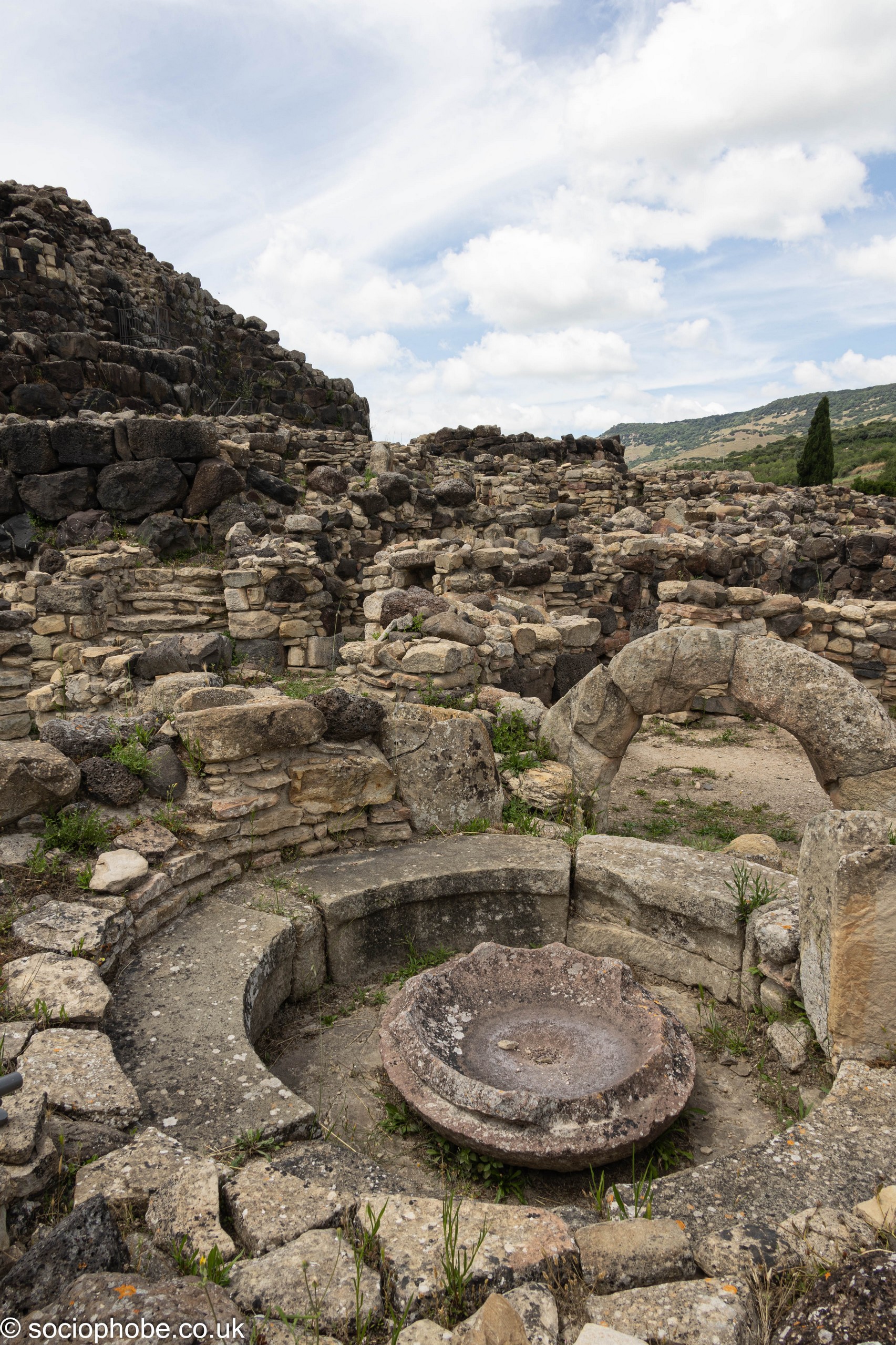
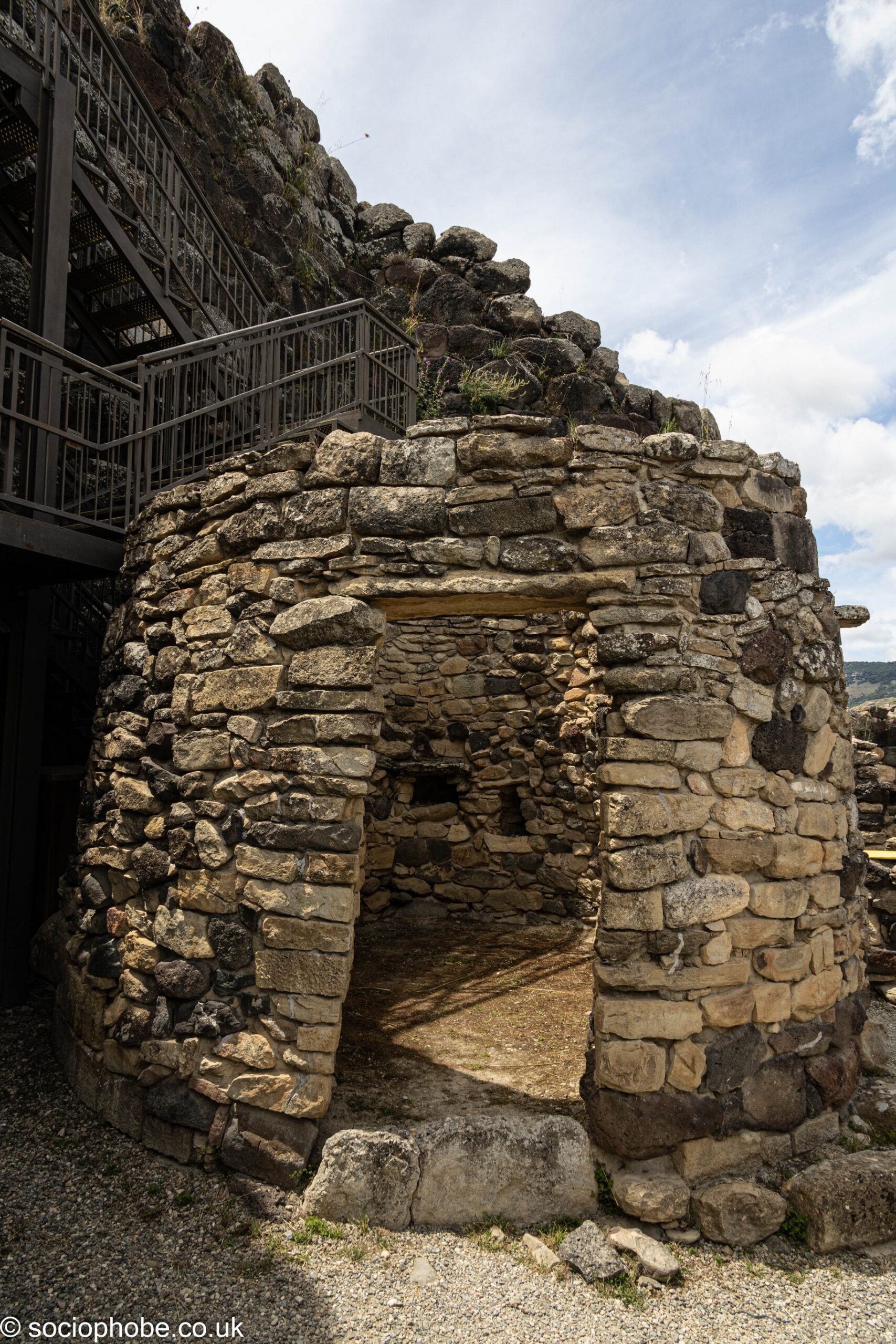
The tour was really rather good and we went through the original entrance 20m up the wall and down the steps into the courtyard from which 4 other towers radiated. Outside this structure was a later village, built when the nuraghe was abandoned and largely using looted stone. This site was the busiest of the lot with tours every 30 minutes but the ability to climb almost to the top and get an overview of the structure was fantastic.

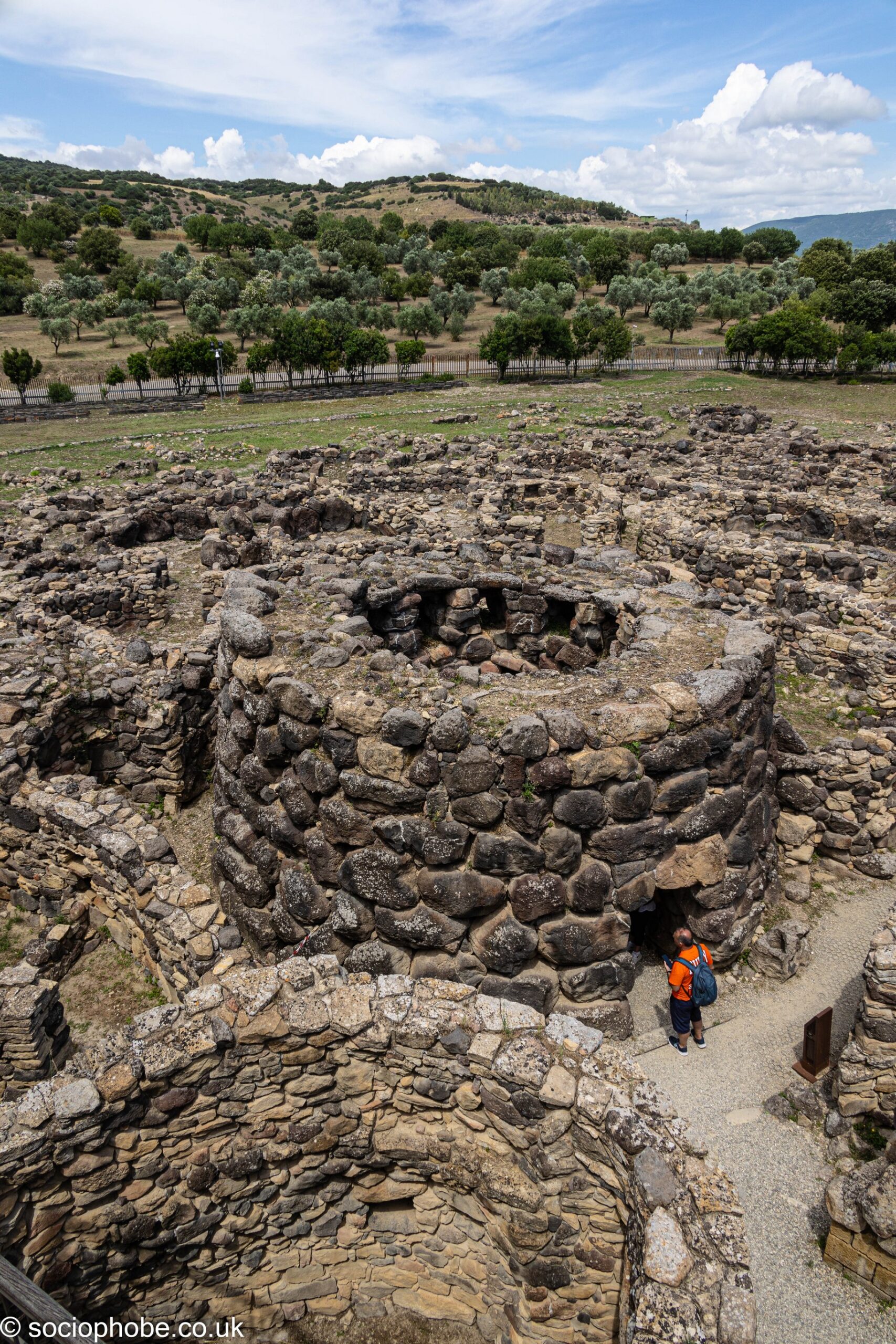
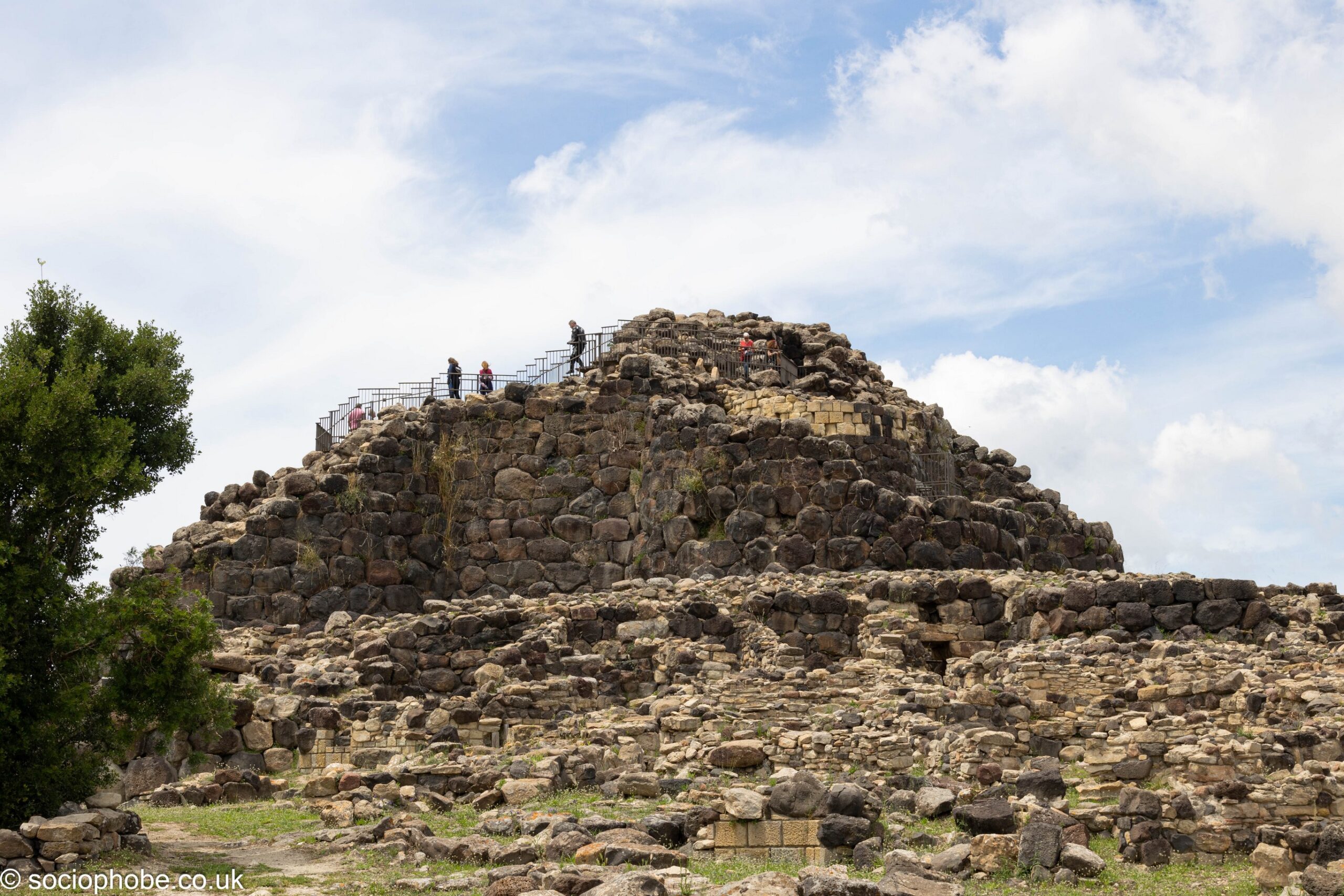
Our hotel was about 5 minutes drive away, which was very convenient! It was billed as an art hotel and our room had some very interesting decorations, mostly involving boobs and chicken skins so it warranted a 50% approval rating from me. It was nice to be within walking distance of bars and cafes again though. I sorted the days photos (I hadn’t taken that many as we just saw three piles of rocks really) and we then walked to the highly rated Cavallino della Giara for dinner, which didn’t disappoint.
We were both yawning by 10PM, a combination of full bellies and some alcohol so it was an early night for us! Another great day and the interior of the island is just so much more peaceful than the coast, the downside being we didn’t find a single breakfast stop in the 3 towns we drove through! I was happy to trade that for the landscape, the sound of goat bells ringing and the profusion of wildflowers though.
We actually had a very disturbed nights sleep due to the other guests banging around until 4AM. I didn’t wake properly until 8.15 so that was a shocker! We had breakfast in the little cafe downstairs which was already busy with locals, it does seem a real community hub. Our first planned stop was just 10 minutes away, a tulip garden, but when we got there it was closed until next year as the tulip season is over so that was a bit of a shame. I found a nature reserve to go to that had pictures of flamingos and salt lagoons and it was on our way to the other stop I had planned so easy to insert into the itinerary.
Or not. Once we turned off the main road to the reserve the road went from metalled road, to gravel to dirt track and was so narrow the plants were brushing the car on both sides. Deb helped by giving numerous warnings, shrieks and ‘advice’, sadly no mute button was available. We got to the location and it was marked as Private – No Entry and seemed to be a fish farm so maybe my Italian translating skills aren’t that good! We drove back a different and marginally better way and did stop at the side of one of the lagoons but there was no bird life there although the views were lovely.

Roman Tharros
Continuing on to the main road we headed for Tharros. This is another old Phoenecian/Punic/Roman city that was abandoned in the early medieval period due to Arab slave raiding. It was actually large enough to warrant road signs and had several cafes and shops as well as miles of sandy beaches either side of the ruins.
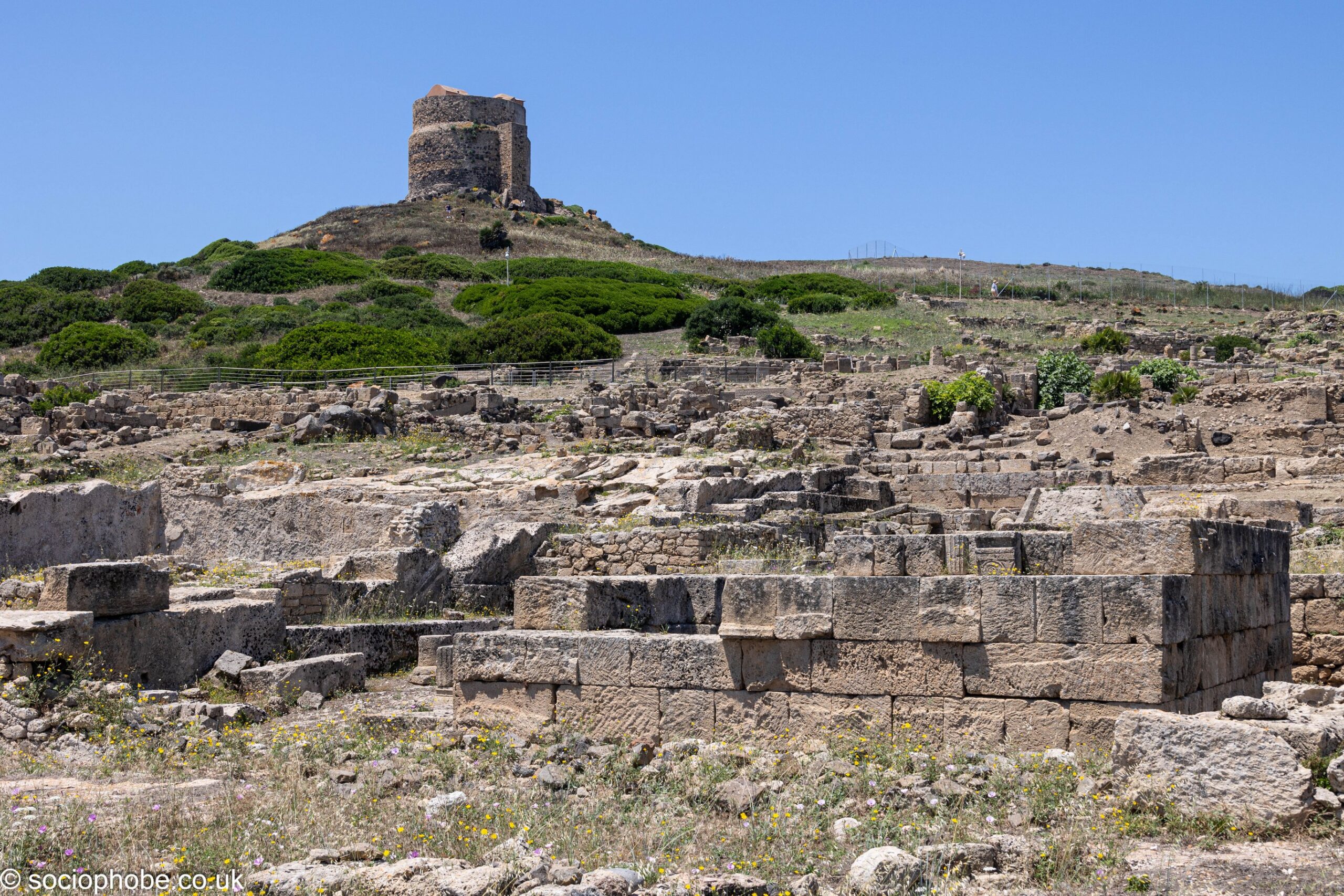
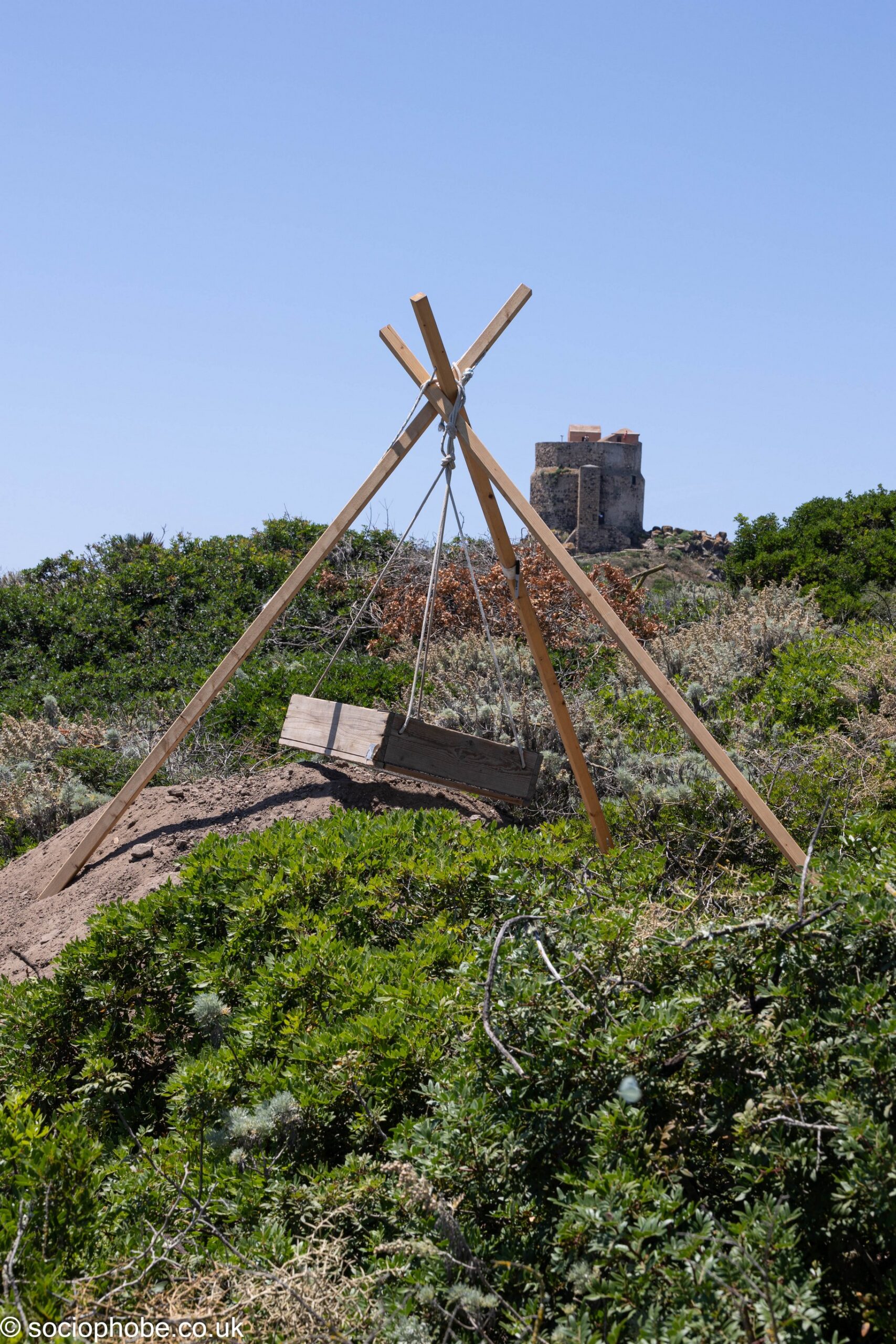
We were advised at the ticket office to visit the Spanish watchtower first as that was shutting for siesta soon so we marched up the hill, chatted to Marco, the guy inside and then climbed to the roof for views. It was a stunning location on a peninsula and you can see why it was positioned there to warn as soon as raiders approached.
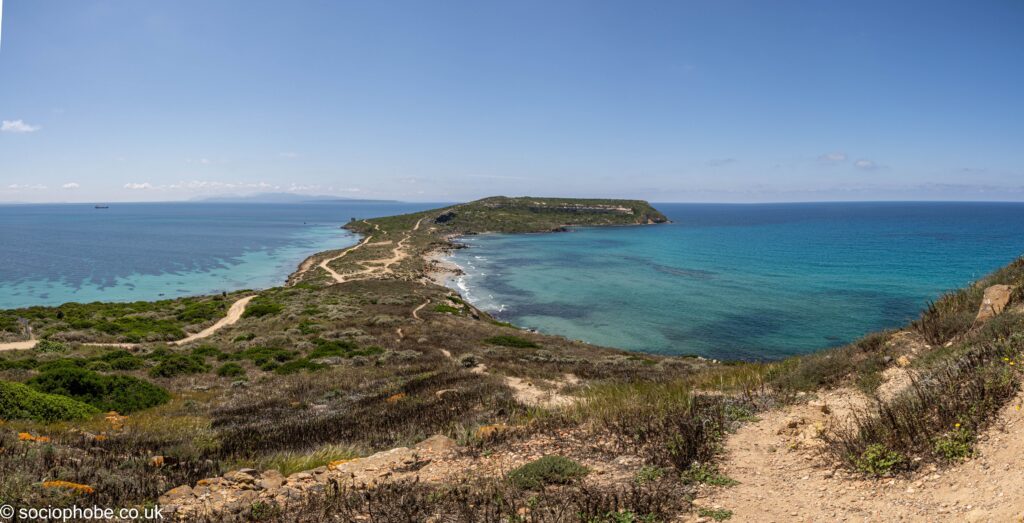
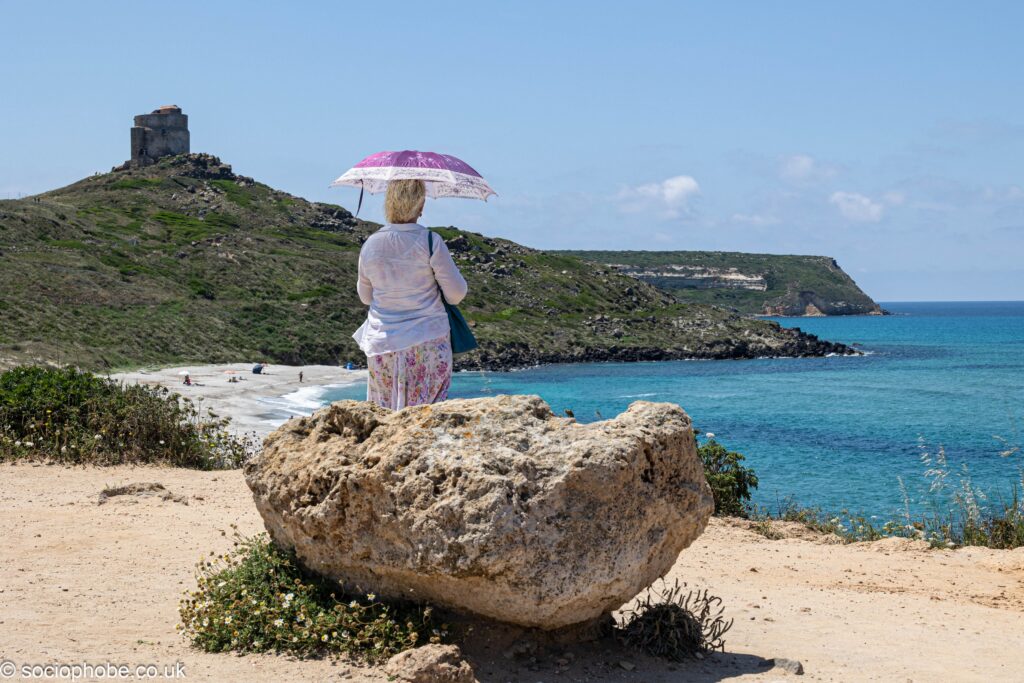

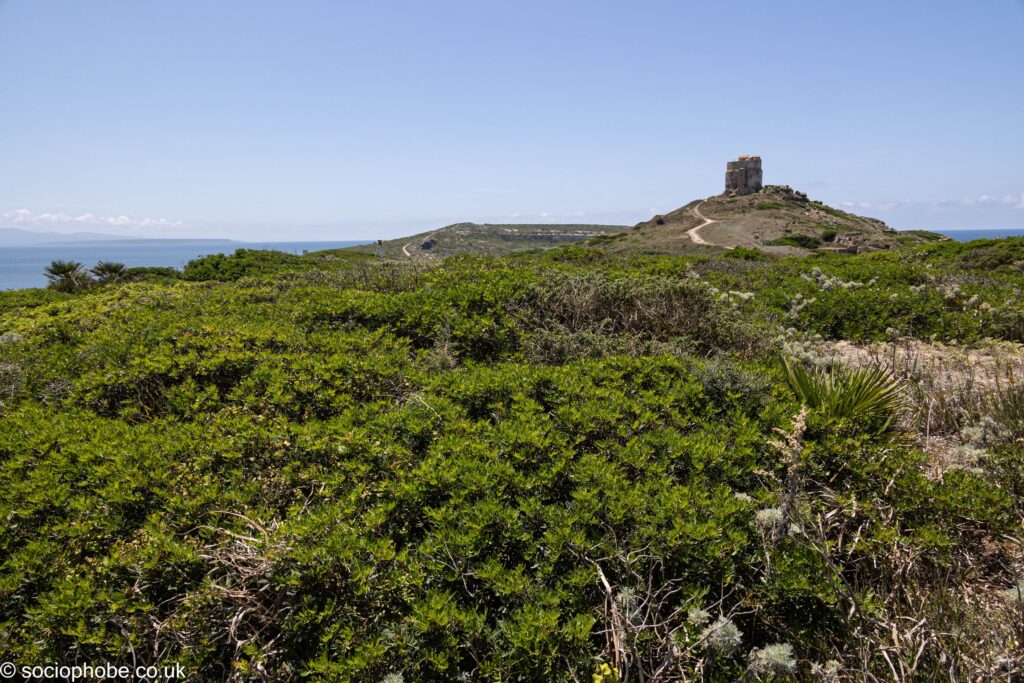
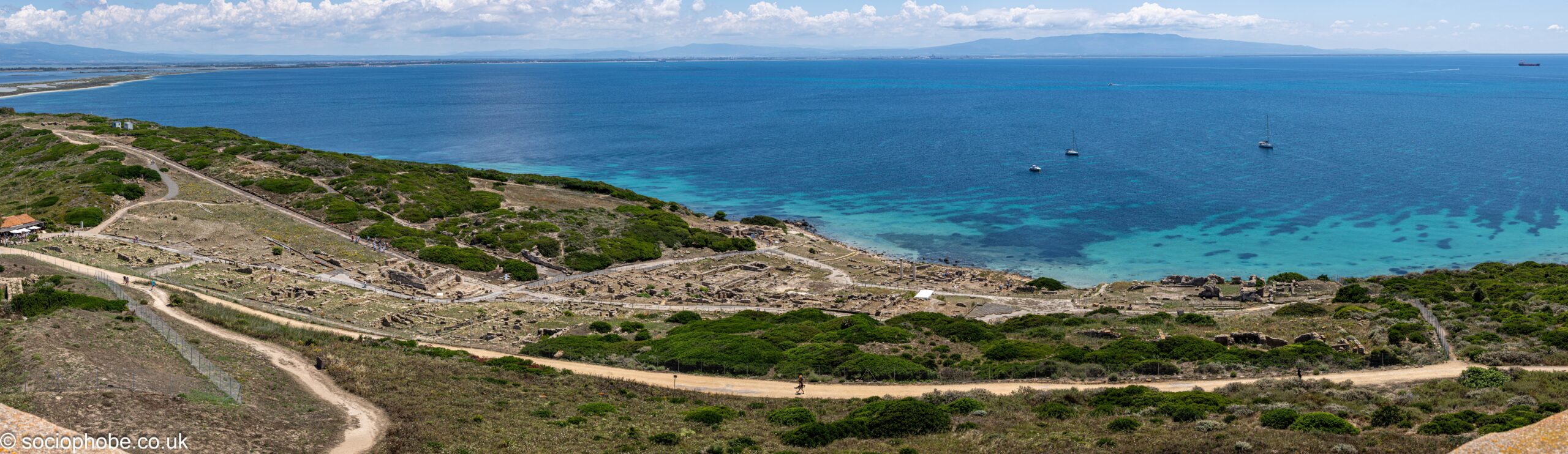
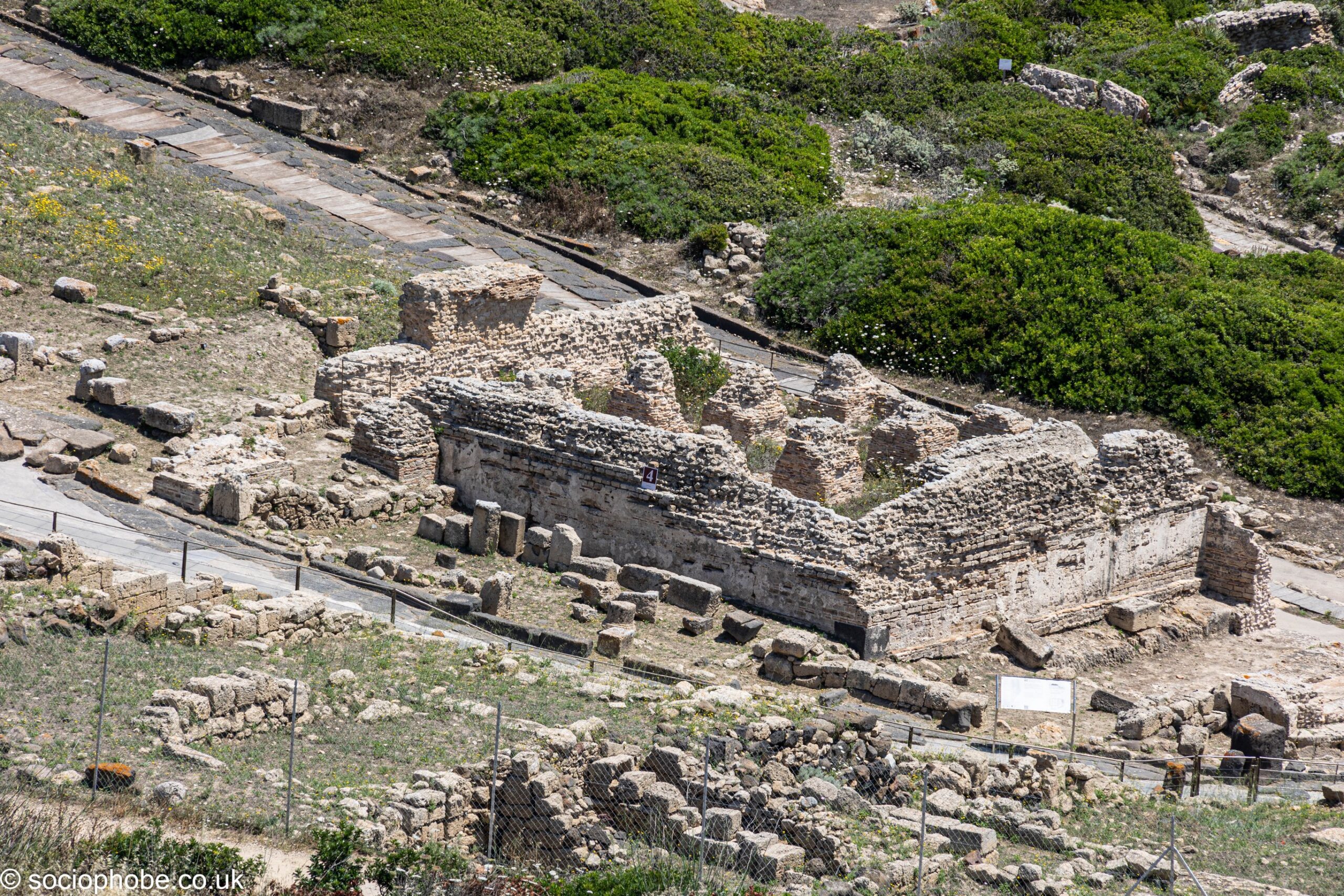
Tharros itself covered a reasonably large area and we started at the far end with the Roman wall (not much left), nuraghe village (not much left) before heading in to the main town itself. To be fair the village and wall remnants did look more impressive from the air but from the viewing area they just looked like a jumble of rocks.
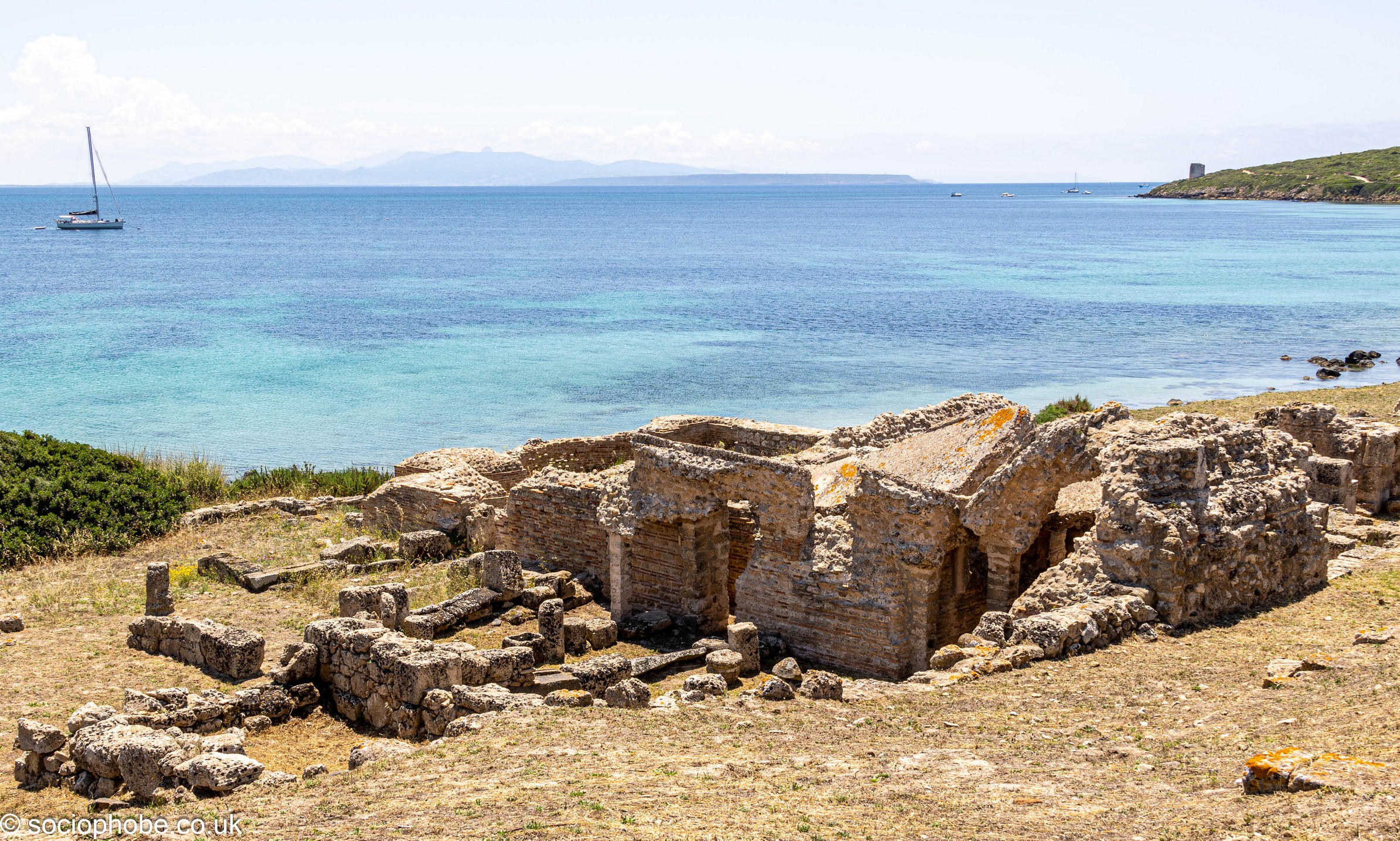
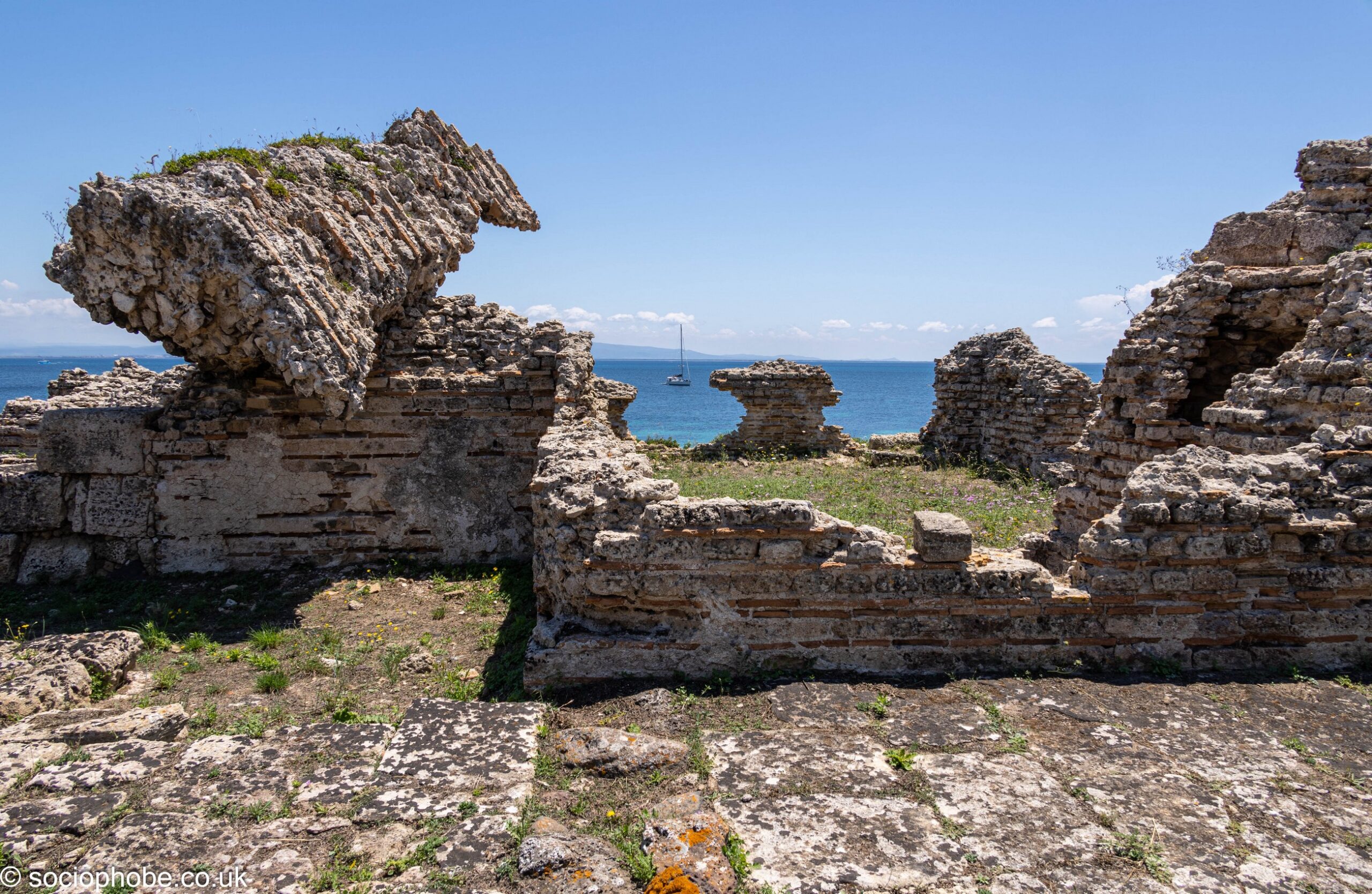
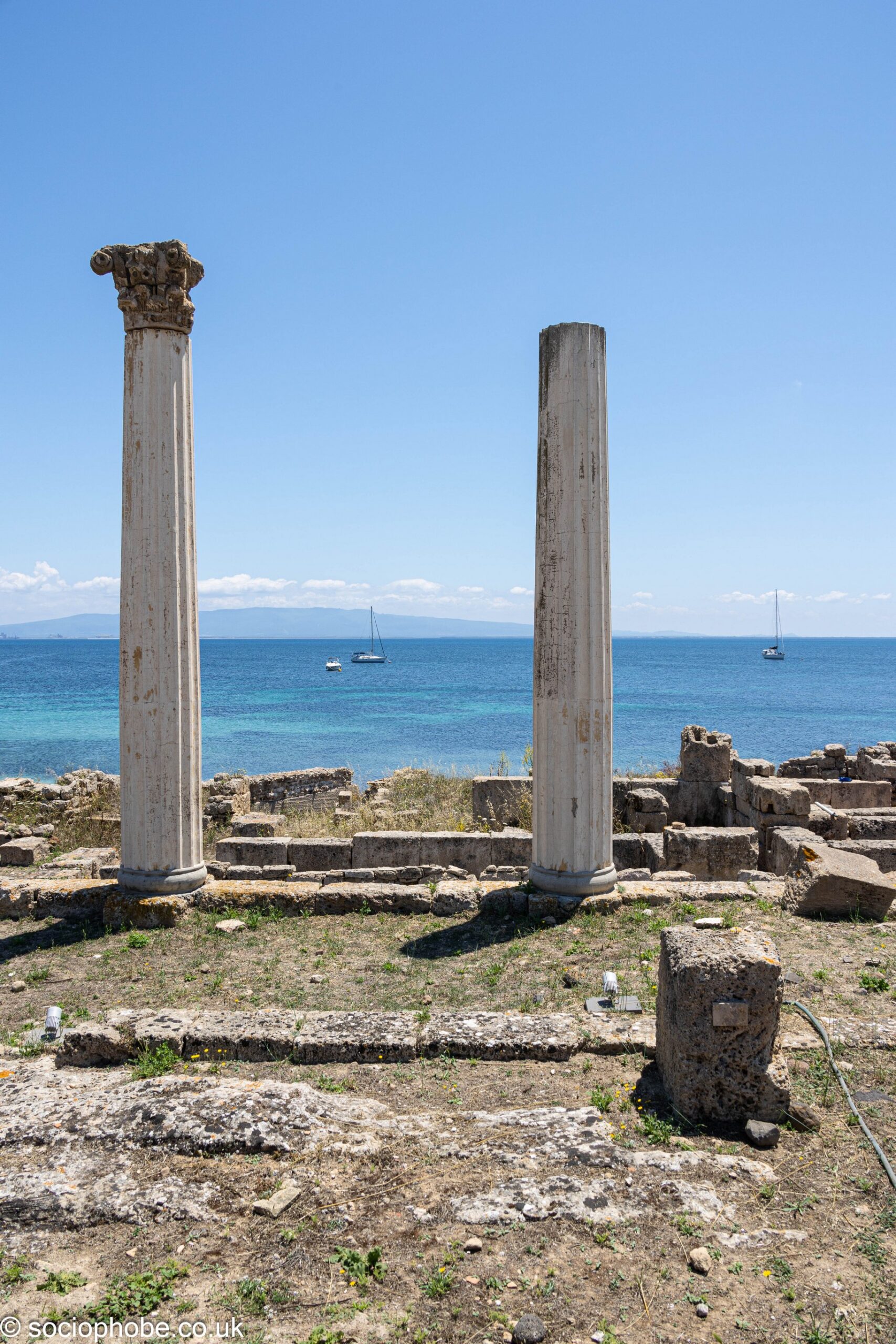
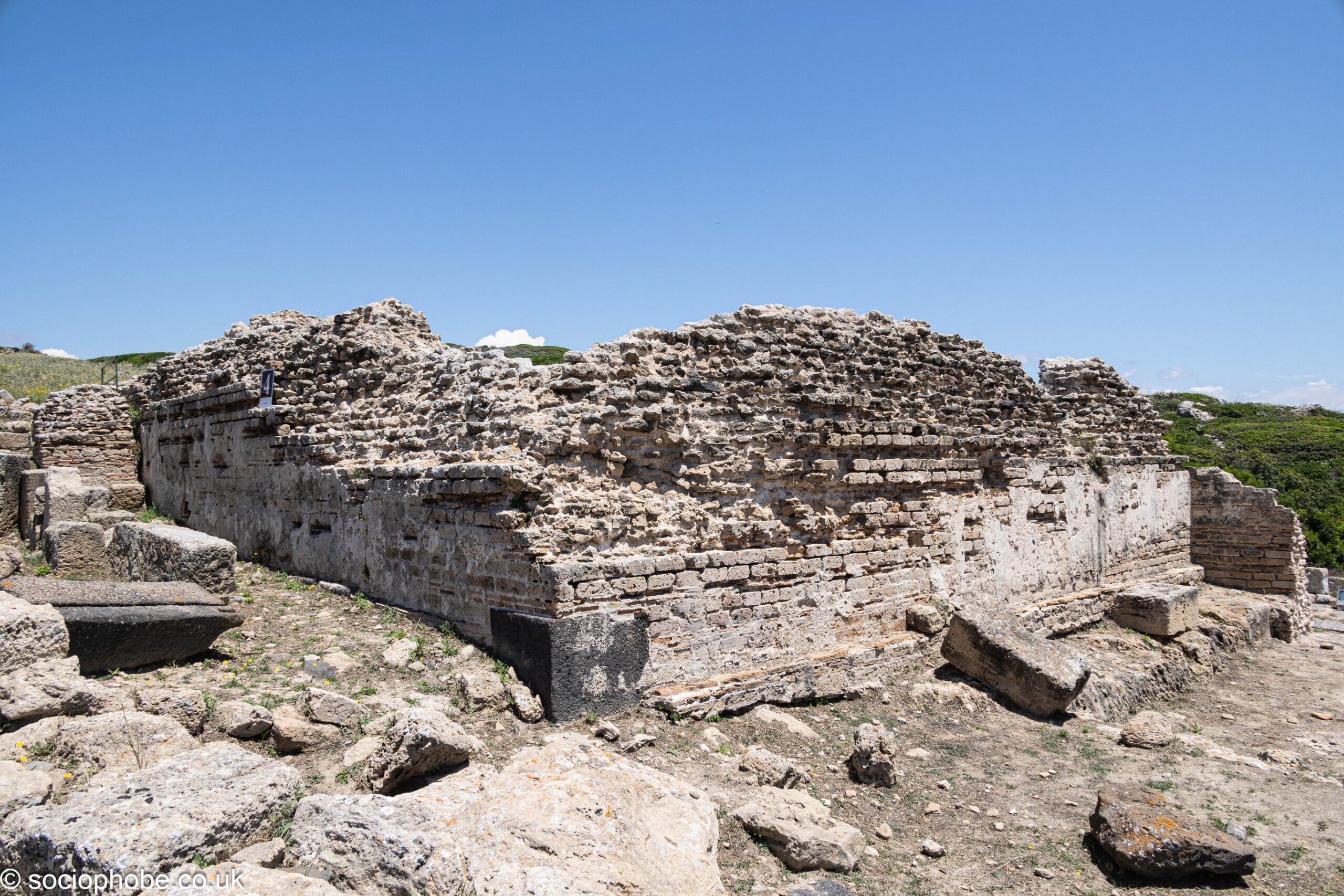
We passed some areas currently being excavated and then reached the Baptistry – probably the best preserved building, followed by two public baths and a building with two intact columns, apparently fake. The setting was amazing but the remains required imagination to see them as more than a few stones as ongoing archeological excavations limited the areas you could actually go to.


Back at the ticket office there was also a cafe so we sat in the shade and enjoyed a tuna and mozzarella salad before walking down the hill back to the car. We then drove to our next hotel, in Oristano – by a very interesting route through the town, requiring a 3 point turn to get around one corner and some definite breathe in moments!
Hotel Duomo, Oristano
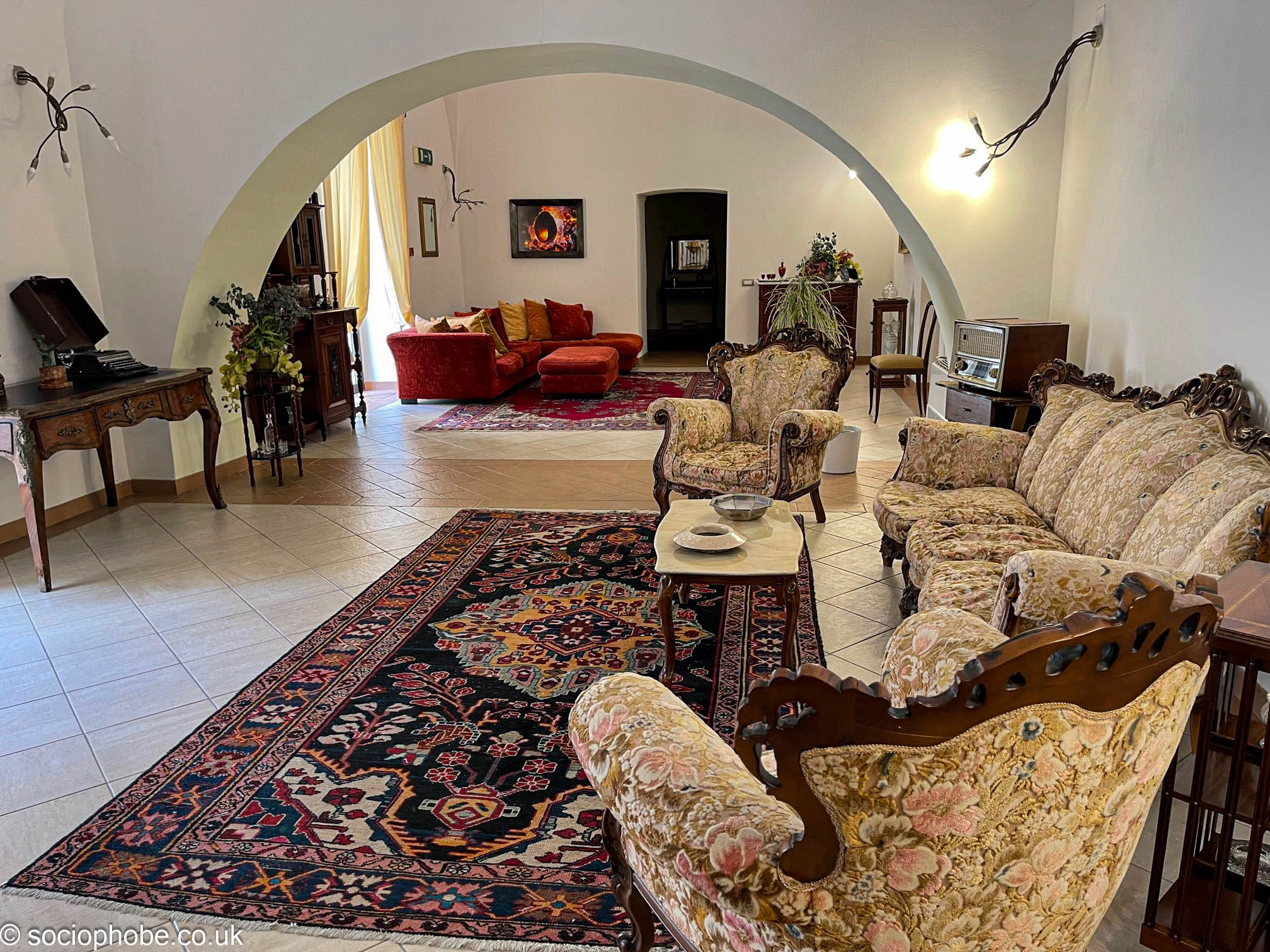
Parking was right outside and the hotel was wonderful, a converted church and it had some lovely common areas and a pretty garden. The lady on the reception desk – Cristiana – was very knowledgeable and helpful and we were certainly looking forward to dumping our stuff and having a shower.

Oristano Cathedral
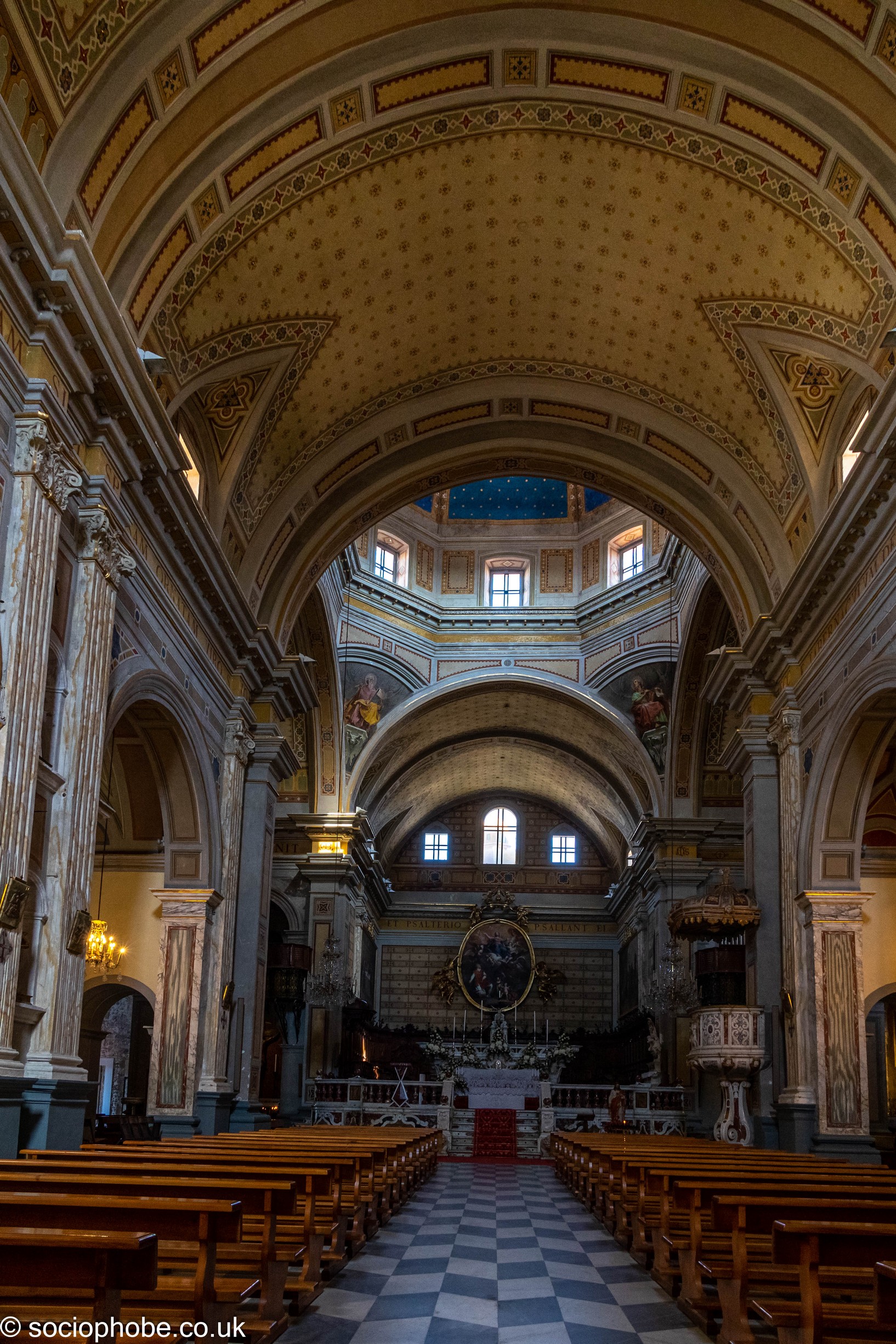
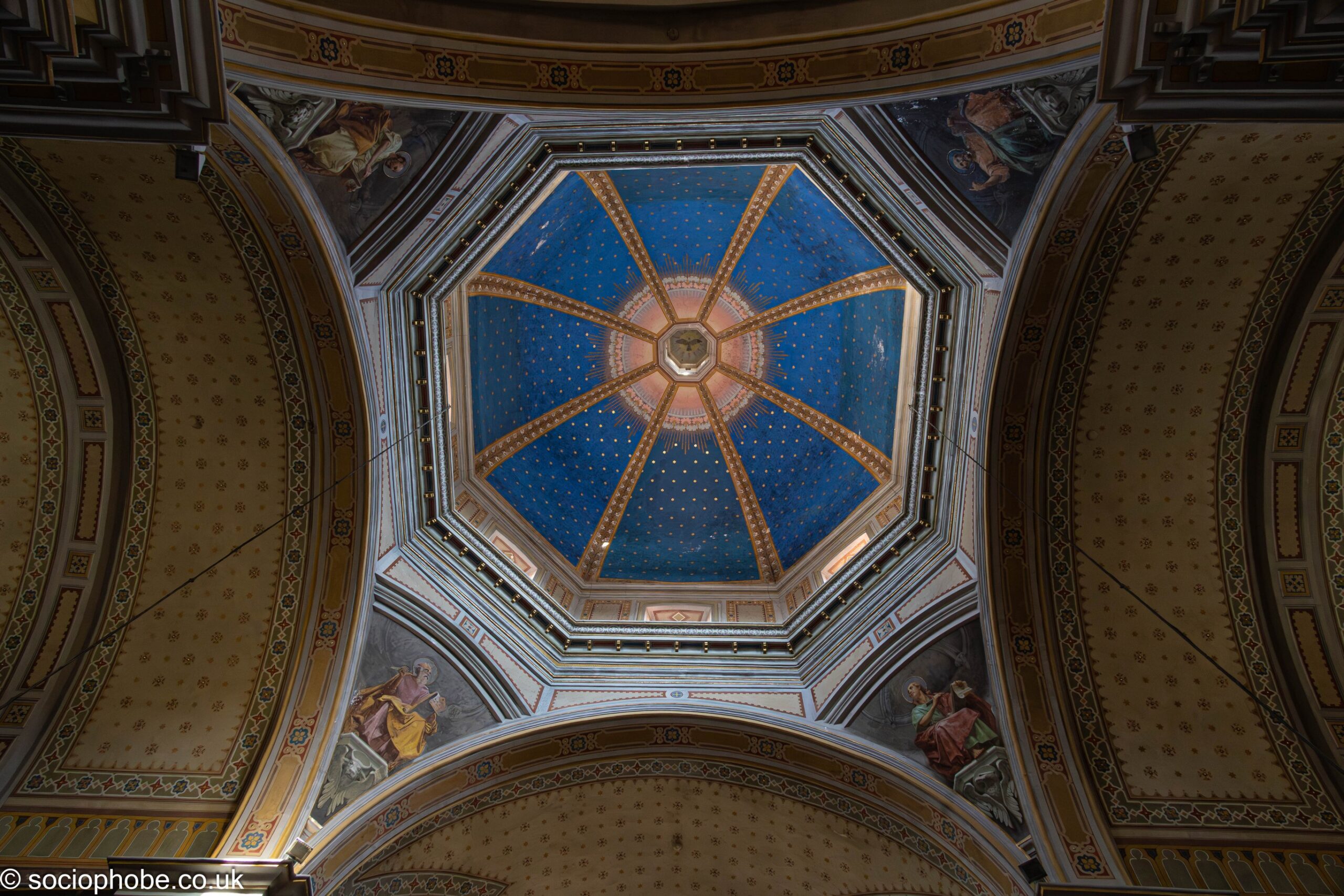
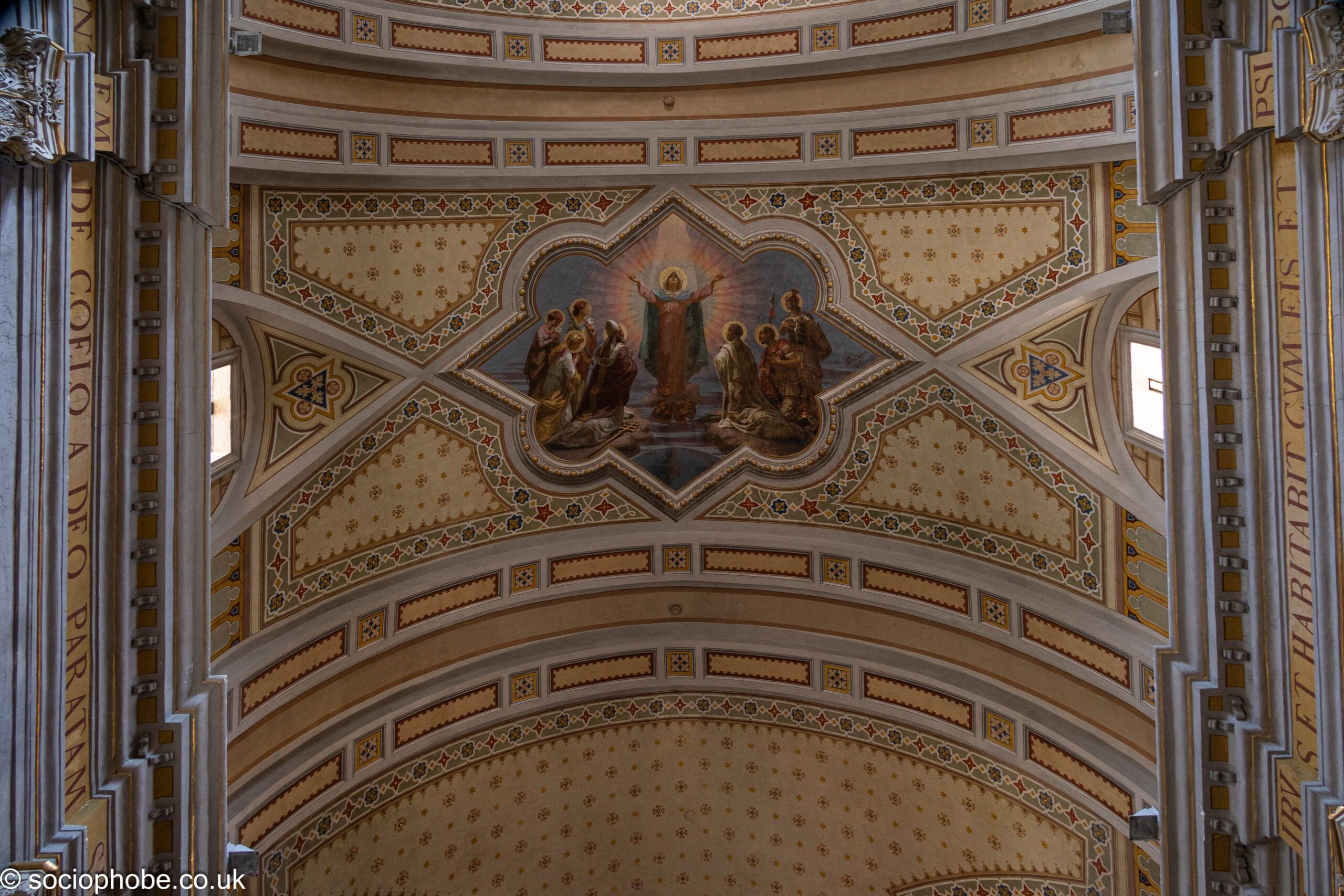
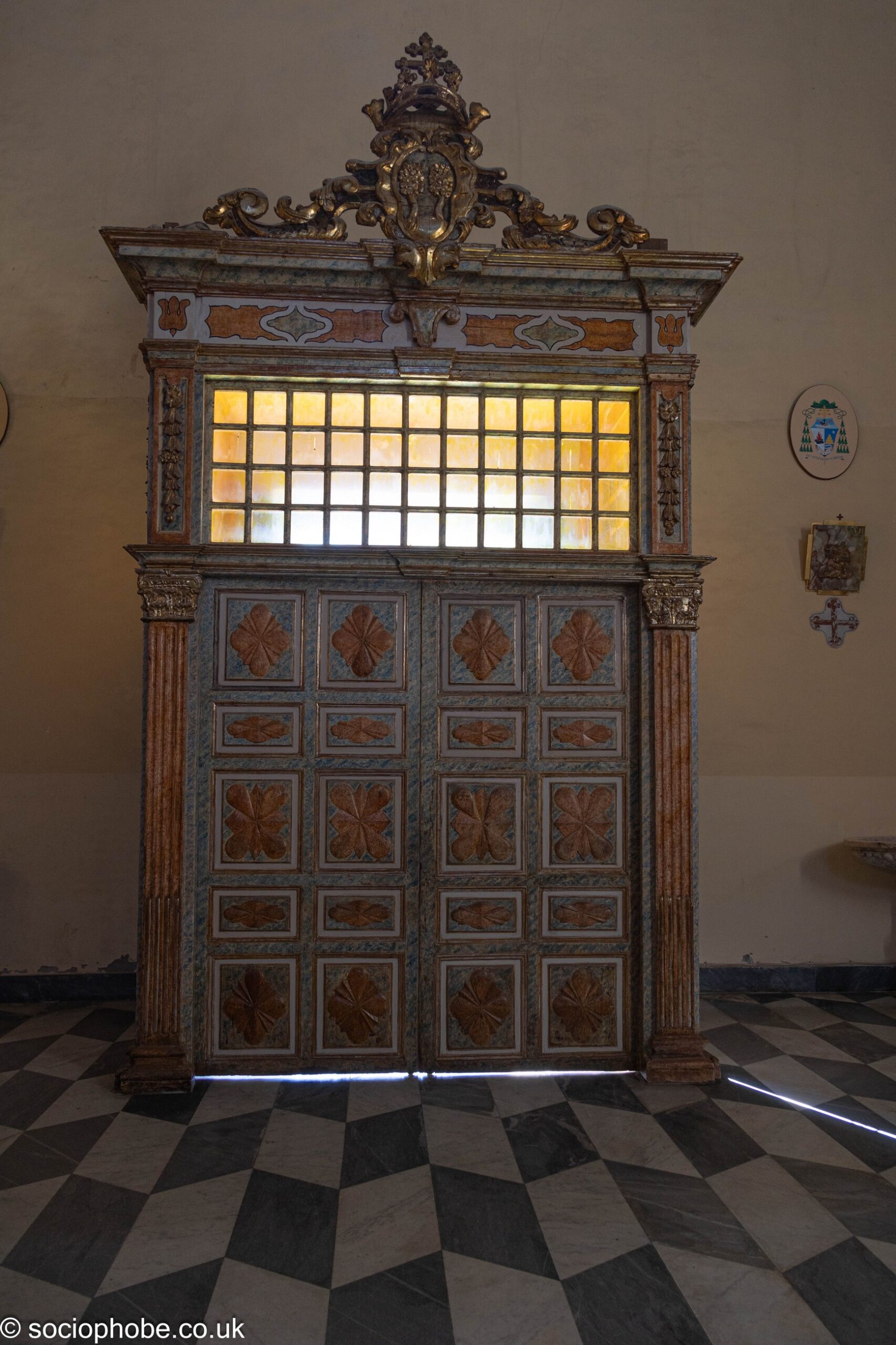
After freshening up we walked around the corner to the Cathedral of Santa Maria – this was fabulous, built in the twelfth century and then remodelled in the eighteenth. Not the usual gaudy Catholic display but muted colours, very limited gilding and a really nice atmosphere with some beautiful artworks.

Oristano Tower of Mariano II
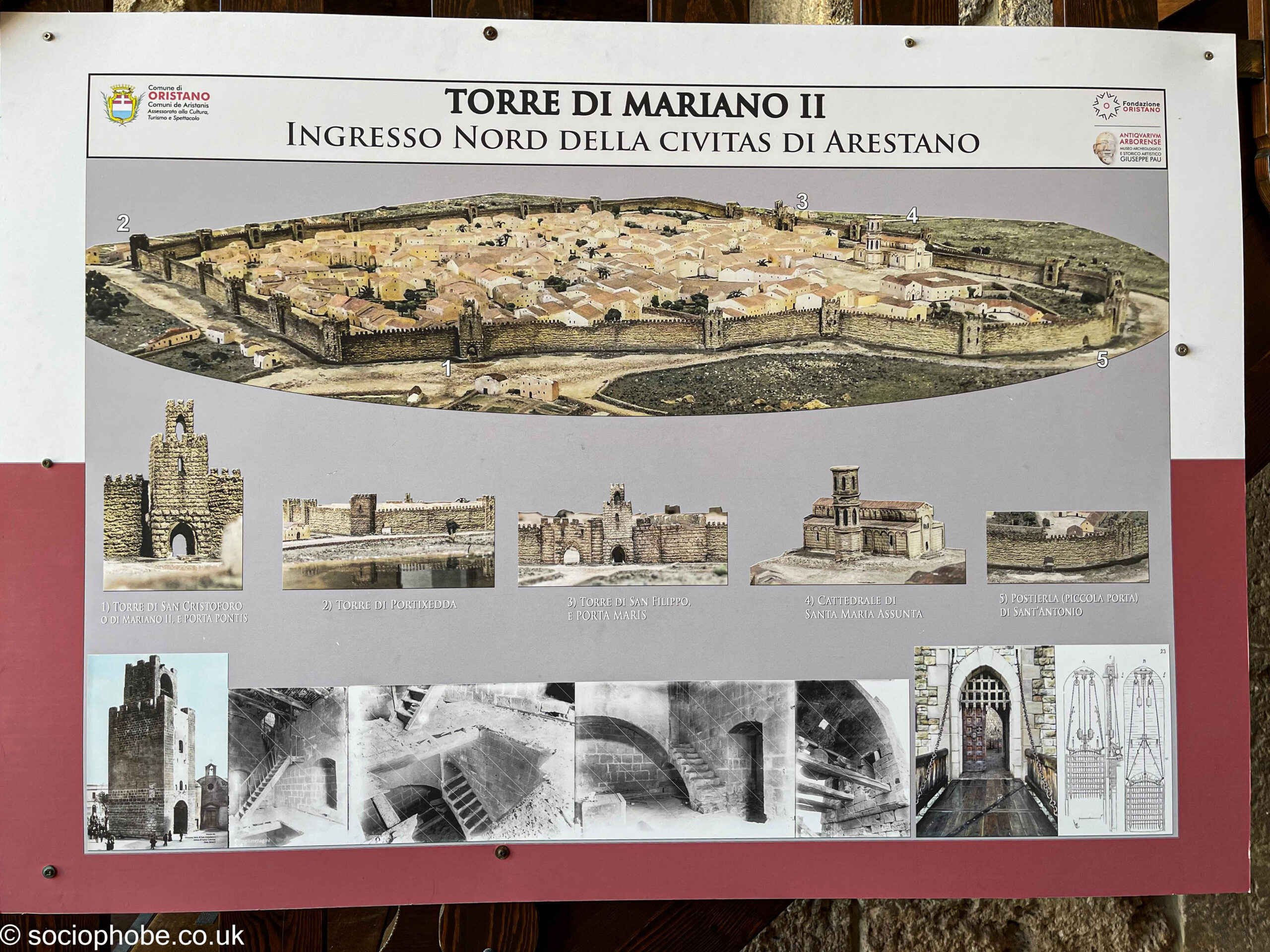
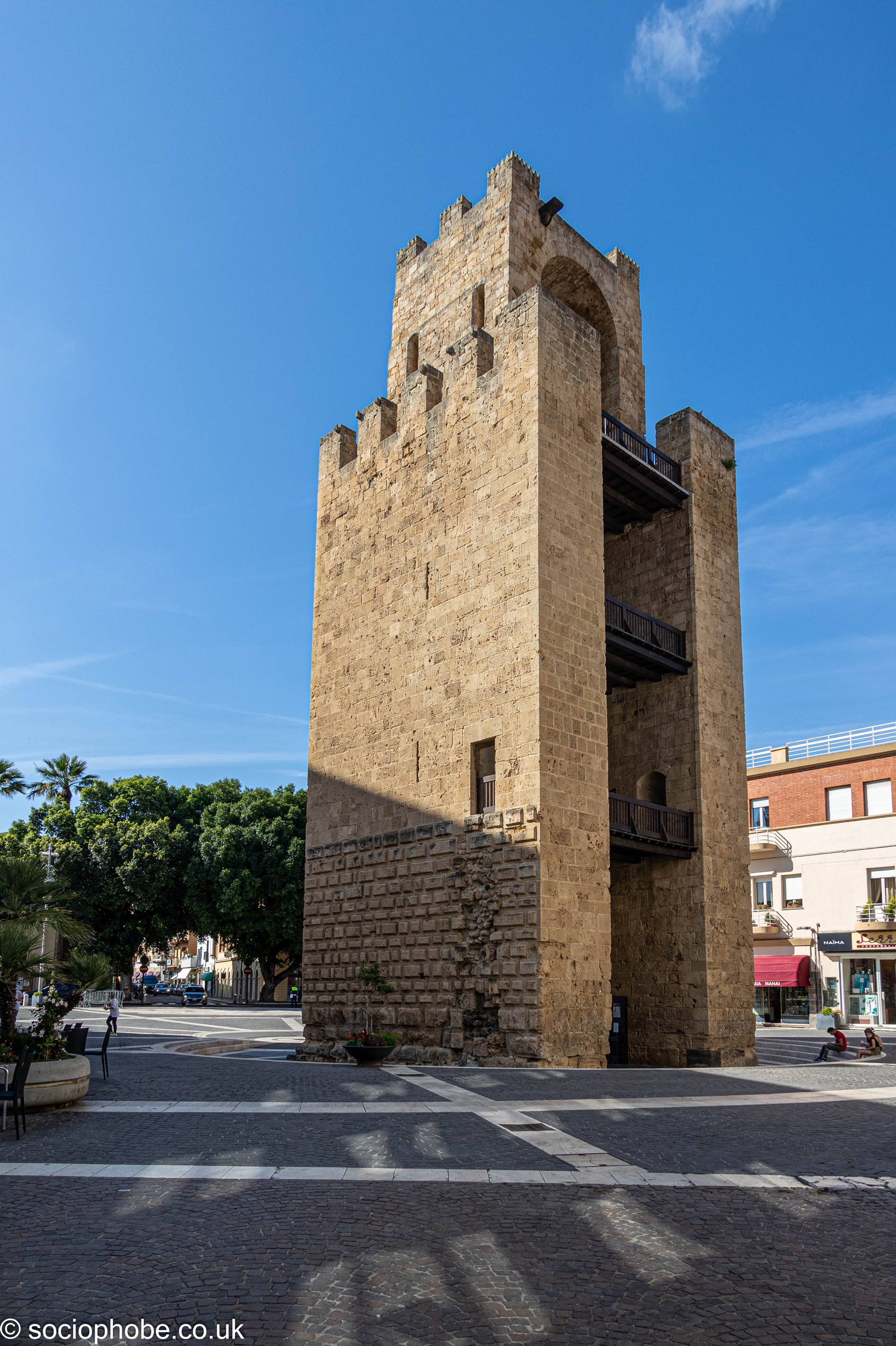
From here we walked the very short distance to the thirteenth century Tower of Mariano II and I did the tour while Deb stayed below and avoided the very narrow spiral staircase. The tower was one of five in the original city wall and the only one remaining and there were nice views of the town from the top level. An excellent audio guide too and not too wordy!

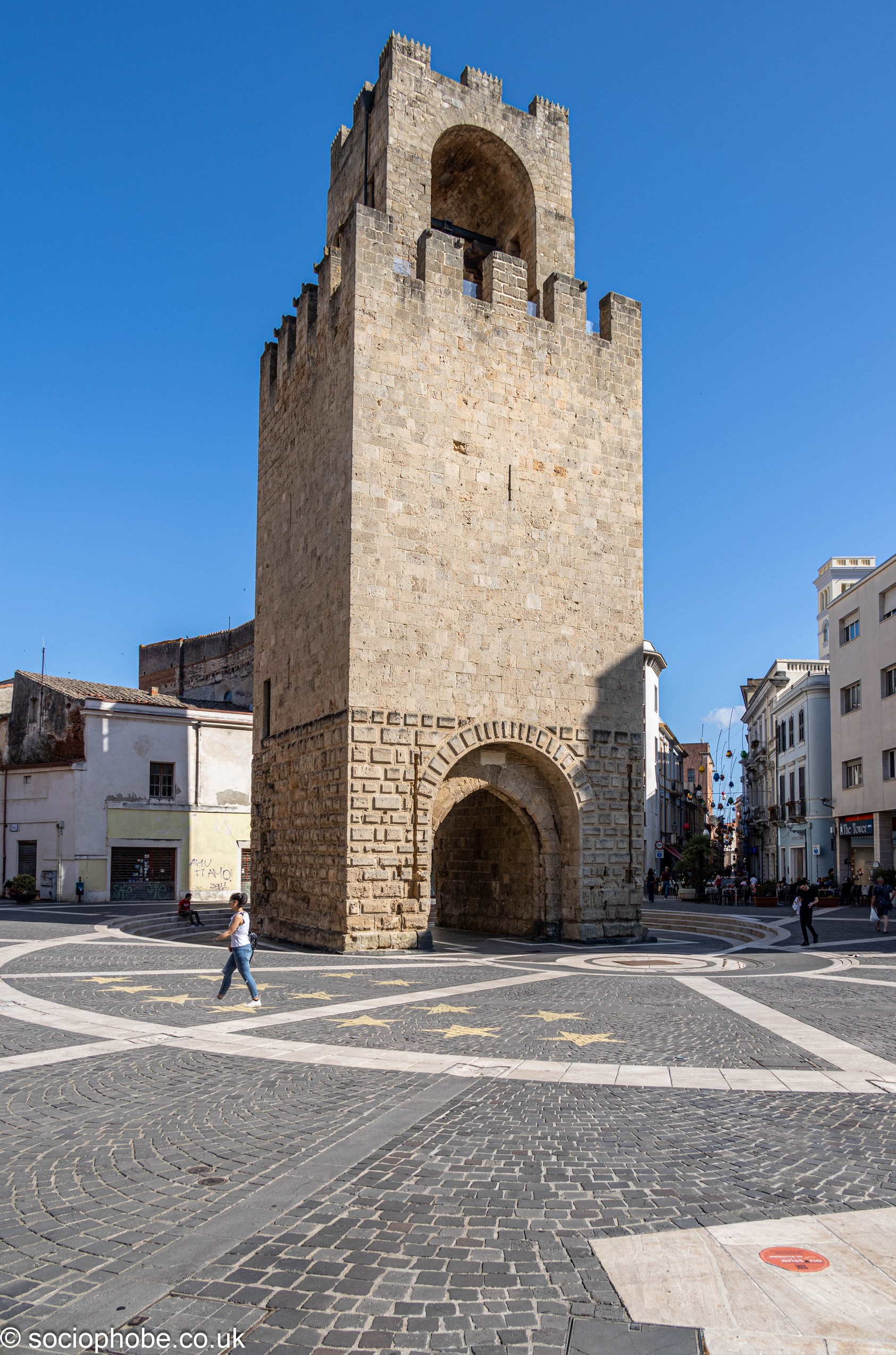
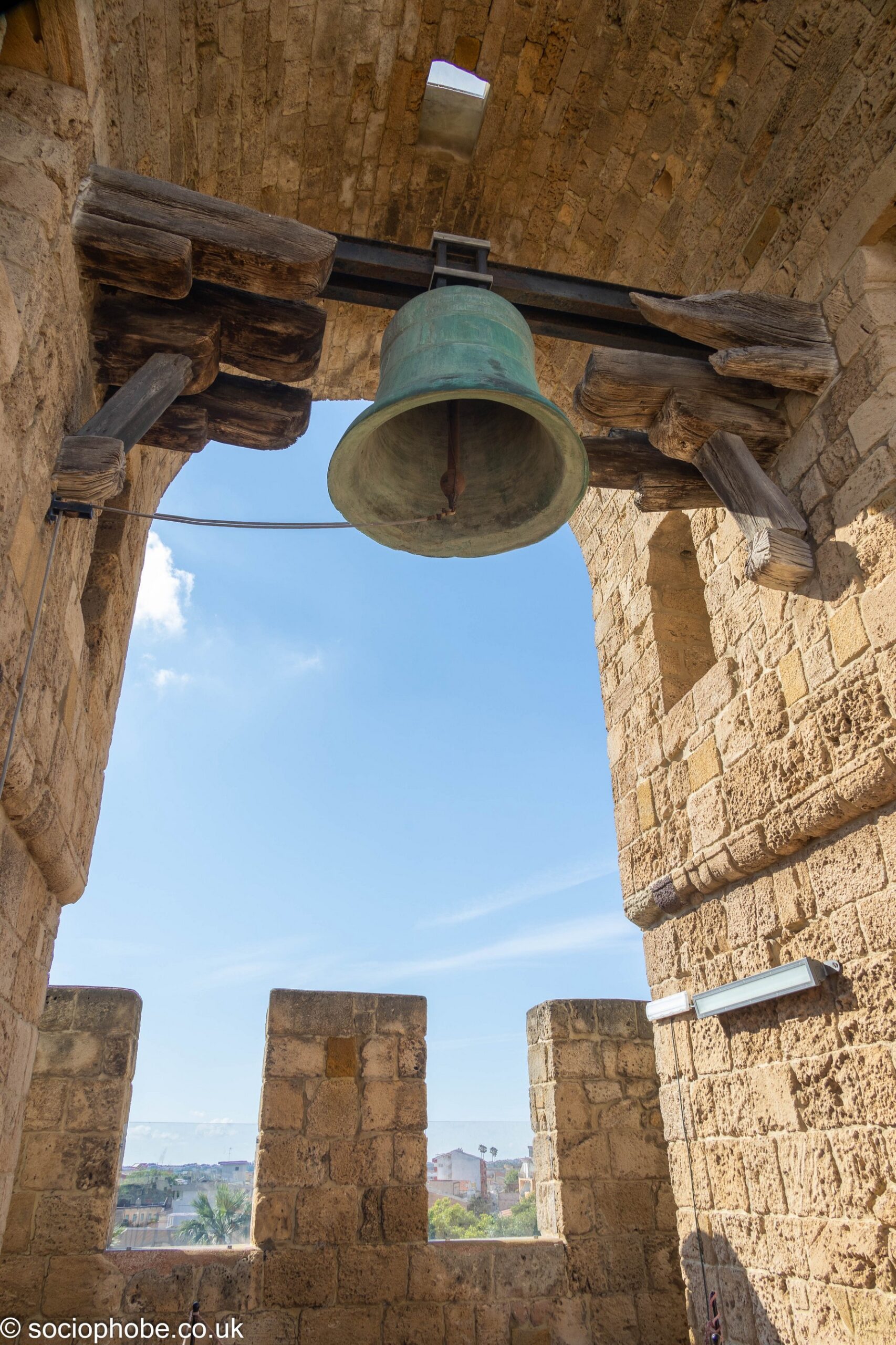
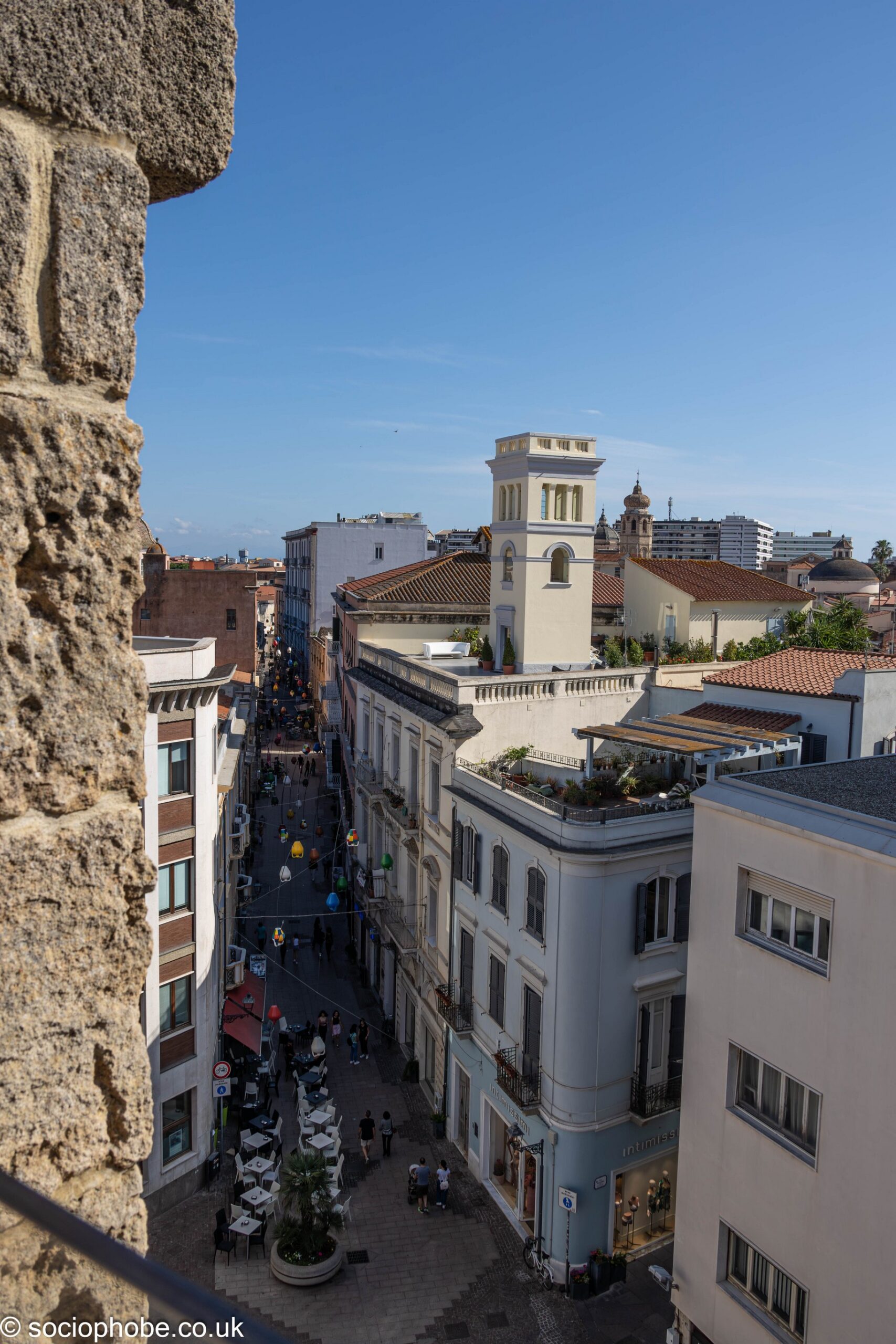
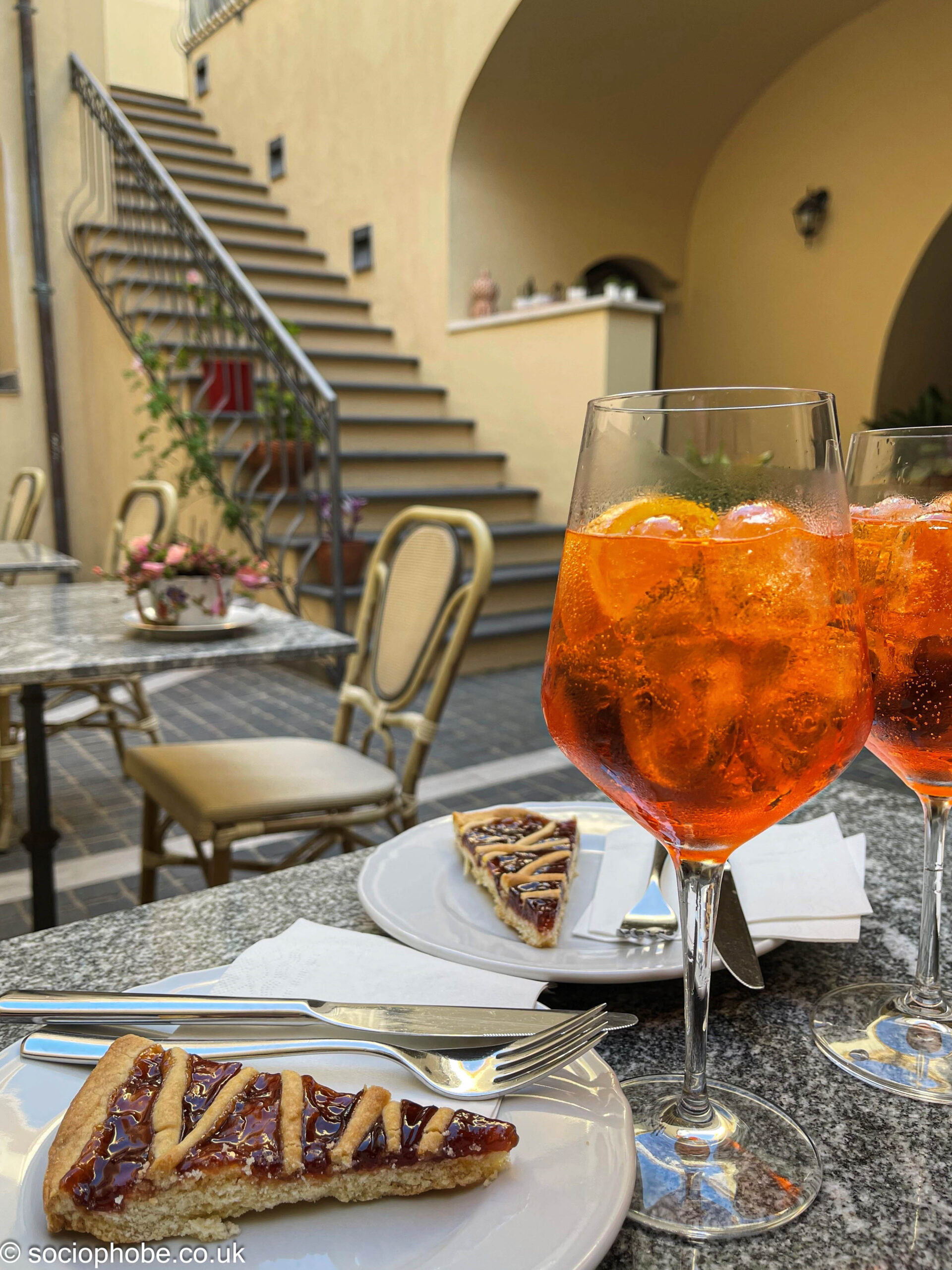
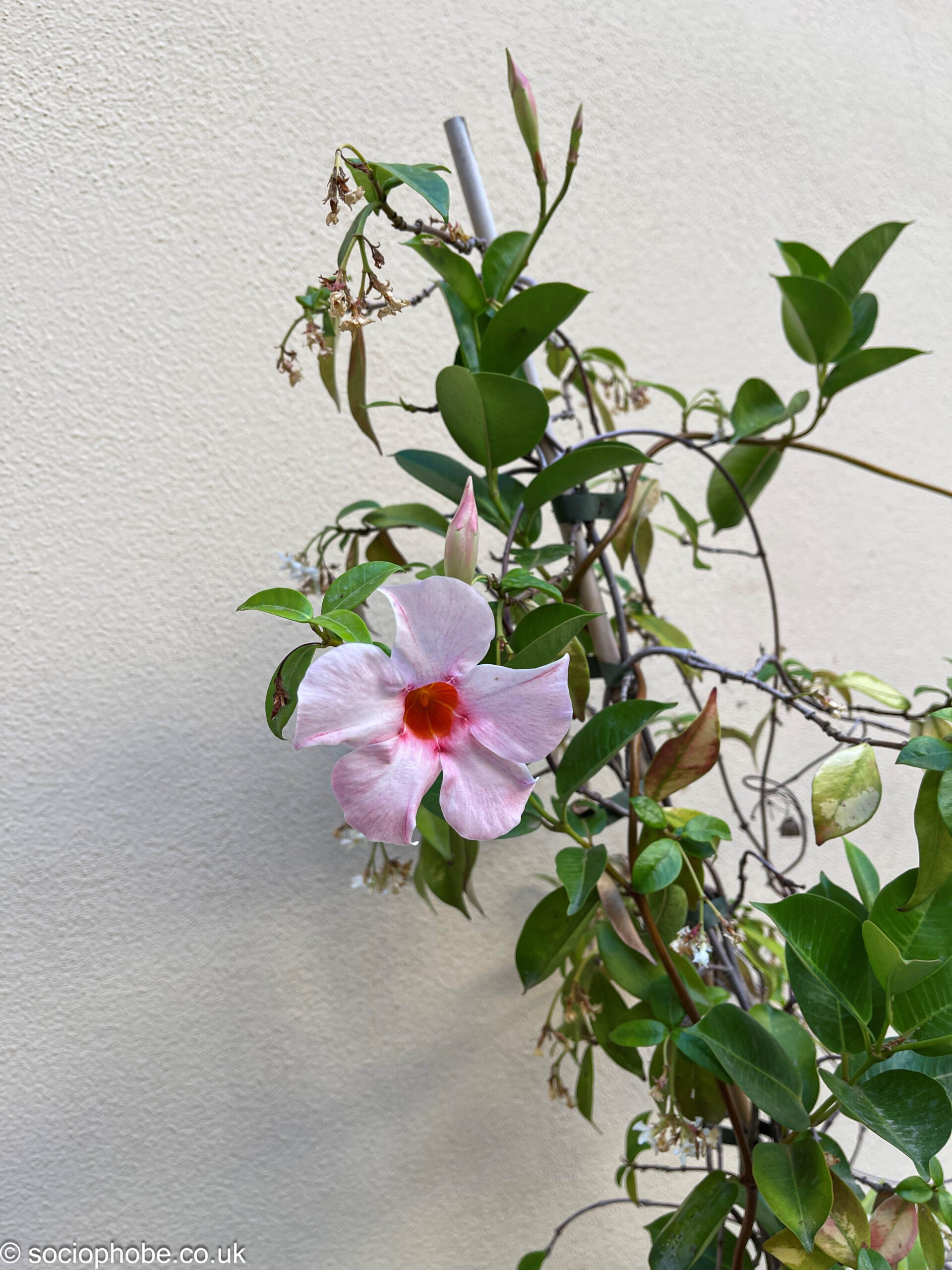
We had a very light dinner – it was so hot still I really couldn’t be bothered to eat but felt I ought too – and a most welcome cold beer! We then meandered back to the hotel and sat in the courtyard with spritzer and cake, looking at the assorted plants growing there, a very pleasant end to the day. Breakfast was in the courtyard of Hotel Duomo and far more filling than the previous days.
Castle of Serravalle
Our Sardinian road trip continued as we left the old capital of Oristano and drove north. There was no single main route and the road started by following the coast which was beautiful and then headed in to the mountains on smaller and smaller roads as Google tried to navigate us by the most direct route, not understanding that the goat track we were on meant we were doing 10kmh instead of the longer main road at 90kmh. It was beautiful countryside though, amazingly green and pretty with almost no other vehicles, surprisingly and we were in no hurry!
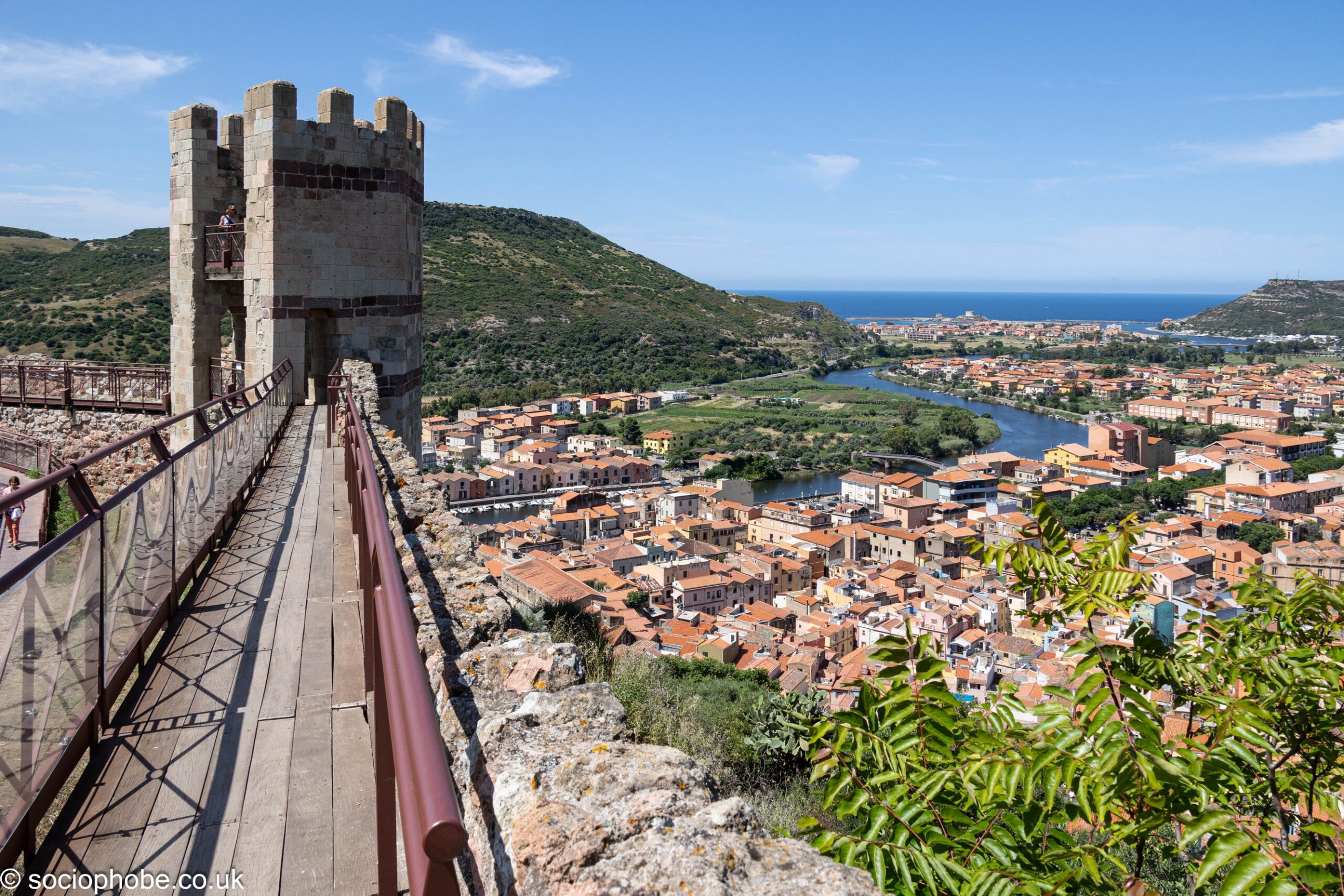
We stopped at a viewpoint after maybe 90 minutes, overlooking the town of Bosa, overlooked by the Castle of Serravalle. It looked a very photogenic place with painted houses, a medieval bridge and castle on the hill.
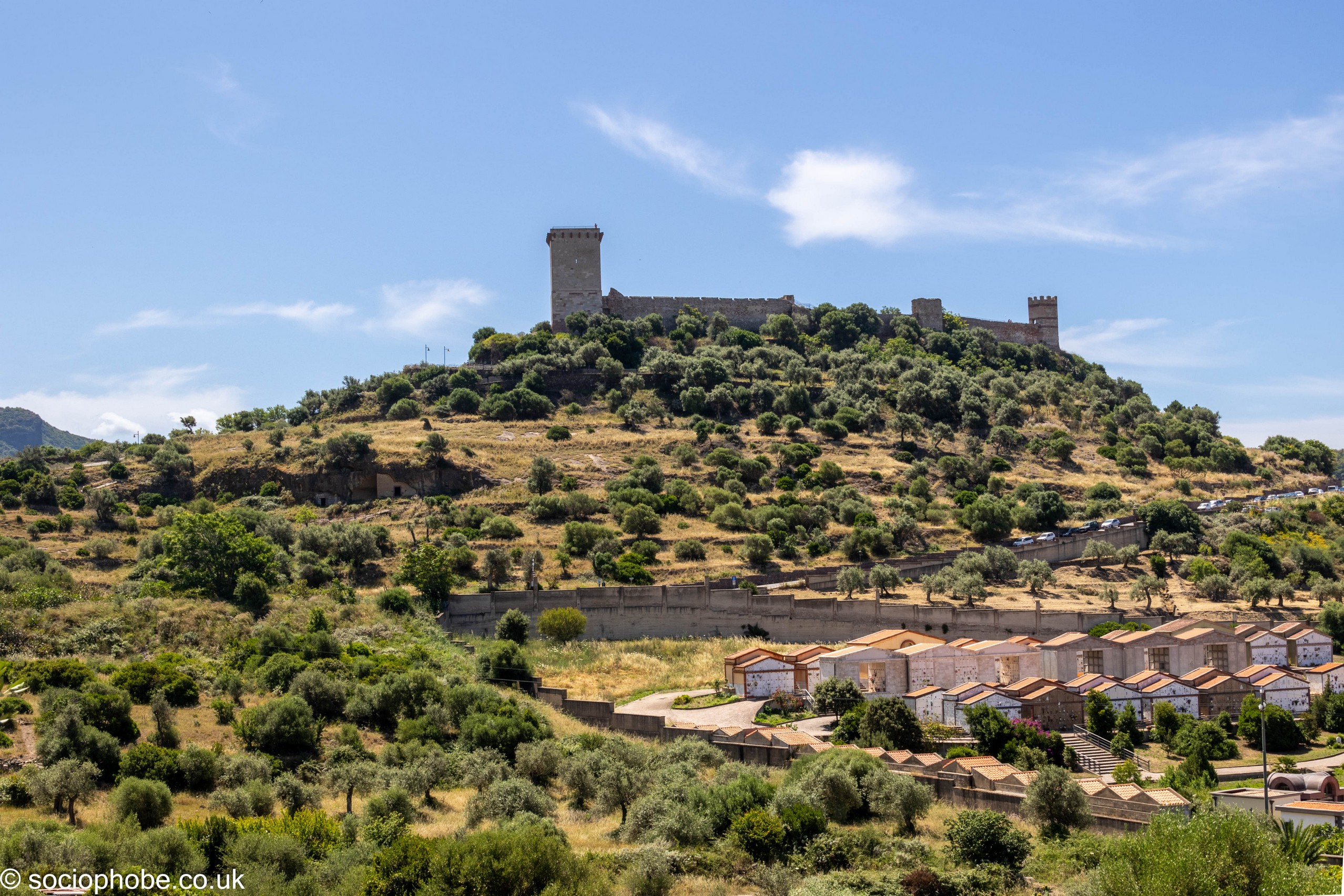

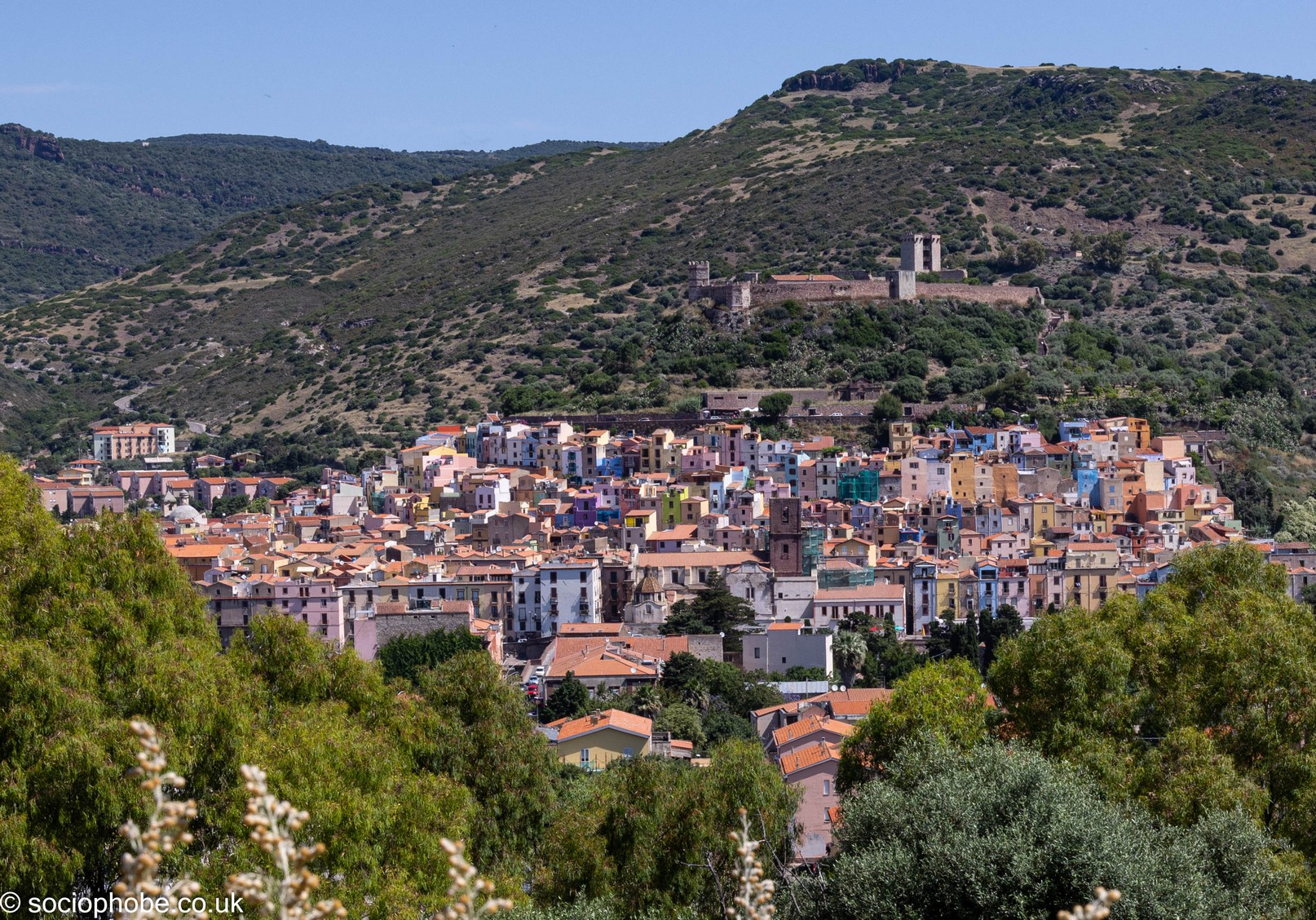
After plugging the phone back in the sat nav switched from driving to walking mode so after crossing said medieval bridge we were directed along a rutted path and then to a metalled road up the hillside to the castle. There was no obvious parking so we dumped the car as out of the way as we could and had a quick scoot around the place.
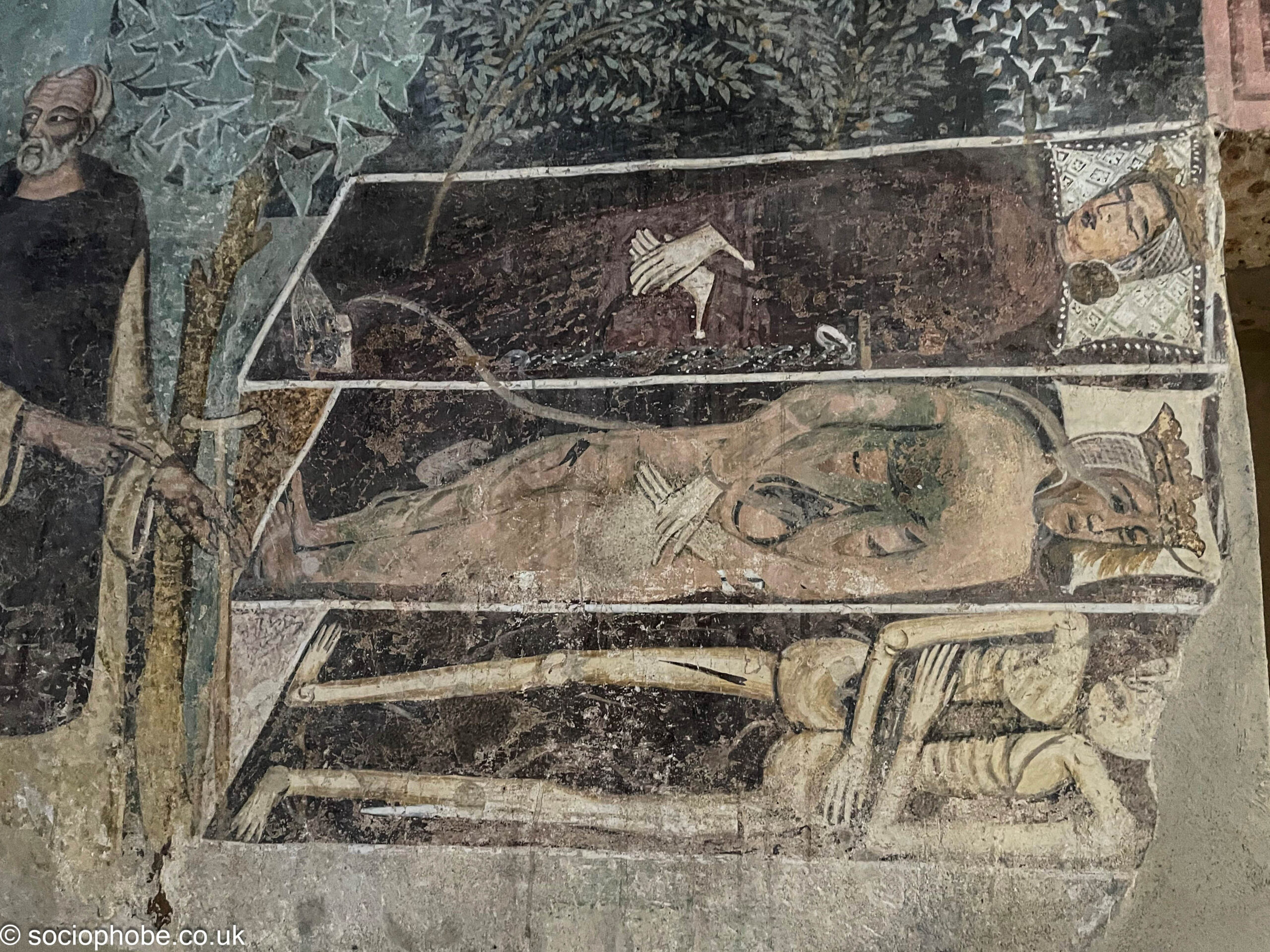
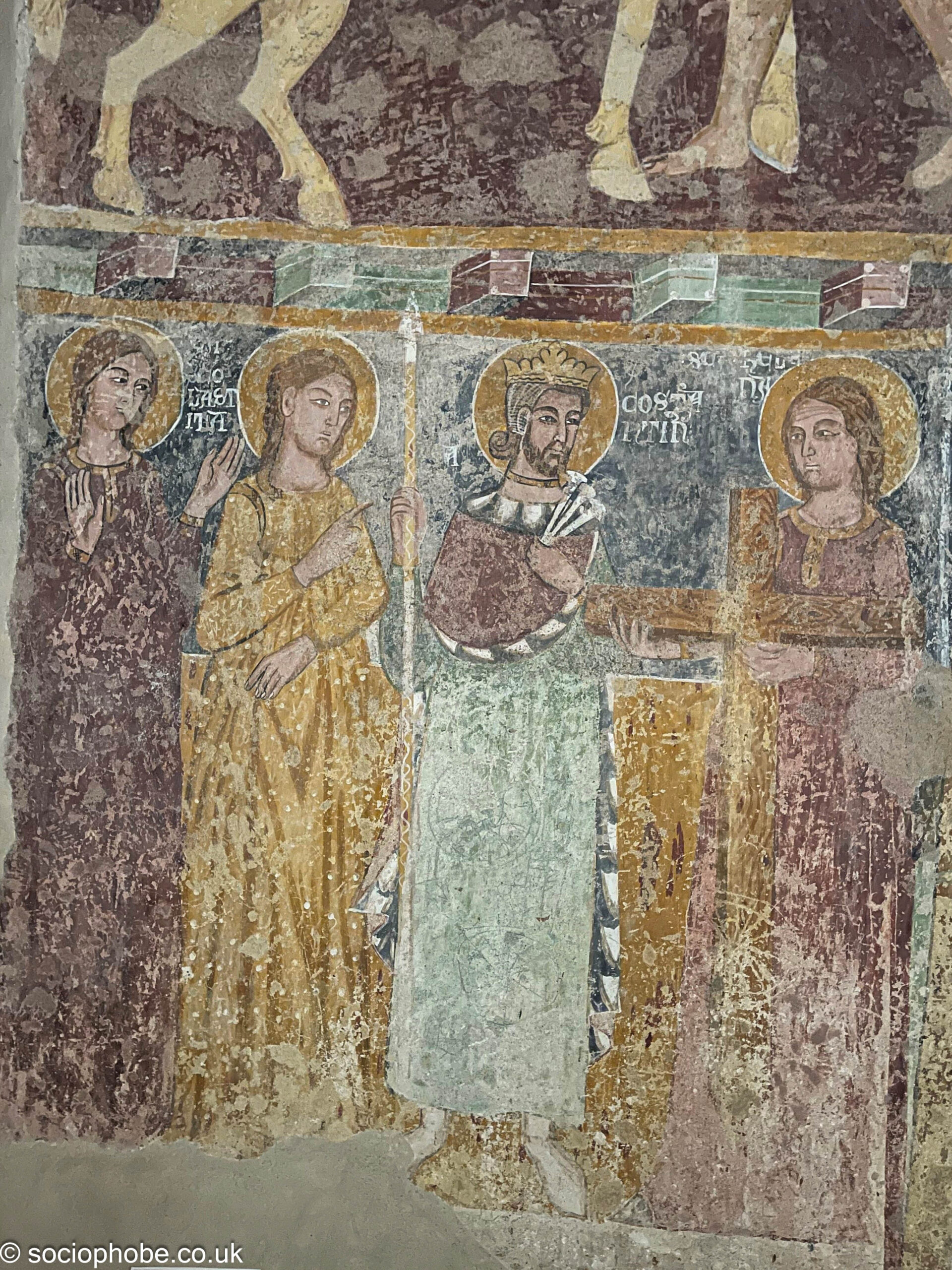
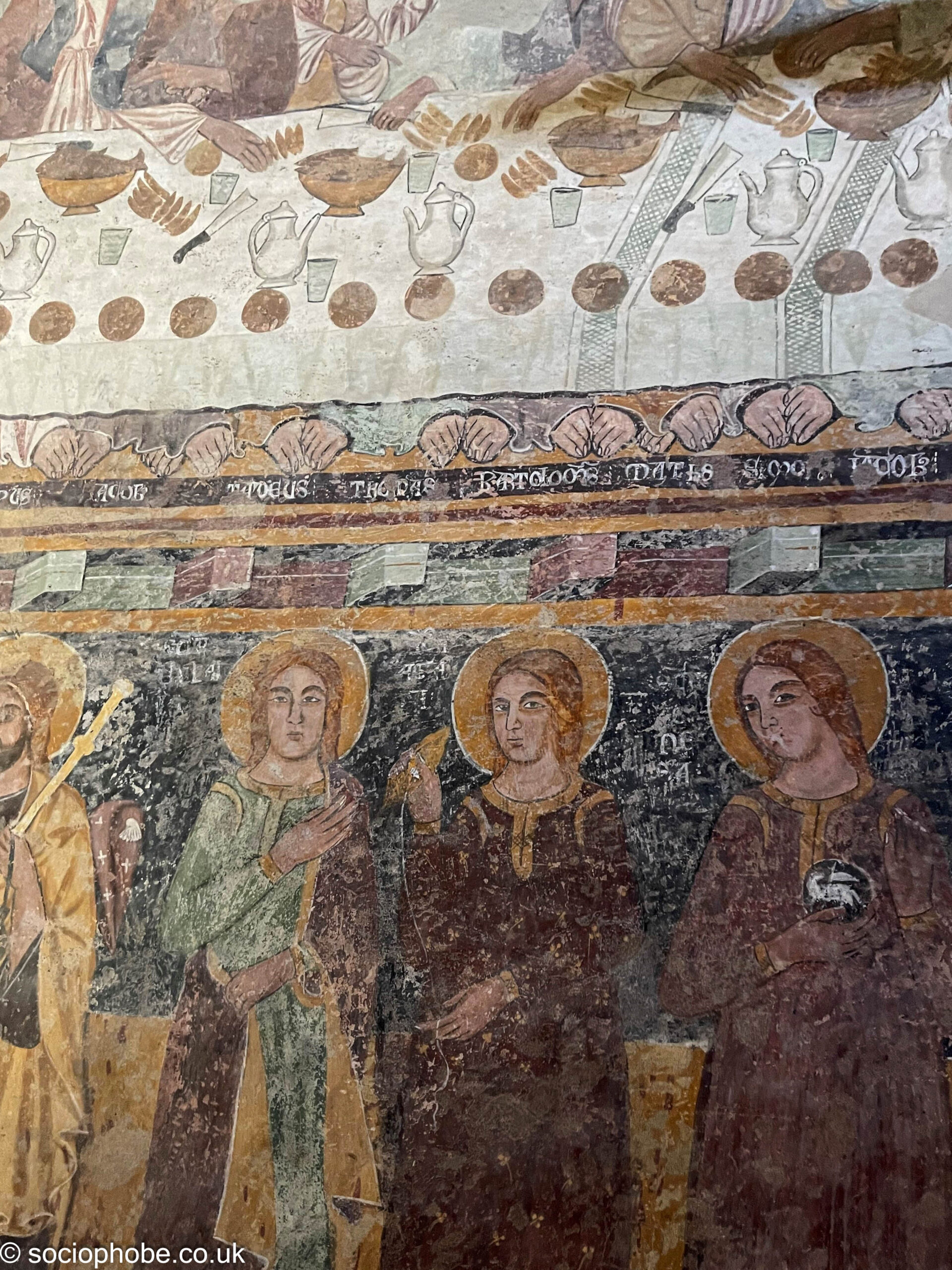
The castle is thirteenth century and is most famous for the fourteenth century frescoes in the church of Our Lady de Sos Regnos Altos. the Castle of Serravalle has a complete circuit of outer walls and towers that you can climb but the keep and interior buildings are now gone.This was the first place with obvious tourists there and there were a couple of tour groups as well as various individuals. Hardly crowded but busier than we are used to!
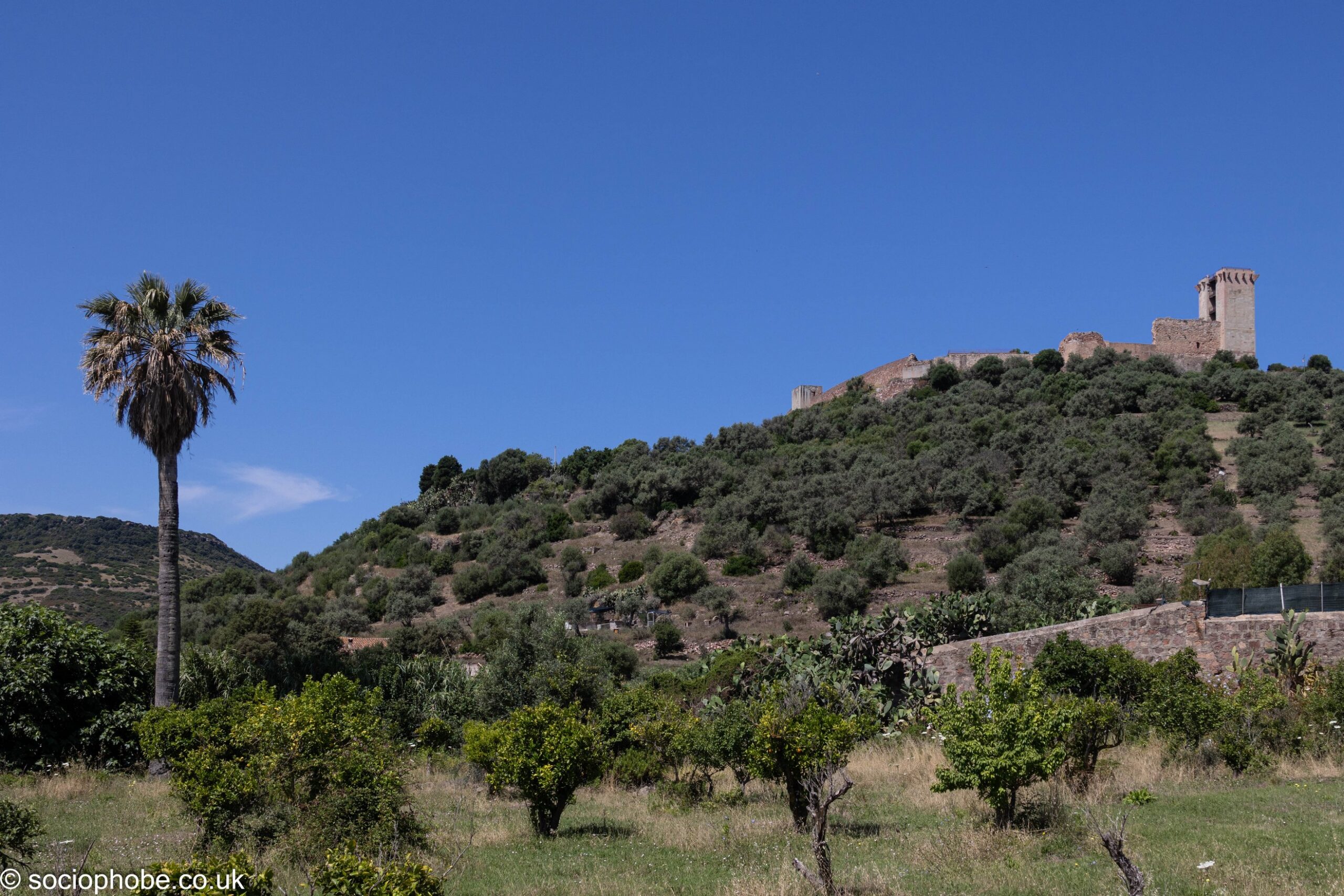
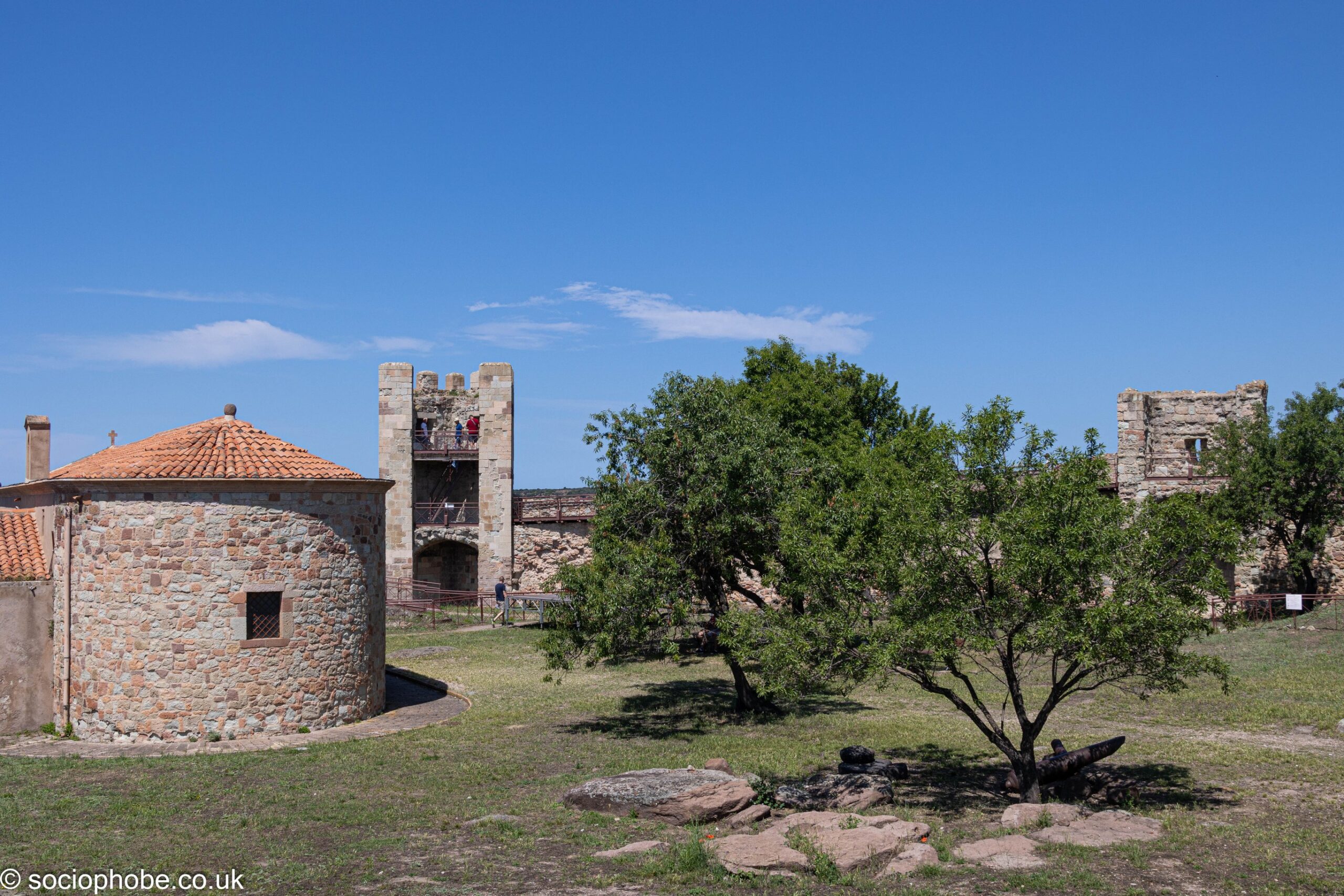
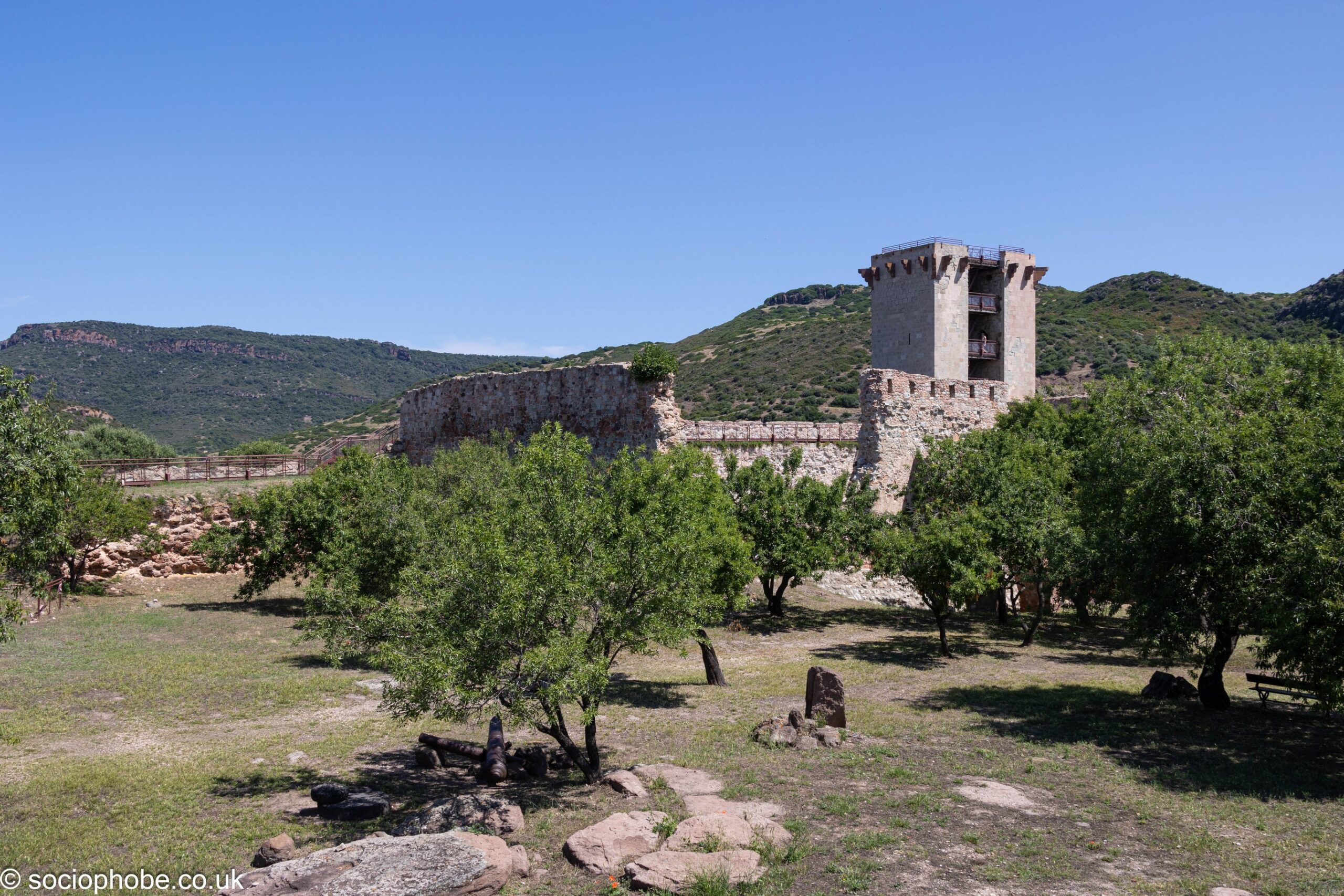

We were probably in the castle for 15 minutes and then got back to the car, drove down the hill following the proper instructions and passed a large car park on a proper road. Ah well.
Our route was again on a mixture of small roads heading north in to the mountains before descending to the coast. We passed signs warning of snow and recommending snow chains as we reached 500m but we were safe in June at 33 degrees! The drive was spectacular due to the scenery and views but also hard work requiring a lot of concentration.
We stopped in the village of Romana to take photos of some of the fabulous murals that so many of the little villages seem to have. They certainly are well cared for and photogenic.


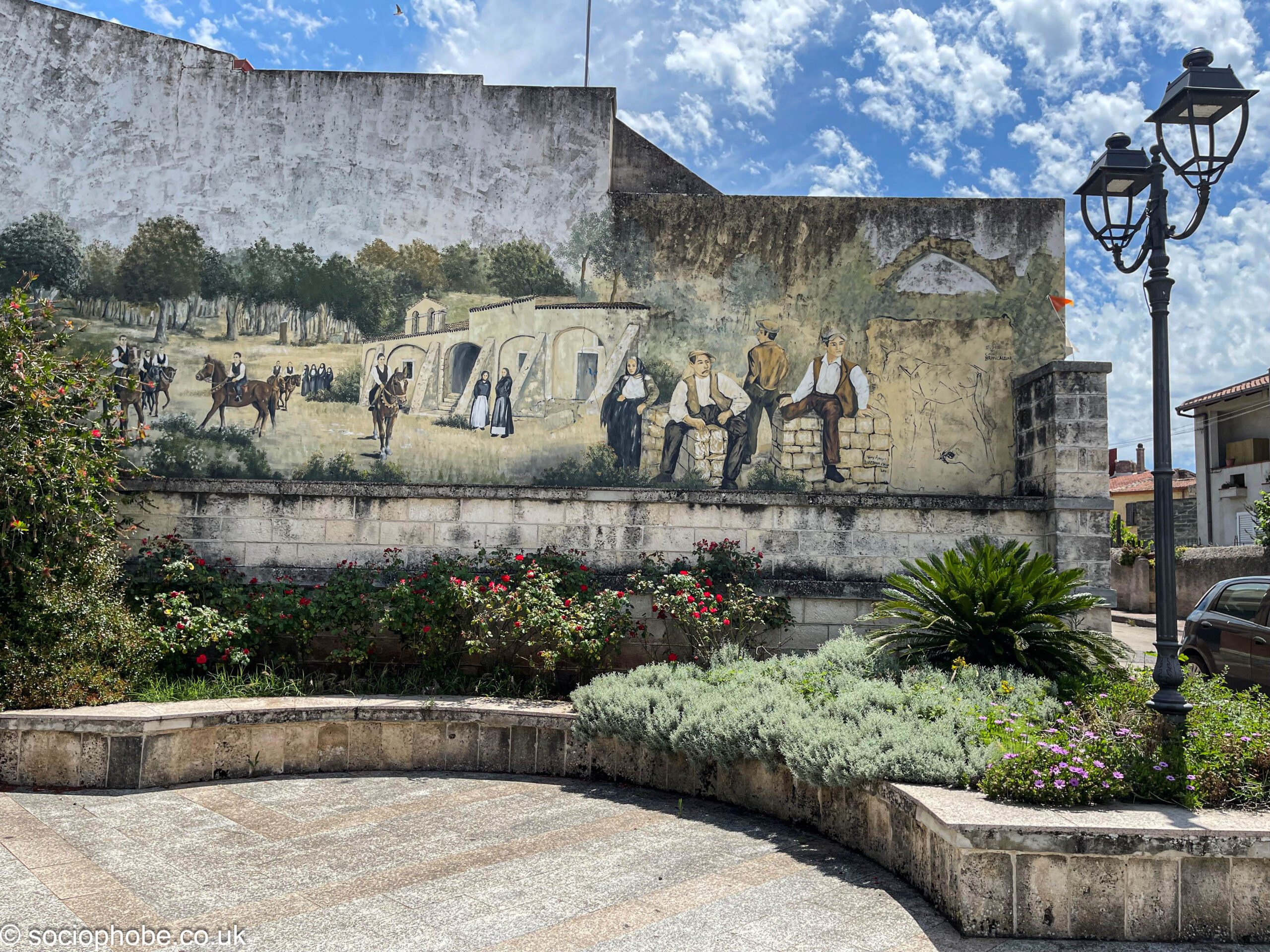
After maybe 3.5 hours driving in total, the last part through the first industrial area with tower blocks that we’ve seen on the island, we reached tonight’s hotel stop in the not particularly appealing seaside town of Porto Torres. The hotel was lovely though, with a huge room overlooking the gardens and very peaceful and an underground car park to keep the car in the shade.
I was pretty knackered by now, even though we hadn’t done much and we just sat in the room for an hour or so, listening to the birds and relaxing. Time was passing and I eventually dragged myself out of the waking coma to find out the main reason for visiting the area closed in 30 minutes.
Castrum Romano La Crucca fort
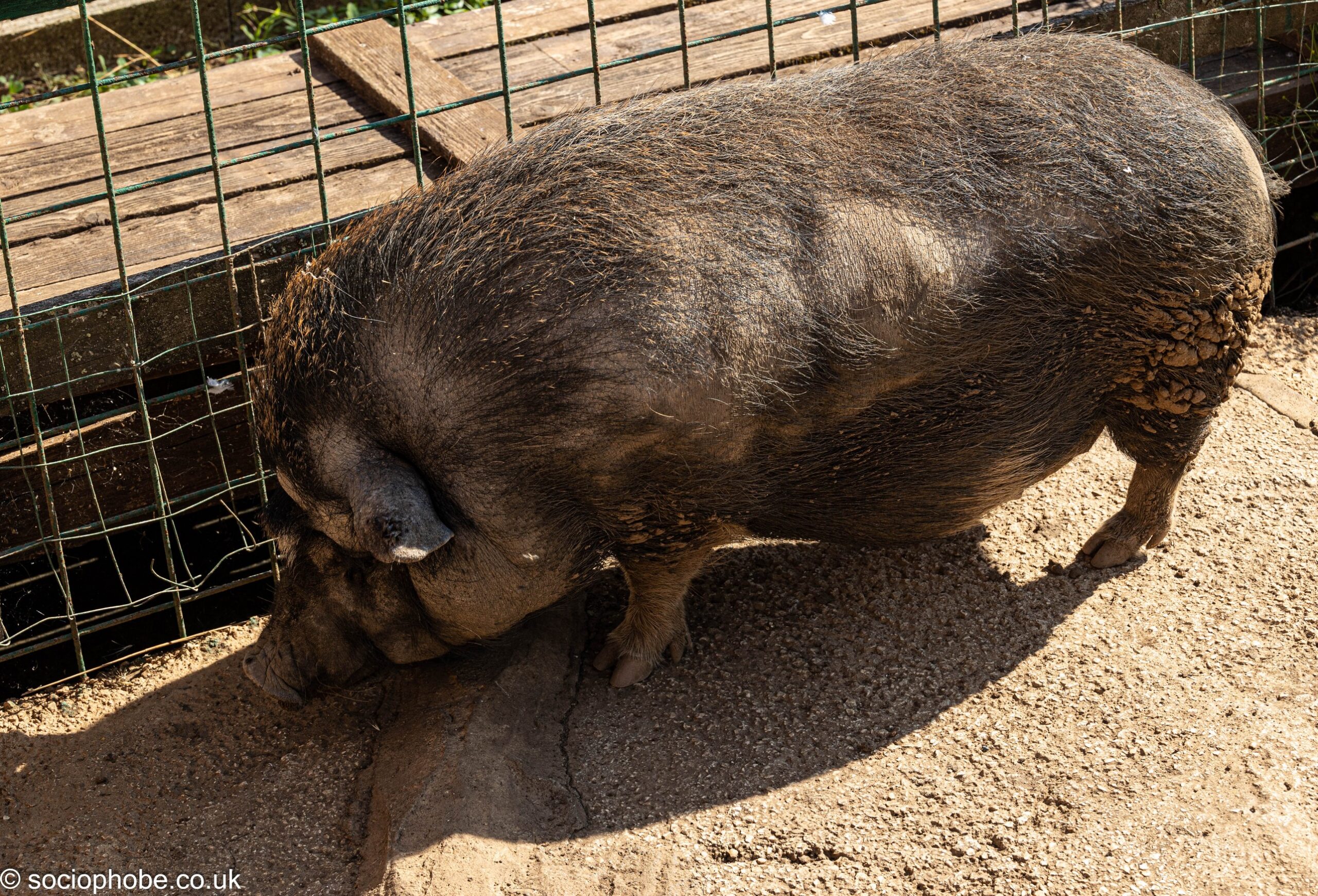
I then looked around other options and we took the short drive to a reconstructed Roman marching fort now used as a museum and living history exhibit. There was also a small animal zoo too.
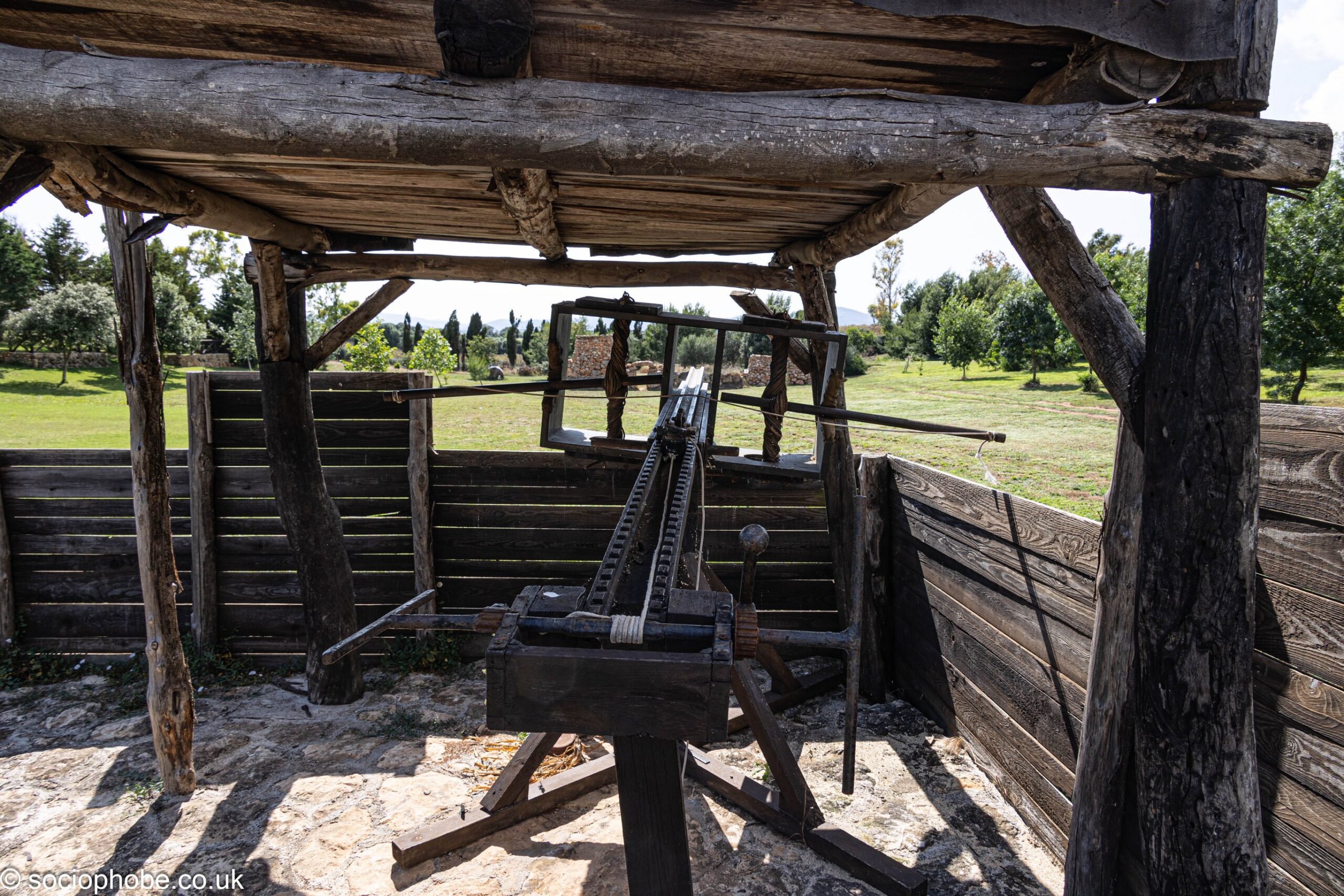
The camp was quite small but had all the elements laid out to show what life would have been like for the soldiers with plenty of information boards in English too. We had a quick run through by Mattheo and then wandered on our own. The models in the museum were great and had real attention to detail and showed how the Romans built bridges and roads using the technology of the day. We had a demonstration of firing a ballista too and then had a chat about the summer camps they run to educate kids about their history.
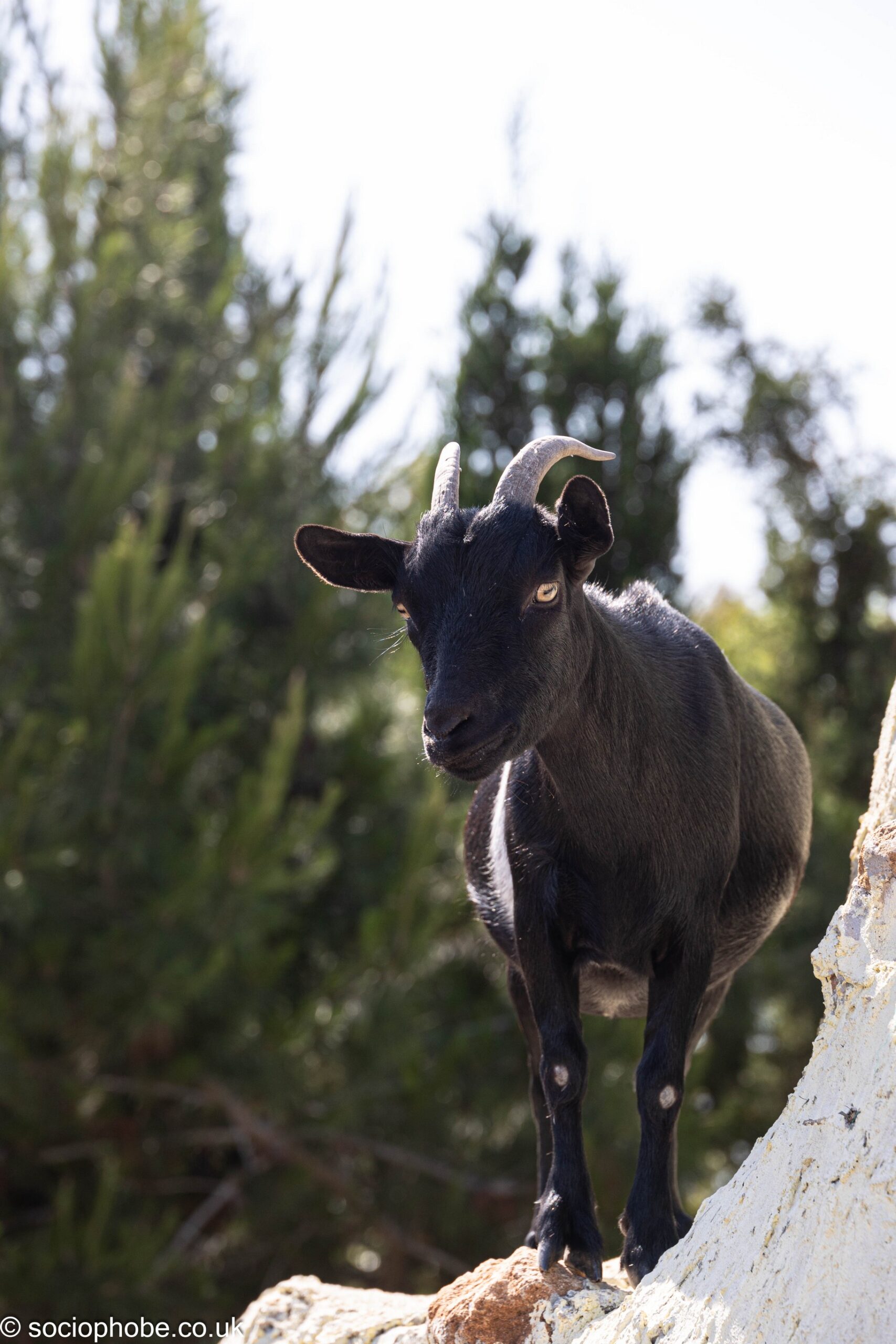
The animal park had a good selection of animals but we didn’t have any food for them so, other than the dog, they weren’t that interested in us! Goats are fascinating creatures too.
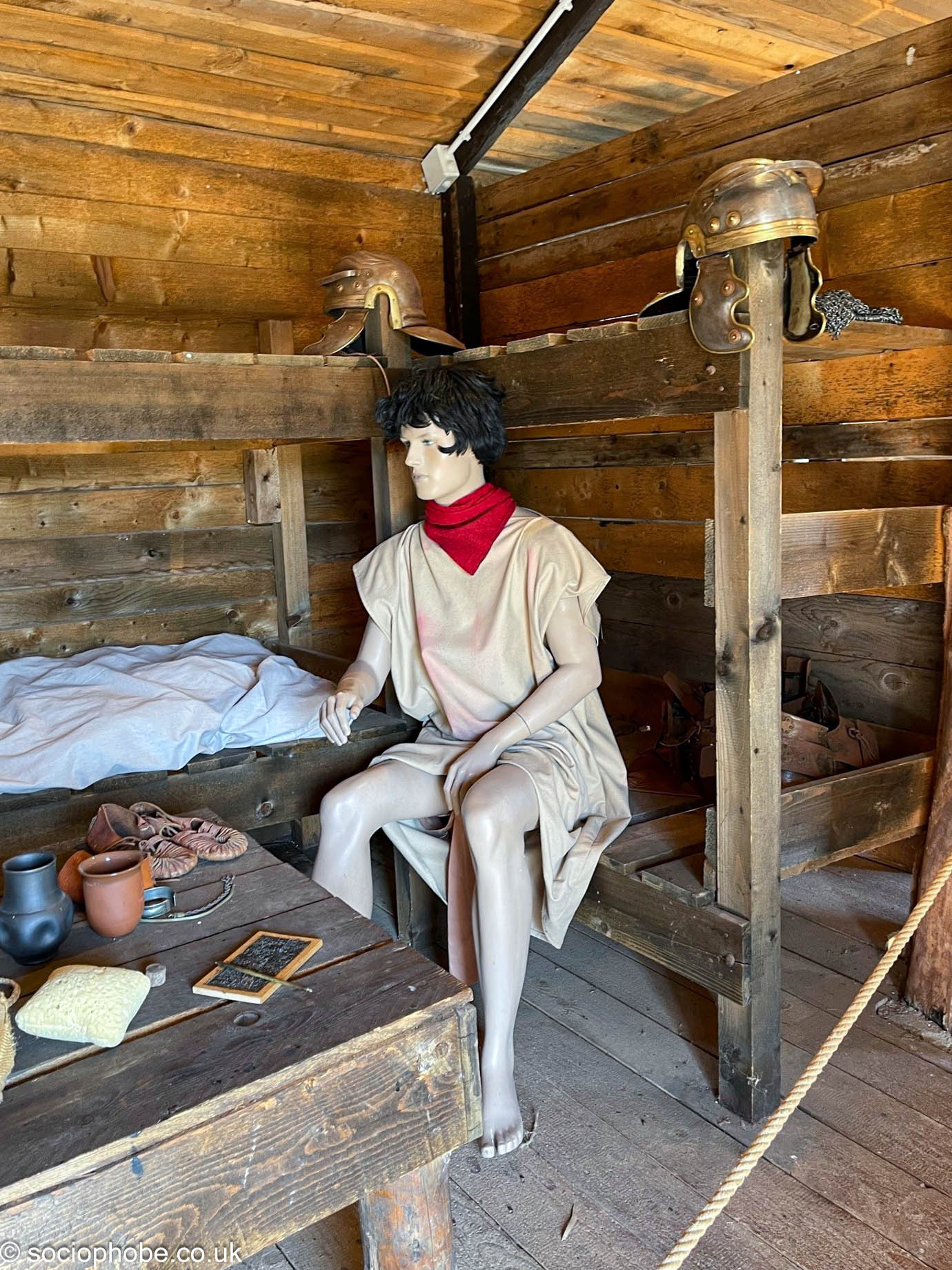
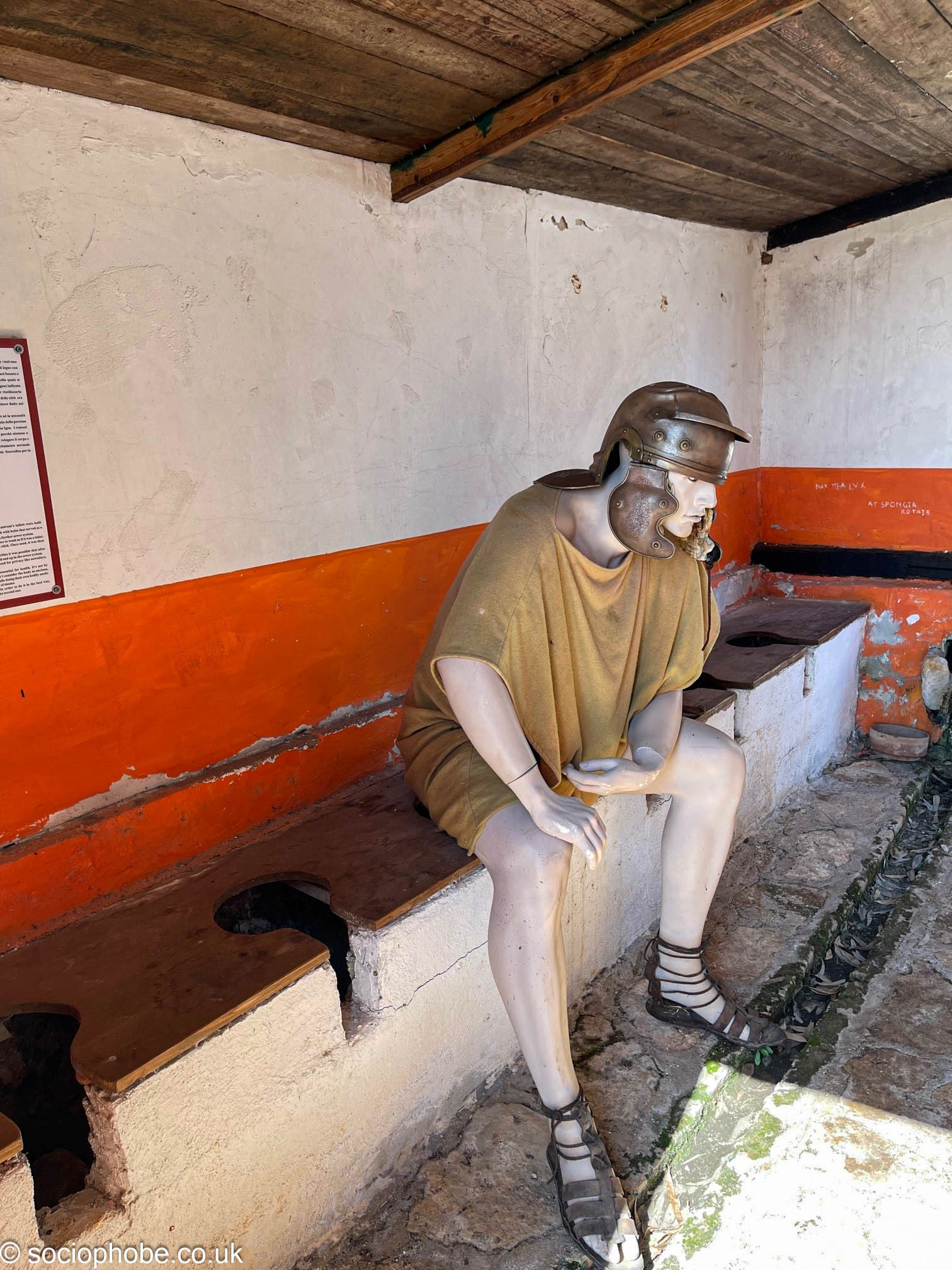
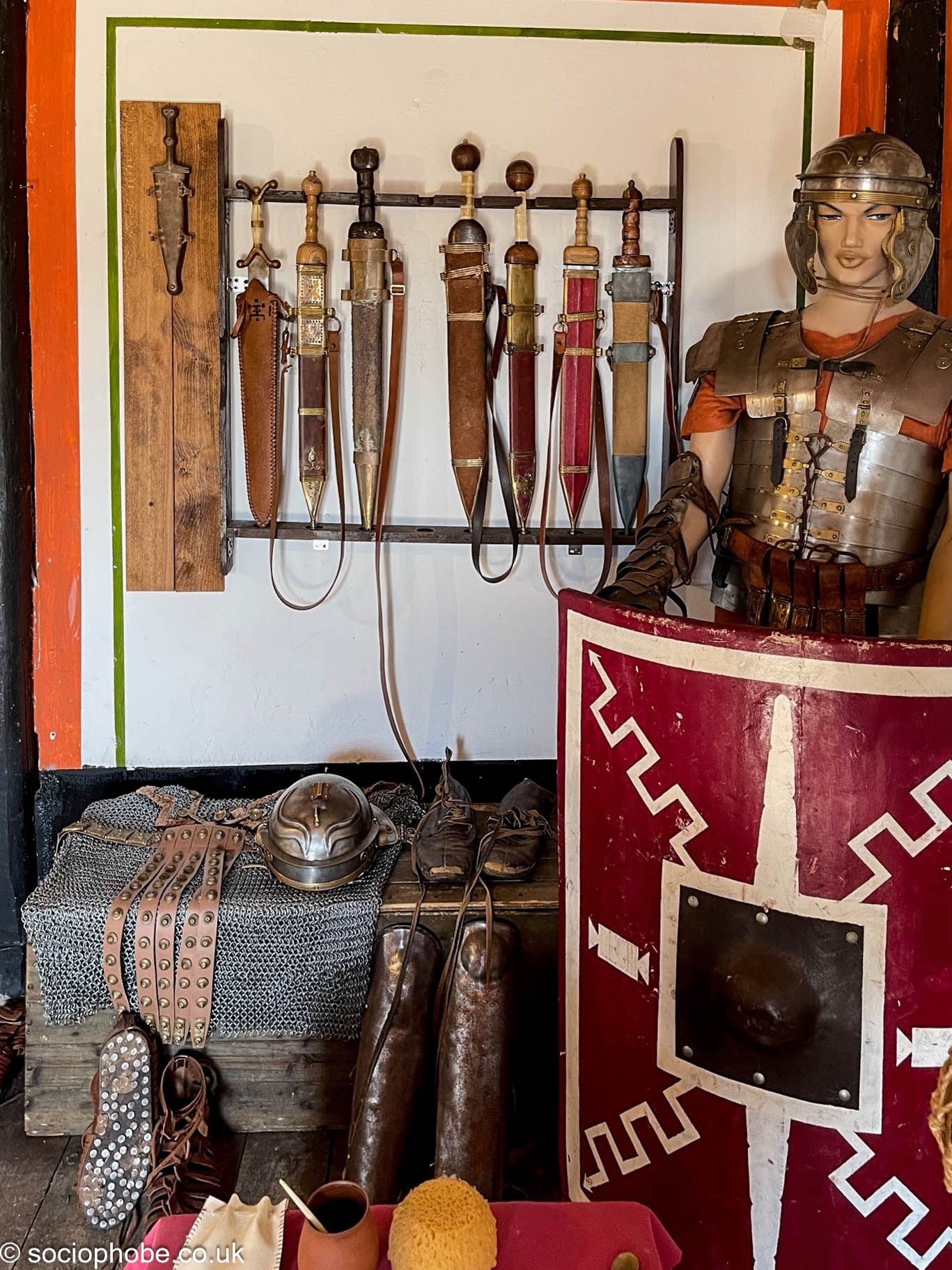
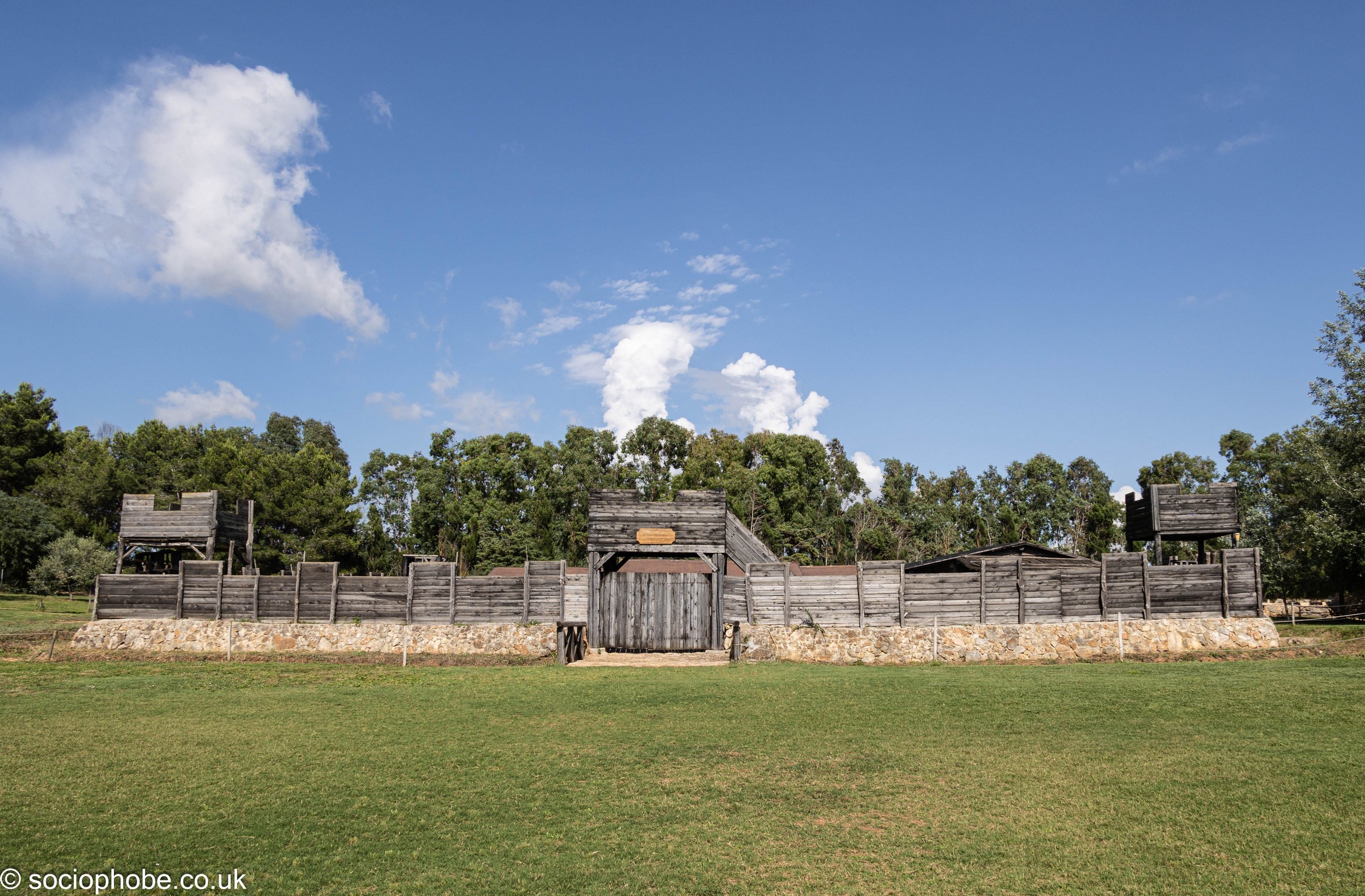
It was approaching 6 now and still around 30 degrees and we hadn’t eaten since breakfast so we drove into Porto Torres and parked on the sea front. There was a procession of some sort going on – a marching band and some nuns bringing up the rear with a load of religious flags so we watched that for a bit then hunted for somewhere serving food at the ridiculously early time of 6PM! We found a bar in a little square and ordered lunch/dinner. The ricotta was huge and it was a lovely meal although no cold beer for me as I had to drive back to the hotel.
Turris Libisonis Archeological Site
Breakfast in the hotel was really rather good, a wide choice and buffet which is always good. We packed our bags, again, and loaded the car ready for the short drive to the Turris Libisonis archeological museum. Deb really is spoiled!
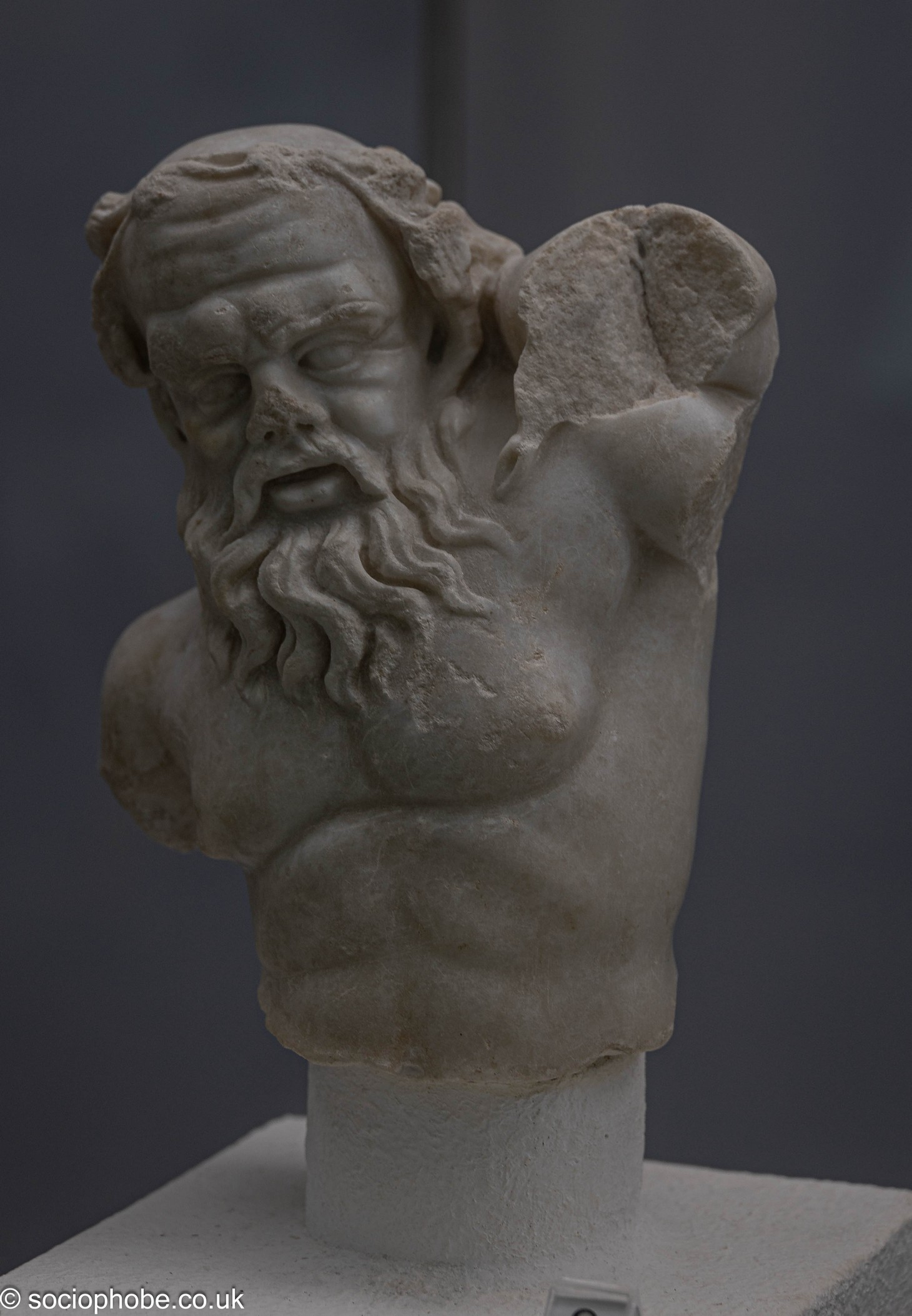
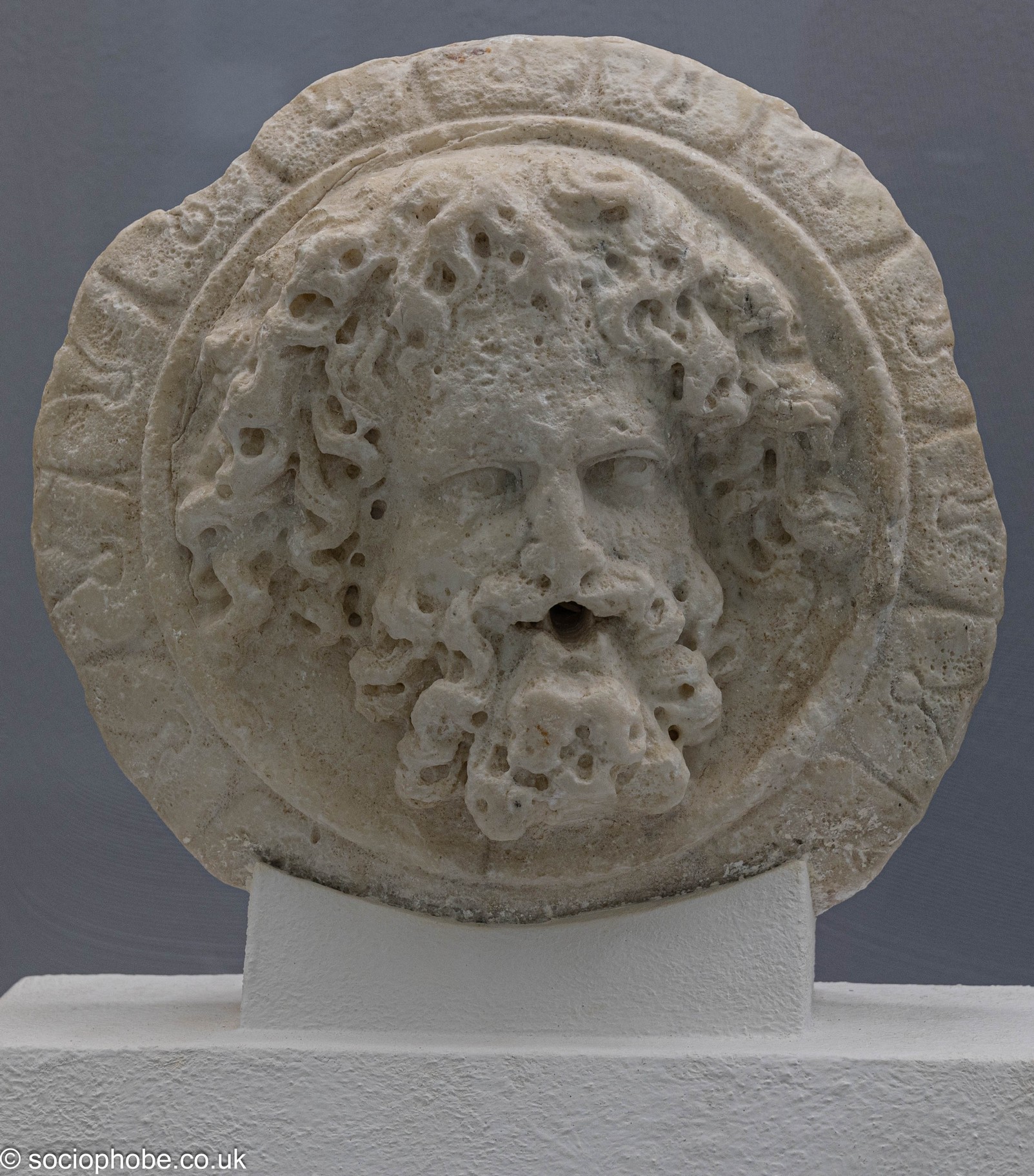
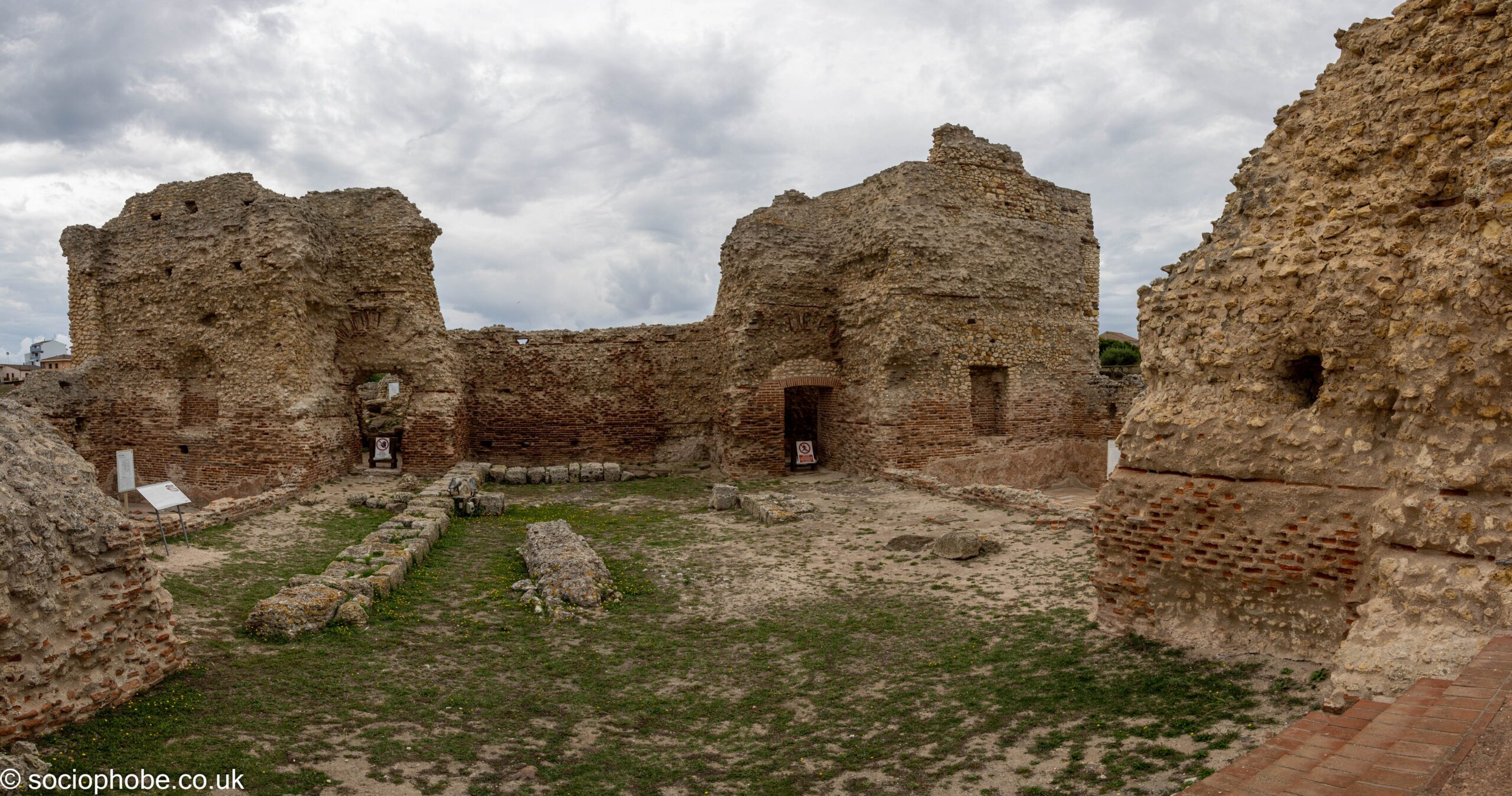
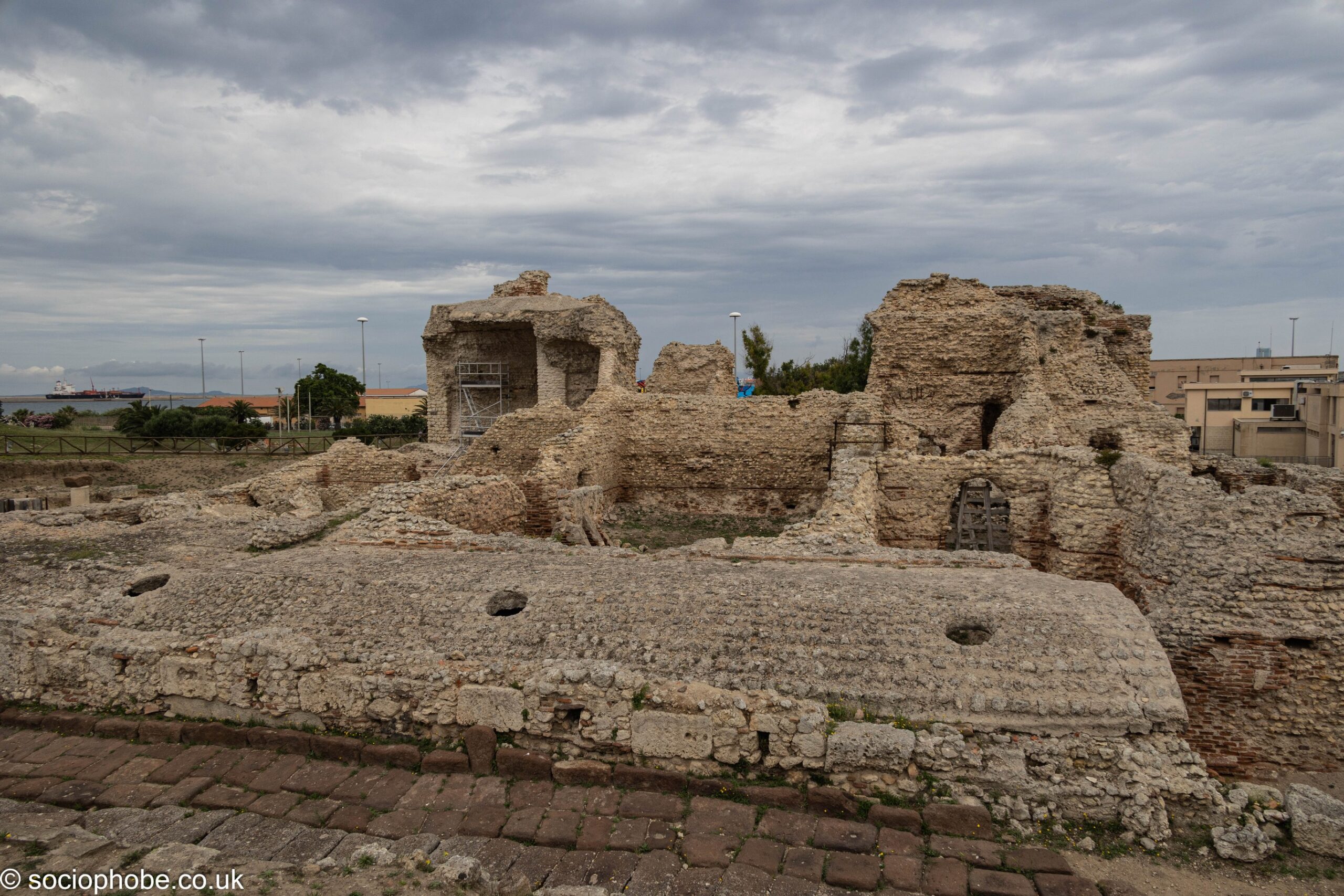
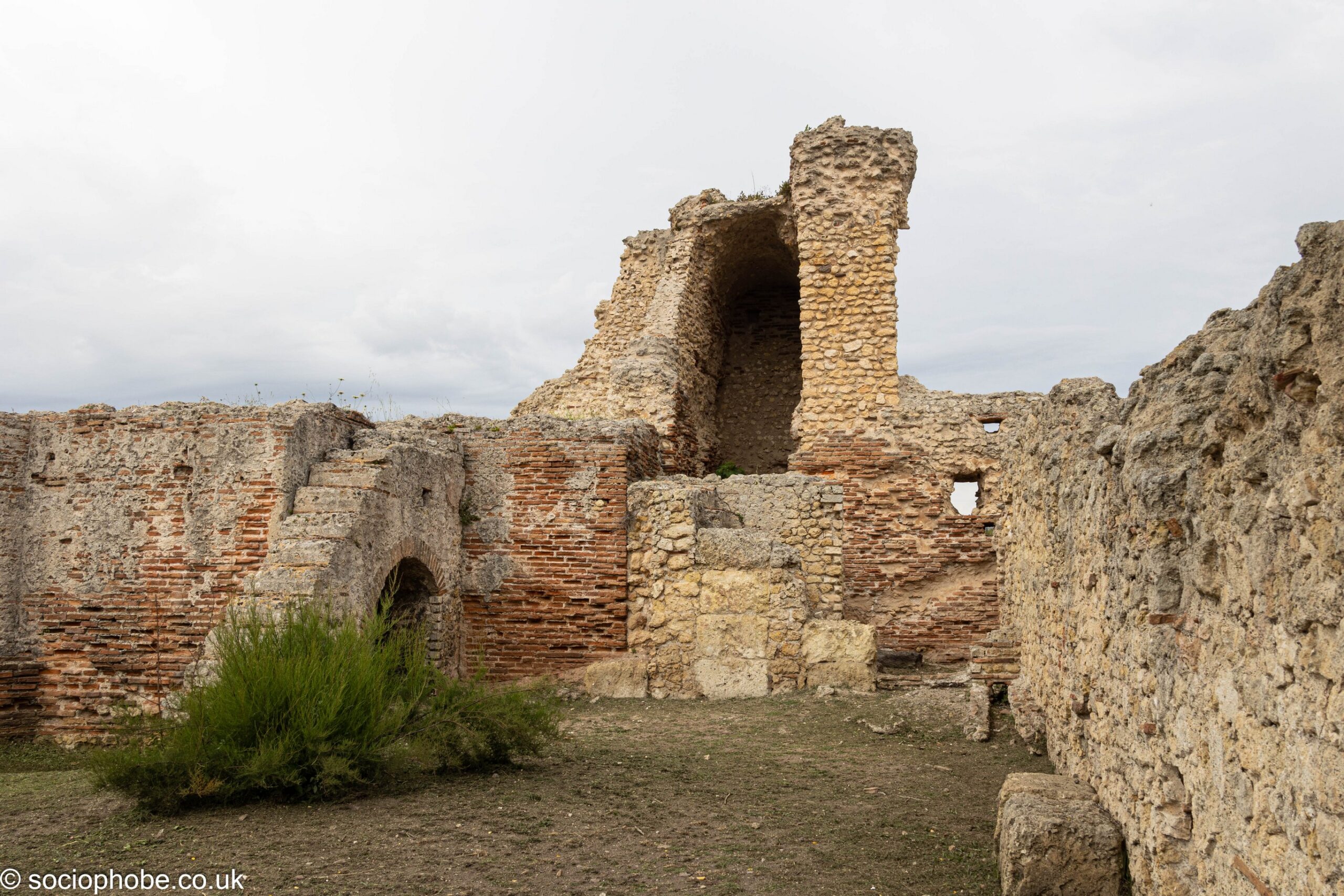
Turris Libisonis was the only Roman colony on the island, meaning that all inhabitants were Roman citizens which was extremely important in the early Imperial period. We parked at the port and crossed the road to the museum. Access to the archeological site itself is only on an escorted tour for safety reasons so we had an hour in the museum before the next tour. That was longer than I’d liked but the staff were lovely and the museum had some interesting exhibits. Roman glass is always impressive and the thinness of the examples here was quite amazing.
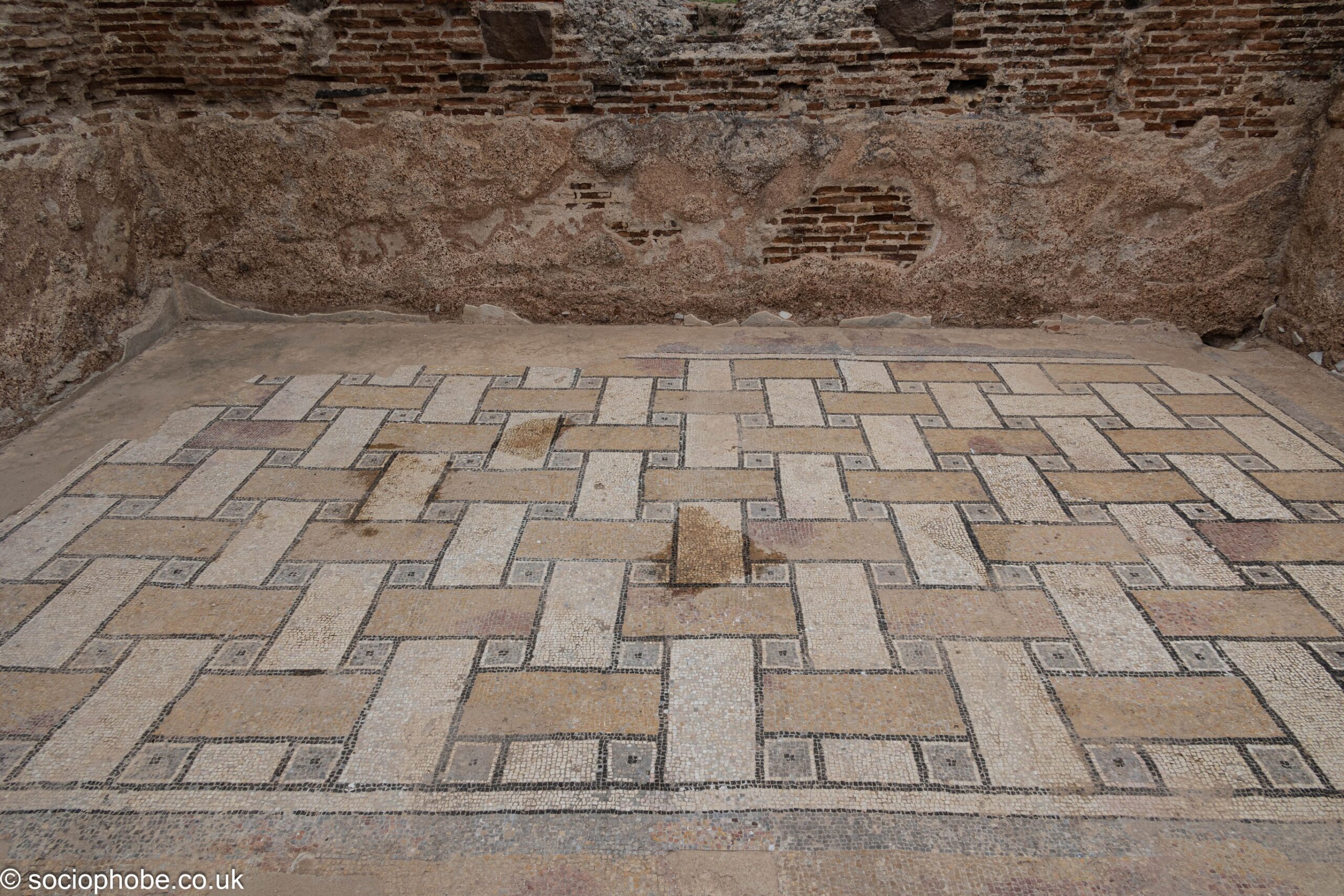
The excavated ruins were ok and there were some very good mosaics which gave an idea of the interior decor enjoyed by the wealthy merchant families at the height of the Empire. The site is quite large and a lot has been swallowed up by the modern town and the railway line was also cut through it. There is an intact Roman bridge just round the corner too which looks like it is being restored. I think there were more staff on this little site than in all the English Heritage sites I have visited this year!







Monte d’Accoddi Ziggurat
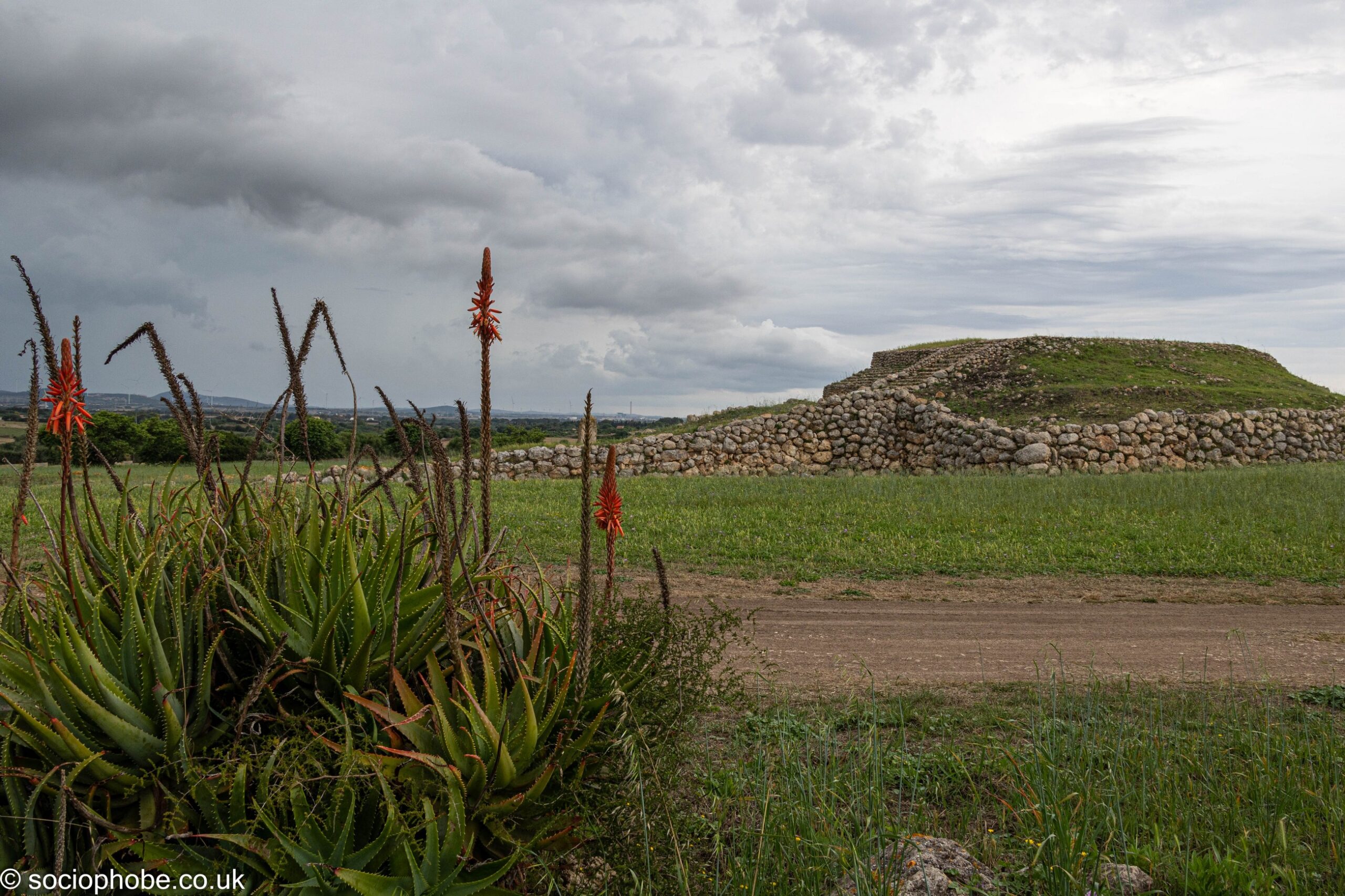
That had taken longer than planned but the next site was only about 15 minutes away. Monte d’Accoddi is around 5-6000 years old and looks like a ziggurat. Smaller than the ones of Mesopotamia it is nevertheless an impressive site and unique in Europe. The walls are around 5m tall and the access ramp is 25m and there were lots of wildflowers around the site.
Next to it is a large flat stone that could have been a sacrificial altar or feasting table as lots of animals bones were discovered around it. There is also the remains of a neolithic village and one of the many menhirs on the island next to the ramp.
The lady at the site was extremely helpful and there was also a useful explanatory app. The aerial photos gave a far better idea of the site size and layout and it is strange that this site is pretty much unheard of while Stonehenge – far more mundane – is world famous. The site was in use from around 3000BC to around 1800BC, so it fell out of use around the time the nuraghe started being built.




Castelsardo
Next stop on this road trip was the town of Castelsardo, or more specifically the gardens below it. I had done some research and everyone said how difficult it was to access the gardens as the streets were narrow and parking was very limited.
The town is the one used as the backdrop for the new Little Mermaid, with the castle on a peak, surrounded by the town and rising up from the beach. The town did look pretty but people weren’t joking about the roads! They were narrow but people still parked on them making them almost inaccessible. We drove through to the eastern side where there was a large car park but Deb was so angry by then she didn’t want to stop!
Fortress Monte Altura
We then had a 90 minute drive across the mountain to the north eastern tip of the island. The scenery was quite spectacular with jagged mountain peaks and dense forests although the frequent potholes made taking your eyes off the road a bit of a gamble. On the plus side there was very little other traffic but also no cafes at all so we had another day of intermittent fasting and missed lunch!
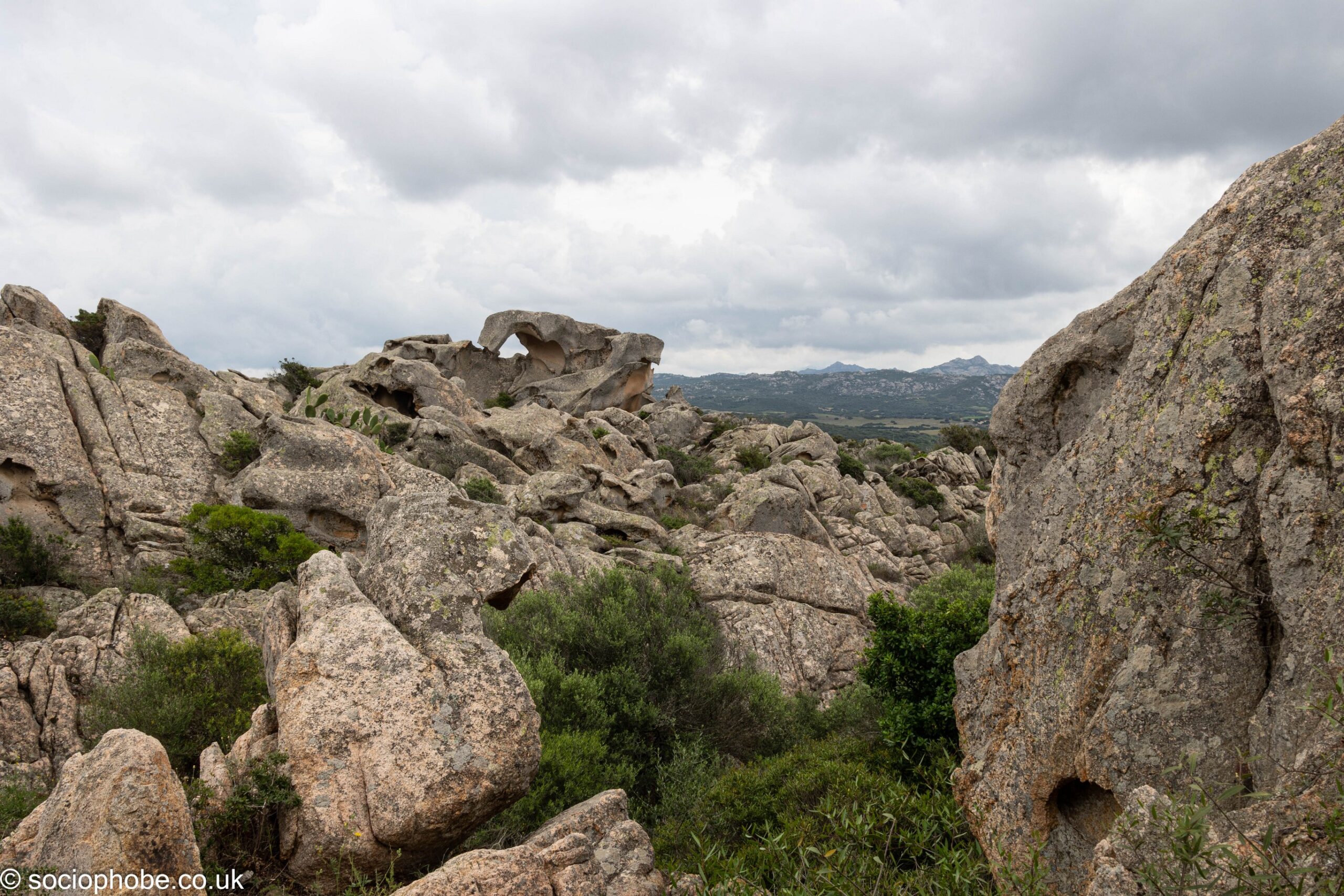
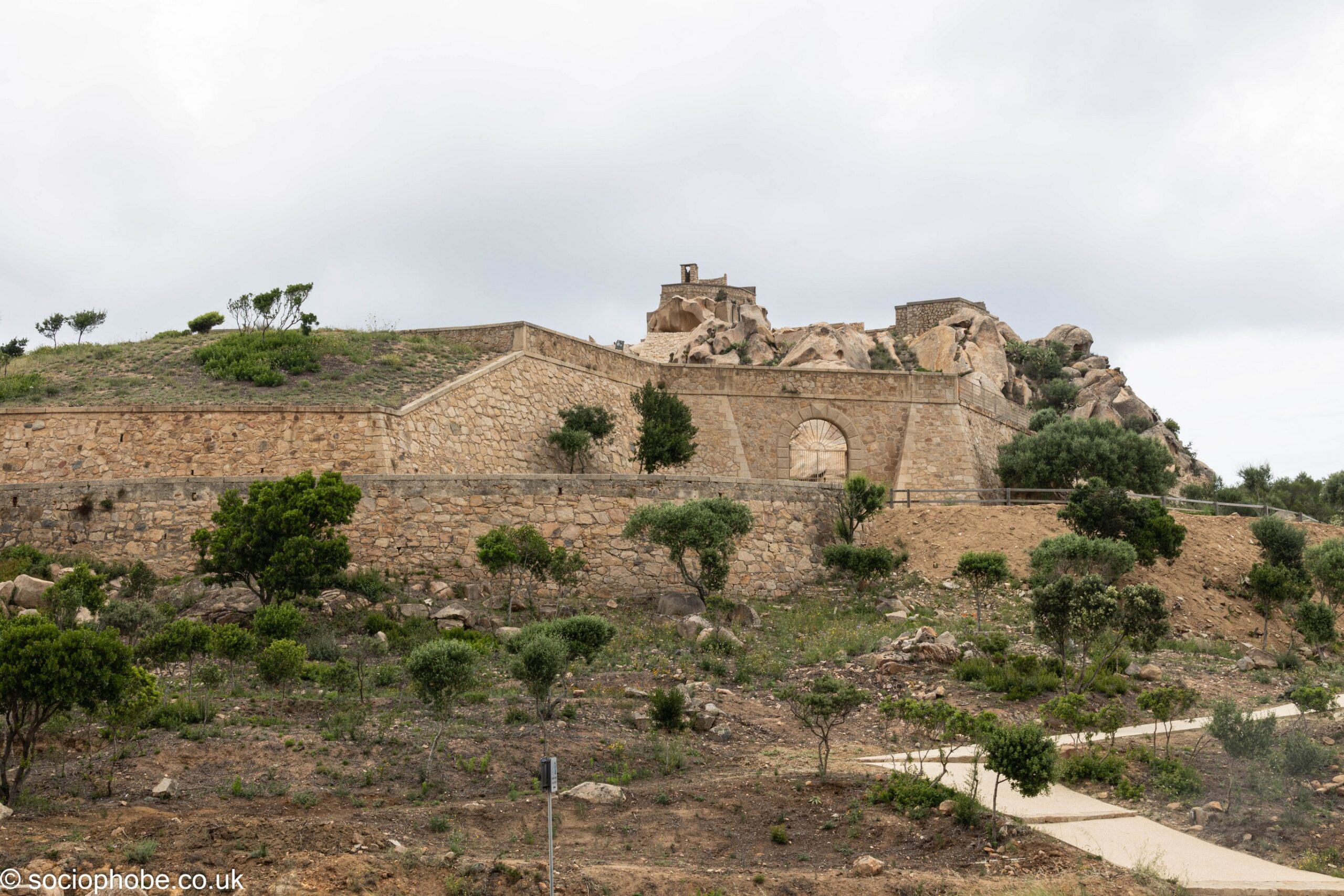
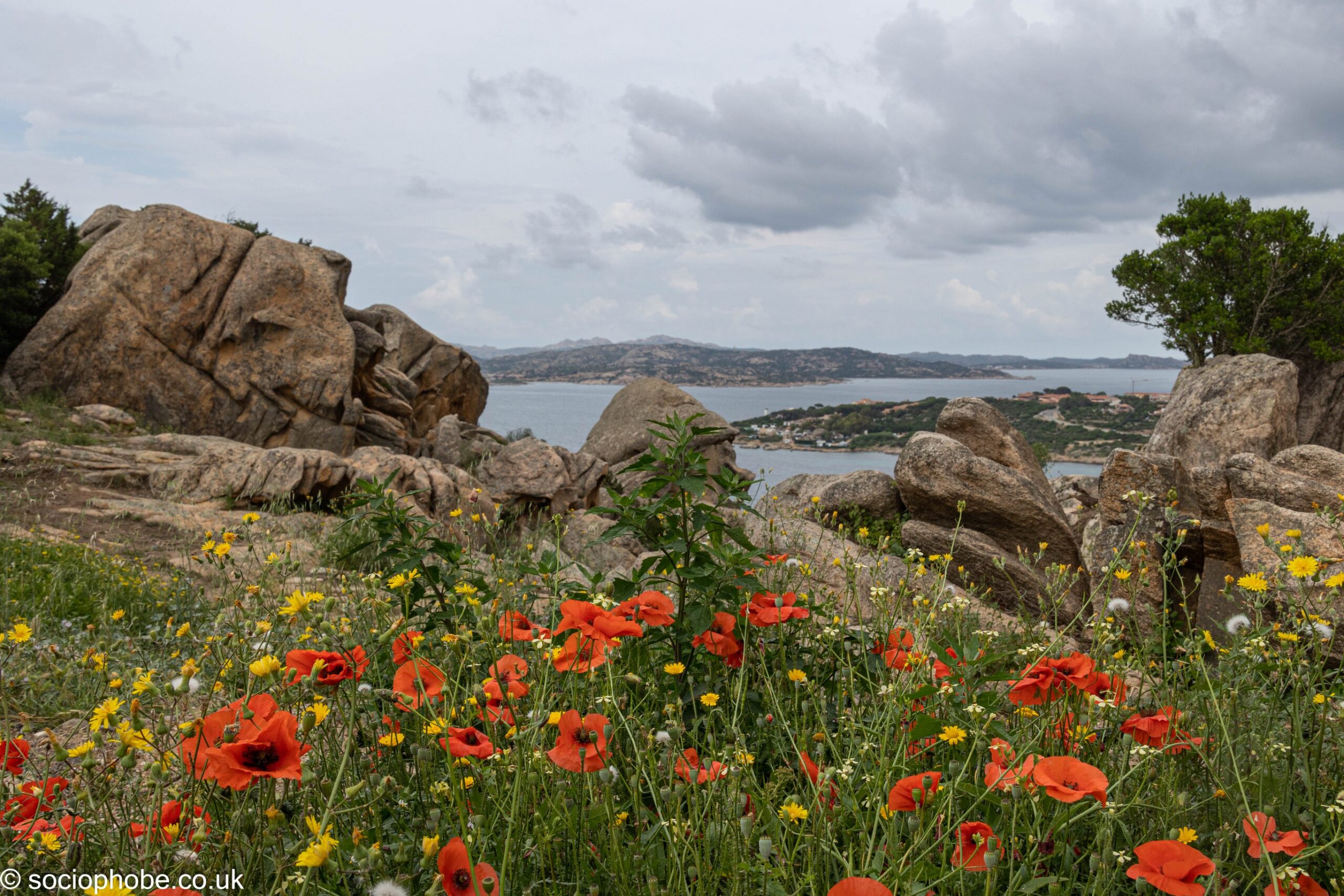
The final stop was a nineteenth century artillery fort, built on a hilltop overlooking the port of Palau. In case anyone wonders why there are no beaches on this tour, they were offered to Deb but she declined! We parked in the large car park and went to the ticket office which was closed. The next tour was in 30 minutes so we had a wander around the hillside and enjoyed the views, rock formations and wild poppies. 30 minutes came and went and still no staff so after an hour we walked up to the fort and spoke to the guide who said she’d next do another tour in 45 minutes time. We didn’t want to wait that long so drove on to Olbia, rather frustrated as we could have visited somewhere else and it was a 2.5 hour round trip wasted.


Olbia
The drive to Olbia was torturous as we were stuck behind a lorry on a very twisty road with the usual potholes and switchbacks although the views were nice. We descended to sea level and eventually reached the port of Ostia, a bit of a run down place at first impression. Our hotel – the Doubletree – seemed to be situated on a roundabout amongst wasteland which was unexpected! Nevertheless we had a lovely room on the seventh floor and we were able to sit on our balcony and watch the city slowly disappear from view as it was engulfed in a massive thunderstorm and downpour.
I worked on my blog until early the next morning and Deb had an early night. We both slept until gone 8 and then chatted to M&P before a shower and then breakfast. This was most welcome as I am usually a big breakfast eater and they had mostly been pretty sparse so far. The rain from the night before was nowhere to be seen and it as another blue sky day.
Today was really our final day sightseeing on this Sardinian road trip and we wimped out a bit. We could have driven around 40 minutes to the Emerald Coast and enjoyed the beaches and blue seas but Deb is no longer a beach person and I never have been. We decided to spend the day looking at more stones instead.
Pedres Castle
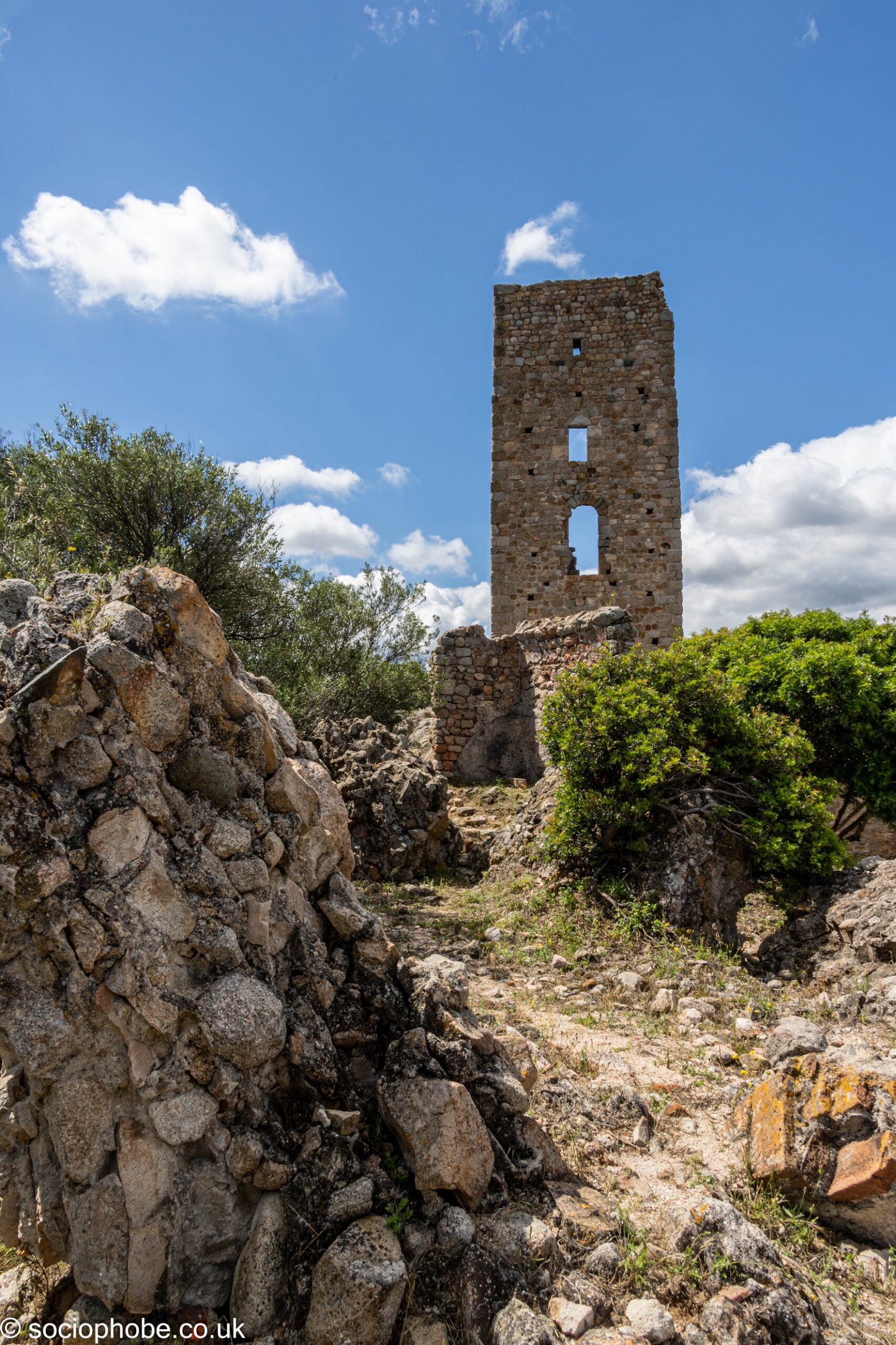
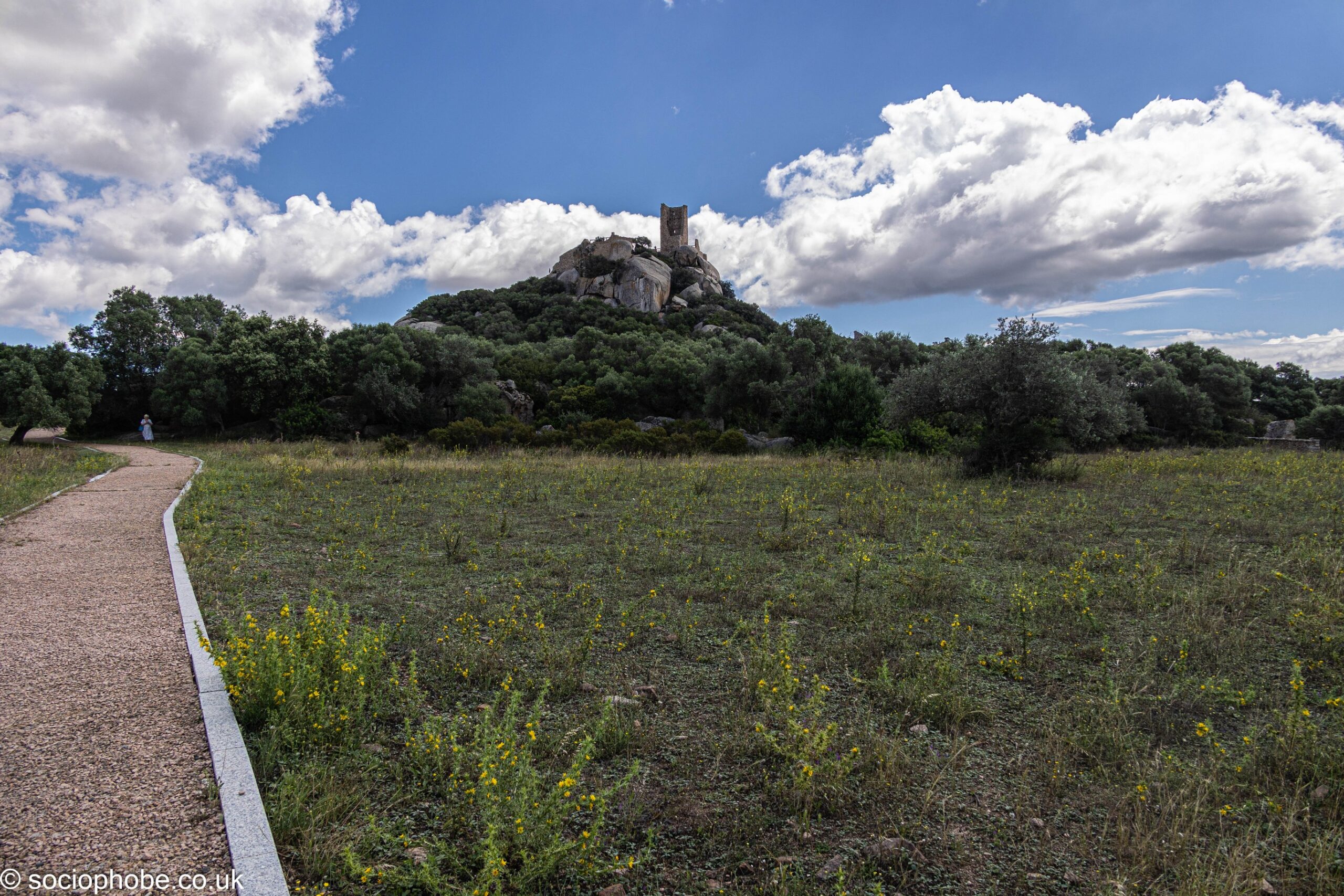
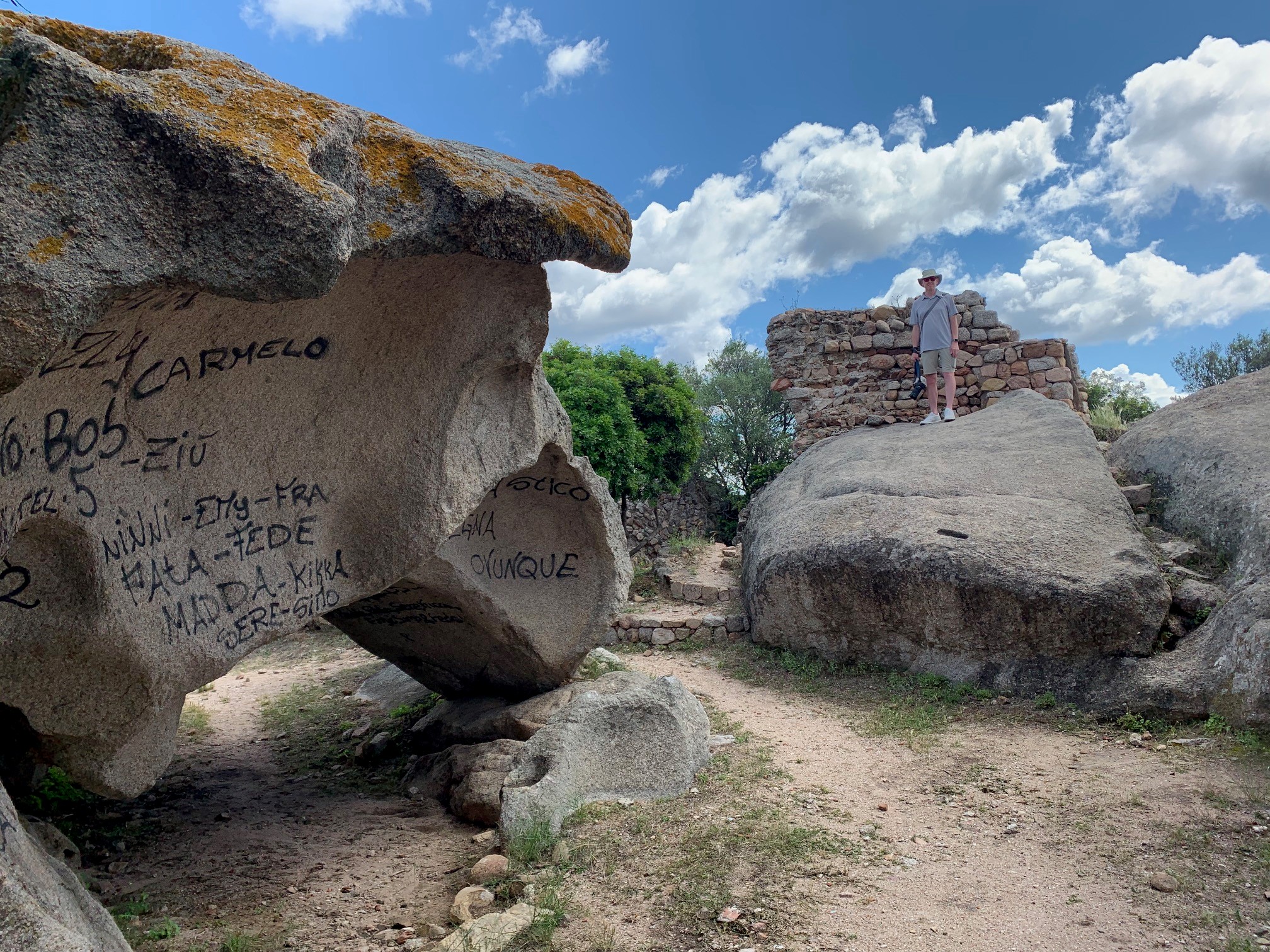
First stop of the morning was Pedres castle, built on a hill about 10km from the city and now overlooking Olbia airport. The castle was built in the thirteenth century by the Pisans on a steep hill with commanding views. Very little is left standing other than one tower but there are traces of other buildings and walls within the forest surrounding the castle.
The route up is actually quite pleasant, through the forest and follow the stone steps, taking 5-10 minutes. It was still sweaty work though! We watched several planes arriving or departing from the airport and just enjoyed the views from the peak. We could see our next stop, a megalithic tomb, in the woods nearby.




Su Mont’e s’Abe Megalithic Tomb
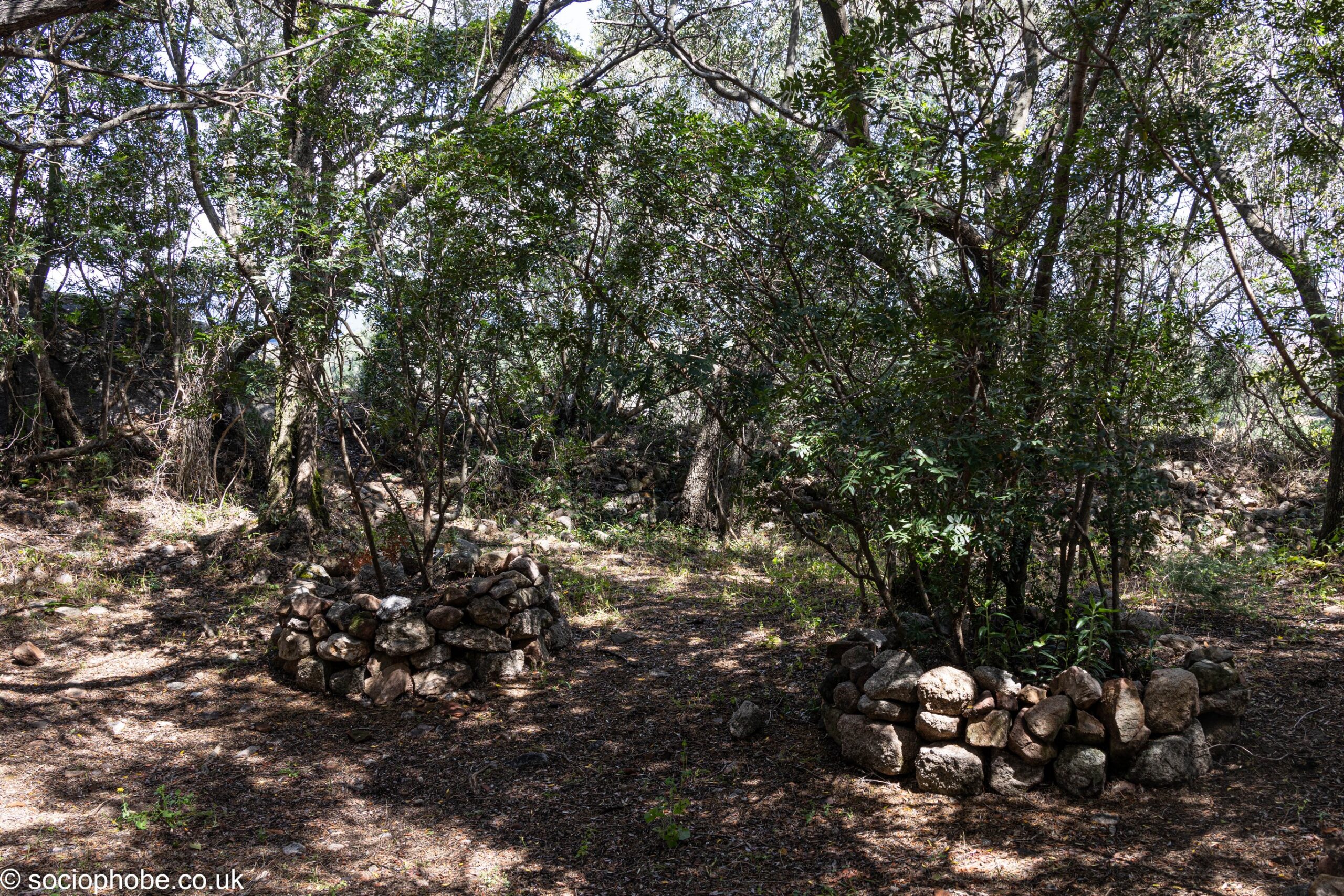
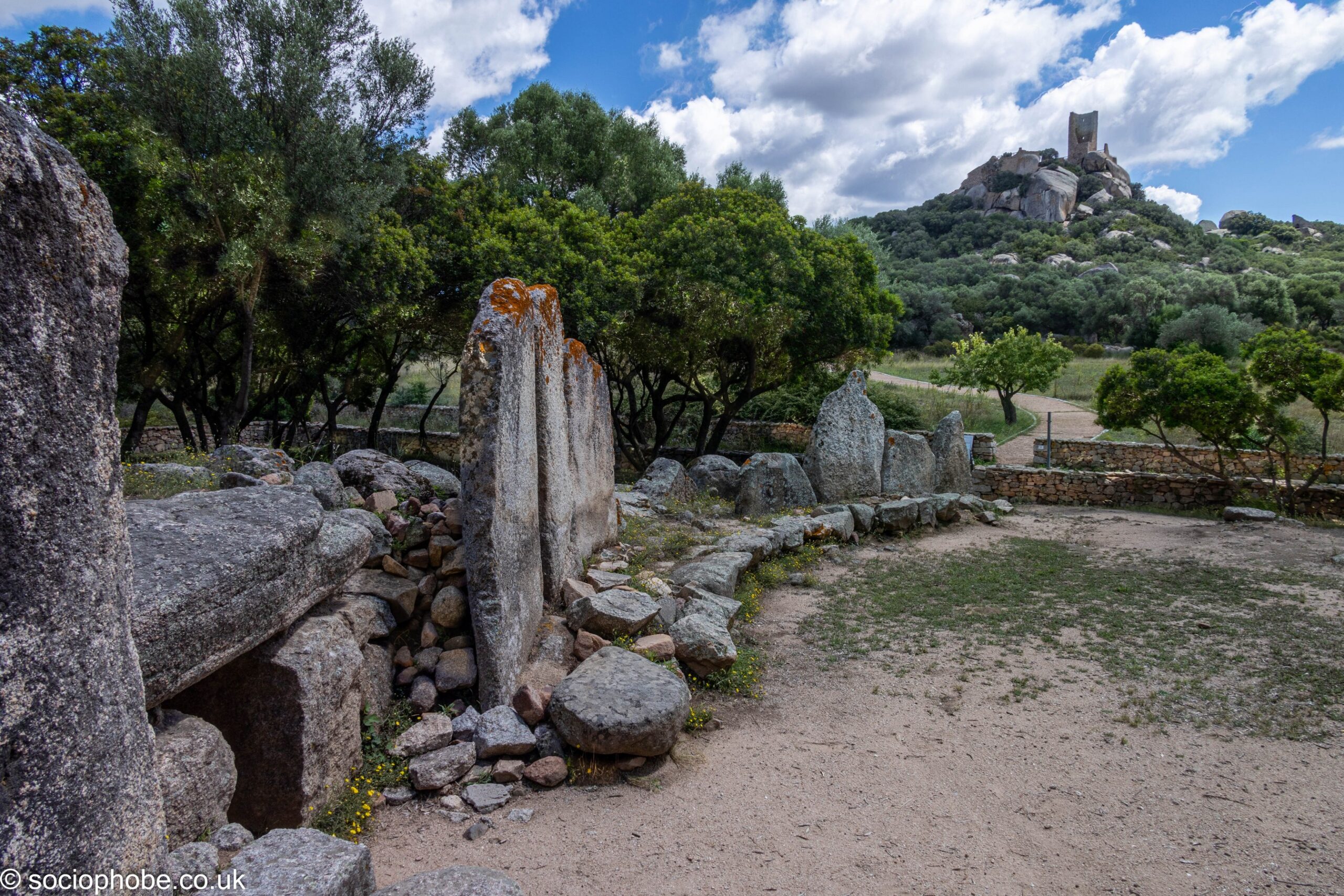
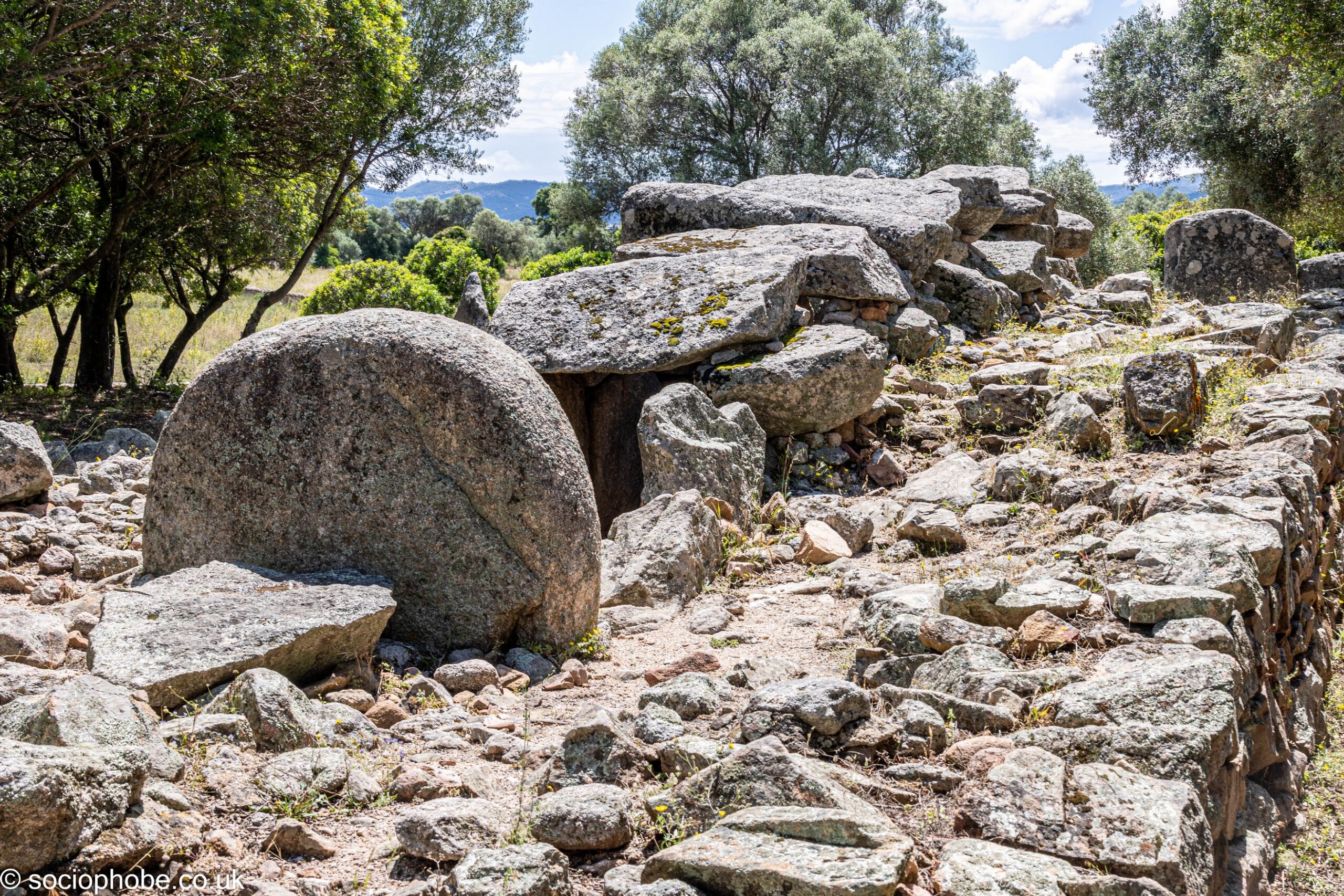
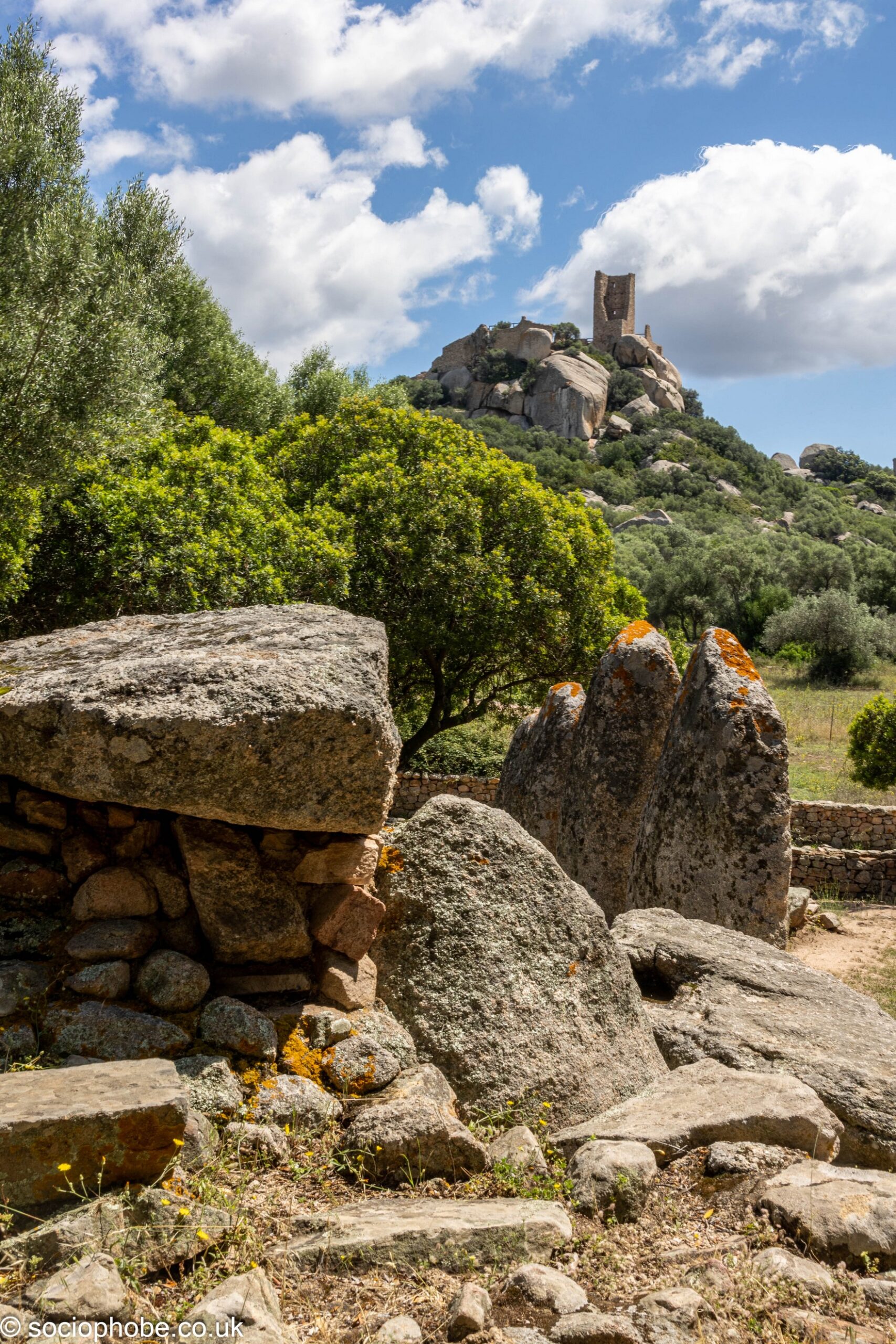
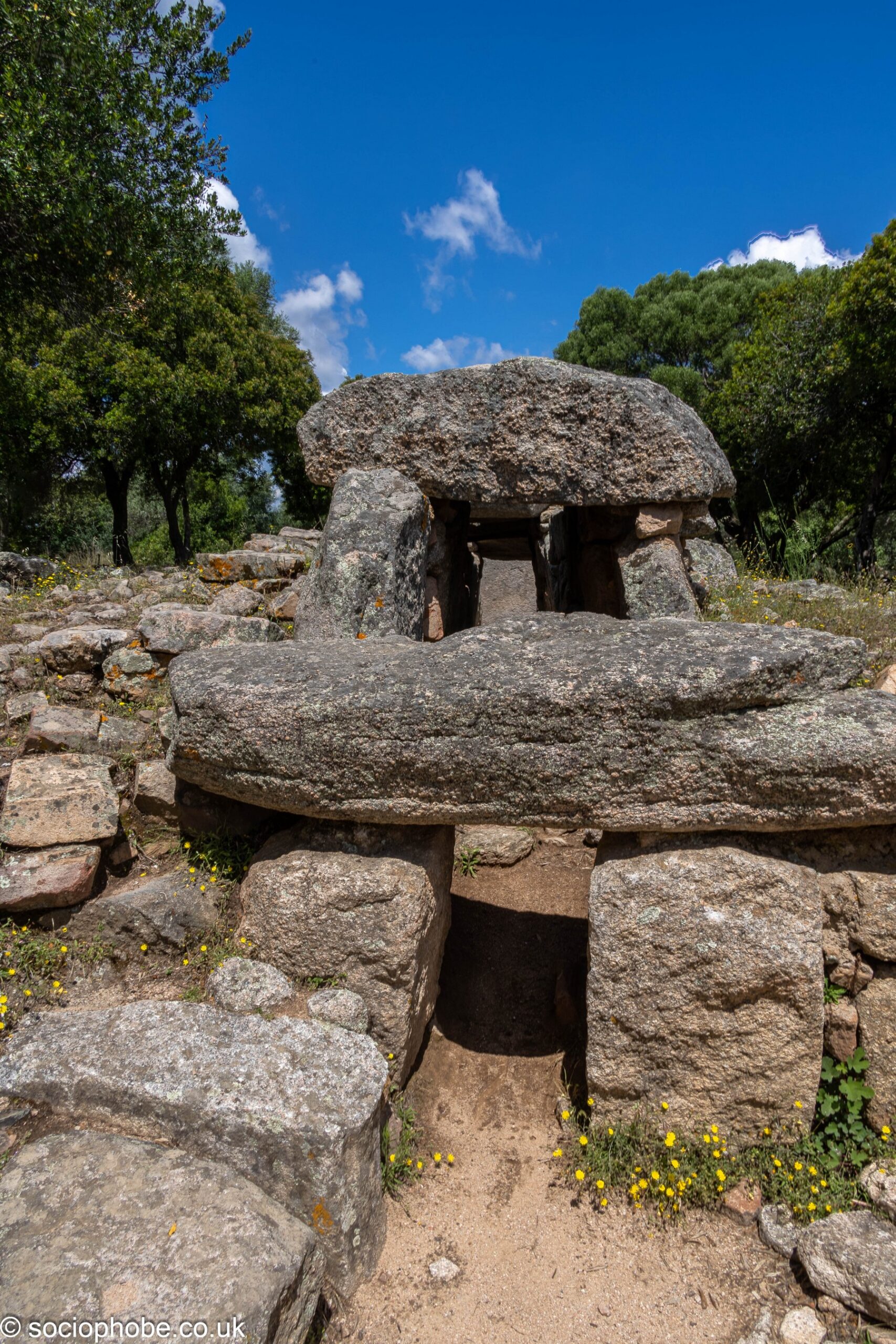
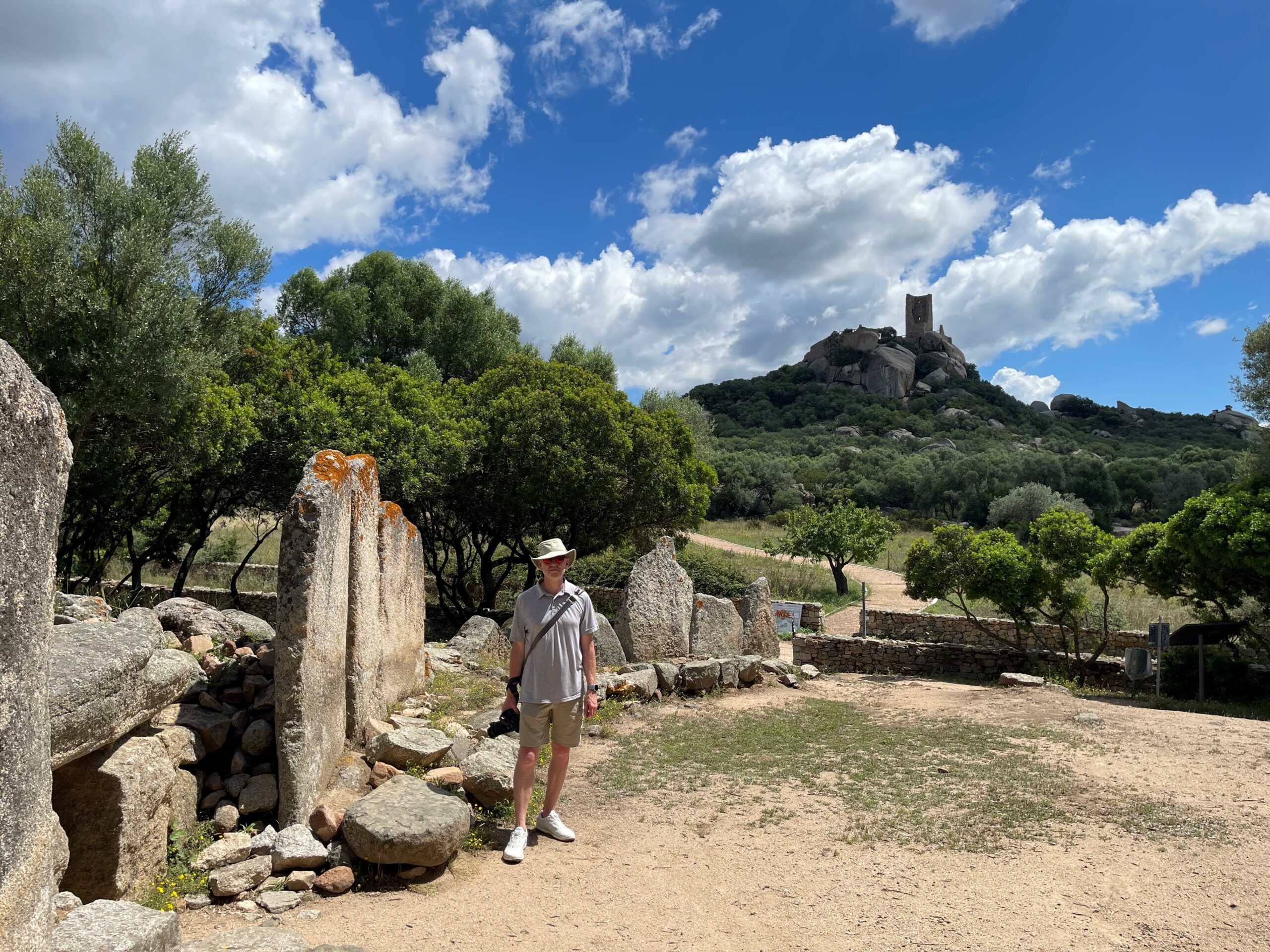
We climbed back down the trail and then followed the path past the car park to Su Mont’e s’Abe, a megalithic barrow tomb in an extremely good state of repair. This was in a grove of trees which gave welcome shade and consists of a large corridor with huge stone walls and roof and then more stones arcing out from either side at the front, like a Zulu impi or bulls horns. The site was built around 2000BC and was in use until the start of the Nuraghe period.


Basilica San Simplicio
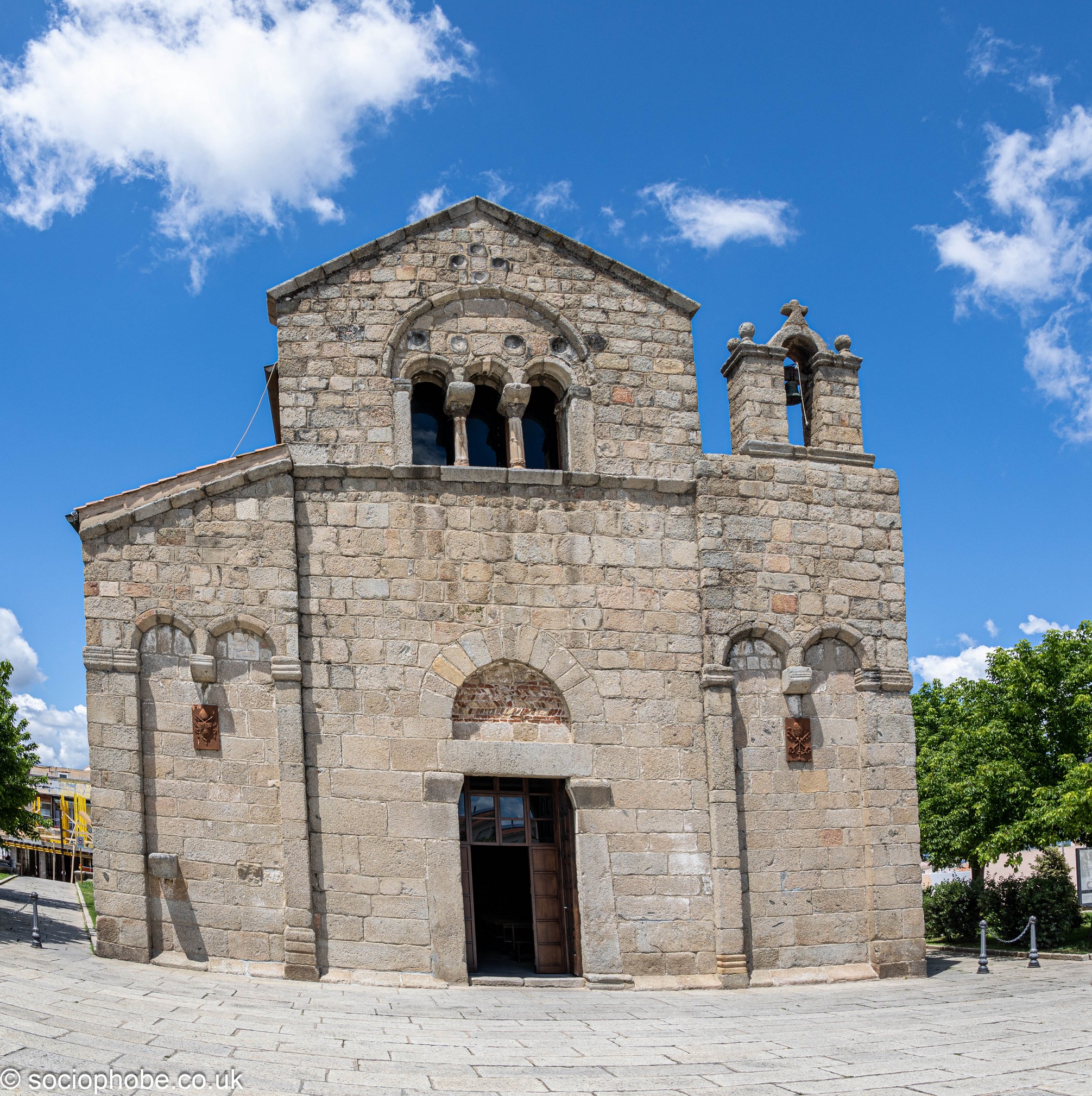
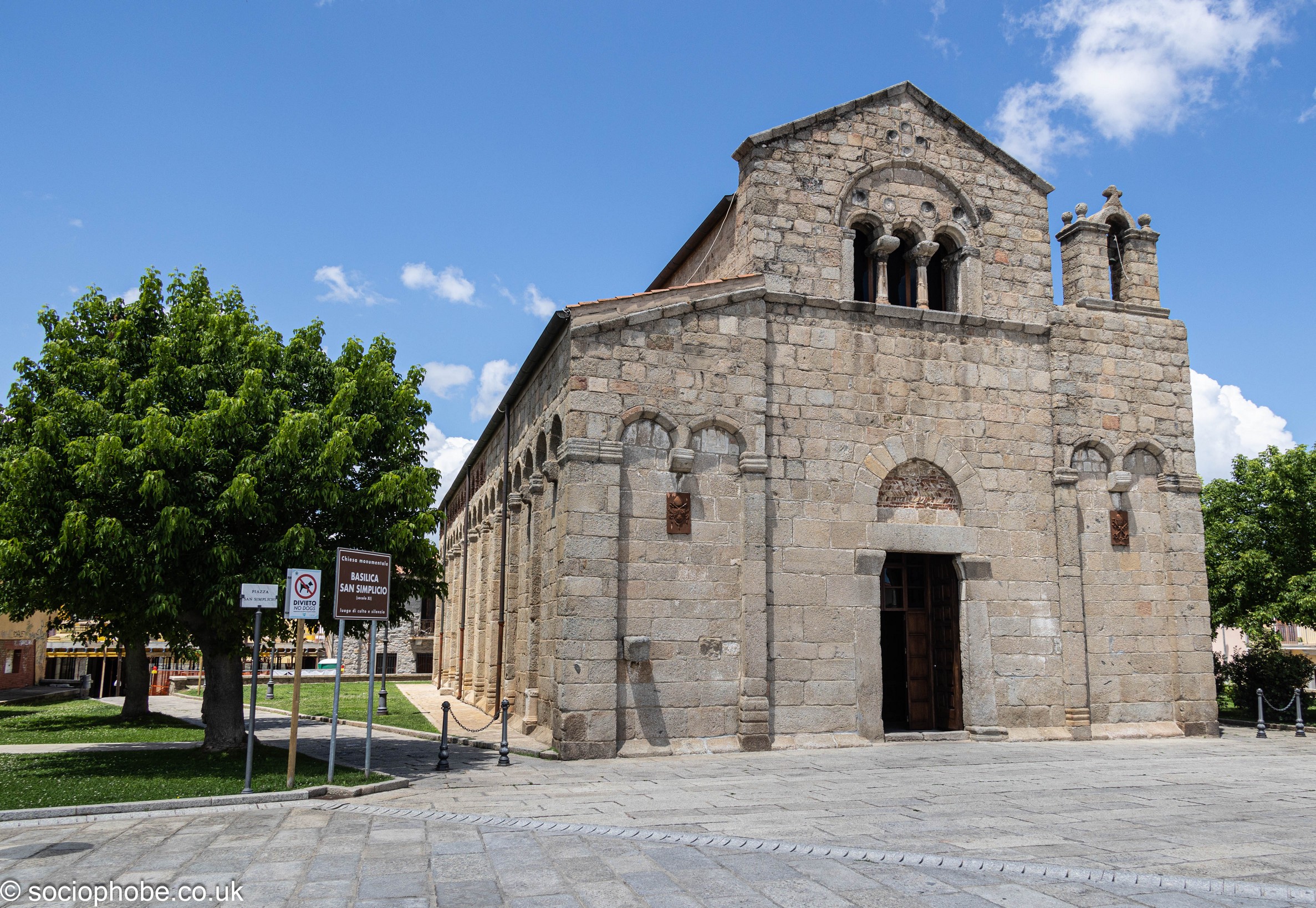
We walked back to the car and its very welcome AC before driving back in to Olbia for our final stop of the day. The temperature was now 35C, which was too warm for us! We parked on a side street and walked the short distance to Basilica San Simplicio.
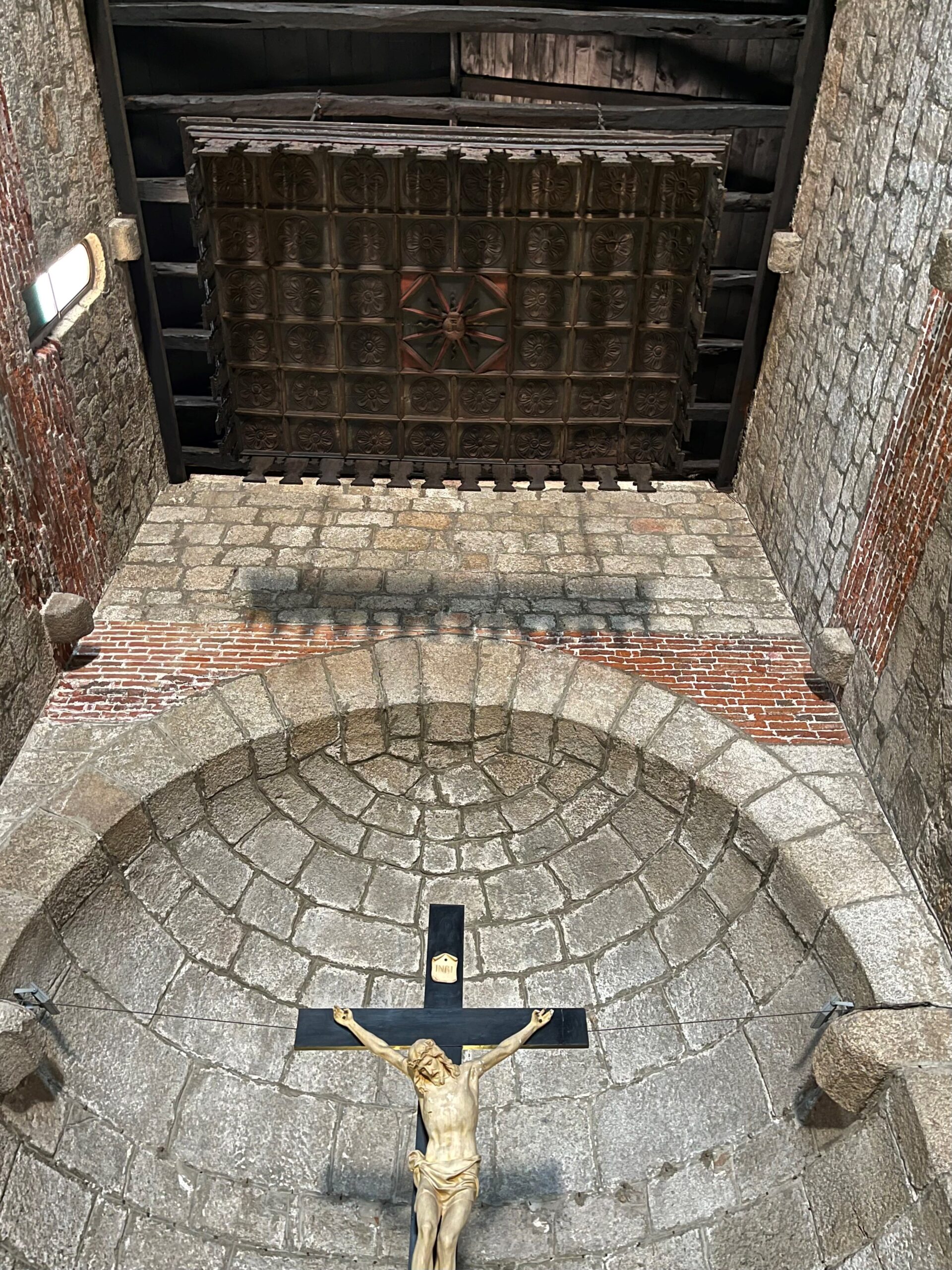
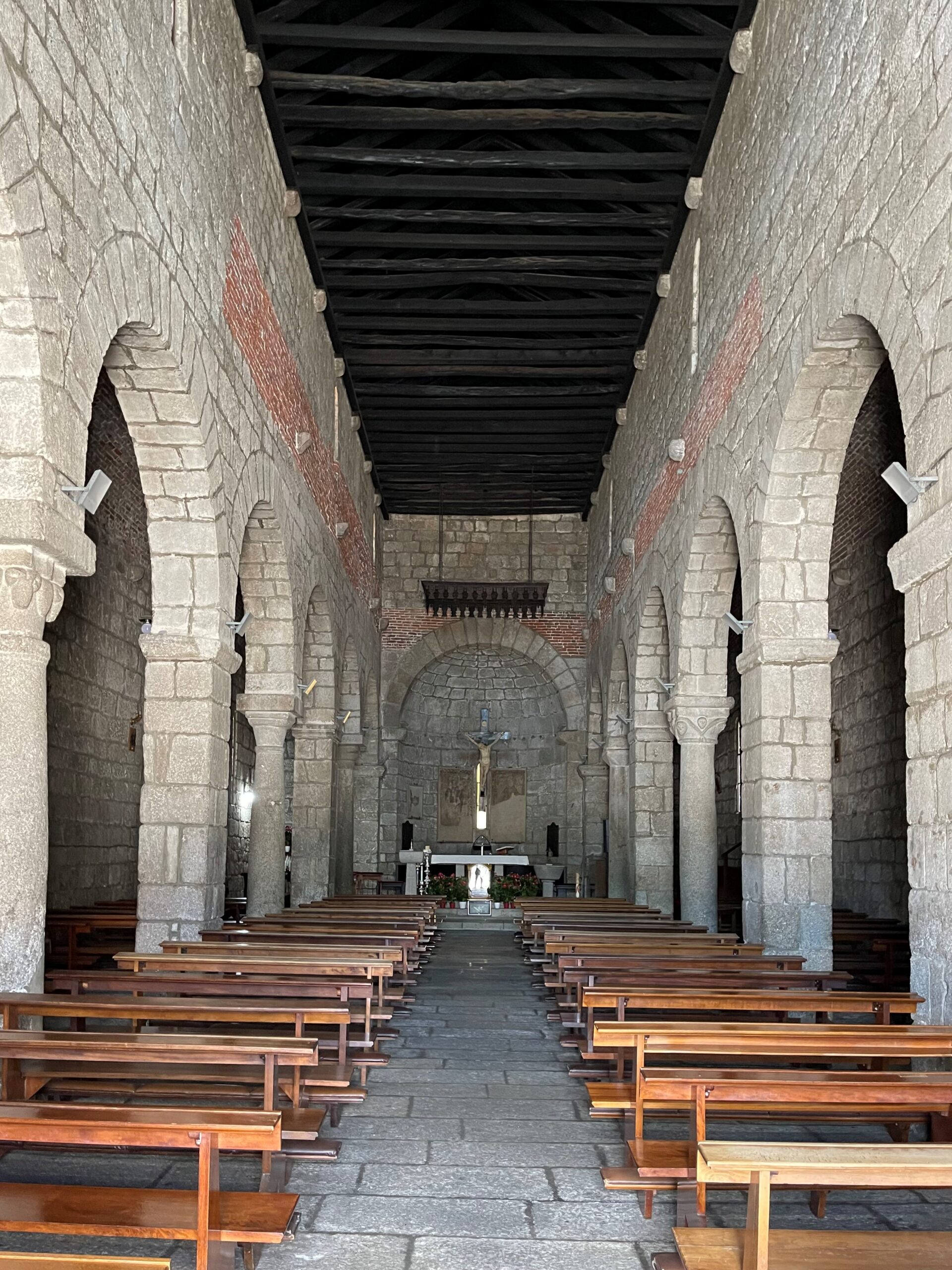
This is an eleventh century church and was, for a Catholic church, extremely low key. Built of granite and with almost no interior decoration or side rooms it was quite a shock. Normally we spend quite a while in these buildings and take loads of photos but I actually took more in the cafe we went to, just across the piazza.
Latte e Miele Pasticceria Caffetteria
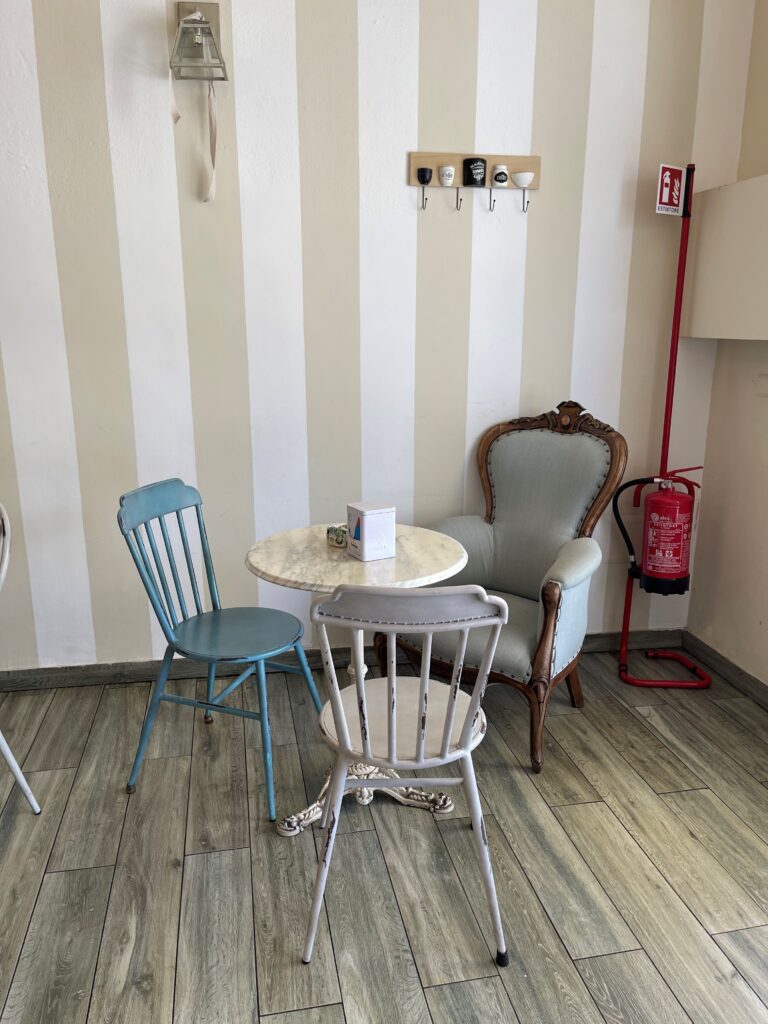
Latte e Miele Pasticceria Caffetteria has lovely decor and a great selection of cakes. It also served the first coffee I have enjoyed since arriving on the island! I am not a coffee connoisseur, far from it much to the despair of my eldest, but I do like a big mug of coffee that you can sip and relax with. This fit the bill and the cakes were lush too! After that is was back to the hotel, open the windows and get some air in as we were on the 7th floor and Deb sat on the balcony and read while I did more of my blog.
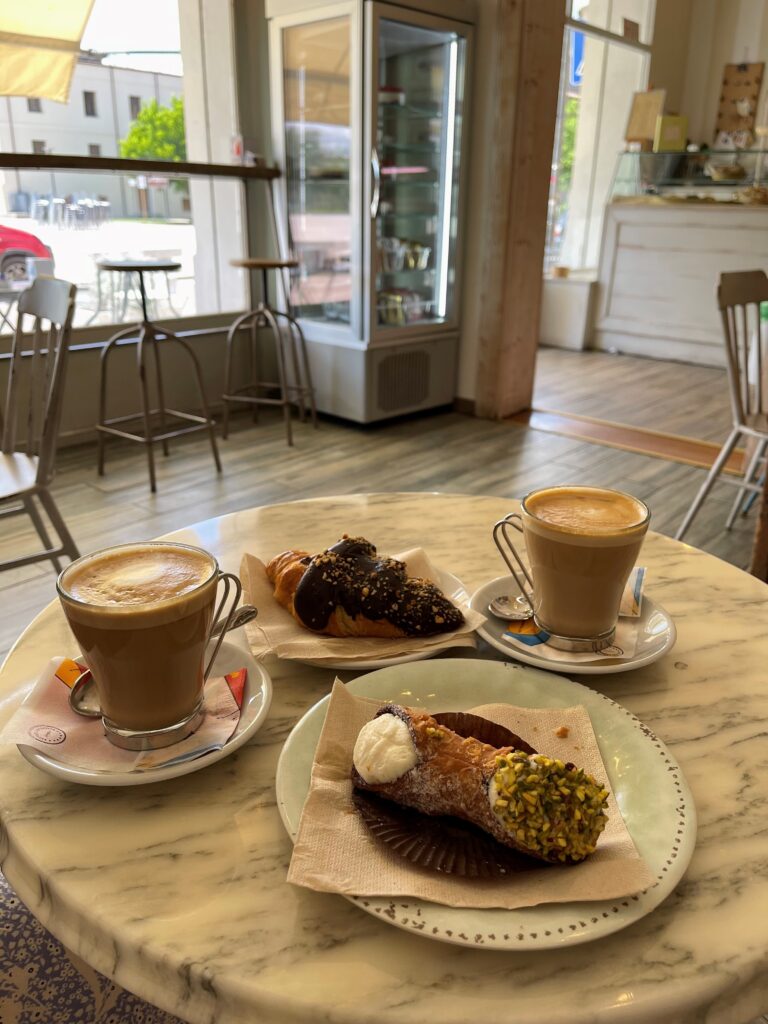
We let the temperature slowly drop and when we went out for a walk at 6.30 it was rather pleasant. We following the path along the canal for about 10 minutes to the main park of the city. The park was obviously both well used and well cared for. Lots of people were out for a jog or just chatting, sat on the grass. There were plenty of families out but I don’t think we saw a single dog, or person drinking, smoking or littering. Not that I put dogs in that category! We wandered around for a while, looking at the exotic (to us) plants and enjoying the coolish air.
We left the park and stopped off at the well rated Trattoria da Sara, about 5 minutes walk from the hotel. We sat in a lovely courtyard with vines trailing along the walls and ordered dinner. Food is not a priority for me but I understand that some people are different and the food was rather good. When it arrived. We eventually got back to the hotel over two hours later to plan our stops on the way back to the airport.
The next morning we had a very lazy start and didn’t leave the hotel until midday. The plan was to follow the main roads back, nip off to visit Parco Aymerich and then continue to the airport.
Parco Aymerich
This park is a large urban park, close to the centre of the island and was originally a nineteenth century noble estate before being transferred for public use in the 1990s. It is a large park with around 20km of trails past waterfalls, a ruined castle and the botanical collections of the founder, Don Ignazio Ayermich Ripoli and is situated in the town of Laconi.
So you’d think it would be easy to find. The trip started well with Google deciding that a quicker route was off the boring motorway and along mountain roads, continuing the theme of this Sardinian road trip! For about 2 hours.
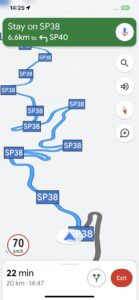
We drove through the town of Laconi, four times in total including actually navigating the ridiculously small backstreets in the hope of finding some kind of sign or hint where the park was. Without success.
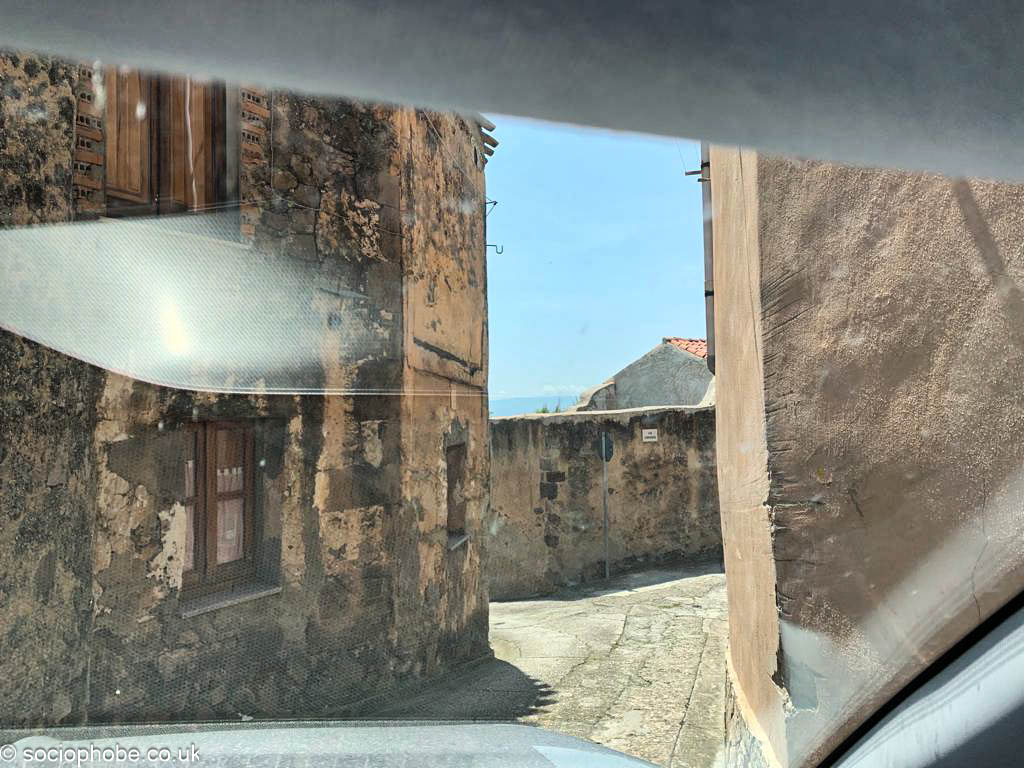
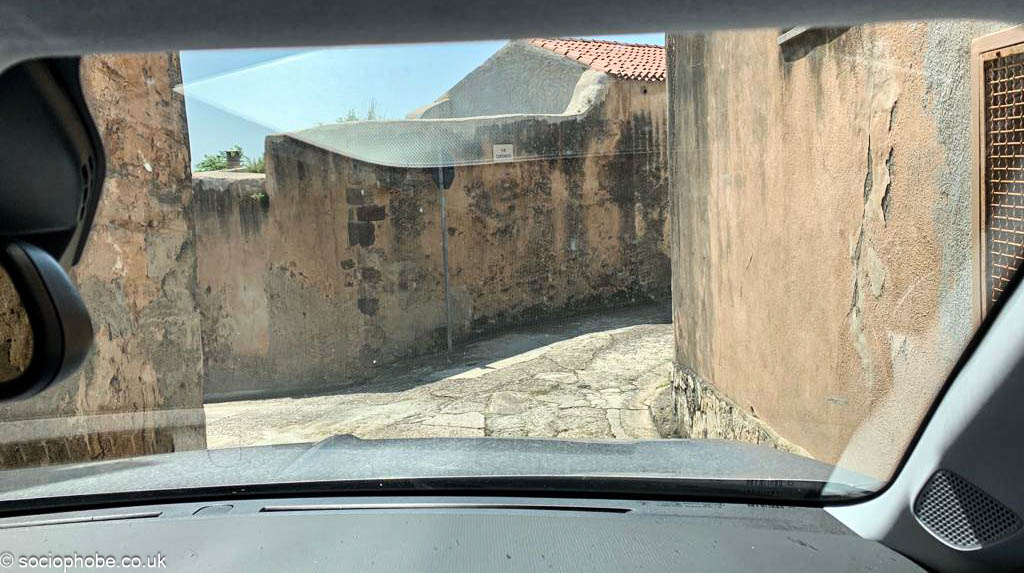
Even using satellite view on the maps didn’t help so in the end we gave up and continued on to Cagliari, another 90 minutes away. We had a brief stop as we drove through Isili as I needed to actually get out of the car after 5 hours and it was a lovely view.
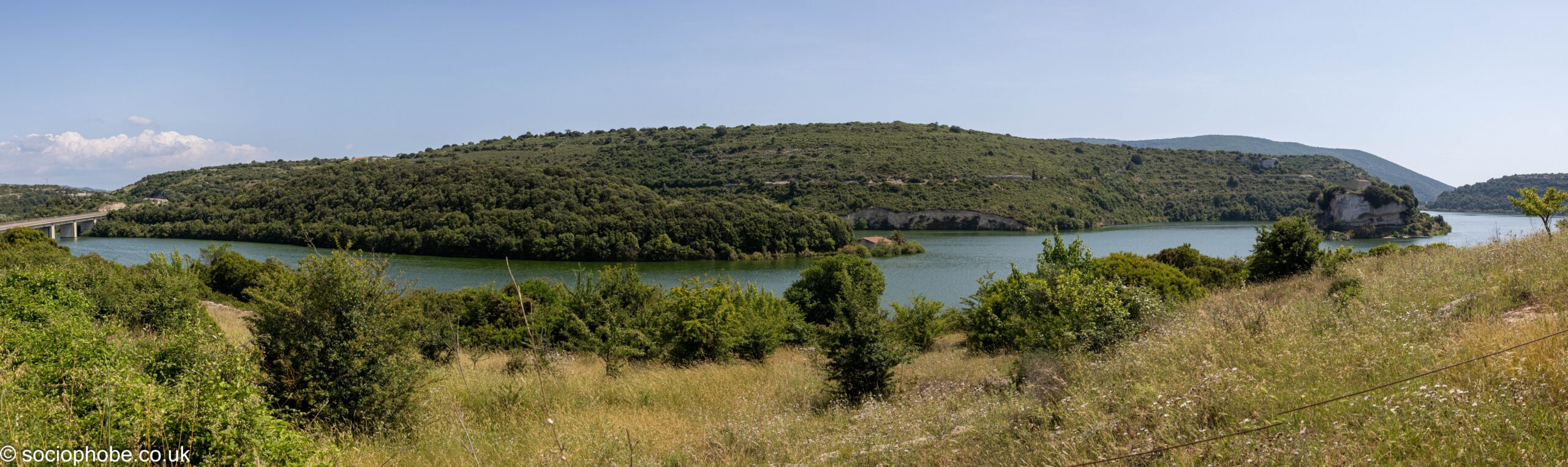
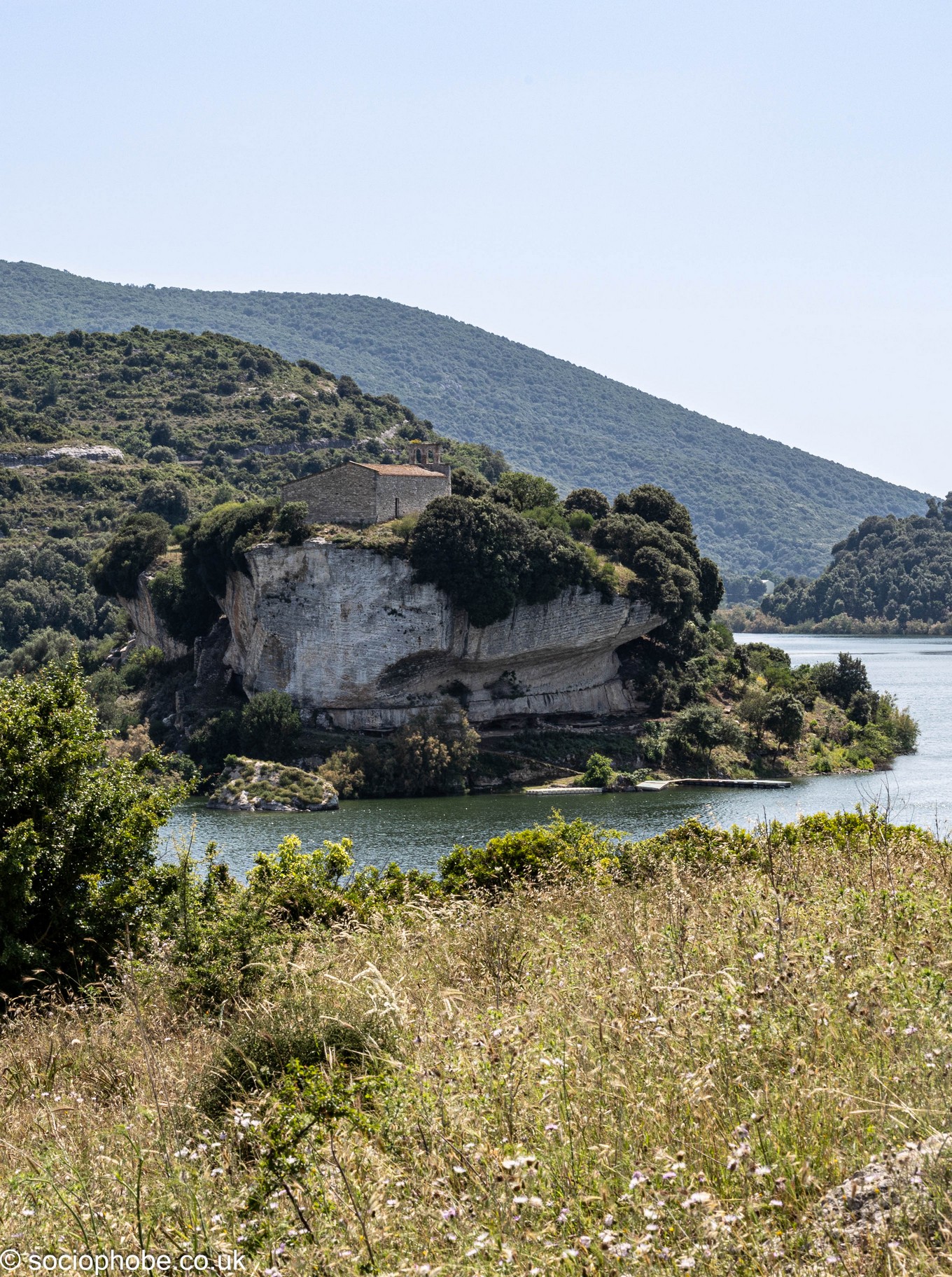
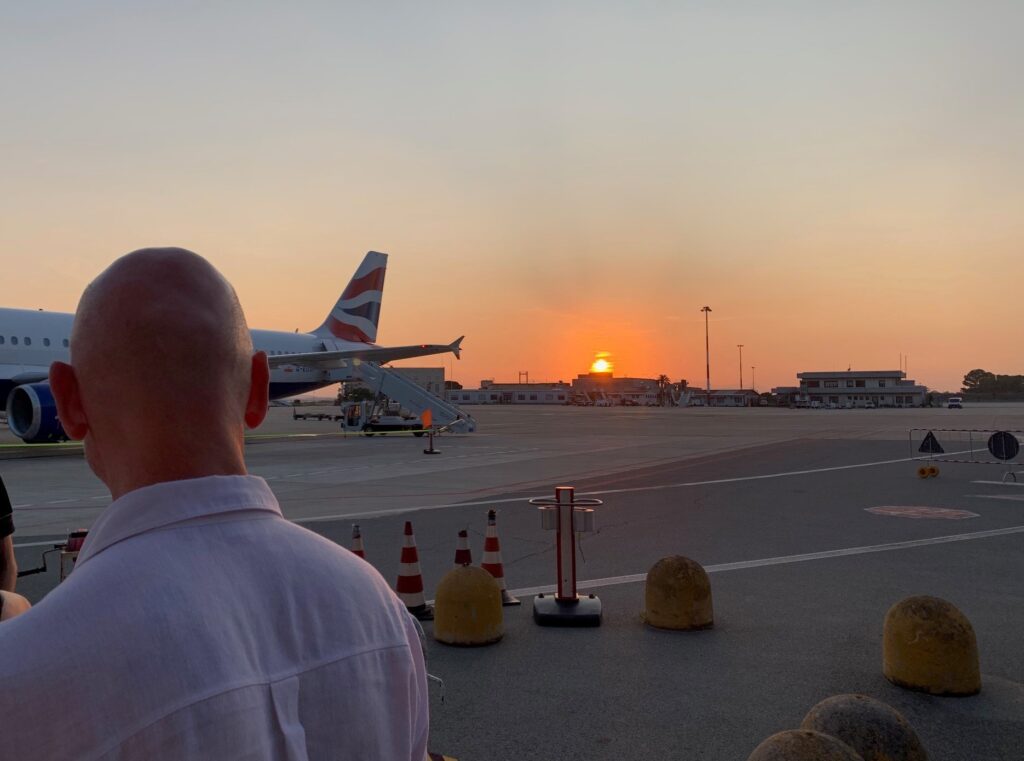
The flight home was delayed by 90 minutes but that did mean the last photo of the holiday was a sunset.
So, was it worth it?
So our Sardinian road trip covered around 2000km, which on an island that is 270km north to south gives an idea of how direct the roads are! We focused on the history of the island and saw some fantastic sights as well as amazing views. It would have been nice to have a couple of days at a beach resort but maybe next time. There are still things left on our list that we’d like to see and it’s always good to have a reason to return.
Food prices seemed to be between €40 and €110 for a couple for evening meal with a drink or two and hotels seemed to be around half the price I’d expect to pay in the UK. The people were universally helpful and friendly and the driving helped make this Sardinian road trip memorable.
What a insightful, amusing and helpful account of Sardinia. It’s firmly on my bucket list now. There is so much to see and do, great photos and a great read.