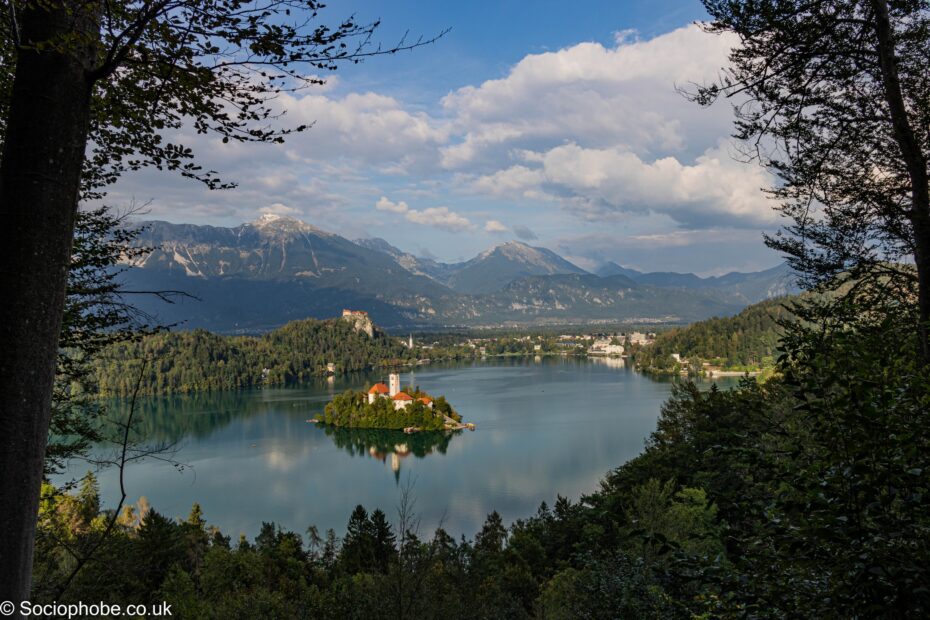
Slovenia, Croatia and Italy are all areas that have multiple cultural influences and combine scenery, food, architecture in an epic road trip. It was out first time in both Slovenia and San Marino and we visited new destinations in Croatia and Italy so it was a fascinating experience and a wonderful trip.
Slovenia provided some fabulous scenery and unexpectedly awesome sights with Bled Lake and the Postojna caves, Croatia allowed us to see the fabulous Roman amphitheatre at Pula and walk the Lungomare, holiday resort of the Austrian nobility, in Italy we experienced fabulous food as well as the opulence of Estense Castle and San Marino provided abject terror from the height and views.
- Recommended days 12
- Budget £
- Difficulty Easy

Why choose Slovenia, Croatia and Italy for our road trip?
Largely, it was because all of these places were new to us, or at least the places we visited within those countries were new to us. Lake Bled has always looked beautiful from the photos we have seen, I had never heard of Postojna Caves but they were on a combined ticket with Predjama Castle and had been recommended to us. In Croatia the amphitheatre at Pula has long been on my list and a walk on the lungomare at Lovran was recommended to us. Ferrara was chosen in Italy because we had never visited and it seemed like a good base and a pretty city. Finally San Marino, for the passport stamp and the photogenic vistas.
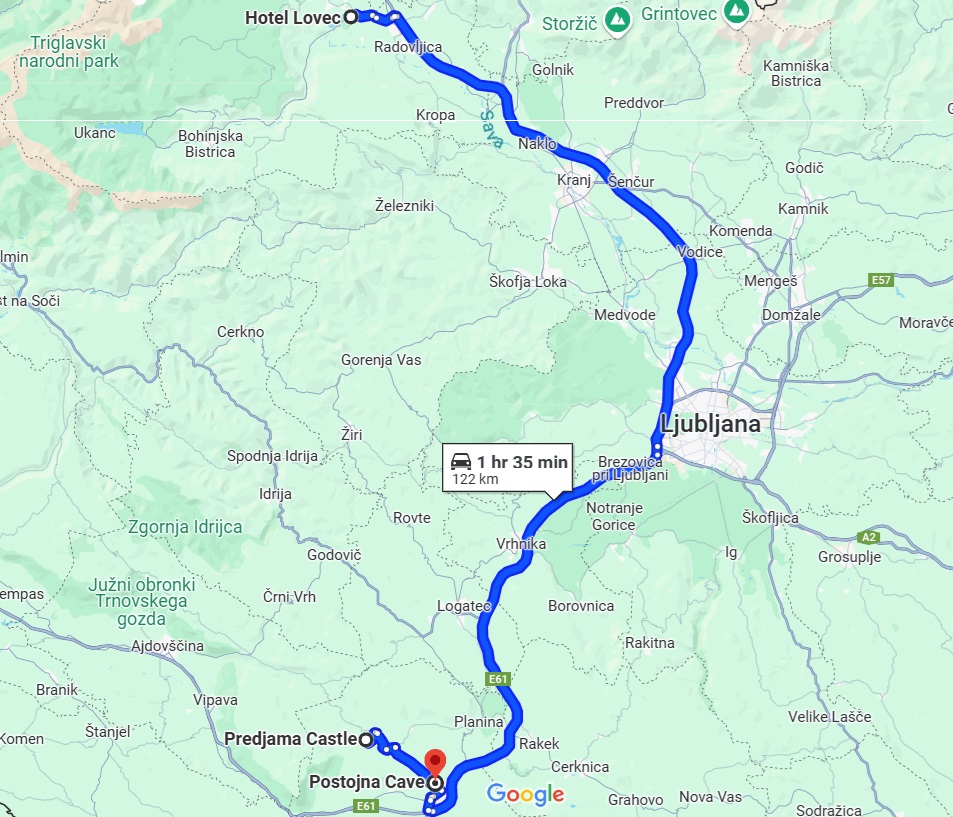
All this was easily doable in a hire car and 12 days of travelling including the flights. We flew with BA from Heathrow to Venice and the hire car was from Avis – purely for convenience and other options may have been cheaper. We chose Venice as it was a convenient and easy airport for the round trip. I have found that the charges if you don’t return the car to the original hire airport are prohibitive. Total cost including flight, car hire, hotels, fuel, entrance fees and food was around £4k.
Contents
This is a long article so I have included headings below to improve navigation:
Lake Bled, Castle Bled and Bled Island – Slovenia
Predjama Castle and Postojna Caves – Slovenia
Villa Mirasasso and Pula Amphitheatre, Venetian Castle and Roman ruins – Croatia
Morosini-Grimani Castle and Lovran lungomare – Croatia
Pomposa Abbey and Gardens of Villa Barbarigo in Valsanzibio – Italy
San Leo Fortress and San Marino city
DRIVING IN SOLVENIA – a real pleasure with fabulous scenery and wonderful main roads. the minor roads were, well, minor but better condition than the UK. Road layouts were good and other than around Ljubljana the roads were quiet. In our three days of driving in Slovenia we saw no litter! The driving standard was good with no one driving too close or doing silly overtaking, speed limits were generally obeyed. You do need to buy a vignette for each day you are in the country if you use trunk roads, we bought ours at the border and it was just a few euros.
DRIVING IN CROATIA – This trip only covered Istria and there was one main trunk road, with tolls. Although the toll cost is small it mounts up so try and plan a tour that doesn’t involve going backwards and forwards on the same toll road, unlike us! The area was beautifully green with wonderful views along the coast, road layouts and signage were good and the roads were generally quiet.
DRIVING IN ITALY – drivers that want to overtake get close enough to flirt with your rear bumper which can be unnerving. The toll roads are expensive and the Po delta area, around Venice/Bologna is incredibly flat and dull with lots of 50 and 70kph speed limits. The roads were a lot busier than Croatia or Slovenia. In Ferrara there were lots of cyclists without lights and no cycle lanes and the streets were narrow so patience was required. There were almost no road works in 1200k of driving and the two lots we found didn’t have miles of cones either side, just the area that was worked on. Why is our Highways Agency so poor?
Our Accommodation
Although this was a road trip I didn’t want to be rushed from place to place so we tried to avoid just one night in places although it did happen a few times. the hotels were largely chosen for convenience and that was balanced with budget – I didn’t want to spend a fortune on a hotel when I really don’t spend much time in them, I’d rather be out and about. Most were booked with hotels.com but I won’t be using them much more as their new loyalty scheme is terrible.
Accommodation we used on our Slovenia, Croatia and Italy road trip is as follows:
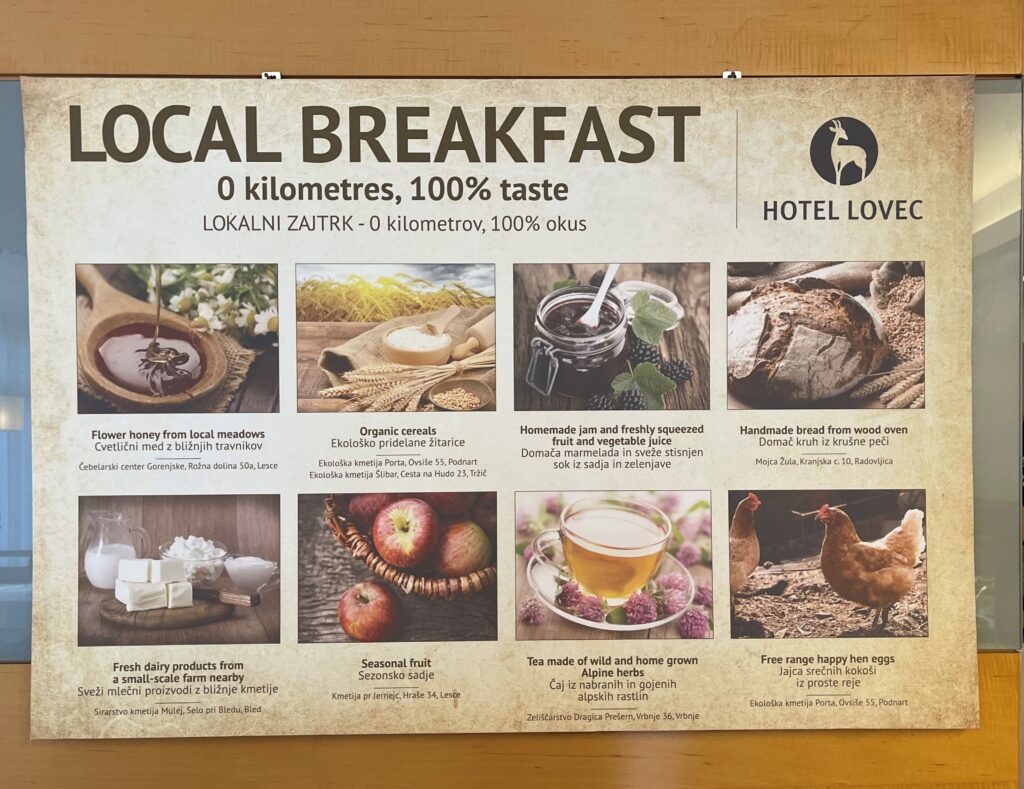
In Lake Bled we stayed at Hotel Lovec for 2 nights, 5 minutes walk from the shoreline. The hotel has an underground car park, we had a room with a balcony overlooking the lake and the included breakfast was excellent.
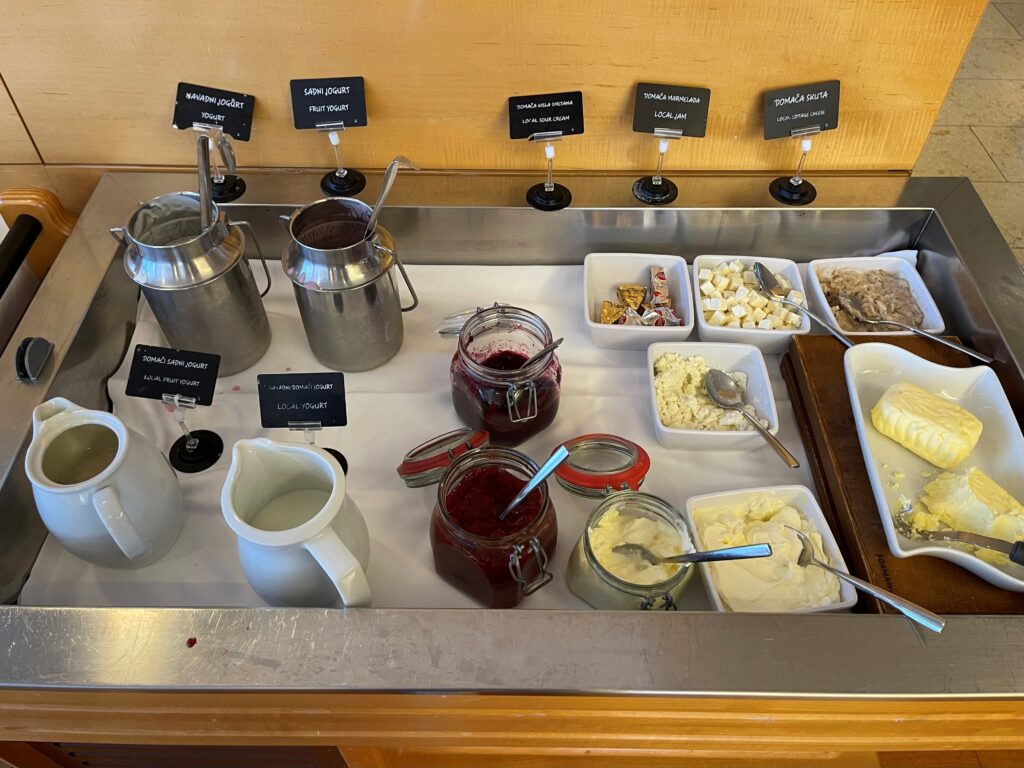
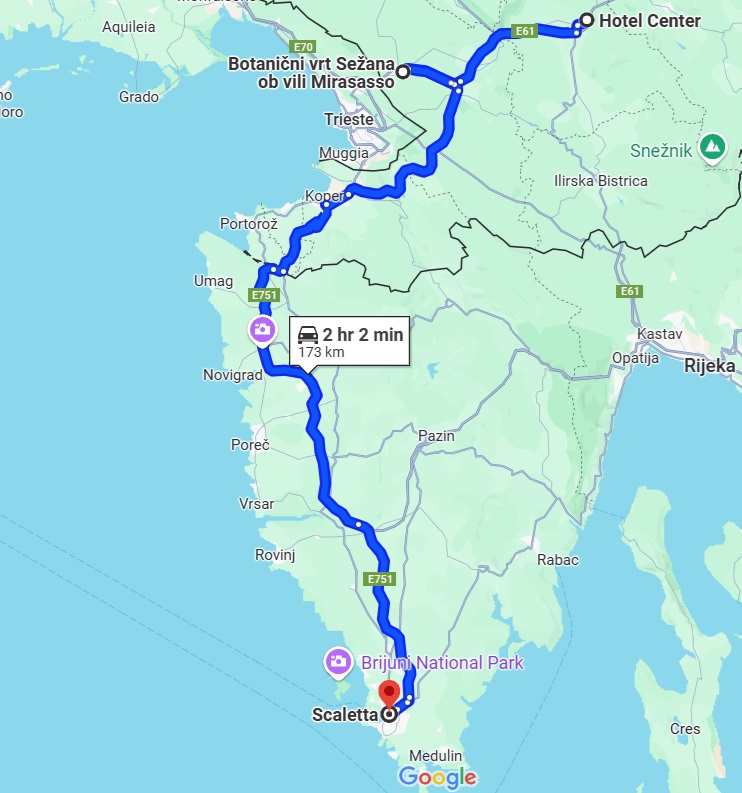
In Postojna we chose the Hotel Center for 1 night. This was a few minutes drives from the caves, had secure parking, a lovely interior and a great included breakfast.
Our hotel in Pula was the Scaletta Hotel, a few minutes from the amphitheatre. This was a bit more 3 star than the other hotels but was a decent base and had helpful staff and we stayed 2 nights.
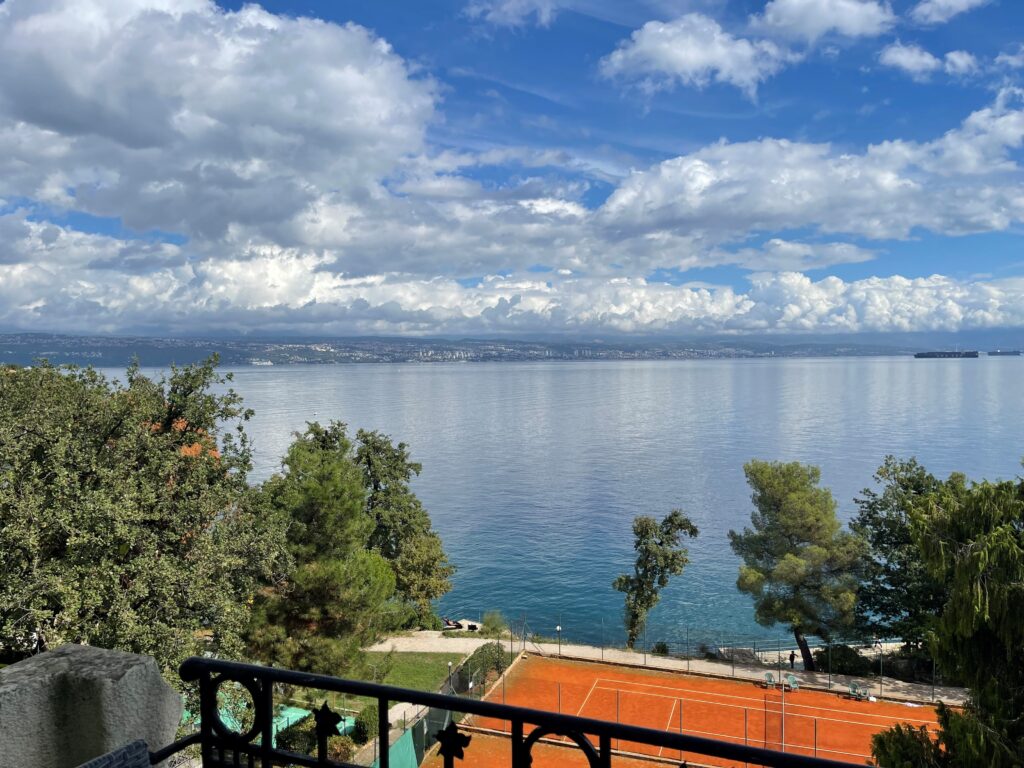
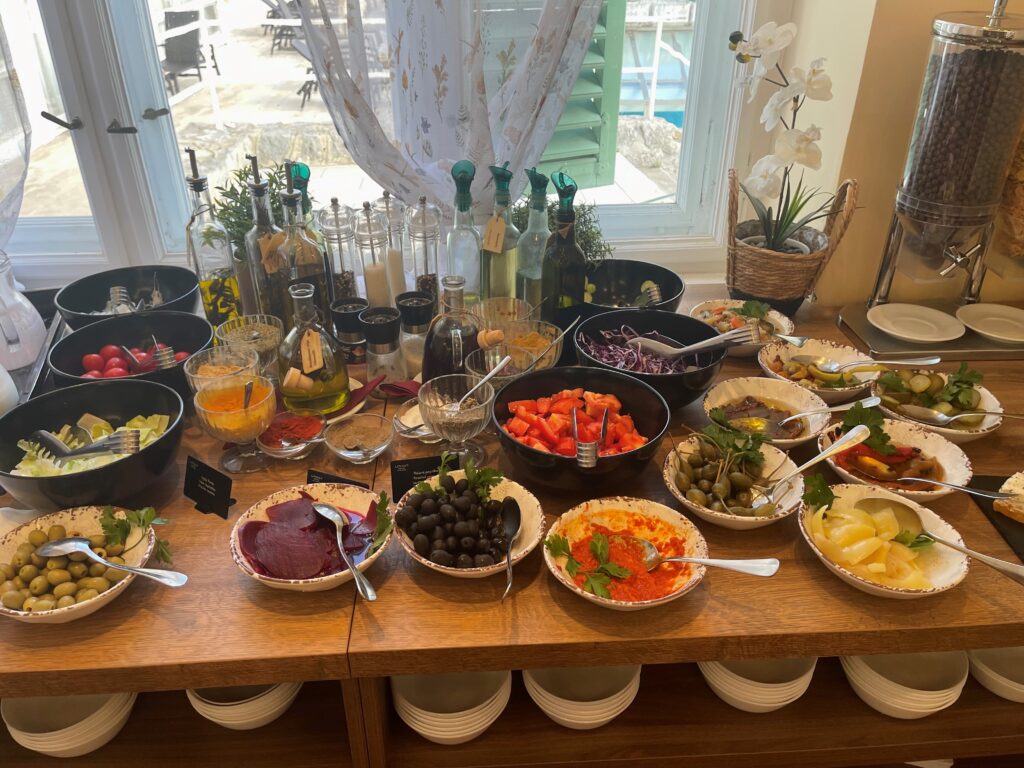
Probably my favourite hotel was the cunningly named Lovran Hotel, in Lovran, where we stayed for 1 night. We had a wonderful balcony with views over the bay and the included breakfast here was fabulous.
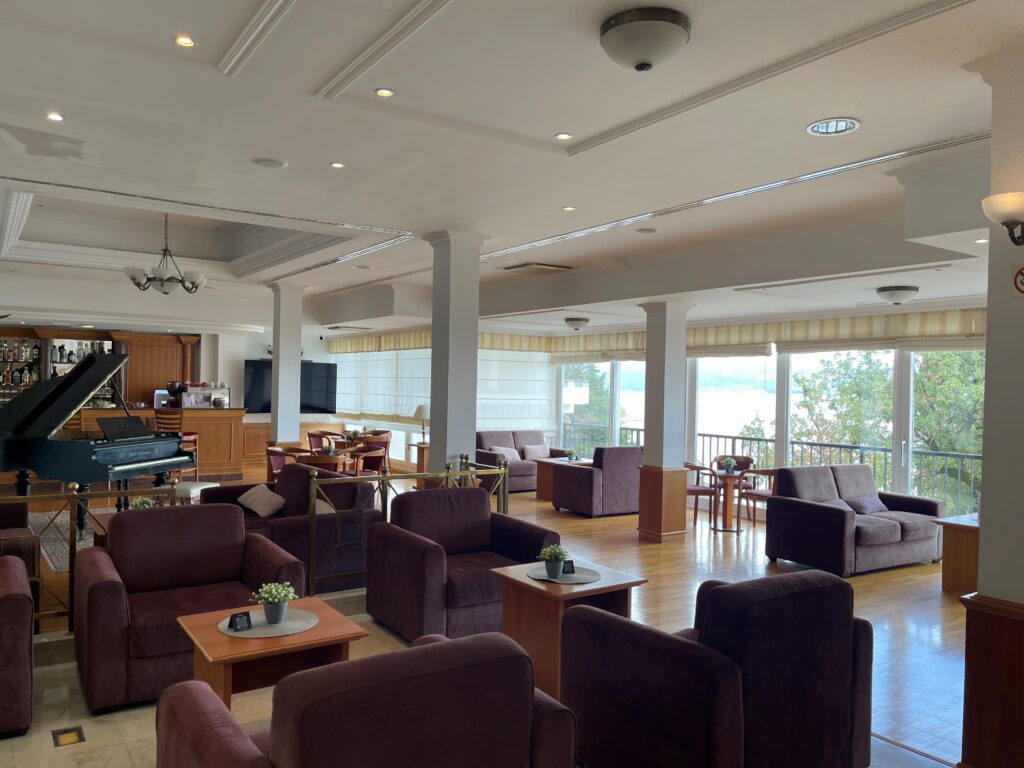
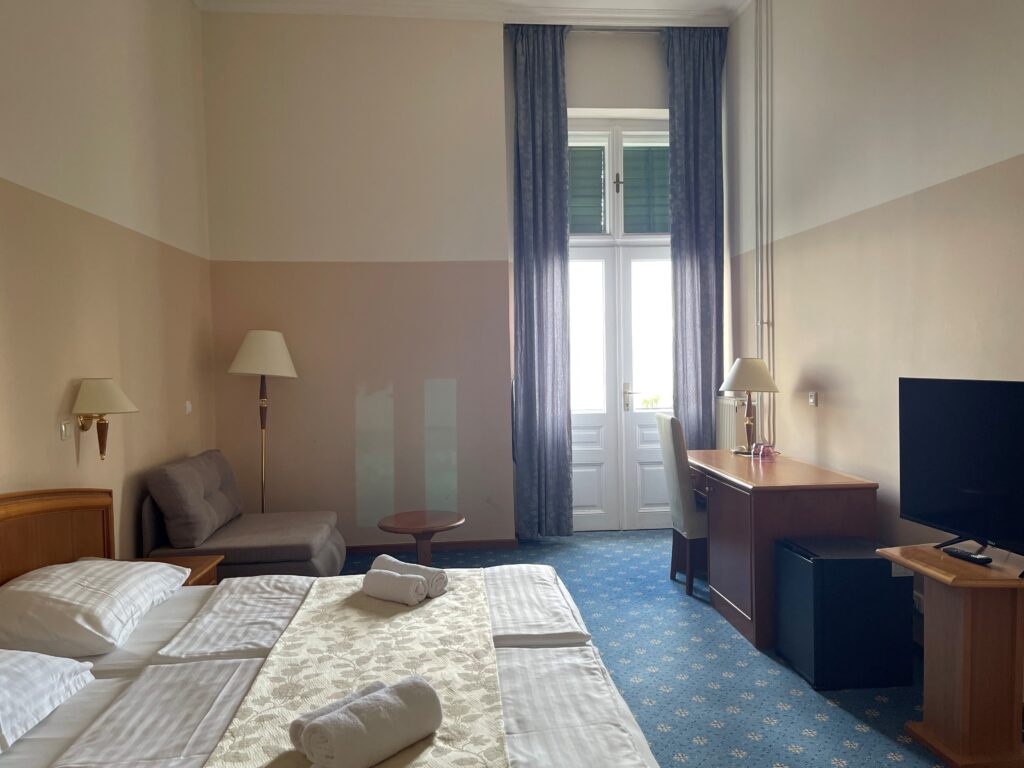
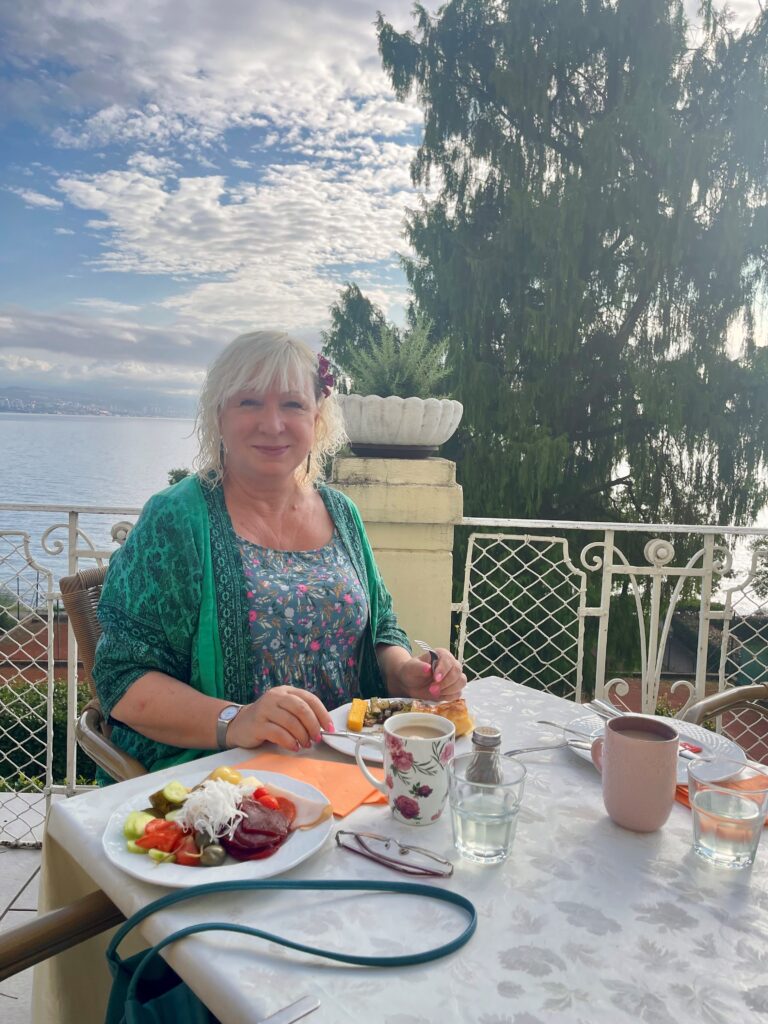
Our longest stay was the Duchessa Isabella in Ferrara. This was in a fabulous location in Ferrara, a few minutes from the castle and had secure parking. It was a grand old building but needed a refurb and when we visited for 3 nights the breakfast service was unavailable.
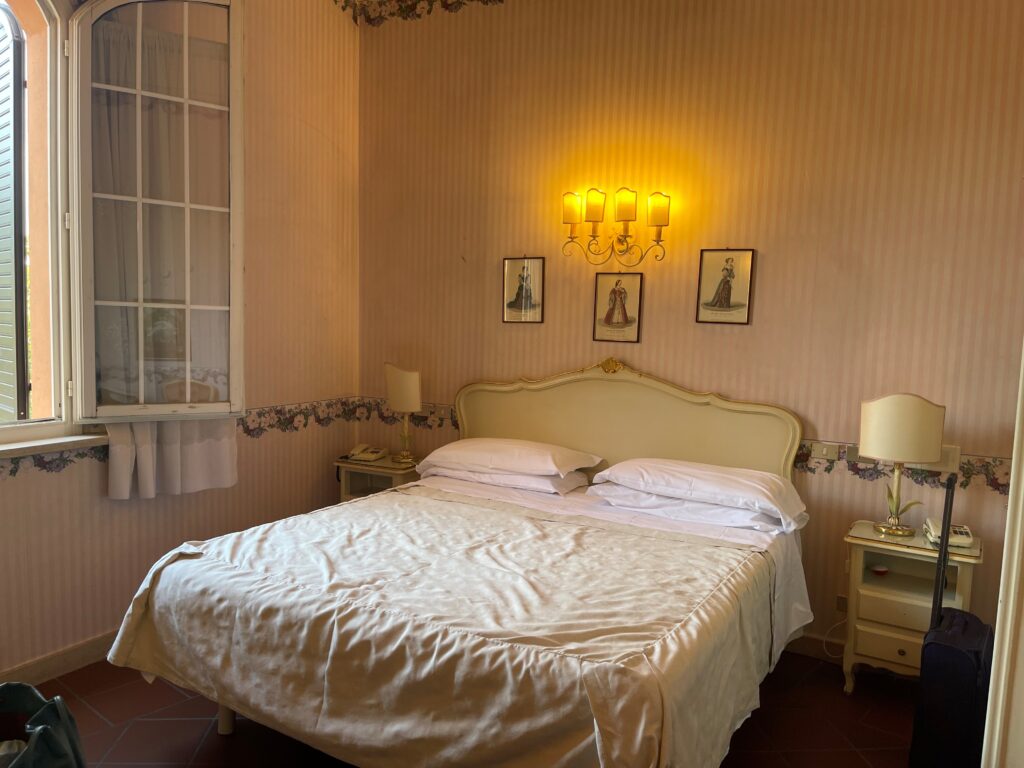
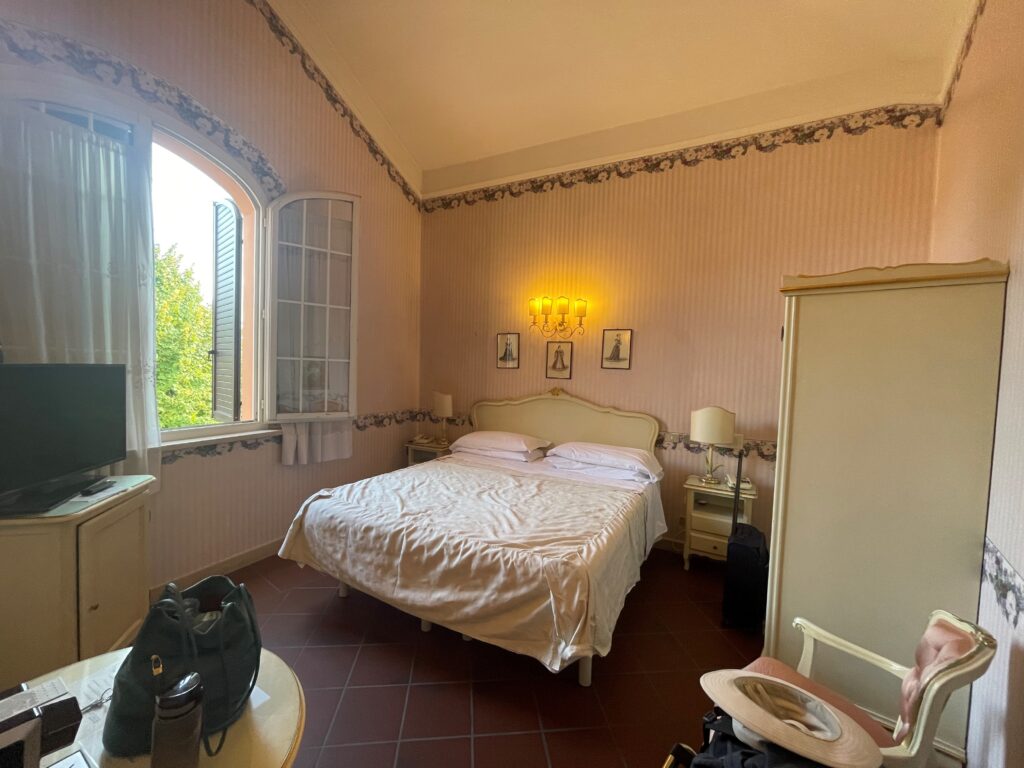
Finally, my second favourite hotel from this break was Hotel Joli in San Marino. We had a wonderful terrace to relax on, a kettle (at last!), friendly and helpful staff and was a few minutes walk from the entrance to the old city.
Thursday – Day 1 – London – Venice – Bled
In the interests of economy I hadn’t booked an airport hotel this time so we had to leave at 4AM for the short drive to Heathrow. I’d opted for the Meet and Greet parking service for the first time too and this worked really well, no waiting for shuttle buses or remembering which area your car was in. The flight was delayed and combined with a bit of chaos to collect our hire car, this meant we left Venice about 90 minutes late.
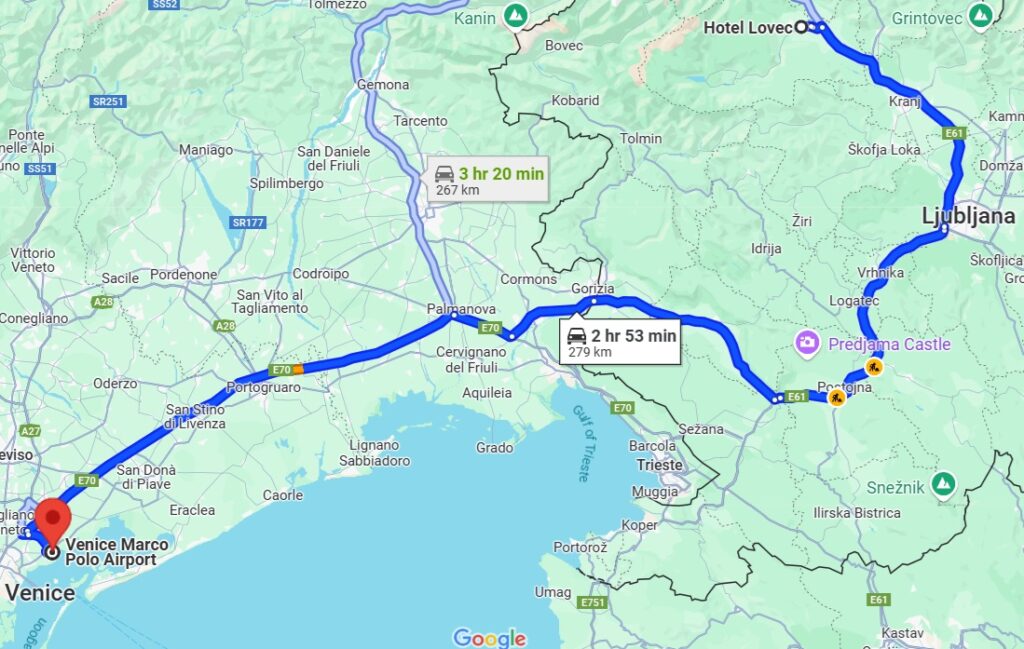
This was the first road trip we’ve done in a while and it involved driving around 2000k through 4 countries and staying in 6 different hotels over 11 nights. The Italian roads were lovely, well sign posted and no road works and traffic remarkably light. We remembered the advice about getting a vignette for travel in Slovenia so we got that at the border crossing – there are no toll roads in Slovenia but you have to buy a vignette to use trunk roads or you get a large fine when you exit the country.
We had never visited Slovenia before and it was a beautifully green country. The roads were excellent and other than around Ljubljana, traffic was minimal. We arrived in Bled and it was like going in to one of the Lake District towns – rammed with traffic and people but just stunning scenery. We parked in the underground car park, checked in to the Hotel Lovec and sat on the balcony and enjoyed the view for a while.
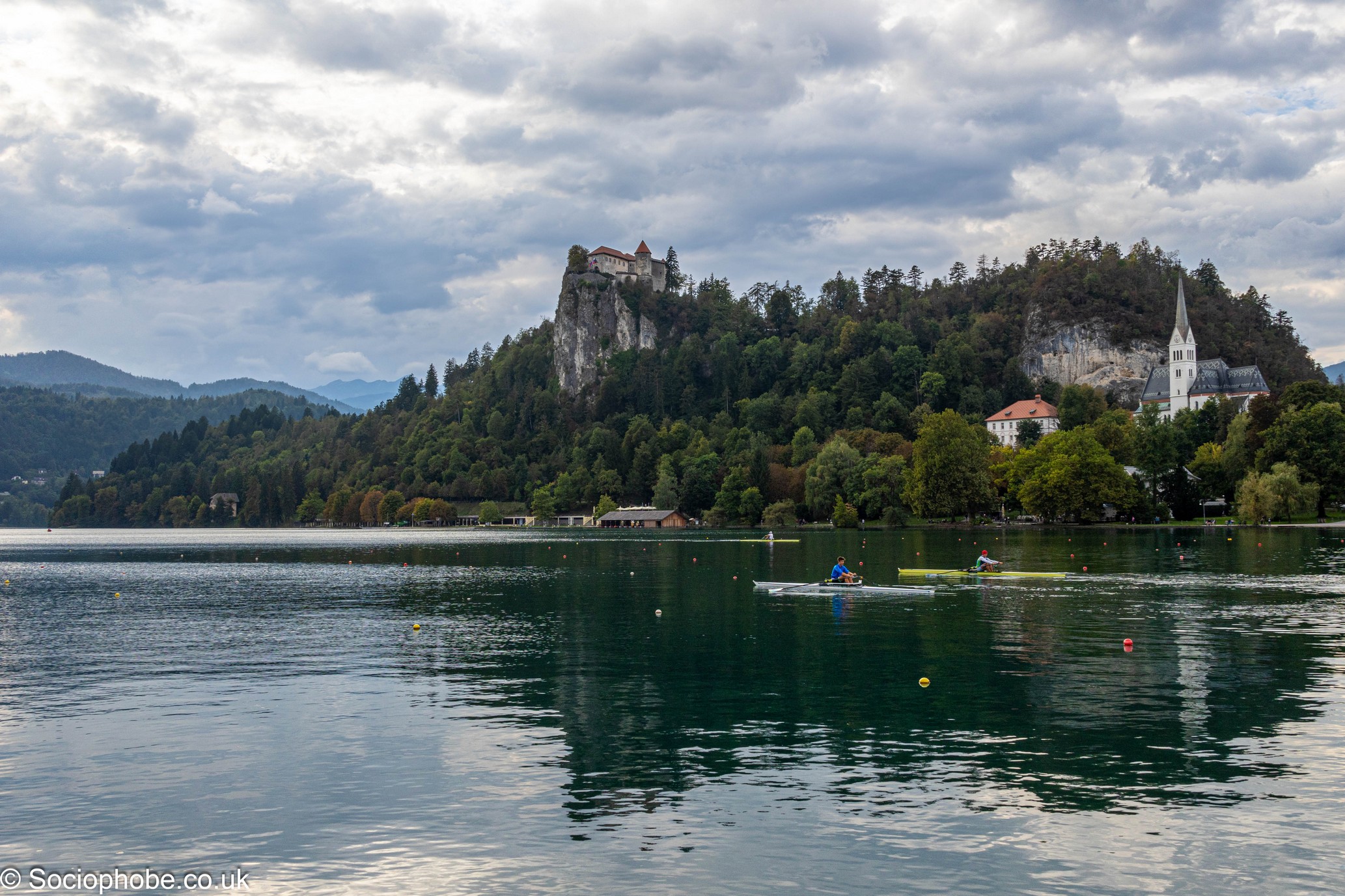
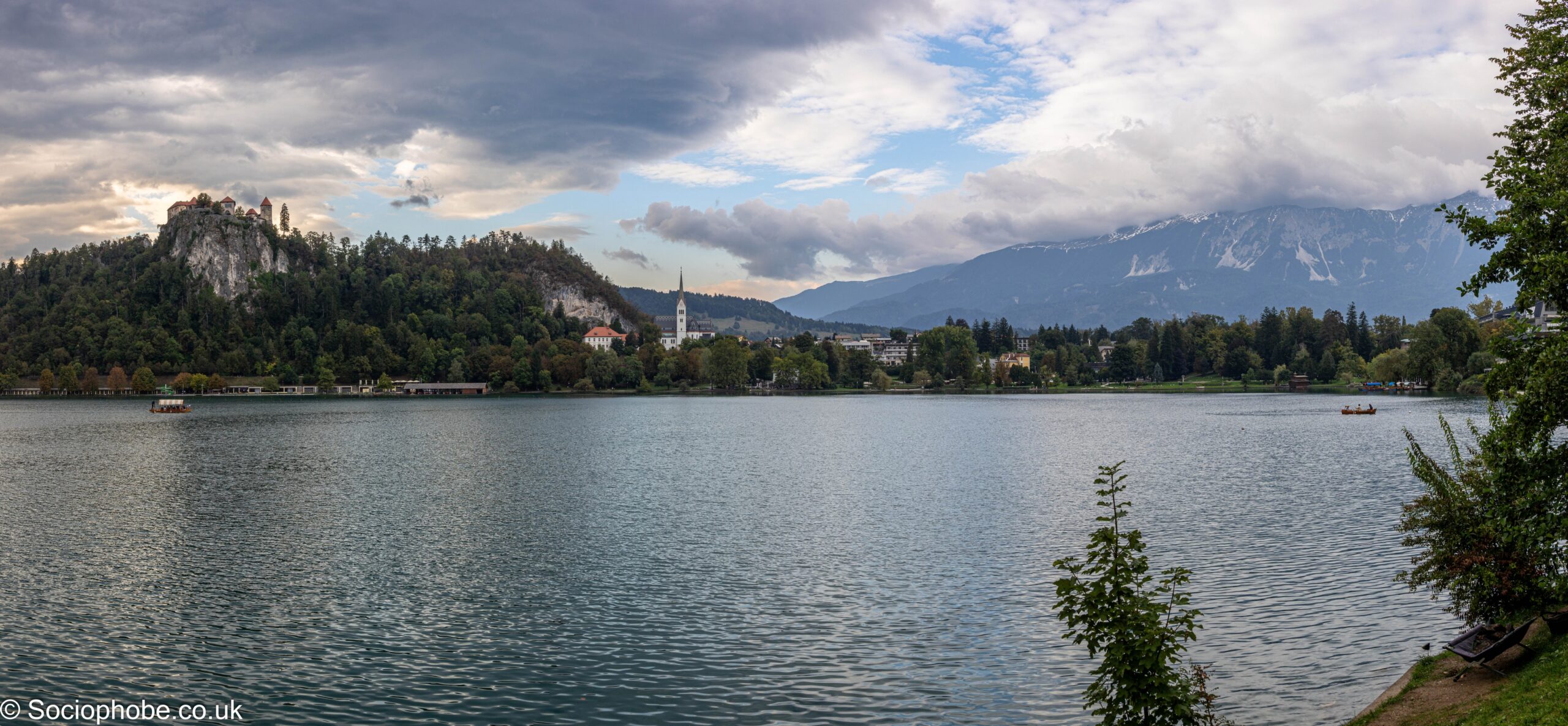
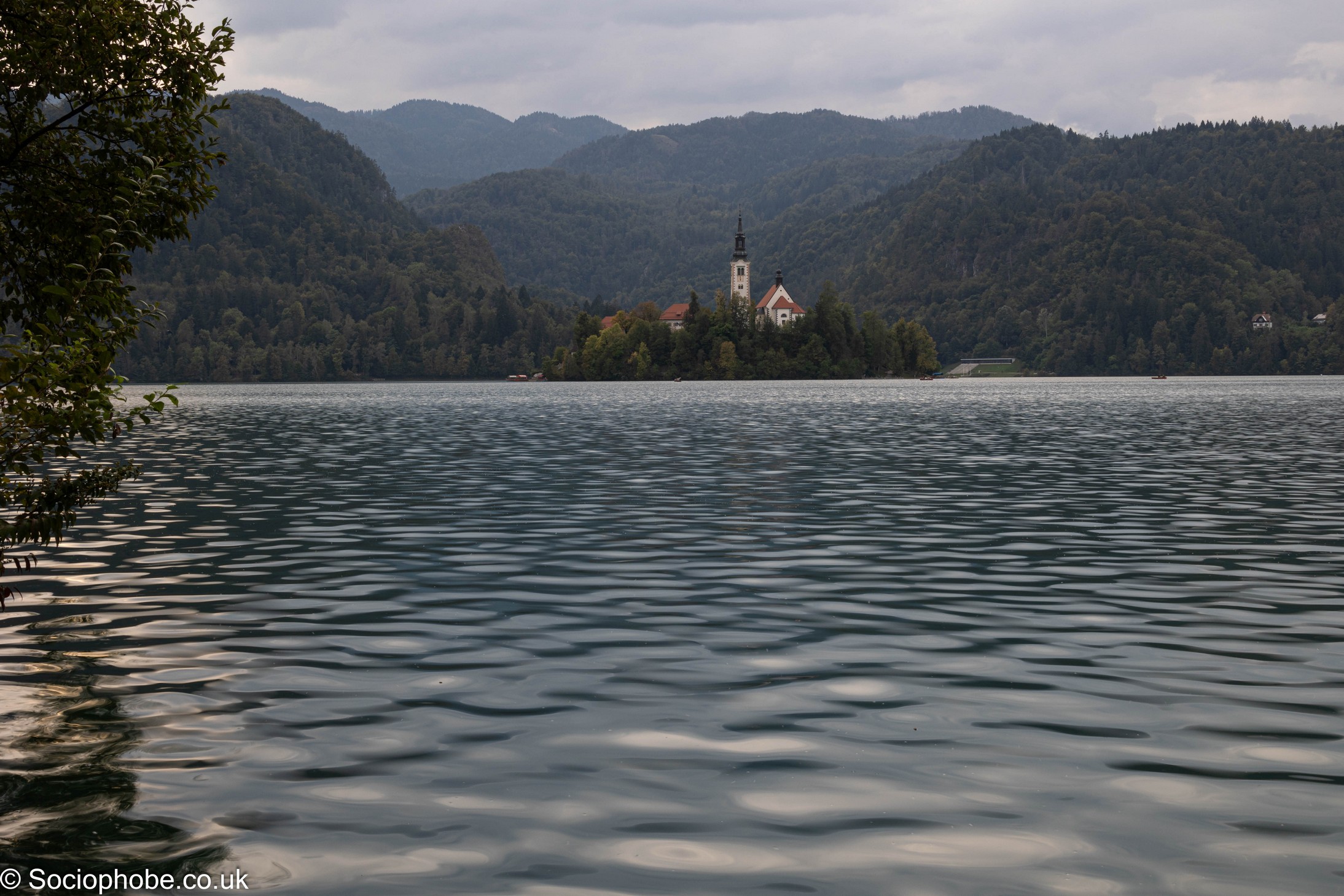
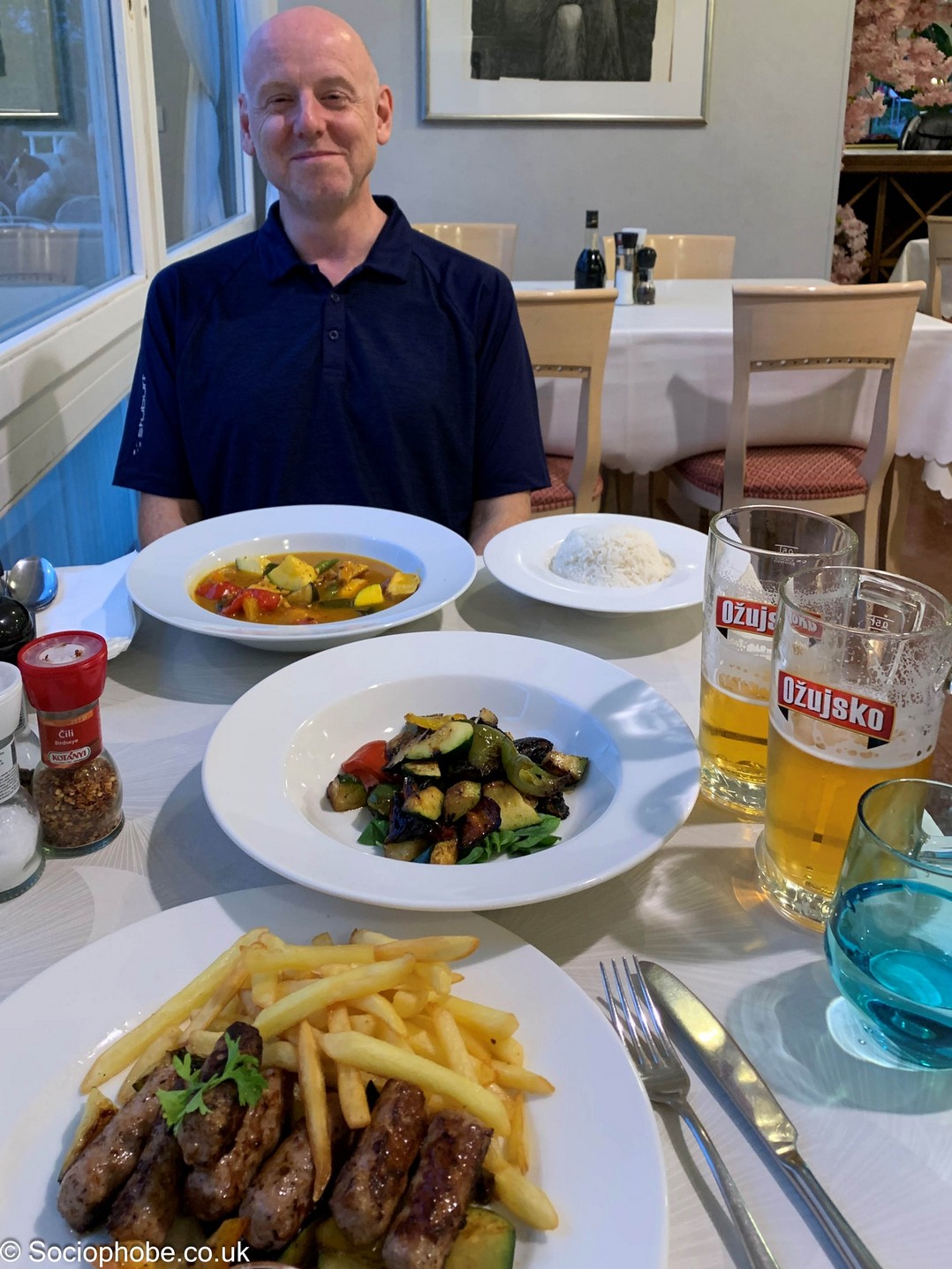
It was getting towards sunset and I didn’t want to have done nothing all day so I walked down to the lakeside and walked along the shore for a while. There were plenty of people around but it was just lovely, clean and relaxing and still warm despite the cloud. I watched the sunset and then we went for dinner – Deb having some weird Balkan sausages whilst I opted for traditional Slovenian mango chicken 😉 It always amazes me how travelling somewhere new is just like a reset, all the work and home cares just seem to fade away.
Friday – Lake Bled, Castle Bled, Bled Island and viewpoints
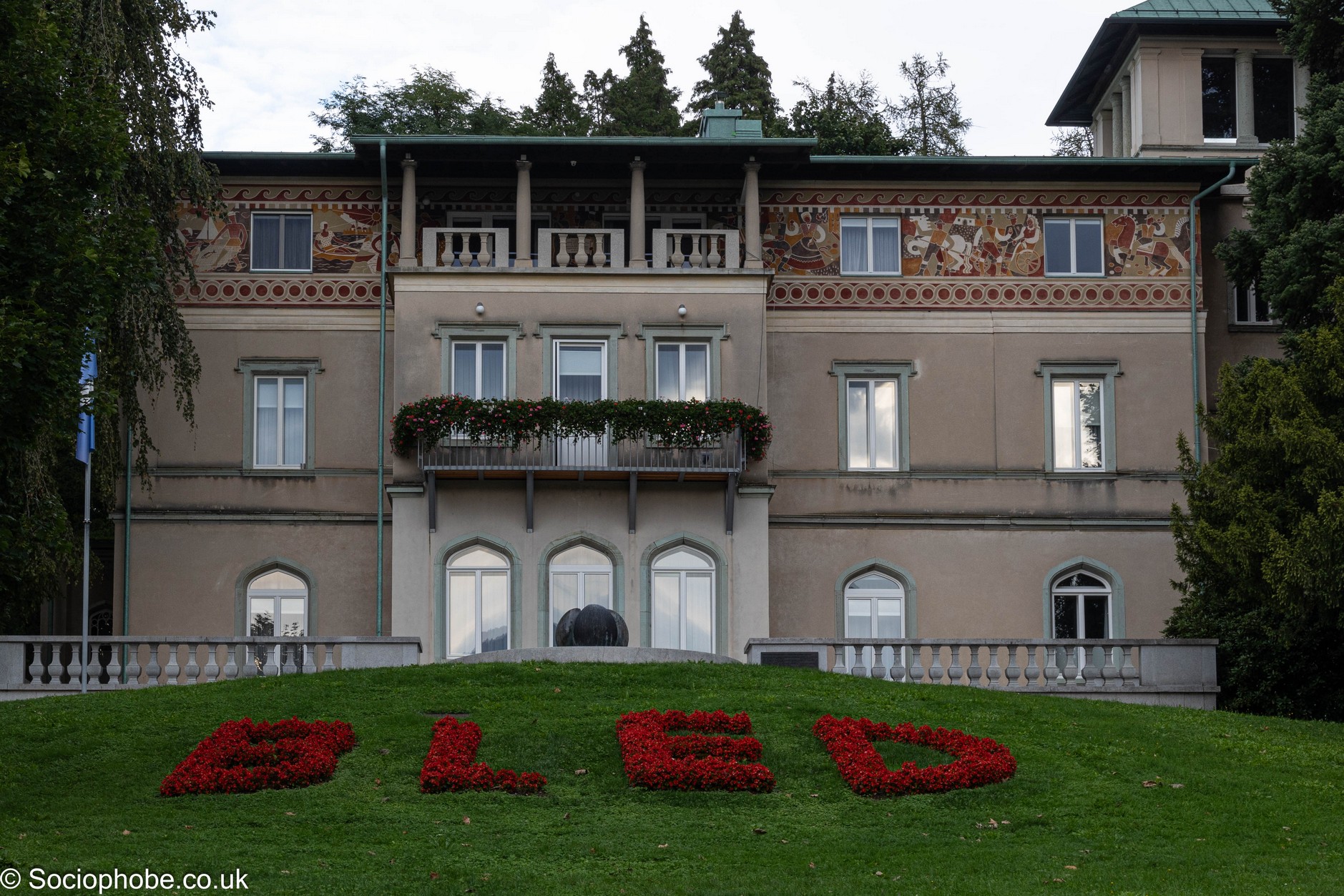
I woke early ish so did a quick walk before breakfast down to lake. It really is a beautiful place if the weather is good and the sky was blue and it was warm and very quiet except a few joggers. I did maybe half an hour just walking along the prom enjoying the view before returning to the hotel.
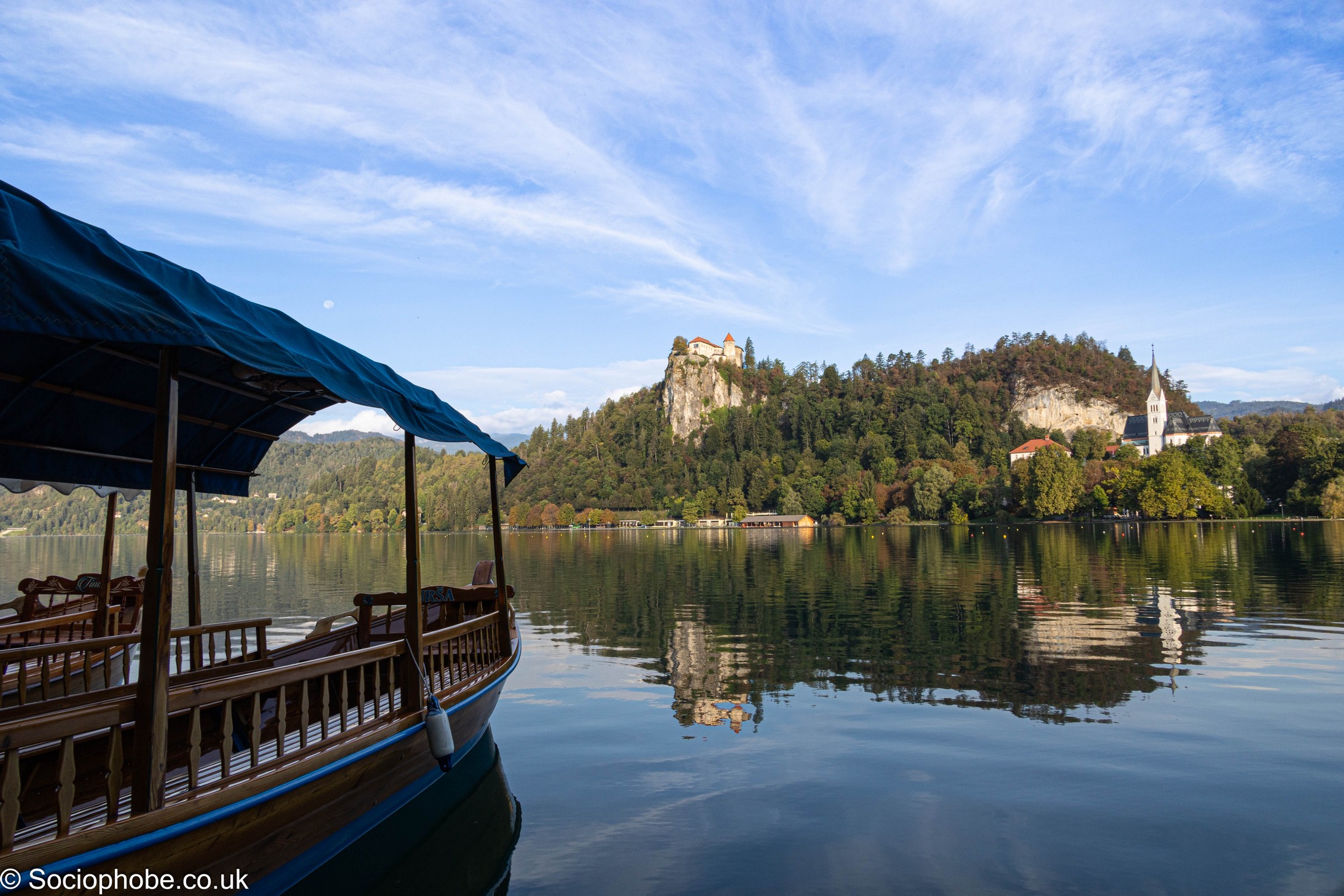
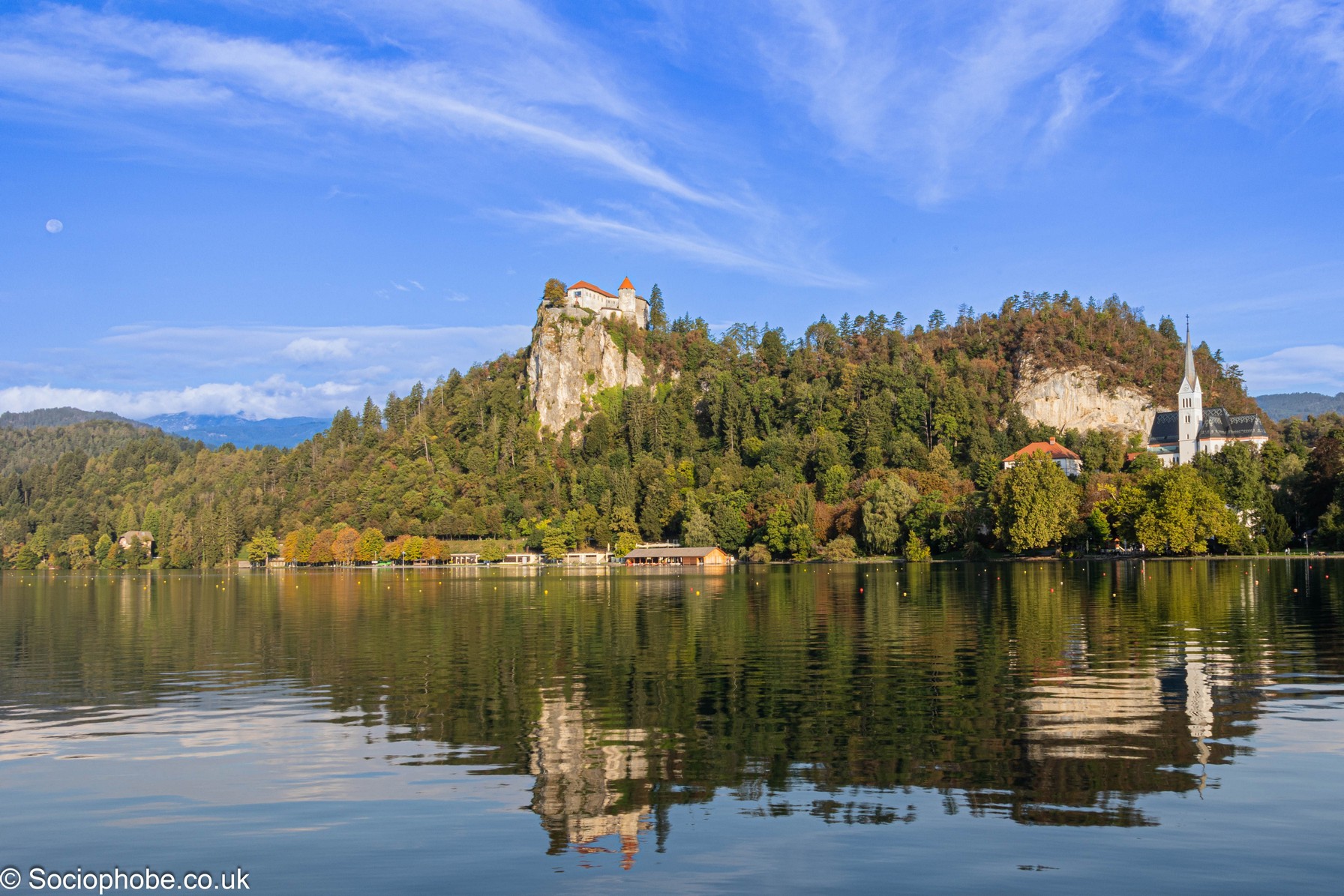
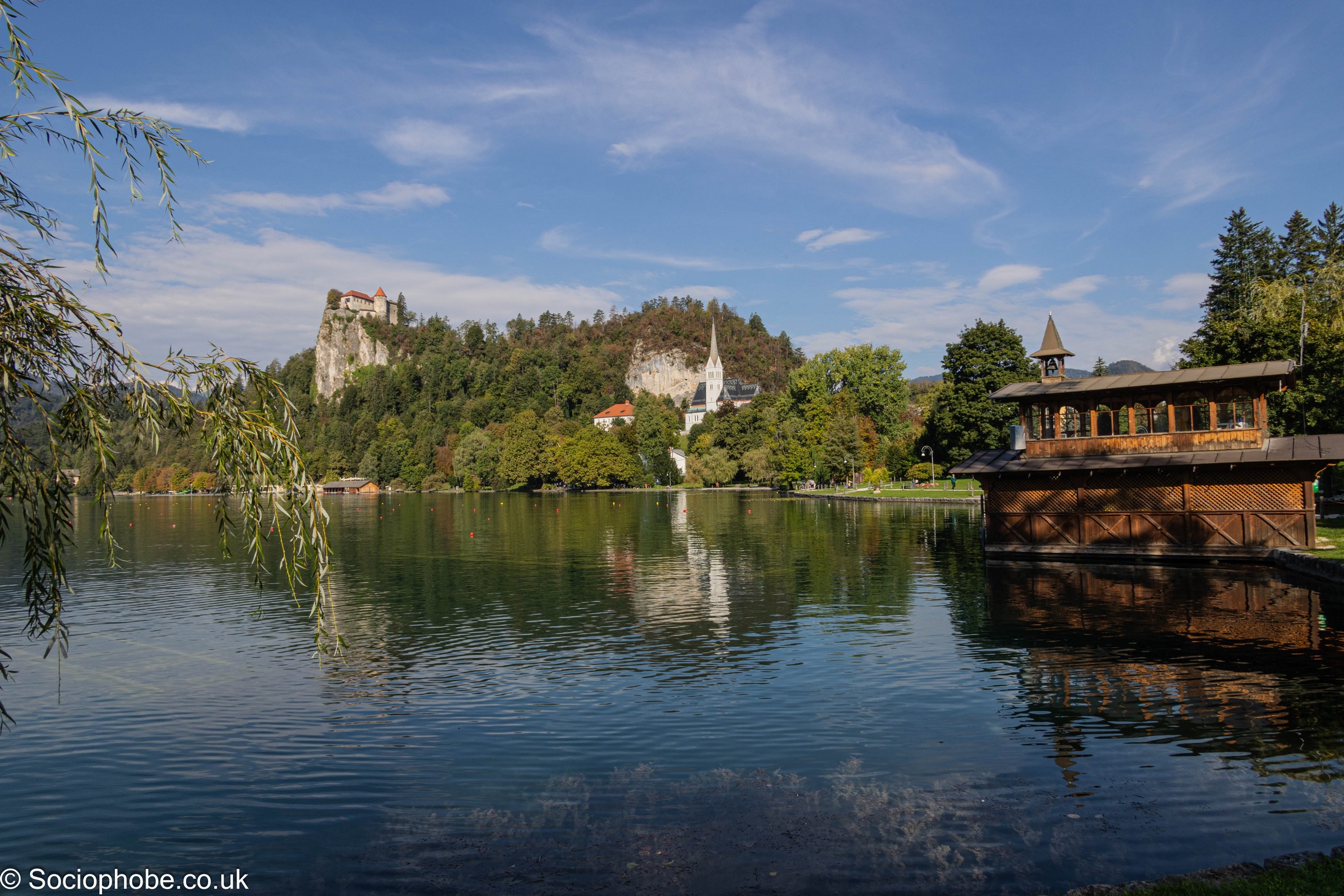
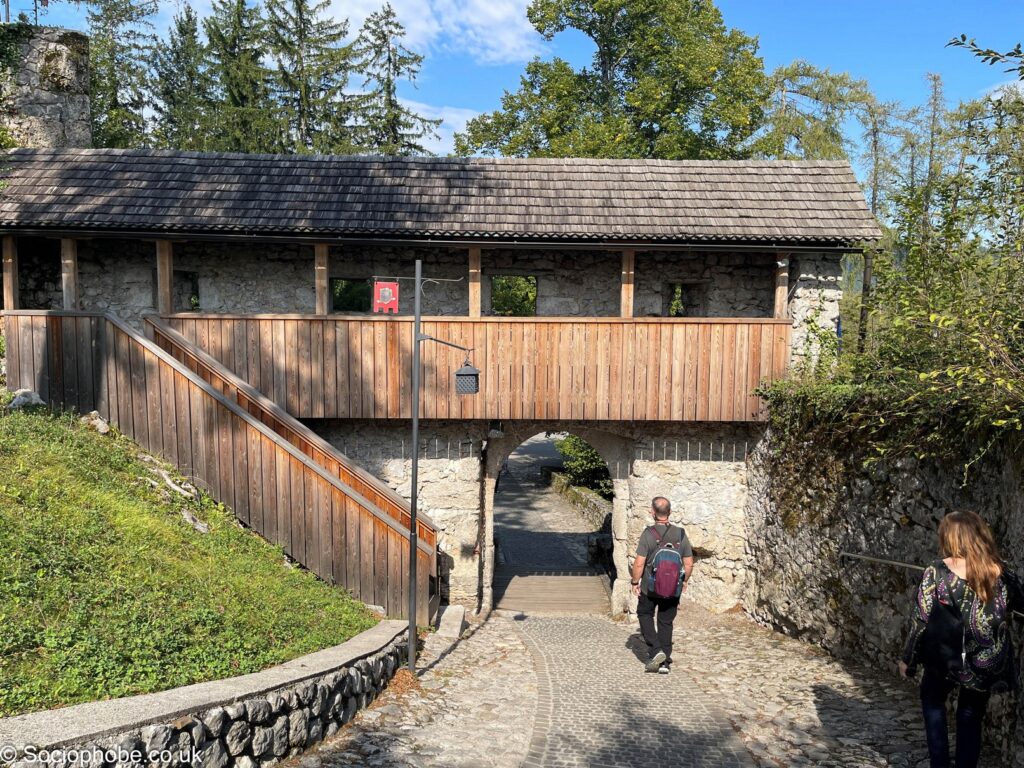
After breakfast we walked to the castle, which was quite a steep climb but a good path through the woods. Deb persevered and managed it and then we got to the top to find a car park! Bled Castle is quite small, but old. It dates back to the 11th century and was damaged by earthquakes in the 16th century before being restored in the 19th century. The Bishops of Brixen owned the castle for 800 years until the 1848 year of revolutions saw the castle sold to an industrialist and then became state property with the communist take over after WW2.
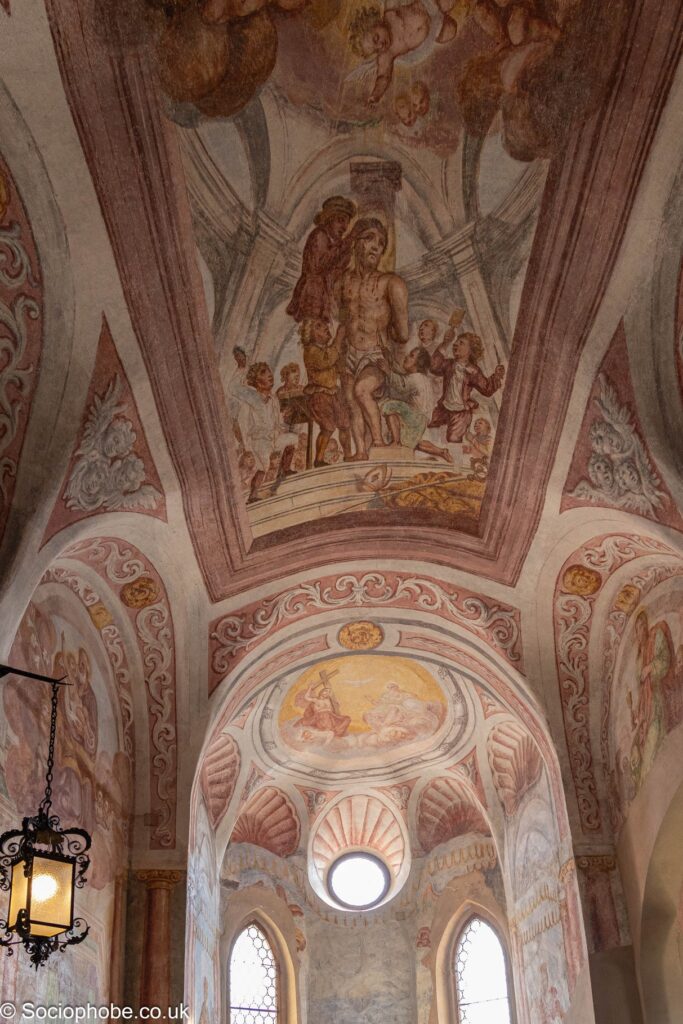
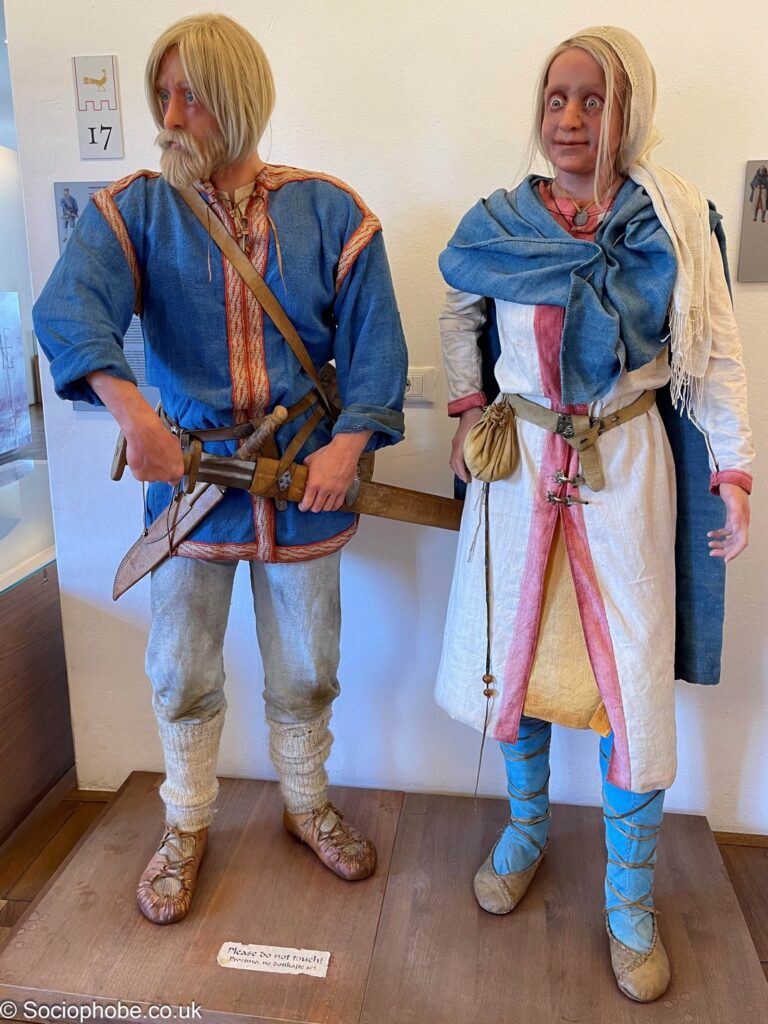
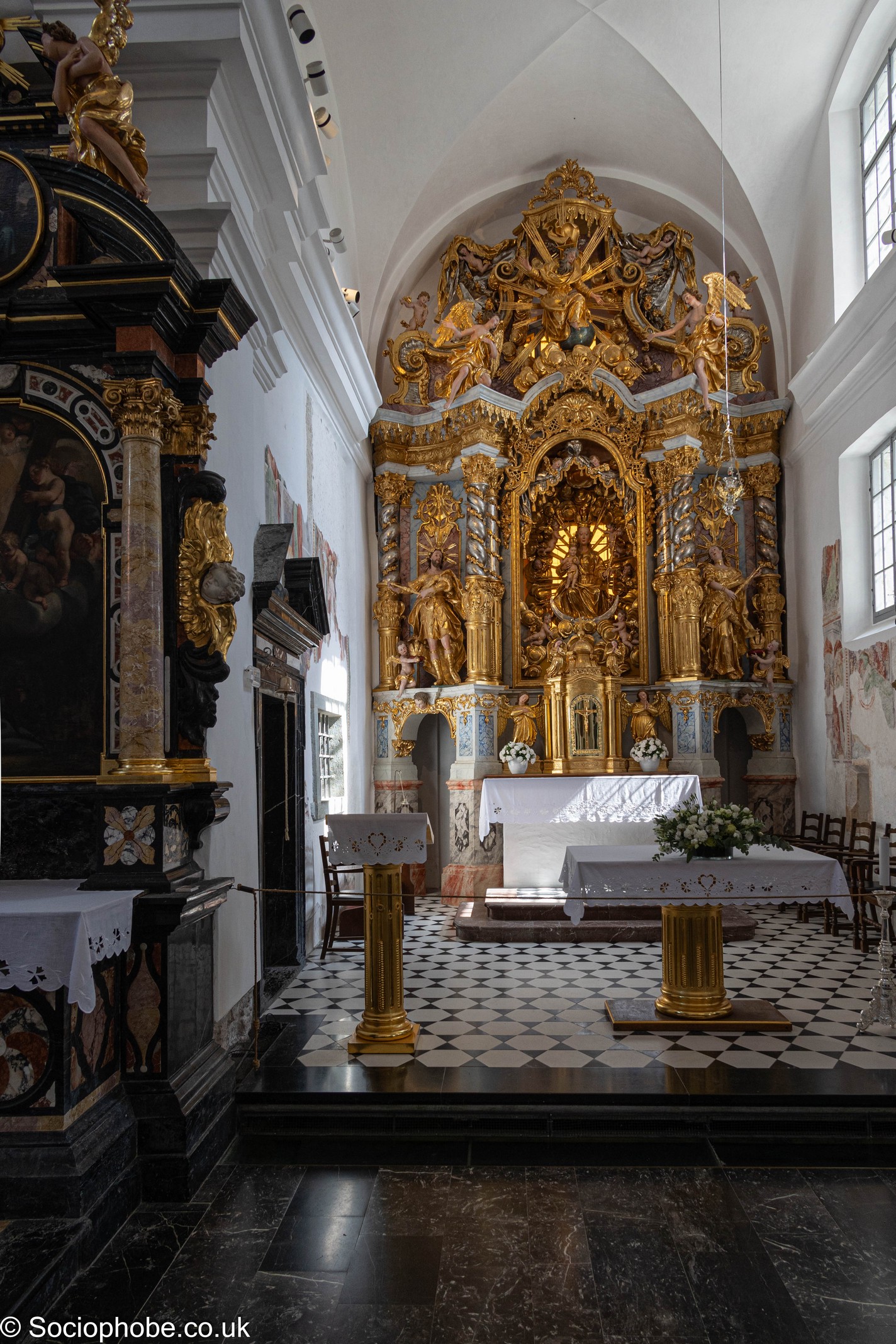
Inside there is a comprehensive museum on the history of the area and wider geopolitics, economy, mining, railway, health spas etc! There were lots of areas to walk around and incredible views, helped by blue skies! The 16th century chapel was quite beautiful with some wonderful frescoes on the walls and ceilings. It is a major tourist attraction, at €17 entrance it is probably quite a boost to the local economy too, so was very busy but we just did our own thing and kept away from the groups.
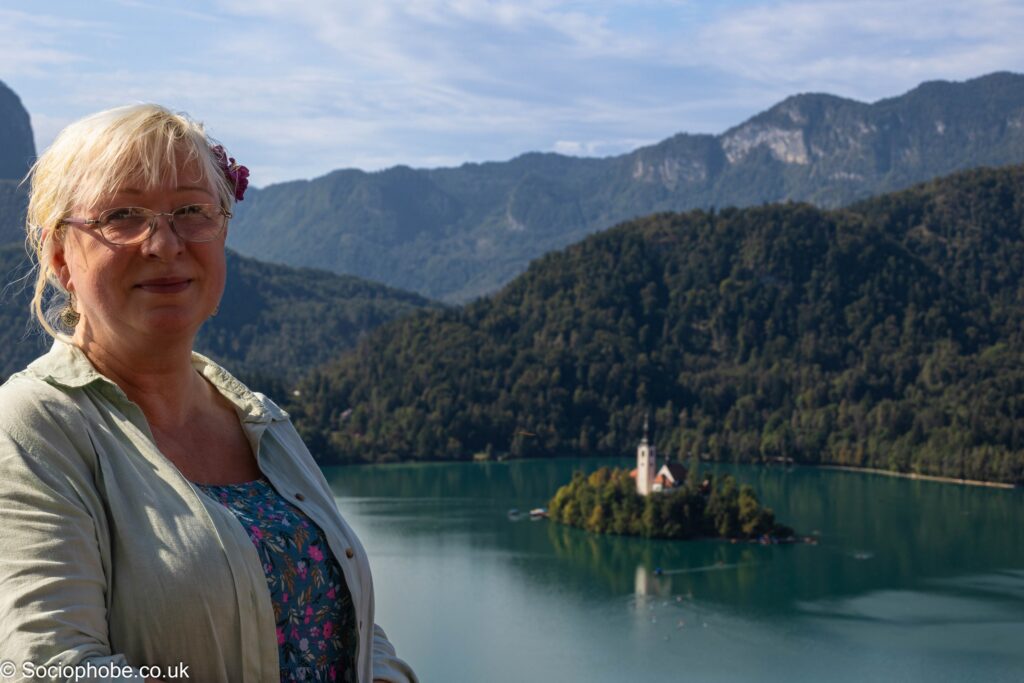
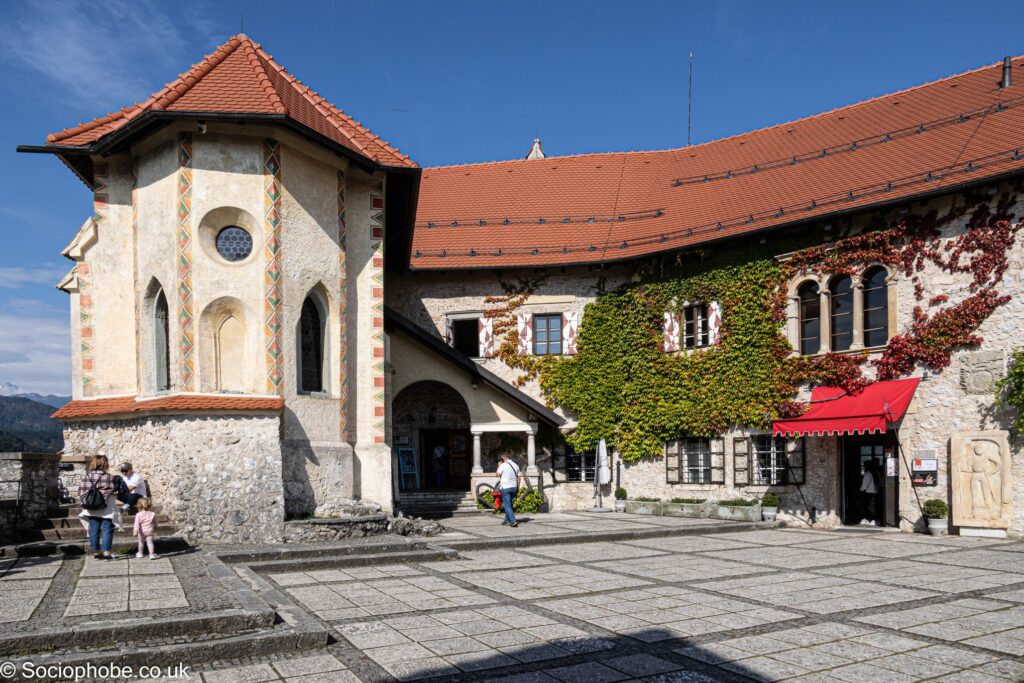
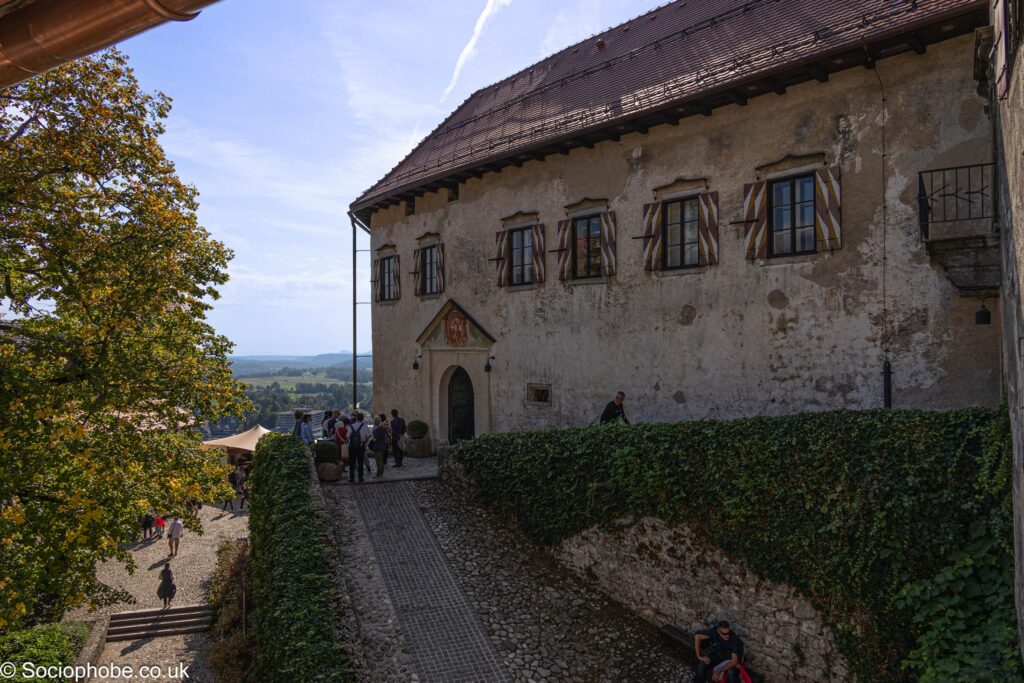
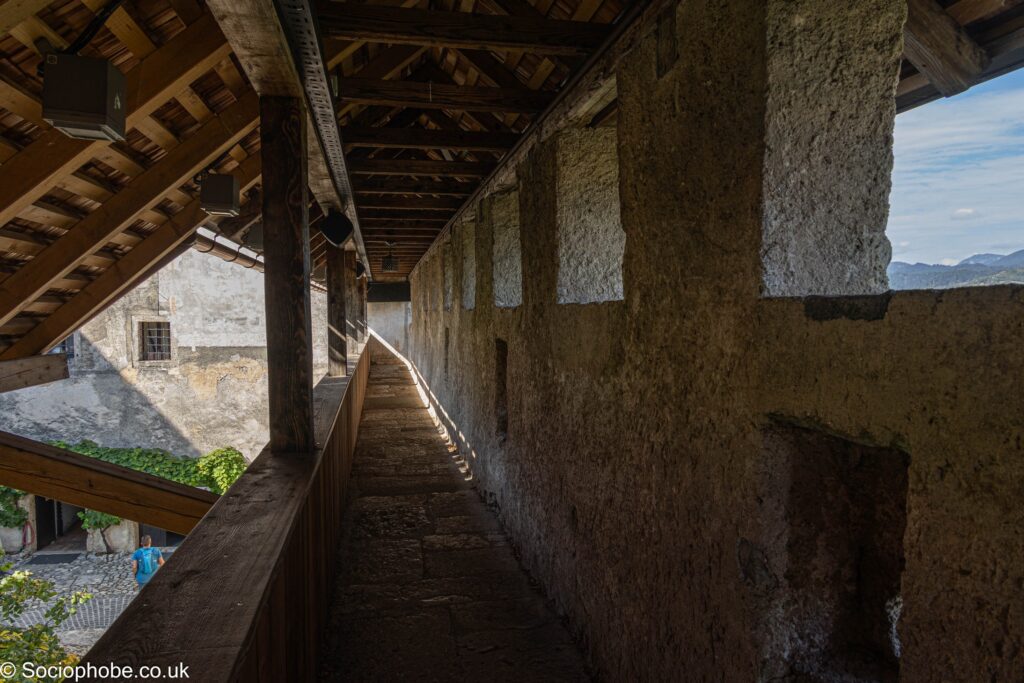
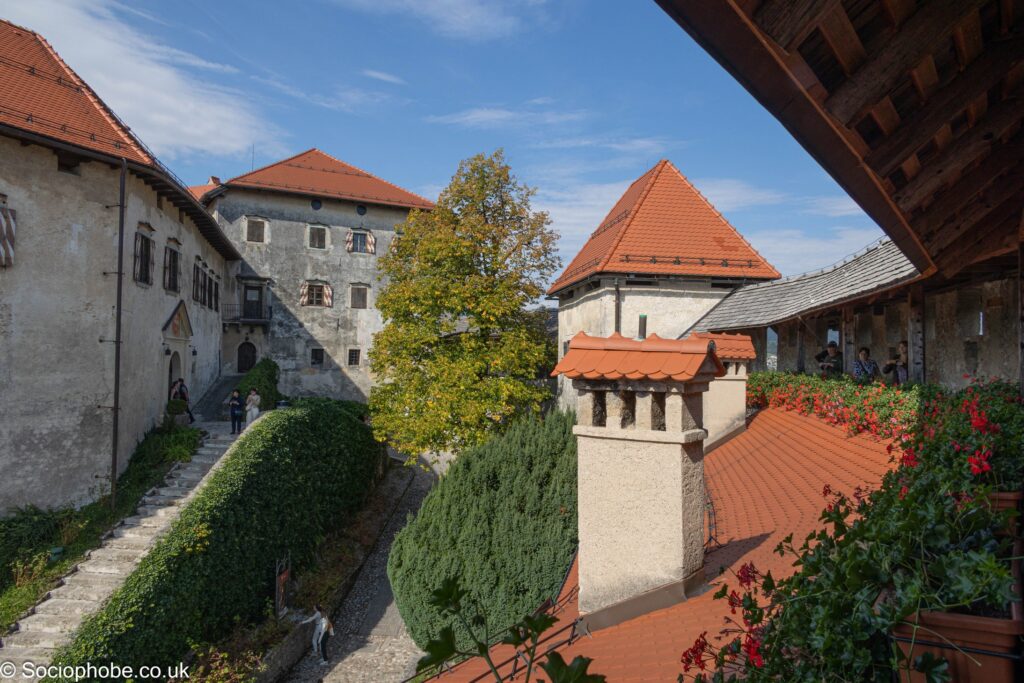
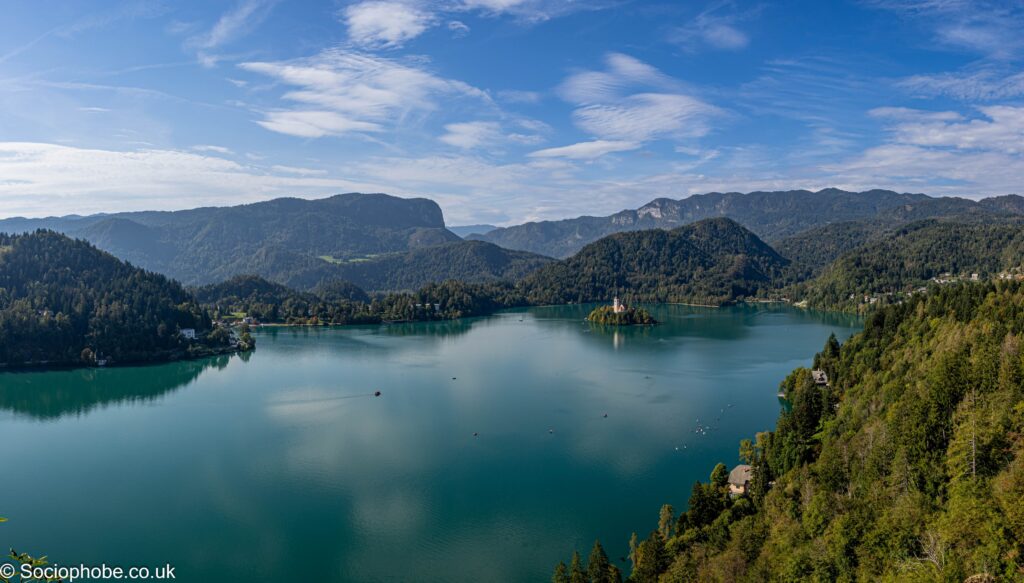
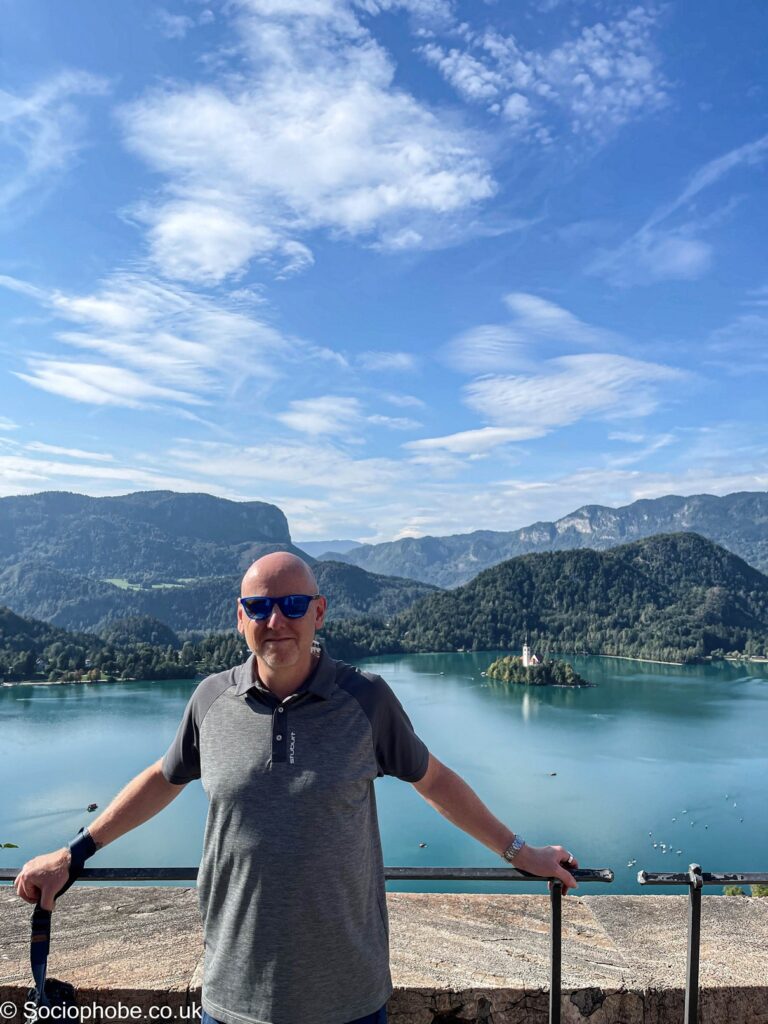
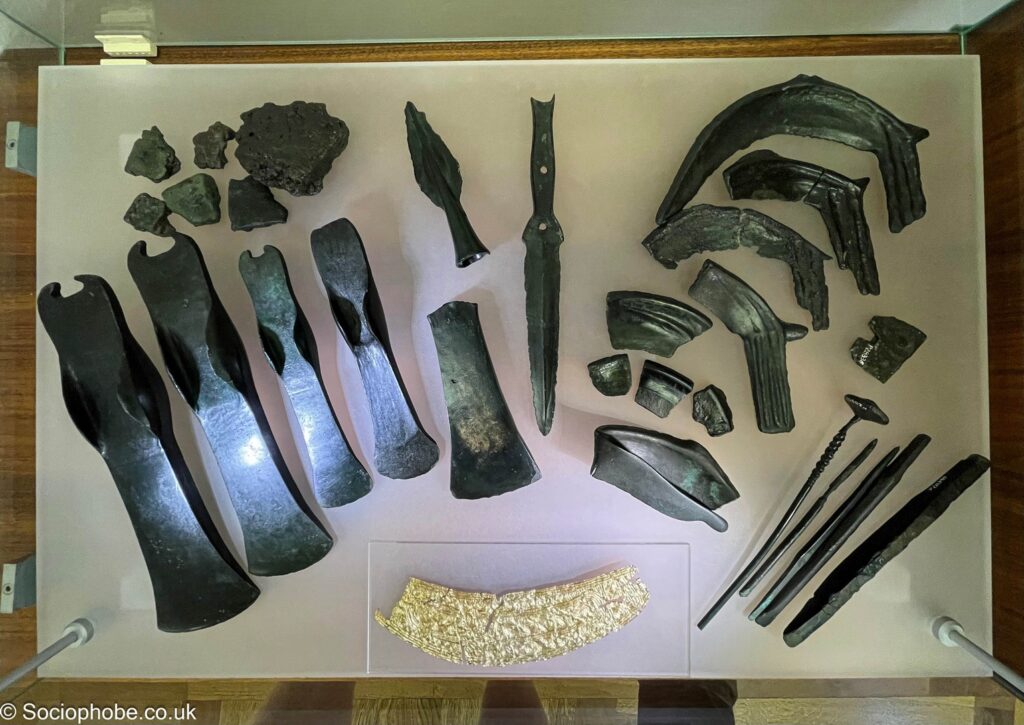
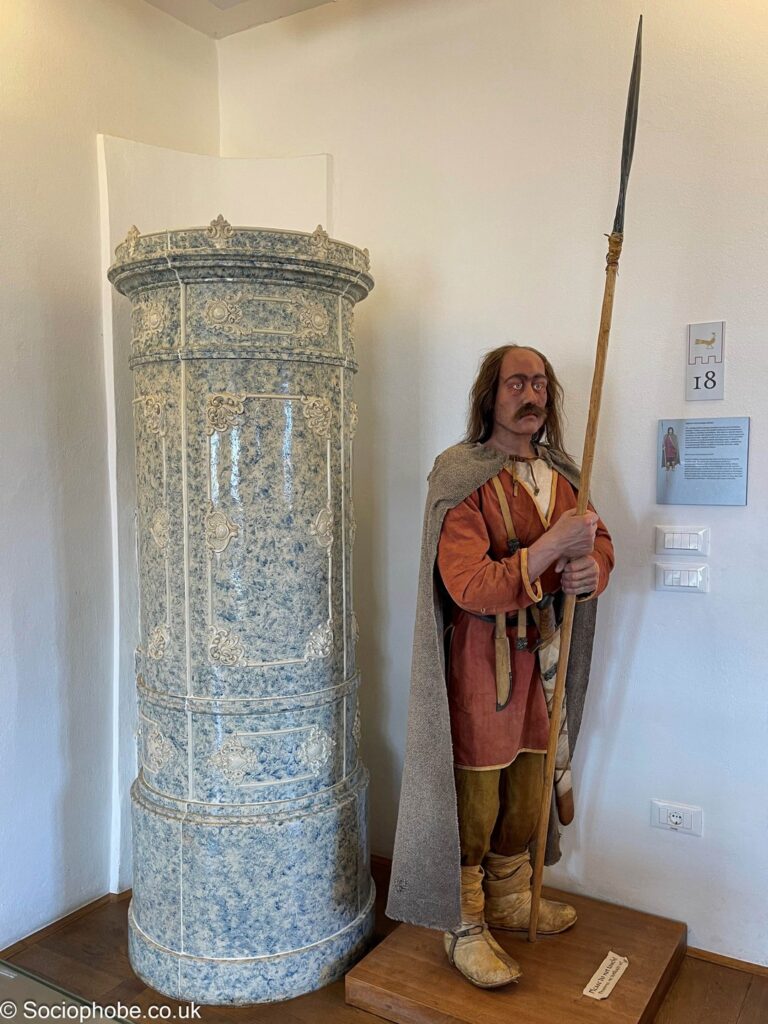
We then sat on the terrace and had a slice of Kremsnita, Bled Cream Cake – this was rather nice but the local story is that for each slice you need to run round the lake once to burn the calories off! We found a different path to walk back down the hill that came out by another impressive church before continuing on to the lakeside.
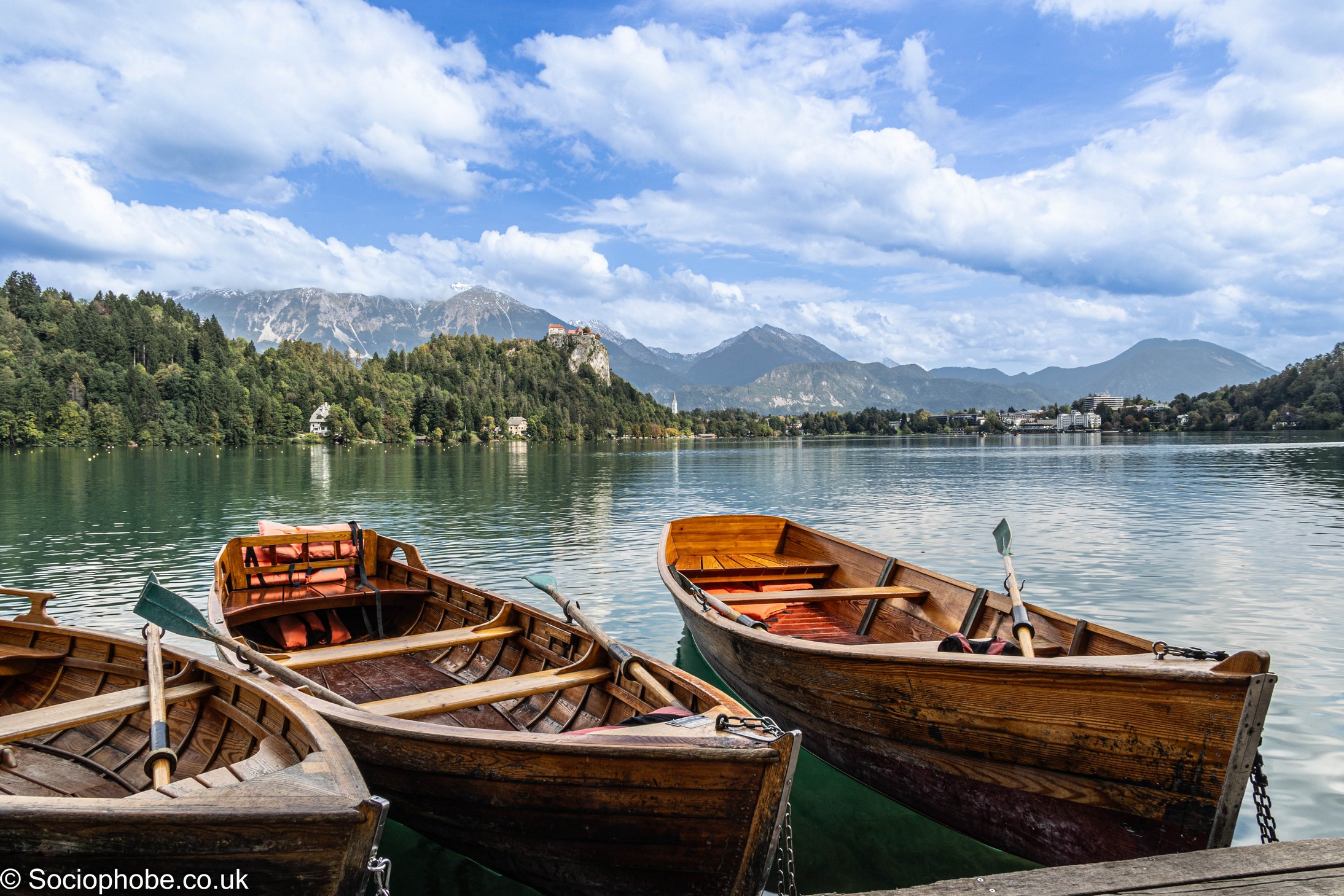
We had seen plenty of boats on the lake and could obviously see the island with the church on it so we decided to get the boat across to Bled Island. The boats are very pretty and hand rowed across but you only get 40 minutes on the island.
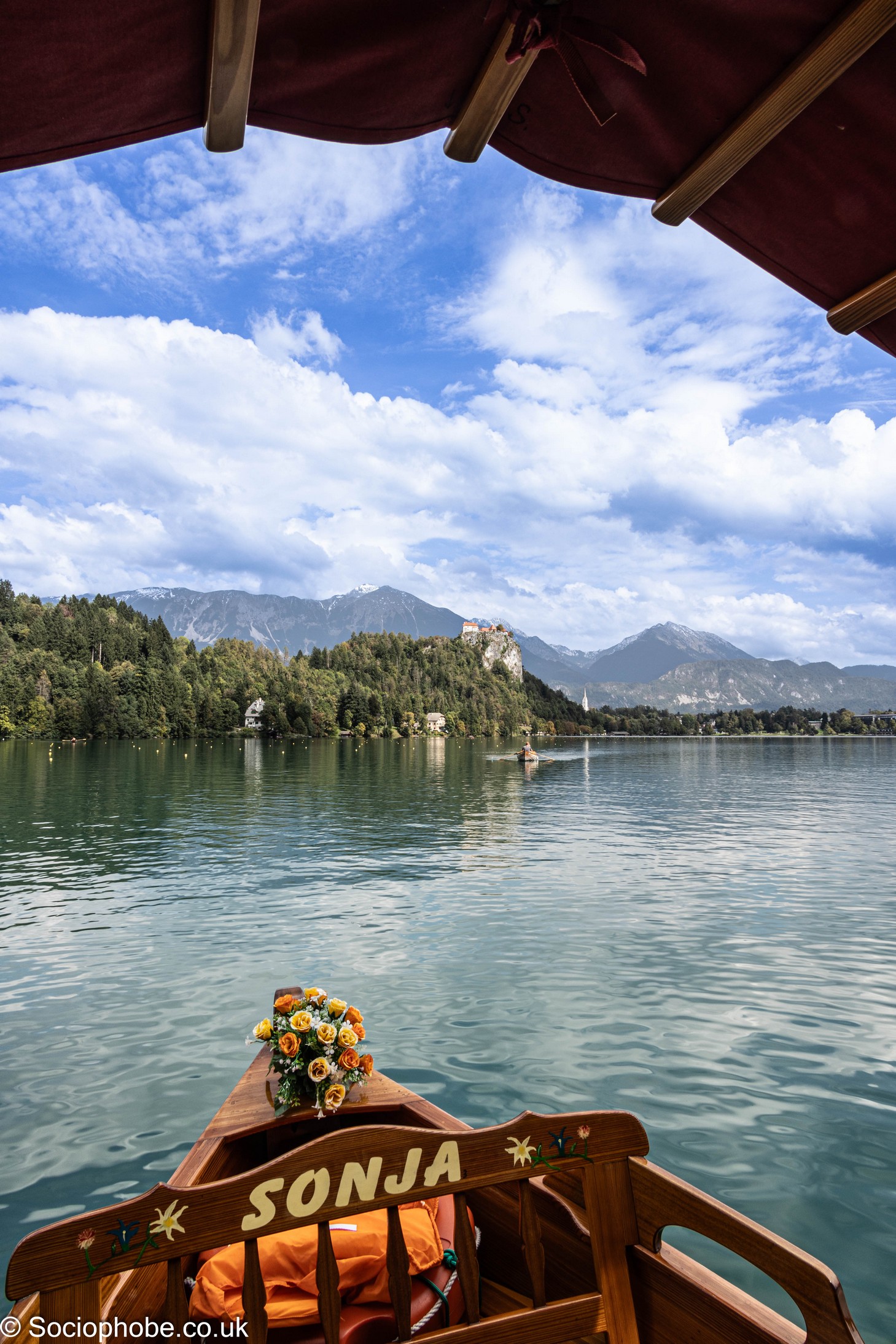
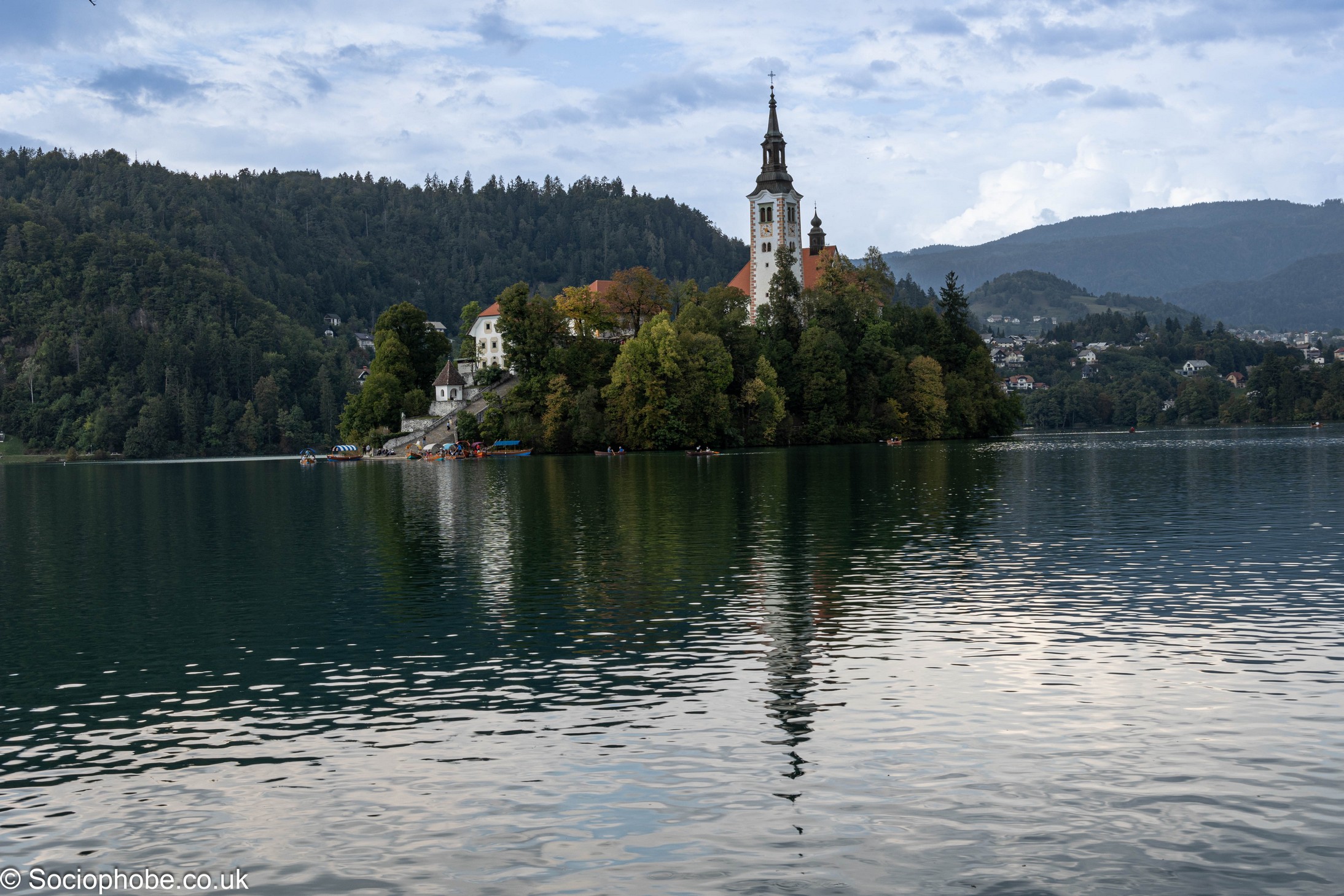
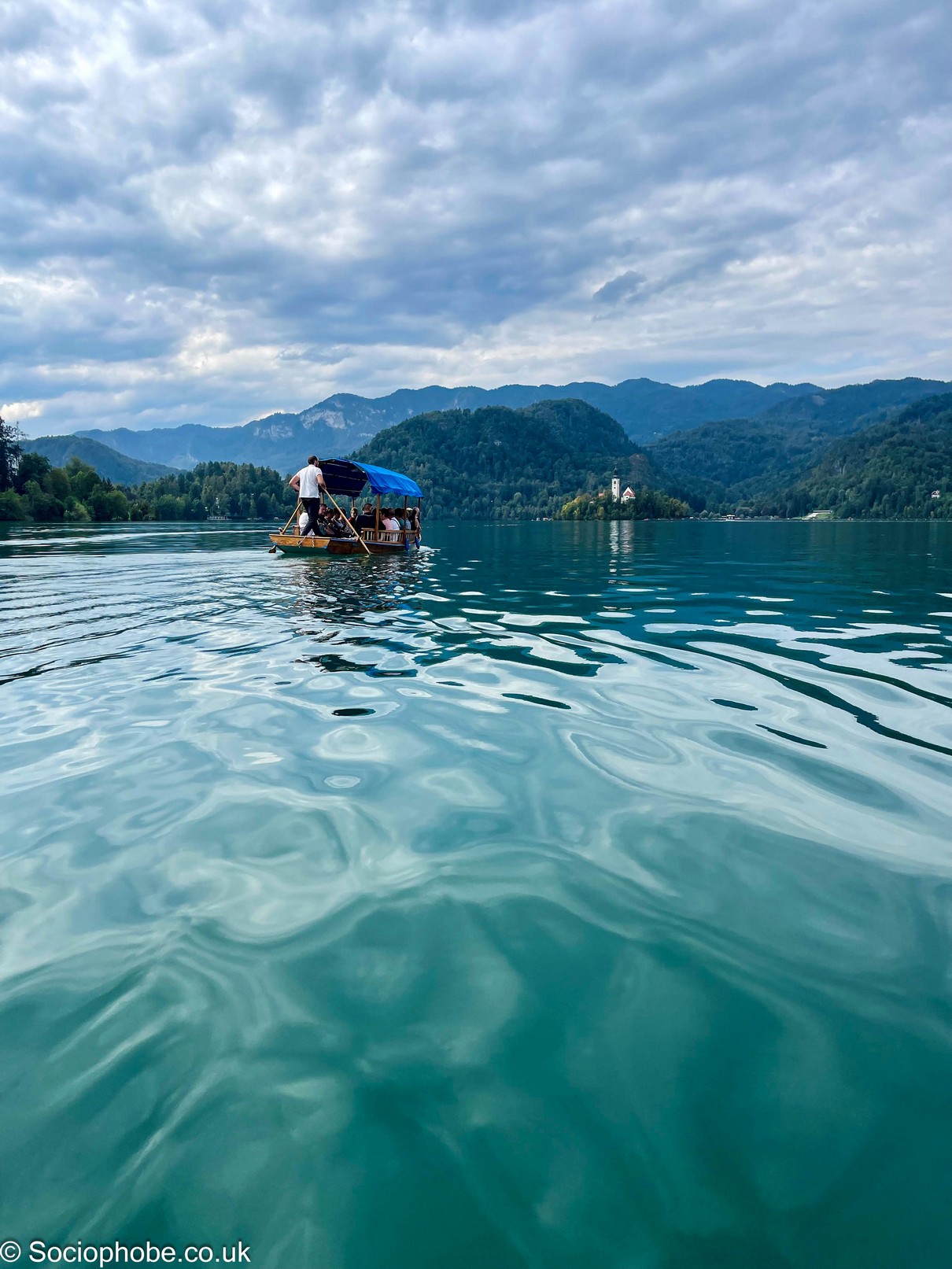
When we arrived we saw why, the Provosts House Museum was closed so it was just the church that we could visit. the visit took maybe 3 minutes and then Deb waited while I climbed the bell tower which had nothing exciting and the views were obscured by netting. I did manage to hit my head though which was irritating. There is a legend attached to the bell so if you ring it 3 times you get a wish but I didn’t do that as I’m not sure St Mary would have been up for population reduction on a grand scale. We were back at the boat after 20 minutes and so were most of the rest of the group. It cost €18 each for the boat plus €12 each for the church so a waste of €60 really.
Bled is at the foothills of the Julian Alps so most of the attraction of the area is the natural beauty which largely involves hiking, something Deb is no longer keen on. I did a bit of research and found the Vintgar Gorge, a pathway built alongside a river in the gorge that runs for 1.5k with a 2.5k return loop overlooking the gorge.
The usual shuttle bus from town wasn’t running so we had to drive and we got to the car park but Deb decided she didn’t want to do the 4k walk and wanted to do the shorter 1.5k walk which meant driving a further 15 minutes to the other car park. When we got to the second car park it was just a pick up point with no parking so we drove back around Triglav National Park to the first car park which we then discovered closed at 5PM so we wouldn’t have time to do the walk and get back anyway. That was rather frustrating as it looked awesome and we wasted around 90 minutes.
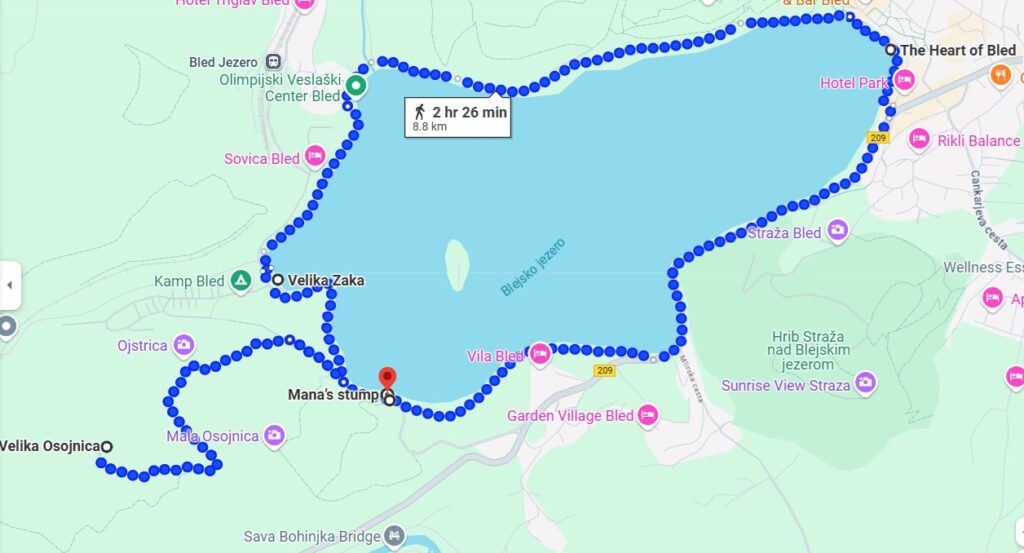
Back in Bled we parked the car and I decided to walk the circuit of the lake and climb to the viewpoints overlooking the lake. Deb walked part of the circuit with me and then headed back to sit in a café with a glass of wine. I found the start of the trail but things went wrong after that and I scrambled and climbed up the hill including some amazingly steep metal steps but didn’t find any real paths or the viewpoint.
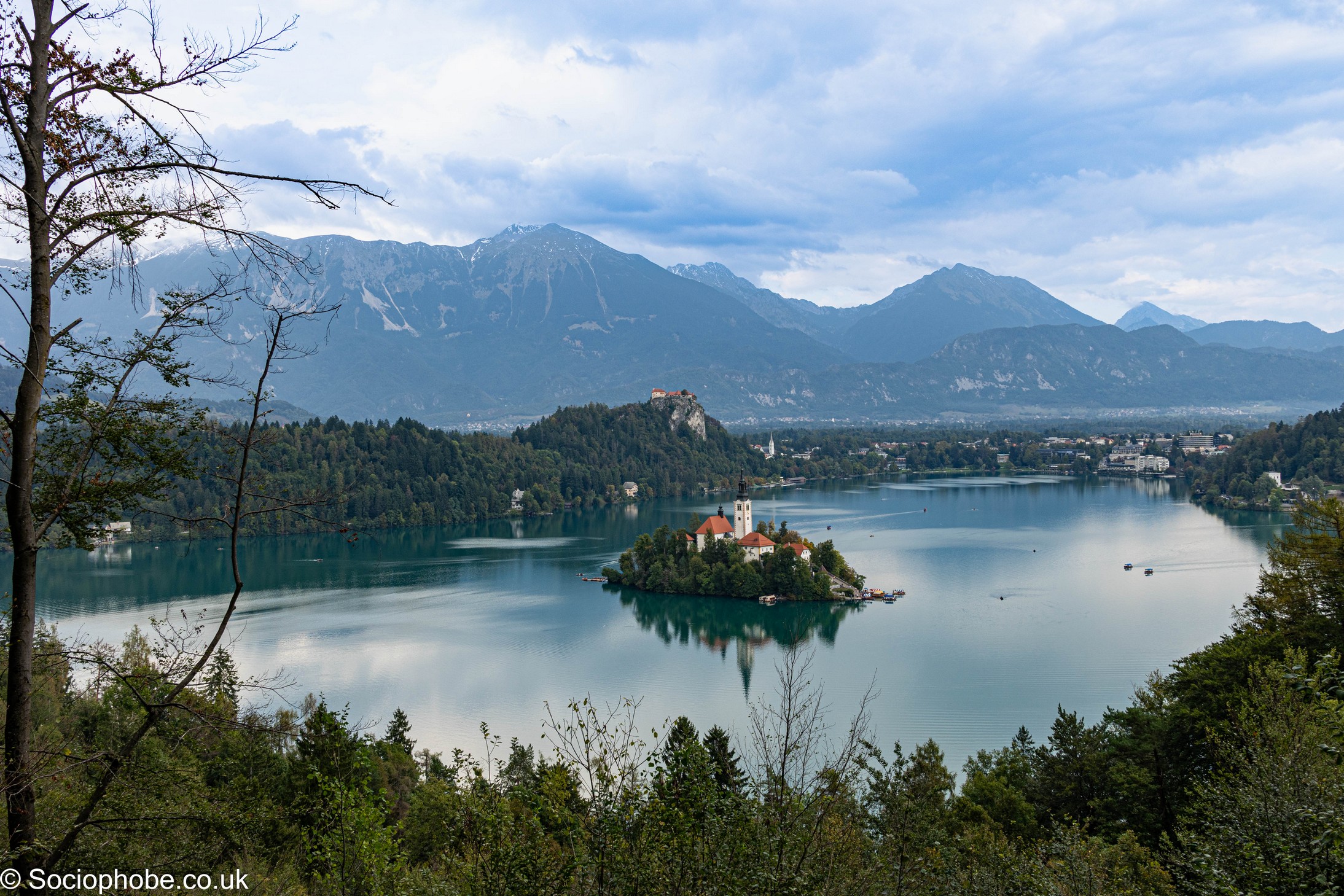
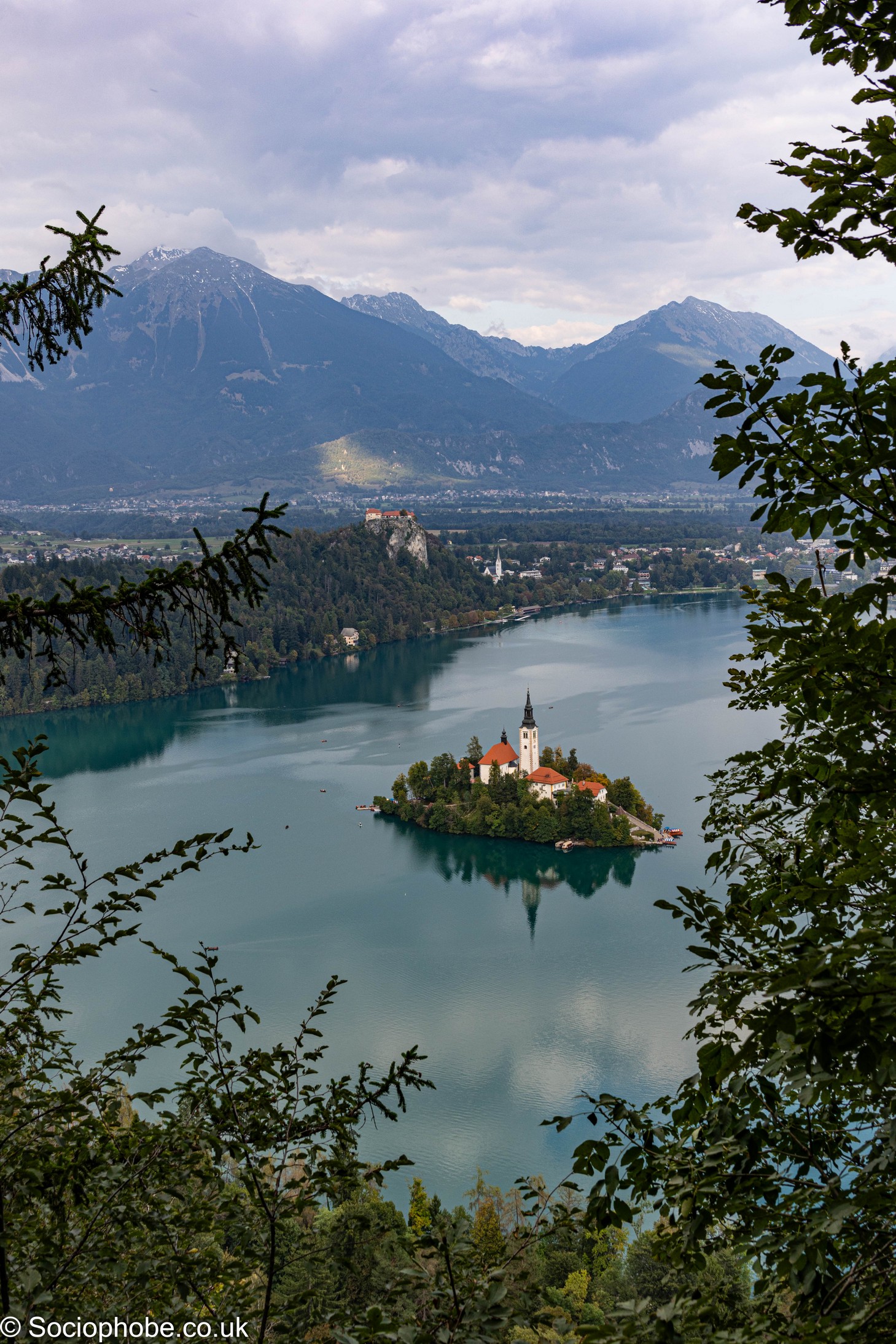
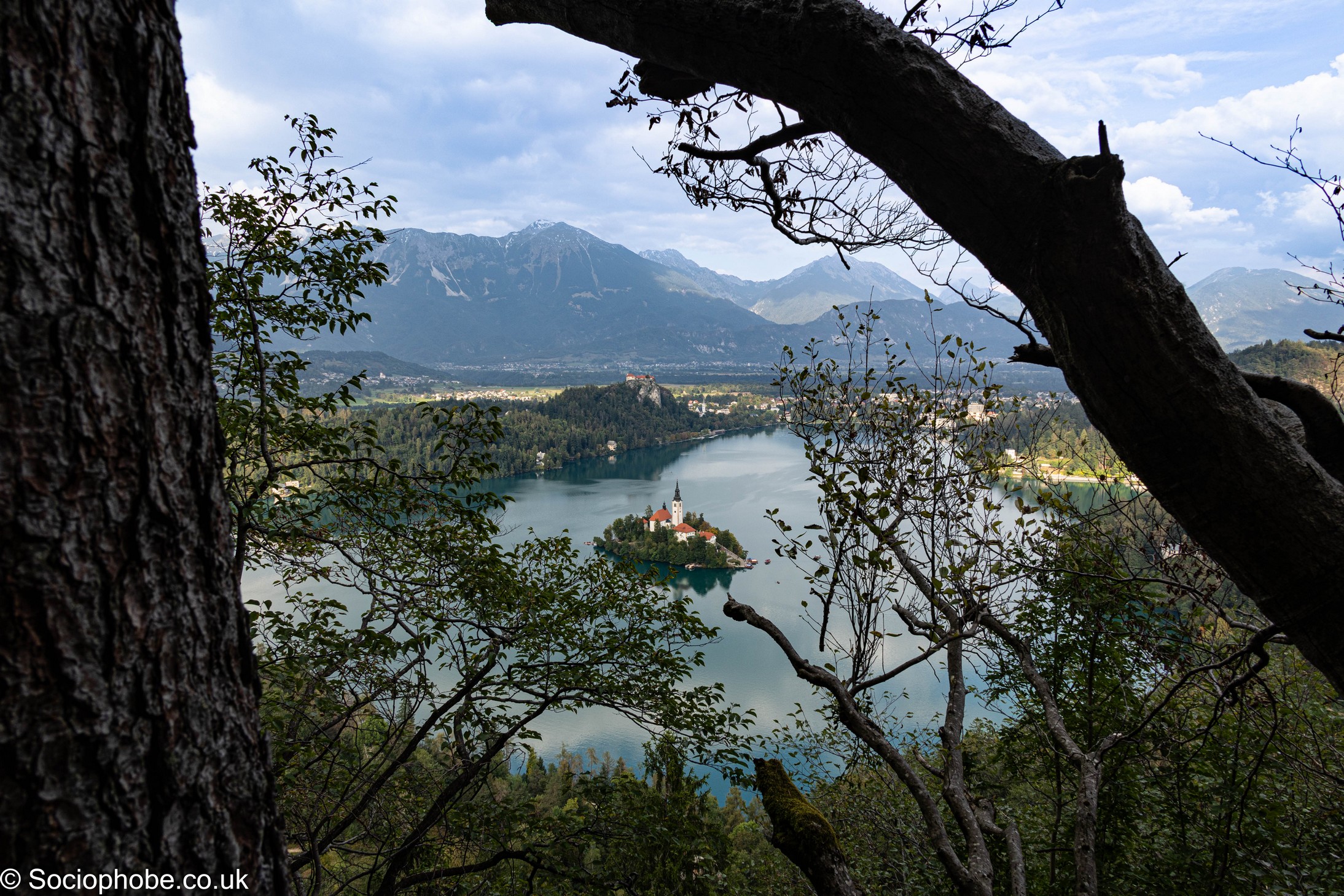
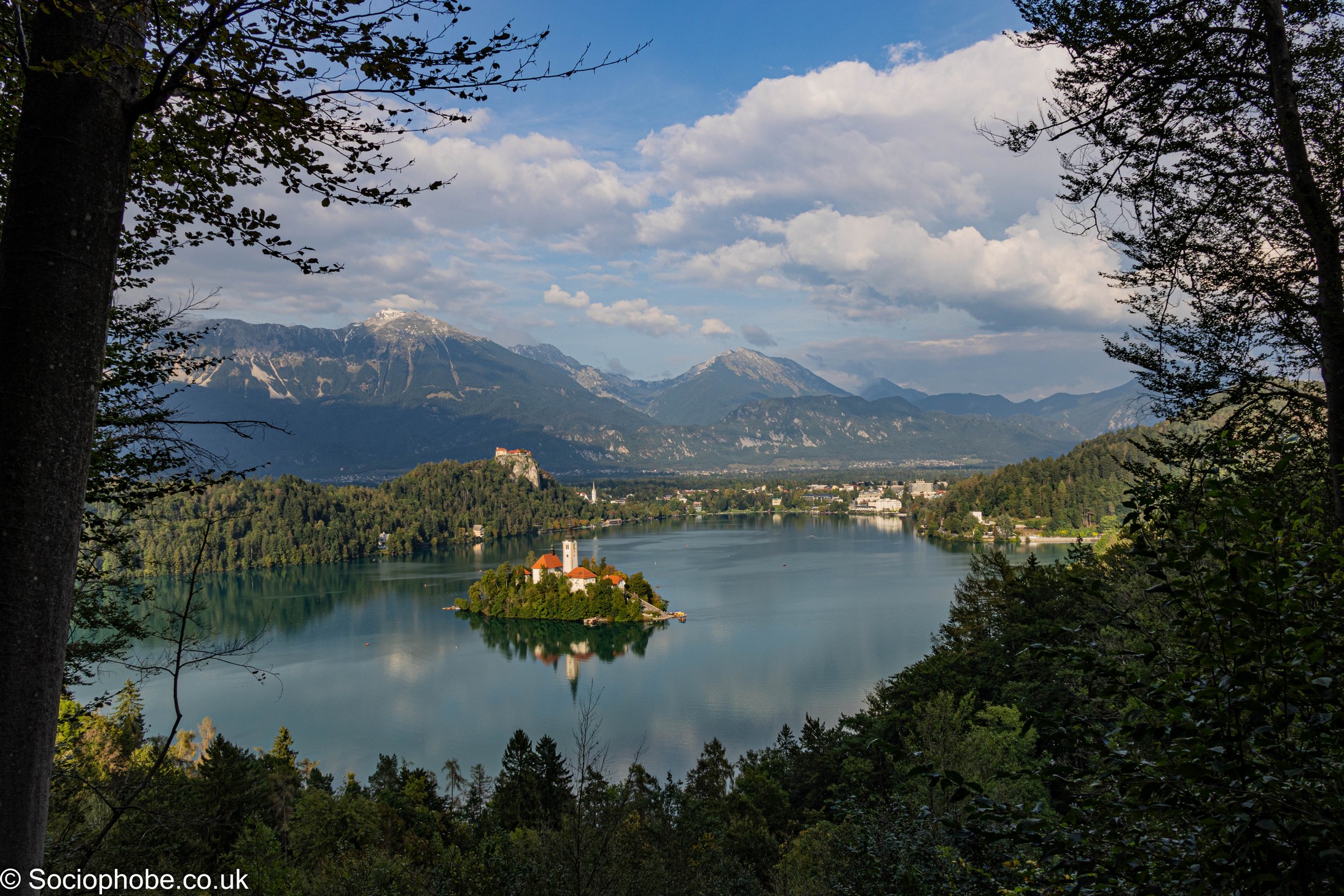
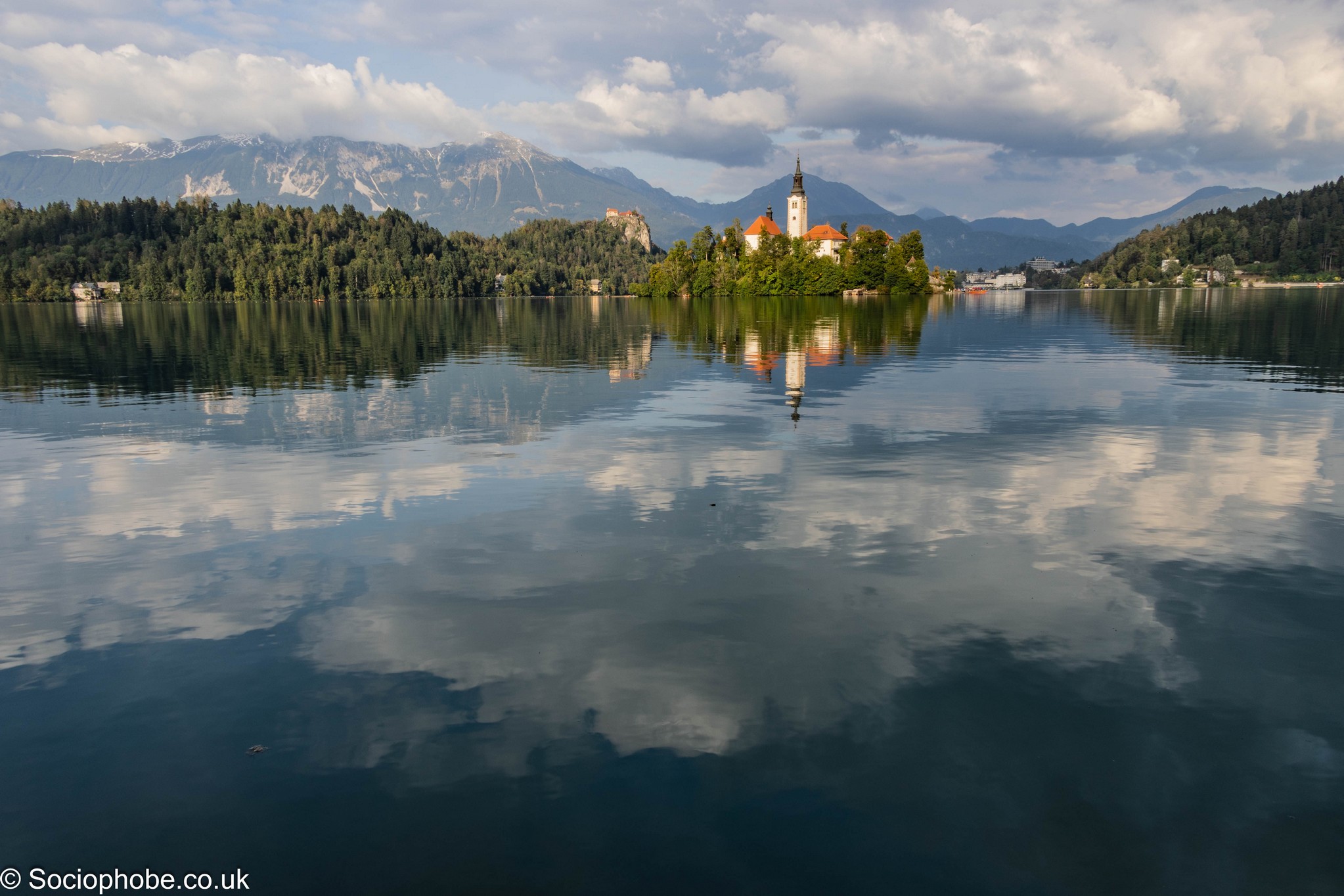
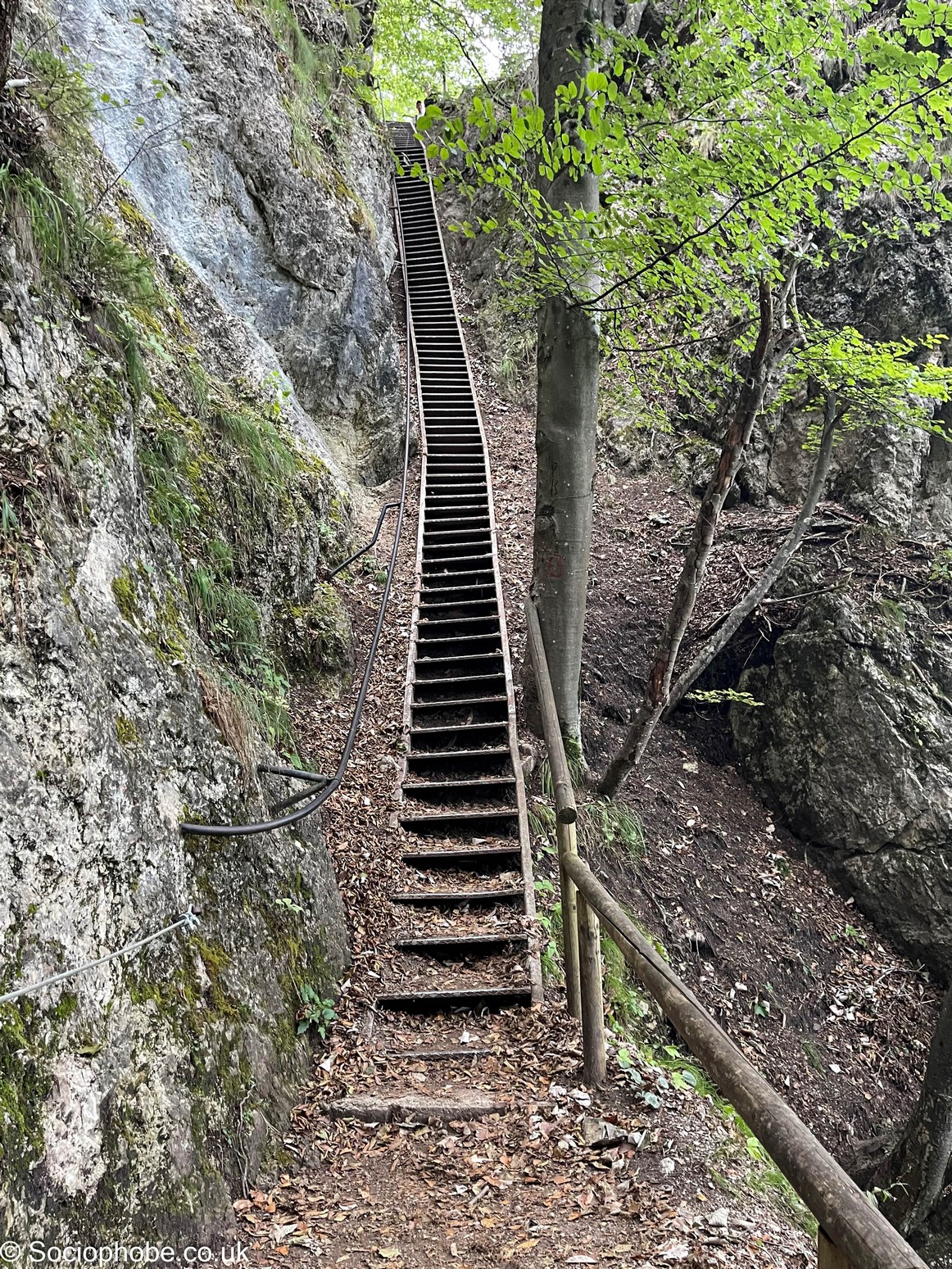
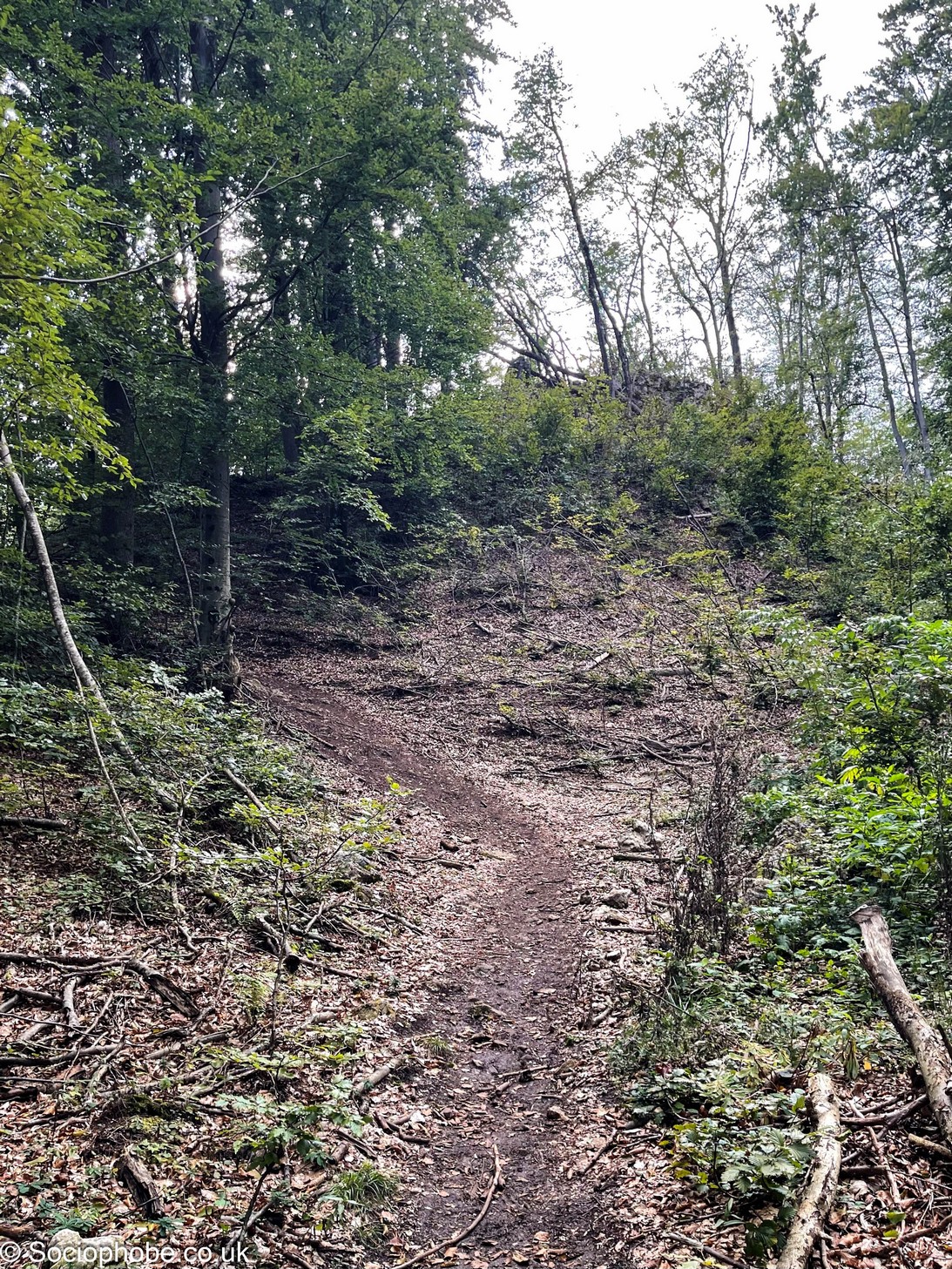
I did see some views but more by luck than judgement and it was a very tiring and sweaty climb. I’m sure it’s an obvious route if you know it but I hadn’t done enough prior research and should have been better prepared. It was rather a shame as the photos I had seen really were impressive.
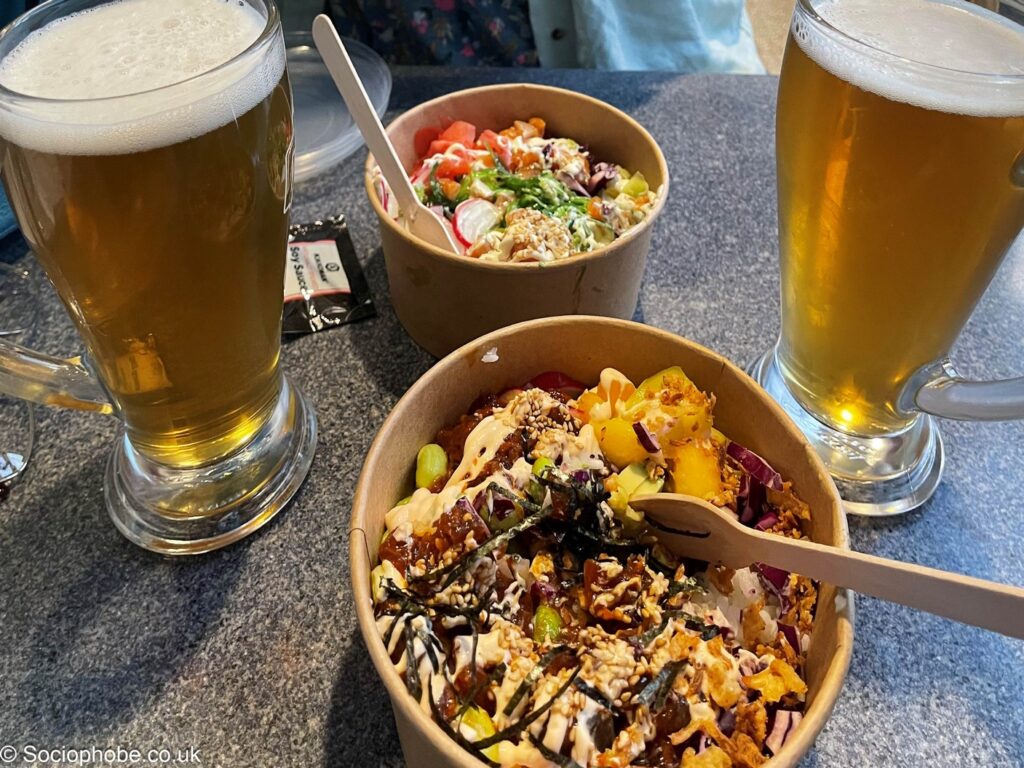
Back on the lakeside I followed the path around to our hotel, the lakeside walk is 6k in total and a beautiful way to spend an hour or so. In the evening we had a tuna and a salmon bowl in Bowl Bar and then a pint and gelato in the pub next to it before sorting photos and notes. It was nice to have an active day after so long travelling yesterday.
Saturday – Postojna and Predjama – Slovenia
Today is Baby A’s birthday! Although at 6 she is no longer a baby. After an abysmal nights sleep I booked today’s tour – €92, Slovenia certainly isn’t a cheap place to visit. Tourist tax is about €7 a night per person too so it all adds up.
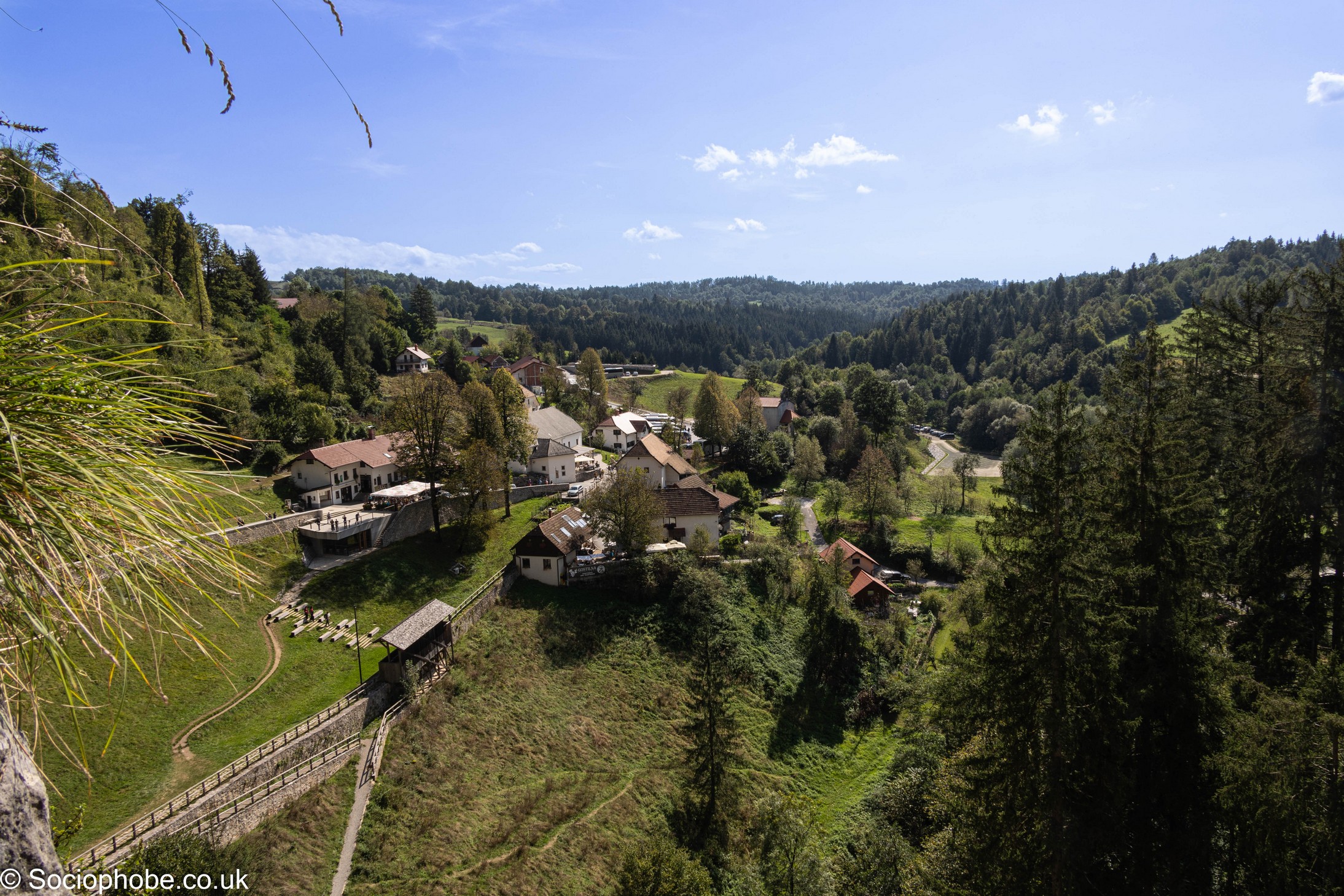
We had another fabulous breakfast and then left our hotel and drove to Predjama Castle (an Instagram favourite, being built into a cliff face) after navigating past all the tractors in Bled – obviously a very agricultural area – and the heavy traffic around Ljubljana again. The area is just beautiful, alpine meadows, low roofed buildings and low intensity farming combined with just not many people.
We arrived in Predjama to find it absolutely packed with tourists – how dare they! It seems to be a favourite for coach trips with coaches outnumbering cars when we arrived. I almost left after about 5 minutes as it took that long to shuffle across the drawbridge, along a short corridor and into the first room with everyone listening to their audio guides.
I headed up some stairs and we just made our way around the upper floors until the ground floor was quieter. Deb abstained from climbing the steps into the main caves so I did that solo but not much to see other than their size and use for storing provisions. The armoury and a couple of the interior rooms were interesting and nicely laid out to give an impression of how it would have been. The fresh water was unusual too – supplied by dripping water in the caves.
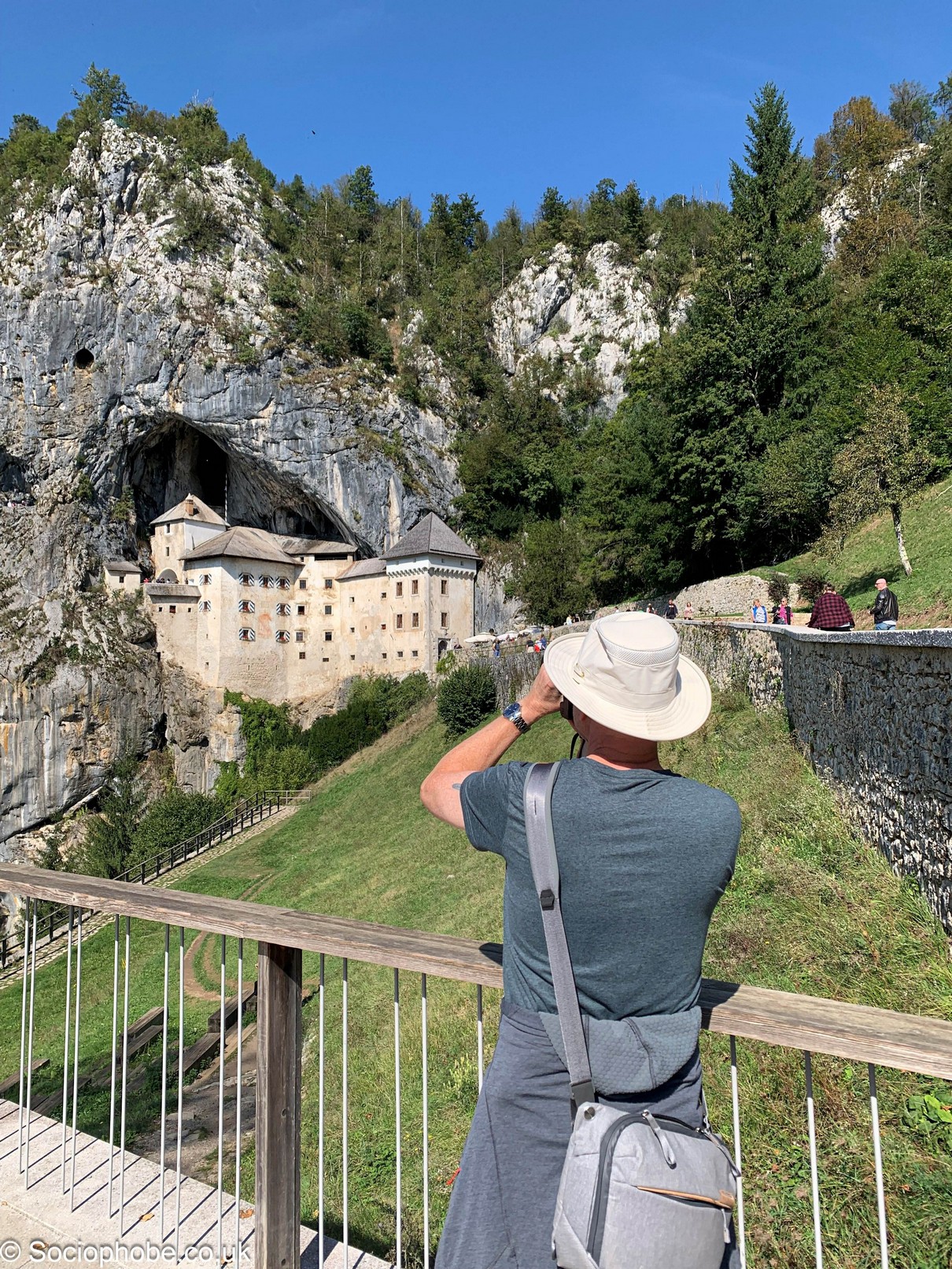
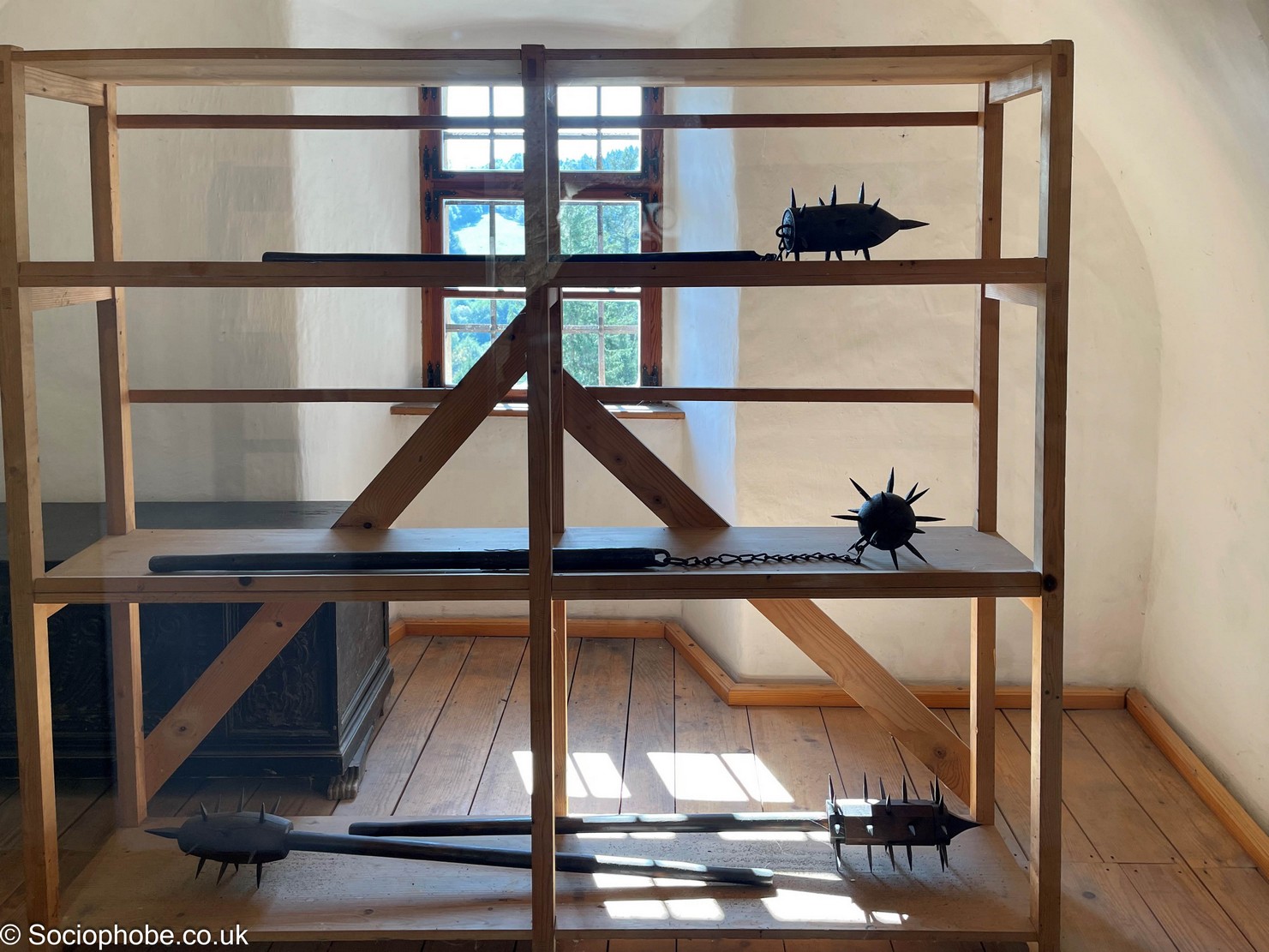
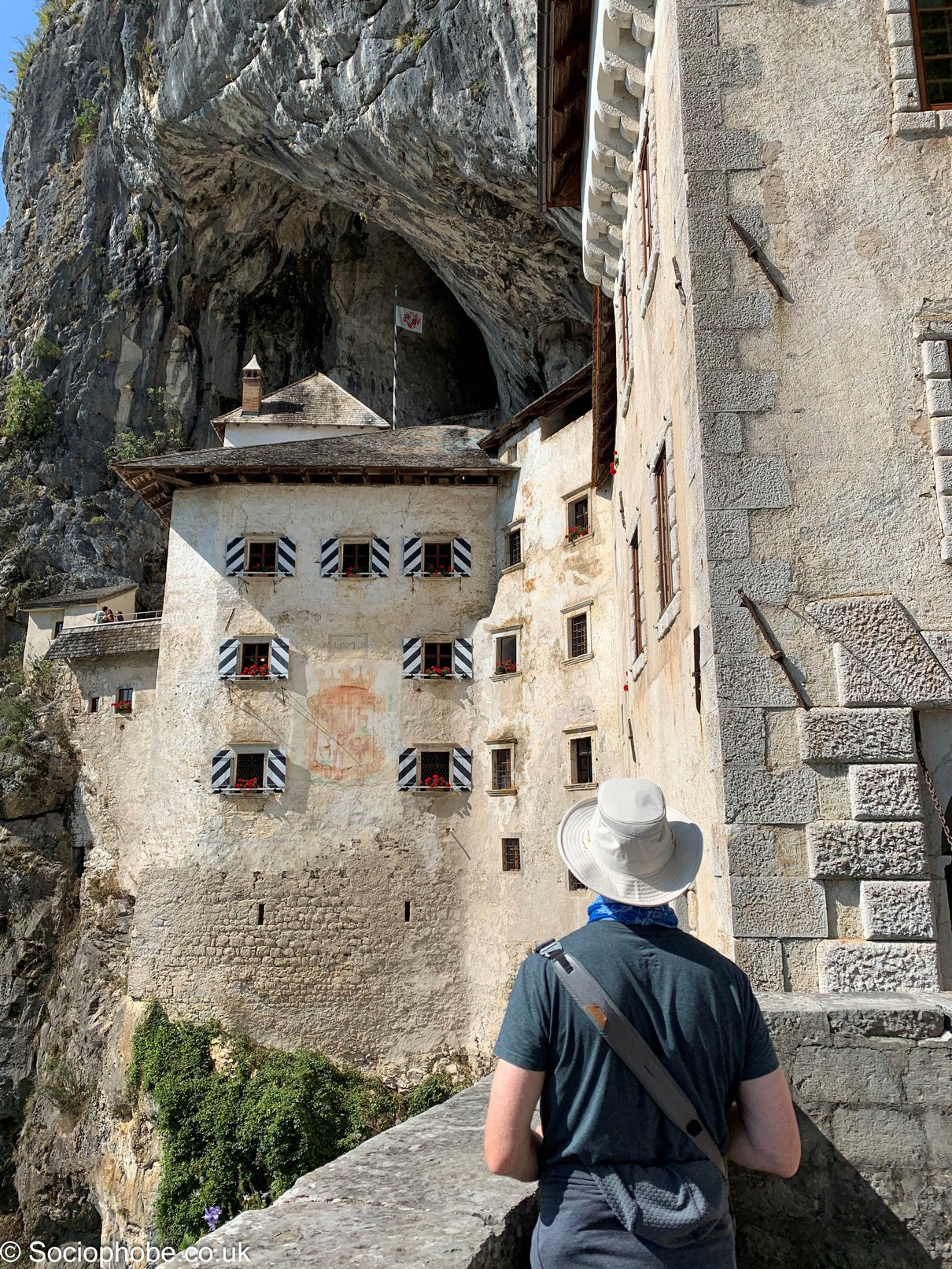
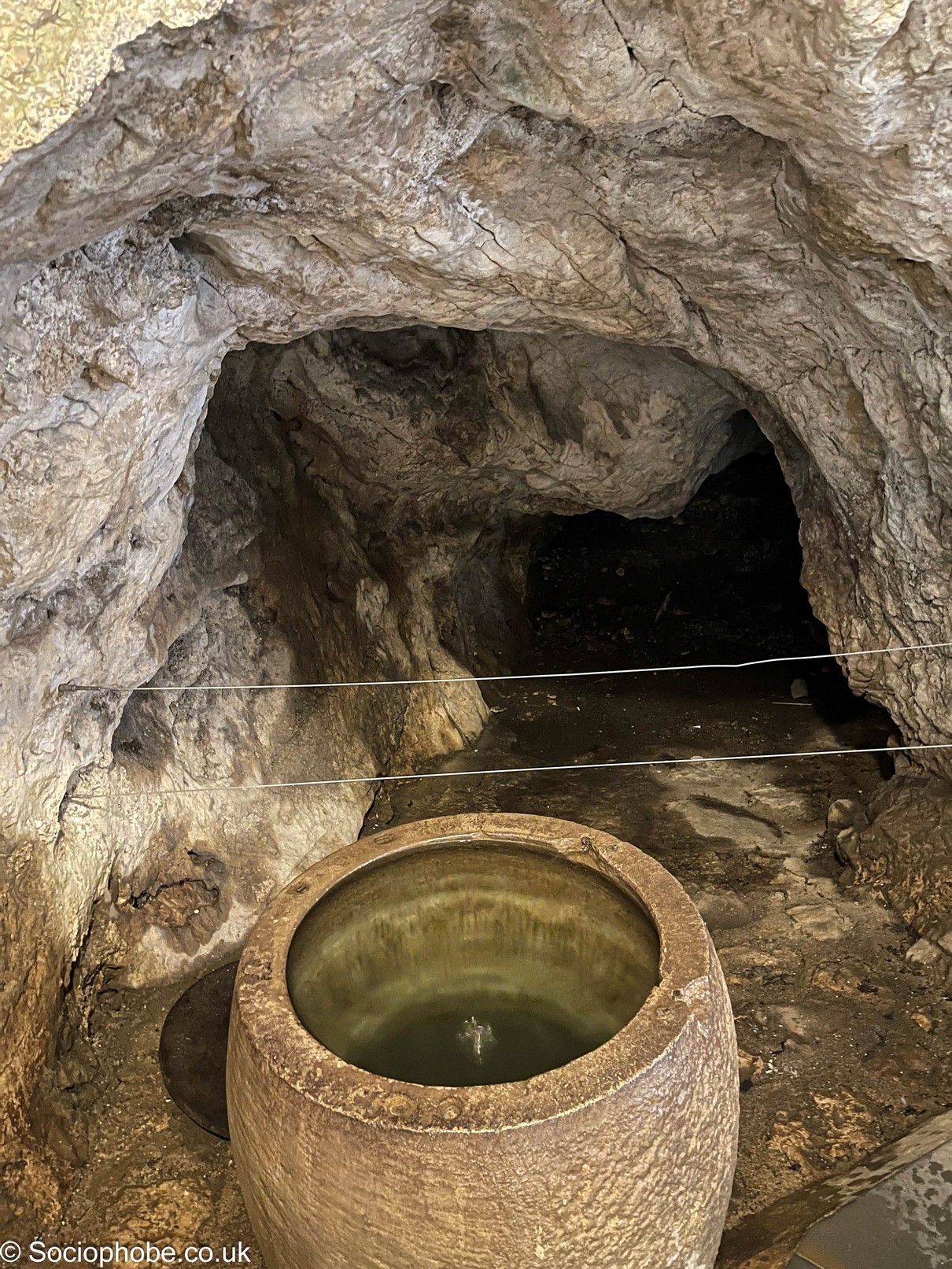
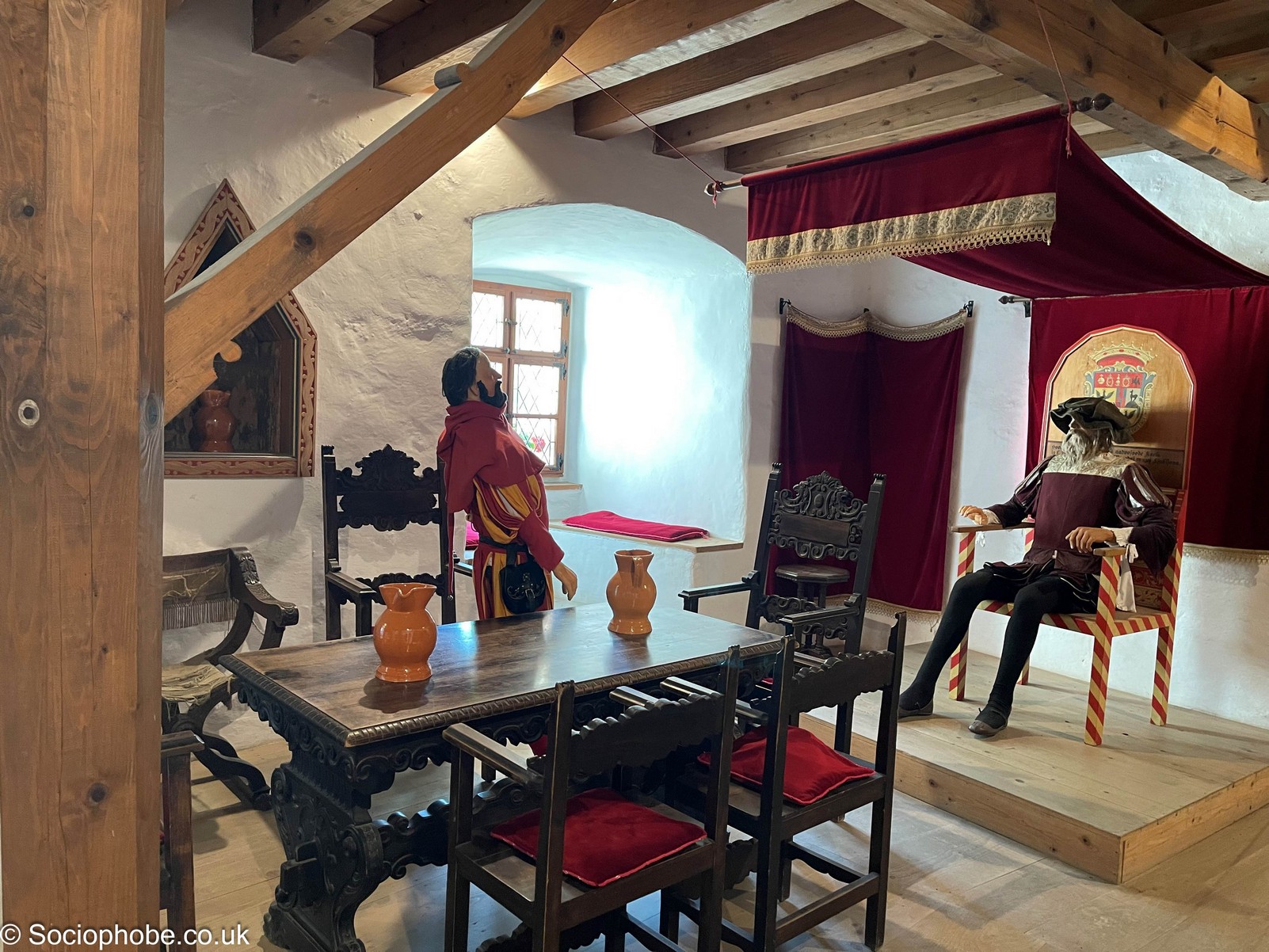
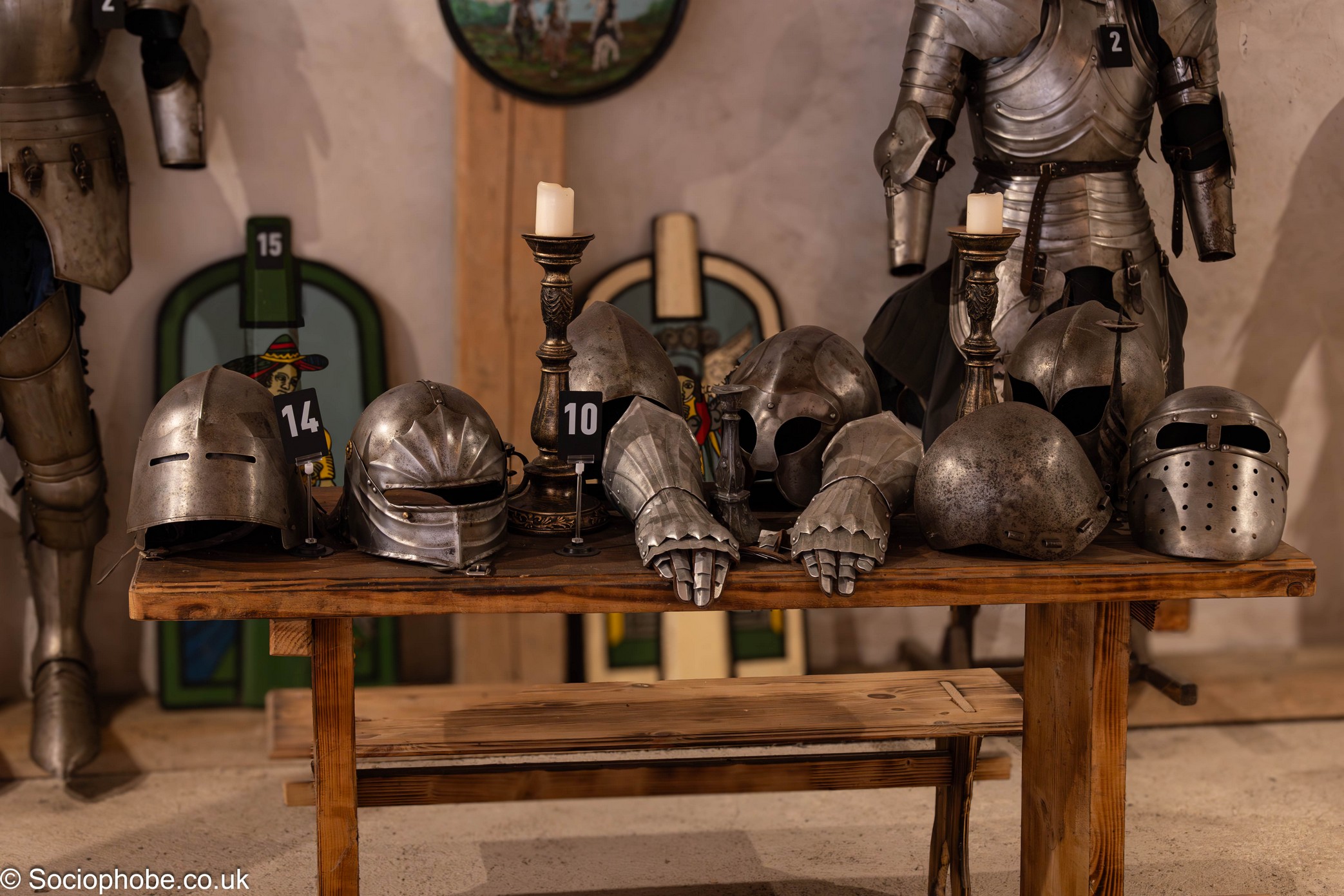
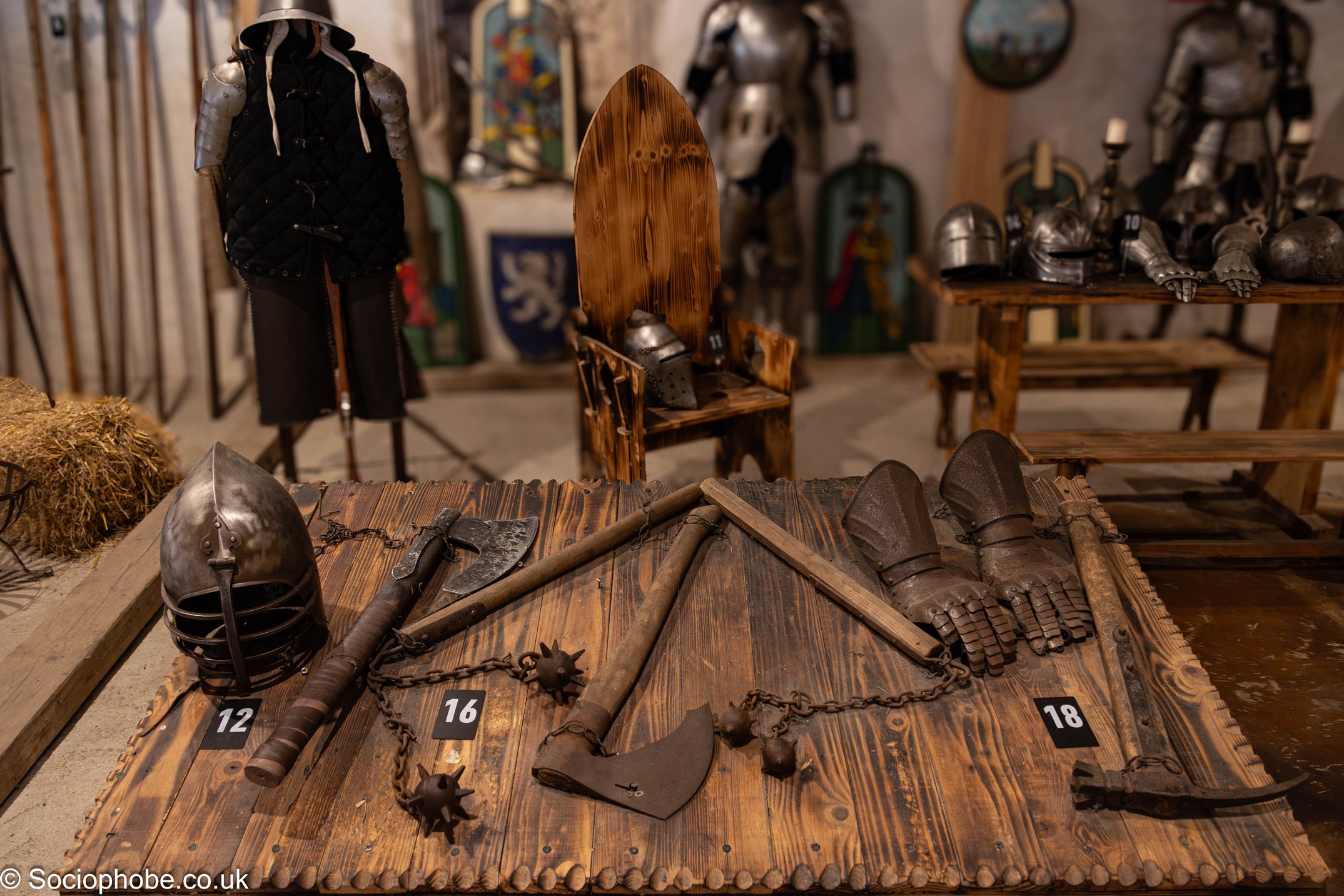
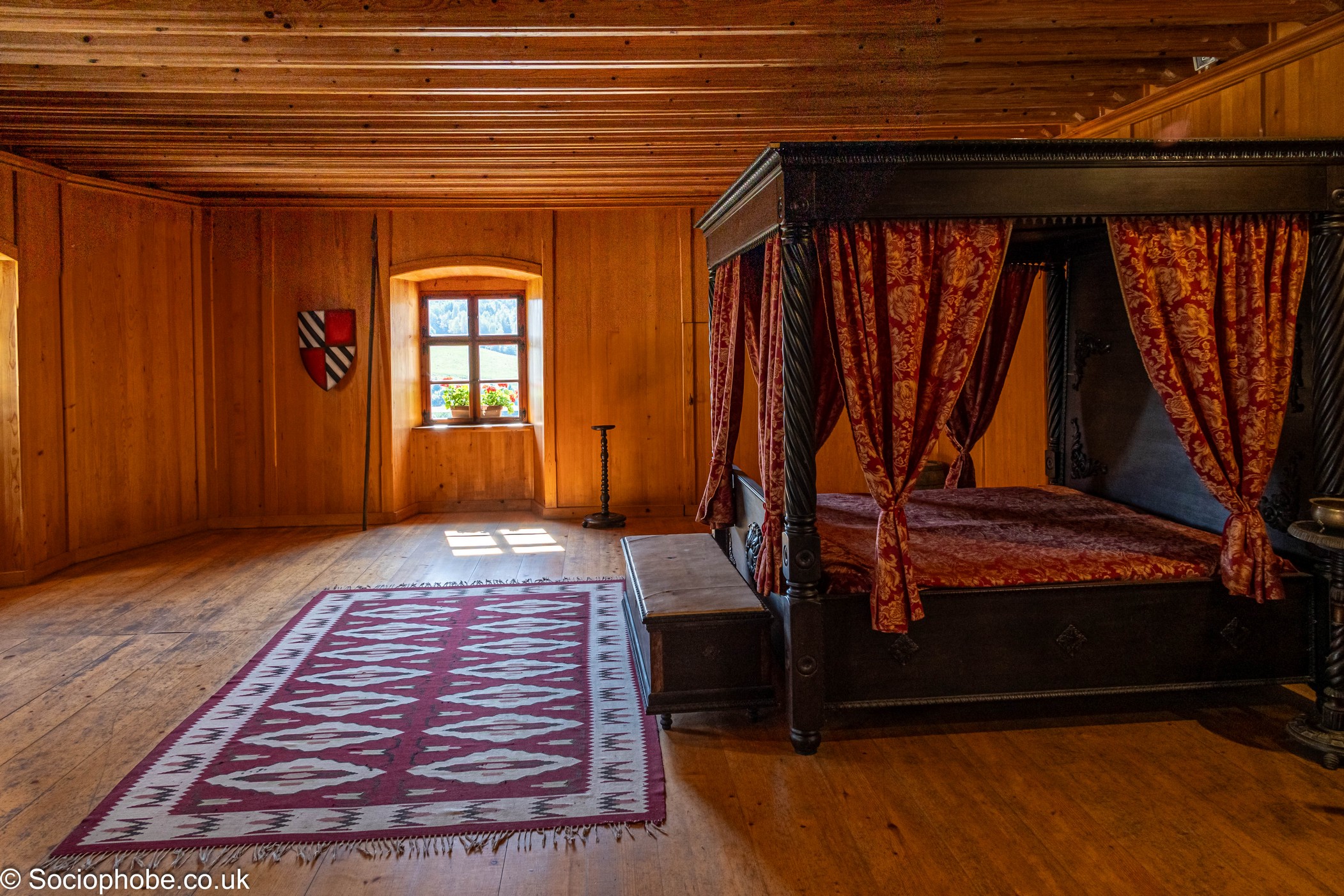
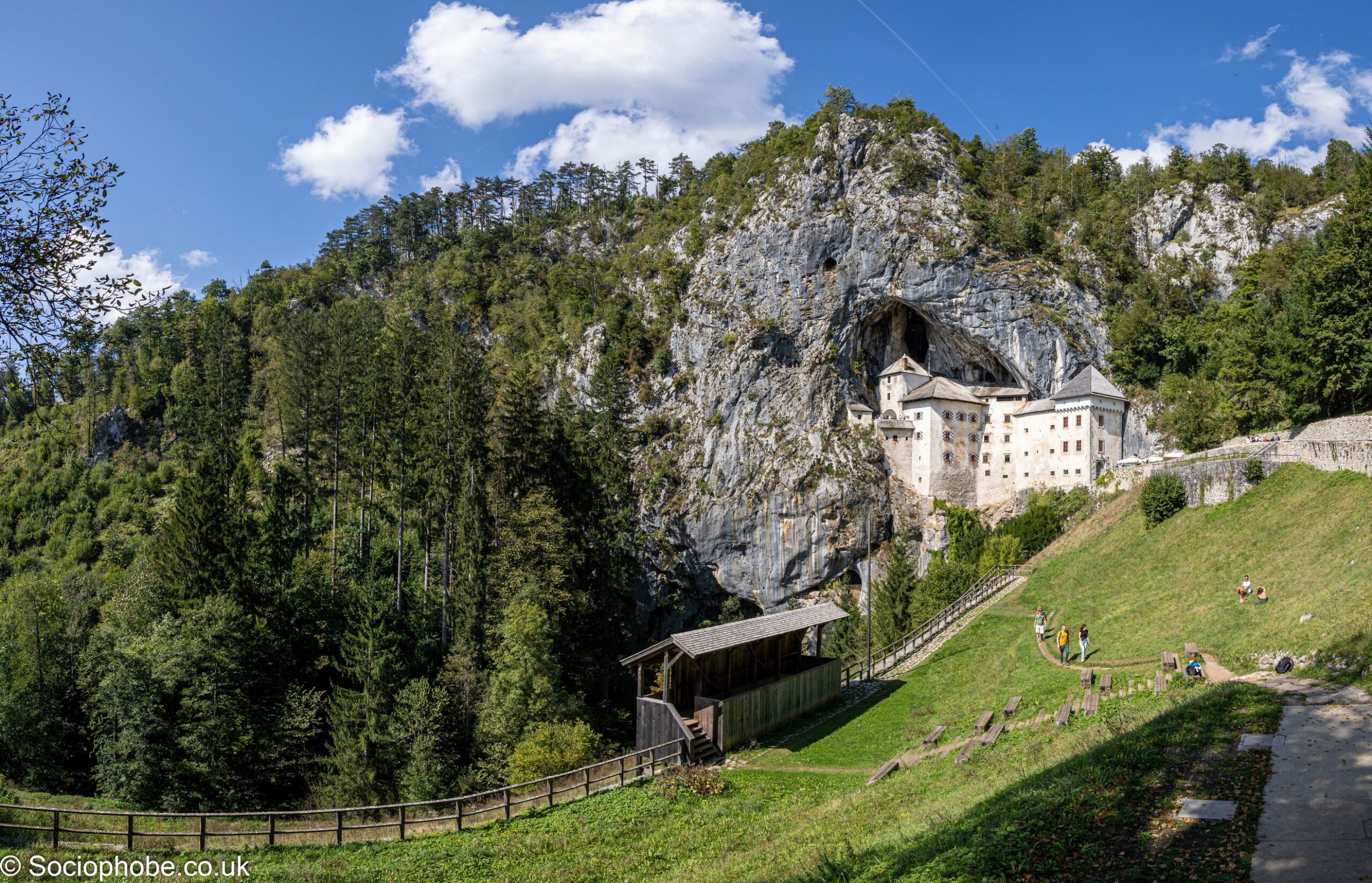
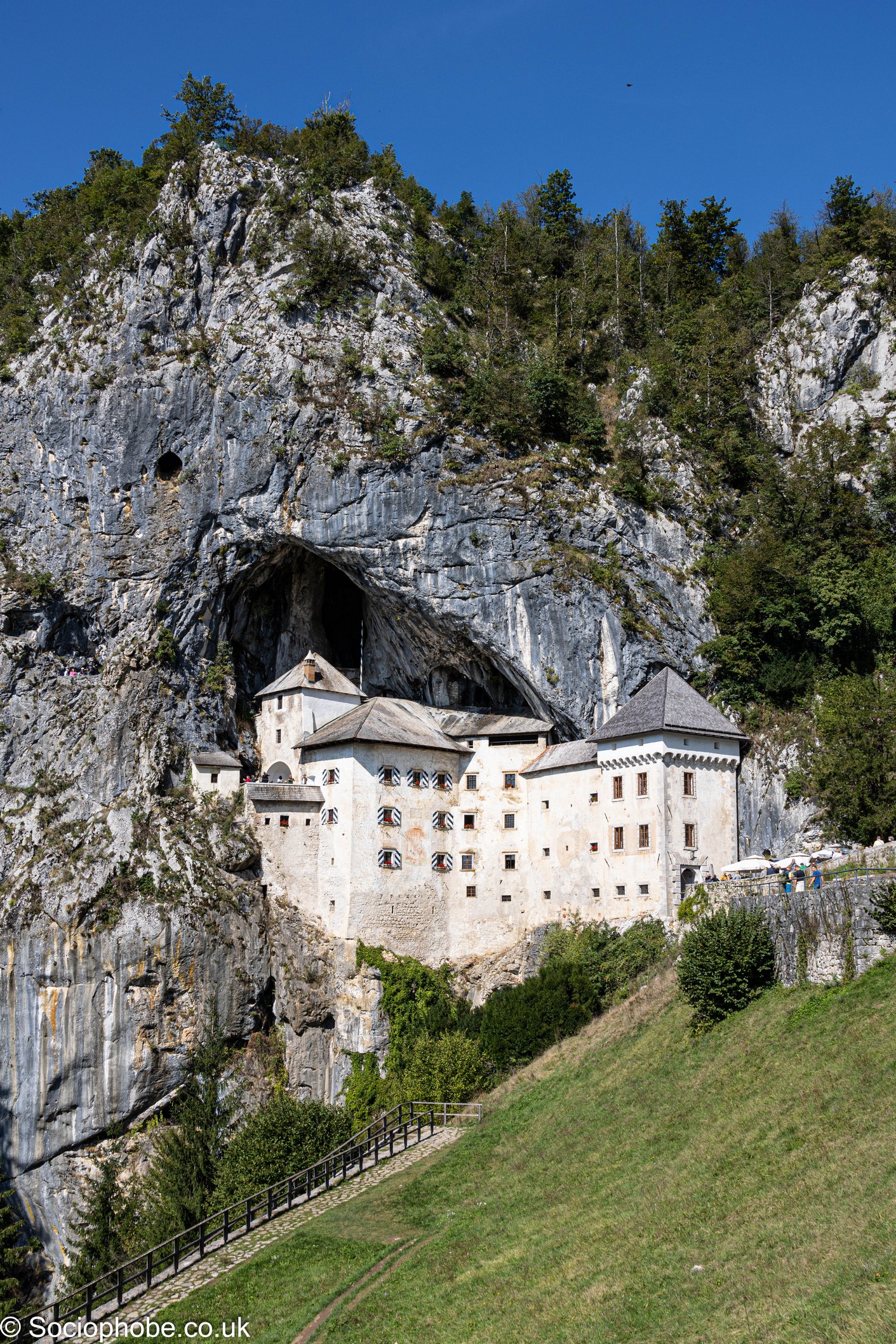
There were plenty of information boards and the audio guide for those who chose it but the interior, for me, wasn’t that interesting. It wasn’t helped by the huge number of people so the castle is really a victim of it’s own success. It would be tempting to visit, park up for €3 and just take some pictures from the outside rather than pay the €17 entrance fee even though it was used in Witcher and is a very photogenic castle exterior.
It was a short drive from the castle to Postojna, maybe 15 minutes and the views were beautiful, it is such a green and idyllic country. We have seen very little litter, almost no graffiti or vandalism and it all seems a thoroughly decent place.
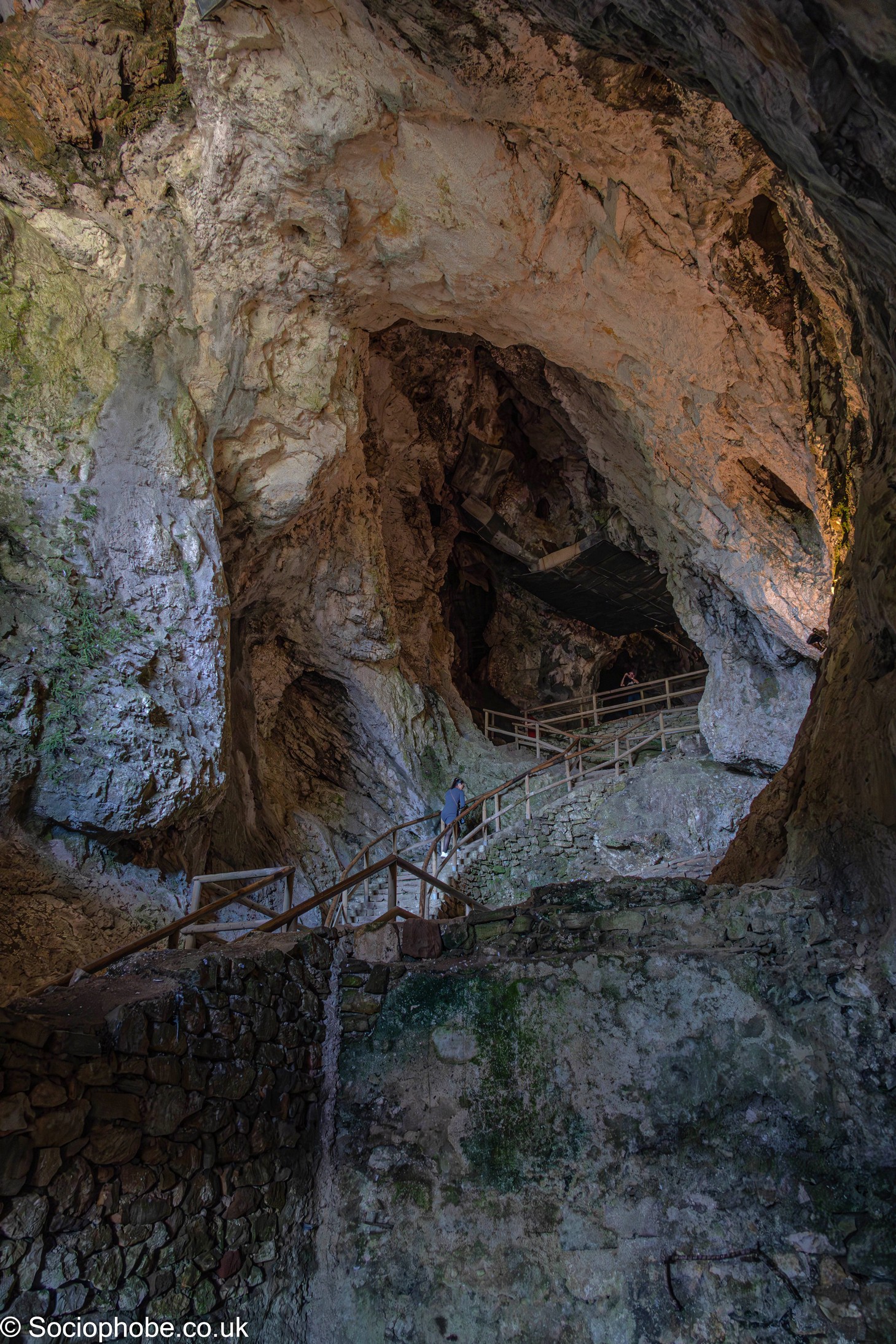
Our timed visit to the caves wasn’t until 13:45 so we had nearly an hour free to visit the vivarium. When booking I was tempted to skip that as I thought it’d be tedious but I am so glad I didn’t. The exhibition explained how the caves were formed, how life survives inside and what life there is, including 150 species identified so far. The star was the olm, a sort of albino lizard with no eyes that has adapted to life in the dark and lives for up to 100 years.
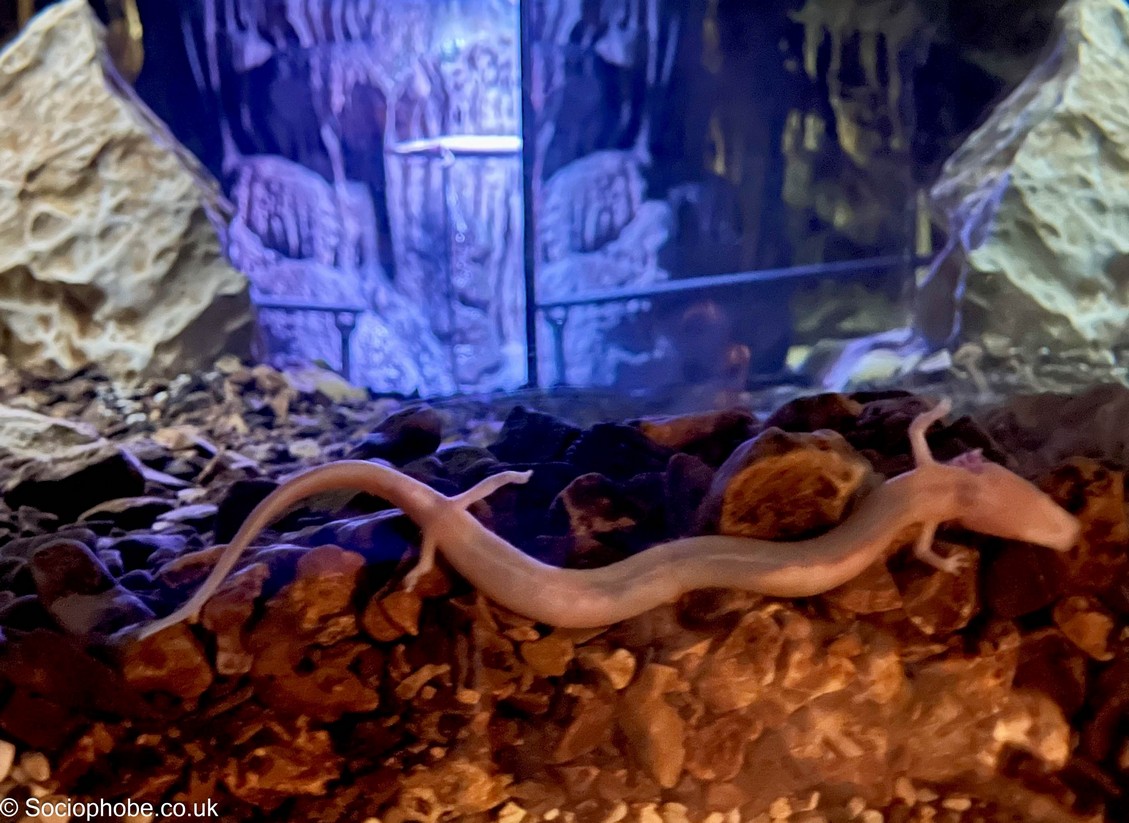
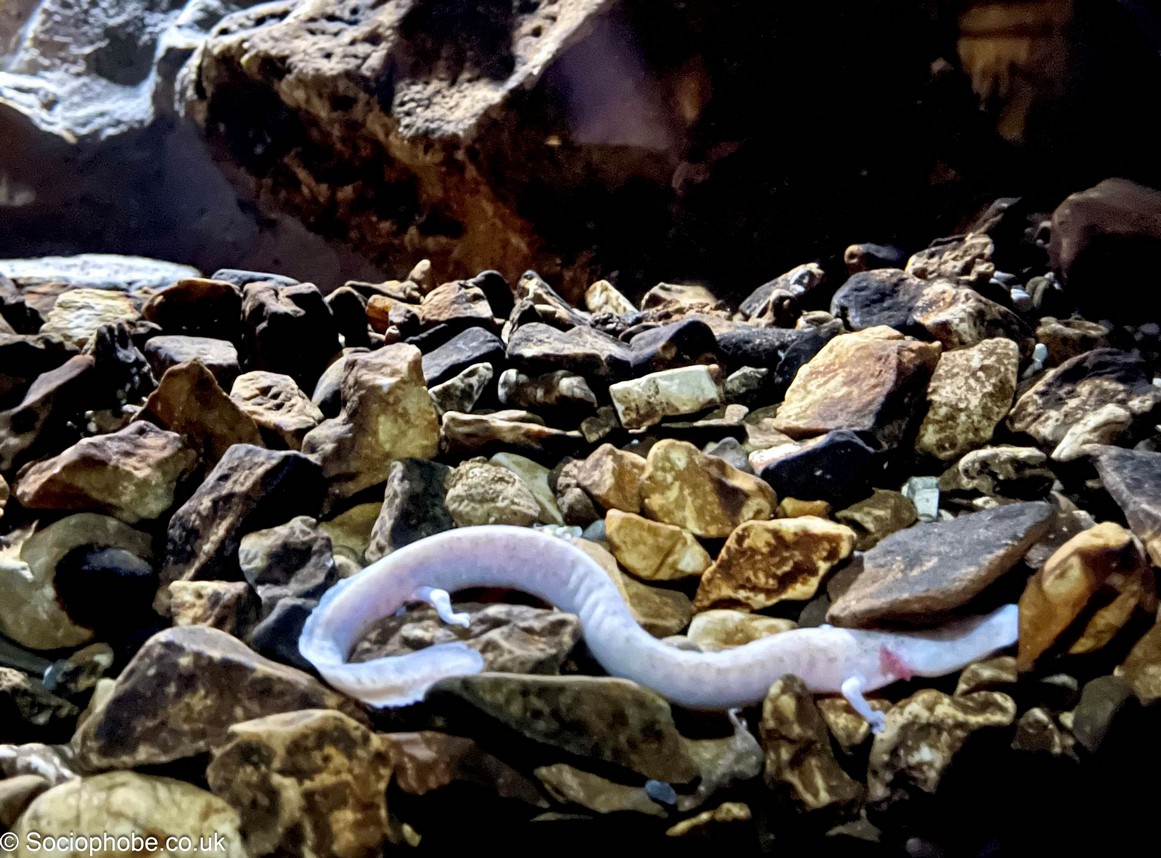
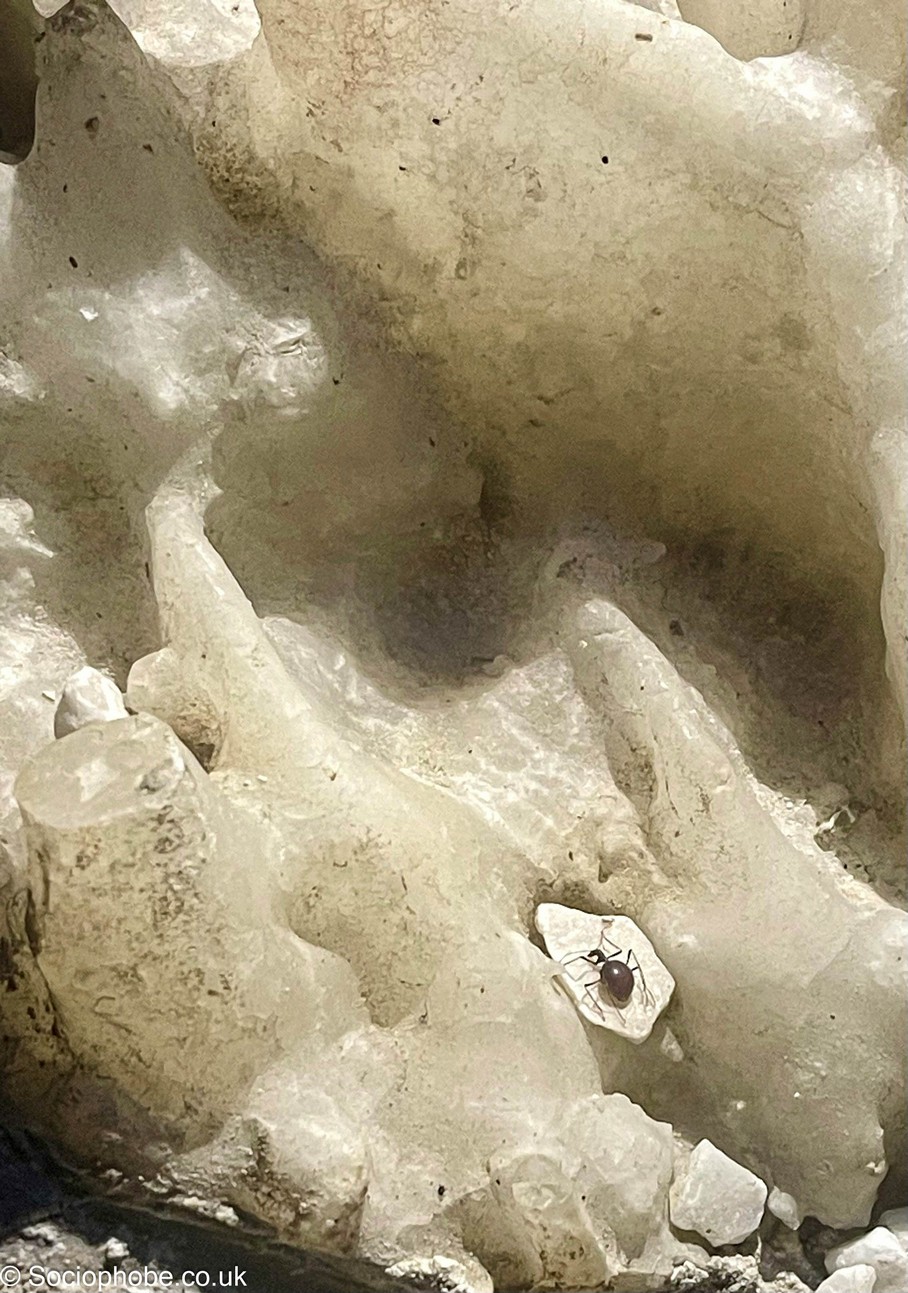
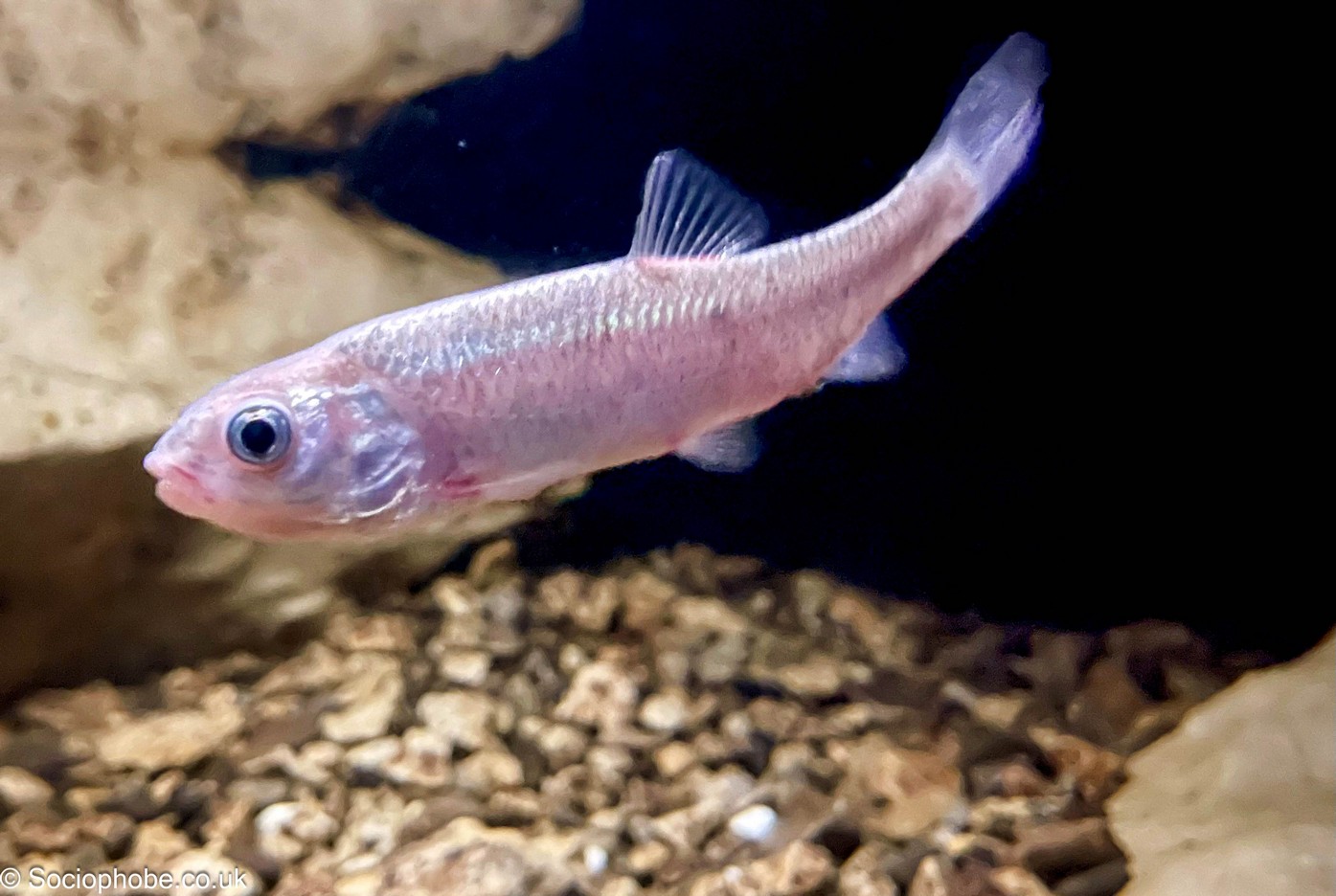
After the vivarium we joined the queue for our tour which started with a train journey to drive deep into the caves before the guided tour itself. The train itself was quite awesome, I’ll guess the travel time at 10 minutes but what the rock formations that we passed would have justified the ticket on their own.
Once off the train the guided tour was basically a series of quick information speeches and then make our own way to the next stop which was great as I could pause for photos and then catch up. Anna, the guide, was very good at both informing us about the formation and ecology of the caves and telling off muppets for using their flash.
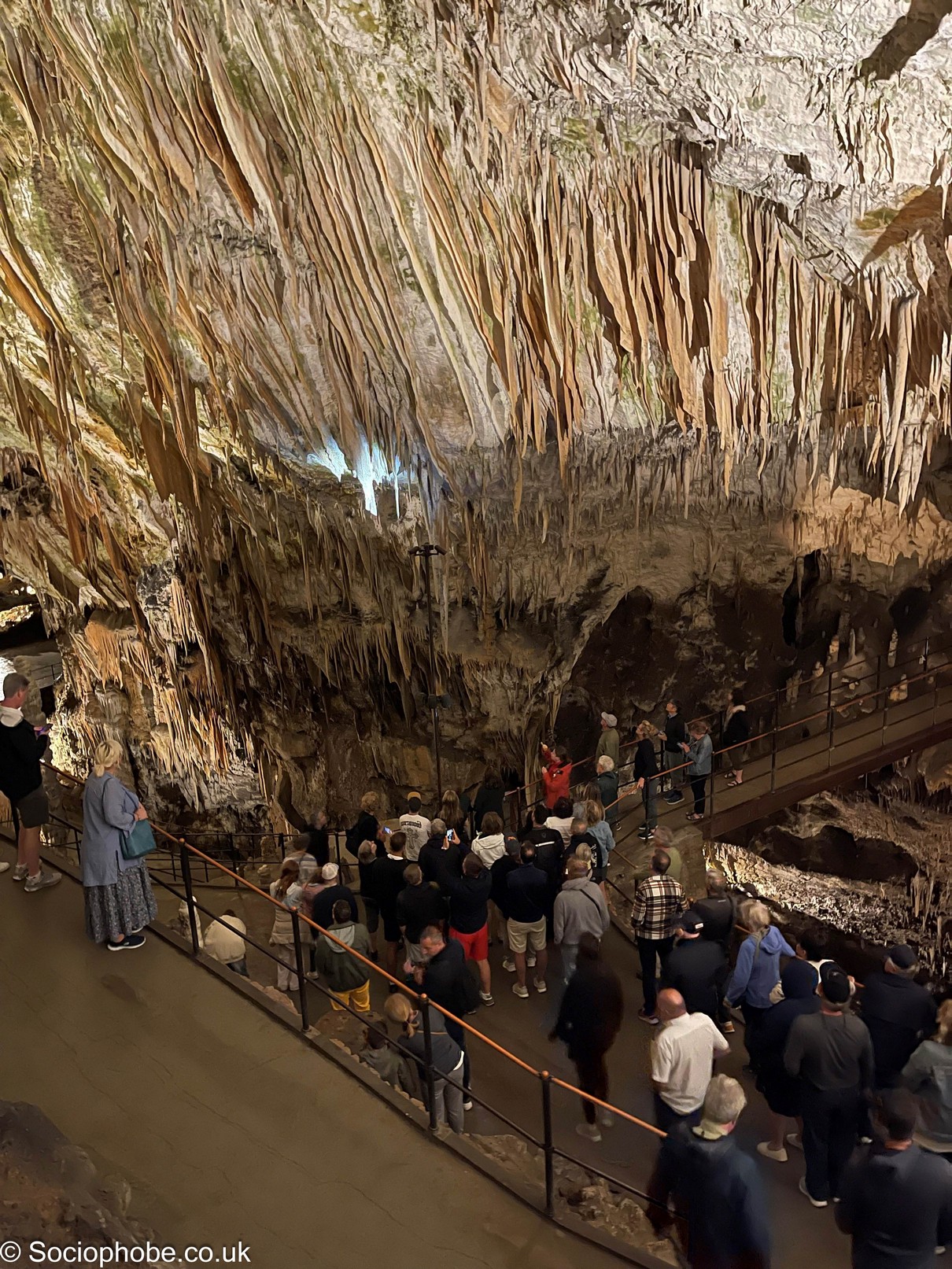
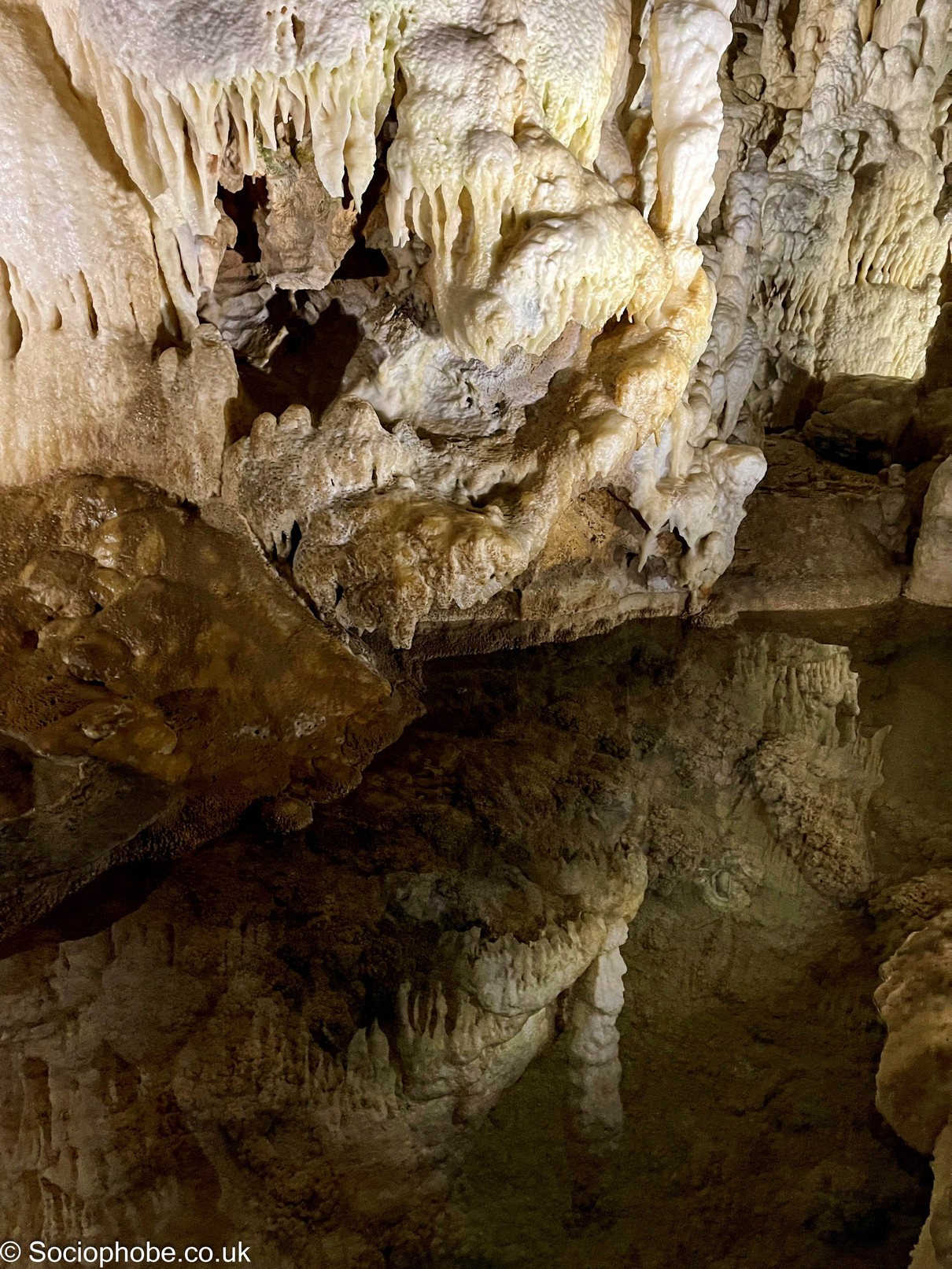
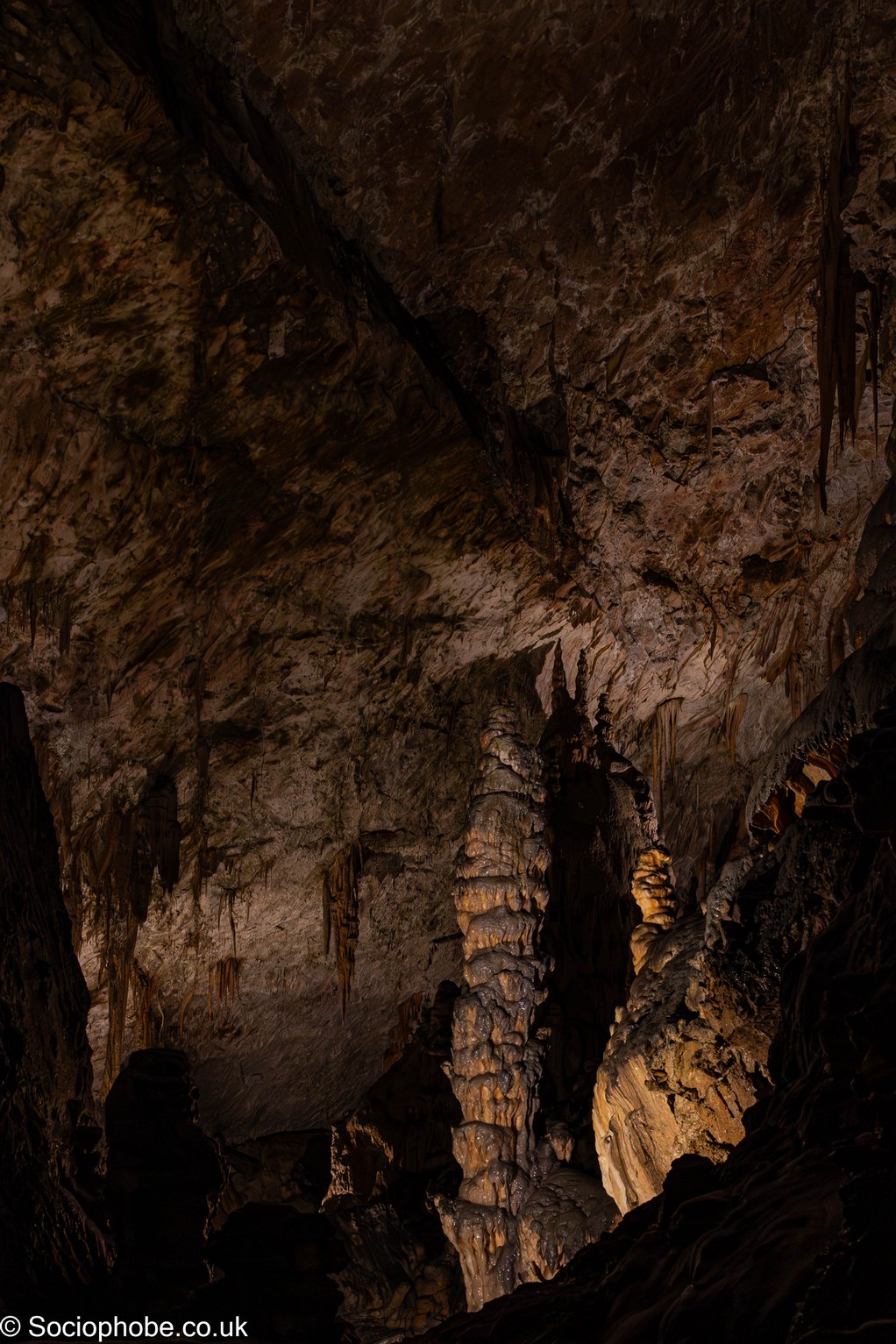
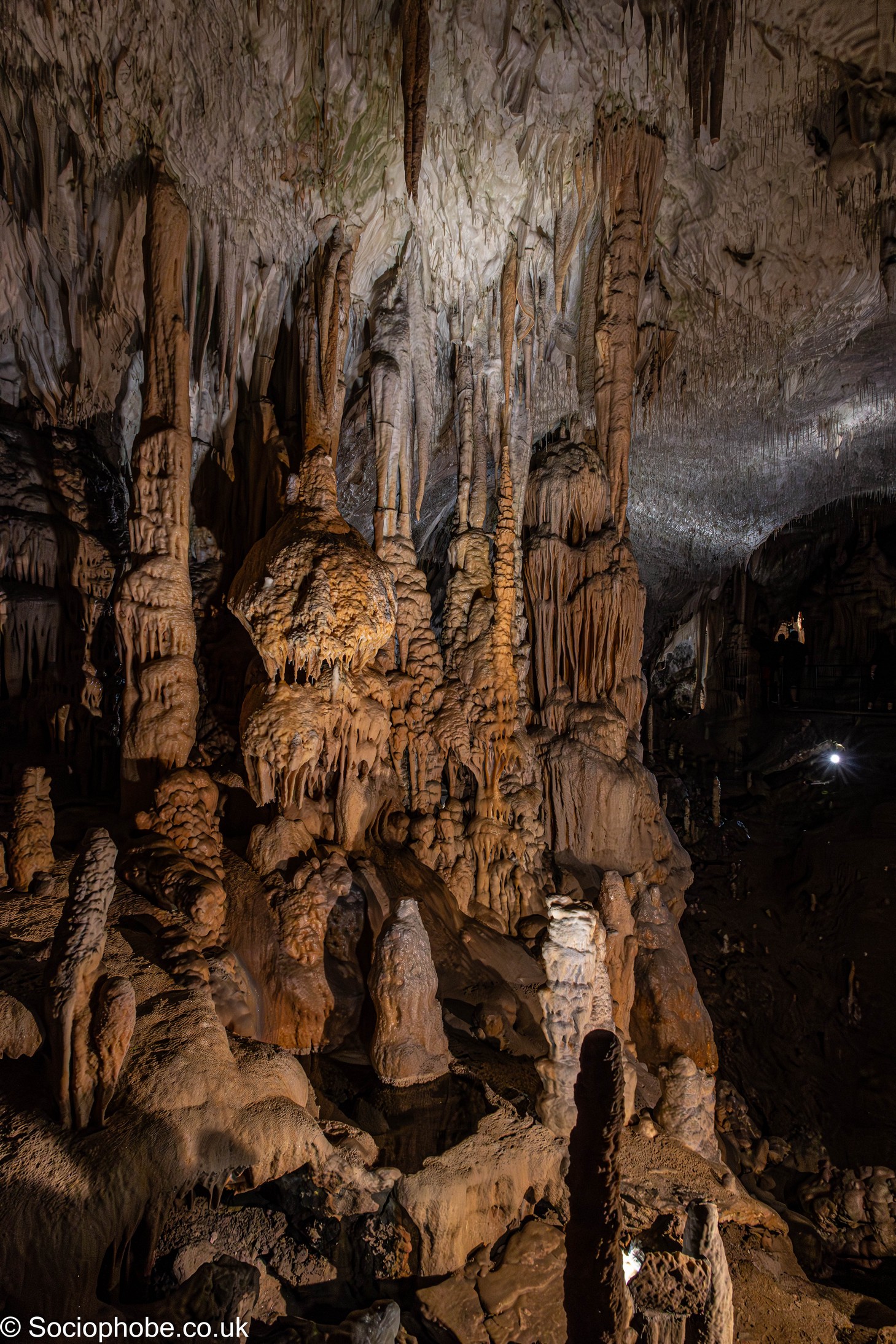
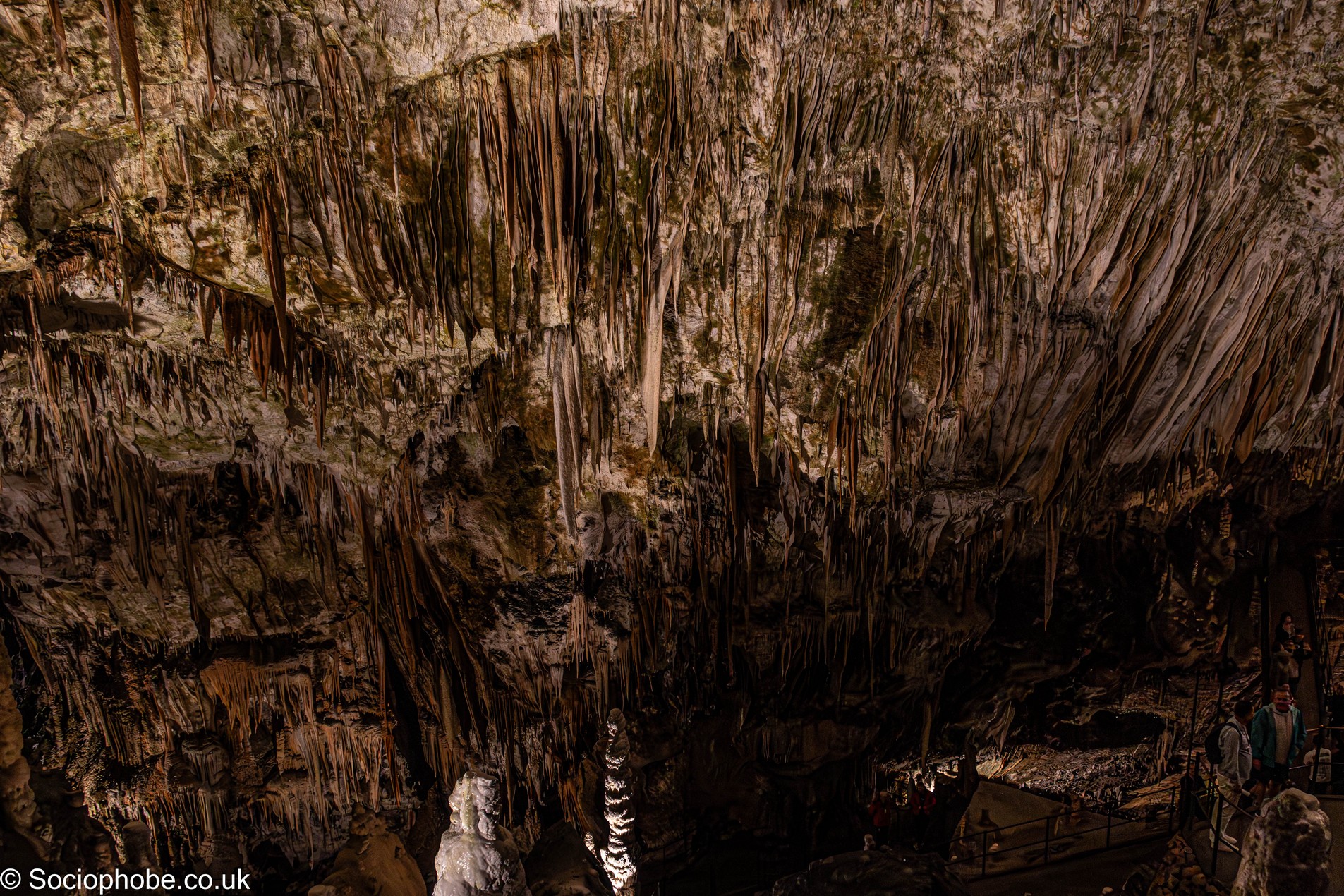
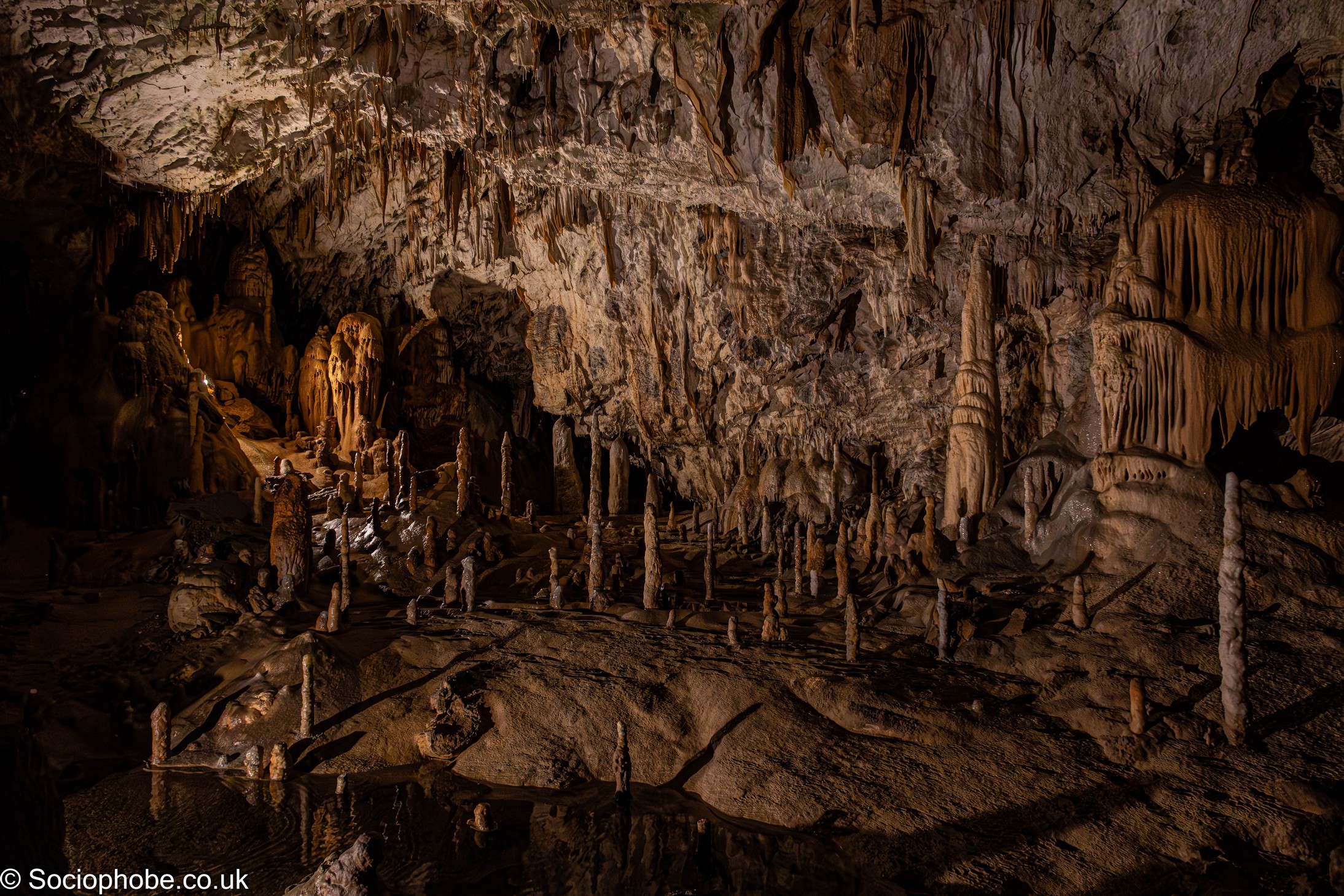
The walk was about 1.5k but took quite a while and the caves seemed colder than the quoted 10 degrees by the end. We ended with a visit to the only cave post office in the world.
After our return train journey we collected the car and drove 5 minutes to the hotel. After Bled, Postojna seems a very quiet town indeed! The hotel – Hotel Central – was a good choice as the room was good size with a nice desk for me and blissfully decent wifi (5G rather than cabled). We chilled in the room for a while and I got some of today’s photos sorted before going out for food.
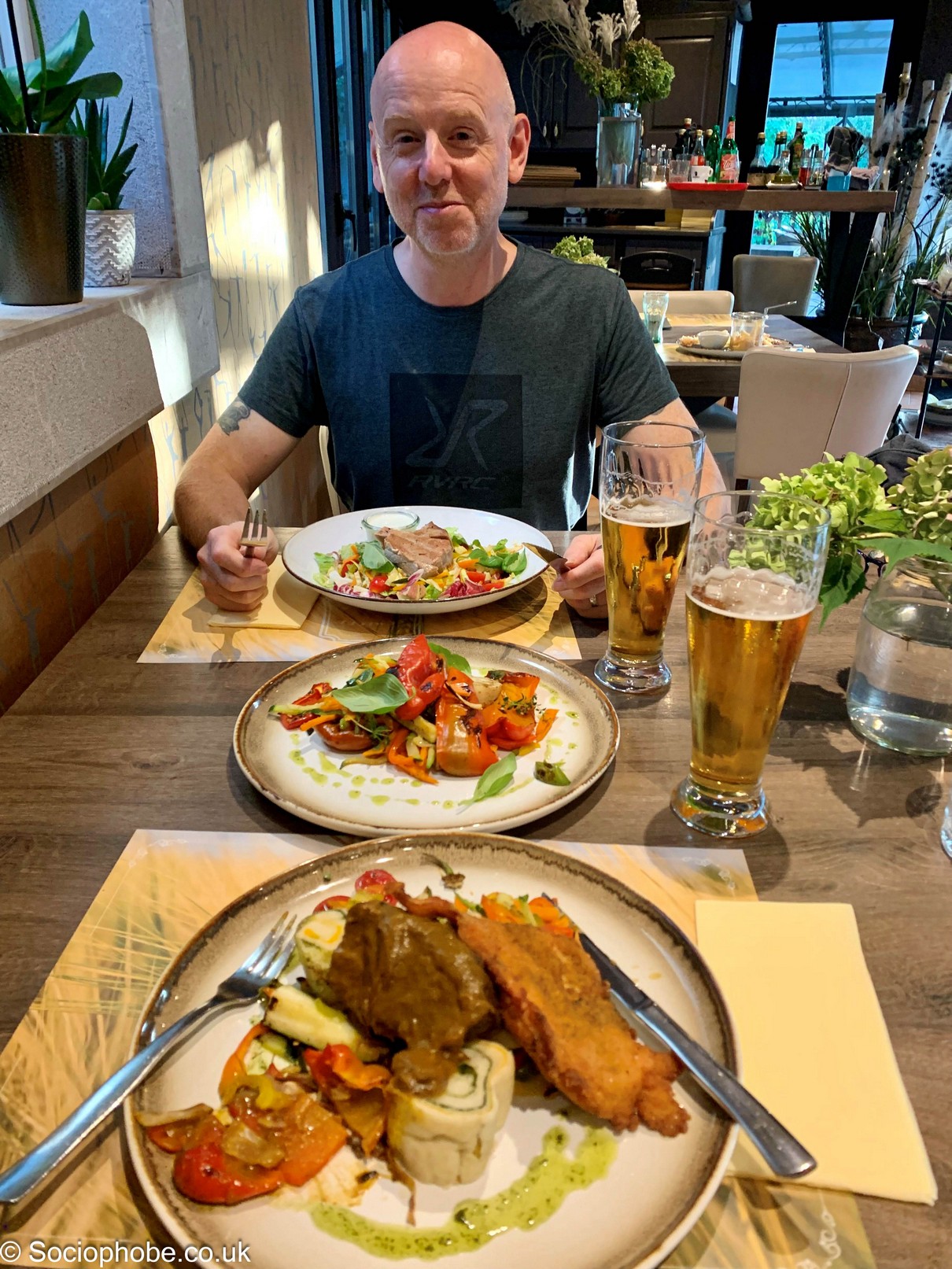
The recommended restaurant was Cuk and it took a while to find but when we got there it was fabulous. The tables were nicely spaced, it was busy but quiet and the food was delicious. I had the tuna salad and it was a decent sized tuna steak with a wonderful variety of veg, Deb opted for beef which looked equally delicious. Although we could have left it at that as the portion sizes were good I am, sadly, a glutton.
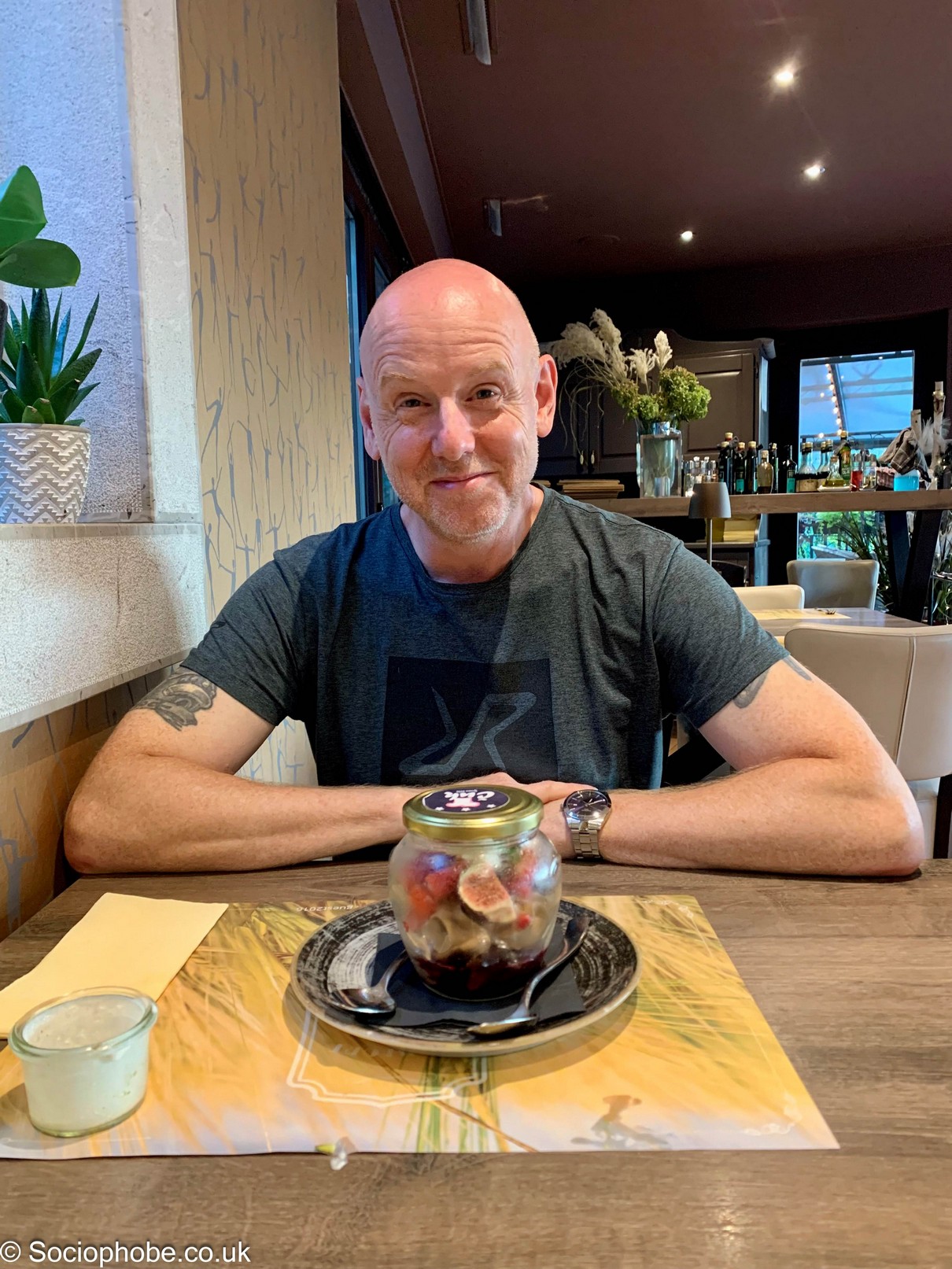
The chocolate mousse dessert was wonderful and I was tempted to have a second but persuaded myself not to. A lovely combination of mousse, strawberries, blueberries, figs and, I think, cookie. A truly excellent meal and good value too – €65 including two pints and a side of grilled veg.
Sunday – Pula – Croatia
After a decent breakfast we left about 9 for our first stop, the botanic gardens at Villa Mirasasso, near Trieste. What a fabulous place! The gardens were some of the best laid out for visitors I have ever seen – all the plants were labelled, there was a clear route to make sure you saw everything, lots of information on the original owners and creation of the garden and then the changes when it went into municipal ownership in 1948.
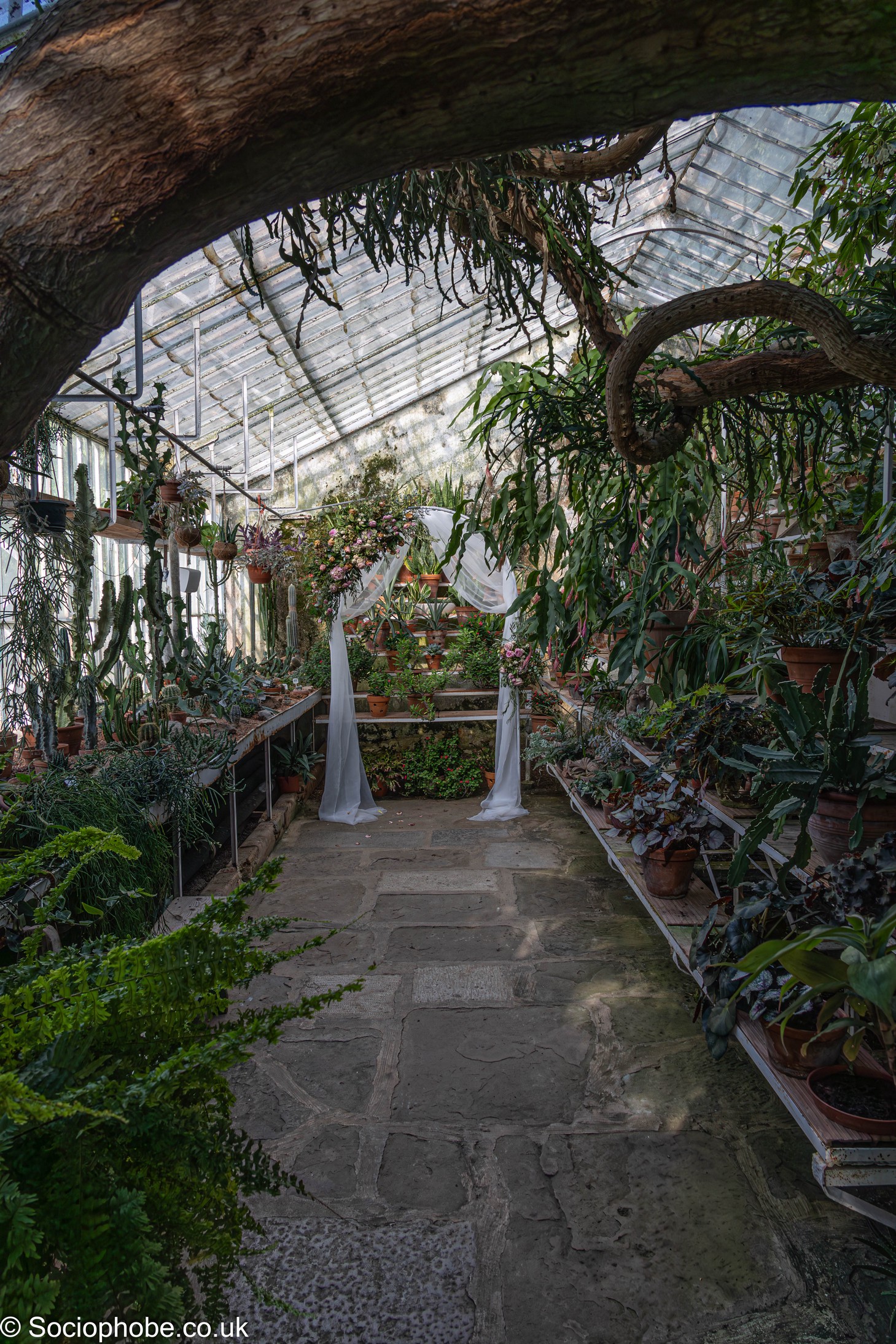
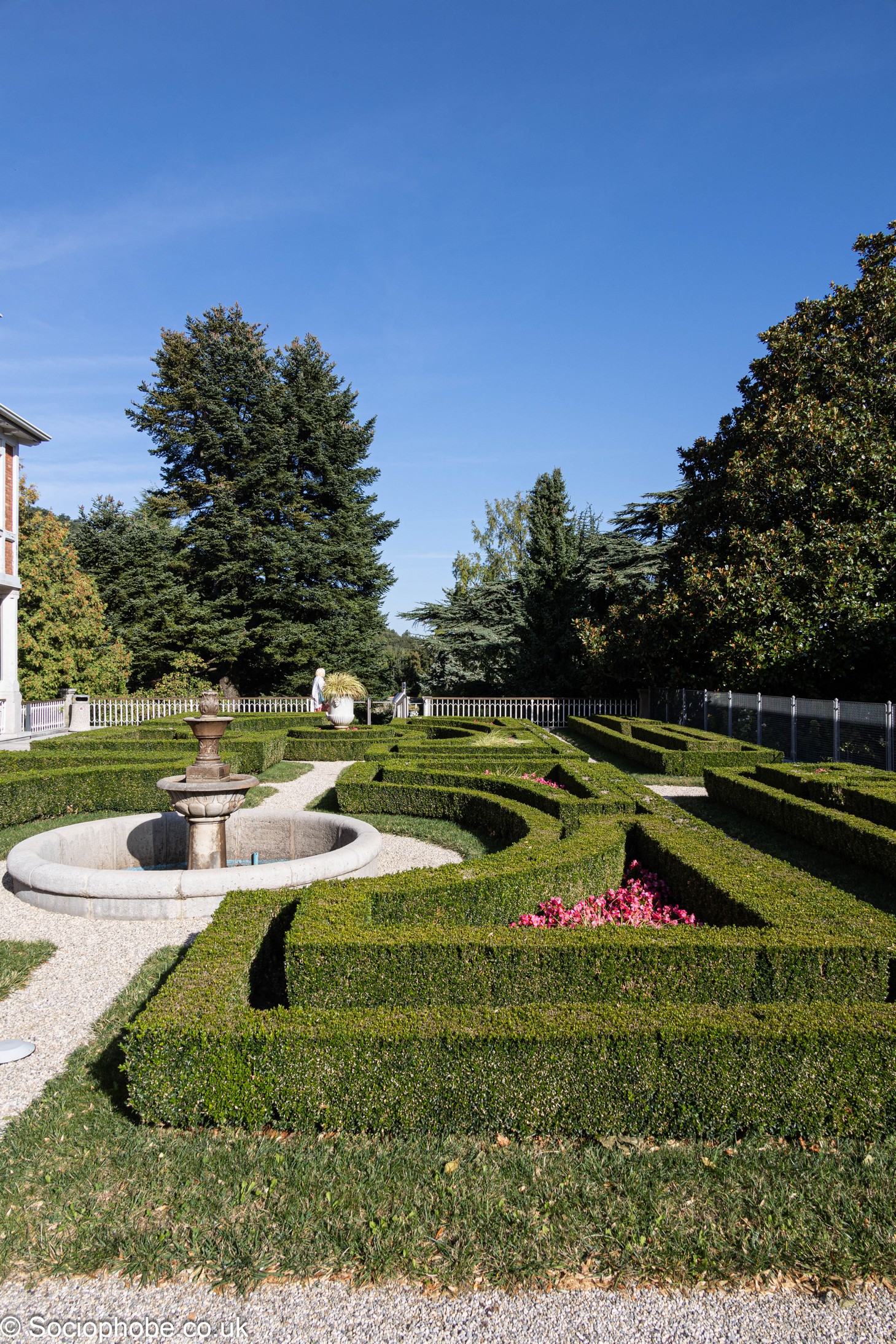
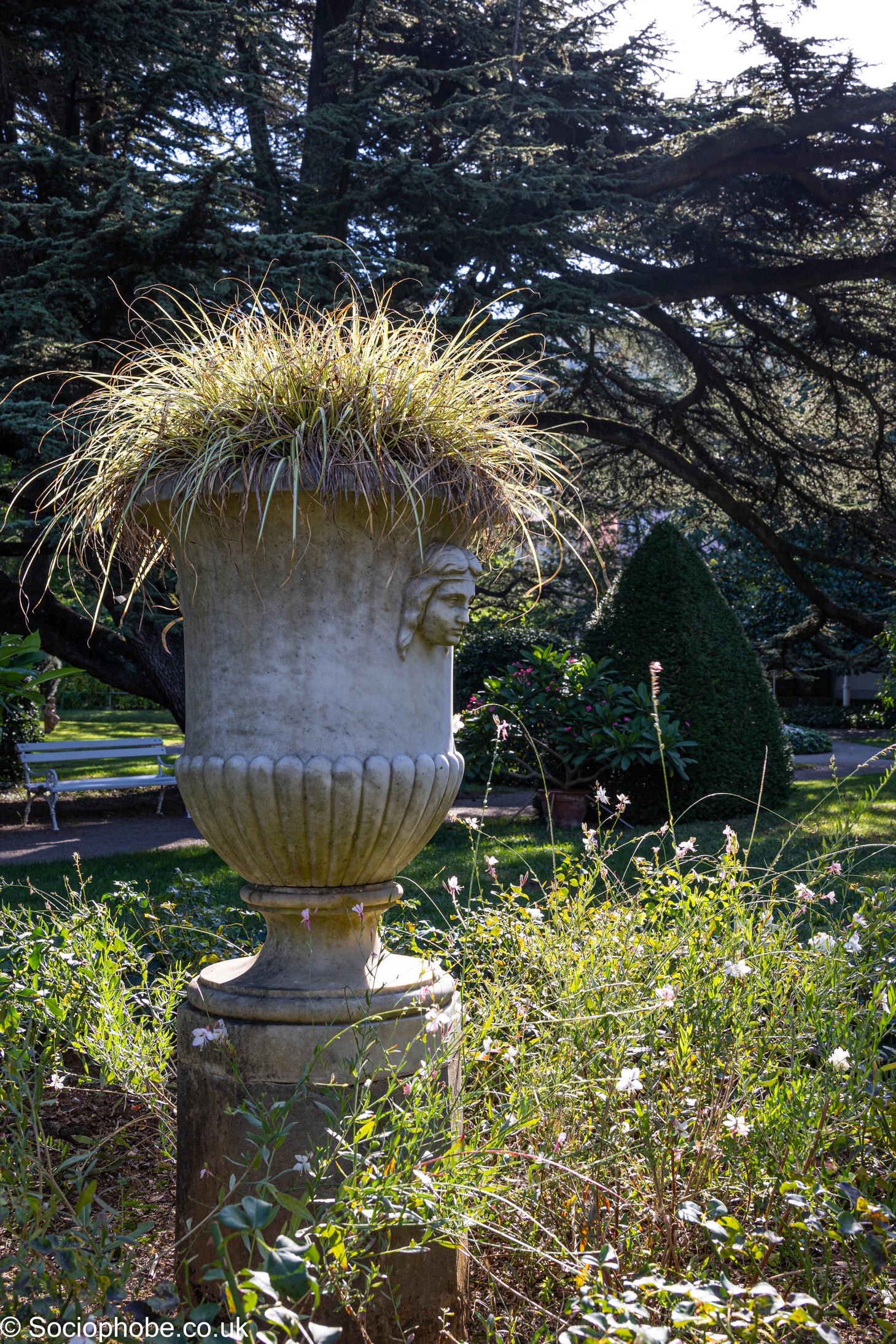
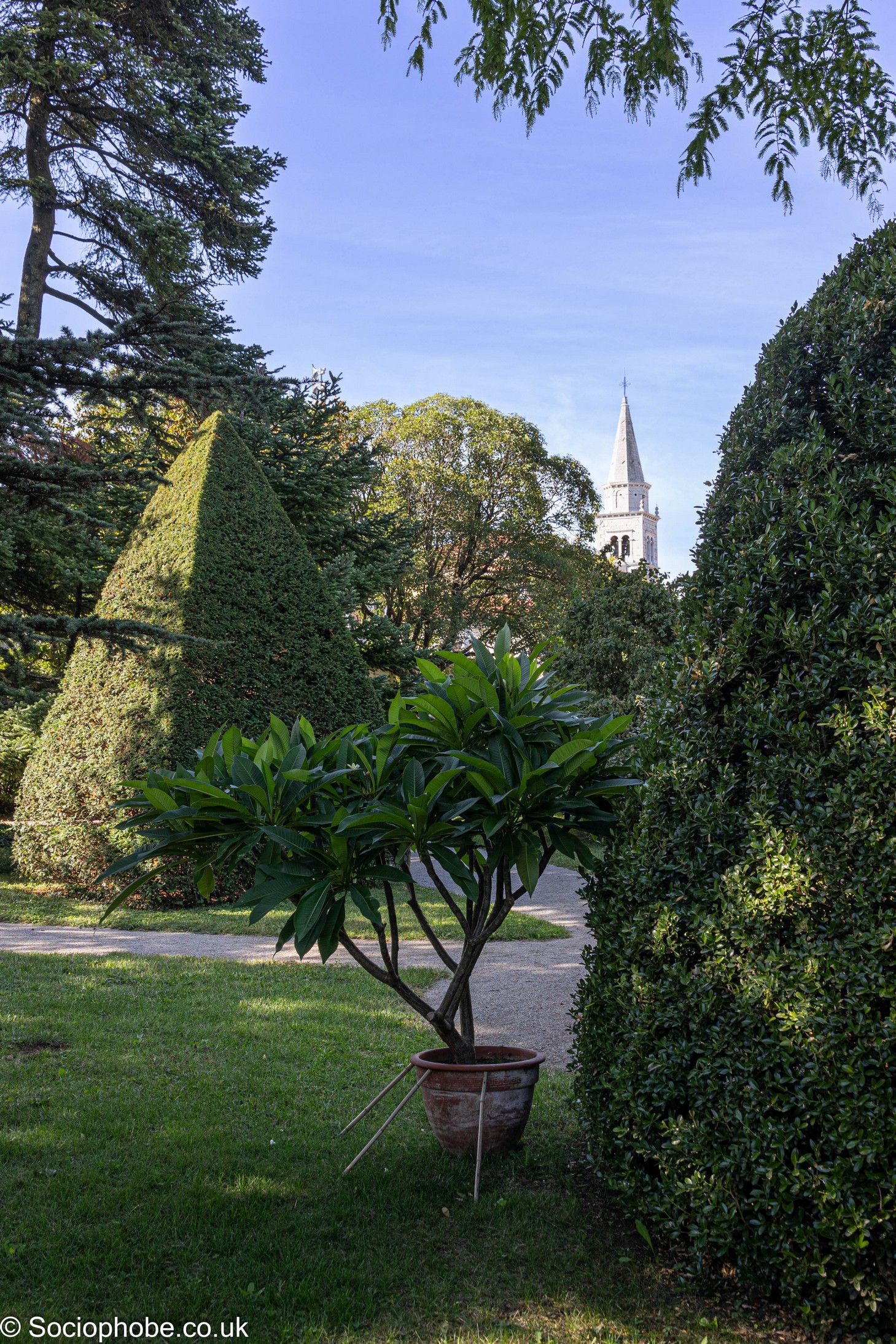
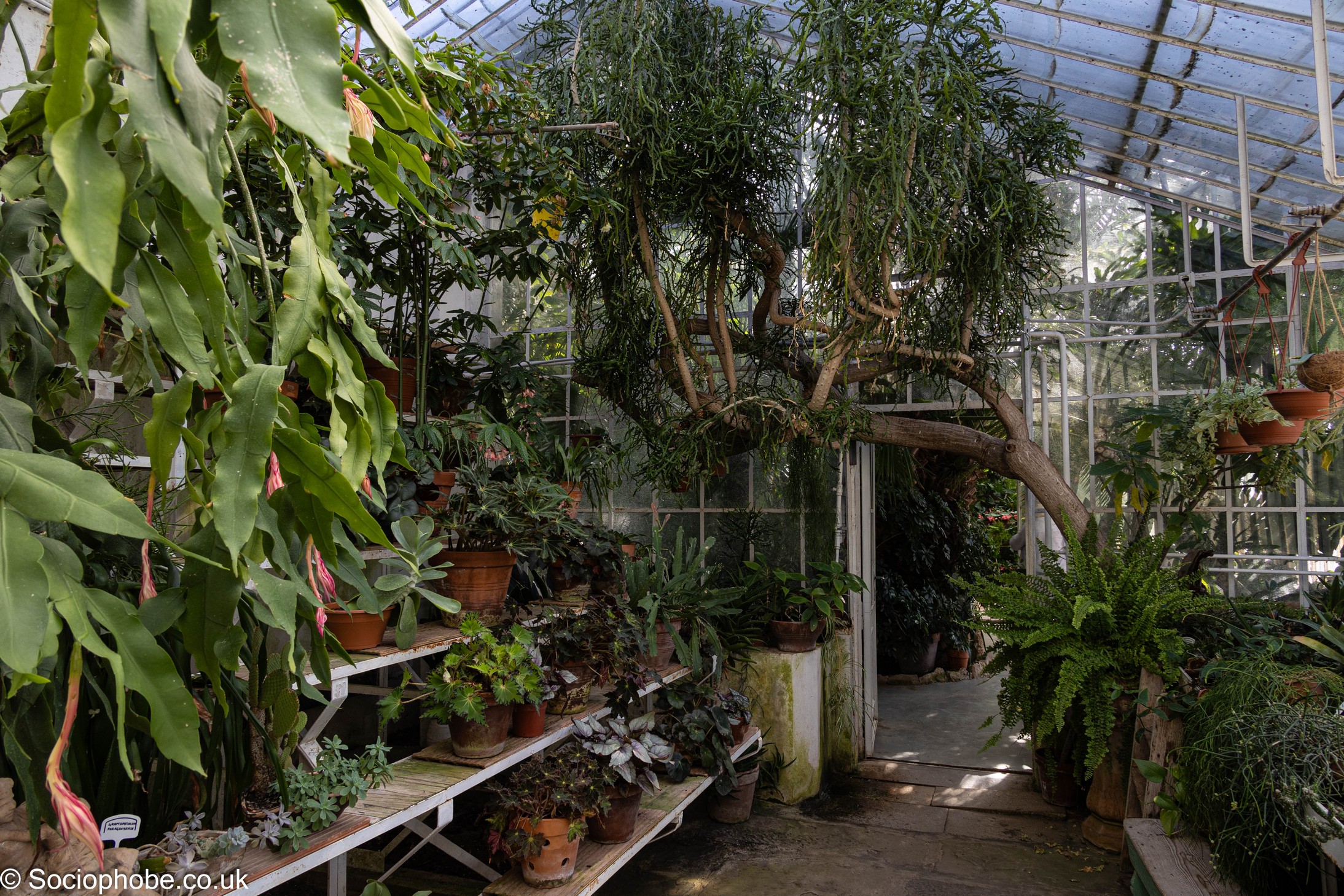
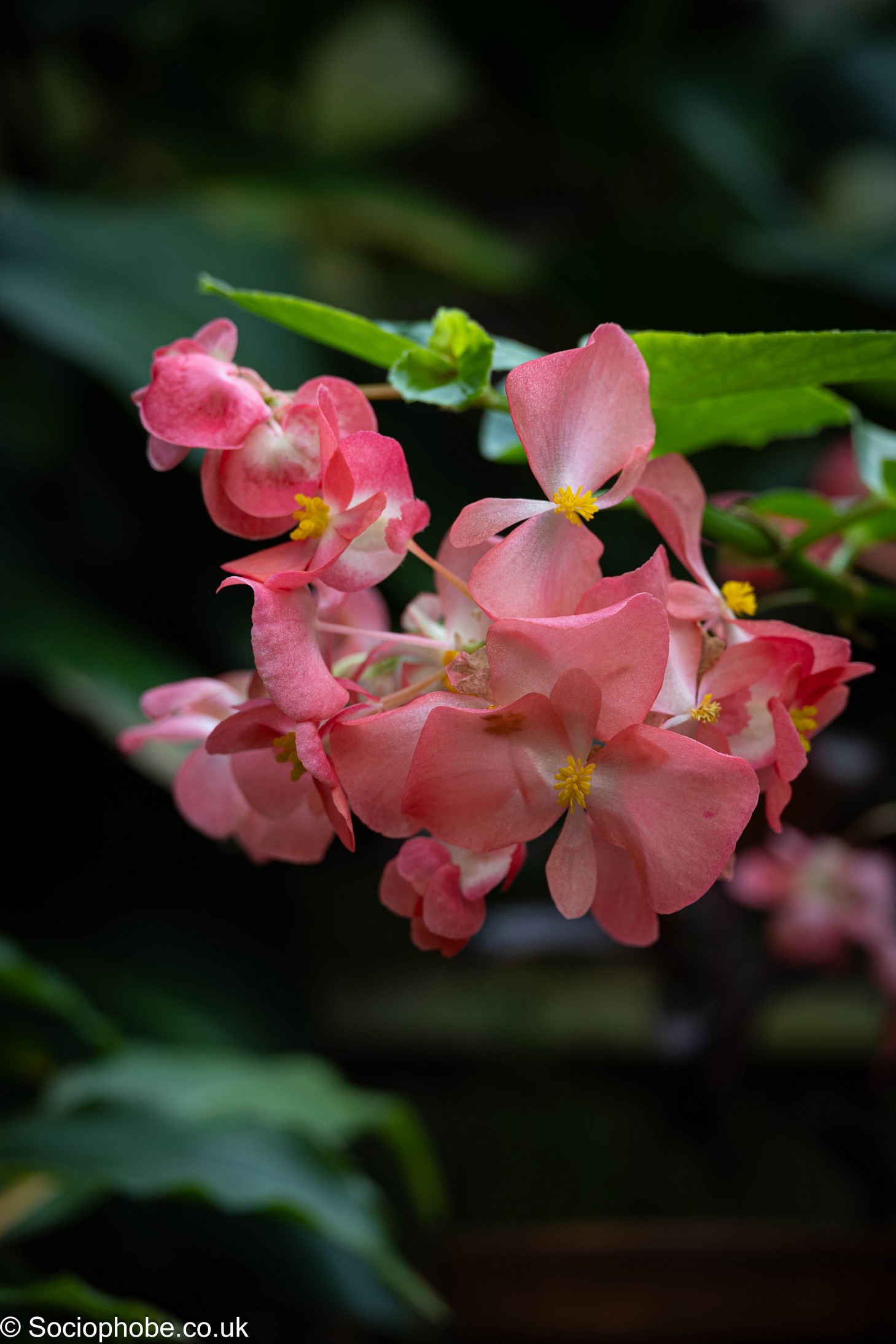
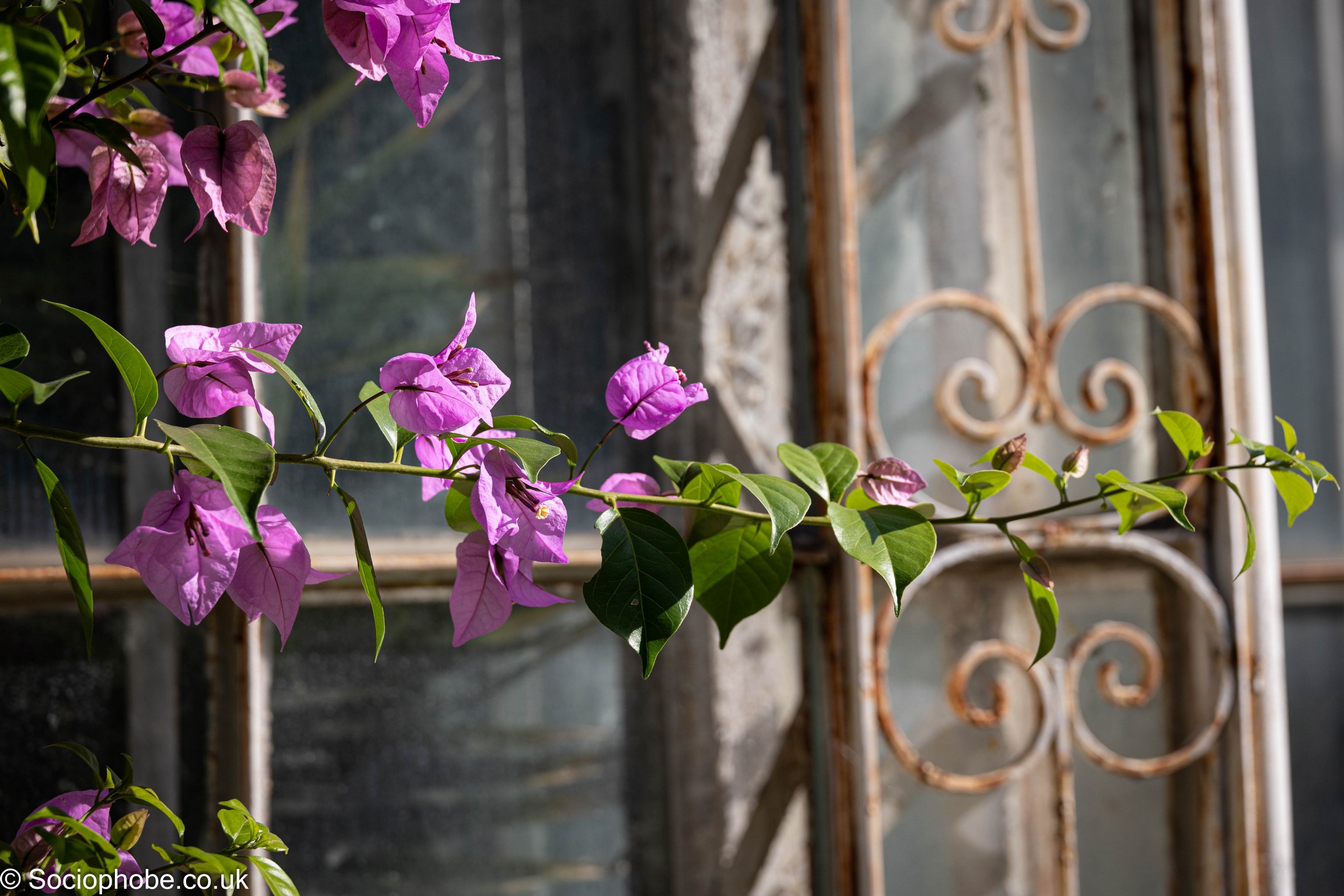
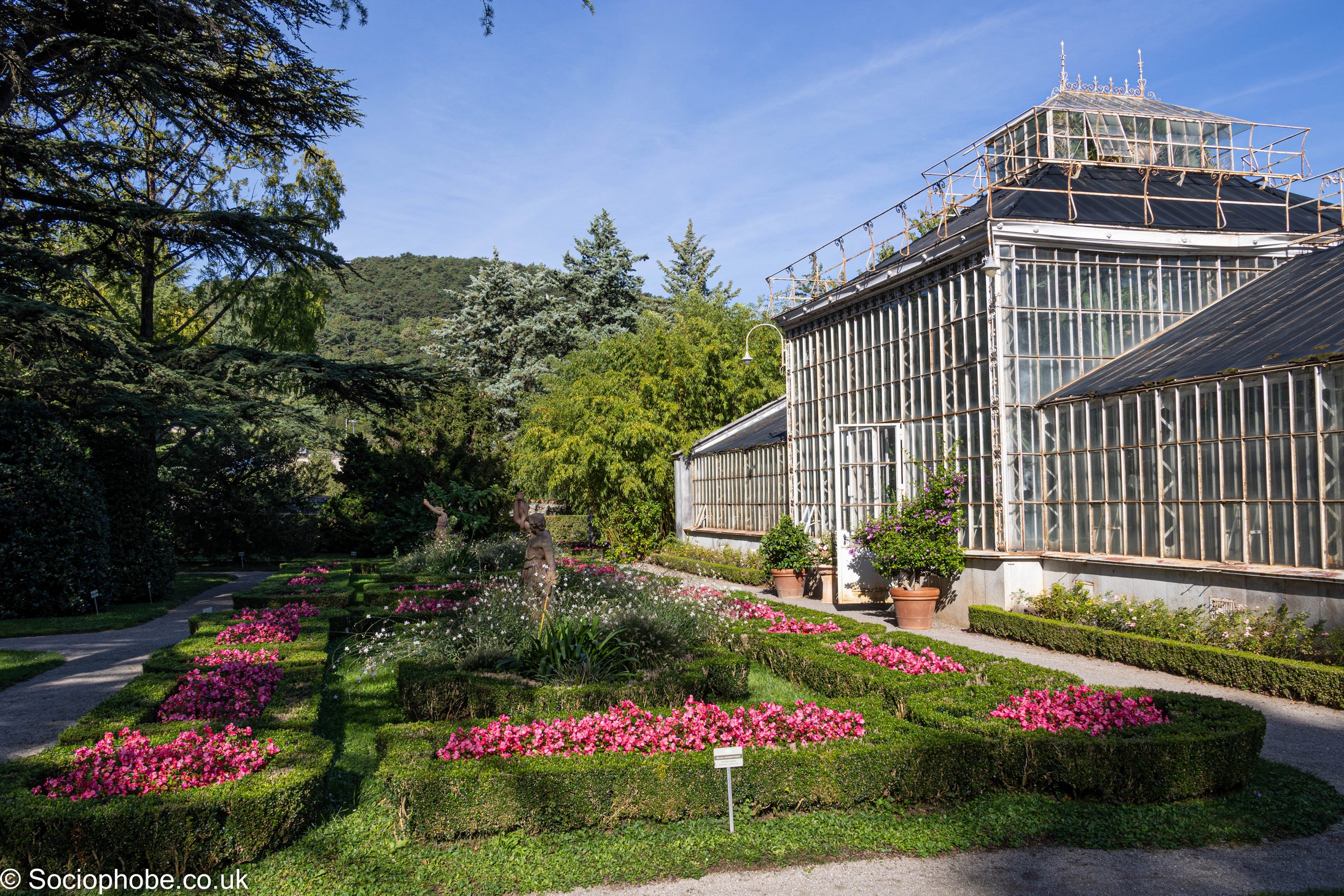
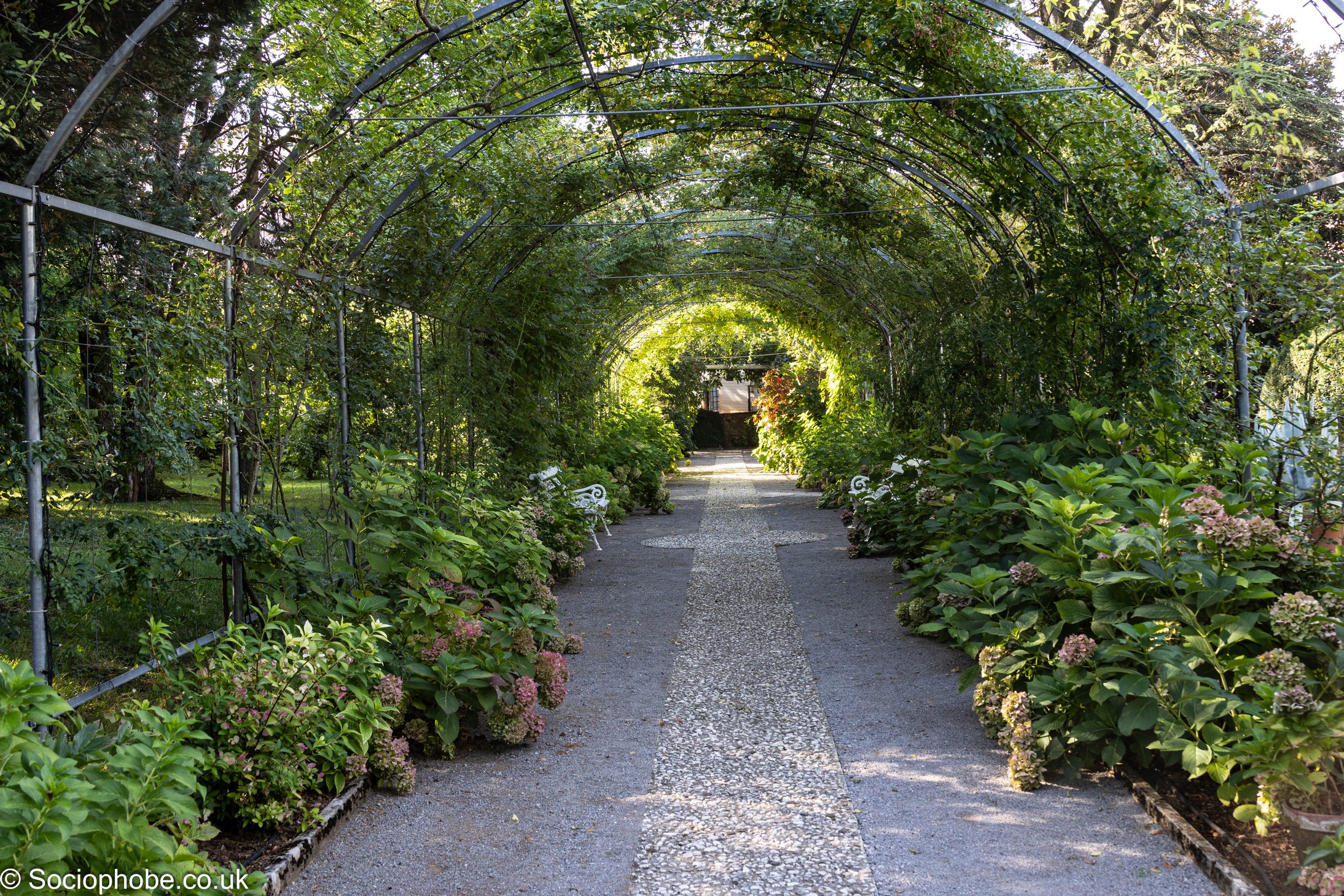
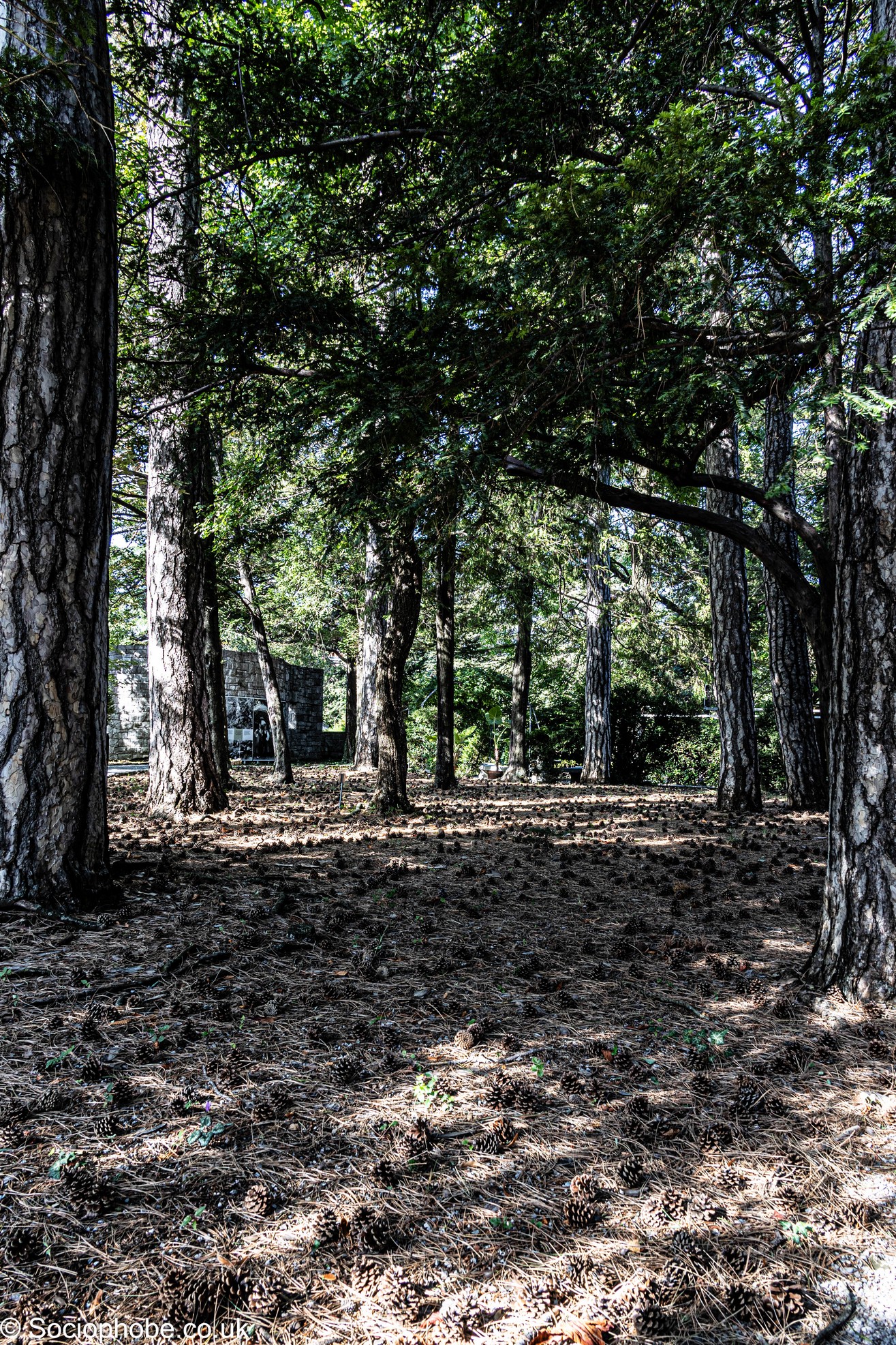
You had to feel sad for the owners, being exiled from their life’s work after the communist takeover but luckily their legacy has survived. The interpretation centre was just fantastic, I think we spent about an hour there learning about the fauna, geology and animal life of the area. The greenhouse was great too and it was an incredibly peaceful and educational visit. A total bargain at €6.
From there we left Slovenia, entered Croatia and drove the length of the Istrian peninsula past huge traffic jams heading the other way. We arrived in Pula, the receptionist at the hotel told me where the parking was (about 100m away) and then Deb got out to check in while I parked. I missed the turning and went on a 10 minute excursion including driving through a park by mistake and then having to reverse all the way out to the bemusement of the flower seller. I eventually parked, went back to the hotel, found I had parked in the wrong place and then moved the car to the correct location.
Bit of a palaver but I got to see a chunk of the city. The hotel Scaletta is in a great location, a few minutes walk from the Roman amphitheatre. Our room was a lovely size and had window shutters so we could have a cool breeze in the room. We footled for a while before leaving to walk around the town.
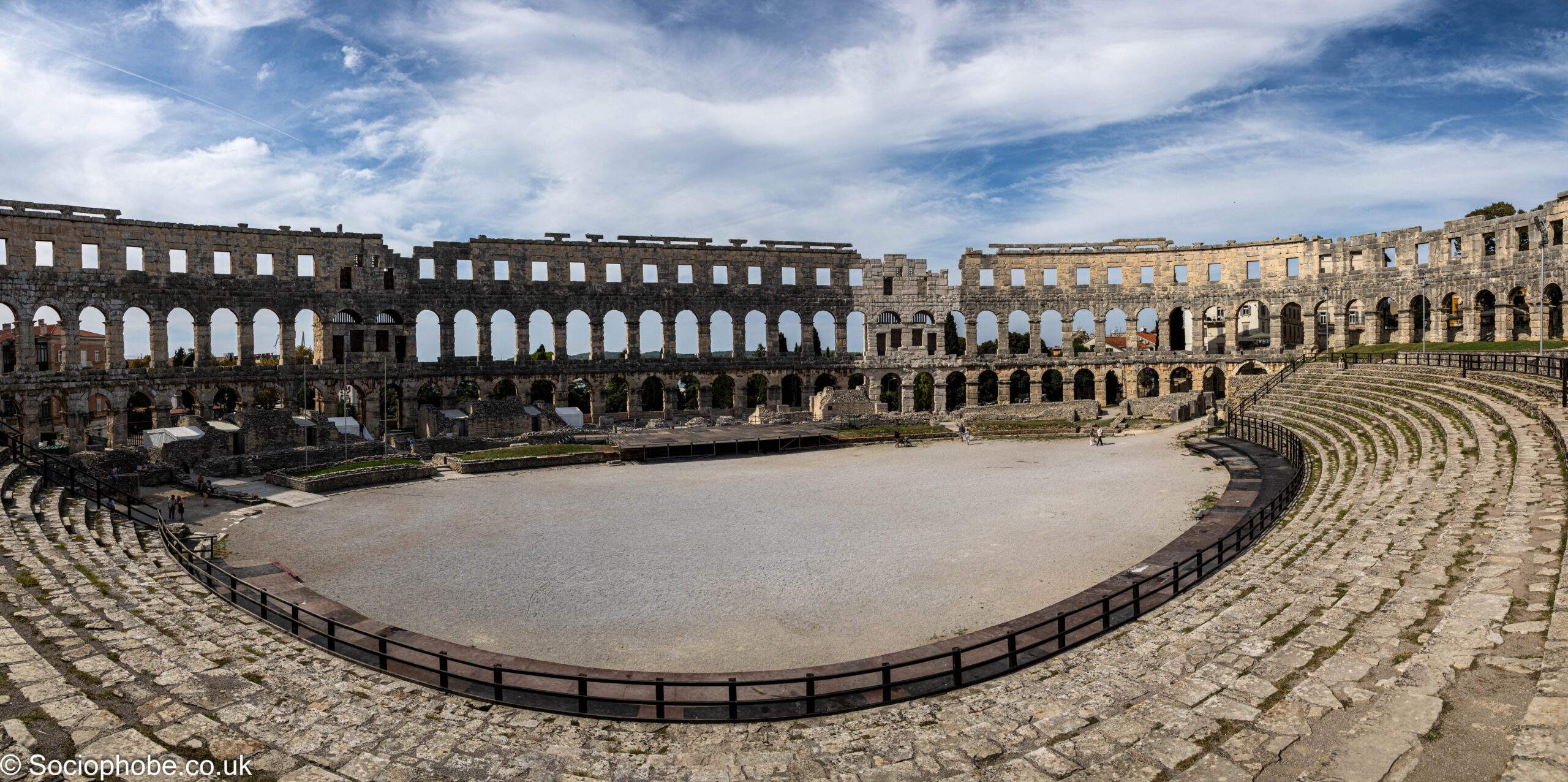
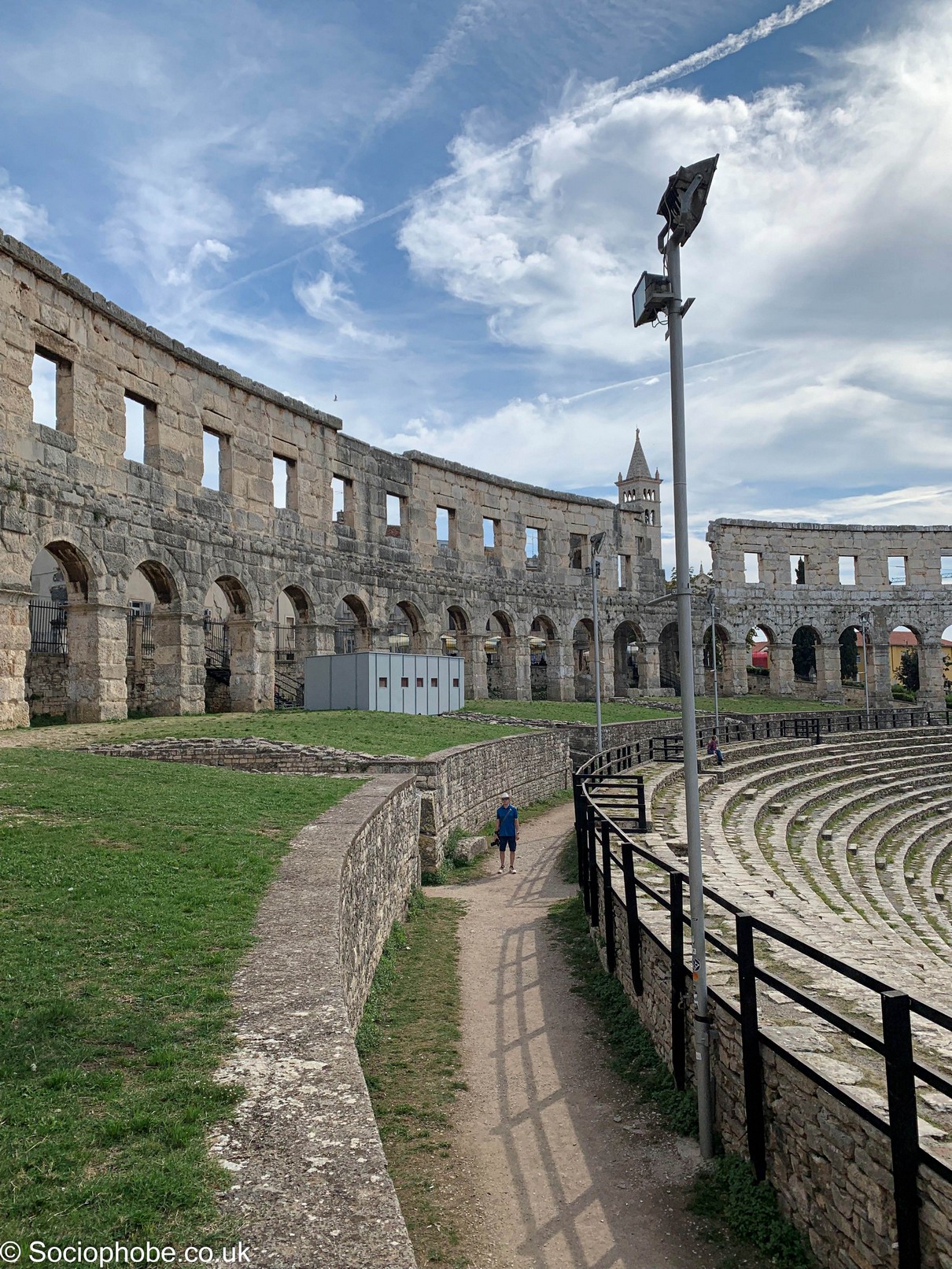
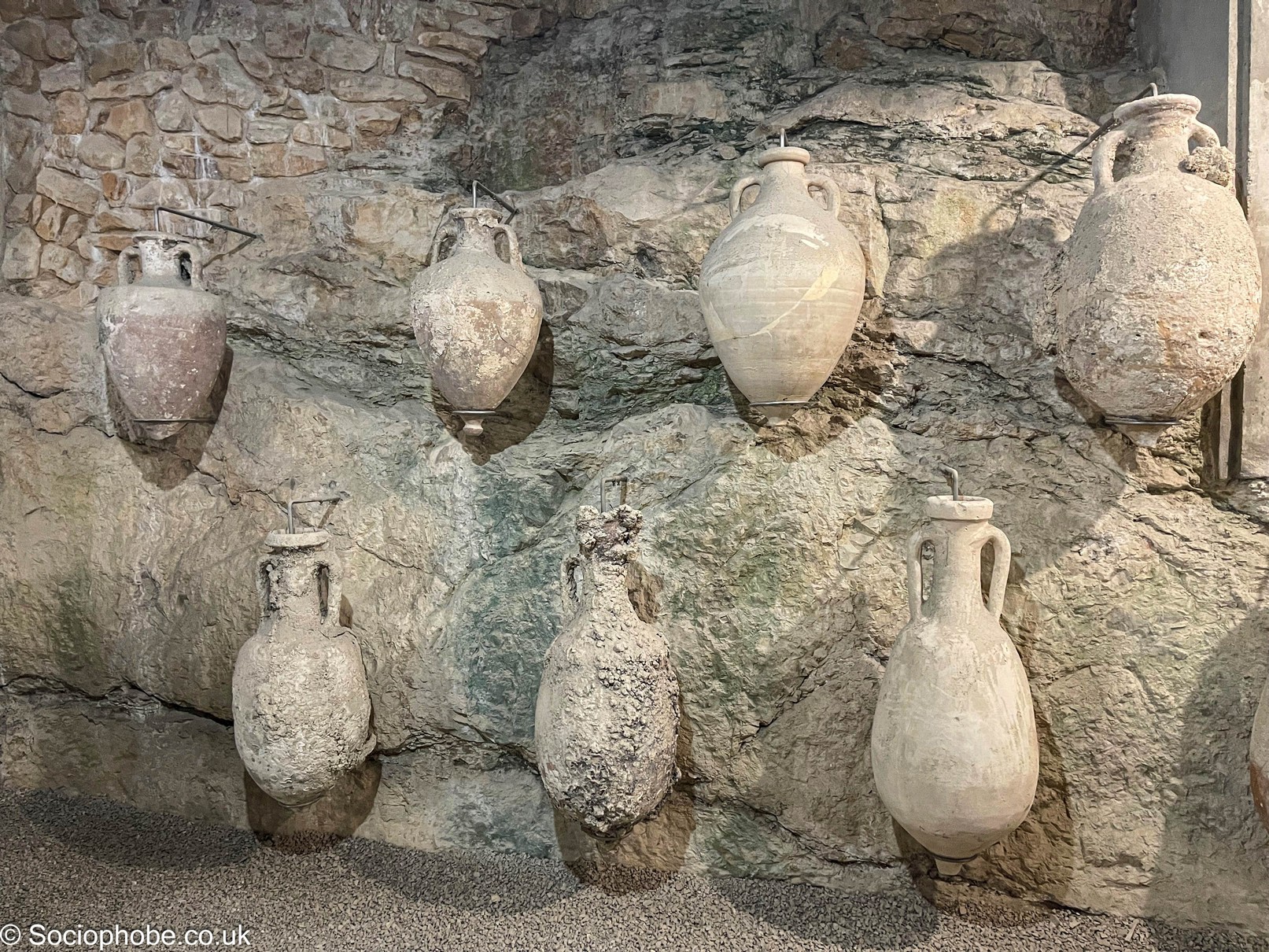
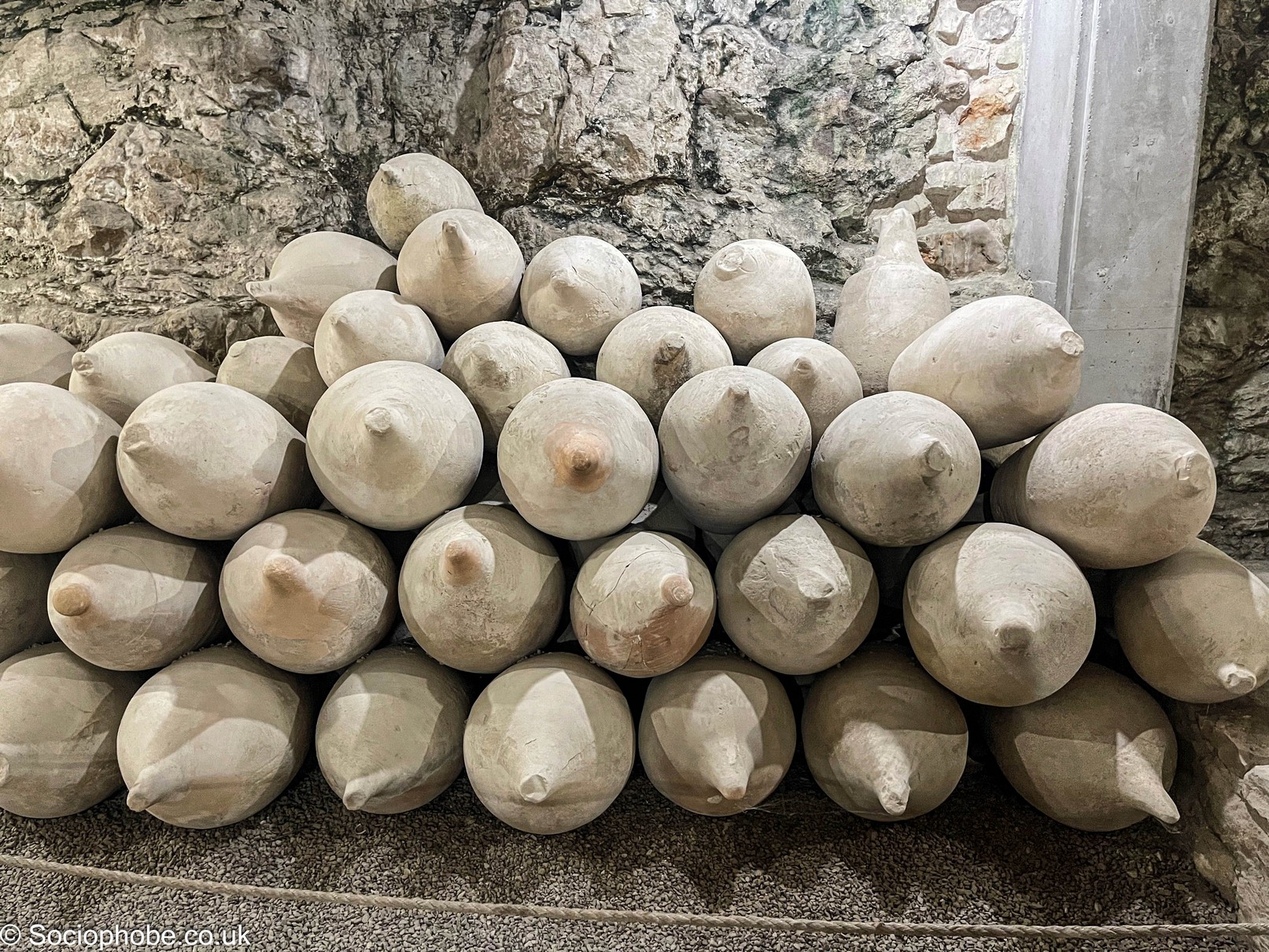
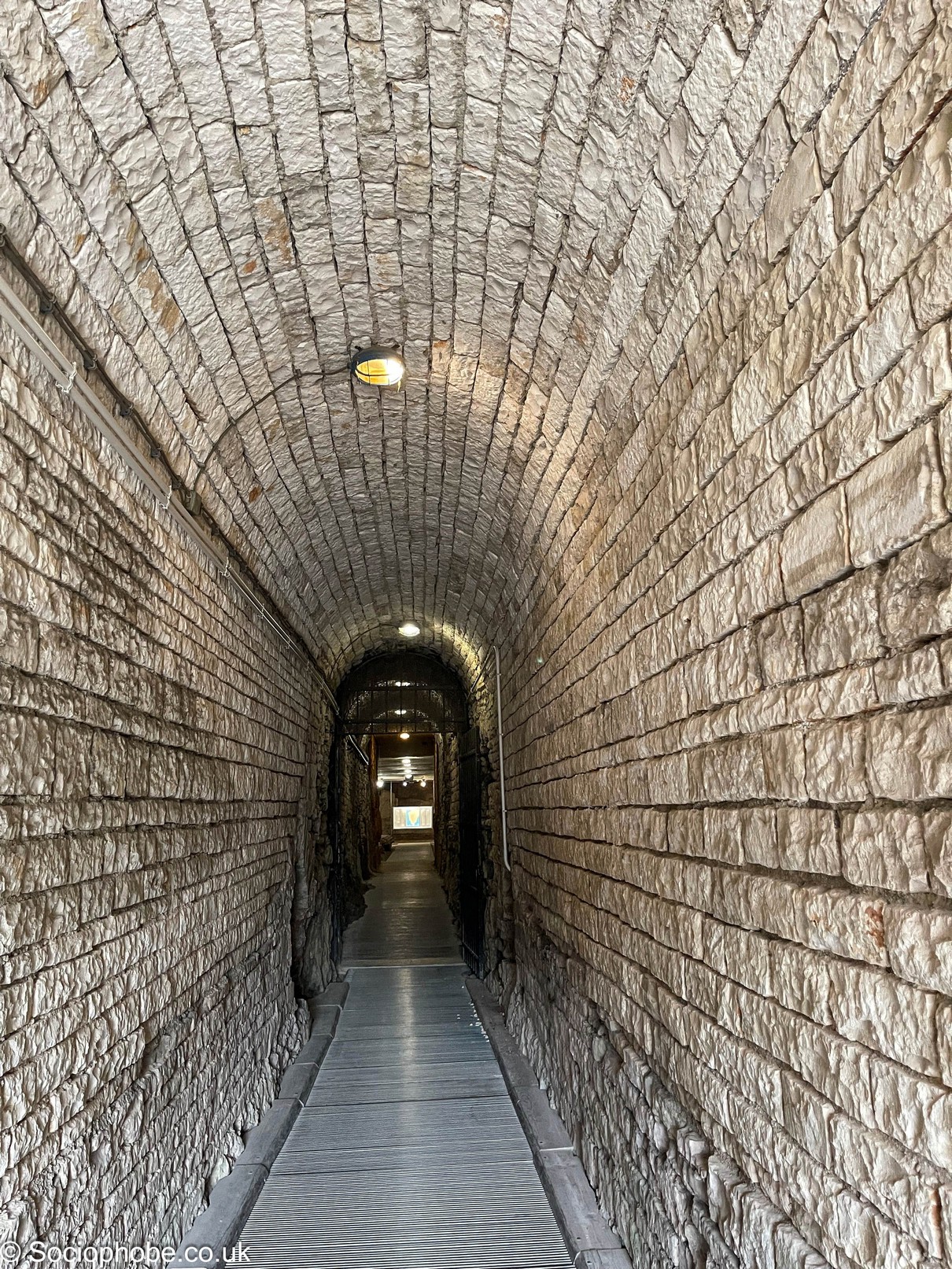
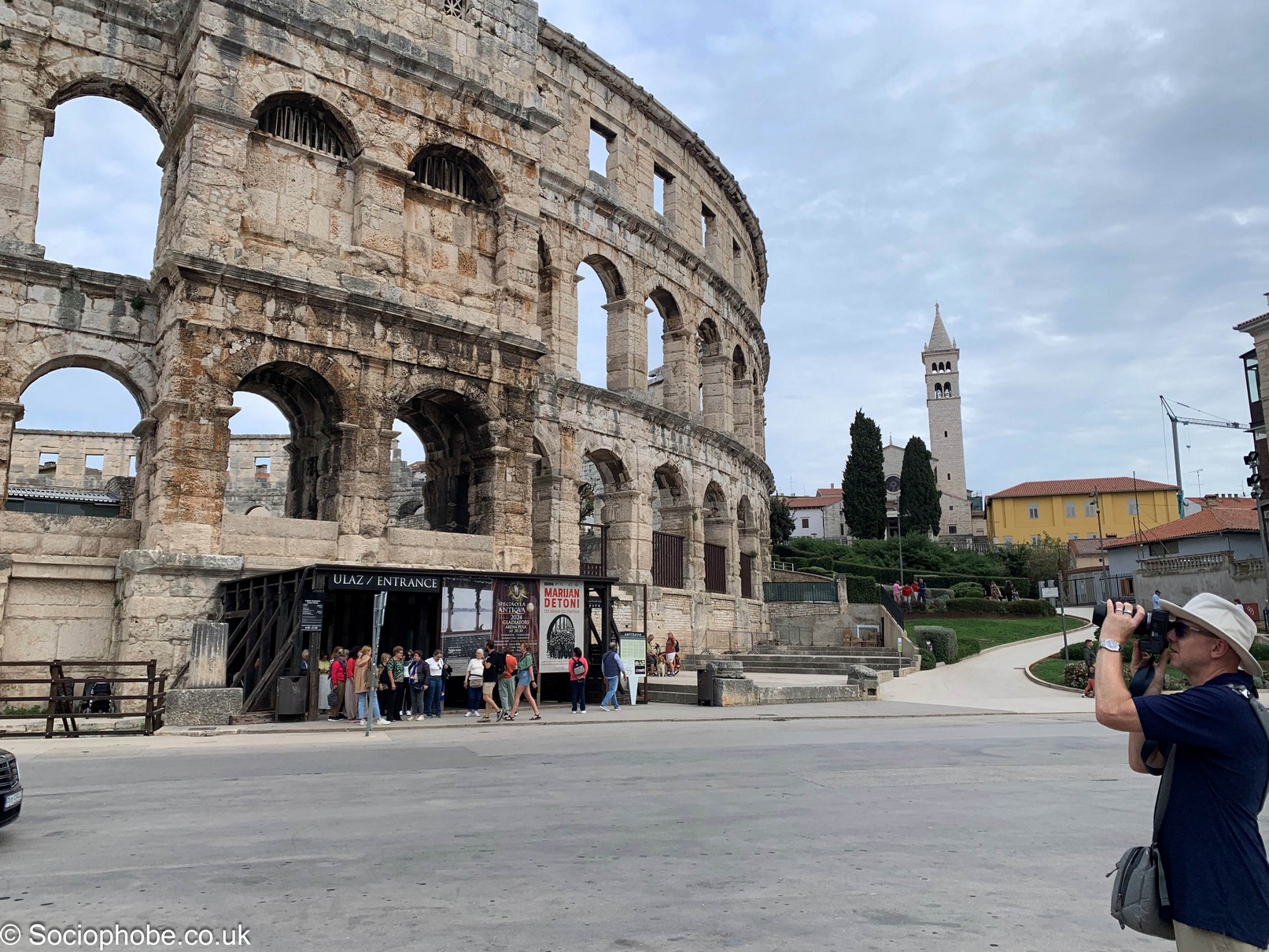
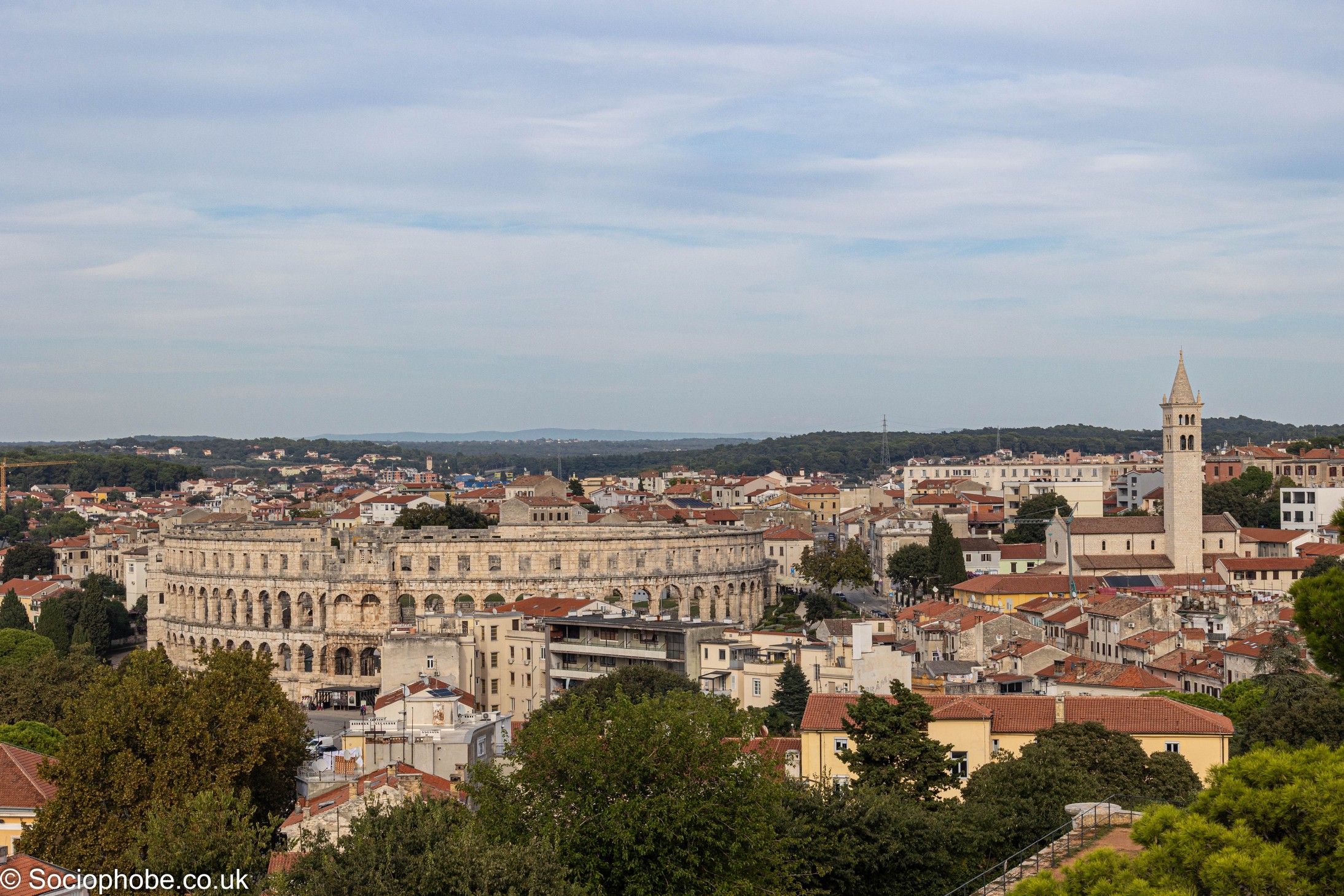
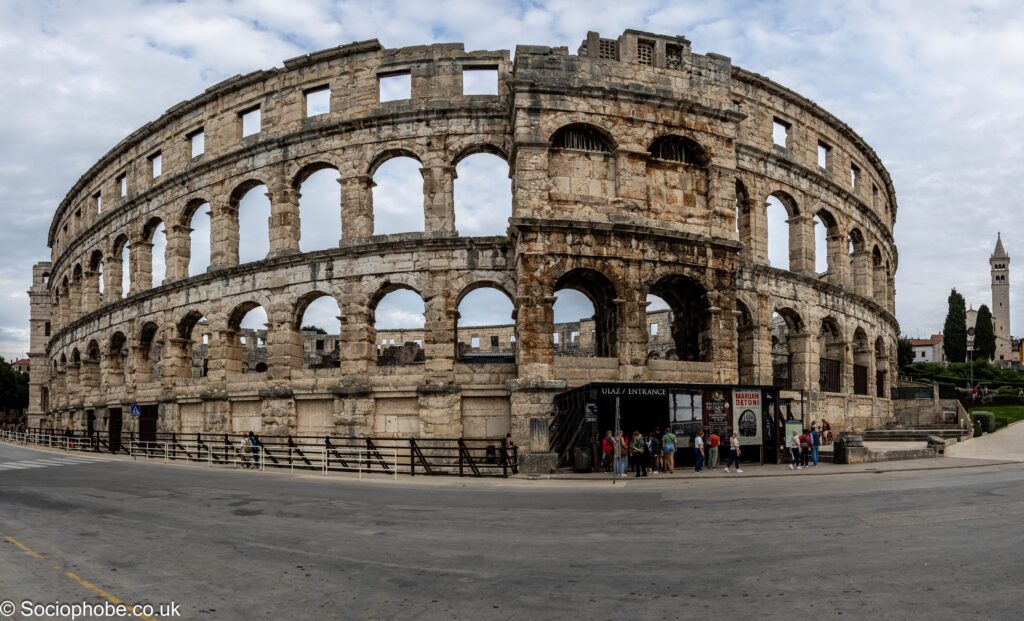
First stop was the amphitheatre just down the road and one of the main reasons for staying in Pula. The circuit of the walls was intact although lots of the stone and all of the decoration has been stolen over the centuries. This looting of ancient ruins by lazy or greedy or both individuals always gets my blood boiling. It was still quite awesome to walk around and the exhibition in the tunnels under the arena was very good. It showed the importance of Pula to the Roman economy and how the Istrian peninsula was organised in the Roman era.
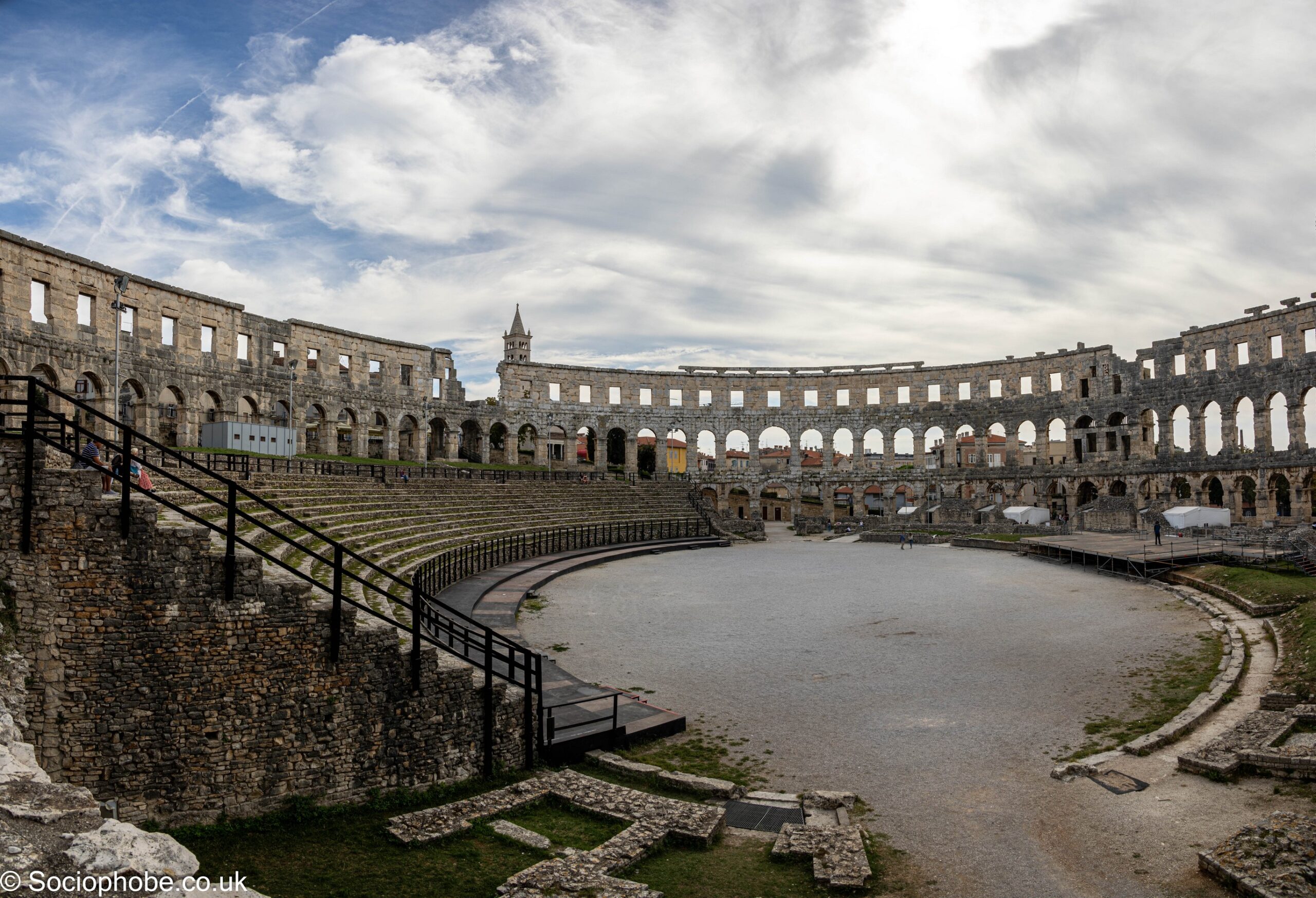
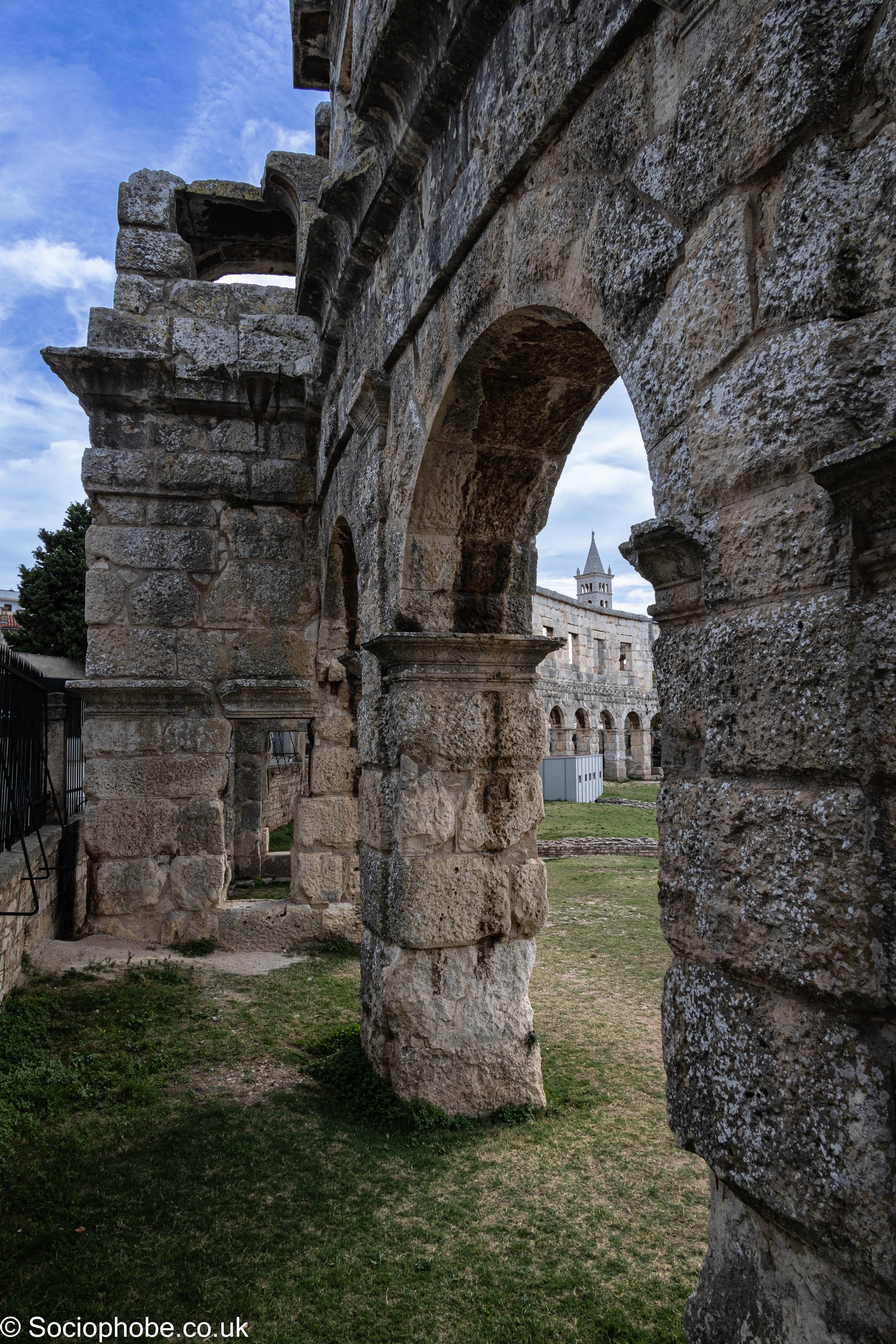
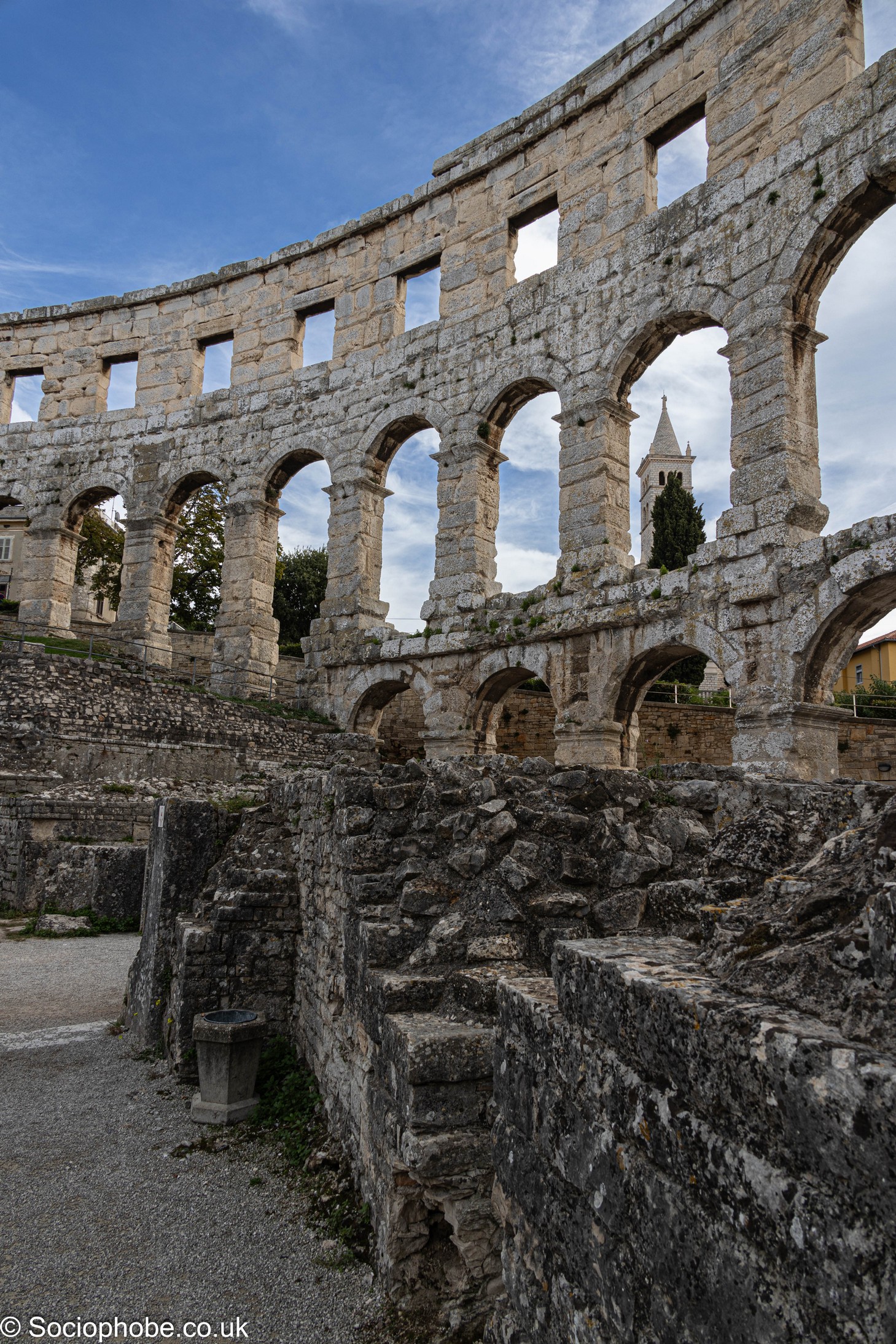
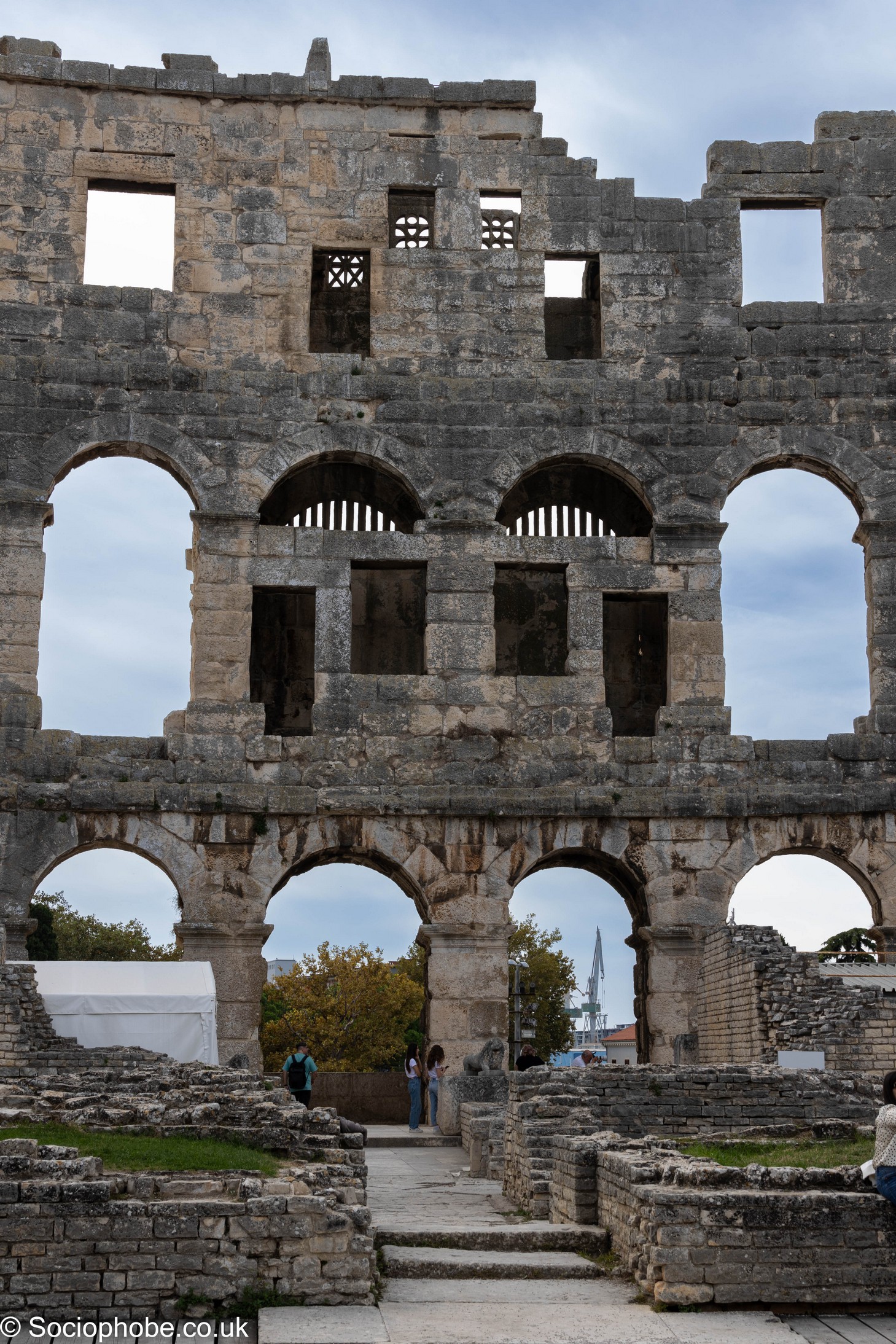
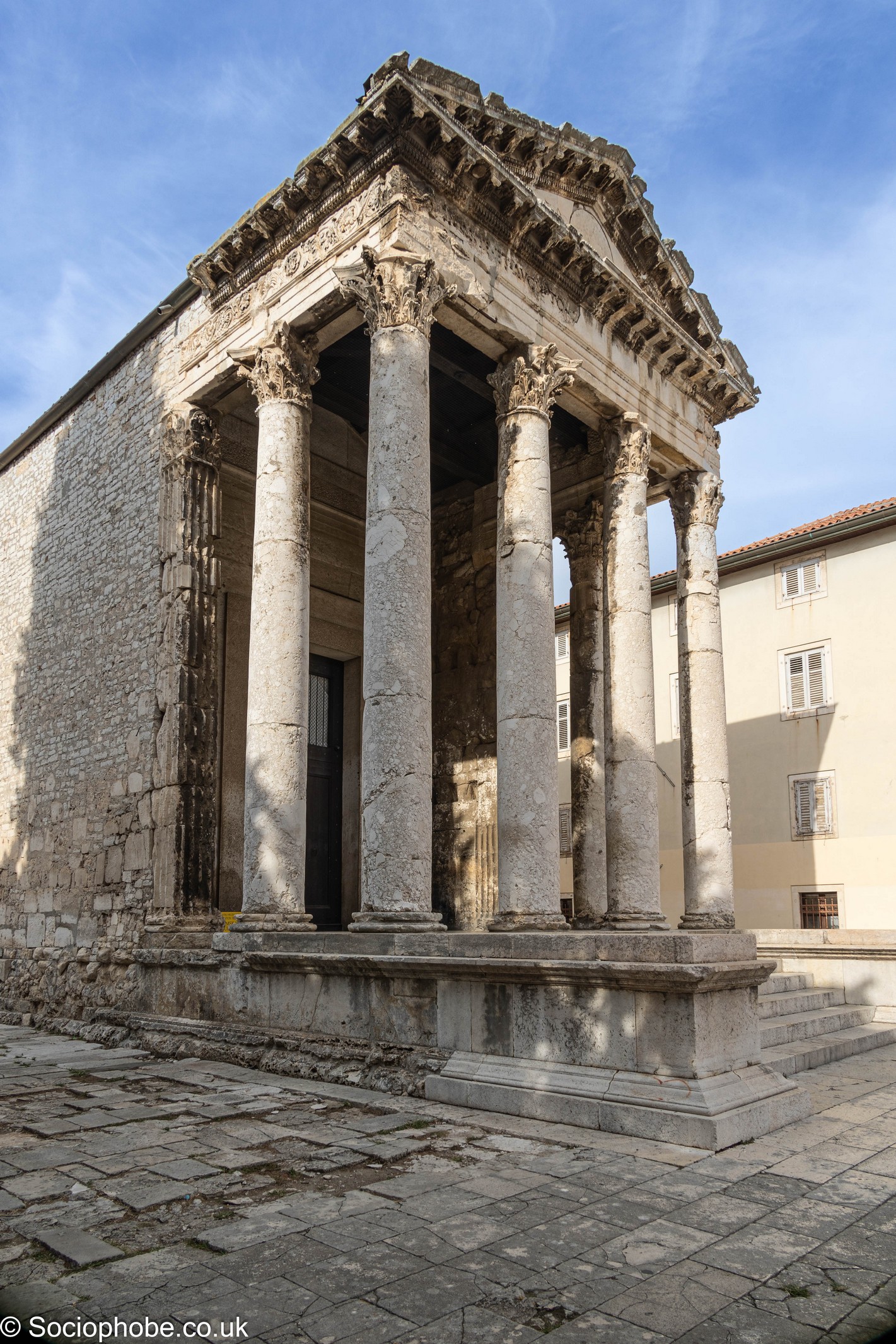
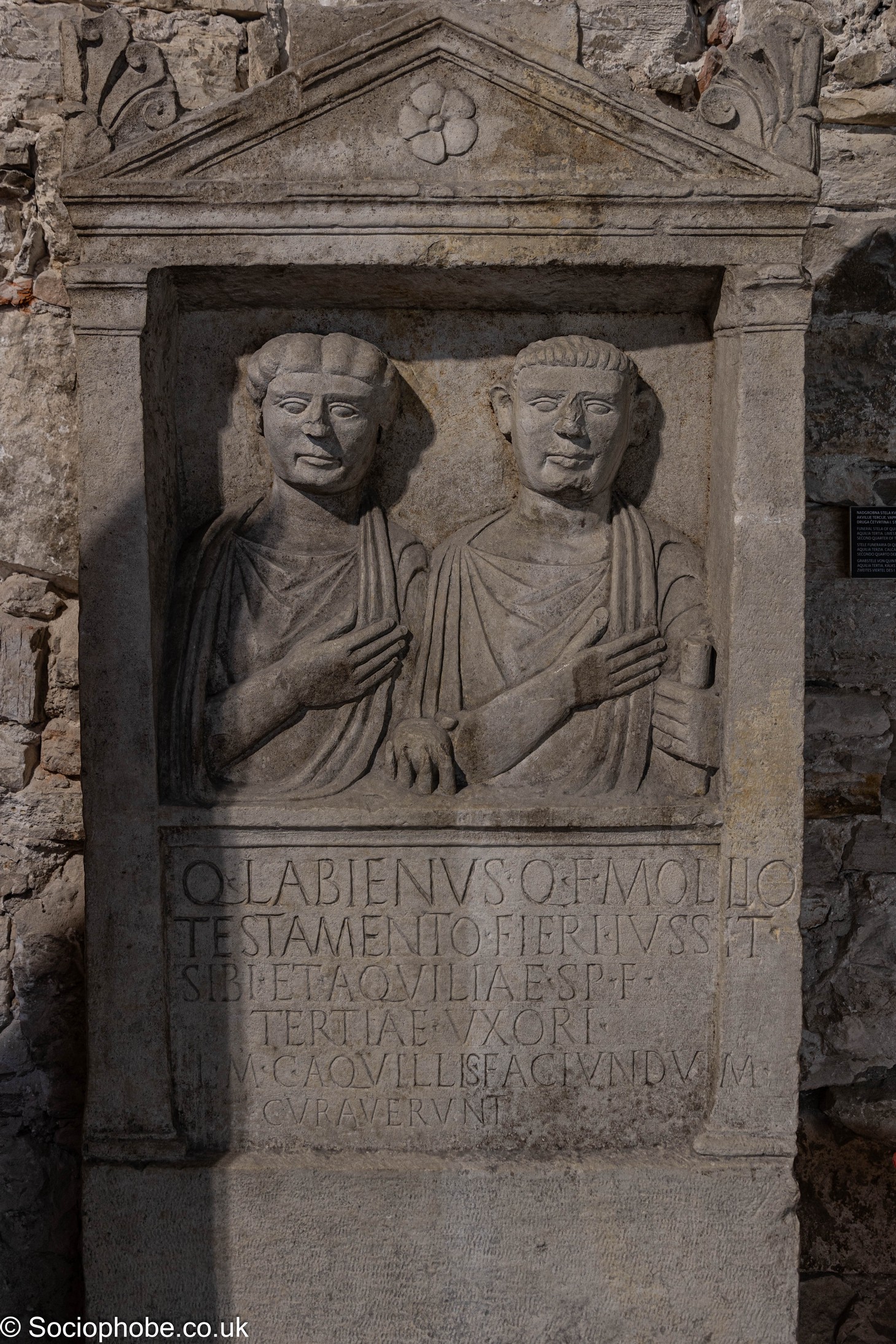
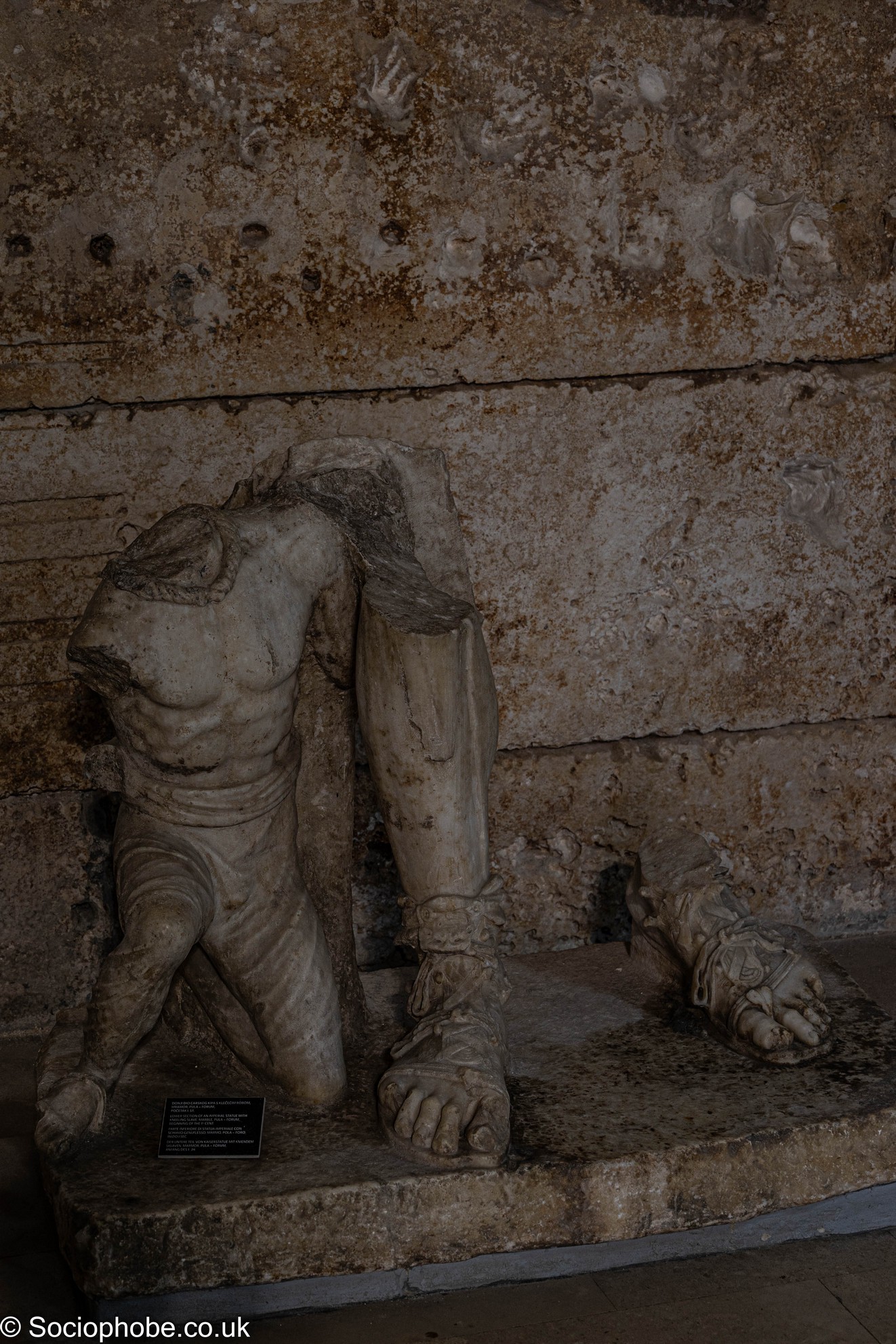
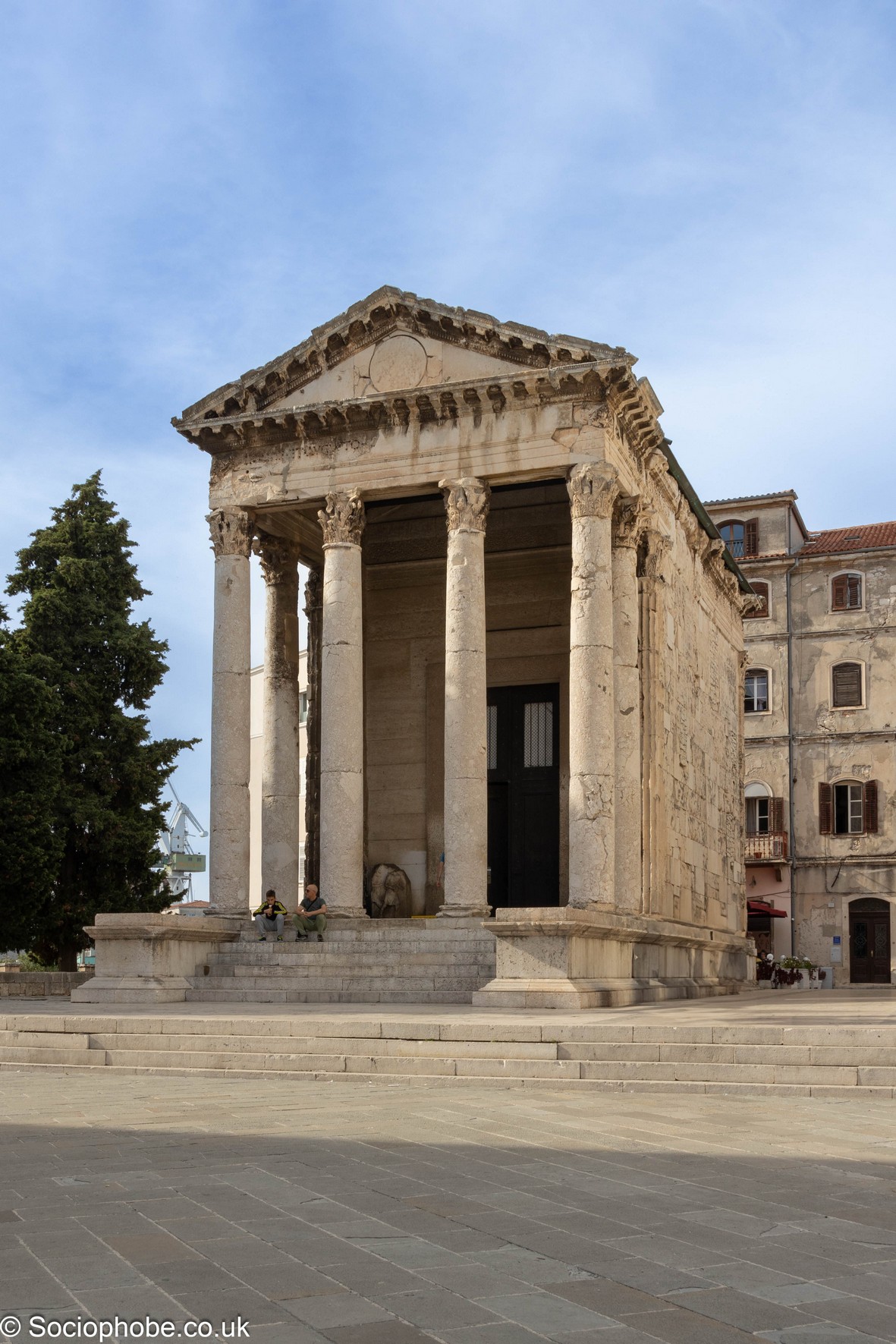
The weather was gorgeously warm so we walked along the seafront by the marina and sat and had a gelato before continuing our tour. The Temple of Augustus was built around 15AD so has survived two thousand years remarkably well. It has lost almost all the non structural decoration and has been patched and repaired but is still a very impressive building and wonderful architecture. Inside there were several inscriptions, parts if some statues and various bronze figures as well as information about the history of the temple, definitely well worth the €3 entry fee.
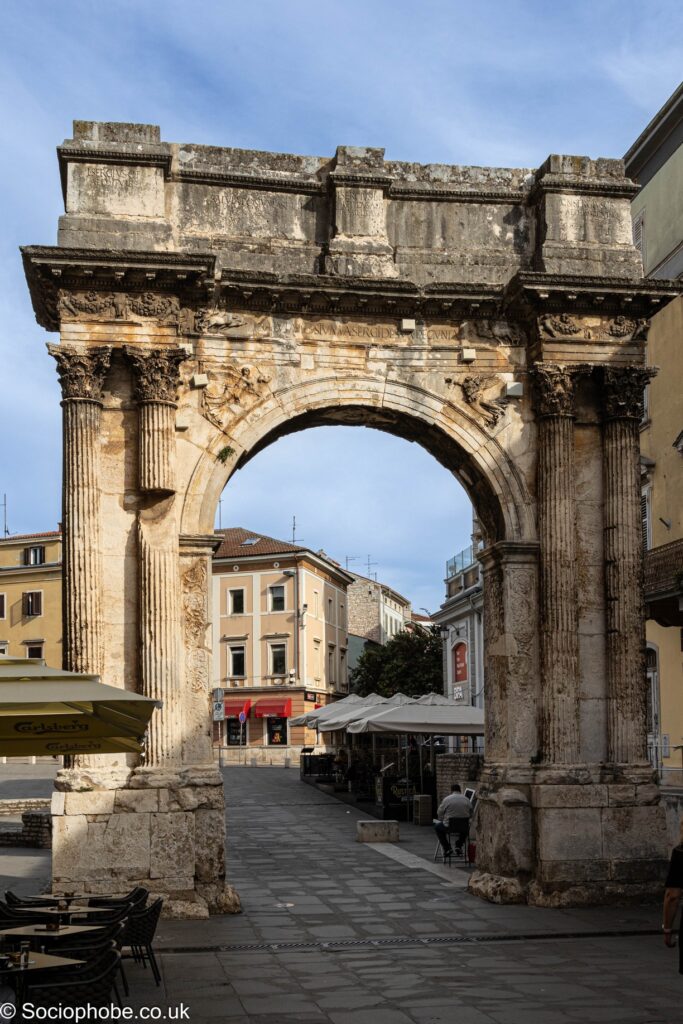
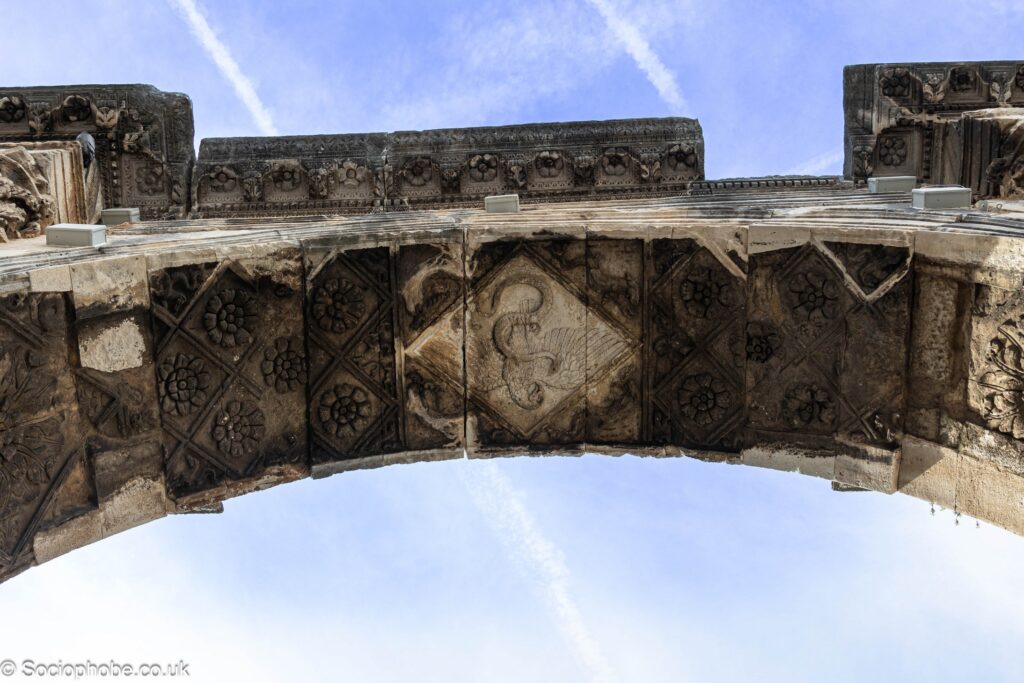
Continuing on the road we did look for some huge Roman mosaics that had been excavated but couldn’t find them so we walked to the Arch of the Sergii, a Roman triumphal arch that was erected after Augustus victory over Mark Antony at Actium in 27BC. Although difficult to appreciate as a stand alone monument it was still impressive with all the carvings and inscriptions still visible, despite the pollution and dirt.
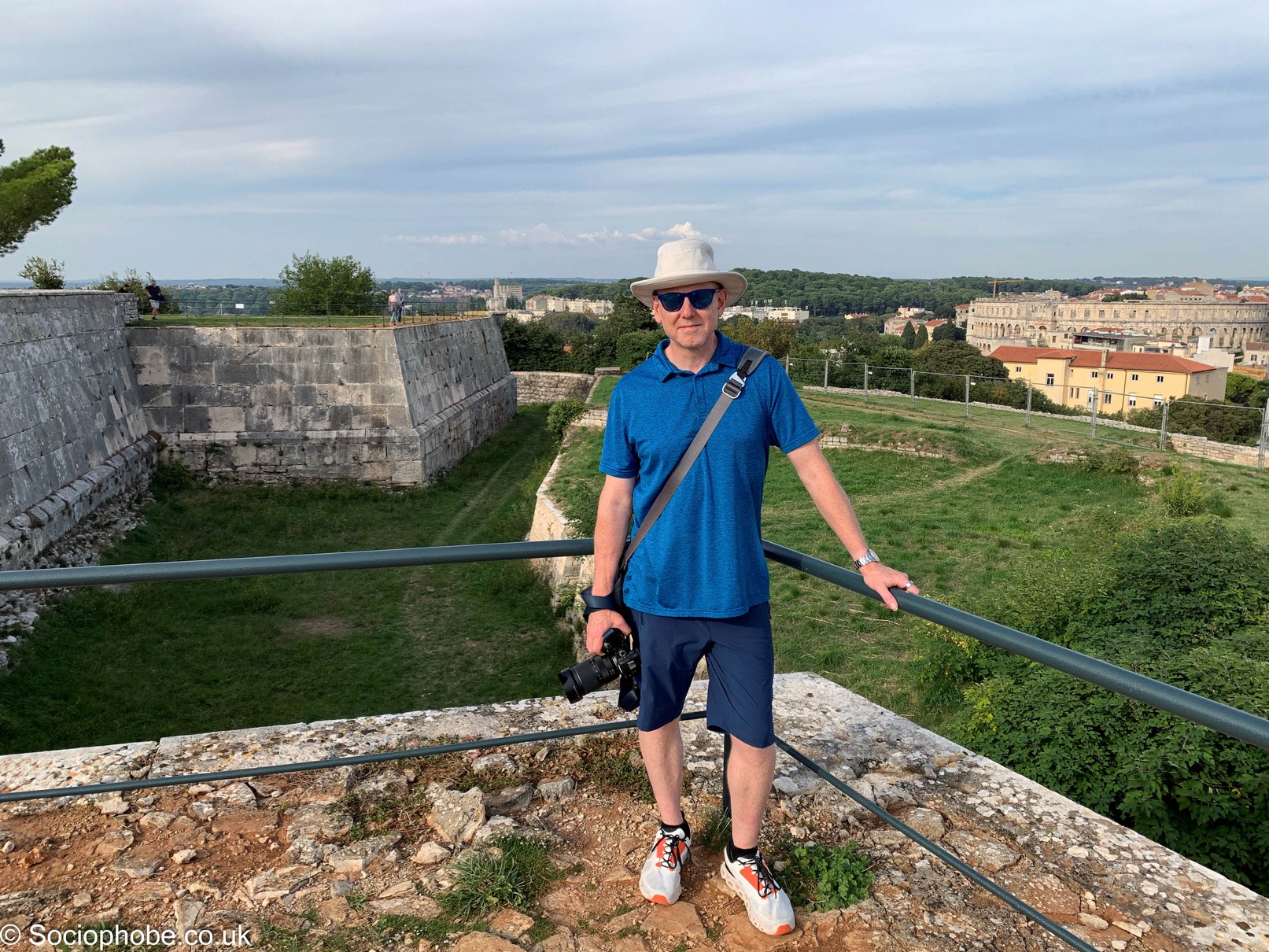
Our final stop was the Venetian Fortress, built in the 17th century and commanding the town and harbour. There was a great exhibition inside showing how the whole area around Pula was fortified between 1813 and 1918 with 200 forts, towers and defensive buildings as well as three lines of defence that included trenches, minefields and wire. Probably because of this the town was not seriously threatened in WW1 but as the Austrians were on the losing side they had to give it up anyway.
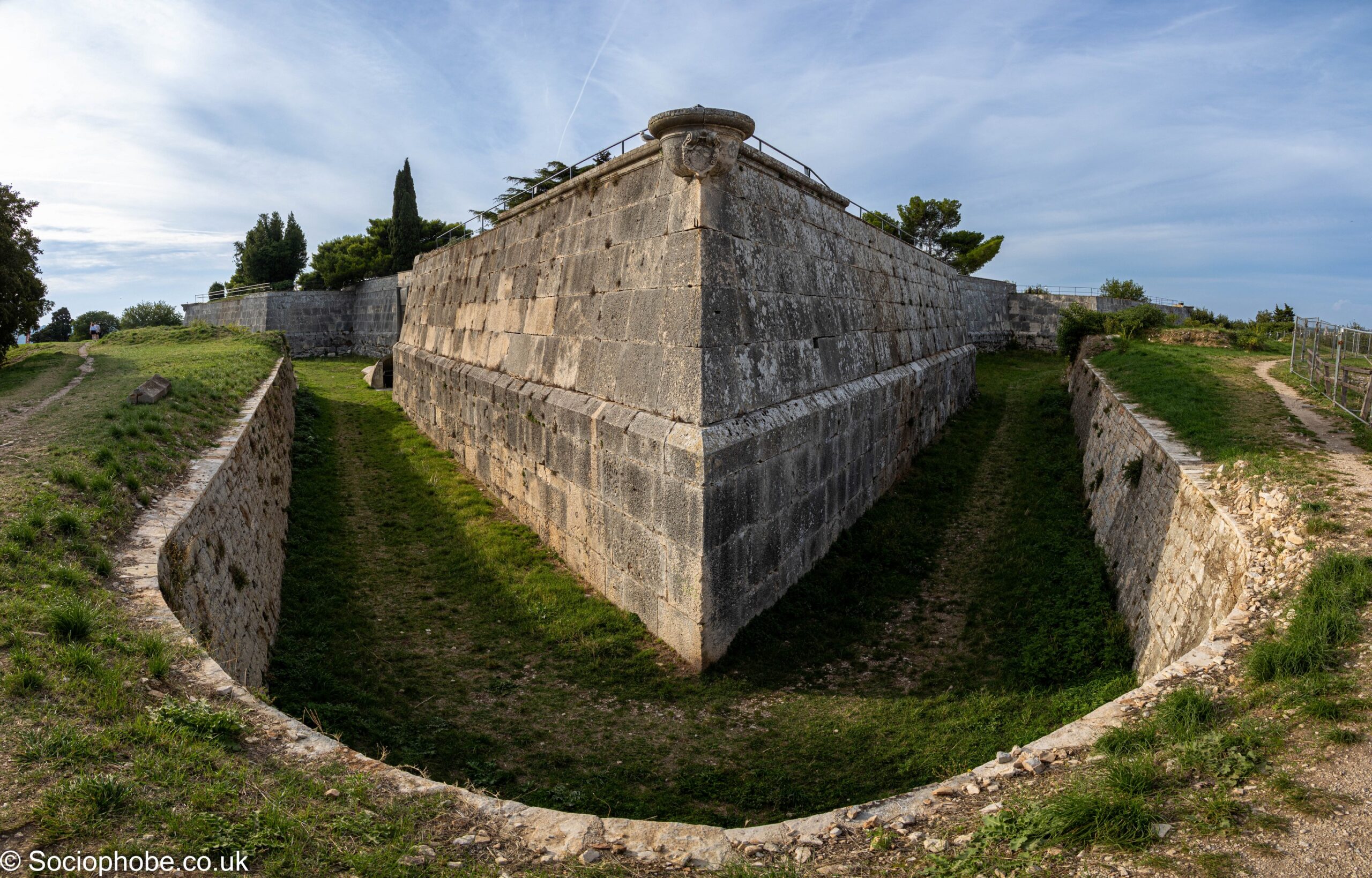
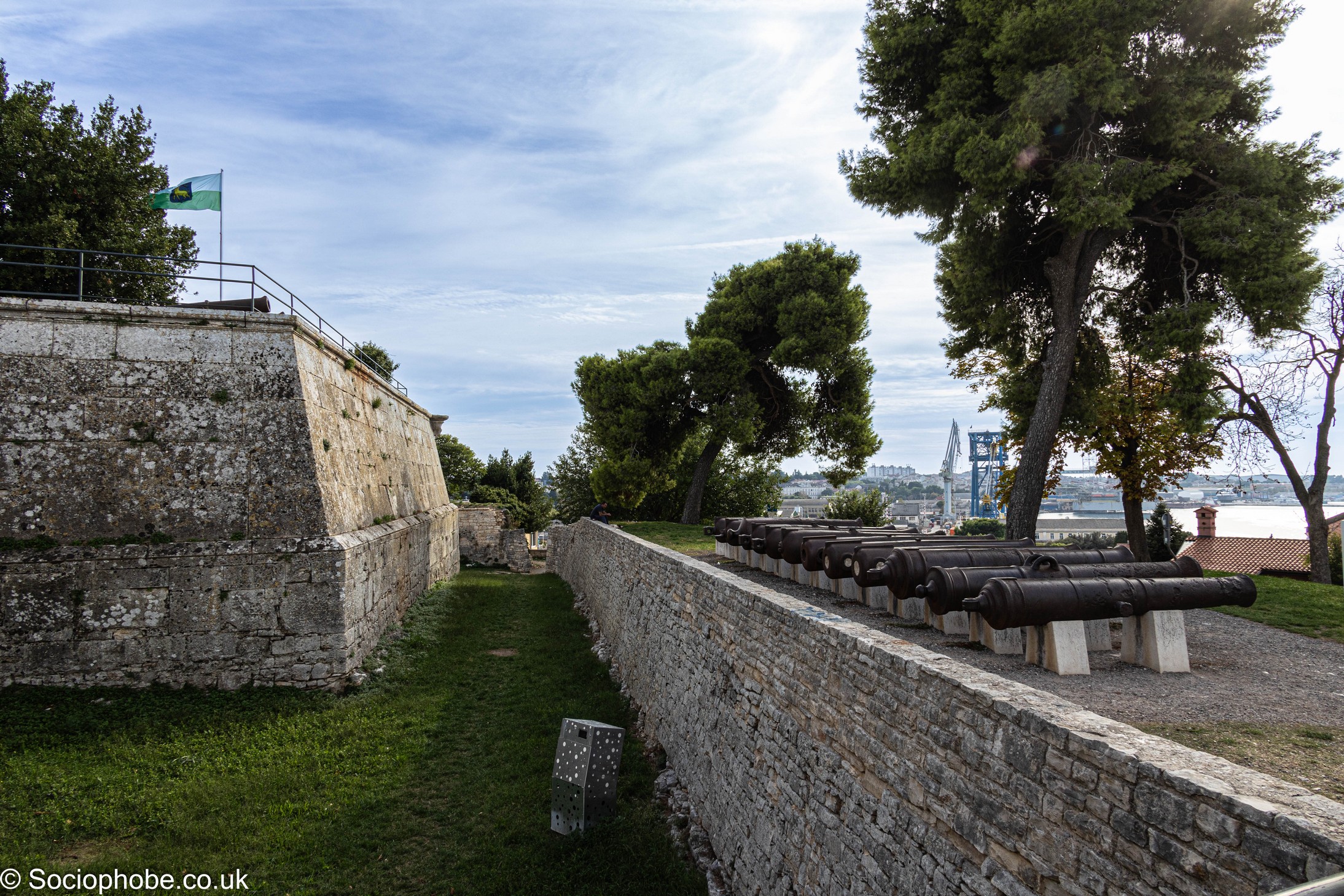
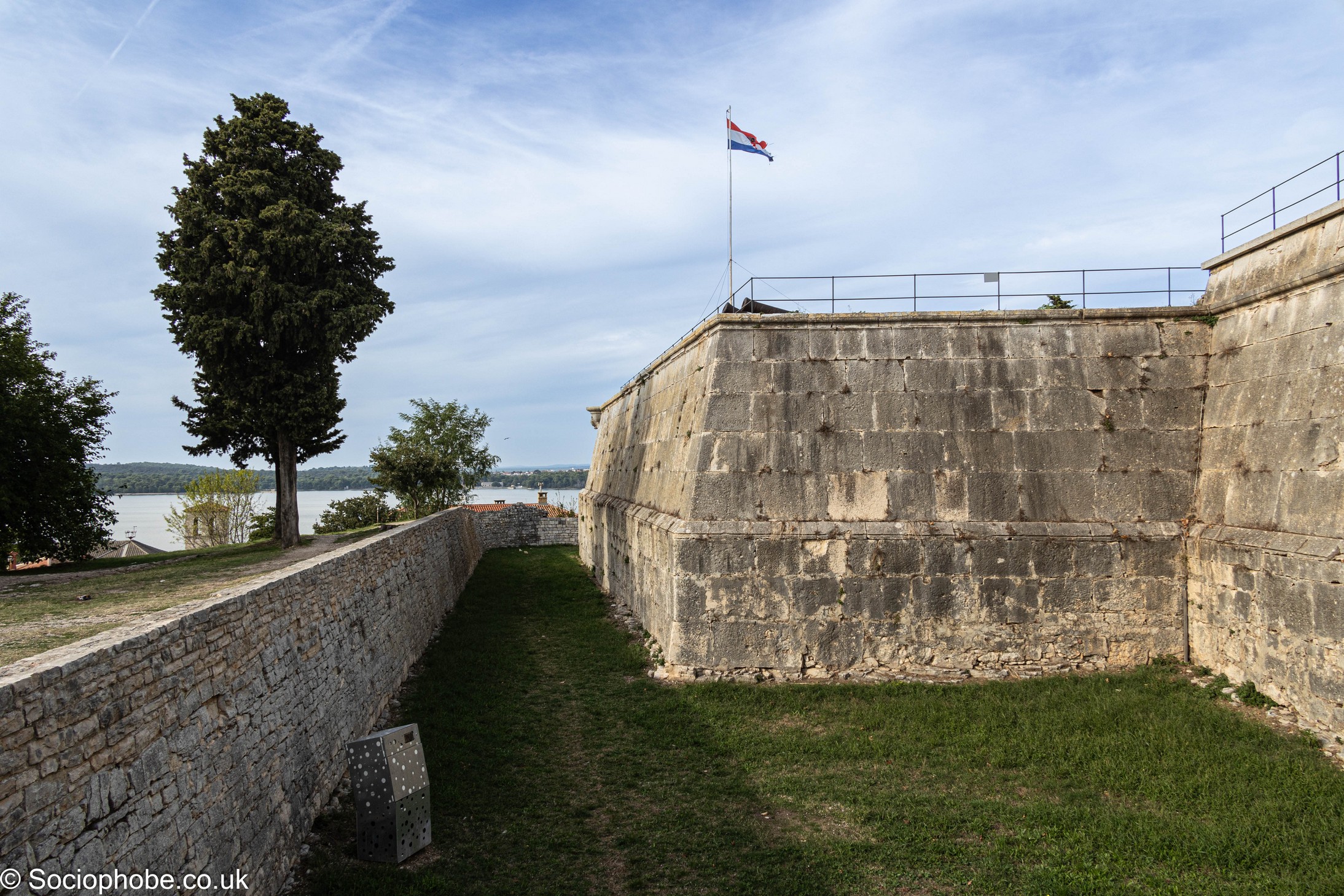
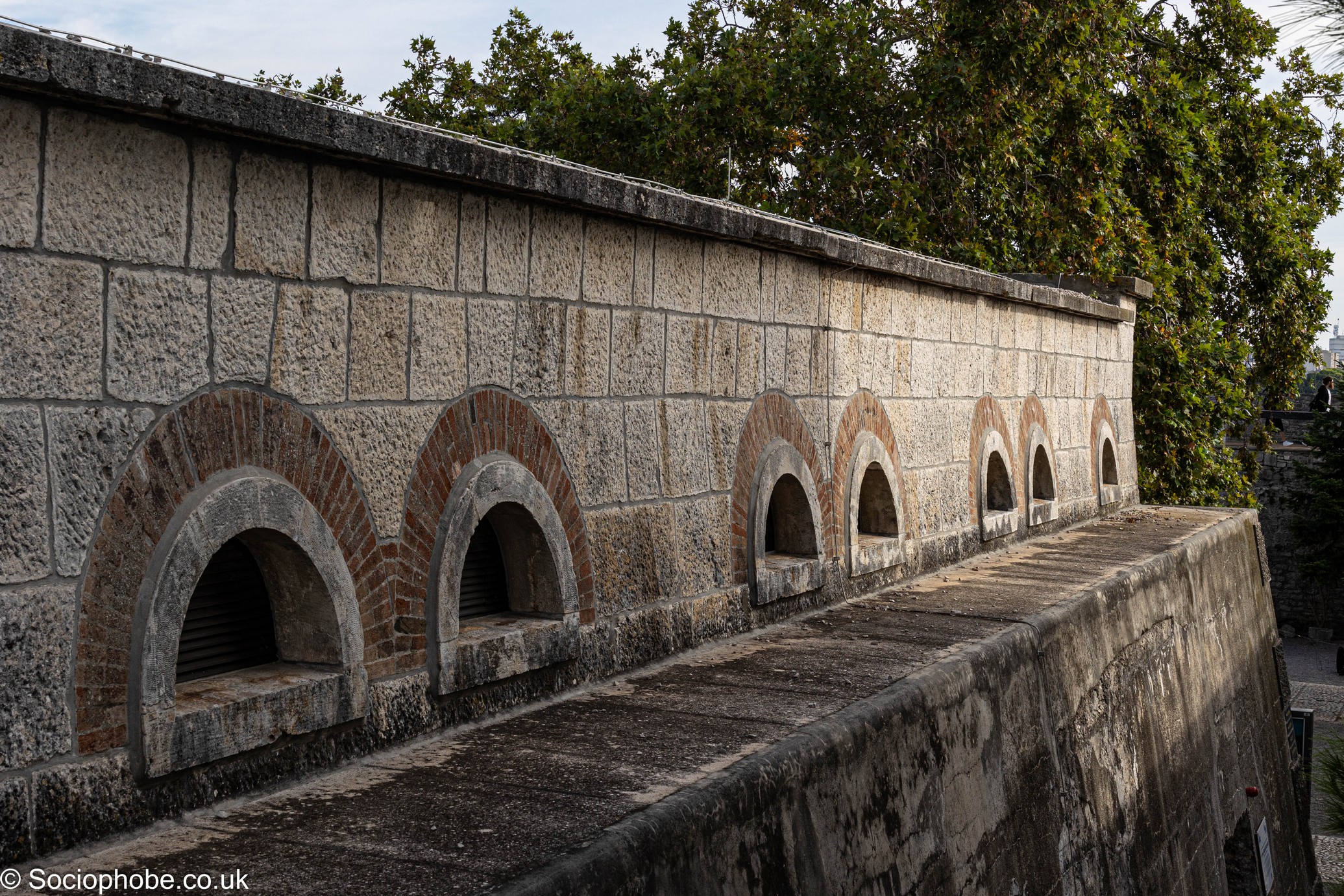

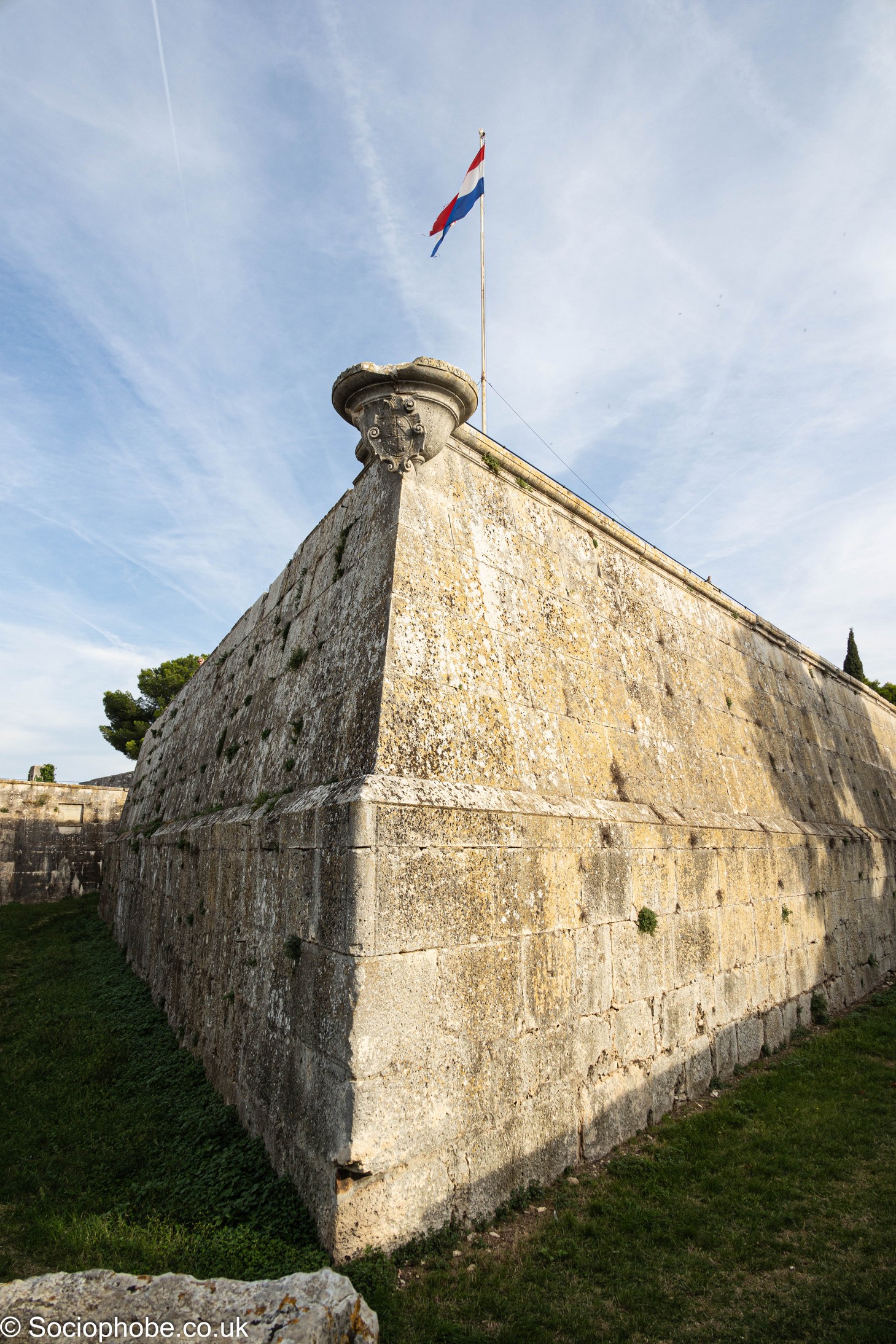
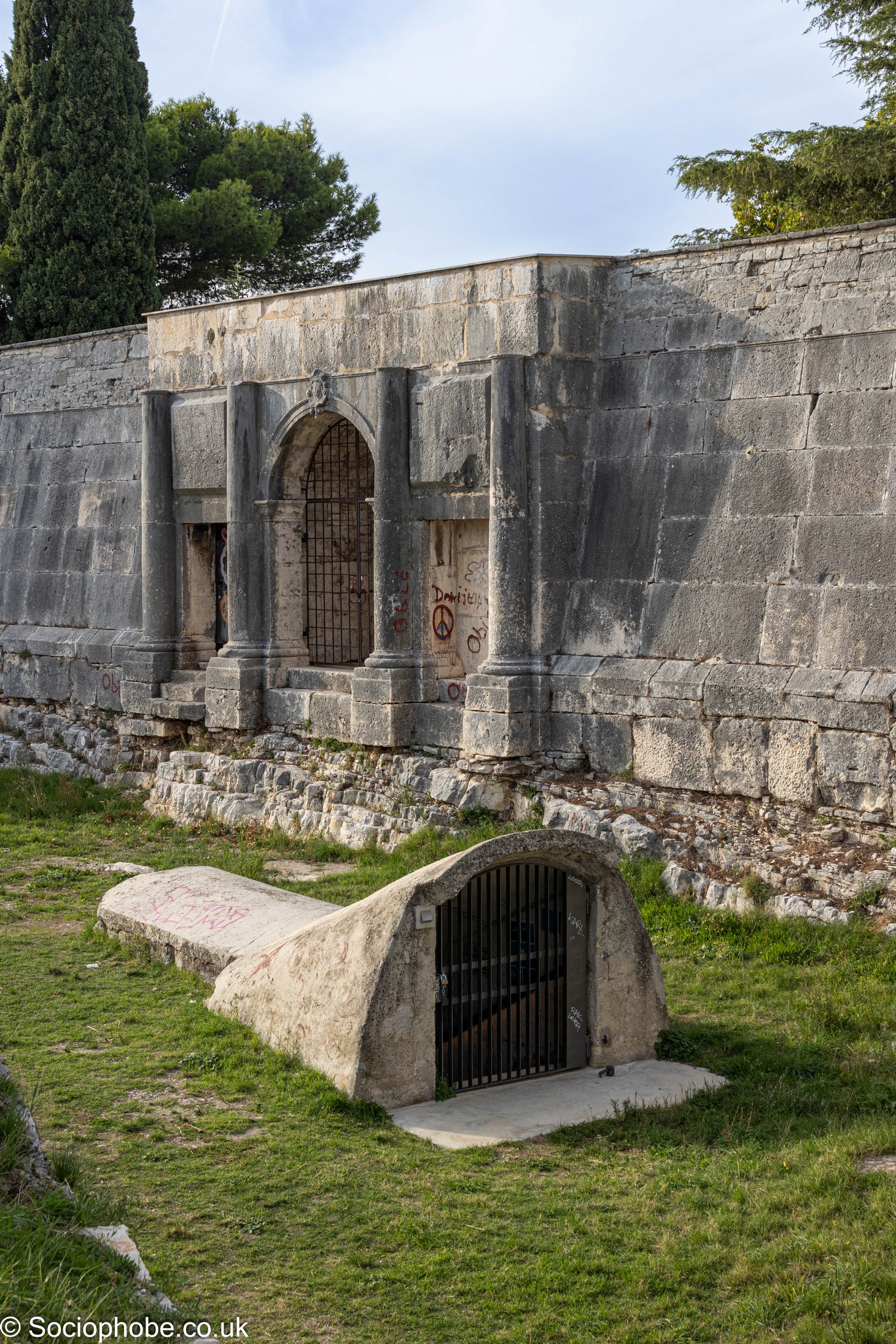
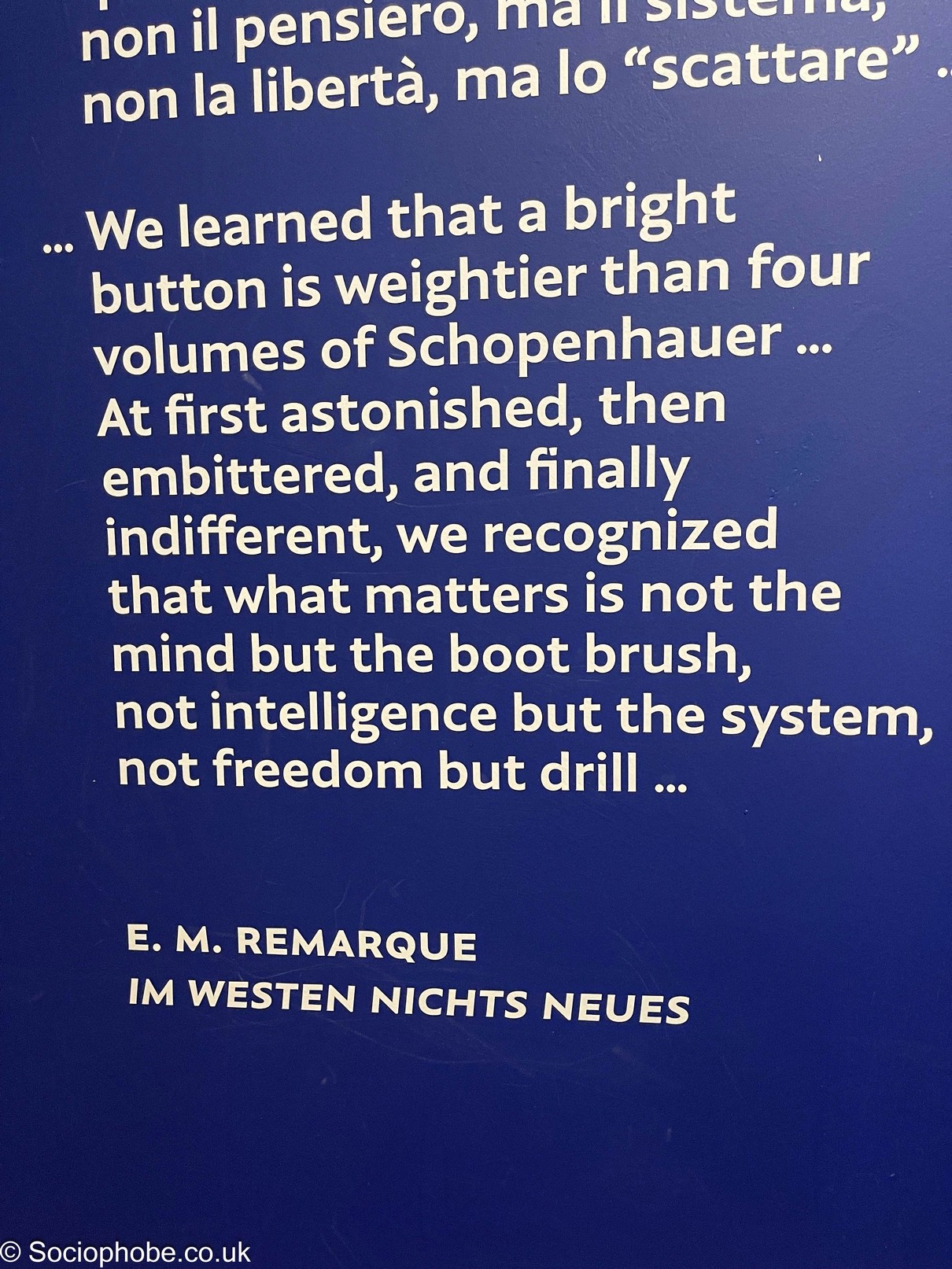
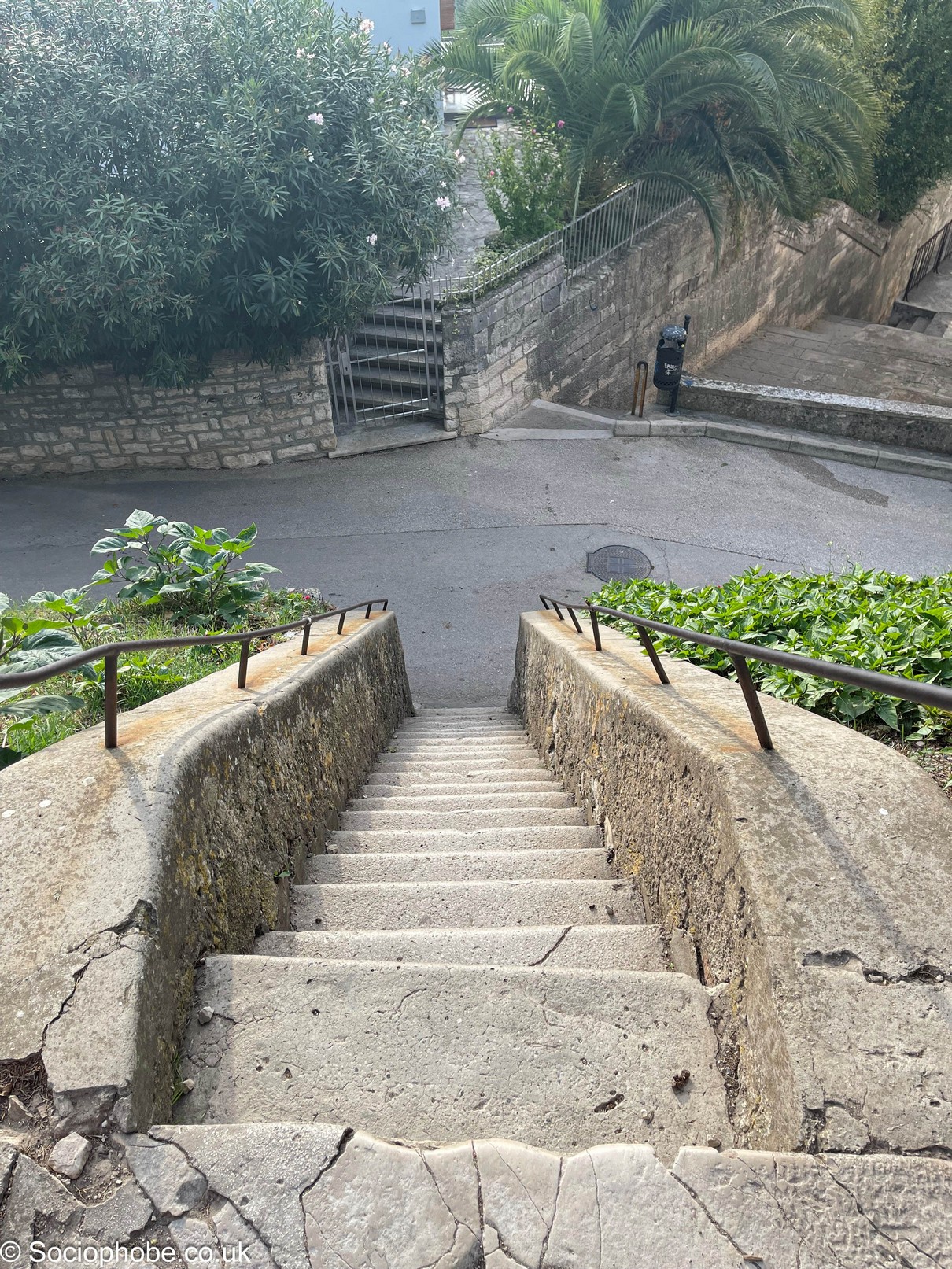
The coastline is still littered with these forts, some of which are as impressive as those of Verdun. The living conditions for the soldiers in these forts was pretty dire with dirt floors, intermittent lighting, poor air and bad sanitation.
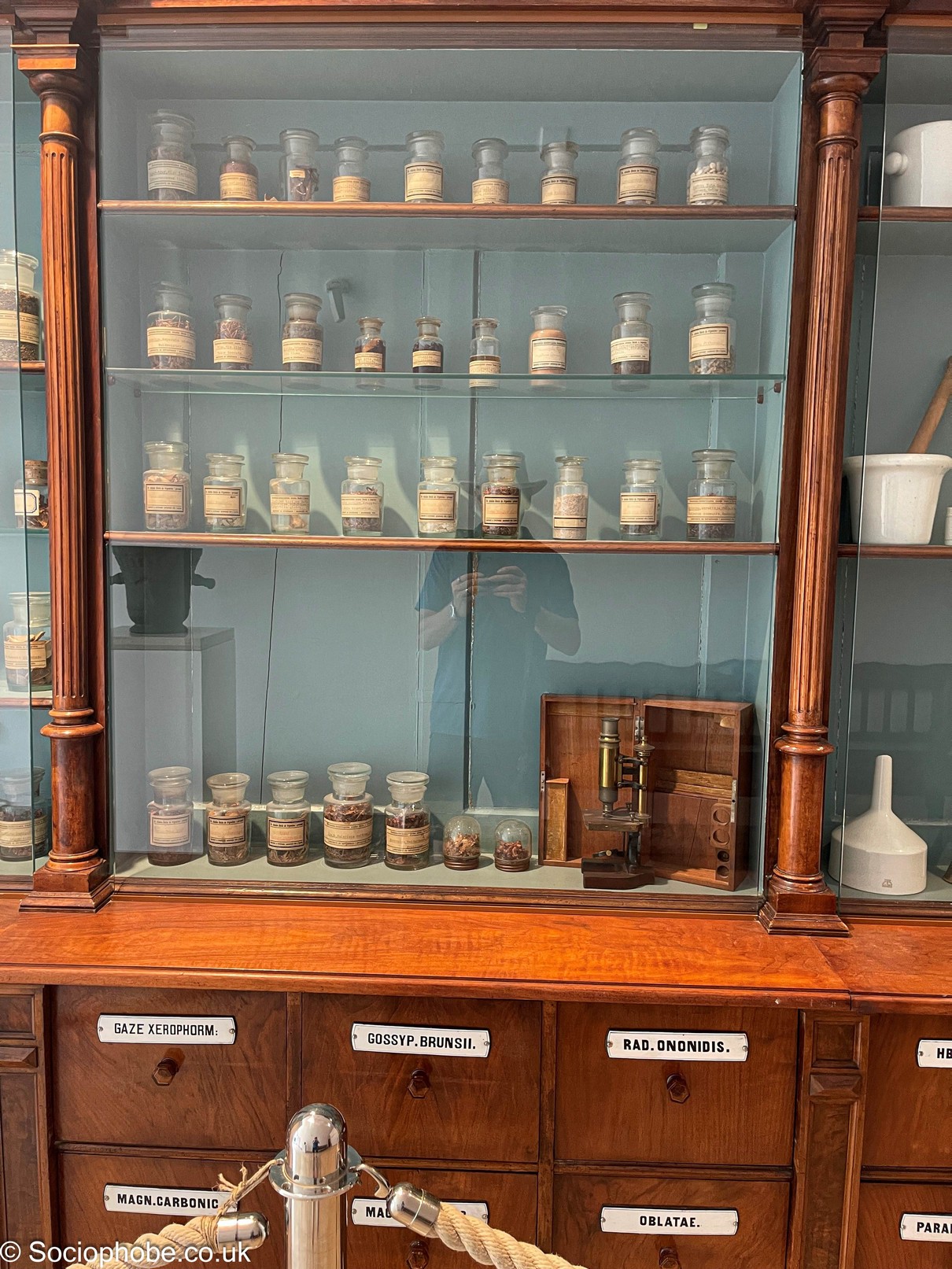
There was also an apothecary exhibition, showing the medicines at the turn of the 20th century and the process involved in creating them. The fort itself was a classic star fort design with a deep moat all round. The views were as impressive as you’d expect and there was also the entrance to the underground tunnels, both those of the early 20th century fort and the excavations to be used as air raid shelters built up until WW2. The tunnels could hold almost 50,000 people if needed, the entire population of the town.
After the fort we retraced our steps and then stopped for dinner at Meating. I had tuna steak and Deb the calamari, both of which were excellent and came with lots of grilled veg. I then finished off with lava cake before we ambled back to the hotel. The evening was spent doing photos and notes before the food had gone down enough for us to go to bed.
Monday – Porec – Croatia
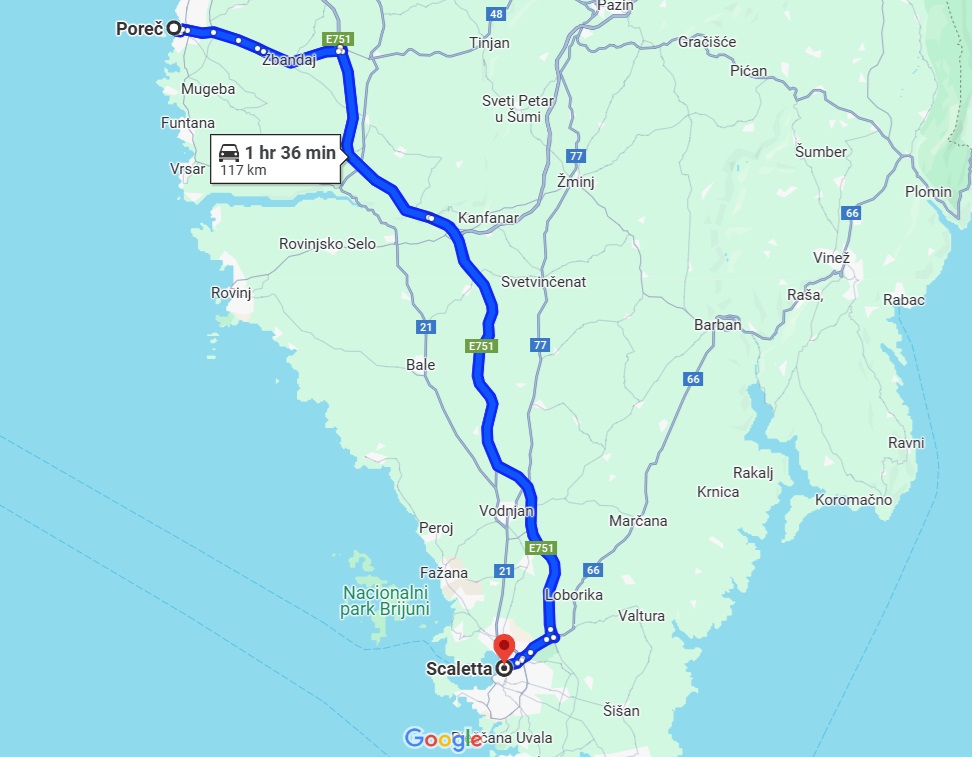
Breakfast at Scalatta wasn’t as good as at the previous hotels but it was pleasant enough and in a grand old dining room. We then drove the 45 mins to Porec, a very pretty coastal town with a famous church. In hindsight, staying in Pula was a mistake as we could have seen everything we wanted in a long afternoon and being at the bottom of the peninsula it means we were retracing our steps and paying tolls every time we drove.
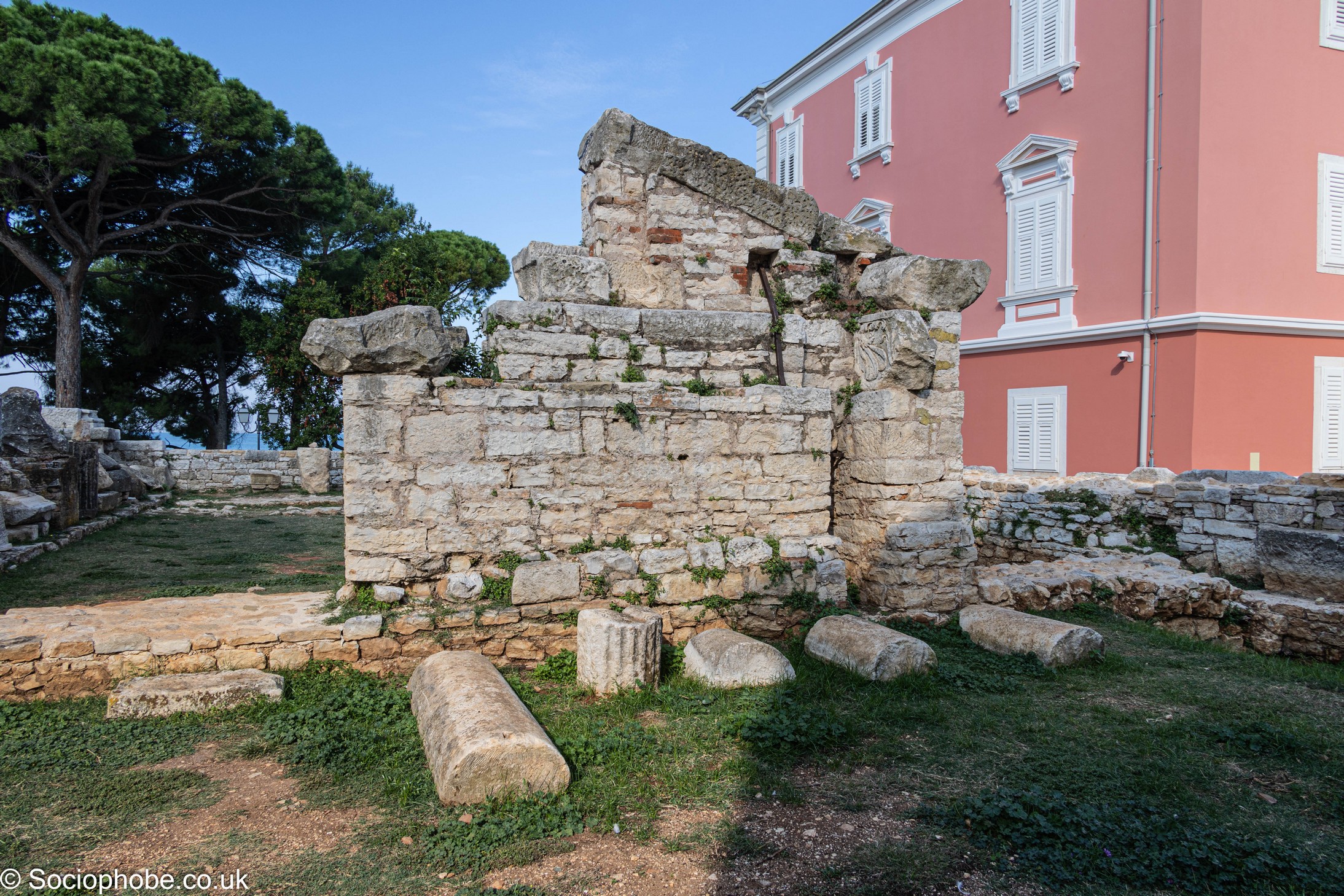
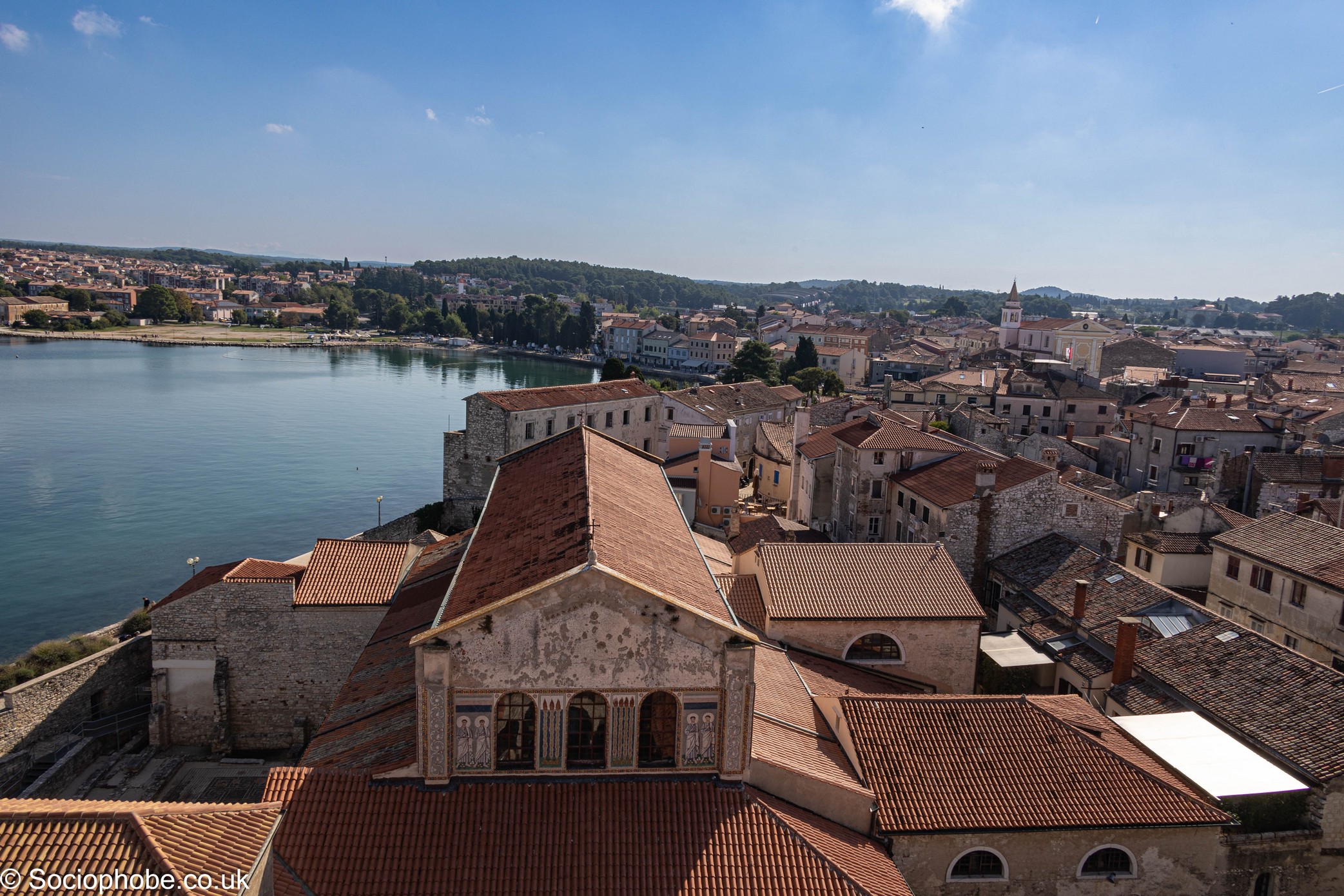
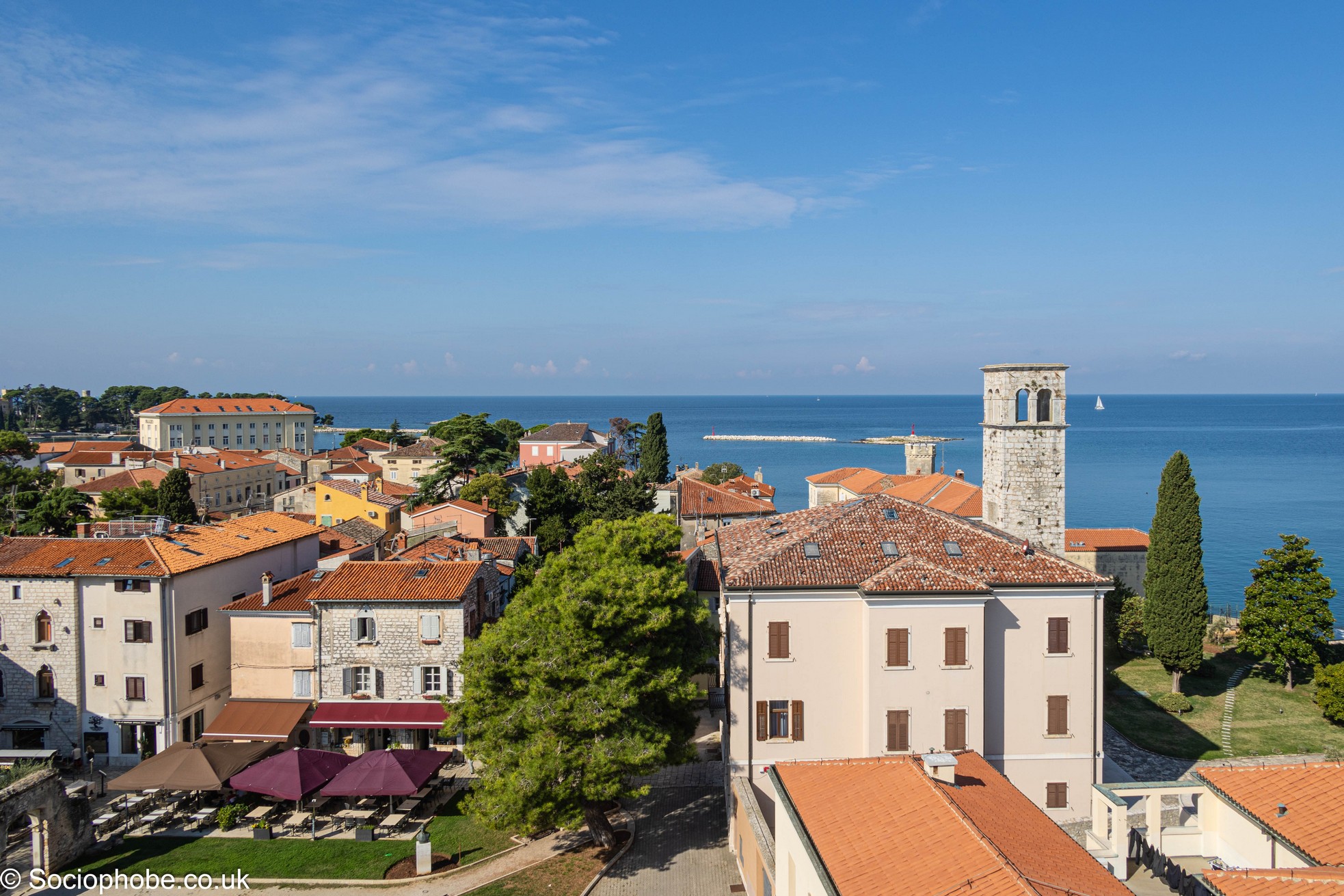
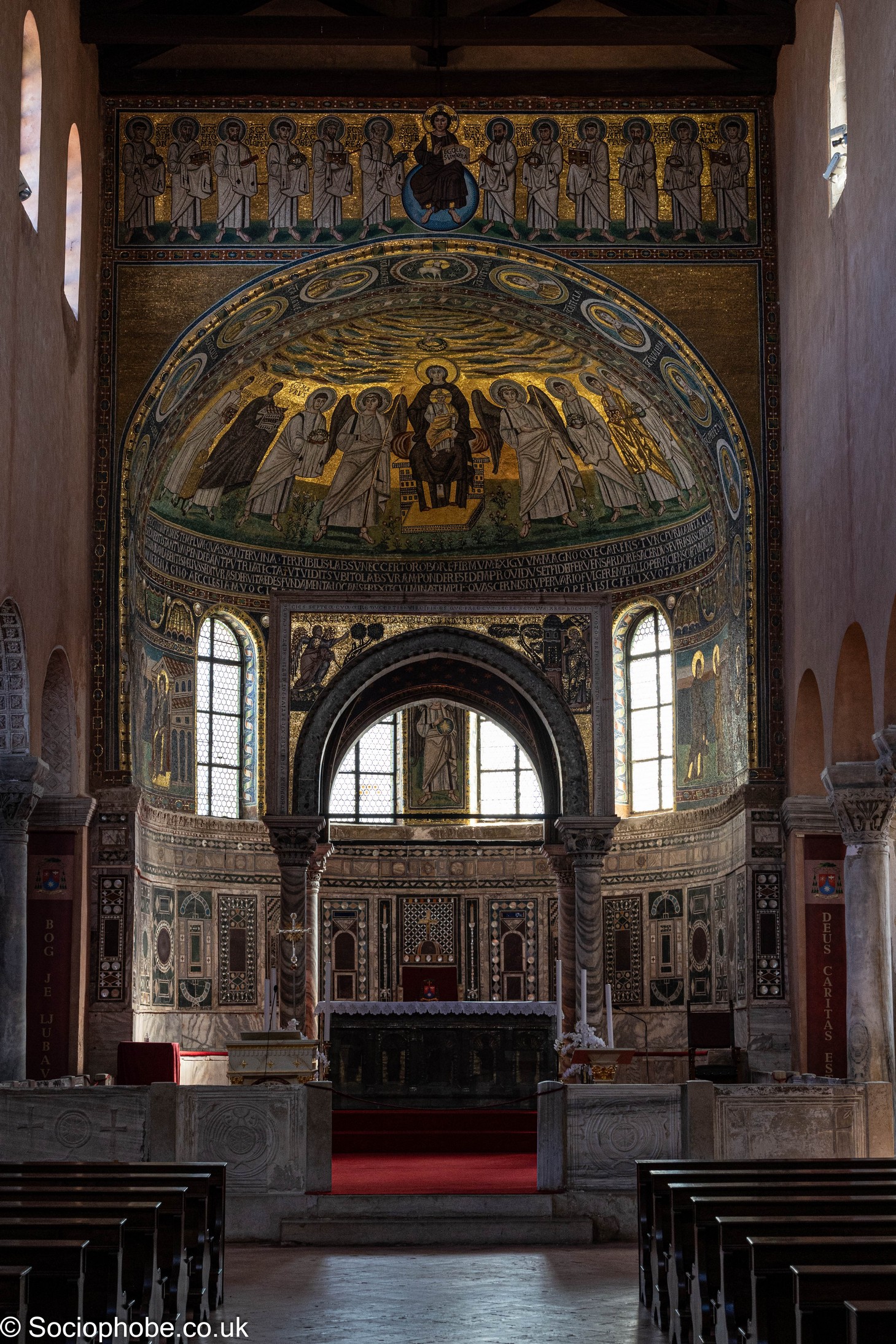
We parked just outside the old town and walked along the sea front. The weather was beautiful, clear blue skies and 27 degrees. Porec is a small town – maybe 10 minutes walk end to end for the old town – but the bishopric made it important in the development of early Christianity. The first church was founded here in the 4th century but the present church is mostly 6th century with a 16th century bell tower stuck on top.
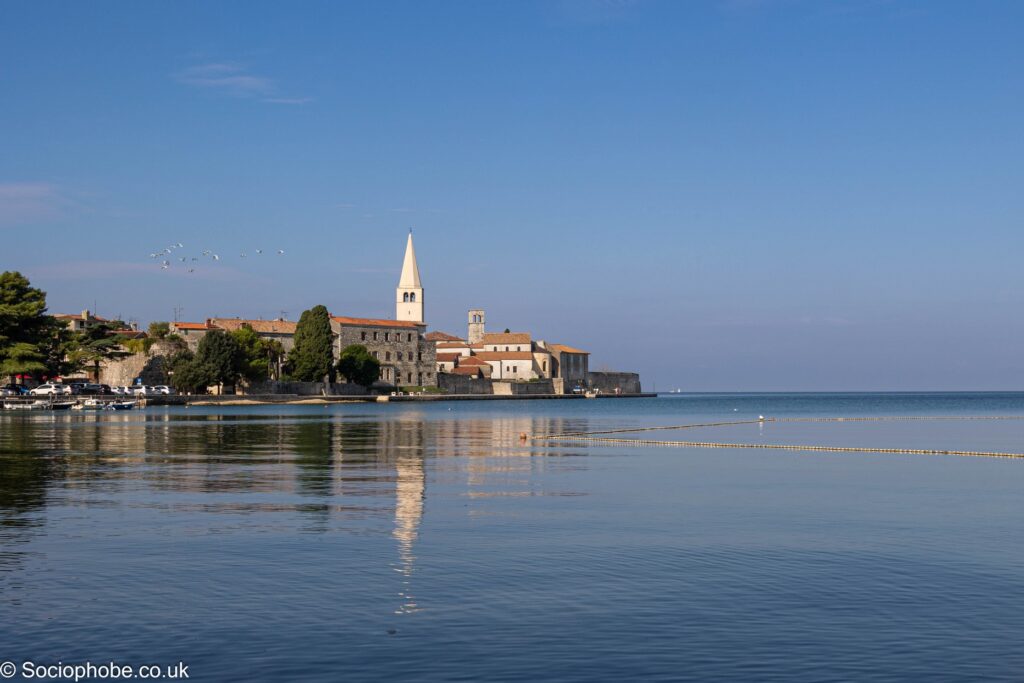
We saw the (very ruined) remains of a 1st century temple to Neptune and had a wander through the pretty streets with Venetian merchant palaces before arriving at the Euphrasian basilica.


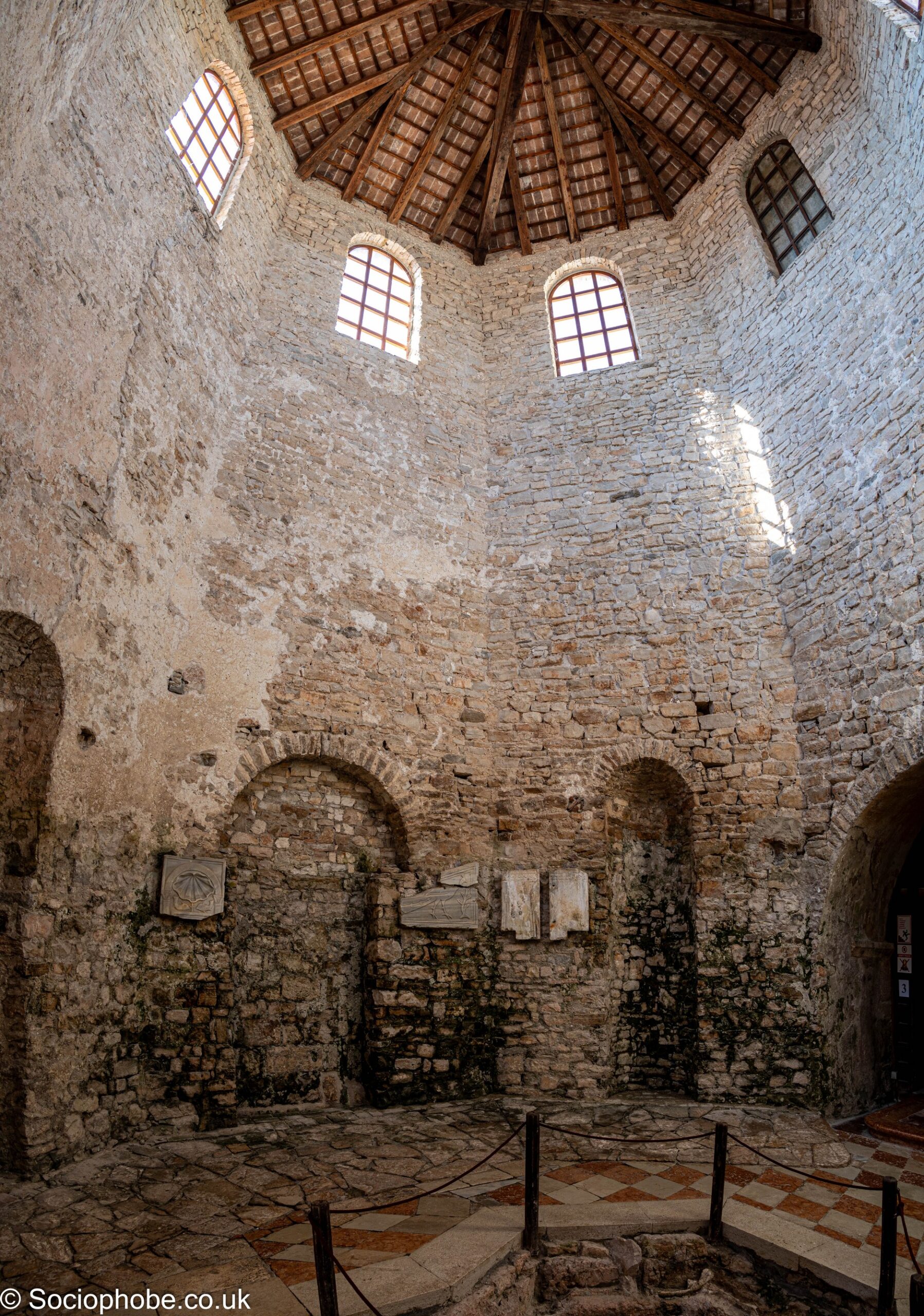
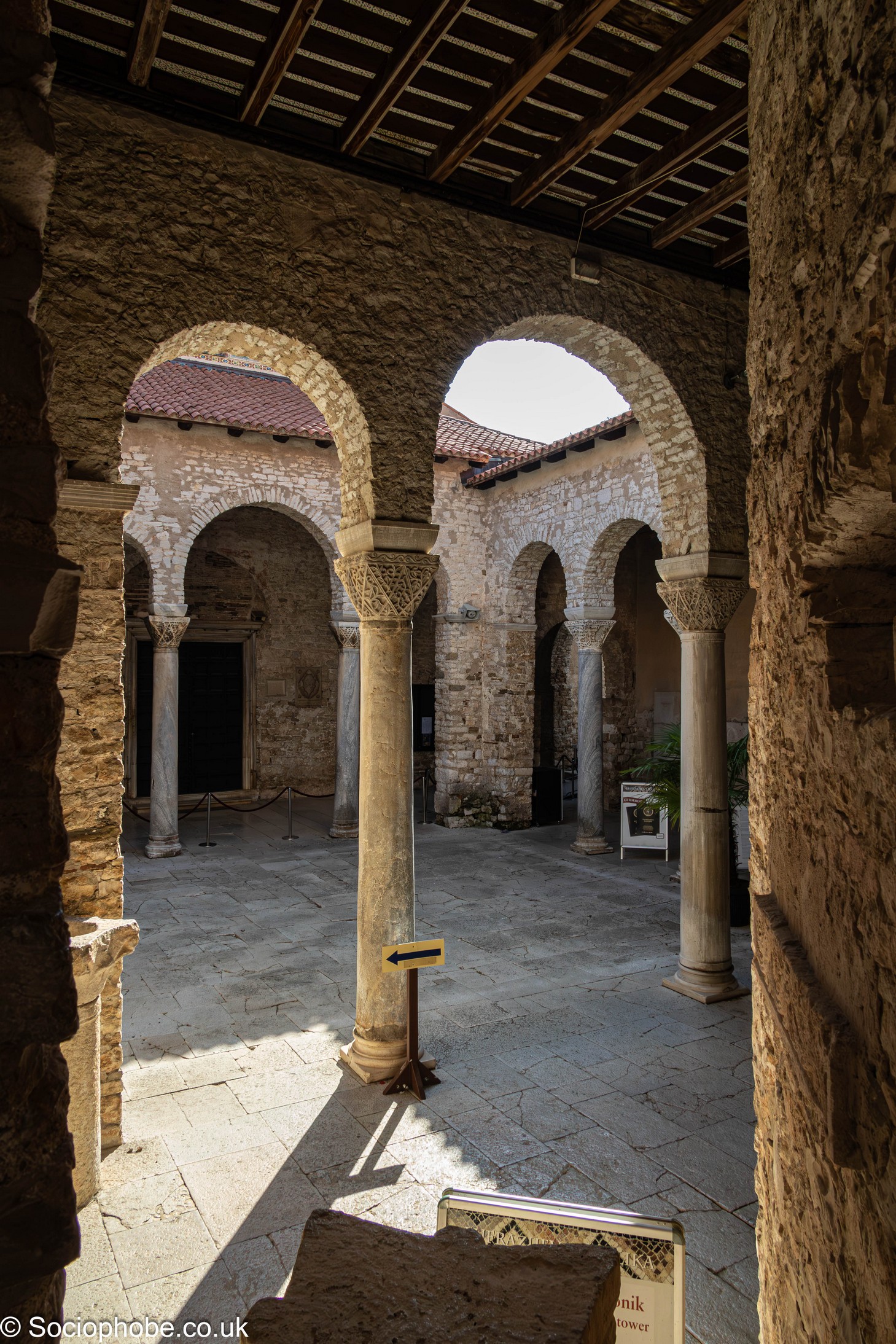
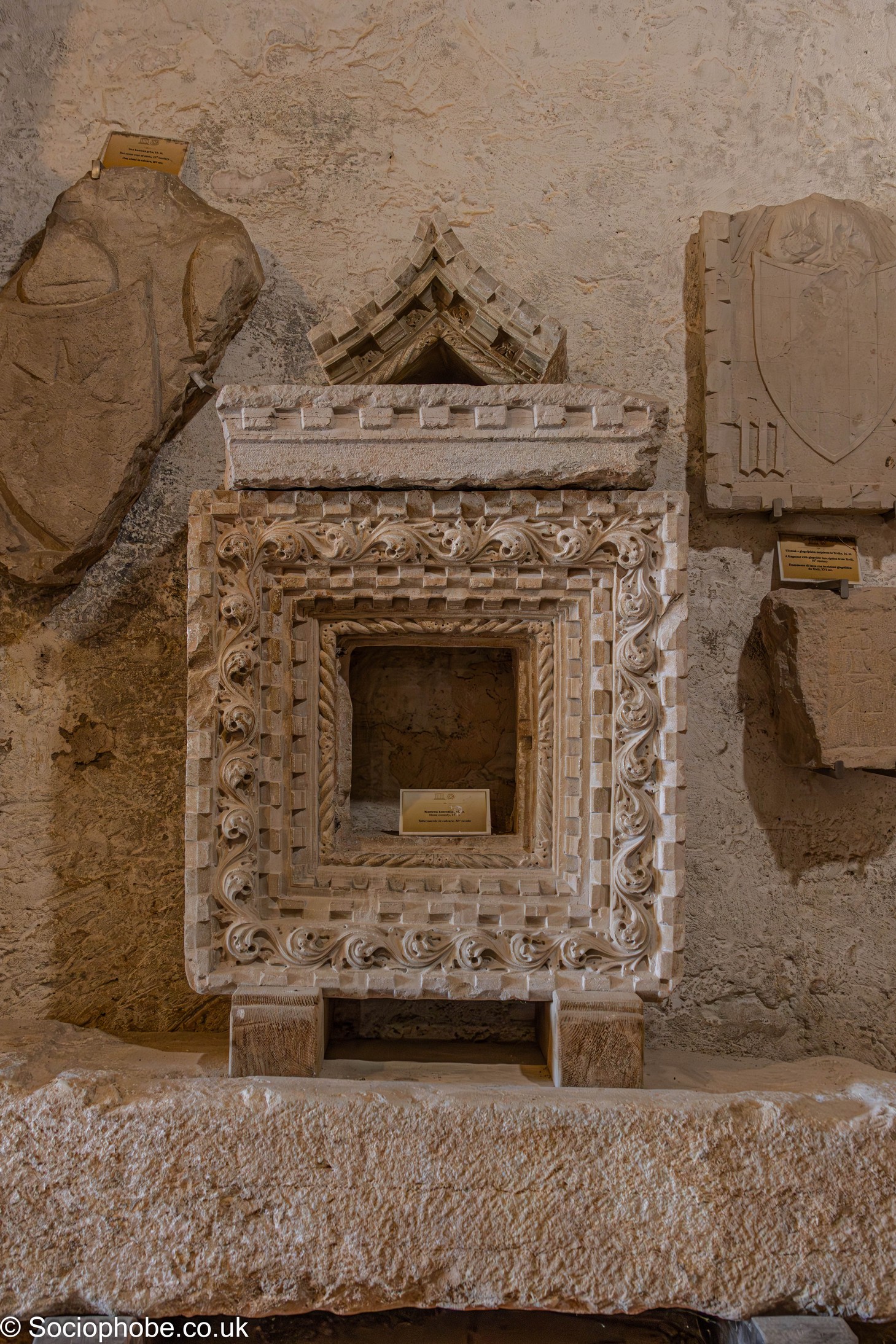
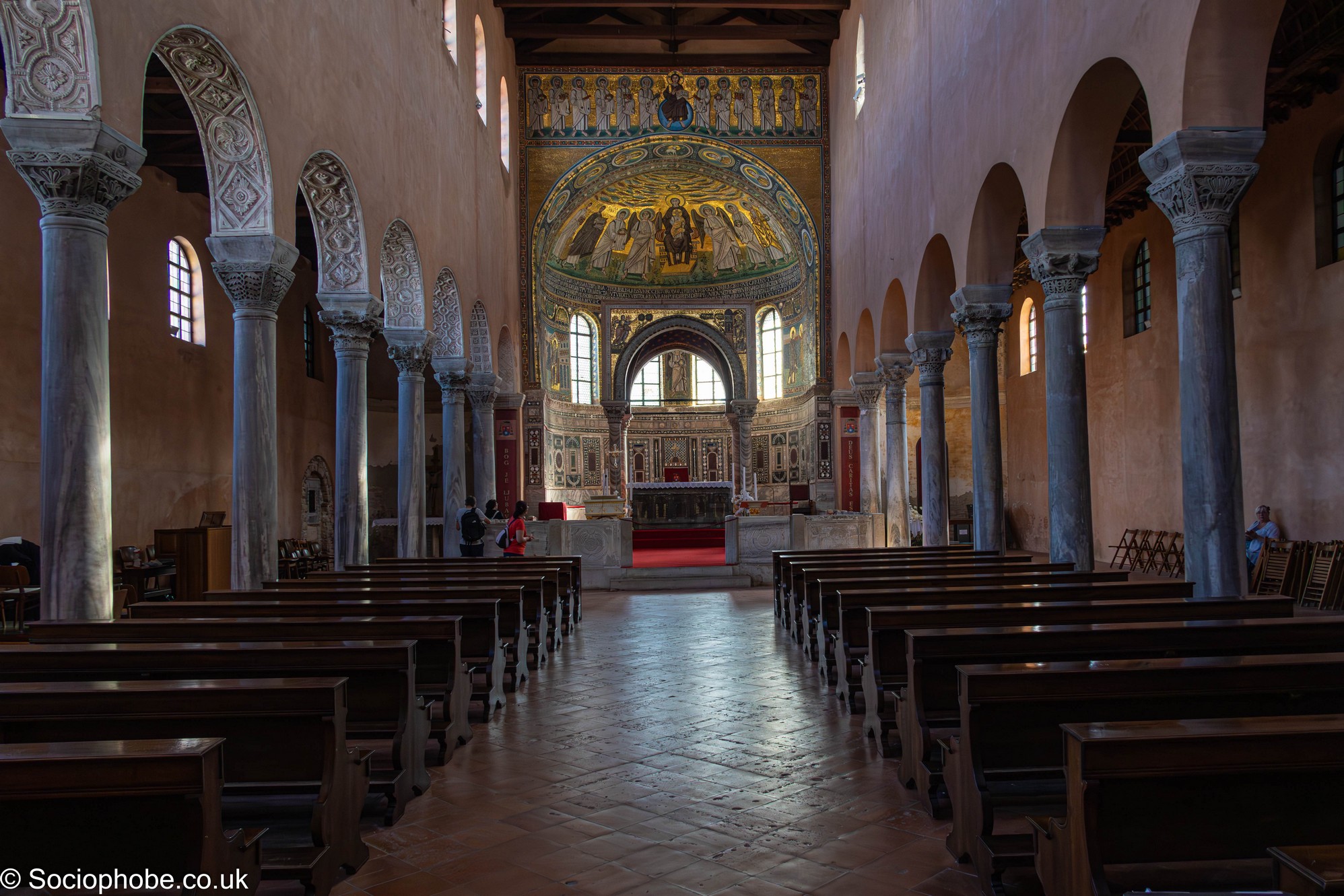
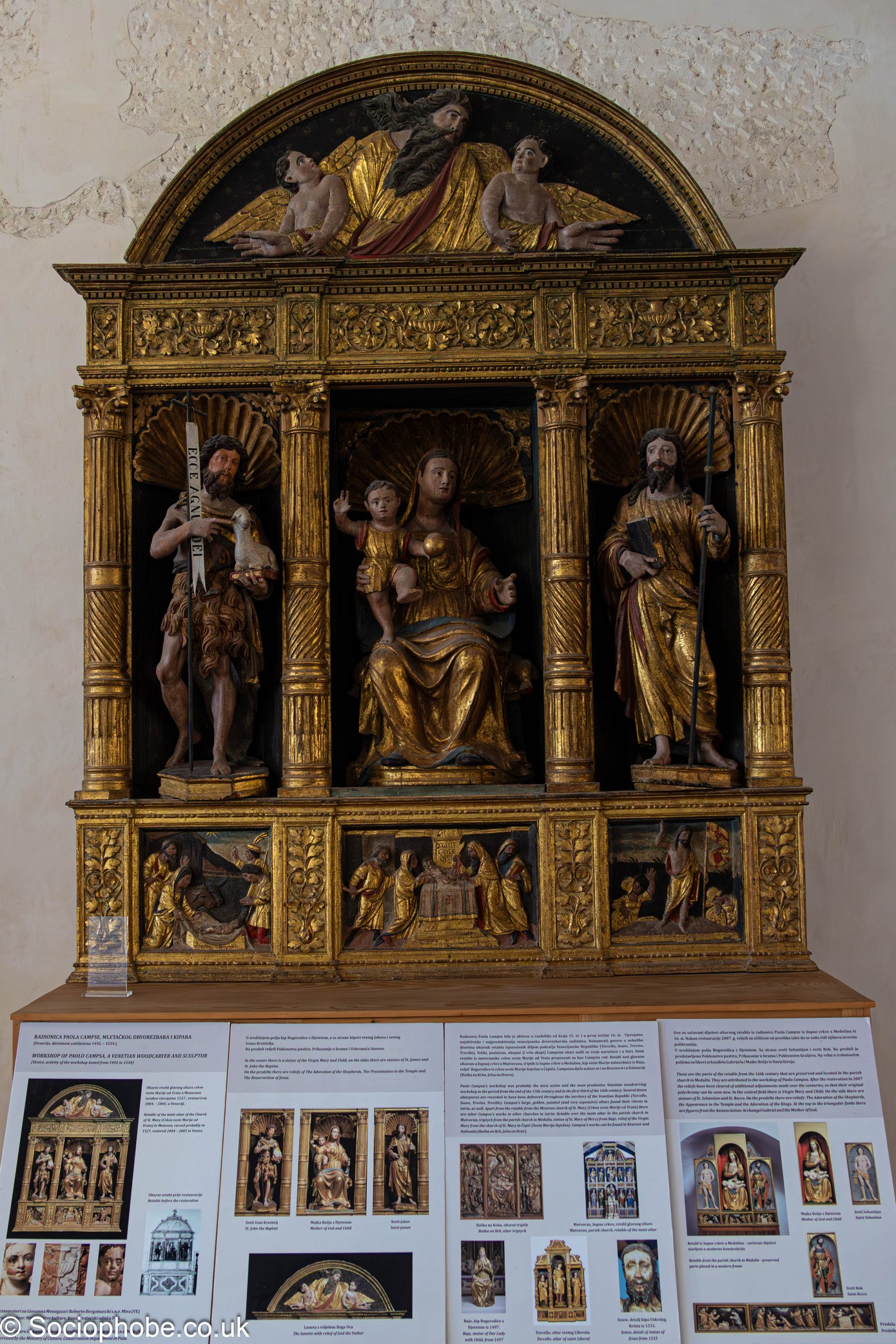
Entry to the basilica complex was €10 and once we’d let a couple of large tours go ahead it was remarkably quiet. The building is largely intact and has some beautiful floor mosaics and carvings. I opted to climb the 6 flights of rickety wooden stairs to the top of the bell tower but I’m not sure it was worth it for the view! The basilica itself though was certainly worth it with a very different floor plan and feel to later churches and some wonderful Byzantine mosaics in glorious colour. It was lovely to not be on a tour and therefore have plenty of time to wander round at our own pace.
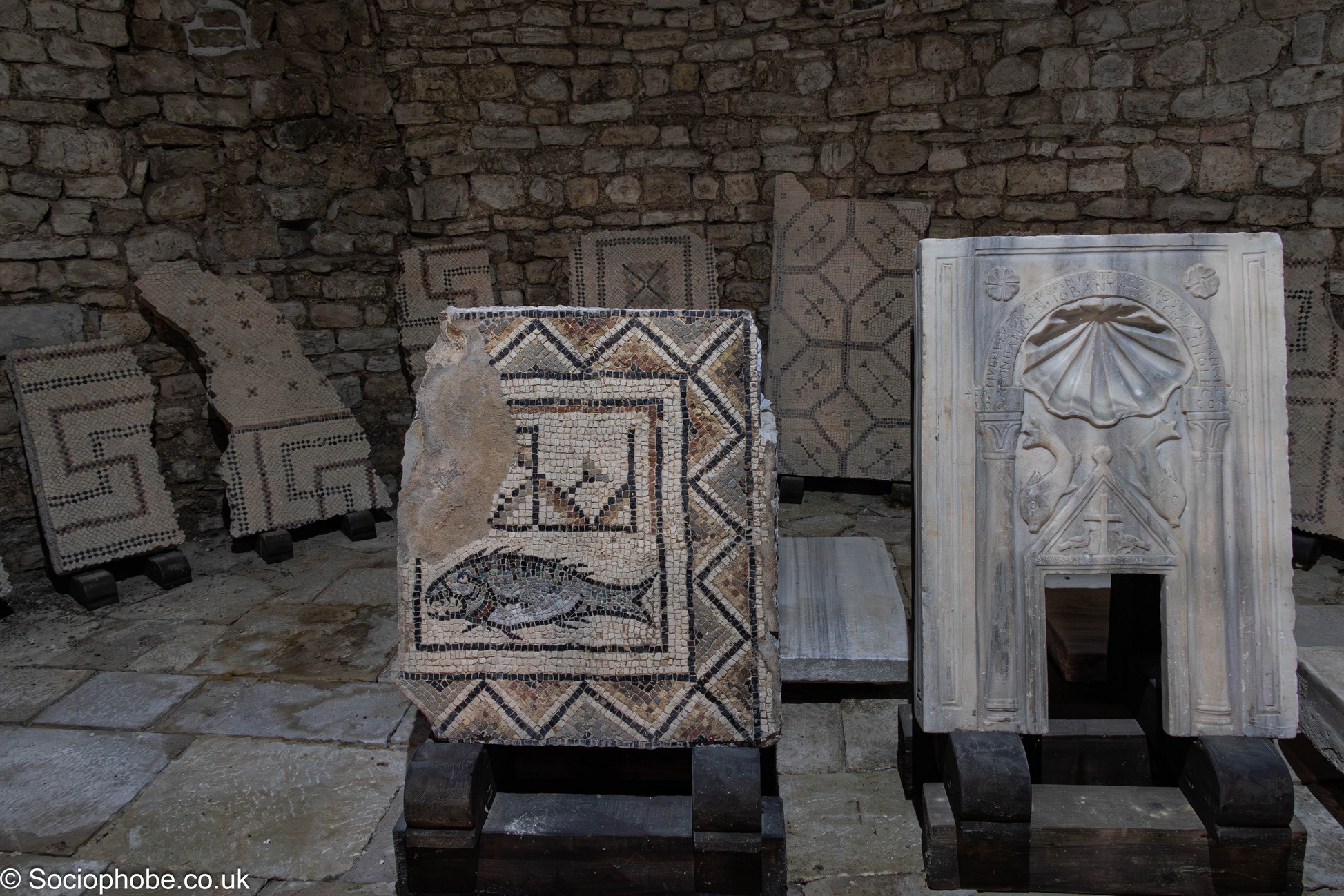
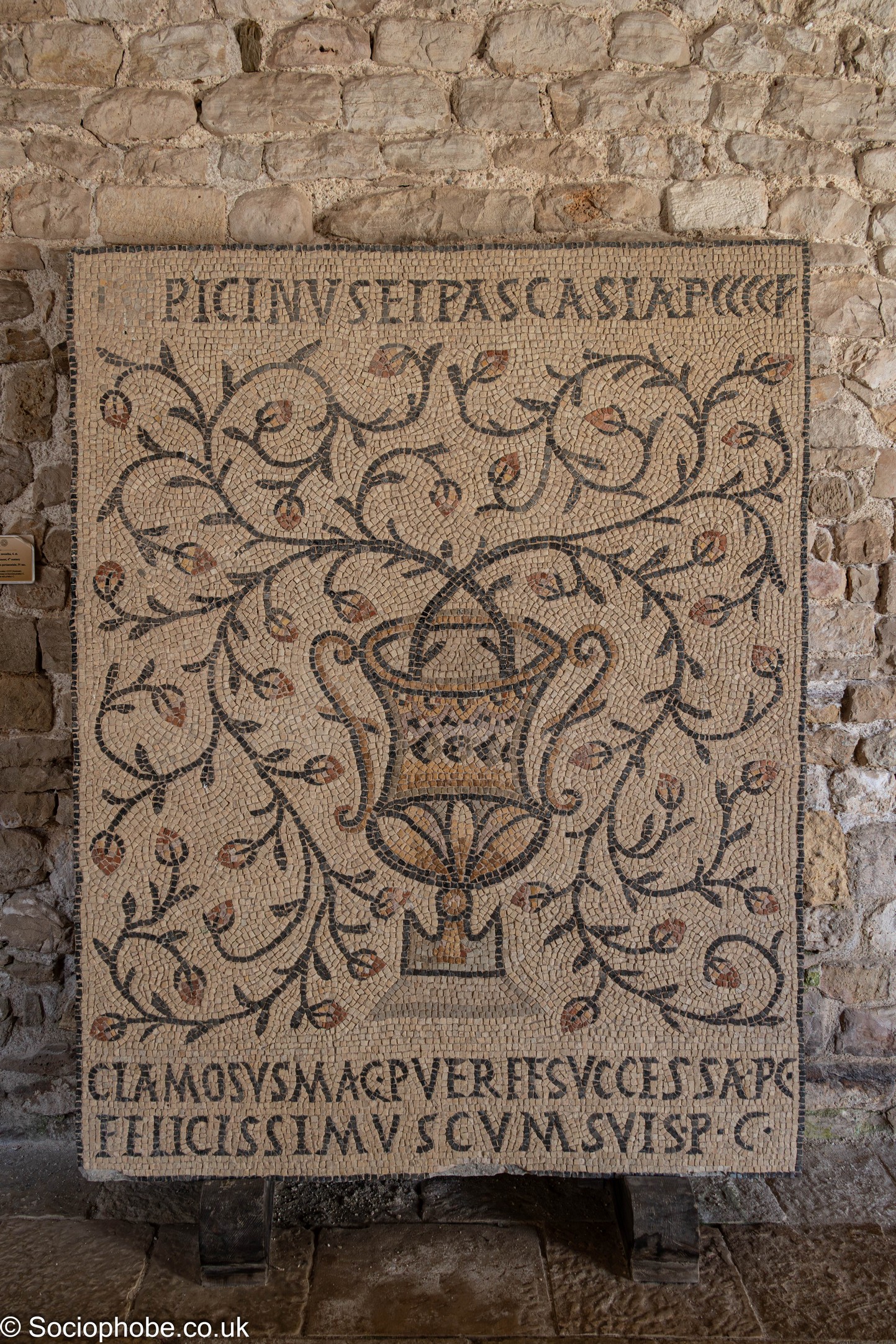
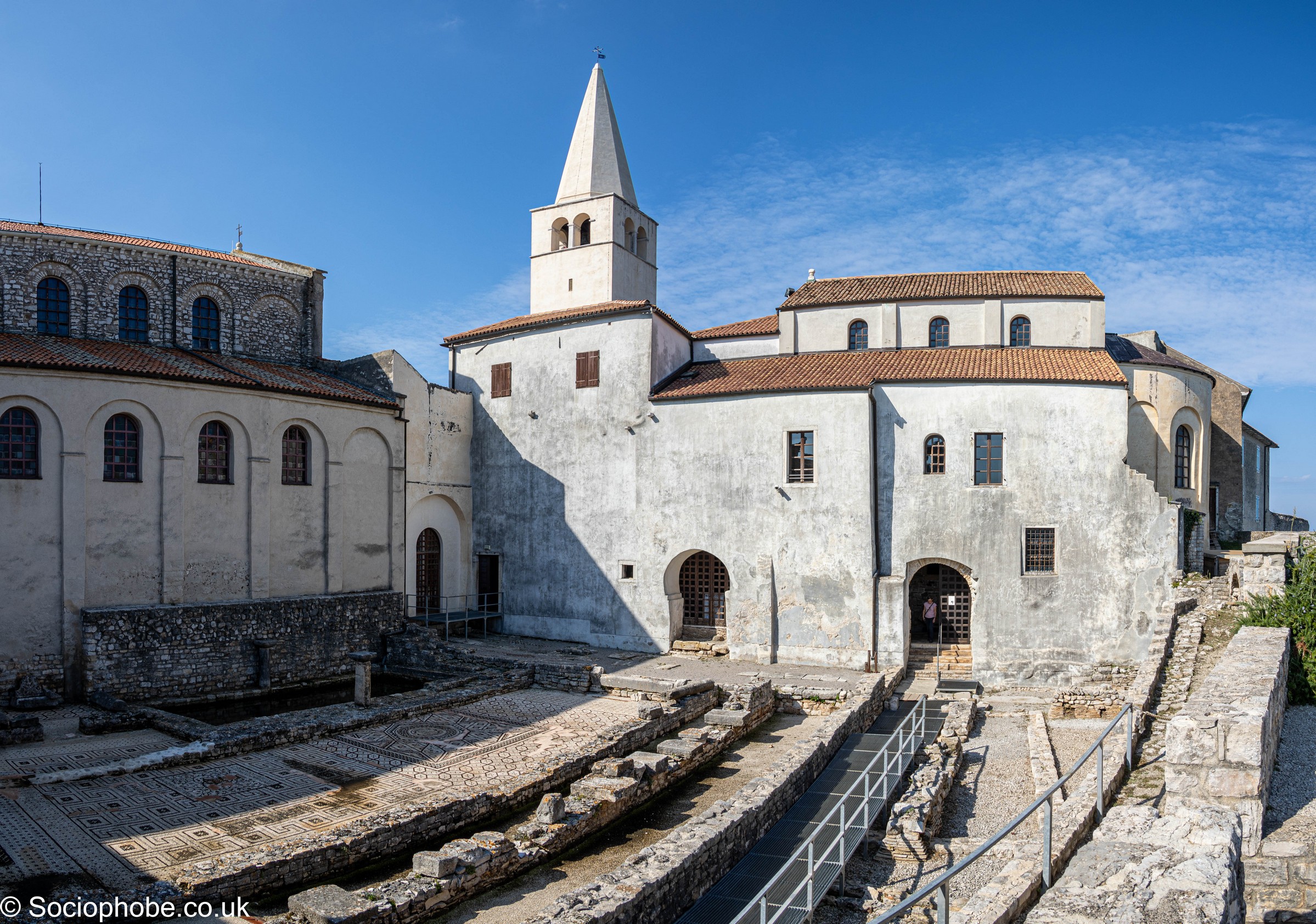
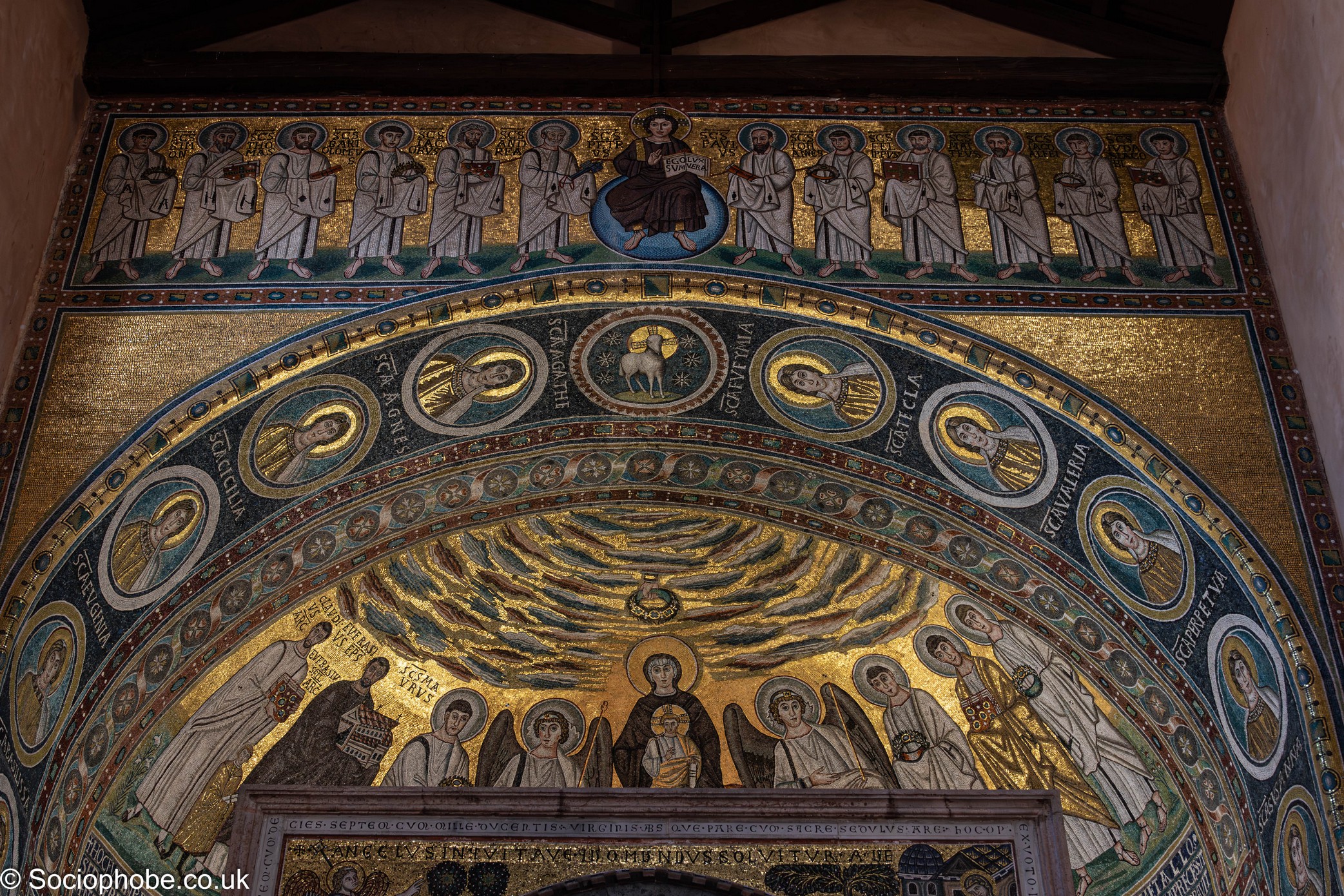
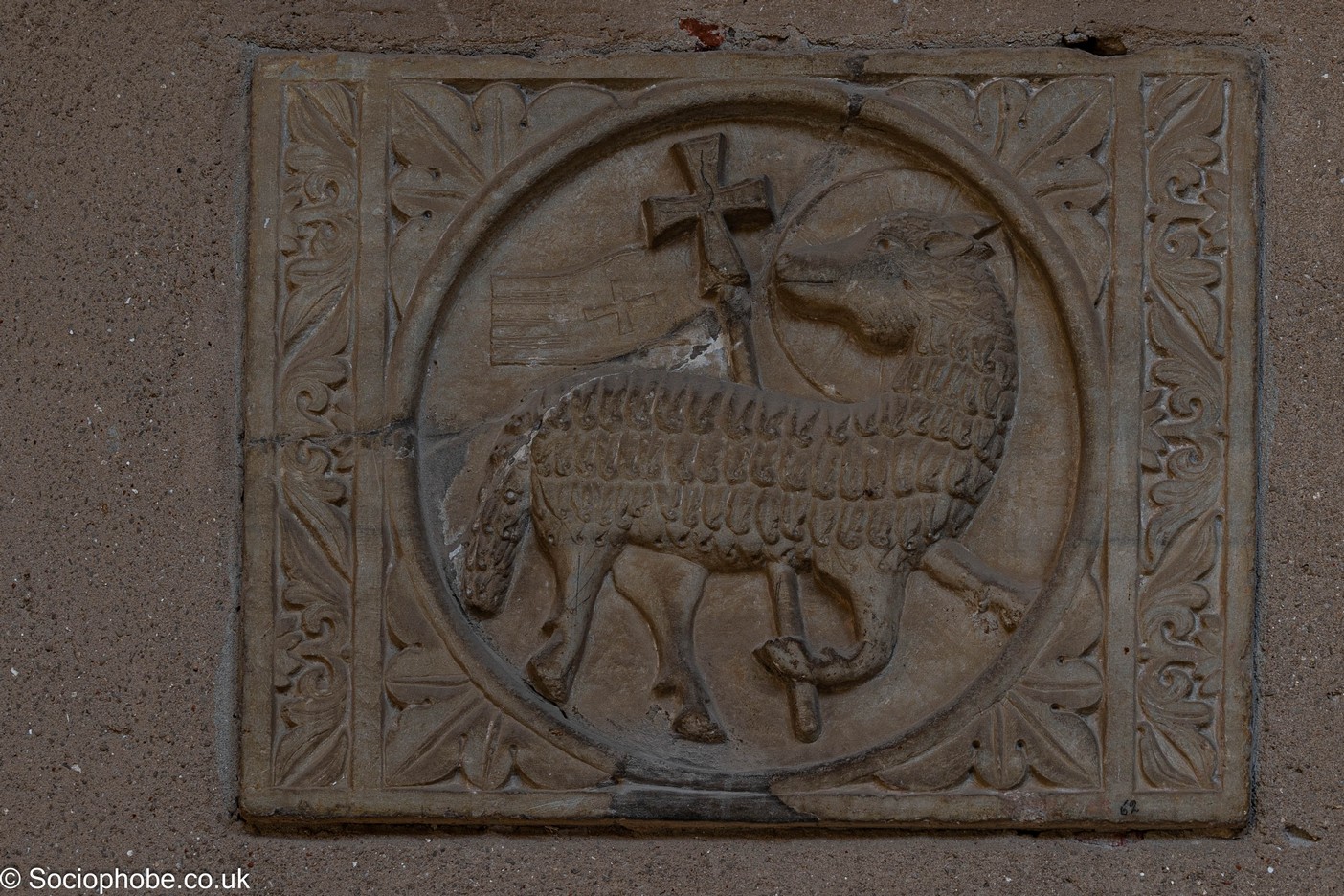
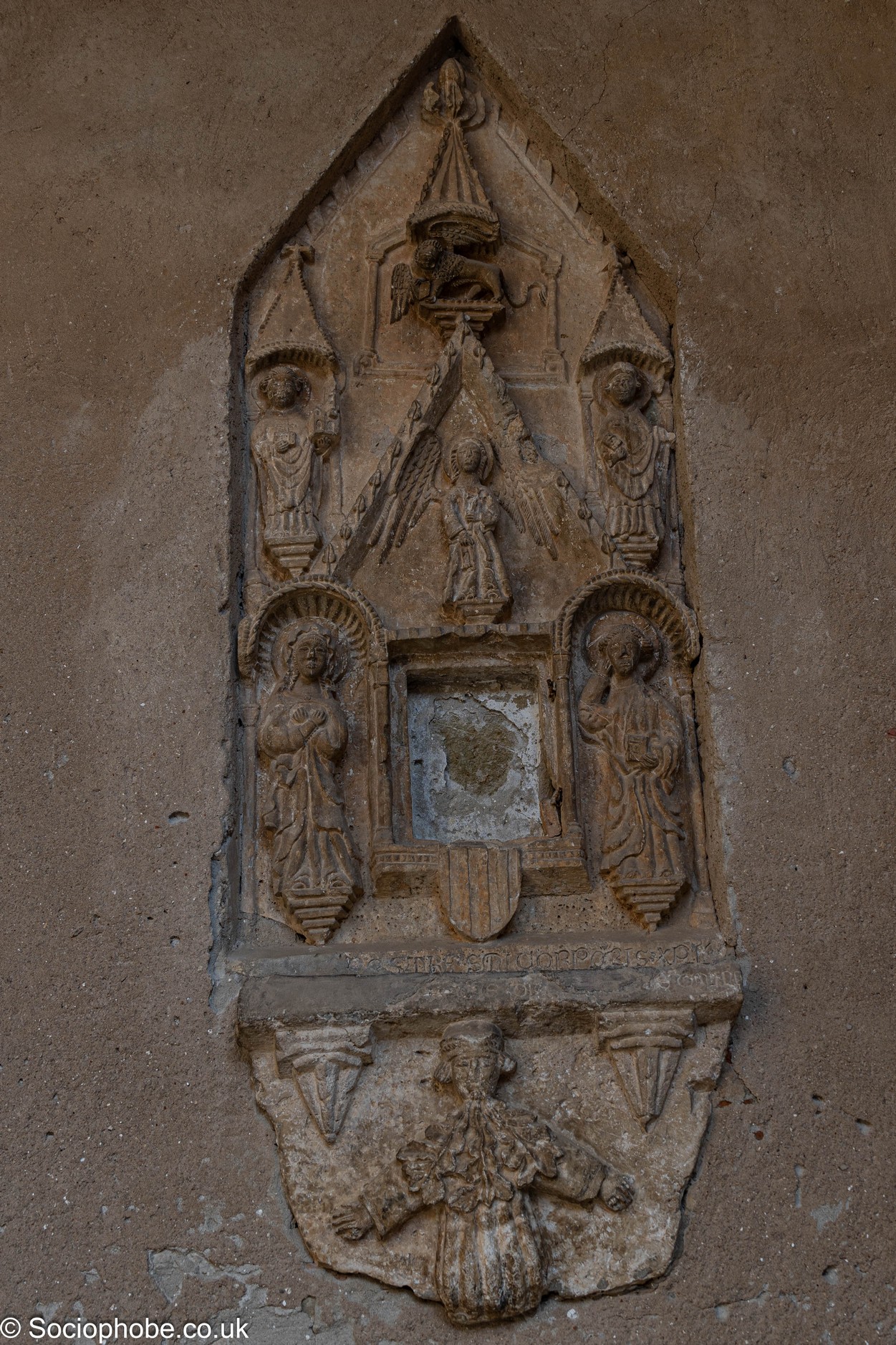
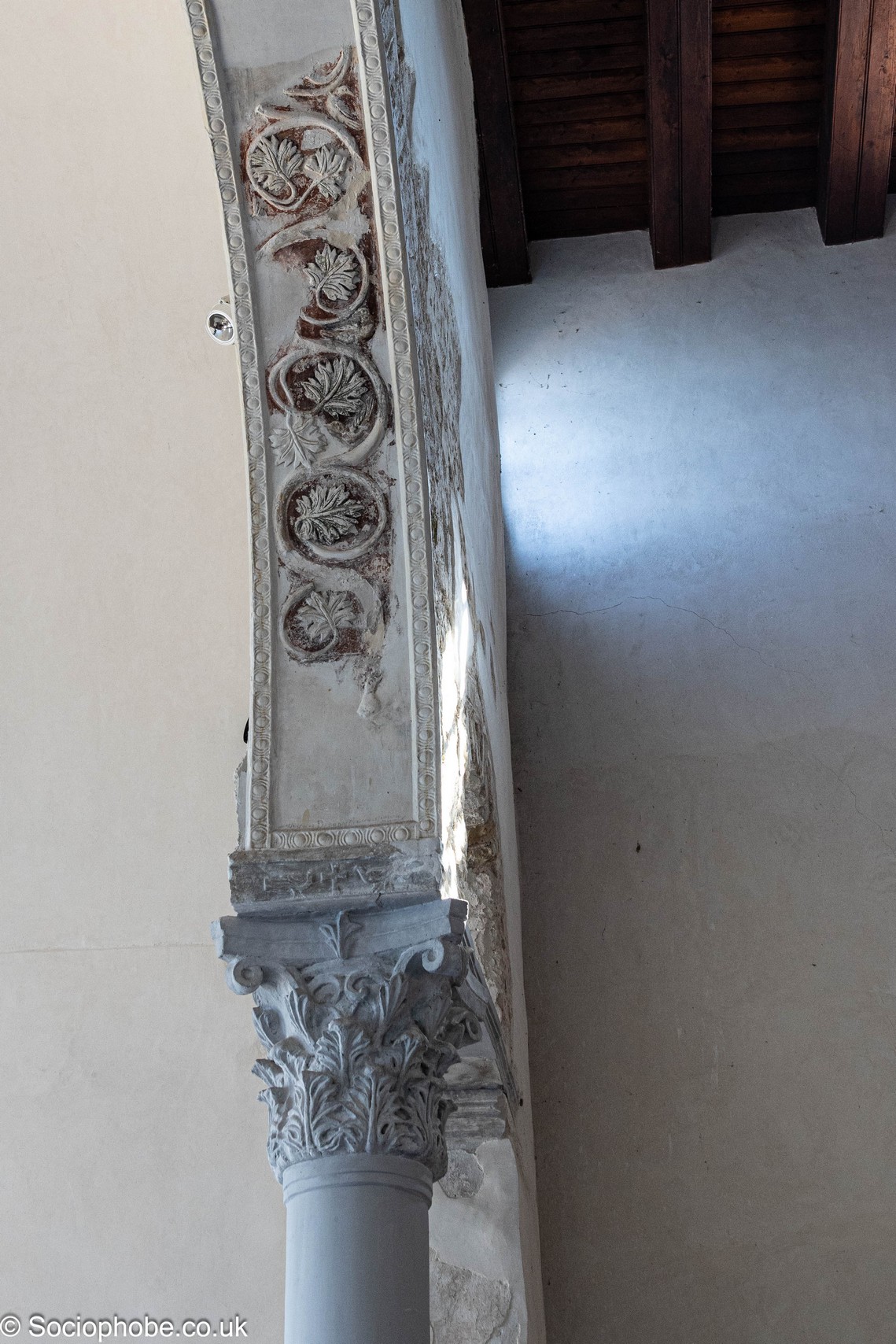
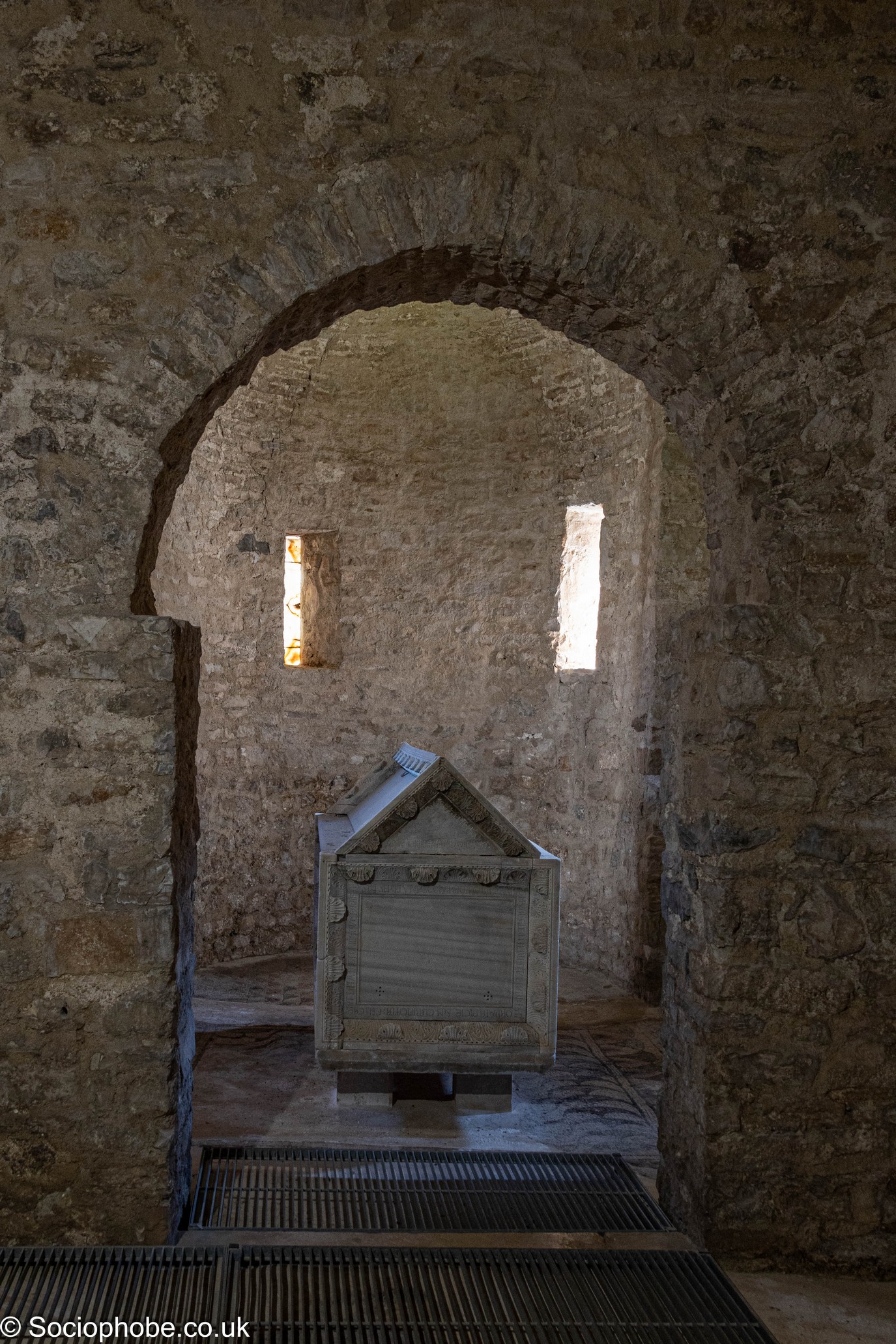
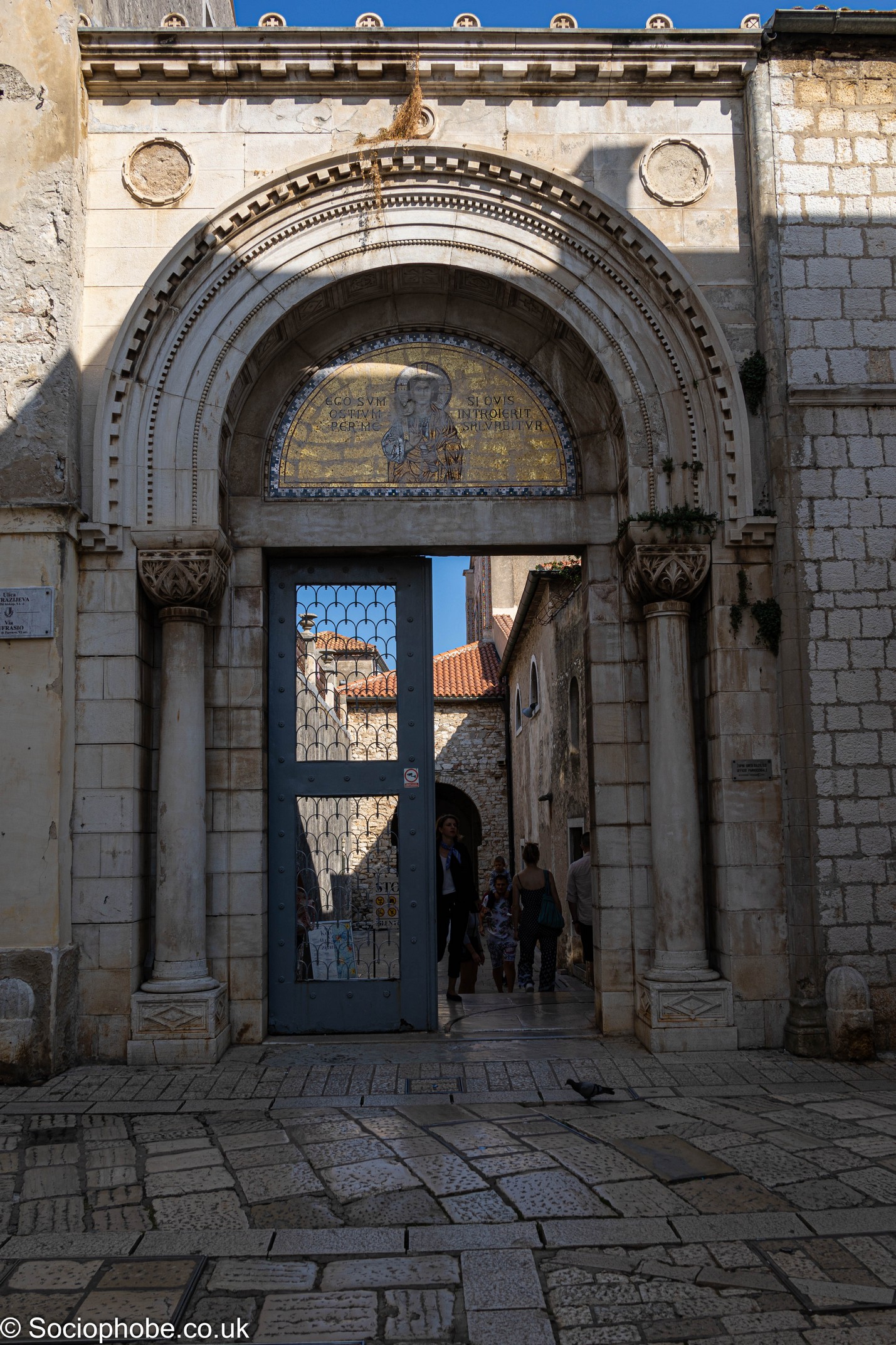
We then walked up and down the little streets, pausing to look at various buildings. It was quite surprising that once you moved off the main street the place was almost deserted but the central street was packed. We ambled for a while with no agenda, just enjoying the ambience and then went to one of the many little squares and sat and had a coffee before walking back to the car for the drive back to Pula.
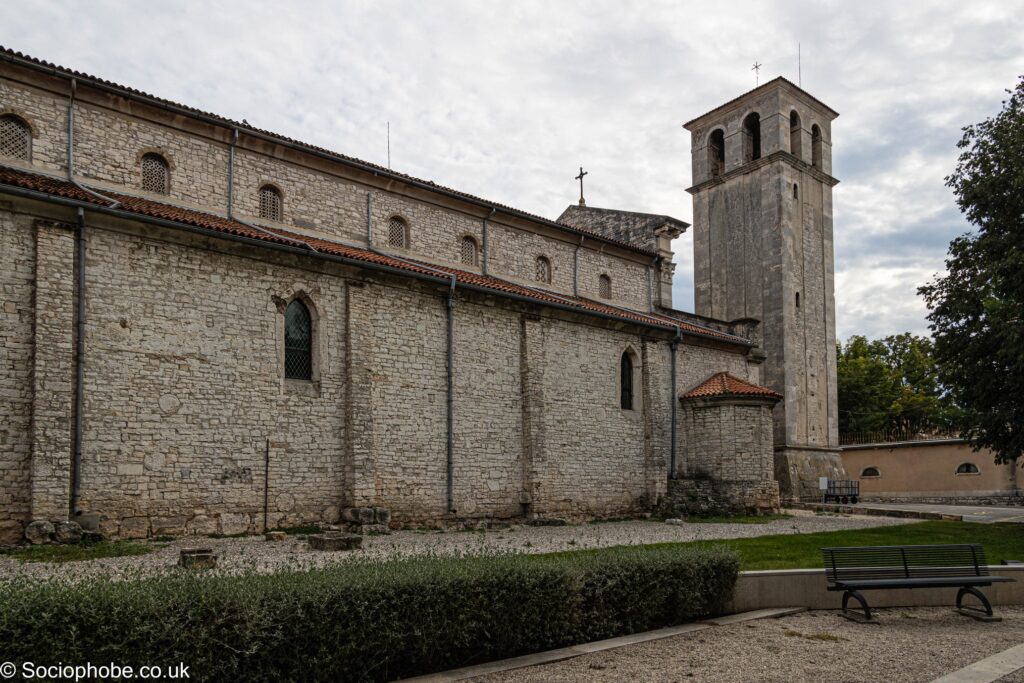
Once back at the hotel we had a few chilled hours before I walked along the seafront to try and visit Pula cathedral. This is another early Christian church with an impressive interior but sadly, despite trying all the doors it was closed again.
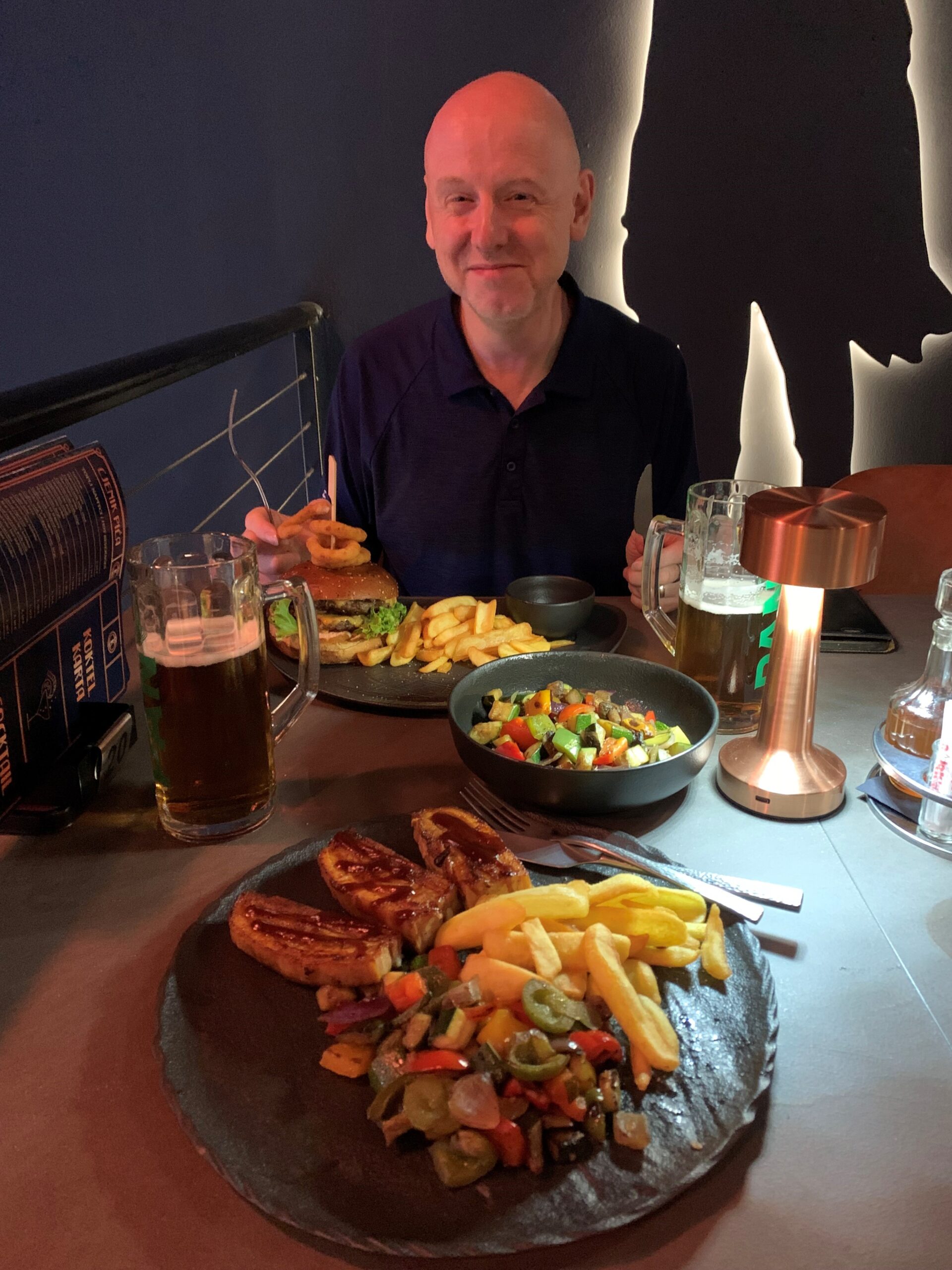
I wandered back to the hotel, met Deb on the way and we popped into Kinema for a late lunch/early dinner. I was somewhat dubious due to the signs advertising sports TV but it was a fabulous choice. The service was great – Vid I think – and the menu had some great options. I went for the Lord of the Rings Burger and Deb had Mad Max (pork steaks) and there was just so much food we regretted ordering the vegetable sides. Although it didn’t stop us having a dessert too. Amazing value as well, I thought they had miscalculated the bill as we paid less than €40! We then waddled carefully back to our hotel.
Tuesday – Lovran – Croatia
I woke up several times in the night and once I could look, I discovered I had about 10 mosquito bites, little buggers. After we breakfast we left the Hotel Scaletta and drove north, avoiding the toll roads to see a bit more of the scenery as we were in no rush.
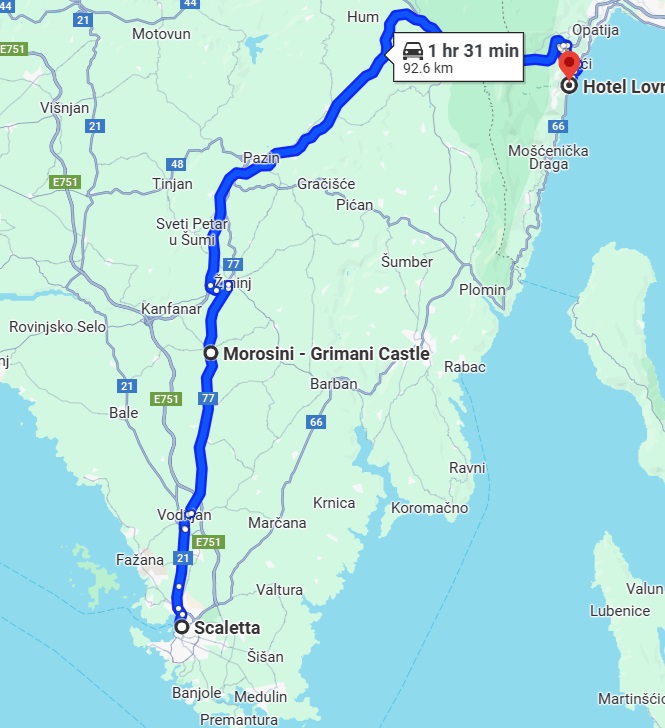
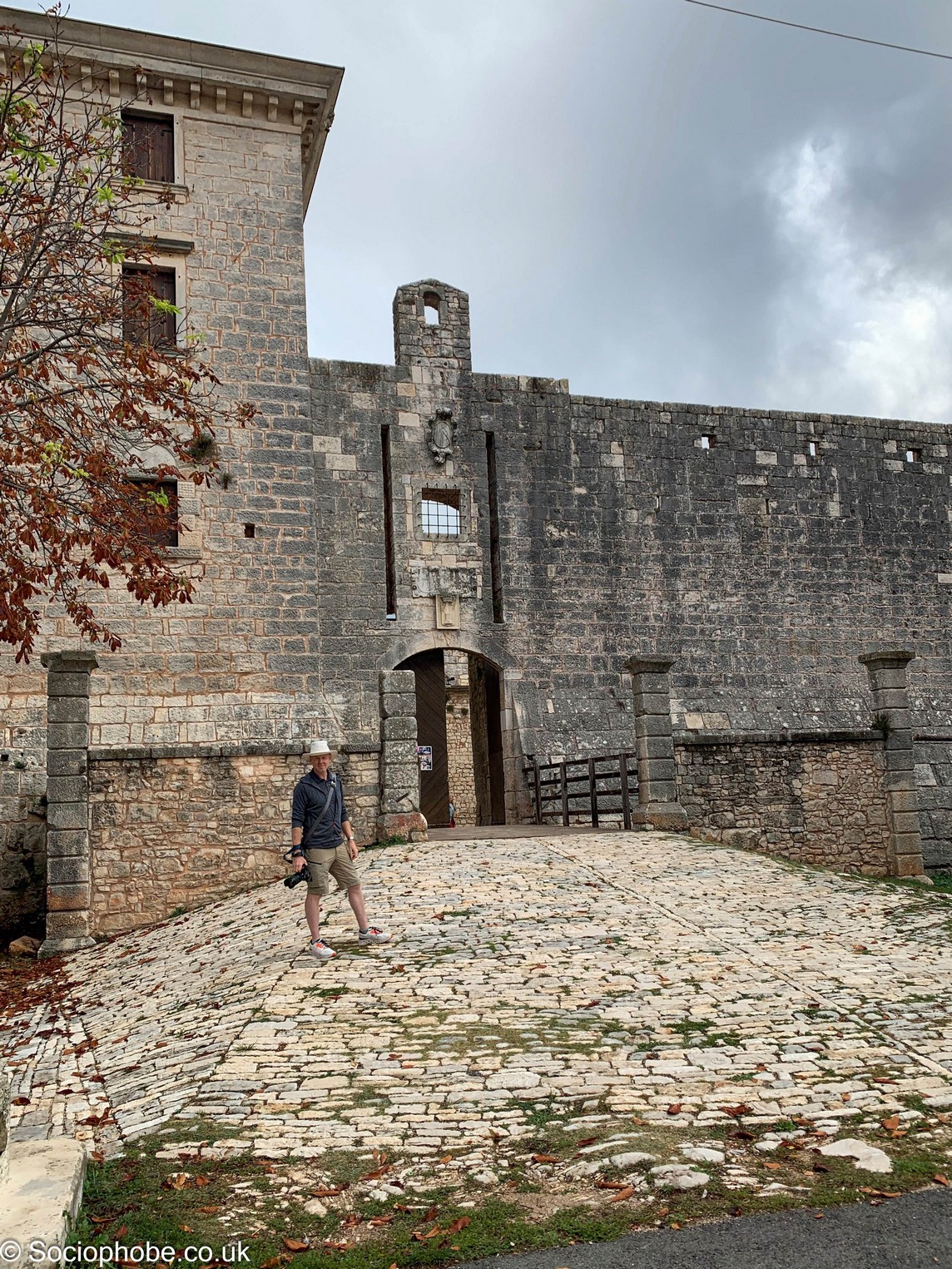
First stop was the Morosini Grimani Castle in Svetvincenat. The village appeared almost abandoned when we drove in and parked but there was a small castle with corner towers in the centre so we knew we had the right place. The staff inside were fantastic – I really can’t praise them highly enough, from the initial introduction and explanation of the layout to the multimedia room with interactive activities they were engaged and helpful.
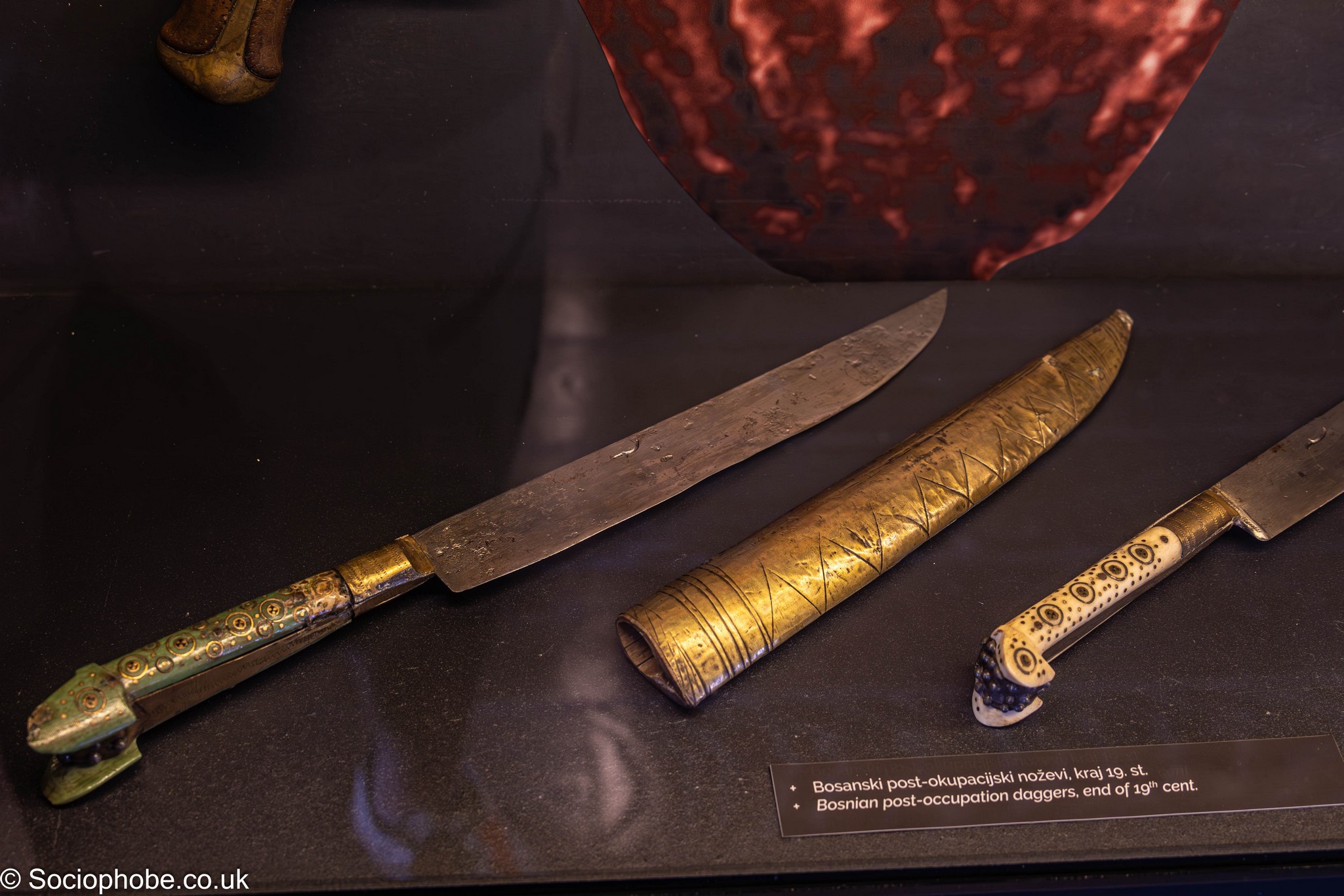
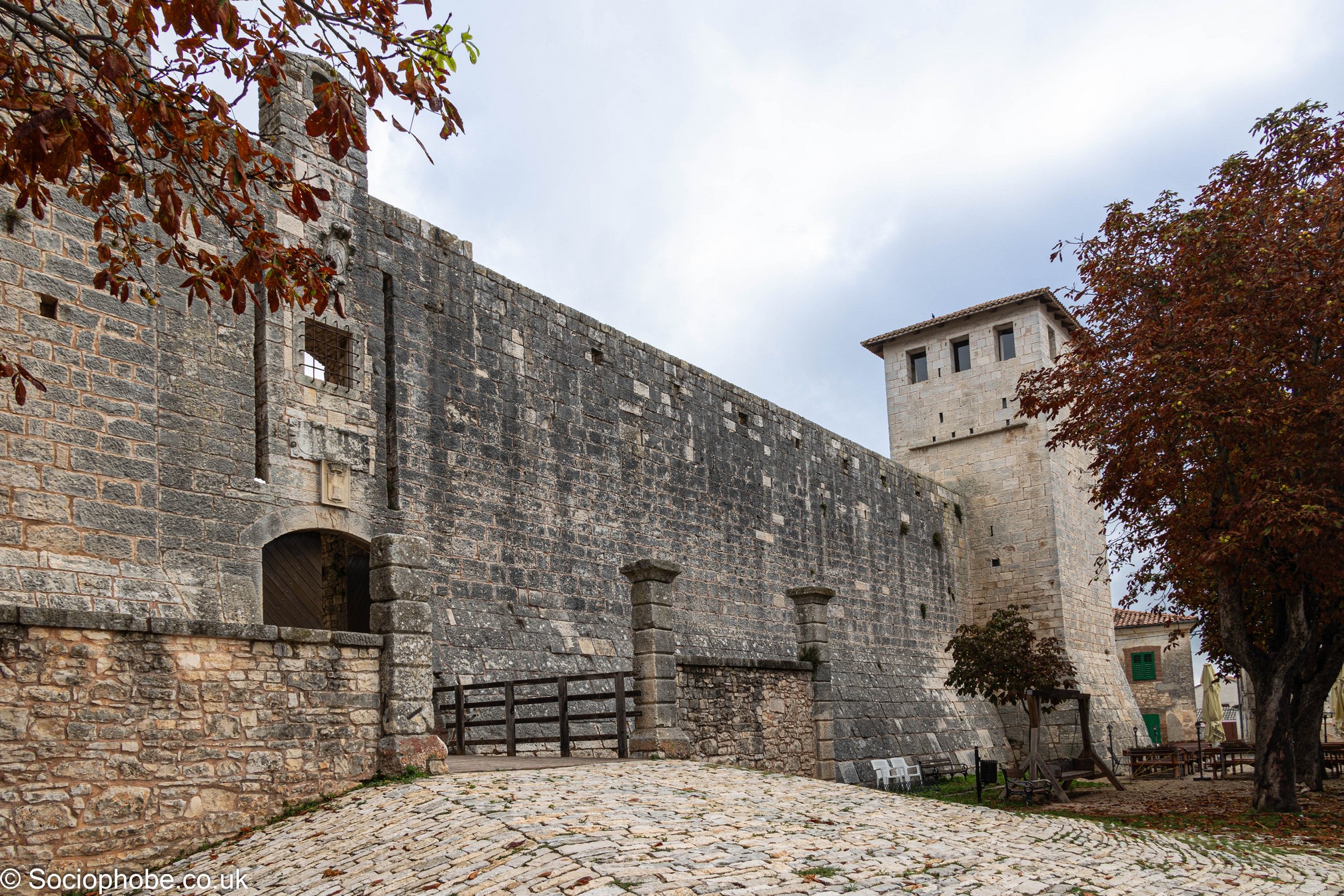
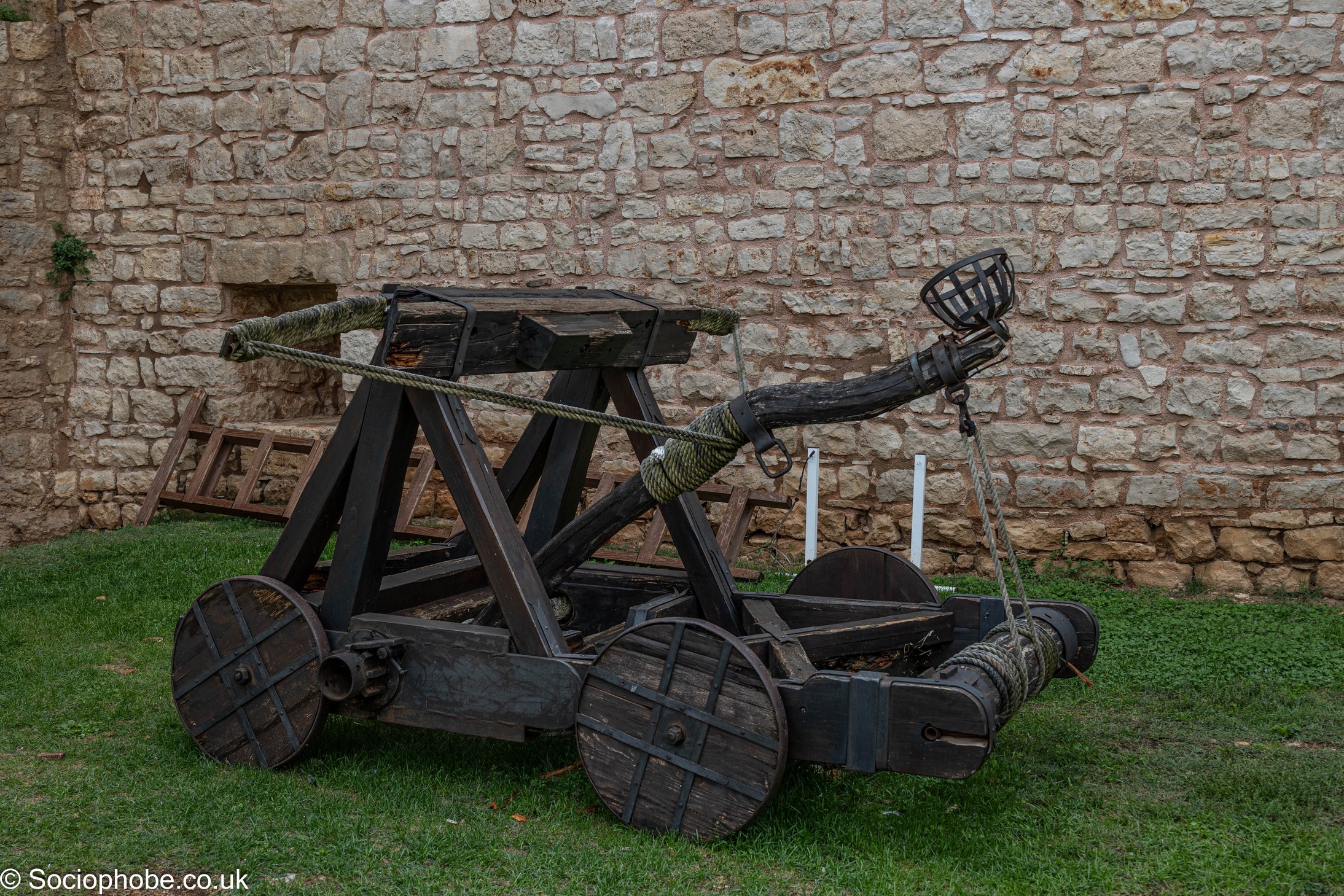
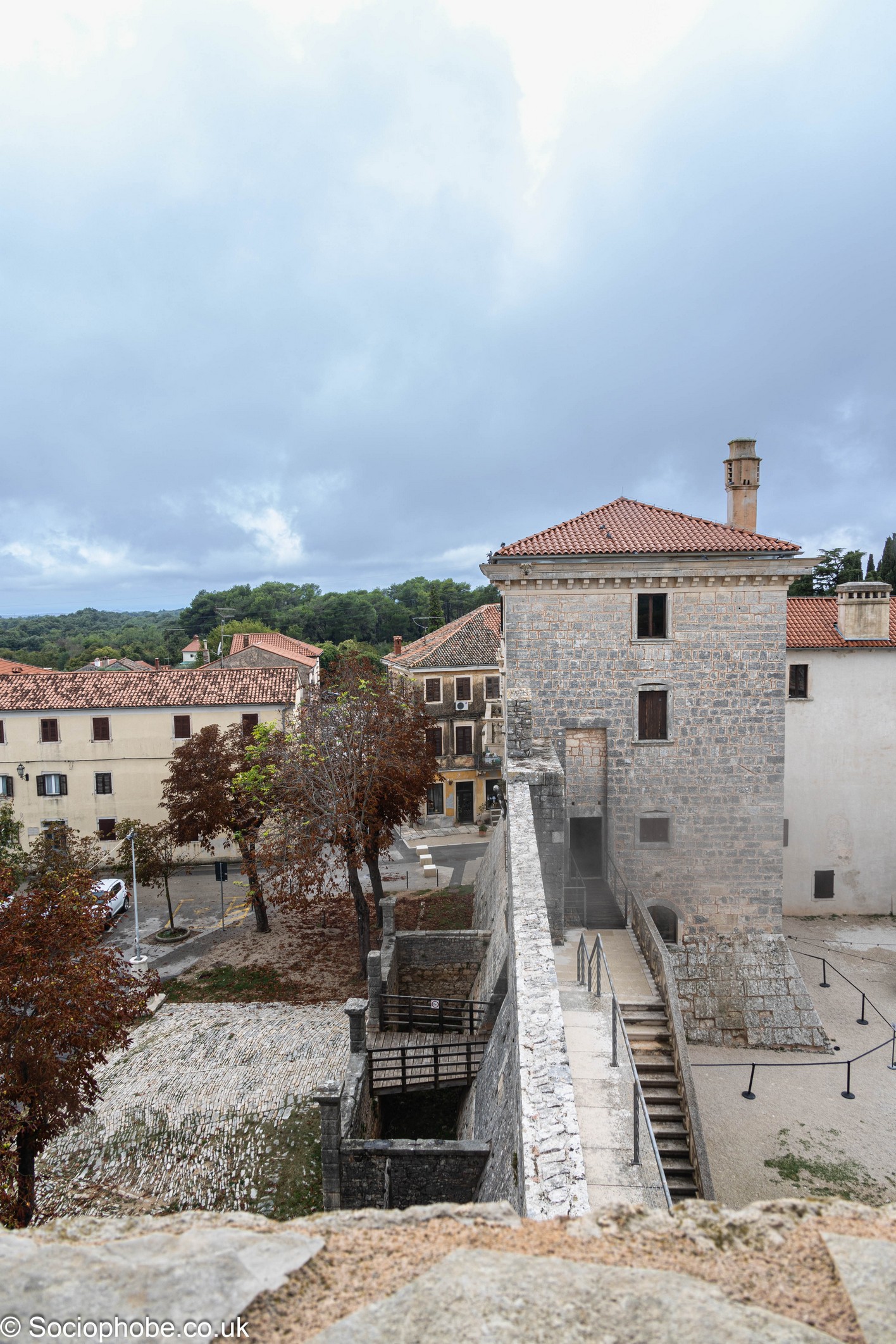
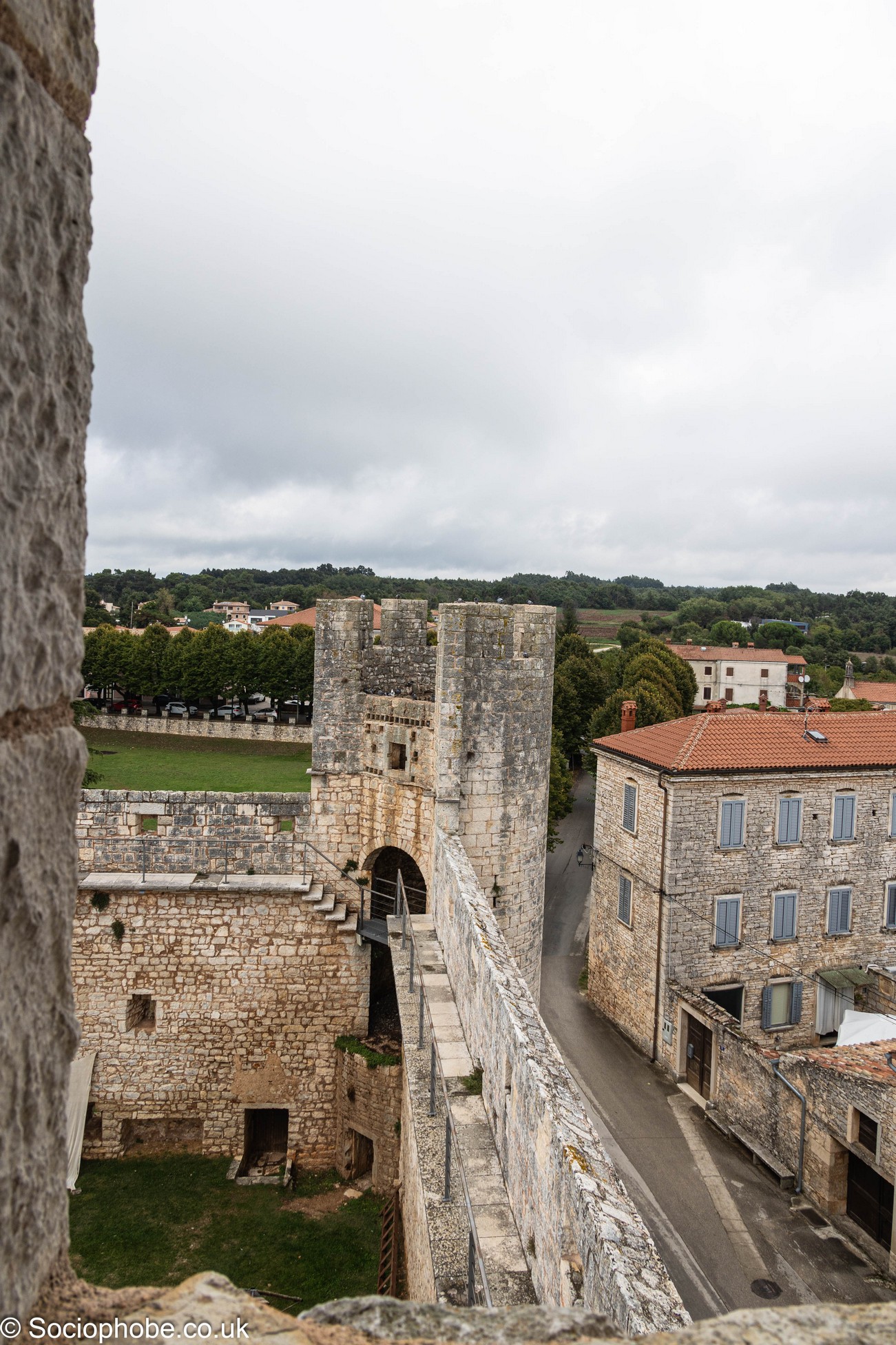
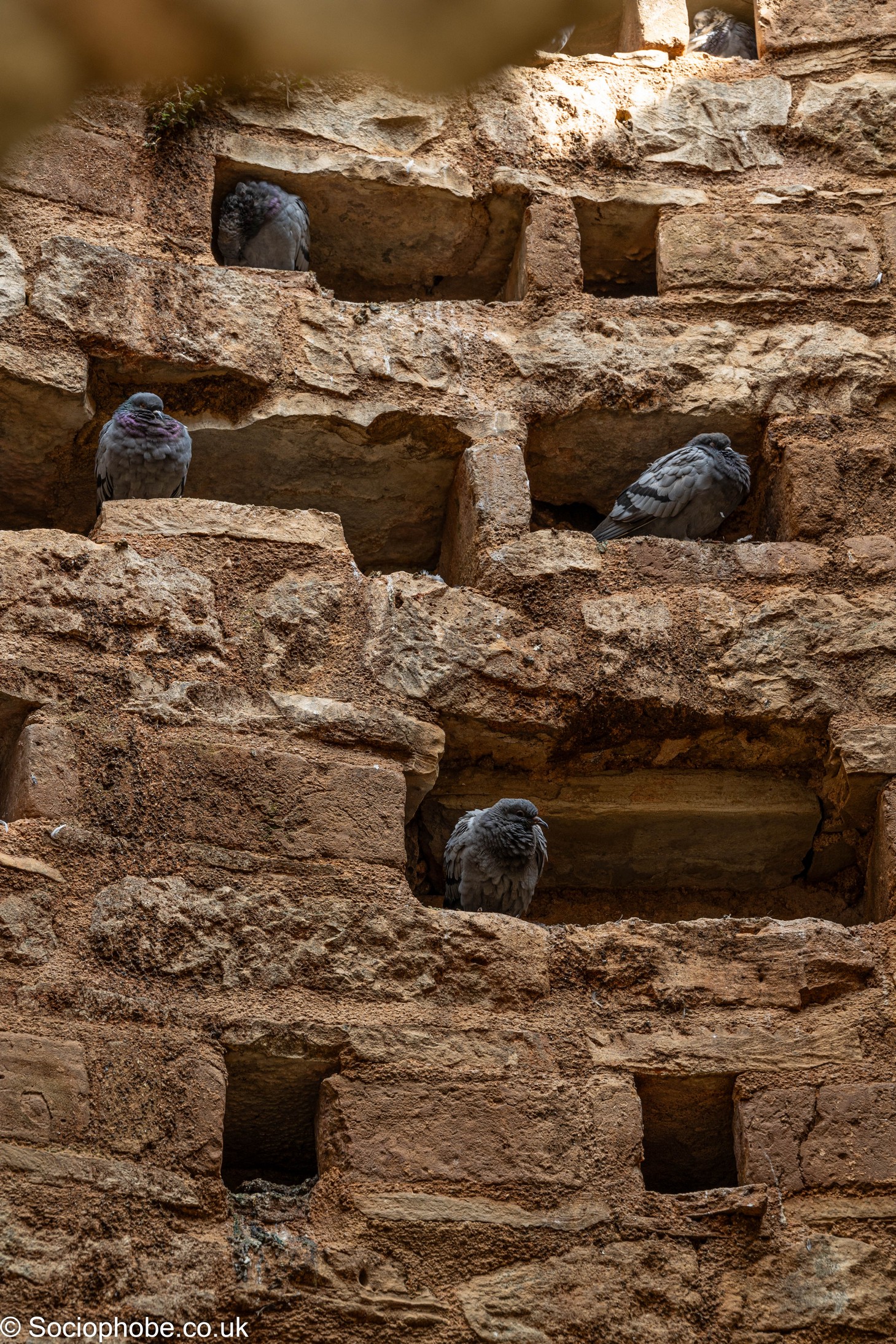
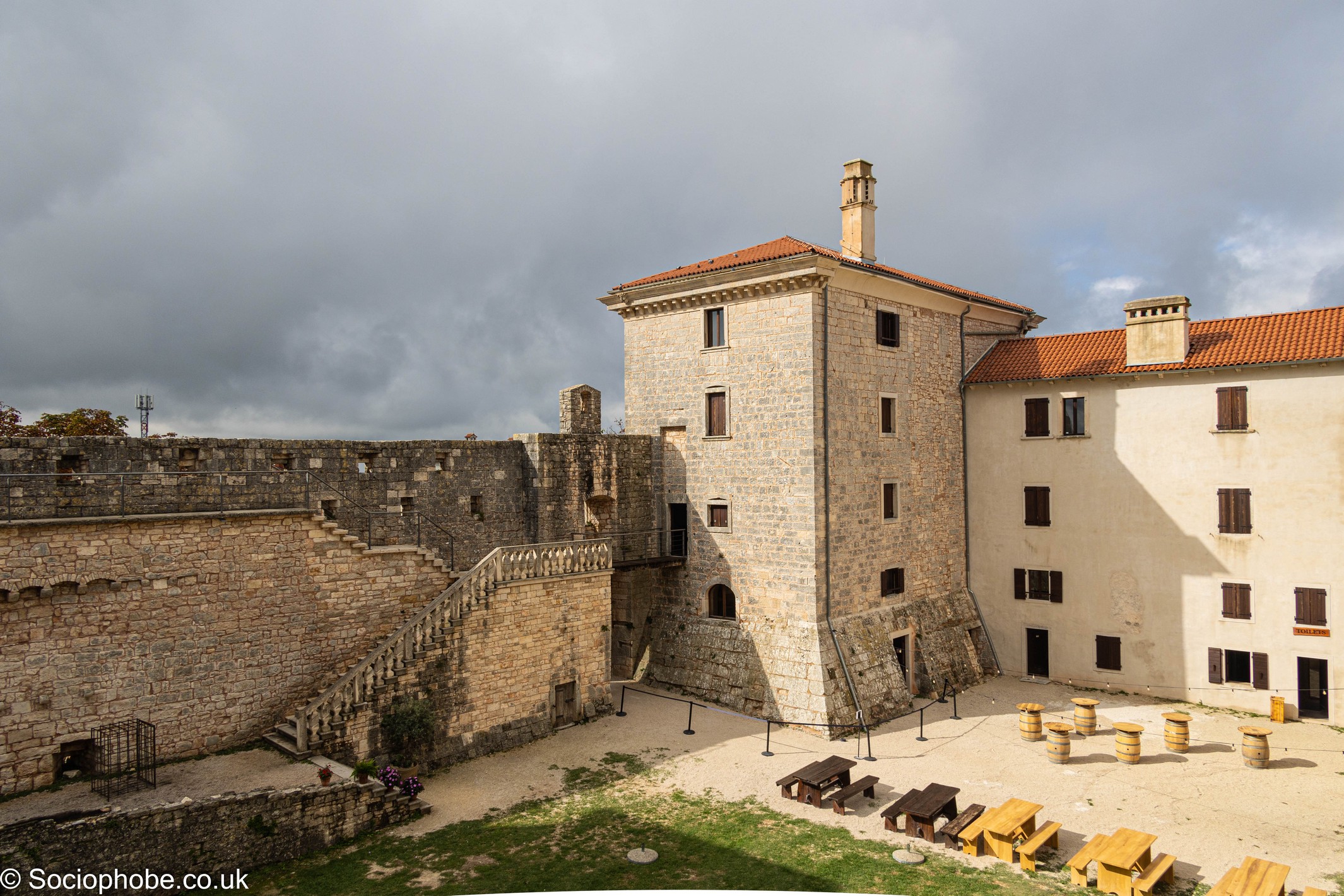
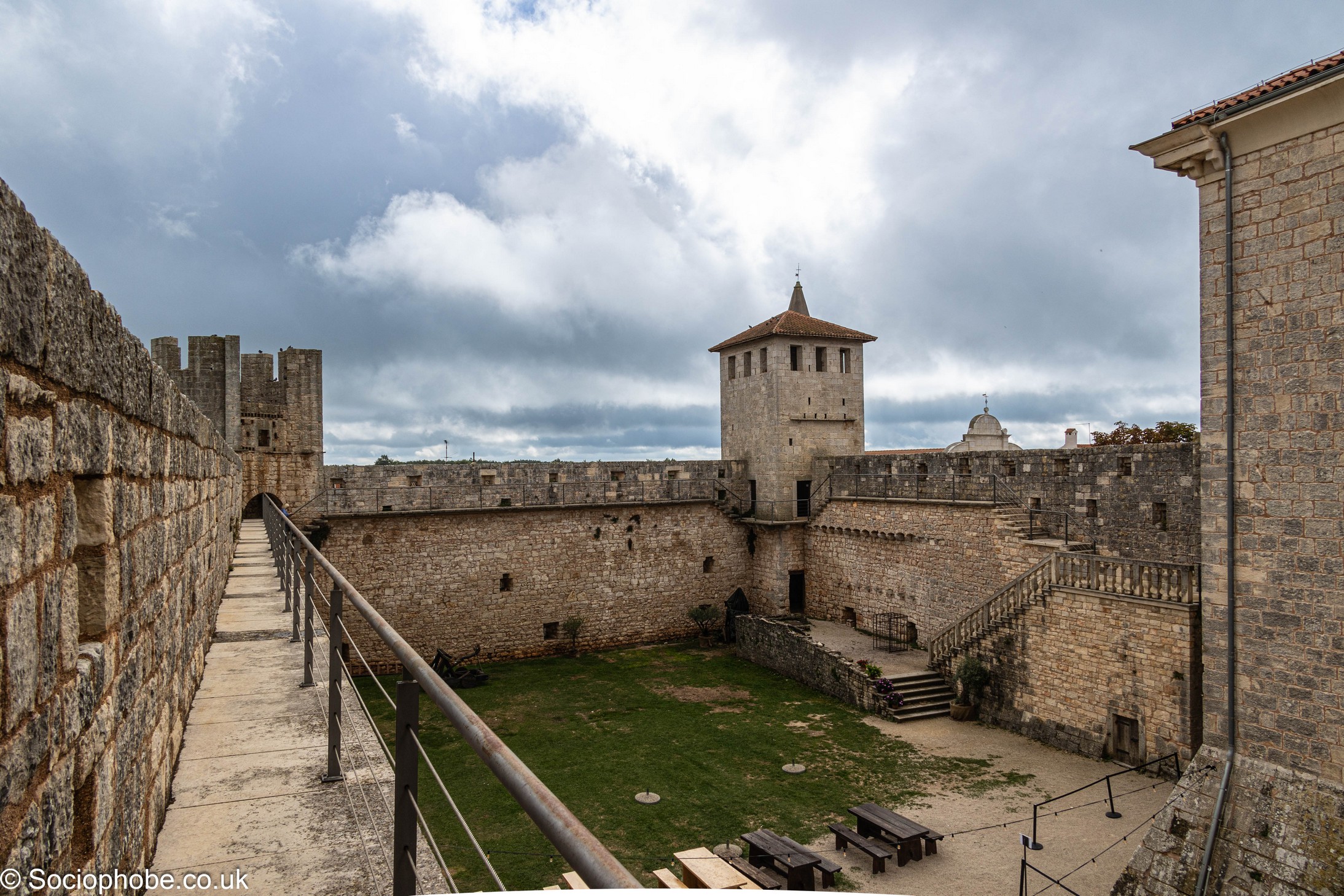
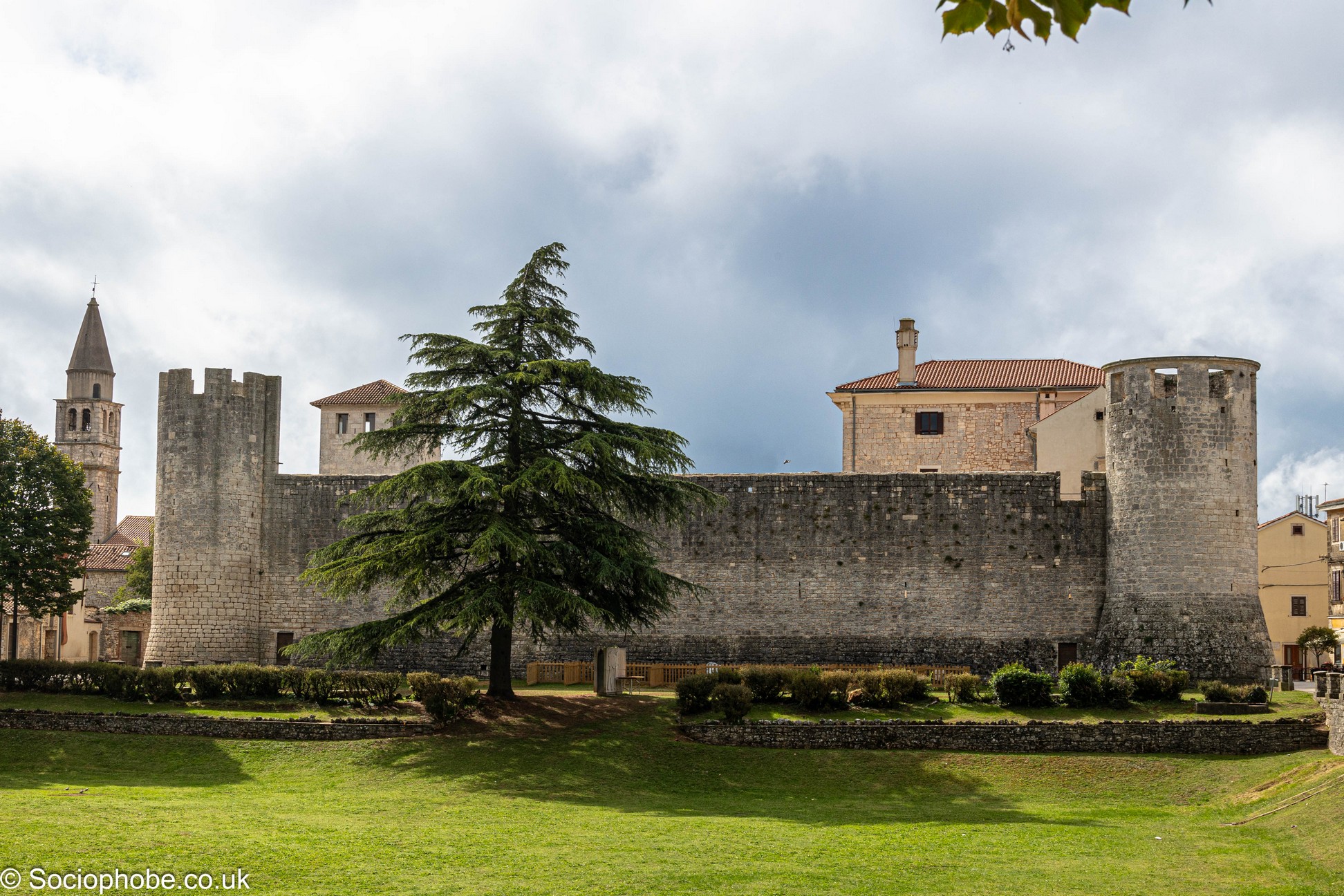
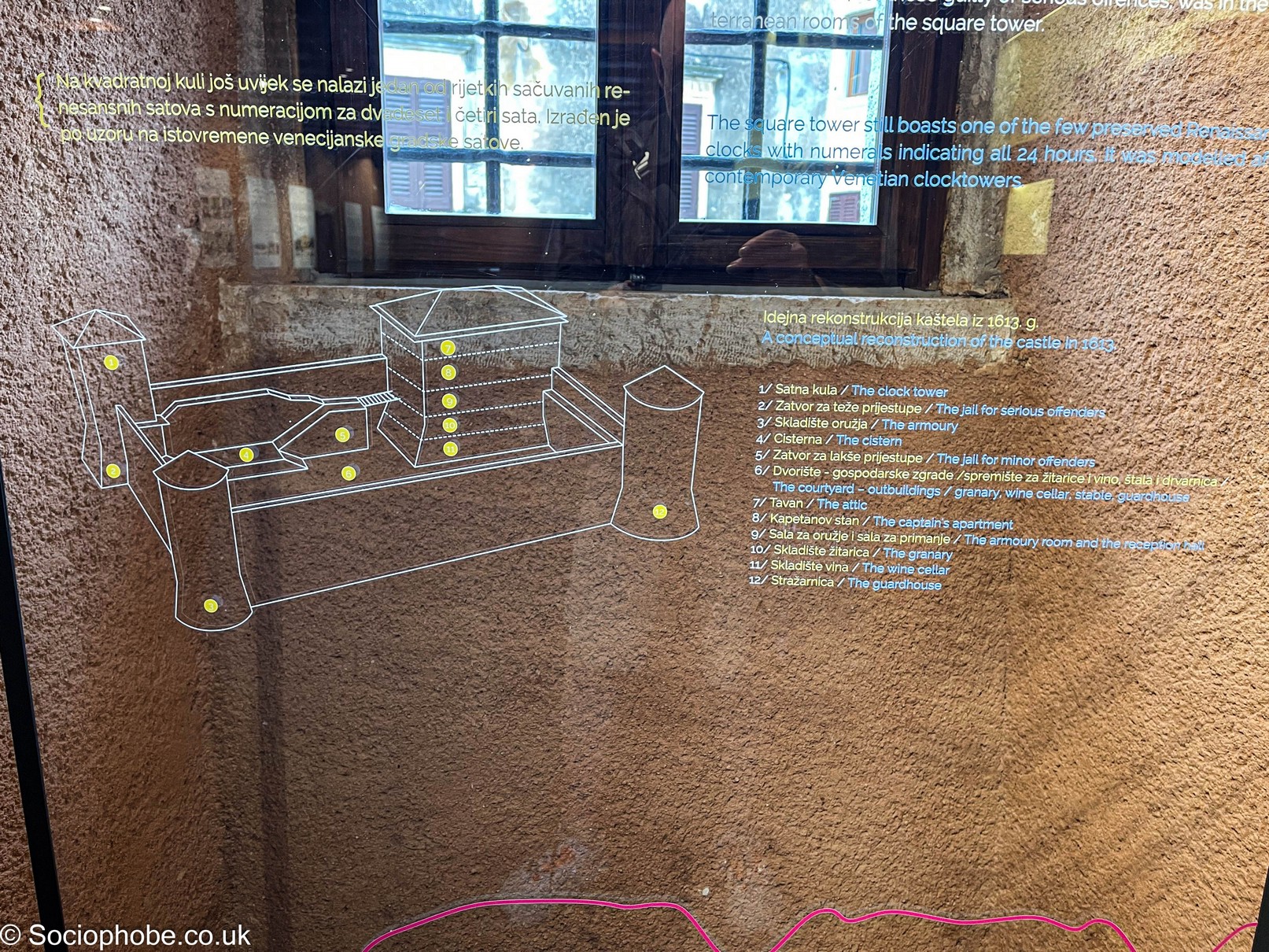
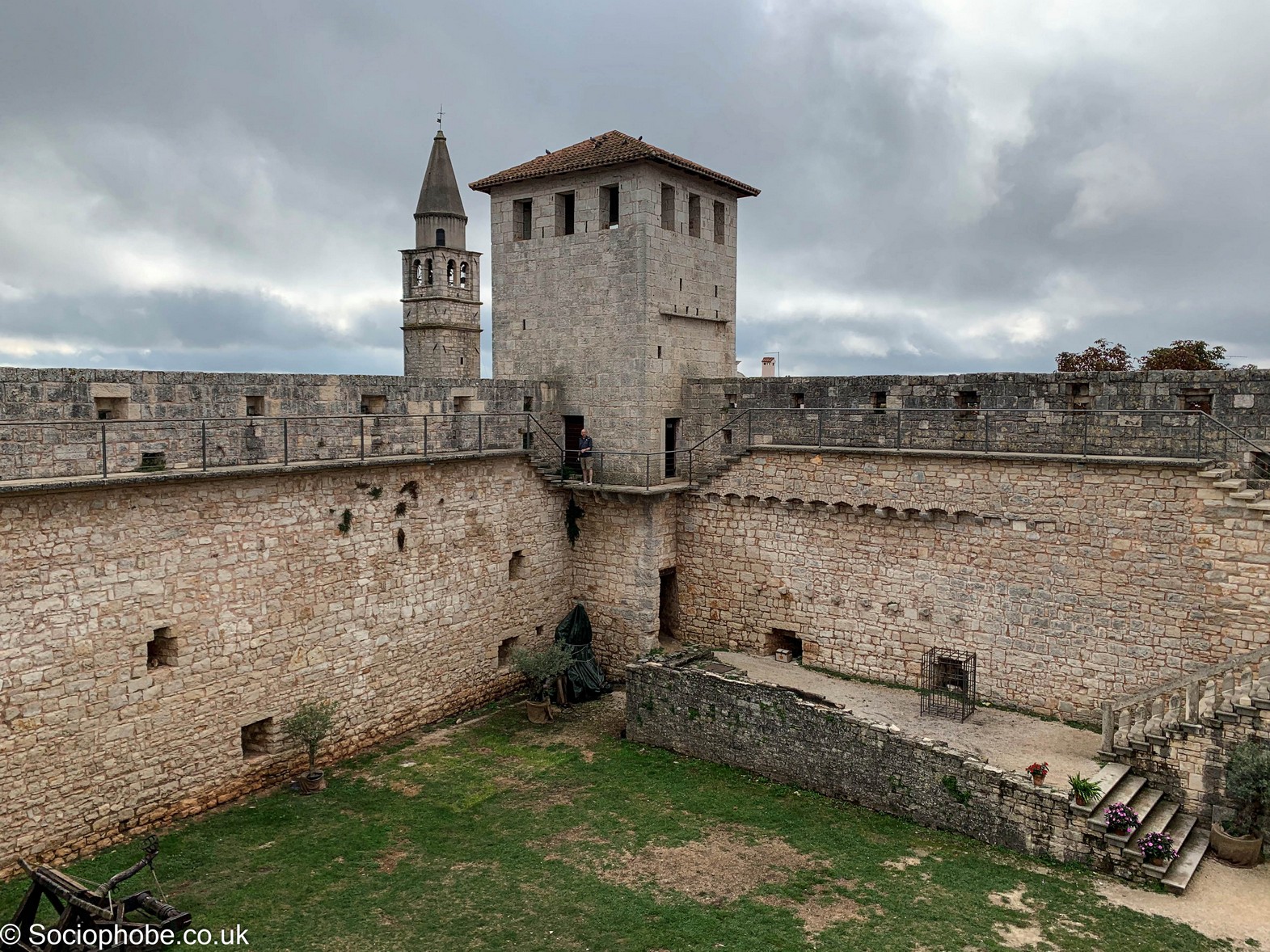
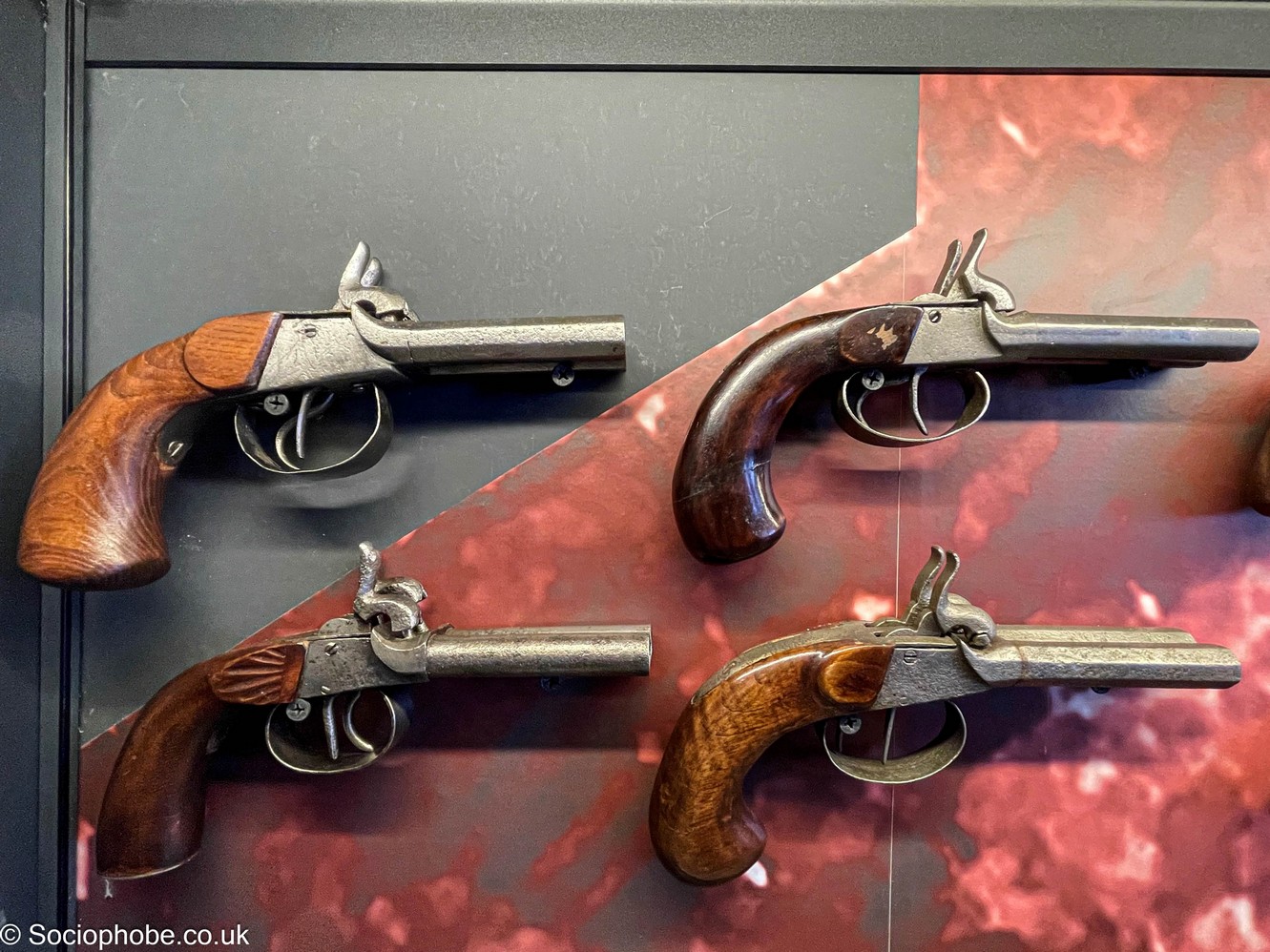
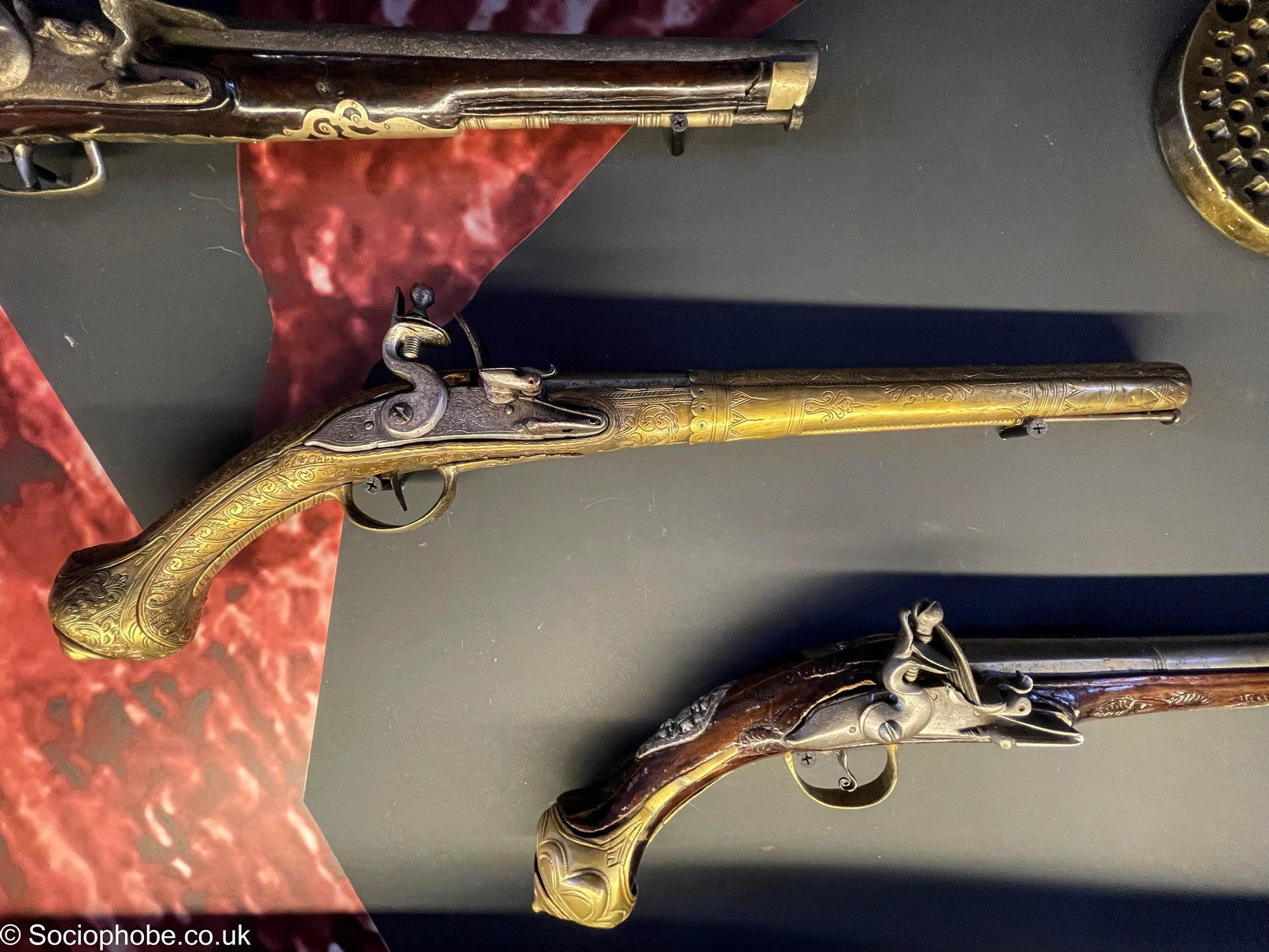
The castle is small so normally it would have taken about 20 minutes to look around before leaving but this one was so well laid out with information boards and activities that we spent a lot longer. The multimedia room had various options and it was fascinating to listen to some of the original correspondence between the Dogaressa, her garrison commander and her chancellor. We could watch the damage to the castle from fire and attacks as well as experience being burned as a heretic. It was also fun forging a sword in time with the Eye of a Tiger soundtrack.
We finished this visit off with a tour of the armoury before going outside to look at where the castle gardens were, now a public park. A really enjoyable visit and I left with a smile on my face.
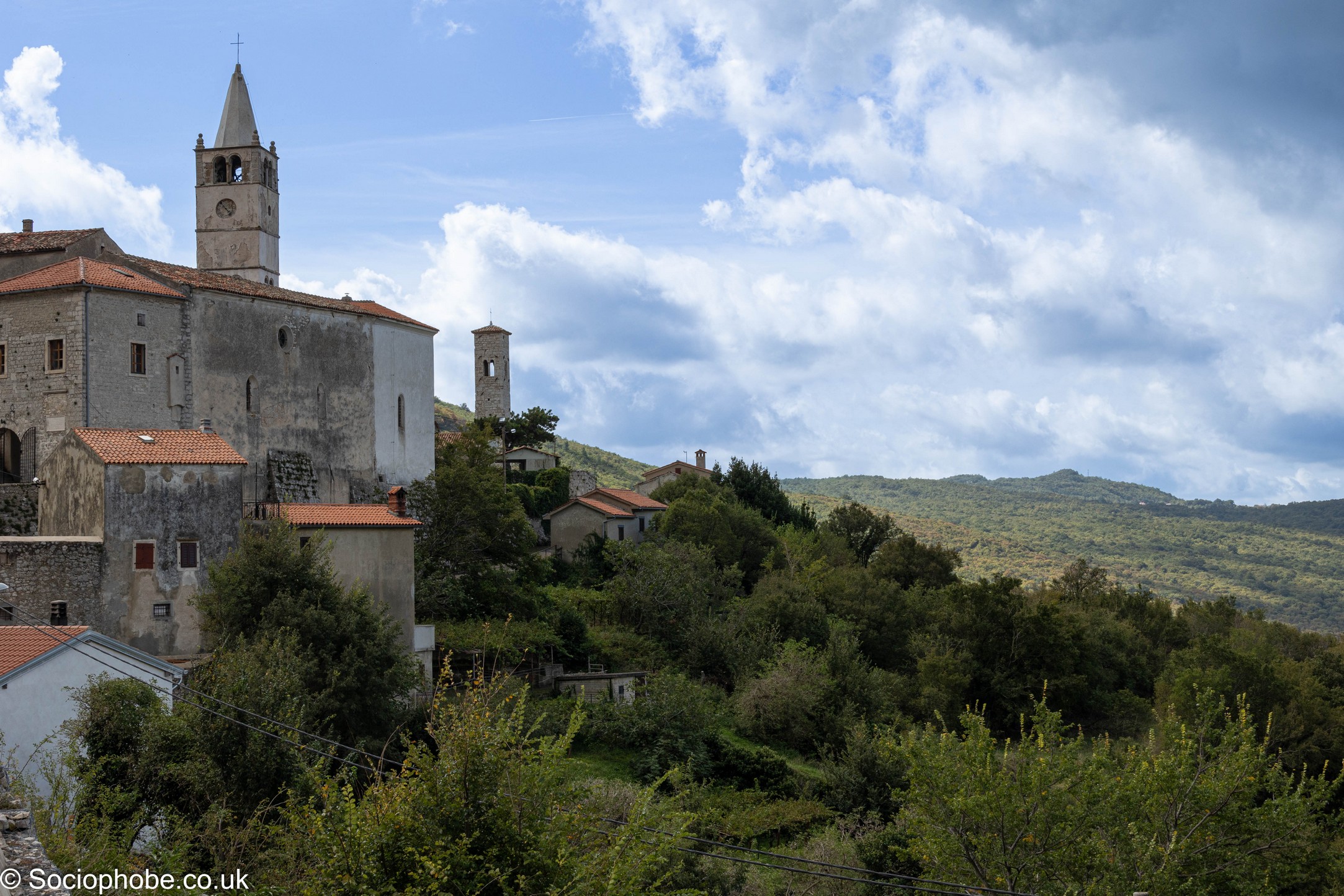
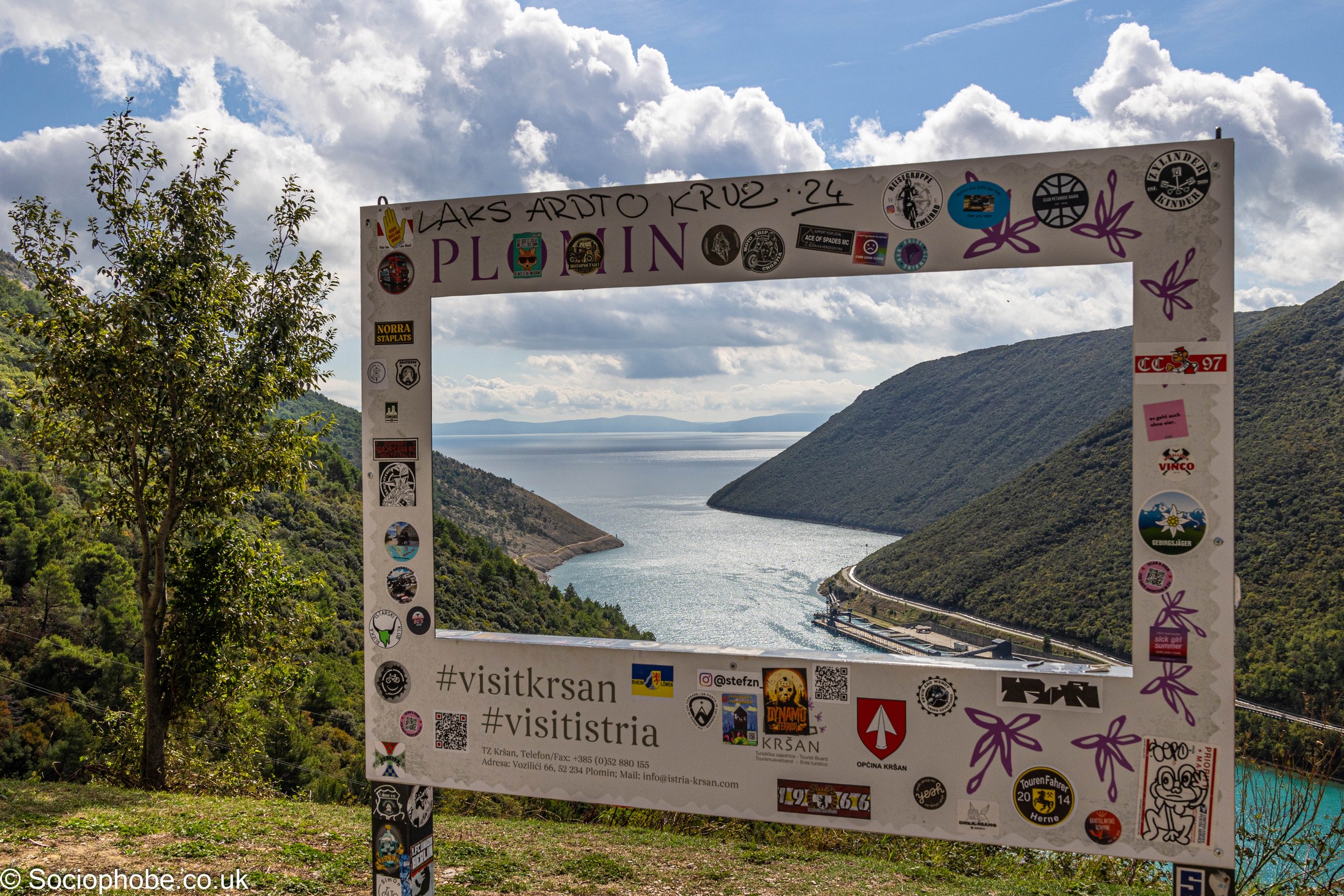
We then continued driving north and east on some very minor roads, enjoying the views at stopping at Plomin to do some photos and at the abandoned Hotel Flanona on the coast for more photo opportunities.
From there we followed the coastline through various towns that merged into one before arriving at our hotel in Lovran, cunningly called the Lovran Hotel. The hotel is an early 20th century building (I think) with the style of the belle epoch and our spacious room had wonderful high ceilings and tall windows with a balcony overlooking the bay.
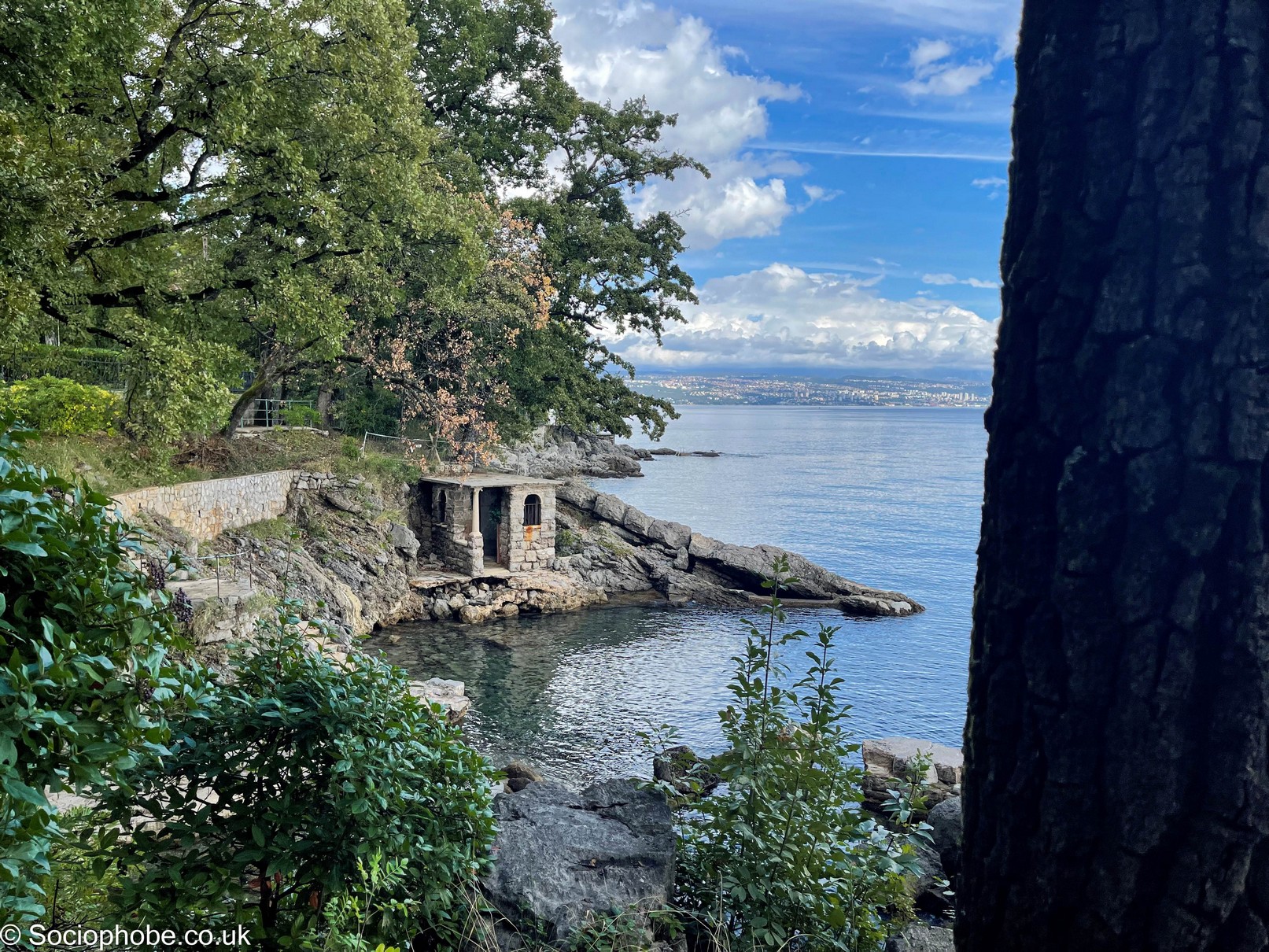
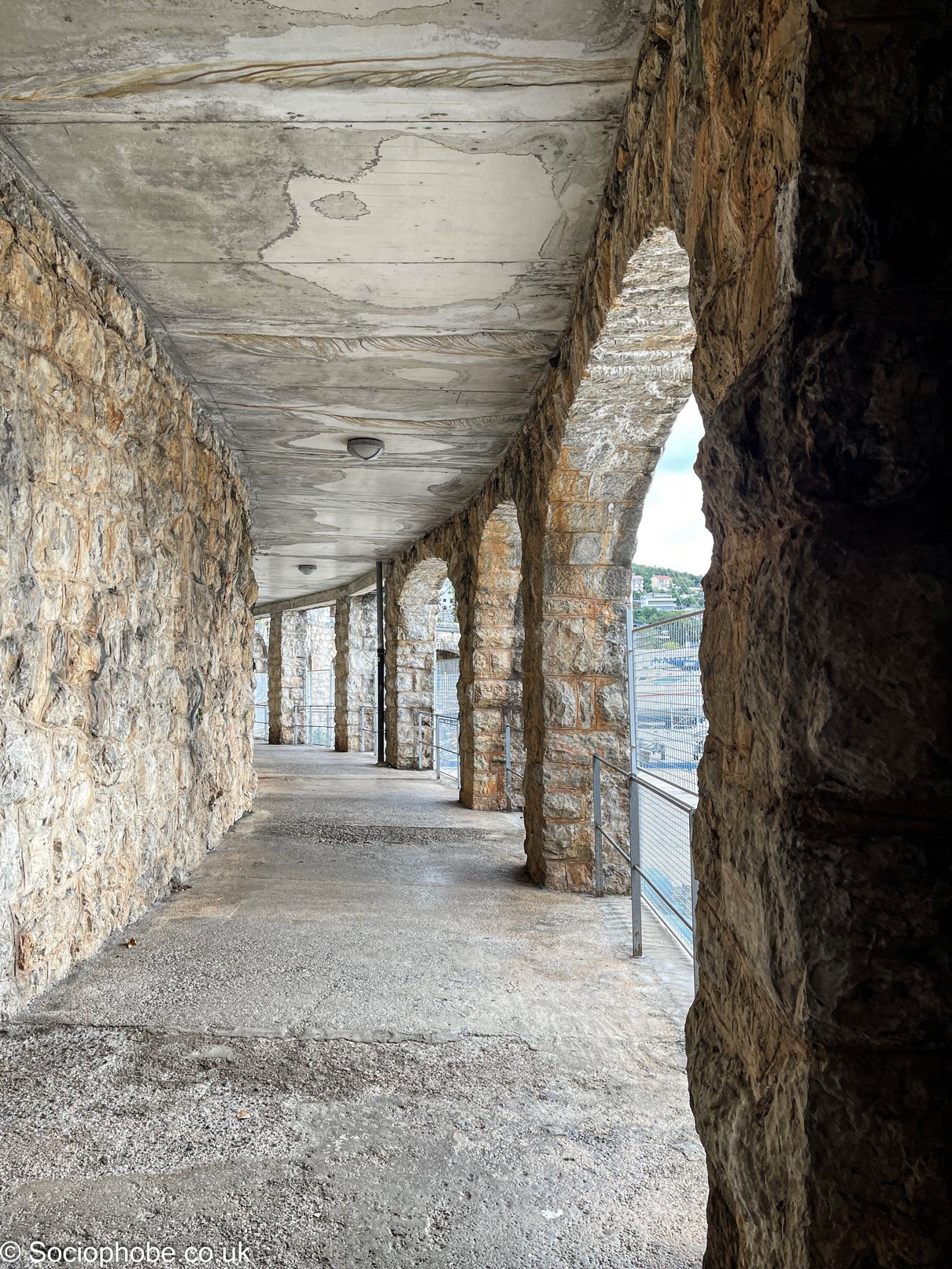
We dumped our stuff and chilled for a bit before leaving to get some lunch. We walked about a mile along the coastal promenade, the Lungomare, before choosing a café for a quick lunch. Deb headed back to the hotel and I walked along the promenade which extends for about 12km, allowing you to walk from Lovran to Preluk following the coast and with no cyclists or cars to intrude. The path is beautifully done with styled lamps, benches and viewpoints along its length as well as steps into the sea or onto little beaches. I got about half way before turning back but it would be an easy afternoon walk to do the whole thing. The weather was sticky hot but very dull for photography with almost no blue sky!
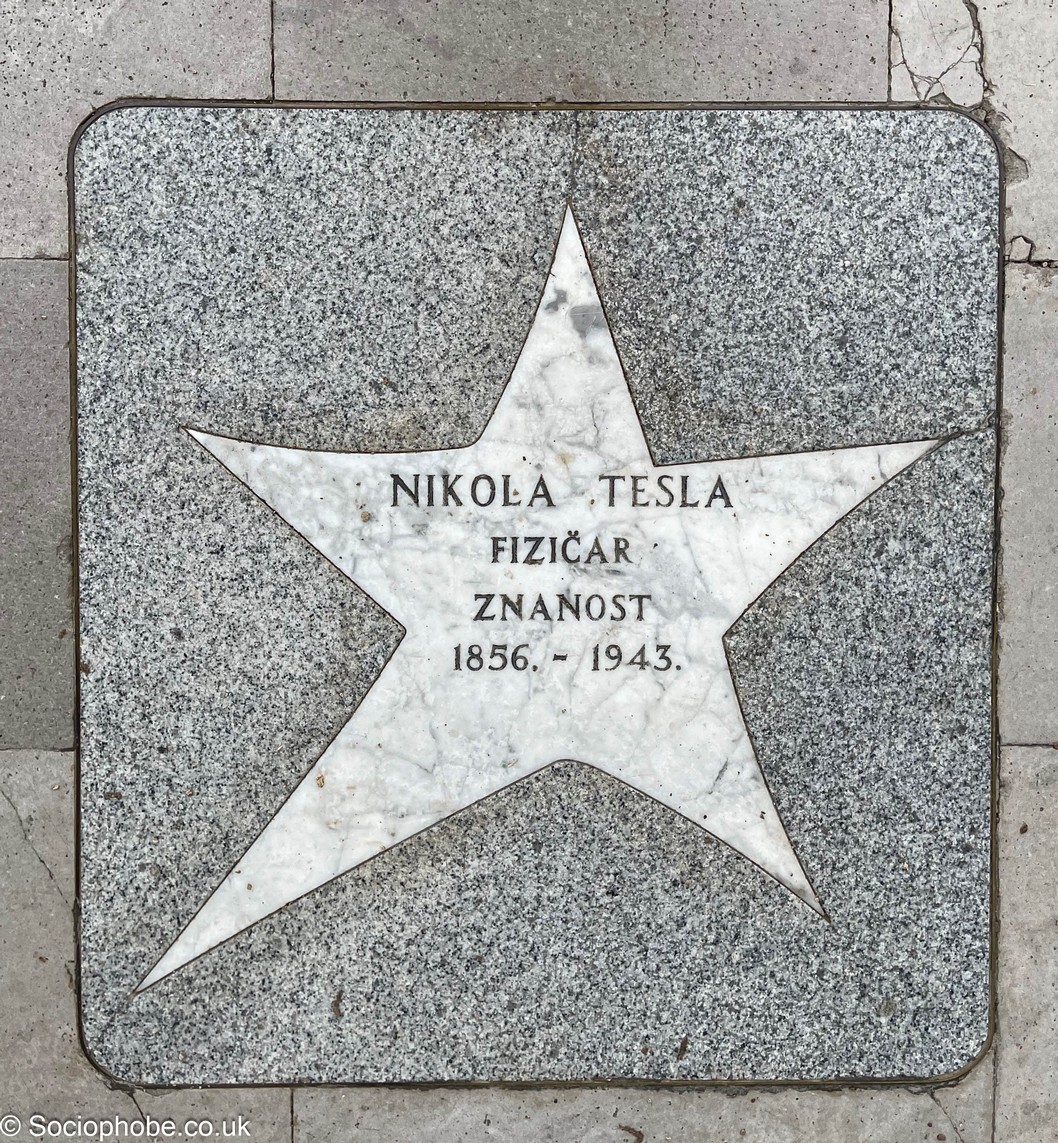
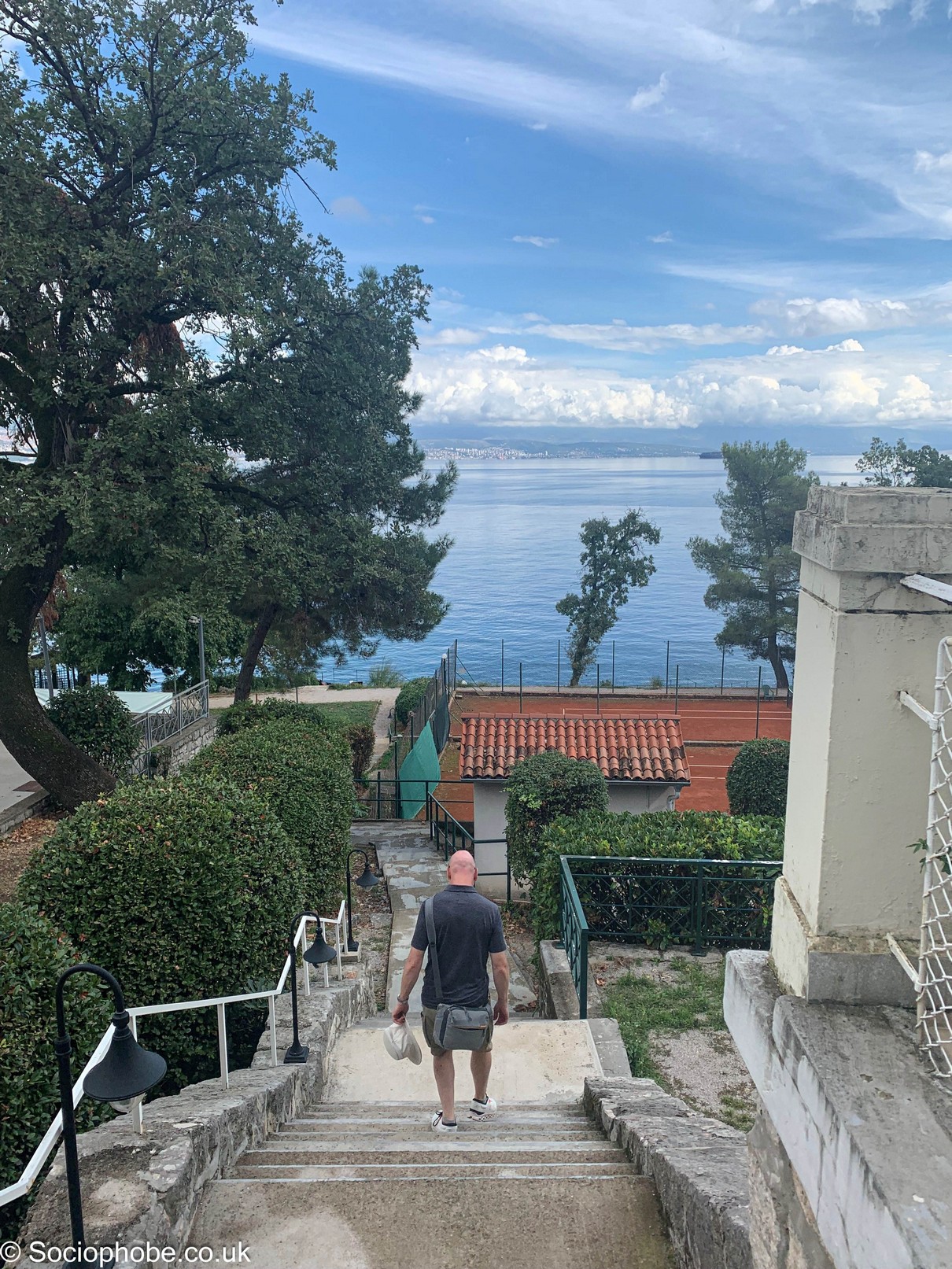
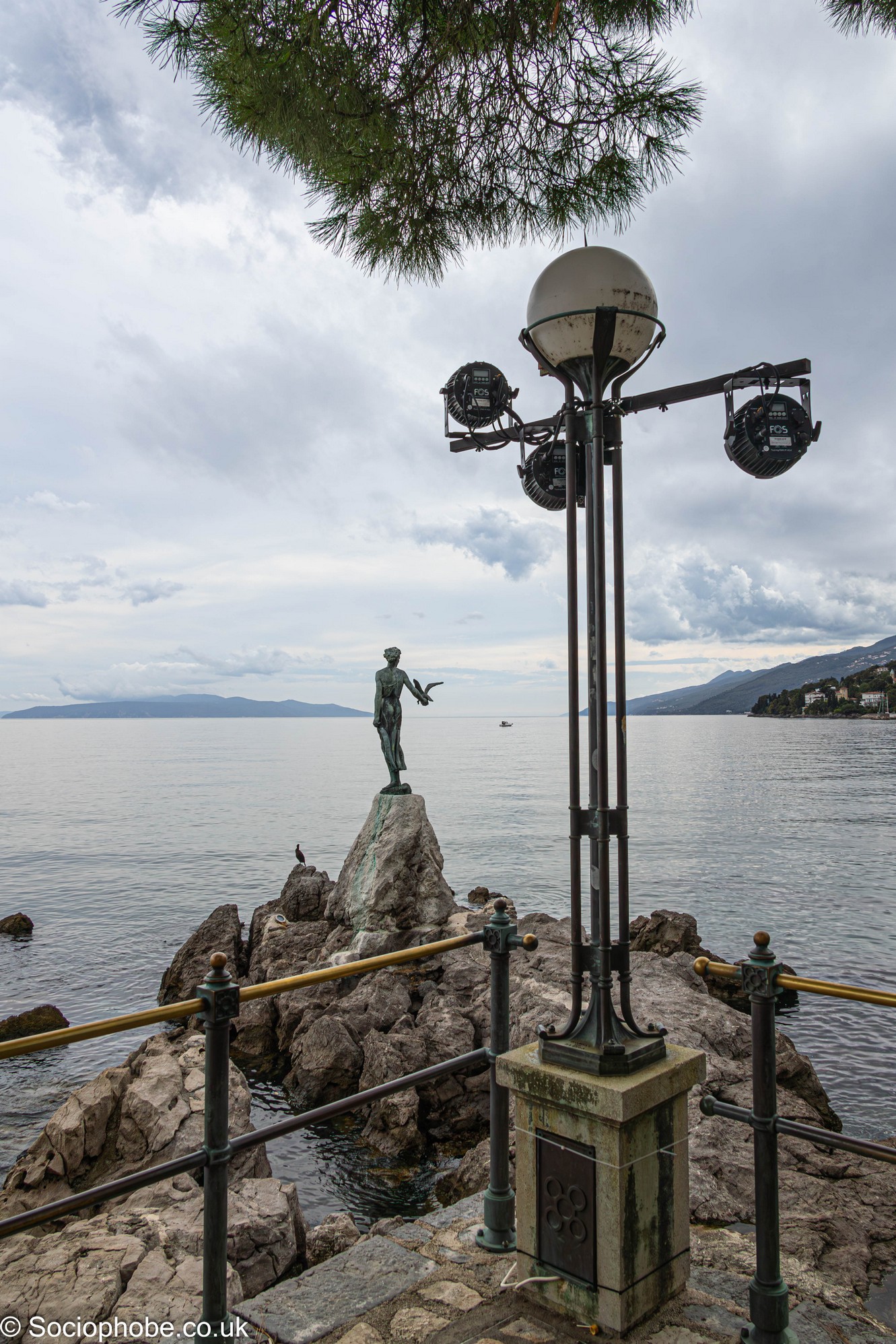
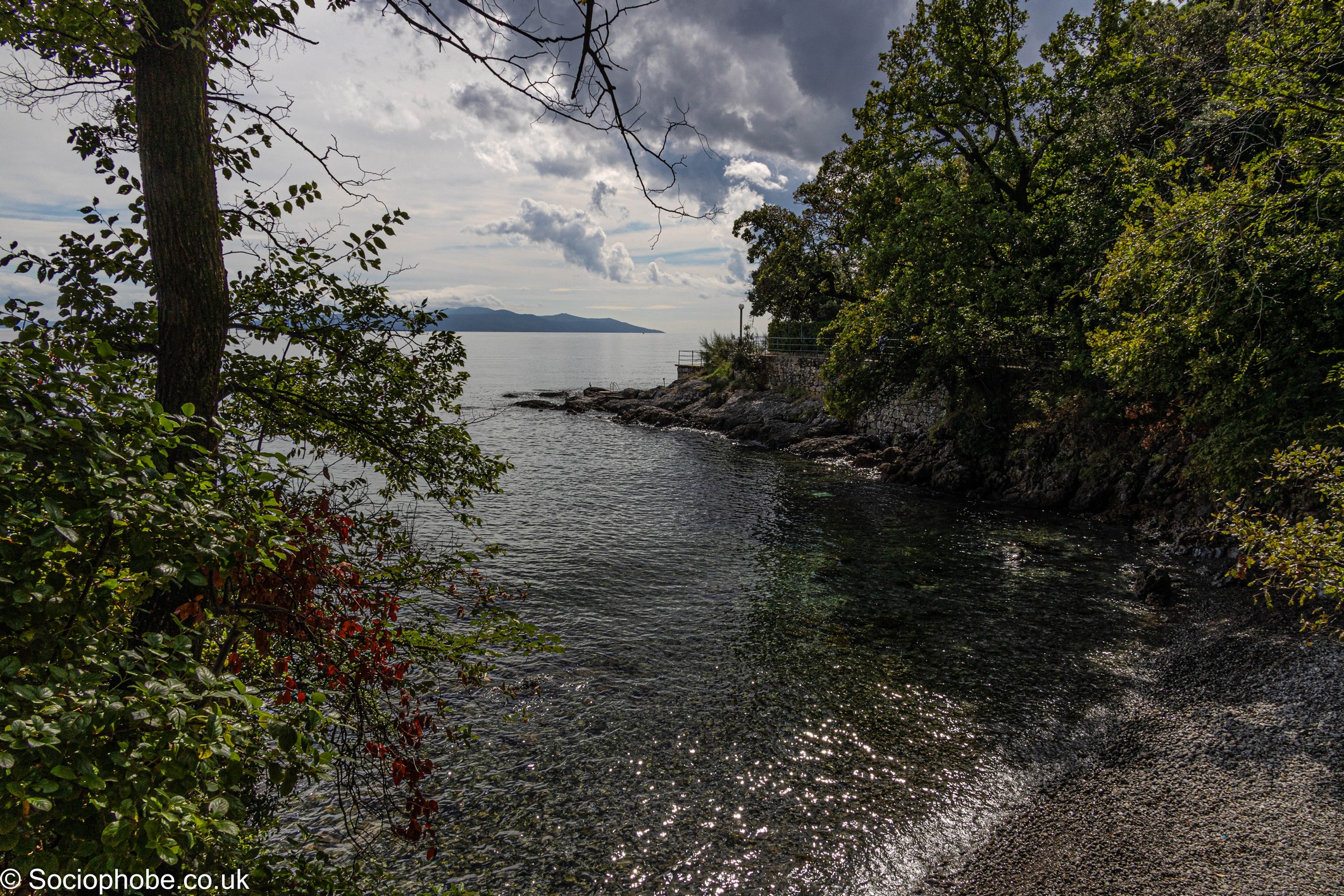
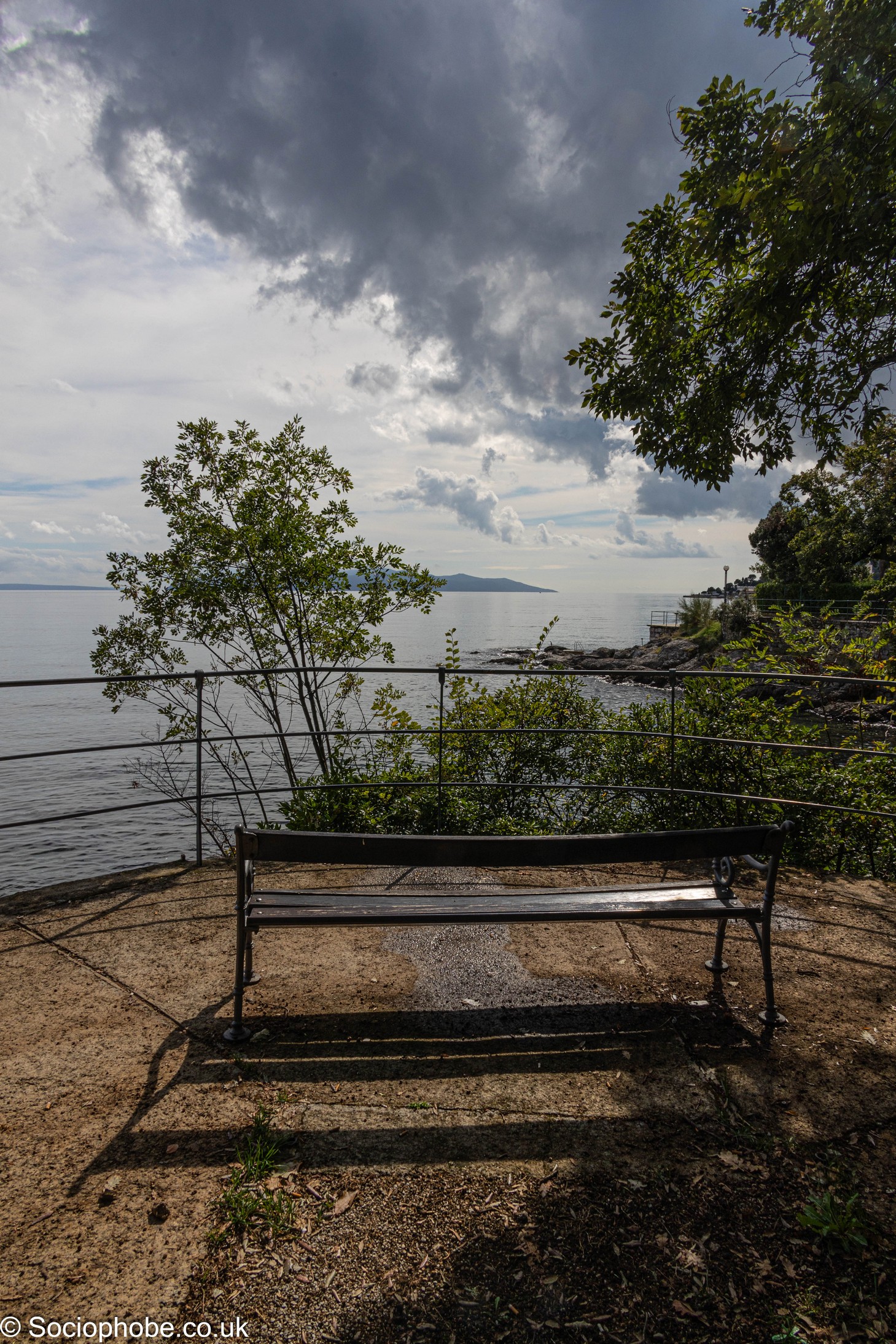
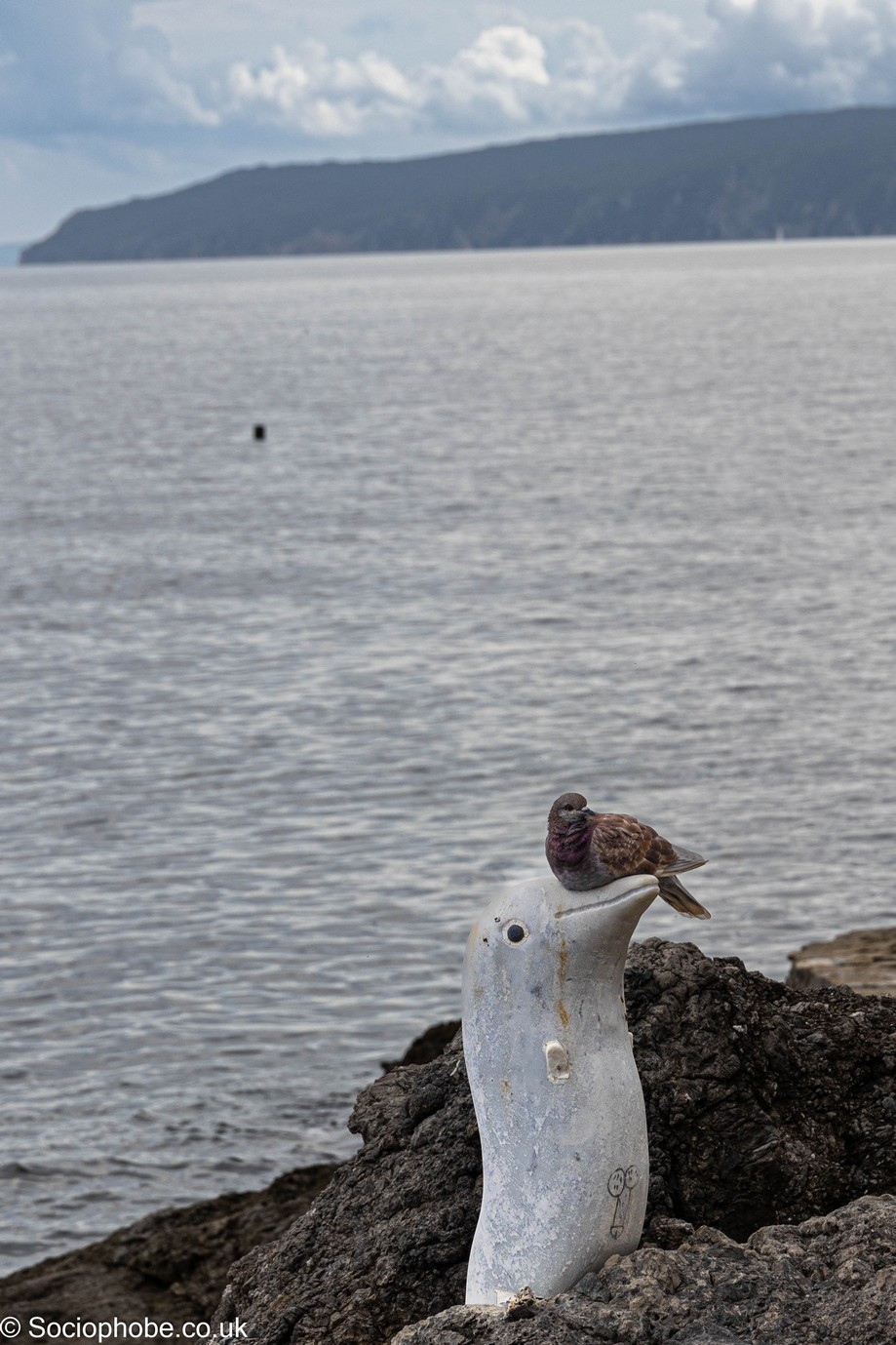
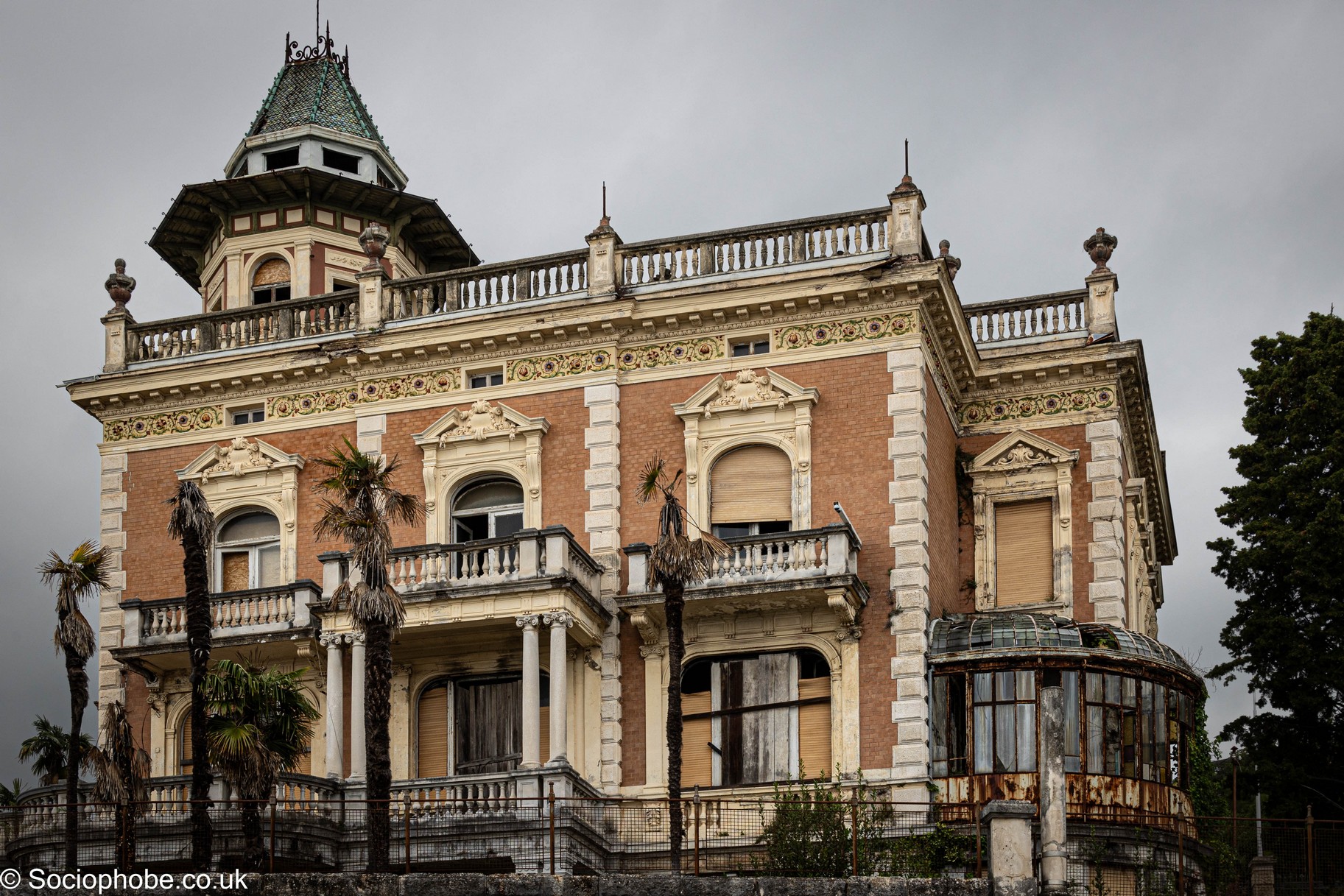
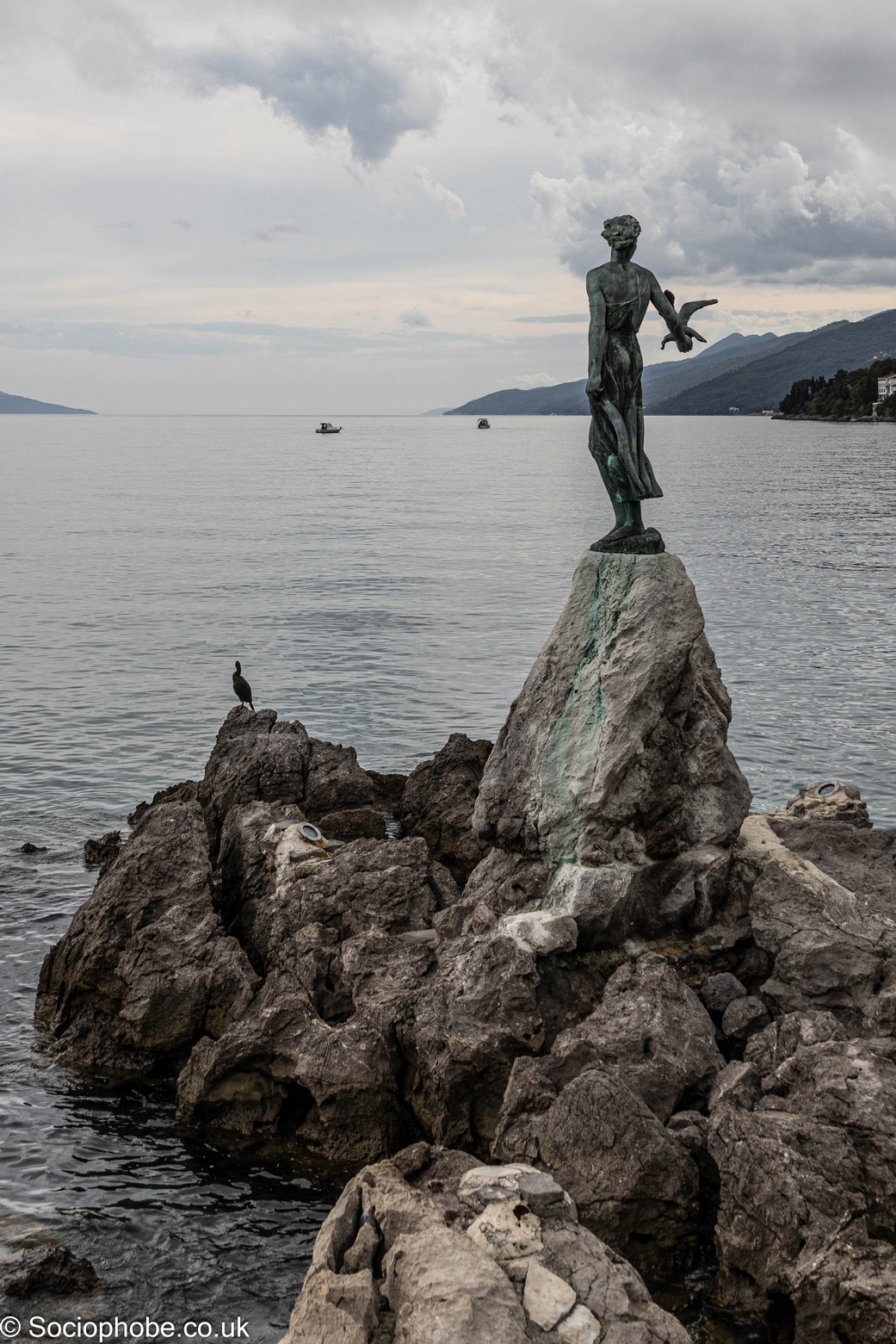
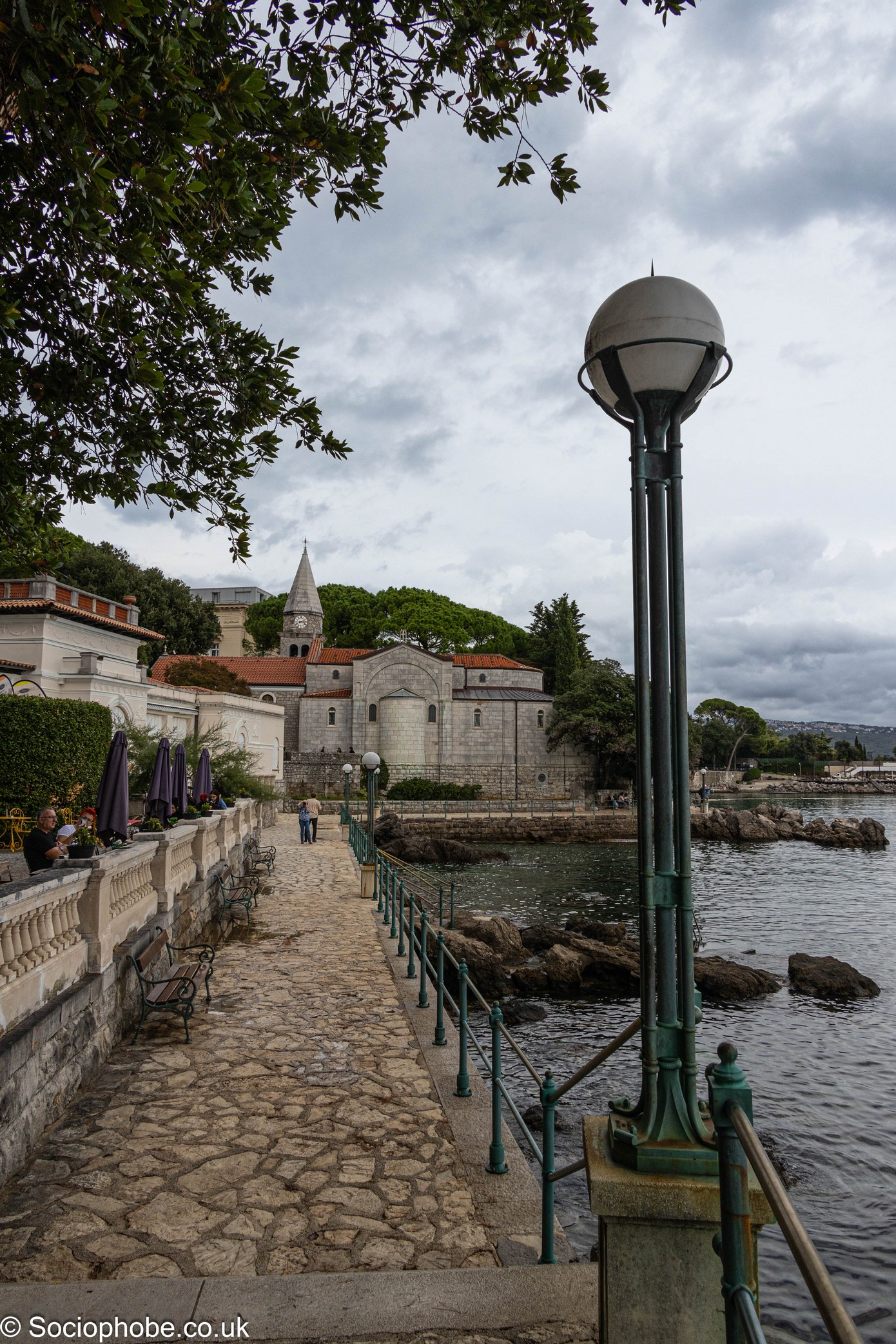
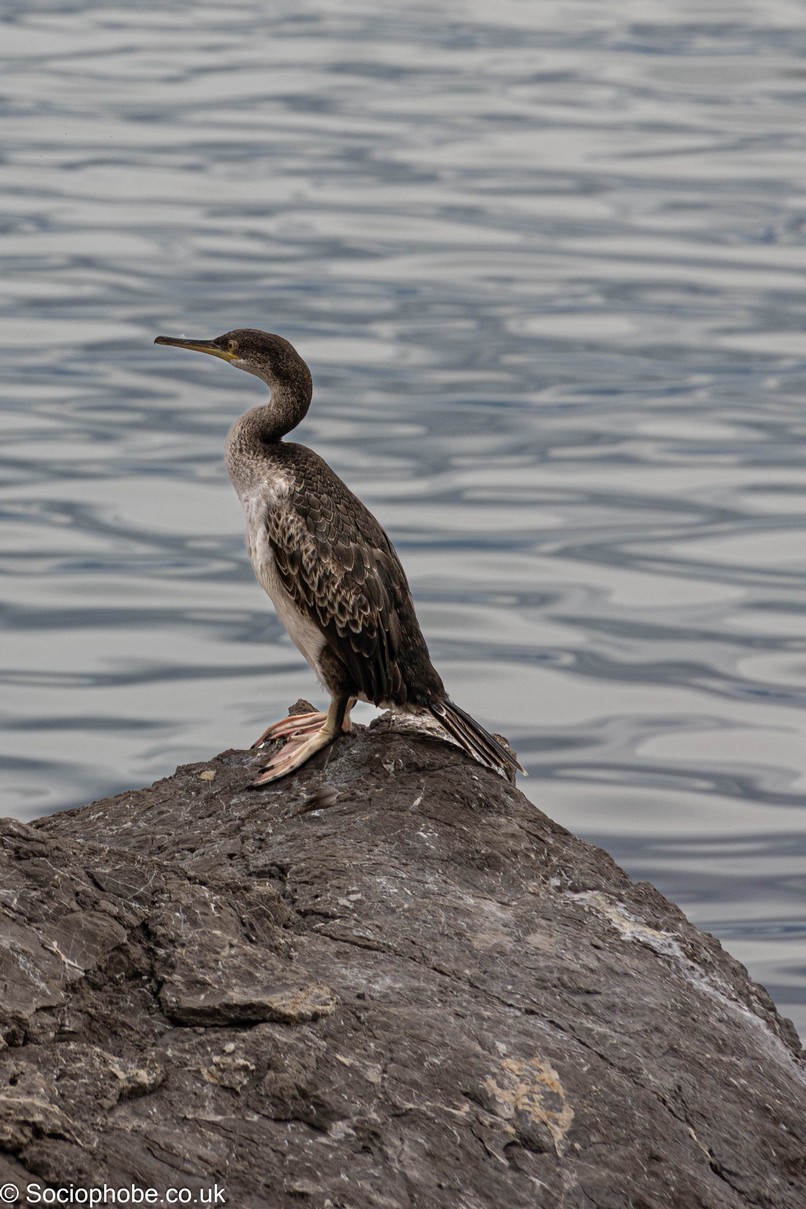
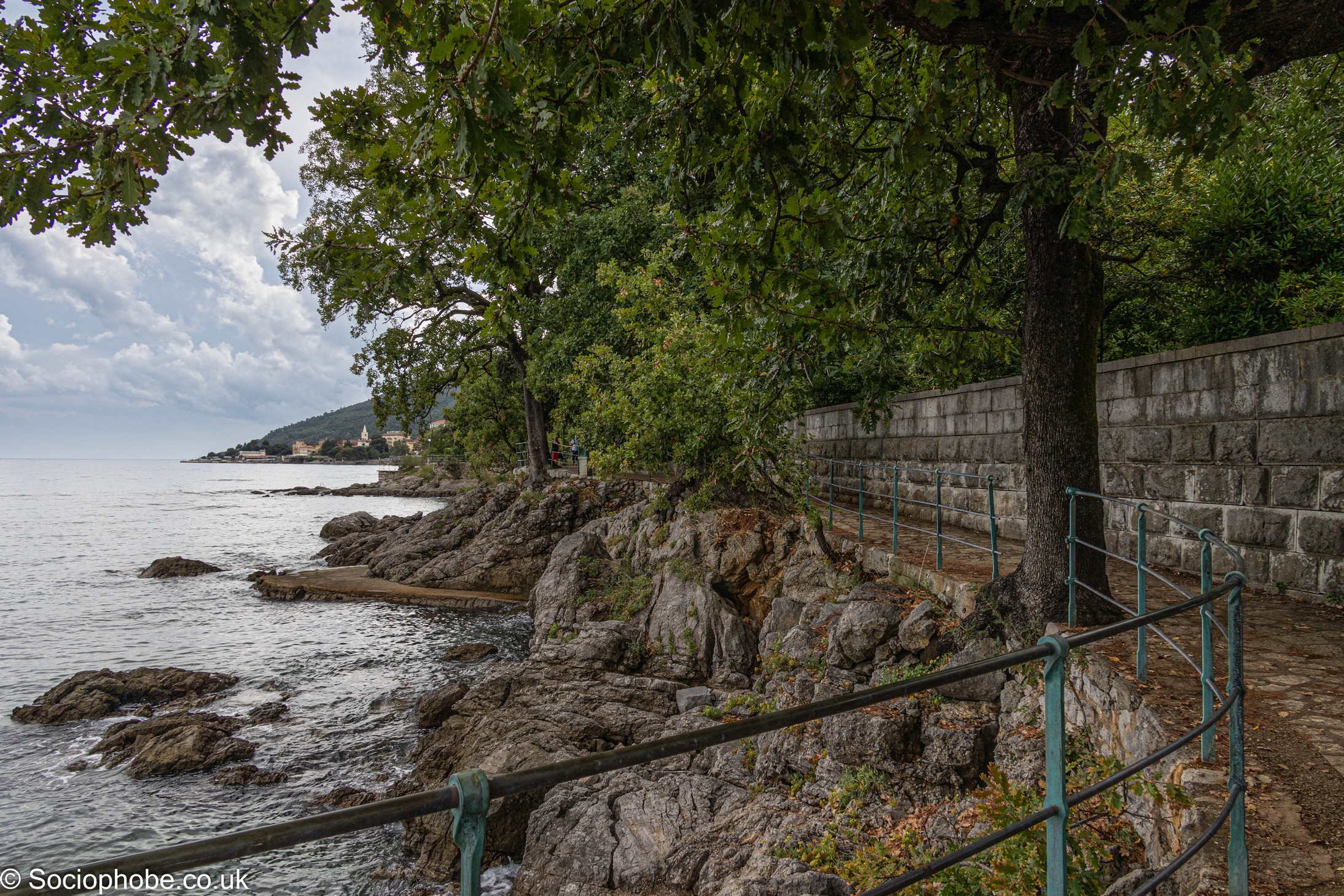
Back at the hotel I had a most welcome shower before we went out for dinner. This was a quick affair but very nice food and more vegetables again, lovely. An early night for us!
Wednesday – Ferrara – Italy
I had a really bad sleep, lots of mosquito bites (including the soles of my feet, how?!) and woke with a headache. Our breakfast at the hotel was wonderful, both the quality of food, the number of options available and the location, sat on a terrace overlooking the bay. It was a fantastic start to the day especially with a very jolly and multilingual waiter.
After breakfast we packed for the long (4.5 hours) drive into Italy. I had intended we’d stop at a palace garden on the way but we left later than expected and it took a lot longer to reach Italy due to the non trunk roads through Croatia, no tolls though. The driving was quite tedious and it was lucky we were able to listen to our audiobook, The Little Coffeeshop of Kabul.
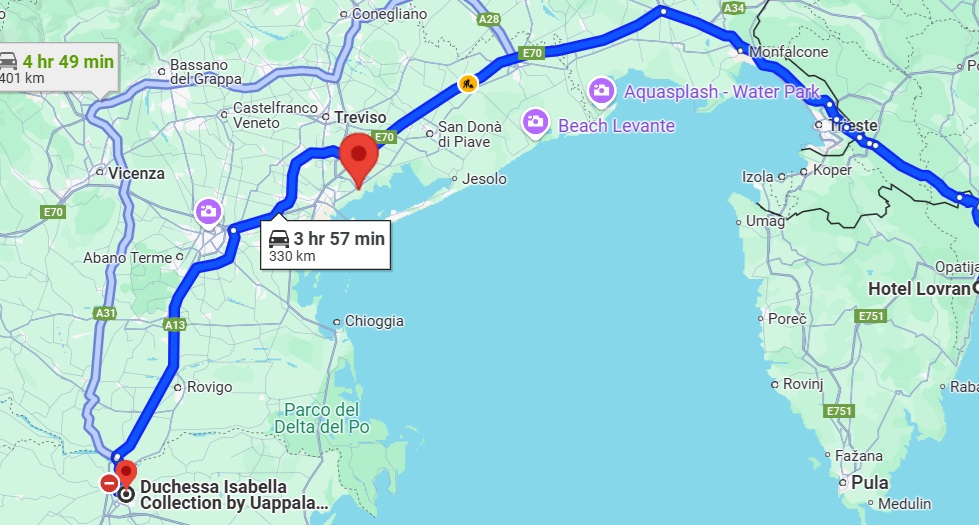
We finally got to Ferrara, navigating a maze of one way streets but mostly on a grid pattern and eventually finding the hotel. The Duchessa Isabella Hotel was an old palace and somewhat faded but we had a nice room although there were more damned mosquitos and the wifi was useless.
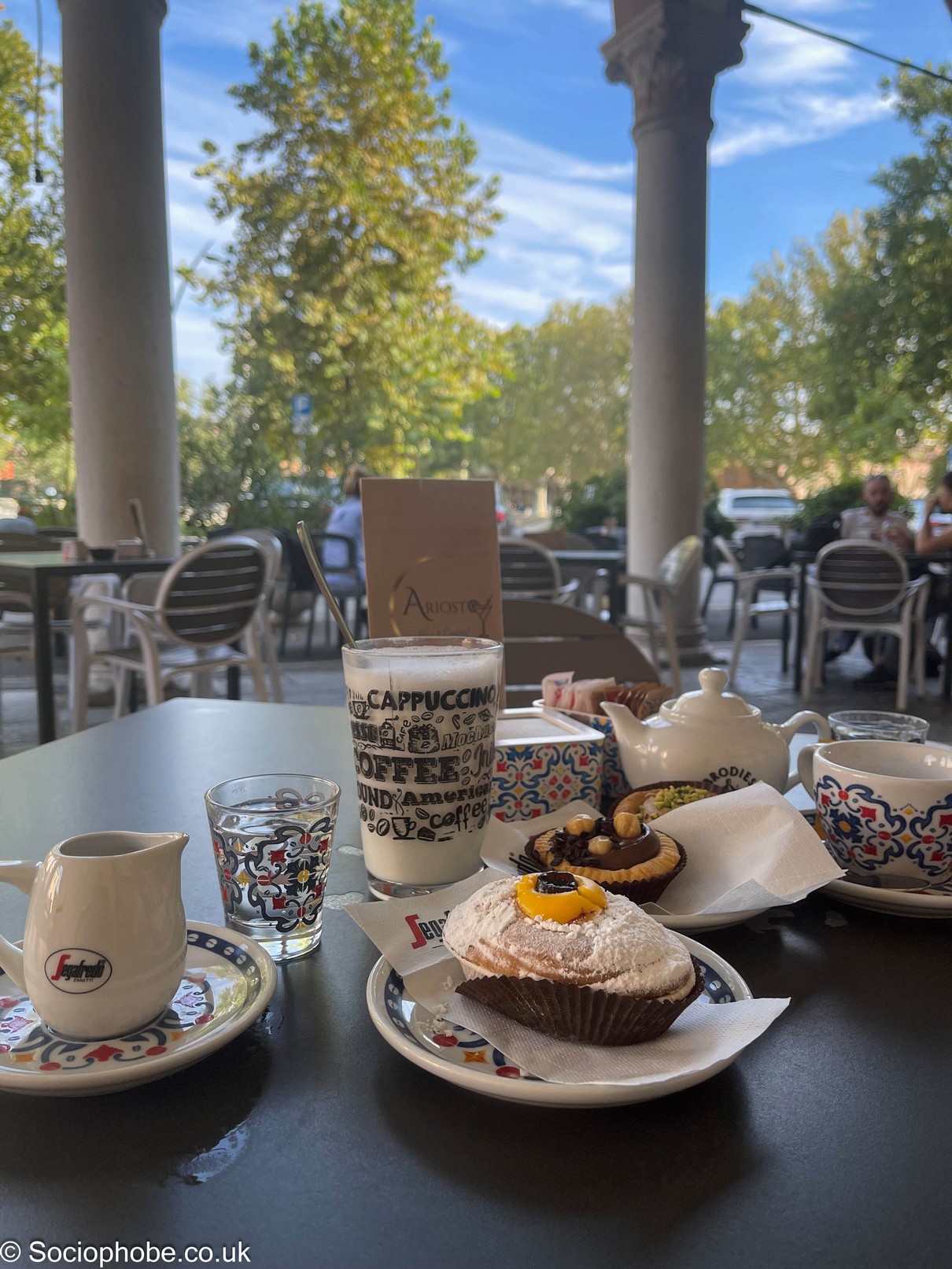
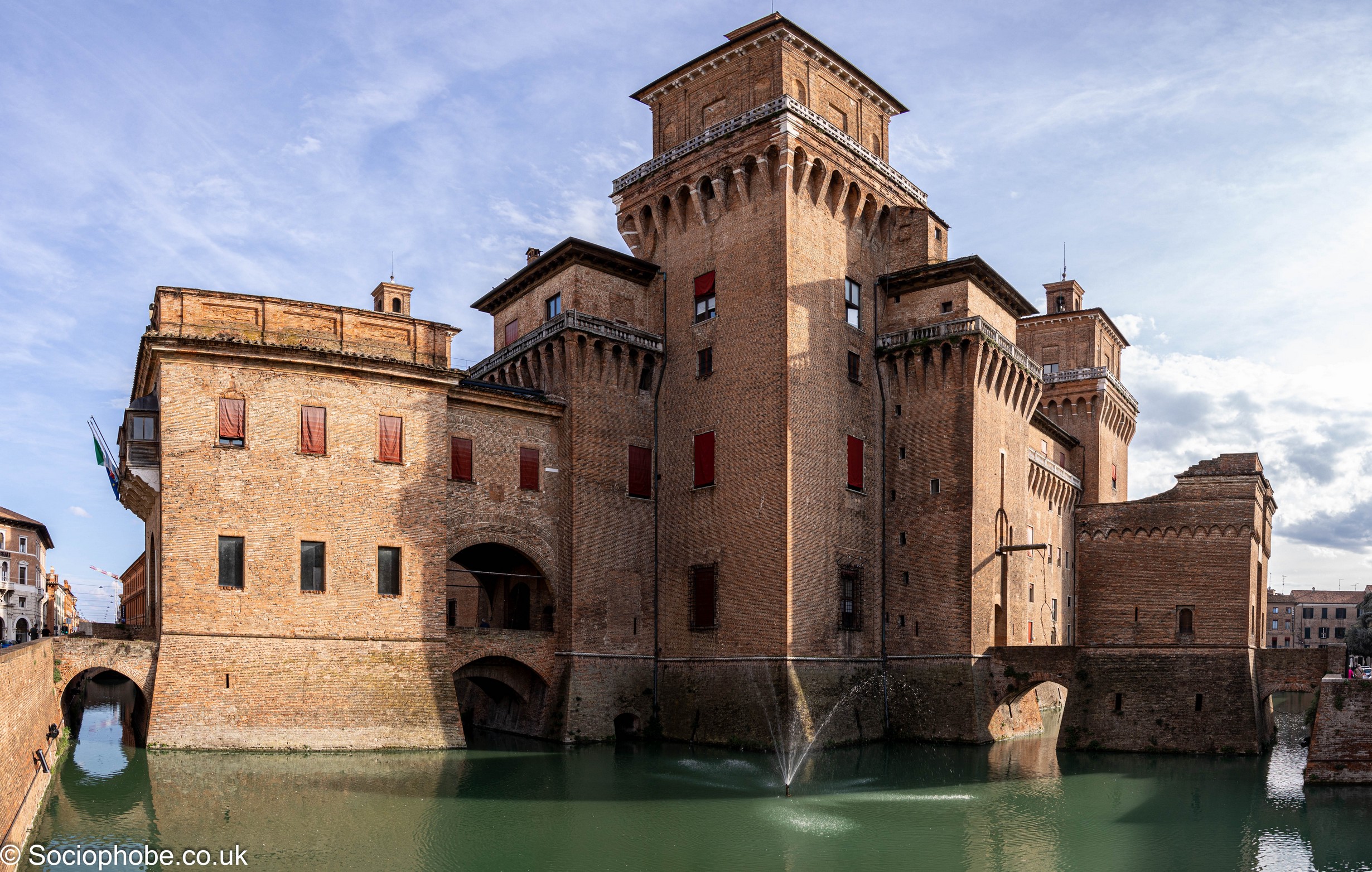
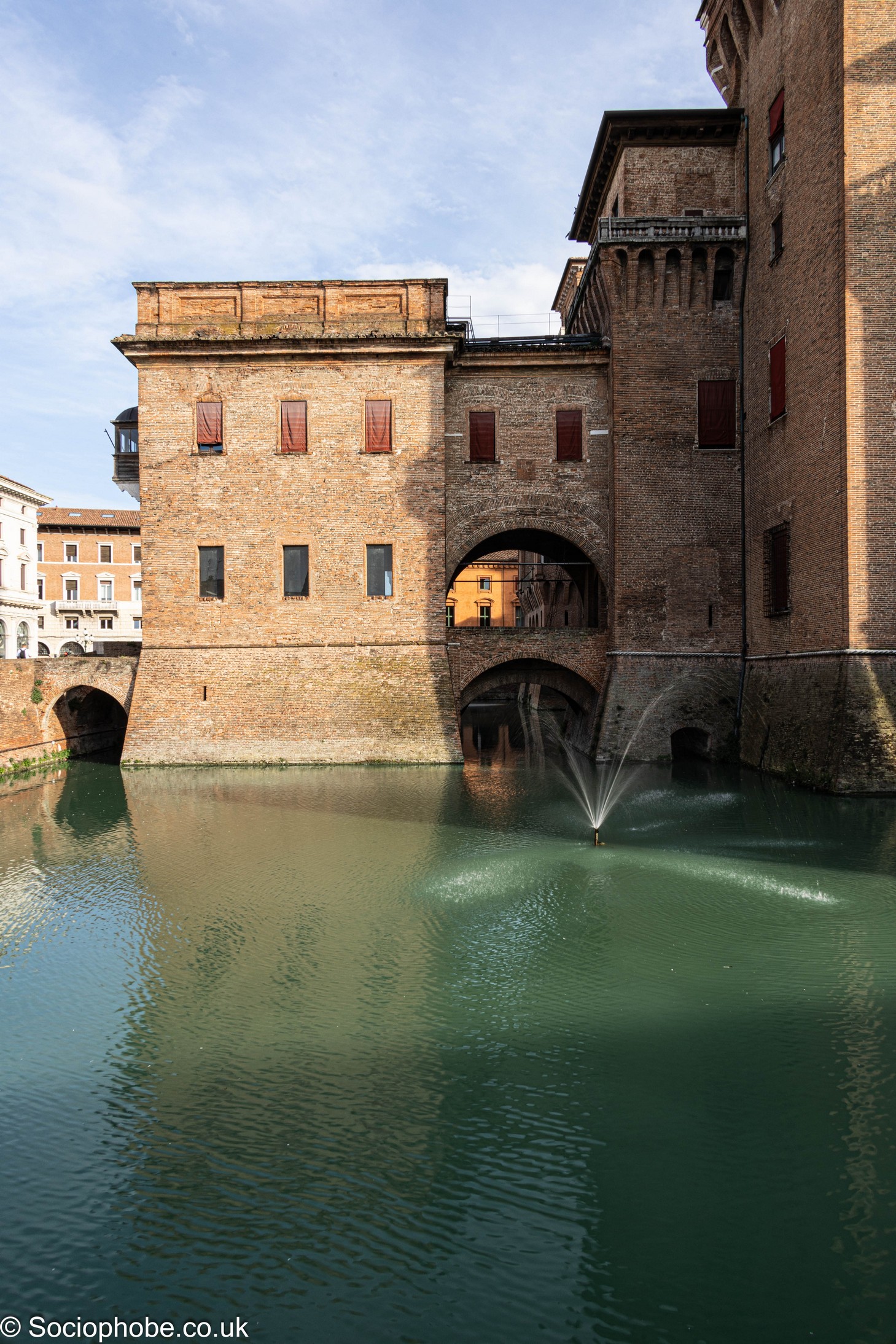
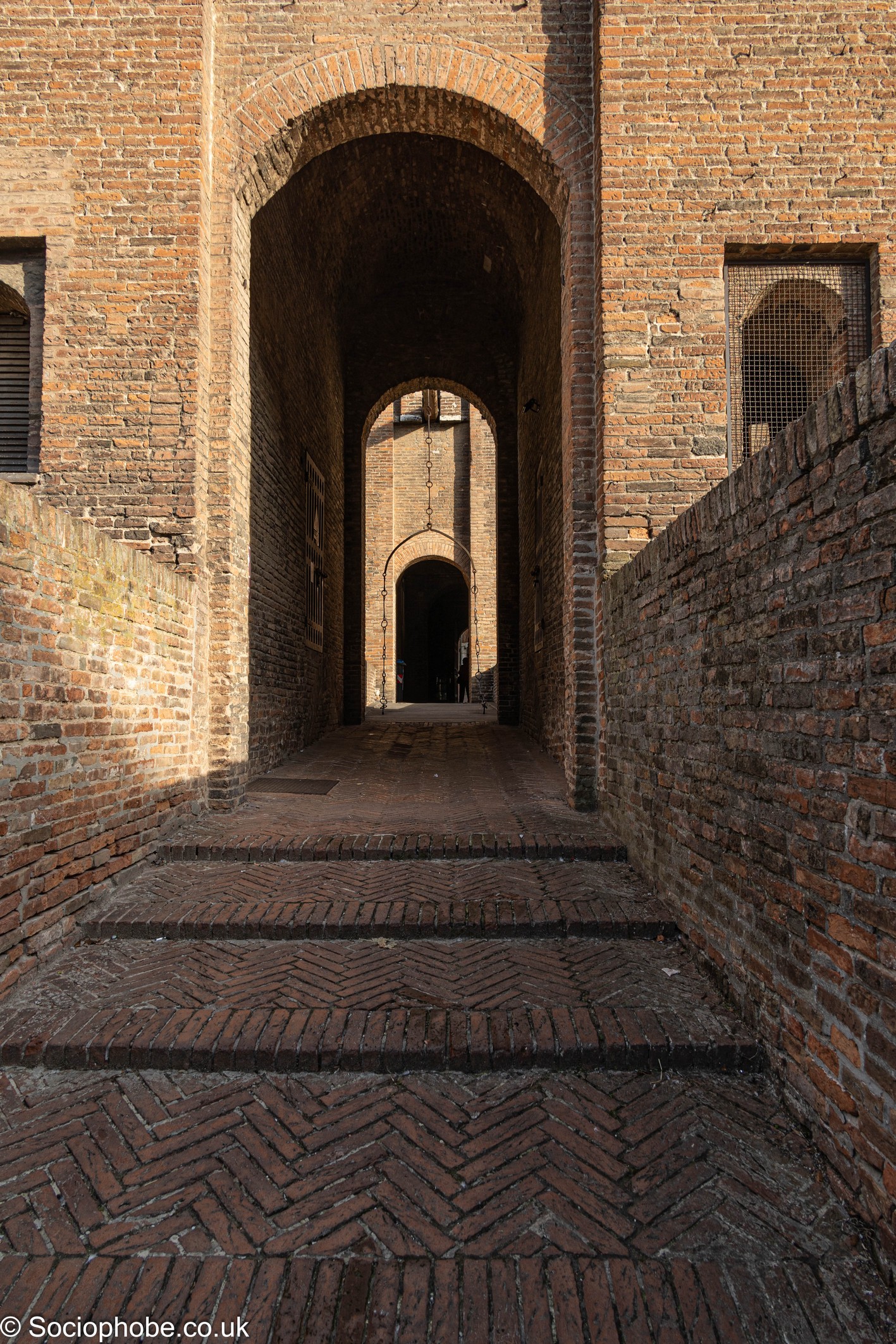
We went for a wander to explore the area nearby and then stopped for cakes at one of the colonnaded cafes before waking past some beautiful architecture on every street and eventually arriving at the castle. How fortuitous! We did a circuit of that and Deb was very excited that we’ll be visiting it properly tomorrow!
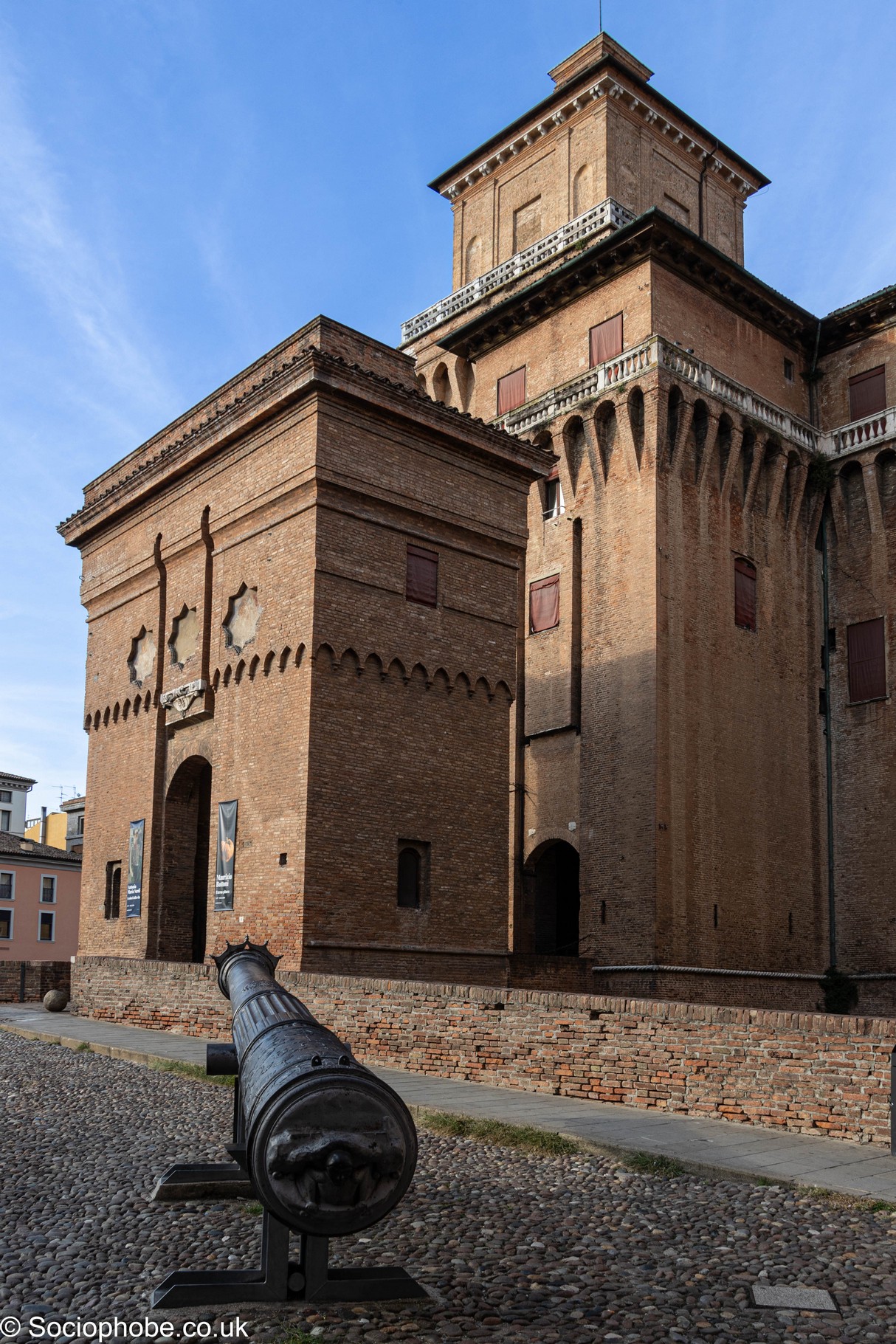

We then meandered back to our hotel to chill for a while before dinner. Our exploration of places to dine in Ferrara lasted about 30 seconds as we crossed the road to look at a restaurant, Manifattura Alimentare, and Deb was bowled over by the choices and enthusiasm of the proprietors. We sat outside and had a fantastic meal of beautifully cooked food paired with some delicious local wines. We then followed up with a meringue and a coconut cheesecake. Delicious.
Thursday – Ferrara – Italy
Another bad nights sleep due to mosquito bites, entirely our fault for not being prepared but frustrating nonetheless. I got up around 7 and went for a wander around the castle and cathedral and the statue of Savonarola, burner of books and art so not high on my good guy list. The weather was sunny and already warm and surprisingly busy but I managed to dodge all the cyclists and enjoy the architecture. It really is a beautiful city although there seem to be so many magnificent buildings that are empty and falling in to disrepair. Although there are lots of cyclists they are not the lycra clad twats that pervade the UK, they are very relaxed, on sit up bikes and usually on their phones.

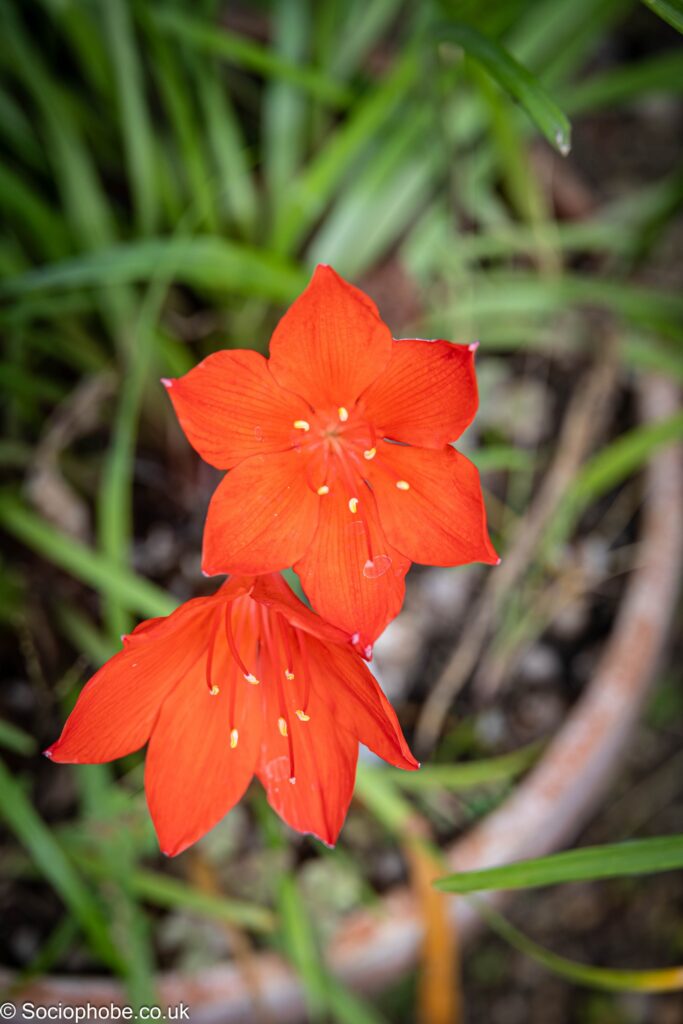
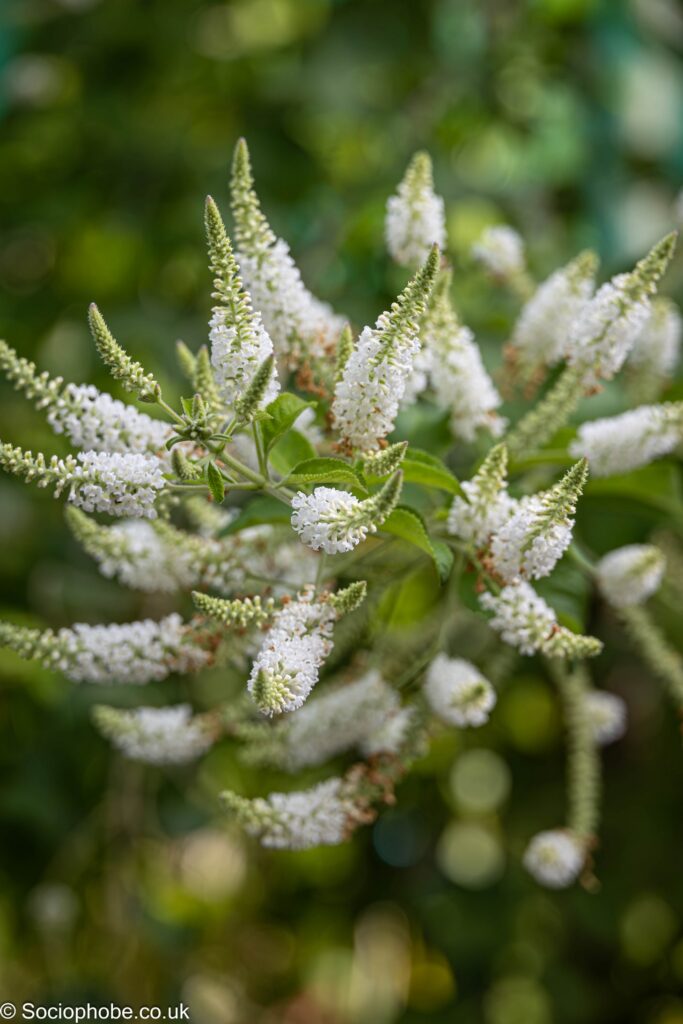
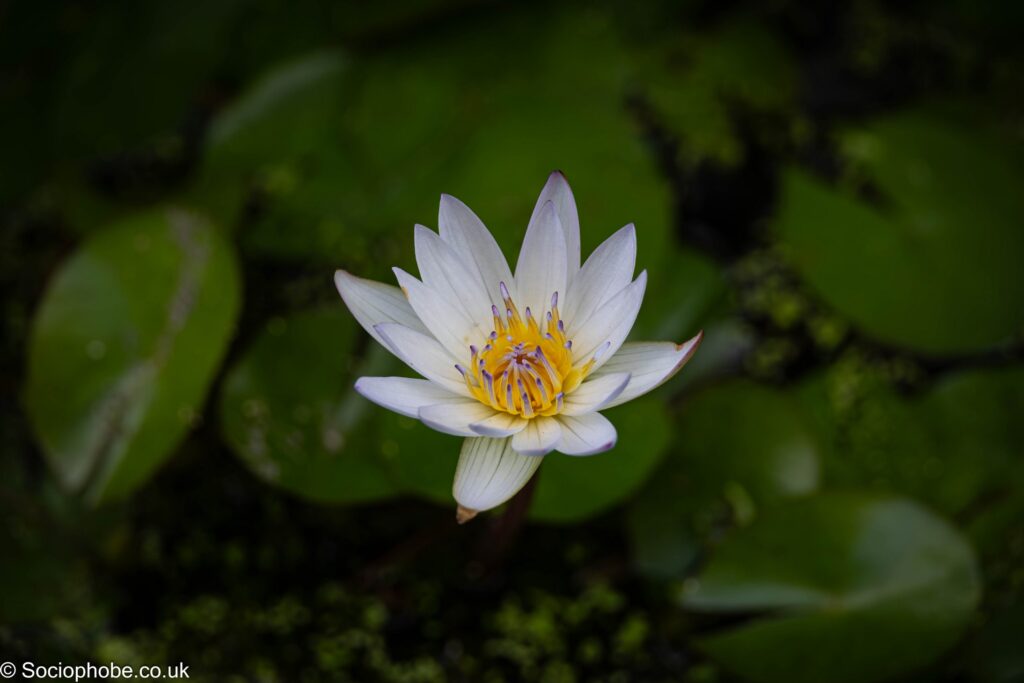
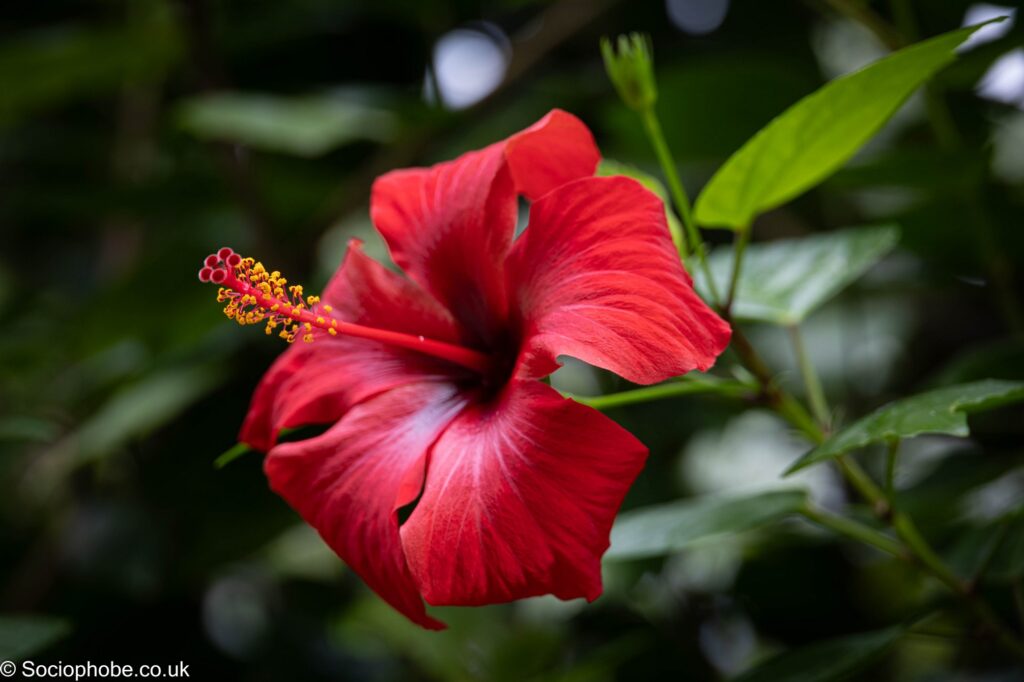
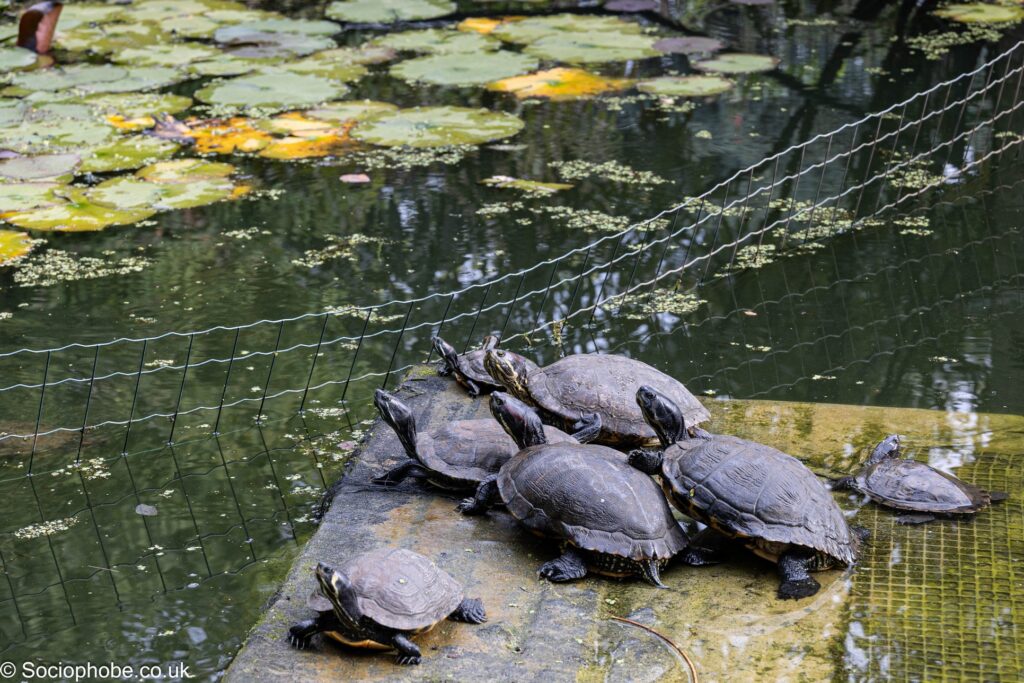
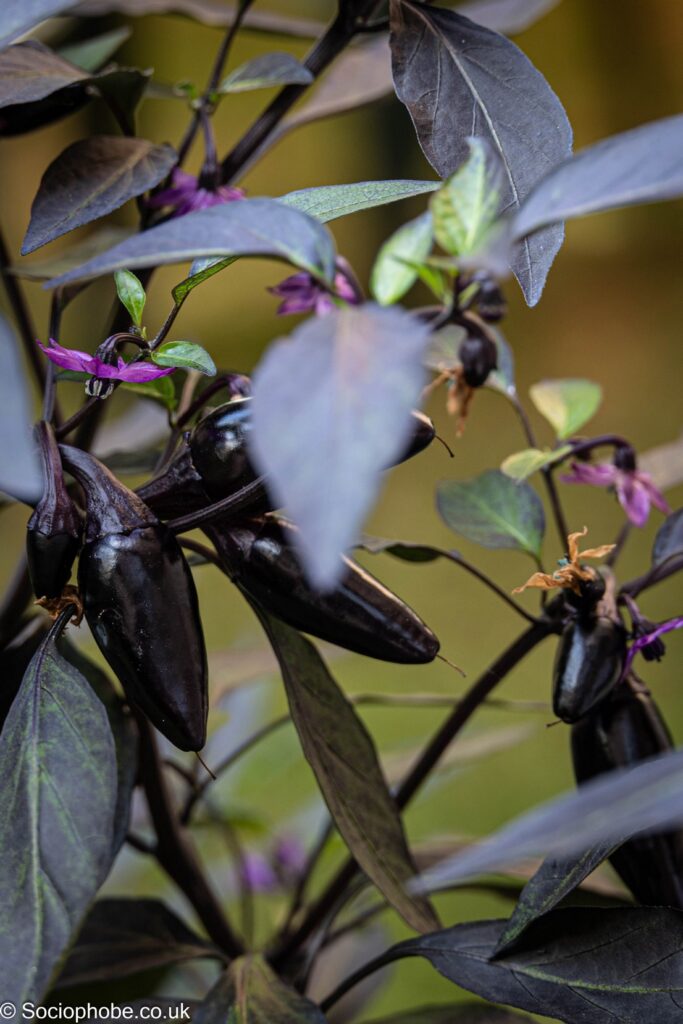
I then met Deb and we had a very Italian breakfast overlooking the park before walking to the University Botanic Garden. Established in the 18th century, this now contains around 700 species of plants in the grounds of the Palazzo Turchi di Bagno. Sadly there were lots of damned mosquitos too but we spent about an hour wandering up and down through the grounds and enjoying some of the unusual varieties as well as the turtles. The greenhouses have lots more plants including a large collection of orchids although very few were still in flower this late in the year.
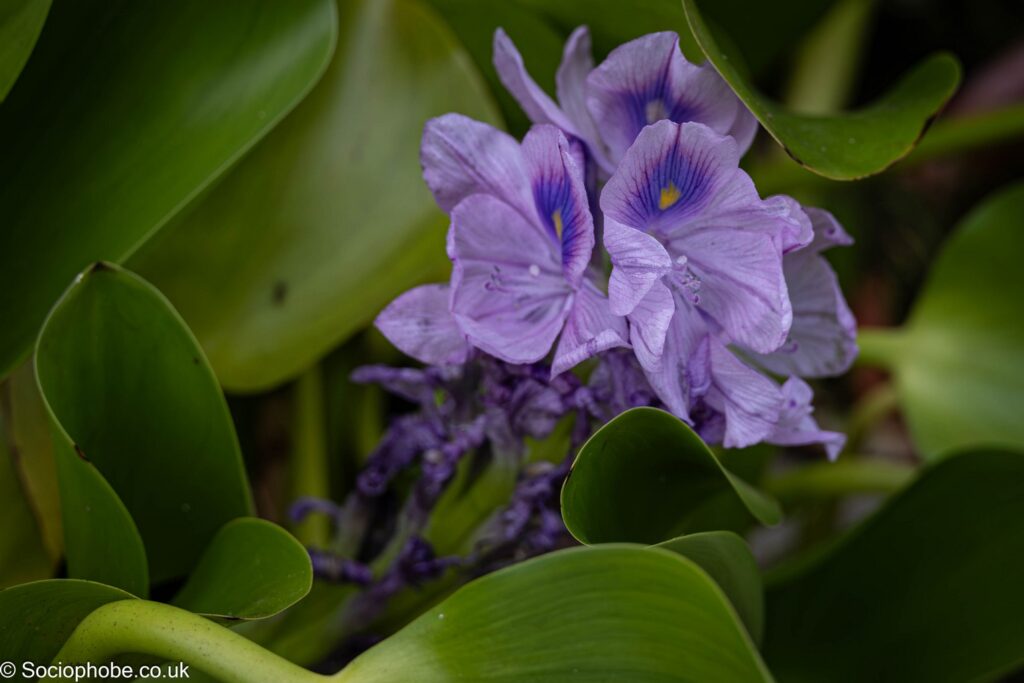
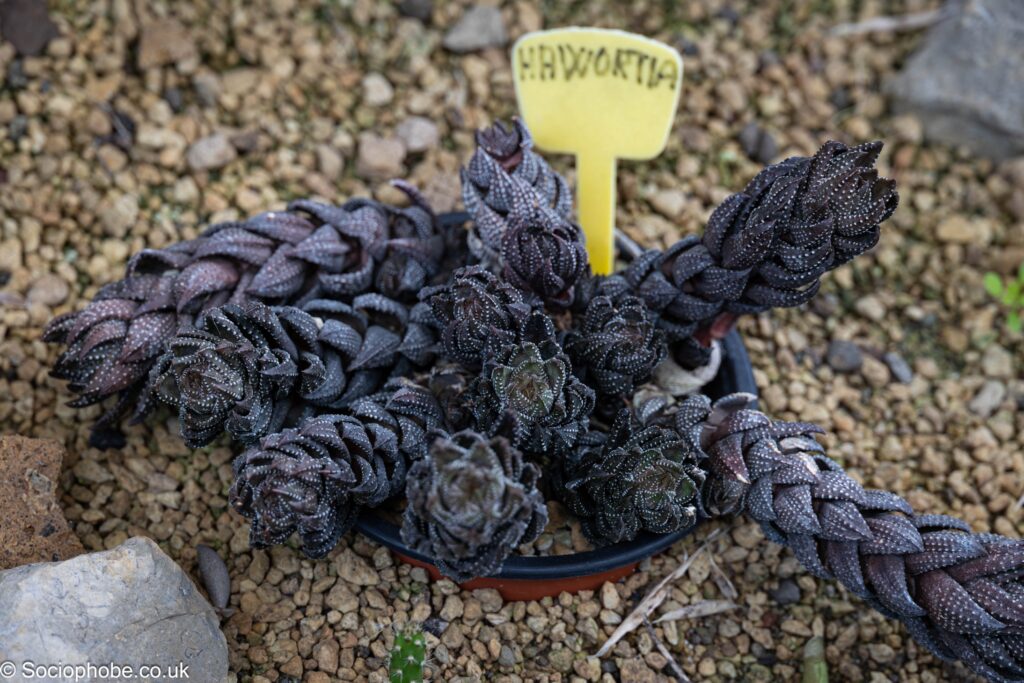
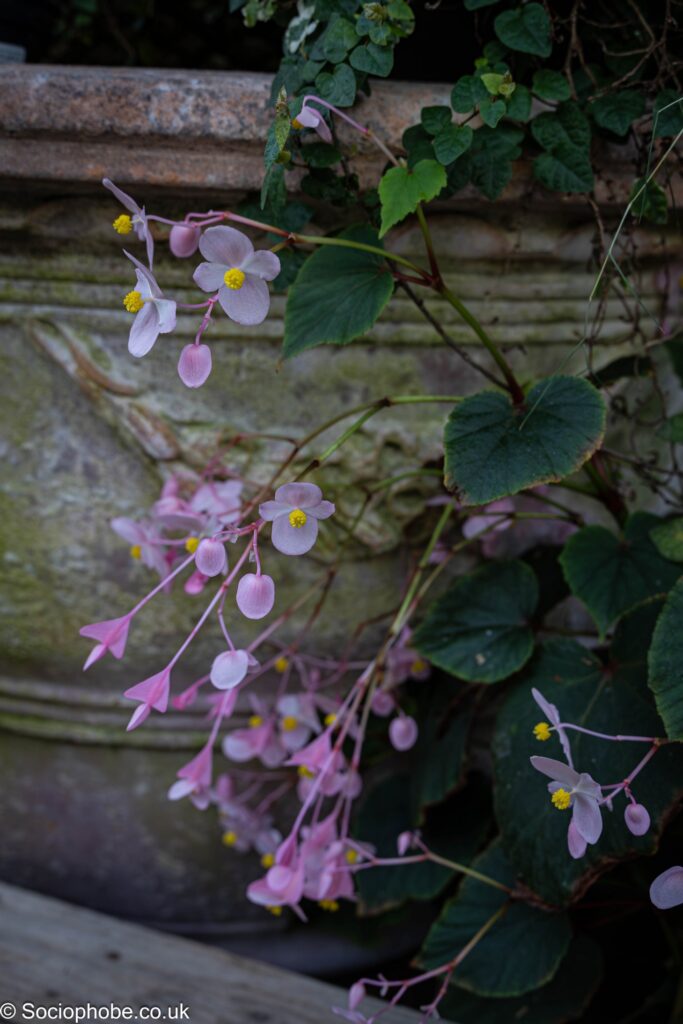
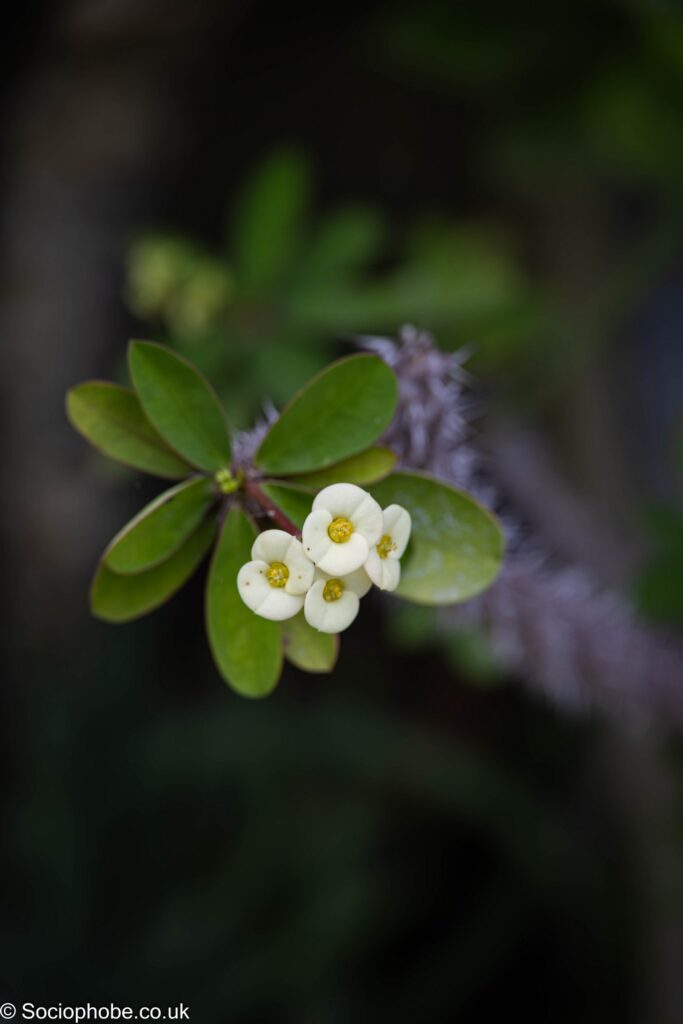
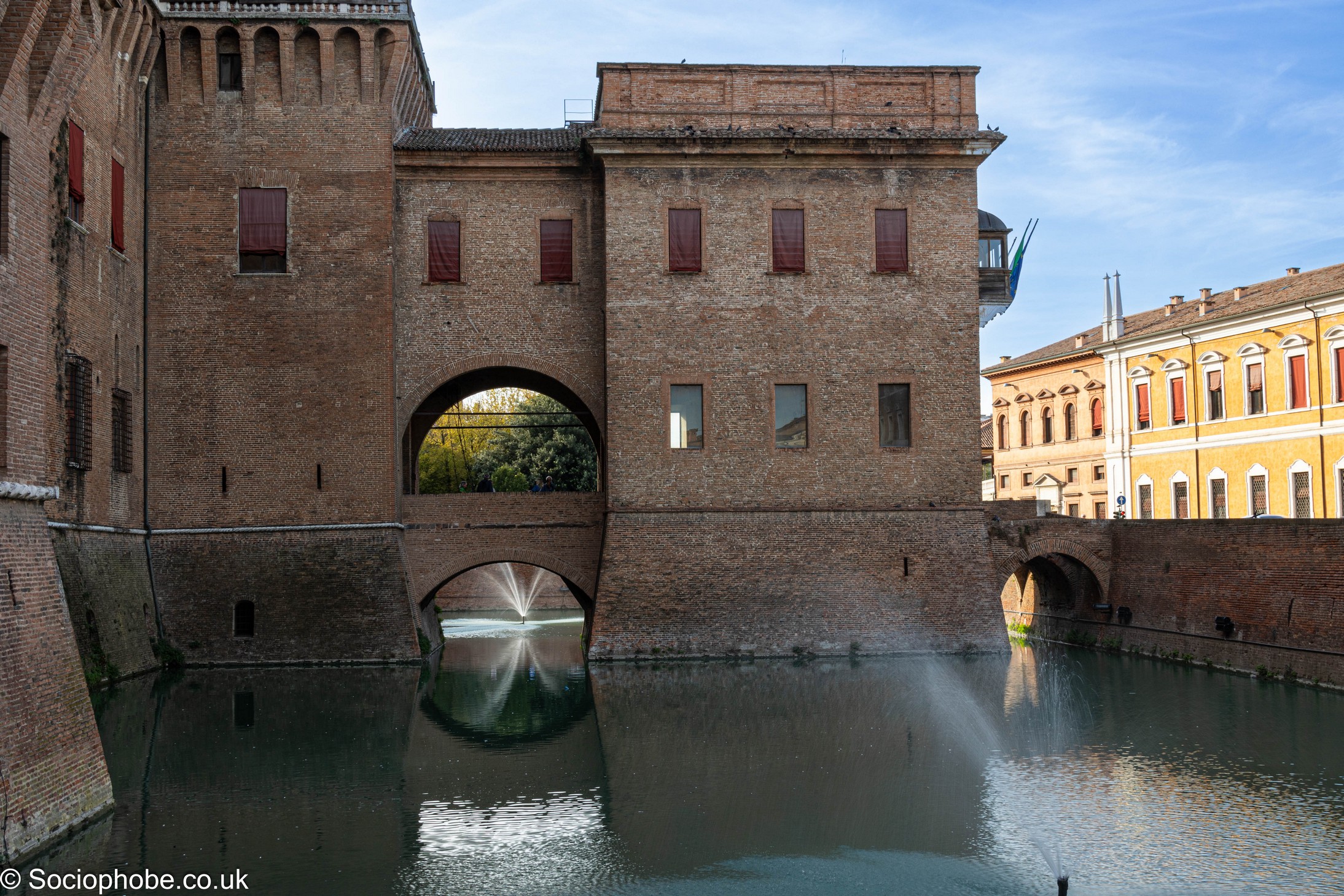
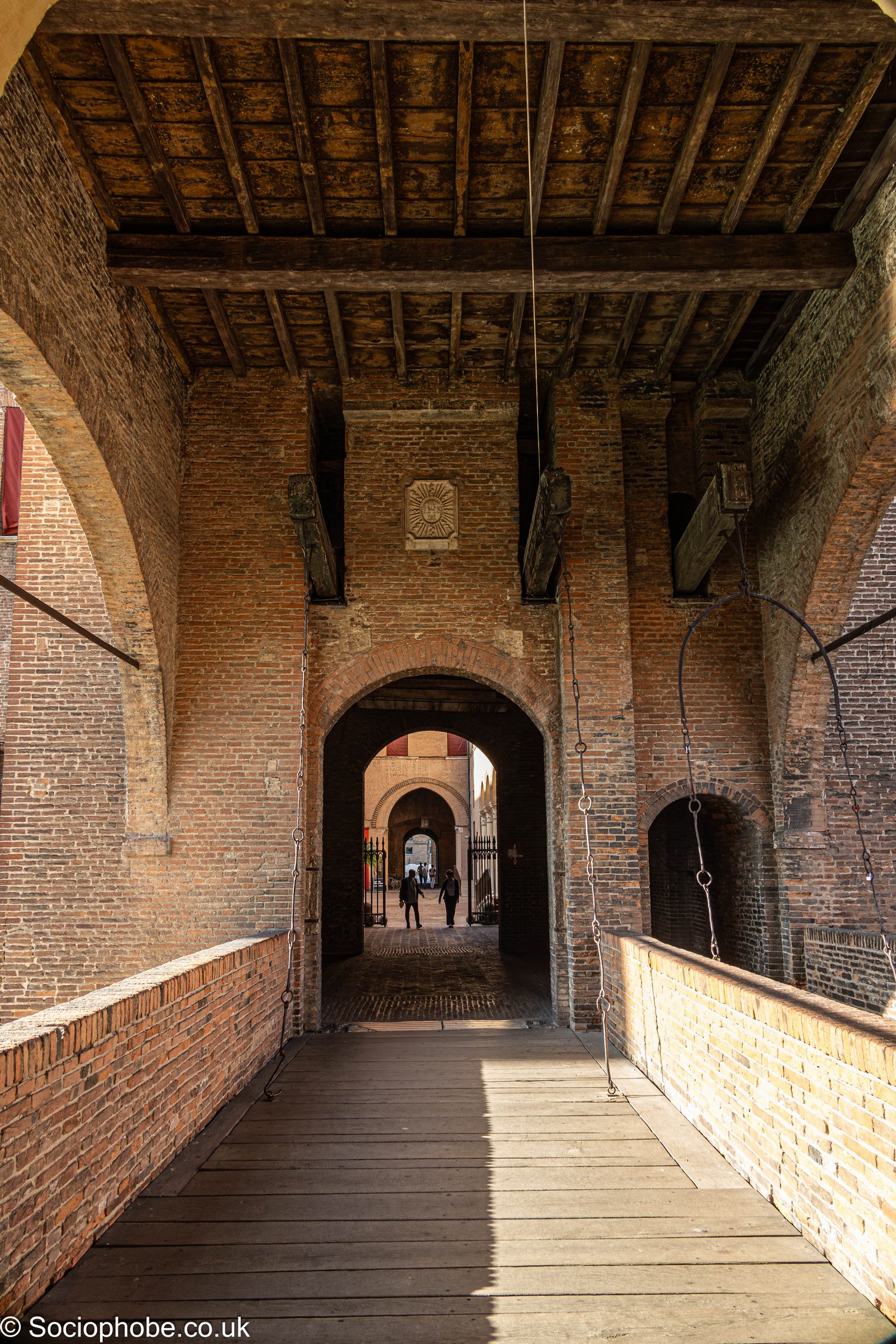
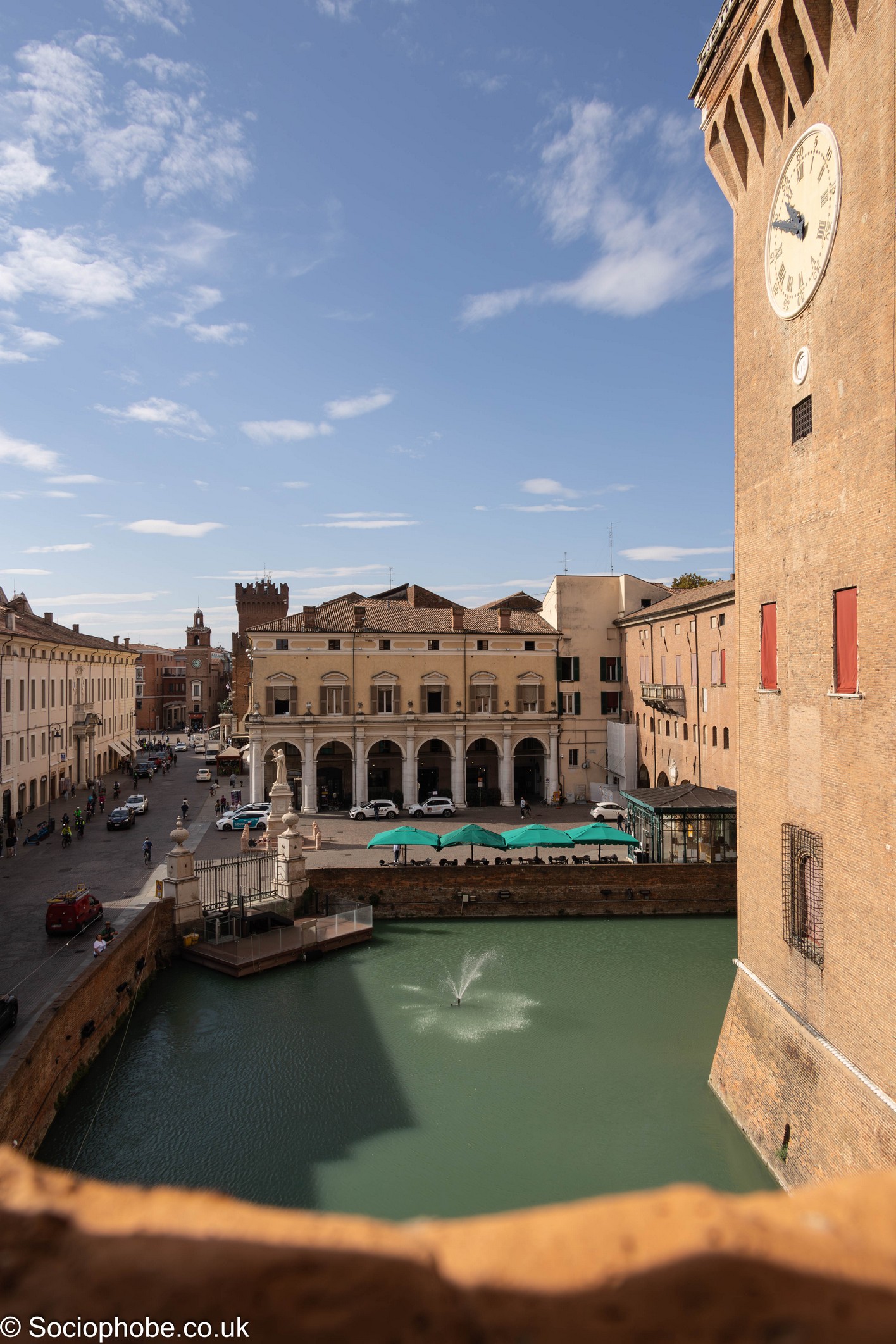
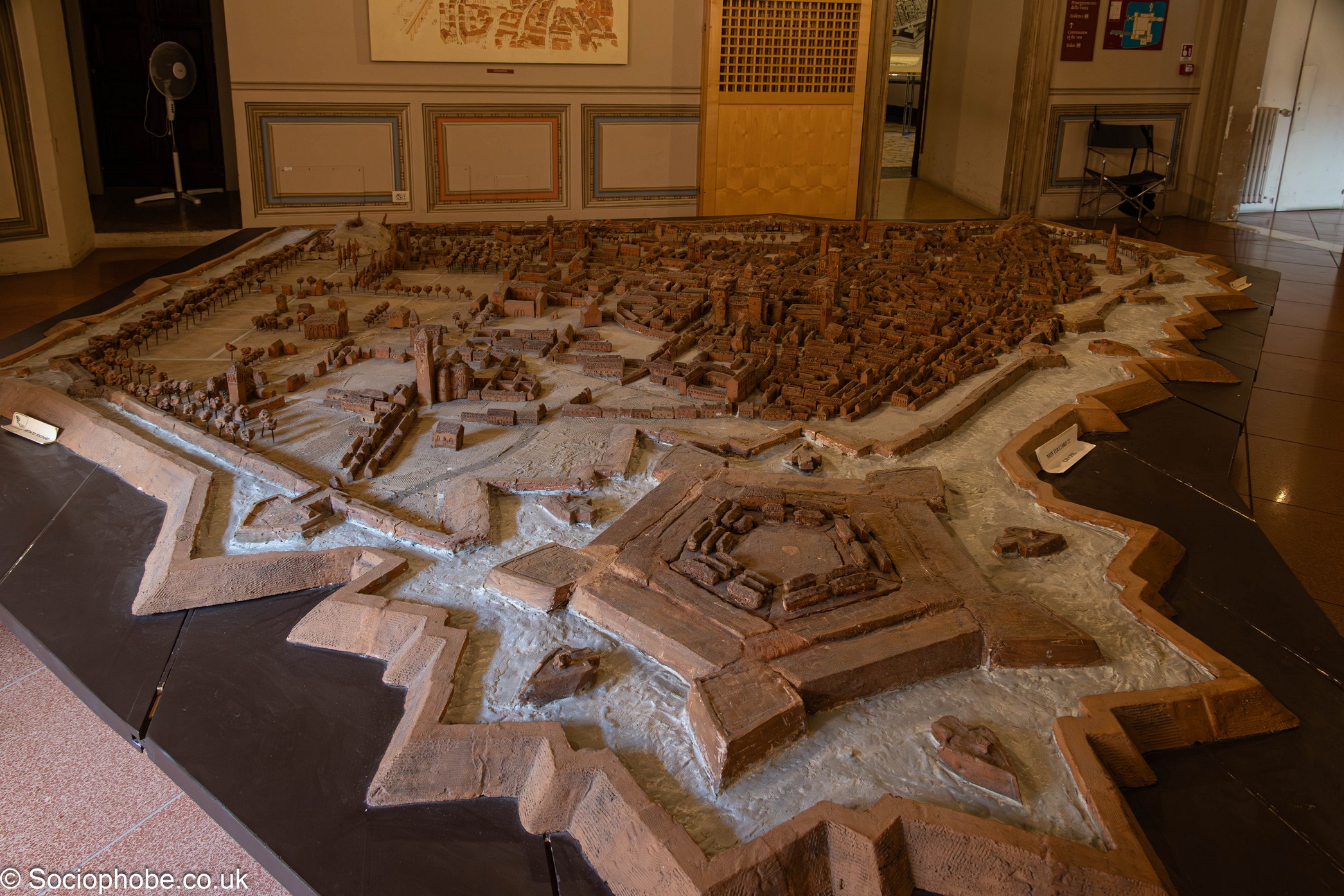
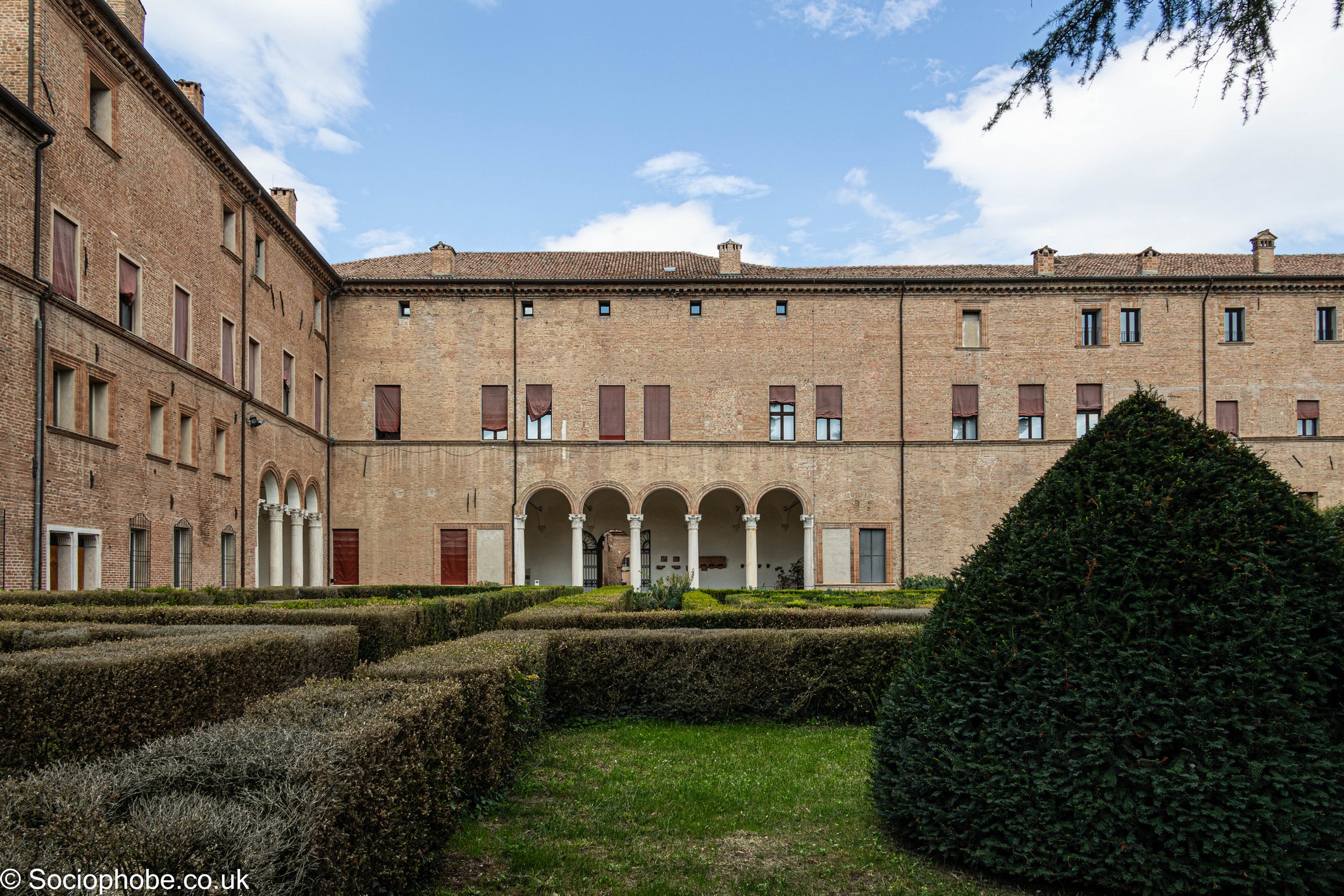
From the gardens we walked the short distance to Castle Estense. This is in the centre of Ferrara and still retains its moat and its 16th century appearance. Started in 1385 and built against the existing city walls and tower, the walls then being replaced as the city expanded, the castle became a palace from the end of the 15th century. It was the seat for the Dukes of Ferrara for two hundred years and was then the seat of the Papal Legate for another three hundred. We crossed the drawbridge and paid the €10 entrance although I got the 48 hour museum pass for €20 which gave me access to 10 city museums.
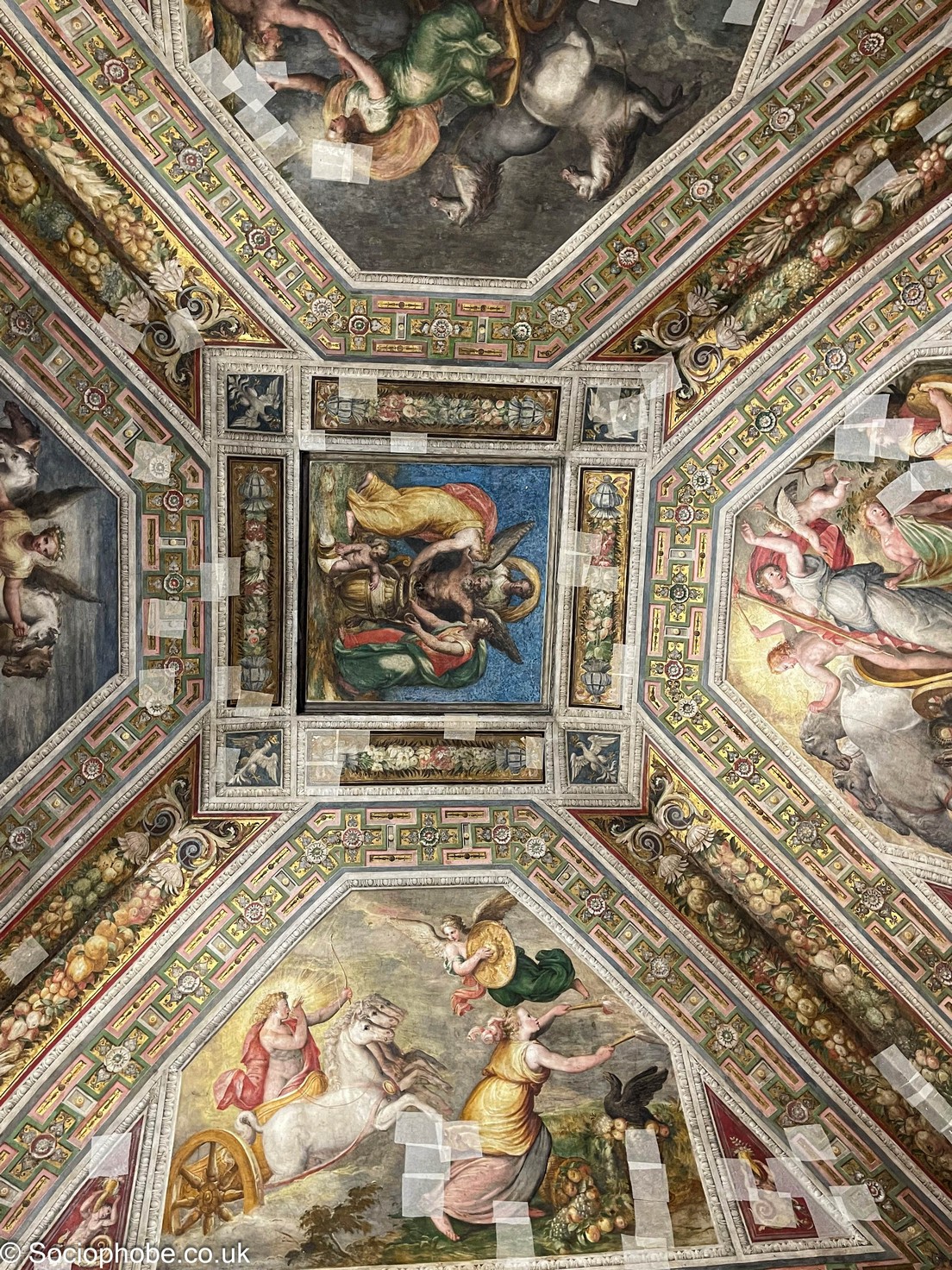
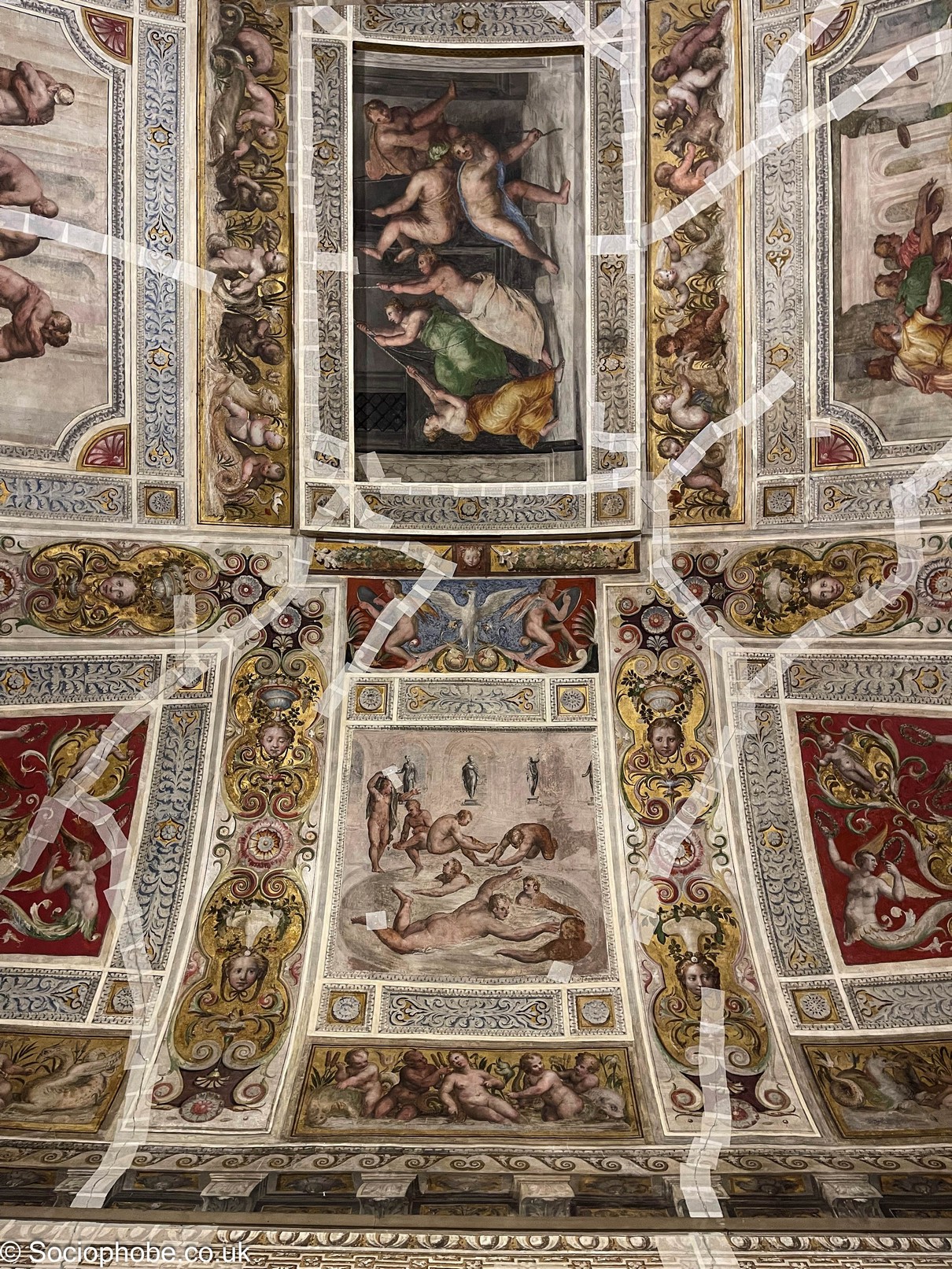
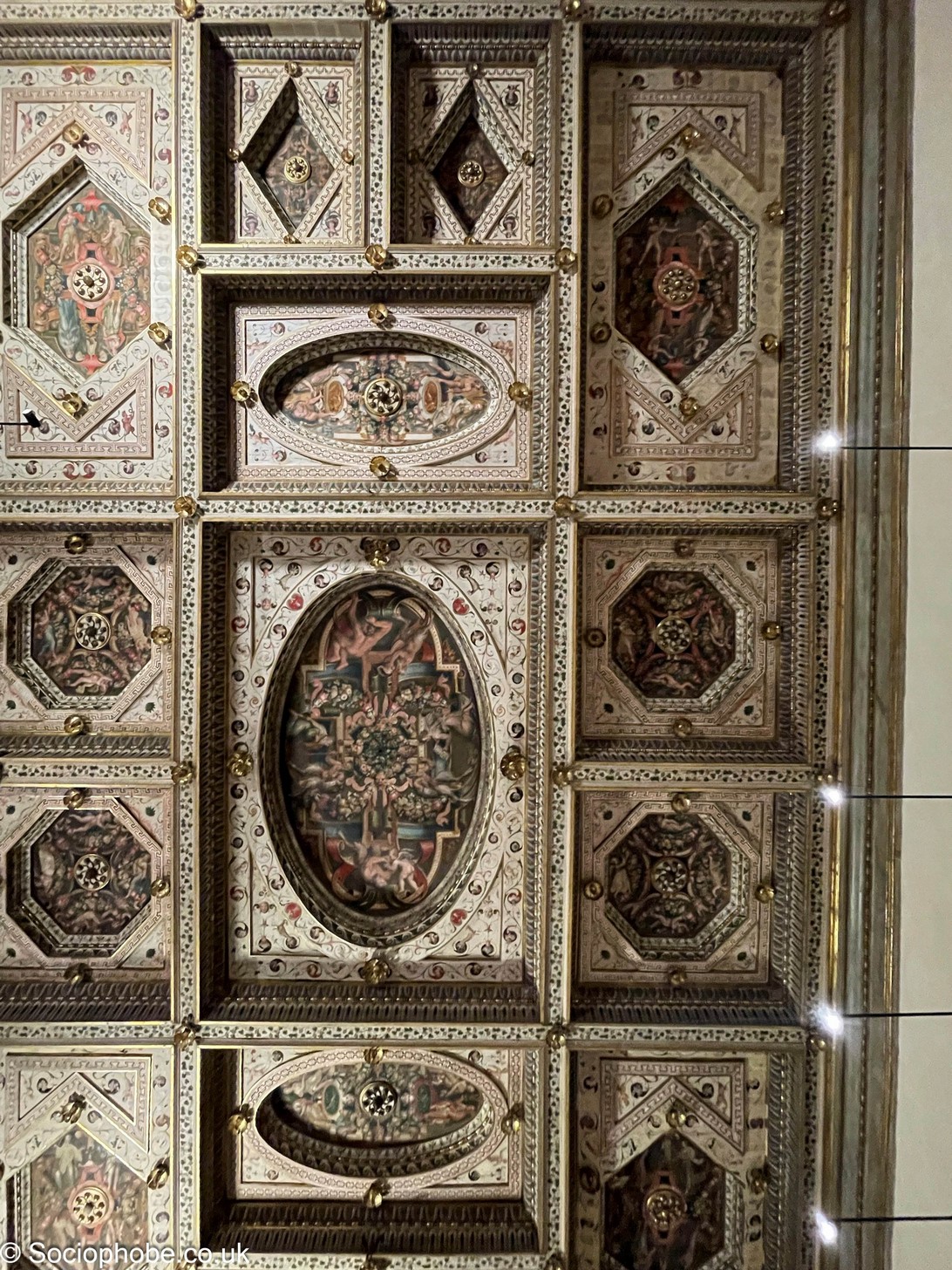
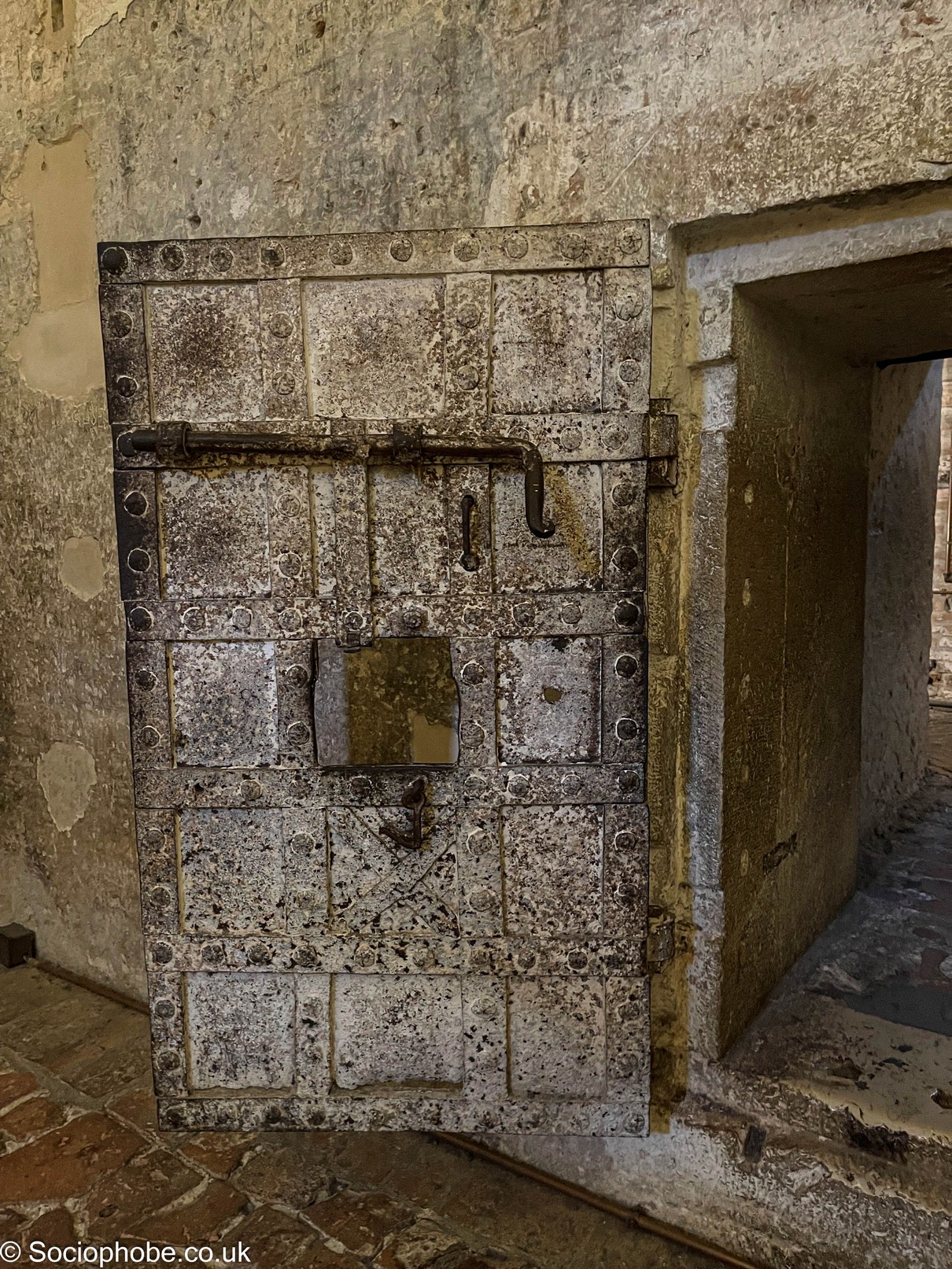
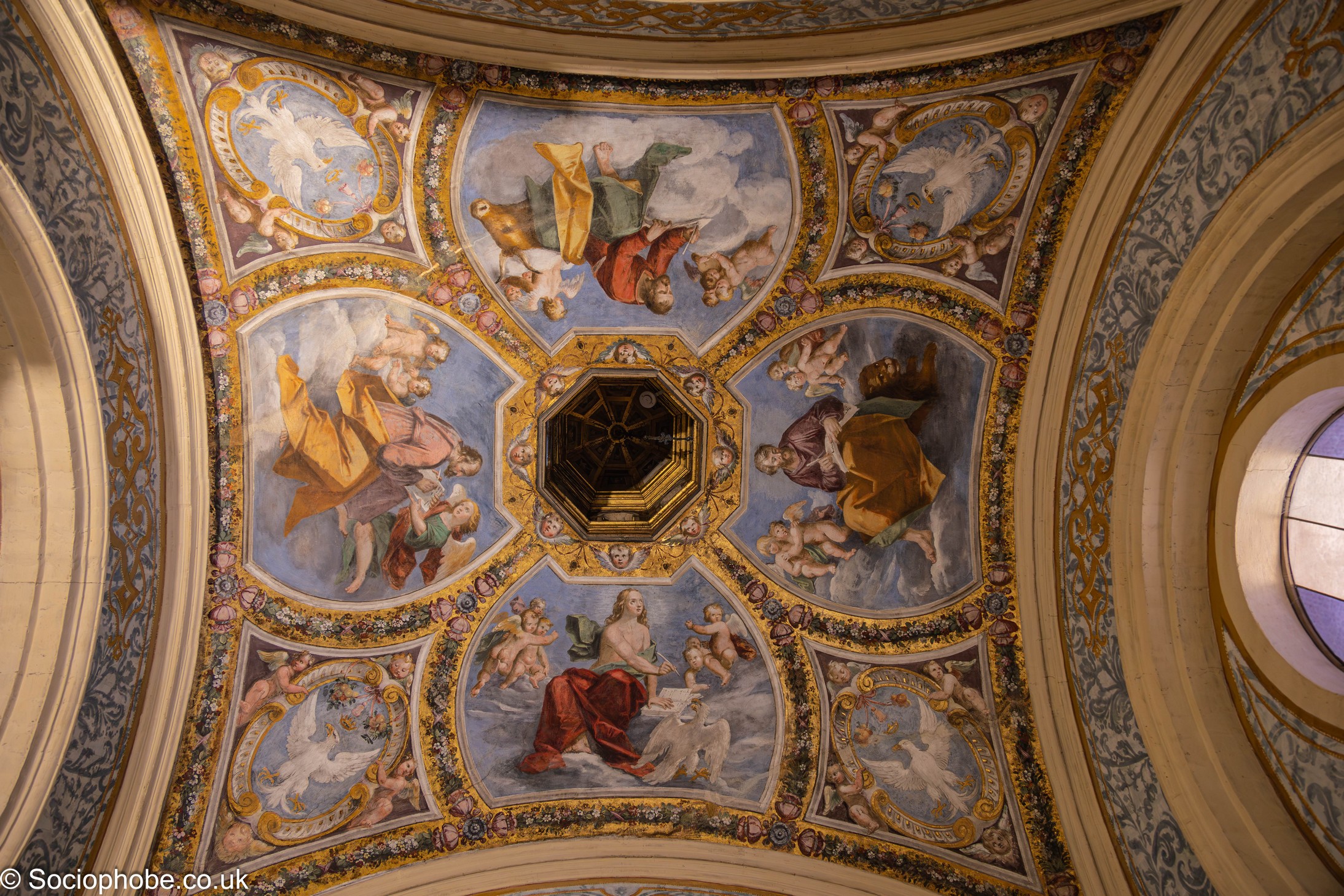
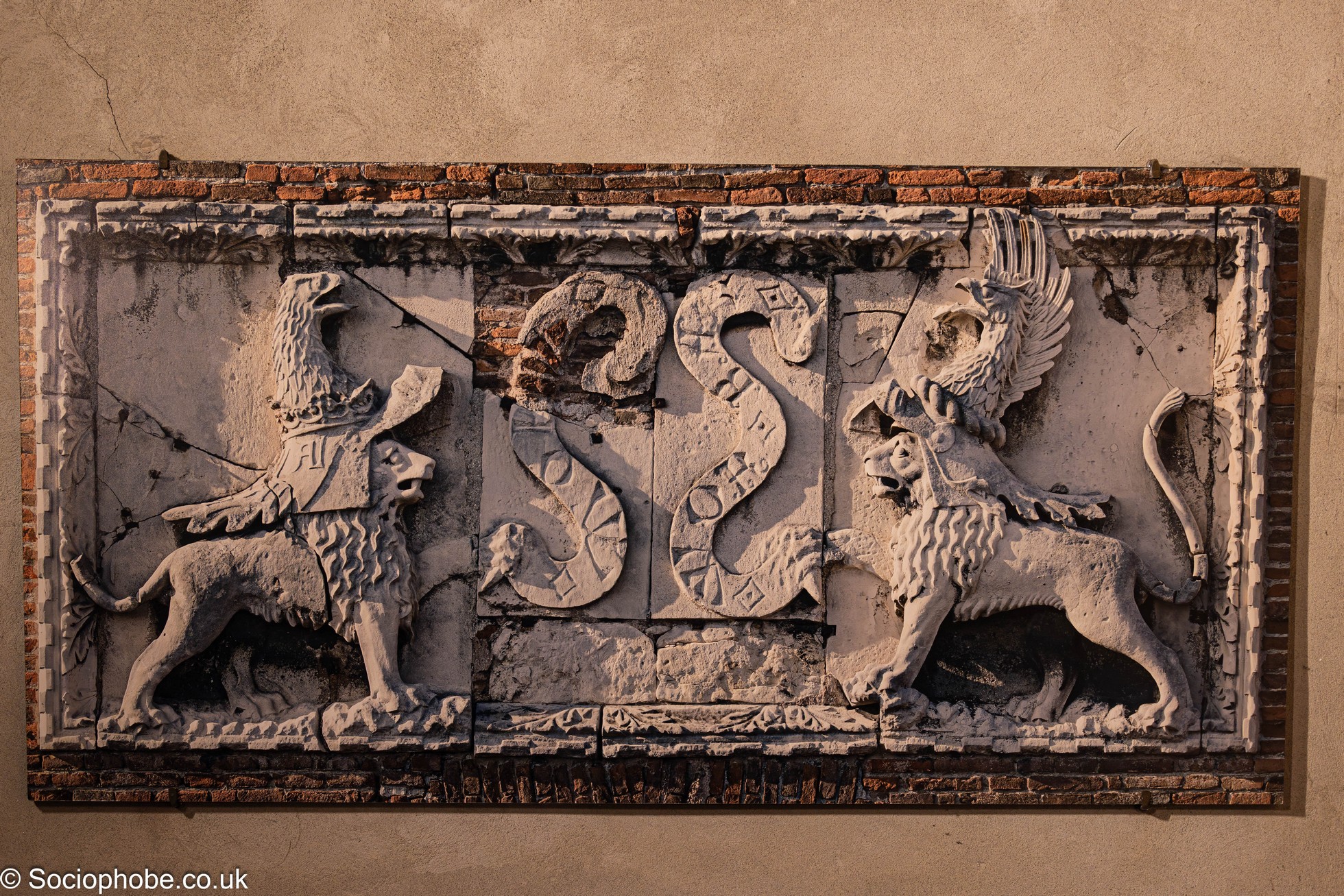
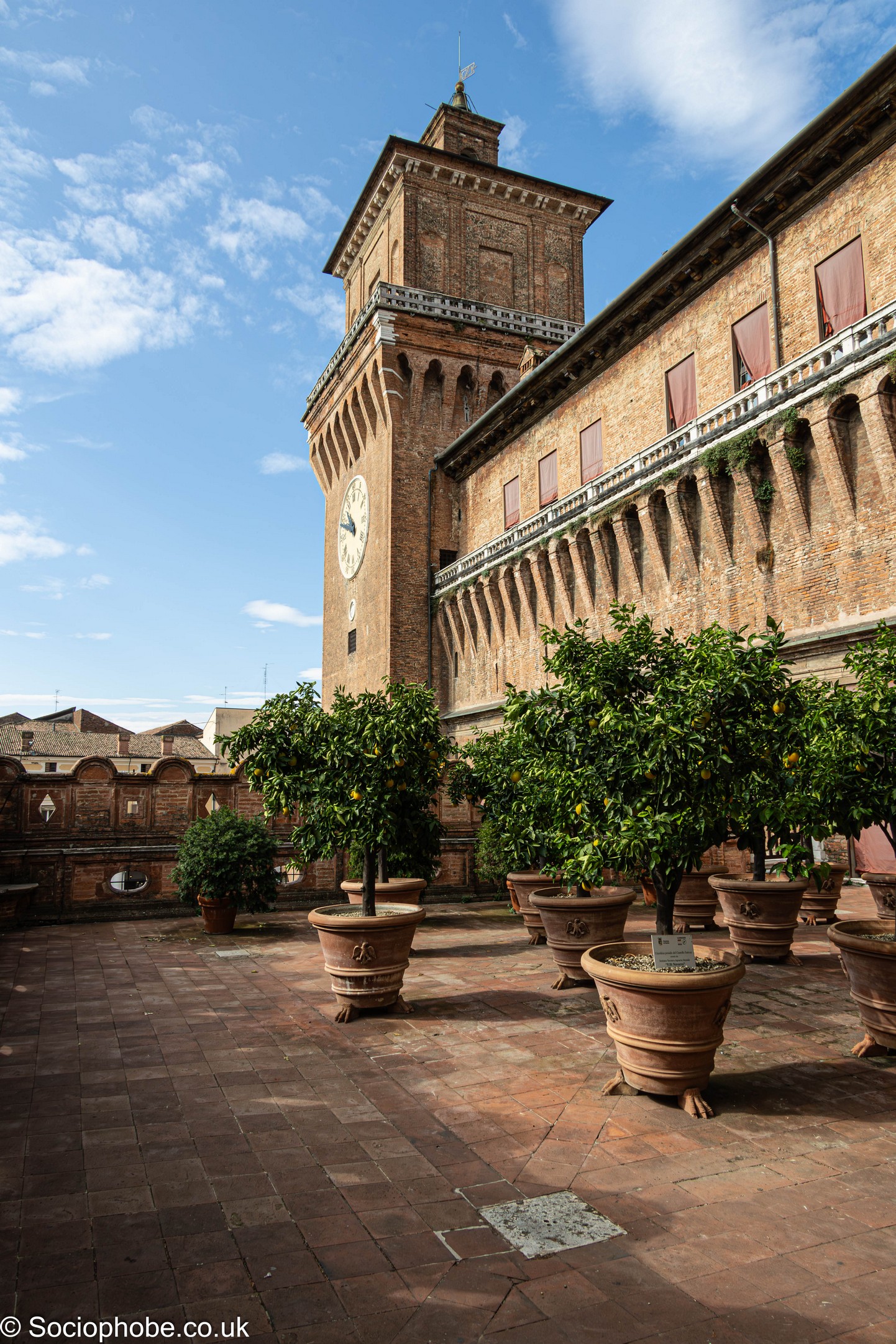
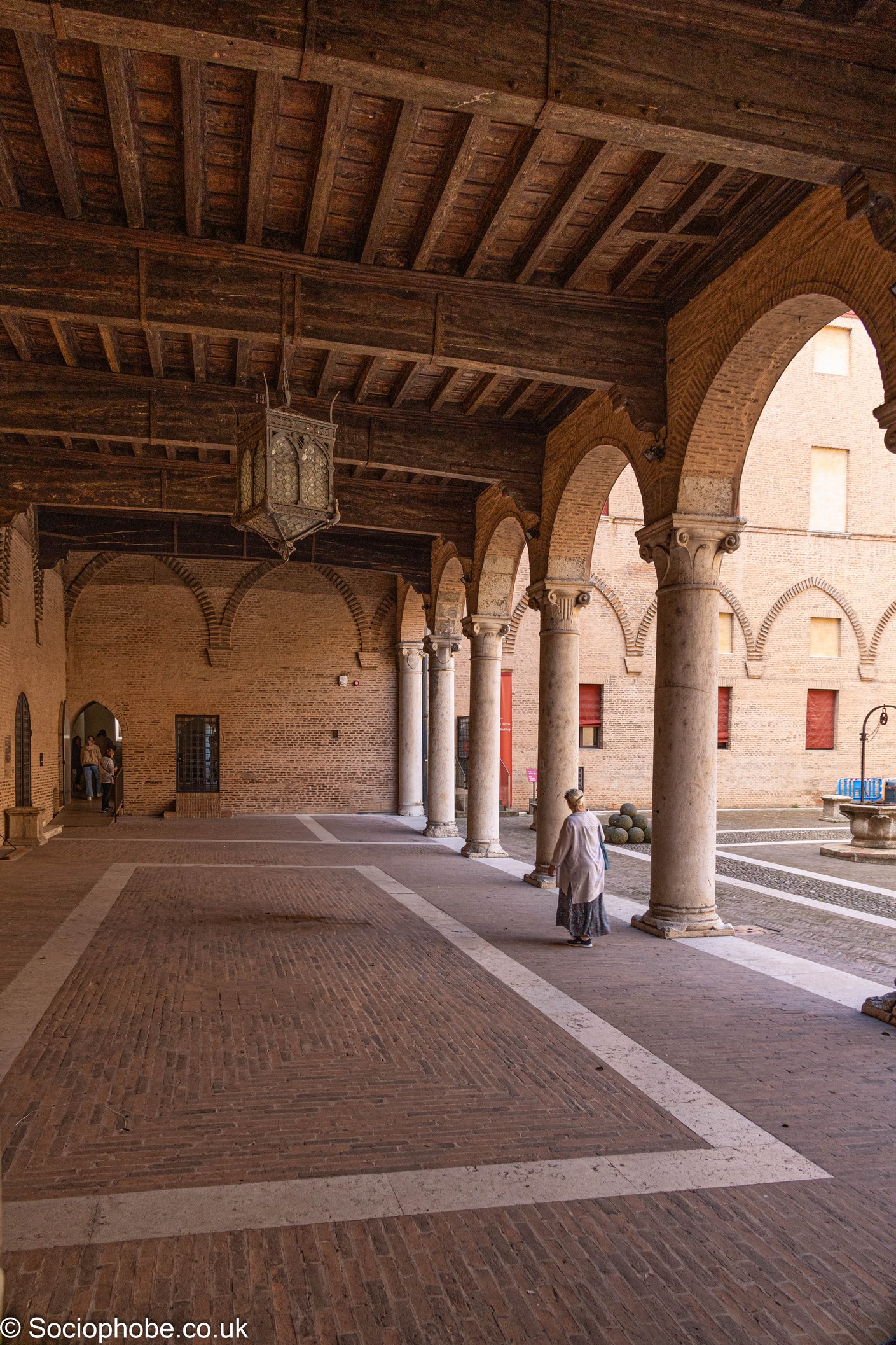
The first thing we noticed in the castle was the magnificent painted ceilings, not in every room but quite a few. They varied in style from frescoes to whatever you call painting inside a wooden framework of ceiling beams. The dungeons were impressive too, definitely a style I would bring back in for repeat or serious offenders! Some have washi paper applied after the 2012 earthquake to seal cracks. We climbed the stairs and saw the wonderful citrus garden on the terrace, designed by Eleanor of Aragon to remind her of Naples. This had great views over the moat but I messed those photos up.

Deb then sat and chilled whilst I climbed the Lion’s Tower. I don’t think I have ever hated vertigo more as it is such a stupidly irrational thing but just so powerful. The steps were like metal fire escape stairs so you could see through them, all the way down, as you climbed and they creaked away. I think there were 6 levels to the tower and the only exit was at the top so I dread to think what my heart rate was by the time I got there. The views were obviously good but I couldn’t take advantage of them as I didn’t want to get anywhere near the edge. My brain knew the castle had stood 700 years so it was all fine but it was also telling me that it had been damaged by earthquakes, fires and allied bombing in WW2 so was basically an accident waiting to happen.
I went back down the stairs on very rubbery legs and finally reached the next part of the tour. Luckily no one else was on the stairs when I went up or down. We saw more amazing ceilings and read more information – the displays in the castle all had English versions and told of the architecture of the city, draining the nearby swamps to reclaim the land, town planning, the history of the Dukes, the artists involved in beautifying the castle, the earthquakes etc, a really fabulously informative selection. We then left the castle, walked past the statue of Savonarola who I gave death eye to for his destruction of cultural heritage and then crossed the piazza to the cathedral.
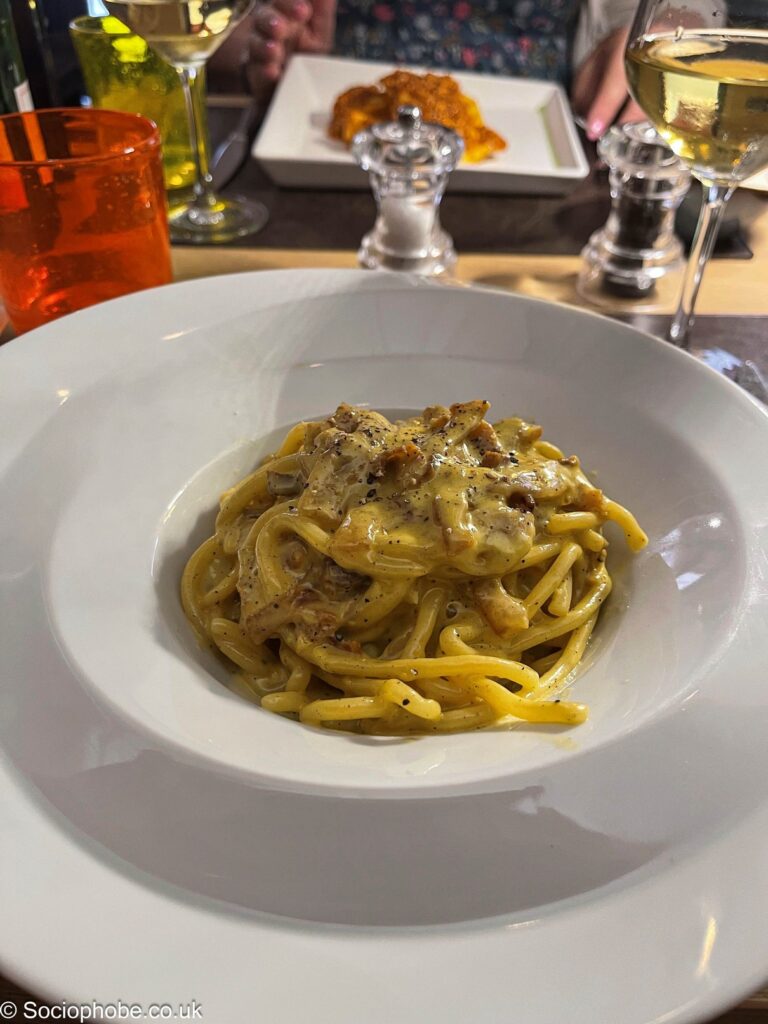
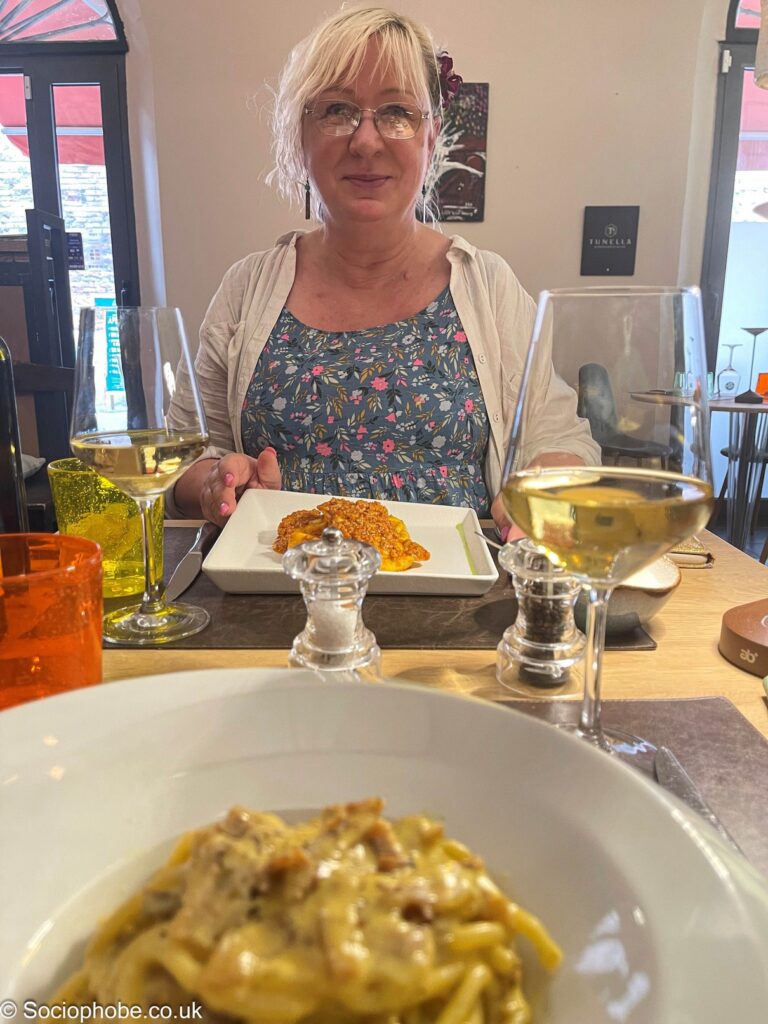
There was scaffolding around part of it and people obviously working on it and then we saw a note on the wall saying that the interior was closed until the 28th September at 5PM which is a shame for us. We decided to have lunch and found a little place in one of the side streets by the cathedral and it was called BanChina so I liked their logic. Service was again superb and the food just blew me away. I had spaghetti carbonara and it was just so different to what I am used to – fresh pasta, proper ham and very little sauce – superb. The wine we had was also delicious and the price was decent, a nice pause in our day of sightseeing.
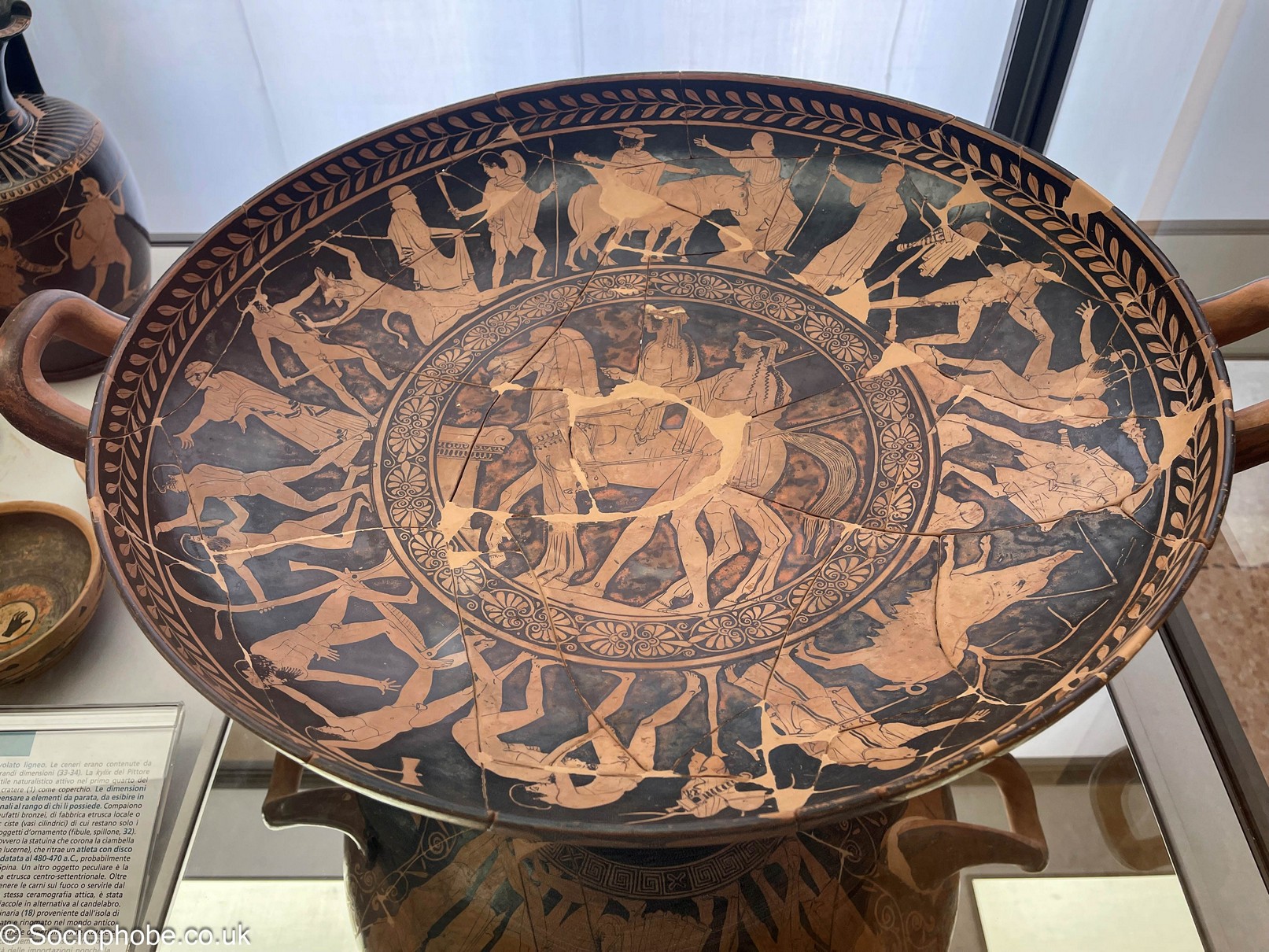
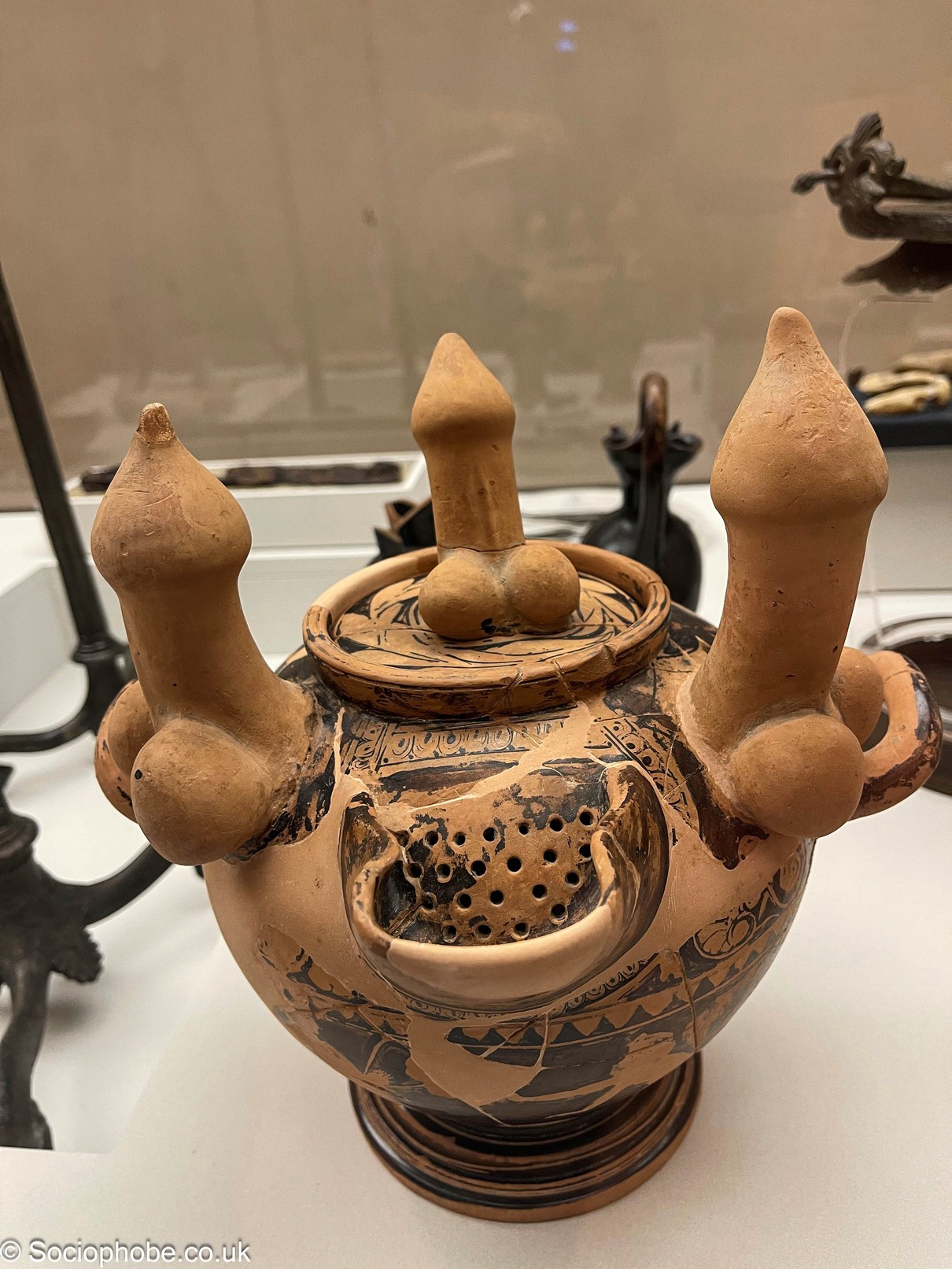
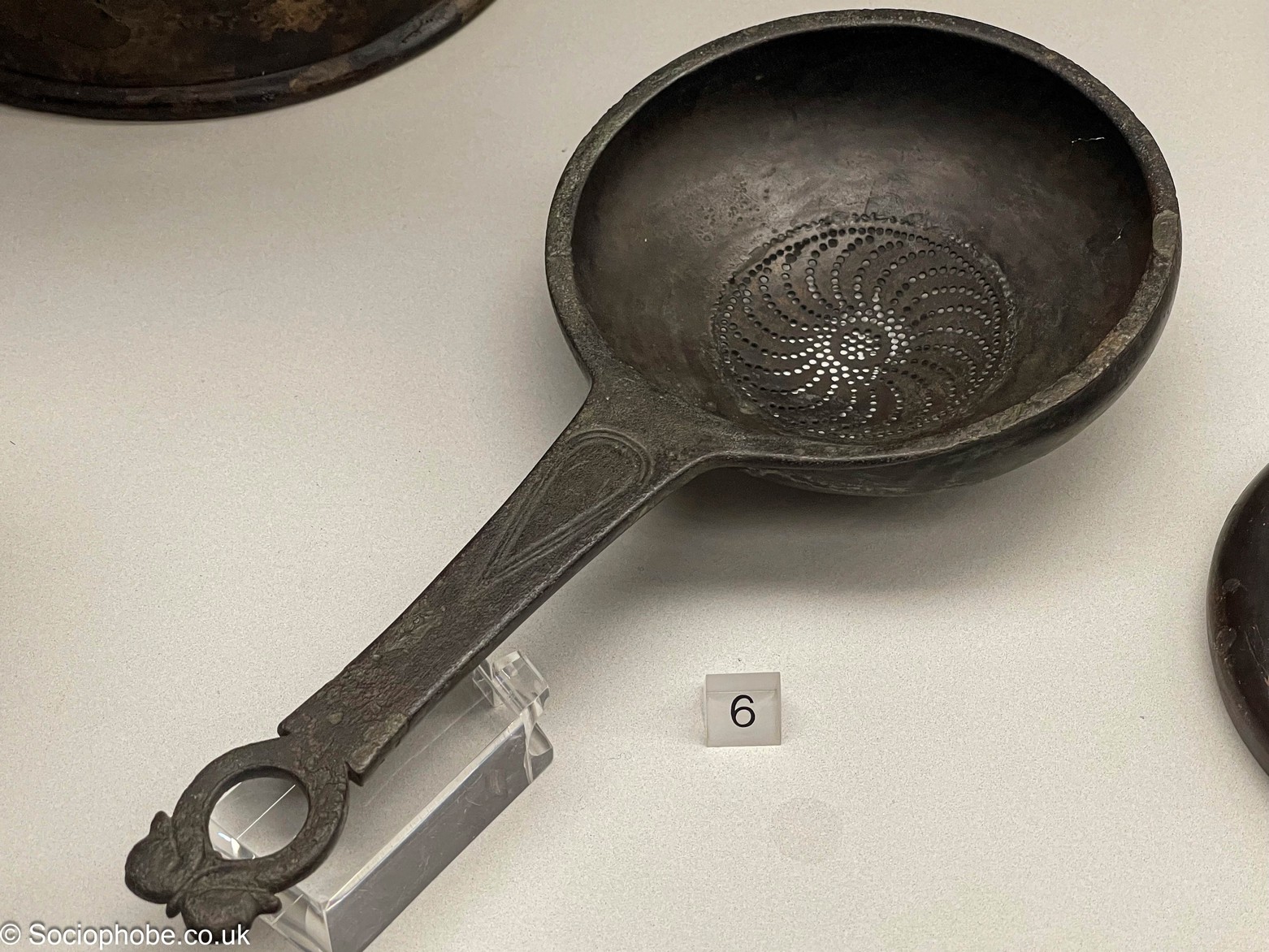
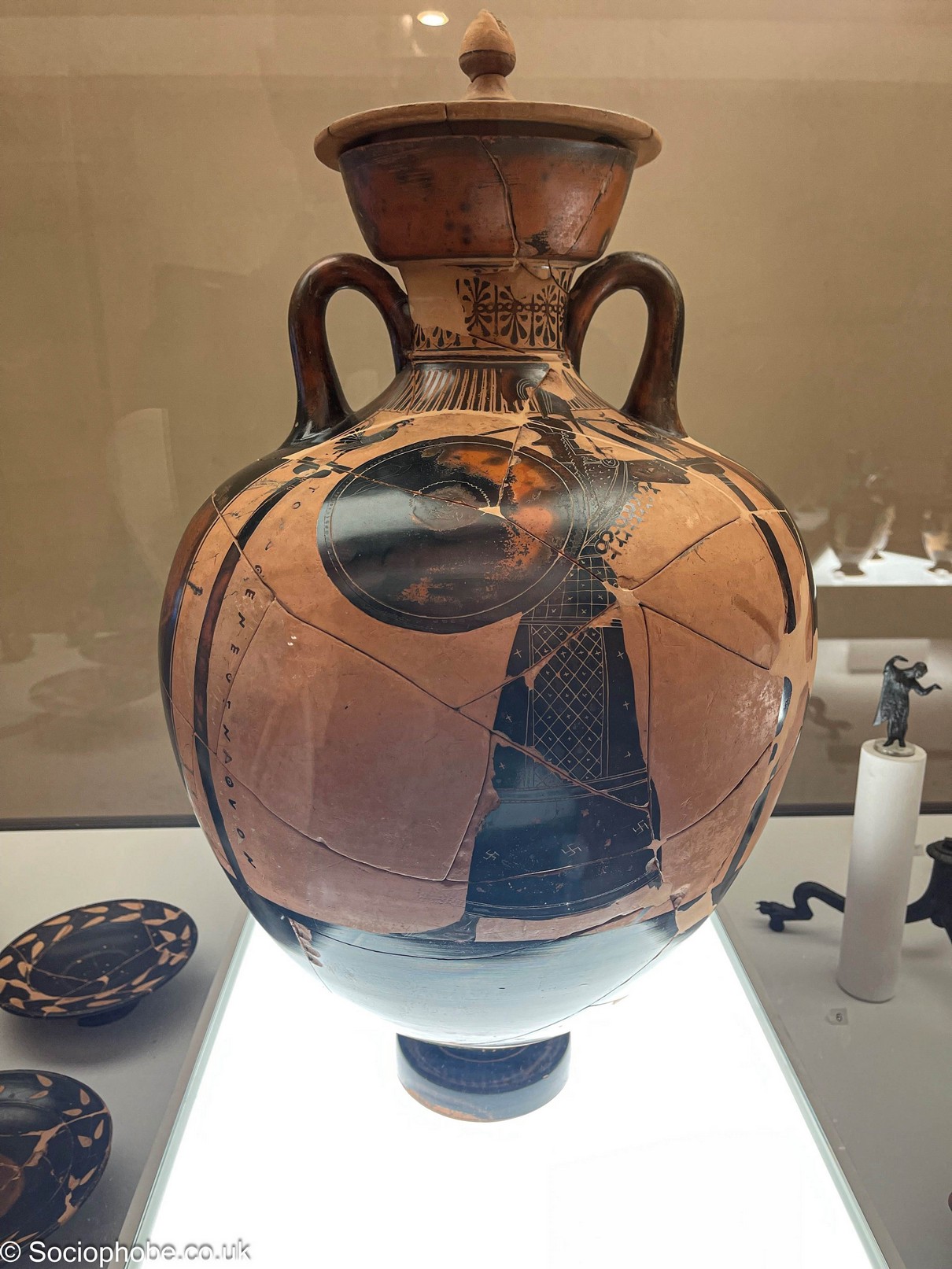
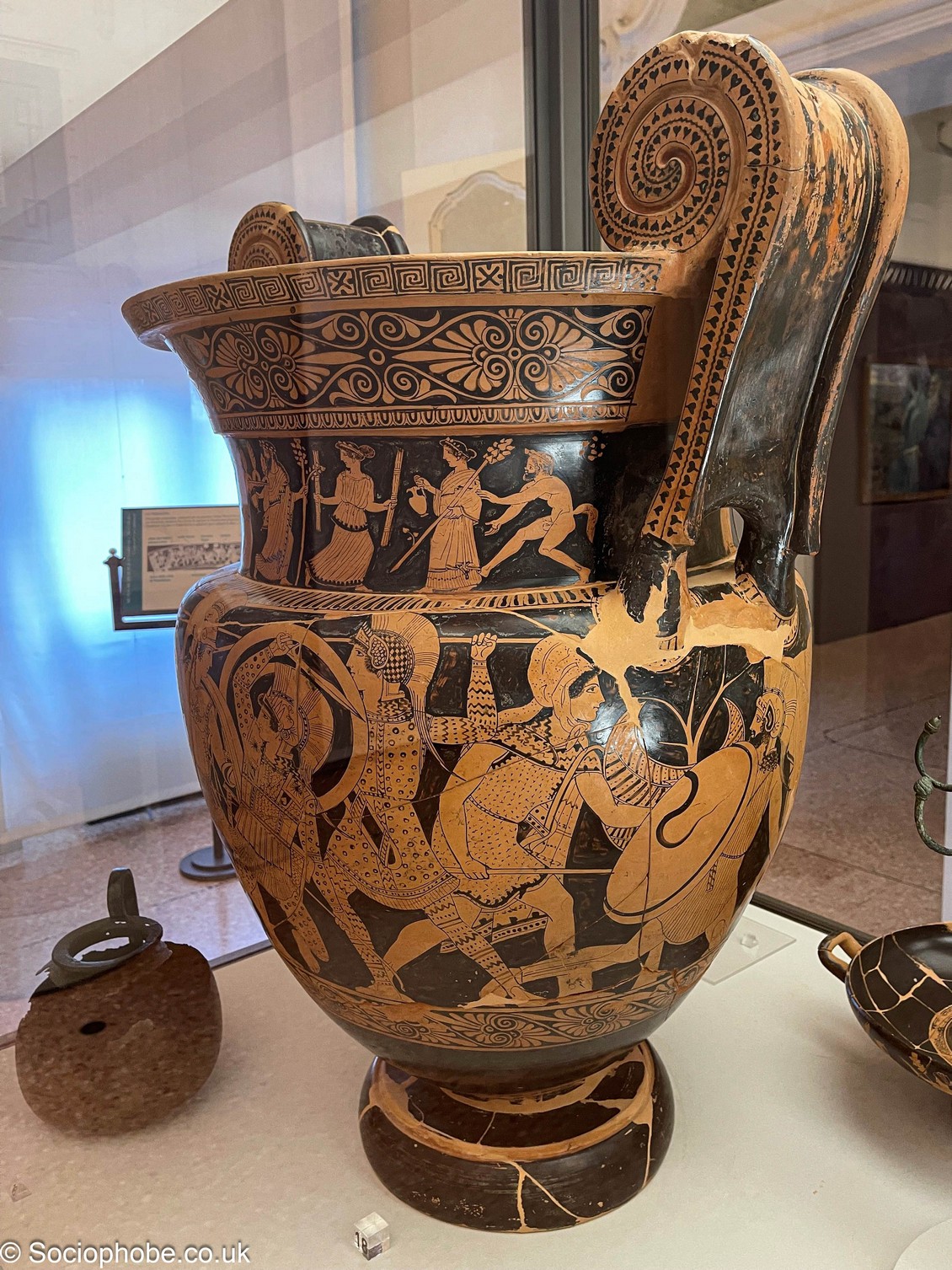
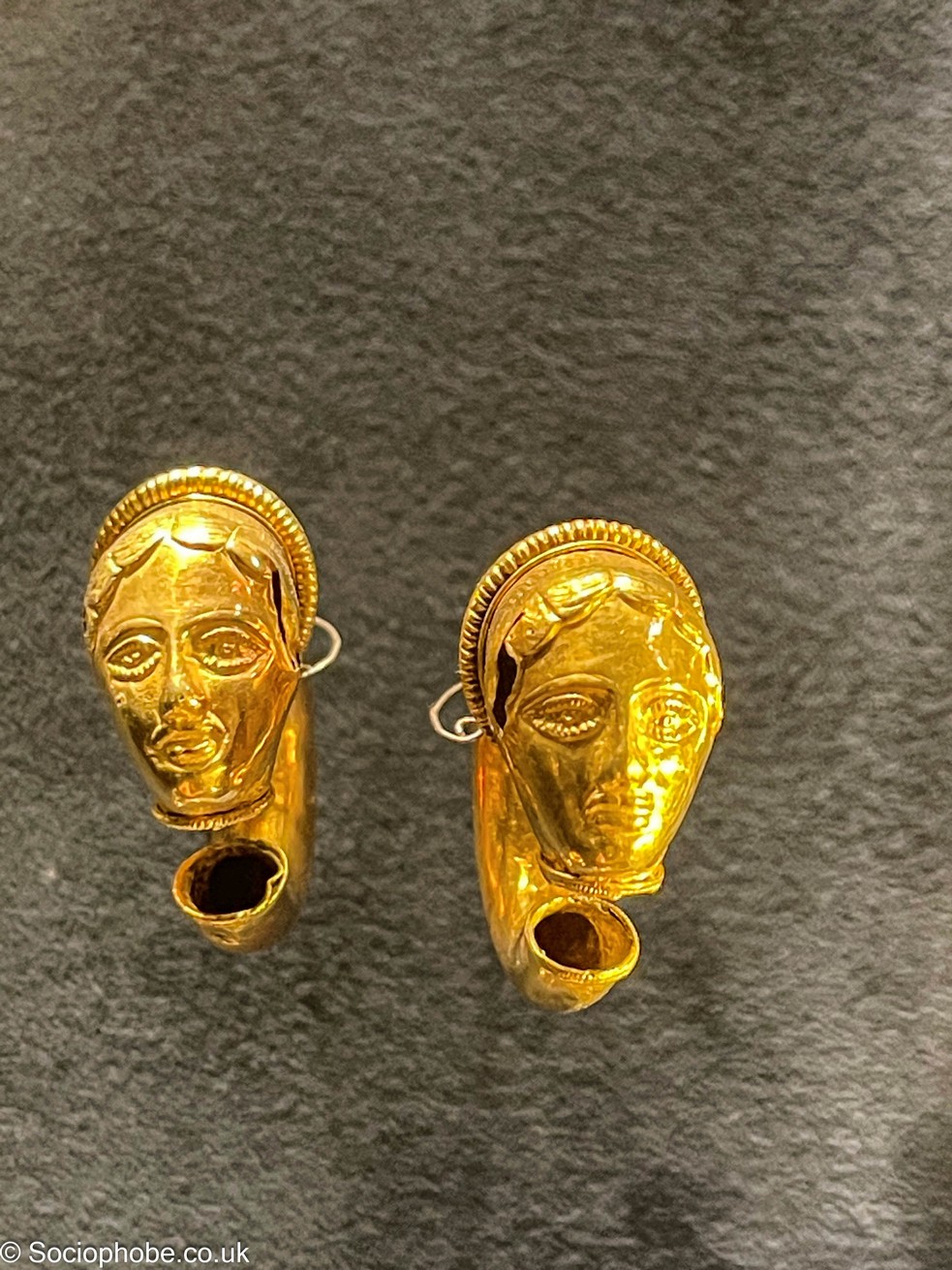
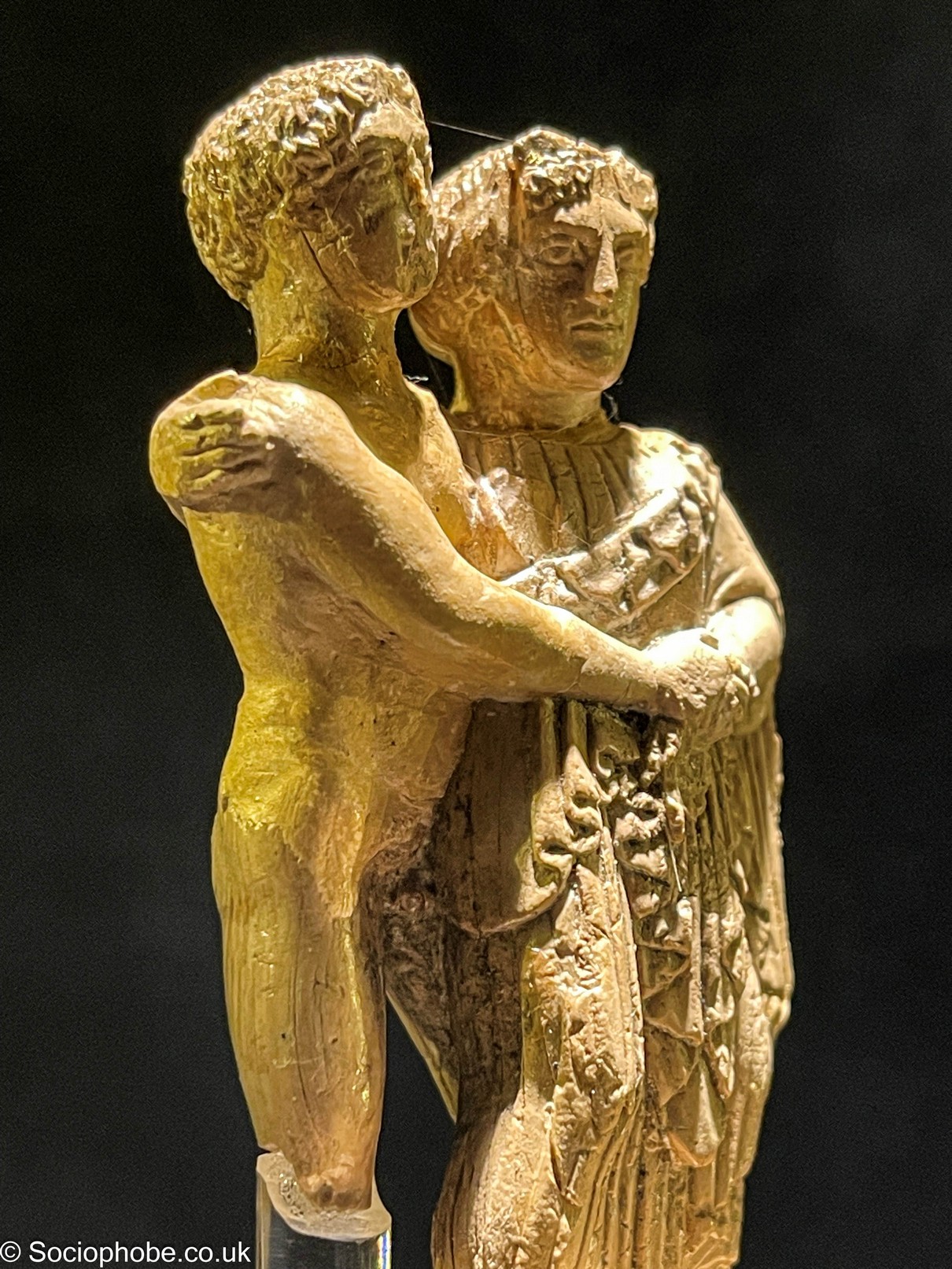
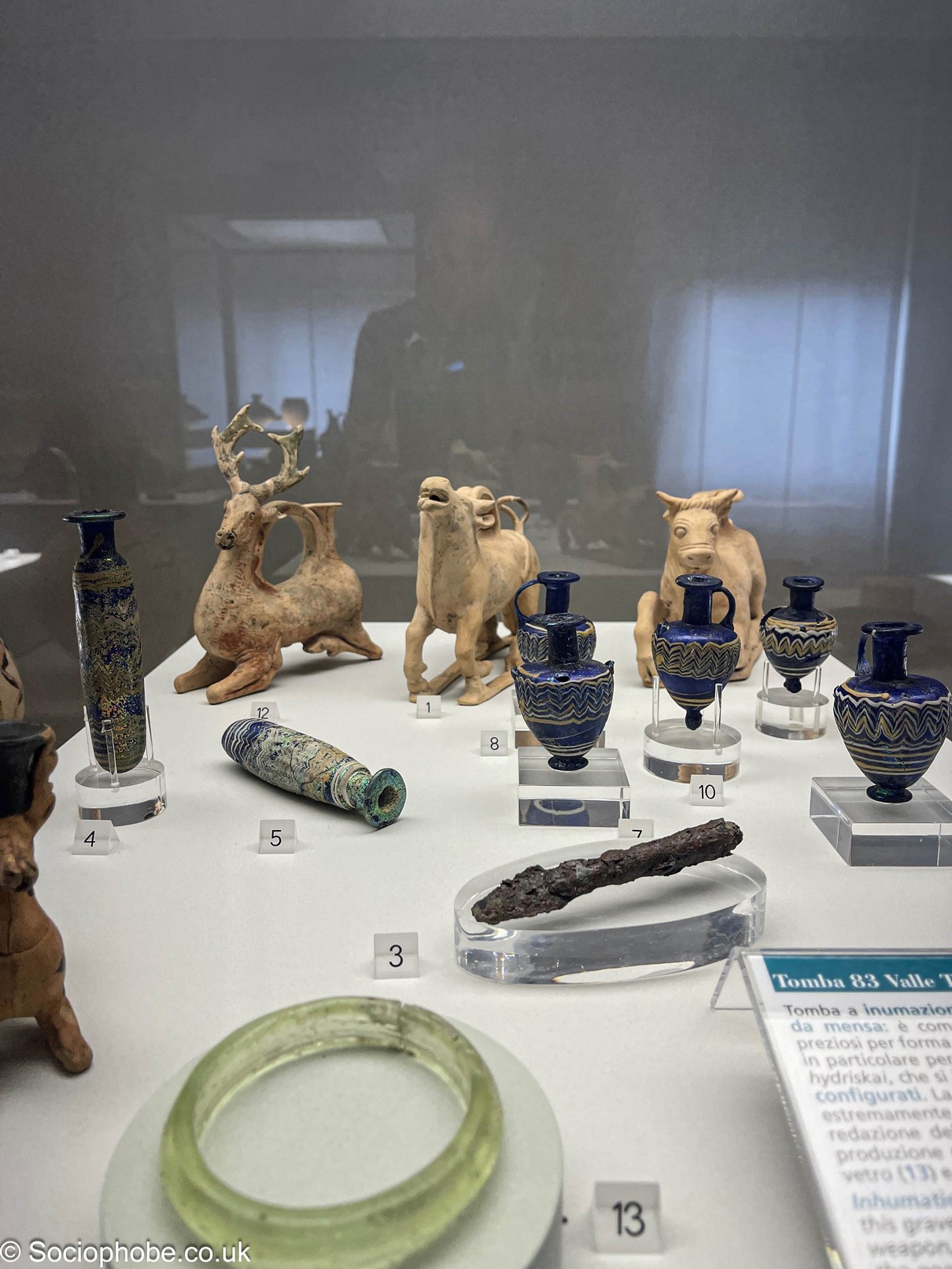
Deb walked back to the hotel to rest so I carried on to the National Archaeology Museum, a bit of a trek and I didn’t realise until later that I could have walked part of the circuit of the walls to get there. Ah well. The museum holds the excavated remains from an Etruscan necropolis and the trading town of Spina that was excavated between the 1920s and 1950s before being buried under fields in a land reclamation project. The town was founded in the sixth century BC and was an important port and marketplace. It became wealthy on trade and that wealth was reflected in the grave goods with lots of expensive Athenian ceramics. The town was destroyed by the Celts in around 300BC I think and then the river slowly moved, burying the town and necropolis under sediment where it remained lost until 1922.
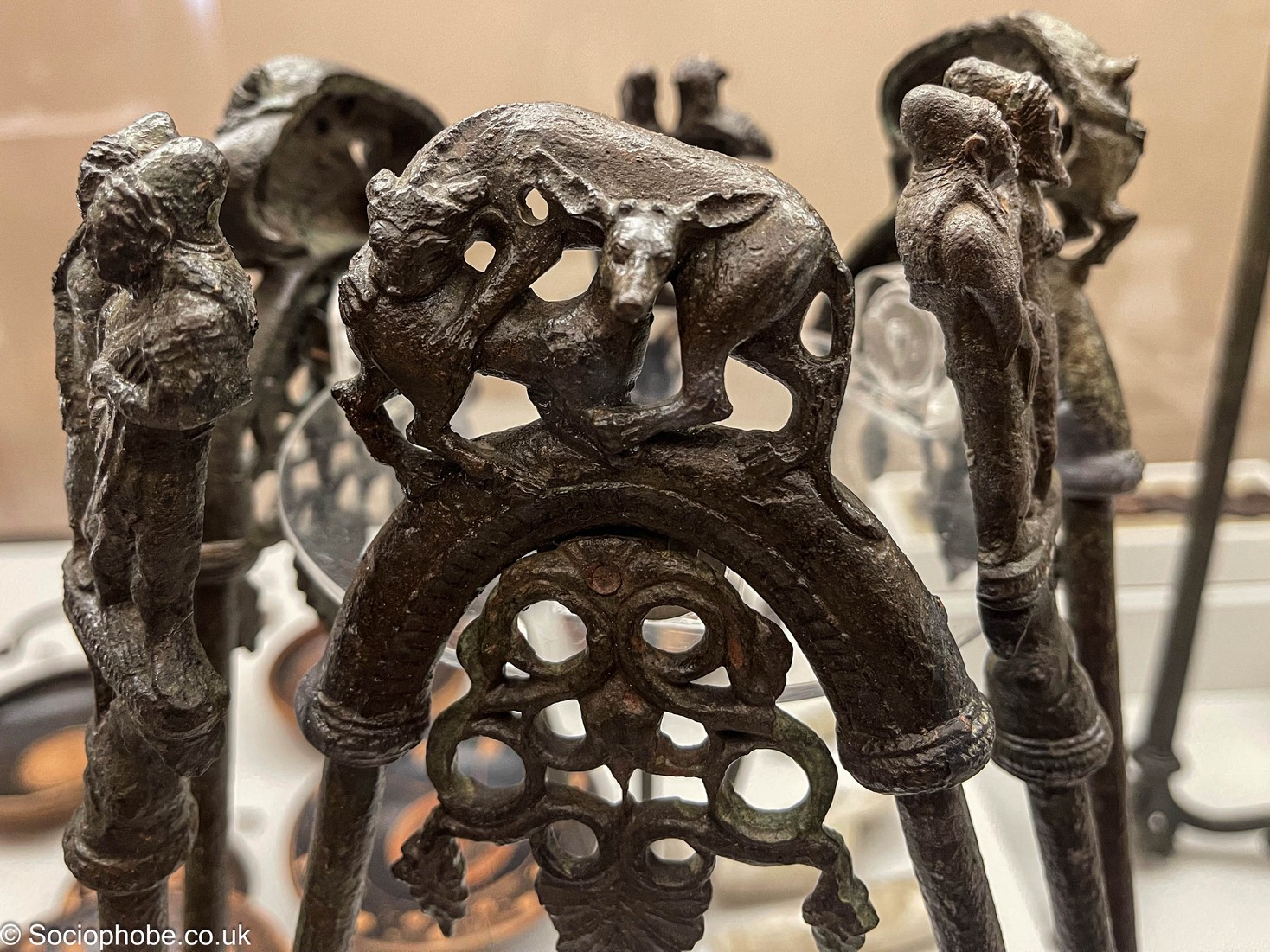
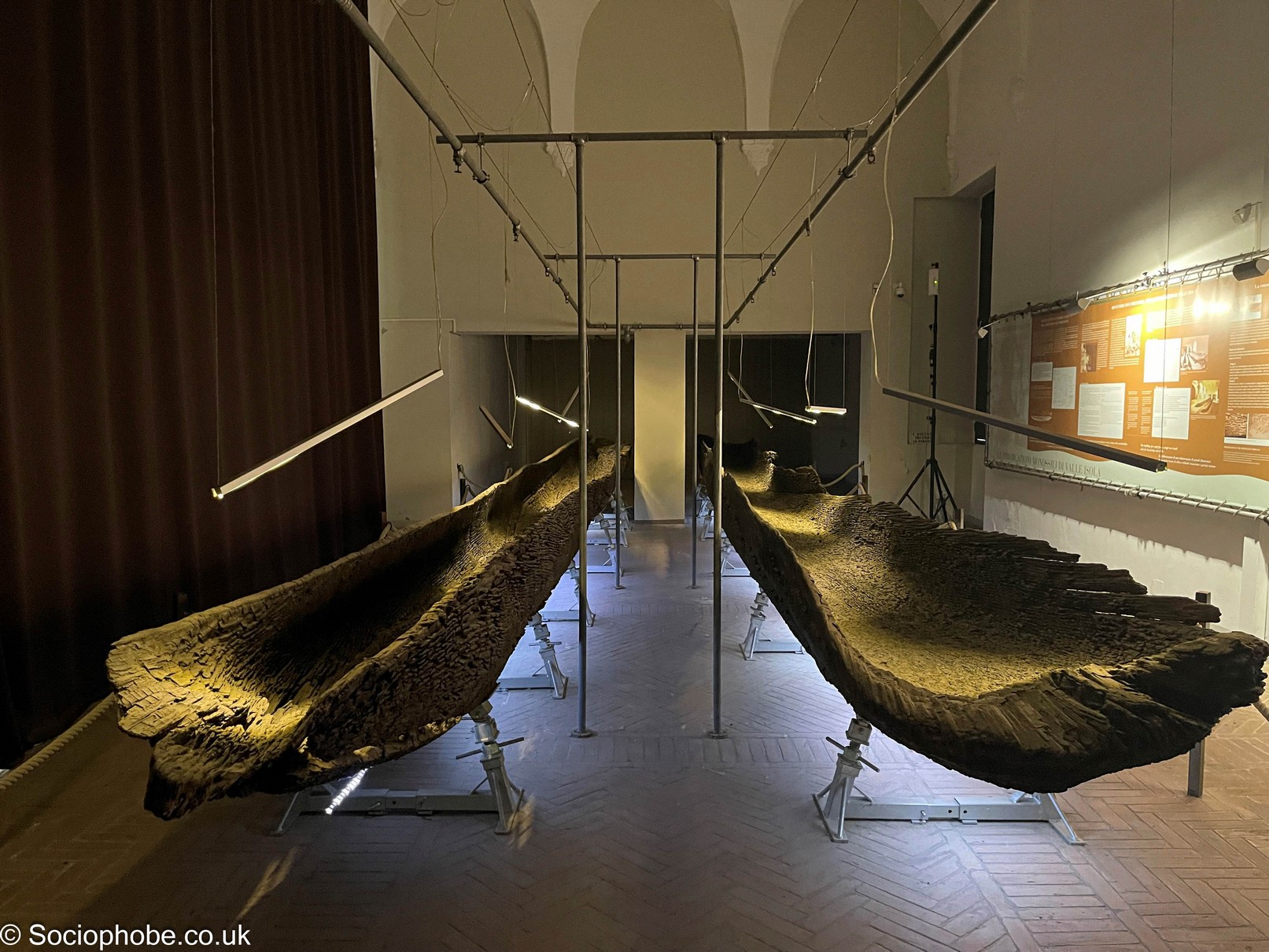
The museum had some fabulous items on display and it was all well laid out in chronological order. The ceramics were the star of the show, some of them were around a metre tall and classic Greek designs but for me the best items were the carving of a married couple – so much affection in a 2500 year old stone carving – and the strainer, a beautiful design that would grace any modern home. There were also lots of wonderful glasswork and gold earrings as well as the inscriptions on the graves to help archaeologists understand population movements and interactions. Luckily there were plenty of English inscriptions and I spent a couple of hours including a quick walk round the garden and a look at the two preserved Roman canoes. The building itself is the Palazzo Costabili, built for the Ambassador to Milan in the late fifteenth century and has some remarkable ceilings as well as a quite stupendous map room.
Next stop was a walk back across the city to the National Museum of Italian Judaism. There was a policeman outside, just to emphasise that antisemitism is still alive and well and after a quick search and bag check I went inside. The Museum is split into three areas but I forgot that and left after seeing two so I have no idea what the third part was. The start of the display was on the top floor and explained the history of the Jews from the foundation of the religion to having their own state, losing the state to the Babylonians and Assyrians, getting the state back, losing it to the Romans and having the Temple destroyed and then being scattered throughout the Roman world. Although largely tolerated by the Romans from then the Christianisation of the Roman Empire bought new problems as the Church lacked the tolerance of its founder when it came to the Jews. The population ebbed and flowed with trade and persecution, fleeing some areas, setting up in new ones and then the process started again.
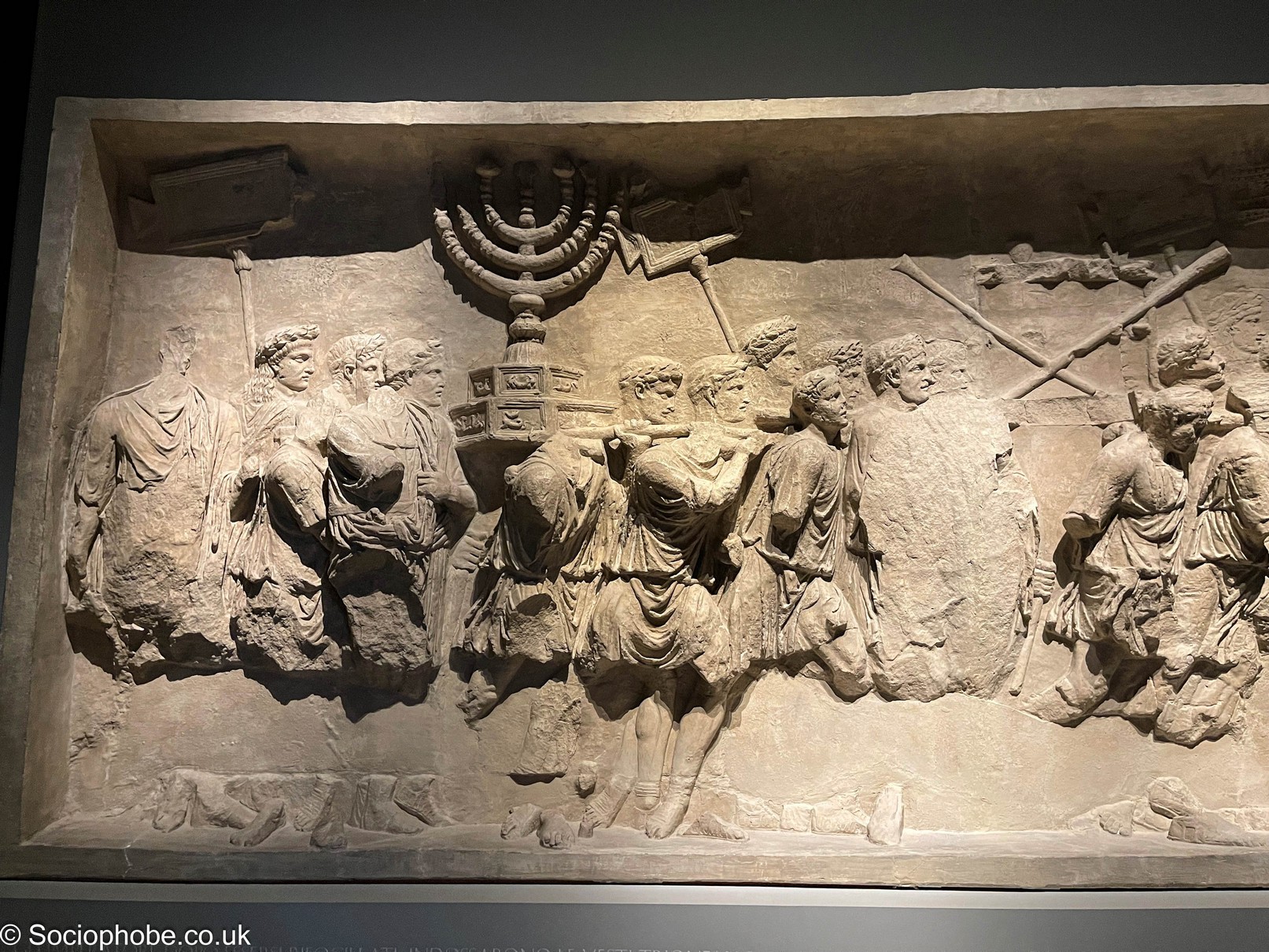
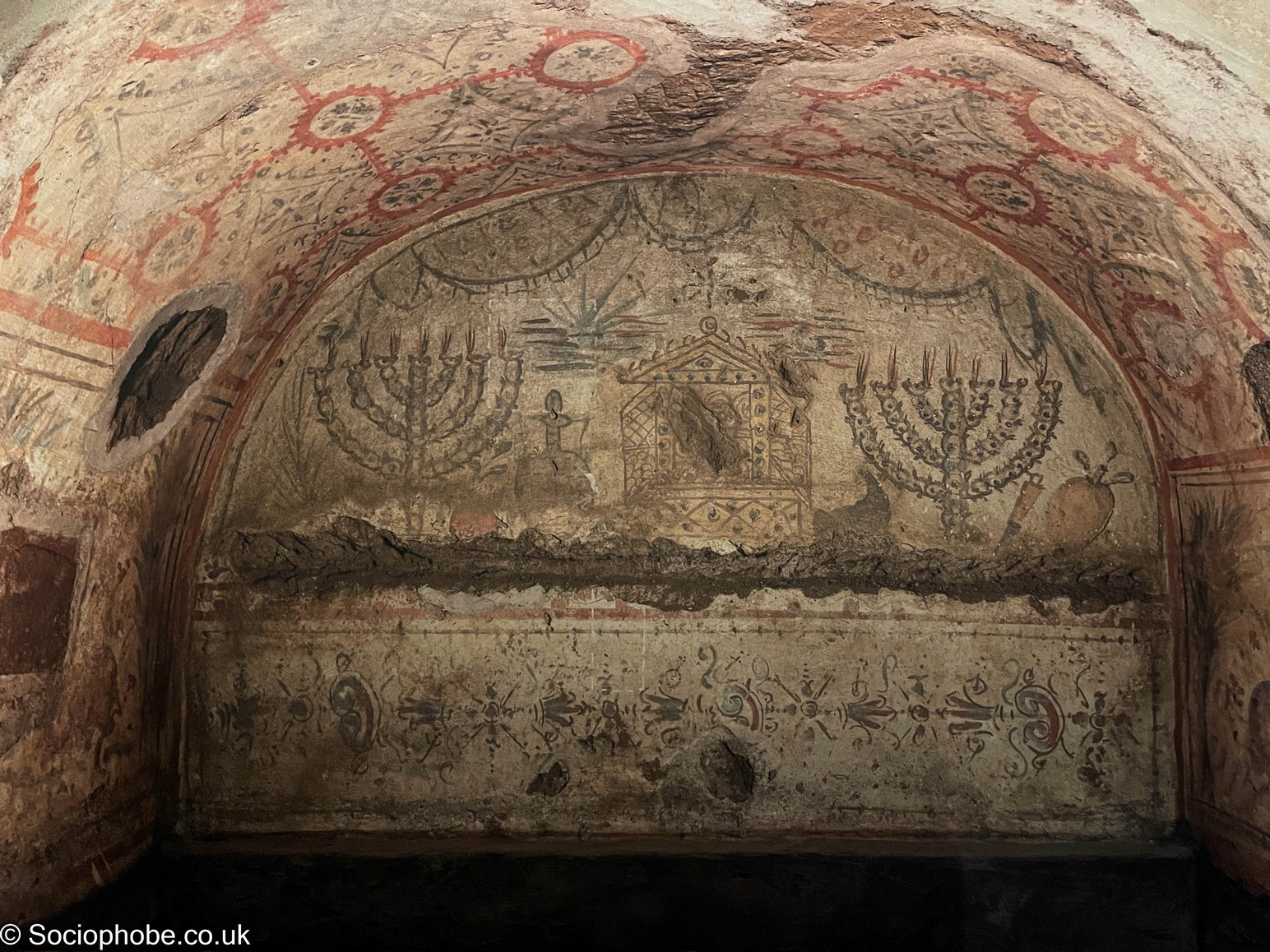
The ground floor showed the story of the Italian Jews from the turn of the twentieth century until 1948. The involvement of the Jews as citizens of Italy and fighting for their country in World War 1 was over shadowed with the rise of Mussolini. In 1938 Jews were banned from holding public offices, attending school, being in the armed forces and marrying outside their faith but were otherwise (I know that’s a very big ‘otherwise’!) left largely alone. However in 1943 the Germans took over the running of Italy and started the process of deportation and extermination with limited involvement by the Italian police. By 1945 and the end of the war, 20% of the Italian Jewish population were killed by the Germans.
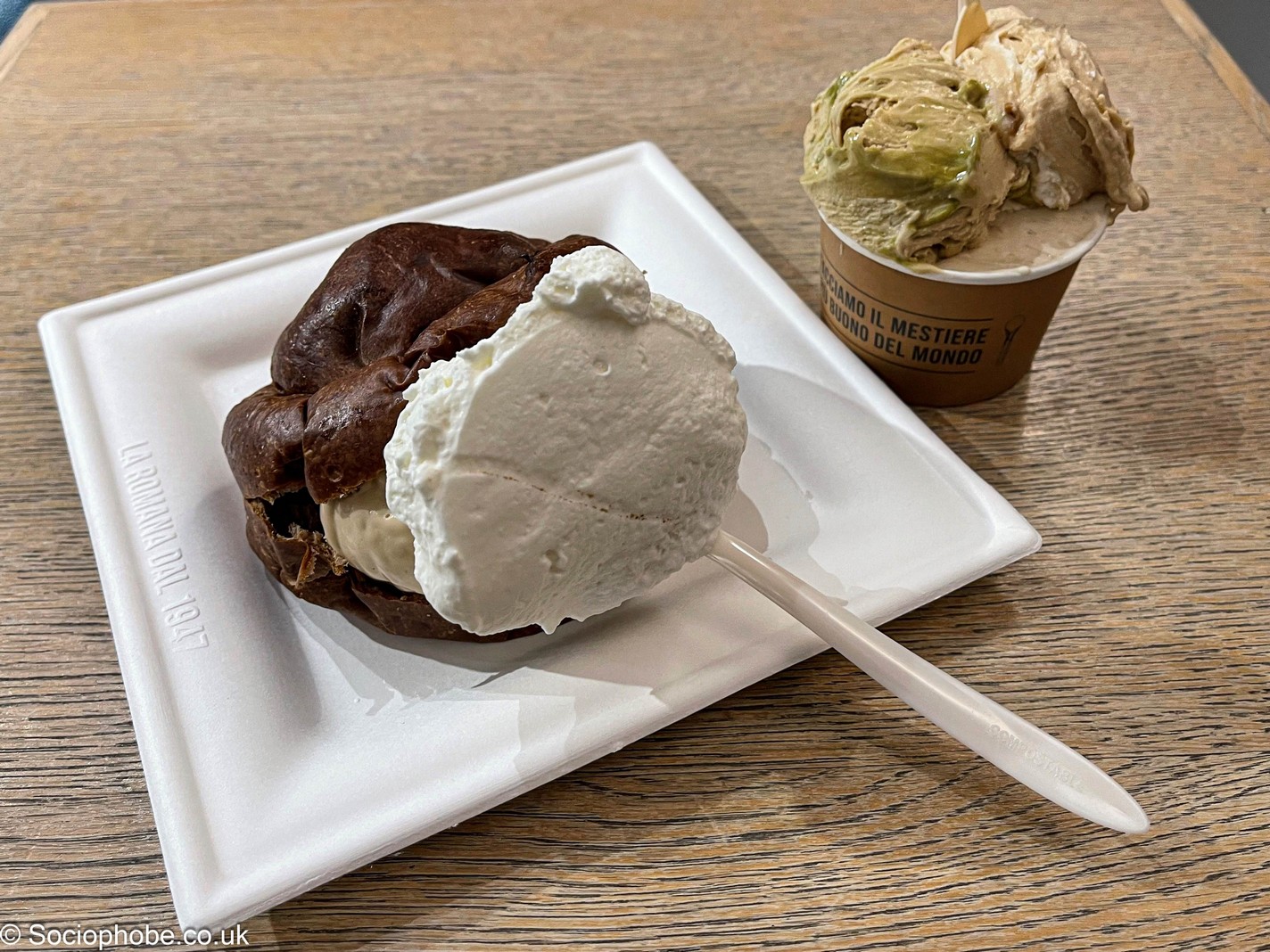
After that cheeriness, bought into focus by the antisemitic marches still taking place in London, I left and walked back to the hotel in the afternoon sunshine. After sorting the photos we visited the Gelato Lab. I am so glad there isn’t one back home. What a fabulous place! There are so many choices I think we’ll return tomorrow but today I had gelato in a chocolate brioche, a wonderful invention.
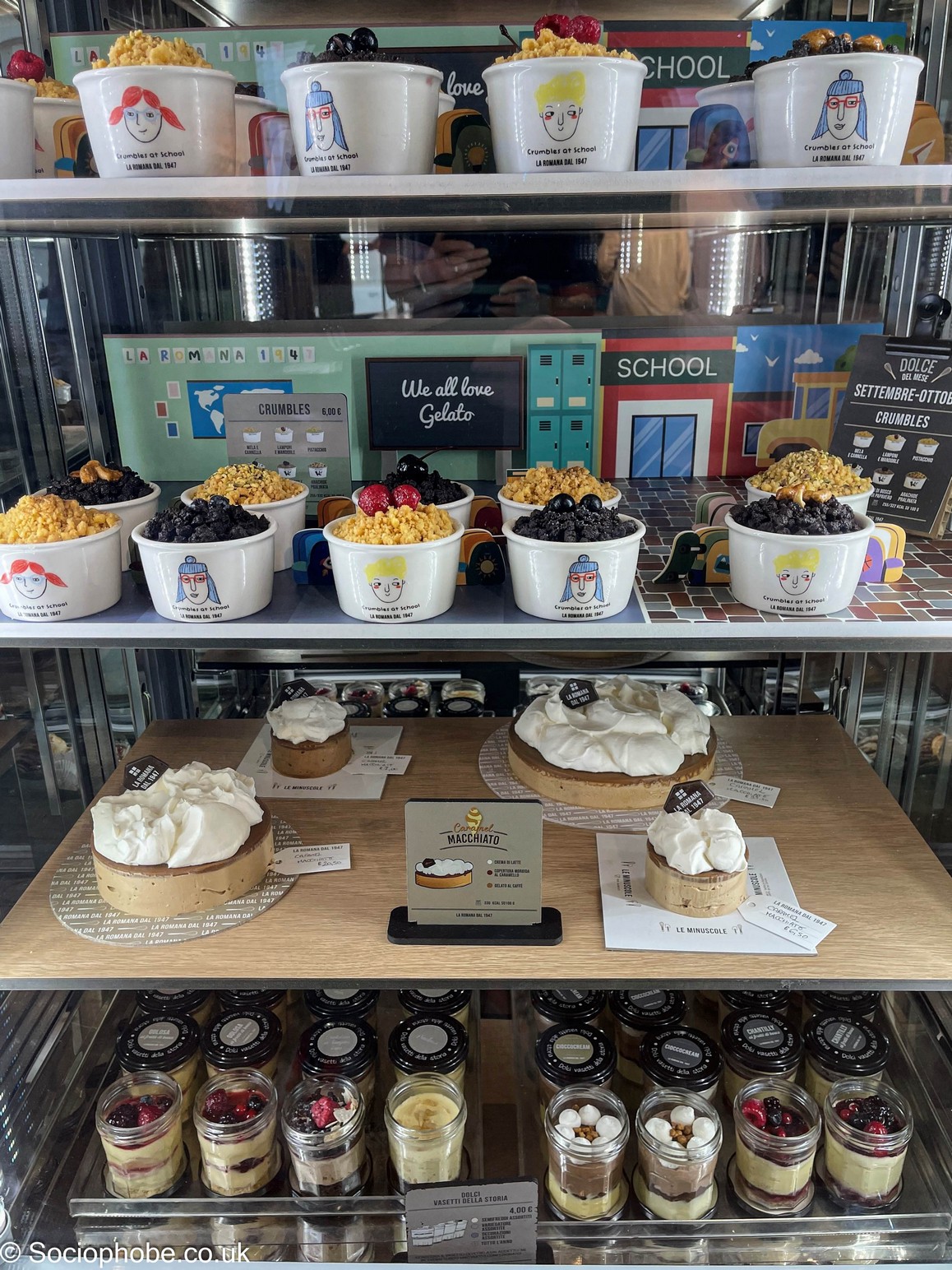
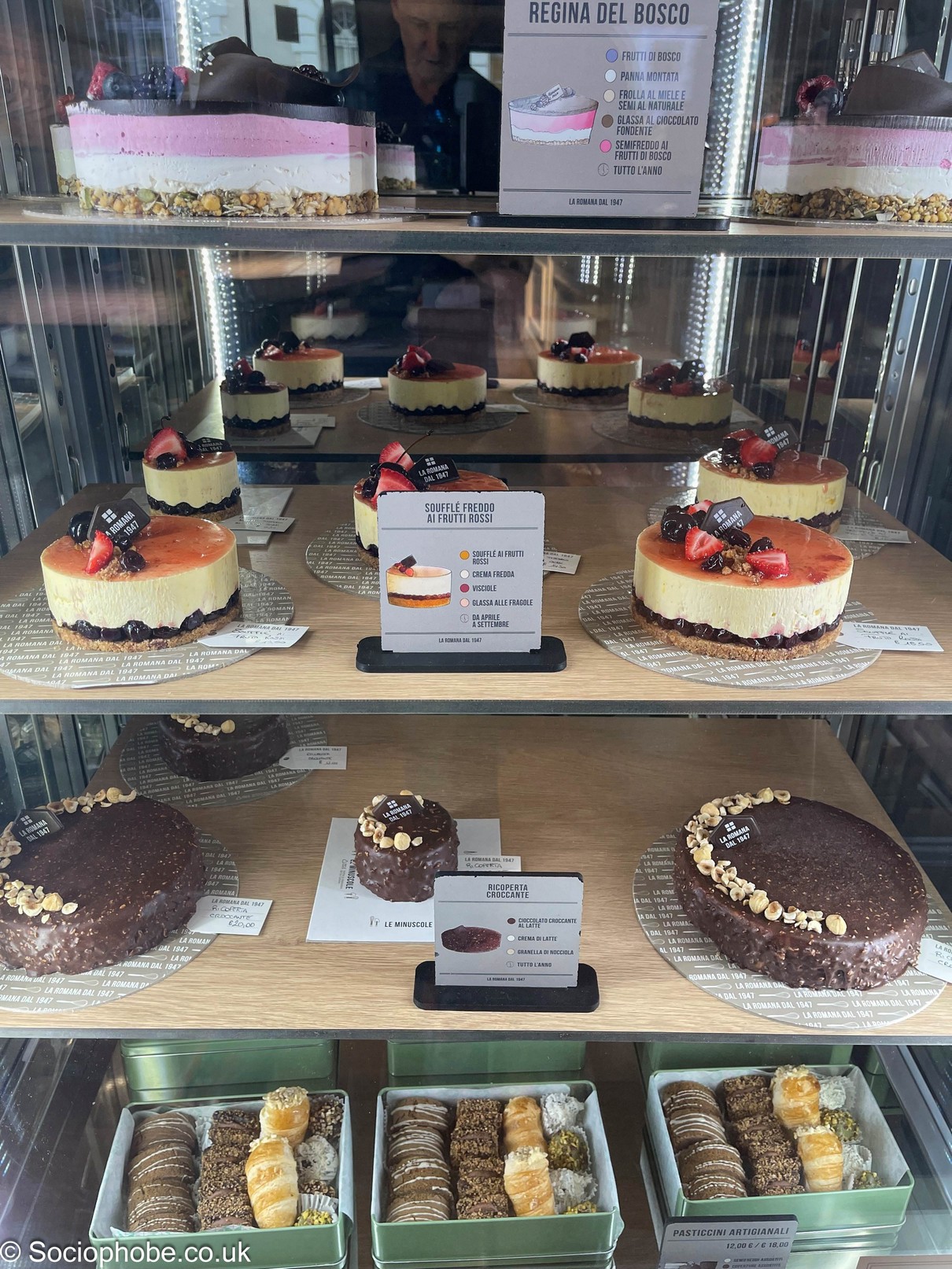
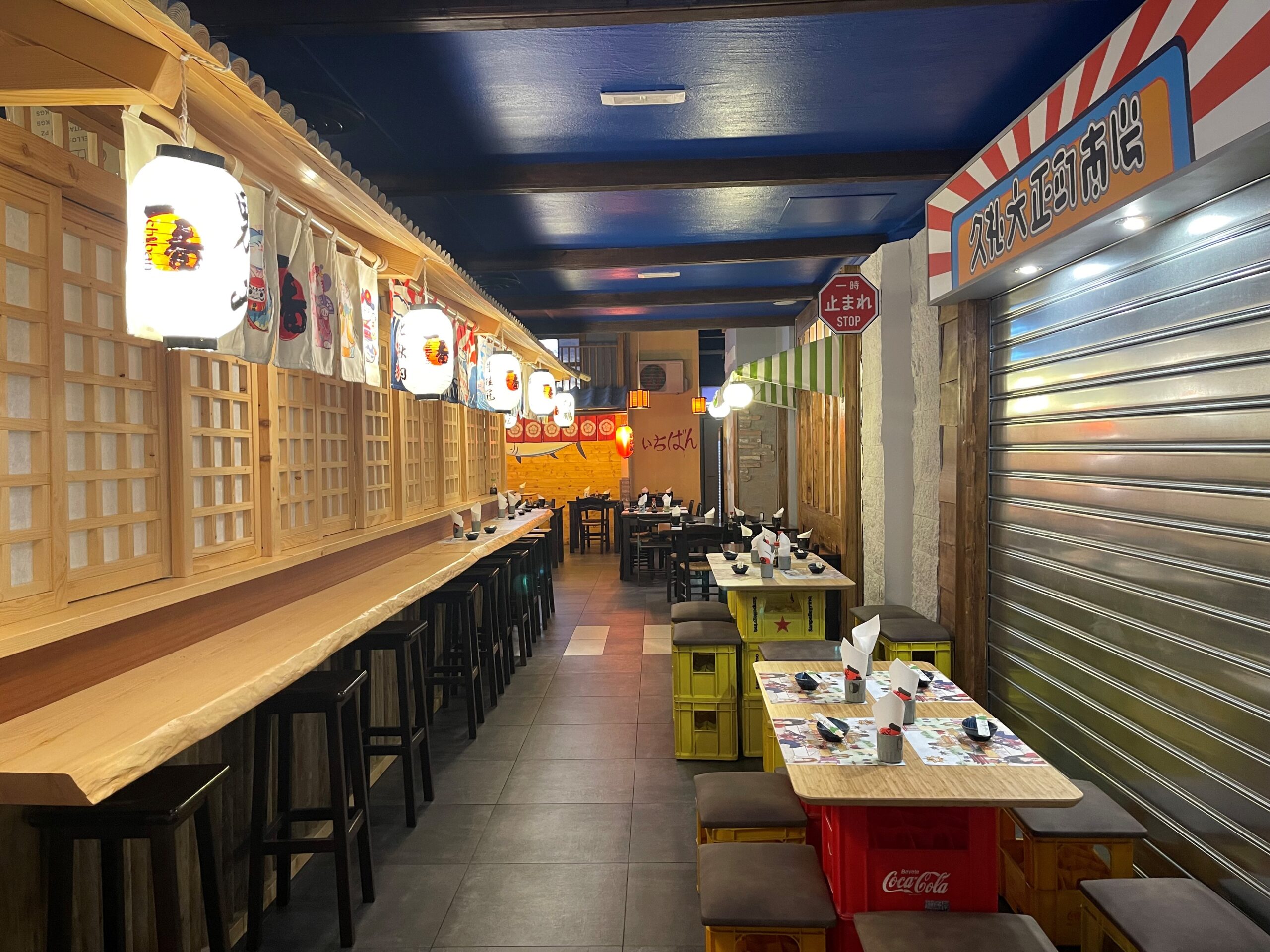
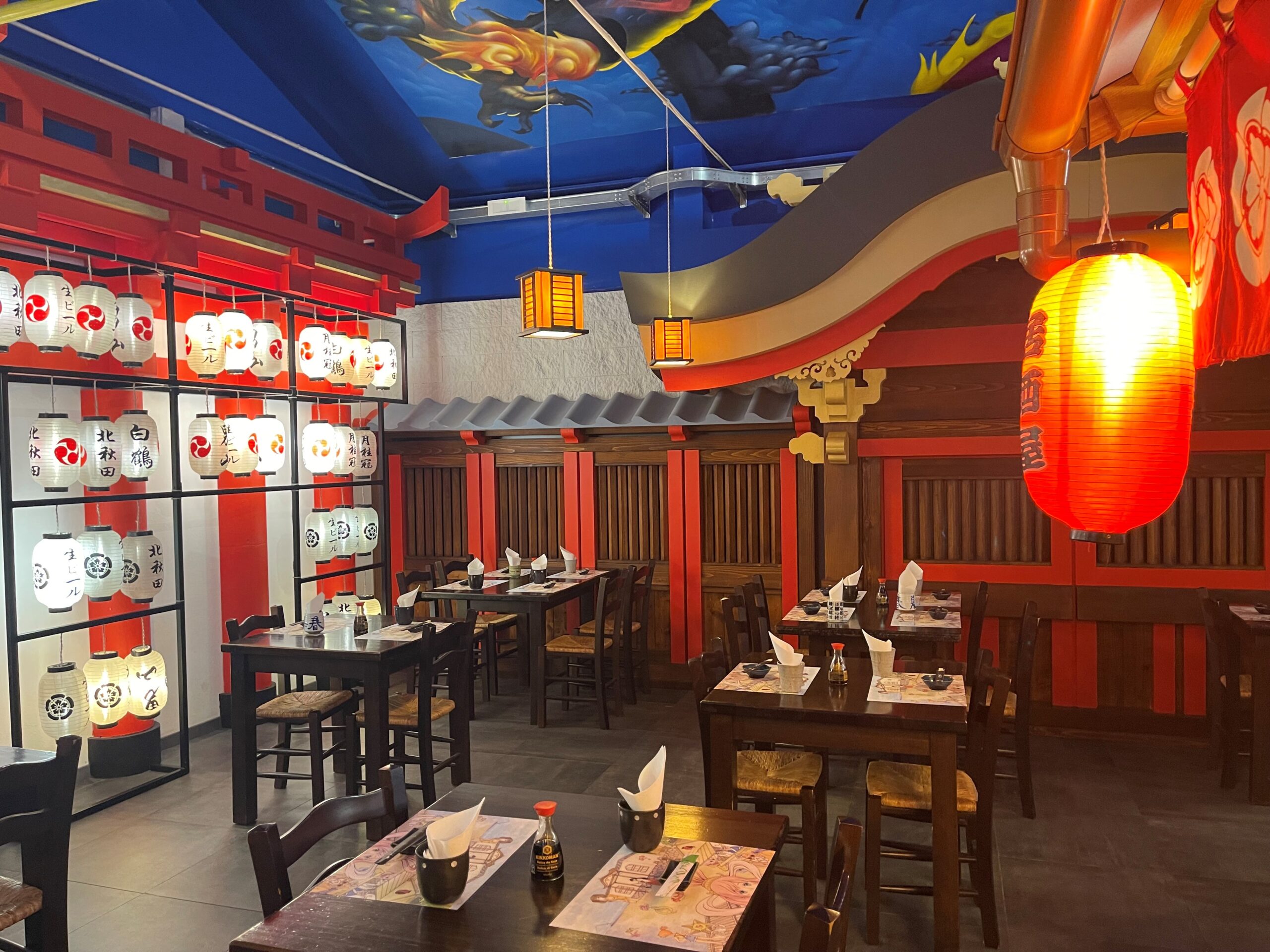
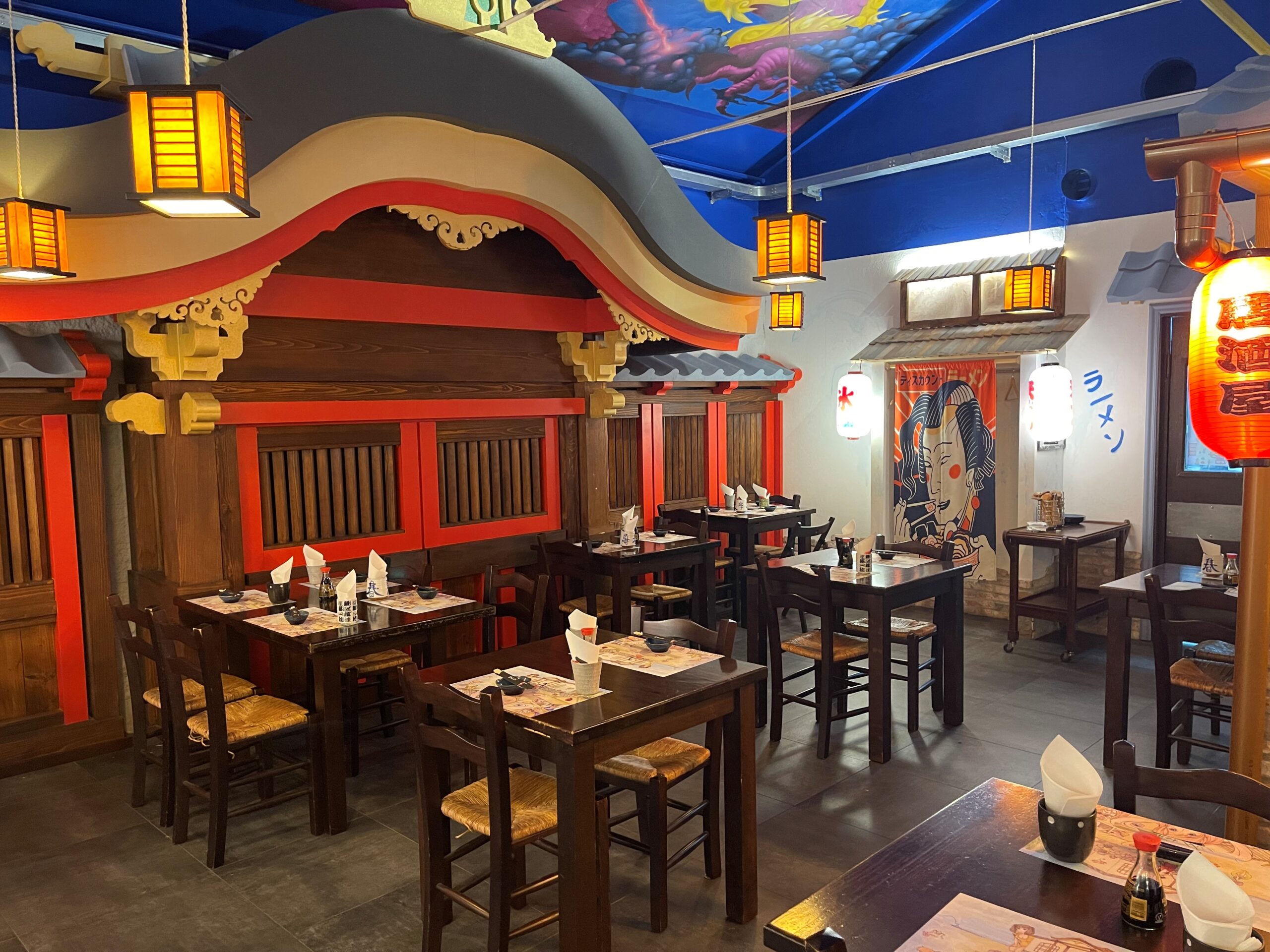
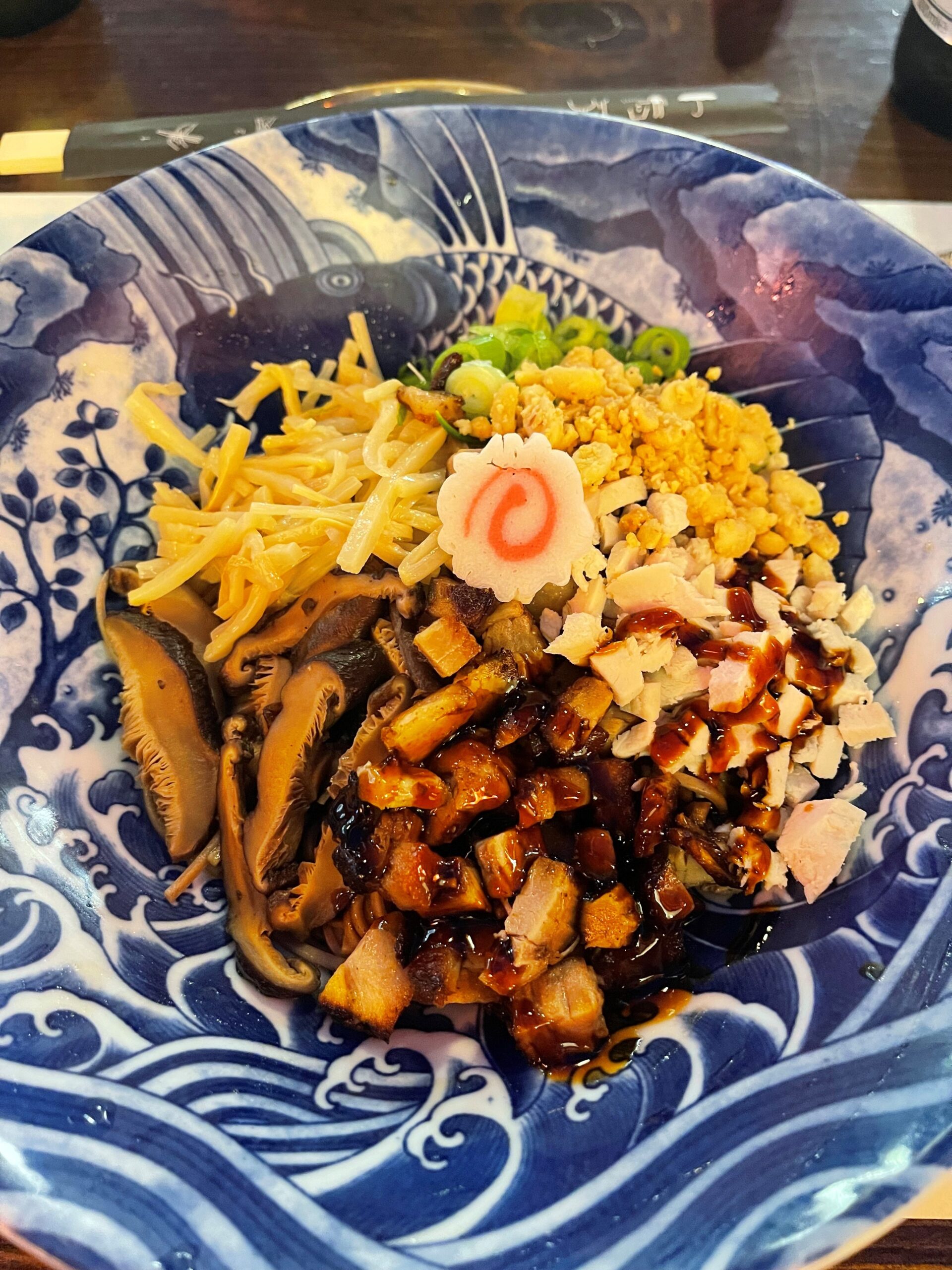
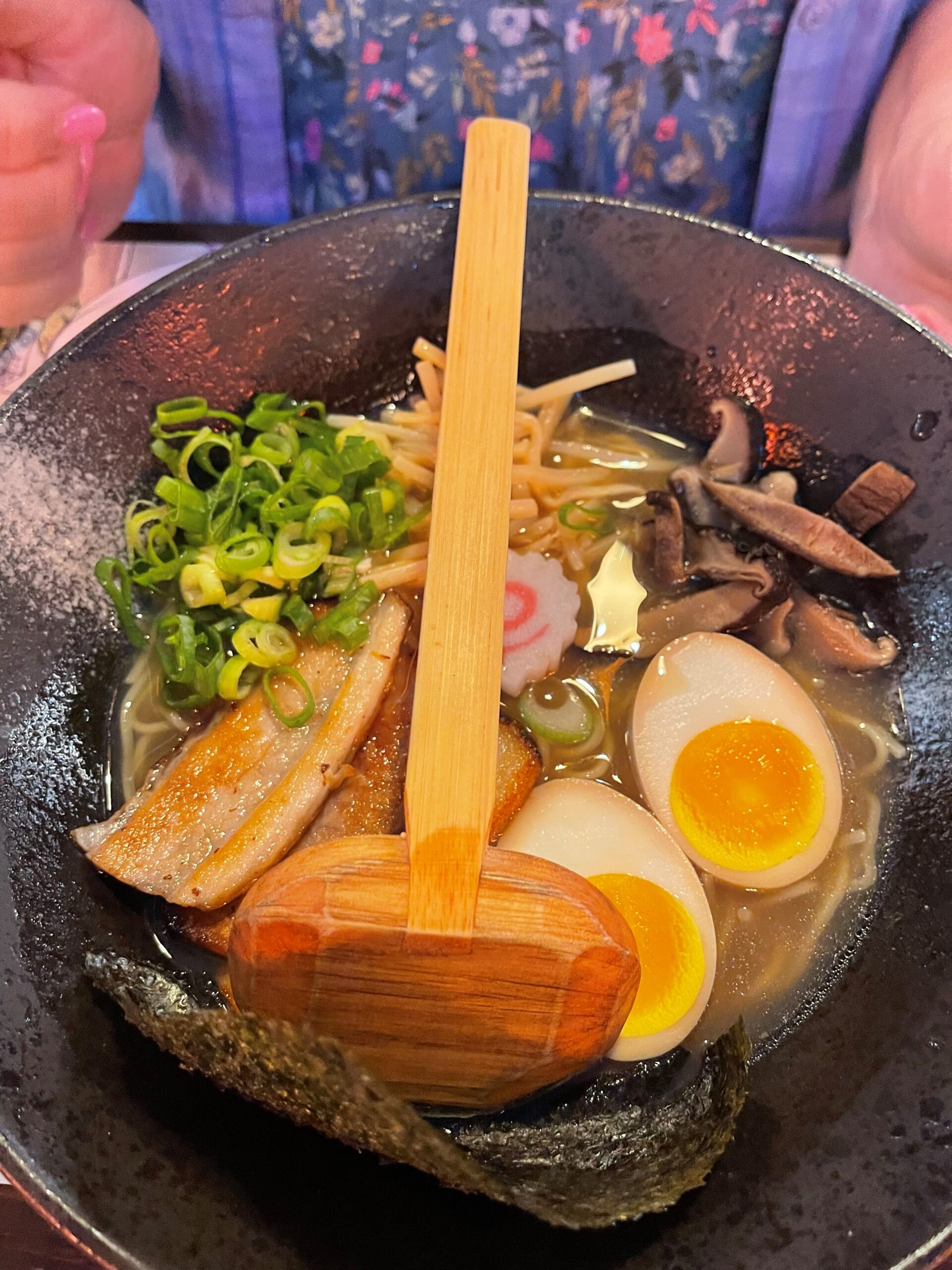
Dinner on this Thursday was at a nearby Japanese restaurant, Ichiban, that was just wonderful. It was very Japanese themed but the service was fabulous, food excellent both for presentation and taste and prices very good. It was also popular with the locals and we even had a dessert, pancakes with red bean paste. A lovely way to end the evening.
Friday – Pomposa Abbey and Valsanzibio Gardens – Italy
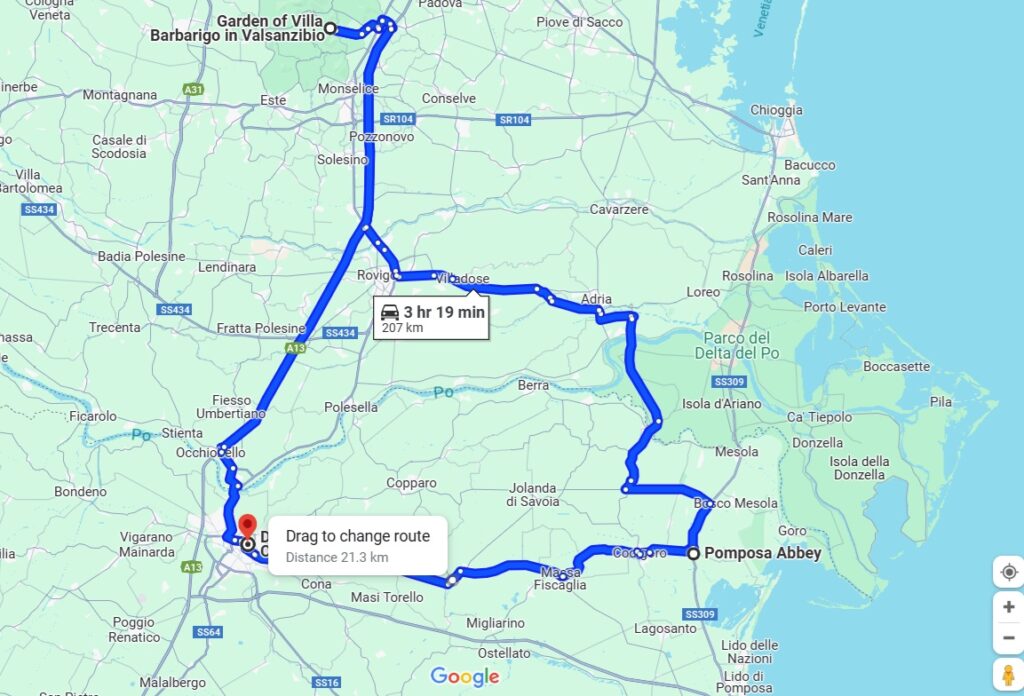
Although we didn’t wake late we were both quite tired after another itchy night so took a while to get motivated. We didn’t leave the hotel until gone 9 so couldn’t be bothered to get breakfast and drove straight towards Pomposa Abbey. It was a tedious drive through the boringly flat farmland of the Po delta through constant 50 and 70kph speed limits. We drove past lots of stunning old buildings, both detached farmhouses and properties in the villages and it was shocking how many were boarded up and abandoned. The towns and villages we drove through all seemed so quiet, I don’t recall seeing a single individual walking in any of them which just seems so strange.
The abbey at Pomposa was founded in the 6th century, possibly by the colleagues of the Irish monk Columbanus and by the 9th century was famous for its library and scriptorium. It is also the place where modern musical notation was invented and codified in the 11th century. The current church was built in the 9th century and expanded and modified through to the 14th century before being abandoned in 1650. The nine story bell tower is an 11th century addition.
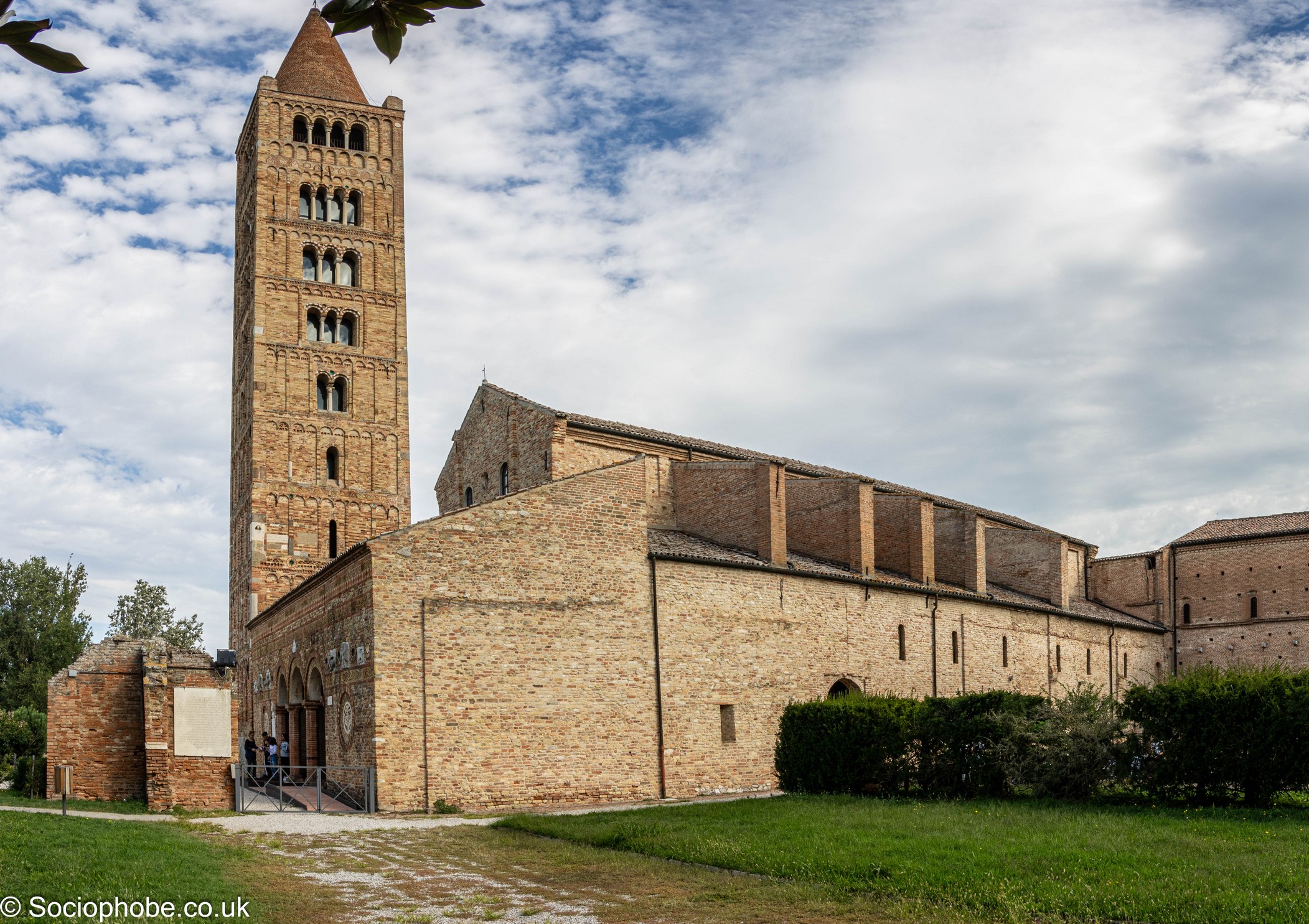
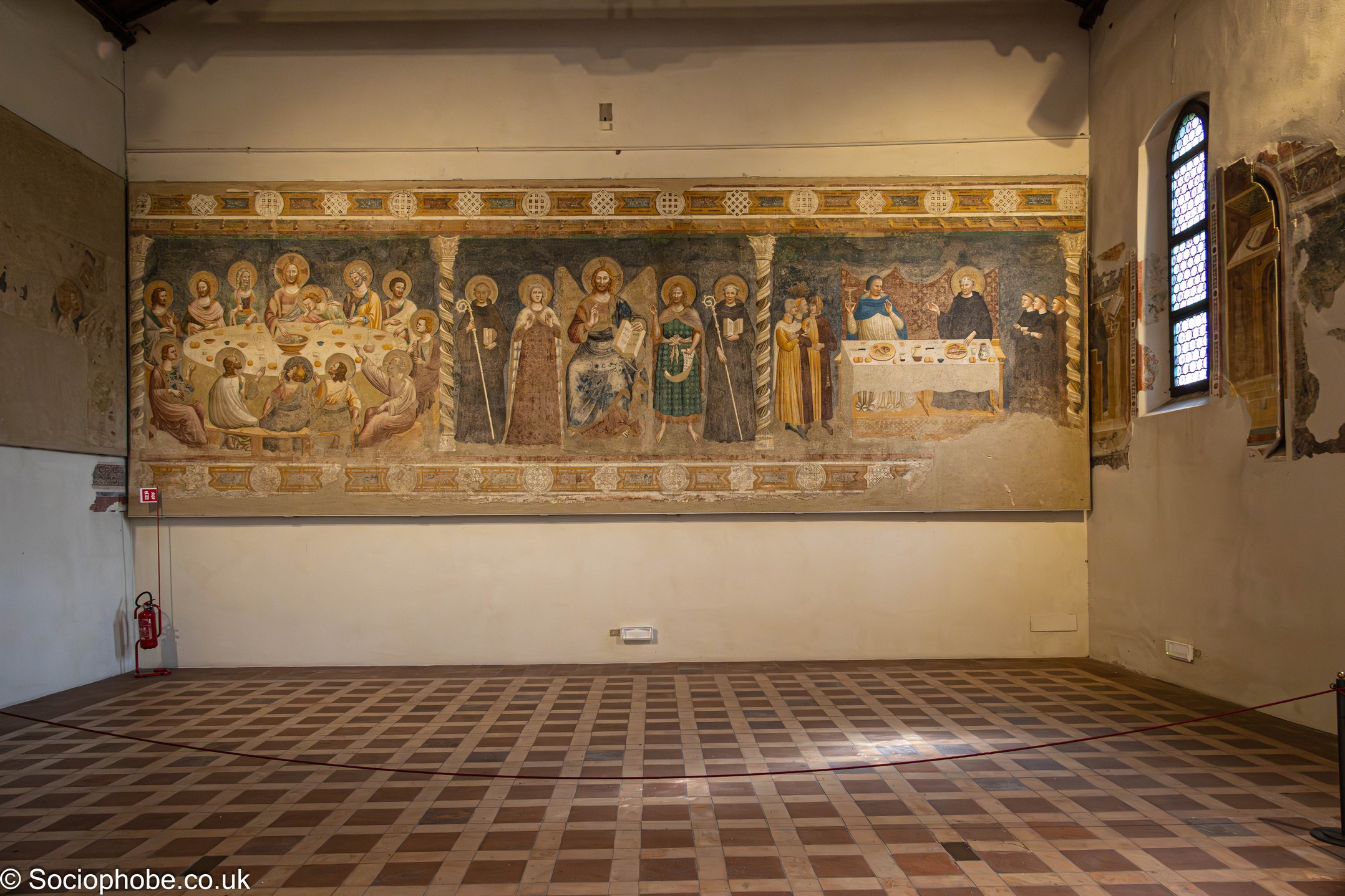
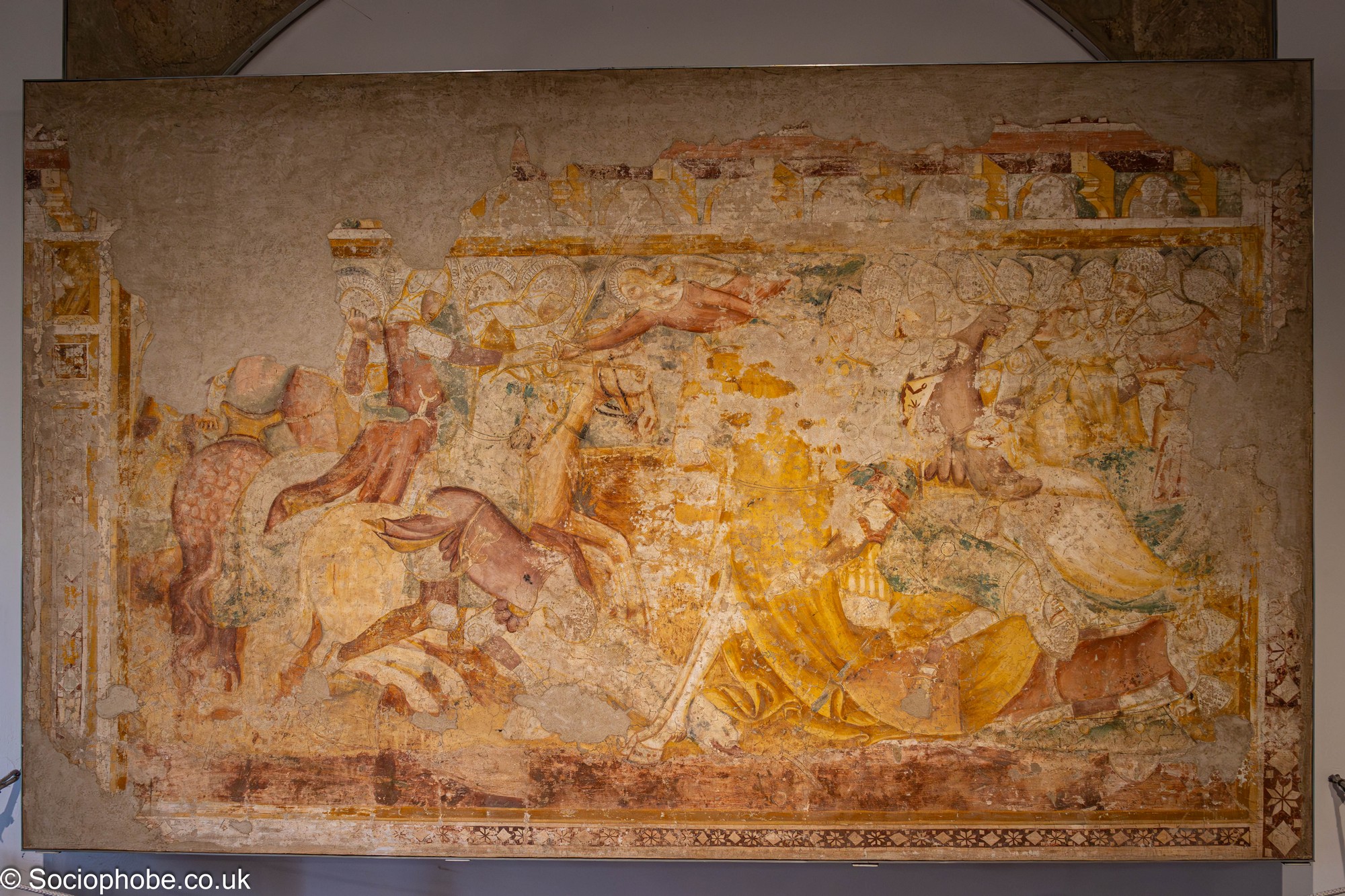
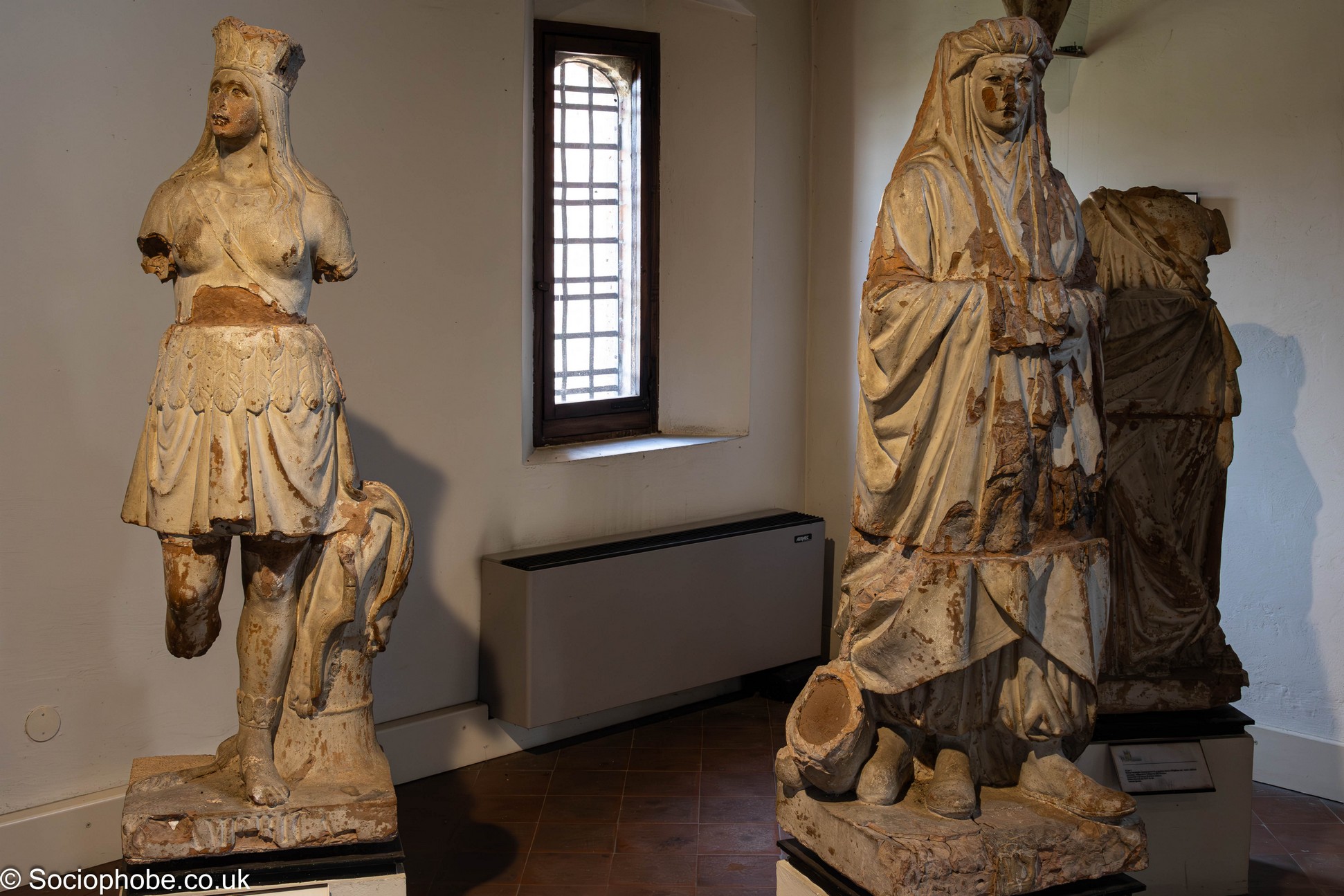
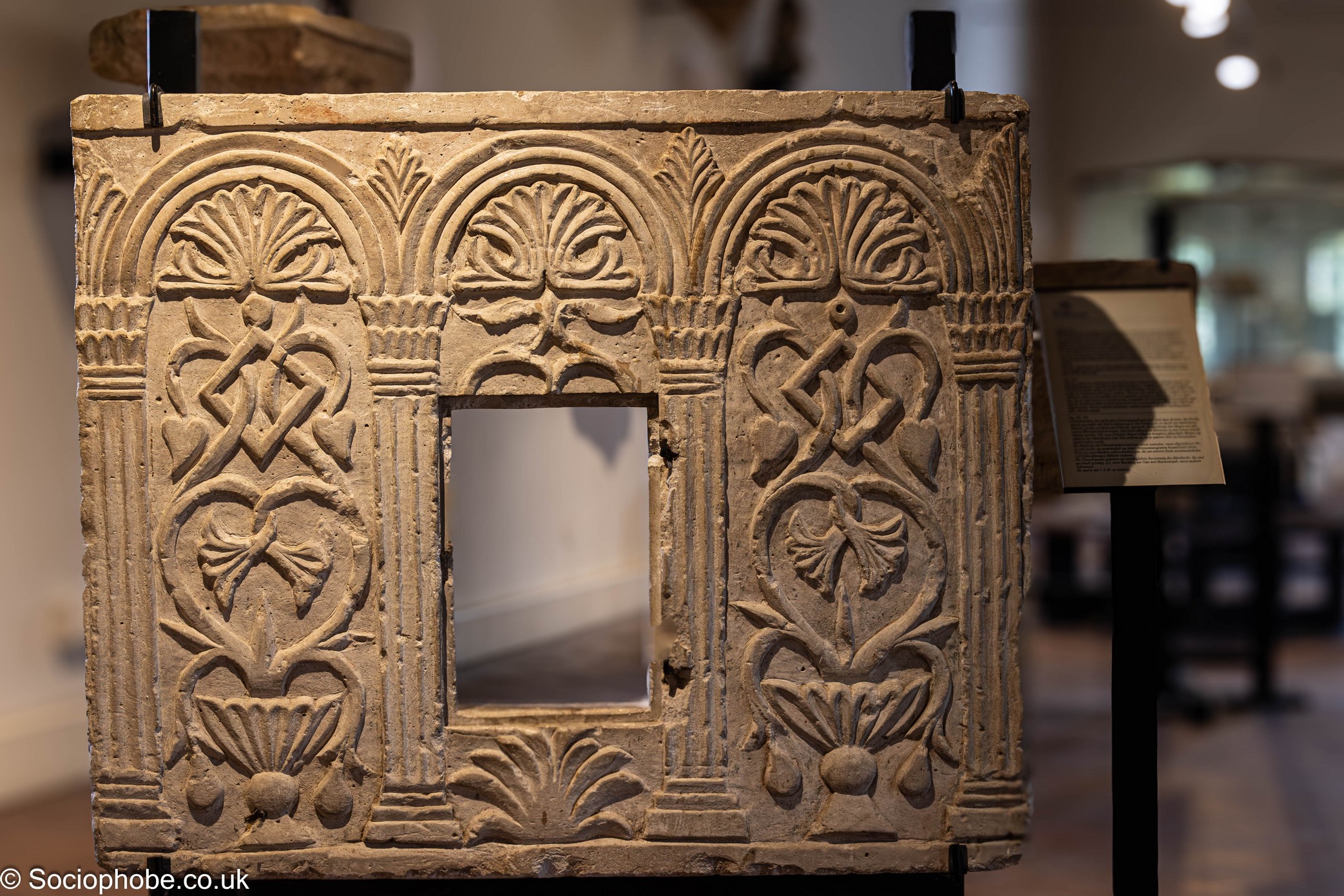
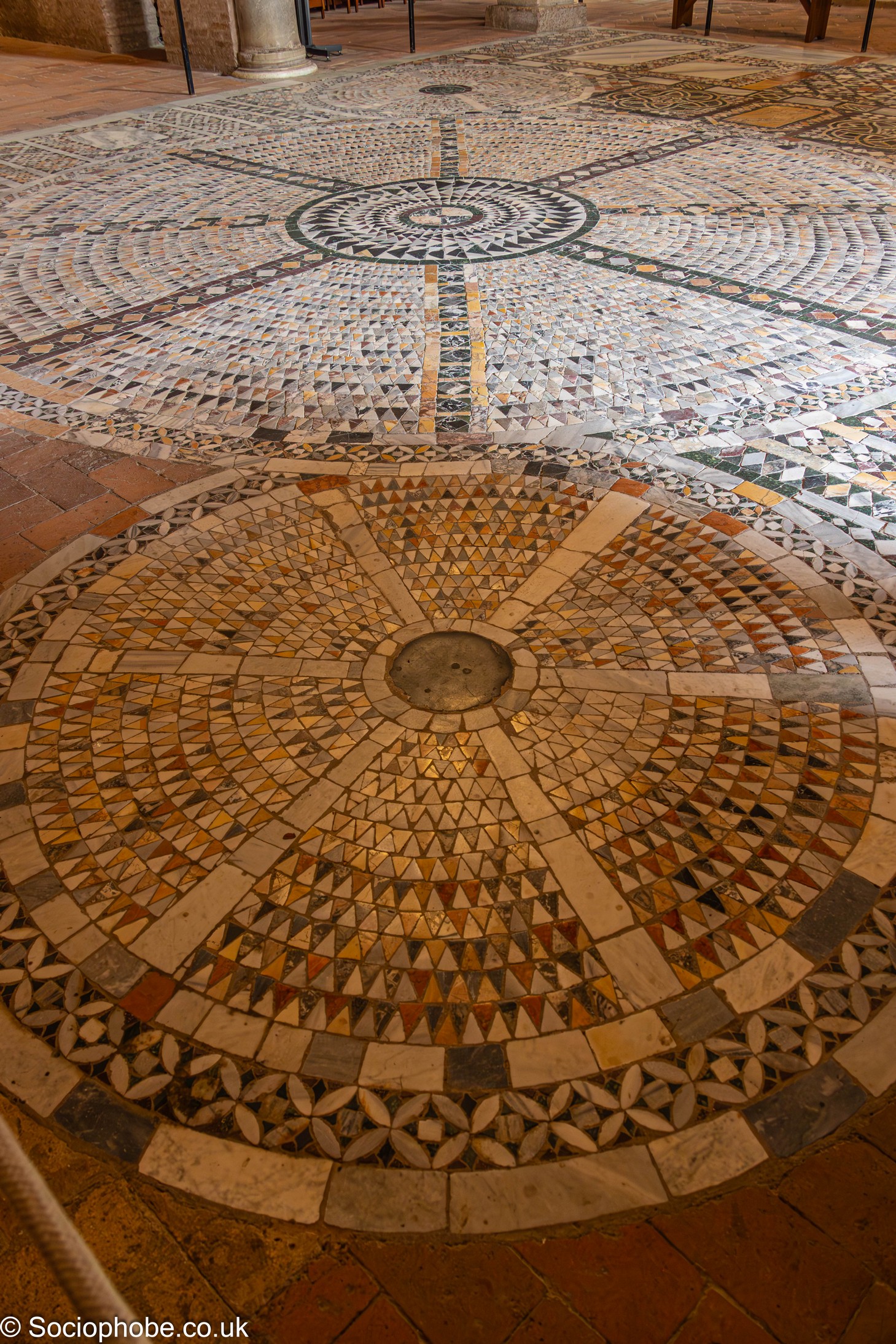
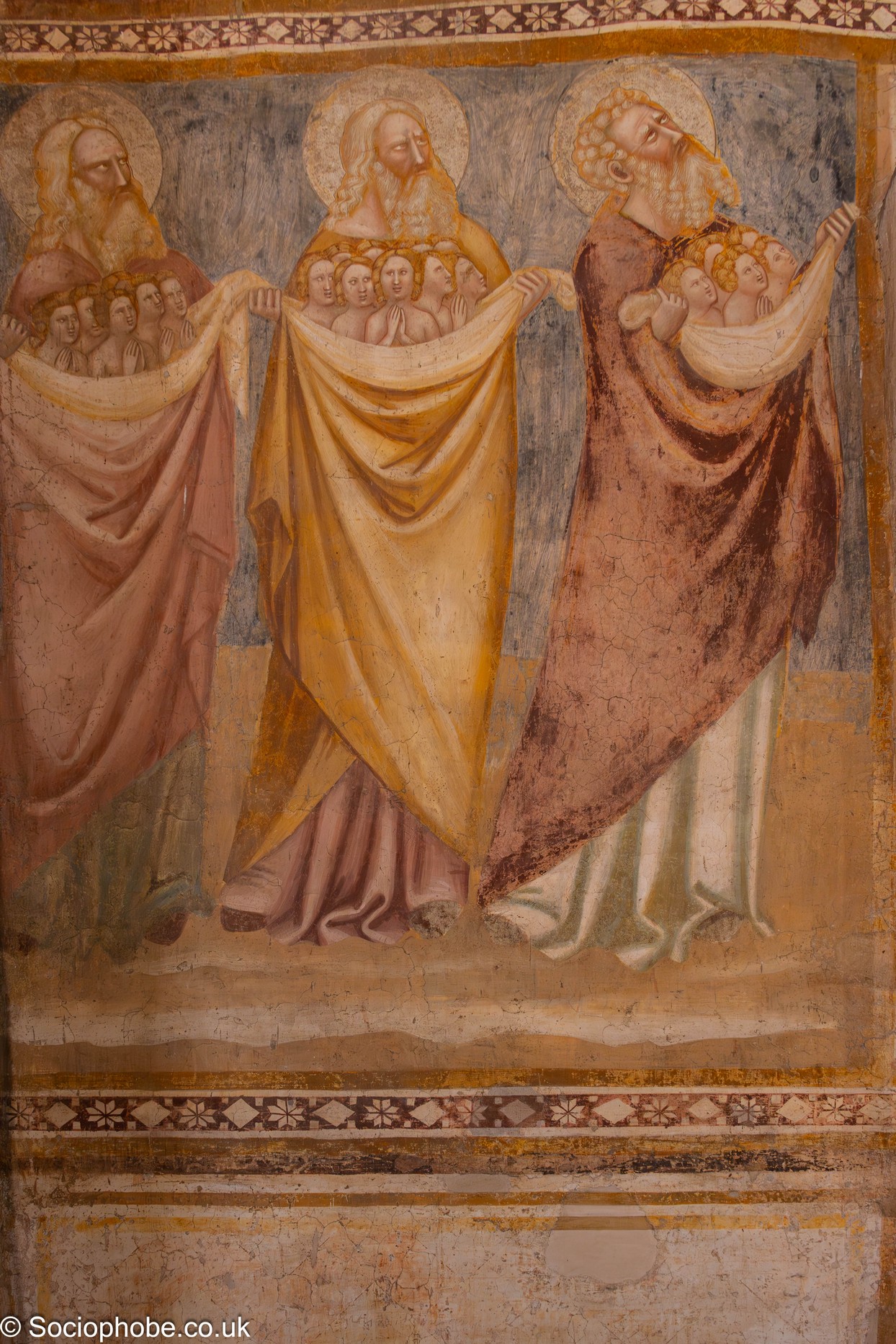
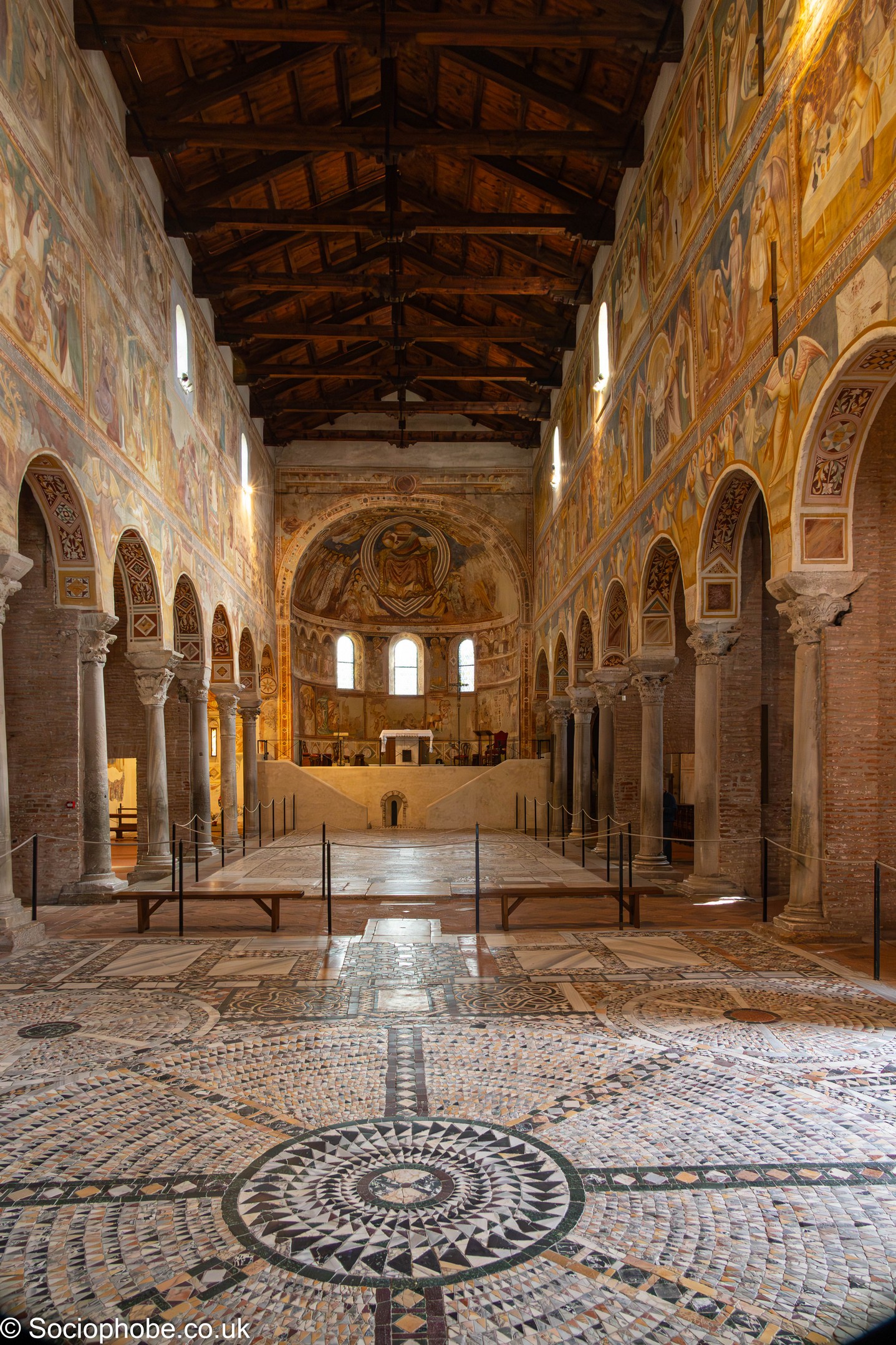
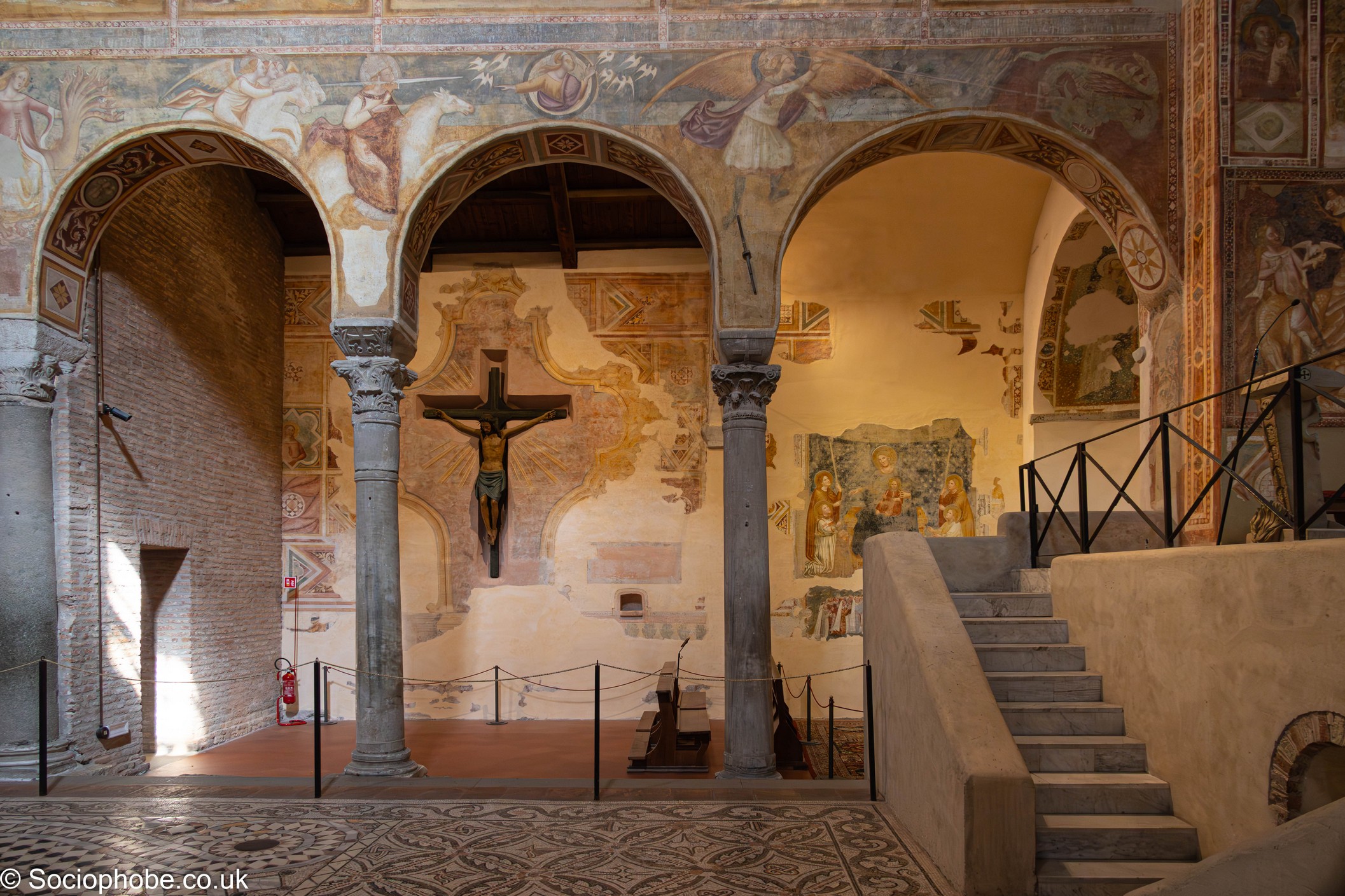
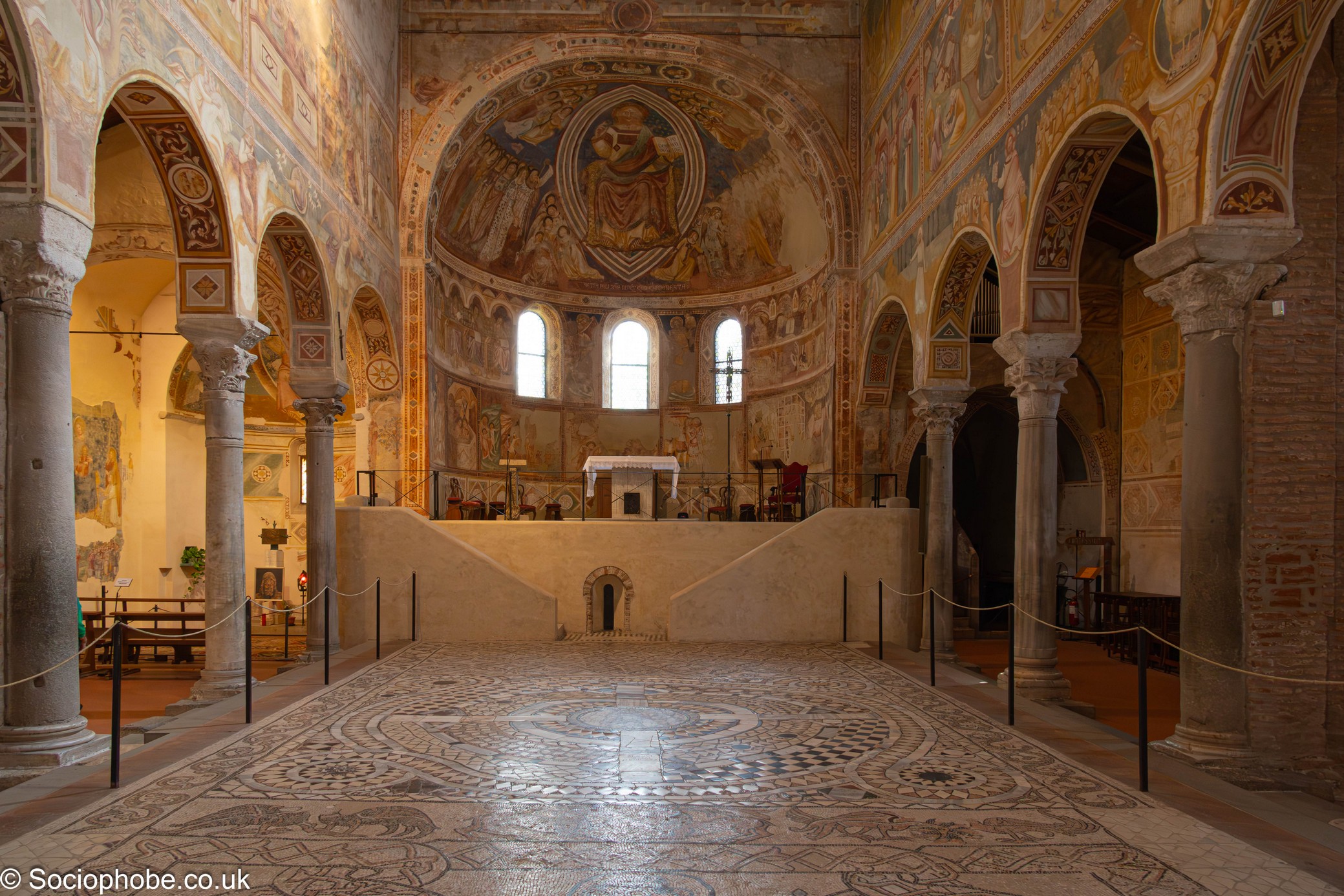
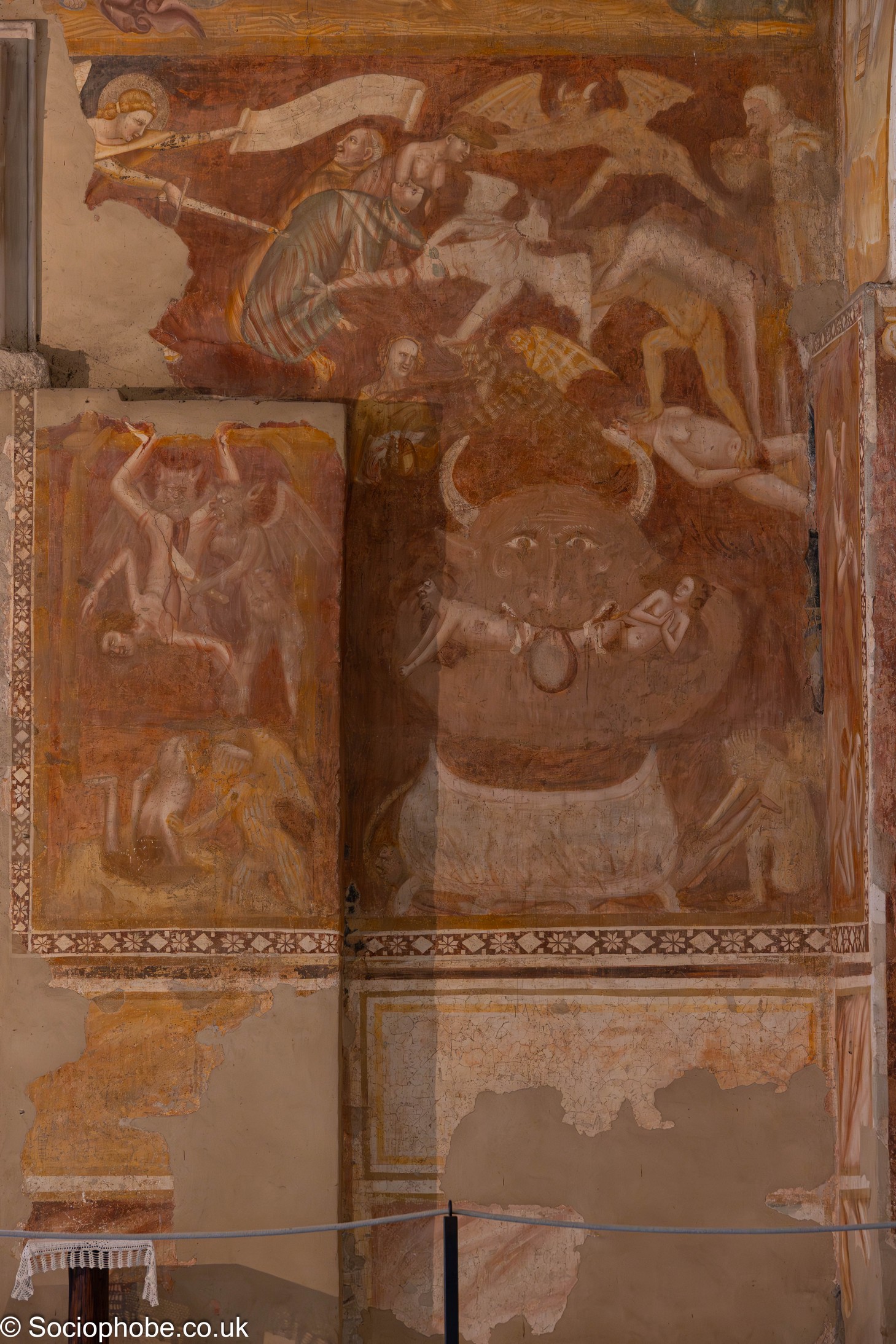
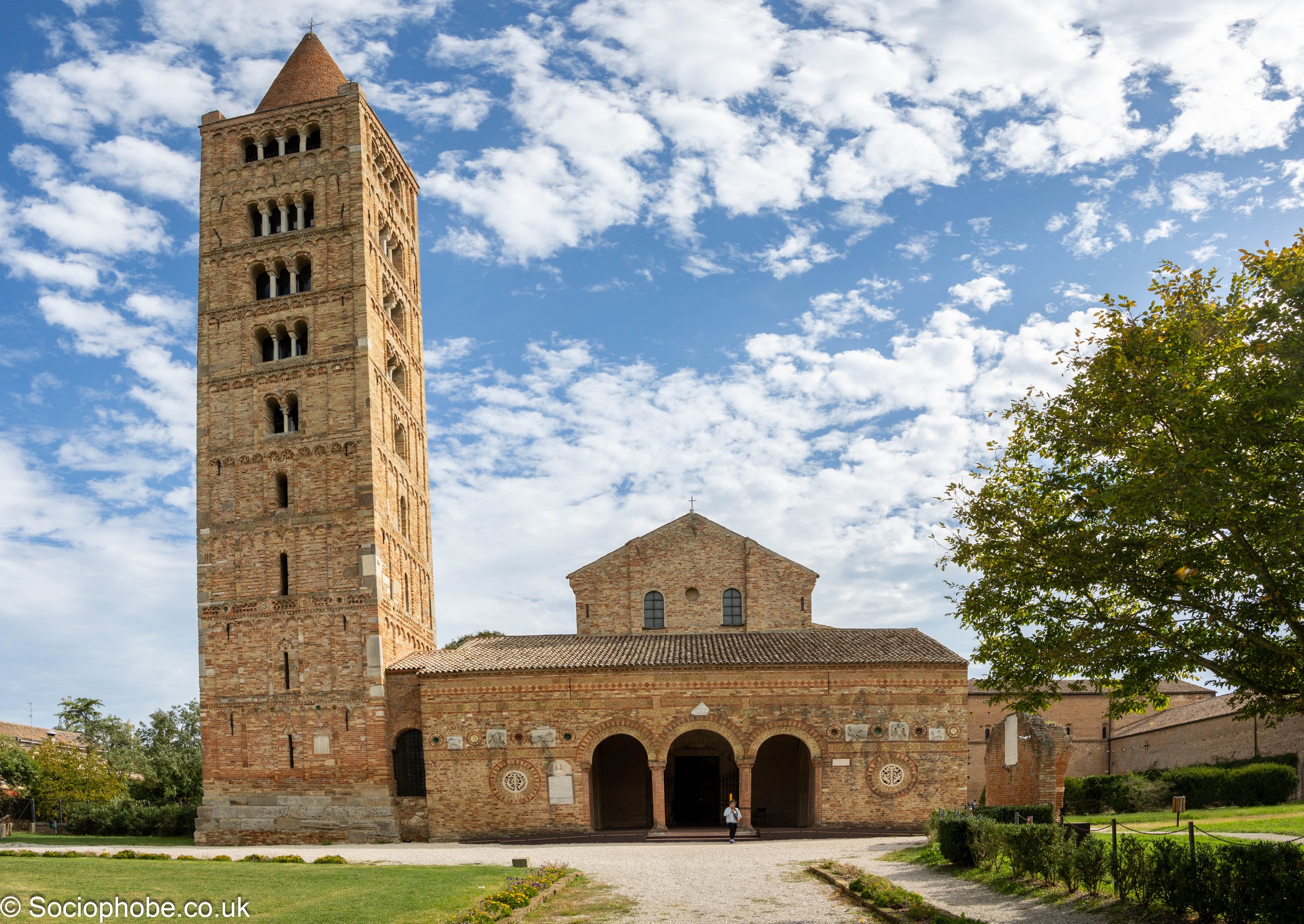
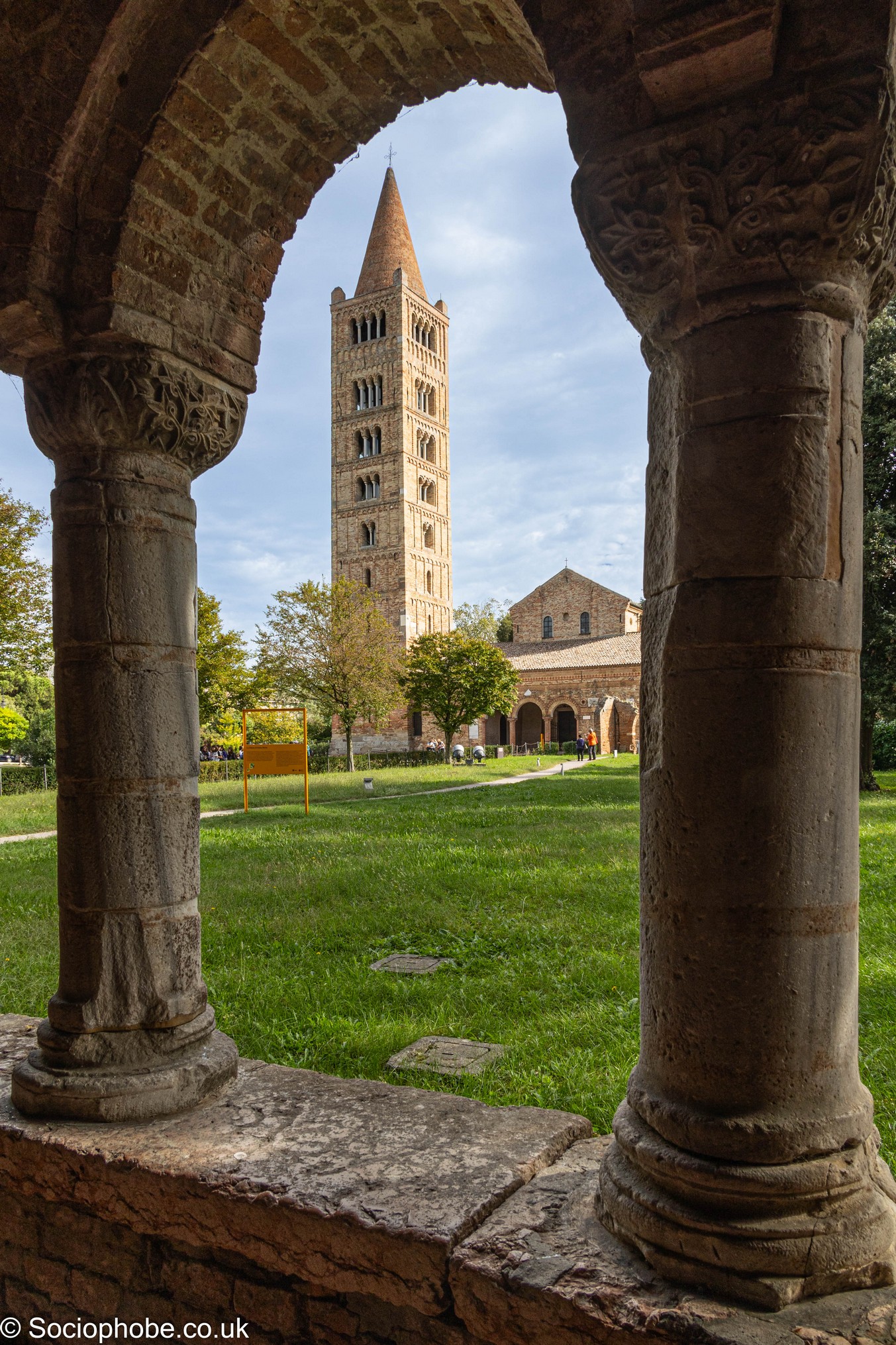
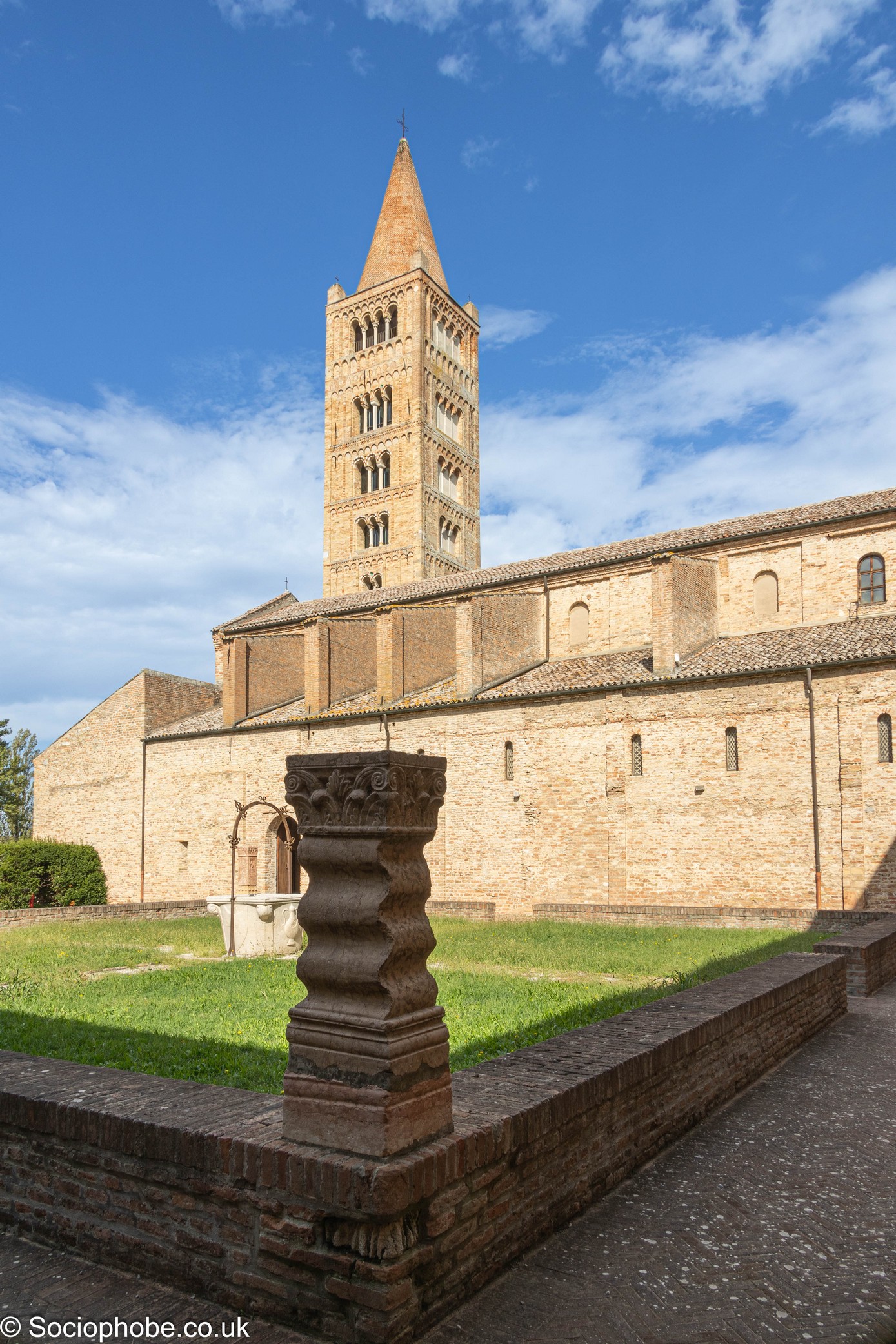
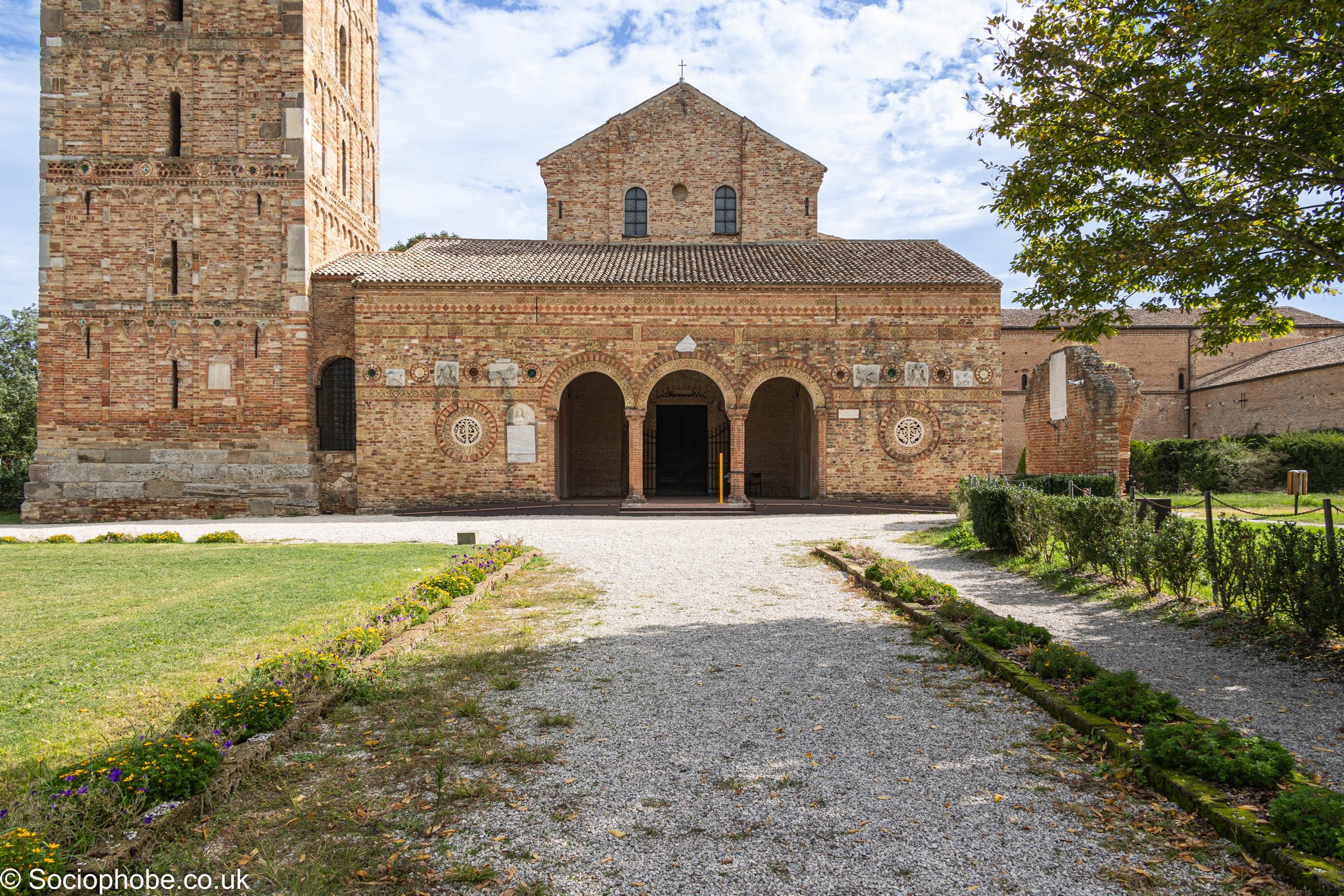
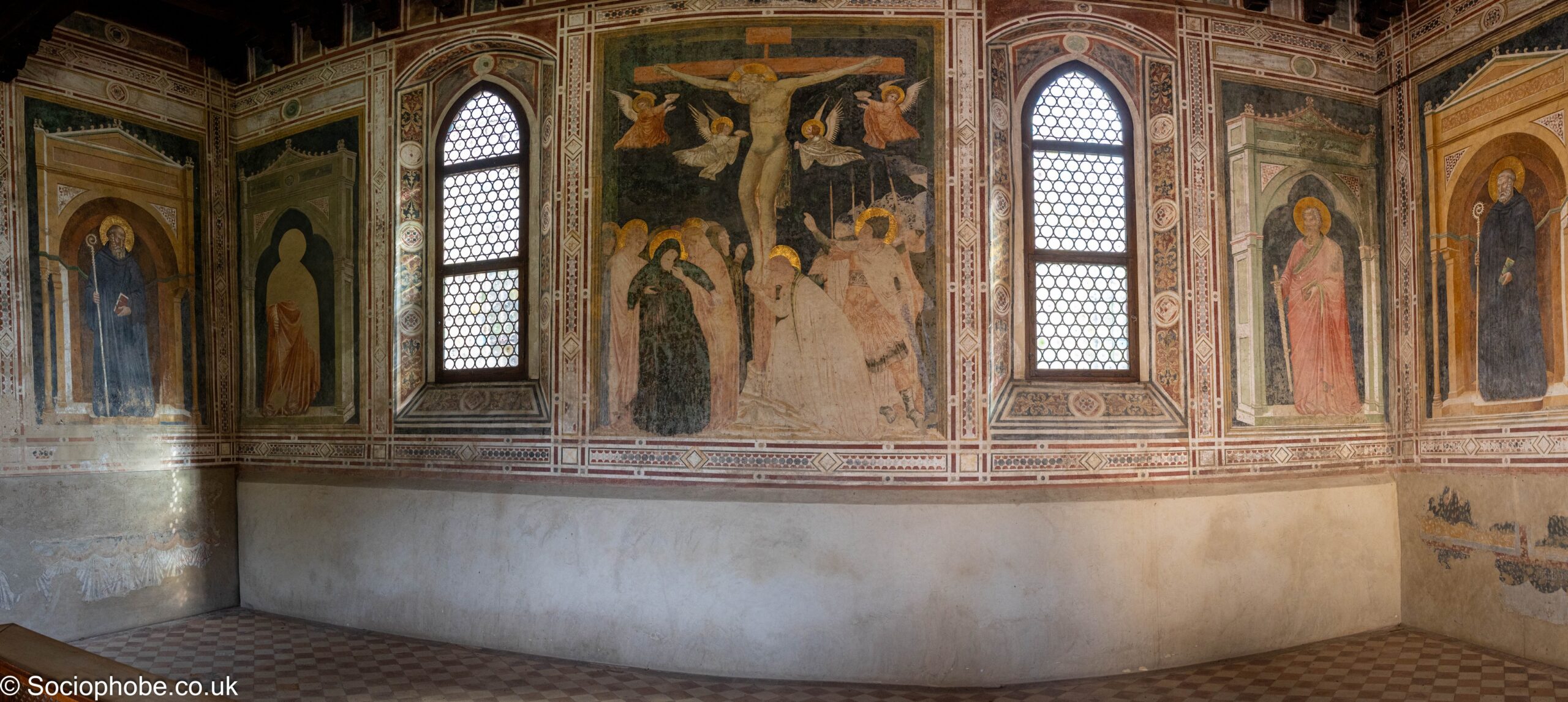
The abbey museum contains various carvings and frescoes removed from the abbey and has plenty of information in English. The quality of the frescoes was just amazing and the colours fantastic, with very earthy yellows, browns and reds. There were more frescoes in the refectory and chapter house and the church itself is awesome with a mosaic and tiled floor and almost every wall covered in more frescoes. The bell tower is only open at weekends I think so we couldn’t go up there this time. There are a couple of small cafes on site and parking is free. Entrance was a bargain €5 and we probably spent an hour on site, including the obligatory coffee stop.
There were lots of places to visit nearby but travel times were quite slow for the distance so I opted for a garden that Deb would like. The Gardens of Valsanzibio were about an hours drive and were built in the 17th century by the Barbarigo family of Venice as a thank you to God for being spared when plague hit the city. The gardens were designed by Bernini as a symbolic journey of man, from ignorance to salvation so I felt the €12 entry was a bargain compared to my immortal soul.
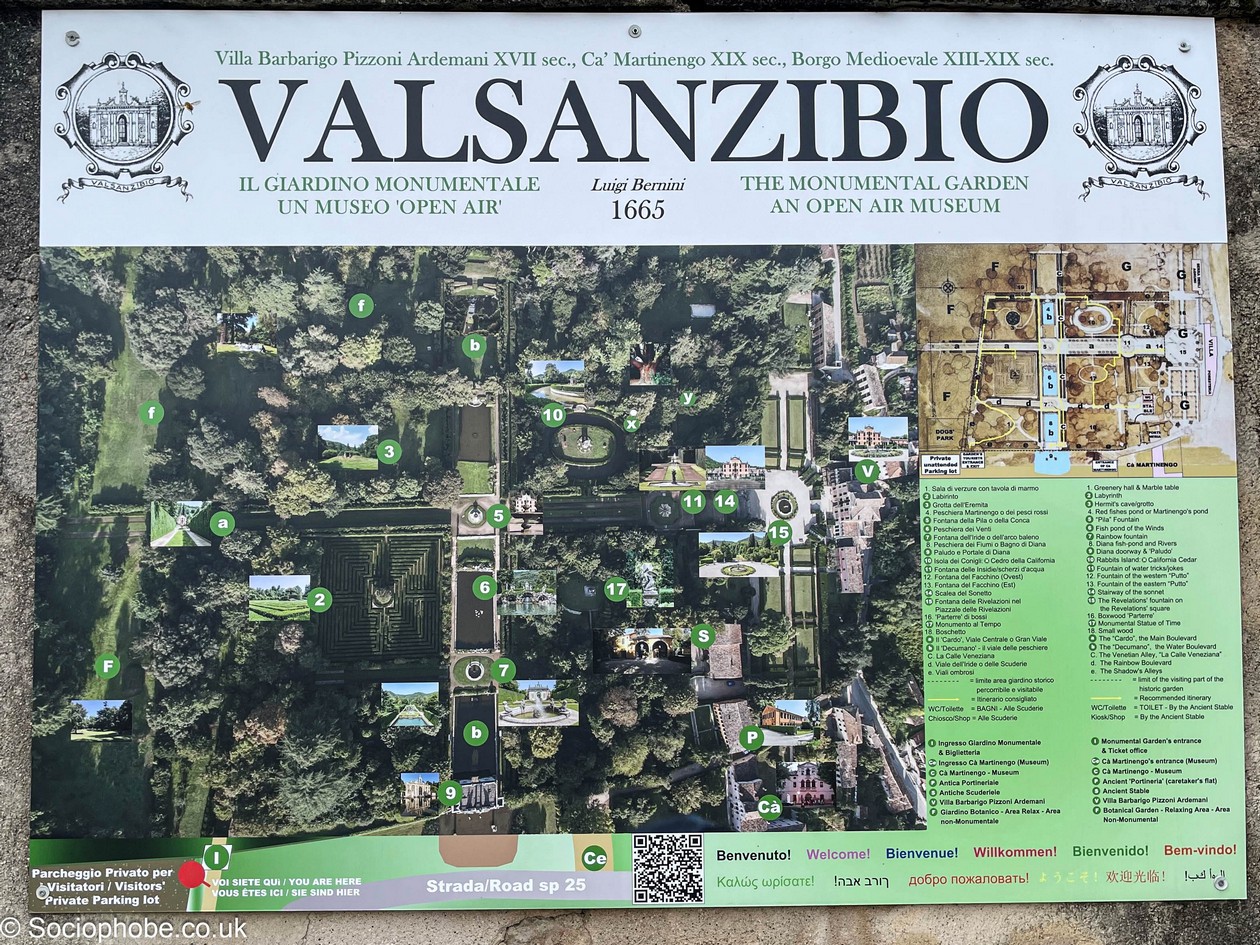
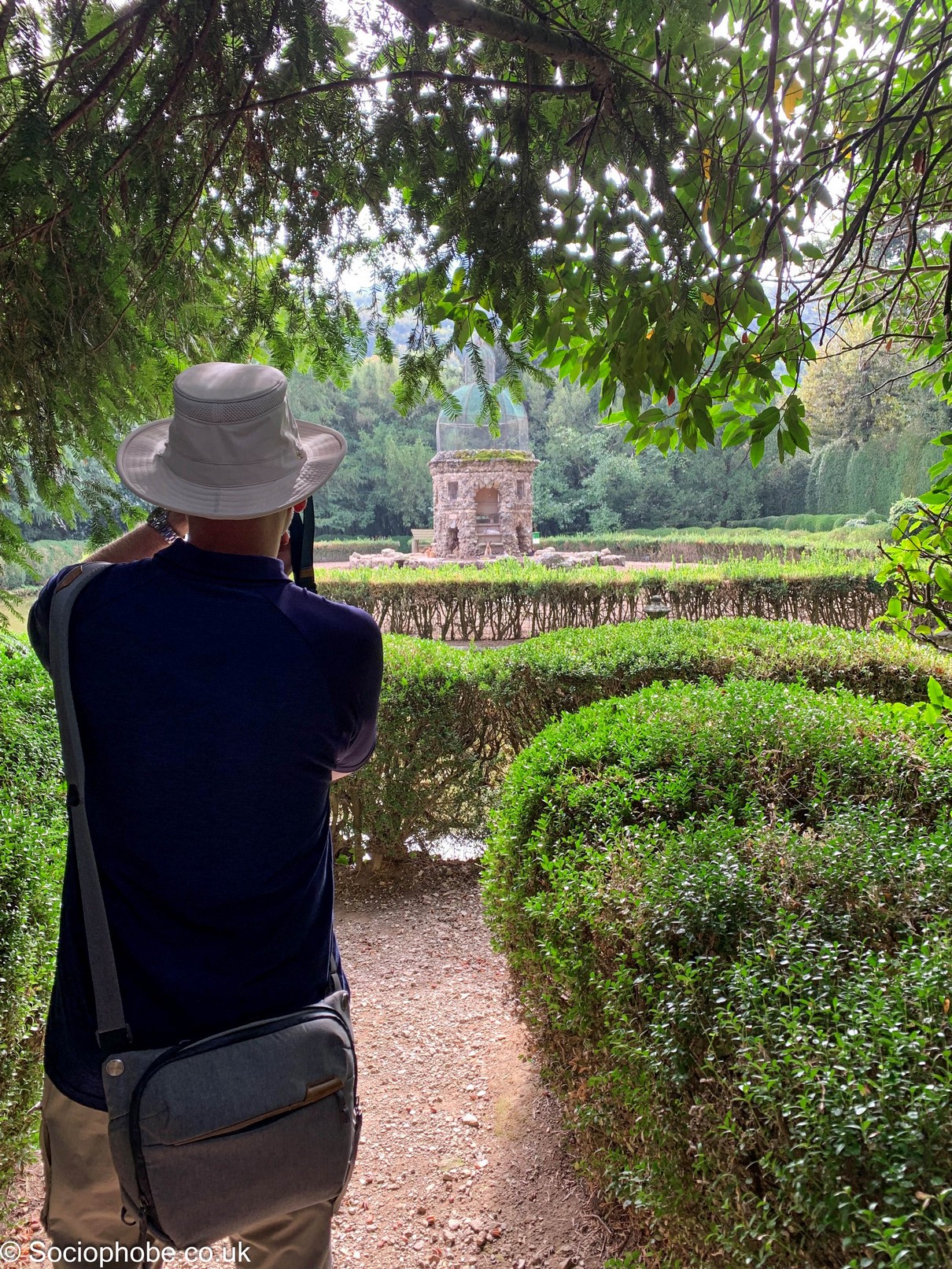
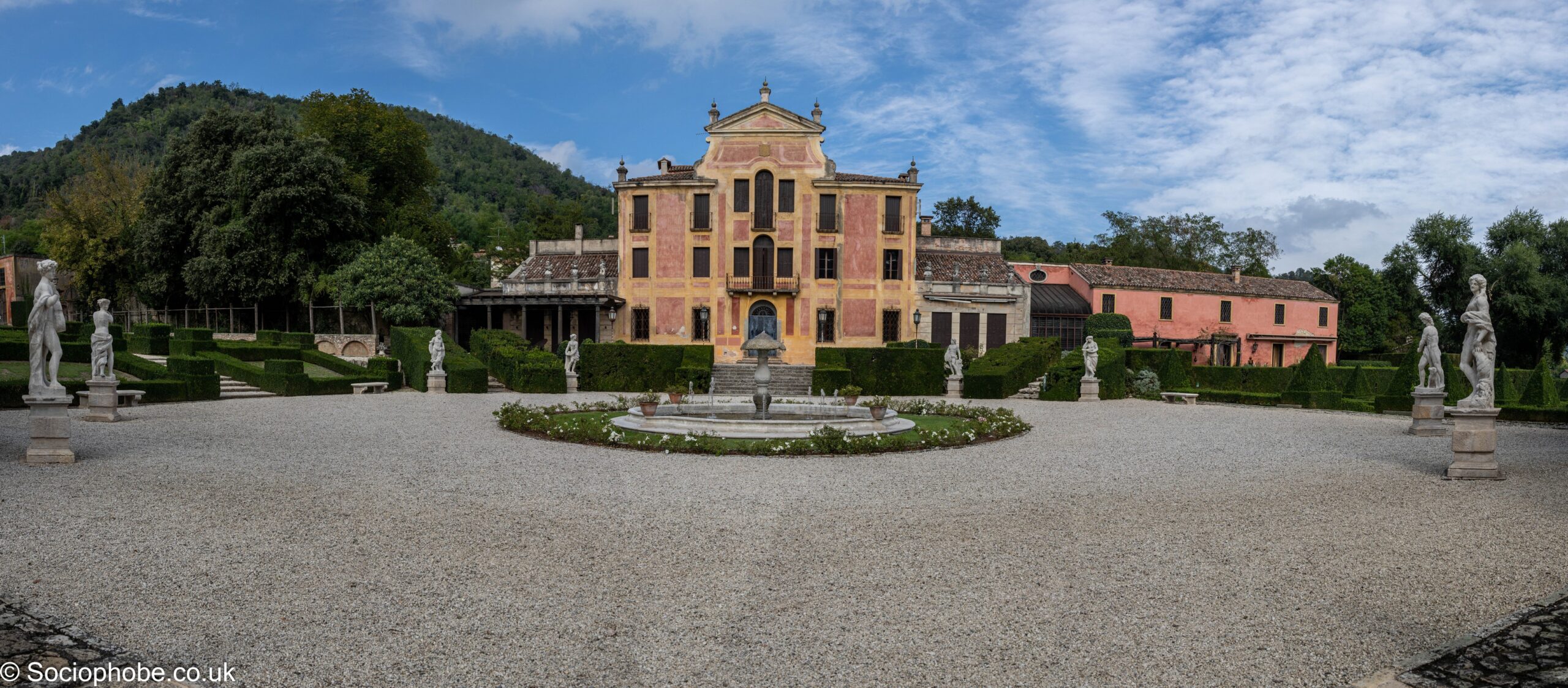
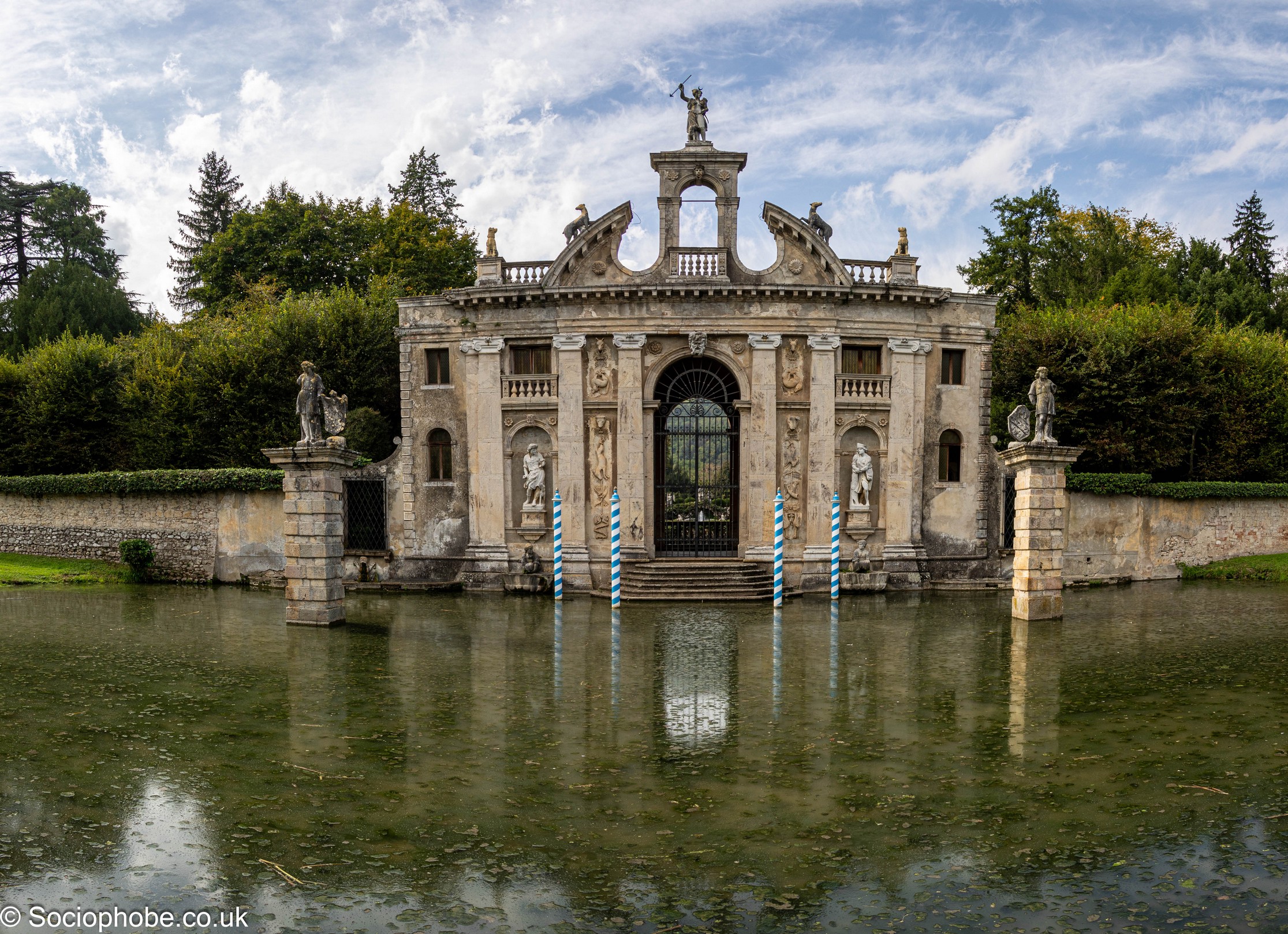
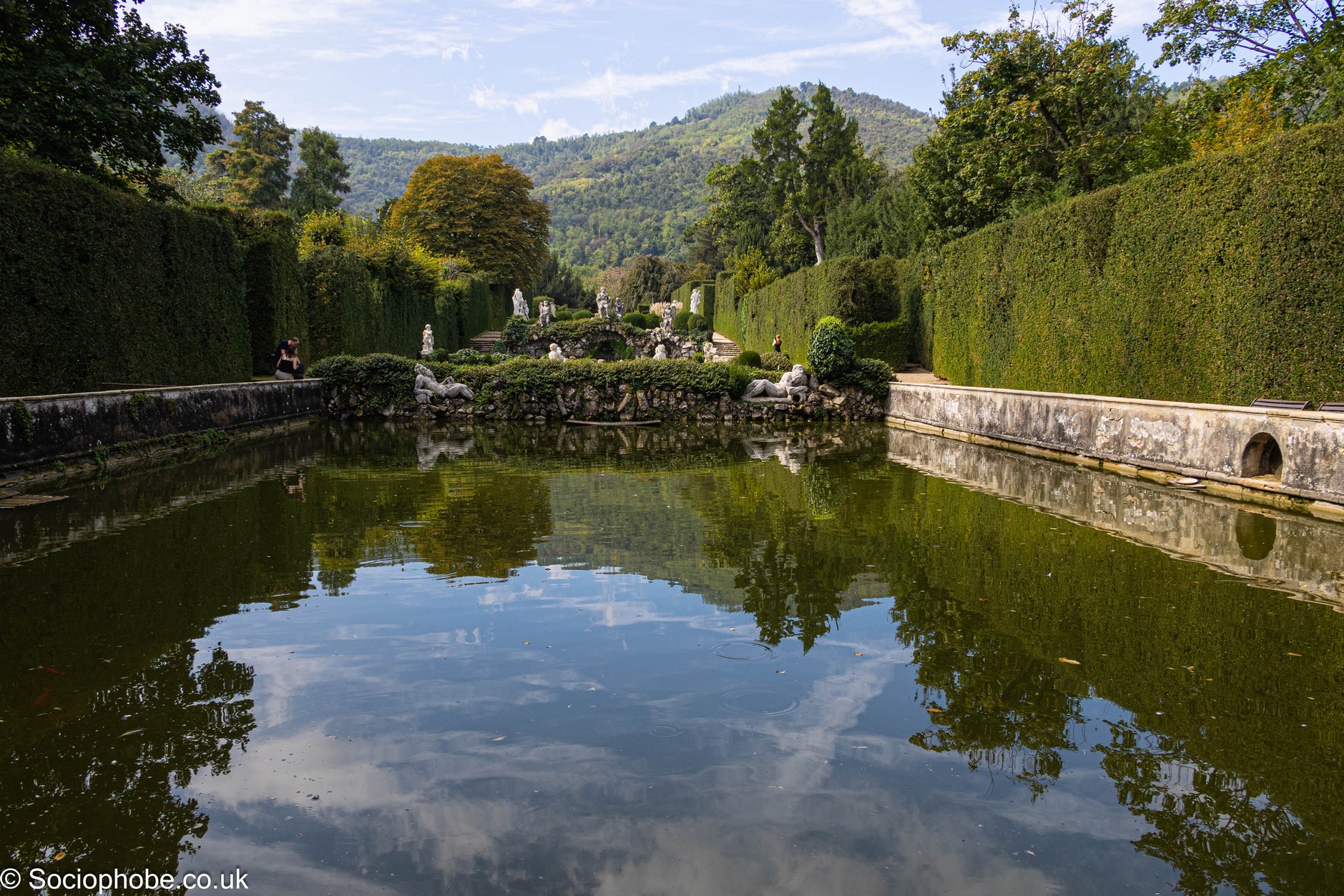
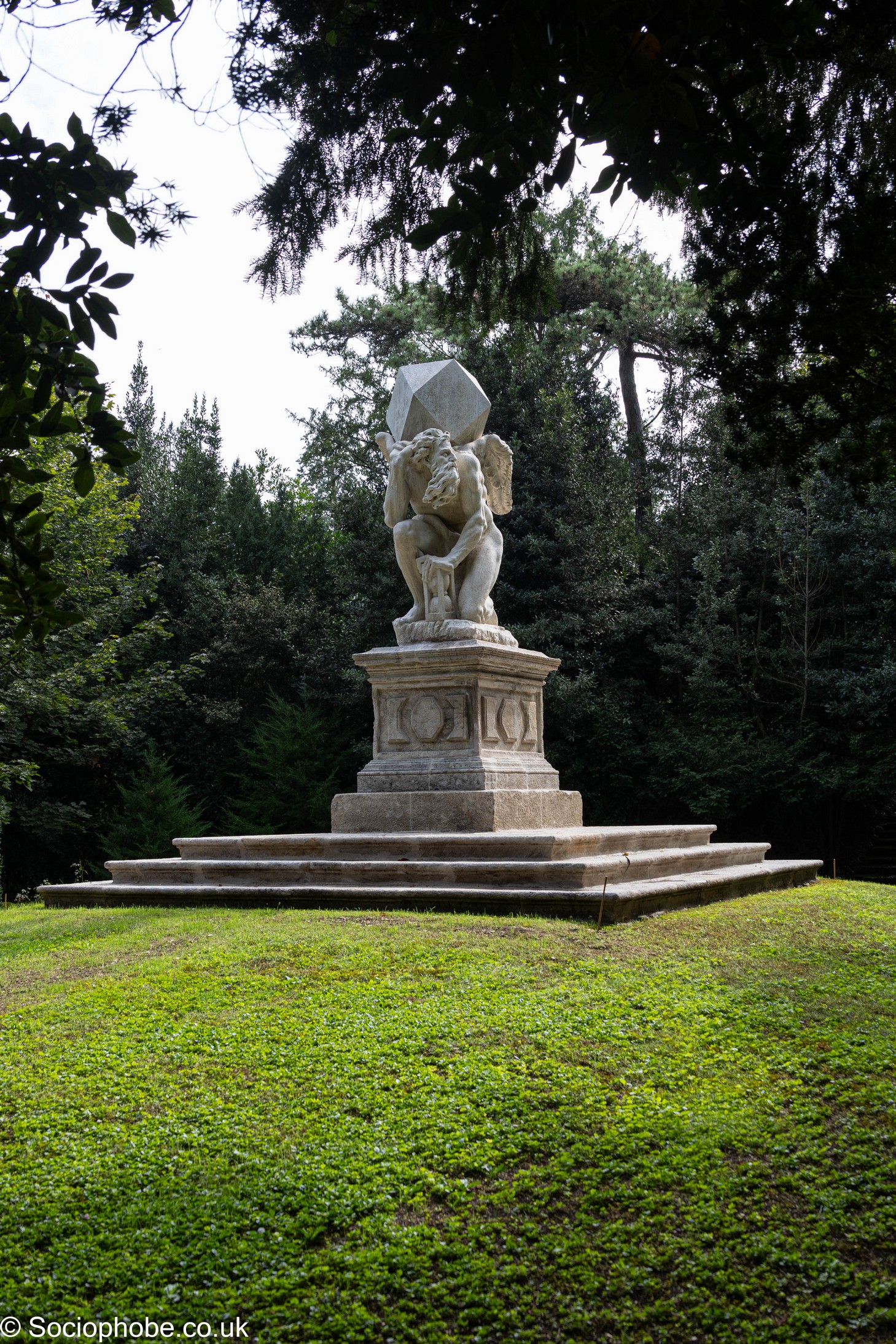
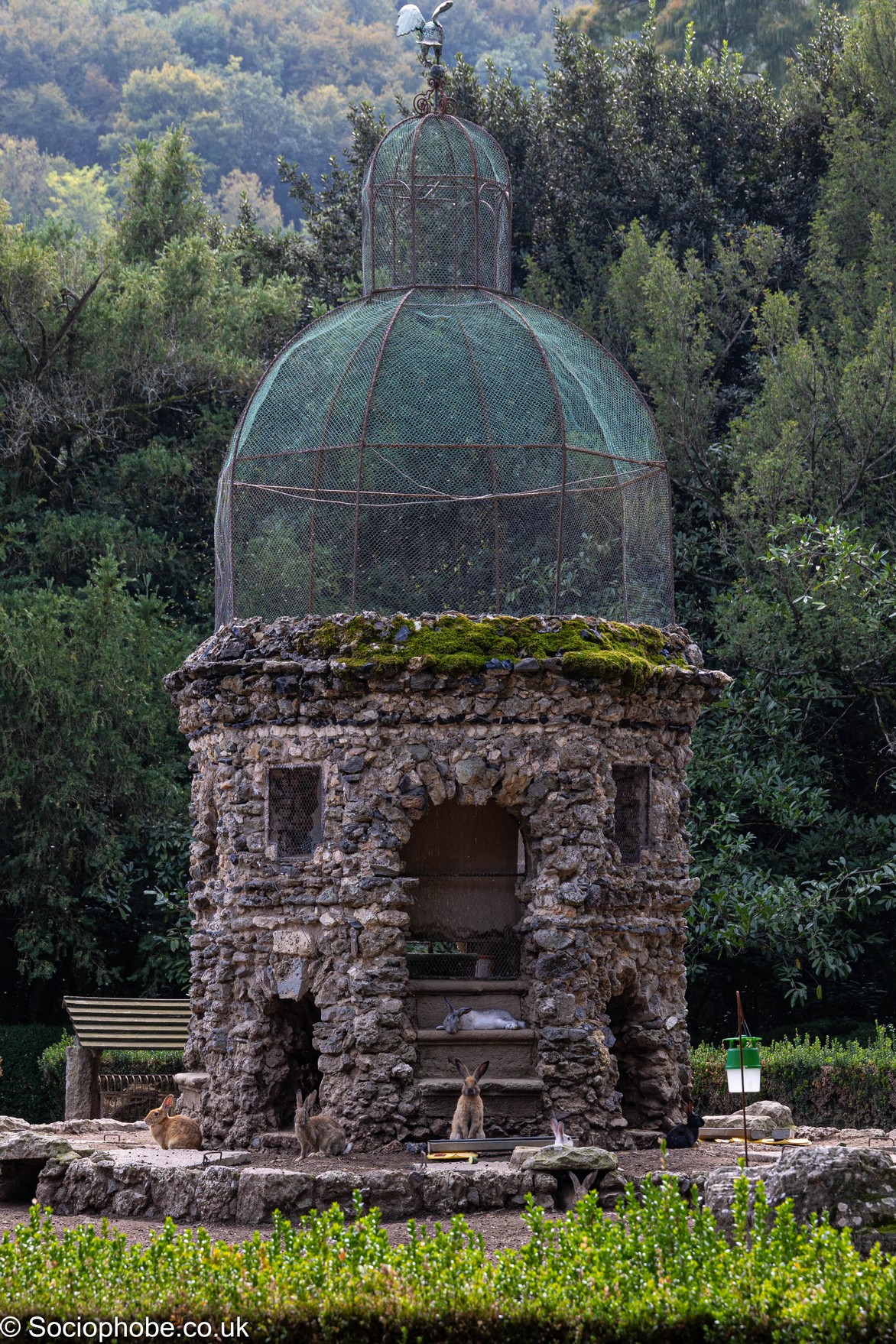
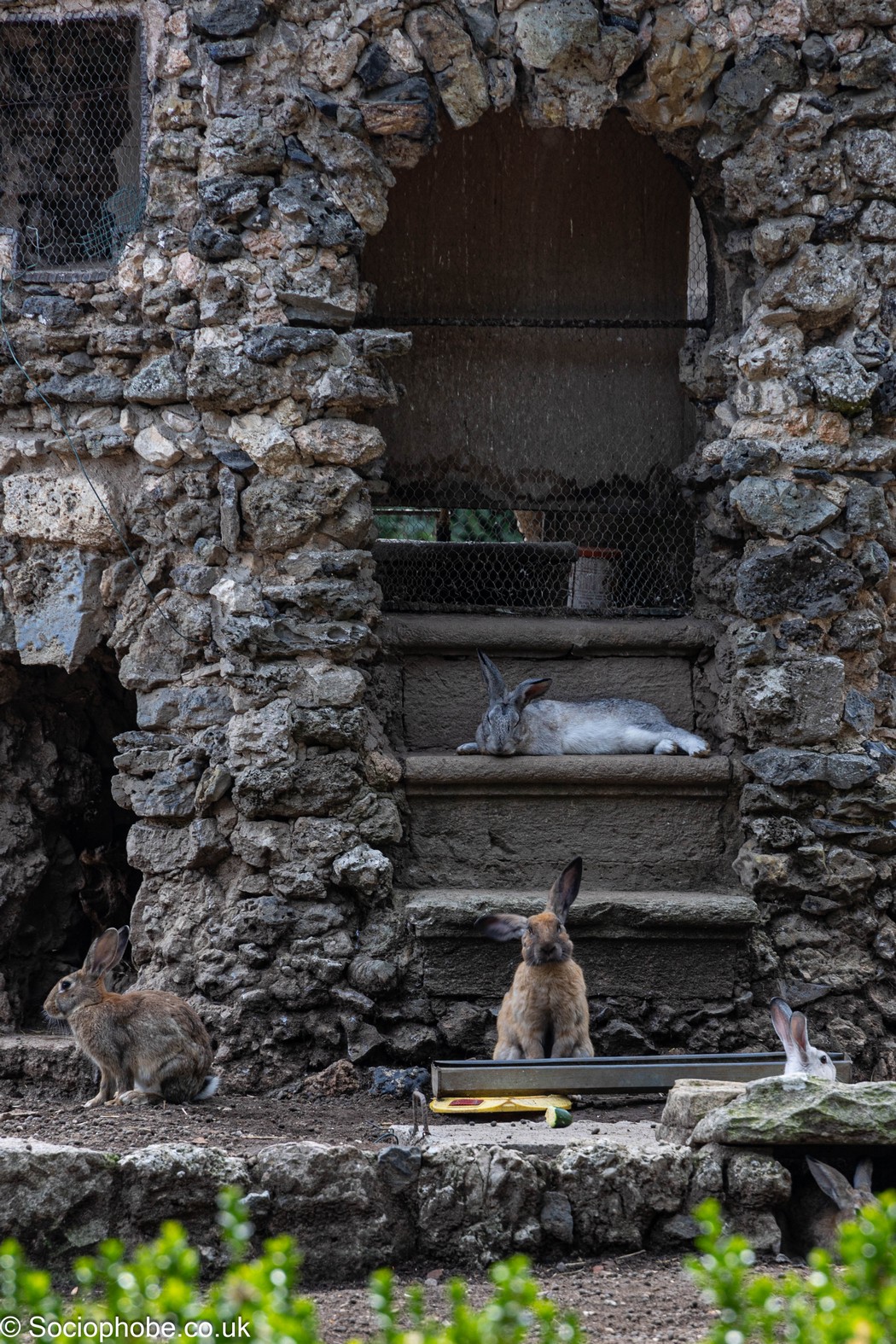
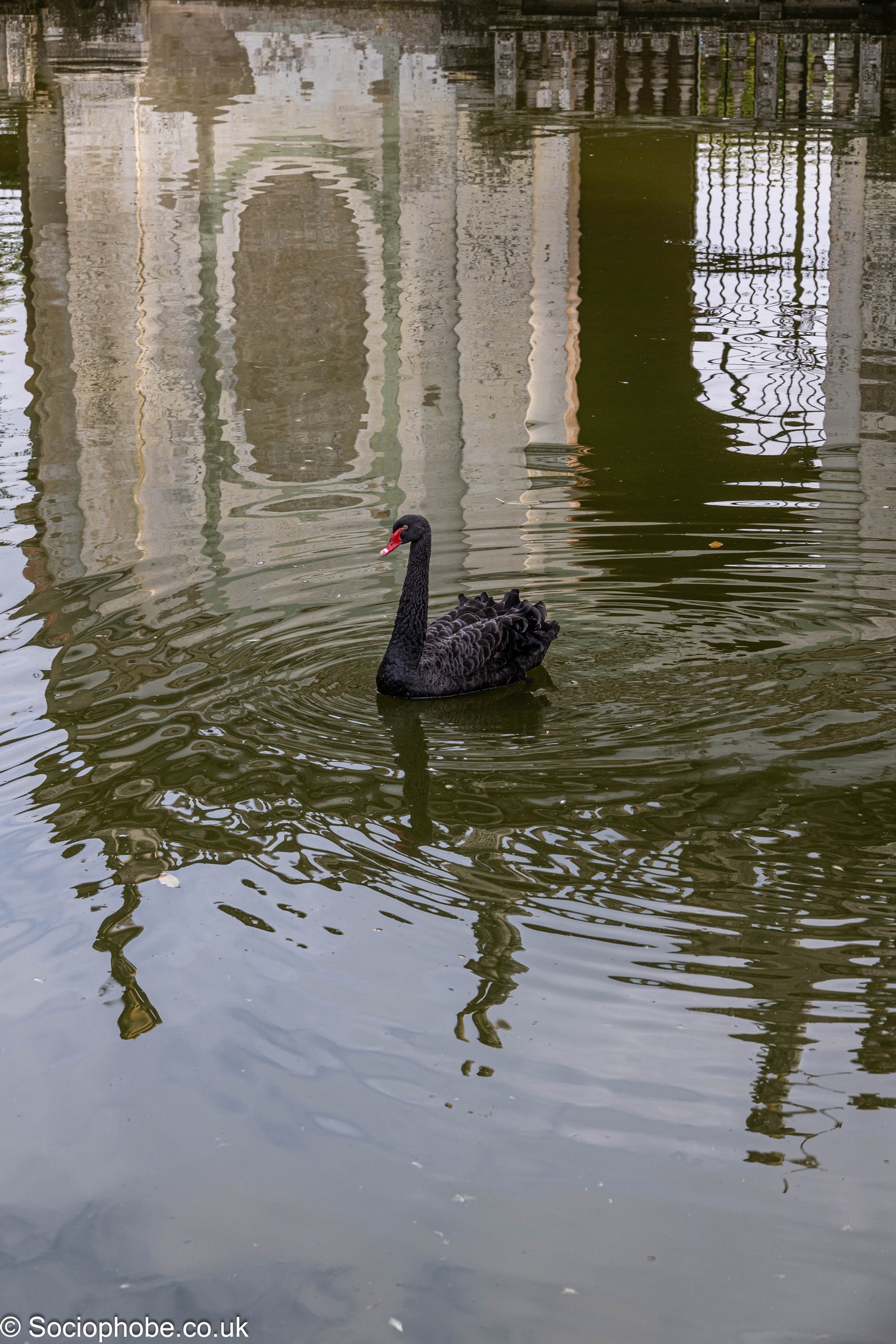
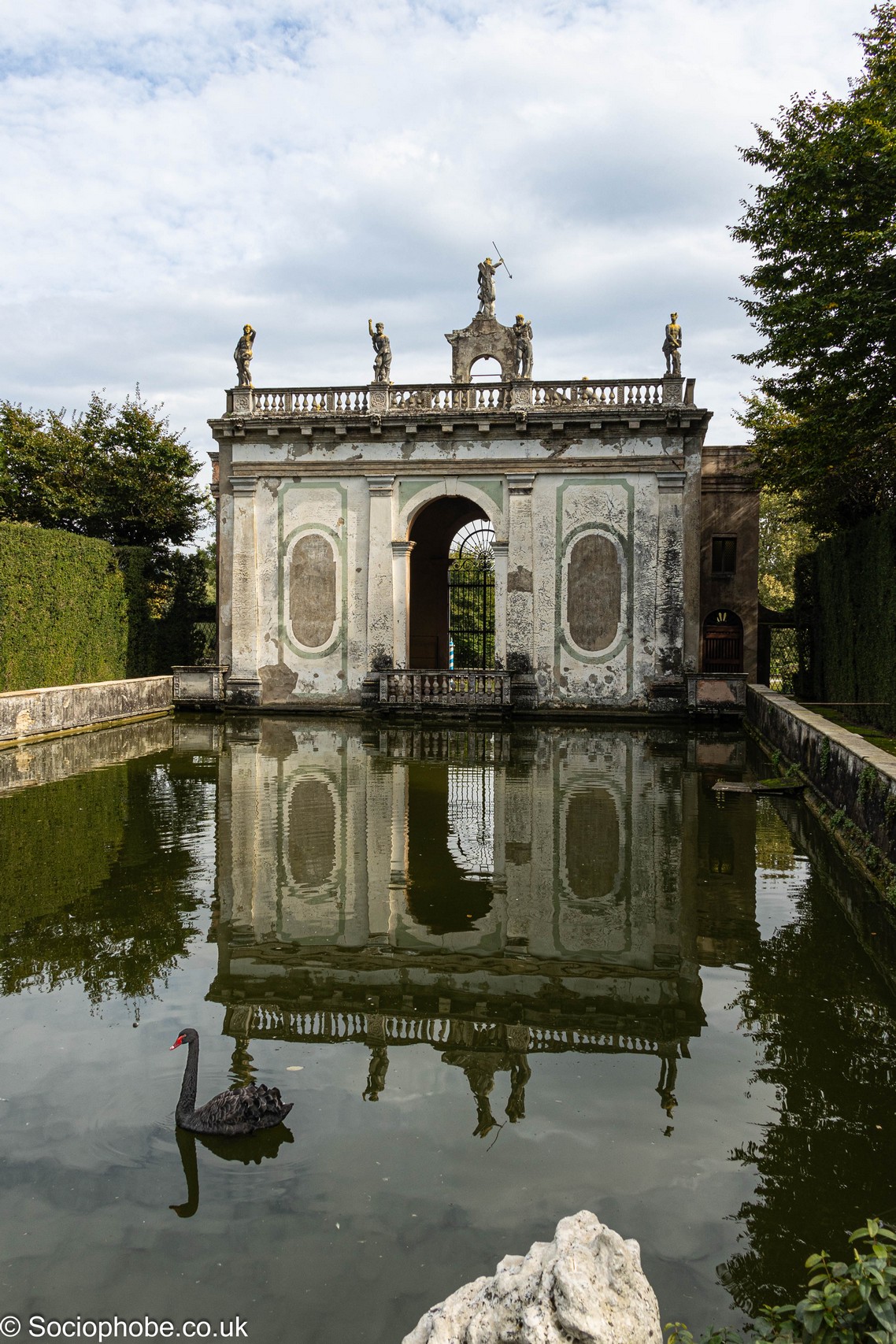
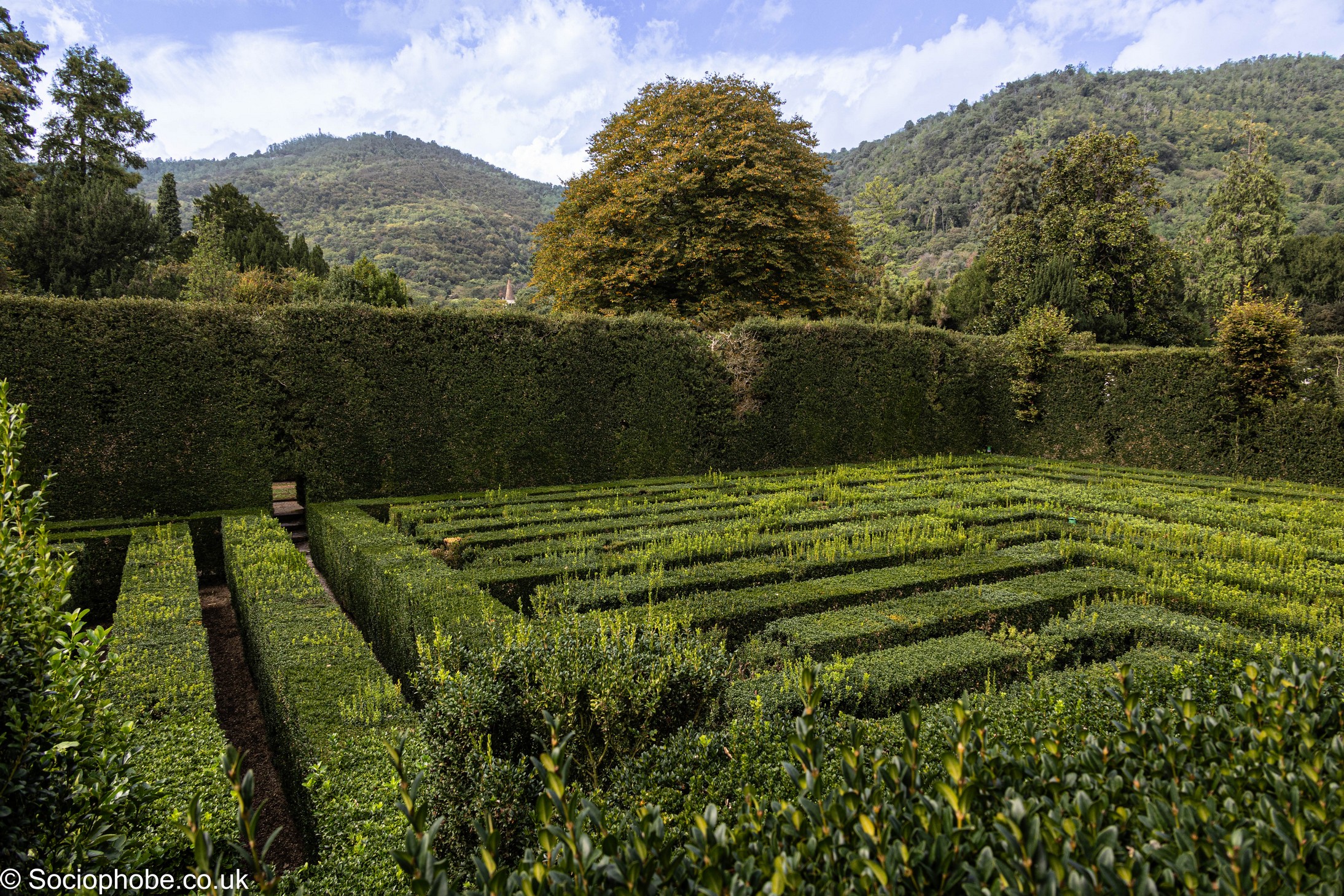
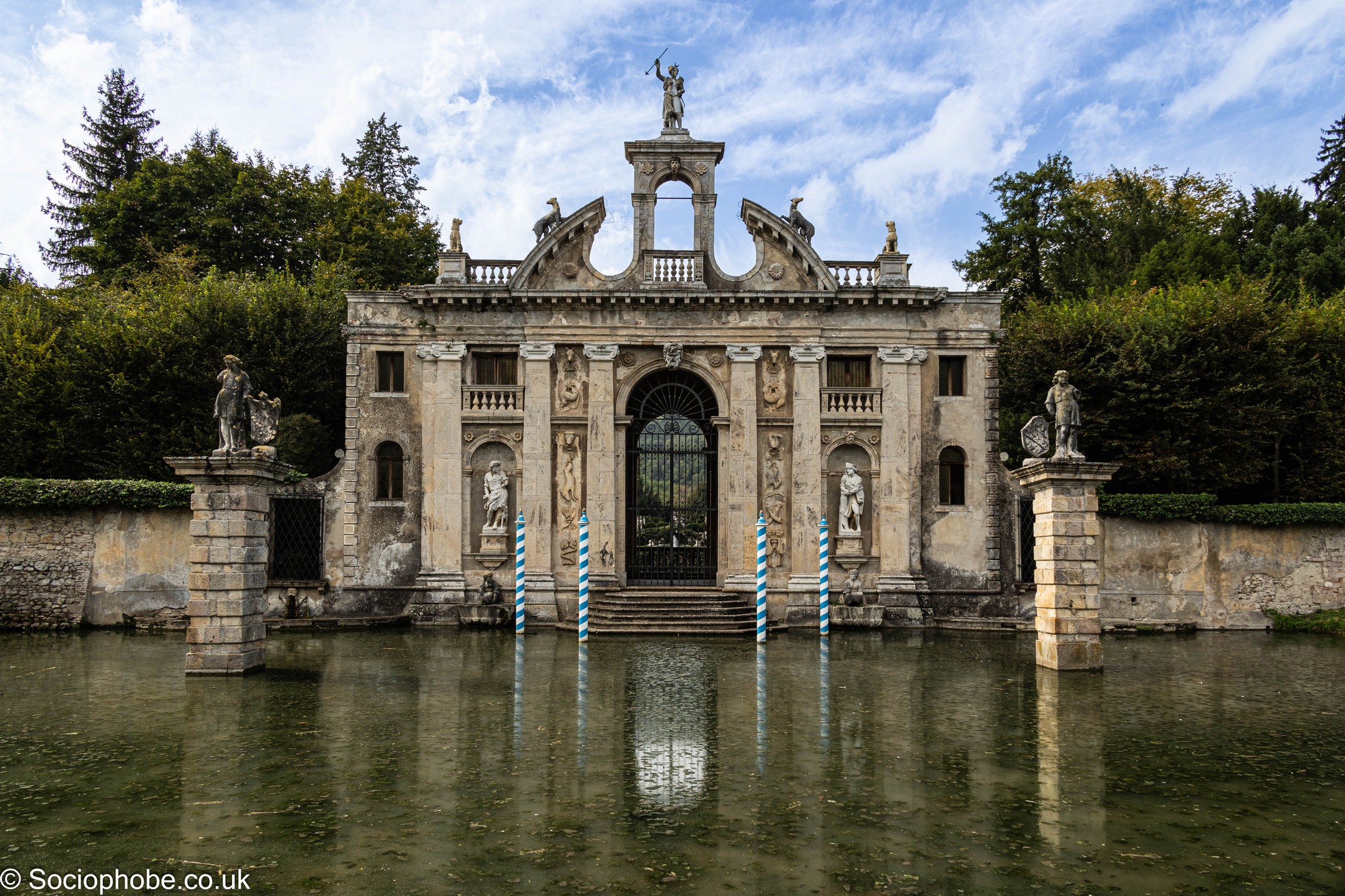
The lady on reception was fabulous and gave us an introduction to the gardens and a suggested route. It was another hot day in the high 20s so the shade of the trees was most welcome. The boxwood maze was particularly interesting – at 400 years old it is one of the oldest in Europe and there was a tower in the centre so you could see your route out if you needed to. There was an island for rabbits who looked to be enjoying the sun, safe from predators and some lovely water features as well as shaded walks. We really should have visited the arboretum too but we decided to head back to Ferrara instead.
We freshened up back at the hotel and then took another trip to the nearby Gelato Lab where I pigged out and had both a sorbet crumble and a tub of gelato. Demonstrating yet again my weak will. For dinner we went to a local pizza restaurant and had a superb pizza which was €11 for the two of us. It’s lovely having all this nice food but it is going to raise my expectations when I get back to the UK!
Saturday – San Leo and San Marino
Today we had a lot of driving, from Ferrara south along the toll roads past Bologna and then up in to the Apennine hills, first to San Leo and then on to San Marino. Those roads were quite a challenge in our little car with some very windy bits but traffic was light, other than hordes of cyclists following the Tour De France routes. San Leo is an ancient town on a rocky and extremely steep hilltop that has been fought over by Romans, Lombards, Byzantines, Goths and Franks. It was visited by both St Francis and Dante and 800 years ago was a major cultural centre.

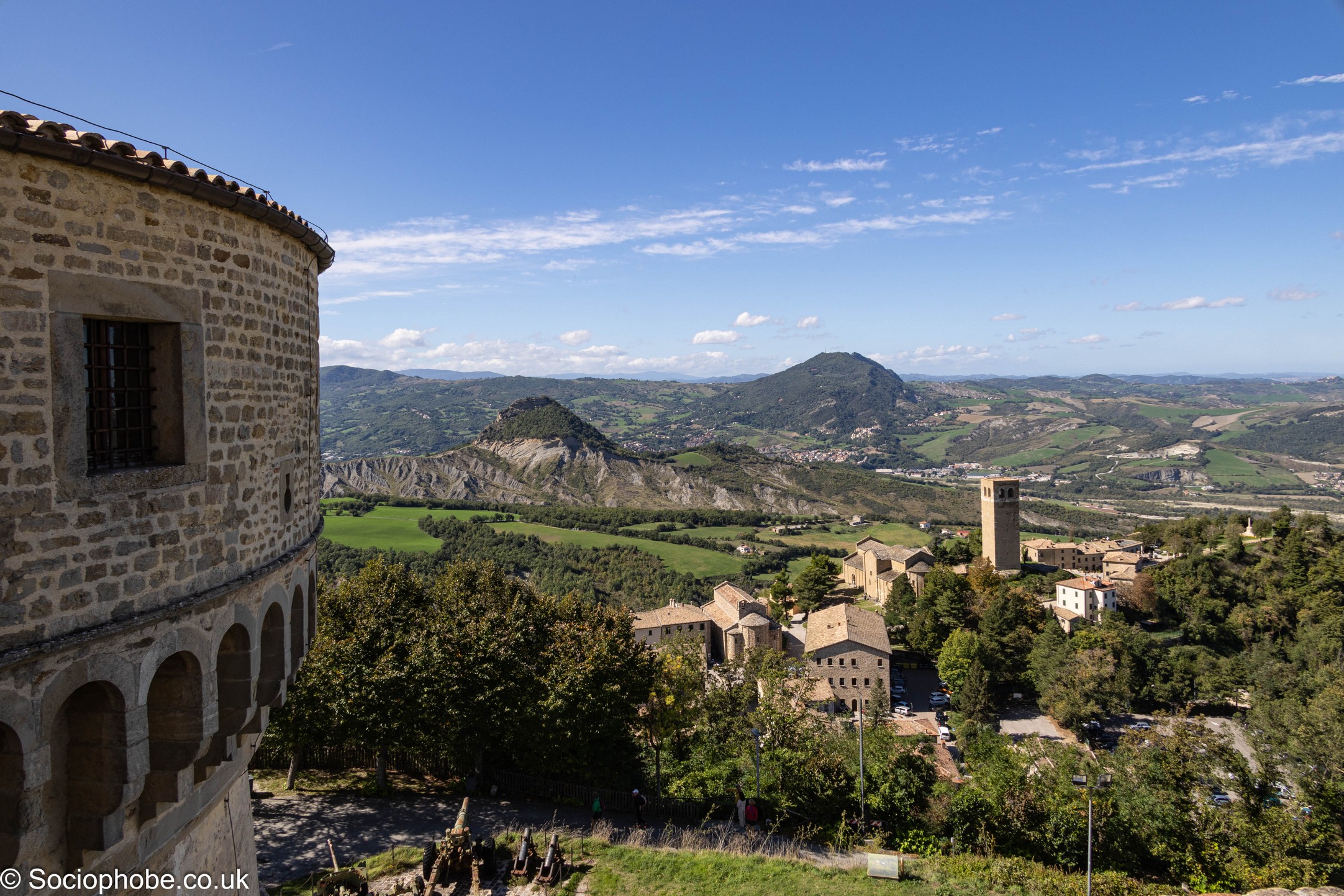
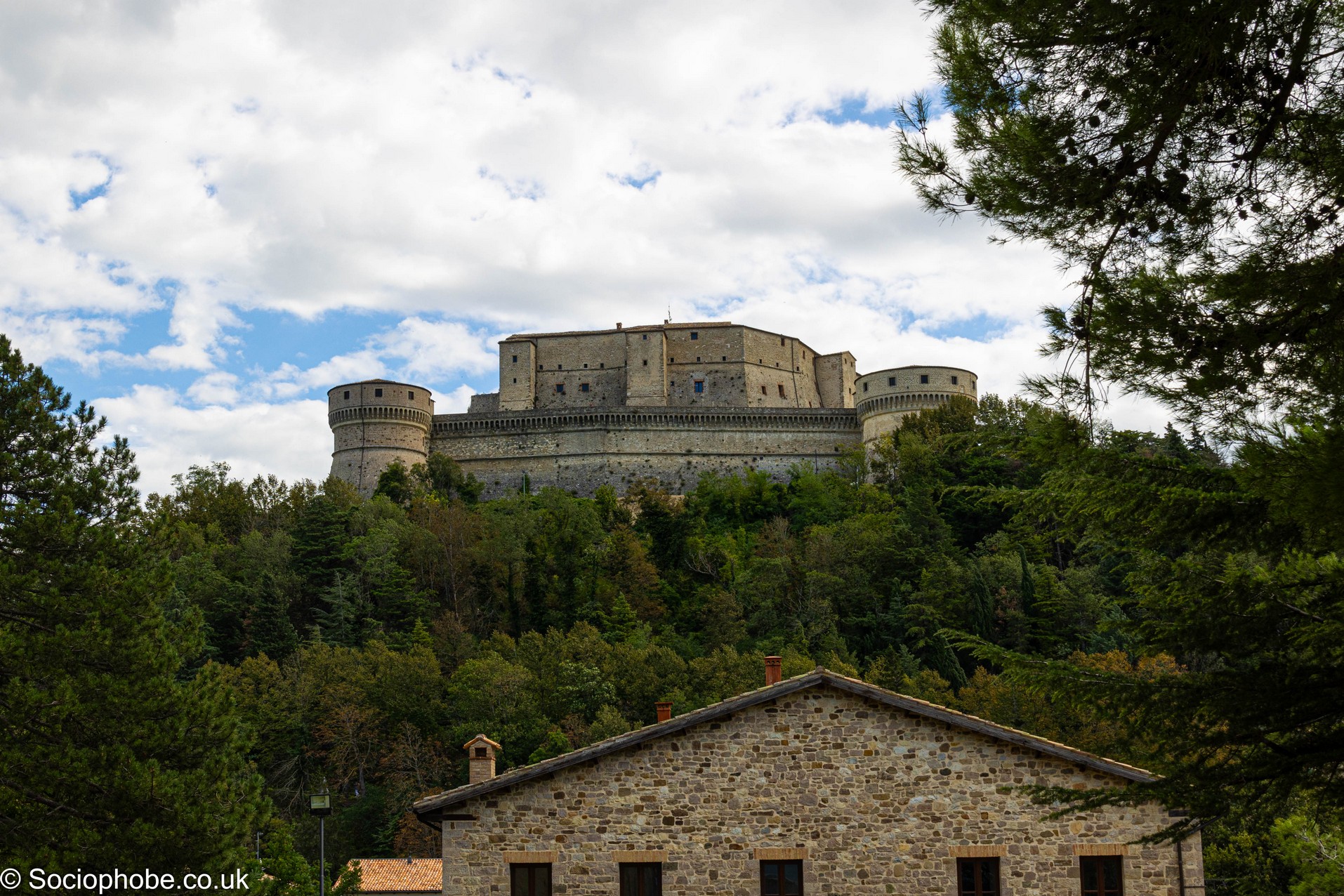
We weren’t actually sure about parking as the first car park we came to was about 20 minutes steep walk from the town but in hindsight I think that was for coaches. We continued on and drove through some very narrow cobbled streets, judiciously following the ‘P’ signs and then found a large car park next to the town centre. We hadn’t had breakfast so were hoping for food but nowhere was serving for another hour so we had a coffee, I explored the 12th century cathedral with recycled Roman columns and the empty sarcophagus of Saint Leo and the small church (9th century) and then we followed the steep, zig zag path up the hillside through the forest to arrive in front of the castle.
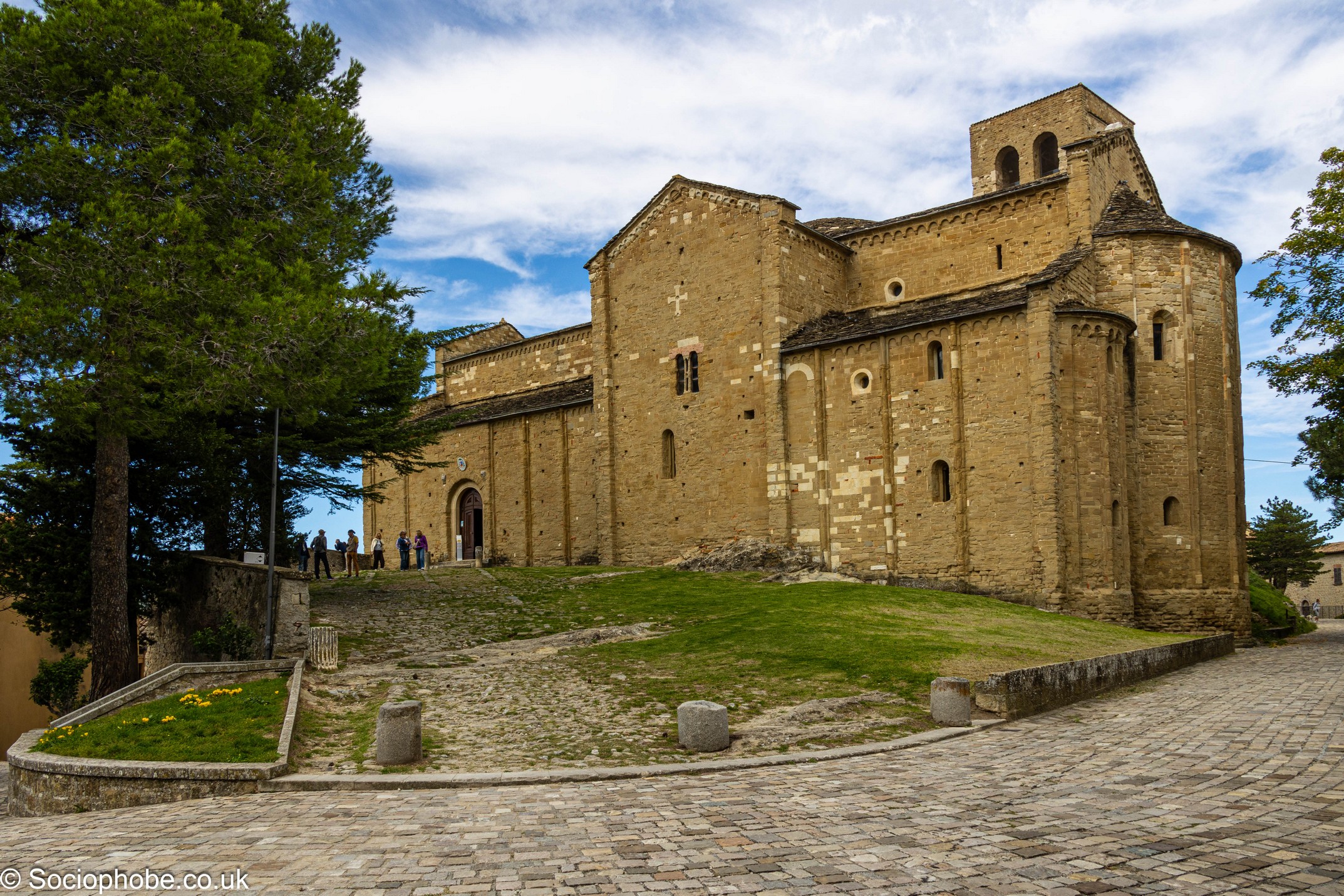
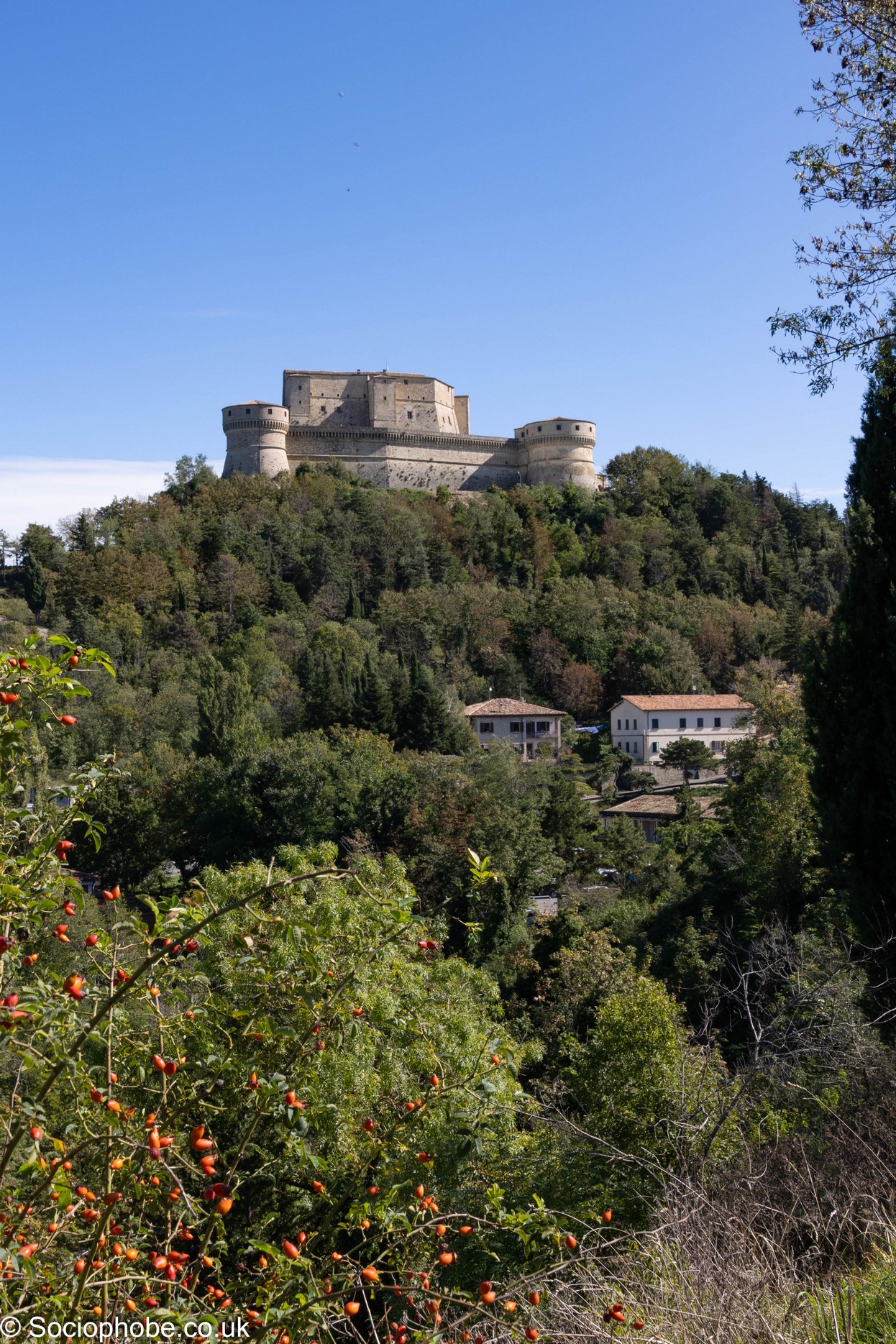
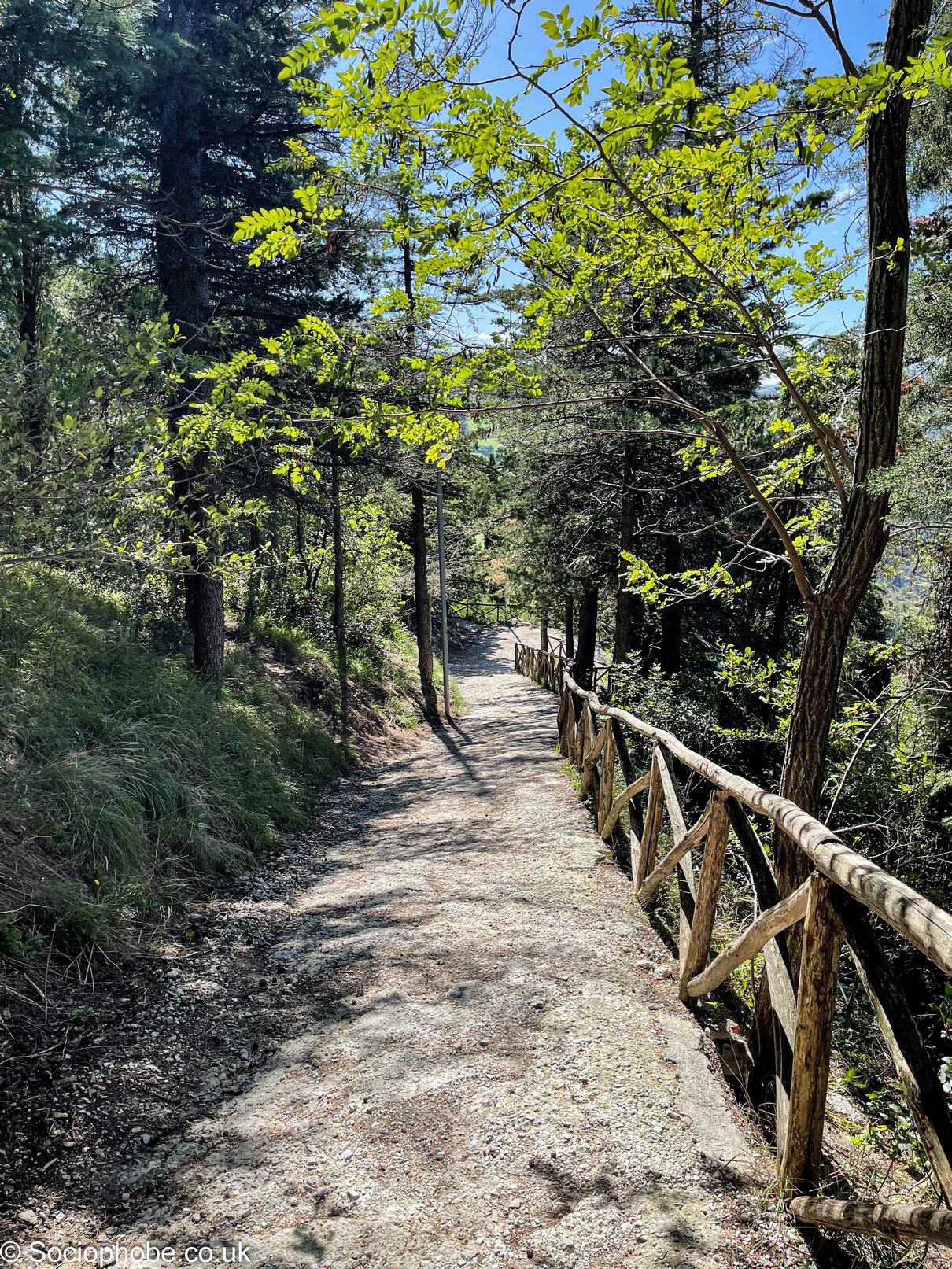
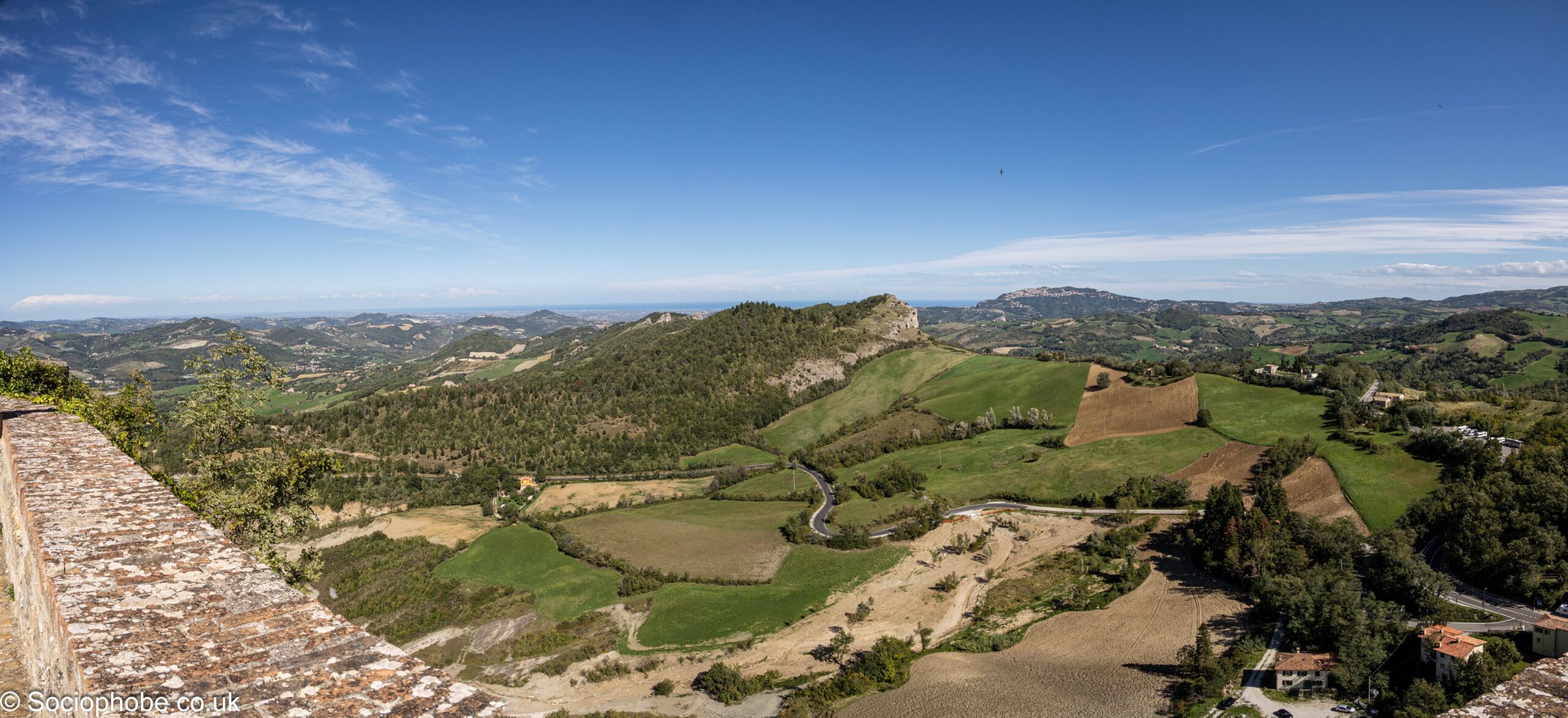
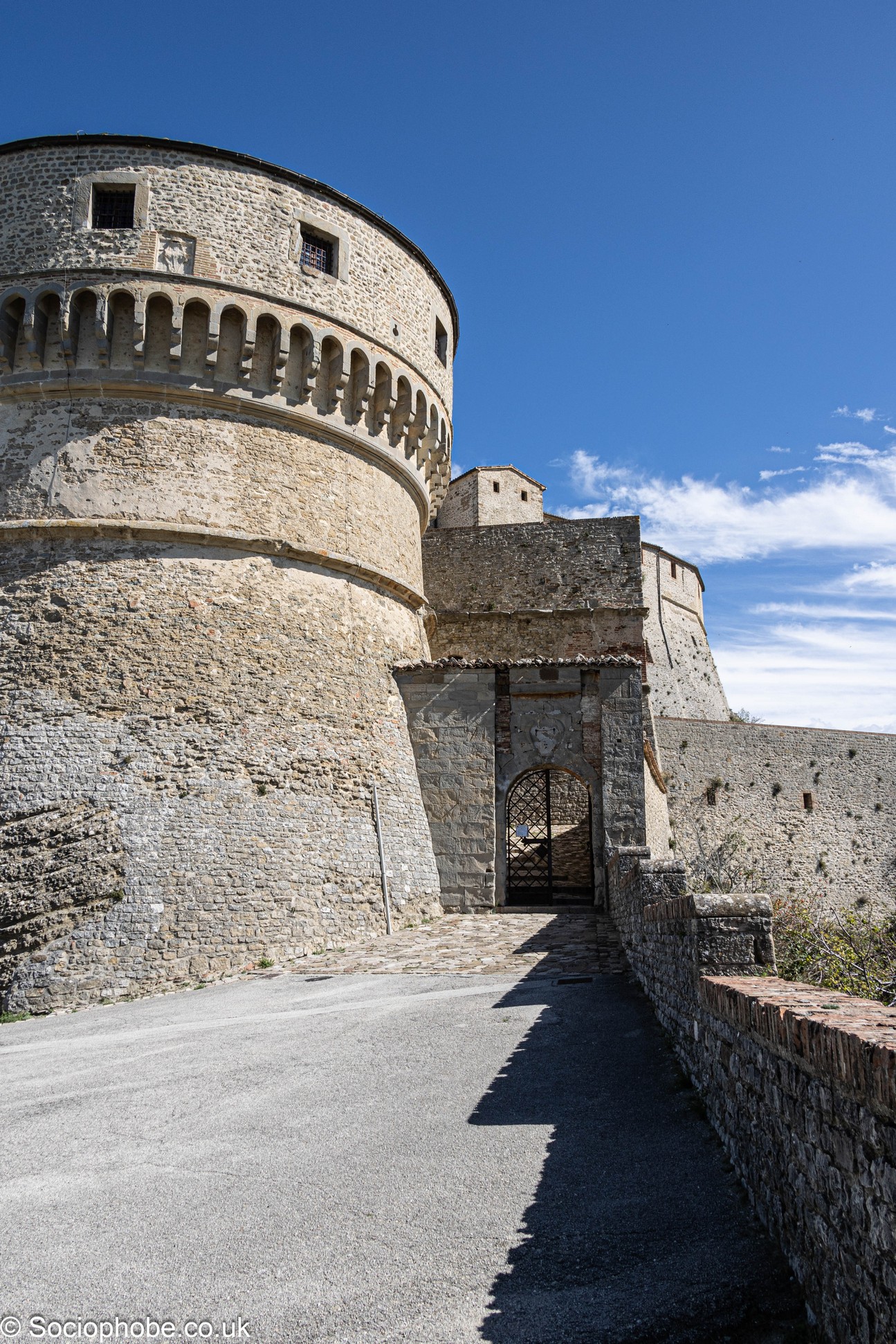
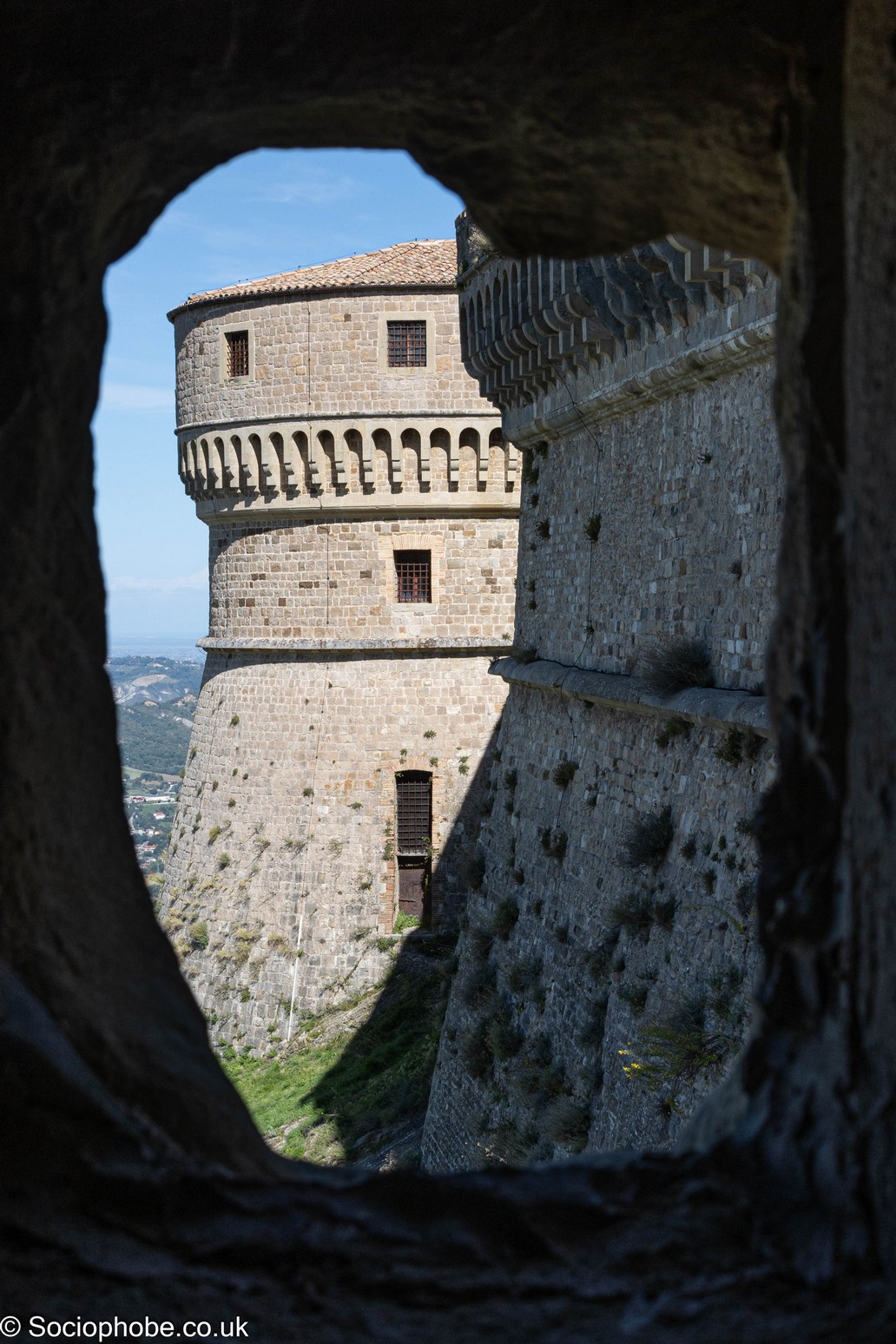
The castle looks like a state of the art 16th century creation and the location must have made it almost impregnable to assault, with sheer cliffs on almost every side and just one narrow road leading up to it. Entry was 10€ and we spent a couple of hours there as there was so much to see. The views were the most obvious and spectacular thing – all the way to the Adriatic Sea and San Marino, with every hilltop on the Apennines seeming to have a castle on it.
There is a well marked route through the castle with the fortified tunnels and fire ports followed by the original prison cells and exhibits of torture and the inquisition. The inner structure had barracks, armouries, cells for Papal prisoners and a museum about the life of the enigmatic Cagliostro. He was the most famous prisoner of the fortress, a confidence trickster who travelled throughout Europe and mixed with the rich and famous, involved in alchemy, freemasonry and healing and regarded as a heretic by the church. I find it quite amazing that even in the 18th century someone can be tried for heresy but then it looks like we are going back to that mentality now so it all comes down to people wanting to control other people. His death sentence was commuted to life imprisonment in the fortress. He had a small cell with no door, he was lowered in from the room above, where his guard stayed and watched him through a grille and spyhole. I’m sure the view lost its appeal after a while and he died after 4 years in his cell.
The armouries had a mixture of medieval, WW1 and WW2 weapons, quite a comprehensive collection!
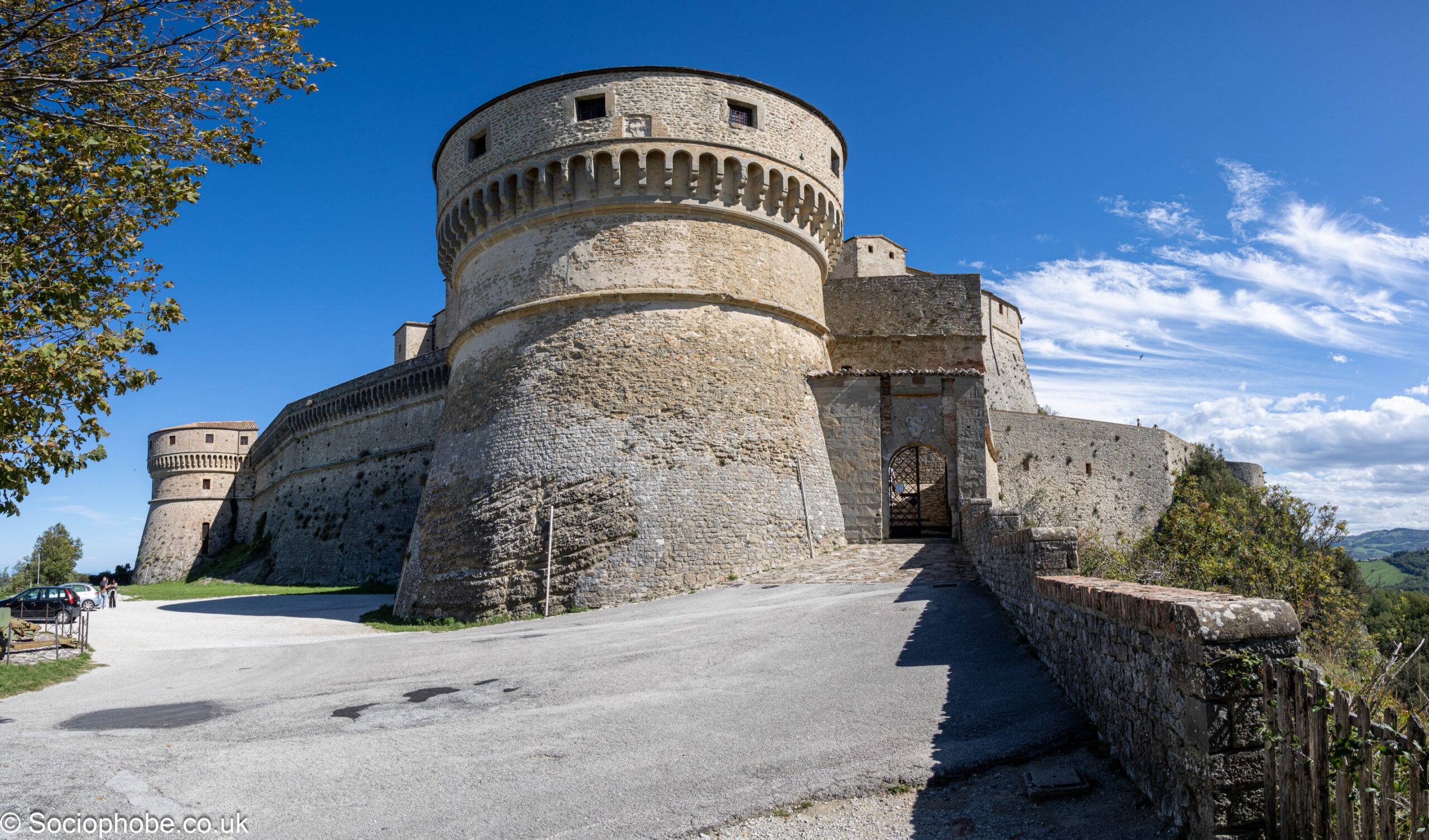
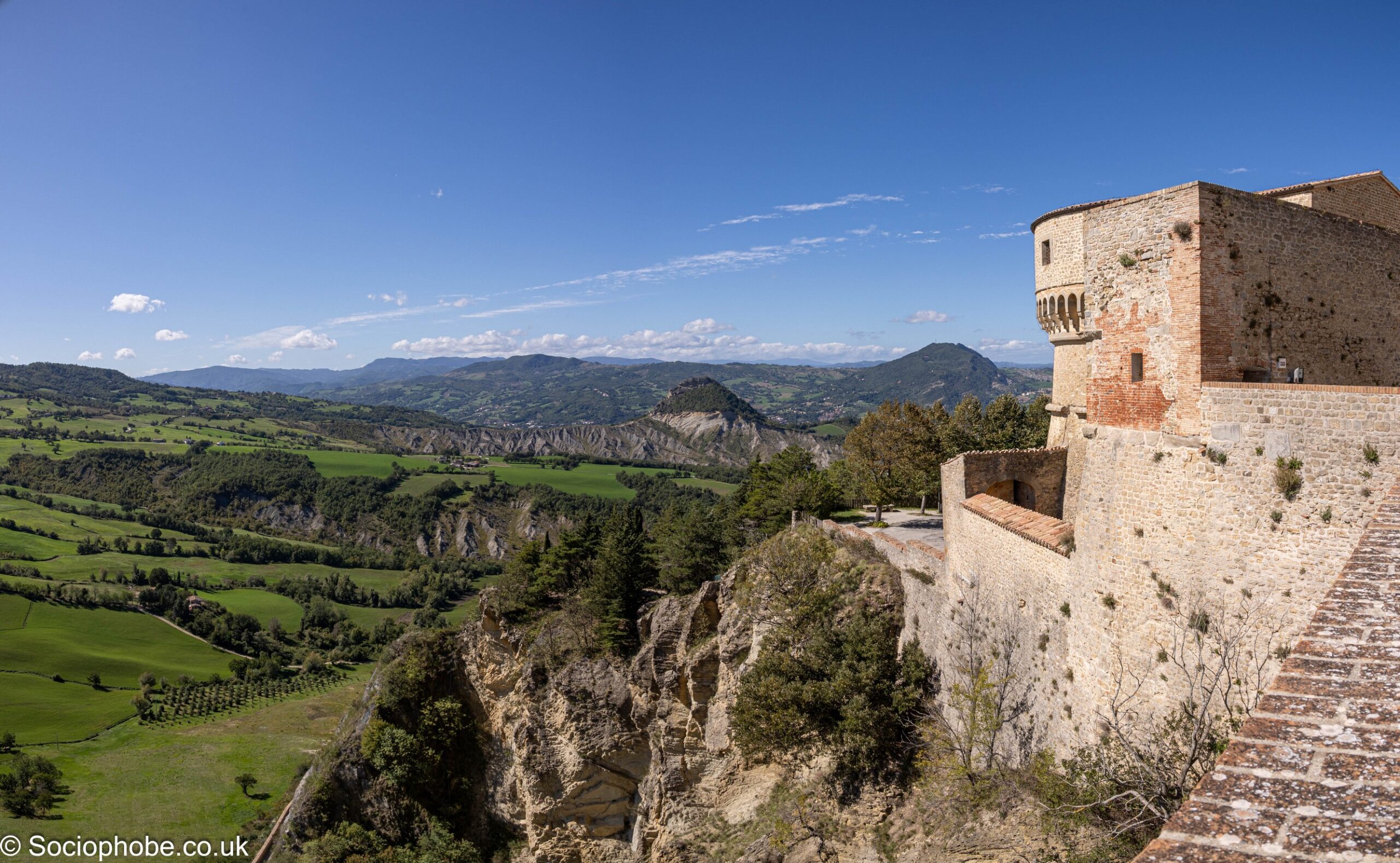
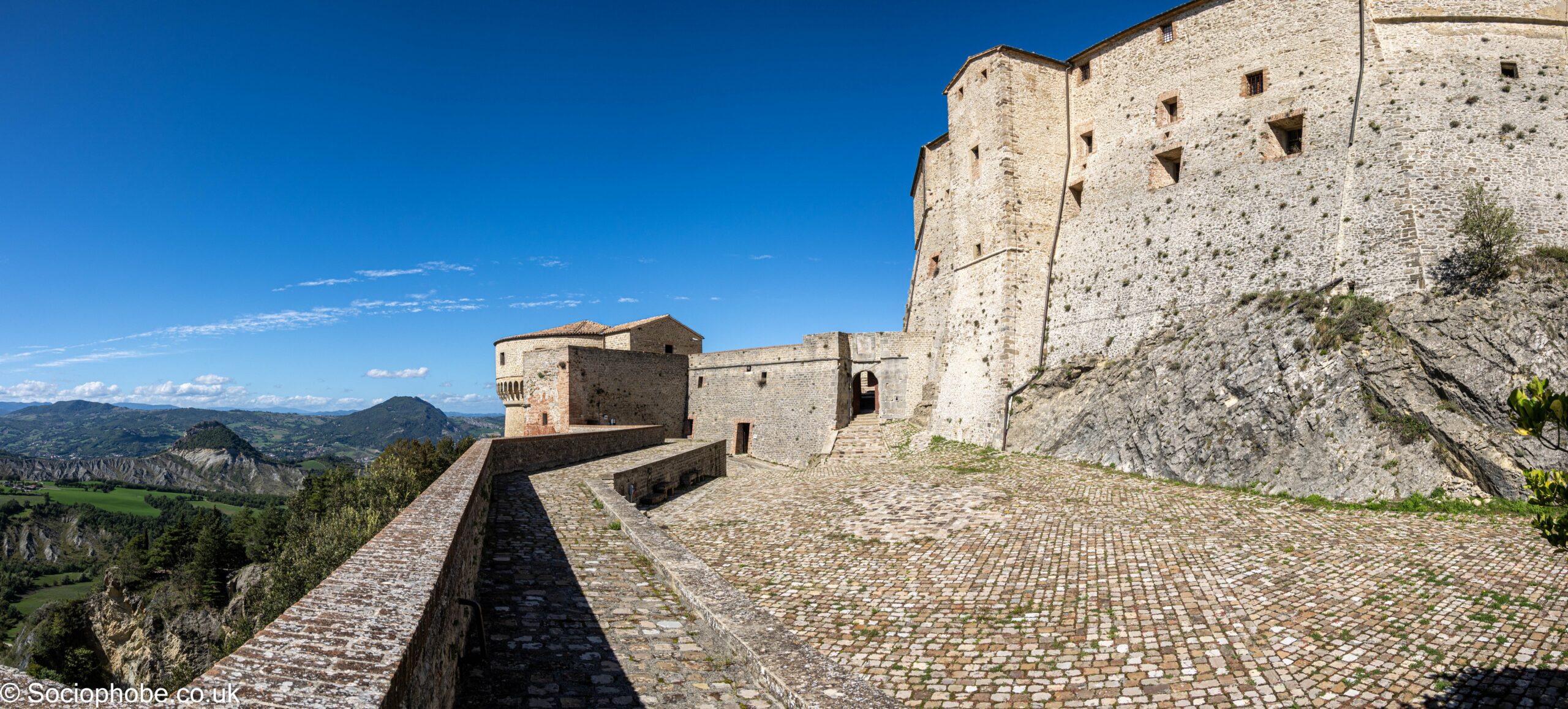
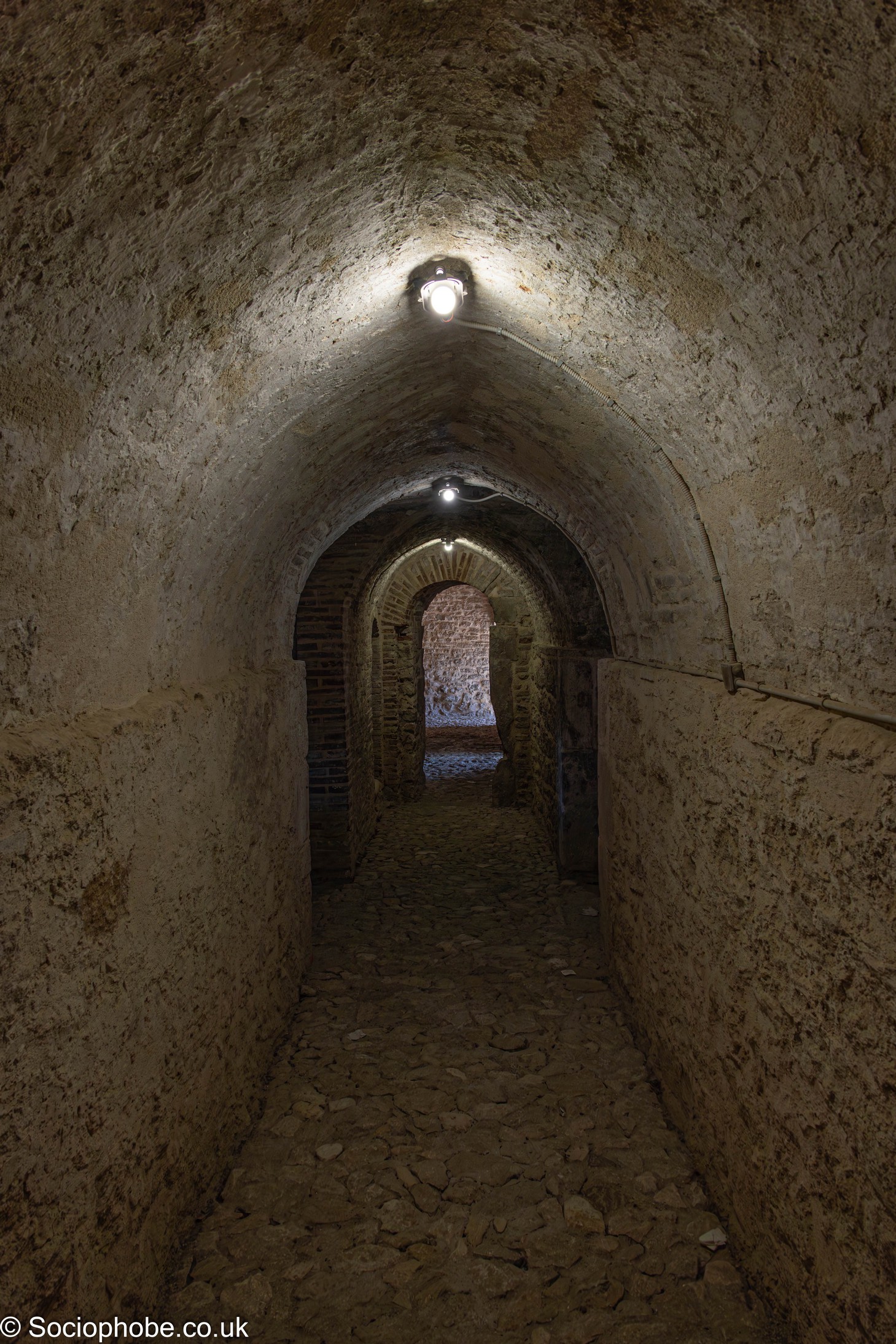
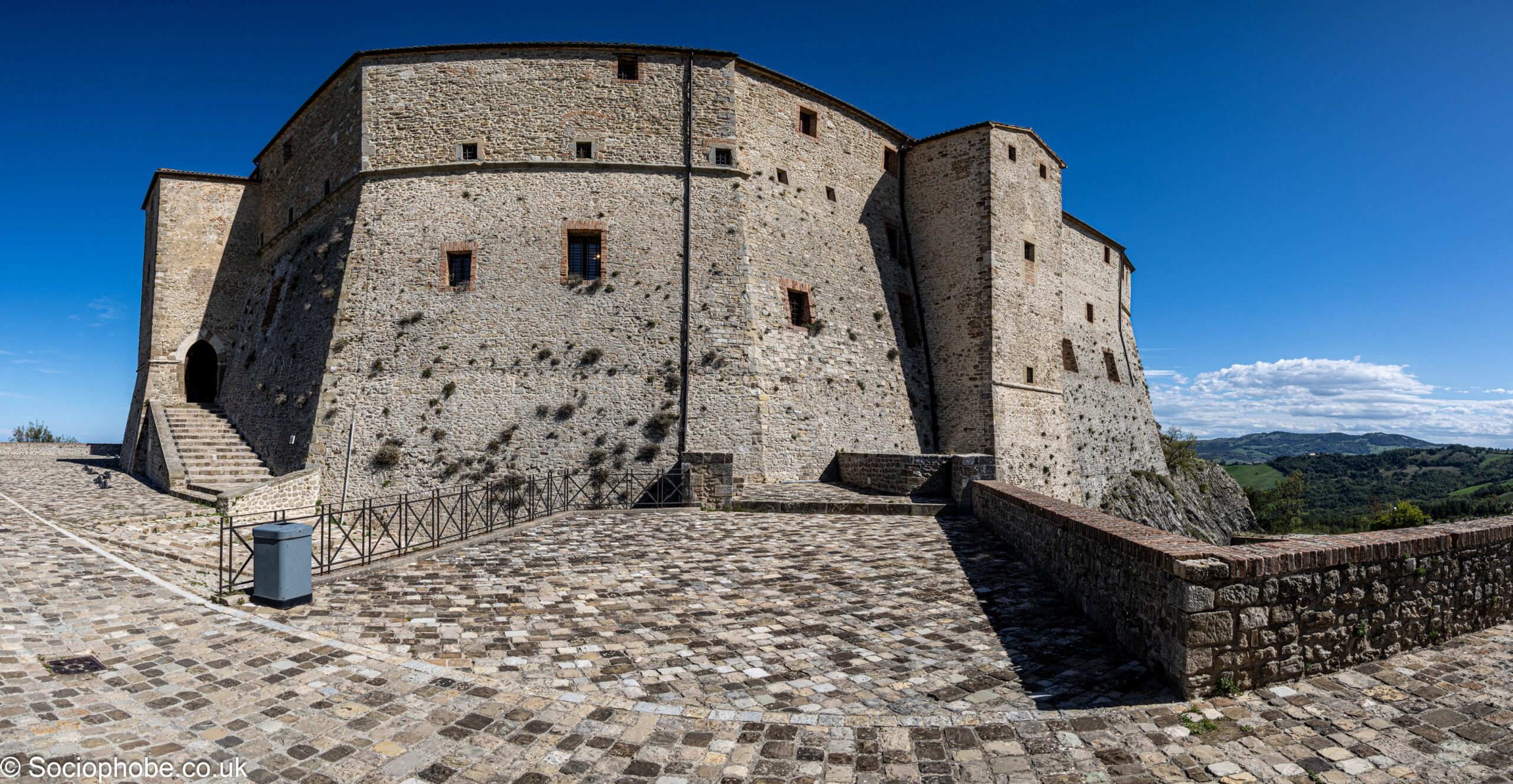
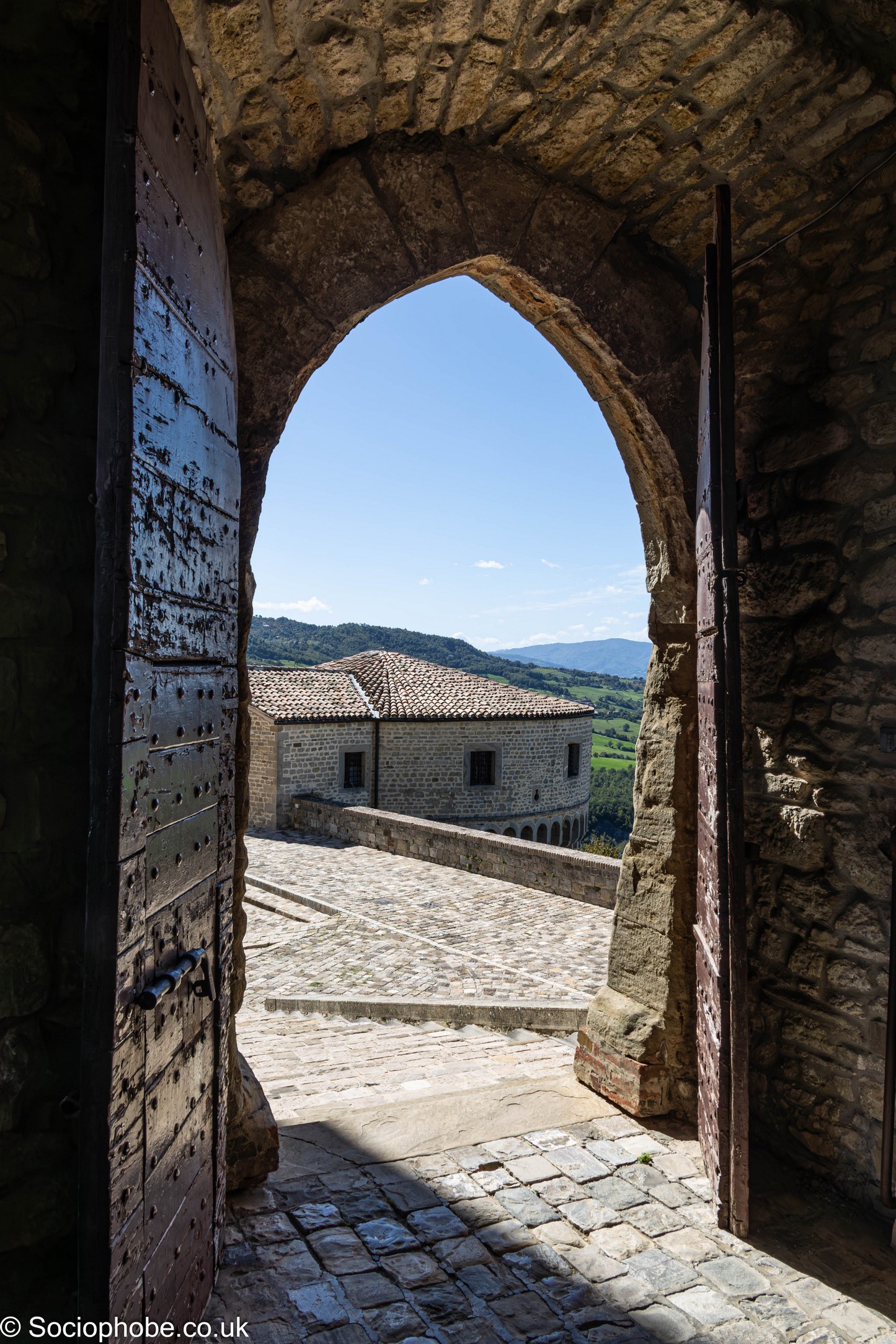
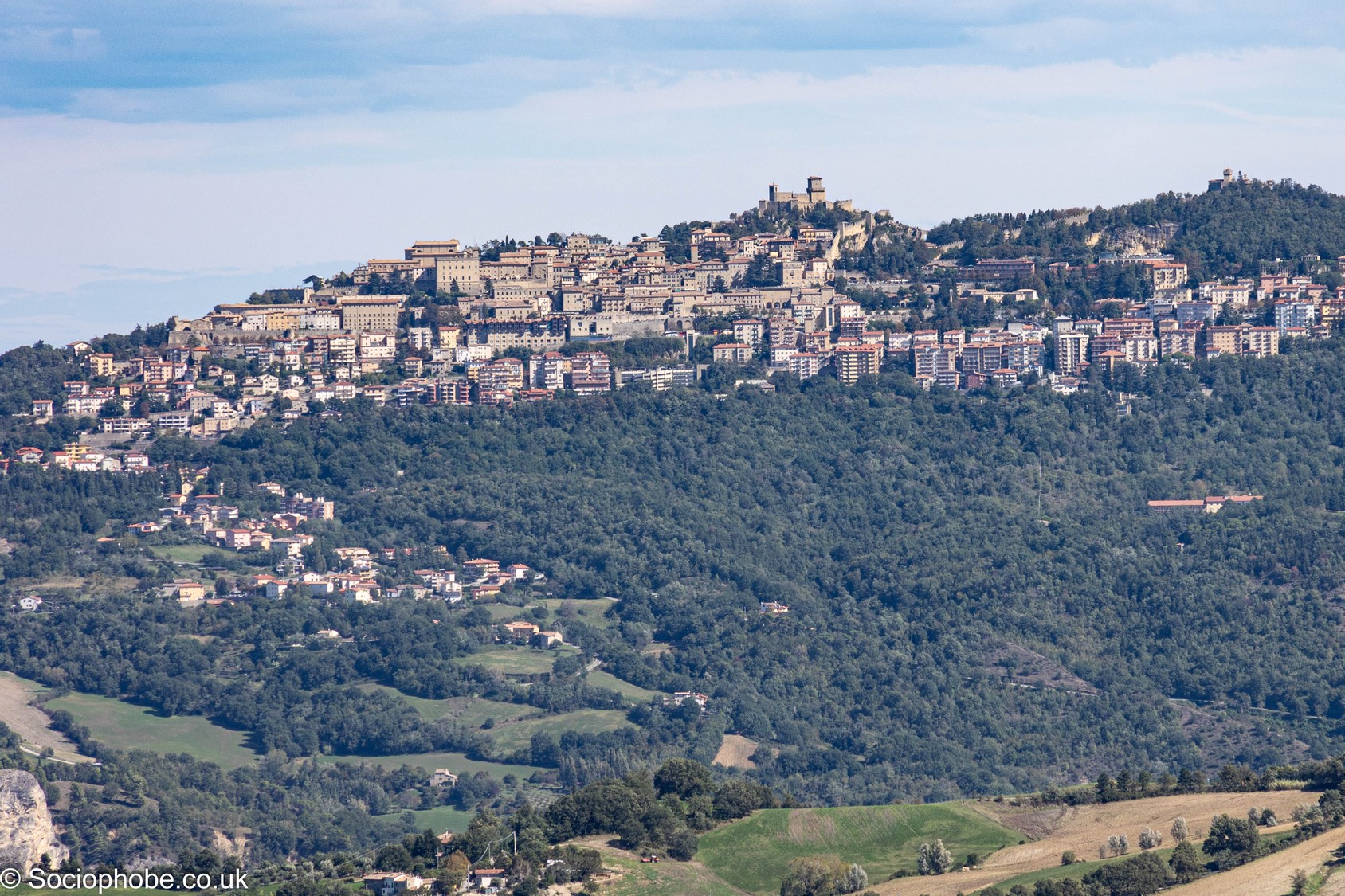

We sat and had an ice cream from the museum shop before doing a final circuit of the walls and then carefully making our way down the path. The restaurants were now open so Deb ordered food whilst I went to look at the War Memorial and the twelfth century bell tower, which was now closed as it seemed the church buildings were on a toggle with the restaurants so only one could be active at any one time.
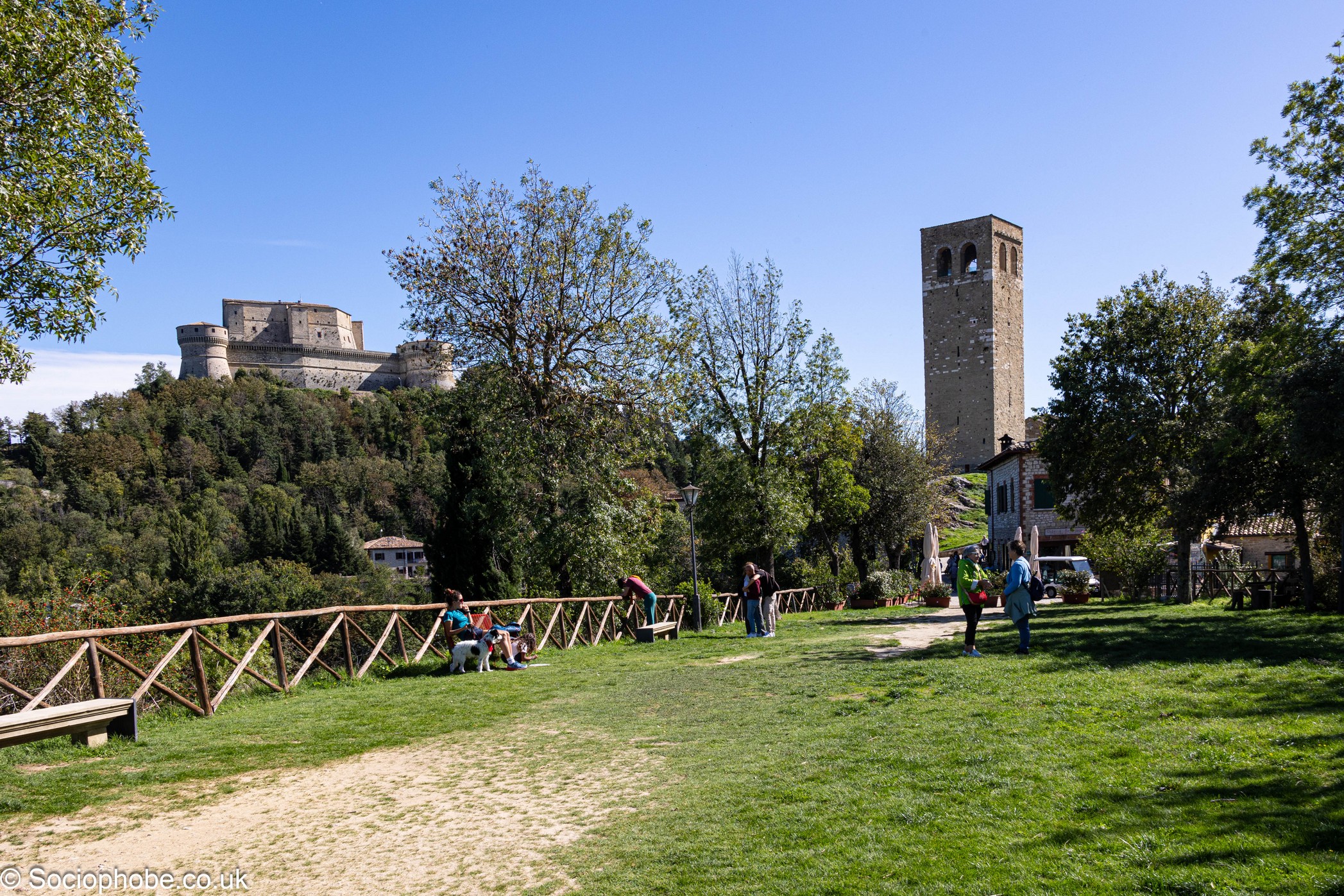
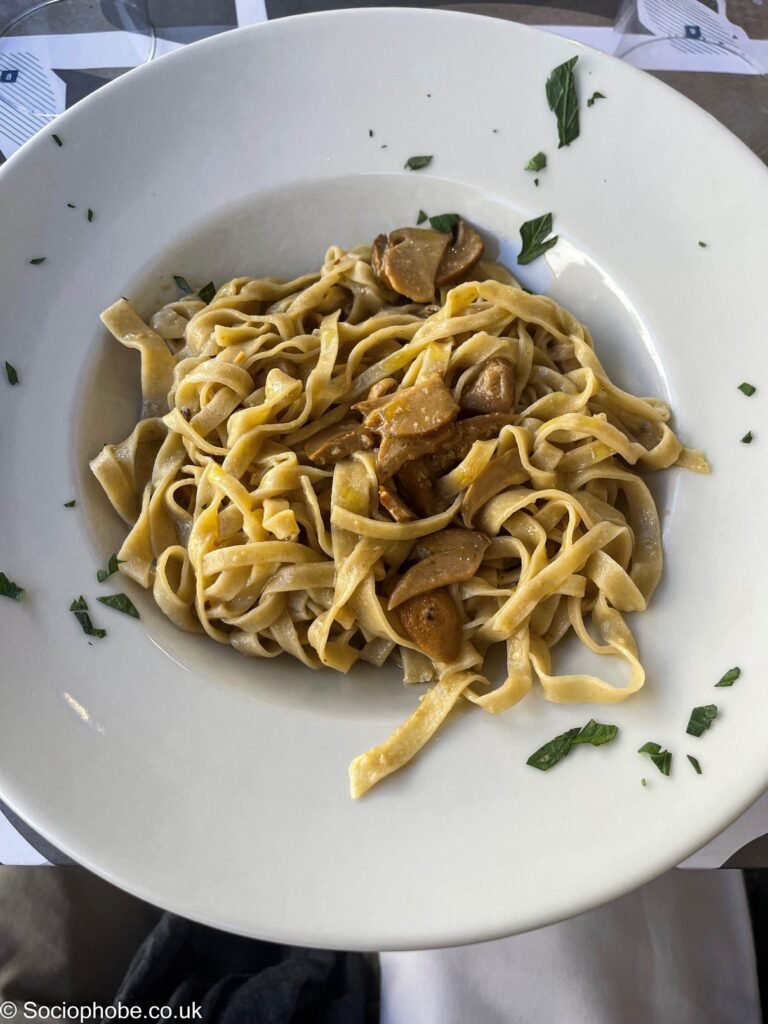
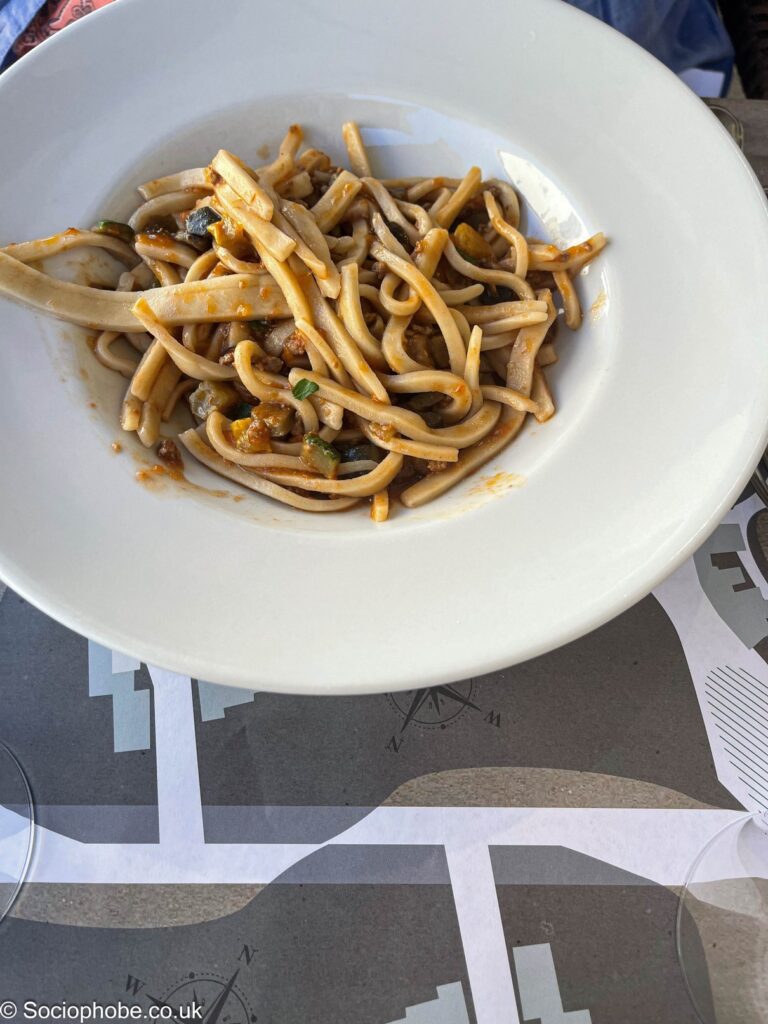
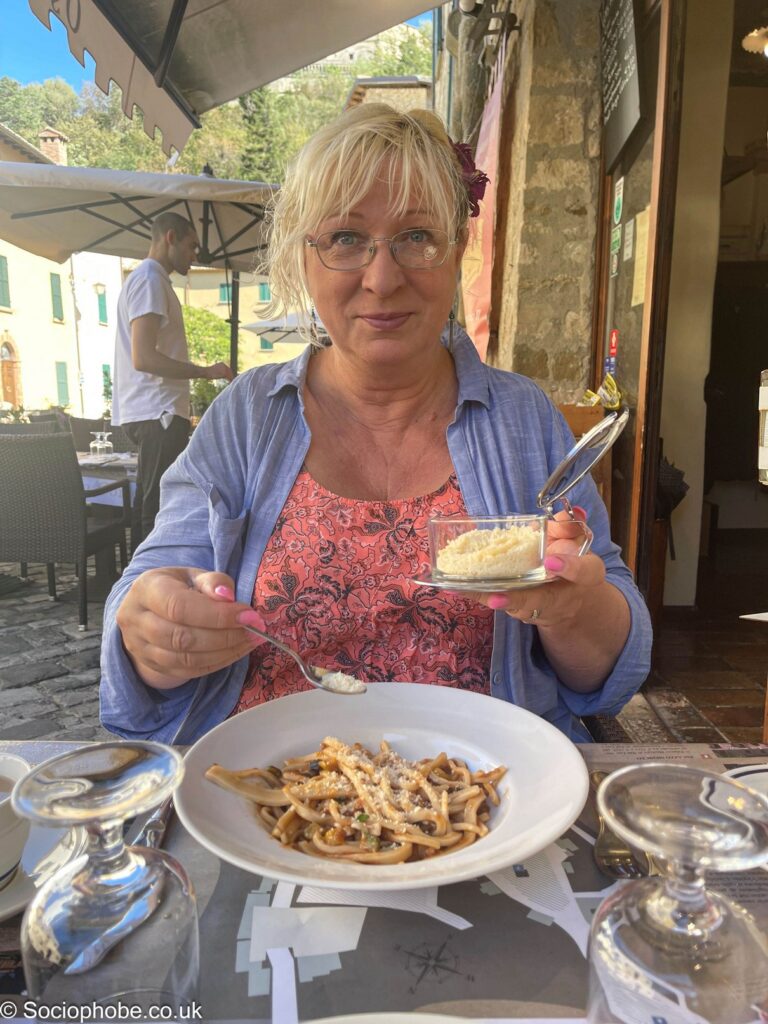
We ate at La Corte and the food and service were exemplary. I had tagliatelle with porcini mushrooms and Deb had stringhetti with ragu and both were just delicious. Not huge portions but plenty for lunch and fantastic taste and texture.
We then had a 40 minute drive to San Marino along mostly very winding, narrow and semi surfaced roads. Luckily we met almost no other traffic until we got to San Marino itself where the roads were far better. We were staying just outside the entrance to the historic town centre in Hotel Joli. We checked in, dumped our bags and then I moved the car to the secure parking lot as we weren’t going to be using it until Monday’s trip back to Venice airport. We didn’t unpack as we have an upgraded room tomorrow as I wanted a balcony so we walked the short distance to the Francis Gate of San Marino.
San Marino claims to be the oldest republic in Europe and has a status similar to the Isle of Man or Jersey where its income is derived from a mixture of tourism and operating as a tax haven. It was neutral in both World Wars and is not a member of the EU although it does use the Euro. It seems to be able to pick and choose whether it is part of Italy or a sovereign nation depending on convenience and the issue involved.
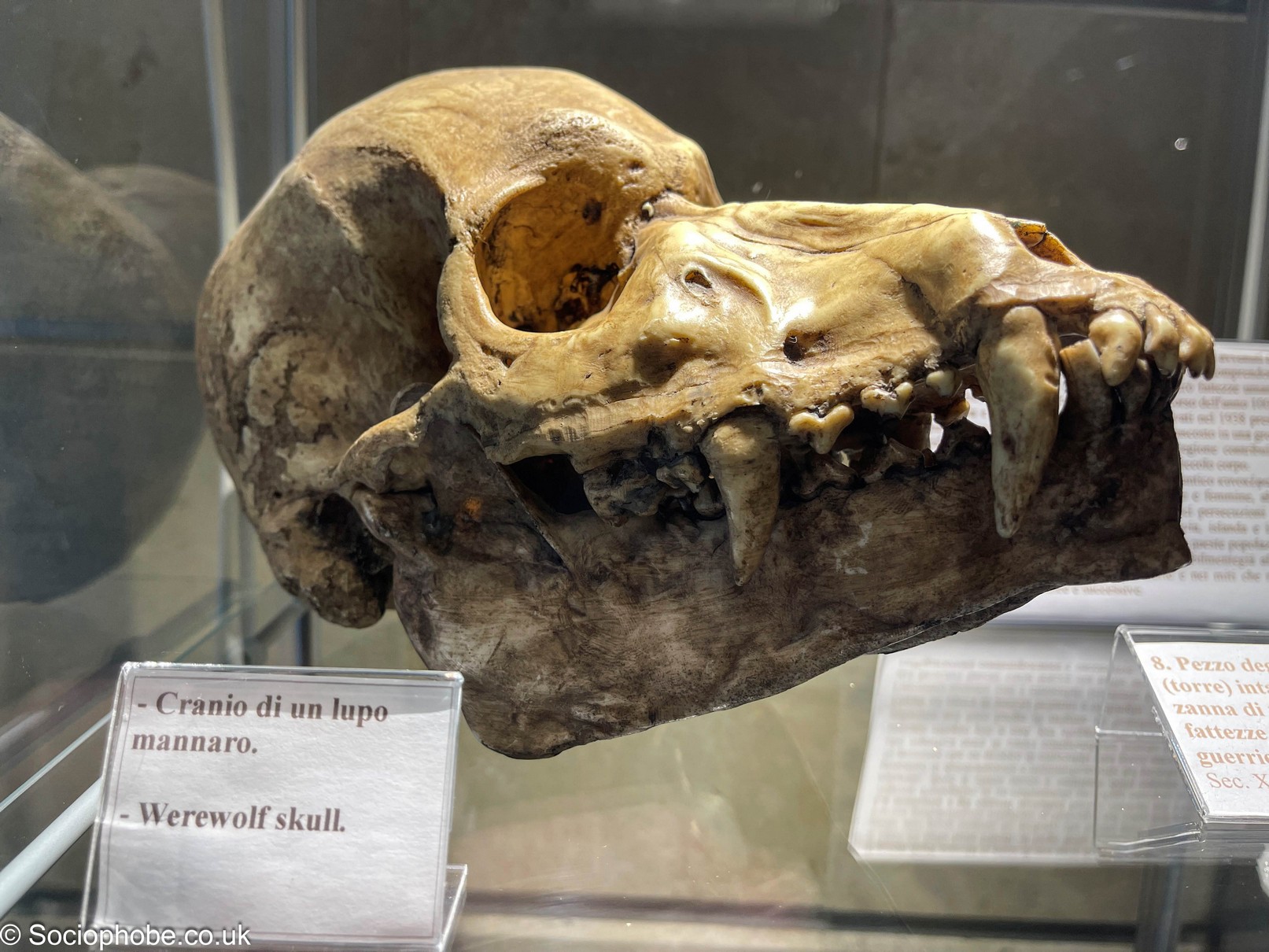
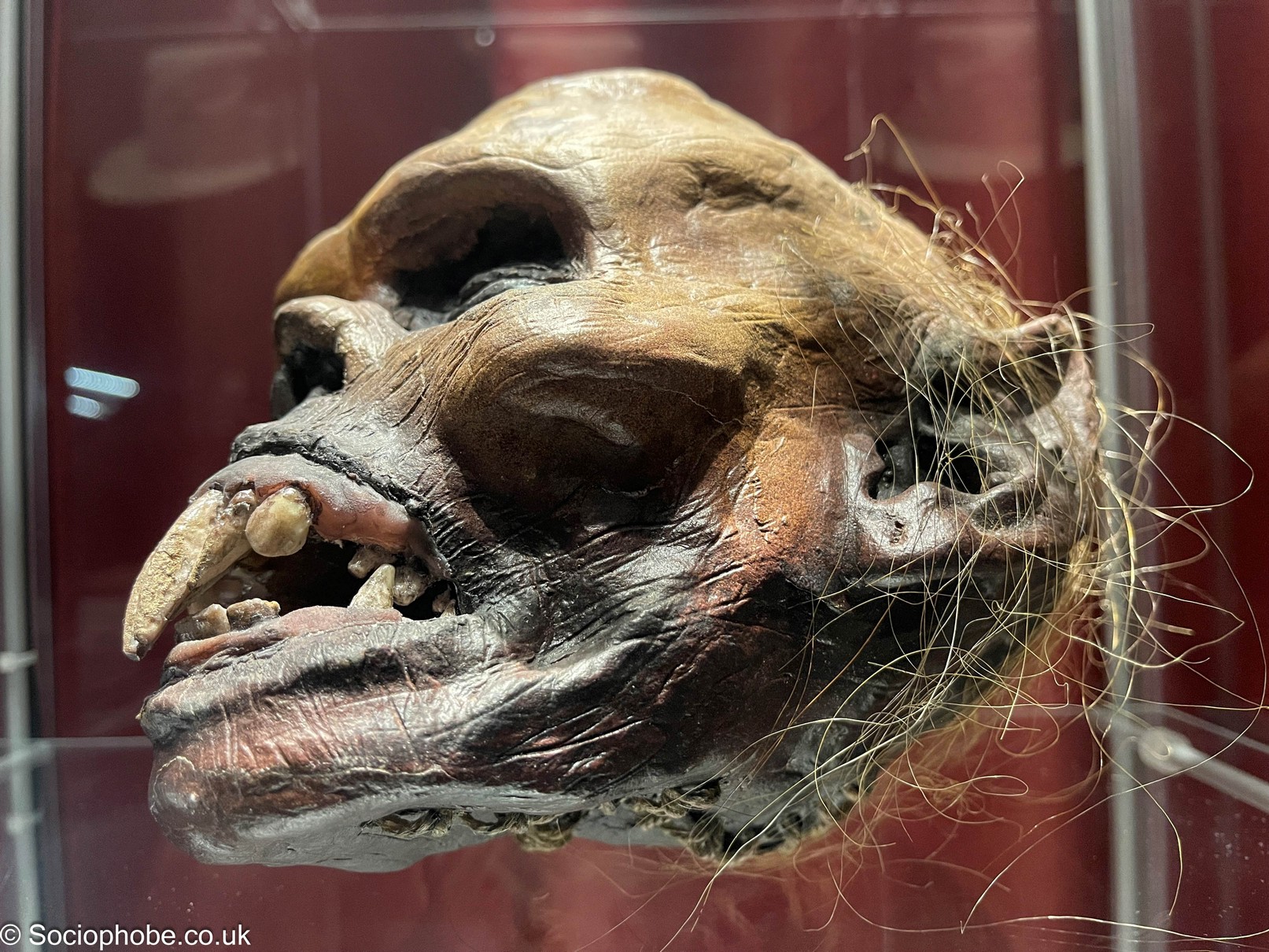
As we only had a couple of hours we decided to just visit the eastern edge of the city. First stop was Tourist Information to get the obligatory passport stamp and then we visited the Vampire and Werewolf Museum. This was quite fun with a mixture of folklore, cinema and literature and alleged preserved skulls, limbs, skeletons etc of the creatures. It was interesting to see how spread throughout Europe the legends were and stories about famous cases involving vampirism or lycanthropy.
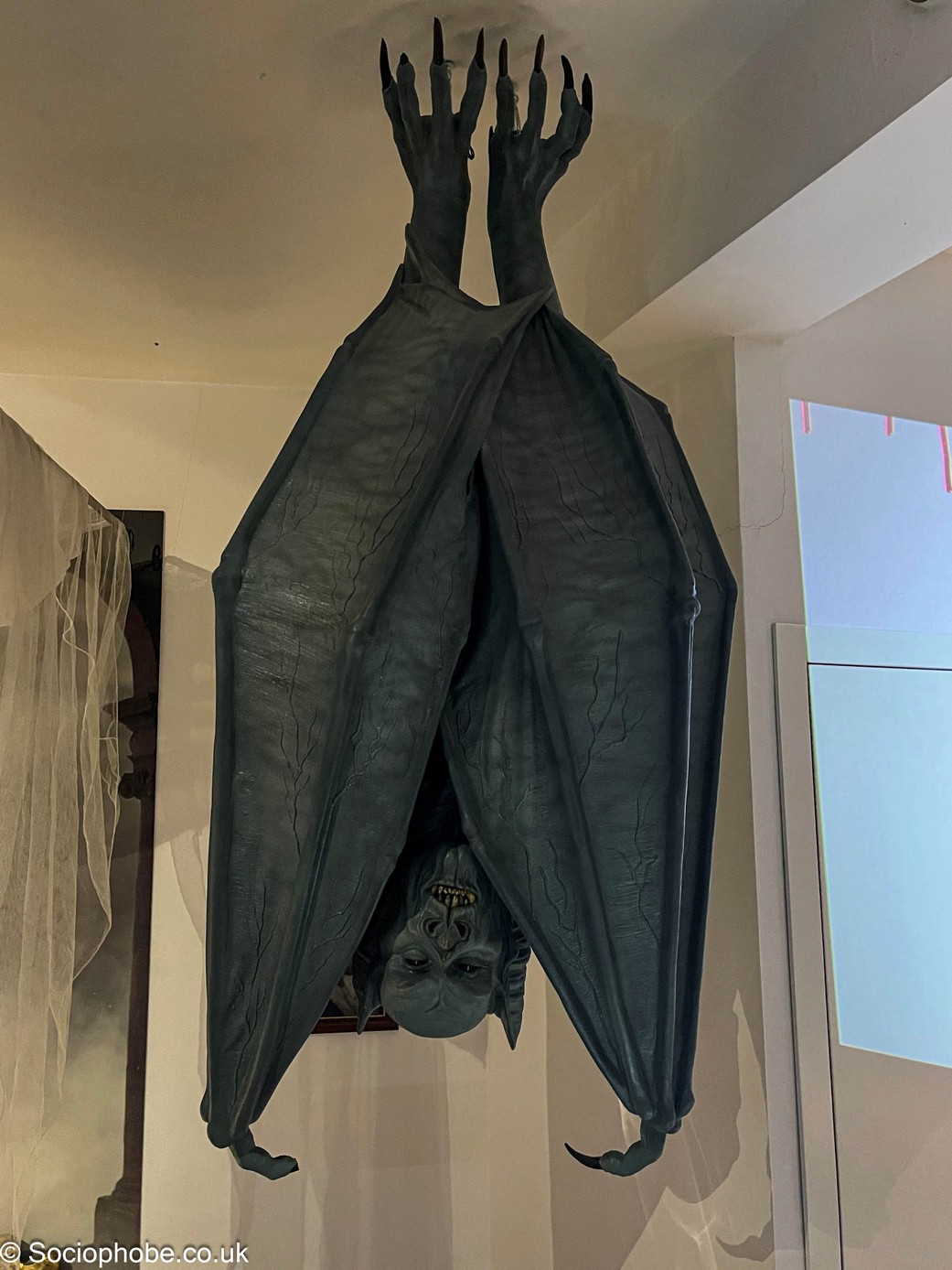
We then continued to meander through the streets looking at some of the old buildings, the new cable car linking the upper city to the lower areas and the views in general. The city seemed very touristy with lots of gun shops, knife shops and jewellers as well as cafes and restaurants. It was also very busy which we weren’t used to after the last week. Depending on how it looks I may do the cliff path tomorrow which goes past the three towers on the highest point of the city.
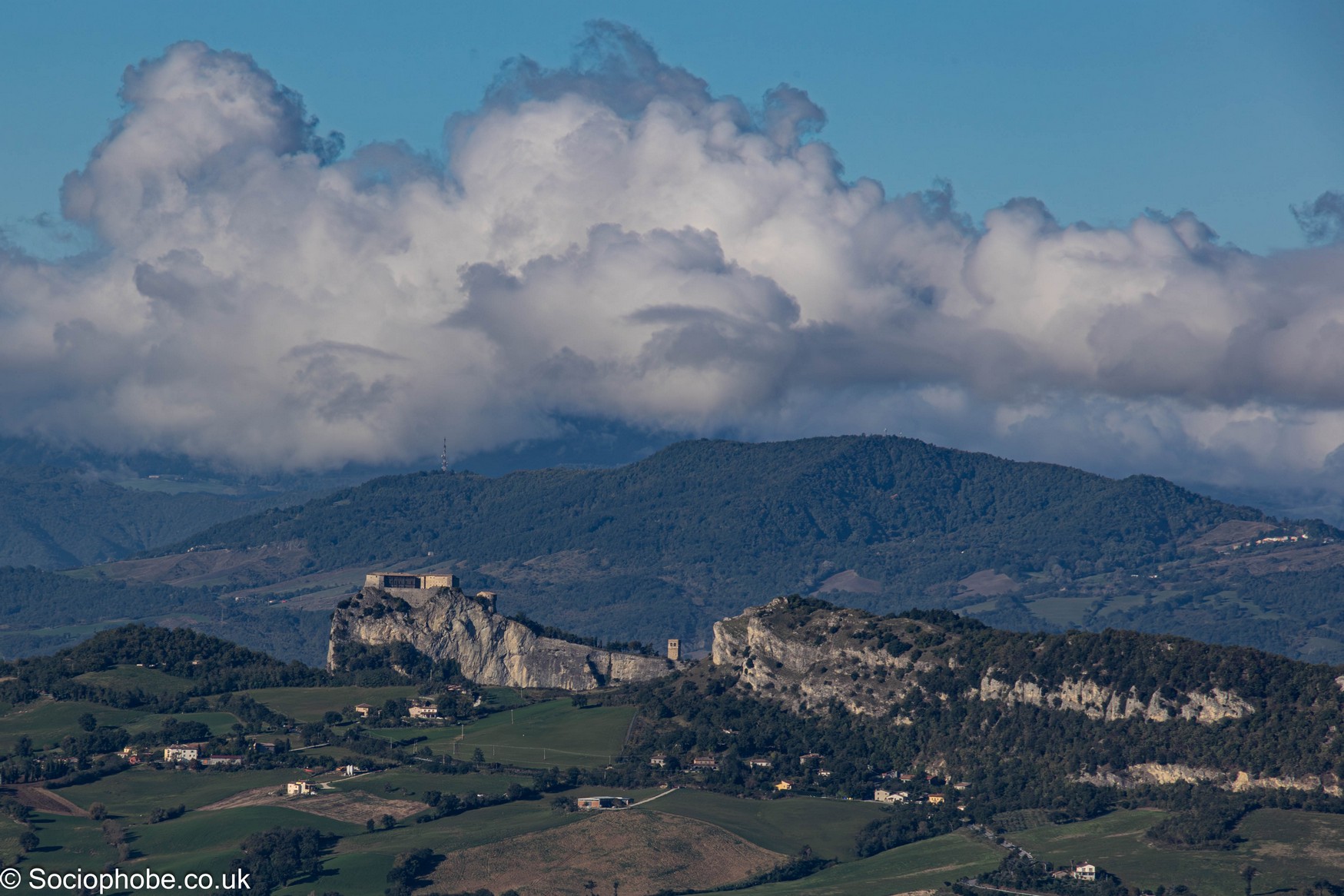
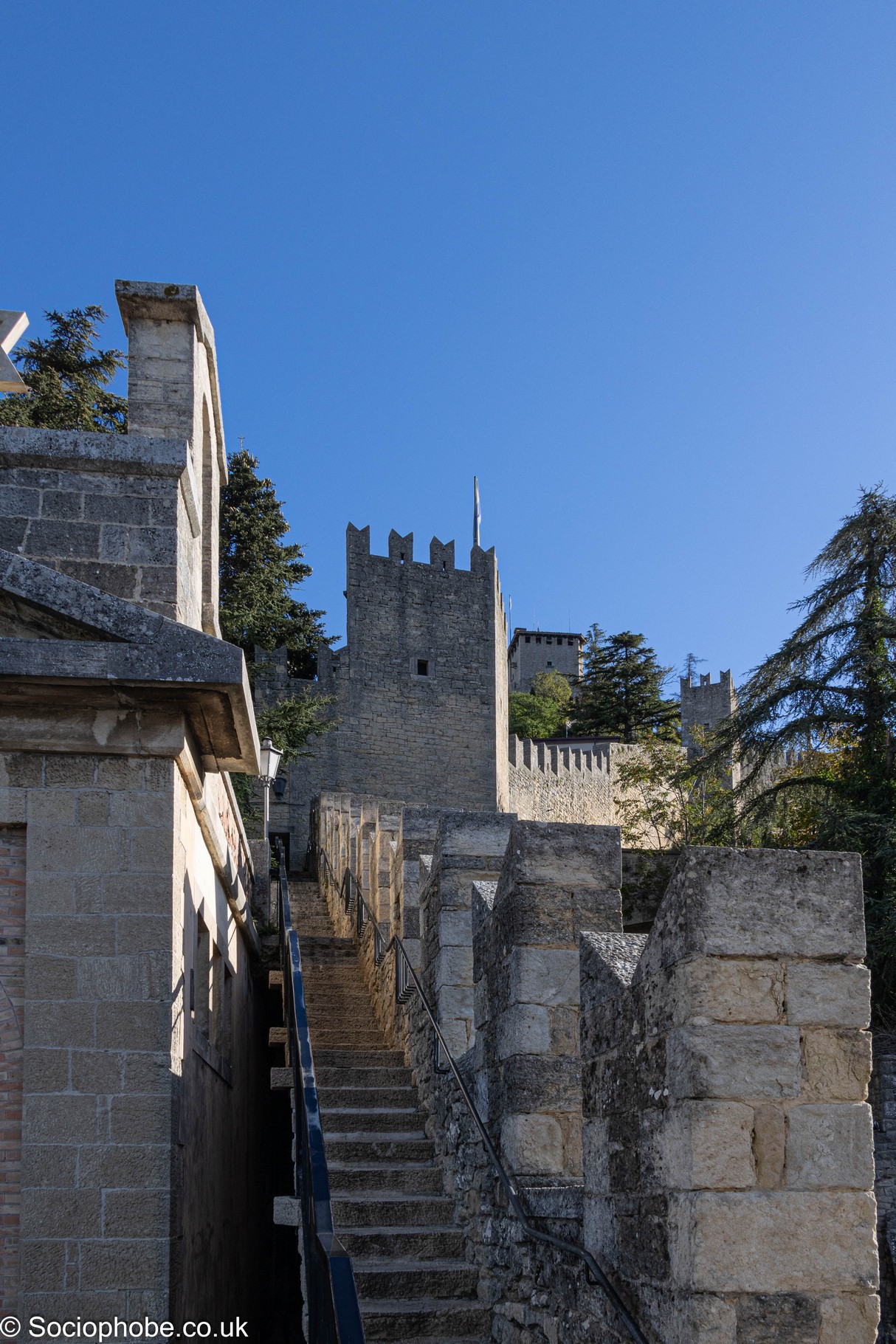
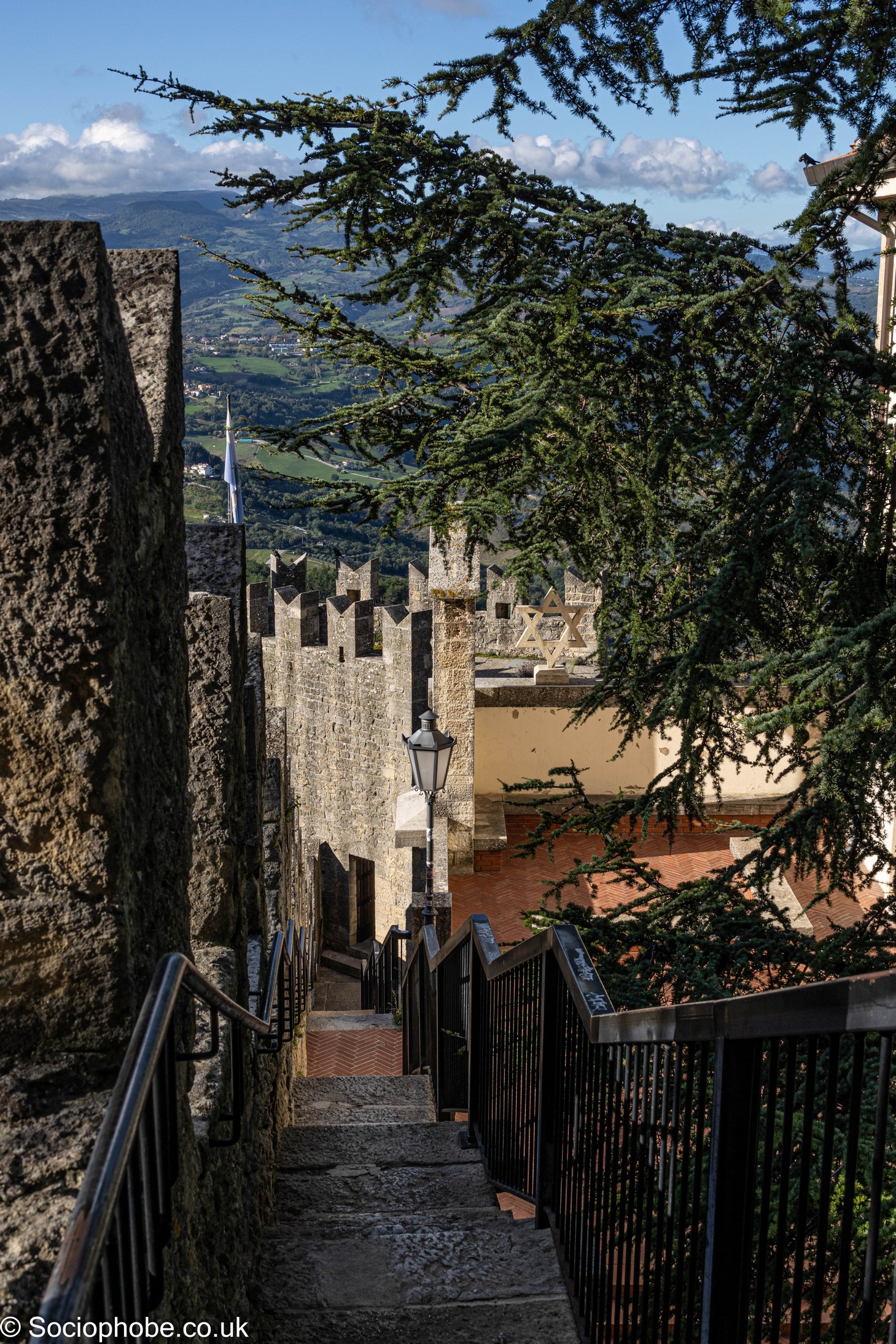
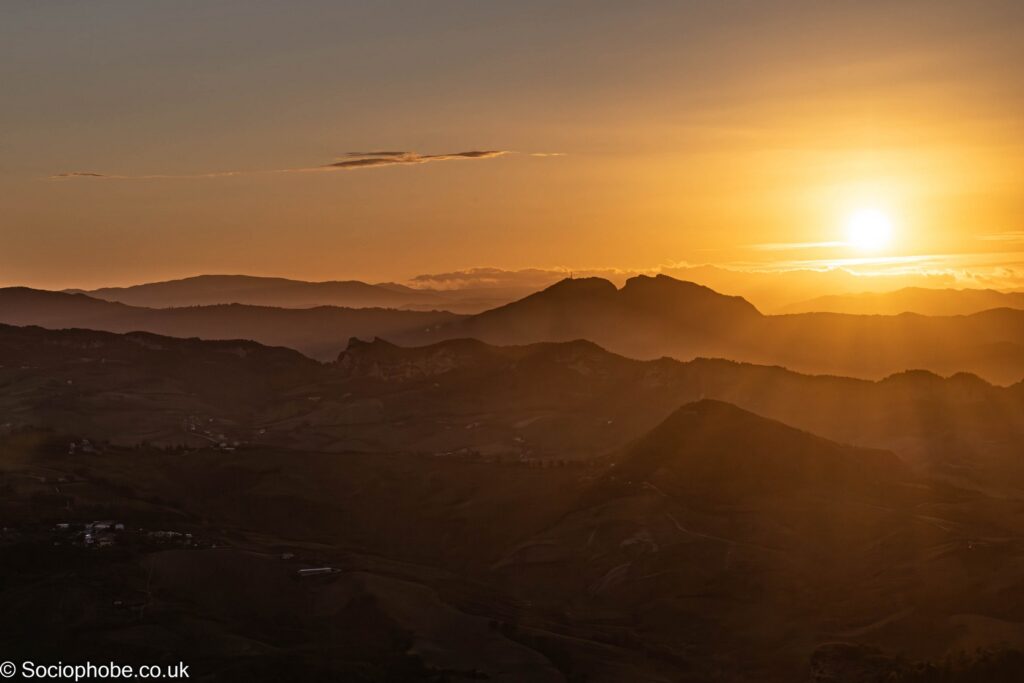
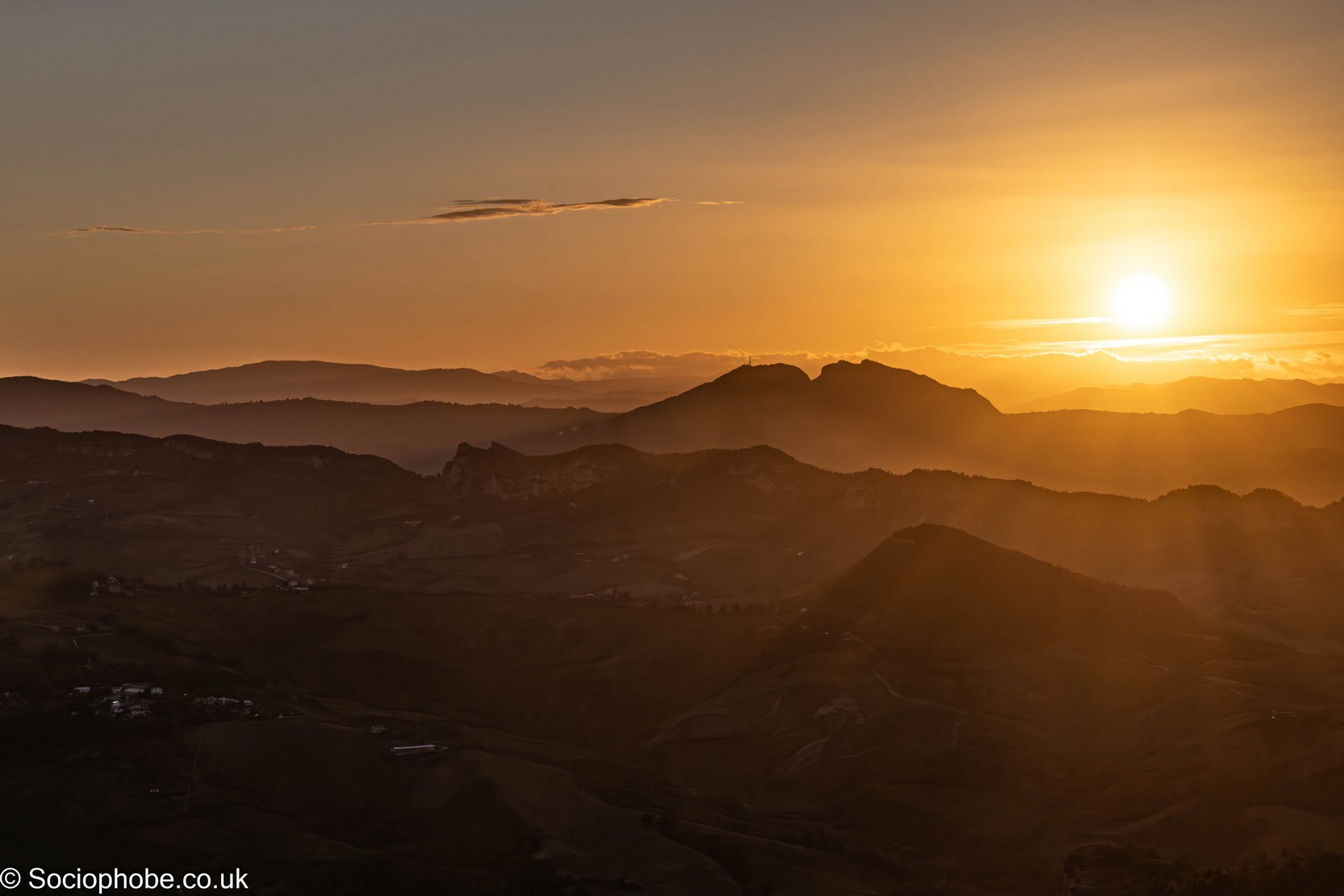
We actually got to see our first sunset of the holiday here and then had a late (for us) dinner in the hotel restaurant. I had diced rabbit wrapped in ham and Deb had seafood skewers and we shared grilled vegetables. Dessert was profiteroles and a kind of fig and nut cake, all very pleasant and the restaurant was full by the time we left.
Sunday – San Marino
Another bad nights sleep but it was nice to hear church bells when we woke up. We walked through the city just after 9 and it was blissfully quiet. It was actually quite chilly too despite the blue sky but that didn’t last long. We walked up various levels of the city until we were close to the first tower and stopped for breakfast. This was quite delicious – a sort of toasted ham and cheese wrap with some little biscuits and a tiny coffee of course.
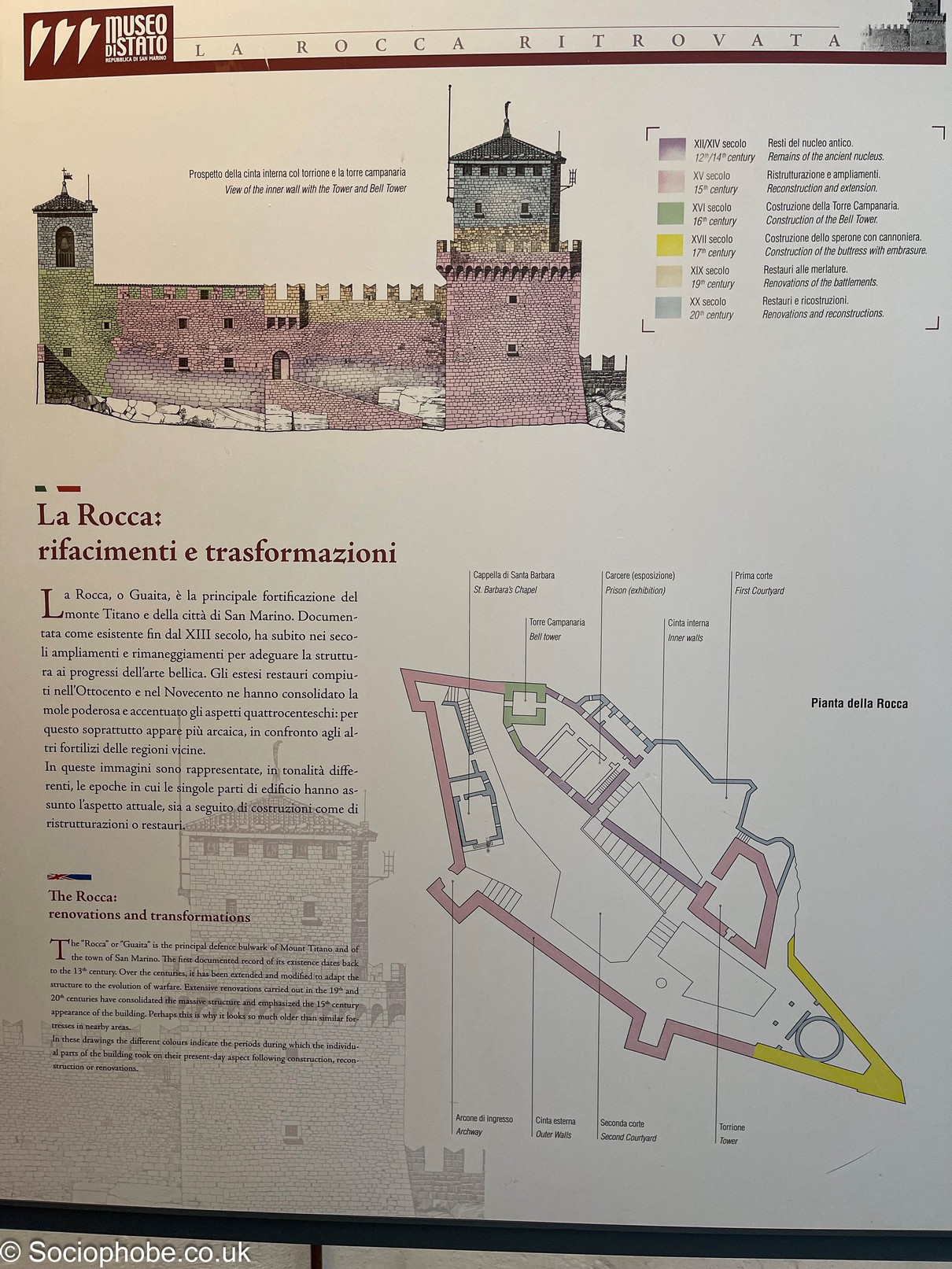
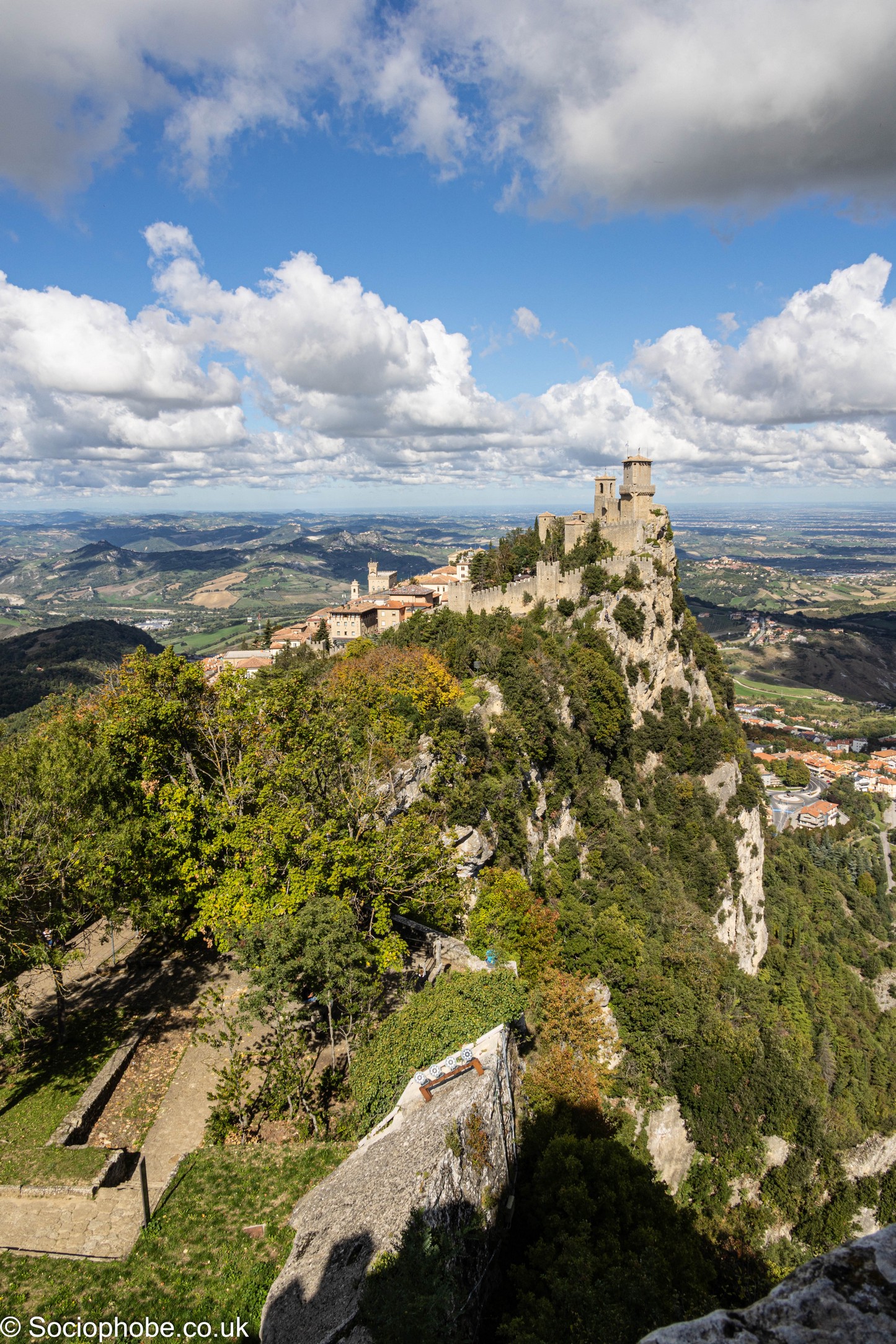
There are three towers that give San Marino its distinctive skyline. The first tower, Guaita, is the oldest and largest of the three. Built in the 11th century it was substantially reinforced in the fifteenth century due to San Marino’s war with the House of Malatesta, owners of San Leo where we were yesterday.
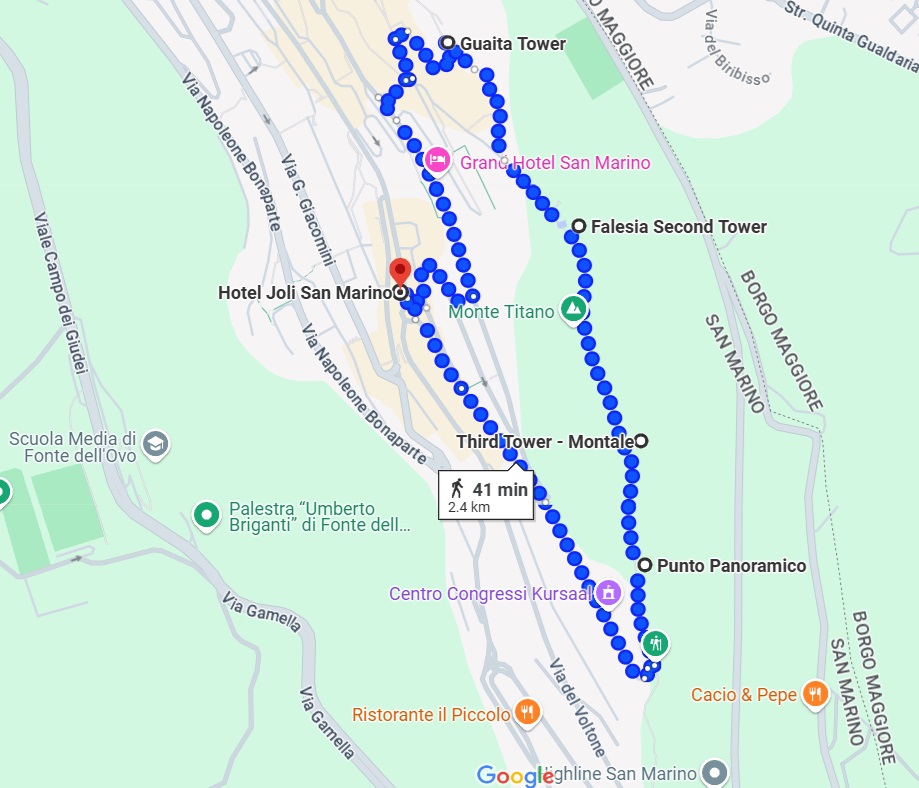
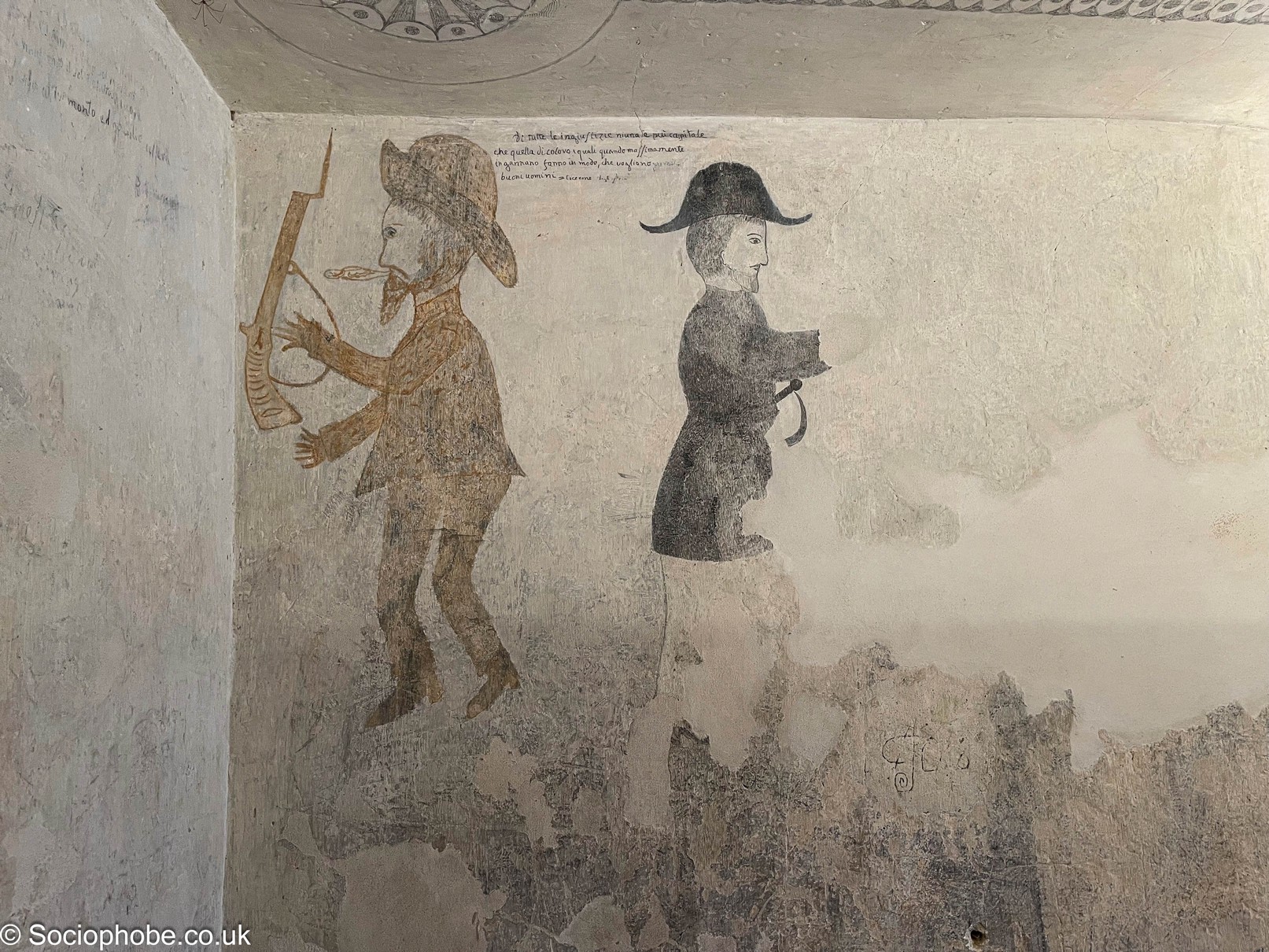
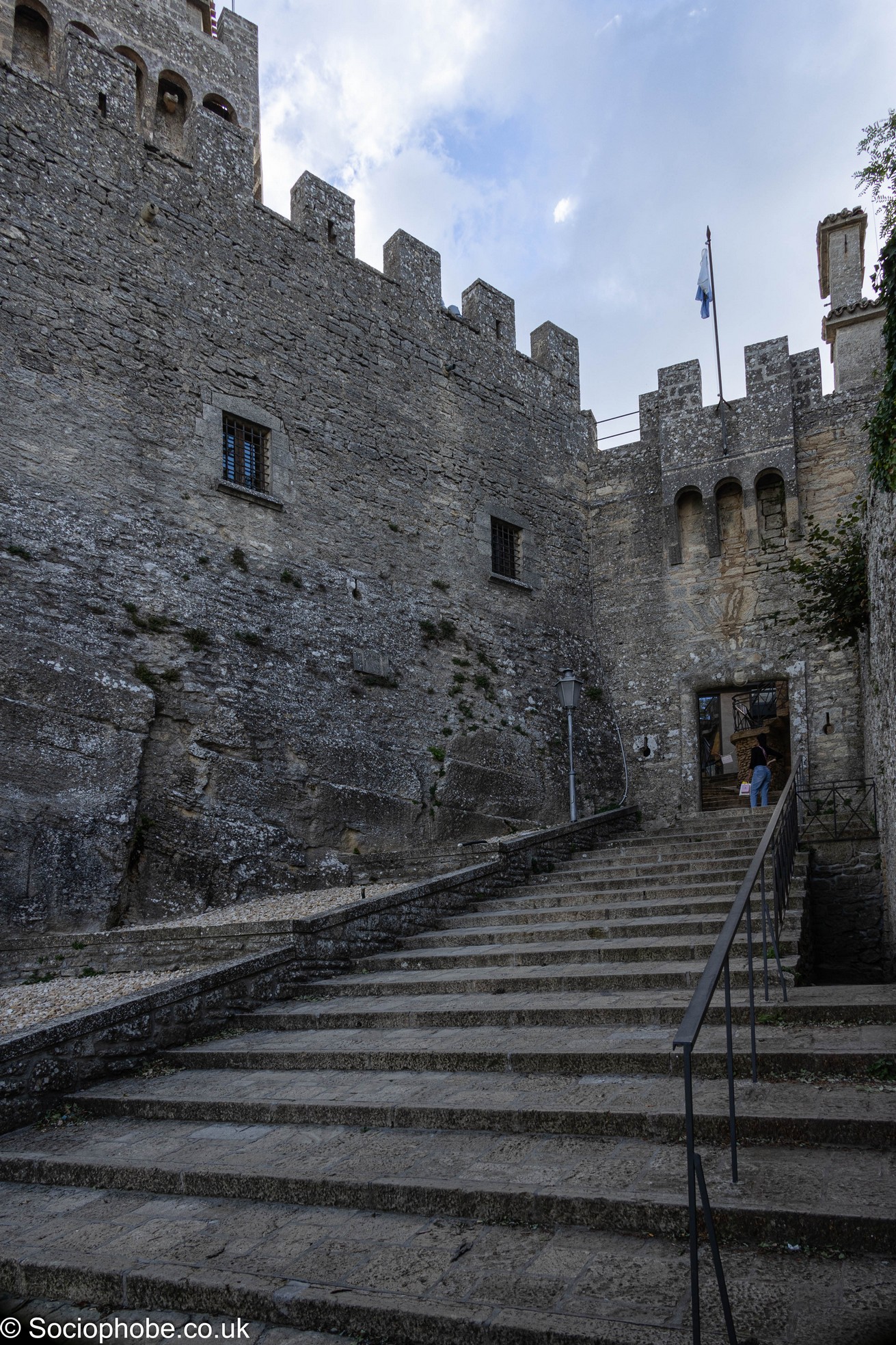
Entry was free to all three towers today as it was European Heritage weekend so that was good timing. The first tower (Guaita) has a keep with a large courtyard, all built directly on to the rock and the overall shape and the design of the main keep was that of a diamond rather than being square. The tower was an interesting climbing with the last part being a very steep ladder and then iron handholds to pull yourself up and the views were certainly impressive! There were wooden covers over the windows with gun ports. This fort had been used as a prison for hundreds of years and there were lots of graffiti/artwork preserved on the walls.
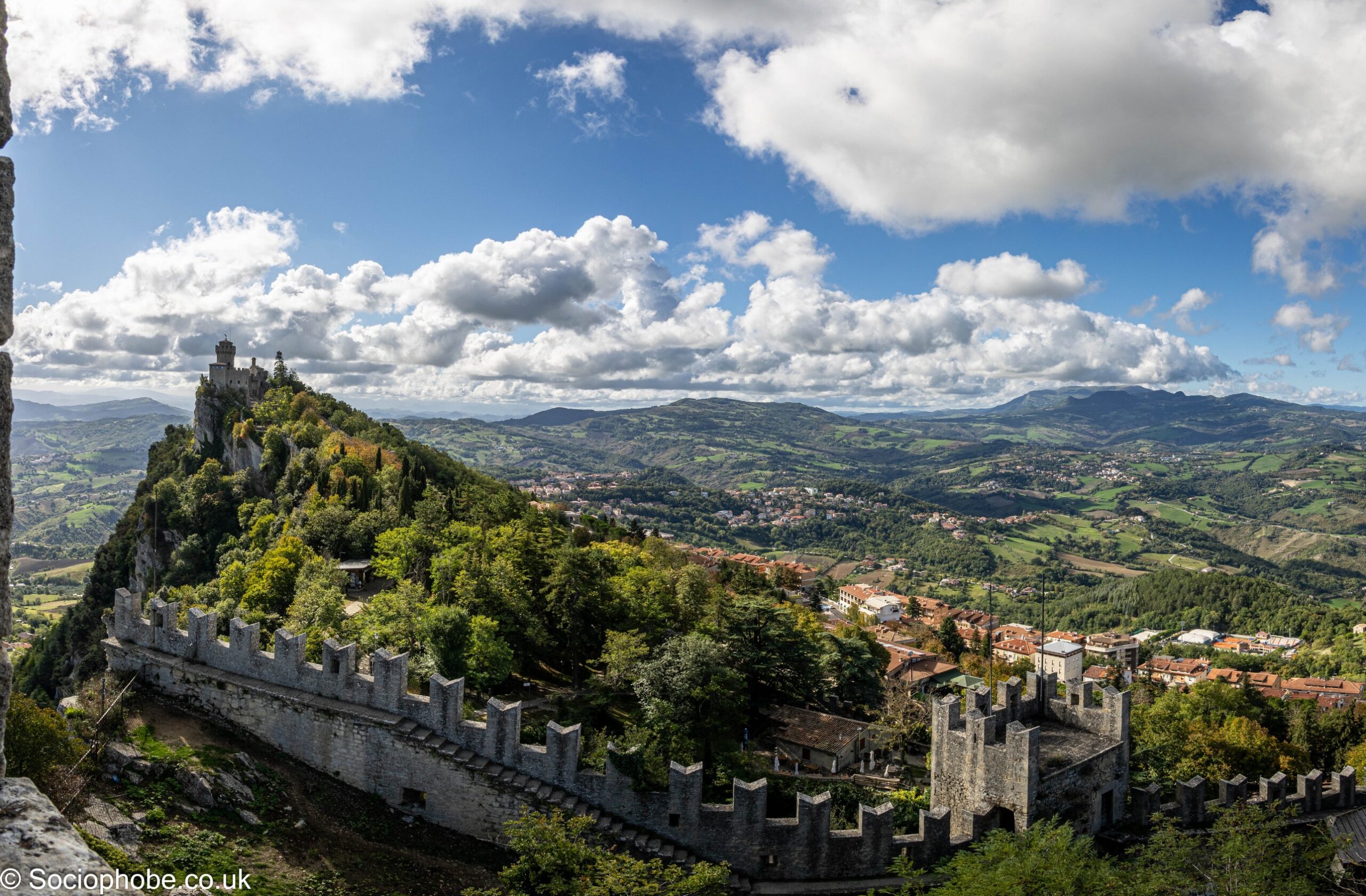
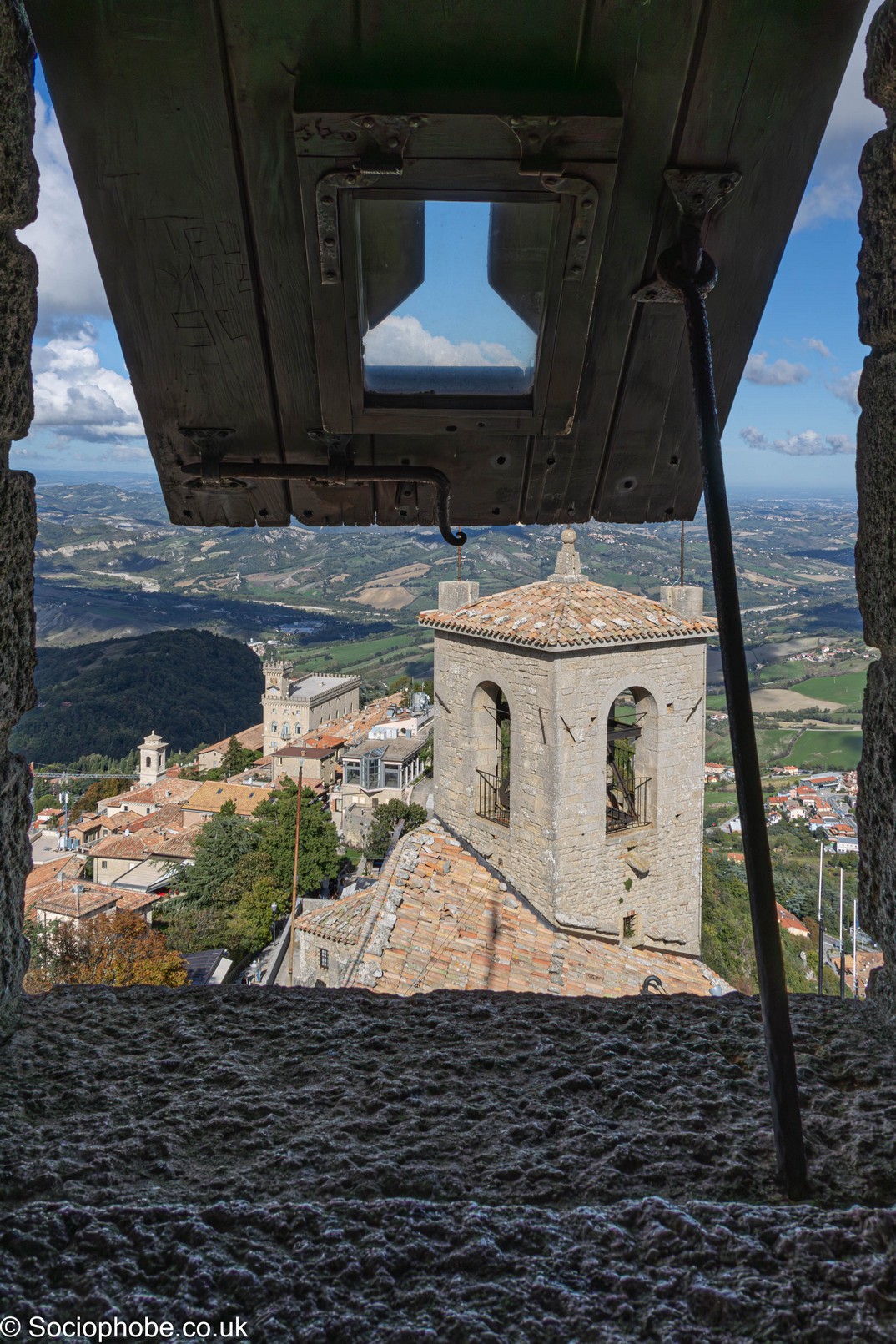
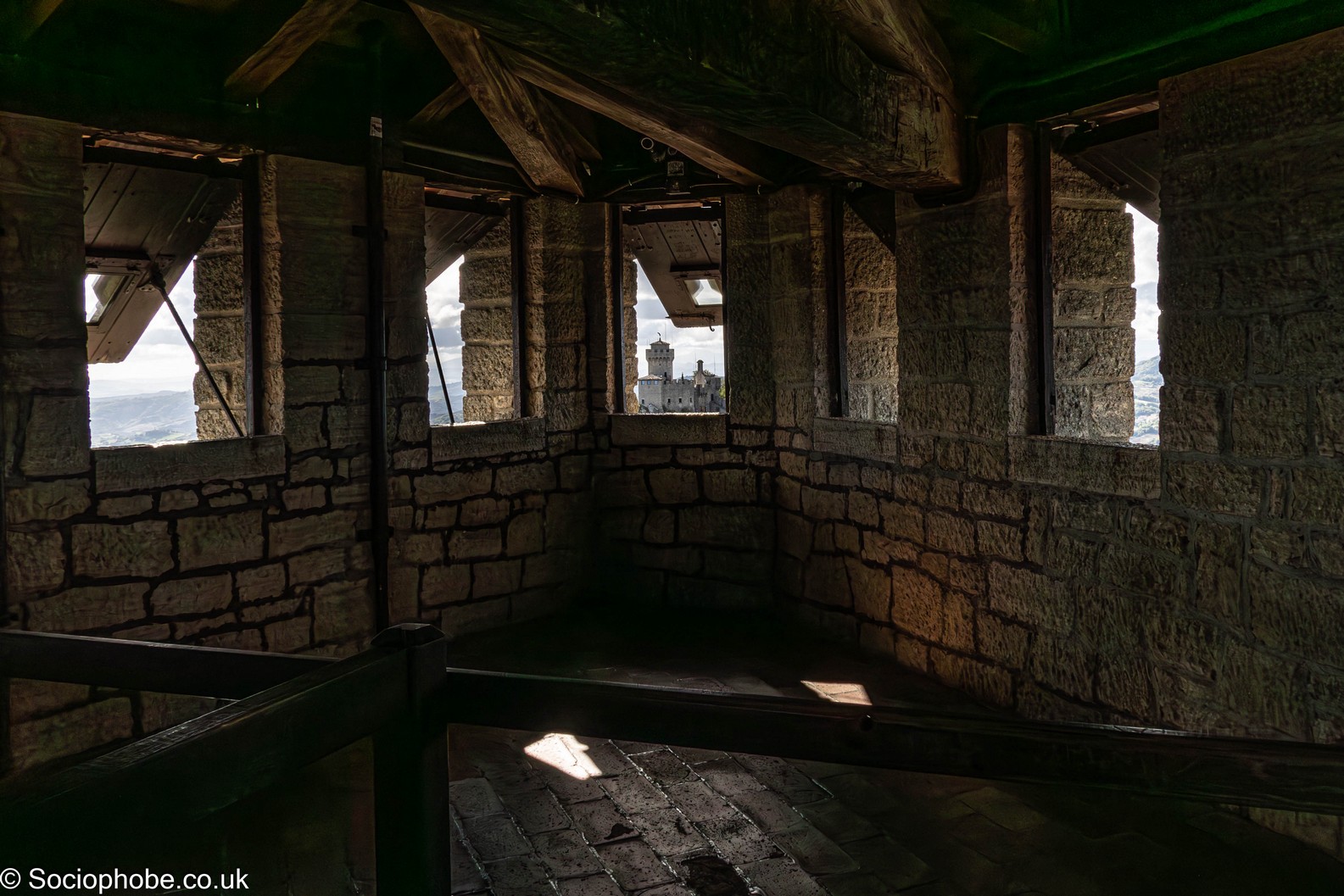
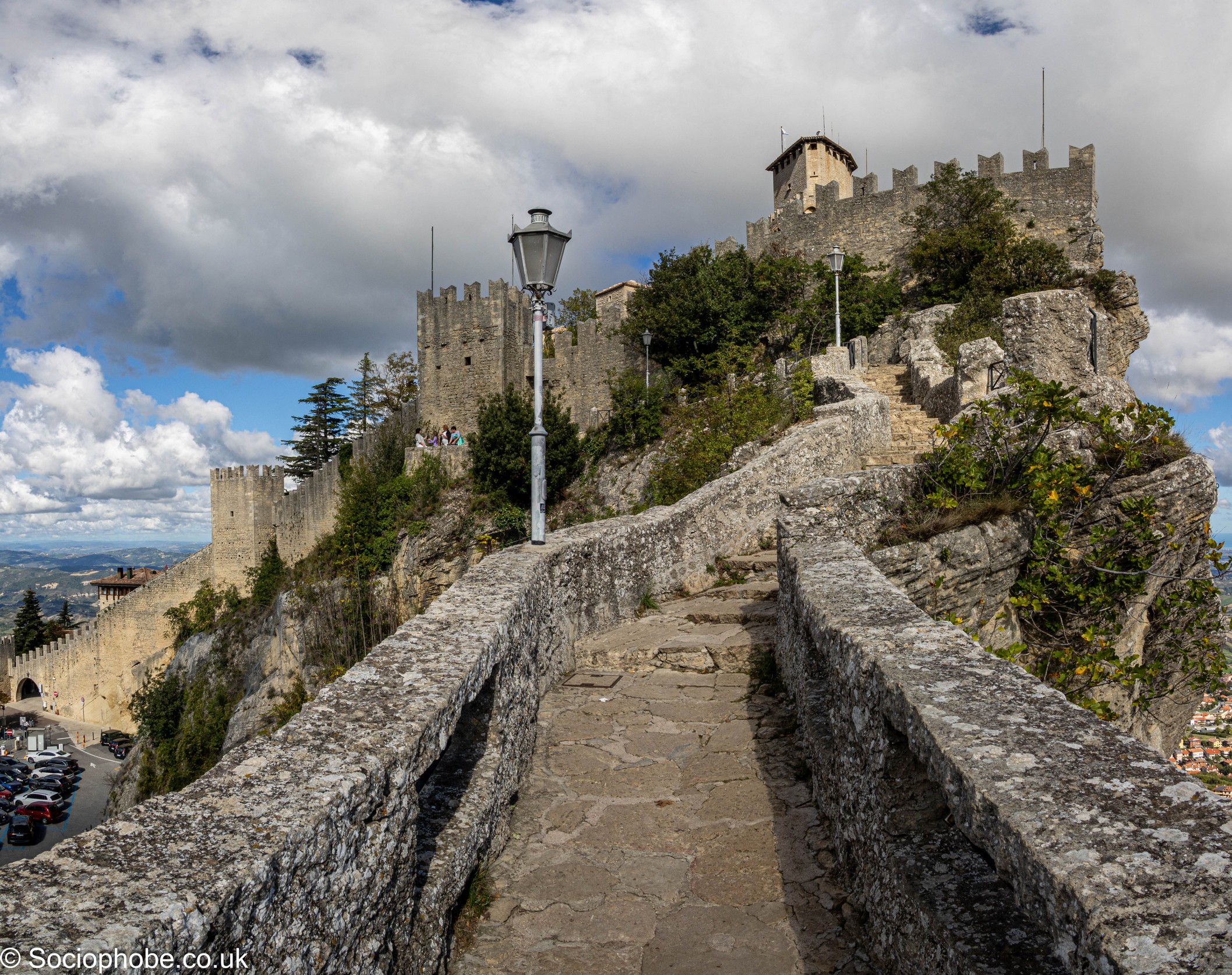
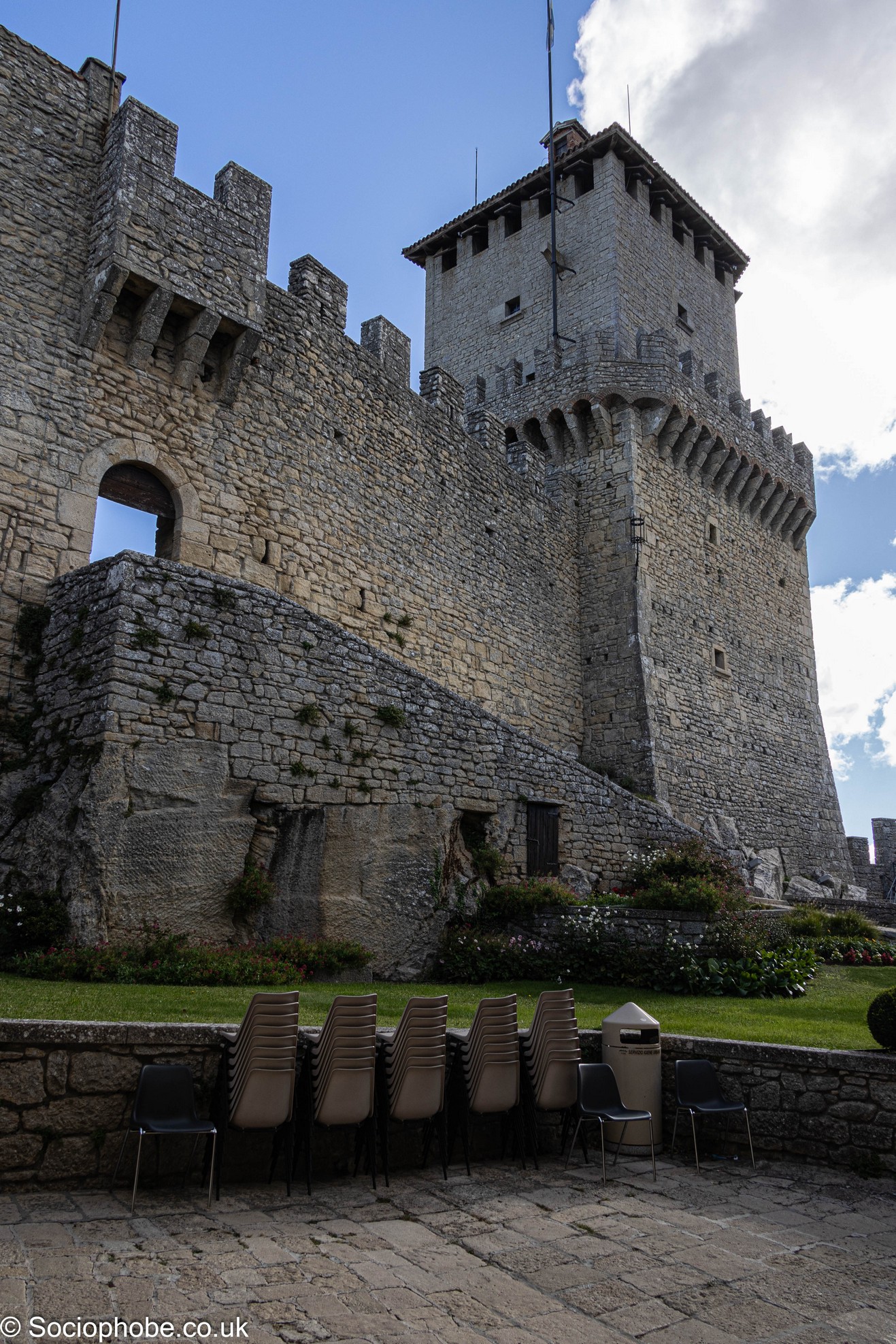
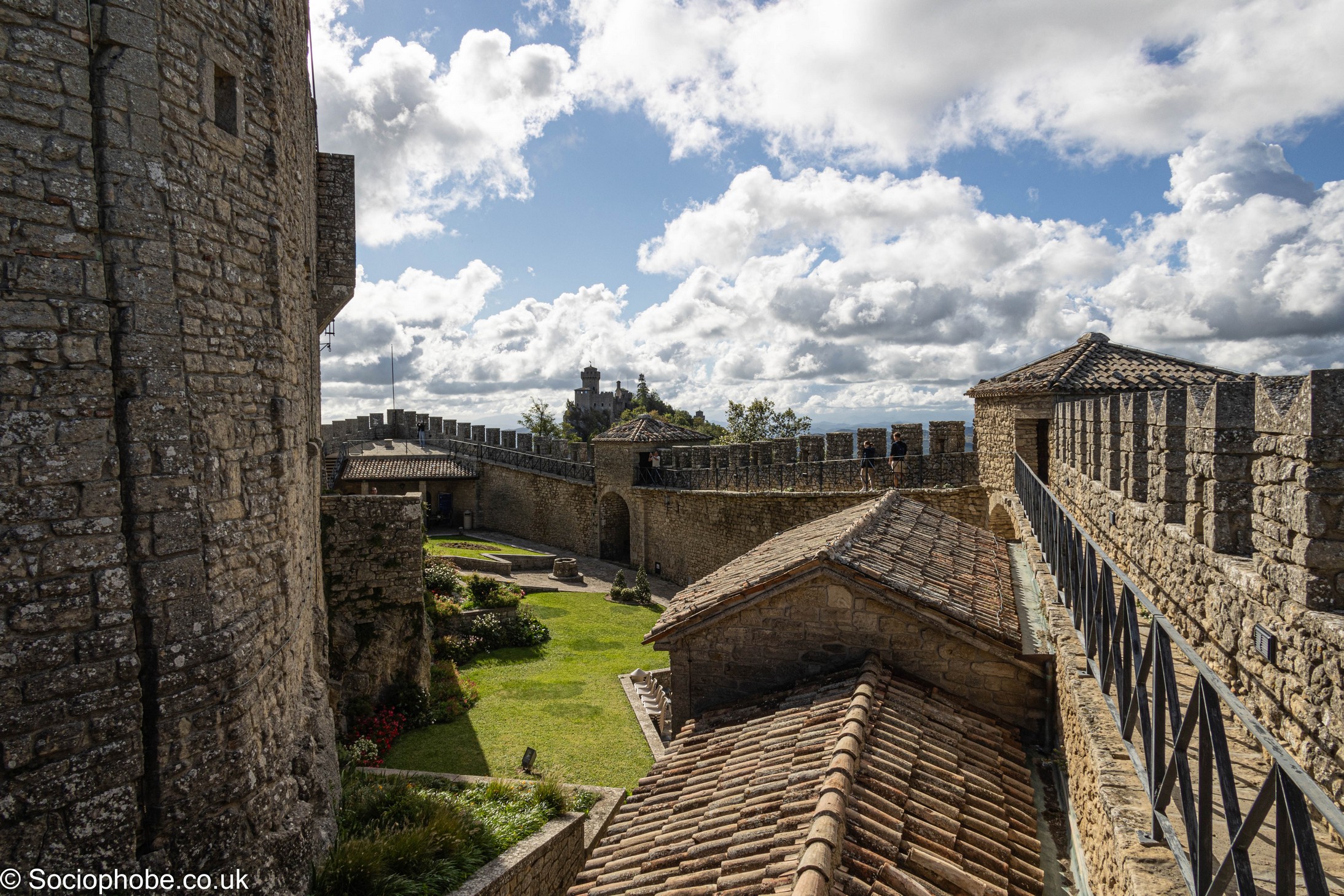
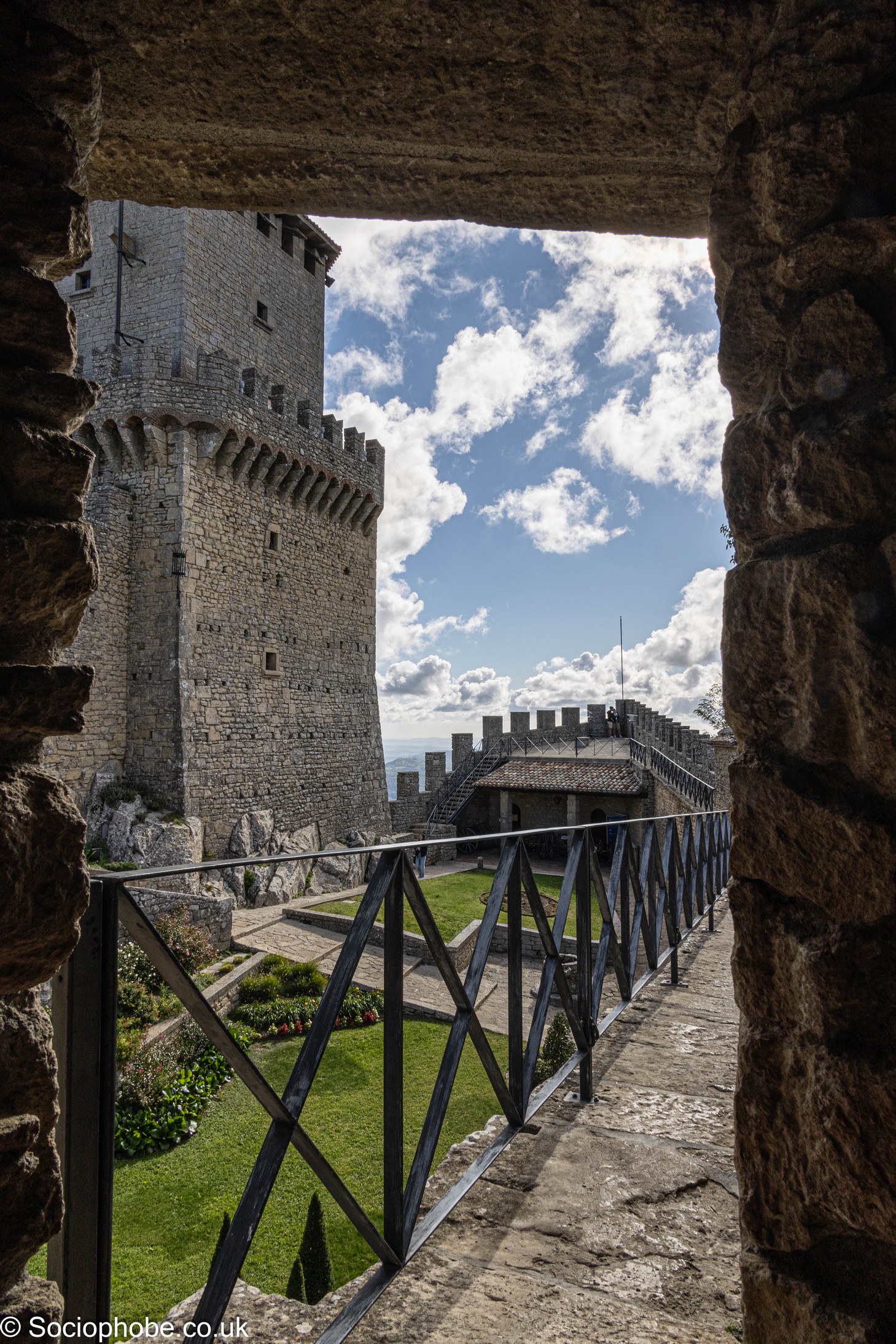
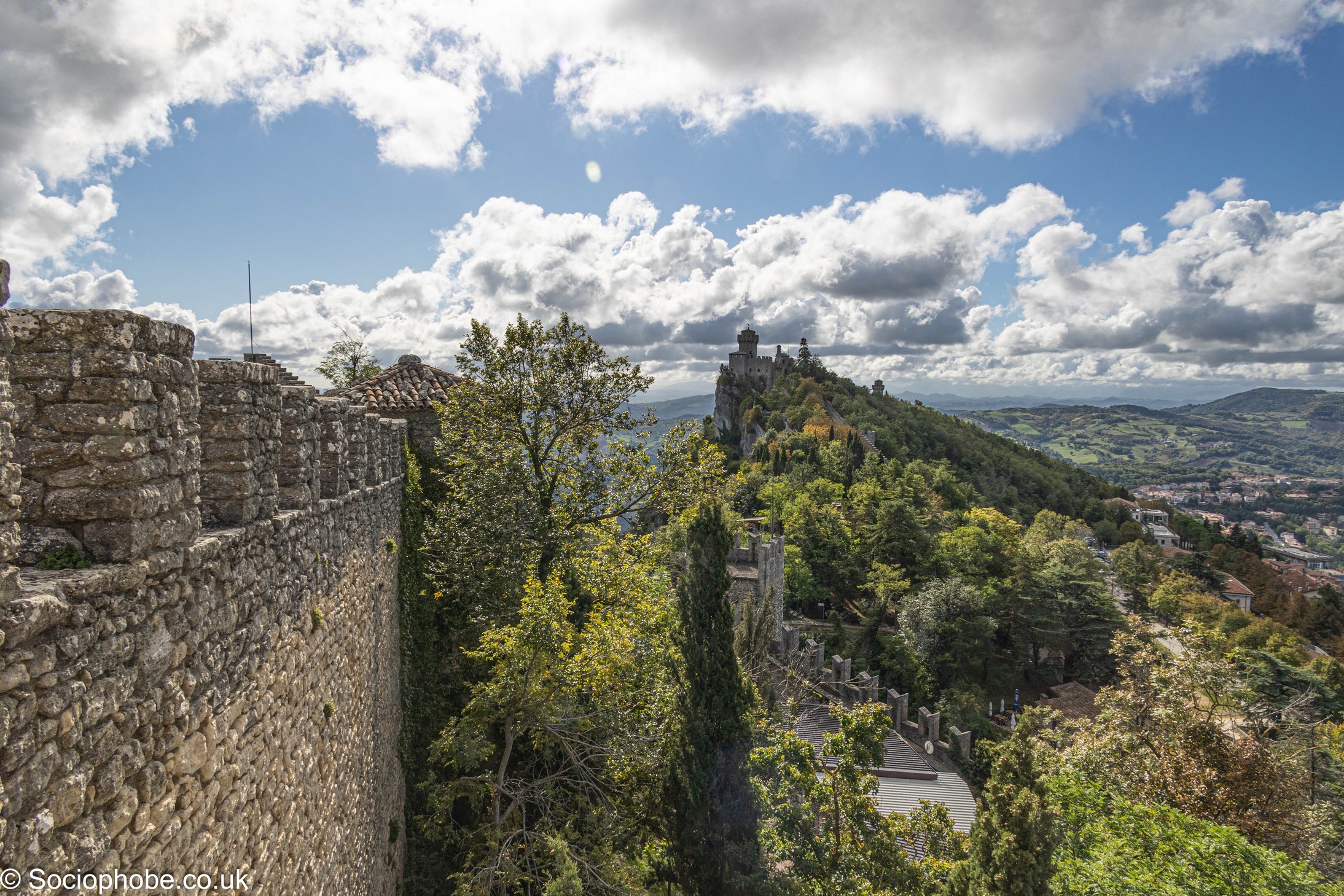
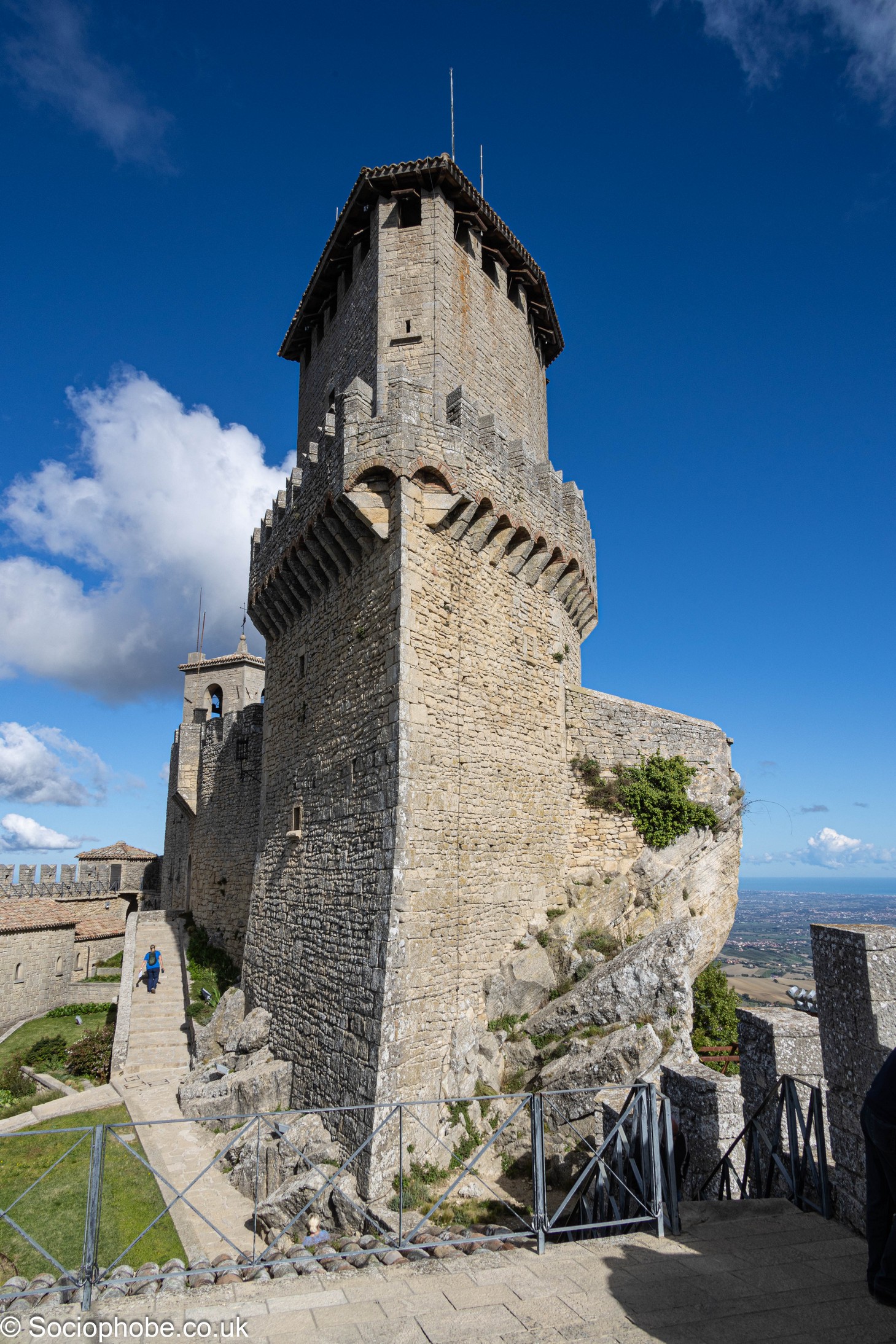
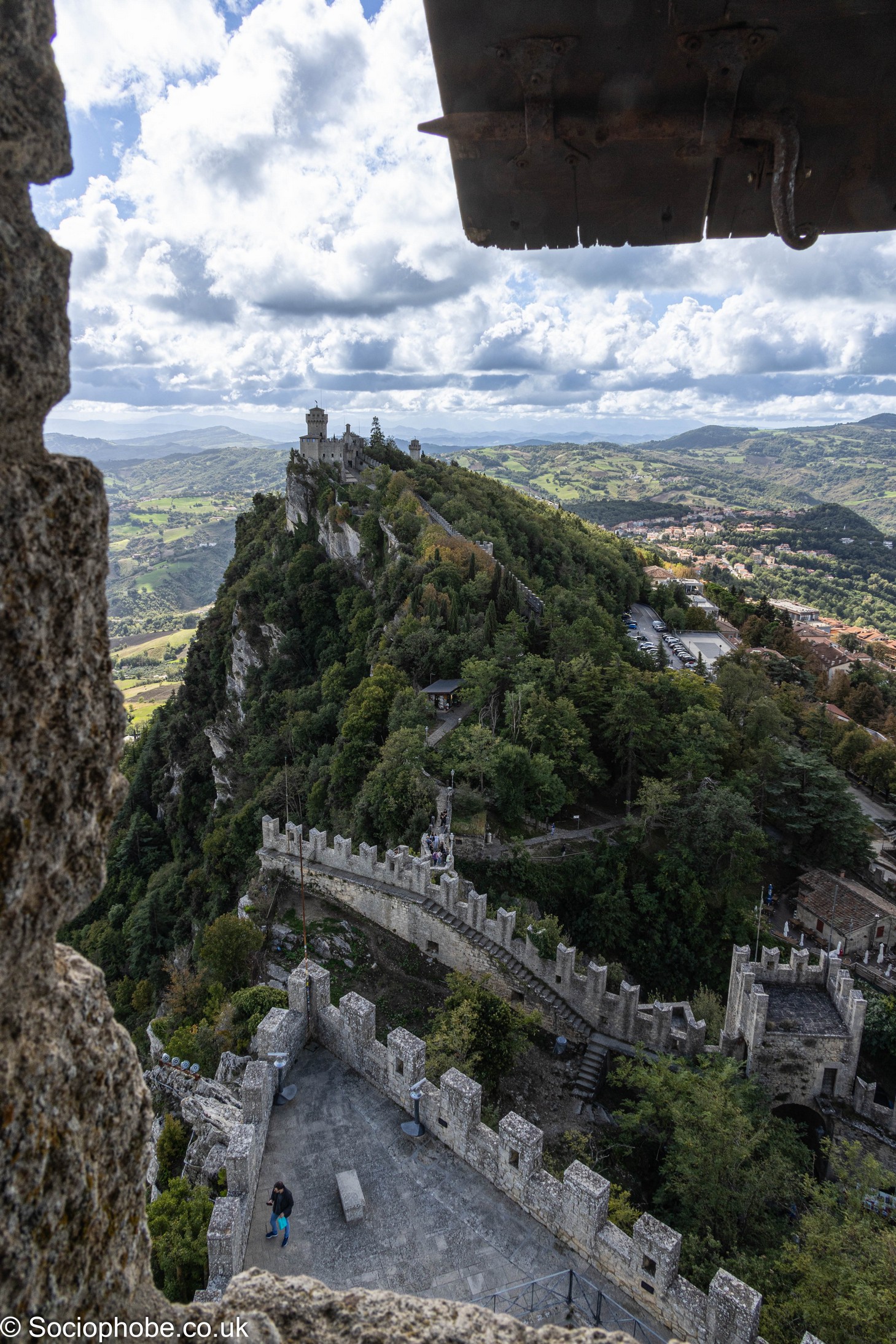
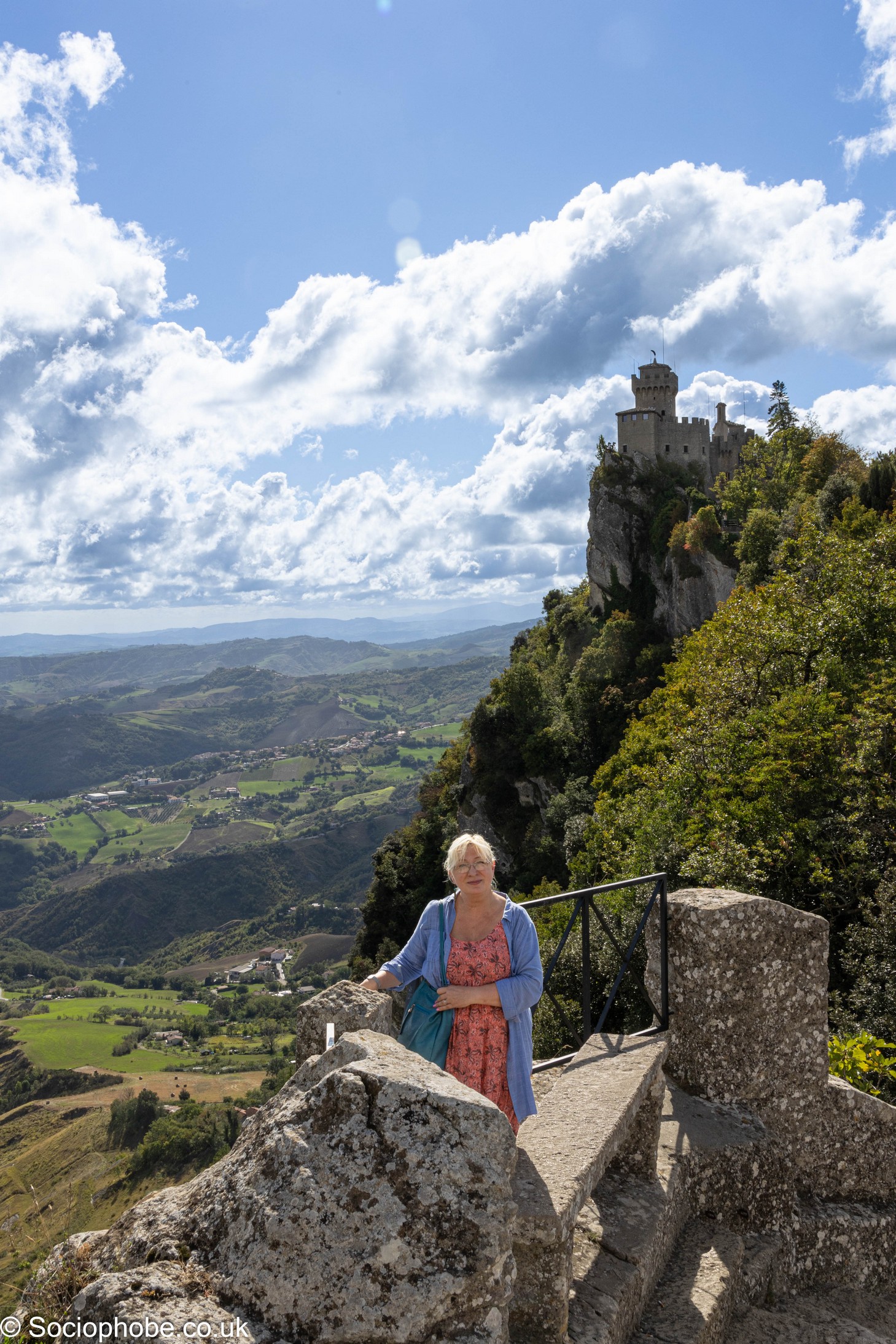
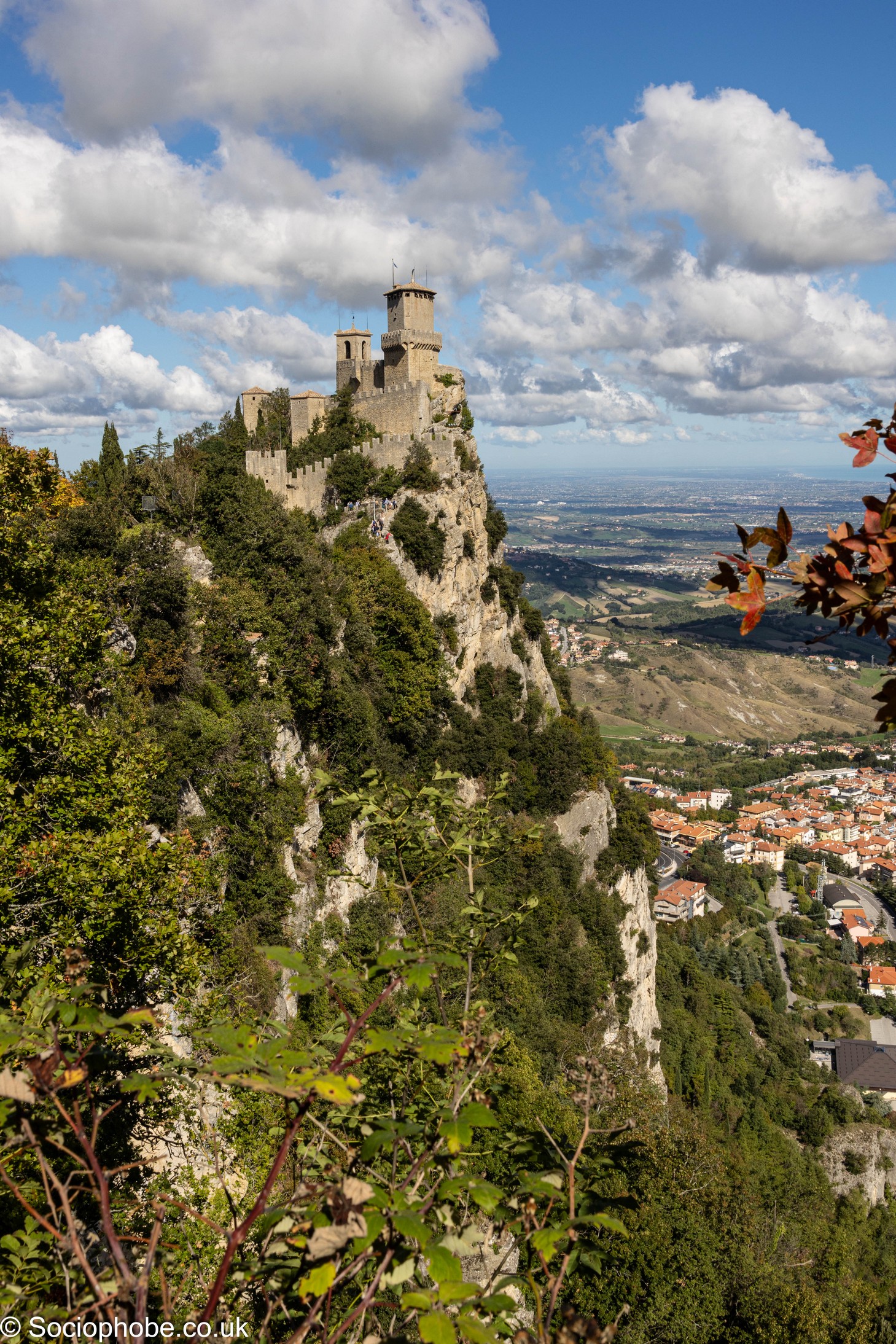
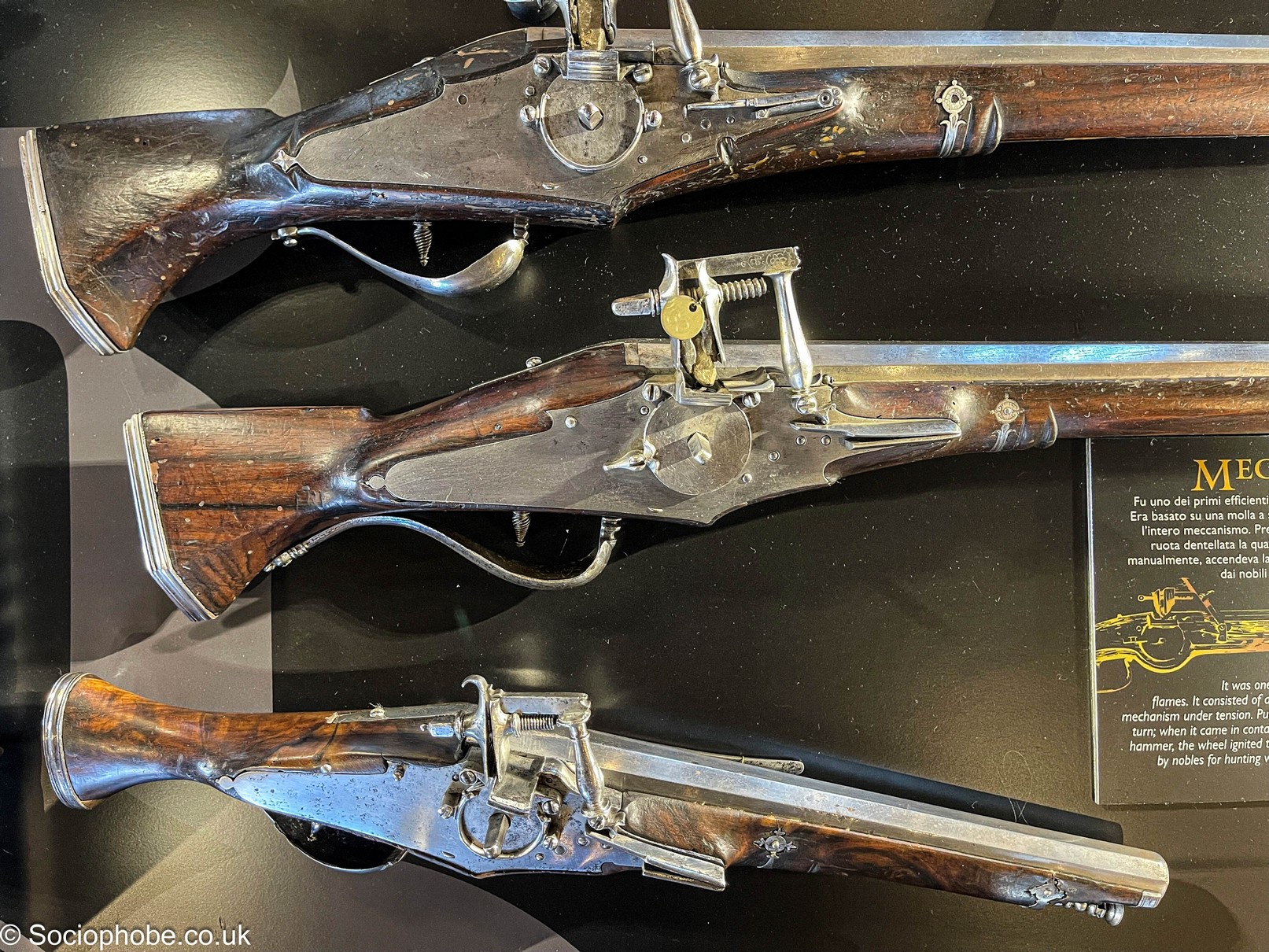
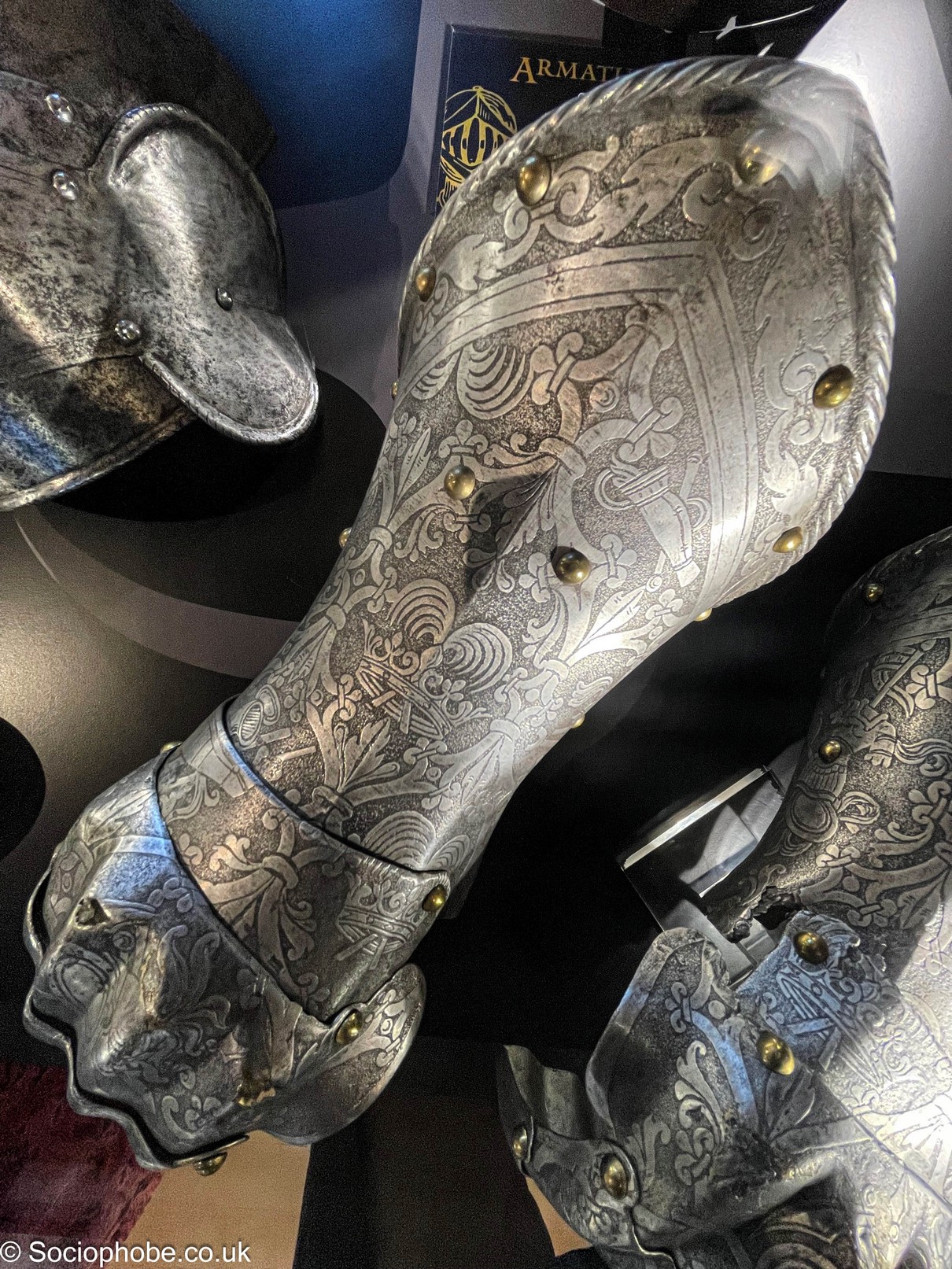
The second tower was further along and up the ridge, reached by more lovely steps (known as the Witches Path) but with great views back to the first tower. Known as Fratta or Cesta this is on the highest point of San Marino. Built at the end of the 11th century this tower also served as a prison and was renovated after WW2 to house the collection of nearly 2000 weapons, dating from the medieval period to the 19th century that were relocated from Milan. Constructed on a pentagonal plan you can climb to the top of the towers and walk on the roof top parapet which is quite delightful!
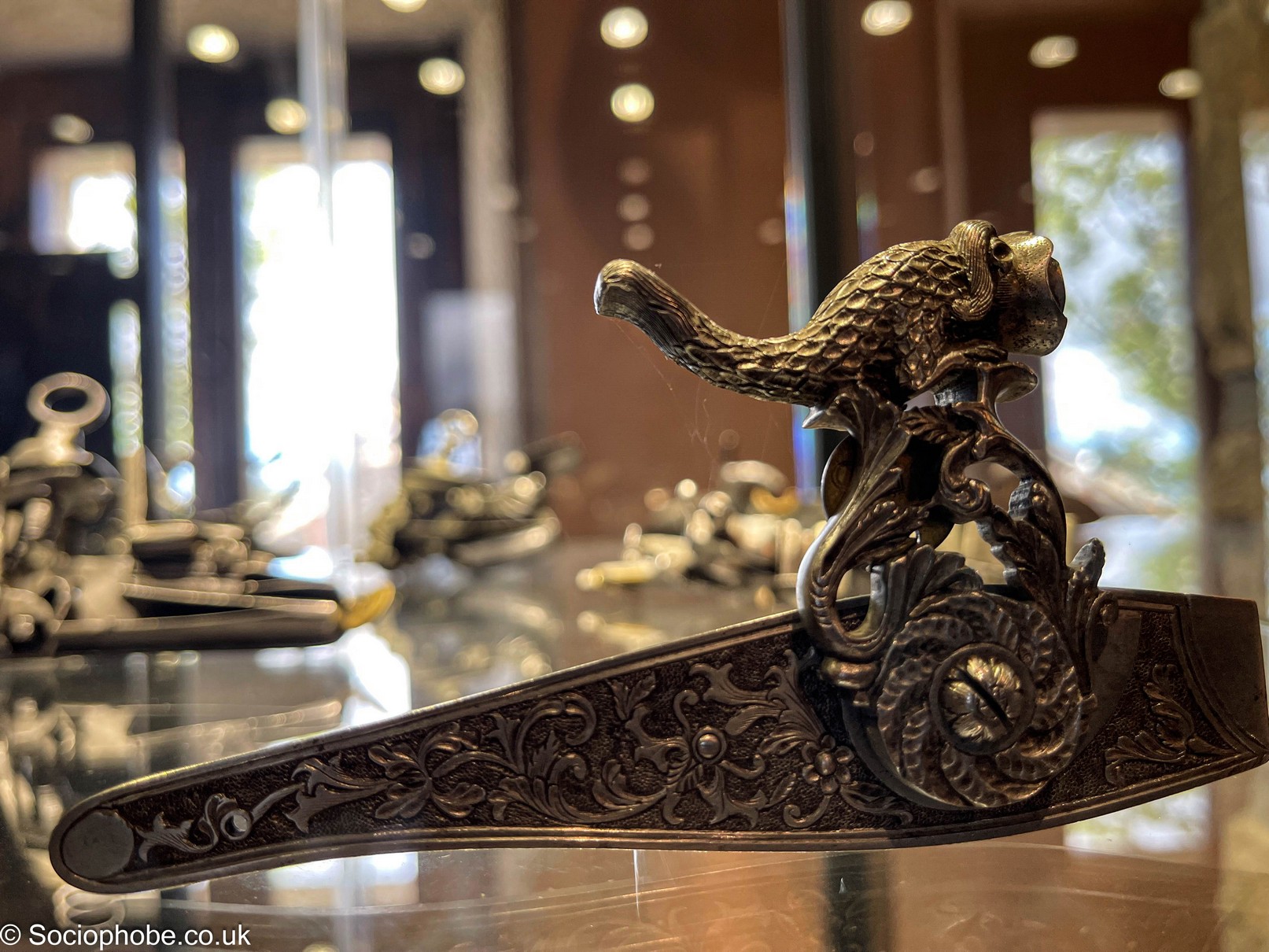
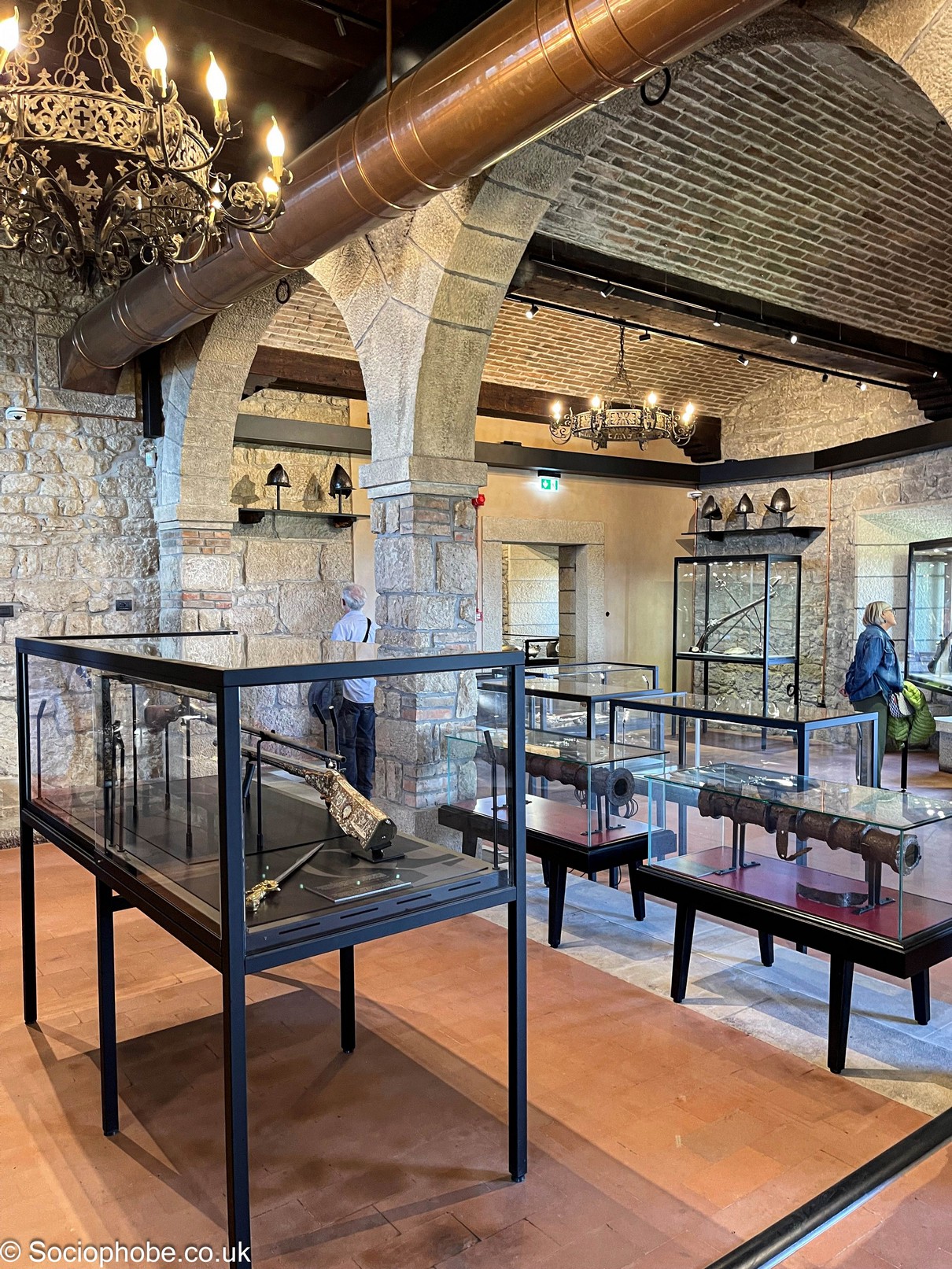
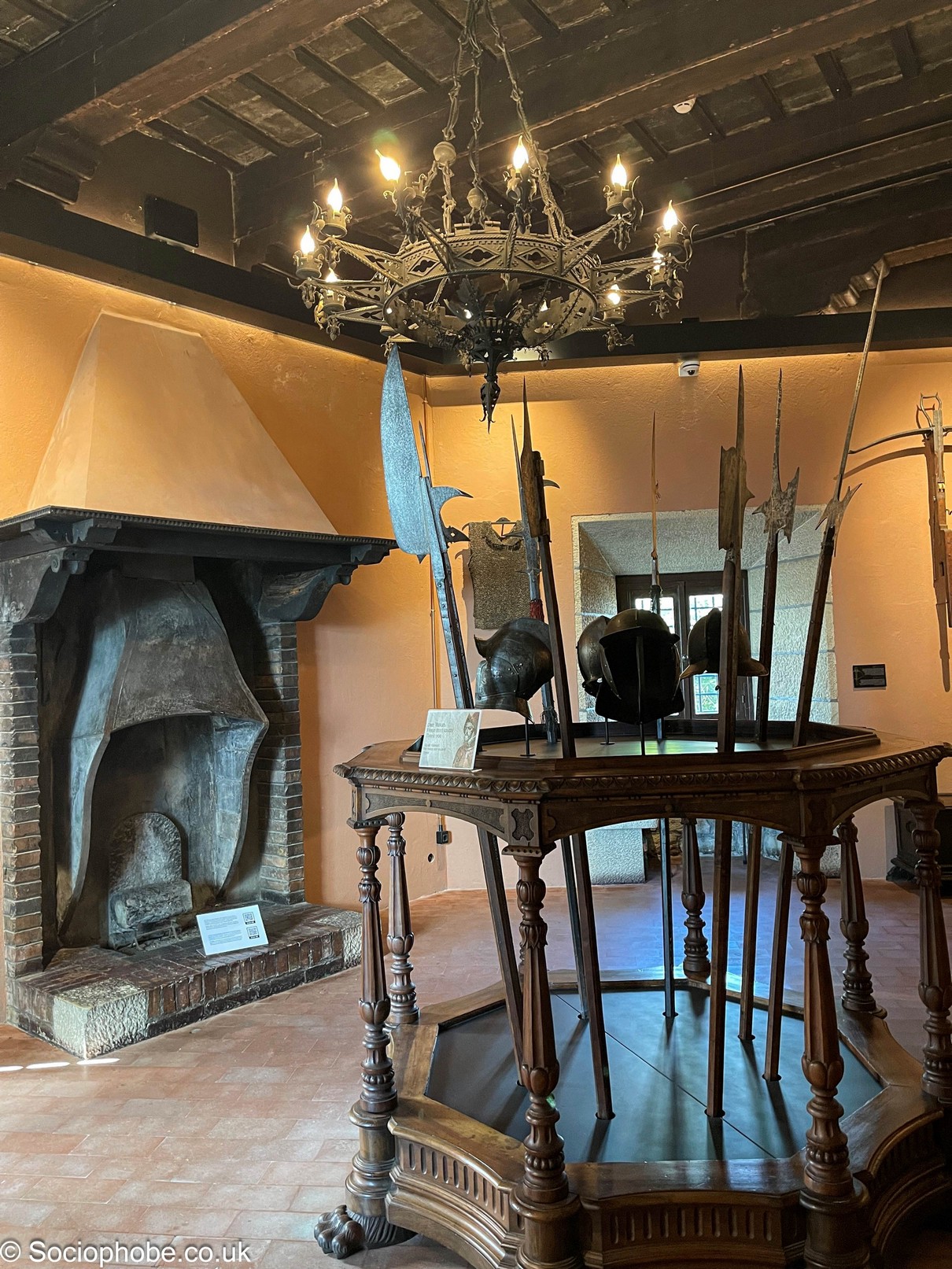
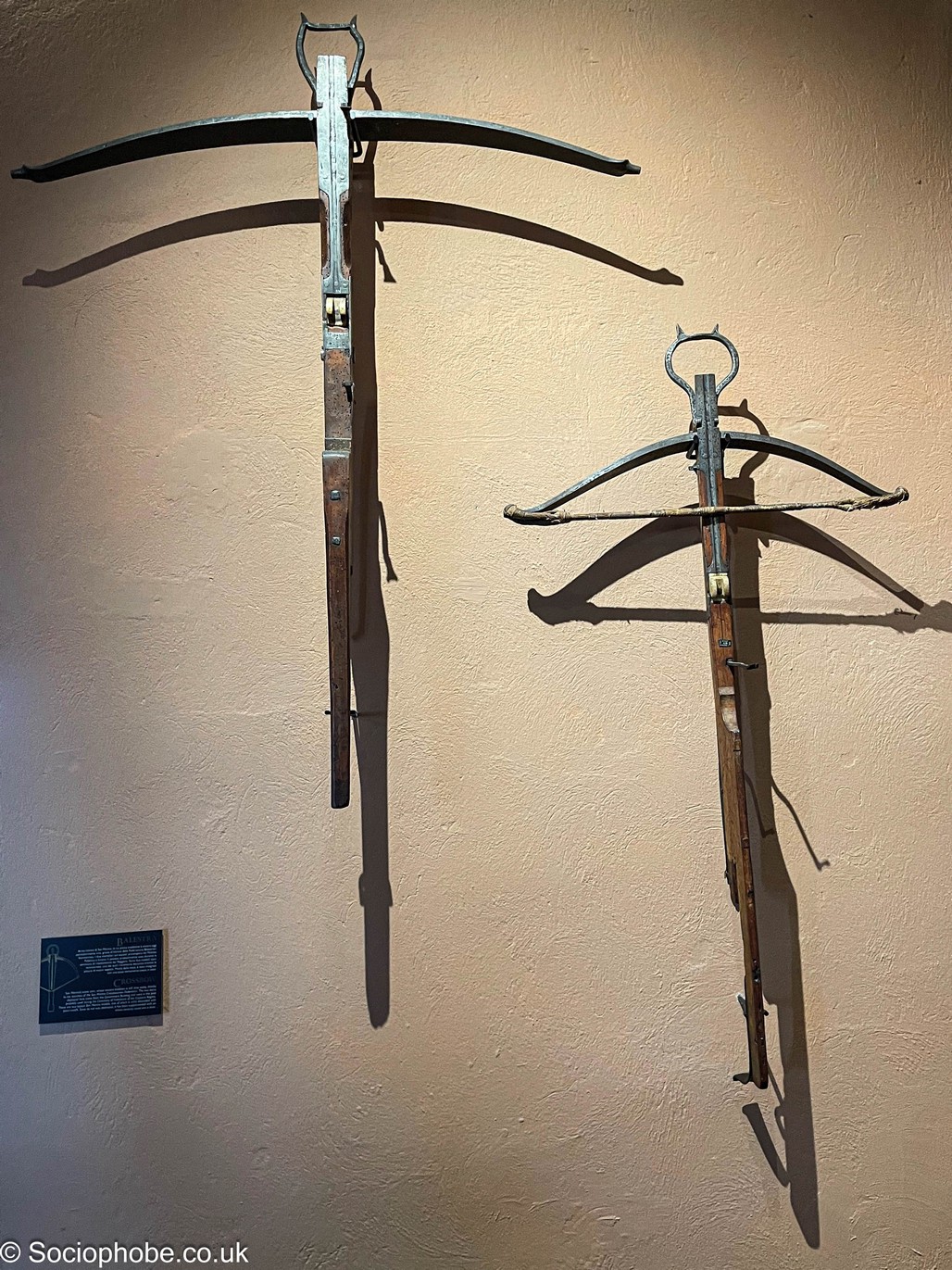
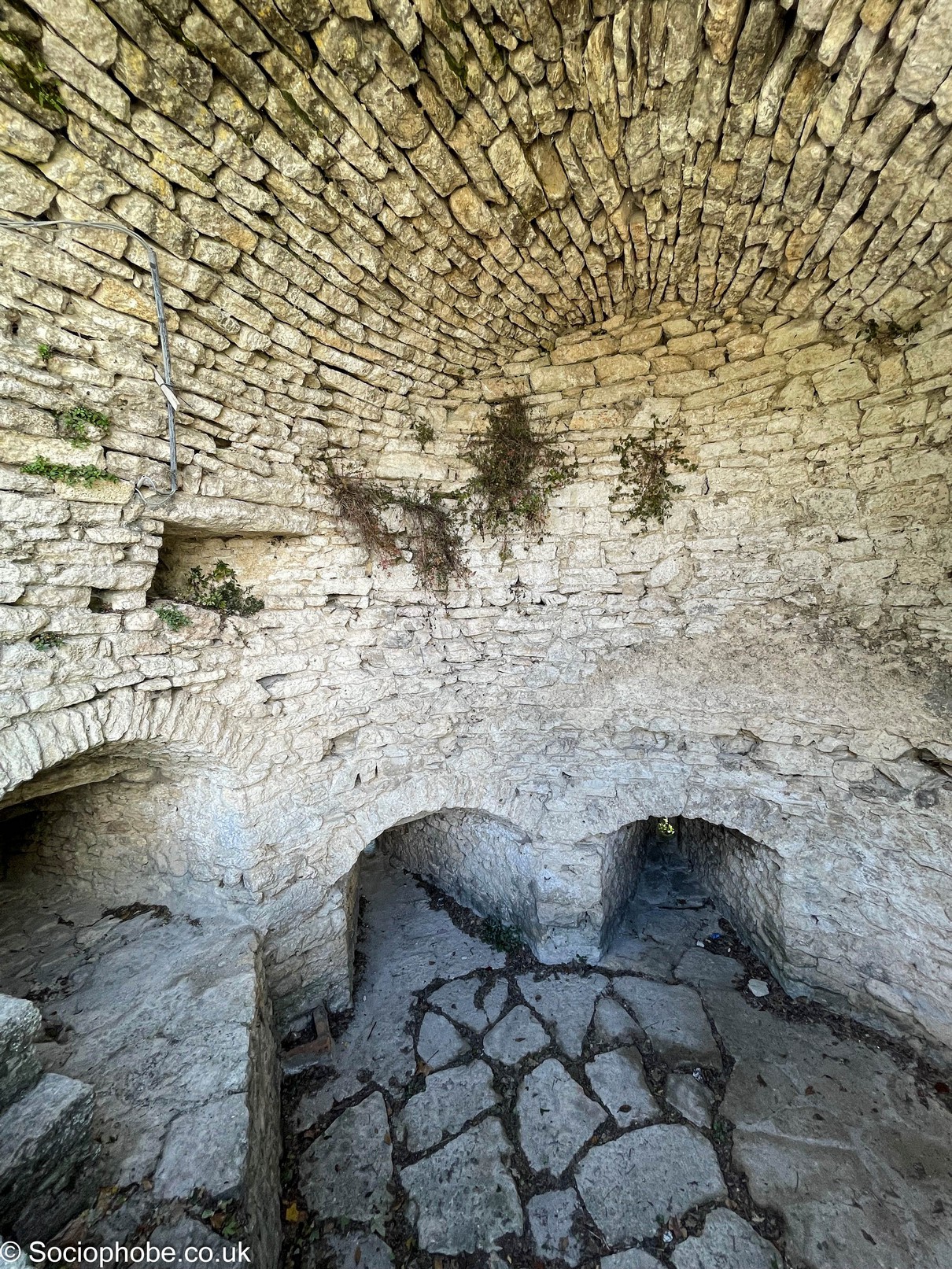
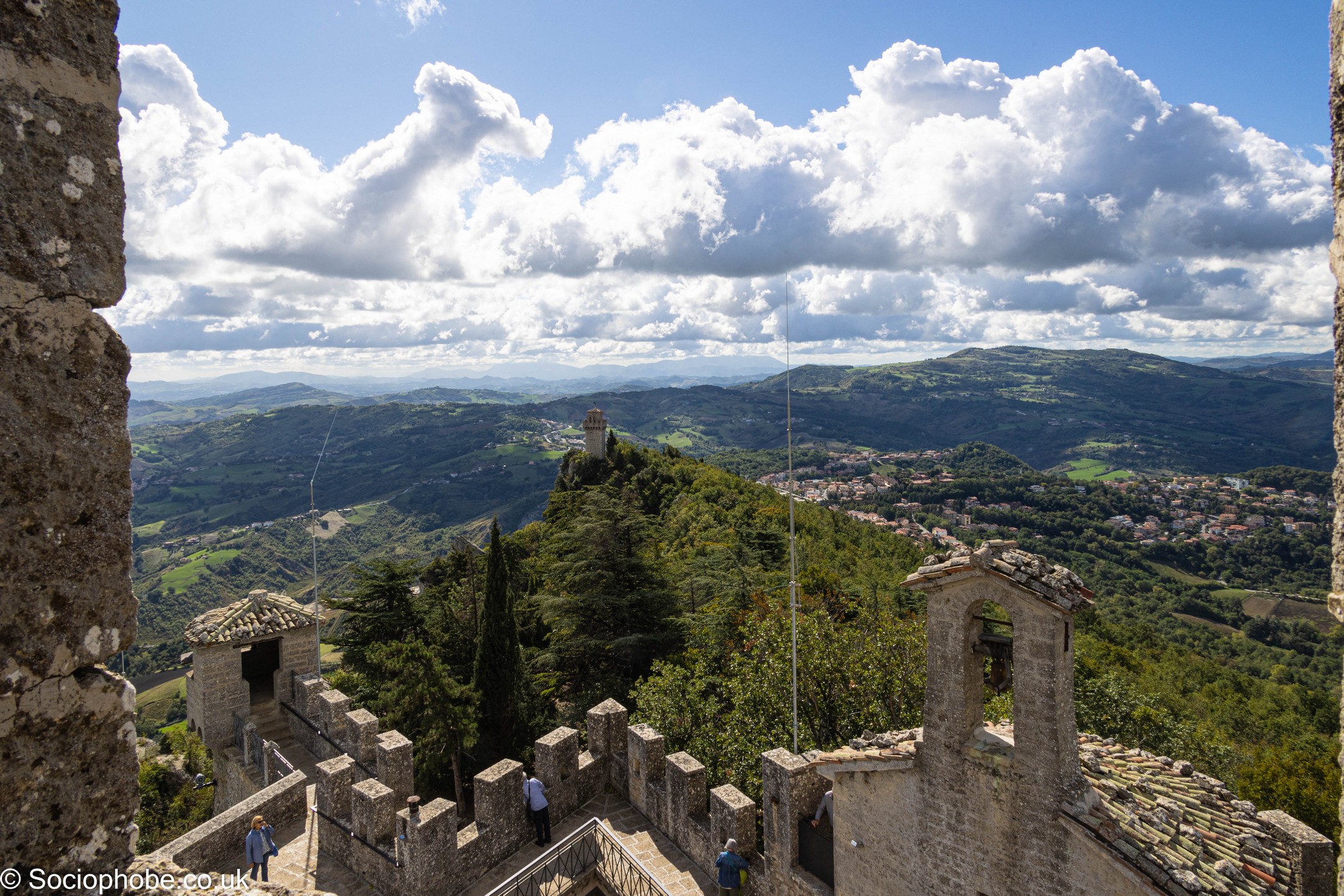
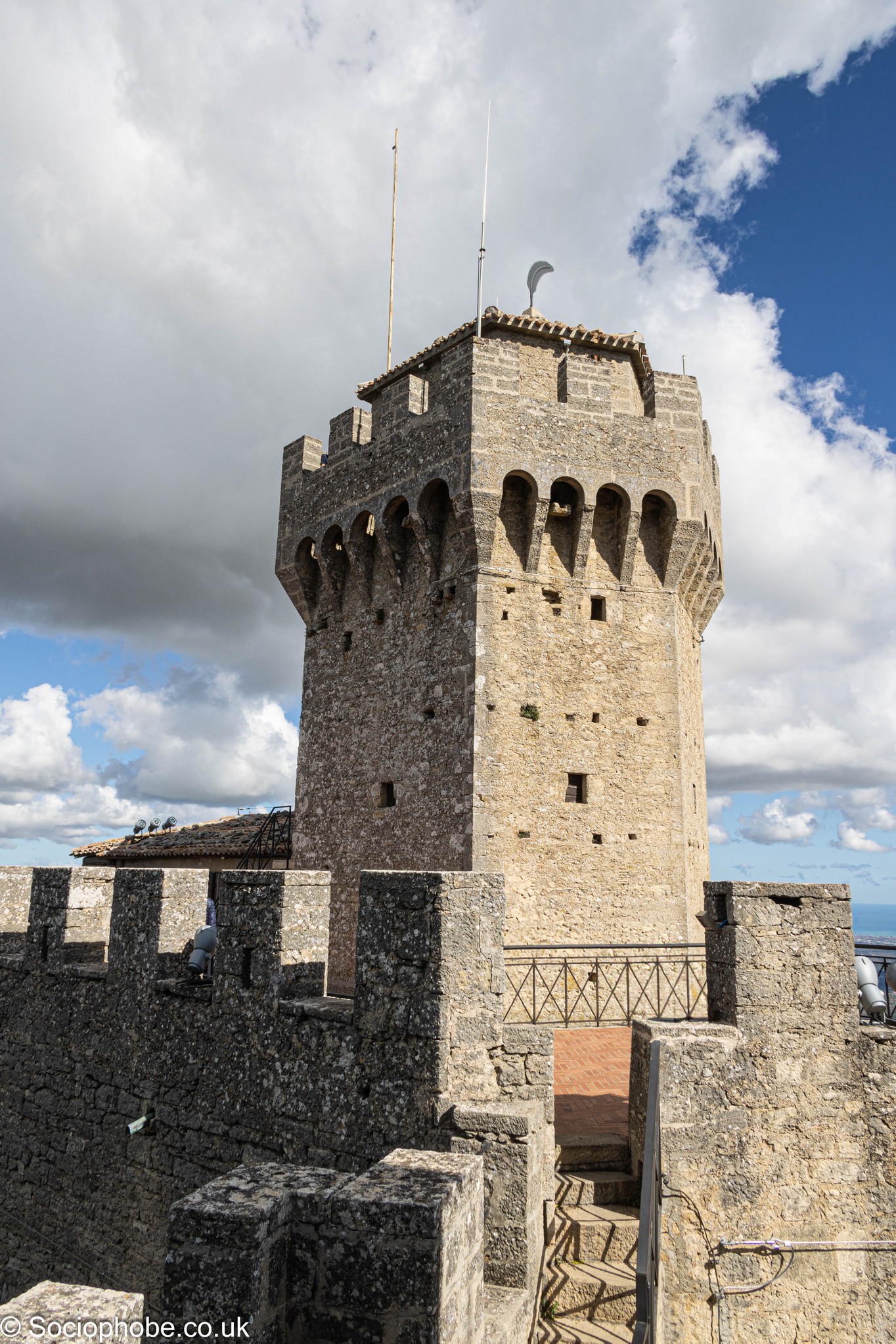
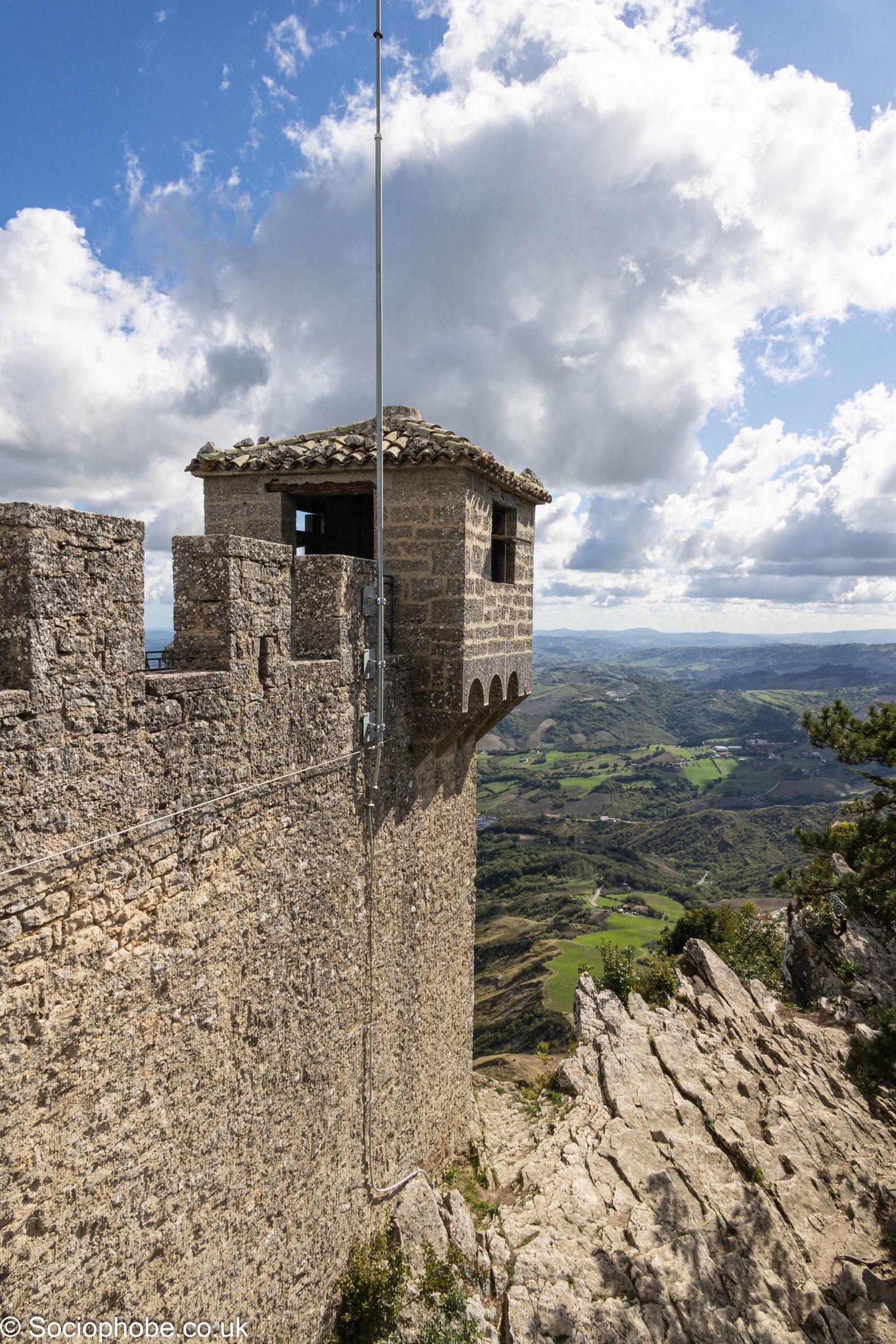
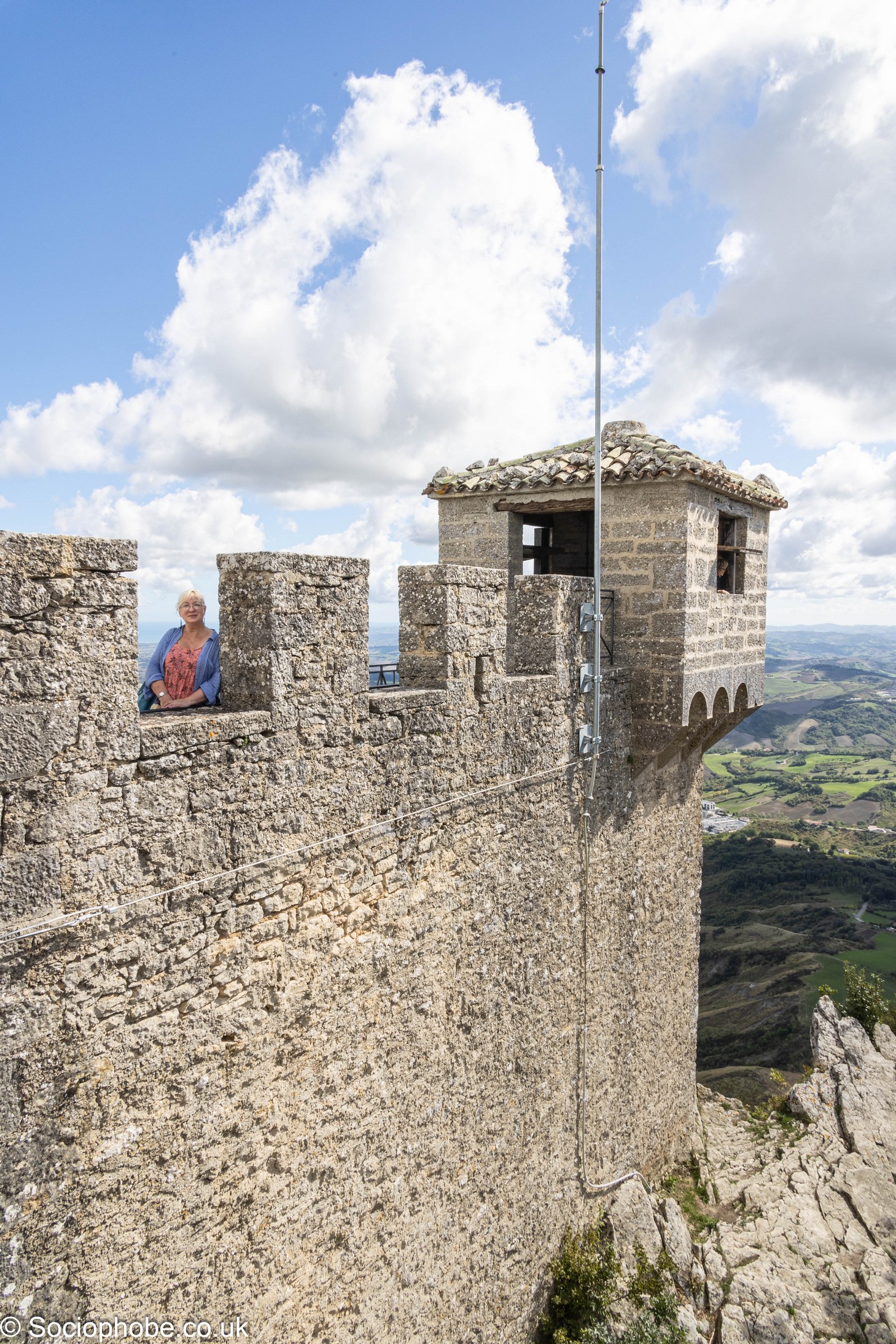
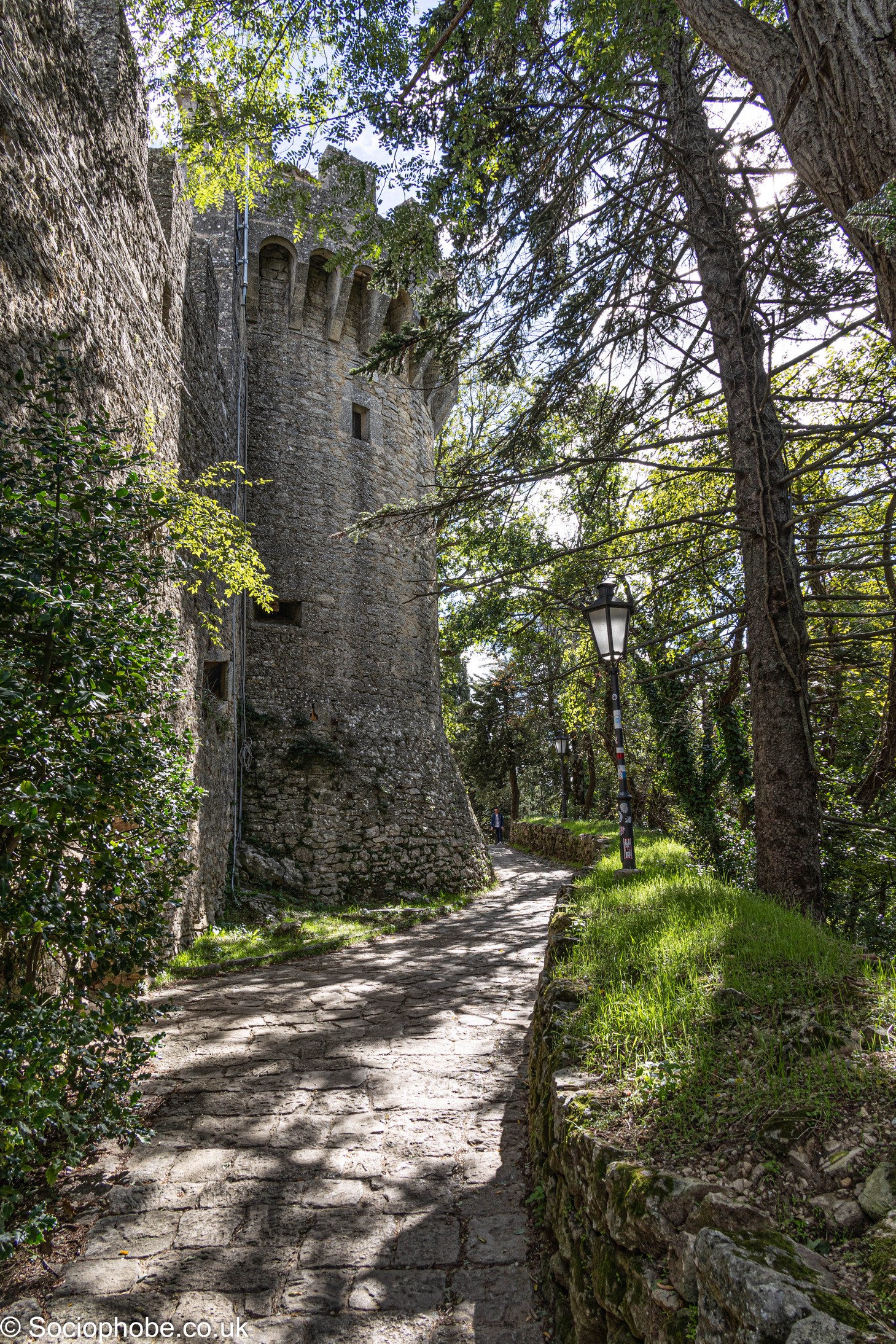
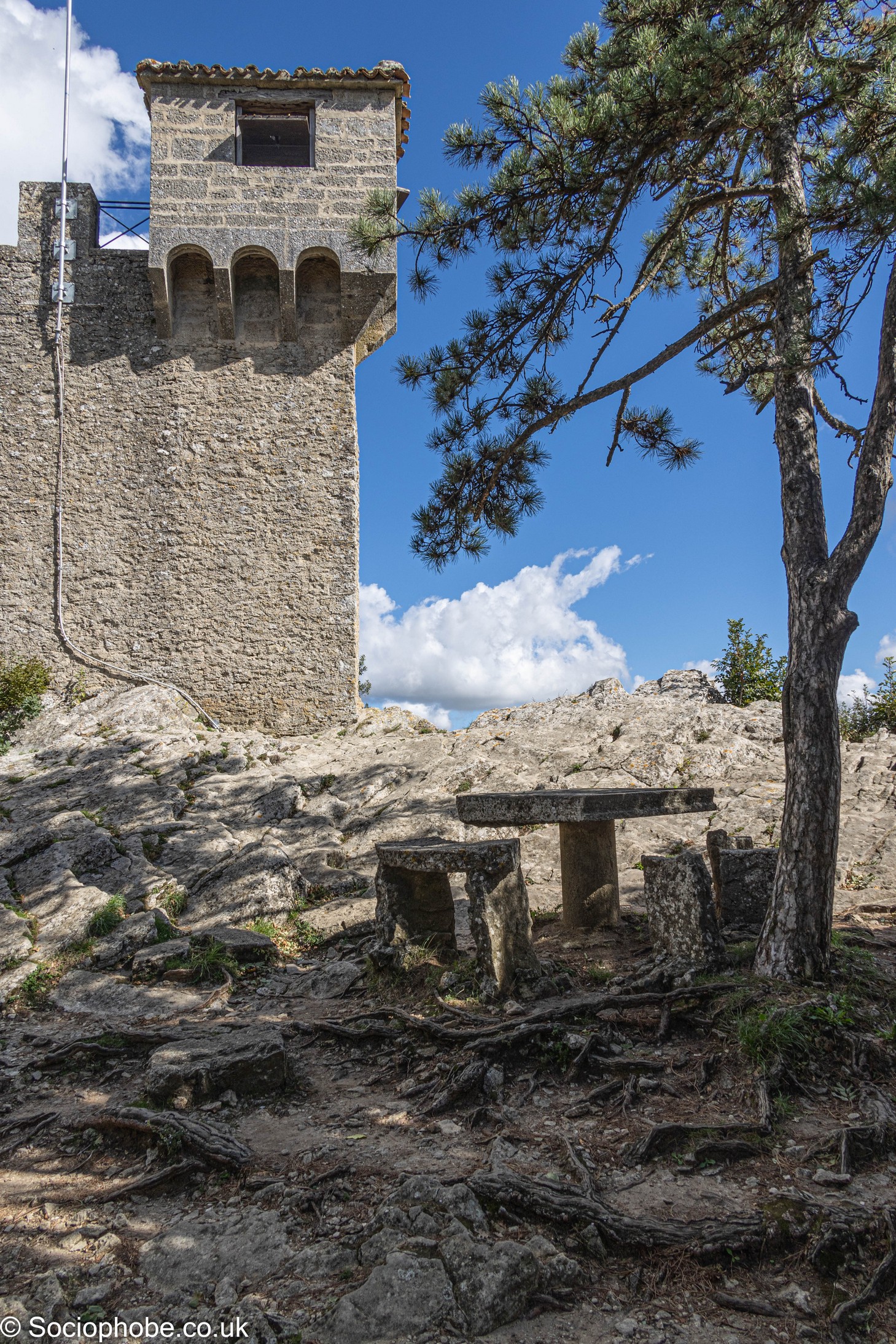
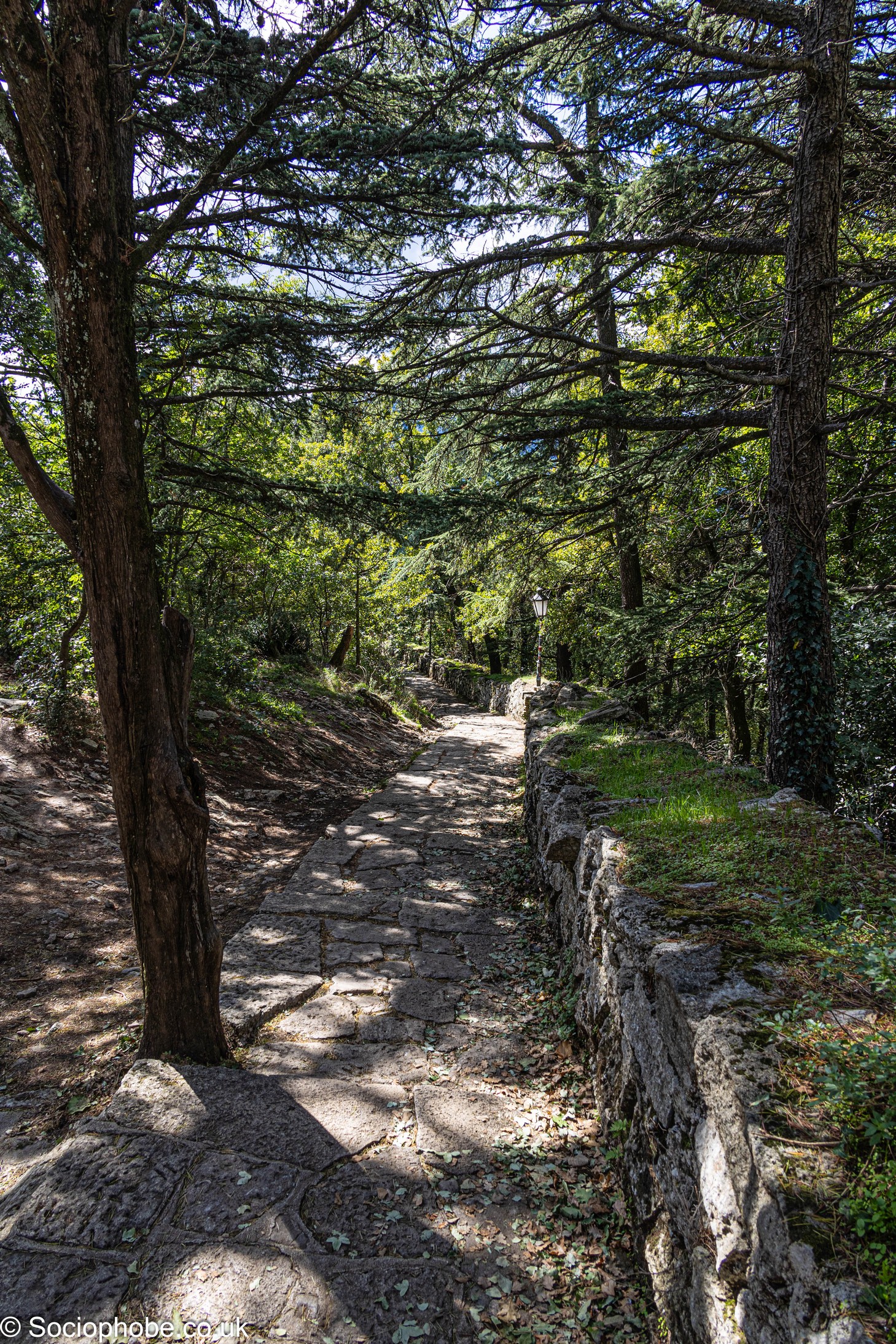
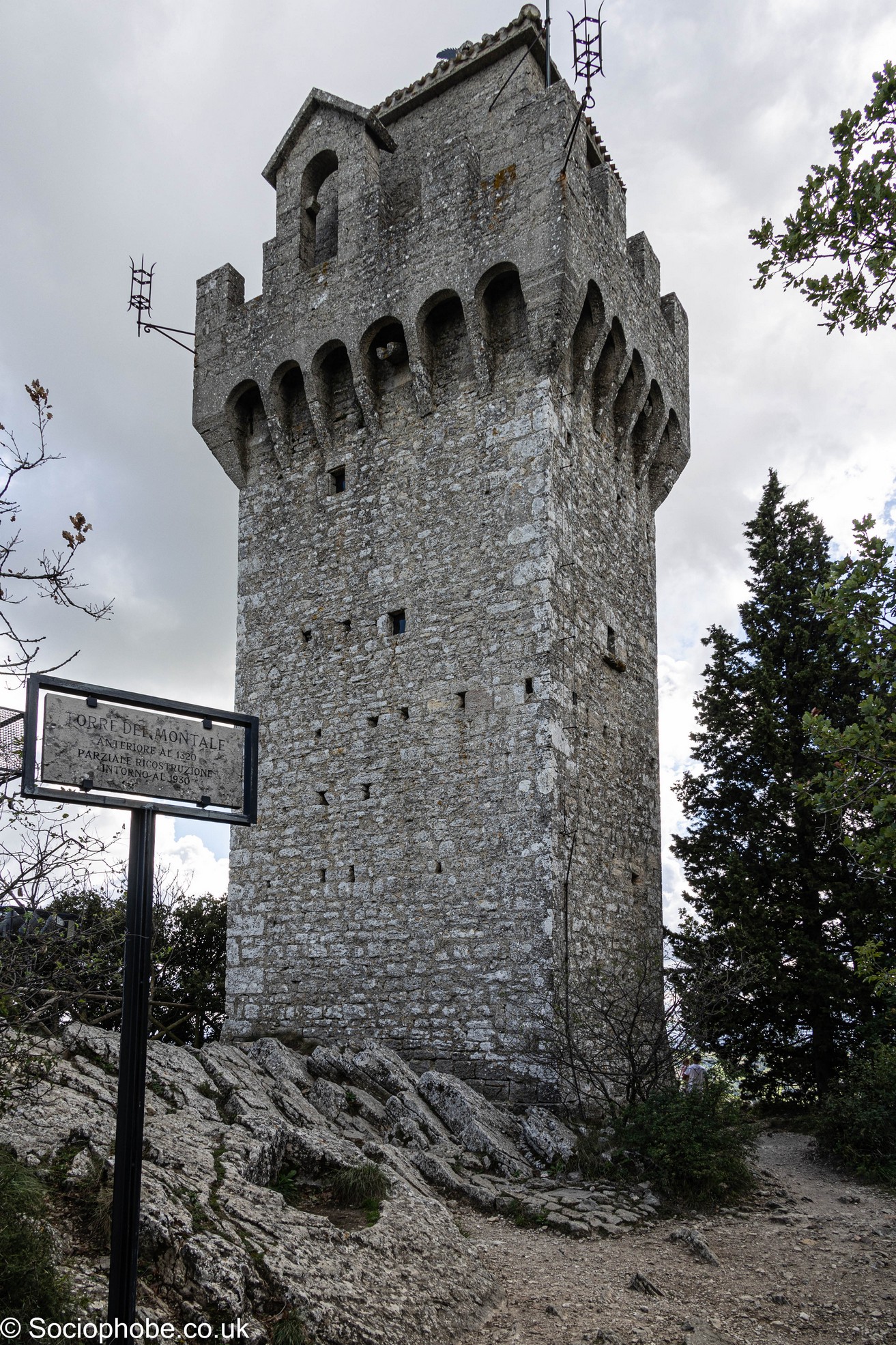
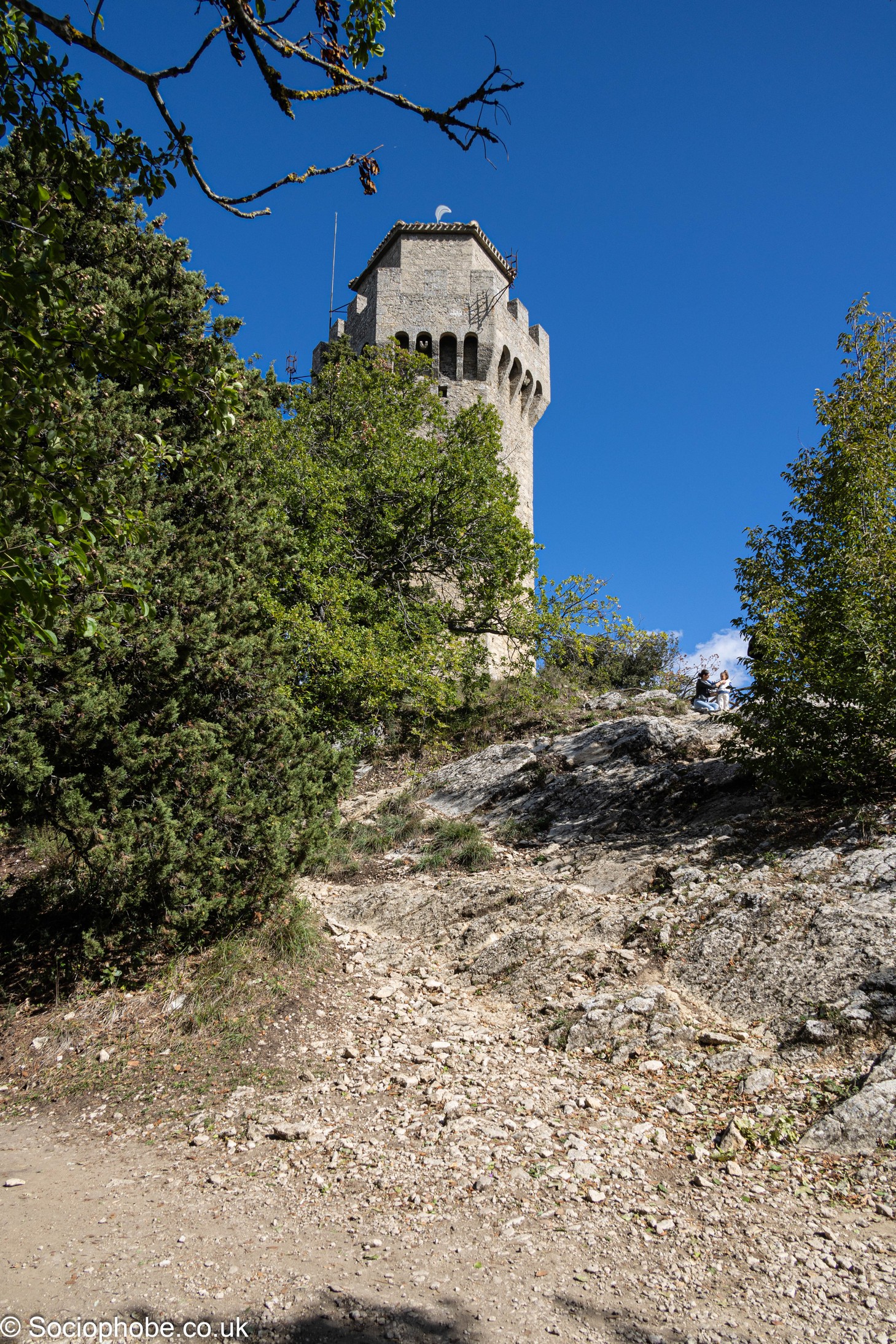
The third tower involved a forest walk so Deb turned back and I walked on my own. The path was excellent and had lights for evening use and it was beautifully shaded. The Montale Tower dates from the 13th century and can’t be accessed as it was largely used as a prison and the door is about 7m above the ground! This tower is quite isolated as the walls surrounding it have been reused as a quarry for local housing! From here the forest path continued down the hill and onto the main roads where I was able to walk back to our hotel.
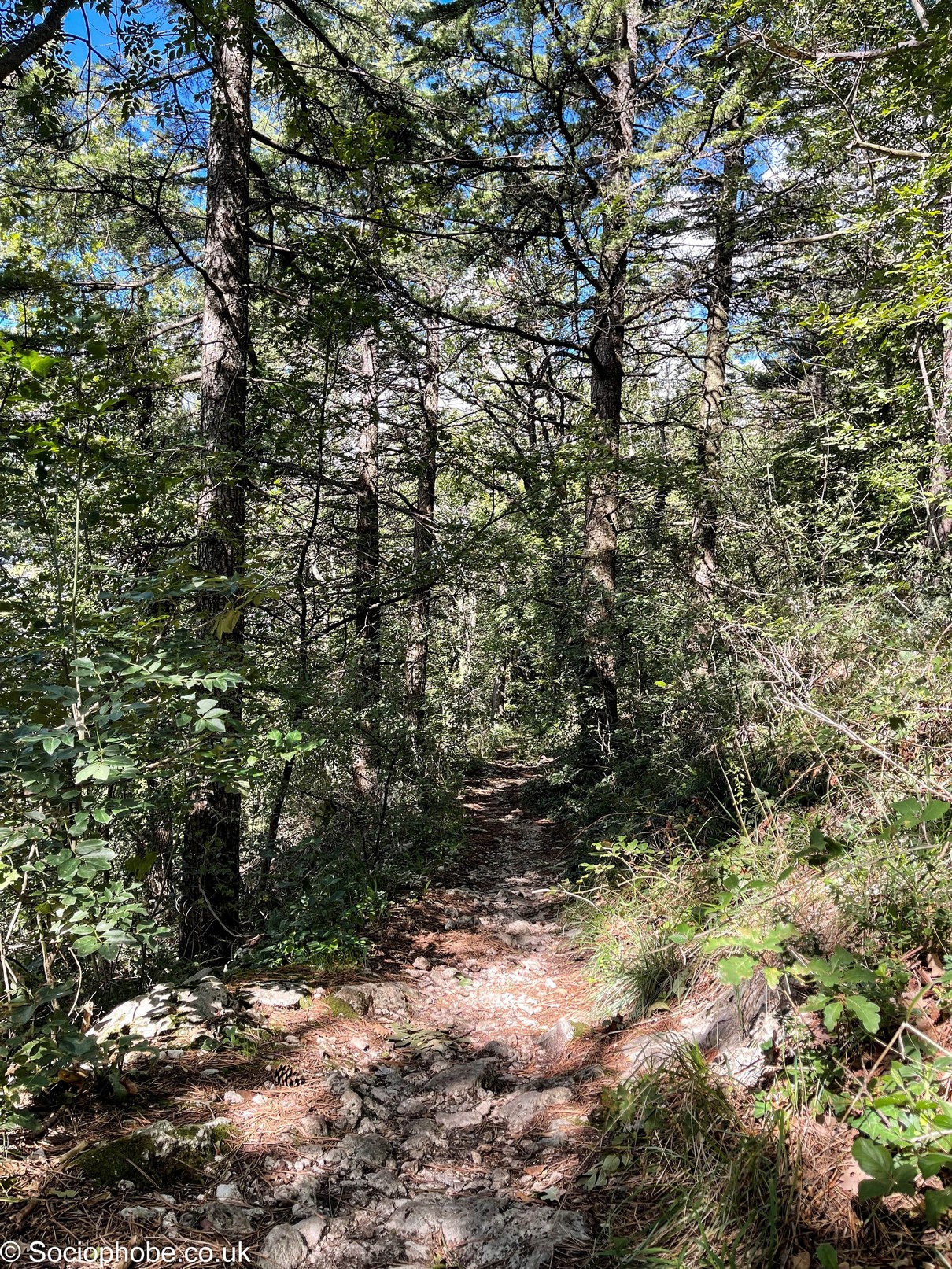
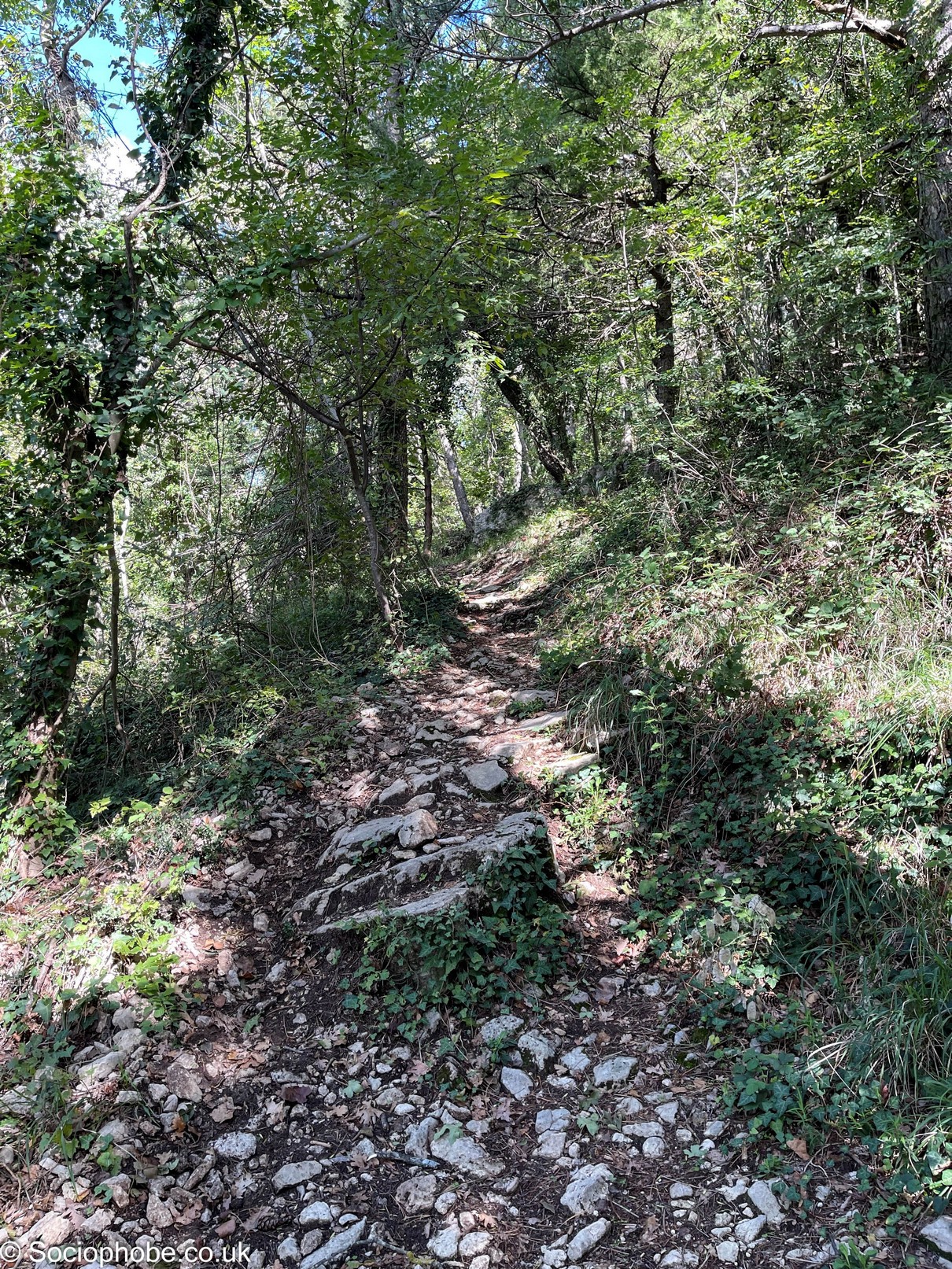
The afternoon was bliss – we alternated in laying on the sunbed on the terrace and enjoying the sun with escaping inside so we didn’t overdo it. Despite being almost October it was still lovely and warm with a gentle breeze. I was intending to do the full clifftop walk linking the three towers but idleness won out and I did nothing.
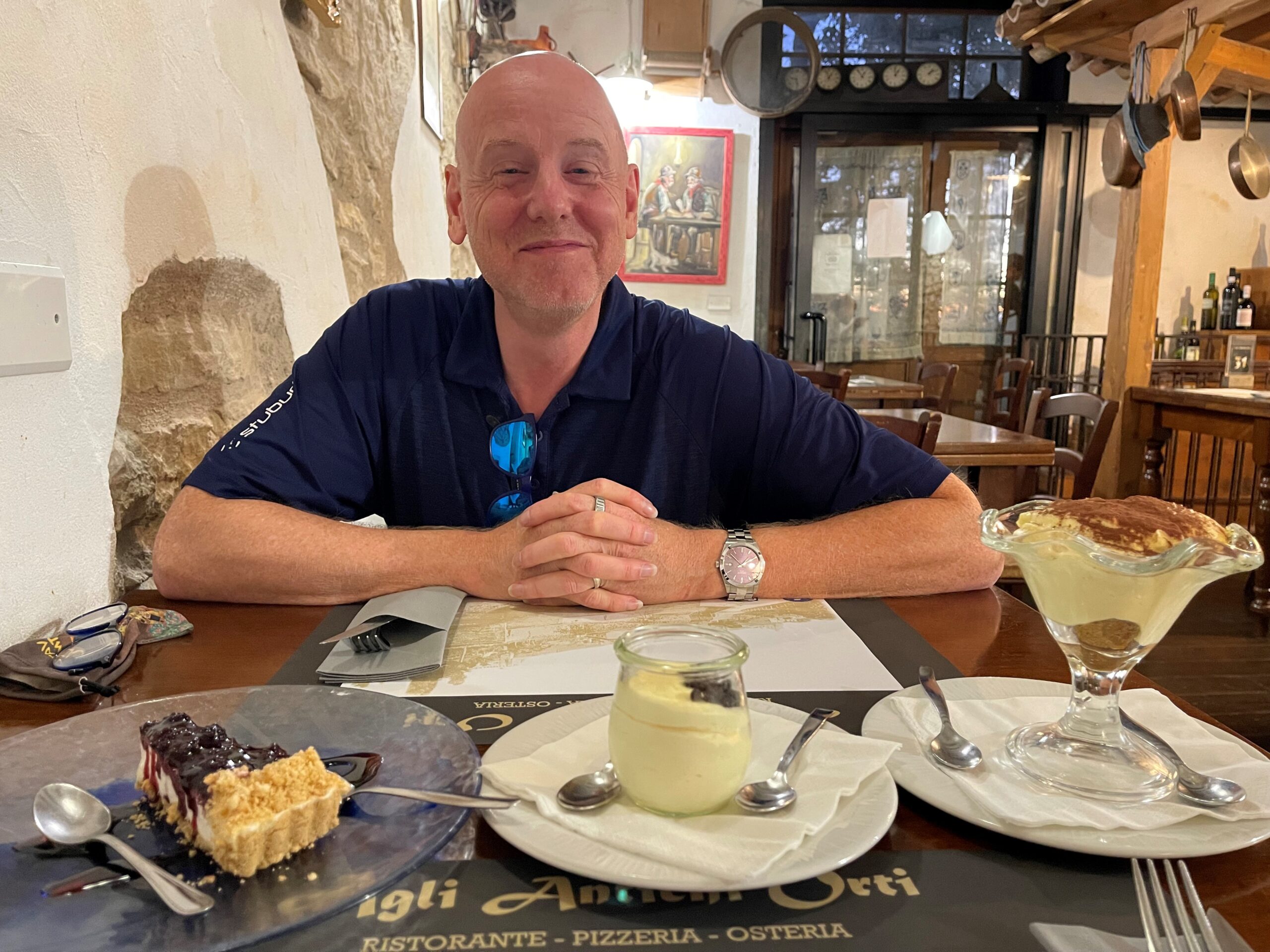
We went to a local restaurant for dinner, or two in fact. The first one the woman seemed to have a problem with tourists and the food was ridiculously overpriced – a grilled chicken breast with a single piece of lettuce was €12 for example. We left before desserts and went to the place next door. Antichi Orti was in a different league, friendly service, lovely interior and just a pleasant environment. The desserts were fantastic and the tiramisu was so good I had two! A wonderful experience and great way to end the holiday.
Monday – back to Venice and then London
We left at 6:30 and drove 4.5 hours to Venice Airport. The flight was delayed 2 hours which was frustrating as we hadn’t stopped for breakfast due to traffic delays and once through passport control there was only vending machines. This was compounded by eventually getting on board and it being announced that they weren’t serving food due to problems with the caterers in London. By the time we eventually got to Heathrow we were rather hungry! The Meet and Greet parking was fabulous though and we stopped at good old Greggs for some much needed sustenance before we got home.
Afterthoughts
This was a fantastic road trip. The mixed scenery and sights of each area meant there were always new things to look at. The roads were just fabulous and the standard of driving largely decent. I’m glad we knew about the vignette in Slovenia as that could have been expensive otherwise and I wish we’d researched about the mosquitos as I had 27 bites and Deb had less but reacted far worse. A minor inconvenience though compared to the fabulous experience we had. Now to plan the next one!