Cyprus has been at the crossroads of civilisations for thousands of years and the island is ideal for a road trip to see the highlights. The island is divided after a Turkish invasion in 1971 following a coup to unite the island with Greece and this makes travel awkward but not insurmountable.
- Recommended days 9
- Budget £
- Difficulty Easy
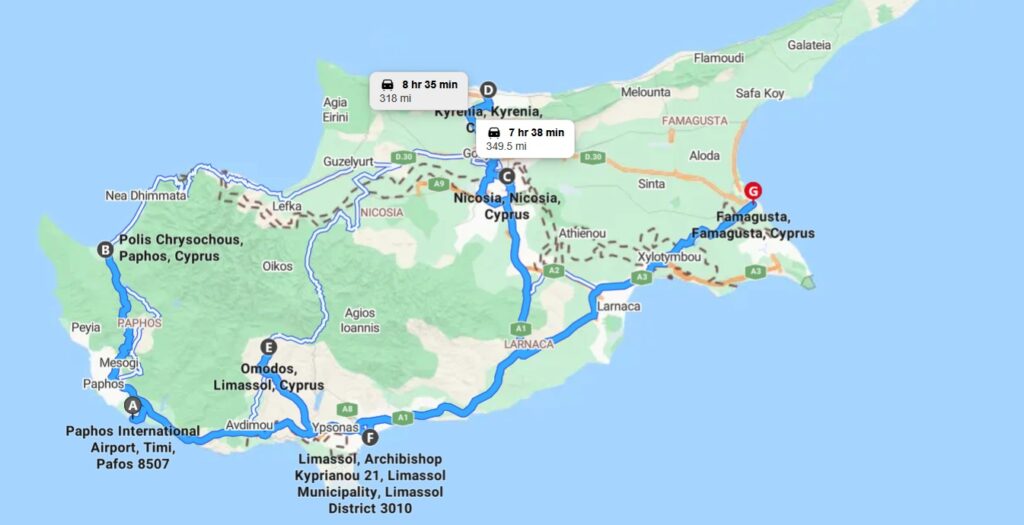
We visited in March 2026 and met my sister and Paul here as they were staying in Polis for a month, the benefits of retirement! We stayed a few days each in Polis, Nicosia, Omodos and Limassol and took two guided day trips into the north, one around Kyrenia and one around Famagusta.
A brief and biased history of Cyprus
A potted history of Cyprus – it was an important Bronze Age power and then became part of the Ptolemaic Empire. It was conquered by the Romans and then became an important Byzantine (Roman) island but suffered as the Empire declined and was subject to many Arab raids. In the 12th century it was captured by Richard the Lionheart and he then sold it to the Kings of Jerusalem. Venice took the island over after the fall of Constantinople and the Ottomans conquered it a hundred years later after the brutal sieges of Famagusta and Nicosia.
It remained Ottoman until leased to the British 300 years later and then made a Crown Colony after the Ottomans sided with the Germans in World War 1. Various confusing political machinations took place in the 1950s and 60s with some Greek Cypriots trying to unite the island with Greece and the British handing responsibility over to the UN.
In 1964 there was a Turkish invasion to secure the perceived rights of Turkish Cypriots, 18% of the population. Negotiations continued but a further Turkish invasion in 1974 led to widescale abuses of civilian and ethnic cleansing of the 38% of the island occupied by Turkey and resettlement of the north by colonists from the Turkish mainland.
The situation is the same today, a UN sponsored Green Line border, a divided capital and the north illegally occupied still. Despite 200,000 people being made homeless and losing almost all their possessions, women and children being raped and men ‘disappearing’ there are no marches by Guardian reading luvvies for the Greeks of northern Cyprus.
Highlights of our Cyprus Road Trip
Polis
The holiday started well with a 3 hour delay at the airport and ongoing storms in Cyprus, the storms being welcoming for the island residents to top up water supplies but less so for us. The Iranian drone attack on Akrotiri RAF base had also caused lots of holiday makers to cancel, damaging the Cypriot economy.
We arrived at Paphos airport and collected our hire car for the first stage of our Cyprus road trip, the hour long drive to Polis in the far west of the island. The rain was torrential at times and the pathetic headlights on the car did little to illuminate the twisting roads so we took our time before arriving in the town at 1AM. We met up with Mel and Paul in their villa and had a most welcome cup of tea before bed.
Manolis Bay
The next morning after 4 hours sleep my body decided that was enough so I went downstairs and a little later Mel and Paul came down, intending to go off to yoga. As I was up they revised their plans and we drove to Akamas National Park and a walk they knew. The forecast wasn’t good but we were meant to have 2 dry hours so we headed off along the coast towards Manolis Bay.
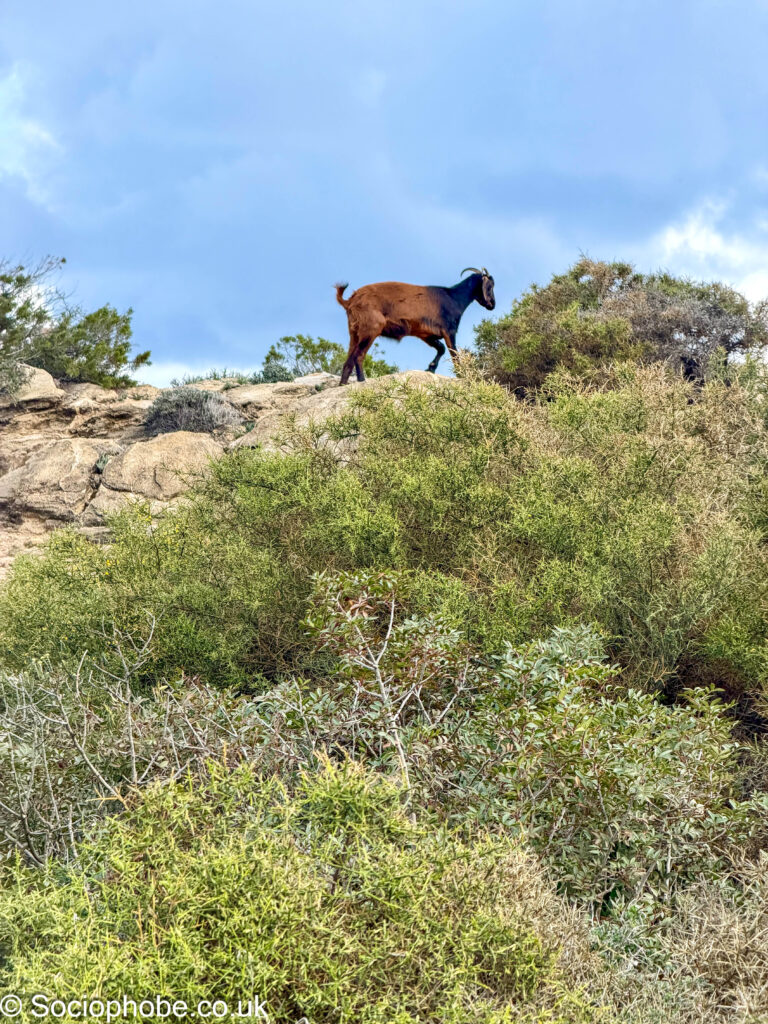
The sea was a wonderful turquoise and we saw cyclamen, yellow poppies and other amazing flowers as we walked with the forest on one side and sea on the other. The path was muddy but not excessively so and we also saw and heard lots of goats, eating juniper bushes.
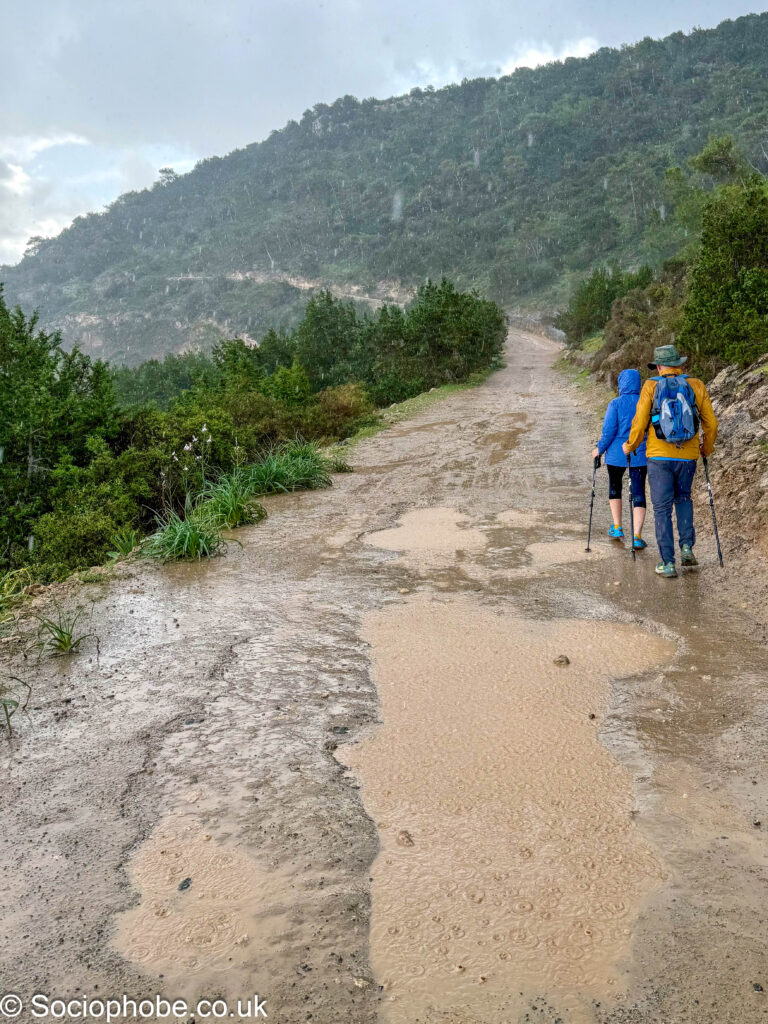
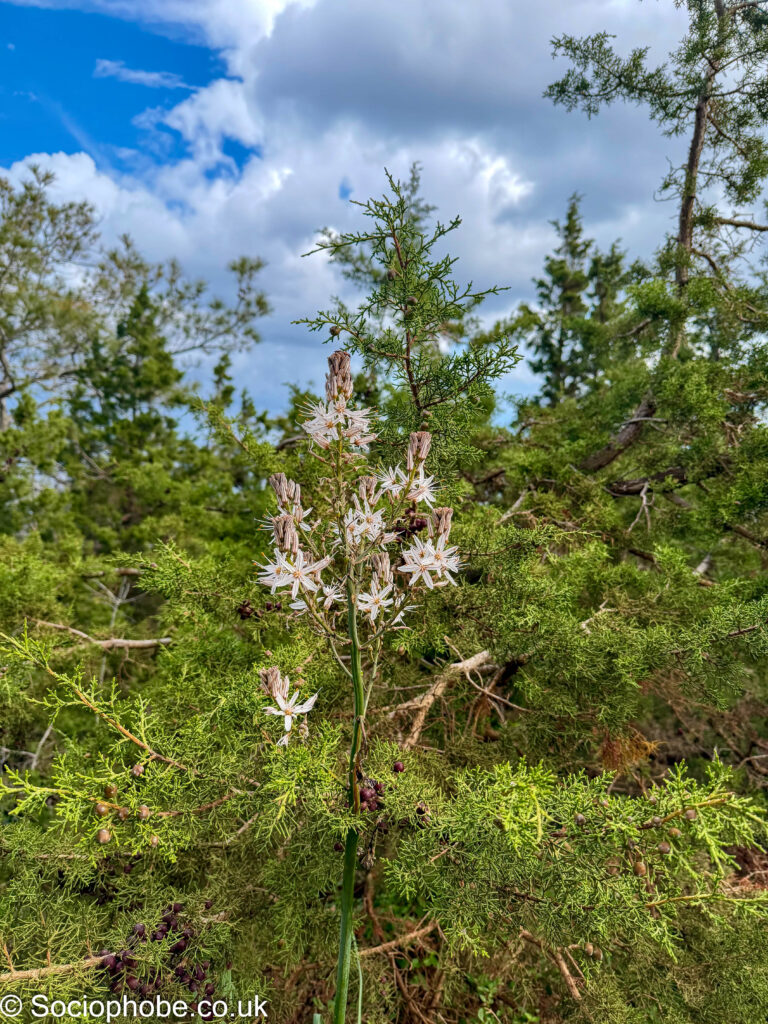
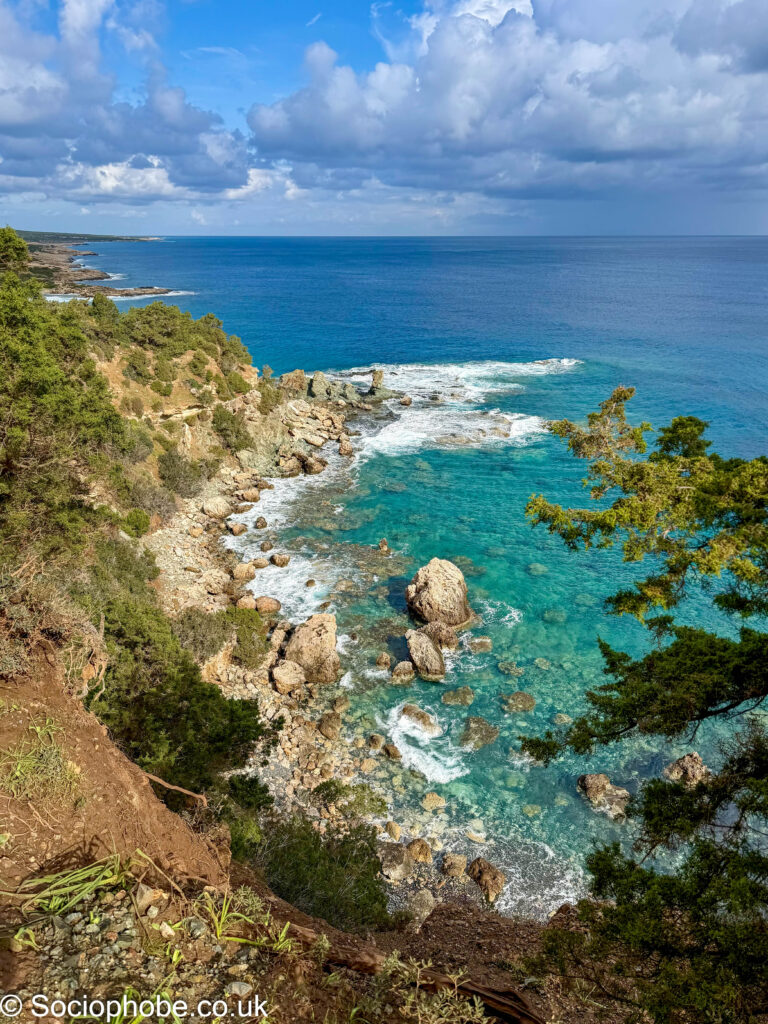
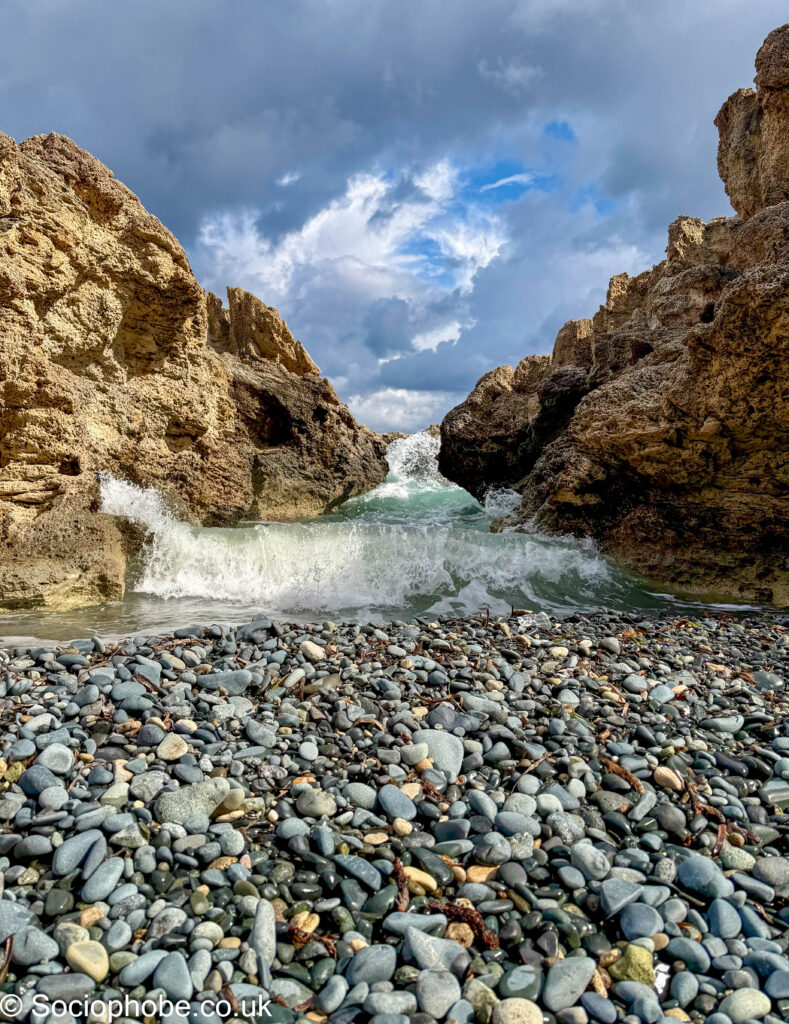
We diverted from the path to walk to a pebble beach and watched the sea crash against the rocks for a while before turning back. We didn’t get far before the heavens opened and my woeful lack of preparations became apparent. I’d left my coat and hat in the bedroom as I didn’t want to disturb Deb so early in the morning and had to walk for maybe 40 minutes through a downpour, then sit in the car in sopping clothes until we got home.
Deb was up when I got back so I chucked by clothes on the dryer and jumped in the shower then had breakfast while everything dried as I had obviously only bought one pair of trousers, one fleece etc!
Monastery of Saint Neophytos
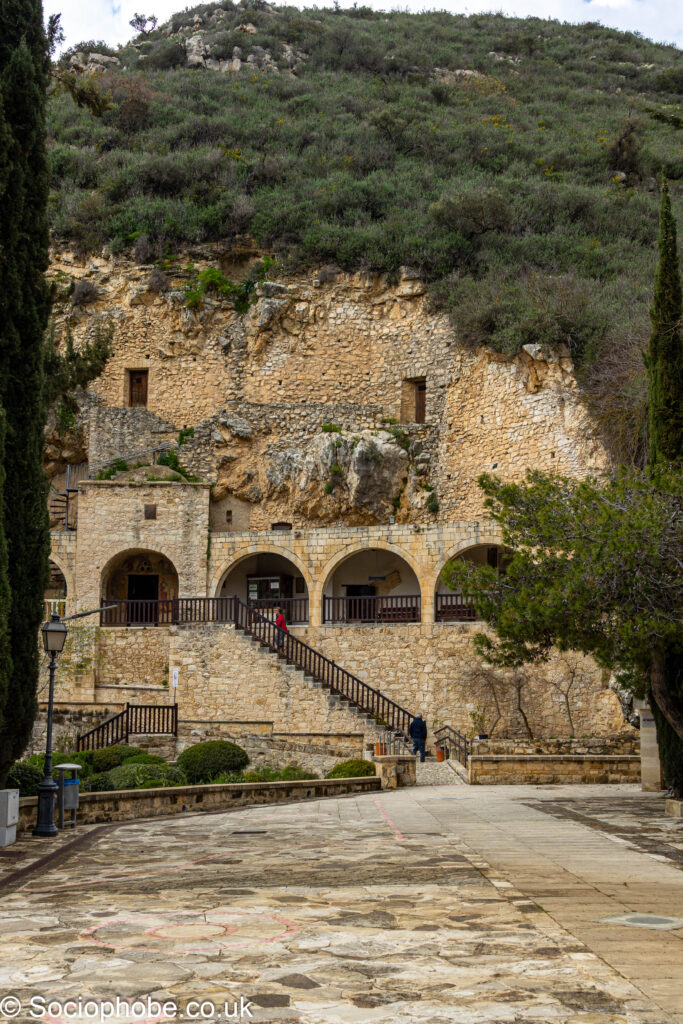
After food Paul drove us to Monastery of Saint Neophytos, a twelfth century Greek Orthodox building in the hills north of Paphos. We had a fabulous time there, the frescoes on the walls were superb, the cats wandering around were incredibly affectionate and the guy in the museum was a trove of historical stories.
The original church was built into the cliffs and then later a dedicated monastery with cloisters grew up next to the caves. The monastery library has an incredible collection of manuscripts relating to Cypriot and wider European history and the museum had an interesting collection of artifacts.
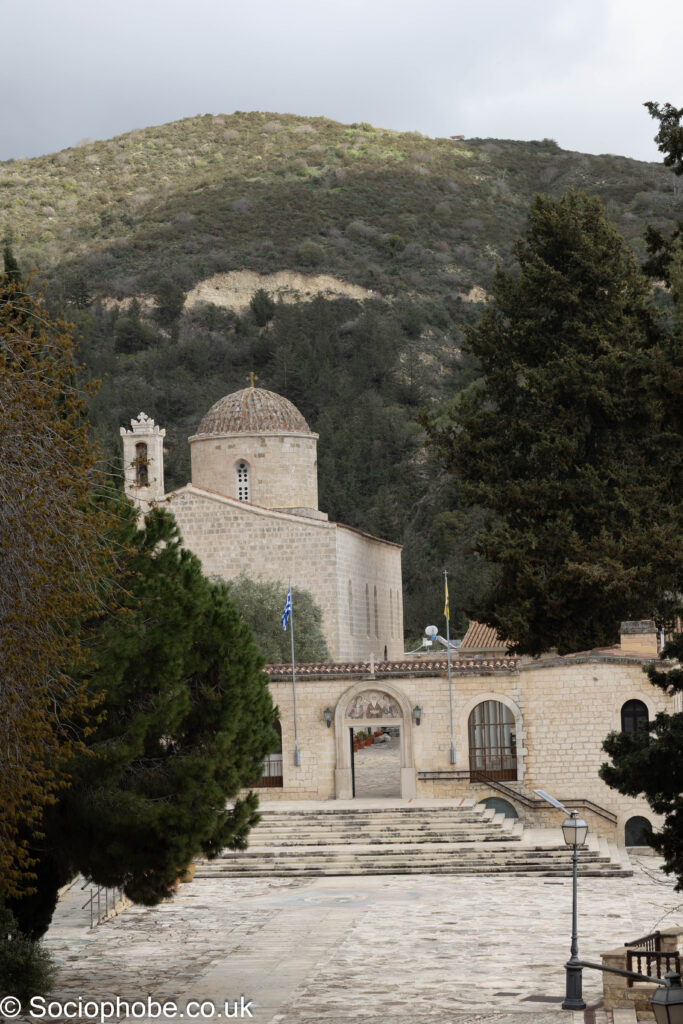
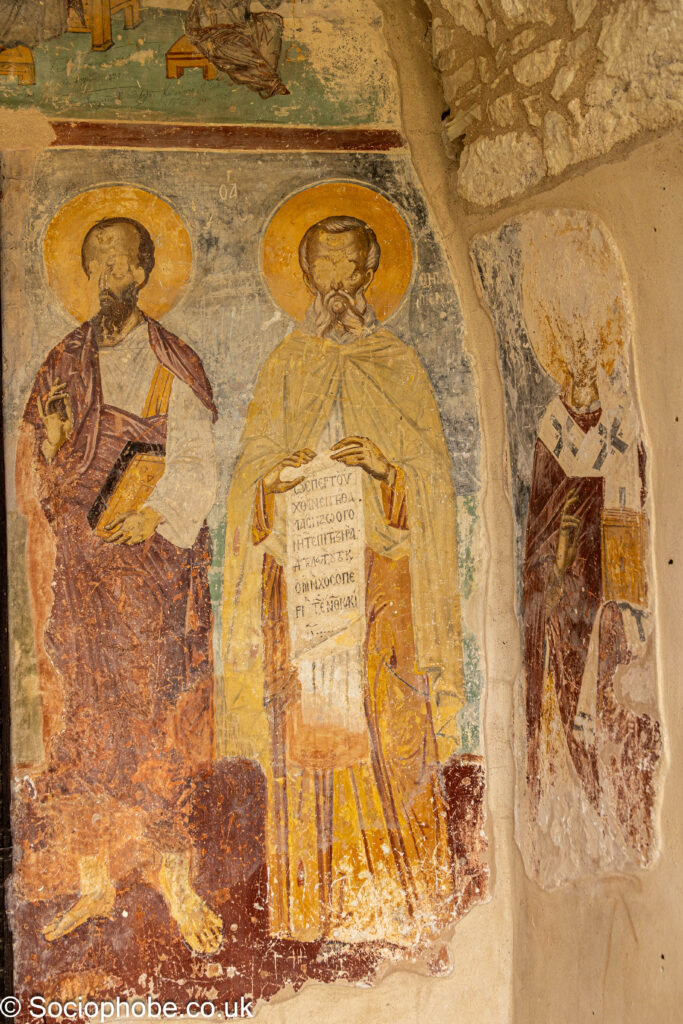
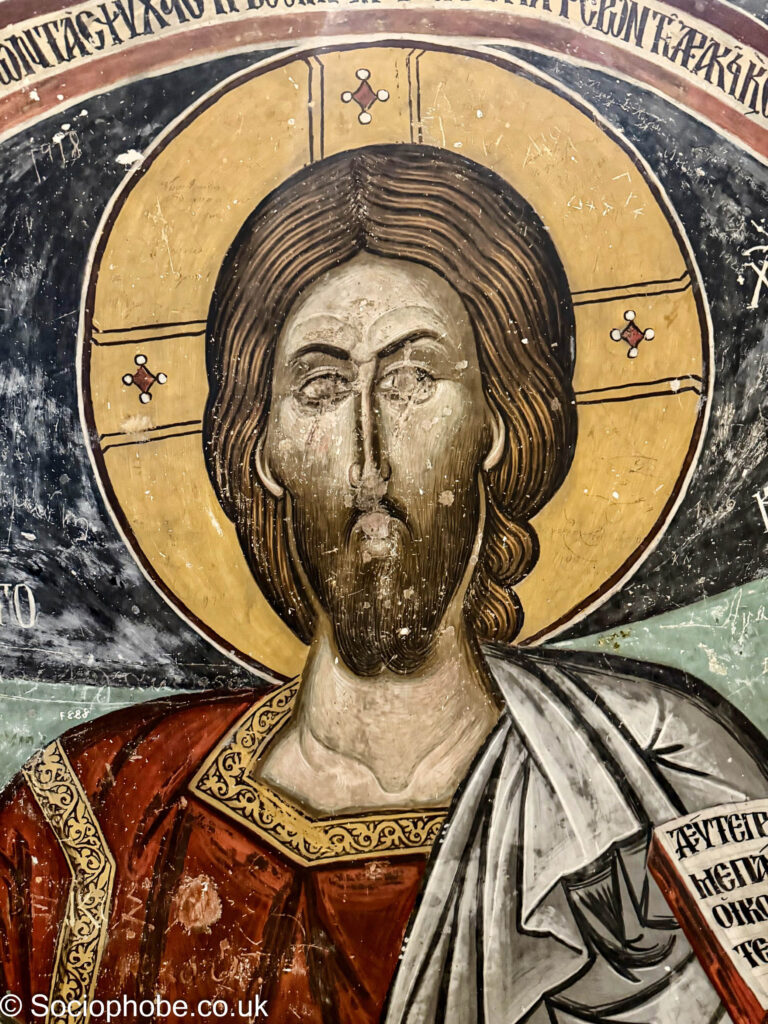
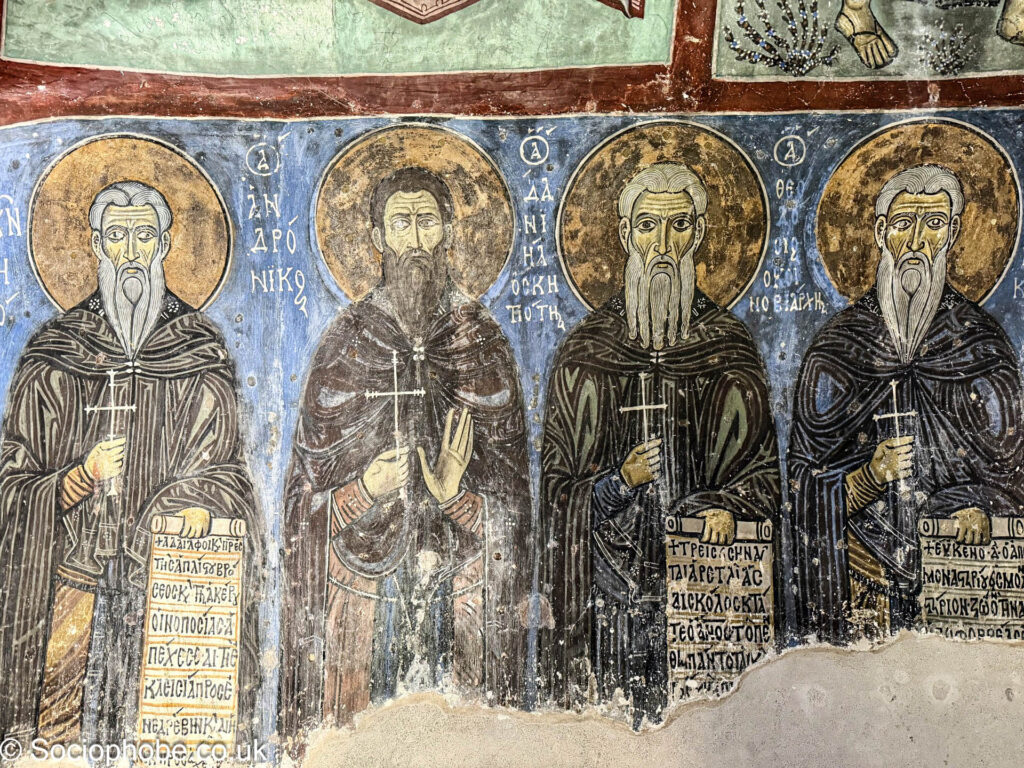
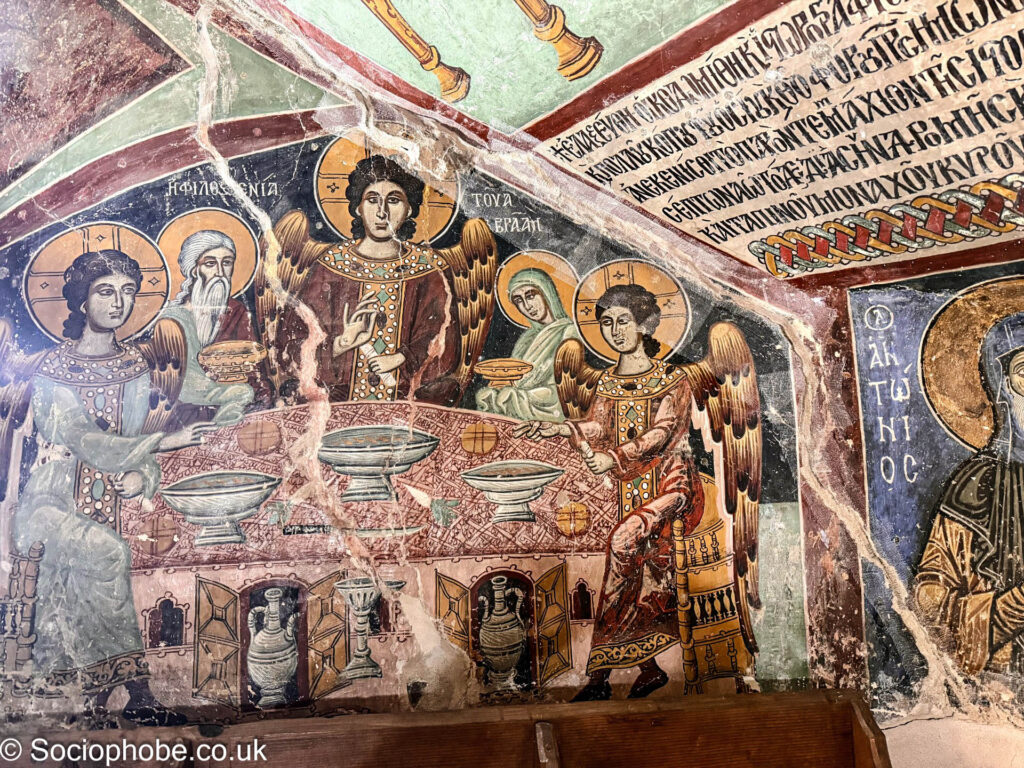
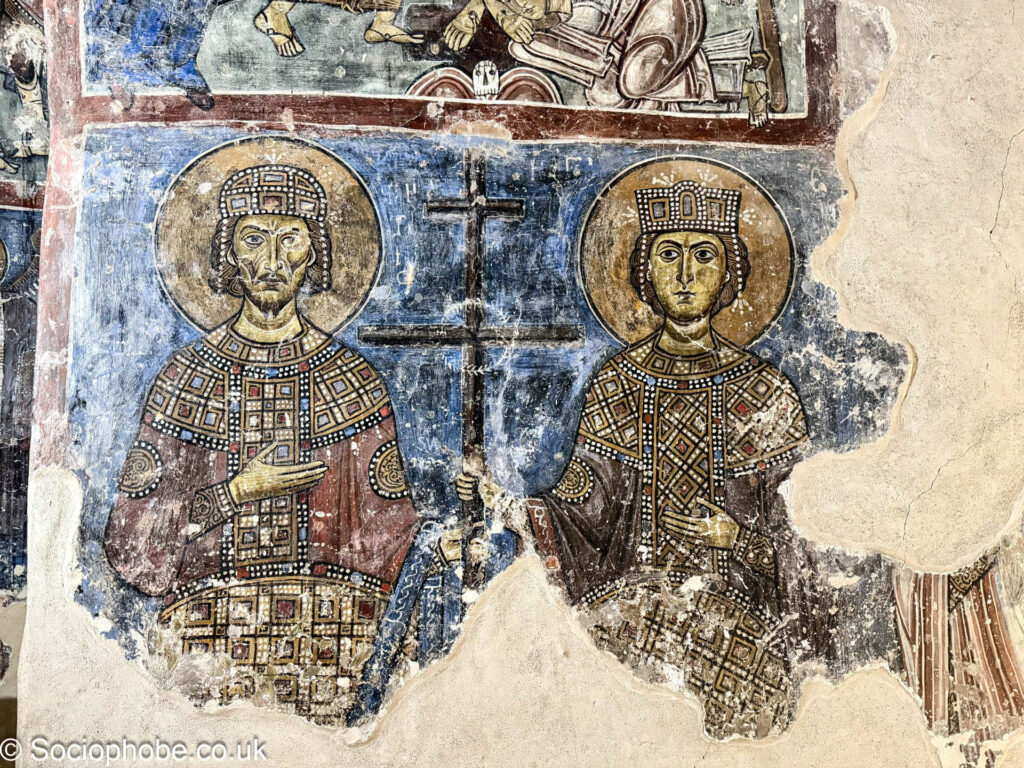
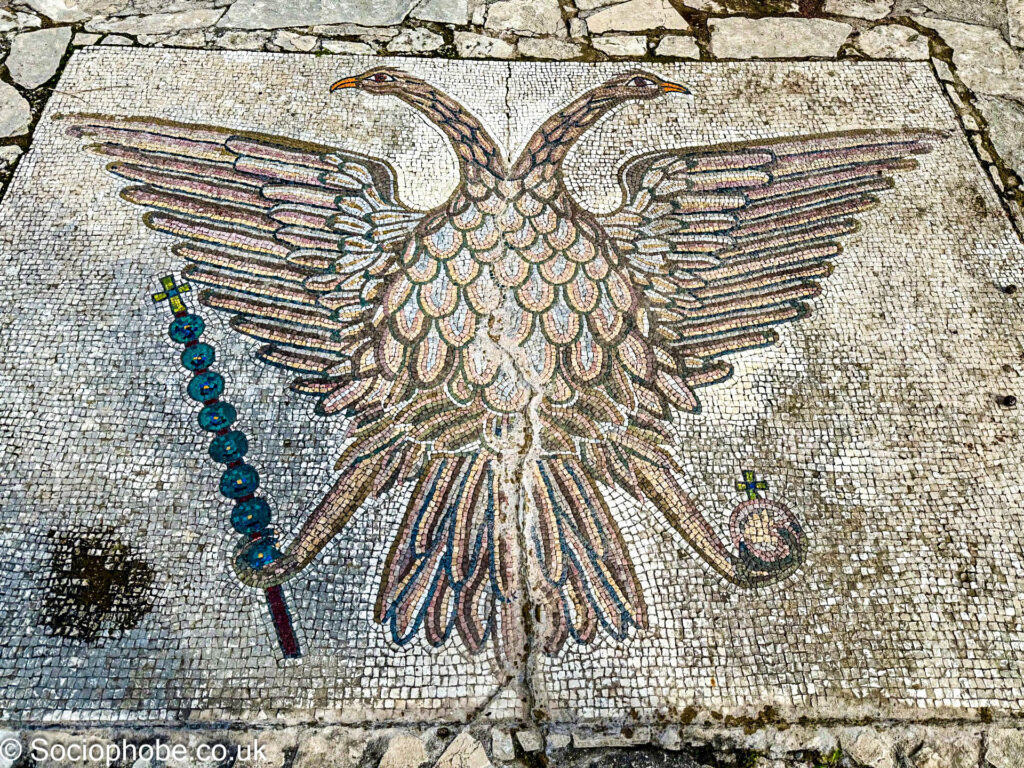
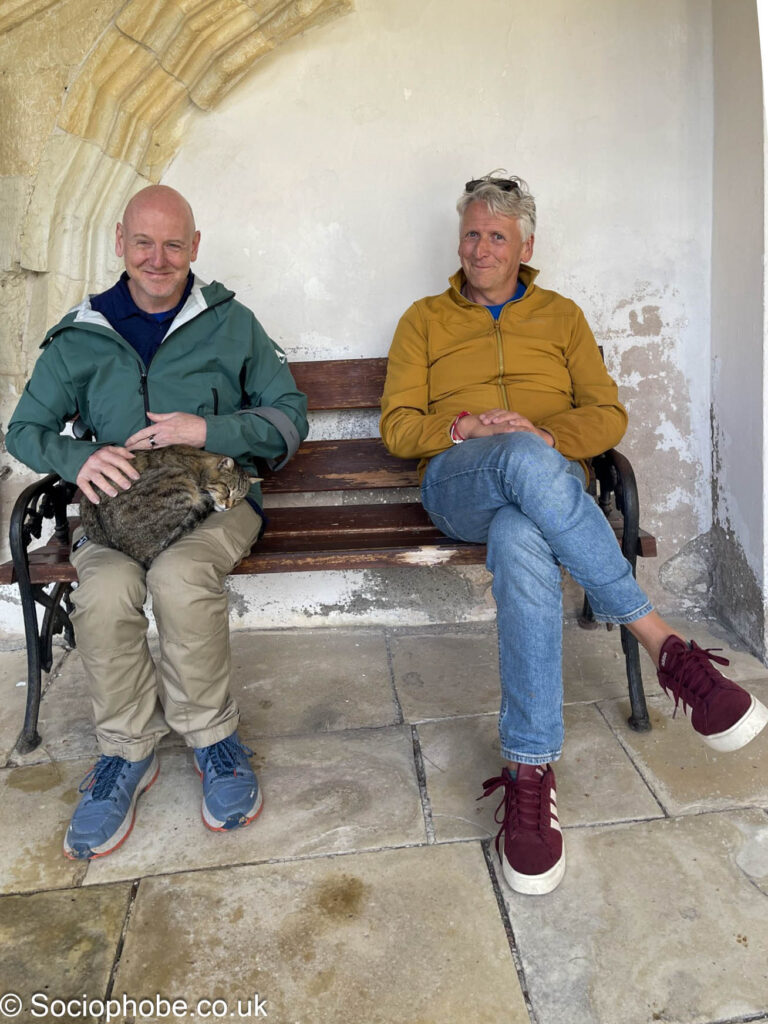
The guy in the museum gave us a potted history of the monastery’s foundation and then the Turkish invasion and occupation of two of the four main monasteries on the island. I’m not sure of the fate of those monasteries libraries, treasures and the buildings themselves but I can’t imagine it’s good looking at history.
Paphos
After the monastery we drove to Paphos harbour as Melissa wanted ice cream. I went to look around the castle while they spent time in the artisan market. The castle is part of the fifteenth century Frankish fortification, most of which were damaged by Mamluk attacks in the fourteenth century and then finished off with an earthquake and the castle itself was destroyed in the Ottoman invasion of the island and then rebuilt by them and used as a prison. There wasn’t much interior decoration or even interior rooms and only a single information board. I rejoined the others for gelato as we people watched the crowds around the bay.
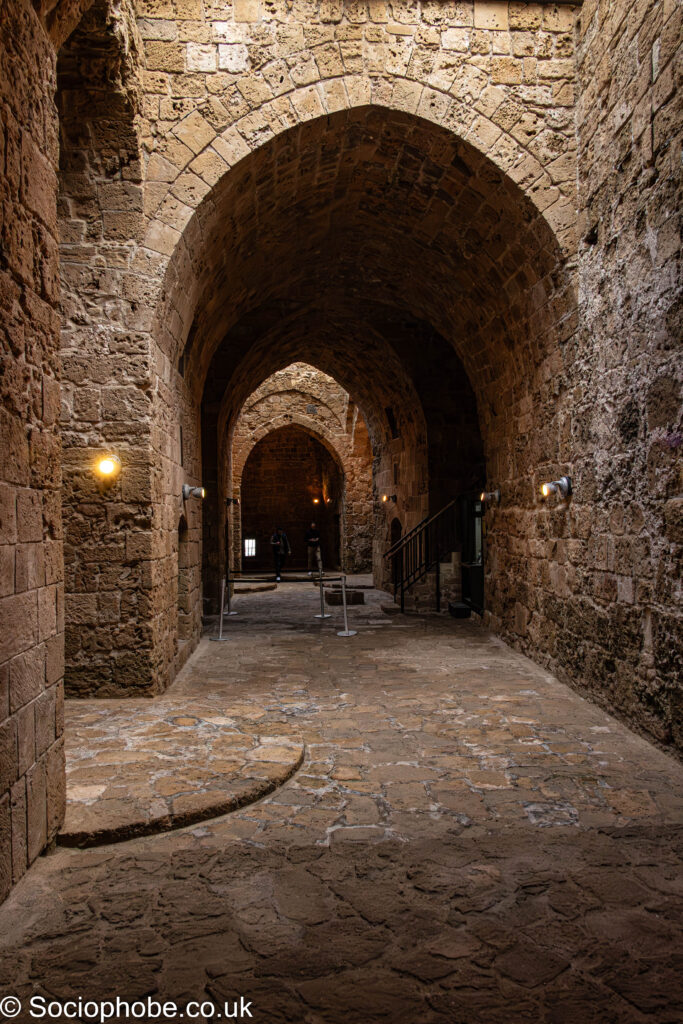
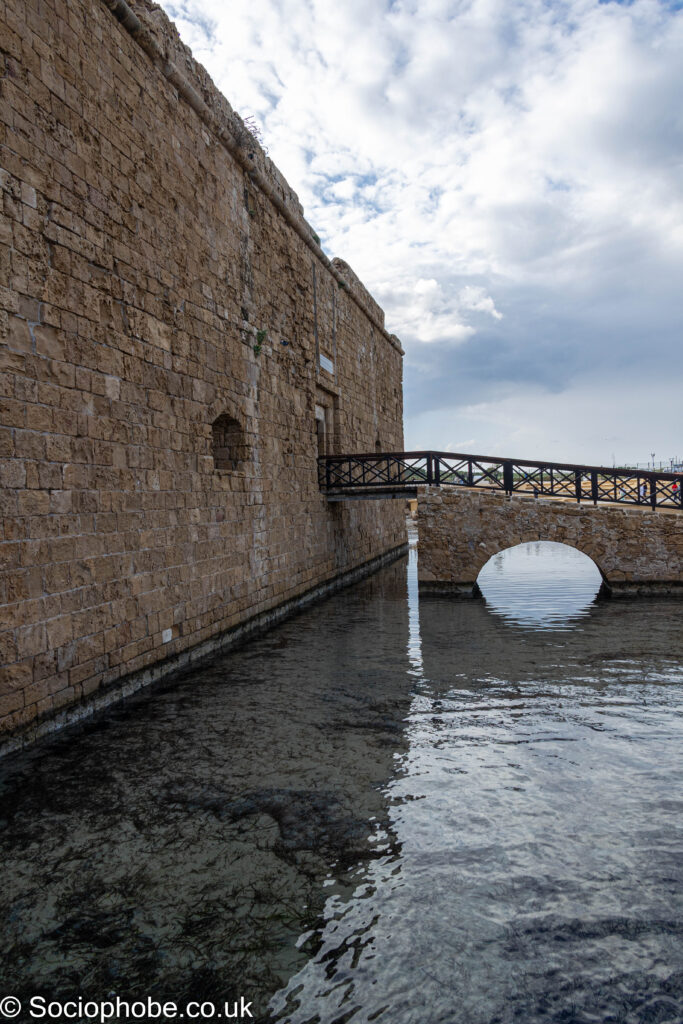
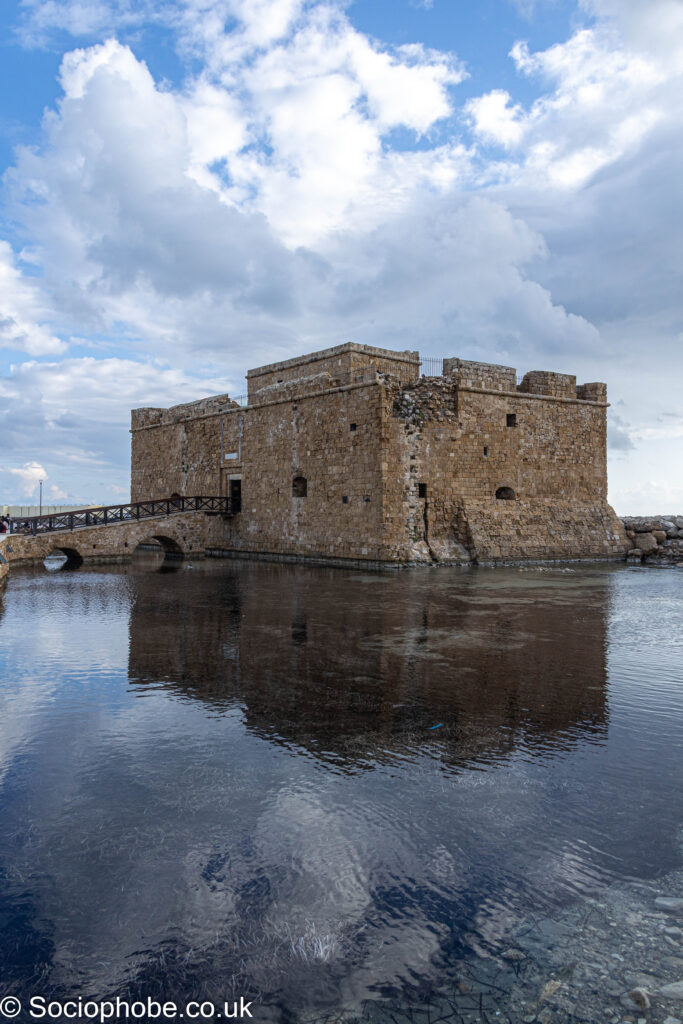
I did attempt to doze on the drive back to Polis but the roads had so many stupid damned speed bumps that didn’t go well. We had a nice meal in the house and then Mel and I walked down to get dessert. The cost of living here certainly seems cheaper than the UK, houses are cheaper, taxes are lower, food costs less but there is no obvious difference in services or facilities so what the hell does all our money go on? On the plus side, dessert was fabulous (and half the price of the UK). Back at the house we started watching The Great again, wonderful series!
Gialia Monastery
We had a relaxed morning as Mel had booked Paul and I on a Reformer Pilates class at 11 and the weather was unpredictable so we didn’t want to go out again and get soaked. The class was excellent – I’d never done a Reformer class so it was a new experience although my coordination and short term memory were both abysmal – I’d do 12 reps of an exercise using the RH side of my body, then have to do the same but on the other side and have no clue what I had just done. I found it difficult to recognise which muscle groups were being used, unlike normal Pilates, but I guess that comes with experience.
After the class we collected Deb and headed north along the coast. Our first stop was Gialia Monastery, a tenth century Georgian monastery that was abandoned after the Ottoman conquest in the sixteenth century and was meant to have impressive mosaics and paintings. The weather and the road both worsened as we turned off the highway and climbed into the forest. We had to skirt round minor landslides and flooding and the road became a metalled track but Paul persevered and we eventually arrived, waiting in the car until the heavy rain abated somewhat.
The monastery itself was small, entirely ruined and also entirely lacking in mosaics so I have no idea why I expected any! There were some badly eroded paintings on some of the walls but no complete figures, just teaser elements. The structure was covered by a huge plastic roof which kept the worst of the elements out. It was obviously in use too as there were candles, icons, prayer books and a Georgian guest book maybe? Certainly a very pretty script.
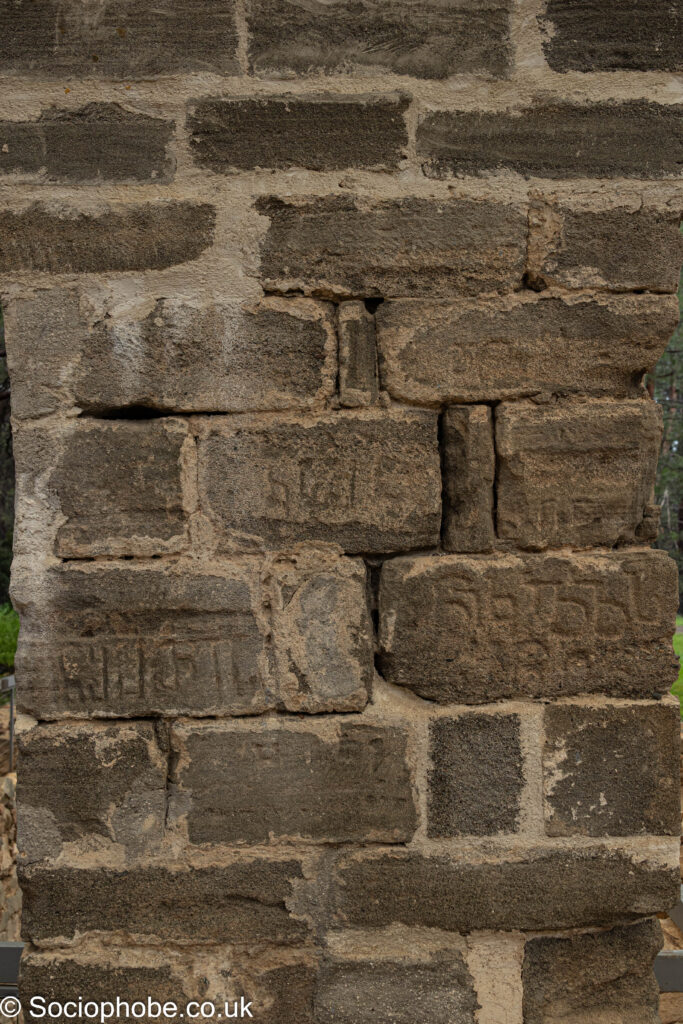
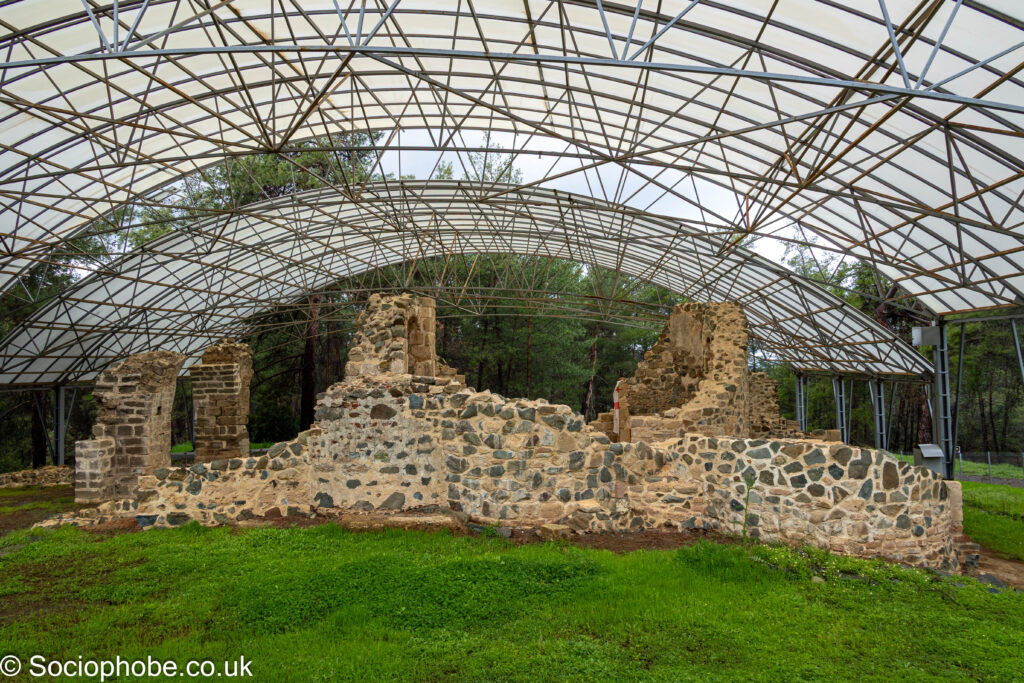
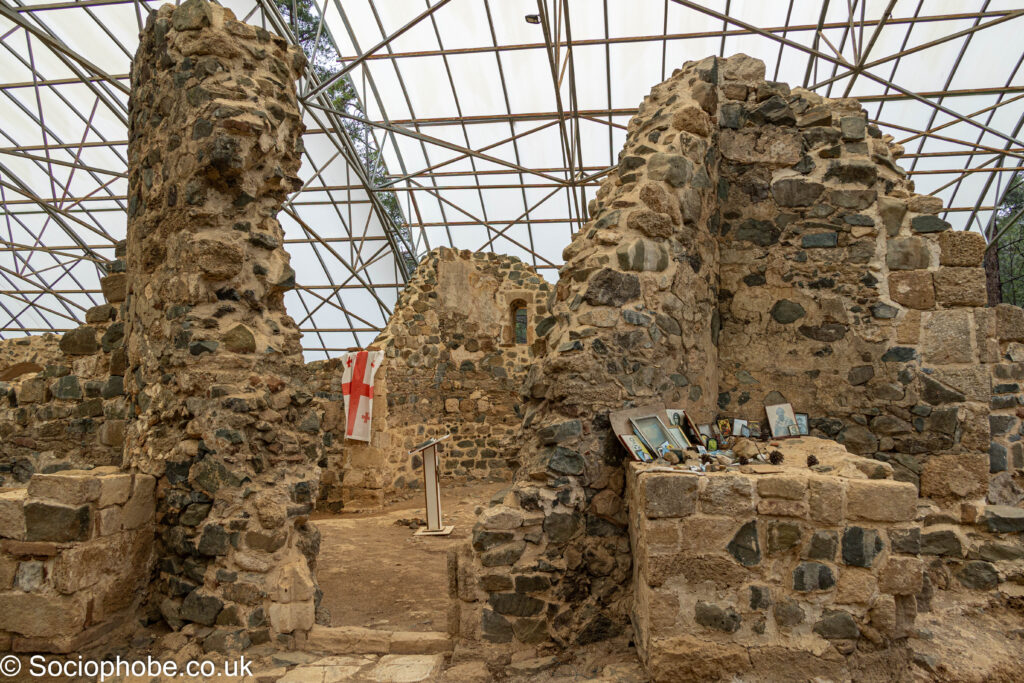
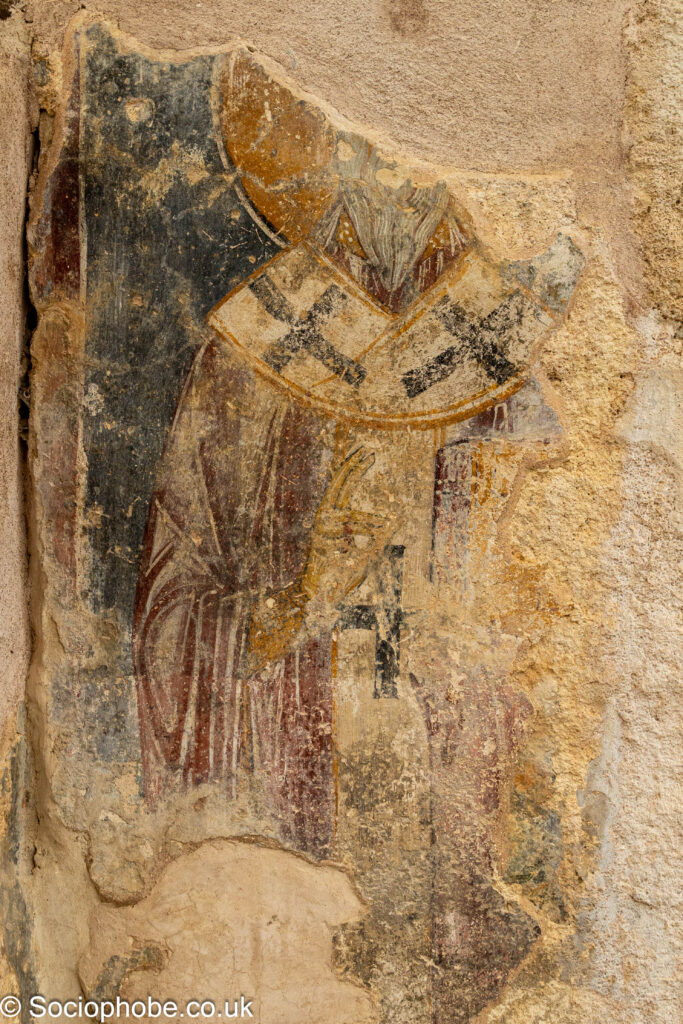
The information board gave a history of the monastery and its recent rediscovery and excavation. I’m unclear as to the Georgian connection, why a Georgian king would fund a monastery on Cyprus but I can find out. We drove back on the very interesting road before rejoining the main coast road and stopping for a welcome coffee. Deb taught Paul the rudiments of backgammon while we sat and chilled for a while until another rainstorm passed.
Agios Raphael Monastery
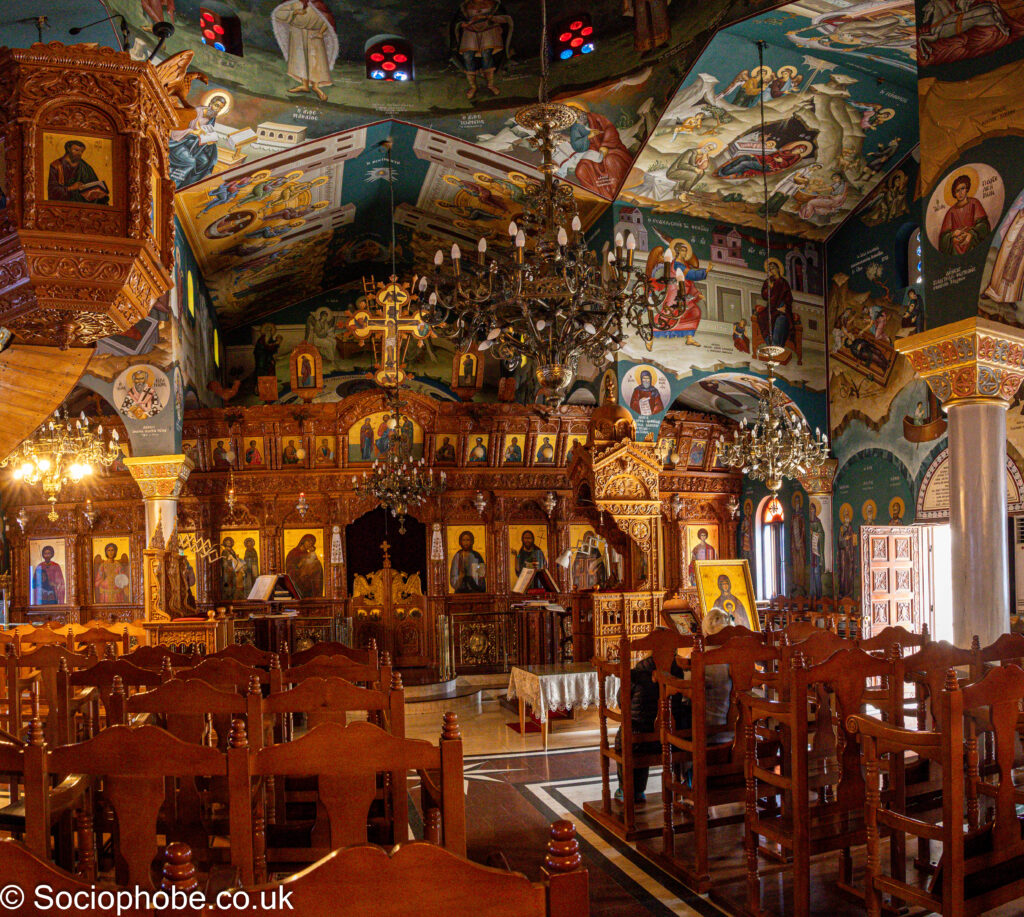
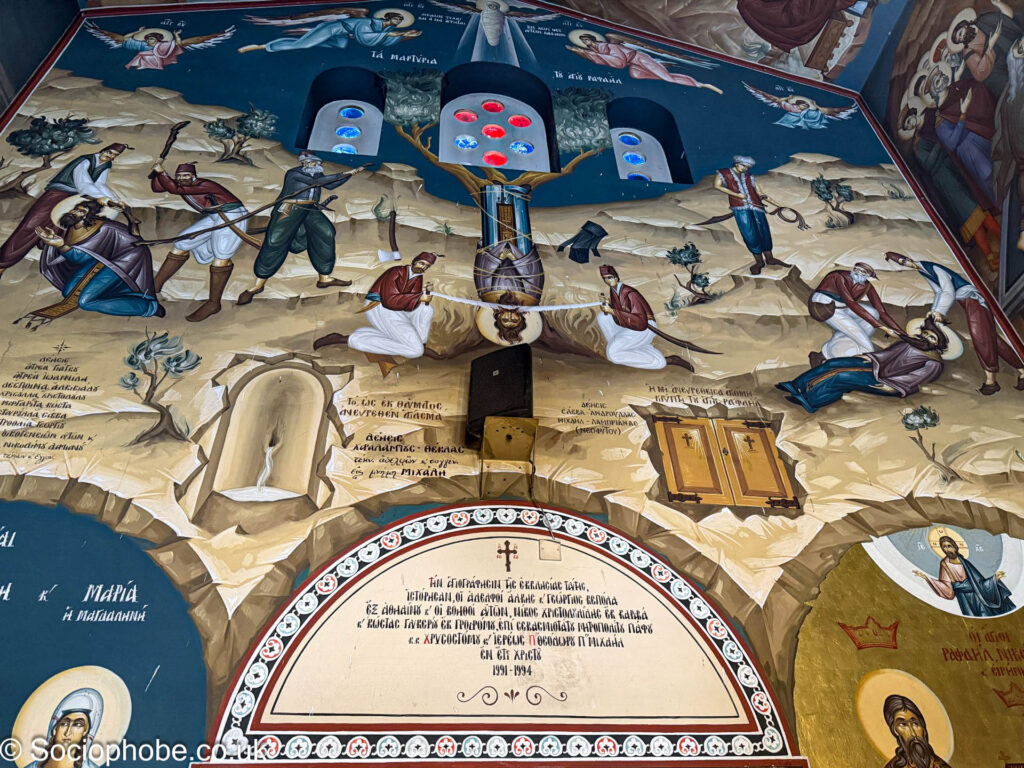
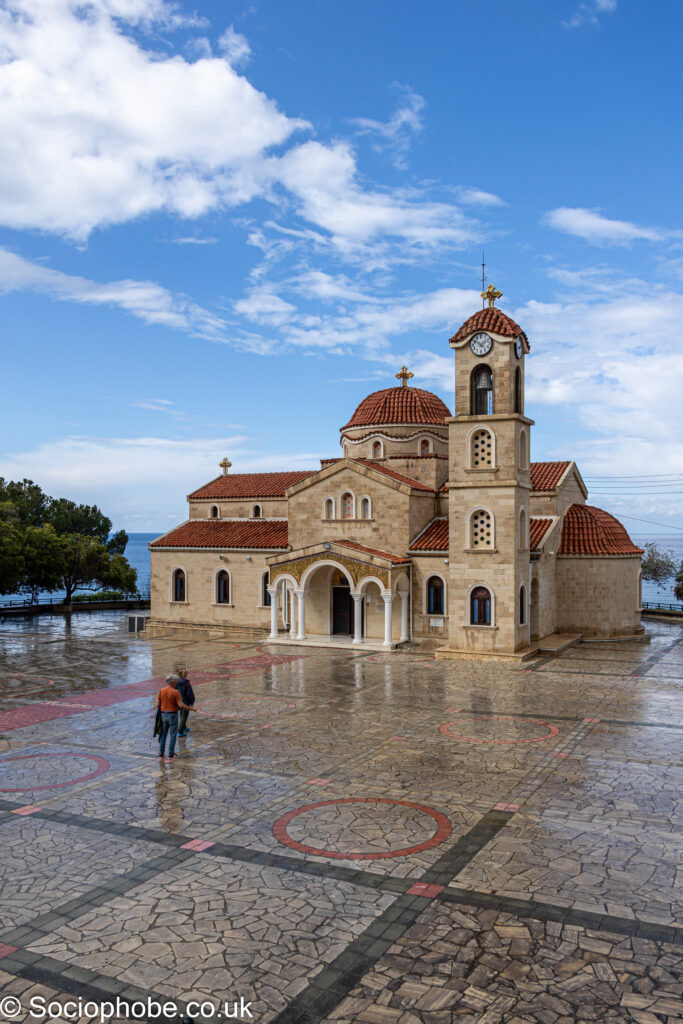
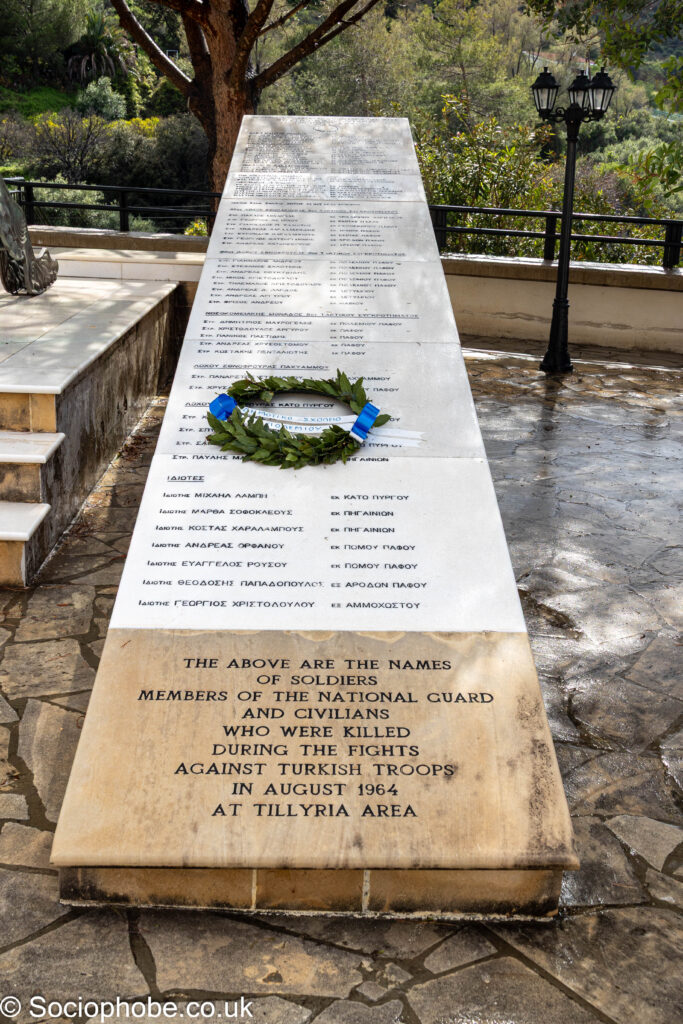
We then continued up the coast road to a little town just south of the Turkish border to see the Agios Raphael Monastery. This was built in the 1990’s and had a monument to Greek troops killed in assorted battles against the Turks in the 1960s and 1970s. The entire interior of the building was covered with murals, mostly religious but also images of Turks abusing Greek saints, decapitating, whipping and beating them. A bit of mixed messages but considering the history between the two nations hardly surprising.
After we left the monastery we stopped to get some lunch, including remarkably cheap halva, before we headed back to the house. I sorted the photos while Mel and Paul did some reading and Deb played Warcraft. Tonight was our last evening in Polis so we arranged to go out for a meal in a local taverna, Moustakallis Tavern. We had a nice meal, actual Greek food with friendly service and a welcome roaring fire! Deb and Paul drove back and Mel and I walked and stopped for a coffee too before getting back to the house.
Latchi harbour
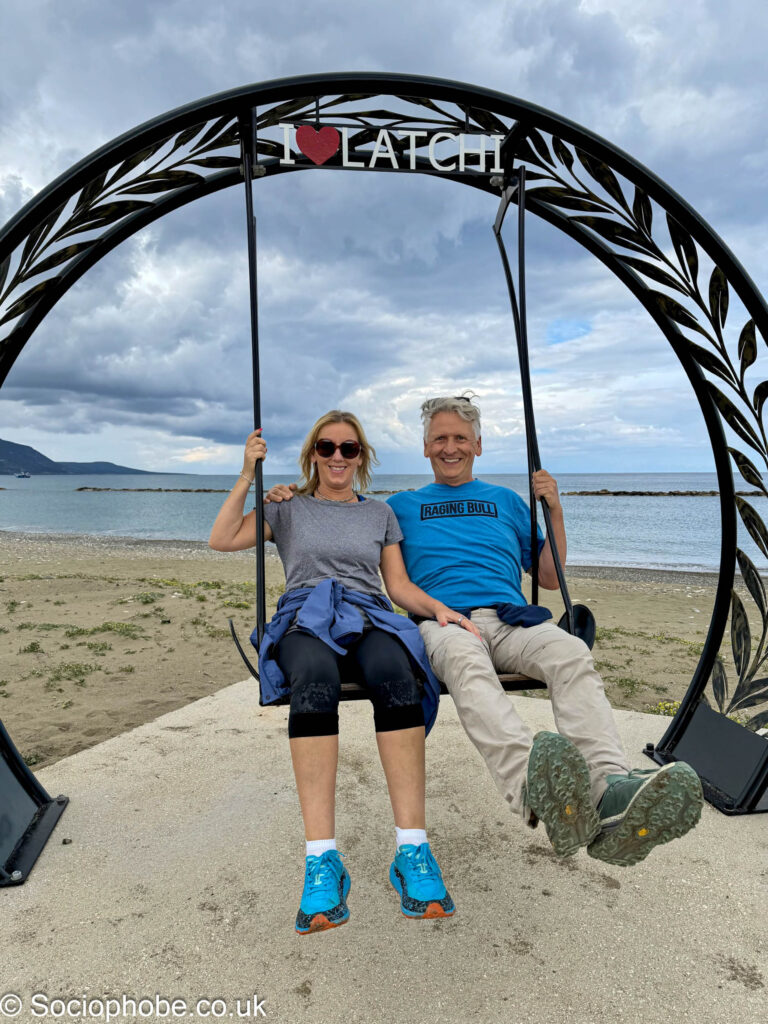
I had arranged with Mel and Paul to do an early-ish morning walk as there looked to be a gap in the rain so we left at 8AM for a walk to Latchi harbour. We walked through Polis and then through a deserted holiday camp (I can imagine horror films being made there!) before following the beachside promenade for the rest of the walk.
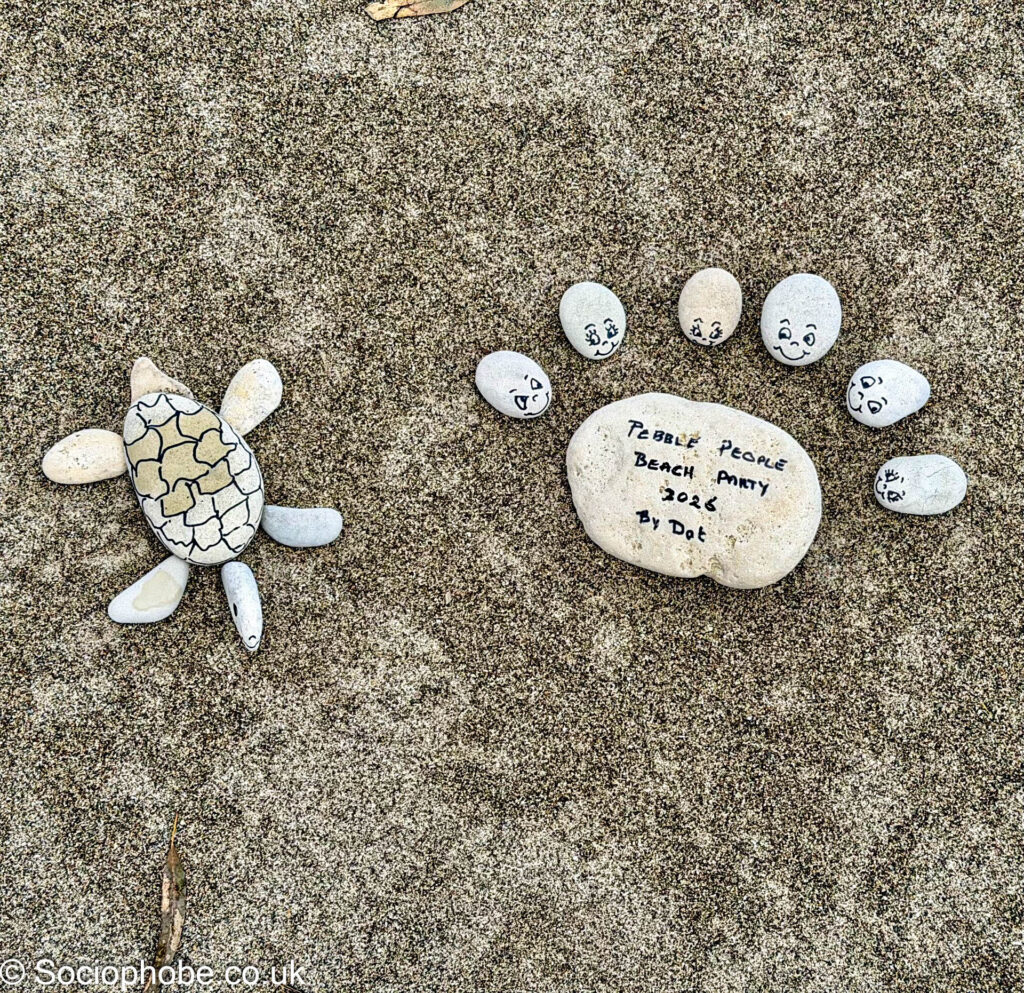
There were a surprising number of other people out walking and the cafes at the marina were busier than expected. We sat in the sun (yay, first time this holiday) and chatted for about an hour which was really lovely, very relaxing and therapeutic. The downside was that it started to rain about 15 minutes before we got back so we had to drape all our clothes over the dryer again once we got in. A very pretty 10k though past orange orchards and along the beach.
Deb and I had a quick breakfast and then packed while M & P went out. We then drove the very tedious 2.5 hours to Nicosia. As soon as we got past Paphos the forested hills were replaced with scrub and our underpowered little hire car worked hard to climb the hills. Nicosia was a lot further north than I expected and also seemed a lot more modern on the drive in but it was the first real driving we’d done on this road trip through Cyprus in the daylight.
Nicosia
Accommodation in Nicosia
Le Bouquet Luxury Suites are easy to find and the exterior is beautifully clean and well maintained. There is parking right outside (best to book though). Check in was pleasant and our rooms were a good size, hi-tech and spotless. Wifi was great and the room service breakfast a lovely way to start the day.
The rooms were well equipped with everything we needed. My only gripe was road noise but other than that the hotel was exactly what we wanted. The old city and border crossing was maybe 15 minutes walk or €6 by Bolt. The rooms were great value and everything we needed was nearby so we didn’t actually use the car while we stayed here.
The Byzantine Museum
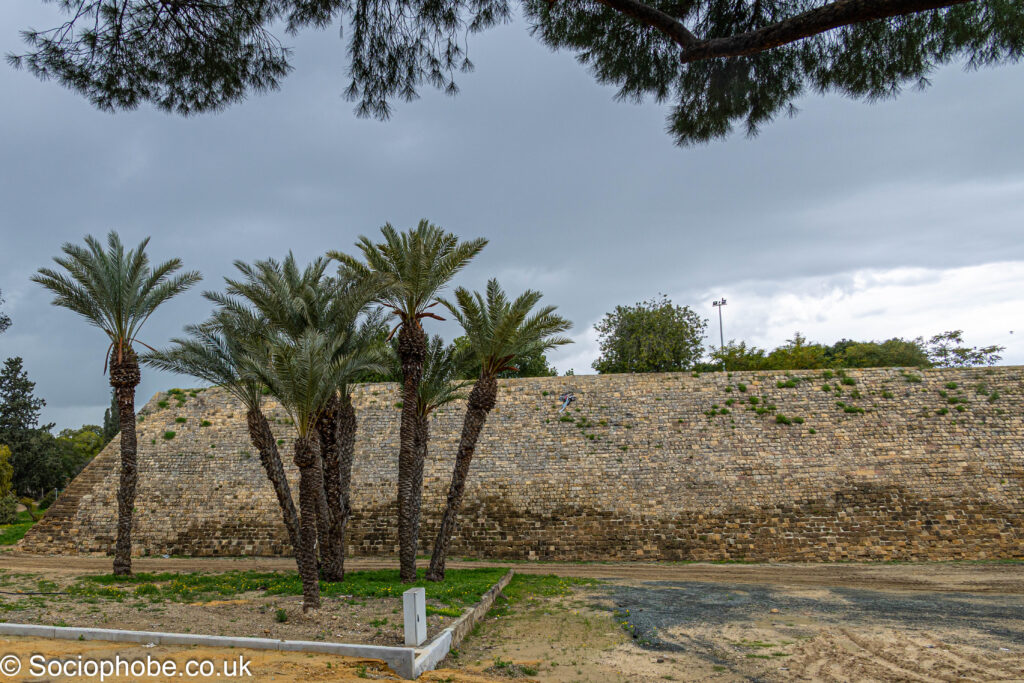
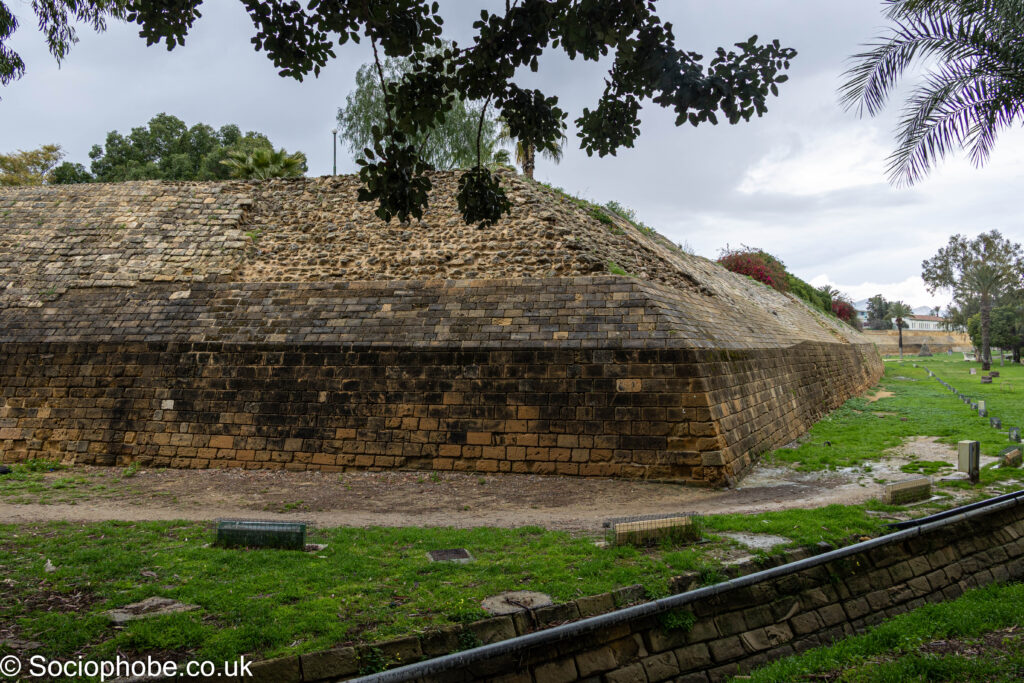
We vaguely unpacked and then worked out the route to the Venetian walls. Walking through the city we didn’t see many old buildings or even pleasant architecture and the area of the Venetian walls we went to was actually a car park and bus station. The walls were largely intact although a lot of the facing stone had been removed. It was drizzling by now so we didn’t put much effort into looking for anywhere better and walked to our next stop.
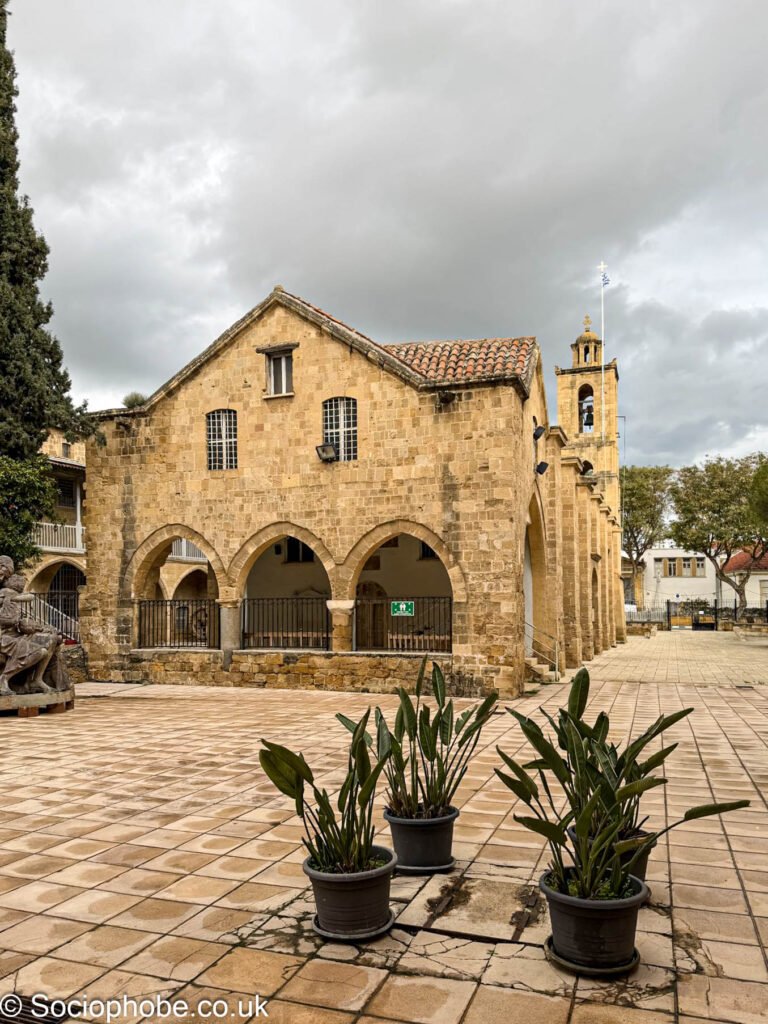
The Byzantine Museum was due to close an hour after we arrived and in hindsight we should have left it for another day as we rushed through at least half of it. It was largely focused on ecclesiastical art and specifically the damage done by the Turks in their 1974 invasion.
The museum had numerous examples of churches and monasteries that were in occupied areas and then looted and the artworks smuggled out and sold. Some were recovered, either by purchase or legal means but a lot have just vanished, either destroyed or in private collections. The museum had fantastic digital archives that allowed you to look at the churches on the occupied areas and see what was lost. Frustratingly and also ironically as a lot of their evidence is based on pre-invasion photos, you could not take photos inside the museum.
After leaving the museum we had dinner – most welcome as we were hungry and cold by then – at Bun Cha Hanoi Restaurant, which was a real bargain and lovely food. We followed Google’s route back to the hotel and I wasn’t impressed, a lot of the areas we walked through weren’t places where I would like to linger. We made it back ok and then spent a couple of hours writing notes and sorting the very few photos I’d taken.
Kyrenia
Today was the day of our tour to Kyrenia, a port on the north coast that is now in the Turkish area, along with almost every part of Greek Cypriot cultural heritage. I had booked the tour with Viator and our guide, Sedat, met us at the Ledra border crossing point after we left the Greek zone. He was an ex-headmaster that had grown up in Nicosia through the 1960s and 70’s when the island formally split into two entities so we had some interesting chats.
I noticed there was far less solar power in the north than the south and Sedat said that the power company is not keen to connect up people’s solar to the grid as they then lose money so it depends who you know as to whether you can do it. The island is heavily dependent on Türkiye and also heavily influenced by it – presidential nominations have to be approved by Ankara and water is also supplied from the mainland, a bit of a choke hold for a nominally independent state.
St Hilarion Castle
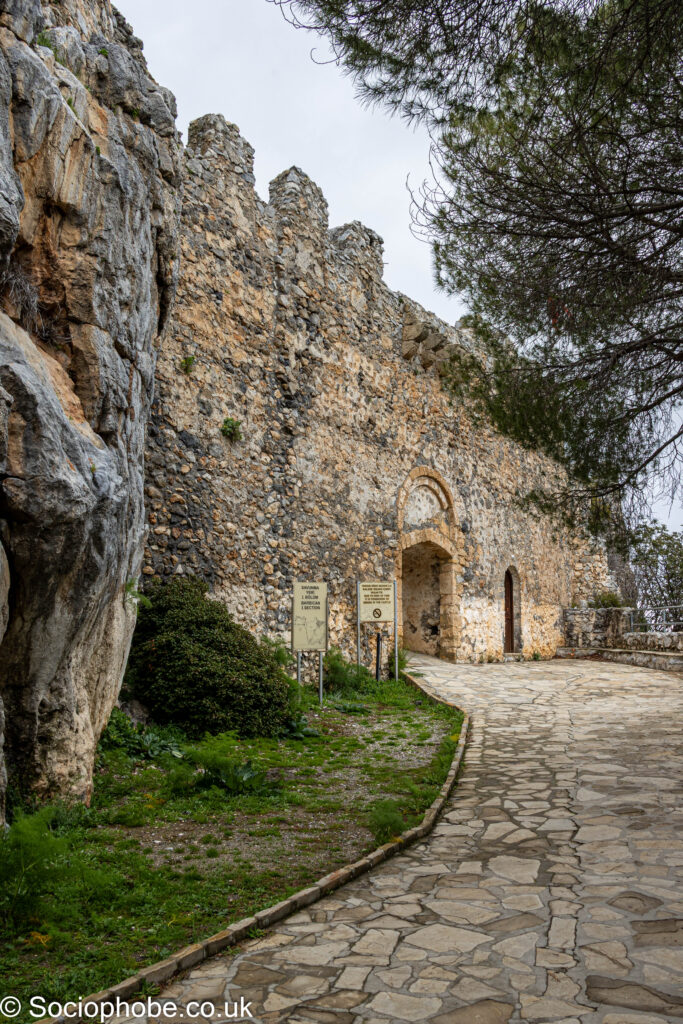
Our first stop was St Hilarion Castle, built by the Byzantines as a defence against Arab raids and expanded by the Lusignans to include a summer palace. The castle guarded the Nicosia – Kyrenia road and we drove past various war memorials too from recent events as well as a Finnish UN base. The castle was high up in the mountains and built on 3 levels, the first two for defence and the top level was used as a summer palace by the Lusignans.
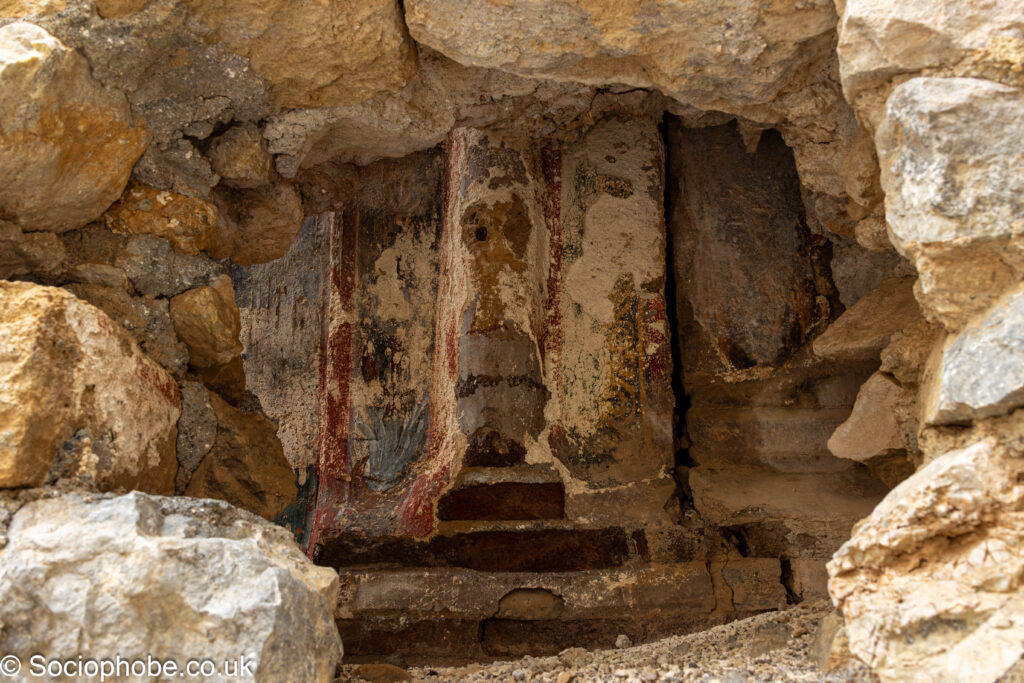
We explored the lower levels, well preserved but with lots of areas still closed for renovation and we looked at the view across to the coast of Kyrenia. There was a small Byzantine chapel with the remains of frescoes hidden behind a more recent wall. The architecture was wonderful, with vaulted ceilings and gothic arch windows and a lot of high quality stonework, as well as a lot of distinctly mediocre stonework, possibly due to facing stones being looted when the Venetians decommissioned the castle.
The weather started to change from scattered sunshine to very low cloud below the level that we were on, so Deb and Sedat went to the café while I climbed the 200 or so steps to the Royal Apartments through thick cloud.
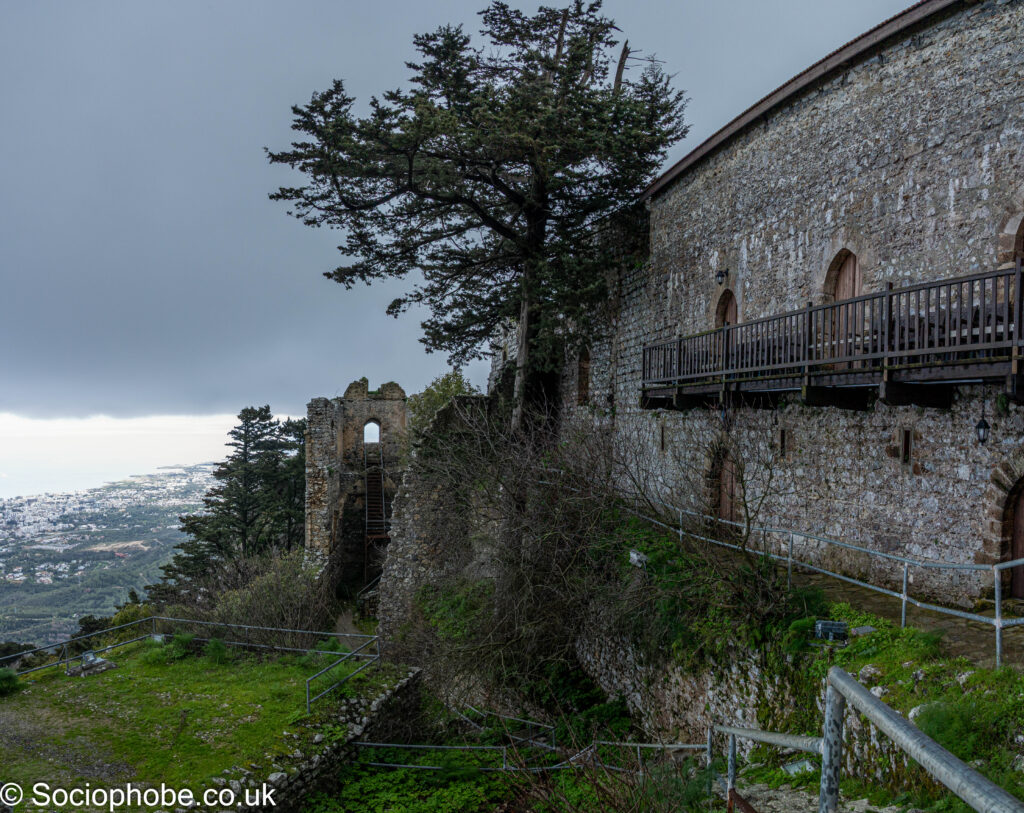
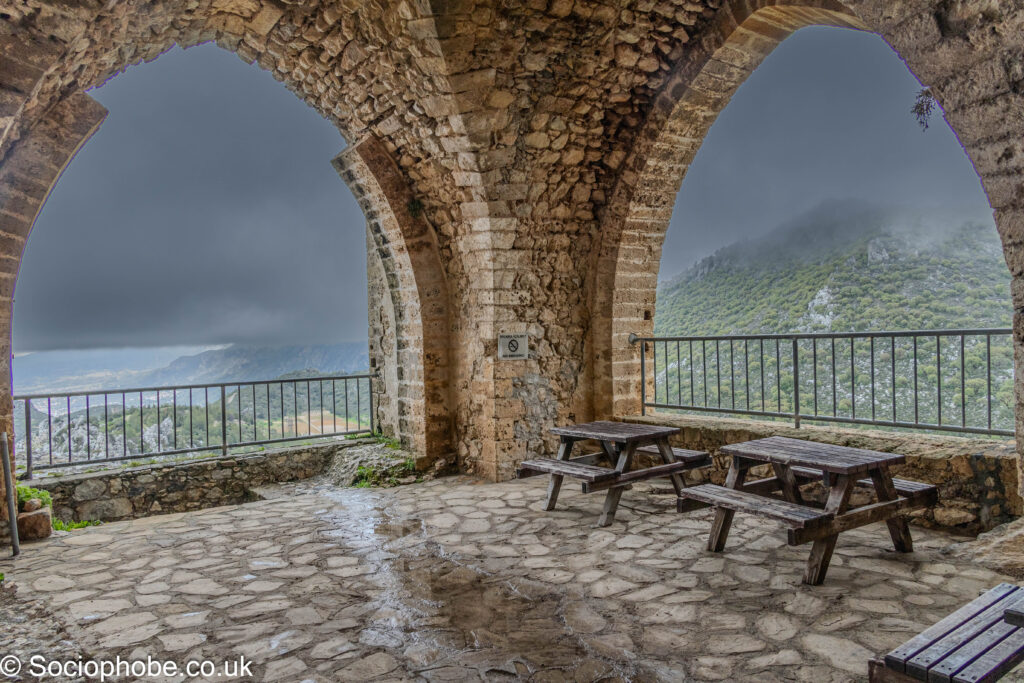
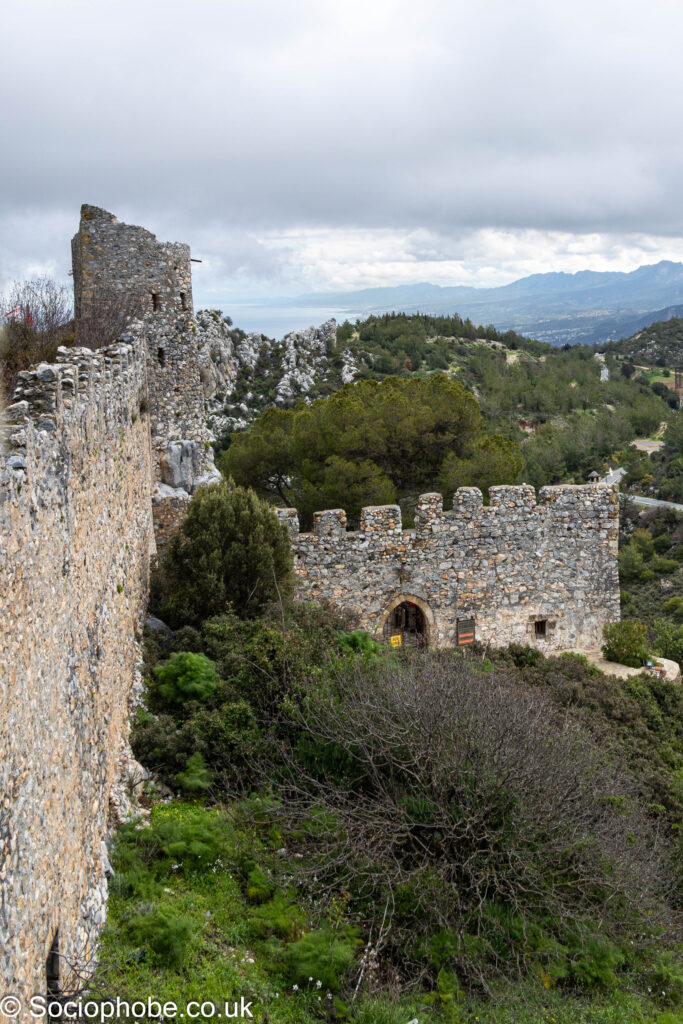
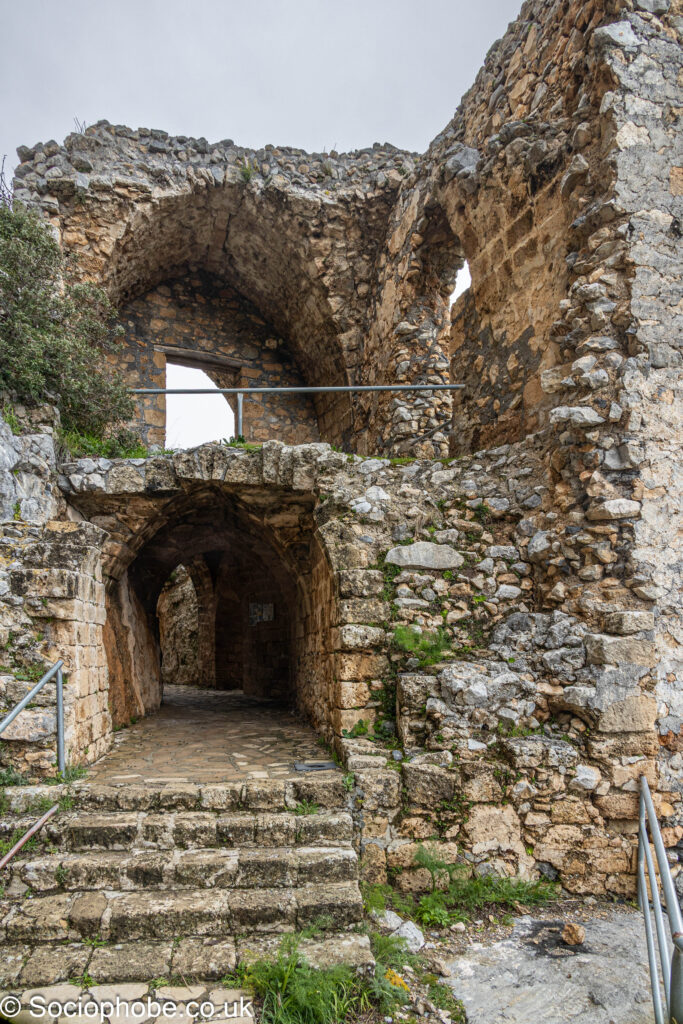
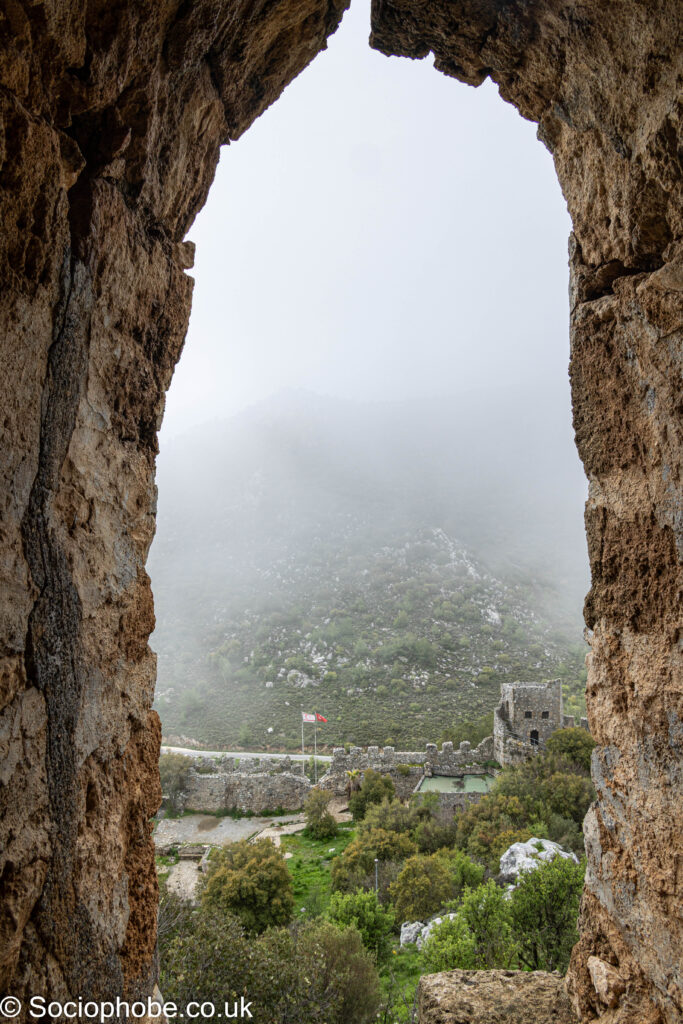
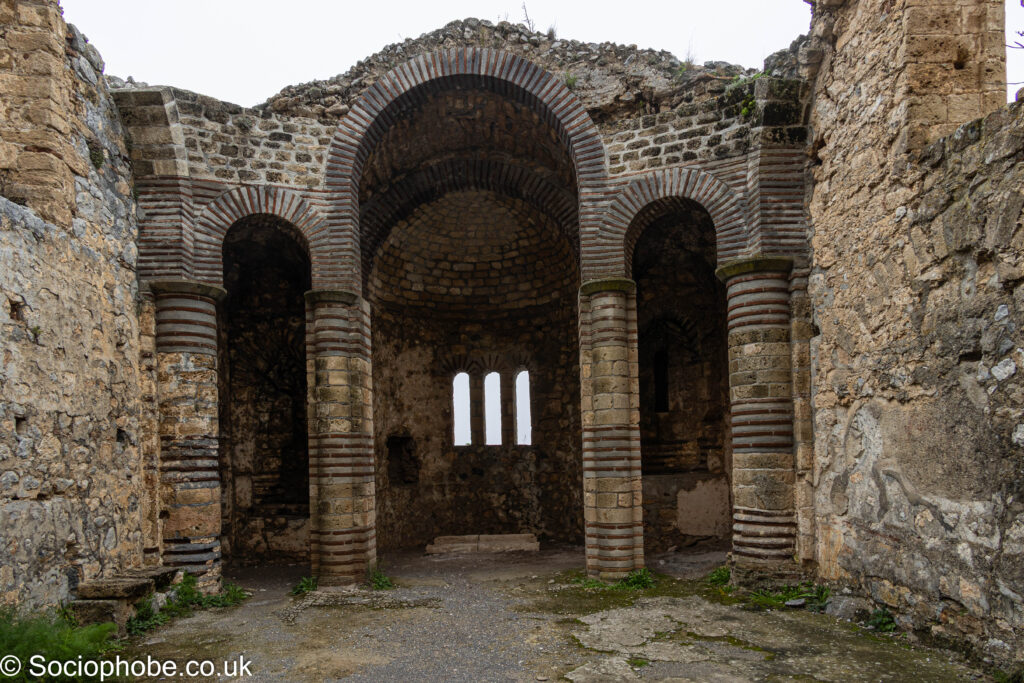
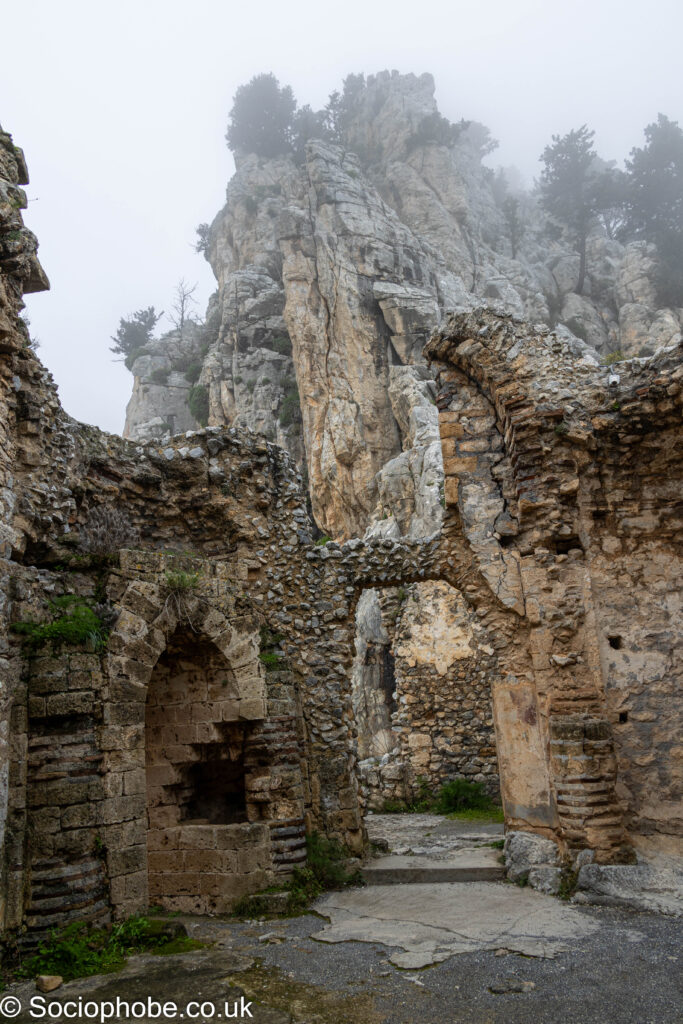
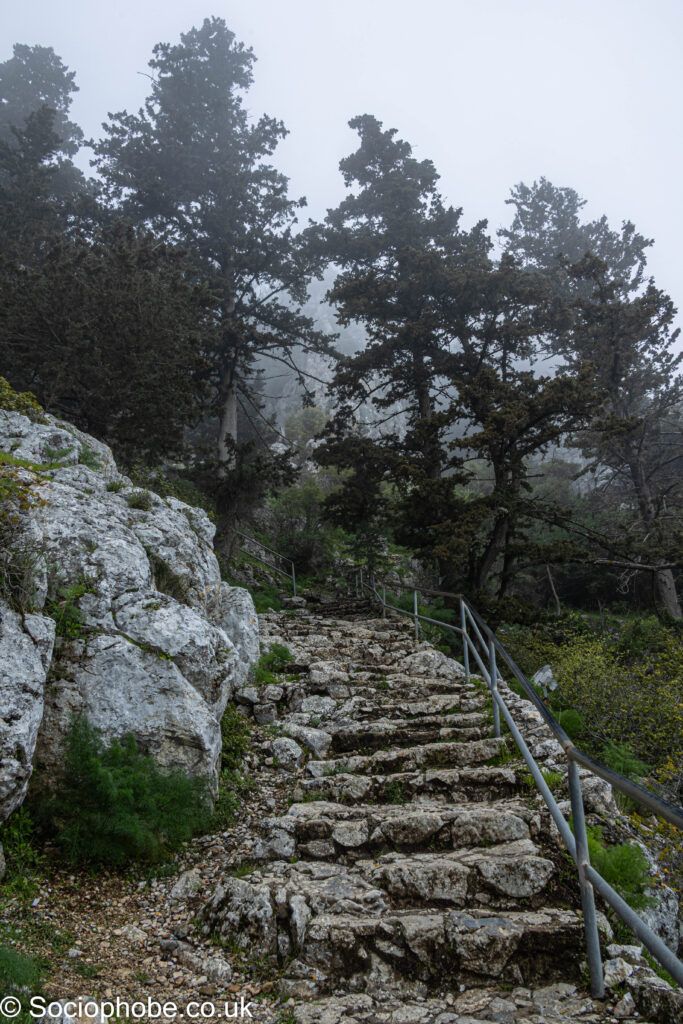
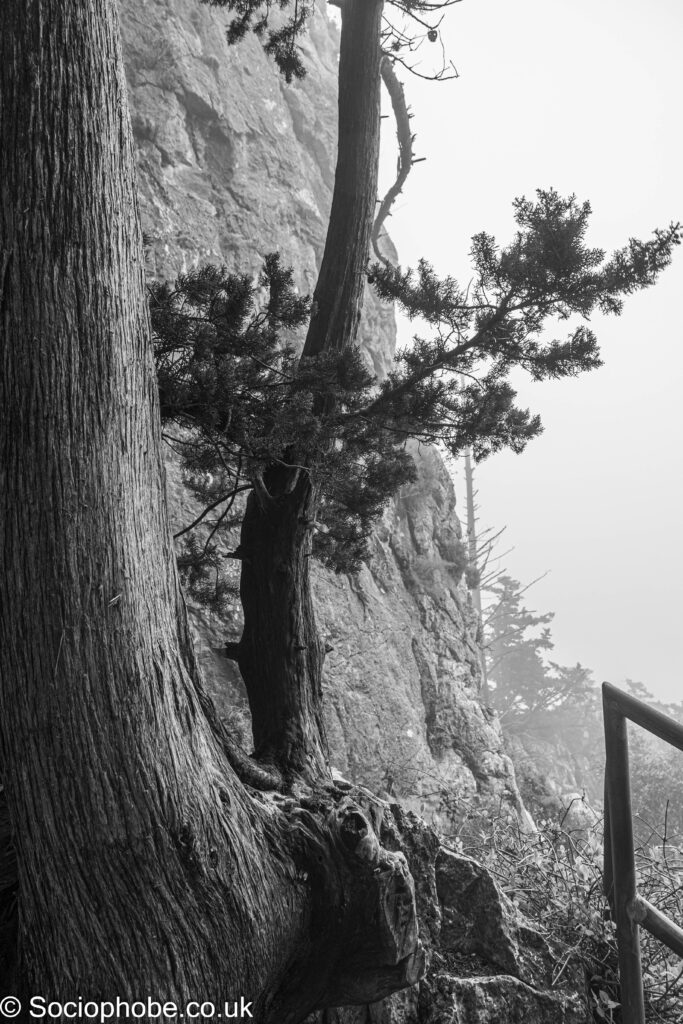
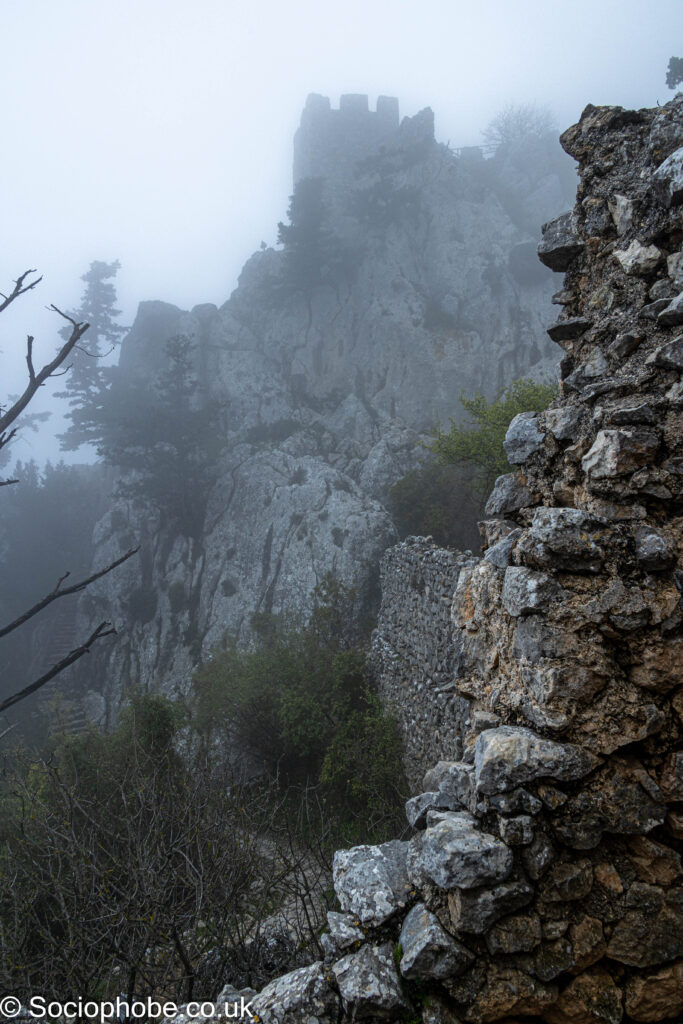
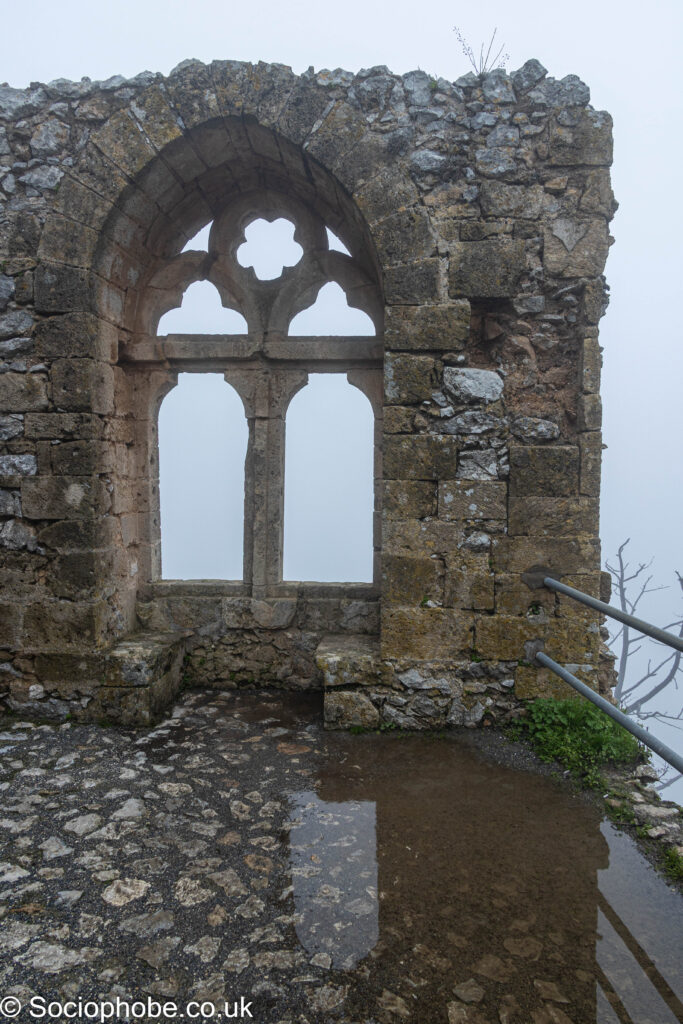
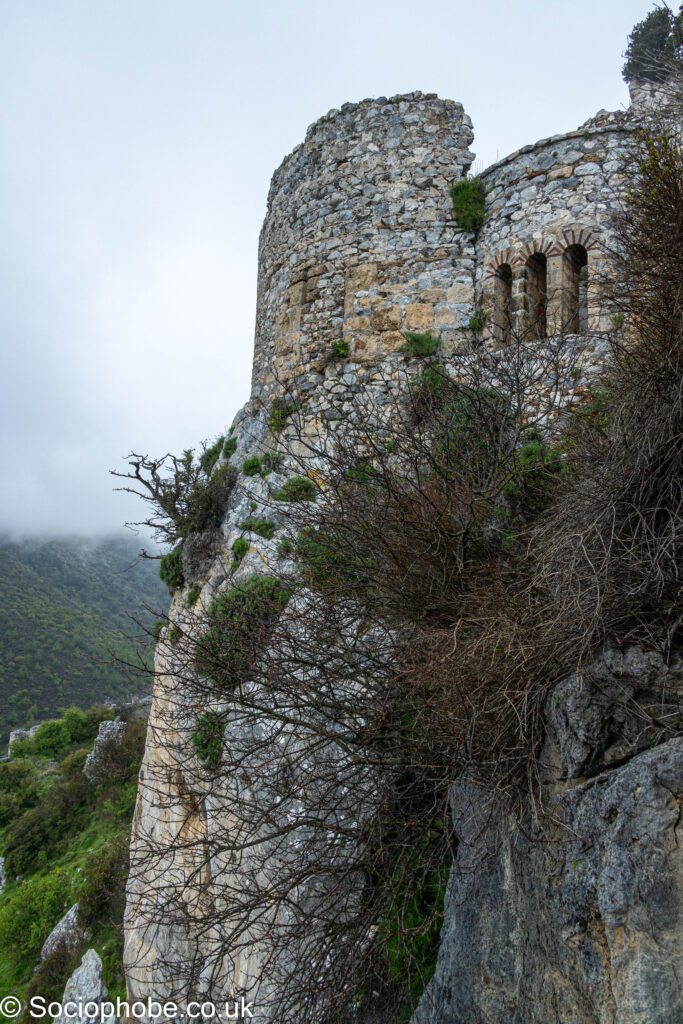
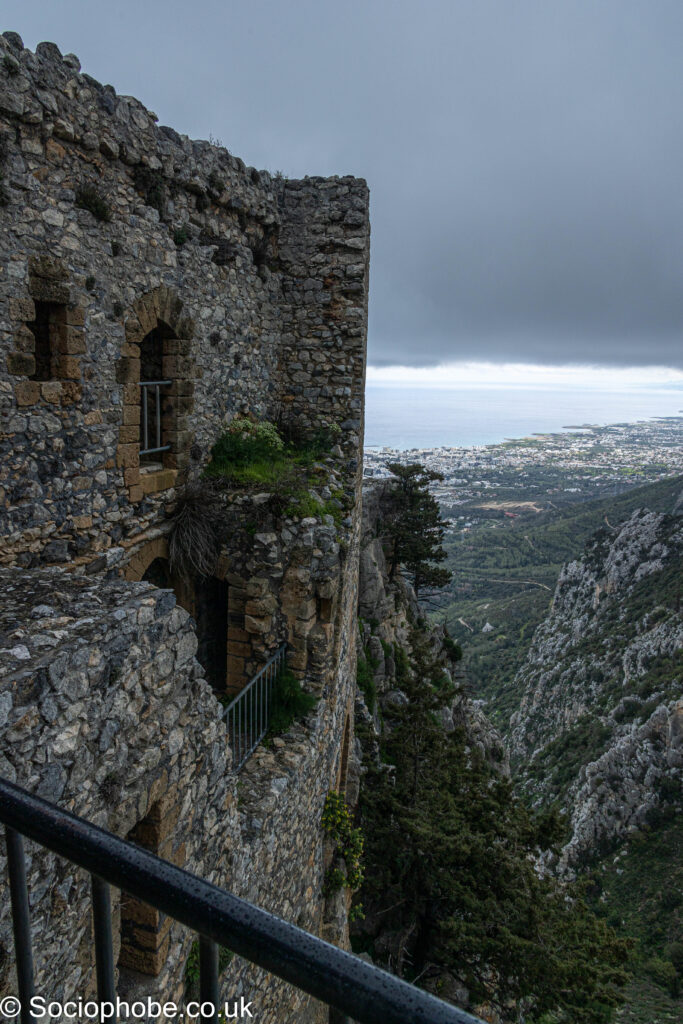
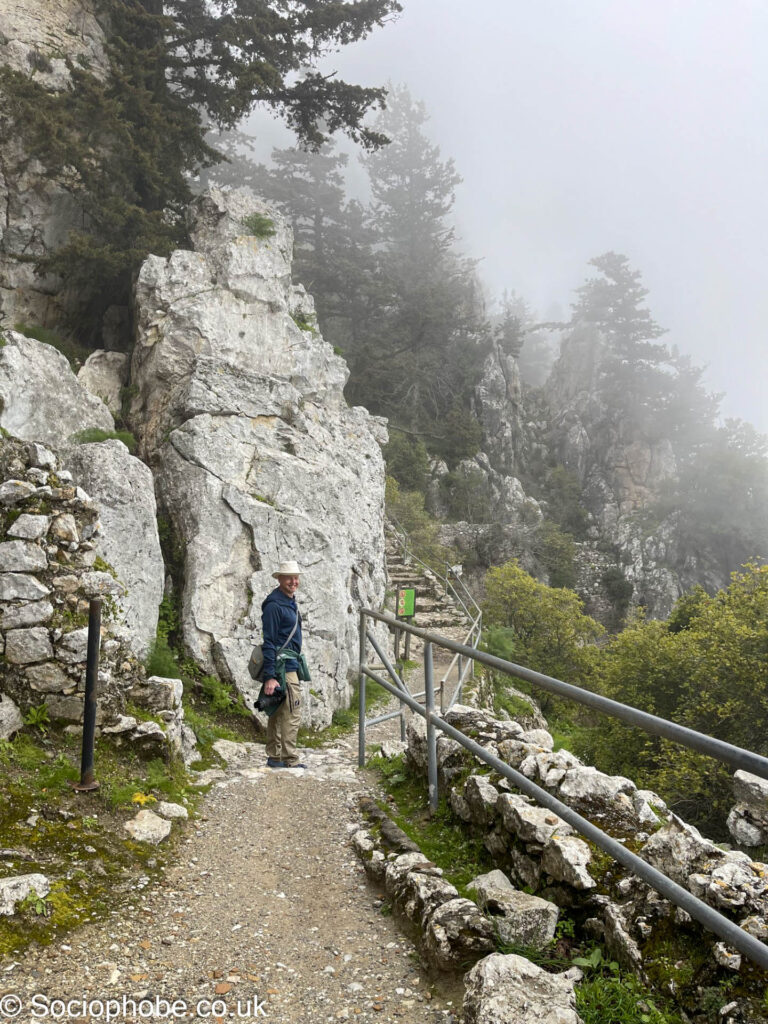
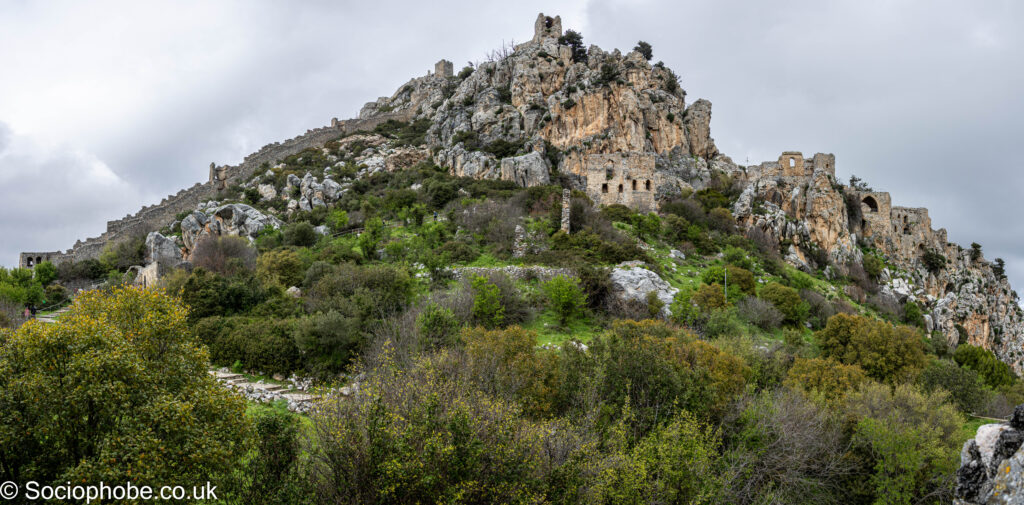
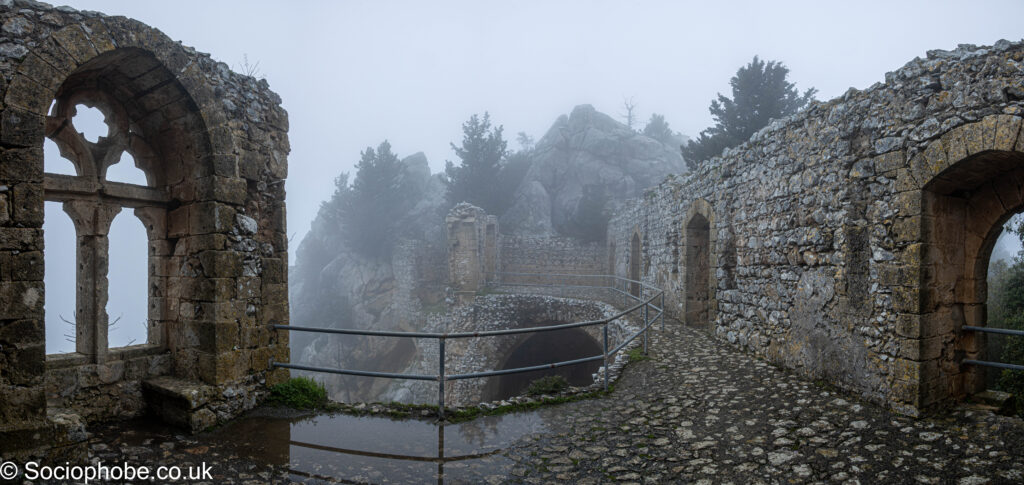
The apartments/summer palace was less impressive than expected with a couple of nice windows but no elaborate stone work and mostly a functional building. I did pass several large cisterns as I climbed but the views were pretty washed out by cloud. The climb down was entertaining due to the slippery polished rock of the steps but to several people’s dismay, I arrived safely. I met Deb and Sedat and we returned to the car to drive to Kyrenia.
Kyrenia Castle
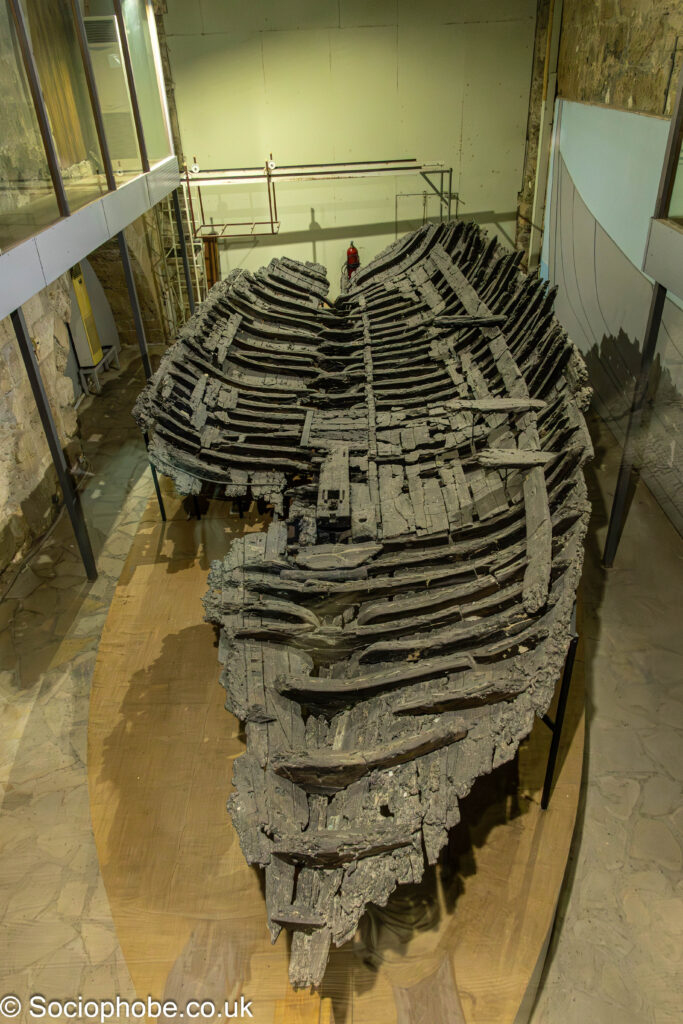
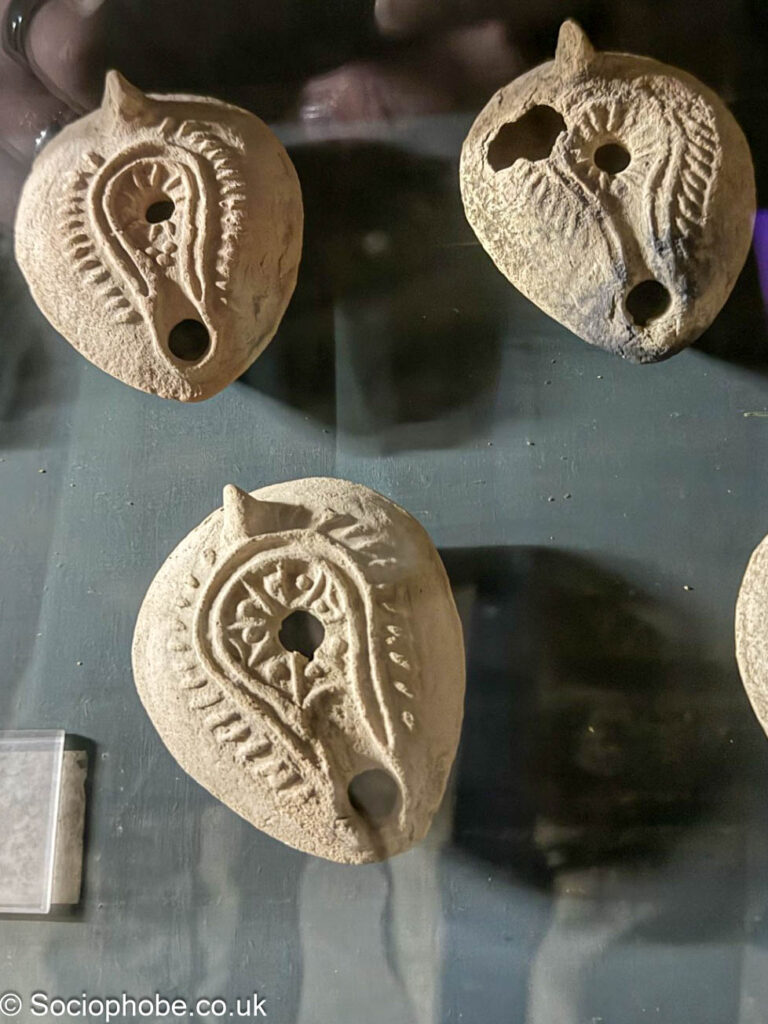
Our first stop was the castle and Sedat gave us a tour of the Shipwreck Museum, the Neolithic Museum and the Dungeons before letting us do the wall walk on our own. The shipwreck is a Phoenician trading vessel of the 4th century BC that was wrecked near the harbour and excavated in the late 60s/early 70s. The ship is in the museum, preserved as it was found, alongside its cargo and information on ancient ship building and trade routes.
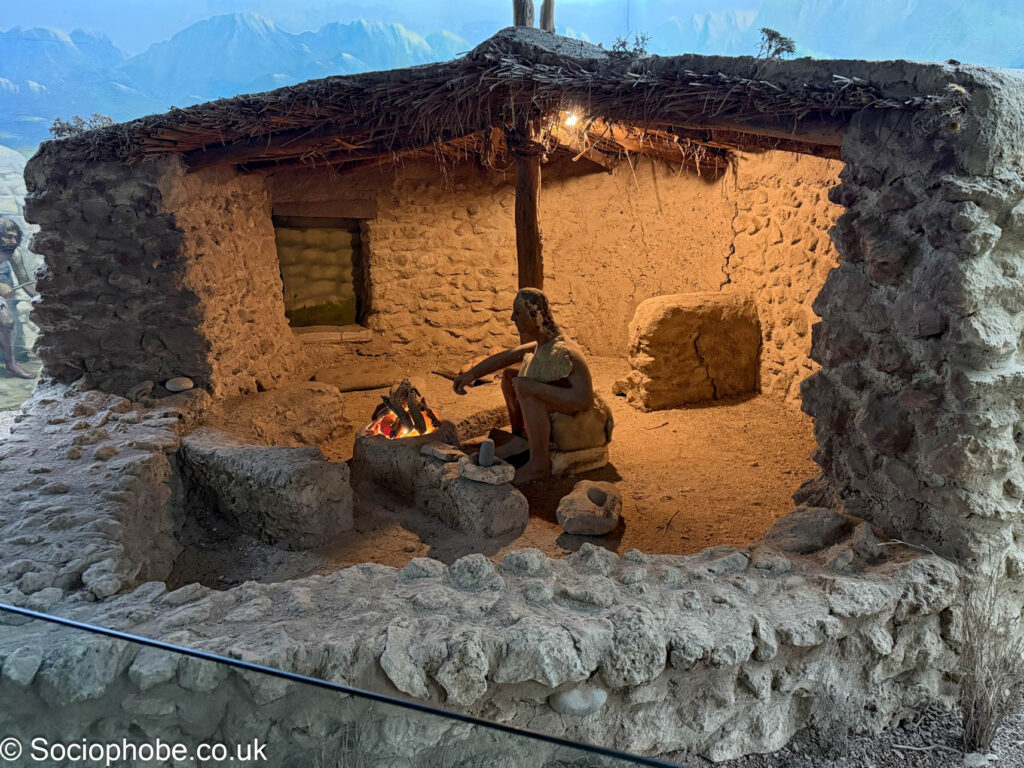
The neolithic museum was a reconstruction of a bronze age tomb excavated nearby and the intact grave goods were on display too. The dungeons had examples of some famous prisoners of the Lusignans, victims of petty power politics in the face of a larger threat. There is a small Byzantine chapel dedicated to St George but it no longer has any frescoes or adornments.
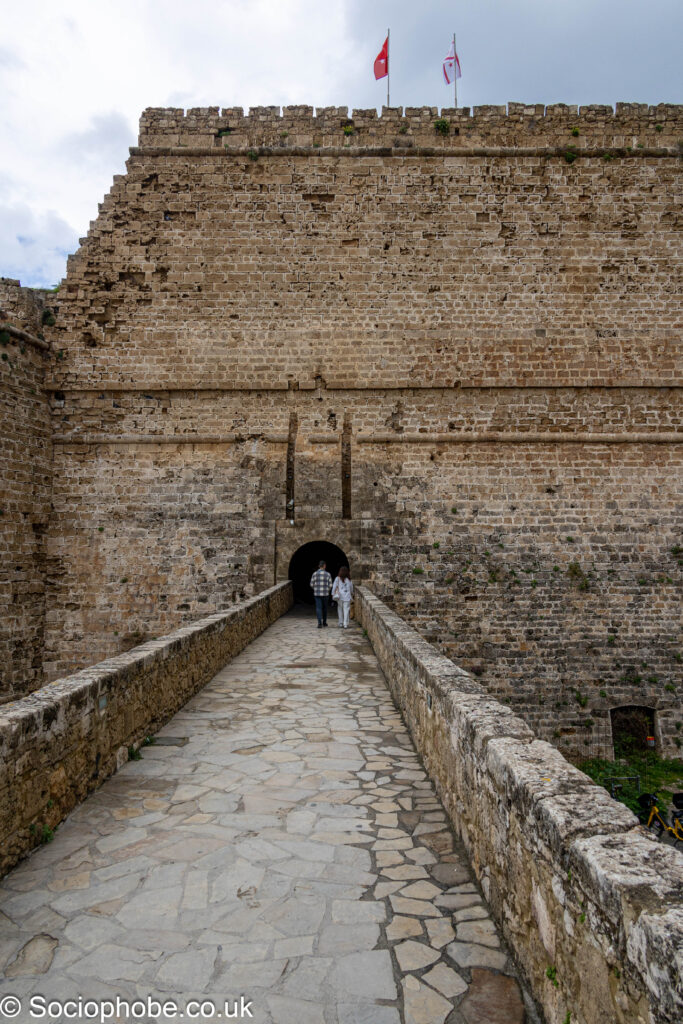
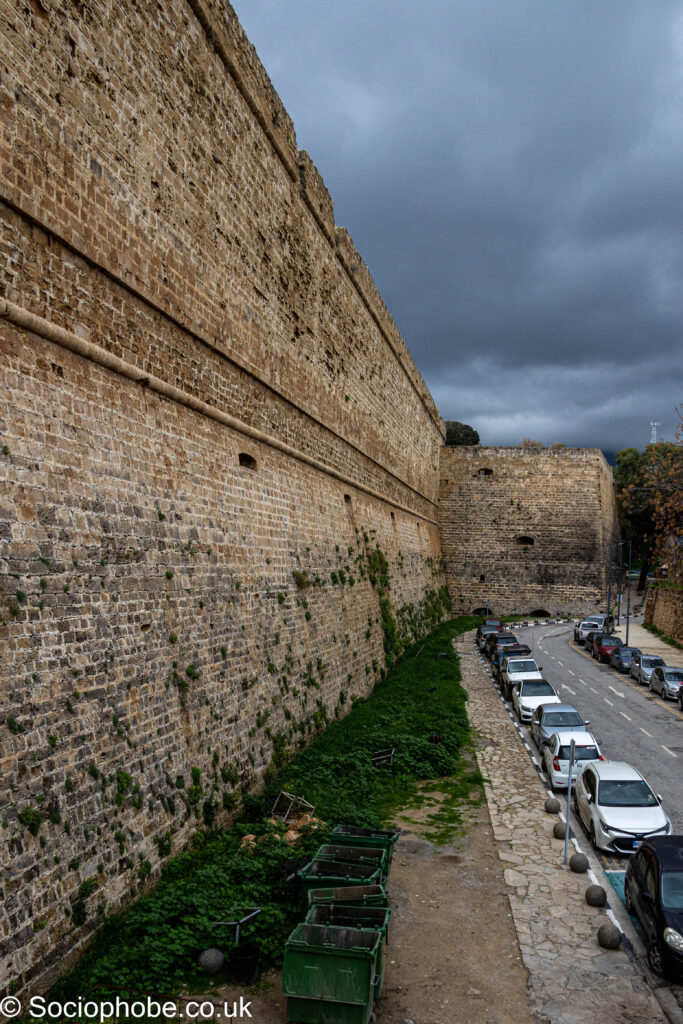
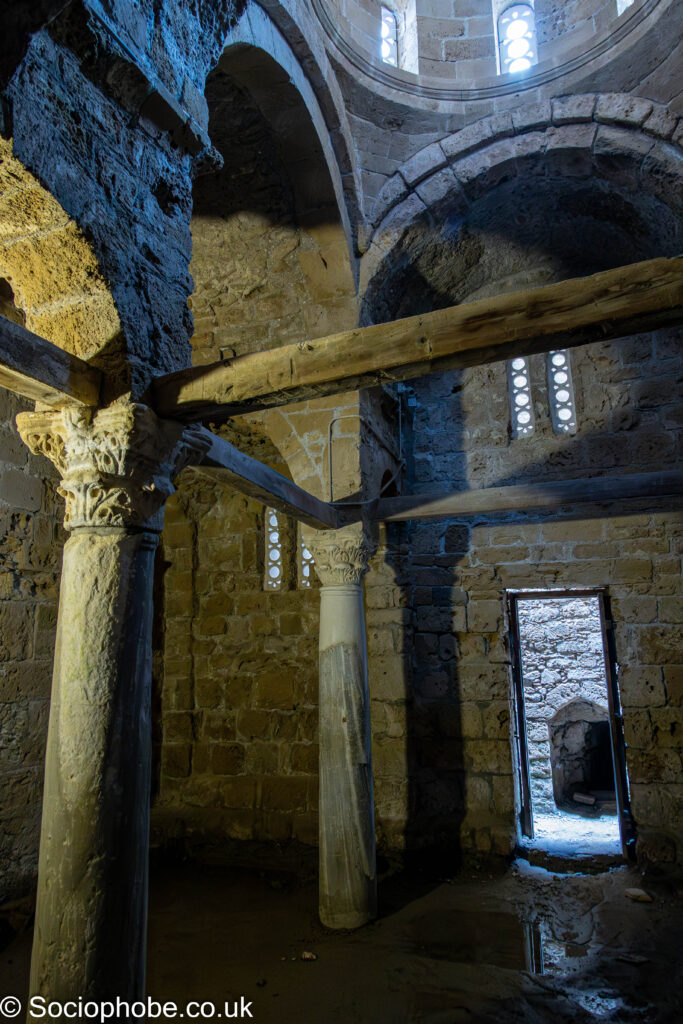
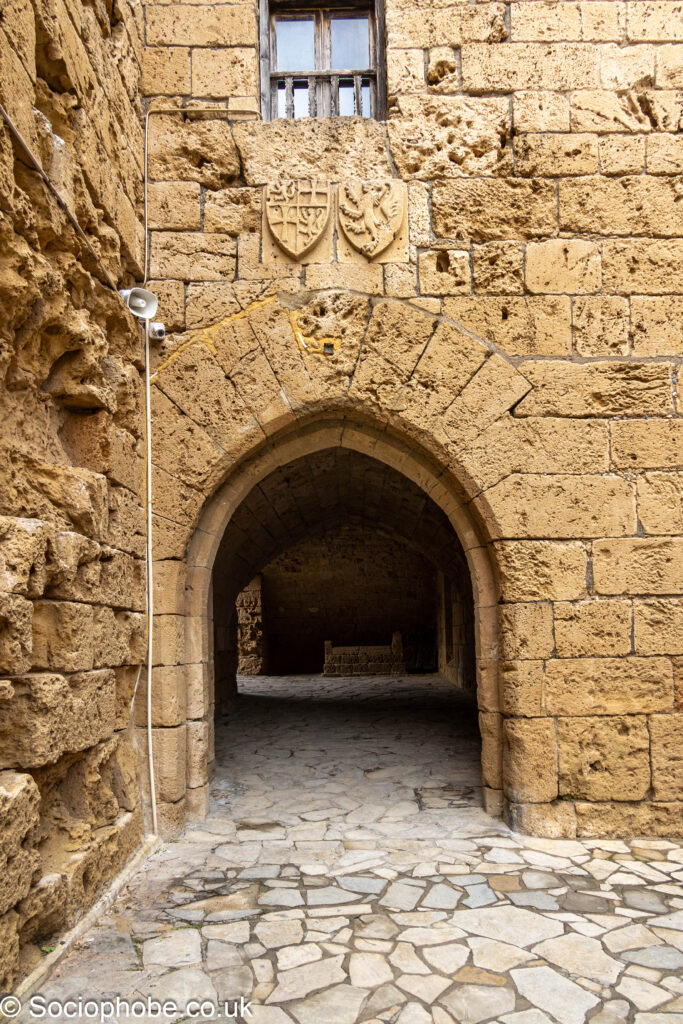
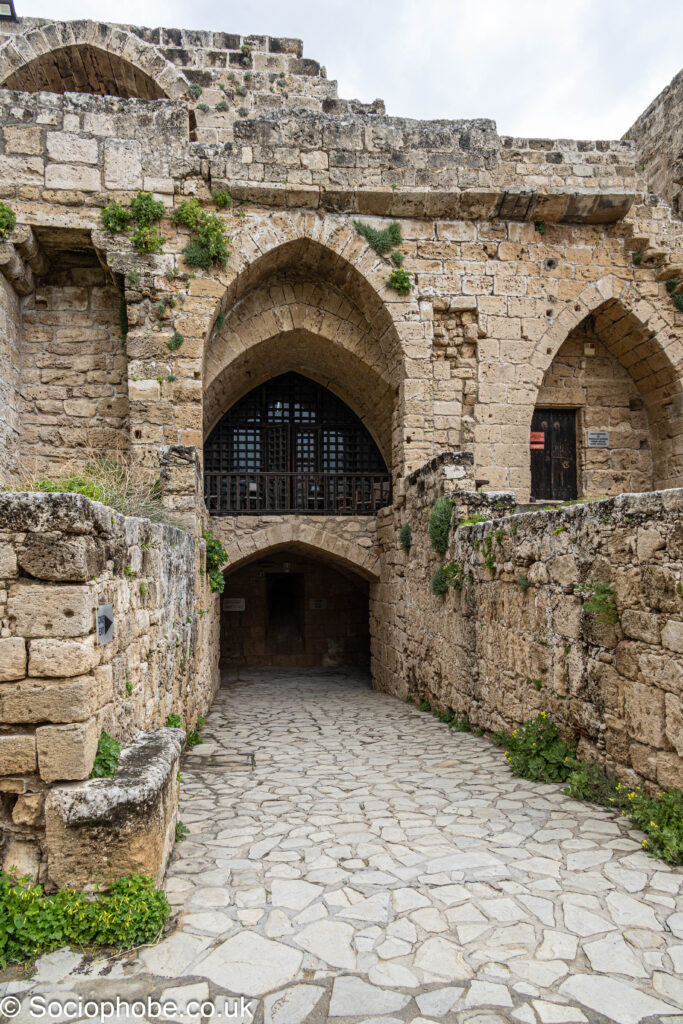
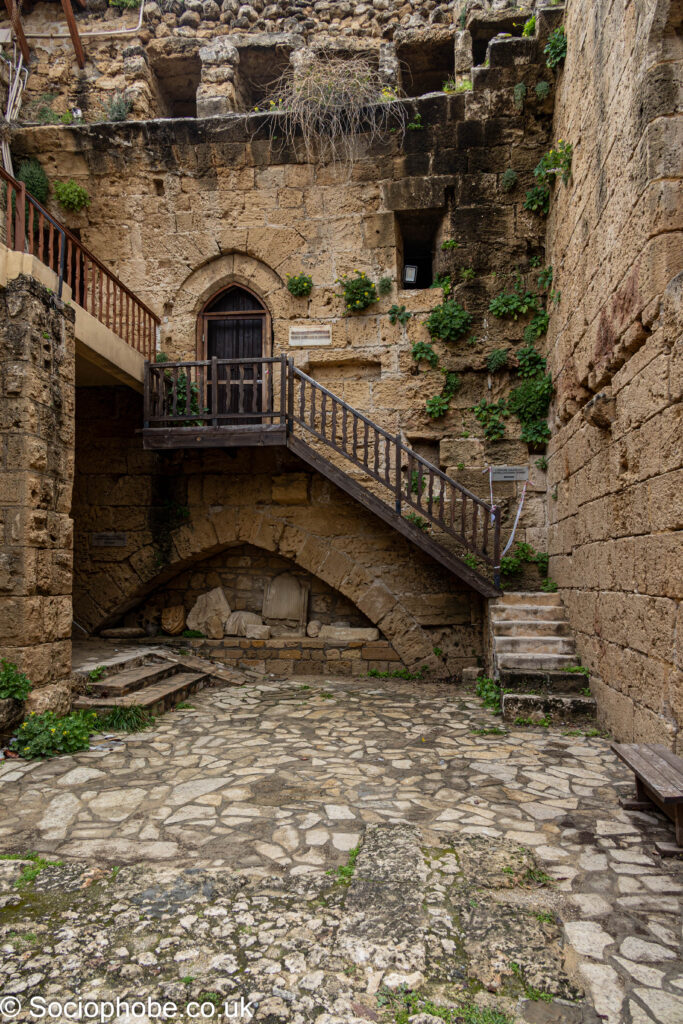
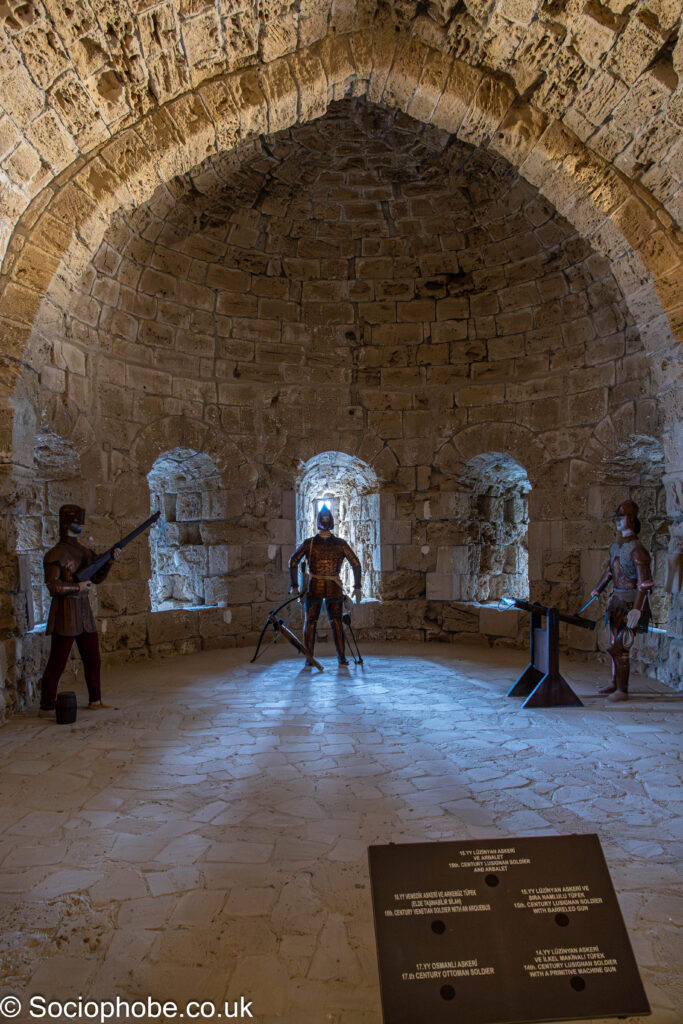
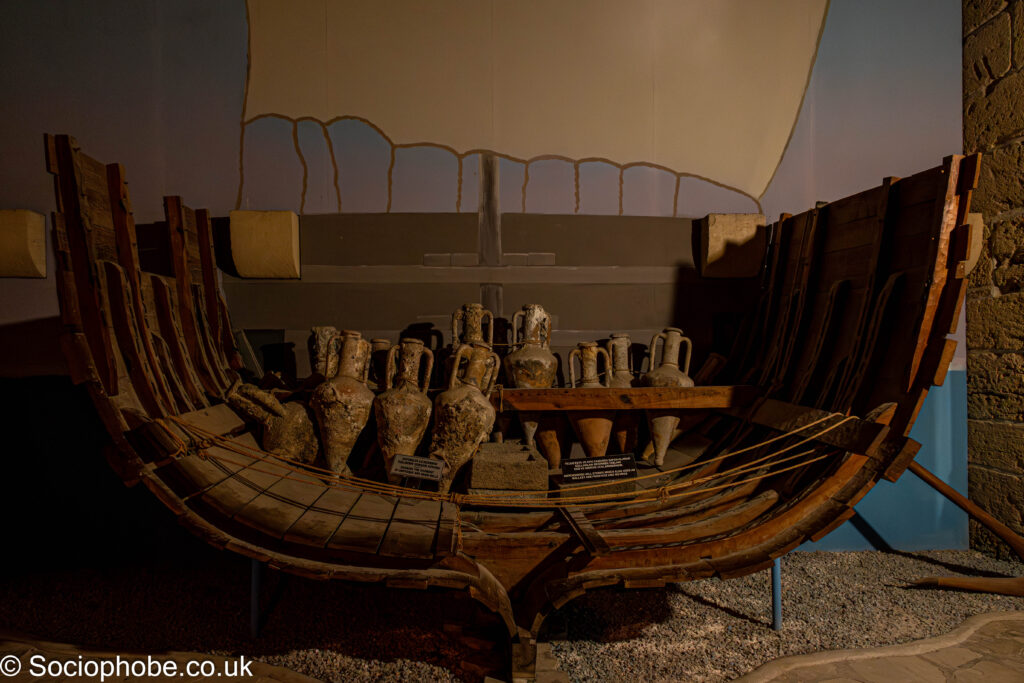
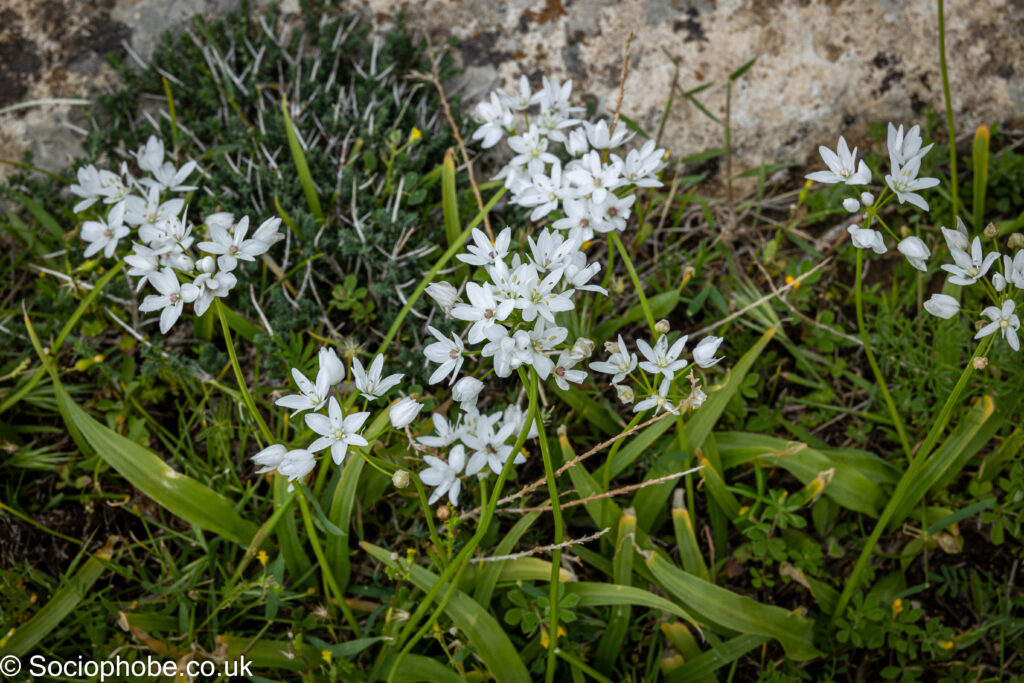
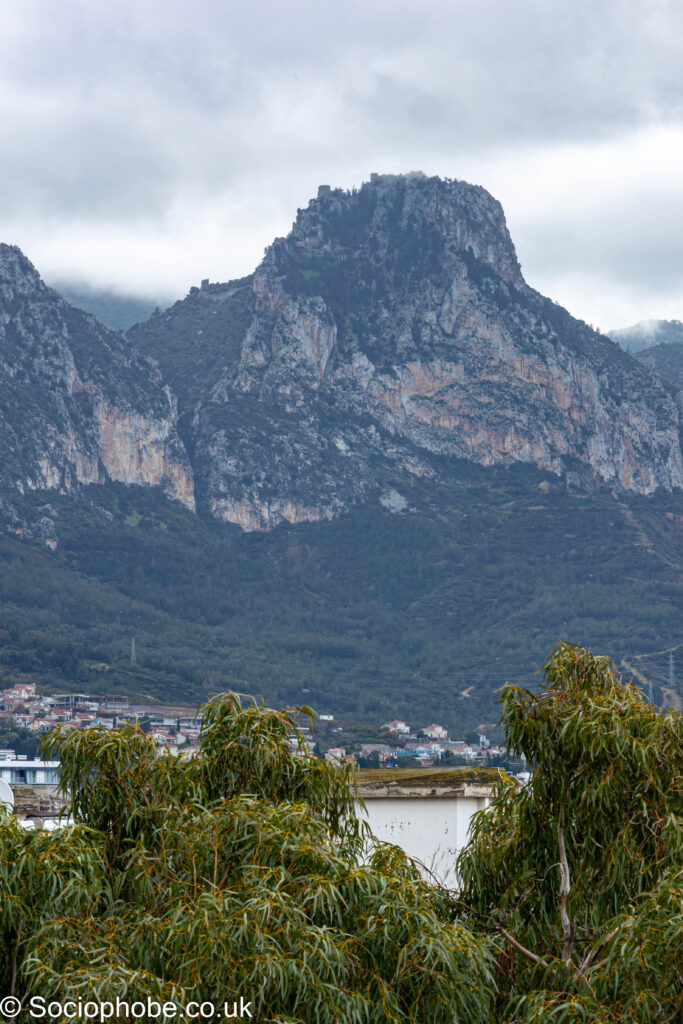
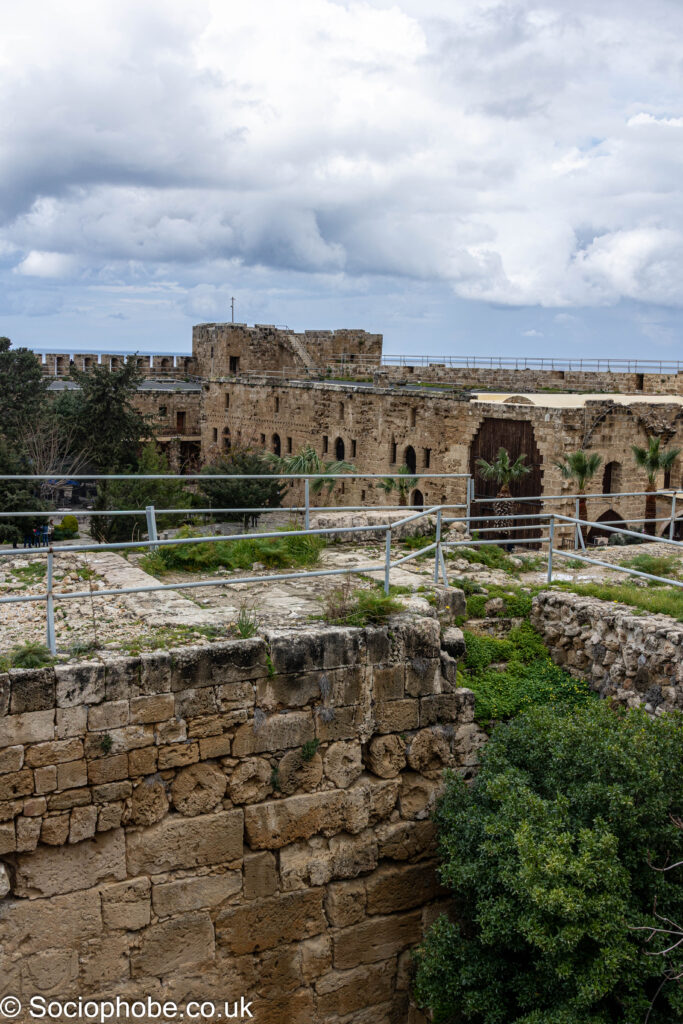
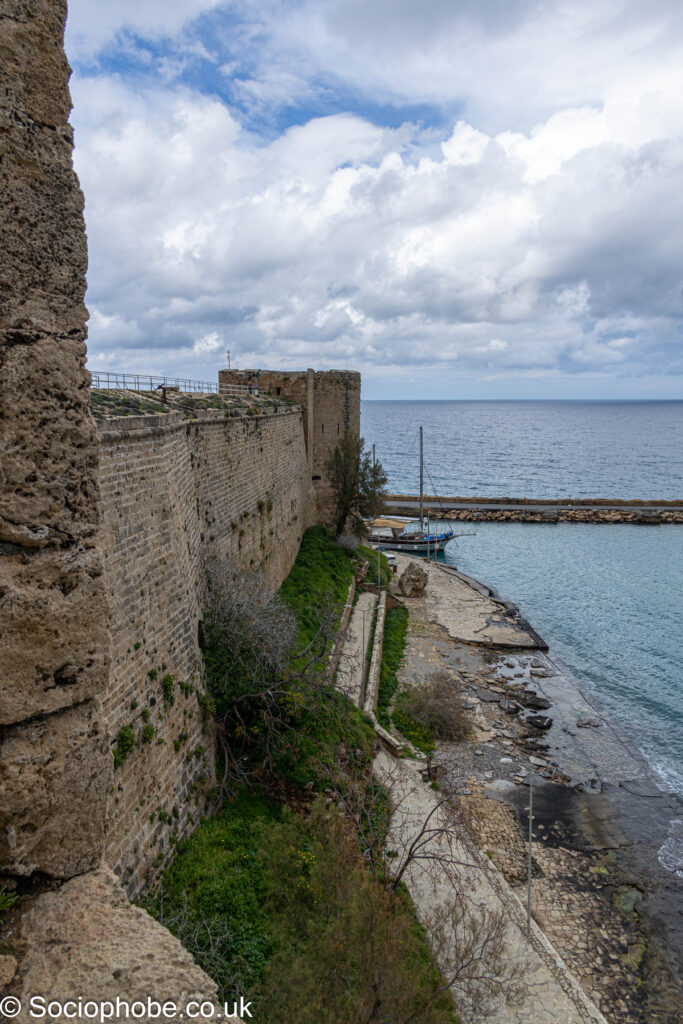
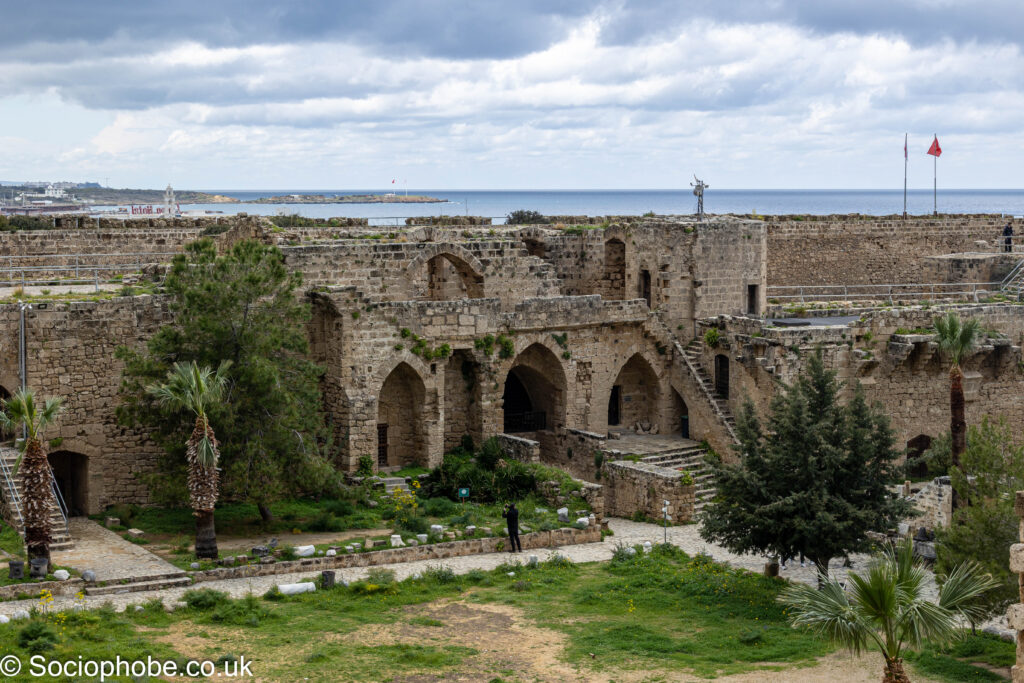
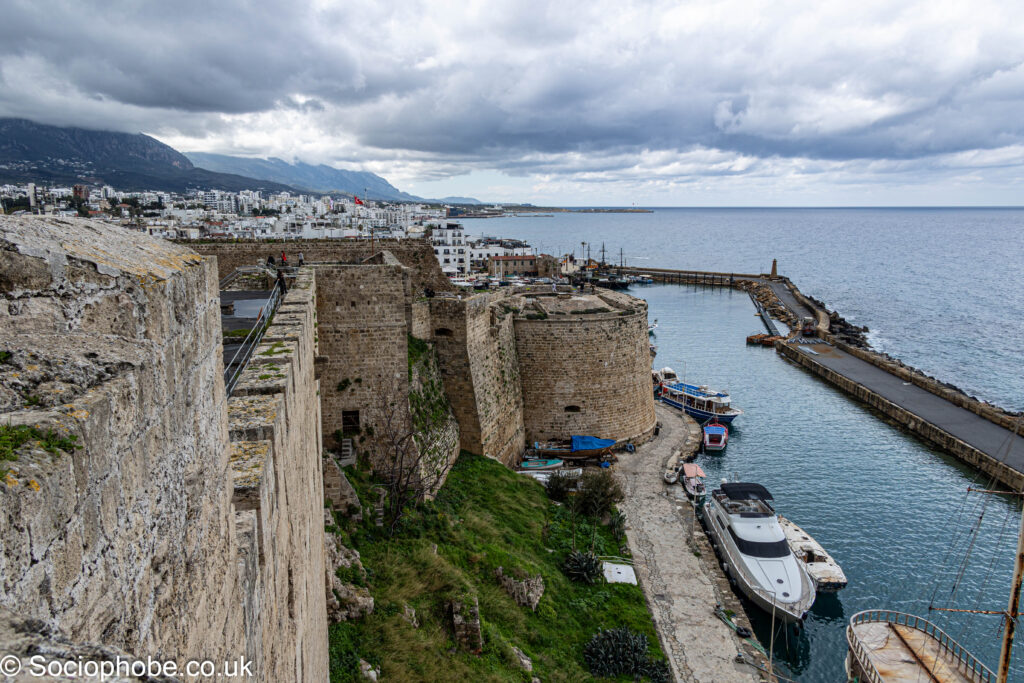
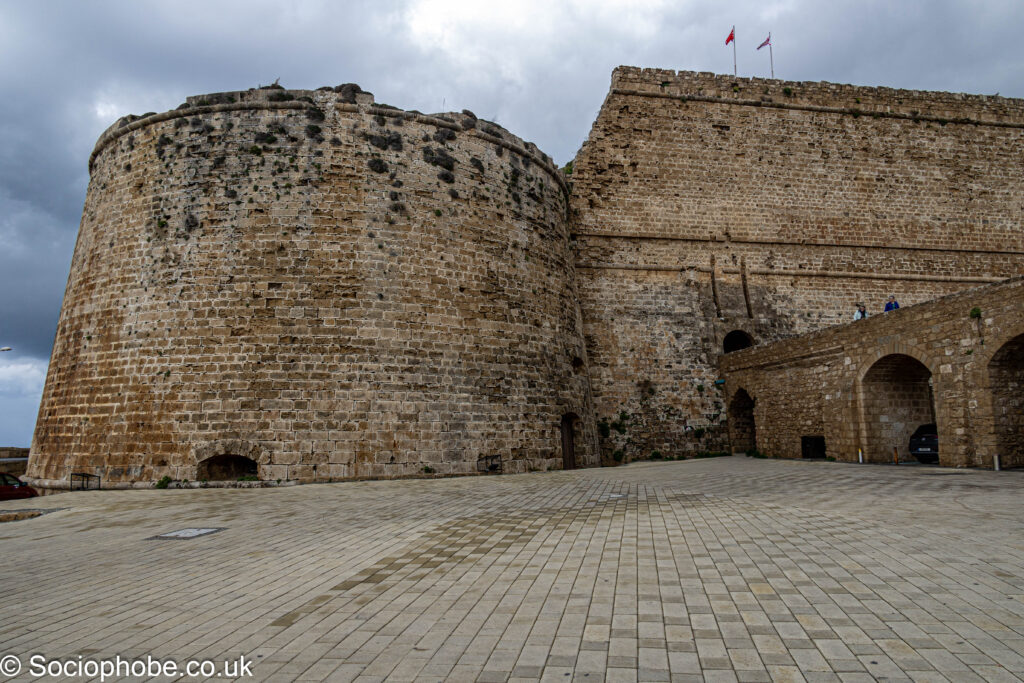
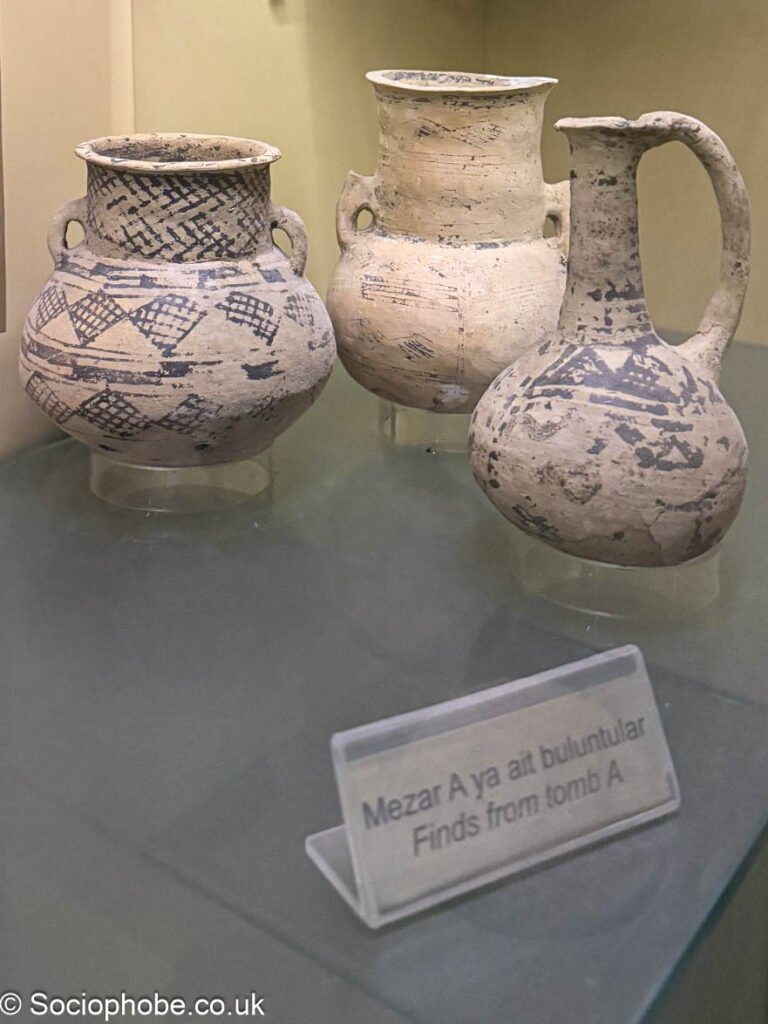
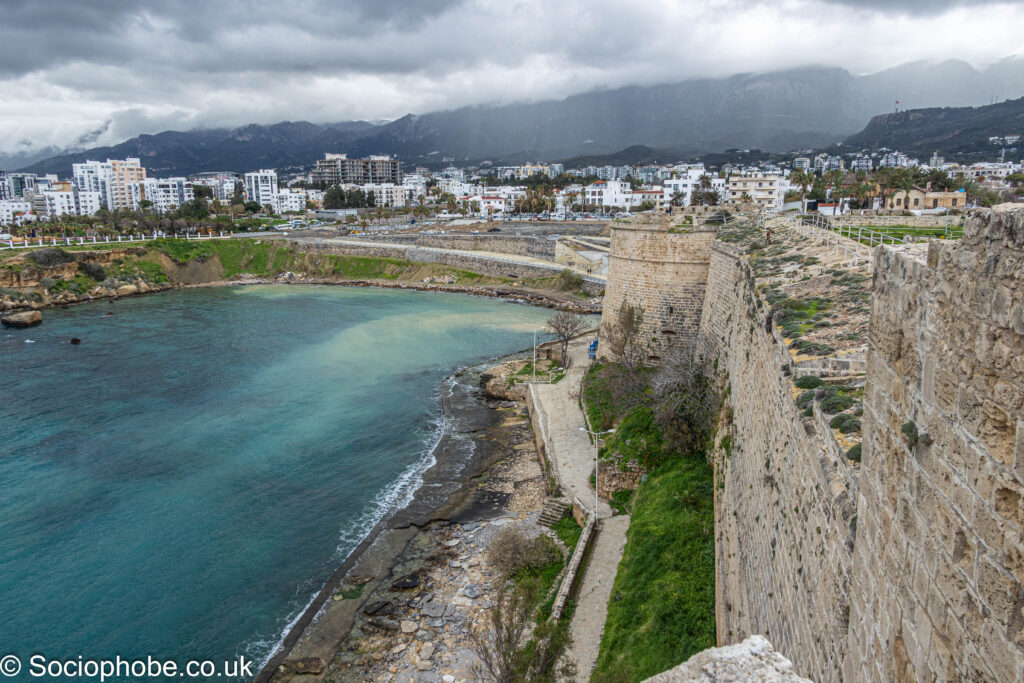
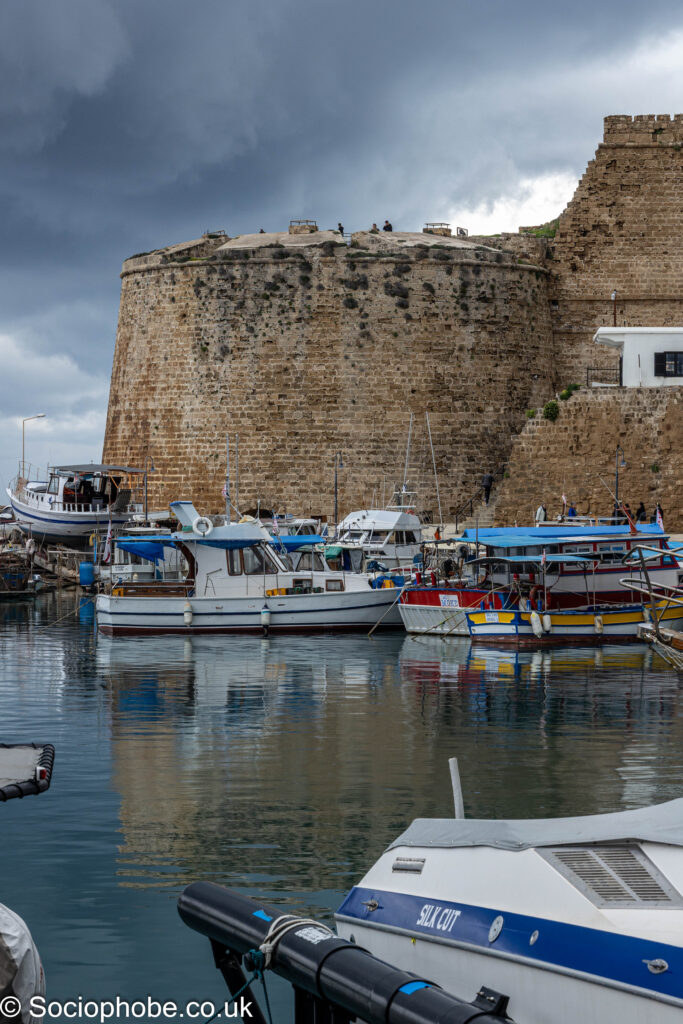
The castle itself used to be surrounded by a wet moat and has a long vaulted corridor leading in to the courtyard. The castle occupies a large area right next to the harbour and was originally a Byzantine fortification before being improved and enlarged by the Lusignans and then significantly expanded by the Venetians. The garrison surrendered it to the Ottomans without a shot being fired in 1570 for some reason. Until recently the inner courtyard was used to hold concerts but there is now a purpose built venue.
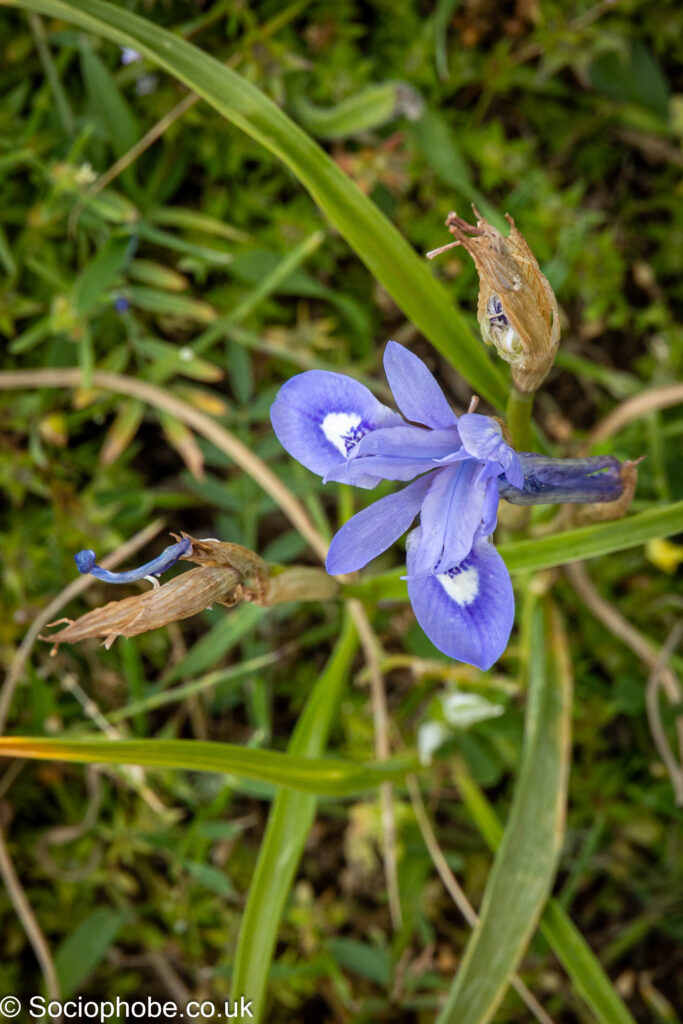
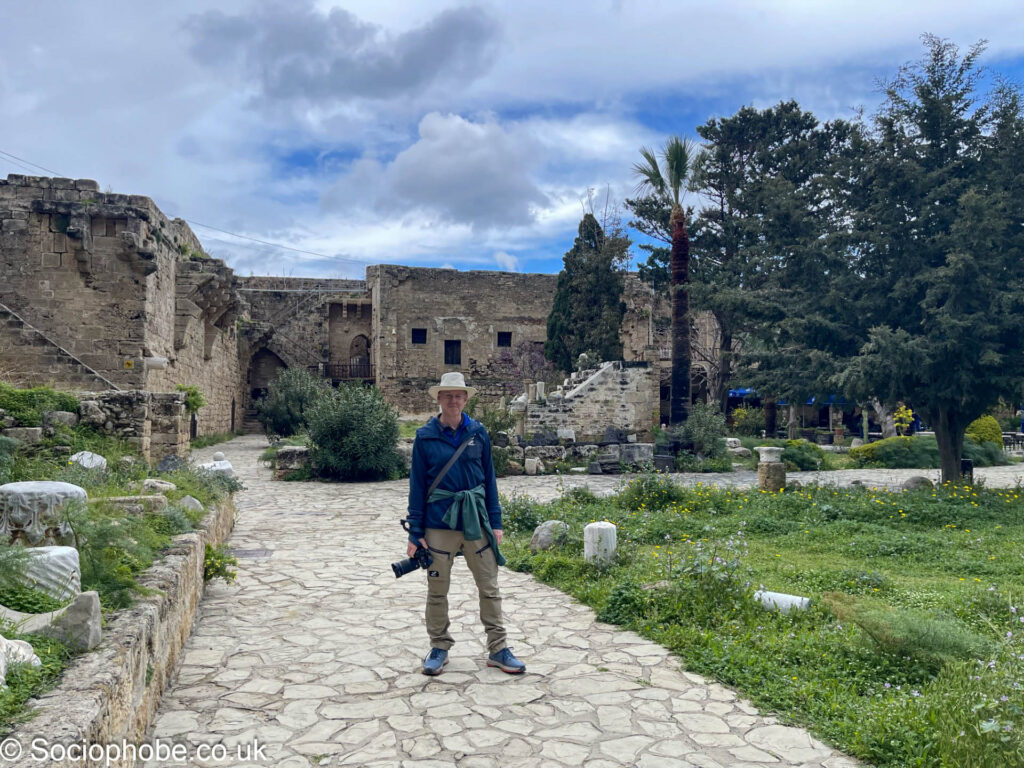
Deb and I walked along the walls which gave a better impression of the size and strength of the castle and also views of the cloud shrouded peak of St Hilarion castle. There was a variety of wildflowers growing throughout the castle and also lots of friendly stray dogs. We descended the steps, met Sedat and left the castle to visit the harbour.
Kyrenia Harbour
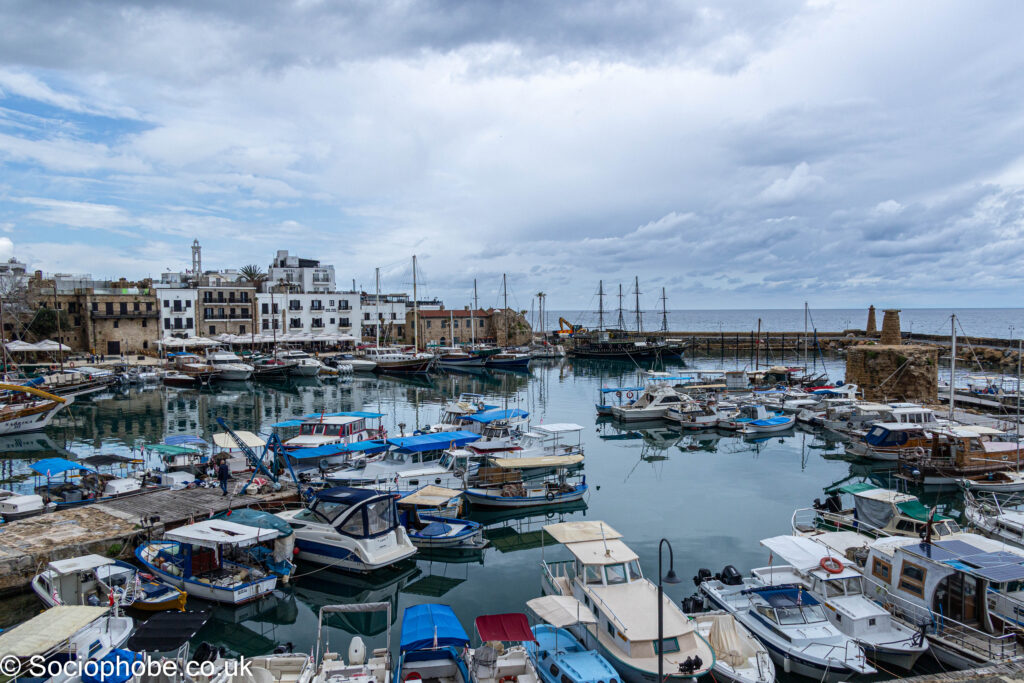
The harbour is picturesque and although small is crowded with pleasure boats and charters. It is surrounded by pretty 19th century buildings and the sea wall is currently being repaired and upgraded. There were lots of cafes along the harborside but we carried on for a quick tour of the old city, seeing the last two fragments of the original city wall and various buildings built during the British administration.
Bellapais Abbey
By now it was about 2PM so we were all rather hungry. Sedat had arranged lunch at Bellapais so we drove the short distance there, past some very expensive villas. It was interesting to hear about the Immovable Property Commission, set up to compensate Greek Cypriots whose property was seized and sold or otherwise distributed when they were evicted from their land in the north of the island. I’m not aware that the Greeks in the south seized or occupied any land and the old Turkish properties seem to have just been abandoned. The Commission pays those Greeks who can prove that they owned land and a value of that land although from what Sedat was saying, agreeing that they are owed an amount in compensation and actually being paid it are two different things.
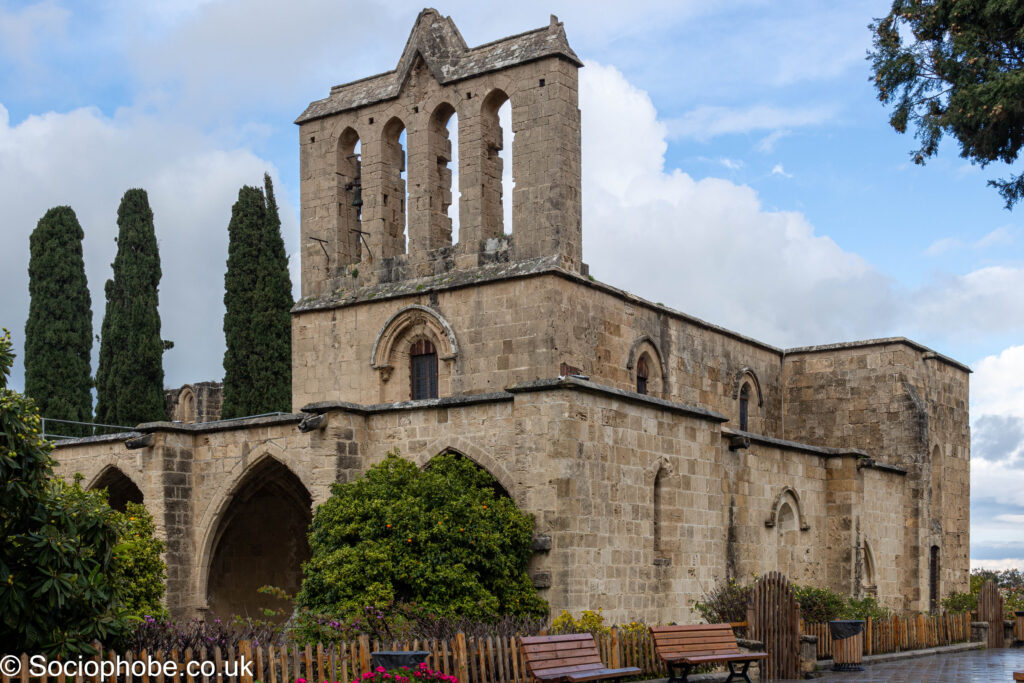
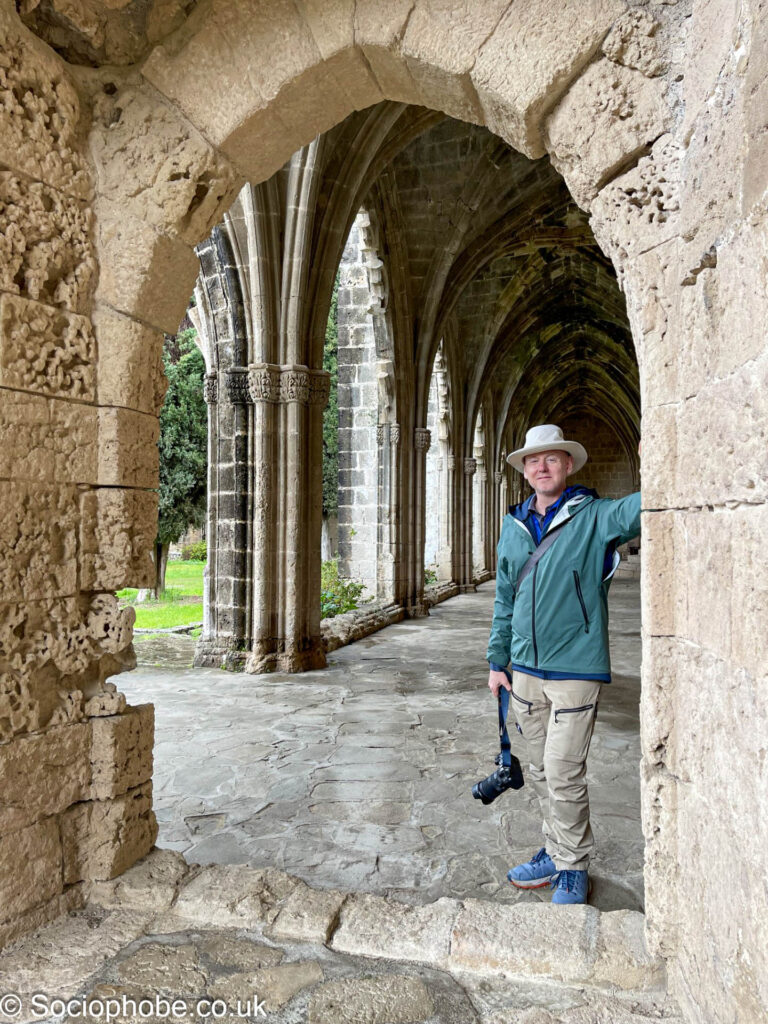
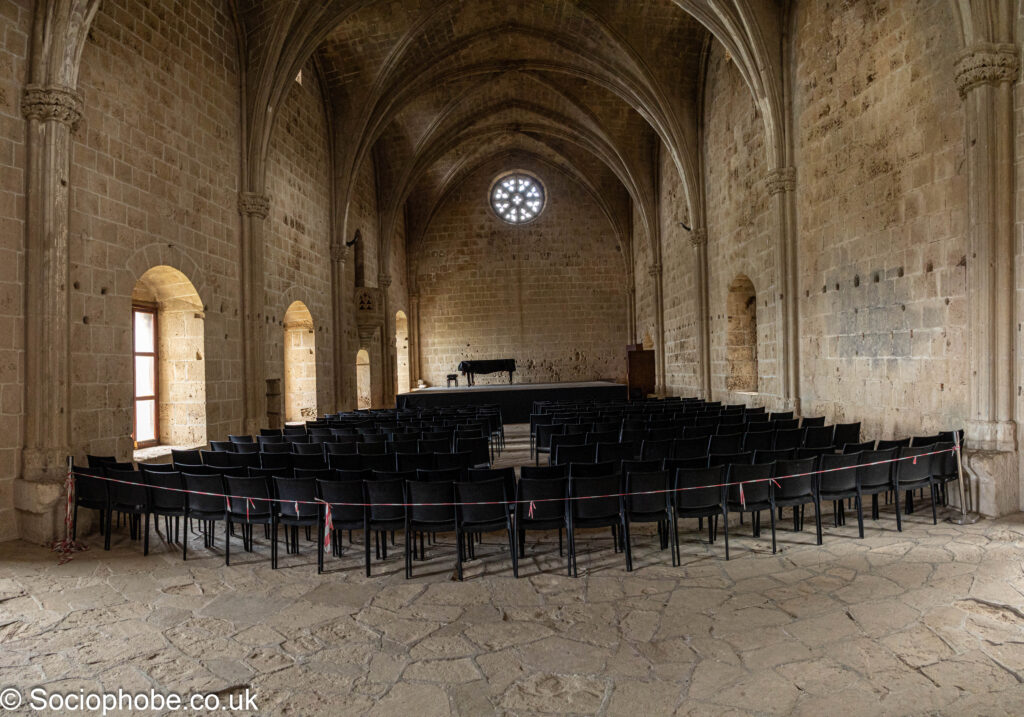
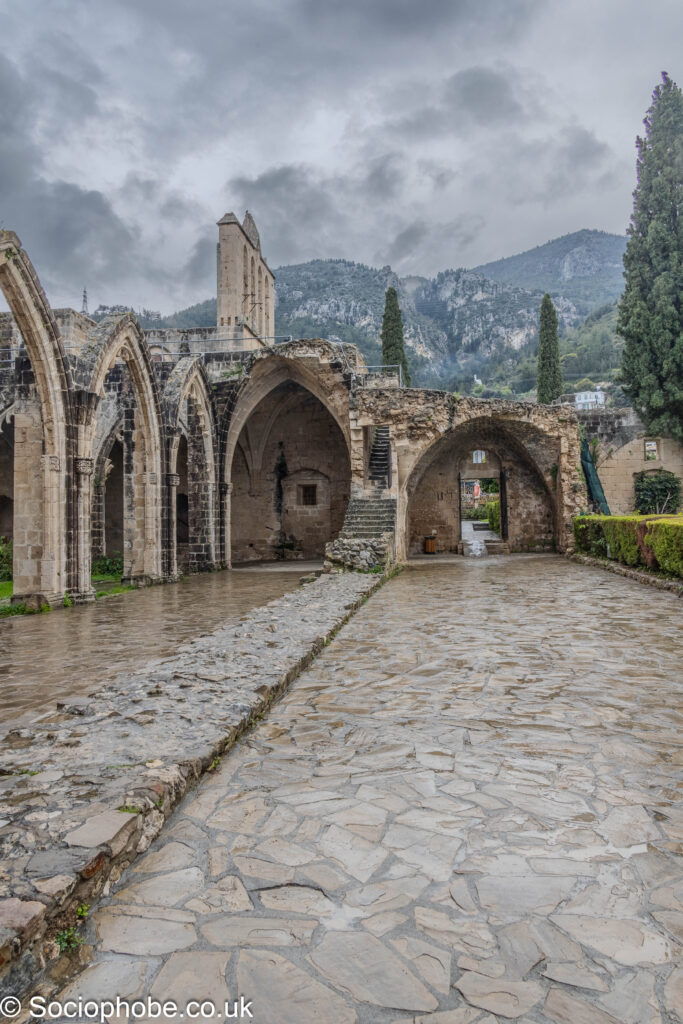
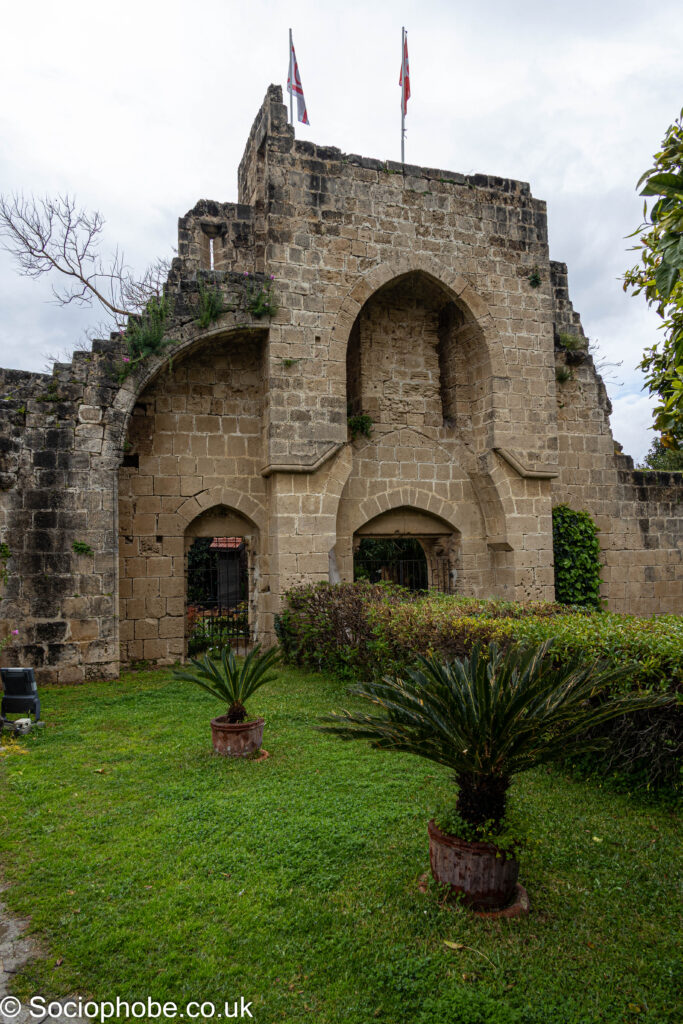
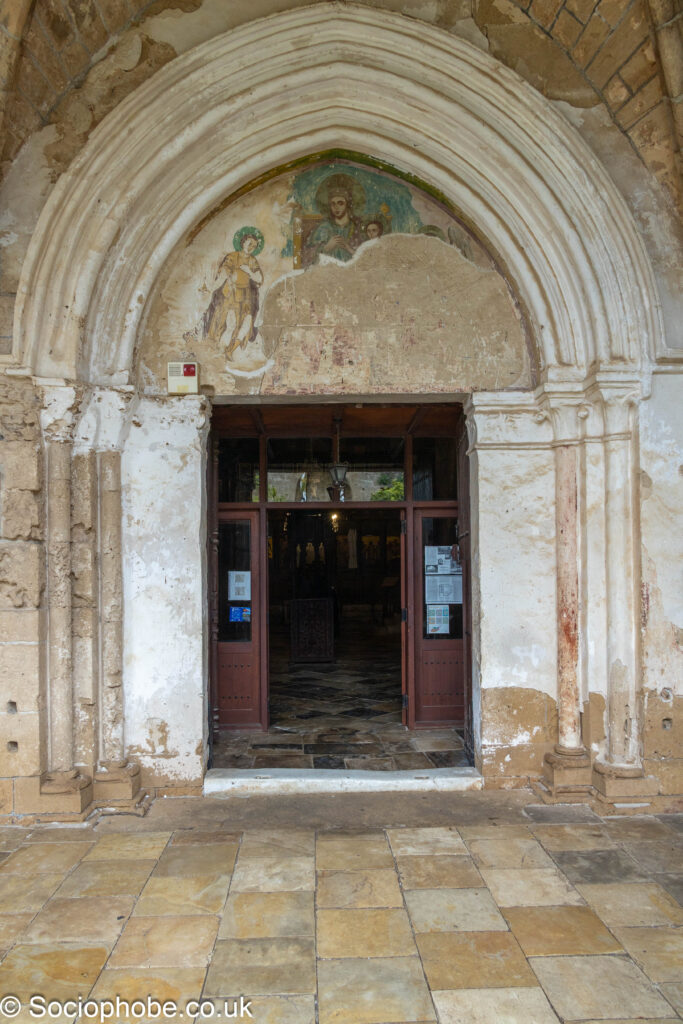
We ate a pleasant meal at the Bellapais Sports Bar and then crossed the road to visit the abbey, another Lusignan creation. Originally settled by the Canons of the Holy Sepulchre after the Muslim conquest of Jerusalem in 1187 it was taken over by various Catholic orders until the Ottoman conquest. The abbey is built in the gothic style and has some fantastic architecture. The refectory is still used for classical concerts and the church itself is intact and still has an orthodox altar screen decorated with icons. The cloisters and other buildings have suffered various degrees of damage or neglect and almost all the decoration has been removed.
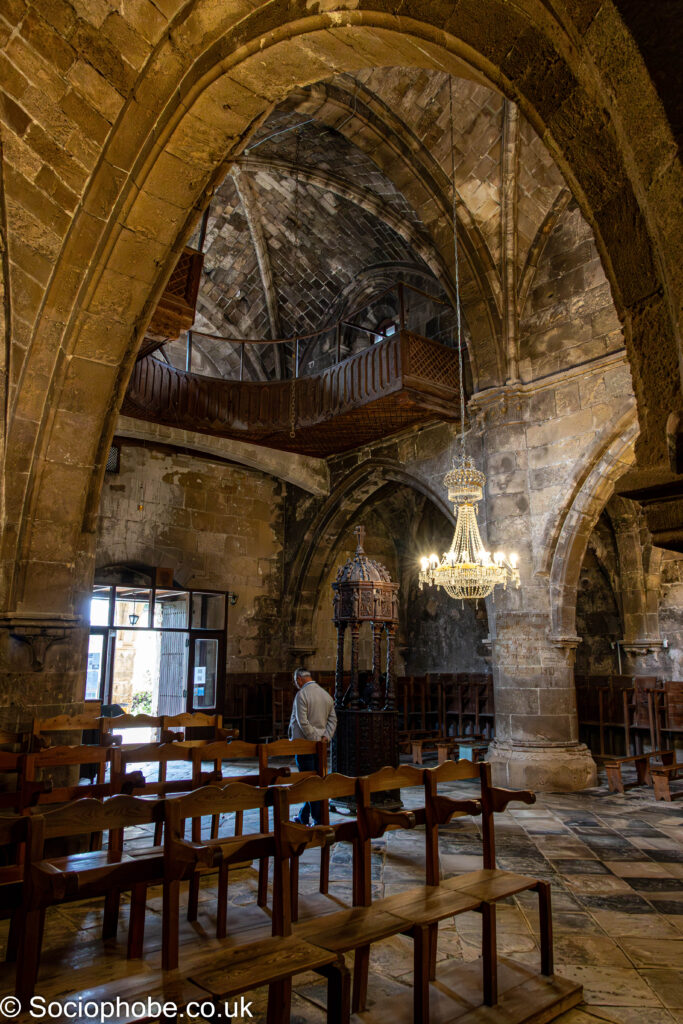
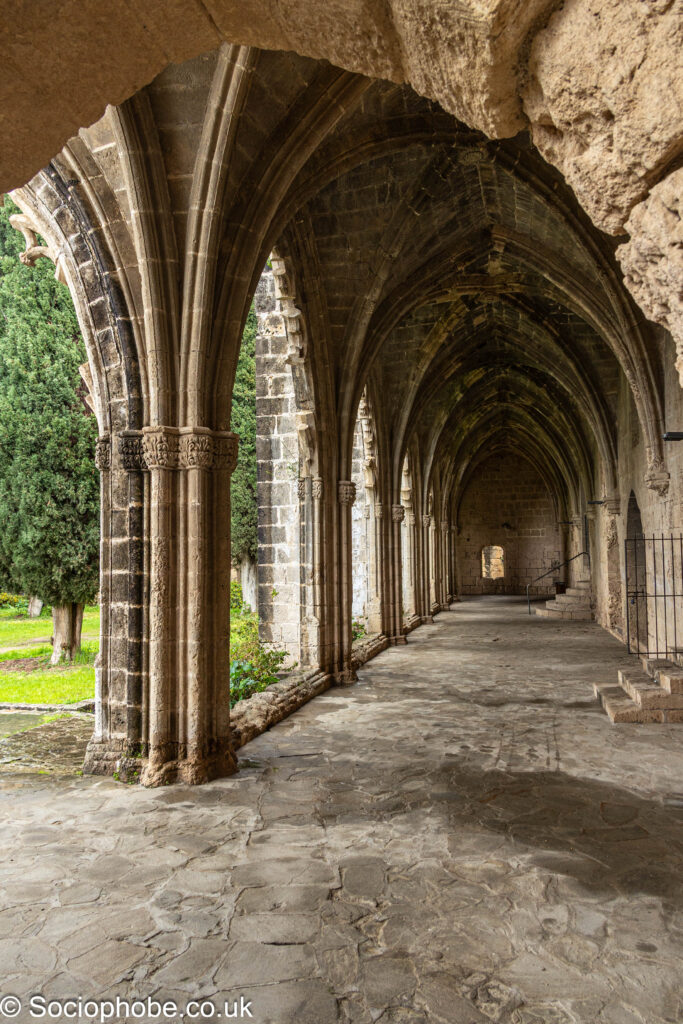
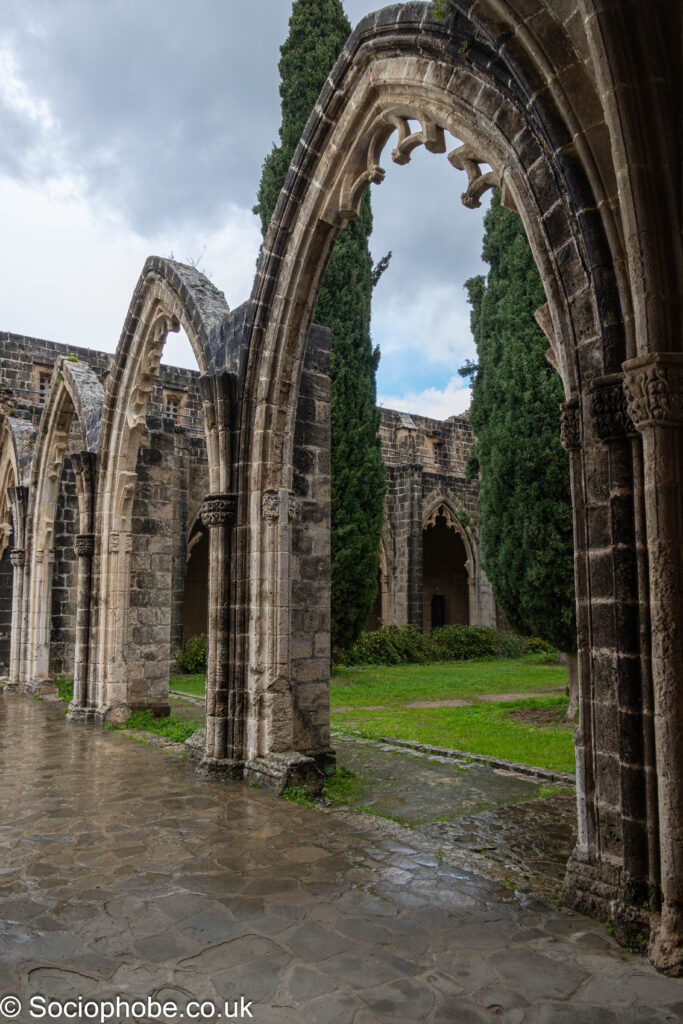
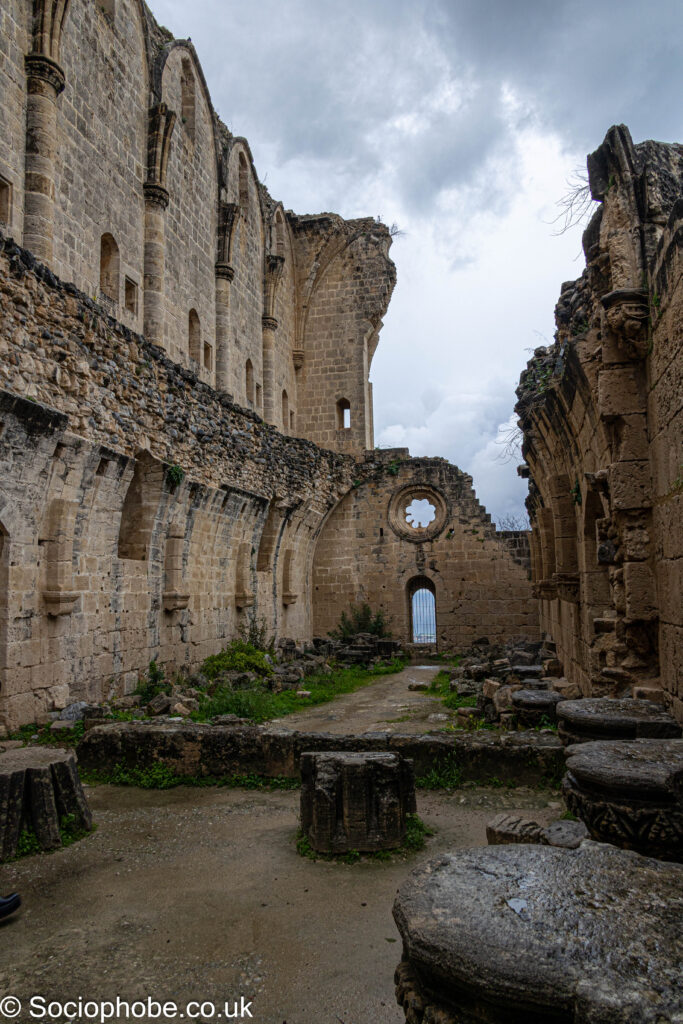
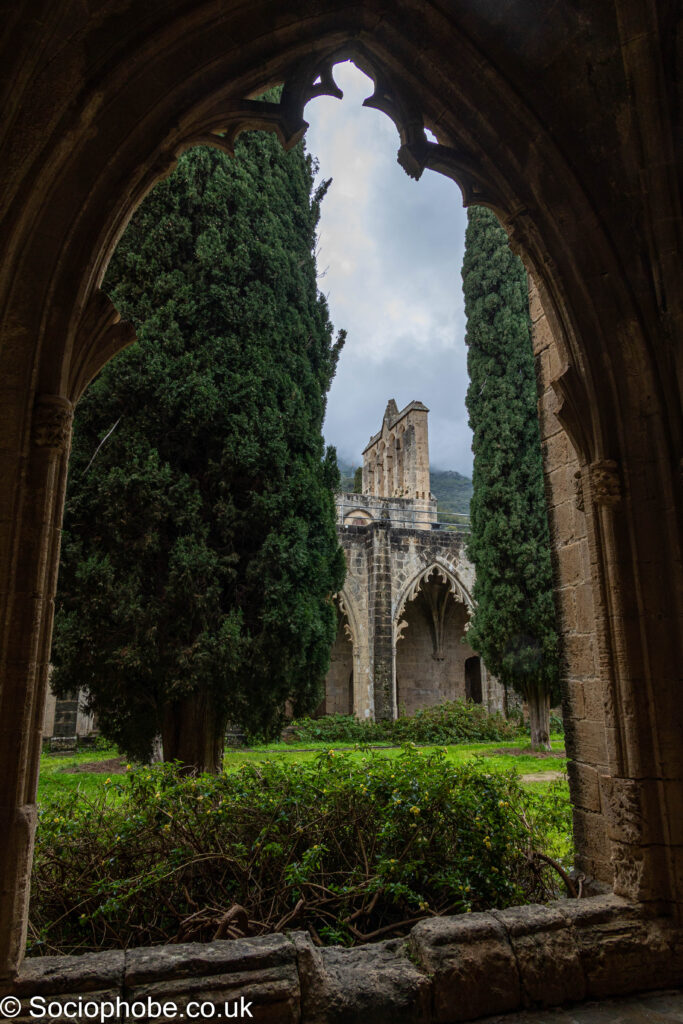

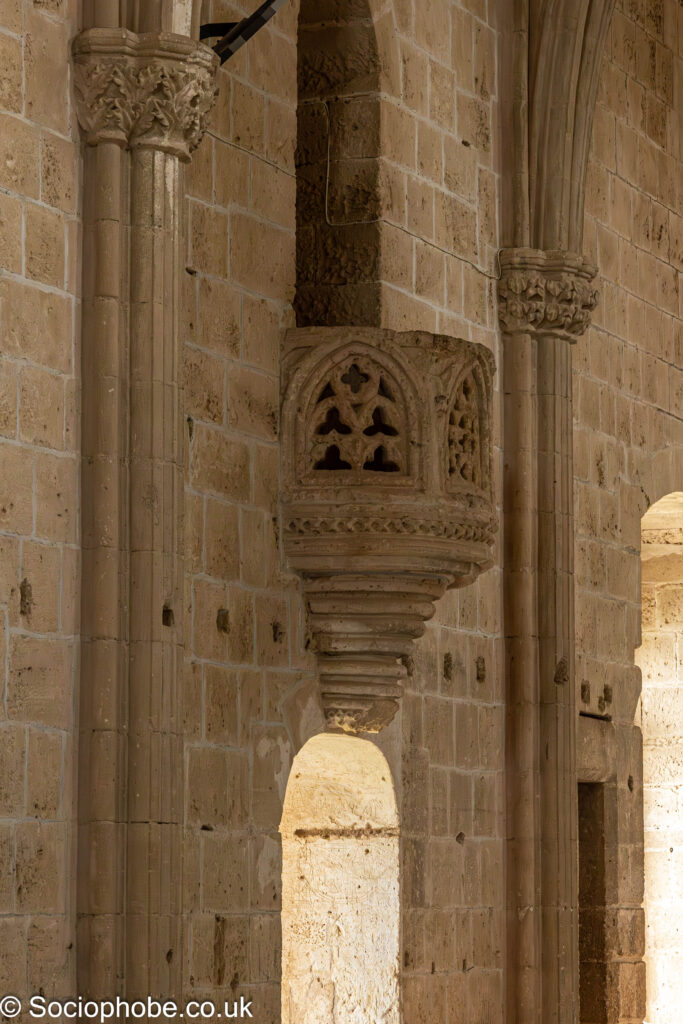
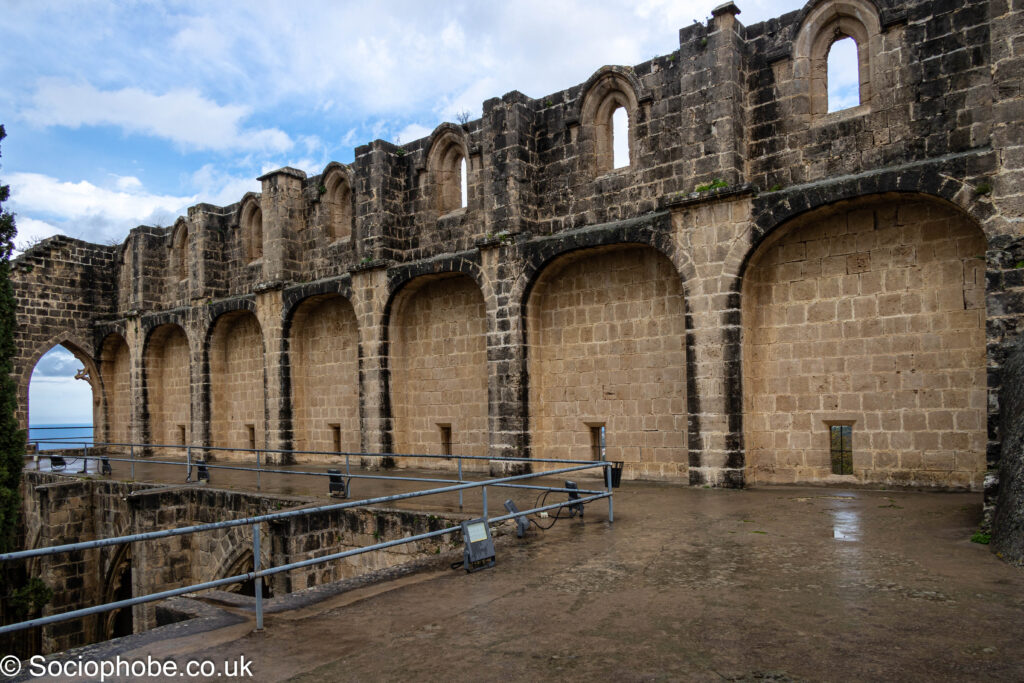
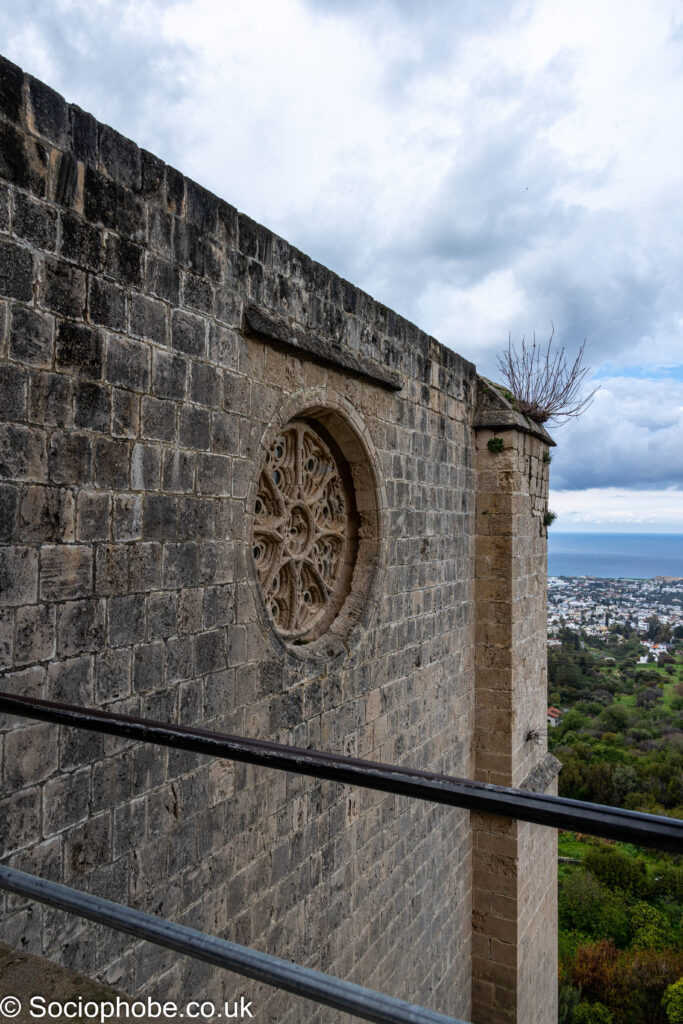
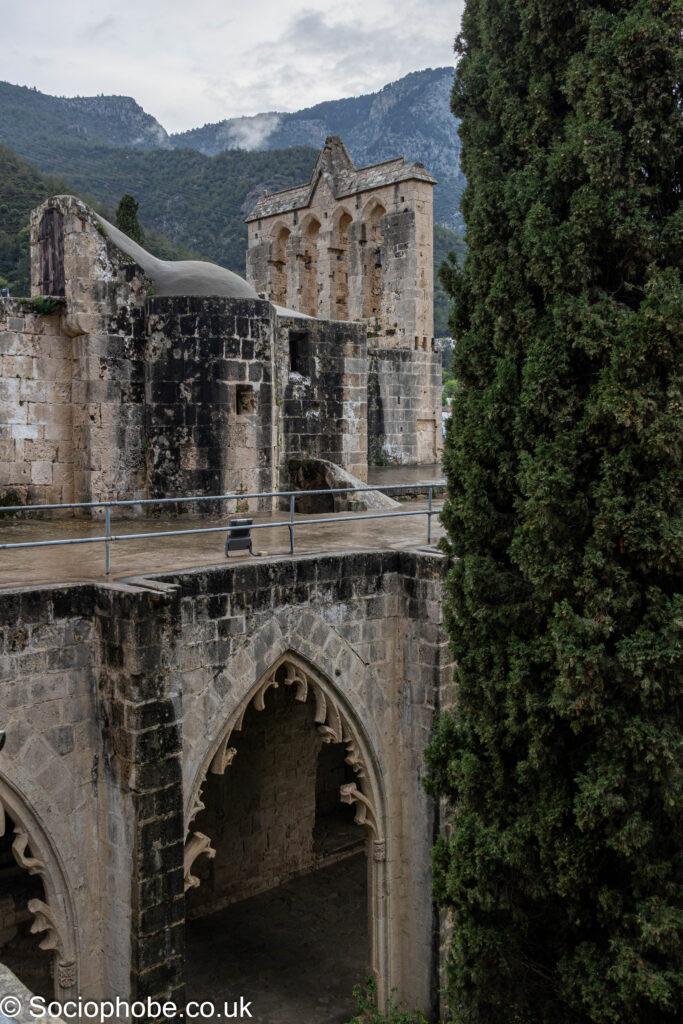
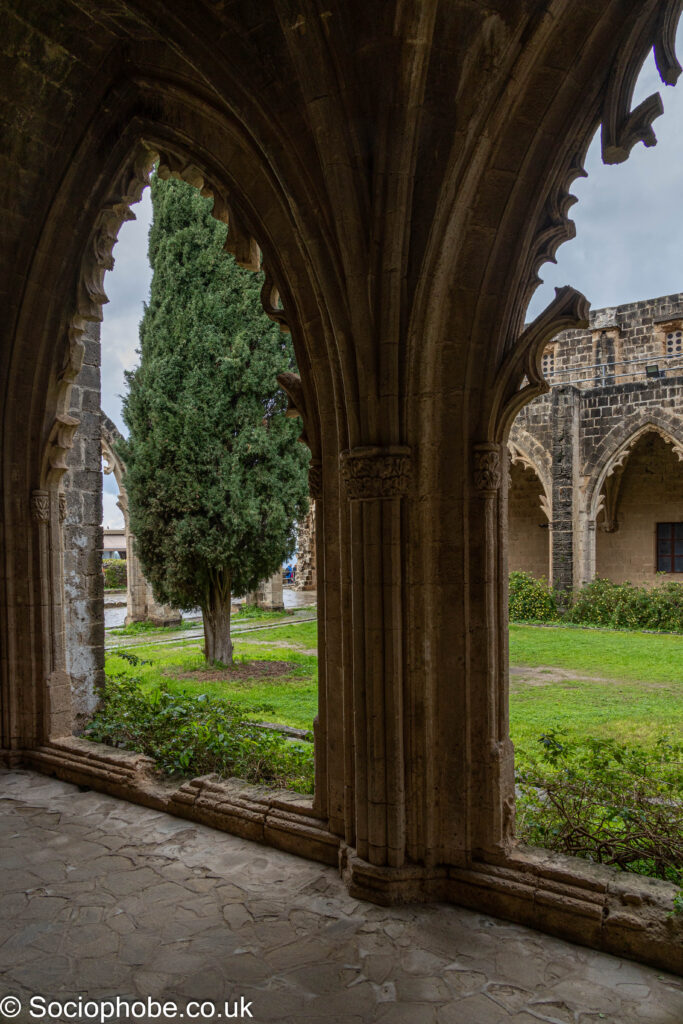
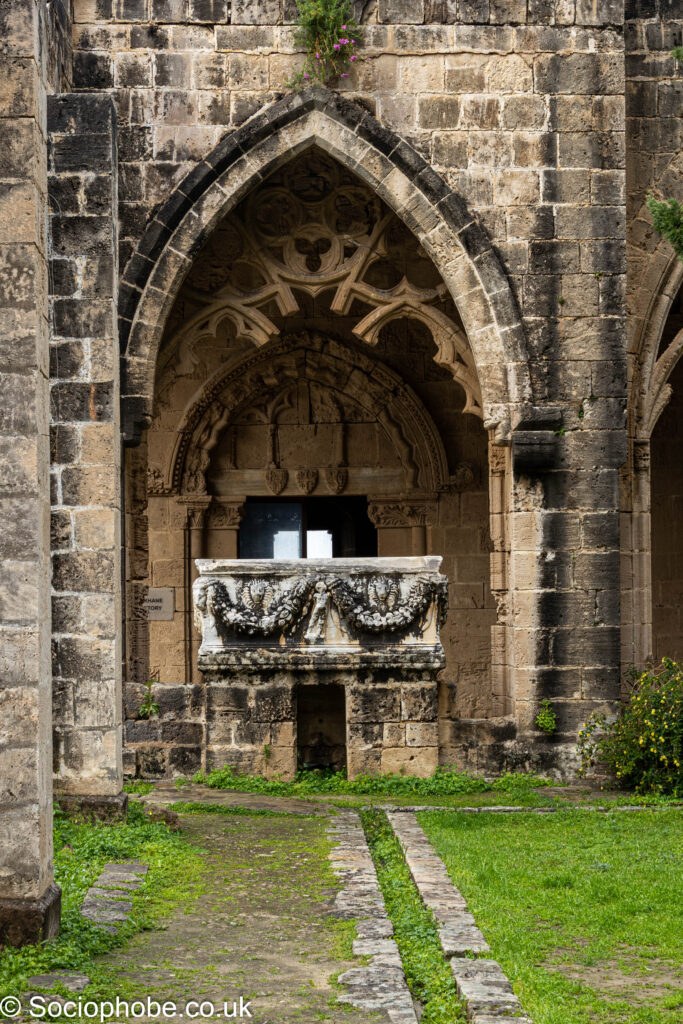
Deb and Sedat went to the café while I climbed the steps to walk around on the roof and enjoy the views. I took a final look at the Roman sarcophagi before I left and we returned to Nicosia. It was a pleasant drive back, chatting about the education system in northern Cyprus, the legacy of Attaturk and the conflict with Iran amongst other things! Sedat dropped us near the Ledra checkpoint and we returned to the Greek side and made our way back to the hotel. I then spent 5 hours sorting the photos and notes while I had a vague chance of remembering anything!
Nicosia Sightseeing
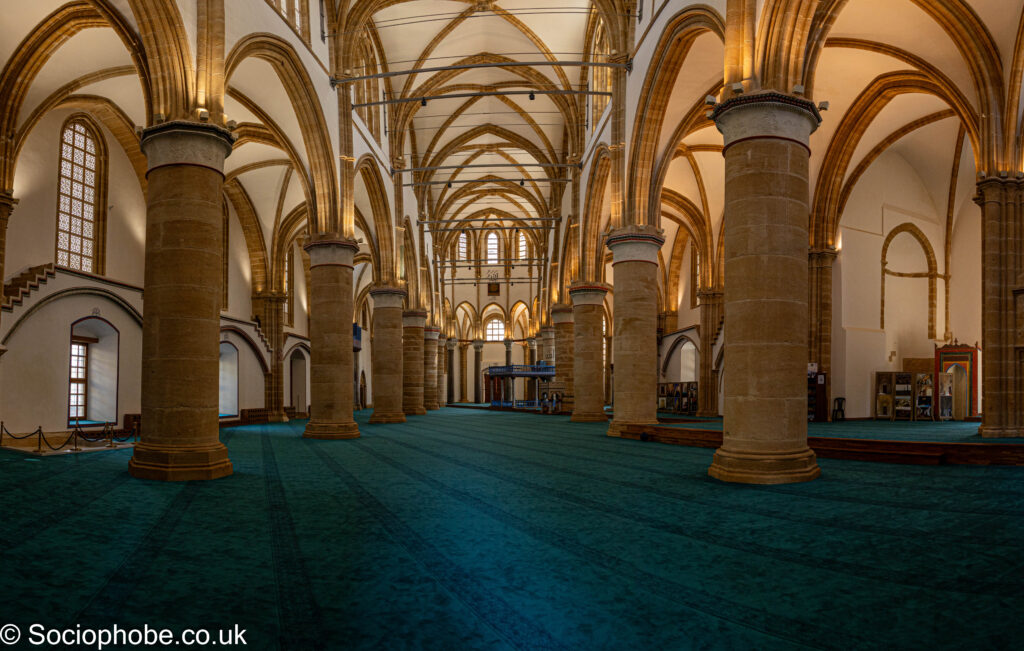
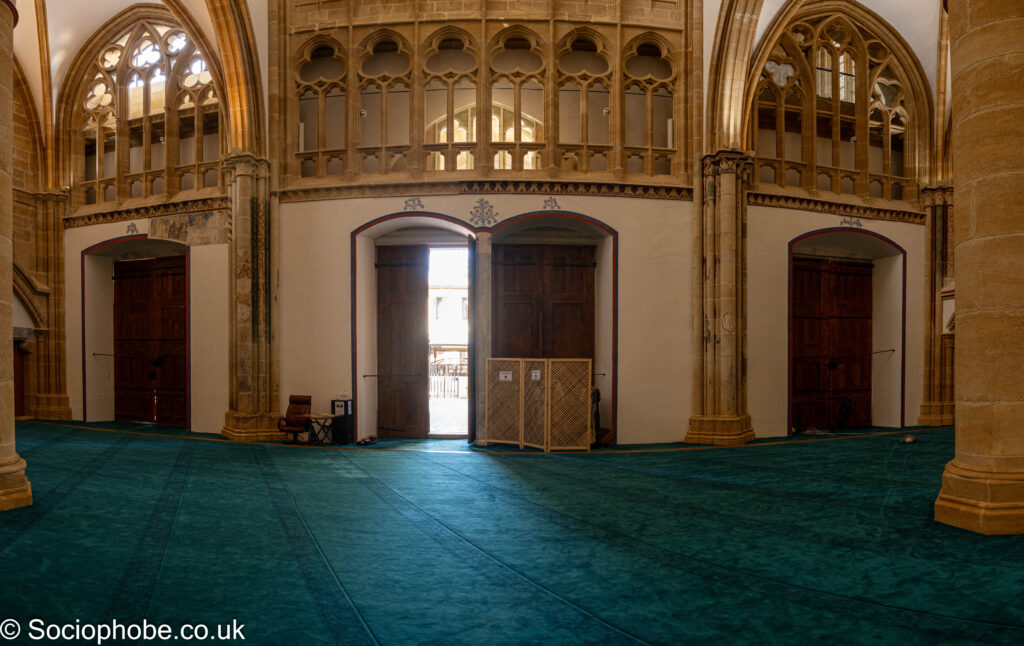
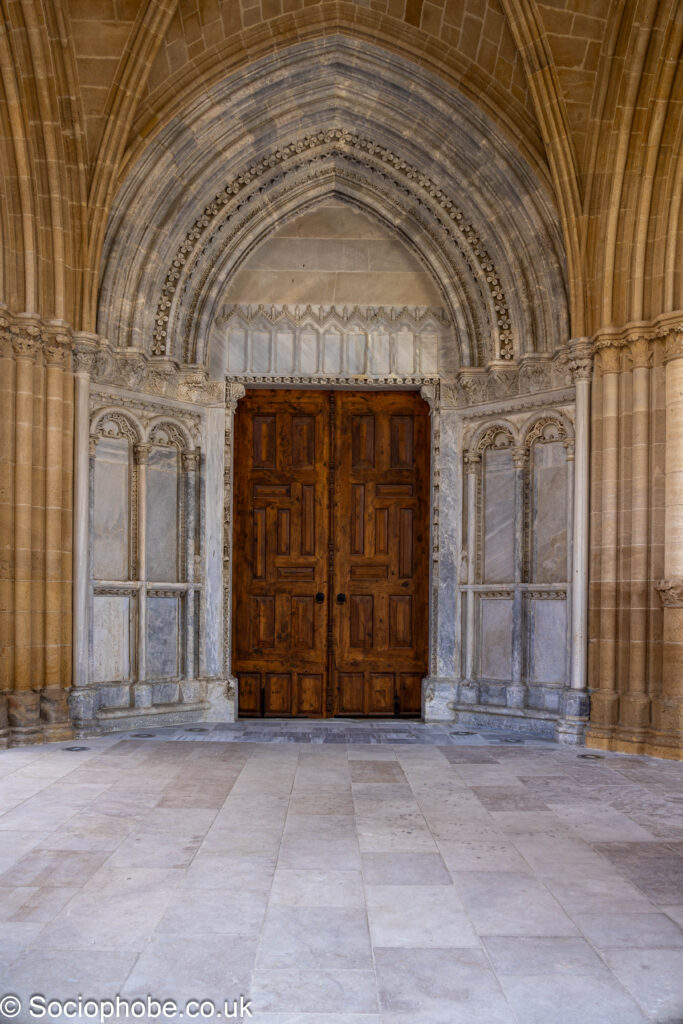
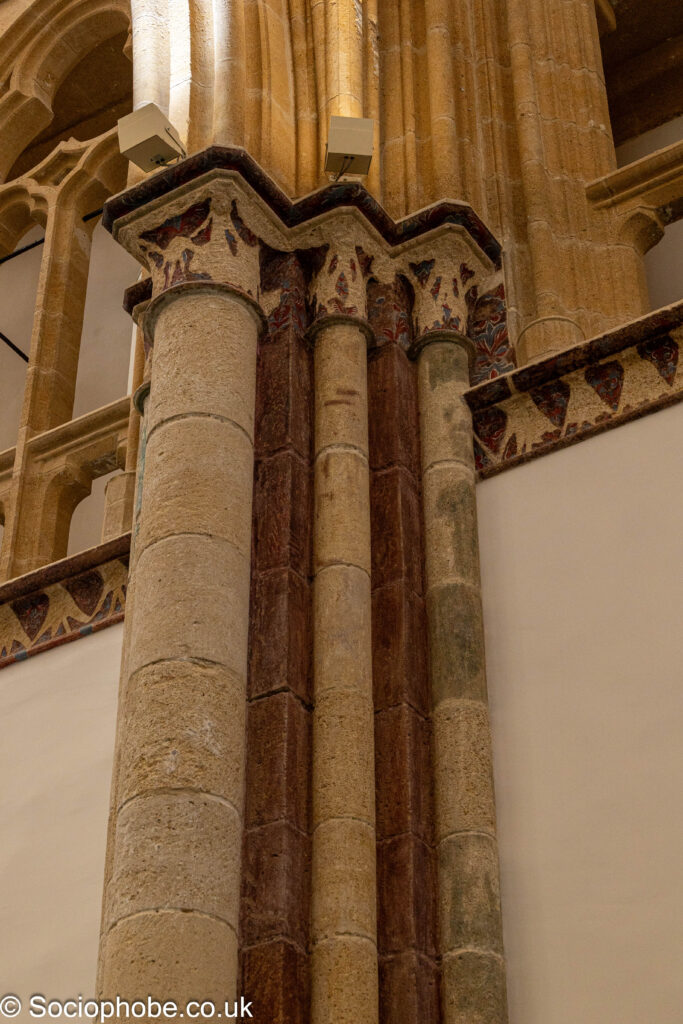
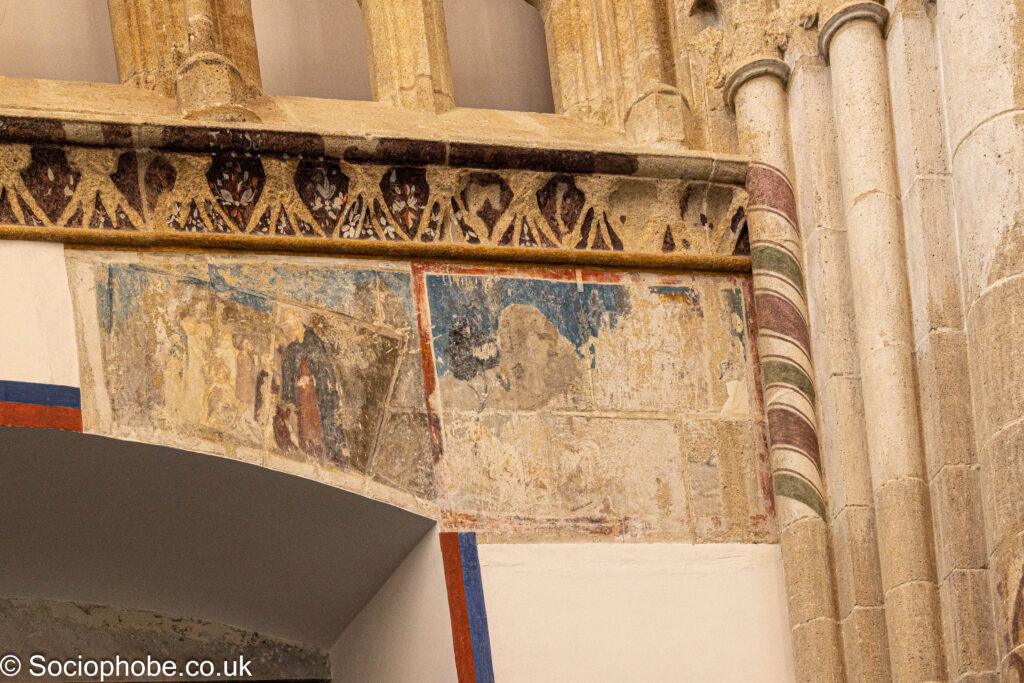
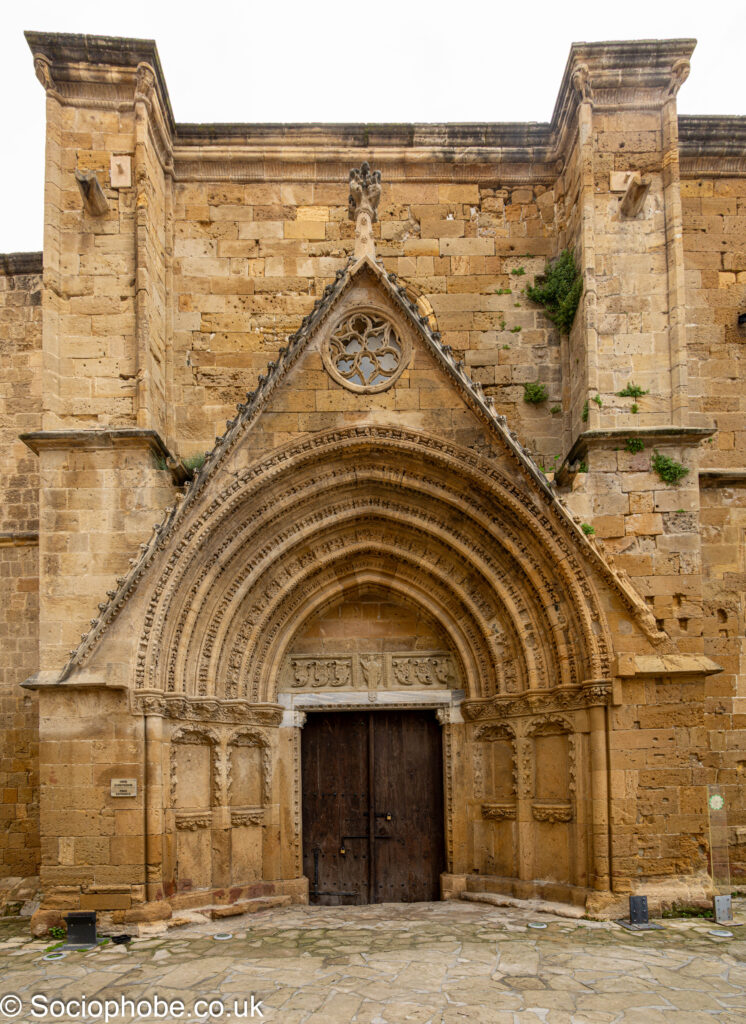
After a very filling breakfast I walked back to the border crossing in Nicosia to look a bit more at the monuments there. Deb stayed in the hotel. The Cathedral of St Sofia was a beautiful gothic building that, after the capture of Nicosia by the Ottomans, was stripped of its frescoes, statues, stained glass and decoration and now looks rather plain.
The floor is covered by a thick green carpet so I’m not sure if there are tombs and inscriptions underneath or if it is just flagstones. There were no visitors there at all when I walked in so I was able to spend my time looking around the huge space. The building has been recently restored and I found some traces of the original paintwork in some corners. The gothic architecture was wonderful to see, despite the damage and the main doors to the cathedral were real works of high medieval art.
Near the cathedral is an impressive restored Ottoman building, Buyuk Han, built very soon after the city was captured in 1570. The building was originally built as an inn for travelling merchants with goods and animals stored on the ground floor and living quarters above and a small mosque in the courtyard.
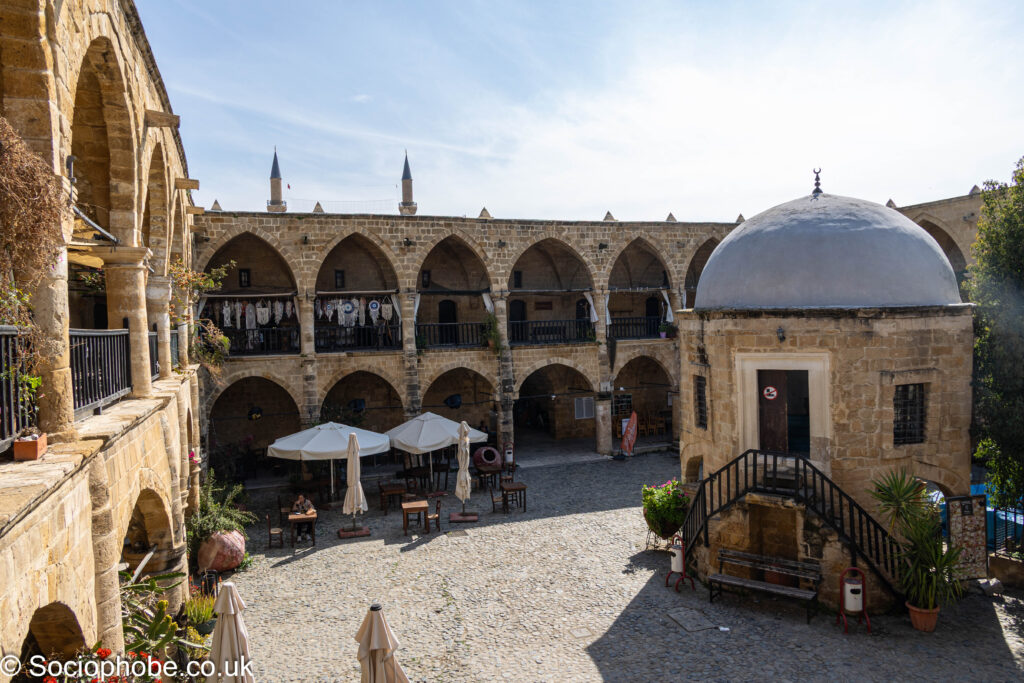
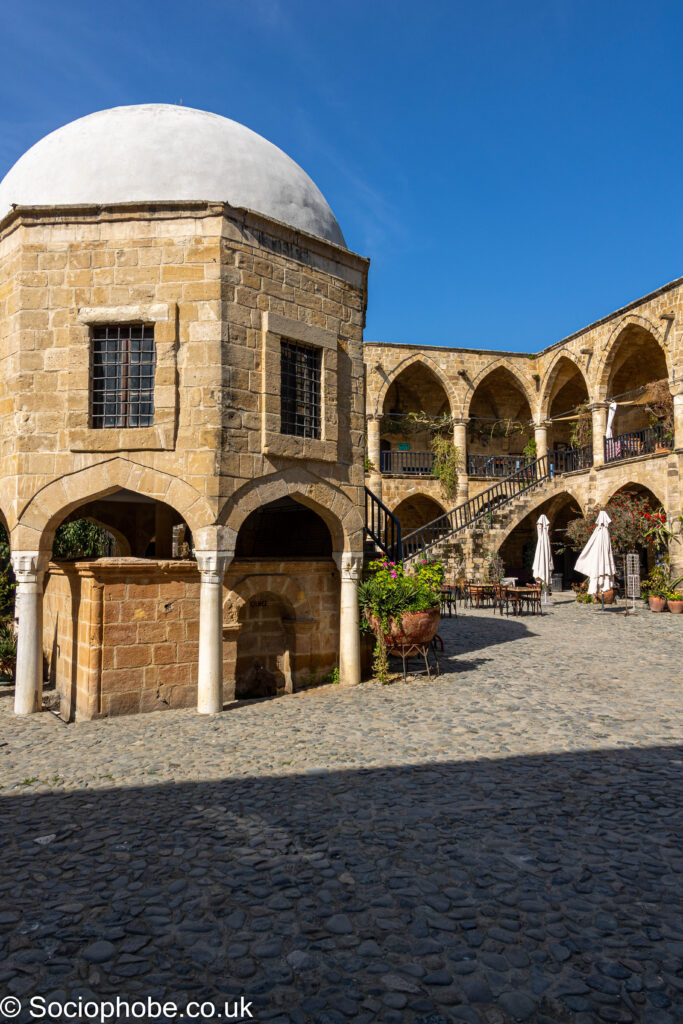
It is now a tourist bazaar with small shops and cafes although it was also empty when I visited. I walked back through the border crossing to the hotel, the weather now surprisingly warm so I was able to change in to shorts once I got there. We packed and checked out of the hotel for the drive to our next stop, the mountain village of Omodos.
Omodos
The drive through the mountains was pretty, with extensive pine forests but largely decent roads. We reached Omodos and followed the sat nav route then very quickly realised it was a mistake but one we had to commit to.
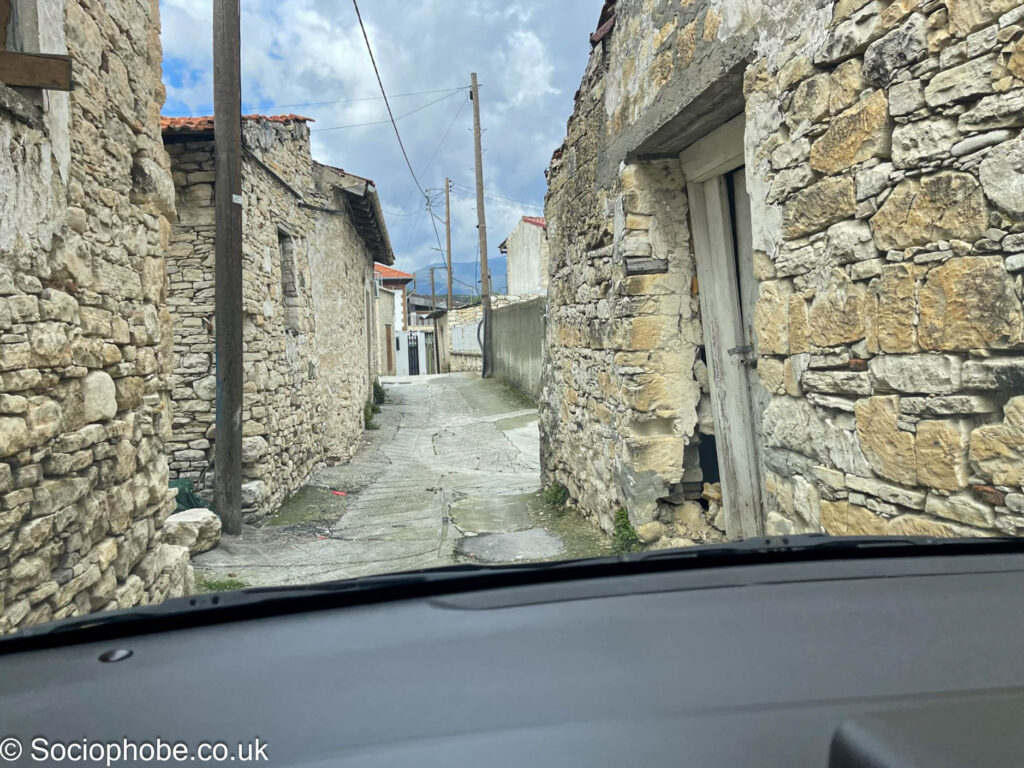
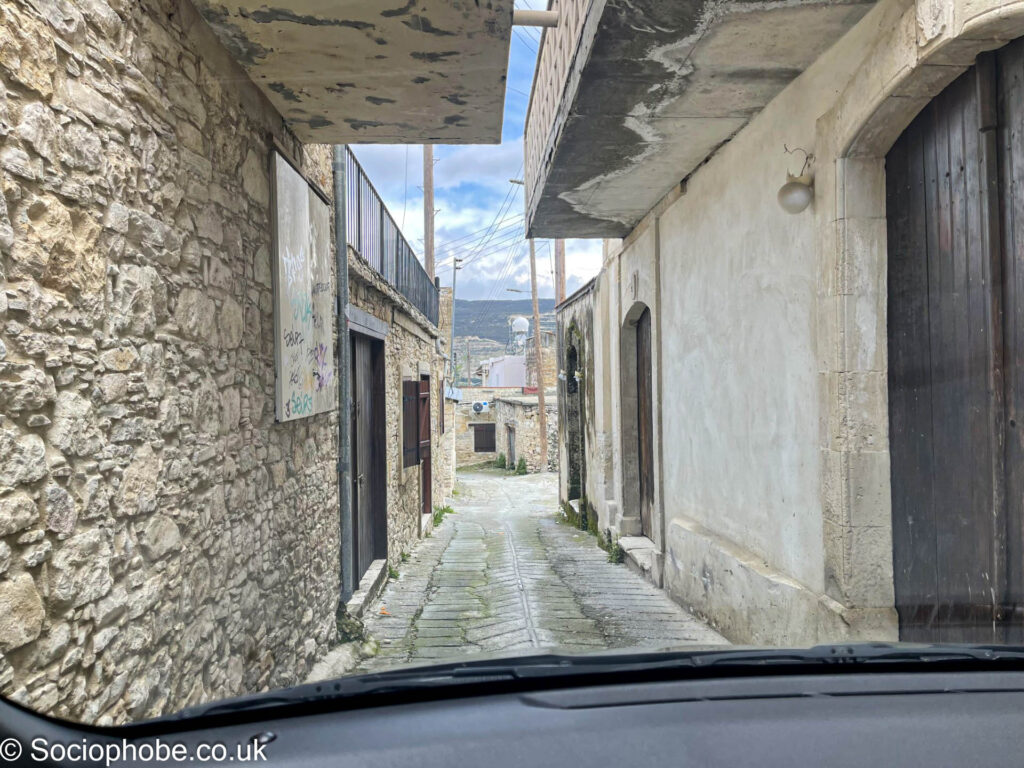
The roads became narrower and narrower and our little Yaris, which I had been regularly cursing as it was so tiny, now became a godsend. Even so there were some areas where I only had a few cm either side of the car and to add to the fun as we approached the town square a guy stopped us as the road ahead was blocked as they were renovating it. We had to do a 3 (5) point turn and retrace our steps all the way back to the main road then find an alternate route and in the end we just parked in the public car park and walked to the apartment.
Omodos Accommodation
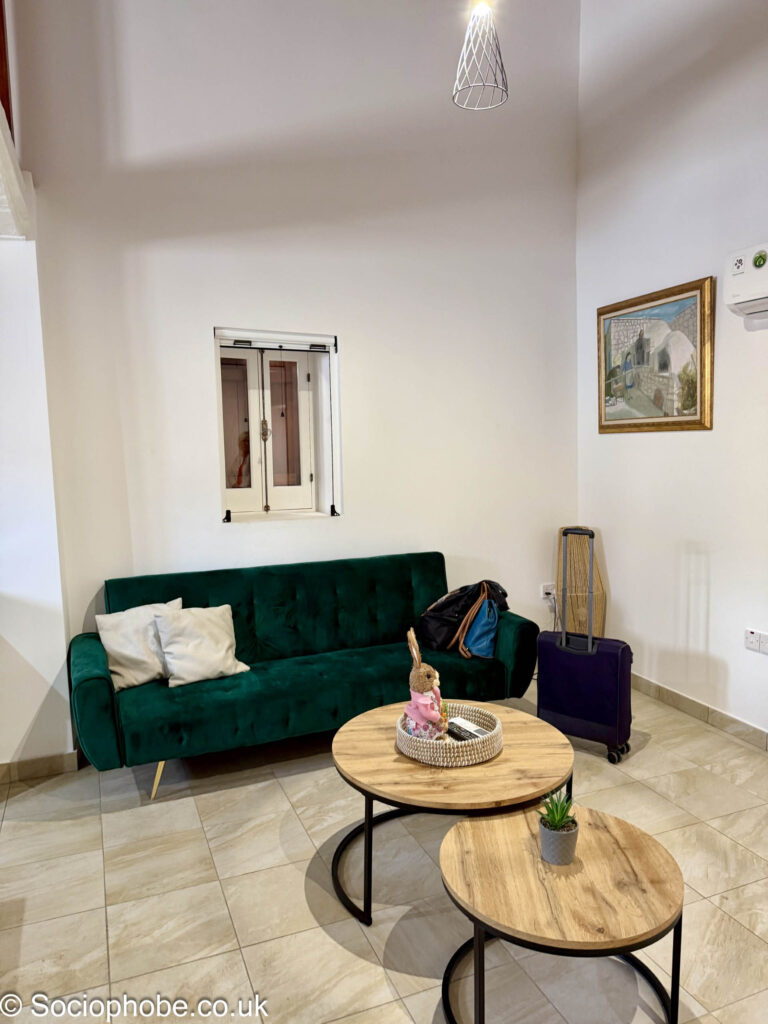
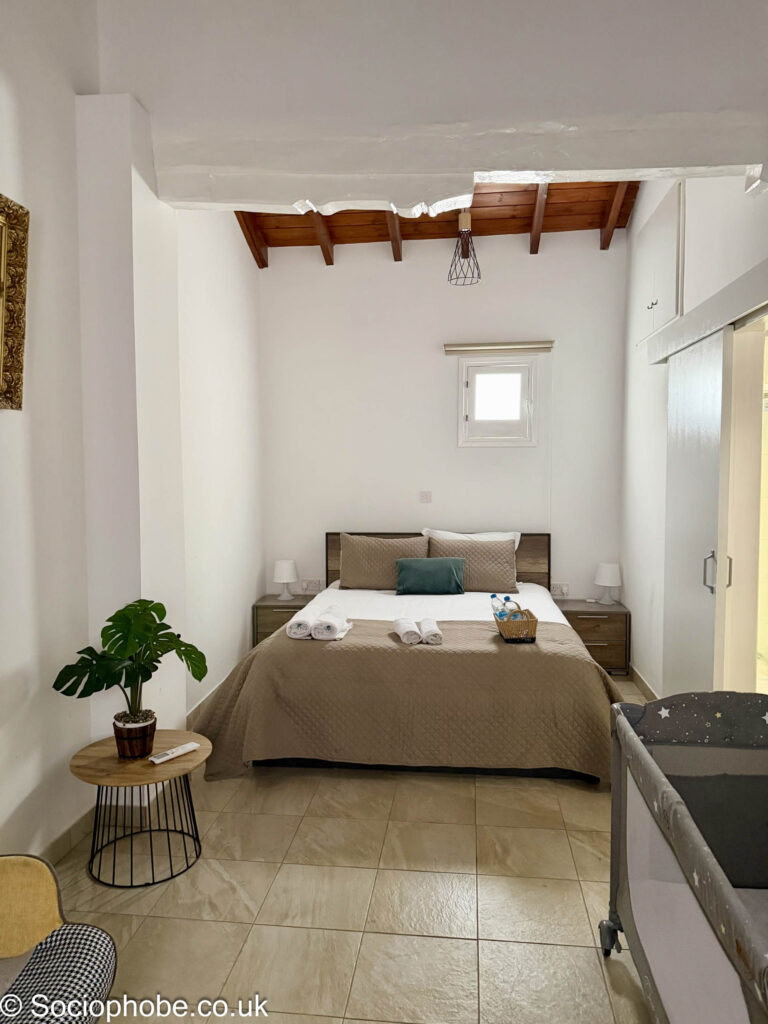
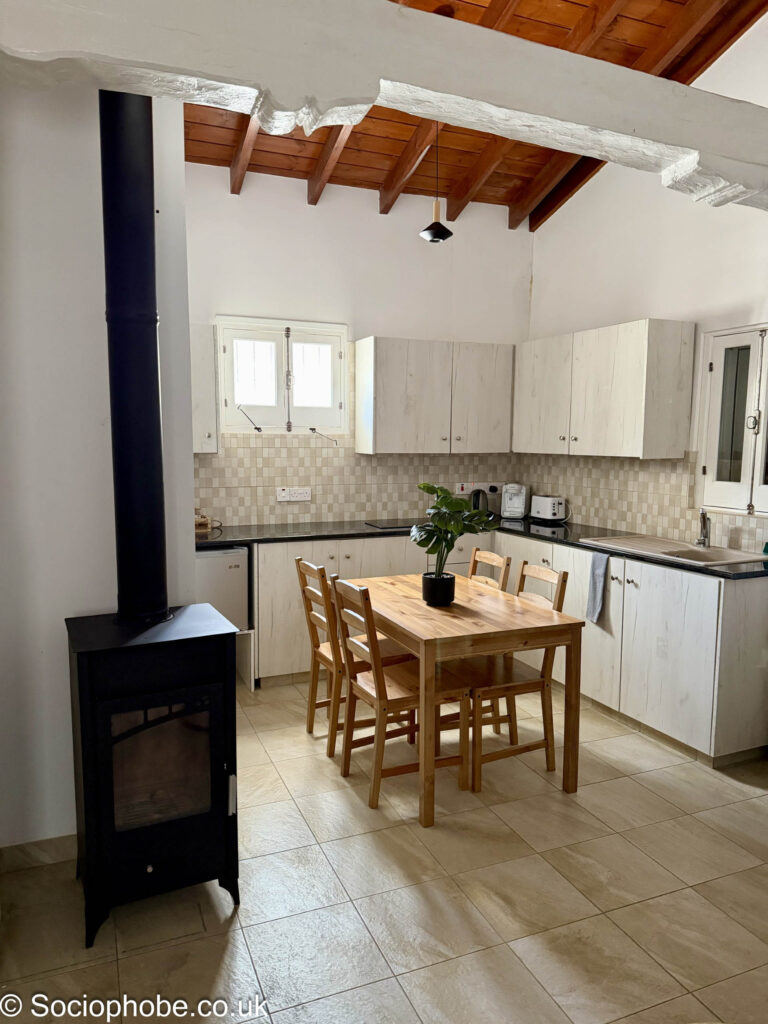
We were staying in The Mansion Suites, a house converted into four large suites just off the main square of the village. What we saw of the village looked very pretty but wearing shorts at this altitude was not sensible! We checked into our rooms, lots of space again and well equipped so that was lovely, once the heaters warm them up.
Don’t try and drive there whatever your sat nav says, follow the hotel instructions instead! We didn’t and had a very awkward drive, especially as the main square was blocked due to renovations so we had to do a 3 point turn and retrace our steps, carefully. There is plenty of free parking opposite George’s cafe.
The rooms are spacious and have decent wifi. A communal washer or drying area would have helped as we did get caught in the rain while walking but other than that, all good. The mansion is 2 minutes walk from the main square and about 30 seconds from the fabulous monastery.
Deb went to bed for a nap while I sorted the mornings photos and notes and rang Sofia. We had dinner in the Themelio Tavern, on the main square, which looked very pretty lit up.
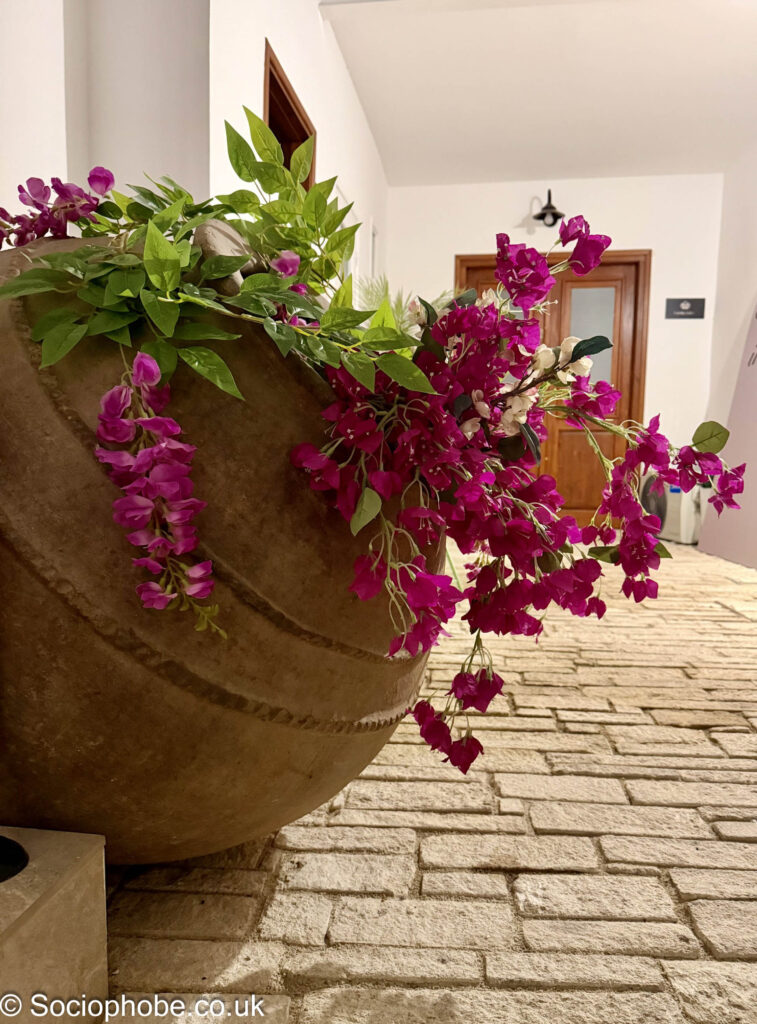
The next morning we had breakfast in the square and it was decidedly chilly at 8:30AM in the mountains, who’d have thought that? It was actually sunshine today too, a very welcome change and we had breakfast in the village square, eerily quiet as no shops were open yet or tourists around. The Troodos region has a large number of UNESCO listed monasteries and churches as well as hiking trails and was a centre of EOKA resistance to the British in the 1950s.
Holy Church of Panagia of Asinou
We drove to the Holy Church of Panagia of Asinou, a small, 12th century church famous for its iconography. There is a small car park outside and the church is a very battered, restored and distinctly wonky building, having survived a thousand years of earthquakes, mountain weather and decline. There was priest there when we arrived and he was helpful in explaining some things and selling us a guide book to explain others 😉
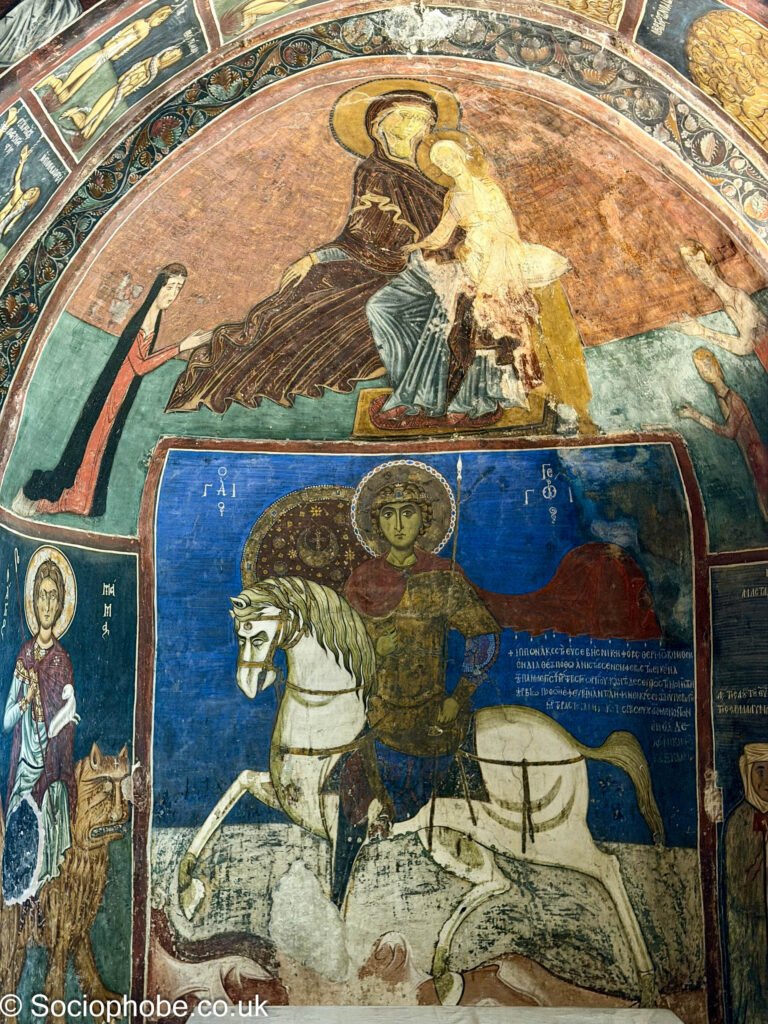
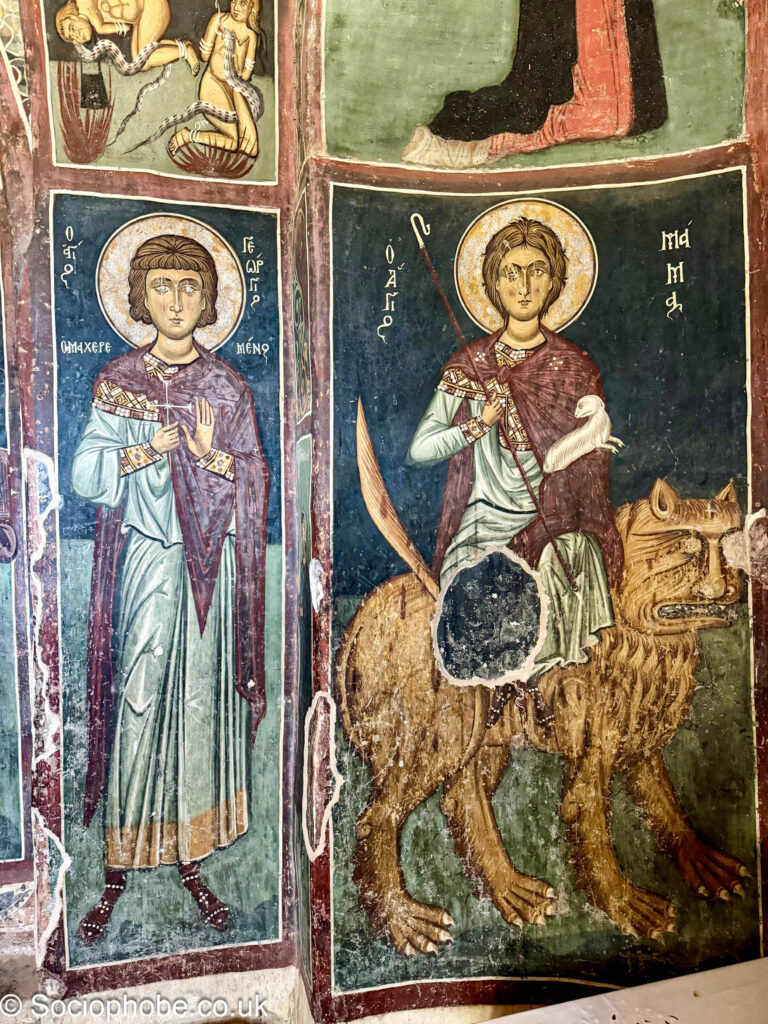
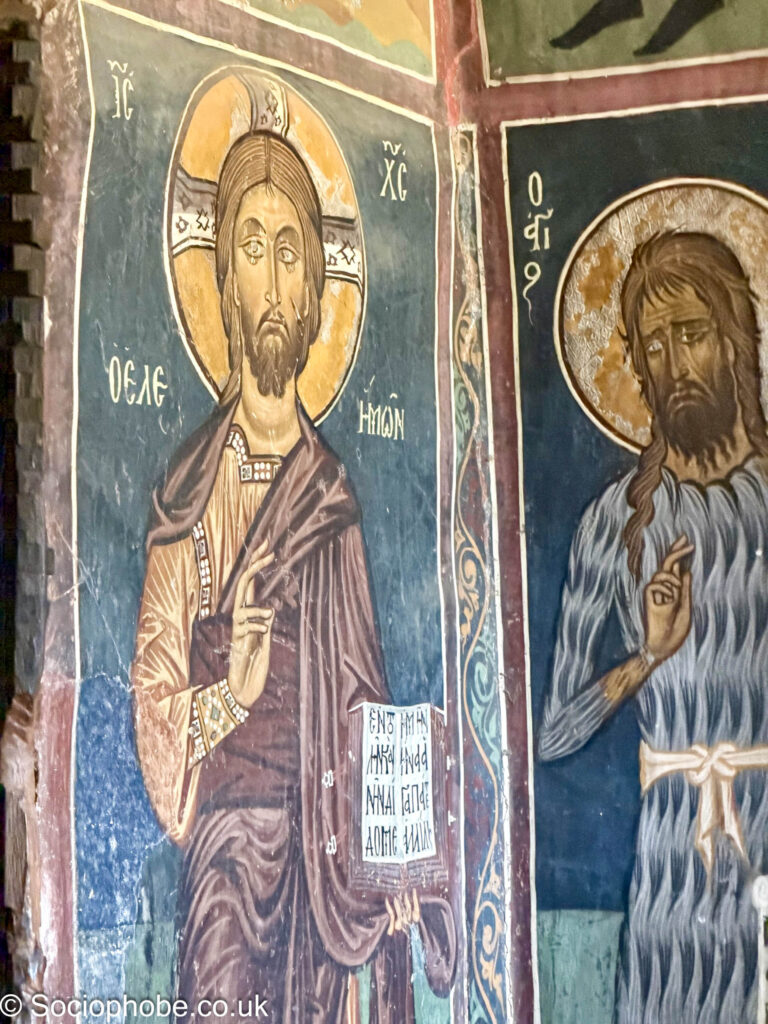
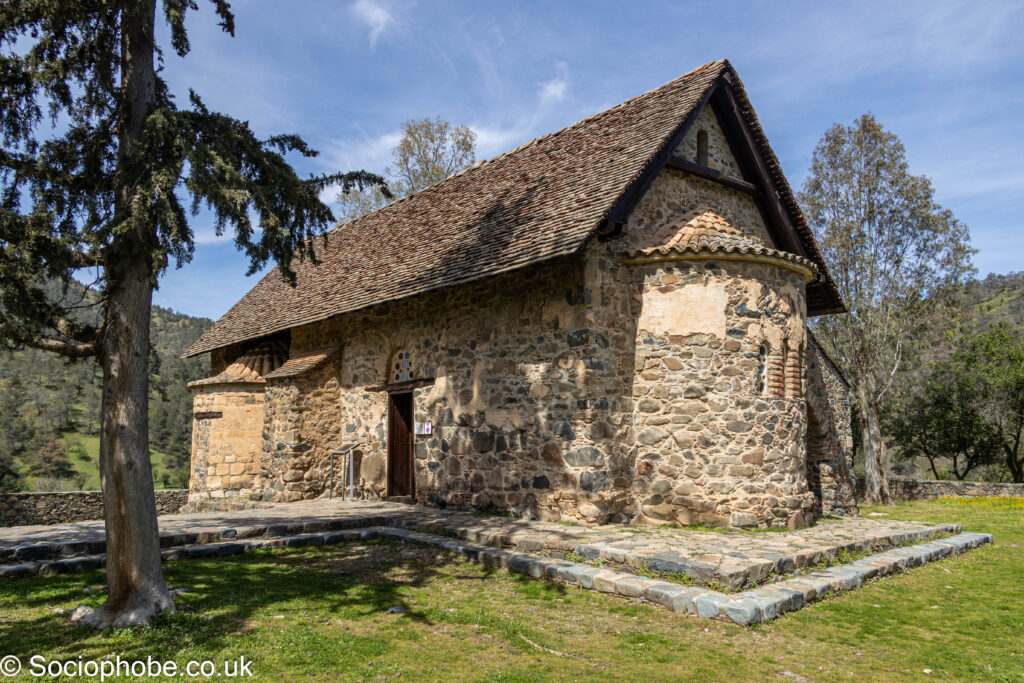
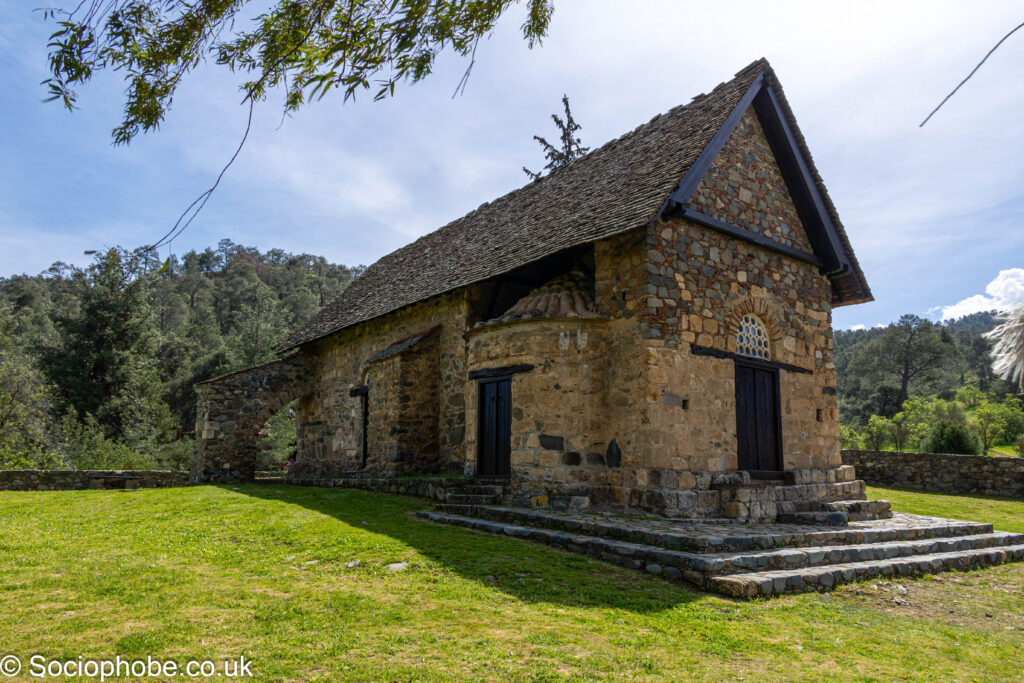
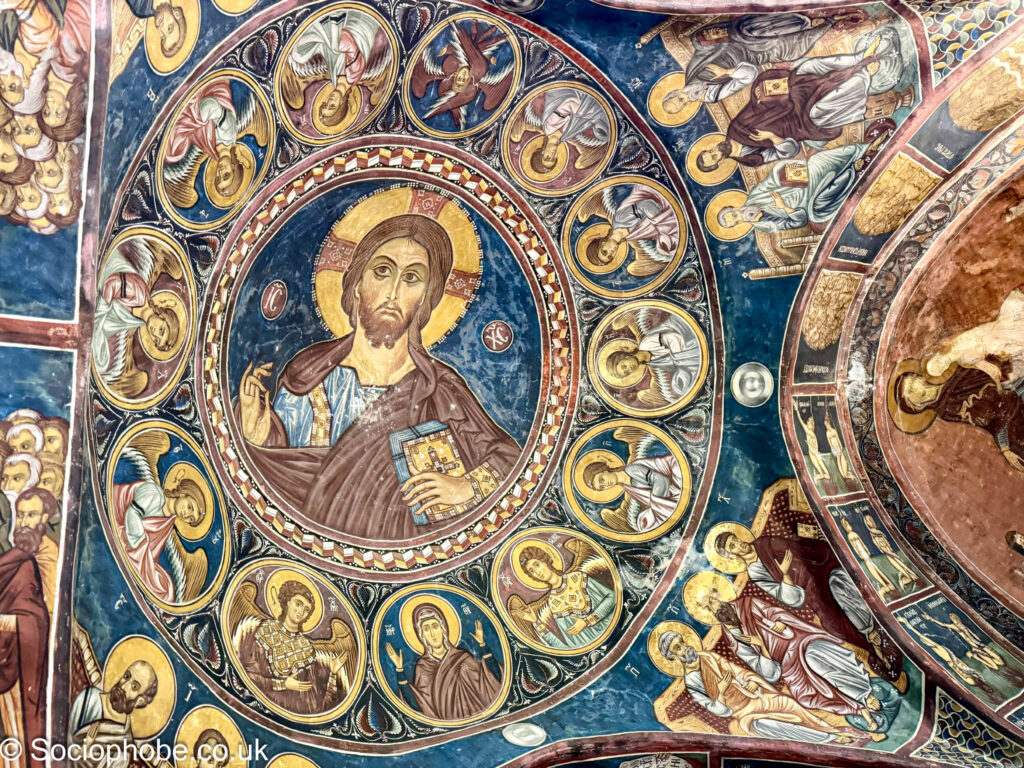
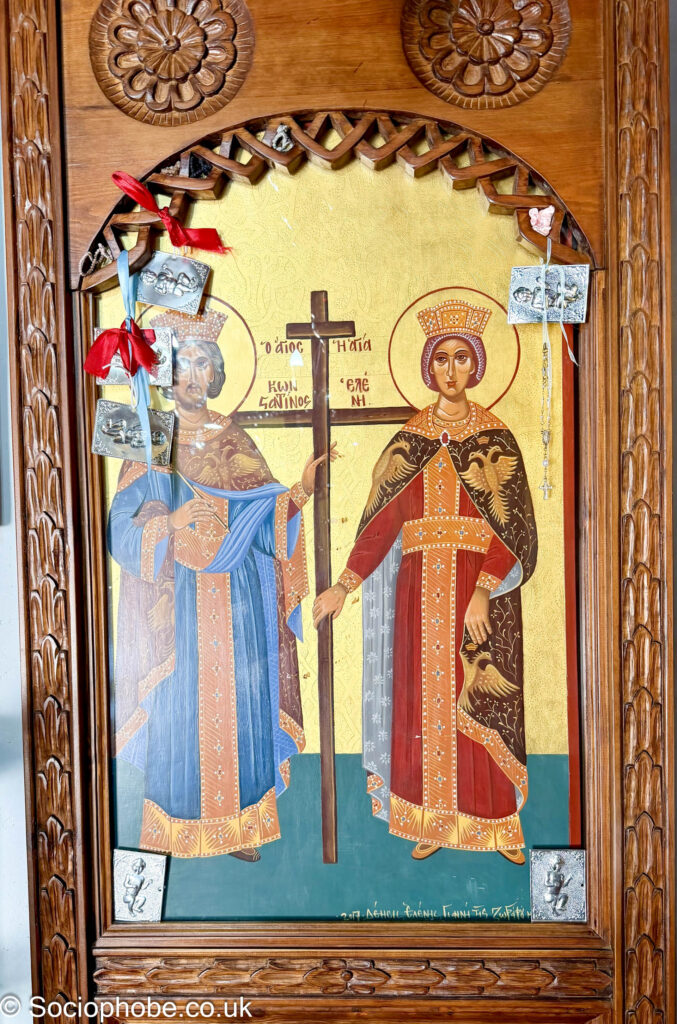
The entire interior of the church is filled with frescoes, every part of the walls and ceiling being painted. These mostly dated from the 12th century but continued to the 14th century. I am guessing they are periodically refreshed as the colours were amazingly fresh and vibrant. The guide book, I hope, will explain what we were looking at as I don’t speak Greek and there was nothing I recognised other than maybe Helena and Constantine.
Monastery of the Virgin Mary of Arakas
Our next stop was the Monastery of the Virgin Mary of Arakas, situated deeper into the mountains on a very interesting road. This monastery was deserted when we arrived and had a wooden roof built over the original, presumably to protect it. There was a parking area by the road and the views were impressive. I was surprised that such internationally important cultural heritage was just left for anyone to wander in, especially after the destruction of so much by the Turks in the 1970s.
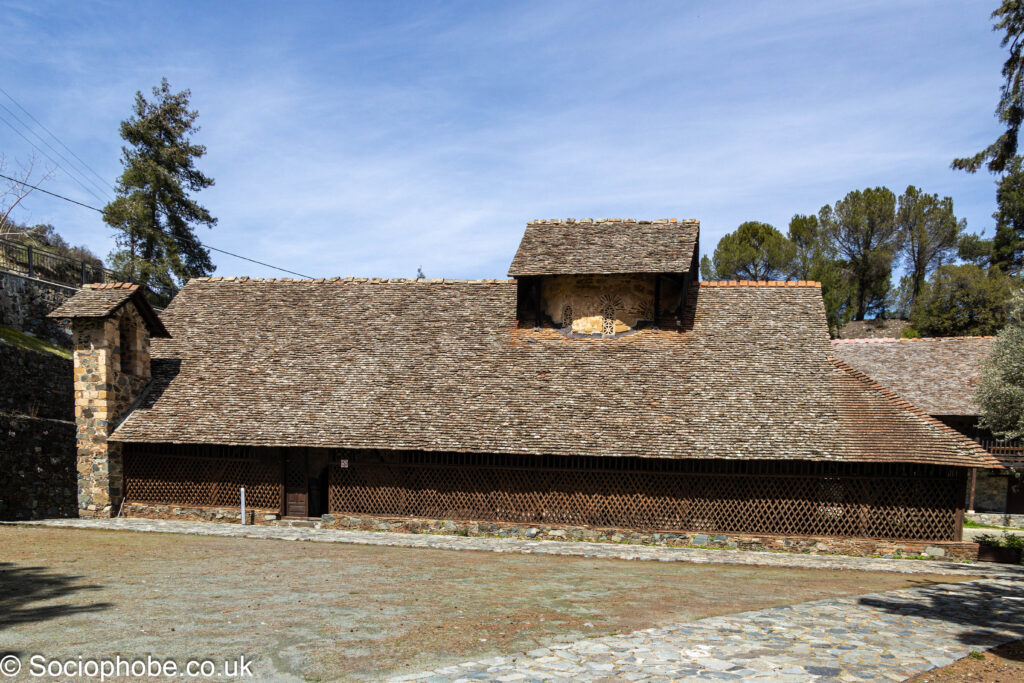
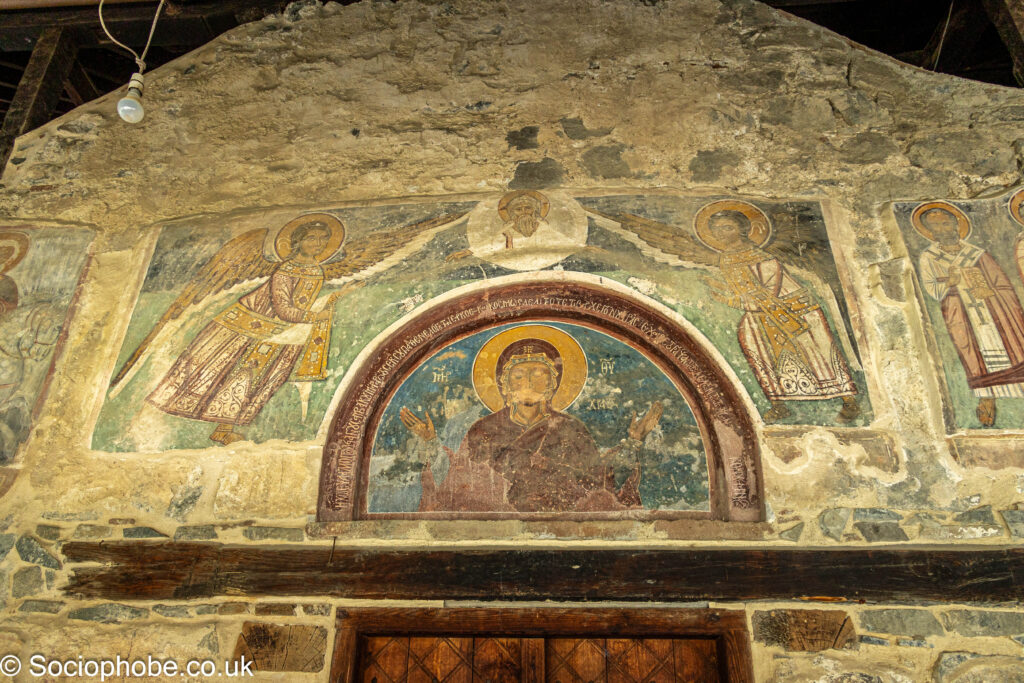
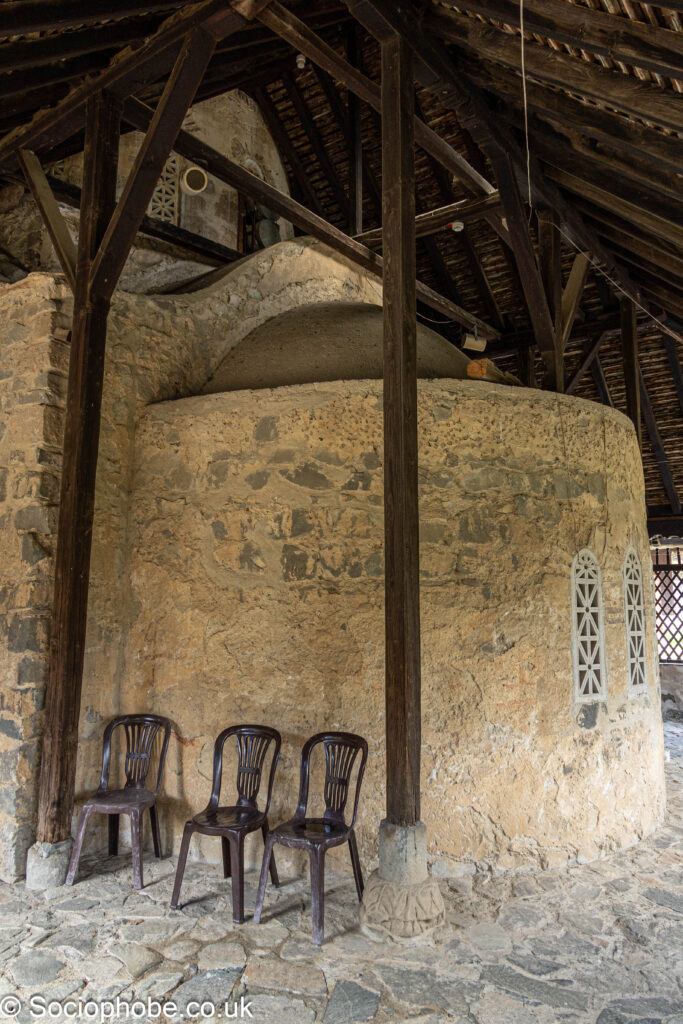
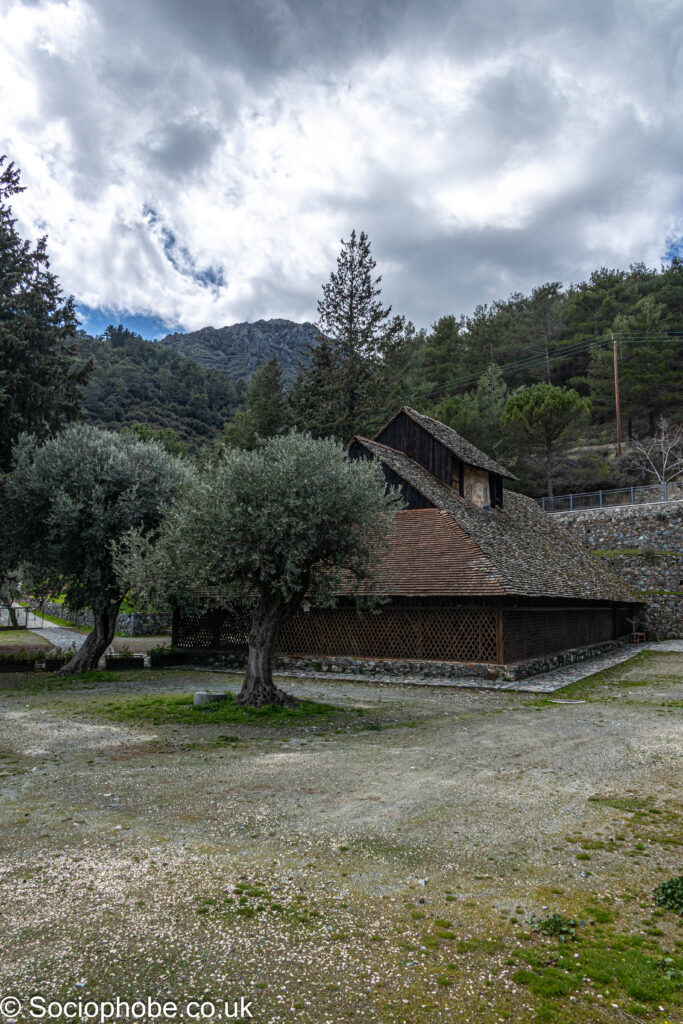
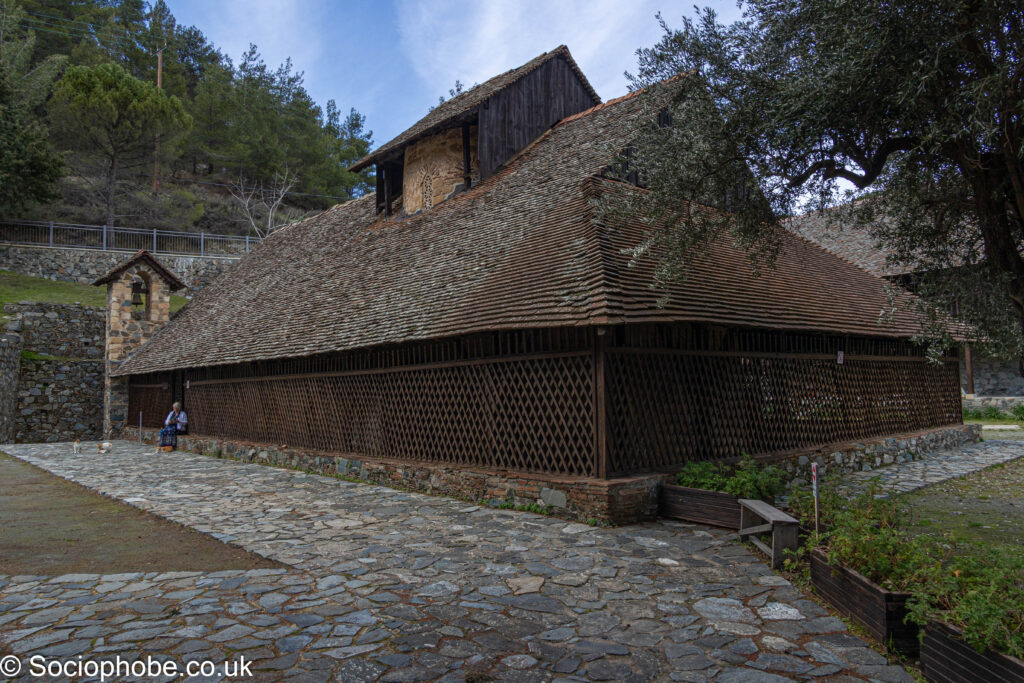
The monastery is another 12th century creation and actually had some frescoes on the outside too, sheltering under the wooden roof. Inside was another riot of colour with every surface painted. The quality of the artwork in both this and the previous church were impressive with perspective and shading giving far more depth than expected. There was no café so we walked back to the car after Deb had played with the cats.
Troodos Botanical Garden
As we were driving through Troodos we finally saw an open café, the Kretan and stopped for cake. Lots of cake. And coffee. That was a pleasant little interlude before driving high into the mountains (around 1700m) to the Troodos Botanical Gardens. These were on the site of the Amiantos Asbestos mine, a massive mine that can apparently be seen from space and was the largest employer on the island for a period. As technology advanced the mine became more automated and eventually closed in 1988. The whole area around it is scarred with slag pits as millions of tons of rock were excavated, crushed and processed to extract the asbestos.
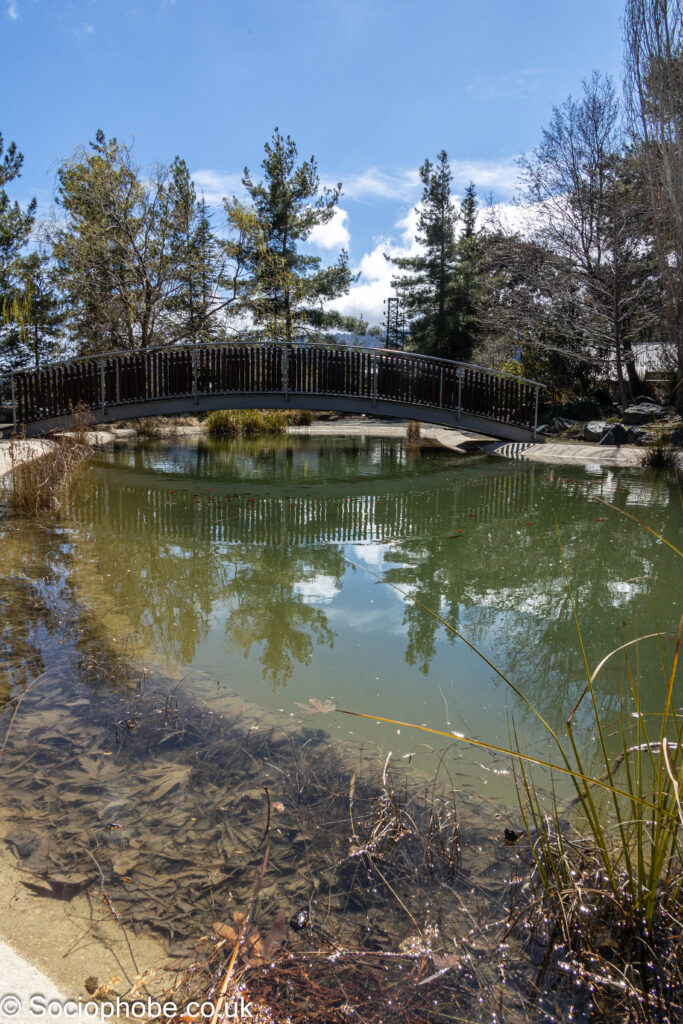
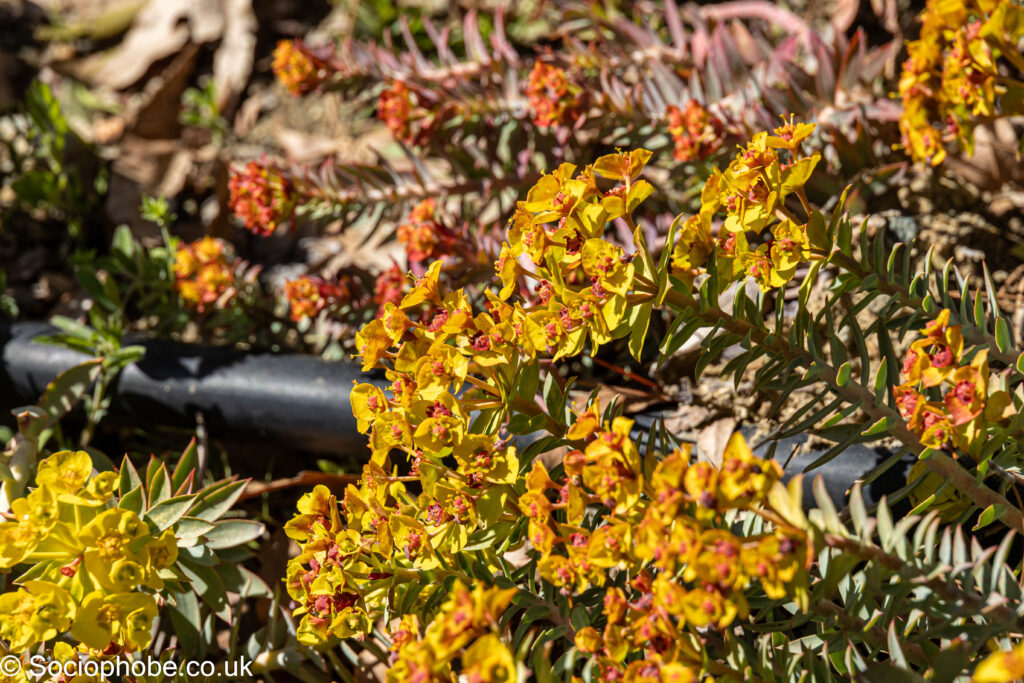
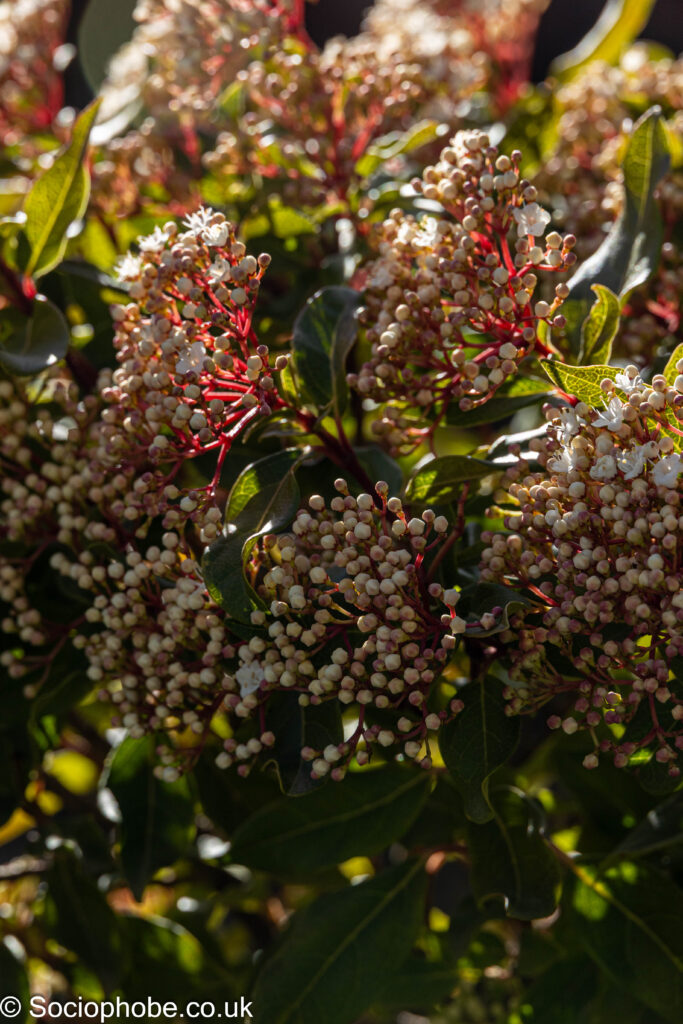
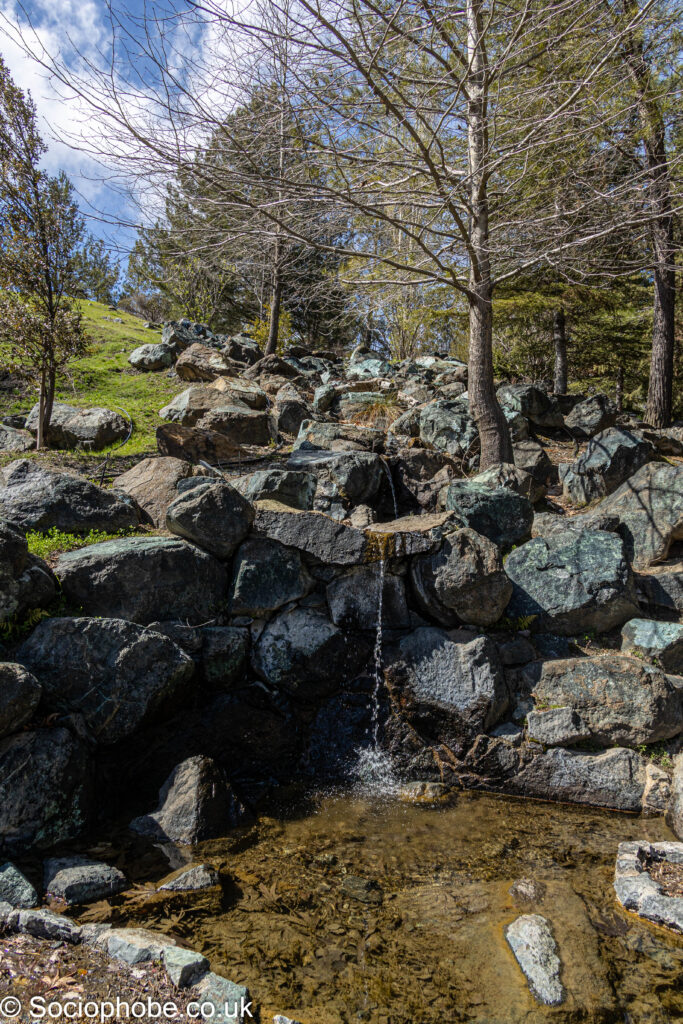
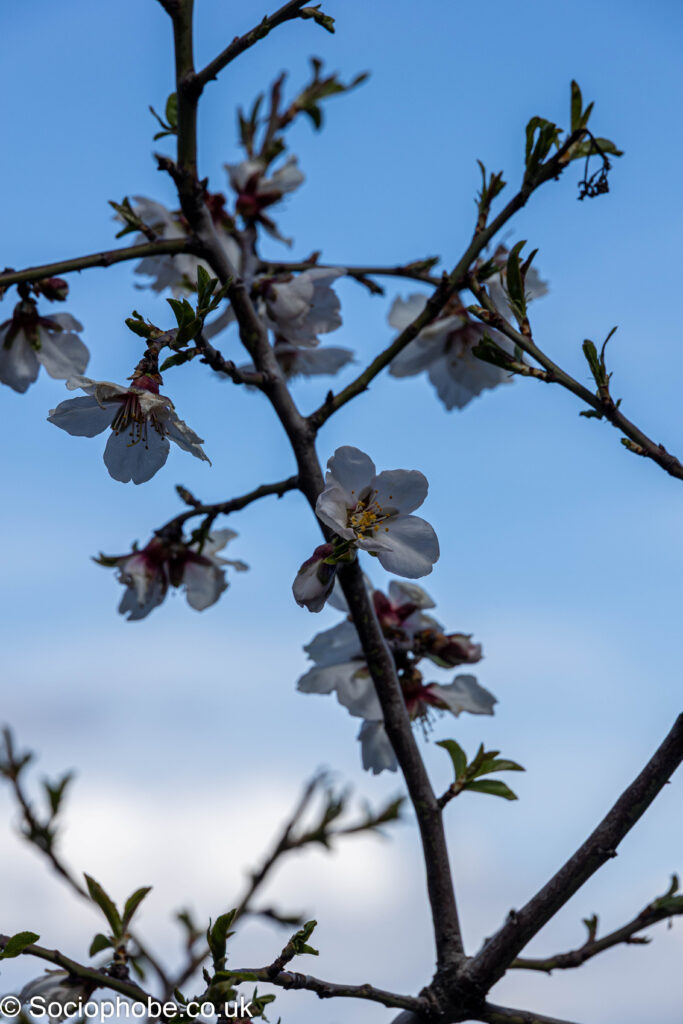
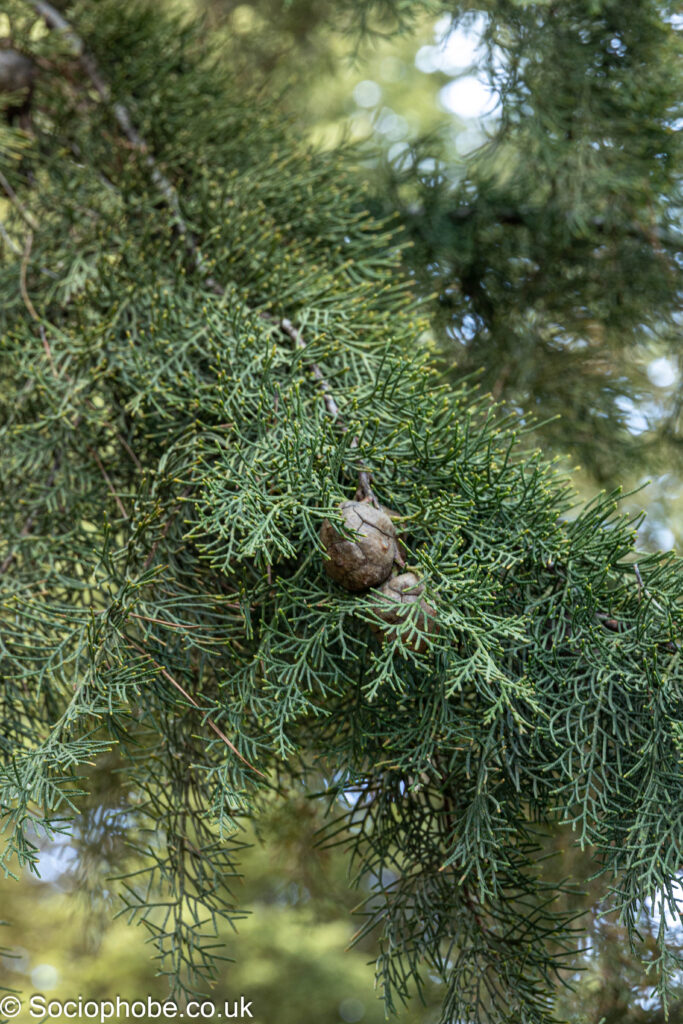
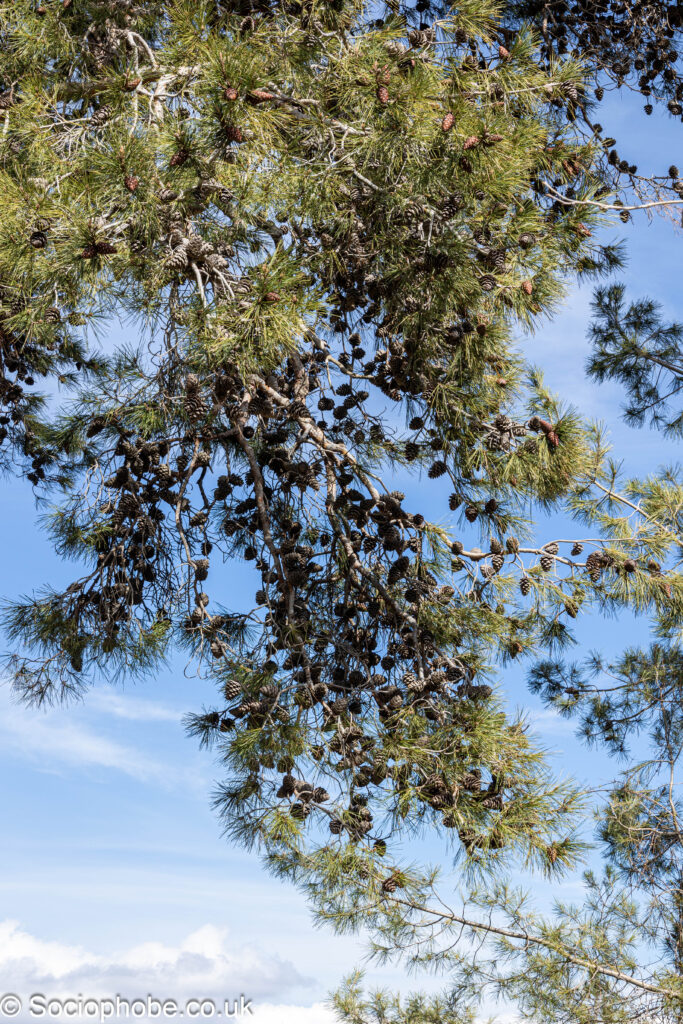
There is a car park and a visitor centre at the site and it is beautifully maintained with safe paths, labelled plants and a wonderful viewpoint. There is also a small arboreal walk and a pond. Although March probably wasn’t the best time to visit you could see the potential for this place and in summer it must look fabulous. Entry was free.

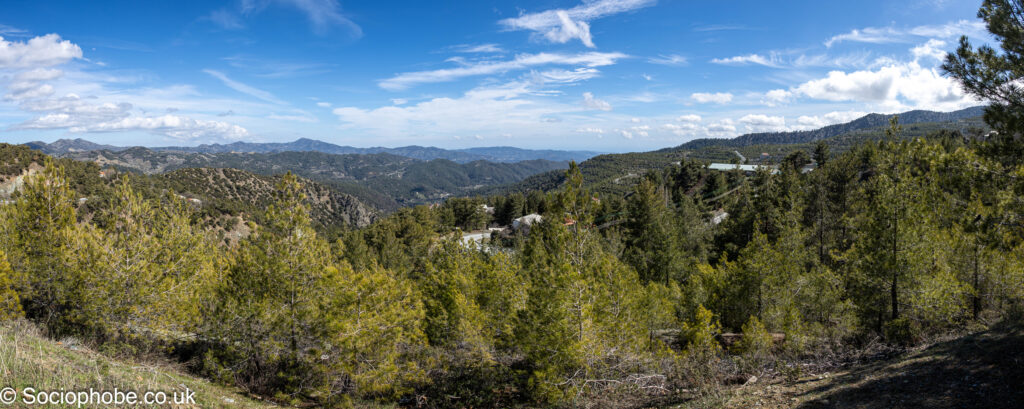
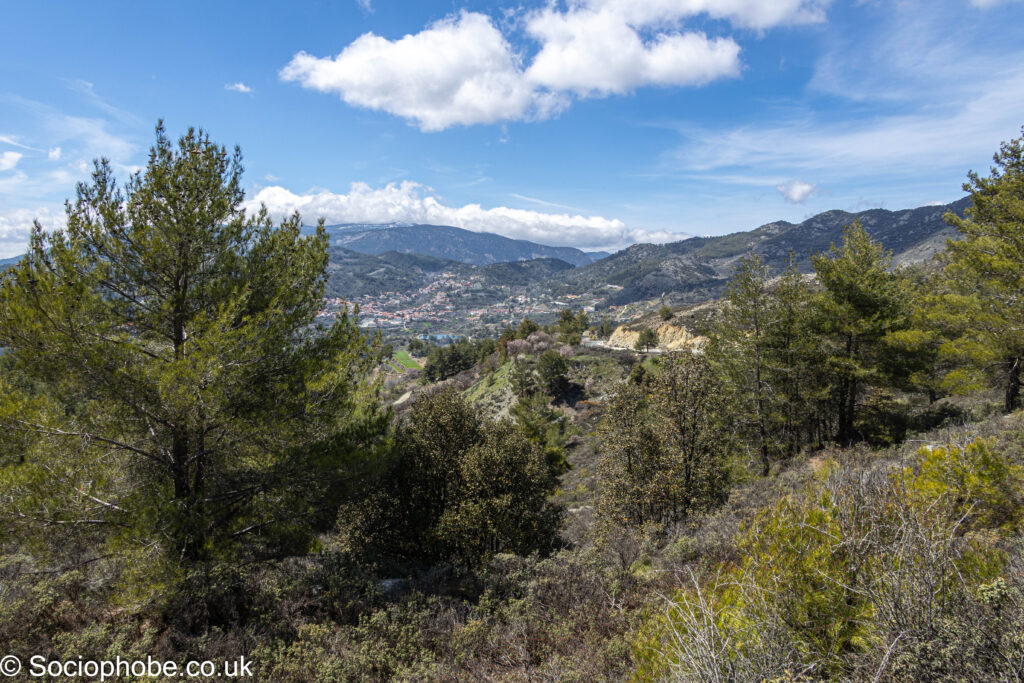
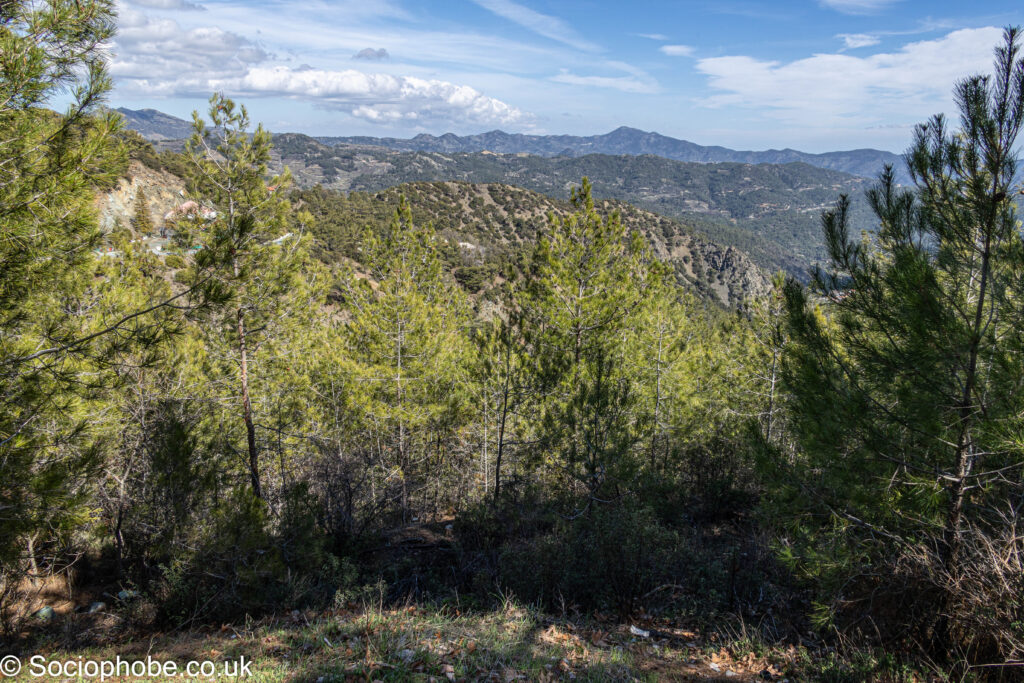
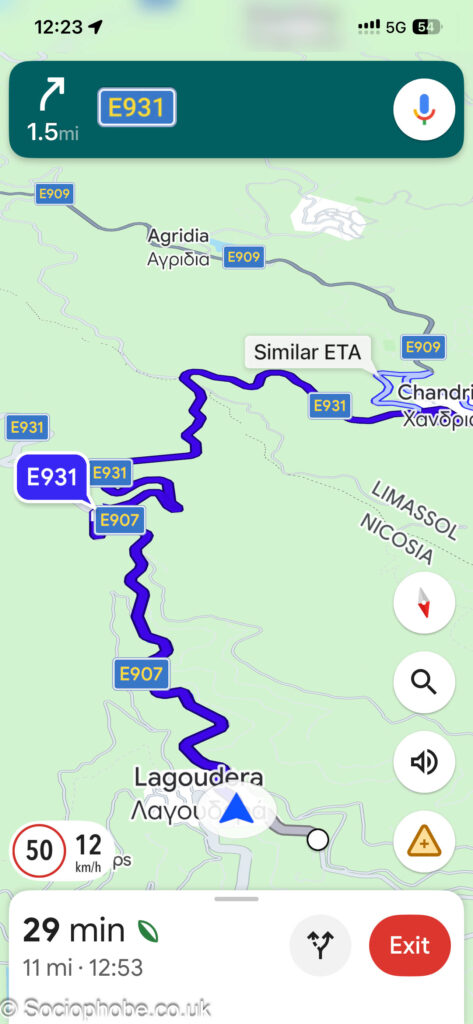
We drove back to Omodos through more ridiculous roads, climbing higher so there was actually snow along the roadside, before descending again. Back at our apartment I had a nap and then we had dinner at the Kamara Tavern in the main square, another excellent value and filling meal with incredibly friendly – and well fed – cats roaming around. We planned tomorrow’s visits as we leave Omodos and head for our last stop, Limassol.
The next morning I was woken from a doze at 6:45 by the church bells reverberating around Omodos village square. And then again at 7:15. And 7:45. When we arrived in Cyprus we were surprised by how many people were out by 8AM, now I know why! We walked to George’s café, one that had been recommended, but it was closed. A quick Google search led us to the top rated café currently open, Αρκατένα Ελένης, and we had a fantastic breakfast, sat in the square in … sunshine!
Timios Stavros Monastery
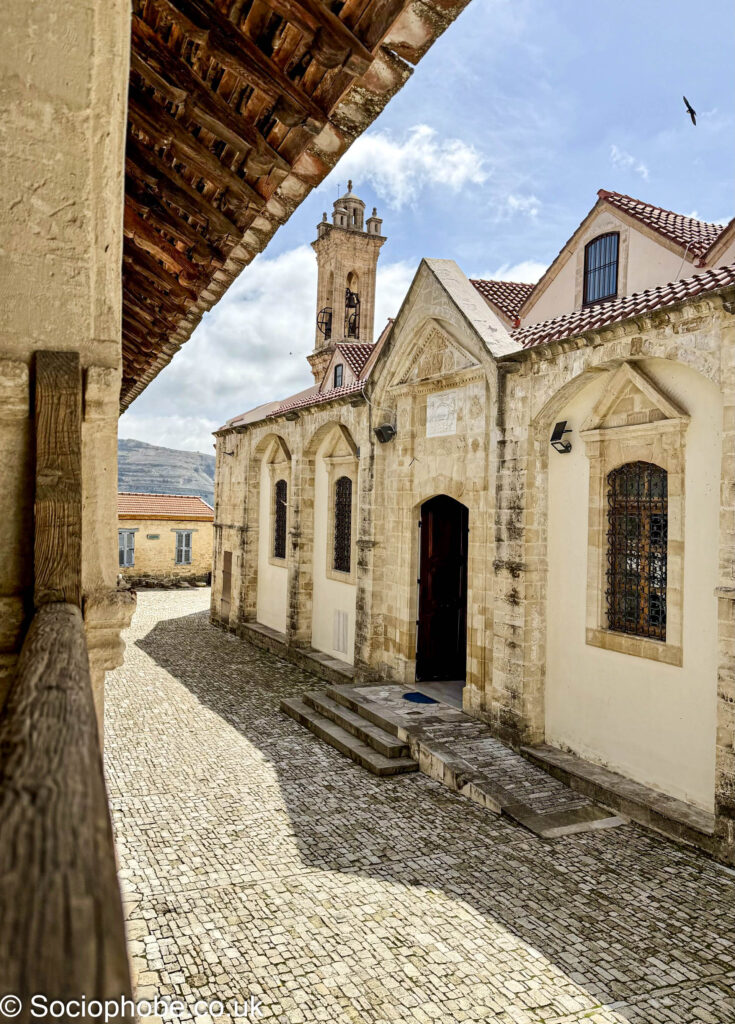
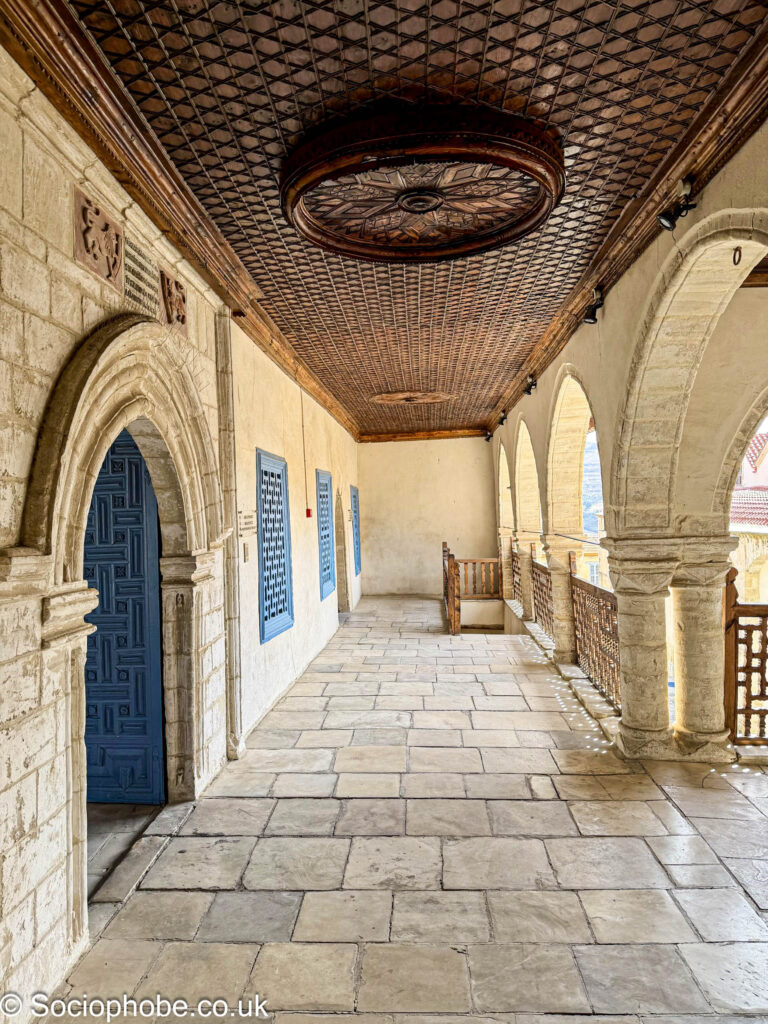
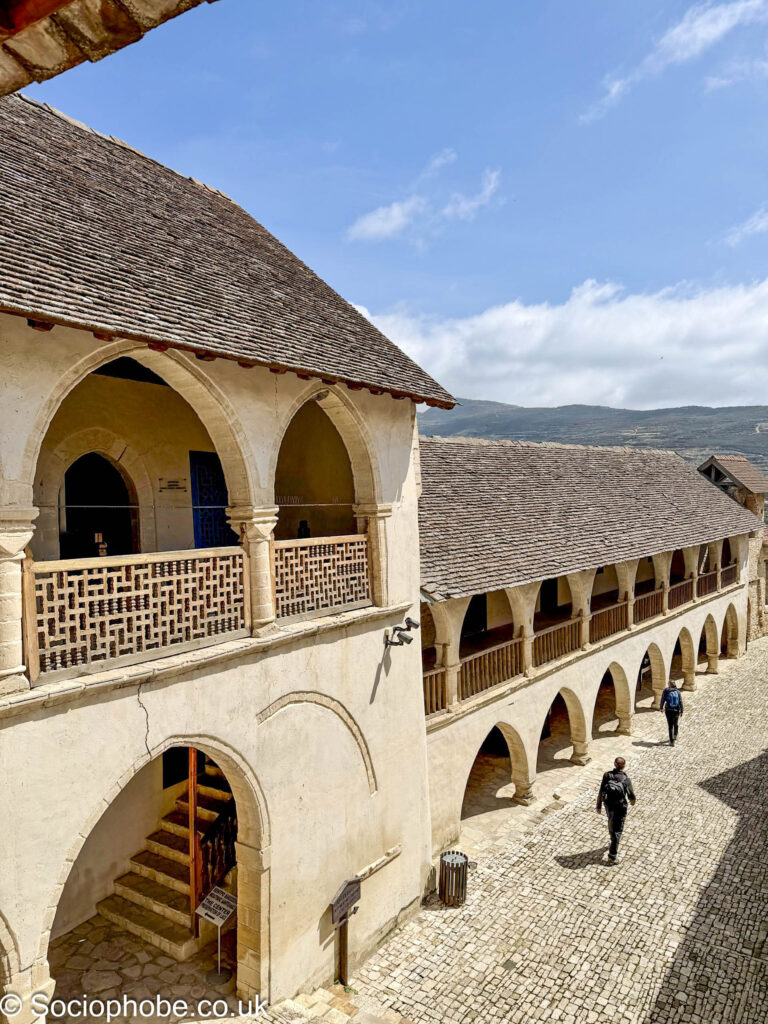
Deb wandered to get some souvenirs and then pack whilst I visited Timios Stavros Monastery, just off the town square. This was founded in the fourth century allegedly but the current buildings are from a 19th century restoration. The buildings were very pretty and the ceilings on the second floor were amazingly carved with beautiful wood panelling. I didn’t get to see much more because a cat adopted me and I spent 15 minutes with him sat on my lap and being spoiled.
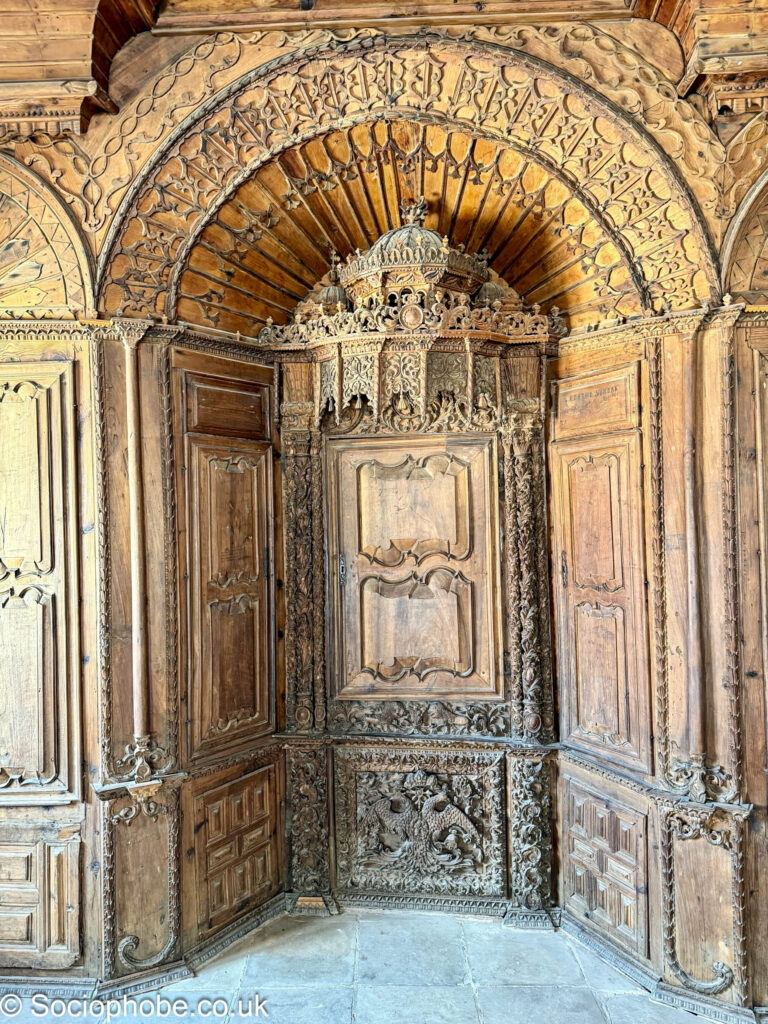
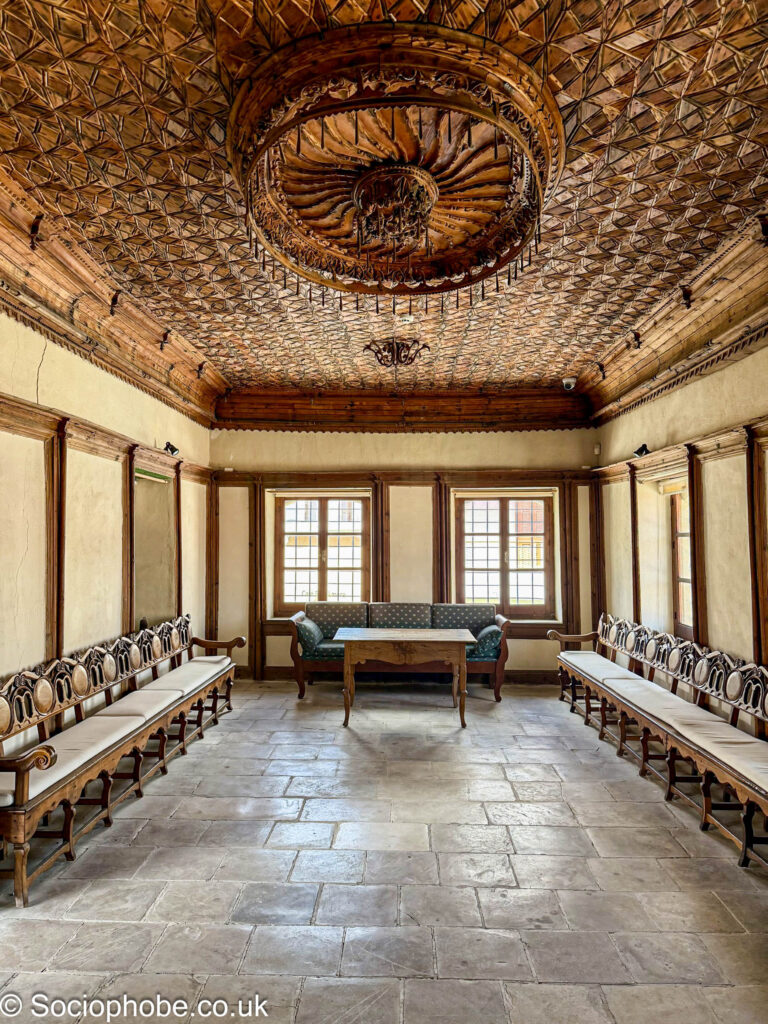
Kourian Area Ancient Sites
I reluctantly left the cat and collected Deb and we drove to the Sanctuary of Apollo Hylates, a Romano Greek temple on the coast that was a sanctuary for the god Apollo for 1200 years until the spread of Christanity. It was a reasonably large site with a partly reconstructed (I think) temple section.
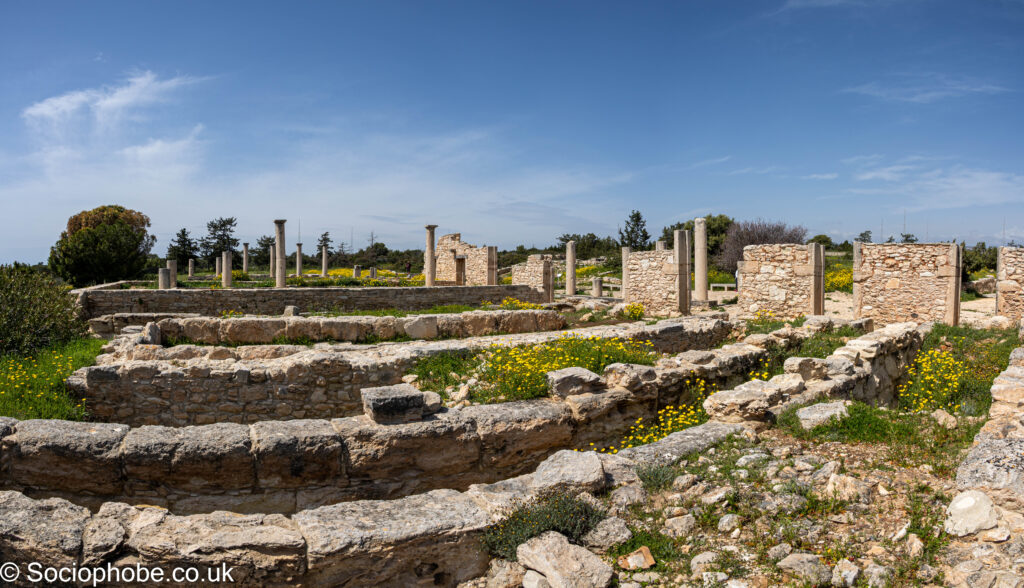
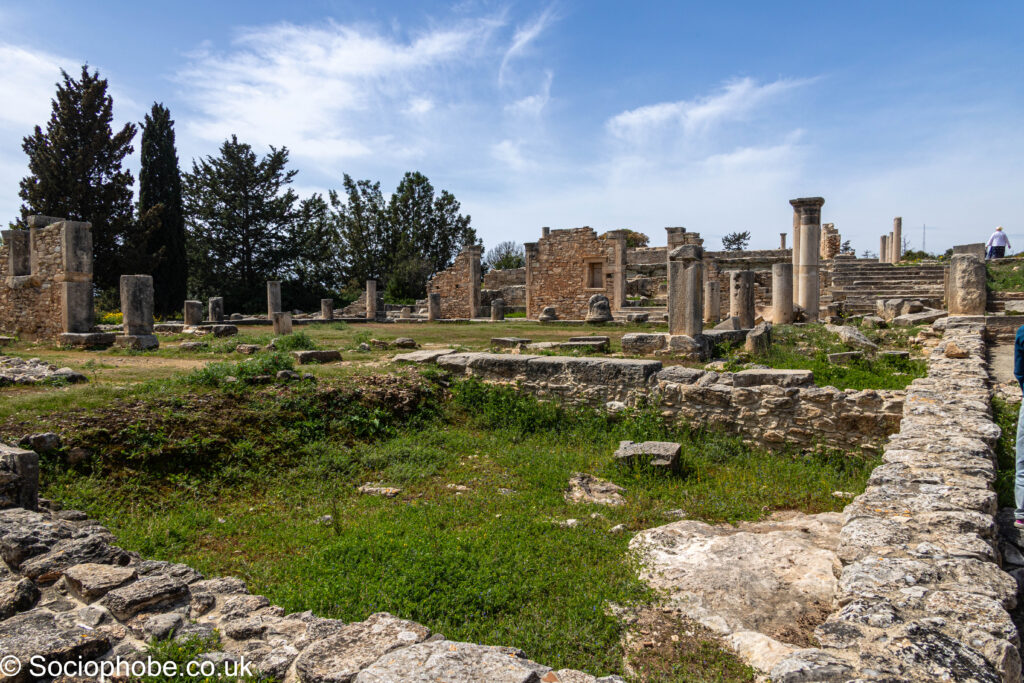
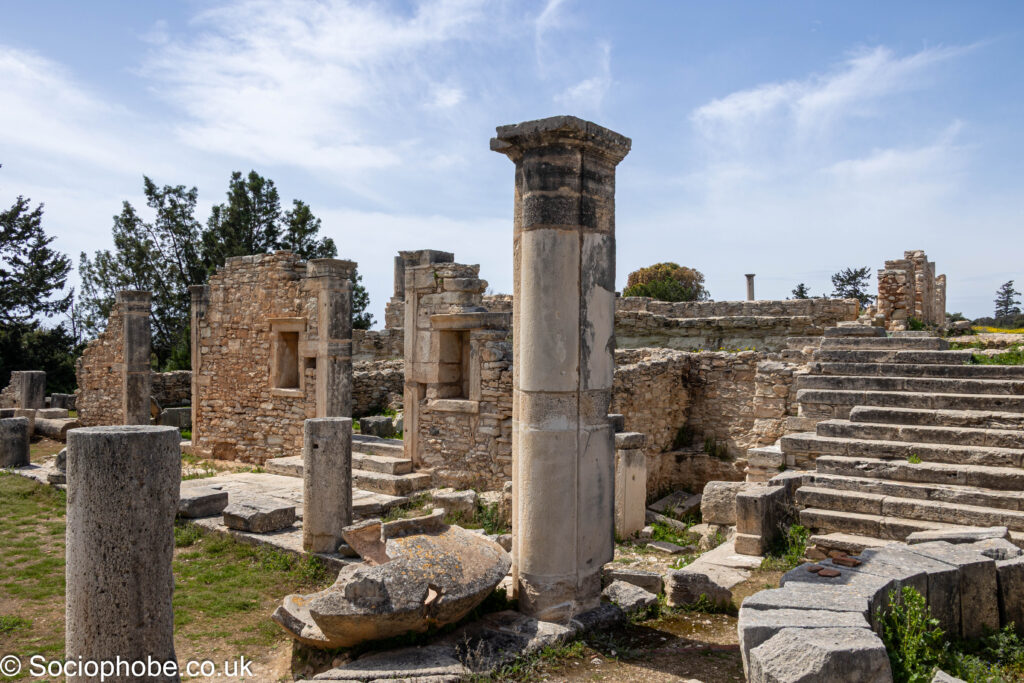
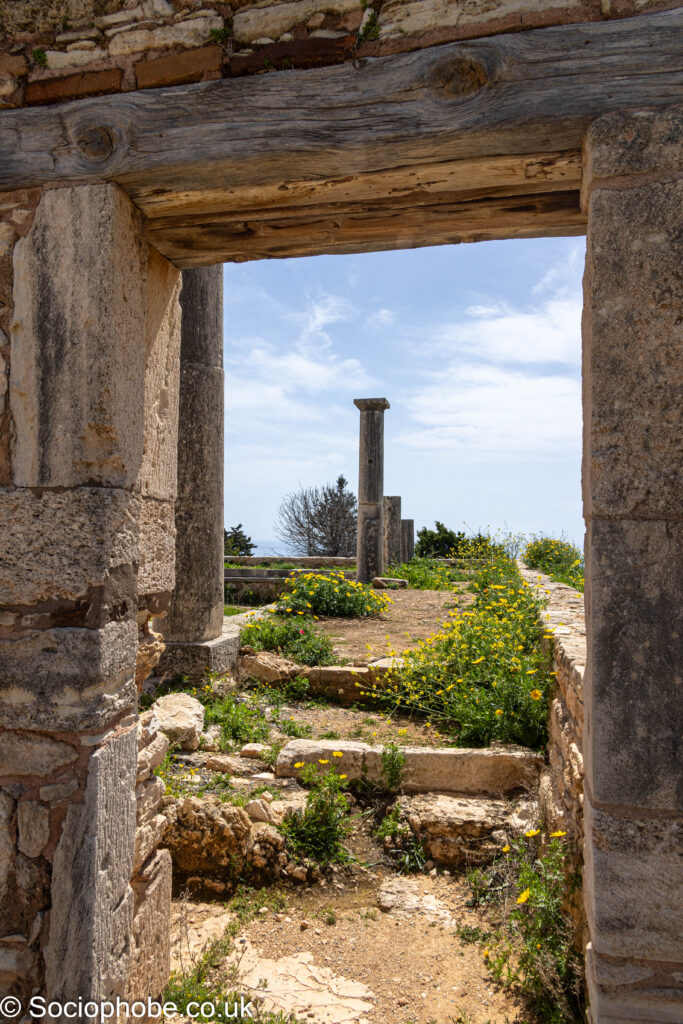
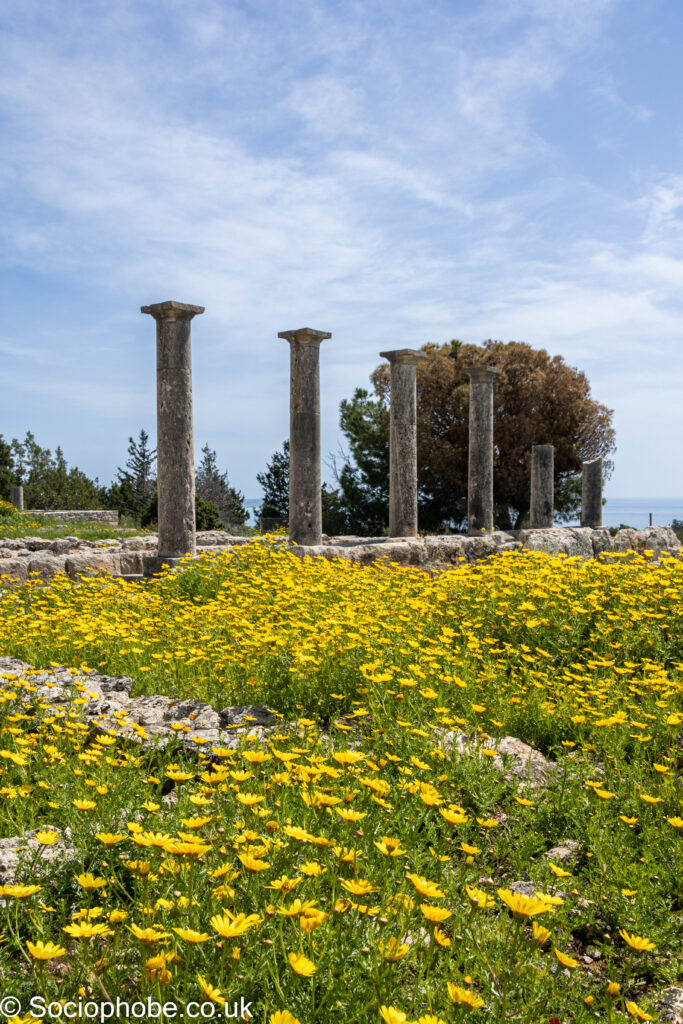
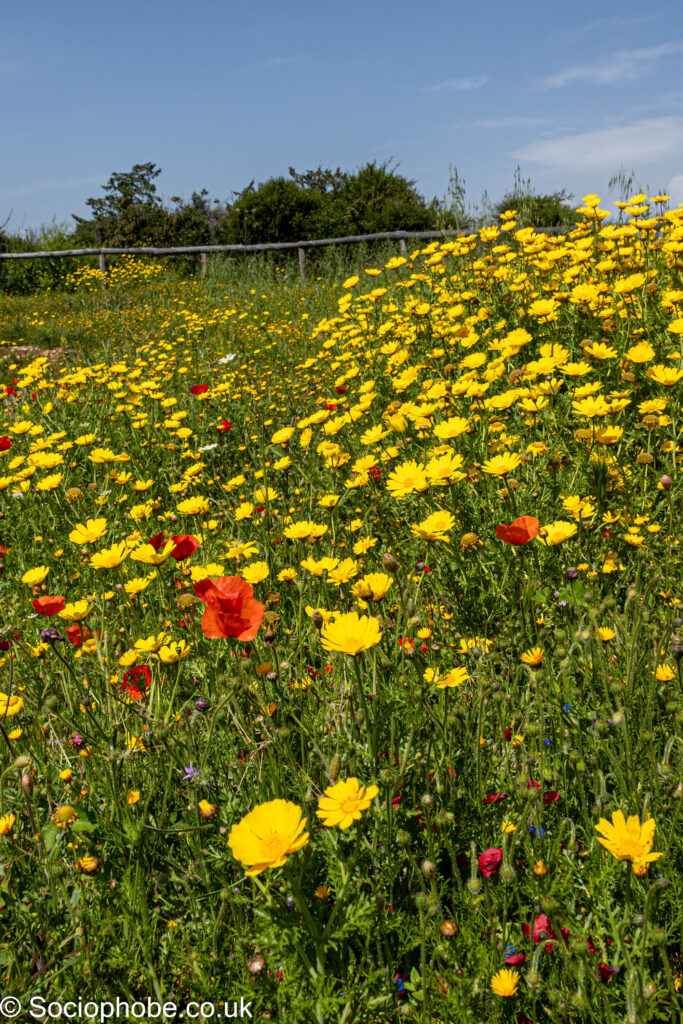
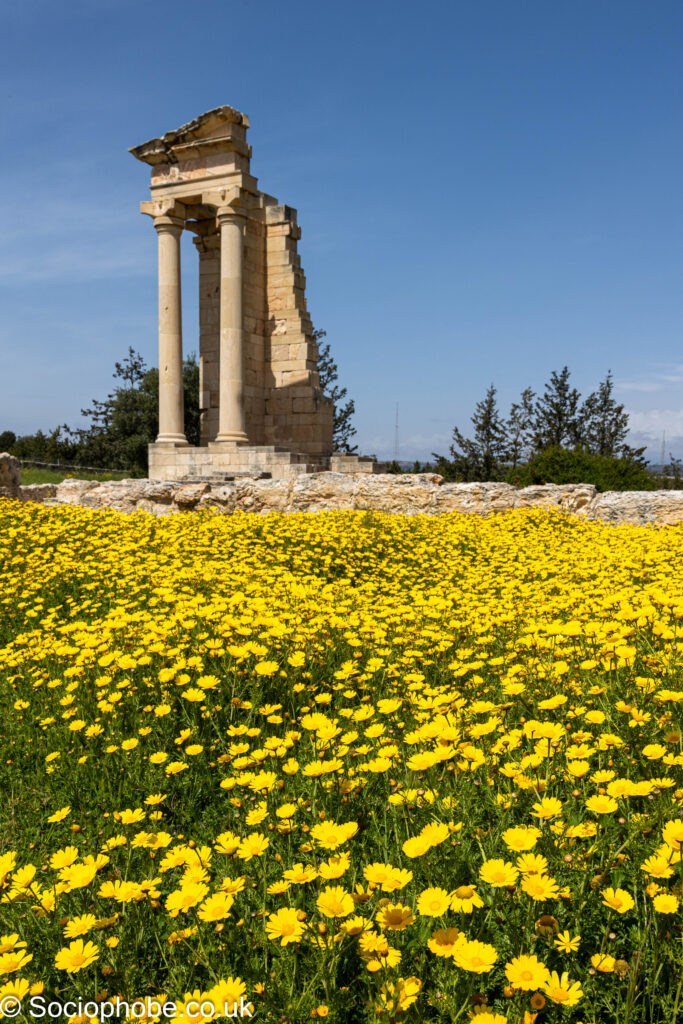
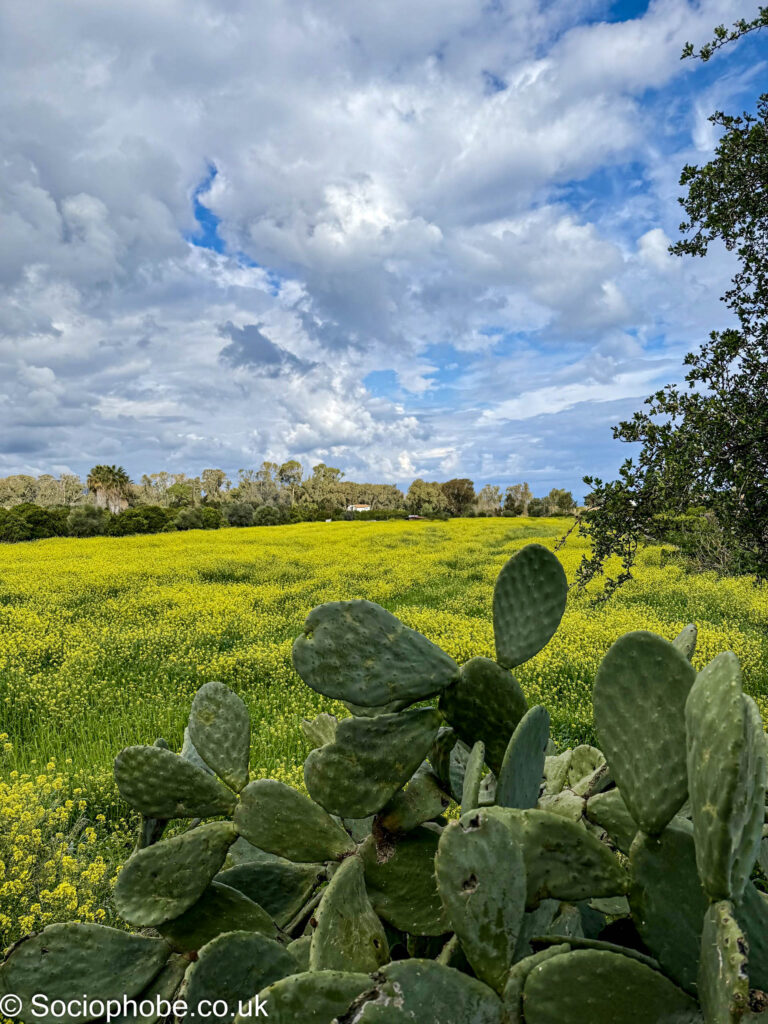
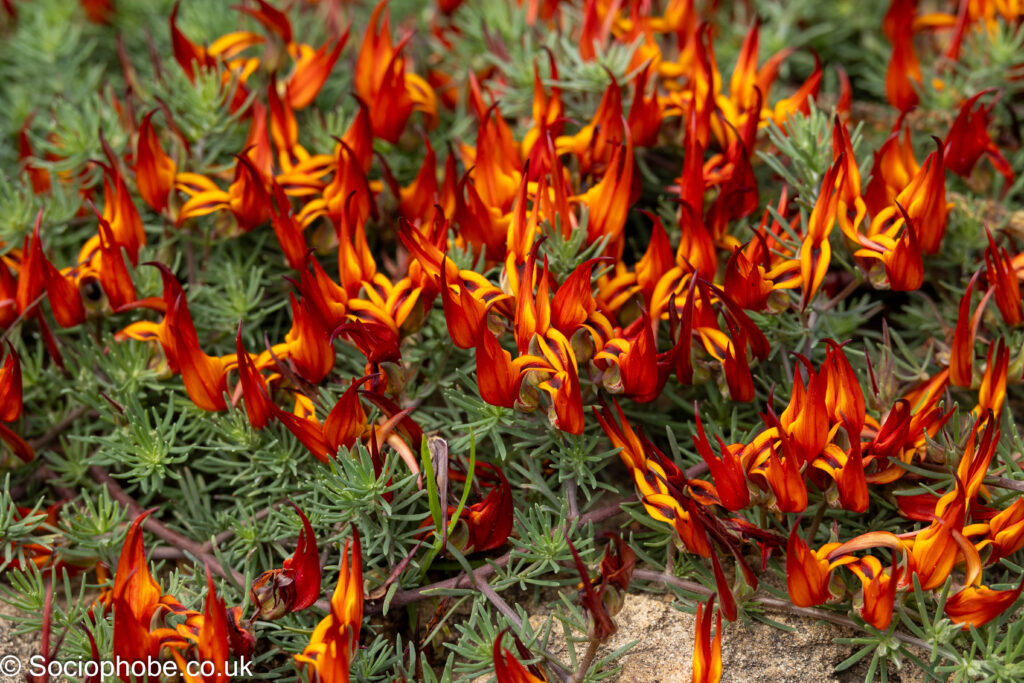
The site looked stunning due to the profusion of yellow flowers, contrasting with the bright blue of the sky. We probably spent 15 minutes on the site before the 5 minute drive to the ancient city of Kourian.
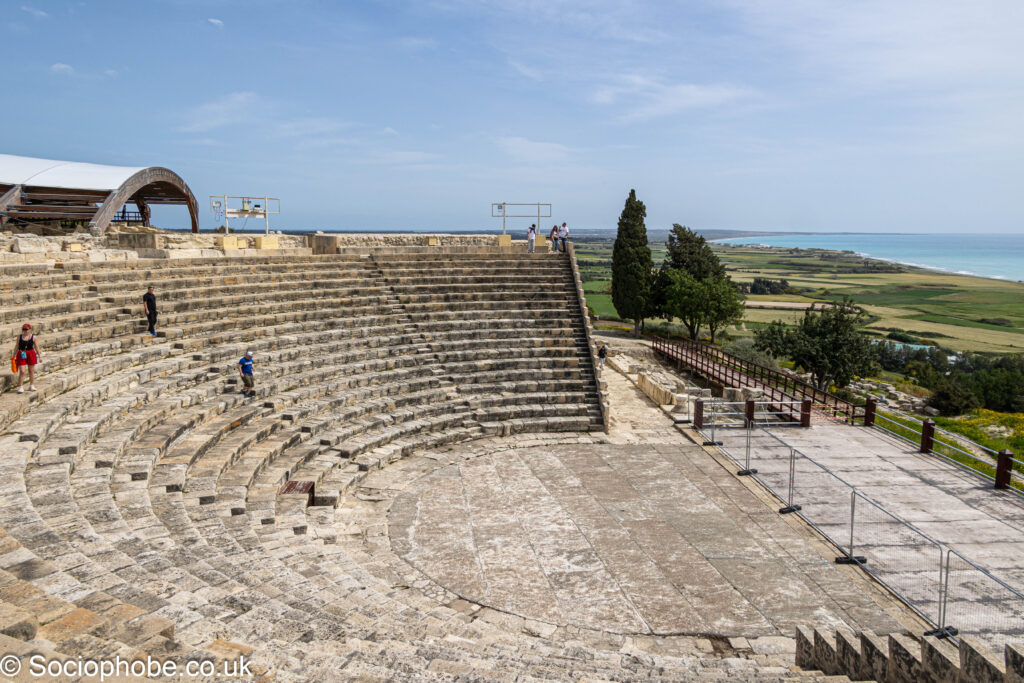
Kourian is a Greek then Roman city that was abandoned in the 7th century after earthquakes and Arab raids. Deb stayed by the visitor centre while I explored the site, a large area and partially excavated. Some of the excavated areas had mosaics in various states of completeness, the hypocaust of the baths was mostly intact and some low walls and shattered columns remained.
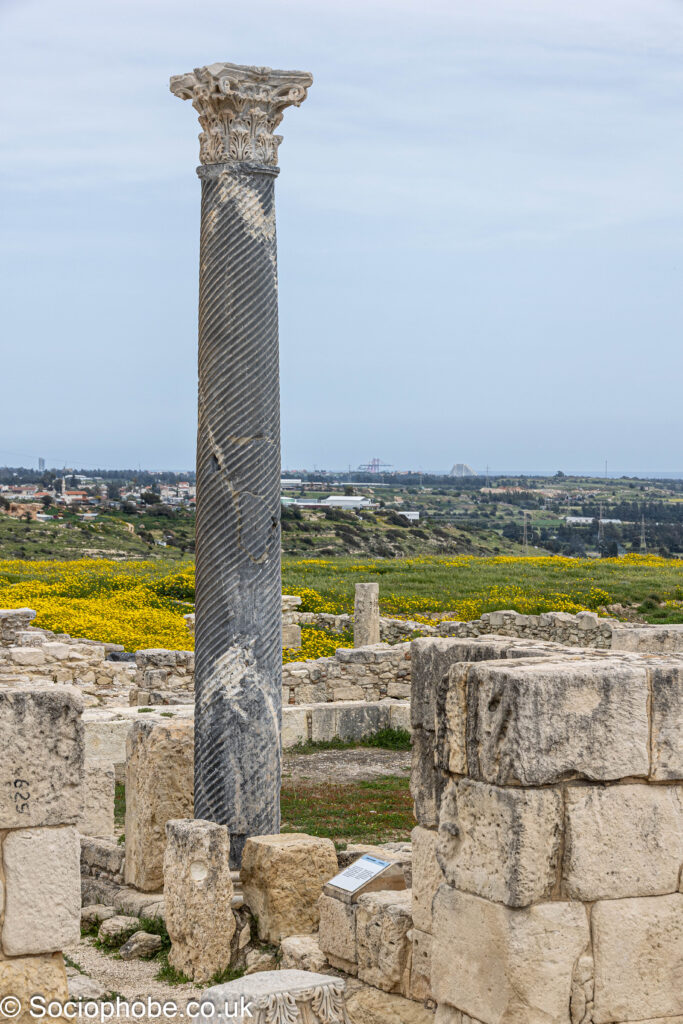
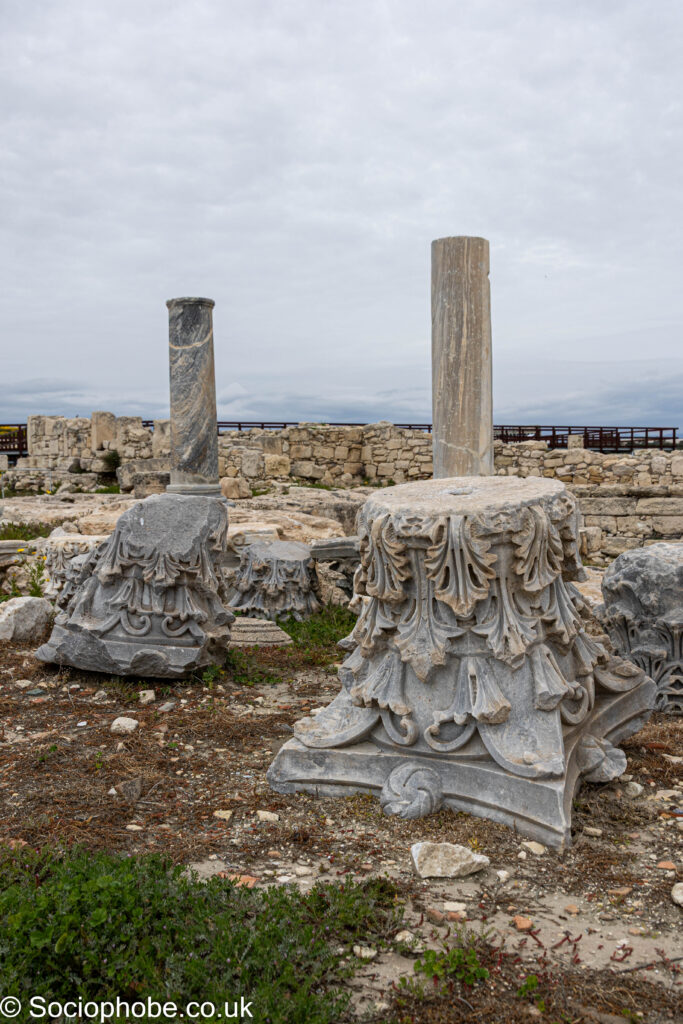
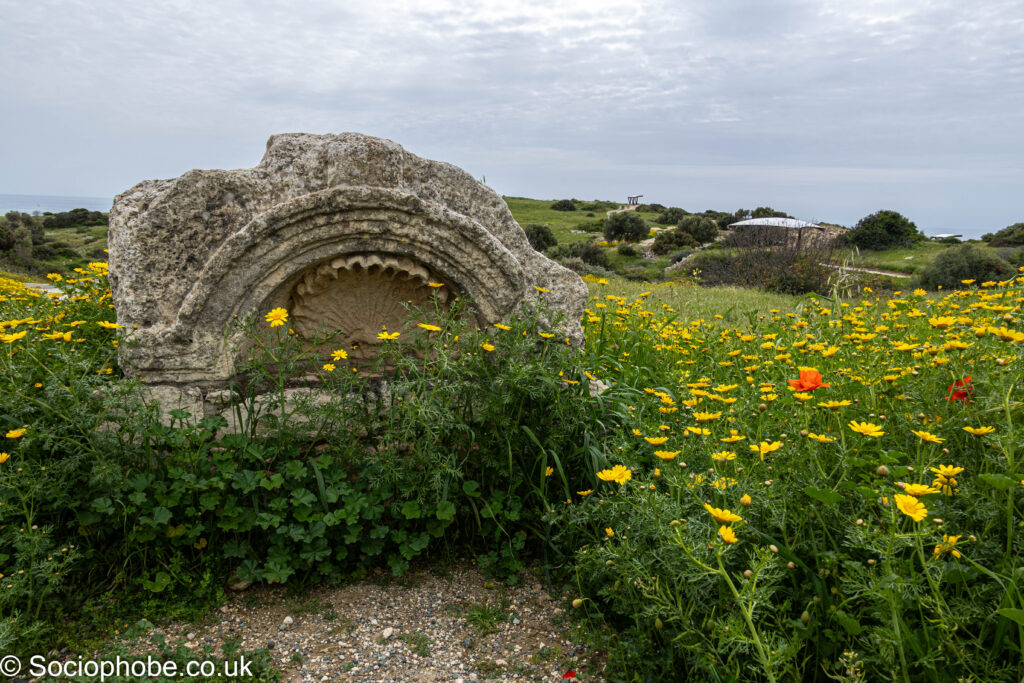
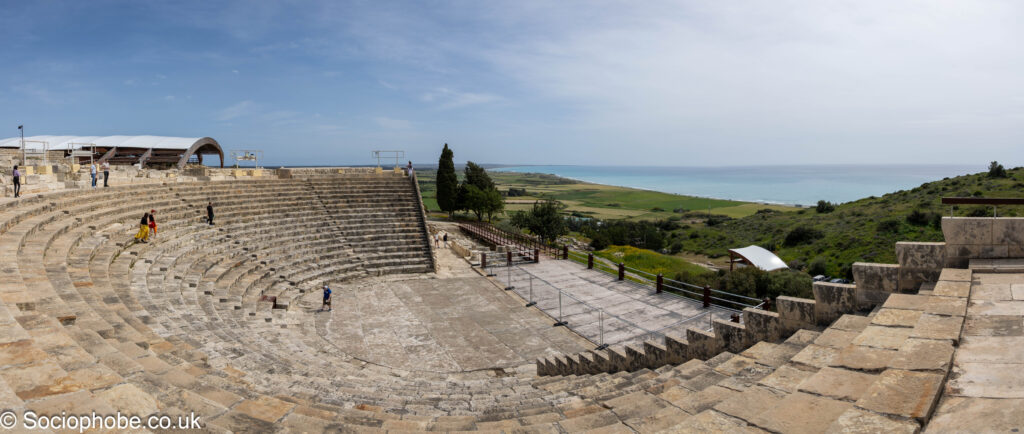
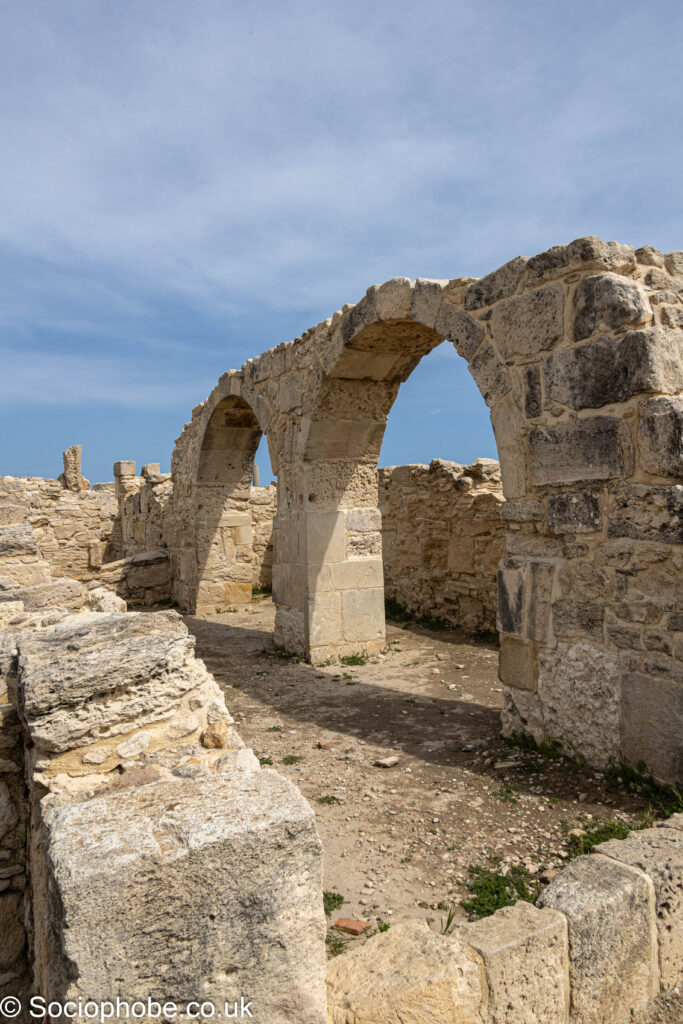
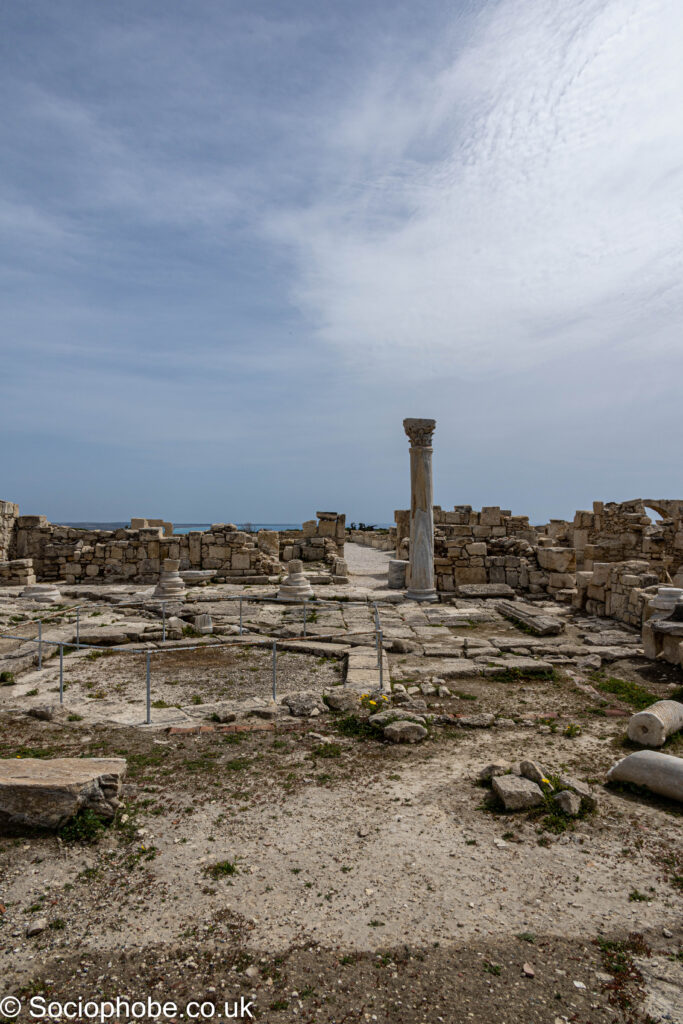
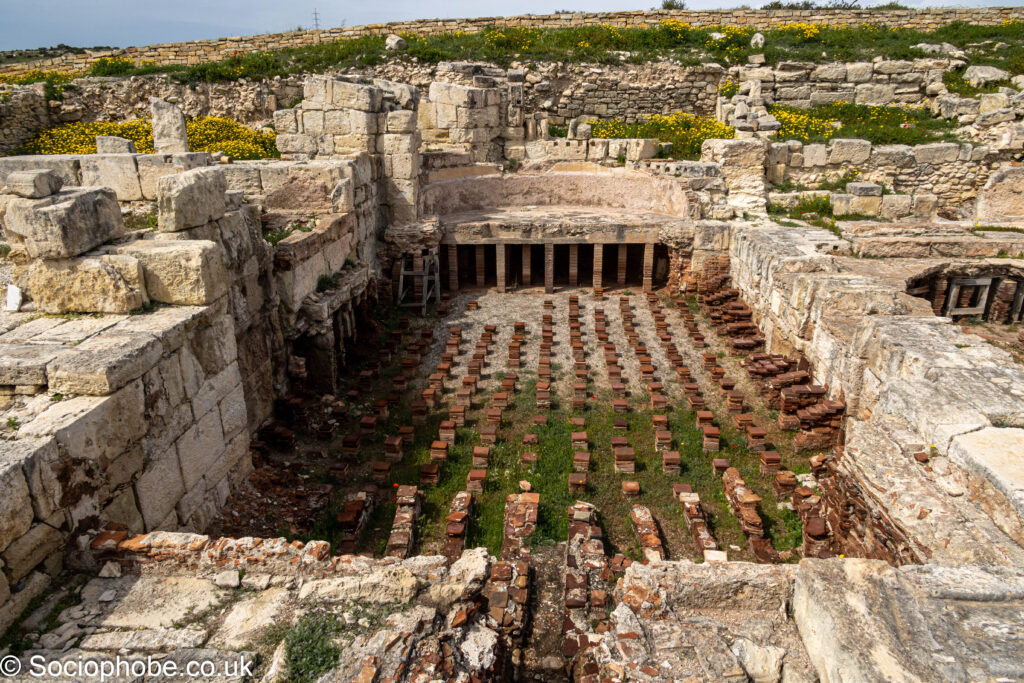
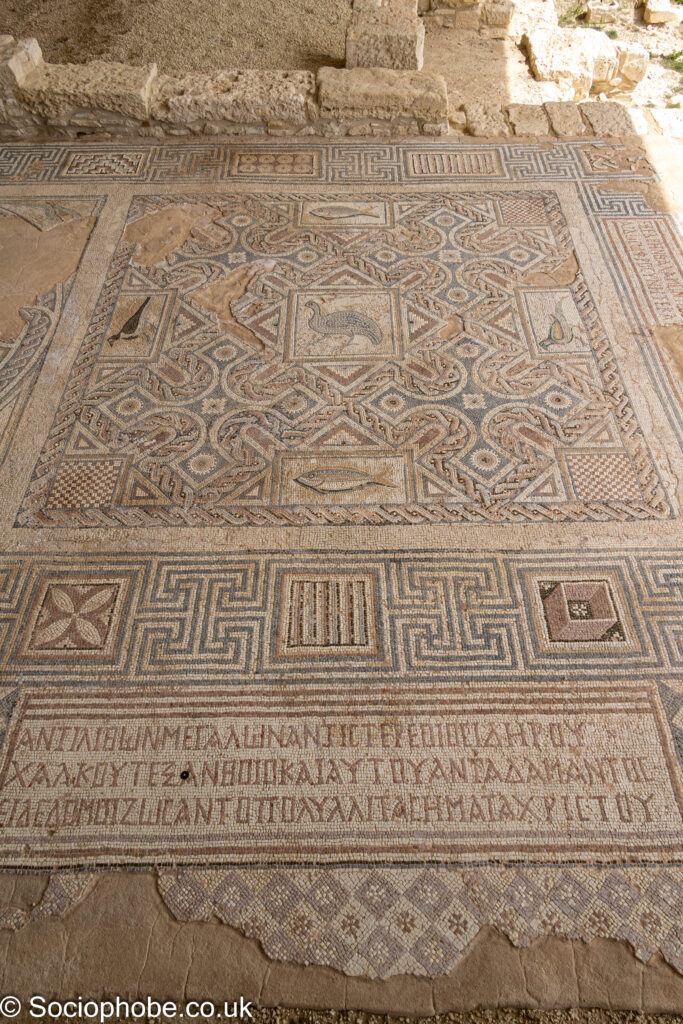
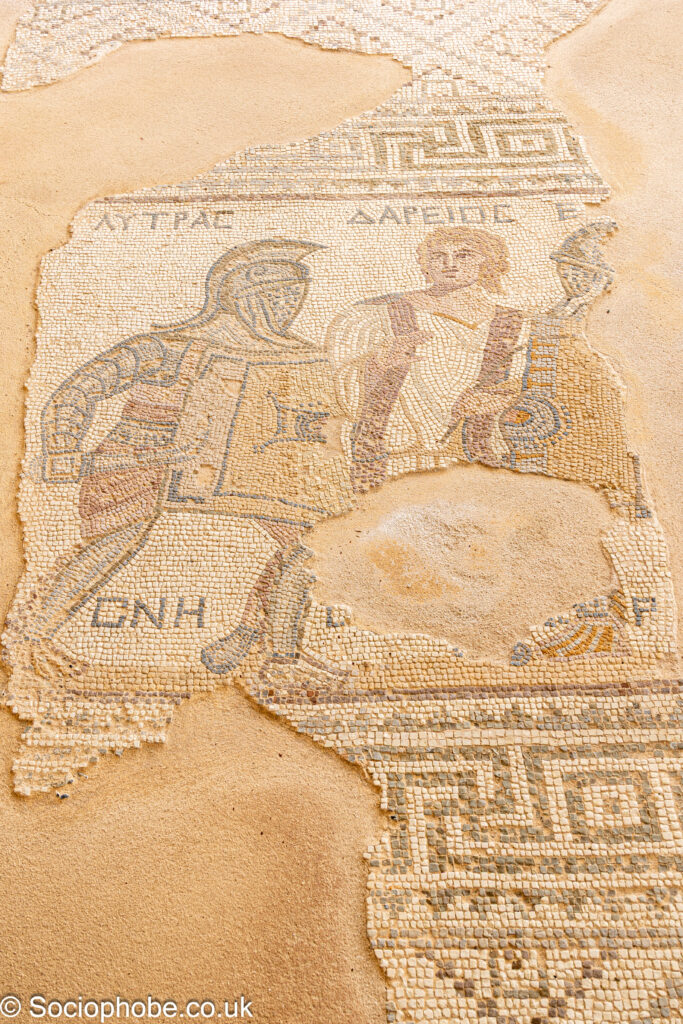
The star was the theatre, overlooking the sea and still largely intact after 1800 years. There was no onsite cafe though. I was actually shocked. I met up with Deb for our drive through Limassol to our hotel for the next two nights.
Limassol
Accommodation in Limassol
We were staying at the Sir Paul, on the edge of the old town. This is a beautiful hotel with large airy rooms and a lovely courtyard as well as onsite parking. The area seemed quiet too and we were 5 minutes walk from the castle and cathedral. Once checked in, by a fabulously friendly lady who shared a birthday with Deb, we unpacked and I sorted photos whilst Deb had a nap.
Our evening meal was near the castle, where we met Mel and Paul, at Ousia. This was a fabulous meal with exemplary service, a varied and interesting menu and just wonderful food. I had Chicken Commandaria which was beautifully tender and deliciously flavoured and each of us had a different and gorgeous dish. Prices were ridiculously reasonable too. I am sad to say it didn’t stop us having ice creams about 20 minutes later after a quick walk to the marina. We left M & P exploring whilst we headed back to the hotel. Breakfast at 7:30 tomorrow before our trip to Famagusta.
Famagusta Area
We had a wonderful, if rushed breakfast at the hotel and then got a Bolt to meet Mel and Paul. Paul had arranged the trip and was doing the driving so it was quite nice to be a passenger with no responsibilities. We drove to the border crossing at Pyla and parked the car, walking across the border to meet our guide.
Monastery of St Barnabus
Our first stop was the Monastery of St Barnabus, originally founded in the fifth century then destroyed by Arab raiders, rebuilt in the ninth century and renovated in the eighteenth before being abandoned in 1974 after the Turkish invasion. Barnabus accompanied Paul to Cyprus and they are credited with introducing Christianity to the island. The monastery is now a museum, the wall and ceiling frescoes having been almost completely whitewashed to leave a stark and uninspiring building.
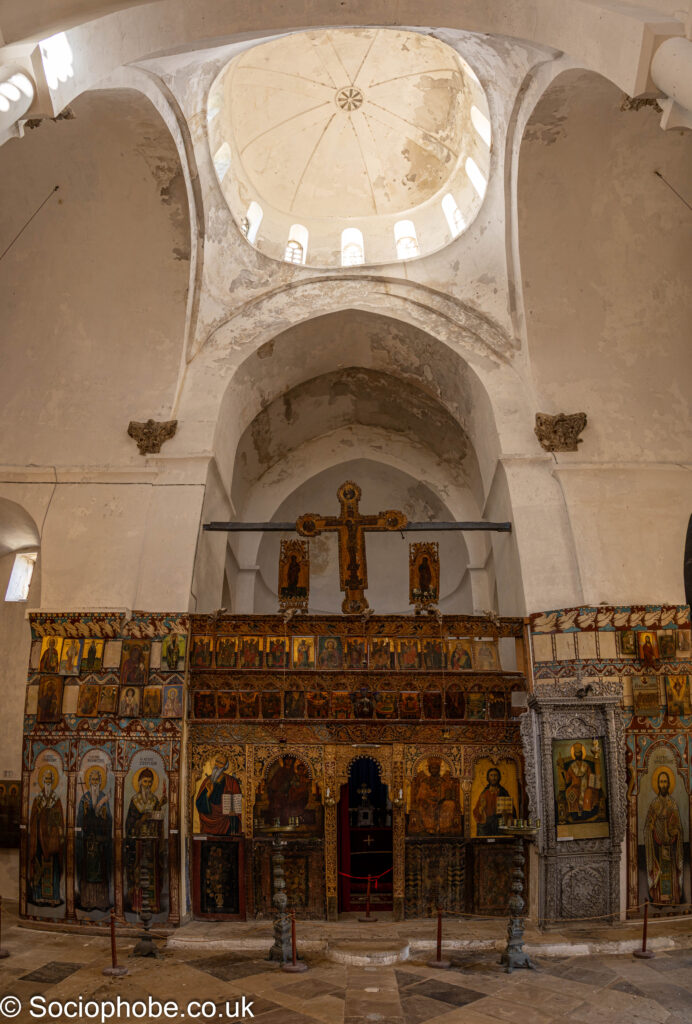
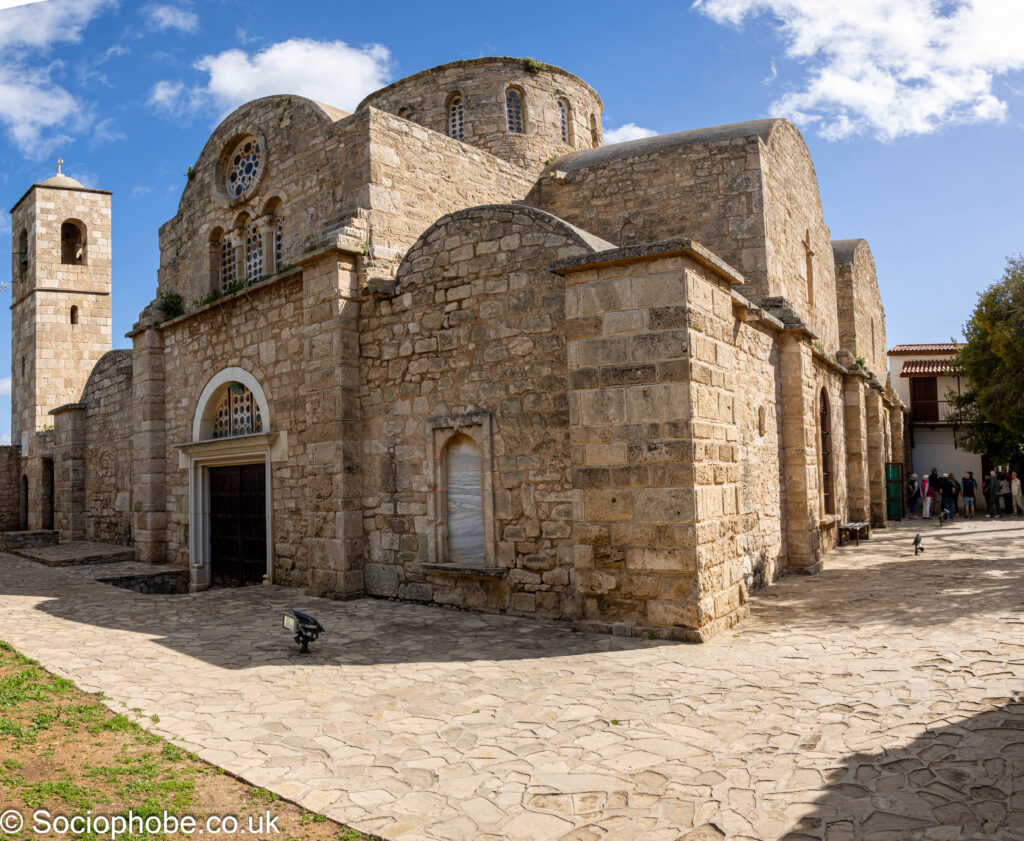
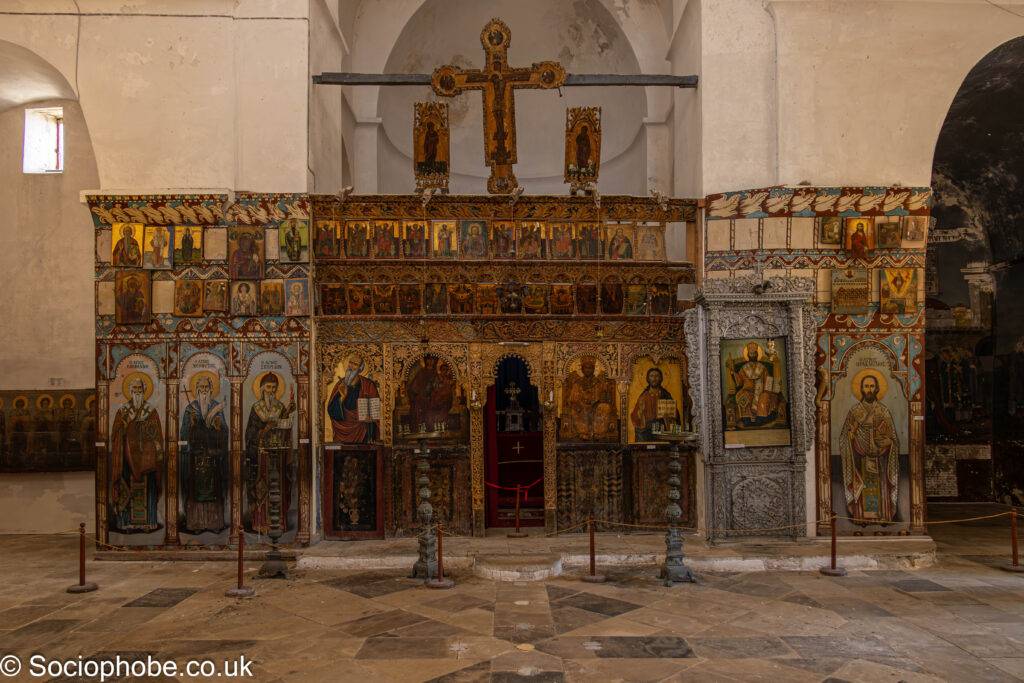
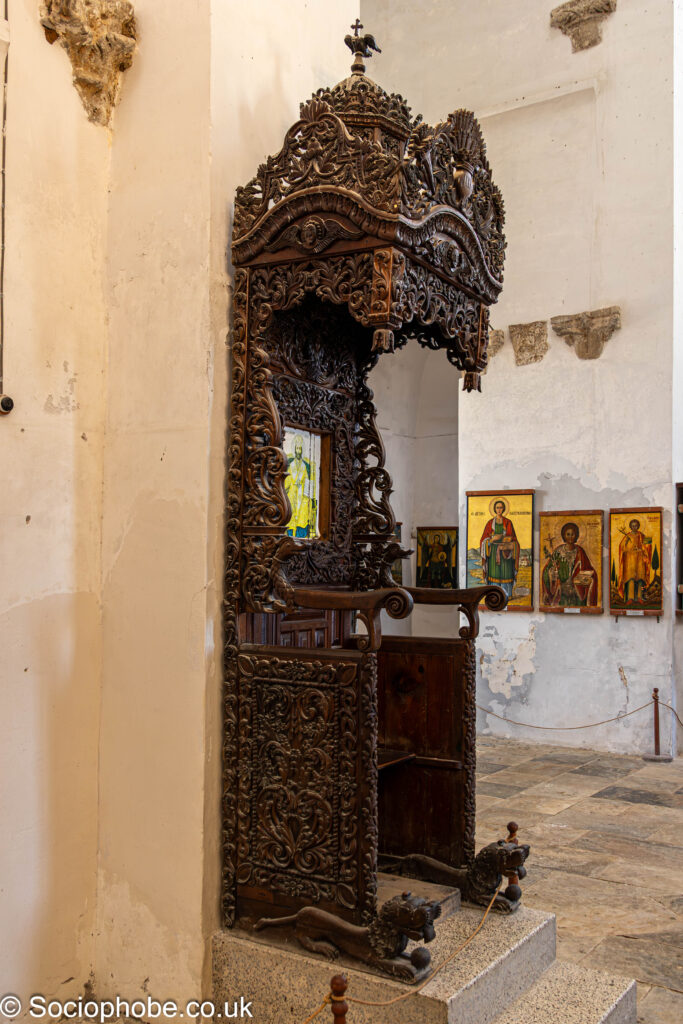
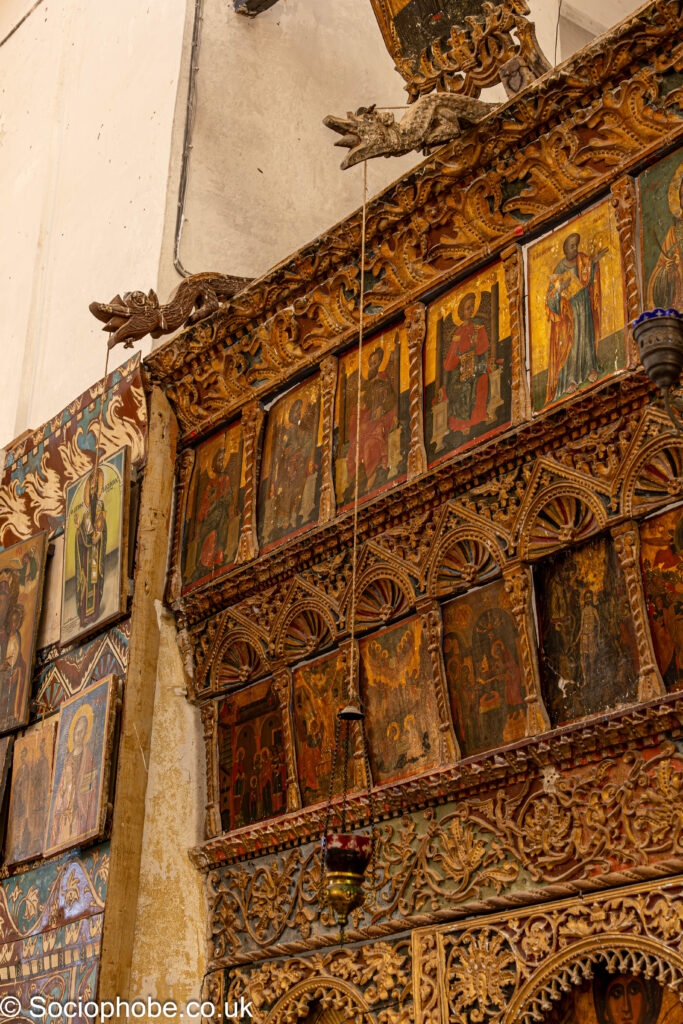
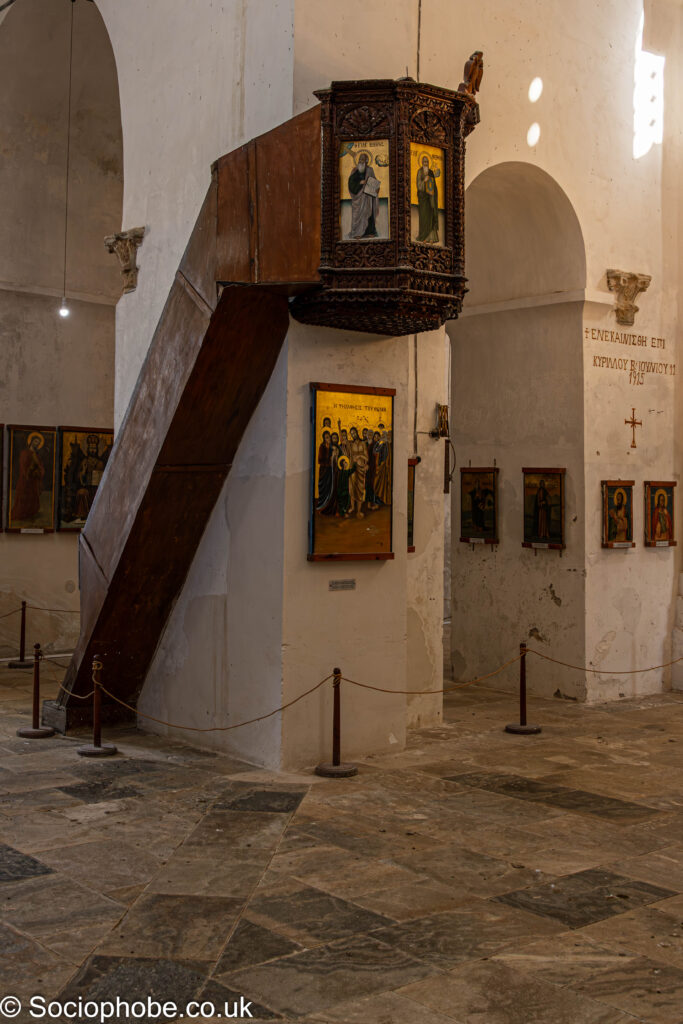
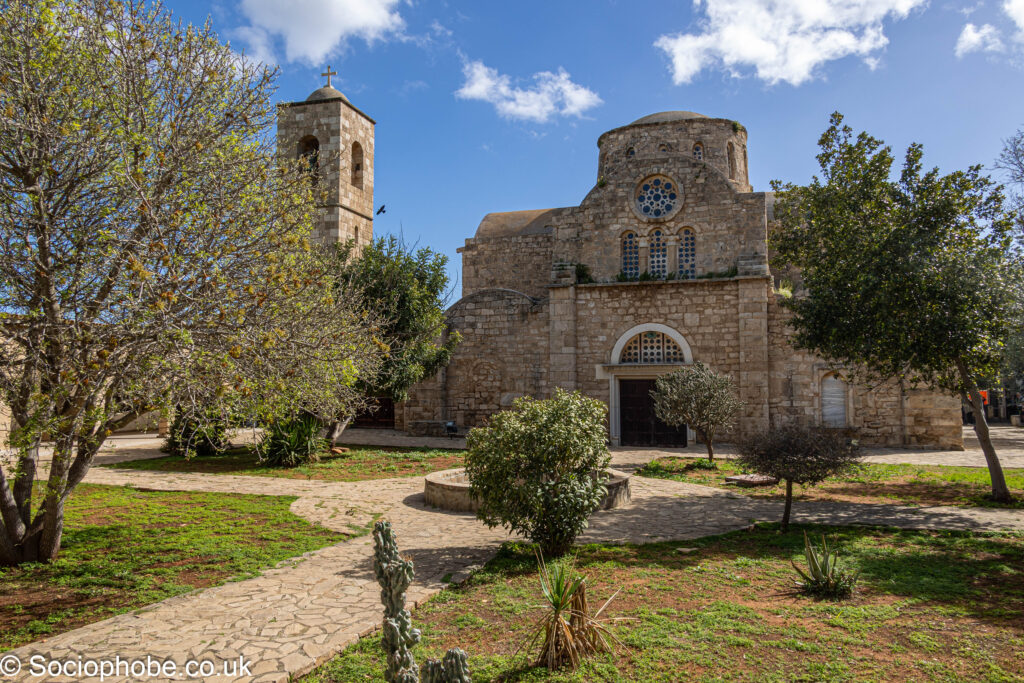
Inside there are various icons displayed, possibly gathered from other churches under Turkish control. After seeing the splendour of the painted Cypriot churches this important site felt a bit of a let down. We were on site maybe 20 minutes but luckily missed the 2 coaches that arrived as we were leaving.
Salamis Ancient City
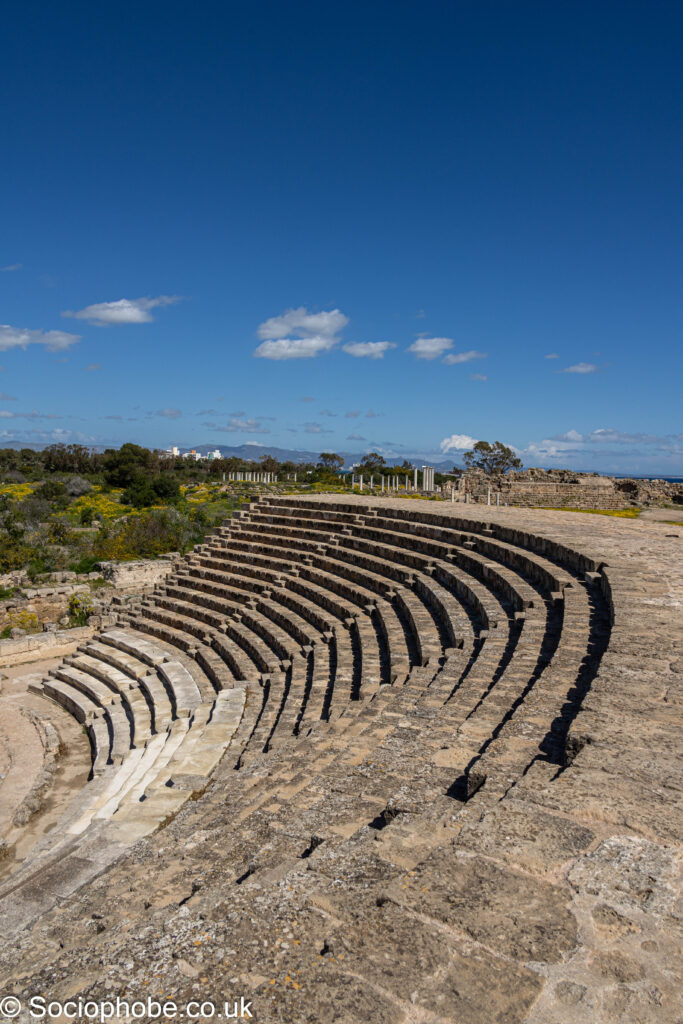
The next stop was a few minutes drive away, the ancient city of Salamis. This was a city founded in the 7th century BC that made its fortune by exporting copper from nearby mines. It was an important Greek and then Roman city before being destroyed by Arab raids in the 7th century. The site was quite extensive although only a small portion has been excavated.
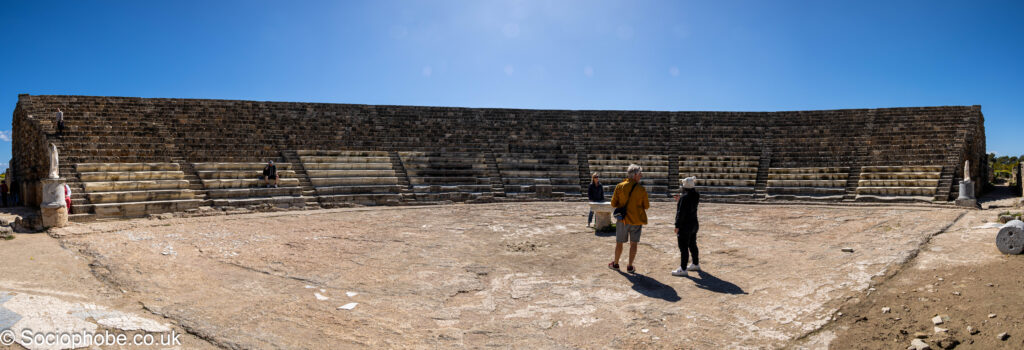
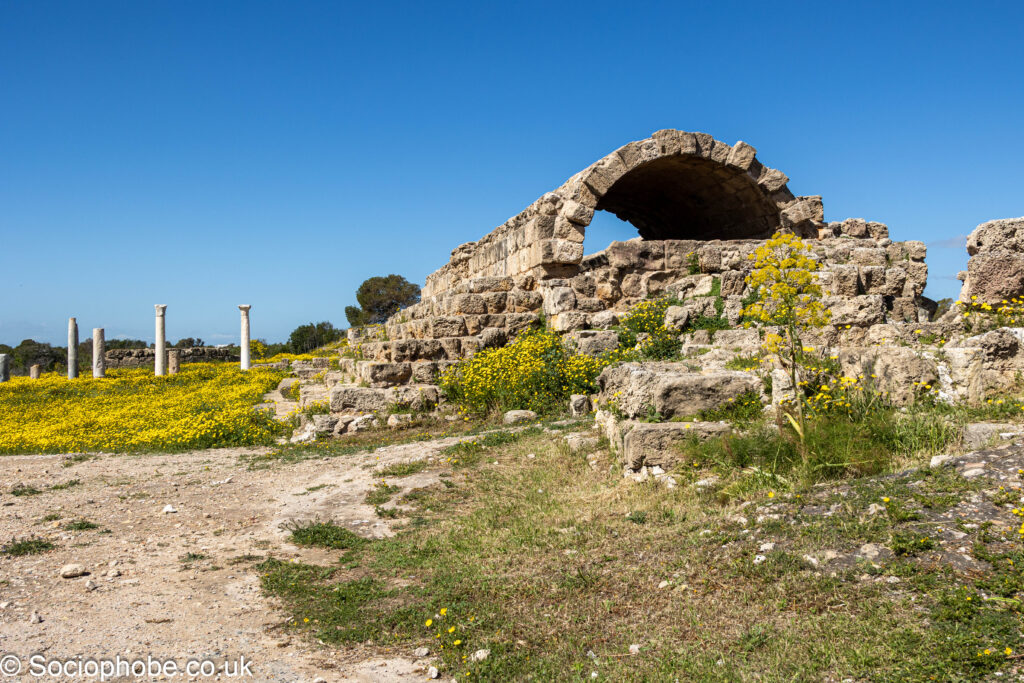
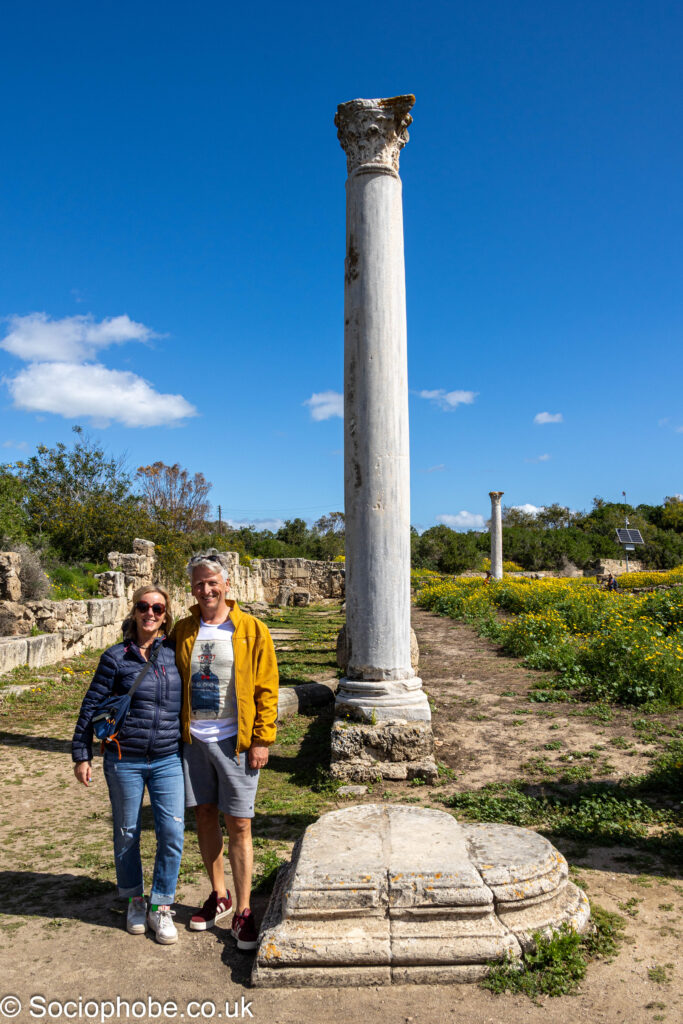
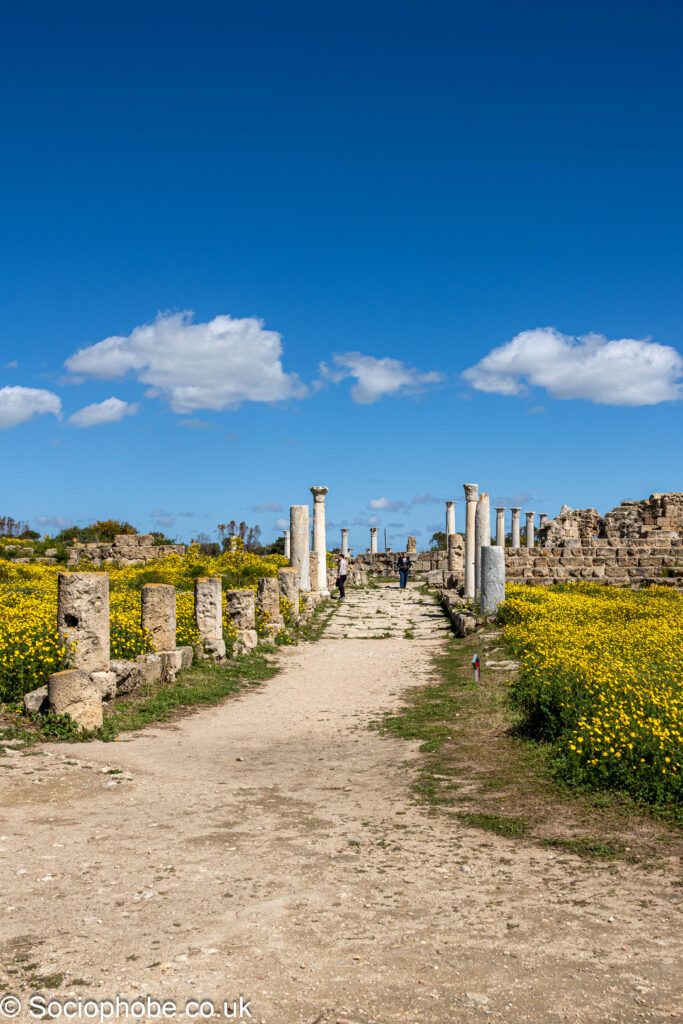
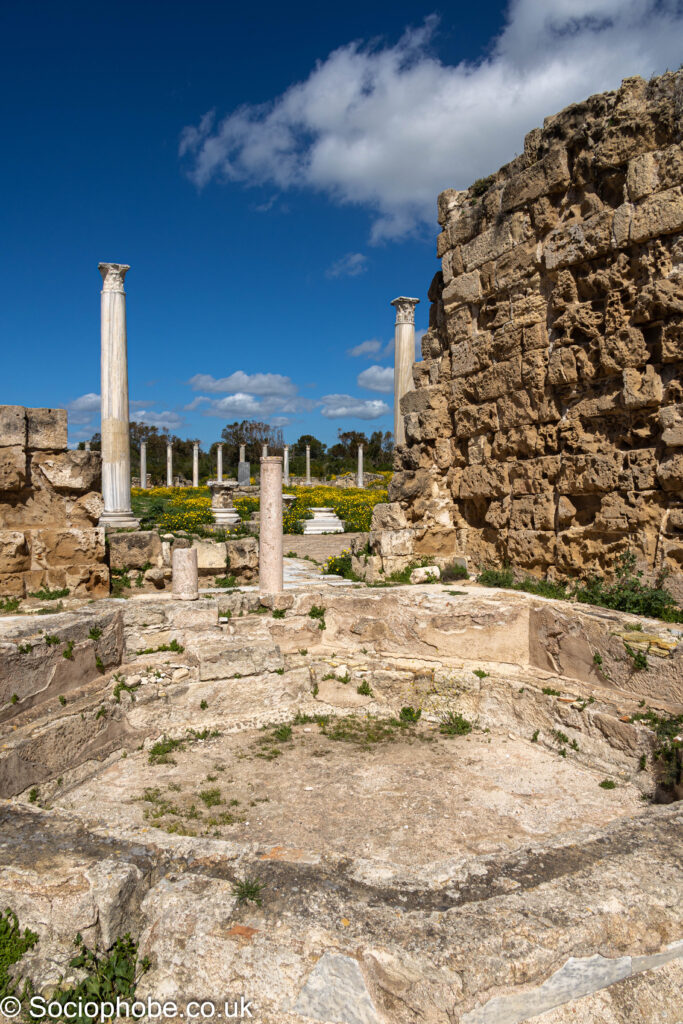
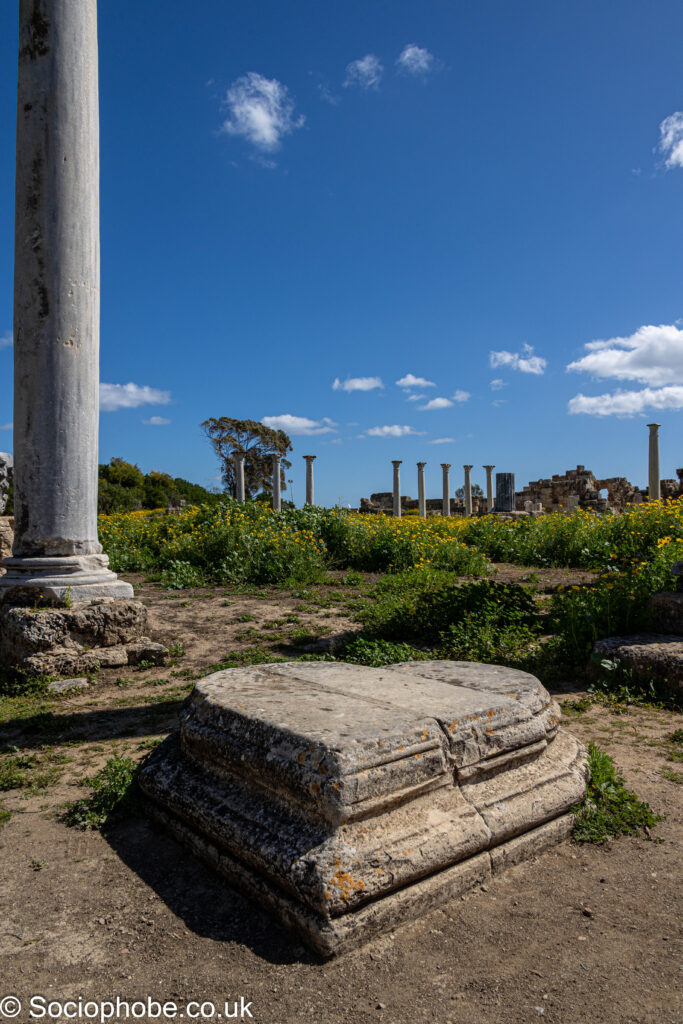
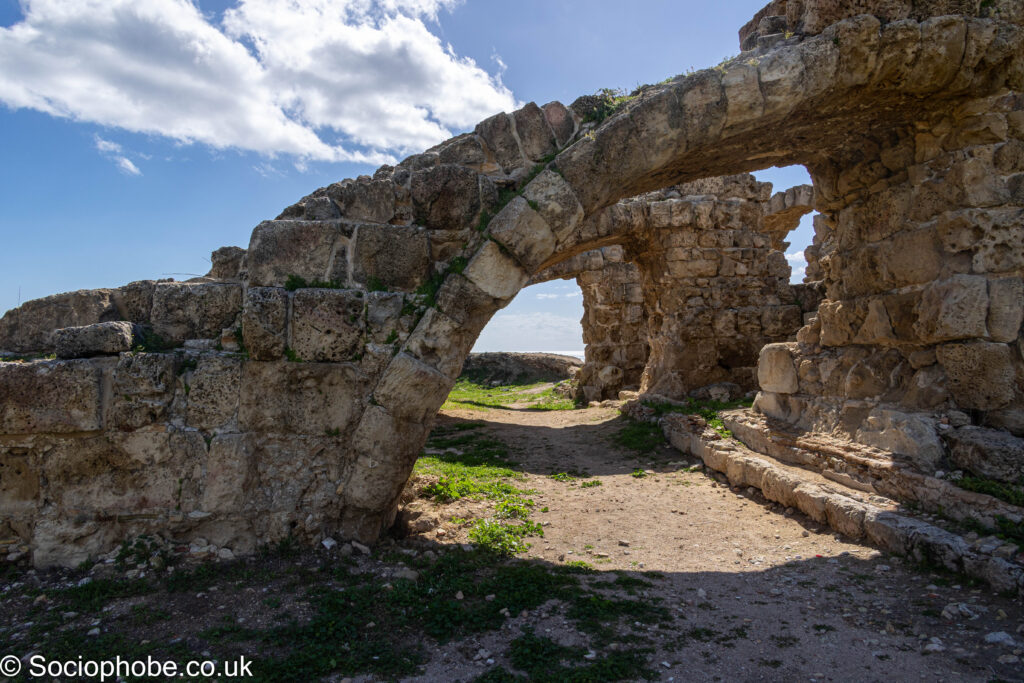
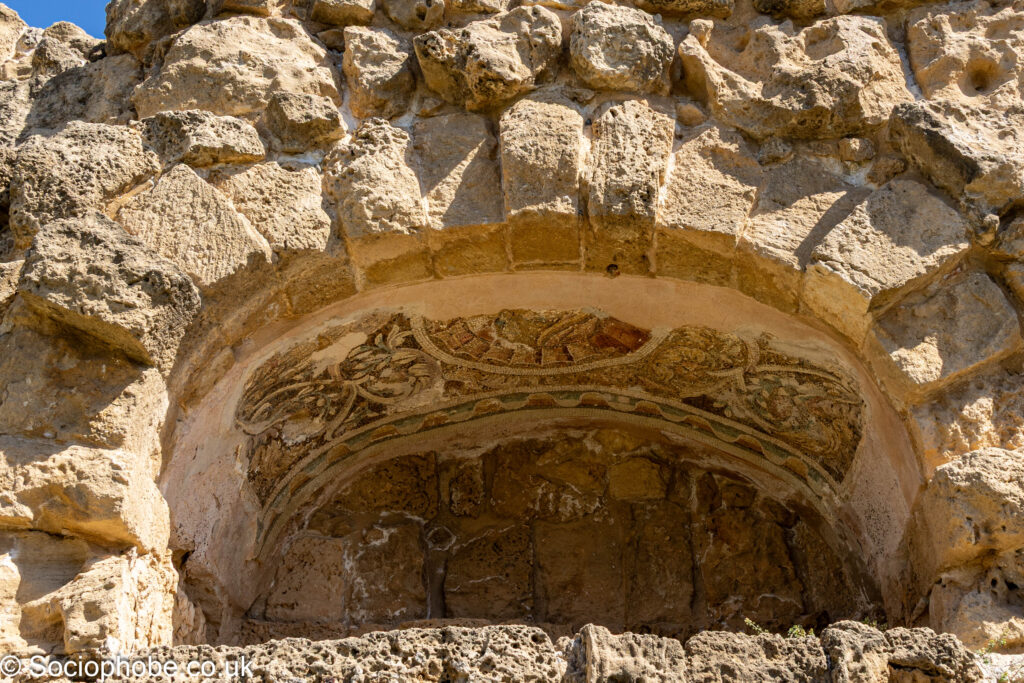
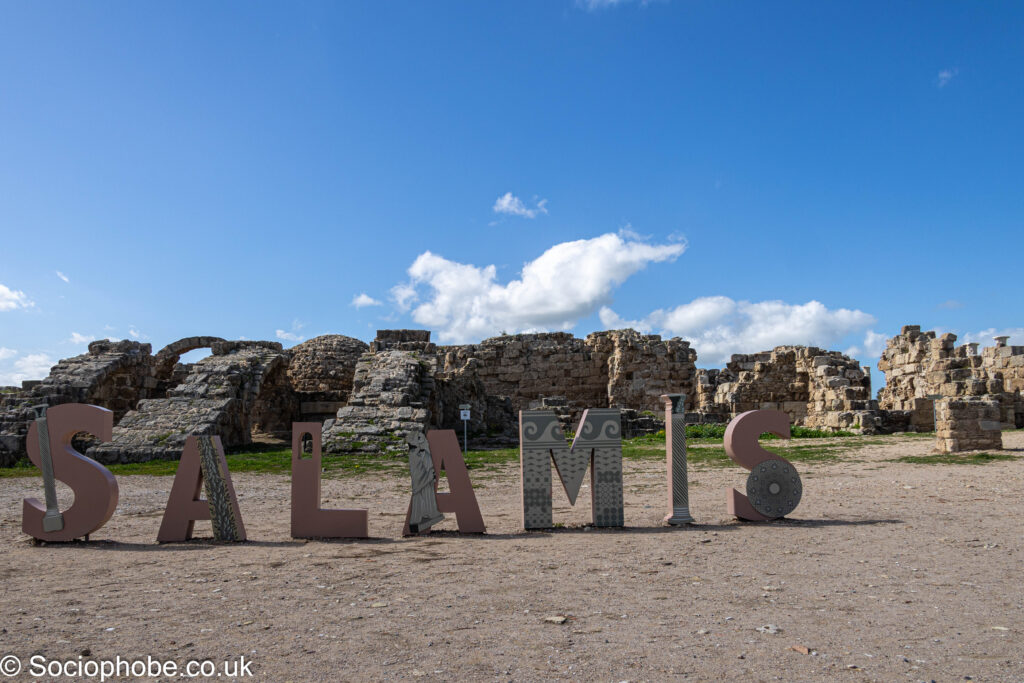
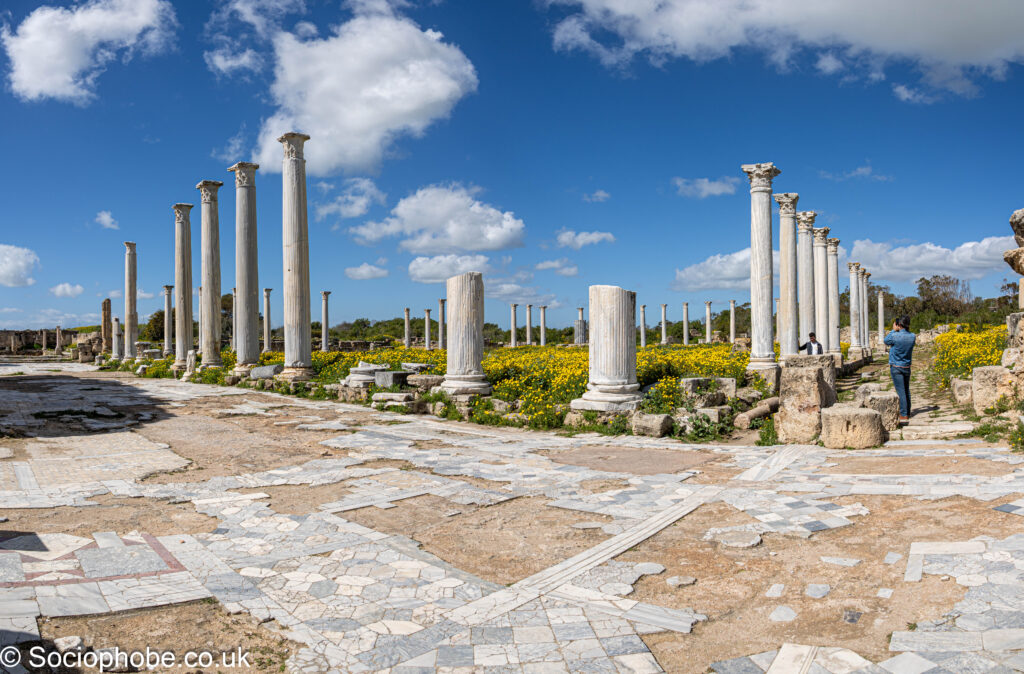
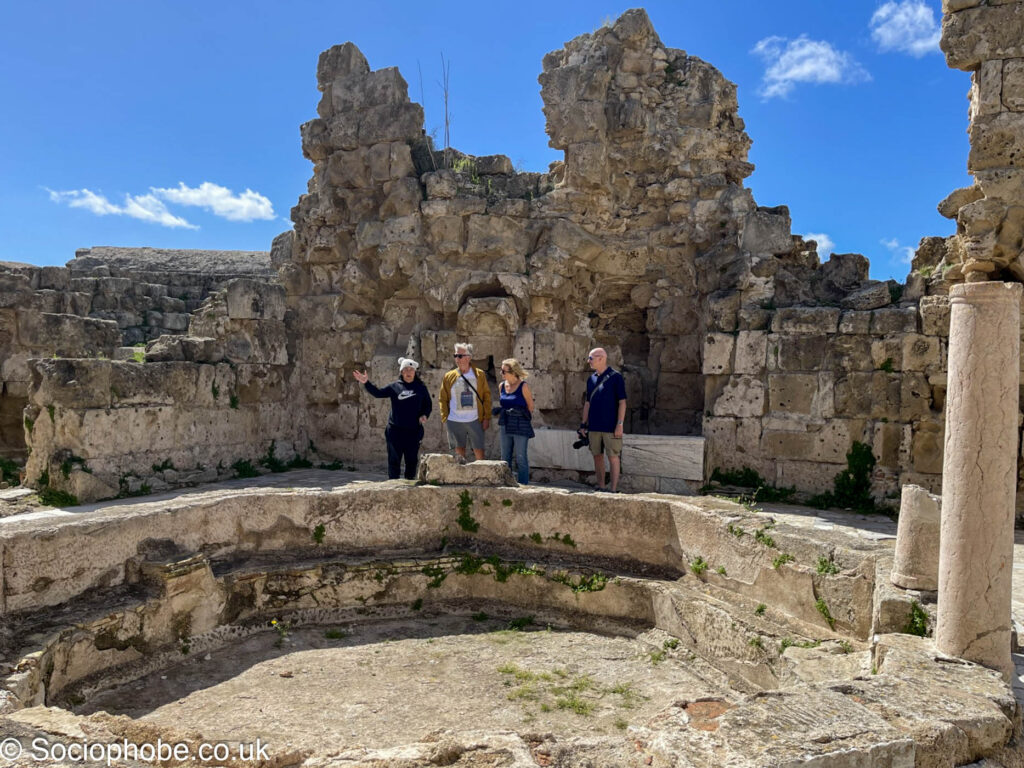
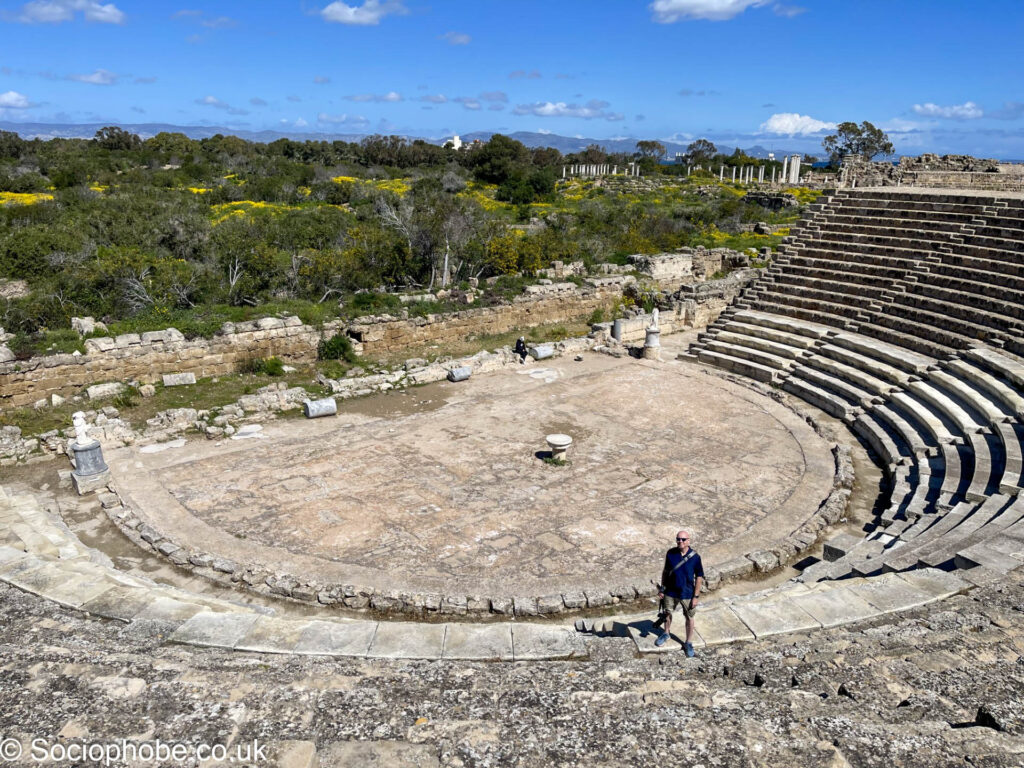
When we visited it looked absolutely beautiful, coated in bright yellow flowers. Some parts – such as the gymnasium and the theatre – have been restored, others not so much so. We probably spent an hour exploring the site, the baths and theatre being particularly impressive. We saw a small section of decorative mosaics and a small fresco on a doorway ceiling.
There was no route or signposts as such so it was really a case of wandering around, luckily with a guide. There were lots of very happy stray dogs on the site, very social as they made a point of saying hello to everyone.
Famagusta
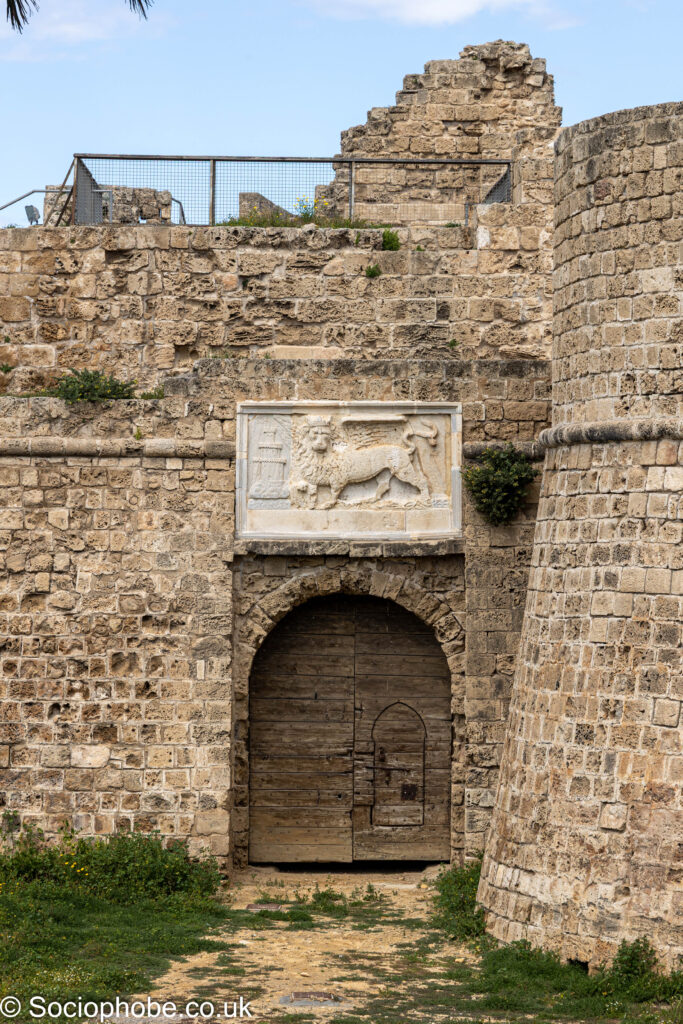
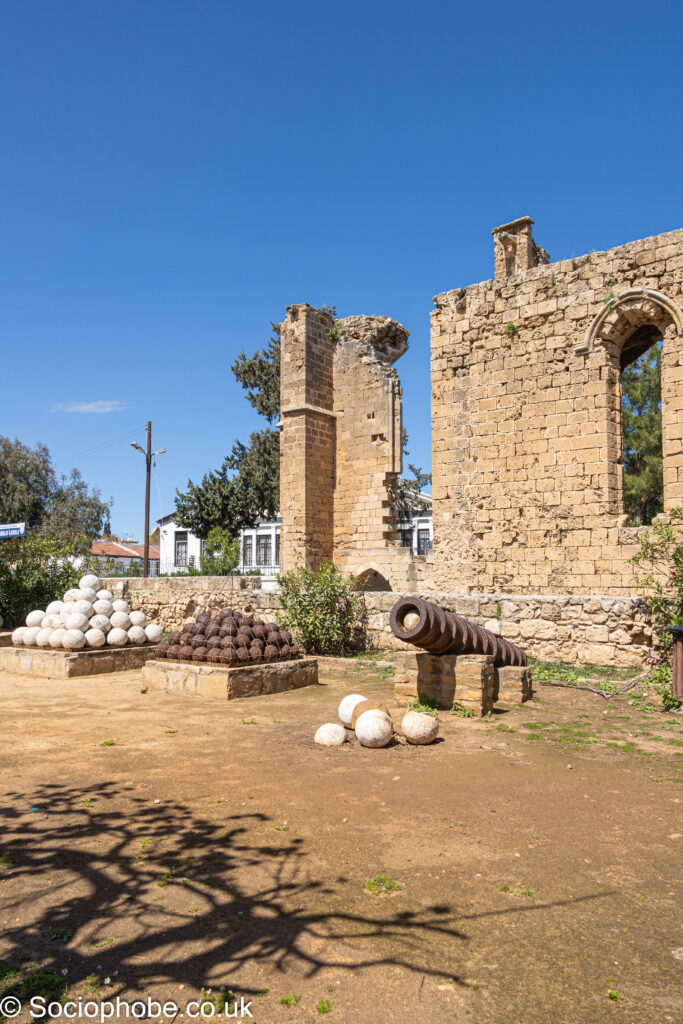
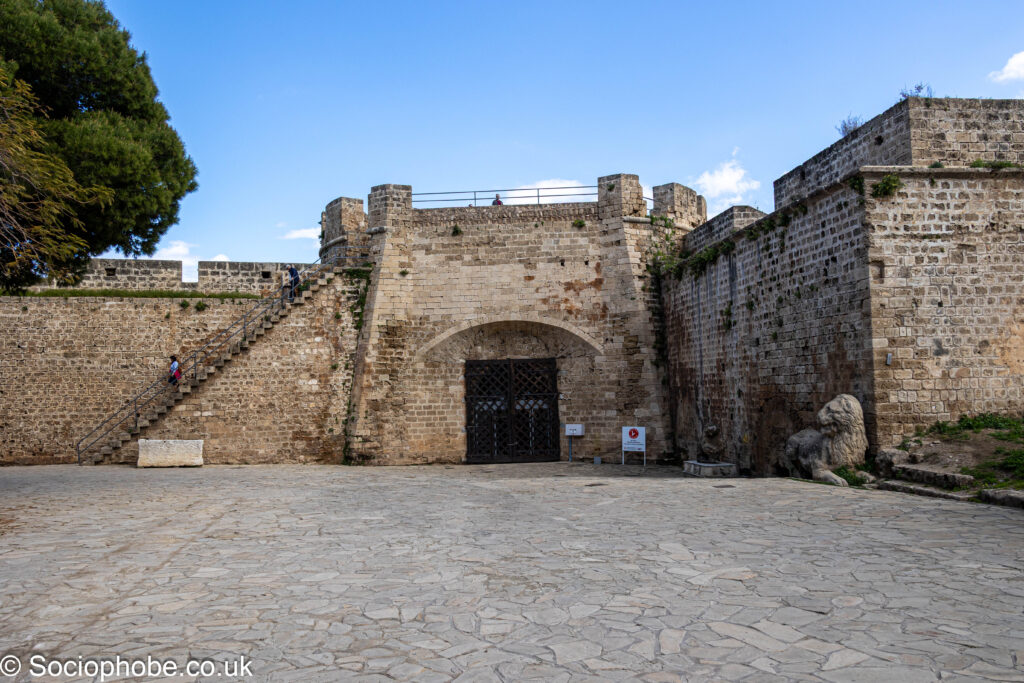
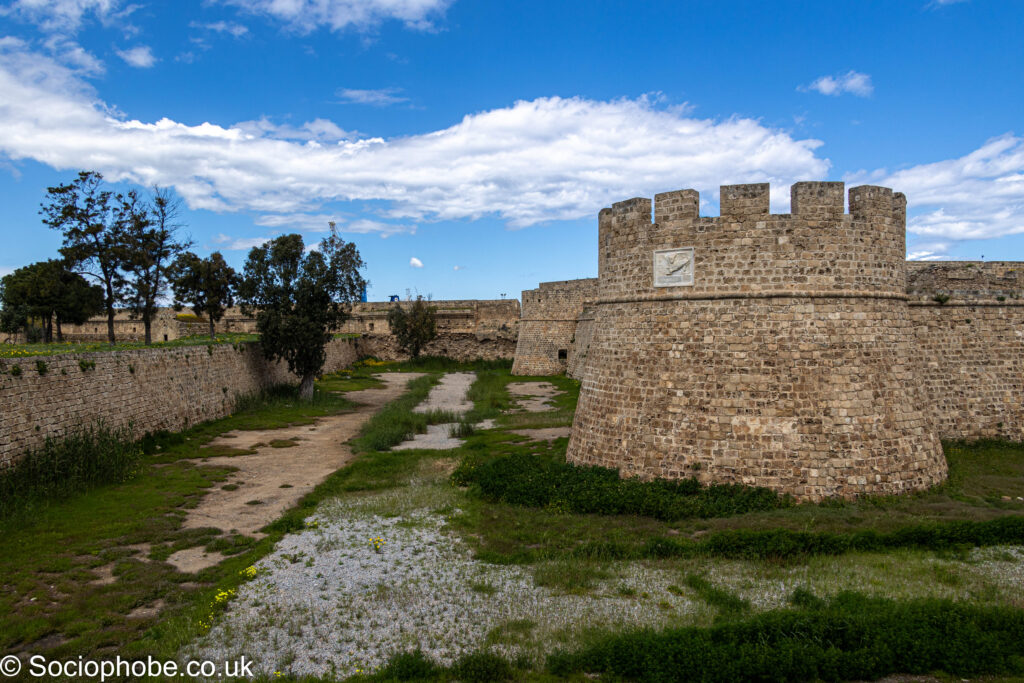
Famagusta was one of the most important cities on the island, site of a bloody siege in 1571, ending in the Turkish capture of the city and flaying alive of the captured Venetian commander. The city is surrounded by 3 miles of well preserved Venetian walls and has a profusion of Gothic architecture inside the walls. We parked inside the city walls and the city was incredibly quiet, almost deserted.
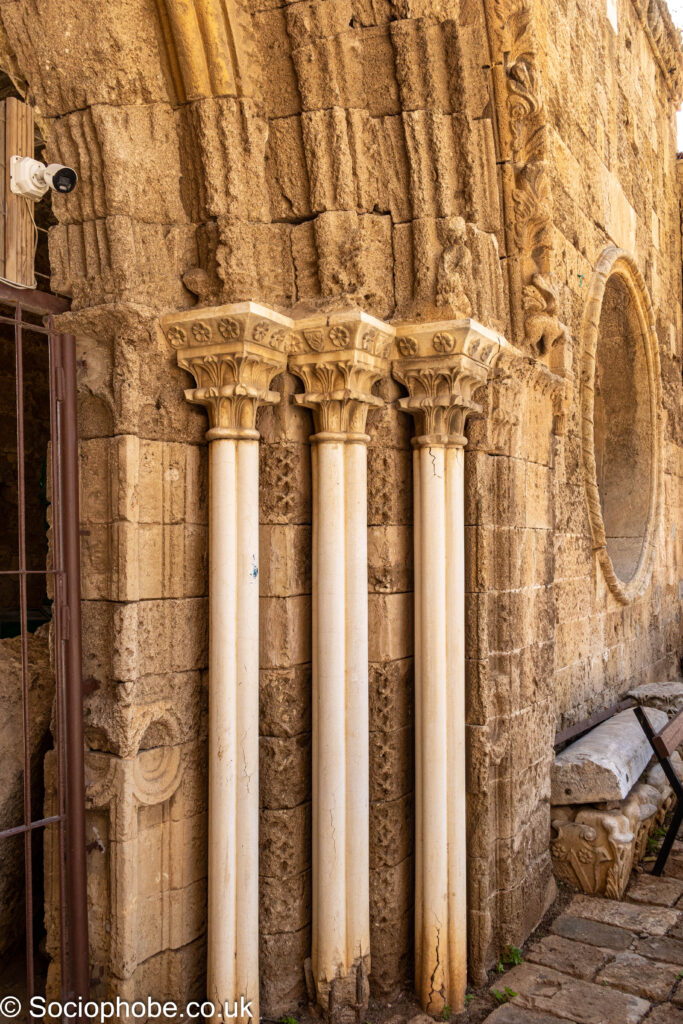
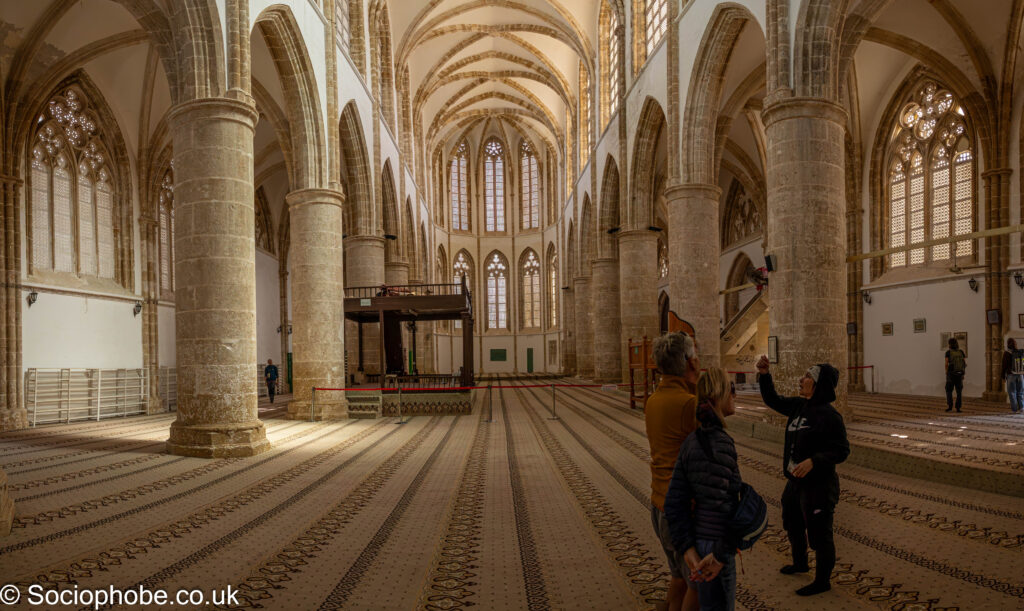
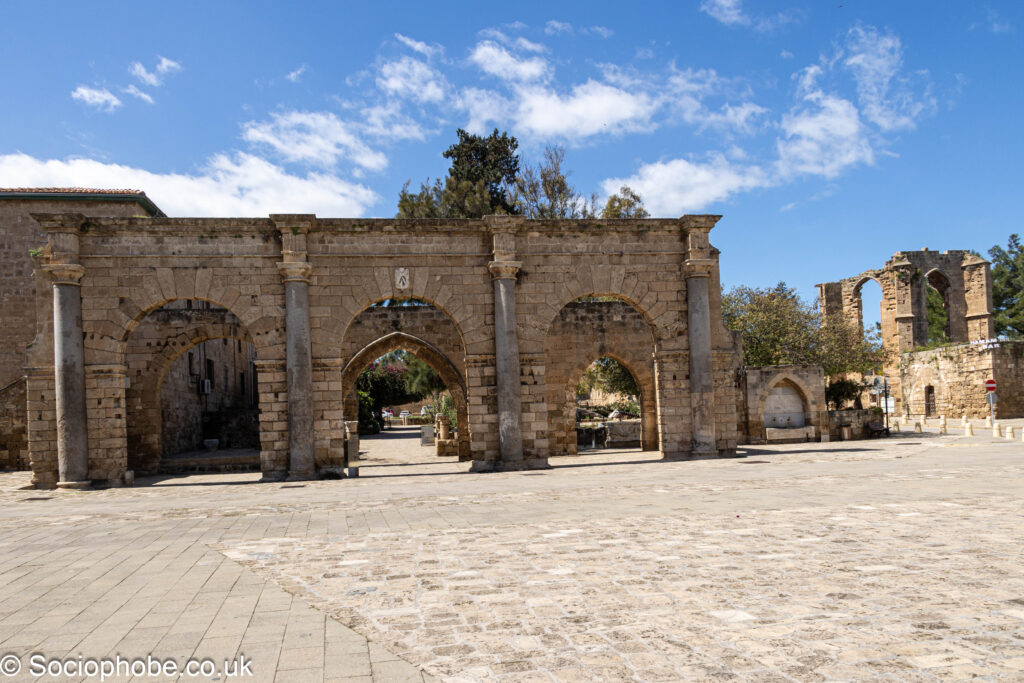
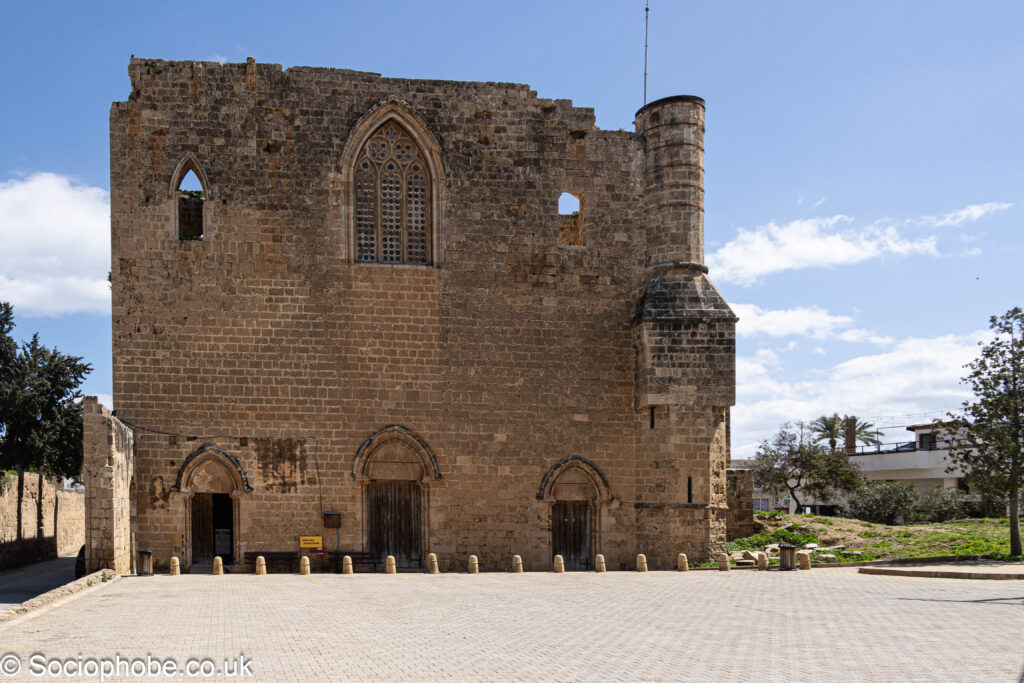
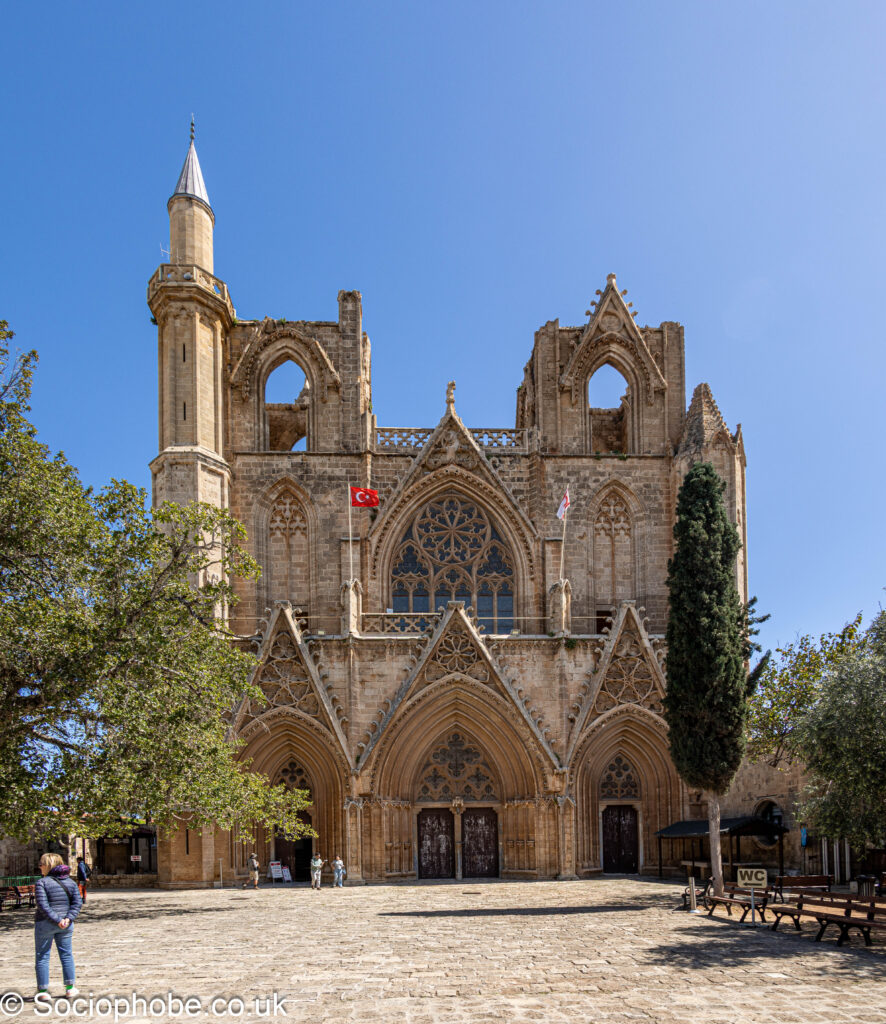
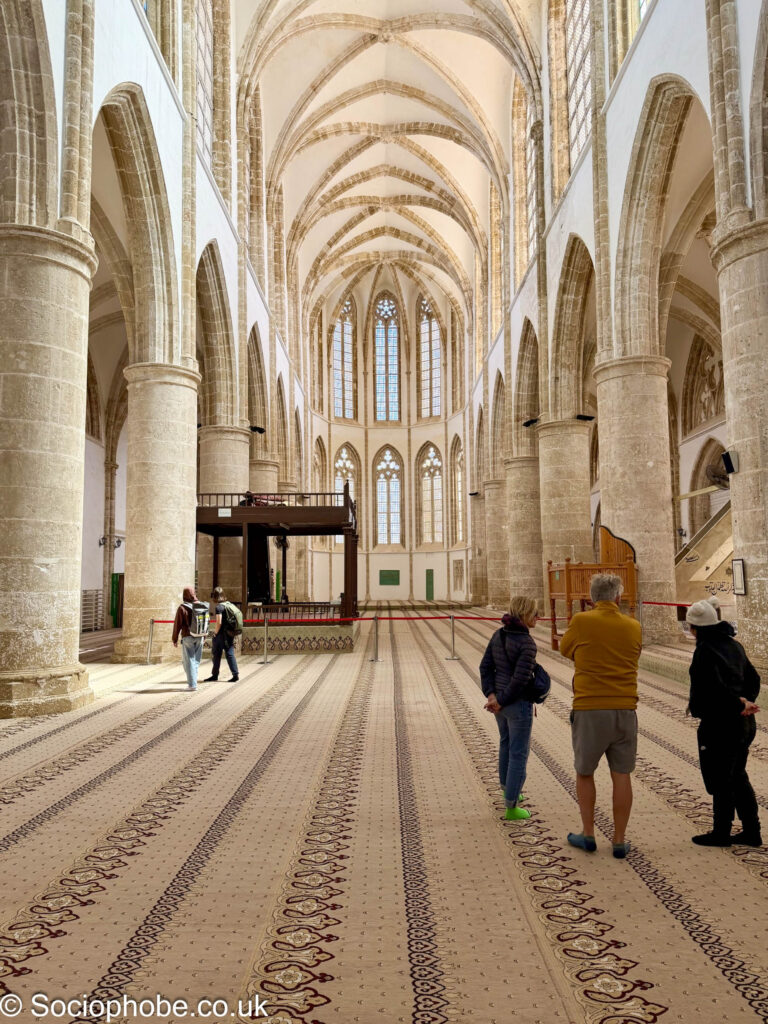
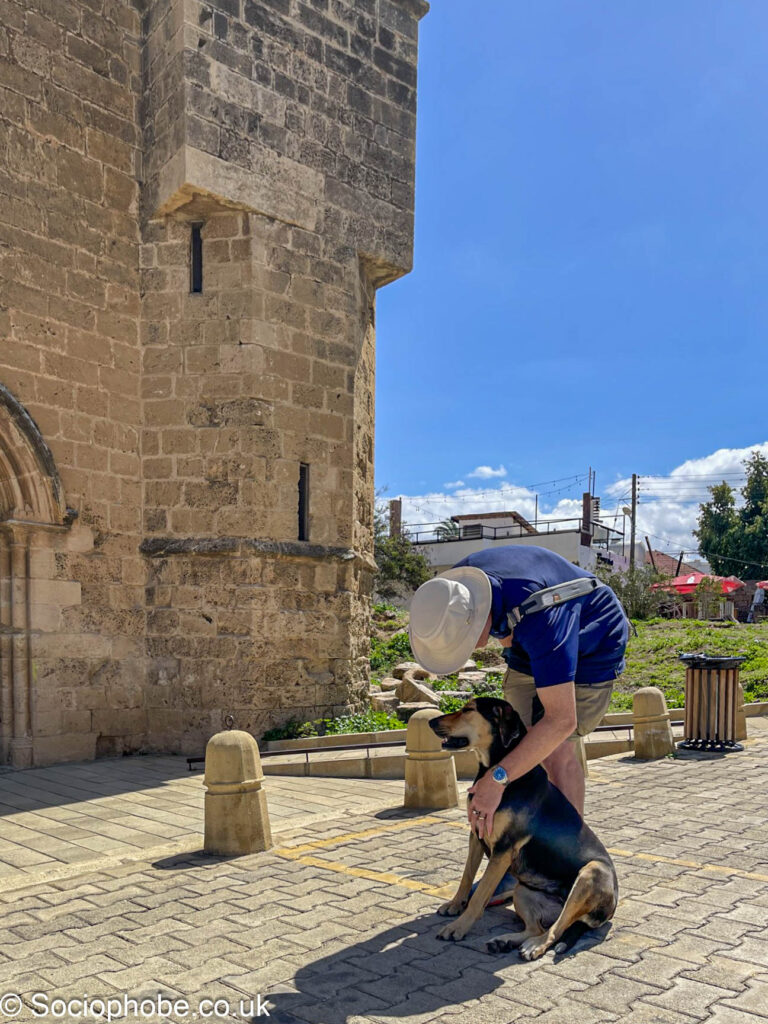
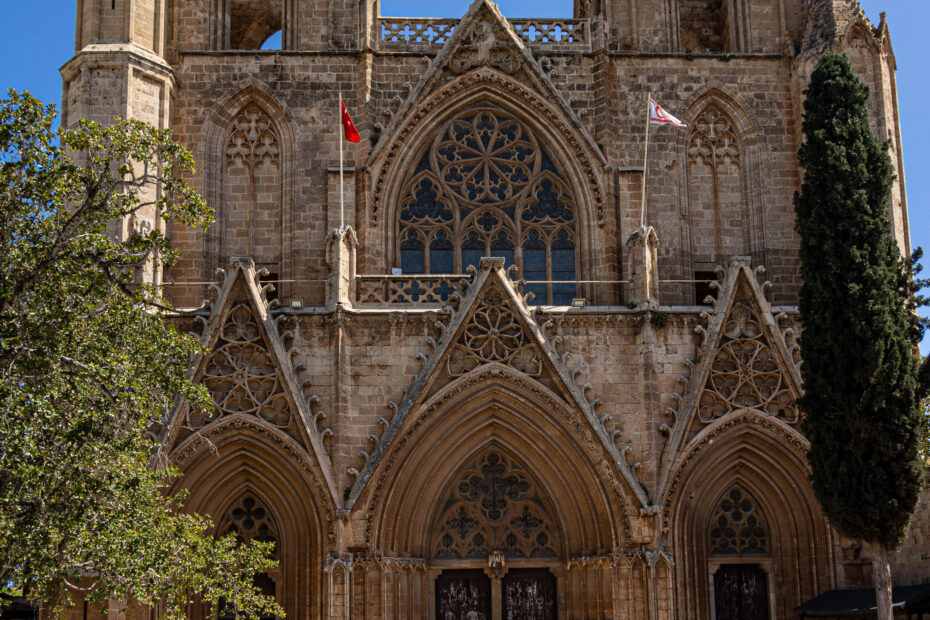
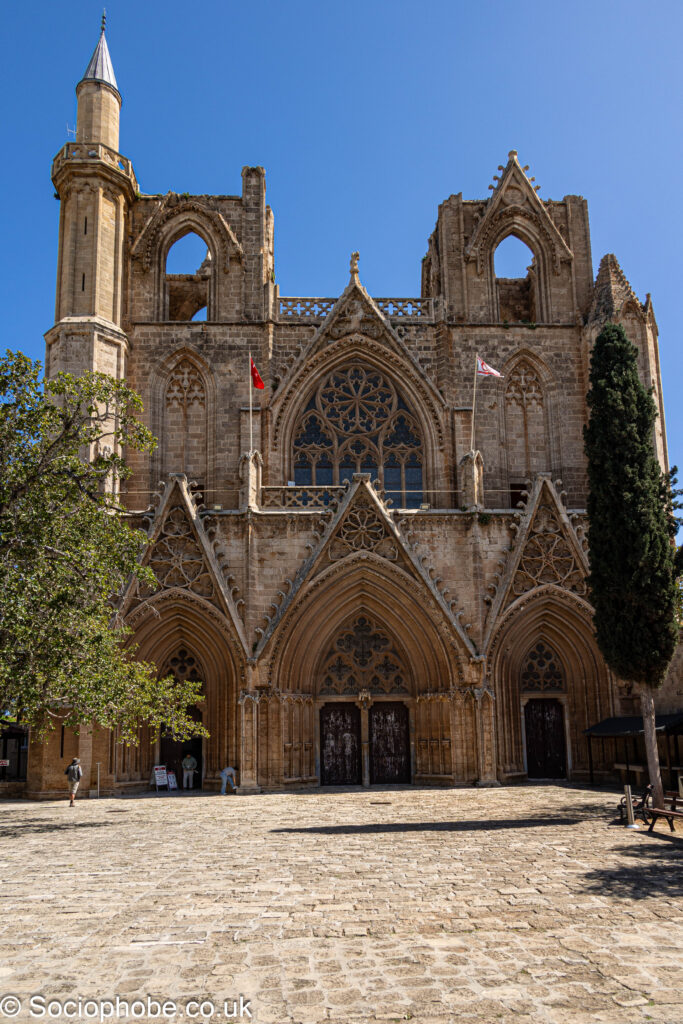
We visited St Nicholas Cathedral, now, of course, a mosque. The building, built by the Lusignan kings in the 14th century, was beautifully impressive but all the interior decoration had again been whitewashed and the stained glass windows removed. The building must have looked magnificent in its heyday and was the coronation site of the Kings of Jerusalem after the city fell to the Moslems in 1187.
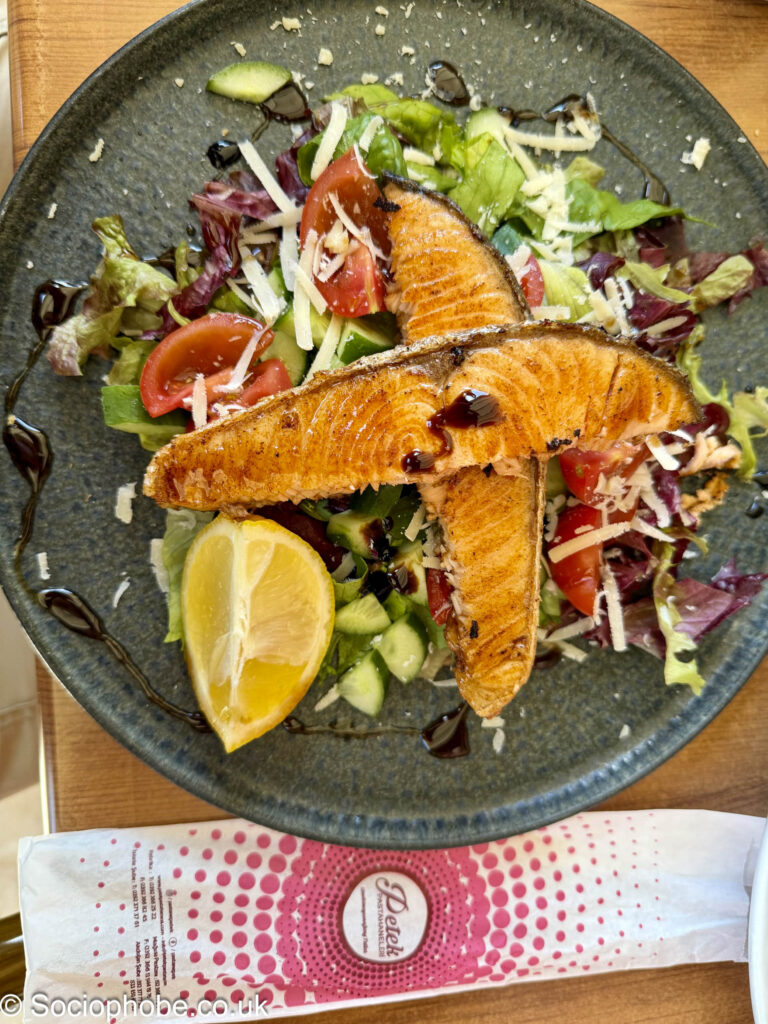
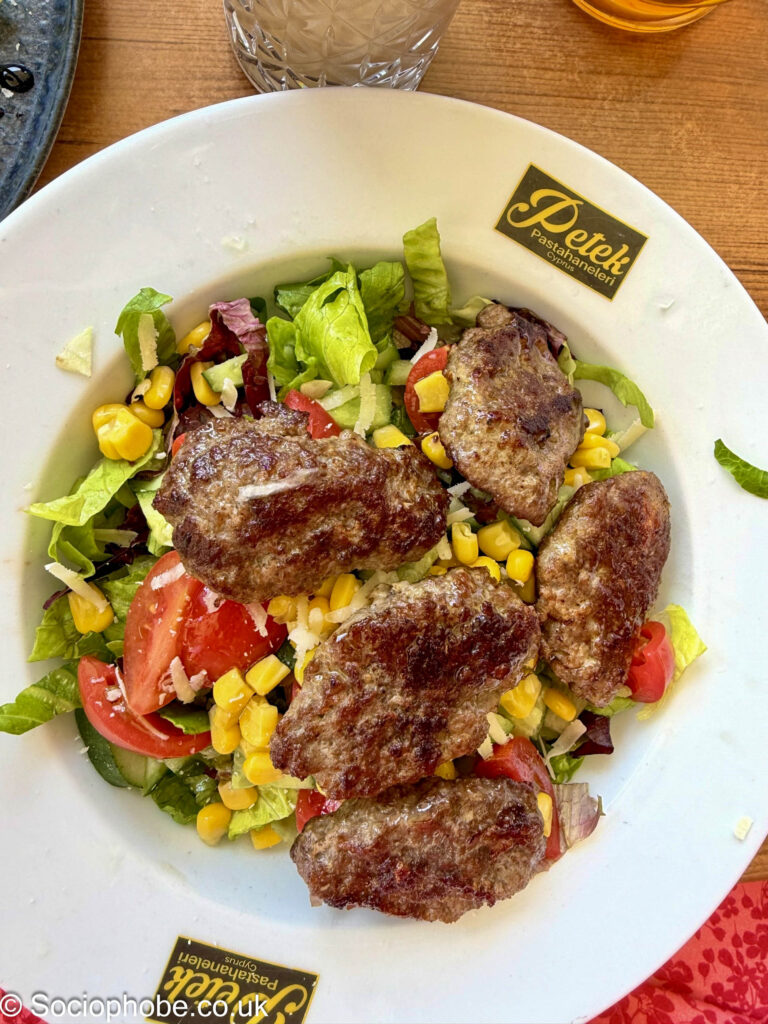
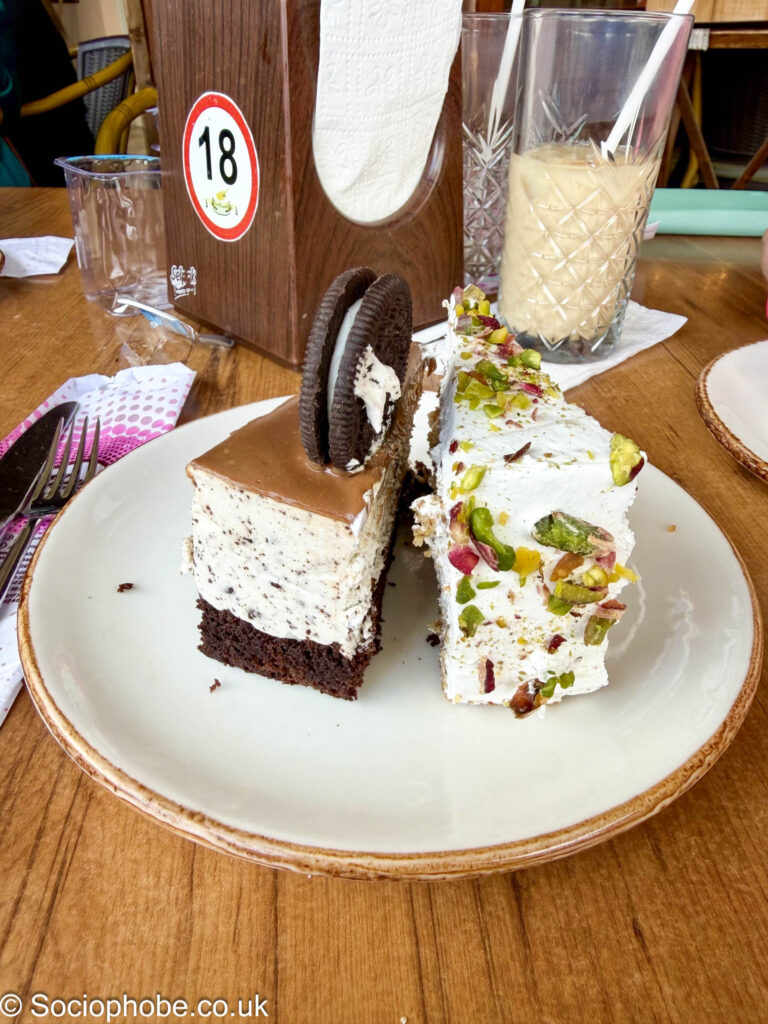
The guide then left us to wander for a couple of hours so we had a look at the ruined Venetian Palace and another church (mosque) and playing with assorted dogs before stopping at Petek for lunch – a very healthy salmon salad, aided by a ferocious cat who devoured the skin before it hit the floor. We followed this with pistacchio cake and Oreo cheesecake, possibly not as healthy.
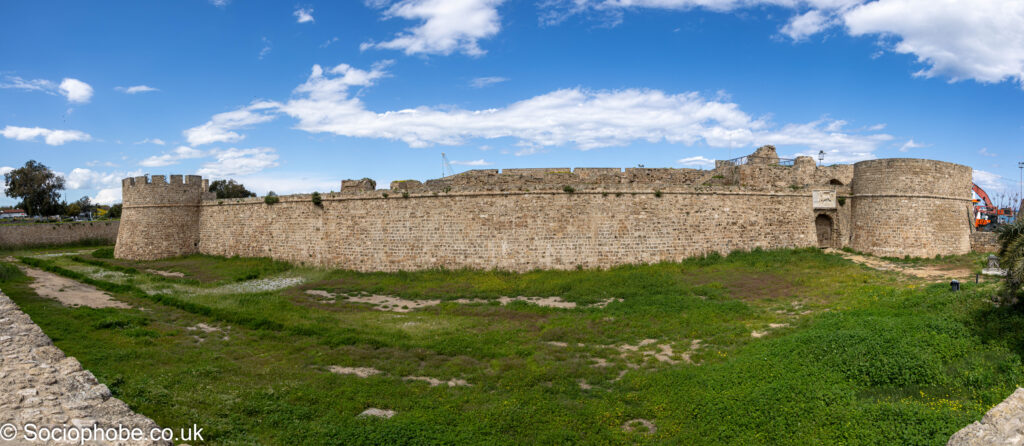
After our sugar overload we crossed the road for one of the main attractions of Famagusta, the Venetian walls. These survived nearly a year of siege, 8000 Venetian defenders holding out against around 100,000 Turkish troops and marines. After a breach of the walls was repulsed with heavy losses for both sides the Venetian commander asked for terms, the garrison being reduced to 900 starving men. The Turks agreed the defenders and citizens could leave for Crete unmolested but then turned on the Christians as they left the city, murdering them all and flaying the commander, Bragadin, alive in the city’s main square.
We didn’t have enough time to properly explore the walls or the dungeons or the Knights Templar Castle but we saw enough to decide it is a place to revisit and spend a couple of days. Also, there were a huge number of untried cakes in the shop still.
Varosha
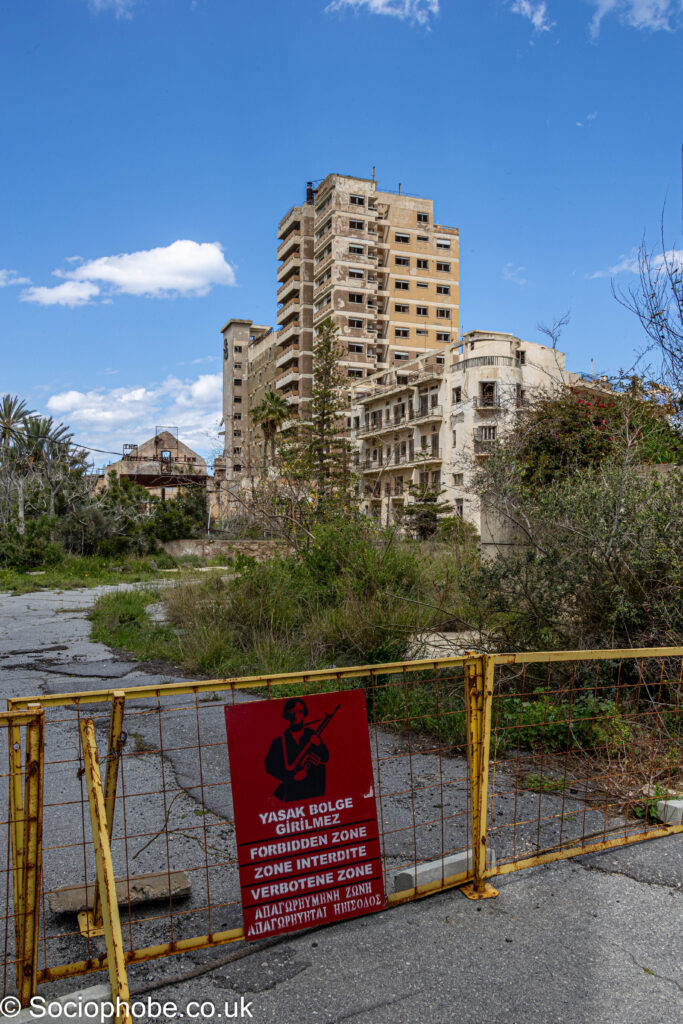
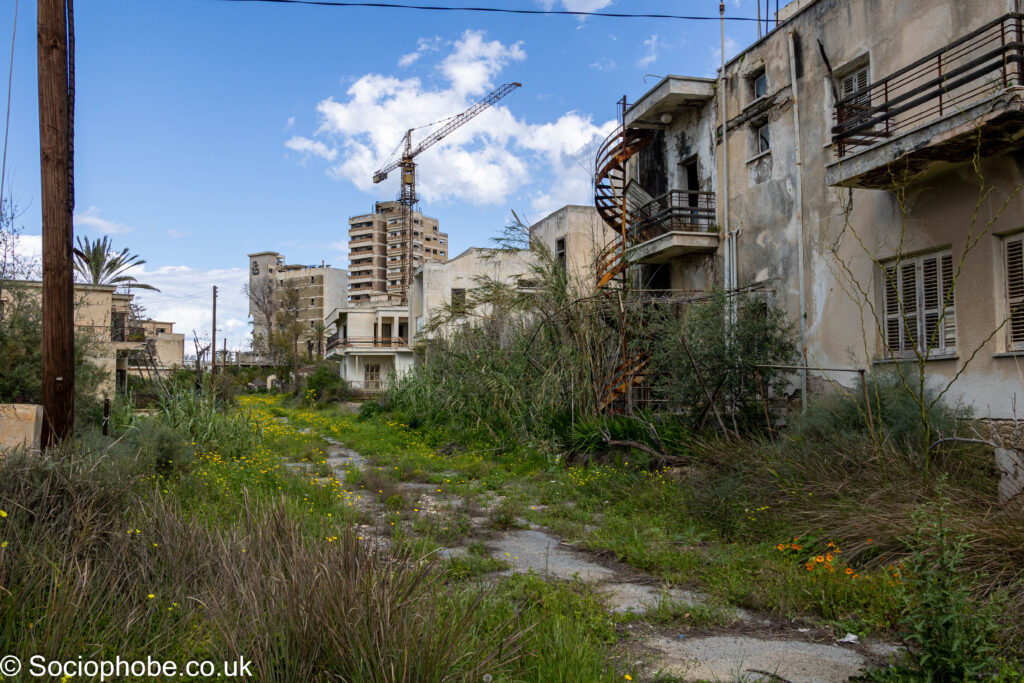
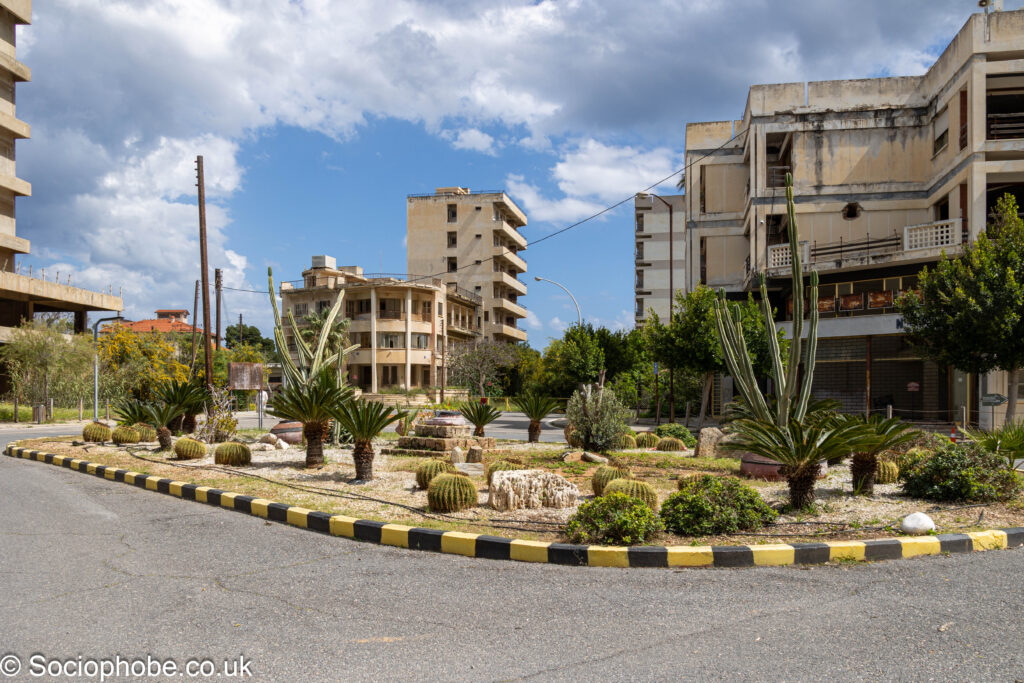
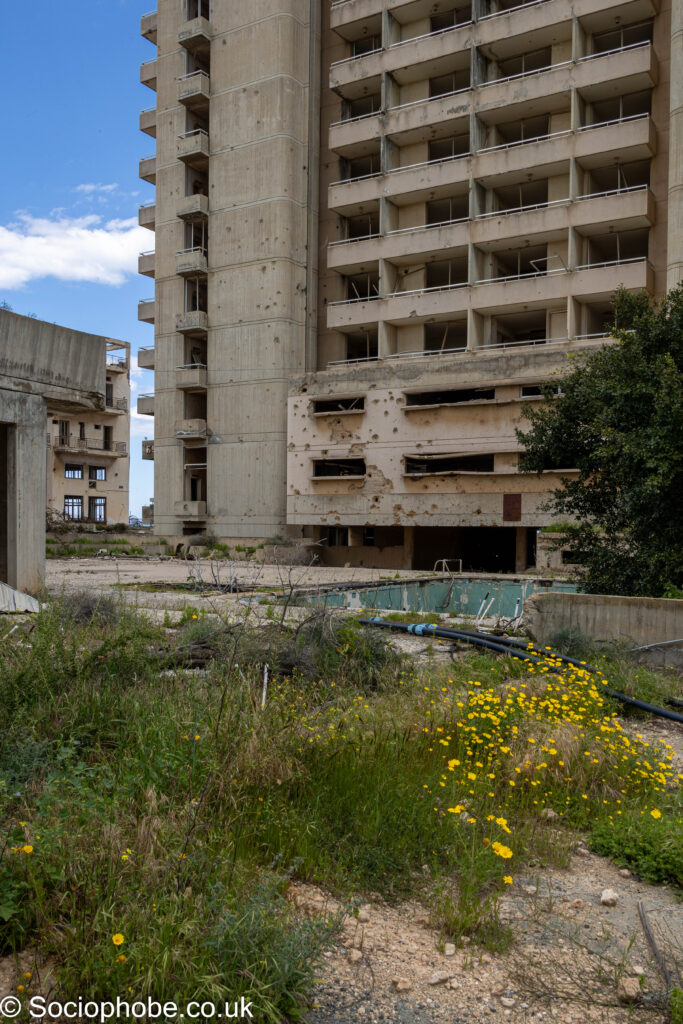
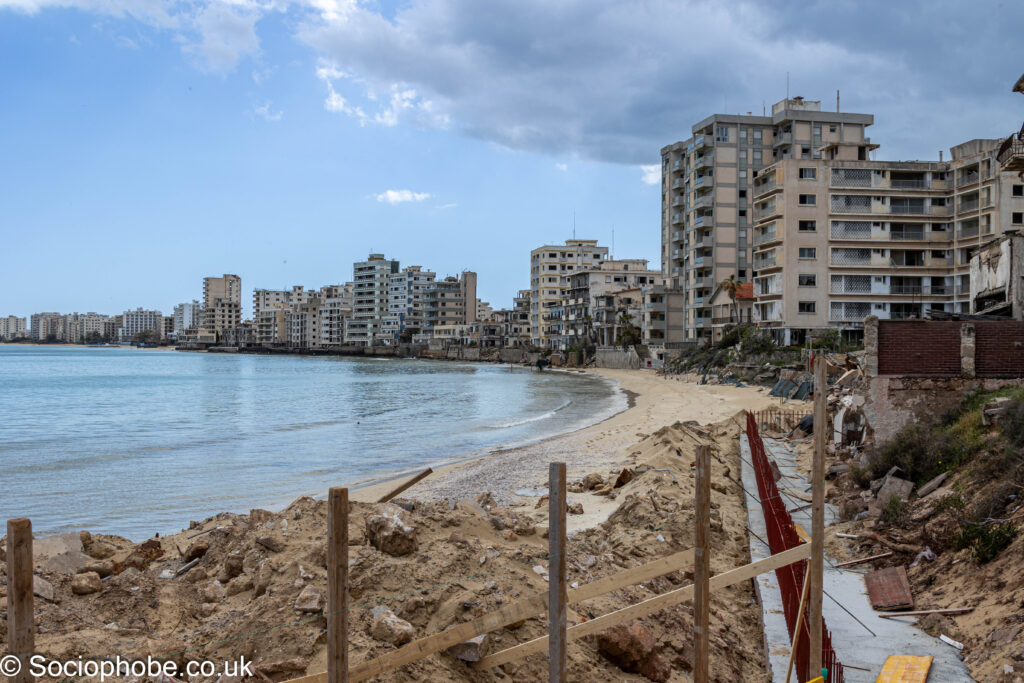
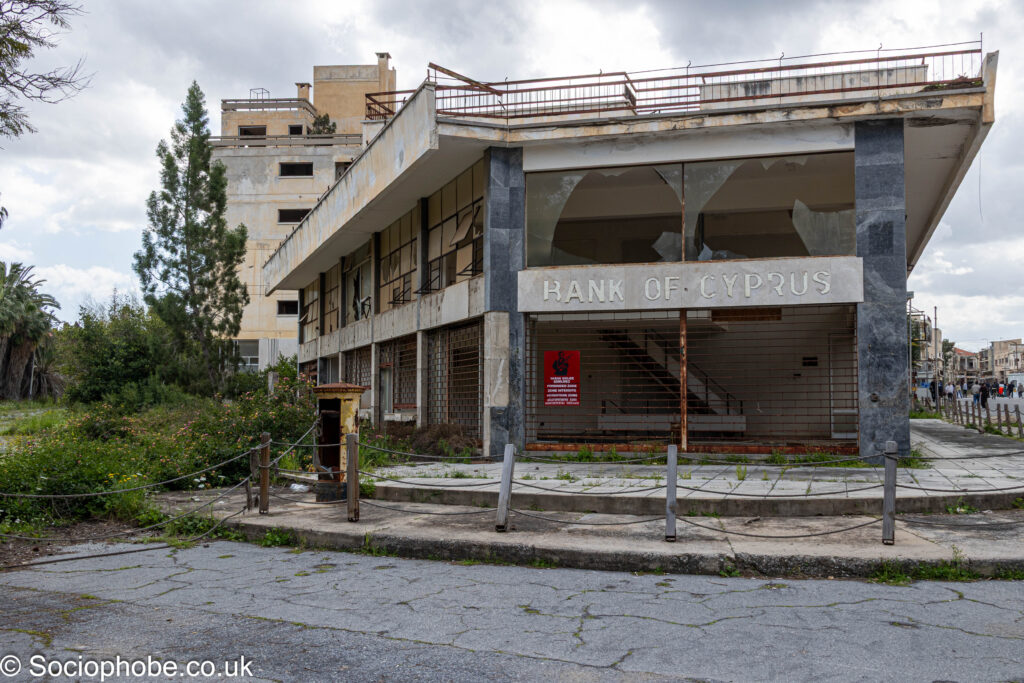
Our final stop on the tour was the suburb of Varosha, developed by the British in the 1950s and by the 1960s it was an incredibly lucrative and glamorous resort accounting for most of the island’s tourist revenue. After the 1974 Turkish invasion and then 50 years of being in a military zone the buildings are now looted and decaying. It is a tragic legacy of the conflict and quite stunning to actually see it.
We saw far more visitors here than in the city itself and although it is obviously a major tourist attraction it is hopefully educational too. It is like a little slice of time from 50 years ago, familiar names, old style logos, like a plague has wiped out the population instead of them being expelled with almost no notice. There are probably some very wealthy Turkish officers after the occupation.
It was interesting to hear the guide talk about the number of improvements the British made to the island, developing roads, a postal service, schools and obviously driving on the correct side of the road and having proper power sockets. Also, her take on the division of the island and ongoing conflict in Iran plus the future for the island.
She dropped us at the border and then Paul drove us back to our hotel, through a rainstorm. It was certainly a fabulous day and the profusion of history and architecture in the Turkish occupied areas seems to put southern Cyprus to shame. We had a relaxed evening, sorting photos and notes (yawn) and were so stuffed from the cakes we skipped dinner. Sadly we are back to the UK tomorrow, hopefully after a quick trip to Limassol Castle.
Cyprus Road Trip
This road trip around Cyprus was a wonderful way to experience the different environments of the island and also see the wealth of historical buildings. The recent history is tragic but just another episode in the cycle of conquests the island has undergone.
The highlights, for me were the regions around Famagusta and Kyrenia and the Omodos area in the south. The people were universally friendly, English was widely spoken, the scenery was stunning and the distances relatively small. From the beach to the Troodos mountains is maybe an hours drive. Despite some very interesting roads in the villages the road trip was generally trouble free and Cyprus has some magnificent drives.
I found the idea of retiring here quite enticing, both the Turkish Cyprus area and the Republic of Cyprus offering good incentives to pensioners from western Europe.
This looks a really amazing holiday Marcus. The photos are stunning, even though the weather wasn’t brilliant. So many places to see and so much history, and beautiful architecture. It really makes one want to go there too. Lovely write up.