Twelve days exploring before the chaos descended
| Recommended days | 12 |
| Budget | £££ |
| Difficulty | Medium |
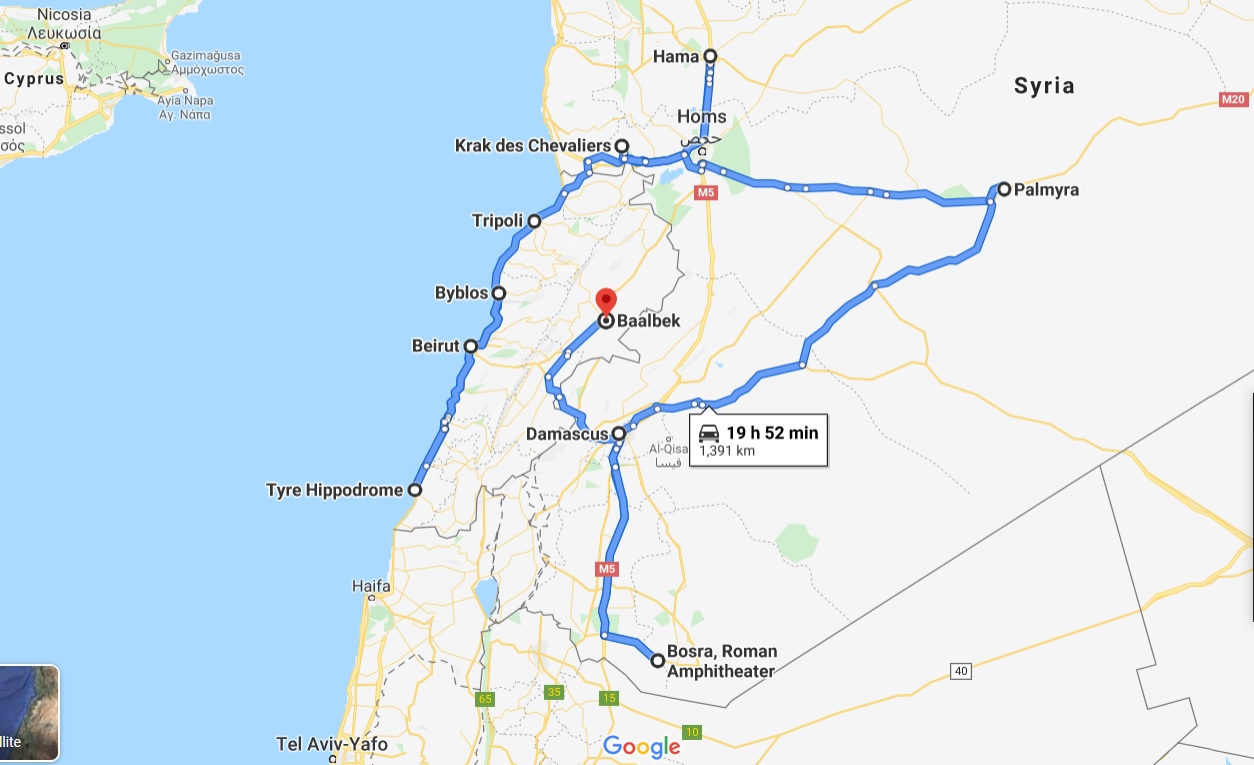
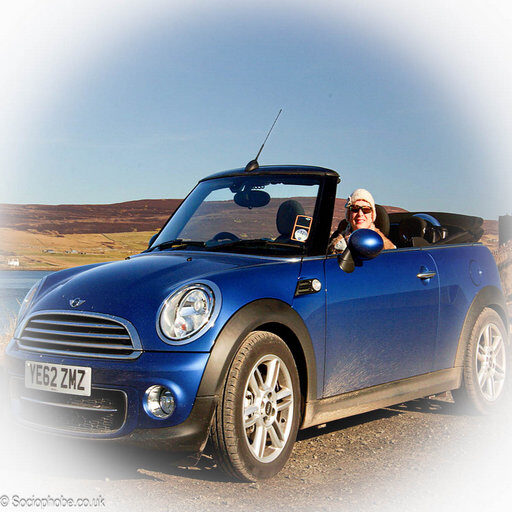
Strangely, this was not a self drive road trip! Even 10 years ago I wouldn’t have fancied driving myself through Syria and Lebanon and I’m not sure if you’d have been allowed unescorted access to Syria anyway.
We always had a minder with us, probably to monitor what our guide said and our interactions with the locals. This trip was done with Cox & Kings and I was the only single person in our group of seven.
Why Syria and Lebanon
If you’re a history buff, a Lebanon and Syria road trip ticks all the boxes. Phoenician, Egyptian, Greek, Roman, Byzantine, Arab, Crusader and Ottoman remains are all there to be seen. This area really is the cradle of civilizations.
Lebanon
We landed in the evening and drove straight to hotel, not really seeing anything of Beirut to make it seem any different to a European city. I had a huge room and a great breakfast the next morning, more like a dinner really, which set the tone for our stay in Lebanon!
As there were only 6 people plus me on the tour and we had a 52 seater bus there was plenty of space as we headed to Byblos. We drove through the centre of Bierut which was mostly rebuilt, although there was still some war damage. The motorway was ok but driving was atrocious, double parking, lane changing and constant horns. We were told there were 3.5 million people in Lebanon and 15 million Lebanese abroad including 8 million in Brazil!
Lebanon: Byblos
We drove through the Christian area of Jounieh and headed to Byblos with pine forests on the hills to one side and the Med on the other. Byblos seemed to be just an extension of Bierut’s urban sprawl. The city has existed for 8000 years and has a huge array of historic sites within and under it.
Lebanon: Byblos Church of St John the Baptist
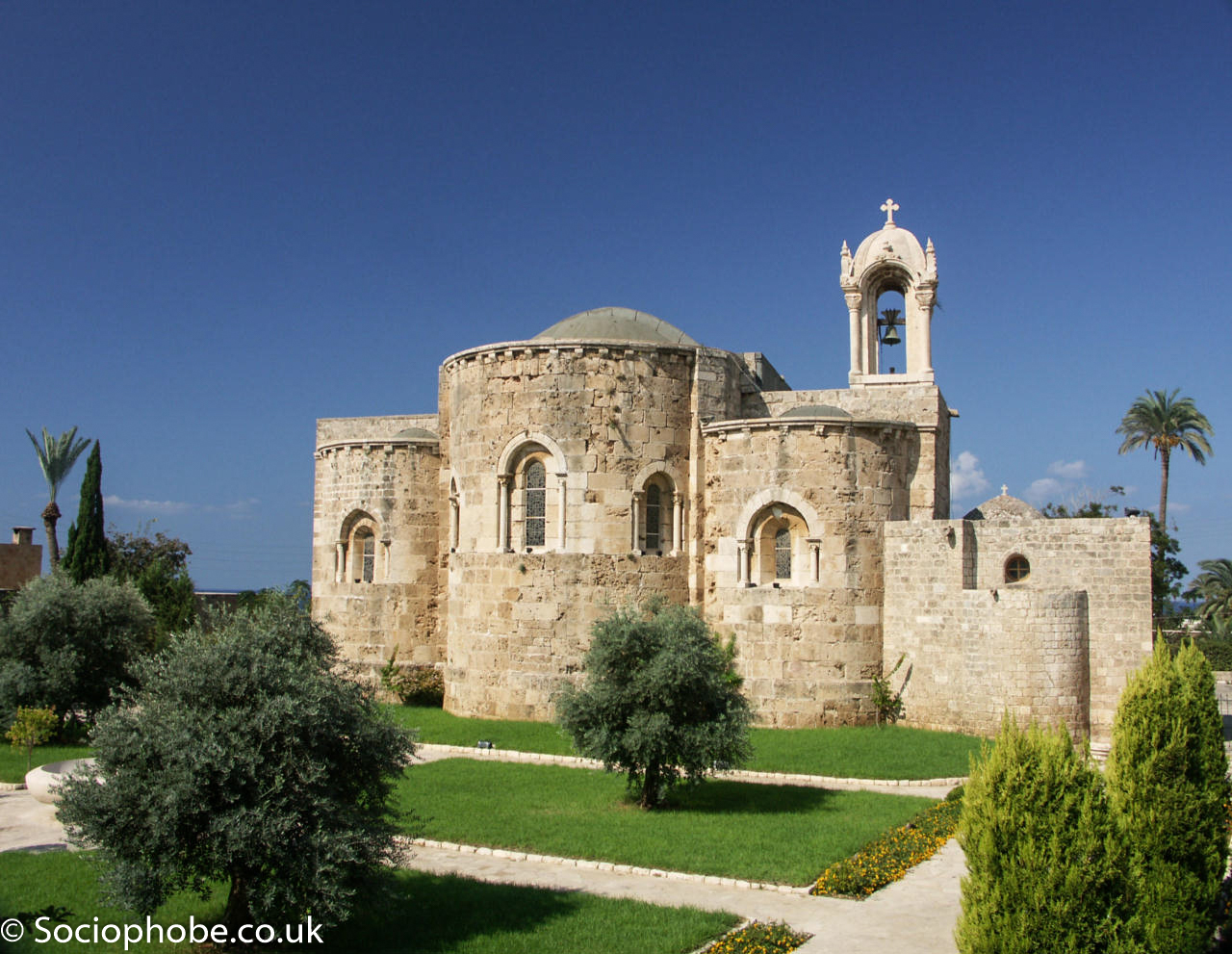
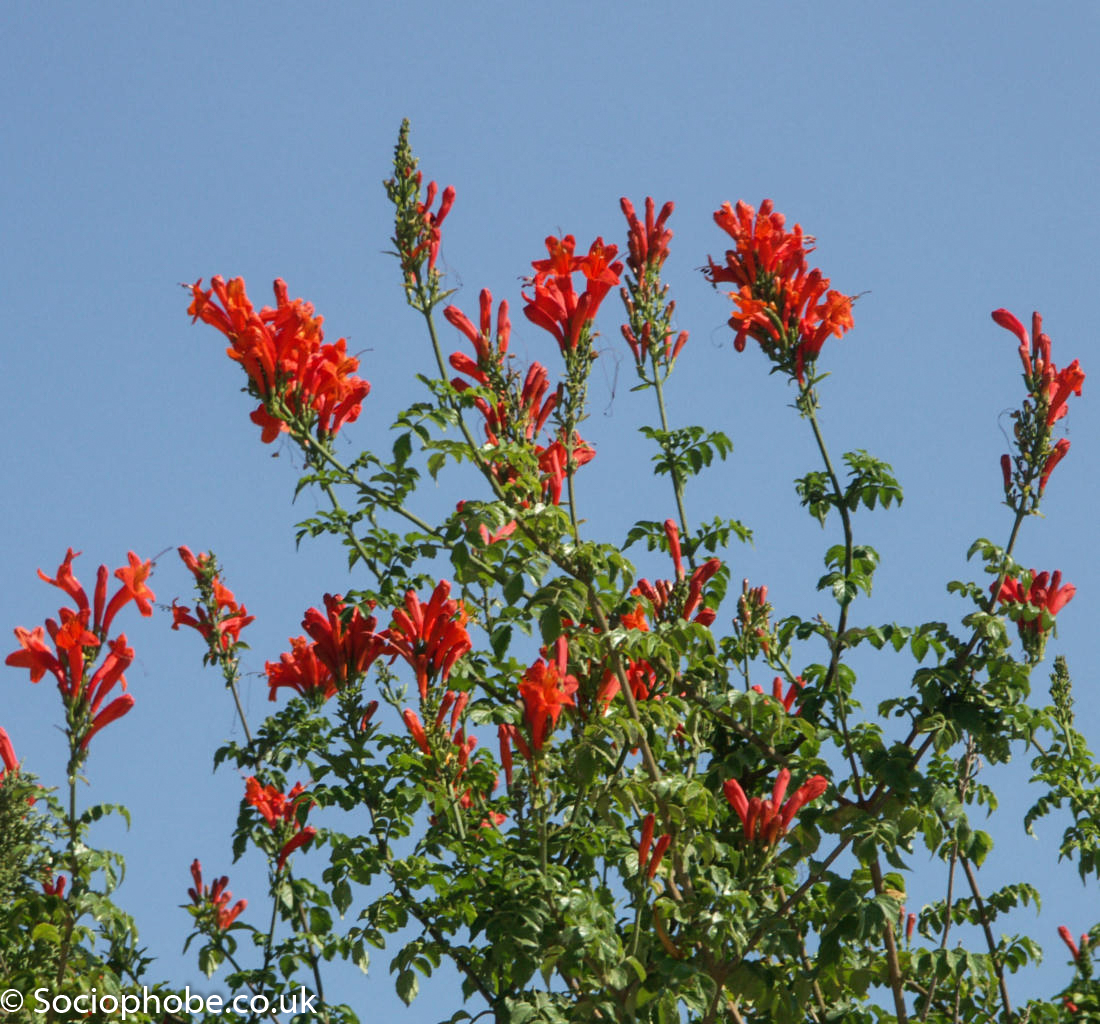
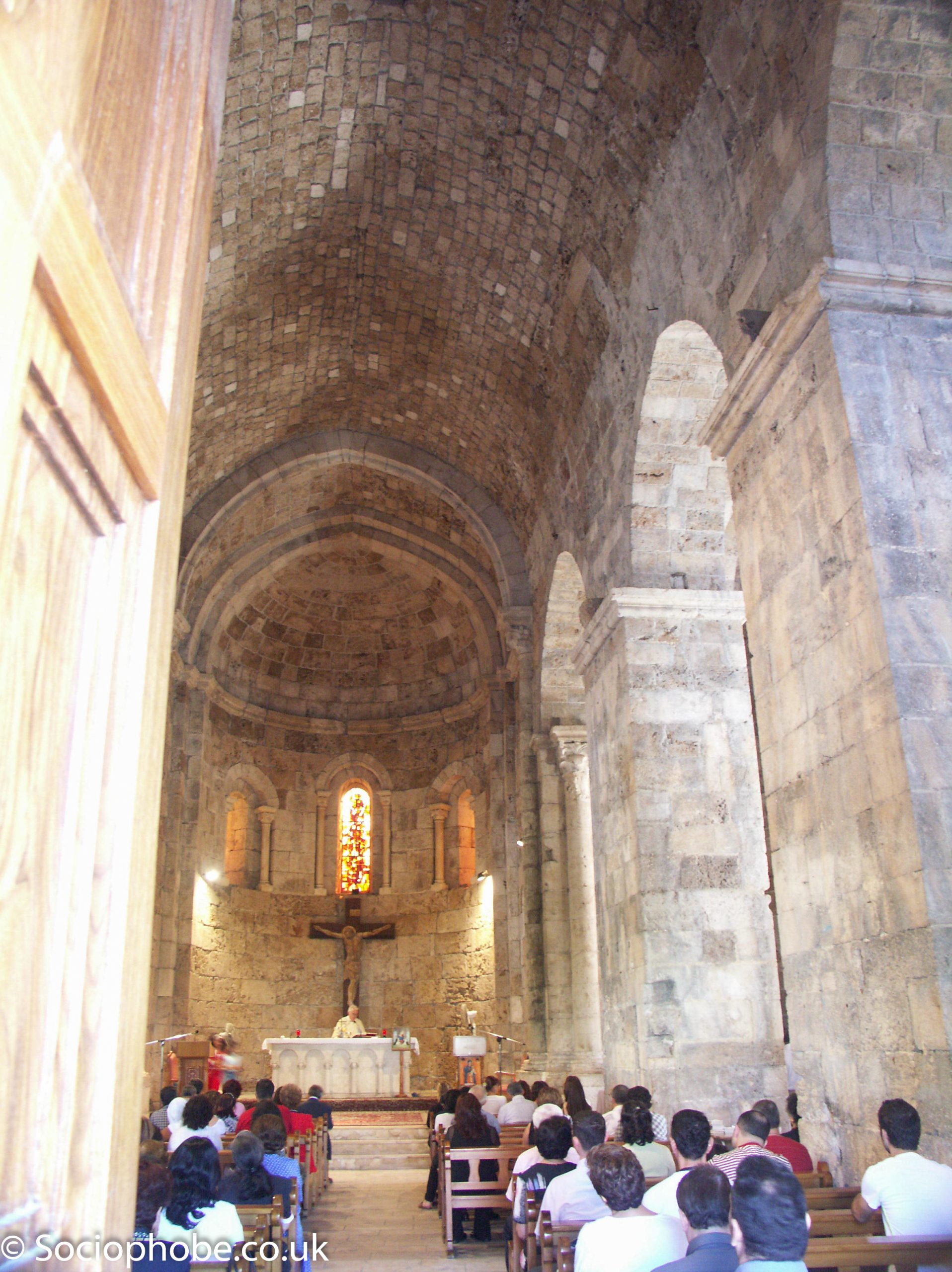
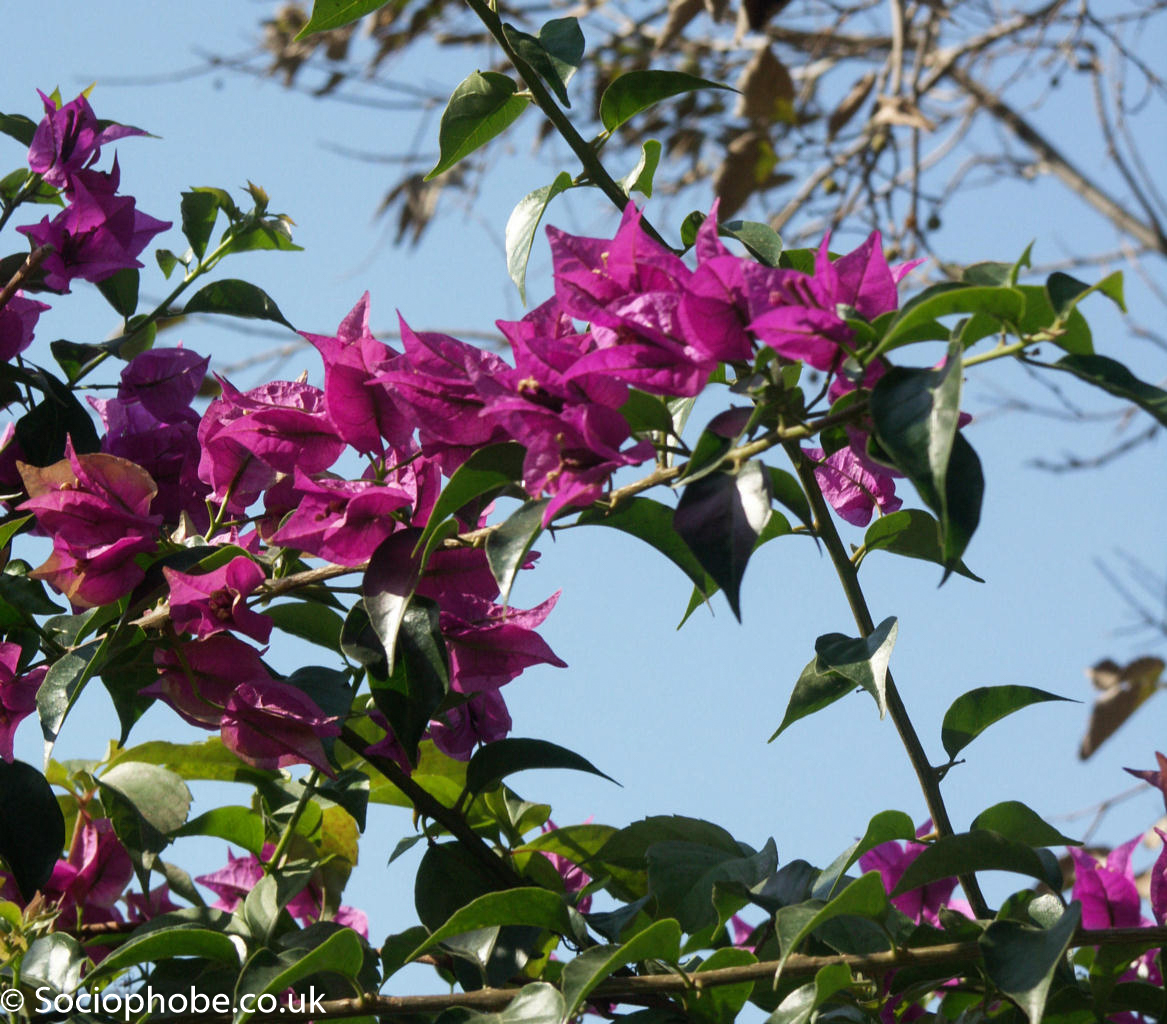
Once we had parked we then walked down the hill, past a Byzantine church with mass taking place to the church of St John the Baptist, now a Marionite church but originally a crusader one. This was living history! The church also had lovely gardens.
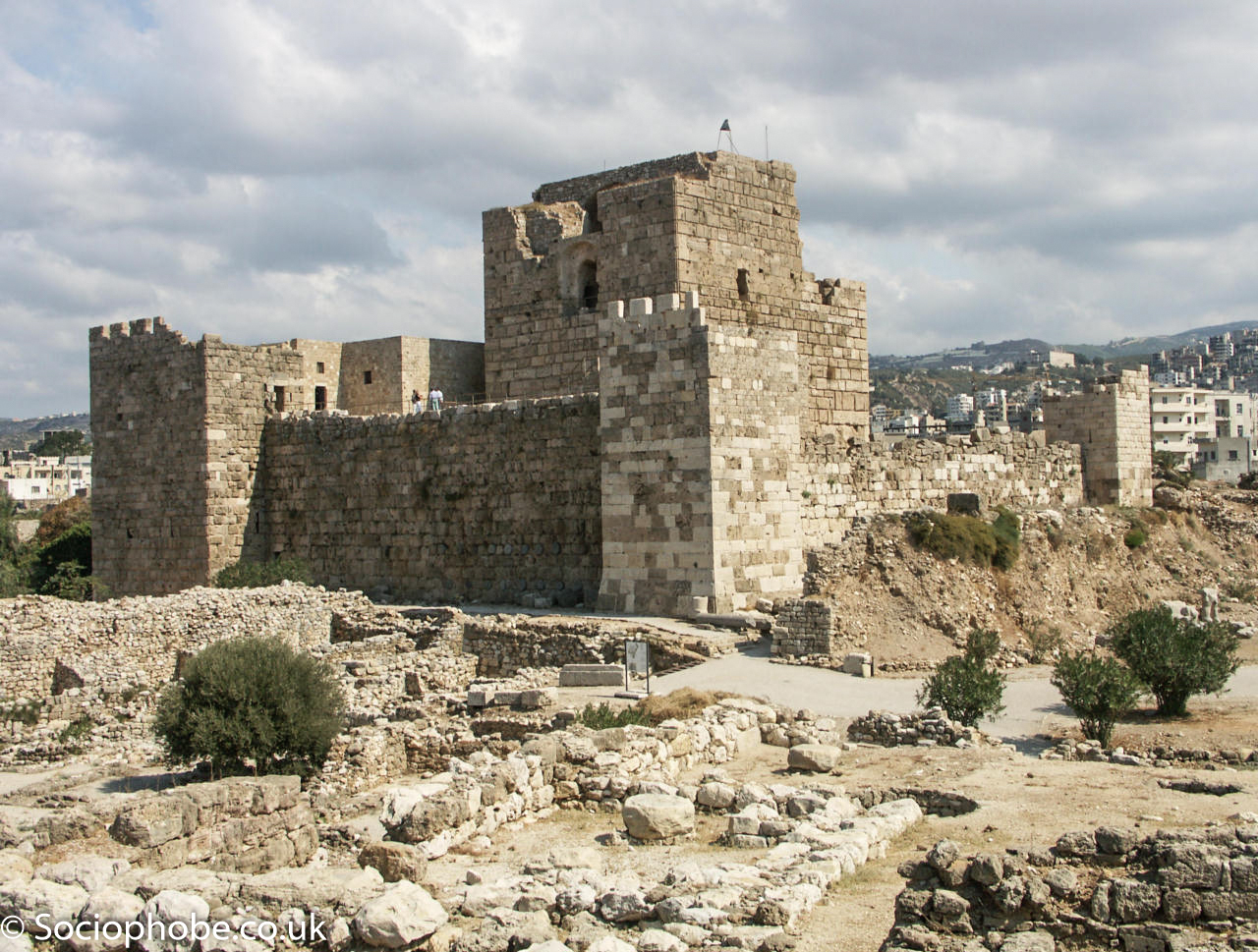
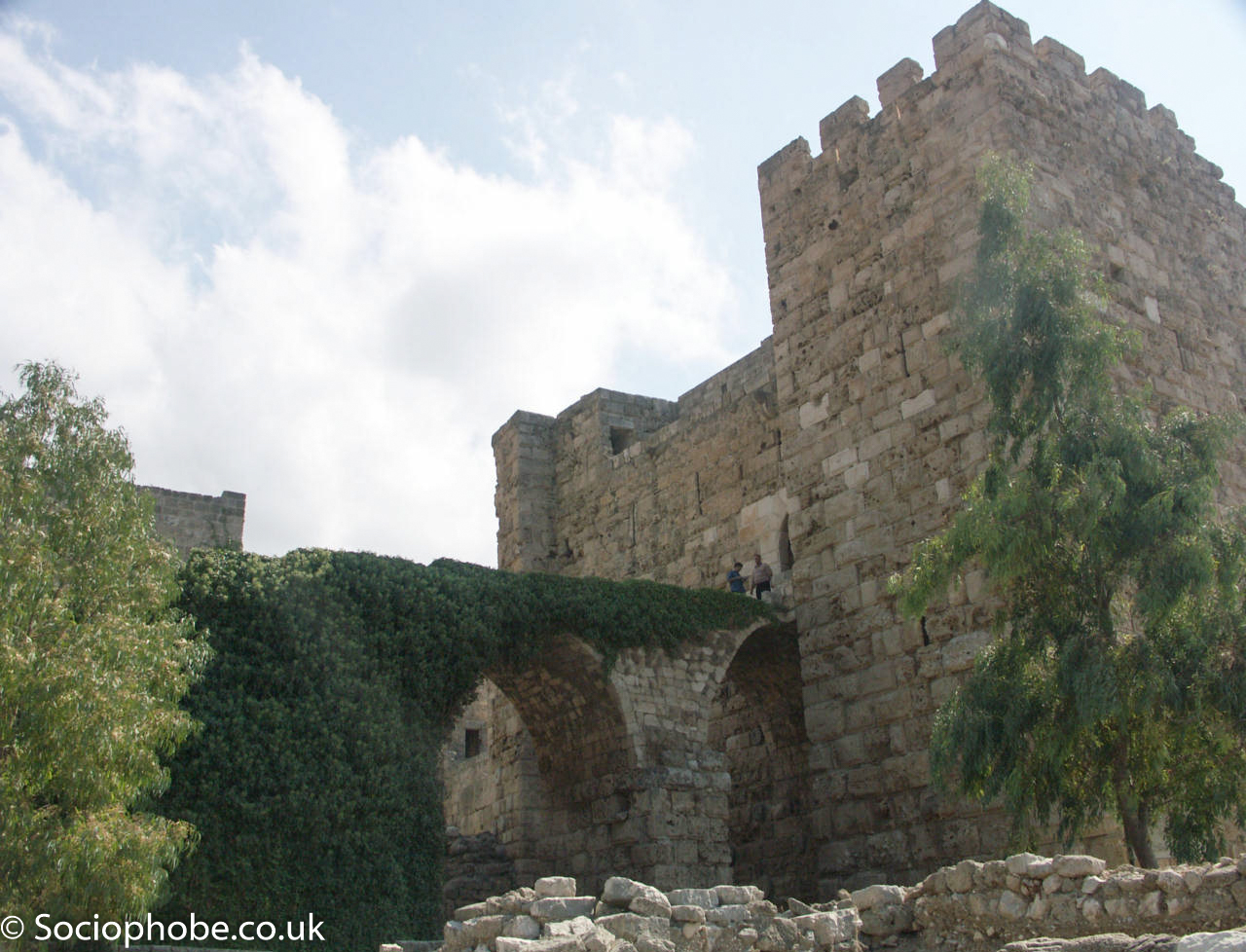
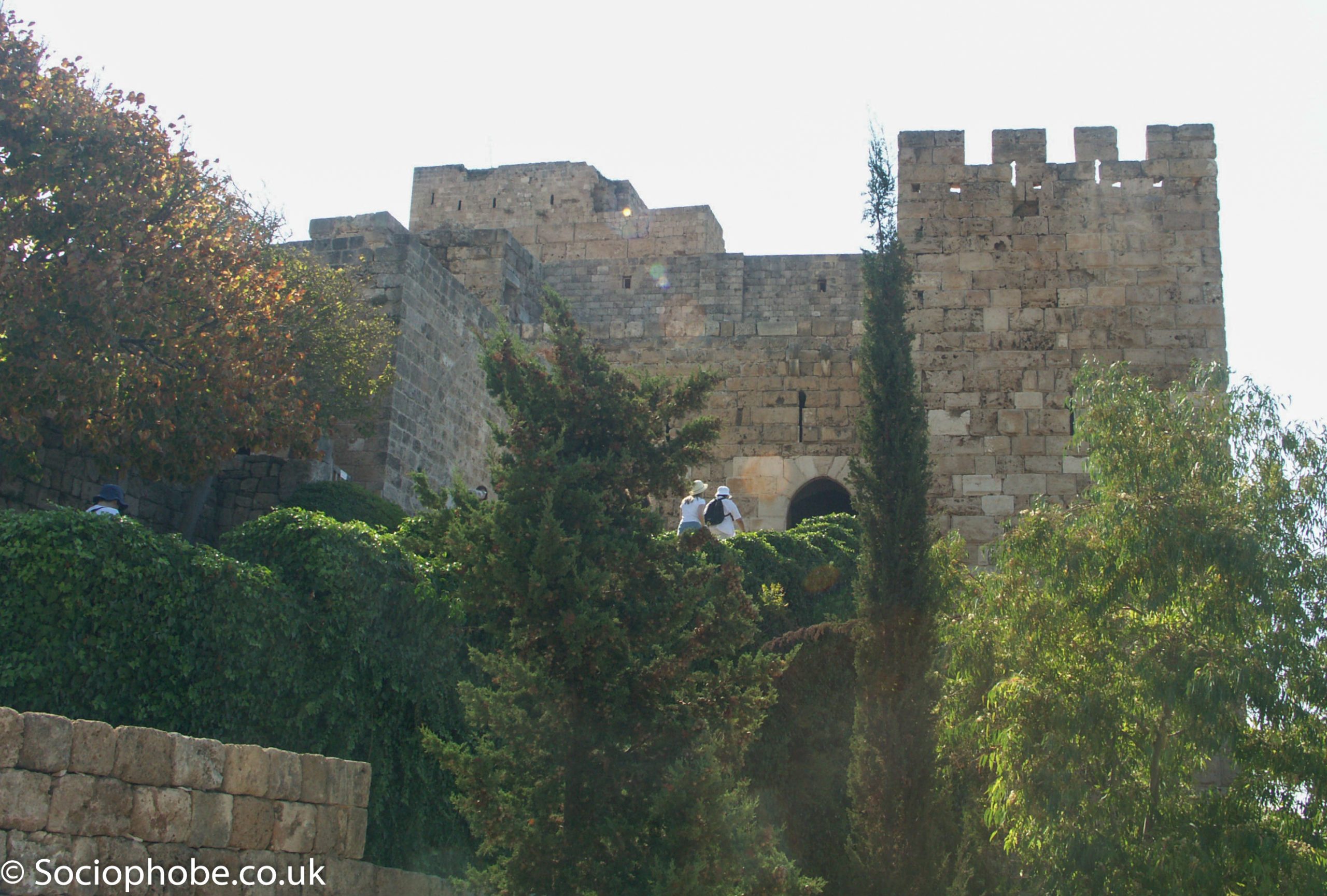
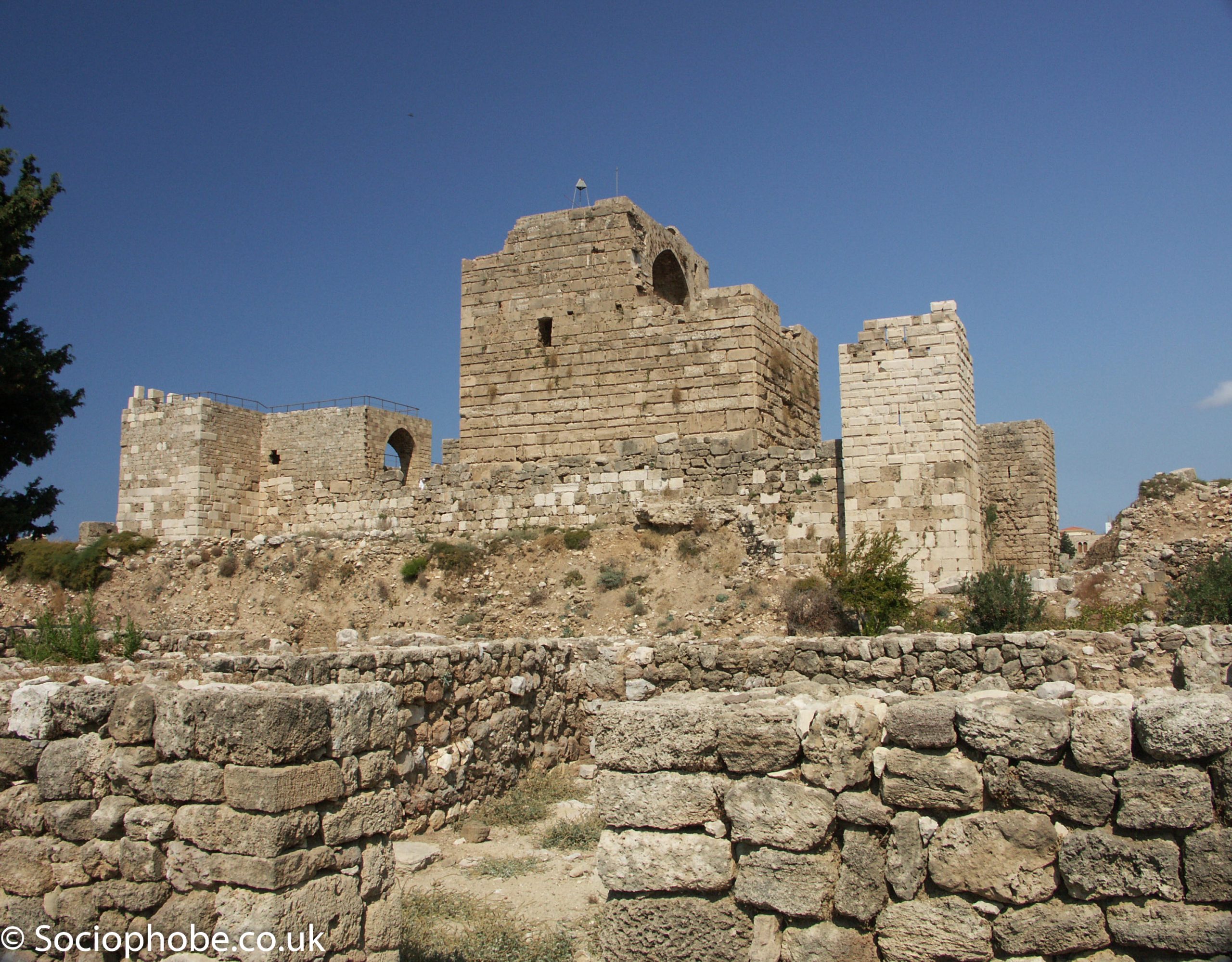
Lebanon: Byblos Crusader Castle
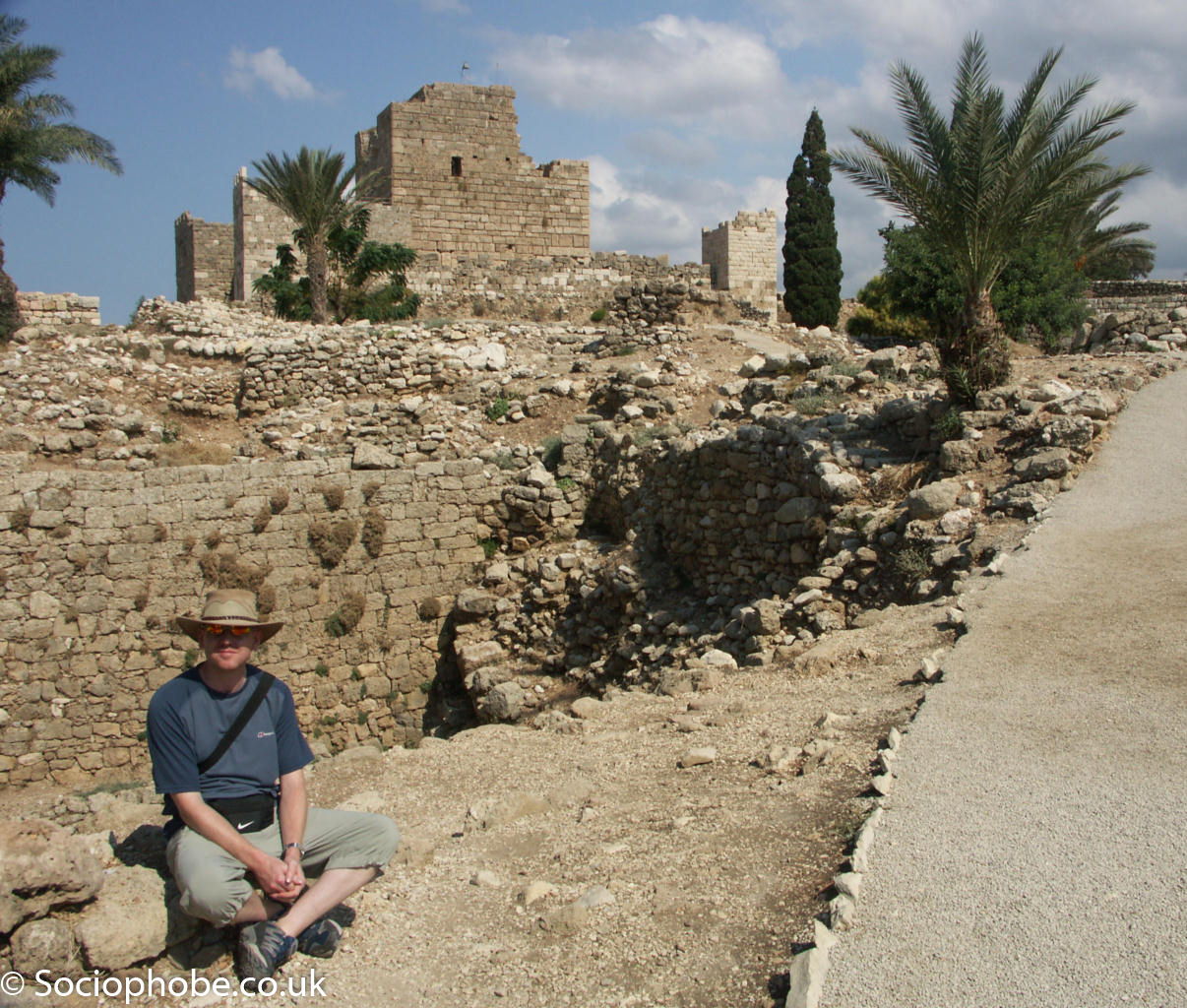
After a brief look around the church the group walked to the crusader castle. The castle used to have a drawbridge but now we were able to walk straight in, up a ramp. It was difficult to appreciate the size and defences as there was such a jumble of different eras.
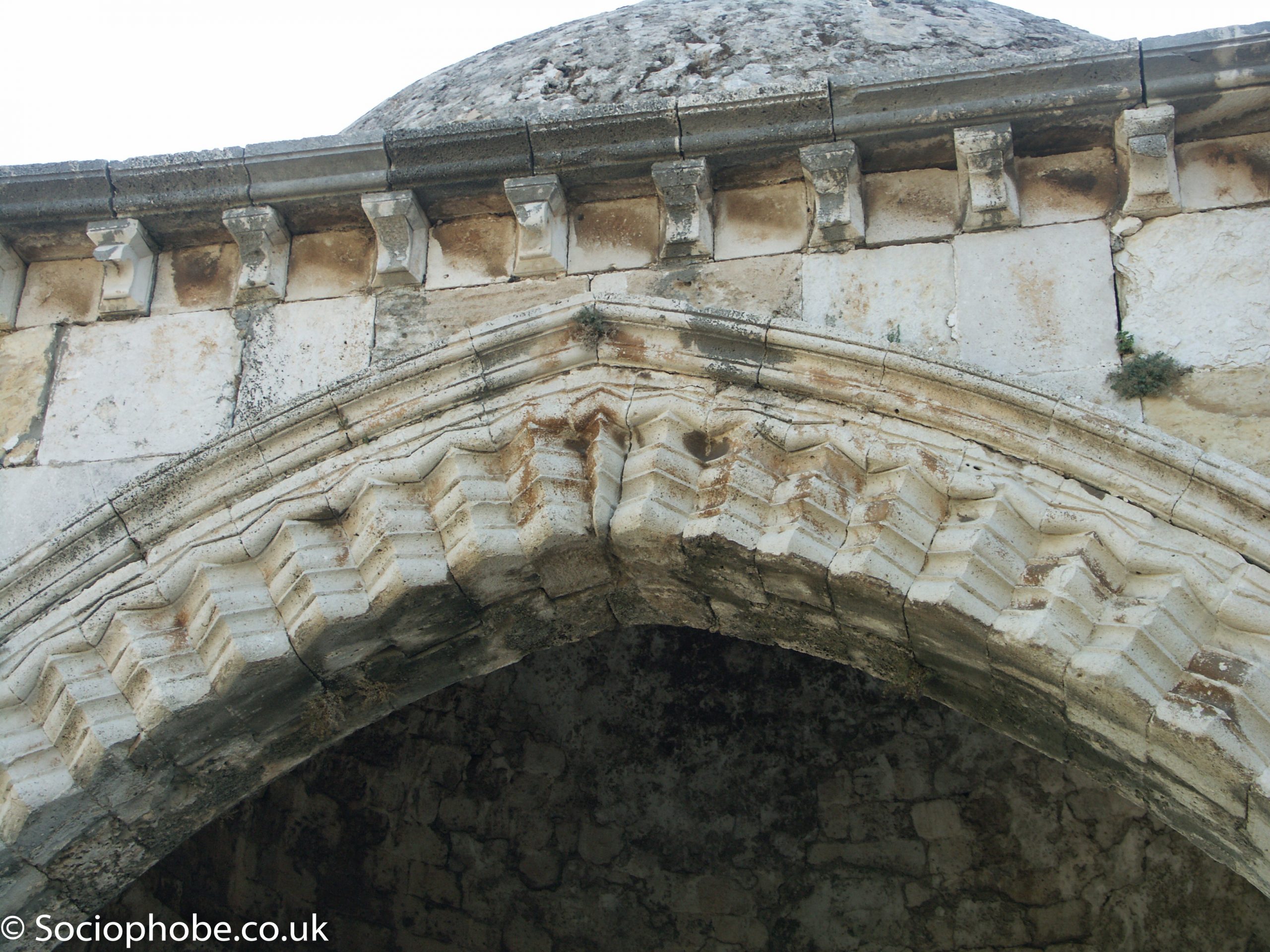
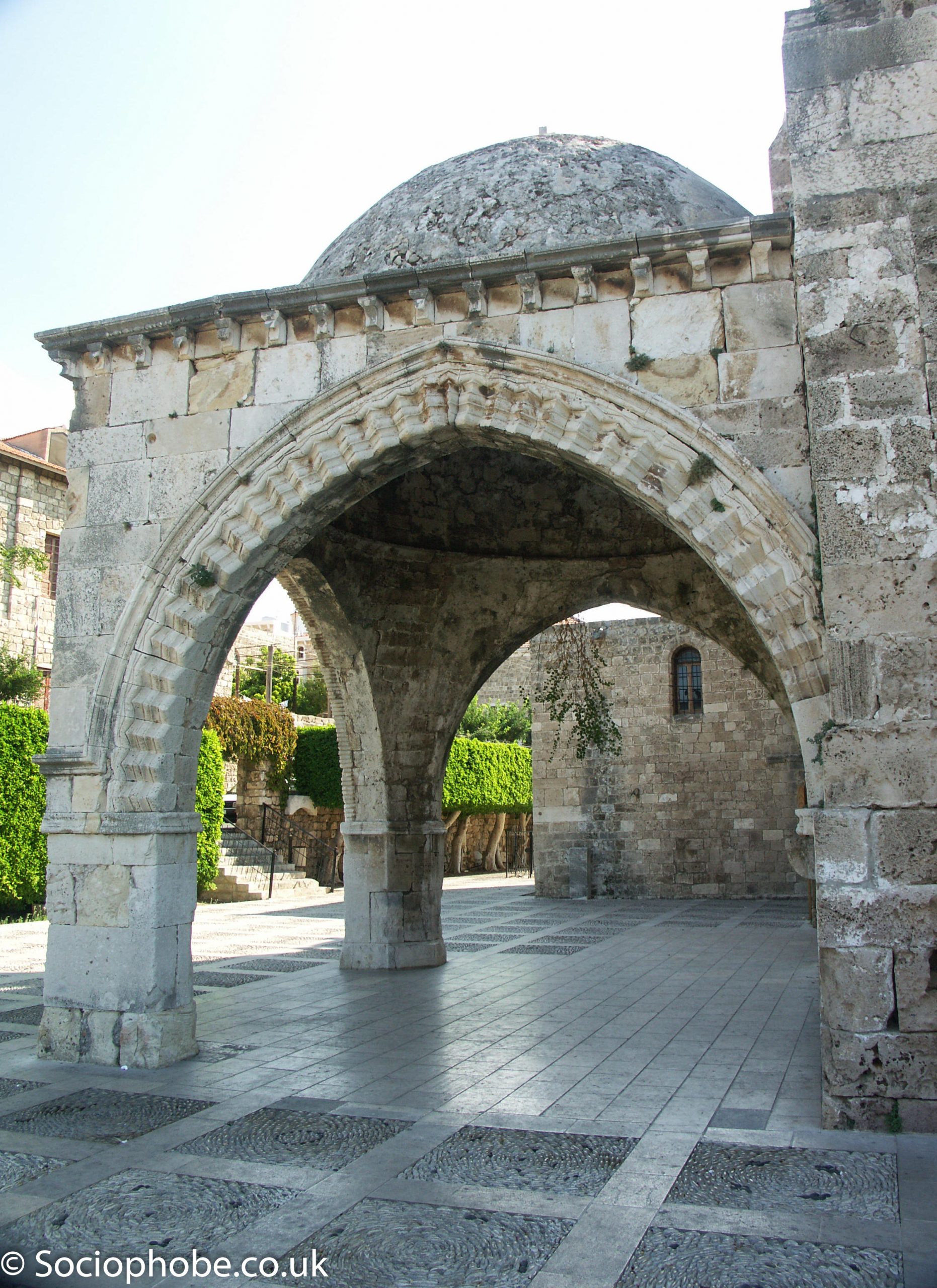
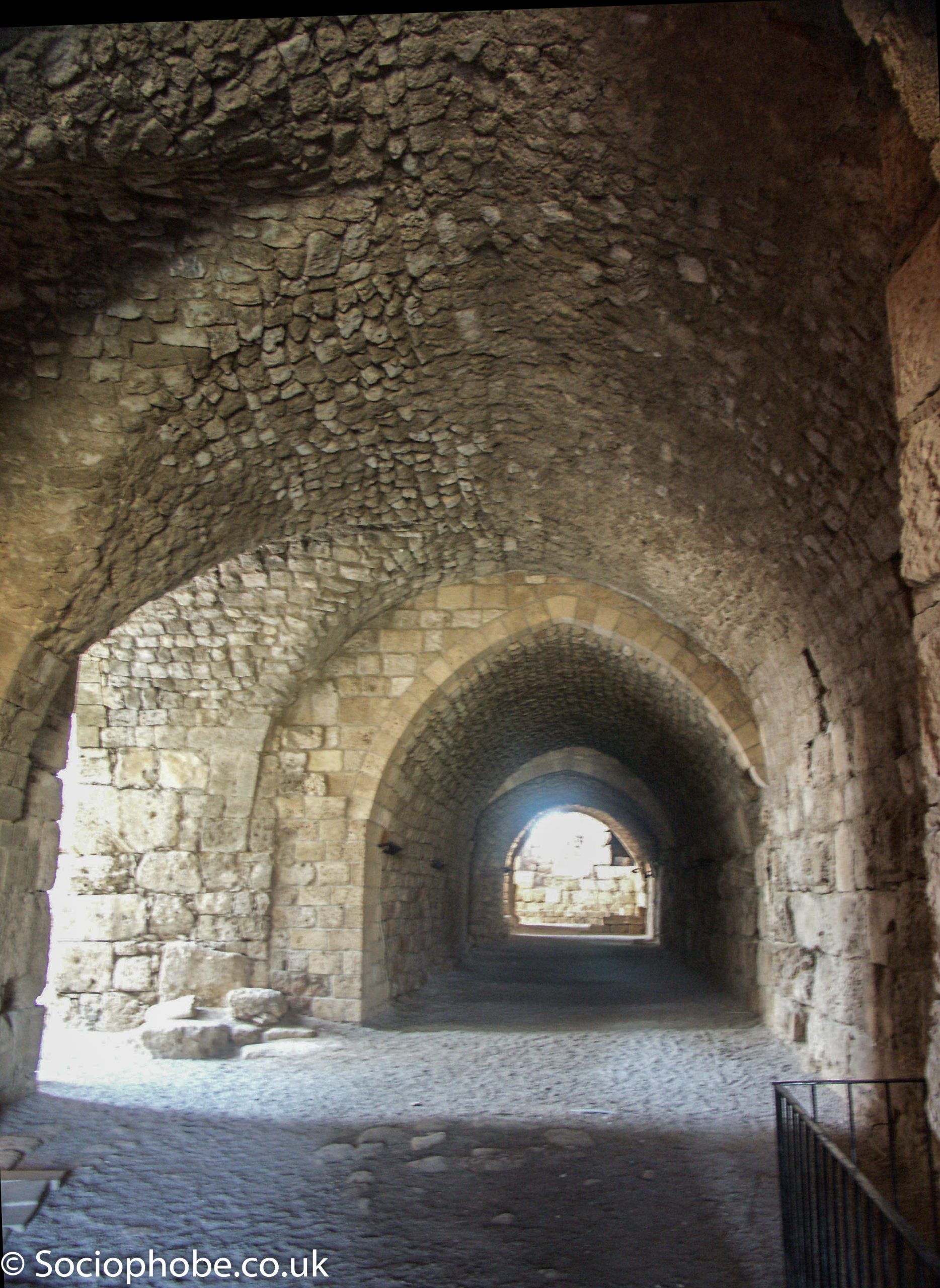
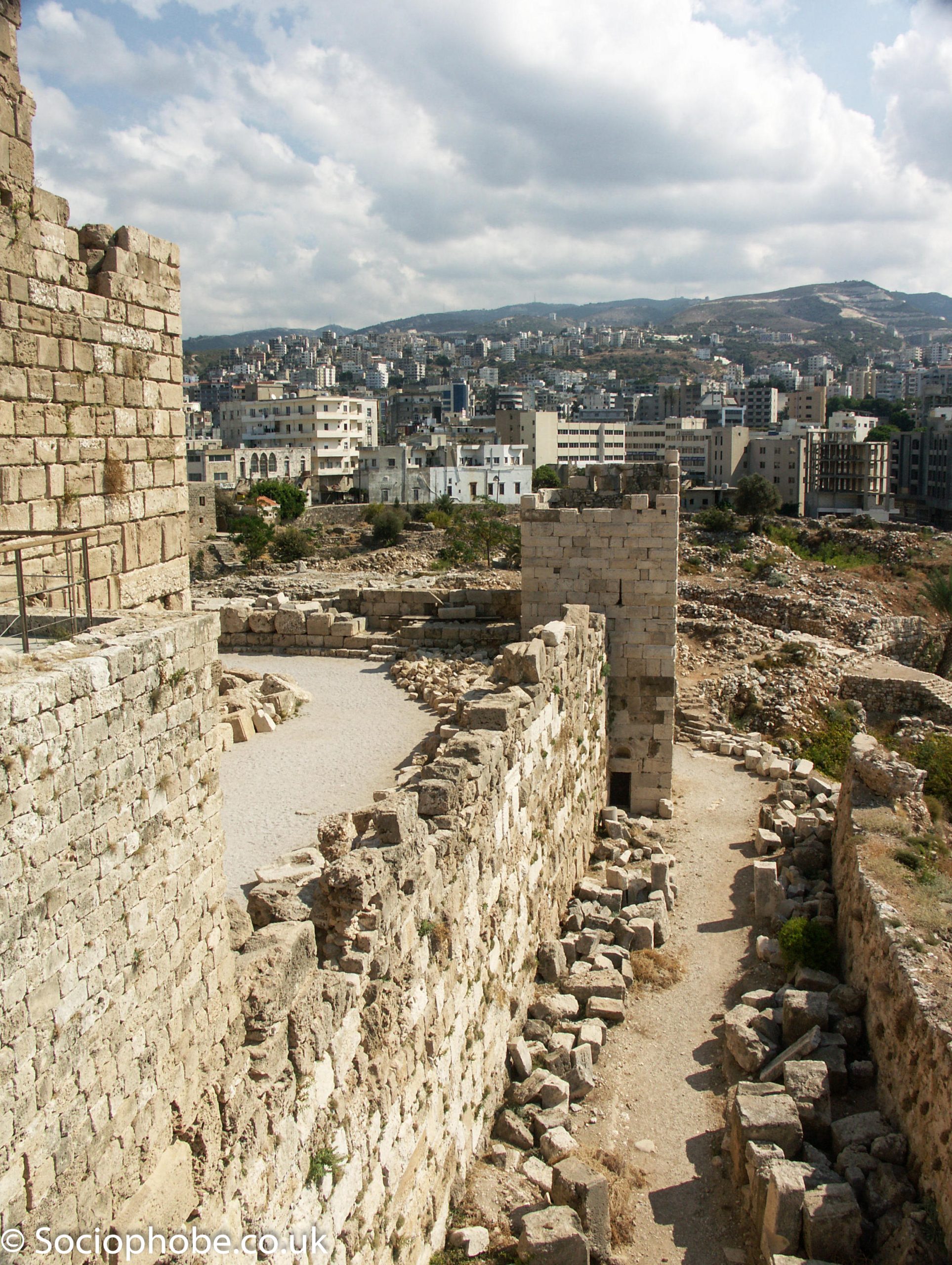

Lebanon: Byblos Phoenician and Egyptian ruins
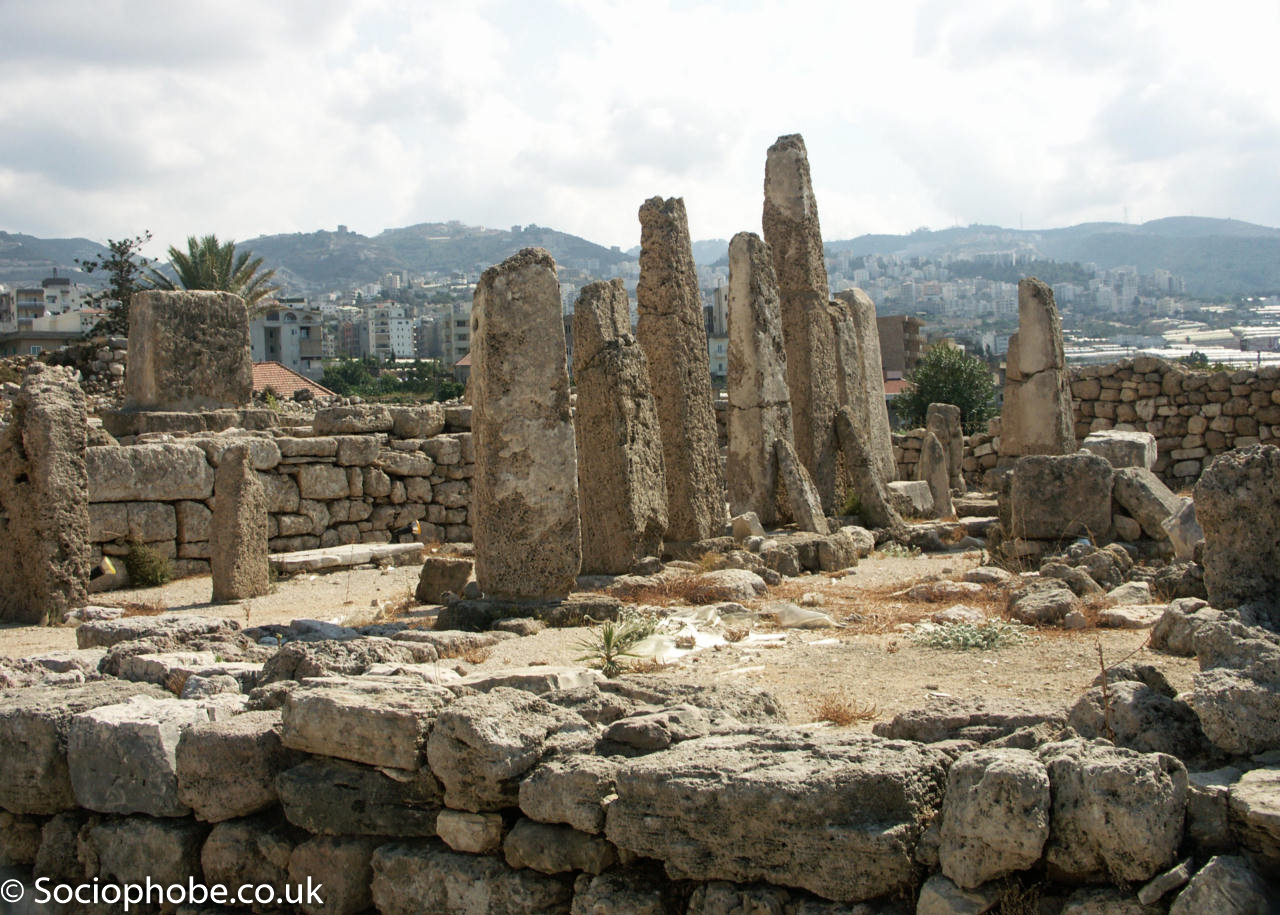
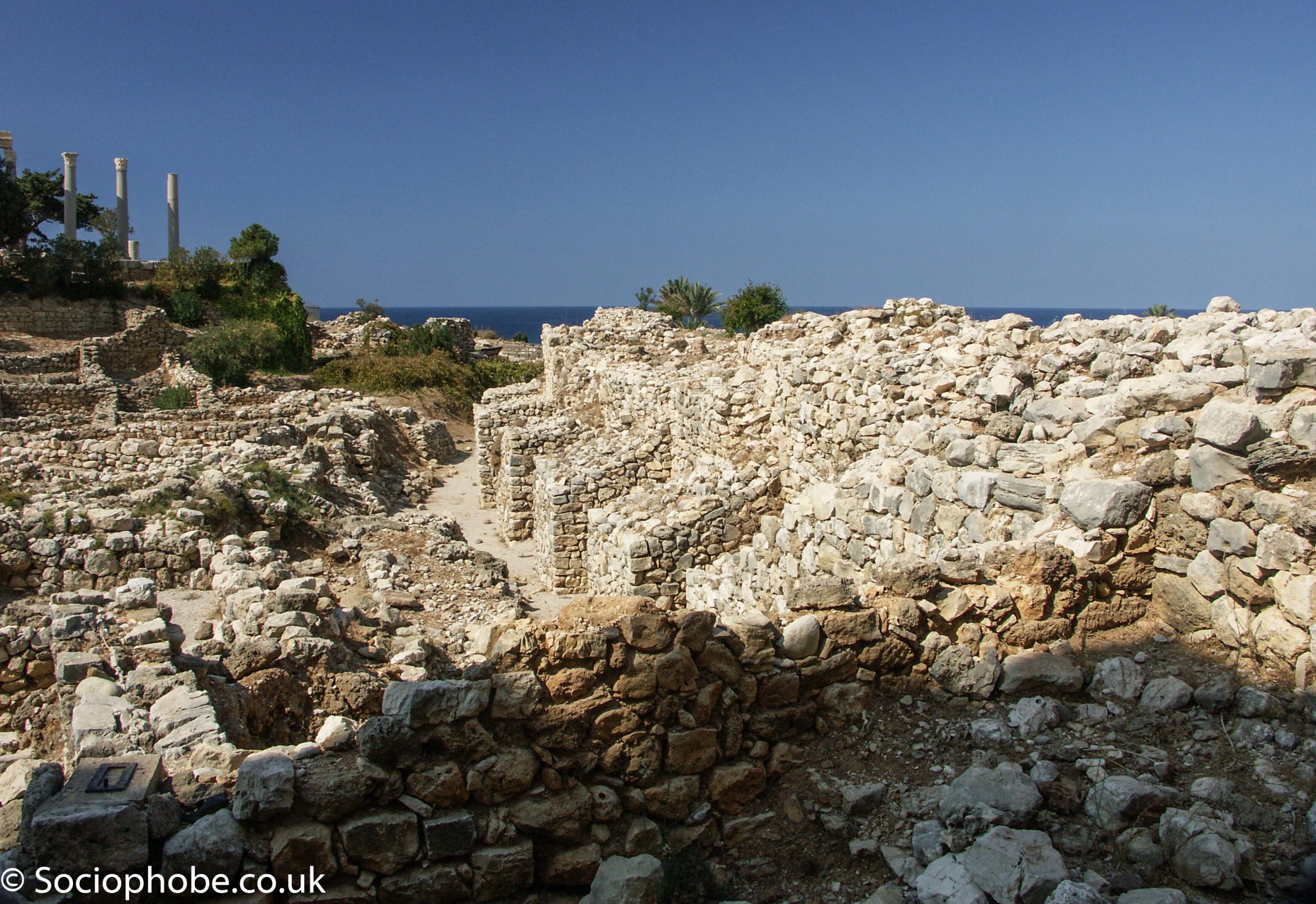
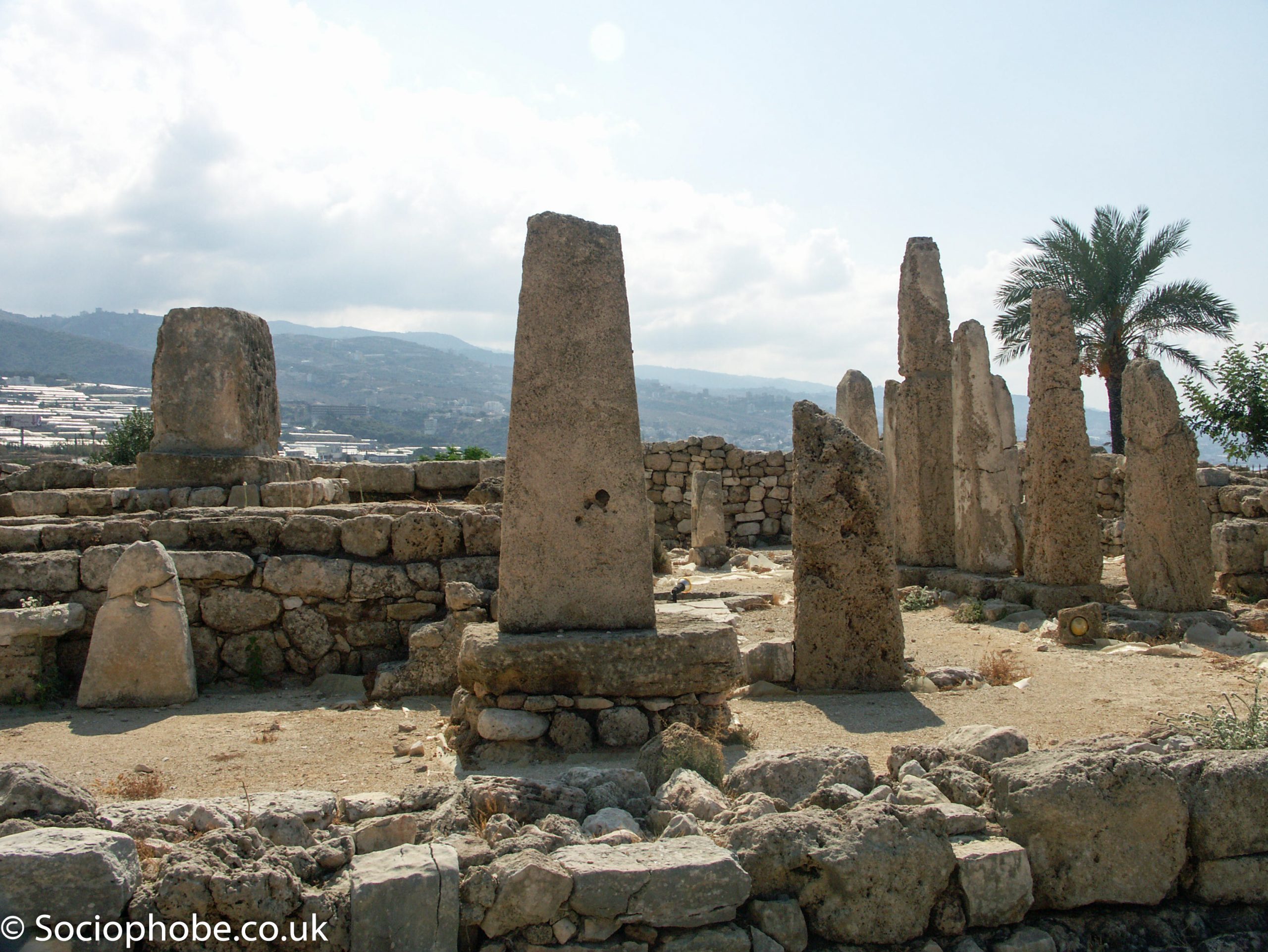
Inside the castle is a museum with replicas of finds from the area including Phoenician inscriptions, Egyptian axes and gold etc. The site itself has Bronze Age walls, roman road/temple/theatre, Egyptian temple, Phoenician well and shaft graves of Phoenician kings.
The Bronze Age walls were pretty impressive considering they have been looted by every other builder over the last 3000 years. There are Roman columns scattered all over the site. The theatre has been relocated and the one currently on the site is only a third of the size of the original. The small Egyptian temple was full of obelisks.
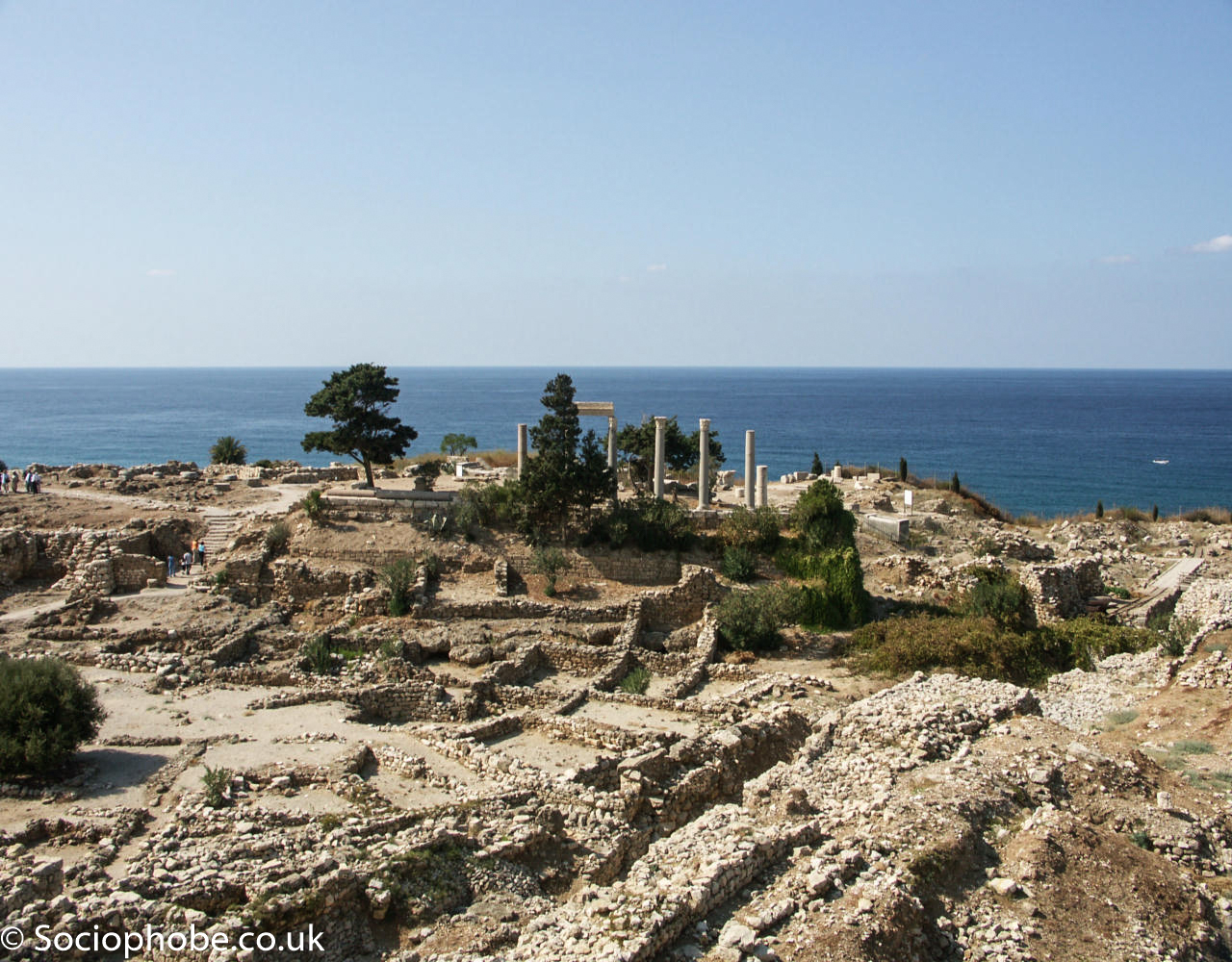
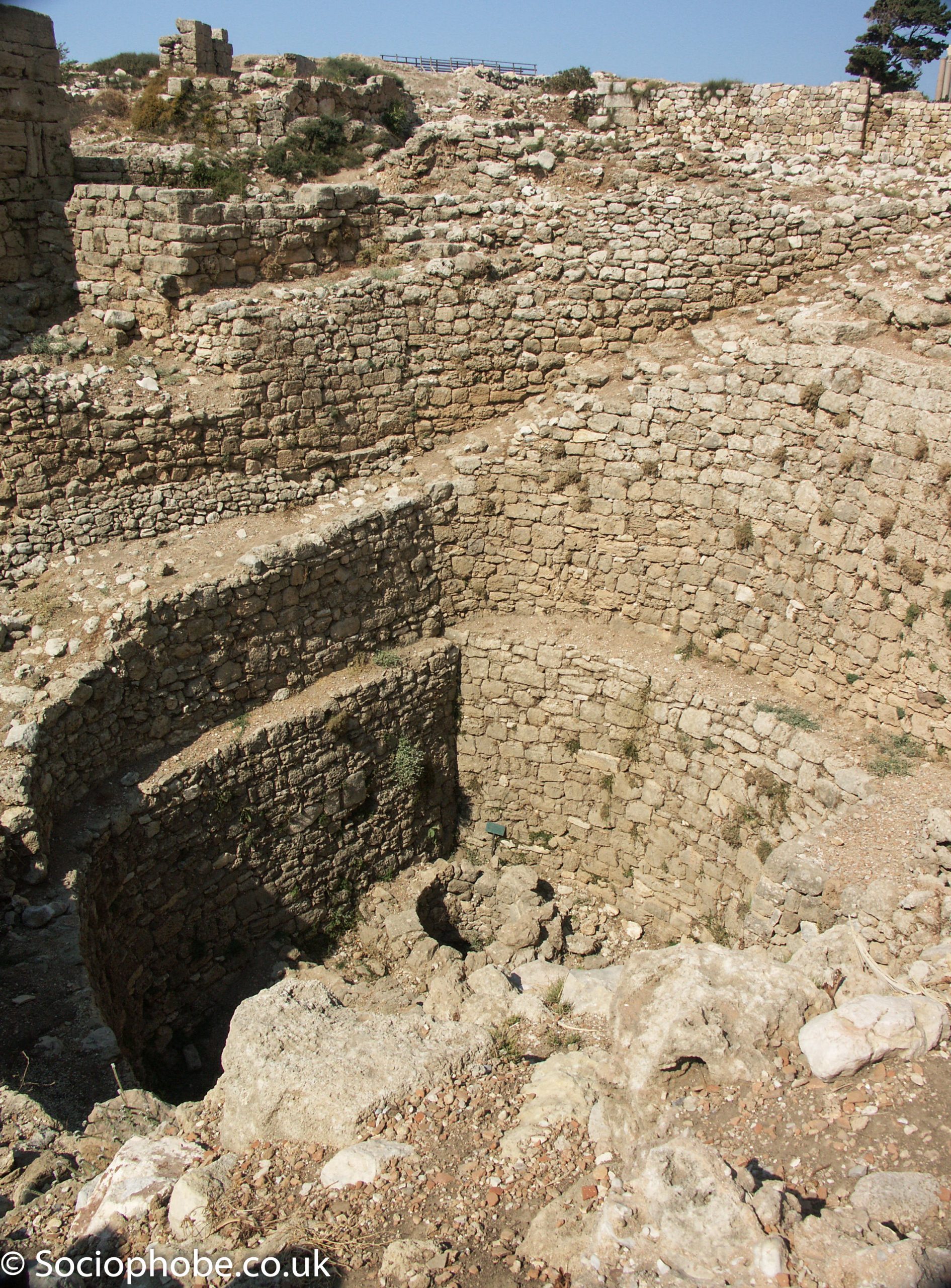
There was also an excellent fish fossil museum as the excavations have thrown up so many – octopoi, jellyfish, plants plus loads of actual fish. We had lunch on the hillside overlooking the Med before heading back into Beirut.
Lebanon: Beirut
Once there we visited the city museum which is now fully restored. In the war a lot of the artifacts were encased in concrete for protection and a lot of the other stuff was damaged. The Greek sculptures were incredible, so detailed and life like. The Bronze Age items were also impressive, even if they’d been made today rather than 3000 years ago. We also had time for a brief look at the city itself.
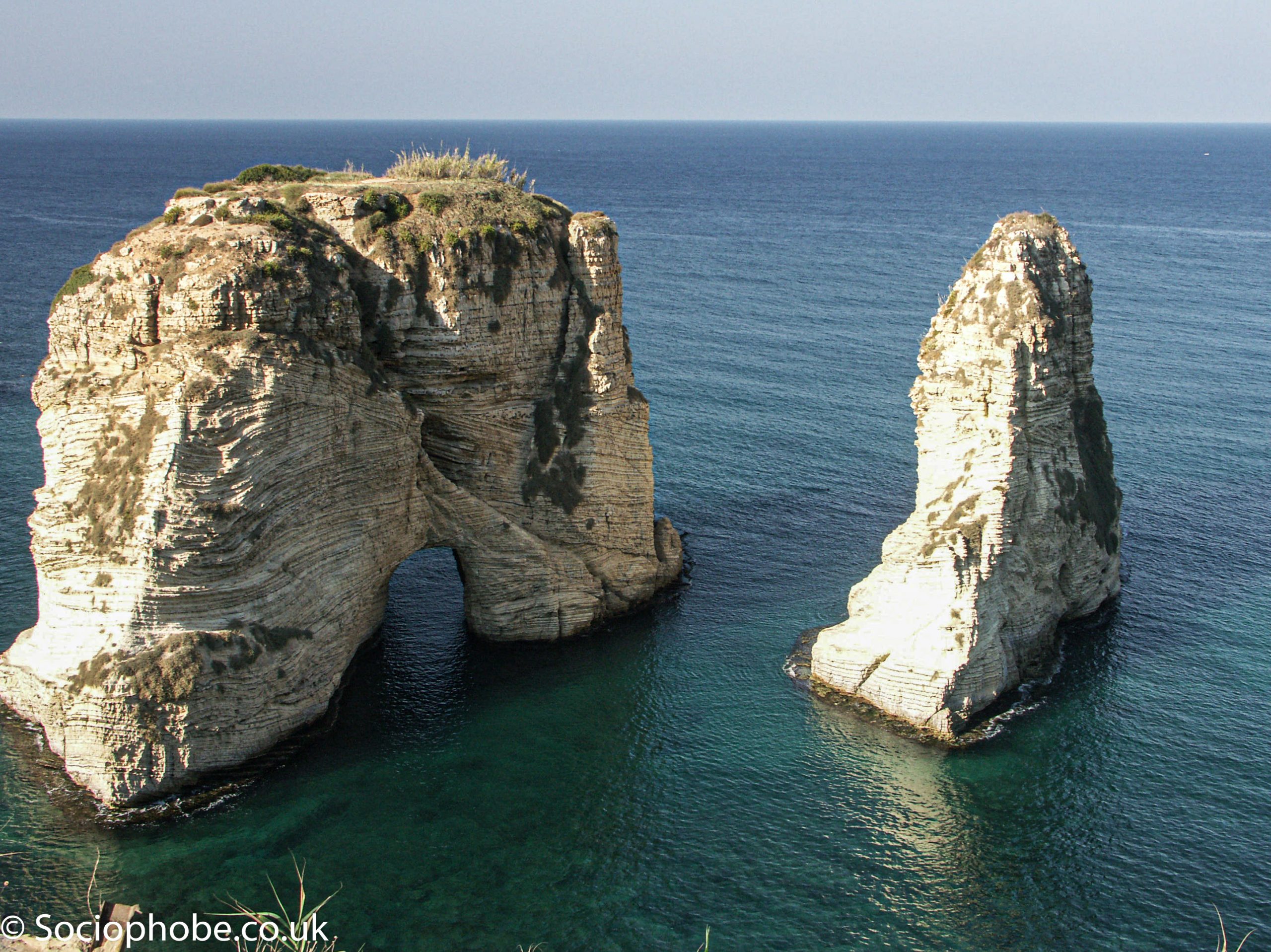
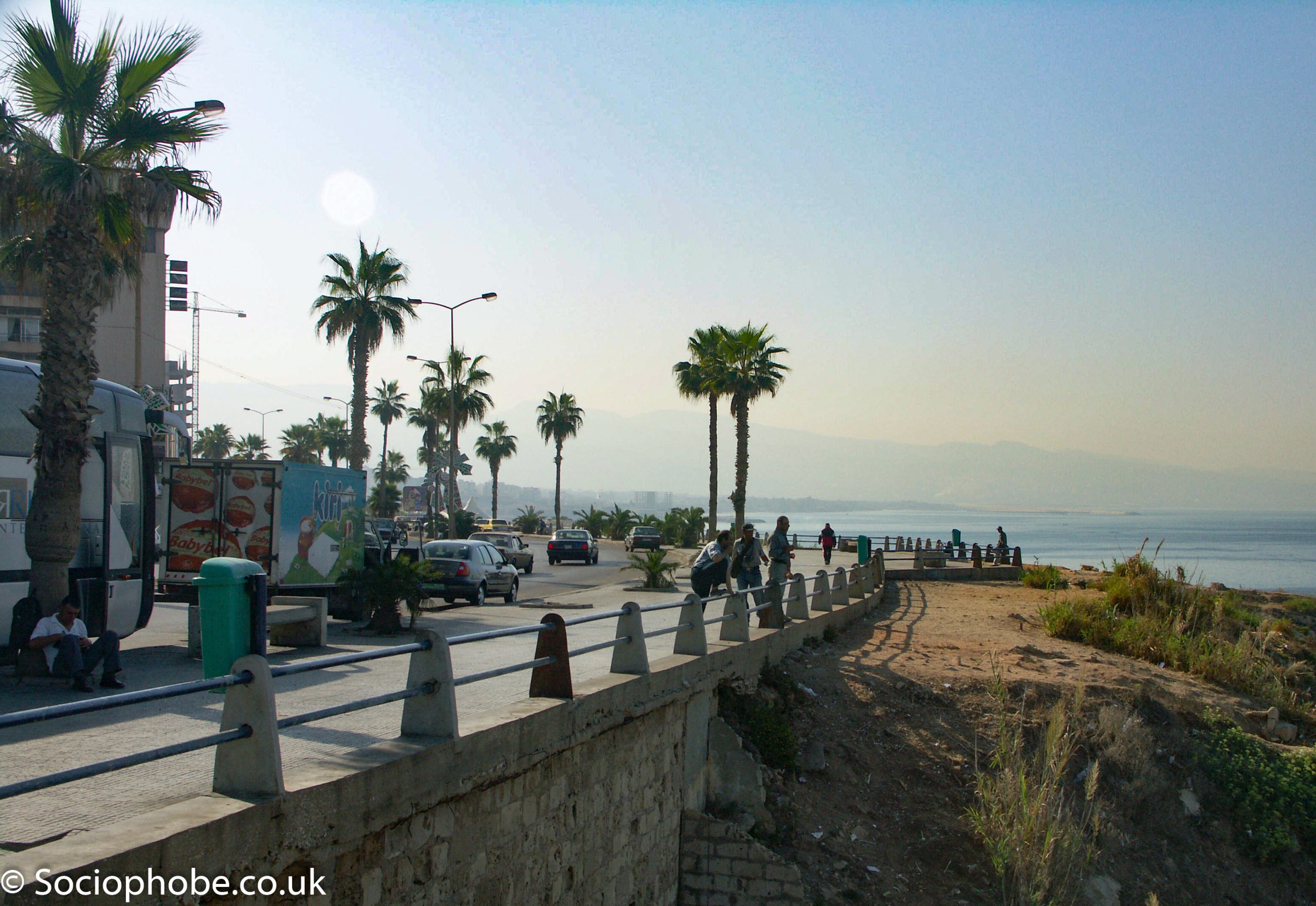
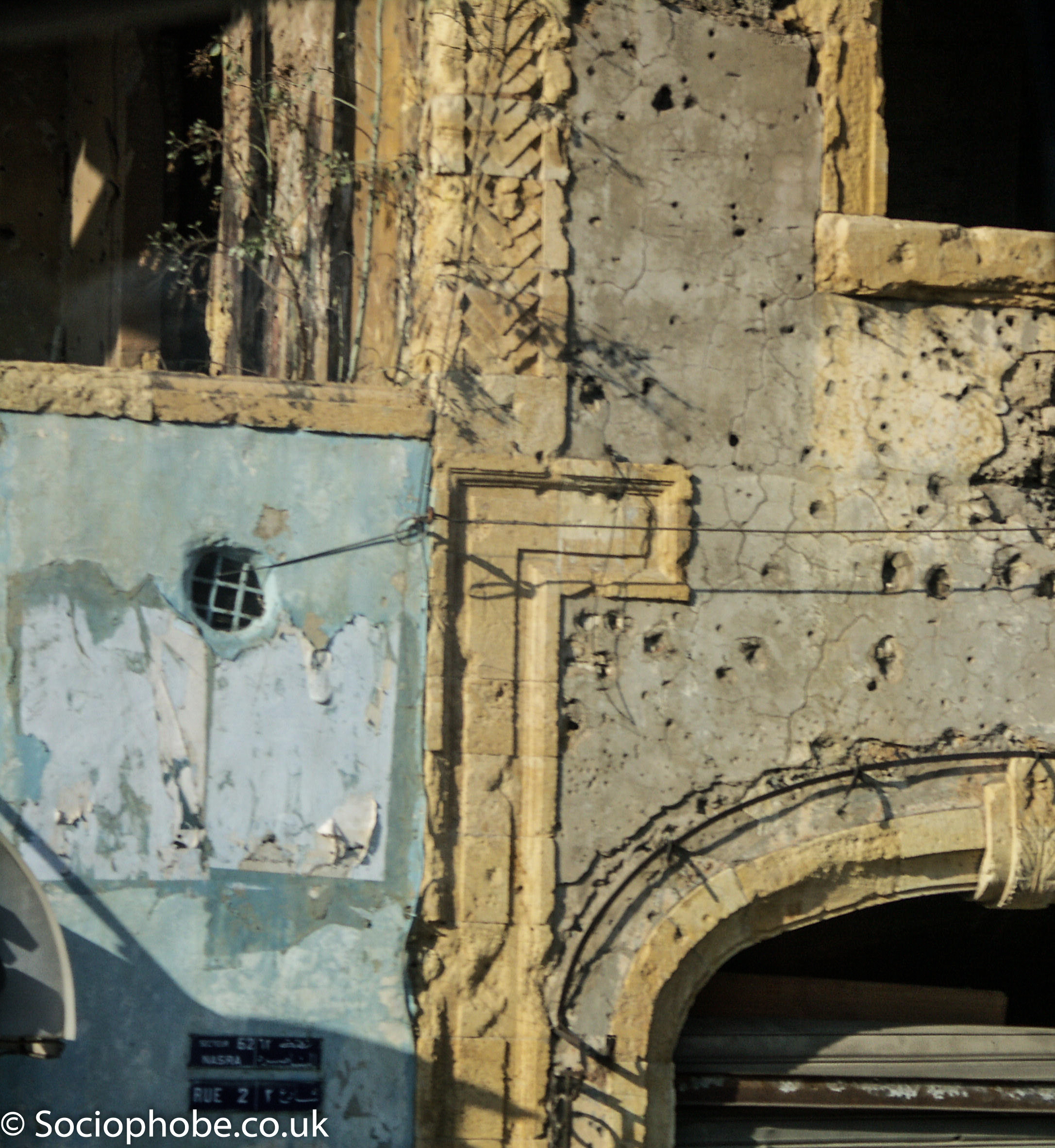
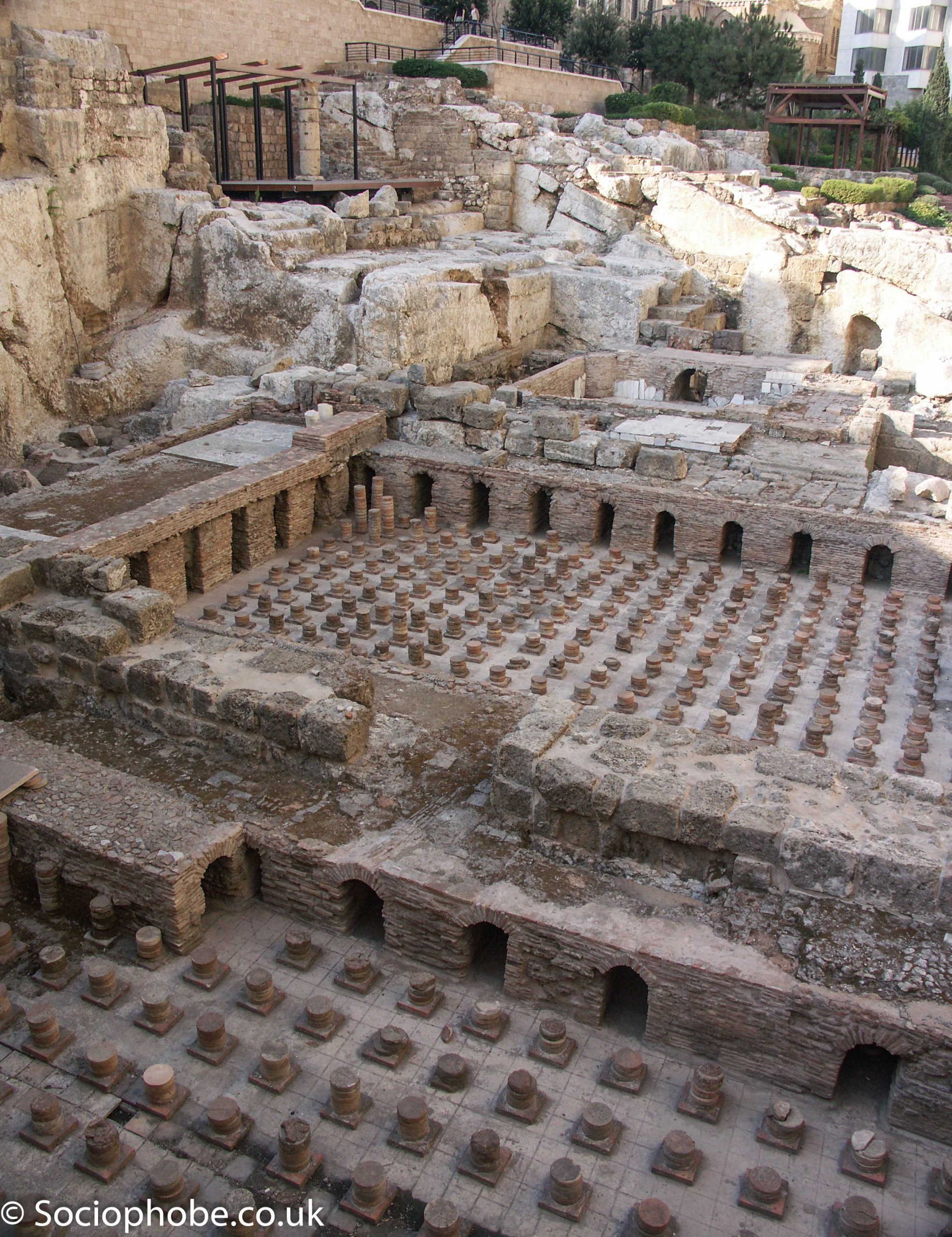
The next day we drove south from Beirut past the mosques and new housing being funded by the Gulf states and then miles of banana plantations. We drove past two Palestinian refugee camps (they now make up 1/7th of the population) and they have tipped the religious balance.
Christian numbers are now declining as emigration, war and smaller families take their toll, soon there will be none left in their birthplace. We saw several Hezbollah signs and posters of various ‘martyrs’.
Lebanon: Sidon
Lebanon: Sidon Crusader Sea Fort
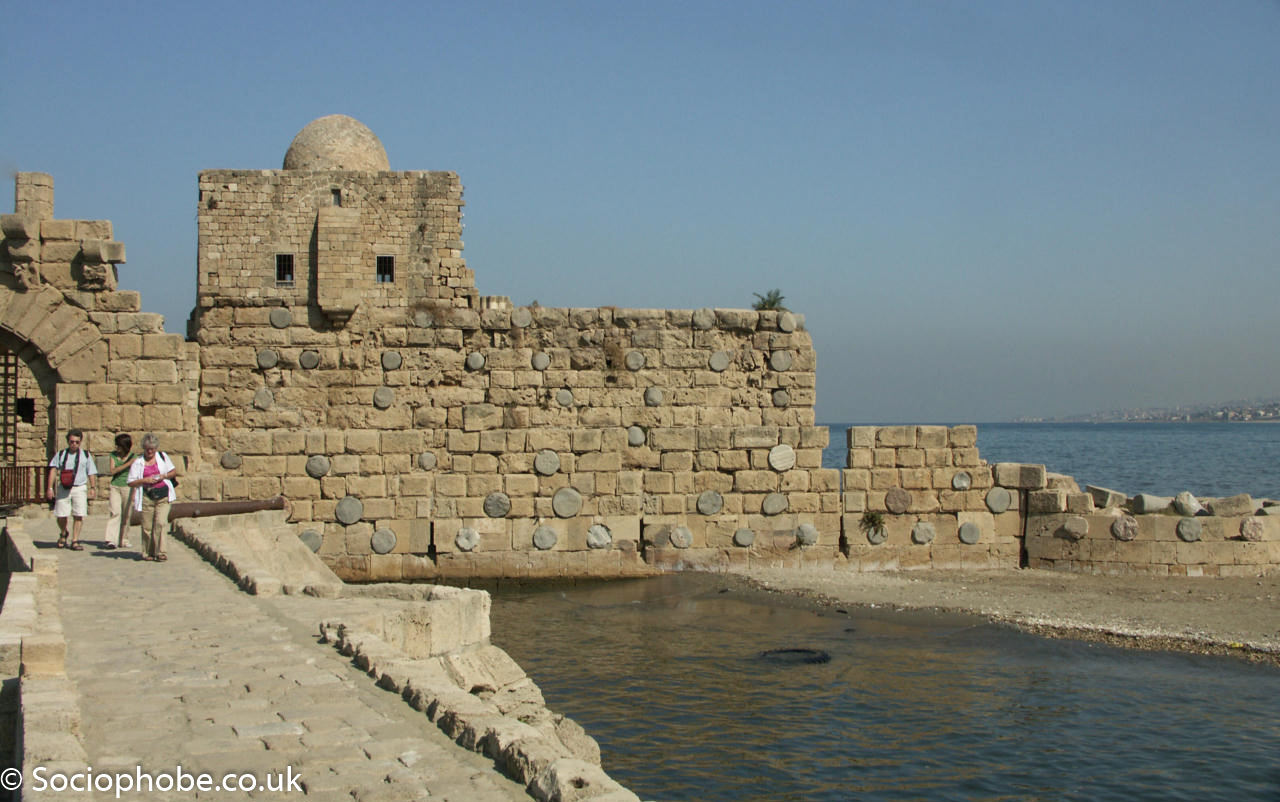
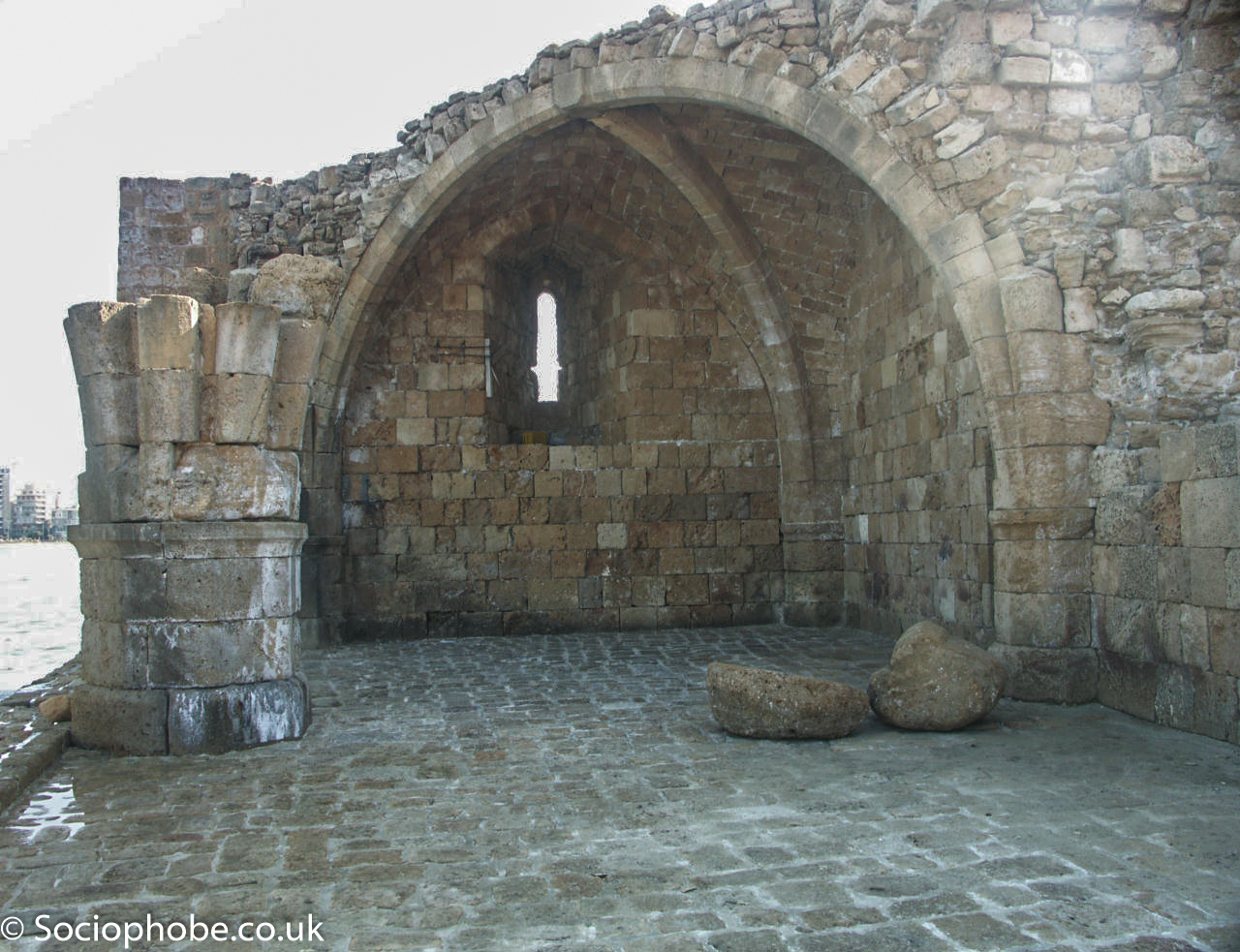
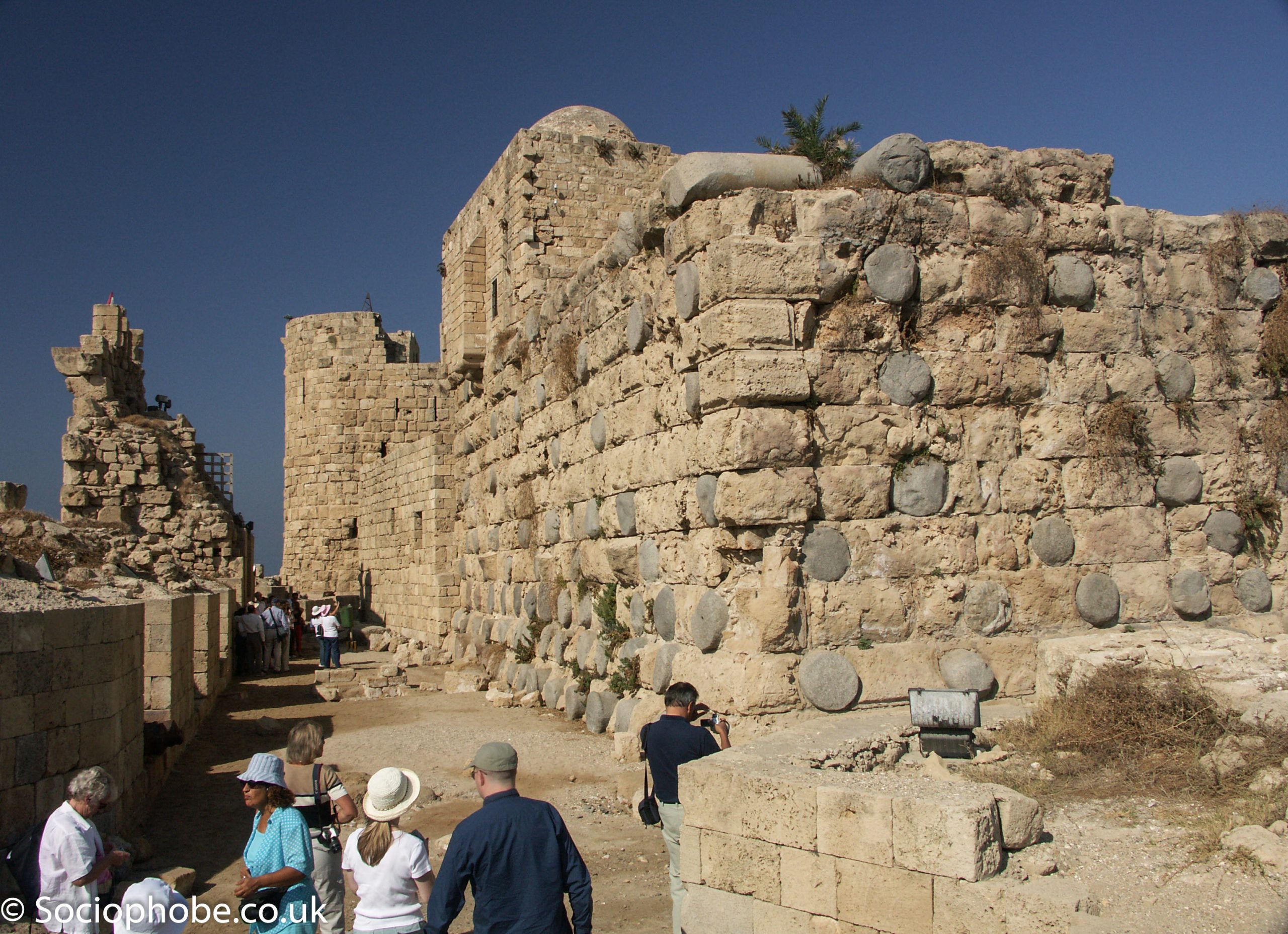
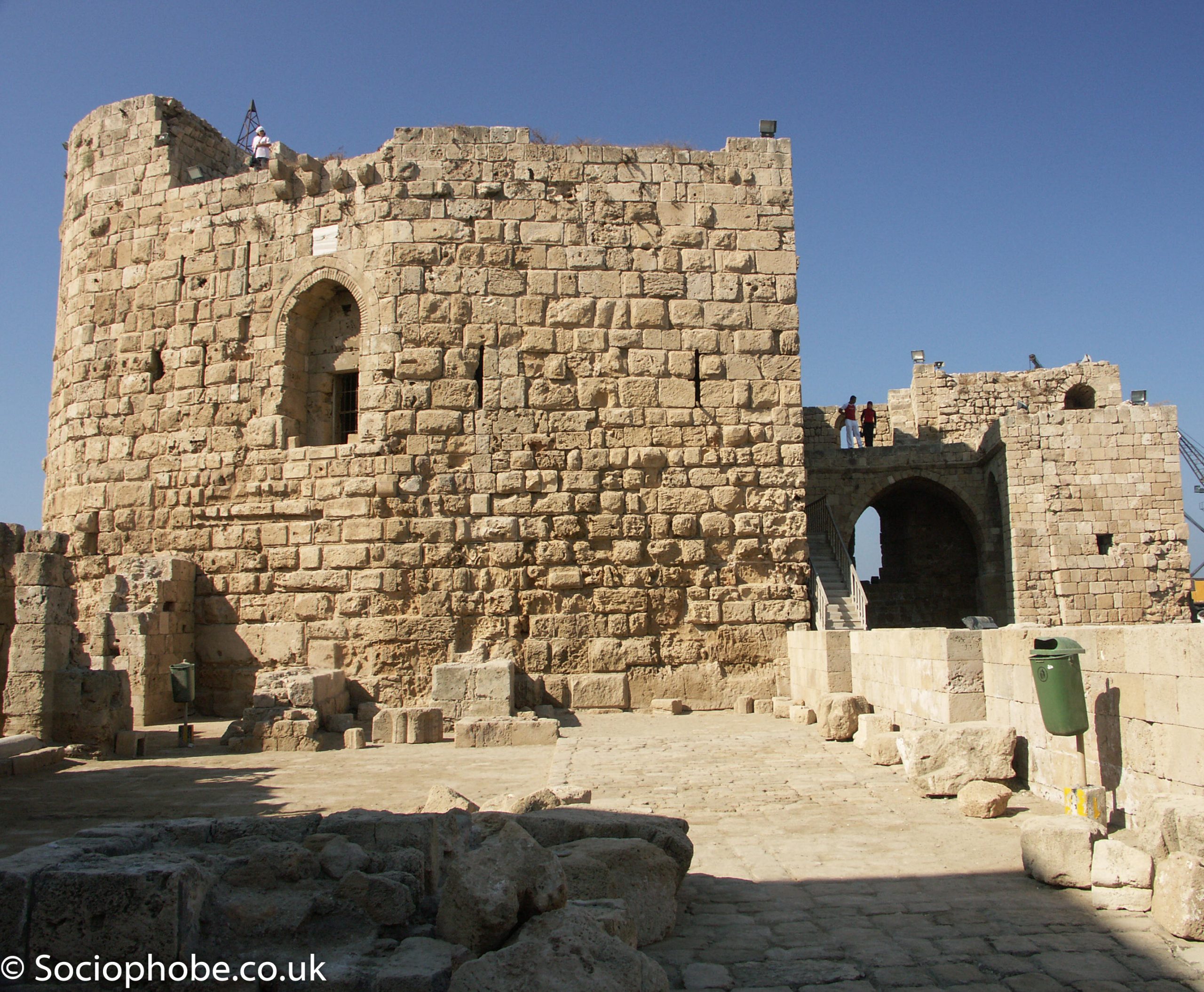
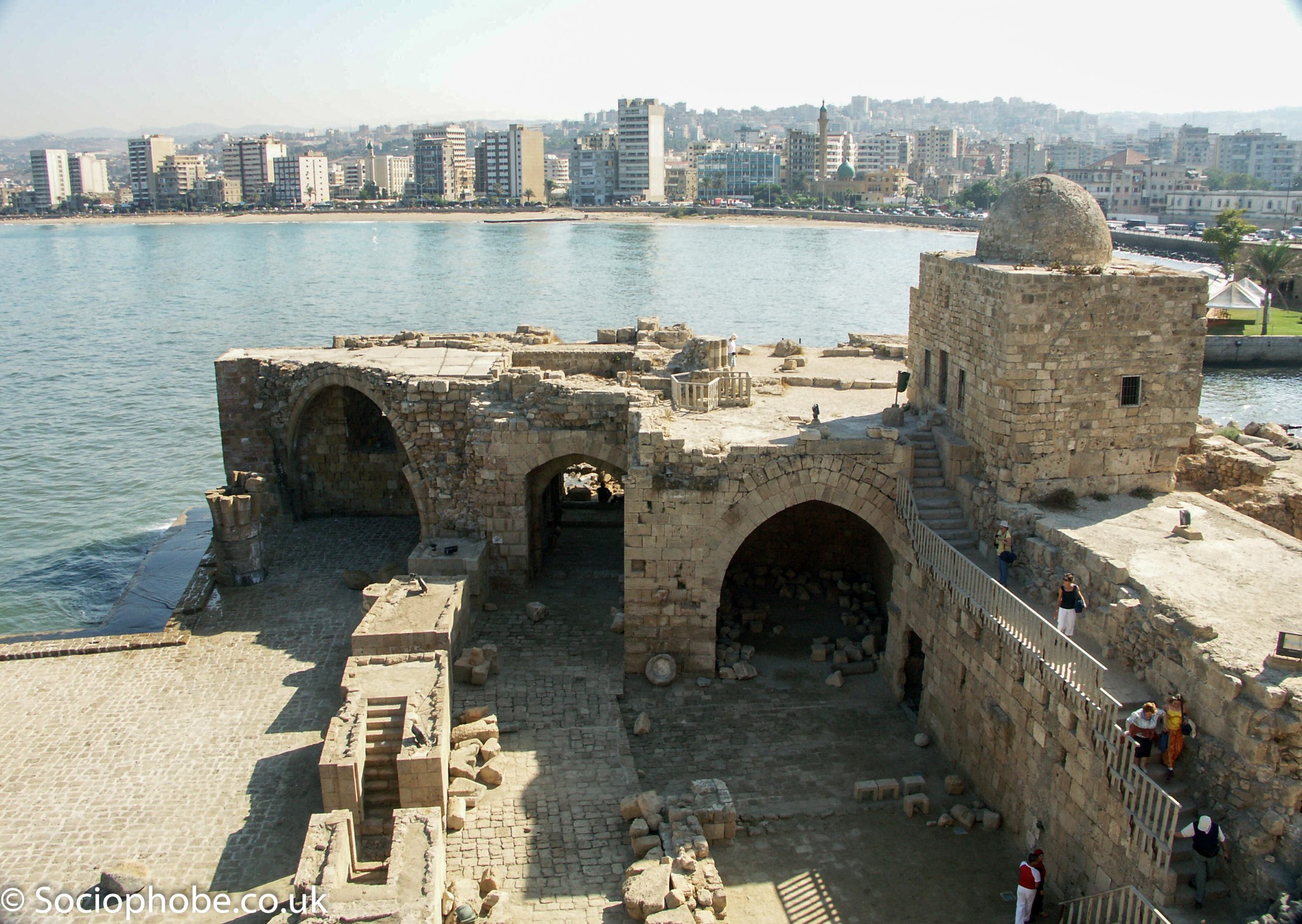
First stop today was the Crusader sea fort at Sidon. From the shore it looked quite small but as you got closer it was a lot more impressive. There was a long causeway leading up to it and the walls were full of Roman columns that had been used both to speed up building and add stability. The place had been nicely restored.
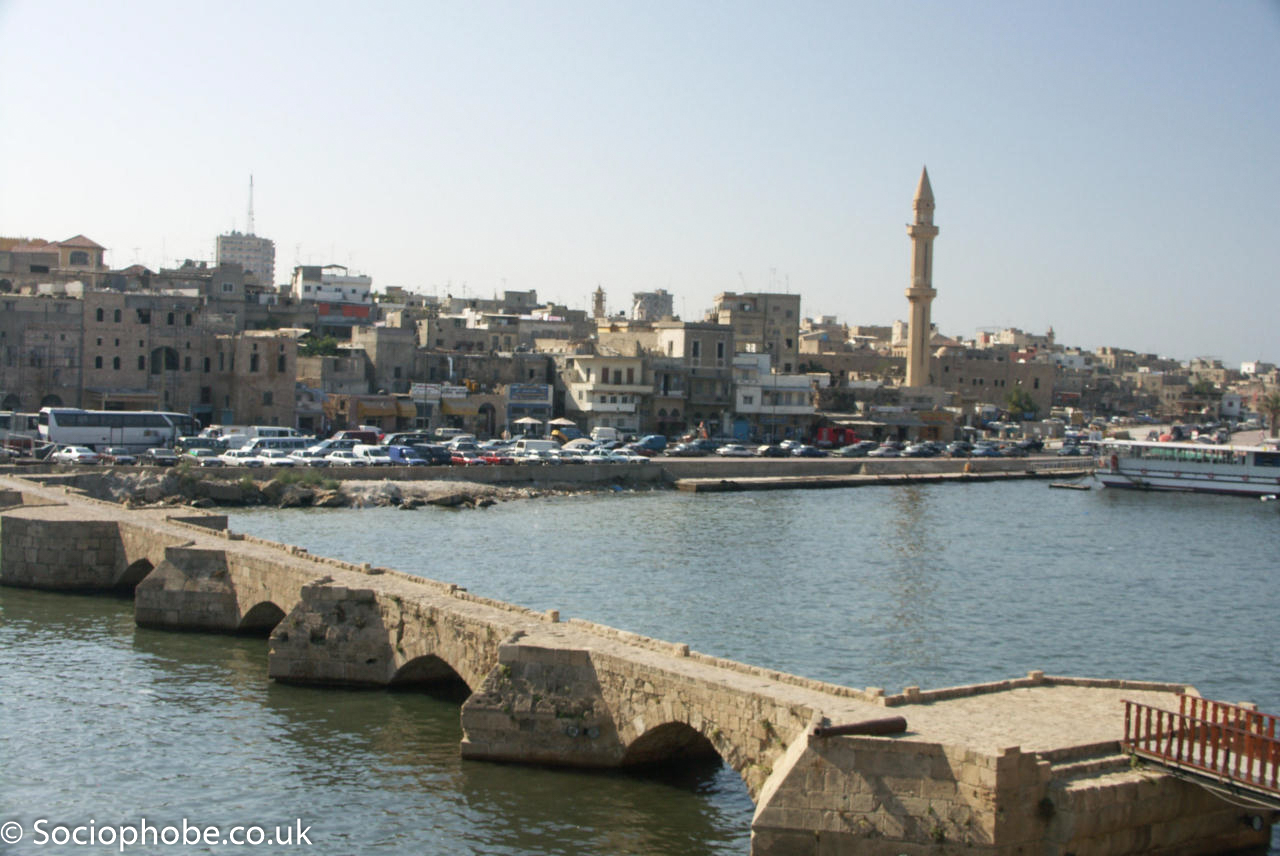


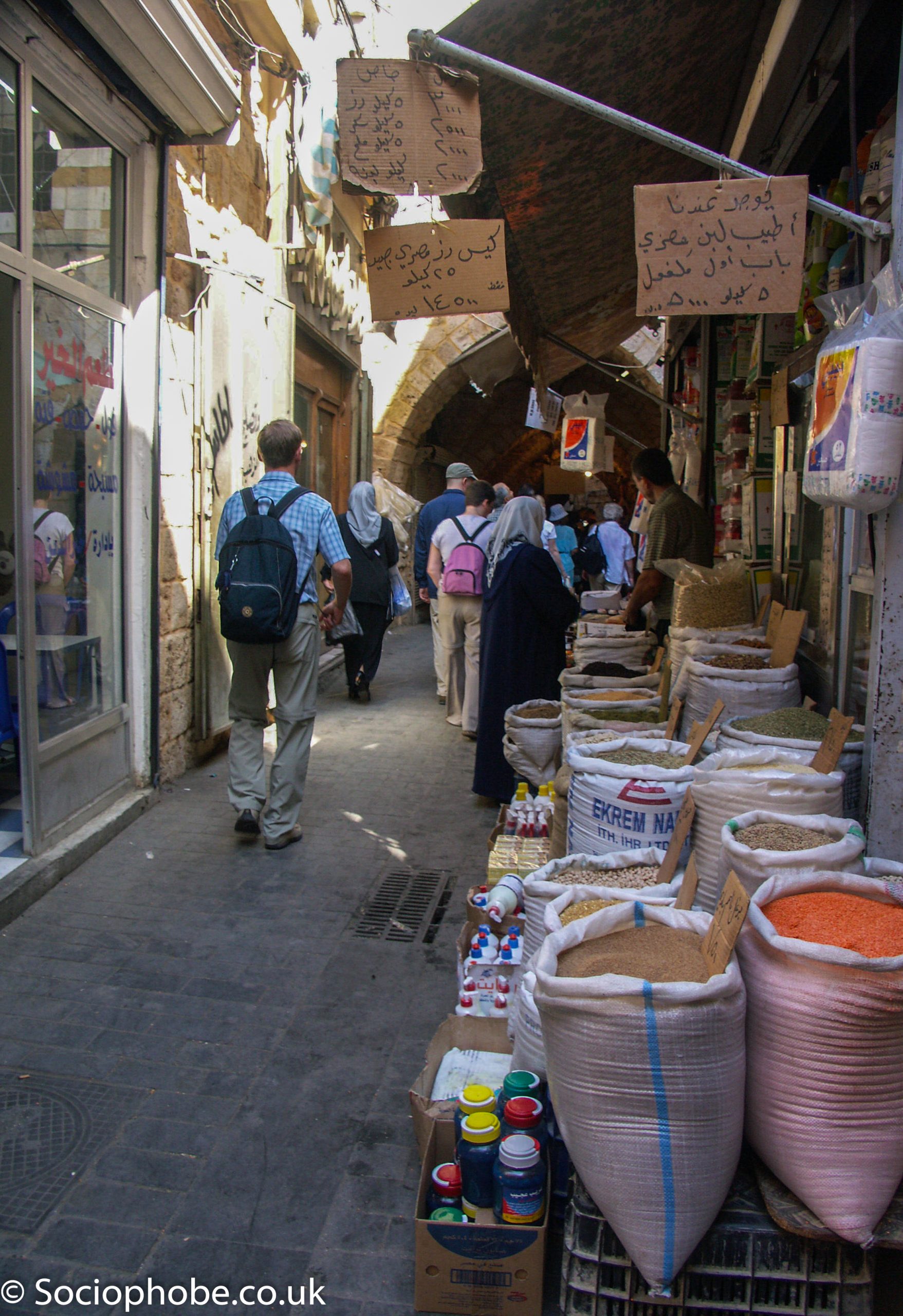
We then had a walk around the town and souk and saw some of the famous filigree gold work. I don’t think animal rights are a big thing here, there were stalls with chickens crammed into cages or twitching headless on a slab, fish gasping in trays etc
Lots of posters of politicians that look like 70’s film stars with big sunglasses and big mustaches too. The parking is enlightening, people literally stop wherever they like, even the side of the motorway.
Lebanon: Sidon Souk and Caravanserai
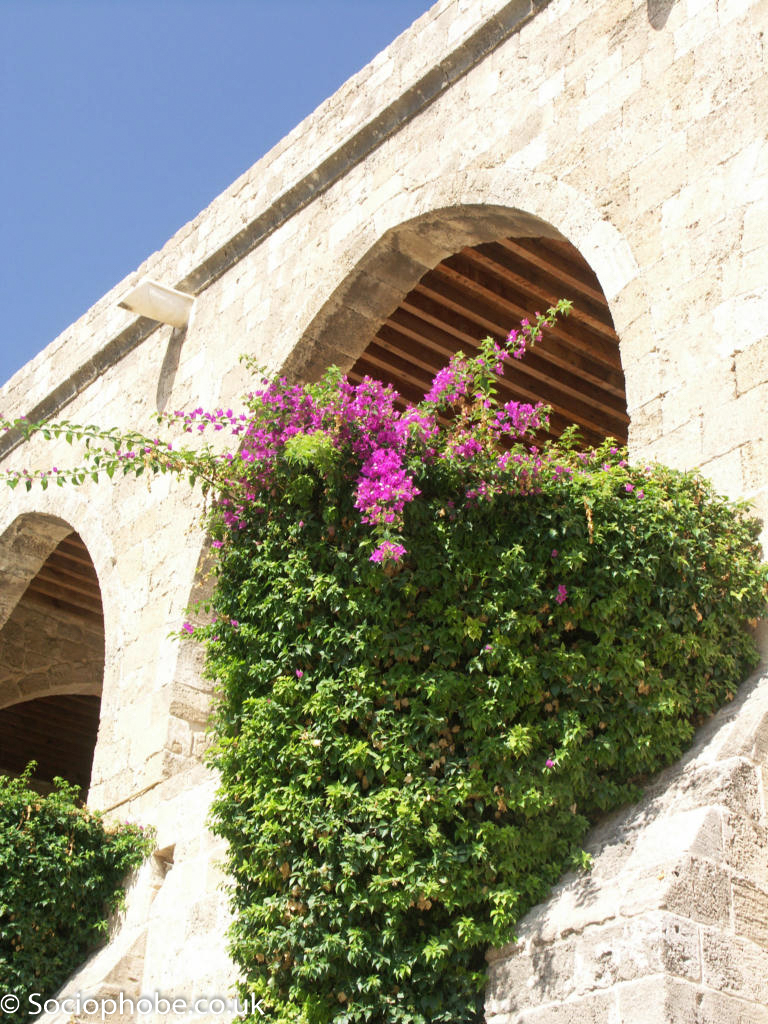
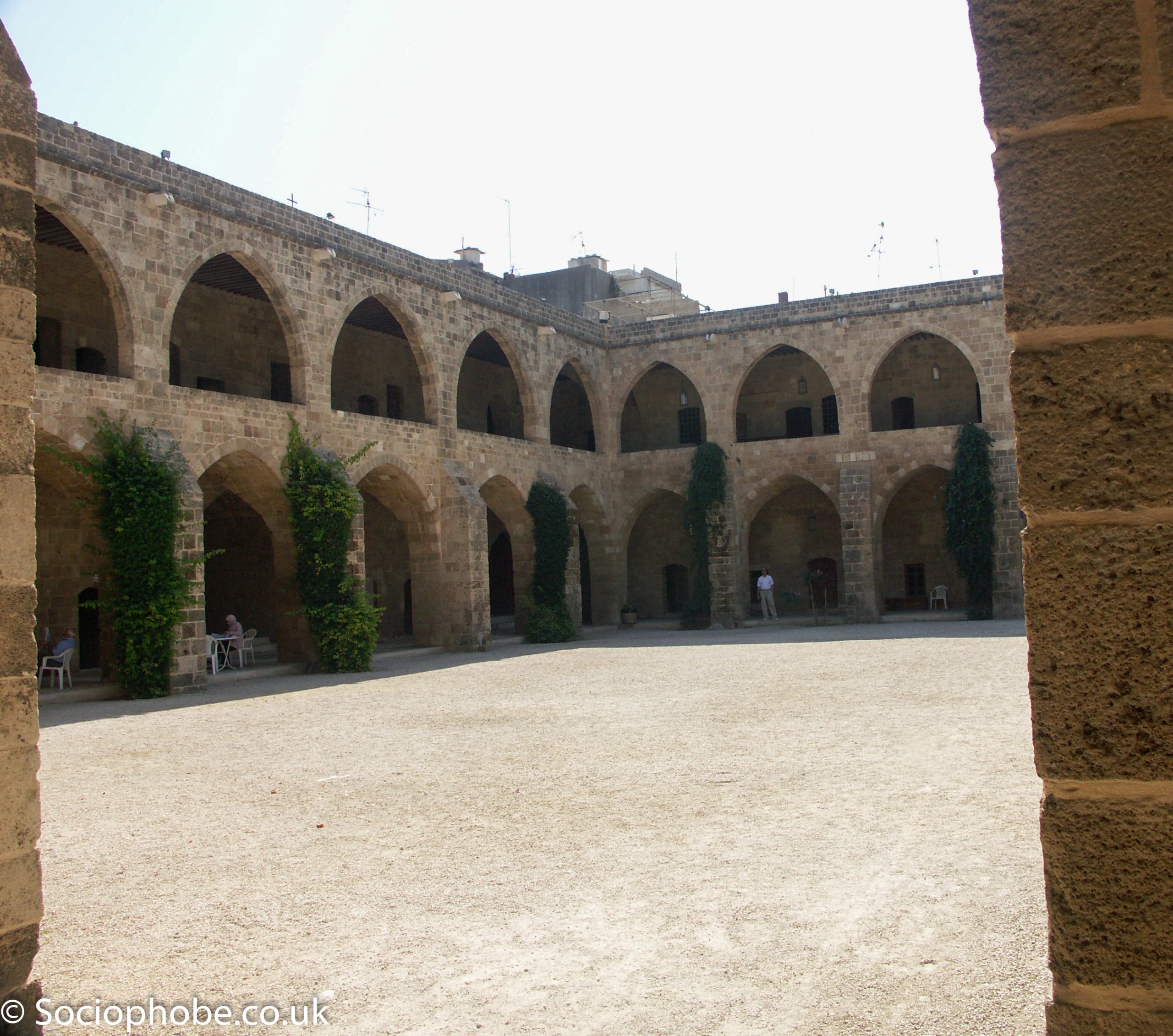
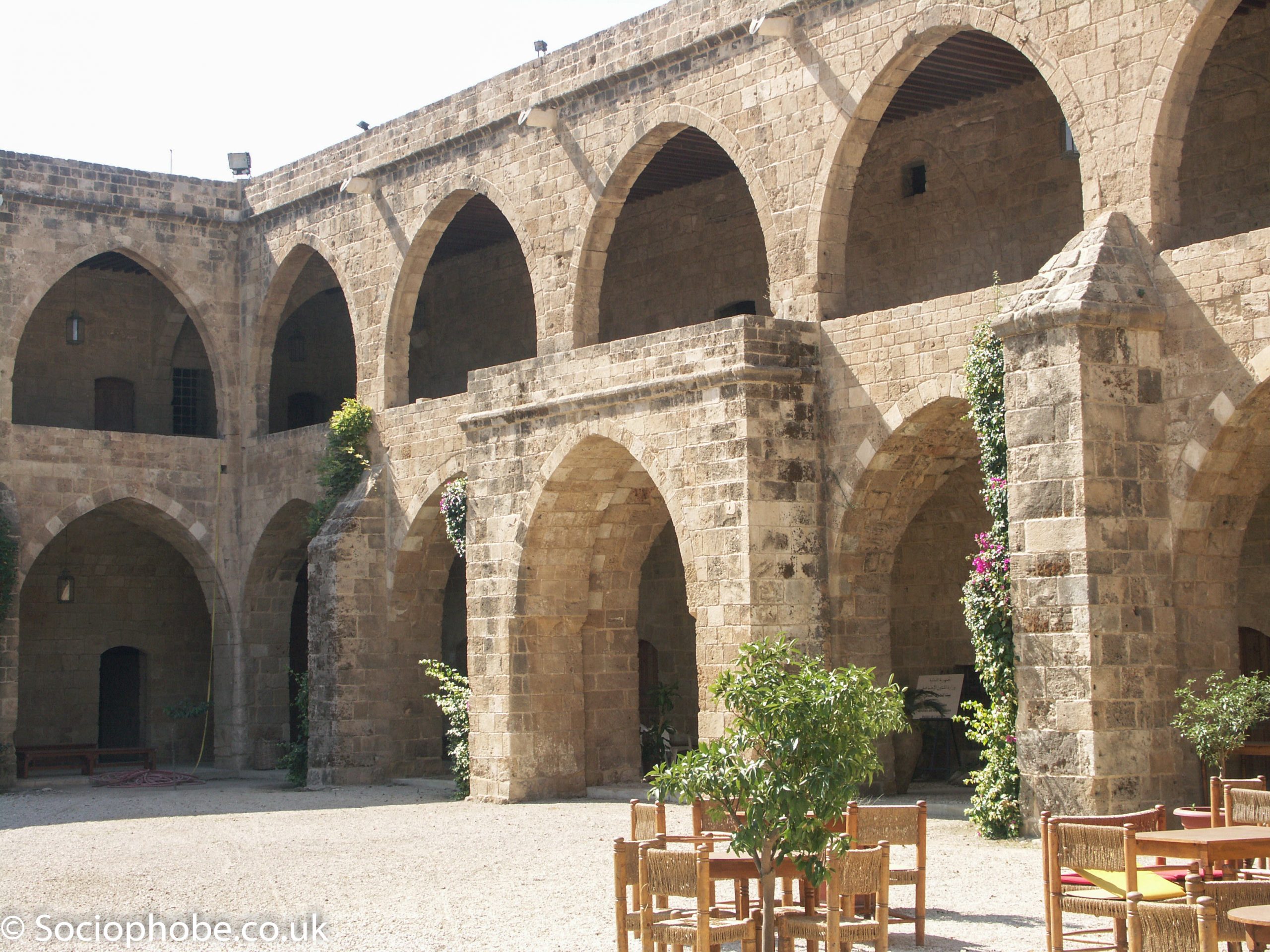
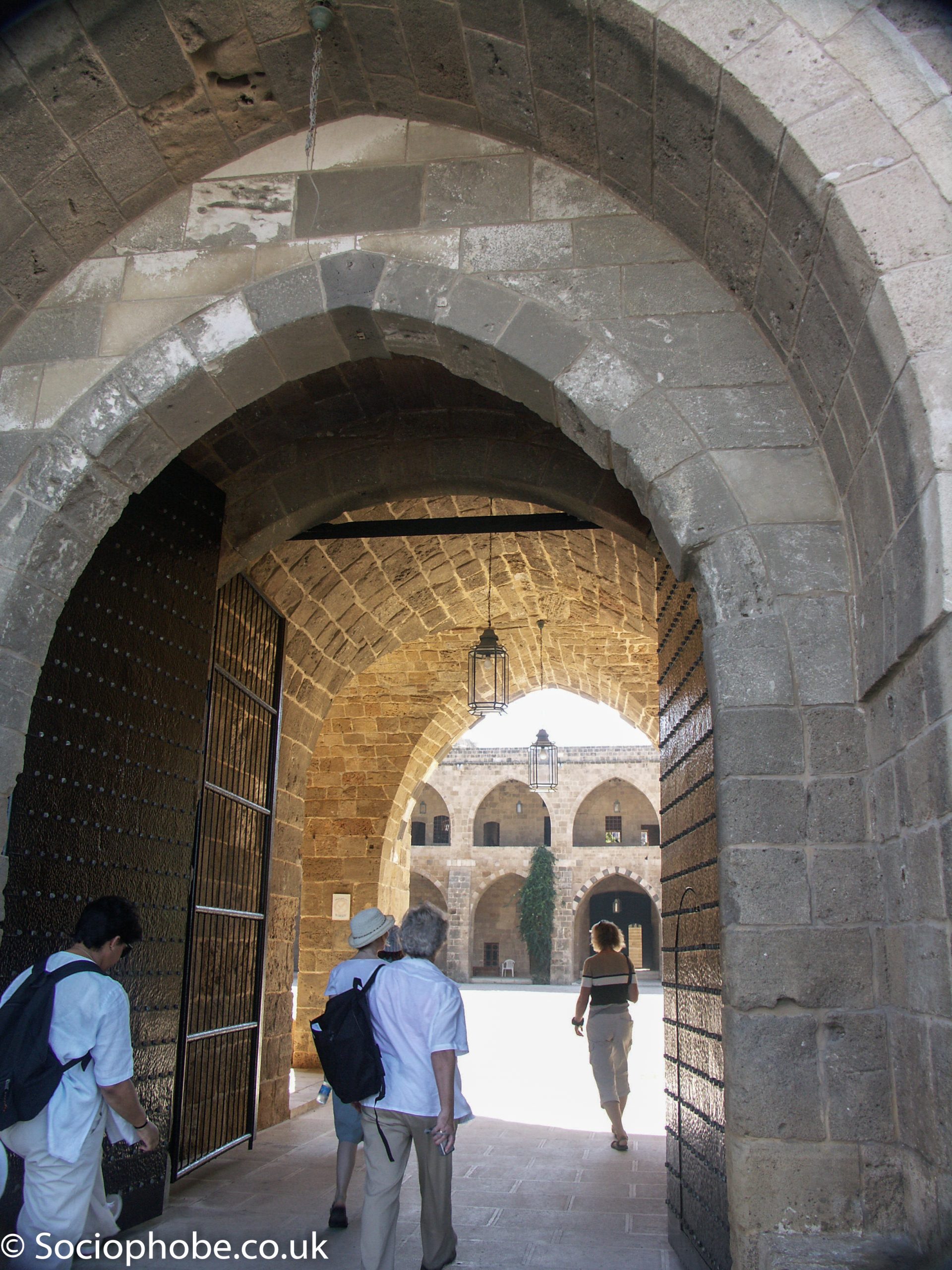
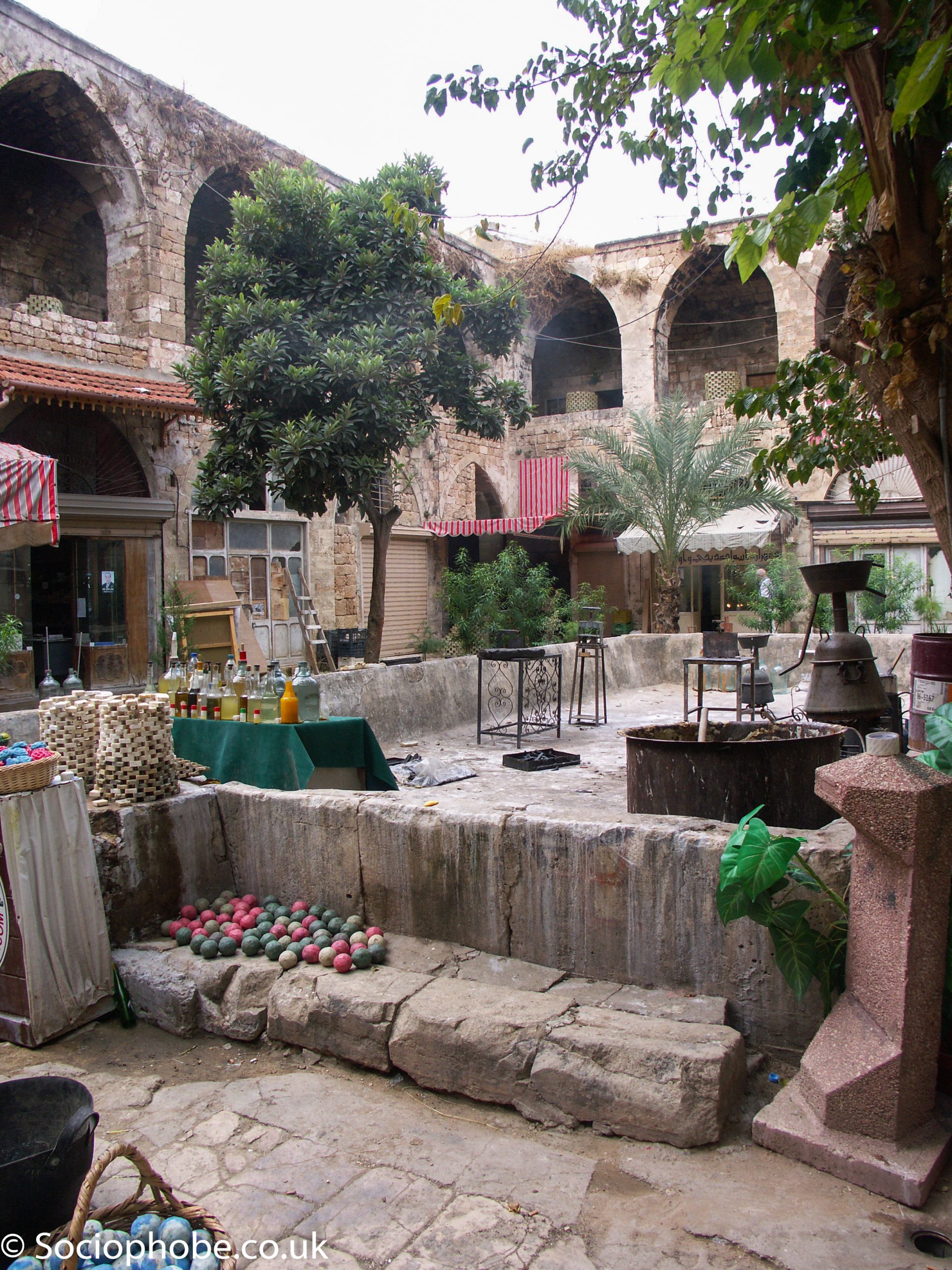
Next stop was a soap museum as Sidon used to be famous for trading olive oil and fennel soap. They also had a cafe with delicious pastries and I stopped there before visiting a restored caravanserai.
Lebanon: Tyre
Lebanon: Tyre Necropolis
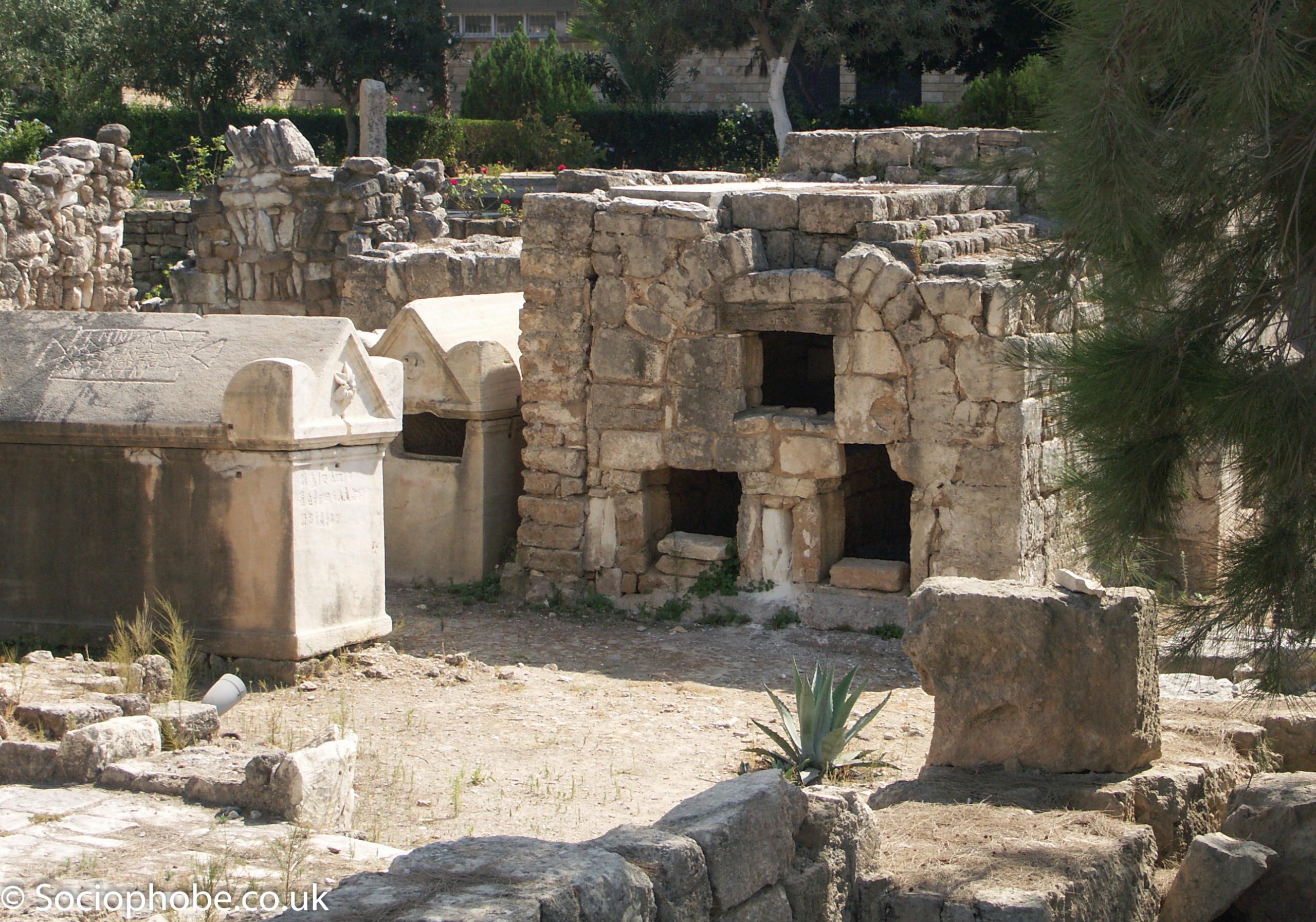
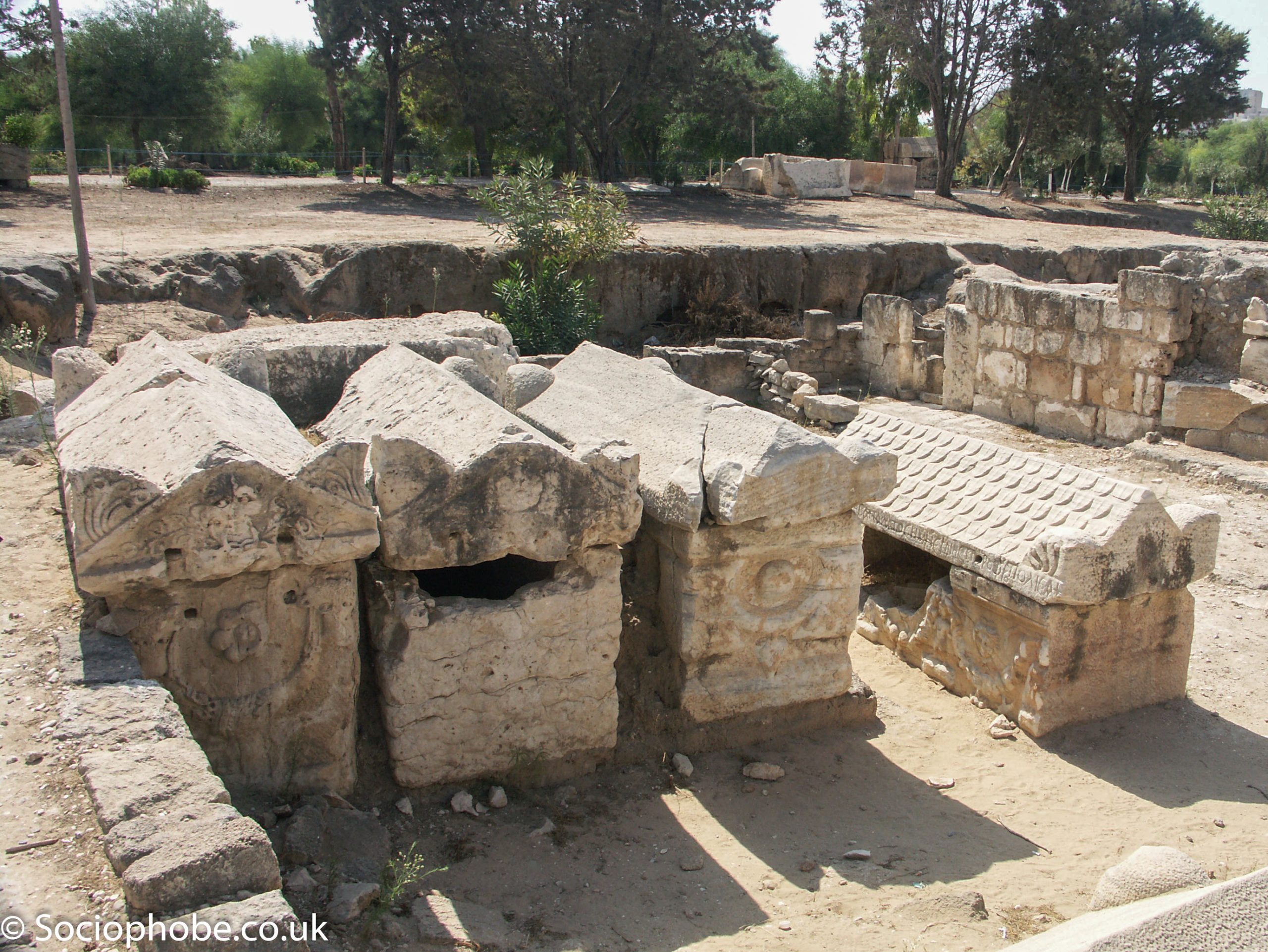
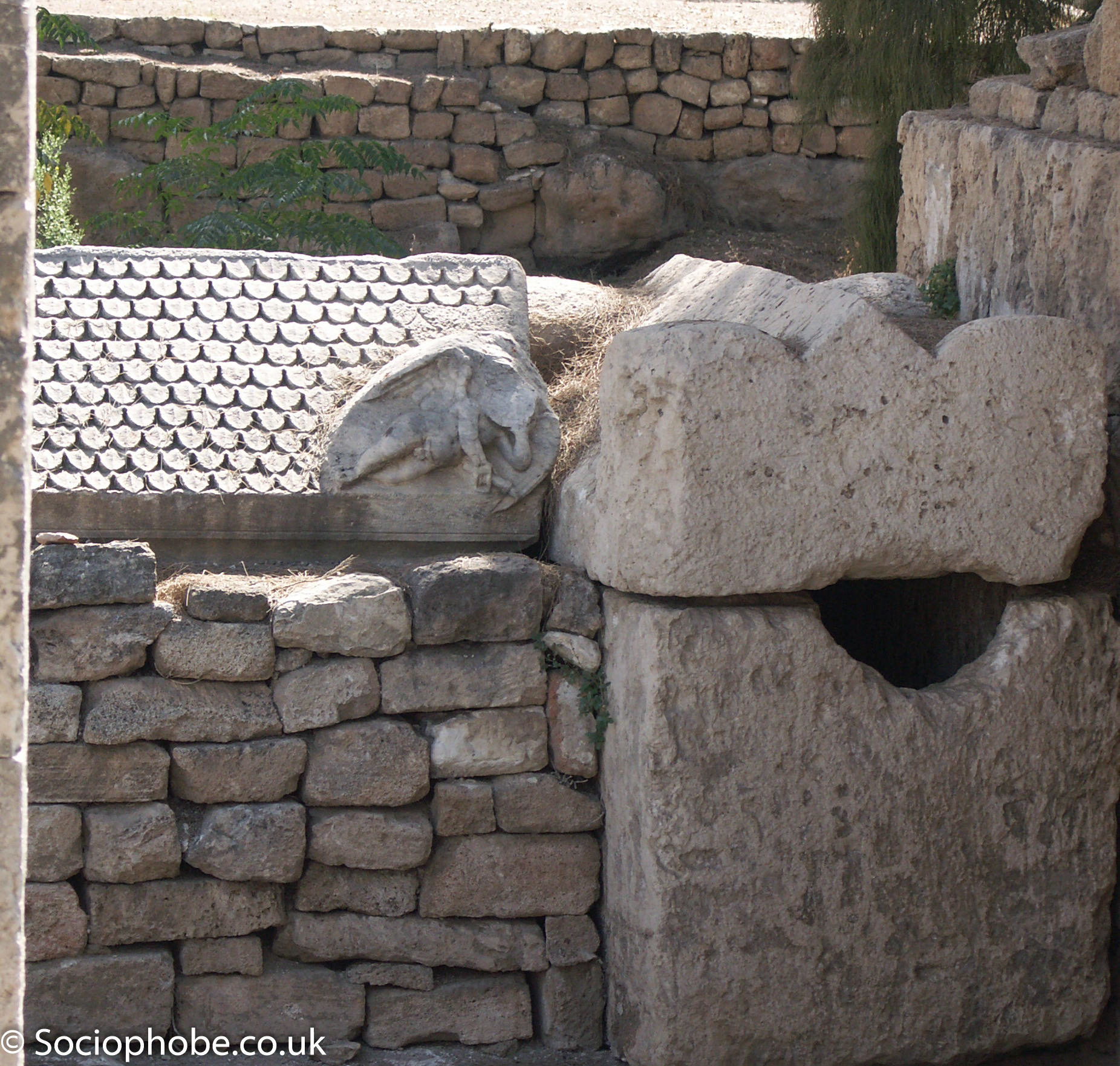
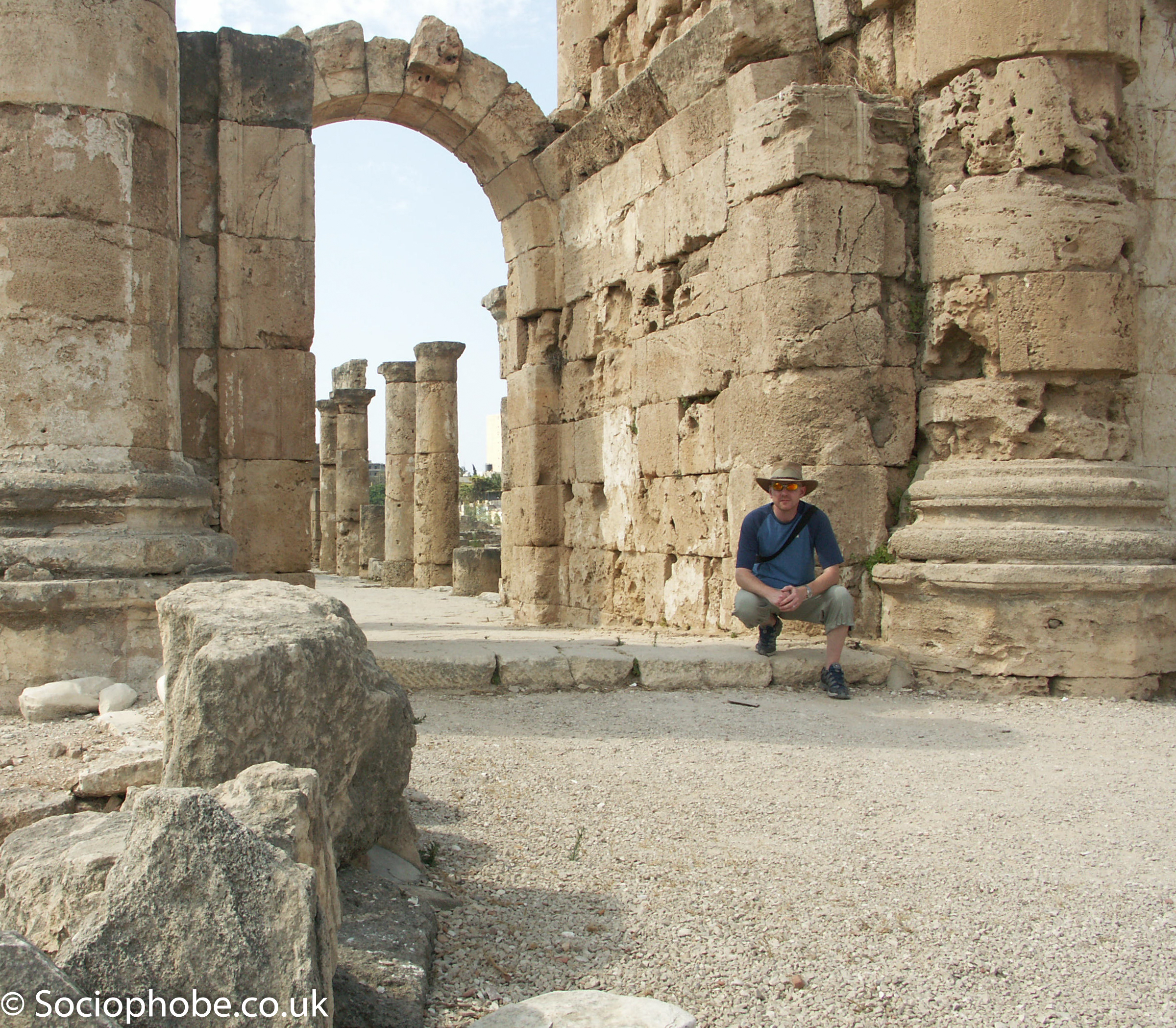
We returned to the coach and carried on to Tyre, past more Hezbollah posters and Lebanese army checkpoints and then arrived at Tyre necropolis. This was built outside the city and the tombs are a strange mix. Some very narrow where people were buried on their side to save space, some larger family vaults, some ornate and exuberant, some very plain.


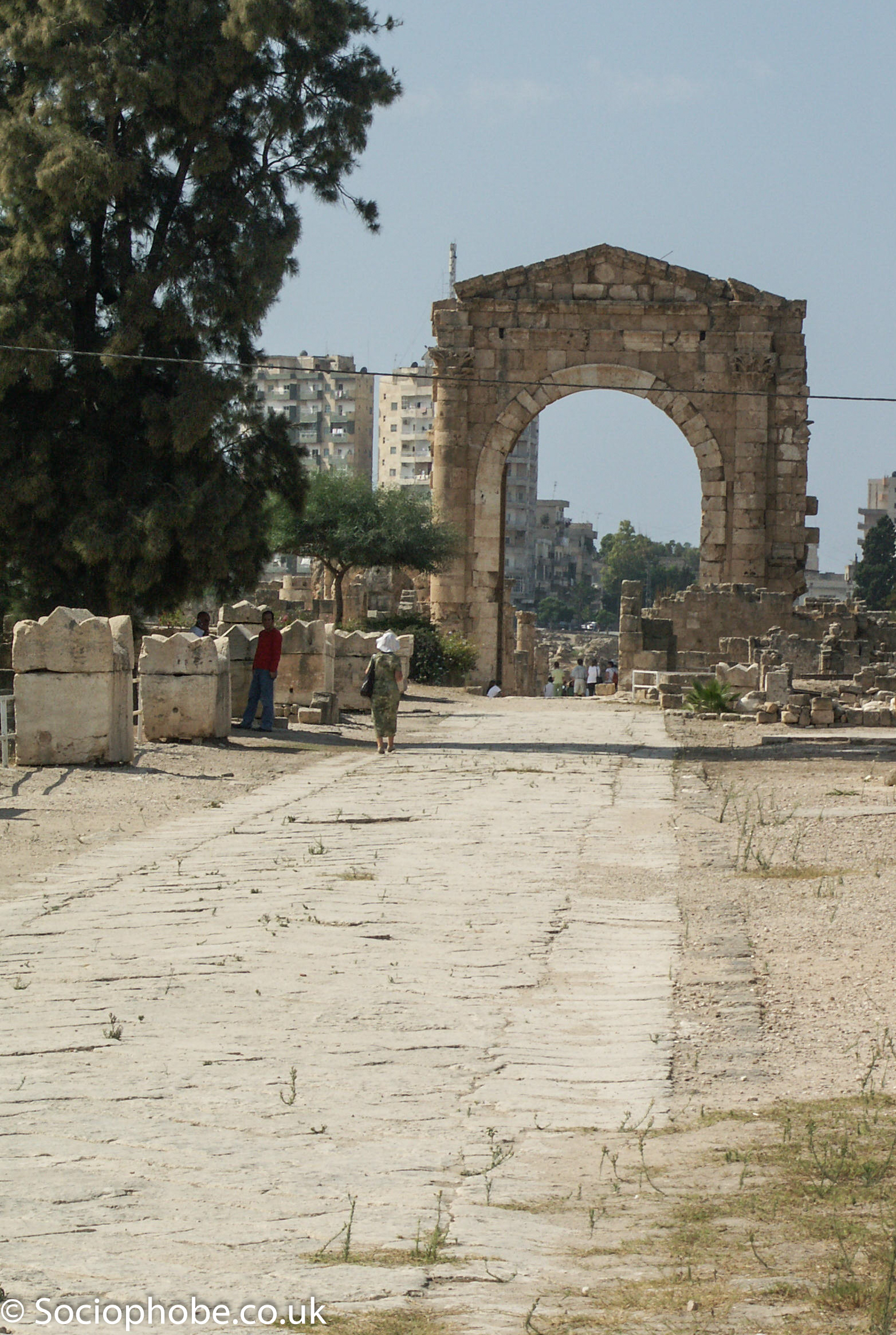
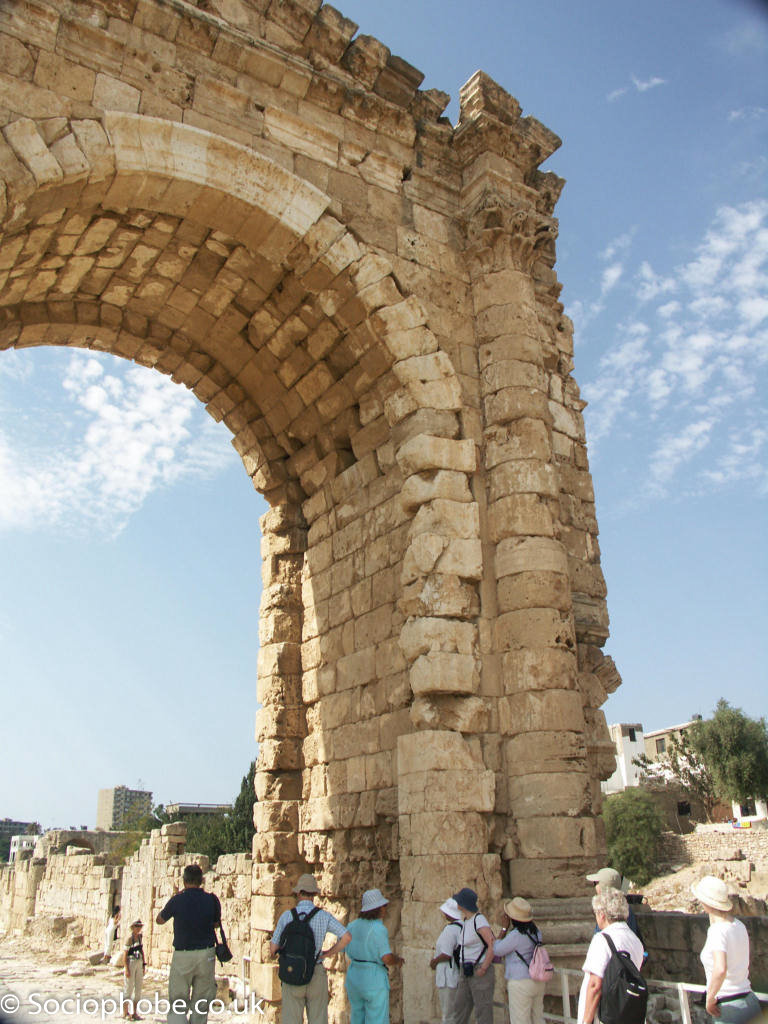
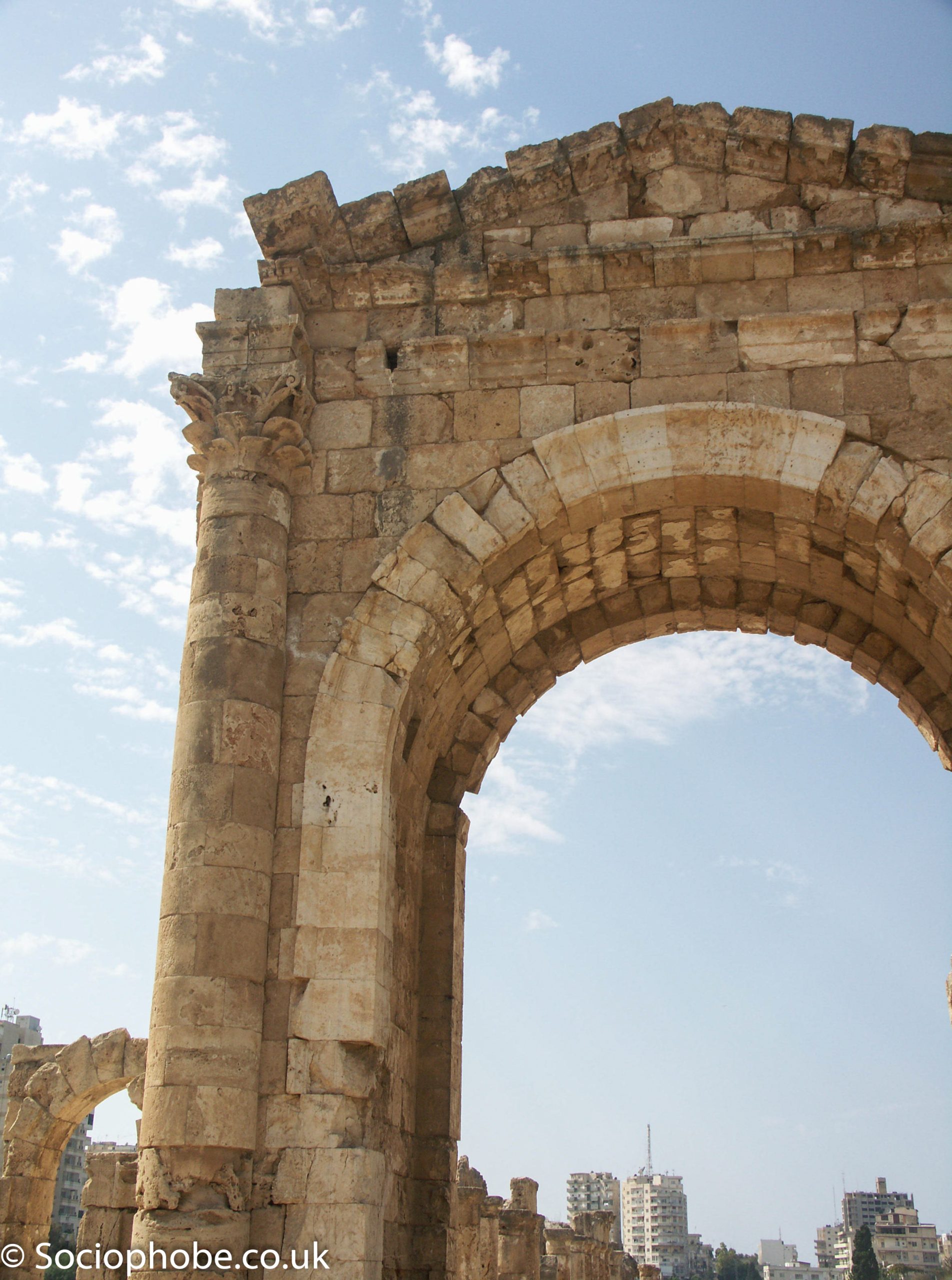
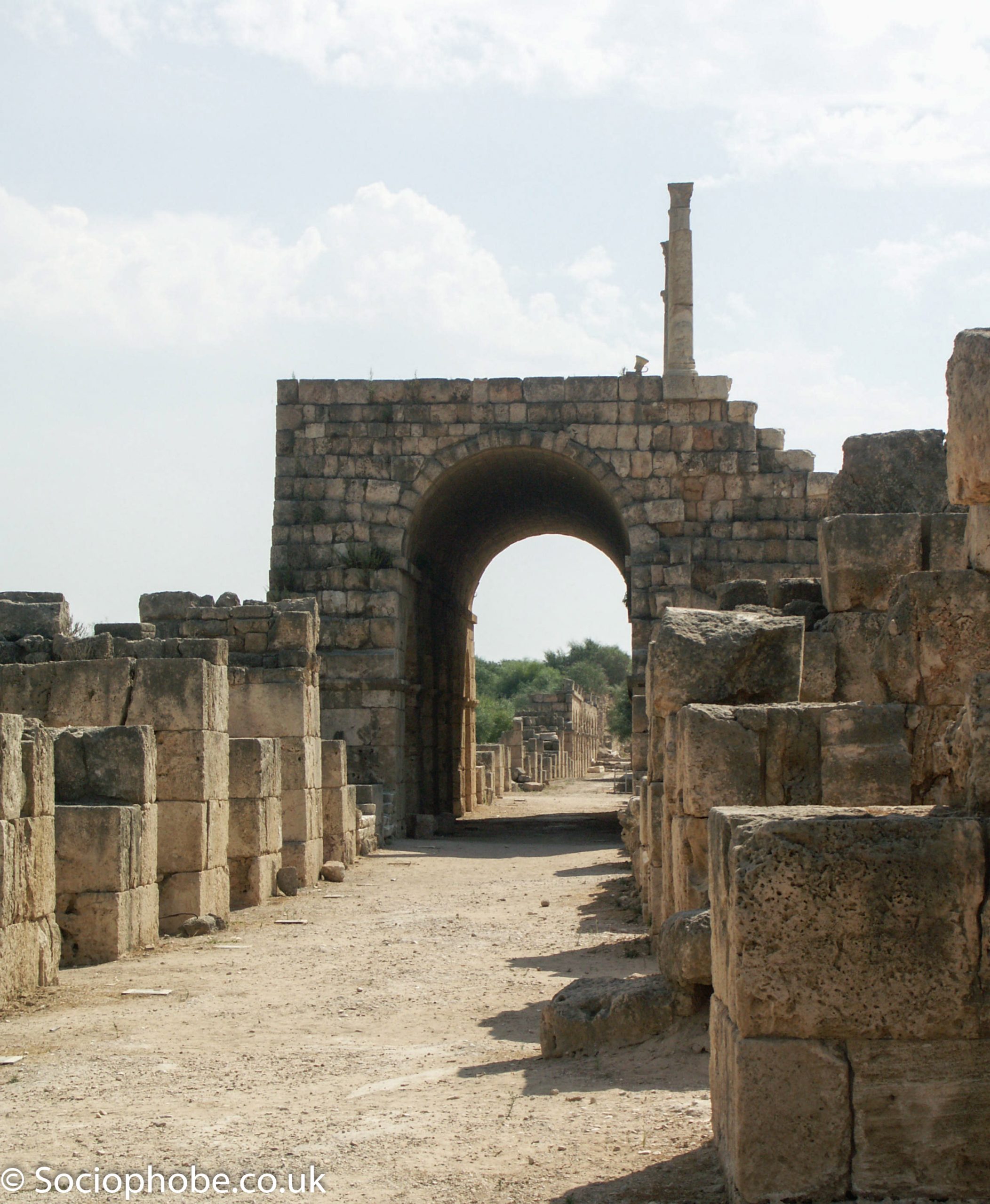
There is a processional way of columns leading to the city archway, from a distance it looks a minor affair but as you get closer you can see it is huge, maybe 20m tall and 3m deep.
Lebanon: Tyre Hippodrome
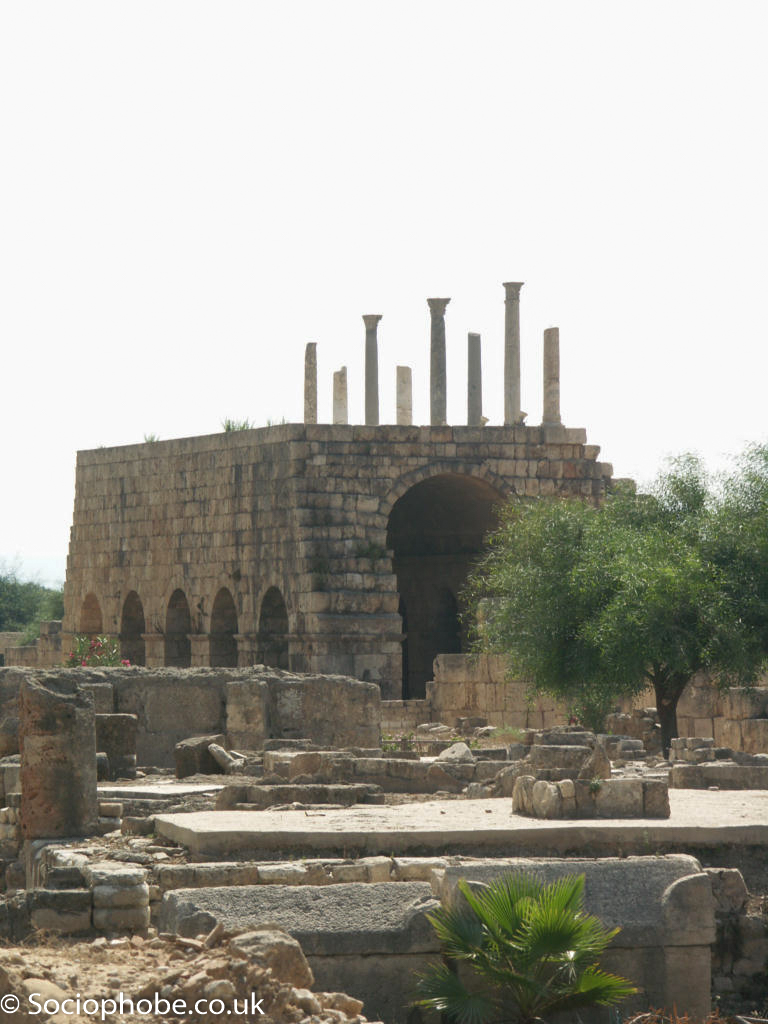
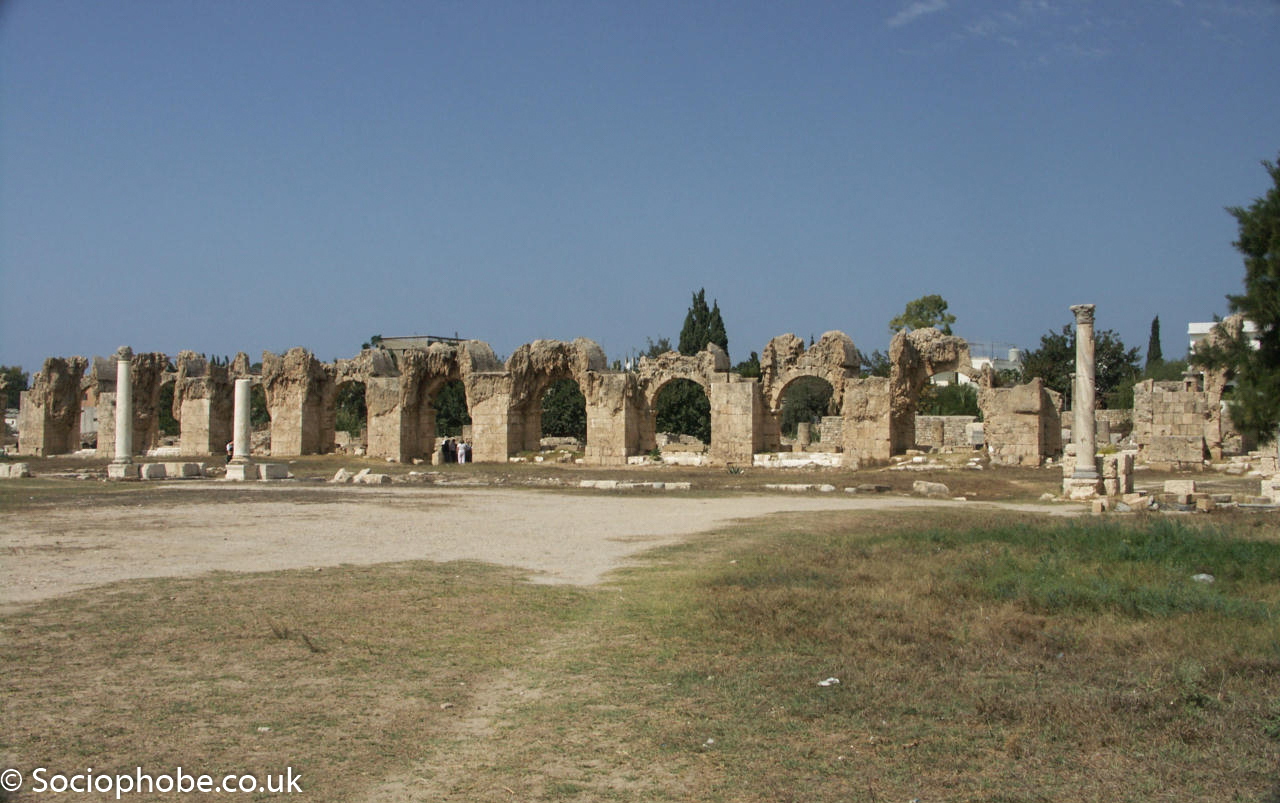
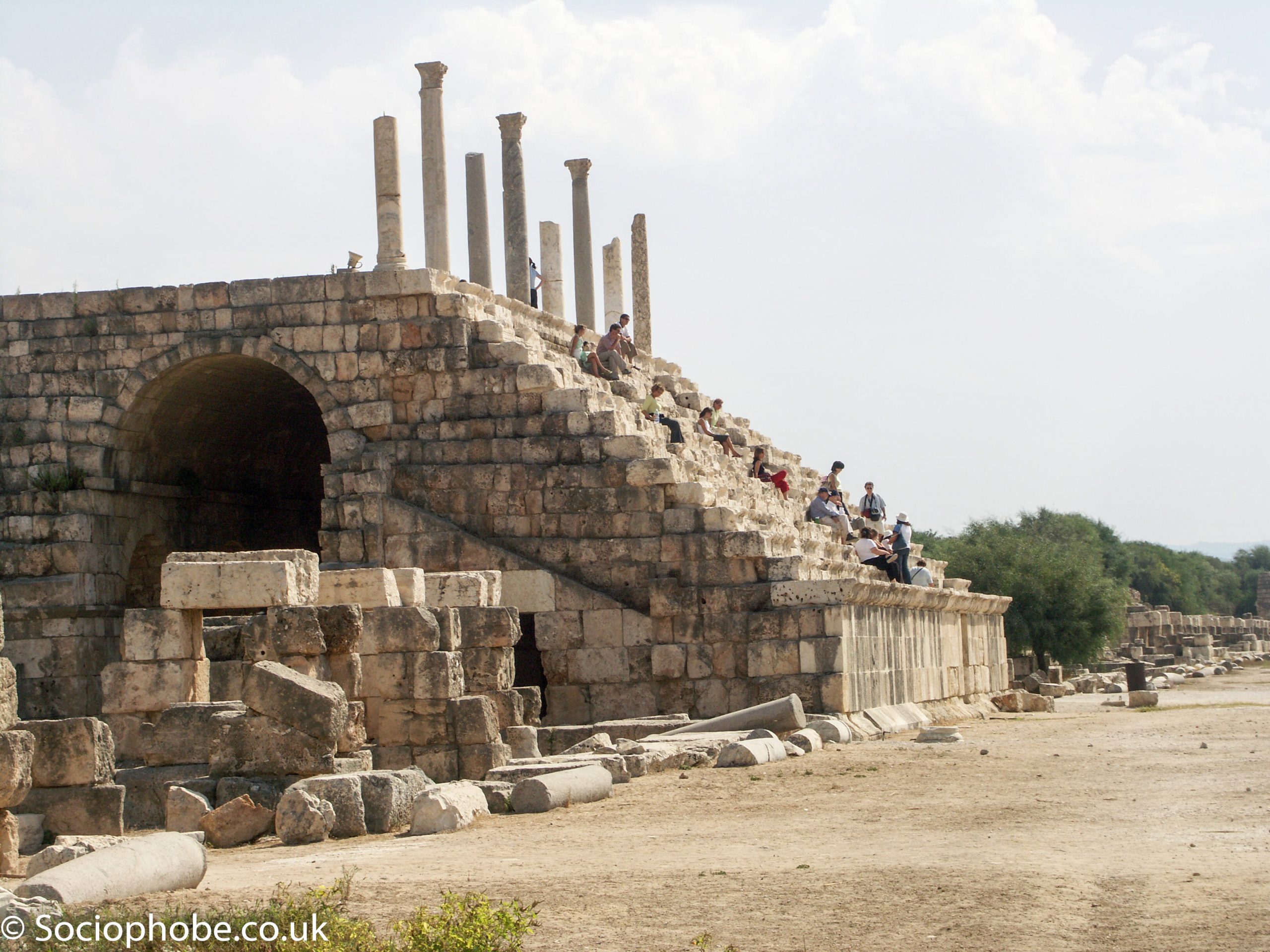
I wandered from there to the hippodrome where three sections have been restored. In its heyday it must have been an amazing place and was 500m long. there are archways at one end where the chariots entered, a central dividing area and an obelsik at the far end. The restored part is about 20m tall and has rows of shops underneath so it was nice to see how it all fit together.





Lebanon: Tyre Roman City
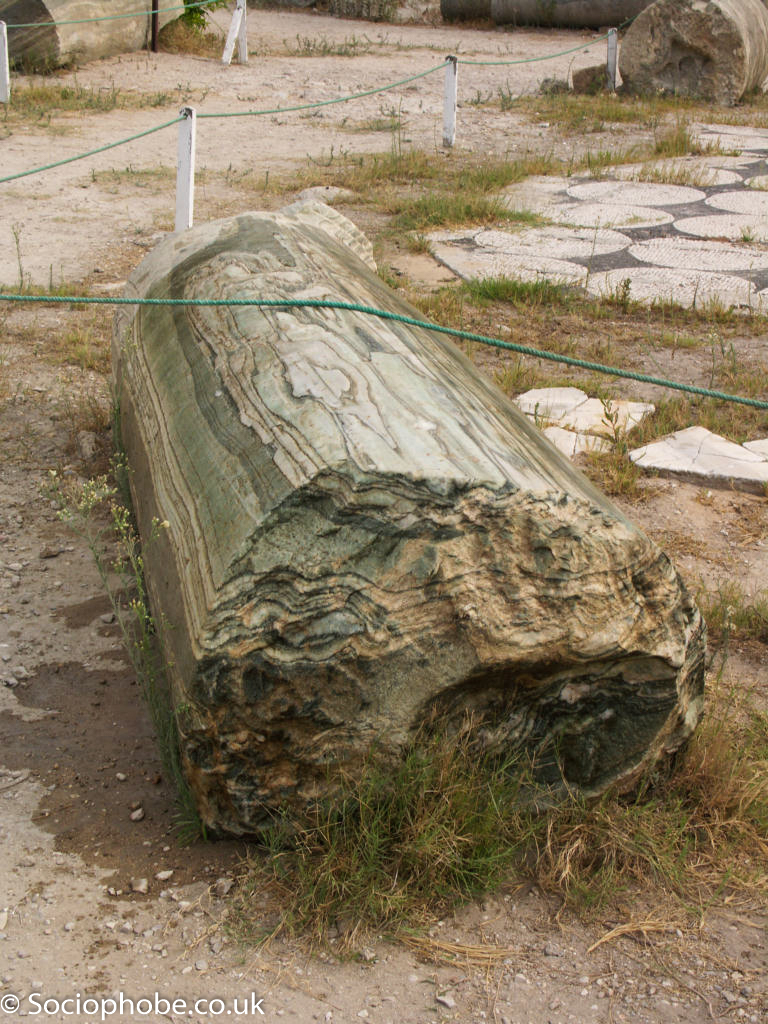
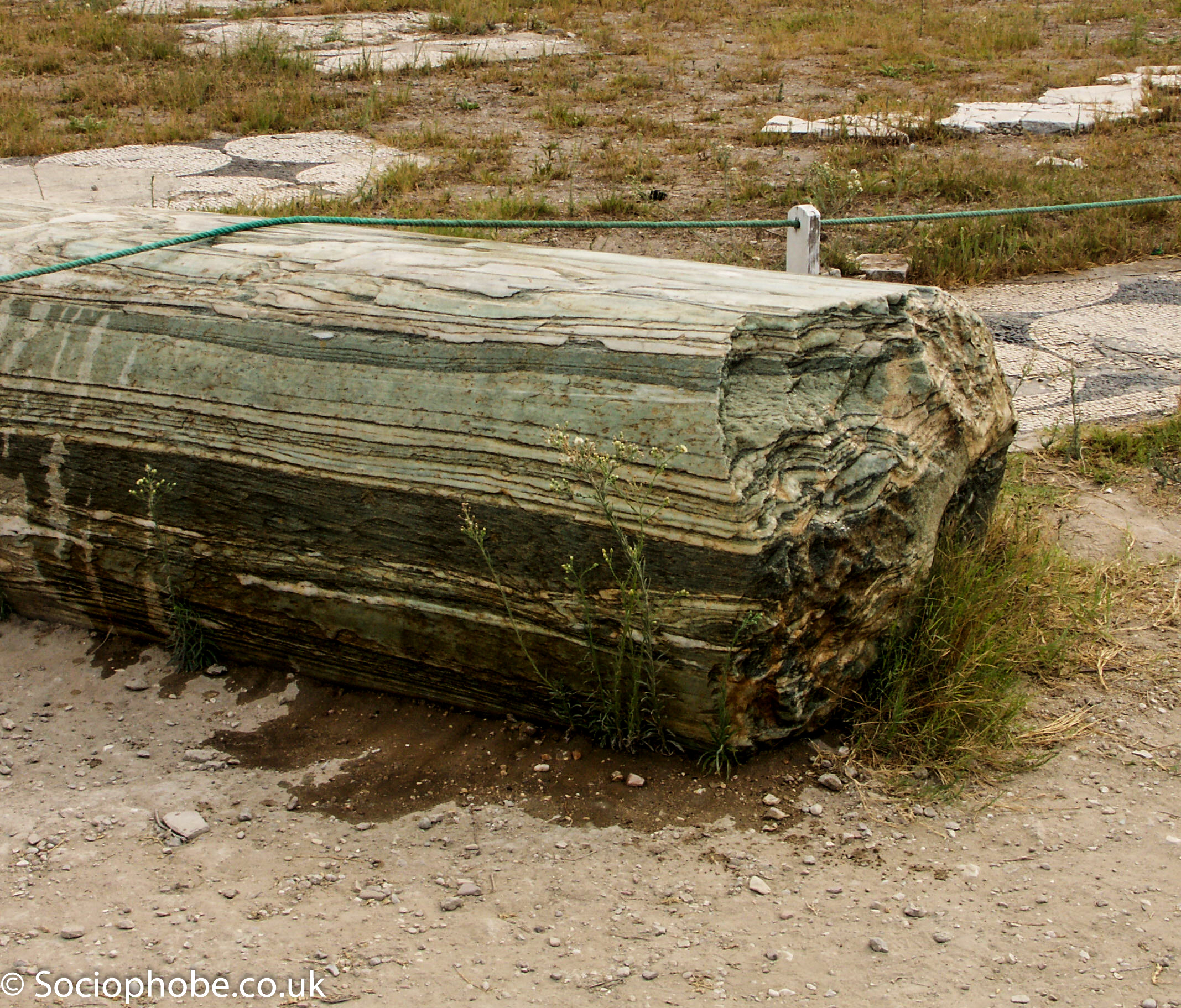
The next area we visited was the residential part of the Roman city which was marked by an avenue of columns along the main road. The columns were Greek marble and were almost green but the opulence was contrasted by the housing, very small buildings with just one room on each floor.




Lebanon: Bierut Temple of Eshmun
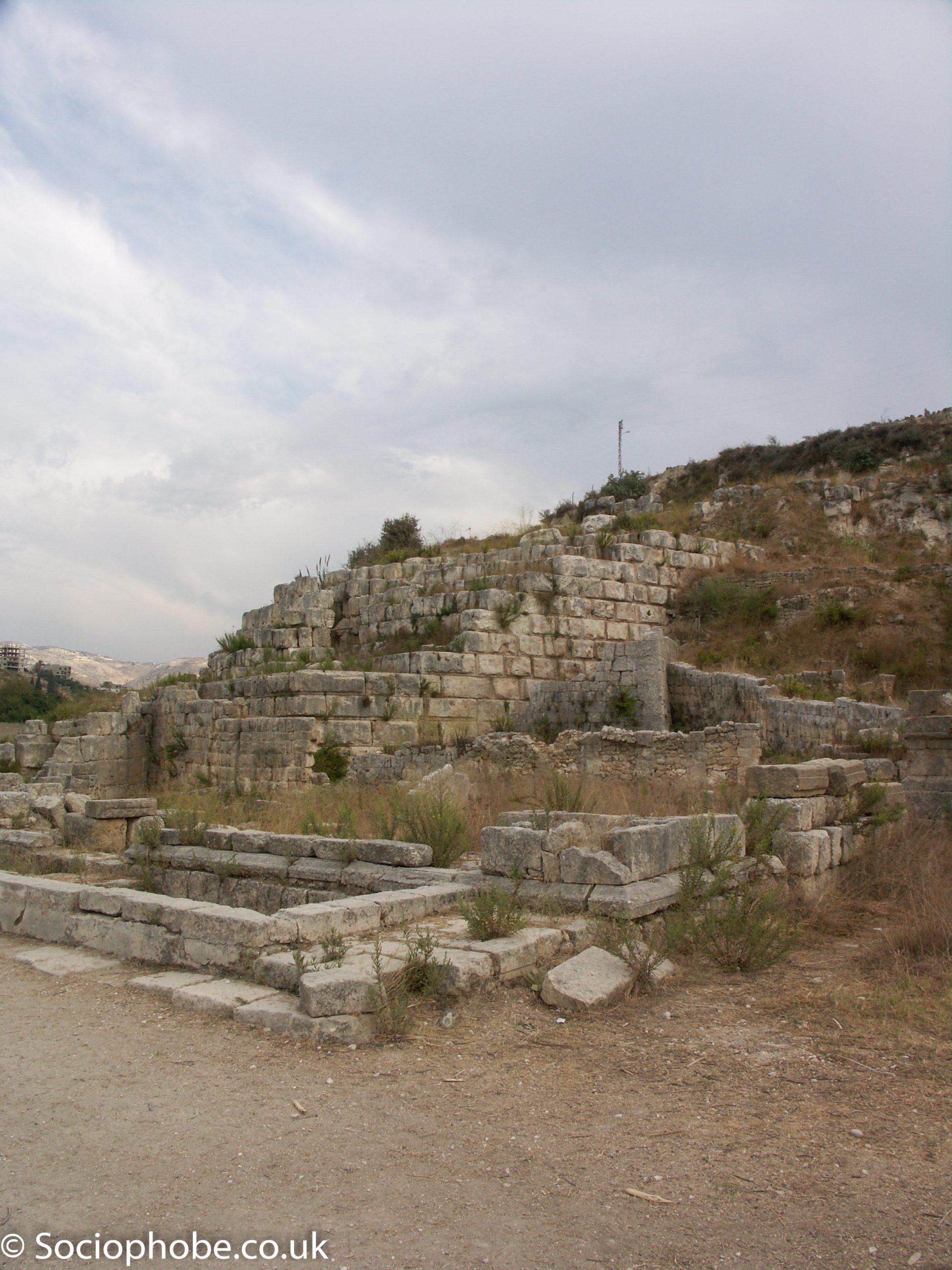
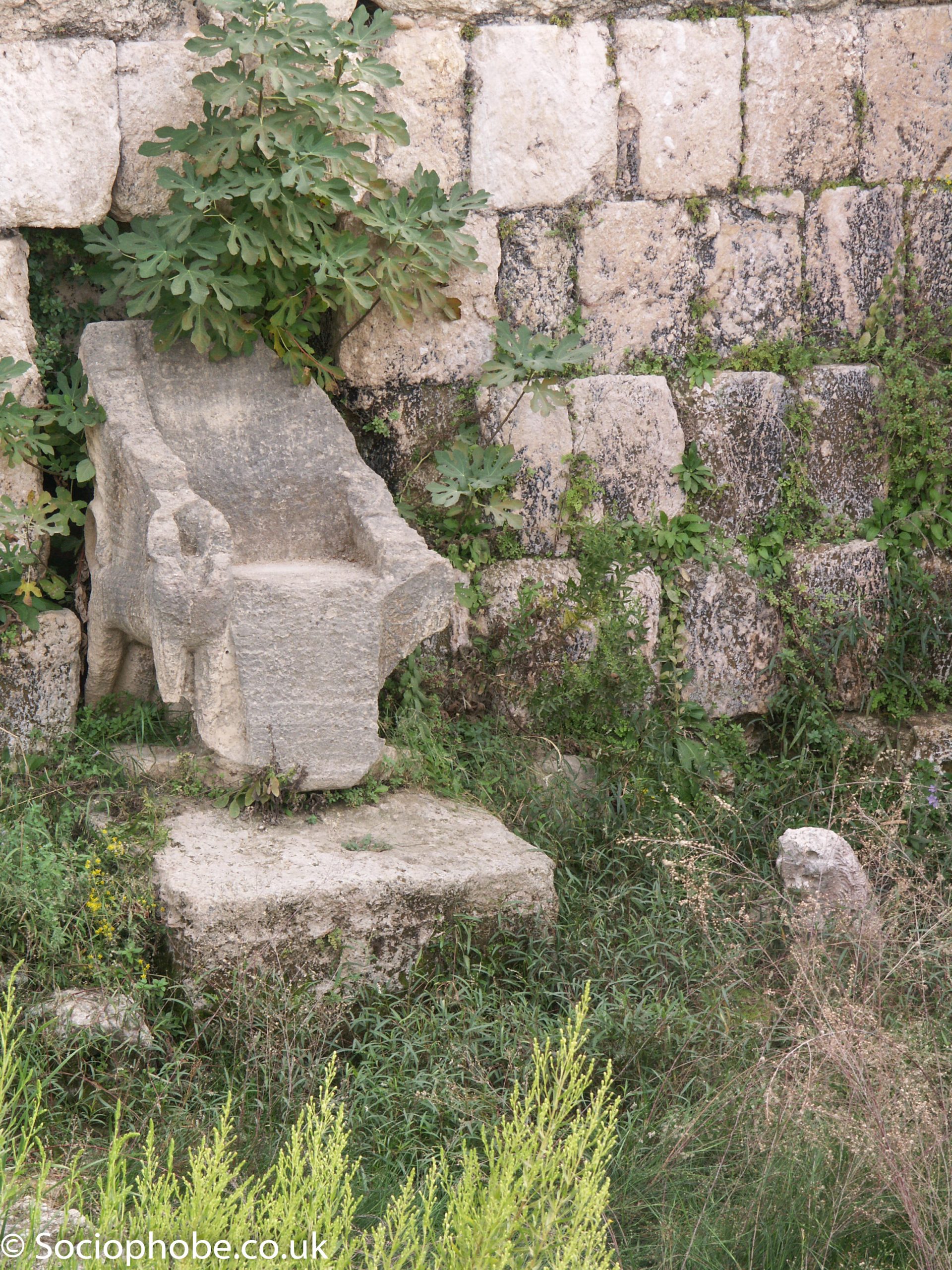
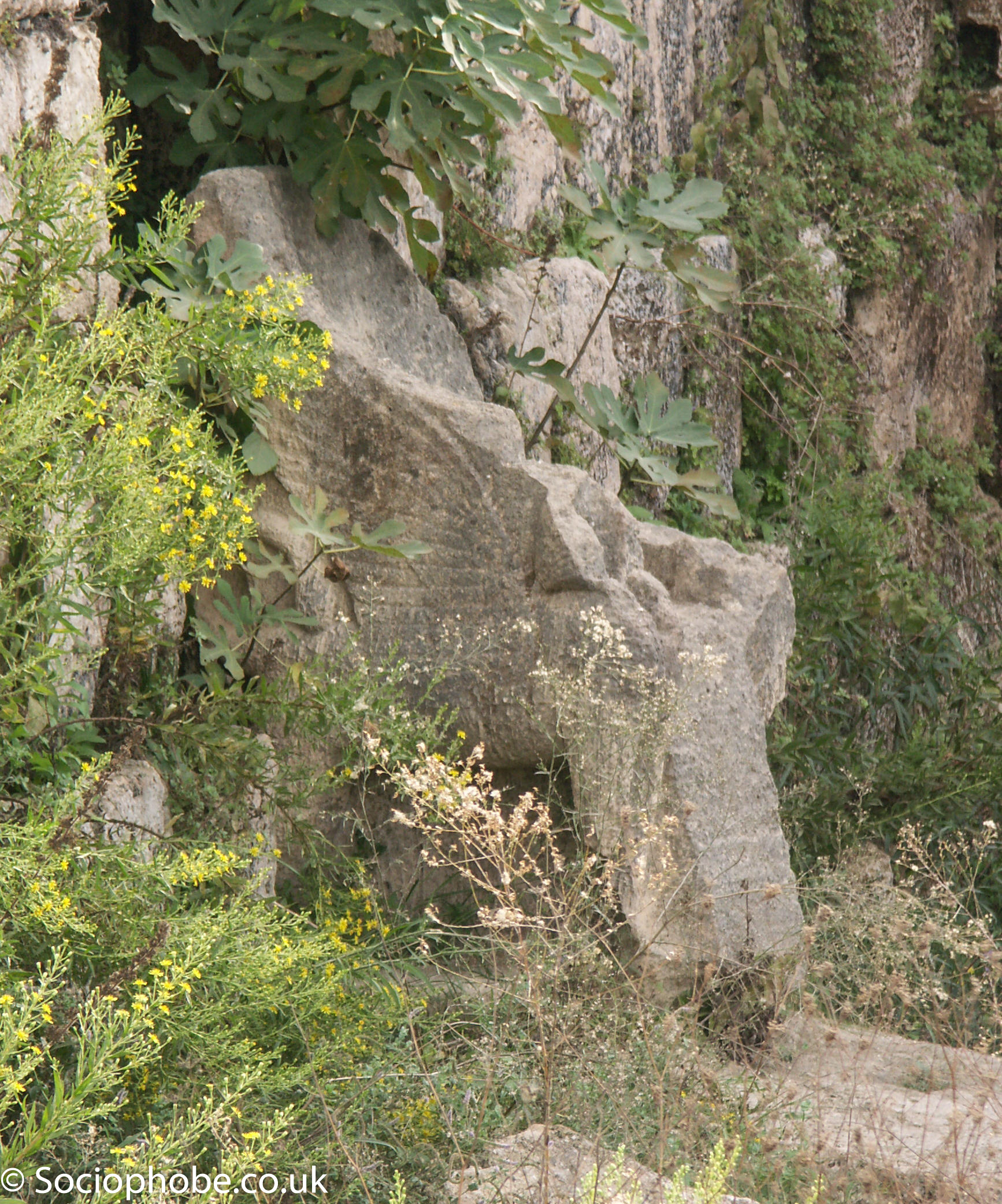
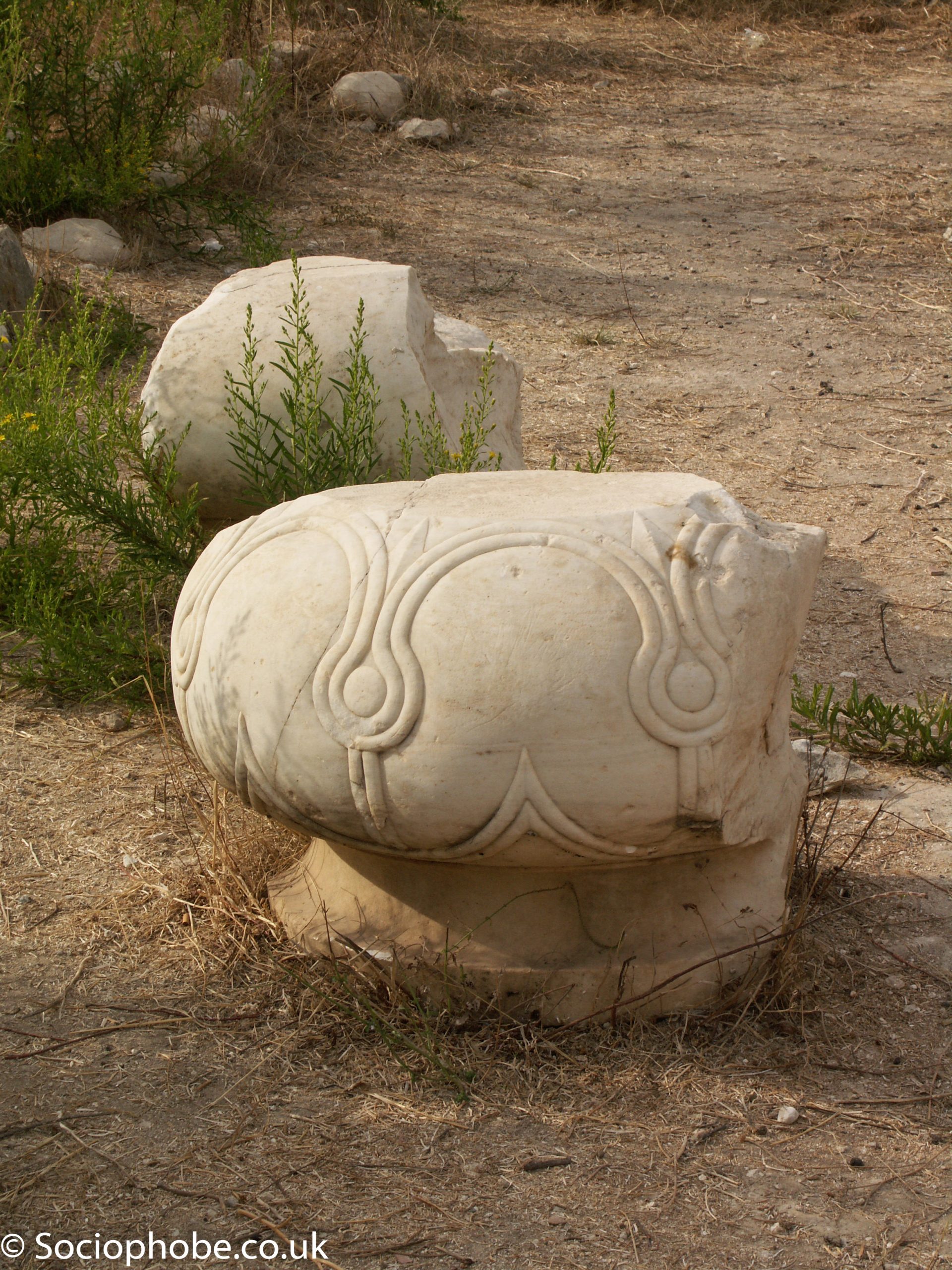
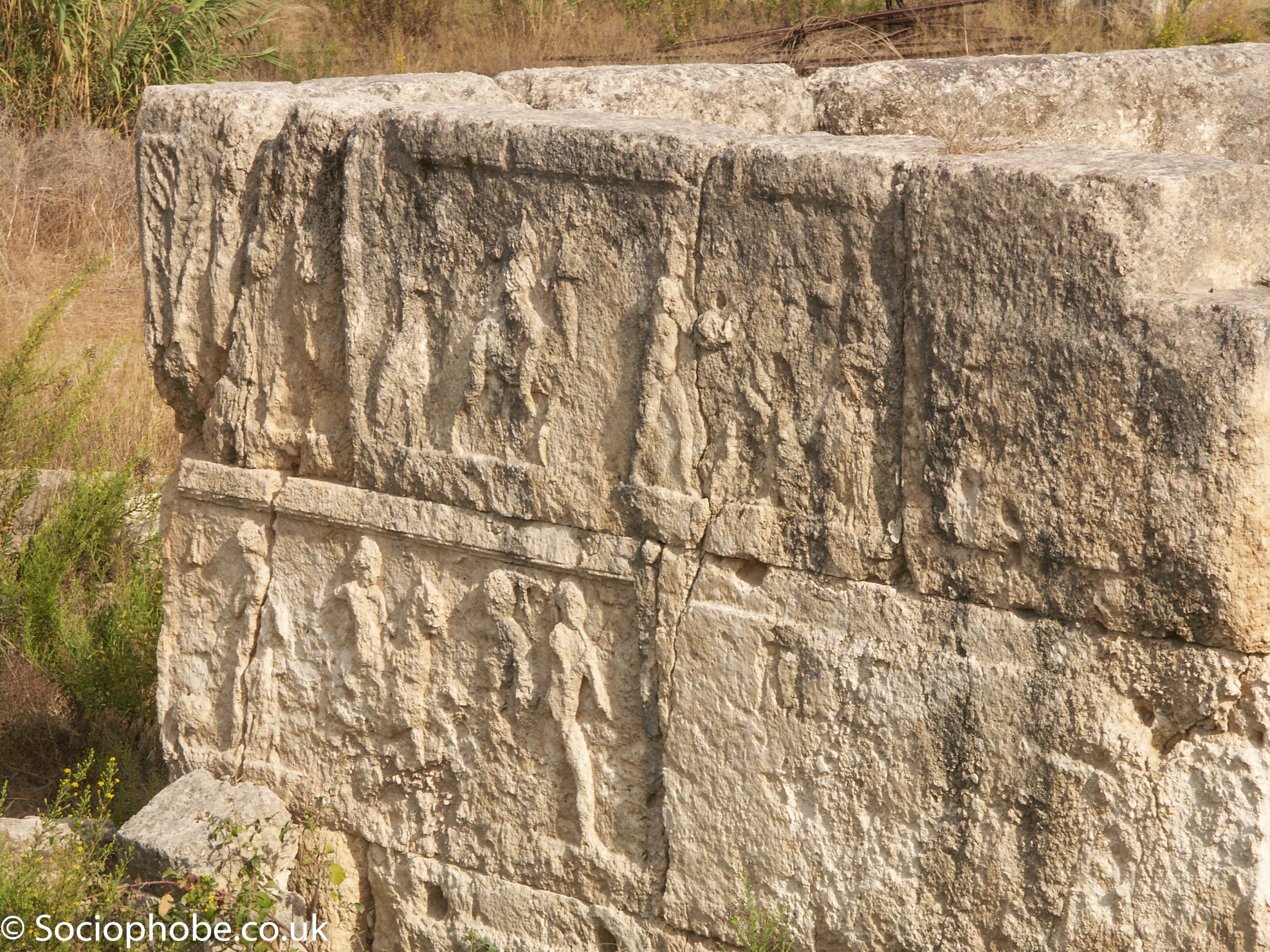
We then left the site and headed back to Bierut, past another Palestinian camp that has armed militias so the Lebanese army cannot enter. There were also lots of Saudi funded mosques being built. We had a brief stop at the Temple of Eshmun (?), a Phoenician deity but the Romans had built on top of it so difficult to make sense of it. There was a small shrine to Astarte and we could just about make out the winged lions.
The next morning I was woken at 4 by people leaving their room who obviously thought their cases were voice controlled from all the shouting. I managed to doze until I was woken again by cockerels crowing at about 5.30. Early start then.
The traffic was appalling as we left the city. There was a 20km tailback entering it and pretty much no traffic lights, road markings or courtesy, just a free for all. We drove through the Dog River tunnel where all the previous conquerers such as Rameses, Alexander and Napoleon have placed inscriptions and then past olive groves to Moussglaya (?) fort for a brief photo stop.
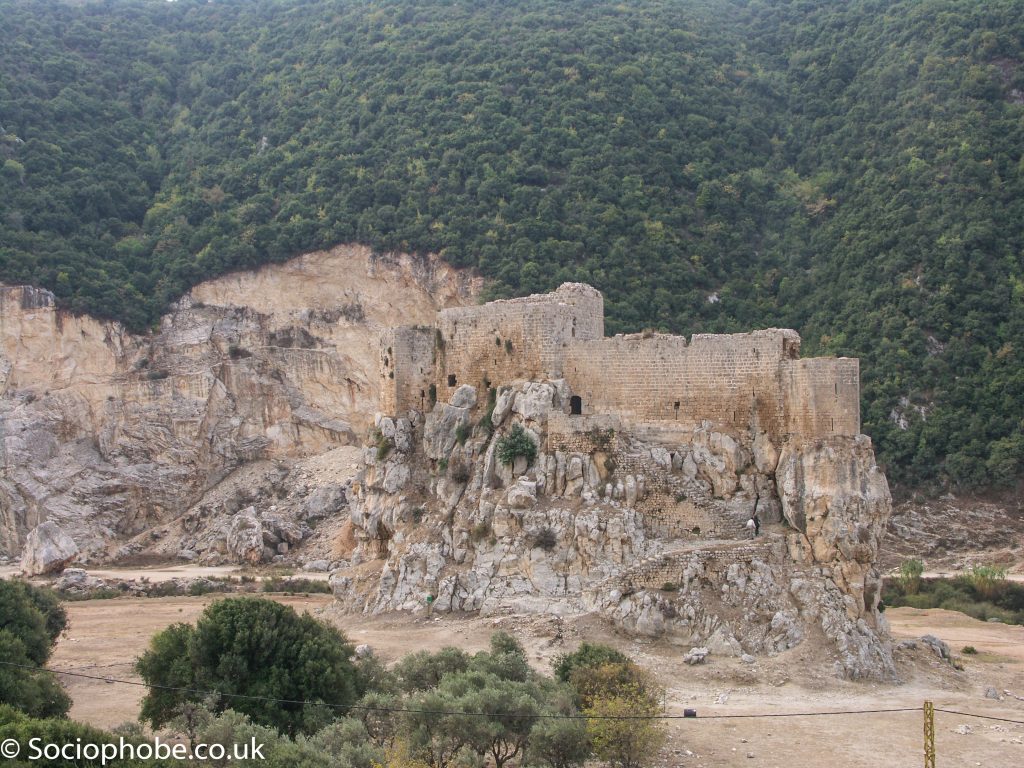
Lebanon: Tripoli
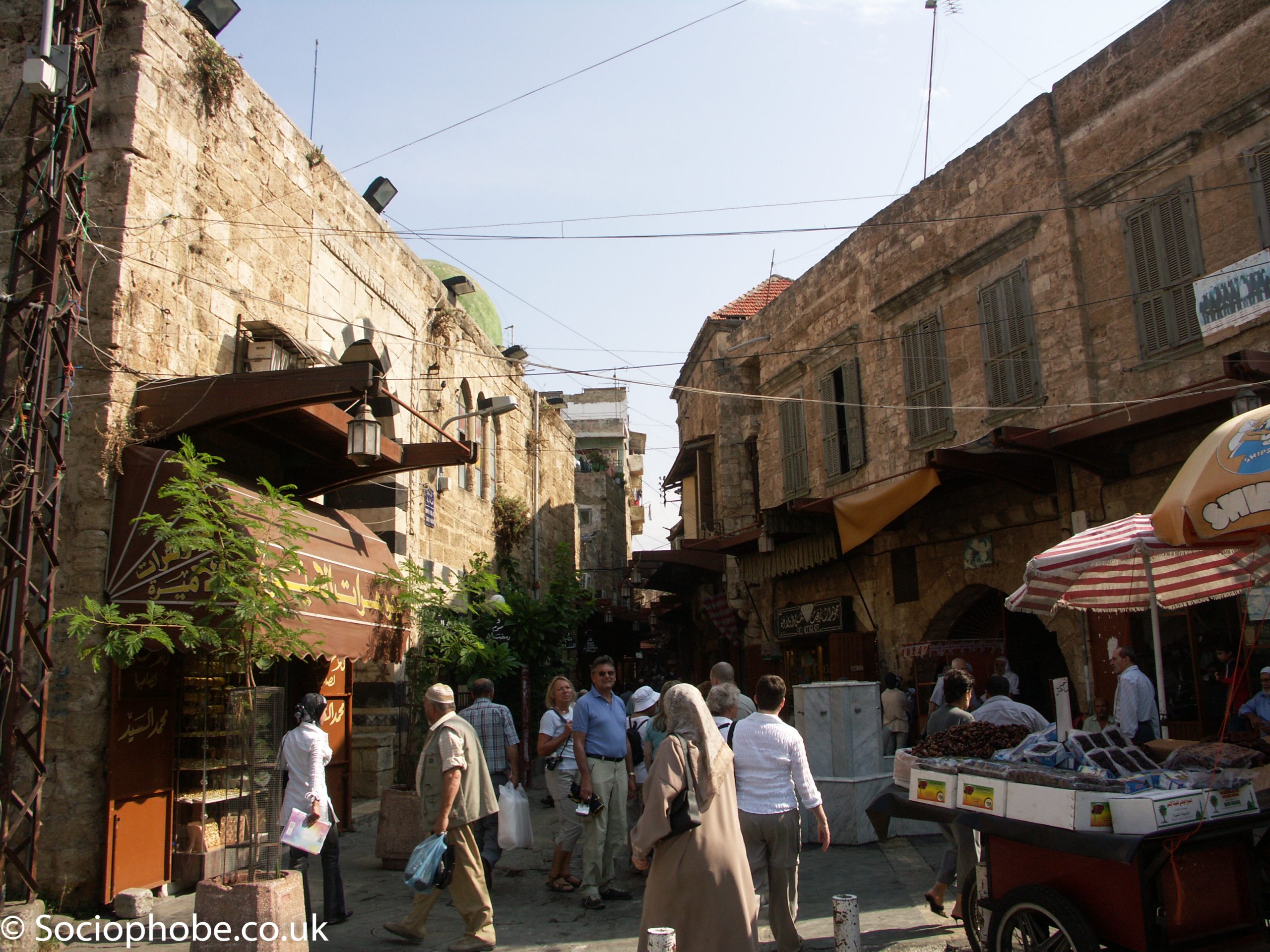
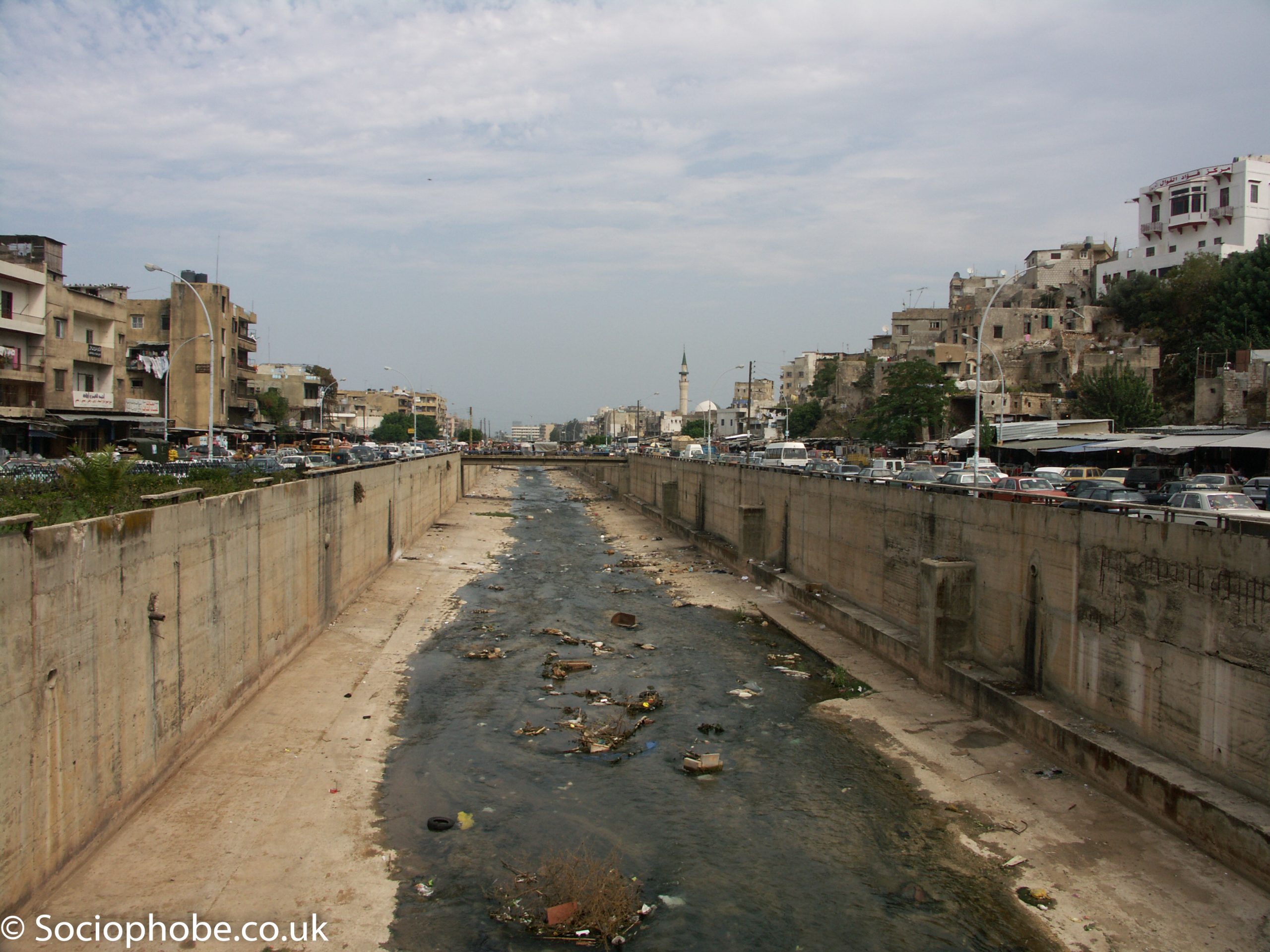
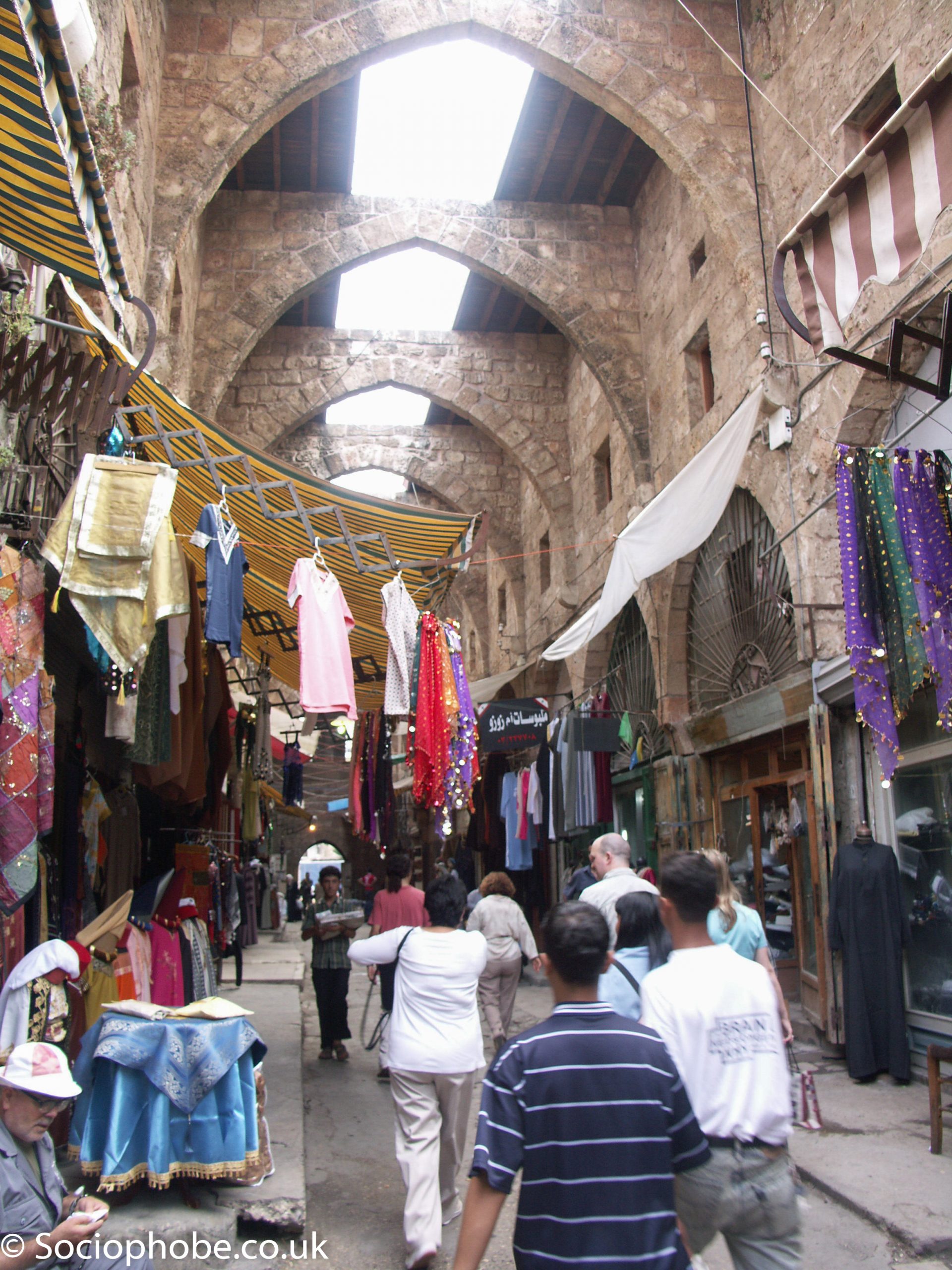
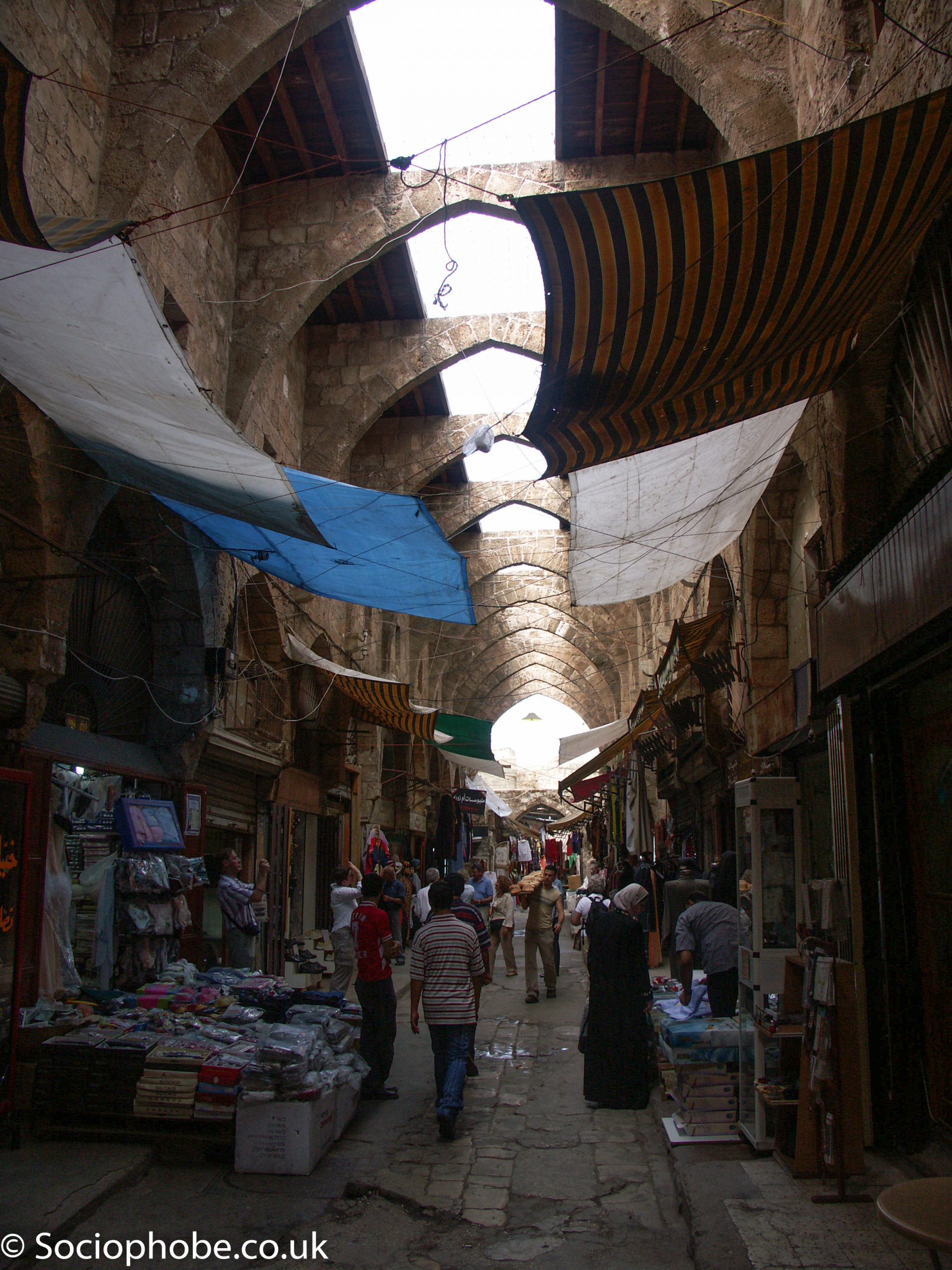
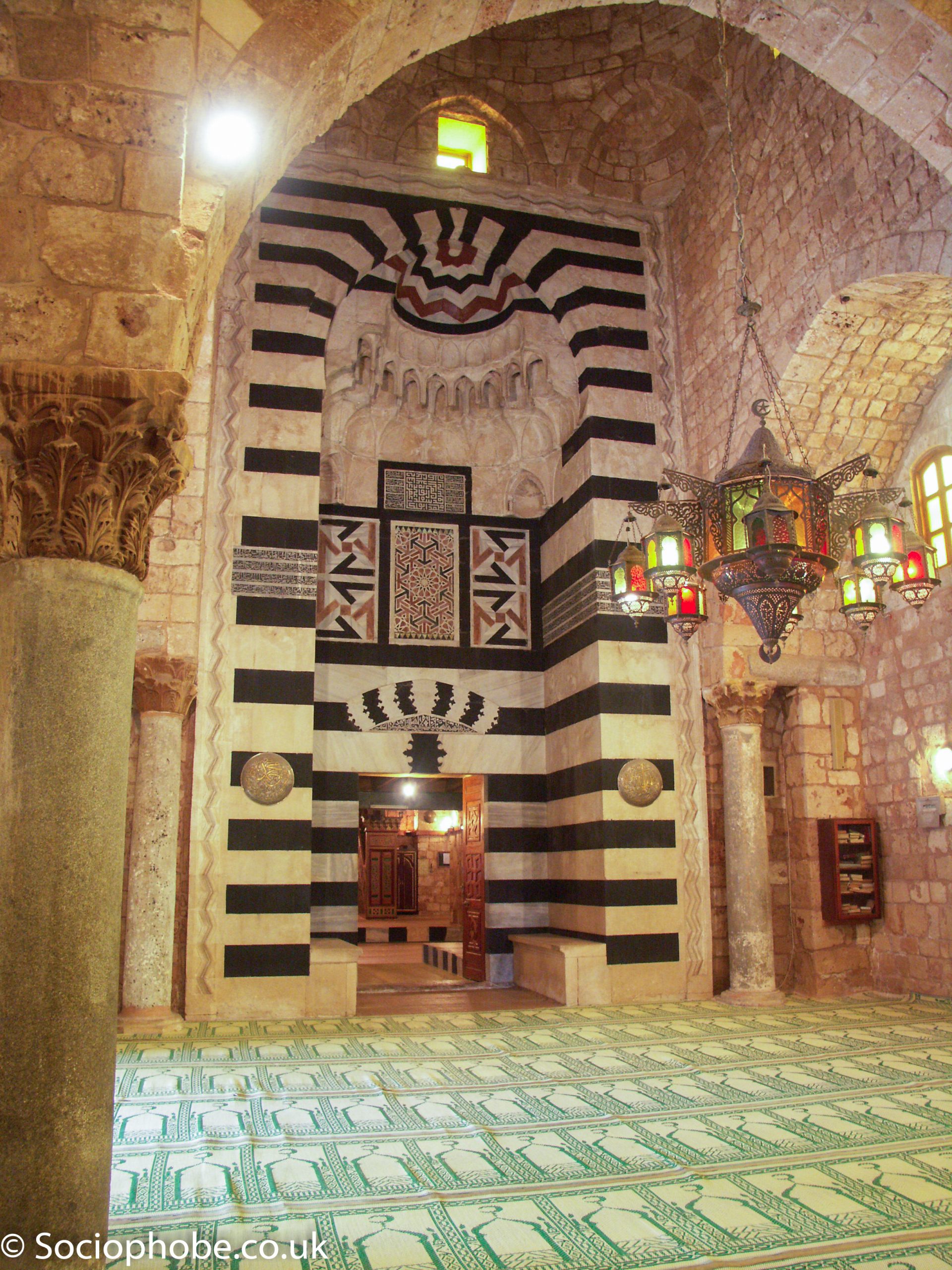
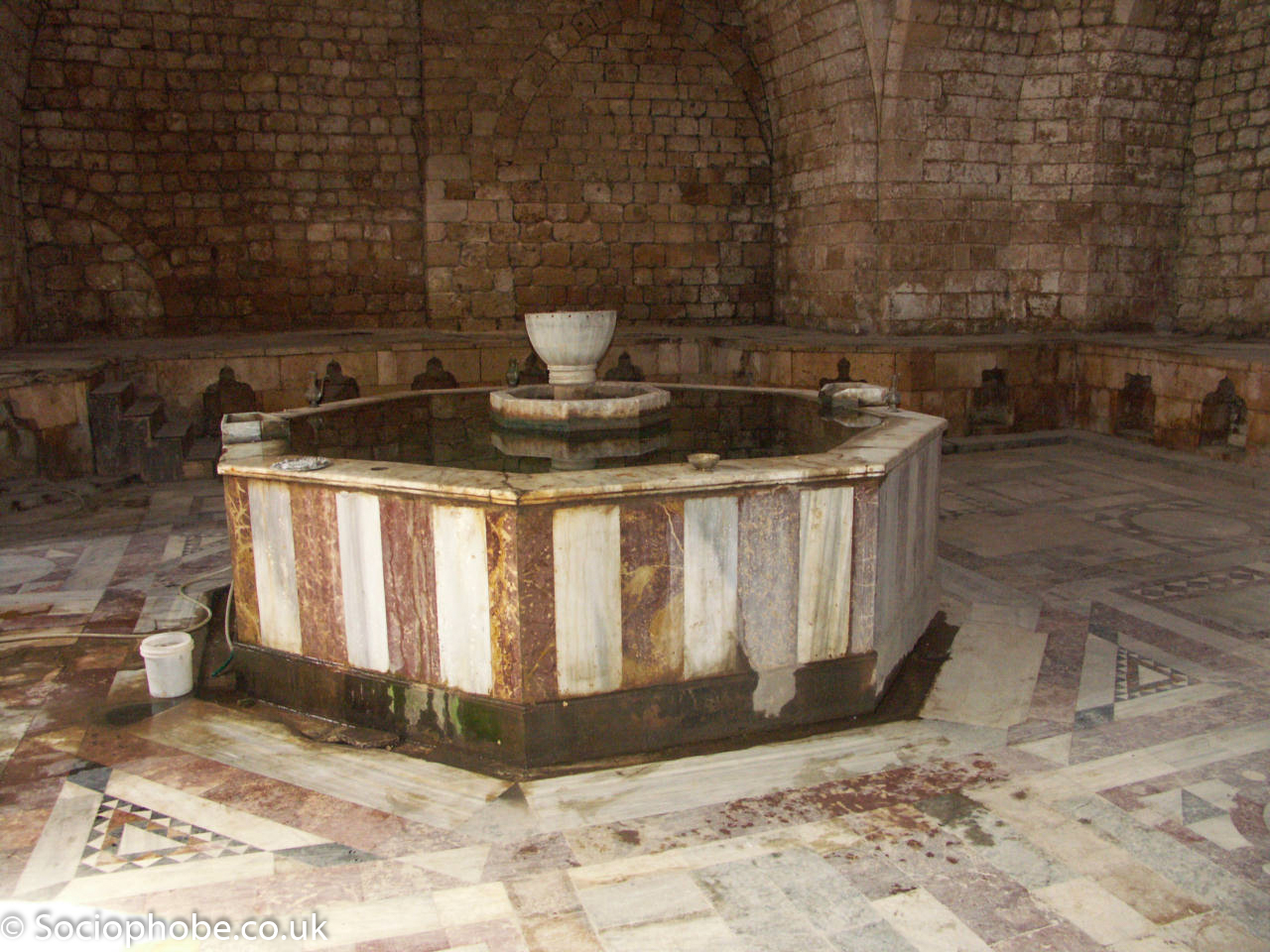
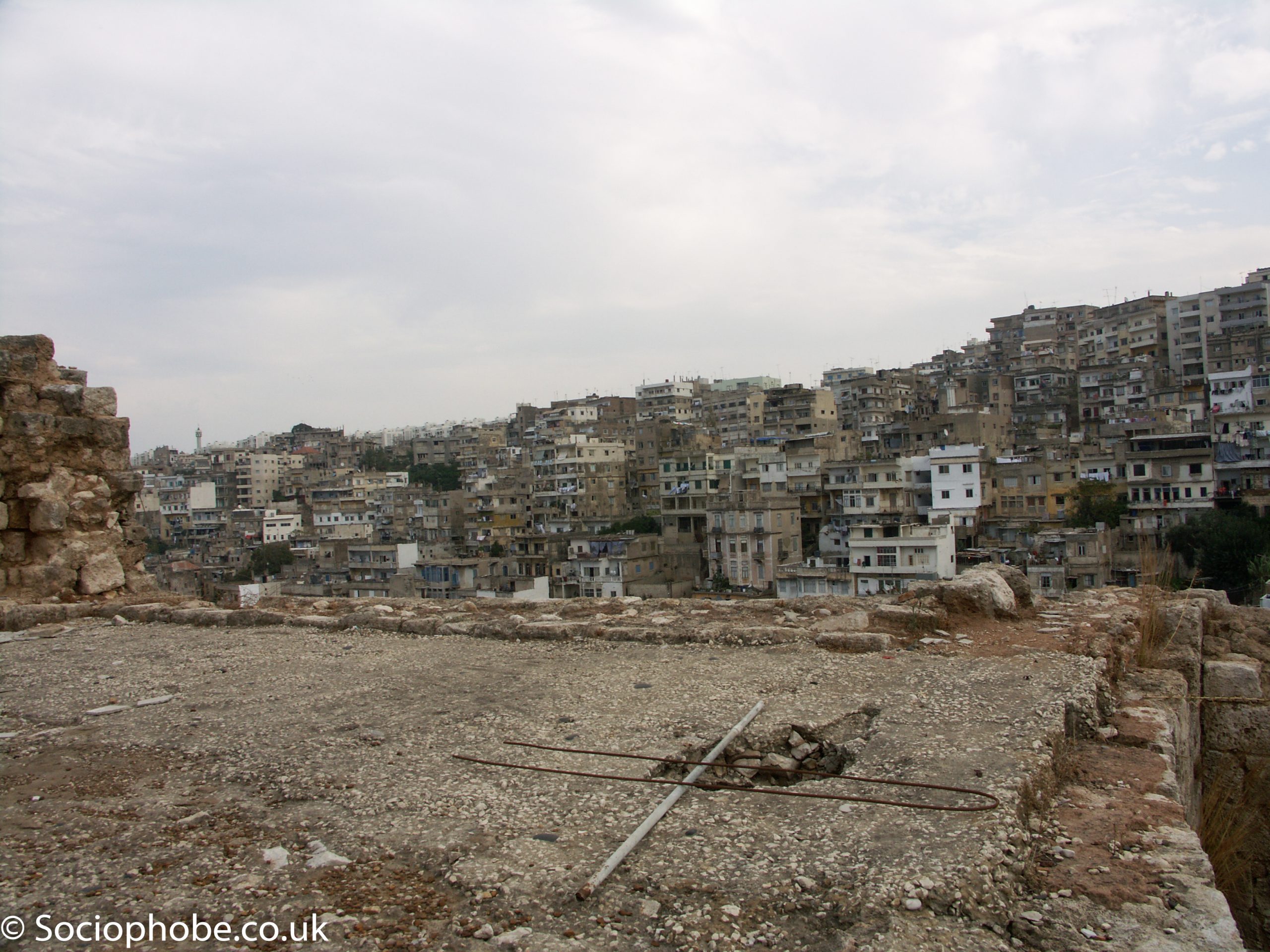
We eventually got to Tripoli, had a quick visit to a mosque and then walked through a meat souk, which absolutely stank and was covered in flies! We then went through the jewellery souk which had more lovely gold filigree work but the town itself was dirty, noisy and poor.
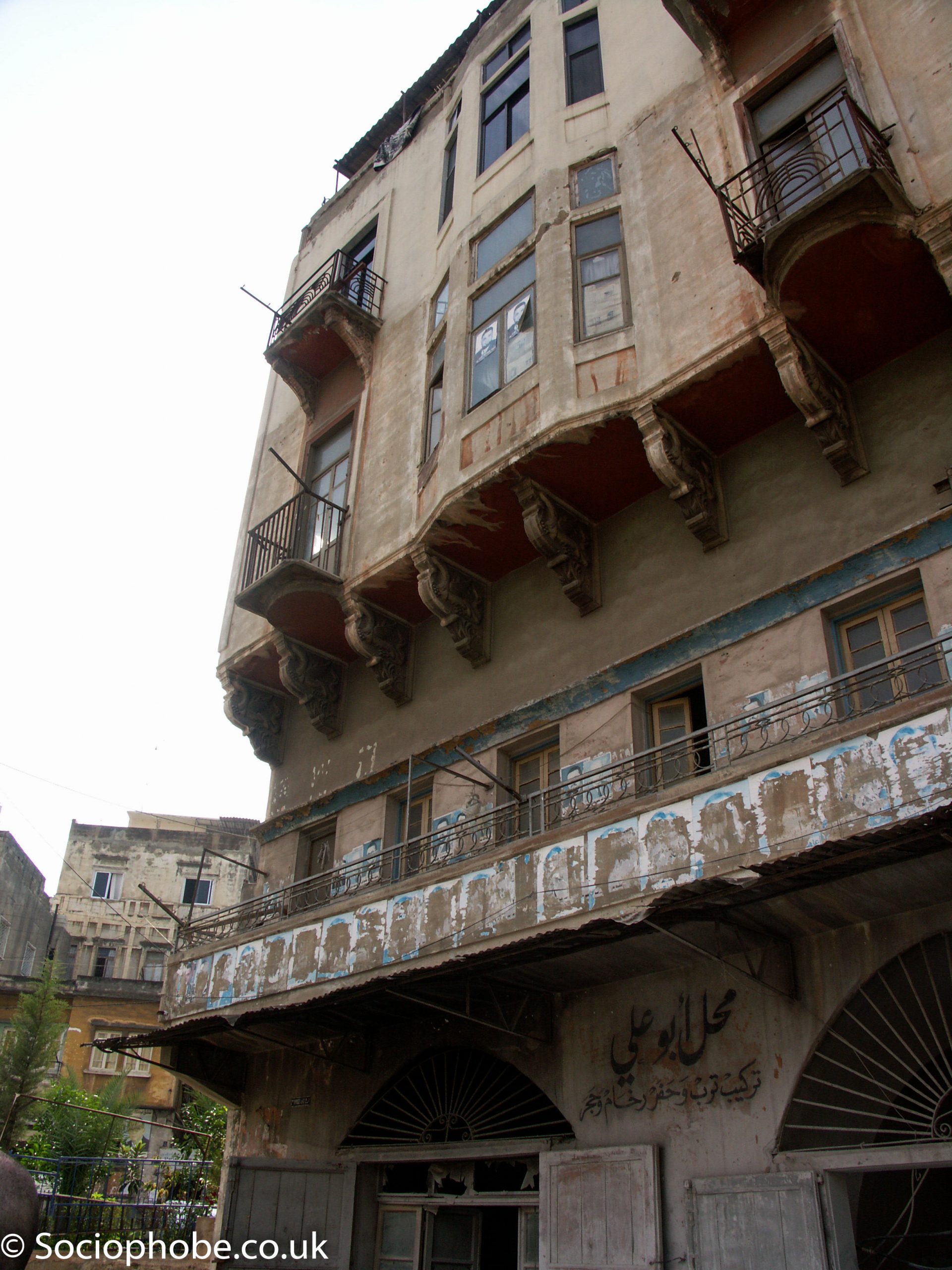
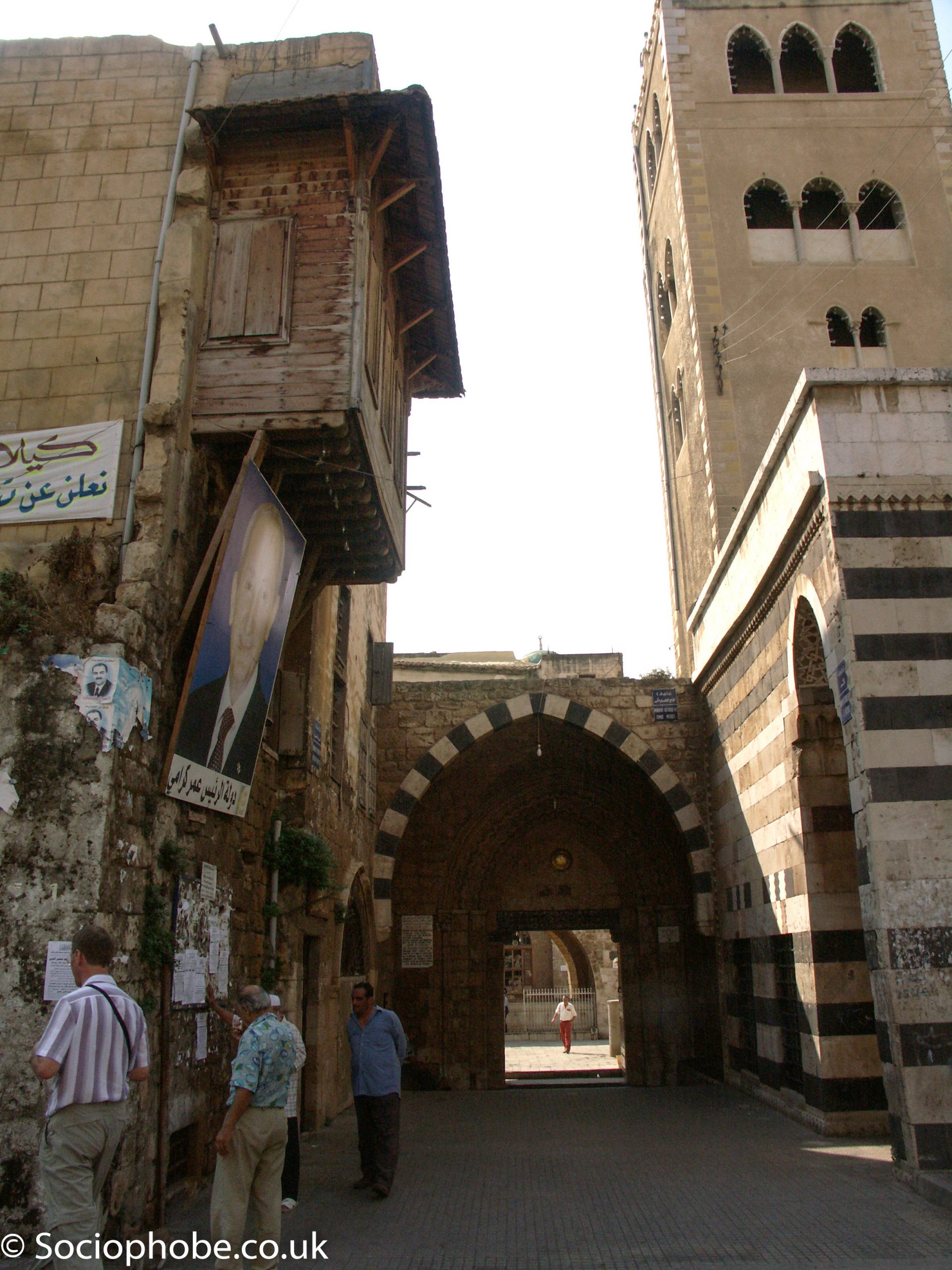
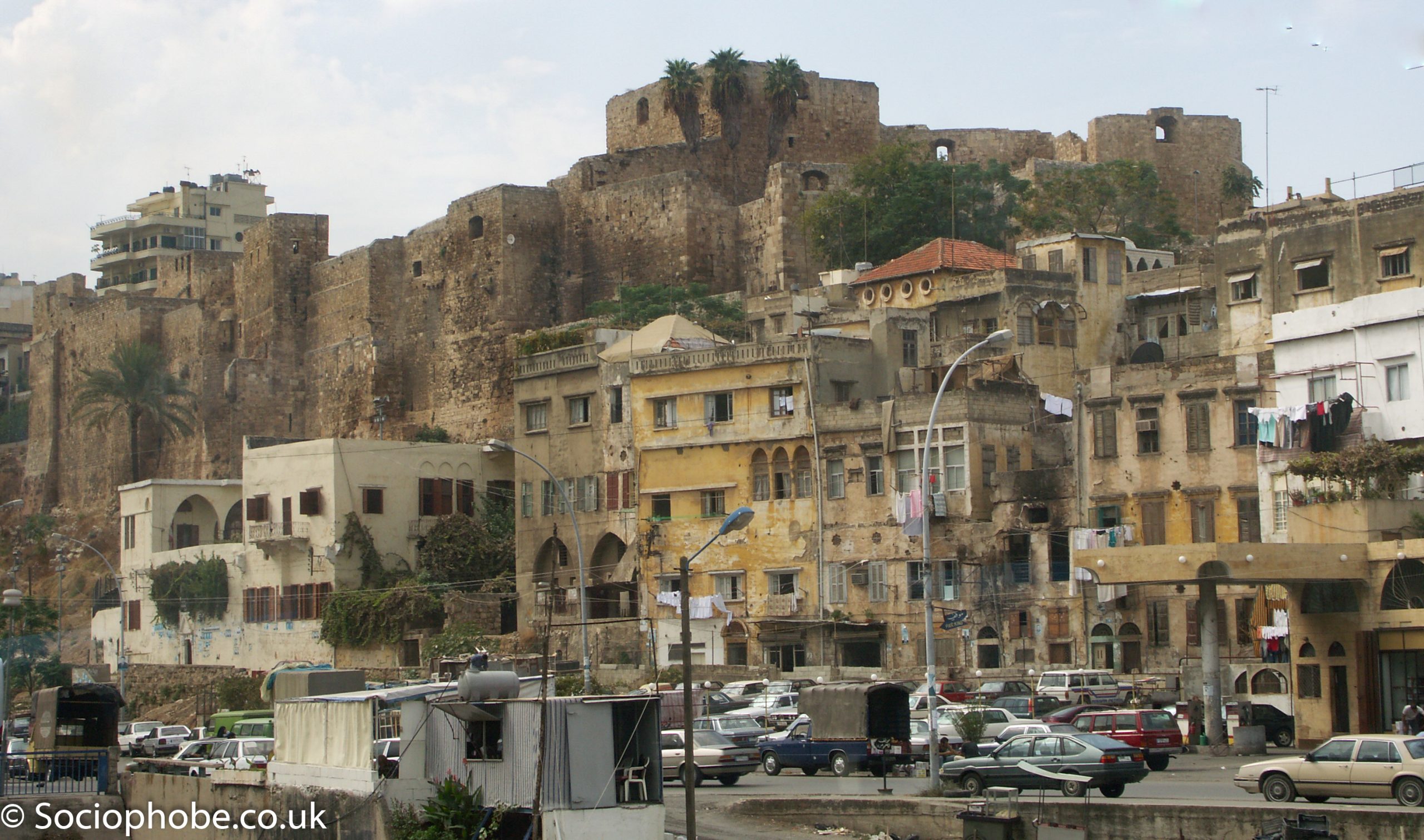
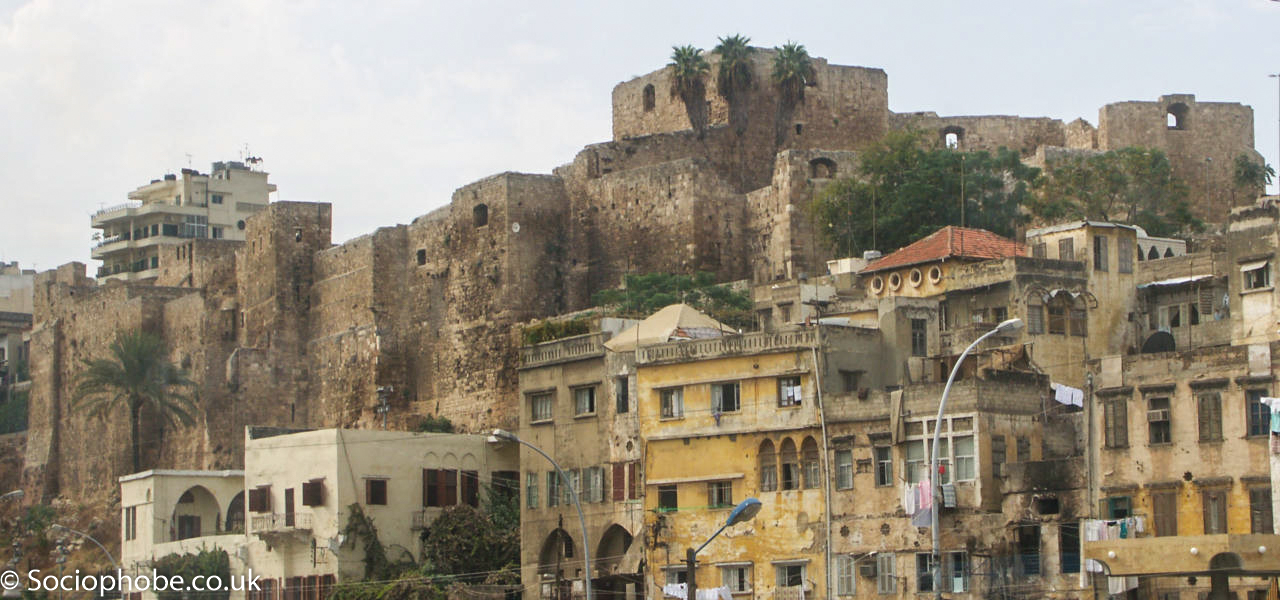
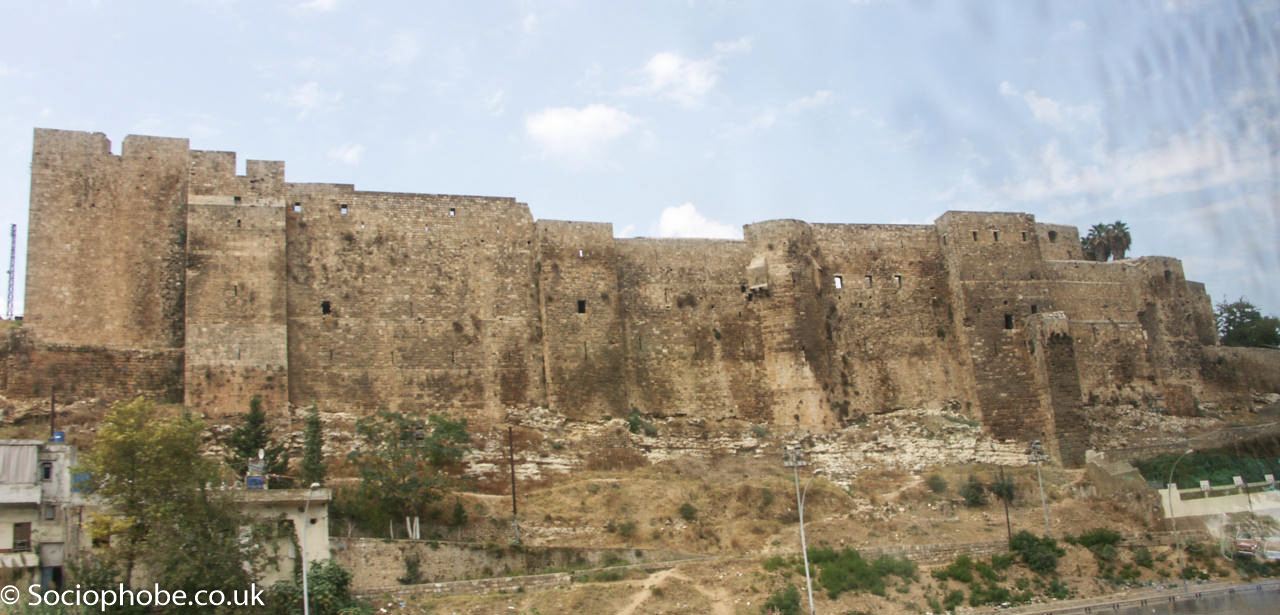
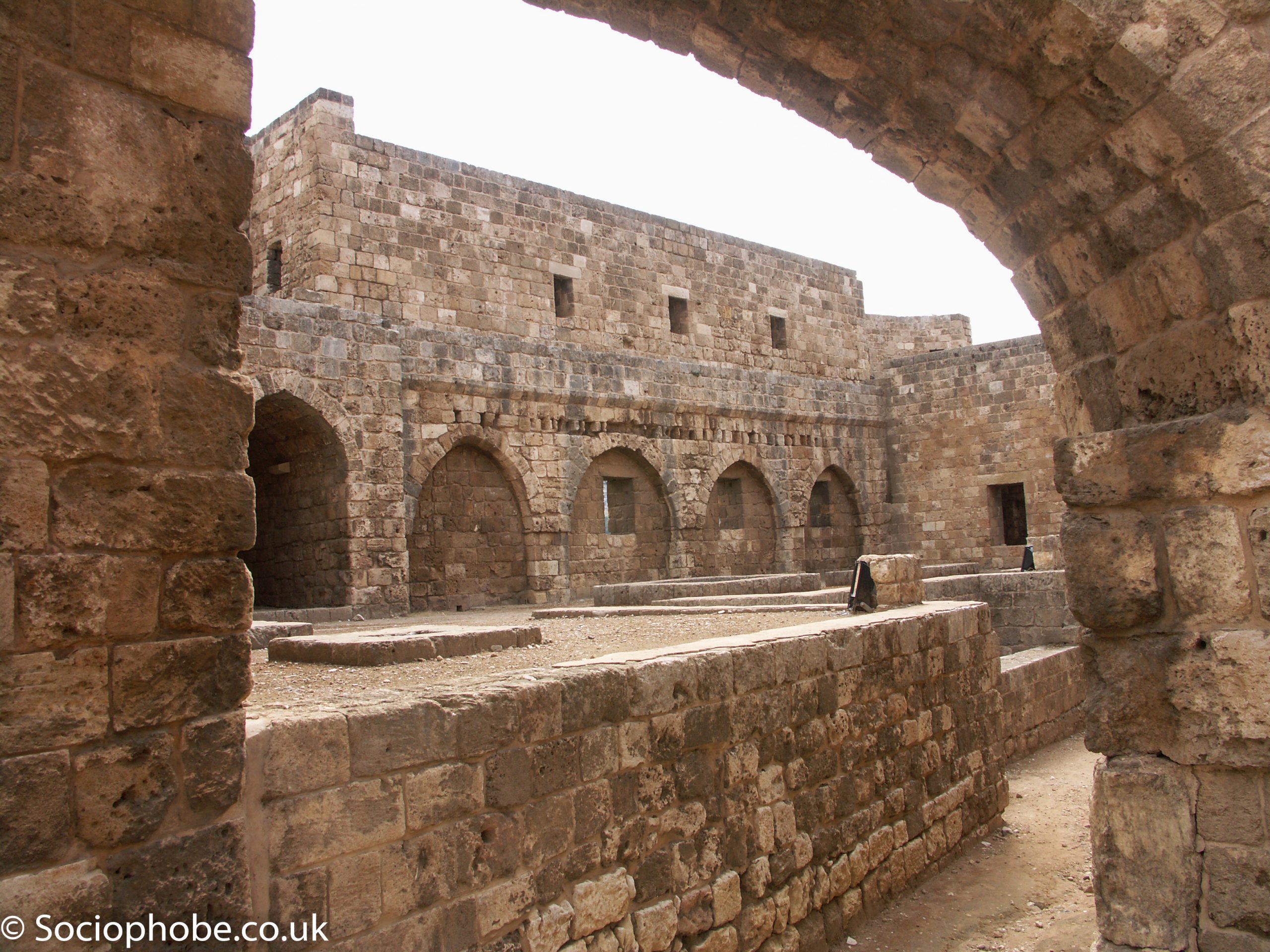
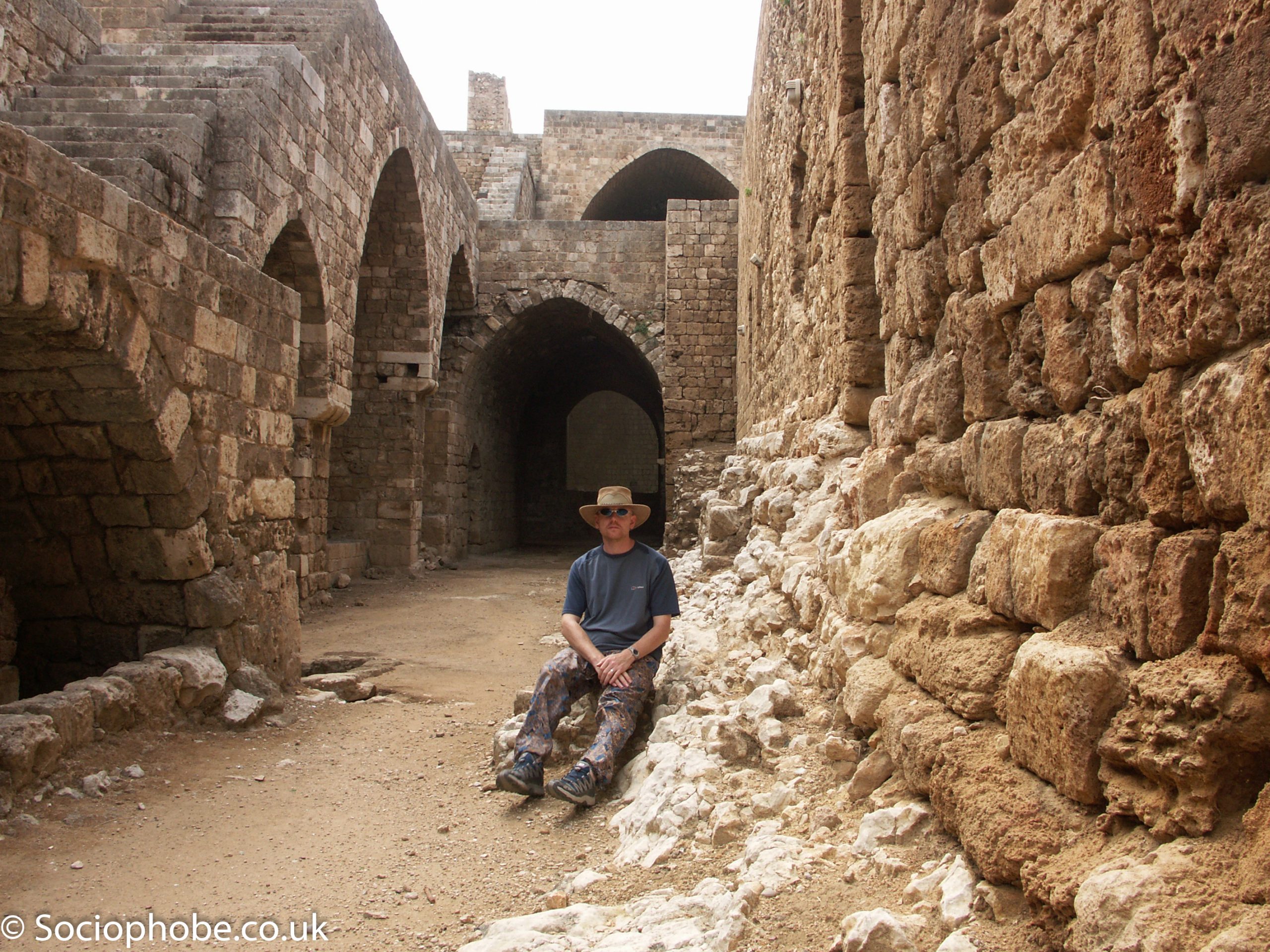
Lebanon: Tripoli Citadel of Raymond de St Giles
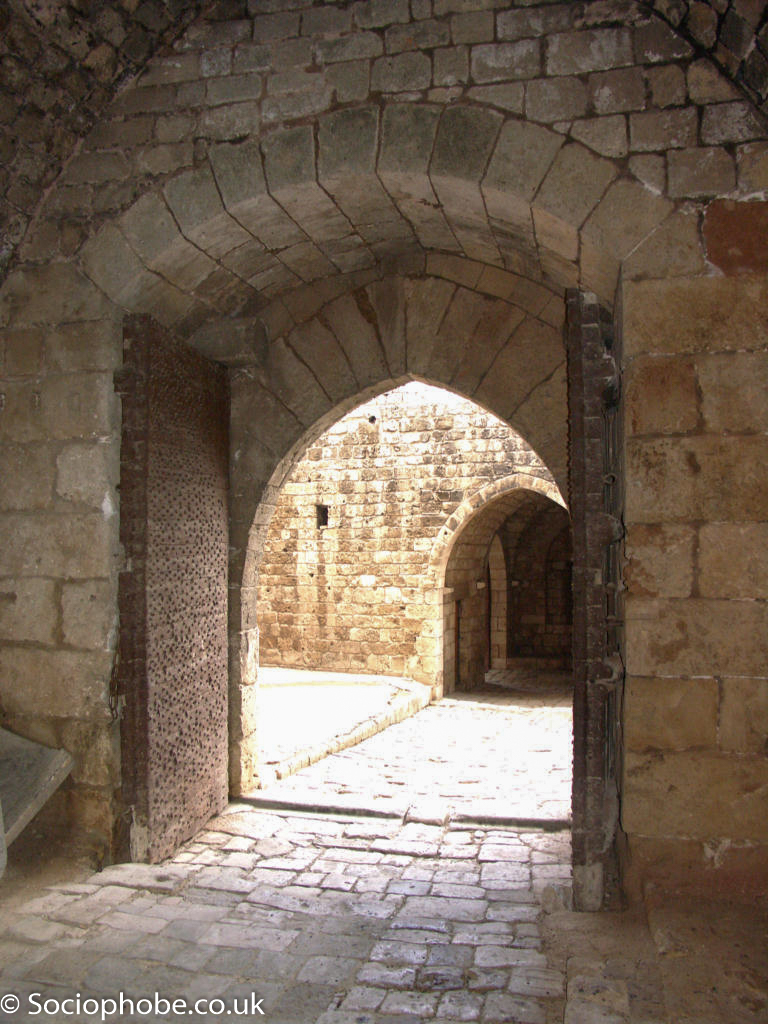
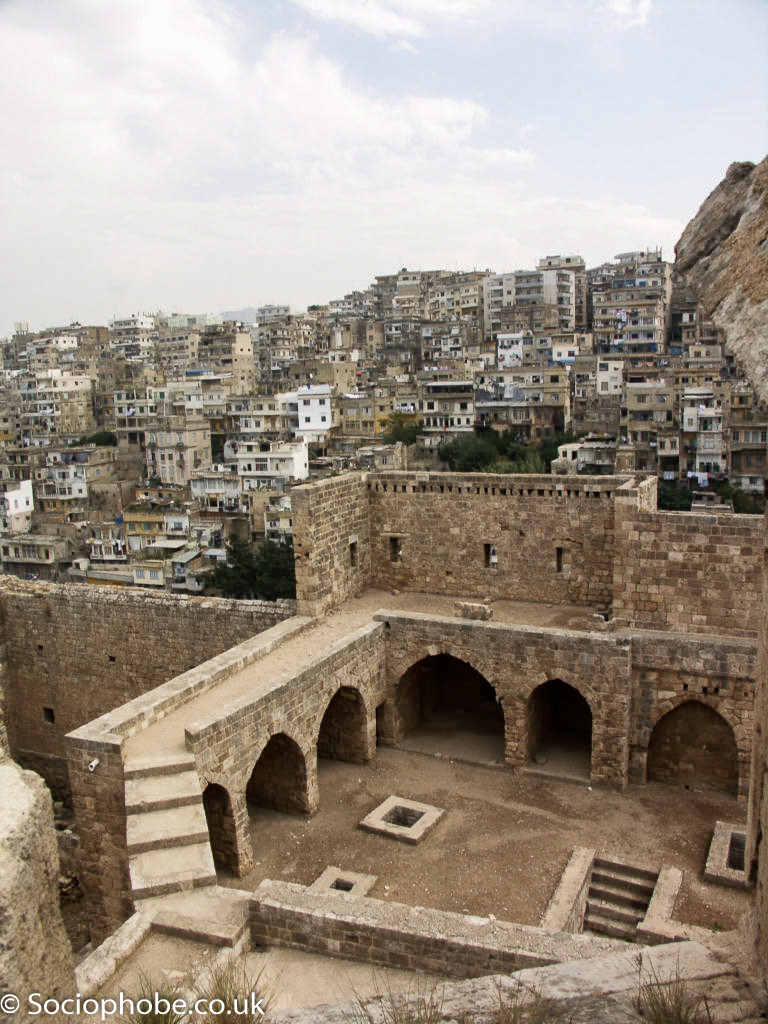
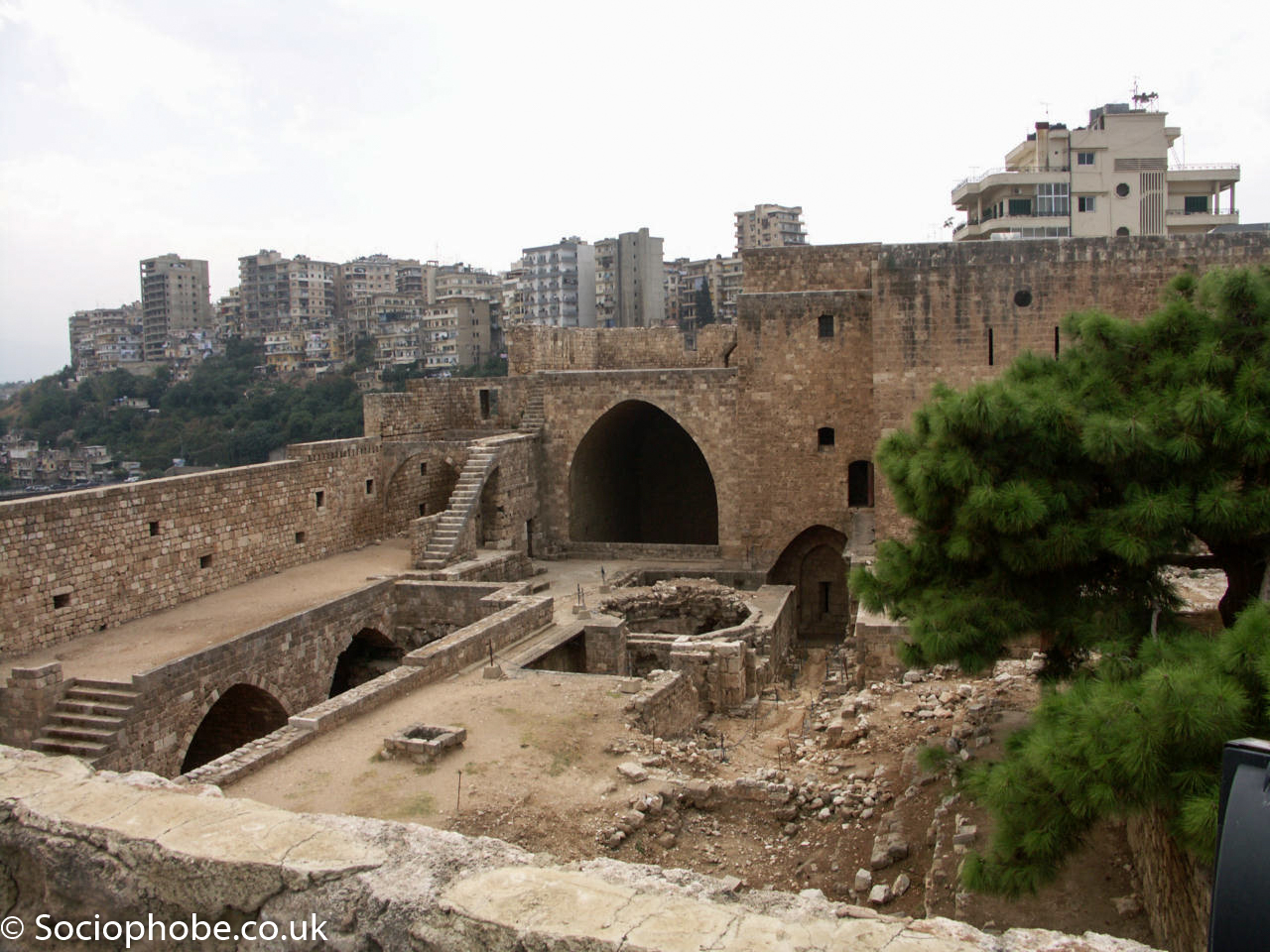
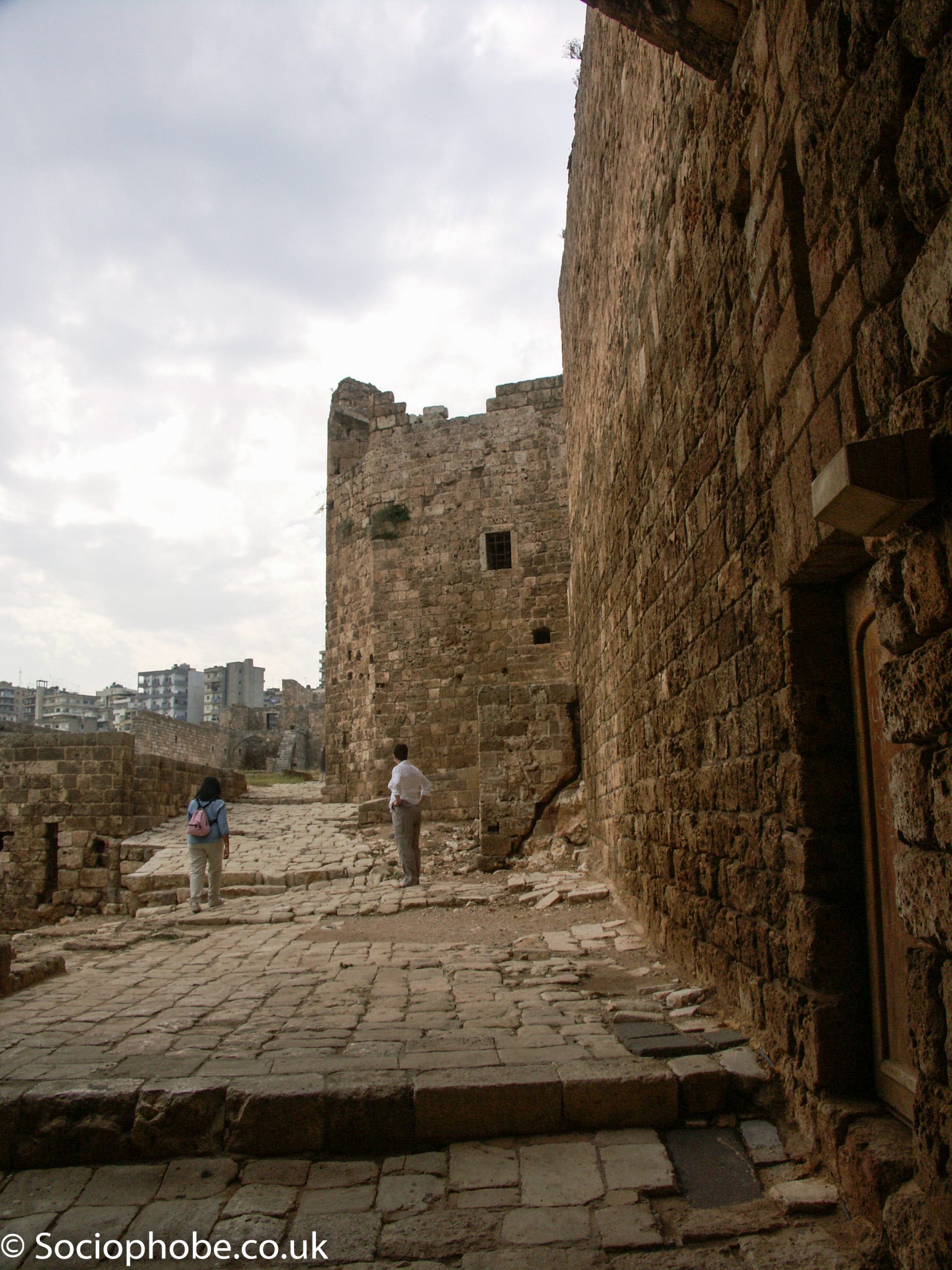
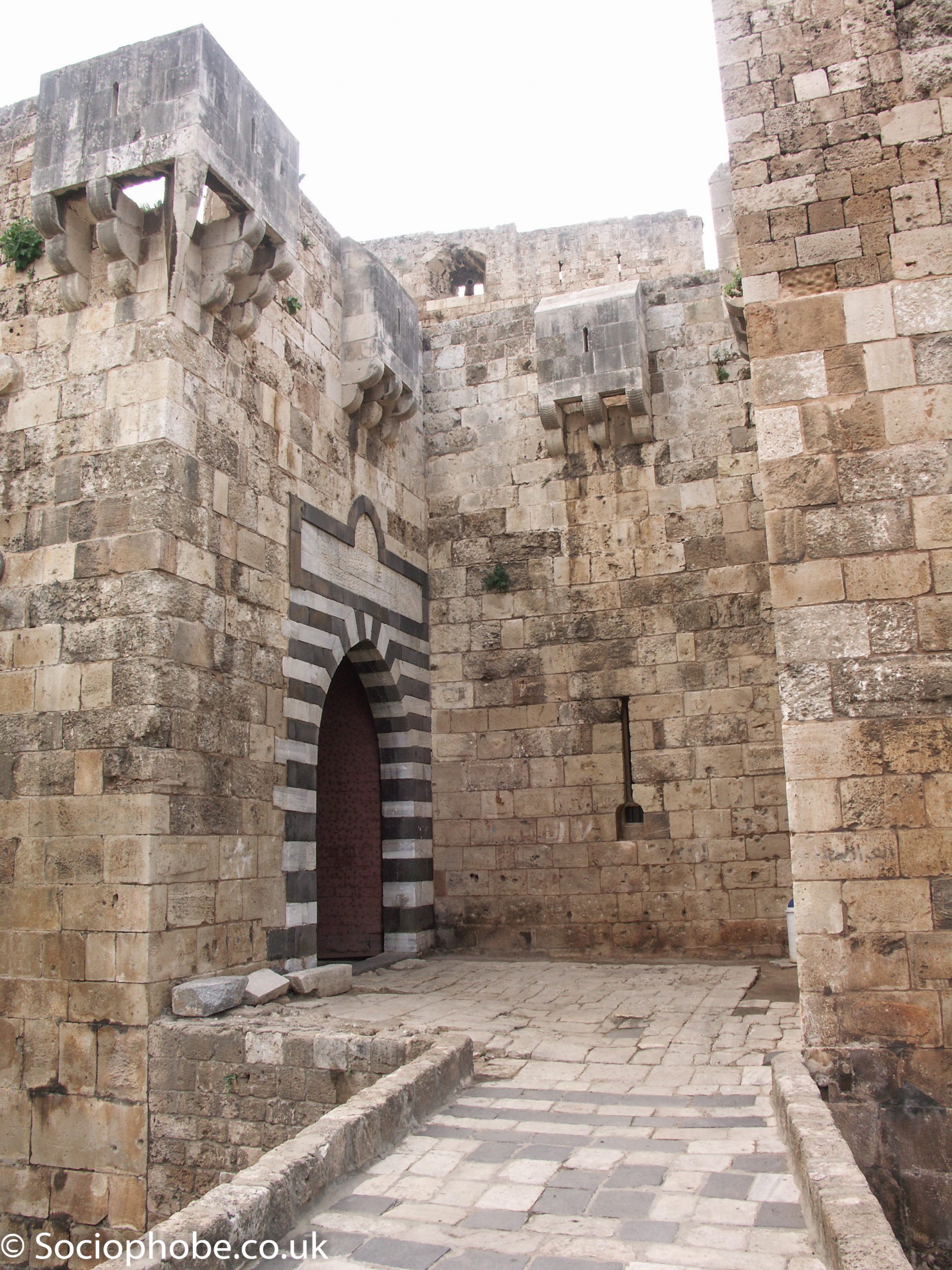
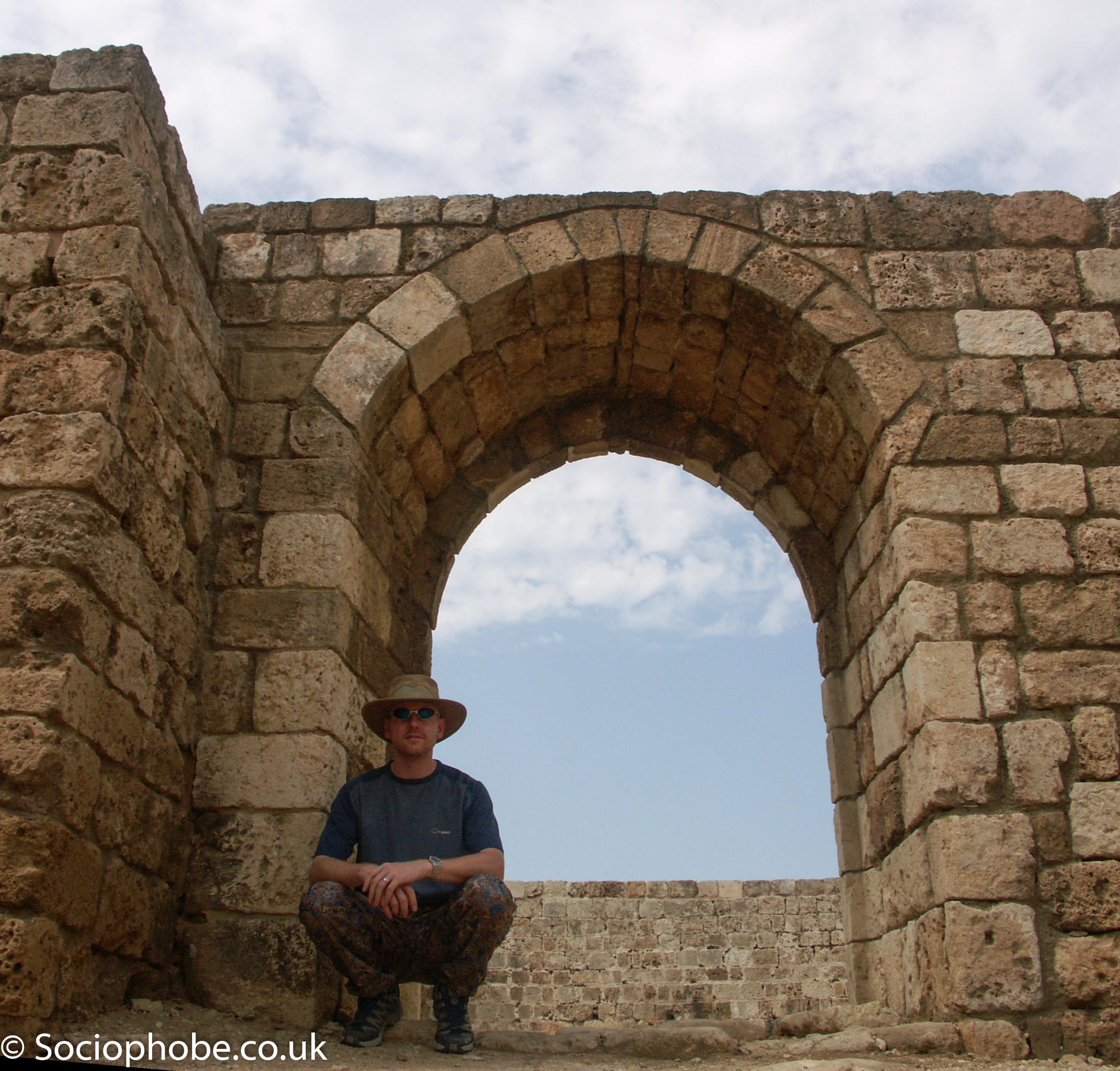
We carried on to the citadel of Raymond de St Giles, built in the late 11th century. This castle is huge, it has a massive entrance way with the gate at right angles to the bridge to protect against battering rams and then fortifications that are a mix of Crusader, Mameluke and Ottoman. The scale of the castle is difficult to appreciate from the inside and it is very built up around it so needs a drone really to get a proper sense of it.


Syria
Once we left we headed to the Syrian border for the next stage of our Lebanon and Syria road trip but the traffic was terrible, the dual carriageway was down to one lane which was intermittently blocked as people tried to overtake into oncoming traffic. Eventually the army arrived to sort it.
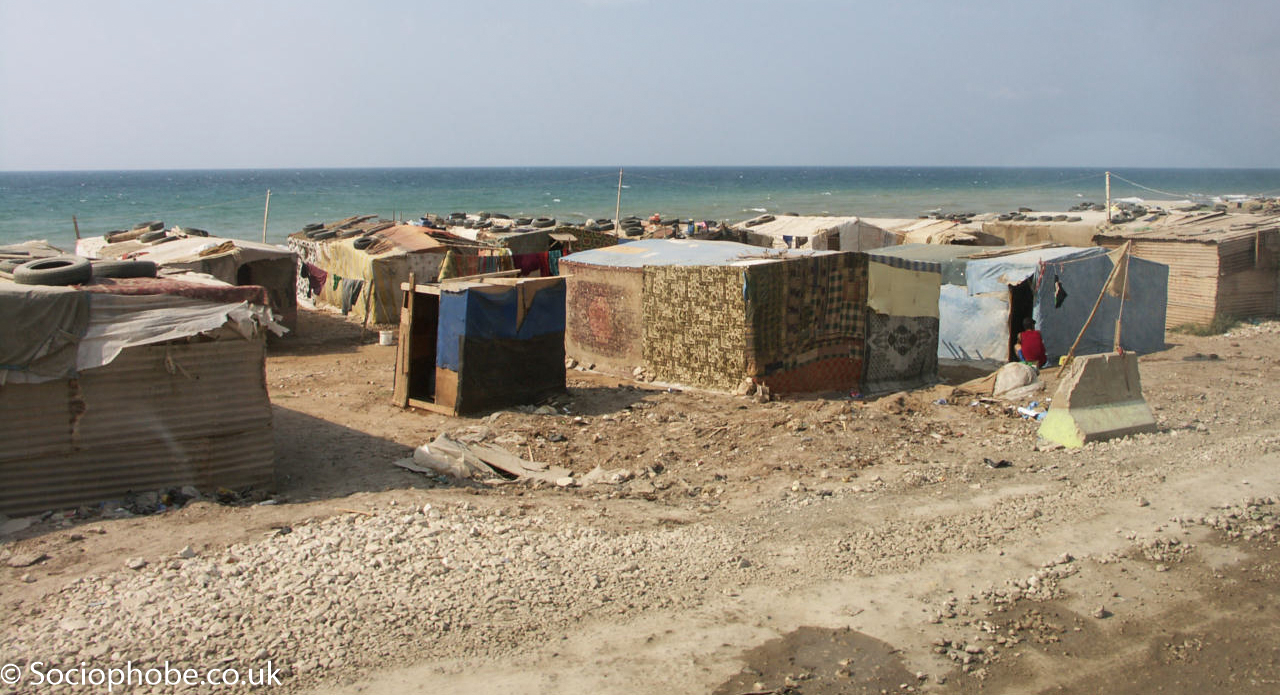
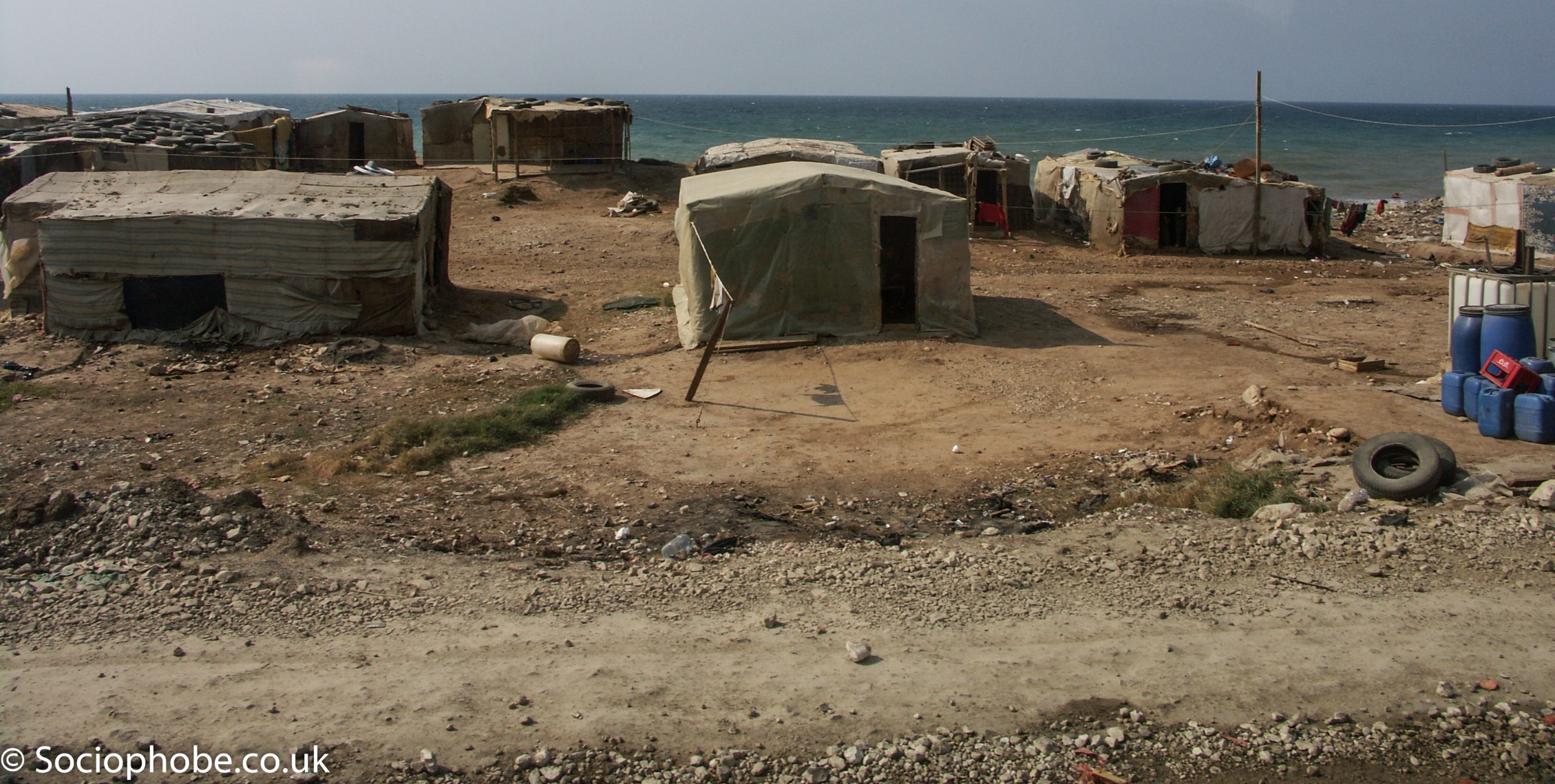
The roadside is filthy and people just pull up, empty rubbish out of their car and drive off. There are lots of Bedu tents too, tarpaulin covered huts rather than romantic canvas and carpet creations, that they use whilst doing seasonal fruit picking jobs.
Syria: Hama
We eventually crossed the border into Syria. Immediately you could see it was a different country, far more agricultural, with lots more greenery than Lebanon. Hama seemed another poor and dirty town but the hotel was the opposite, marble walls and floor for the foyer, fountains and plants and probably more staff than guests but the service was still dire.
Syria: Hama Water Wheels
I went for a walk through assorted locked gates in the garden to look over the Orontes and watch the huge water wheels that were originally built by the Byzantines. There was very little street lighting but all the minarets are illuminated in green. It was quite nice walking around, I was nervous but the people all seemed friendly although it was certainly alien with the women covered head to toe.
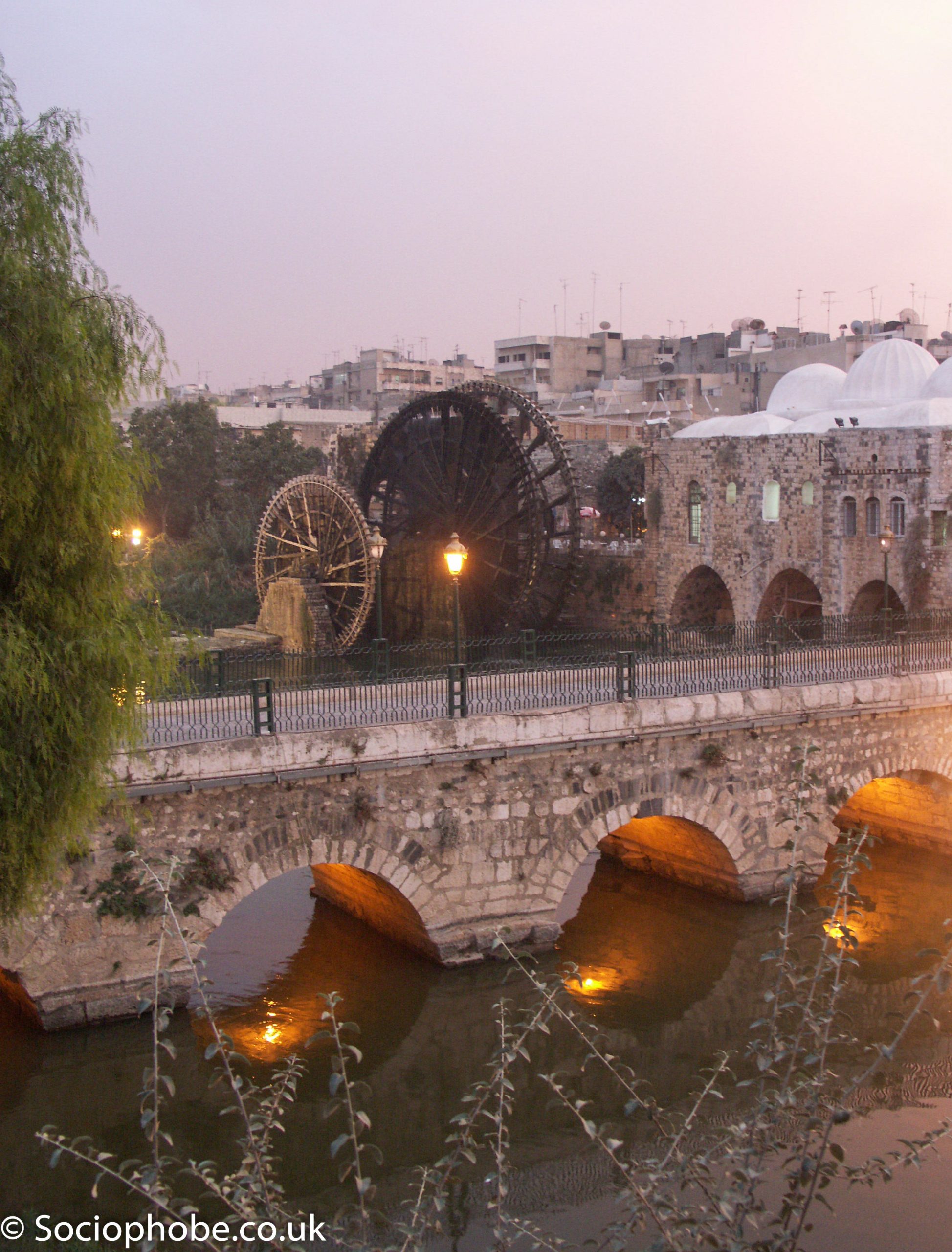
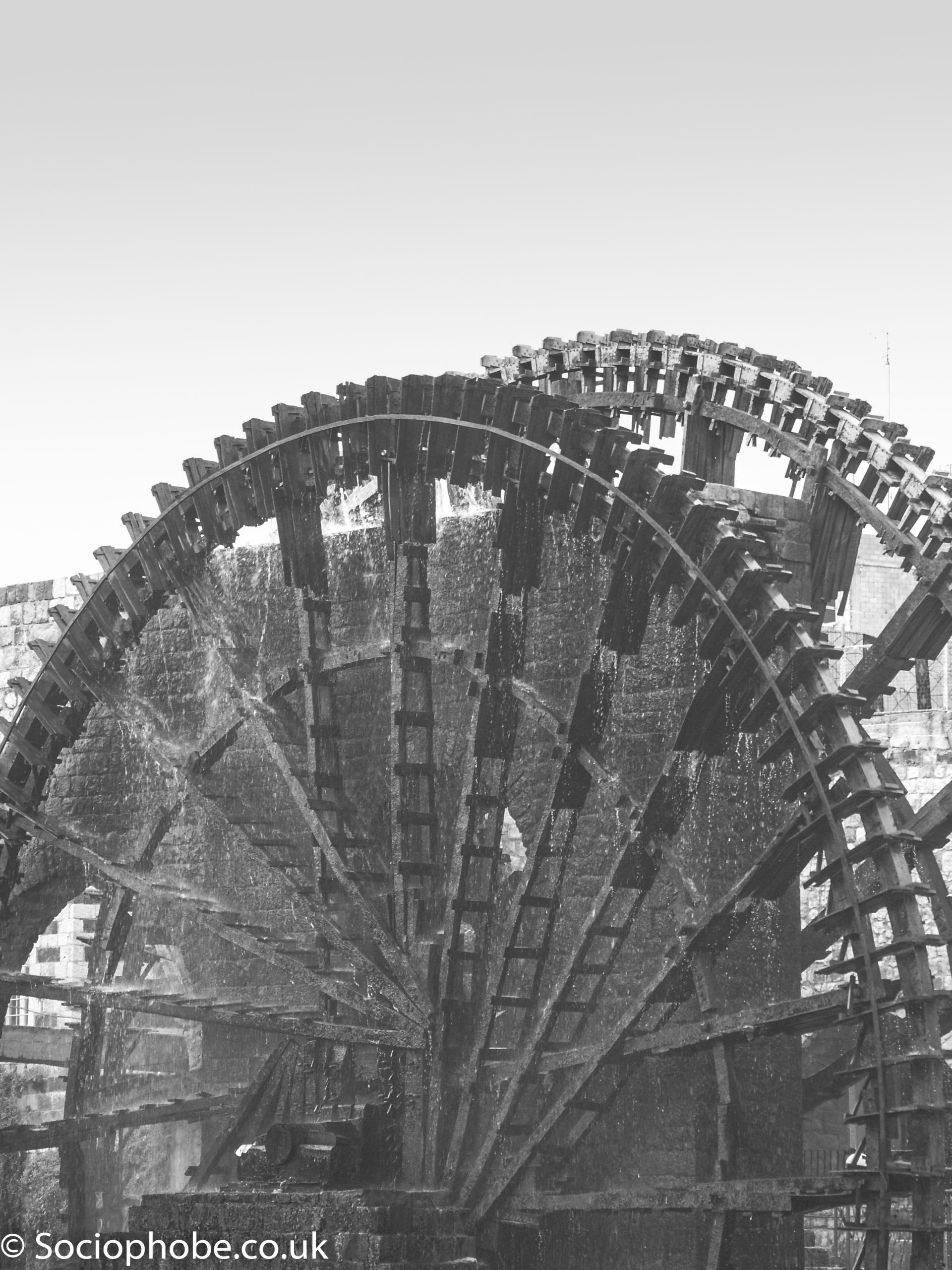
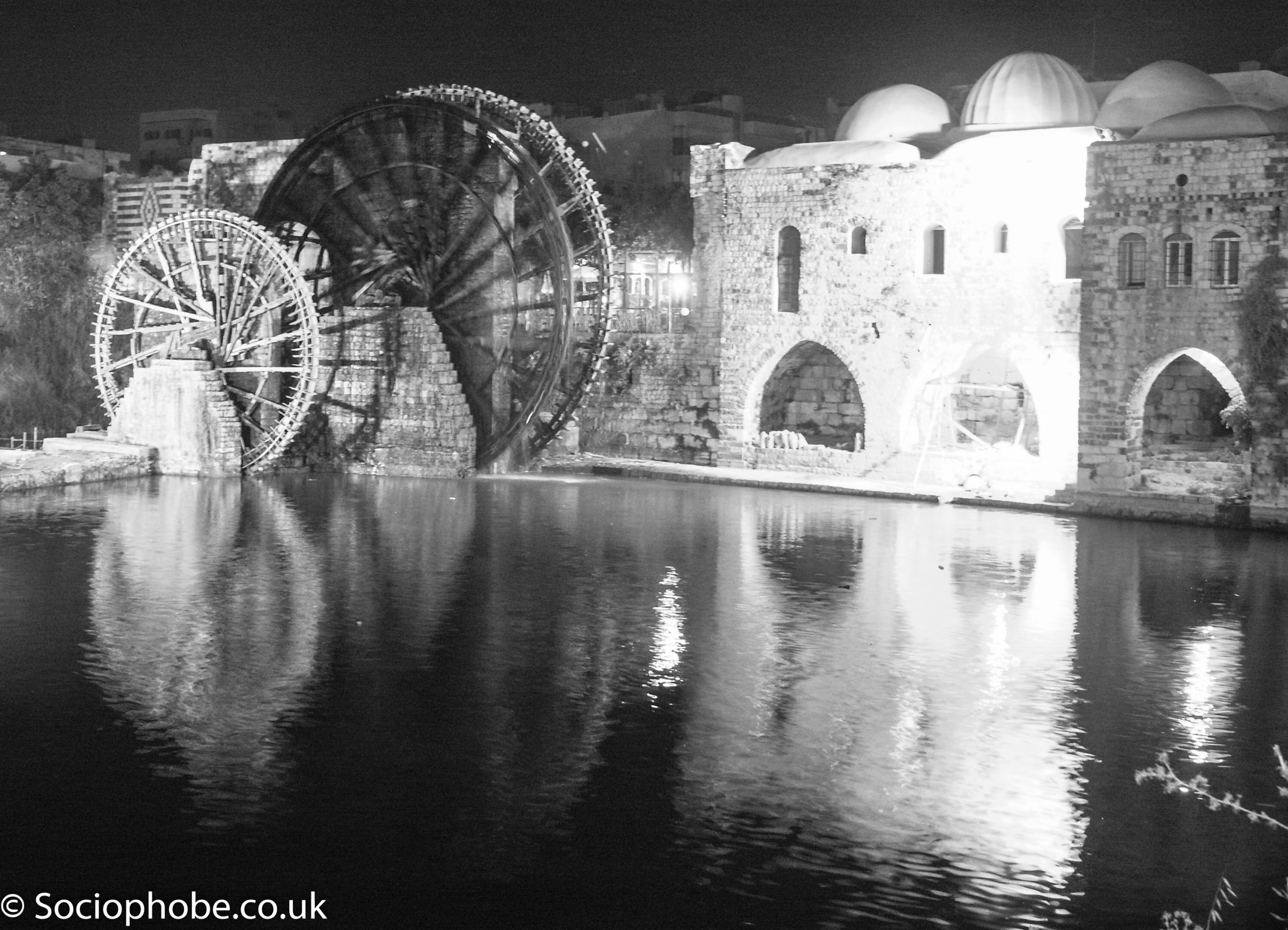
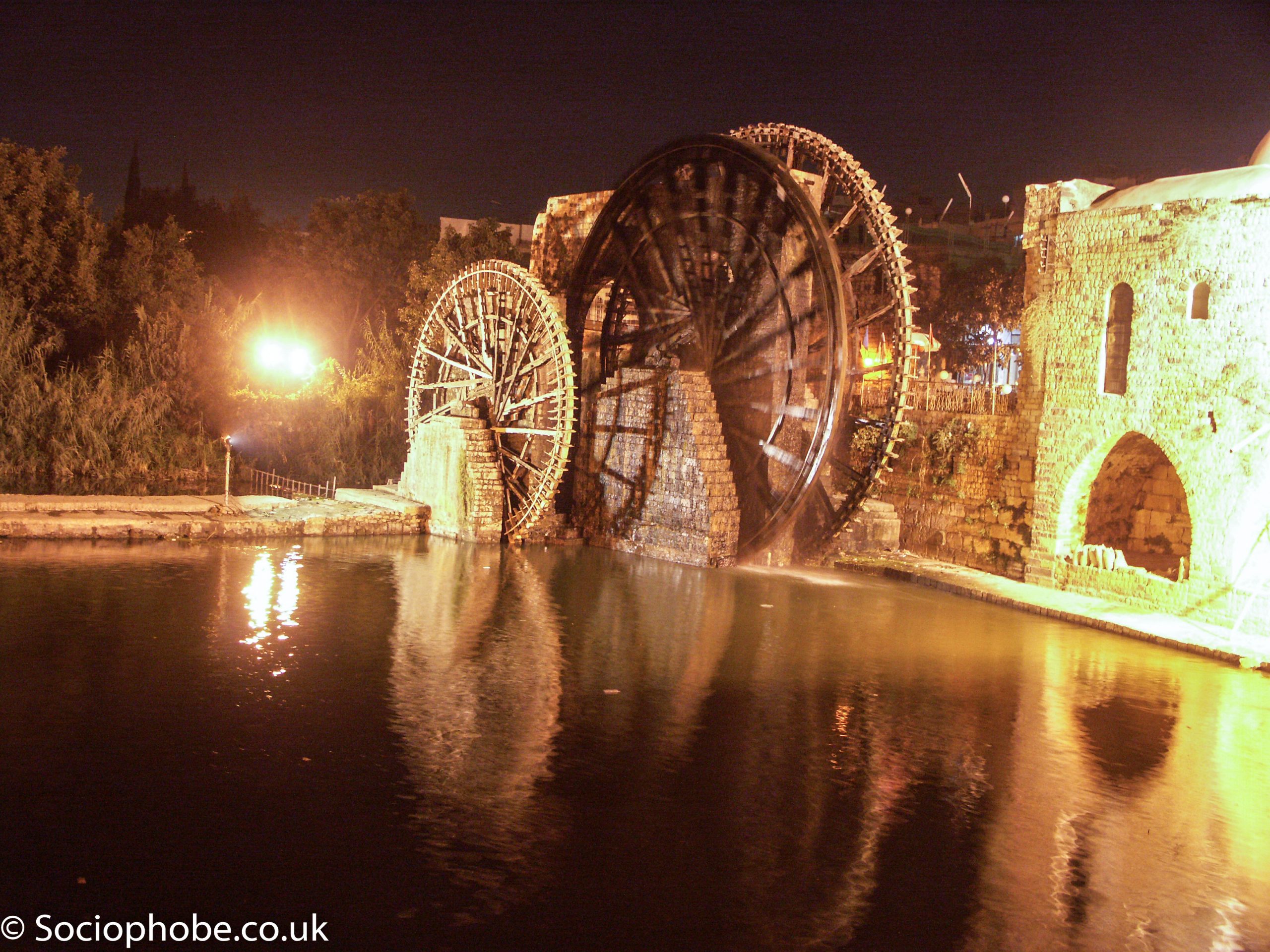
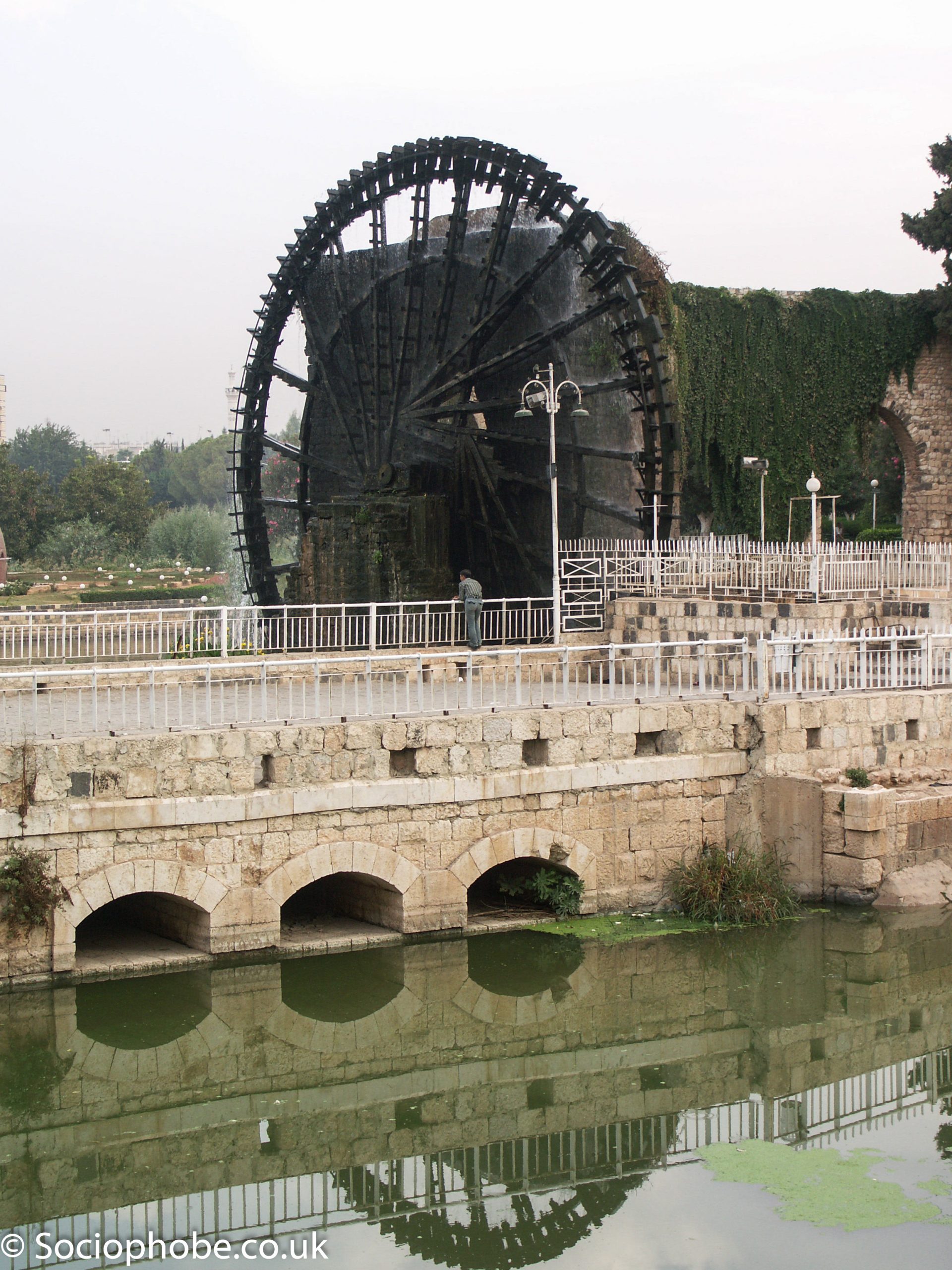
Sleeping wasn’t easy with the constant grinding of the water wheels sounding like a demented cello concerto, interspersed with the occasional call to prayer. After breakfast we took a smaller minibus and decided to drive straight to Aleppo as Ramadam starts today.
Syria: Aleppo
The motorway was very bumpy but I did manage to doze a bit. We seemed to drive past miles of pistachio plantations but eventually arrived in the city and stayed at the Hotel Baron which has been trading on the fact Agatha Christie and Lawrence of Arabia stayed there for about 80 years! That was probably the last time it was cleaned too.
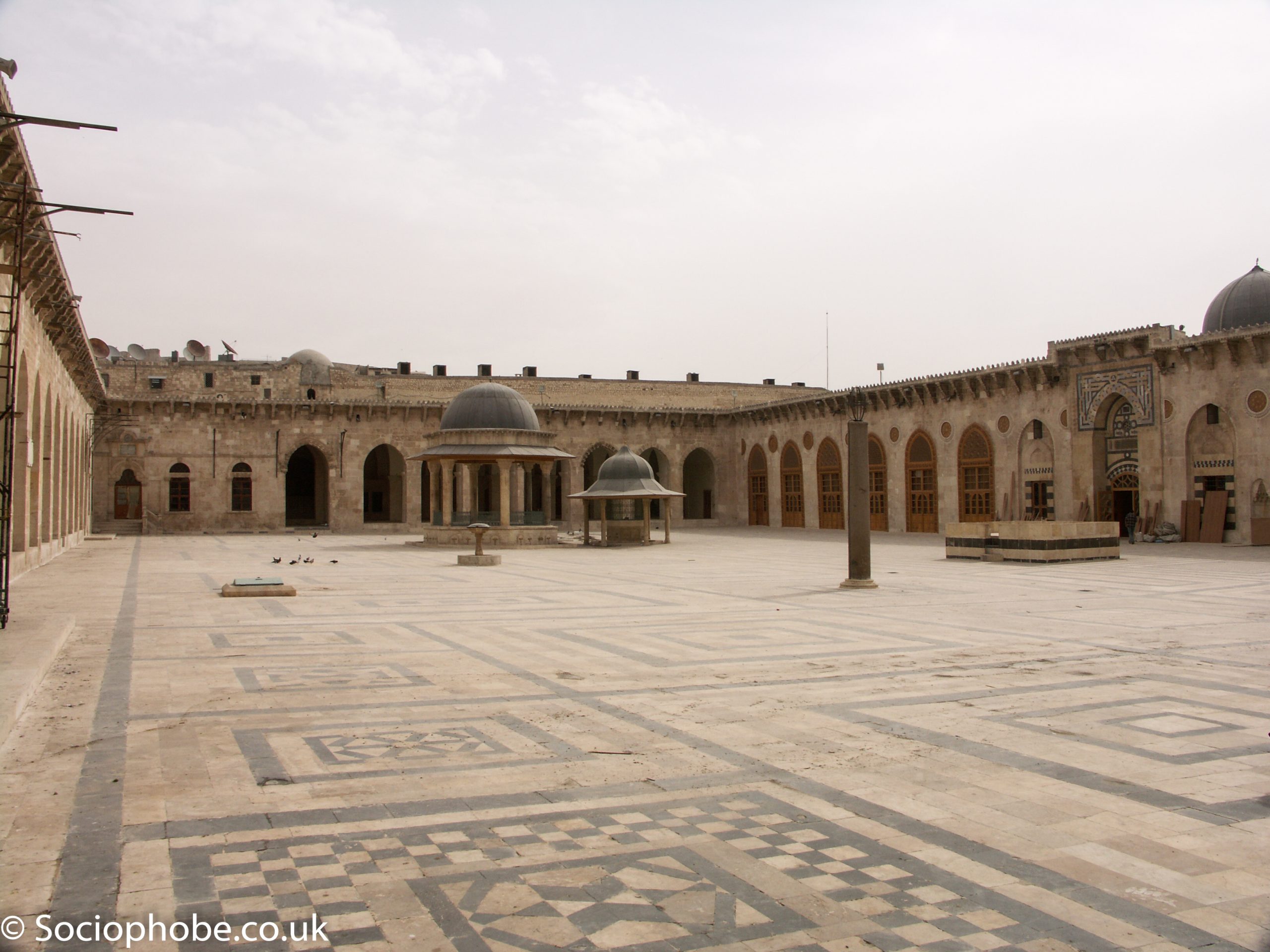
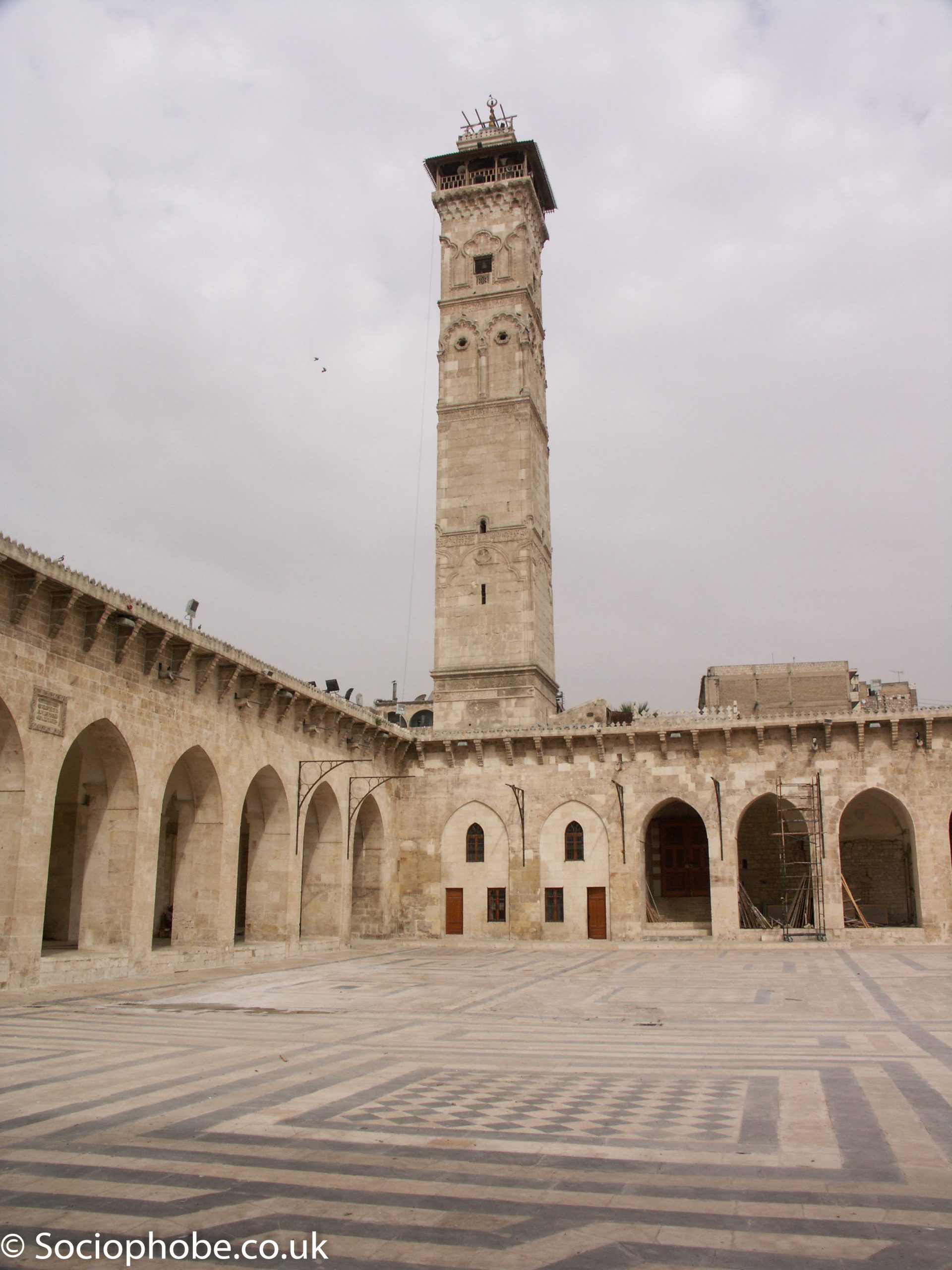
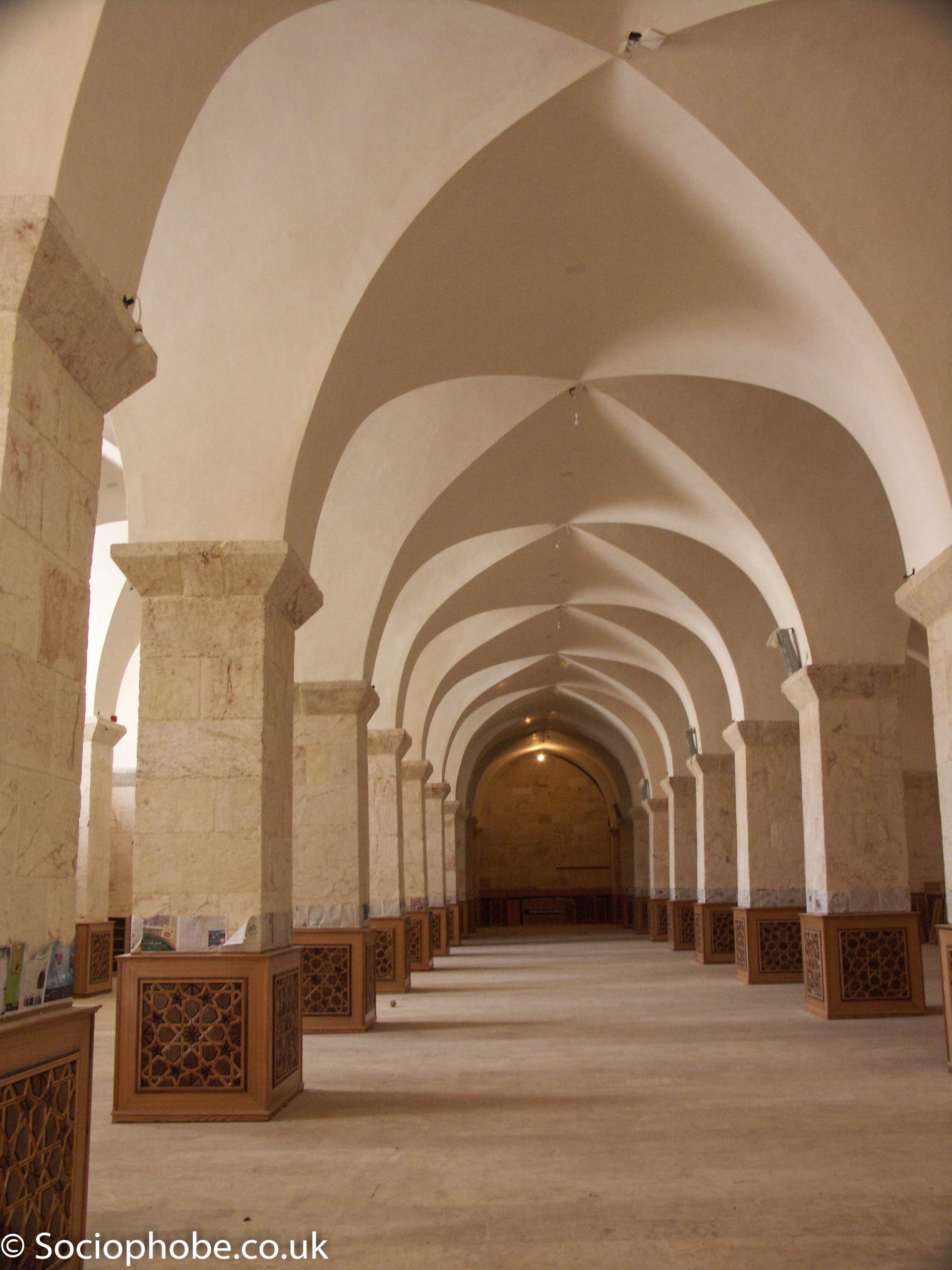
Syria: Aleppo Grand Mosque
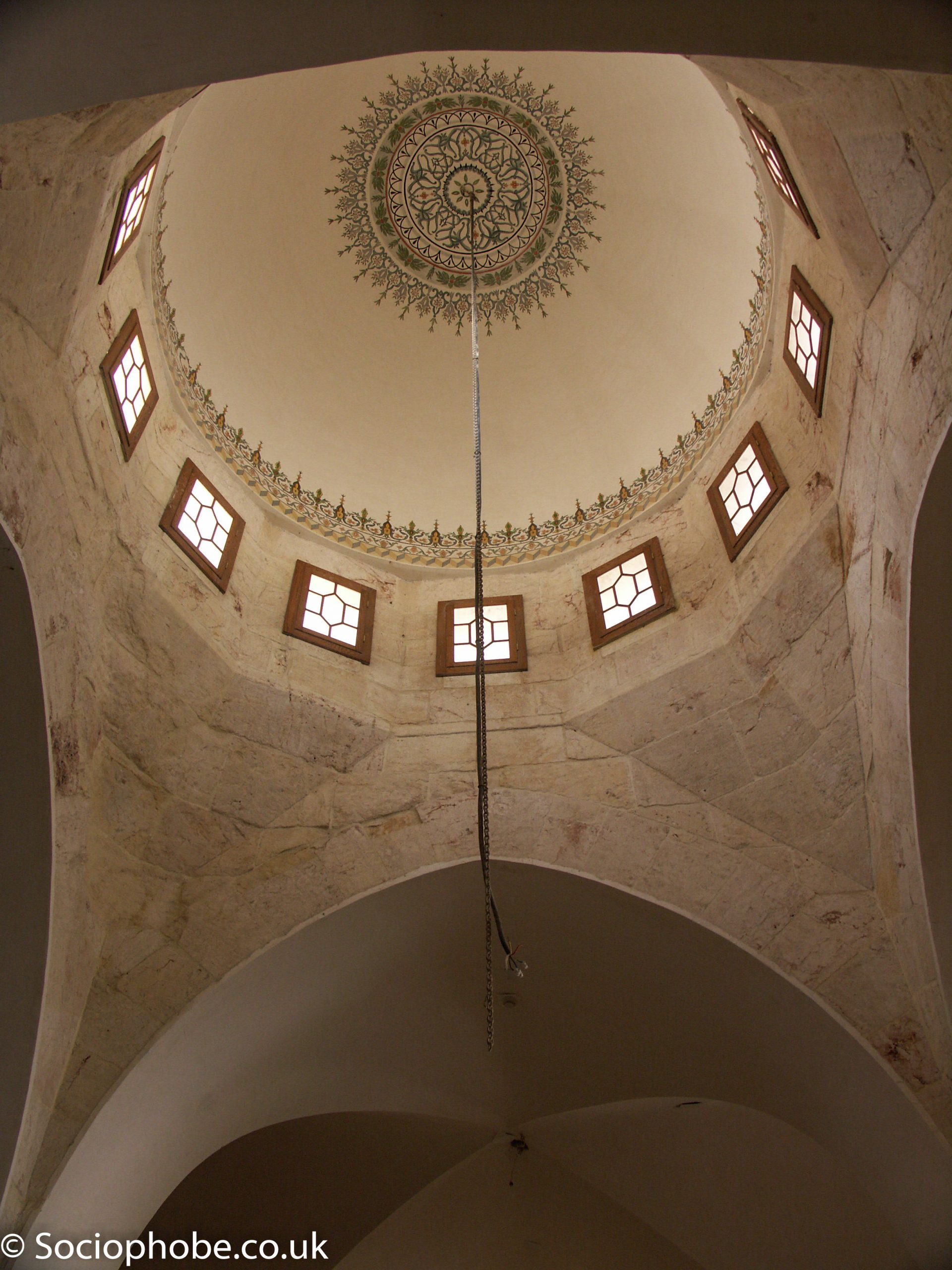
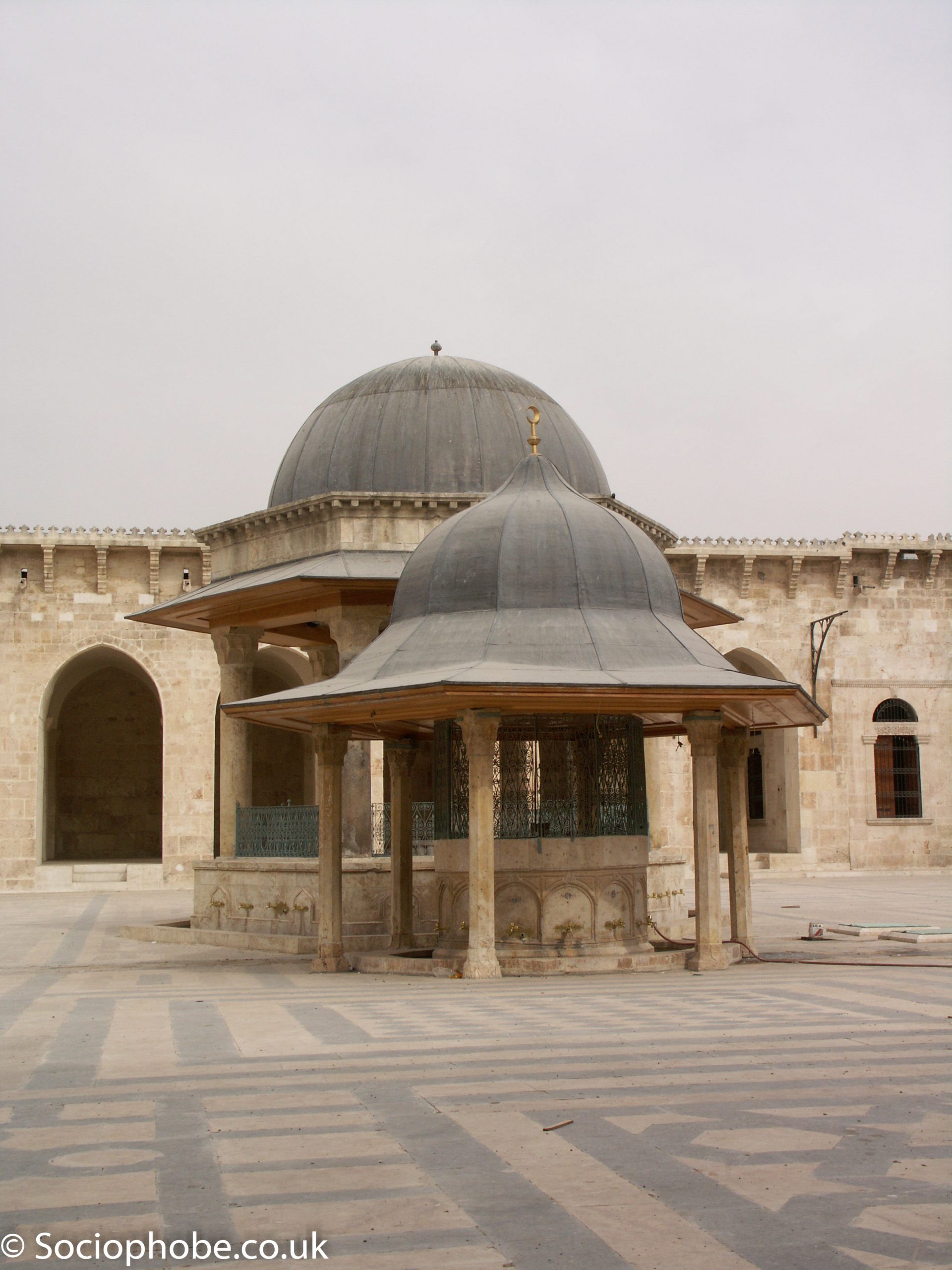
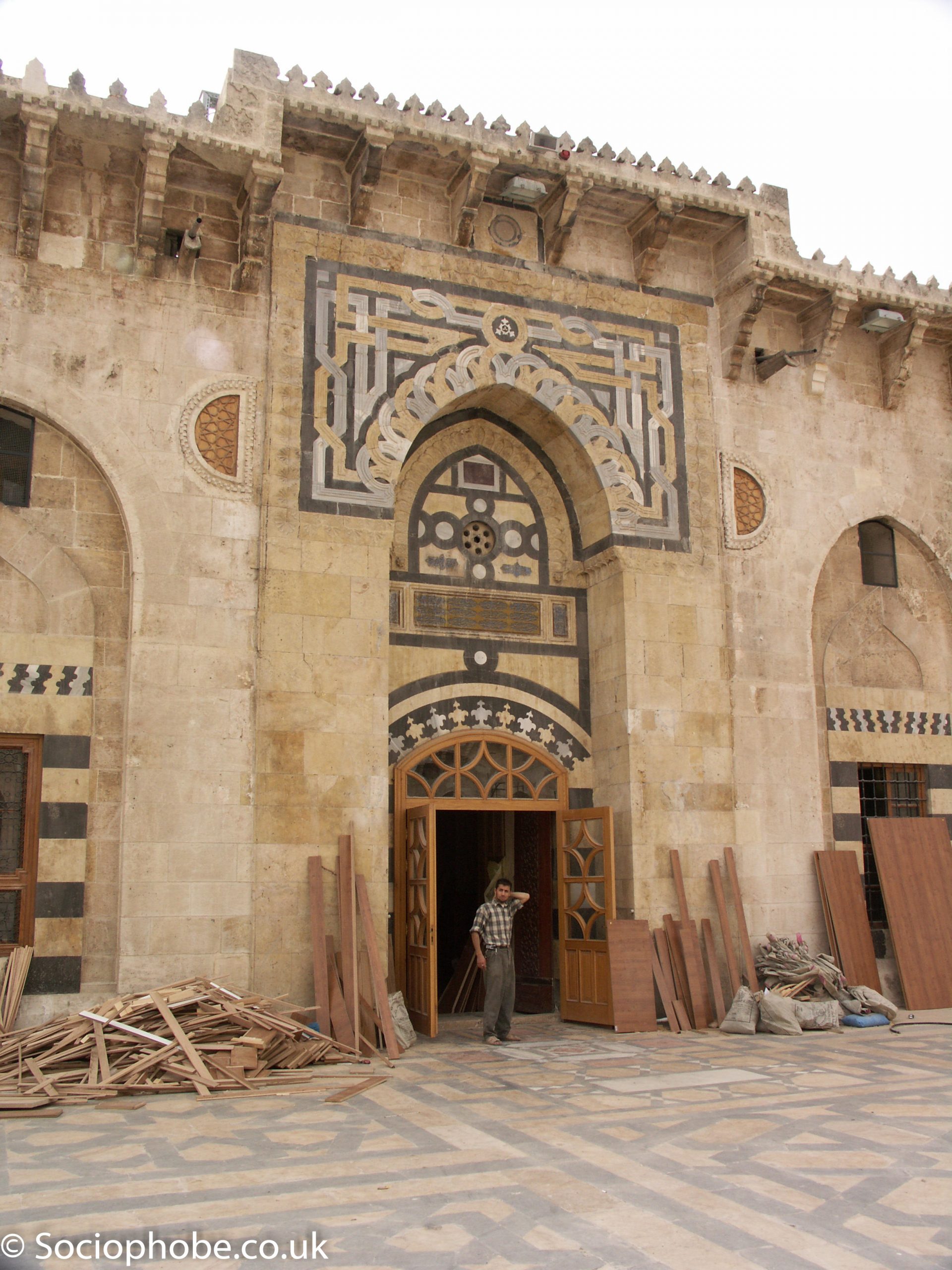
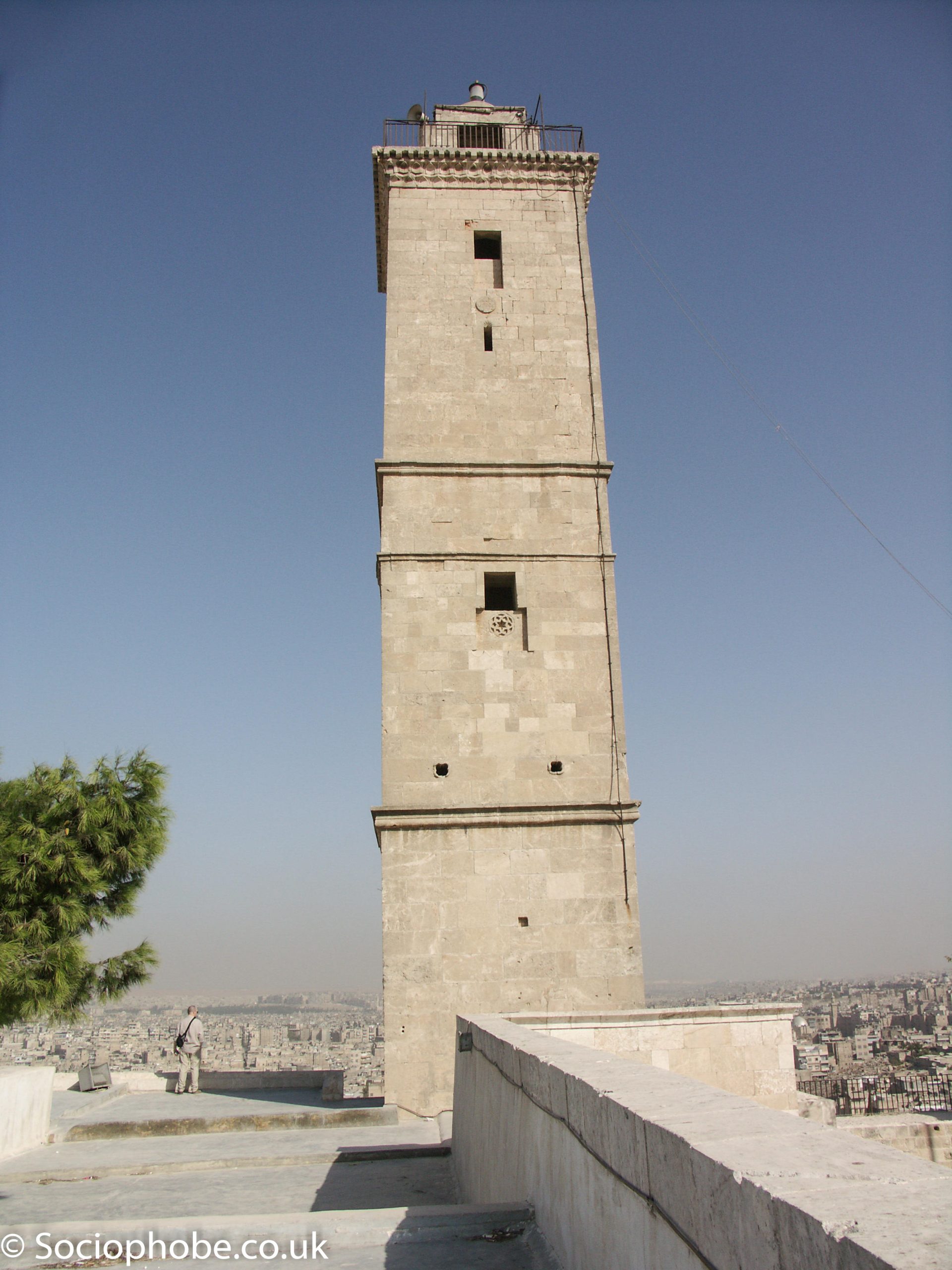
We walked to the Grand Mosque which was being restored so we had full access to explore the building. It was very austere as all the movable decorations had been looted and moved to Baghdad in the fourteenth century.
Syria: Aleppo Citadel
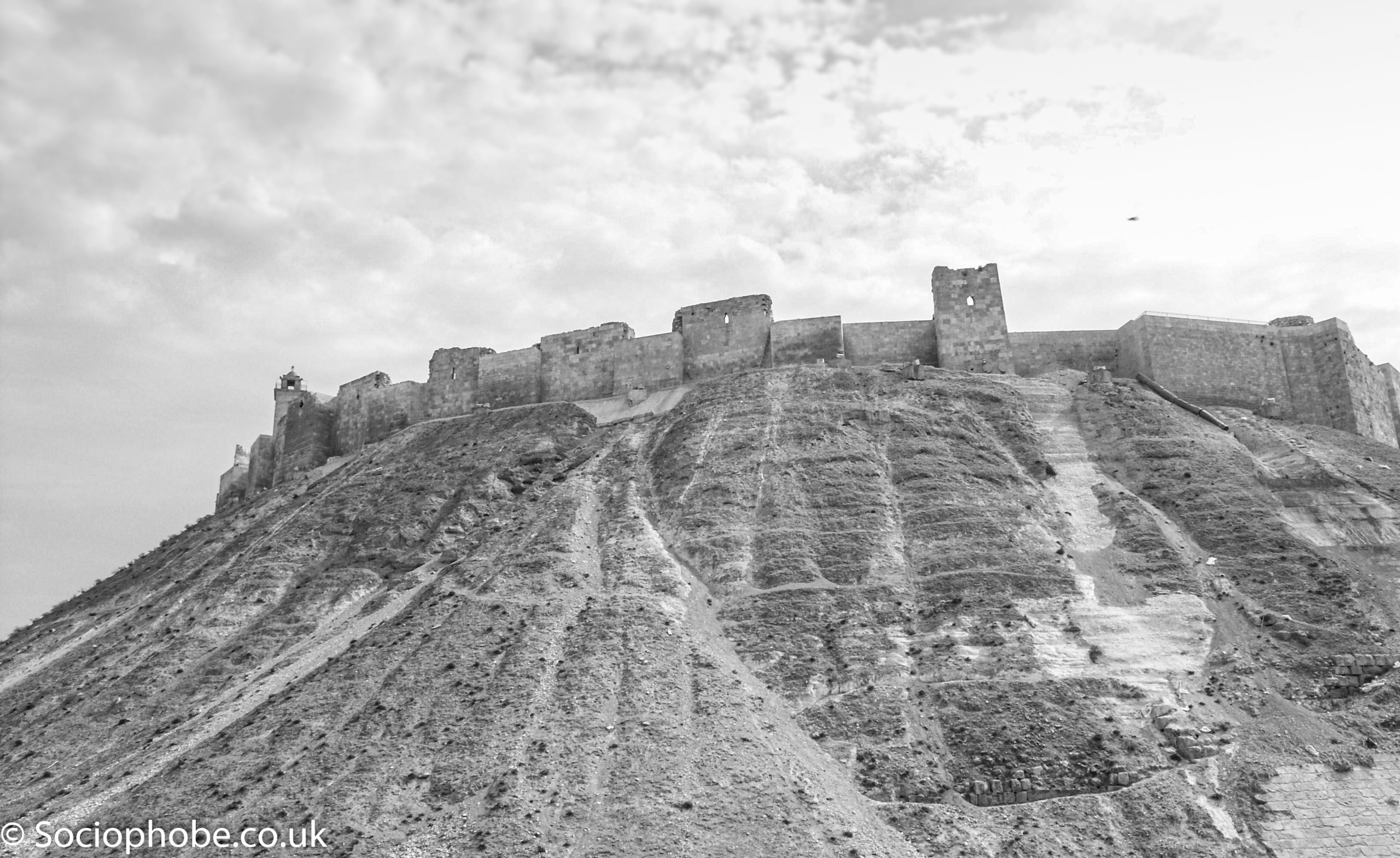
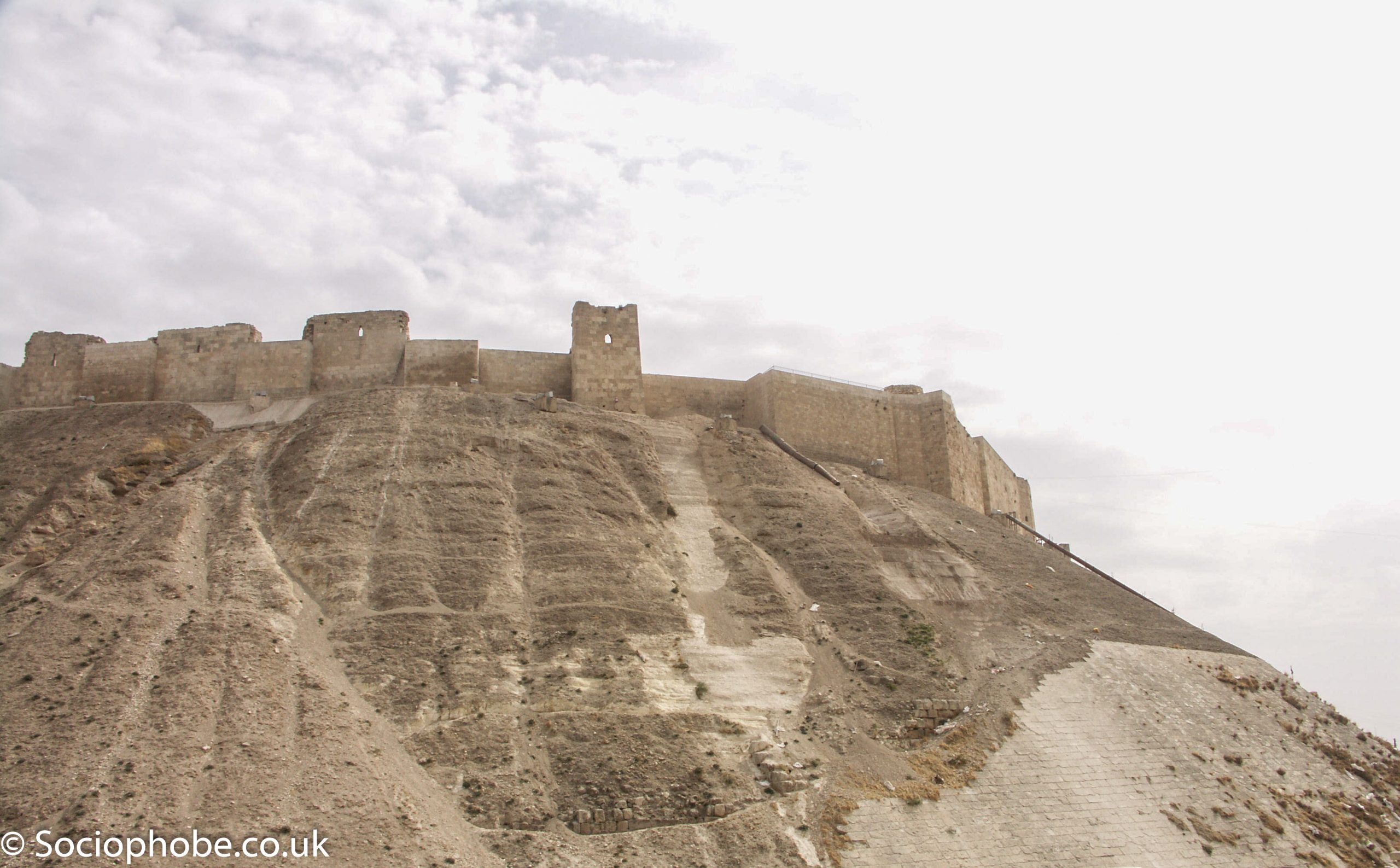
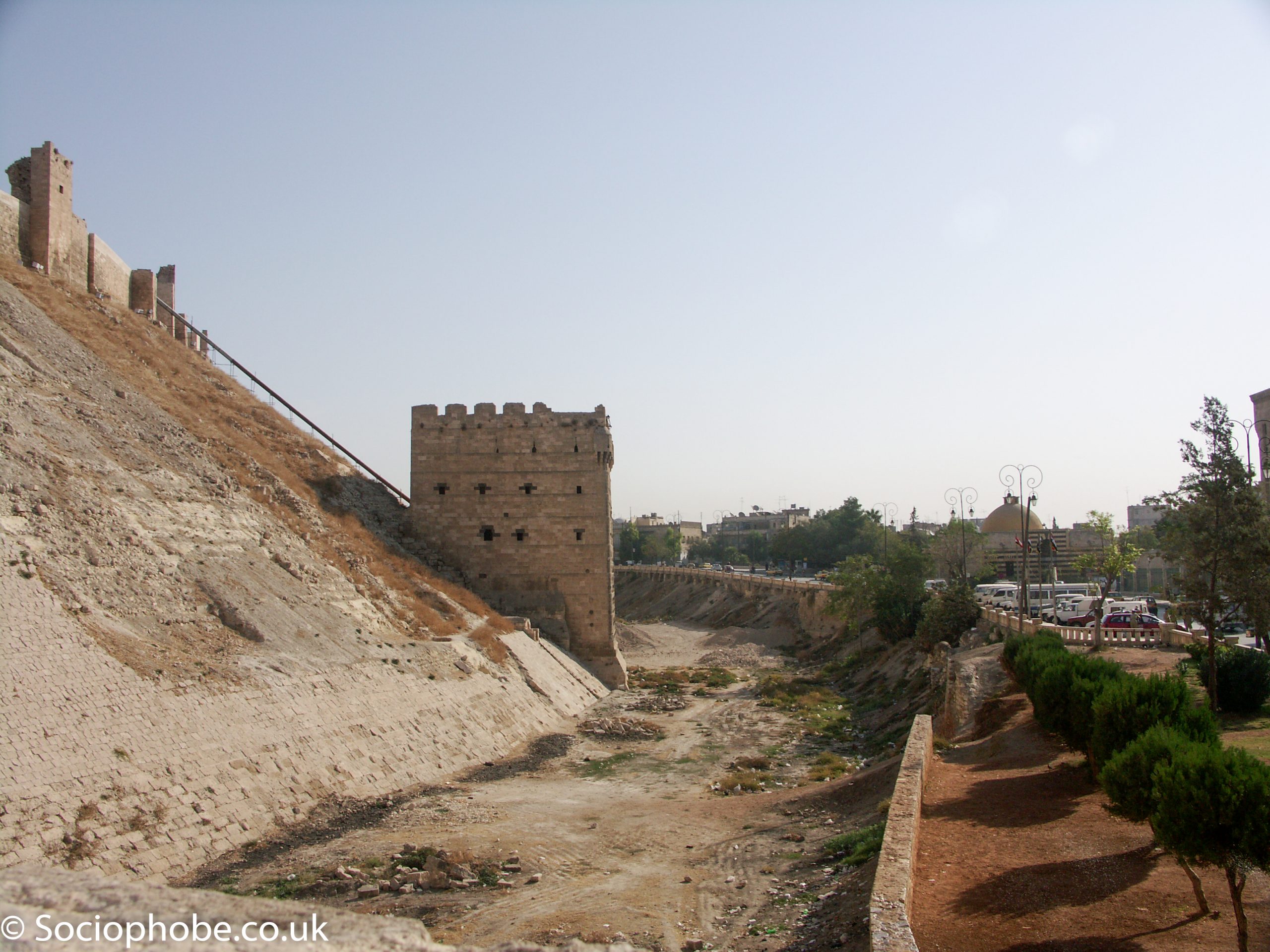
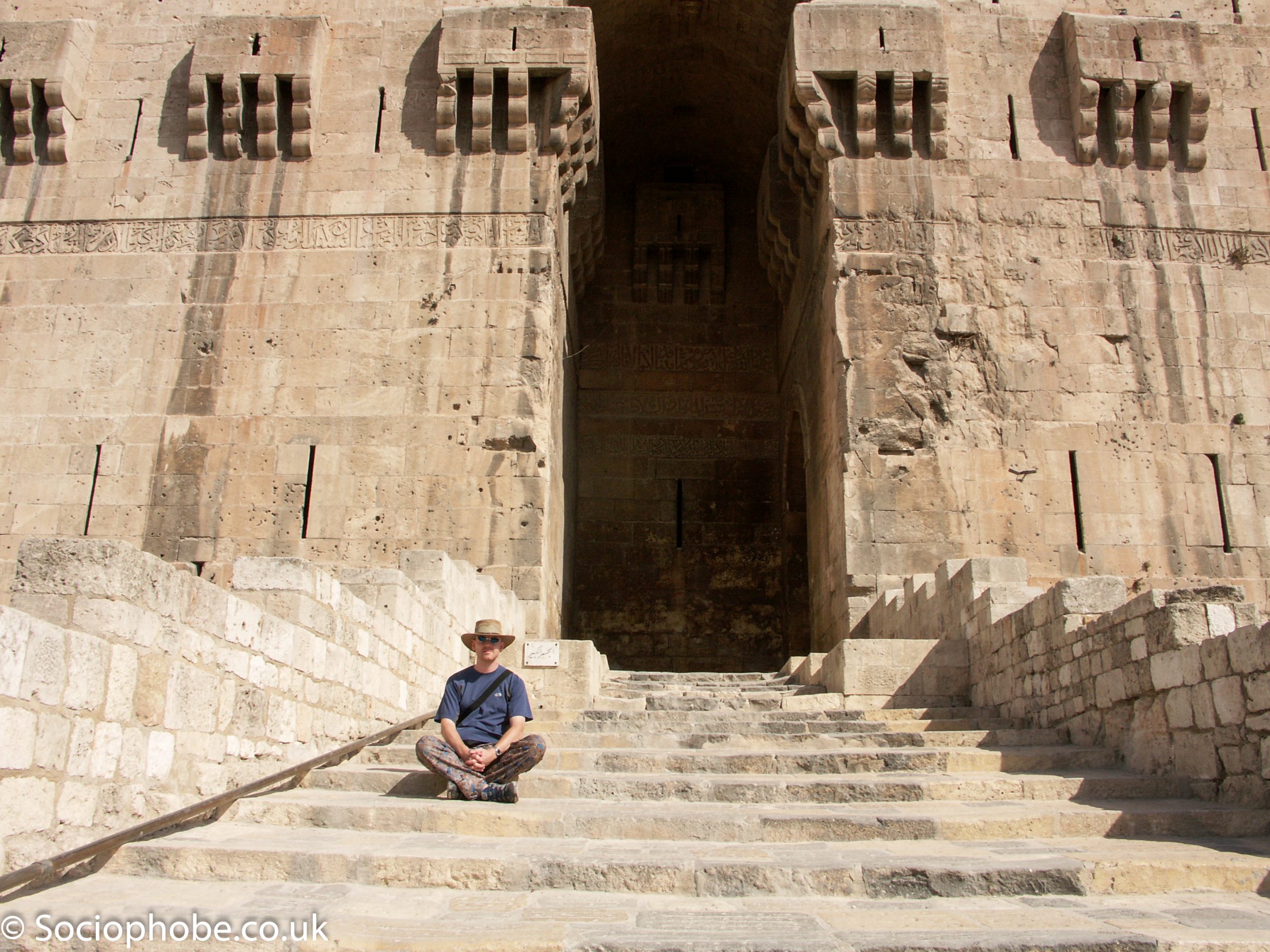
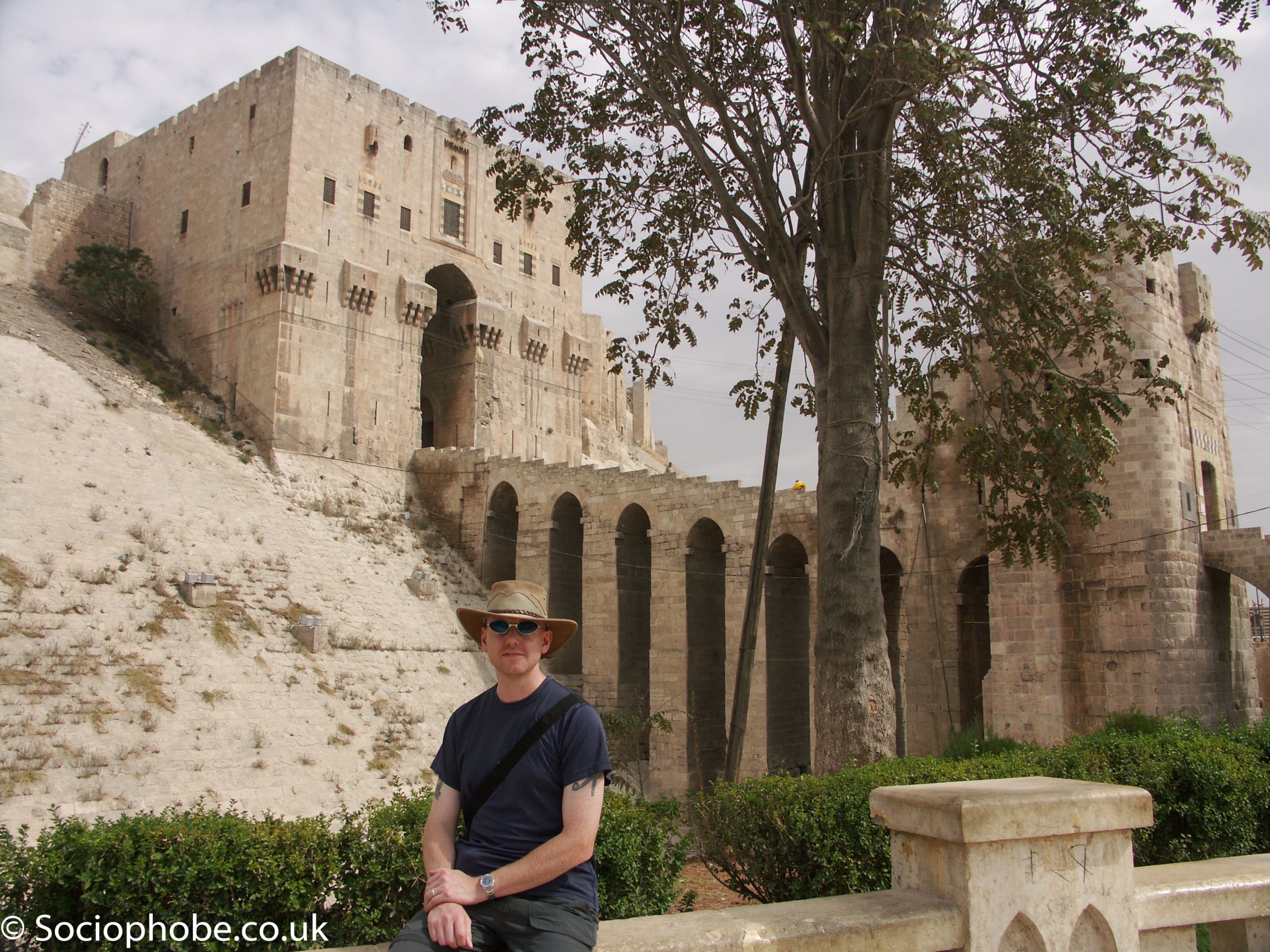
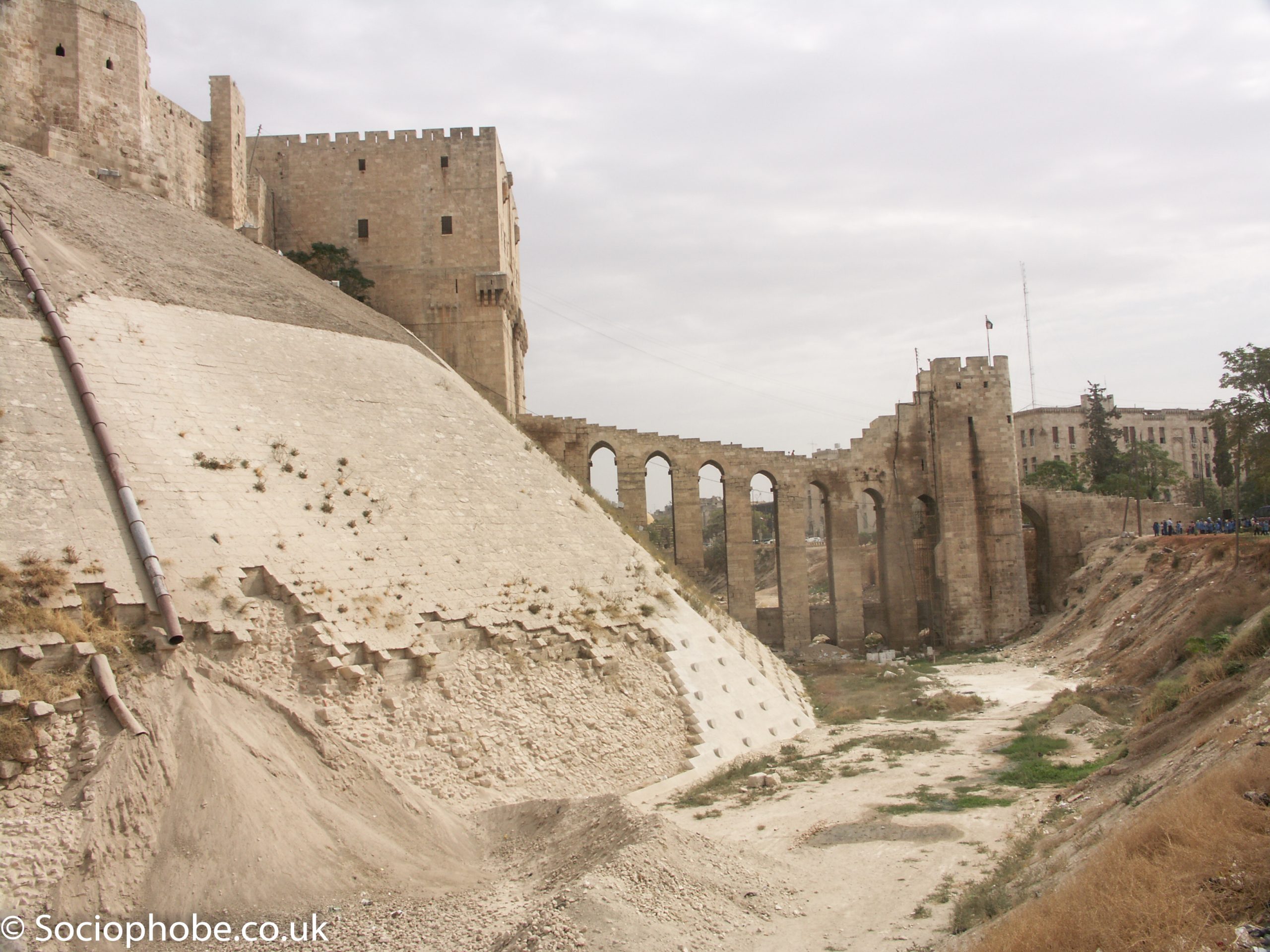
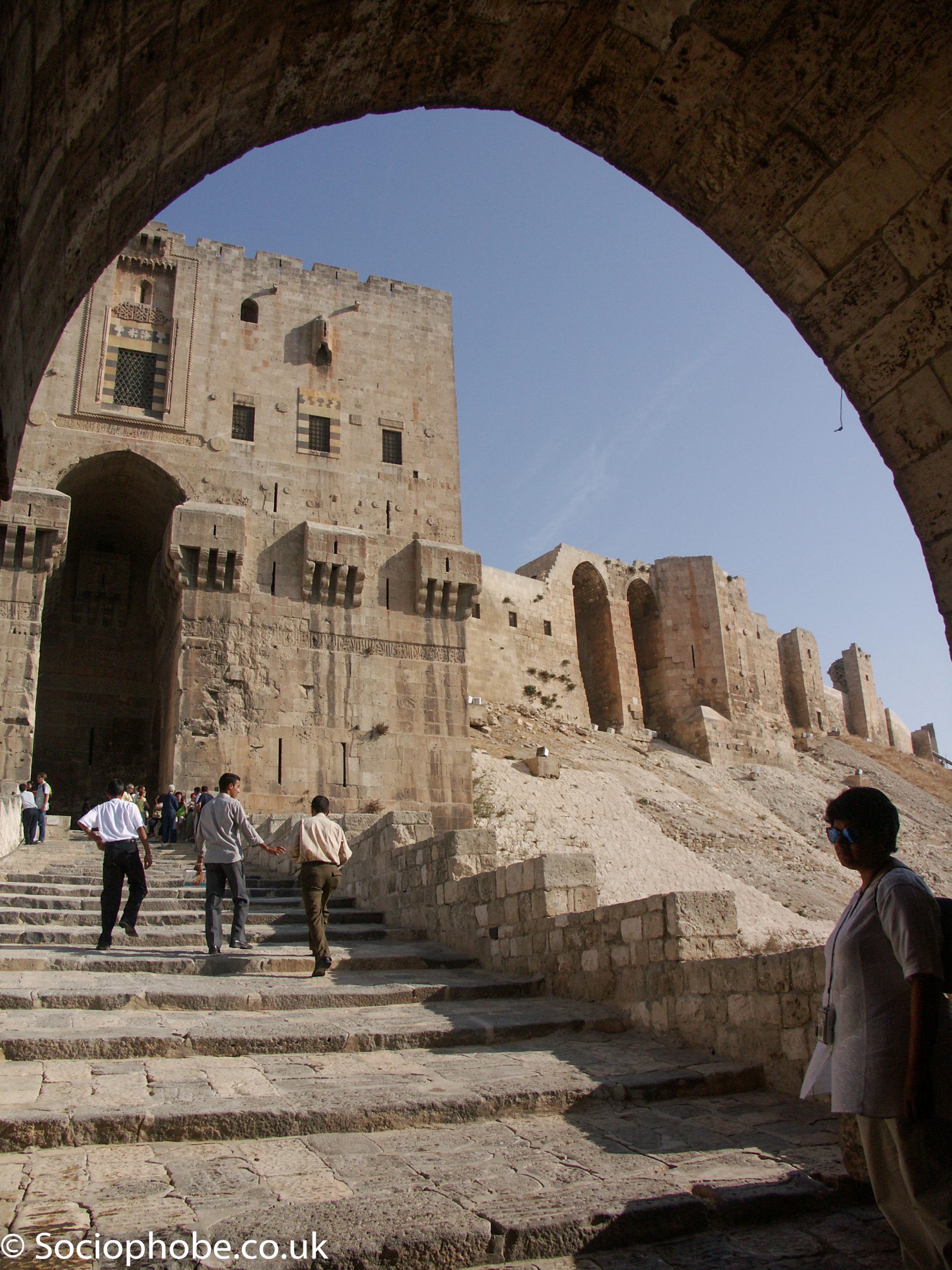
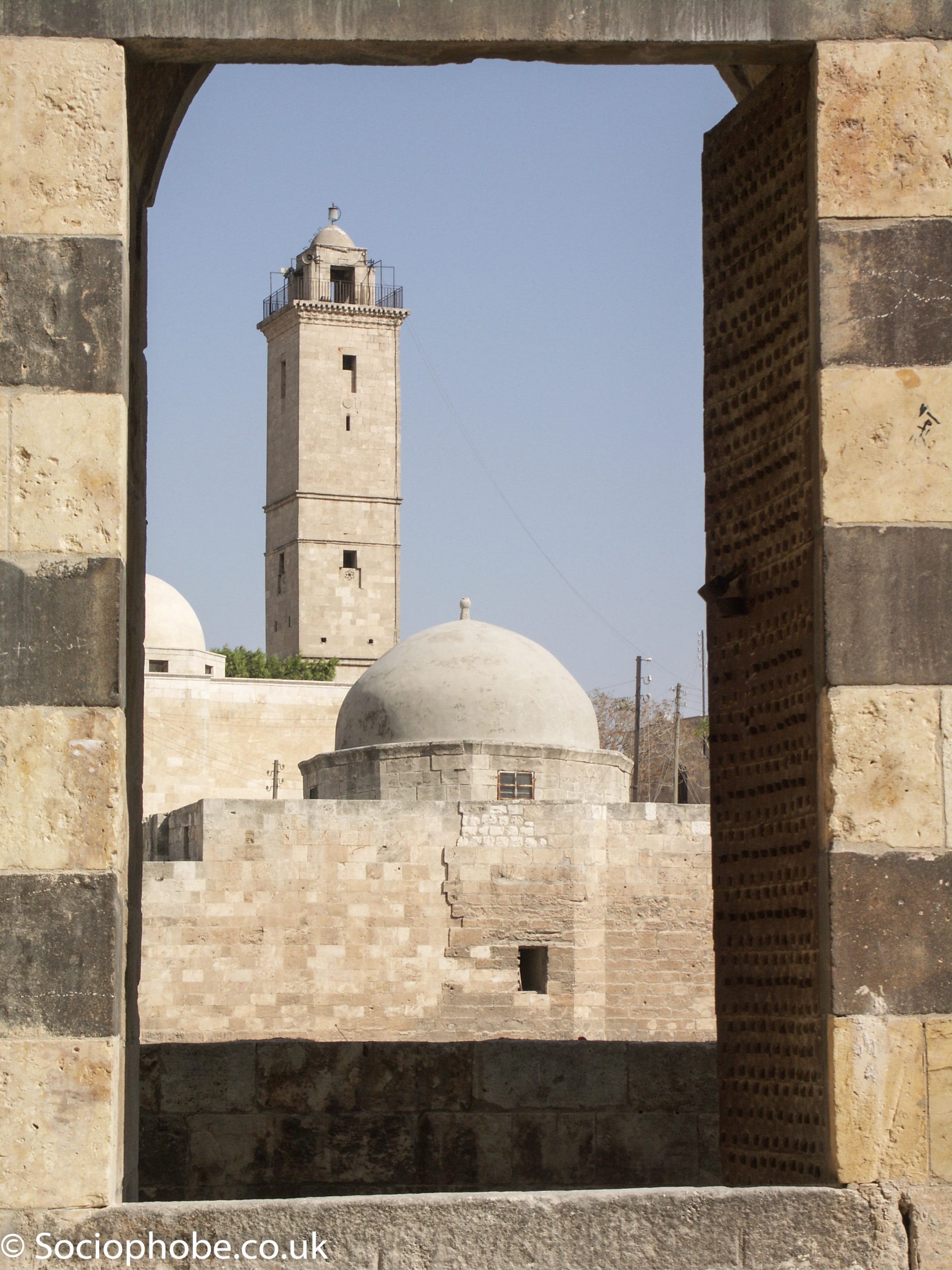
From here we continued on to the citadel, a justifiably famous work of engineering. It is a huge mound with a very steep glacis surmounted by walls with a guarded bridge for entrance. Tamurlane took it in the 14th century after beheading 45,000 citizens of the town and firing their heads into the citadel. When the garrison surrendered on the promise of free passage he executed them all.
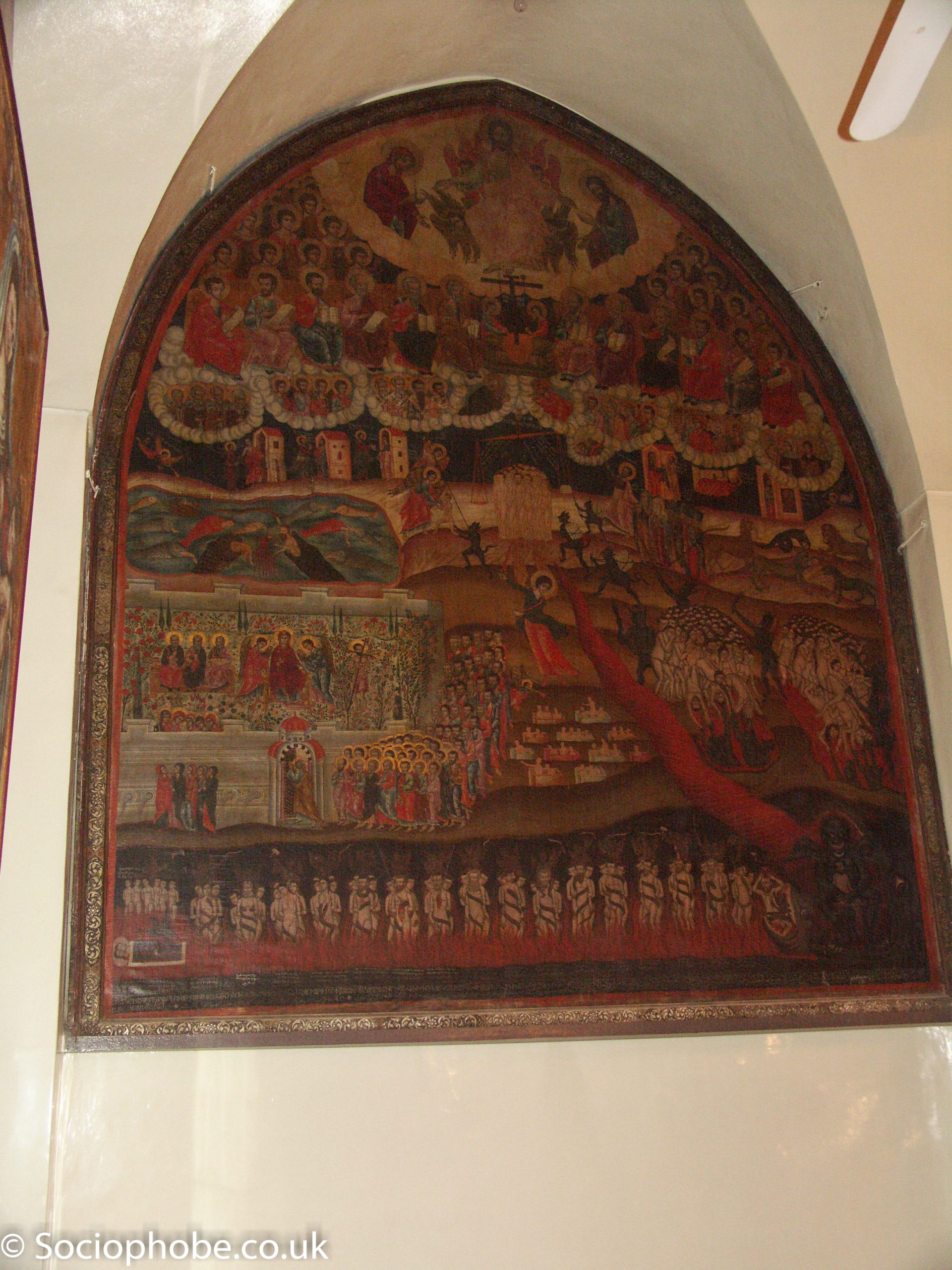
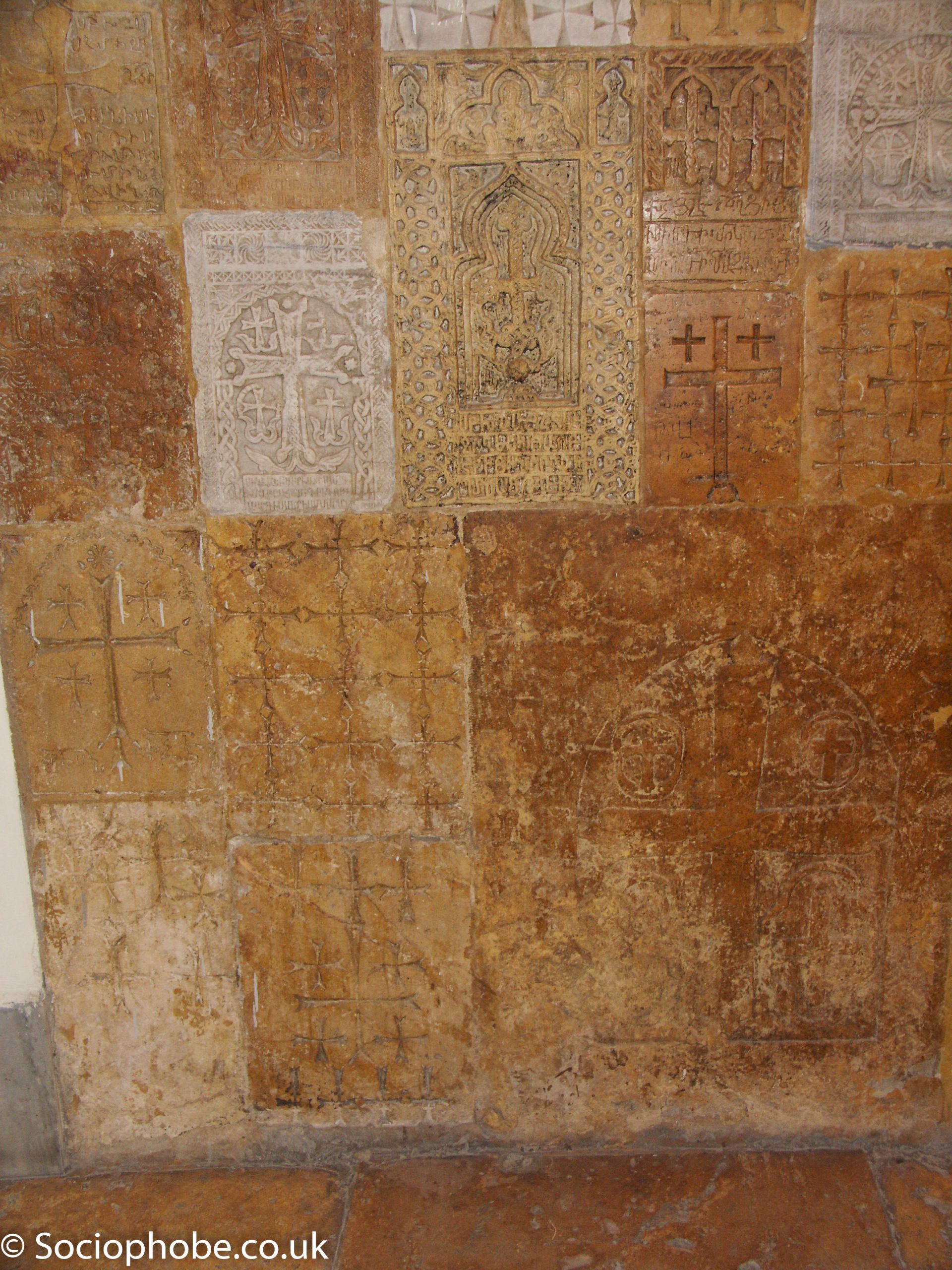
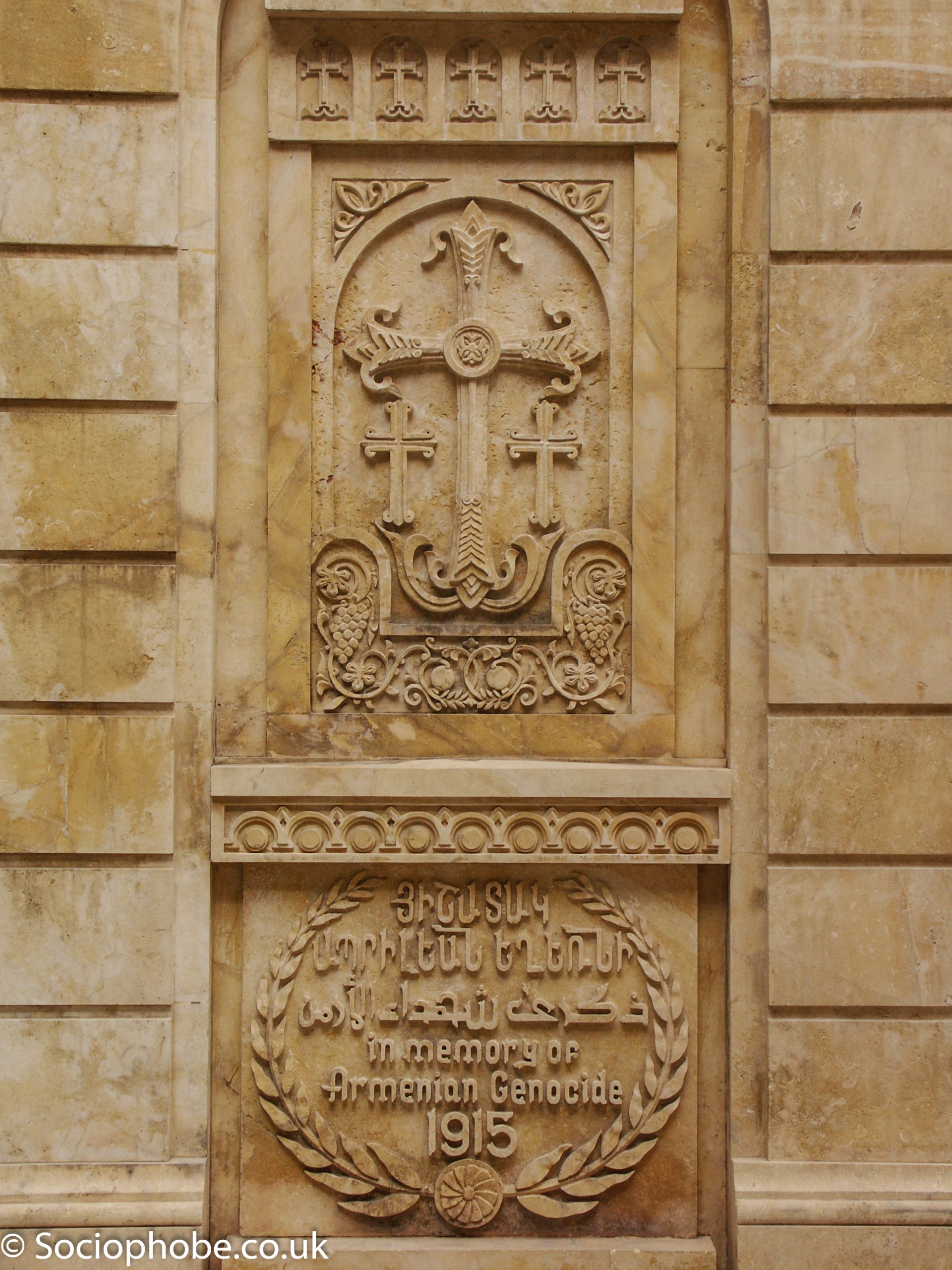
There is a large Armenian community in Aleppo after the genocide in Turkey a hundred years ago and we visited one of their churches. It had a very evocative wall painting of death, hell and torment! The priest sang us some Orthodox hymns which was pleasant to hear. After lunch in a lovely merchants house that had been converted to a hotel we drove into the hills to visit the monastery of St Simeon.
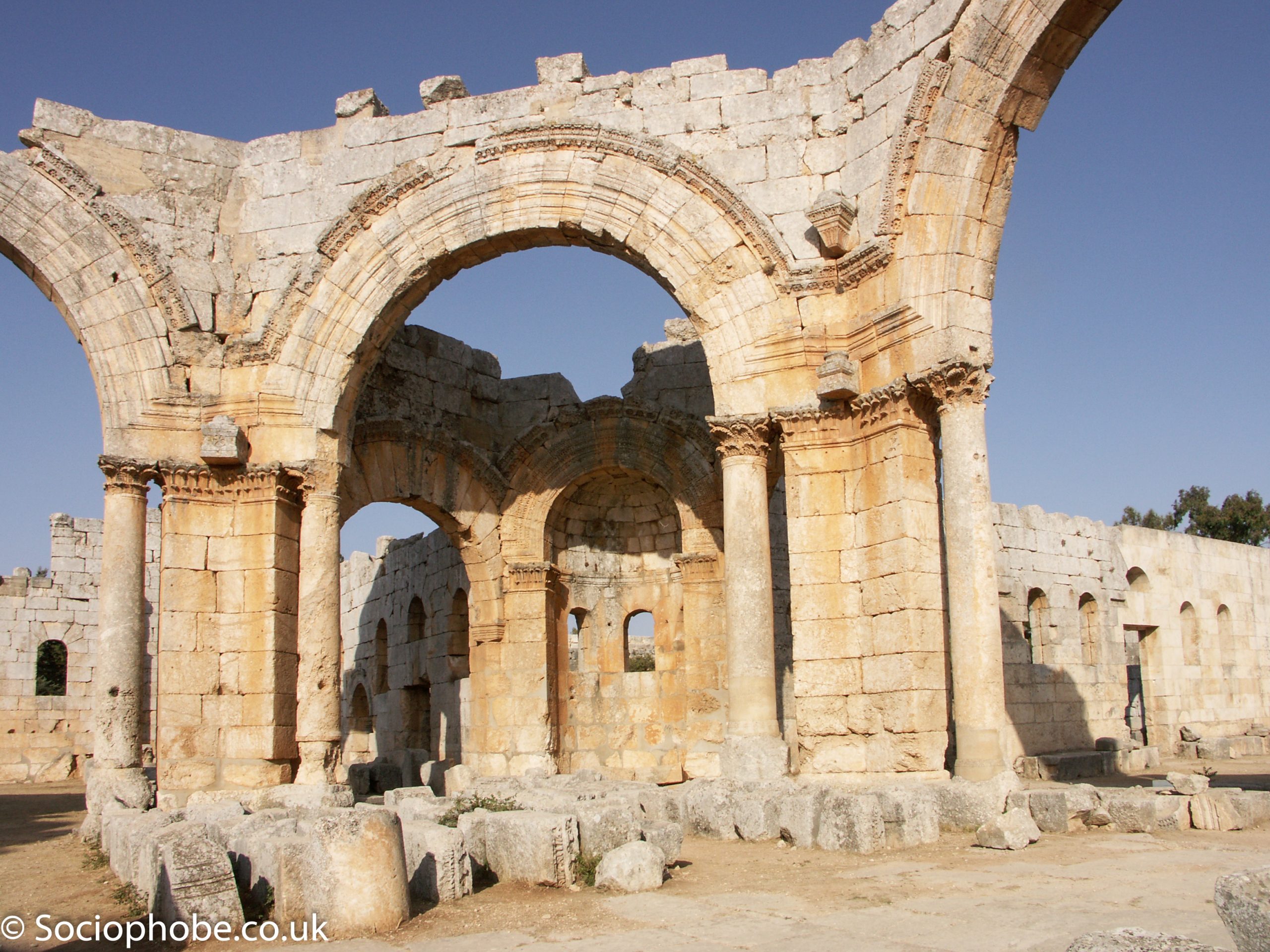
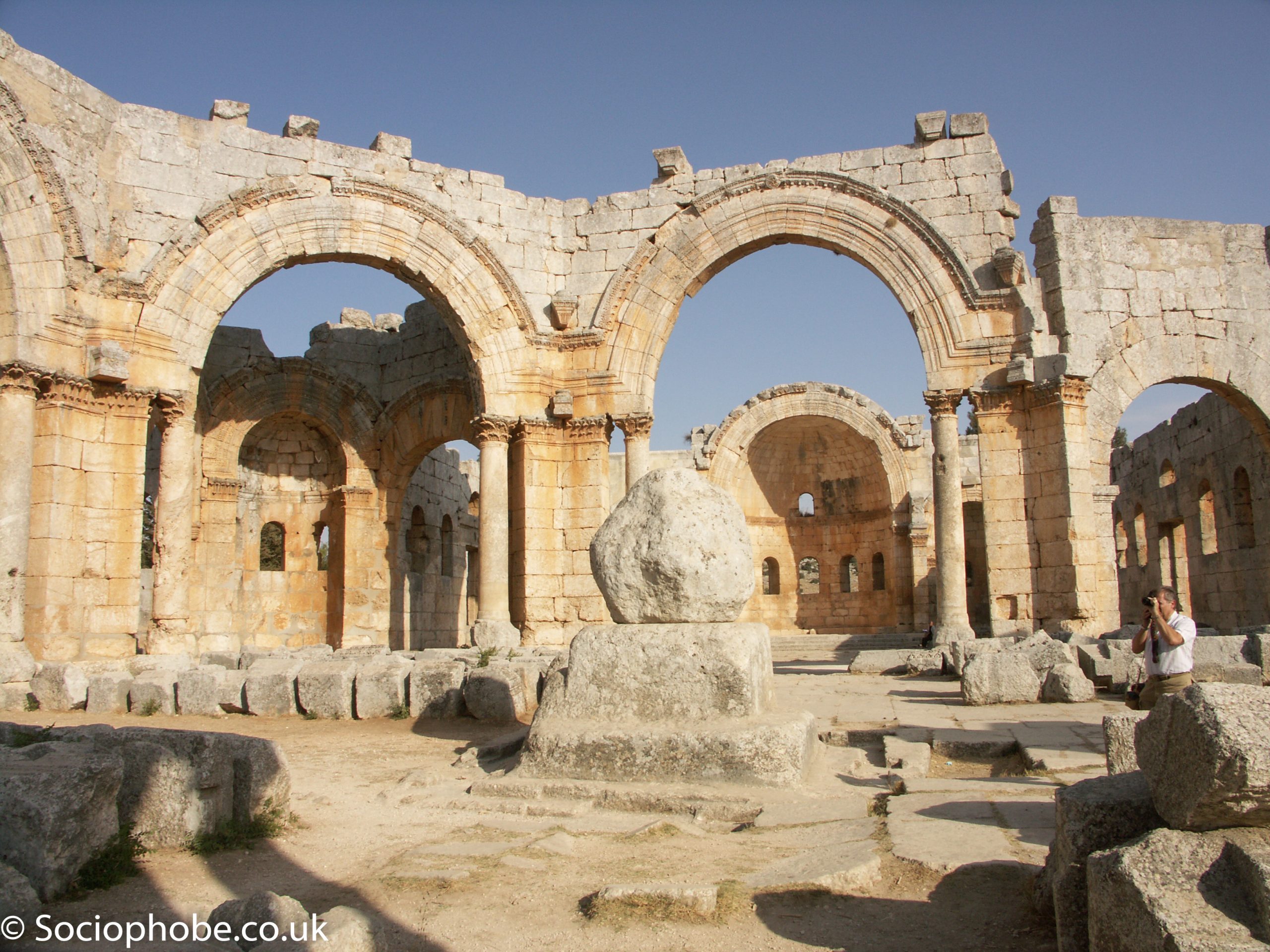
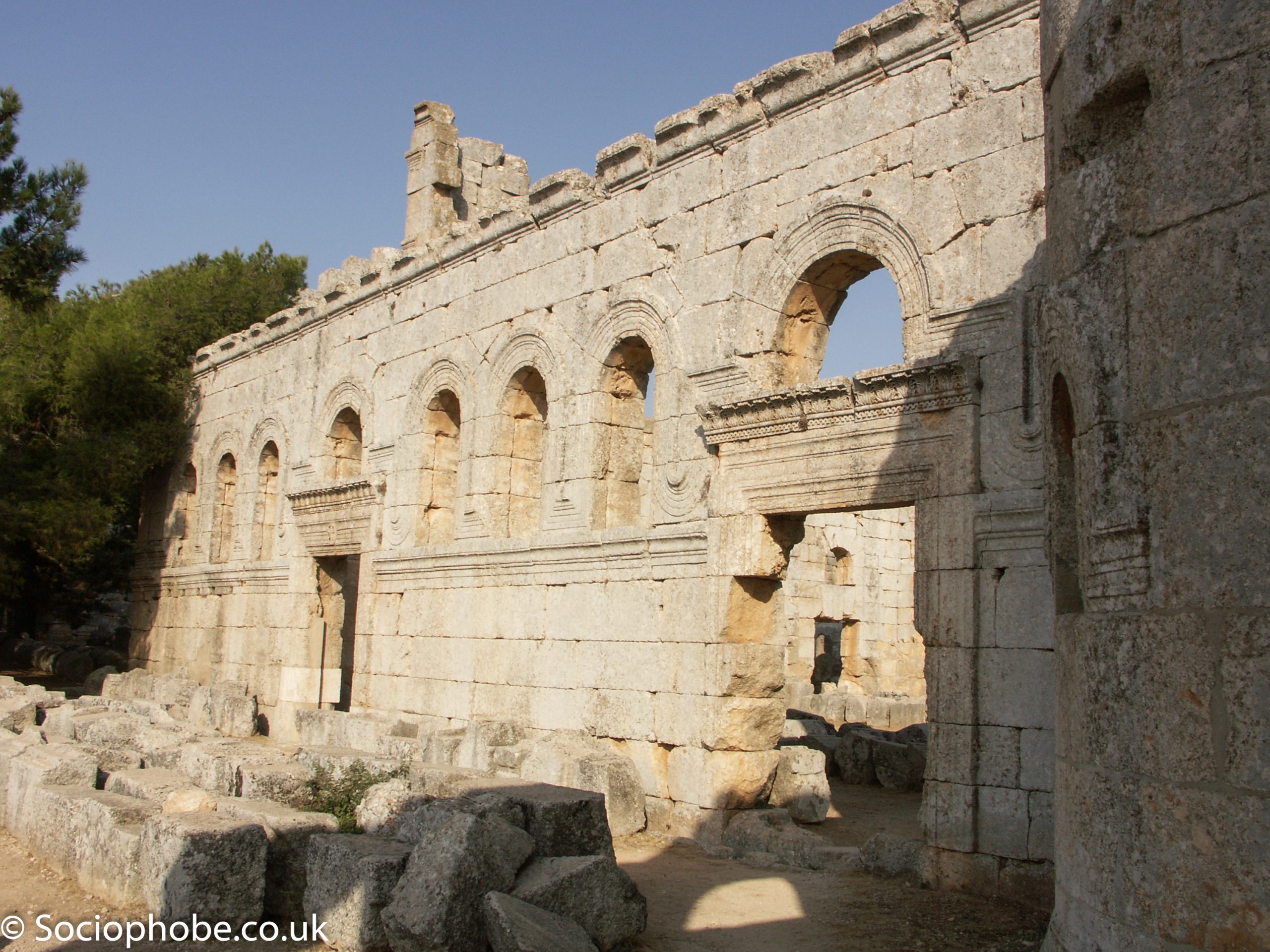
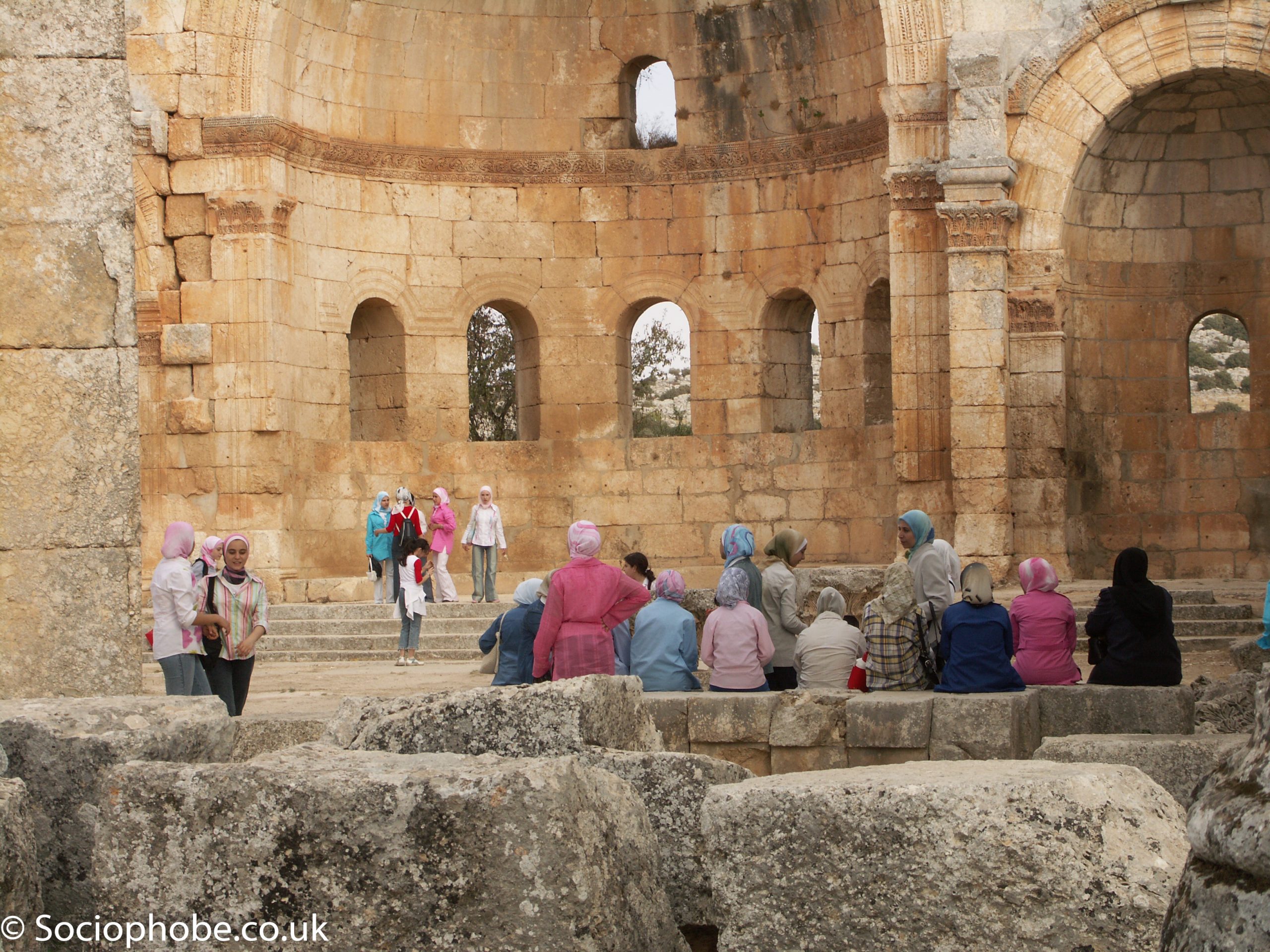
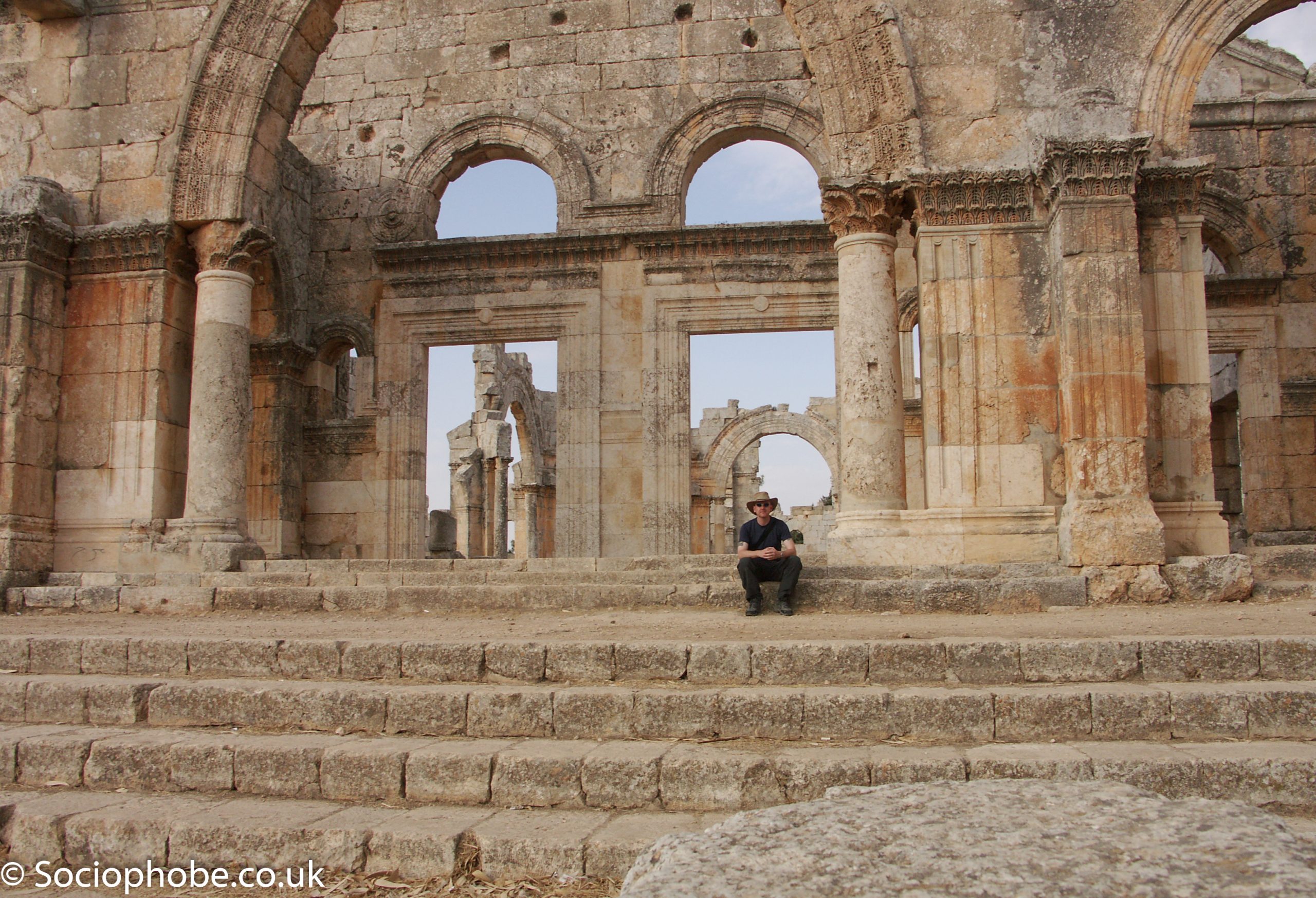
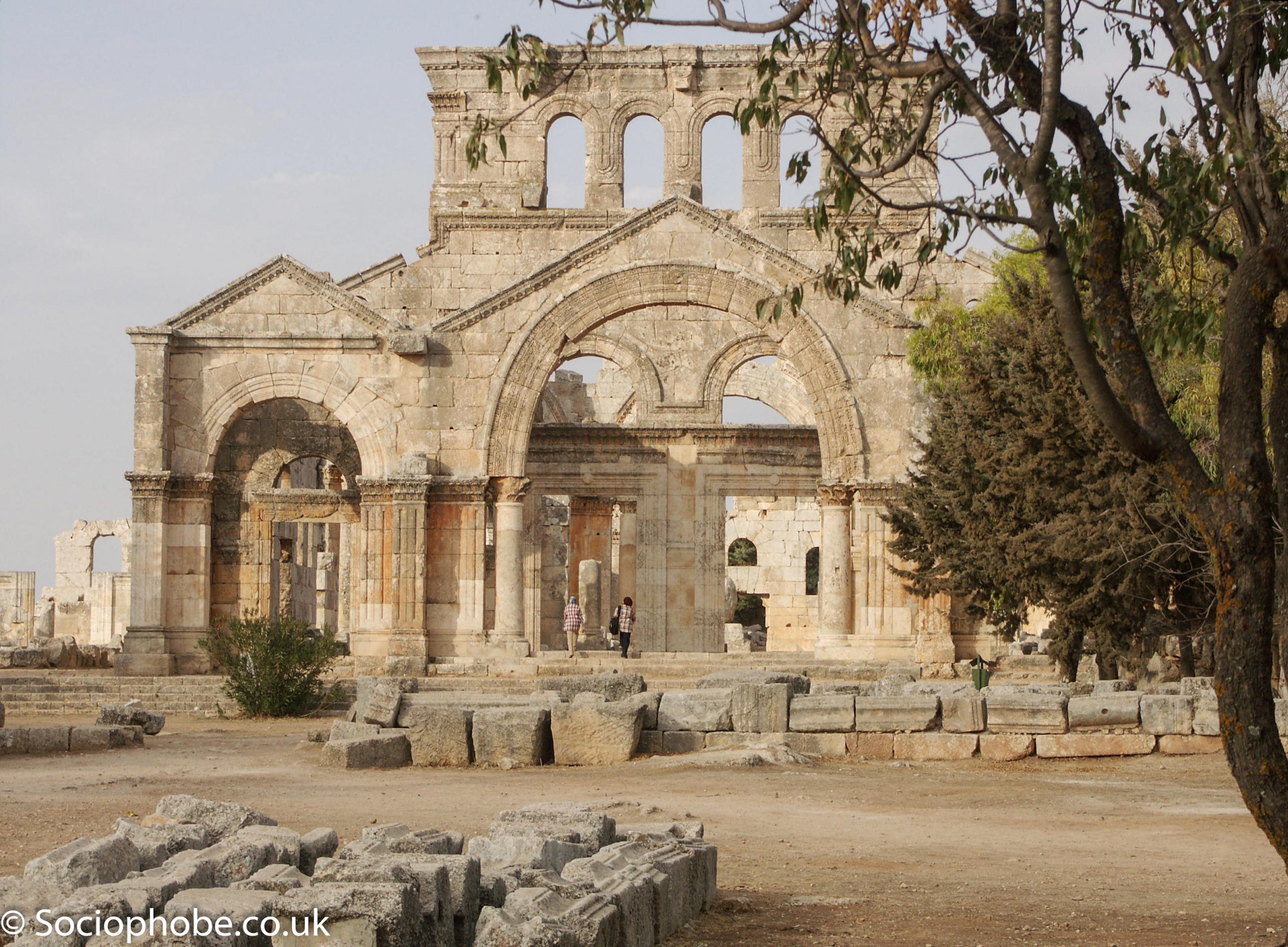
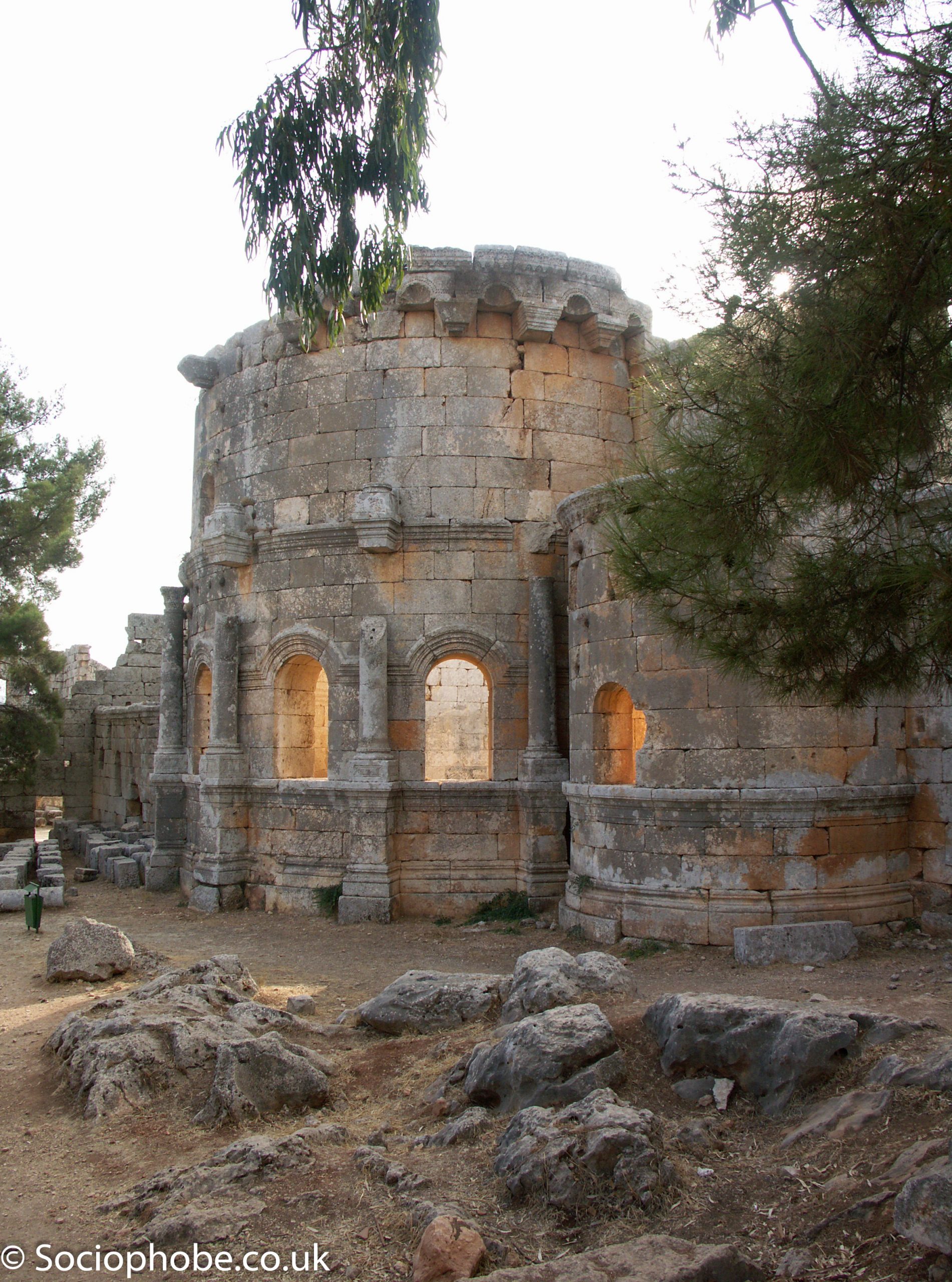
Syria: Aleppo St Simeon’s Monastery
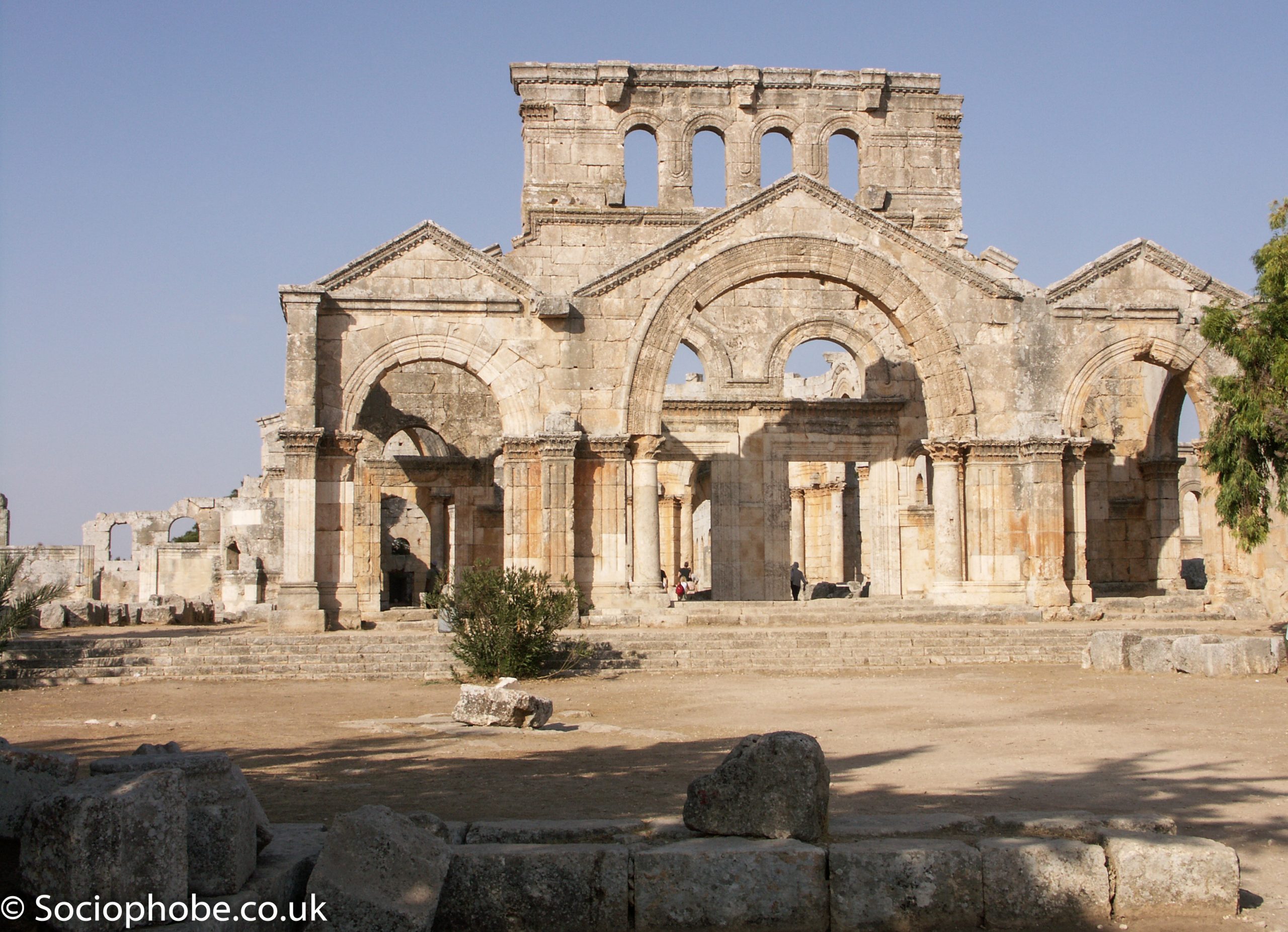
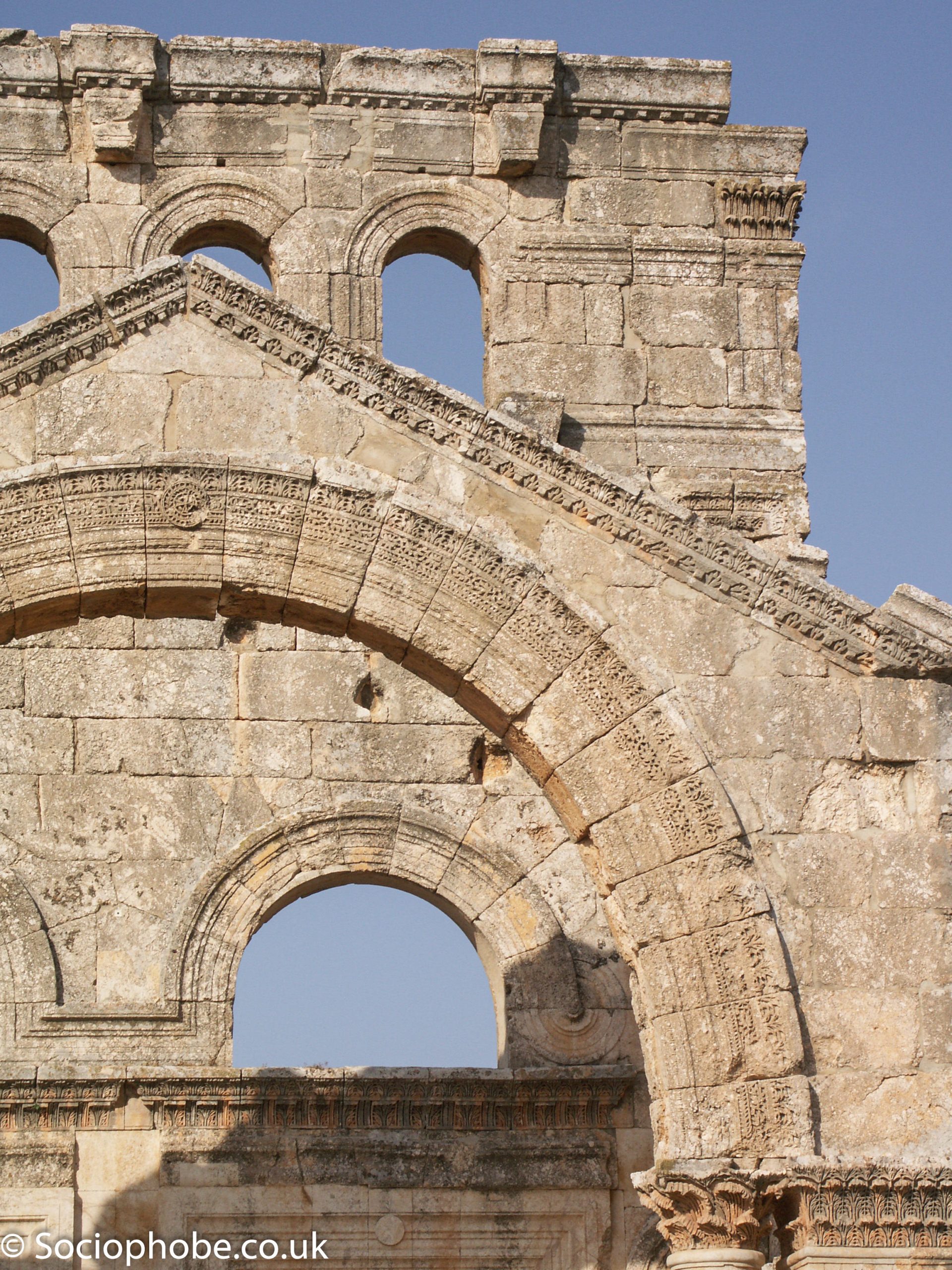
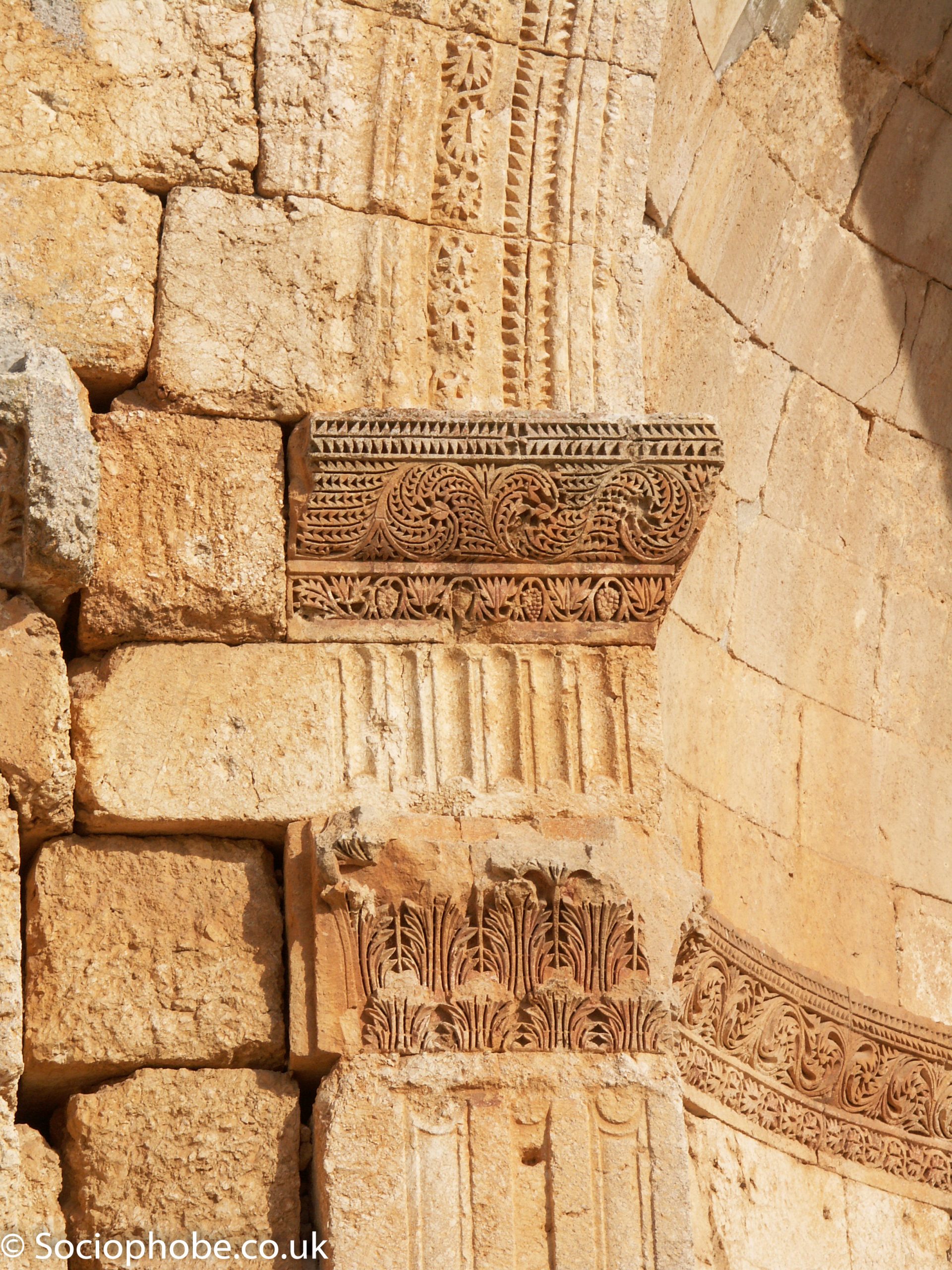
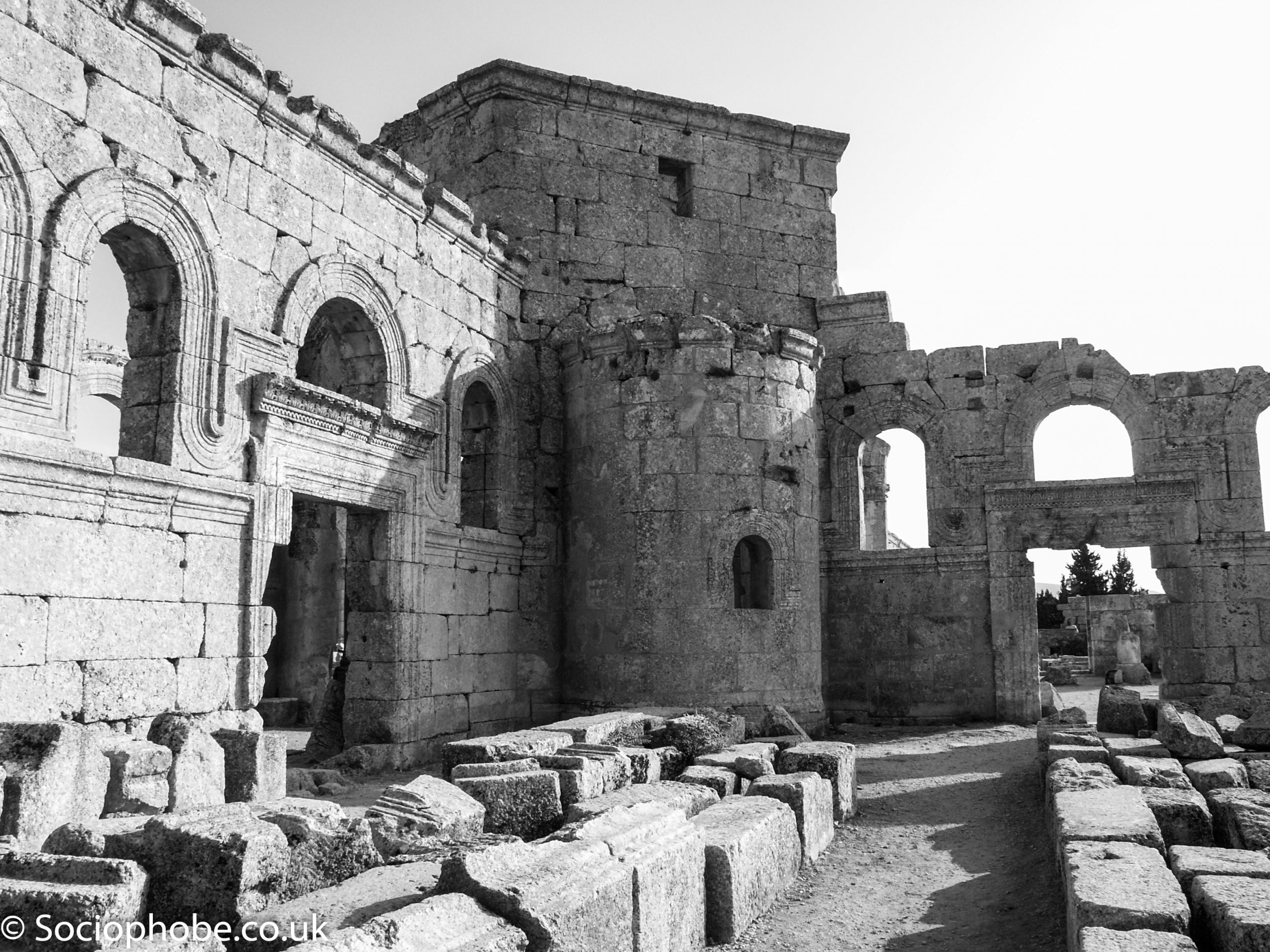
The streets were festooned with posters of Assad. St Simeon was, in modern parlance, a nutter. He spent a year in a hole wearing a spiked girdle but then decided that was for softies so spent the next 37 years chained to the top of a 40ft column. For some reason people thought he was divinely inspired (kinda sums up 6th century religion!) and flocked to visit him and hear his ‘wisdom’!
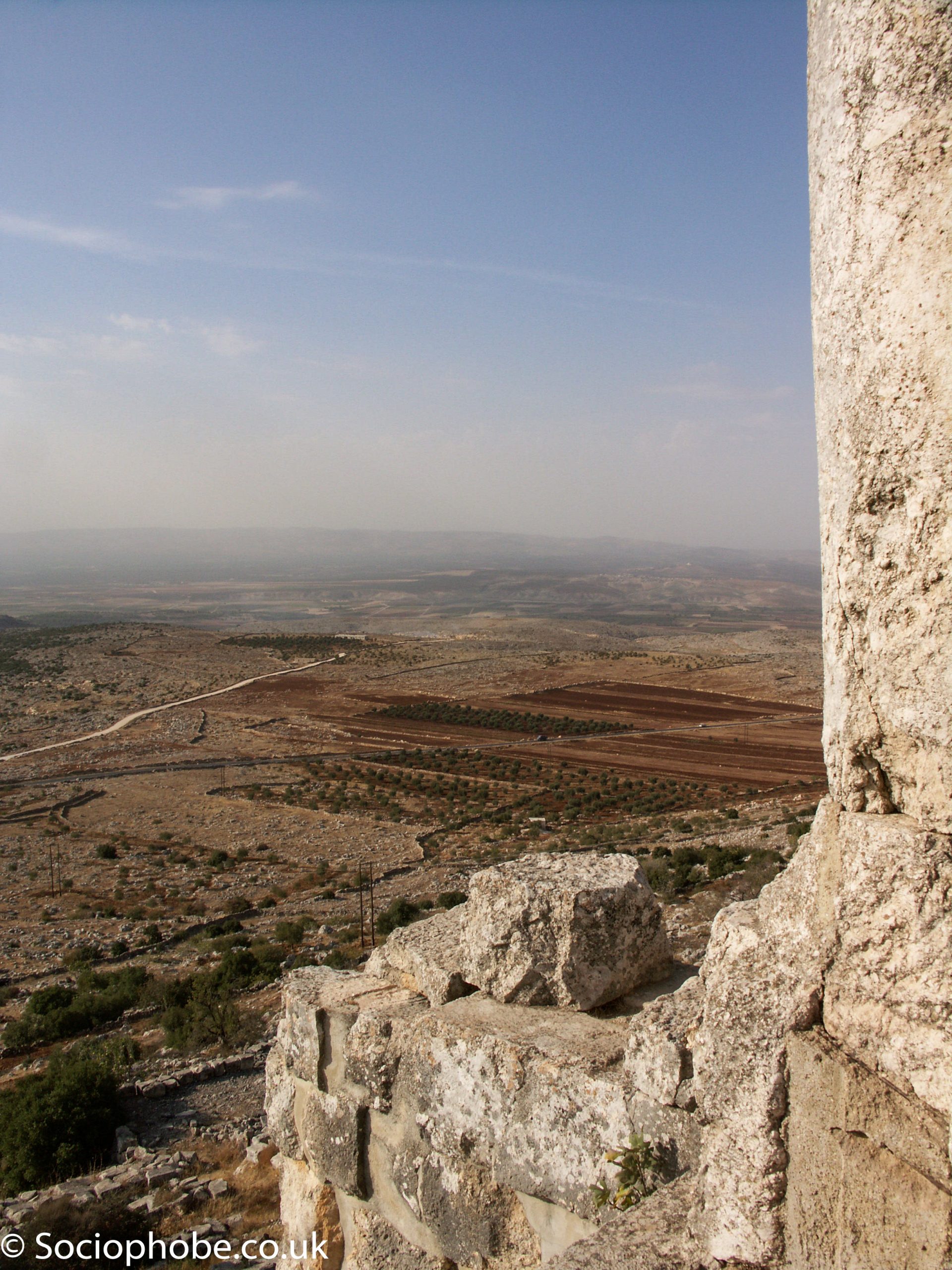
We drove past several of the Dead Cities, Byzantine towns that were abandoned after the seventh century Muslim invasion. Some of them were remarkably complete. The monastery is on a hilltop overlooking rocky plains with an excellent view to the Turkish border.
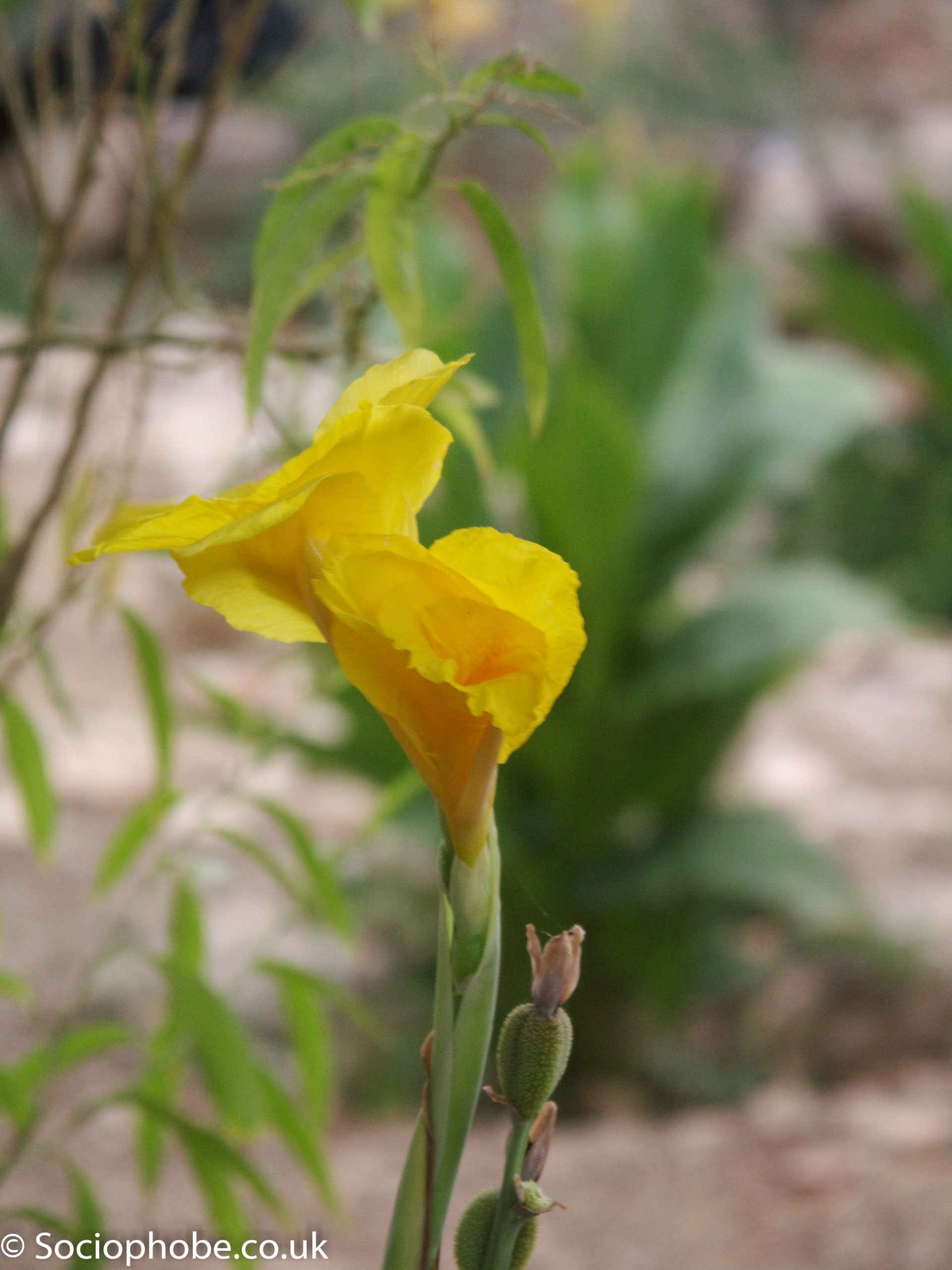
It is an amazing building with a huge basilica and very ornate stonework. It has been partially restored but is still very much a ruin although the column is pretty much eroded to nothing from pilgrims taking fragments home. The site was carpeted with yellow iris flowers so it looked very pretty in the setting sun.
Syria: Aleppo Citadel
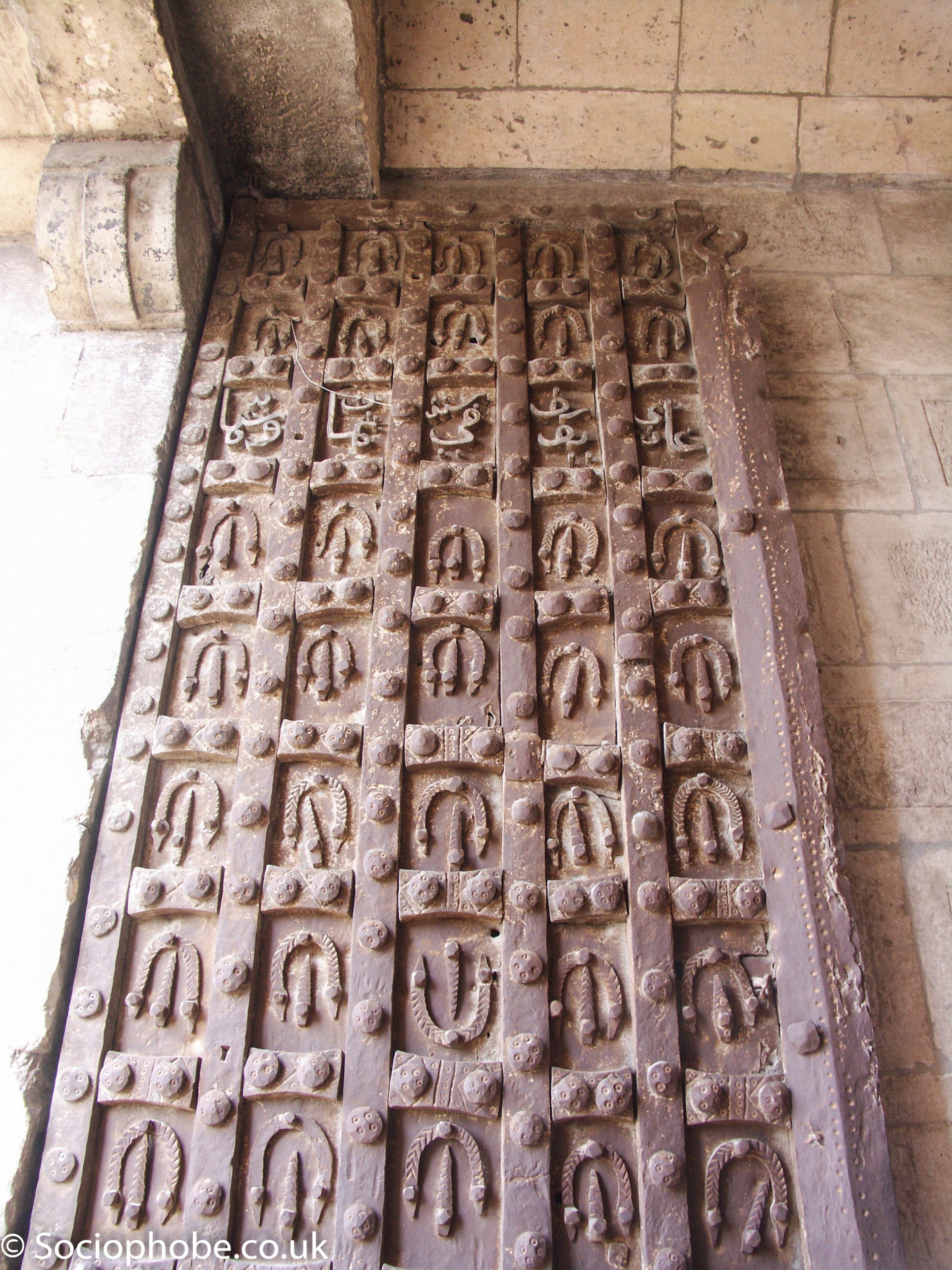
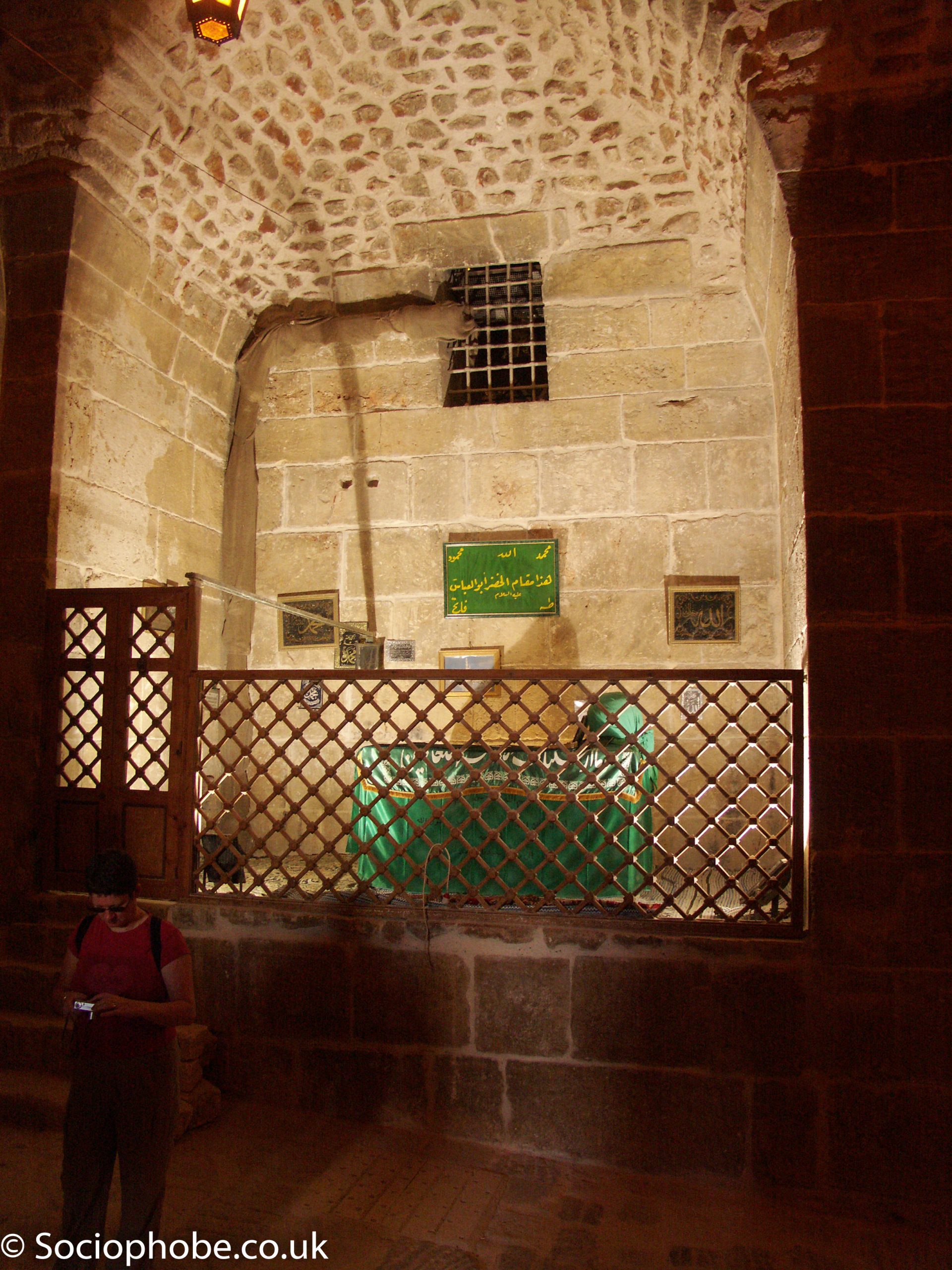
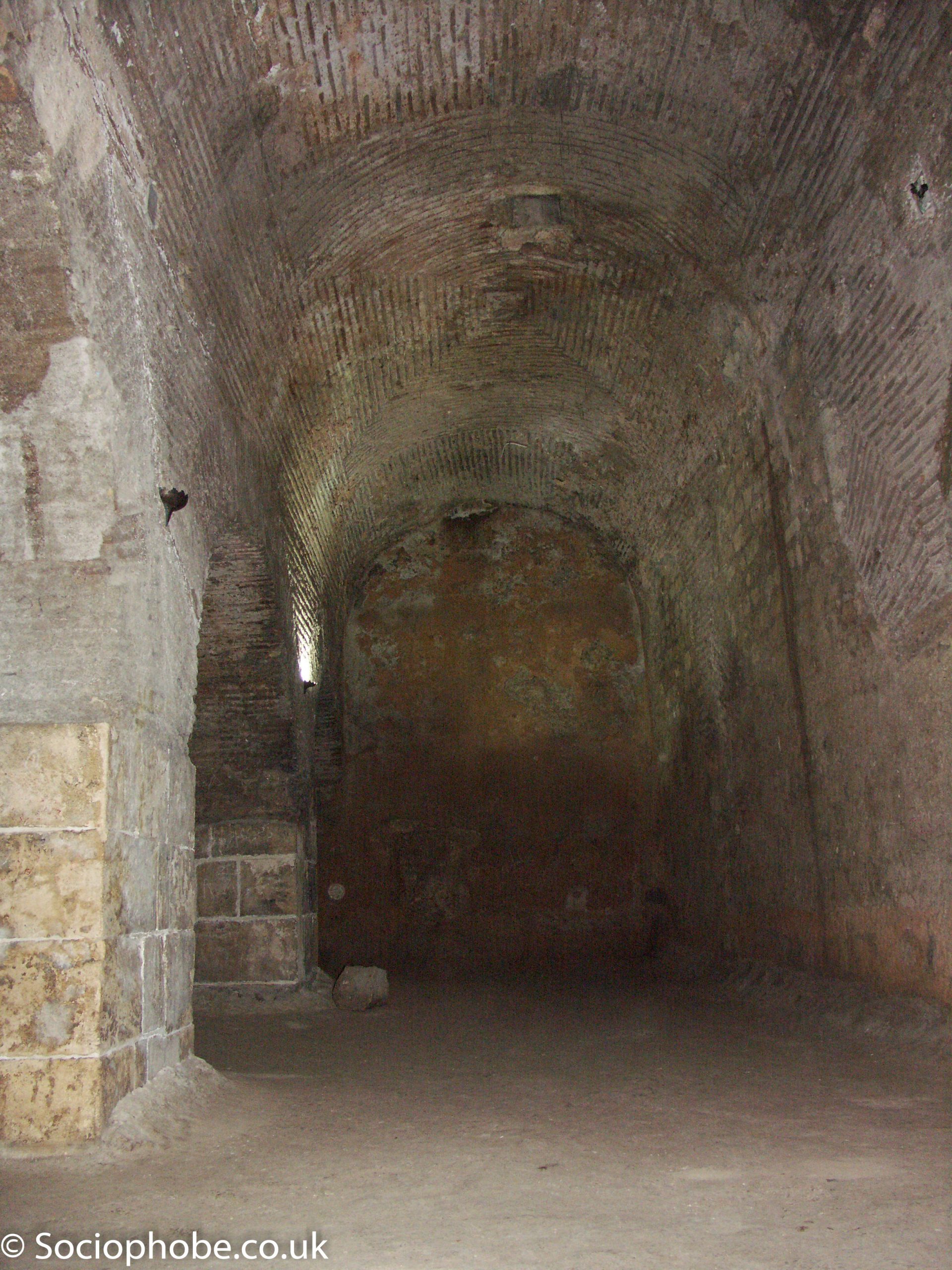
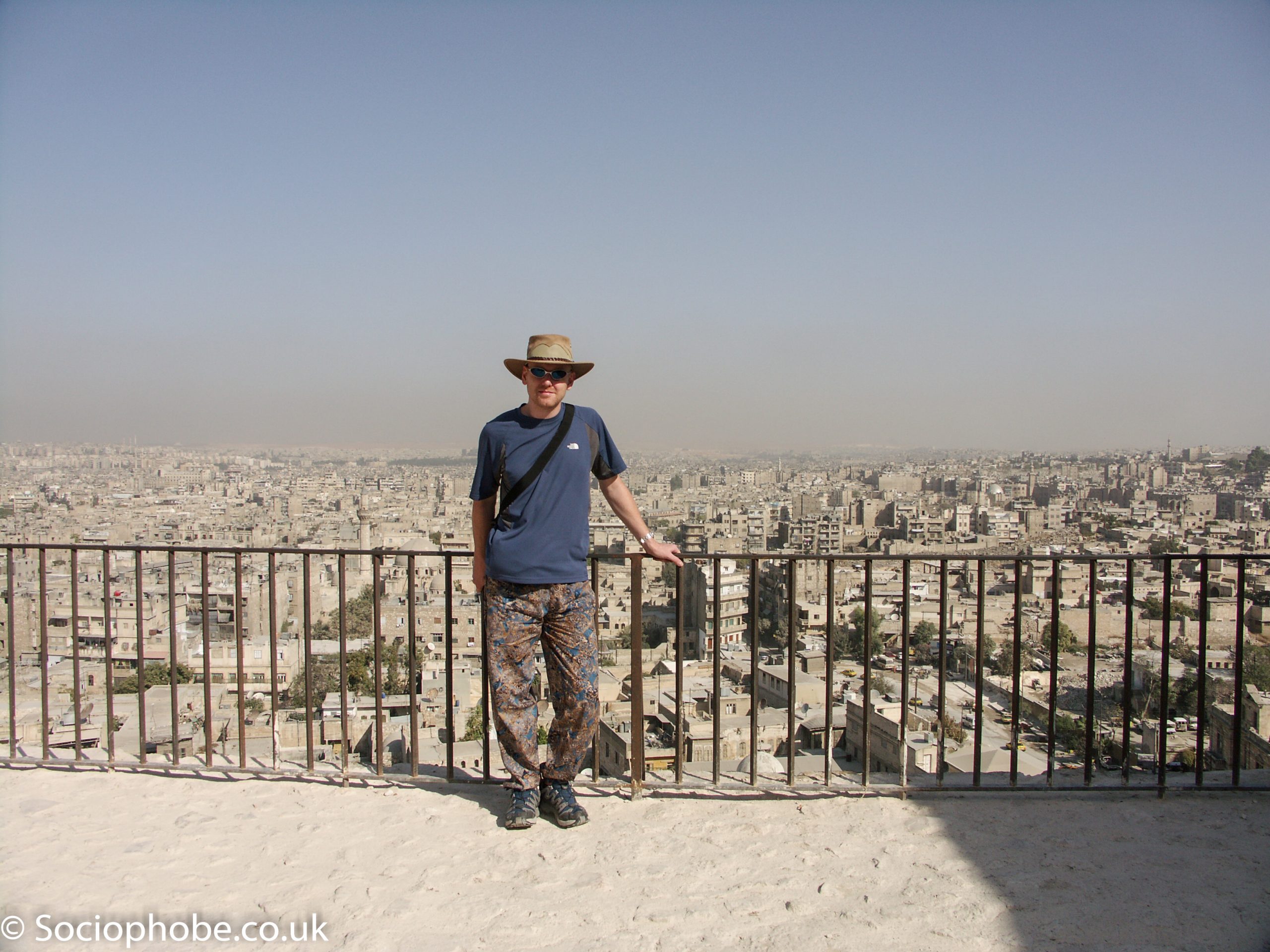
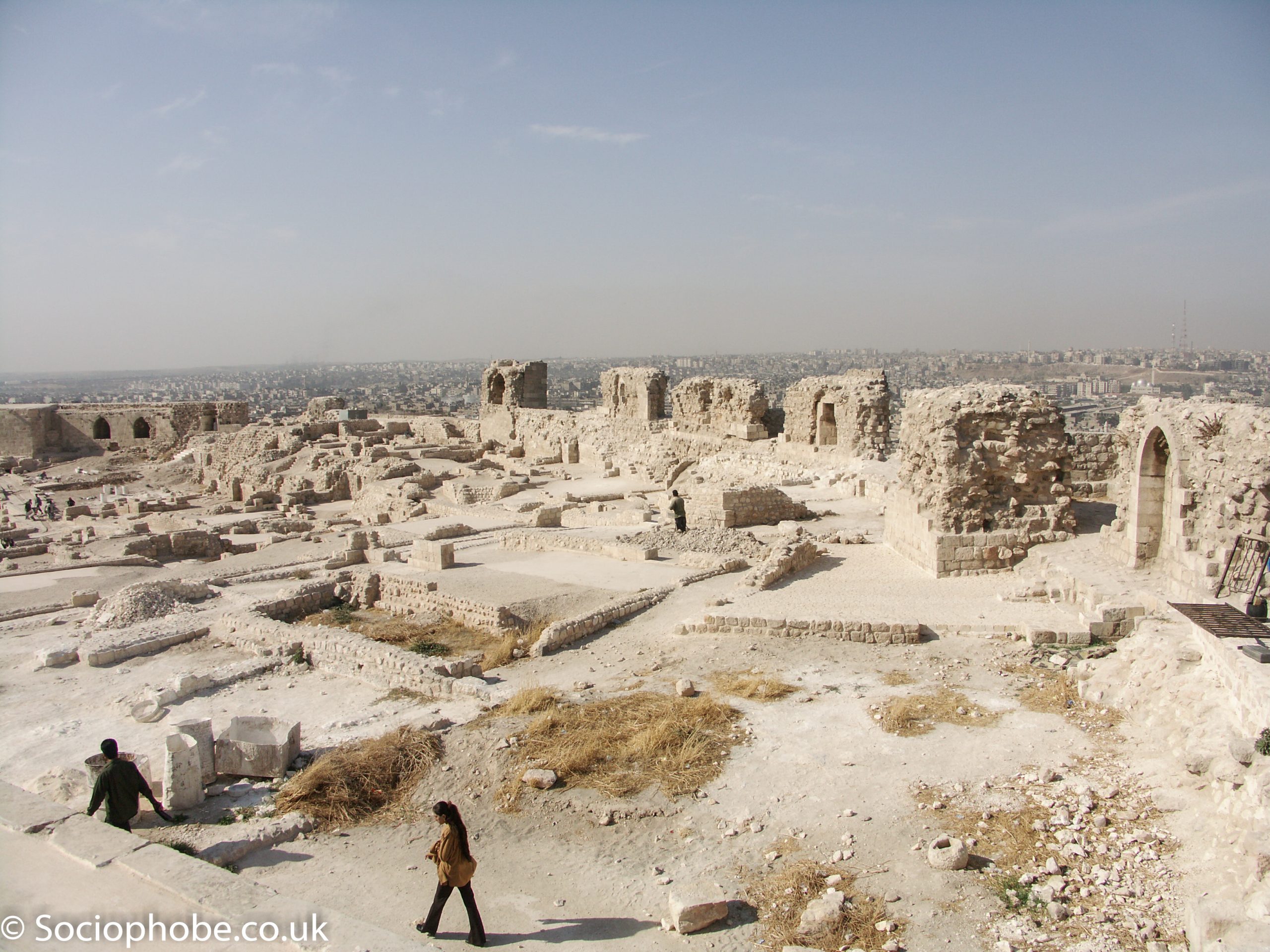
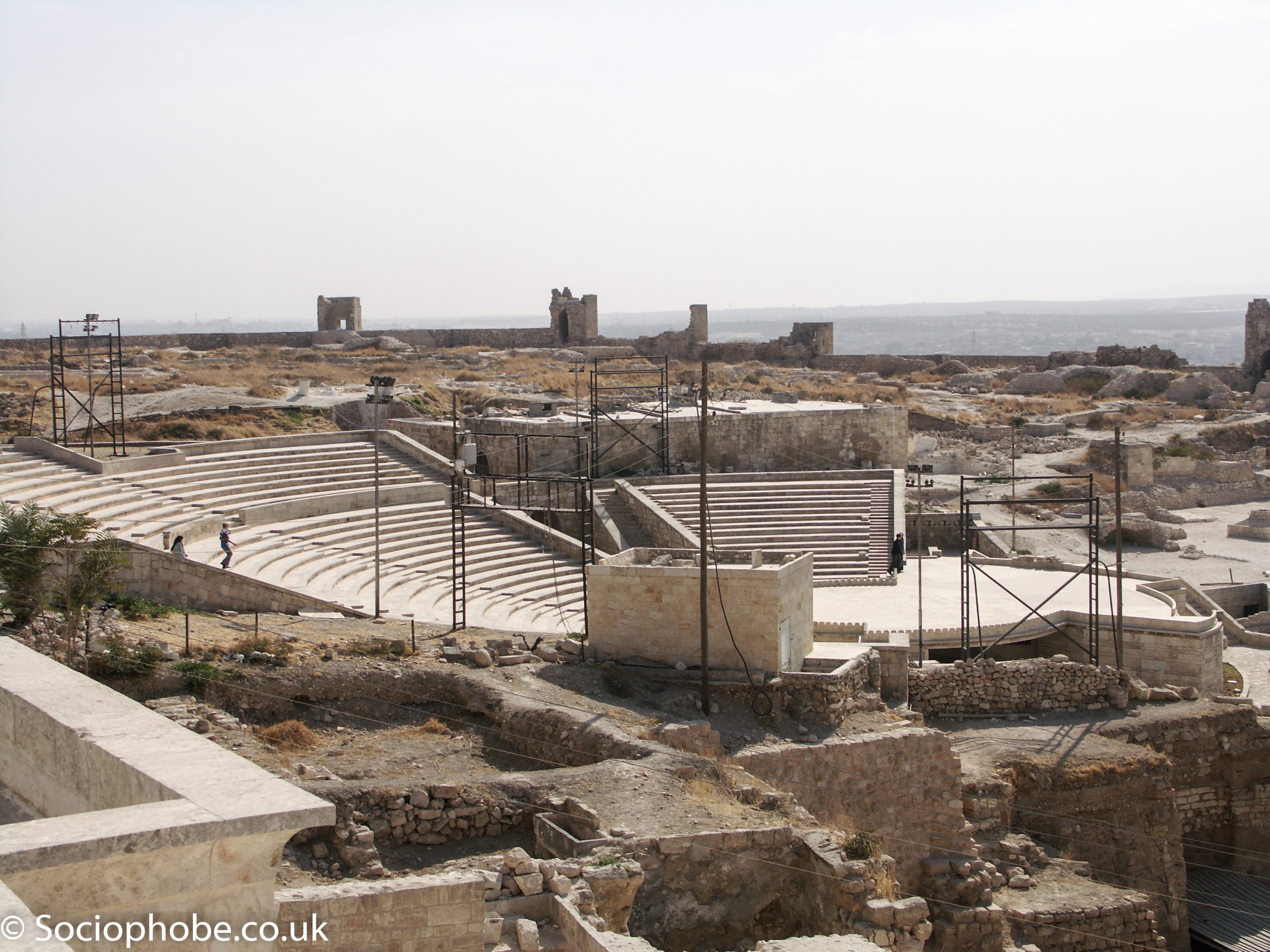
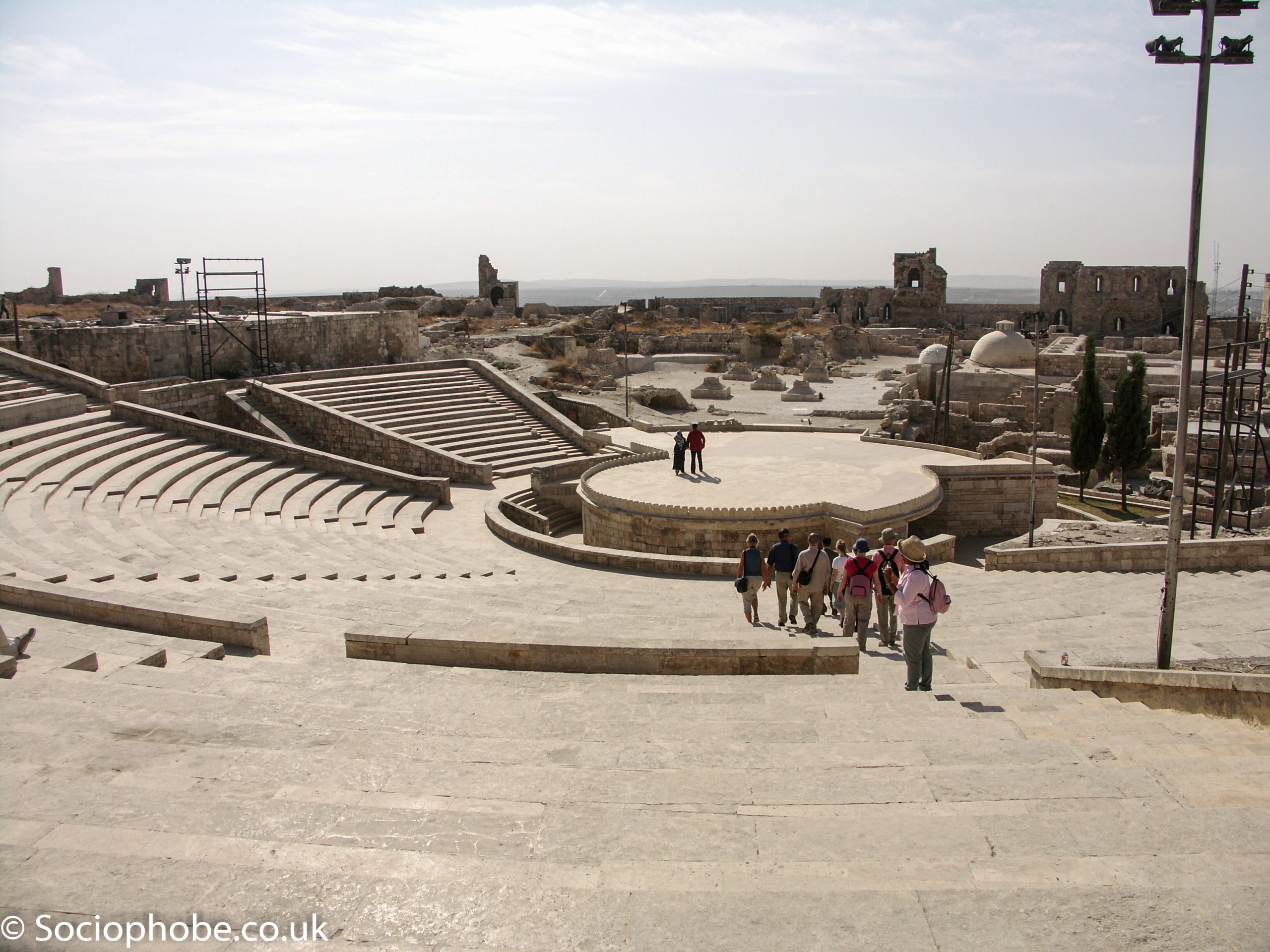
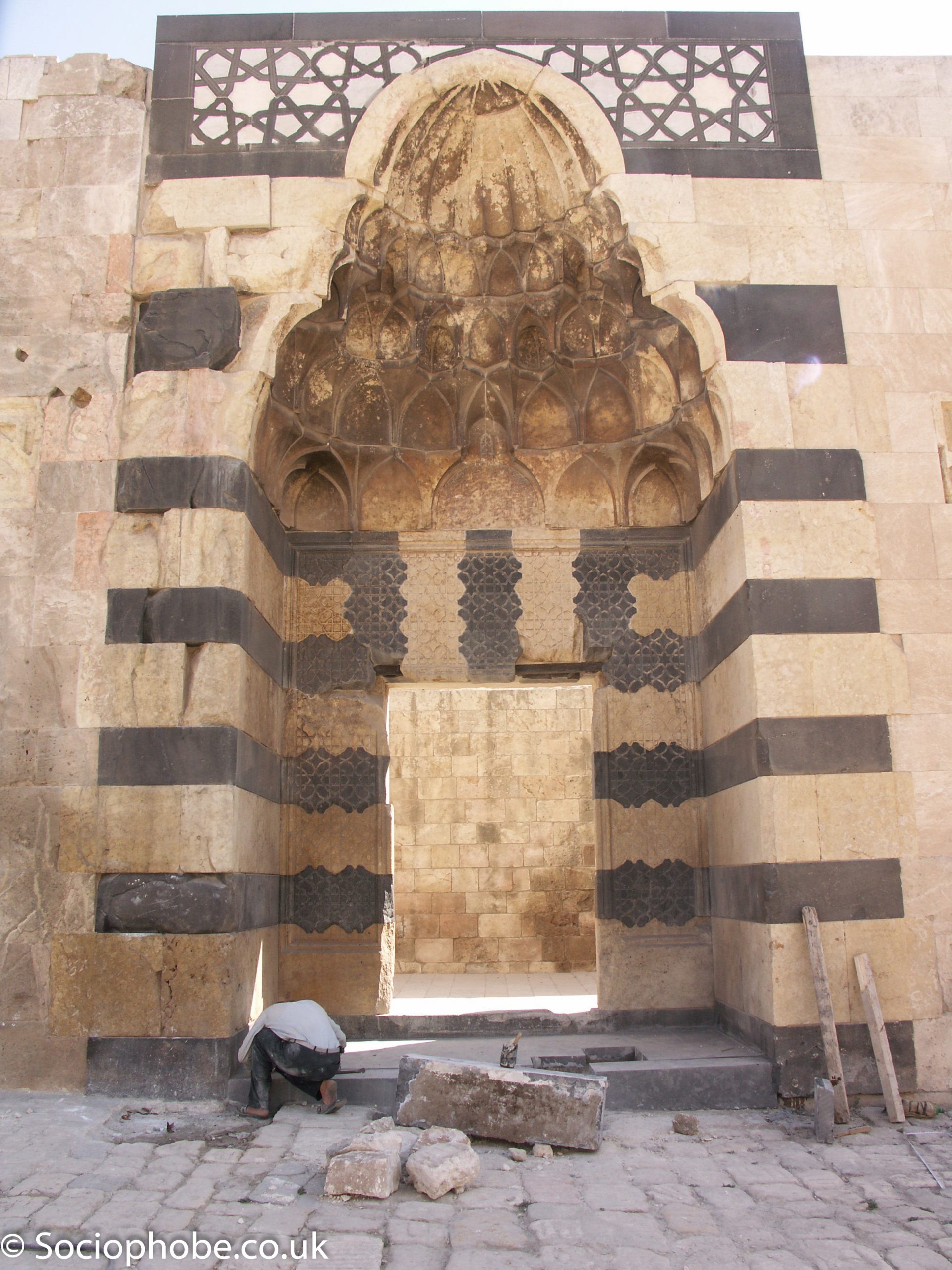
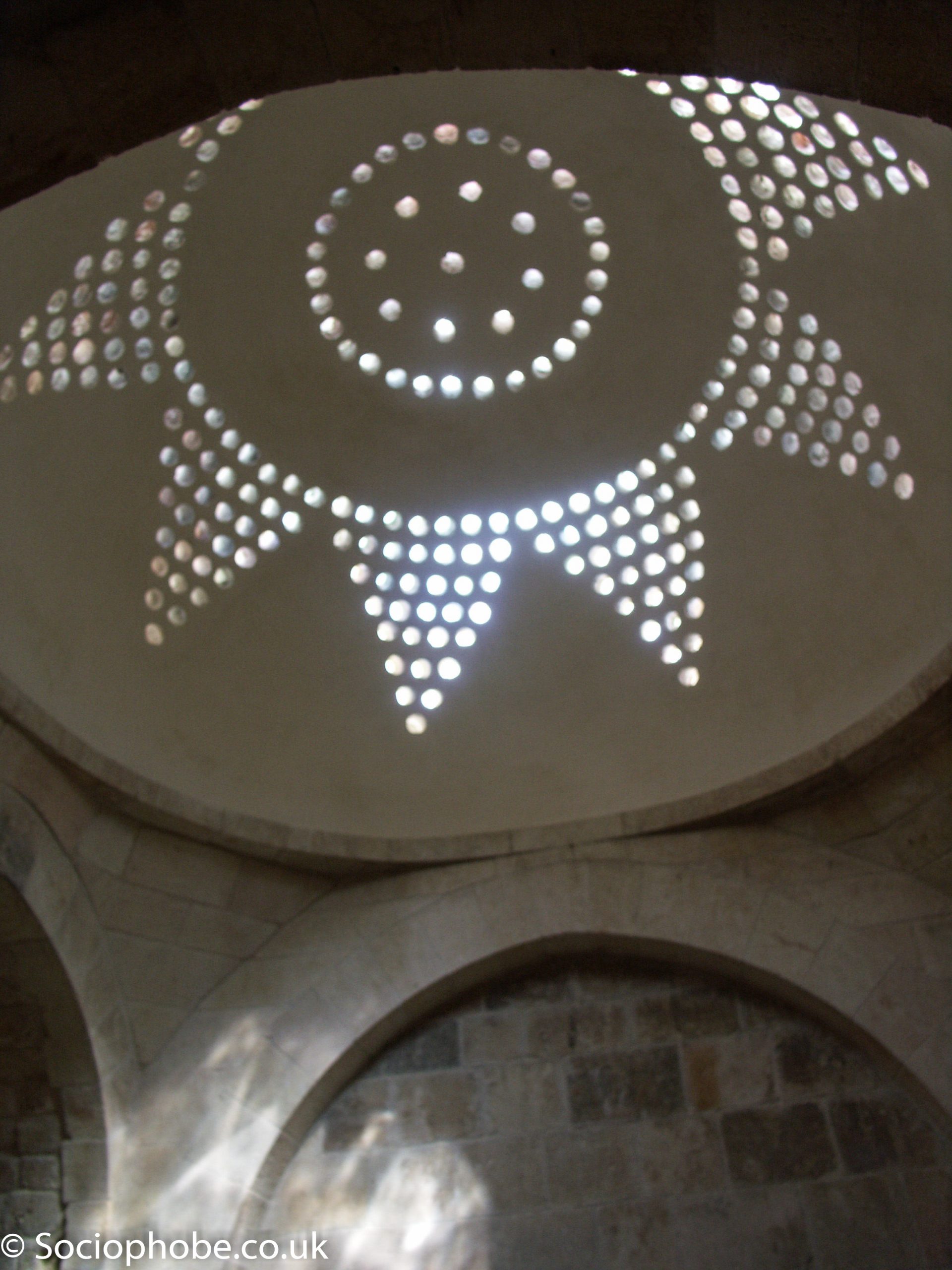
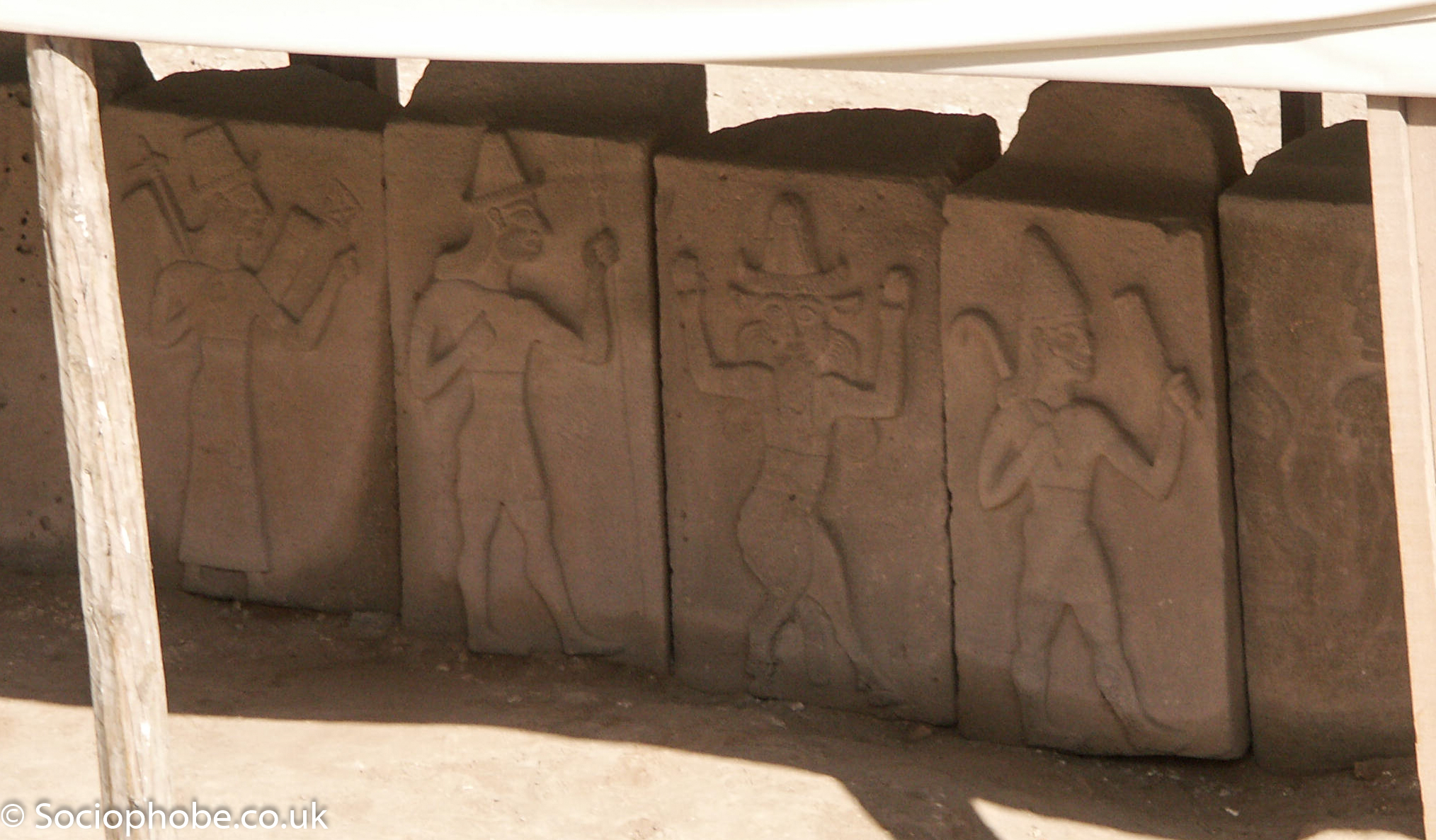
The next morning we returned to the citadel for an interior visit. Lots of areas are being restored, funded by the Aga Khan. We saw the prison where crusader captives were held and St Georges tomb. One of 37 tombs claiming to have his body. The mosque and theatre had also been restored and the shade from the pine trees in this area was very pleasant. Looking from the battlements, Aleppo was a jumble of low rise grubby buildings, all with satellite dishes and aerials, interspersed with the odd high rise hotel or minaret.
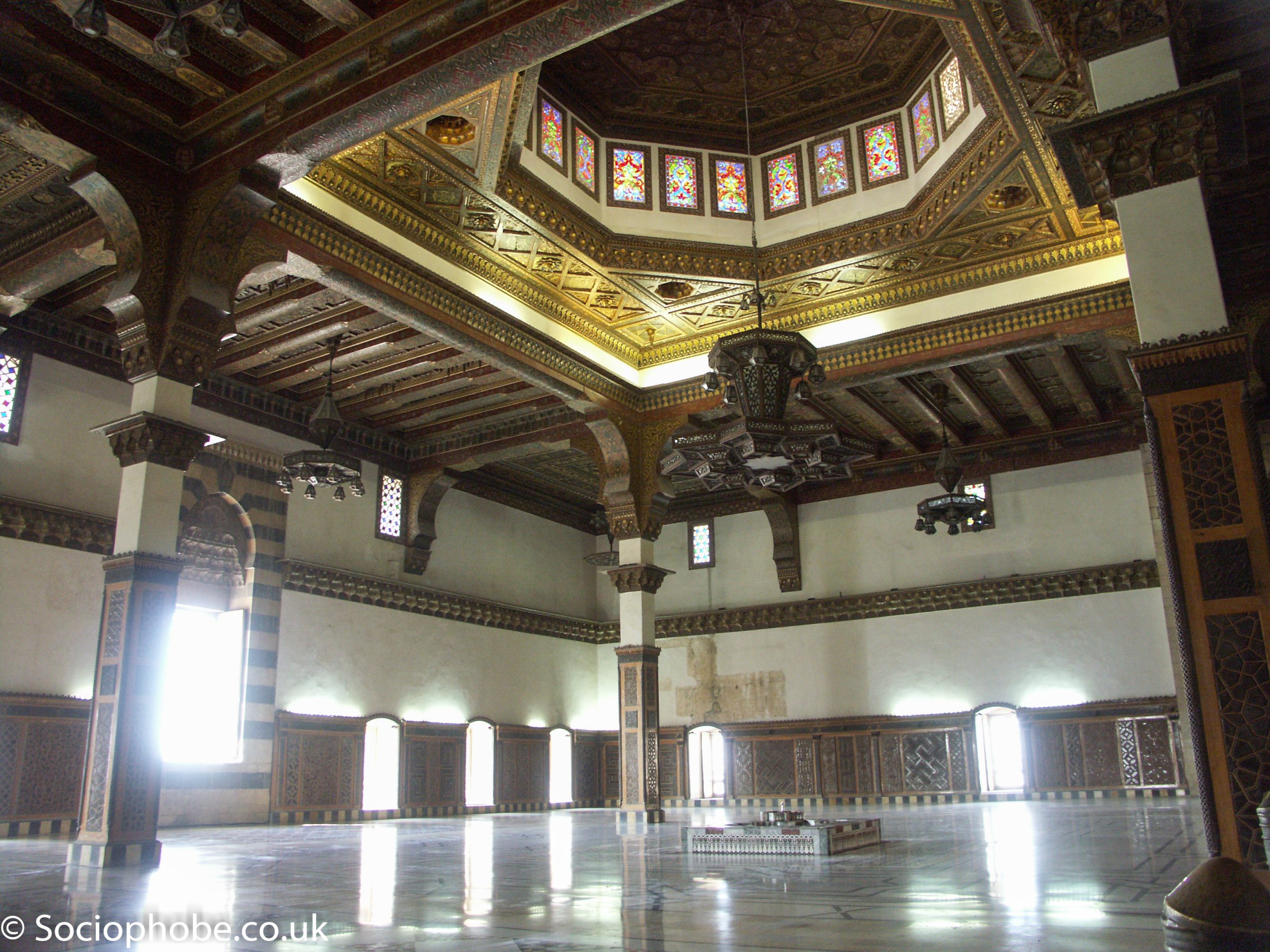
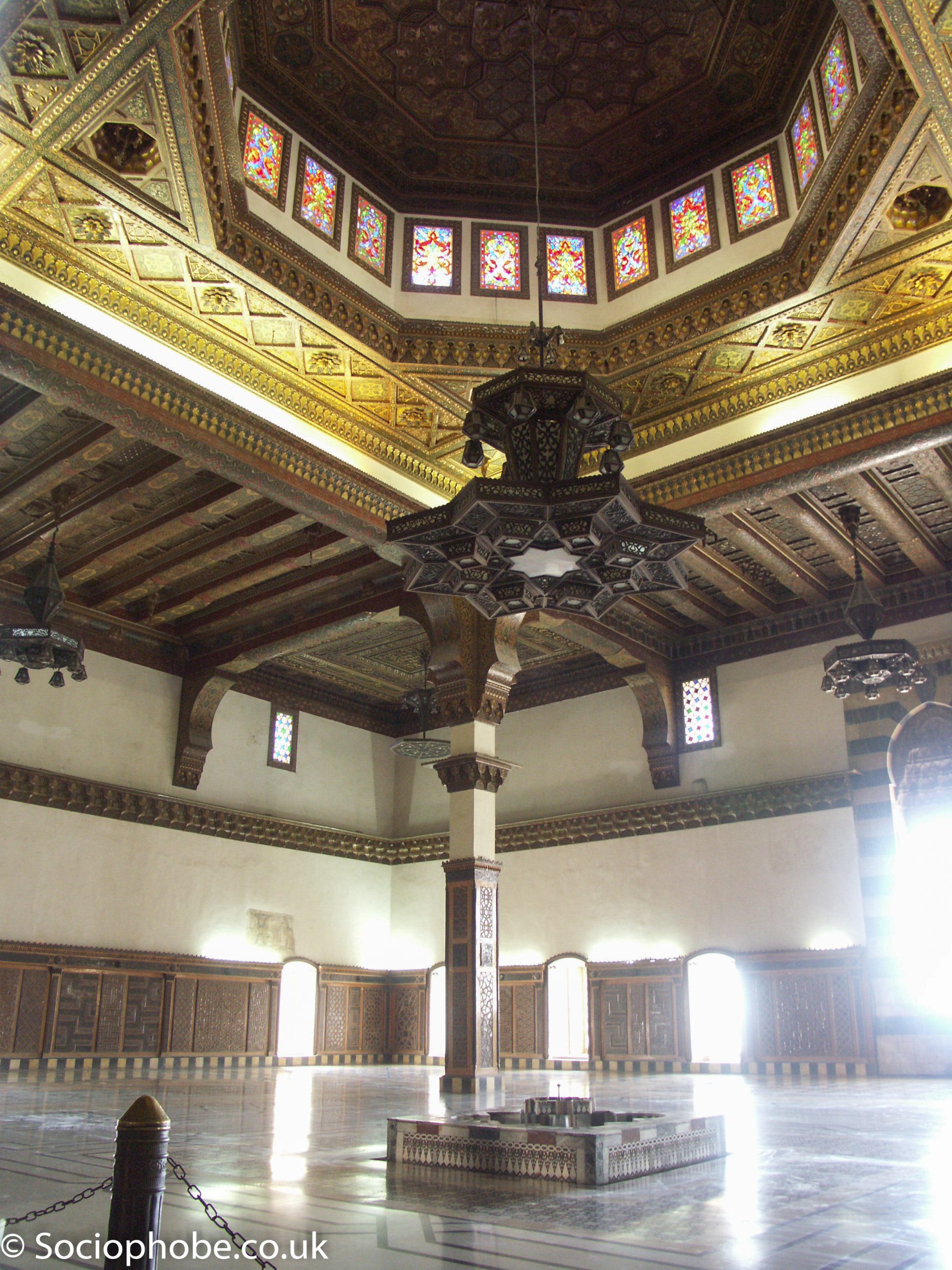
The tour continued on until we eventually reached the throne room. This was via a very winding and circuitous route through dark and austere corridors and then as soon as you opened the throne room door you are confronted by windows so the light disorientates you and the throne is below the window level, so effectively invisible. The throne room had been fully restored and was incredibly ornate with wood panelling, floor mosaics and various painted designs.
We left the citadel and walked through some of the 10km of covered souks. Each trade had a different area and the traders were not pushy but the main thing I kept getting offered was gay sex! I have no idea where they learned some of the English phrases but they were pretty graphic!
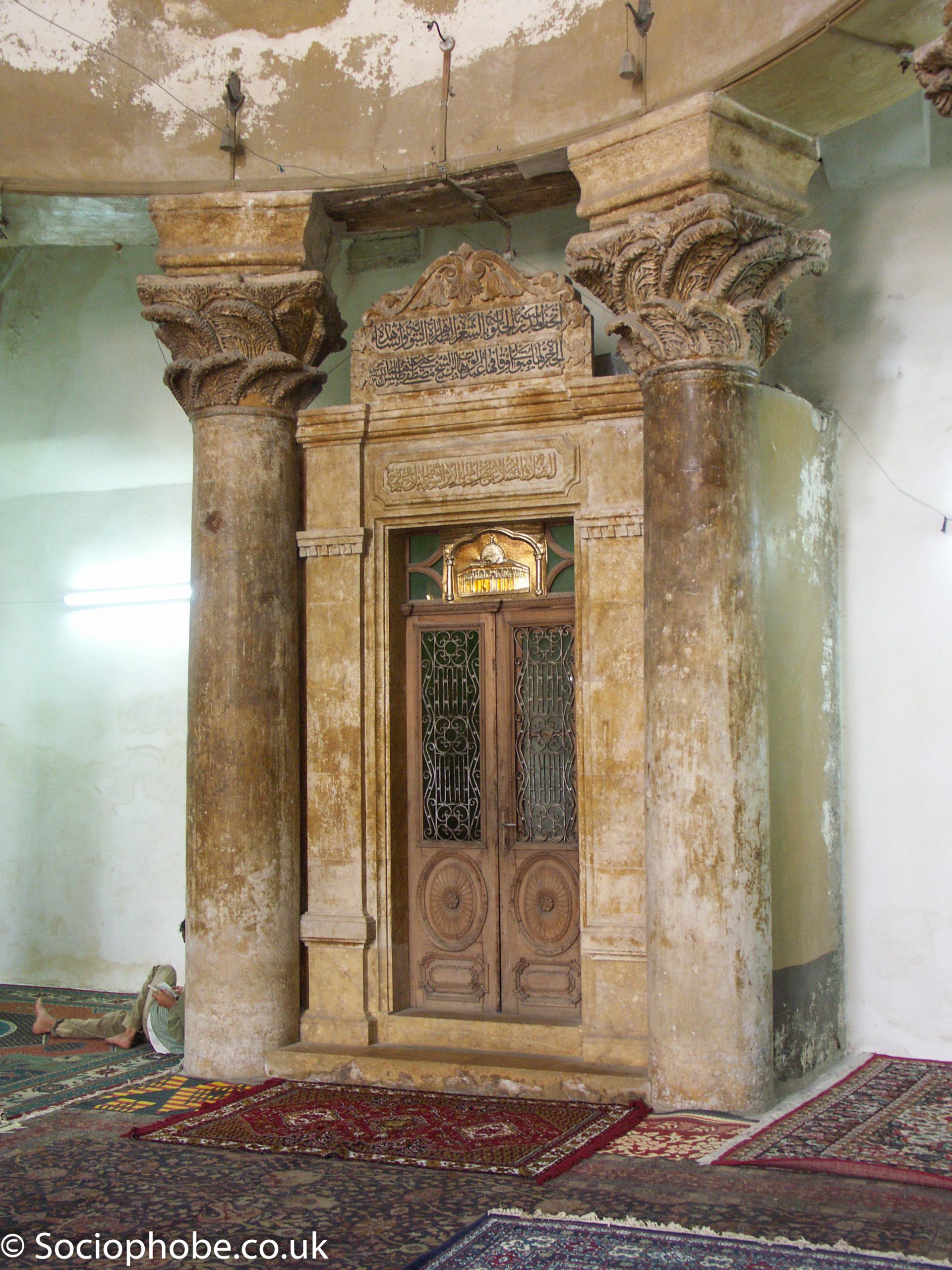
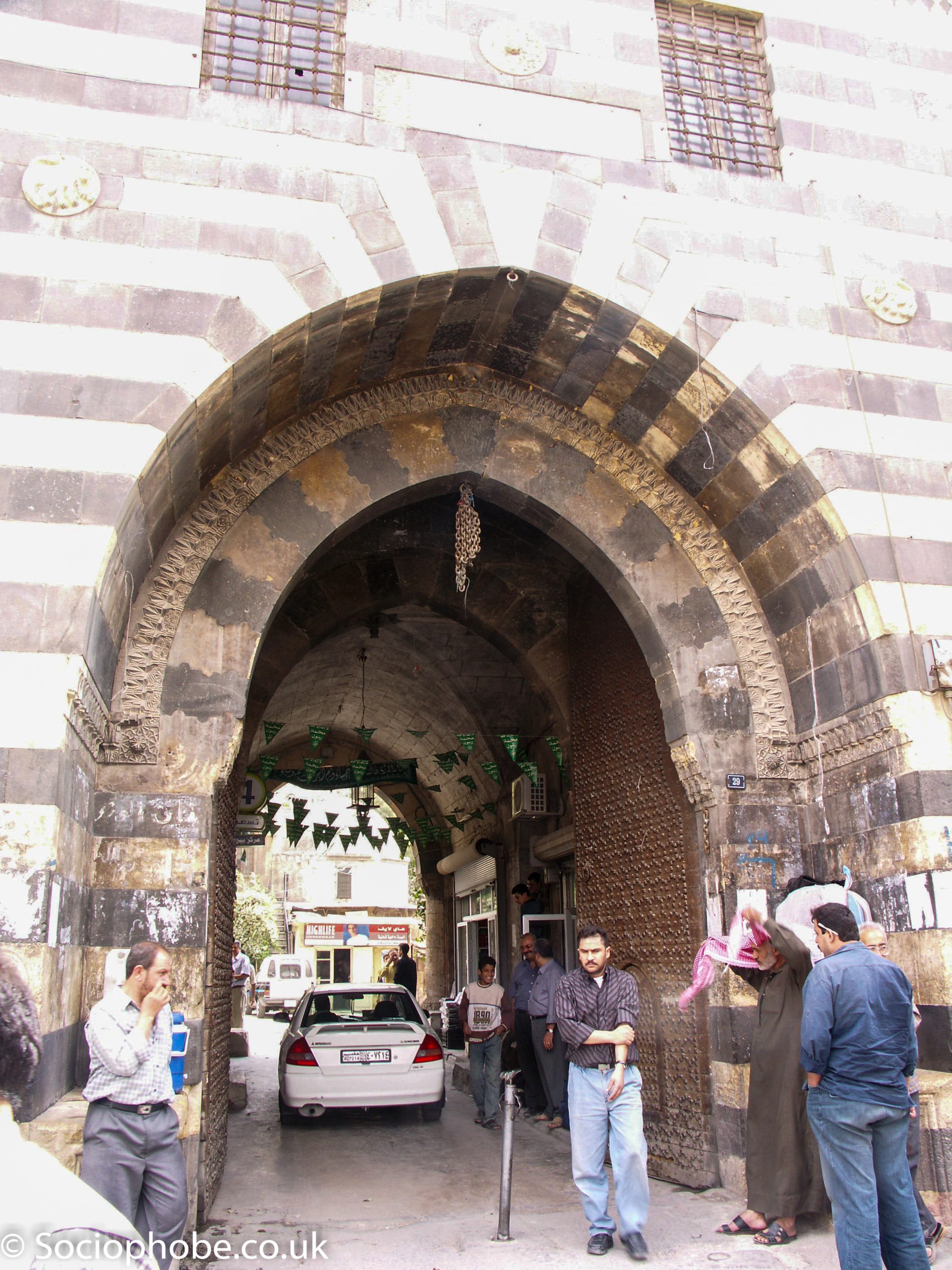
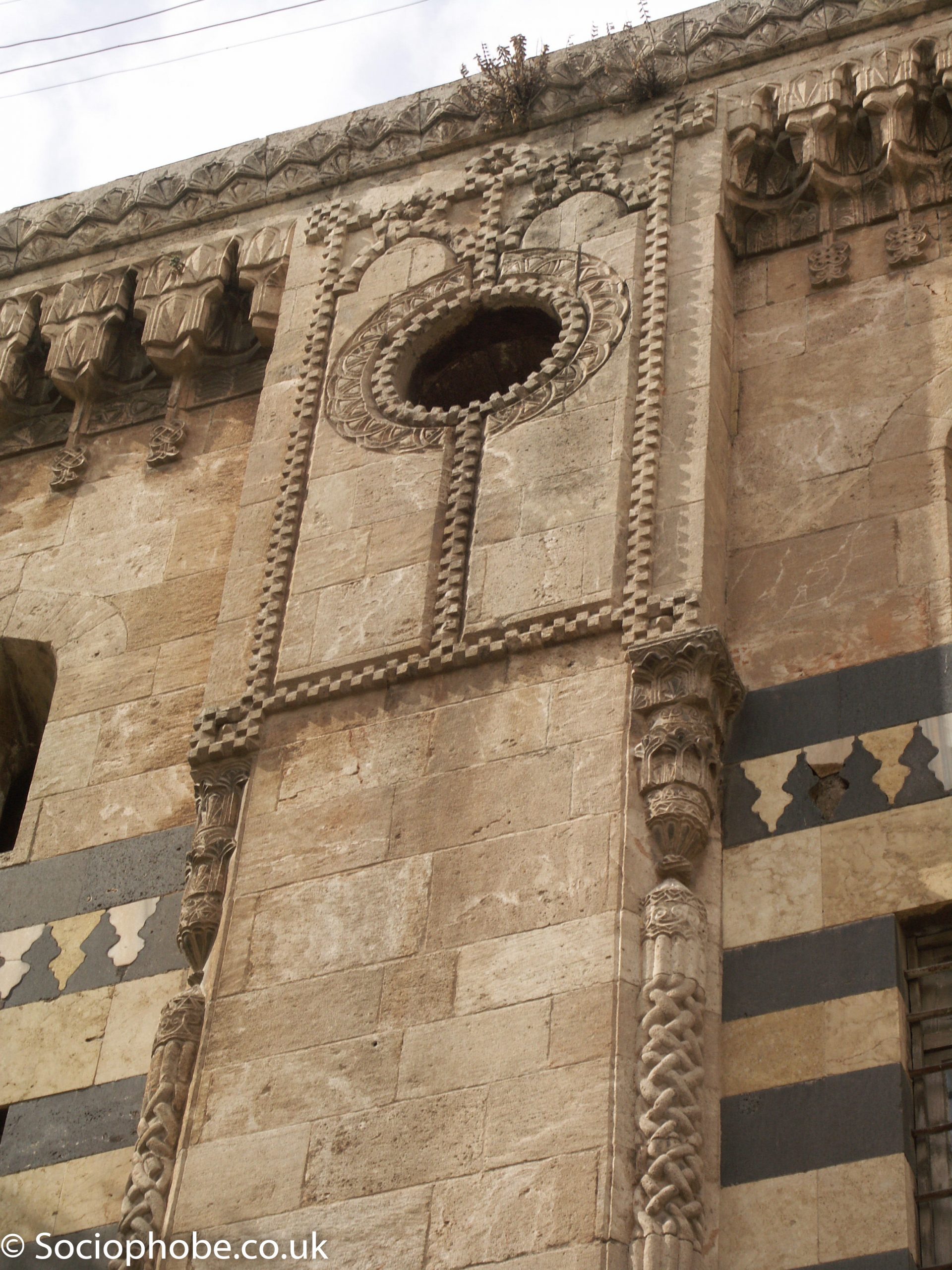
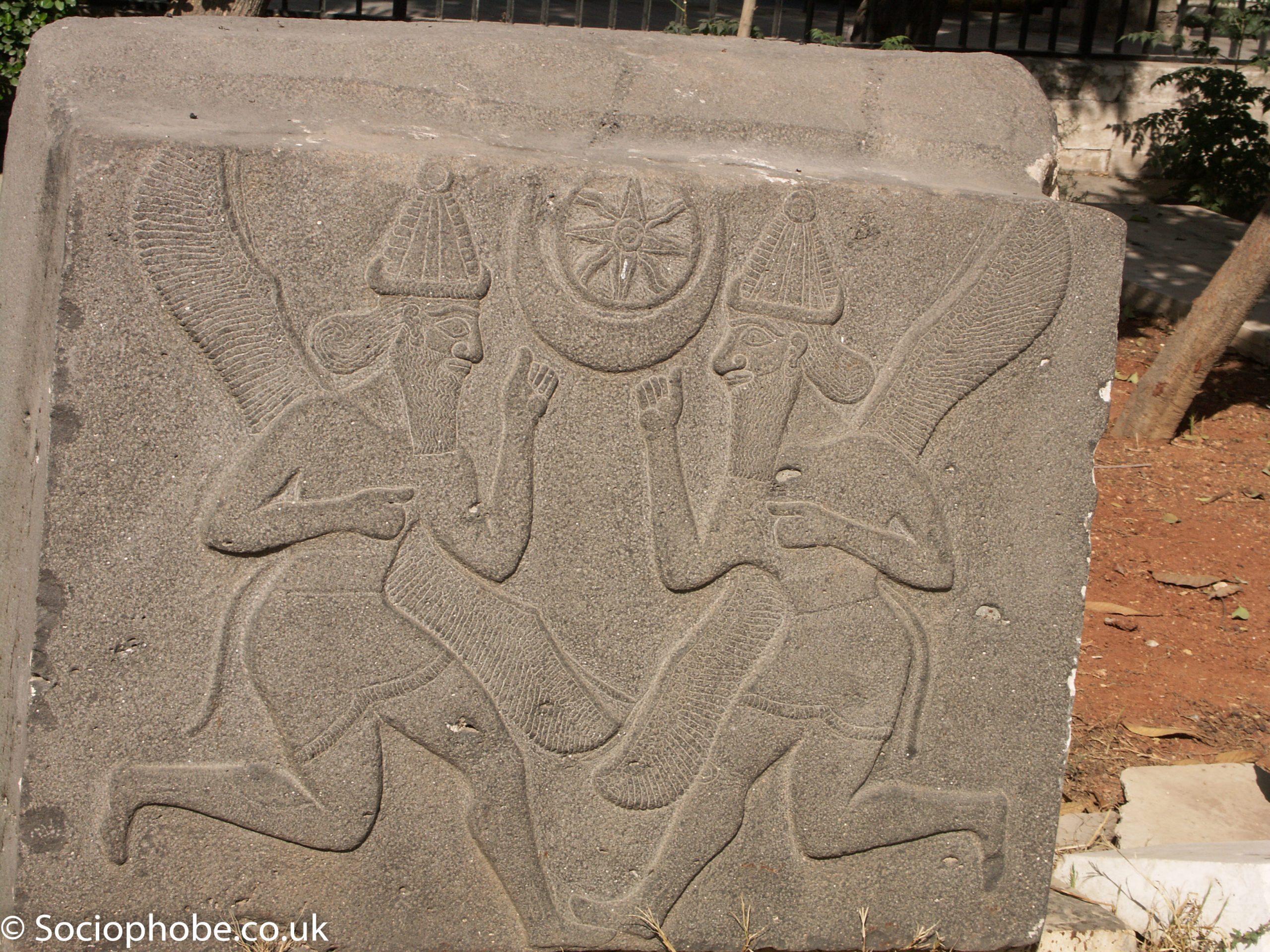
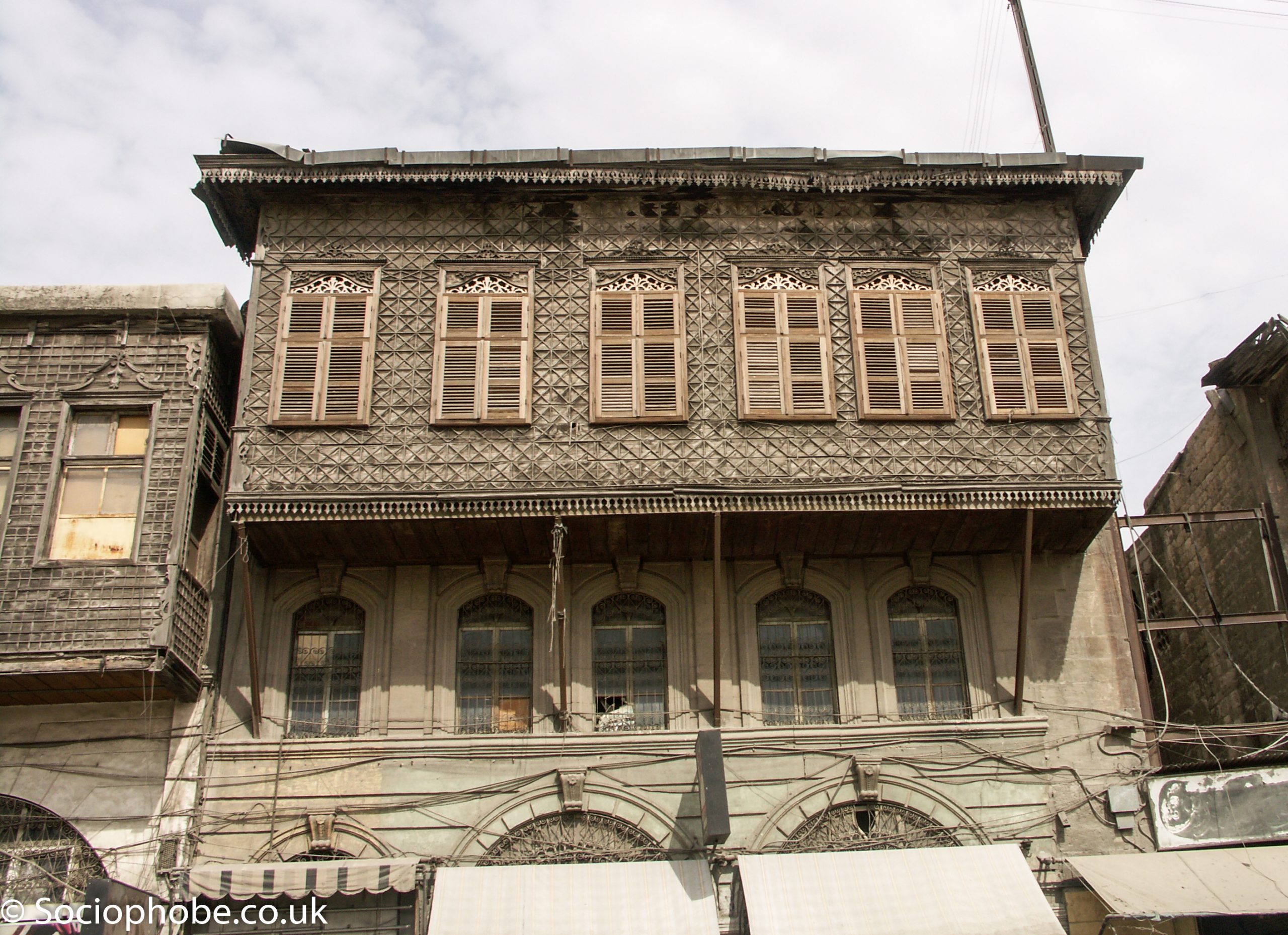
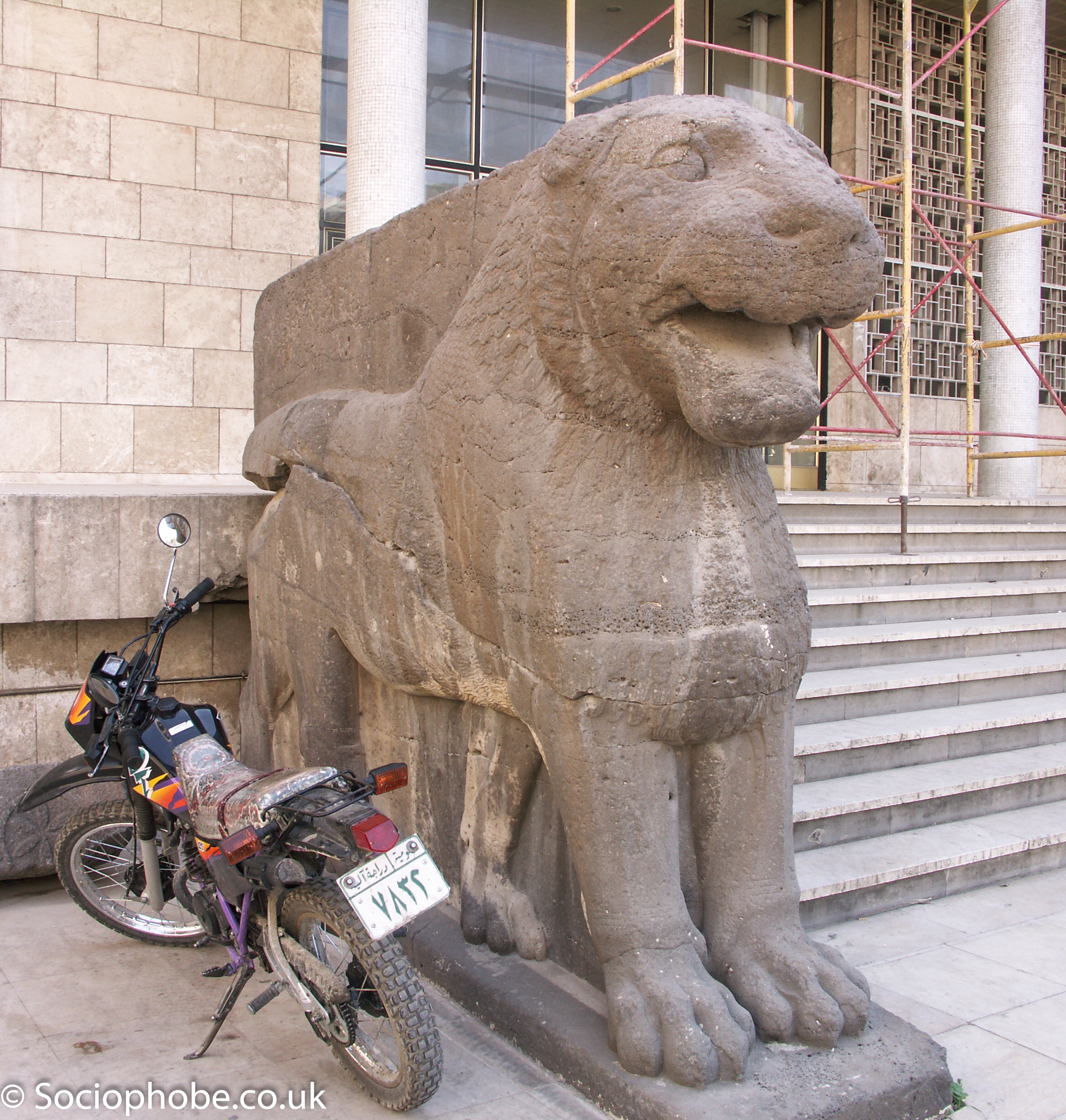
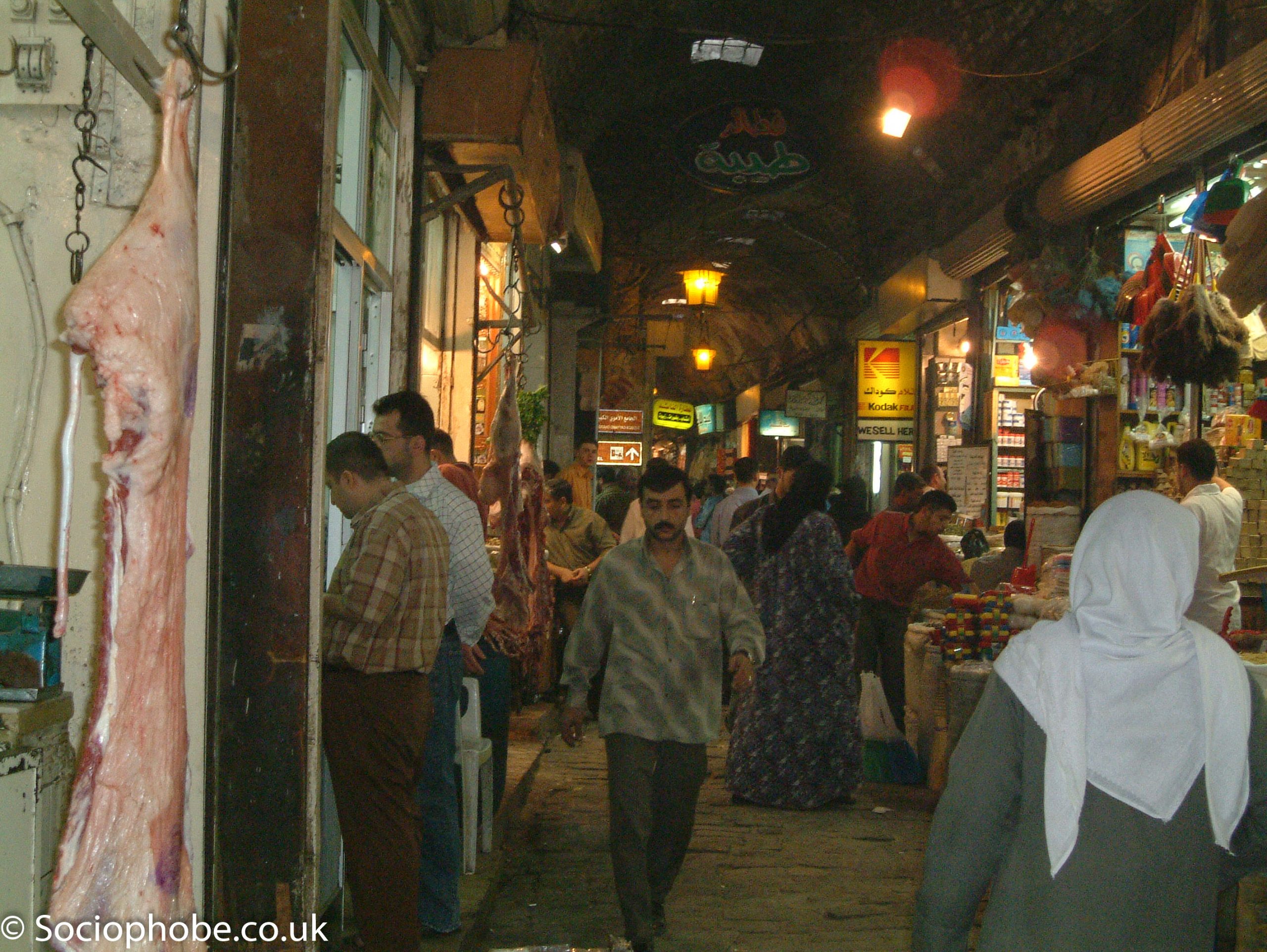
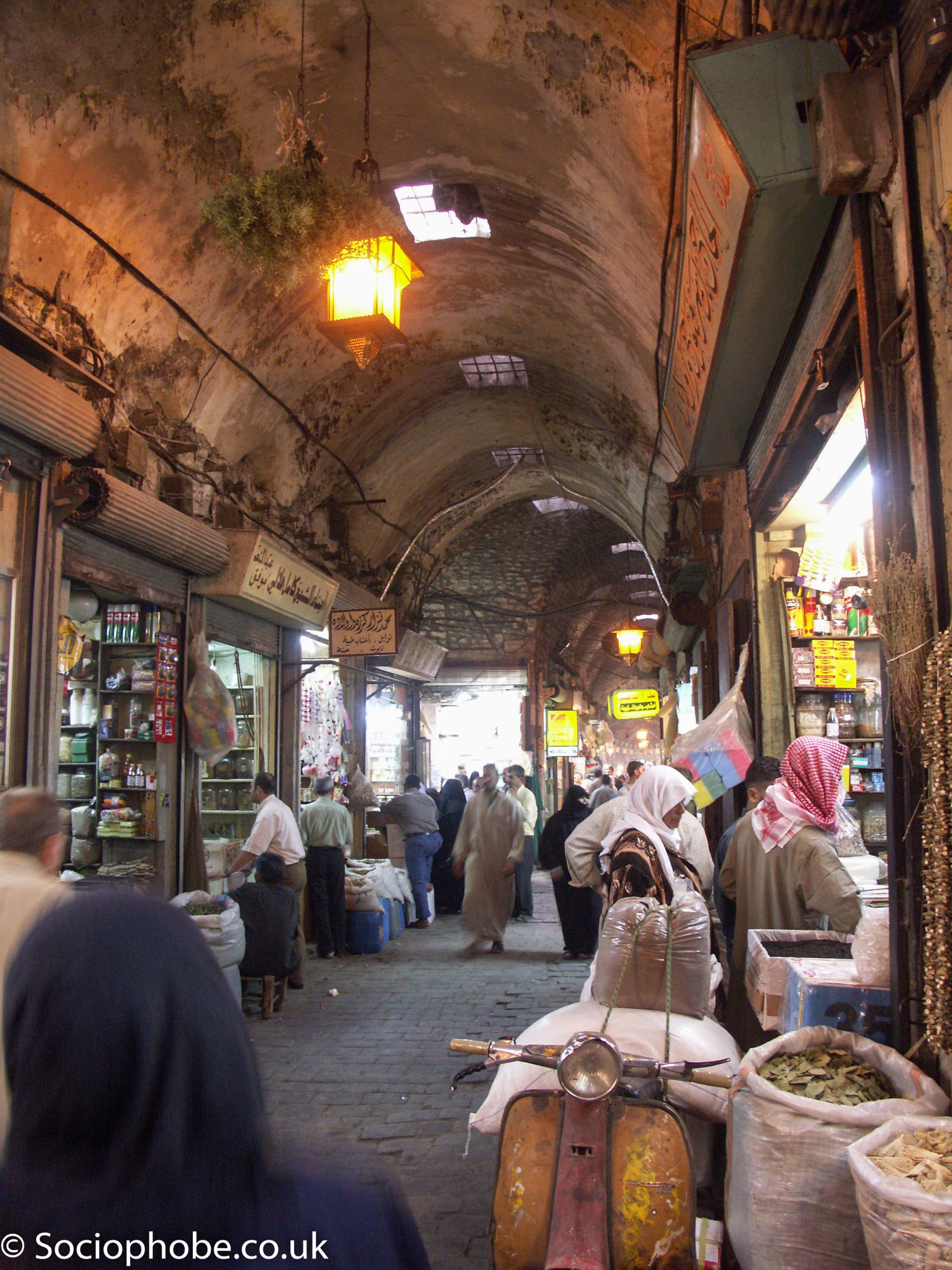
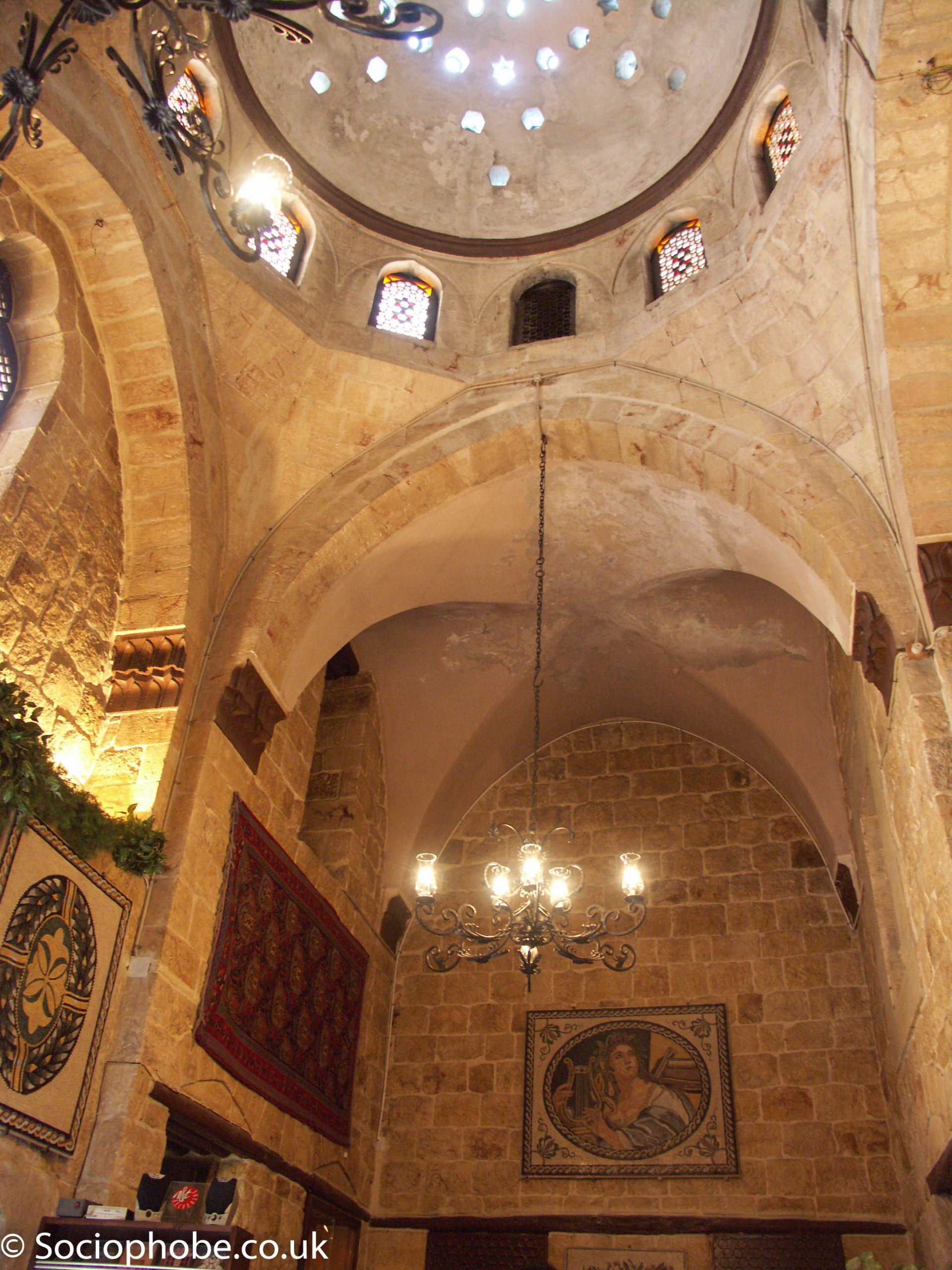
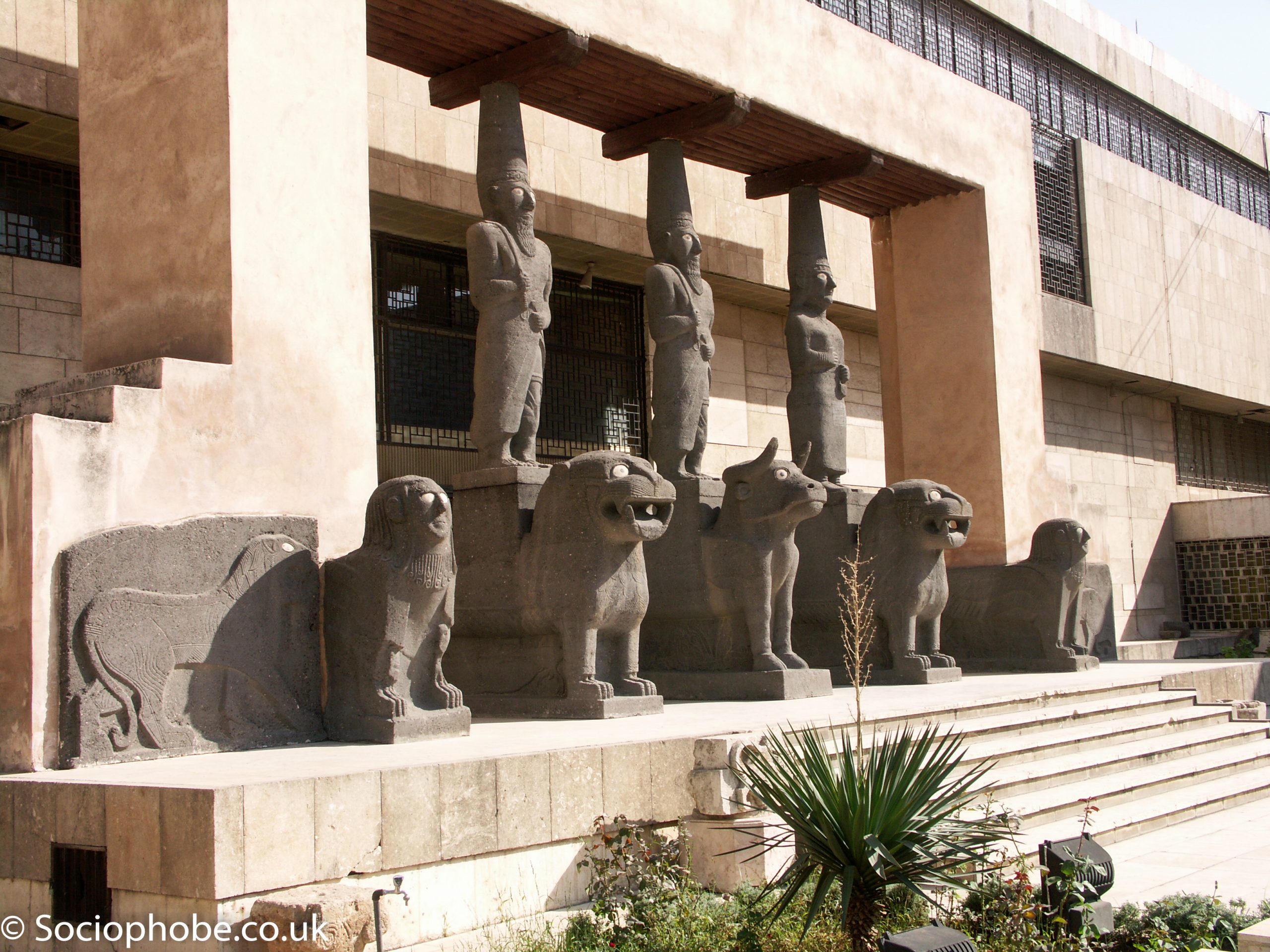
I left the souk, walked around for 40 minutes trying to find the museum but failed so returned to the citadel and did a circuit for photos. I then sat in a cafe and tried to avoid all the cigarette smoke whilst waiting for the bus. The locals were very friendly and were keen on practising their English. They were also fascinated by the digital camera. After a while I got a taxi back to the hotel which was rather an adventure!
The next morning was the first day of Ramadam so I was woken by an incessant wailing at around 3AM, I honestly thought it was a zombie invasion like Dawn of the Dead until my brain kicked in. I couldn’t really sleep with that going on but their country, their rules so I packed by stuff ready to head north.
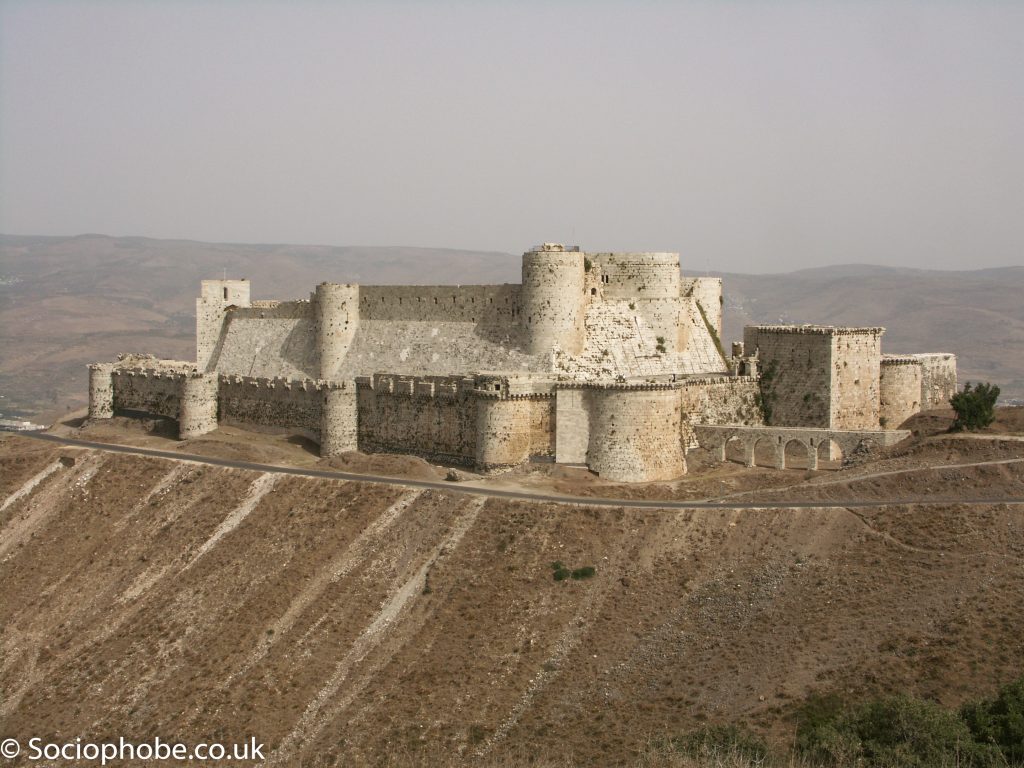
Syria: Krak de Chevaliers
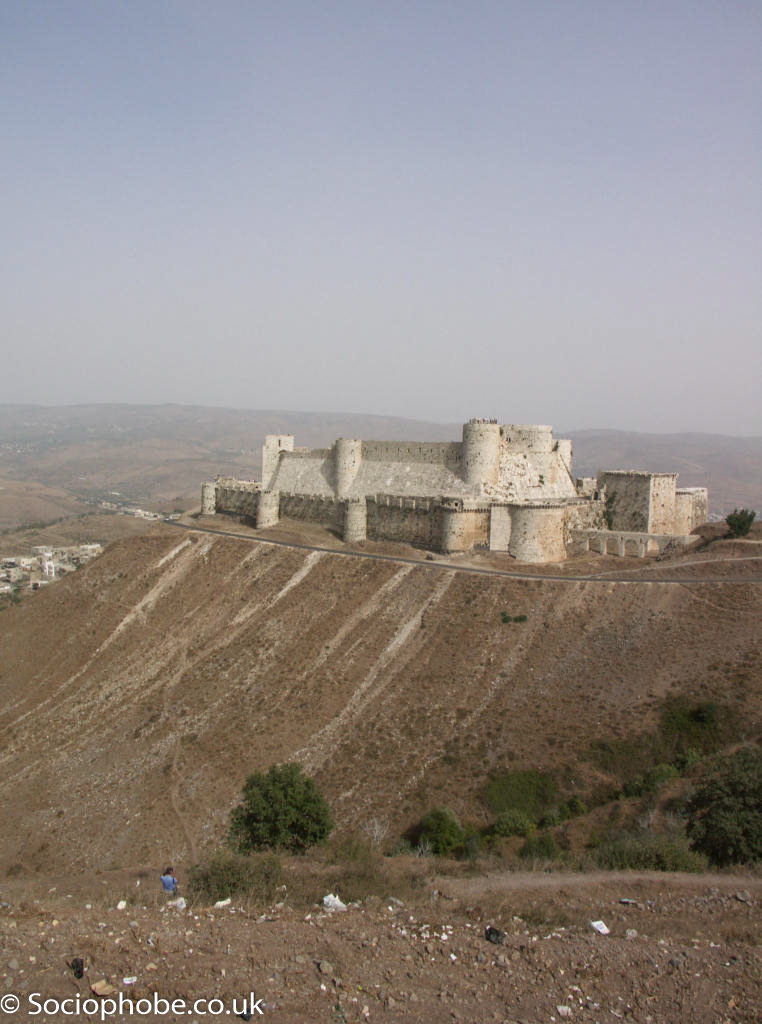
We drove past lots more pistachio fields on very poor quality roads for nearly 3 hours. The road up to the castle of Krak de Chevaliers was particularly bad but we rounded a corner and suddenly the castle popped into view.
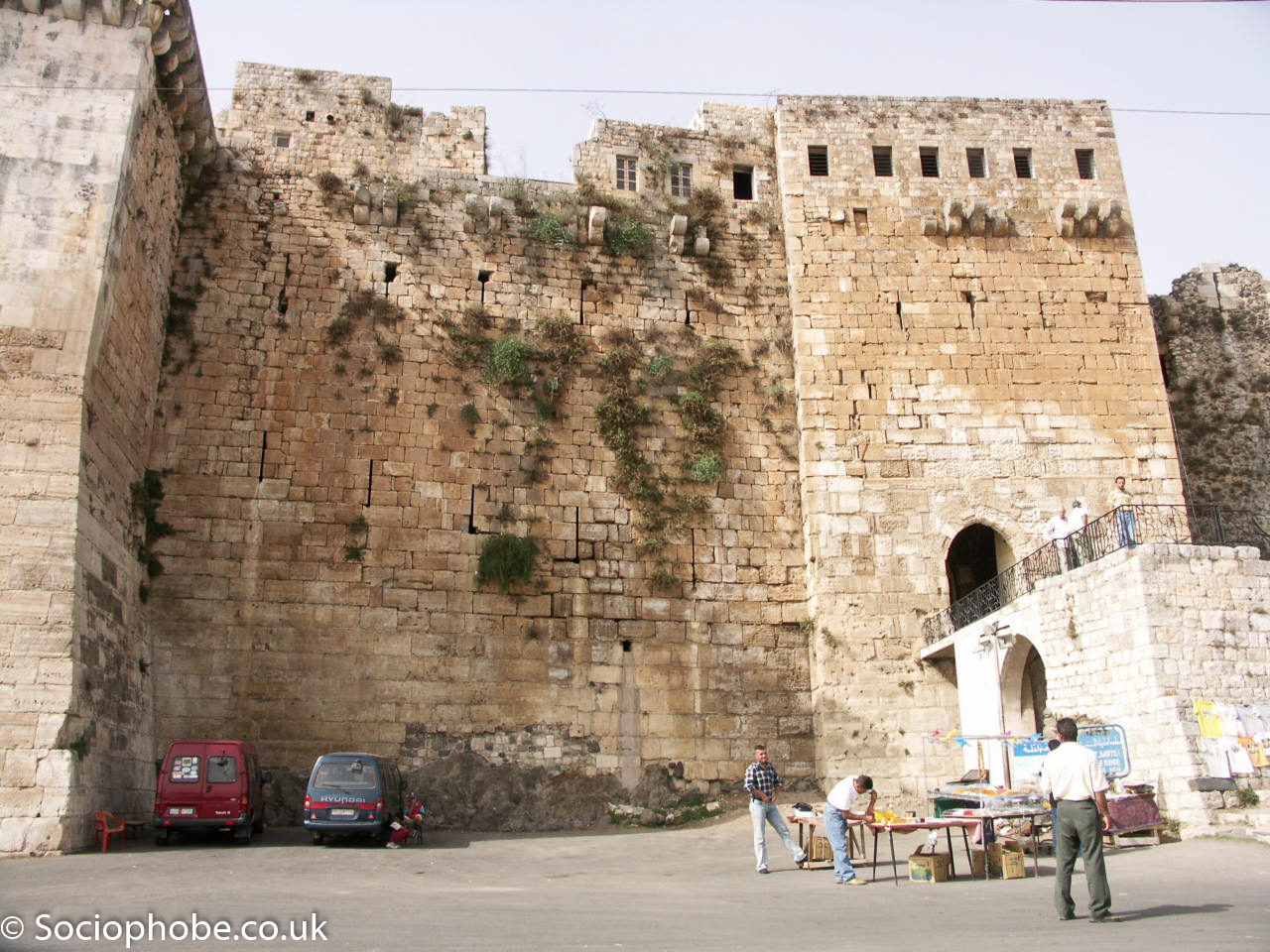
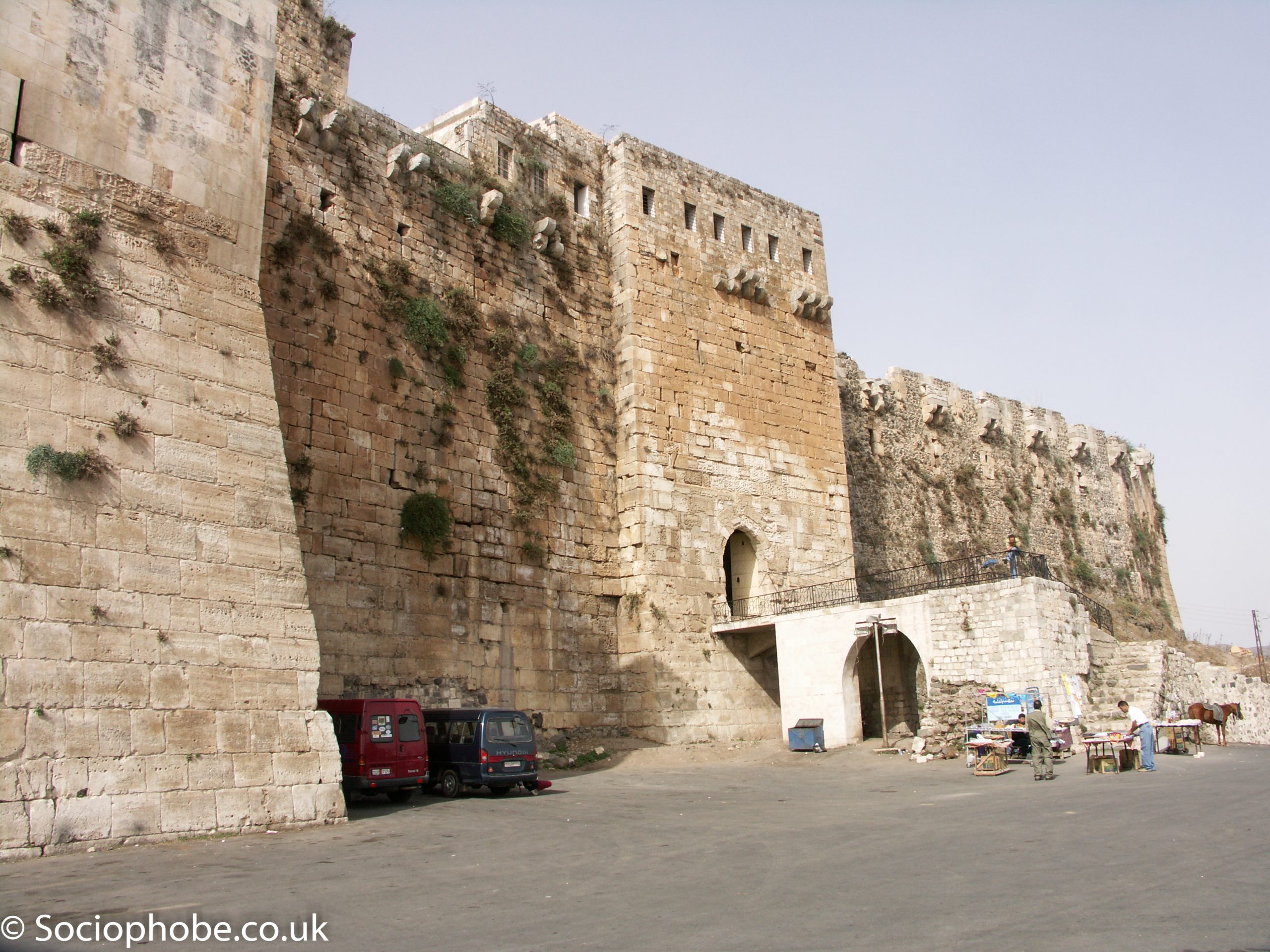
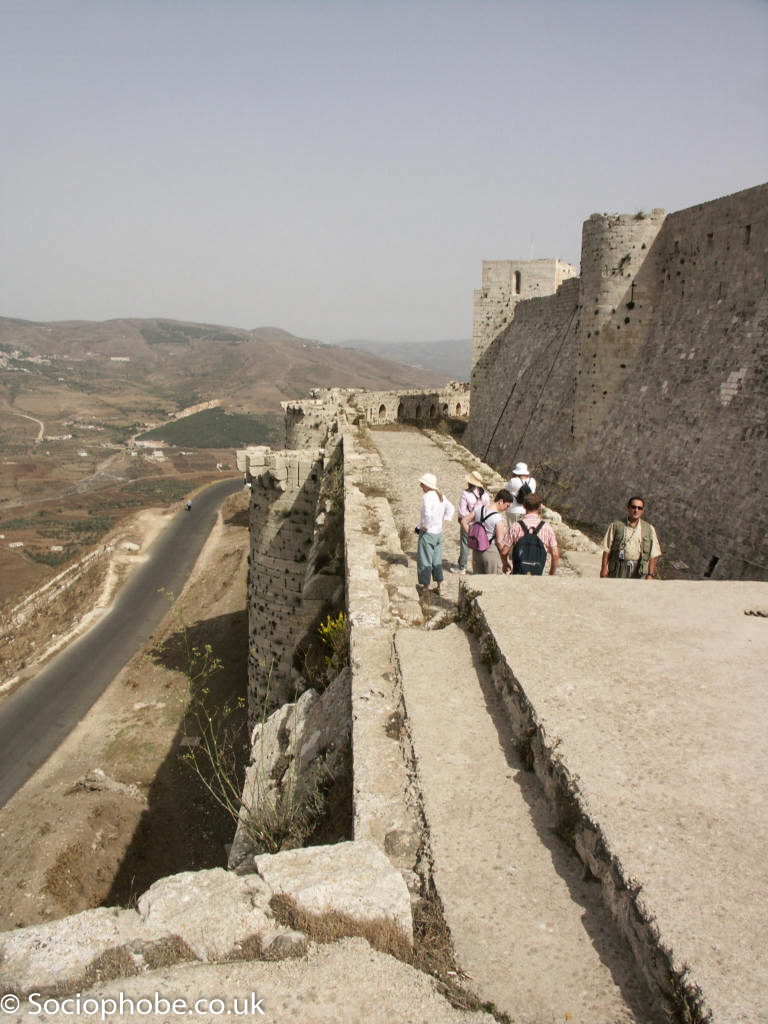
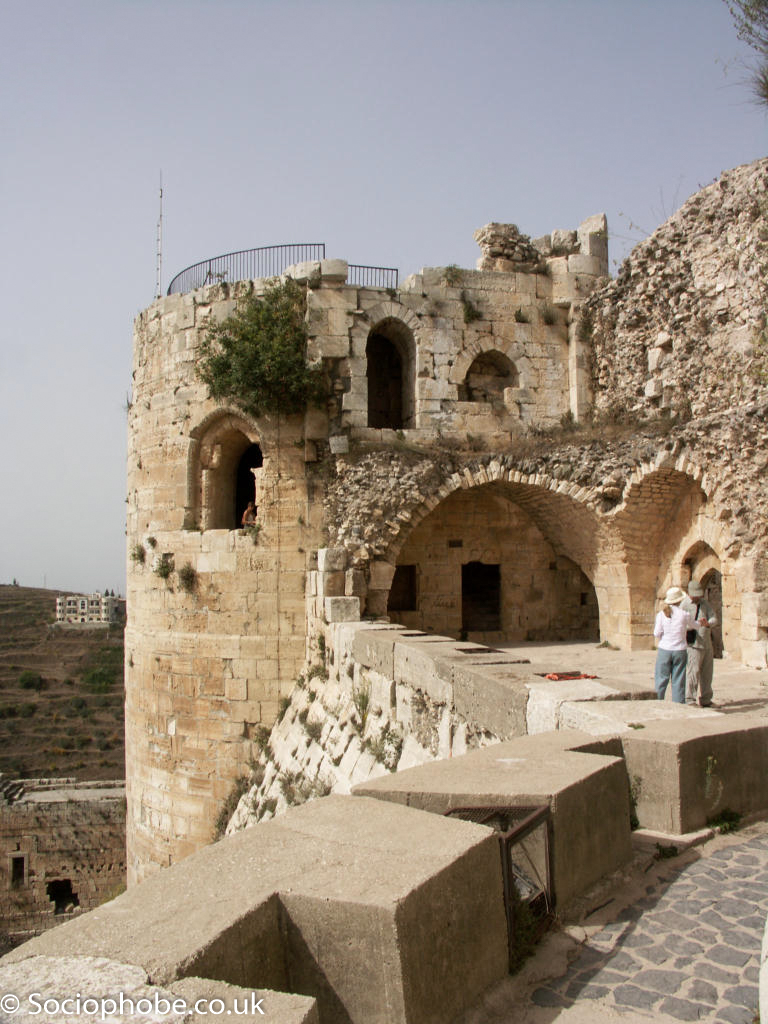
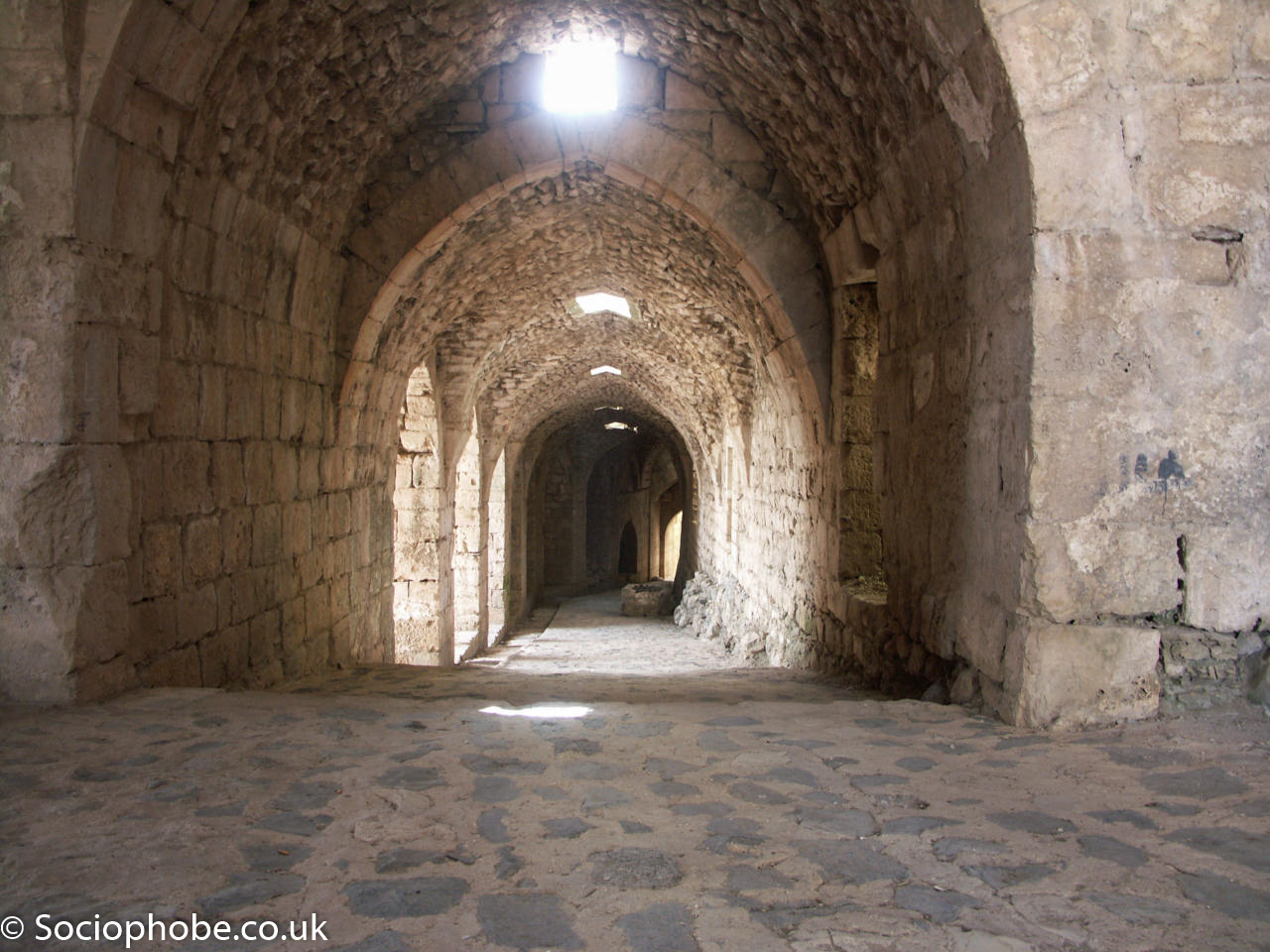
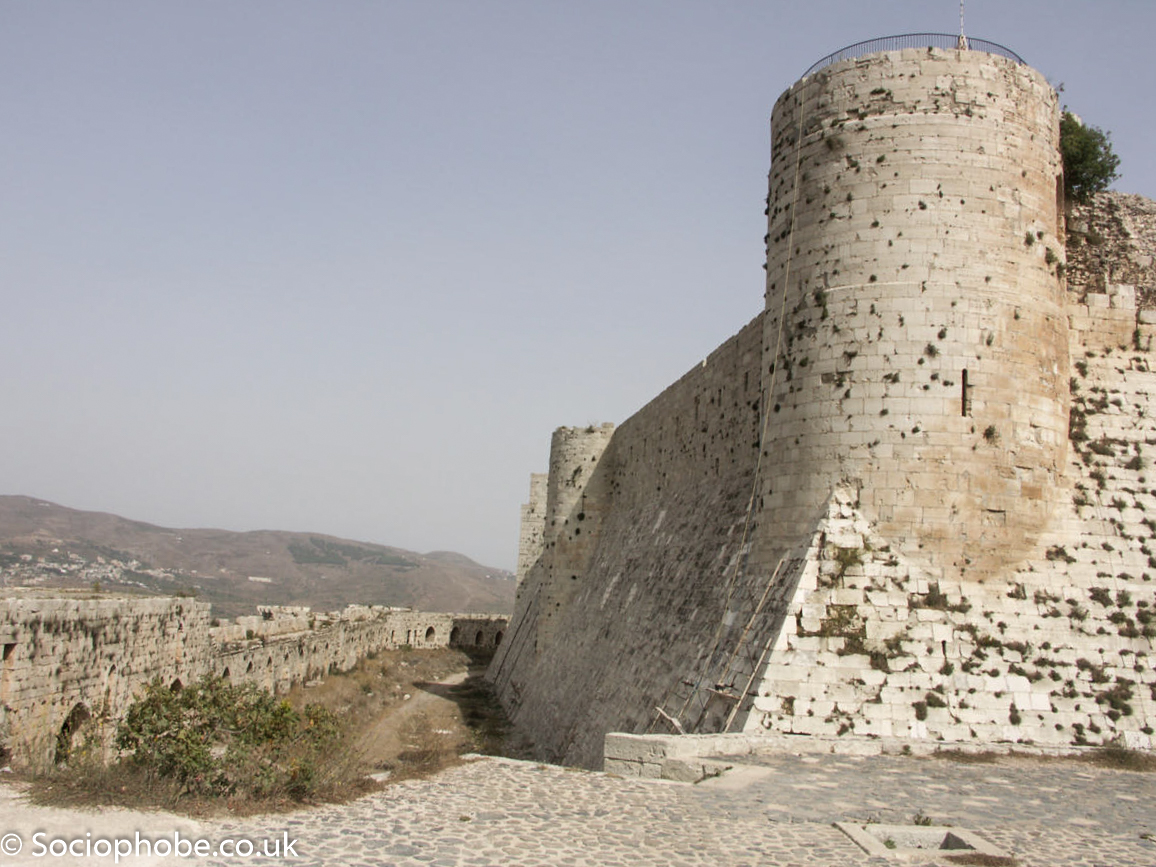
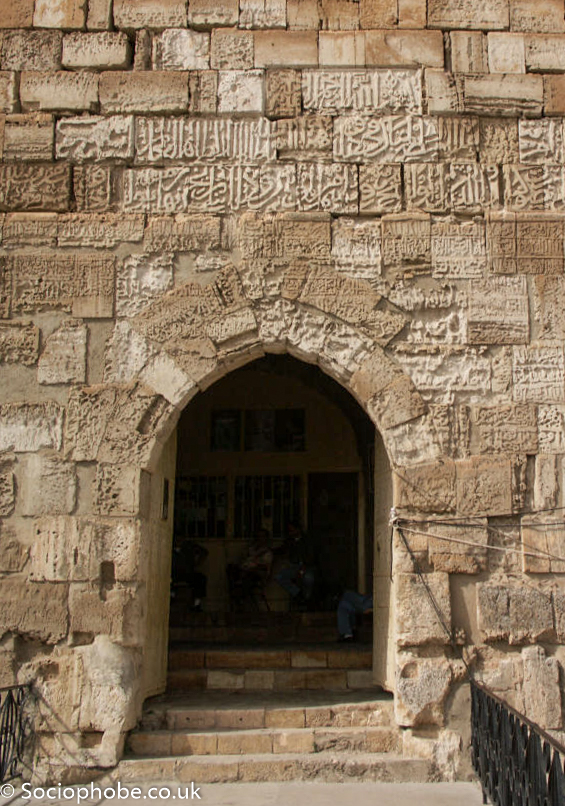
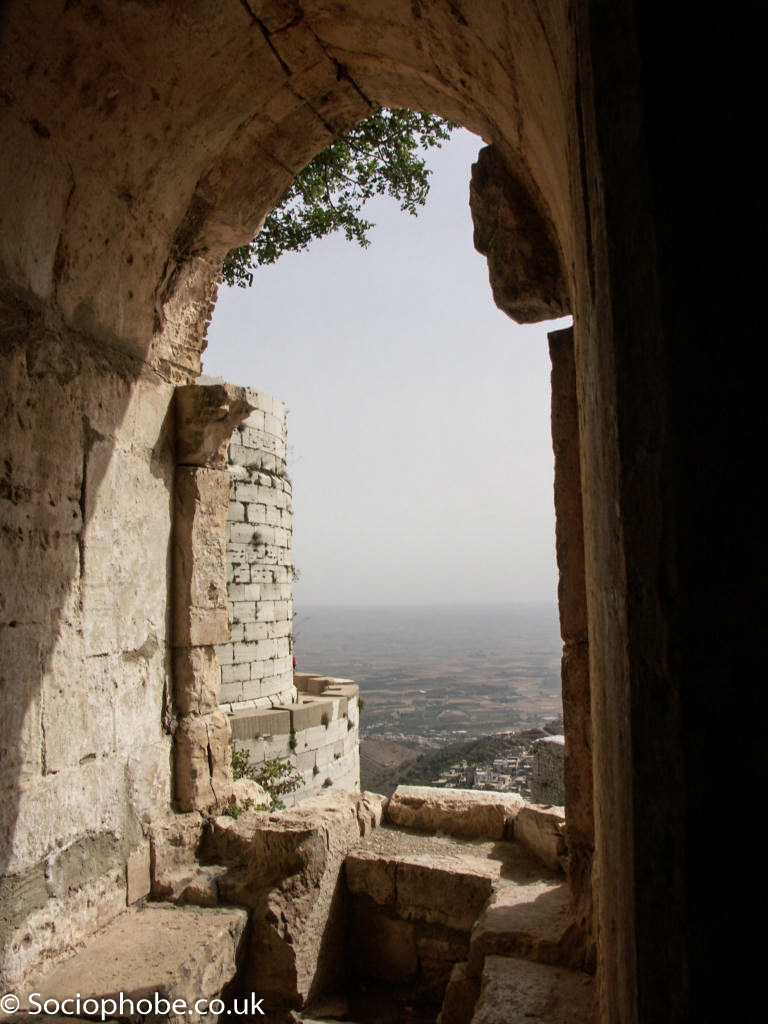
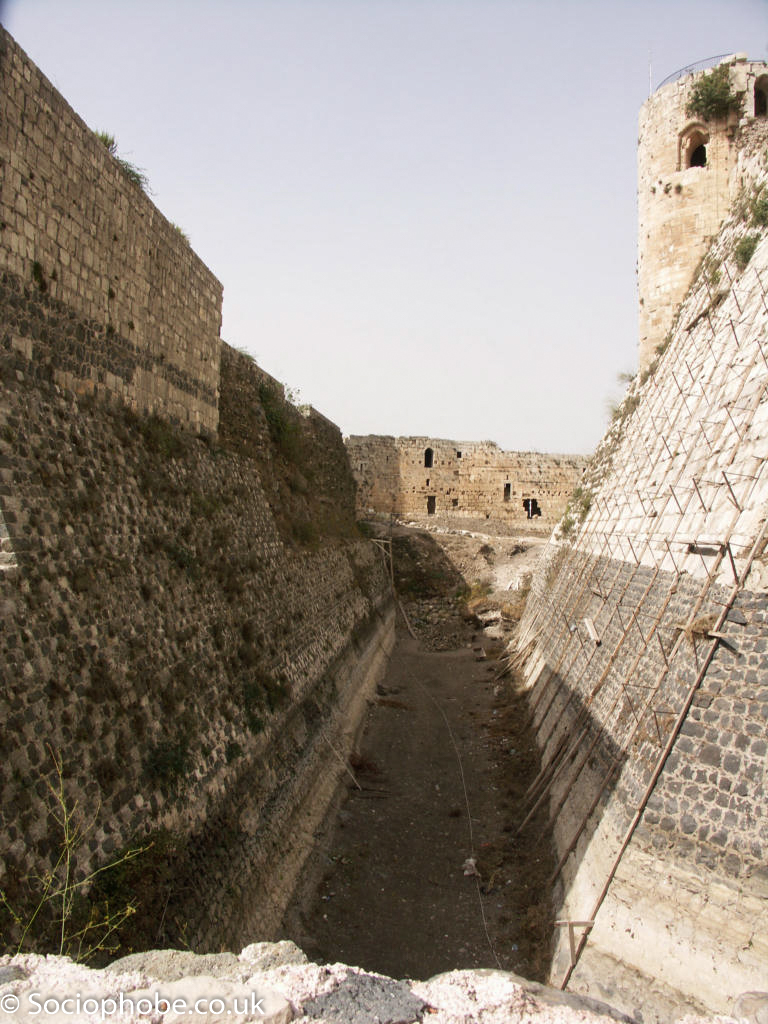
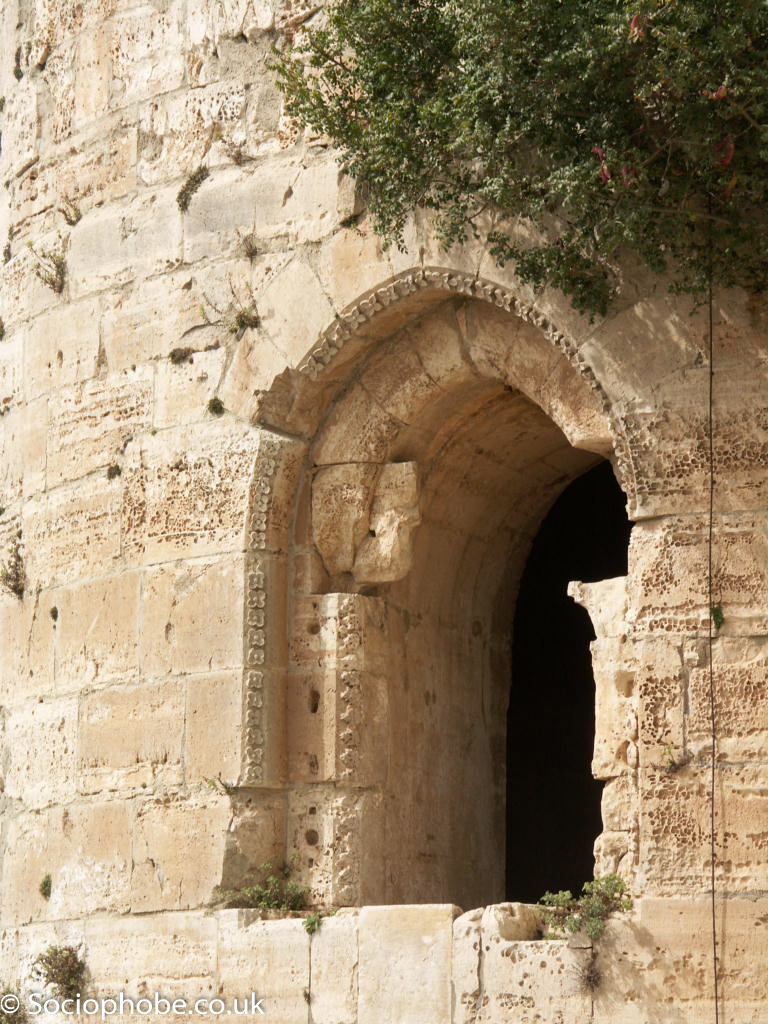
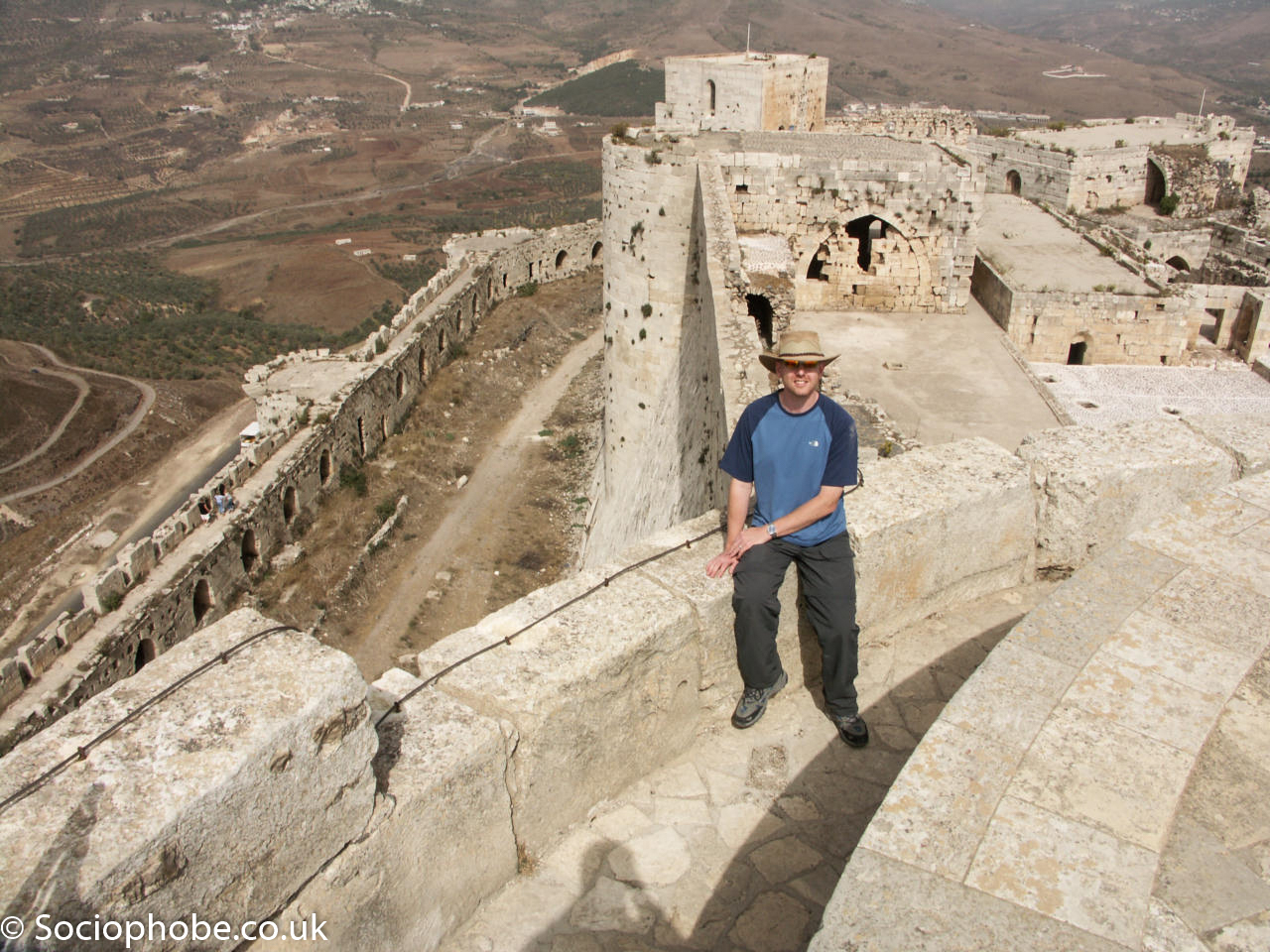
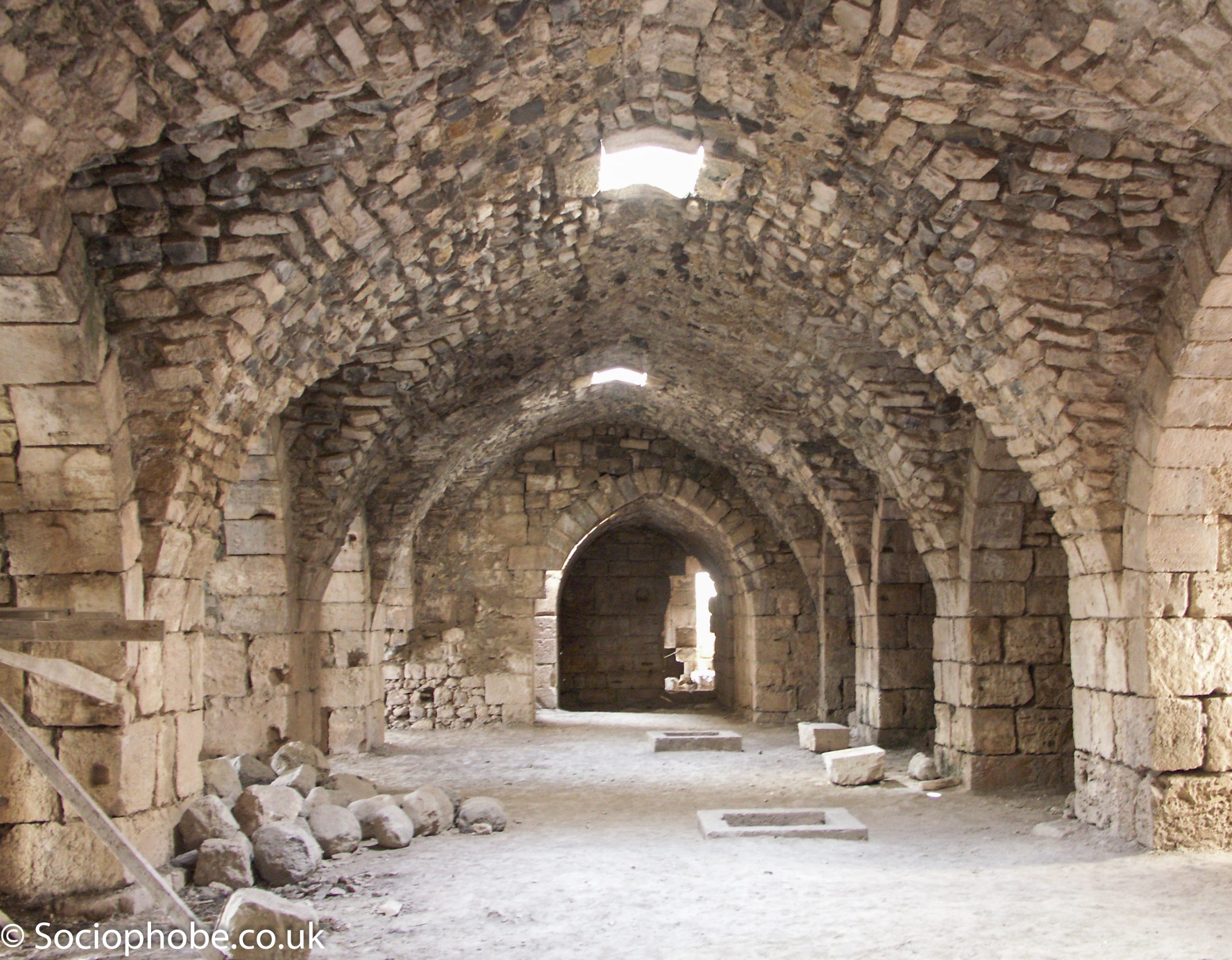
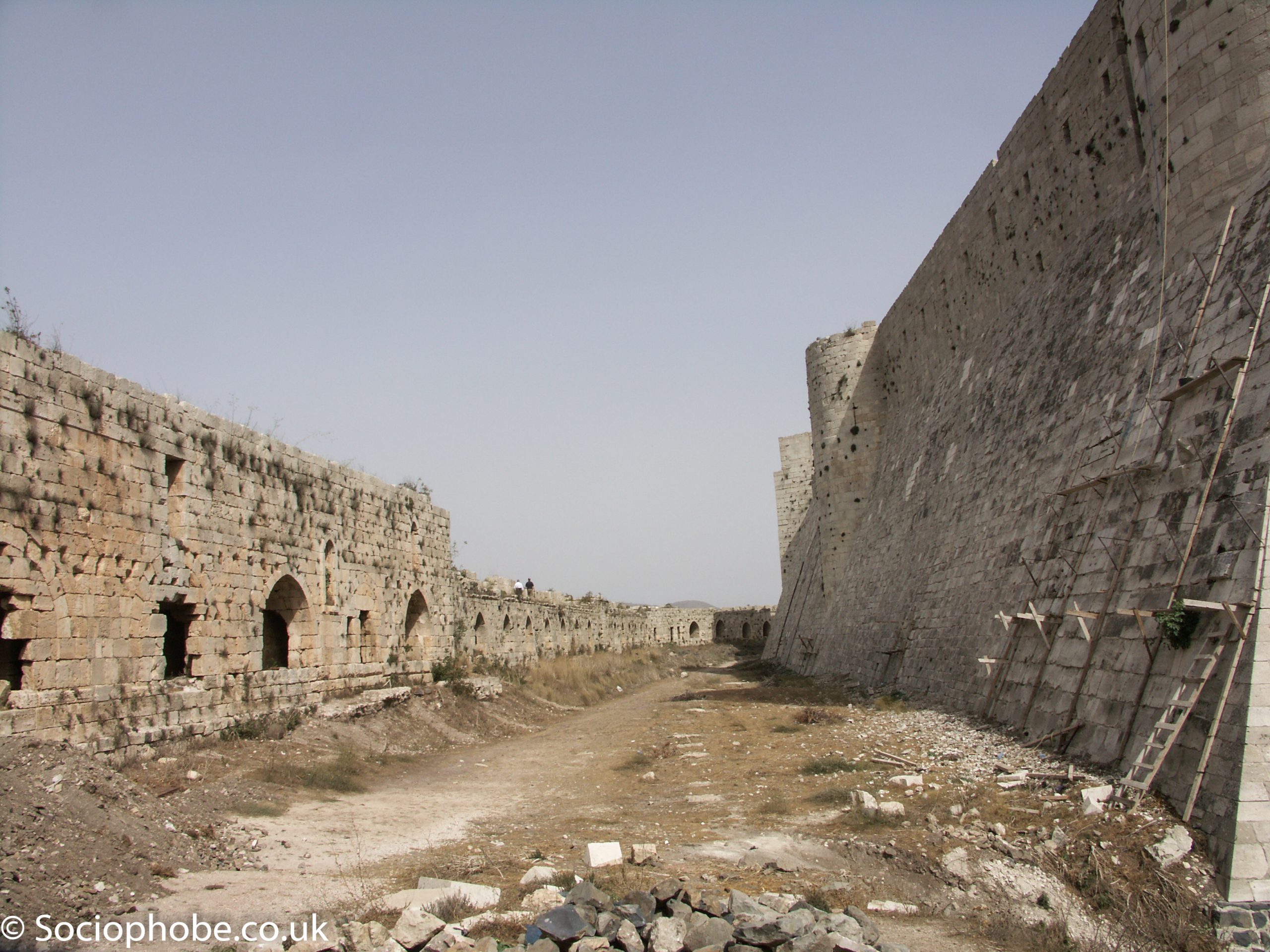
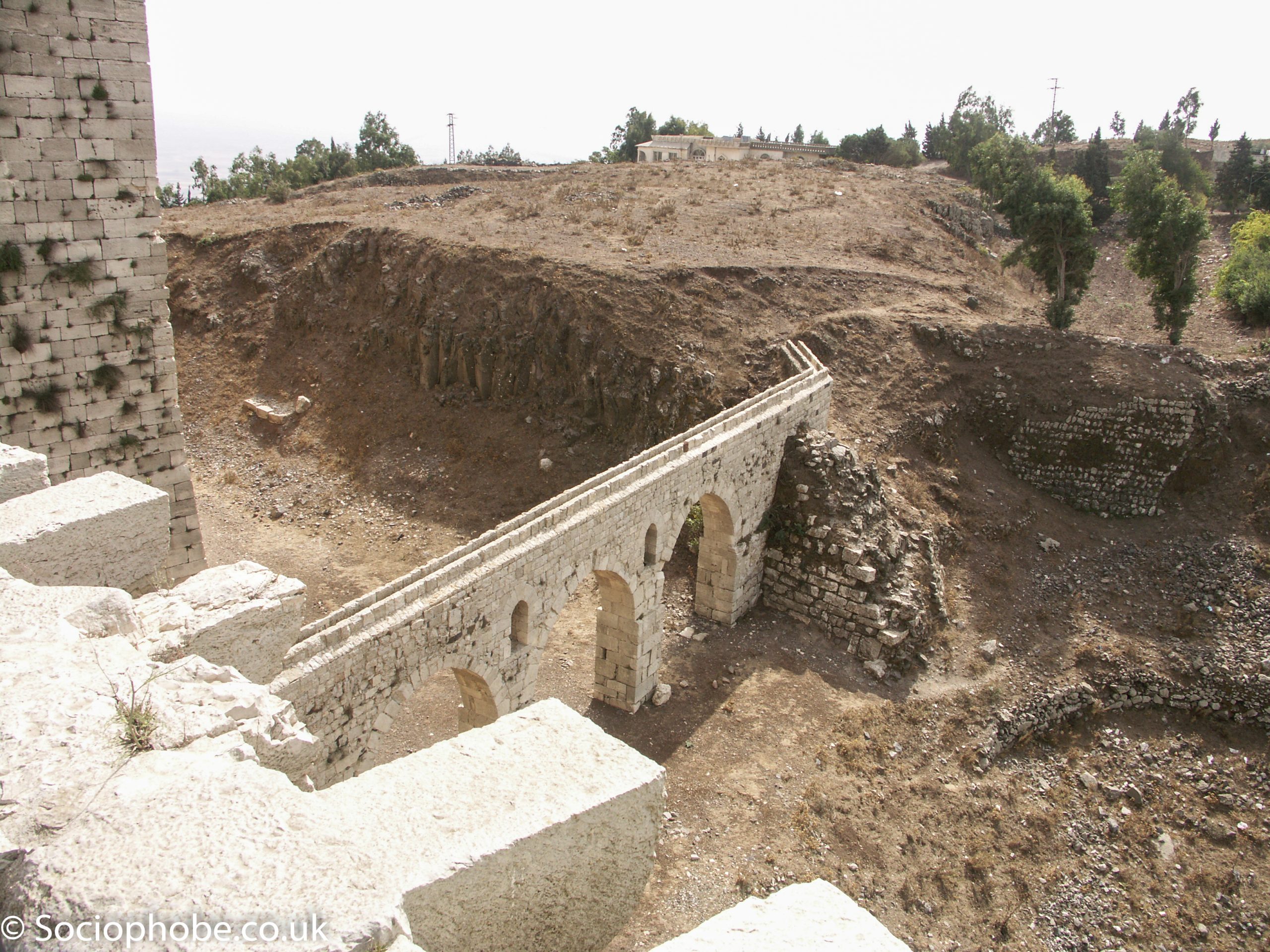
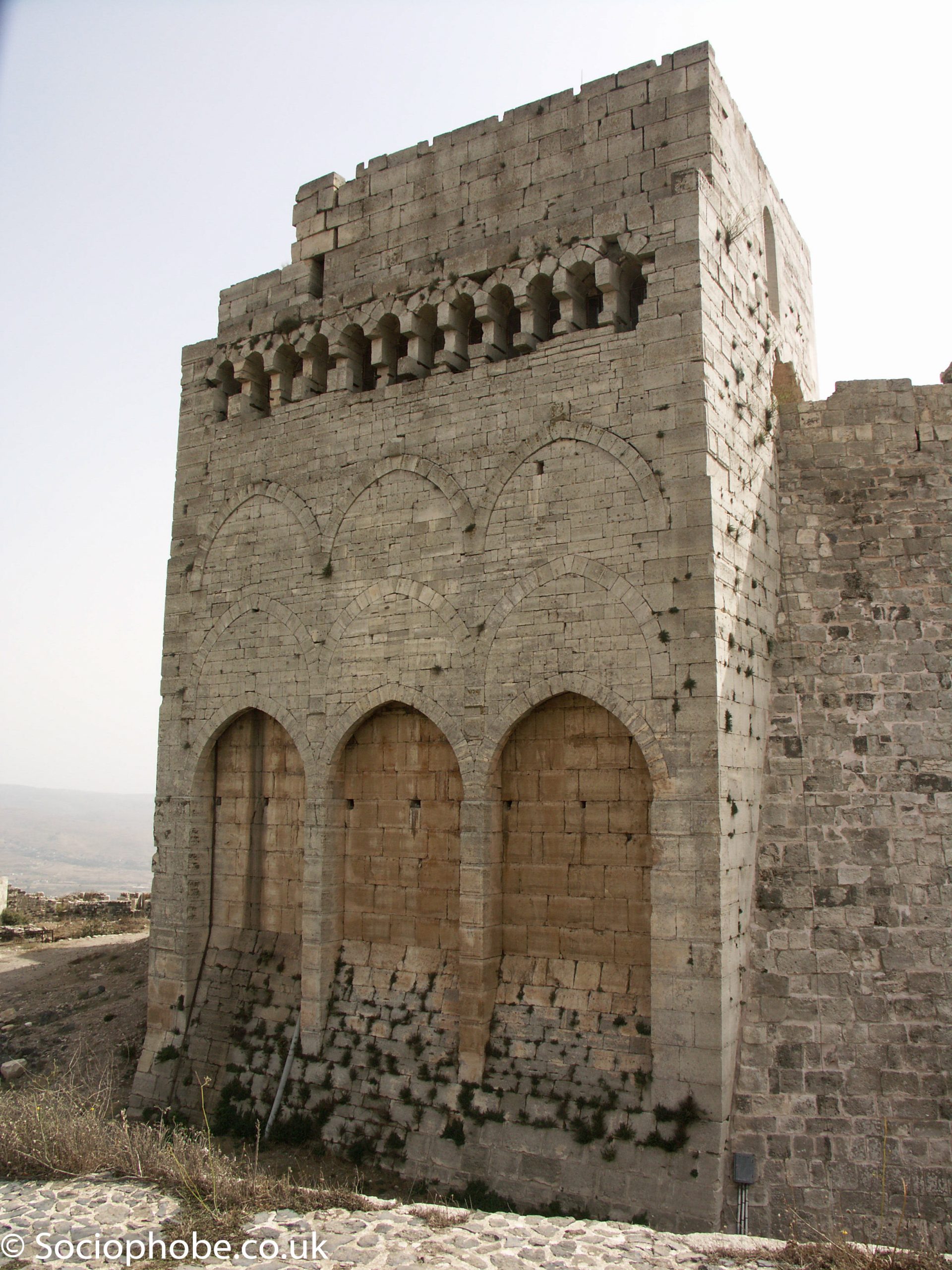
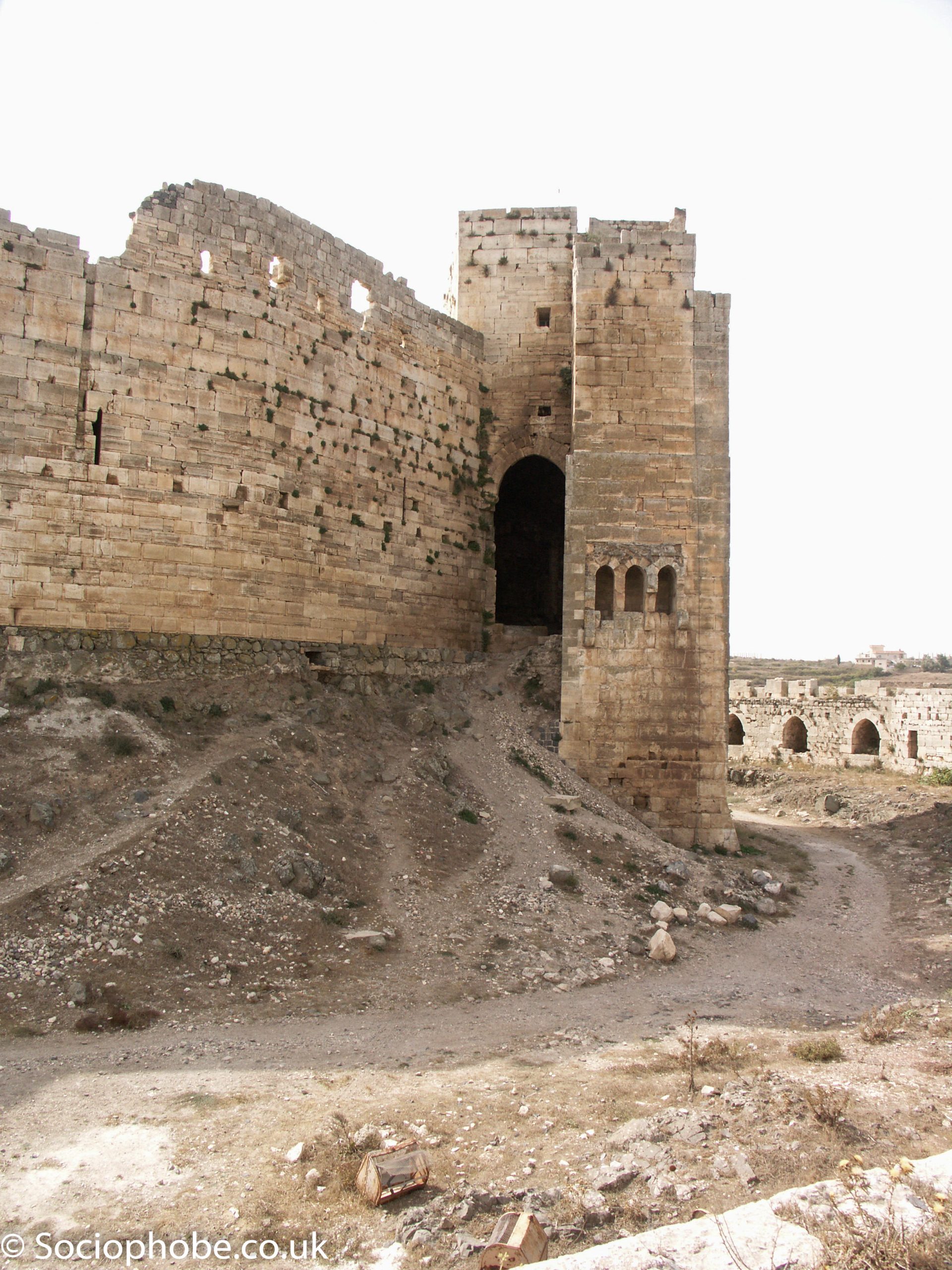
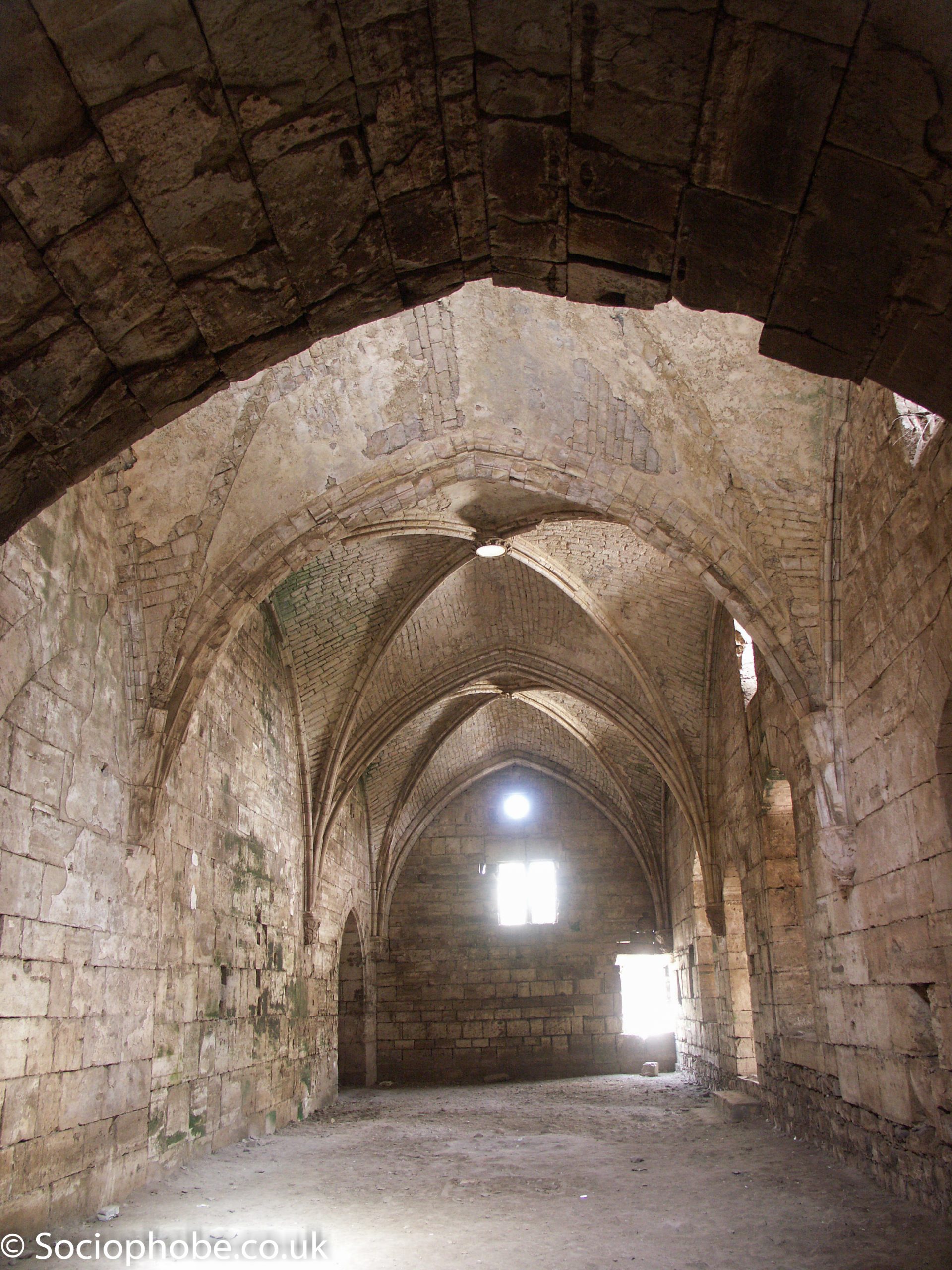
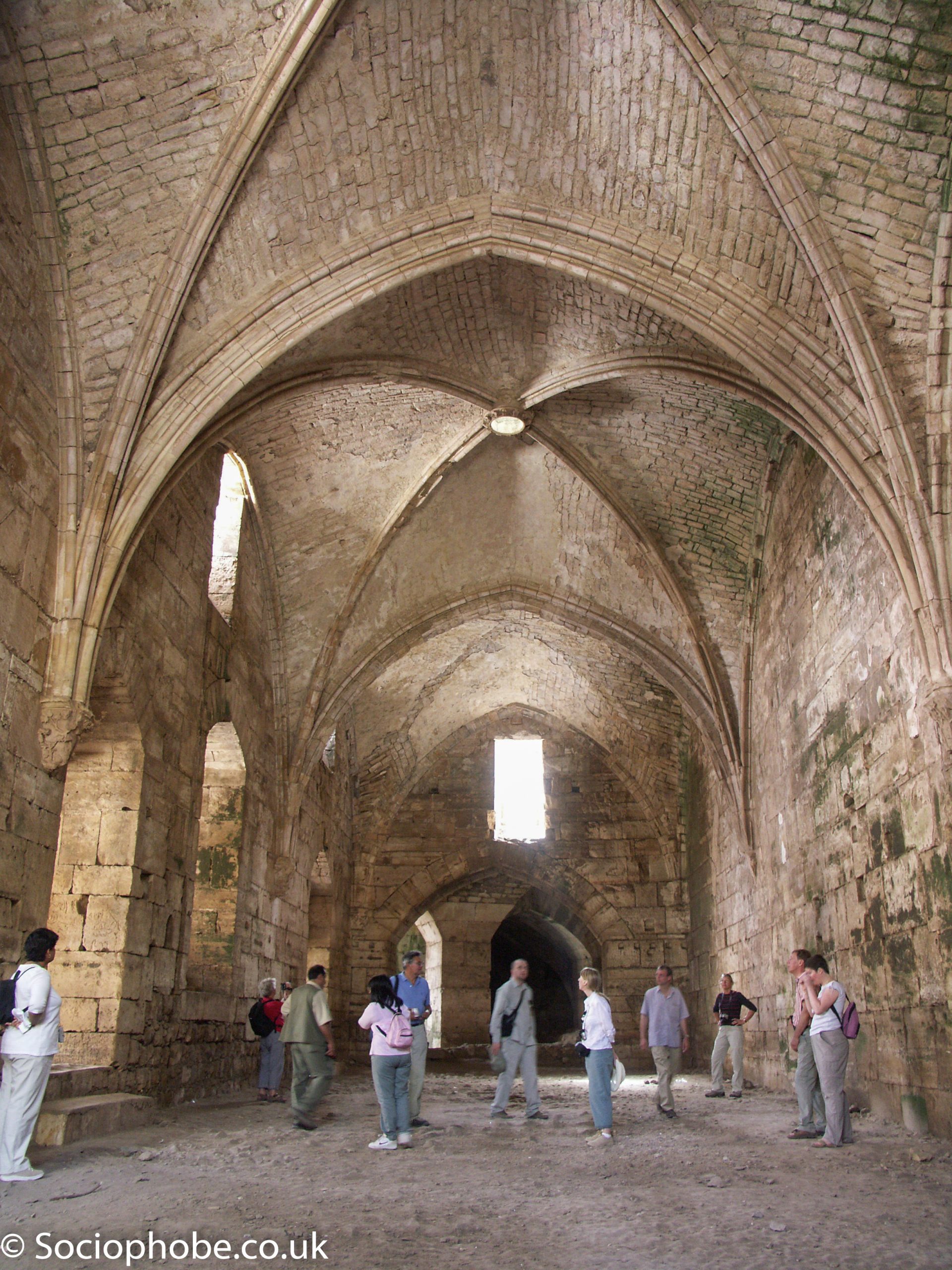
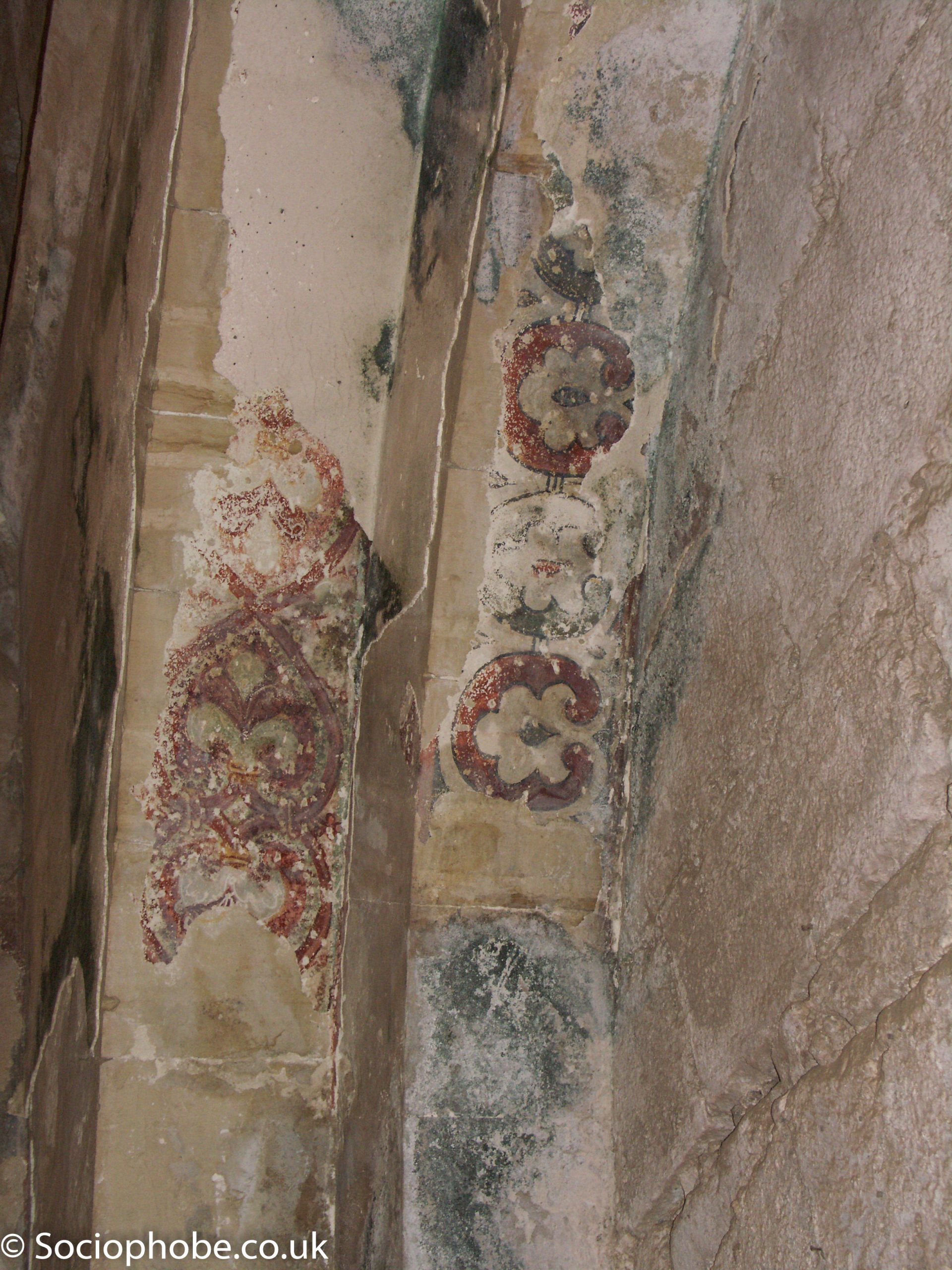
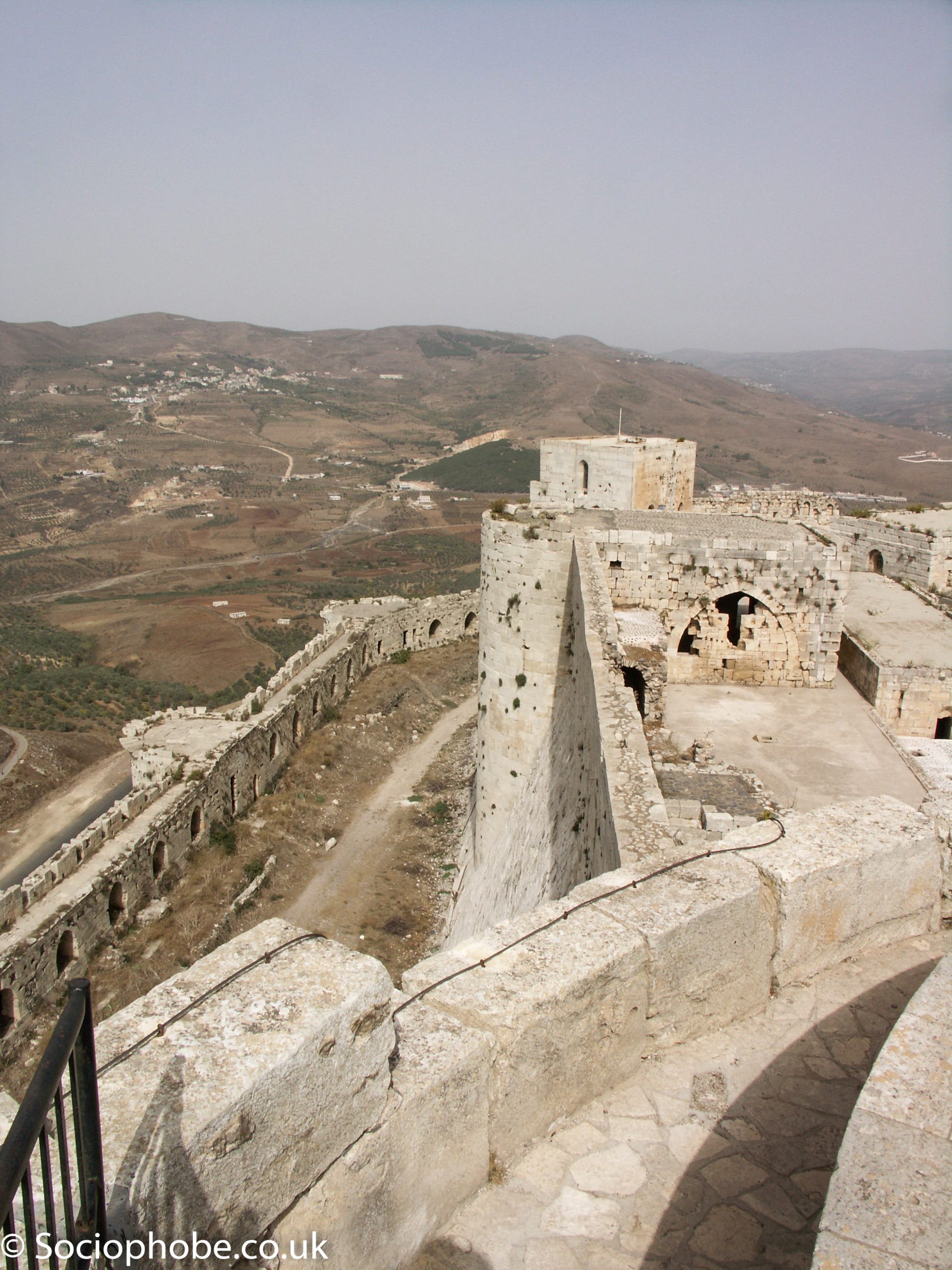
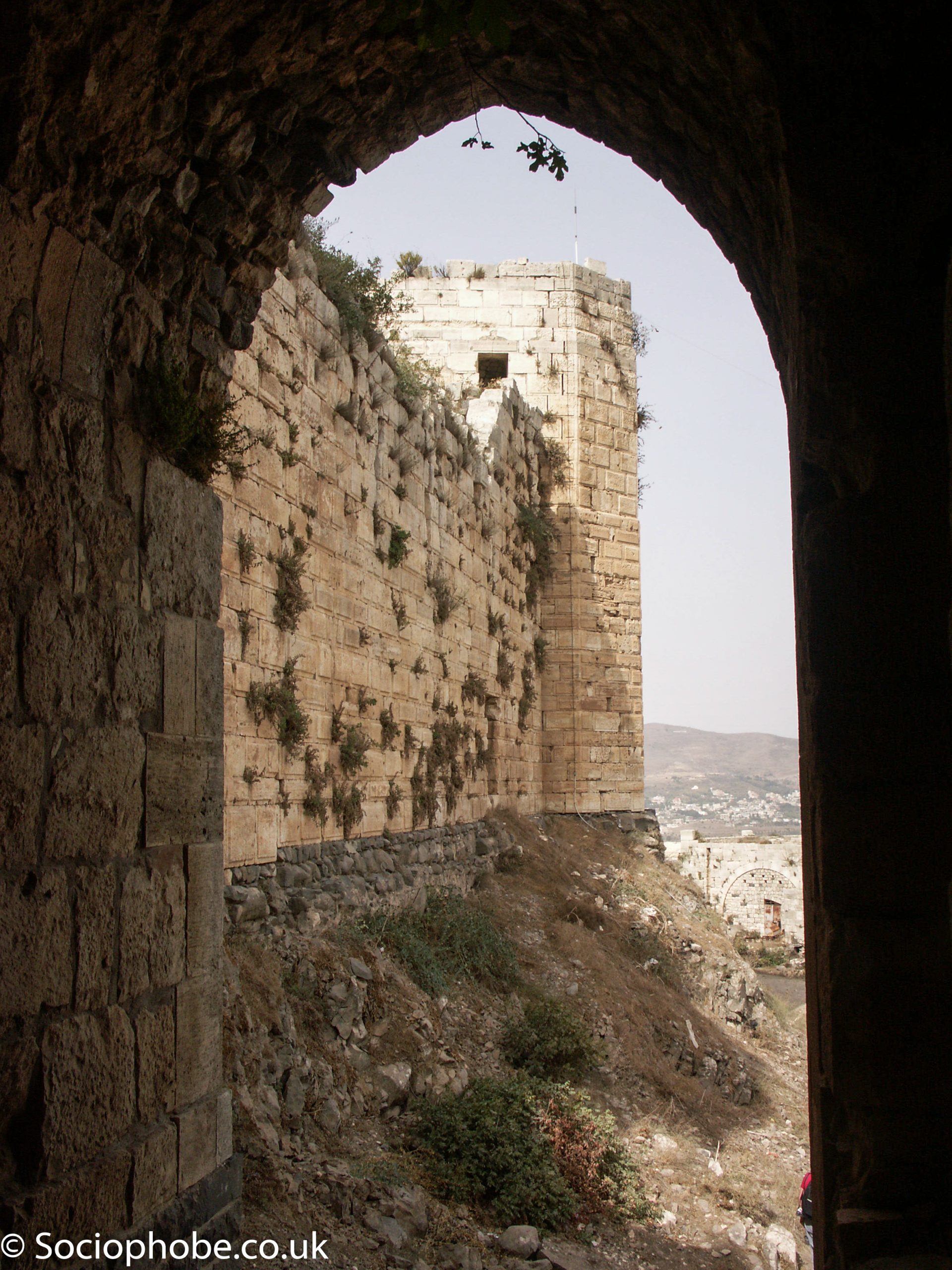
The castle is huge, dwarfing any British castle but is very stark with the crenellations mostly gone and very little decoration inside. There were postcard sellers at the entrance and dotted around the castle but no cafe or shop!
The stables in the outer castle were alleged to hold 4000 horses but I have no idea how, unless they were tinned. I’m not aware that the forces of Outremer had that many mounted troops anyway but I guess with infantry mounts and supply horses its possible. Either way, the stables were still impressive.
The inner fort is a separate entity with a huge glacis and originally a moat separating the inner and outer castle. There were a few tunnels but I couldn’t investigate too far as my torch batteries had gone flat. There was some nice carving around the window of the commander’s room and some ornate Muslim calligraphy glorifying Baibars victory over the Hospitallars.
The view from the tallest tower was impressive, you could certainly see the castles value as a fortification dominating the north/south valley and the agricultural plain. I left the castle to find the coach gone but luckily they remembered me and came back after a while.
We stopped at a restaurant overlooking the castle and took some group photos. It is only from a distance that you can appreciate the true scale of the castle although it did seem silly to have the water source outside but I guess once the moat was filled that would keep them going for a while.
Syria: Palmyra
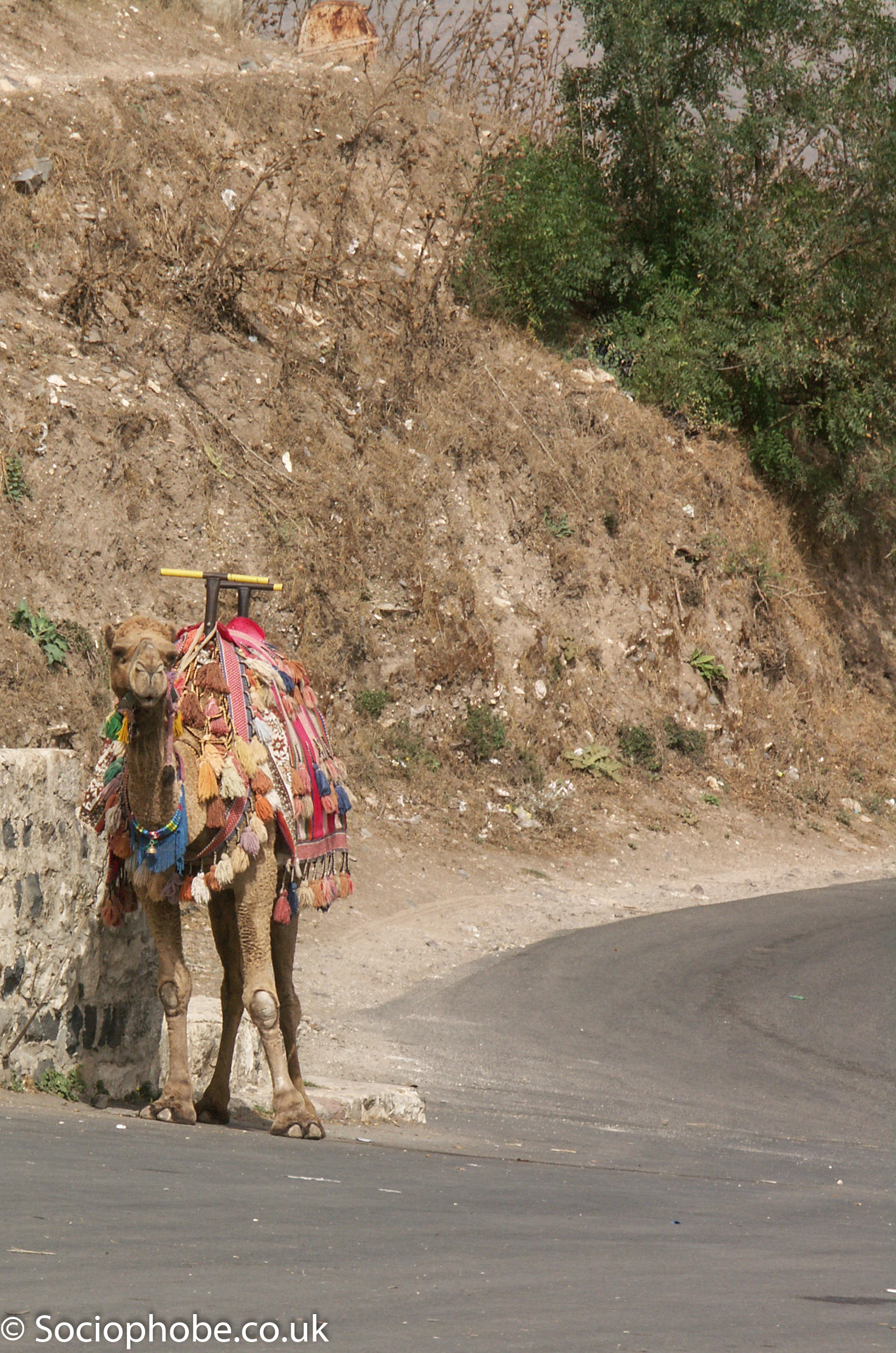
We drove through the nearby village, very run down and poor, with people offering donkey or camel rides to the castle. We then continued on to Palmyra. It was about three hours drive along very straight roads with the scenery gradually changing to rocky and barren desert with very occasional bits of scrub.
There was lots of rubbish on the verges and the road was in atrocious condition, we’d literally be thrown out of our seats on occasion. Once we had to veer into the desert as an oncoming coach was on our side of the road and wouldn’t budge!
We passed lots of small bedu camps (small camps of Bedouin rather than camps of small Bedouin ….) with herds of goats and sheep. There were also several large convoys of trucks heading in to Iraq.
Palmyra is a trading city that became fabulously wealthy in Roman times, using it’s oasis location as a meeting point for caravans from the east, heading west.
Palmyra: A bit of history
In 266AD the Sassanid Persians invaded Roman Syria and got as far as Antioch so the Romans asked Palmyra for help. Their king, Odanthus, led his armies against the Sassanids and defeated them. He was assasinated (court politics I think) so his wife, Zenobia, took over and led her armies against Rome. She conquered the whole of Egypt and syria and was heading into Asia Minor (Turkey) before the Romans forced her back. They eventually captured the city and depending who you believe, Zenobia either lived as a captive in Rome, commited suicide or was executed.
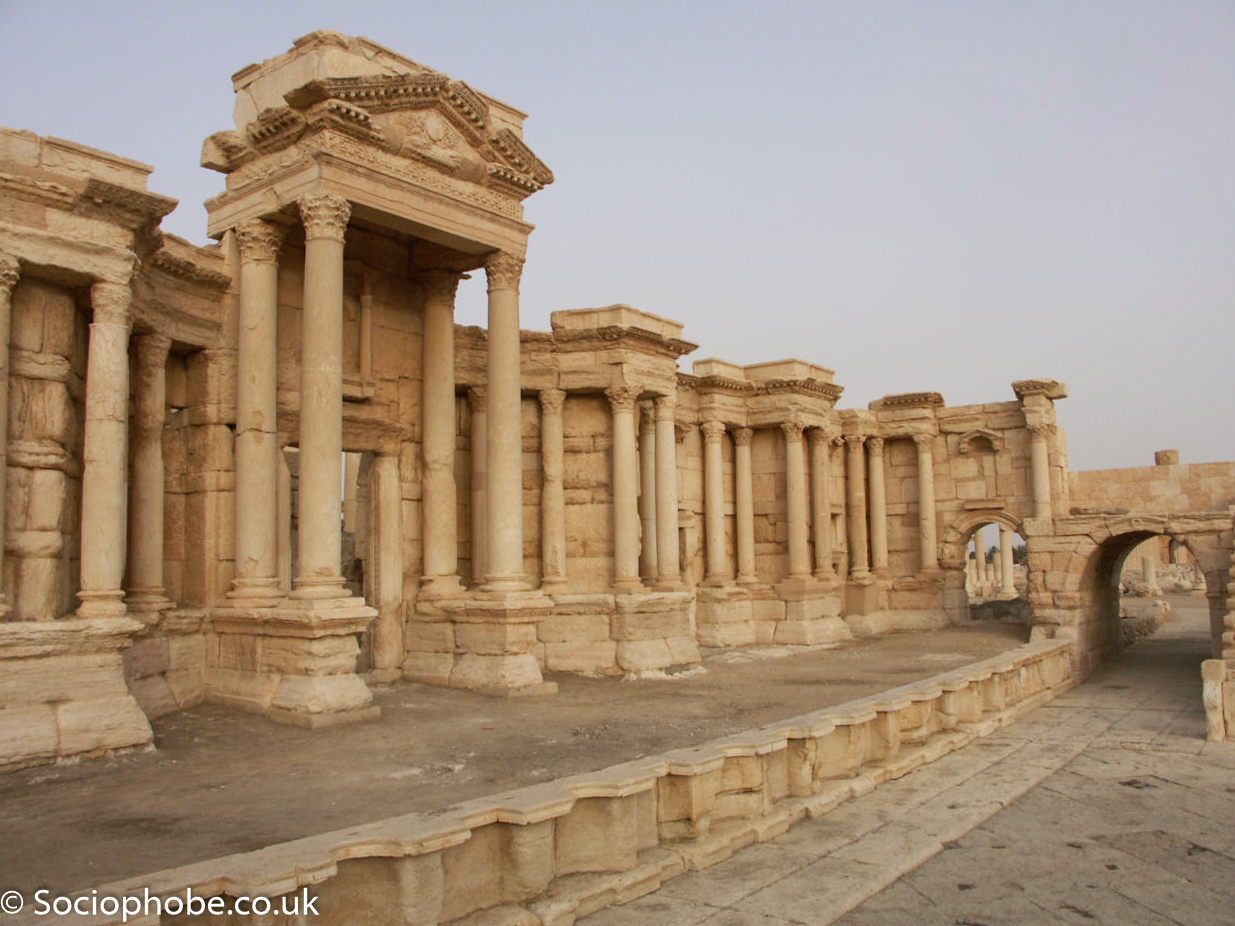
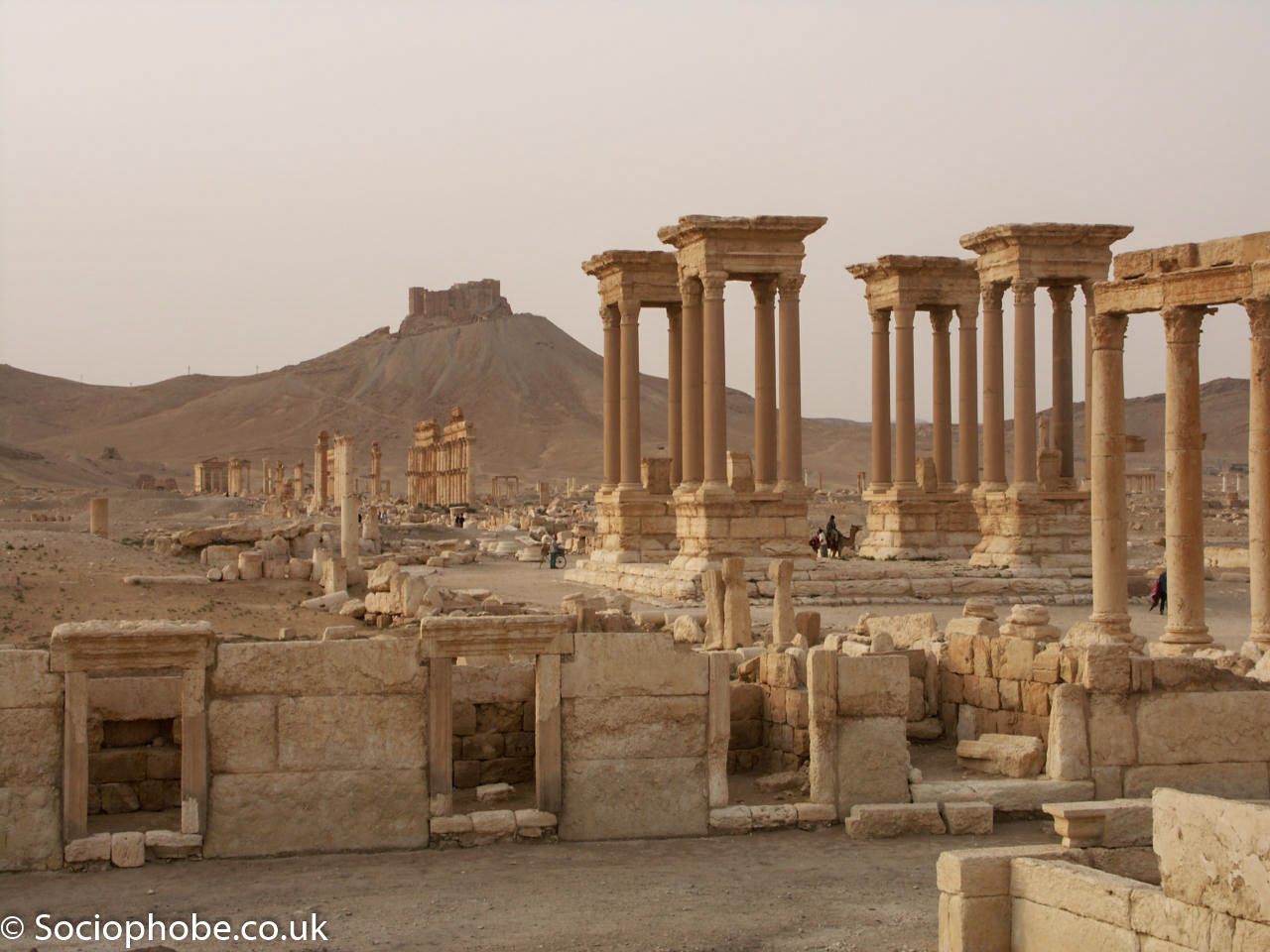
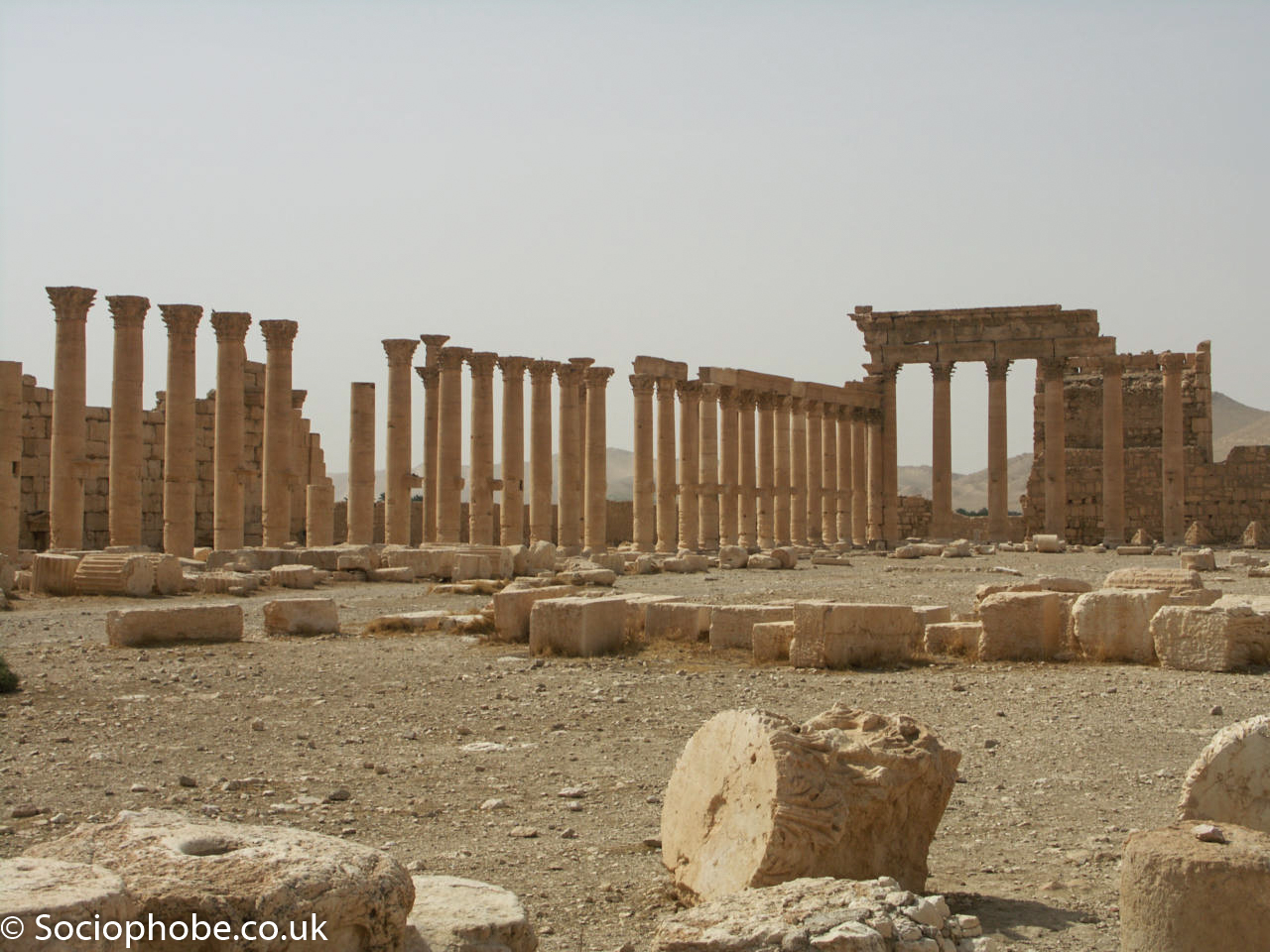
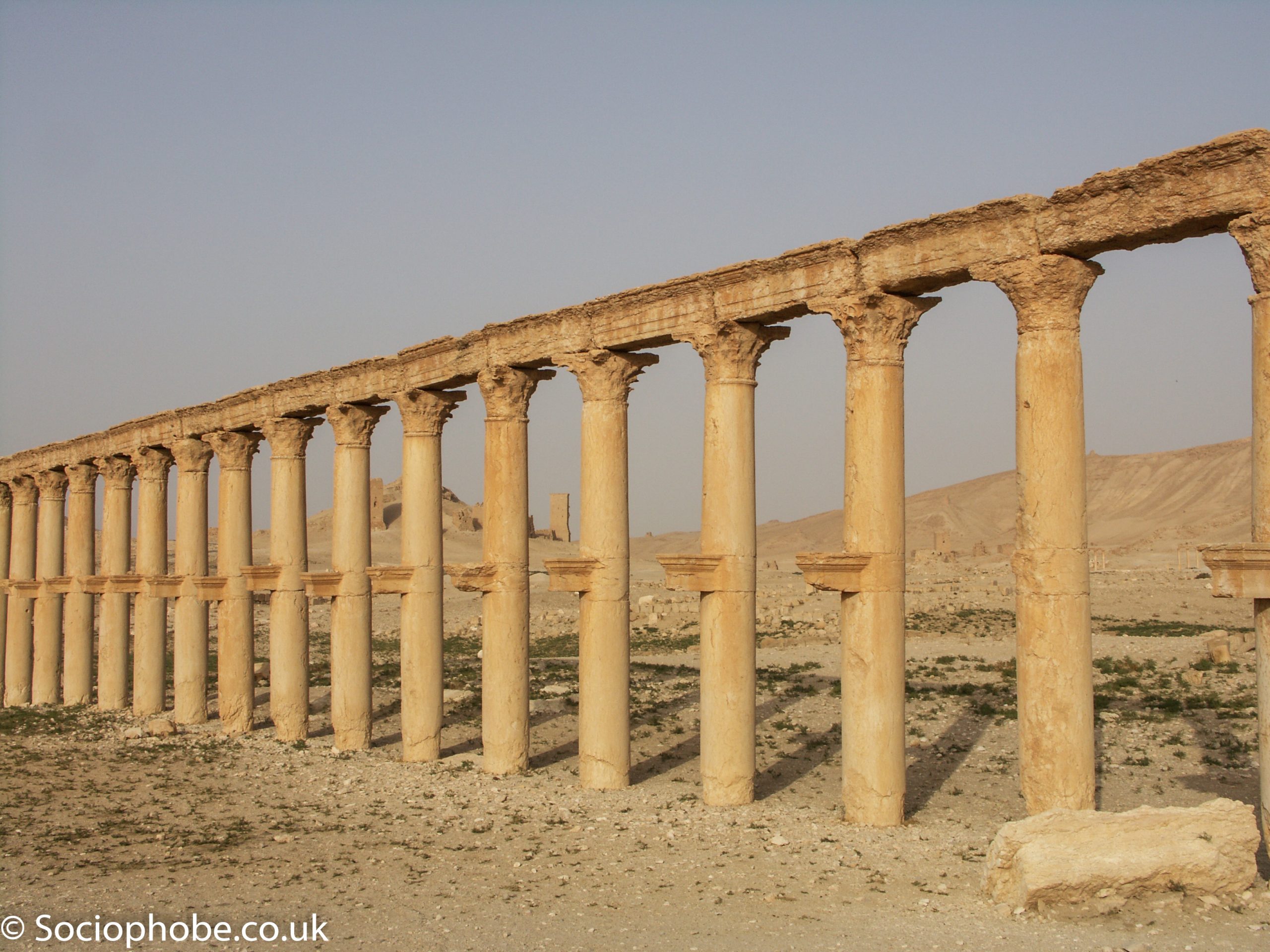
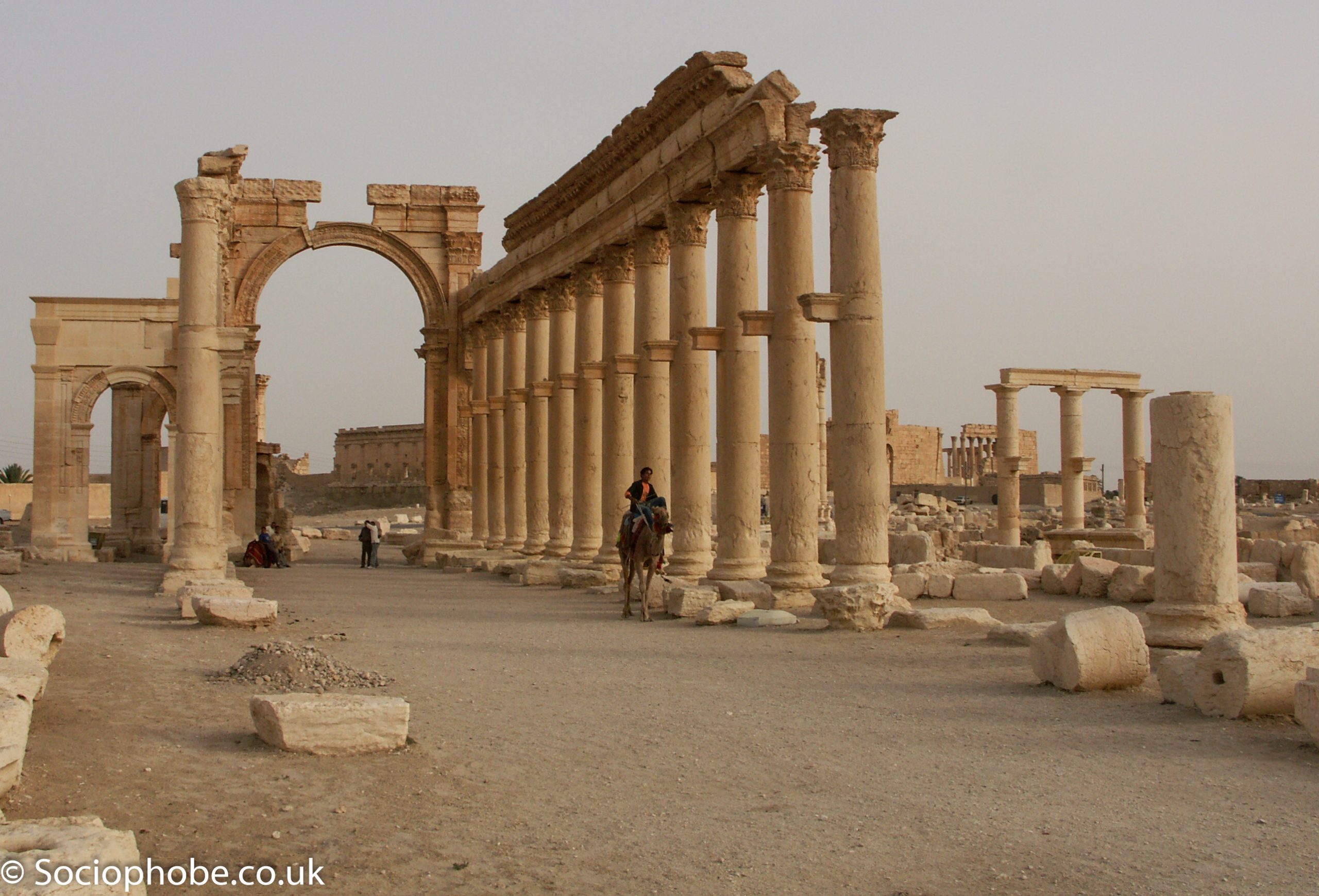
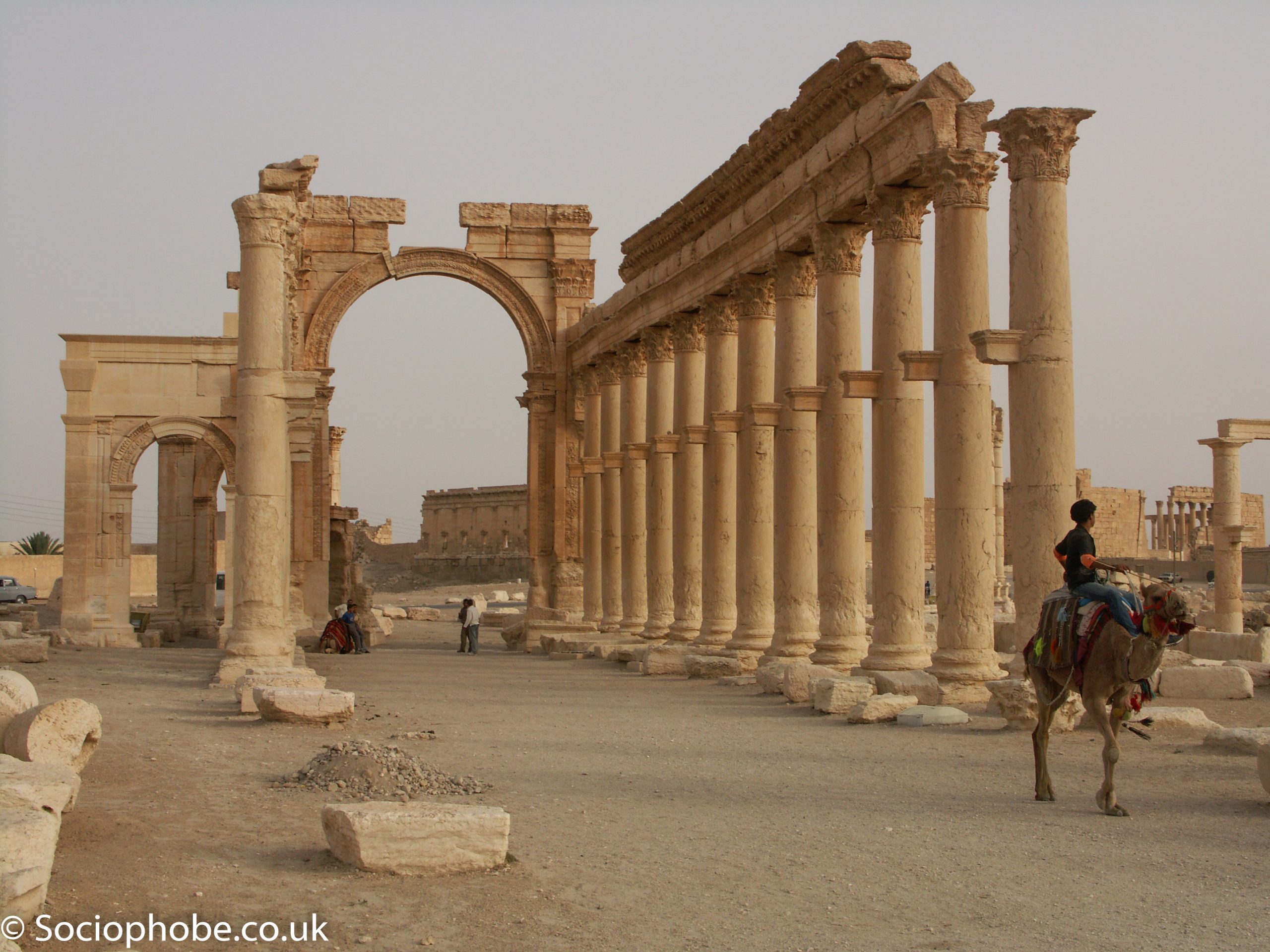
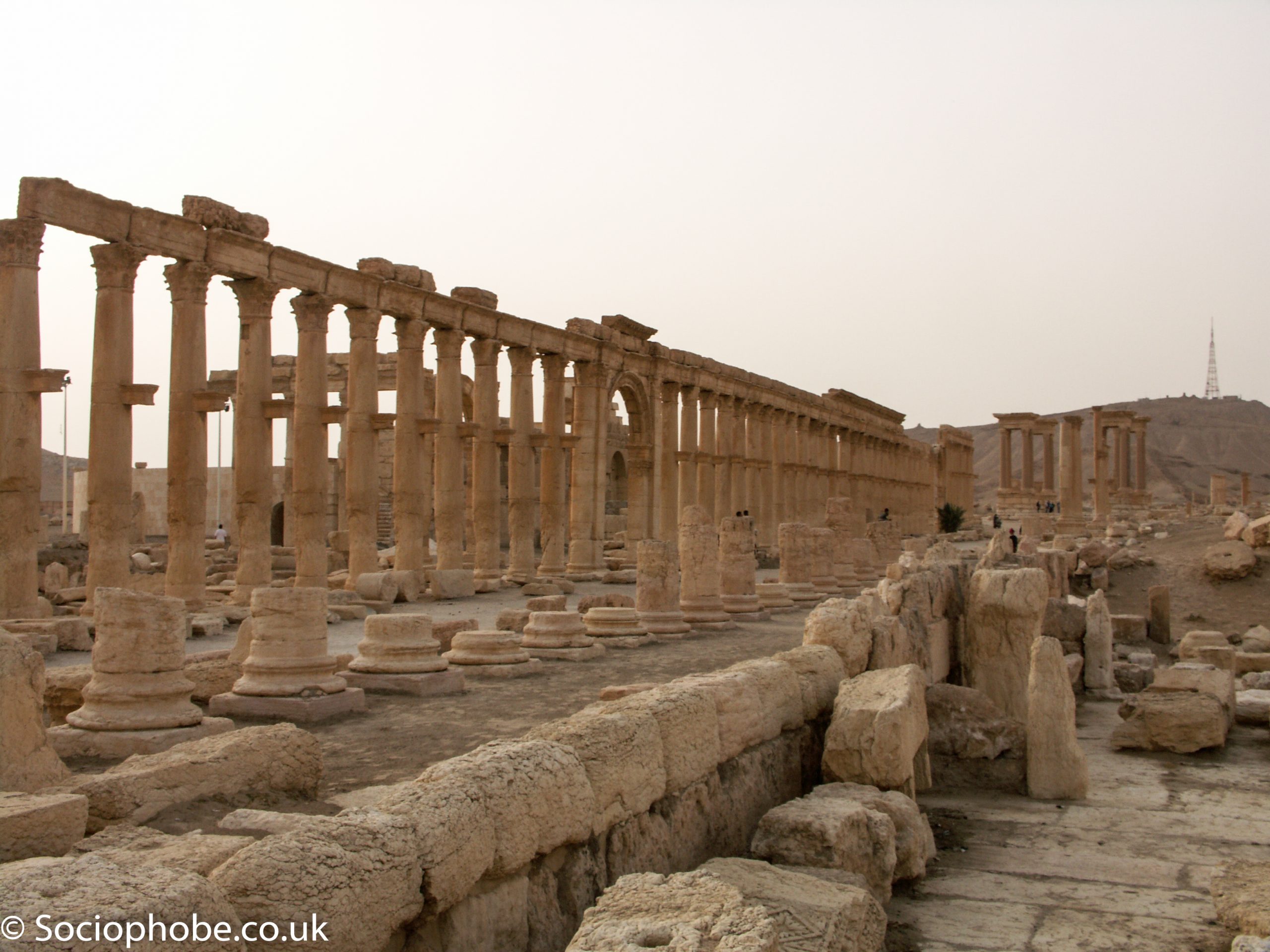
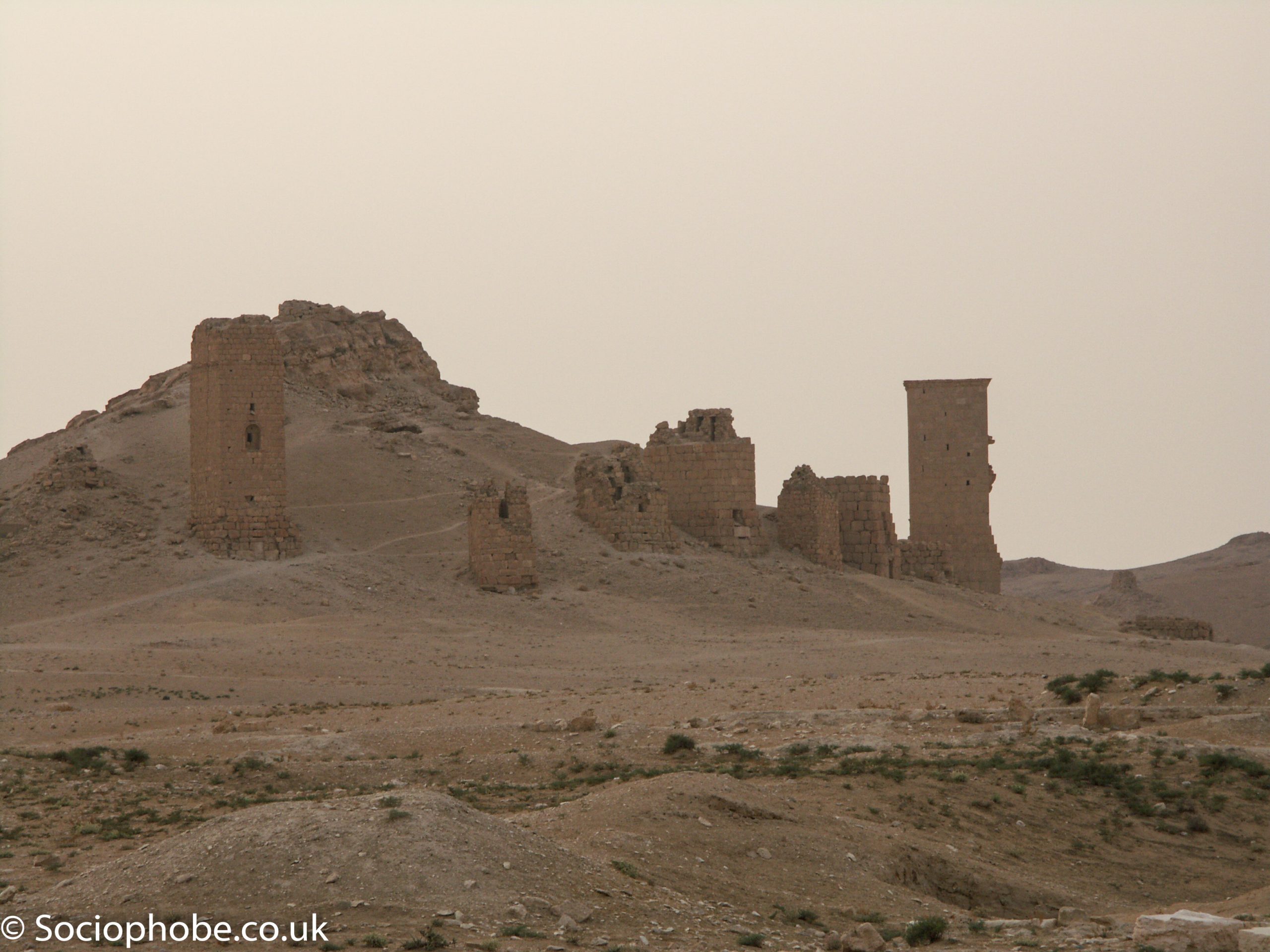
The famous tower tombs eventually came into view, then the Arab fort on the hillside and eventually the Roman site itself. It was a lot bigger than I expected and a lot better condition with rows of columns stretching into the desert.
As soon as we stopped the coach the hawkers started, selling postcards, trinkets, camel rides, headscarves etc I wandered around for a couple of hours and there were some amazing carvings and spectacular views. The theatre was excellent, although small and the main street must have been awesome when intact.
Syria: Palmyra ruins
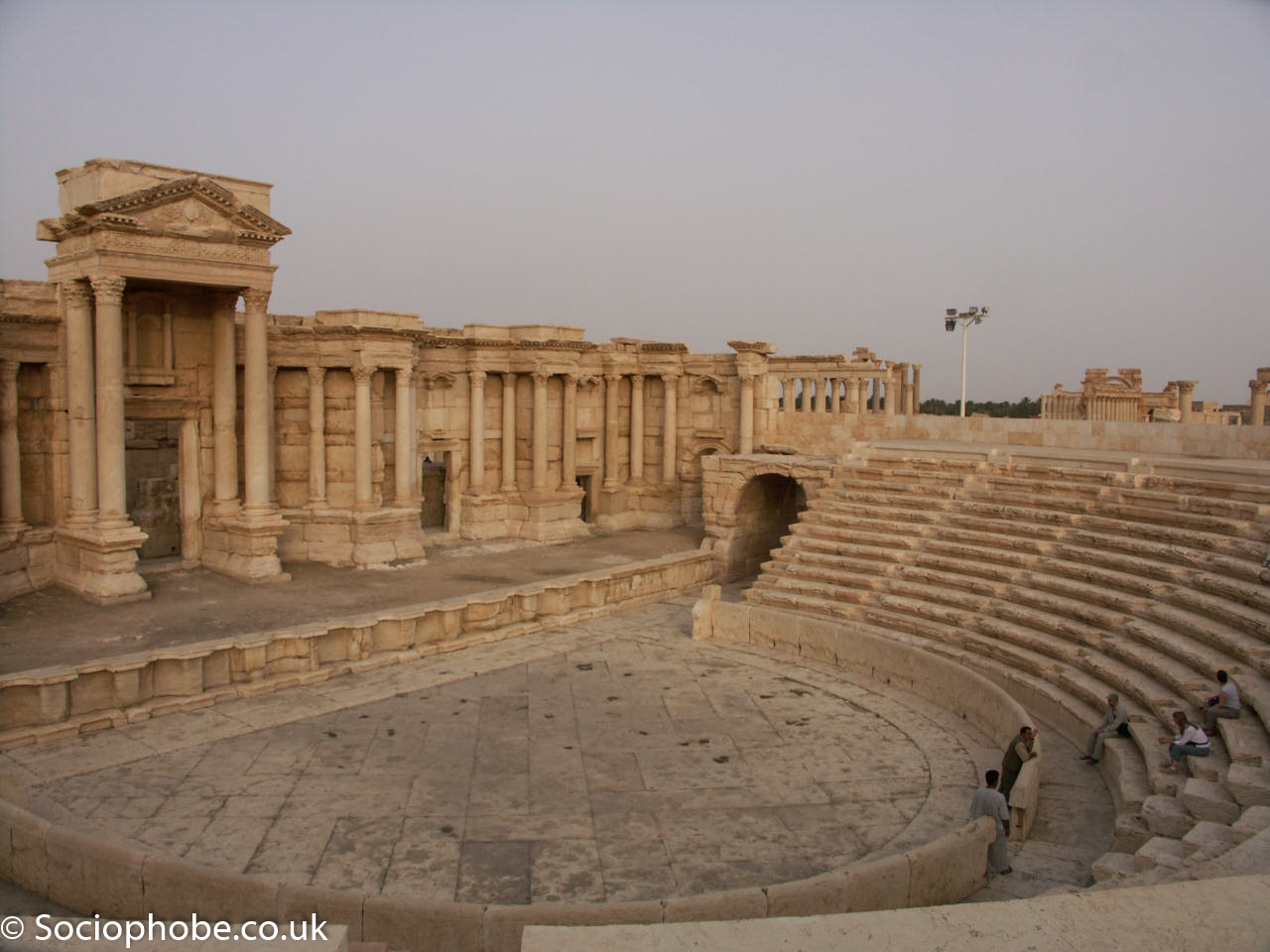
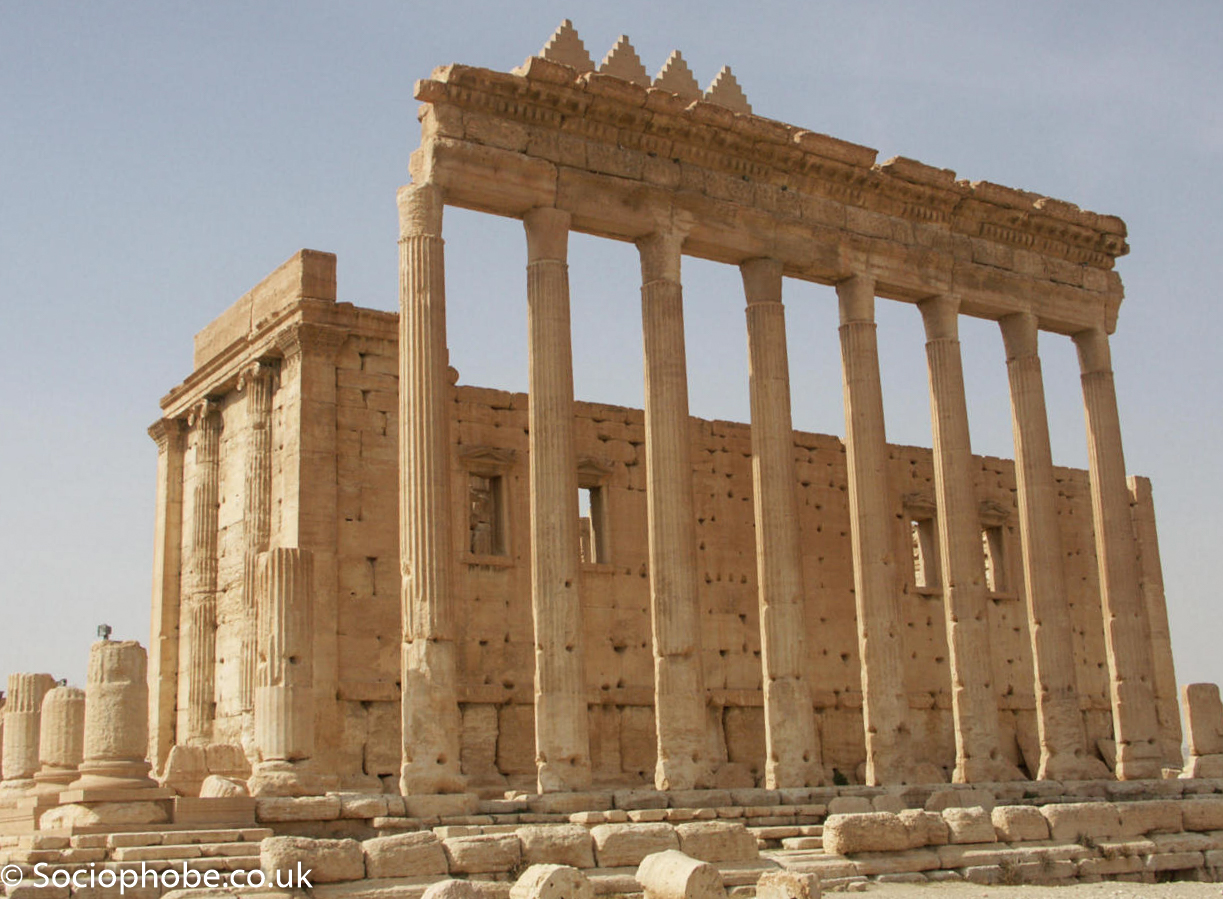
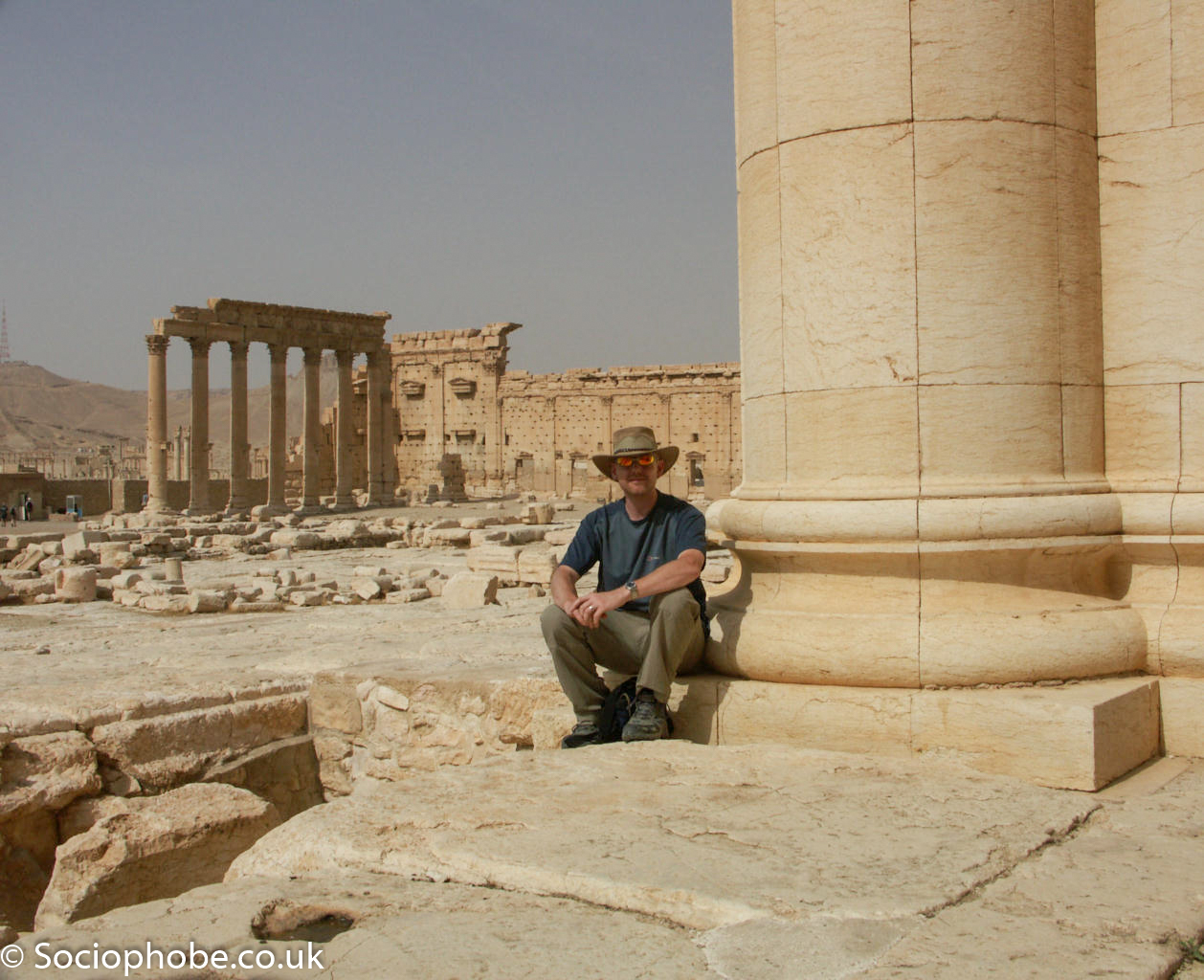
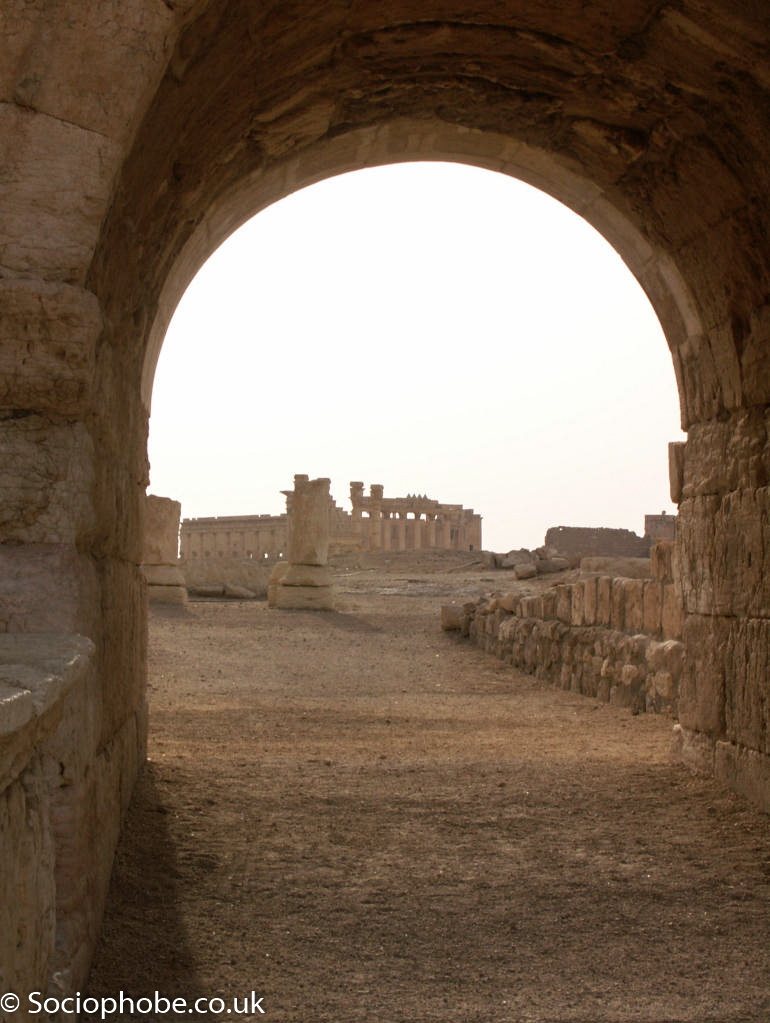
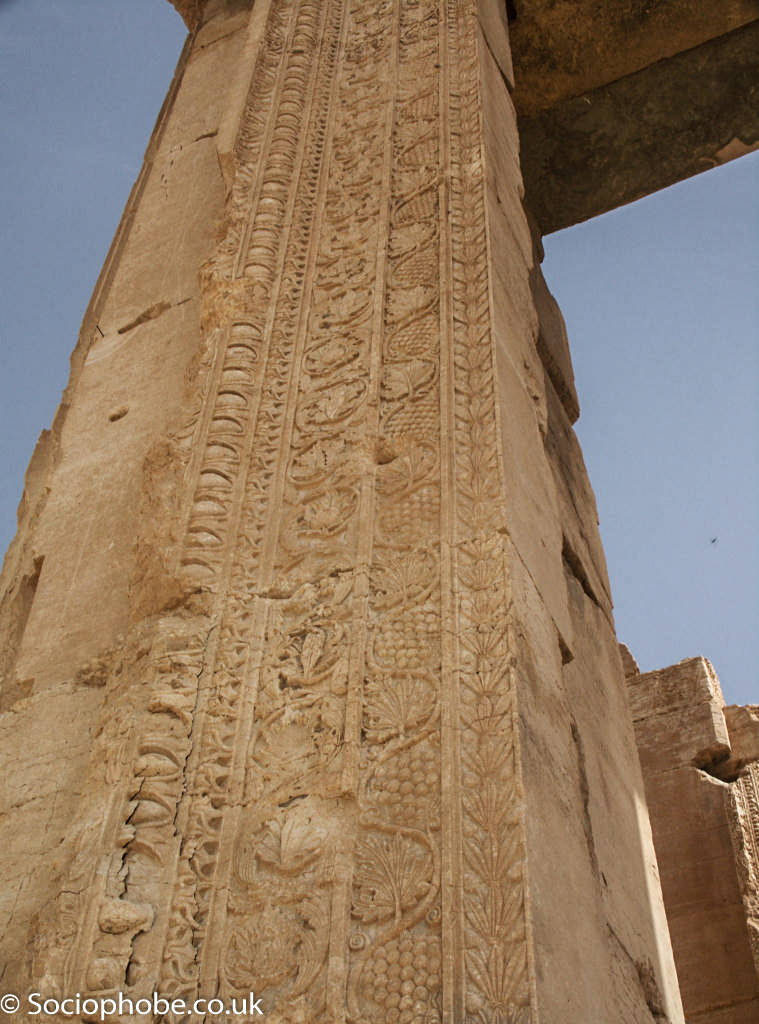
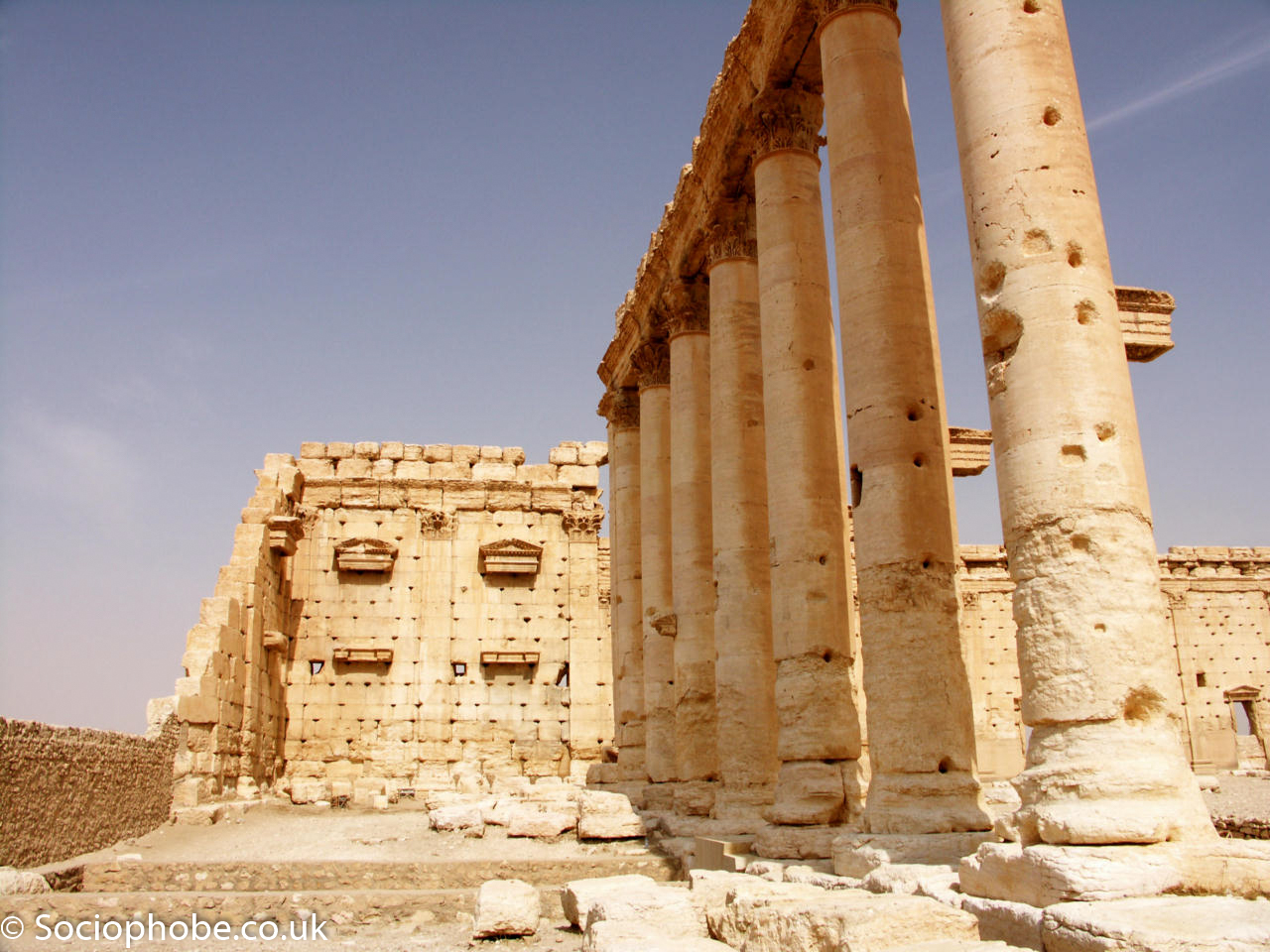
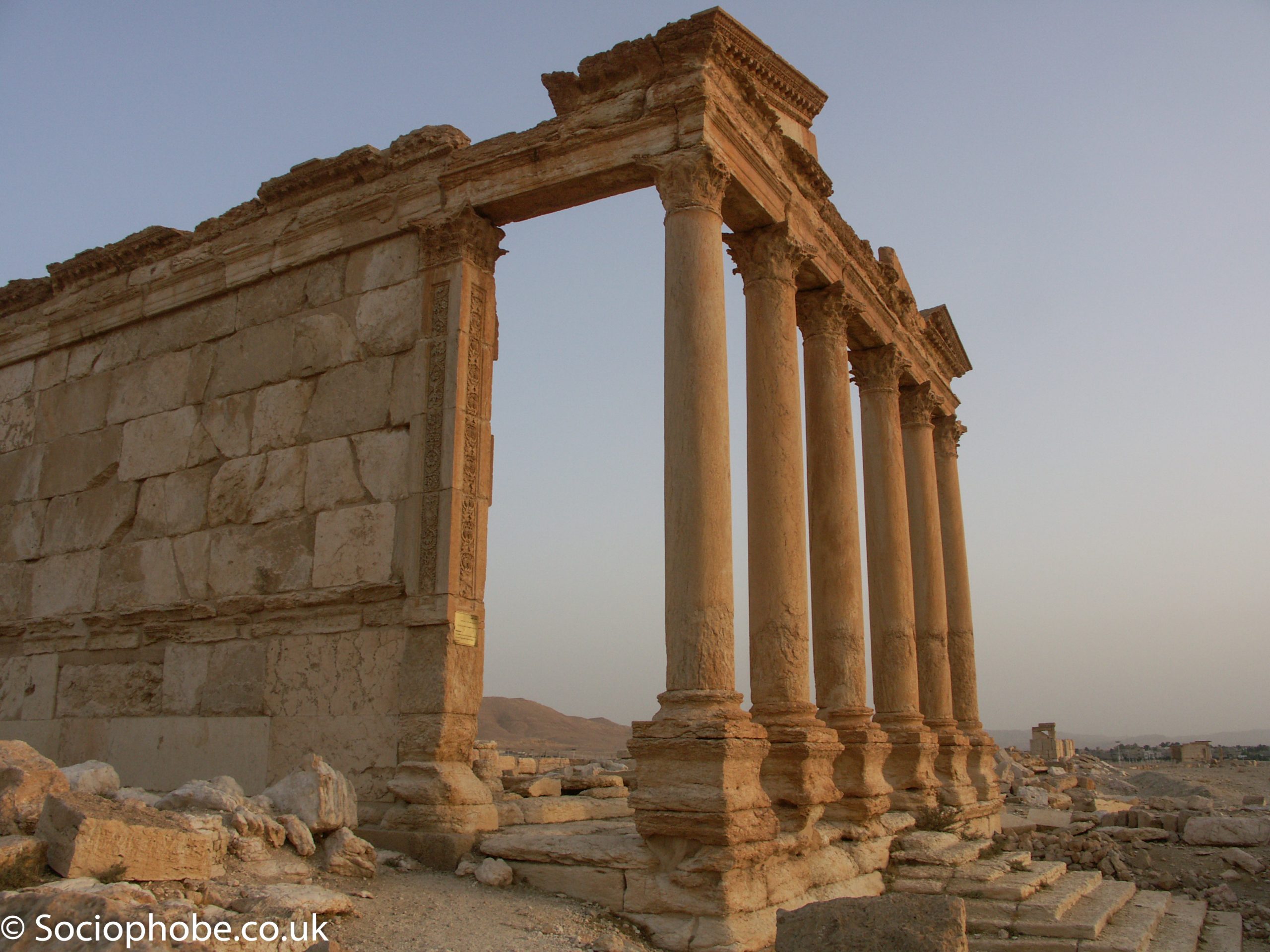
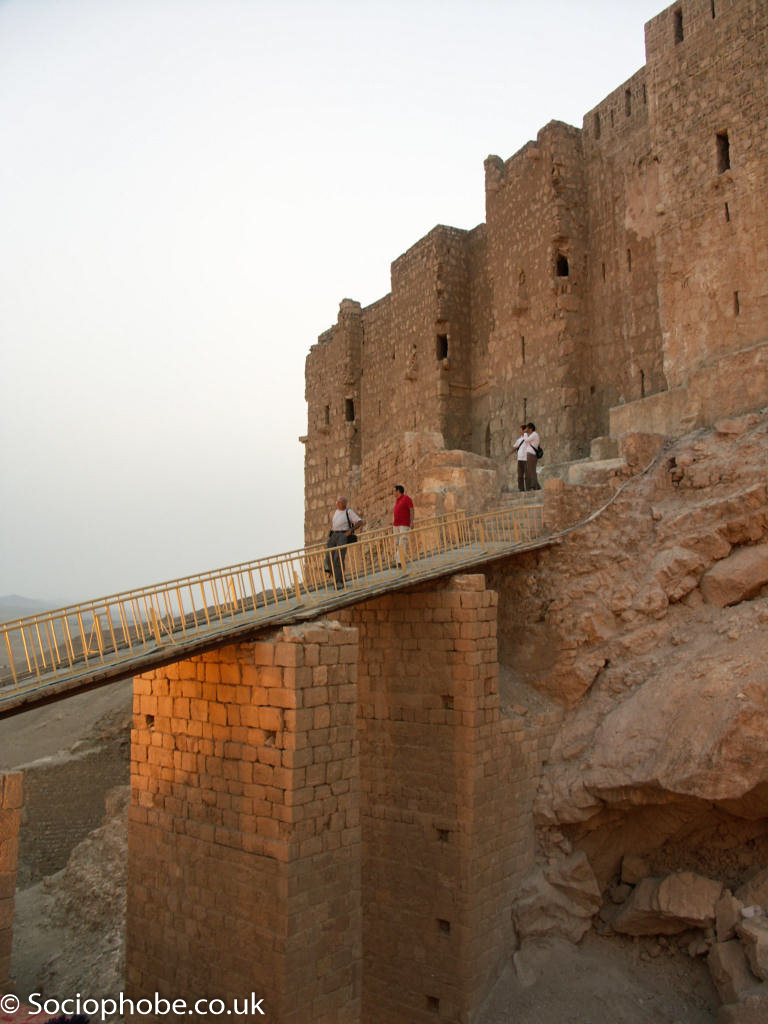
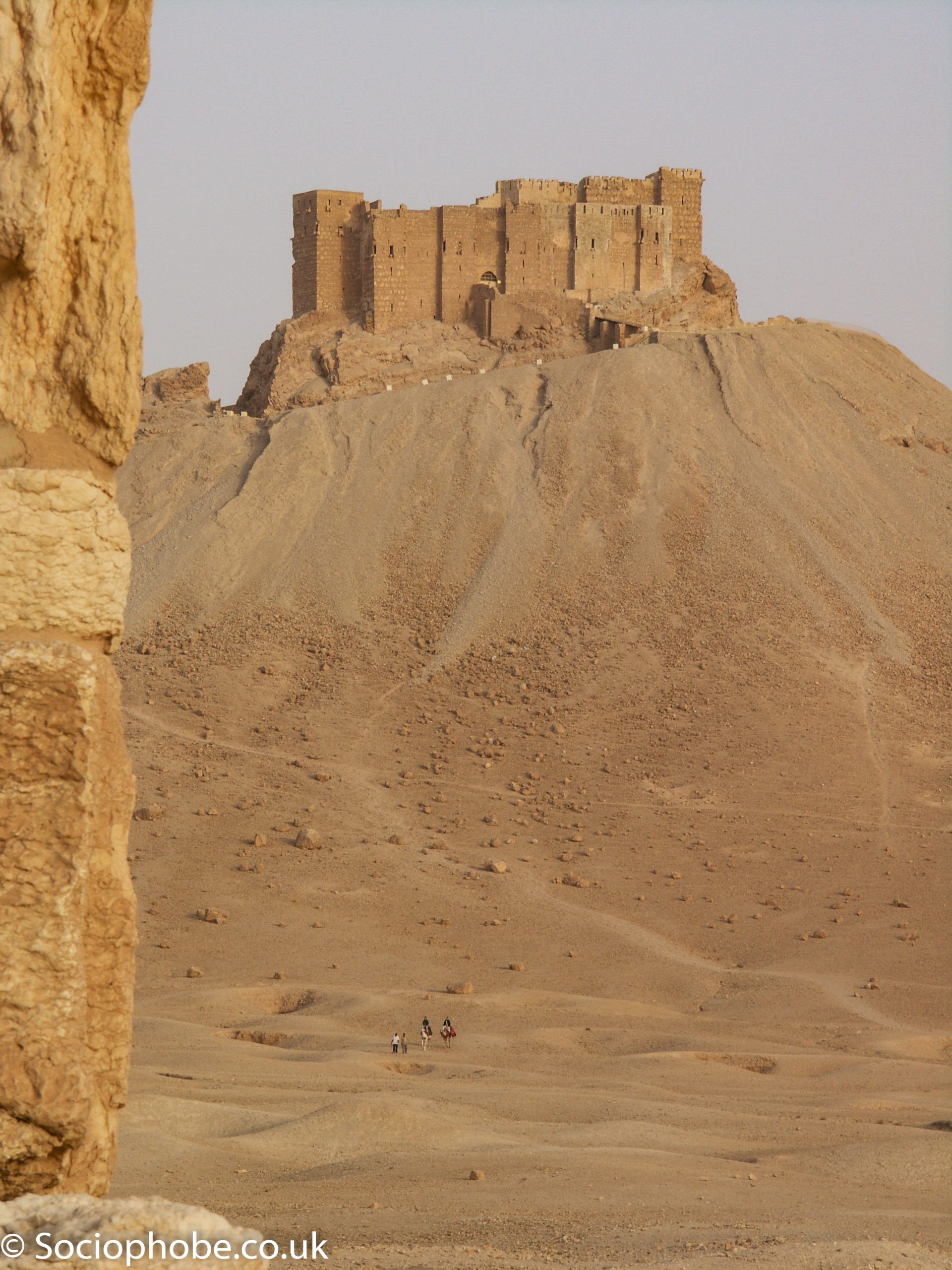
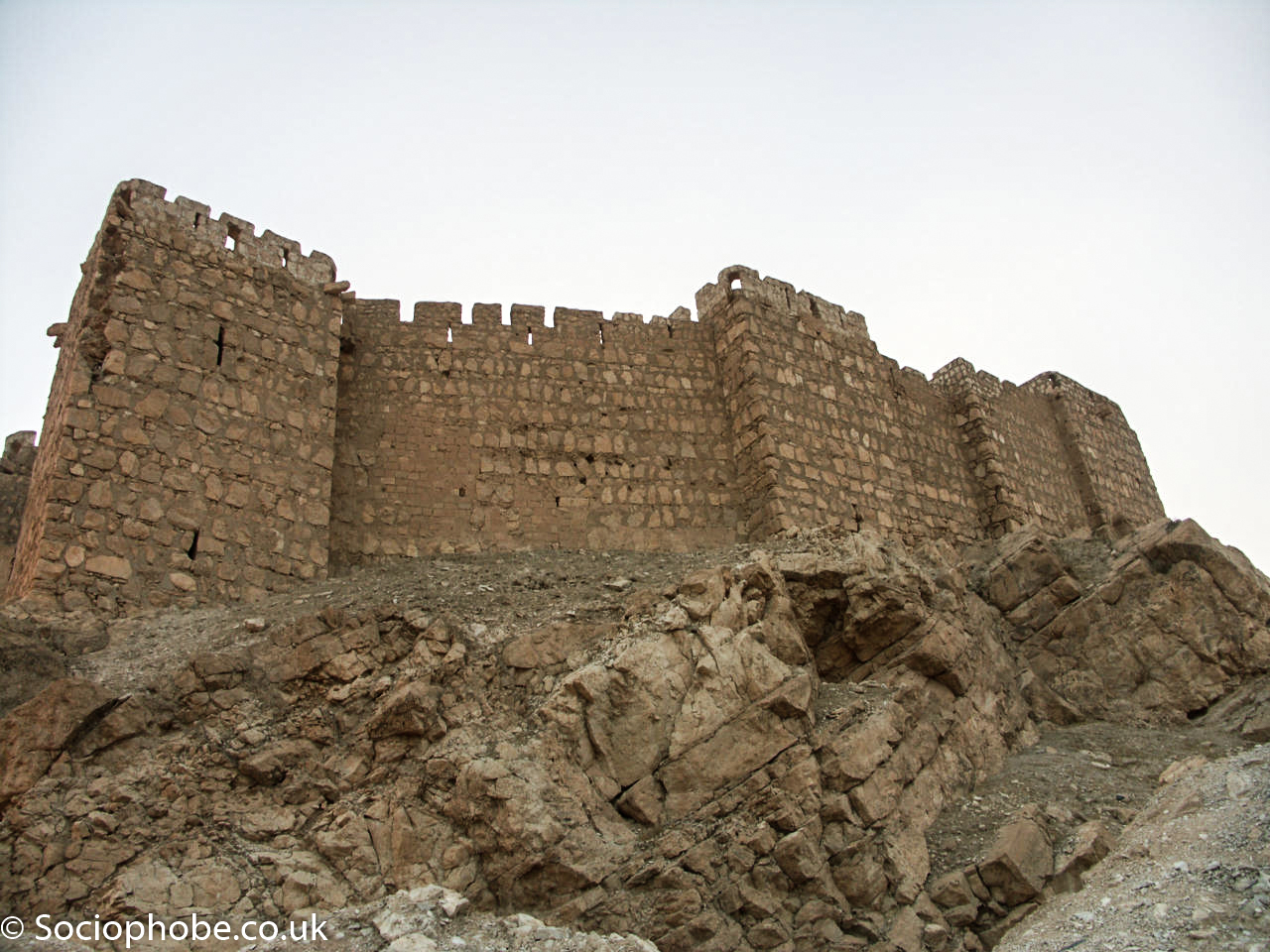
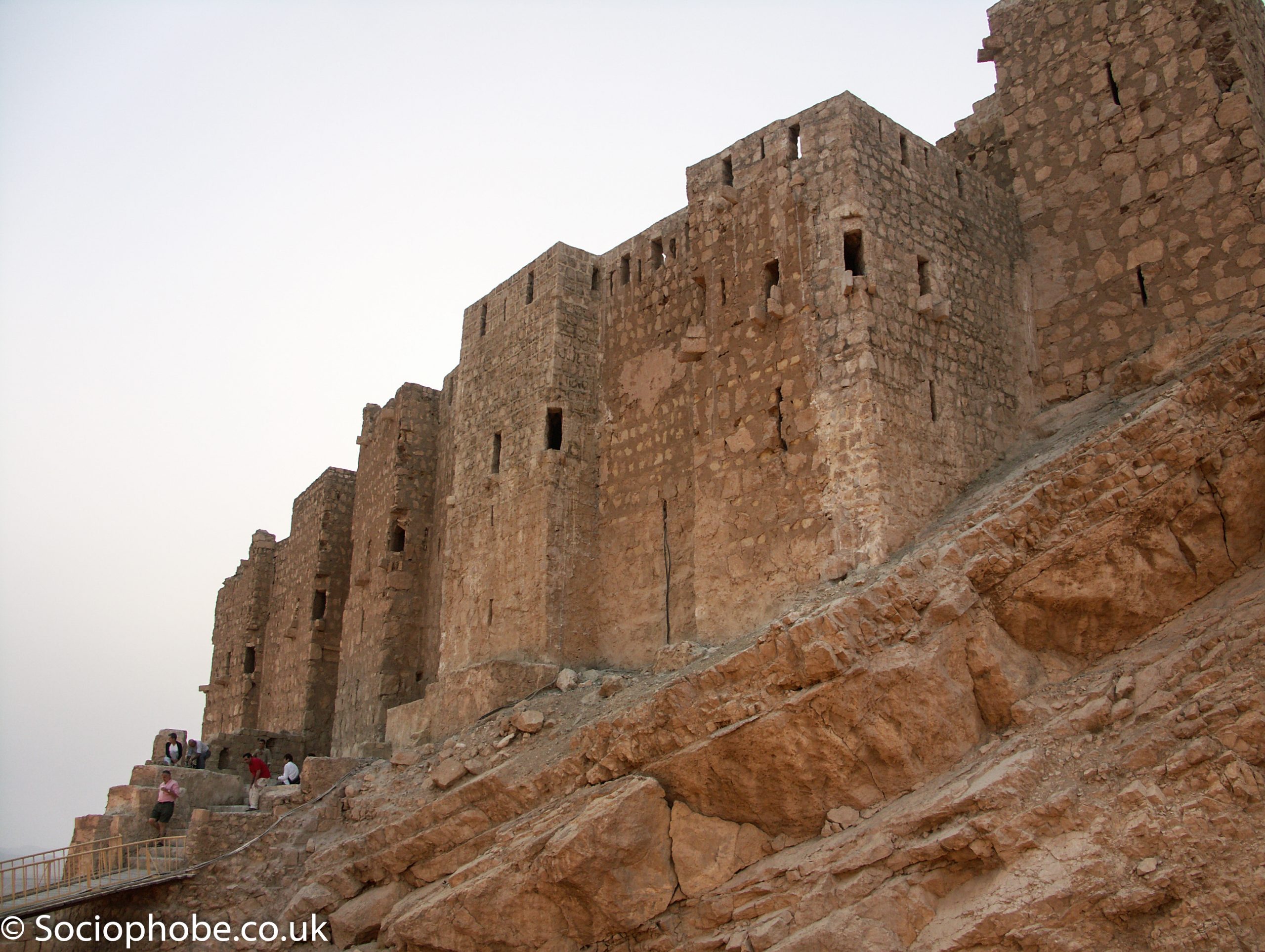
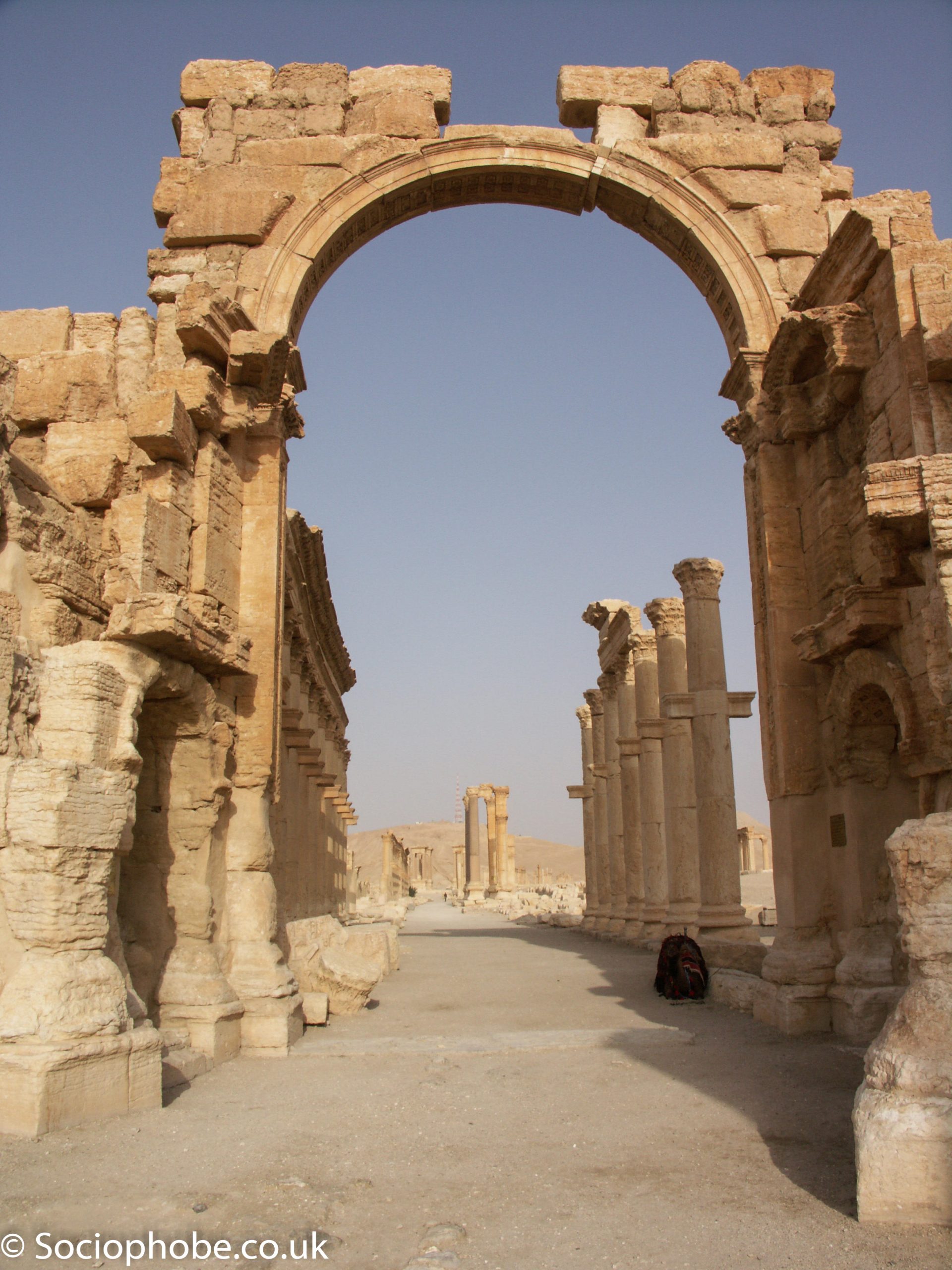
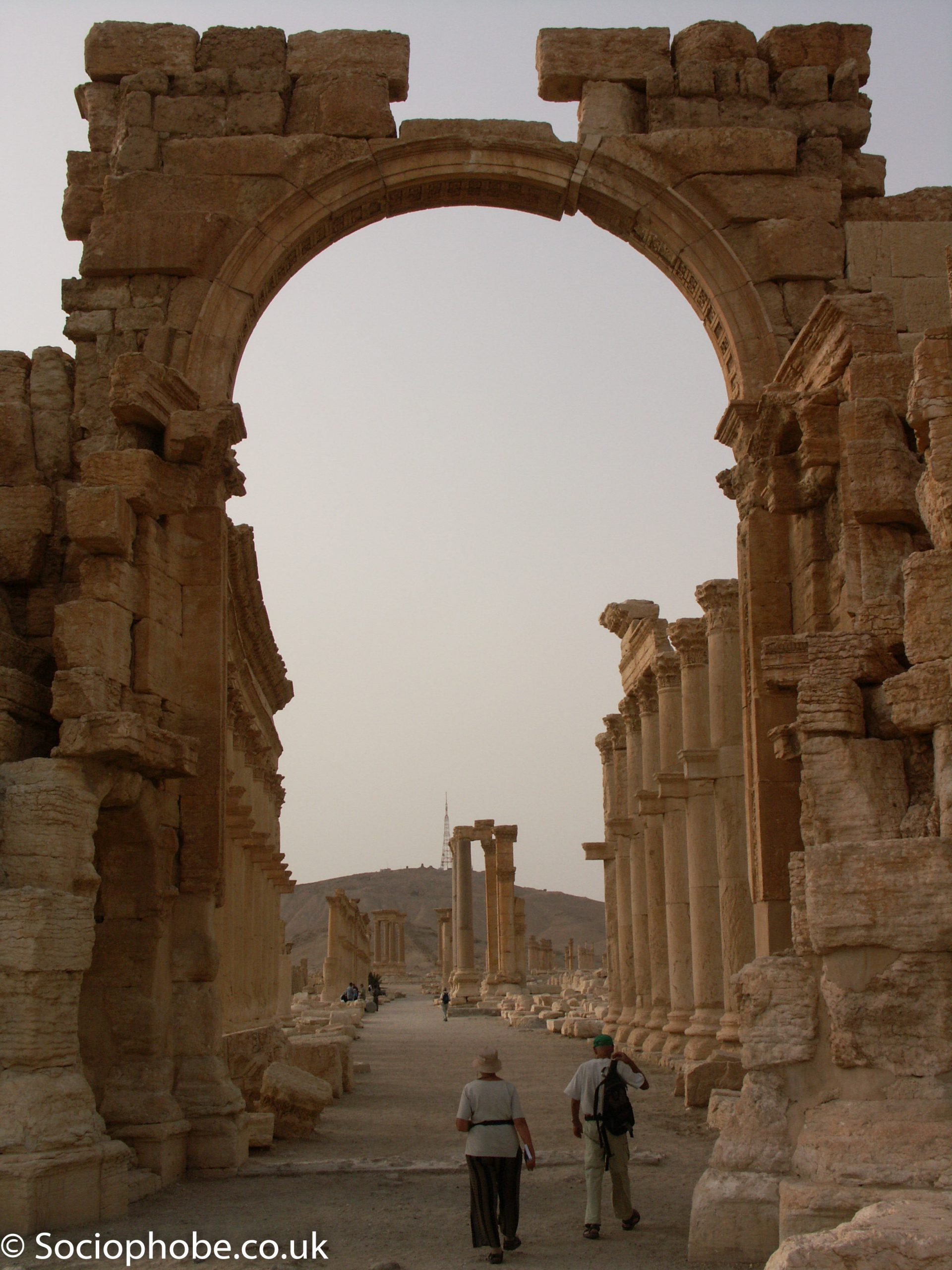
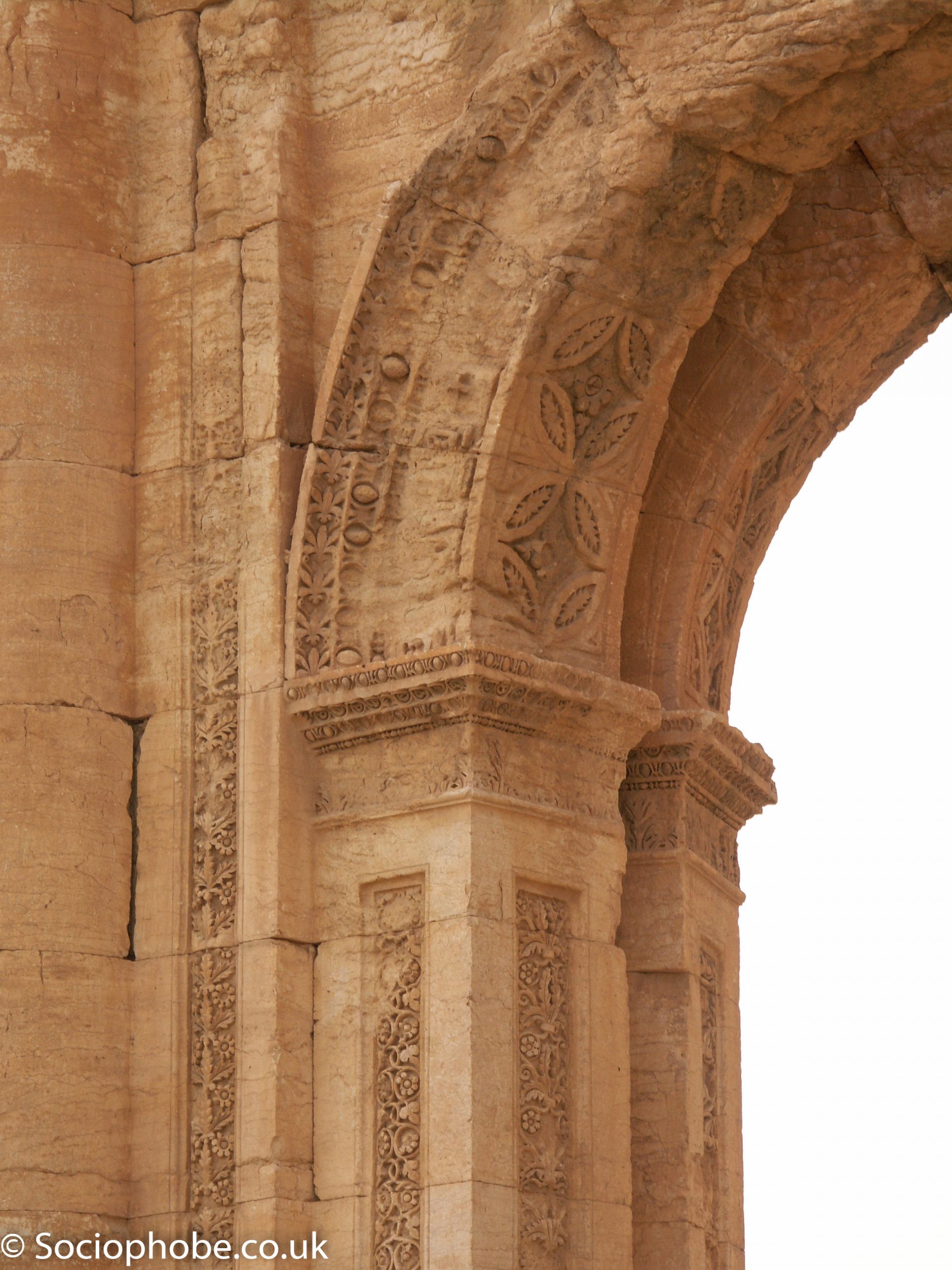
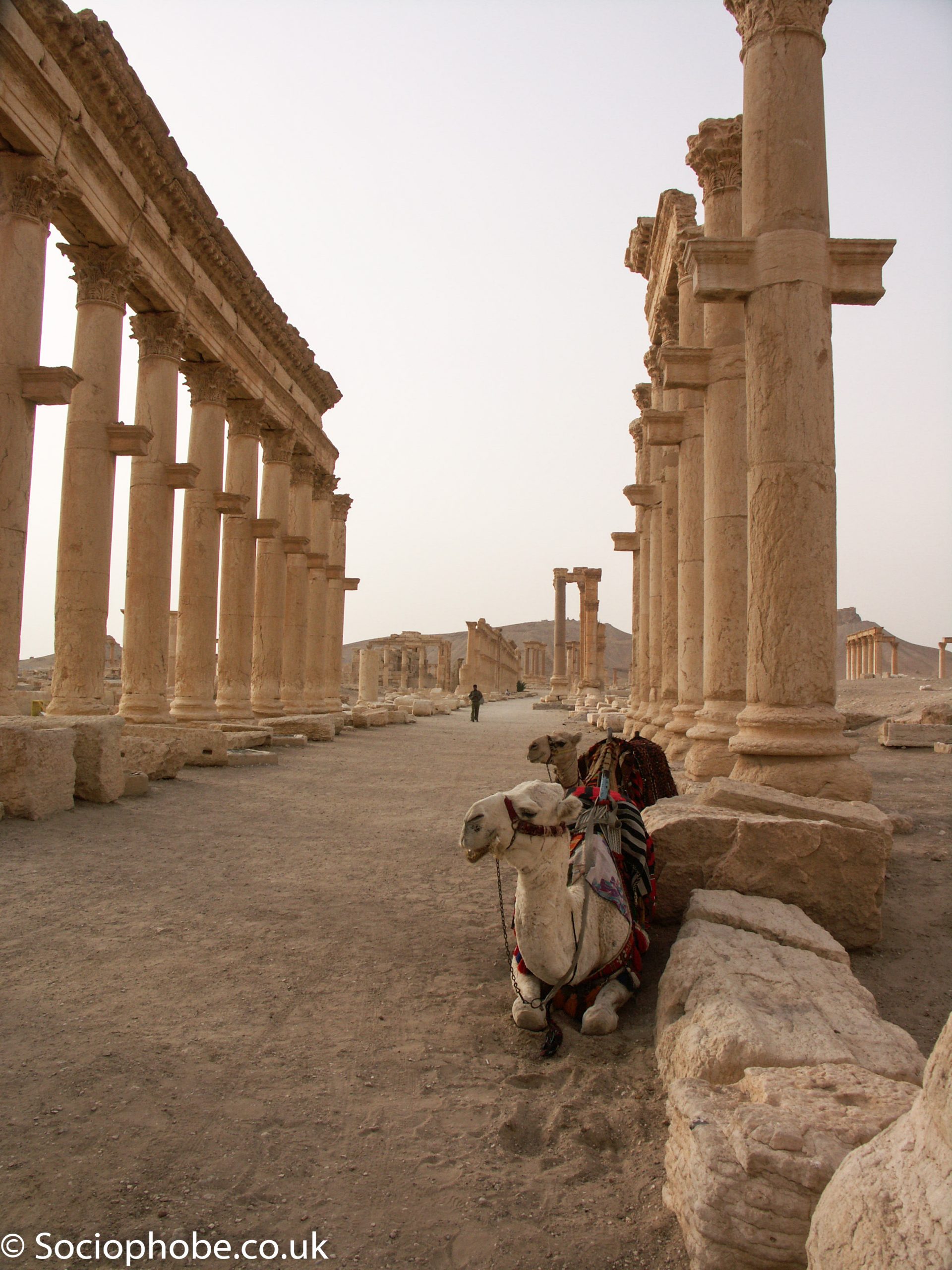

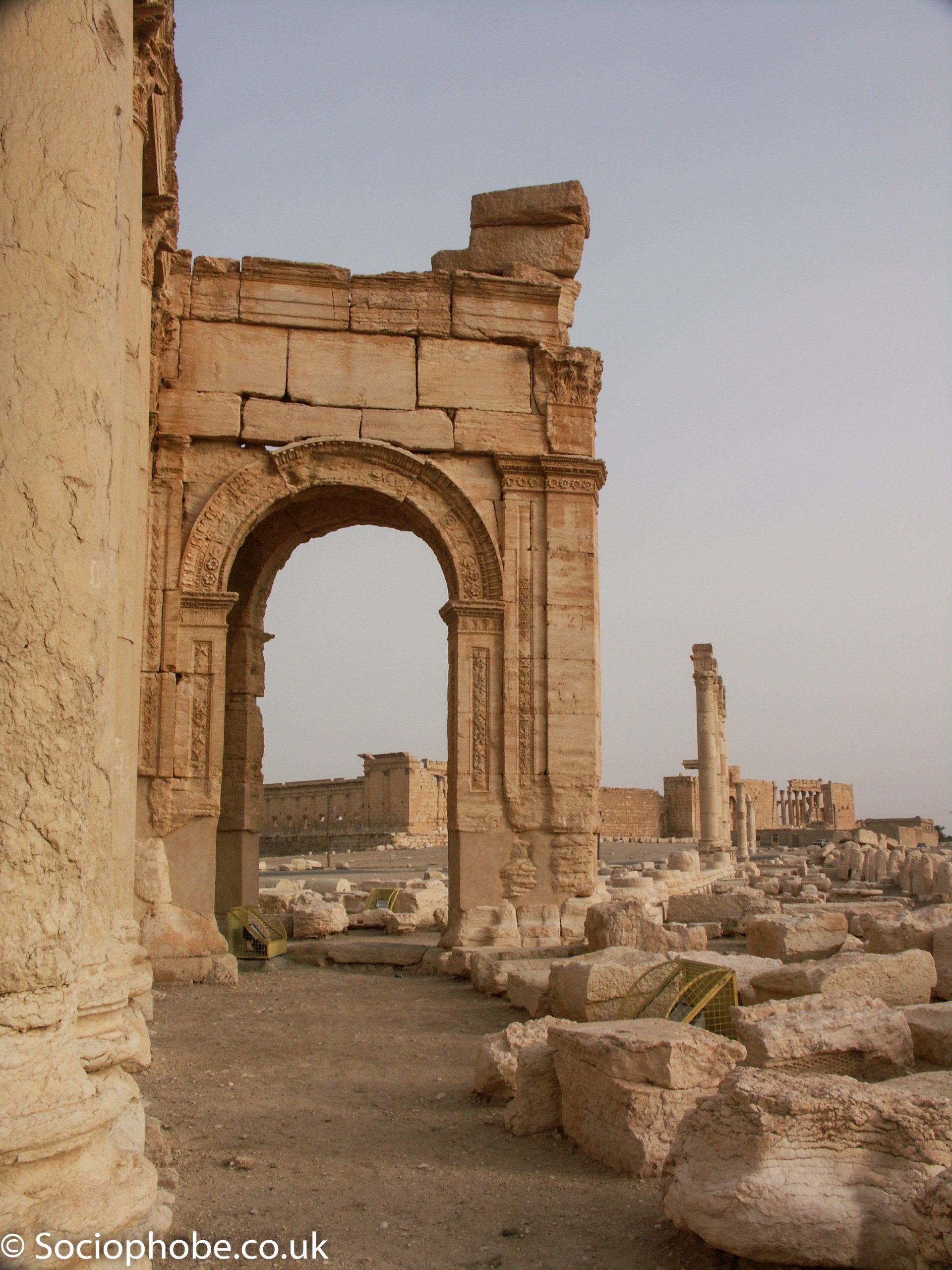
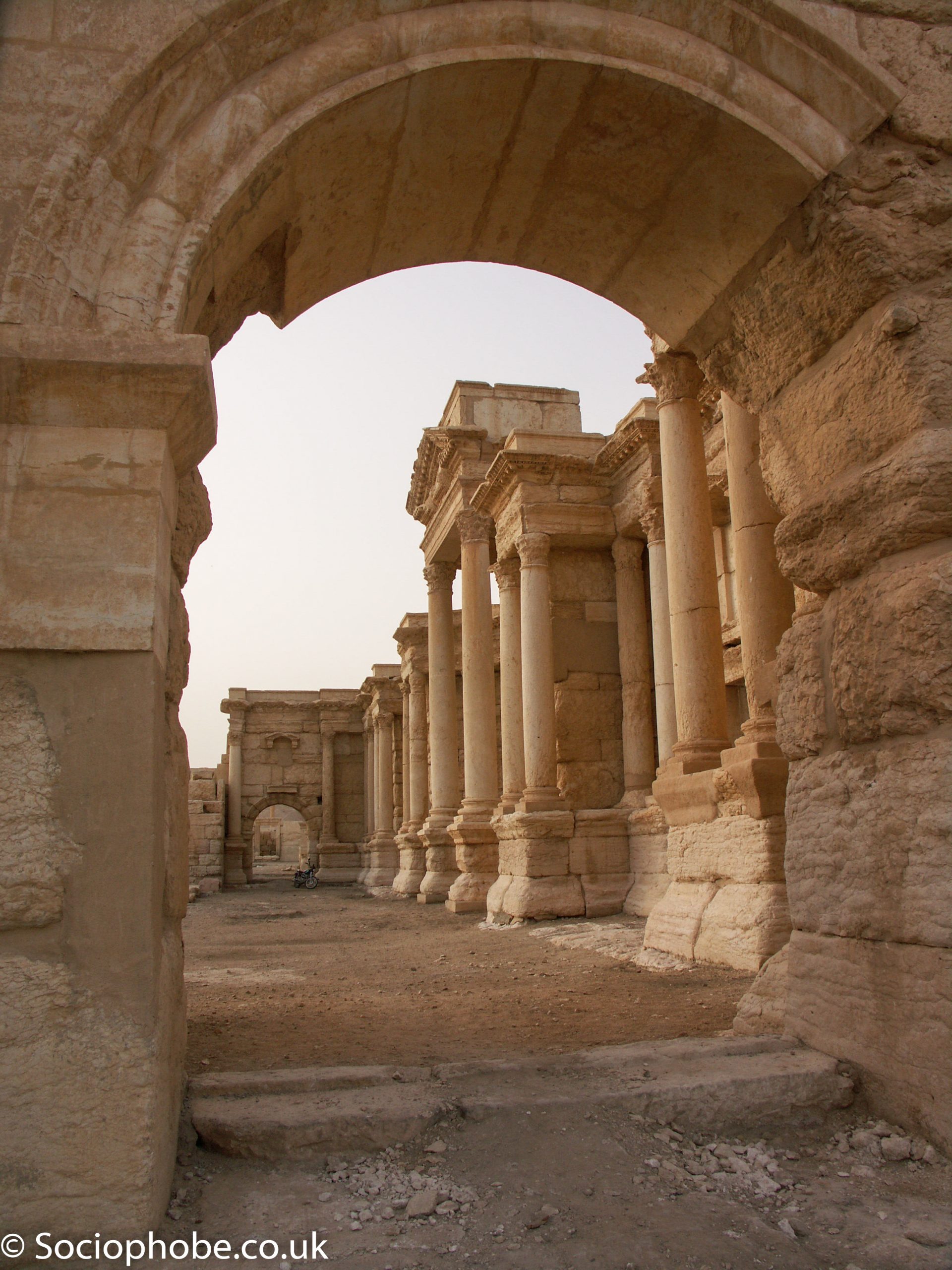
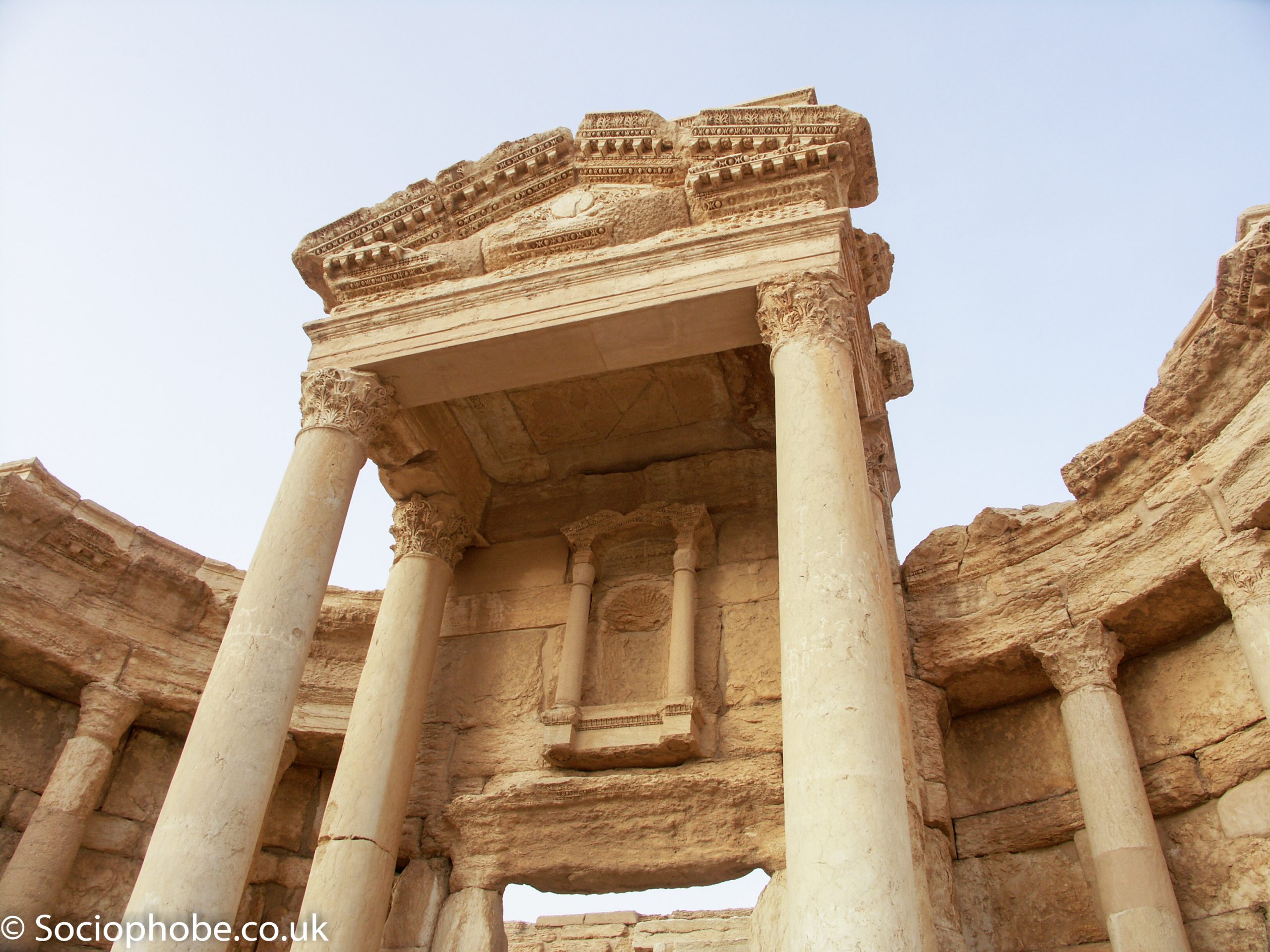
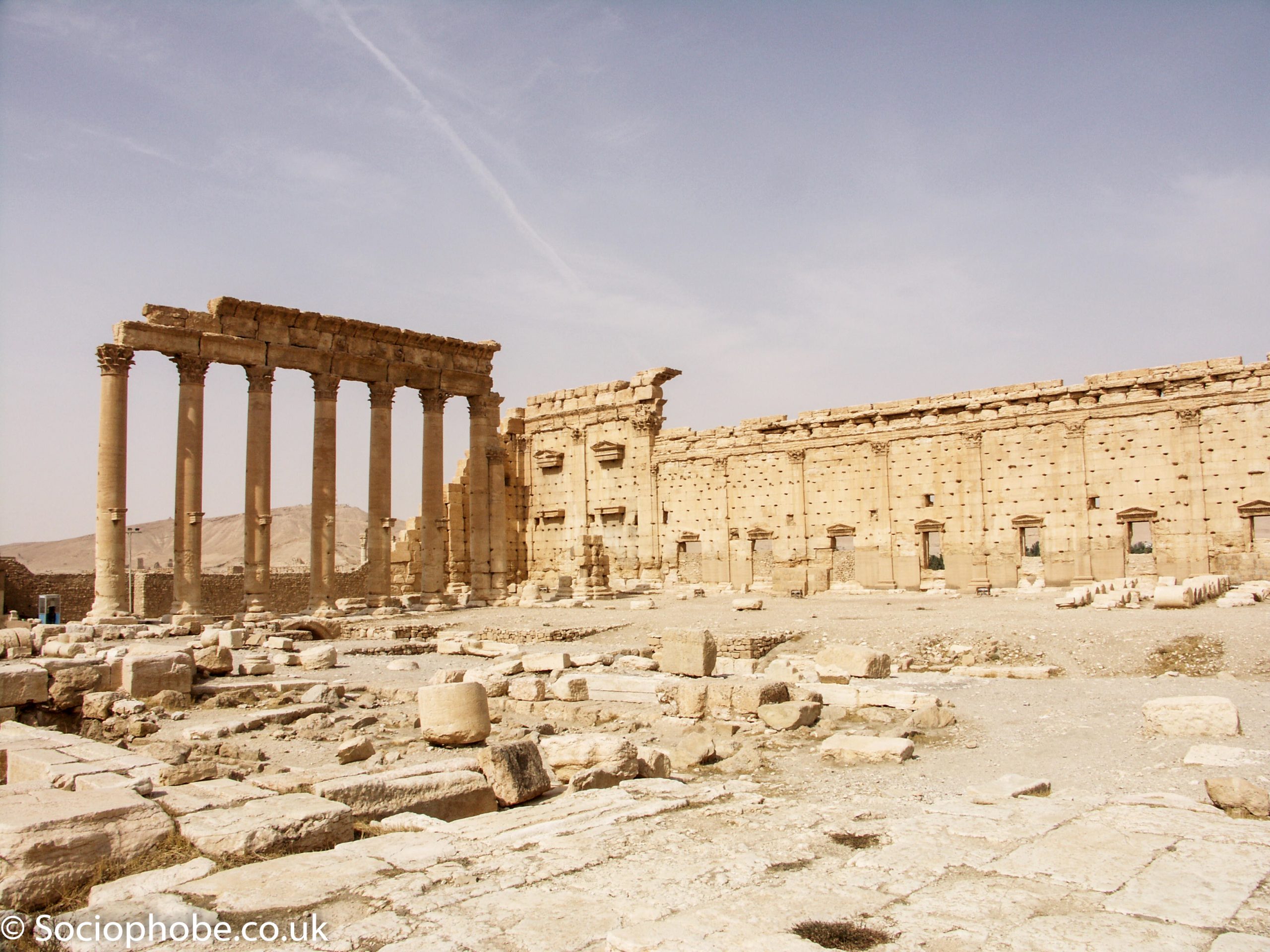
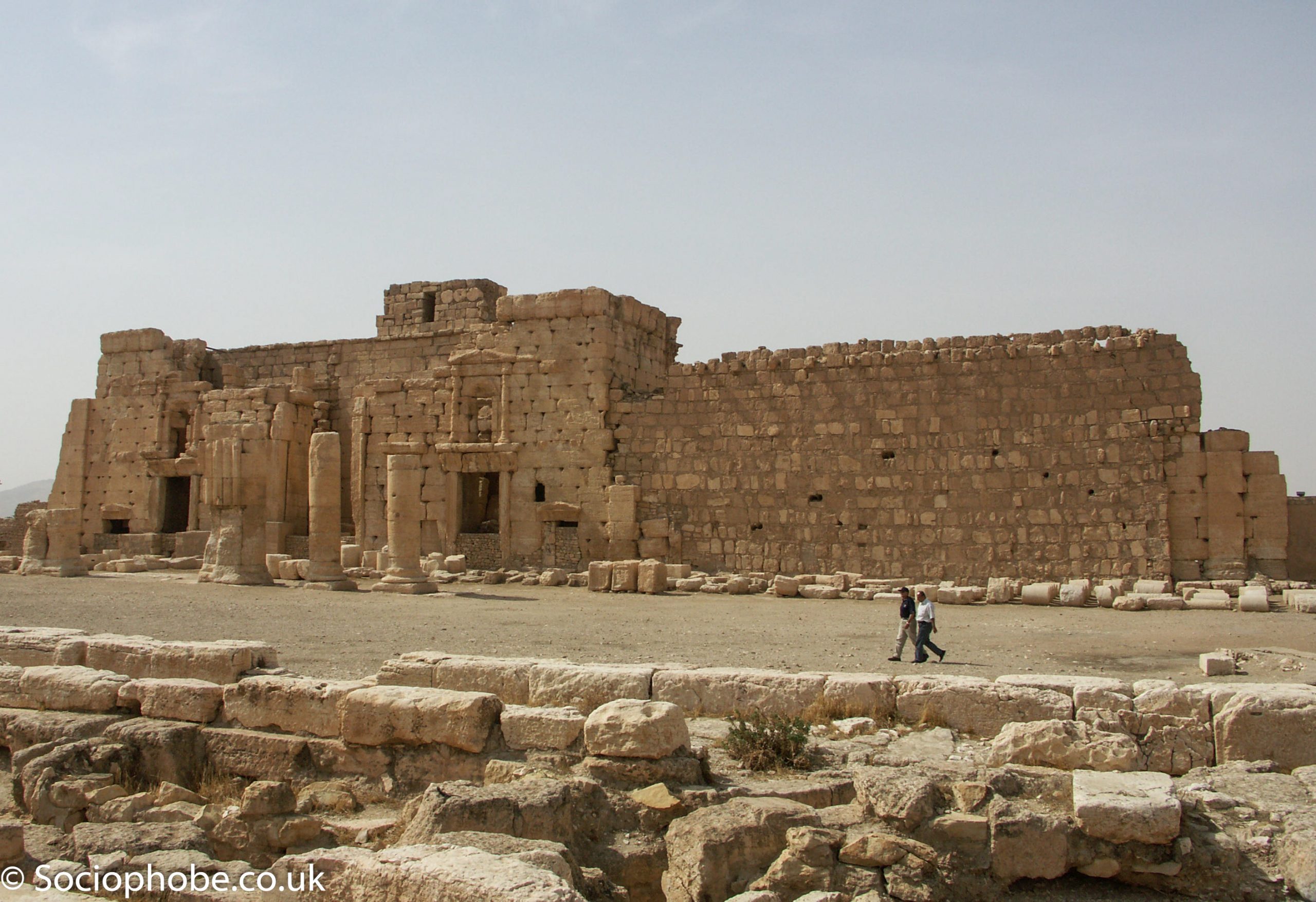
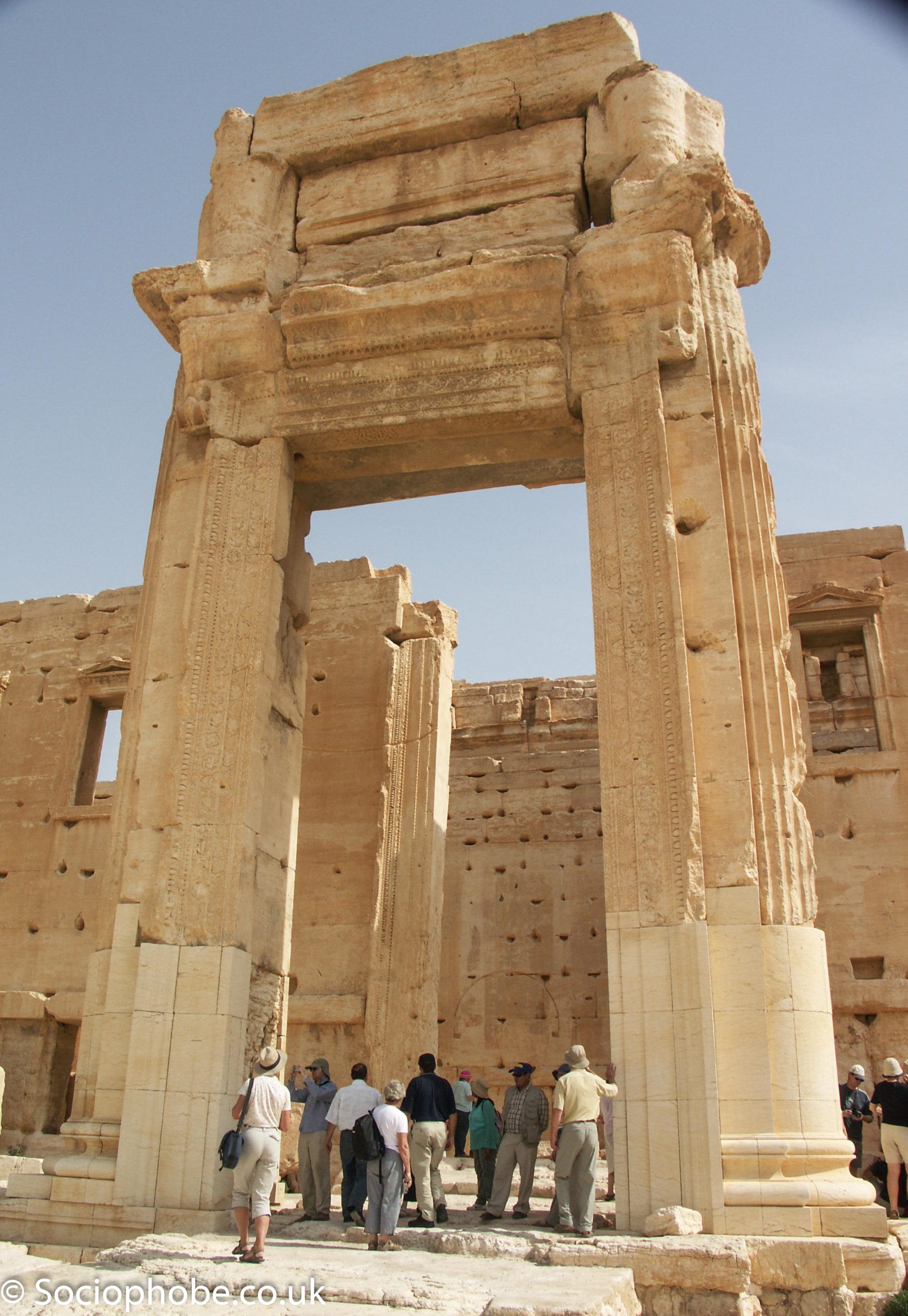
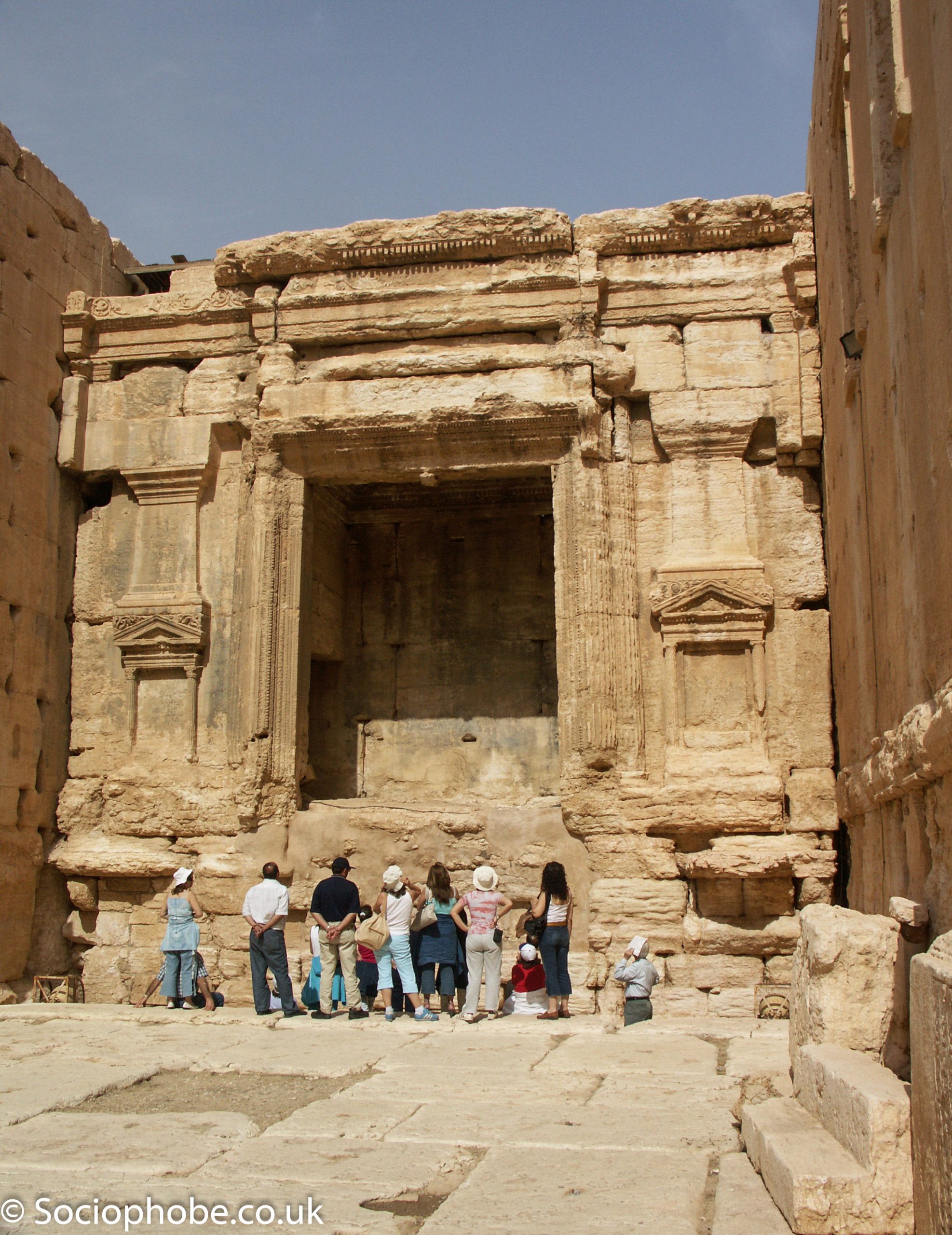
I bought some postcards from a young lad called Hanni who was maybe 8 years old and, once I’d given him his $2, was happy to follow me around and chat. His English was excellent and he was happy to talk about the site and his life, best $2 I have ever spent. I wish I’d had a proper photo of him.
We then checked in to the hotel and I had a good soak in the bath. The hotel was pretty limited and food was functional but it was all good and the location was superb. I got up at 4.30 the next morning to watch the sunrise, which was a bit chillier than expected! I walked around the lower tombs and then to some of the other graves and then climbed one of the hillsides (interesting climbing on shale!) and sat and watched. The site was silent other than bird song and I watched the sunrise and shadows lengthen.
Syria: Palmyra ruins for sunrise
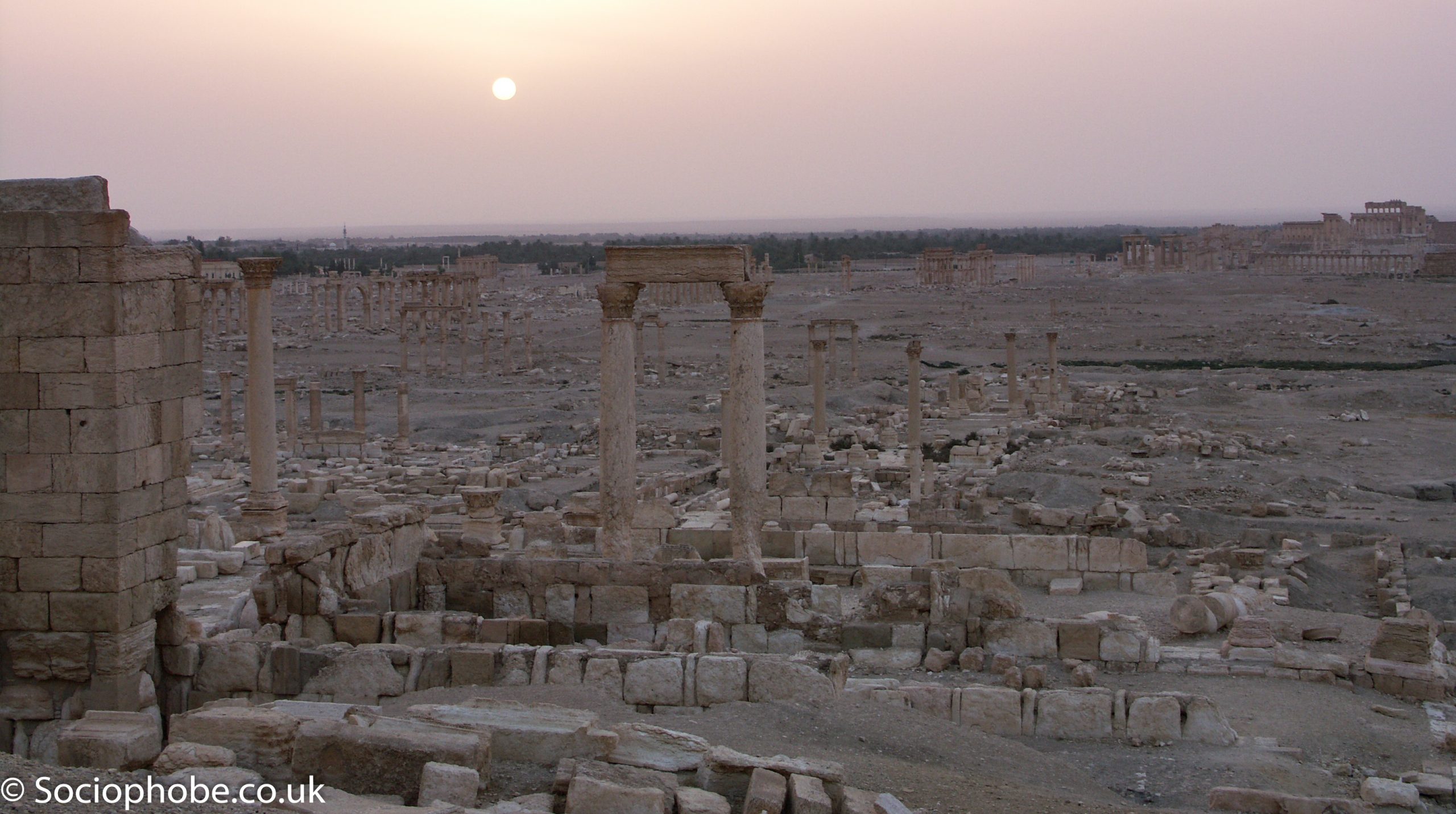
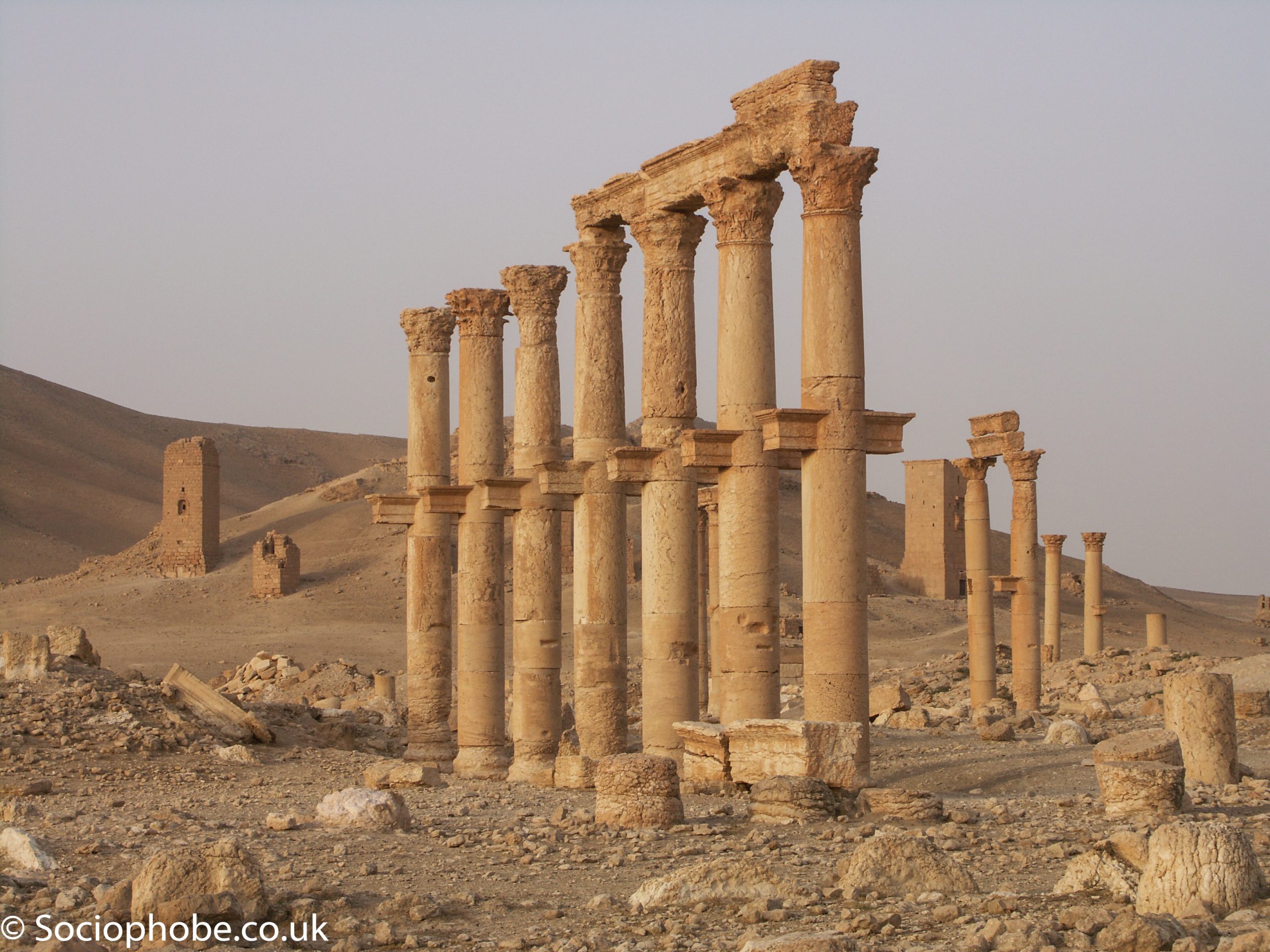
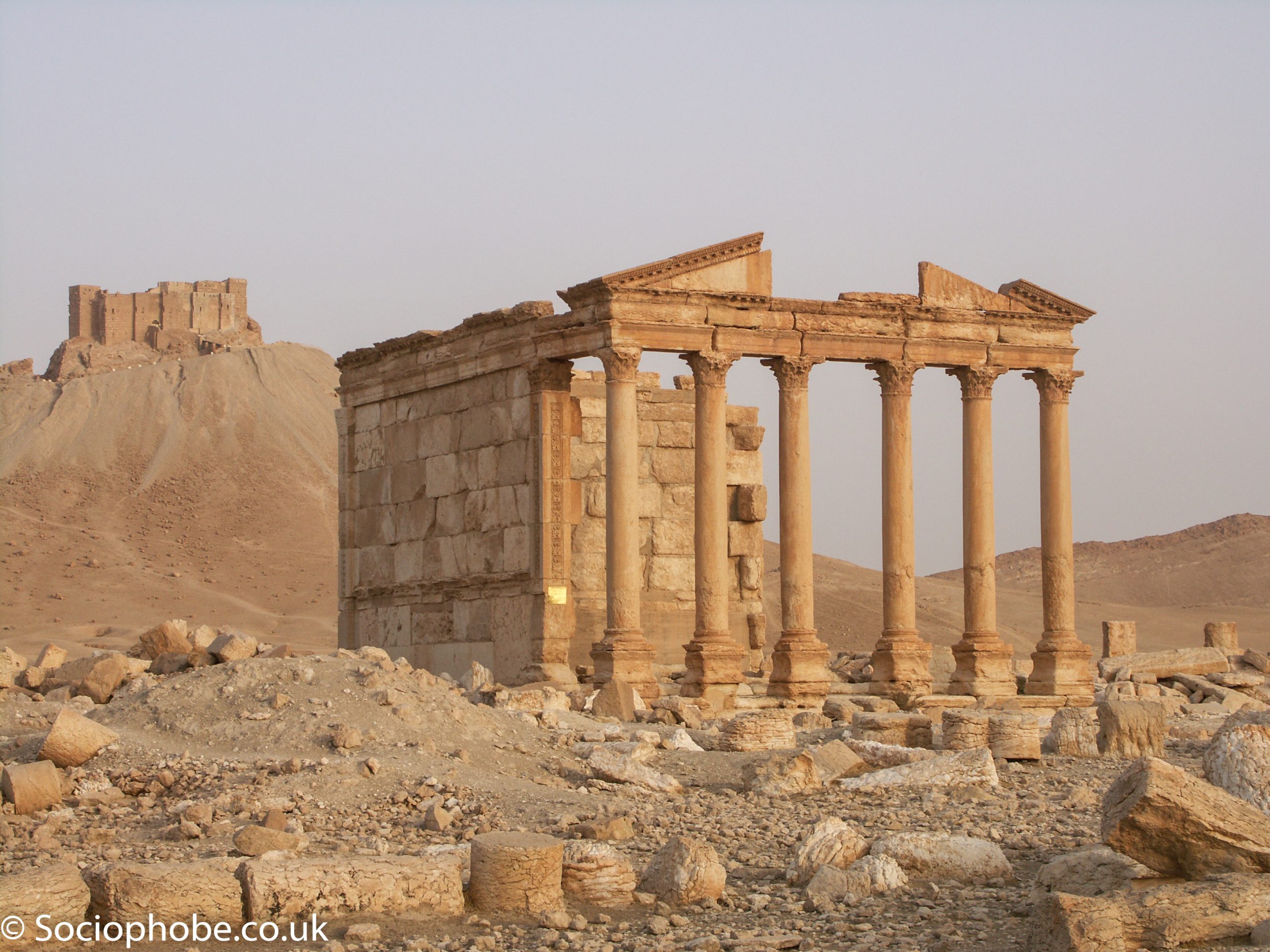
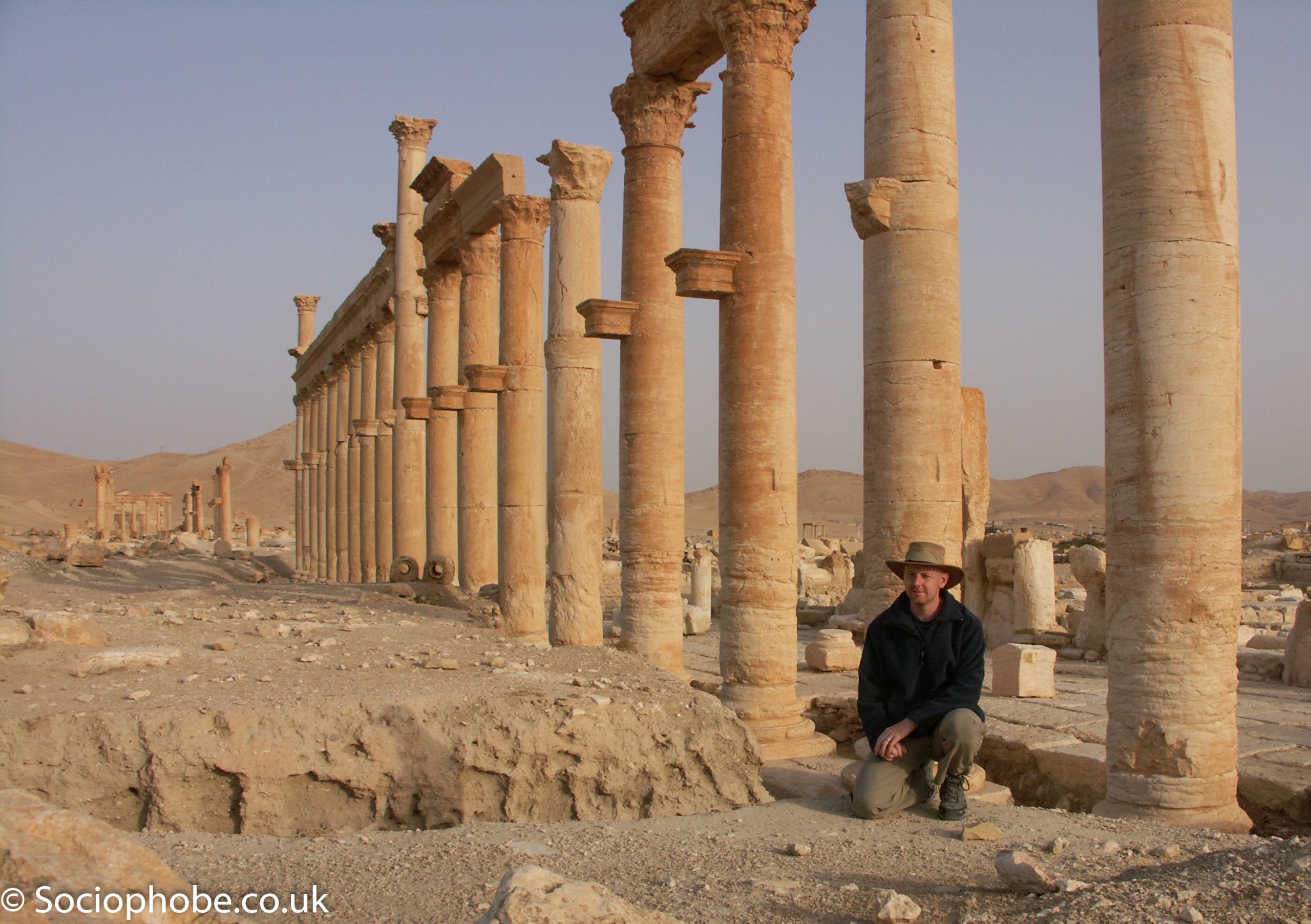
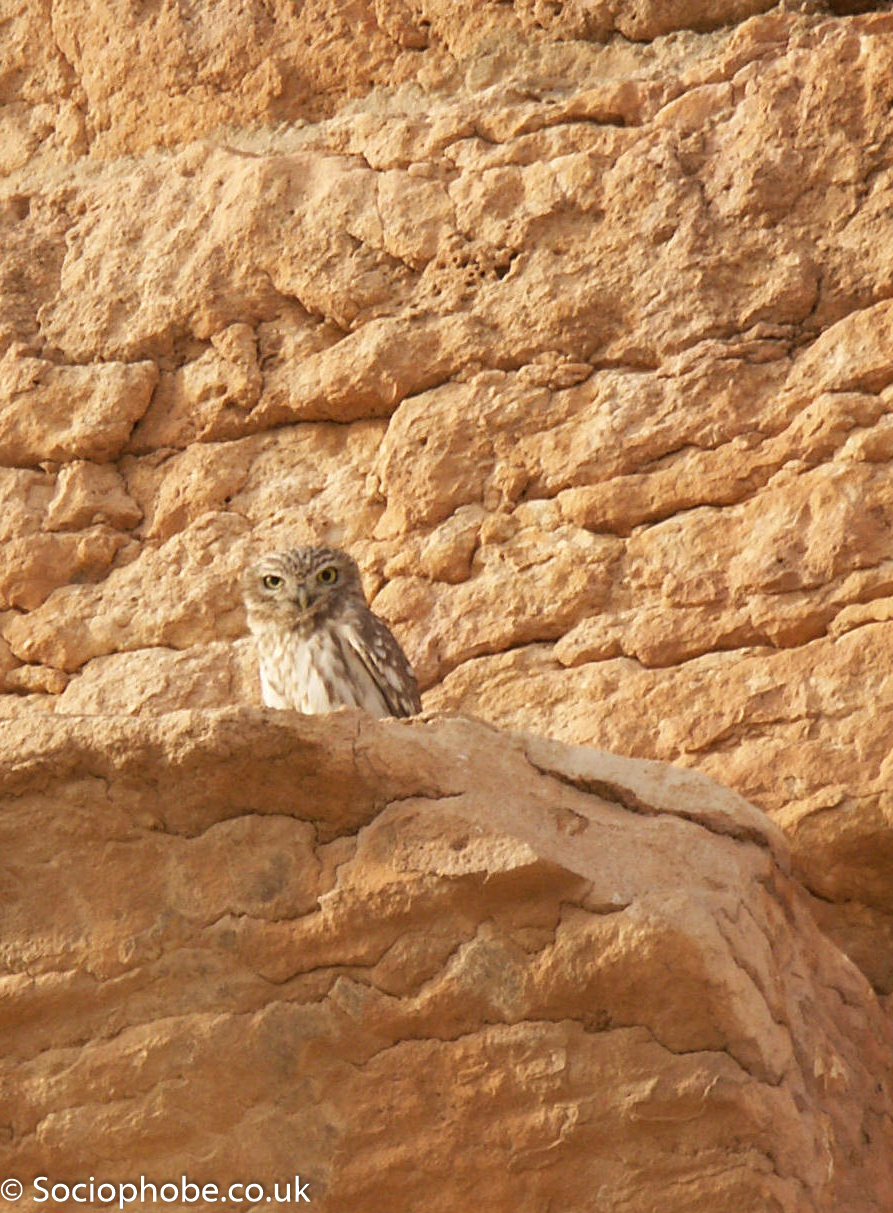
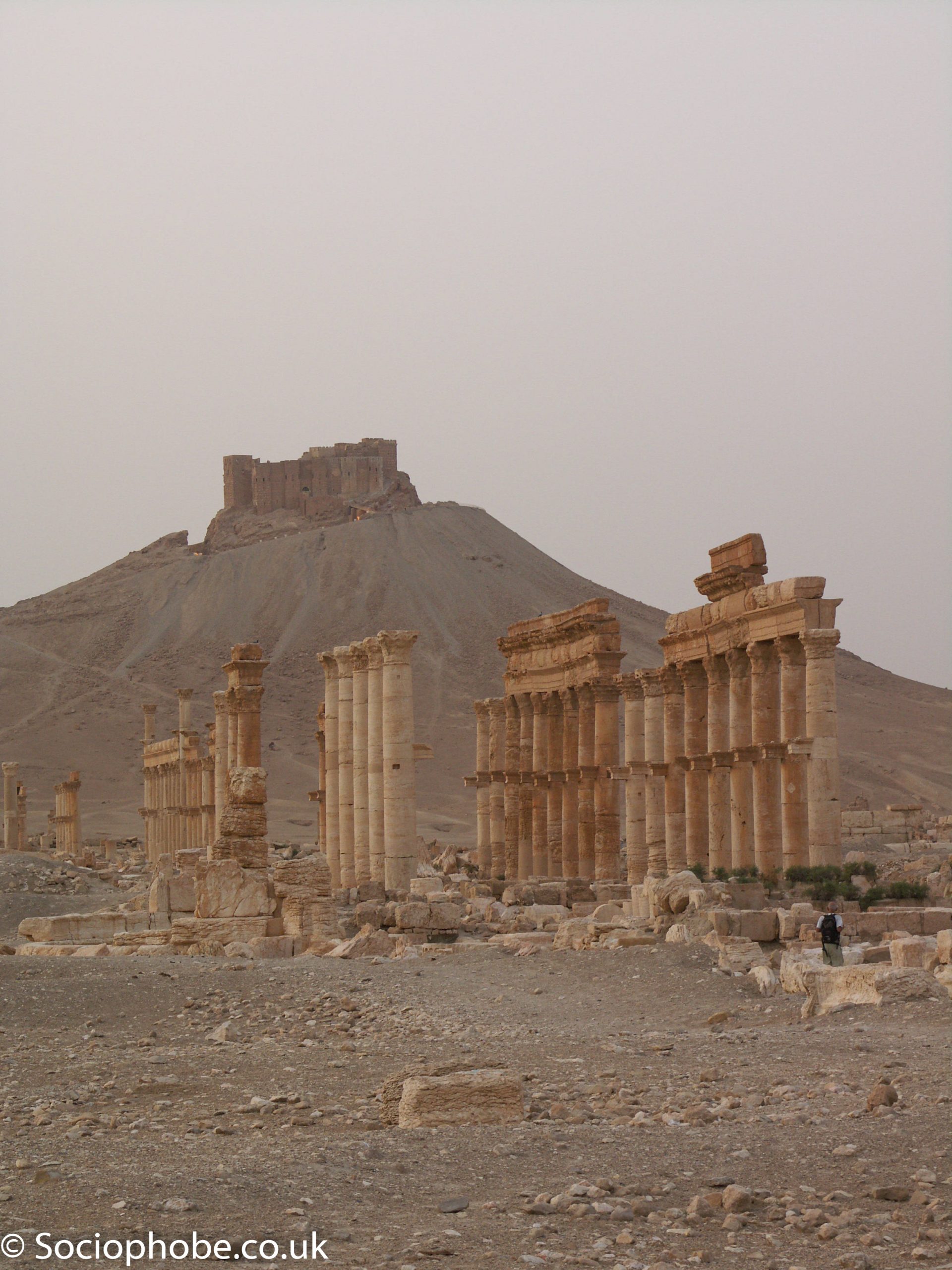
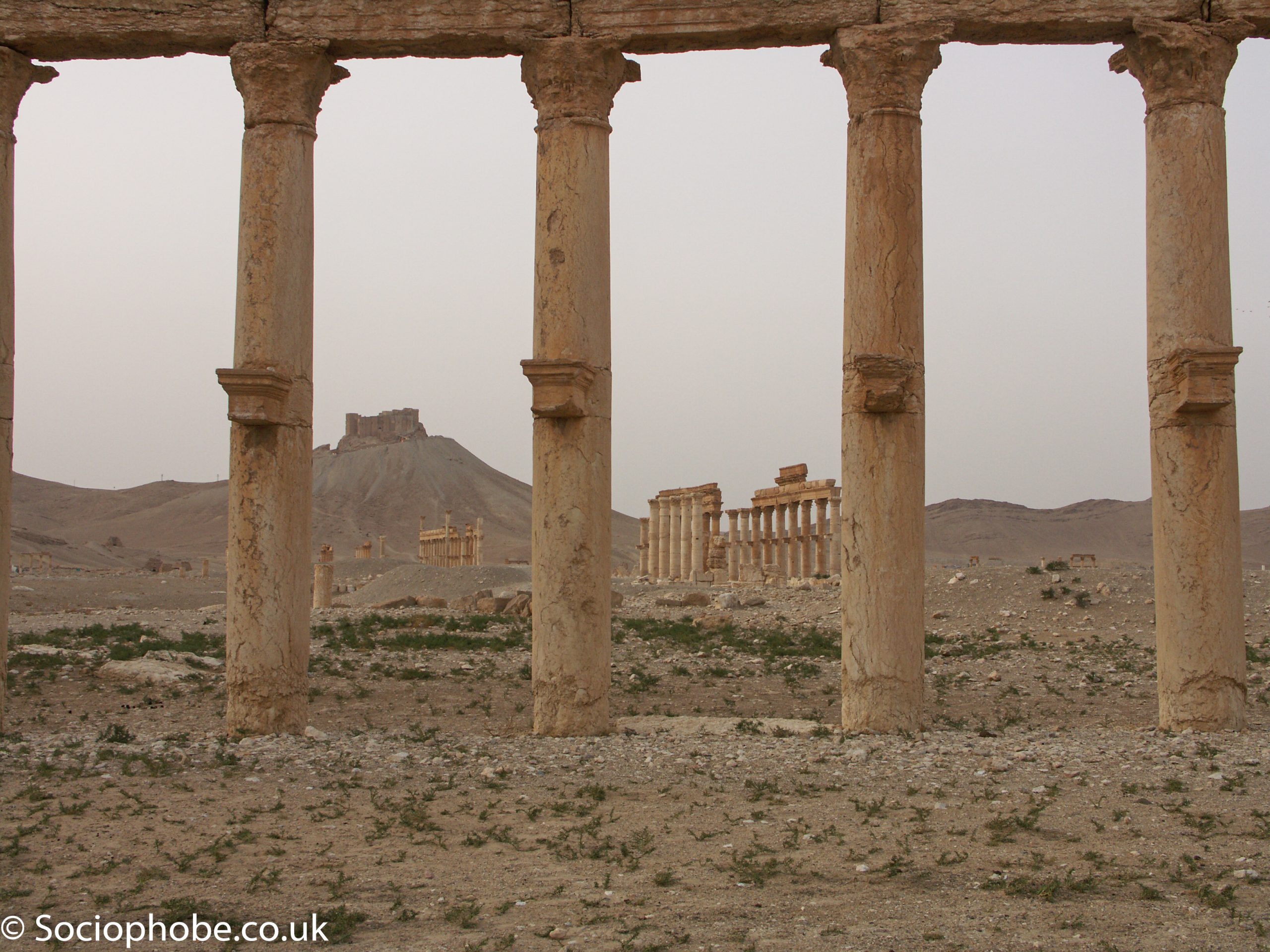
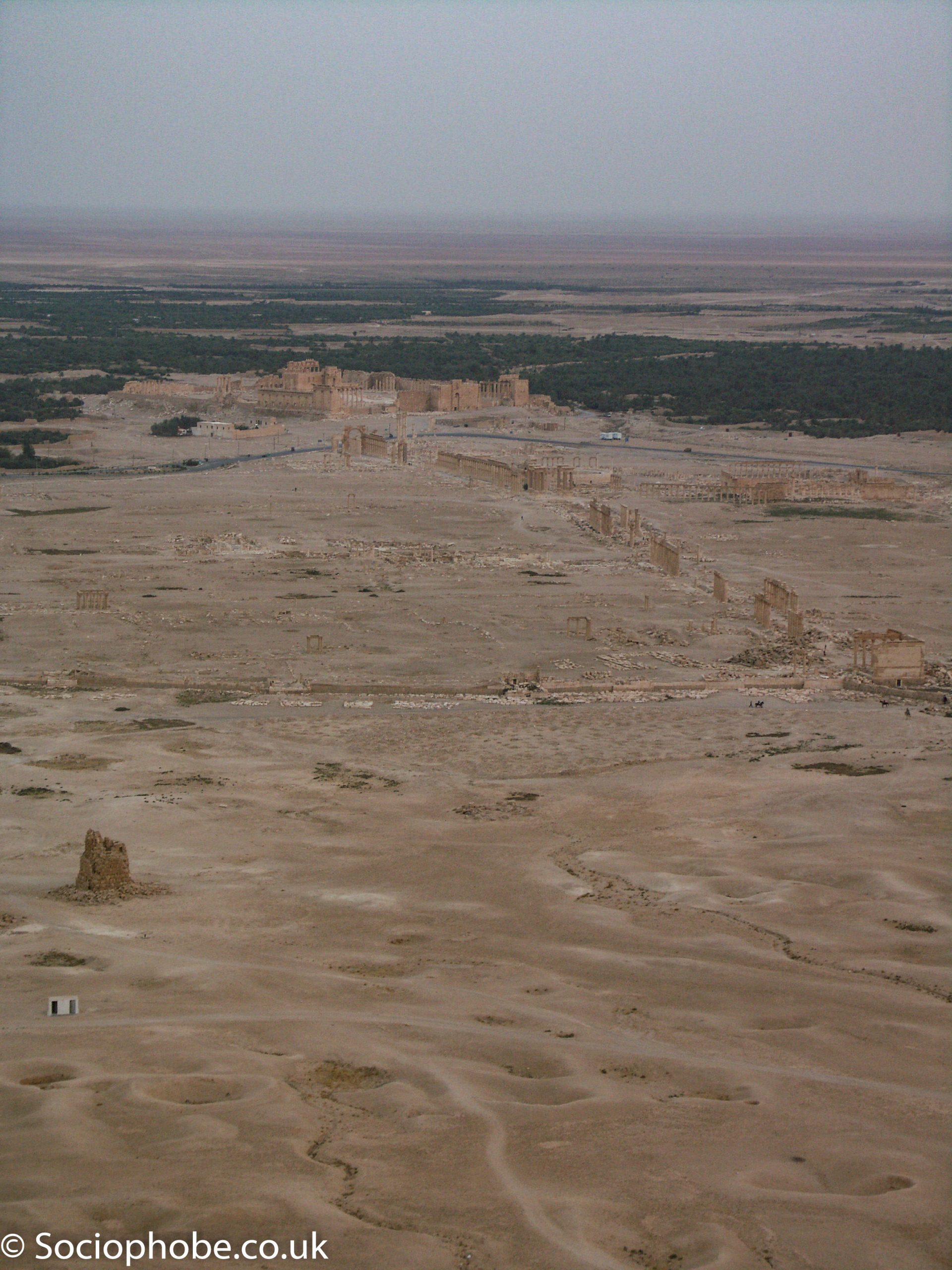
I walked around the city once the sun was up and took pictures whilst I was alone. I saw a desert owl sat on one of the columns but by about 7.30 the traders were starting to arrive on camel or motorbike. I had a quick chat with Hanni again and then headed back to the hotel for breakfast. This was quite a long walk and it was interesting to see the size of the columns where the desert had actually been cleared away so they weren’t buried.
Syria: Palmyra tower tombs
After breakfast we loaded our cases onto the coach and drove to the tower tombs, where I’d been earlier. These are multi storey buildings, built by a family to showcase their wealth. Sometimes levels were sold off or rented to other families too.
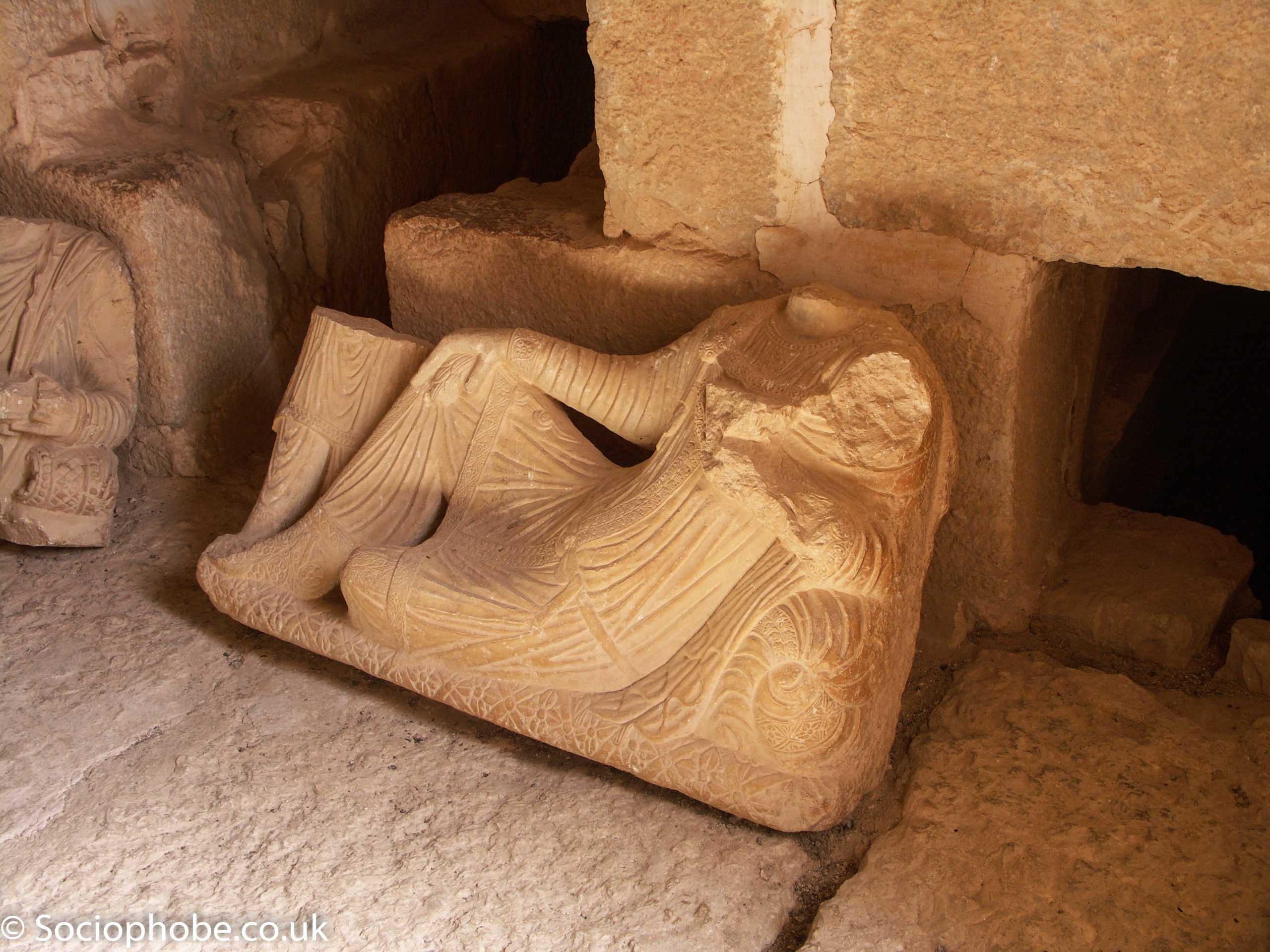
The carvings were very impressive but most were headless, having been looted by nineteenth century European travellers! The clothing they wore was all surprisingly Persian, boots and decorated trousers, rather than Roman styles. The largest tower I saw was an impressive five storeys tall.
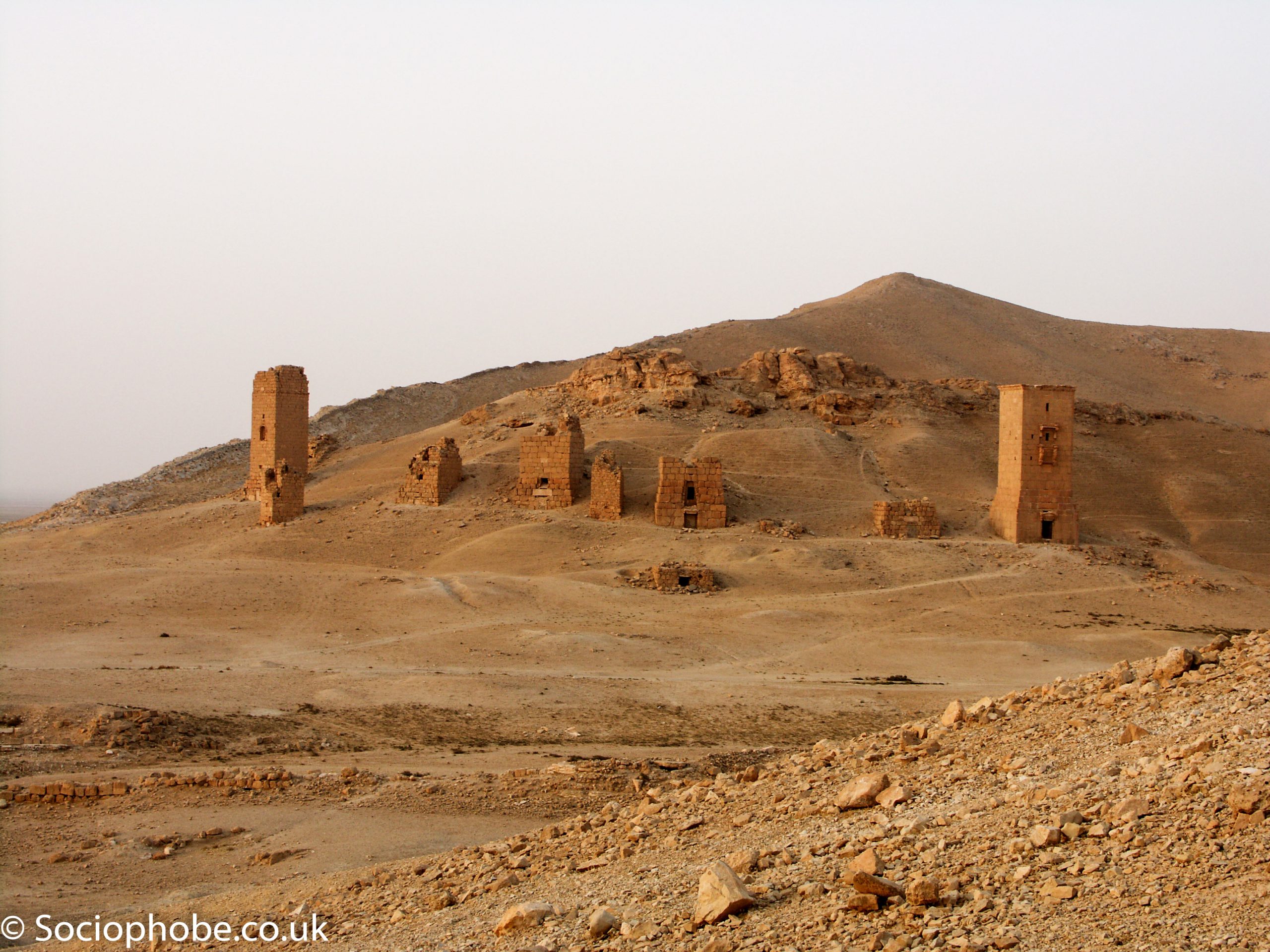
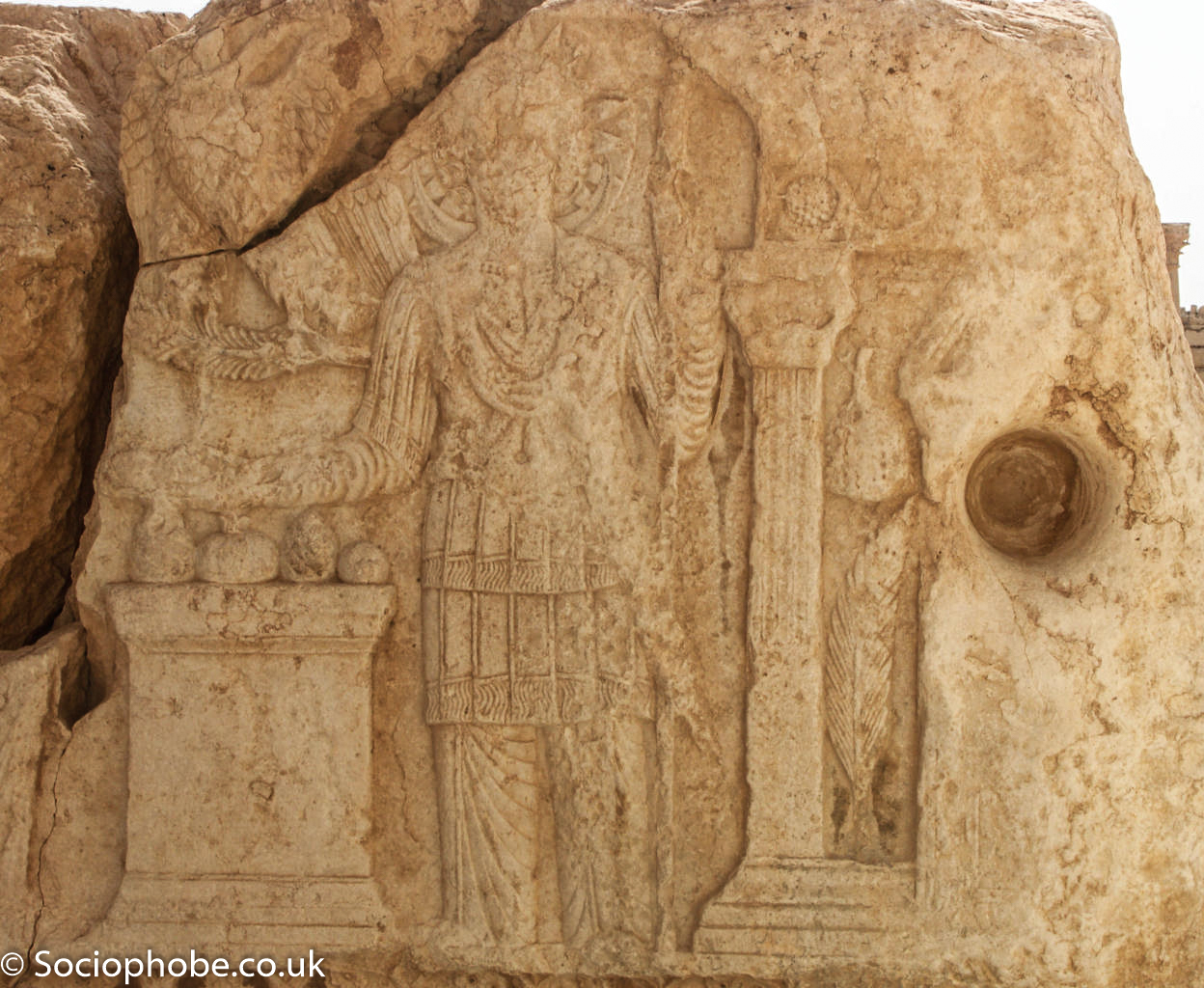
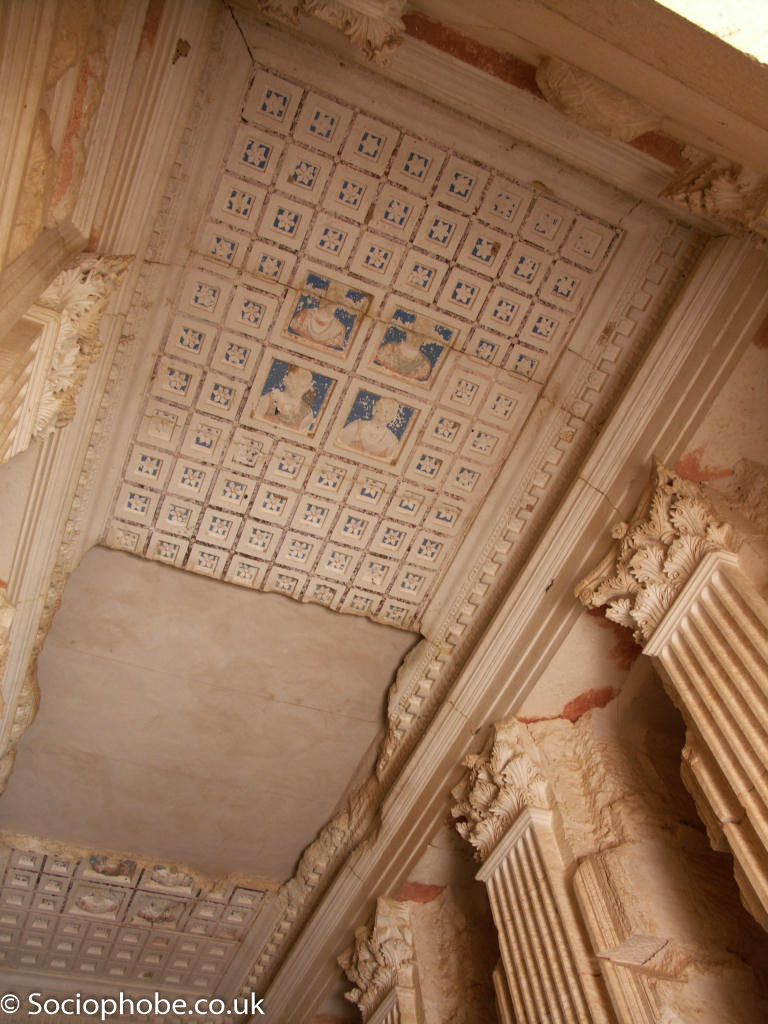

We saw an underground tomb where people were buried sideways to save space and saw the incredible frescoes and more carvings. We then drove back to the main site to see the Temple of Bel/Baal which was a huge temple, originally surrounded by a columned portico. It was modified by the Arabs who used it as a fort and then the Ottomans, who took out all the metal retaining bracers to melt down.
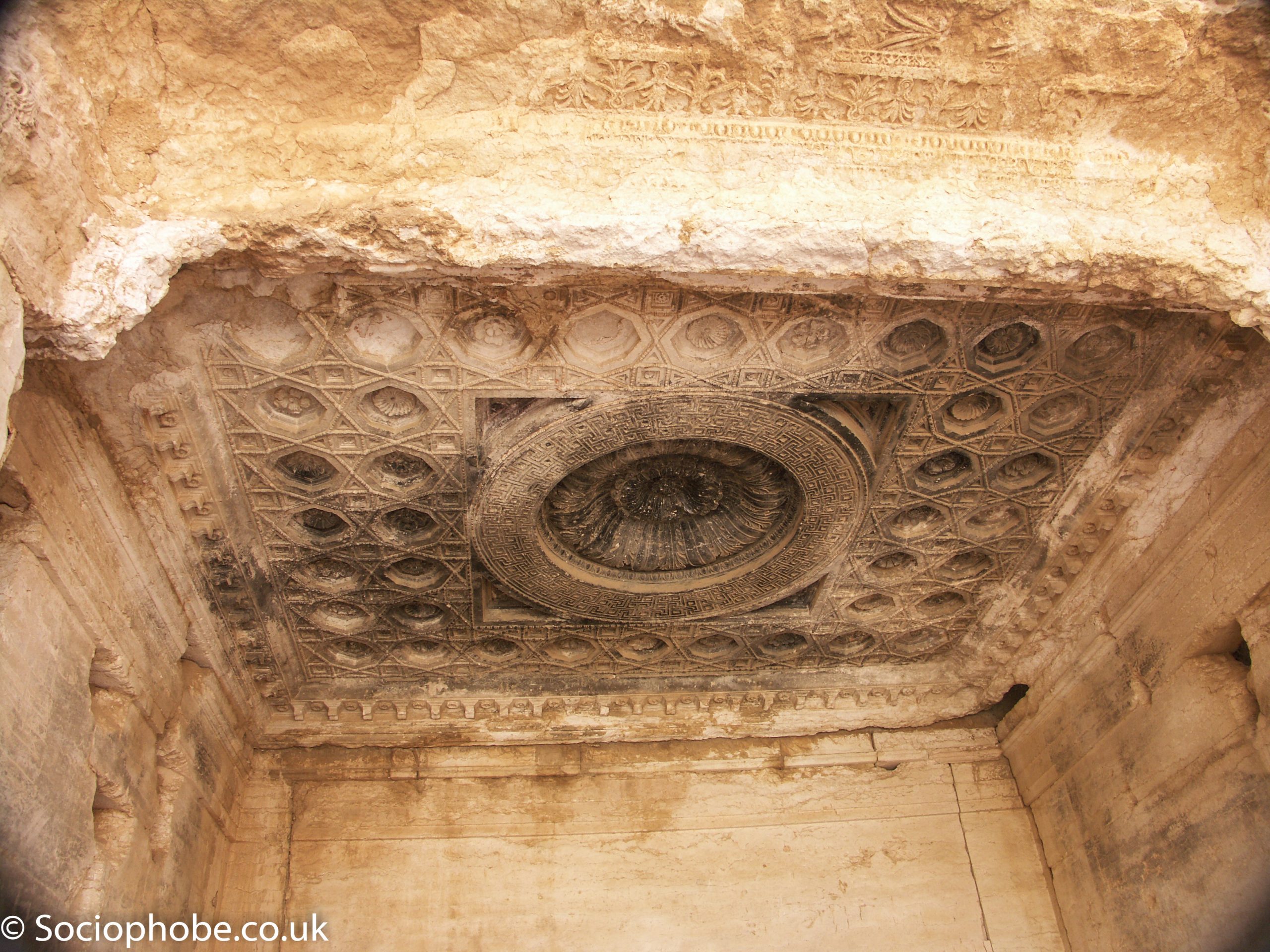
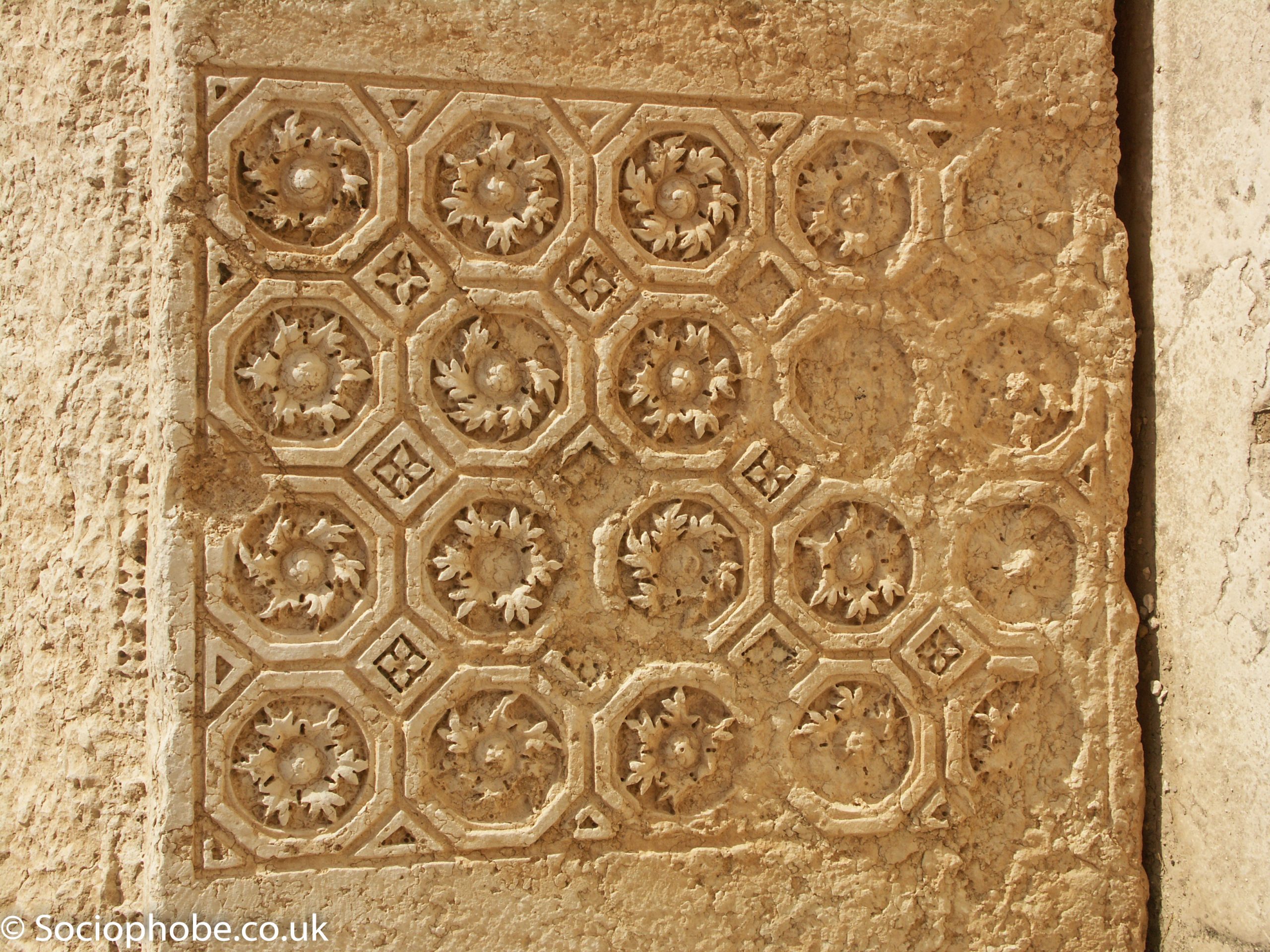
The temple was huge in scale, maybe 20m tall columns and had incredible carvings suitable for a fertility god – vines, figs, pomegranates etc In some areas the underside of the door lintels had the original paint although in others it was just a smoke blackened mess as the Bedouin had camped there and lit their cooking fires.
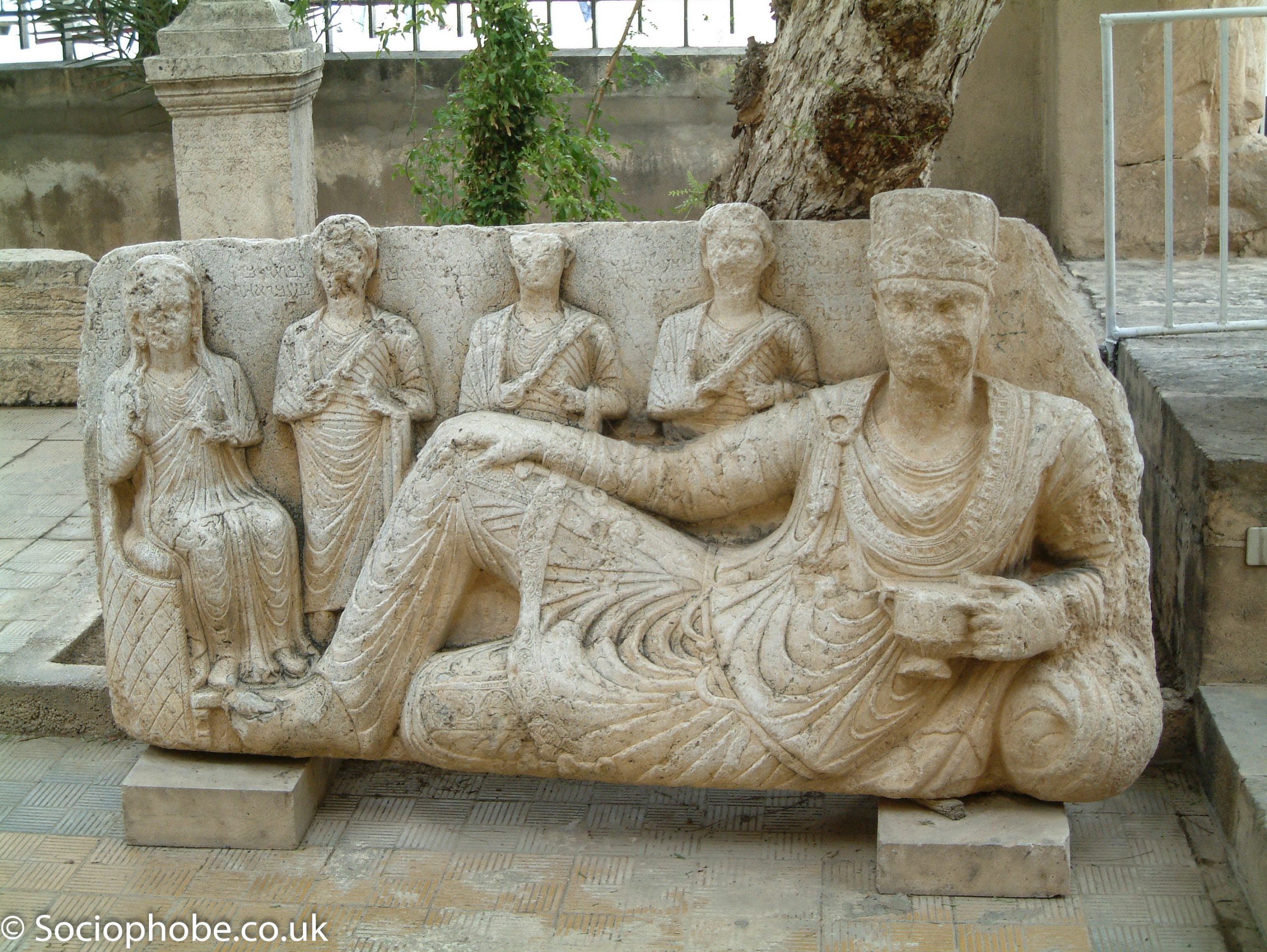
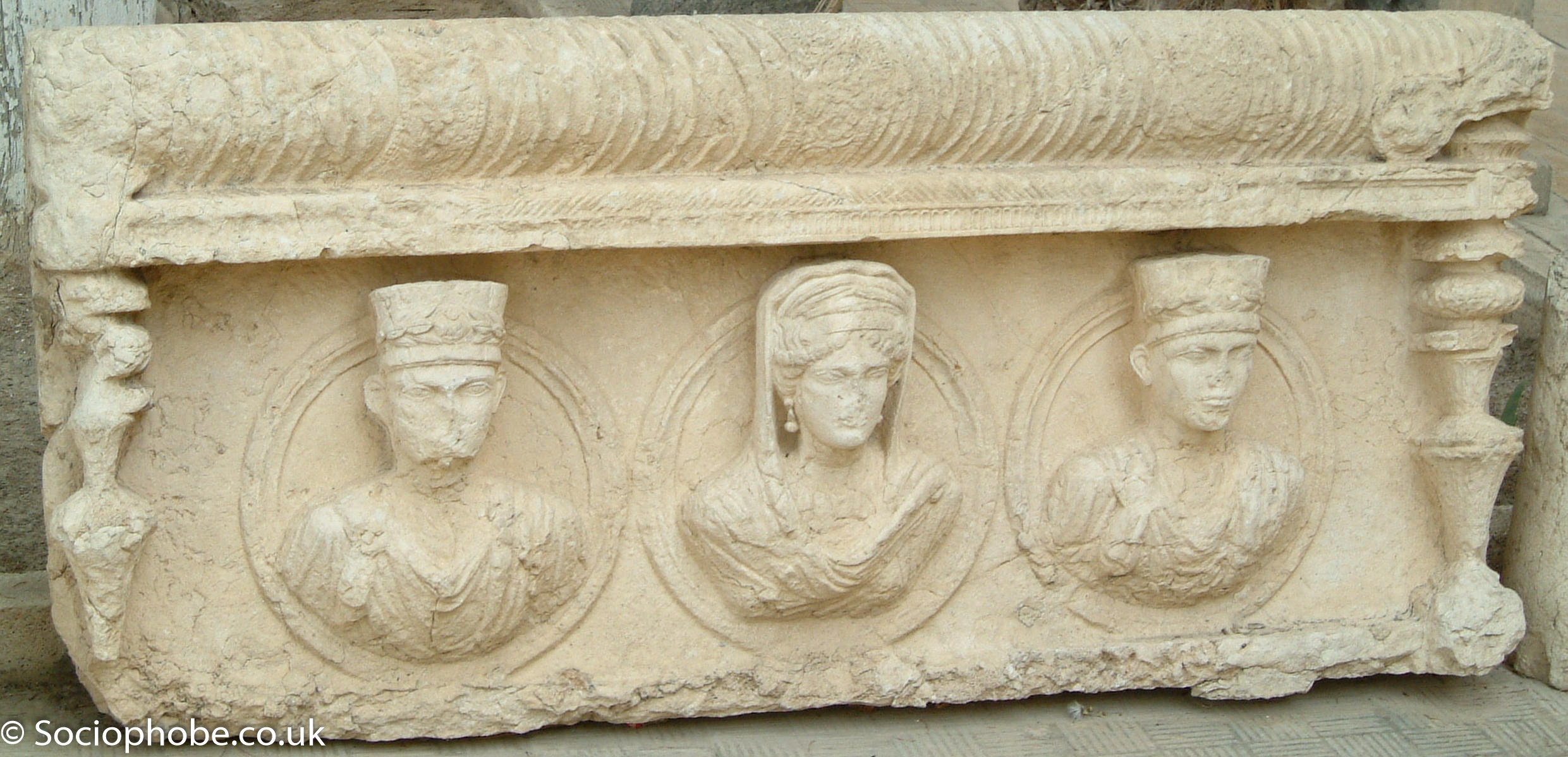
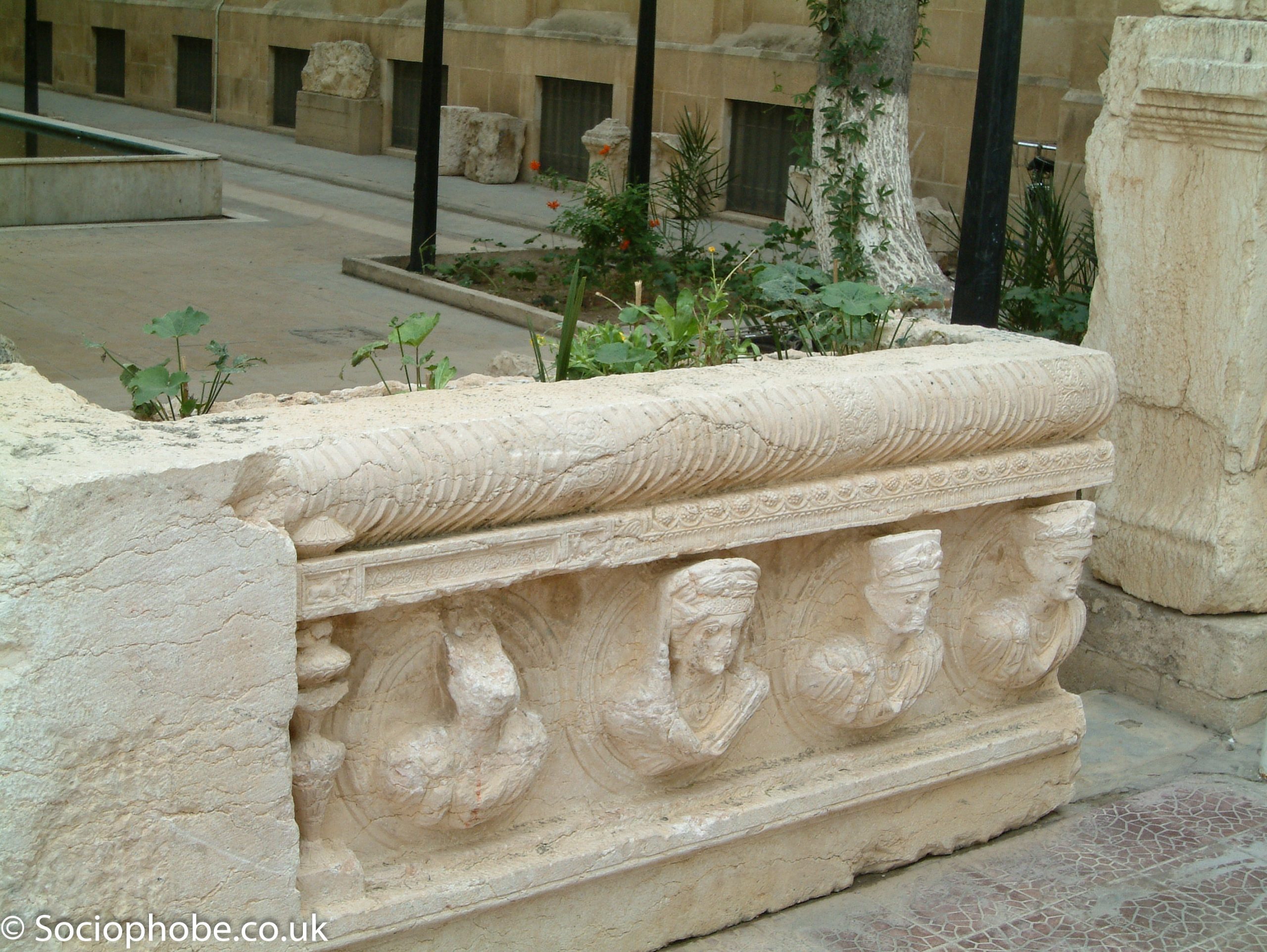
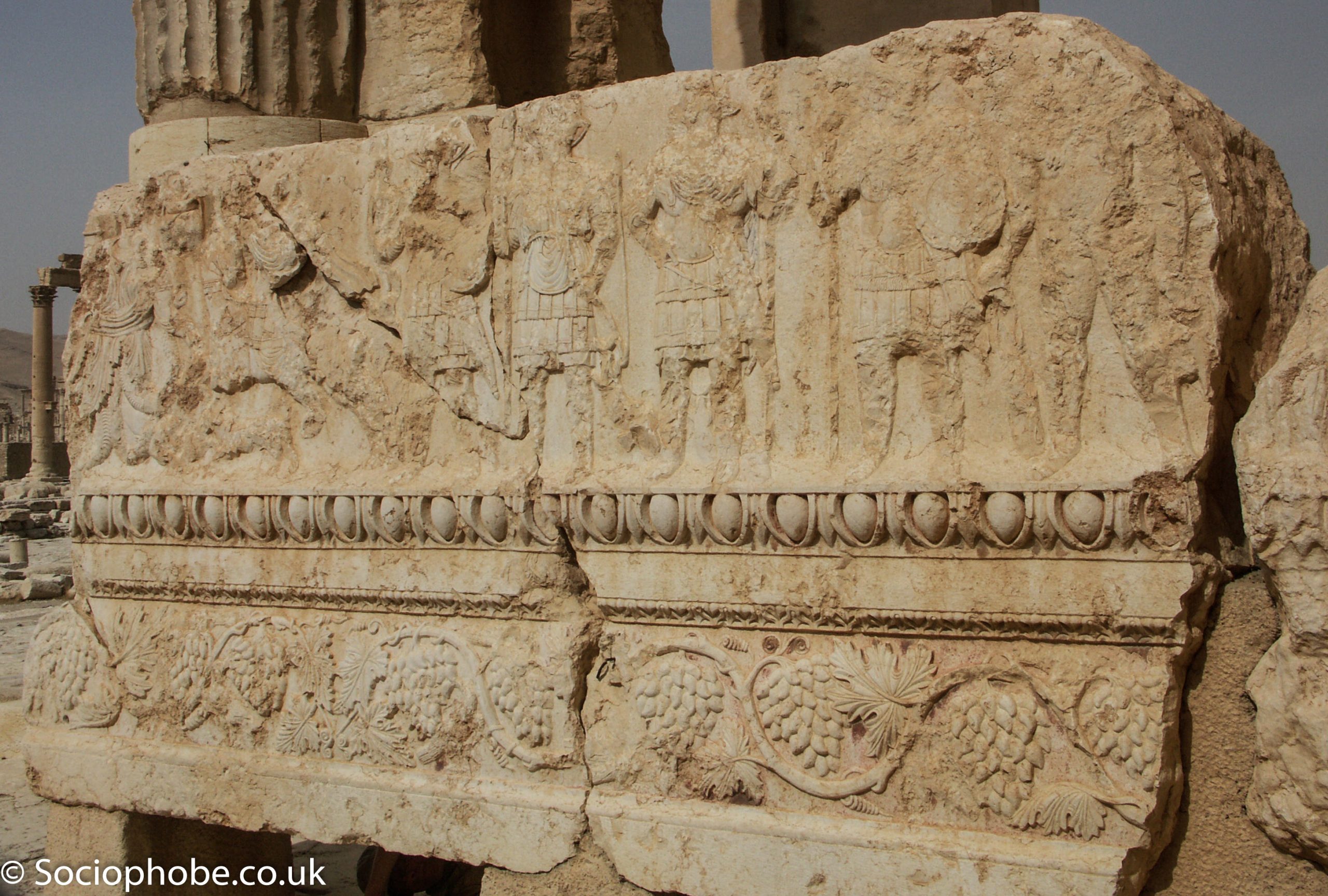
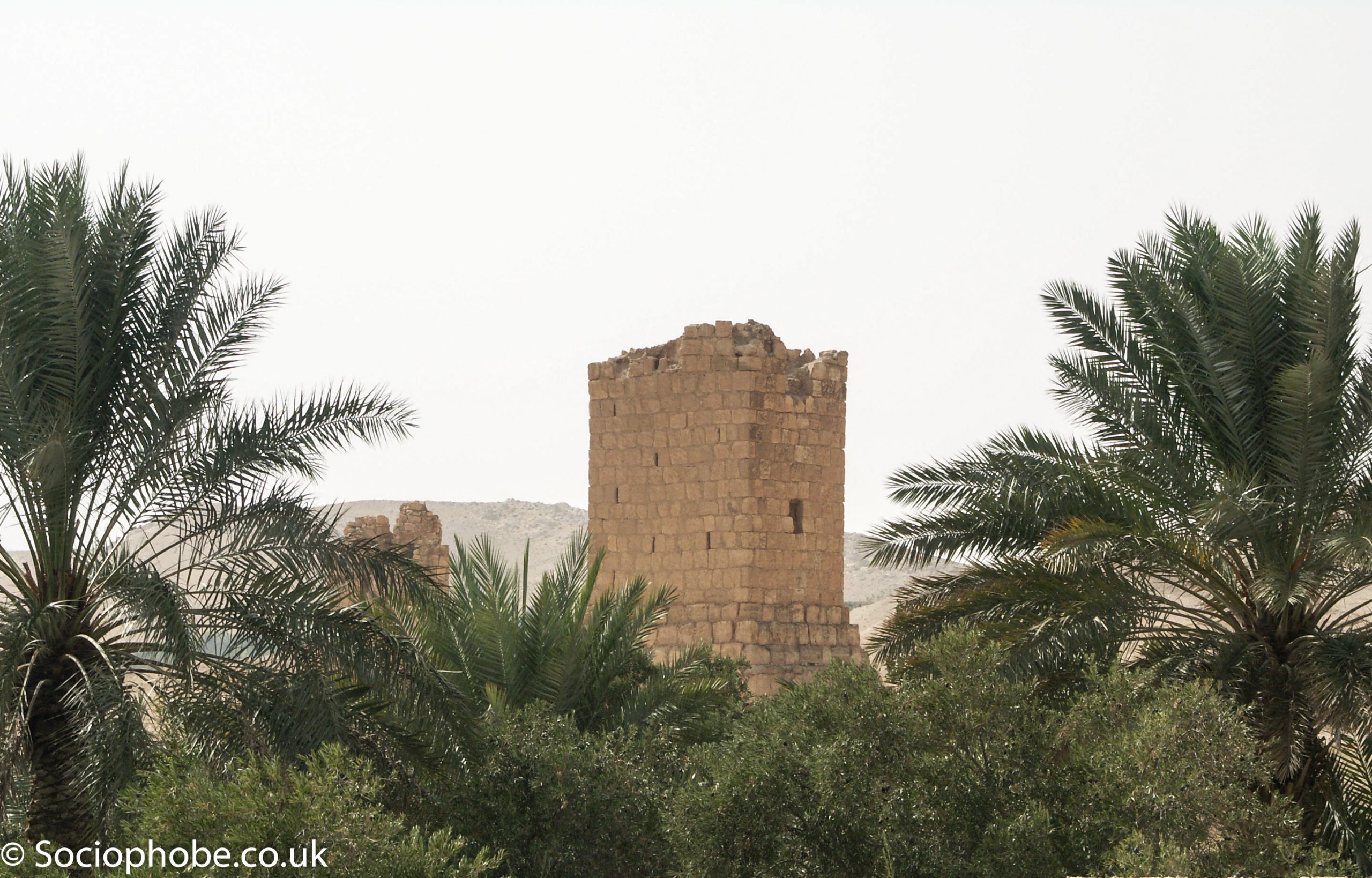
From the temple you could see the oasis that gave the city its wealth, surrounded by lines of date palms. It was now very hot and there were lots of hornets around the site. We got back on the coach and drove to the museum to look at more excellent carvings of people in Persian dress with headress and big hair and big earrings.
We then drove towards Damascus on a very desolate road – in 200km we passed 5 vehicles! This is where the 2004 Middle East Rally is taking place which is strange as there are lots of military bases here, miles from anywhere. There are also lots of irrigation and reforestation projects taking place, sadly not resurfacing roads projects though, another uncomfortable drive.
Syria: Mailila
We stopped at Ma’lila where there is a church of St Sergius, a 4th century Christian martyr. It is also where the local Christians fled when they were being persecuted as the area is riddles with caves. The church was very plain but the icons were bright and clean. The priest said the Lord’s Prayer in Aramaic and the village is one of the few left where people still speak Aramaic (the same language Jesus spoke).
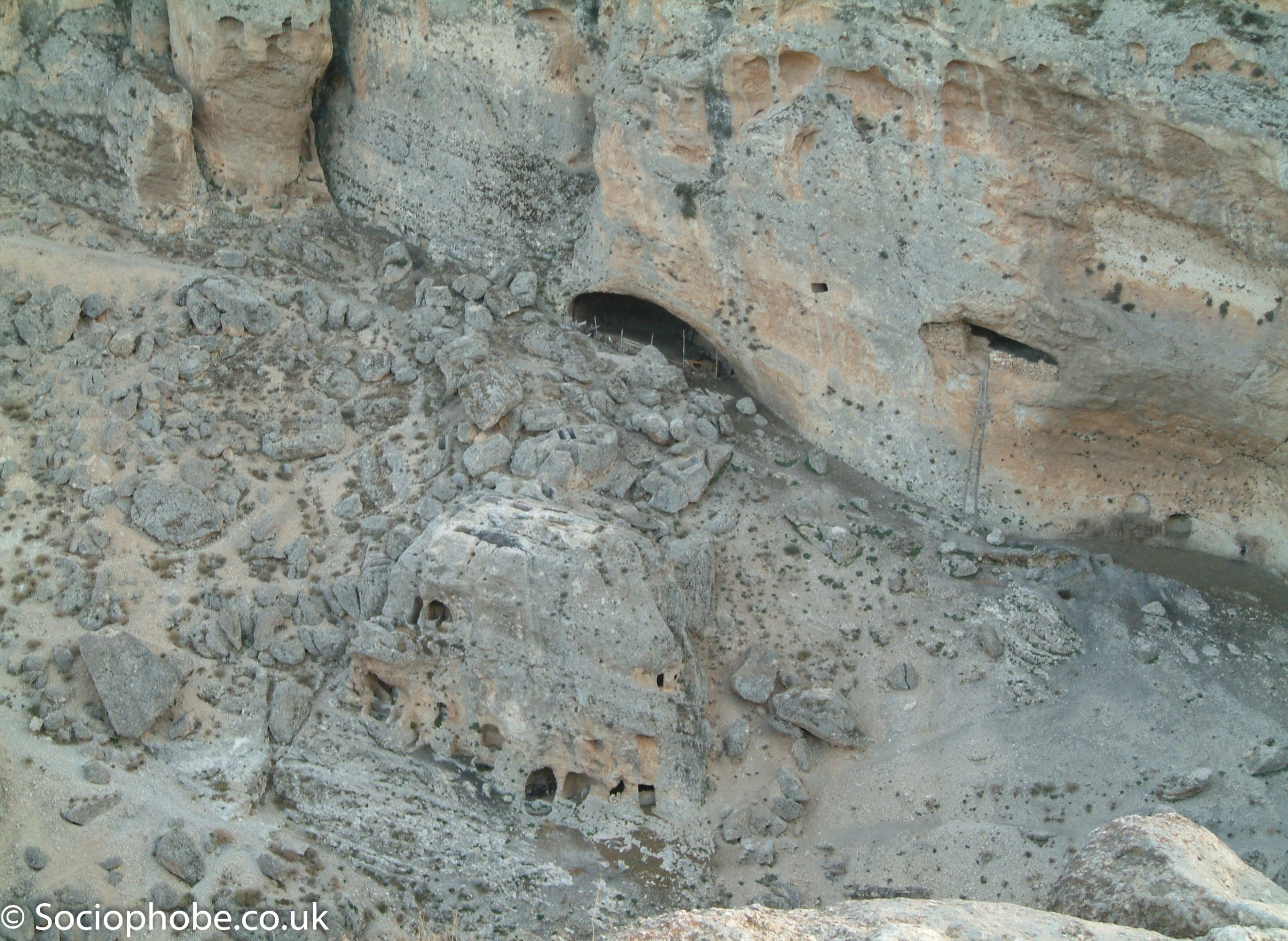
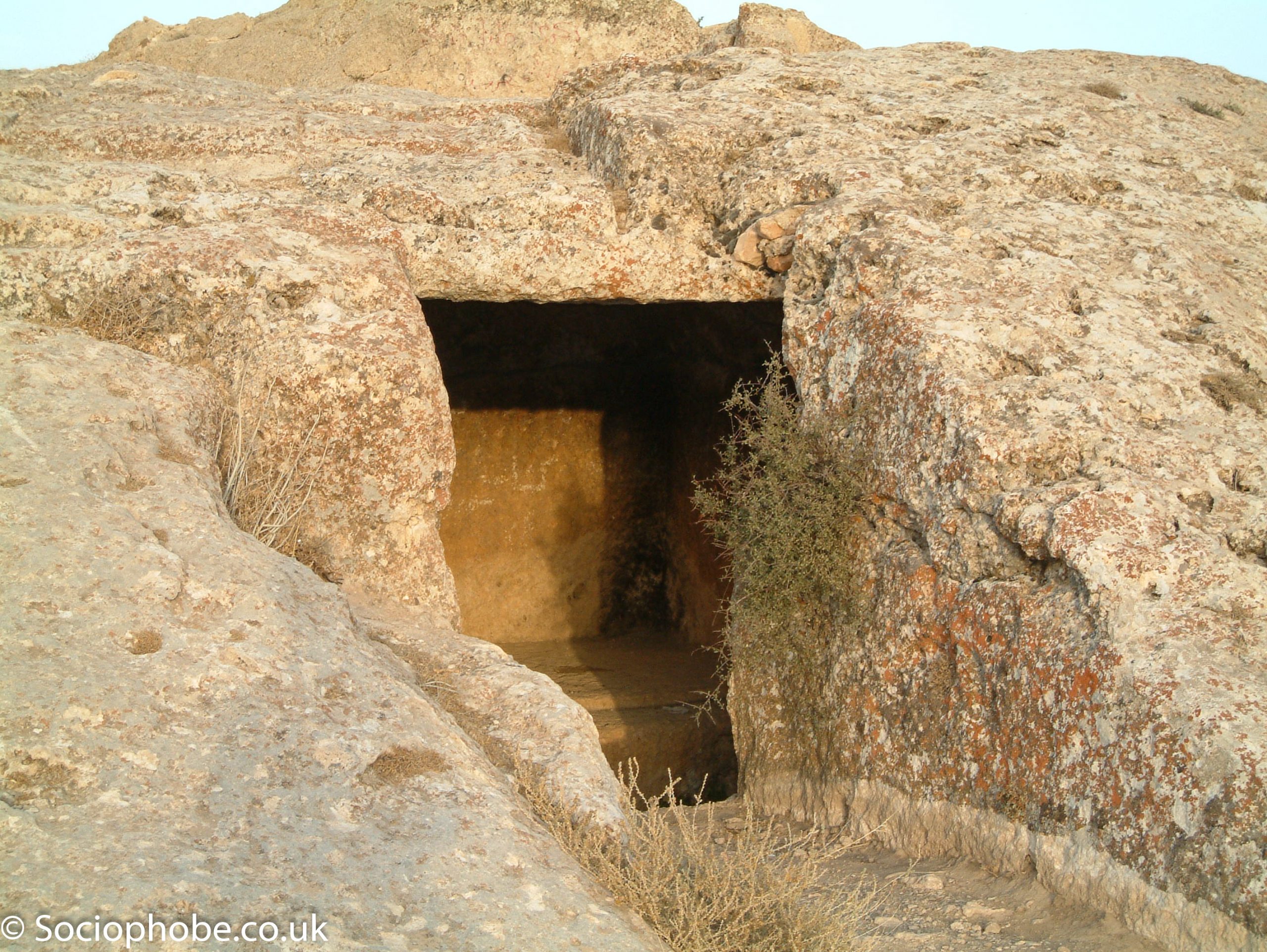
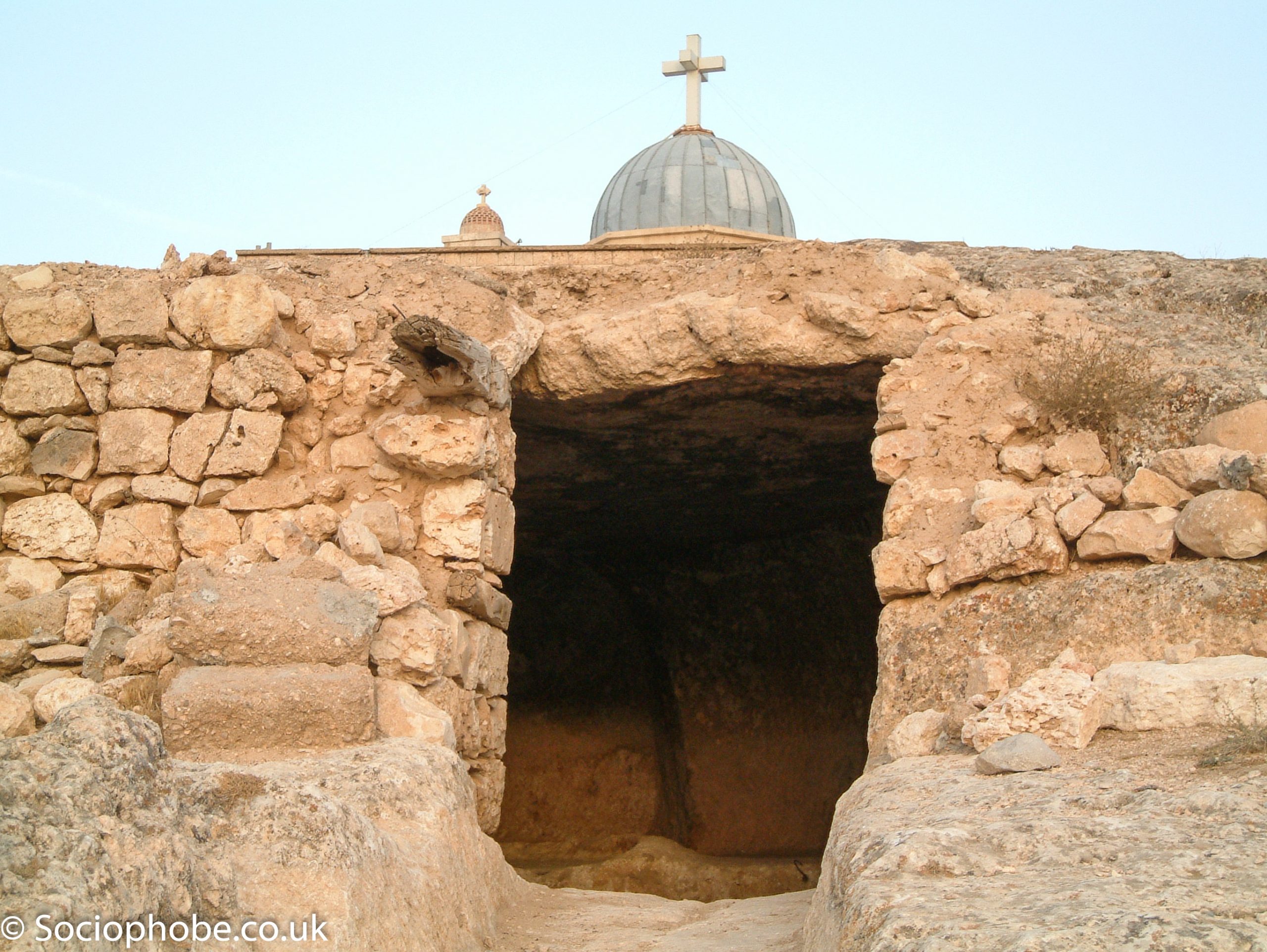
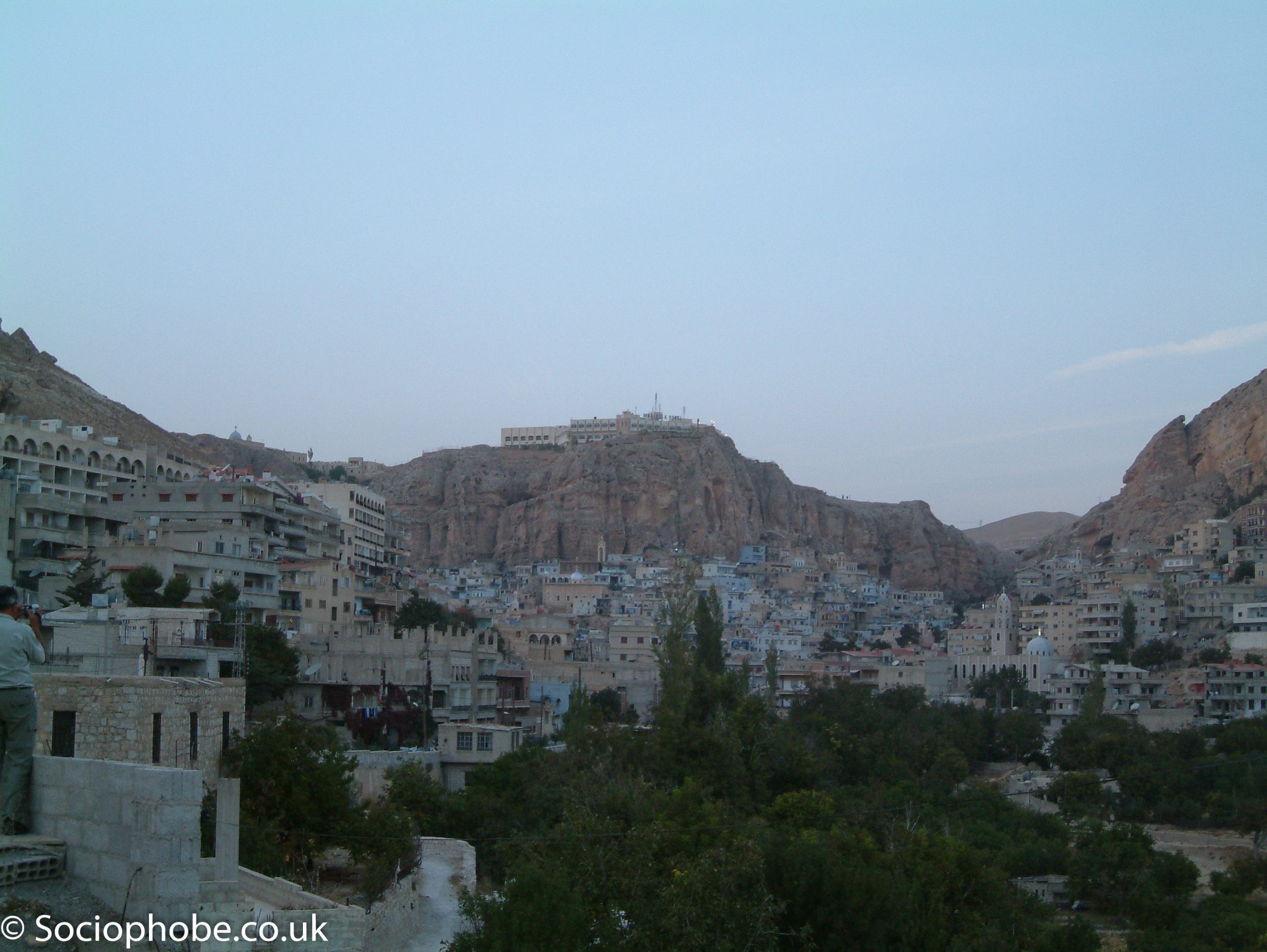
We carried on towards Damascus, last stop in Syria of our Lebanon and Syria road trip, past a Palestinian slum camp, to our hotel. The hotel was incredibly opulent with everything being larger than life. My room was probably about the same floorspace as my house! After a very nice dinner I soaked in the bath and then sorted through the days photos.
Syria: Damascus
It is quite amazing how everything here is dominated by religion, it really is a complete way of life in a way that is very difficult for a westerner to comprehend. In the West religion is just a box to tick on hospital admission forms but in Syria it is everything.
Restaurants are closed for Ramadam, the streets are deserted at prayer time, women are very much an underclass and the only building that seems to have any money spent on it is a mosque. There is also a very vulgar kind of tastelessness here, buildings are either completely neglected or incredibly ornate. There is certainly more ostentation and display of wealth than in the west.
Syria: Damascus Museum
In the morning we went to the museum and saw a range of artifacts from tiny stele of writing to huge wall friezes, slates with cuneiform writing from a scribe school in 3000BC, roll on seals with superb pictograms and statues dedicated to two millenia worth of deities. There were also superb mosaics and wall paintings from the synagogue at Dura Europolis that was destroyed by the Sassanids. The Arab section had swords, illuminated manuscripts, globes and astrolabes.
Although Damascus used to be known as the Garden City it has grown from 250,000 to 7 million people in 30 years and the green areas are now few and far between and the city is very hot, dusty and beige. Dress ranges from normal western jeans/skirts and tshirts to full abiyahs.
Syria: Damascus Ummayed Mosque
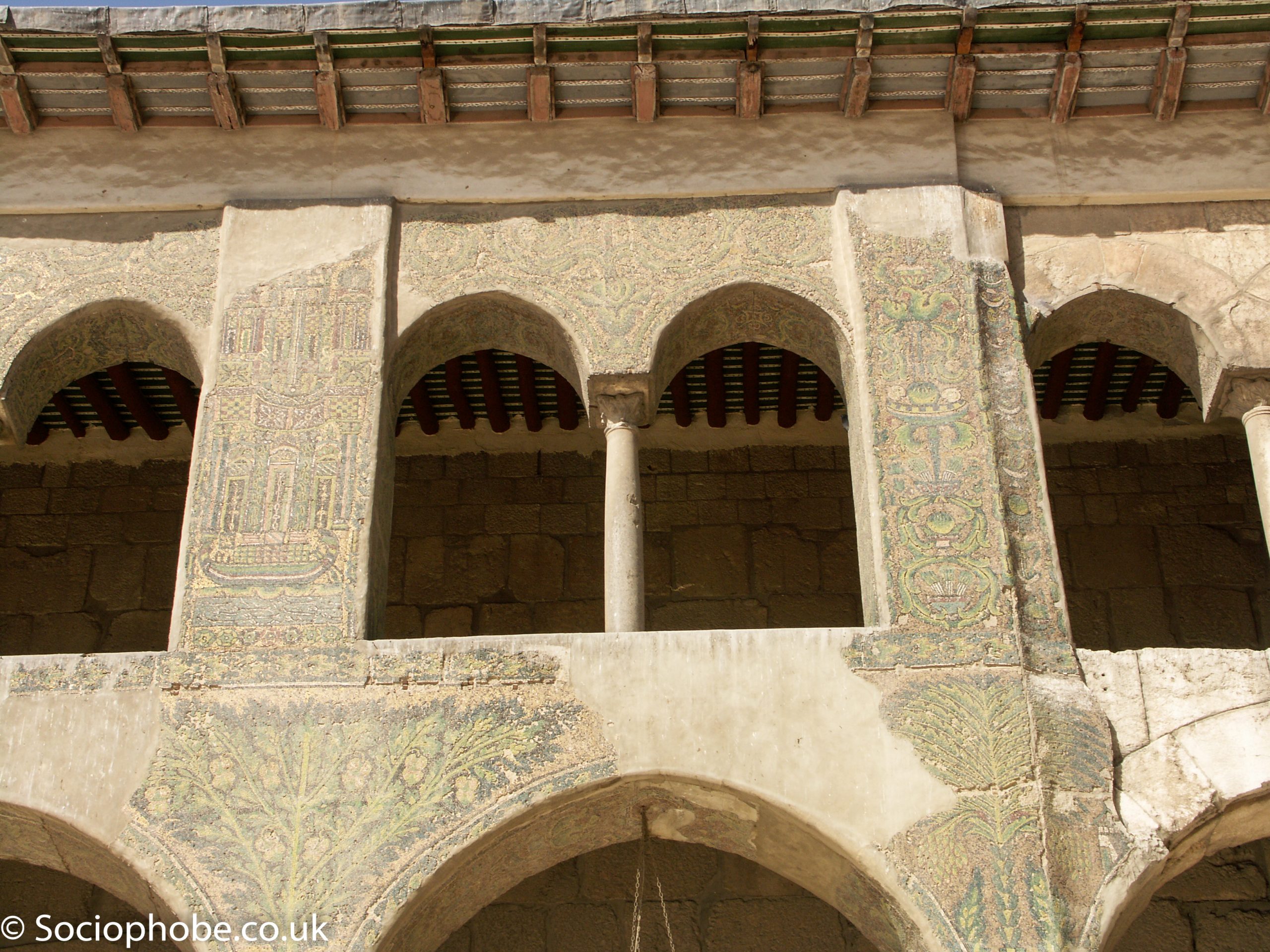
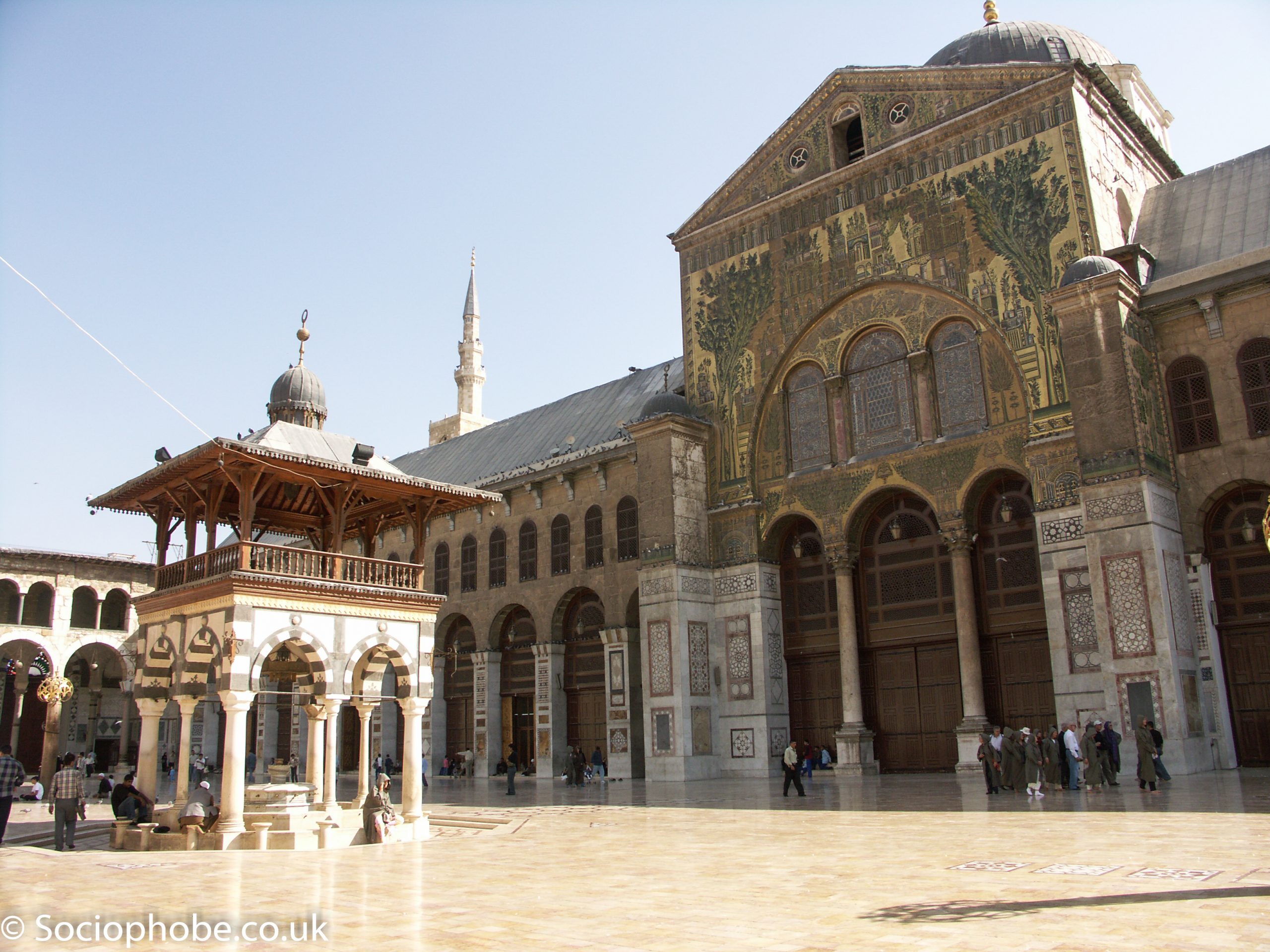
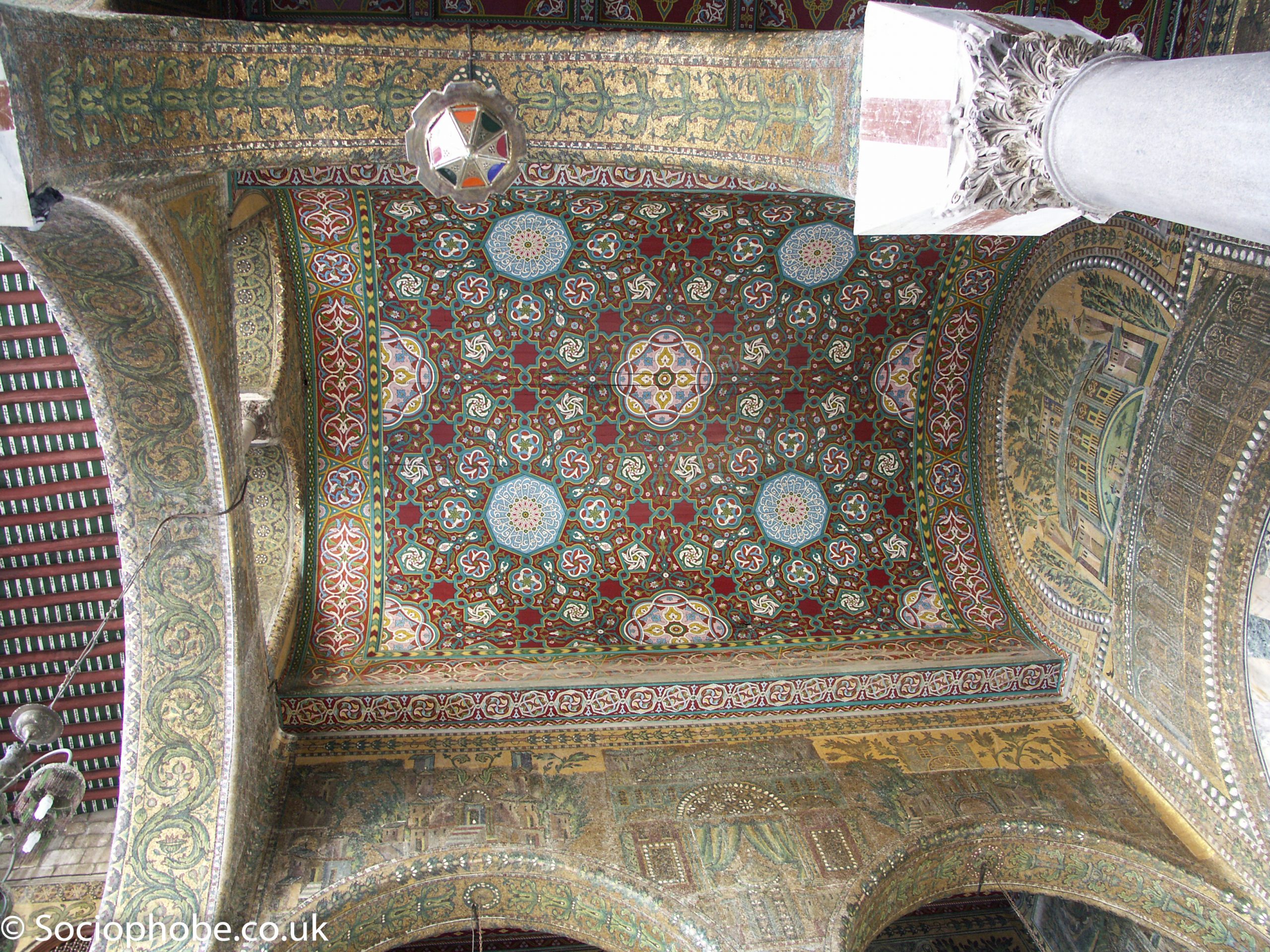
The Ummayed mosque looks pretty stark from the outside with high, unadorned walls and, for Arabs, a very modest adornment on the minarets. Inside it is a very different story, the huge marble courtyard being surrounded by a collonade, all of which was originally covered in mosaics. These are mostly now gone apart from one original area in a corner and a small section of replicas.
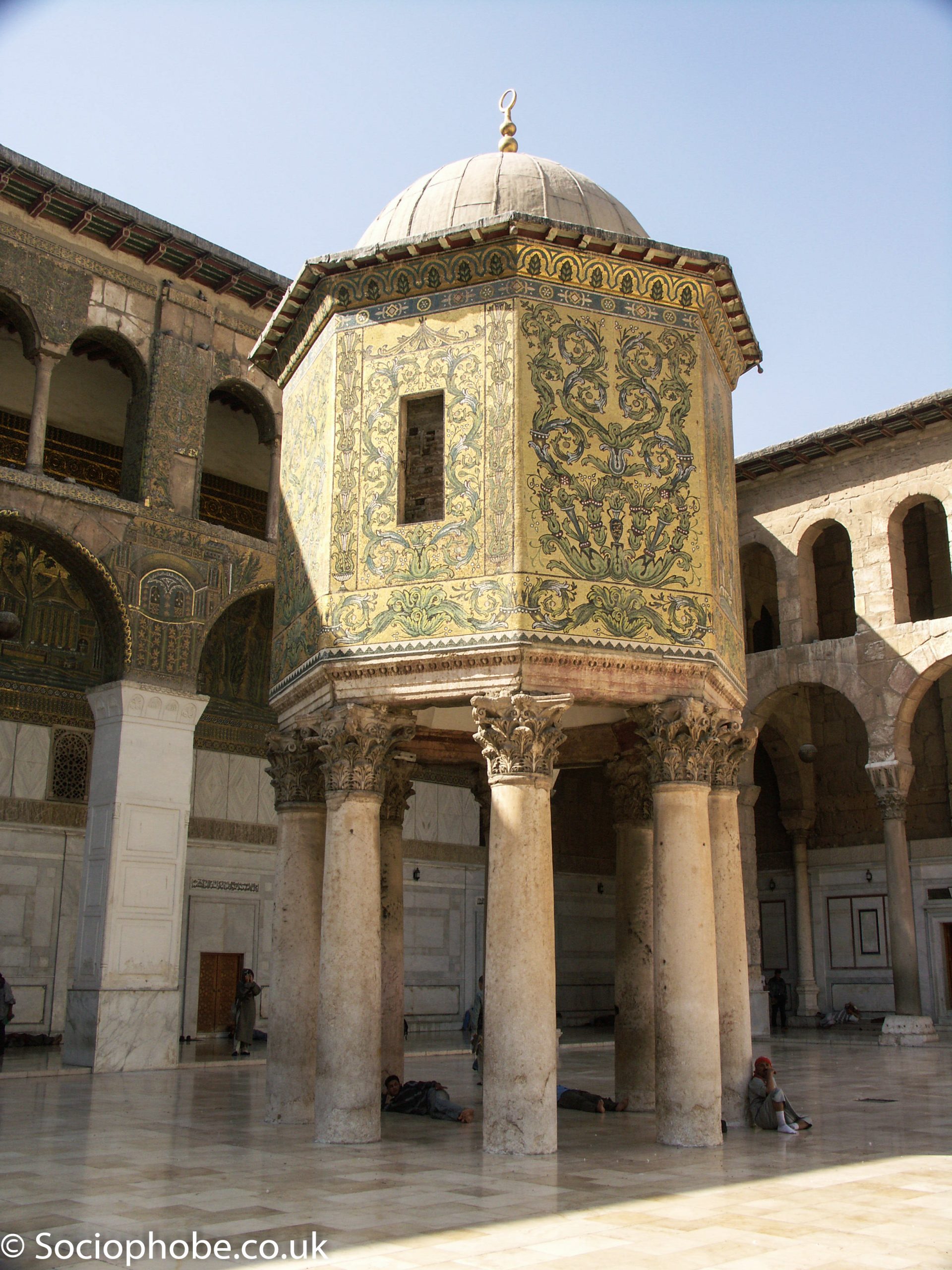
The treasury was put in the courtyard because it would apparently be like stealing from god if you took anything from it. It’s certainly a lovely building. The ablution area is also pretty and very neccessary for washing in this climate, especially as you have to take your shoes off before entering the prayer hall!
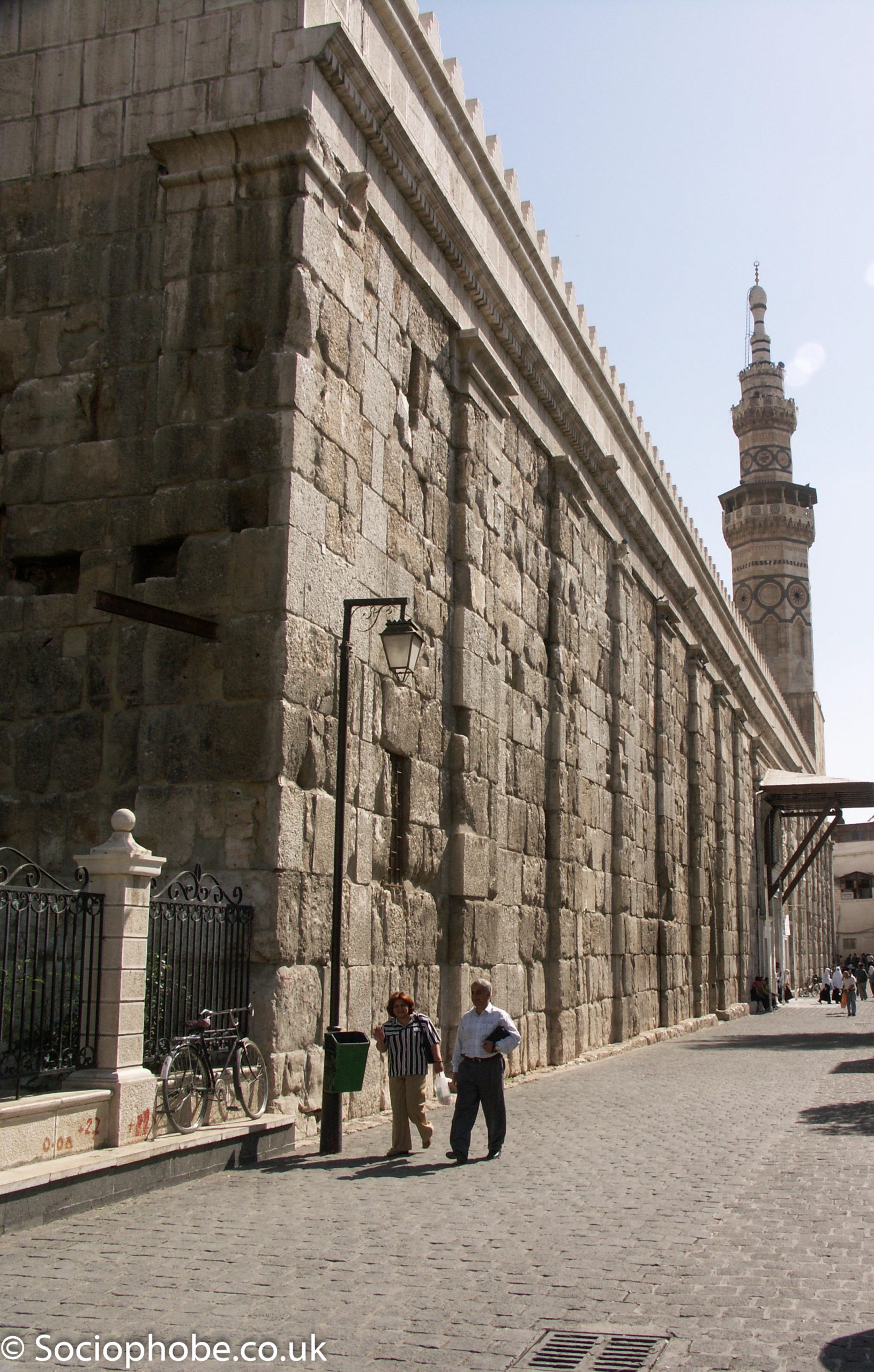
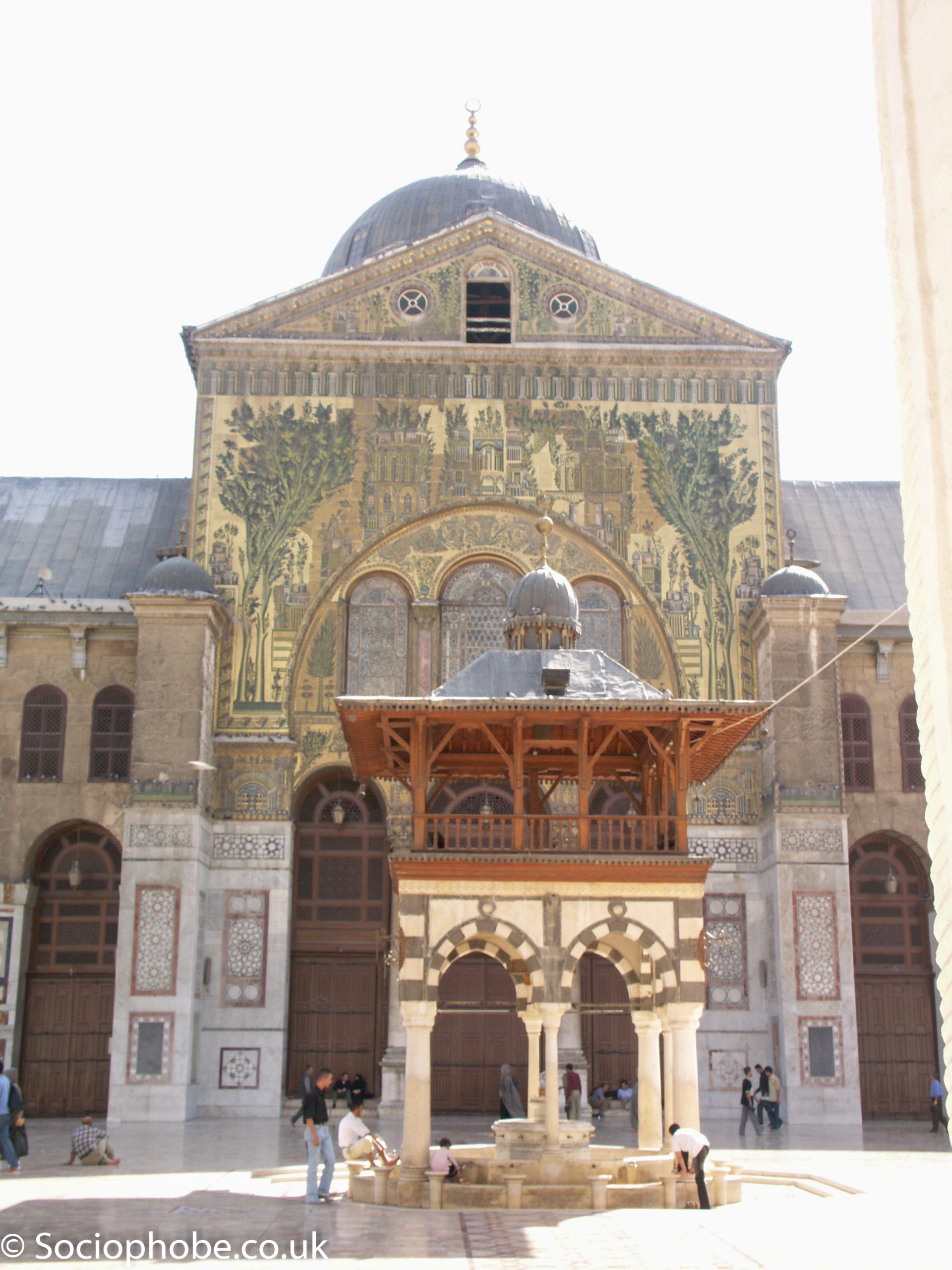
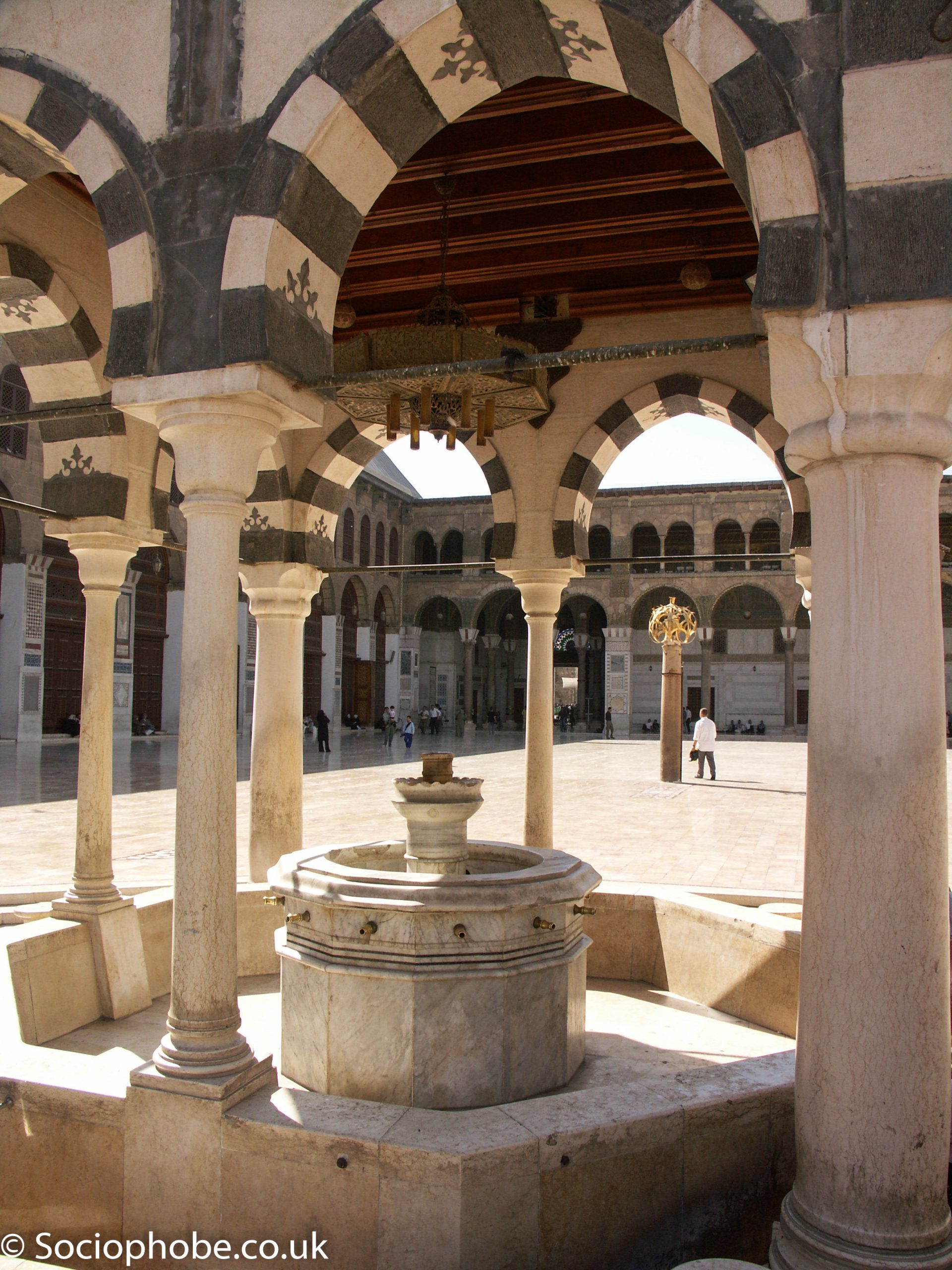
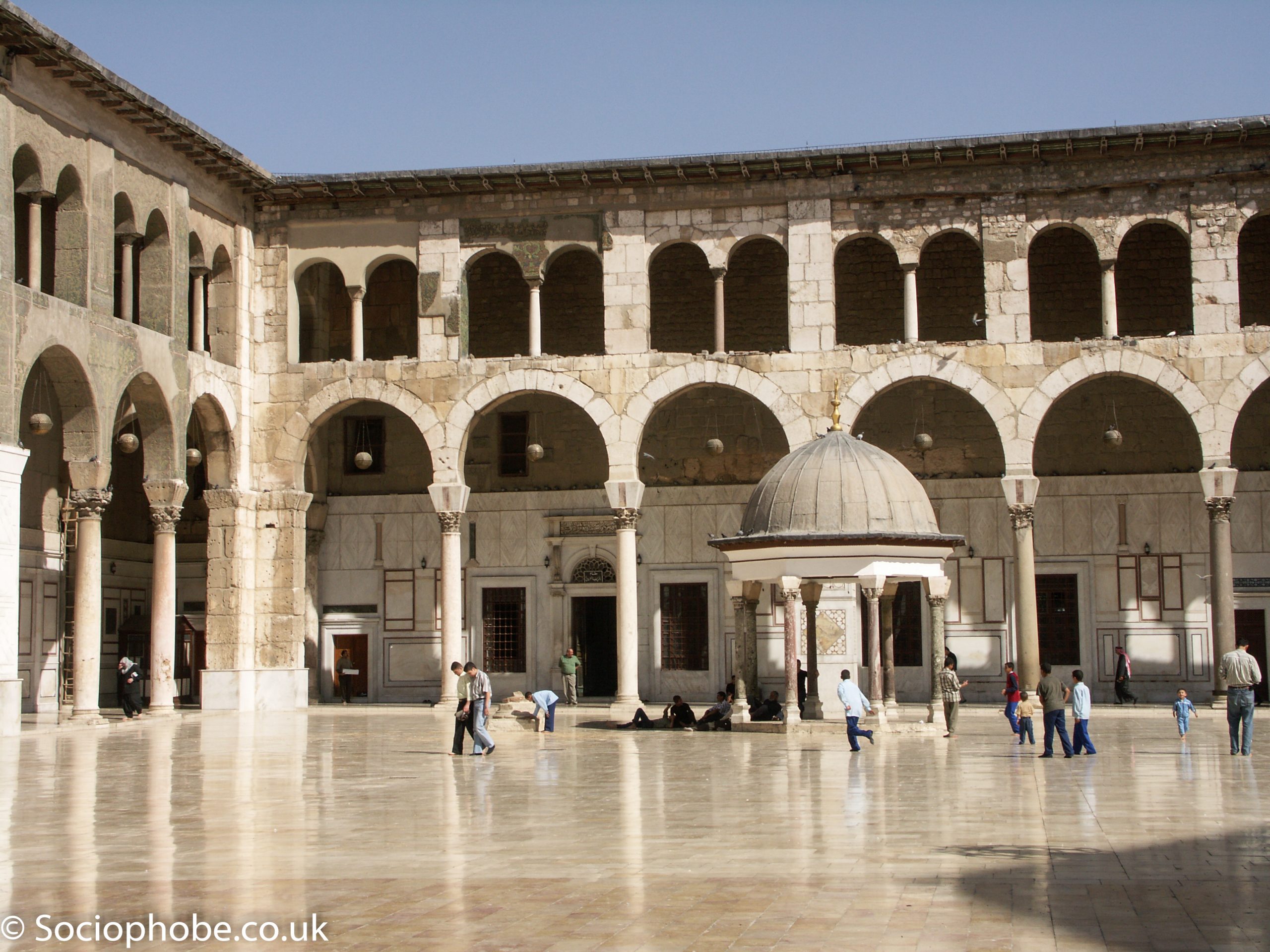
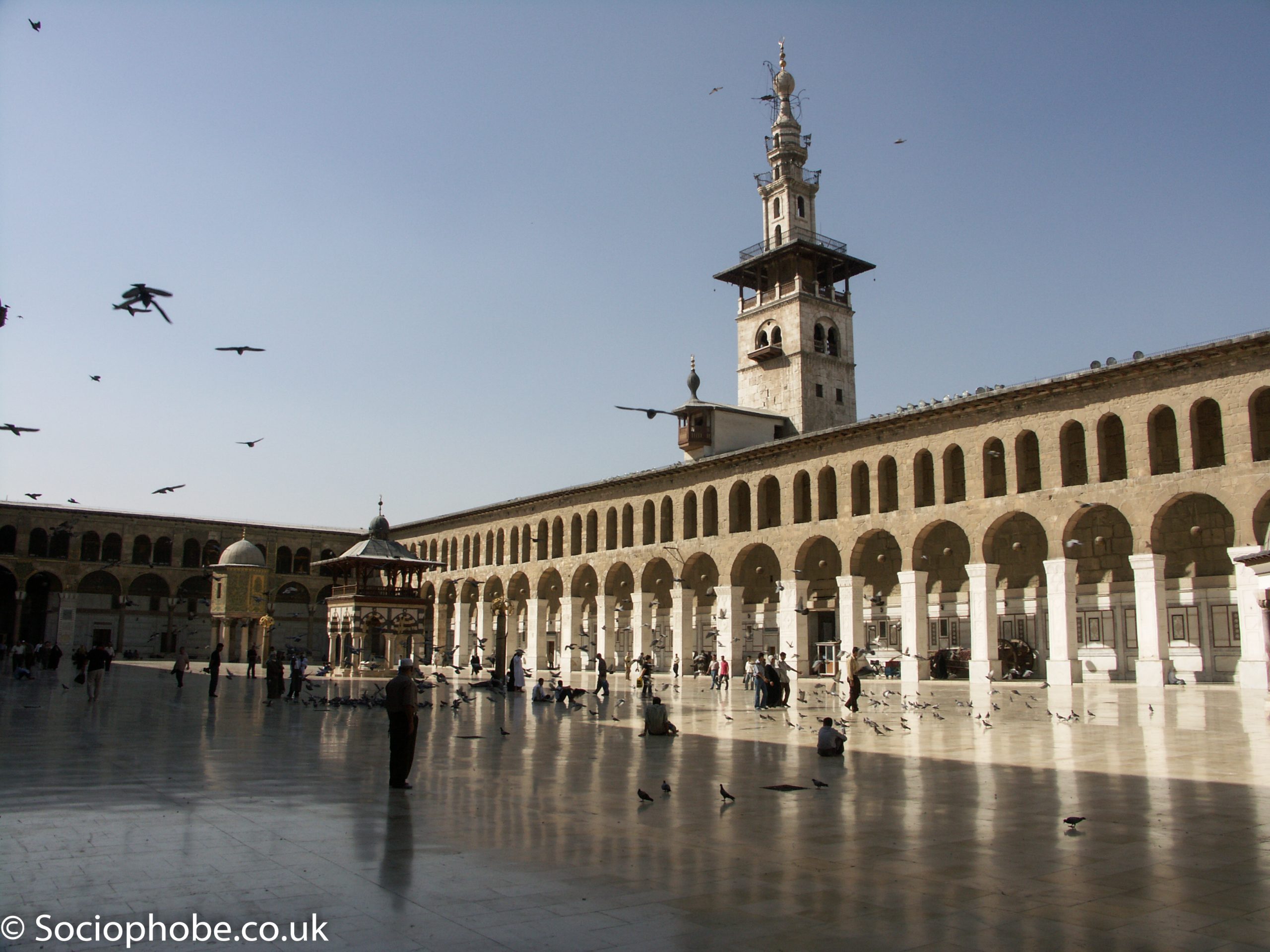
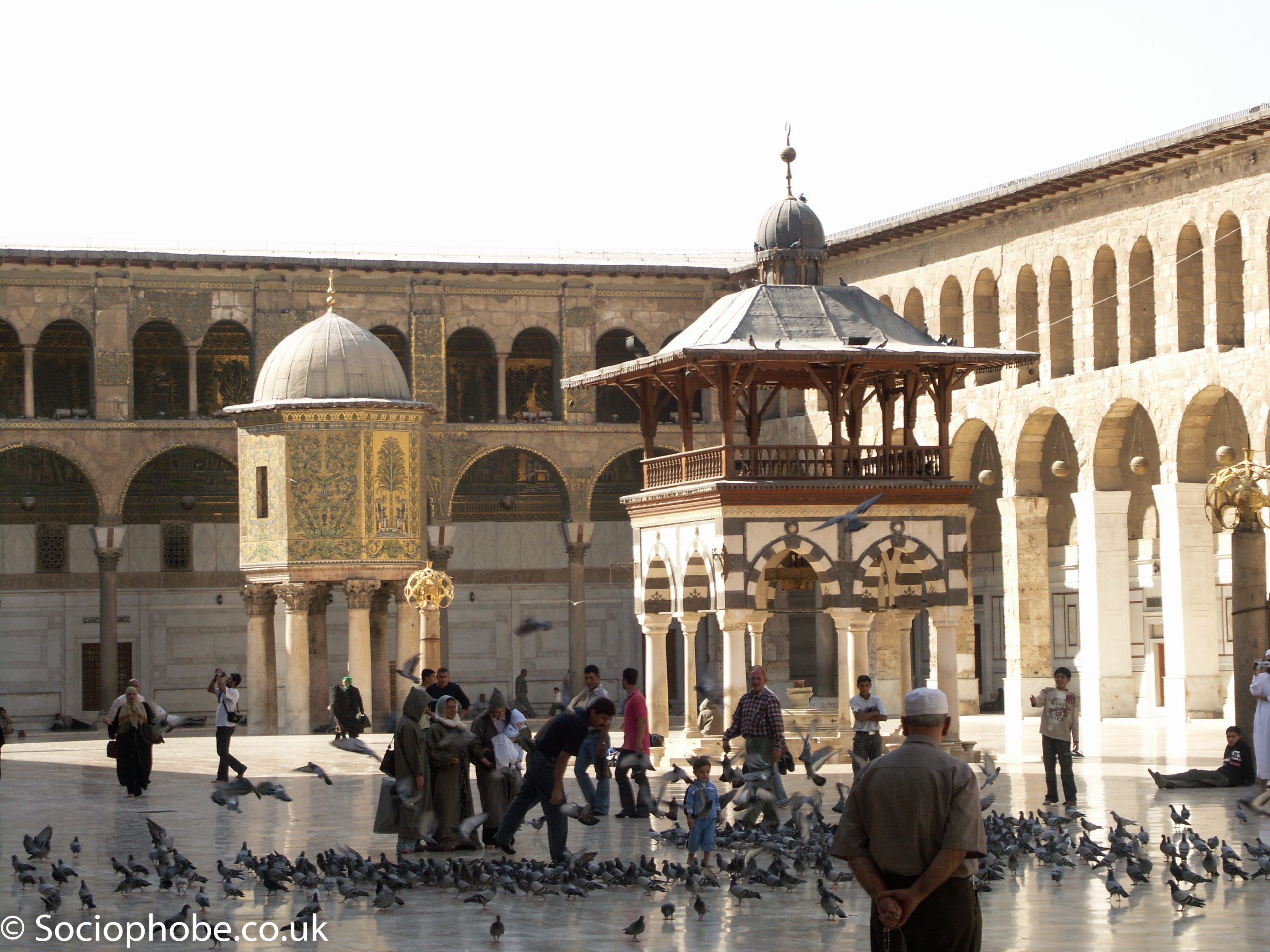
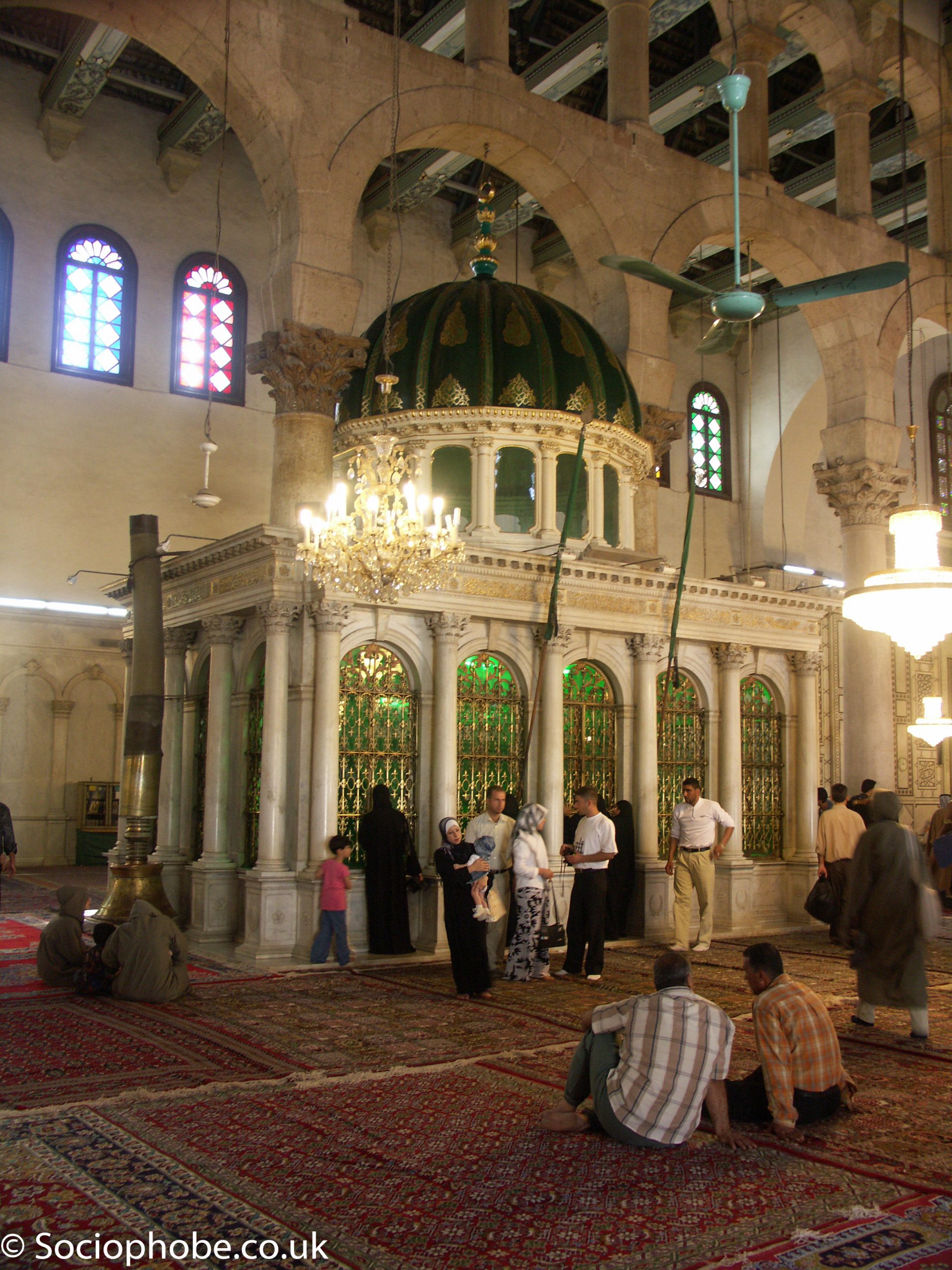
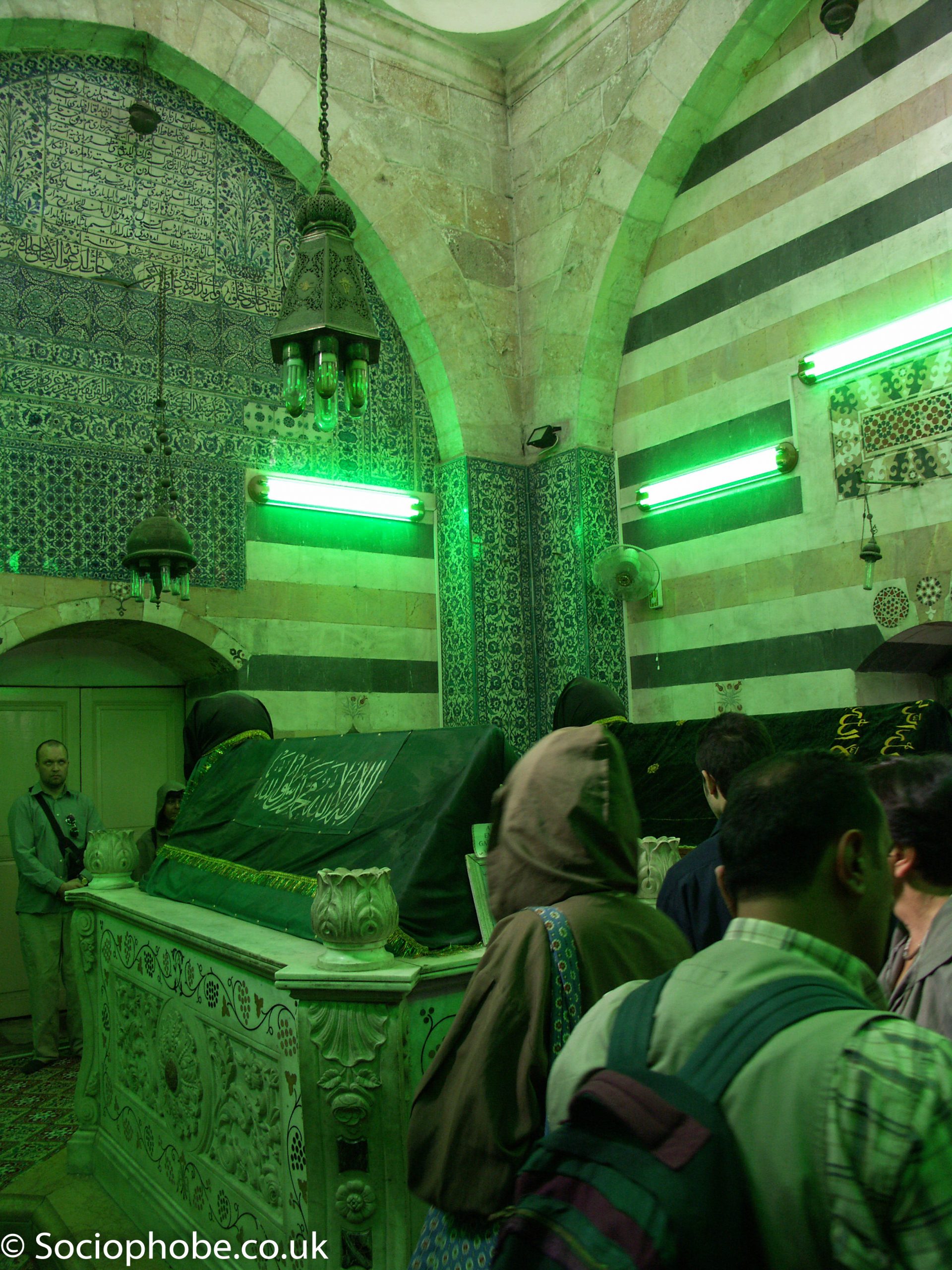
The designs inside are quite beautiful geometric patterns, very colourful although obviously there is an excess of gold. There is yet another burial place of John the Baptist here, or at least his head but I’m not sure where the rest of his body is. The tomb was surrounded by people praying to it and touching it.
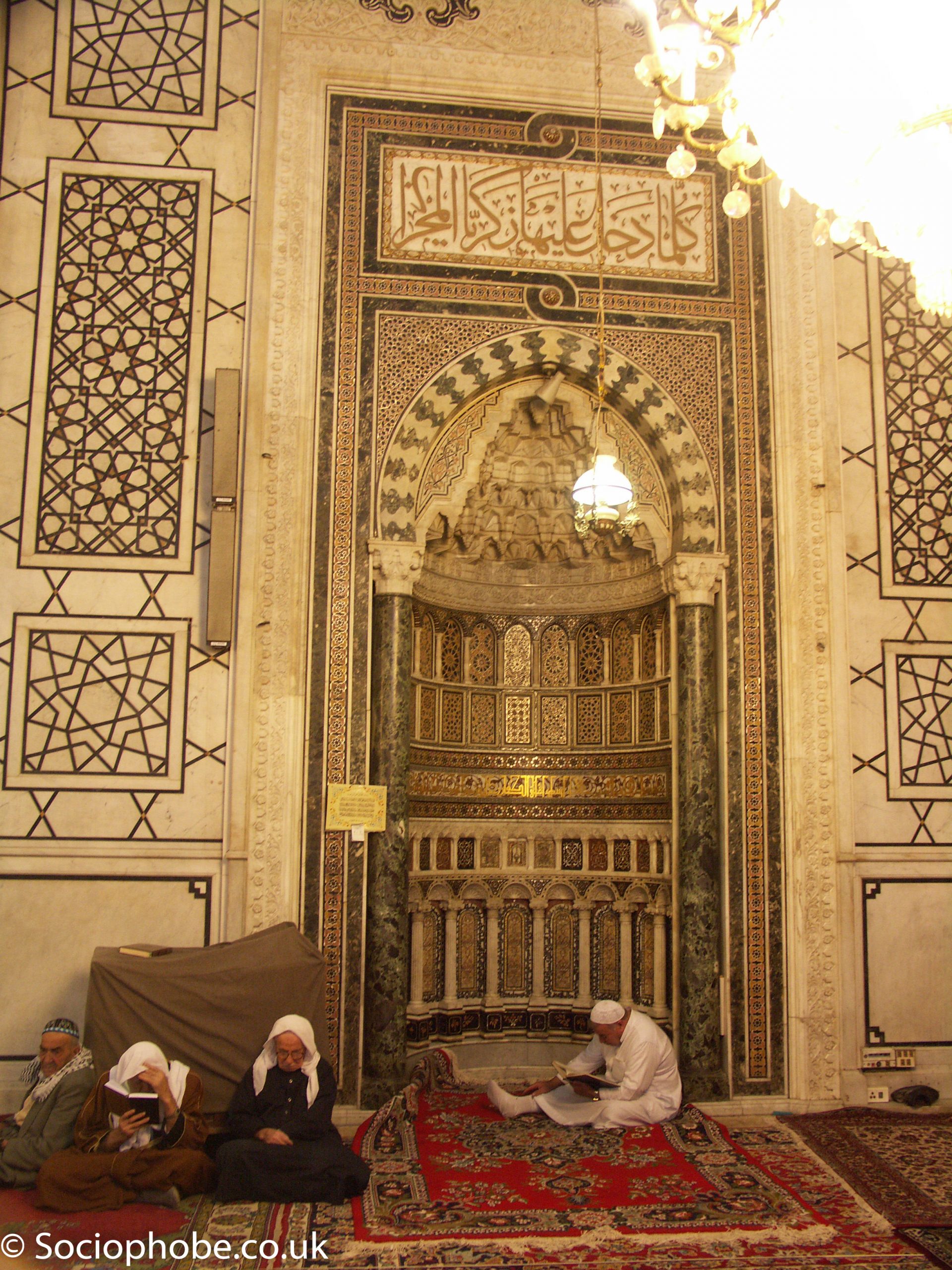
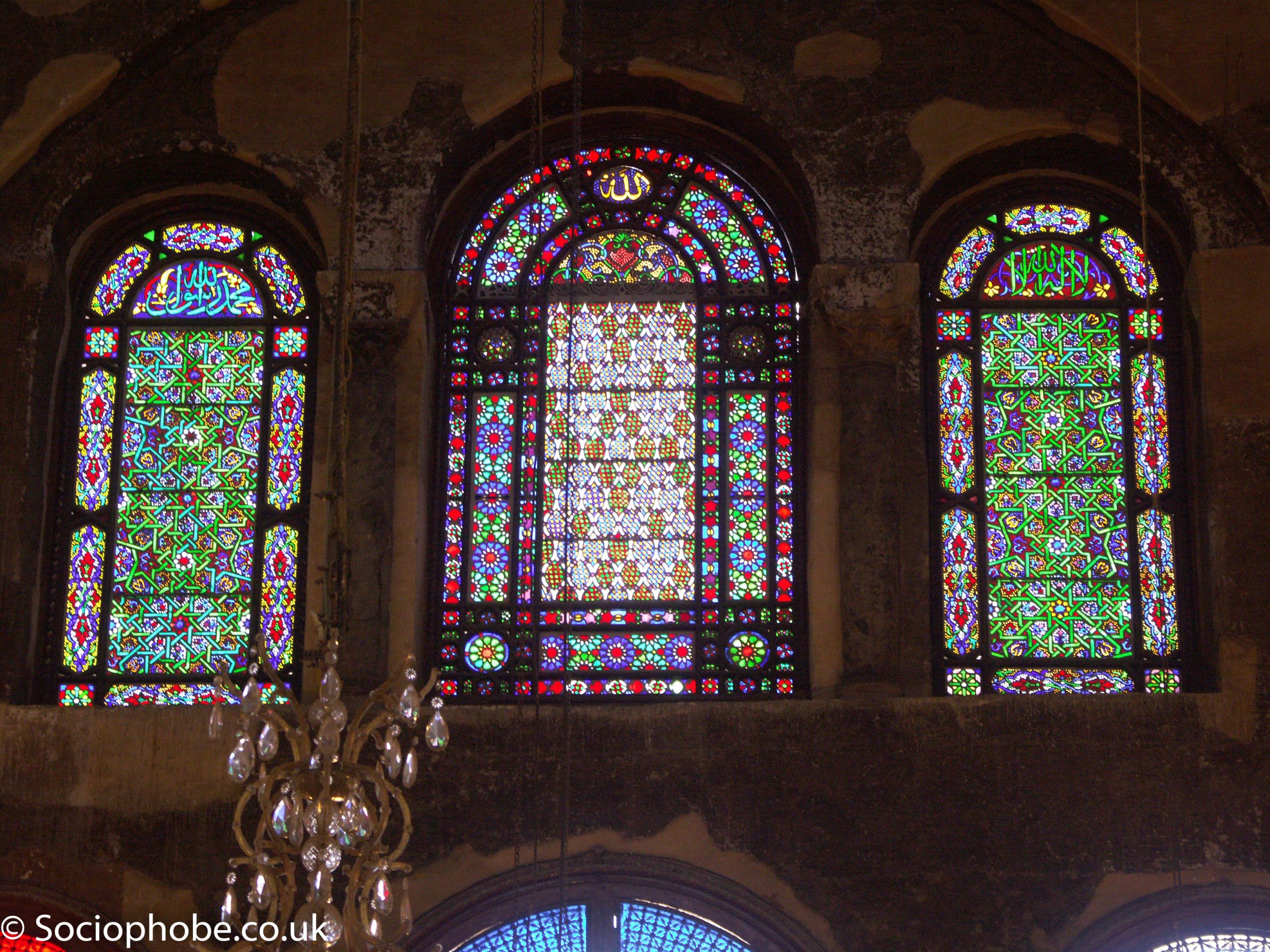
The designs continued around the mihrab with mother of pearl and inlaid marble patterns and there were also two superb stained windows. The people inside were strange, or rather their activity was strange.
The mosque was more like a social club and the only prayers were probably at fixed times. Lots of people were sleeping, some smoking and chatting, some reading the Koran. It seemed like an escape from women and family responsibilities in a lot of ways. I’m not sure of the women had the same option for release though but if it helps people relax it’s not a bad thing.
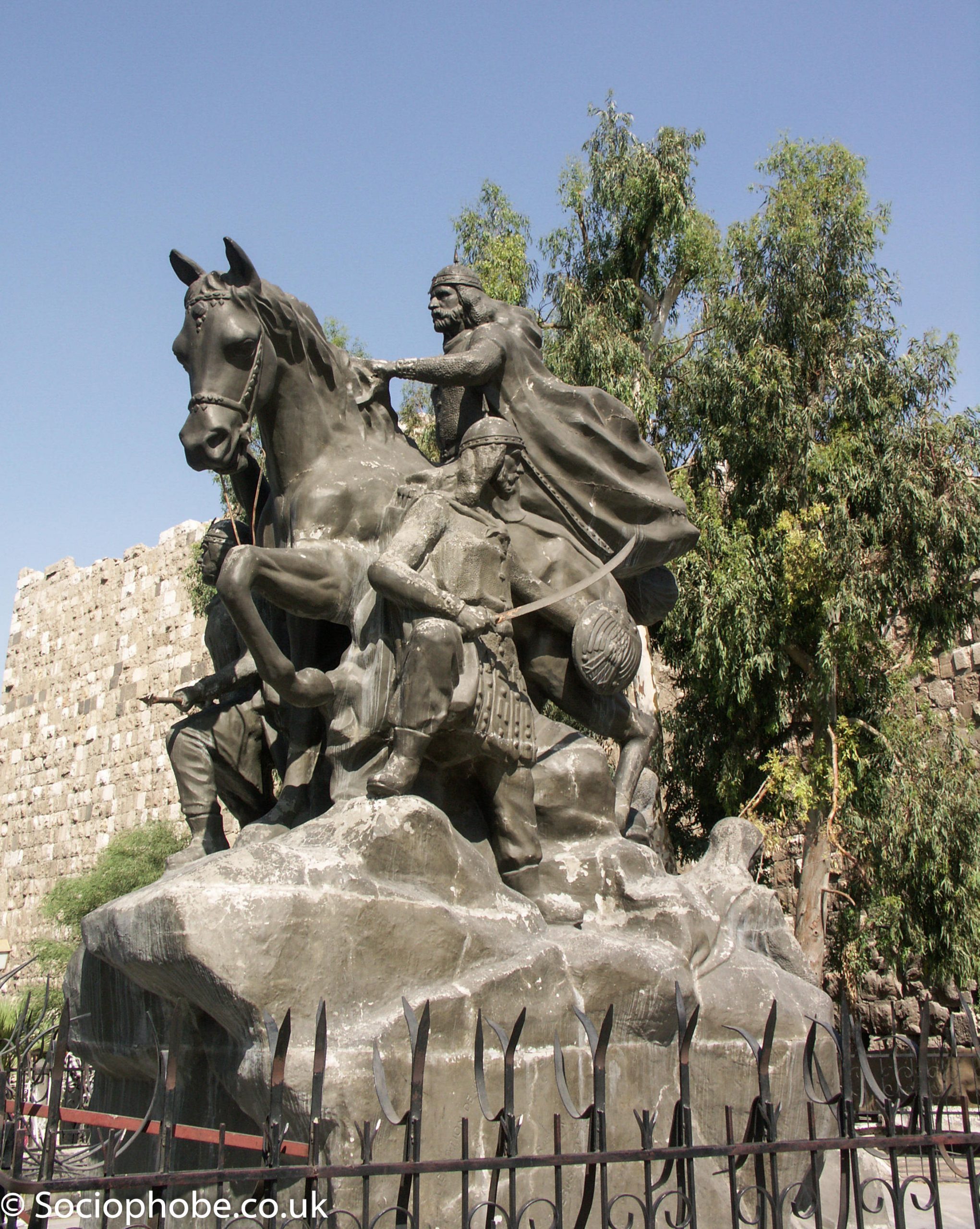
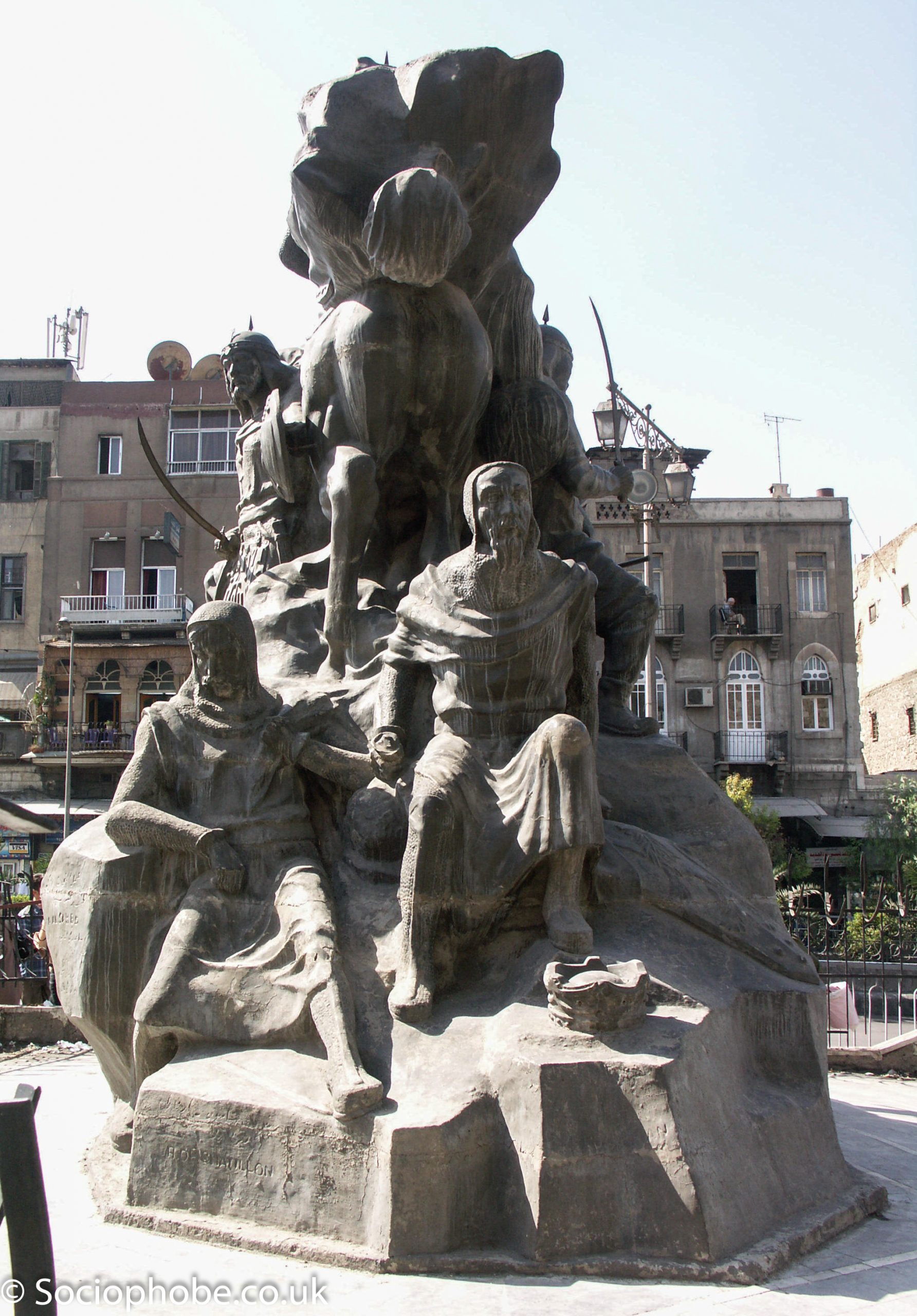
Outside the mosque is a statue of Saladin with two captured crusaders behind him. His tomb is also there although it now looks more like a 1960’s bathroom, covered in blue and white tiles, than it did when it was constructed. Quite ironic that they look up to Saladin, a Kurd, while trying to destroy his kinsmen.
Syria: Damascus Souk
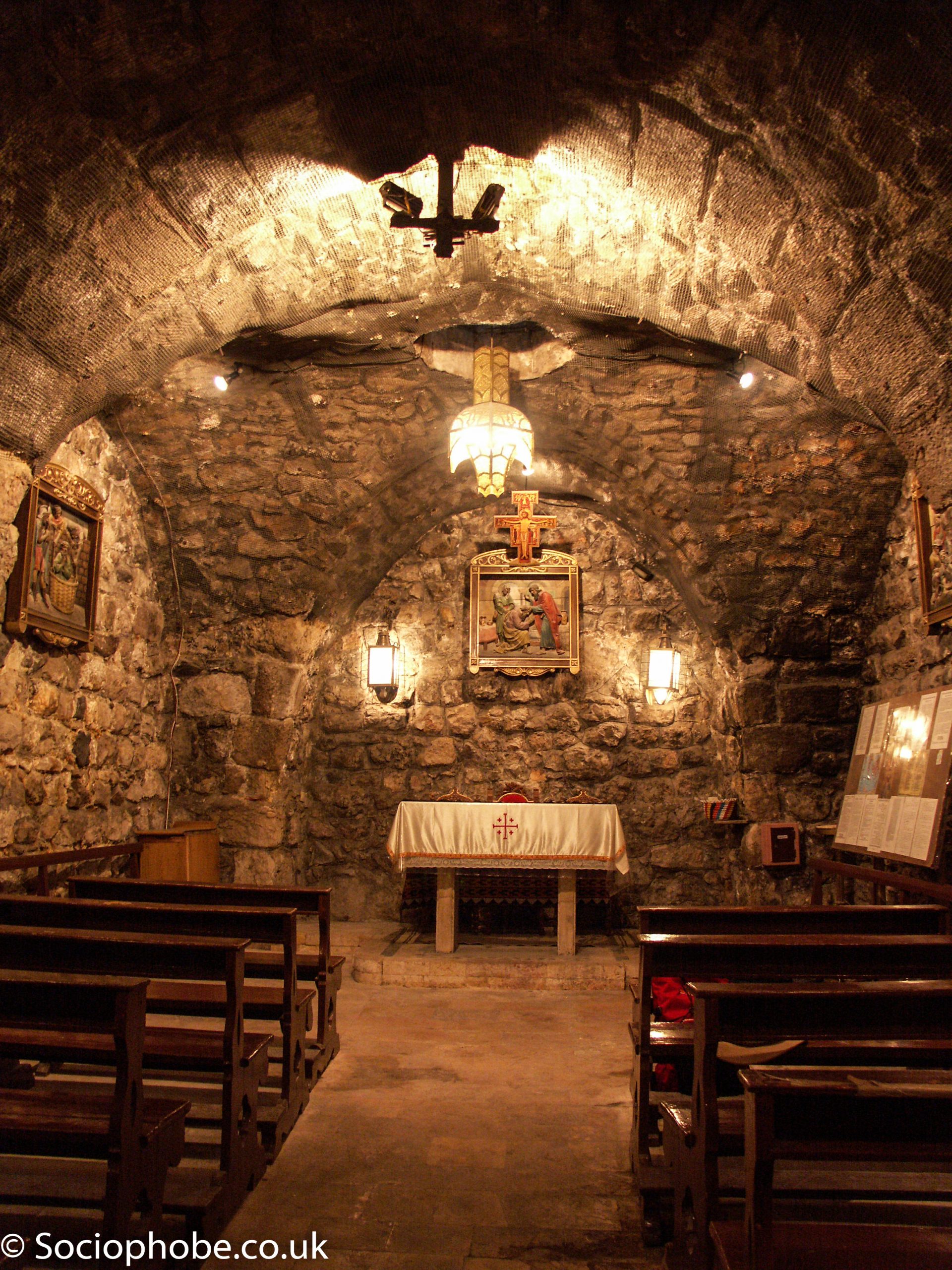
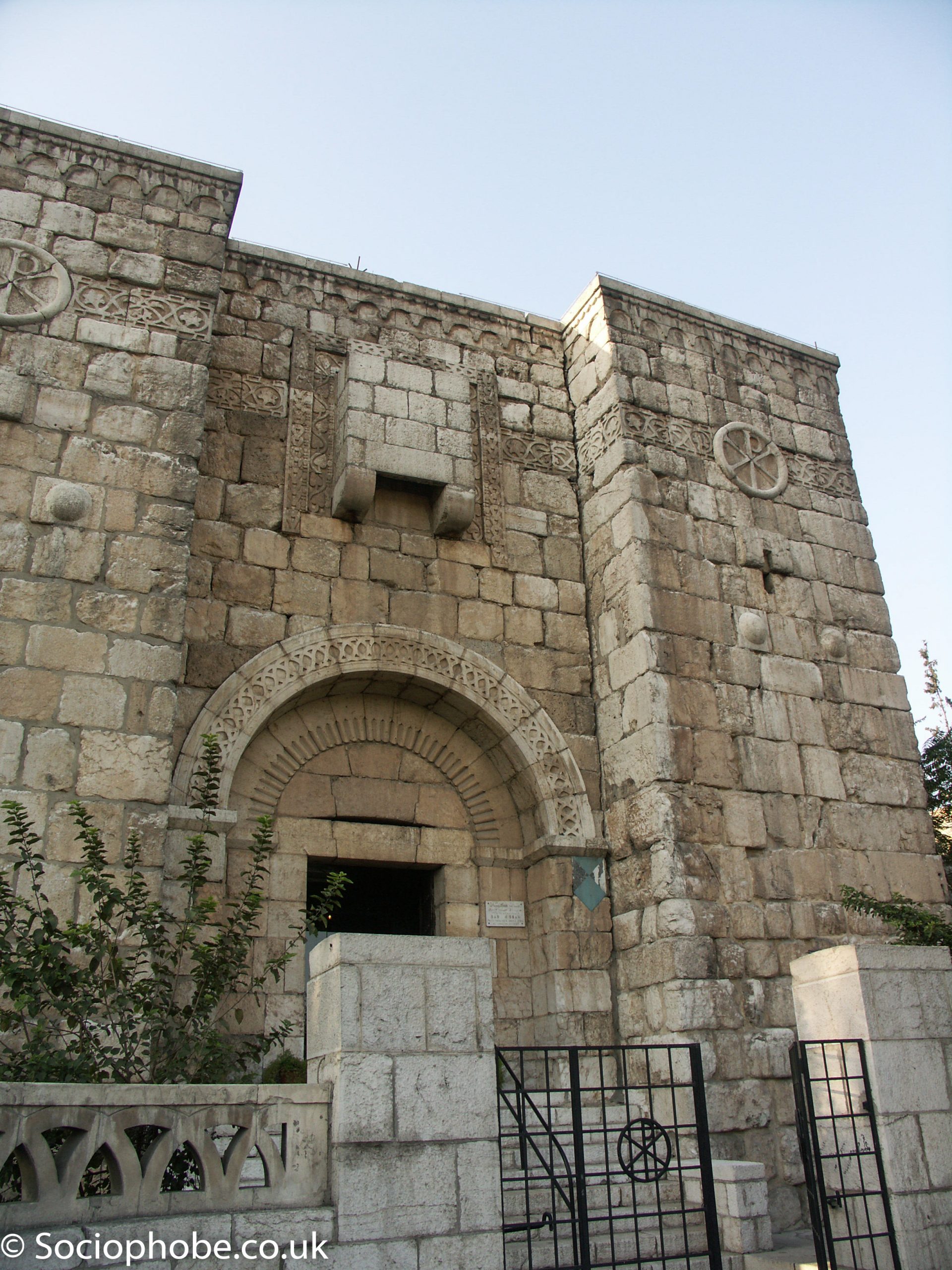
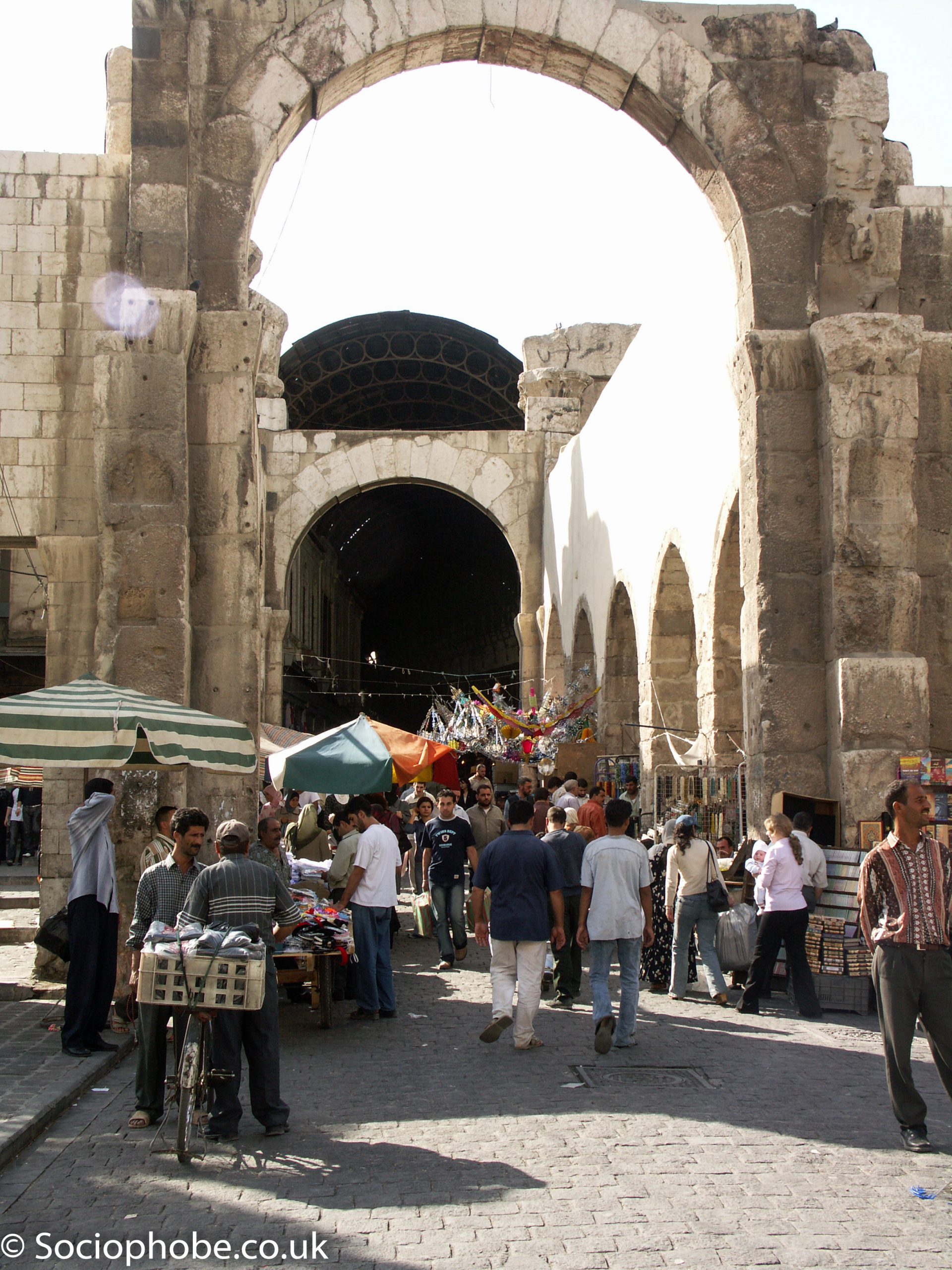
From the mosque we walked through part of the covered souk, which still had holes in the roof from French machine gun fire from the 1940s, and into the Christian quarter. We visited the Church of St Annias, the person who cured Saul’s blindness and converted him to Christianity. The church was very plain and was actually about 4m below the level of the current street as street levels have risen over the last 2000 years.
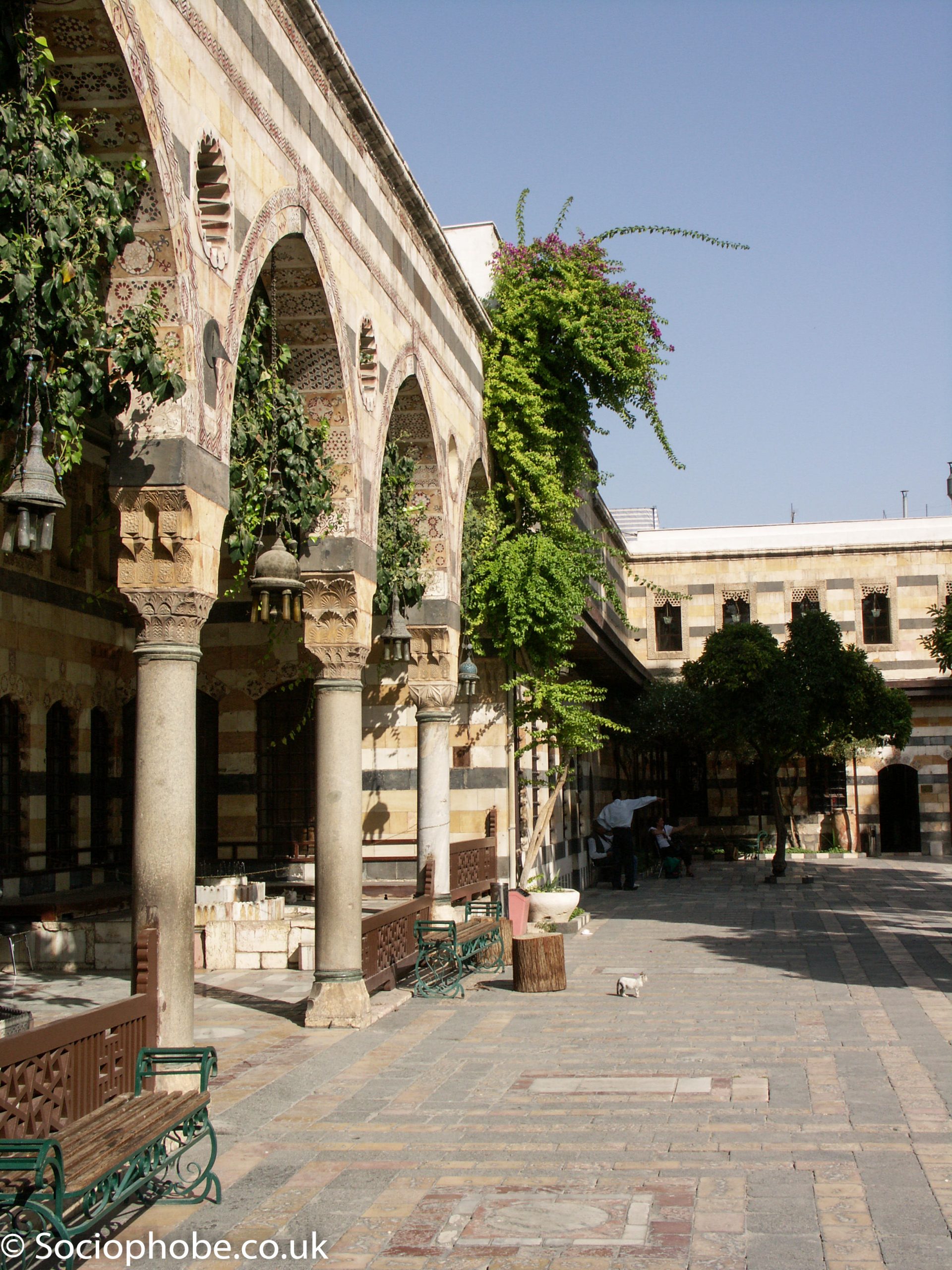
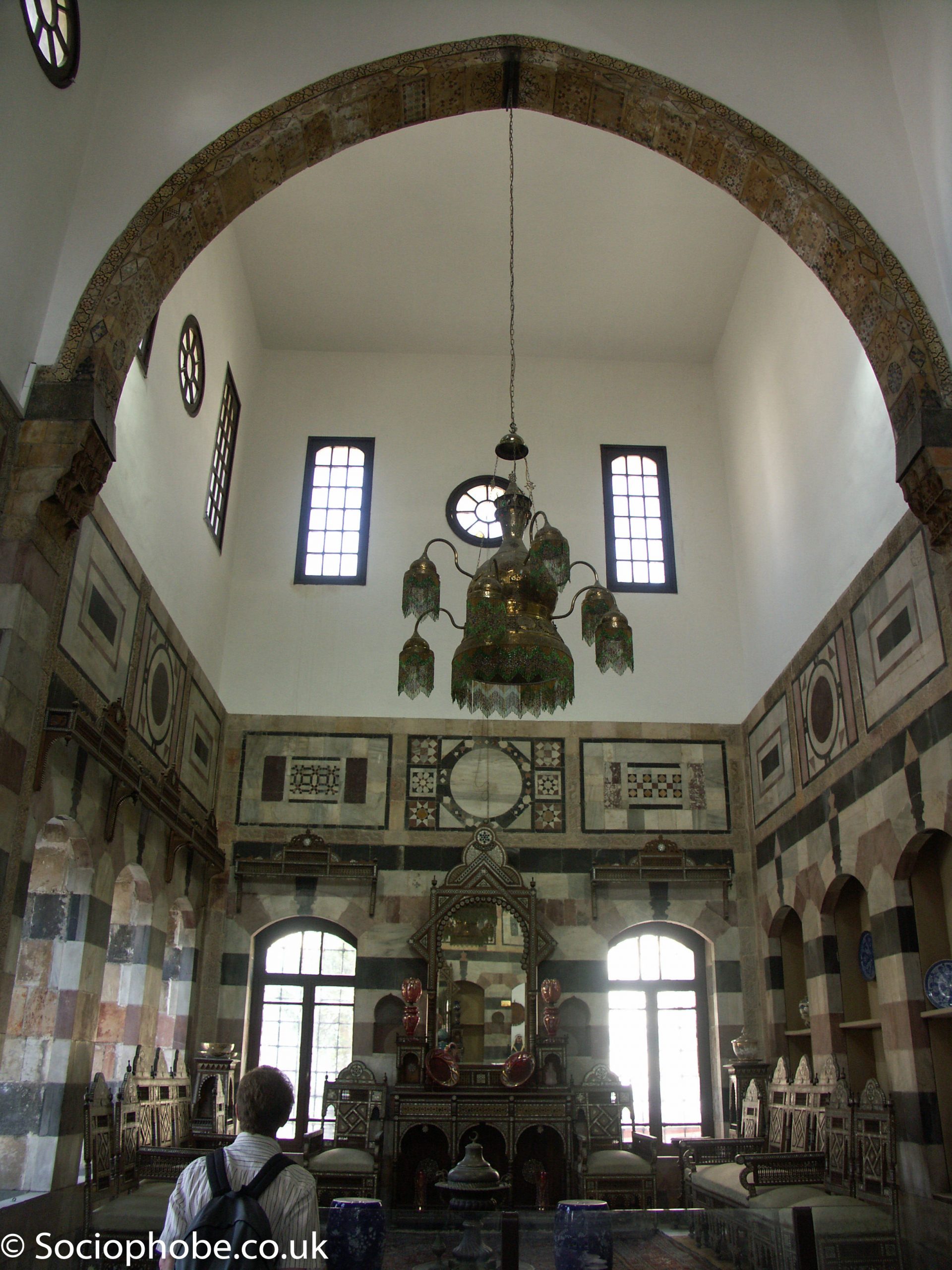
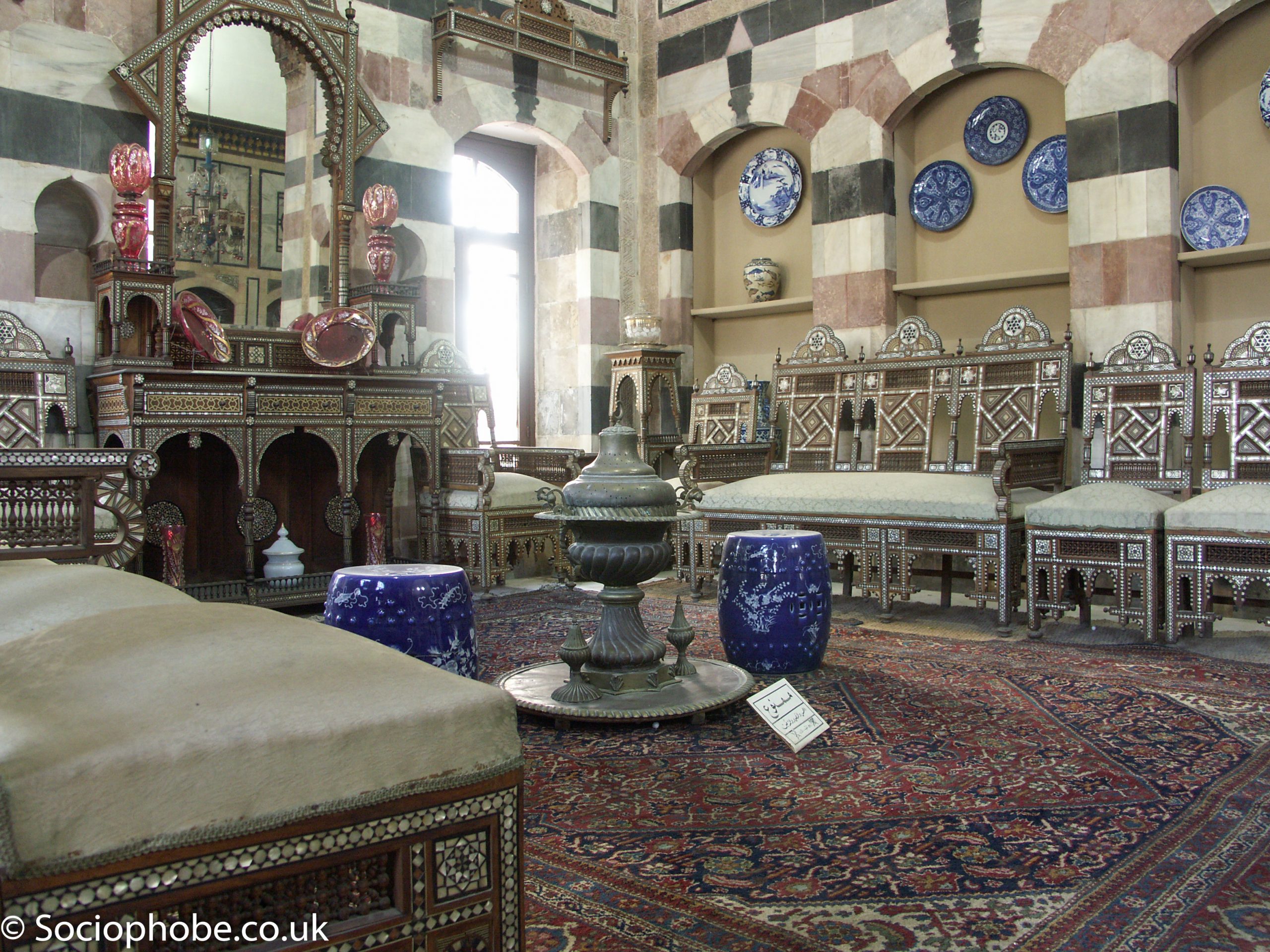
Syria: Damascus Azzim’s Palace
We also visited Azzim’s Palace, the home of an Ottoman governor that was taken over by the French in the 1920’s and then bombed by them in 1948 before being converted into a museum of 18th century life.
The courtyard was very pleasant, shaded by trees with several fountains and some very feral cats. The ceiling inside were very ornate painted wood, inlaid with mother of pearl and ivory with marble walls and floors.
Our final stop for the day was a long drive through rush hour traffic to the hill of Quassioun overlooking the city. The city is now so huge that really all you could see was a sprawling mass of dusty white buildings and the main mosque and citadel. It was nice to have a breeze though and be away from the crowds. I wanted to get sunset photos but the driver was impatient to get home and eat as he’d been fasting all day so, as he had the keys, he won that one!

Today had been a very hot and tiring day so the soak in the bath at the hotel was most welcome and I had an early night after sorting the photos. The hotel has about 500 rooms and 100 guests, mostly French although there were small groups of Spanish and Germans but no other English or American visitors. The average age seems to be in their 50’s for visitors too.
Syria: Bosra
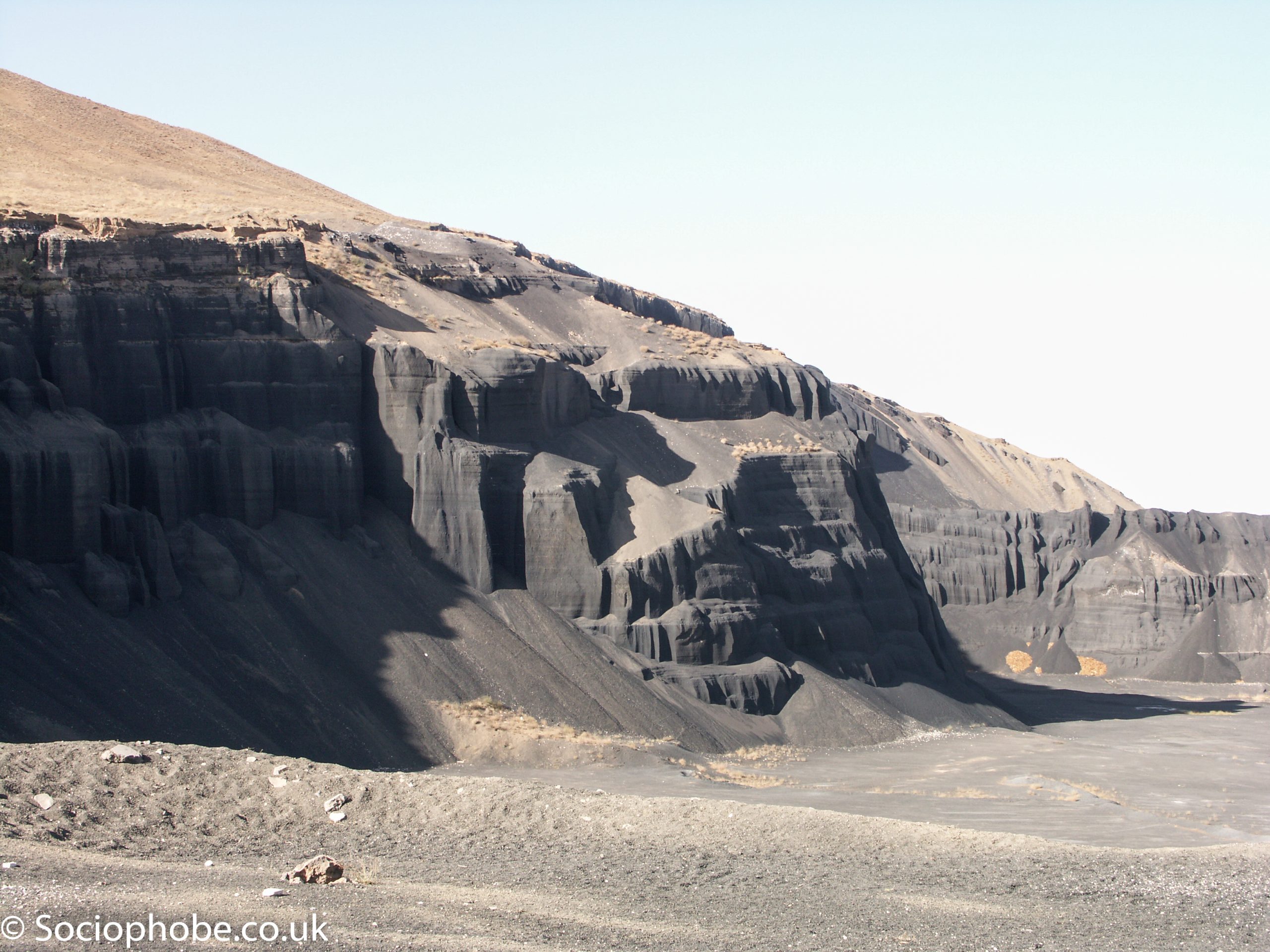
After breakfast we headed off to Bosra, a place I hadn’t heard of but it turned out to be a highlight. The fields in the area were piled with volcanic pumice that had been cleared to make way from crops although they didn’t bother to clear the rubbish that was scattered through the bushes. This was a Druze area, men with white headresses and baggy trousers and waxed mustaches, the women probably looked the same.
The bus had a puncture which was conveniently next to a tyre shop, probably scattered nails across the road to drum up trade! Although it wasn’t 9AM it was very hot already.
The basalt from the volcano sides is quarried for a building material as it is very hard and waterproof. It is a difficult rock to carve for anything intricate but ideal for walls as it is so long lasting. This area is also the main wine growing area in Syria although apparently Lebanese wine is better.
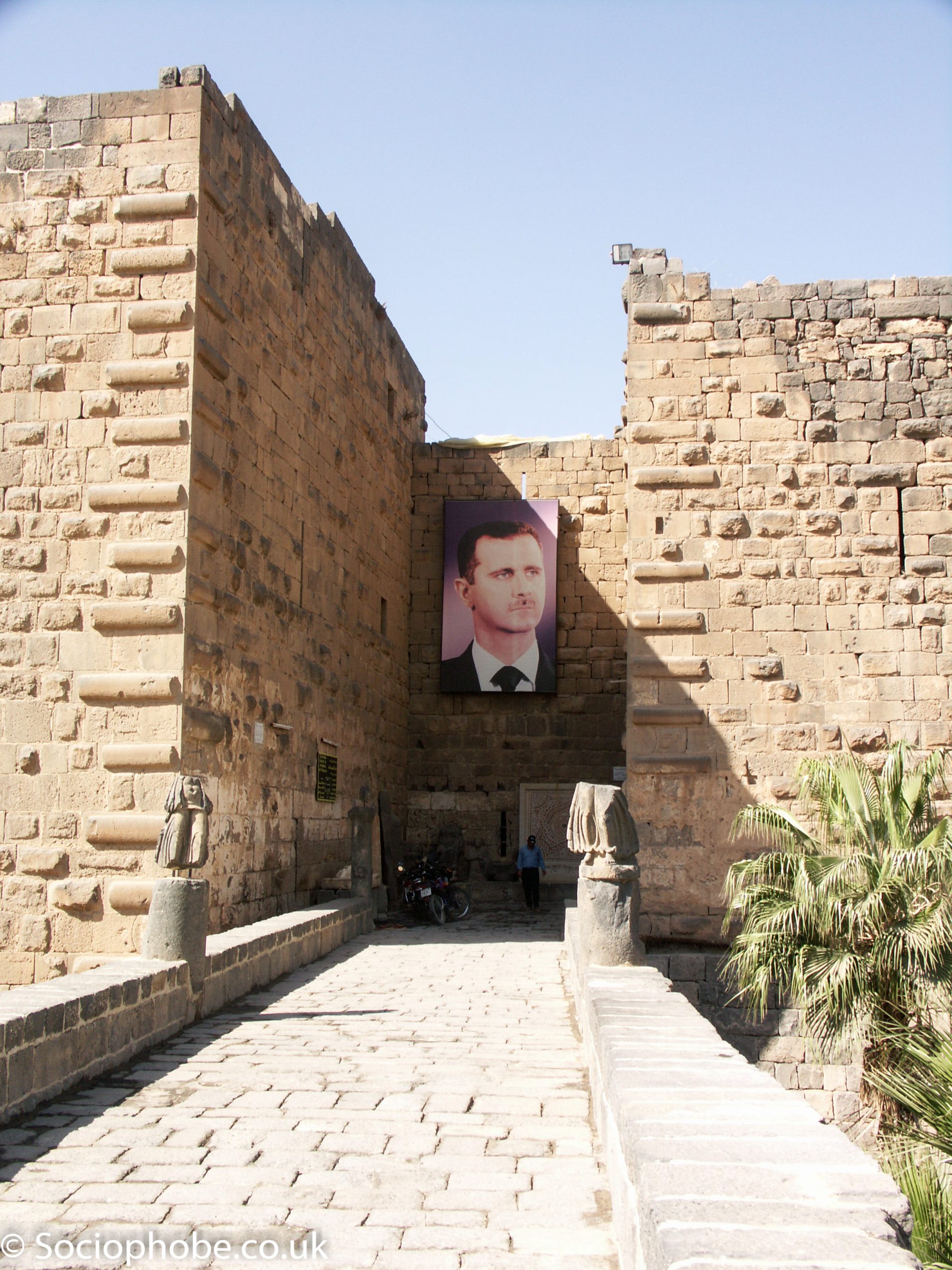
We arrived at Bosra which is a small, run down and dusty town. A short walk from where the bus dropped us was Saladin’s Citadel, a very austere black basalt building. The usual huge posters of Assad adorned the front and there was a large moat and glacis as well as unusually square defensive towers.
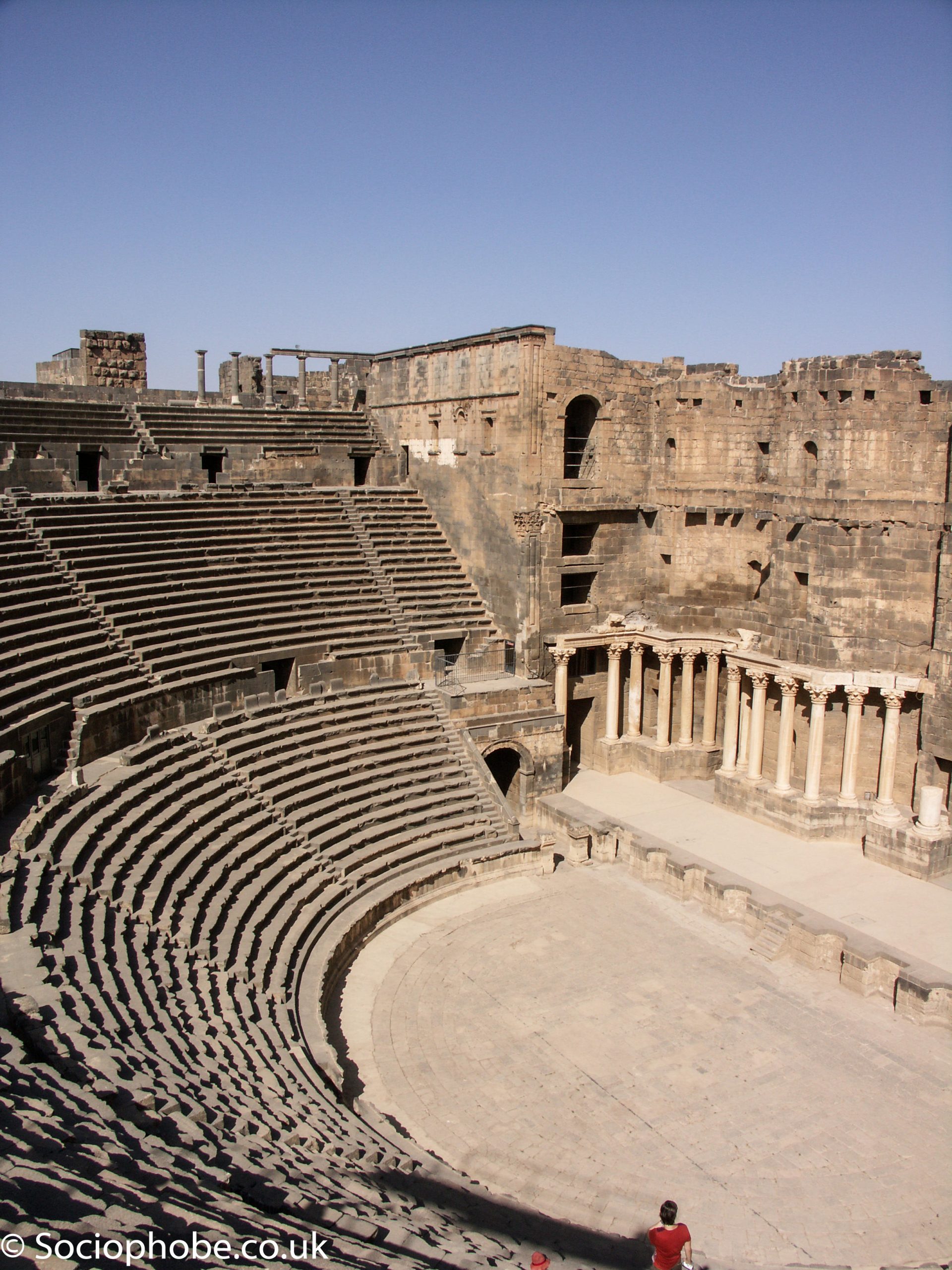
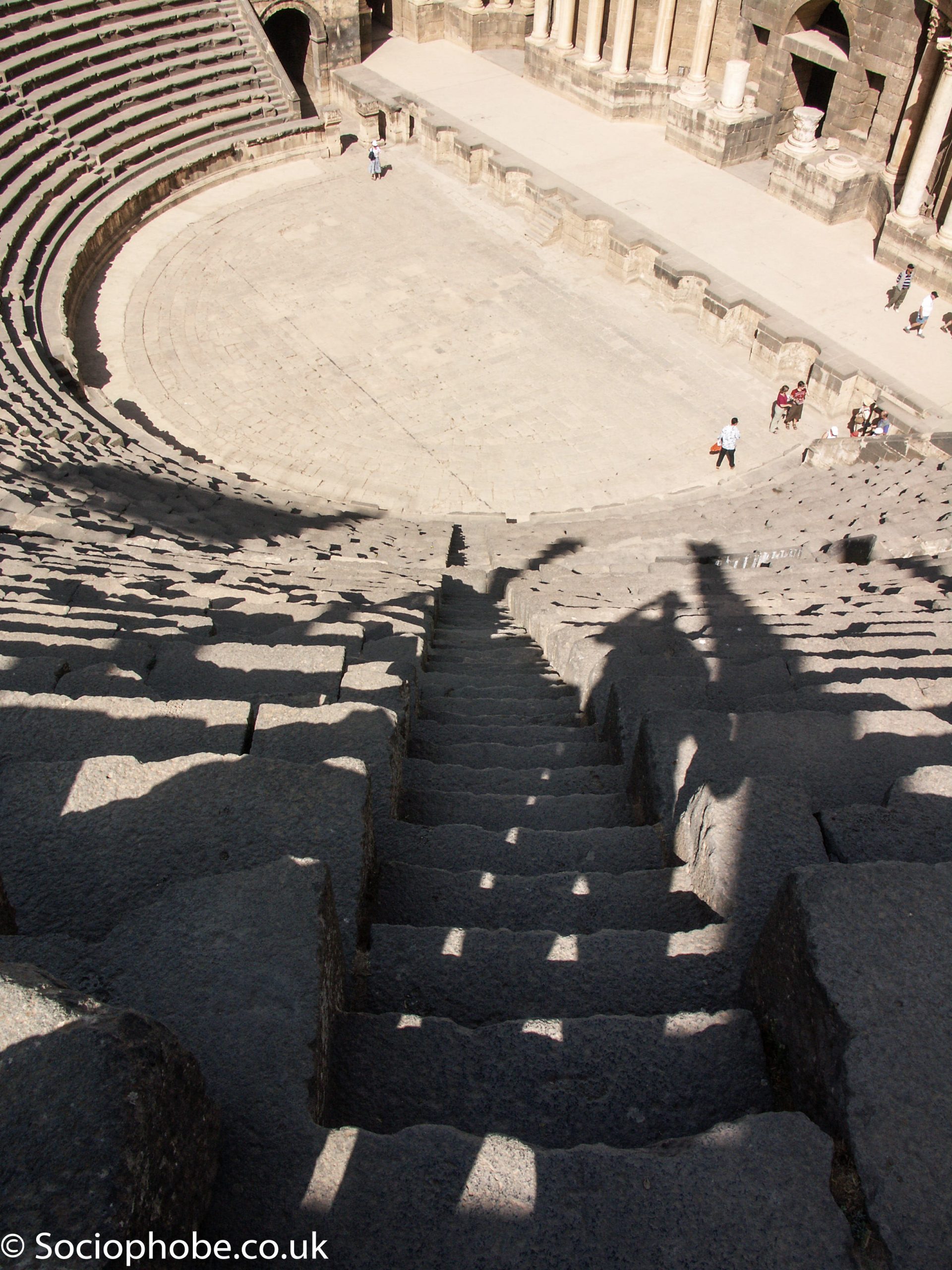
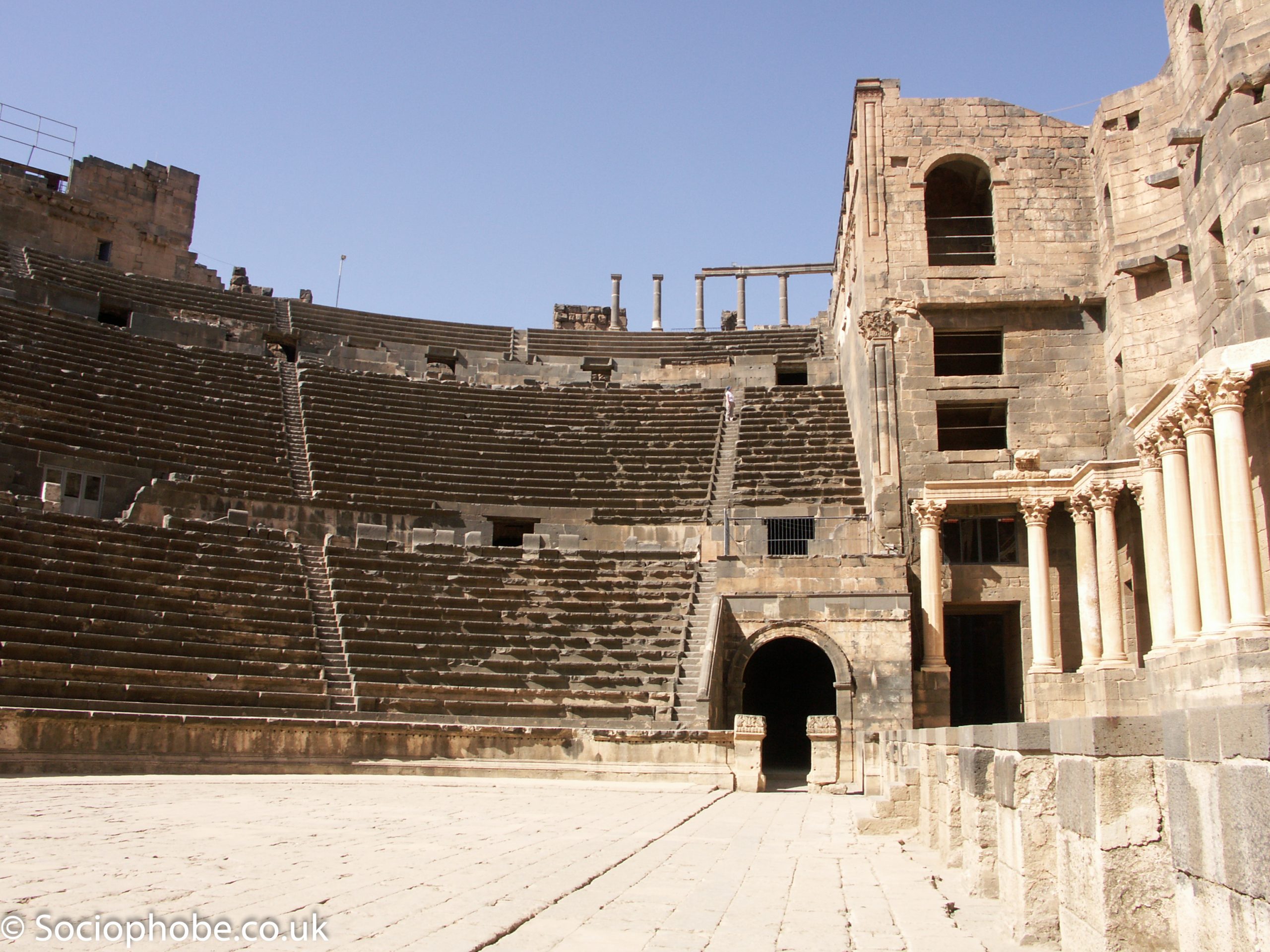
Inside the citadel was a short walk to a tunnel opening from where we looked down into the Roman theatre – wow! It is a huge place and almost completely intact, 20,000 seats and all in black basalt.
Syria: Bosra Roman Theatre
The theatre is the best preserved example in the Roman world, it even has the candle holes around the orchestra pit still. The gloom of the basalt is broken up by white limestone columns at the back of the stage. The Roman city itself is largely buried now.
Originally it was Nabatean, a joint capital with Petra, before being ruled by Romans, Byzantines and then Arabs. The Arabs abandoned it in the fifteenth century and it was slowly buried by sand. Various bits have been excavated so far but nothing as deep as the original Nabatean city.
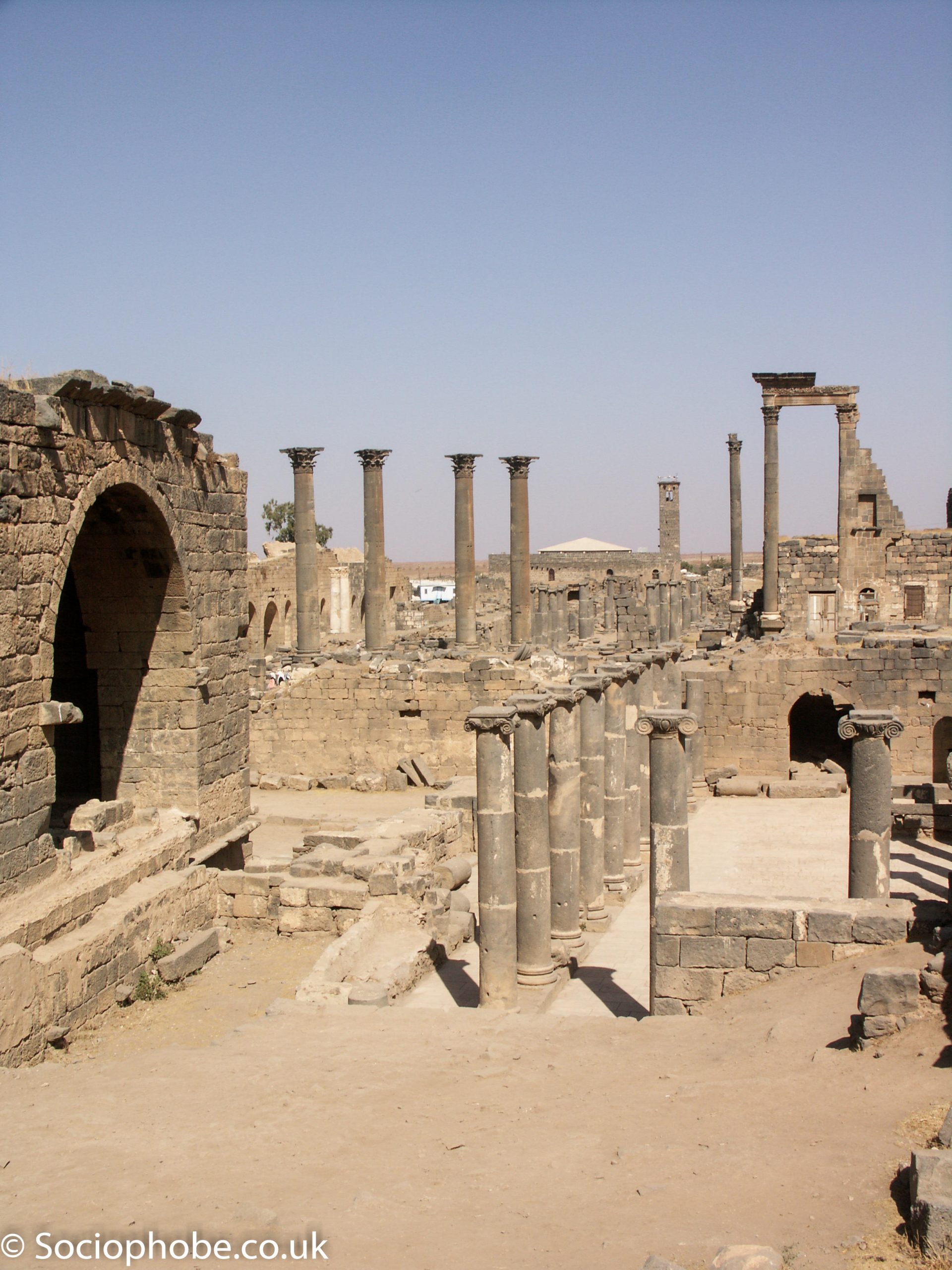
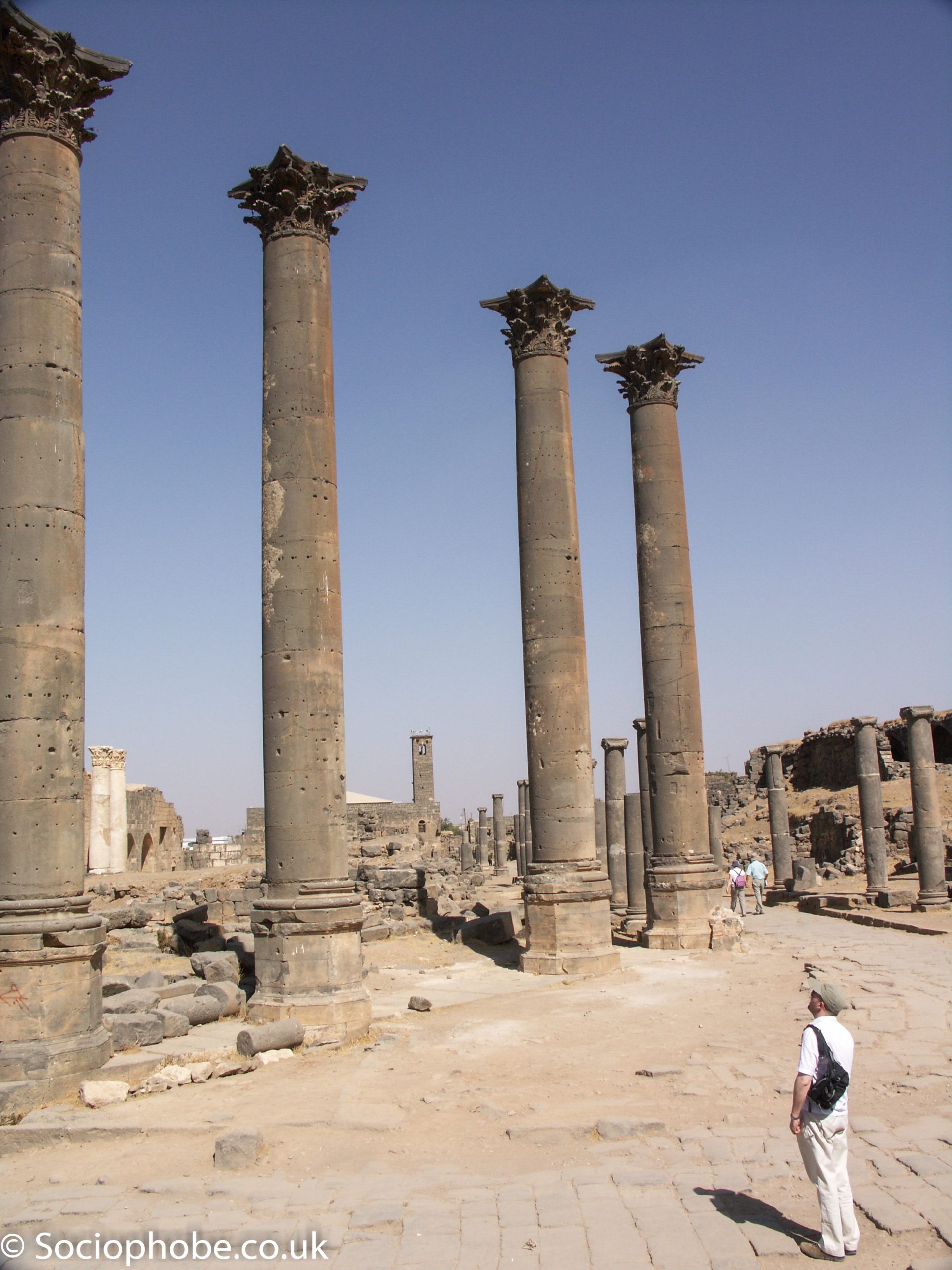

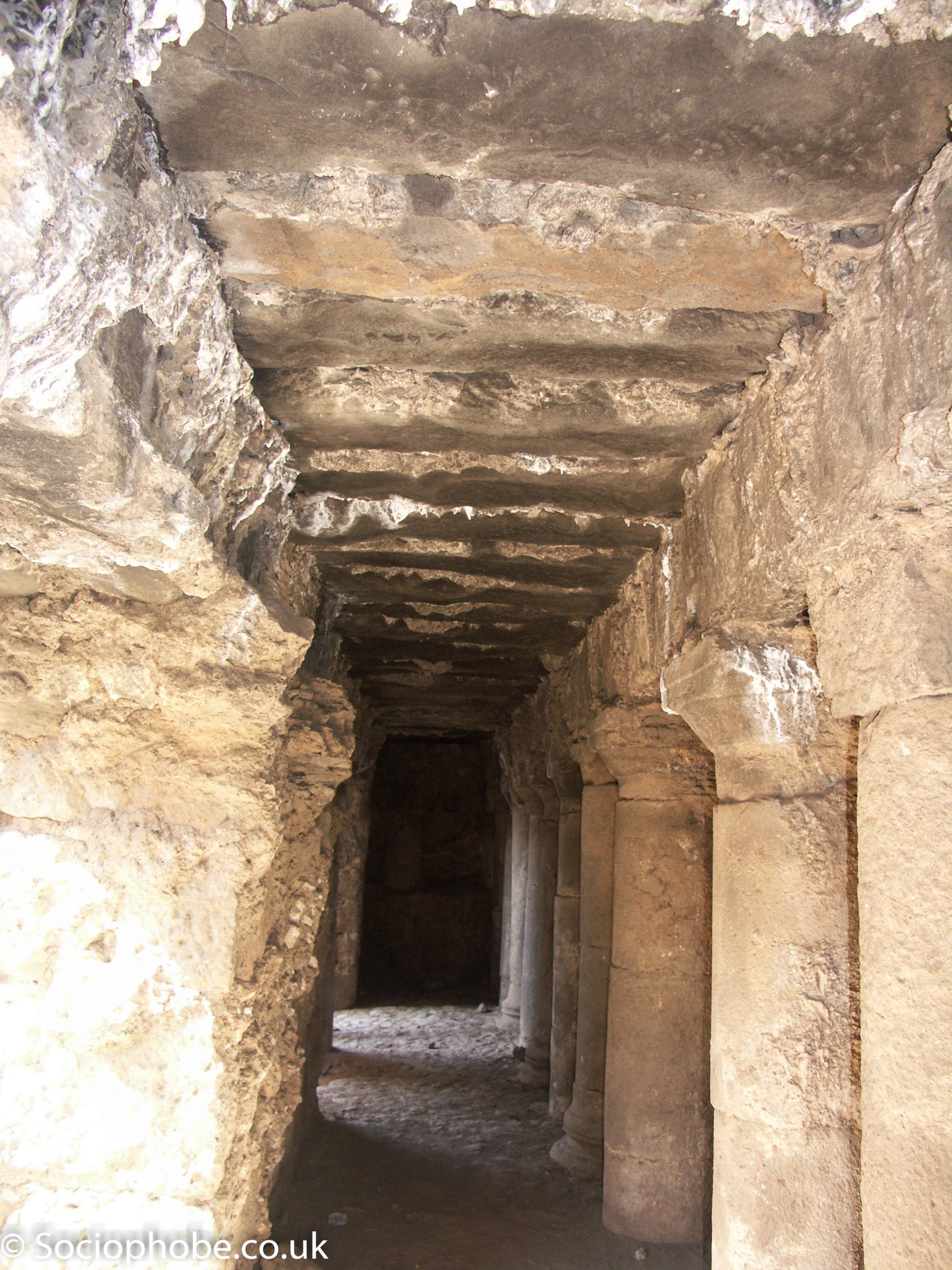
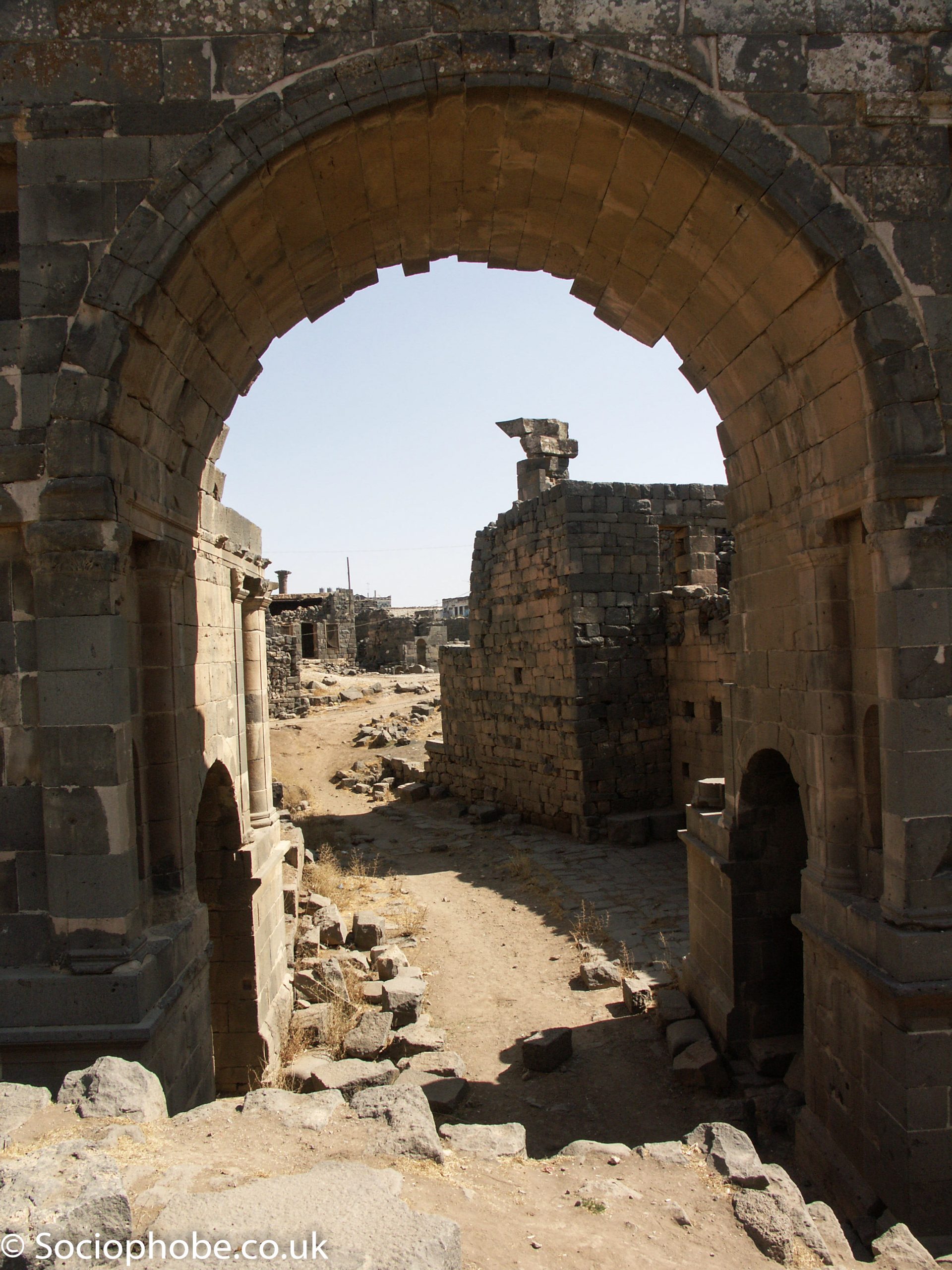
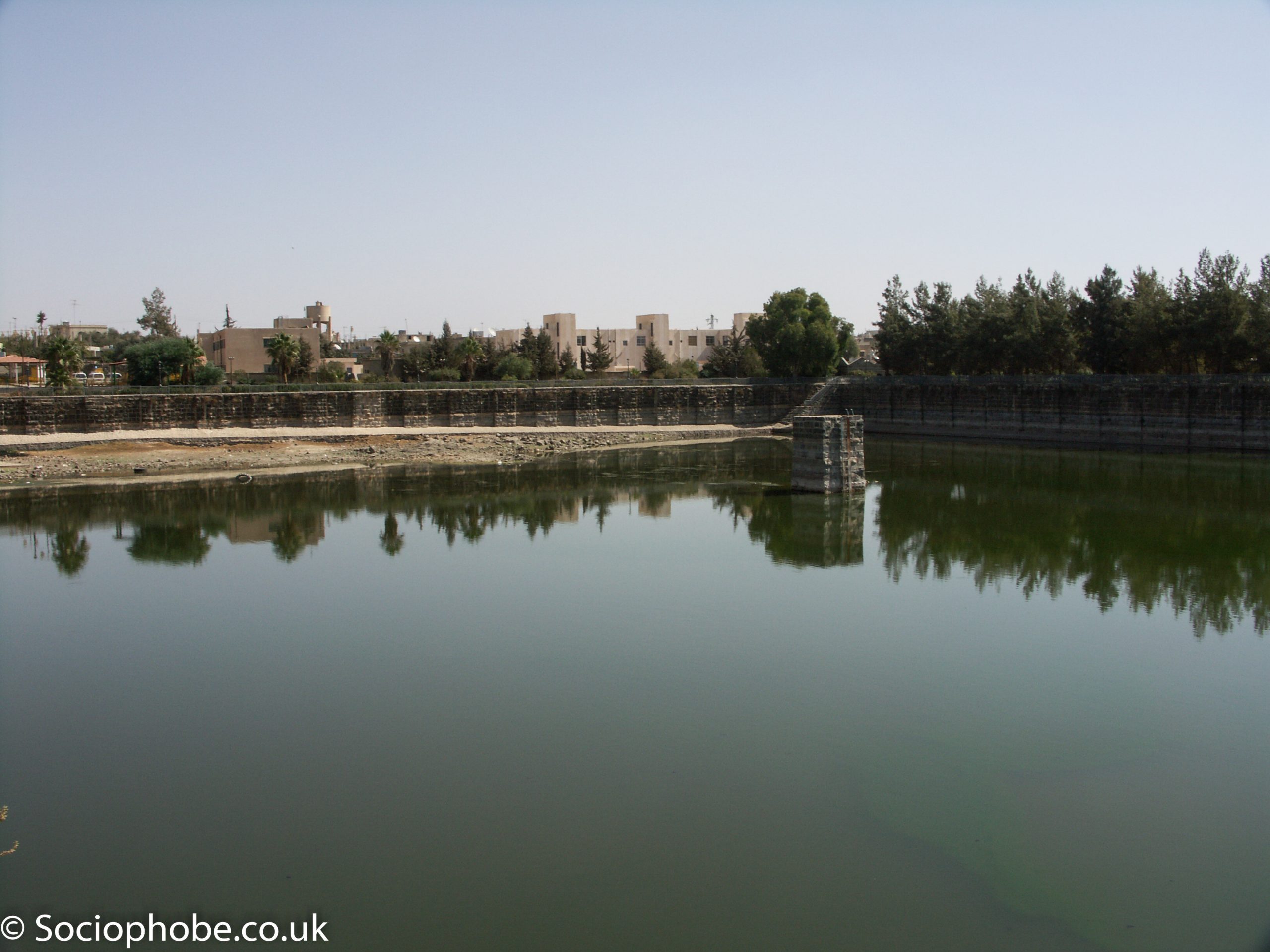
We walked down the collonaded street, through the forum and into the market place. Bosra has the third oldest mosque in the world and a huge Byzantine church, as big as Haiga Sophia, that is being excavated and has amazing frescoes on the wall of angels and heaven. We continued on to see the Roman cisterns that are still being used for local water collection. We then paused in a cafe for a very welcome drink before getting the bus back to Damascus.
Following breakfast the next morning we loaded our cases onto the coach and headed to the Lebanese border past the minarets and satellite dishes. Even in a nominally secular state like Syria religion seems to permeate everything and the minarets and muzzein overshadow it all. Although Assad keeps things under control and there are large Christian minorities and fringe Muslim sects that have shelter in the country this will only last as long as central control does.
The country is restrictive and backwards by western standards – men and women rarely seem to mix in public – but at least there is order. the border was quiet and efficient and we then crossed to Lebanon, a mass of honking car horns, shouting and jostling traffic.
Lebanon: Bekka Valley
We drove to the Bekka Valley which is a very fertile plateau between two mountain ranges. We passed groves of citrus trees, farmland, advertising hoardings whilst the drive told us about temple alignment. Apparently early temples (pre monotheism) were aligned so you entered from the east and the inner sanctum was in the west – as the sun rose in the east it illuminated the sanctuary for the masses who weren’t allowed inside it.
The Christians wanted to change this so the early churches had access from the west and the altar was in the east. the Muslims again changed it so entry was in the north and you prayed facing Mecca in the south. Although I have no idea how this works for mosques that are south of Mecca!
Lebanon: Anjar Palace
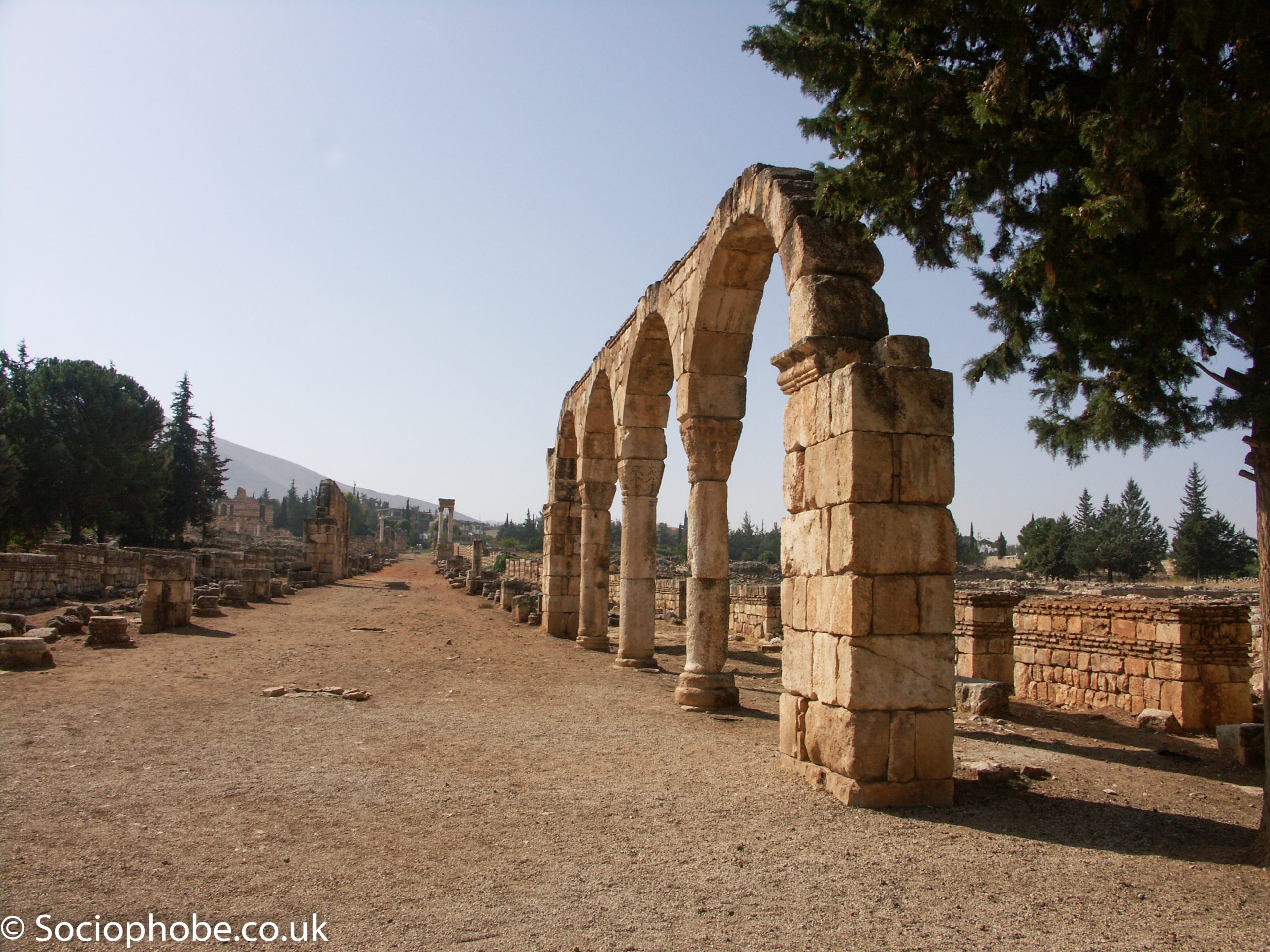
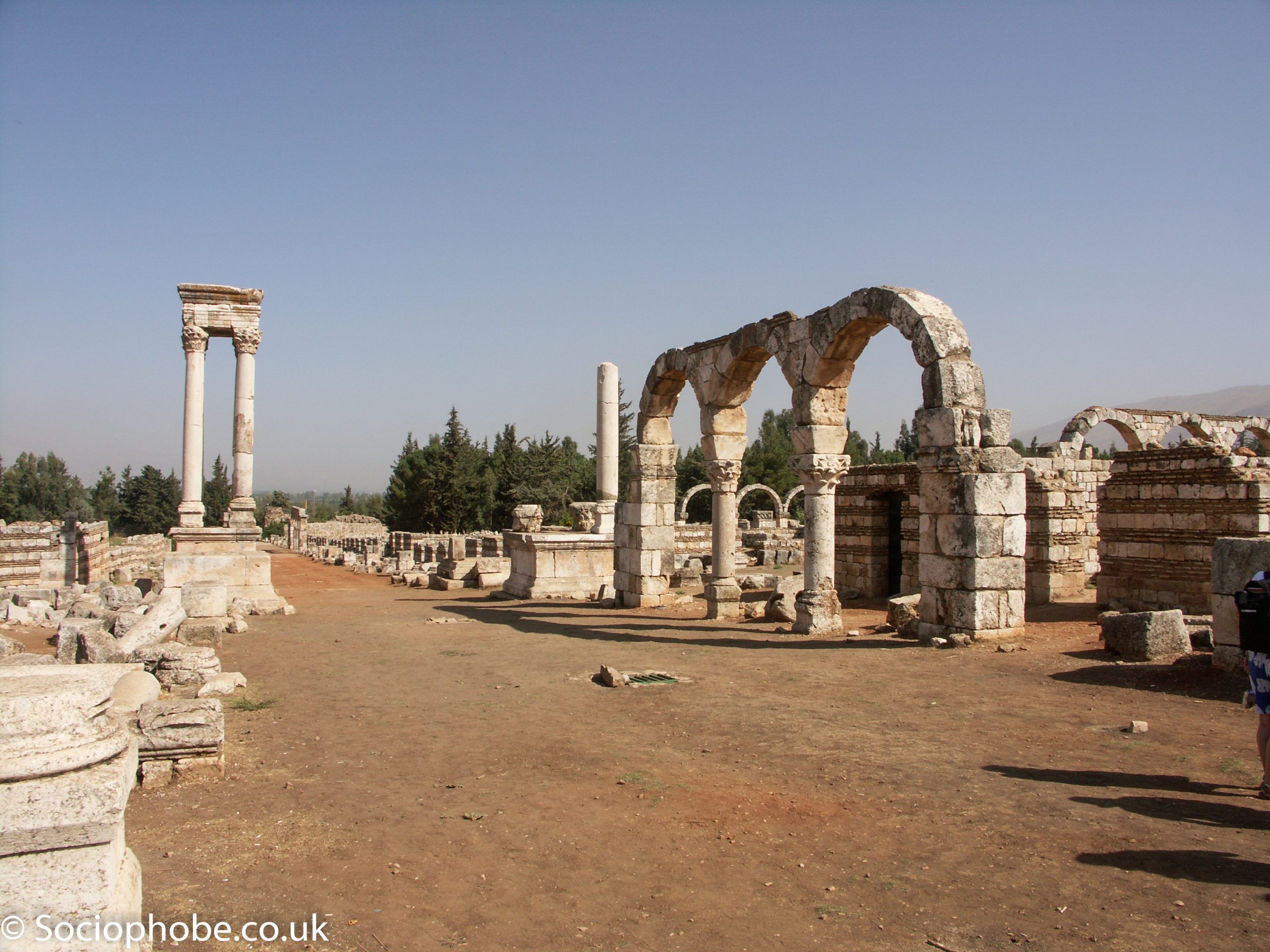
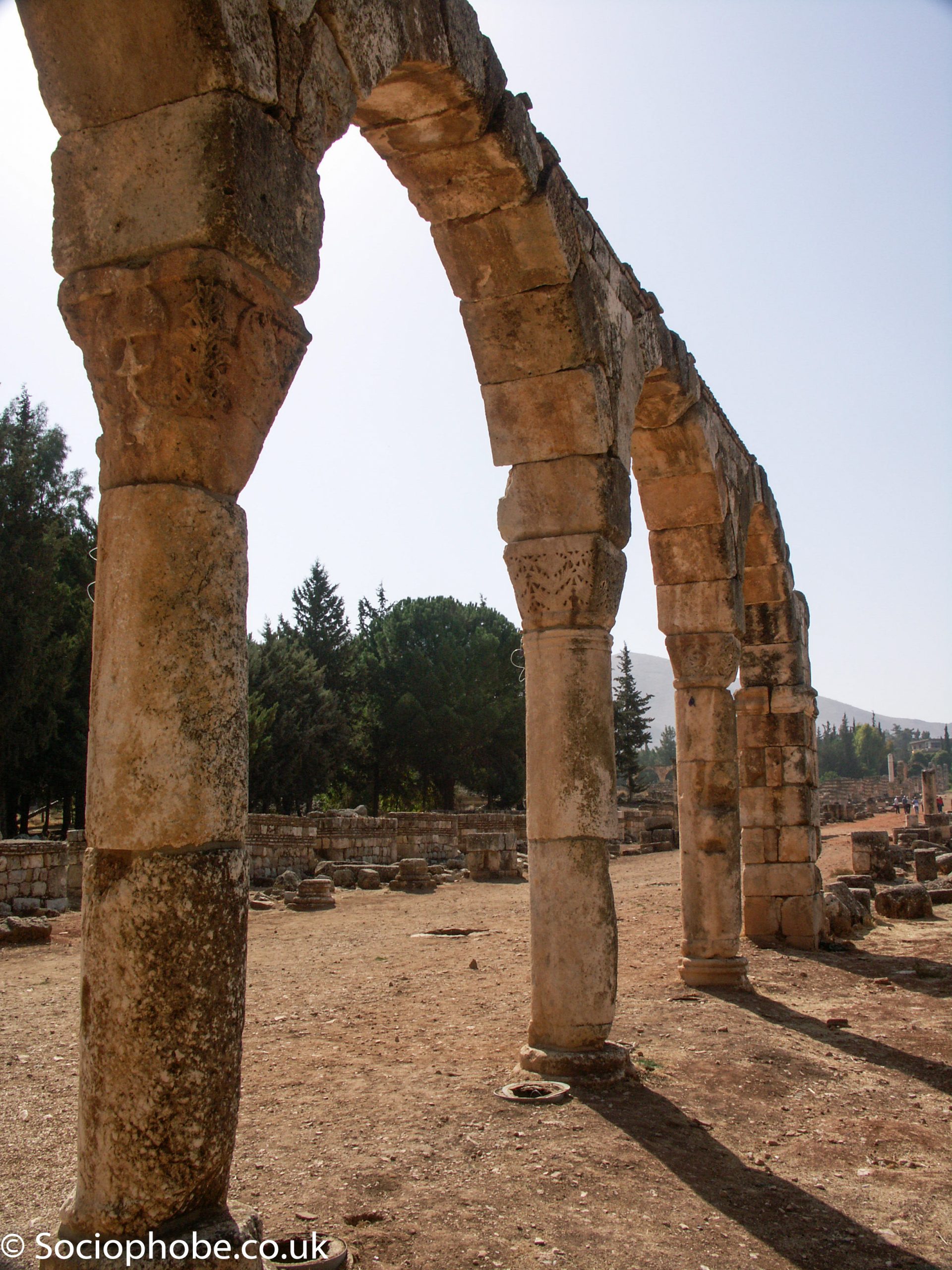
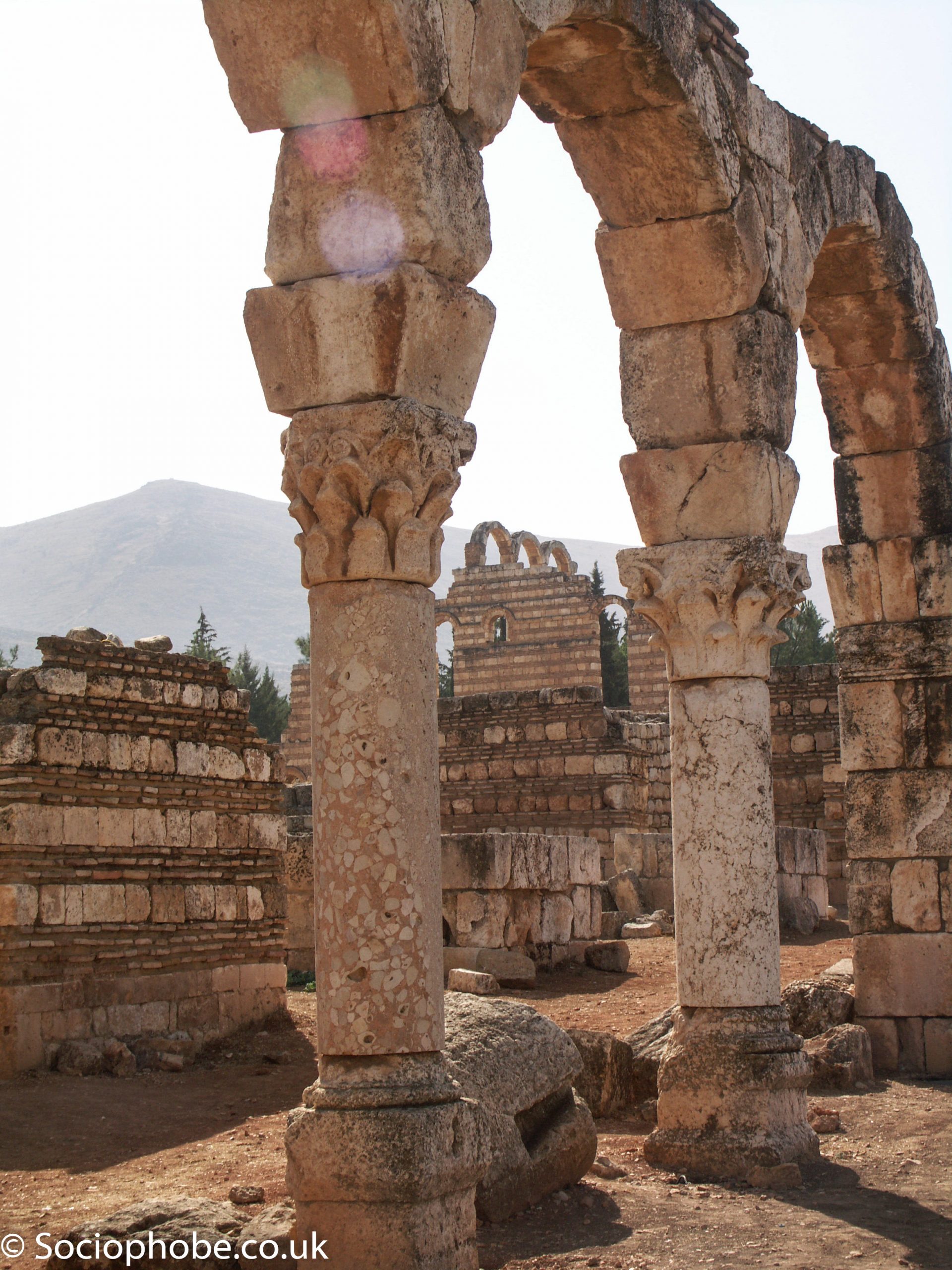
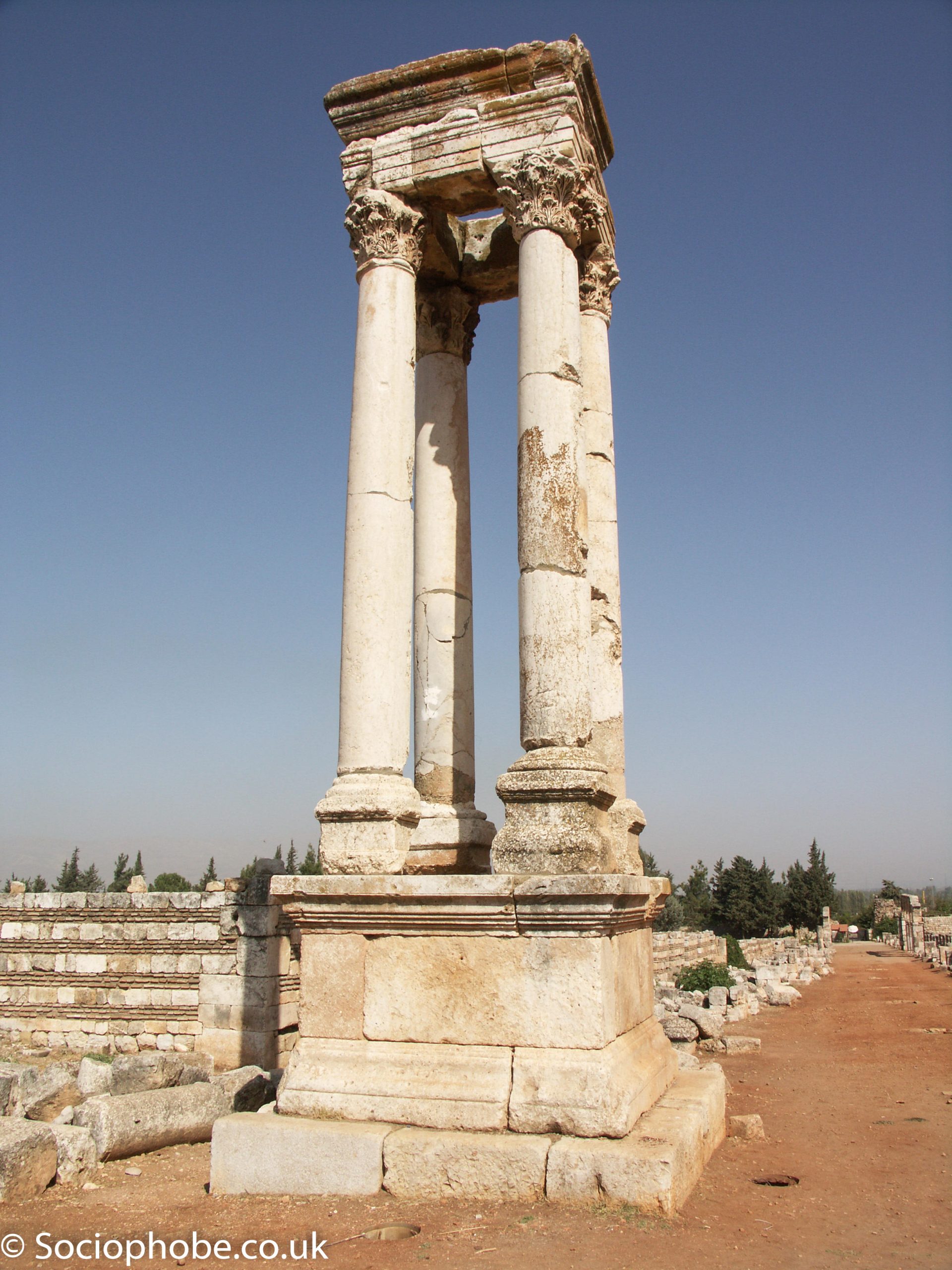
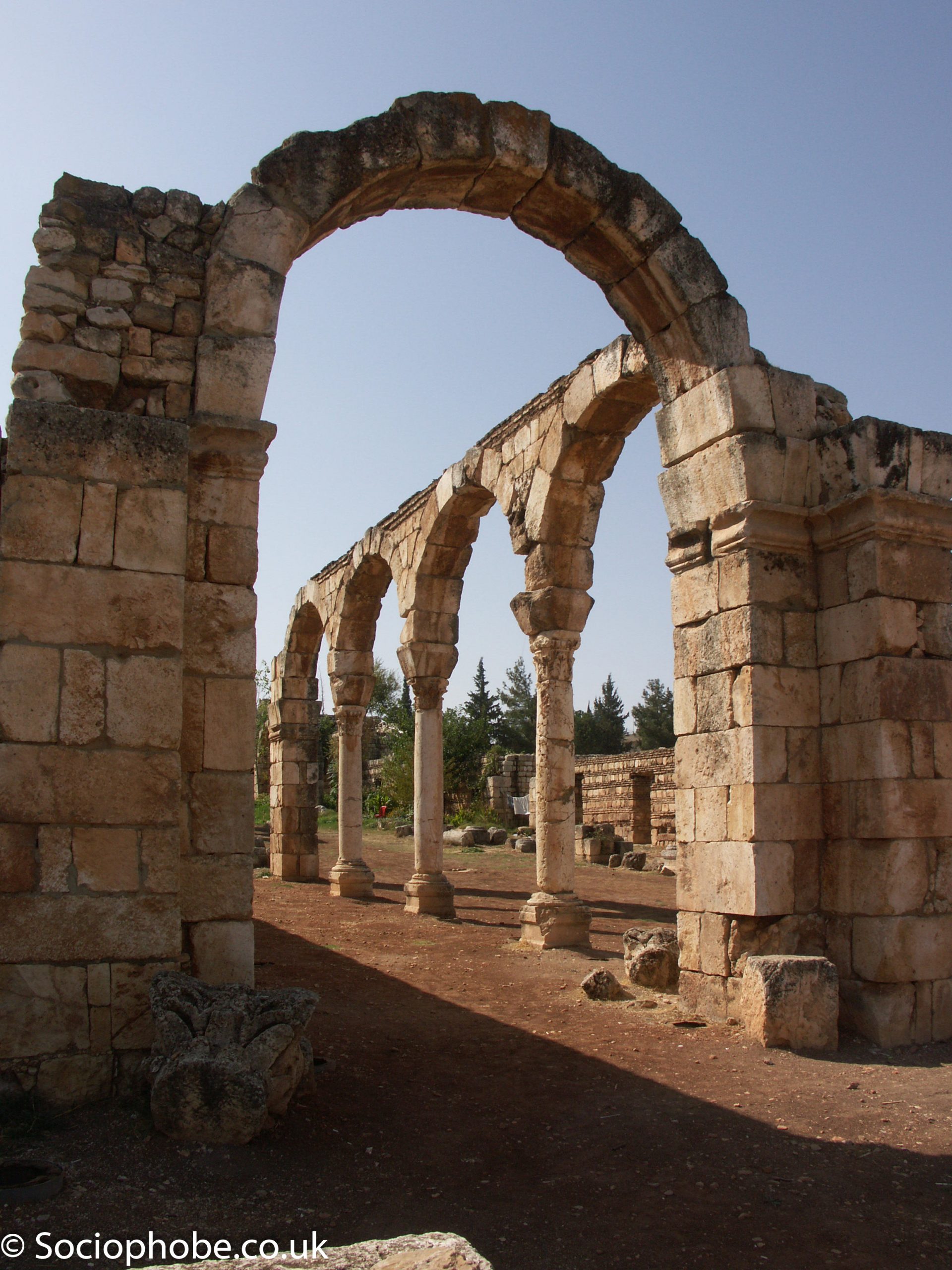
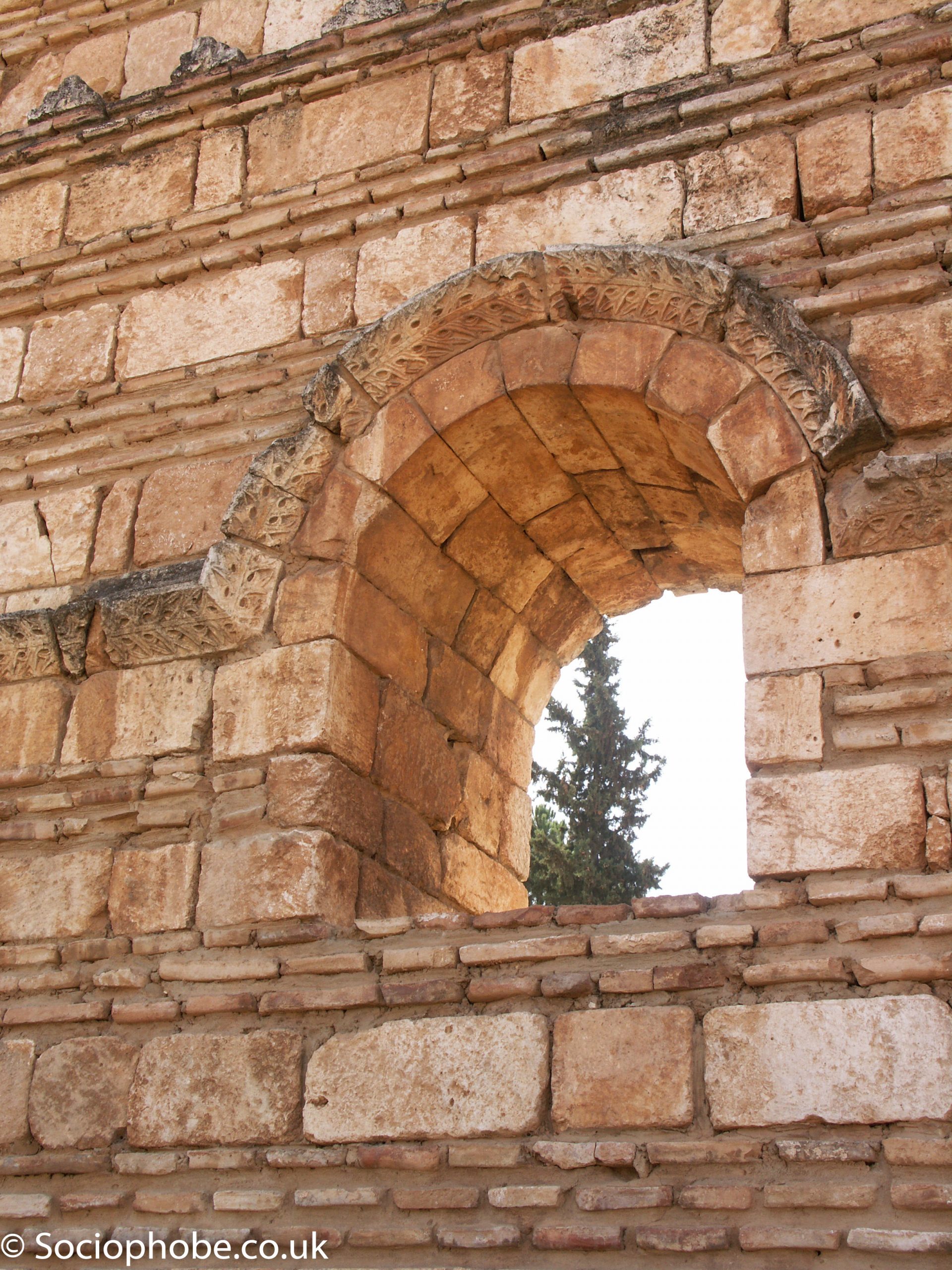
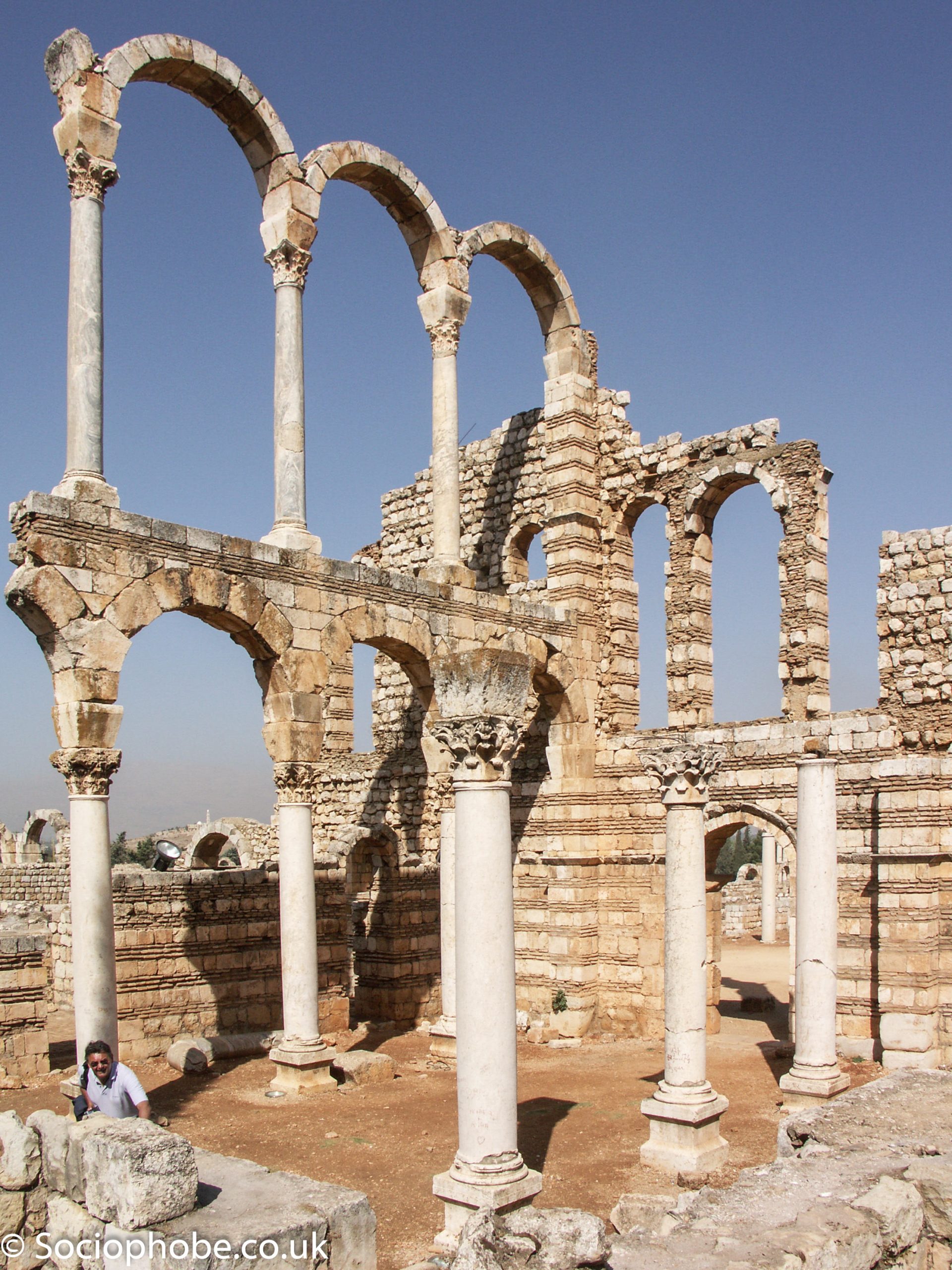
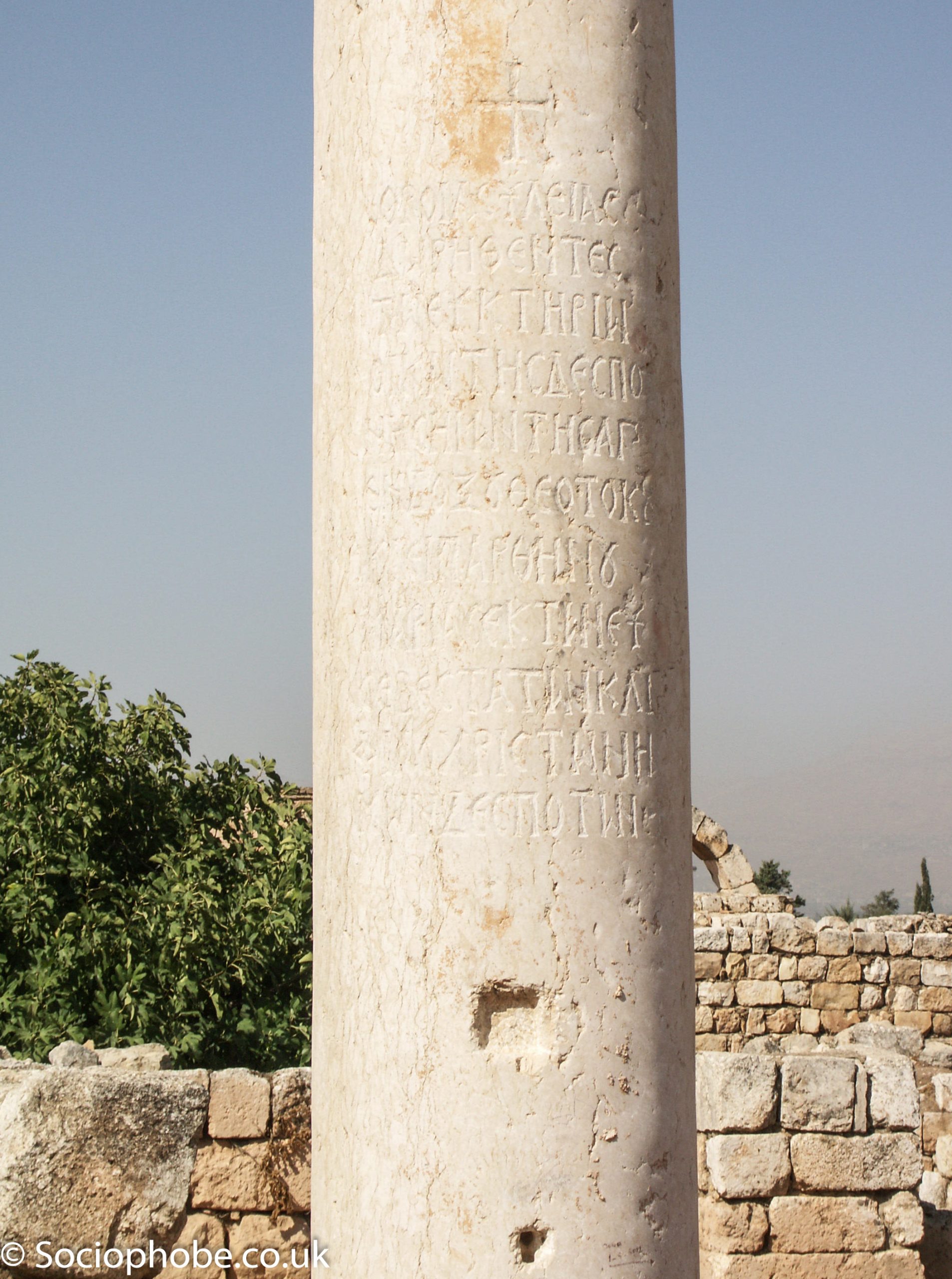
The sky was clear and blue and we arrived at Anjar, a deserted Ummayid palace. It was originally a Roman town before the arabs took it over and then destroyed it in a civil war. It was then abandoned and has now been partly reconstructed but they think they did it wrongly and the palace should have only had one storey.
As it is a mix of arab and pre arab ruins and the arab bits incorporate Roman stonework it is very difficult to make sense of the site.
We continued driving through the Bekka into Hezbollah territory which is a bit like driving through Devon into a French enclave. Although the French do not kidnap Christian girls and force them to ‘convert’ and marry Muslims or torture Christian priests or hold people to ransom or force Christian women to wear veils. They are basically murderous bandits that use religion as an excuse for their excesses.
Lebanon: Bekka Valley, Baalbek
There were posters of their ‘martyrs’ along the roadside and the whole area was very alien and medieval, a horrible atmosphere to it. Our destination was the Selucid town of Heliopolis where the Romans built a huge temple to Jupiter and the final destination of our Lebanon and Syria road trip.
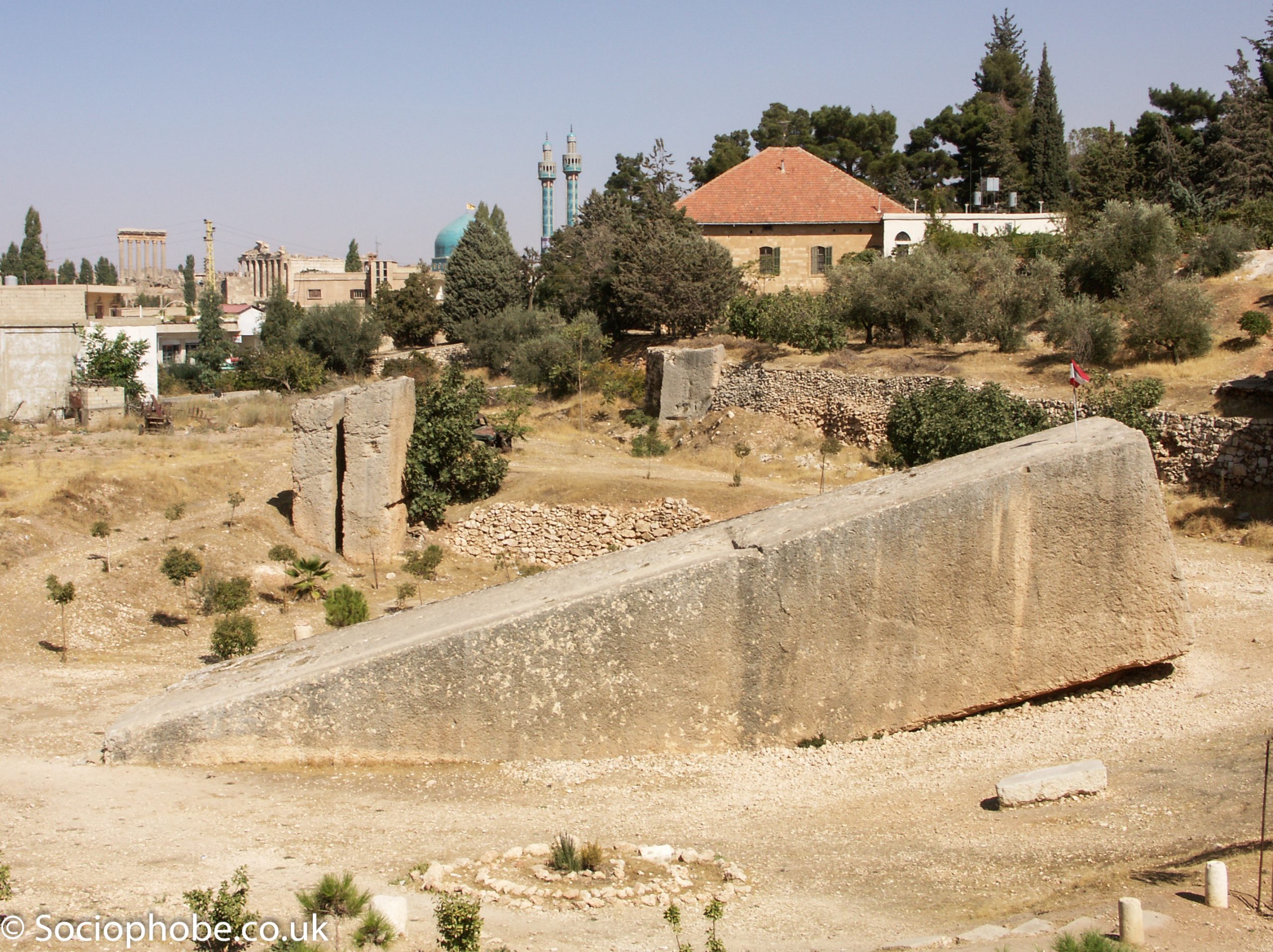
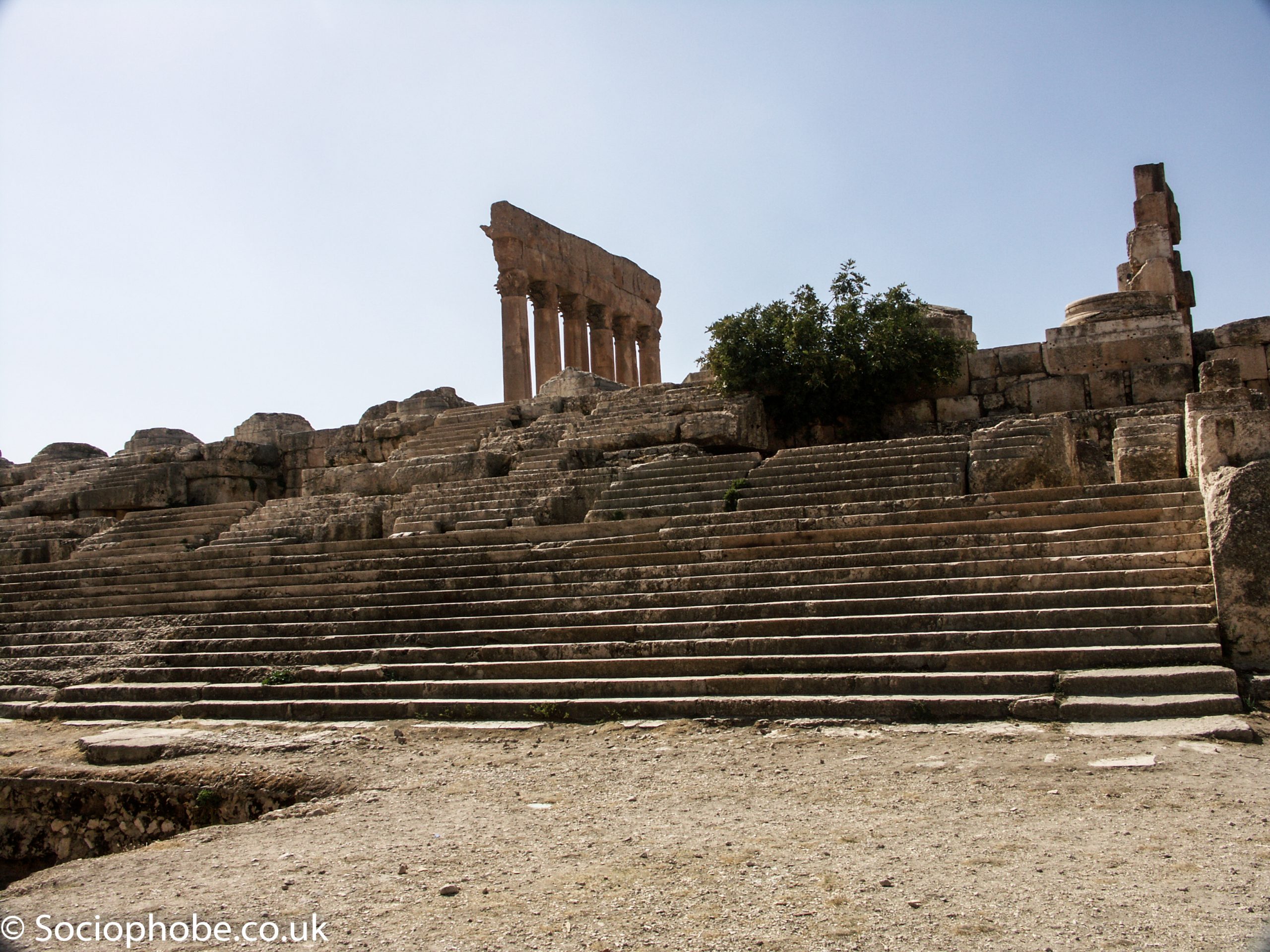
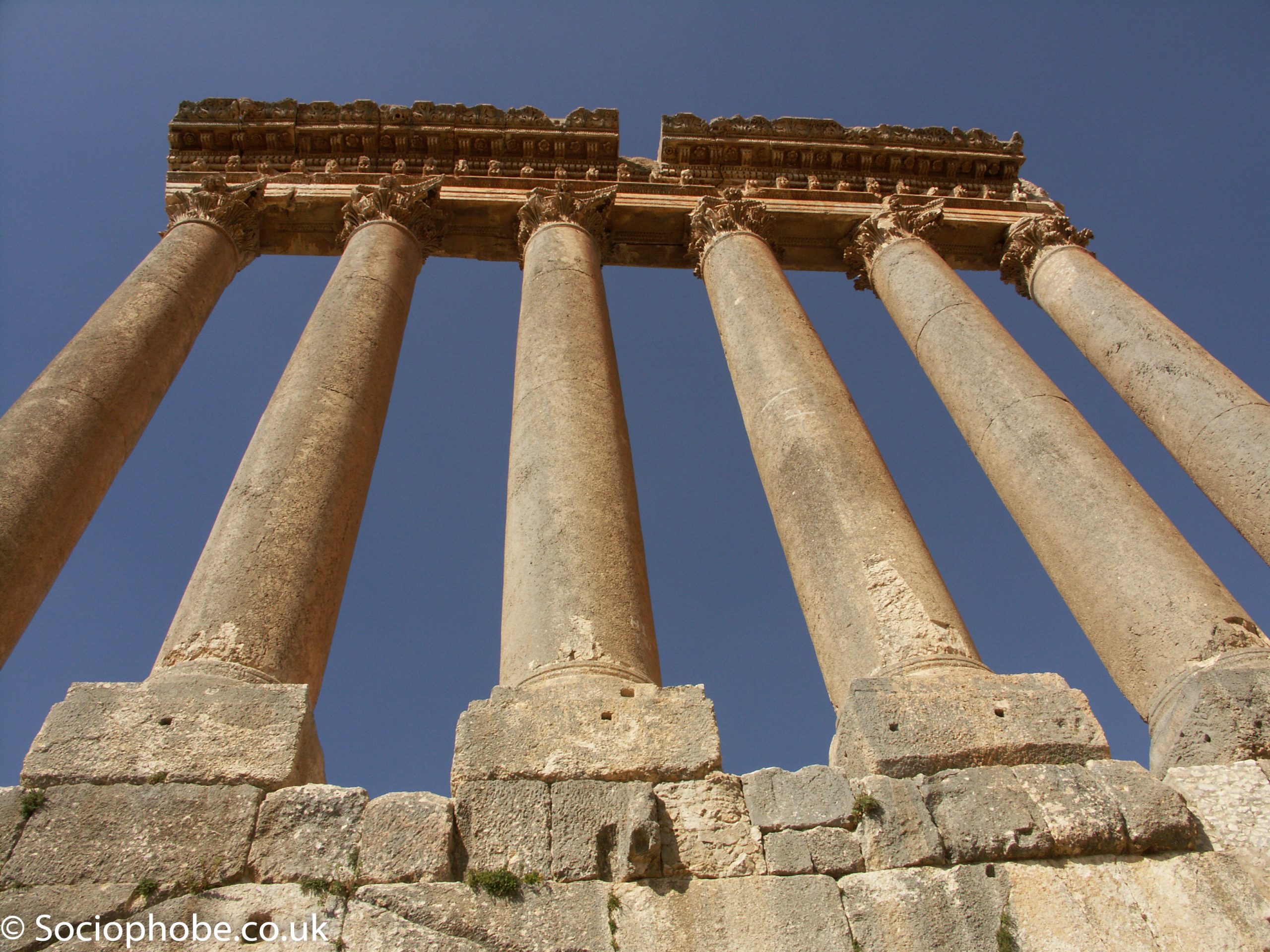
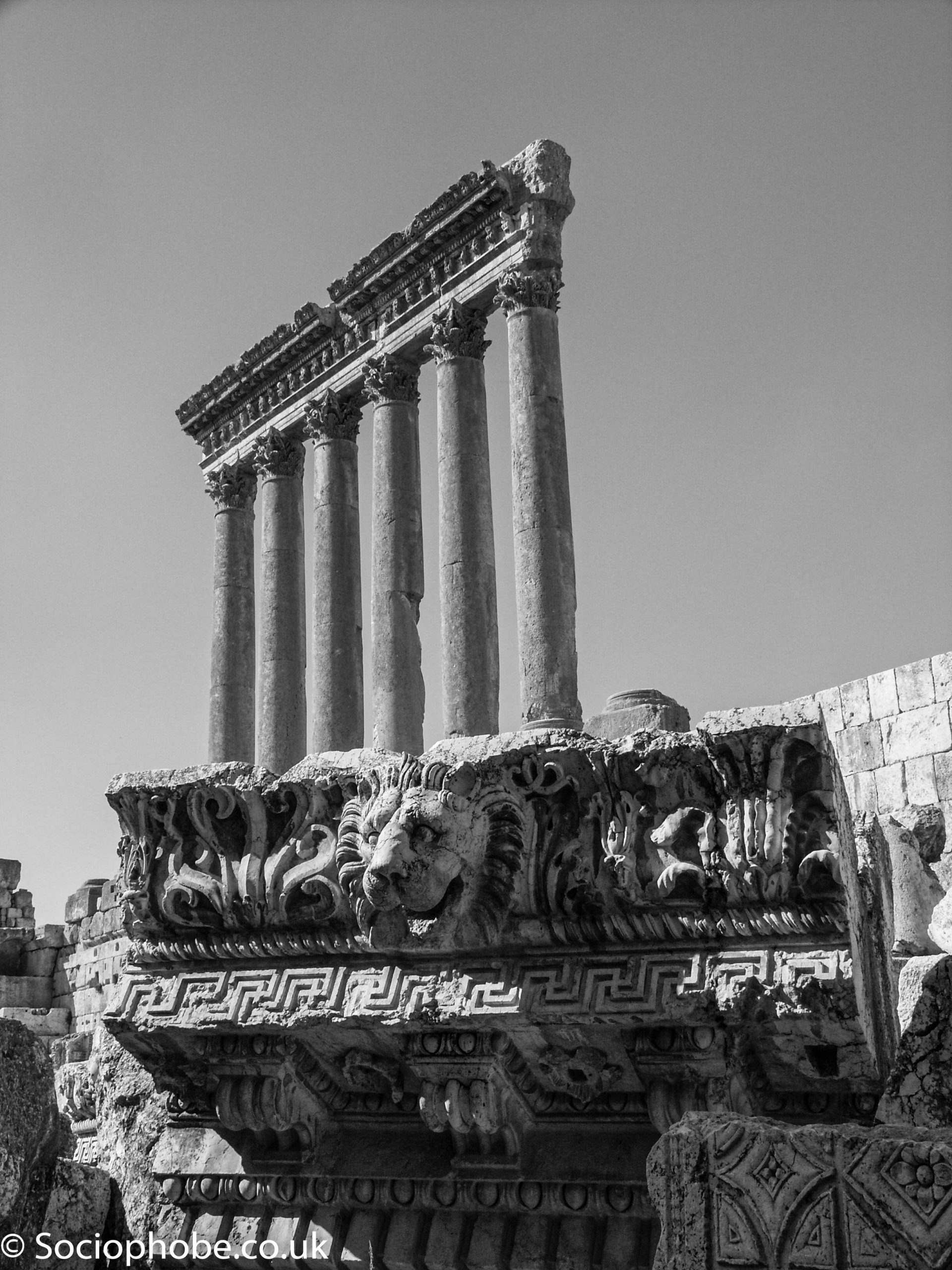
Baalbek (named after Baal I guess, who had a temple there originally) is ridiculously big – the steps up to the entrance are probably 10m high, the columns surrounding the now vanished portico are 40m tall. One of the blocks used in the base of the temple weighs over 1000 tons. Westmister Abbey would fit inside one of the side rooms here, spire and all! The temple is surprisingly intact and the carvings and inscriptions are in pristine condition.

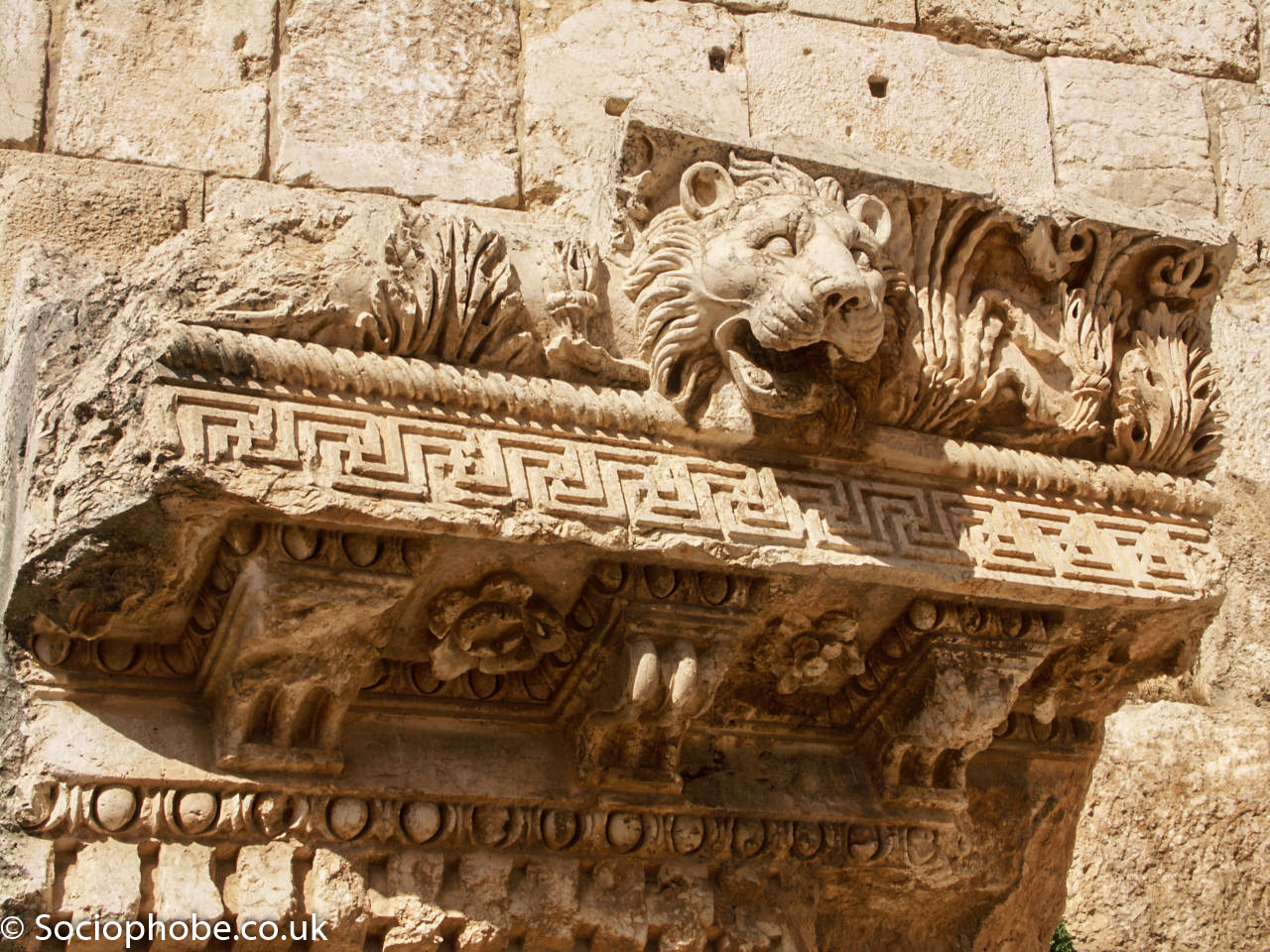
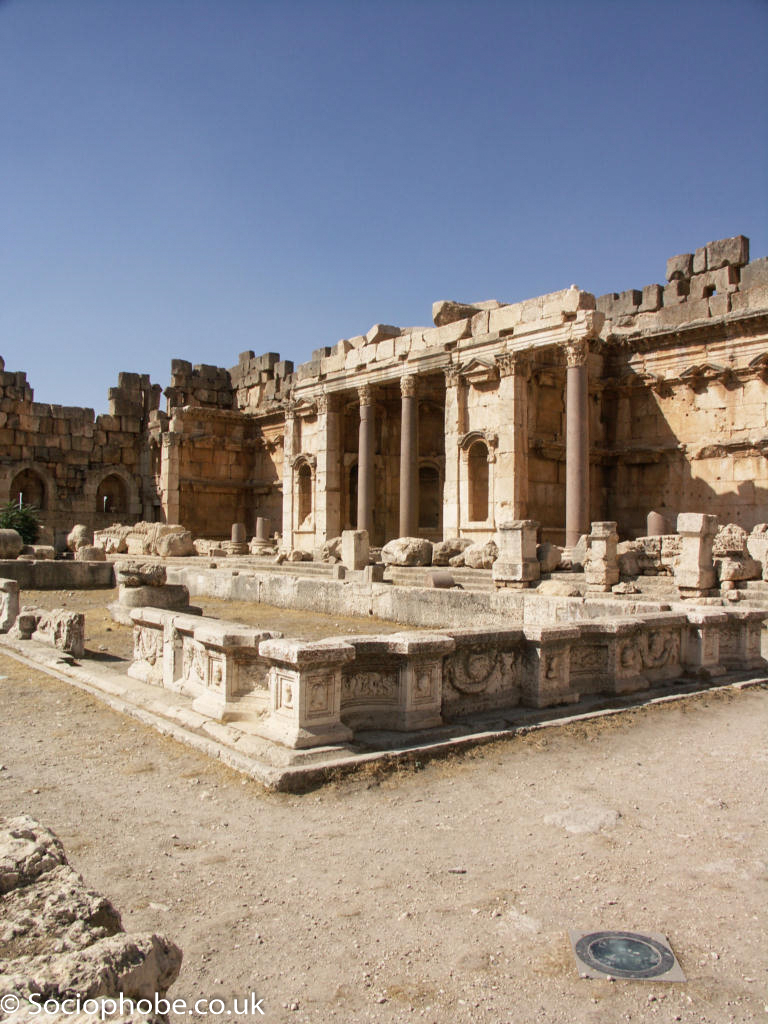
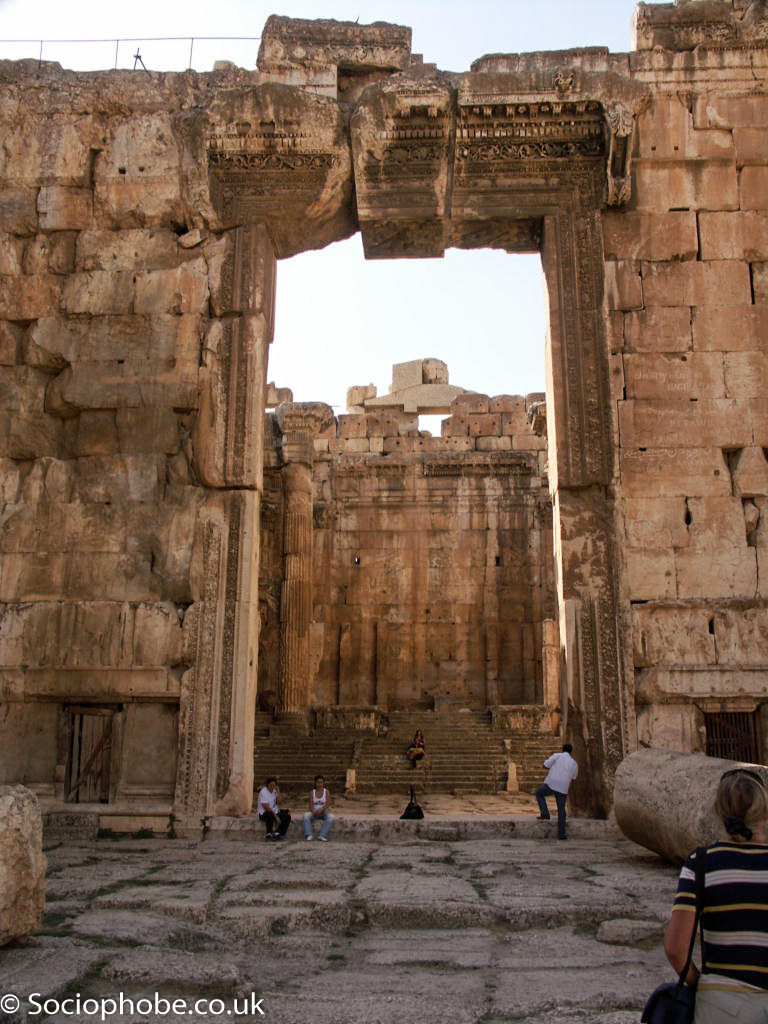
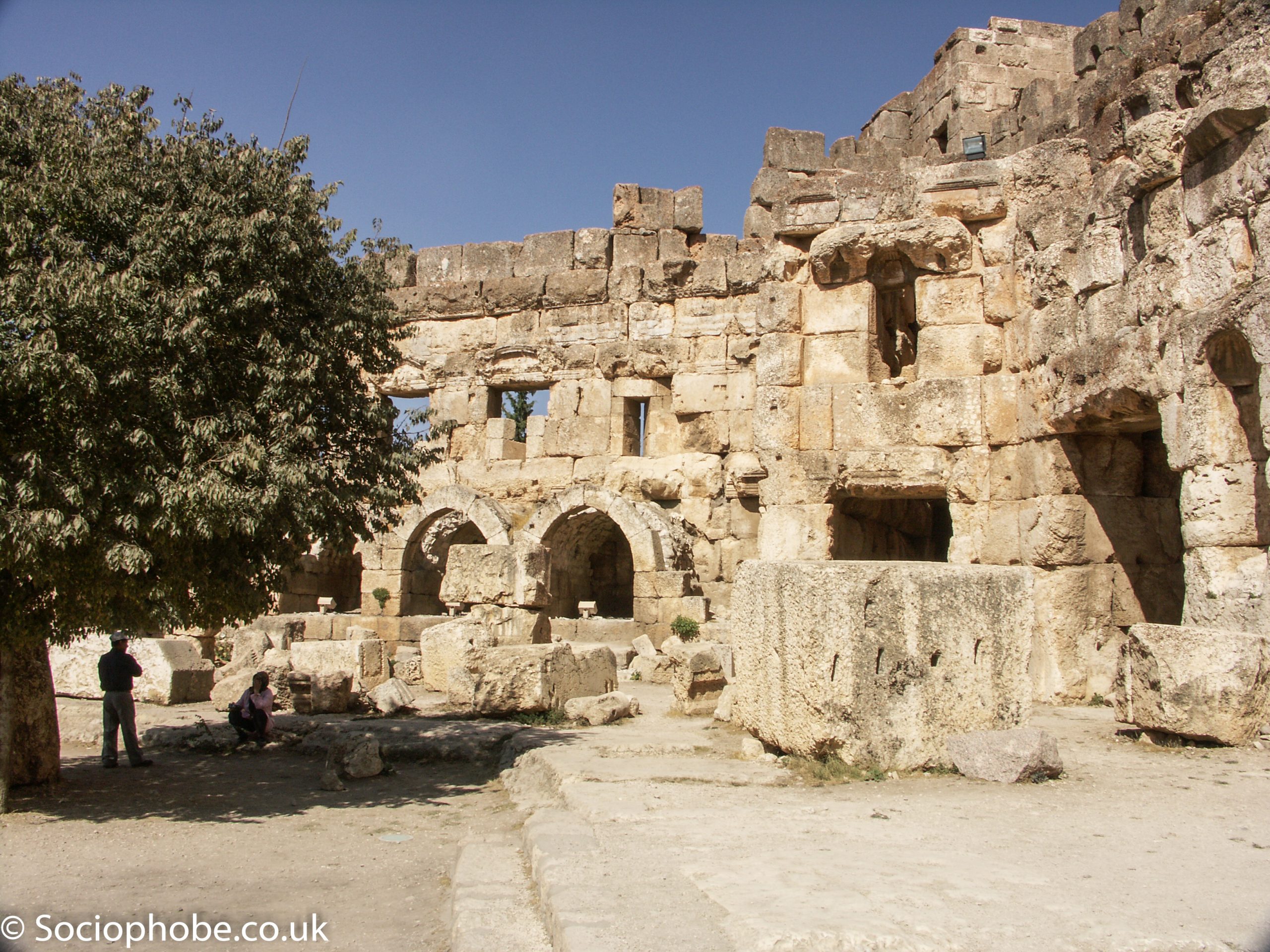
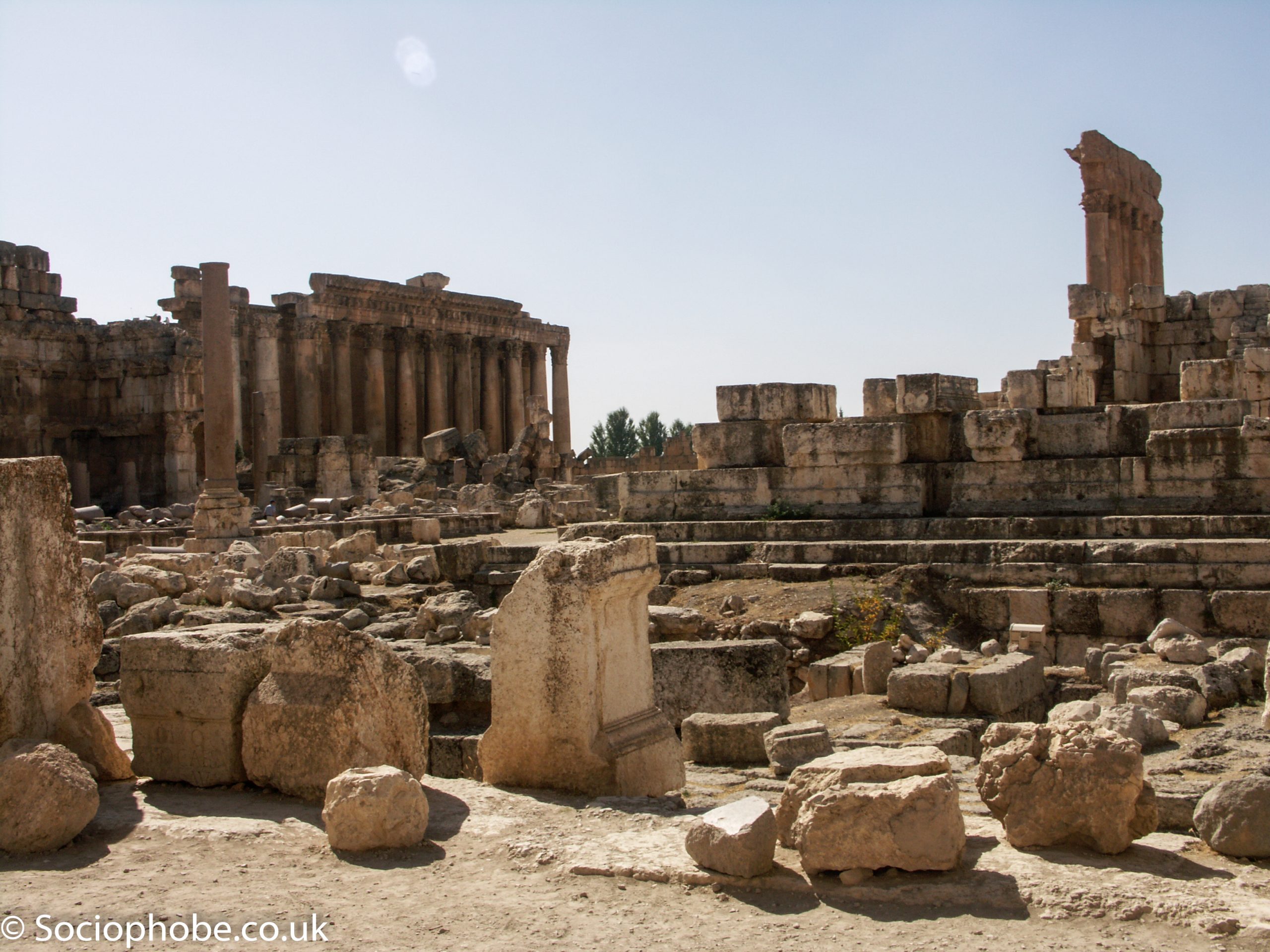
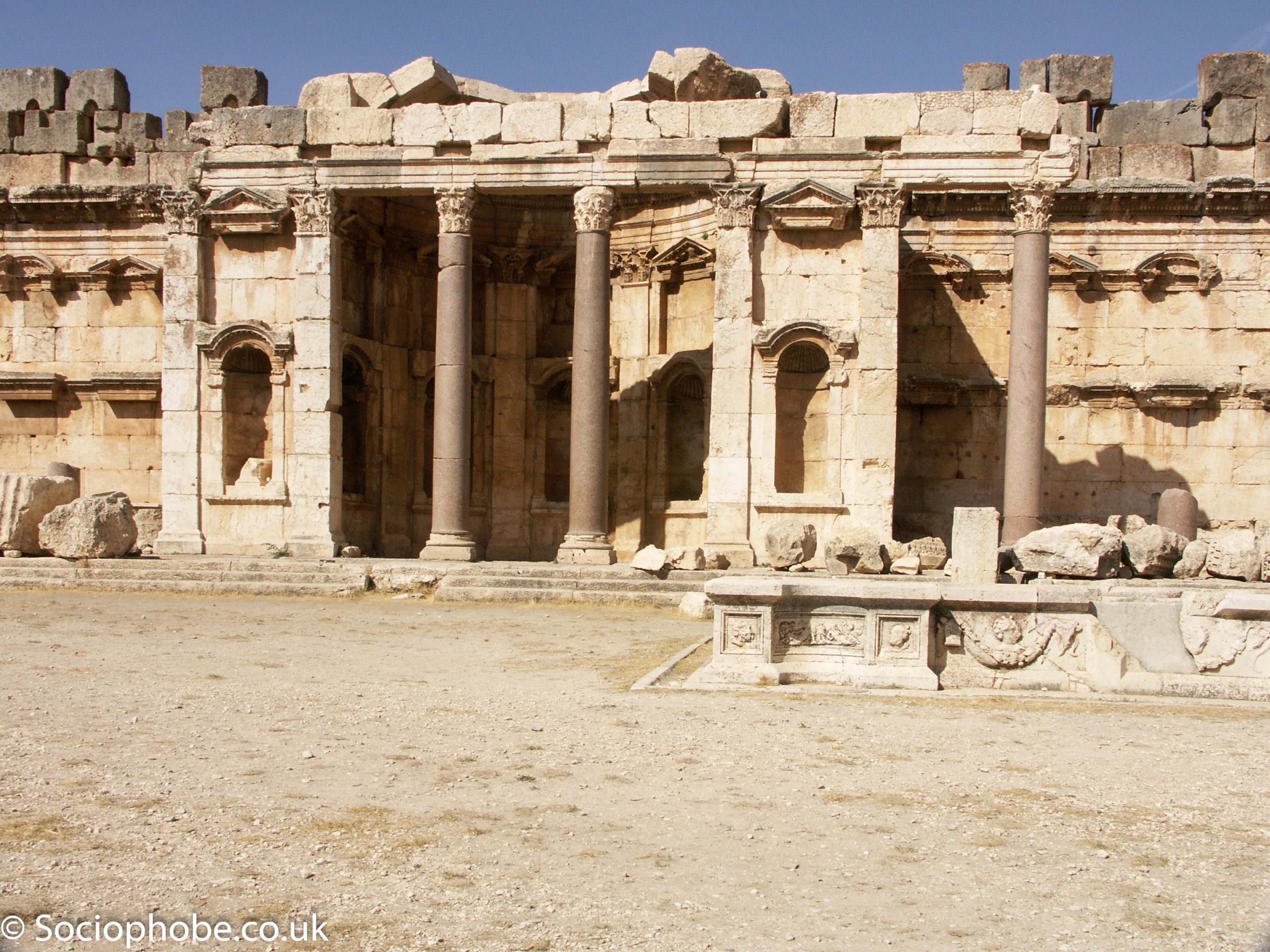
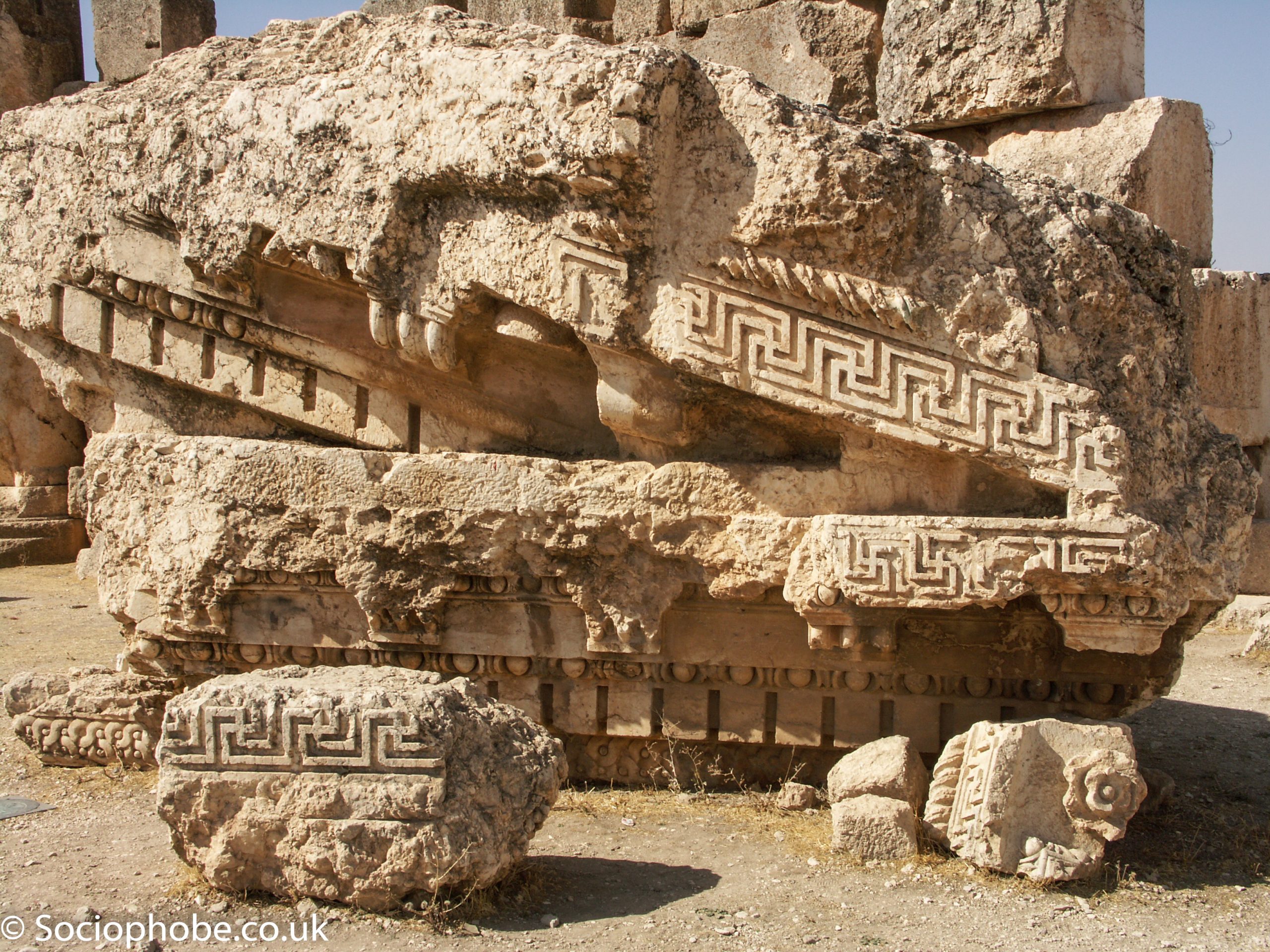
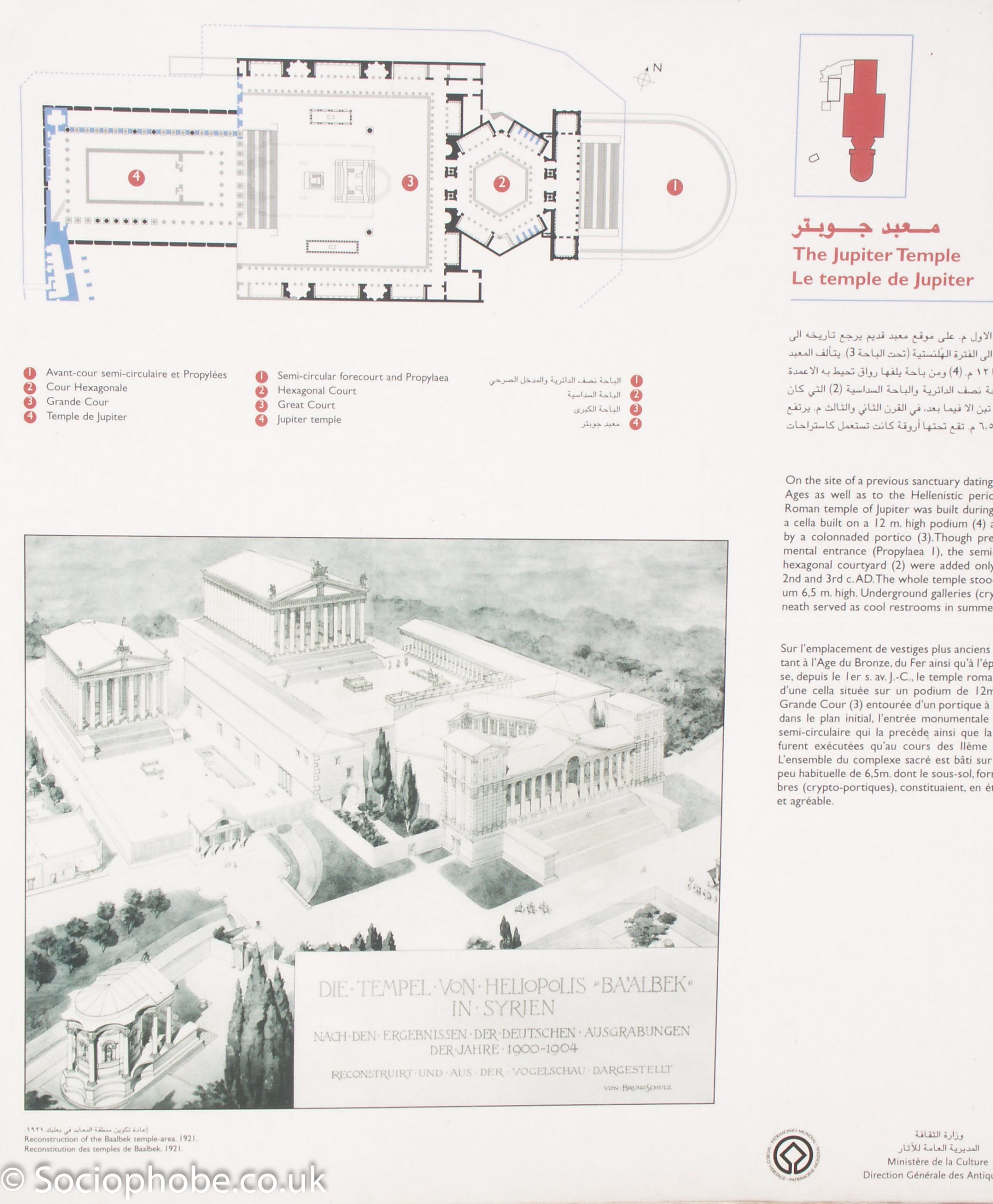
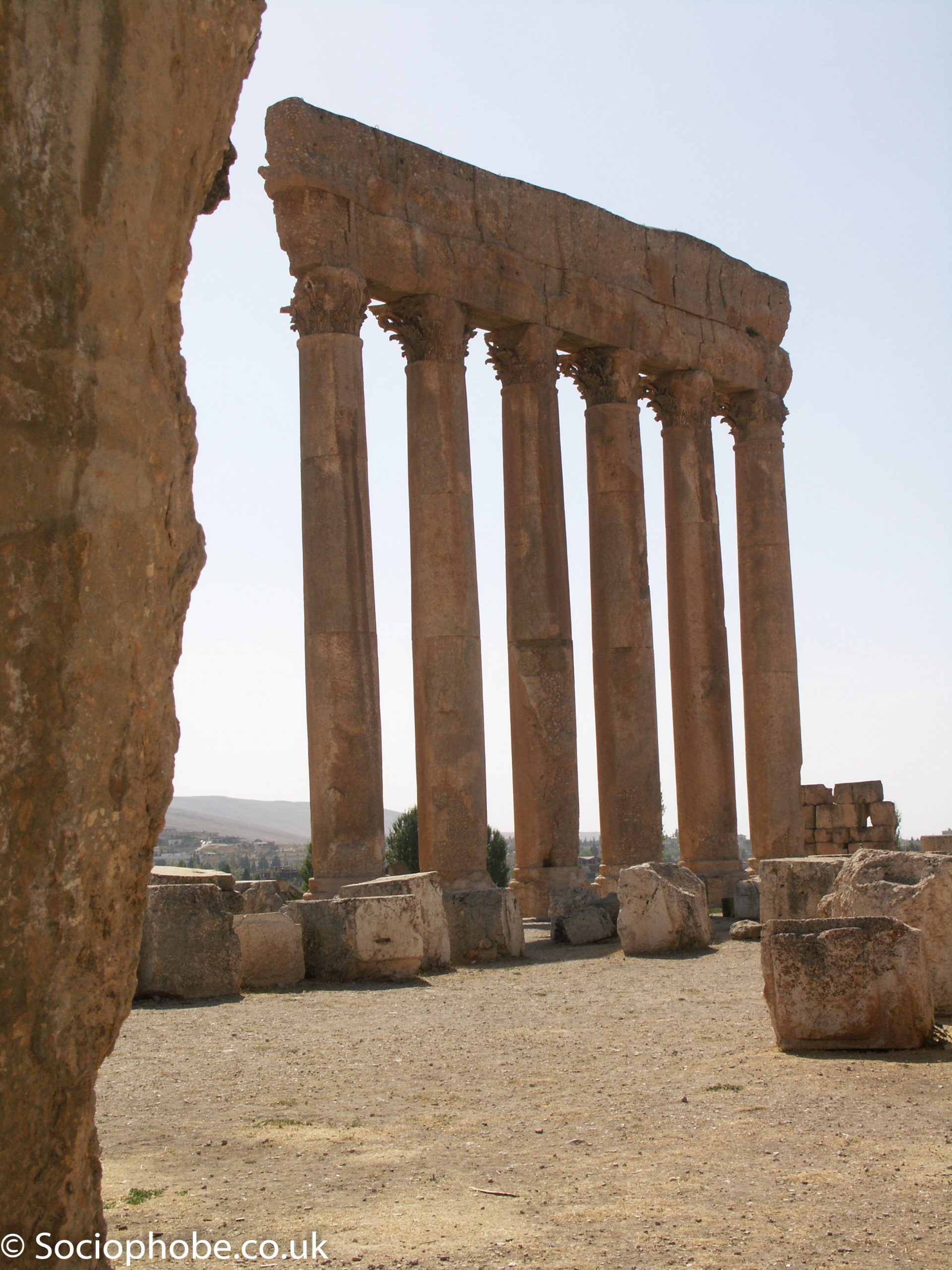
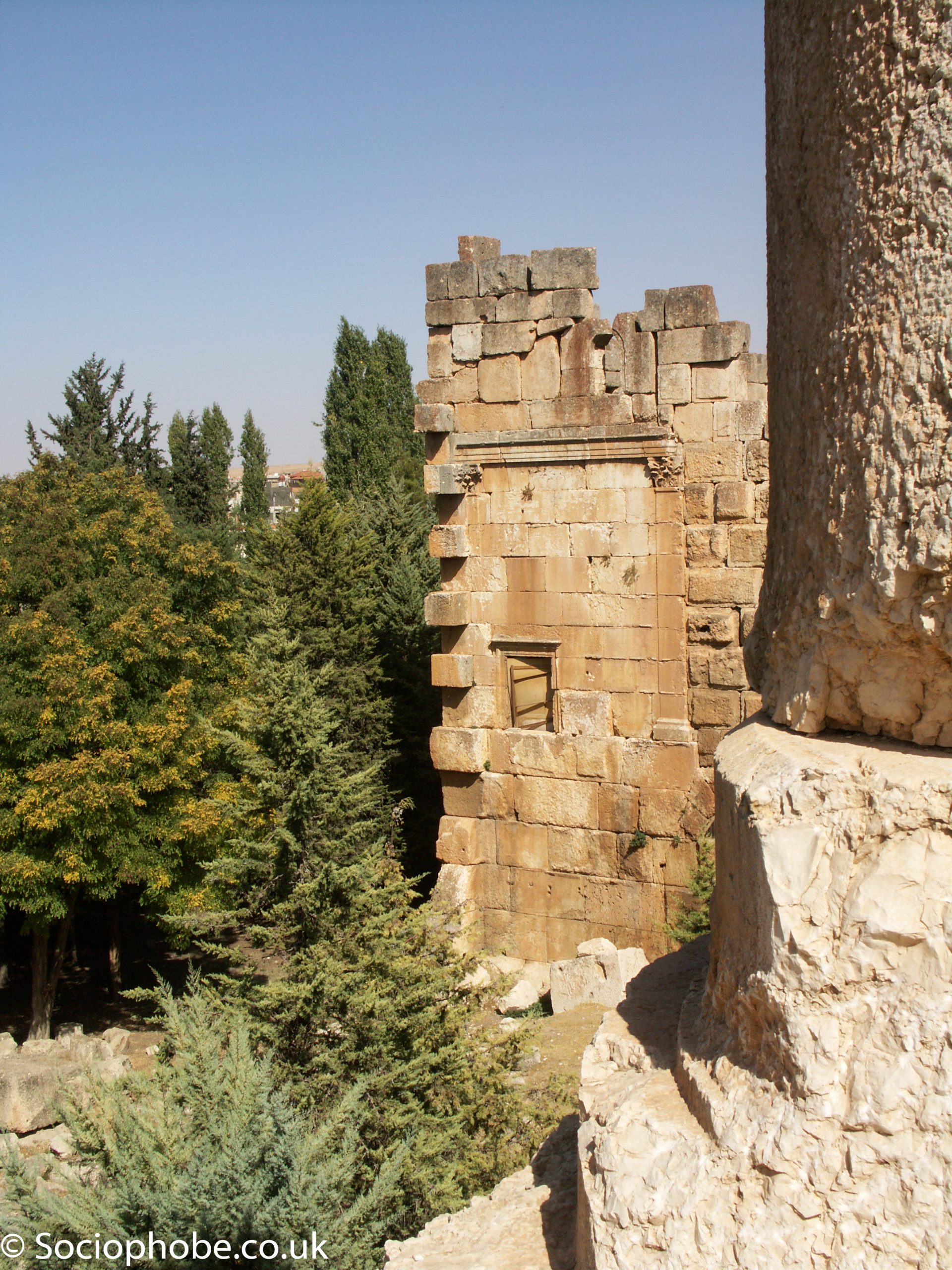
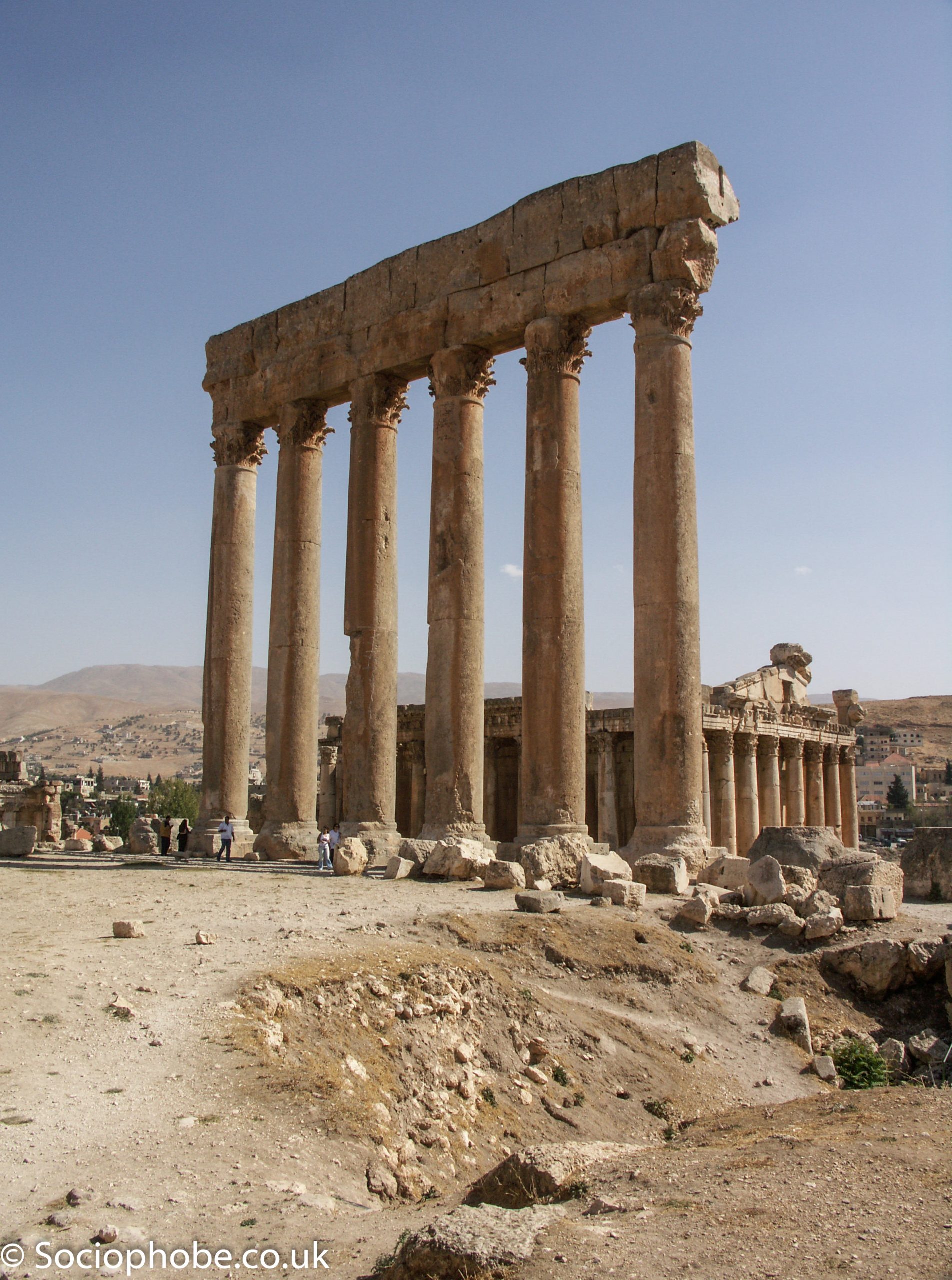
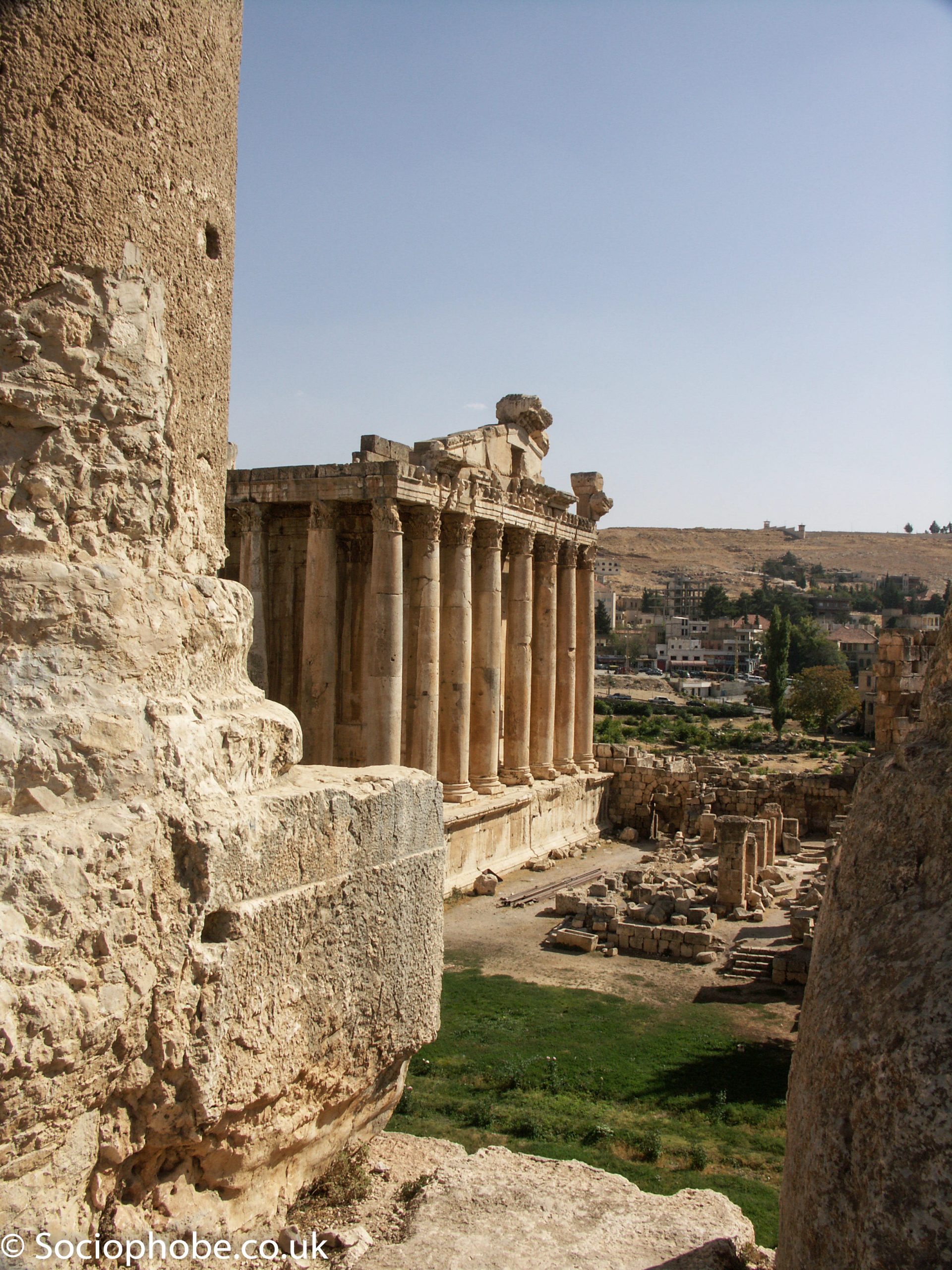
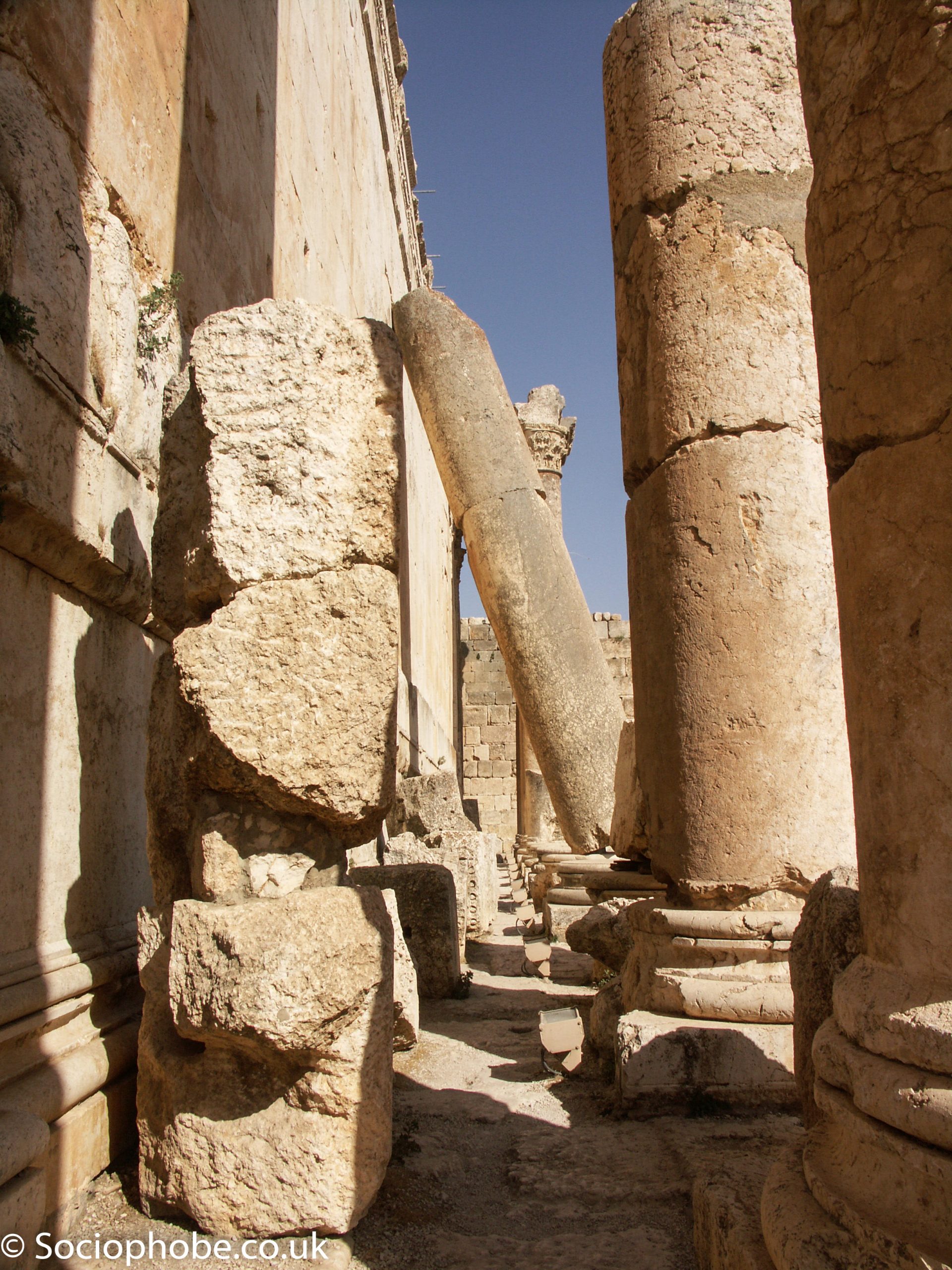
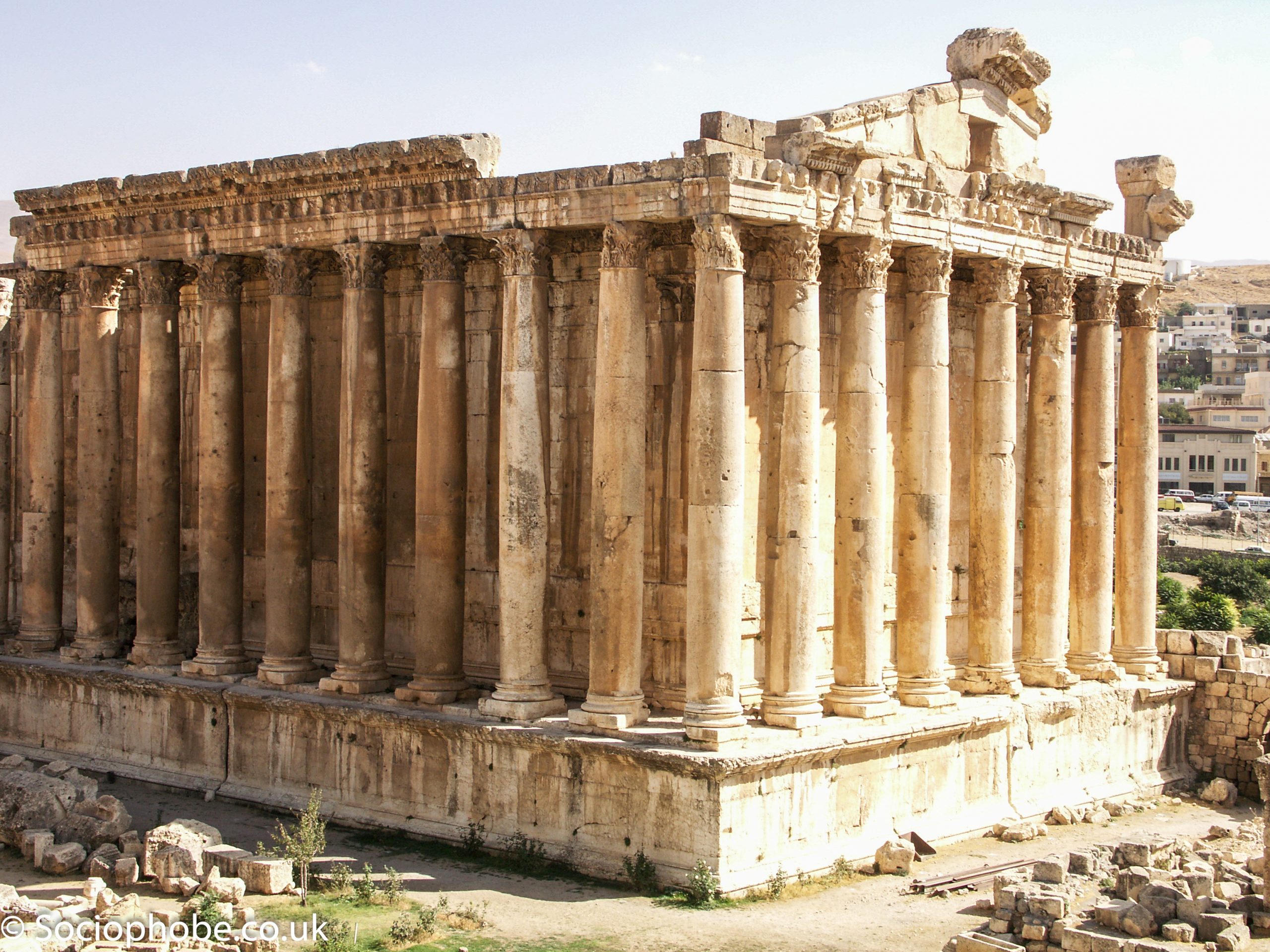
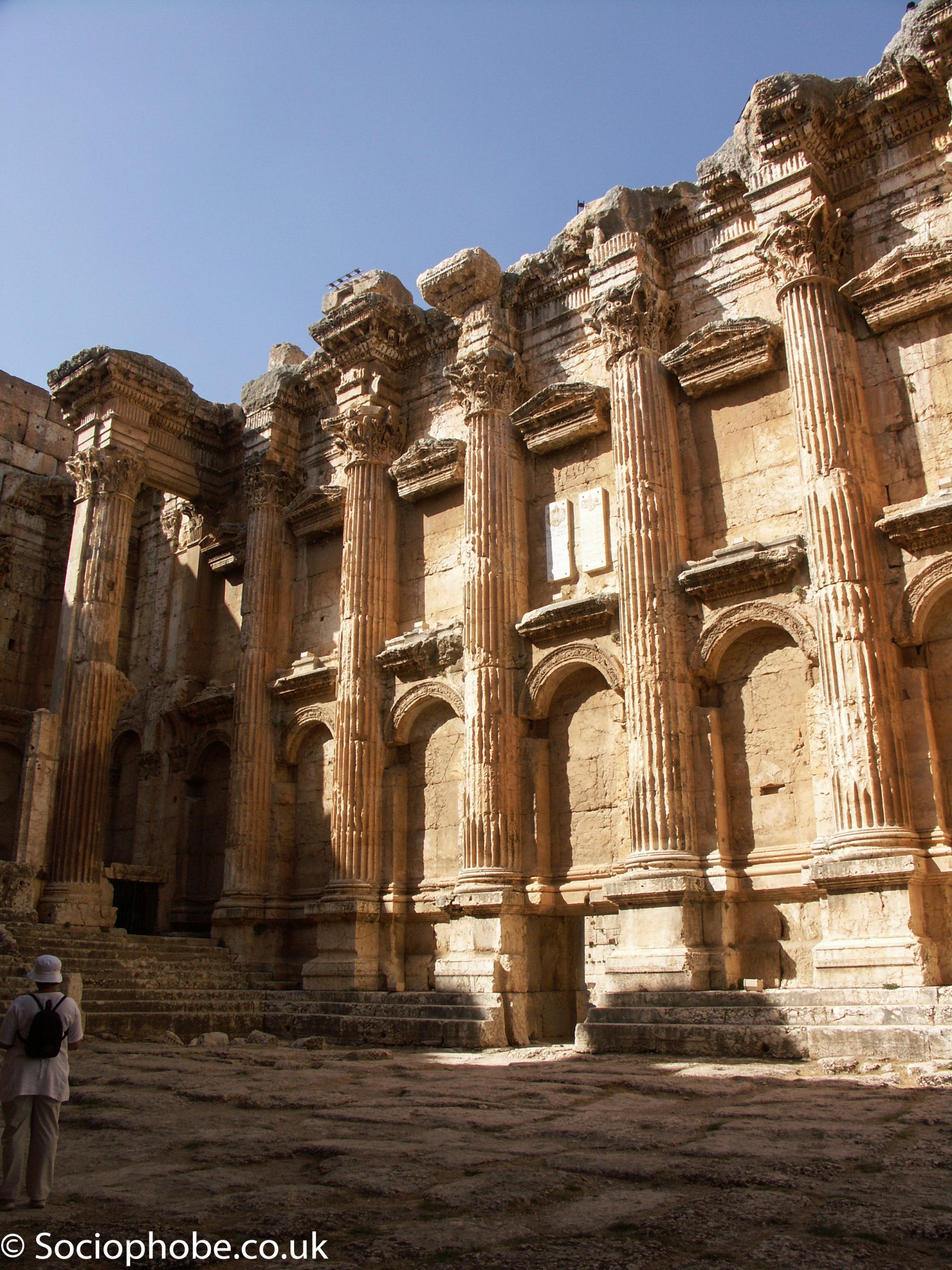
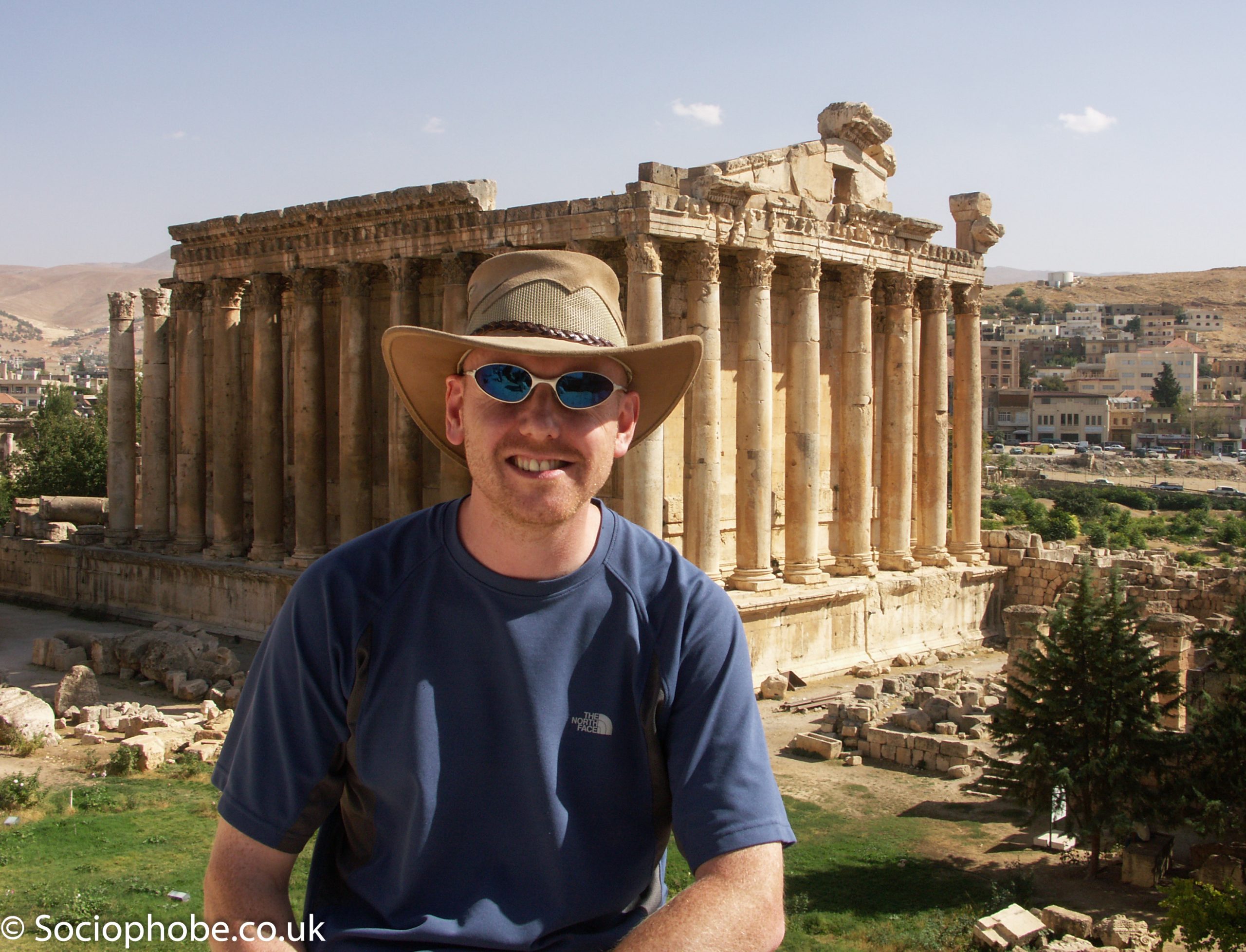
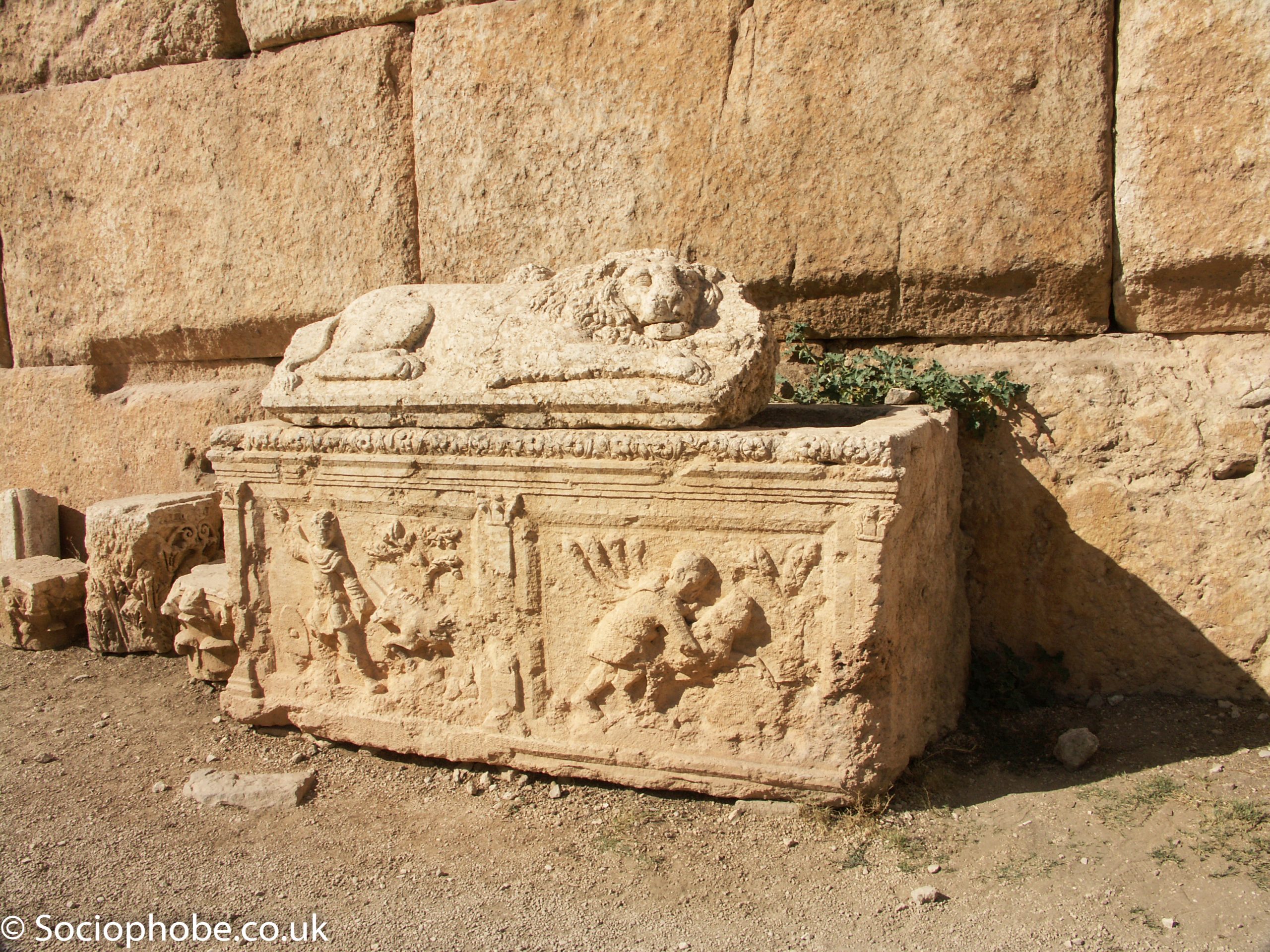
Next to the Temple of Jupiter is the Temple of Bacchus, which seems relatively tiny although the Parthenon would easily fit inside. This temple has all the walls and most of the columns still intact. The graffiti carved on the walls is about 10m high so it shows how much the current temple has been excavated to reduce the ground level by that amount.
After the obligatory visit to a vineyard for wine tasting we continued on to Bierut, past the Palestinian slums and more war damaged buildings. The centre is relatively European with recognisable shop brands, clothing and wealth. Once we’d dumped our stuff in our rooms we headed out for a final group meal and eventually found somewhere selling Lebanese food. A nice end to a tiring, fascinating and unusual holiday.
Addenum, written Feb 2020
The war in Syria is a tragedy on many levels. Apart from the human cost the cultural heritage that has been destroyed is an irreplaceable tragedy. In a lot of cases these have been deliberately targeted as ISIS has attempted to wipe out the history of the inhabitants to destroy their sense of identity.
This is not confined to pre Islamic or Christian sites but also includes sites of the ‘wrong sort’ of Muslim and outright pillaging, as shown here in a UNESCO report. The wiki here has a list of currently damaged sites and the ISIS specific damage is detailed here.
Hello, Neat post. There is a problem together with your website in web explorer, might check this… IE still is the market chief and a good part of folks will pass over your magnificent writing because of this problem.
Thank you for that, I’ll investigate. Must admit I haven’t used IE for years!
I know this if off topic but I’m looking into starting my own weblog and was wondering what all is required to get set up? I’m assuming having a blog like yours would cost a pretty penny? I’m not very web smart so I’m not 100 positive. Any tips or advice would be greatly appreciated. Thanks
Hiya,
If you search for WordPress Blogs you can usually find free hosting options and all the basic tools to create the site are also free. You can choose to subscribe to premium themes which have extra features and you can buy additional tools like picture gallery options but the basics have zero cost. Have a look at https://wordpress.com/create-blog/
Good luck 🙂
woh I enjoy your posts, saved to bookmarks! .
Thank you, lovely to hear.
Fantastic site you have here but I was curious about if you knew of any discussion boards that cover the same topics talked about in this article? I’d really love to be a part of group where I can get advice from other experienced people that share the same interest. If you have any recommendations, please let me know. Bless you!
Thank you!
I use the Tripadvisor Forums as they are a good way of getting advice from like minded and experienced people. I’m sure there are other more specialist forums too but that’s the one I’d recommend starting on.
I am an mother and I really like your writing!
Hi, I just found your blog and I like this post in particular. You put forward some compelling arguments. Where may I find out more?
Hey this post definitely made me think! TY-I wouldn’t have considered things from your p.o.v otherwise.
Simply want to say your article is as surprising. The clearness in your post is just cool and i could assume you are an expert on this subject. Fine with your permission allow me to grab your feed to keep up to date with forthcoming post. Thanks a million and please keep up the enjoyable work.
Quality posts is the secret to invite the visitors to go to
see the site, that’s what this website is providing.