We took the G Adventures Best of Georgia & Armenia tour, booked through Trailfinders, with a few days tagged on for our own exploration. Inspired by Fin’s visit in January and Nat and my visit to the city of Ani last year, we decided to explore these two countries and see the incredible heritage and scenery. The tour was to save doing our usual self drive road trip in an area with notorious roads and drivers.

A brief and biased history of Armenia and Georgia
Armenia has had a very fluid and brutal history, forming from Bronze Age kingdom to fall under Persian rule and then be conquered by Alexander. The Armenians fought a heroic war against Rome before being conquered and then spent the next 400 years as a plaything for their Parthian (later Sassanid Persian) and Roman neighbours.
They were the first kingdom to adopt Christianity, twenty years or so before it became the official religion of Rome and spent the next 500 years bouncing between Byzantine, Persian and Arabic rule. There was a brief period of freedom in the 10th century until the Turks arrived and then the Armenians ruled what is called Cilician Armenia, an area that covers most of modern eastern Turkey.
Cilician Armenia lasted about 300 years before being destroyed by the Turks and Armenia itself was divided between the Persians and Turks with both warring for control until the Russians conquered the Persian part. During WW1 Turkey instigated a campaign of ethnic cleansing and genocide against all the minorities inside its borders, the main victims being the Armenians of whom around 1.5 million were murdered. Modern Armenia was founded with the collapse of the Russian empire although it became a Soviet republic until 1991 when it became a free nation again.
Georgia as a state didn’t exist until the 11th century, previously just being a scattering of warlords but King David the Builder and Queen Tamara laid the foundations for a solidly Christian state. The Mongols destroyed it in the 13th century but it recovered until the fifteenth century when Persian and Turkic invasions fractured the kingdom. What was left sought support from Russia and eventually Russian annexed the kingdom and it remained a Russian then Soviet province until 1991.
In 1991 Georgia declared independence from the Soviet Union and in 2008 Russia invaded and expelled all the native Georgians from the 2 areas of the country it occupied and still does today.
The two countries, both Christian, have basically been the stomping ground of more powerful neighbours for 2000 years. The Turks and Persians both sought to eliminate Christianity from the area, brutally. The Russians sought to eliminate nationalism from the area, also brutally. These two tiny, proud nations endured and on my brief visit, seemed more European in attitude and culture than most of Europe is now.
G Adventures Best of Georgia & Armenia highlights






Armenia
Our flights were all booked through Turkish Air and entailed a 4 or 5 hour stopover in Istanbul which wasn’t ideal. The flights were good and I watched some films and series. Turkish Air is always a nice airline to fly with lovely service and food included even in economy. I usually upgrade the second leg to business class but as the flights were booked via Trailfinders I didn’t seem able to do that. Either I am getting bigger or leg space is decreasing as these flights did feel cramped but we arrived with no problems.
Yerevan airport was quiet until we got outside where it seemed hectic, even at 1:30 AM. It was nice to see the number of people waiting with flowers to meet passengers but sadly our prebooked driver wasn’t one of them! We checked with the Information desk but despite all her efforts we couldn’t locate him so we went outside to get a taxi. Prices were quite excessive and 5 times what the lady on Information said they should be so we went back inside to talk to her and she was very excited because she’d located our driver. He met us and dropped us at the hotel which was our introduction to Armenian braking distance safety!
Yerevan
The hotel (Ibis Central) was well located and basic but serviceable and we checked in and eventually got to bed around 3AM. After a fitful sleep we got up at 8:30 for breakfast which was decent enough, a large choice of buffet selections and a lot specific to the region rather than just being generic. I ate a reasonable breakfast but I still wasn’t fully awake so didn’t overindulge. The hot cheese dumplings (Syrniki) were nice and there was a cottage cheese cold dumpling thing (Bokcha?) which was nice too.
Deb then decided to go back to bed so I went out to explore. I planned a quick route on Google and then went for a wander, even though it was only 10:30AM it was warm already. My first stop was only a few minutes walk away, the Key of Armenia, a quick photo stop before the fountains outside the History Museum of Armenia, another quick photo stop.


My walk continued through Shahumyan Park, a pleasant shaded walkway with cafes either side of the central fountains then into Vardanyan’s Park. This was a wonderful legacy, donated by the family including funds for 99 years of upkeep. The parks, in fact the entire city so far, were clean and graffiti free, a very pleasant surprise! There were lots of little statues to see in the park and also lots of families enjoying the water and shade.


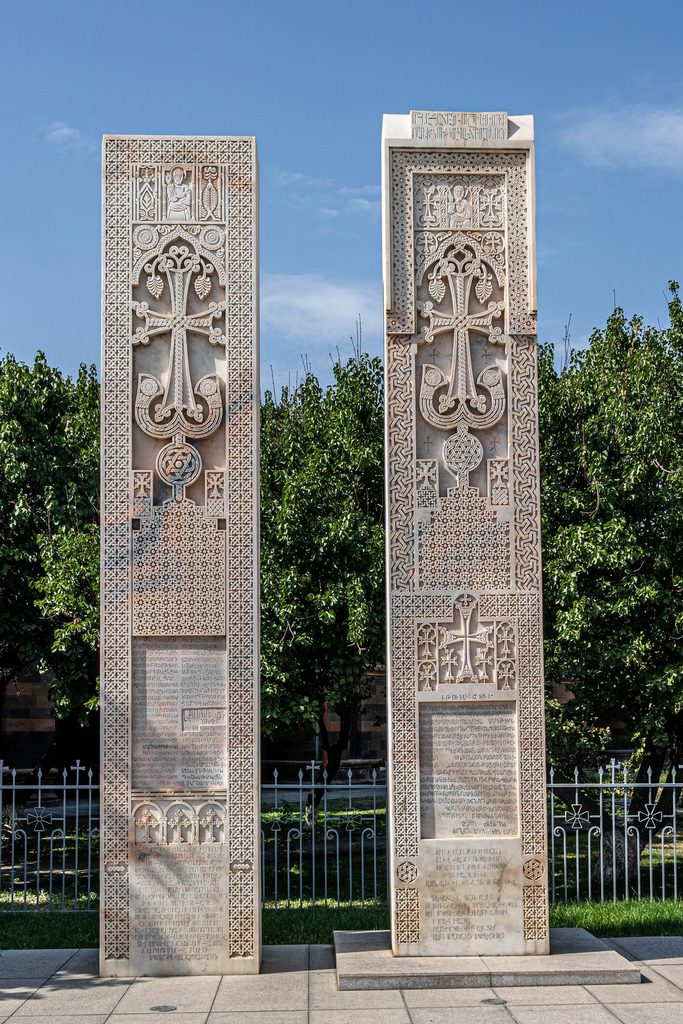
I retraced my steps before turning off to Khackar Park, to see the stele and statues of the cultural genocide committed against the Armenians, mostly by the Turks. My final stop was to visit the History Museum of Armenia, a bargain at £5/2500 Dram. I think I spent about two hours in this museum so it was lucky Deb wasn’t with me! The Bronze and Iron Age exhibits were amazing, with intricate jewellery, weapons, armour and even glassware from 2600 years ago. There were even a couple of burial carts that had been excavated and wall paintings from temples.
After the Roman Period things went downhill as Armenia was caught in the crossroads between Byzantine/Sassanid politics, then Arab invasions, Turkish invasions, Mongol invasions, more Turkish invasions, Russian invasions and then the Turkish genocide against the Armenian people as a whole.
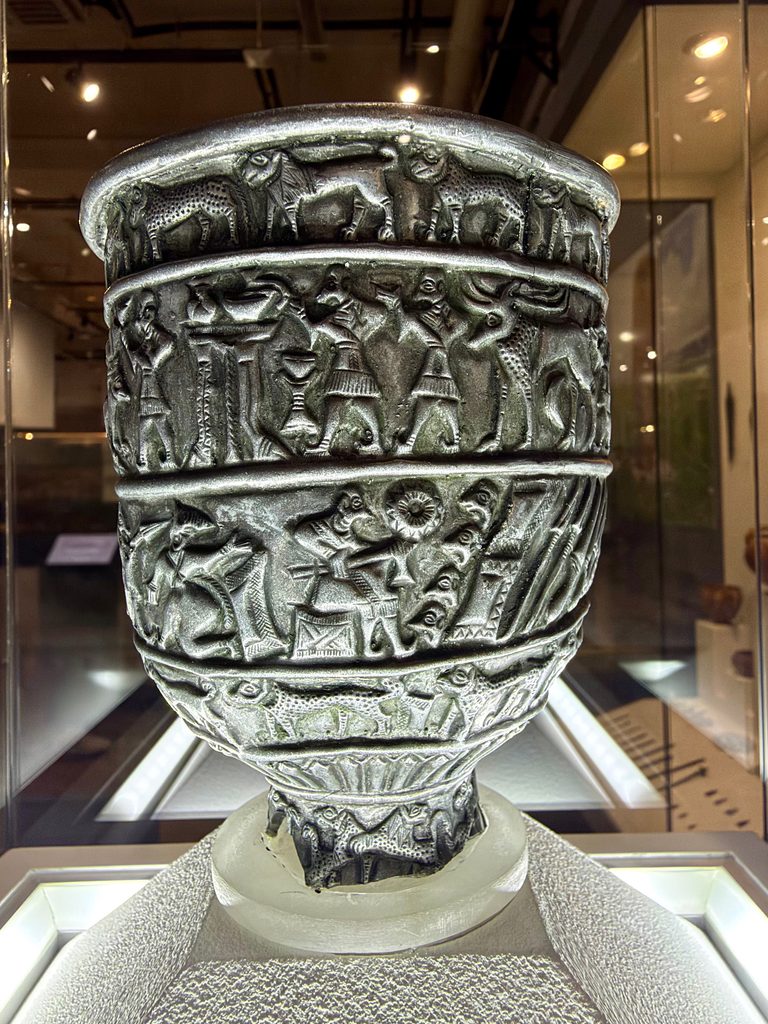
The Armenian language and church were covered quite extensively in the museum (Armenia was the first Christian country in the world) but it was the cultural genocide that was most striking, with the destruction of Armenian artifacts, documents, culture and buildings by the Turks, culminating in the 1915-18 campaign of mass murder, documented by the French authorities. For some reason the British government is one of the few in Europe not to recognise this as a genocide. Although considering how spineless our government is that isn’t that surprising.
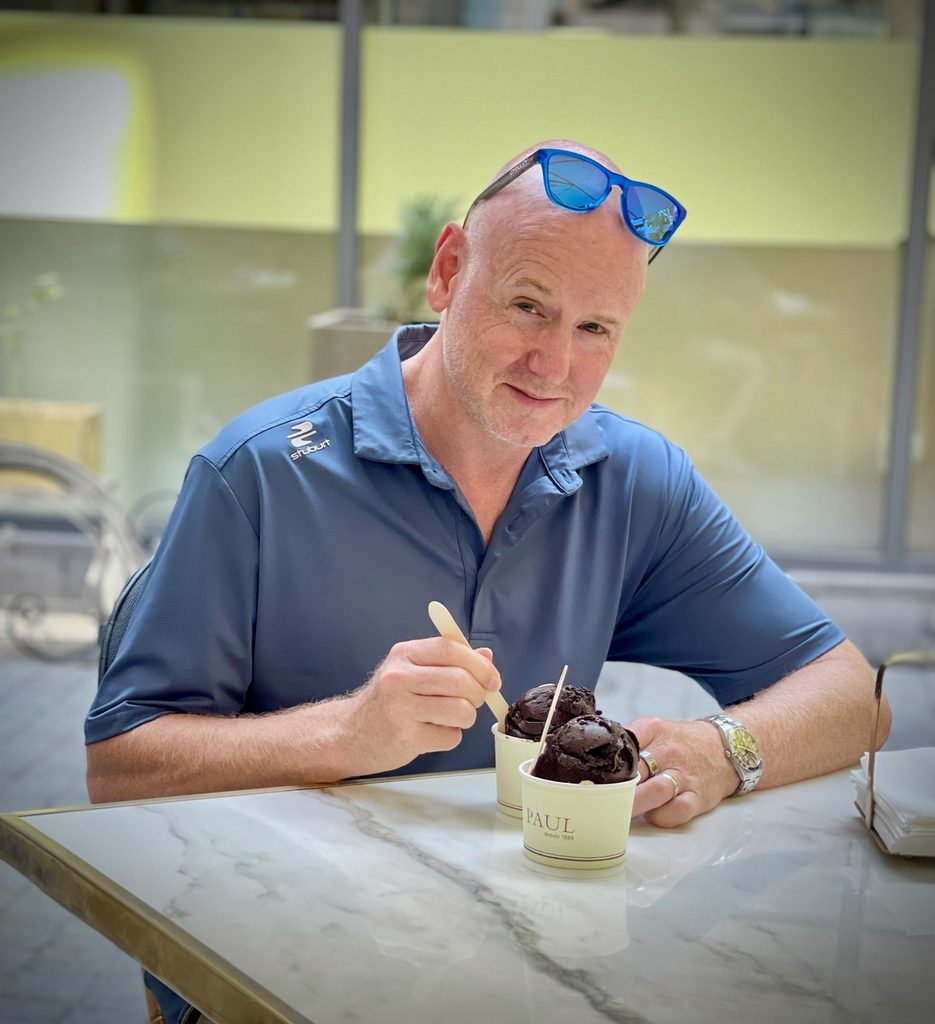
I got back to the room and Deb was up and awake, industriously farming faction on Warcraft. I had a wash and chilled for a bit before we went out to get ice cream. I’d seen Paul’s, a few minutes walk away, so we sat there and had some delicious ice cream and people watched for a while. Back at the room I did the usual editing and note writing before dinner.
We ate at Vienna, a restaurant a few metres from the hotel that was spacious, had an extensive menu and large portions. I had some kind of turkey in a cheese sauce with lots of veg and Deb had quail. For dessert I had a cherry brownie and Deb had a huge apple strudel. Not the best food but decent and filling.
I had a fitful nights sleep and we were at breakfast by 8:30 for another expansive start to the day! We ate on the terrace this morning which allowed us to look at the nearby area, lots of tall-ish apartment blocks. After breakfast Deb stayed at the hotel to play Warcraft while I went off exploring again.
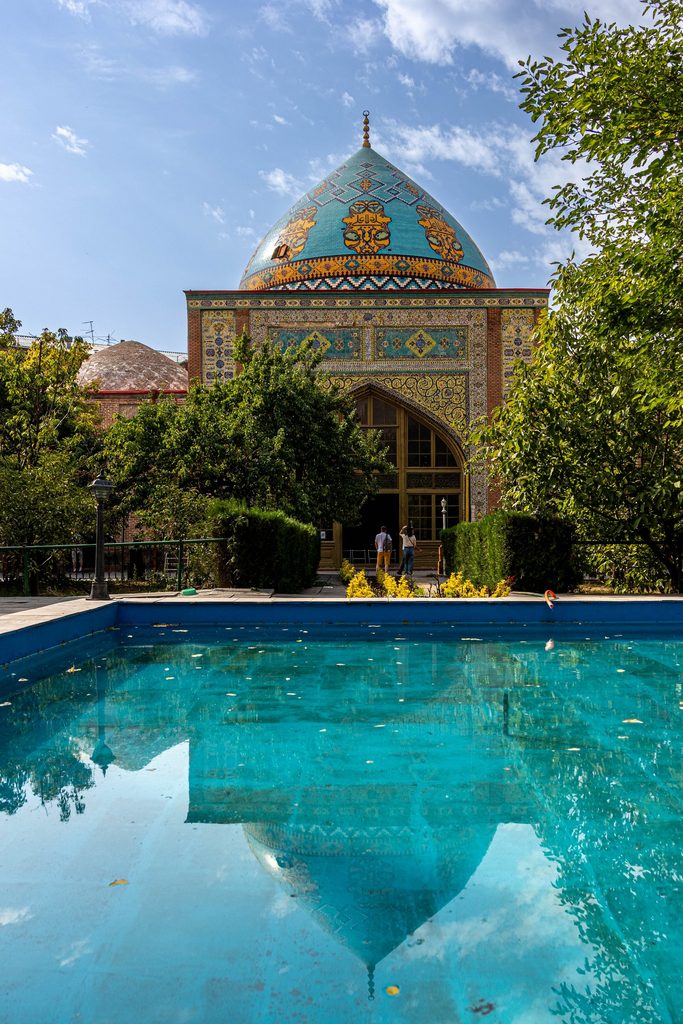
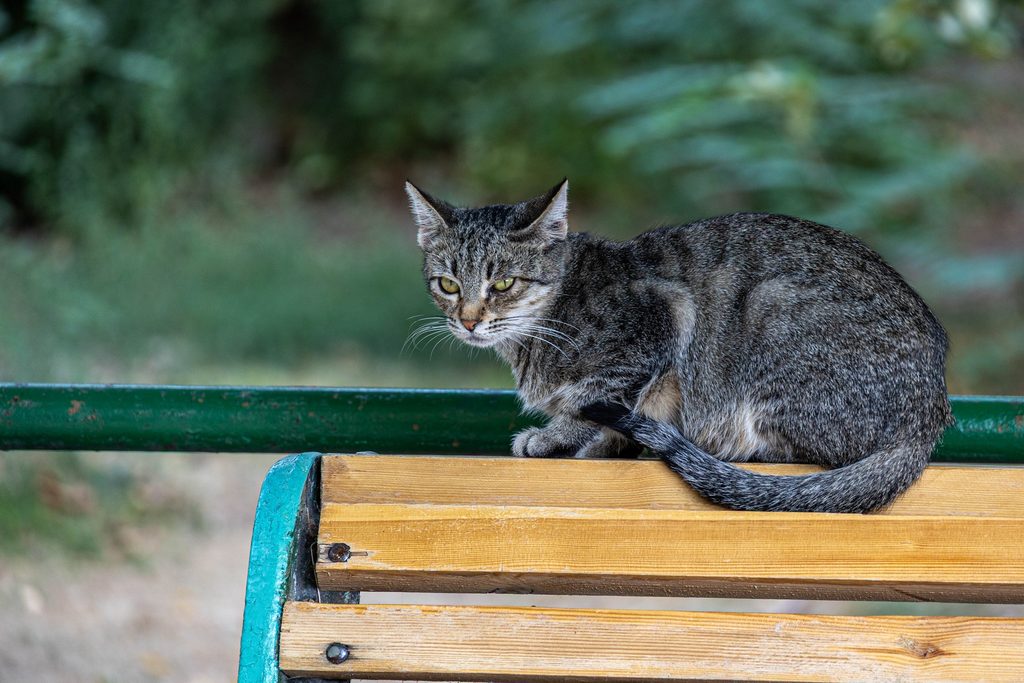
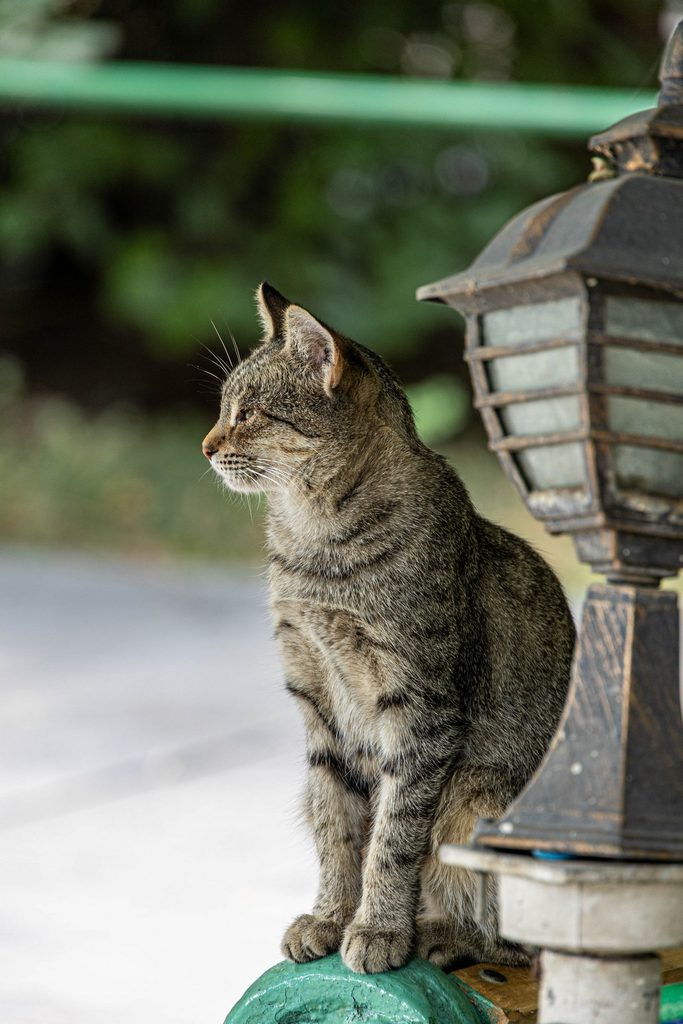
My first stop was the Blue Mosque, partly retracing my steps of yesterday past the parks. This is an eighteenth century building financed by the Shah’s of Iran and is surrounded by a pretty little garden and every single cat in the city. I chatted to Sofia for most of the visit (midnight in Canada!) and probably spent more time playing with and photographing the cats than looking at the architecture. The dome is, as the name says, blue and with the pool reflecting it is very photogenic. The surrounding buildings are typically Islamic but nothing remarkable and the interior, from what I saw peering in the doorway, was nondescript. I didn’t want to go inside because there were two people asleep on the floor and I didn’t fancy disturbing them.

From the mosque I walked through the Kond district, the area with the oldest houses in Yerevan. I was hoping for some amazing seventeenth century architecture but the route I took through the narrow streets and steps was a bit of a warren and I didn’t see anything impressive. There was some pleasant street art, none of it defaced by tagging and finally the eighteenth century Church of St John the Baptist. This is a pretty red stone building on the site of an 8th century church and with gravestones from the sixteenth century at least. I didn’t go inside as there was a funeral service taking place.
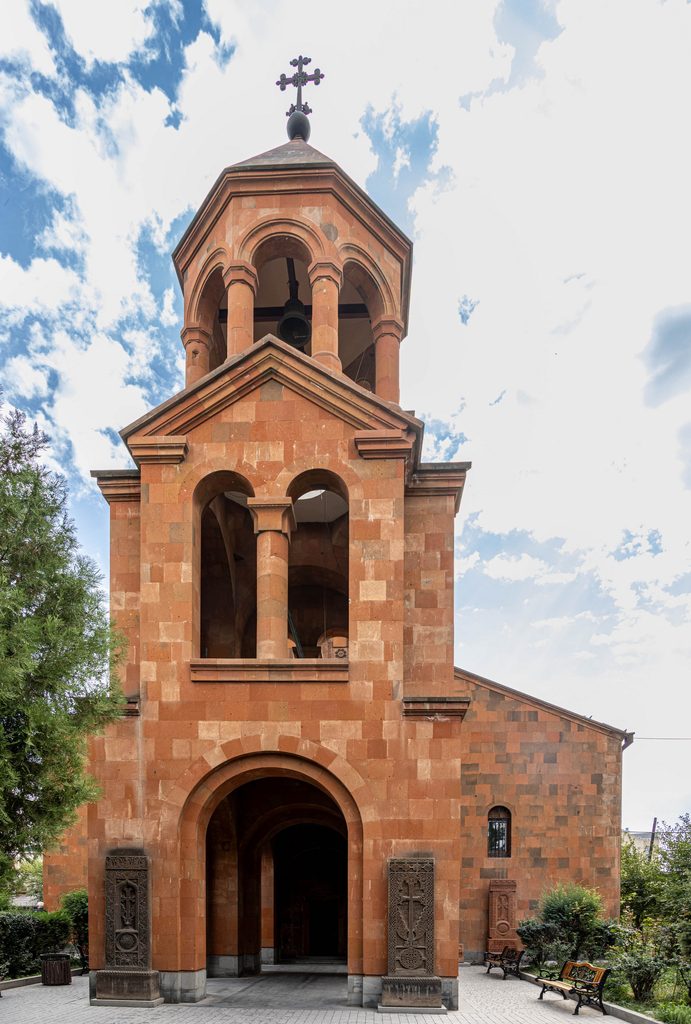

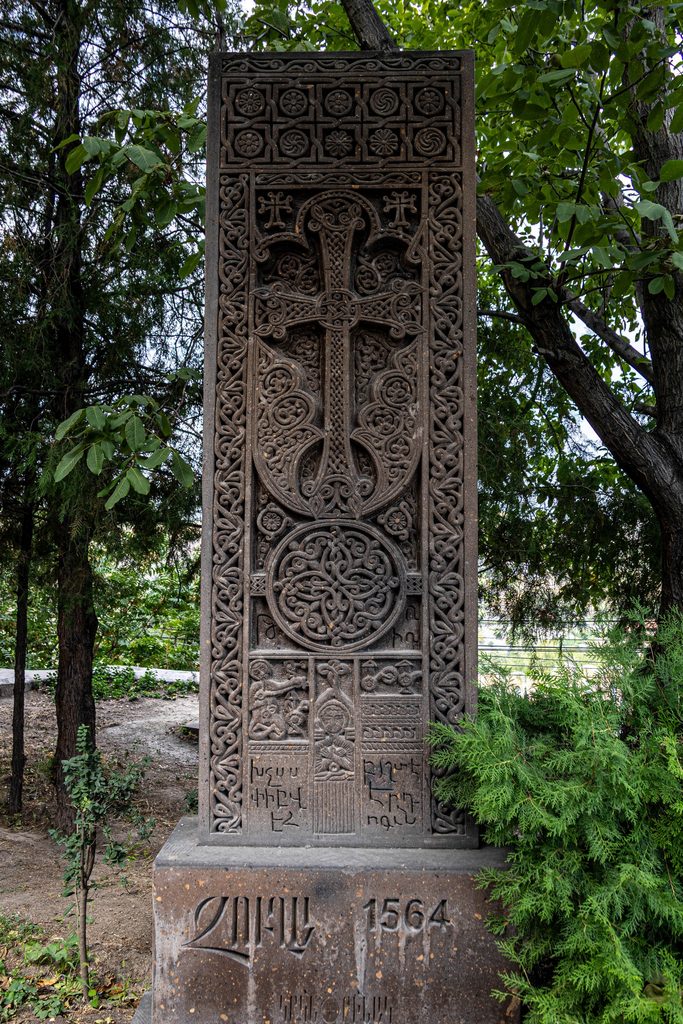
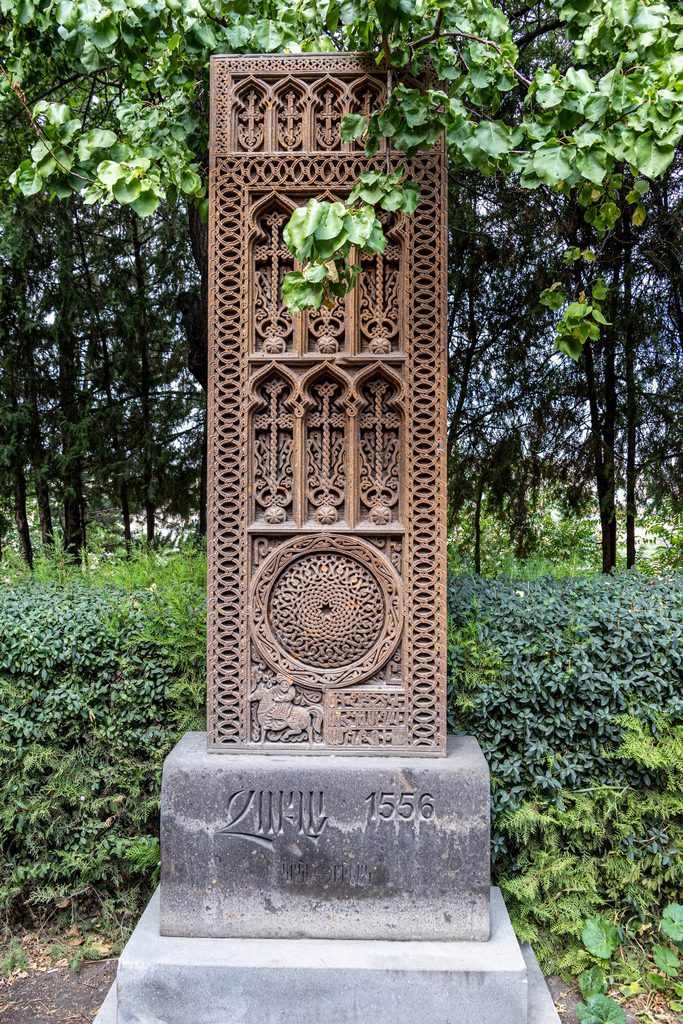
Again this morning I noticed how clean the streets were and how pretty. Other than a small area in the Kond I had seen no litter and no graffiti and lots of the houses or apartment blocks had flowers decorating their outside. There were lots of pavement cafes and it was a pleasant place to walk around. The demographic seemed younger then western cities with far more young people out and about than elderly or even middle aged. Although maybe just that is my perception now distorting things!
My next destination was the Cascades, a huge series of monumental terraces linked by 560 steps that was completed in 2009. Each of the five levels has sculptures and pools which was lucky as it was a damned hot and sweaty climb! I continued from there on to the Memorial of the October Revolution but the final part felt pretty run down and the views were less than impressive. Walking down the steps I took a bit more time to look around at the individual levels and as I got lower the views of the city were more appealing.


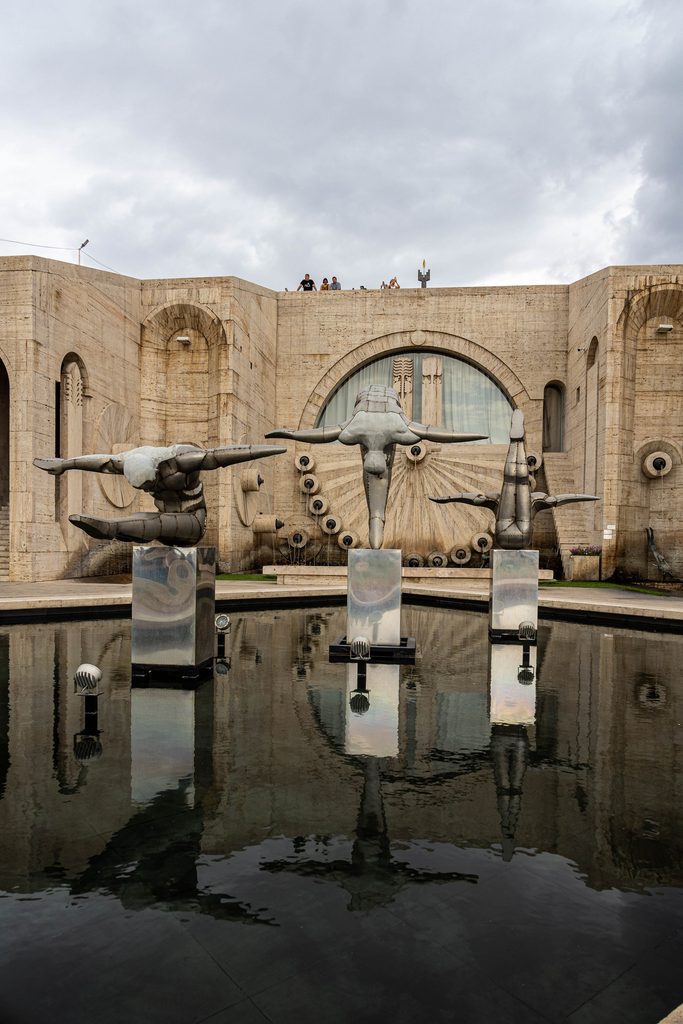
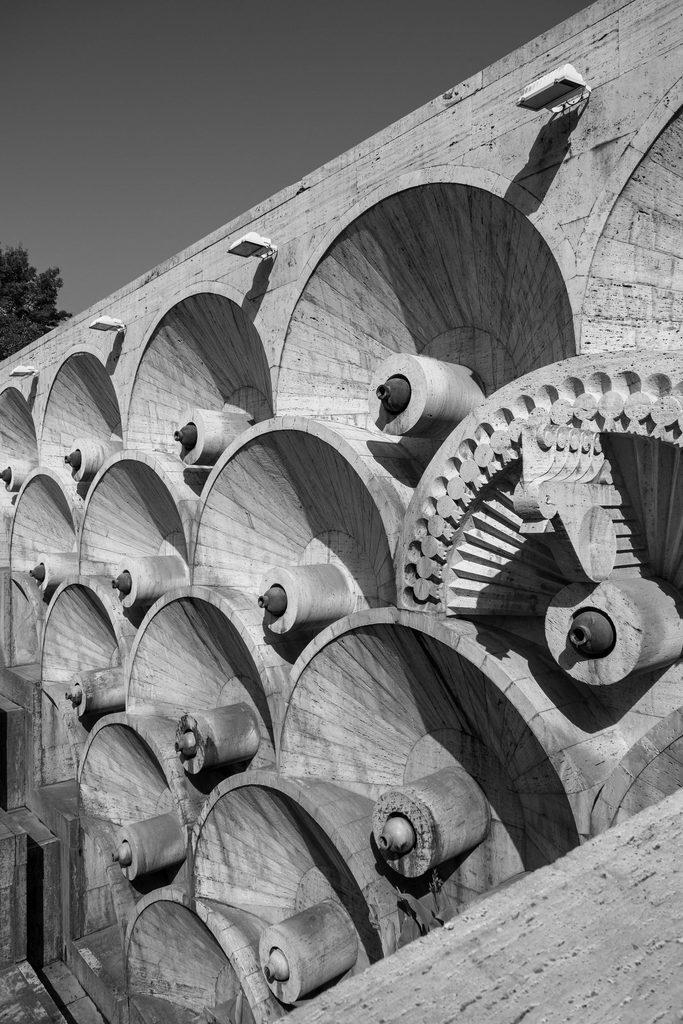
In mid September the flower borders (Indian blanket – a yellow/orange/red large daisy) were fading but I imagine that earlier in the year the climb would be a spectacular riot of colour. The area was reasonably busy too which was nice to see although I was surprised there were no pop up cafes or anything at all at the top.
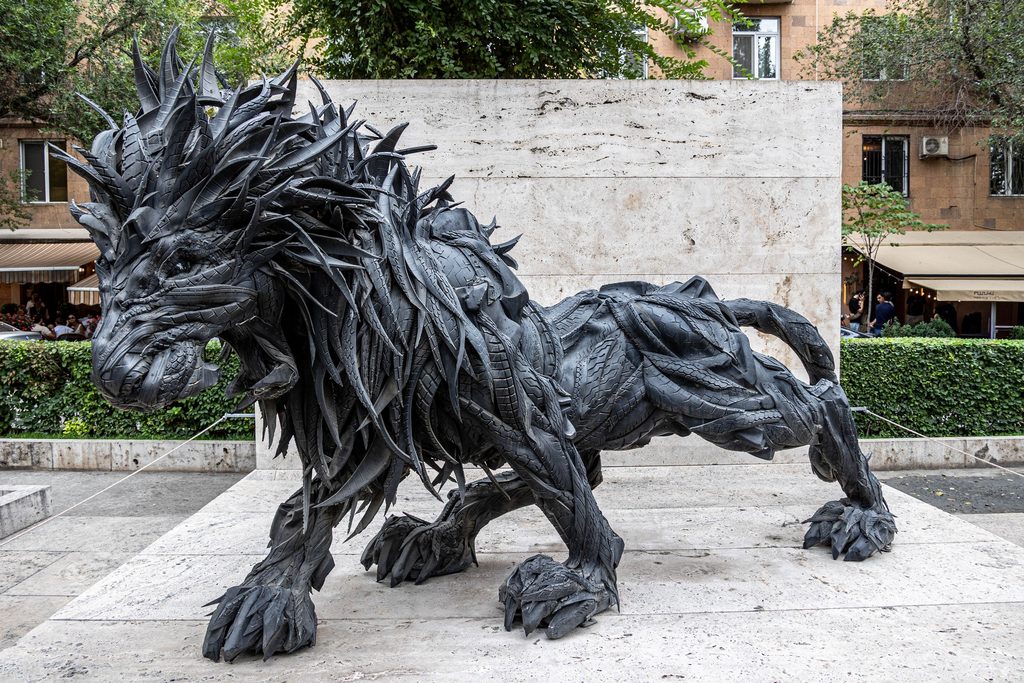
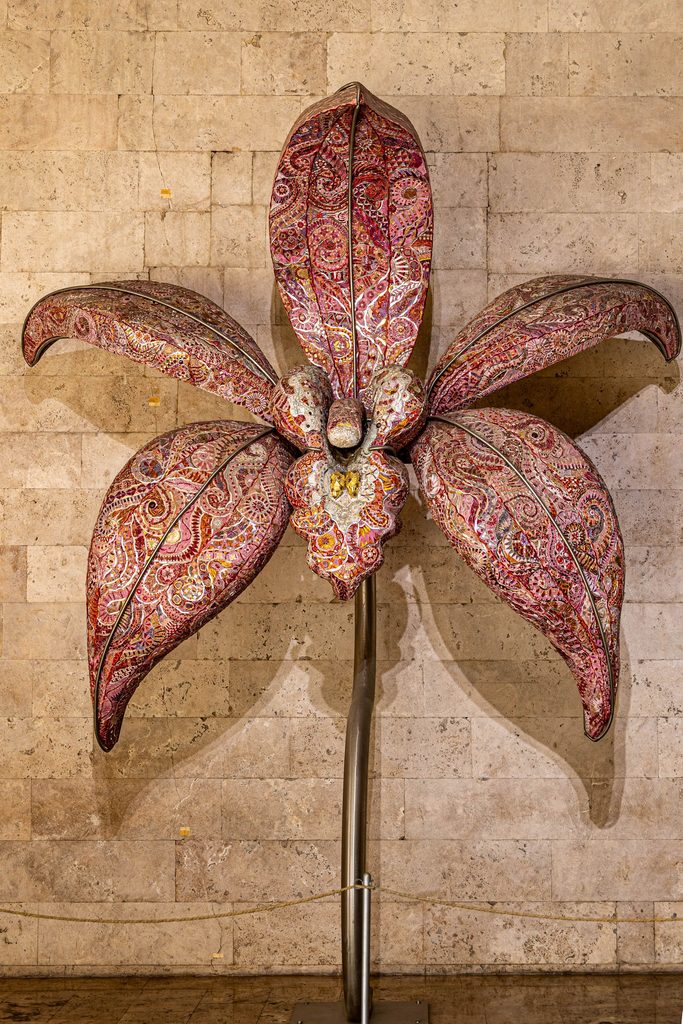
I reached the bottom and then meandered through the Cafesjian Sculpture Garden, another area full of wonderful public art. As usual for the city this area was clean, respected and just pleasant to walk through. I continued on to Swan Lake and more sculpture before walking to Paul, the restaurant near the hotel with fabulous ice cream and meeting Deb there for some of the aforementioned ice cream again. Back at the hotel I had a too brief nap before sorting photos.

We met our actual GAdventures tour group at 6 and went through an overview of the tour and then each person gave a brief introduction about how many GAdventures tours they’d done, where they were from and what they wanted from the tour. Over half the people were Brits and most had been on numerous GA tours before, up to 13. This was our second!
After that they all went to dinner together and we went back to our dinner place near the hotel where we had another filling meal. We shared a dessert this time and I even had milky oolong tea, a fault of translation! We then had an early night ready for our first ‘proper’ day tomorrow.
G Adventures Best of Georgia & Armenia highlights – Day 1
Yerevan and Echmiadzin
After breakfast we met the group at 9AM for a short city tour of places I had already visited before we then took the minibus to the Cascades to see one of the museums built inside it. This was essentially a triptych by Grigor Khanjyan depicting the Armenian alphabet, the Battle of Vardanank and then heroes of Armenian culture. Painted in a heroic Soviet style it illustrated essentials of Armenian culture to restore national pride.
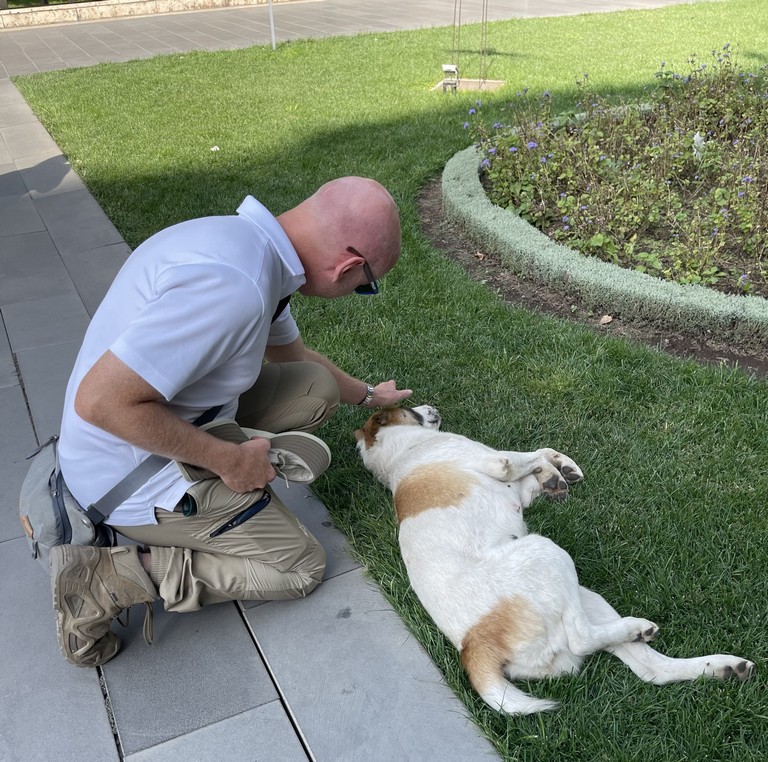
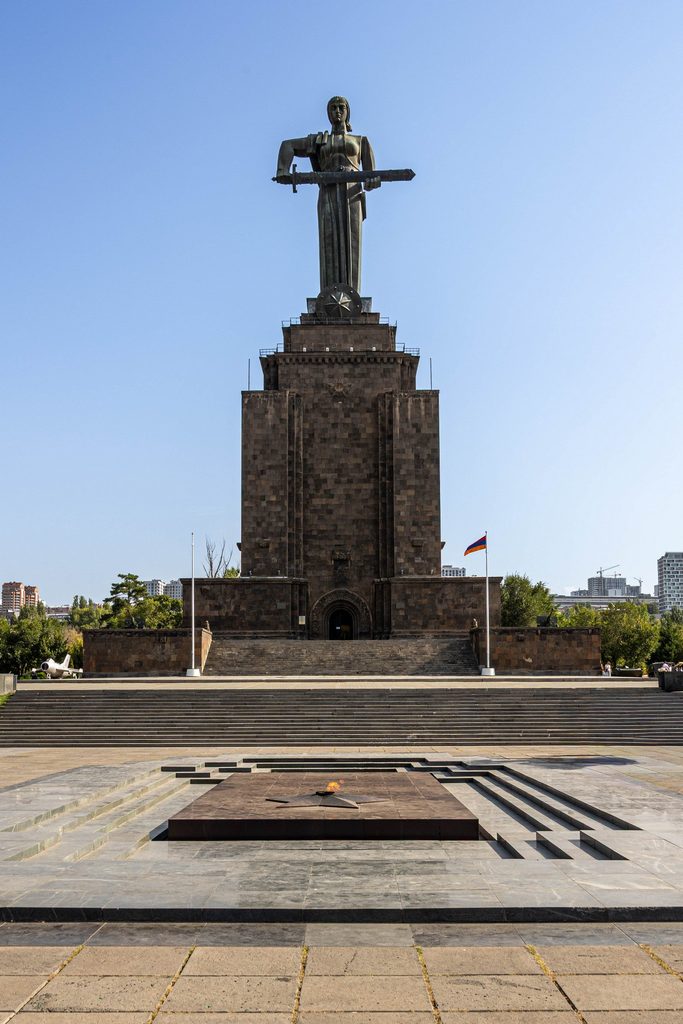
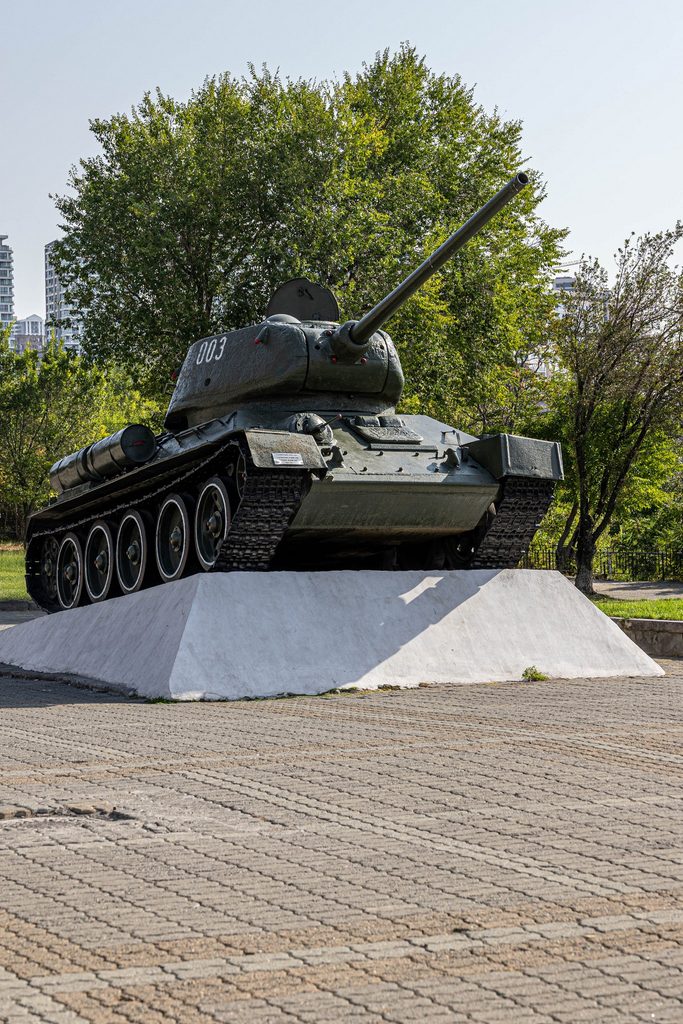
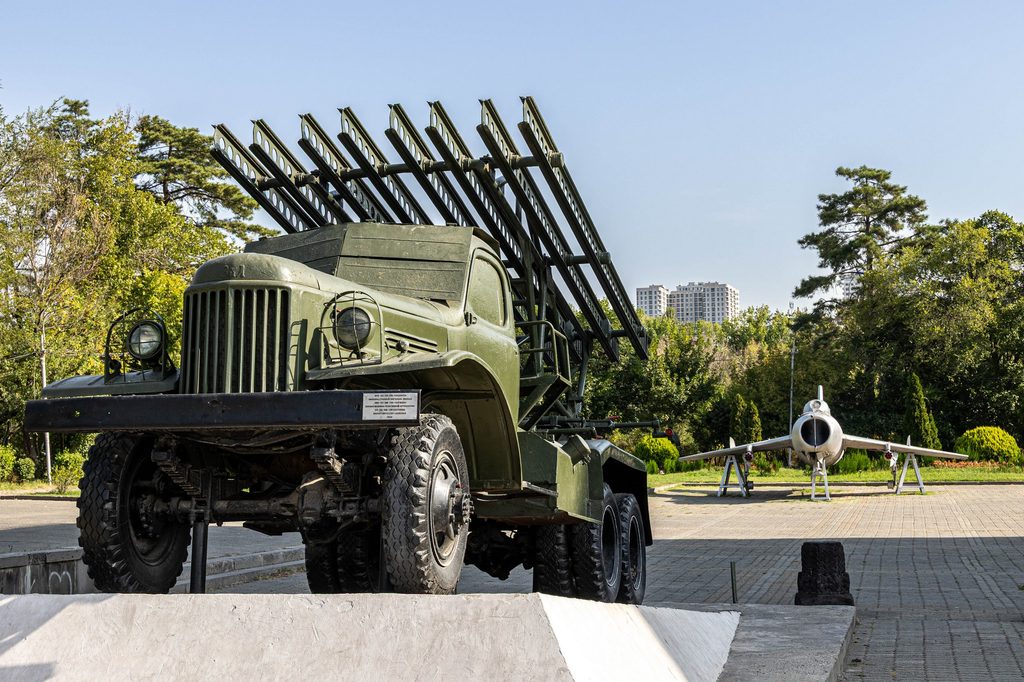
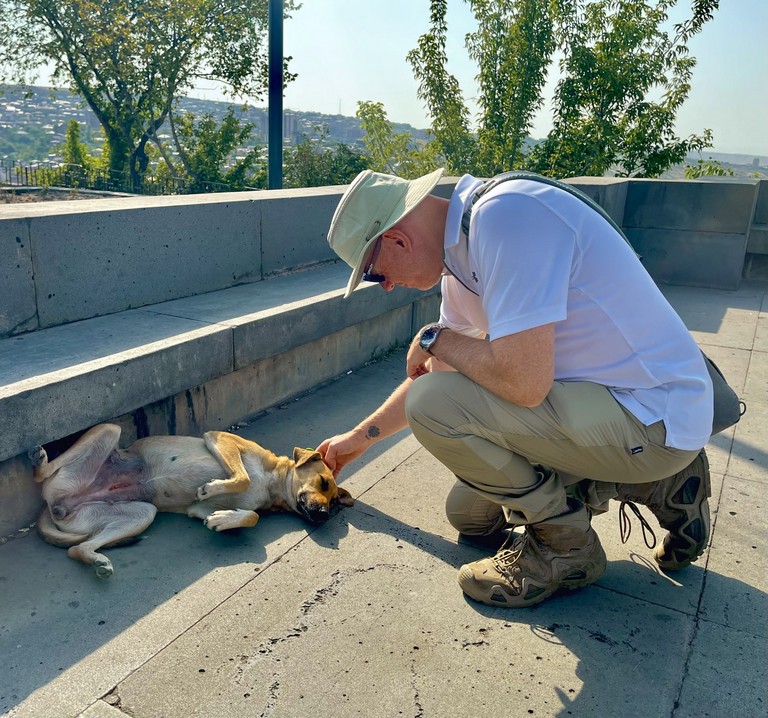
The tour then continued to the Victory Monument, built to celebrate the end of the Second World War and surrounded with 1940’s Soviet equipment. I was rapidly learning that our guide, Galust, liked to talk and liked to stand still while doing it so I walked off to do my photos and met them back at the minibus. There was a very friendly stray dog who loved having his belly rubbed too!

We continued on to the Genocide Museum and Memorial which took well over an hour to read all of the information on this horrendous episode. There were several episodes that constituted the Genocide but the net effect was that the Armenian, Assyrian and Greek populations of Ottoman Turkey were decimated. Women were raped or taken as sex slaves, children were killed or enslaved, men were killed. There were eye witness testimonies including from French and German soldiers as well as the pitiful survivors of the murders and tortures.
The international community eventually responded and the perpetrators were arrested but then a change of government in the country released them all. The original population of the country who had been there thousands of years before the Turks arrived from the steppes were ethnically cleansed in a program that apparently influenced Hitler.


After this sobering experience we stopped for lunch at a food court and had a bargain and filling lunch before continuing on to the spiritual capital of the country, Echmiadzin. This was the site of the first cathedral being founded here, in 301AD, by St Gregory the Illuminator when the kingdom adopted Christianity. The current church dates from the 5th century but has had extensive restorations in the post Soviet period. The entrance was a grand Soviet style monumental gateway depicting the king and the saint.
I left Galust to talk and walked around the complex. The cathedral is quite magnificent and unlike so many European cathedrals, has extensive grounds so you can actually appreciate the building without it being crowded in by other buildings. The gardens were pretty and being a Sunday the area was busy. It was nice, for my old fashioned brain, to see younger males and females actually dressing specific to their gender, no androgynous joggers and tshirts.


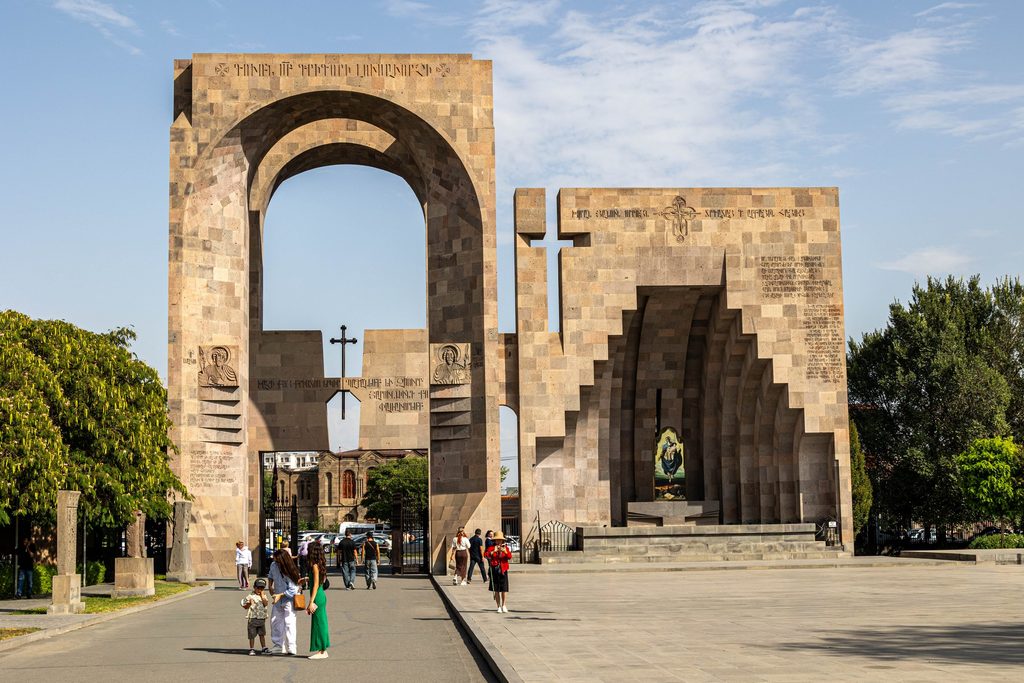
The interior of the cathedral looked more Persian than Christian with beautiful geometric designs but no animals or people depicted other than on detached paintings. The building was busy with worshippers which was also nice to see.
I visited the gift shop and then met with Deb while we waited for the group and then returned to the hotel around 5PM. After a welcome shower I edited the photos before we went out for dinner. We chose somewhere different tonight and went to Tun Lahmajo, a well rated Armenian restaurant. We had to wait a while for a table and the whole area was packed but we got seated and ordered food. The menu had loads of options, most of which I’d have to look up so we opted for chicken kebab and grilled veg. It was a bargain price too and we left sated.
G Adventures Best of Georgia & Armenia highlights – Day 2
Khor Virap Monastery, Garni Roman Temple, Symphony of Stones, Geghard Monastery
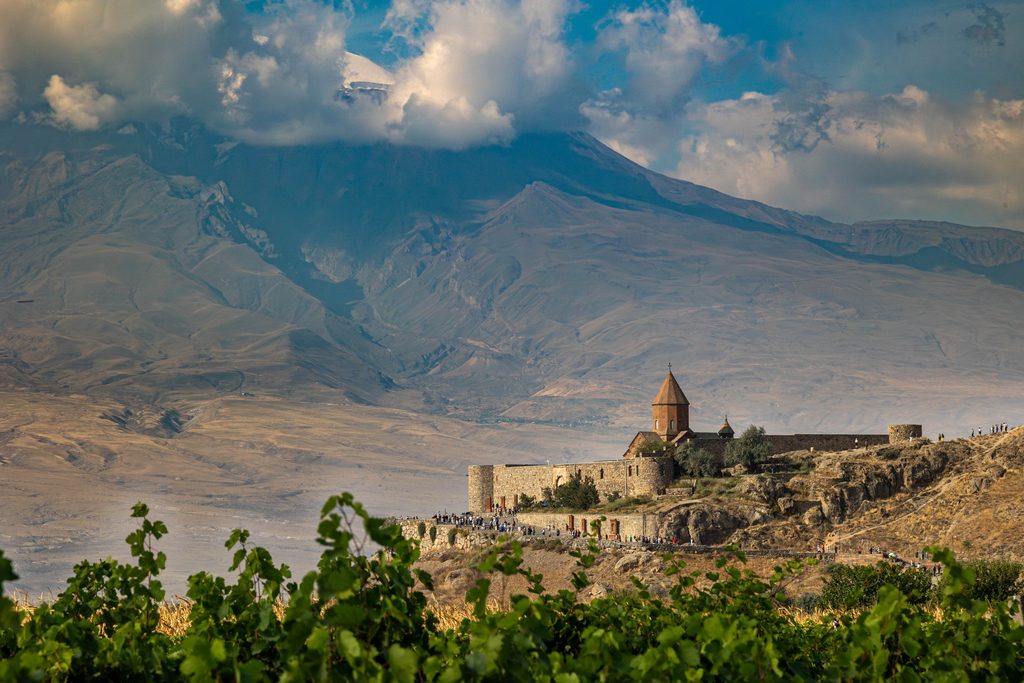
After breakfast the next morning we walked to the minibus as the Independence Day celebrations meant the roads nearby were closed. Our first stop was Khor Virap Monastery very close to the Turkish border and one of the old Armenian capitals, Artashat. The monastery was incredibly photogenic with Mount Ararat in the background but getting a shot of the two together was difficult as there was nowhere high enough so I settled for a vineyard and cropped the photos heavily.

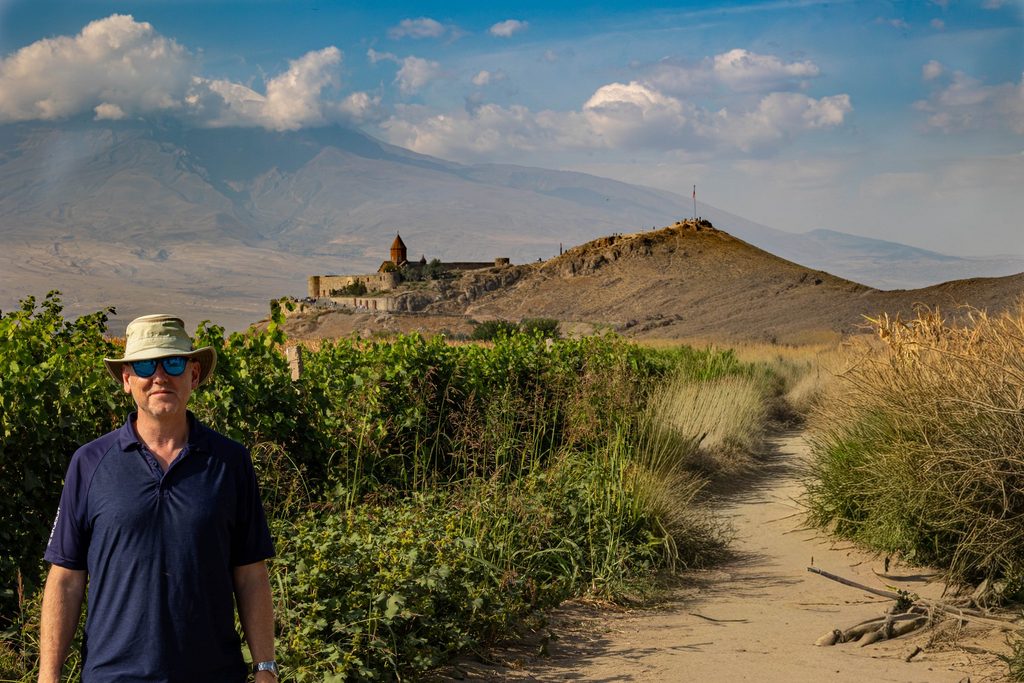
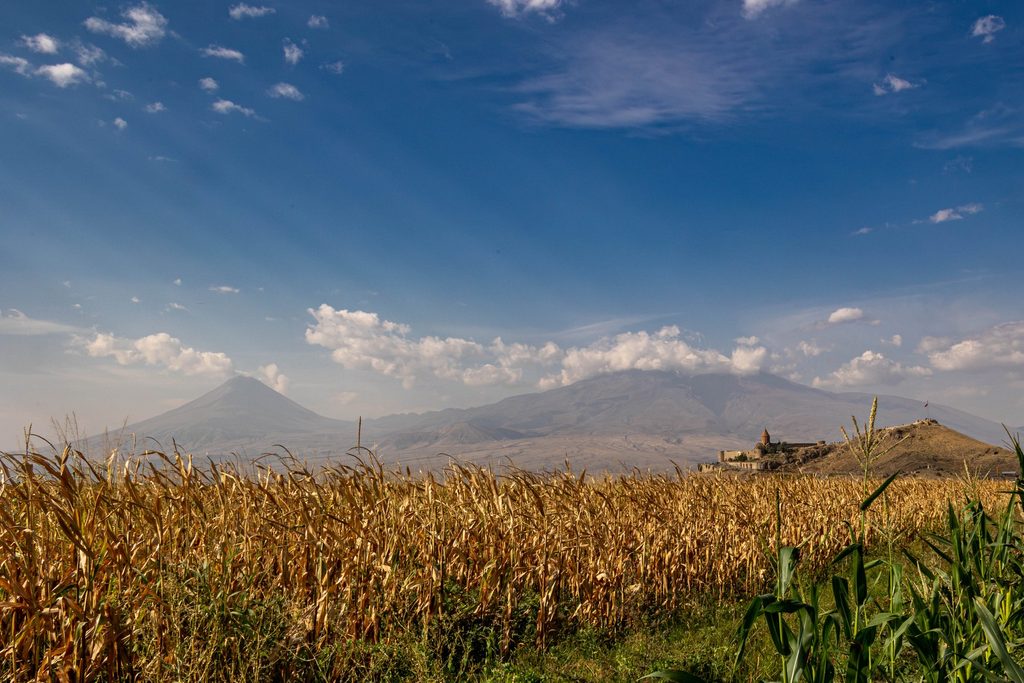
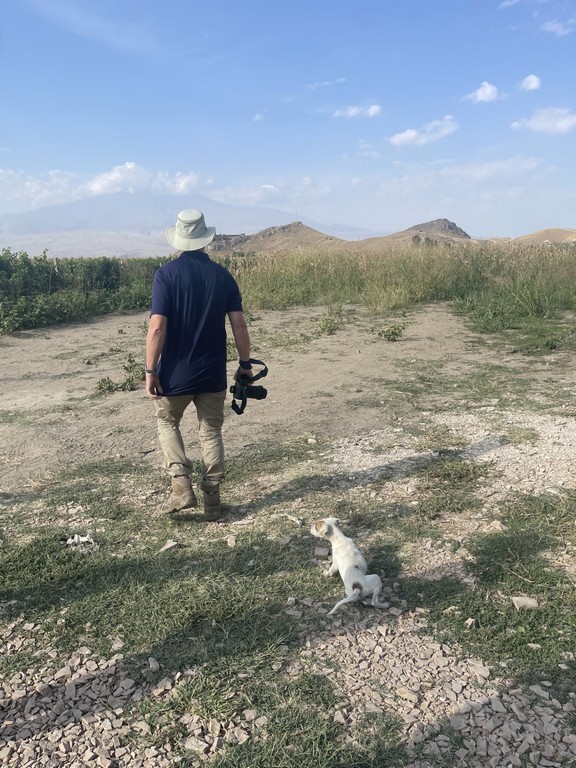
Khor Virap Monastery was busy, there was a car park which was full and then cars parked and double parked up the access road. We stopped for a view of the monastery through the vine and corn fields and I played with a lovely little puppy and then we continued to the entrance. Once we disembarked we walked through the bazaar to reach the steps up to the monastery. I climbed past and onto a hill that had a large cross and Armenian flag (probably visible from the Turkish border!) to get a better panorama, along with half the other tourists visiting including one elegant older lady in 4″ heels, scrambling over the stones!


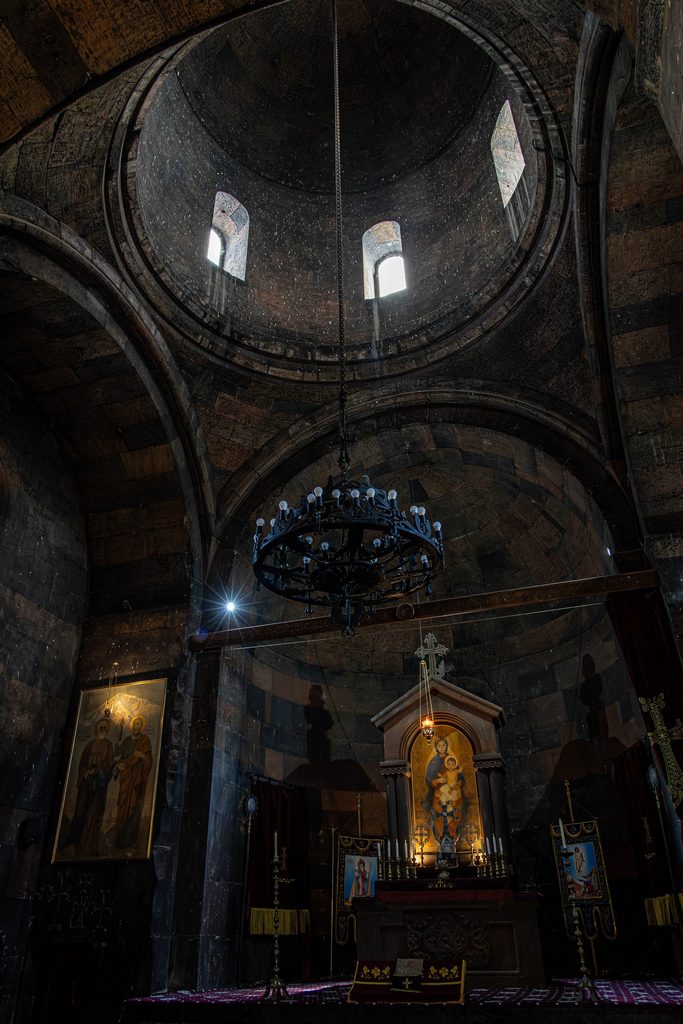
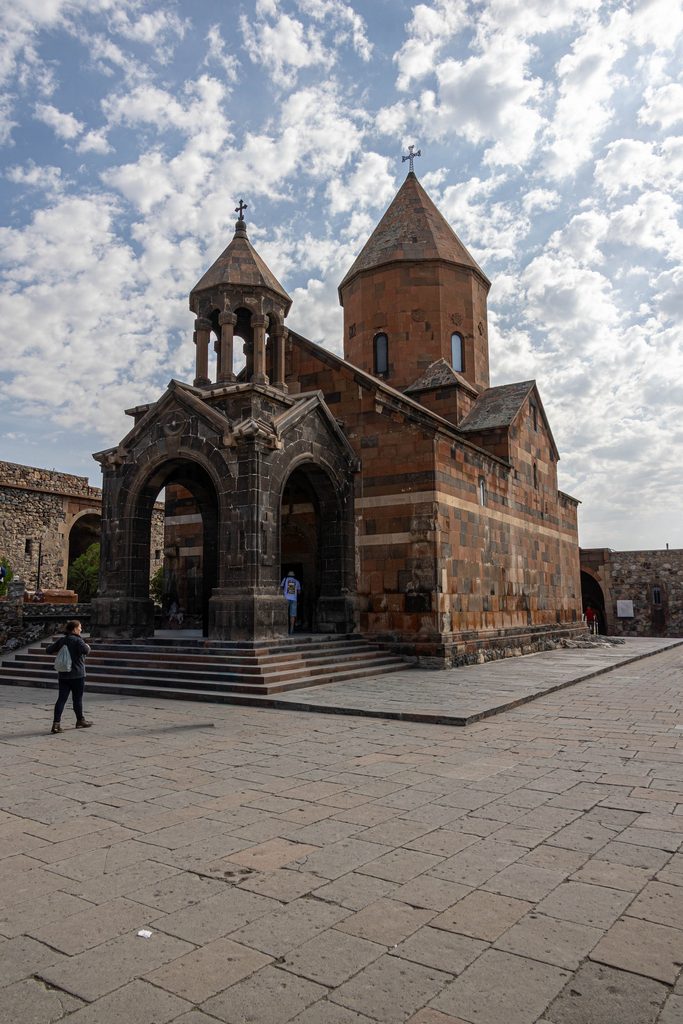

The current iteration of the monastery was built in the 16th century and was bare inside although you had the option of contorting to look into the cell where Gregory the Illuminator was held prisoner for 13 years before he converted the kingdom to Christianity. There was some ornamentation on the entrance porch but, considering the location, this was built to be defended rather than be beautiful. There was a lovely chapel that had incense candles lit which contrasted well with the black stone.
From Khor Virap, close to Yerevan and in a fertile valley, we drove to Garni Roman temple. This was in the mountains which were incredibly barren and treeless but strangely scenic too. The temple was another place without a nearby carpark so we were dropped off and then walked into the site. The temple to Mithras was built in the 2nd century AD but then destroyed by an earthquake in the 17th century and eventually rebuilt in the 1970s so it is remarkably intact!

As we visited on a Sunday around midday Garni was busy, very busy. Originally part of a far larger complex the other structures have not yet been restored although you can see the remains of a small chapel next to the temple and some of the walls of the palace buried amongst the grass on the slopes. The building, although a reproduction is quite amazing and the setting on a steep sided promontory only adds to the effect. There is a film on the history of the temple but I think it may only be in Armenian.
While I wandered around the rest of the group listened to an Armenian flautist in the shade of the trees. I walked back to the fortress entrance while I waited for them and rang Natalya to discuss her wedding venue options. We walked through the village to our lunch venue but I didn’t fancy anything so I left them to it, including the vodka sampling and just went for a wander. It was quite amazing how quiet the village was as I walked.
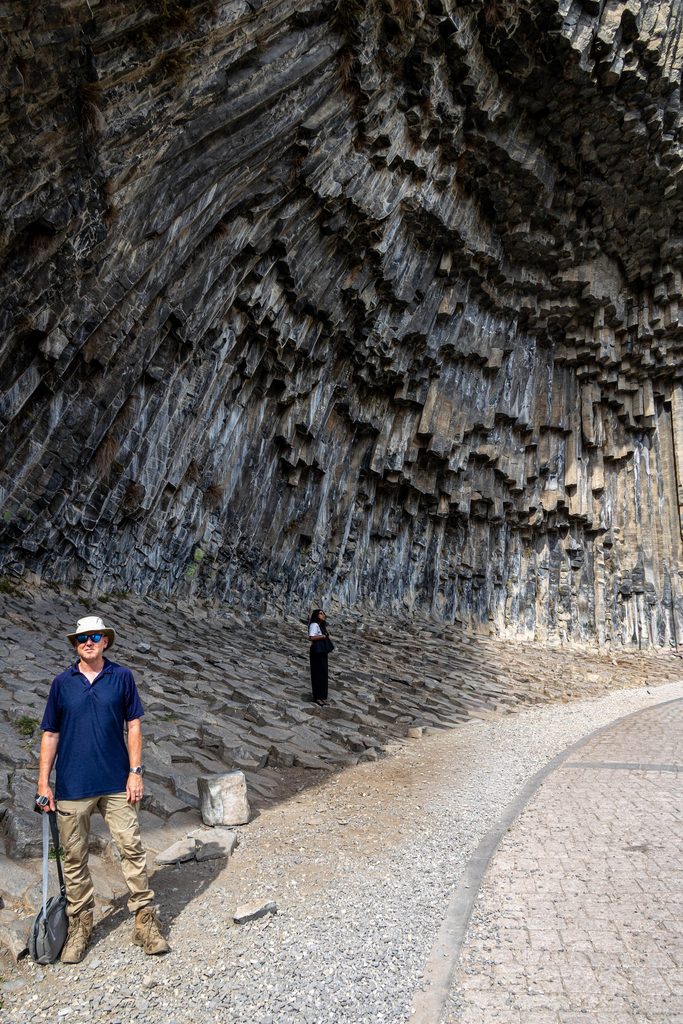
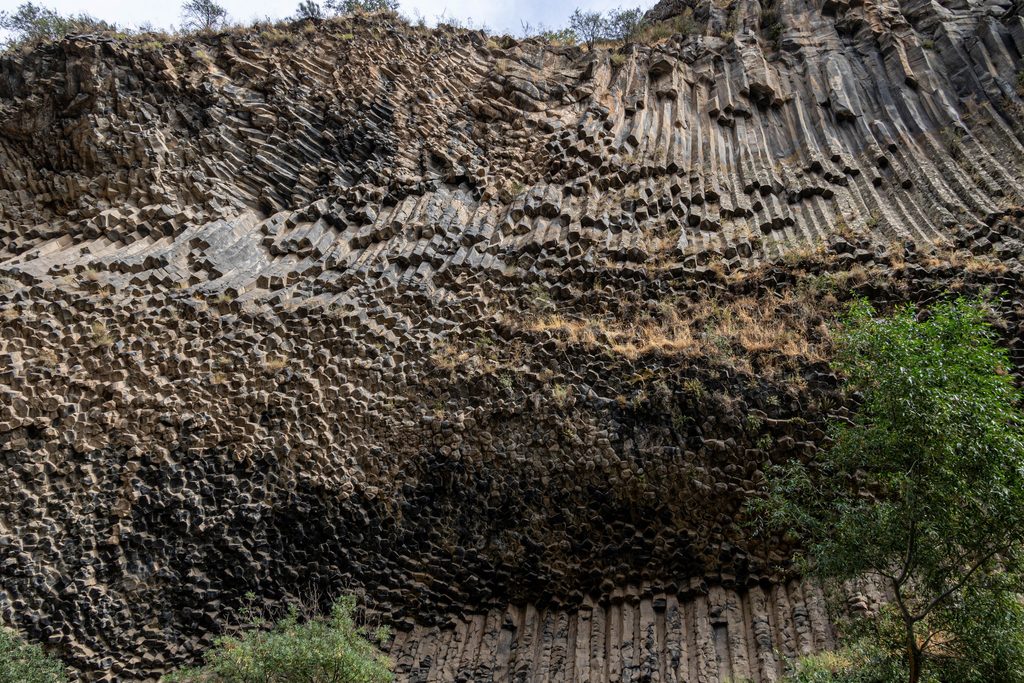
Our next stop was close by, the Symphony of Stones, a Giants Causeway style geological feature that extended through a valley. Yet again there was no parking so we just paused at the entrance and got out while the driver went off to park and wait for our return. The stone formations were actually quite incredible to see, twisting and bending and I think Galust said it is one of only 8 locations in the world. There was even a tourist train and donkey ride options to give you an idea how busy the place was! It was also a place I could have done with more time, the monasteries and temple could easily have been visited in 30 minutes less but the Symphony of Stones would have rewarded more time by allowing us to go further down the river valley.


I walked back up the hill, which was quite a sweaty task and then we all waited for the drivers to finish arguing with those who had stopped ‘just to get an ice cream’ blocking the road then others dropping people off etc. Luckily there was another stray dog there to play with.
Our final stop, after some discussion, was another monastery. Some people wanted to get back to Yerevan so they could start drinking for the 35th year of independence celebrations from the USSR, others wanted to see the monastery. The vote was actually against it – philistines – but luckily Galust insisted we went, EU style democracy – you can vote but I know best 😉
Geghard Monastery was only 15 minutes away from the Symphony of Stones so it did seem silly not to go there and it even had a proper car park. The monastery itself is a 12th century construction but the complex as a whole was founded in the 4th century and consisted of several cave churches.
We climbed the steps to it and had a quick look around. Although it was the usual stark black stone inside it felt just wonderful inside with the incense fragrance and a large number of people. It is another site of the fabled Lance of Longinus, bought here by the Apostle Jude and now stored in Echmiadzin, and as there is also one in the Vatican and one in Aachen (or maybe Vienna) it is always lucky to have spares.
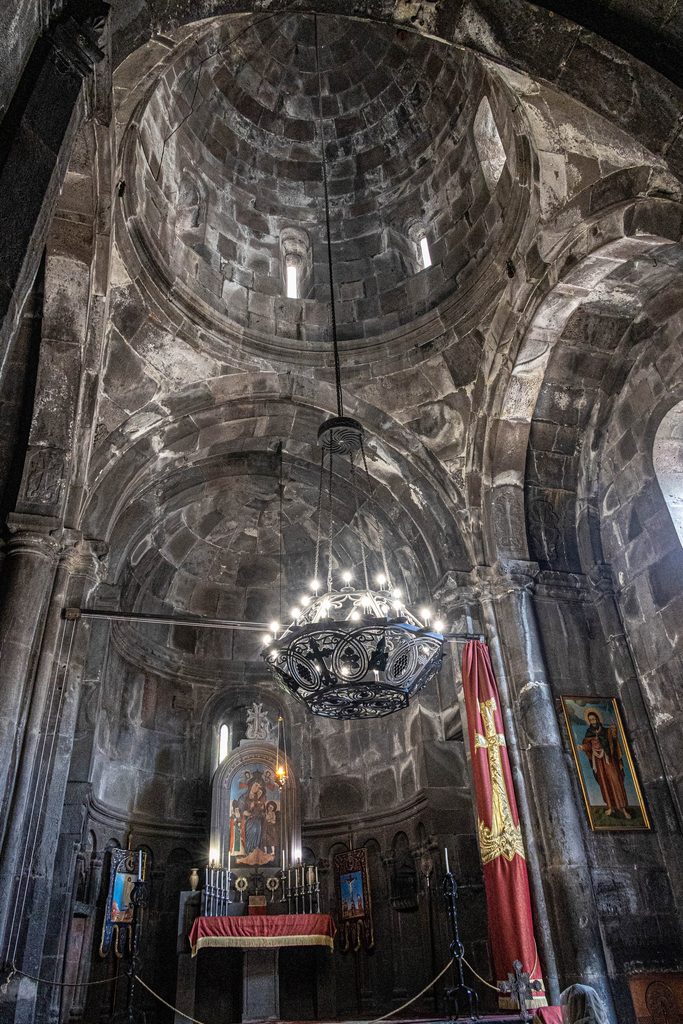


The visit didn’t take long, maybe 20 minutes to see the interior, a small shrine and walk around the outside. As I was leaving a wedding party was coming up the hill, a fabulous location for a wedding! Most of us tried to doze on the way back to Yerevan, except the driver and we walked the short distance to the hotel. It was a thrilling evening of notes and photos but after 4 hours it was all done. Tomorrow we leave the hotel to head towards Georgia.
G Adventures Best of Georgia & Armenia highlights – Day 3
Sevanavank Monastery, Dilijan, Sanahin Monastery
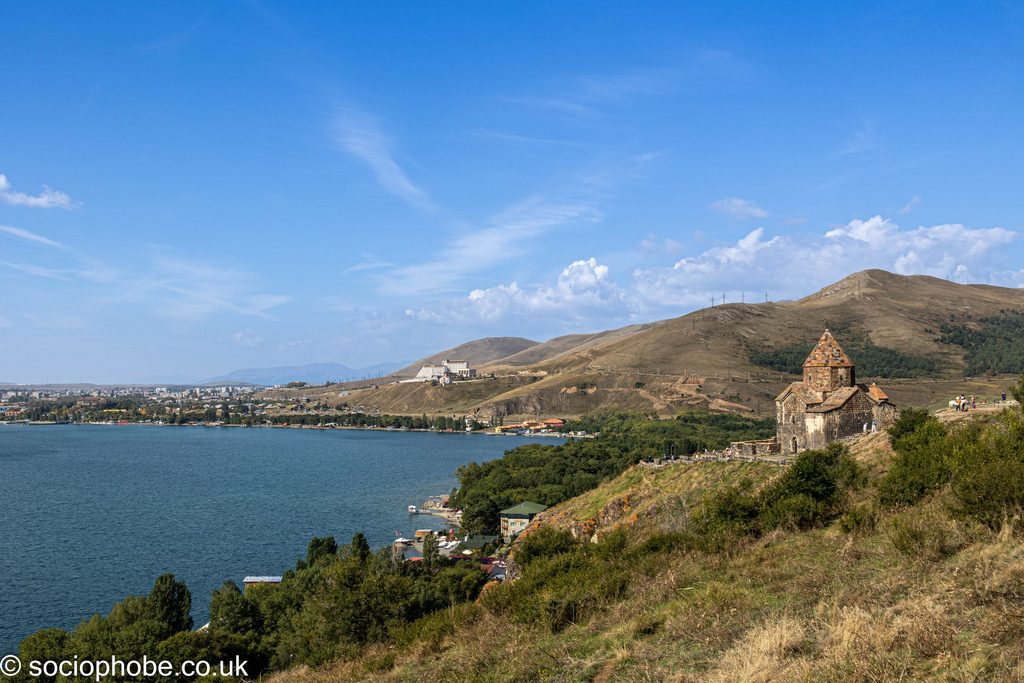
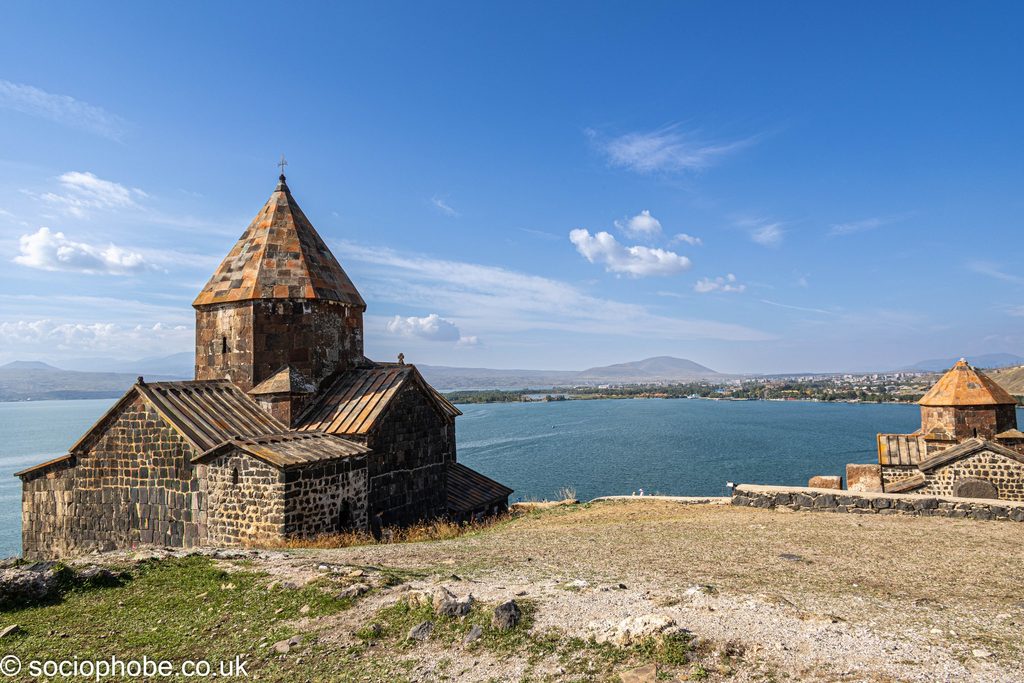
The monastery dates from the 9th century and is stark and plain inside and in the courtyard were lots of the carved Khachkars. Originally the monastery would have been plastered and covered in frescoes, as I have seen in other Armenian churches, but these are all long gone. I walked around the buildings a few times and then walked further down the peninsula to take in the view from there. We then walked back to the main square and had a coffee while I sat with a stray dog, again.

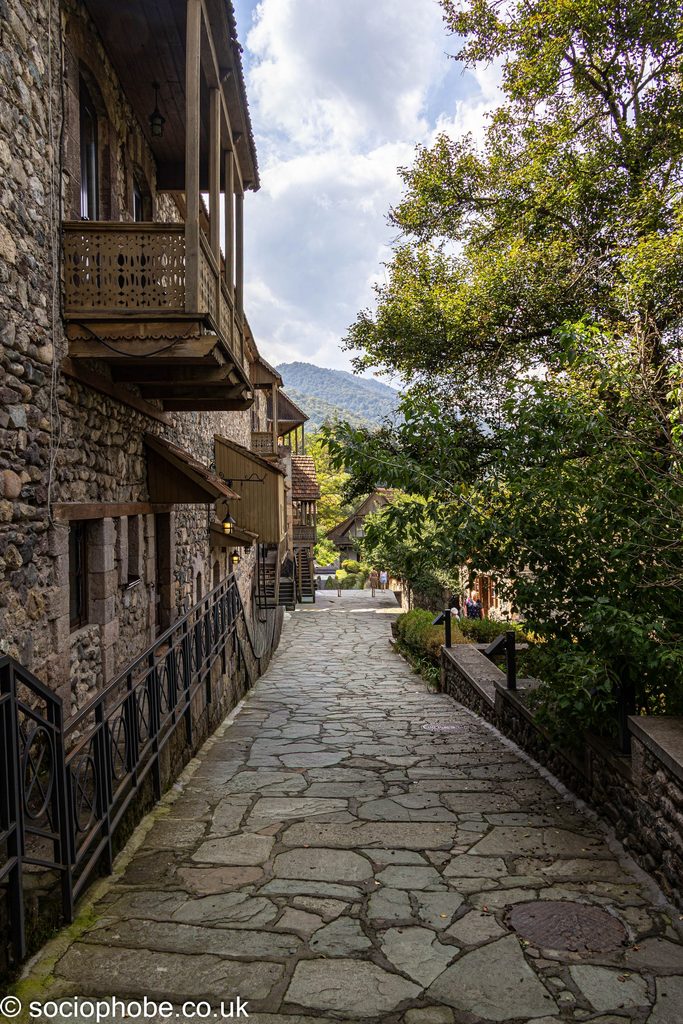
Dilijan was about 30 minutes drive away and is on the edge of the National Park. The area is very scenic and mountainous, around 2000m, and is called the Armenian Switzerland. Just without the obscene prices. We parked for a brief stop and a wander, looking at the beautiful wooden houses. Most of Armenia seems bereft of trees but this part makes Lothlorien look barren! The drive to our lunch stop at Fioletovo Village was short and it was an insight into the lifestyle of the Molokan minority group, who were exiled by Russia in the 19th century. They are an Amish type group and are still strictly self segregated from the rest of the population.

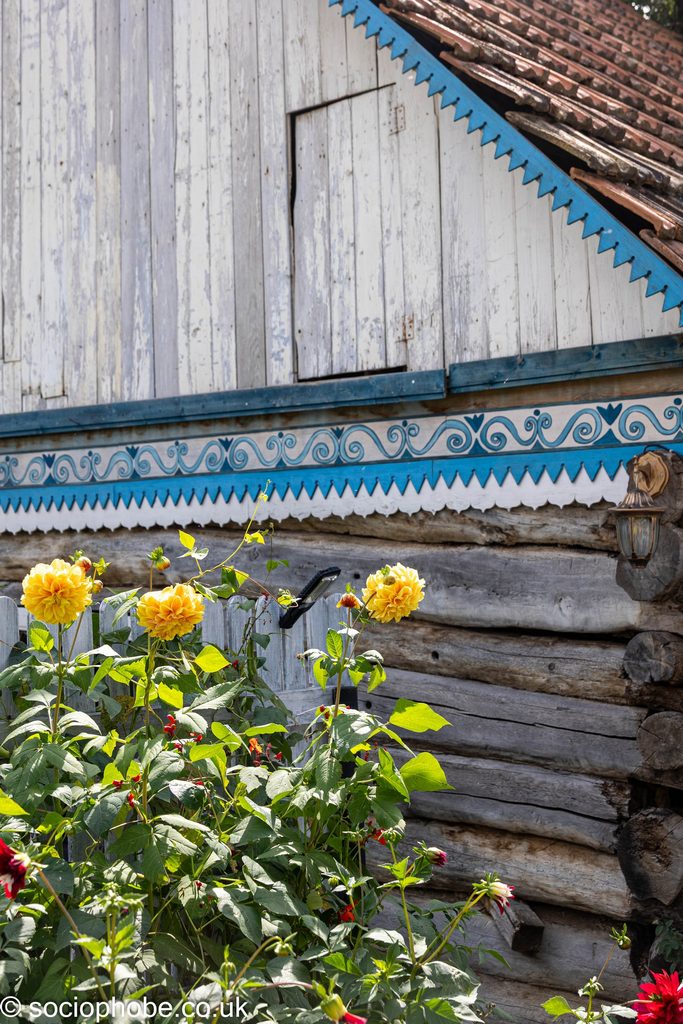
We saw one of the old style wooden houses with a samovar and an oven that the top could also be used as a bed. The others had a traditional lunch while I went for a wander. There were lots of colourful flowers in the village although most of the houses were very run down. The few modern ones stood out like a lottery winner in Rochdale. We met back at the coach for our final stop and the weather was now getting drizzly. The countryside was still spectacular with gorges and mesas as we drove past but the drizzle soon became a downpour. This did nothing to dampen the spirits of the Armenian drivers who happily overtook on blind bends or just into oncoming traffic.
The houses and cars and even to an extent the people, were now becoming more dystopian. The houses we saw were very run down, a lot just tin and breeze block shacks. The cars had gone from Lexus and BYD to Lada and old Fiats. The glamour of the people around Yerevan was replaced by far more low key clothing and attitudes.
We reached the village of Sanahin, famous both for the monastery and the birthplace of Artem Mikoyan (joint designer of various MiG fighters), high in the mountains. The rain had stopped but it was still very muddy underfoot and almost all of us had no coats or boots on. The monastery was built in the 10th century and is one of the largest in Armenia. It was damaged by earthquakes or invaders at various times in its history and also restored several times too. The interior is very dark as the original frescoes have long since decayed but two of the domes have oculus like the Pantheon in Rome, so that allows in some light.
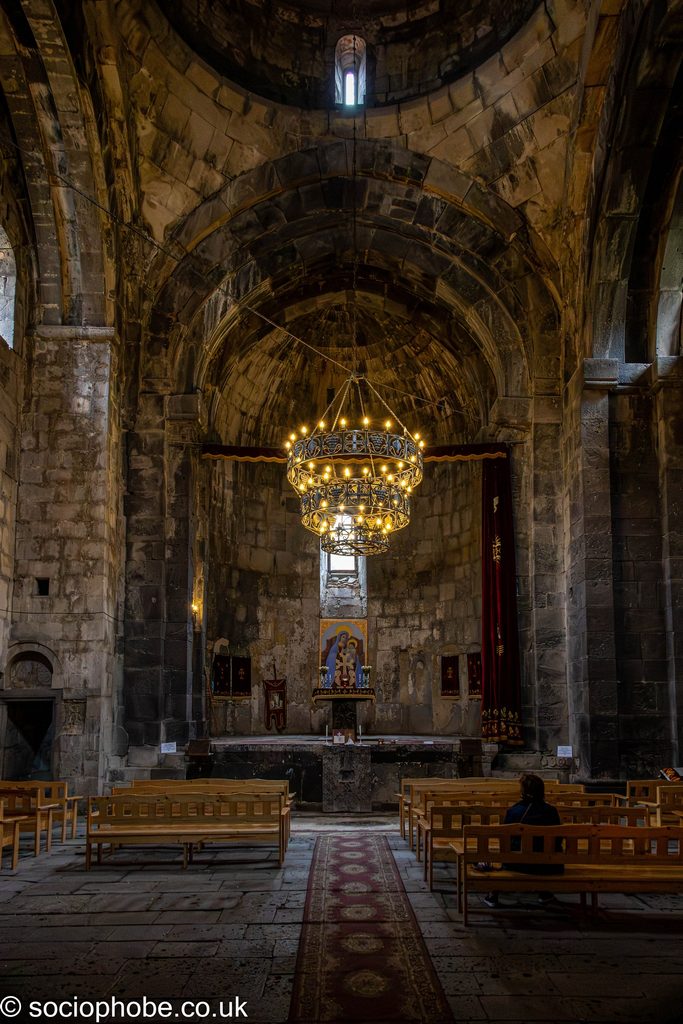


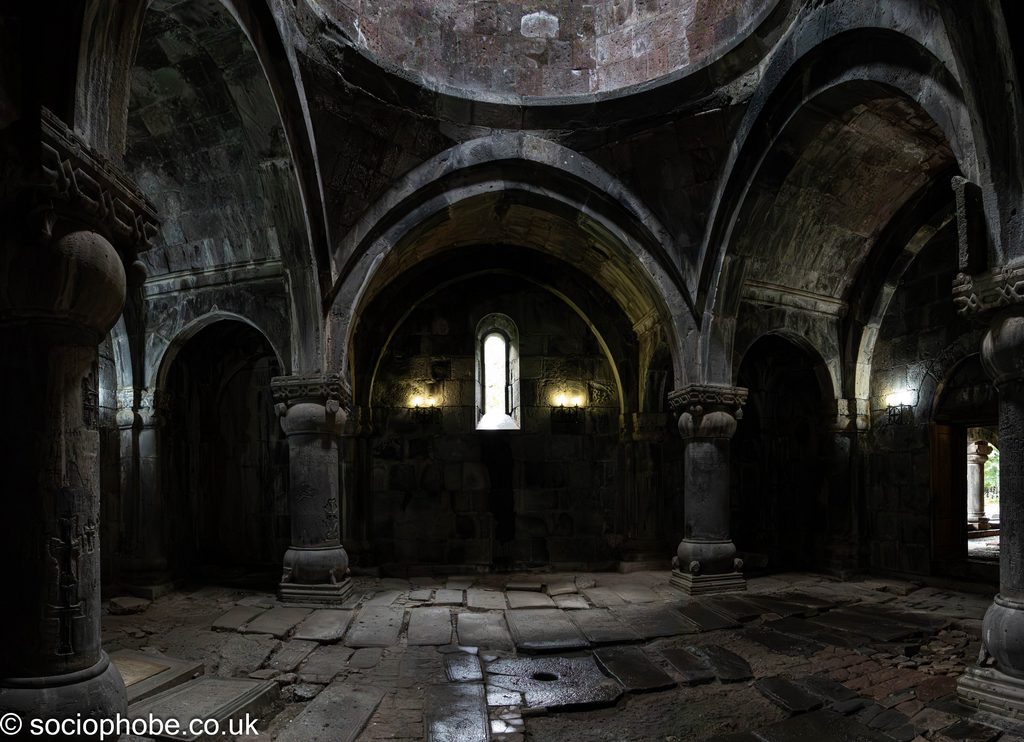

The site was free to enter and pleasant to wander around, the structures had roofs unlike a lot of the old English ecclesiastic buildings! A lot of the interiors were lit with candelabra and electric lights so that helped make things visible and the rooms were noticeably larger then the other sites we had visited. There were lots of random carvings on the columns so I’m not sure if that was graffiti or intended! I chatted to Galust about the original interiors of the cathedrals and it is nice to see both his knowledge and his pride in his heritage.
It was a short drive to our hotel, Qefo, spectacularly located overlooking the gorge. Our room was lovely, quiet and spacious with a wonderful bathroom. We had a nice dinner, eventually as the first 2 things we ordered were out of stock and we gave up waiting for our side dish once we’d finished our main course! We then retired to our room for a long editing session due to the high ISO of all the interior shots. Tomorrow we cross to Georgia.
G Adventures Best of Georgia & Armenia highlights – Day 4
Haghpat Monastery, Telavi
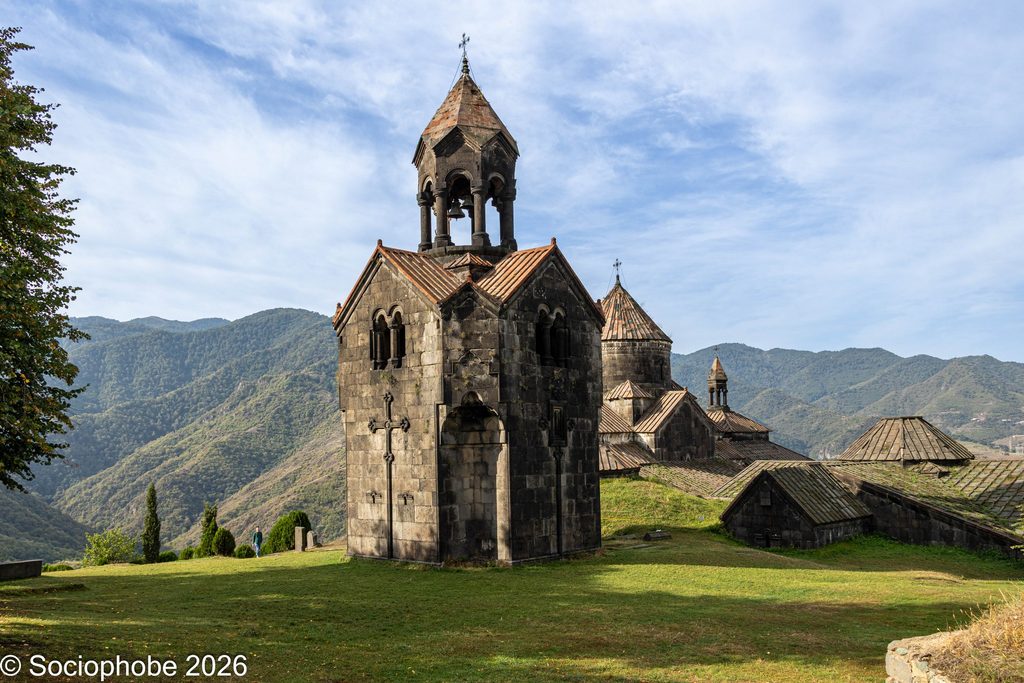
We had another abysmal nights sleep but the plus side was I was out early to take in the views! The sky was clear and the view just fantastic over the valley and gorge. After breakfast we took the short drive to Haghpat Monastery at the top of the hill we were staying on. This is one of the largest monasteries in the country and another 10th century creation, excelling as a library and scriptorium as well as monastery.
Galust gave me a quick run down of the places to see in the monastery and the history before the group tour so I could go off and explore. One of the churches actually had some original frescoes which, although faded, was lovely to see. The bottom layer had the faces of the saints scrubbed out, apparently in the 1920s.

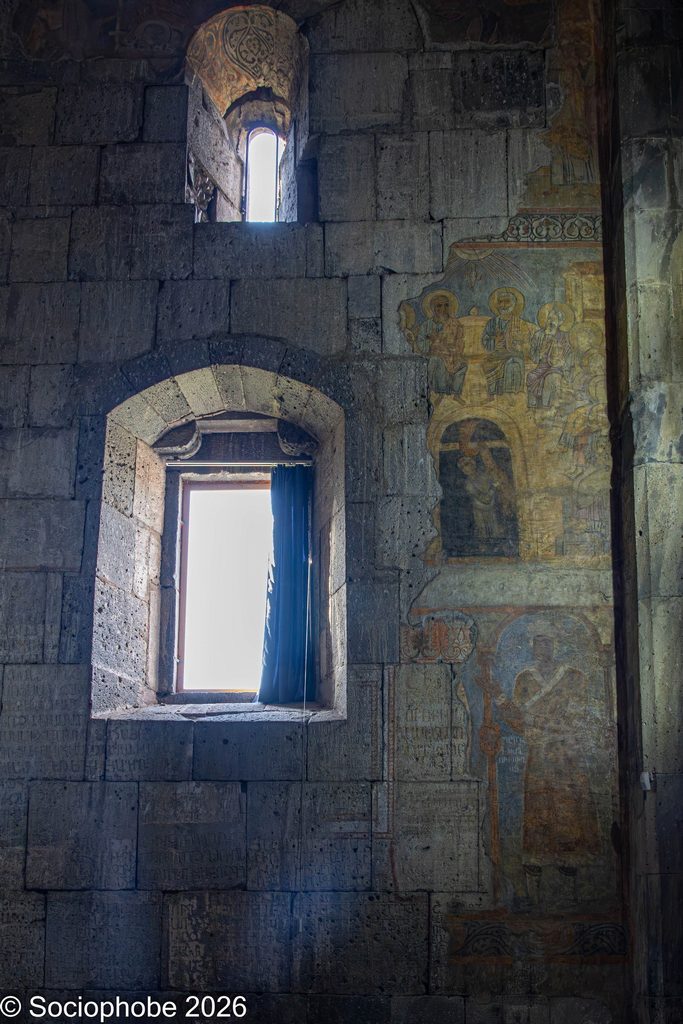

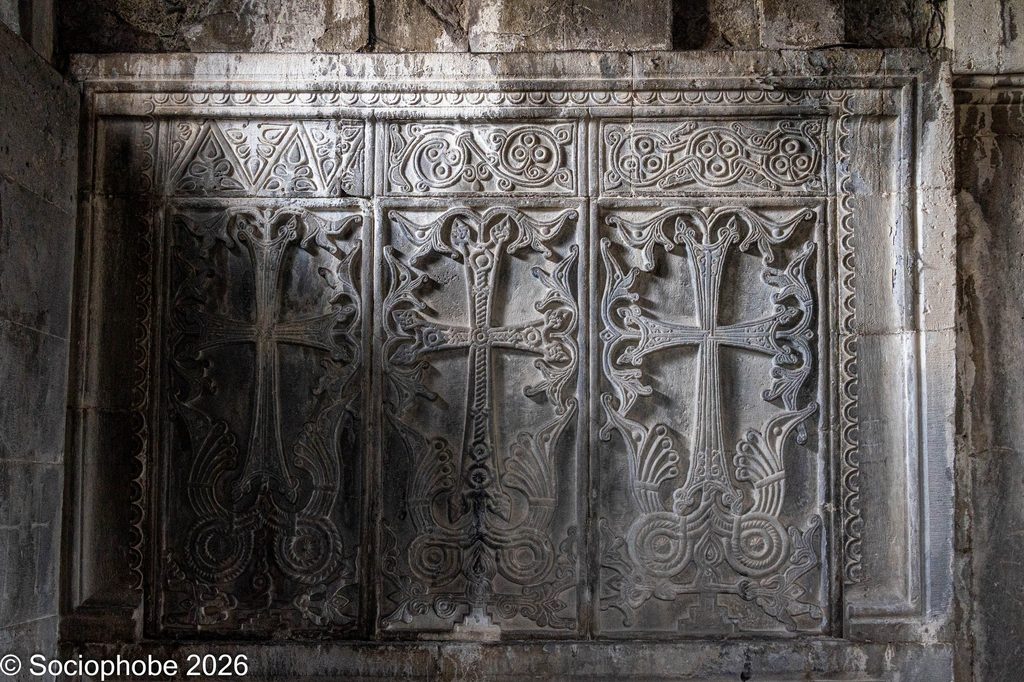

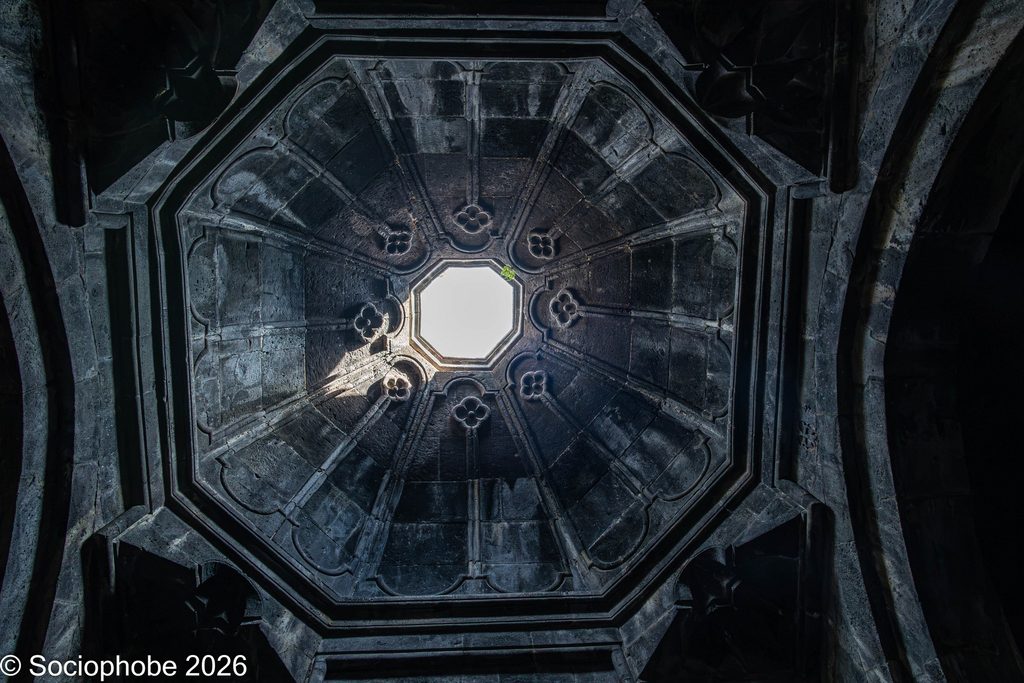
There were more open topped domes, strange in a place that gets so much rain and snow! We continued to wander around the site, certainly the most picturesque as the mountain views are awesome in themselves without needing a 10th century monastery perched on them. There was the inevitable dog that I played with too before we boarded the coach for the crossing to Georgia.
We exited Armenia and then unloaded our luggage and said goodbye to Galust and Mr Aman (?) – the driver had been excellent particularly in yesterday’s storms and Galust was both knowledgeable and a keen advocate for the heritage of his country. We met our new guide and driver once we entered Georgia and boarded our transport, a full size coach so we had loads of room to spread out.
We skirted Tbilisi as we drove towards the Caucasus Mountains and got some spectacular views. We had lunch at a service area before we eventually arrived in Telavi. Driving was very different from Armenia, the roads were worse quality and the drivers matched it. The country did seem more run down than Armenia too and the cars largely older although Tbilisi may well be different.
The guide, Tamara, gave us a rundown of recent history with the Rose Revolution and the Georgia Dream party slowly migrating from a pro EU to a very pro Moscow stance. Journalists and ‘dissidents’ have been arrested and the EU has suspended membership talks as democracy in the country is being eroded. Ironic that in the UK or EU I can be arrested for a social media post deemed offensive but those countries can still lecture Georgia on freedom of expression!
The city of Tevali is small, maybe 50,000 population and sits on a valley below the High Caucasus Mountains that form the border with Russia. The road system, and I use that word in the loosest sense, is an experience to be believed when it comes to some of the junction and roundabout designs. The area is famous for growing grapes and is incredibly green, even though it was 36 degrees C today.
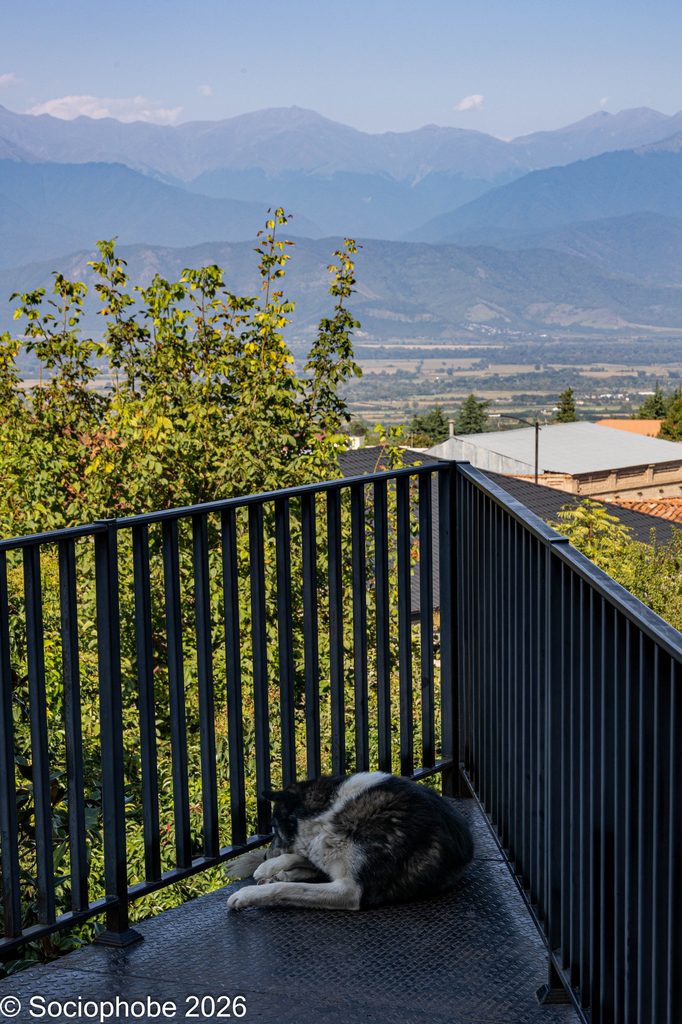
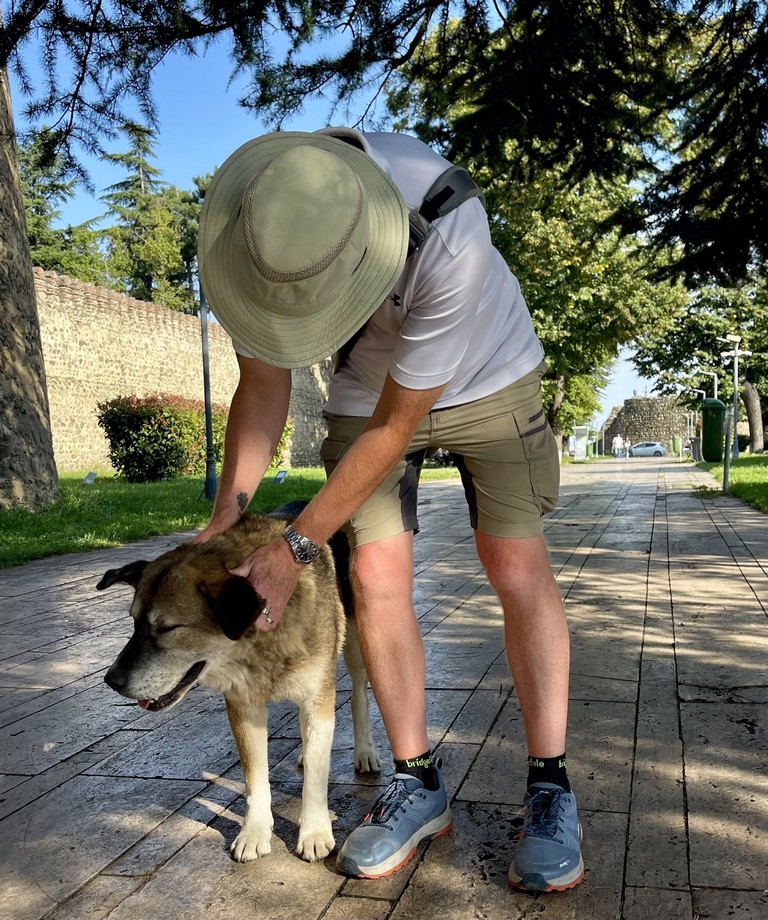

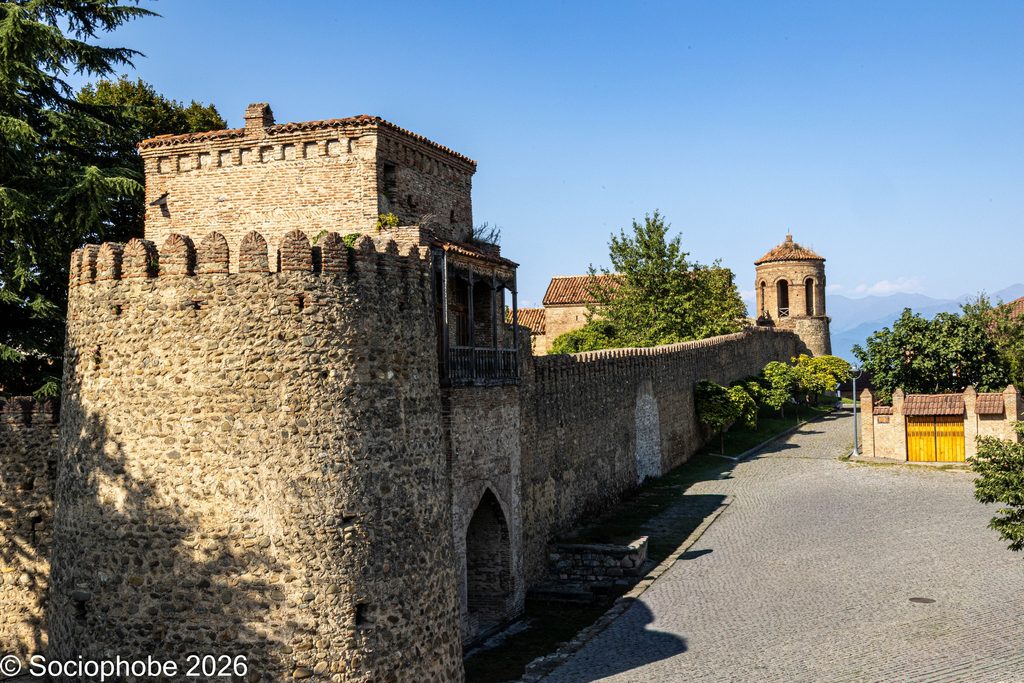
We had a brief tour of Telavi, saw a friendly dog or 5 and saw the Kings Palace (a local 18th century ruler who defended the area from the Persians) from the outside. There were plenty of examples of local architecture, a mix between classical Russian 19th century and then modern buildings with indigenous touches such as bland blocks of flats that then had a shell with balconies and ornate stonework fitted. We ended the tour with a visit to a local farmers market and tried some local cheese (very nice and £7 a kilo!) and also their version of protein bars – nuts encased in a sort of grape juice and flour (called churchkhela) that can be kept for months apparently!
Our accommodation was the Zuzumbo Resort & Spa, a very nice hotel on the edge of the city, in a forest. The rooms were large, with a lovely bathroom and balcony overlooking the forest. We sorted our stuff out and then met at the restaurant for a group meal with the guide and driver. The meal showcased a variety of local foods and wasn’t too bad despite there being other people there.
G Adventures Best of Georgia & Armenia highlights – Day 5
Sighnaghi, cooking demonstration, Tibilisi
Breakfast in the hotel was good with some nice selections of cold offerings, fresh cheeses, salads and the khachapuri and a limited selection of hot food. We left at 9 for our first stop, Sighnaghi. I’m a bit confused about the geography but I think that was overlooking the next valley over. Or possibly the same one from a different angle. Either way we had a long and twisting climb over the mountains before reaching the town.
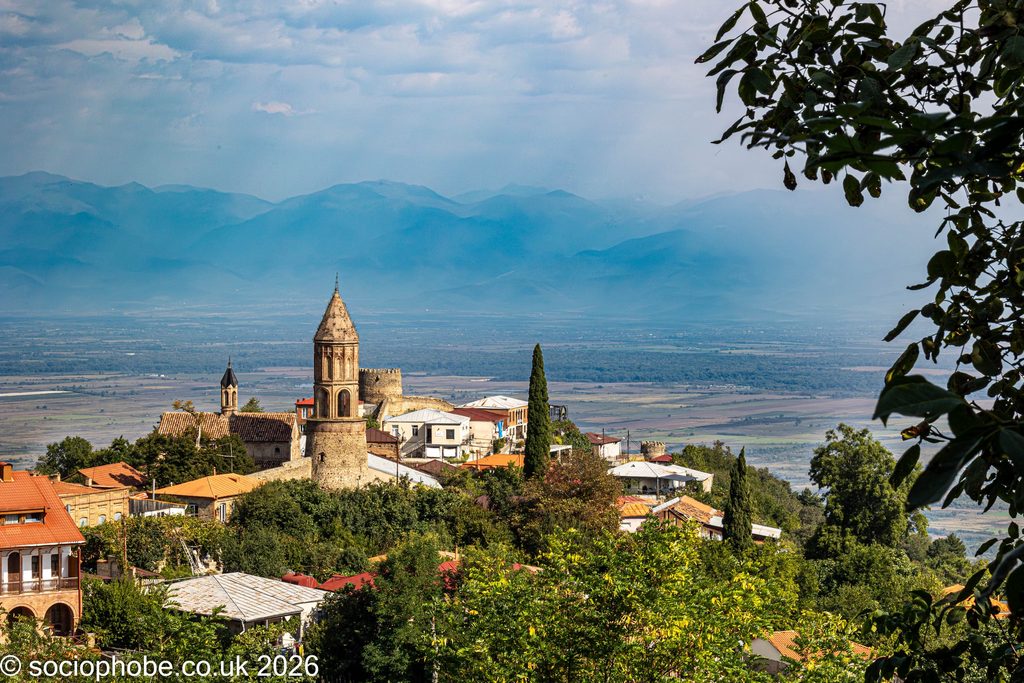
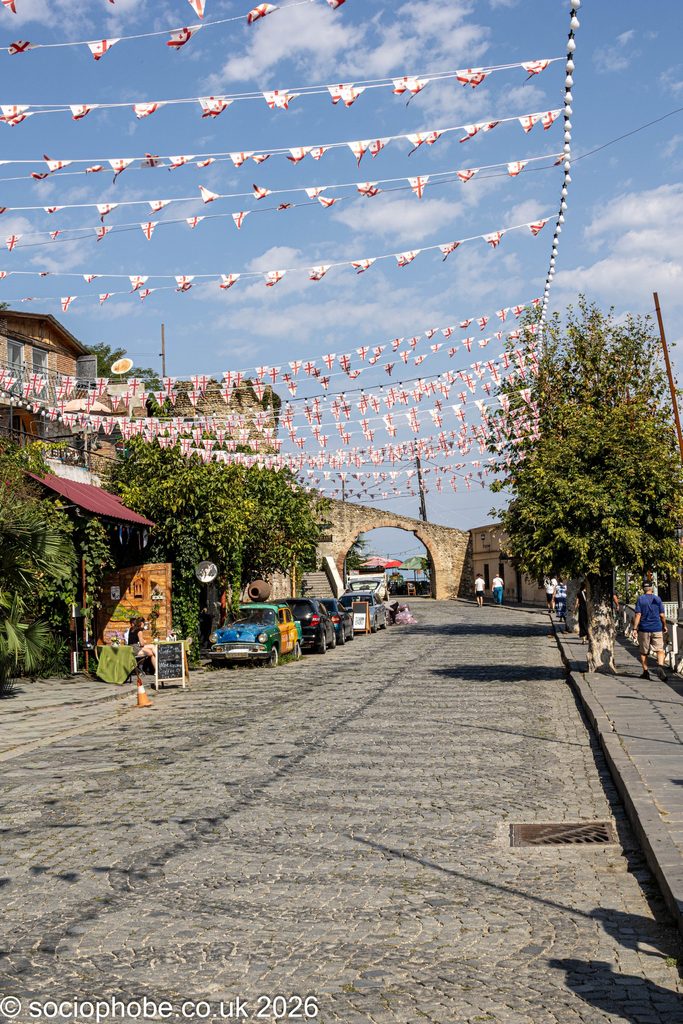
Sighnaghi is a pretty mountain town that was fortified in the 18th century to defend against the Persians. We saw various attractions, a fountain, a park, a viewpoint over the church and towers, lots of dogs and lots of Georgian flags. It was a hot day (40 degrees according to the coach but I think that was extreme) so we didn’t spend a huge amount of time but it was a pleasant interlude to break up the travelling.

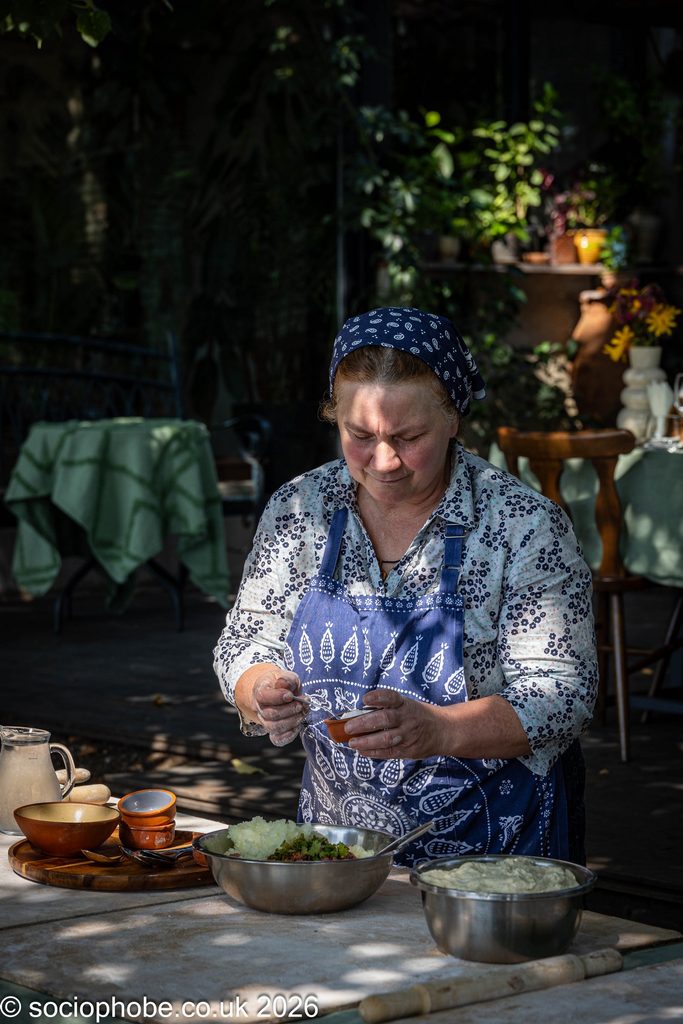
Next stop was reasonably close, the Lost Ridge Ranch, and this was where we had the cooking demonstration and lunch. The cook demonstrated making Khachapuri (cheese bread) and Khinkali (beef dumplings) and then various people including Deb got involved and had a try. I played with the dogs. Lunch was the food that they had made plus a cucumber and apple salad and some chicken dish. The setting was quite spectacular with views over the valley and a sixteenth century church and there were groups going pony trekking too. While eating there was also wine tasting going on, very popular with most of the group and they seemed to appreciate the Georgian offerings!


We continued on to Tbilisi through very heavy traffic while Tamara spoke more about the country and the people. Georgian and Armenian are both unique languages with nothing else in the same family and they are in separate families themselves. North of them there around 50 languages in the tiny north Caucasus area and she was telling us of the local legend that God gave an angel languages to give to each region. As it flew over the Caucasus the bag caught on a mountain top, ripped open and emptied the entire contents onto the people below.
As we entered the city we saw a big glass building, the Ministry of Internal Affairs. It is glass to highlight the transparency of the function. Ho bloody ho.
Tamara also spoke about the schools changing and Russian not being taught anywhere near as much as English now. China is a major partner, silk road etc, so it may be that Chinese becomes the second language of the country in a few years. Tbilisi seemed far less glamorous than Yerevan and the traffic was chaotic, along with the driving skills. A two lane road would often be 3 or even 4 lanes and the zip junction mentality was not even considered.
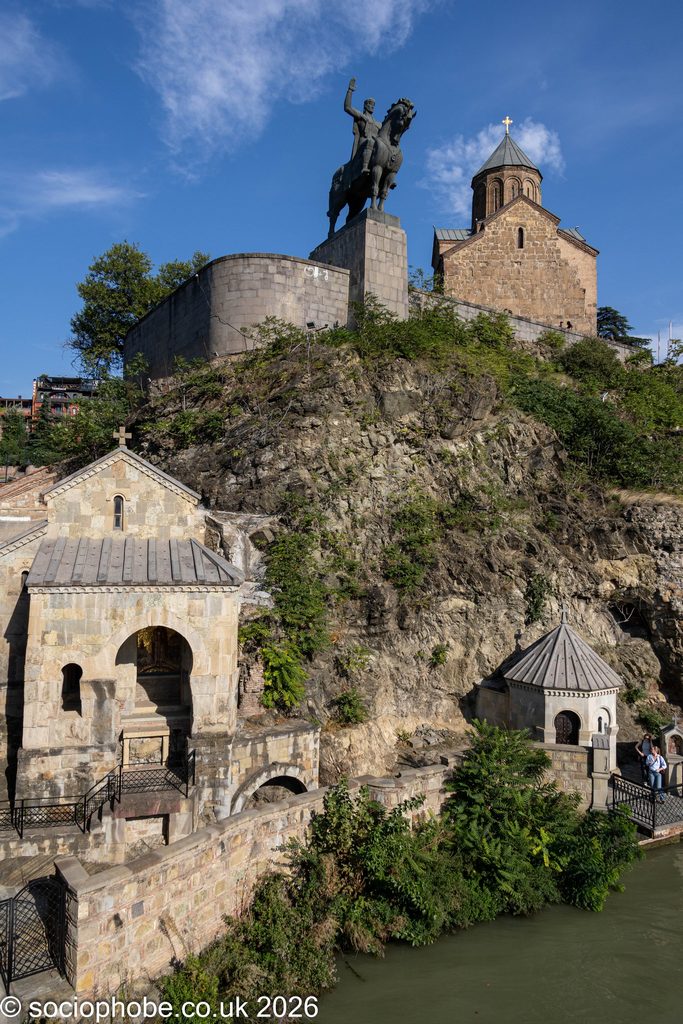
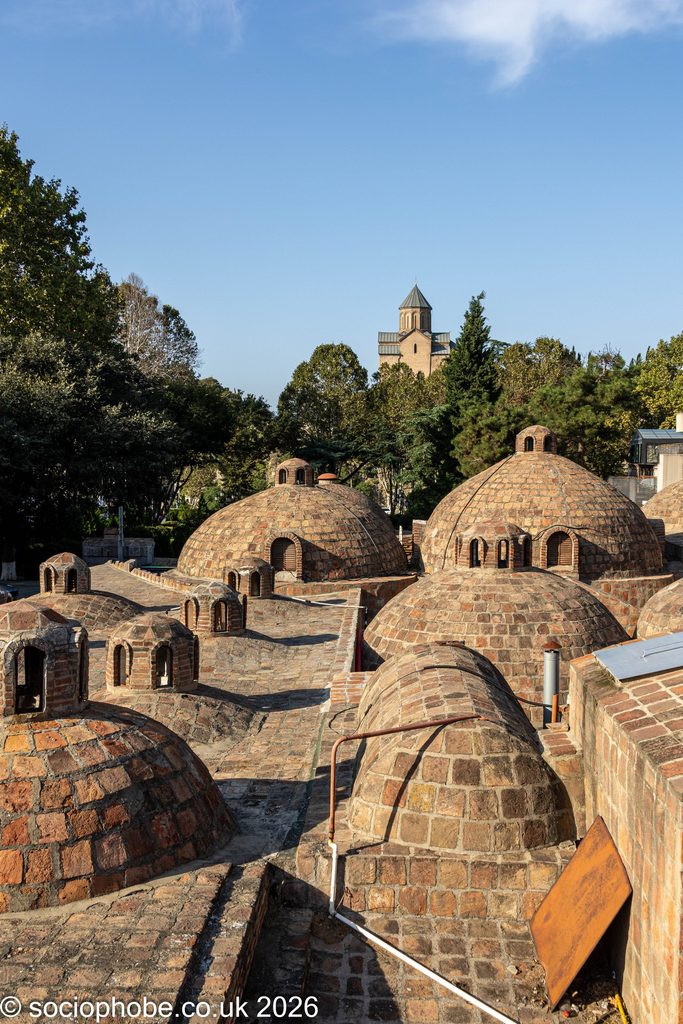
We were dropped off near the old city and walked from the Metheki Church, across the bridge and to the bath house district which still has hammams operating. We saw the Cathedral and took a meandering route through the medieval part of the city, seeing a mosque, a monastery, some statues and the puppet show theatre before leaving through one of the city gates and walking parallel with the wall for a while. The streets were a chaotic jumble, as expected and the houses were a mix of patched together ruins and semi restored liveable properties.
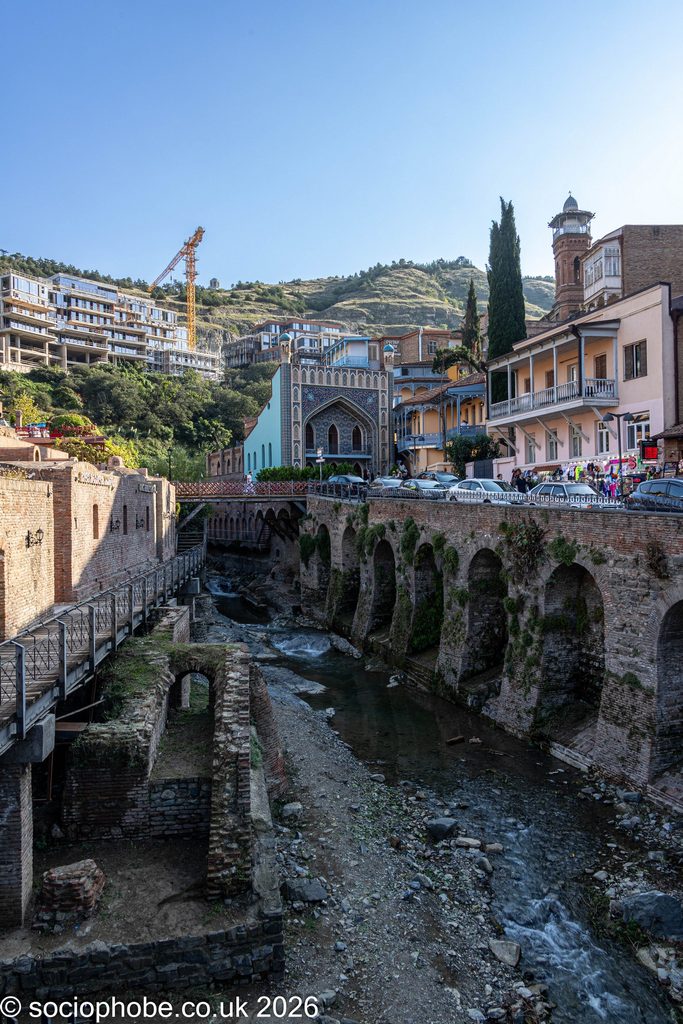
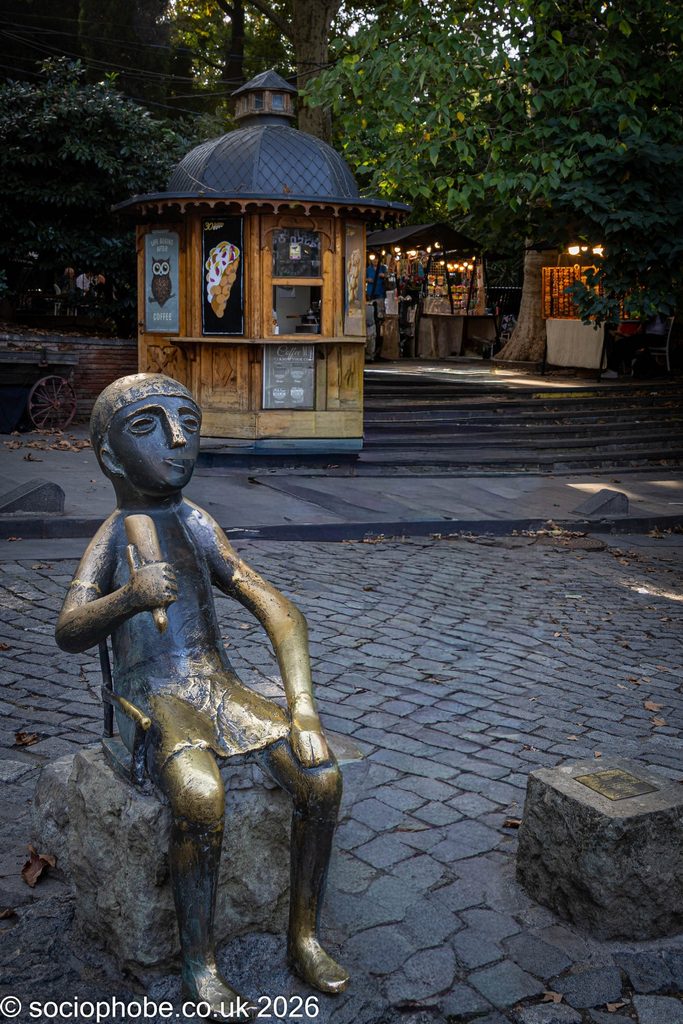
Leaving the medieval city we walked up to the Freedom Square to meet the coach and then drive through rush hour chaos, 90 degree junctions with cars parked on them and idiot delivery riders with a death wish. After much stress for the driver we finally arrived at our hotel, the Astoria. The hotel was pleasant and we had a large room and balcony. We were both quite shattered due to the heat so, after a shower we went to Ratto Bistro for a quick dinner. I didn’t even have time to sort the day’s photos!
G Adventures Best of Georgia & Armenia highlights – Day 6
Uplistsikhe cave city, Gori, Mtskheta Cathedral, Jvari Monastery
The next morning was the last of our official tour. As traffic in Tbilisi is so bad we had to walk from the hotel after breakfast to Freedom Square and meet the coach there. Not a problem but it does call into question why choose a hotel in such a silly location. Anyway, we eventually got out of Tbilisi and then drove on the main highway to the Black Sea before reaching our first stop, Uplistsikhe cave city.
Our new guide was Mari and she spoke more about the Georgian language, saying that Tolkien used the script of Old Georgian to represent Elvish. She also told us about the refugees in the country, most from the Ossetian occupied territories to the north where the Russians are still in occupation and more recently refugees from Ukraine, again due to Russian invasions.
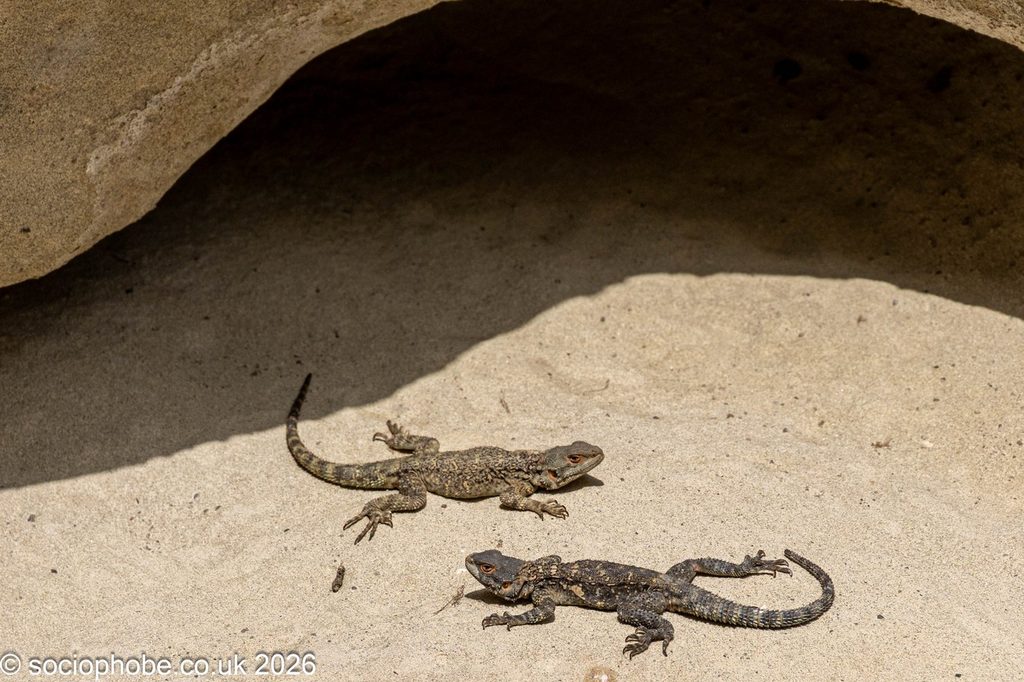


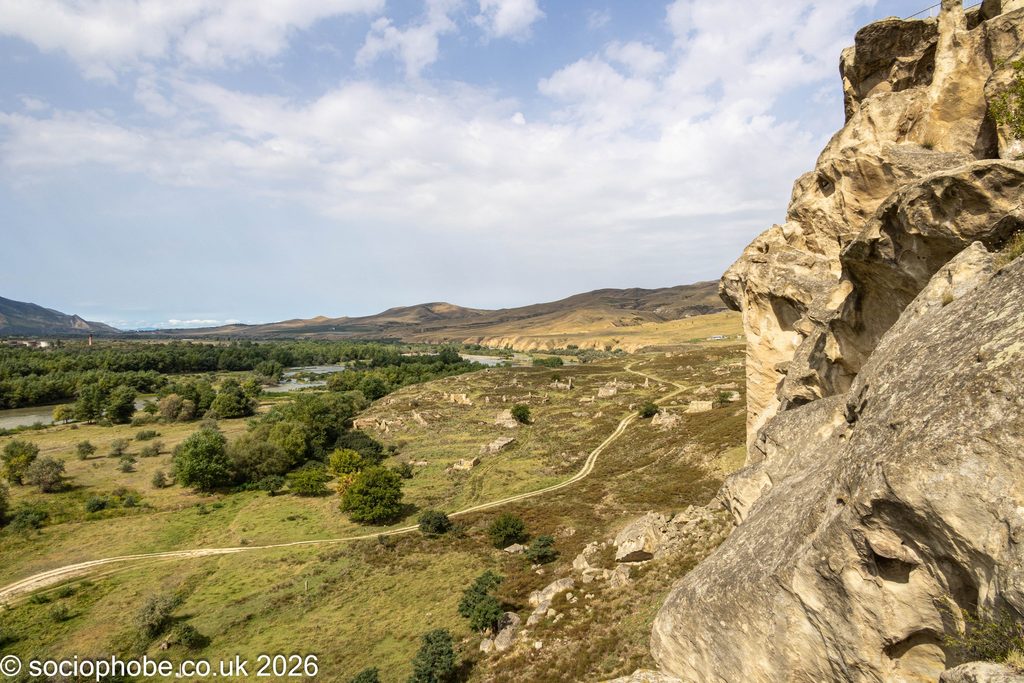

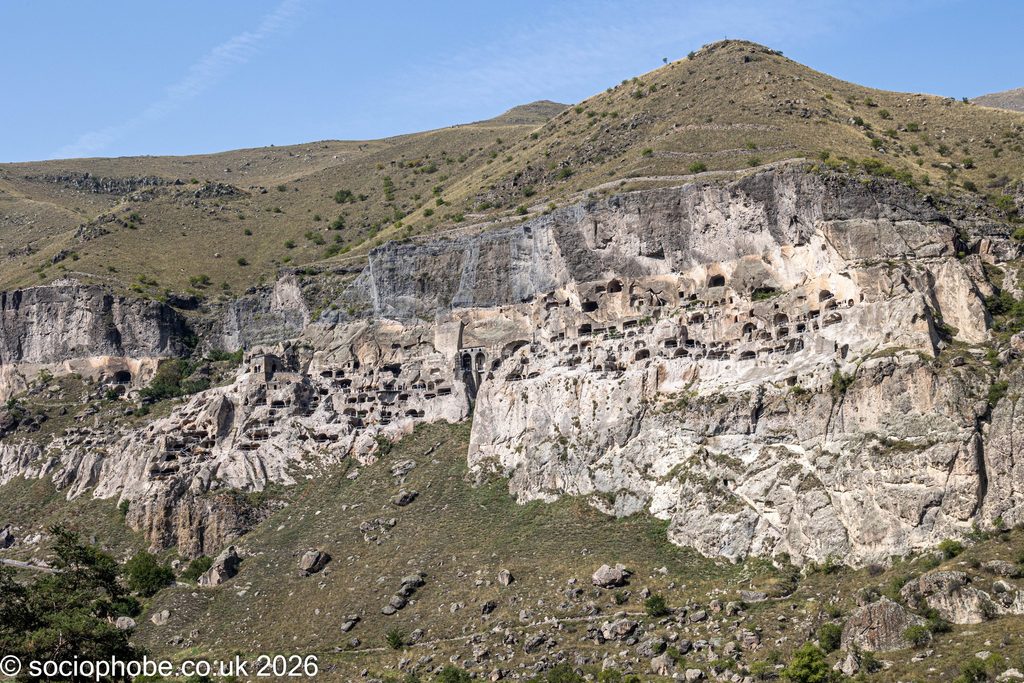
If I’m honest, Uplistsikhe was a bit of a let down. Yes it had a lot of caves but they were just that, carved holes in the rock. Only one had any decoration, a Roman style vaulted ceiling and the rest were totally unadorned and nothing like Petra or Cappadocia. The city was inhabited for around 2500 years, initially as a pagan site and then Christian before being destroyed by the Mongols. It never recovered from that and it shows. There was lots of talk of a basilica and amphitheatre and wine cellar but they were all just plain holes in the sandstone and could have been anything at all. The best thing was watching the lizards basking.
Deb didn’t visit, staying at the bottom of the hill so once I had finished my climb, walked around the (closed) church, looked at the views and climbed down we went to the museum. This was ok, if you were an archaeologist but my idea of archaeology is Indiana Jones style, gold and treasures. The museum had some nice stones, some polished and a few other bits but nothing I would have kept if I’d dug them up in my garden, nothing that made you think “Wow, this really was a major city”. So we chatted to Giovanna and bought some chestnut honey after we had some weird fruit that she’d bought.
We drove from Uplistsikhe to Gori, birthplace of Stalin, for a quick 30 minute stop to look at his museum and train that he used to travel to international conferences as he didn’t trust plane travel. I didn’t go into the museum but the train was rather dull. It had some nice, unadorned art deco furniture but there was no dressing in it to show it was Stalin’s and it could have been the 1952 sleeper to Aberdeen really.

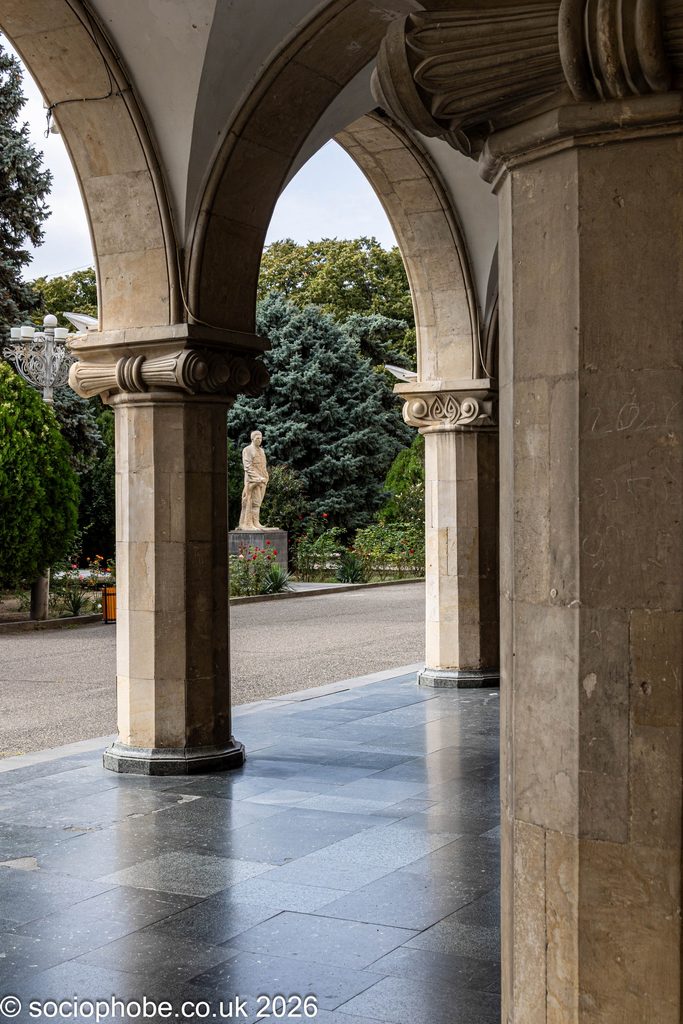
The day was saved by our next stop, Mtskheta. This is an ancient city with over 4000 years documented history and was the old capital of Georgia before it moved to Tbilisi where it became a ceremonial city for coronations and burials. The city was sacked and razed by both the Arabs and Mongols so none of the older buildings survive. We walked through a processional way from the car park to the cathedral that was basically a line of shops and stalls with items aimed at tourists.
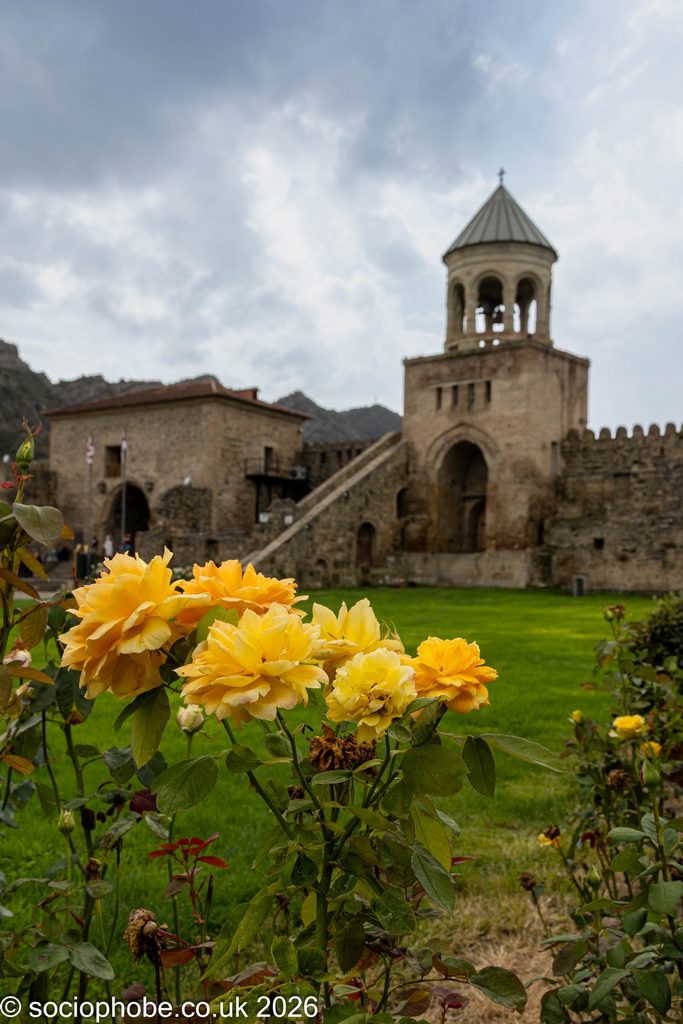
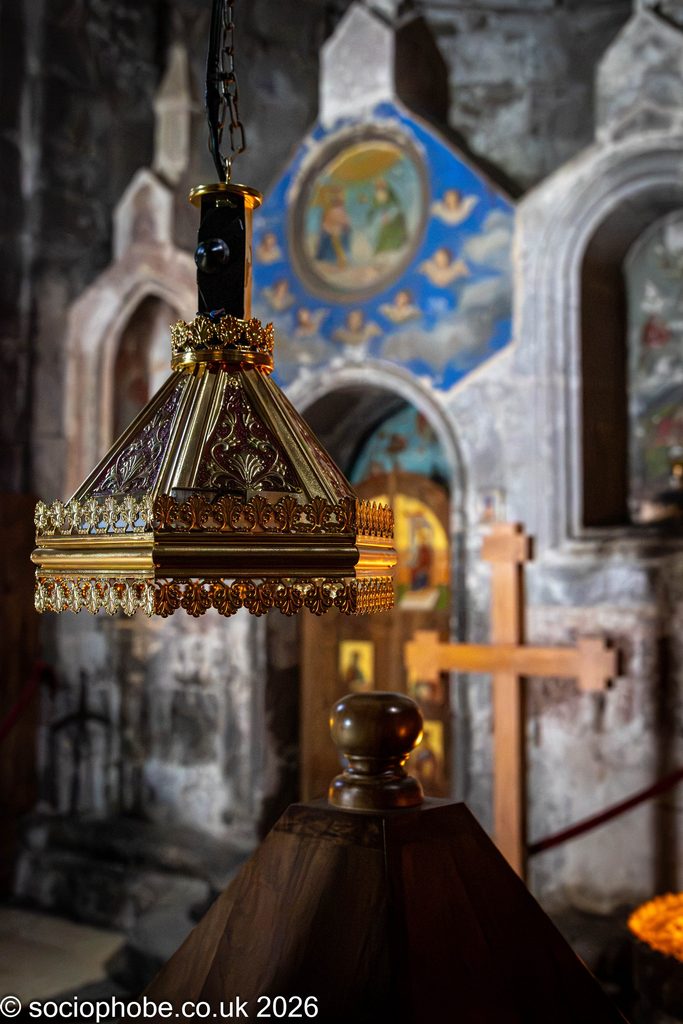
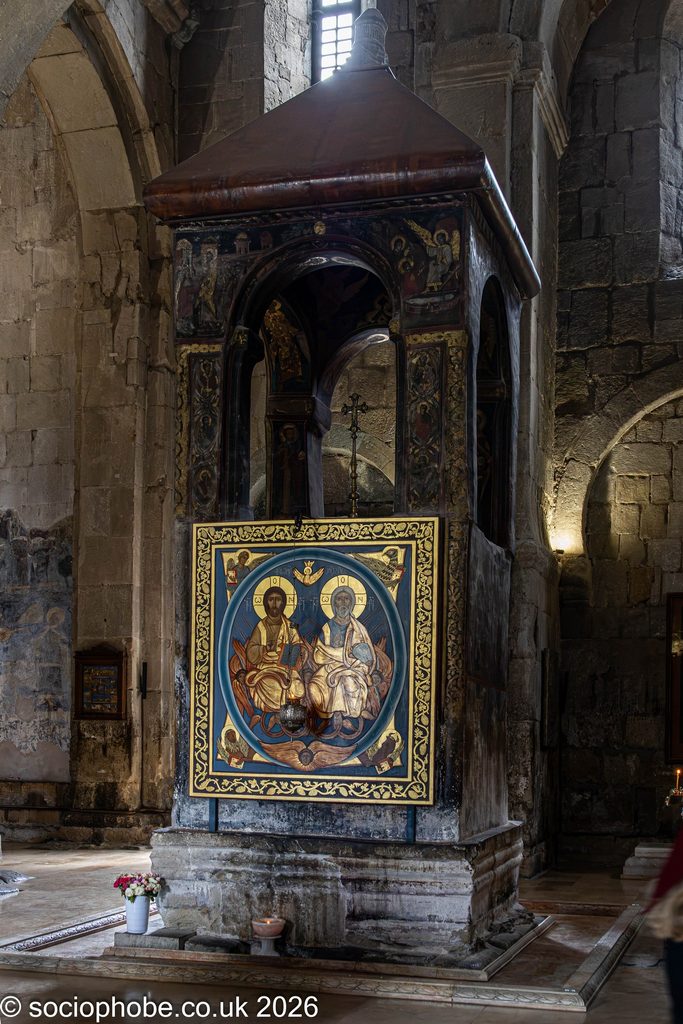
Svetitskhoveli Cathedral is an 11th century building (much reconstructed) set inside a walled complex. The building was wonderful and still in use, with incense candles lit, people praying at shrines and icons and even some bearded priests walking around. The walls were mostly plain but a far lighter coloured stone than in the Armenian churches and there was the occasional Eastern iconographic image. There is a large fresco of Christ Pantocrator but almost all the other frescoes on the walls were whitewashed by the Russians in the 1830s to make the interior look ‘tidier’!!
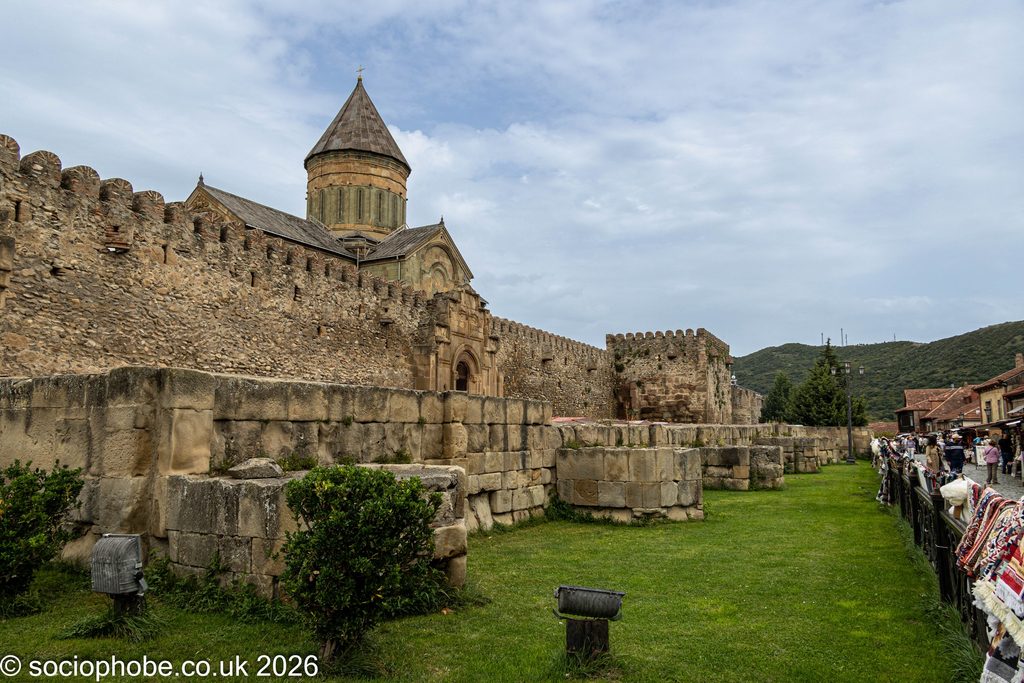




Inside the defensive walls there are pretty rose gardens as well as the remains of the Patriarch’s Palace and it was nice to have such an open space to walk around and appreciate the cathedral in isolation. After we left the cathedral we got some ice cream and slowly made our way back to the coach.
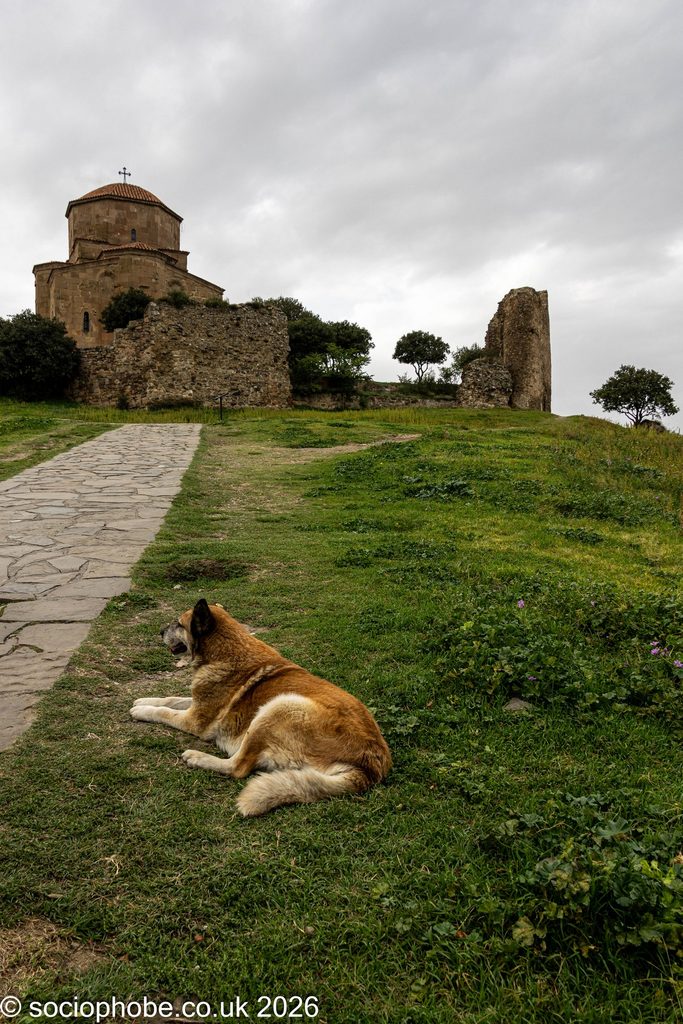
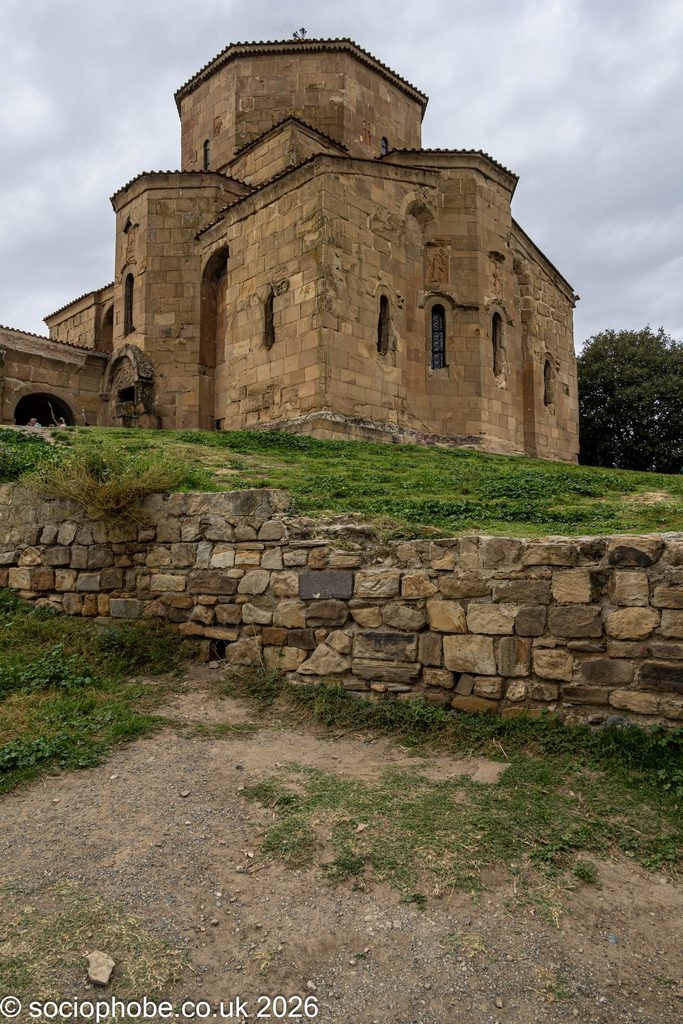
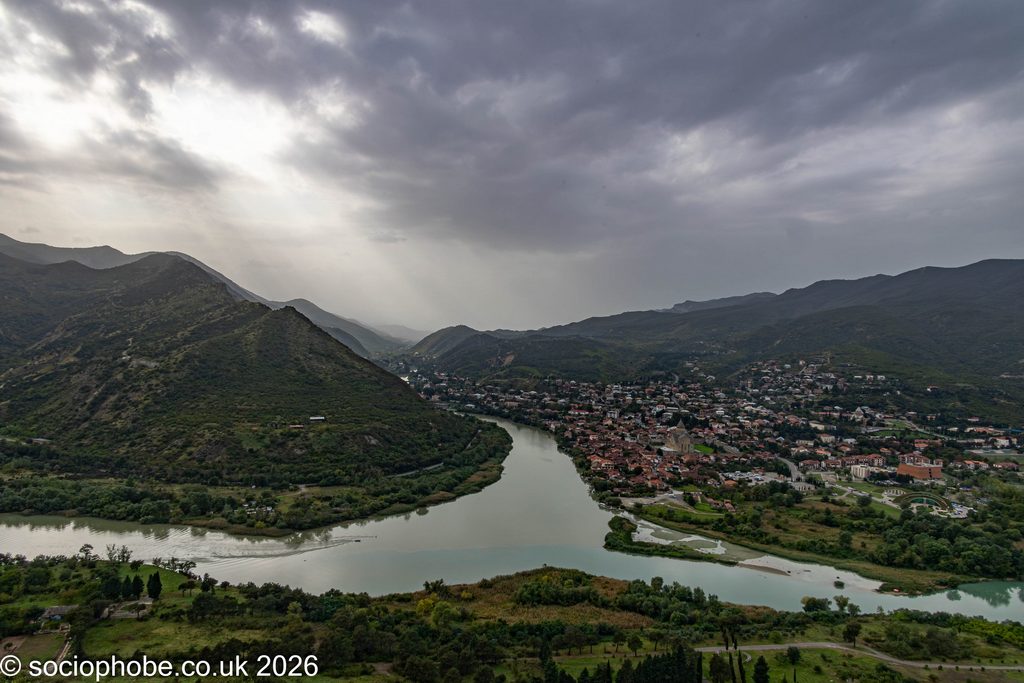
Jvari Monastery is a sixth century building complex that sits on the hill overlooking the town of Mtskheta and on a sunny day the view must have been stunning. Sadly, today wasn’t one of those days and it was dull and overcast but looking down on the town it gave a good idea of the river and the siting of the town itself.
In front of the monastery was the remains of a small fortress and I only looked inside the monastery briefly, it appeared largely empty and didn’t allow photography anyway. On the plus side, I was finally off the sliding chair I had been sat on in the coach and Deb occupied it. It was built to expand for ‘larger people’ so every time we went round a corner it shifted to either give you more or less legroom, depending on the corner. Most entertaining for the person next to you if you were trying to sleep!

Once we left the monastery we had a long drive back to Tbilisi and then a shorter but just as time consuming crawl through the gridlocked traffic of the city. We were dropped at Freedom Square again and walked up the hill to the hotel. I would like to commend Vano, our driver, for his skill and patience. In a city where almost every car seems to have bumpers or headlights missing, or both, plus multiple dents and scratches he managed to drive a full sized coach without a scratch. We quickly dumped our stuff, washed and headed straight out for a quick dinner. We ate at Ratto again, 4 cheese pizza and a truffle and cheese pizza, before going back to write up notes etc
We have 3 further days in Georgia to explore the east and west of Tbilisi before heading home. The G Adventures tour certainly gave us a great insight and overview of the 2 countries and it was nice to meet and interact, marginally, with the other group members. I am useless with groups but I remember Giovanna, a little ray of sunshine, Jeanette , very insightful, Selene, always smiling, but naturally I didn’t really engage with anyone.
Tibilisi
I had a bad nights sleep and was up from 5 so after breakfast I headed straight into the city while Deb stayed behind to play Warcraft. I walked through the streets, a mix of semi derelict buildings and beautiful architecture. I crossed the river for my first stop, the Metekhi Church that we had visited on our original city tour. It was a lot quieter this morning but unfortunately you couldn’t take photos inside so I can’t actually remember the interior despite writing this less than 10 hours later!
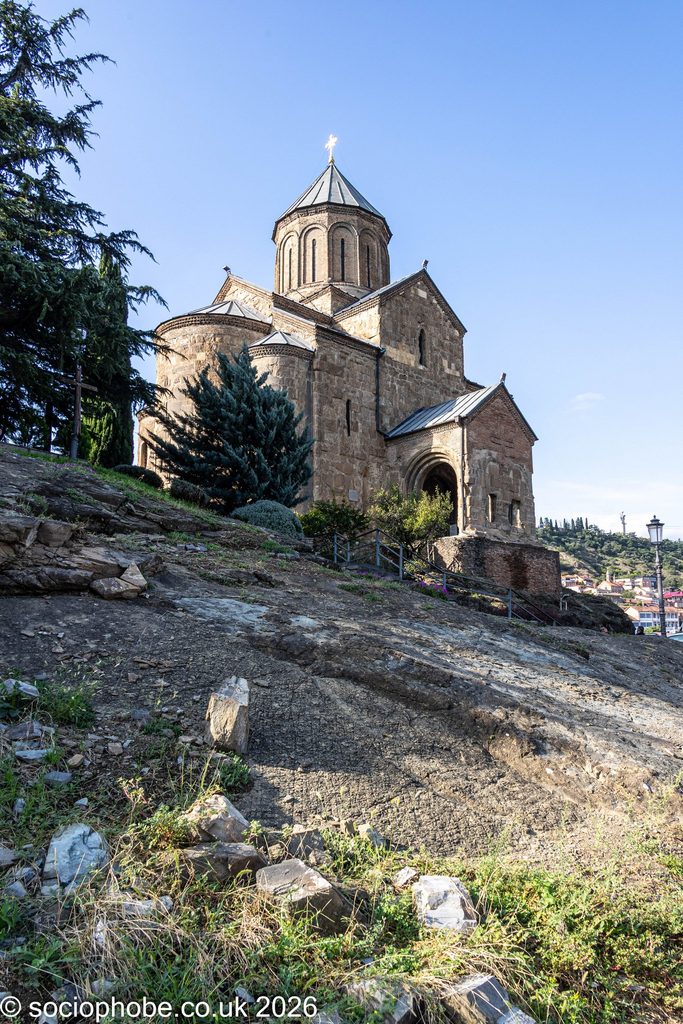
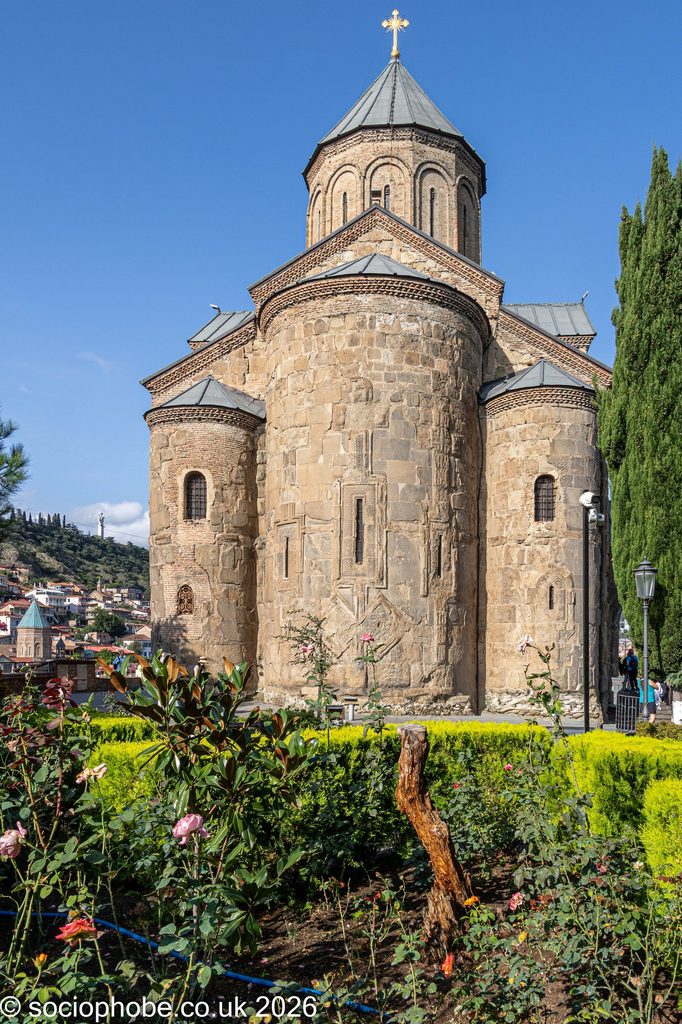

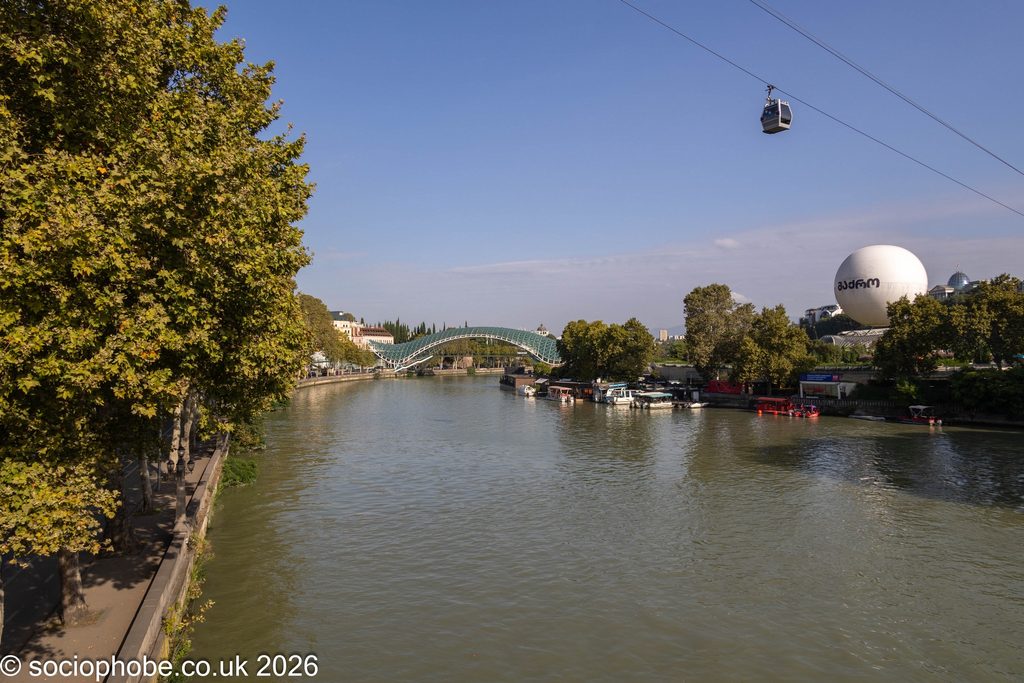
The church, in it’s current incarnation, was built after the Mongol destruction of the 13th century and was repaired and restored after subsequent Muslim or Russian damage, including being used as the NKVD headquarters. I walked around the rose gardens outside the church and enjoyed the views across to the Narikala Fortress, able to see it properly now in the morning light.
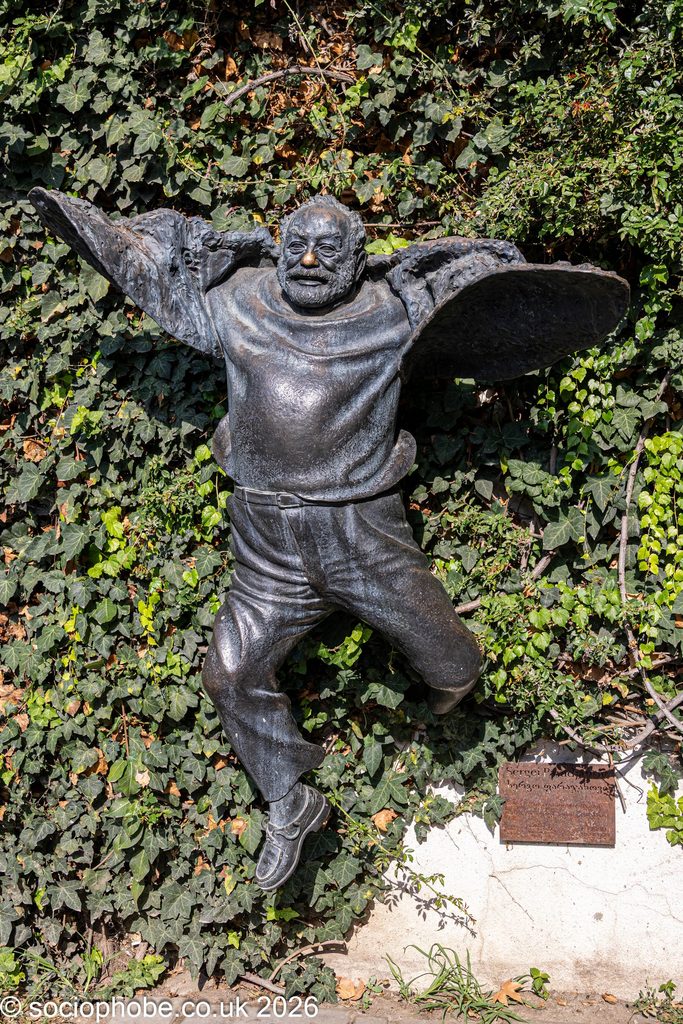
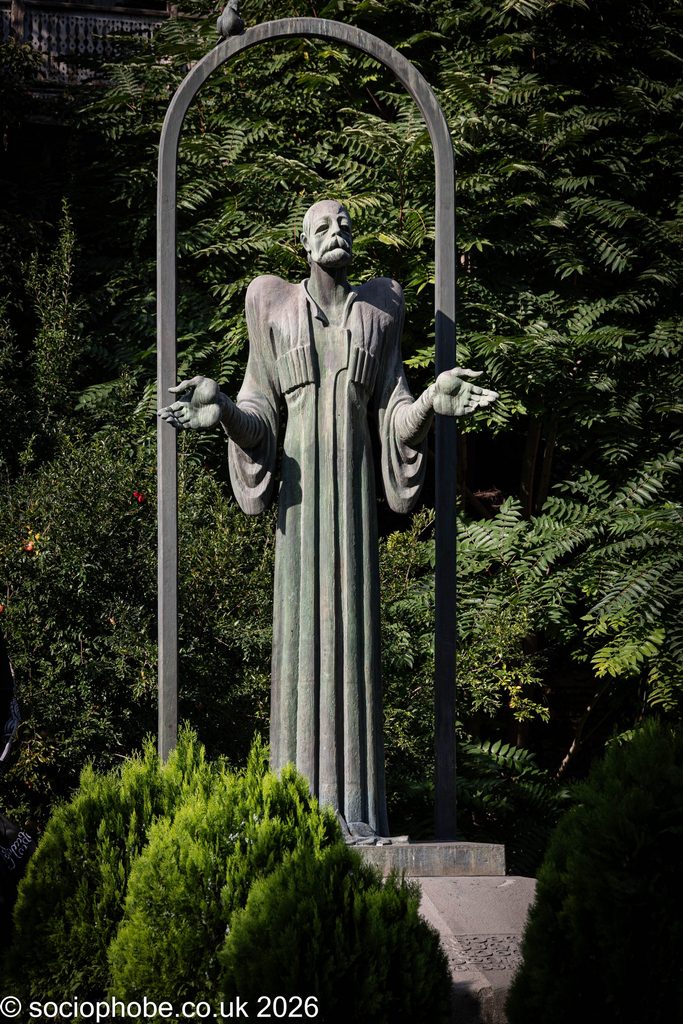
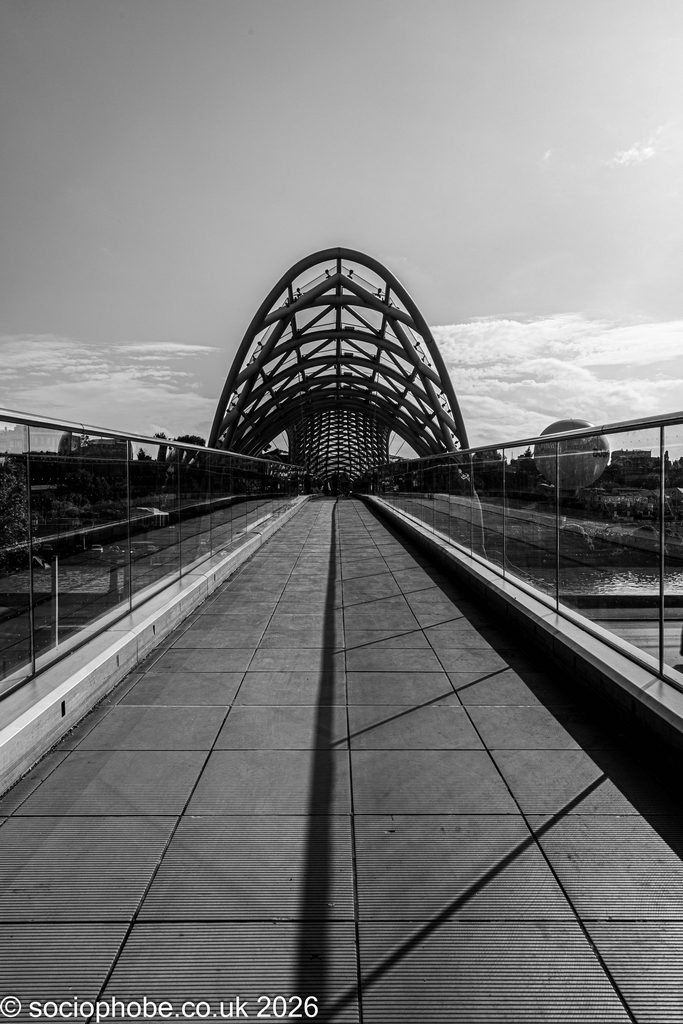
From the church I walked along the Kura riverbank to the Bridge of Peace, built in 2010 and providing a great viewpoint up and down the river. If the hotel was closer I would walk down to see it at night but I am too lazy to climb back up the hill and traffic is too bad to consider a taxi. There was an interesting sculpture of a poet, Ietim Gurji, as I walked and I continued on to Baratashvili Bridge, with the bronze sculptures there. These were stylish and an interesting counterpoint to the ancient buildings of the city.
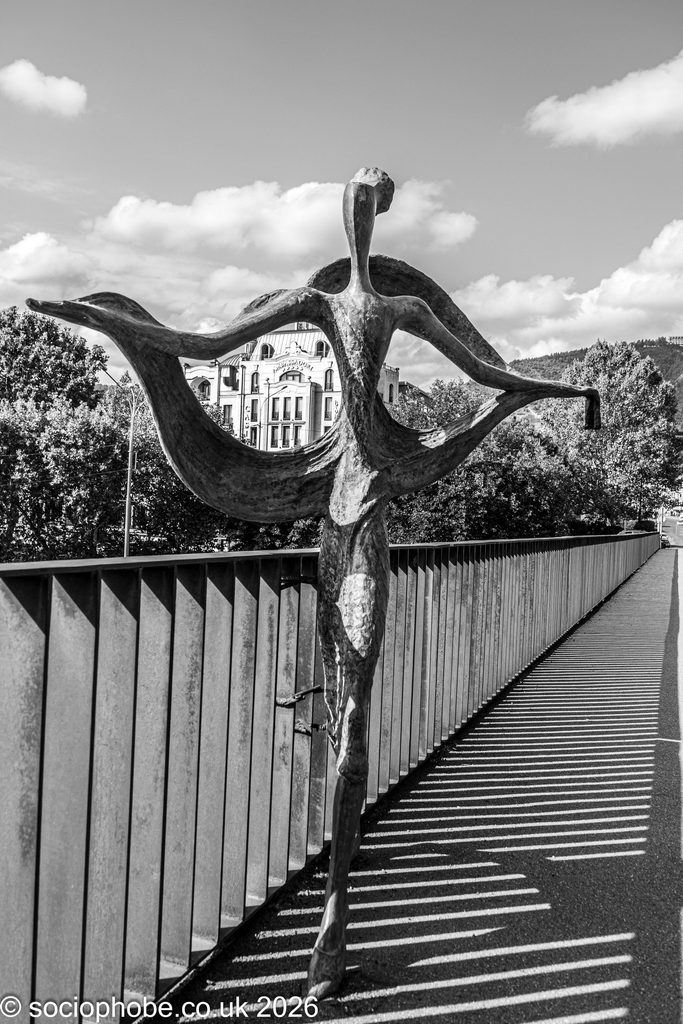

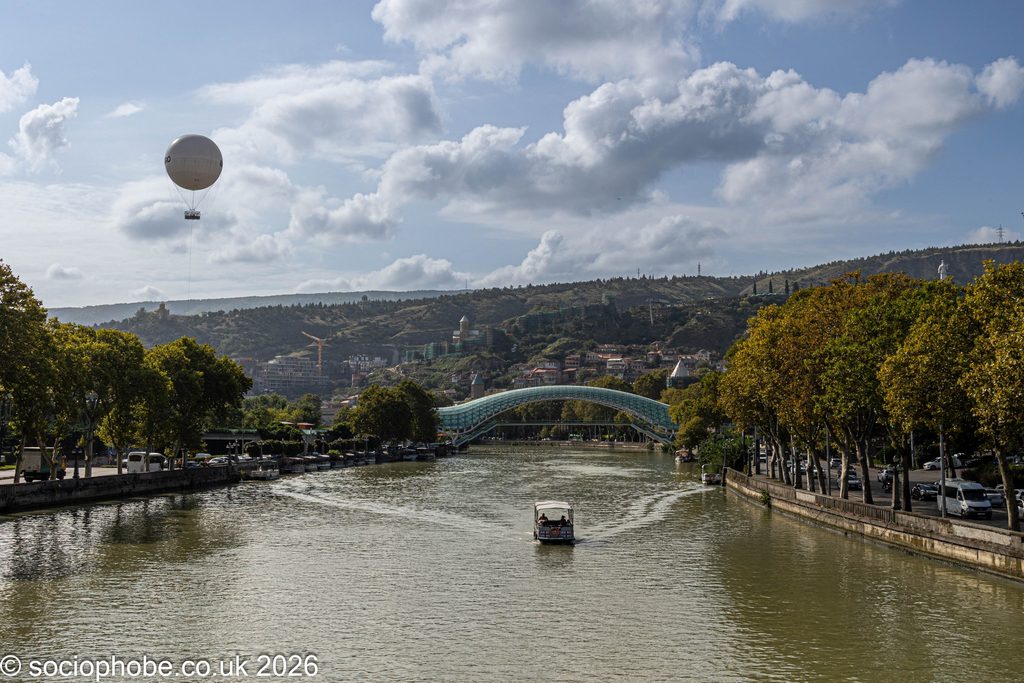
I crossed this bridge to visit the Anchiskhati Basilica, the oldest church in Tbilisi. Built in the 6th century it was restored after various Turkish and Persian invasions until it became a craft museum in the Soviet period. There was no photography allowed inside which was irritating as there was some beautiful singing as well as a nice fresco and lots of icons. It was an incredibly peaceful church and it was nice to sit and listen and absorb the atmosphere.
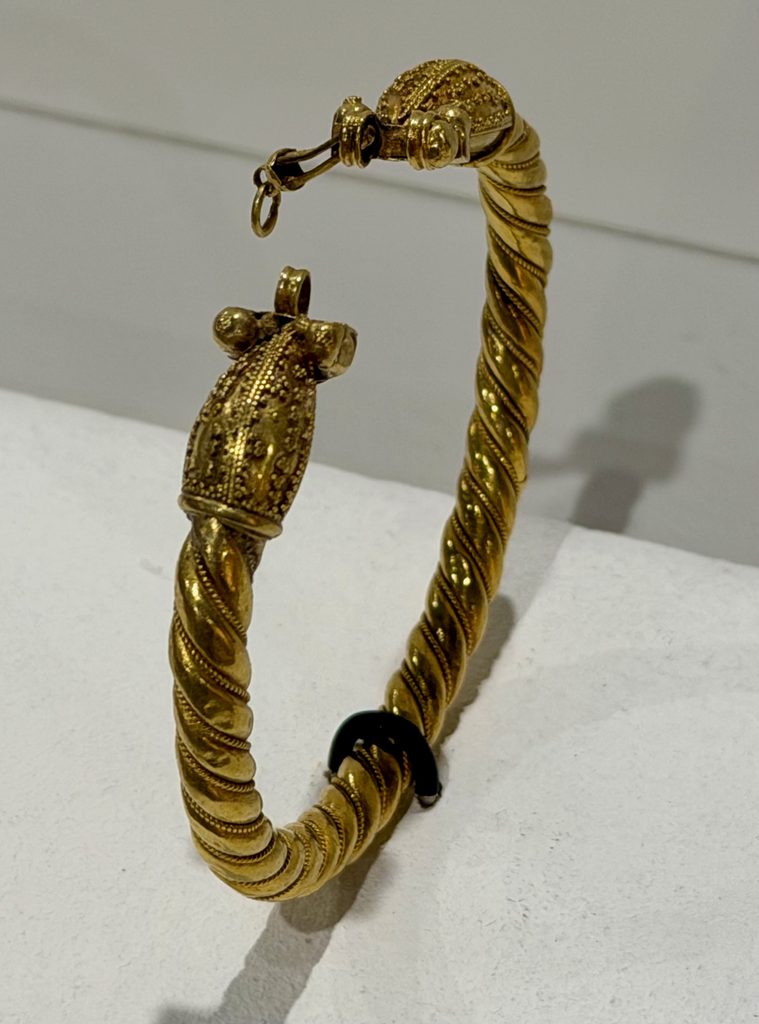
My final stop was the Georgian National Museum, three floors of history from the Stone Age to the end of the Soviet period, the admission costs 40 Gel (£13 ish). Again there was no photography allowed in some of the sections but the Treasury section in the basement has a fantastic selection of gold and cloisonne enamel jewellery excavated from burial mounds and other finds as well as some medieval icons.
I can’t emphasise enough the sheer beauty of these artificats and the skill of the craftsmen 3000 years ago. This was the region that Jason visited to retrieve the Golden Fleece and the wealth of the Kingdom of Colchis was apparent from the finds in the museum.
There was a floor dedicated to the clothes worn by children in Georgia in the 19th century and some of these were beautifully embroidered. There were also displays on weapons of the medieval and early modern period here. The top floor was dedicated to the Soviet Occupation and the mistreatment and murder visited upon the citizens of Georgia during this period.
I walked back to the hotel and had a shower before sorting todays photos. Some of the group have already left to go home and some are off to different parts of Georgia to explore. In the evening Deb stayed in the hotel again and I walked up to the funicular and took a trip to Mtatsminda Park. This is a viewpoint overlooking the city with an amusement park and cafes and restaurants. It was nice to see people dressed up, out for a meal and it was a beautiful evening, just before sunset. I wandered around for a while and enjoyed the views and atmosphere being taking the funicular down. I stopped off at Luca Polare and had a gorgeous ice-cream, or two actually, and bought a couple of cakes to take back and share with Deb. Back at the hotel I met Giovanna and Selene who were just off to their spa experience in the bathhouse we visited a couple of days ago.
Borjomi, Atskuri Fortress, Vardzia cave city, Rabati Fortress
After breakfast we had our first tripped booked with Viator, to the western edge of the country towards the Black Sea. We had a 6:30AM start so took a Bolt to the meeting place, by the bathhouses and met the other guys at the minibus. There were a decent mix of people but we were the only Western Europeans. The bus filled up and we headed off, a 600km round trip. The guide (David) was great and chatted as we travelled, watching the scenery go by.
The first stop was Borjomi, situated in the largest National Park in Europe and just utterly beautiful – think the Welsh mountains, covered in trees and twice the height. The town was a famous health spa with mineral water that is exported for drinking as well as bathing (I think). There were a lot of beautiful 1920s style buildings and the main industry was obviously tourism.
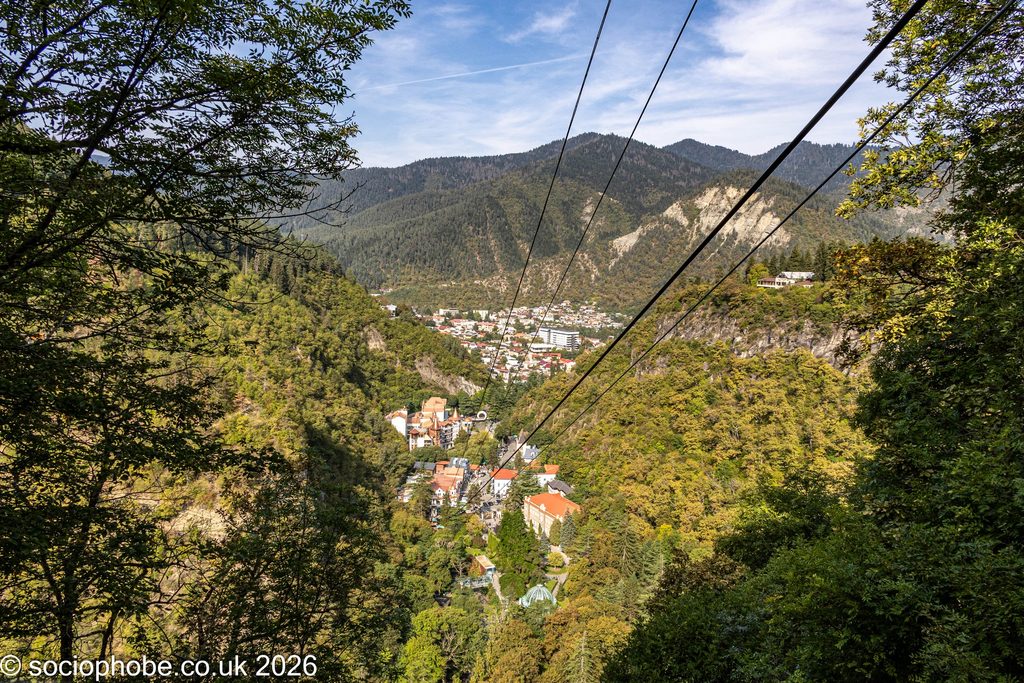
The square where we stopped was at the cable car station and there were also multi seat electric carts to ferry tourists around. One thing David told us was that the government was concerned at the number of people leaving the outlying areas to move to Tbilisi so, to make the mountains more attractive to residents, they supply them with free gas and electric. He said this has also lead to industries relocating to take advantage of this which in turn leads to more jobs and community income.
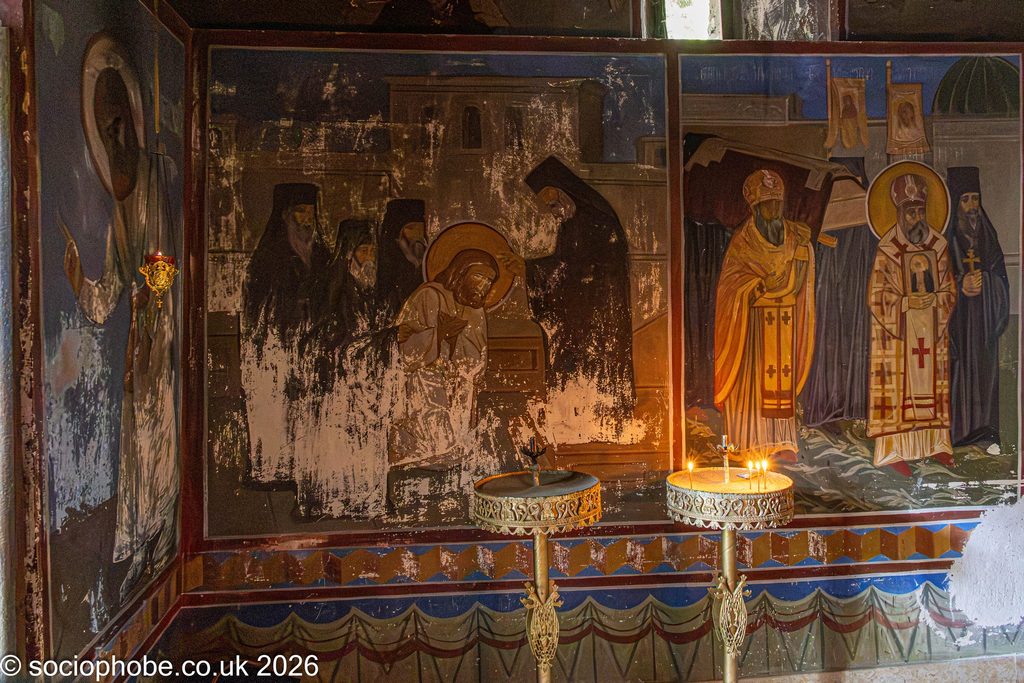
We had the option of walking around the town and trying the water or taking a car to the viewpoint. We chose the latter, along with an Israeli family, and drove up to the summit. I did have to borrow the driver’s fleece as it was damned cold when we were driving! Once we reached the top we were surrounded by pine forests. There were wolves, bears and maybe boar in the forests apparently and there are lodges and camping areas to enjoy the scenery. We visited a small church, which had lots of frescoes, and then drove the sort distance to the cable car arrival point and the viewing platform.
We looked down over the town and the scene was just stunningly pretty. There were jagged, forest covered peaks as far as the eye could see and at the bottom, in a river valley, this 19th century town with domed and turreted roofs. We didn’t really have time to do anything else so we drove back down in the buggy to the square and got back on the minibus. We drove for about an hour until we made a short photo stop.


The stop was at Atskuri, a huge and well preserved fort on a hill next to a river. The fort was built in the 9th century and then rebuilt in the 17th after being heavily damaged by the Turks before it was abandoned in the 19th century. A group of us crossed a very rickety rope bridge suspended over the river that was still safer than the one on Cuenca! I took some photos of the fort but we didn’t have time to go in.
Our drive continued through rocky, treeless gorges that seemed to go on for miles and probably did! We eventually arrived at Vardzia Maspindzeli, a restaurant overlooking the cave city, to pre-order our food before the trip to the city. We drove the short distance to the city and paid 15 Gel to enter plus 2 for the minibus to the base of the city. It was rather hot by now but David explained the history of the city to us before we walked up the final distance.
The city as we see it was built in the 12th century and was both a monastery, in times of a peace and a refuge, in times of war. There are around 500 caves making up the city which was sacked and looted by the Persians in the 16th century and abandoned by the end of that century after the Ottoman occupation.
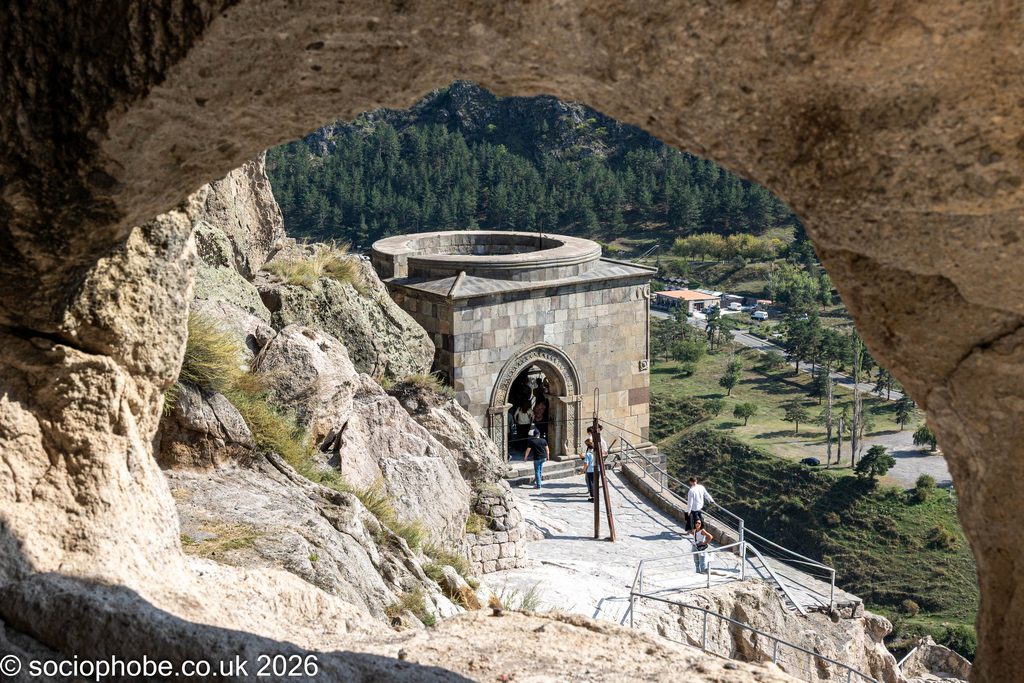

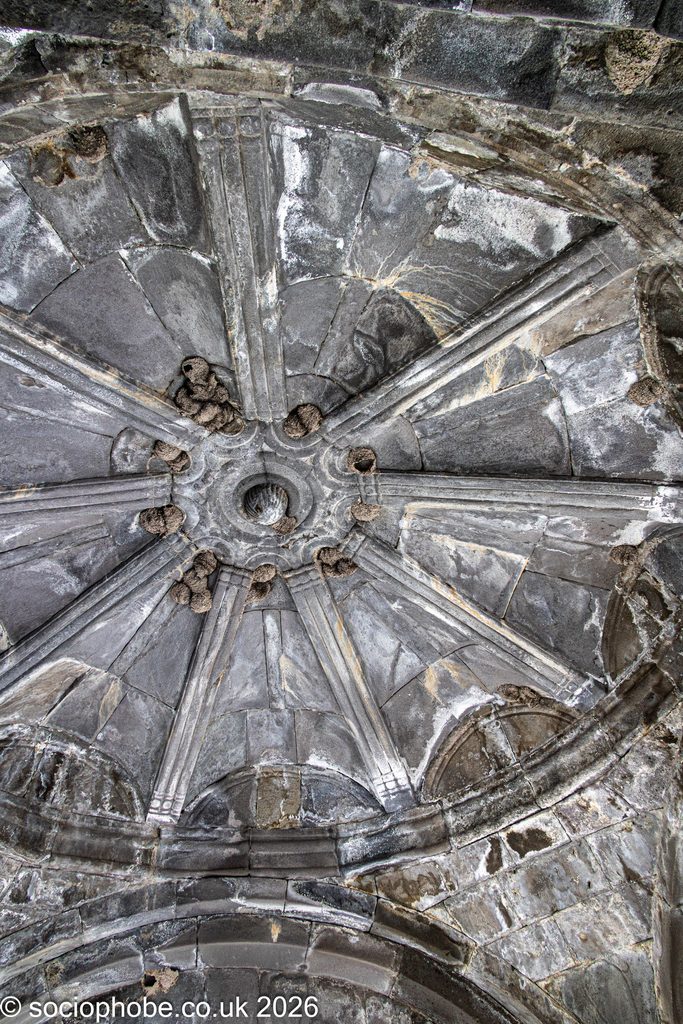

I did walk around and explore quite a lot of the site, just over a third is currently blocked off after a landslide but the rest showed various unadorned rooms, lots of buried wine jars and everything needed for a city of people in this period. The church was the only building with any decoration but we weren’t allowed to take photos so when the frescoes fade due to deterioration or Turkish invasion, they will be lost.
We returned to the restaurant for a fiasco of time wasting that meant our ‘pre ordered’ meal to well over an hour to arrive, in dribs and drabs. The setting was beautiful, with views of the entire cave city and gorge and the food was actually decent, it just took far too long and meant we wasted 90 minutes of what would turn out to be a ridiculously long day.
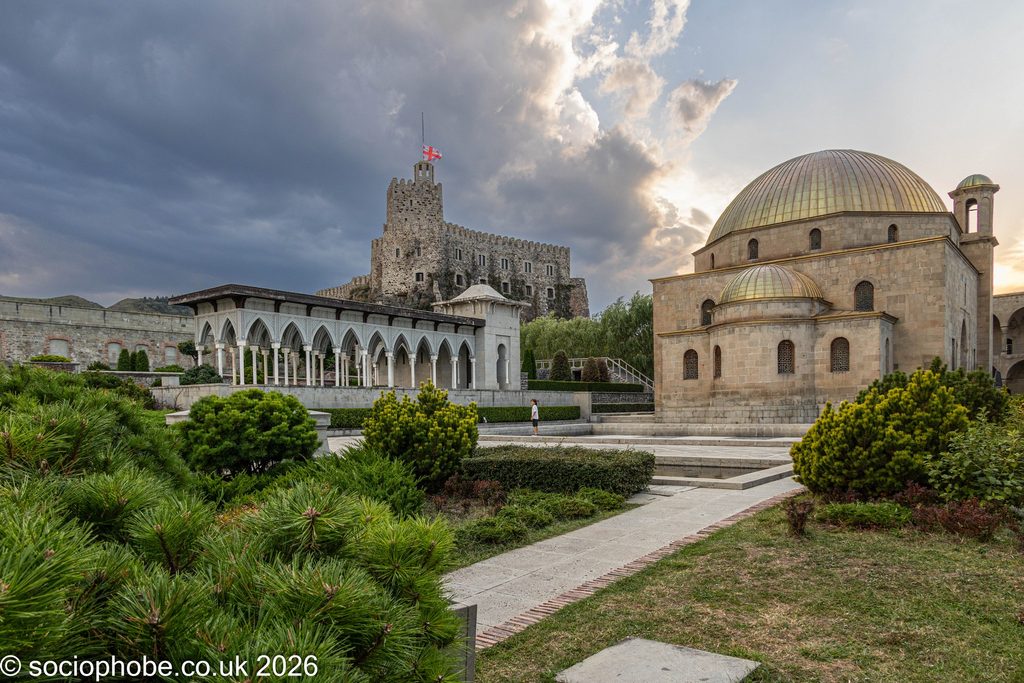
The drive to Rabati Fortress was just over an hour and we arrived around 5PM. This attraction was the undoubted star of the day and I could have easily spent half a day there. We had around an hour so I went straight into the inner fortress (20 Gel entry) and wandered round as the light faded. There were beautiful gardens, a mosque, various pavilions and the ramparts and towers. I didn’t get time to visit the citadel or the museum. Inside the outer walls were shops and restaurants as well as the walls themselves and towers. Everything was well preserved/restored and labelled.
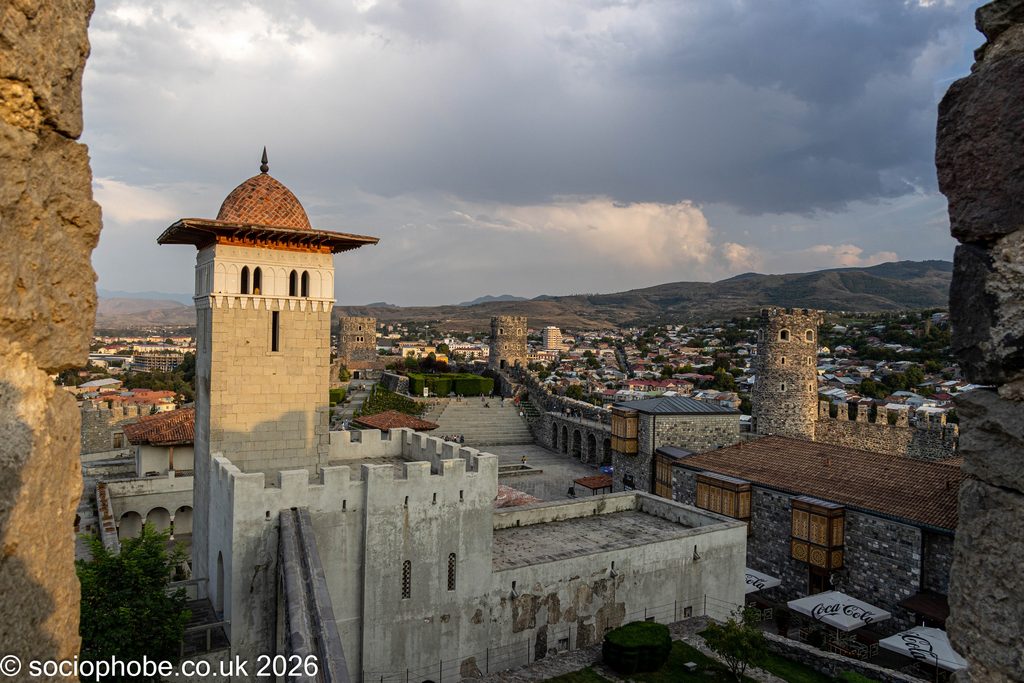
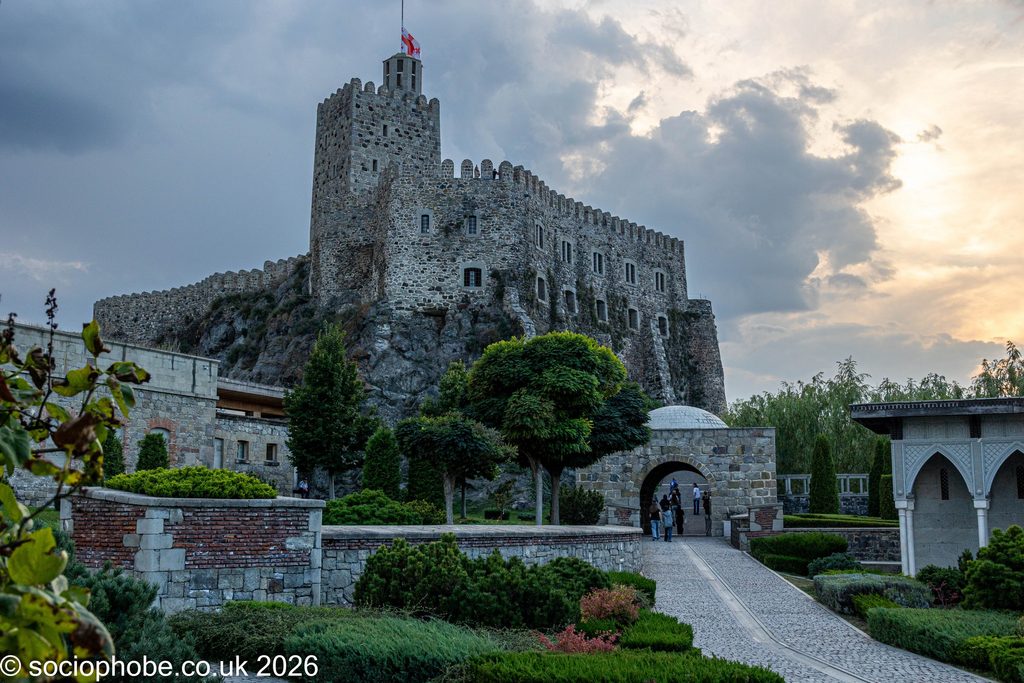


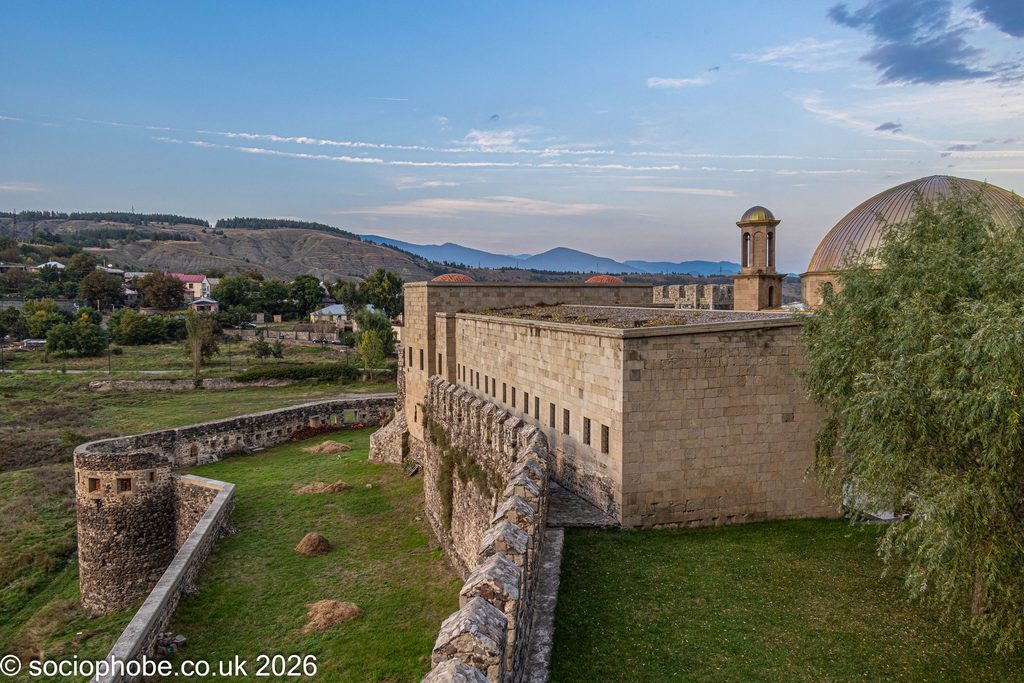
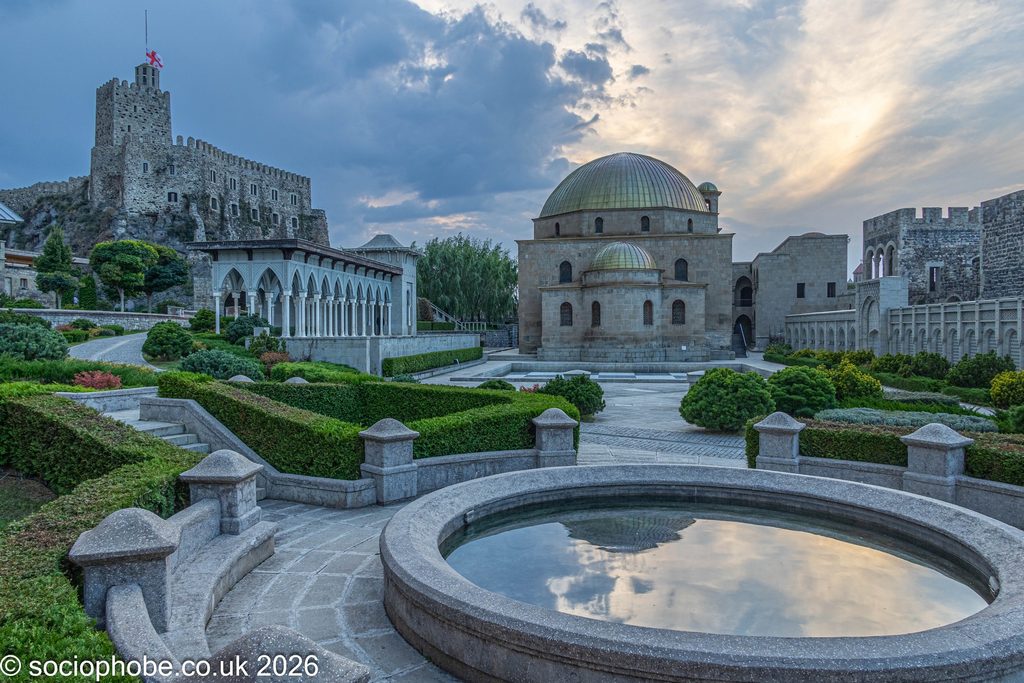

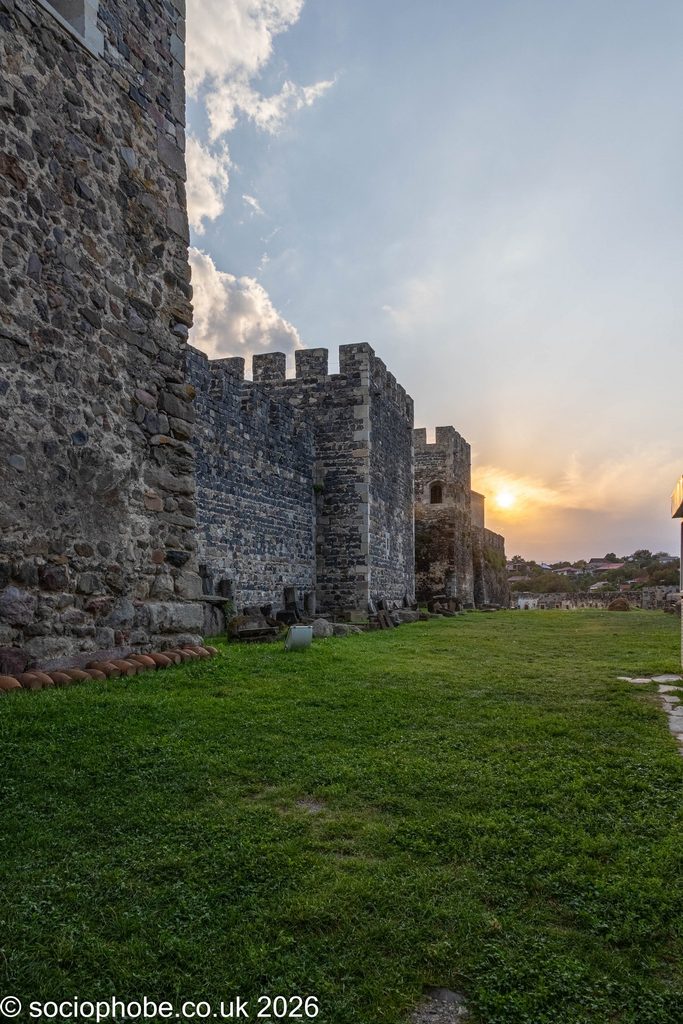


The fortress was originally a 9th century creation and actually held against Tamerlane in the 14th century before being handed over to the Turks in 1590 then surrendered by them in 1829 to the Russian Empire, of which Georgia was a protectorate. The buildings were heavily restored in 2010 to improve tourism and it certainly worked. There were also lots of affectionate dogs in the lower fortress which helped too.
The drive from the fortress back to Tbilisi took a ridiculous amount of time, I think due to an accident or maybe just traffic volumes but we didn’t arrive at the drop off point until 11:30PM, 16.5 hours after we left. The team (Jony and David) were excellent and Jony must have been shattered driving all that way, especially considering a chunk of the roads weren’t tarmaced so he had to manoeuvre around potholes and assorted bumps, mostly at night. David was great at informing us of each place we visited and the areas we passed through as well as general info on Georgian history and society.
Personally I’d have skipped the cave site and added an hour or so to Borjomi (maybe a short hike?) and Rabati or possibly added in Surami Fortress as a stop. For information, entrance fees weren’t included so I’d add 70 Gel each plus food for the day. 600km in one day on those roads was a lot of driving.
We took a Bolt back to the hotel so we didn’t arrive until well after midnight and I just had a shower and went to bed, setting the alarm for 6:30 for our final tour!
Gveleti Waterfall, Gergeti Church, Ananuri Fortress
I was an actual zombie at breakfast and Tamara picked us up at 8:15 for our trip to the east of the country, towards the Russian border. This was a private tour which was great as it meant we could go at our own pace and focus on what we wanted to see. Tbilisi was actually quiet as we left, driving past a Chinese constructed hydro electric station to our first photo stop, the Zhinvali reservoir. This was built in the 80’s and resulted in the drowning of several villages but now supplies Tbilisi with fresh water as well as hydro power.
From here we drove for a couple of hours on largely untarmacked roads to the Gveleti Waterfall. This was very close to the Russian border and lots of the road was being repaired/upgraded so it was very slow going, especially as it was also used by all the trucks travelling each way. As we drove we passed donkeys, horse, cows and even pigs wandering along the roadside without a care in the world.


We parked at the waterfall area and Deb and Tamara stayed in the café while I did the hike. This took about 30 minutes through a wooded valley to reach the waterfall. Now I have to be honest, I’m not sure if I reached the big or the little waterfall as I didn’t see any deviation from the path or any signs to anything else so I just followed the main trail. I did walk into the stream for better photos but the rocks were so slippery I didn’t want to fall in the middle of nowhere so I backed off back to the bank.
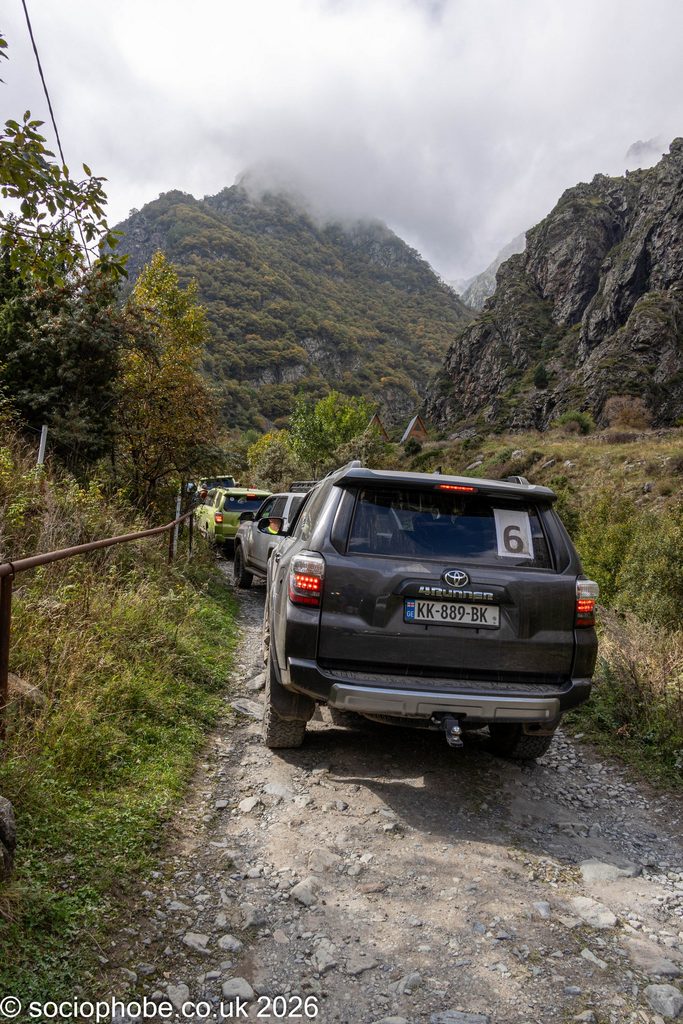
As I walked back down the trail some 4*4s were trying to drive up it but not very successfully. The one at the front was stuck so there were about 12 backed up. I did try and warn other drivers heading up the trail but none listened so the queue got bigger. I met up with Deb and Tamara and we then drove the short distance up a winding road to Gergeti Trinity Church.
The church sits on the shadow of the third highest peak in Georgia, Mount Kazbek. The church itself is at an altitude of 2000m and was built in the 14th century, the complex consisting of the church and a separate belltower. The inside of the church has some icons and paintings but I don’t think it had any frescoes. The belltower was not open.
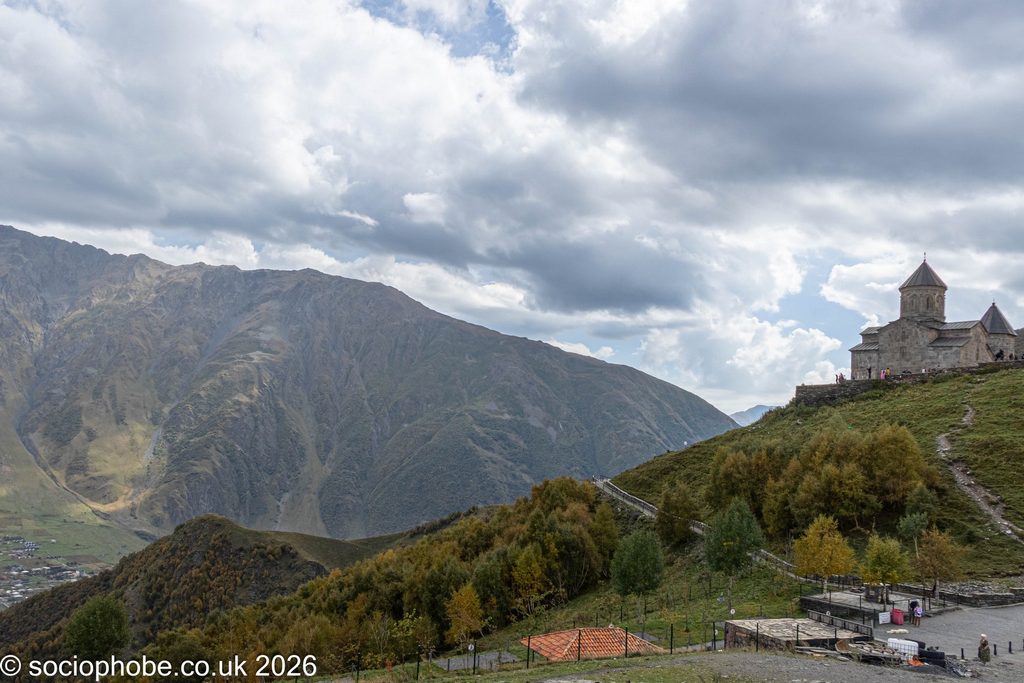
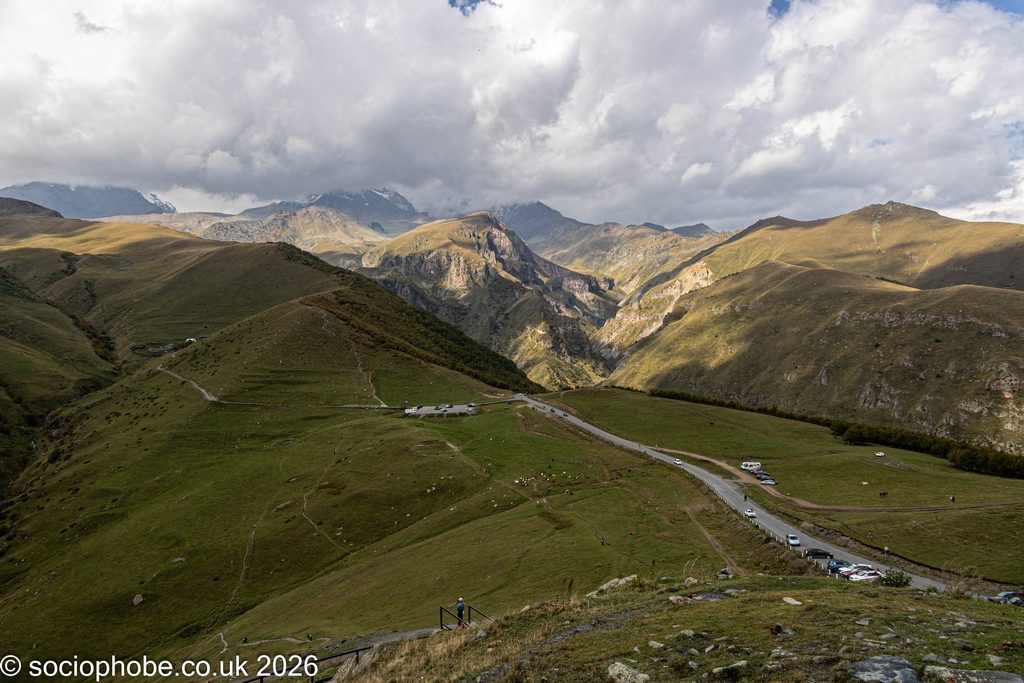
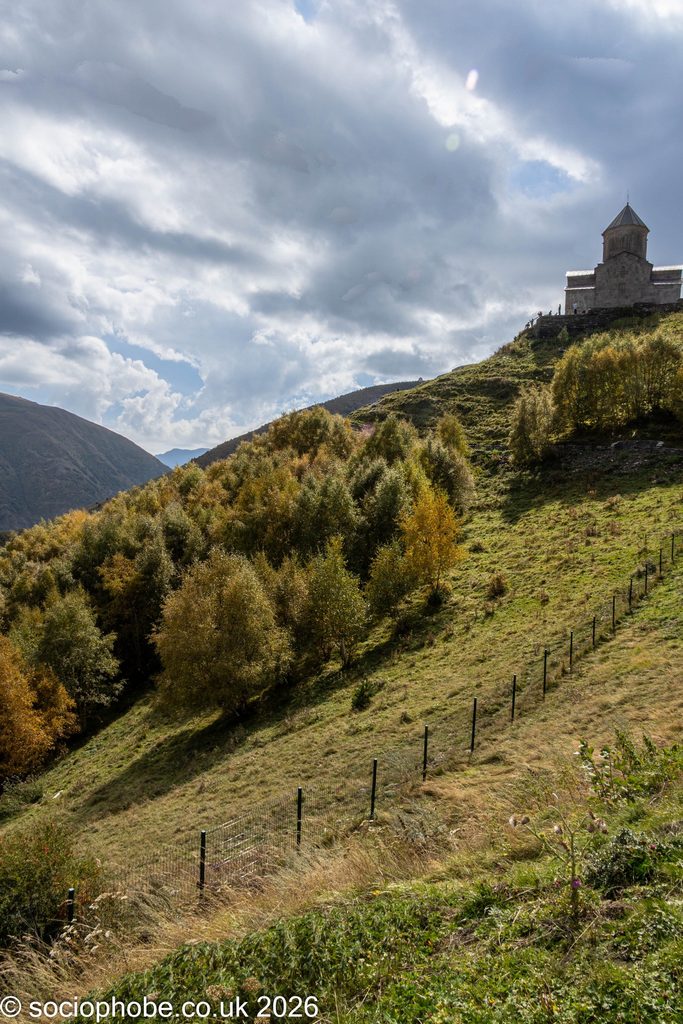

I left the church and climbed the nearby observation mount for more views and photos but the light was not good and the church walls facing me were in shadow. The views of the mountains were spectacular and the village of Stepantsminda on the valley floor below felt like looking down at a model. It was about a 45 minute drive past the ski resorts to the Russian Georgian Friendship Monument, built in the 1980s.
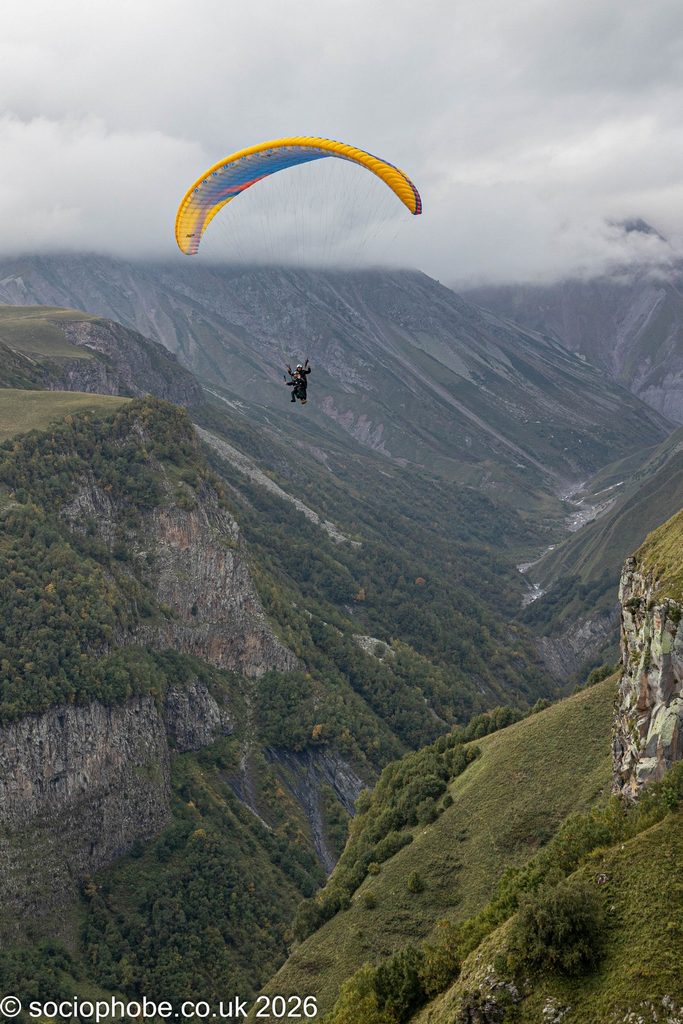
The monument is in a spectacular setting overlooking a gorge and surrounded by mountains. Although the friendship it was built to celebrate was somewhat upset by Russia’s invasion of the country in 2008! There is still a huge amount of resentment against Russia and we saw lots of anti Russian graffiti pretty much everywhere we went. There were a few guys paragliding at the monument and there was the option of a 360 degree swing too but Deb wasn’t keen!
We continued our return trip, our final stop being the fantastic Ananuri Fortress Monastery. We had passed this earlier, the monastery now butting up against the Zhinvali reservoir although before it faced farmland and scattered villages. The setting of this 13th century fortress is beautiful and the exterior and interior are both well worth a visit. One of the two churches inside is closed but the larger one, built in the 17th century, allows photography inside. Before entering I crossed the somewhat rickety road bridge to get some views of Ananuri from a distance with the reservoir behind.
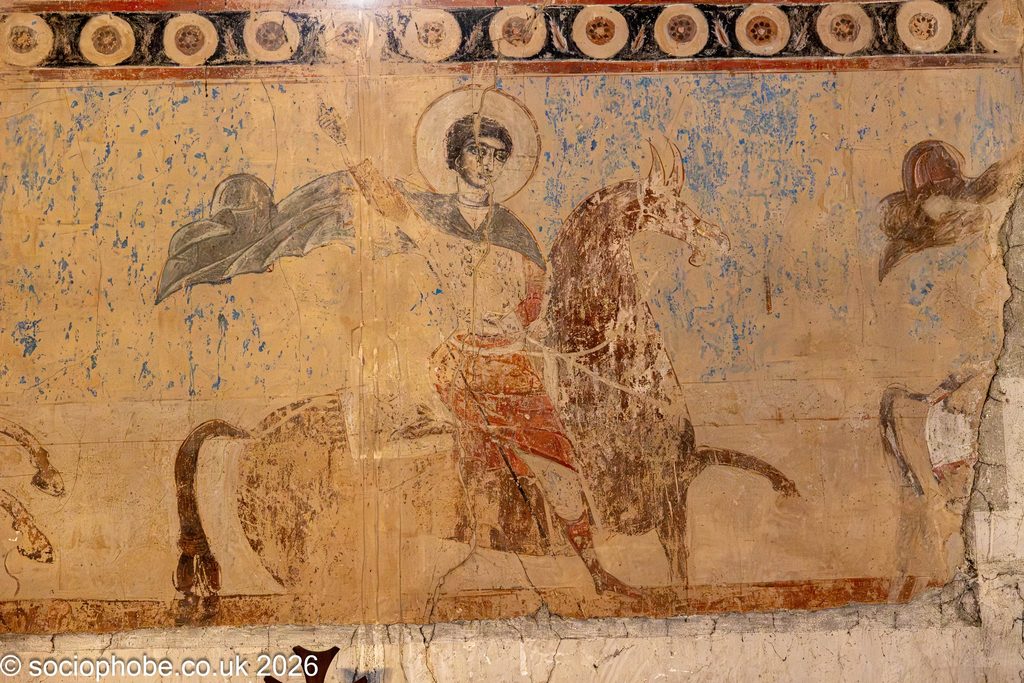

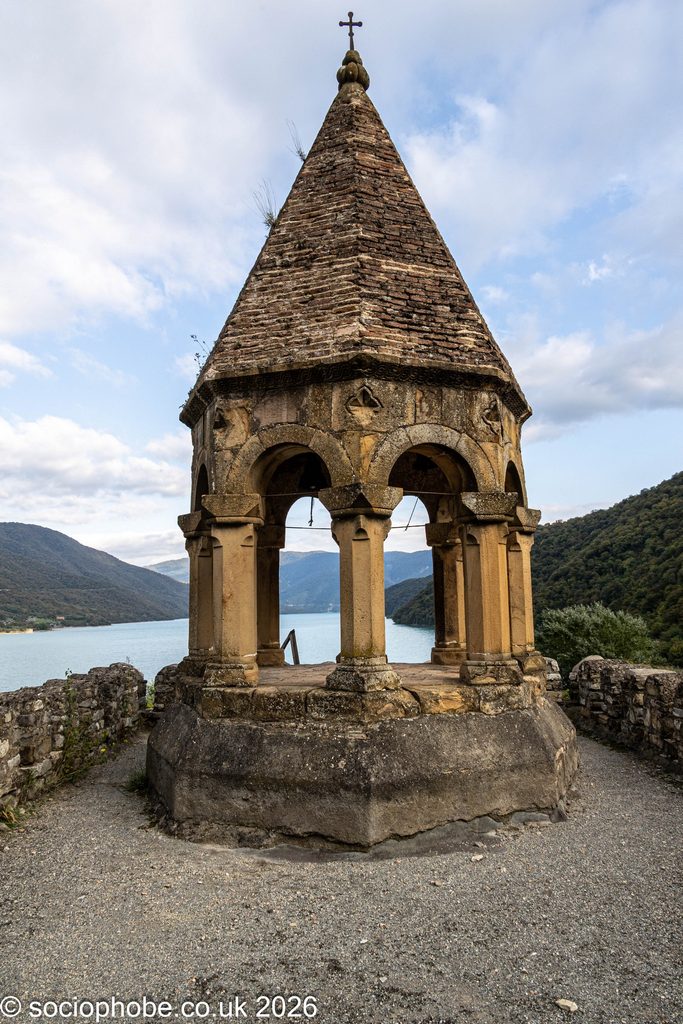
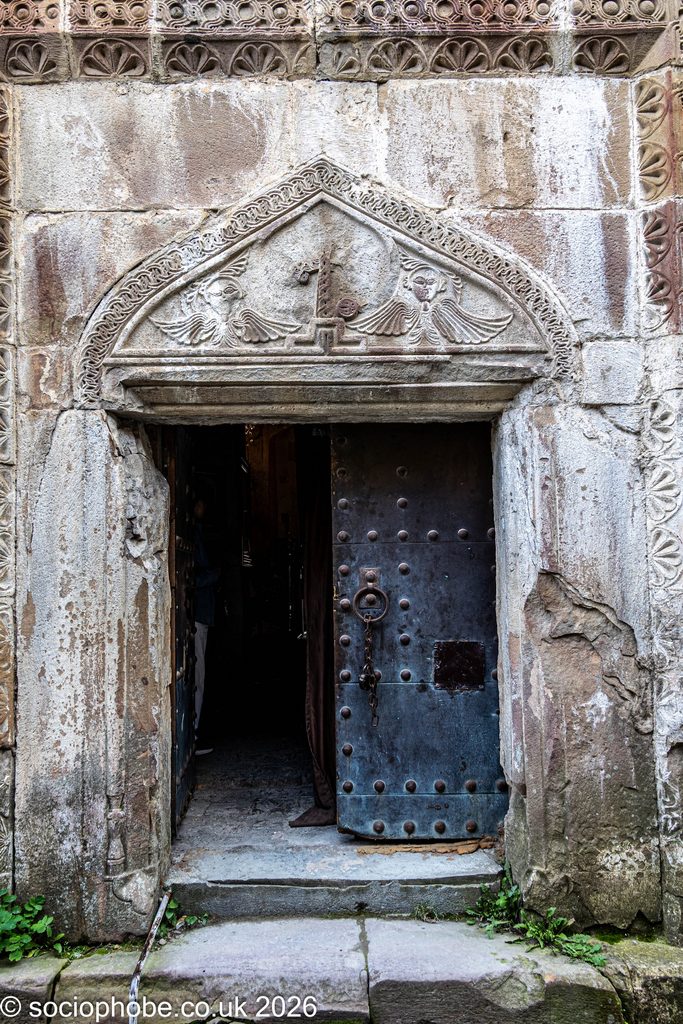
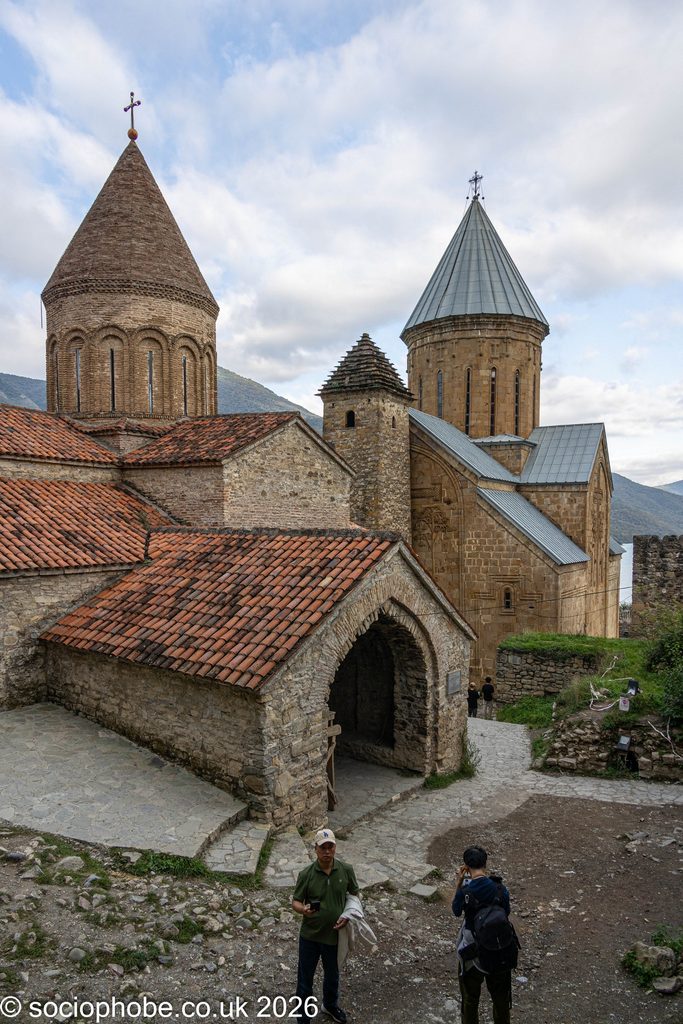
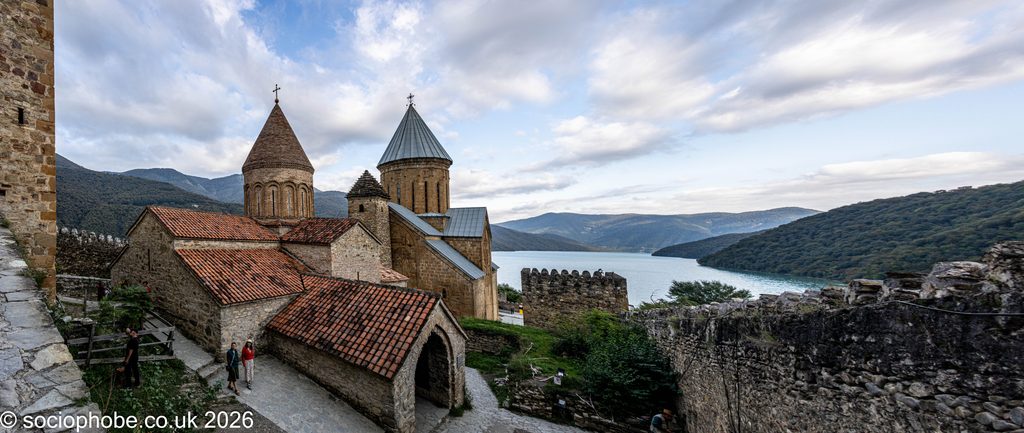
The church had some wonderful carvings outside, full of symbolism, which Tamara explained. There was also an inscription in both Georgian and Russian although I might be getting that confused with somewhere else. Inside there were wonderful frescoes on the pillars and walls including one particularly graphic one of the Day of Judgement. I walked down to the lake to view the fort from there and it’s odd crenelations before climbing the hill to meet Deb and Tamara, after pausing to play with a dog. Our final stop was a quick pause for food at a roadside bakery before we sat in traffic for a long while approaching Tbilisi. Tamara dropped us at Luca Polare for ice cream around 7, another long day.
The tour was fantastic and showed us another area of the country with majestic scenery and churches. Religion really does dominate the landscape of the country, every hill seems to have a church or cross on it and most Georgians seem to cross themselves whenever they see a church or cross or enter a church.
Tamara was a wonderful guide, educated and patient, despite the roadworks and traffic adding 3 hours to our tour length. I think we did shock her telling her some facts about England, prices and costs for things plus the trans and immigration debates. After our delicious ice cream we walked down the hill to the hotel. We were both very tired and had to pack ready for our flights tomorrow but the whole trip has been a wonderful experience.
Conclusion
Both the Armenian and Georgian people were fantastic to interact with, both countries felt completely safe and were generally far cleaner and tidier than Western European cities. There were so many fabulous sights to see and I could easily spend another couple of weeks exploring before starting on some of the amazing hikes in the area. I even liked some of the food!
We opted for tours in our free time but on reflection we might have been better off arranging it all privately but focusing on what we wanted to see. Hindsight is easy though and we probably wouldn’t have allowed for the road quality in Georgia or Tbilisi’s traffic! What we saw will leave enduring memories and the experience was fantastic and enlightening.