
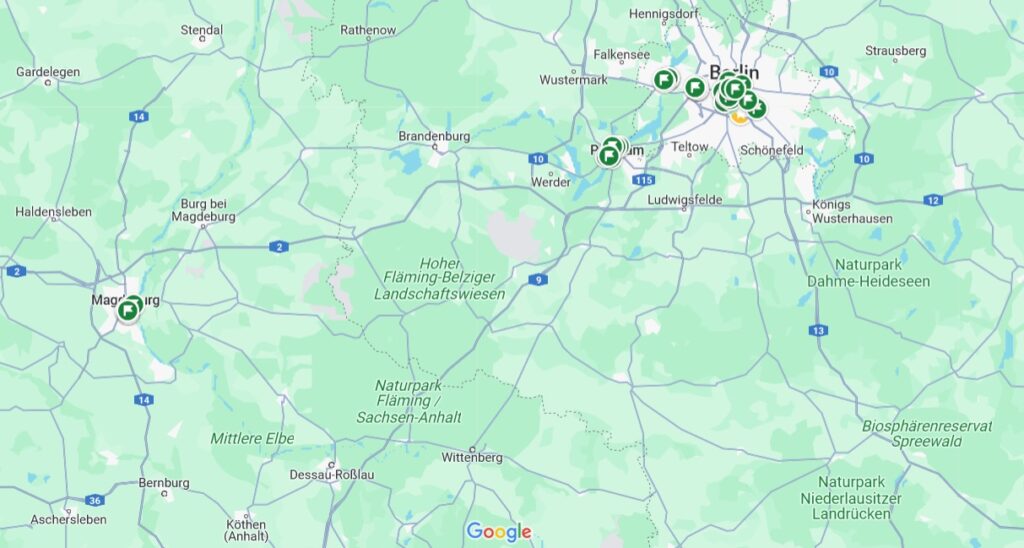
Berlin is an easy city to visit and the train network allowed us to include the old Imperial city of Magdeburg on our weekend break too. Most of the attractions of Berlin are within walking distance and being on flat land and with wide streets on a grid pattern it’s easy to navigate the city. The sights of old Magdeburg are again easily walkable and about 10 minutes amble from the train station.
| Holiday Ratings | |
| Recommended days | 3 |
| Budget | £ |
| Difficulty | Easy |
Why Berlin and Magdeburg?
Berlin is always an easy choice for me at the moment as Natalya lives there so it’s always good to see her in new her home. This time I had work to do there setting her office up so my time in Berlin was limited to an extended lunch break and out for dinner in the evenings. Magdeburg was one of the most important cities in the Holy Roman Empire and houses the grave of Emperor Otto I and his English wife, Edith. It’s wealth and importance caused it to be ravaged by a succession of wars but there is still a lot to see there, hopefully.
Our Accomodation
I stayed in the Hampton by Hilton hotel as it is in a great location about 5 minutes walk from Alexanderplatz station and also an easy walk to the Brandenburg Gate and the other attractions along the route. The room was a great size with a large desk for working on and plenty of space. The fitness room was decent too with a good selection of cardio machines as well as free weights. Breakfast was excellent and there was a wide choice selection available with plenty of healthy as well as enjoyable options.
Georgbraeu Brauhaus
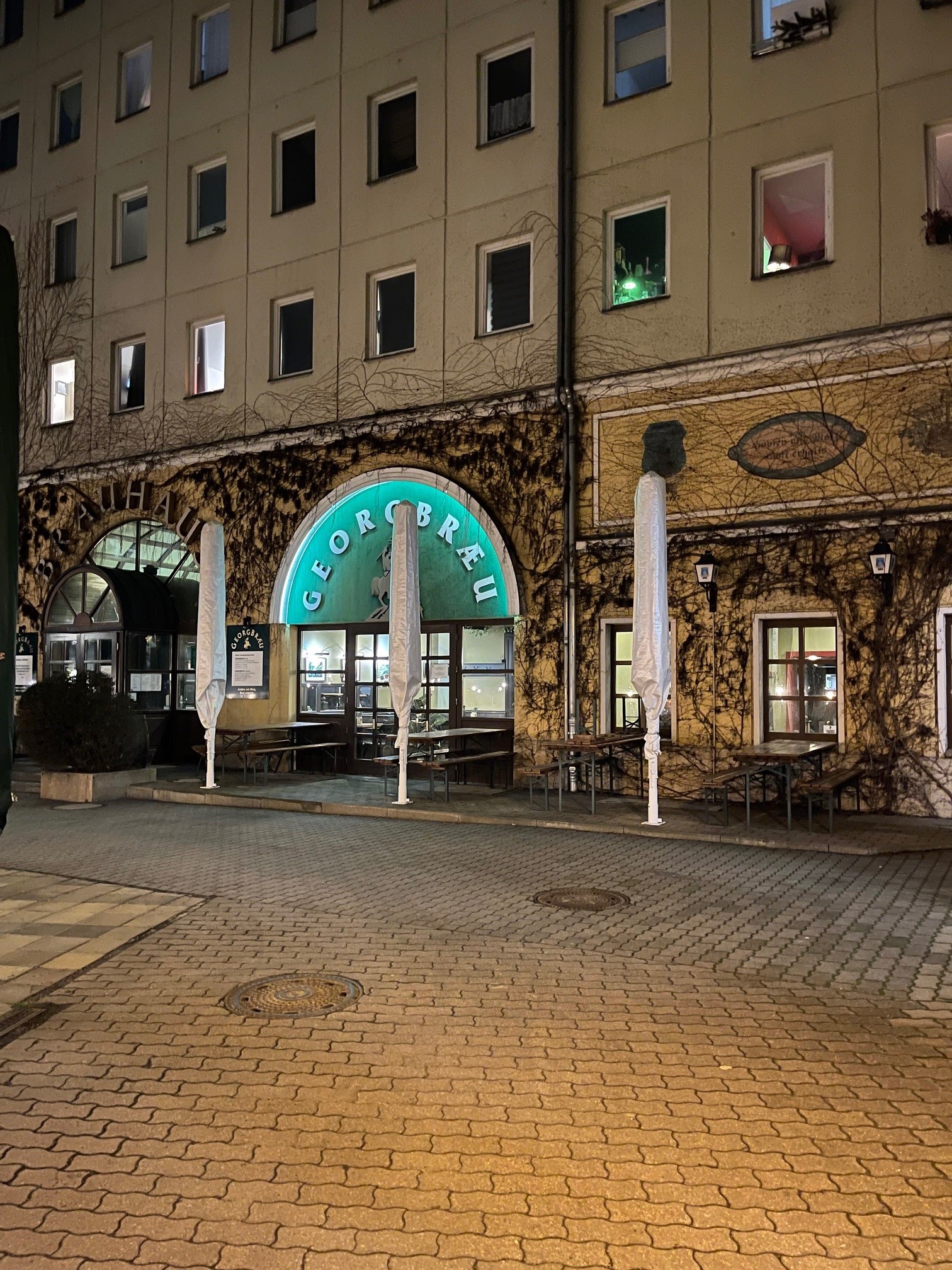
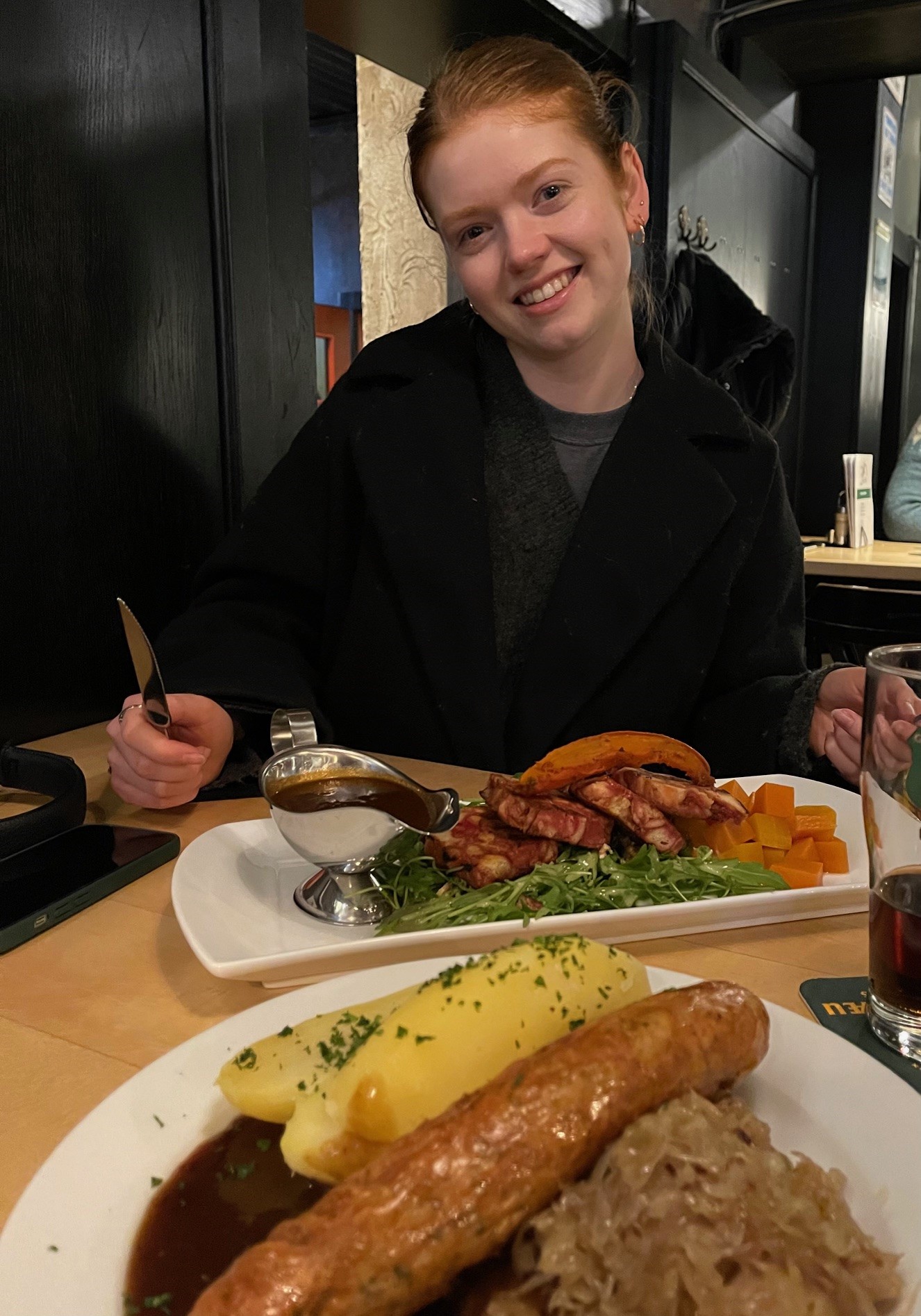
For our first evening in the city Nat decided we should go to Georgebraeu Brauhaus, a traditional German restaurant next to the river. The menu was as expected with no option for fresh vegetables side dishes, you were an omnivore or a vegetarian! I had the boiled potato and bratwurst and Nat had I think some sort of beetroot and potato fritters. I also got to try sauerkraut for the first and probably last time!
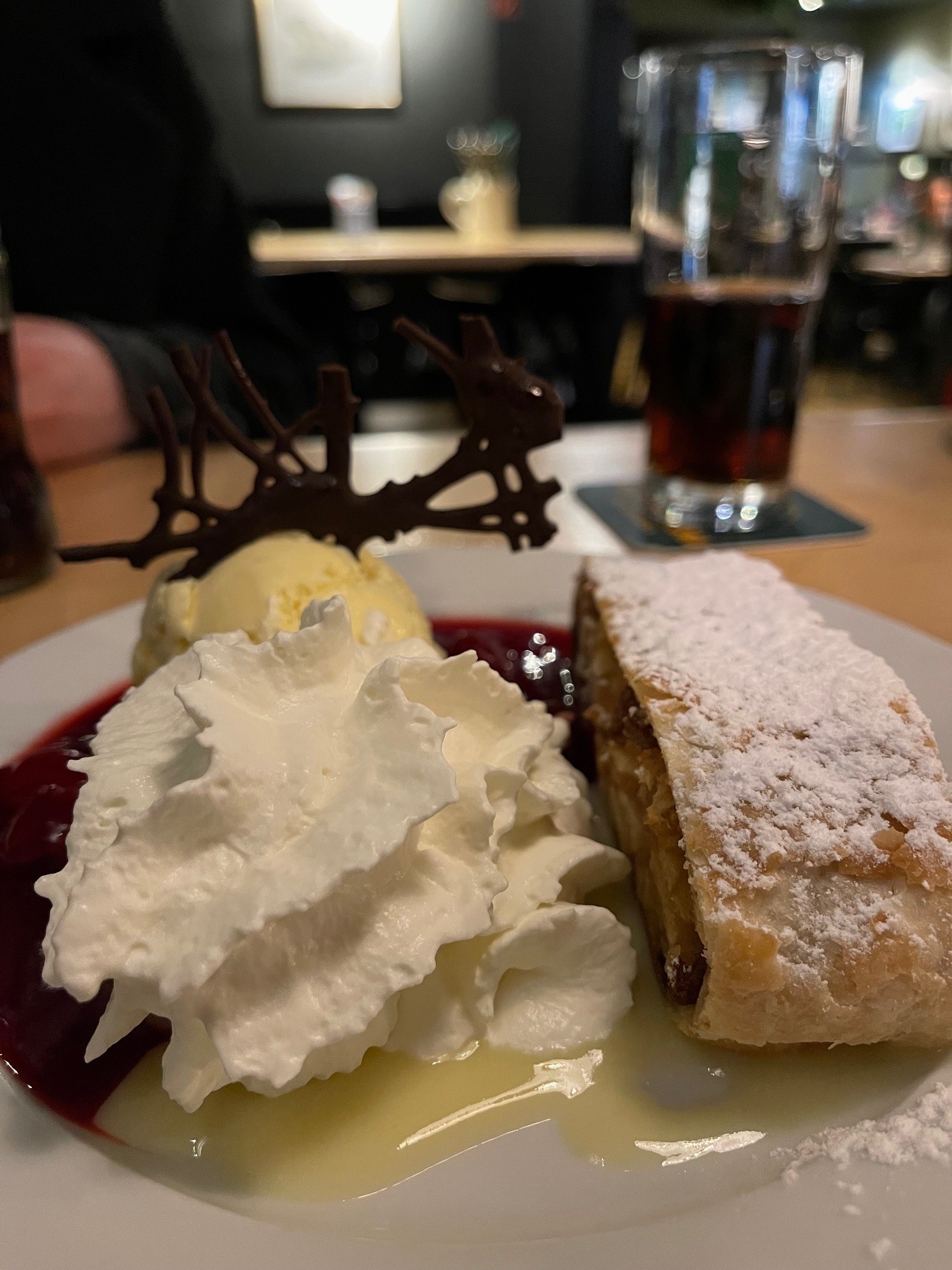
Service was good, beer was great and it was a nice evening after the hectic day. The obligatory strudel dessert was definitely a good thing!
The French Church
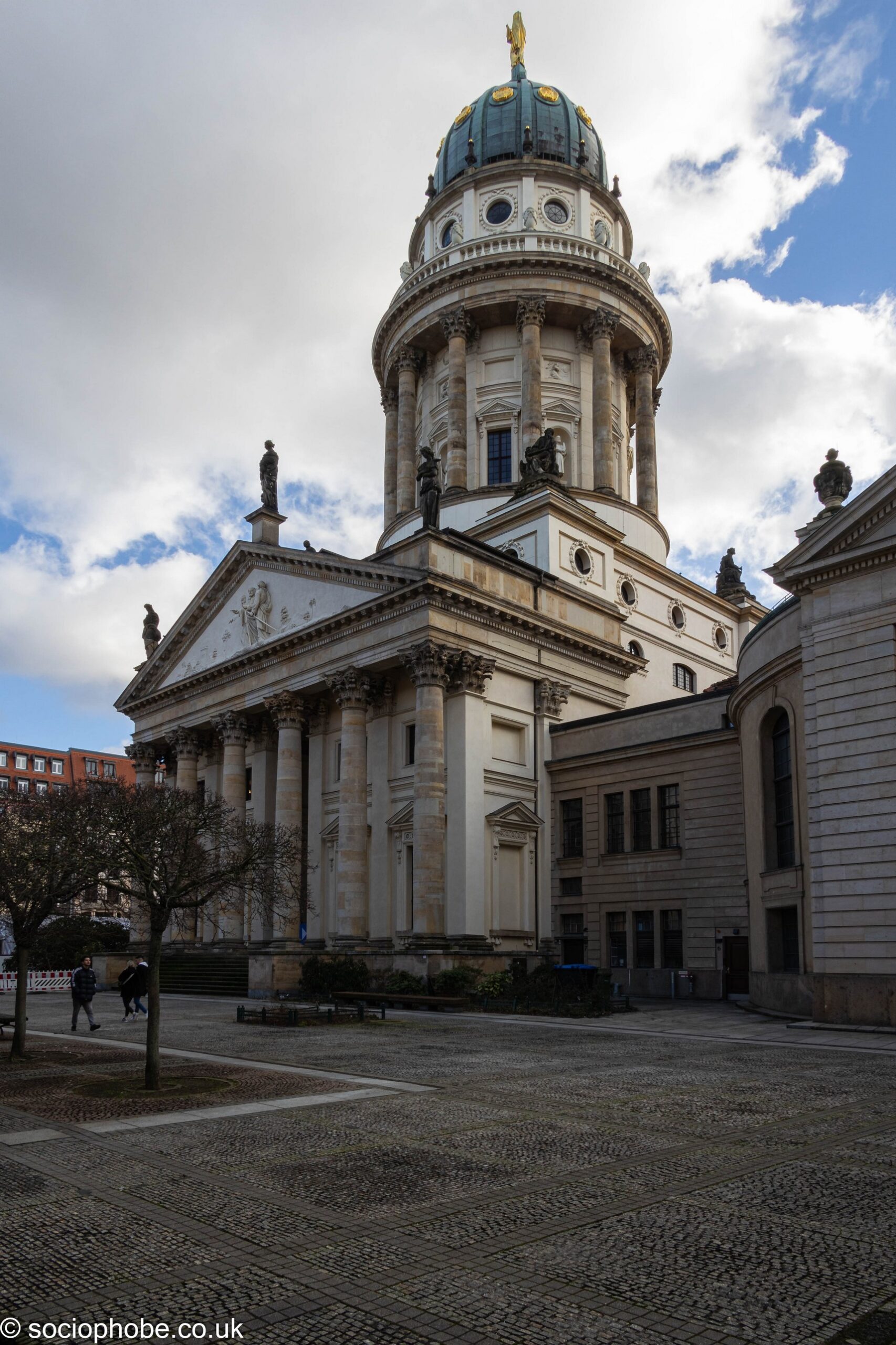
We walked to a little cafe in the square where the French Church was, taking advantage of blue skies, although still rather chilly. The church was built on the early 18th century for French Huguenots fleeing persecution in their homeland and has a classical simplicity, a nice balance between Calvanist austerity and Catholic extravagance.
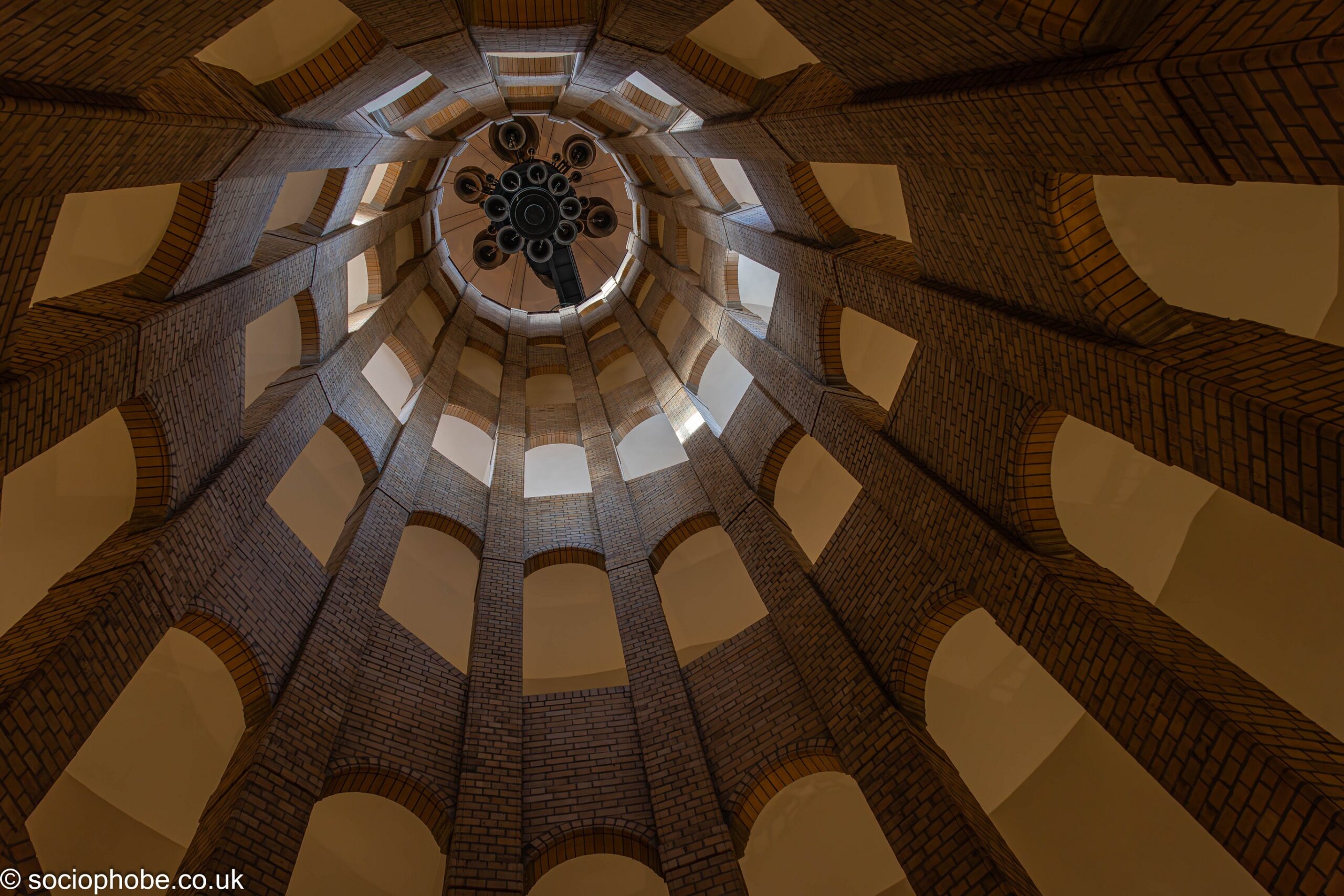
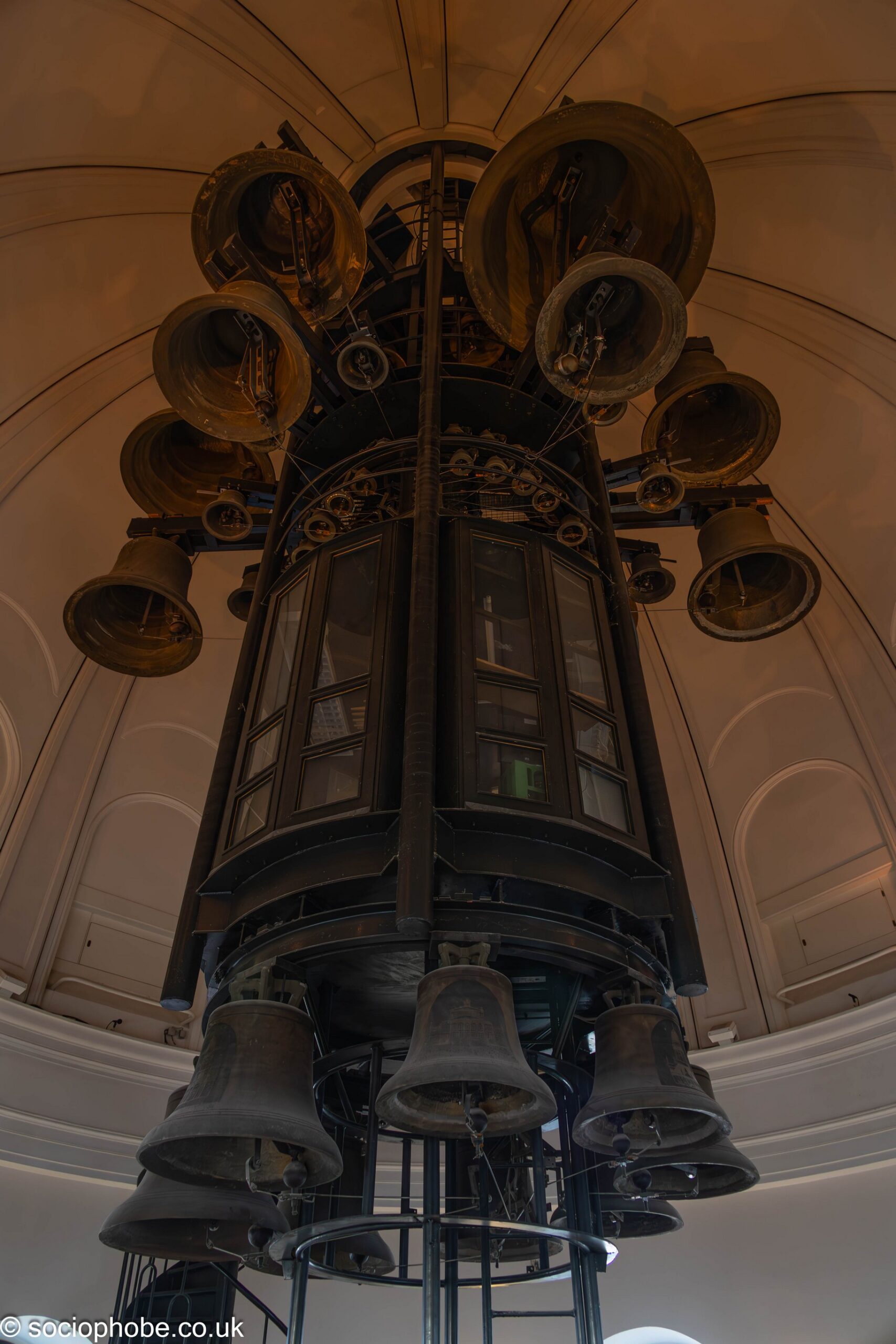
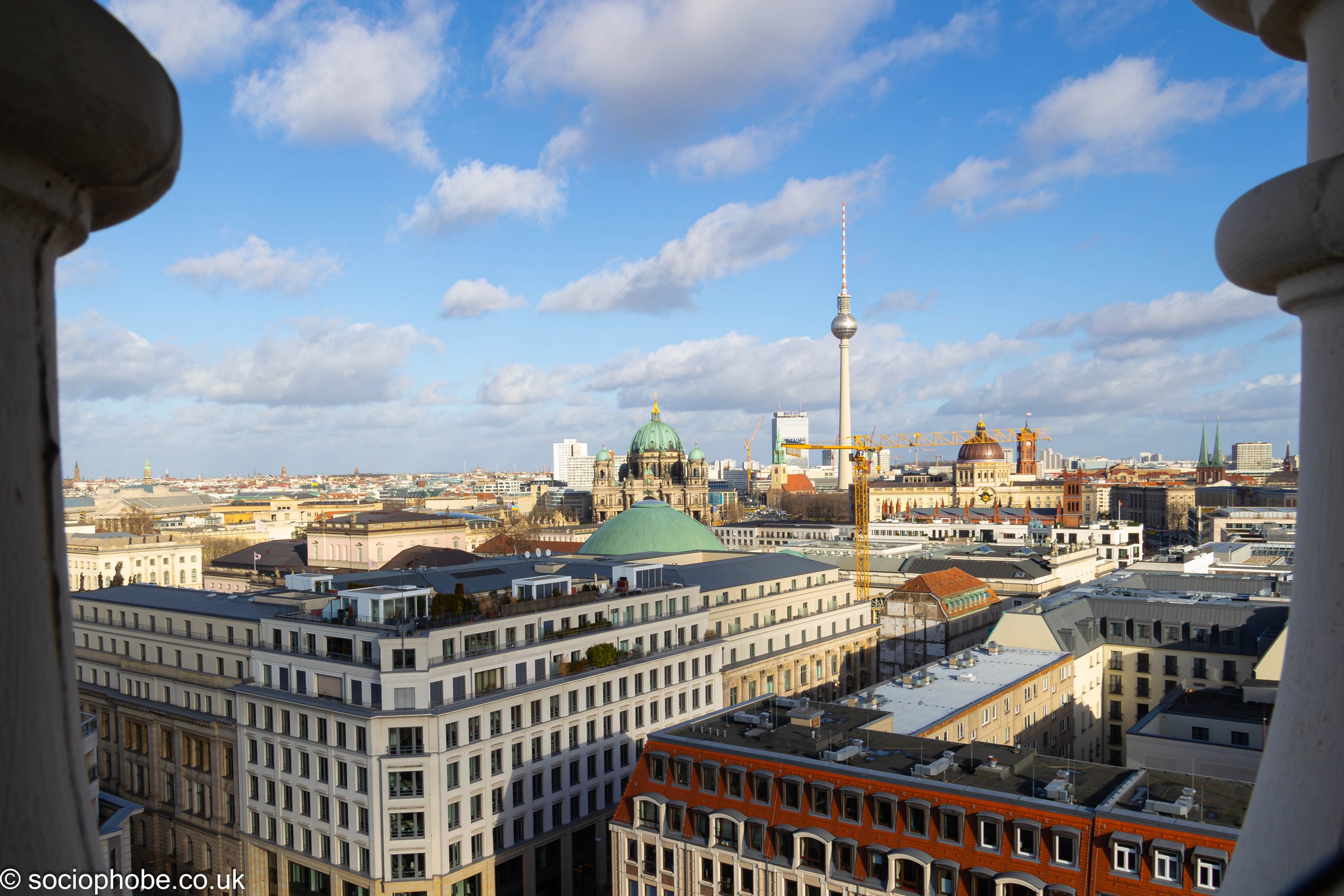
The climb is quite easy as the stairs are wide and open so there is no feeling of being cramped. The architecture inside is as beautiful as the outside appearance and the whole building exudes elegance without extravagance. As you climb there are information boards and then eventually you reach the door to walk around the outside of the tower. As you’d expect, the views were great and it was a lovely way to spend a lunch break.
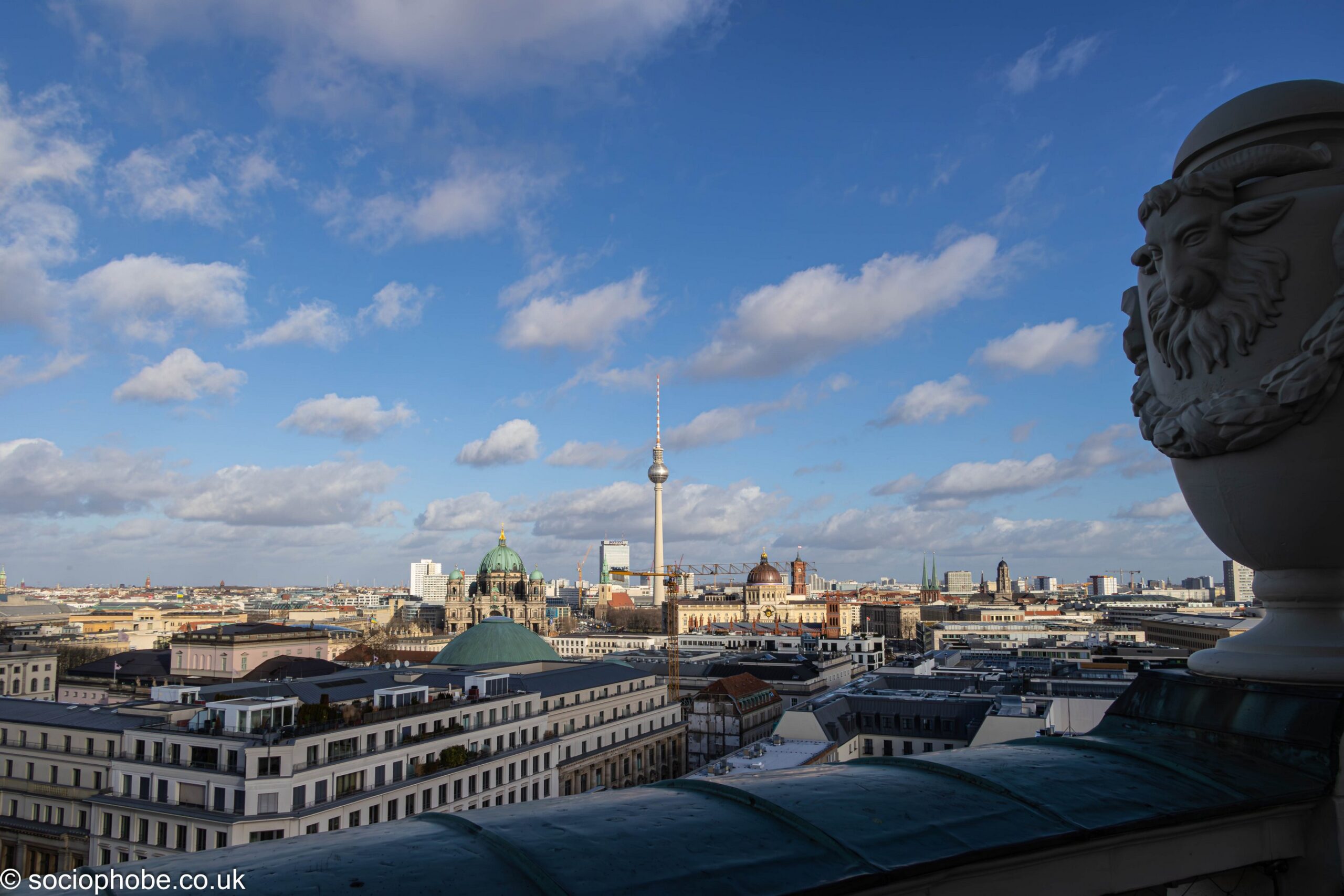
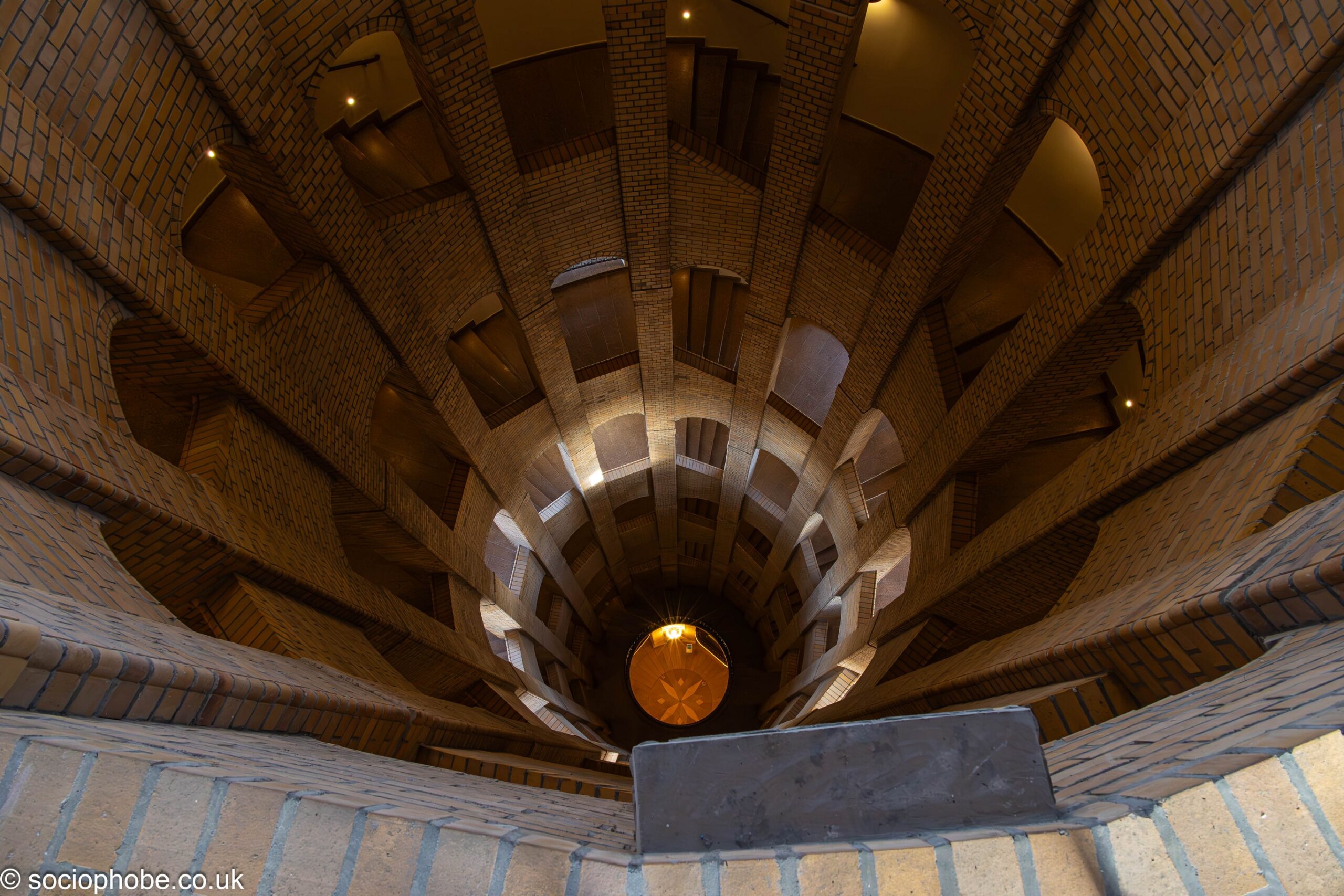
Meandering along the Unter Den Linden
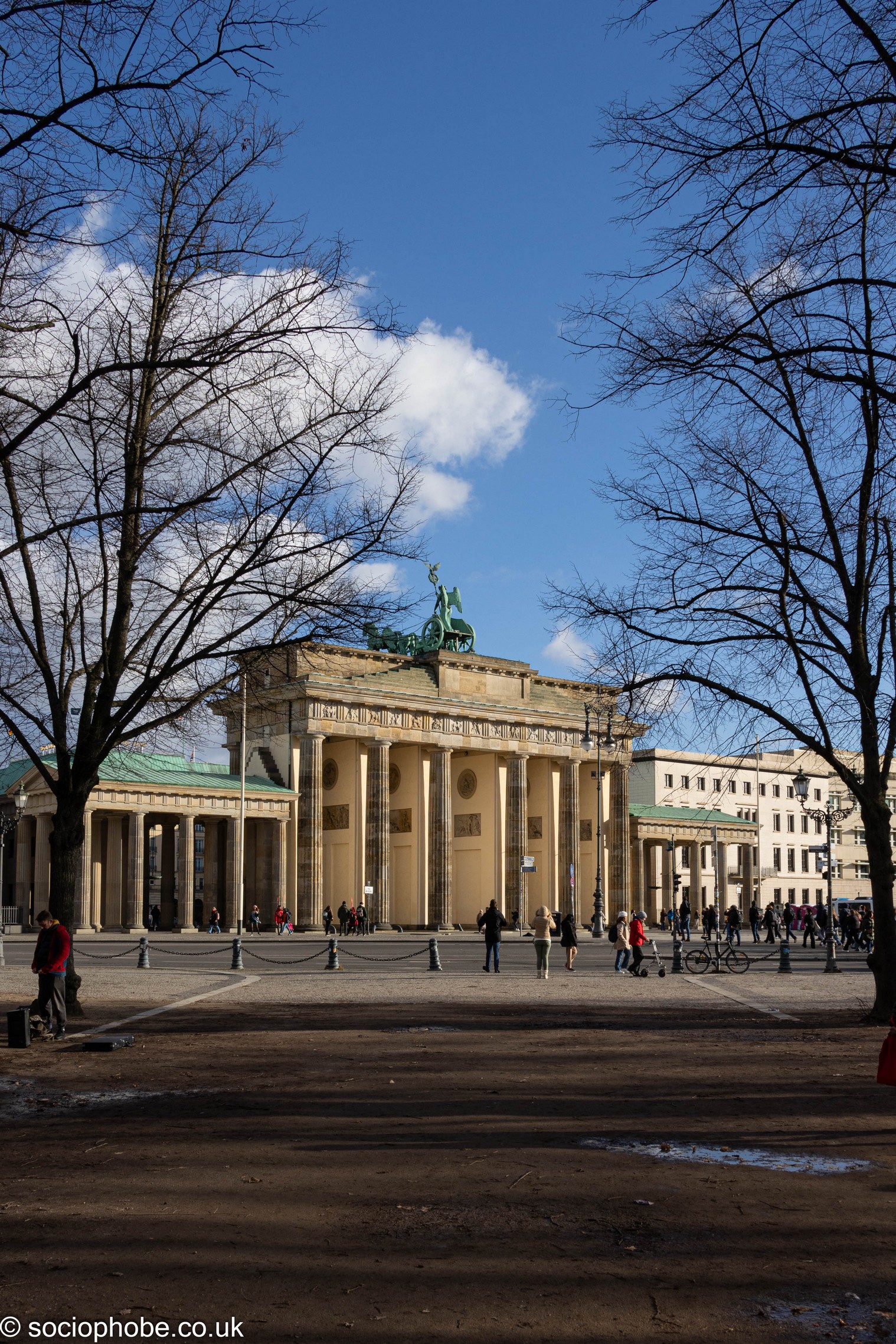
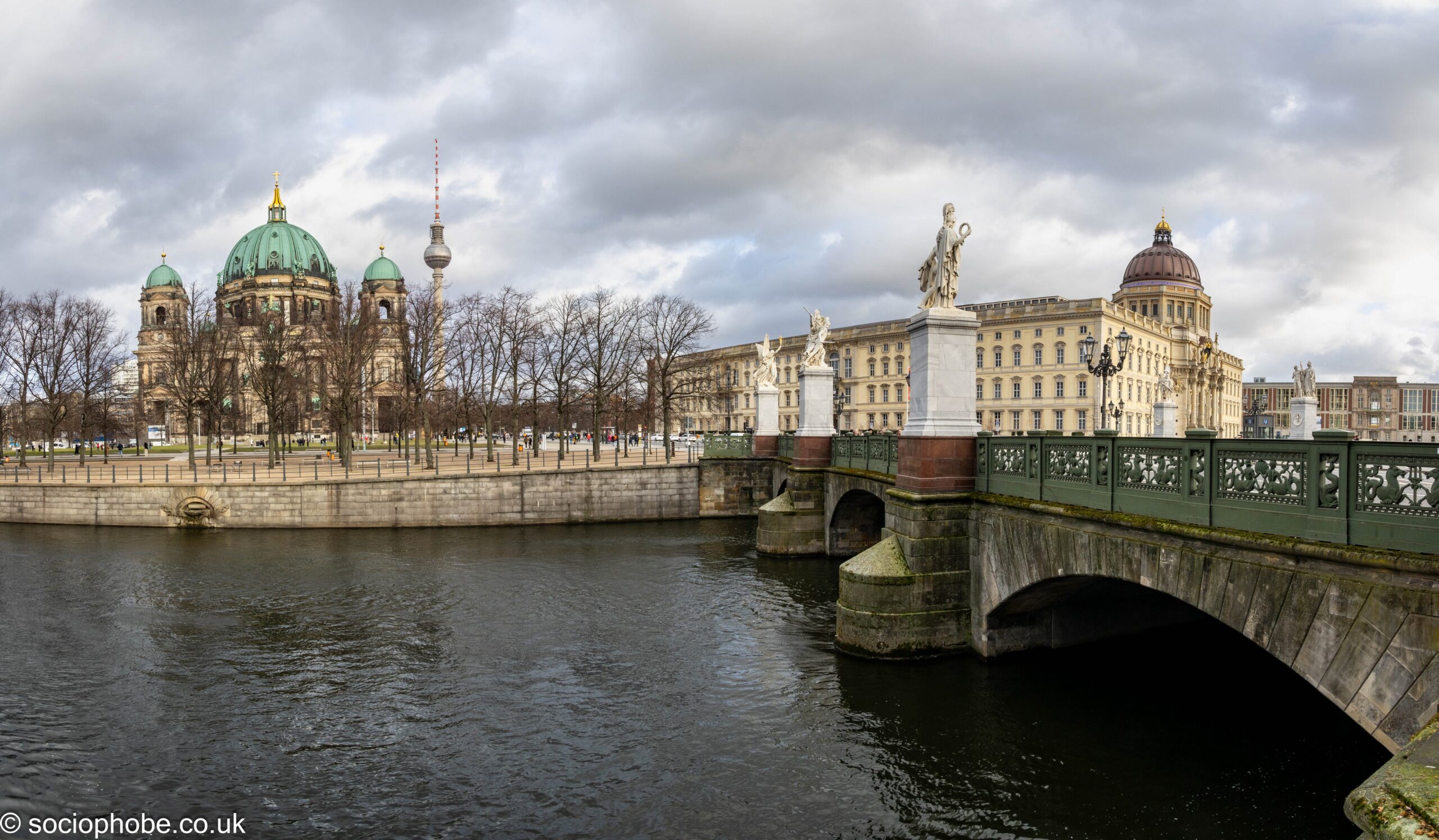
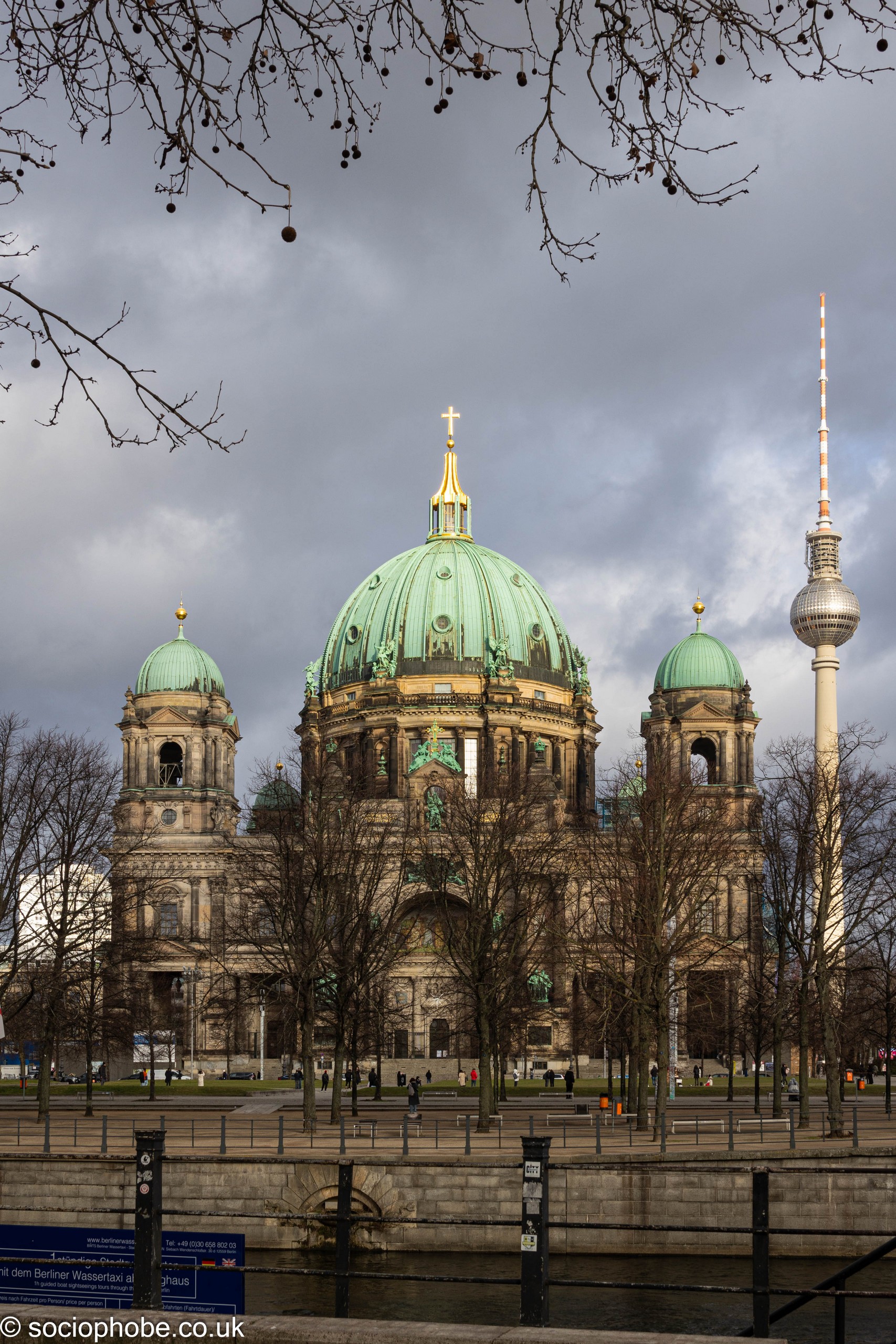
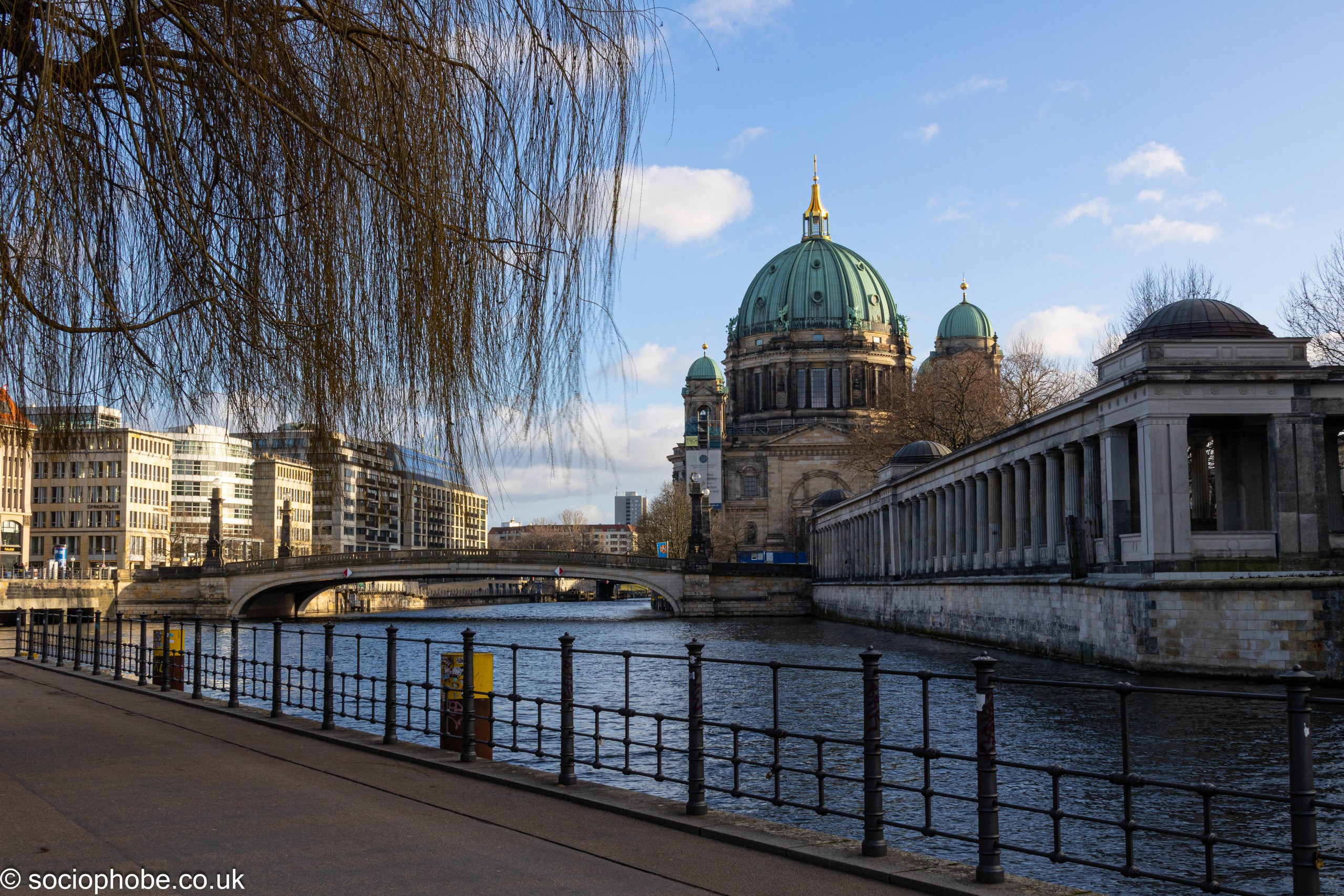
This famous boulevard is the centrepiece of Berlin and allows easy access to the main sights. The first linden trees were planted in the seventeenth century and the city has changed massively since then. I walked through the Brandenburg Gate and onto the Reichstag building before retracing my steps and walking around Berlin Cathedral and then Museum Island.
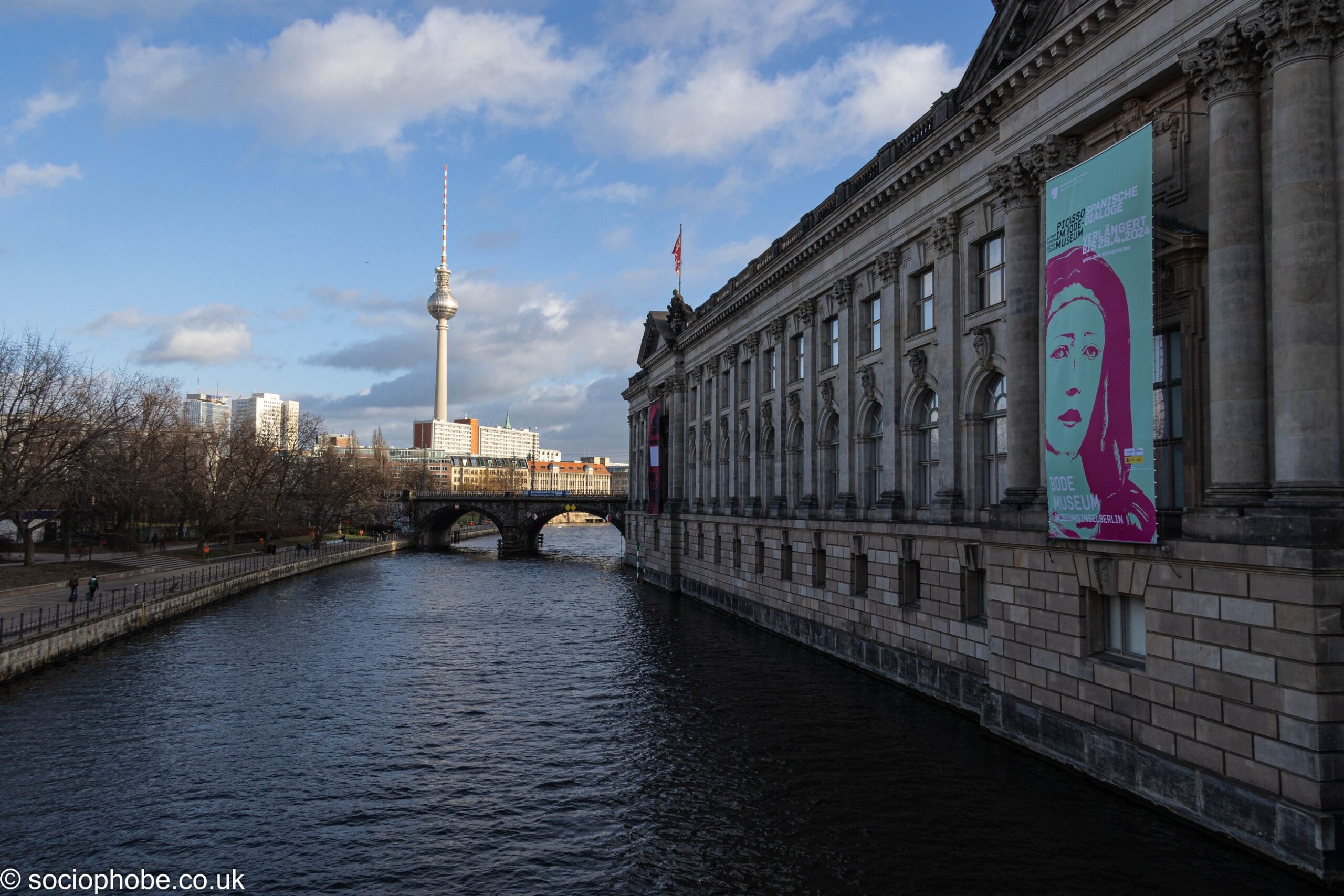
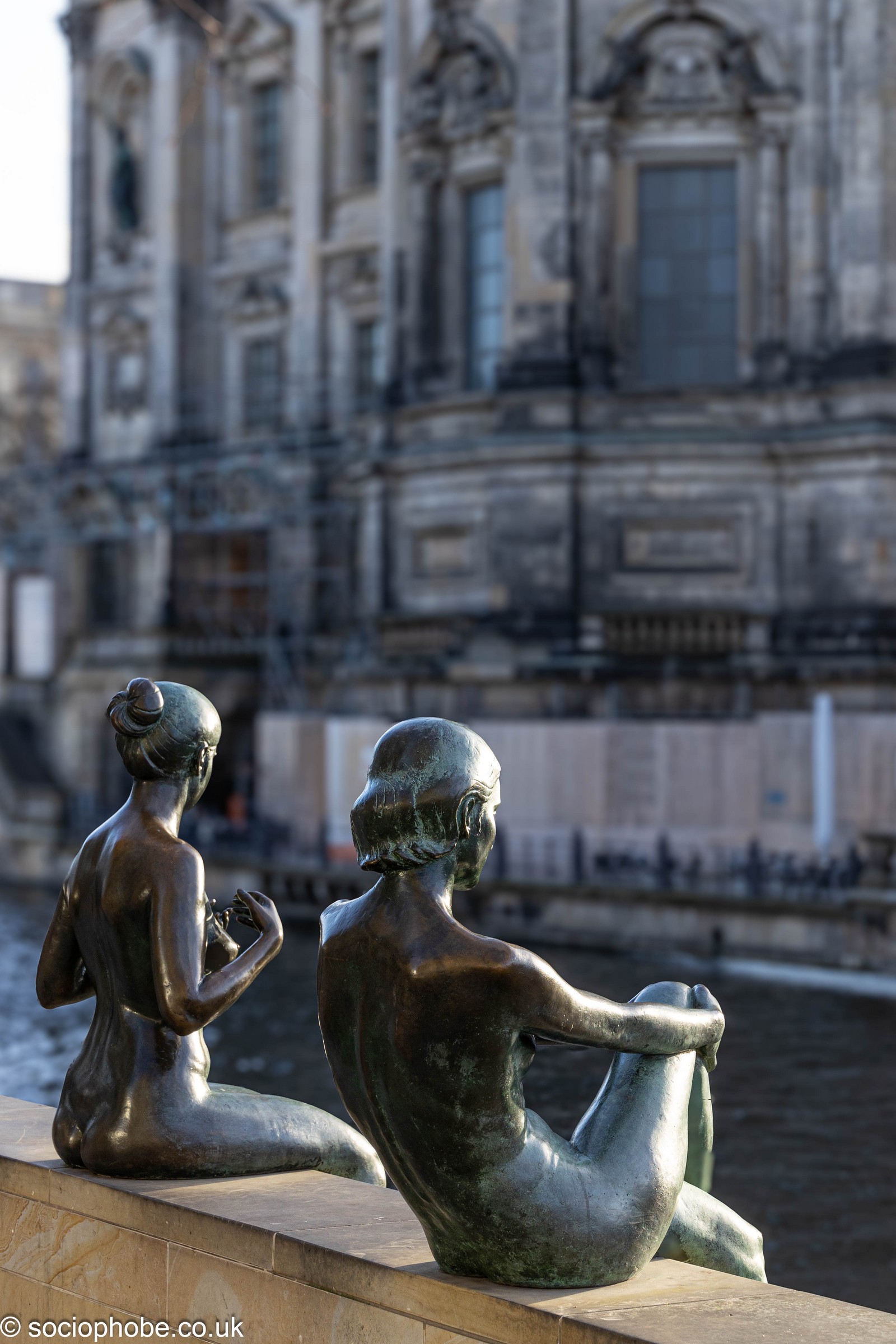
Pergamon Panorama
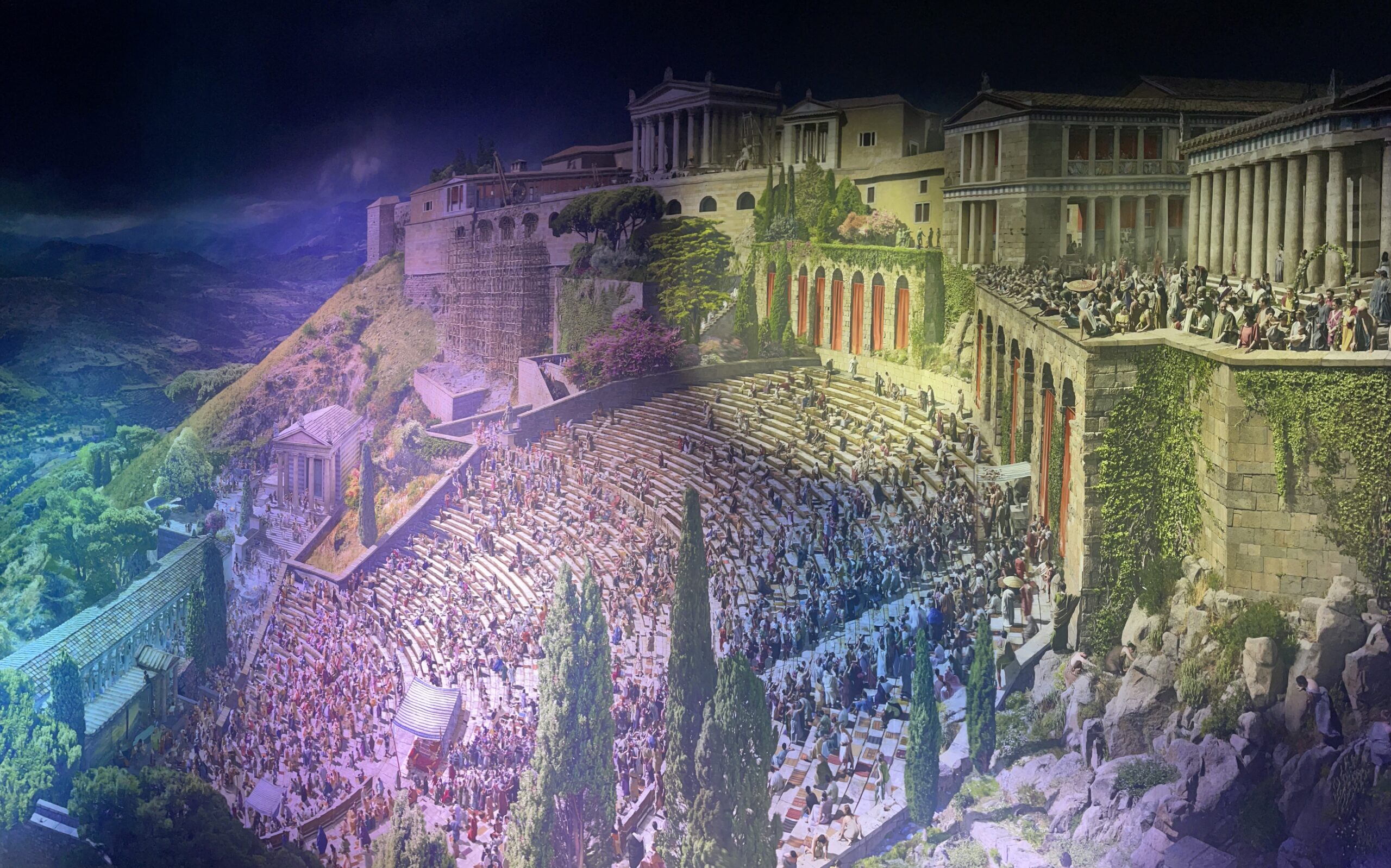
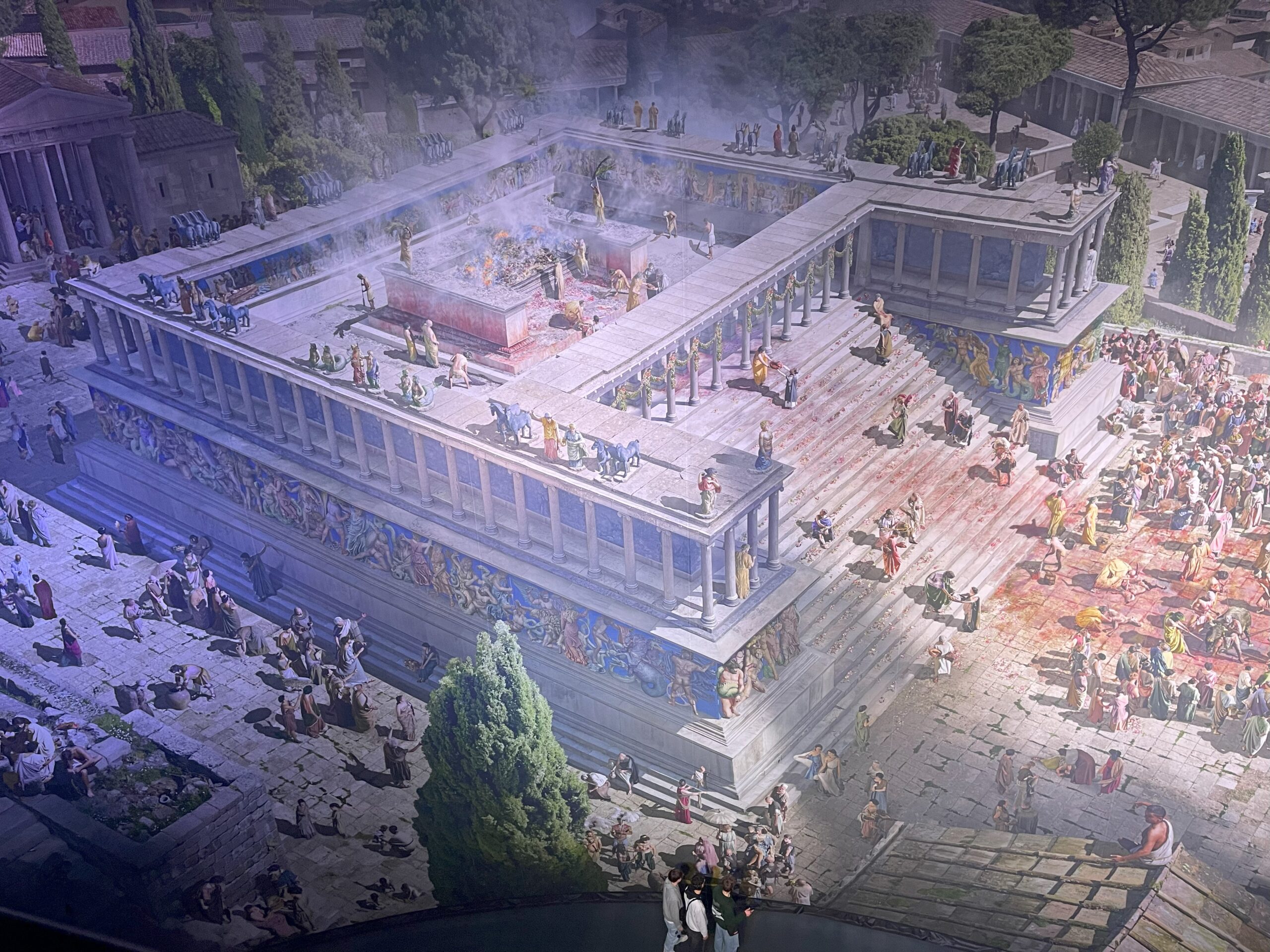
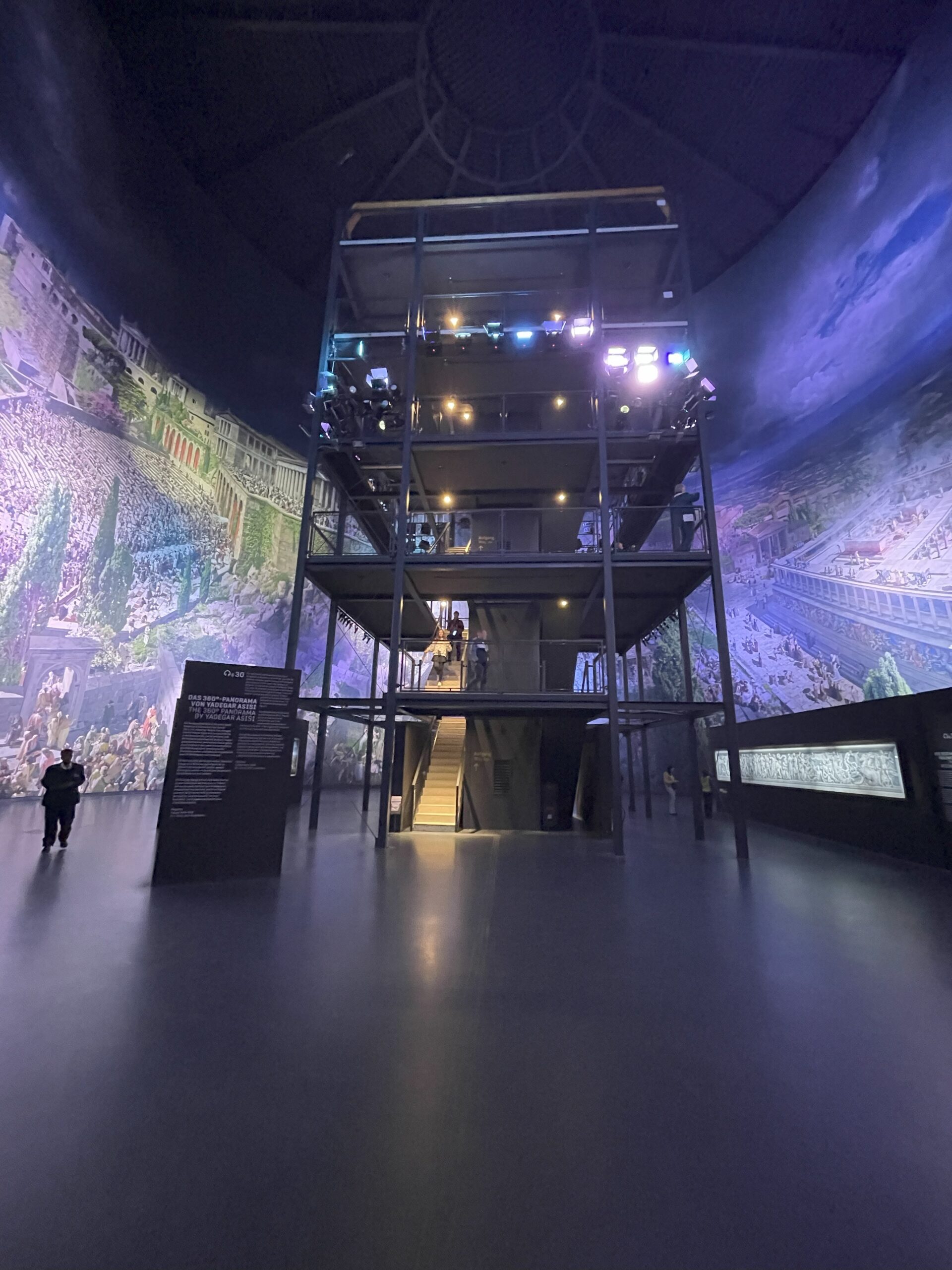
My final stop before returning to work was the Pergamon Panorama. I was hoping to see the Ishtar Gate again on this visit to Berlin but the Pergamon Museum is closed for renovations until 2037! The Panorama of Pergamon is open though and this was a fascinating visit.
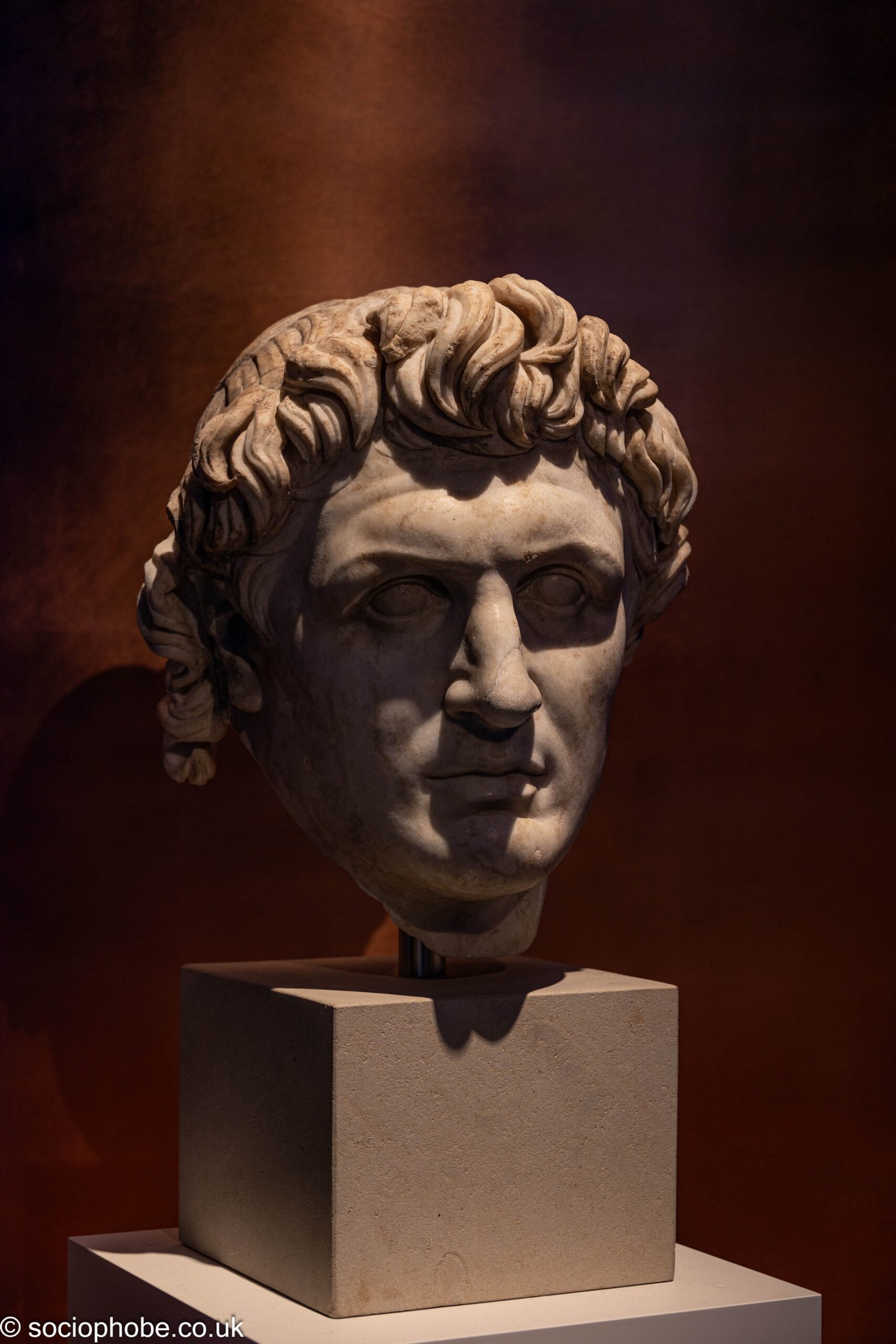
The city of Pergamon grew to fame as one of the successor states of Alexander the Great that flourished in the 2nd and 3rd centuries BC before being bequeathed to Rome. Under that Attalid rulers the city flourished, rivalling Alexandria and Antioch with spectacular statues and libraries.
The main museum houses the Pergamon Altar that was excavated largely intact and transported to Berlin in the late 19th century and reconstructed in the museum. The Panorama aims to put the altar in context within the city as a whole and there is a viewing platform that you climb and watch the sun rise and fall and listen to the hubbub of voices around the city as time passes. Having visited the city itself I found this a great way to put what I’d seen in perspective and to view a Hellenistic city in its original state. As well as the panorama there are a sample of the statues and stone friezes on display, along with extensive information boards about the city and its history.
Pho Co Vietnamese Restaurant
After yesterday’s meal we decided to opt for Vietnamese on our second night so we could get some fresh veg. We had to book the table as the place was packed and service was amazingly efficient, in and out in 45 minutes. The menu had loads of options but we both went for the red curry, me with chicken and Nat with tofu.
It was so nice to have crisp and fresh veg again and the meal was delicious and good value. It wasn’t the sort of place you’d go to relax though as it was cramped and noisy, a victim of its own success. Good value though and a nice end to the day.
Magdeburg
Friday was our day off so we’d chosen Magdeburg for our day trip, about 90 minutes by train from central Berlin. The Wiki page has this summary of Magdeburg:
Otto I, the first Holy Roman Emperor and founder of the Archdiocese of Magdeburg, was buried in the city’s cathedral after his death. Magdeburg’s version of German town law, known as Magdeburg rights, spread throughout Central and Eastern Europe. In the Late Middle Ages, Magdeburg was one of the largest and most prosperous German cities and a notable member of the Hanseatic League. One of the most notable people from the city is Otto von Guericke, famous for his experiments with the Magdeburg hemispheres.
Magdeburg has experienced three major devastations in its history. In 1207 the first catastrophe struck the city, with a fire burning down large parts of the city, including the Ottonian cathedral. The Catholic League sacked Magdeburg in 1631, resulting in the death of 25,000 non-combatants, the largest loss of the Thirty Years’ War. During World War II the Allies bombed the city in 1945 and destroyed much of the city centre.
After World War II, the city belonged to the German Democratic Republic from 1949 to 1990. Since then, many new construction projects have been implemented and old buildings have been restored. Magdeburg celebrated its 1,200th anniversary in 2005.
The train trip was uneventful and I think I dozed through quite a lot of it! The scenery was incredibly flat and the dull and cloudy day didn’t help. We got off the train and for the first few minutes we were actually thinking we’d made a big mistake. The architecture was horrible concrete monstrosities, buildings were run down and there was nothing to appeal at all.
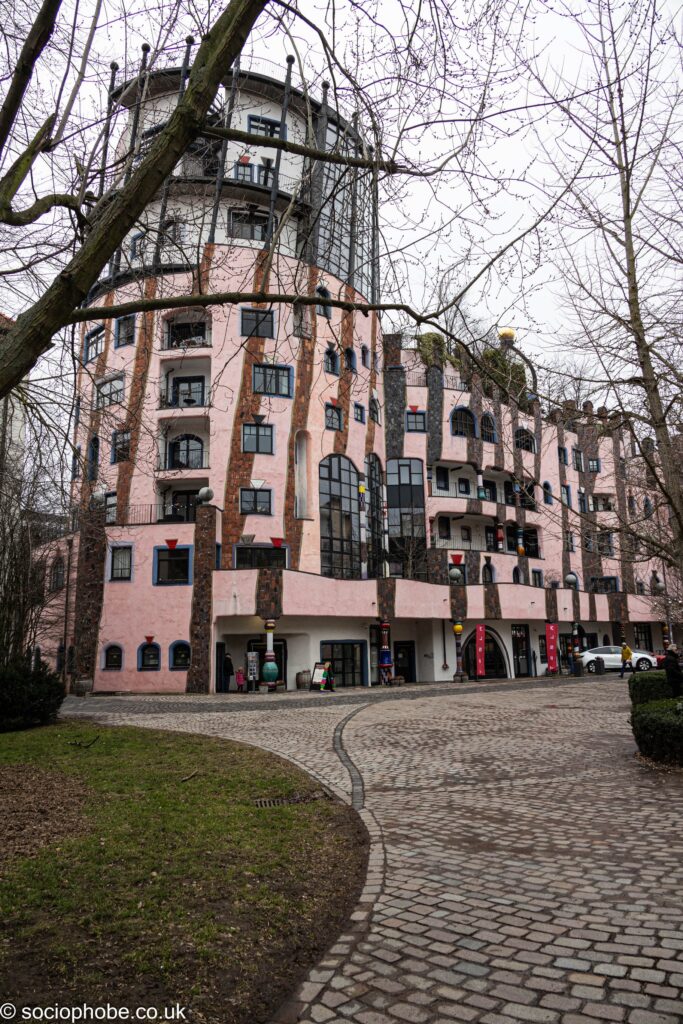
After 5-10 minutes walk though we got to the Altstadt and we could see the spires of several large churches as well as some grand town houses. There was also the distinctive pink building complex known as the Green Citadel to brighten things up. We had a quick wander round as almost nothing seemed to open before 10 and a lot of the attractions were actually closed until 11. There was obviously a reason why our early train ticket was so cheap!
We had a cup of tea in the Alt Cafe, a beautiful traditional German cafe, full of old photographs of the city. Service was lovely and it was pleasant to sit and absorb the atmosphere before heading out to carry on with our itinerary.
Kunstmuseum
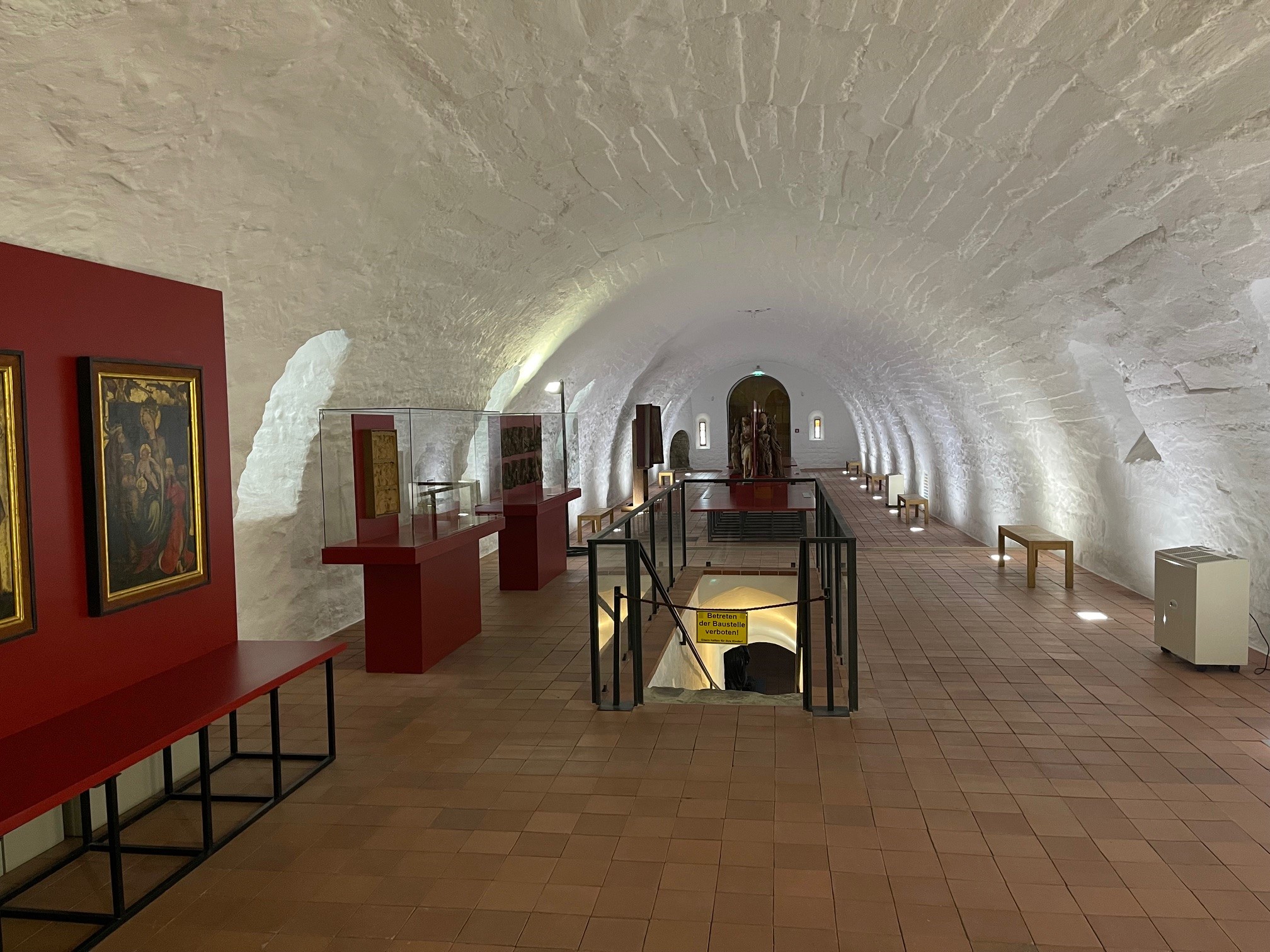
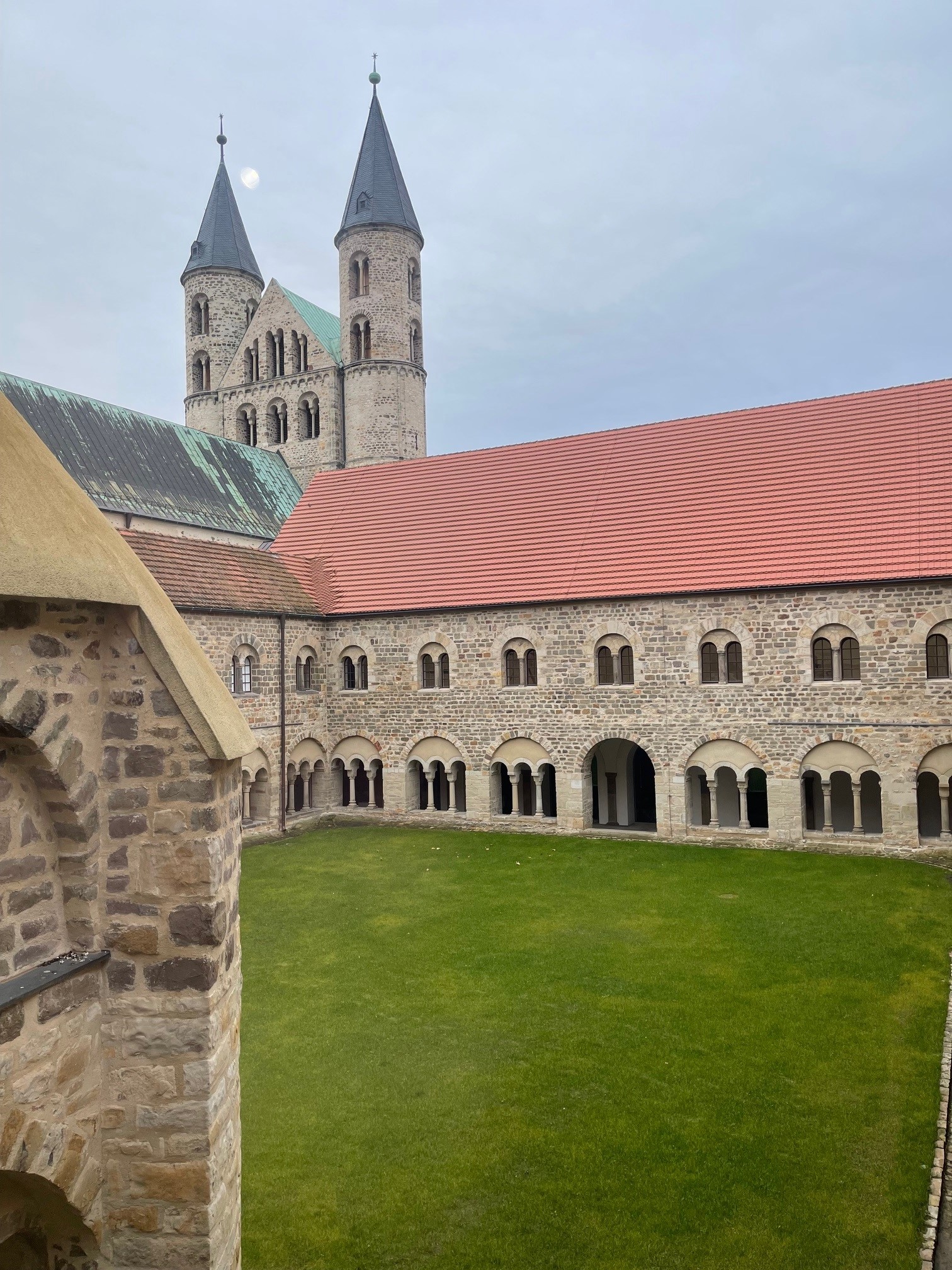
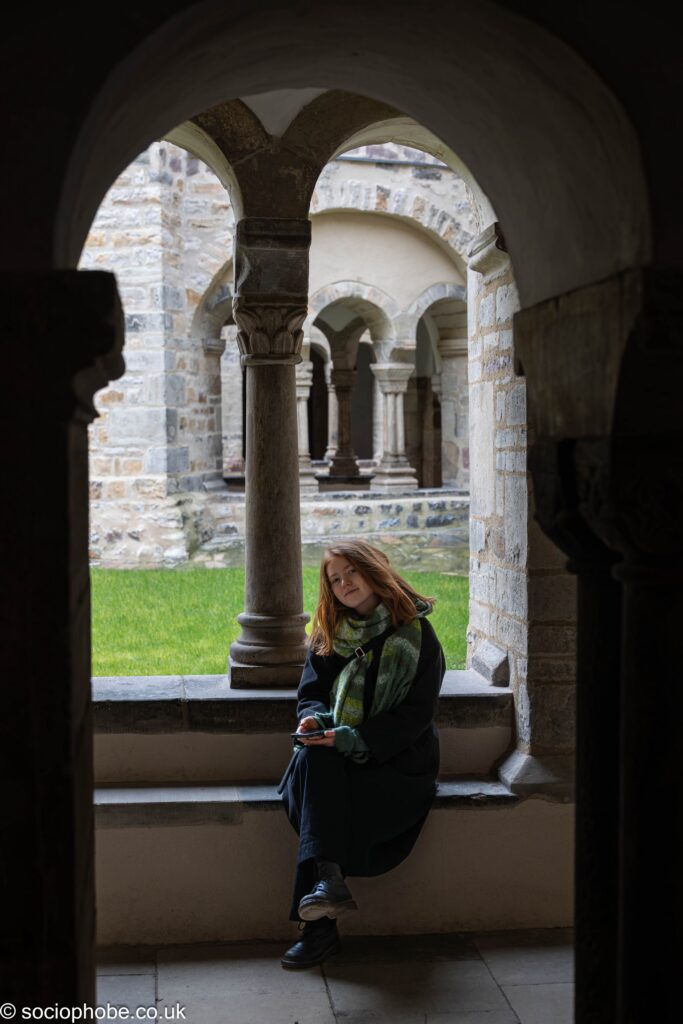
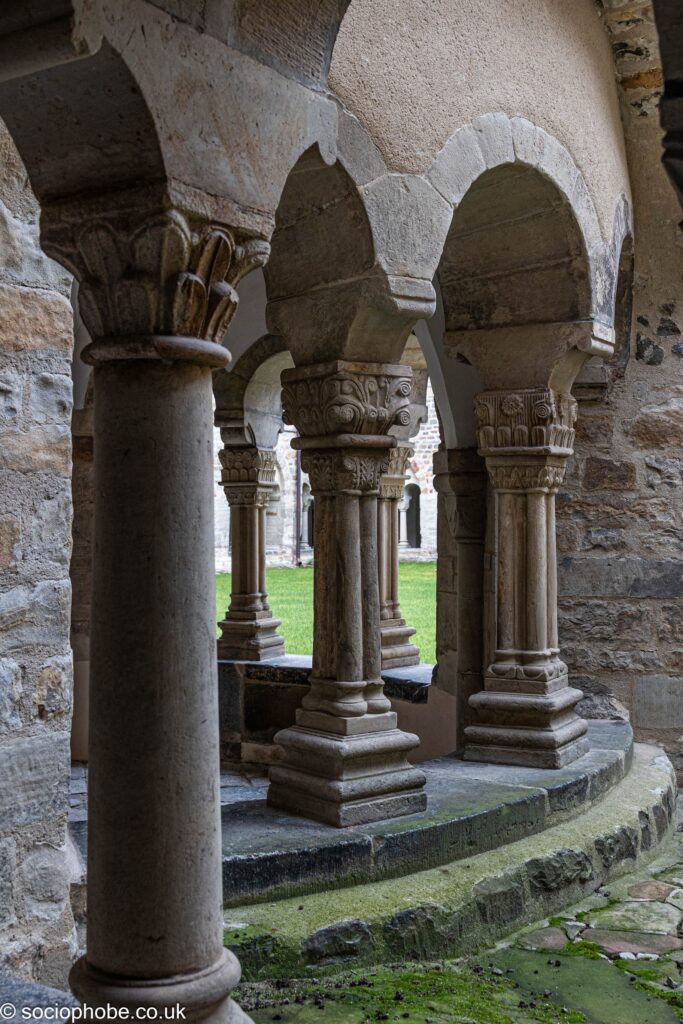
One of the many churches in the city had been converted into an art gallery. The Kunstmuseum used the original building to great effect and also had the medieval cloisters for us to walk around. This meant that Nat could get her modern art fix and me my medieval art fix in the same place!
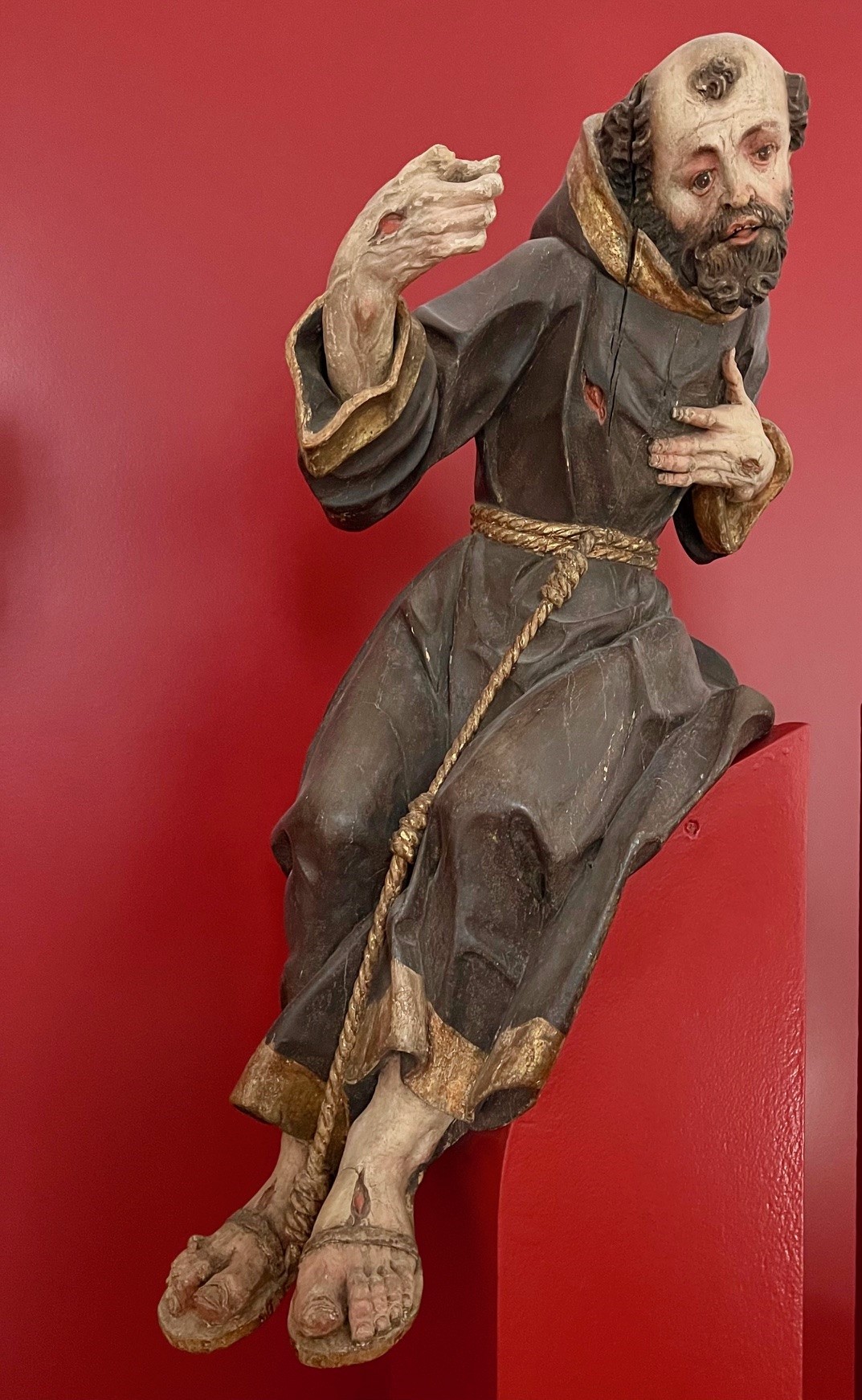
The city has been so thoroughly sacked and bombed that there seemed to be very little original art from before the 18th century and the exhibits displayed were to give an idea of what would have been there although the actual exhibits were from all over Germany and beyond.
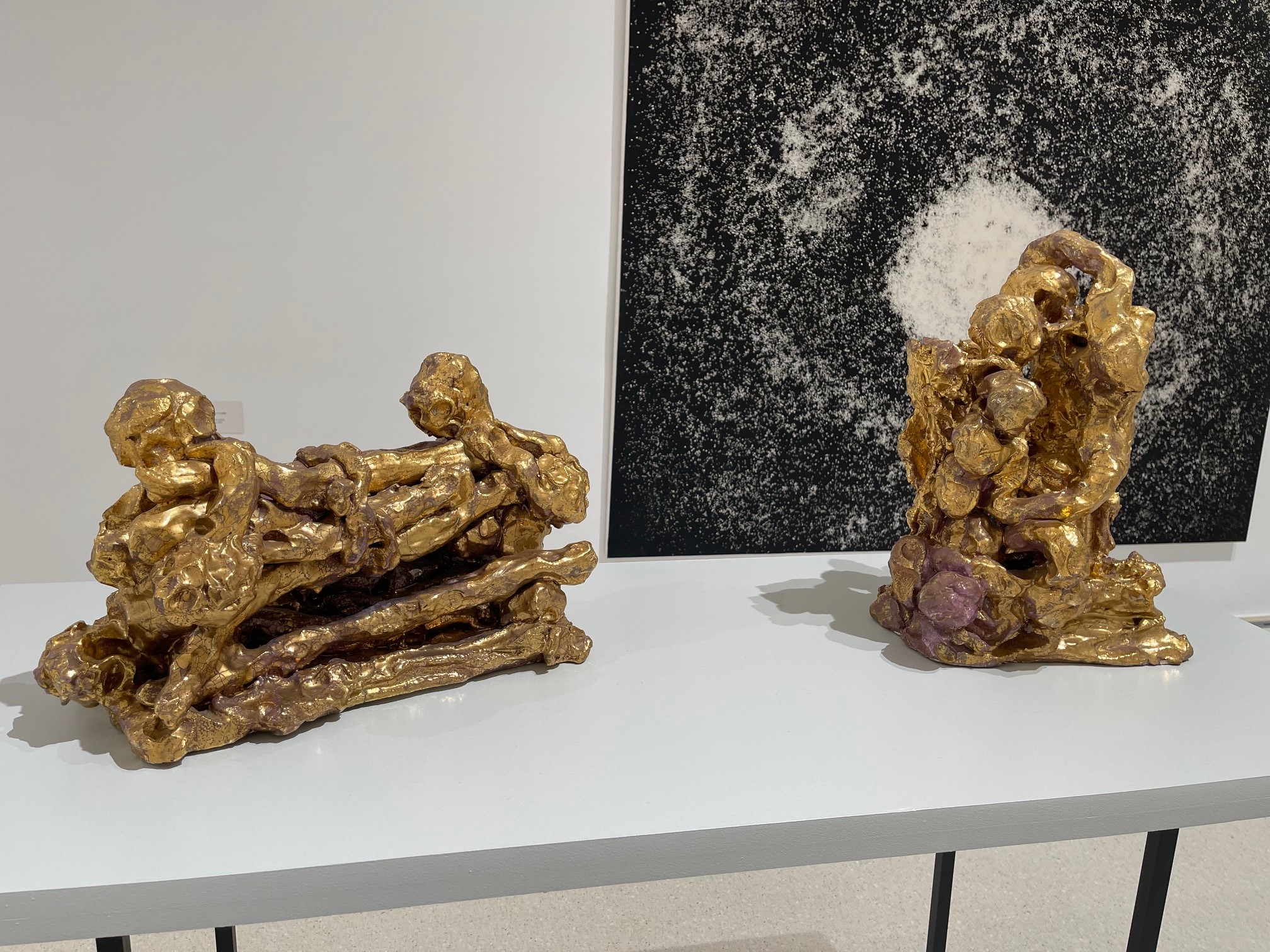
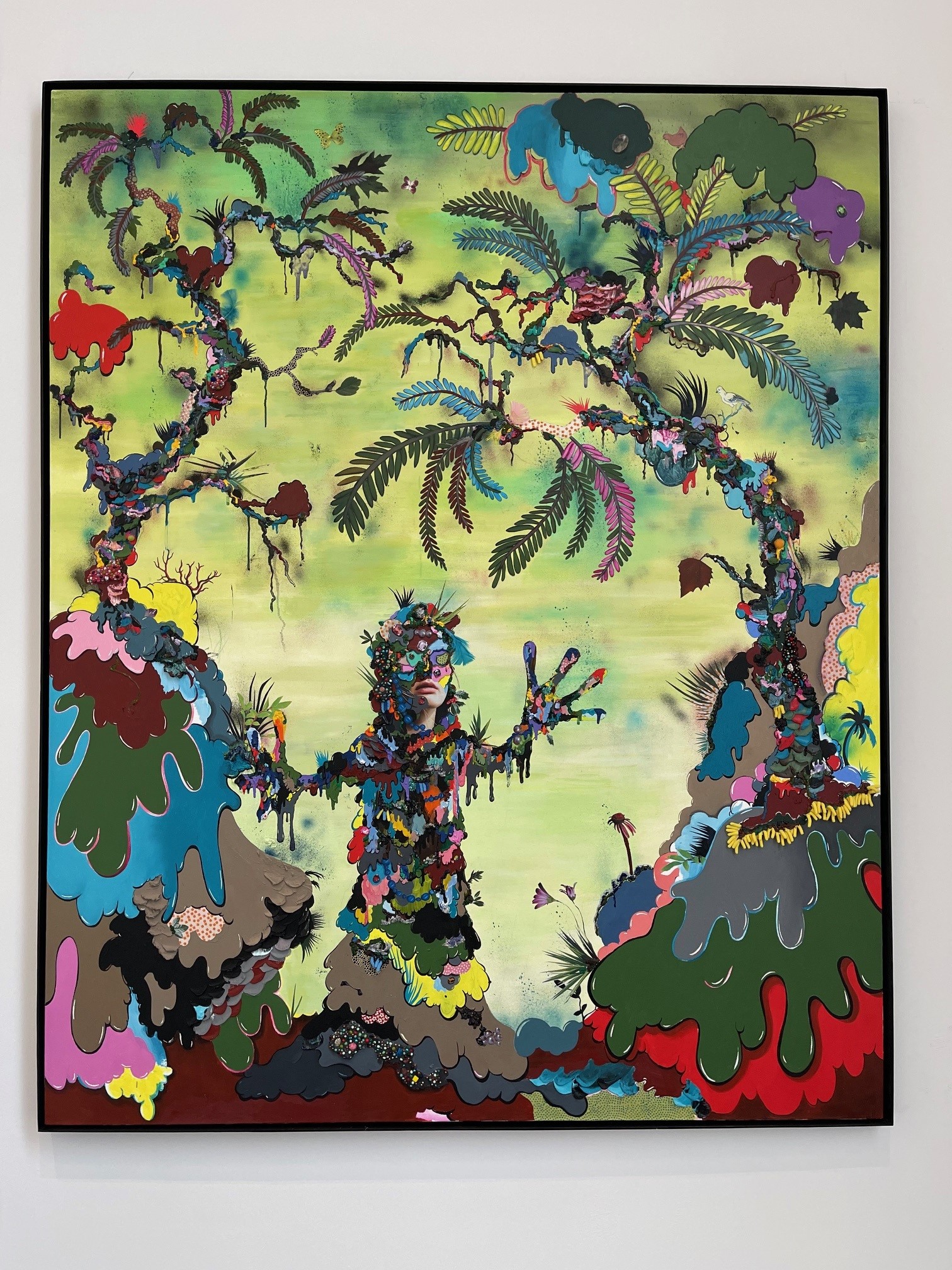
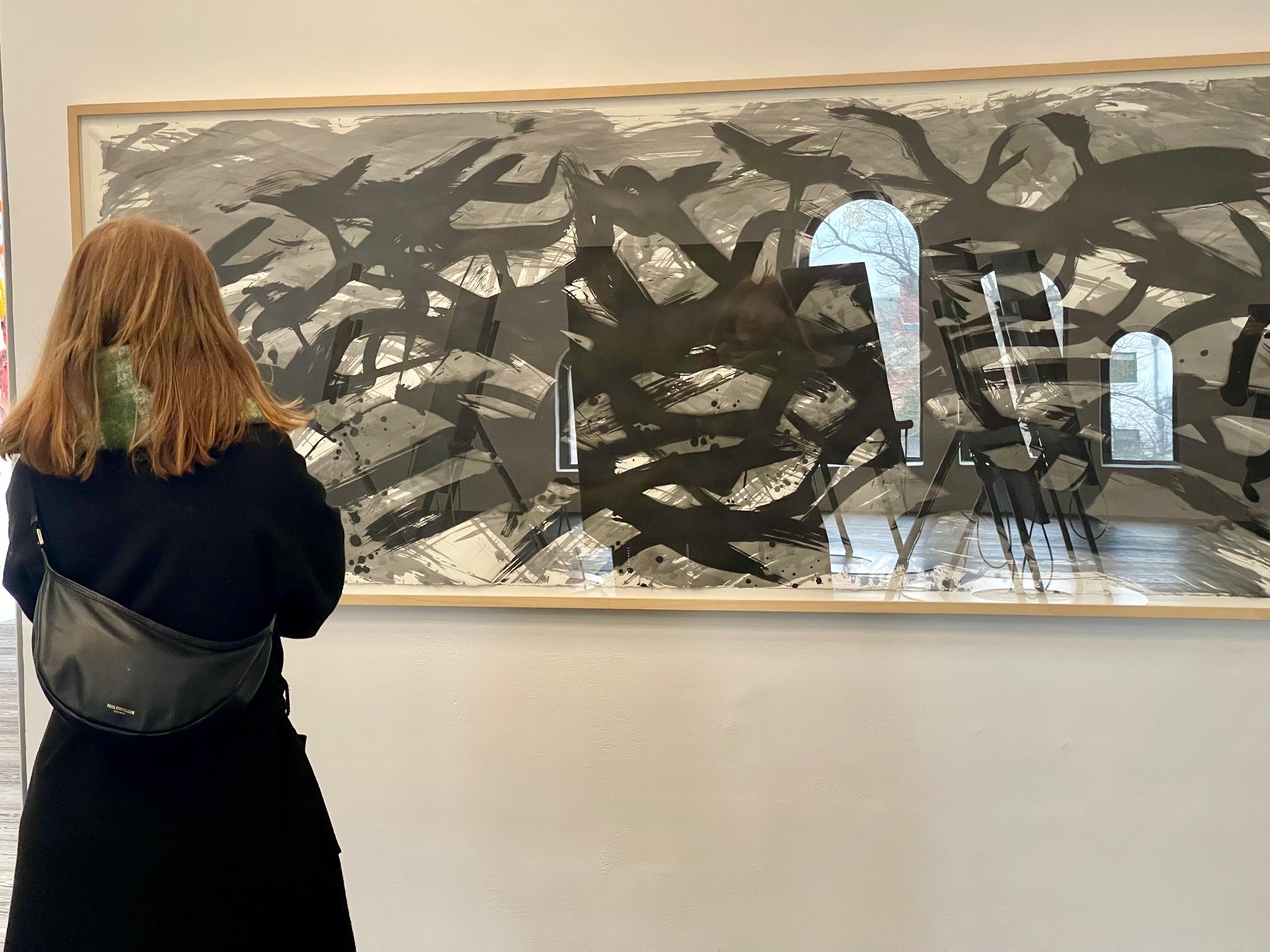
The modern art was, as expected, largely undecipherable but there were some that even I was able to appreciate, helped by the fabulous setting. The staff were very helpful and enthusiastic which also encouraged us to spend longer there.
Magdeburg Hubbrucke
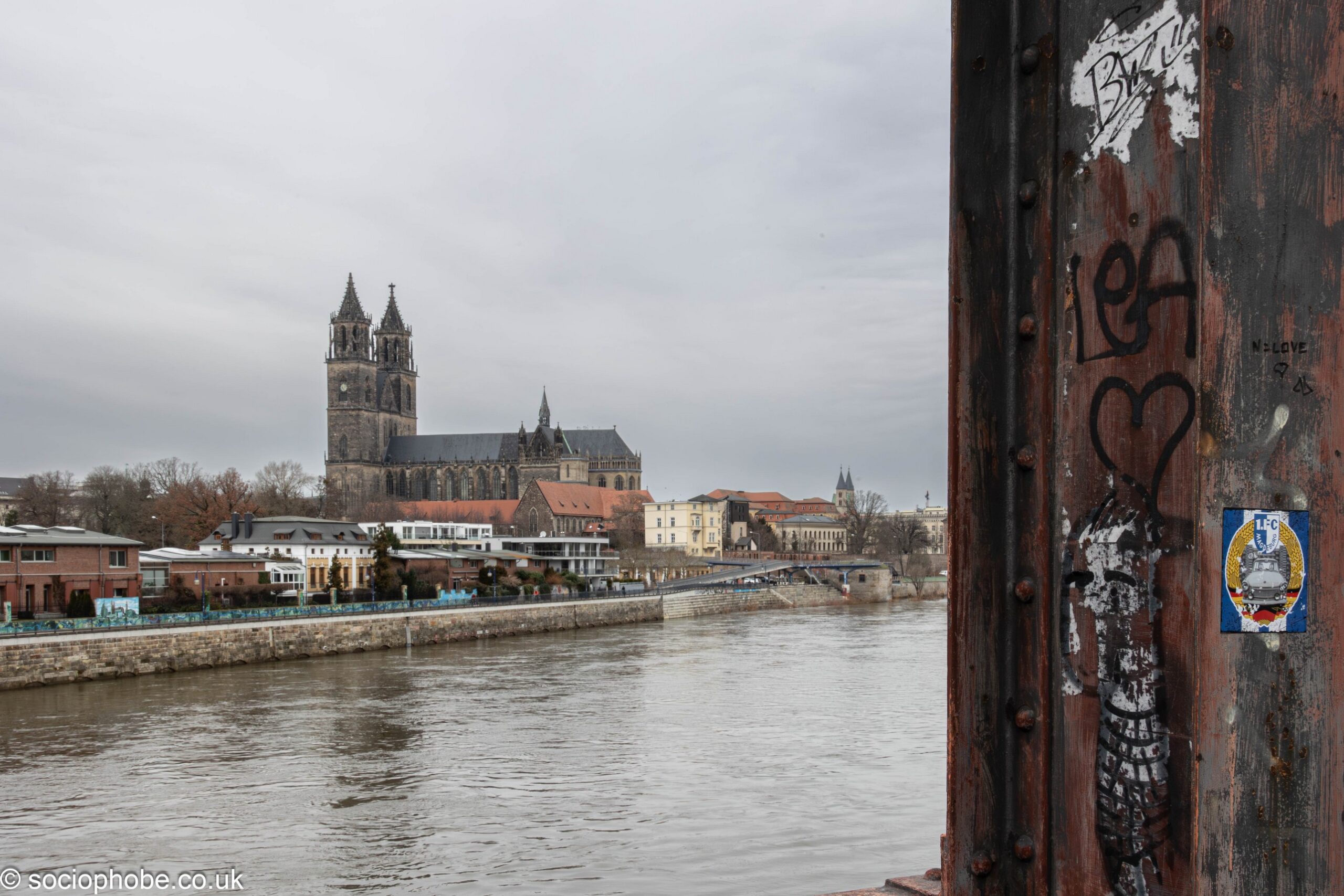
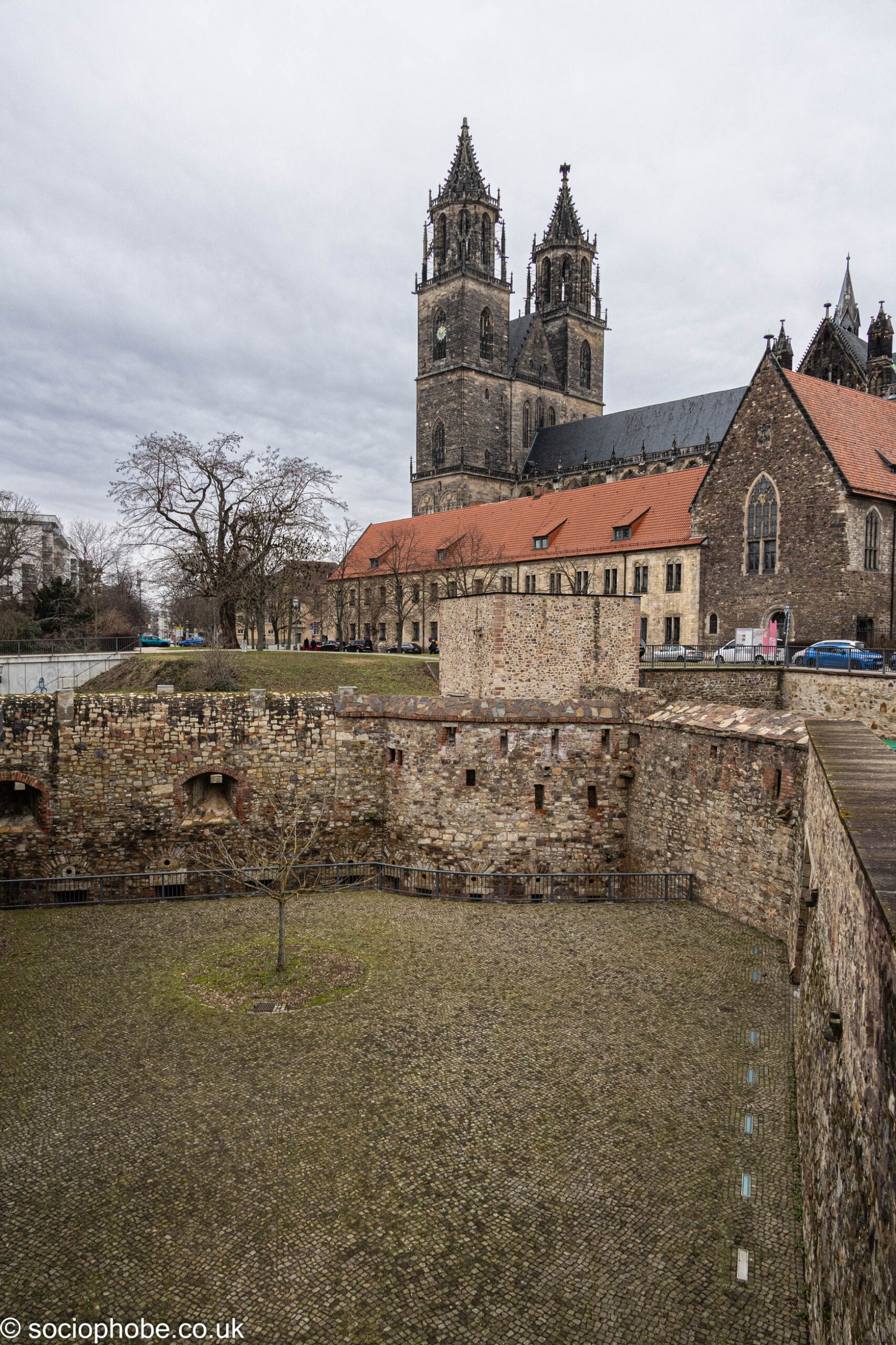
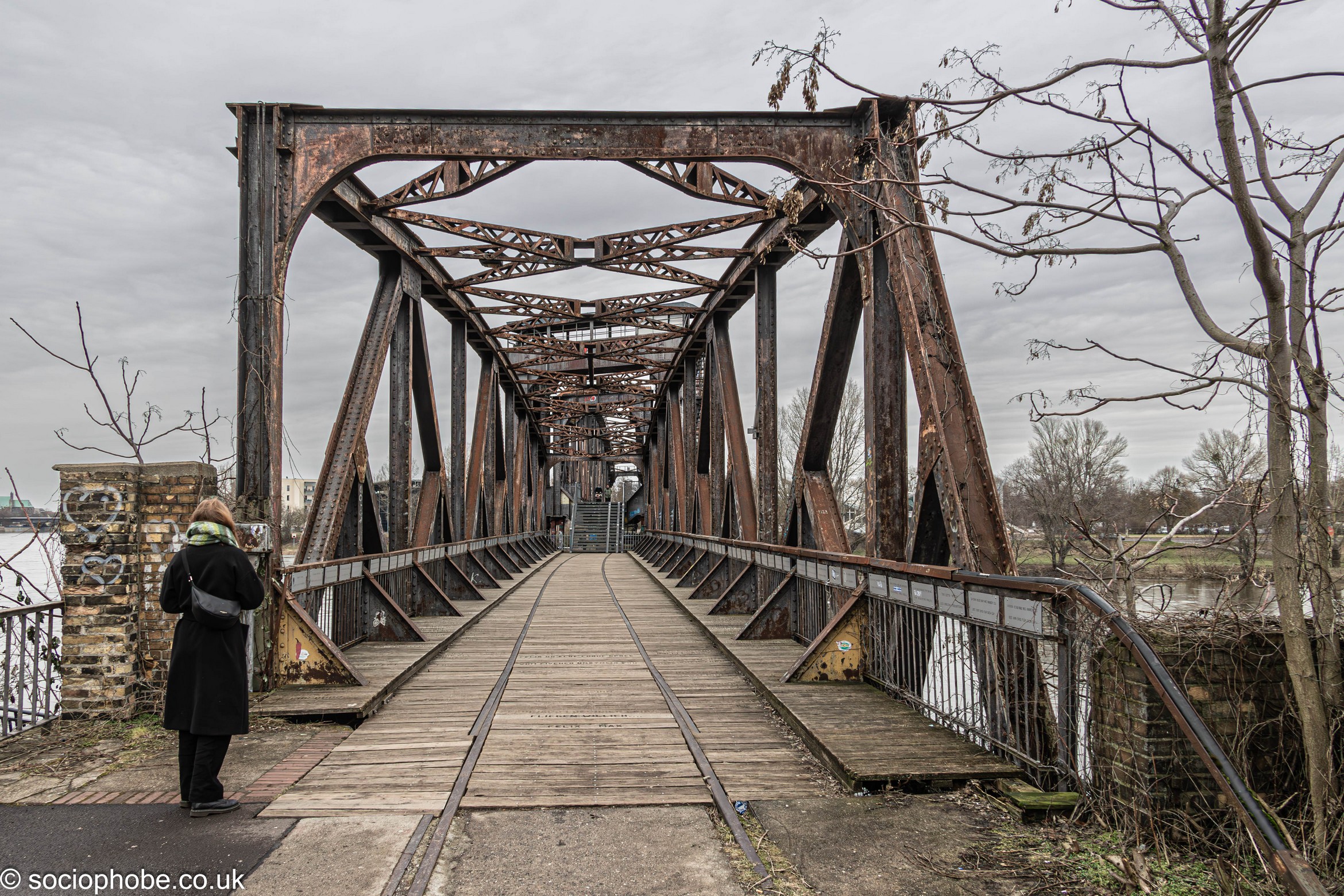
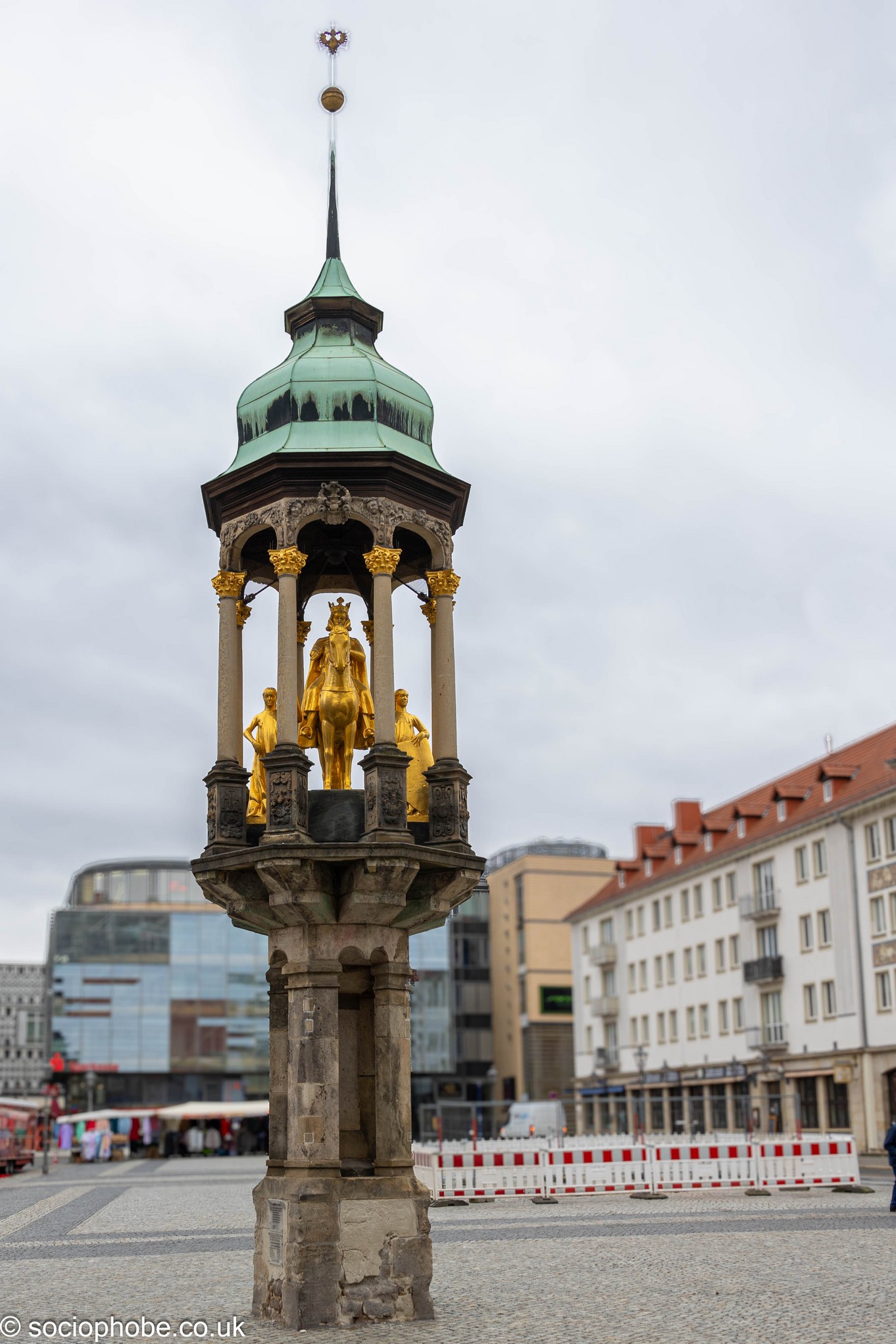
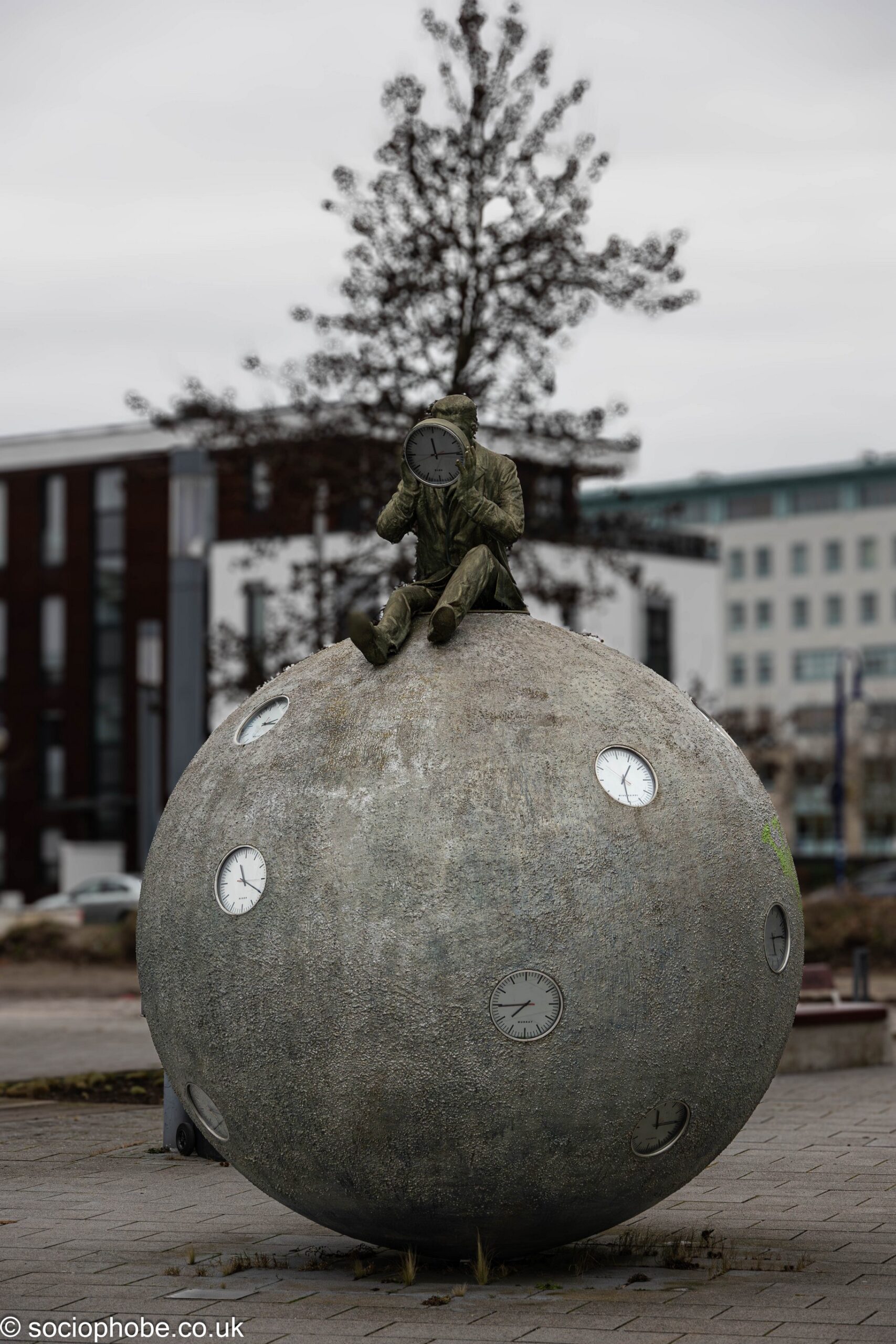
After leaving the art museum we wanted a bit of a walk so we ambled along the river bank, crossed the Hubbrucke and then walked up the other side past the scenic gravel pits and building site. There was some interesting sculpture and the remains on some 19th century fortifications but we weren’t rushing as there really wasn’t a lot to see, not helped by the dull and drizzly day.
Thies Cafe
For lunch we stopped at Thies Cafe, in the centre of the old town. The food here was lovely, both of us having a really nice winter salad with halloumi which was well presented and filling. The cakes looked superb too but I had been such a cake glutton I couldn’t face another. Yet.

Magdeburg Cathedral
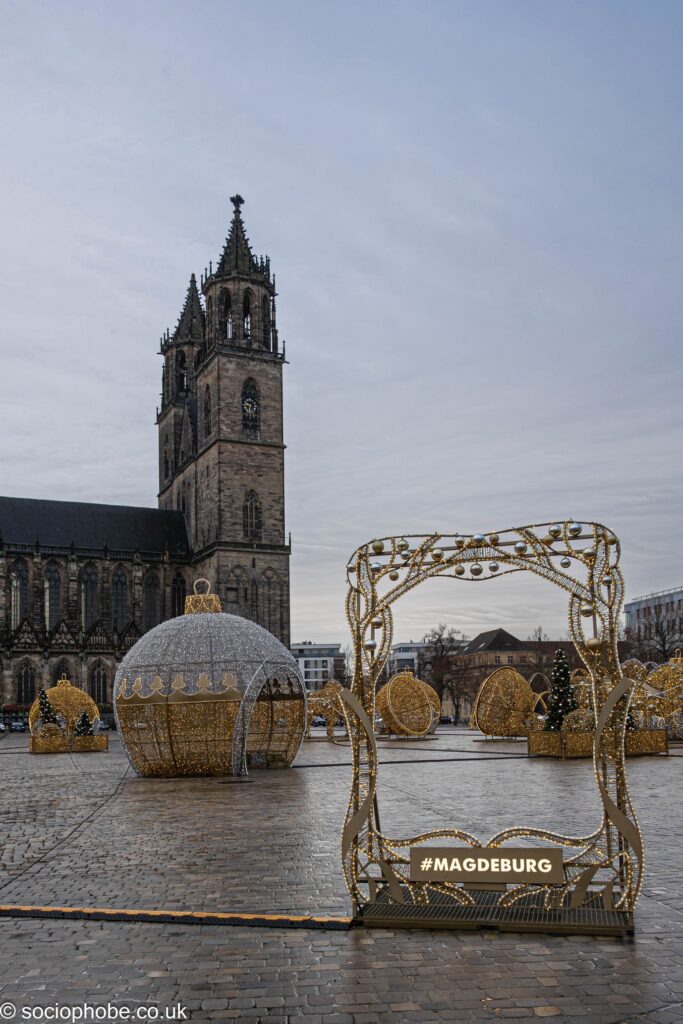
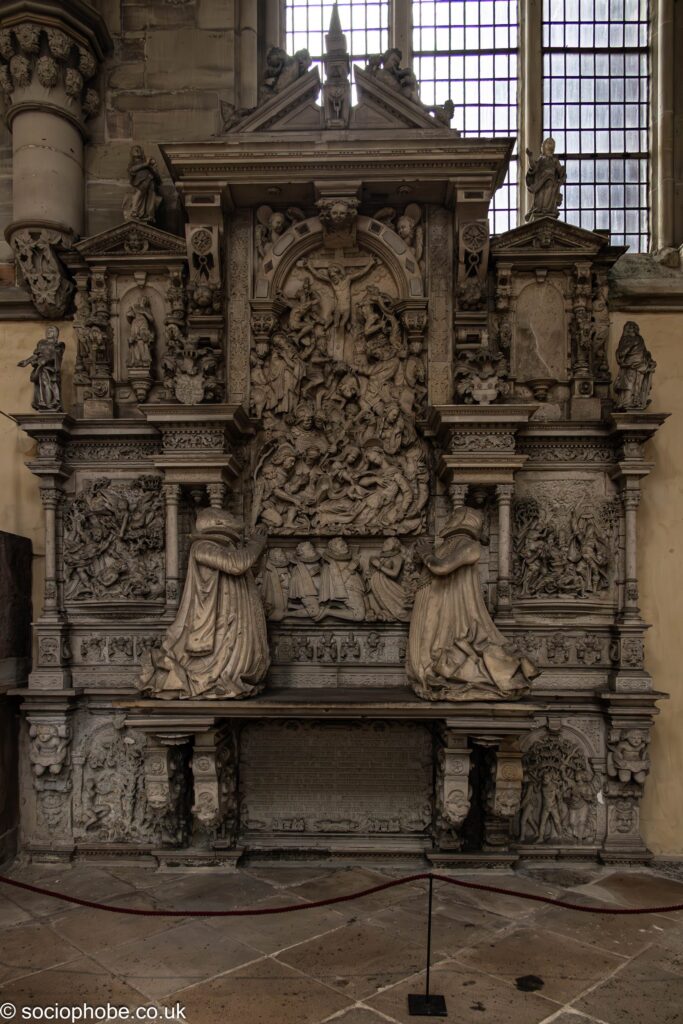
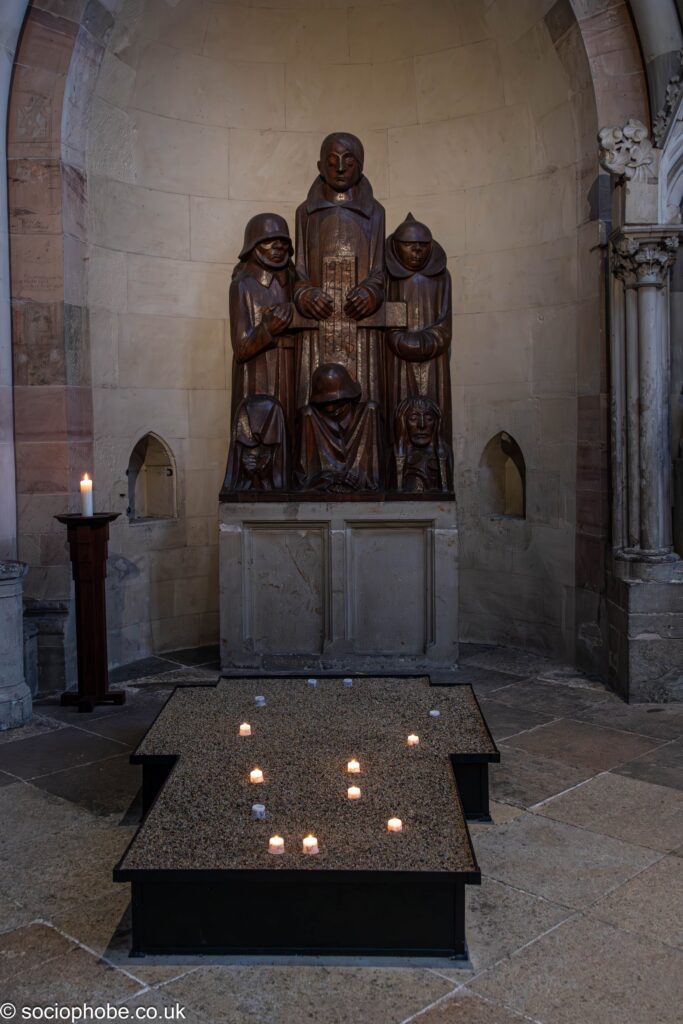
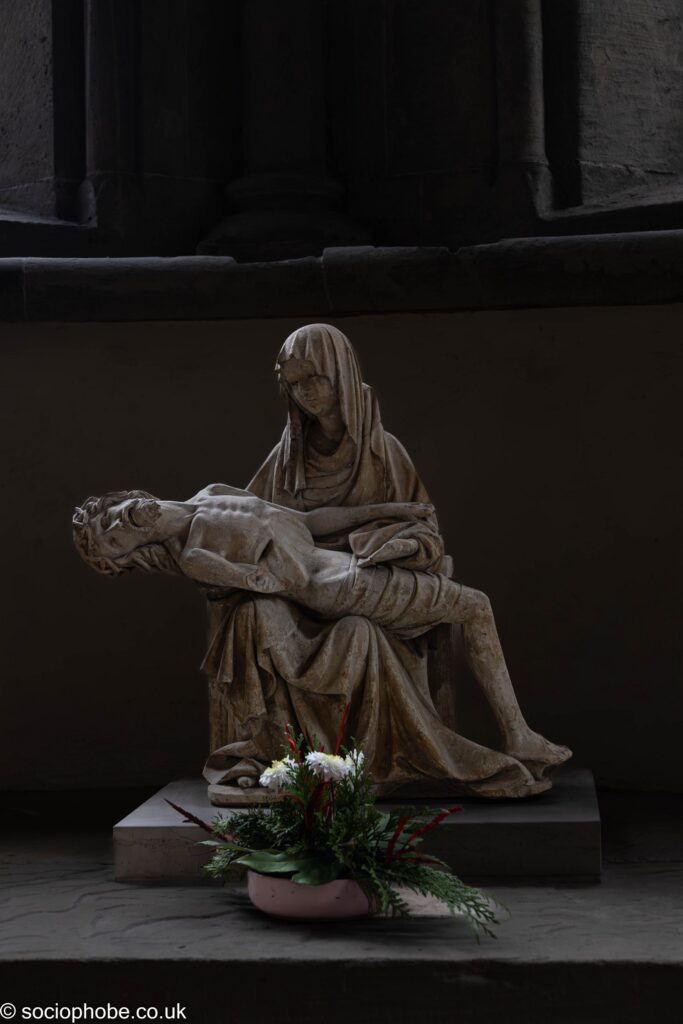
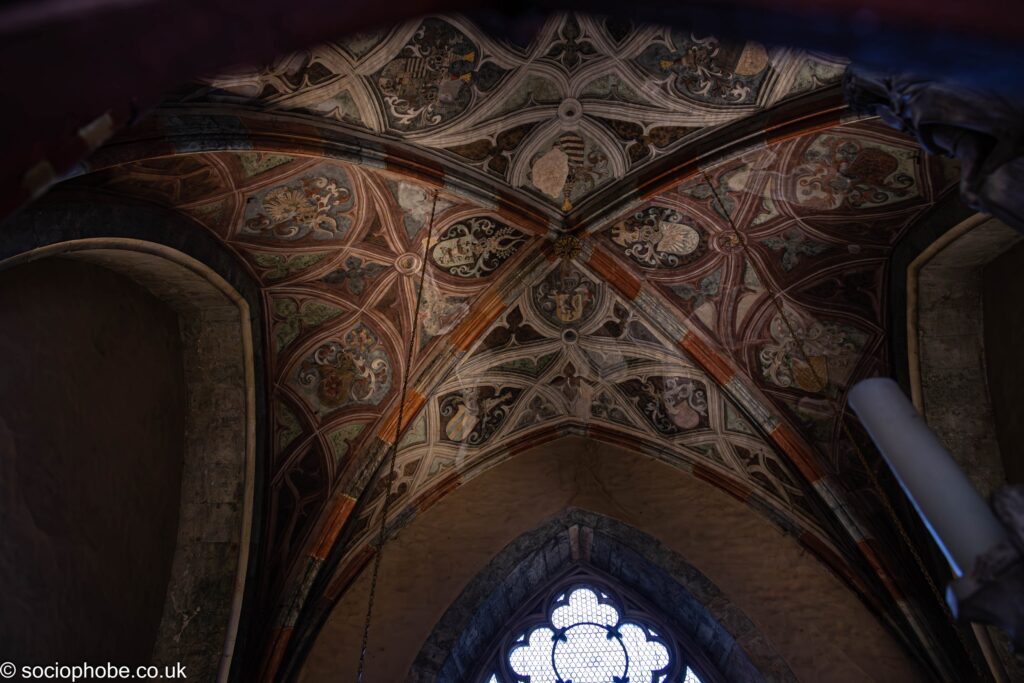
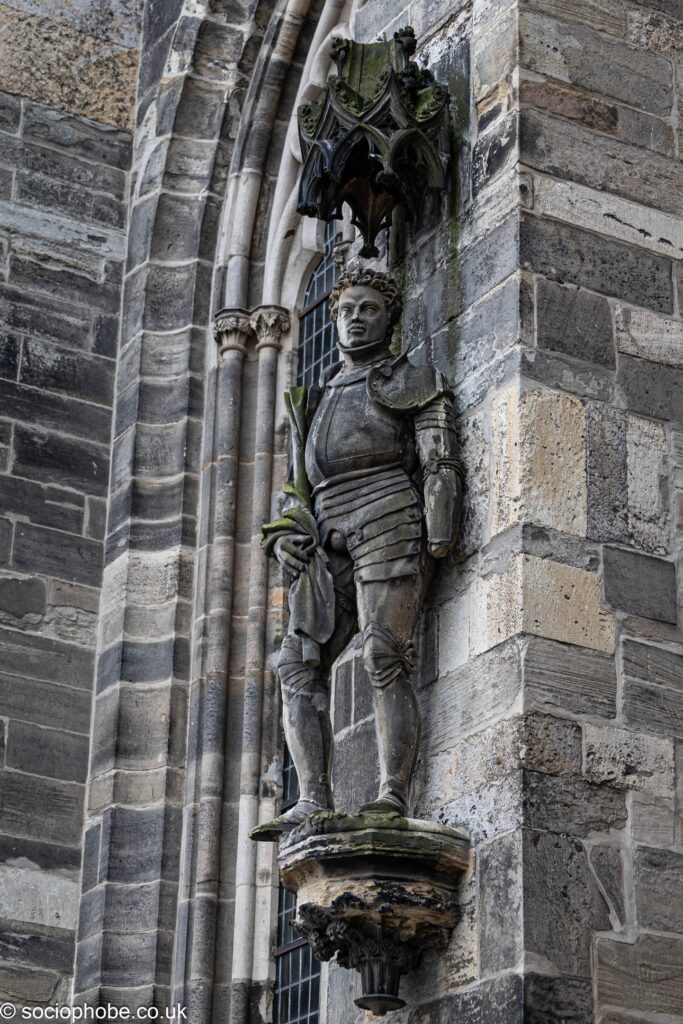
The cathedral was certainly the highlight of the city and the open square next to it enabled you to get a real appreciation of the size. The summary below is from the official website:
The striking Cathedral of Saints Maurice and Catherine is the most famous symbol of Magdeburg. From whichever direction you approach the city, the first thing you see is its almost 100-metre-high towers and powerful body. Inside, there are countless details to discover, each with its own story.
The cathedral owes its existence to an endowment by King Otto the Great in 937. In 1207, the Romanesque building was destroyed in a devastating fire in the city. Archbishop Albert had the cathedral built in its present form on the same spot – using many of the columns which had not been destroyed, and in the style of the newly emerging French Gothic architecture. He was thus the architectural pioneer of the era in Germany.
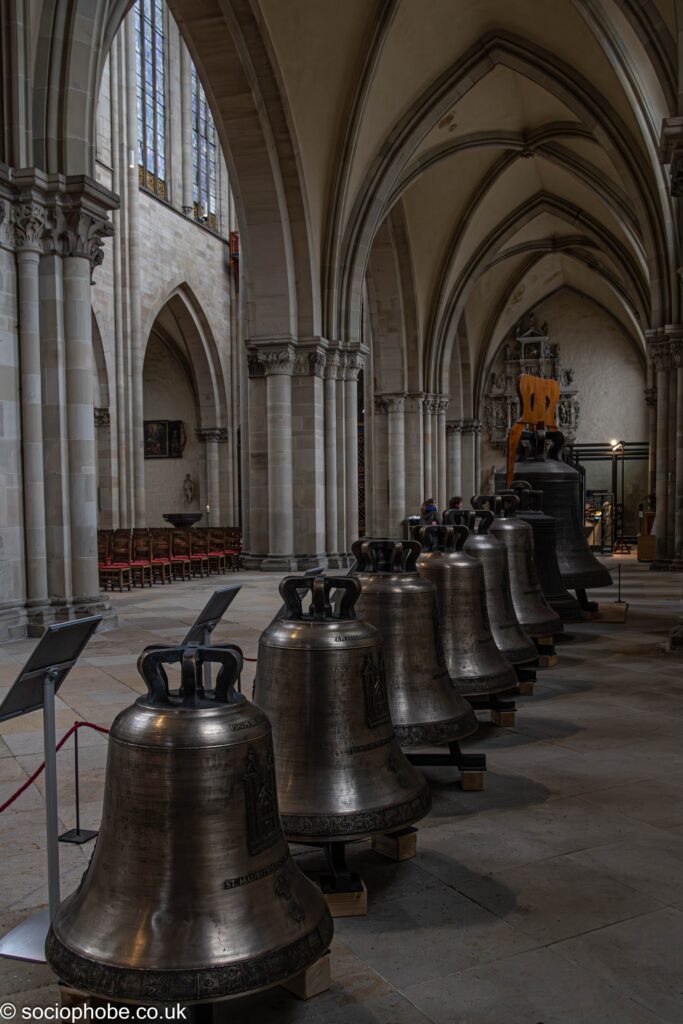
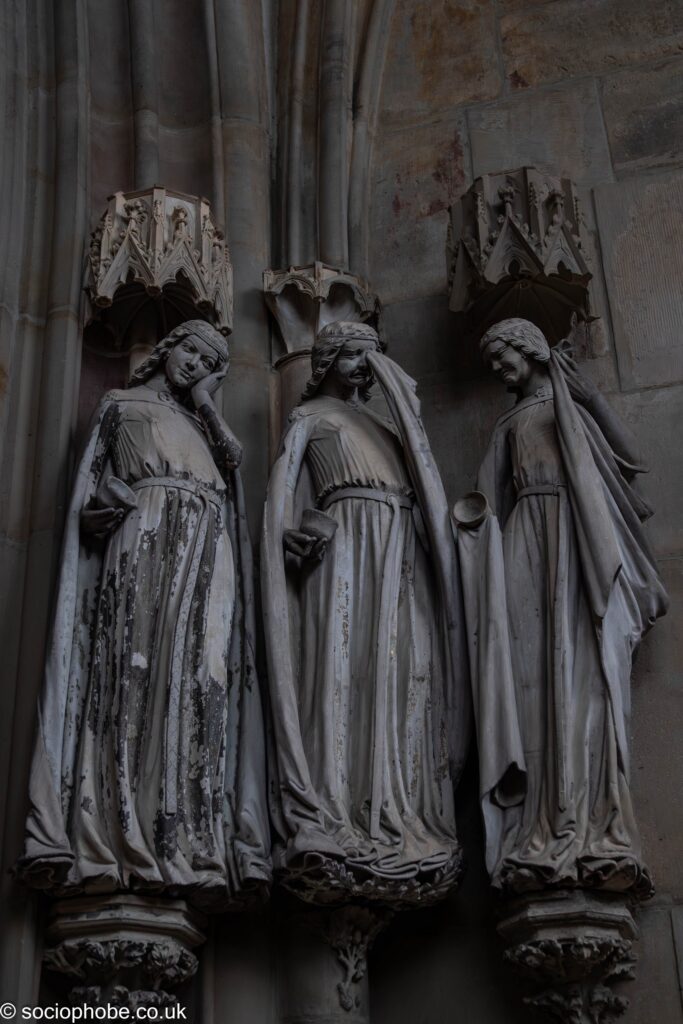
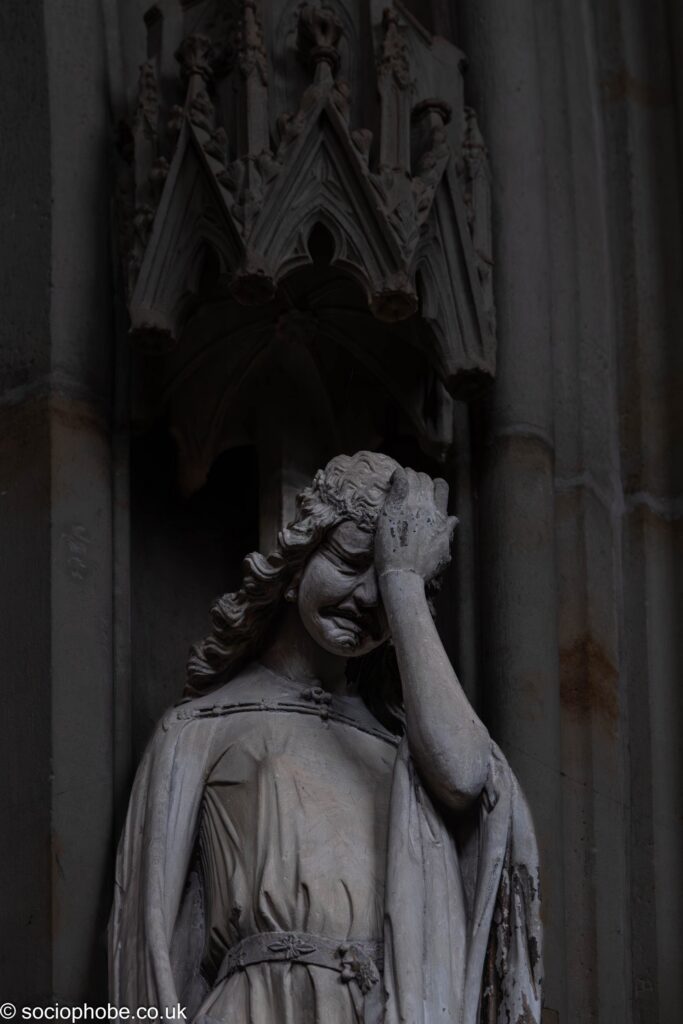
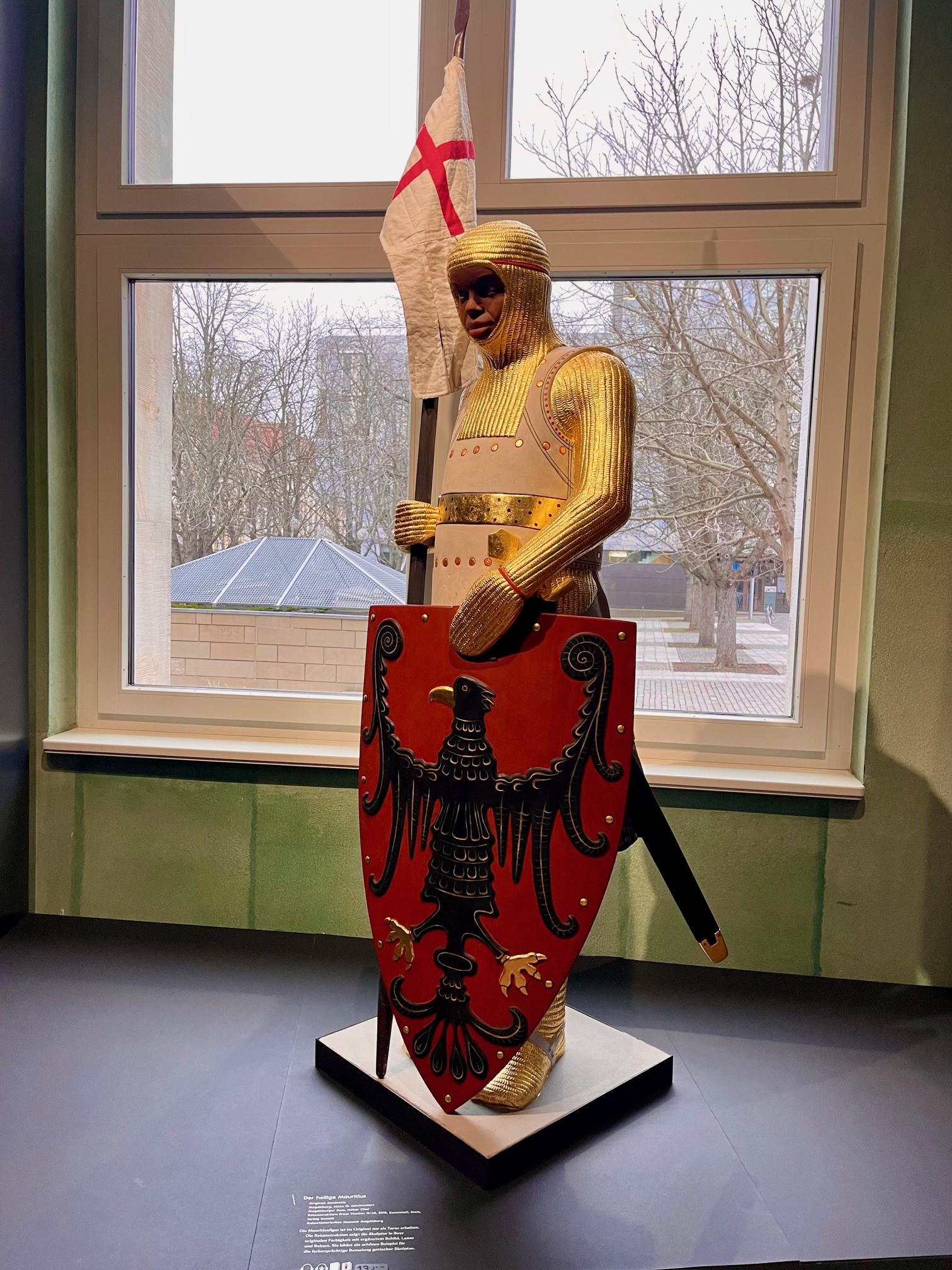
Over the full 300 years of its construction, many other pieces were added of global artistic renown, such as Saint Maurice or the ten sculptures of the “Wise and Foolish Virgins”. And in the north tower, the huge bells – the heaviest of which weighs 9 tonnes – leave visitors feeling tiny by comparison. The arduous climb is rewarded with an incredible view.
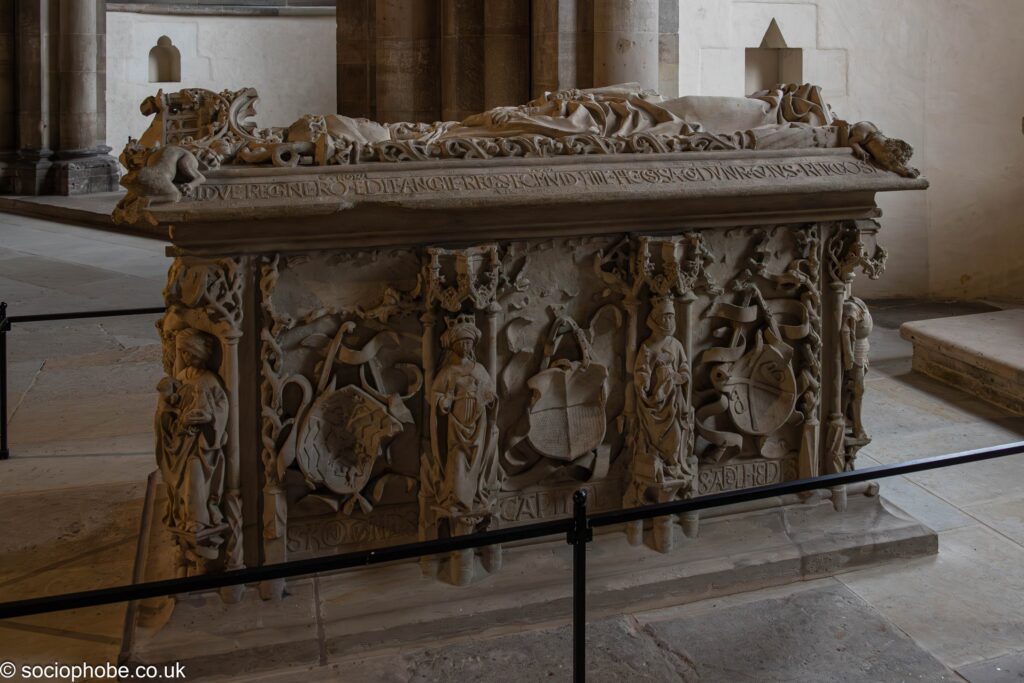
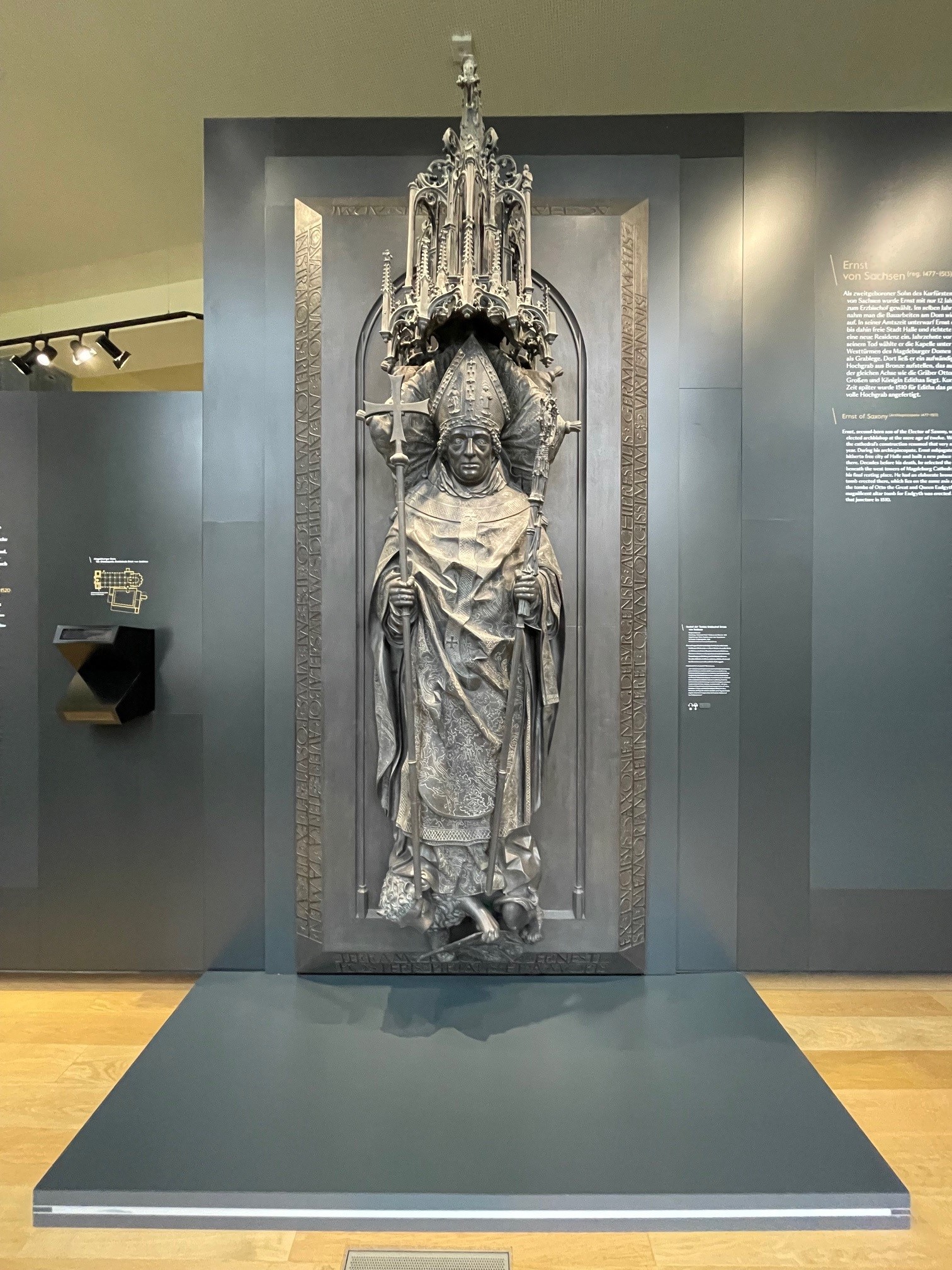
We didn’t see much information in English and I wasn’t even aware you could climb up one of the towers to see the view. Ah well, my own fault for lack of research. It was a great visit and nice to see the tomb of the English Empress, Edith.
Ottonianum Cathedral Museum
Our final visit was to the cathedral museum of Magdeburg, strangely, right next to the cathedral. The Dommuseum Ottonianum Magdeburg was well laid out and split into three main topics, all set within the context of German Imperial history. These include Emperor Otto the Great and Queen Edith, the Archdiocese of Magdeburg, and the archaeological research conducted in and around the cathedral.
There was lots of information and artifacts and the museum was logically laid out. We actually spent about an hour walking up and down the rows and reading all the information. After so much mental effort it was only right to finish the visit with coffee and cake in the cafe!
Berlin is always a fabulous city to visit – despite its recent treatment in WW2 it has a huge number of museums and monumental buildings as well as fabulous cafes and restaurants. The public transport is excellent and that, combined with it being almost entirely flat, means that there is far less traffic on the roads than any English city.
Magdeburg, after the initial shock, was actually a lovely day trip. Some fabulous history, great buildings and museums and lovely cafes helped us both learn a bit more about Germany as a whole and its place at the centre of Europe.
Sounds a really interesting weekend, Marcus-and still lots to see. I can’t believe the Pergamon Museum is closed until 2037-what on earth are they doing to it to take that long? !
The Magdeburg Cathedral looks amazing though and all the photos are lovely.
Seems like a great place to visit 🙂
The weekend breaks are lovely, just being away for a couple of days is a fabulous break. A change really is as good as a rest!
I know, it’s probably longer than it took to build the original Temple of Athena!